AUGUST 2//AS TELEGRAPHED YESTERDAY WITH THE HUGE T.A.S. ISSUANCE: GOLD FELL $3.45 TO $1938.85 WHILE SILVER FELL BY 43 CENTS TO $23.77//PLATINUM CLOSED DOWN $26.50 TO $926.60 WITH PALLADIUM CLOSING DOWN $40.65 TO $1245.50//EXCELLENT COMMENTARY TODAY FROM EGON VON GREYERZ//BIG NEWS OF THE DAY: THE MASSIVE AMOUNT OF USA DEBT THAT NEEDS TO BE ISSUED IN THE NEXT 5 MONTHS//UKRAINE VS RUSSIA: RUSSIA STRIKES A DEFENSELESS PORT OF DANUBE//POLAND REINFORCES ITS BORDER WITH BELARUS//COVID UPDATES//VACCINE UPDATES/SLAY NEWS/EVOL NEWS//NEWS ADDICTS//ADP REPORTS FAIR JOBS GAINS BUT MANUFACTURING JOBS ARE SUFFERING//TRUMP INDICTED FOR THE THIRD TIME//MORE SWAMP STORIES FOR YOU TONIGHT//
118 H MACQUARIE FUT 1 190 H BMO CAPITAL 84 323 C HSBC 73 363 H WELLS FARGO SEC 40 435 H SCOTIA CAPITAL 30 555 C BNP PARIBAS SEC 2 624 H BOFA SECURITIES 59 661 C JP MORGAN 173 110 690 C ABN AMRO 2 709 C BARCLAYS 9 737 C ADVANTAGE 10 3
TOTAL: 298 298 MONTH TO DATE: 6,706
JPMorgan stopped 110/298 contracts.
FOR AUGUST:
GOLD: NUMBER OF NOTICES FILED FOR AUGUST/2023. CONTRACT: 298 NOTICES FOR 29,800 OZ or 0.9269 TONNES
total notices so far: 6706 contracts for 670,600 oz (20.858 tonnes)
FOR AUGUST:
SILVER NOTICES: 31 NOTICE(S) FILED FOR 155,000 OZ/
total number of notices filed so far this month : 747 for 3,735,000 oz
XXXXXXXXXXXXXXXXXXXXXXXX
Click here if you wish to send a donation. I sincerely appreciate it as this site takes a lot of preparation
END
GLD
WITH GOLD DOWN $3.45
INVESTORS SWITCHING TO SPROTT PHYSICAL (PHYS) INSTEAD OF THE FRAUDULENT GLD//
HUGE CHANGES IN GOLD INVENTORY AT THE GLD: A WITHDRAWAL OF 3.75 TONNES OF GOLD FROM THE GLD//
INVENTORY RESTS AT 909.18 TONNES
Silver//
WITH NO SILVER AROUND AND SILVER DOWN 43 CENTS AT THE SLV// small CHANGES IN SILVER INVENTORY AT THE SLV:A WITHDRAWAL OF 275,000 OZ FROM THE SLV..
INVESTORS ARE SWITCHING SLV TO SPROTT’S PSLV.
CLOSING INVENTORY: 451.471 MILLION OZ
Let us have a look at the data for today
SILVER//OUTLINE
SILVER COMEX OI FELL BY A FAIR SIZED 670 CONTRACTS TO 144,138 AND FURTHER FROM THE RECORD HIGH OI OF 244,710, SET FEB 25/2020 AND THIS FAIR SIZED LOSS IN COMEX OI WAS ACCOMPLISHED WITH OUR STRONG $0.45 LOSS IN SILVER PRICING AT THE COMEX ON TUESDAY. TAS ISSUANCE WAS A HUMONGOUS SIZED 1233 CONTRACTS. THESE WILL BE USED FOR MANIPULATION LATER THIS MONTH. CRAIG HEMKE HAS POINTED OUT THAT THE CROOKS USE THE MID MONTH FOR MANIPULATION AS THEY SELL THEIR BUY SIDE OF THE CALENDAR SPREAD FIRST AND THEN KEEP THE SELL SIDE TO LIQUIDATE AT A LATER DATE. THUS WE HAVE TWO VEHICLES THE CROOKS USE FOR MANIPULATION AND BOTH ARE SPREADERS: 1) AT MONTH’S END/SPREADERS COMEX AND 2/ TAS SPREADERS, MID MONTH. TOTAL TAS ISSUED ON TUESDAY NIGHT: 1235 CONTRACTS. DESPITE MANY COMPLAINTS THAT THE CROOKS HAVE VIOLATED POSITION LIMITS DUE TO THE FACT THAT THE TAS ISSUED HAVE A VALUE OF ZERO (AS TO POSITION LIMITS FOR OUR CROOKED BANKERS). THE PROBLEM OF COURSE IS THAT THE CROOKS DO NOT LIQUIDATE THE TAS TOGETHER BUT SELL THE BUY SIDE FIRST AND THEN LIQUIDATE THE SELL SIDE TWO MONTHS HENCE. IT IS OBVIOUS MANIPULATION TO THE HIGHEST DEGREE BUT IT NATURALLY FELL ON DEAF EARS WITH OUR REGULATORS (OCC) WHEN THEY RECEIVED OUR COMPLAINTS. IT THUS LOOKS LIKE THE FED (GOV’T) IS BEHIND ALL OF THESE TRADES.
WE HAVE NOW SET ANOTHER RECORD LOW AT 114,102 CONTRACTS ///JULY 3.2023// OUR BANKERS WERE SUCCESSFUL IN KNOCKING THE PRICE OF SILVER DOWN (IT FELL BY $0.45). AND WERE UNSUCCESSFUL IN KNOCKING OF ANY SILVER CONTRACTS AS WE HAD JUST A TINY LOSS OF 235 CONTRACTS.
WE MUST HAVE HAD:
A FAIR ISSUANCE OF EXCHANGE FOR PHYSICALS( 435 CONTRACTS) iiii) AN INITIAL SILVER STANDING FOR COMEX SILVER MEASURING AT 3.105 MILLION OZ (FIRST DAY NOTICE) FOLLOWED BY TODAY’S HUGE QUEUE JUMP OF 10,000 OZ//NEW STANDING 3.770 MILLION OZ// // // FAIR SIZED COMEX OI LOSS/ FAIR SIZED EFP ISSUANCE/VI) HUMONGOUS NUMBER OF T.A.S. CONTRACT ISSUANCE (1434CONTRACTS)/ZERO EXCHANGE FOR RISK ISSUED/
I AM NOW RECORDING THE DIFFERENTIAL IN OI FROM PRELIMINARY TO FINAL –218 CONTRACTS
HISTORICAL ACCUMULATION OF EXCHANGE FOR PHYSICALS AUGUST. ACCUMULATION FOR EFP’S SILVER/JPMORGAN’S HOUSE OF BRIBES/STARTING FROM FIRST DAY/MONTH OF JULY:
TOTAL CONTRACTS for 2 days, total 887 contracts: OR 4.435 MILLION OZ (444 CONTRACTS PER DAY)
TOTAL EFP’S FOR THE MONTH SO FAR: 4.435 MILLION OZ
LAST 23 MONTHS TOTAL EFP CONTRACTS ISSUED IN MILLIONS OF OZ:
MAY 137.83 MILLION
JUNE 149.91 MILLION OZ
JULY 129.445 MILLION OZ
AUGUST: MILLION OZ 140.120
SEPT. 28.230 MILLION OZ//
OCT: 94.595 MILLION OZ
NOV: 131.925 MILLION OZ
DEC: 100.615 MILLION OZ
YEAR 2022:
JAN 2022-DEC 2022
JAN 2022// 90.460 MILLION OZ
FEB 2022: 72.39 MILLION OZ//
MARCH: 207.140 MILLION OZ//A NEW RECORD FOR EFP ISSUANCE
APRIL: 114.52 MILLION OZ FINAL//LOW ISSUANCE
MAY: 105.635 MILLION OZ//
JUNE: 94.470 MILLION OZ
JULY : 87.110 MILLION OZ
AUGUST: 65.025 MILLION OZ
SEPT. 74.025 MILLION OZ///FINAL
OCT. 29.017 MILLION OZ FINAL
NOV: 134.290 MILLION OZ//FINAL
DEC, 61.395 MILLION OZ FINAL
TOTALS YR 2022: 1135.767 MILLION OZ (1.1356 BILLION OZ)
JAN 2023/// 53.070 MILLION OZ //FINAL
FEB: 2023: 100.105 MILLION OZ/FINAL//MUCH STRONGER ISSUANCE VS THE LATTER TWO MONTHS.
MARCH 2023: 112.58MILLION OZ//FINAL//STRONG ISSUANCE
APRIL 118.035 MILLION OZ(SLIGHTLY GREATER THAN THAN LAST MONTH)
MAY 66.120 MILLION OZ/INITIAL (MUCH SMALLER THIS MONTH)
JUNE: 110.395 MILLION OZ//MUCH LARGER THAN LAST MONTH
JULY 85.745 MILLION OZ (SMALLER THAN LAST MONTH)
AUGUST: 4.435 MILLION OZ
RESULT: WE HAD A FAIR SIZED DECREASE IN COMEX OI SILVER COMEX CONTRACTS OF 670 CONTRACTS WITH OUR LOSS IN PRICE OF $0.45 IN SILVER PRICING AT THE COMEX//TUESDAY.,. THE CME NOTIFIED US THAT WE HAD A FAIR EFP ISSUANCE CONTRACTS: 435 ISSUED FOR SEPT AND 0 CONTRACTS ISSUED FOR ALL OTHER MONTHS) WHICH EXITED OUT OF THE SILVER COMEX TO LONDON AS FORWARDS./ WE HAVE A GOOD INITIAL SILVER OZ STANDING FOR AUGUST OF 3.105 MILLION OZ FOLLOWED BY TODAY’S 10,000 QUEUE JUMP//NEW STANDING 3.770 MILLION OZ// .. WE HAVE A TINY SIZED LOSS OF235 OI CONTRACTS ON THE TWO EXCHANGES. THE TOTAL OF TAS INITIATED CONTRACTS TODAY: A HUGE 1233//HUGE FRONT END OF THE TAS CONTRACTS WERE LIQUIDATED DURING THE TUESDAY COMEX SESSION . THE NEW TAS ISSUANCE TODAY (1233) WILL BE PUT INTO “THE BANK” TO BE COLLUSIVELY USED AT A LATER DATE./
WE HAD 31 NOTICE(S) FILED TODAY FOR 155,000 OZ
THE SILVER COMEX IS NOW BEING ATTACKED FOR METAL BY LONDONERS ET AL.
GOLD//OUTLINE
IN GOLD, THE COMEX OPEN INTEREST FELL BY A STRONG SIZED 5203 CONTRACTS TO 439,383 AND FURTHER FROM TO THE RECORD (SET JAN 24/2020) AT 799,541 AND PREVIOUS TO THAT: (SET JAN 6/2020) AT 797,110.
THE DIFFERENTIAL FROM PRELIMINARY OI TO FINAL OI IN GOLD TODAY: REMOVED: 616 CONTRACTS
WE HAD A STRONG SIZED DECREASE IN COMEX OI ( 4587CONTRACTS) WITH OUR STRONG $9.50 LOSS IN PRICE//TUESDAY. WE ALSO HAD A RATHER SMALL INITIAL STANDING IN GOLD TONNAGE FOR AUGUST. AT 30.656 TONNES ON FIRST DAY NOTICE FOLLOWED BY TODAY’S 155,000 OZ QUEUE JUMP//NEW STANDING 30.793 TONNES/ + /A FAIR (AND CRIMINAL) ISSUANCE OF 1430 T.A.S. CONTRACTS /// ALL OF..THIS HAPPENED WITH A $9.50 LOSS IN PRICEWITH RESPECT TO TUESDAY’S TRADING.WE HAD A FAIR SIZED LOSS OF 2078 OI CONTRACTS (6.463 PAPER TONNES) ON OUR TWO EXCHANGES.
E.F.P. ISSUANCE
THE CME RELEASED THE DATA FOR EFP ISSUANCE AND IT TOTALED A FAIR SIZED 3125CONTRACTS:
The NEW COMEX OI FOR THE GOLD COMPLEX RESTS AT 439,383.
IN ESSENCE WE HAVE A FAIR SIZED DECREASE IN TOTAL CONTRACTS ON THE TWO EXCHANGES OF 2078 CONTRACTS WITH 5203 CONTRACTS DECREASED AT THE COMEX// AND A FAIR 3125 EFP OI CONTRACTS WHICH NAVIGATED OVER TO LONDON. THUS TOTAL OI LOSS ON THE TWO EXCHANGES OF 2078CONTRACTS OR 6,463 TONNES. WE HAD THE FOLLOWING TAS CONTRACTS INITIATED (ISSUED): A FAIR 1402 CONTRACTS)
CALCULATIONS ON GAIN/LOSS ON OUR TWO EXCHANGES
WE HAD A FAIR SIZED ISSUANCE IN EXCHANGE FOR PHYSICALS (3125 CONTRACTS) ACCOMPANYING THE GOOD SIZED LOSS IN COMEX OI (5203) //TOTAL LOSS FOR OUR THE TWO EXCHANGES: 2078 CONTRACTS. WE HAVE ( 1) NOW RETURNED TO OUR NORMAL FORMAT OF BANKERS GOING SHORT AND SPECULATORS GOING LONG ,2.) FAIR INITIAL STANDING AT THE GOLD COMEX FOR JULY AT 30.656 TONNES FOLLOWED BY TODAY’S 155,000 OZ QUEUE JUMP //NEW STANDING 30.793 TONNES/// 3) SOME LONG LIQUIDATION WITH CONSIDERABLE TAS LIQUIDATION //4) FAIR SIZED COMEX OPEN INTEREST LOSS/ 5) FAIR ISSUANCE OF EXCHANGE FOR PHYSICAL PAPER///6: FAIR T.A.S. ISSUANCE: 1430 CONTRACTS
HISTORICAL ACCUMULATION OF EXCHANGE FOR PHYSICALS IN 2023 INCLUDING TODAY
AUGUST
ACCUMULATION OF EFP’S GOLD AT J.P. MORGAN’S HOUSE OF BRIBES: (EXCHANGE FOR PHYSICAL) FOR THE MONTH OF AUG :
TOTAL EFP CONTRACTS ISSUED: 5493 CONTRACTS OR 549,300 OZ OR 17.085 TONNES IN 2 TRADING DAY(S) AND THUS AVERAGING: 2746 EFP CONTRACTS PER TRADING DAY
TO GIVE YOU AN IDEA AS TO THE SIZE OF THESE EFP TRANSFERS : THIS MONTH IN 2 TRADING DAY(S) IN TONNES 17,085 TONNES
TOTAL ANNUAL GOLD PRODUCTION, 2022, THROUGHOUT THE WORLD EX CHINA EX RUSSIA: 3555 TONNES
THUS EFP TRANSFERS REPRESENTS 17.085/3550 x 100% TONNES 0.778% OF GLOBAL ANNUAL PRODUCTION
SEPT 142.12 TONNES FINAL ISSUANCE ( LOW ISSUANCE)_
OCT: 141.13 TONNES FINAL ISSUANCE (LOW ISSUANCE)
NOV: 312.46 TONNES FINAL ISSUANCE//NEW RECORD!! (INCREASING DRAMATICALLY)//SIGN OF REAL STRESS//SURPASSING THE MARCH 2021 RECORD OF 276.50 TONNES OF EFP
DEC. 175.62 TONNES//FINAL ISSUANCE//
TOTALS: 2,578.08 TONNES/2021
JAN:2022 247.25 TONNES //FINAL
FEB: 196.04 TONNES//FINAL
MARCH: 409.30 TONNES INITIAL( THIS IS NOW A RECORD EFP ISSUANCE FOR MARCH AND FOR ANY MONTH.
APRIL: 169.55 TONNES (FINAL VERY LOW ISSUANCE MONTH)
MAY: 247.44 TONNES FINAL//
JUNE: 238.13 TONNES FINAL
JULY: 378.43 TONNES FINAL
AUGUST: 180.81 TONNES FINAL
SEPT. 193.16 TONNES FINAL
OCT: 177.57 TONNES FINAL ( MUCH SMALLER THAN LAST MONTH)
NOV. 223.98 TONNES//FINAL ( MUCH LARGER THAN PREVIOUS MONTHS//comex running out of physical)
DEC: 185.59 tonnes // FINAL
TOTAL: 2,847,25 TONNES/2022
JAN 2023: 228.49 TONNES FINAL//HUGE AMOUNT OF EFP’S ISSUED THIS MONTH!!
FEB: 151.61 TONNES/FINAL
MARCH: 280.09 TONNES/INITIAL (ANOTHER STRONG MONTH FOR EFP ISSUANCE)
APRIL: 197.42 TONNES
MAY: 236.67 TONNES (A VERY STRONG ISSUANCE FOR THIS MONTH)
JUNE: 172.667 TONNES (WEAKER ISSUANCE THIS MONTH)
JULY: 151.69 TONNES (WEAKER THAN LAST MONTH)
AUGUST: 17.085 TONNES
SPREADING OPERATIONS
(/NOW SWITCHING TO GOLD) FOR NEWCOMERS, HERE ARE THE DETAILS
SPREADING LIQUIDATION HAS NOW COMMENCED AS WE HEAD TOWARDS THE NEW ACTIVE FRONT MONTH OF JUNE. WE ARE NOW INTO THE SPREADING OPERATION OF GOLD
HERE IS A BRIEF SYNOPSIS OF HOW THE CROOKS FLEECE UNSUSPECTING LONGS IN THE SPREADING ENDEAVOUR ;MODUS OPERANDI OF THE CORRUPT BANKERS AS TO HOW THEY HANDLE THEIR SPREAD OPEN INTERESTS:HERE IS HOW THE CROOKS USED SPREADING AS WE ARE NOW INTO THE NON ACTIVE DELIVERY MONTH OF MAY HEADING TOWARDS THE ACTIVE DELIVERY MONTH OF JUNE., FOR BOTH GOLD:
YOU WILL ALSO NOTICE THAT THE COMEX OPEN INTEREST STARTS TO RISE BUT SO IS THE OPEN INTEREST OF SPREADERS. THE OPEN INTEREST IN WILL CONTINUE TO RISE UNTIL ONE WEEK BEFORE FIRST DAY NOTICE OF AN UPCOMING ACTIVE DELIVERY MONTH (JUNE), AND THAT IS WHEN THE CROOKS SELL THEIR SPREAD POSITIONS BUT NOT AT THE SAME TIME OF THE DAY. THEY WILL USE THE SELL SIDE OF THE EQUATION TO CREATE THE CASCADE (ALONG WITH THEIR COLLUSIVE FRIENDS) AND THEN COVER ON THE BUY SIDE OF THE SPREAD SITUATION AT THE END OF THE DAY. THEY DO THIS TO AVOID POSITION LIMIT DETECTION. THE LIQUIDATION OF THE SPREADING FORMATION CONTINUES FOR EXACTLY ONE WEEK AND ENDS ON FIRST DAY NOTICE.”
WHAT IS ALARMING TO ME, ACCORDING TO OUR LONDON EXPERT ANDREW MAGUIRE IS THAT THESE EFP’S ARE BEING TRANSFERRED TO WHAT ARE CALLED SERIAL FORWARD CONTRACT OBLIGATIONS AND THESE CONTRACTS ARE LESS THAN 14 DAYS. ANYTHING GREATER THAN 14 DAYS, THESE MUST BE RECORDED AND SENT TO THE COMPTROLLER, GREAT BRITAIN TO MONITOR RISK TO THE BANKING SYSTEM. IF THIS IS INDEED TRUE, THEN THIS IS A MASSIVE CONSPIRACY TO DEFRAUD AS WE NOW WITNESS A MONSTROUS TOTAL EFP’S ISSUANCE AS IT HEADS INTO THE STRATOSPHERE.
The crooks also use the spread in the TAS account (trade at settlement). They buy the spot TAS (e.g. June) and sell the future TAS two months out (e.g. August). Then they unload the front month (i.e. unload the buy side first so the price of gold/silver falls. This occurs in the middle of the front delivery month cycle. They unload the sell side of the equation, two months down the road. The crooks violate position limits as the OCC refuse to hear our complaints.
First, here is an outline of what will be discussed tonight:
1.Today, we had the open interest at the comex, in SILVER FELL BY A FAIR SIZED 670 CONTRACTS OI TO 144,138 AND CLOSER TO OUR COMEX HIGH RECORD //244,710(SET FEB 25/2020). THE LAST RECORDS WERE SET IN AUG.2018 AT 244,196 WITH A SILVER PRICE OF $14.78/(AUGUST 22/2018)..THE PREVIOUS RECORD TO THAT WAS SET ON APRIL 9/2018 AT 243,411 OPEN INTEREST CONTRACTS WITH THE SILVER PRICE AT THAT DAY: $16.53). AND PREVIOUS TO THAT, THE RECORD WAS ESTABLISHED AT: 234,787 CONTRACTS, SET ON APRIL 21.2017 OVER 5 YEARS AGO. HOWEVER WE HAVE NOW SET A NEW RECORD LOW OF 114,102 CONTRACTS JULY 3.2023
EFP ISSUANCE 435 CONTRACTS
OUR CUSTOMARY MIGRATION OF COMEX LONGS CONTINUE TO MORPH INTO LONDON FORWARDS AS OUR BANKERS USED THEIR EMERGENCY PROCEDURE TO ISSUE:
SEPT 435and ALL OTHER MONTHS: ZERO. TOTAL EFP ISSUANCE: 435 CONTRACTS. EFP’S GIVE OUR COMEX LONGS A FIAT BONUS PLUS A DELIVERABLE PRODUCT OVER IN LONDON. IF WE TAKE THE COMEX OI LOSS OF 670 CONTRACTS AND ADD TO THE 435 OI TRANSFERRED TO LONDON THROUGH EFP’S,
WE OBTAIN A TINY SIZED LOSS OF OPEN INTEREST CONTRACTS FROM OUR TWO EXCHANGES OF 235 CONTRACTS
THUS IN OUNCES, THE LOSS ON THE TWO EXCHANGES TOTAL 1.175 MILLION OZ
ii a) Chris Powell of GATA provides to us very important physical commentaries
b. Other gold/silver commentaries
c. Commodity commentaries//
d)/CRYPTOCURRENCIES/BITCOIN ETC
2.ASIAN AFFAIRS//
WEDNESDAY MORNING//TUESDAY NIGHT
SHANGHAI CLOSED DOWN 29.26 PTS OR 0.89% //Hang Seng CLOSED DOWN 493.74 PTS OR 2.47% /The Nikkei CLOSED DOWN 768.89 PTS OR 2.30% //Australia’s all ordinaries CLOSED DOWN 1.24 % /Chinese yuan (ONSHORE) closed DOWN 7.1759 /OFFSHORE CHINESE YUAN DOWN TO 7.1876 /Oil UP TO 81.99 dollars per barrel for WTI and BRENT UP AT 85.42 / Stocks in Europe OPENED ALL RED// ONSHORE YUAN TRADING ABOVE LEVEL OF OFFSHORE YUAN/ONSHORE YUAN TRADING WEAKER AGAINST US DOLLAR/OFFSHORE WEAKER
1. COMEX DATA//AMOUNTS STANDING//VOLUME OF TRADING/INVENTORY MOVEMENTS
GOLD
LET US BEGIN:
THE TOTAL COMEX GOLD OPEN INTEREST FELL BY A GOOD SIZED 5203CONTRACTS DOWN TO 439,383 DESPITE OUR STRONG LOSS IN PRICE OF $9.50 ON TUESDAY. ALL OF THE LOSS WAS DUE TO T.A.S. LIQUIDATION.
EXCHANGE FOR PHYSICAL ISSUANCE
WE ARE NOW IN THE NON ACTIVE DELIVERY MONTH OF JULY… THE CME REPORTS THAT THE BANKERS ISSUED A FAIR SIZED TRANSFER THROUGH THE EFP ROUTE AS THESE LONGS RECEIVED A DELIVERABLE LONDON FORWARD TOGETHER WITH A FIAT BONUS.,
THAT IS 3125 EFP CONTRACTS WERE ISSUED: : DEC 3125 & ZERO FOR ALL OTHER MONTHS:
TOTAL EFP ISSUANCE: 3125 CONTRACTS
ON A NET BASIS IN OPEN INTEREST WE LOST THE FOLLOWING TODAY ON OUR TWO EXCHANGES: A FAIR SIZED TOTAL OF 2078 CONTRACTS IN THAT 3125LONGS WERE TRANSFERRED AS FORWARDS TO LONDON AND WE HAD A GOOD SIZED LOSS OF 5203 COMEX CONTRACTS..AND THIS LOSS ON OUR TWO EXCHANGES HAPPENED WITH OUR STRONG LOSS IN PRICE OF $9.50//TUESDAY COMEX. AS PER OUR NEWBIE TRADE AT SETTLEMENT (TAS) MANIPULATION OPERATION (WHICH CRAIG HEMKE HAS POINTED OUT HAPPENS DURING MID MONTH IN THE DELIVERY CYCLE), THE CME REPORTS THAT THE TOTAL T.A.S. ISSUANCE FOR TUESDAY NIGHT WAS A FAIR 1430 CONTRACTS. THROUGHOUT THE PAST WEEKS, THE BANKERS SOLD OFF THE LONG SIDE OF THE SPREAD WHICH OF COURSE CONTINUES TO MANIPULATE THE PRICE OF GOLD SOUTHBOUND. (THEY KEEP THE SHORT SIDE OF THE CALENDAR SPREAD WHICH WILL BE LIQUIDATED TWO MONTHS HENCE)//THE HUGE NUMBER OF T.A.S. CONTRACTS INITIATED OVER THE PAST SEVERAL WEEKS SPELLS TROUBLE FOR THE GOLD/SILVER MARKET AS RAIDS WILL SURELY BE UPON US TRYING TO CONTAIN OUR PRECIOUS METALS RISE IN PRICE.
// WE HAVE A STRONG AMOUNT OF GOLD TONNAGE STANDING: AUGUST (30.793) (NON ACTIVE MONTH)
TONNES),
HERE ARE THE AMOUNTS THAT STOOD FOR DELIVERY IN THE PRECEDING 12 MONTHS OF 2021-2022:
DEC 2021: 112.217 TONNES
NOV. 8.074 TONNES
OCT. 57.707 TONNES
SEPT: 11.9160 TONNES
AUGUST: 80.489 TONNES
JULY: 7.2814 TONNES
JUNE: 72.289 TONNES
MAY 5.77 TONNES
APRIL 95.331 TONNES
MARCH 30.205 TONNES
FEB ’21. 113.424 TONNES
JAN ’21: 6.500 TONNES.
TOTAL YEAR 2021 (JAN- DEC): 601.213 TONNES
YEAR 2022:
JANUARY 2022 17.79 TONNES
FEB 2022: 59.023 TONNES
MARCH: 36.678 TONNES
APRIL: 85.340 TONNES FINAL.
MAY: 20.11 TONNES FINAL
JUNE: 74.933 TONNES FINAL
JULY 29.987 TONNES FINAL
AUGUST:104.979 TONNES//FINAL
SEPT. 38.1158 TONNES
OCT: 77.390 TONNES/ FINAL
NOV 27.110 TONNES/FINAL
Dec. 64.000 tonnes
(TOTAL YEAR 656.076 TONNES)
2023:
JAN/2023: 20.559 tonnes
FEB 2023: 47.744 tonnes
MAR: 19.0637 TONNES
APRIL: 75.676 tonnes
MAY: 19.094 TONNES + 1.244 tonnes of exchange for risk = 20.338
JUNE: 64.354 TONNES
JULY: 10.2861 TONNES
AUGUST: 30.793 TONNES
THE SPECS/HFT WERE SUCCESSFUL IN LOWERING GOLD’S PRICE( IT LOST $9.50) //// AND WERE UNSUCCESSFUL IN KNOCKING ANY SPECULATOR LONGS AS, ALL THE LOSS WAS DUE TO T.A.S. LIQUIDATION THROUGHOUT THE TUESDAY COMEX SESSION WHICH BASICALLY TOOK CARE OF THE ENTIRE LOSS IN OPEN INTEREST. THE T.A.S. ISSUED ON TUESDAY NIGHT WILL BE “PUT INTO THE BANK” TO BE USED AT A LATER DATE AT THE COLLUSIVE CHOOSING OF OUR BANKERS.
WE HAVE LOST A TOTAL OI OF 6.463 PAPER TONNES OF TOTAL OI FROM OUR TWO EXCHANGES, ACCOMPANYING OUR INITIAL GOLD TONNAGE STANDING FOR AUST. (30.656 TONNES) ON FIRST DAY NOTICE FOLLOWED BY TODAY’S 155,000 OZ QUEUE JUMP //NEW STANDING 30.793 TONNES // ALL OF THIS WAS ACCOMPLISHED WITH OUR STRONG LOSS IN PRICE TO THE TUNE OF $9.50.
WE HAD – REMOVED 616 CONTRACTS TO THE COMEX TRADES TO OPEN INTEREST
NET LOSS ON THE TWO EXCHANGES 2078 CONTRACTS OR 207,800 OZ OR 6.463 TONNES.
Total monthly oz gold served (contracts) so far this month
6706 notices 670,600 OZ 20.858 TONNES
Total accumulative withdrawals of gold from the Dealers inventory this month
NIL oz
Total accumulative withdrawal of gold from the Customer inventory this month
x
0 dealer deposit:
total dealer deposits: nil oz
total customer deposits: 0 oz
we had 2 customer withdrawals:
i) Out of Brinks: 289.36 oz (9 kilobars)
ii) Out of JPMorgan: 6430.200 oz (200 kilobars)
total withdrawals: 6719.56 oz
Adjustments; 0 /
CALCULATIONS FOR THE AMOUNT OF GOLD STANDING FOR AUGUST.
For the front month of AUGUST we have an oi of 3492 contracts having LOST 851 contracts. We had 1006 contracts filed
on Tuesday, so we gained 155 contracts or an additional 15,500 oz will stand at the comex.
Sept lost 85 contracts to 2367.
Oct gained 881 contracts to 32,510 contracts.
We had 298 contracts filed for today representing 29,800 oz
Today, 0 notice(s) were issued from J.P.Morgan dealer account and 173 notices were issued from their client or customer account. The total of all issuance by all participants equate to 298 contract(s) of which 0 notices were stopped (received) by j.P. Morgan dealer and 298 notice(s) was (were) stopped received by J.P.Morgan//customer account and 0 notice(s) received (stopped) by the squid (Goldman Sachs)
To calculate the INITIAL total number of gold ounces standing for the AUGUST /2023. contract month,
we take the total number of notices filed so far for the month (6706 x 100 oz ), to which we add the difference between the open interest for the front month of AUGUST (3492 CONTRACT) minus the number of notices served upon today 298 x 100 oz per contract equals 990,000 OZ OR 30.793 TONNES the number of TONNES standing in this active month of AUGUST.
thus the INITIAL standings for gold for the AUGUSTcontract month: No of notices filed so far (6706) x 100 oz + (3492) {OI for the front month} minus the number of notices served upon today (298) x 100 oz) which equals 990,000 oz standing OR 30.793 TONNES
TOTAL COMEX GOLD STANDING: 30.793 TONNES WHICH IS SMALL FOR AN ACTIVE DELIVERY MONTH.
TOTAL OF ALL GOLD ELIGIBLE AND REGISTERED: 22,202,871.168 OZ
TOTAL REGISTERED GOLD: 12,102,270.124 (376,43 tonnes)..
TOTAL OF ALL ELIGIBLE GOLD: 10,100,601.044 O Z
REGISTERED GOLD THAT CAN BE SERVED UPON: 10,050,880 OZ (REG GOLD- PLEDGED GOLD) 313.62 tonnes//
END
SILVER/COMEX
AUGUST 2
//2023// THE AUGUST 2023 SILVER CONTRACT
Silver
Ounces
Withdrawals from Dealers Inventory
NIL oz
Withdrawals from Customer Inventory
493,526.702 oz CNT
.
Deposits to the Dealer Inventory
149,457.960 oz ASAHI
Deposits to the Customer Inventory
300,867.100 oz Loomis
No of oz served today (contracts)
31 CONTRACT(S) (155,000 OZ)
No of oz to be served (notices)
7 contracts (35,000 oz)
Total monthly oz silver served (contracts)
747 Contracts (3,735,000 oz)
Total accumulative withdrawal of silver from the Dealers inventory this month
NIL oz
Total accumulative withdrawal of silver from the Customer inventory this month
i) 1 dealer deposit
i) Into ASAHI: 149,457.960 oz
total dealer deposit: 149,457.960 oz oz
i) We had 0 dealer withdrawal
total dealer withdrawals: 0 oz
We had 1 deposits customer account:
i)Into Loomis: 300,867.100 oz
total customer deposits: 300,867.100 oz
JPMorgan has a total silver weight: 139.910 million oz/281.652 million =49.71% of comex .//
Comex withdrawals 1
i)Out of CNT 493,526.702 oz
total: 493,526.702 oz
adjustments: 0
TOTAL REGISTERED SILVER: 31.692 MILLION OZ//.TOTAL REG + ELIGIBLE. 281.652 million oz
CALCULATIONS FOR THE NEW STANDING FOR SILVER FOR JULY:
silver open interest data:
FRONT MONTH OF AUGUST /2023 OI: 38 CONTRACTS HAVING LOST 232 CONTRACT(S). WE HAD
234 NOTICES FILED ON TUESDAY SO WE GAINED TWO CONTRACTS OR AN ADDITIONAL 10,000 OZ WILL STAND IN THIS NON ACTIVE DELIVERY MONTH OF AUGUST.
SEPT HAS A LOSS OF 1796 CONTRACTS UP TO 112,212
OCT GAINED 21 CONTRACTS TO STAND AT 74.
TOTAL NUMBER OF NOTICES FILED FOR TODAY: 31 for 155,000 oz
Comex volumes// est. volume today 76,418 good/raid /
Comex volume: confirmed yesterday: 57,976 poor
To calculate the number of silver ounces that will stand for delivery in AUGUST. we take the total number of notices filed for the month so far at 747 x 5,000 oz = 3,735,000 oz
to which we add the difference between the open interest for the front month of AUGUST (38) and the number of notices served upon today 31 x (5000 oz) equals the number of ounces standing.
Thus the standings for silver for the AUGUST/2023 contract month: 747 (notices served so far) x 5000 oz + OI for the front month of AUGUST (38) – number of notices served upon today (31 )x 500 oz of silver standing for the AUGUST contract month equates to 3.770 million oz.
There are 31.54 million oz of registered silver.
thus if we take today’s standing at 3.73 and add last month’s 30.9 million oz we have 34,63 million oz against only 31.5 million registered silver.
the record level of silver open interest is 234,787 contracts set on April 21./2017 with the price on that day at $18.42. The previous record was 224,540 contracts with the price at that time of $20.44
END
GLD AND SLV INVENTORY LEVELS
AUGUST 2/WITH GOLD DOWN $3.45 TODAY: HUGE CHANGES IN GOLD INVENTORY AT THE GLD A WITHDRAWAL OF 3.75 TONNES OF GOLD FROM THE GLD//: //: / .////INVENTORY RESTS AT 909.18 TONNES
AUGUST 1/WITH GOLD DOWN $28.45 TODAY: HUGE CHANGES IN GOLD INVENTORY AT THE GLD A WITHDRAWAL OF 2.89 TONNES OF GOLD FROM THE GLD//: //: / .////INVENTORY RESTS AT 912.93 TONNES
JULY 31/WITH GOLD UP $9.50 TODAY: HUGE CHANGES IN GOLD INVENTORY AT THE GLD A WITHDRAWAL OF 2.89 TONNES OF GOLD FROM THE GLD//: //: / .////INVENTORY RESTS AT 912.93 TONNES
JULY 28/WITH GOLD UP $14.15 TODAY: HUGE CHANGES IN GOLD INVENTORY AT THE GLD A WITHDRAWAL OF 1.44 TONNES OF GOLD FROM THE GLD//: //: / .////INVENTORY RESTS AT 915,82 TONNES
JULY 27/WITH GOLD DOWN $21.80 TODAY: HUGE CHANGES IN GOLD INVENTORY AT THE GLD A WITHDRAWAL OF 1.74 TONNES OF GOLD FROM THE GLD//: //: / .////INVENTORY RESTS AT 917.26 TONNES
JULY 26/WITH GOLD UP $6.35 TODAY: NO CHANGES IN GOLD INVENTORY AT THE GLD: //: / .////INVENTORY RESTS AT 919.00 TONNES
JULY 25/WITH GOLD UP $2.45 TODAY: NO CHANGES IN GOLD INVENTORY AT THE GLD: //: / .////INVENTORY RESTS AT 919.00 TONNES
JULY 24/WITH GOLD DOWN $4.65 TODAY: HUGE CHANGES IN GOLD INVENTORY AT THE GLD: A DEPOSIT OF 5.20 TONNES OF GOLD INTO THE GLD//: / .////INVENTORY RESTS AT 919.00 TONNES
JULY 21/WITH GOLD DOWN $3.80 TODAY: NO CHANGES IN GOLD INVENTORY AT THE GLD: / .////INVENTORY RESTS AT 913.80 TONNES
JULY 20/WITH GOLD DOWN $8.70 TODAY: HUGE CHANGES IN GOLD INVENTORY AT THE GLD: A DEPOSIT OF 1.73 TONNES FROM THE GLD/ .////INVENTORY RESTS AT 913.80 TONNES
JULY 19/WITH GOLD UP $0.65 TODAY: SMALL CHANGES IN GOLD INVENTORY AT THE GLD: A WITHDRAWAL OF .86 TONNES FROM THE GLD/ .////INVENTORY RESTS AT 912.07 TONNES
JULY 18/WITH GOLD UP $23.45 TODAY:NO CHANGES IN GOLD INVENTORY AT THE GLD: .////INVENTORY RESTS AT 912.93 TONNES
JULY 17/WITH GOLD DOWN $6.60 TODAY: HUGE CHANGES IN GOLD INVENTORY AT THE GLD: A WITHDRAWAL OF 1.73 TONNES OF GOLD FROM THE GLD.////INVENTORY RESTS AT 912.93 TONNES
JULY 14/WITH GOLD UP $0.75 TODAY: NO CHANGES IN GOLD INVENTORY AT THE GLD: ////INVENTORY RESTS AT 914.66 TONNES
JULY 13/WITH GOLD UP $3.30 TODAY: SMALL CHANGES IN GOLD INVENTORY AT THE GLD: A WITHDRAWAL OF 0.29 TONNES OF GOLD OUT OF THE GLD////INVENTORY RESTS AT 914.66 TONNES
JULY 12/WITH GOLD UP $24.50 TODAY: SMALL CHANGES IN GOLD INVENTORY AT THE GLD: A WITHDRAWAL OF 0.31 TONNES OF GOLD OUT OF THE GLD////INVENTORY RESTS AT 914.95 TONNES
JULY 11/WITH GOLD UP $6.15 TODAY: BIG CHANGES IN GOLD INVENTORY AT THE GLD: A WITHDRAWAL OF 1.0 TONNES OF GOLD OUT OF THE GLD////INVENTORY RESTS AT 915.26 TONNES
JULY 10 WITH GOLD DOWN $1.35 TODAY; HUGE CHANGES IN GOLD INVENTORY AT THE GLD: A WITHDRAWAL OF 1.60 TONNES OF GOLD FROM THE GLD////INVENTORY RESTS AT 916.26 TONNES.
JULY 7 WITH GOLD UP $16.80 TODAY; NO CHANGES IN GOLD INVENTORY AT THE GLD//INVENTORY RESTS AT 917.86 TONNES.
JULY 6/WITH GOLD DOWN $9.90 TODAY:HUGE CHANGES IN GOLD INVENTORY AT THE GLD: A WITHDRAWAL OF 4.04 TONNES OF GOLD FROM THE GLD//INVENTORY RESTS AT 917.86 TONNES
JULY 5/WITH GOLD DOWN $2.20 TODAY:HUGE CHANGES IN GOLD INVENTORY AT THE GLD; A WITHDRAWAL OF 2.6 TONNES FROM THE GLD///INVENTORY RESTS AT 921.90 TONNES
JULY 3/WITH GOLD UP $1.90 TODAY: NO CHANGES IN GOLD INVENTORY AT THE GLD/INVENTORY RESTS AT 924.50 TONNES//
JUNE 30/WITH GOLD UP $10.00 TODAY; HUGE CHANGES IN GOLD INVENTORY AT THE GLD: A WITHDRAWAL OF 2.31 TONNES OF GOLD FROM THE GLD////INVENTORY RESTS AT 924.50 TONNES
JUNE 29/WITH GOLD DOWN $3.20 TODAY: HUGE CHANGES IN GOLD INVENTORY AT THE GLD: A DEPOSIT OF 1.26 TONNES OF GOLD INTO THE GLD////INVENTORY RESTS AT 926.81 TONNES
JUNE 28/W
GLD INVENTORY: 909.18 TONNES
Now the SLV Inventory/( vehicle is a fraud as there is no physical metal behind them
AUGUST 2/WITH SILVER DOWN 43 CENTS TODAY: SMALL CHANGES IN SILVER INVENTORY AT THE SLV: A WITHDRAWAL OF 275,000 OZ OF SILVER FROM THE SLV// .////INVENTORY RESTS AT 451.471 MILLION OZ
AUGUST 1/WITH SILVER DOWN 61 CENTS TODAY: SMALL CHANGES IN SILVER INVENTORY AT THE SLV: A WITHDRAWAL OF 184,000 OZ OF SILVER FROM THE SLV// .////INVENTORY RESTS AT 451.746 MILLION OZ
JULY 31/WITH SILVER UP 45 CENTS TODAY: SMALL CHANGES IN SILVER INVENTORY AT THE SLV: A WITHDRAWAL OF 184,000 OZ OF SILVER FROM THE SLV// .////INVENTORY RESTS AT 451.746 MILLION OZ
JULY 28/WITH SILVER UP 15 CENTS TODAY: SMALL CHANGES IN SILVER INVENTORY AT THE SLV: A WITHDRAWAL OF 550,000 OZ OF SILVER FROM THE SLV// .////INVENTORY RESTS AT 451.930 MILLION OZ
JULY 27/WITH SILVER DOWN 59 CENTS TODAY: NO CHANGES IN SILVER INVENTORY AT THE SLV: .////INVENTORY RESTS AT 452.480 MILLION OZ
JULY 26/WITH SILVER UP 15 CENTS TODAY: NO CHANGES IN SILVER INVENTORY AT THE SLV: .////INVENTORY RESTS AT 452.480 MILLION OZ/
JULY 25/WITH SILVER UP 24 CENTS TODAY: SMALL CHANGES IN SILVER INVENTORY AT THE SLV: A SMALL WITHDRAWAL OF 826,000 OZ FROM THE SLV..////INVENTORY RESTS AT 452.480 MILLION OZ/
JULY 24/WITH SILVER DOWN 23 CENTS TODAY: NO CHANGES IN SILVER INVENTORY AT THE SLV: ////INVENTORY RESTS AT 453.306 MILLION OZ/
JULY 21/WITH SILVER DOWN 14 CENTS TODAY: HUGE CHANGES IN SILVER INVENTORY AT THE SLV:A WITHDRAWAL OF 1.101 MILLION OZ OF SILVER FROM THE SLV ////INVENTORY RESTS AT 453.306 MILLION OZ/
JULY 20/WITH SILVER DOWN 38 CENTS TODAY: HUGE CHANGES IN SILVER INVENTORY AT THE SLV:A WITHDRAWAL OF 1.468 MILLION OZ OF SILVER FROM THE SLV ////INVENTORY RESTS AT 454.107 MILLION OZ/
JULY 19/WITH SILVER UP 11 CENTS TODAY: NO CHANGES IN SILVER INVENTORY AT THE SLV:A ////INVENTORY RESTS AT 455.875 MILLION OZ/
JULY 18/WITH SILVER DOWN 19 CENTS TODAY: NO CHANGES IN SILVER INVENTORY AT THE SLV:A ////INVENTORY RESTS AT 455.875 MILLION OZ/
JULY 17/WITH SILVER UP 25 CENTS TODAY: HUGE CHANGES IN SILVER INVENTORY AT THE SLV:A WITHDRAWAL OF 4.856 MILLION OZ OF SILVER FROM THE SLV////////INVENTORY RESTS AT 455.875 MILLION OZ/
JULY 14/WITH SILVER UP 27 CENTS TODAY: HUGE CHANGES IN SILVER INVENTORY AT THE SLV:A WITHDRAWAL OF 2.21 MILLION OZ OF SILVER FROM THE SLV////////INVENTORY RESTS AT 455.875 MILLION OZ/
JULY 13/WITH SILVER UP 64 CENTS TODAY: NO CHANGES IN SILVER INVENTORY AT THE SLV//////INVENTORY RESTS AT 462.941 MILLION OZ/
JULY 12/WITH SILVER UP $1.00 TODAY: HUGE CHANGES IN SILVER INVENTORY AT THE SLV: A WITHDRAWAL OF 1.881 MILLION OZ INTO THE SLV////INVENTORY RESTS AT 462.941 MILLION OZ/
JULY 11/WITH SILVER DOWN 5 CENTS TODAY: SMALL CHANGES IN SILVER INVENTORY AT THE SLV: A DEPOSIT OF .020 MILLION OZ INTO THE SLV////INVENTORY RESTS AT 464.822 MILLION OZ/
JULY 10/WITH SILVER UP 2 CENTS TODAY: HUGE CHANGES IN SILVER INVENTORY AT THE SLV: A WITHDRAWAL OF 1.672 MILLION OZ FROM THE SLV///INVENTORY RESTS AT 464.802 MILLION OZ
JULY 7/WITH SILVER UP 42 CENTS TODAY: NO CHANGES IN SILVER INVENTORY AT THE SLV/INVENTORY RESTS AT 466.474 MILLION OZ
JULY 6/WITH SILVER DOWN 50 CENTS TODAY: HUGE CHANGES IN SILVER INVENTORY AT THE SLV: A WITHDRAWAL OF 1.667 MILLION OZ FROM THE SLV///INVENTORY RESTS AT 466.474 MILLION OZ//
JULY5/WITH SILVER UP 30 CENTS TODAY; NO CHANGES IN SILVER INVENTORY AT THE SLV//INVENTORY RESTS AT 468.141 MILLION OZ//
JULY 3/WITH SILVER UP 7 CENTS TODAY; NO CHANGES IN SILVER INVENTORY AT THE SLV//INVENTORY RESTS AT 468.141 MILLION OZ//
The Everything Bubble is about to turn to the Everything Collapse!
This is the inescapable outcome for the Western world.
The world economy should have collapsed in 2008 were it not for a massive Hocus Pocus exercise by Western central banks. At that time, global debt was $125 trillion plus derivatives. Today debt is $325 trillion plus quasi-debt or derivatives of probably $2+ quadrillion.
The US is today running bigger deficits than ever at a time when:
The interest rate cycle is strongly up
There is only one buyer of US debt – the Fed
Dedollarisation will lead to a rapid decline of the dollar.
The financial system should have been allowed to collapse 15 years ago when the problem was 1/3 of today. But governments and central bankers prefer to postpone the inevitable and thus passing the batten to their successors thereby exacerbating the problem.
FALSEHOOD IS THE MOTTO
The world is now desperately clinging on to a false prosperity, based on false money, false moral values, false financial values, false politics and politicians, false media, false reporting of reality whether vaccines, climate, genders or history etc.
Let’s look at some synonyms to false or falsehood according to Thesaurus:
Cover-up, deceit, deception, dishonesty,
fabrication, fakery, perjury, sham etc.
Yes, all of the above fits today’s West and especially the US. But as I often point out, history repeats itself so this is nothing new. But since most major cycles can take 100 years from boom to bust and back again, very few people experience a severe depression in their lifetime.
In the West, the last major depression was in the 1930s followed by WWII.
Yes, I have repeated a similar message for quite a while. My purpose with this repetition is obvious. The world and in particular the Western economies are facing a wealth destruction never before seen in history and very few people are prepared for it.
As the Romans said: “Repetition is the mother of learning”.
Let’s just look at a couple of quotes from the Greek philosopher Plato 2,500 years ago.
DEBT IS THE CONSEQUENCE NOT THE CAUSE
So nothing has changed but just as we have climate cycles, there are also well defined economic cycles of boom and bust.
Major economic cycles normally have a similar ending as von Mises said:
“a final and total catastrophe of the currency system involved.”
Or as Voltaire expressed it: “Paper money eventually returns to its intrinsic value – ZERO.”
Debt is not the reason for the problems which the world is now facing. Instead debt is a consequence of the falsehood culture that that is toxifying the world.
Unacceptable increases in sovereign debt arises when governments can no longer tell the truth, if they ever could!
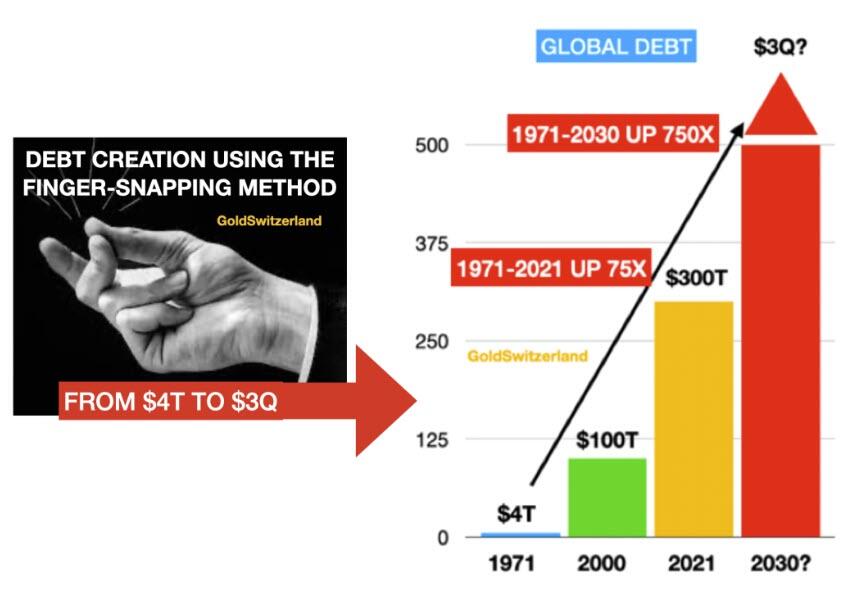
So the end of the current economic cycle started when Nixon closed the gold window on August 15,1971. At that point, he realised that the US could no longer continue to run budget deficits as they had done since the early 1930s. To get rid of the disciplinary shackles of gold allowed the US government and most central banks to create “finger-snapping” money. This is what a Swedish Riksbank official called creating money out of thin air.
When In 1971, global debt was a “mere” $4 trillion. In 2023 global debt is $325T excluding derivatives. This is clearly a major timebomb as I wrote about recently.
By 2030, debt could be as high as $3 quadrillion. This assumes that the quasi debt of global derivatives of $2 – $2.5 quadrillion has been “rescued” by central banks in order to stop the financial system from imploding.
First we will obviously see major pressures in the on balance sheet credit market. Corporate bankruptcy filings are increasing in most countries. In the US it is on a 13 year high for example, up 53% from 2022. Moody expects global corporate defaults to keep surging as financial conditions tighten.
The US banks are grappling with deposit flight, higher rates and major risks in the property sector.
The pressures in the commercial property market and in housing will lead to a wave of defaults necessitating further money printing. S&P reports that 576 banks are at risk of overexposure to commercial property loans and surpassing regulatory guidelines.
BORROWERS WILL DEFAULT AND BANKS GO BANKRUPT
The bank failures in mid-March starting with Silicon Valley Bank were just a warning shot.
Banks need high rates and a reduction in the loan portfolio to survive.
But borrowers, both commercial and private, need lower rates and more credit to survive.
This is a dilemma without solution. It will end up with both sides losing. Borrowers will default and banks will go bankrupt.
Before that there will be the biggest debt feast in the history of the world.
Luckily it requires no skill, no assets, no security to create the quadrillions of dollars which will temporarily defer the problem.
All that is needed is a bit more finger-snapping.
It will all happen first gradually and then suddenly as Hemingway described the process of going bankrupt. I have described this gradual/sudden process in previous articles, the first time I believe in 2017 when I talk about “Exponential moves as terminal”
Imagine a football stadium which is filled with water. Every minute one drop is added. The number of drops doubles every minute. Thus it goes from 1 to 2, 4, 8 16 etc. So how long would it take to fill the entire stadium? One day, one month or a year? No it would be a lot quicker and only take 50 minutes! That in itself is hard to understand but even more interestingly, how full is the stadium after 45 minutes? Most people would guess 75-90%. Totally wrong. After 45 minutes the stadium is only 7% full! In the final 5 minutes the stadium goes from 7% full to 100% full.
So if we take 1971 as the beginning of the debt explosion we can see that the real exponential phase happens in the final 5 minutes which are still to come.
And this is how global debt can explode in the final phase of a credit boom.
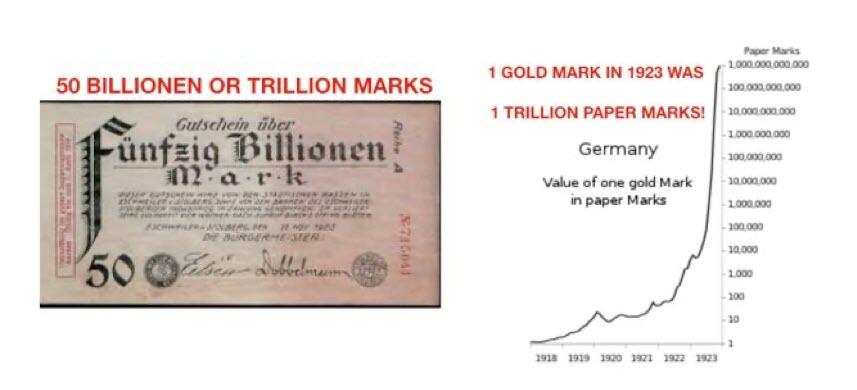
The hyperinflation in Weimar Germany in the early 1920s show a similar pattern:
As the graph above of the gold price in marks shows, the price of an ounce of gold went from below 10,000 marks at the beginning of 1923 to over 1 trillion by the end of the year.
No one should expect gold to go to $1 trillion but everyone should expect the dollar and most currencies to fall precipitously.
THE PERFECT WEALTH DESTRUCTION SCENARIO
So we now have a perfect setup for the coming wealth destruction scenario:
Global debt has gone up 80X between $4T in 1971 to $325 trillion in 2023
Bursting of the derivatives bubble could push debt to $3+ quadrillion
High interest rates and high inflation lead to sovereign and private defaults
Bubble assets like stocks, bonds and property will fall dramatically in real terms
Major debasement of USD and most currencies
Real assets – commodities, metals, oil, gas, uranium etc will rise strongly
Higher taxes, bail-ins, failure of pension and social security system
Central banks will fail to save the system leading to debt implosion and defaults
A deflationary depression will hit the West worst in a long term decline
The East and South (BRICS, SCO etc) will also suffer but emerge much stronger
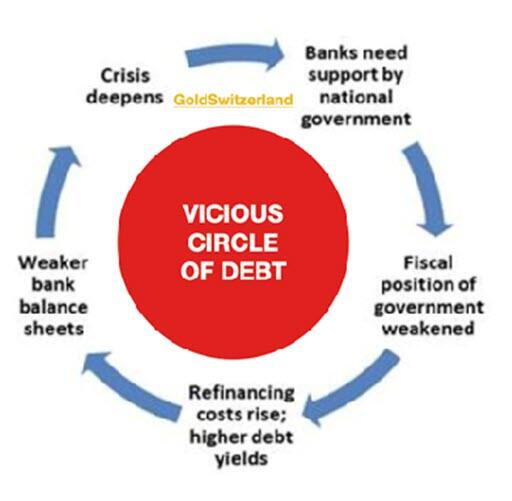
So we now have a perfect vicious circle of debt eventual leading to default:
DESPERATE GOVERNMENTS TAKE DESPERATE ACTIONS
Yes, the West led by a bankrupt USA will try all tricks in the books. That will include CBDCs (Central Bank Digital Currencies), much higher taxes especially for the wealthy, bank bail-ins (forcing depositors to buy 10-30 year government bonds), martial law and many more measures to restrict people’s everyday lives.
These government bonds will have zero value since there will be no buyers.
CBDCs will also soon become worthless as they are just another form of unlimited paper or finger-snapping money.
I doubt ordinary people will accept these draconian measures. Thus there will be civil unrest which governments will be unable to control. Neither police nor the military will accept to turn against suffering fellow citizens.
PROTECTING RISK IS ESSENTIAL – TIMING IS NOT
I am obviously aware that the consequences I have outlined above of the biggest global debt bubble in history can be wrong.
I have not specified the timing of these events. I have learnt that forecasting timing is a mug’s game.
Interestingly mug comes from the Swedish MUGG which is a drinking cup with the alcohol turning you to a mug or fool.
Personally I believed that the system was ready to collapse after the 2006-9 subprime crisis but today 14 years later, the system is still standing but only JUST!
But since we are most probably in the final 5 minutes as I explained above, timing becomes irrelevant. We need to take all the measures we can before events start to unravel.
We are now talking about financial survival and for many also physical survival.
In a world with financial and economic misery, high unemployment, a collapsing support system whether social security or pensions, a failing health system, social unrest and possibly war, we are all going to suffer.
HOW TO PROTECT YOUR WEALTH
Since we can’t forecast when the greatest wealth destruction in history will start, we need to prepare today. As I often repeat, you can’t buy fire insurance after the fire has started.
So now is the time to put your house in order.
Forget about gluttony or greed. Forget about trying to get out of stocks at the top. Forget about the old axioms that stocks and property always go up. Forget about the notion that sovereign debt is always safe.
Just remember one thing the next however many years is all about economic survival.
If you haven’t made your money from ordinary investments in the last 20+ years, you are very unlikely to make it now.
And if you hang on to your portfolio of conventional investments like stocks, bonds and investment properties, you are standing the risk of a severe decline of 50-90% of your portfolio for a very, very long period.
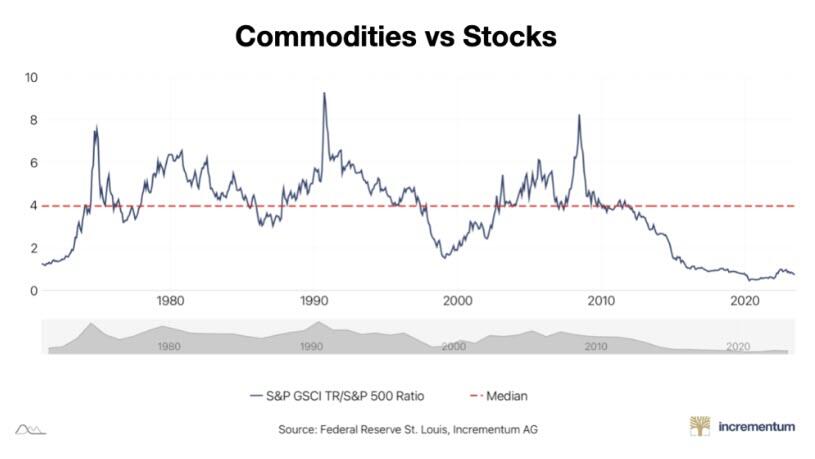
More safe investments in the current climate are commodities.
Look at the chart below showing Commodities versus Stocks (S&P) years. We are looking at a 50+ year low.
Best stocks to hold would be in precious metals, oil, and uranium.
The king of wealth preservation is gold. Silver is very undervalued and thus has more upside potential than gold but is much more volatile.
For the best protection, gold and silver should be held in physical form directly by the investor and stored in the safest private vaults in the safest jurisdictions.
After having organised our financial affairs, we must think about the people that need our help in whatever form.
Then enjoy life with family, friends as well as nature, books, music etc which are all free pleasures.
END
3,Chris Powell of GATA provides to us very important physical commentaries
USAGold’s ‘News & Views’ letter for August has July’s top 10 commentaries
Submitted by admin on Tue, 2023-08-01 15:17Section: Daily Dispatches
3:15p ET Tuesday, August 1, 2023
Dear Friend of GATA and Gold:
USAGold’s “News & Views” letter for August with its top 10 gold-related reports and commentaries for the past month is pretty encouraging for the monetary metal and it’s posted here:
CHRIS POWELL, Secretary/Treasurer Gold Anti-Trust Action Committee Inc. CPowell@GATA.org
end
4, OTHER IMPORTANT GOLD/SILVER COMMENTARIES/SILVER
5 a. IMPORTANT COMMENTARIES ON COMMODITIES: RARE EARTHS
A very important commentary on rare earths
(Senergy Capital)
China Threatens to Weaponize Rare Earth Materials; Establishing Additional Sources of North American REE Production is Now Even More Important
BY SENERGY CAPITAL
On July 3, China announced it will impose export restrictions on eight gallium and six germanium products beginning on August 1 for national security reasons. These exotic metals, which are byproducts from refining aluminum and zinc, are used in numerous cutting-edge technologies, particularly in silicon chips for the semiconductor sector. China’s move is widely viewed as retaliation for U.S. curbs on the sale of technologies to China. China’s gallium and germanium export controls could lay the groundwork for an even broader action, the curtailment of exports of rare earth elements (REEs), crucial materials used in a wide variety of technology devices such as smartphones, digital cameras, flat screen televisions, and electronic displays. The clean energy and defense contracting industries are also heavy users of REEs. Not surprisingly, the demand for rare earths is soaring: the independent research firm Adamas Intelligence projects the global demand for rare earth oxides (REOs) will more than triple by 2035 to US$46 billion from US$15 billion in 2022.
China has restricted the exports of rare earths before — an action which caused prices of some REOs to rise almost exponentially for several years. In 2010, China severely restricted sales to Japan following a territorial dispute regarding the Japan-administered Senkaku Islands. China also claims those islands and calls them Diaoyu. In turn, Japan scrambled to find alternative sources, forcing prices higher.
What are Rare Earth Elements?
REEs are relatively plentiful in the earth’s crust but are typically widely dispersed, rendering their mining in a single location quite expensive (unless the site is determined to have enormous resources). The molecular structure of REEs is such that they frequently occur together in minerals, perhaps even in multiple mineral structures. Not surprisingly, these characteristics generally make their separation and extraction difficult.
The 17 rare earth elements are generally categorized as light or heavy elements. Each source of rare earth material will generally contain the entire spectrum of REEs, but in varying percent ages. The heavy REEs (HREEs) are rarer and generally sell for significantly higher prices, as they are less common and more costly to separate. In contrast, light rare earth elements (LREEs) are produced in larger quantities because they occur naturally in greater quantities. Producers strive to meet the high demand for Neodymium (Nd) and Praseodymium (Pr), which necessitates the over-production of all associated LREEs like lower-priced cerium and lanthanum. For example, a typical rare earth concentrate from a mining operation may contain 75% of lower priced lanthanum (La) and cerium (Ce), perhaps 15% of higher-priced Nd and Pr, and about 10% other HREEs like dysprosium (Dy) and terbium (Tb).
China’s Dominant Rare Earth Position
According to the U.S. Geological Survey, China produced 70% of all rare earths mined globally in 2022. Even more important, Adamas Intelligence estimates that China controls at least 85% of the world’s rare earth refining capacity – the ability to transform mined rare earth ores into extremely valuable rare earth oxides (REOs).
In recent years, the U.S. has managed to reduce its dependence on China for rare earth supply, but only slightly. According to Reuters, America sourced 74% of its rare earths from China between 2018 and 2021.
North American REE Industry
MP Materials Corp. (NYSE: $MP) owns and operates the Mountain Pass facility in southern California, the only integrated rare earth mining and processing site in North America. The bastnaesite ore body at Mountain Pass has been mined as a principal source of REEs for more than 60 years. In 2022, Mountain Pass produced about 42,500 tonnes of REOs. Today, MP’s stock market capitalization is around US$4.4 billion.
Defense Metals Corp. (TSXV: $DEFN; OTC: $DFMTF) is a much lower-priced (C$67 million stock market cap) rare earth play. The company owns 100% of the advanced-stage Wicheeda project in central British Columbia, Canada, which has the potential to be the next North American rare earth mine. The Wicheeda deposit has favorable geology and mineralogy; it hosts bastnaesite and monazite; rare earth minerals that are found at Mountain Pass and at Mount Weld, the major Australian rare earth mine. Rare earth deposits comprised of bastnaesite, and monazite have been the only rare earth minerals that have been exploited as sources of profitable commercial rare earth production. See Figure 1.
Figure 1: Defense Metals Wicheeda Mineralogy and Metallurgy Compares Favorably with the World’s Primary Producing Rare Earth Facilities
Source: Defense Metals Corp. Independent Preliminary Economic Assessment for the Wicheeda Rare Earth Element Project, British Columbia, Canada, dated January 6, 2022, with an effective date of November 7, 2021, and prepared by SRK Consulting (Canada) Inc. is filed under Defense Metals Corp.’s Issuer Profile on SEDAR (“PEA”).
The 6,759-hectare (~16,702-acre) Wicheeda Project contains five million tonnes of indicated resources at a total REO grade of 2.95%, and 29.5 million tonnes of inferred resources at a 1.83% grade, reported at a cut-off grade of 0.5% total REO within a conceptual (LG) pit shell (see PEA). In addition, the project is ideally situated both for mining and production. It is just 80 kilometers (km) northeast of Prince George, a mining center with a skilled labor force, and sits along a major forestry road that connects to a paved highway. A hydroelectric power line, nat ural gas pipeline, and a Canadian National Railway line are also nearby. The busy port of Prince Rupert is just 500 km to the west. See Figure 2.
In addition to completing significant exploration drilling to define the Wicheeda REE deposit, Defense Metals has completed extensive metallurgical testing that showing the ability to produce a > 40% REO flotation concentrate that is amenable to hydrometallurgical processing to produce a rare earth oxide product for sale to end users. See Figure 1. All of this work is being incorporated into a pre-feasibility study that is expected to be released in the first half of 2024.
If Wicheeda begins to produce REOs it could be one of the biggest REO production facilities in the world. More specifically, the project should produce about 25,000 tonnes of REO annually, or about 10% of global REO manufactured in the world. See Figure 3.
Figure 3: Wicheeda Could Supply ~10% of Current Global Production
Source: Defense Metals Corp. PEA
Defense Metals last traded at C$0.235 on the TSX Venture Exchange and USD$0.183 on the OTC Markets, as of July 28th 2023.
Qualified Person
The scientific and technical information contained herein as it relates to the Wicheeda REE Project has been reviewed and approved by Kristopher J. Raffle, P.Geo. (B.C.), Principal and Consultant of APEX Geo science Ltd. of Edmonton, Alberta, who is a director of Defense Metals and a “Qualified Person” (“QP”) as defined in NI 43-101.
1.YOUR EARLY CURRENCY VALUES/GOLD AND SILVER PRICING/ASIAN AND EUROPEAN BOURSE MOVEMENTS/AND INTEREST RATE SETTINGS WEDNESDAY MORNING.7:30 AM
ONSHORE YUAN: CLOSED DOWN TO 7.1759
OFFSHORE YUAN: DOWN TO 7.1876
SHANGHAI CLOSED DOWN 29.26 PTS OR 0.89%
HANG SENG CLOSED DOWN 493.74 PTS OR 2.47%
2. Nikkei closed DOWN 768.89 PTS OR 2.30%
3. Europe stocks SO FAR: ALL RED
USA dollar INDEX UP TO 102.05 EURO FALLS TO 1.0976 DOWN 31 BASIS PTS
3b Japan 10 YR bond yield: RISES TO. +.620 Japan buying 100% of bond issuance)/Japanese YEN vs USA cross now at 142.74/JAPANESE YEN FALLING AS WELL AS LONG TERM 10 YR. YIELDS RISING //EVENTUALLY THIS WILL BREAK THE JAPANESE CENTRAL BANK
3c Nikkei now ABOVE 17,000
3d USA/Yen rate now well ABOVE the important 120 barrier this morning
3e Gold UP /JAPANESE Yen UP CHINESE ON SHORE YUAN: DOWN// OFF- SHORE: DOWN
3f Japan is to buy INFINITE TRILLION YEN’S worth of BONDS. Japan’s GDP equals 5 trillion USA
Japan to buy 100% of all new Japanese debt and NOW they will have OVER 50% of all Japanese debt.
3g Oil UP for WTI and UP FOR Brent this morning
3h European bond buying continues to push yields lower on all fronts in the EMU. German 10yr bund UP TO +2.4665***/Italian 10 Yr bond yield RISES to 4.122*** /SPAIN 10 YR BOND YIELD RISES TO 3.521…**
3i Greek 10 year bond yield RISES TO 3.749
3j Gold at $1951.00 silver at: 24.41 1 am est) SILVER NEXT RESISTANCE LEVEL AT $30.00
3k USA vs Russian rouble;// Russian rouble DOWN 0 AND 70 /100 roubles/dollar; ROUBLE AT 93.03//
3m oil into the 81 dollar handle for WTI and 85 handle for Brent/
3n Higher foreign deposits out of China sees huge risk of outflows and a currency depreciation. This can spell financial disaster for the rest of the world/
JAPAN ON JAN 29.2016 CONTINUES NIRP. THIS MORNING RAISES AMOUNT OF BONDS THAT THEY WILL PURCHASE UP TO .5% ON THE 10 YR BOND///YEN TRADES TO 142.74// 10 YEAR YIELD AFTER FIRST BREAKING .54% LAST YEAR NOW EXCEEDS THAT LEVEL TO 0.620% STILL ON CENTRAL BANK (JAPAN) INTERVENTION
30 SNB (Swiss National Bank) still intervening again in the markets driving down the FRANC. It is not working: USA/SF this 0.8634 as the Swiss Franc is still rising against most currencies. Euro vs SF 0.9642 well above the floor set by the Swiss Finance Minister. Thomas Jordan, chief of the Swiss National Bank continues to purchase euros trying to lower value of the Swiss Franc.
USA 10 YR BOND YIELD: 4.018 DOWN 3 BASIS PTS…
USA 30 YR BOND YIELD: 4.094 DOWN 1 BASIS PTS/
USA 2 YR BOND YIELD: 4.866 DOWN 5 BASIS PTS
USA DOLLAR VS TURKISH LIRA: 26.97…(TURKEY SET TO BLOW UP FINANCIALLY)
GREAT BRITAIN/10 YEAR YIELD: UP 0 BASIS PTS AT 4.424
end
2.a Overnight: Newsquawk and Zero hedge:
“The Market Is Looking For Excuses To Take Profits”: Futures Slide As US Downgrade Shakes Sentiment
WEDNESDAY, AUG 02, 2023 – 08:08 AM
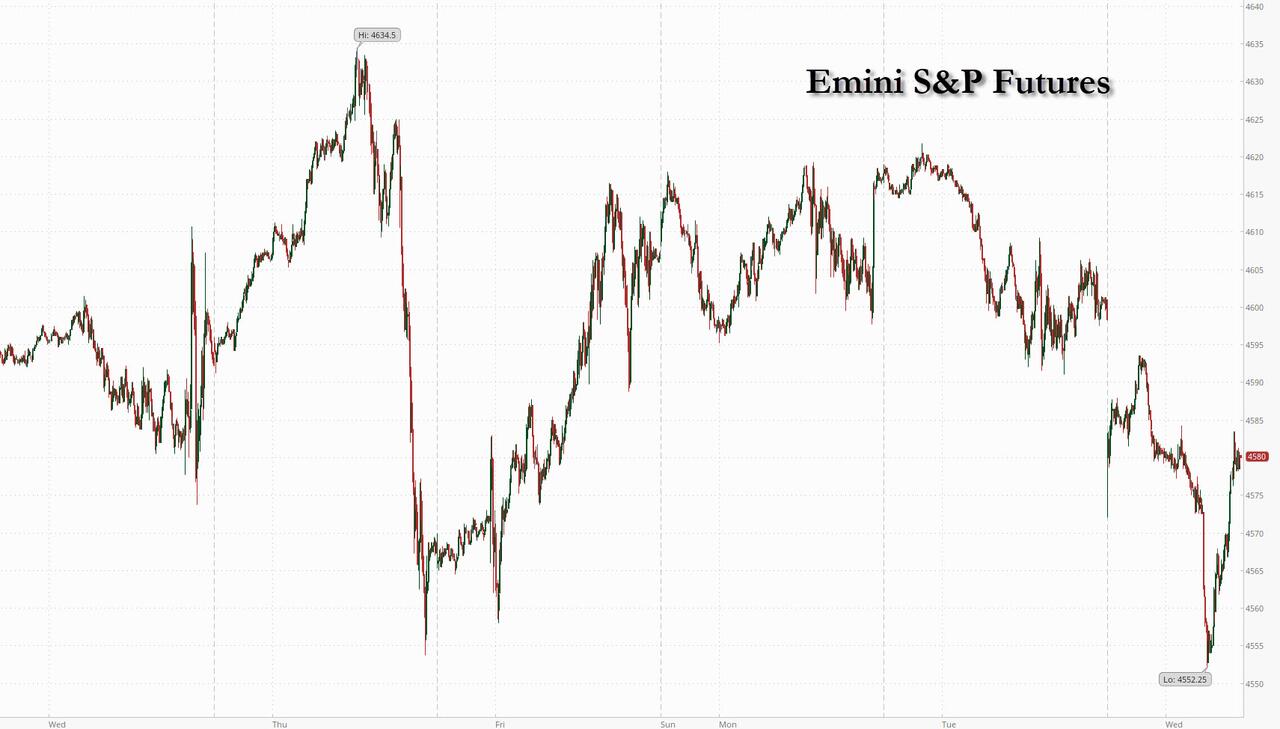
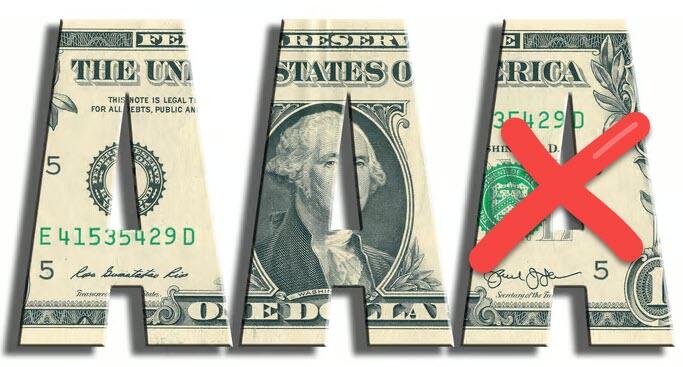
US futures slumped as part of a global risk-off tone (but were well off their lows, which were down as much as 1%), after the US was stripped of its AAA top-tier credit rating by Fitch (which joined S&P in doing so back in 2011), due to growing fiscal deficits and an “erosion of governance” even as Treasuries yields and the Dollar were steady. And in a complete coincidence, at the exact same time, Donald Trump was indicted for a record third time on federal charges over his efforts to overturn the 2020 presidential election, and has a court date set for Thursday.
As of 7:45am, emini S&P futures were down 0.5%, while Nasdaq 100 futures slid 0.8%, signaling a pullback later Wednesday for a market that has surged 44% in 2023. Broad losses in Europe dragged all industry groups in the benchmark regional index into the red. Asian and European stocks slumped, while the Treasury curve steepened with two-year TSY yields falling 4bps to 4.86%; the Bloomberg Dollar Spot Index was barely changed, up 0.1%.
In premarket trading, AMD rose as much as 1.2% in premarket trading on Wednesday, after the chipmaker reported better-than-expected second-quarter results and said it was making further inroads in artificial-intelligence computing. Analysts noted that there are indications that the PC business was recovering and they were also optimistic about the company’s AI potential. Starbucks dropped as its quarterly sales fell short of analysts’ estimates, a sign that momentum may be slowing for the coffee giant amid higher prices and tighter pocketbooks. Pinterest slid after the social networking company failed to meet heightened expectations. Apple and Amazon.com are among companies scheduled to report this week, with investors on the lookout for clues on how high interest rates are affecting the economy. Here are some other notable premarket movers:
Cardlytics shares jumped as much as 19% and are set to reach their highest level since last Sept., after the company, which makes software to analyze customer purchases, reported results that beat expectations, helping to ease worries over a tough backdrop for the advertising industry. JPMorgan raised its price target on the stock, positive on the progress seen with new products and initiatives.
KeyCorp upgraded to neutral at JPMorgan, with analysts noting that the risks of a dividend cut at the financial services company had waned after US regulators gave it more time to comply with new capital rules. Shares fell as much as 1.8%, however, after Fitch’s downgrade of the US sovereign credit grade hit sentiment across risky assets.
Lumen Technologies shares fall 8.4% in US premarket after the wireline telecommunications company posted what analysts saw as a mixed set of 2Q results with free cash flow weaker than expected.
Oatly Group fell 2.0% after JPMorgan downgraded the oat-milk producer to neutral from overweight due to the “increasingly opaque” growth story.
Pinterest shares fall as much as 5% in premarket trading on Wednesday, after the social networking company reported its second-quarter results and provided an outlook. Citi said the report failed to meet heightened expectations.
Rover Group rises as much as 27% in premarket trading after the online pet care platform boosted its year revenue and adjusted Ebitda forecast. International growth remains solid, with strong lifetime value metrics and product improvements driving tailwinds for top and bottom-line results, says William Blair.
SolarEdge Technologies shares slid as much as 14% in US premarket trading after the solar-equipment maker’s third-quarter revenue forecast disappointed as elevated levels of inventory among its customers weighed on demand. Other solar stocks fell in US premarket trading after the report.
Starbucks shares fall 1.3% after the coffee- chain operator’s third-quarter comparable sales missed estimates. Overall, analysts were disappointed in the print, flagging lower-than-expected comparable sales in North America as well as the weaker-than-anticipated outlook for the metric in China.
Virgin Galactic fell as much as 8.9% after the company’s revenue fell short of analysts’ expectations, even as the space-tourism company gears up for monthly commercial flights. Analysts note that while the firm will continue to burn cash, it does have enough on its balance sheet to fund near-term investments.
There was disagreement over the consequences of the Fitch downgrade: some said it serves up an extra dose of jeopardy for equity investors already concerned over the risks of recession and whether this year’s run-up in stocks is sustainable; others looked at the complete lack of reaction in Treasuries and claims it is a complete non-event, and that it will be forgotten by the market in a few hours. And indeed, Treasuries were steady, in keeping with Janet Yellen’s assertion that they remain “the world’s preeminent safe and liquid asset” for now.
“One can have the feeling that the market is looking for excuses to take some profits,” said Alexandre Baradez, chief market analyst at IG Markets in Paris. “But rather than the Fitch downgrade, I suspect that what’s currently being priced is the growing risk of an economic slowdown. The downward trend started to emerge yesterday on the back of disappointing Chinese and US data, which suggests it’s not really about the rating downgrade, but rather the risk of a slowdown.”
Indeed, the consequences of the latest downgrade seem positively tame by comparison: the last time the US sovereign credit rating was downgraded, the S&P plunged 6.7% with all stocks in the red for the first time since at least 1996, and briefly dropped into a bear market (the benchmark eventually erased those losses five trading days later and is up 282% since). Also, yields tumbled, gold exploded and the SNB was forced to devalue the franc.
European stocks also slumped with the Stoxx 600 down 1.3% and on course for its largest fall in almost four-weeks. Ferrari slumped more than 4% after the Italian supercar maker issued disappointing guidance. Siemens Healthineers AG fell after the German medical technology company missed estimates. Hugo Boss AG dropped after the fashion retailer’s margin fell short of expectations and inventories rose. Here are the biggest European movers:
BAE Systems shares rose as much as 6.6% after the defense and aerospace company upgraded its 2023 guidance and approved a further buyback of as much as £1.5 billion
Taylor Wimpey shares rose as much as 4.7% after the residential housing developer’s results for the first-half exceeded expectations. Analysts said that the company raising the bottom end of its guidance range for UK completions for the year was a positive sign in a tough market
Melexis shares rise as much as 6.5% after the chipmaker raised margin guidance and boosted revenue outlook to top end of its prior range, a sign that strong demand for automotive chips continues to benefit the Belgian company
Virgin Money gains as much as 3.3%, outperforming a broader market decline, after the UK lender announced a share buyback. It also reported steady net interest margins
ConvaTec shares gain as much as 7.8%, the biggest intraday gain since November 2022, after the wound care and ostomy products provider reported first-half revenue that beat estimates and boosted its full-year organic revenue forecast. Citi said it was particularly impressed by growth in wound care as well as the strong gross margin
Iveco shares advance as much as 5.5%, the most since mid-March, after the truckmaker delivered another boost to full-year guidance that analysts say will prompt a significant increase in consensus expectations
Siemens Healthineers falls as much as 8%, the most since May, after the German medical technology firm’s Varian unit weighed on its latest quarterly earnings, with margins a particular concern, analysts say
JDE Peet’s falls as much as 4.4%, after the Dutch coffee company cut its adjusted Ebit guidance on uncertainty over the transition from international brands to local brands in Russia
Hugo Boss shares declined as much as 5% at the open on Wednesday but then pared losses to 0.7% by 9:36 am in Frankfurt. While the German fashion group raised its guidance for 2023 and second-quarter earnings beat most expectations
Schaeffler drops as much as 5.2% as Citi writes that the German automotive and industrial supplier’s second- quarter results were overshadowed by “concerning” organic growth underperformance in auto-tech
Man Group shares drop as much as 3.7%, adding to Tuesday’s 5.5% decline, following results which reflected a lower-margin long-only shift from clients. The recent stock price weakness is an “over-reaction,” according to UBS
Auto1 shares fall as much as 14%, the most since January, after the used-car trading platform reported second-quarter revenue and units sold below estimates
Earlier in the session, Asian stocks posted the biggest decline in more than four months as technology names dropped. Japanese stocks slumped the most this year as gains in the yen dented the outlook for corporate profit; the Nikkei 225 underperformed and dipped below the 33,000 level as the focus shifted to corporate earnings and despite comments from BoJ’s Deputy Governor Uchida who stuck to a dovish tone.
The MSCI Asia Pacific Index fell 1.5%, with all sectors and major markets in the red. Benchmarks dropped more than 1% in Japan, South Korea and Taiwan, and about 2% in Hong Kong, as investors booked profits on chip and electric-vehicle stocks that have surged on artificial intelligence and net-zero emissions trades. “It’s buyers’ fatigue,” said Derek Tay, head of investments at Kamet Capital Partners. US stock futures declined after Fitch stripped the US of its top-tier credit grade, though few market participants saw that as having a major impact on Asian equities. Some investors rather appeared to be taking bets off the table ahead of US employment data later this week, which may influence the Federal Reserve’s next policy decision. “We’ve had an extraordinary run in risk markets and we are starting to get some steepening in the yield curve,” said Matthew Haupt, portfolio manager at Wilson Asset Management in Sydney. “We might get some squeeze on that big rate-cut trade,” he added. The MSCI Asian benchmark earlier this week flirted with its highest close since last April after a rally fueled by hopes for Chinese efforts to boost its economic recovery and a peak-out in US interest rates. The gauge is still up about 6% since the start of June. Australia’s ASX 200 declined with utilities, real estate and financials leading the broad-based retreat and with weaker AIG Manufacturing and Construction data adding to the glum mood.
In FX, the Bloomberg dollar index erased losses as investors bought into the dip that followed Fitch Ratings’ US sovereign credit-rating downgrade. Leveraged short covering of the yen and Australian dollar was short-lived with the latter breaching support below 0.6600 as an Asia Pacific equity gauge headed for the biggest decline in almost a month. New Zealand’s dollar was sold for the greenback and Aussie as a jump in the nation’s jobless rate fueled bets that rates had peaked.
In rates, the front-end of the Treasury curve led gains, extending Tuesday’s steepening move and leaving 2-year notes richer by around 4bp in early US trading. Longer Treasuries broadly shrugged off the US downgrade news. US 10-year yields are little changed on the day, sitting around 4.02% and offering muted reaction to the Fitch downgrade; bunds outperform by around 4bp in the sector while gilts trade slightly cheaper. Front-end gains on the day steepen 2s10s, 5s30s spreads by 3.8bp and 3bp, with both remaining near session highs. For the first time since November 2020, the quarterly unveiling of auction amounts is expected to feature across-the- board increases to the Treasury’s seven main offerings of notes and bonds. German two-year yields fall 6bps to a two-week low of 3.01%. Dollar IG issuance slate empty so far; Tuesday session was inactive for new deals, while August volume projection is around $85 billion. A focus of the day is the quarterly refunding announcement at 8:30am New York time.
“US Treasuries are the world’s largest and most liquid sovereign bond market,” said Alvin Tan, head of Asia FX strategy at RBC Capital Markets in Singapore. “It’s unthinkable large global bond investors will decide to entirely exclude US Treasuries from their holdings. If they do, what USD-denominated bonds will they hold?”
In commodities, oil extended its rally with Brent crude up 0.8%, after API pointed to a huge, in fact a record 15 million drawdown in US inventories, adding to signals the market is tightening. Spot gold adds 0.3%. Bitcoin gains 0.9%
After a data heavy day yesterday, we have only the US July ADP report as the major data release to look forward to today. But watch out for the refunding announcement. Key company earnings include semiconductor firm Qualcomm, as well as Teva, Shopify, PayPal, Occidental Petroleum, Equinix, Kraft Heinz, DoorDash, Albemarle, MGM Resorts, Zillow, and Etsy.
Market Snapshot
S&P 500 futures down 1.0% to 4,554.25
MXAP down 1.7% to 167.30
MXAPJ down 2.1% to 528.37
Nikkei down 2.3% to 32,707.69
Topix down 1.5% to 2,301.76
Hang Seng Index down 2.5% to 19,517.38
Shanghai Composite down 0.9% to 3,261.69
Sensex down 1.4% to 65,517.16
Australia S&P/ASX 200 down 1.3% to 7,354.60
Kospi down 1.9% to 2,616.47
STOXX Europe 600 down 1.8% to 458.96
German 10Y yield little changed at 2.52%
Euro little changed at $1.0986
Brent Futures up 0.4% to $85.25/bbl
Gold spot up 0.4% to $1,951.76
U.S. Dollar Index down 0.16% to 102.14
Top Overnight News
BOJ deputy governor pushes back on speculation the central bank is planning an early exit from a policy of extreme accommodation (the recent YCC tweak was aimed at making it more sustainable). RTRS
South Korea’s CPI undershoots the Street (+2.3% vs. the Street +2.4% and down from +2.7% in June) and falls to a 25-month low. RTRS
SoftBank’s Arm is targeting an IPO at a valuation of between $60 billion and $70 billion as soon as September, people familiar said. Arm execs may still be gunning for $80 billion, but the odds of achieving that are uncertain. BBG
China will curb the amount of time kids can spend on their smartphones, dealing a potential blow to Tencent, ByteDance and other social media leaders. Minors will be banned from accessing the internet from 10:00 pm to 6:00 am and mobile usage will be cut to two hours for those aged 16 to 18. BBG
Binance, the world’s largest crypto exchange, was supposed to leave China behind when the country made cryptocurrency trading illegal in 2021. Almost two years later, users traded $90 billion of cryptocurrency-related assets in China in a single month, according to internal figures viewed by The Wall Street Journal and current and former employees. The transactions made China Binance’s biggest market by far, accounting for 20% of volume worldwide, excluding trades made by a subset of very large traders. WSJ
Fitch cut the US credit rating from AAA to AA (it warned back in May that a downgrade was possible). Fitch’s move follows a similar cut by S&P about 12 years ago. Moody’s continues to rate the US AAA. Fitch says its downgrade “reflects the expected fiscal deterioration over the next three years, a high and growing general government debt burden, and the erosion of governance relative to ‘AA’ and ‘AAA’ rated peers over the last two decades that has manifested in repeated debt limit standoffs and last-minute resolutions”. Fitch
The major entertainment studios and thousands of striking writers have agreed to meet to restart talks after a three-month standoff, according to the writers guild. NYT
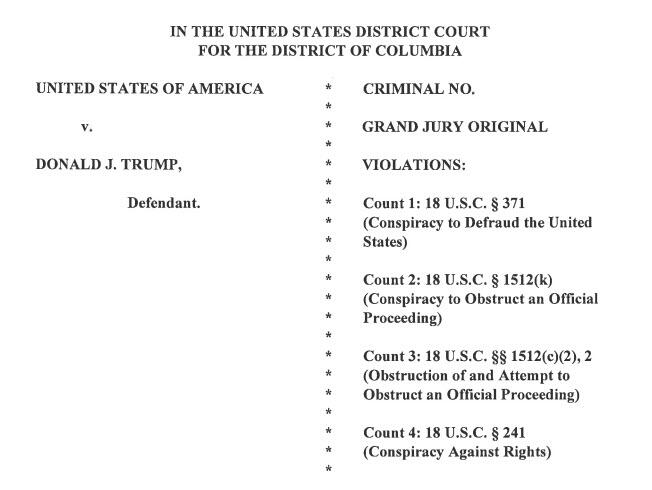
US prosecutors have charged Donald Trump in connection with his attempts to overturn the results of the 2020 election, the second federal indictment brought against the former president in as many months. Trump was charged with four criminal counts including conspiracy to defraud the US, to obstruct an official proceeding and to threaten individual rights, according to an indictment filed in federal court in Washington on Tuesday. FT
US crude stockpiles saw a jumbo drawdown last week as inventories plunged 15.4 million barrels, the API is said to have reported. That would be the biggest in data going back to 1982 if confirmed by the EIA. BBG
Foreign buying of U.S. homes fell for a sixth straight year, sinking to the lowest level on record, though some signs of turnaround are starting to emerge. WSJ
A more detailed look at global markets courtesy of Newsquawk
APAC stocks traded lower following the mostly negative lead from Wall St where sentiment was dampened by higher yields and weak data, while participants also digested Fitch’s credit rating downgrade for the US from AAA to AA+. ASX 200 declined with utilities, real estate and financials leading the broad-based retreat and with weaker AIG Manufacturing and Construction data adding to the glum mood. Nikkei 225 underperformed and dipped below the 33,000 level as the focus shifted to corporate earnings and despite comments from BoJ’s Deputy Governor Uchida who stuck to a dovish tone. Hang Seng and Shanghai Comp conformed to the risk aversion albeit with the downside in the mainland initially cushioned by further policy support and jawboning by Chinese agencies.
Top Asian News
China’s Finance Ministry said it cut value-added tax for small taxpayers, according to Reuters.
China’s cyberspace regulator drafts guidelines to strengthen the limit around minors’ use of apps, smart terminals and app stores, according to Reuters.
China said reports that it obstructed G20 discussions in reducing fossil fuels use are inconsistent with facts, while China regrets a failure to reach an agreement and blames geopolitical issues brought up by other countries, according to Reuters.
BoJ Deputy Governor Uchida said at present, the risk of losing the chance to hit the price target with a premature shift from easy policy is bigger than the risk of being too late in tightening and Japan is now at a phase where it is important to patiently maintain easy policy. Furthermore, Uchida said last week’s decision was a pre-emptive step at continuing monetary easing without disruptions and the BoJ must fine-tune YCC at times and make the policy more flexible. Adds, depending on the speed of the moves, BoJ will step in before the 10yr yield hits 1%.
BoJ minutes from the June 15th-16th meeting noted members agreed BoJ must maintain current monetary easing to stably and sustainably achieve the price target, while many members said it was appropriate to sustain monetary easing to support changes seen in corporate wages and price-setting behaviour. Furthermore, a few members said a premature policy shift could mean the BoJ will lose the opportunity to achieve the price target.
Australian Trade Minister says they are hopeful that in the next few days, there will be a positive decision from China re. barley tariffs, if not will restart the WTO process.
European bourses are in the red, Euro Stoxx 50 -1.4%, as sentiment continues to deteriorate from a downbeat Wall St./APAC handover. Sectors are similarly in the red with earnings dominating stock specifics while the Energy sector is the relative outperformer, but still lower, given benchmark action. Stateside, futures are lower as the risk-off trade continues with sizeable attention on Fitch’s action, ES -0.8%; ADP and Quarterly Refunding dominate the calendar ahead intersected by numerous earnings.
Top European News
The Times’ Shadow MPC voted 8-1 in favour of a 25bps rate hike this month. All members agreed that the Bank should not provide financial markets with guidance about the future path of interest rates due to economic uncertainty.
ECB’s de Guindos says “Policymakers should focus on preserving bank resilience to strengthen macroprudential stability at a time of economic uncertainty. This would ensure that sufficient capital buffers are available should widespread losses arise”. Overall, the stress test confirms European banks could withstand a severe economic downturn.
FX
The broader Dollar and index are firmer in the European morning, propped up by the risk aversion seen across the market after Fitch downgraded US, upside levels include the 100 DMA (102.35), yesterday’s high (102.43), then the 50 DMA (102.45).
The JPY is the current G10 outperformer following three consecutive sessions of losses in the aftermath of the BoJ’s decision last Friday, with potential tailwinds seen from the broader risk-off sentiment across markets.
Antipodeans are once again the marked laggards amid the broader risk tone, hangover from the RBA hold, and overall bearish Kiwi jobs data overnight, while EUR and GBP are resilient to the Dollar’s strength despite a lack of headlines, data, and broader risk aversion.
PBoC set USD/CNY mid-point at 7.1368 vs exp. 7.1664 (prev. 7.1283)
Fixed Income
EGBs are firmer and currently benefiting from traditional haven allure as the broader risk tone continues to deteriorate despite an absence of fresh catalysts.
Gilts are the sole core benchmark in the red as we near Thursday’s BoE announcement where another 25bp hike is expected though there is around a 35% chance of 50bp priced and 75bp of total tightening implied by February 2023.
USTs are faring relatively well and giving up some of the marked concession which was built in on Tuesday’s session both before and after the afternoon’s data docket, concession which comes ahead of today’s quarterly refunding announcement; Though, we are above Tuesday’s 110.26+ low by circa. 10 ticks as it stands.
Commodities
WTI and Brent futures are off best levels but remain modestly firmer intraday, with the downside from risk aversion (after US’ rating downgrade by Fitch) cushioned by the mammoth drawdown in Private Inventories yesterday.
Over to metals, the risk-off picture is clear. Spot gold and silver are firmer amid heaven flow and despite the stronger Dollar as the former initially battled overnight resistance at USD 1,950/oz but meanders around the level in European hours.
Base metals are softer across the board as risk aversion and the Greenback hit the industrial metals, 3M LME copper declined from a USD 8,669/t high but maintains status above USD 8,500/t.
Operations suspended at Ukraine’s Izmail port on Danube, according to Reuters citing sources.
US Energy Inventory Data (bbls): Crude -15.4mln (exp. -1.4mln), Gasoline -1.7mln (exp. -1.3mln), Distillate -0.5mln (exp. +0.1mln), Cushing -1.8mln
US Energy Department spokesperson announced the US pulled its offer to buy 6mln bbls of oil for the SPR due to market conditions, while a Bloomberg reporter noted that the Biden administration delayed the replenishment of the SPR after deciding the offers it received were too expensive.
OPEC+ is unlikely to tweak its current output policy when it meets on Friday, according to multiple OPEC sources cited by Reuters.
UK Government suspends anti-dumping duty on hot-rolled flat iron, non-alloy or other alloy steel with goods originating in Iran or Russia in some cases.
Geopolitics
Explosions were reported in Ukraine’s capital of Kyiv and anti-aircraft units were in operation, according to Reuters citing Mayor Klitschko and military officials.
Russian drones reportedly attacked port and grain storage facilities in Ukraine’s Odesa region which set some of them on fire, according to the regional governor.
Poland’s Defence Ministry said it is deploying additional troops along the border with Belarus after 2 helicopters violated airspace, according to BNO News.
Taiwan’s Presidential Office said Vice President Lai will transit in New York and San Francisco, while it noted reports that VP Lai is planning to transit through Washington DC are false. Furthermore, it stated the transit arrangement is based on comfort and safety and should not be an excuse for conflict.
US and Mongolia reportedly prepare to sign an “open skies” deal which would grant airlines from both countries the right to operate in each other’s countries, according to Reuters sources.
Russian Kremlin says a call between President Putin and Turkish President Erdogan is taking place now.
Russia’s Defence Ministry says Russian forces start navy drills in the Baltic sea, according to Ria.
Crypto
Binance Japan launched crypto services with 34 virtual currencies, according to Nikkei.
Binance CEO Zhao attempted to shut down the crypto exchange’s US offshoot earlier this year to protect the much larger global exchange amid mounting regulatory scrutiny, according to sources cited by The Information.
US Event Calendar
07:00: July MBA Mortgage Applications, prior -1.8%
08:15: July ADP Employment Change, est. 190,000, prior 497,000
DB’s Jim Reid concludes the overnight wrap
Just when you thought it was safe to unwind into your holidays, after Europe went to bed last last night, Fitch Ratings downgraded the US from AAA to AA+ in a surprise move reminiscent of S&P’s back in August 2011. The rating agency had initially put the US on ratings watch back in May during the debt ceiling fight. In a corresponding statement, Fitch cited that tax cuts and new spending initiatives coincided with multiple economic shocks to rapidly grow the government’s debt burden. The rating reflects the political brinkmanship reflected in the debt ceiling fights, but also takes into account the forecast debt-to-GDP ratio which Fitch estimates will reach 118% by 2025, with the median AAA rated ratio being 39%. See our rates strategists’ immediate reaction to the decision here with one of the takeaways being that it should continue to help reprice term premium going forward. Obviously S&P being the first to downgrade 12 years ago was far bigger news and has allowed investors to adjust for the most important bond market in the world not being a pure AAA anymore but it’s still a big decision. Treasury yields sold off aggressively yesterday before the announcement due to concerns about the upcoming funding announcement as we’ll see below but have been a bit confused since the announcement as they initially rallied on a global risk-off move and then sold off to be c.1bps higher in Asia.
S&P 500 (-0.46%) and NASDAQ 100 (-0.56%) futures are lower as a result with Asian markets weak. The Hang Seng (-1.97%) is emerging as the biggest underperformer followed by the Nikkei (-1.84%), the KOSPI (-1.40%), the Shanghai Composite (-0.84%) and the CSI (-0.70%).
The downgrade follows an interesting story that has been bubbling under the surface around the US deficit and what that means for issuance and yields. 10yr Treasuries rose +6.4bps yesterday, before the Fitch news, to the highest level since the first half of July and 2s10s steepened +3.9bps in what seemed to be a delayed reaction, in thin markets, to Monday’s surprise announcement from the Treasury of a larger than expected borrowing estimate for the rest of the year. 30yr yields rose +8.2bps to 4.092% and are now at their highest levels since November. Today sees the subsequent refunding announcement at 8:30am EST where we’ll know more about the issuance pattern in the next few months. See our rates strategists’ preview here where they say their expectations have been boosted by Treasury borrowing over the next 5 months that is $500bn more than they originally expected.
I did a CoTD last Monday on the US deficit as it has unexpectedly surged this year. The piece (link here) references US economist Brett Ryan’s piece explaining that most of the deficit increase should be temporary due to delays in tax receipts. Much of California got an extension in filing their tax receipts until October 16th because of severe winter storms. So until we see that we wont really know whether the fiscal impulse has indeed turned notably positive or if, as is our current expectation, its just a timing issue. I am however getting more clients ask me if the US is increasing fiscal spending by stealth. At the moment I don’t think this is the case over and above our forecast from the start of the year, which is for a deficit not that different to last year, albeit still large. A big one to watch.
In terms of data, the lead stories yesterday were the ISM and JOLTS data for July and June respectively, which didn’t dent the soft-landing narrative for the US economy but still hinted at only a gradual reduction in labour market tightness.
The headline ISM manufacturing result did slip in July, with the ISM manufacturing index disappointing at 46.4 (vs 46.9 expected). However, there were encouraging snippets of inflation-related data, including the ISM prices paid which rose less than expected to 42.6 (vs 44.0 expected). Resilience in new orders were likewise evident, rising from 45.6 in June to 47.3, although remaining in contractionary territory. The employment component fell from 48.1 in June to 44.4 though, pushing the index further into contractionary territory.
Additionally, the slight downside surprise in the JOLTS job opening at +9582k (vs +9600k expected) similarly spoke of a more tepid labour market after falling to its lowest level since April 2021. Job openings are still historically high though. Lastly, the quits rate dropped down two-tenths to 2.4%, after a shock increase to 2.6% in the May release. The closely followed private quits rate also fell two tenths to 2.7% again reversing a surprise increase the month before. Another suite of labour market data is due today, with the release of ADP private-sector jobs for July ahead of payrolls on Friday.
However, with a lot of data between now and November, and Fedspeak emphasising data dependency, markets didn’t move much at the front end after the numbers with the long end buffeted instead by the supply outlook. Investors are pricing a nearly 1 in 5 chance of a 25bp rate hike at either of the next two Fed meetings. Yesterday, the balance shifted slightly to put slightly more weight on November, with the expected terminal rate at the end of the meeting expected to be 5.414%.
Across the Atlantic, the German labour market also remained tight, with the July unemployment rate falling to 5.6% from 5.7% in June (vs 5.7% expected), and unemployment claims decreasing -4k (vs +20k expected). The overall Eurozone unemployment rate fell from 6.5% to 6.4% (vs 6.5 expected). The better-than-expected results spoke to a still robust labour market, and with the ECB now data dependent, European overnight index swaps priced in nearly a 62% chance of another 25bps hike by year-end, up slightly from the previous session. Against this backdrop, 10yr bunds sold off, as yields rose +6.5bps. Over the channel in the UK, gilts underperformed, as 10yr yields rose +9.0bps ahead of the BoE meeting on Thursday notwithstanding weak economic data including the UK Lloyds business barometer, which fell from 37 to 31. Basically it was a day of rising western global bond yields.
Turning our attention away from fixed income to equities, the S&P 500 broke its two-day streak of gains to finish down -0.27% following mixed company earnings and possibly the weaker ISM. At the industry level, autos (-1.9%), telecoms (-1.4%), utilities (-1.3%) and consumer discretionary (-1.0%) all lagged. The latter was impacted by Uber (-5.68%) missing on Q2 revenue expectations. On the flipside, capital goods outperformed, up +0.6% following strong Q2 earnings by lead American construction company Caterpillar (+8.85%). The NASDAQ underperformed, falling back -0.43%. After the US close semiconductor producer AMD (up +2.7% in after-market trading) beat earnings expectations and described the PC chip market as having mostly recovered with customers having worked through excess inventory. The company expects to hit their initial full year guidance on surging AI demand. In Europe, the STOXX 600 earlier slipped, down -0.89%, after negative Q2 updates and cautious forward outlooks from top European firms such as BMW (-5.39%), DHL Group (-4.87%) and Daimler (-2.40%).
In terms of other notable data releases, we had the Dallas Fed Services Activity, which posted at -4.2, an increase from -8.2 in June. The final US manufacturing PMI result for July was unchanged from the flash result, at 49.0, increasing from 46.3 prior. Finally, the final euro area PMI manufacturing result for July was unchanged at 42.7.
Early morning data today showed that South Korea’s consumer price growth slowed for the sixth consecutive month, rising +2.3% y/y in July (v/s +2.4% expected) on the back of lower oil prices. It followed a +2.7% increase in June, and marks the lowest advance since June 2021.
After a data heavy day yesterday, we have only the US July ADP report as the major data release to look forward to today. But watch out for the refunding announcement. Key company earnings include semiconductor firm Qualcomm, as well as Teva, Shopify, PayPal, Occidental Petroleum, Equinix, Kraft Heinz, DoorDash, Albemarle, MGM Resorts, Zillow, and Etsy.
2 b) NOW NEWSQUAWK (EUROPE/REPORT)/ASIA REPORT
EUROPE
Risk off returns after Fitch’s US downgrade, ADP & Quarterly Refunding due – Newsquawk US Market Open
WEDNESDAY, AUG 02, 2023 – 05:59 AM
European bourses & US futures are in the red as sentiment continues to deteriorate from the APAC/Wall St. handover
Fitch cut the US’ sovereign rating from AAA to AA+; Outlook revised to Stable from Watch Negative.
DXY benefits from the soured tone with JPY outperforming while EUR & GBP prove relatively resilient to the USD
EGBs are firmer and benefiting from haven allure with USTs bid as such and giving up some pre-Quarterly Refunding concession
Crude benchmarks retain a slight bid despite the above after Tuesday’s marked inventory draw; metals succumbing to risk
Looking ahead, highlights include US ADP National Employment. US Quarterly Refunding Announcement. Earnings from Occidental Petroleum Corp, Exelon Corp, CVS Health Corp, Qualcomm Inc & MetLife Inc.
2. Listen to this report in the market open podcast (available on Apple and Spotify)
3. Trial Newsquawk’s premium real-time audio news squawk box for 7 days
EUROPEAN TRADE
EQUITIES
European bourses are in the red, Euro Stoxx 50 -1.4%, as sentiment continues to deteriorate from a downbeat Wall St./APAC handover.
Sectors are similarly in the red with earnings dominating stock specifics while the Energy sector is the relative outperformer, but still lower, given benchmark action.
Stateside, futures are lower as the risk-off trade continues with sizeable attention on Fitch’s action, ES -0.8%; ADP and Quarterly Refunding dominate the calendar ahead intersected by numerous earnings.
Click here and here for a recap of the main European equity updates.
FX
The broader Dollar and index are firmer in the European morning, propped up by the risk aversion seen across the market after Fitch downgraded US, upside levels include the 100 DMA (102.35), yesterday’s high (102.43), then the 50 DMA (102.45).
The JPY is the current G10 outperformer following three consecutive sessions of losses in the aftermath of the BoJ’s decision last Friday, with potential tailwinds seen from the broader risk-off sentiment across markets.
Antipodeans are once again the marked laggards amid the broader risk tone, hangover from the RBA hold, and overall bearish Kiwi jobs data overnight, while EUR and GBP are resilient to the Dollar’s strength despite a lack of headlines, data, and broader risk aversion.
PBoC set USD/CNY mid-point at 7.1368 vs exp. 7.1664 (prev. 7.1283)
EGBs are firmer and currently benefiting from traditional haven allure as the broader risk tone continues to deteriorate despite an absence of fresh catalysts.
Gilts are the sole core benchmark in the red as we near Thursday’s BoE announcement where another 25bp hike is expected though there is around a 35% chance of 50bp priced and 75bp of total tightening implied by February 2023.
USTs are faring relatively well and giving up some of the marked concession which was built in on Tuesday’s session both before and after the afternoon’s data docket, concession which comes ahead of today’s quarterly refunding announcement; Though, we are above Tuesday’s 110.26+ low by circa. 10 ticks as it stands.
WTI and Brent futures are off best levels but remain modestly firmer intraday, with the downside from risk aversion (after US’ rating downgrade by Fitch) cushioned by the mammoth drawdown in Private Inventories yesterday.
Over to metals, the risk-off picture is clear. Spot gold and silver are firmer amid heaven flow and despite the stronger Dollar as the former initially battled overnight resistance at USD 1,950/oz but meanders around the level in European hours.
Base metals are softer across the board as risk aversion and the Greenback hit the industrial metals, 3M LME copper declined from a USD 8,669/t high but maintains status above USD 8,500/t.
Operations suspended at Ukraine’s Izmail port on Danube, according to Reuters citing sources.
US Energy Inventory Data (bbls): Crude -15.4mln (exp. -1.4mln), Gasoline -1.7mln (exp. -1.3mln), Distillate -0.5mln (exp. +0.1mln), Cushing -1.8mln
US Energy Department spokesperson announced the US pulled its offer to buy 6mln bbls of oil for the SPR due to market conditions, while a Bloomberg reporter noted that the Biden administration delayed the replenishment of the SPR after deciding the offers it received were too expensive.
OPEC+ is unlikely to tweak its current output policy when it meets on Friday, according to multiple OPEC sources cited by Reuters.
UK Government suspends anti-dumping duty on hot-rolled flat iron, non-alloy or other alloy steel with goods originating in Iran or Russia in some cases.
Fitch cut US sovereign rating from AAA to AA+; Outlook revised to Stable from Watch Negative. Fitch said the rating downgrade reflects an expected fiscal deterioration over the next 3 years, as well as a high and growing general government debt burden, while it expects the US general government deficit to rise to 6.3% of GDP in 2023 from 3.7% in 2022.
US Treasury Secretary Yellen said she strongly disagrees with Fitch’s decision to downgrade the US and noted that President Biden is committed to fiscal sustainability. Furthermore, the White House also said it strongly disagrees with Fitch’s decision and that it defies reality to downgrade the US at a moment when President Biden has delivered the strongest recovery of any major economy in the world, while an administration official said Fitch’s decision to downgrade the US ignores resilience and the underlying strength of the US economy with the downgrade a bizarre and baseless decision for Fitch to make, according to Reuters.
US filed an action against Donald Trump and charged him with conspiracy to fraud, witness tampering and conspiracy against the rights of citizens, while he is summoned to appear in federal court in D.C. on August 3rd at 21:00BST/16:00EDT, according to Reuters.
The Times’ Shadow MPC voted 8-1 in favour of a 25bps rate hike this month. All members agreed that the Bank should not provide financial markets with guidance about the future path of interest rates due to economic uncertainty.
ECB’s de Guindos says “Policymakers should focus on preserving bank resilience to strengthen macroprudential stability at a time of economic uncertainty. This would ensure that sufficient capital buffers are available should widespread losses arise”. Overall, the stress test confirms European banks could withstand a severe economic downturn.
DATA RECAP
Swiss SECO Consumer Sentiment (Q3) SA -27.1 (Prev. -29.7, Rev. -29.6); “… the consumer sentiment index remains far below the long-term average (−6 points). High prices continue to squeeze household budgets.”
Explosions were reported in Ukraine’s capital of Kyiv and anti-aircraft units were in operation, according to Reuters citing Mayor Klitschko and military officials.
Russian drones reportedly attacked port and grain storage facilities in Ukraine’s Odesa region which set some of them on fire, according to the regional governor.
Poland’s Defence Ministry said it is deploying additional troops along the border with Belarus after 2 helicopters violated airspace, according to BNO News.
Taiwan’s Presidential Office said Vice President Lai will transit in New York and San Francisco, while it noted reports that VP Lai is planning to transit through Washington DC are false. Furthermore, it stated the transit arrangement is based on comfort and safety and should not be an excuse for conflict.
US and Mongolia reportedly prepare to sign an “open skies” deal which would grant airlines from both countries the right to operate in each other’s countries, according to Reuters sources.
Russian Kremlin says a call between President Putin and Turkish President Erdogan is taking place now.
Russia’s Defence Ministry says Russian forces start navy drills in the Baltic sea, according to Ria.
CRYPTO
Binance Japan launched crypto services with 34 virtual currencies, according to Nikkei.
Binance CEO Zhao attempted to shut down the crypto exchange’s US offshoot earlier this year to protect the much larger global exchange amid mounting regulatory scrutiny, according to sources cited by The Information.
APAC TRADE
APAC stocks traded lower following the mostly negative lead from Wall St where sentiment was dampened by higher yields and weak data, while participants also digested Fitch’s credit rating downgrade for the US from AAA to AA+.
ASX 200 declined with utilities, real estate and financials leading the broad-based retreat and with weaker AIG Manufacturing and Construction data adding to the glum mood.
Nikkei 225 underperformed and dipped below the 33,000 level as the focus shifted to corporate earnings and despite comments from BoJ’s Deputy Governor Uchida who stuck to a dovish tone.
Hang Seng and Shanghai Comp conformed to the risk aversion albeit with the downside in the mainland initially cushioned by further policy support and jawboning by Chinese agencies.
NOTABLE ASIA-PAC HEADLINES
China’s Finance Ministry said it cut value-added tax for small taxpayers, according to Reuters.
China’s cyberspace regulator drafts guidelines to strengthen the limit around minors’ use of apps, smart terminals and app stores, according to Reuters.
China said reports that it obstructed G20 discussions in reducing fossil fuels use are inconsistent with facts, while China regrets a failure to reach an agreement and blames geopolitical issues brought up by other countries, according to Reuters.
BoJ Deputy Governor Uchida said at present, the risk of losing the chance to hit the price target with a premature shift from easy policy is bigger than the risk of being too late in tightening and Japan is now at a phase where it is important to patiently maintain easy policy. Furthermore, Uchida said last week’s decision was a pre-emptive step at continuing monetary easing without disruptions and the BoJ must fine-tune YCC at times and make the policy more flexible. Adds, depending on the speed of the moves, BoJ will step in before the 10yr yield hits 1%.
BoJ minutes from the June 15th-16th meeting noted members agreed BoJ must maintain current monetary easing to stably and sustainably achieve the price target, while many members said it was appropriate to sustain monetary easing to support changes seen in corporate wages and price-setting behaviour. Furthermore, a few members said a premature policy shift could mean the BoJ will lose the opportunity to achieve the price target.
Australian Trade Minister says they are hopeful that in the next few days, there will be a positive decision from China re. barley tariffs, if not will restart the WTO process.
DATA RECAP
South Korean CPI MM (Jul) 0.1% vs. Exp. 0.2% (Prev. 0.0%); YY (Jul) 2.3% vs. Exp. 2.4% (Prev. 2.7%)
New Zealand HLFS Job Growth QQ (Q2) 1.0% vs. Exp. 0.5% (Prev. 0.8%)
New Zealand HLFS Unemployment Rate (Q2) 3.6% vs. Exp. 3.5% (Prev. 3.4%); Participation Rate (Q2) 72.4% vs. Exp. 72.0% (Prev. 72.0%)
New Zealand Labour Cost Index QQ (Q2) 1.1% vs. Exp. 1.2% (Prev. 0.9%); YY (Q2) 4.3% vs. Exp. 4.4% (Prev. 4.5%)
2 c. ASIAN AFFAIRS
ASIAN AND AUSTRALIAN CLOSINGS//EUROPE OPENING TRADING:
WEDNESDAY MORNING/TUESDAY NIGHT
SHANGHAI CLOSED DOWN 29.26 PTS OR 0.89% //Hang Seng CLOSED DOWN 493.74 PTS OR 2.47% /The Nikkei CLOSED DOWN 768.89 PTS OR 2.30% //Australia’s all ordinaries CLOSED DOWN 1.24 % /Chinese yuan (ONSHORE) closed DOWN 7.1759 /OFFSHORE CHINESE YUAN DOWN TO 7.1876 /Oil UP TO 81.99 dollars per barrel for WTI and BRENT UP AT 85.42 / Stocks in Europe OPENED ALL RED// ONSHORE YUAN TRADING ABOVE LEVEL OF OFFSHORE YUAN/ONSHORE YUAN TRADING WEAKER AGAINST US DOLLAR/OFFSHORE WEAKER
2 d./NORTH KOREA/ SOUTH KOREA/
////SOUTH KOREA/NORTH KOREA/
END
2e) JAPAN
JAPAN
3 CHINA /
CHINA/
end
4.EUROPEAN AFFAIRS//UK /SCANDAVIAN AFFAIRS
POLAND/BELARUS
Poland build up troops along its border in response to alleged Belarus comba helicopter breach into its air space
(zerohedge)
Poland Builds Up Troops On Border In Response To Alleged Belarus Combat Helicopter Breach
WEDNESDAY, AUG 02, 2023 – 02:45 AM
NATO members Poland says it is building up troops along its border with Belarus following allegations that two Belarusian helicopters violated Poland’s airspace on Tuesday.
Poland’s Ministry of Defence made the allegation, which Minsk quickly denied. “There was a violation of Polish airspace by two Belarusian helicopters that were training near the border,” Poland’s military said. Further, Warsaw says it has formally notified NATO of the alleged border violation, setting the stage for possible Article 5 discussion, portending future escalation.
The Belarusian Defense Ministry immediately denied Poland’s charge, suggesting that it’s a “far-fetched” provocation meant to justify a build-up of NATO forces near Belarus.
“Accusations of a violation of the Polish border by Mi-24 and Mi-8 helicopters of the Belarusian Air Force and air defense forces are farfetched and made by the Polish military and political leadership to justify the build-up of forces and means at the Belarusian border,” the ministry said.
The Associated Press describes that there were witnesses (and video) to helicopters being operational along the border as part of training exercises this week:
Earlier Tuesday, Polish residents in an area near the border with Belarus reported seeing helicopters with Belarusian insignia which they said flew overhead. Some posted photos of the aircraft. Poland’s military initially denied that they had crossed into Polish airspace.
What’s more is that Belarus informed its NATO neighbor it would be conducting drills in a border region, so as there would be no misunderstanding between the rival countries which recently have had disputes over migrant crossings.
Polish Defense Minister Mariusz Błaszczak announced a troop increase at the border, also bolstering a prior presence of elite counterterror police deployed in extra units last month in relation to the Wagner mutiny in Russia and their subsequently moving into Belarus. He said combat helicopters are also being moved for border defense, and other military assets.
As for NATO jitters over the closer Wagner presence in Eastern Europe, Polish Prime Minister Mateusz Morawiecki had announced Saturday that over 100 Wagner mercenaries had approached near Poland’s Suwalki Gap, considered a sensitive and strategic border area.
PM Morawiecki had gone so far as to claim PMC Wagner fighters “may try infiltrating Poland”—though there was no evidence of any hostile action by Wagner or border breaches.
But Poland is still making a lot of noise about the alleged ‘training exercise’ helicopter border breach incident. The chargé d’affaires of Belarus in Warsaw was “immediately summoned” by Poland’s Foreign Ministry on Tuesday, and it “issued a firm protest and called on the Belarusian side to immediately and in detail explain the incident.”
“The Polish side emphasized that the incident is perceived as another element of the escalation of tension on the Polish-Belarusian border. Poland expects Belarus to refrain from such activities,” the ministry said. Interestingly, it’s been the Russia-Belarus side (or ‘Union State’) which has long charged NATO powers with escalating the situation. This indeed could very well be the next major flashpoint connected with the Ukraine war.
EU/
5 RUSSIA//UKRAINE AND MIDDLE EASTERN AFFAIRS
RUSSIA/UKRAINE//
NOT GOOD!! Russian strike on a port next to Odessa. It took out 40,000 tonnes of Ukraine grain
(zerohedge)
Russian Strike On ‘Defenseless’ Danube Port Takes Out 40,000 Tonnes Of Ukraine Grain
WEDNESDAY, AUG 02, 2023 – 12:05 PM
Wednesday has witnessed major airstrikes on Ukrainian ports and the war-ravaged country’s food export infrastructure, which comes in the wake of Russia refusing to renew the UN-brokered Black Sea grain initiative at the end of last month.
Drones hit several sites before sunrise and through the early morning hours on Wednesday, including a major attack on Ukraine’s Danube port, sending global grain prices higher. A large fire engulfed some40,000 tonnes of grain at the Danube location, according to Ukraine government sources.
The level of damage at the Danube port of Izmail in the Odesa region is being described as “serious” in regional media, with Ukraine’s defense ministry saying in a statement posted to Elon Musk’s “X” that “Ukrainian grain has the potential to feed millions of people worldwide” and that the attacks constitute “terrorism”.
“Unfortunately, there are damages,” President Volodymyr Zelensky announced on Telegram. “The most significant ones are in the south of the country. Russian terrorists have once again attacked ports, grain, global food security.”
Izmail had also been attacked in late July. An airstrike at that location is particularly provocative and dangerous, given it sits just on the border with NATO member Romania. Romania vehemently condemned that attack as “unacceptable”.
Kiev is saying almost 40,000 tonnes of grain was taken out on the Danube. Unconfirmed video which is widely circulating of the attack shows a completely defenseless Ukrainian port. Russian air power can simply take out silos at will, it appears…
For this reason, Kiev will likely pile the pressure on the US and NATO backers to expedite the shipment and training progress for the promised F-16 fighter jets. Zelensky has been angry at what could be the West’s ‘slow-playing’ this, given the risks of severe escalation with Russia.
Putin and Erdogan held a phone call, also Wednesday, wherein the Turkish leader urged a restoration of the deal as a “bridge for peace”.
Chicago wheat prices jumped 4% immediately after news spread through international news wires of the fresh attacks on Ukraine’s grain, before sliding back down alongside all commodities Wednesday (as the dollar rallied)…
According to analysts cited in Reuters, Ukraine’s grain exports for July were down 40% from June, following the deal’s collapse on July 17, which would have been its renewal point.
“Ukrainian officials have said Moscow has hit 26 port facilities, five civilian vessels and 180,000 tonnes of grain in nine days of strikes since quitting the grain deal,” Reuters noted based on Ukrainian official sources.
end
IRAN
Iran has a massive water shortage problem which will give it an existential threat for survival
Iran is grappling with severe desertification and water scarcity, leading to potentially uninhabitable territories, contributing to internal migration and posing a threat of mass exodus.
Tehran’s attempts to mitigate water scarcity have led to dam-building and water-intensive irrigation projects that have contributed to the drying up of rivers and underground water reservoirs, exacerbating the desertification problem.
Iran, one of the most water-stressed nations globally, faces potential conflict due to water scarcity, both internally and with neighboring states such as Afghanistan, adding to its socio-political challenges.
Temperatures in Iran are hitting record highs, rivers and lakes are drying up, and prolonged droughts are becoming the norm, highlighting a water crisis that is turning much of the country’s territory to dust.
The desertification of Iran is occurring at a staggering pace, with officials last month warning that more than 1 million hectares of the country’s territory — roughly equivalent to the size of Qom Province or Lebanon — is essentially becoming uninhabitable every year.
The situation has Tehran scrambling to gain control of the situation in a country where up to 90 percent of the land is arid or semi-arid. But the clock is ticking to stave off what even officials have acknowledged could lead to an existential crisis and the mass exodus of civilians.
The warning signs were on full display this month. Temperatures in southwestern Iran hit a staggering 66.7 degrees Celsius (152 degrees Fahrenheit), higher than what is considered tolerable for human life.
Iranian scientists warned that the water levels of Lake Urmia, which is in severe danger of drying up, are the lowest recorded in 60 years. And in what has become routine, advisories were issued about the threat of suffocating dust storms.
As elsewhere in the world where temperatures are soaring, global climate change gets much of the blame. But the thermometer only tells part of the story on an issue Iran has been wrestling with for years.
“Exacerbated by decades of [international] isolation, mismanagement of local resources, rapid population growth, improper spatial distribution, and the consequences of a prolonged drought, Iran’s water crisis has entered a critical phase,” environmental expert Shirin Hakim told RFE/RL in written comments.
Water scarcity, and Tehran’s failed efforts to remedy it, is well documented. The problem has led to grand dam-building and water-intensive irrigation projects that have contributed to the drying up of rivers and underground water reservoirs. Clashes with neighboring states and anti-government protests in hard-hit areas of Iran have erupted over scant water resources. And the degradation of soil has contributed to the increase of dust and sandstorms that have helped make Iran’s air pollution among the worst in the world.
The accompanying loss of arable land has also harmed agricultural production, threatening livelihoods and leading to internal migration from the countryside to urban areas, which in turn could unleash a raft of related problems.
“Over time, the increased pressure on urban areas due to these migration patterns can strain infrastructure, natural resources, and create socioeconomic challenges,” said Hakim, a senior fellow at the Berlin-based Center for Middle East and Global Order (CMEG) and fellow at the Atlantic Council’s GeoEconomics Center.
Mass Exodus?
Iran’s population has more than doubled since the 1979 Islamic Revolution, rising from about 35 million to almost 88 million, with about 70 percent of the population residing in cities. Tehran alone, Hakim said, “has seen an average influx of a quarter of a million people per year for the previous two decades.”
But as water scarcity and desertification make more and more territory unlivable, there are fears that a huge segment of the population might eventually have no option but to flee the country entirely in the face of what is arguably Iran’s most pressing policy challenge.
In 2015, Isa Kalantari, a former agriculture minister who at the time was serving as a presidential water and environment adviser, infamously predicted that, unless Iran changed its approach on water use, “Approximately 50 million people, 70 percent of Iranians, will have no choice but to leave the country.”
In July 2018, a month that saw violent protests over water shortages in the southwestern city of Khorramshahr as the country faced its driest summer in 50 years, then-Interior Minister Abdolreza Rahmani Fazli described the water situation as a “huge social crisis.” Fazli said water scarcity could fuel migration and significantly change the face of Iran within five years, eventually leading to “disaster.”
That deadline has passed, but the dire predictions and failed policies continue.
Iran is currently ranked by the World Resources Institute as one of the most water-stressed nations in the world, based on the impact on countries’ agricultural and industrial sectors, and routinely has been listed among the countries where water scarcity could lead to conflict.
That prospect became a reality earlier this year when Iran and Afghanistan engaged in deadly cross-border shelling. The clashes came after Tehran demanded that its neighbor release more upstream water to feed Iran’s endangered southeastern wetlands.
Internally, the threat of renewed anti-government protests over the lack of fresh water like those seen in the southwestern Khuzestan Province in 2021 highlight the ongoing challenge to Iran’s clerical leadership.
The UN Convention to Combat Desertification specifically addresses land degradation in arid, semi-arid, and dry subhumid areas. But those are not the only territories under threat in Iran.
Vahid Jafarian, the director-general of desert affairs for Iran’s Natural Resources Organization estimated that the country was losing 1 million hectares a year to desertification. He warned on July 19 that even Iran’s wetlands are being “turned into a center of fine dust” as underground reservoirs dry up and the country pursues water-intensive industrial development.
Kalantari, who last year said the fate of Iran’s clerical establishment could depend on the restoration of Lake Urmia, said in May that the drying up of what was once the largest lake in the Middle East could force the displacement of up to 4 million people.
The Solution
Iran has launched various initiatives to combat desertification, which Hakim said include dust and sandstorm management with countries in the region, the restoration of degraded soil and reforestation, addressing the overexploitation of water reserves, and the improvement of coordination among its various environmental bodies.
Iran is also a signatory to the UN Convention to Combat Desertification, is involved in efforts by the UN’s Food and Agriculture Organization to minimize the effects of sand and dust storms, and has attempted to address environmental concerns in its five-year development plan.
But Hakim said such measures “have been largely overshadowed by the consequences of chronic environmental mismanagement and corruption.”
Noting the continuation of ill-conceived hydraulic infrastructure projects and the overexploitation of groundwater resources that compound Iran’s water crisis, Hakim added, “these practices will likely contribute to increasing desertification threats” without substantial improvements in how the country manages its water.
this was pay for play bribing going on, lets see if Devon lives to testify, lives to tell all, or allowed to tell all! stranger things have happened in the DC world! you go, Devon, much respect
‘Testimony by Devon Archer, long-time business associate of Hunter Biden, has reignited discussions about the business activities of the President’s son.
In a statement delivered to lawmakers, Archer asserted that President Joe Biden was present on speakerphone during multiple gatherings with Hunter’s business associates and friends, according to Representative Dan Goldman (D-NY).
However, Goldman claims that Archer had categorically stated that none of these conversations involved business matters.
Over a span of a decade, Archer testified that Hunter would routinely communicate with his father, the then-Vice President, on a daily basis.
During approximately 20 of these instances, Hunter allegedly put his father on speakerphone around his associates or friends.
Yet, as per Goldman, the content of these conversations remained non-business-related, consisting mainly of “casual conversation, niceties, the weather, what’s going on.”
He added that Hunter Biden “would often put his father, occasionally would put his father on to say hello to whomever he happened to be caught at dinner with.”
Goldman stressed that Archer’s statement provided no evidence of any discussions concerning Hunter Biden’s commercial interests.
The individuals present during these speakerphone interactions ranged from potential business partners to mere acquaintances.
The distinction is crucial as both the President and the White House have repeatedly stated that Joe Biden never had any discussions about his son’s business engagements.
It’s noteworthy that Hunter Biden and Devon Archer have been business partners for an extended period.
Both served on the board of Burisma, a Ukrainian energy firm, since 2014.
They also collaborated at Rosemont Seneca Partners, an investment firm.
Archer’s credibility has come under scrutiny following his 2018 conviction in a fraudulent bond scheme case involving a Native American tribe, for which he served a prison sentence in 2022.
Goldman additionally highlighted that Archer testified Burisma executives did not fear Ukrainian prosecutor Viktor Shokin, owing to their association with Hunter Biden.
This detail was also referenced in the FBI-compiled FD-1023 report.
The document alleged that Burisma’s chief, Mykola Zlochevsky, claimed he had paid $5 million to both the Bidens to influence the Ukrainian government to terminate Shokin. However, these allegations remain unverified.’
lymphoma developed shortly after Pfizer COVID-19 vaccination; Mizutani et al.; 67 year old Japanese man, 80 year old Japanese woman; TURBO cancer, where is Malone, Kariko, Weissman, Sahin, Bourla?
Case 1 was a 67-year-old Japanese man who visited Tokyo-kita Medical Center complaining of a 6.0-cm subcutaneous mass in the left axilla 2 weeks after the second Pfizer BNT162b2 vaccination. Tenderness and a palpable lymph node (LN) in the left axilla were noted 1 day after the first BNT162b2 vaccination. Computed tomography revealed an enlarged LN in the left axilla (Fig. 1a), and it was suspected as a reactive lymphadenopathy. However, the nodule became bigger and was accompanied with redness of the surrounding skin. Hence, biopsy specimens were taken from the swollen LN and erythematous skin (Fig. 1b). Histopathological examination revealed a diffuse infiltration of large, atypical lymphocytes with centroblast and immunoblast in the LN (Fig. 1c) and the skin. The large, atypical lymphocytes were stained strongly with CD20, BCL2 and MUM-1/IRF4 (Fig. 1d–f) and were negative for CD3. The Ki-67 positivity was over 80%. He was diagnosed with DLBCL, and R-CHOP (rituximab plus cyclophosphamide, doxorubicin, vincristine and prednisone) regimen was initiated, resulting in the shrinkage of the LN.
Clinical and histopathological characteristics of case 1. (a) CT image revealed enlarged mass in the left axilla. (b) A clinical image of the case 1 at the biopsy was presented. (c) An image of Haematoxylin and Eosin staining was shown (×200). (d–f) Images of immunohistochemical staining for CD20 (d × 100), BCL‐2 (e × 100) and MUM1/IRF4 (f × 100) were shown. [Colour figure can be viewed at wileyonlinelibrary.com]
IF THIS IMAGE HAS BEEN PROVIDED BY OR IS OWNED BY A THIRD PARTY, AS INDICATED IN THE CAPTION LINE, THEN FURTHER PERMISSION MAY BE NEEDED BEFORE ANY FURTHER USE. PLEASE CONTACT WILEY’S PERMISSIONS DEPARTMENT ON PERMISSIONS@WILEY.COM OR USE THE RIGHTSLINK SERVICE BY CLICKING ON THE ‘REQUEST PERMISSIONS’ LINK ACCOMPANYING THIS ARTICLE. WILEY OR AUTHOR OWNED IMAGES MAY BE USED FOR NON-COMMERCIAL PURPOSES, SUBJECT TO PROPER CITATION OF THE ARTICLE, AUTHOR, AND PUBLISHER.
CASE 2:
Case 2 was an 80-year-old Japanese woman who visited the University of Yamanashi Hospital due to an enlarging nodule in her left axilla 1 day after the second BNT162b2 vaccination. The nodule appeared 2 days after the first vaccination. Ultrasonography detected a 4.1-cm round mass with blood flow (Fig. 2a), which was suggestive of lymphadenopathy. Two months after the first consultation, the nodule gradually enlarged, and computed tomography revealed a 6.0-cm mass in the left axilla (Fig. 2b) and another 2.8-cm mass in the left mesentery. A biopsy of the nodule in the left axilla (Fig. 2c) demonstrated a sheet-like diffuse infiltration of atypical lymphocytes (Fig. 2d). The atypical cells were positive for CD20 (Fig. 2e), BCL6 and BCL2 and negative for CD3 and MUM-1/IRF4. The Ki-67 positivity was over 90%. A diagnosis of germinal centre B-cell DLBCL was made. The patient complained of diplopia and left eyelid ptosis 8 days after the biopsy. Magnetic resonance imaging detected a small tumour, a suspicious DLBCL lesion, in the left cavernous sinus (Fig. 2f). The dose-attenuated CHOP regimen with standard dose of rituximab was initiated. Besides, radiotherapy (40 Gy) targeting the brain nodule was performed. Through combined modality therapy, the nodules in the left axilla and left cavernous sinus disappeared.
This is the first case report of DLBCL developed shortly after Pfizer BNT162b2 vaccination, although the recurrence of remitted T-cell lymphoma cases has been reported.1, 2 Reactive lymphadenopathy after COVID-19 vaccination has been repeatedly reported; hence, both cases were initially suspected as temporal LN swelling. The influence of vaccination on the development of DLBCL is uncertain. BNT162b2 vaccines have been reported to induce a cytokine signature featuring IL-15, IFN-γ, CXCL10 and IL-6.3 On the contrary, the elevation of these cytokines was observed in the sera of patients with pretreated DLBCL,4 suggesting some roles of these cytokines in the growth or survival of DLBCL. Thus, it might be conceivable that pre-existing or subclinical DLBCL may rapidly grow in a specific condition induced by BNT162b2 vaccination. Nevertheless, the precise mechanism regulating the induction of DLBCL by this vaccination must await further investigations, including interaction between lymphoma cells and tumour microenvironment, genetic instability and so on.5, 6’
‘A39-year-old healthy woman without family history of malignancy found a mass in her right breast at 38 weeks of pregnancy. Prior to delivery, she underwent diagnostic ultrasound of the right breast, which showed a possible mass in the location of the palpable lesion that was most consistent with a normal island of fibroglandular tissue. Follow-up mammogram and ultrasound of the right breast (without axillary evaluation) were performed 6 months later, which showed an irregular 17-mm mass with associated pleomorphic calcifications in the same area. Ultrasound-guided biopsy was performed. Pathology showed high-grade, estrogen receptor–positive ductal carcinoma in situ (DCIS). On postbiopsy physical examination, the patient had a palpable 2.5-cm right breast mass at the 3-o’clock position without palpable axillary lymphadenopathy.
Surgical treatment with lumpectomy was recommended, and breast magnetic resonance imaging (MRI) was performed prior to surgery to evaluate the extent of disease (Figure). Axial T2-weighted MRI at the level of the axilla revealed edema surrounding 2 enlarged, morphologically abnormal right level-1 axillary lymph nodes; axial postcontrast T1 fat-saturated MRI of the right breast revealed an irregular mass with irregular margins at the site of biopsy-proven DCIS. The patient reported receiving her second dose of COVID-19 vaccine (Pfizer-BioNTech) in the right arm the day before the breast MRI.’
Top, Axial T2-weighted magnetic resonance imaging (MRI) at the level of the axilla. Bottom, Axial postcontrast T1 fat-saturated MRI of the right breast.
Hateful Comments Target Trump and Little Girl After Touching Moment, Then Her Mom Steps Forward with the Truth
Fears Of Major War In West Africa Rise After Regional Alliance, Russian-Backed Nations Exchange Threats After Niger CoupREAD MORE…LATEST NEWS:JUST IN: Comer Opens Probe Into Hunter Biden’s Art Sales After Dem Megadonor Revealed As BuyerRead more…Raw Vegan ‘Influencer’ Dies of StarvationRead more…San Francisco Removes Elon Musk’s ‘X’ Sign From Company HeadquartersRead more…NFL Player Waived After Pericarditis DiagnosisRead more…CNN Runs Cover For Biden Crime Family: ‘Archer Did Not Point the Finger Directly at Any Connection Between Joe Biden and Hunter’s Foreign Business Dealings’ (VIDEO)Read more…Bill Introduced To Eliminate House Office Of Diversity And InclusionRead more…Key Takeaways From Devon Archer TestimonyRead more…Surprising Demographic Is Rejecting Leftist Ideology, Twice as Likely to Be ConservativeRead more… Read more…
MICHAEL EVERY/PHIL MAREY/OR OTHER EXECS //RABOBANK
end
7//OIL ISSUES//NATURAL GAS ISSUES/USA AND GLOBE
END
8. EMERGING MARKETS//AUSTRALIA NEW ZEALAND ISSUES
END
YOUR EARLY CURRENCY/GOLD AND SILVER PRICING/ASIAN CLOSING MARKETS AND EUROPEAN BOURSE OPENING AND CLOSING/ INTEREST RATE SETTINGS WEDNESDAY MORNING 7;30AM//OPENING AND CLOSINGS
EURO VS USA DOLLAR: 1.0976 DOWN 0.0031
USA/ YEN 142.74 DOWN 0.227 NOW TARGETS INTEREST RATE AT .50% AS IT WILL BUY UNLIMITED BONDS TO GETS TO THAT LEVEL…//YEN STILL FALLS//
GBP/USA 1.2783 DOWN 0.0011
USA/CAN DOLLAR: 1.3313 UP .0044 (CDN DOLLAR DOWN 44 BASIS PTS)
Last night Shanghai COMPOSITE CLOSED DOWN 29.26 PTS OR .89%
Hang Seng CLOSED DOWN DOWN 493.74 PTS OR 2.47%
AUSTRALIA CLOSED DOWN 1.24 % // EUROPEAN BOURSE: ALL RED
Trading from Europe and ASIA
I) EUROPEAN BOURSES: ALL RED
2/ CHINESE BOURSES / :Hang SENG DOWN DOWN 493.74 PTS OR 2.47%
/SHANGHAI CLOSED DOWN 29.26 PTS OR .89%
AUSTRALIA BOURSE CLOSED DOWN 1.24%
(Nikkei (Japan) CLOSED DOWN 768.89 PTS OR 2.30%
INDIA’S SENSEX IN THE RED
Gold very early morning trading: 1952.50
silver:$24,43
USA dollar index early WEDNESDAY morning: 103.05 DOWN 4 BASIS POINTS FROM TUESDAY’s CLOSE.
10Y Yields soared to their highest since Nov 2022…
Source: Bloomberg
Treasuries overall were mixed with the short-end actually lower in yield by the close (2Y -2bps) after an initial spike and long-end higher in yield (30Y +7bps) but well off its worst levels. On the week, 2Y is basically unch while the long bond is +15bps…
Source: Bloomberg
The yield curve (2s30s) steepened (dis-inverted) further – back near mid-July highs…
Source: Bloomberg
US Sovereign risk was completely unmoved by the nothingburger of the Fitch downgrade…
Source: Bloomberg
Although we would note that overall US Credit Risk is higher under Biden than Trump despite the so-called “Trump Downgrade”…
Source: Bloomberg
Stocks were down across the board (yes they fell on the downgrade headline) but a combination of strong jobs and heavy debt issuance could become a problem as rates soar and long-duration stocks (Nasdaq) were spanked hardest. The Dow was the prettiest horse in today’s glue-factory, down around 1%…
The S&P’s 47-day streak of days without a 1% loss is over
The Nasdaq 100 is now at its weakest relative to the Russell 2000 in 2 months…
The ‘most shorted’ stocks saw their biggest drop since March…
Source: Bloomberg
Banks broke down to two week lows…
AMD weakness dragged chipmakers lower with NVDA spanked…
…is this the high?
Source: Bloomberg
The dollar continued to rally, now erasing over Fib 76.4% of the mid-July plunge…
Source: Bloomberg
With the DXY Dollar Index closing above its 50- and 100-DMAs…
Source: Bloomberg
Bitcoin pumped and dumped today, surging higher overnight after the US downgrade to top $30k, and then legging lower on headlines about DoJ mulling fraud charges for crypto exchange Binance…
Source: Bloomberg
Oil prices puked today after rising overnight on the biggest crude draw in history. WTI ended back below $80 – around one week lows – with all sorts of explanations for why we sold off (chatter about slumping gasoline demand, and expectations for draws over the entire month of July being realized). It could just be positioning…
Gold tumbled AGAIN, with futures back at $1970 – near one-month lows…
Finally, as Goldman notes, as we head into the generally quieter summer period for markets, investors are debating whether it is safest to assume renewed risk-on momentum over the coming weeks or prepare for more meaningful downside on a possible disappointment in the data given the extent of optimism currently priced…
Simply put, US cyclical equities look vulnerable given the extent of growth optimism currently priced.
b) THIS AFTERNOON TRADING//
II) USA DATA/
Fitch cuts USA’s AAA- rating to AA+
Fitch Cuts USA’s AAA-Rating, Cites “Fiscal Deterioration, Erosion Of Governance”
TUESDAY, AUG 01, 2023 – 05:26 PM
In the middle of the debt-ceiling ‘crisis’ in May, with Fitch, Moodys and DBRS all threatening to do what S&P boldly did in 2011 and downgrade the US should the debt ceiling crisis lead to a technical default, China’s leading rating agency, China Chengxin International Credit Rating decided not to wait, downgrading the USA’s rating by one notch, to AA+ from AAA, citing high inflation and the widely watched debt-ceiling stand-off.
Today, Fitch decided to get off the pot and join S&P and Chengxin, downgrading USA’s Long-Term Foreign-Currency Issuer Default Rating (IDR) to ‘AA+’ from ‘AAA’.
Key Rating Drivers
Ratings Downgrade: The rating downgrade of the United States reflects the expected fiscal deterioration over the next three years, a high and growing general government debt burden, and the erosion of governance relative to ‘AA’ and ‘AAA’ rated peers over the last two decades that has manifested in repeated debt limit standoffs and last-minute resolutions.
Erosion of Governance: In Fitch’s view, there has been a steady deterioration in standards of governance over the last 20 years, including on fiscal and debt matters, notwithstanding the June bipartisan agreement to suspend the debt limit until January 2025. The repeated debt-limit political standoffs and last-minute resolutions have eroded confidence in fiscal management. In addition, the government lacks a medium-term fiscal framework, unlike most peers, and has a complex budgeting process. These factors, along with several economic shocks as well as tax cuts and new spending initiatives, have contributed to successive debt increases over the last decade. Additionally, there has been only limited progress in tackling medium-term challenges related to rising social security and Medicare costs due to an aging population.
Rising General Government Deficits: We expect the general government (GG) deficit to rise to 6.3% of GDP in 2023, from 3.7% in 2022, reflecting cyclically weaker federal revenues, new spending initiatives and a higher interest burden. Additionally, state and local governments are expected to run an overall deficit of 0.6% of GDP this year after running a small surplus of 0.2% of GDP in 2022. Cuts to non-defense discretionary spending (15% of total federal spending) as agreed in the Fiscal Responsibility Act offer only a modest improvement to the medium-term fiscal outlook, with cumulative savings of USD1.5 trillion (3.9% of GDP) by 2033 according to the Congressional Budget Office. The near-term impact of the Act is estimated at USD70 billion (0.3% of GDP) in 2024 and USD112 billion (0.4% of GDP) in 2025. Fitch does not expect any further substantive fiscal consolidation measures ahead of the November 2024 elections.
Fitch forecasts a GG deficit of 6.6% of GDP in 2024 and a further widening to 6.9% of GDP in 2025. The larger deficits will be driven by weak 2024 GDP growth, a higher interest burden and wider state and local government deficits of 1.2% of GDP in 2024-2025 (in line with the historical 20-year average). The interest-to-revenue ratio is expected to reach 10% by 2025 (compared to 2.8% for the ‘AA’ median and 1% for the ‘AAA’ median) due to the higher debt level as well as sustained higher interest rates compared with pre-pandemic levels.
General Government Debt to Rise: Lower deficits and high nominal GDP growth reduced the debt-to-GDP ratio over the last two years from the pandemic high of 122.3% in 2020; however, at 112.9% this year it is still well above the pre-pandemic 2019 level of 100.1%. The GG debt-to-GDP ratio is projected to rise over the forecast period, reaching 118.4% by 2025. The debt ratio is over two-and-a-half times higher than the ‘AAA’ median of 39.3% of GDP and ‘AA’ median of 44.7% of GDP. Fitch’s longer-term projections forecast additional debt/GDP rises, increasing the vulnerability of the U.S. fiscal position to future economic shocks.
Medium-term Fiscal Challenges Unaddressed: Over the next decade, higher interest rates and the rising debt stock will increase the interest service burden, while an aging population and rising healthcare costs will raise spending on the elderly absent fiscal policy reforms. The CBO projects that interest costs will double by 2033 to 3.6% of GDP. The CBO also estimates a rise in mandatory spending on Medicare and social security by 1.5% of GDP over the same period. The CBO projects that the Social Security fund will be depleted by 2033 and the Hospital Insurance Trust Fund (used to pay for benefits under Medicare Part A) will be depleted by 2035 under current laws, posing additional challenges for the fiscal trajectory unless timely corrective measures are implemented. Additionally, the 2017 tax cuts are set to expire in 2025, but there is likely to be political pressure to make these permanent as has been the case in the past, resulting in higher deficit projections.
Exceptional Strengths Support Ratings: Several structural strengths underpin the United States’ ratings. These include its large, advanced, well-diversified and high-income economy, supported by a dynamic business environment. Critically, the U.S. dollar is the world’s preeminent reserve currency, which gives the government extraordinary financing flexibility. Economy to Slip into Recession: Tighter credit conditions, weakening business investment, and a slowdown in consumption will push the U.S. economy into a mild recession in 4Q23 and 1Q24, according to Fitch projections. The agency sees U.S. annual real GDP growth slowing to 1.2% this year from 2.1% in 2022 and overall growth of just 0.5% in 2024. Job vacancies remain higher and the labor participation rate is still lower (by 1 pp) than pre-pandemic levels, which could negatively affect medium-term potential growth.
Fed Tightening: The Fed raised interest rates by 25bp in March, May and July 2023. Fitch expects one further hike to 5.5% to 5.75% by September. The resilience of the economy and the labor market are complicating the Fed’s goal of bringing inflation towards its 2% target. While headline inflation fell to 3% in June, core PCE inflation, the Fed’s key price index, remained stubbornly high at 4.1% yoy. This will likely preclude cuts in the Federal Funds Rate until March 2024. Additionally, the Fed is continuing to reduce its holdings of mortgage backed-securities and U.S. Treasuries, which is further tightening financial conditions. Since January, these assets on the Fed balance sheet have fallen by over USD500 billion as of end-July 2023.
ESG – Governance: The U.S. has an ESG Relevance Score (RS) of ‘5’ for Political Stability and Rights and ‘5[+]’ for the Rule of Law, Institutional and Regulatory Quality and Control of Corruption. Theses scores reflect the high weight that the World Bank Governance Indicators (WBGI) have in Fitch’s proprietary Sovereign Rating Model. The U.S. has a high WBGI ranking at 79, reflecting its well-established rights for participation in the political process, strong institutional capacity, effective rule of law and a low level of corruption.
Additionally, they warn that the following could lead to more negative ratings actions…
Public Finances: A marked increase in general government debt, for example due to a failure to address medium-term public spending and revenue challenges;
Macroeconomic policy, performance and prospects: A decline in the coherence and credibility of policymaking that undermines the reserve currency status of the U.S. dollar, thus diminishing the government’s financing flexibility.
All hail Bidenomics.
end
Usually these guys are always bullish. Today, they reported that the manufacturing sector lost jobs for the 5th straight month and wage growth slowing but the total gains in jobs advanced by 324,000
(ADP)
Manufacturing Sector Loses Jobs For 5th Straight Month; ADP Report Shows Wage-Growth Slowing
WEDNESDAY, AUG 02, 2023 – 08:25 AM
Following weakness in the Manufacturing ISM/PMI employment data, expectations for ADP’s employment report were for a big slowdown from June’s massive 497k addition (driven by consumer-facing service industry gains) to a more ‘reasonable’ 190k addition in July. But no, ADP’s Employment Report printed a much better than expected 324k addition in July (with June downwardly revised to 455k)…
Source: Bloomberg
Small and Mid-sized companies led the job growth with large firms seeing layoffs…
Job creation remained robust in July, with leisure and hospitality again driving growth.
One weakness was manufacturing, an interest rate-sensitive industry that shed jobs for the fifth straight month.
Nela Richardson, Chief Economist, ADP, said:
“The economy is doing better than expected and a healthy labor market continues to support household spending. We continue to see a slowdown in pay growth without broad-based job loss.”
Wage growth slowed again in July:
Job stayers saw a year-over-year pay increase of 6.2 percent, the slowest pace of gains since November 2021.
For job changers, pay growth slowed to 10.2 percent.
Women’s (for any definition of woman) wage growth continues to outpace men’s…
As a reminder, June’s ADP print was dramatically higher than the BLS print…
Source: Bloomberg
So take the ADP beat for what you want – Goldilocks: strong job gains and slowing wage growth… but manufacturing remains ugly.
end
III) USA ECONOMIC STORIES
Yields Surge After Treasury Boosts Auction Sizes More Than Expected, Sees Debt Issuance Tsunami On Deck
… but in this case a surge in debt issuance meant to sustain the illusion of the deficit-busting Bidenomics, which has managed to keep the US economy from imploding only thanks to massive new debt and deficit spending, or what BofA’s Michael Hartnett called “The Era Of Fiscal Excess”, something which Fitch finally realized last on Tuesday when it became only the second rating agency in history to downgrade the US AAA rating.
And while the endgame here is the first ever $1+ trillion in US interest payments which we expect will hit within the next 2 quarters…
… this morning we got a more granular preview of how we get there, when the Treasury published its quarter refunding statement, in which the US boosted the size of its quarterly sale of longer-term debt for the first time in over 2 1/2 years, testing buyers’ appetites amid an increase in government borrowing needs so alarming it helped spur Fitch Ratings to cut the US sovereign rating from AAA (and judging by the surge in yields this morning, the appetite may be lacking).
The Treasury said it will sell $103 billion of longer-term securities at its so-called quarterly refunding auctions next week, which span 3-, 10- and 30-year Treasuries, and will refund approximately $84 billion of maturing Treasury notes and bonds, raising about $19 billion in new cash. That’s a big jump from a $96 billion in gross issuance last quarter, and larger than most dealers had expected.
Specifically, for next week’s refunding auctions, they break down as follows:
$42 billion of 3-year notes on Aug. 8, up from $40 billion at the May refunding and at the last auction in July
$38 billion of 10-year notes on Aug. 9, compared with $35 billion last quarter
$23 billion of 30-year bonds on Aug. 10, versus $21 billion in May
Issuance plans for TIPS, were held steady except for the 5-year maturity, where October’s new-issue auction will go up by $1 billion. Floating-rate note auction sizes were increased by $2 billion.
The table below presents, in billions of dollars, the actual auction sizes for the May to July 2023 quarter and the anticipated auction sizes for the August to October 2023 quarter:
“Over the next three months, Treasury anticipates incrementally increasing auction sizes across benchmark tenors” the TSY said in a statement, adding that it “plans to increase auctions sizes by slightly larger amounts in certain tenors in order to maintain the structural balance of supply and demand across tenors. Treasury will evaluate whether similar relative adjustments are appropriate when determining auction size changes in future quarters.”
Treasury plans to increase the auction sizes of the 2- and 5-year by $3 billion per month, the 3-year by $2 billion per month, and the 7-year by $1 billion per month. As a result, the auction sizes of the 2-, 3-, 5-, and 7-year will increase by $9 billion, $6 billion, $9 billion, and $3 billion, respectively, by the end of October 2023.
Treasury plans to increase both the new issue and the reopening auction size of the 10-year note by $3 billion, the 30-year bond by $2 billion, and the $20-year bond by $1 billion.
Treasury plans to increase the August and September reopening auction size of the 2-year FRN by $2 billion and the October new issue auction size by $2 billion.
The bigger than expected jump in issuance showcases the rising borrowing needs that contributed to Tuesday’s decision by Fitch Ratings to lower the sovereign US credit rating by one level, to AA+. Fitch said it expects US finances to deteriorate over the next three years, and that’s using old and outdated assumptions: the current reality is much worse.
Ahead of the announcement, dealers had laid out expectations for stepped-up issuance of other securities, and for the boosts in sales to stretch into 2024, which the Treasury confirmed on Wednesday.
“While these changes will make substantial progress towards aligning auction sizes with intermediate- to long-term borrowing needs, further gradual increases will likely be necessary in future quarters” the department said in a statement.
Since the suspension of the debt limit in early June, Treasury has increased bill issuance to continue to finance the government and to gradually rebuild the cash balance over time to a level more consistent with its cash balance policy. As previously noted, Treasury anticipates that the cash balance will approach levels consistent with its policy by the end of September. Accordingly, Treasury anticipates further moderate increases in Treasury bill auction sizes in the coming days. Treasury also intends to continue issuing the regular weekly 6-week CMB, at least through the end of this calendar year.
* * *
Separately, the Treasury said on Monday it is also targeting an increase in its cash balance to $750 billion at year-end, which according to Barclays strategist Joseph Abate, would push T-bills to exceed the 20% ceiling of overall debt suggested by the Treasury Borrowing Advisory Committee (or TBAC, the committee that quietly runs the world’s biggest bond market).
Indeed, in the refunding statement, the Treasury said that it anticipates “further moderate increases in Treasury bill auction sizes in the coming days. Treasury also intends to continue issuing the regular weekly 6-week CMB, at least through the end of this calendar year. ” In a separate statement released Wednesday, the TBAC indicated that exceeding the recommended share of bills for a time wouldn’t pose a problem.
“The committee expressed comfort with the possibility that the Treasury bill share as percentage of total marketable debt outstanding might temporarily rise above their recommended range, given robust demand for bills,” the panel said.
US debt managers also detailed plans over coming months to lift sales of nominal Treasuries of all other maturities, in differing amounts depending on the security.
Separately, the TBAC also presented on important considerations for Treasury when determining which coupon sectors and tenors to increase.
The presenting member discussed a variety of considerations based on the committee’s Optimal Treasury Debt Structure Model, investor demand, and market functioning and liquidity. The presenting member also highlighted that recent bill issuance has been absorbed well and suggested that money market fund demand would provide significant capacity for additional bill issuance.
Outlined were several potential issuance scenarios and concluded that Treasury should increase issuance across the curve, given strong demand across all tenors, with marginally smaller increases for the 7- and 20-year tenors. The TBAC also thought the market could absorb modest increases in TIPS auction sizes, which would be helpful for maintaining the TIPS share as a percentage of total marketable debt outstanding
Additionally, there was a “robust discussion” on the different assumptions used in the model, particularly with regard to term premia, and how those assumptions may influence the Model’s conclusions. It was noted that the model is one of many useful inputs that Treasury should consider when determining issuance size changes
Also, the TBAC anticipated that increases in coupon issuance would likely occur over several quarters, but this would depend on how the borrowing outlook evolves. It recommended that increases occur across tenors, but with smaller increases in the 7- and 20-year tenors. Also recommended increases to FRN and TIPS auction sizes, and the committee expressed comfort with the possibility that the Treasury bill share as percentage of total marketable debt outstanding might temporarily rise above their recommended range, given robust demand for bills
Separately, debt manager Kyle Lee presented Treasury’s current views on the operational design parameters of the regular buyback program. Treasury plans to conduct liquidity support and cash management buybacks in 9 buckets based on maturity sectors across the curve for nominal coupon securities and TIPS.
For liquidity support, Treasury anticipates operating in each bucket around one to two times per quarter, while cash management buybacks would occur in the front-end with operations likely occurring around major tax payment dates
Lee noted that Treasury plans to announce a maximum amount it is willing to buy back per quarter in each maturity bucket for liquidity support and cash management, and highlighted that Treasury does not plan to establish a fixed minimum amount to buy back in any given operation and that it is possible that Treasury may not buy back any securities during an operation
He also discussed what securities would generally be excluded from operations and how purchase limits per CUSIP would be approached
Lee reviewed how Treasury plans to communicate around buyback operations with regard to announcements and results, and he highlighted outstanding issues that Treasury is still considering
The TBAC also looked at the Auction allotment over time: it found that the dealer participation in issuance has steadily declined over the past decade (thanks to QE), and that increased percentage of supply is being absorbed by investment funds, while foreign participation has remained range bound.
This Increased reliance on investment funds implies:
Larger tails when those funds are less enthusiastic to provide liquidity
Stops way through the pre-auction levels when those funds are motivated to buy
Translation: while investment funds have been gobbling up paper – mostly to fund basis trades – the moment the basis trade blows up again, as it did in Sept 2019 and March 2020, the Fed will come running in to backstop everything.
The full must read TBAC presentation on the coming debt-issuance deluge is here.
end
The pause is about to end to some 28 million uSA borrowers
(zerohedge)
US Economy Braces For Chaos As $1.5 Trillion Student-Loan Pause Ends
WEDNESDAY, AUG 02, 2023 – 11:05 AM
After a three-year pause due to the pandemic, some 28 million US borrowers will once again face their student loan obligations – while grappling with scorching inflation.
What’s more, there are fundamental issues with servicing the deluge of borrowers, according to lenders, consumer advocates and lawmakers. As Bloomberg notes, several loan administrators have slashed staff, are operating on antiquated computer systems, and have provided inadequate training.
The logistics are daunting. Many borrowers were assigned new loan servicers after some of the biggest companies, such as Navient Corp., quit the federal program. The Biden administration’s failed attempt to forgive some of the debt has left some folks confused about whether they need to pay at all. Then there’s bewilderment over income-driven repayment plans and the legions of scammers sure to be looking for easy marks amid the upheaval. It could be a mess. -Bloomberg
“This is one of the most confusing things I’ve been through,” said 28-year-old Courtney Young, who will be working with the third federal loan servicer assigned to her in four years on her $54,000 in government loans, which she took out to study at Winston-Salem State University in North Carolina.
“I know I’m probably not the only one who’s logged in and said ‘Hey, what’s going on?’” Young told Bloomberg, after her federal servicer said she isn’t required to pay anything until April.
According to a letter to servicers written by six Democratic senators led by Elizabeth Warren (MA), “The restart of tens of millions of borrowers’ student loan payments marks an unprecedented event with a heightened risk of borrower harm.”
That said, the biggest risk to borrowers — assuming they can avoid outright scams — might be time wasted on the administrative hassle related to setting up their accounts and choosing a repayment plan. While interest will begin accruing Sept. 1, borrowers that don’t make full payments won’t see any demerits on their credit report for the first 12 months.
Loan servicers want to go full-speed ahead, but they’re concerned there isn’t enough time to communicate with borrowers. Servicers process payments and help struggling borrowers figure out repayment plans. -Bloomberg
In an attempt to streamline the process, the Biden administration has launched a ‘beta version’ of a revised, income-driven student loan repayment platform, SAVE, following a June 30 decision by the US Supreme Court to strike down the Biden administration’s controversial student loan forgiveness plan, which would have knocked as much as $20,000 off the balances of around 40 million borrowers.
At present, the DOE offers four Income-Driven Repayment plans for students to pay off their debts—Revised Pay As You Earn Repayment Plan (REPAYE Plan), Pay As You Earn Repayment Plan (PAYE Plan), Income-Based Repayment Plan (IBR Plan), and Income-Contingent Repayment Plan (ICR Plan).
The SAVE plan is intended to replace the REPAYE plan, which is one of the most widely used of the four existing plans. The remaining three will be phased out or limited by the DOE.
Borrowers who are already enrolled in the REPAYE plan or recently applied for it will automatically be transferred to the SAVE plan. There is no need to reapply for such borrowers. -Epoch Times
Here’s where the impact will be most felt
According to Morgan Stanley, households are less able to make student loan payments than they were a year ago, with those making under $50,000 obviously in the most trouble. Of that cohort, 47% say they won’t be able to make all of their monthly student loan payments. That drops down to 29% of those making between $50,000 and $99,999, and 14% of those making over $100,000.
When it comes to anticipated corporate exposure, it comes down to discretionary vs. non-discretionary. Those most exposed include Dick’s Sporting Goods, Target, Ulta Beauty, Wayfair and Williams-Sonoma, while companies which are least exposed include Auto Parts companies, Dollar Stores, Kroger and Walmart.
Here’s an indication of exposure by age group for various retailers.
MS is anticipating that the resumption of student loan repayments could re-accelerate consumer delinquency rates vs. their previous estimates.
end
USA// COVID//VACCINE/ECONOMIC COSTS
END.
SWAMP STORIES
Trump indicted again for the third time
(zerohedge)
Trump Indicted (Again) For ‘Efforts To Overturn 2020 Election’; DeSantis Defends
TUESDAY, AUG 01, 2023 – 05:40 PM
Update (1834ET): As reactions to Trump’s latest indictment roll in, one notable defender is Florida Governor Ron DeSantis, who tweeted that he would, as president, “end the weaponization of government, replace the FBI Director, and ensure a single standard of justice for all Americans.”
DeSantis added that DC is a “swamp,” and that it’s “unfair to have to stand trial before a jury that is reflective of the swamp mentality.”
As President, I will end the weaponization of government, replace the FBI Director, and ensure a single standard of justice for all Americans.
While I’ve seen reports, I have not read the indictment. I do, though, believe we need to enact reforms so that Americans have the right…— Ron DeSantis (@RonDeSantis) August 1, 2023
More reactions:
It’s official. Unelected reckless prosecutors and unelected Democrat DC grand jurors are trying to decide the presidential election. Democrat DAs and the earlier indictment, same thing. Talk about attempting to deny voters the right to choose the next president — that IS what…— Mark R. Levin (@marklevinshow) August 1, 2023
Free speech has been indicted. Read this section of the indictment.
It acknowledges that Trump has the right to say, even falsely, the results were fraudulent and claim he won the election. That’s protected by the First Amendment.
The sanctimony is putrid. Talk about a nothing burger. Out of control DOJ.— Miranda Devine (@mirandadevine) August 1, 2023
Jack Smith cites CISA — which interfered in the 2020 election by censoring, directly and by proxy, millions of Americans and their speech about the election — as an authority to indict Trump. Can’t make it up pic.twitter.com/Rx7f7OkX4B— Benjamin Weingarten (@bhweingarten) August 1, 2023
Senate Majority Leader Chuck Schumer and House Minority Leader Hakeem Jeffries call the Jan. 6 indictment “the most serious and most consequential thus far.” pic.twitter.com/ZQLq6Bjsjr— Manu Raju (@mkraju) August 1, 2023
BREAKING: Attorney General Merrick Garland makes a statement about the indictment of former President Donald Trump. pic.twitter.com/cxzCRS8cmT— NEWSMAX (@NEWSMAX) August 1, 2023
…The press conference held by Smith only deepened the unease for some of us. Smith railed against the January 6th riot and made it sound like he was indicting Trump on incitement. He didn’t. The disconnect was glaring and concerning.— Jonathan Turley (@JonathanTurley) August 1, 2023
* * *
Another day, another indictment aimed at keeping former President Trump out of the Oval Office.
“I hear that Deranged Jack Smith, in order to interfere with the Presidential Election of 2024, will be putting out yet another Fake Indictment of your favorite President, me, at 5:00 P.M,” Trump wrote Tuesday on Truth Social. “Why didn’t they do this 2.5 years ago? Why did they wait so long? Because they wanted to put it right in the middle of my campaign. Prosecutorial Misconduct!” he continued.
And on Tuesday, Jack Smith did just that – indicting Trump yet again for his efforts to overturn the results of the 2020 presidential election.
The indictment focuses on schemes by Trump and his allies to subvert the transfer of power and keep him in office despite his loss to Joe Biden.
Trump has been indicted on four counts:
The Conspiracy
From on or about November 14,2020, through on or about January 20,2021, in the District of Columbia and elsewhere, the Defendant, DONALD J. TRUMP, did knowingly combine, conspire, confederate, and agree with co-conspirators, known and unknown to the Grand Jury, to defraud the United States by using dishonesty, fraud, and deceit to impair, obstruct, and defeat the lawful federal government function by which the results of the presidential election are collected, counted, and certified by the federal government.
The purpose of the conspiracy was to overturn the legitimate results of the 2020 presidential election by using knowingly false claims of election fraud to obstruct the federal government function by which those results are collected, counted, and certified.
Special Counsel Jack Smith gave a lame speech following his latest ‘win’ (that surely won’t actually help Trump, right?)
The Defendant, his co-conspirators, and their agents made knowingly false claims that there had been outcome-determinative fraud in the 2020 presidential election.
These prolific lies about election fraud included dozens of specific claims that there had been substantial fraud in certain states, such as that large numbers of dead, non-resident, non-citizen, or otherwise ineligible voters had cast ballots, or that voting machines had changed votes for the Defendant to votes for Biden.
These claims were false, and the Defendant knew that they were false.
In fact, the Defendant was notified repeatedly that his claims were untrue—often by the people on whom he relied for candid advice on important matters, and who were best positioned to know the facts – and he deliberately disregarded the truth.
end
Watch: Tucker’s Explosive Devon Archer Interview, Admits Joe ‘Knew That Business Associates’ Were On Call
WEDNESDAY, AUG 02, 2023 – 02:27 PM
Tucker Carlson dropped a shocking interview on Wednesday with Devon Archer, two days after the former Hunter Biden associate testified before Congress, where he admitted that he and Hunter Biden essentially traded on the Biden name, but also claimed that ‘the big guy’ wasn’t involved.
Tucker begins by asking Archer if he thinks Hunter could have succeeded as well in his business endeavors if he was not the son of the vice president. Archer trod a little carefully at first, reflecting on Hunter’s law school background but then admitted:
“The brand of Biden adds a lot of power when your dad’s the Vice President.”
Archer also confirmed “yes, I can definitely say that” then vice-president Biden knew there were officials in the room when he got on the speakerphone with Hunter Biden – the 20 or so times that Archer recalls.
“So Joe Biden, who is very much a product of Washington, of course must have known that he was calling into effectively a business meeting,” Carlson said. “Something’s happening. He must have understood that that was kind of what his son was selling.”
“Well that’s hard for me to speculate,” Archer answered. ” “But like, just to keep it to the facts, Joe Biden, then the sitting Vice President knew that there were Hunter’s business associates in the room,” Carlson pressed.
“Yeah, I think I can definitively say at particular dinners and meetings, he knew there were business associates and he, or if I was there, I was a business associate too. So I think, you know, any of the other colleagues from the DC office or New York were there,” Archer said.
He also said that Hunter’s ability to reach out during business meetings to the then-VP was the “pinnacle of power in DC”.
“…if you’re sitting with a business associate and hear the vice president’s voice, that’s prize enough…that’s pretty impactful stuff,” Archer continued, adding that it was “an abuse of soft power.”
Archer also admitted that he “flew too close to the sun” and “got burned” by the Biden family – and that it’s “disingenuous” to act unsure as to why Ukrainian energy giant Burisma hired Hunter, who served on its board from 2014 – 2019.
The ex-husband of First Lady Jill Biden has broken his silence to speak out against the “Biden crime family” for “targeting” he and Donald Trump.
Bill Stevenson, who was married to Jill Biden between 1970 and 1975, told Newsmax last week that the president’s brother, Frankie Biden, tried to intimidate him during his divorce with Jill, and claimed the family threatened him with repercussions.
“Frankie Biden of the Biden crime family comes up to me and he goes, “Give her the house or you’re going to have serious problems,”” Stevenson said. “I looked at Frankie and I said, “Are you threatening me?” and needless to say, about two months later, my brother and I were indicted for that tax charge for $8,200.”
When asked to clarify whether he thinks Joe Biden was behind the tax charge, Stevenson told host Greg Kelly: “I not only think it, but I know it,” adding that he “could not believe the power of Joe Biden and the Department of Justice. I couldn’t believe it.”
Kelly also noted the parallels between Stevenson’s case and Hunter Biden’s ongoing tax troubles – noting that Hunter was hit with just two misdemeanor counts for $2.2 million in unpaid taxes, while Stevenson and his brother were slapped with two felonies for just over $8,000 in unpaid taxes.
“It’s hard to believe what they’re doing to President Trump right now, and that’s why I came to you,” said Stevenson, 75. “He is doing the exact same thing.”
“I was on the wrong side of them, and they have literally come after me for 35 years in a row. One little thing after another,” he continued. “I can’t let them do this to a president that I love and respect. I can’t let them do this to our country.”
“This is the only reason I’ve come forward. It’s like I said, nothing about the divorce, no bitterness, but Jimmy, Frankie, and President Biden are very dangerous, and it’s tragic. I can’t let them do what they did to me to President Trump. I can’t do it,” he added.
Wednesday August 2, 2023 – Issue 7045 “Independent View of the News”
Traders Brace for $102 Billion Wave of Treasury Bond Sales (Q3 Treasury issuance of $1 trillion!)
For the first time since early 2021, the Treasury will boost its so-called quarterly refunding of longer-term Treasuries, to $102 billion from $96 billion, the consensus among dealers suggests…
The consensus of dealers’ projections shows the following for the upcoming refunding auctions:
$42 billion of 3-year notes on Aug. 8
$37 billion of 10-year notes on Aug. 9
$23 billion of 30-year bonds on Aug. 10
The federal deficit hit $1.39 trillion for the first nine months of the current fiscal year, up some 170%from the same period the year before… On Monday, the department boosted its forecast for borrowing in the July-to-September quarter to $1 trillion, from the $733 billion it penciled in in early May…
The Big Guy has been proclaiming/lying that he has reduced the US budget deficit. The fact is the US budget deficit has soared 170% y/y for the past three quarters and it is set to soar this quarter! Furthermore, after the end of US FY 2021 (Sept 30, 2021) and Trump’s last budget, US Treasury Total Public Debt Outstanding has mushroomed from $28.427T to $32.657T, +$4.23T (+14.88%).
US bonds got hammered on Tuesday. This drove gold and copper sharply lower; it also felled stocks.
ESUs opened modestly higher on Monday night and they traded in tight range until they turned negative after the Nikkei closed. The decline accelerated after a failed rally on the European opening. After a 23-handle decline, ESUs commenced a rally at 5:54 ET that ended with a 10-handle gain when the US repo market opened at 7 ET. ESUs sank 16 handles by 8:50 ET. It was time for pre-NYSE opening rally.
ESUs surged 17 handles by 10:00 ET on the usual retail trader buying. Pump & dumpers licked their chops and unloaded into the patsies. ESUs tumbled to a daily low of 4591.50 at 10:16 ET. Of course, traders played for the 2nd Hour Reversal, abetted by visions of start-of-August buying near the close.
ESUs and stocks then traded in a tight range until they fell to minor new daily lows at 11:30 ET. A belated Noon Balloon appeared; it produced a 10-handle ESU gain. ESUs and stocks then went inert.
A rally commenced at 14:00 ET on buying for expected institutional buying near or on the NYSE close to start August. Alas, the rally was modest and ended at 14:18 ET. ESUs and stocks then traded in a tight range until ESUs broke down at 14:40 ET. Trapped longs quickly boosted ESUs; but the rally ended as quickly as it started. ESUs and stocks then fell modestly into the close.
Fitch cut its long-term rating on US debt to AA+ from AAA due to“the expected fiscal deterioration over the next three years, a high and growing general government debt burden, and the erosion of governance relative to ‘AA’ and ‘AAA’ piers… The repeated debt limit standoffs and last-minute resolutions have eroded confidence in fiscal management… (1st US downgrade since S&P in Aug. 2011)
Additionally, there has been only limited progress in tackling medium-term challenges related to rising social security and Medicare costs due to an aging population.” Outlook is stable.
Fitch expects the general government deficit to increase to 6.3% of GDP in 2023 from 3.7% in 2022, “reflecting cyclically weaker revenues, new spending initiatives and a higher interest rate burden…”
Fitch sees the GG deficit to expand to 6.6% in 2024 and 6.9% in 2025. Team Biden, led by Yellen, is irate with the downgrade because it exposes and mocks Biden’s debt reduction lies.
Fitch also expects the GG debt-to GDP ratio to reach 118.4% by 2025, which would be 2.5 times “higher than the ‘AAA’ median of 39.3% of GDP and ‘AA’ median of 44.7% of GDP.
OPEC oil output falls on Saudi cut and Nigerian outage, Reuters survey finds
OPEC output falls 840,000 bpd from June – survey
Saudi output falls by 860,000 bpd, biggest drop in group
Output also falls in Nigeria after Forcados outage
OPEC Output Plunges by Most since 2020 as Saudis Deepen Cuts: BBG
OPEC’s crude production tumbled by the most in three years as Saudi Arabia implemented a deeper cutback in a bid to shore up global markets. Output from the Organization of Petroleum Exporting Countries plunged by 900,000 barrels a day last month to an average of 27.79 million a day…
Saudi Arabia pumped an average of 9.15 million barrels a day in July… Supplies also fell in Nigeria, by 130,000 barrels a day to 1.26 million daily… Libya suffered a setback, with production slipping by 50,000 barrels a day to 1.1 million a day, following a protest that briefly halted its Sharara oil field…
The S&P Global US Manufacturing PMI for July is unchanged at 49, which was consensus. ISM Manufacturing increased to 46.4 in July from 46; but 46.9 was expected. This is the ninth-straight monthly contraction (Below 50). The Employment Index sank to 44.4 from 48.1, a 3-year low. New Orders increased to 47.3 from 45.6; Prices Paid rose to 42.6 from 41.8; 44 was expected.
House committee quizzes BlackRock and MSCI on China investments – The FT
US lawmakers accuse firms of facilitating capital flows to ‘America’s foremost foreign adversary’
Have a critical mass of investors realized that US debt needs are harming bonds?
First Hour/Last Hour Action [S&P 500 Index]: 1st Hour from NYSE Open: Down; Last Hour: Down
Pivot Point for S&P 500 Index [above/below indicates daily trend to traders]: 4576.29
Previous session S&P 500 Index High/Low: 4584.62; 4567.53
Trump indicted in federal election probe on four counts (For trying to reverse the 2020 Election)
This is Trump’s second federal indictment… Smith charged Trump with four counts, including conspiracy to defraud, conspiracy to obstruct an official proceeding, obstruction of an attempt to obstruct an official proceeding, and conspiracy against rights…
@mkraju: The indictment alleges that Trump knew he lost the election yet continued to lie that it was stolen.(HRC did worse!) Here’s the evidence the indictment cites: https://storage.courtlistener.com/recap/gov.usco
@bhweingarten: Jack Smith cites CISA — which interfered in the 2020 election by censoring, directly and by proxy, millions of Americans and their speech about the election — as an authority to indict Trump. Can’t make it up!https://twitter.com/bhweingarten/status/1686495069065355264
GOP @RepMikeJohnson: It’s no surprise at all that following Devon Archer’s damning testimony yesterday, the DOJ drops more charges against President Trump. Their efforts at distraction can never change the real problem: President Biden is in serious trouble.
@greg_price11: June 7: FBI releases documents to Congress alleging the Bidens took a $10M bribe from Burisma. June 8: Jack Smith indicts Trump in Mar-a-Lago docs case.
July 26: Hunter Biden goes to court and rejects sweetheart plea deal after it was revealed DOJ tried to give him blanket immunity from future prosecutions.
July 27: Jack Smith adds more charges for Trump in the Mar-a-Lago case.
July 31: Hunter Biden’s former business partner testifies to Congress that Joe Biden was on over 20 calls with his son’s business partners and that Burisma execs pressured them to fire the prosecutor
August 1: Jack Smith indicts Trump again for January 6.
GOP @RepJimBanks: Democrats would rather destroy America than see Donald Trump in the White House again.
@JackPosobiec: The Trump case has been assigned to U.S. District Judge Tanya S. Chutkan, according to the court docket. Chutkan, an Obama appointee, is the only federal judge in Washington, D.C., who has sentenced Jan. 6 defendants to sentences longer than the government had requested.
CCP-tied EV company (Gotion)backed by Dems buys up Michigan land miles from US military bases – In a 10-9 vote in April, the Michigan state Senate Appropriations Committee gave the final stamp of approval for granting Gotion $175 million in direct taxpayer funding to help build the facility…
Today – For the past few sessions, we have warned that the recent decline in bond prices could impair the seasonal upward bias for stocks. This dynamic has dominated trading for the past three sessions. So, bonds could again influence equity action. ESUs are -15.00 and USUs are +9/32 at 20:30 ET on what appears to be defensive asset allocation.
Expected economic data: July ADP Employment Change 190k
Expected earnings: DD .83, HUM 8.81, YUM 1.24, PSX 3.51, CVS 2.11, CLX 1.16, HST .54, OXY .71, MET 1.87, CHRW .92, MRO .46, IR .60, PYPL 1.17, APA .81
NY Times claims it’s ‘long been known’ Biden interacted with Hunter’s associates, stunning social media – The New York Times ‘ruthlessly worked to hide this fact from its shockingly uninformed and misinformed readers,’ Mollie Hemingway tweeted
The Times’ reporting completely contradicts Biden’s claim in 2019 that he never once discussed business with his son or brother and comes amidst a highly publicized investigation into Hunter’s business dealings… “I have never discussed, with my son or my brother or with anyone else, anything having to do with their businesses. Period,” Biden said in 2019, responding to accusations of his family members using the Biden name for financial gain…
The Dems’ dilemma over The Big Guy’s corruption: Some Dems are hinting that The Big Guy did NOT know what he was doing regarding conversing with Hunter’s foreign influence buyers. However, The Dementia Defense disqualifies him from reelection and incriminates Dems for supporting Joe.
Biden Allies Spread Photoshopped Pictures of the President to ‘Prove’ He’s Fit for Second Term
In 2021, AP called out Biden for telling a slightly different version of the Amtrak tale, where he was told that he logged “2,200,000 miles” instead of 1.2 million. AP continued: “The tale as Biden spins it is wrong. [The conductor] could not have had that conversation because he was already deceased by the time Biden logged 1.2 million miles on Air Force Two,” AP reported. CNN also fact-checked Biden in 2021 for “repeating a false story about an Amtrak conductor he knew” named Angelo Negri…
Why stop lying when the MSM has allowed The Big Guy to issue whoppers for 50 years?
@StephenM: Perhaps one of the biggest media gaslighting operations in American history is the lie that Joe Biden is a good or decent man. He is not now and has never been.
Americans are deluged with corruption, deceit, and fraud! When and how will it end?
Deception by Redaction: More FBI FISA Abuses, This Time Using Fake News in the Washington Post – The FBI tried to justify continuing to spy on Page in early 2017 by indicating to the secret FISA court that it had verified a rumor about Page receiving dirt on Hillary Clinton from the Russian government and facilitating a “well-developed conspiracy of cooperation” with the Kremlin to swing the 2016 election in Trump’s favor. But the bureau had corroborated no such thing. Its source was a front-page report in the Washington Post – one the newspaper later retracted after determining it was false, according to two former U.S. officials who have seen the original, unredacted FISA applications and described the passages to RCI.
The embarrassing revelation hasn’t been previously reported thanks to redactions blacking out references to the Washington Post article in the still-partially classified applications…
Daily Mail: EXCLUSIVE: Obama private chef was paddle-boarding with another staff member
Tafari Campbell had been paddle-boarding with a female Obama employee who tried to help him when he fell off and tragically drowned in Martha’s Vineyard… It was a Secret Service agent who then phoned emergency services from the Obama compound in Edgartown to report the incident, sources told DailyMail.com…more than a week after the drowning on Sunday July 23, authorities are still releasing only spare details of the incident, while withholding the names of virtually anyone involved…
It’s unclear if the Obama daughters, Sasha, 25, and Malia, 22 – who were also on the island – were at home, or out with friends or their parents. Several participants in the search said they did not see the Obamas at the scene when the body was recovered, but did notice several Secret Service agents who were described as communicative and helpful. Authorities have kept a tight control over the release of information... (Change Obama to DJT and the US MSM would be all over this!) https://t.co/F8cshMyFkf
General, West Point Professor Ran Shadow Investigation to Hunt Down and Silence Military Whistleblower for Mean Tweets – Army Training and Doctrine Command Deputy Commander Lt. Gen. Maria Gervais and Army Maj. Jessica Dawson — who is also an “information warfare research scientist” at the Army Cyber Institute — used their official authority and access to government resources to track down the whistleblower and get him identified publicly and punished by his chain of command.
Rep. Matt Gaetz (R-FL) confirmed his office will be looking into the matter. “From the Department of Justice to our own military, our government has been weaponized by corrupt bureaucrats in order to target Americans who disagree with their leftist agenda,” Gaetz said.
“Lieutenant General Maria Gervais and West Point Assistant Professor Major Jessica Dawson should be ashamed of themselves for abusing official resources to doxx and target anonymous whistleblowers. Their actions should warrant an inquiry by the House Armed Services Committee, and I’ll be urging Chairman Mike Rogers to take action.”
@JeremyTate41: Sacred Heart Academy in Grand Rapids is over 100 years old. But by 2010, it was almost closed with less than 50 students. The school had drifted from its mission. But then, under the leadership of Fr. Sirico, it embraced a classical curriculum and Daily Mass. The school is now at full capacity with a waiting list at every grade. https://t.co/f0iv5ilqRS
Renowned trends researcher and publisher of “The Trends Journal,” Gerald Celente, says the trend for the world is very dark because of the increasing prospects for a World War. Celente pointed out a year ago to an unsuspecting public that “World War III has already started.” There is no end in sight to the Ukraine war, and it is only getting more intense. Celente says, “We are at the end of civilization.. . .Let’s talk about the Ukraine war. Thanks to the U.S. and NATO, they ramped up a situation that would have been over a year ago if we minded our own business. Now, it’s bombs away in Moscow with the drones they are sending in . . . . World War III has begun, and we are on the verge of nuclear annihilation. Look at these people on the cover of the Trends Journal. They are out of their minds. They are evil, demonic, psychopathic, pathological lying freaks.”
Since 2014, Celente and his Trends Journal has been warning “Washington is driving the world to the final war.” Looks like we are in the final war now. Celente says the people currently in office in Washington D.C. will do anything to hold on to power. This includes massive cheating in the 2024 Election and jailing Trump if the Deep State can pull it off. Despite the fact Donald Trump is leading the GOP field for the White House in 2024, Celente says they will make sure he does not return to office by cheating him out–once again. Celente also says that Bobby Kennedy Jr. looks like he is trending higher, but he, too, will have to contend with the cheating.
If the cheating does not look like it’s going to work, Celente says, “When all else fails, they take you to war.” Celente says he would not be surprised if a war does not ramp way up before the 2024 Election.
Celente has more bad news you need to consider on the economic trend. The higher interest rates go to fight inflation, the more it will damage the economy. Celente contends the Fed is going to lower interest rates just in time for the 2024 Election. Celente says, “When they lower interest rates, the dollar is going to dive. This will be the beginning of the death of the dollar. Gold prices are going to skyrocket. The only reason gold prices are low is because of the strong dollar. Then you will start seeing the beginning of the unwinding of the economy. That’s the beginning of the death. Also, look at the BRICS (currency) and the 40 countries that have already joined and don’t want the dollar.”
In closing, Celente says, “People need to get prepared physically, mentally and spiritually because you are in a fight for your life. . . . United we stand and divided we die.”
There is much more in the 53-minute interview.
Join Greg Hunter of USAWatchdog.com as he goes One-on-One with the top trends researcher on the planet, Gerald Celente. He’s the publisher of “The Trends Journal, which has new original cutting-edge material each and every week for 8.1.23.
(Tech Note: If you do not see the video, know it is there. Unplug your modem and plug it back in after 30 sec. This will clear codes that may be blocking you from seeing it. In addition, try different browsers. Also, turn off all ad blockers if you have them. All the above is a way Big Tech tries to censor people like USAWatchdog.com.)



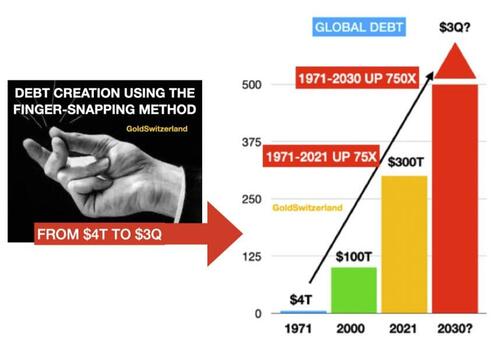
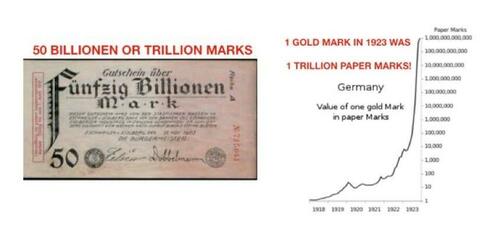
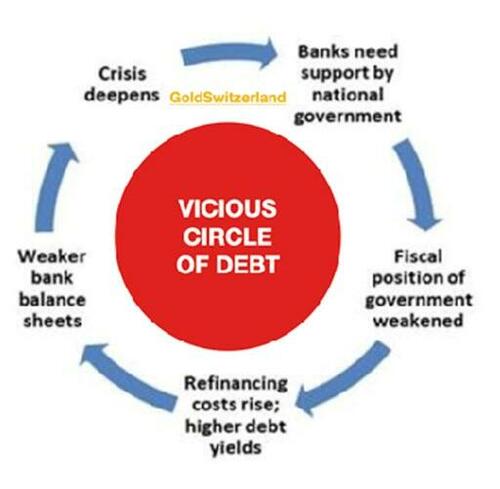
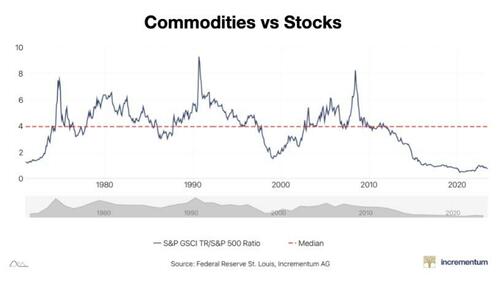

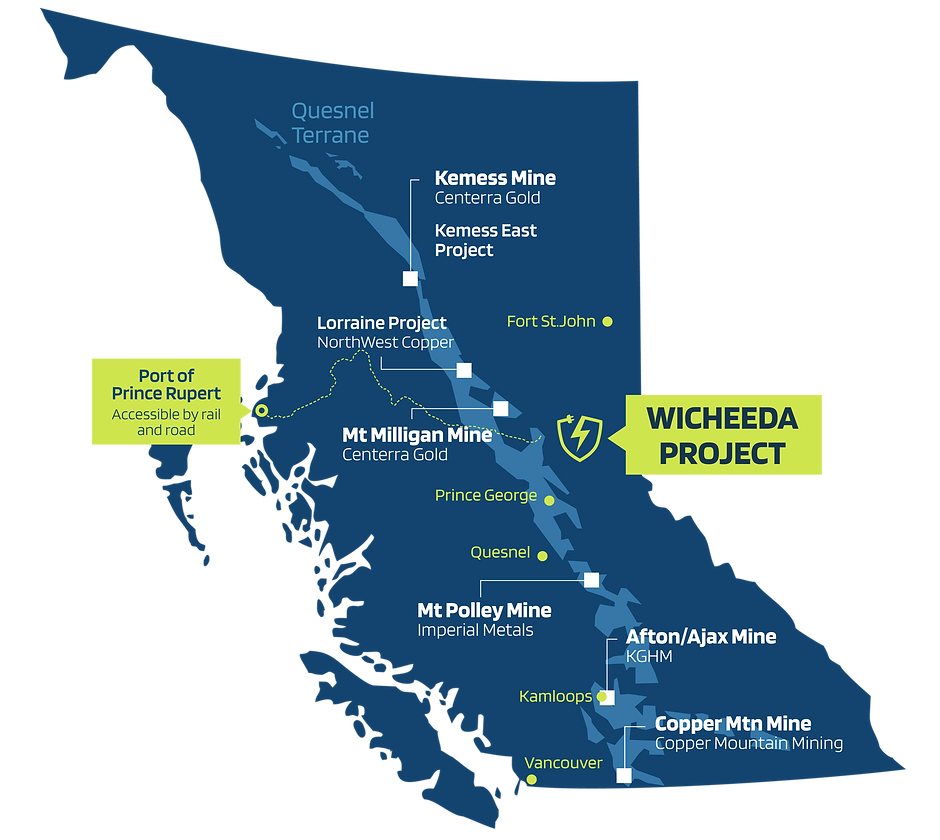

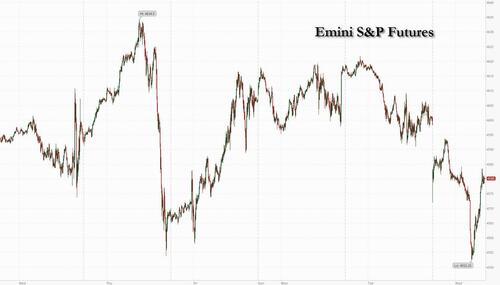




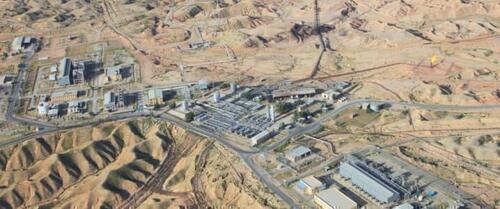


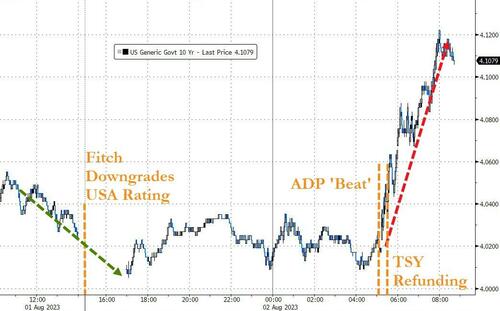
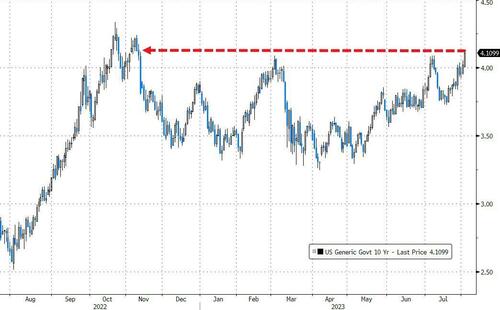
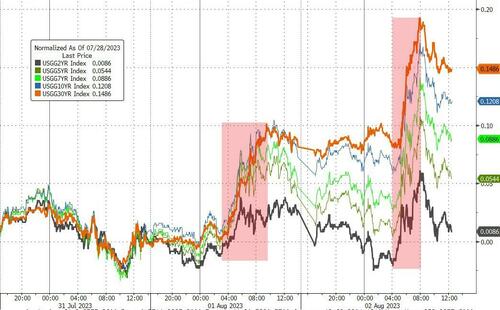
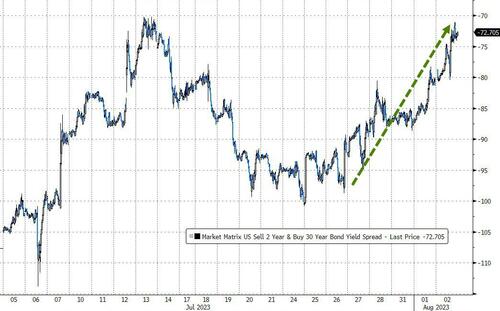
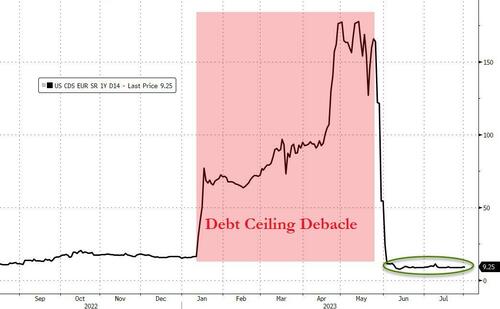
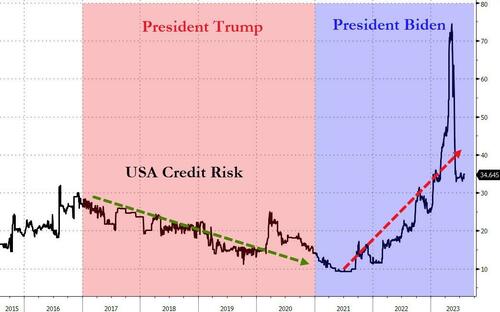
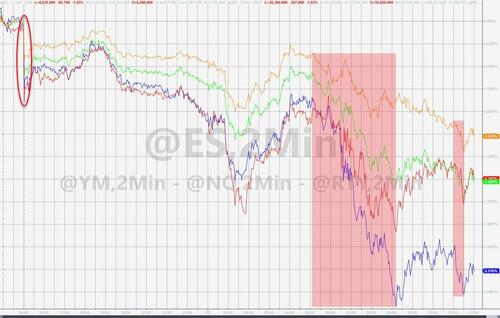
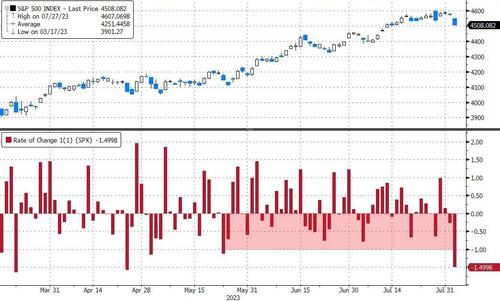
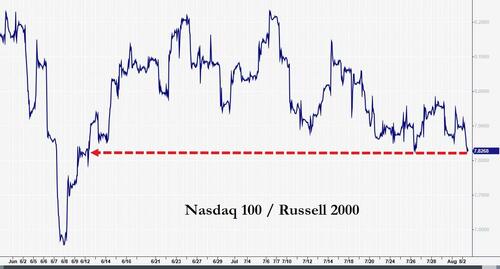
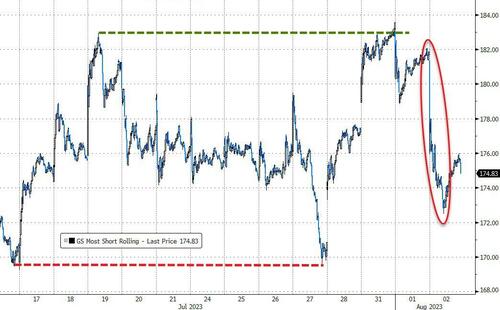
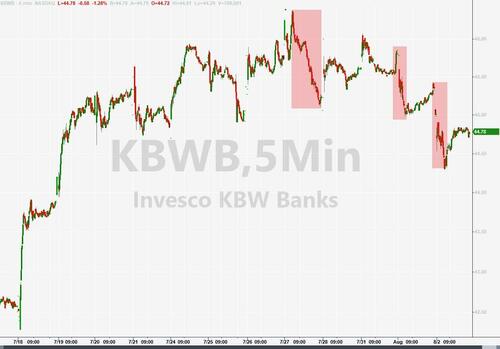
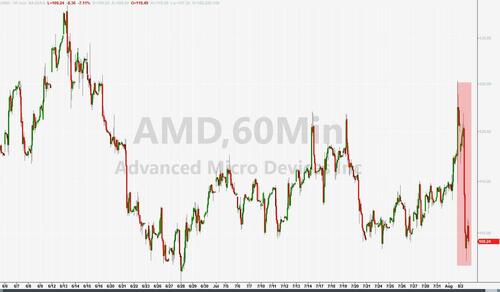
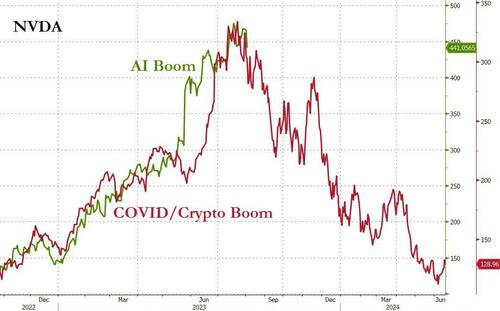
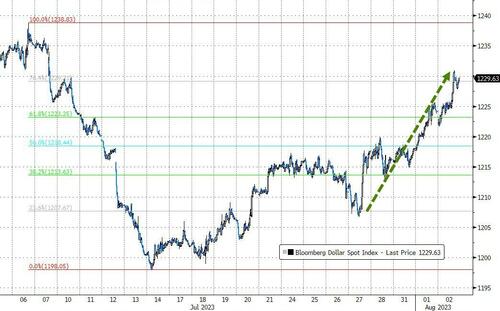
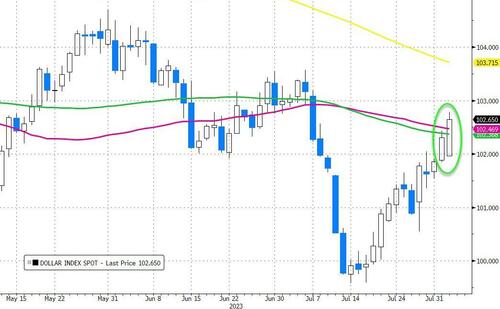
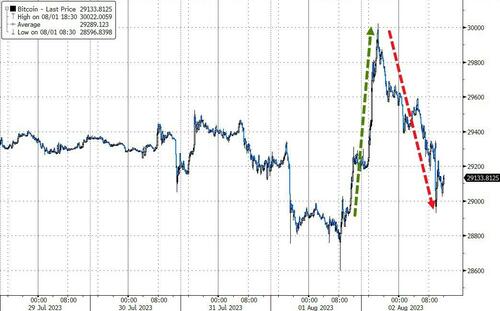
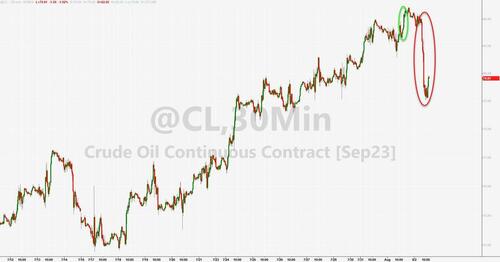
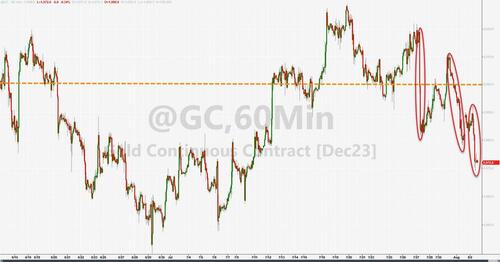
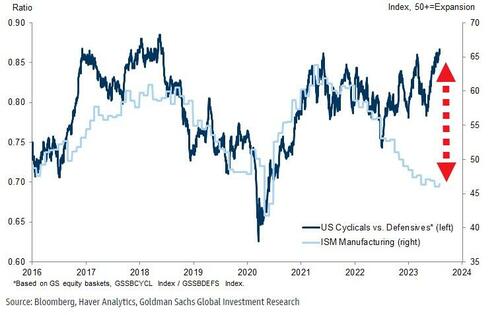
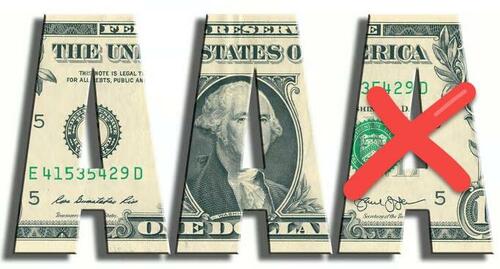
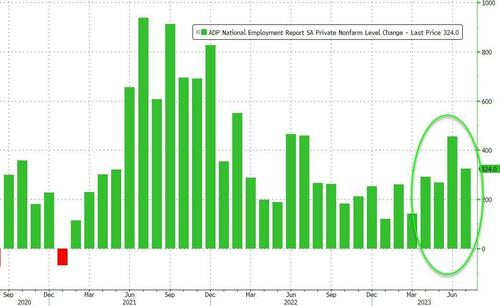
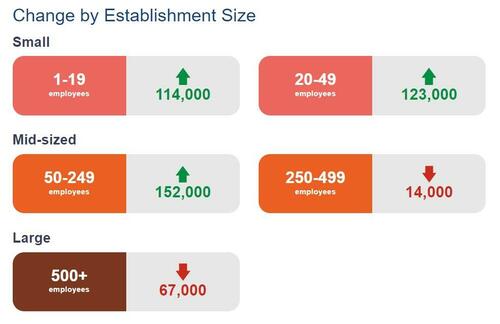
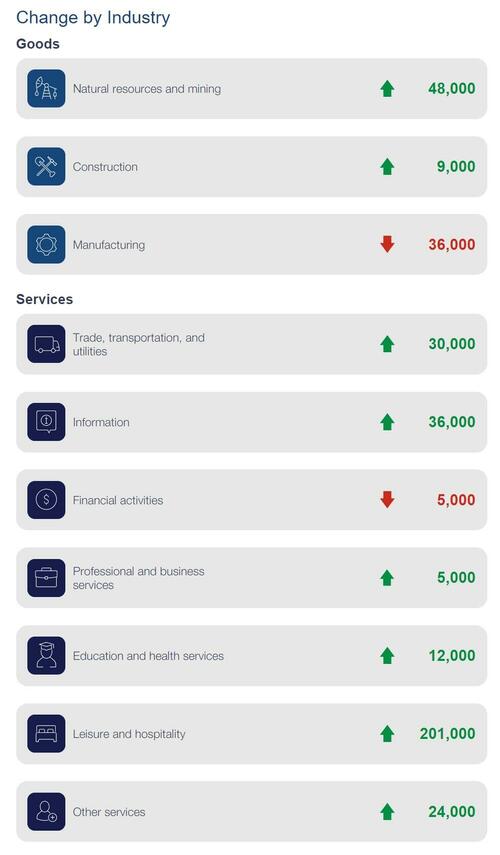
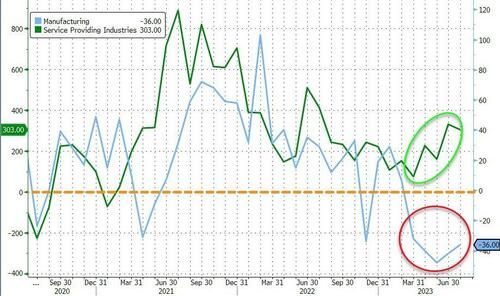

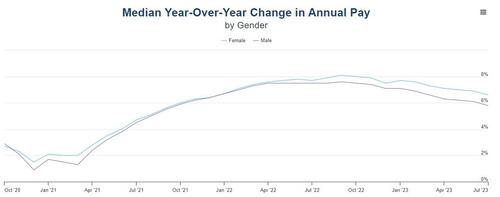
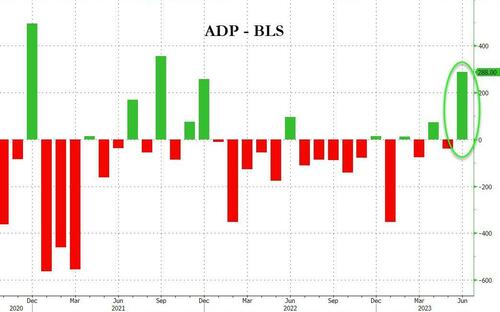
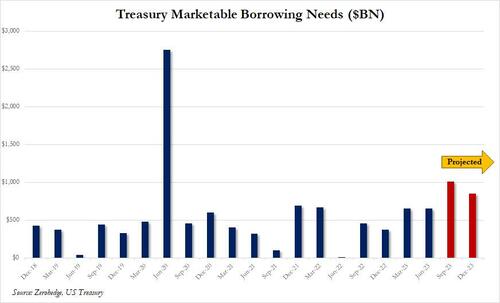
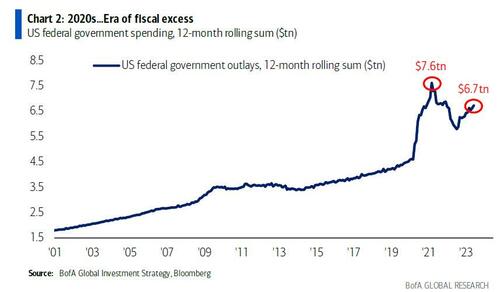
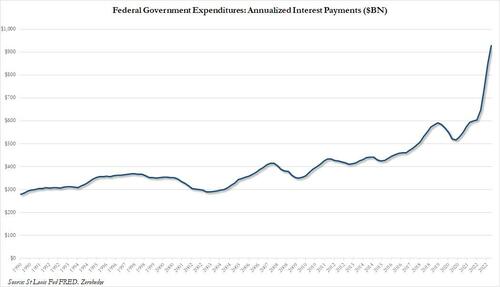
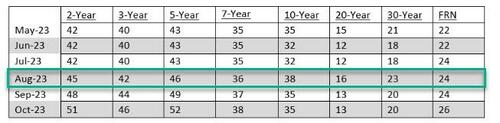
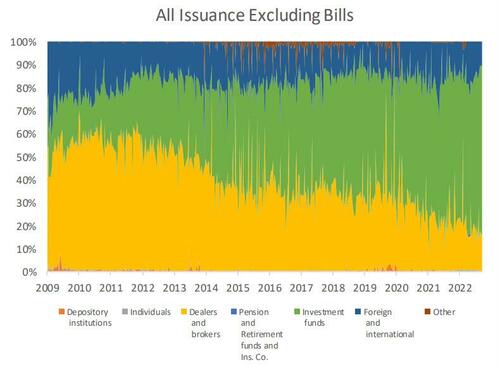

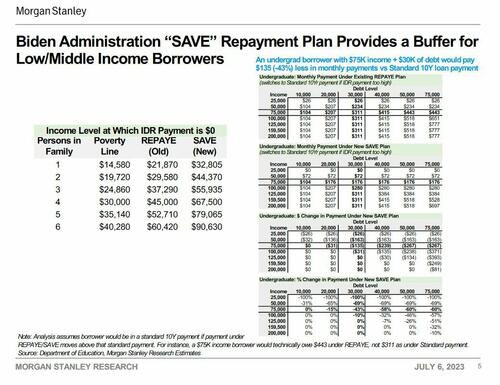
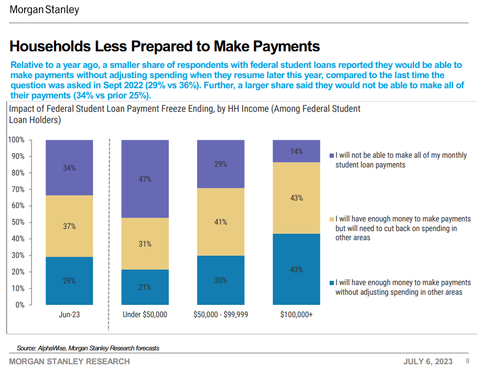
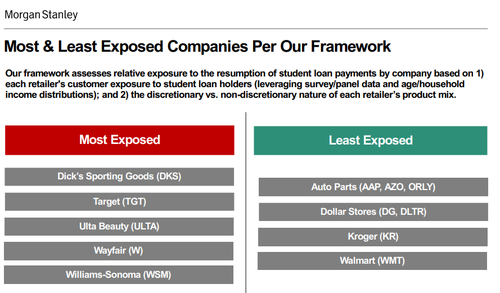
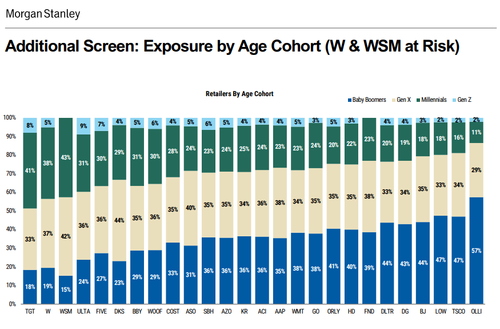
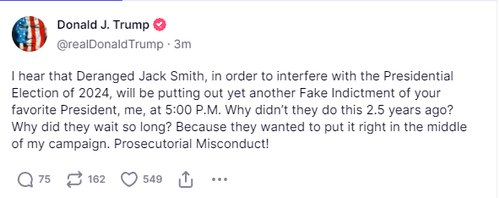
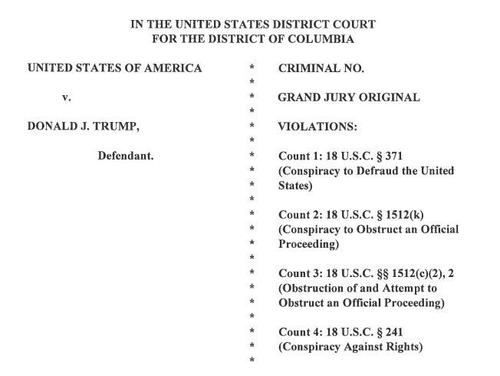




 harveyorganblog.com