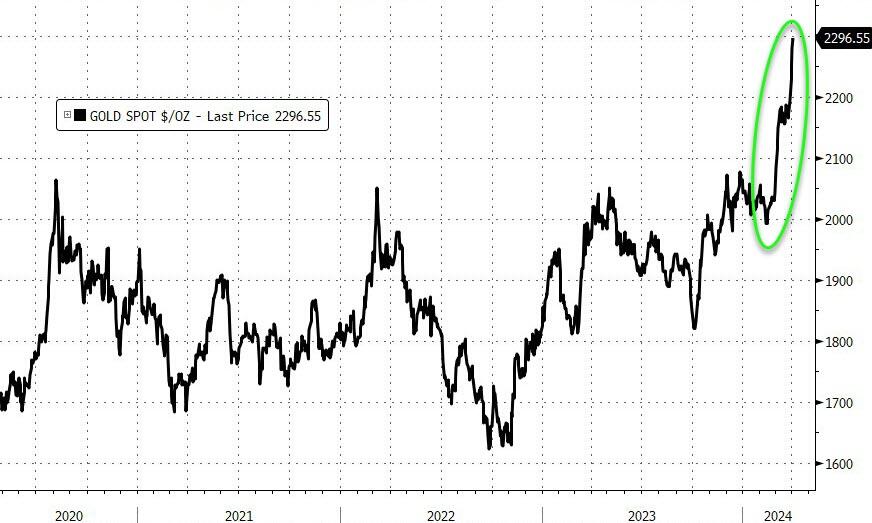
APRIL 3/GOLD CLOSED UP $33.85 TO $2294.35//SILVER CLOSED UP $1.14 TO $26.94//PLATINUM CLOSED UP $13.20 TO $935.10 WHILE PALLADIUM CLOSED UP $20.15 UP T$1018.45//GOLD COMMENTARIES TODAY FROM SIMON WHITE, MIKE MAHARREY AND JAMES RICKARDS//ESTONIA CLAIMS THAT NATO COUNTRIES ALREADY HAVE BOOTS ON THE GROUND IN UKRAINE//ISRAEL VS HAMAS//ISRAEL VS HEZBOLLAH UPDATES//SWAMP STORIES FOR YOU TONIGHT/GREG HUNTER INTERVIEWING MARTIN ARMSTRONG//
The defense of $2300 gold is now upon us. Silver’s next line is $28.52. Then $34.76
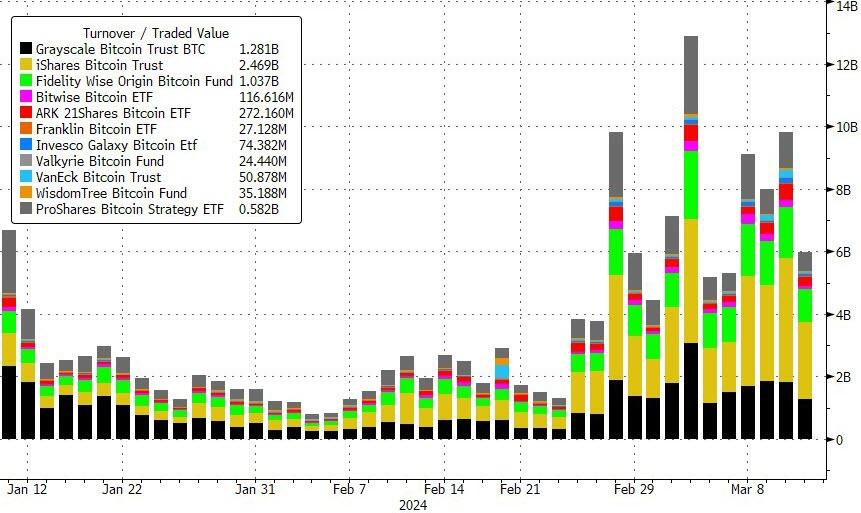
Bitcoin morning price:$66,109 DOWN 27 DOLLARS.
Bitcoin: afternoon price: $65,885 DOWN 1359 dollars
Platinum price closing UP $13.20 TO $935.10
Palladium price; UP $20.15 AT $1018.45
END
SHANGHAI GOLD PREMIUM 27 DOLLARS/COMEX GOLD
SHANGHAI GOLD……
…
SHANGHAI GOLD (USD) FUTURES – QUOTES
As of Monday, April 1, 2024, CME Group settlement data is no longer accessible through ftp.cmegroup.com and has a delayed publication time of 12:00 a.m. CT on all cmegroup.com web pages. Learn about alternate ways to access the data in our FAQ.
Last Updated 03 Apr 2024 07:34:45 AM CT.
Market data is delayed by at least 10 minutes.
MONTH
CHART
LAST
CHANGE
PRIOR SETTLE
OPEN
HIGH
LOW
VOLUME
UPDATED
APR 2024 SGUJ4
–
–
2293.0
–
–
–
0
21:30:01 CT 02 Apr 2024
MAY 2024 SGUK4
–
–
2292.9
–
–
–
0
21:30:01 CT 02 Apr 2024
JUN 2024 SGUM4
2329.7
+22.7 (+0.98%)
2307.0
2320.4
2332.2
2320.4
425
01:38:34 CT 03 Apr 2024
JUL 2024 SGUN4
–
–
–
–
–
–
0
–
AUG 2024 SGUQ4
–
–
2321.0
–
–
–
0
21:30:01 CT 02 Apr 2024
OCT 2024 SGUV4
2356.9
+25.9 (+1.11%)
2331.0
2354.4
2356.9
2354.4
98
01:00:36 CT 03 Apr 2024
DEC 2024 SGUZ4
–
–
2331.6
–
–
–
0
21:30:01 CT 02 Apr 2024
FEB 2025 SGUG5
–
–
2332.2
–
–
–
0
21:30:01 CT 02 Apr 2024
APR 2025 SGUJ5
–
–
–
–
–
–
0
I will now provide gold in Canadian dollars, British pounds and Euros
4: 15 PM ACCESS
*CANADIAN GOLD: $3109.34 UP $12.20- CDN dollars per oz( * NEW ALL TIME HIGH 3,109.34 CDN DOLLARS PER OZ//APRIL 3 2024)
*BRITISH GOLD: 1816.41 UP 1.06 pounds per oz// *(NEW ALL TIME HIGH//CLOSING///1816.41 BRITISH POUNDS/OZ) APRIL 3/2024
*EURO GOLD: 2120.82 UP 0.30 euros per oz //* (ALL TIME CLOSING HIGH: 2120.82 EUROS PER OZ//APRIL 3.2024)
DONATE
Click here if you wish to send a donation. I sincerely appreciate it as this site takes a lot of preparation
118 H MACQUARIE FUT 20 132 C SG AMERICAS 7 190 H BMO CAPITAL 342 363 H WELLS FARGO SEC 11 435 H SCOTIA CAPITAL 154 555 C BNP PARIBAS SEC 3 624 H BOFA SECURITIES 3 657 C MORGAN STANLEY 127 661 C JP MORGAN 60 483 690 C ABN AMRO 3 732 C RBC CAP MARKETS 850 737 C ADVANTAGE 3 14
TOTAL: 1,040 1,040
JPMORGAN STOPPED (RECEIVED) 483/1040 CONTRACTS
FOR APRIL/2024
GOLD: NUMBER OF NOTICES FILED FOR APRIL/2024. CONTRACT: 1040 NOTICES FOR 104,000 OZ or 3.235 TONNES
total notices so far: 11,164 contracts for 1,116,400 Oz (34,724 tonnes)
FOR APRIL:
SILVER NOTICES: 11 NOTICE(S) FILED FOR 55,000 OZ/
total number of notices filed so far this month : 361 for 1,805,000 oz
XXXXXXXXXXXXXXXXXX
Click here if you wish to send a donation. I sincerely appreciate it as this site takes a lot of preparation
END
GLD/
BOTH GLD AND SLV ARE FRAUDULENT VEHICLES//THEY ARE NOW RAIDING GLD AND SLV FOR PHYSICAL
THE CROOKS ARE STEALING GOLD AND SILVER FROM THE GLD/SLV AND REPLACING THE PHYSICAL WITH PAPER DOLLARS.
WITH GOLD UP $33.85
INVESTORS SWITCHING TO SPROTT PHYSICAL (PHYS) INSTEAD OF THE FRAUDULENT GLD/ :
NO CHANGES IN GOLD INVENTORY AT THE GLD:
/ /INVENTORY RESTS AT 829.00 TONNES
INVENTORY RESTS AT 829.00 TONNES
SLV//
WITH NO SILVER AROUND AND SILVER UP $1.14 AT THE SLV//
HUGE CHANGES IN SILVER INVENTORY AT THE SLV: A DEPOSIT OF 2.835 MILLION OZ OF SILVER INTO THE SLV
// INVENTORY RISES TO 433.641 MILLION OZ/
INVESTORS ARE SWITCHING SLV TO SPROTT’S PSLV.
CLOSING INVENTORY: 433.641 MILLION OZ
Let us have a look at the data for today
SILVER//OUTLINE
SILVER COMEX OI ROSE BY A MEGA MEGA HUMONGOUS SIZED 5070 CONTRACTS TO 166,823 AND CLOSER TO THE RECORD HIGH OI OF 244,710, SET FEB 25/2020 AND THIS HUMONGOUS SIZED GAIN IN COMEX OI WAS ACCOMPLISHED WITH OUR STRONG GAIN IN PRICE OF $0.84 IN SILVER PRICING AT THE COMEX ON TUESDAY. WE HAD ZERO LONG LIQUIDATION AT THE COMEX SESSION WITH AGAIN PANICKING SHORT COVERING WITH THE PRICE GAIN. WE HAD A VERY STRONG 1084 T.A.S ISSUANCE AND THESE WILL BE USED FOR MANIPULATION LATER THIS MONTH/AS WELL AS TODAY. PLEASE NOTE THAT THE CROOKS NEED A HIGHER SILVER/GOLD T.A.S. TO CARRY ON THEIR CROOKED MANIPULATION ON A DAILY BASIS
CRAIG HEMKE HAS POINTED OUT THAT THE CROOKS USE THE MID MONTH FOR MANIPULATION AS THEY SELL THEIR BUY SIDE OF THE CALENDAR SPREAD FIRST AND THEN KEEP THE SELL SIDE TO LIQUIDATE AT A LATER DATE. THUS WE HAVE TWO VEHICLES THE CROOKS USE FOR MANIPULATION AND BOTH ARE SPREADERS: 1) AT MONTH’S END/SPREADERS COMEX AND 2/ TAS SPREADERS, MID MONTH. TOTAL TAS ISSUED ON TUESDAY NIGHT: 1084 CONTRACTS. DESPITE MANY COMPLAINTS THAT THE CROOKS HAVE VIOLATED POSITION LIMITS DUE TO THE FACT THAT THE TAS ISSUED HAVE A VALUE OF ZERO (AS TO POSITION LIMITS FOR OUR CROOKED BANKERS). THE PROBLEM OF COURSE IS THAT THE CROOKS DO NOT LIQUIDATE THE TAS TOGETHER BUT SELL THE BUY SIDE FIRST AND THEN LIQUIDATE THE SELL SIDE TWO MONTHS HENCE. IT IS OBVIOUS MANIPULATION TO THE HIGHEST DEGREE BUT IT NATURALLY FELL ON DEAF EARS WITH OUR REGULATORS (OCC) WHEN THEY RECEIVED OUR COMPLAINTS. IT THUS LOOKS LIKE THE FED (GOV’T) IS BEHIND ALL OF THESE TRADES.
WE HAVE NOW SET ANOTHER RECORD LOW AT 114,102 CONTRACTS ///JULY 3.2023// OUR BANKERS WITH THE HELP OF SPECULATORS AND HIGH FREQUENCY TRADERS WERE UNSUCCESSFUL IN KNOCKING THE PRICE OF SILVER DOWN (IT ROSE BY $0.84), AND WERE UNSUCCESSFUL IN KNOCKING ANY SILVER LONGS AS WE HAD A MEGA HUMONGOUS SIZED GAIN OF 6650 CONTRACTS ON OUR TWO EXCHANGES WITH THE HUGE GAIN IN PRICE OF 85 CENTS.
WE MUST HAVE HAD:
A HUMONGOUS SIZED 1580 CONTRACT ISSUANCE OF EXCHANGE FOR PHYSICALS) iiii) AN INITIAL SILVER STANDING FOR COMEX SILVER MEASURING AT 2.465 MILLION OZ (FIRST DAY NOTICE) FOLLOWED BY TODAY’S 210,000 OZ QUEUE JUMP//NEW STANDING 2.8150 MILLION OZ//
//NEW STANDING FOR SILVER IS THUS 2.8150 MILLION OZ
WE HAD:
/ MEGA HUMONGOUS SIZED COMEX OI GAIN/ MEGA HUGE SIZED EFP ISSUANCE/ VI) HUGE SIZED NUMBER OF T.A.S. CONTRACT ISSUANCE 1084 CONTRACTS)/
I AM NOW RECORDING THE DIFFERENTIAL IN OI FROM PRELIMINARY TO FINAL -REMOVED A WHOPPING 1767 CONTRACTS //
HISTORICAL ACCUMULATION OF EXCHANGE FOR PHYSICALS FEB. ACCUMULATION FOR EFP’S SILVER/JPMORGAN’S HOUSE OF BRIBES/STARTING FROM FIRST DAY/MONTH OF APRIL
TOTAL CONTRACTS for 3 days, total 3939 contracts: OR 15.515 MILLION OZ (1313 CONTRACTS PER DAY)
TOTAL EFP’S FOR THE MONTH SO FAR: 15.515 MILLION OZ
LAST 23 MONTHS TOTAL EFP CONTRACTS ISSUED IN MILLIONS OF OZ:
MAY 137.83 MILLION
JUNE 149.91 MILLION OZ
JULY 129.445 MILLION OZ
AUGUST: MILLION OZ 140.120
SEPT. 28.230 MILLION OZ//
OCT: 94.595 MILLION OZ
NOV: 131.925 MILLION OZ
DEC: 100.615 MILLION OZ
YEAR 2022:
JAN 2022-DEC 2022
JAN 2022// 90.460 MILLION OZ
FEB 2022: 72.39 MILLION OZ//
MARCH 2022: 207.140 MILLION OZ//A NEW RECORD FOR EFP ISSUANCE
APRIL: 114.52 MILLION OZ FINAL//LOW ISSUANCE
MAY: 105.635 MILLION OZ//
JUNE: 94.470 MILLION OZ
JULY : 87.110 MILLION OZ
AUGUST: 65.025 MILLION OZ
SEPT. 74.025 MILLION OZ///FINAL
OCT. 29.017 MILLION OZ FINAL
NOV: 134.290 MILLION OZ//FINAL
DEC, 61.395 MILLION OZ FINAL
TOTALS YR 2022: 1135.767 MILLION OZ (1.1356 BILLION OZ)
JAN 2023/// 53.070 MILLION OZ //FINAL
FEB: 2023: 100.105 MILLION OZ/FINAL//MUCH STRONGER ISSUANCE VS THE LATTER TWO MONTHS.
MARCH 2023: 112.58 MILLION OZ//FINAL//STRONG ISSUANCE
APRIL 118.035 MILLION OZ(SLIGHTLY GREATER THAN THAN LAST MONTH)
MAY 66.120 MILLION OZ/INITIAL (MUCH SMALLER THIS MONTH)
JUNE: 110.395 MILLION OZ//MUCH LARGER THAN LAST MONTH
JULY 85.745 MILLION OZ (SMALLER THAN LAST MONTH)
AUGUST: 171.43 MILLION OZ (THIS MONTH IS GOING TO BE HUGE //2ND HIGHEST ON RECORD
SEPT: 72.705 MILLION OZ (SMALLER THIS MONTH)
OCT: 97.455 MILLION OZ
NOV. 50.050 MILLION OZ
DEC. 66.140 MILLION OZ//
TOTAL 2023: 1,104.10 MILLION OZ/
JAN ’24 : 78.655 MILLION OZ//
FEB /2024 : 66.135 MILLION OZ./FINAL
MARCH: 143.750 MILLION OZ// 4TH HIGHEST ON RECORD.
APRIL: 15.515 MILLION OZ
RESULT: WE HAD A MEGA HUMONGOUS SIZED INCREASE IN COMEX OI SILVER COMEX CONTRACTS OF 5070 CONTRACTS WITH OUR STRONG GAININ PRICE OF SILVER PRICING AT THE COMEX//TUESDAY.,. THE CME NOTIFIED US THAT WE HAD A HUMONGOUS EFP ISSUANCE CONTRACTS: 1580 ISSUED FOR MAY AND 0 CONTRACTS ISSUED FOR ALL OTHER MONTHS) WHICH EXITED OUT OF THE SILVER COMEX TO LONDON AS FORWARDS. WE HAVE A GOOD INITIAL SILVER OZ STANDING FOR APRIL. OF 2.465 MILLION OZ ON FIRST DAY NOTICE FOLLOWED BY TODAYS’ 210,000 OZ QUEUE JUMP
//NEW TOTAL STANDING RISES TO 2.8150 MILLION OZ
WE HAVE A MEGA MEGA HUMONGOUS GAIN OF 6650 OI CONTRACTS ON THE TWO EXCHANGES WITH THE STRONG GAIN IN PRICE. THE TOTAL OF TAS INITIATED CONTRACTS TODAY: A HUGE SIZED 1084 CONTRACTS//SOME FRONT END OF THE TAS CONTRACTS WERE LIQUIDATED DURING THE TUESDAY COMEX SESSION/// WITH MAJOR SHORT COVERING FROM OUR SPEC SHORTS
THE NEW TAS ISSUANCE THURSDAY NIGHT (1084) WILL BE PUT INTO “THE BANK” TO BE COLLUSIVELY USED AT A LATER DATE//PROBABLY TODAY., .
WE HAD 11 NOTICE(S) FILED TODAY FOR 55,000 OZ
THE SILVER COMEX IS NOW BEING ATTACKED FOR METAL BY LONDONERS ET AL.
GOLD//OUTLINE
IN GOLD, THE COMEX OPEN INTEREST ROSE BY A FAIR SIZED 1267 CONTRACTS TO 500,045 AND CLOSER TO THE RECORD (SET JAN 24/2020) AT 799,733 AND PREVIOUS TO THAT: (SET JAN 6/2020) AT 797,110, BUT WE ARE NOW MUCH FURTHER FROM OUR ALL TIME LOW OF 390,000 CONTRACTS.
THE DIFFERENTIAL FROM PRELIMINARY OI TO FINAL OI IN GOLD TODAY: REMOVED 595 CONTRACTS
WE HAD A FAIR SIZED INCREASE IN COMEX OI (1862 CONTRACTS) WITH OUR $23.90 GAIN IN PRICE//TUESDAY. THE BANKERS WERE FORCED TO SUPPLY THE NECESSARY SHORT PAPER TO CONTAIN GOLD’S RISE.WE ALSO HAD A RATHER LARGE INITIAL STANDING IN GOLD TONNAGE FOR APRIL. AT 44.8615 TONNES ON FIRST DAY NOTICE FOLLOWED BY TODAY’’QUEUE. JUMP TO LONDON OF 14,100 OZ.(0.4386 TONNES)
NEW TOTAL Of INITIAL GOLD STANDING 42.043 TONNES FOLLOWED BY TODAY’S 14,100 OZ QUEUE JUMP//NEW STANDING 42.289 TONNES// ALL OF THIS HAPPENED WITH OUR $23.90 GAIN IN PRICE WITH RESPECT TO TUESDAY’S TRADING. WE HAD A STRONG SIZED GAIN OF 5834 OI CONTRACTS (19.87 PAPER TONNES) ON OUR TWO EXCHANGES.
E.F.P. ISSUANCE
THE CME RELEASED THE DATA FOR EFP ISSUANCE AND IT TOTALED A STRONG SIZED 4527CONTRACTS:
The NEW COMEX OI FOR THE GOLD COMPLEX RESTS AT 500,045
IN ESSENCE WE HAVE A STRONG SIZED INCREASE IN TOTAL CONTRACTS ON THE TWO EXCHANGES OF 5834 CONTRACTS WITH 1862 CONTRACTS INCREASED AT THE COMEX// AND A STRONG SIZED 4527 EFP OI CONTRACTS WHICH NAVIGATED OVER TO LONDON. THUS TOTAL OI GAIN ON THE TWO EXCHANGES OF 5834 CONTRACTS.. WE HAD THE FOLLOWING TAS CONTRACTS INITIATED (ISSUED): A STRONG SIZED 4527 CONTRACTS,
CALCULATIONS ON GAIN/LOSS ON OUR TWO EXCHANGES
WE HAD A STRONG SIZED ISSUANCE IN EXCHANGE FOR PHYSICALS (4527 CONTRACTS) ACCOMPANYING THE FAIR SIZED GAIN IN COMEX OI (1267) //TOTAL GAIN FOR OUR THE TWO EXCHANGES: 5834 CONTRACTS. WE HAVE ( 1) NOW RETURNED TO OUR FORMER FORMAT OF BANKERS GOING LONG AND SPECULATORS GOING SHORT ,2.) STRONG INITIAL STANDING AT THE GOLD COMEX FOR APRIL. AT 44.8615 TONNES FOLLOWED BY TODAY’S 0.4386 TONNES QUEUE JUMP //NEW STANDING 42.289 TONNES.
/ 3) ZERO LONG LIQUIDATION WITH THE HUGE JUMP IN PRICE.
// 4) FAIR SIZED COMEX OPEN INTEREST GAIN/ 5) STRONG ISSUANCE OF EXCHANGE FOR PHYSICAL PAPER///6: FAIR T.A.S. ISSUANCE: 2275CONTRACTS/ ATTEMPTED SHORT COVERING FOR SURE.
HISTORICAL ACCUMULATION OF EXCHANGE FOR PHYSICALS IN 2023-2024 INCLUDING TODAY
MARCH
ACCUMULATION OF EFP’S GOLD AT J.P. MORGAN’S HOUSE OF BRIBES: (EXCHANGE FOR PHYSICAL) FOR THE MONTH OF APRIL. :
TOTAL EFP CONTRACTS ISSUED: 12,201 CONTRACTS OR 1,220,100OZ OR 37.95 TONNES IN 3TRADING DAY(S) AND THUS AVERAGING: 3832 EFP CONTRACTS PER TRADING DAY
TO GIVE YOU AN IDEA AS TO THE SIZE OF THESE EFP TRANSFERS : THIS MONTH IN 3TRADING DAY(S) IN TONNES 37.95 TONNES
TOTAL ANNUAL GOLD PRODUCTION, 2022, THROUGHOUT THE WORLD EX CHINA EX RUSSIA: 3555 TONNES
THUS EFP TRANSFERS REPRESENTS 37.95/3550 x 100% TONNES 1.07% OF GLOBAL ANNUAL PRODUCTION
SEPT 142.12 TONNES FINAL ISSUANCE ( LOW ISSUANCE)_
OCT: 141.13 TONNES FINAL ISSUANCE (LOW ISSUANCE)
NOV: 312.46 TONNES FINAL ISSUANCE//NEW RECORD!! (INCREASING DRAMATICALLY)//SIGN OF REAL STRESS//SURPASSING THE MARCH 2021 RECORD OF 276.50 TONNES OF EFP
DEC. 175.62 TONNES//FINAL ISSUANCE//
TOTALS: 2,578.08 TONNES/2021
JAN:2022 247.25 TONNES //FINAL
FEB: 196.04 TONNES//FINAL
MARCH/2022: 409.30 TONNES //FINAL( THIS IS NOW A RECORD EFP ISSUANCE FOR MARCH AND FOR ANY MONTH.
APRIL: 169.55 TONNES (FINAL VERY LOW ISSUANCE MONTH)
MAY: 247.44 TONNES FINAL//
JUNE: 238.13 TONNES FINAL
JULY: 378.43 TONNES FINAL
AUGUST: 180.81 TONNES FINAL
SEPT. 193.16 TONNES FINAL
OCT: 177.57 TONNES FINAL ( MUCH SMALLER THAN LAST MONTH)
NOV. 223.98 TONNES//FINAL ( MUCH LARGER THAN PREVIOUS MONTHS//comex running out of physical)
DEC: 185.59 tonnes // FINAL
TOTAL: 2,847,25 TONNES/2022
JAN 2023: 228.49 TONNES FINAL//HUGE AMOUNT OF EFP’S ISSUED THIS MONTH!!
FEB: 151.61 TONNES/FINAL
MARCH: 280.09 TONNES/INITIAL (ANOTHER STRONG MONTH FOR EFP ISSUANCE)
APRIL: 197.42 TONNES
MAY: 236.67 TONNES (A VERY STRONG ISSUANCE FOR THIS MONTH)
JUNE: 172.667 TONNES (WEAKER ISSUANCE THIS MONTH)
JULY: 151.69 TONNES (WEAKER THAN LAST MONTH)
AUGUST: 195.28 TONNES (A STRONGER MONTH)//FINAL
SEPT: 254.709 TONNES (WILL BE LARGER THAN LAST MONTH AND A STRONG MONTH)
OCT. 248.09 TONNES. LIKE SILVER, THIS MONTH IS GOING TO BE A STRONG E.F.P. ISSUANCE.
NOV. 239.16 TONNES//WILL BE STRONG THIS MONTH,
DEC. 213.704 TONNES. A STRONG MONTH//
TOTAL FOR YEAR 2023: 2,569.57 TONNES VS 2578 TONNES LAST YEAR
JAN ’24: 291.76 TONNES (WILL BE MUCH GREATER THAN LAST MONTH.//3RD HIGHEST EVER RECORDED EXCHANGE FOR PHYSICAL)
FEB’24: 201.947 TONNES
MARCH 2024: 352.21 TONNES//2ND HIGHEST EVER RECORDED EFP ISSUANCE.
APRIL: 37.95 TONNES
SPREADING OPERATIONS
(/NOW SWITCHING TO GOLD) FOR NEWCOMERS, HERE ARE THE DETAILS
SPREADING LIQUIDATION HAS NOW COMMENCED AS WE HEAD TOWARDS THE NEW ACTIVE FRONT MONTH OF APRIL. WE ARE NOW INTO THE SPREADING OPERATION OF GOLD
HERE IS A BRIEF SYNOPSIS OF HOW THE CROOKS FLEECE UNSUSPECTING LONGS IN THE SPREADING ENDEAVOUR ;MODUS OPERANDI OF THE CORRUPT BANKERS AS TO HOW THEY HANDLE THEIR SPREAD OPEN INTERESTS:HERE IS HOW THE CROOKS USED SPREADING AS WE ARE NOW INTO THE NON ACTIVE DELIVERY MONTH OF NOV HEADING TOWARDS THE ACTIVE DELIVERY MONTH OF FEB., FOR GOLD: AND MARCH FOR SILVER
YOU WILL ALSO NOTICE THAT THE COMEX OPEN INTEREST STARTS TO RISE BUT SO IS THE OPEN INTEREST OF SPREADERS. THE OPEN INTEREST IN WILL CONTINUE TO RISE UNTIL ONE WEEK BEFORE FIRST DAY NOTICE OF AN UPCOMING ACTIVE DELIVERY MONTH (APRIL), AND THAT IS WHEN THE CROOKS SELL THEIR SPREAD POSITIONS BUT NOT AT THE SAME TIME OF THE DAY. THEY WILL USE THE SELL SIDE OF THE EQUATION TO CREATE THE CASCADE (ALONG WITH THEIR COLLUSIVE FRIENDS) AND THEN COVER ON THE BUY SIDE OF THE SPREAD SITUATION AT THE END OF THE DAY. THEY DO THIS TO AVOID POSITION LIMIT DETECTION. THE LIQUIDATION OF THE SPREADING FORMATION CONTINUES FOR EXACTLY ONE WEEK AND ENDS ON FIRST DAY NOTICE.”
WHAT IS ALARMING TO ME, ACCORDING TO OUR LONDON EXPERT ANDREW MAGUIRE IS THAT THESE EFP’S ARE BEING TRANSFERRED TO WHAT ARE CALLED SERIAL FORWARD CONTRACT OBLIGATIONS AND THESE CONTRACTS ARE LESS THAN 14 DAYS. ANYTHING GREATER THAN 14 DAYS, THESE MUST BE RECORDED AND SENT TO THE COMPTROLLER, GREAT BRITAIN TO MONITOR RISK TO THE BANKING SYSTEM. IF THIS IS INDEED TRUE, THEN THIS IS A MASSIVE CONSPIRACY TO DEFRAUD AS WE NOW WITNESS A MONSTROUS TOTAL EFP’S ISSUANCE AS IT HEADS INTO THE STRATOSPHERE.
The crooks also use the spread in the TAS account (trade at settlement). They buy the spot TAS (e.g. June) and sell the future TAS two months out (e.g. August). Then they unload the front month (i.e. unload the buy side first so the price of gold/silver falls. This occurs in the middle of the front delivery month cycle. They unload the sell side of the equation, two months down the road. The crooks violate position limits as the OCC refuse to hear our complaints.
First, here is an outline of what will be discussed tonight:
1.Today, we had the open interest at the comex, in SILVER ROSE BY A MEGA GIGANTIC SIZED 5070 CONTRACTS OI TO 166,823 AND CLOSER TO THE COMEX HIGH RECORD //244,710(SET FEB 25/2020). THE LAST RECORDS WERE SET IN AUG.2018 AT 244,196 WITH A SILVER PRICE OF $14.78/(AUGUST 22/2018)..THE PREVIOUS RECORD TO THAT WAS SET ON APRIL 9/2018 AT 243,411 OPEN INTEREST CONTRACTS WITH THE SILVER PRICE AT THAT DAY: $16.53). AND PREVIOUS TO THAT, THE RECORD WAS ESTABLISHED AT: 234,787 CONTRACTS, SET ON APRIL 21.2017 OVER 6 YEARS AGO. HOWEVER WE HAVE NOW SET A NEW RECORD LOW OF 114,102 CONTRACTS JULY 3.2023
EFP ISSUANCE 1580 CONTRACTS
OUR CUSTOMARY MIGRATION OF COMEX LONGS CONTINUE TO MORPH INTO LONDON FORWARDS AS OUR BANKERS USED THEIR EMERGENCY PROCEDURE TO ISSUE:
MAY 1580 and ALL OTHER MONTHS: ZERO. TOTAL EFP ISSUANCE: 1580 CONTRACTS. EFP’S GIVE OUR COMEX LONGS A FIAT BONUS PLUS A DELIVERABLE PRODUCT OVER IN LONDON. IF WE TAKE THE COMEX OI GAIN OF 6837 CONTRACTS AND ADD TO THE 1580 E.FP. ISSUED
WE OBTAIN A MEGA HUMONGOUS SIZED GAIN OF OPEN INTEREST CONTRACTS FROM OUR TWO EXCHANGES OF 6650CONTRACTS
THUS IN OUNCES, THE GAIN ON THE TWO EXCHANGES TOTAL 33.25 MILLION OZ
c) Commentaries from: Egon von Greyerz///Matthew Piepenburg via GoldSwitzerland.com, Pam and Russ Martens
ii a) Chris Powell of GATA provides to us very important physical commentaries
b. Other gold/silver commentaries
c. Commodity commentaries//
d)/CRYPTOCURRENCIES/BITCOIN ETC
2.ASIAN AFFAIRS//
WEDNESDAY MORNING/TUESDAY NIGHT
SHANGHAI CLOSED DOWN 5.66 PTS OR 0.18% //Hang Seng CLOSED DOWN 206.42 OR 1.22%
/ Nikkei CLOSED DOWN 387.06 PTS OR 0.99% //Australia’s all ordinaries CLOSED DOWN 1.38%
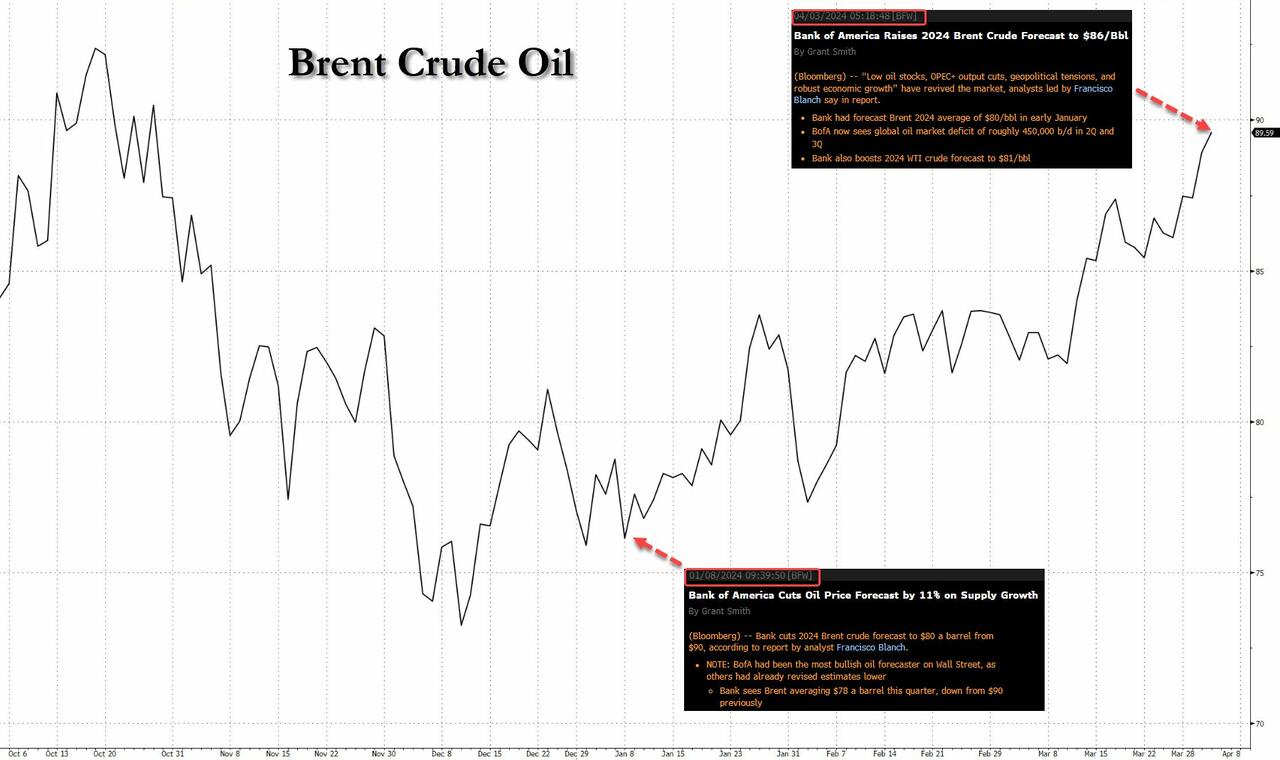
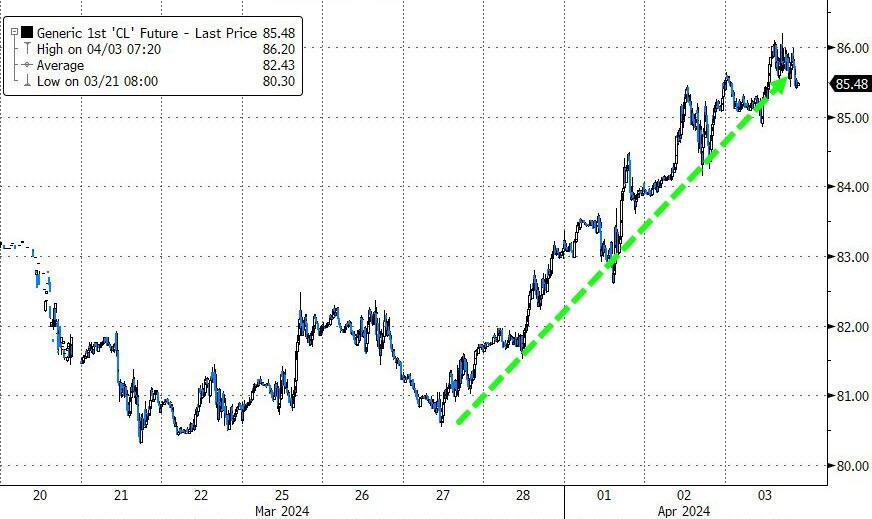
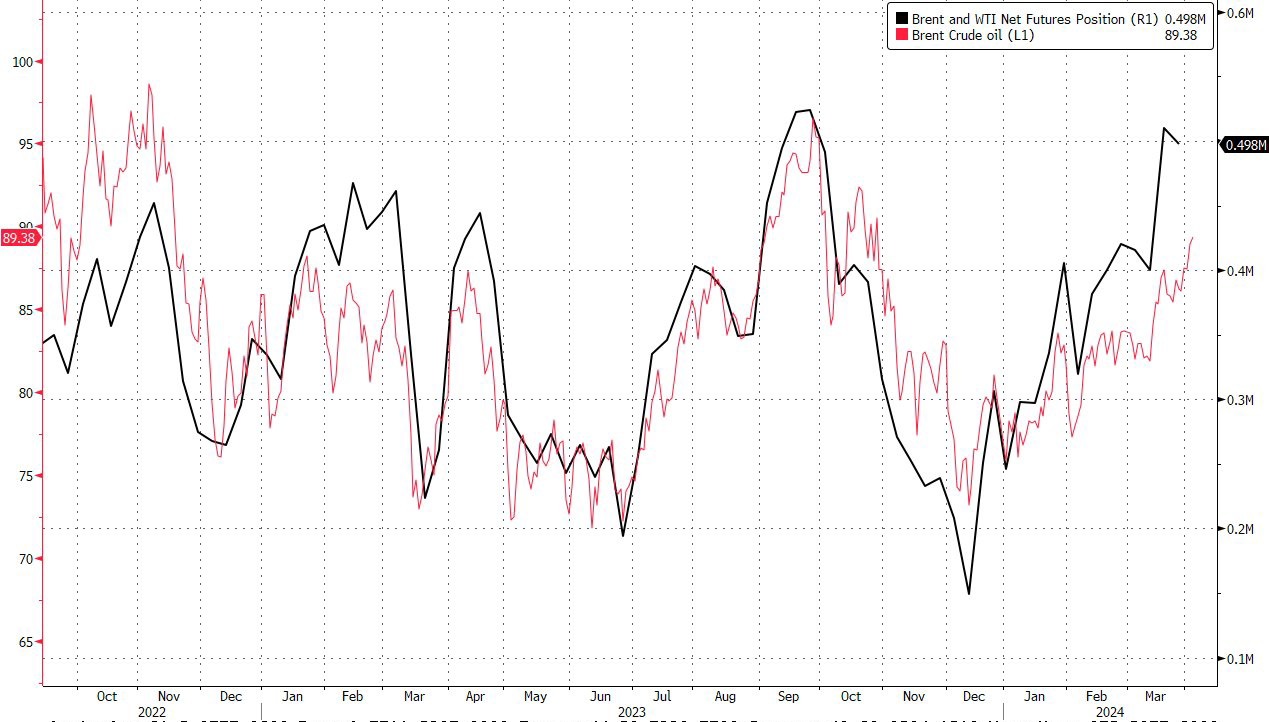
/Chinese yuan (ONSHORE) closed DOWN 7.2358 //OFFSHORE CHINESE YUAN CLOSED DOWN TO 7.2791 /Oil UP TO 85.91 dollars per barrel for WTI and BRENT DOWN AT 89.63/ Stocks in Europe OPENED MOSTLY ALL GREEN// ONSHORE YUAN TRADING ABOVE LEVEL OF OFFSHORE YUAN/ONSHORE YUAN TRADING WEAKER AGAINST US DOLLAR/OFFSHORE YUAN WEAKER
1. COMEX DATA//AMOUNTS STANDING//VOLUME OF TRADING/INVENTORY MOVEMENTS
GOLD
LET US BEGIN:
THE TOTAL COMEX GOLD OPEN INTEREST ROSE BY A FAIR 1267 CONTRACTS TO 500,045 DESPITE OUR STRONG GAIN IN PRICE OF $23.90 WITH RESPECT TO TUESDAY TRADING. WE HAD ZERO SPREADER LIQUIDATION BUT STRONG T.A.S. LIQUIDATION
EXCHANGE FOR PHYSICAL ISSUANCE
WE ARE NOW IN THE NON ACTIVE DELIVERY MONTH OF APRIL..… THE CME REPORTS THAT THE BANKERS ISSUED A FAIR SIZED TRANSFER THROUGH THE EFP ROUTE AS THESE LONGS RECEIVED A DELIVERABLE LONDON FORWARD TOGETHER WITH A FIAT BONUS.,
THAT IS 4527 EFP CONTRACTS WERE ISSUED: : JUNE 4527 & ZERO FOR ALL OTHER MONTHS:
TOTAL EFP ISSUANCE: 4527CONTRACTS
ON A NET BASIS IN OPEN INTEREST WE LOST THE FOLLOWING TODAY ON OUR TWO EXCHANGES: A STRONG SIZED TOTAL OF 5834 CONTRACTS IN THAT 4537 LONGS WERE TRANSFERRED AS EXCHANGE FOR PHYSICALS TO LONDON AND WE HAD A FAIR SIZED GAIN OF 1267 COMEX CONTRACTS..AND THIS STRONG GAIN ON OUR TWO EXCHANGES HAPPENED DESPITE OUR HUGE GAIN IN PRICE OF $23.90 TUESDAY COMEX. AS PER OUR NEWBIE TRADE AT SETTLEMENT (TAS) MANIPULATION OPERATION (WHICH CRAIG HEMKE HAS POINTED OUT HAPPENS DURING MID MONTH IN THE DELIVERY CYCLE), THE CME REPORTS THAT THE TOTAL T.A.S. ISSUANCE FOR TUESDAY NIGHT WAS A FAIR SIZED 2275 CONTRACTS. WE HAD 0 EX FOR RISK ISSUANCE
THROUGHOUT THE PAST SEVERAL WEEKS, THE BANKERS CONTINUE TO SELL OFF THE LONG SIDE OF THE SPREAD WHICH OF COURSE CONTINUES TO MANIPULATE THE PRICE OF GOLD SOUTHBOUND. (THEY KEEP THE SHORT SIDE OF THE CALENDAR/T.A.S. SPREAD WHICH WILL BE LIQUIDATED IN DAYS HENCE//. IT SEEMS THAT OUR CROOKS ARE HAVING A HARD TIME TRYING TO CONTROL THE PRICE OF GOLD AND THUS THE NEED FOR RECORD T.A.S. ISSUANCE.
// WE HAVE A STRONG AMOUNT OF GOLD TONNAGE STANDING: APRIL (42.289 TONNES) ( ACTIVE MONTH)
HERE ARE THE AMOUNTS THAT STOOD FOR DELIVERY IN THE PRECEDING 24 MONTHS OF 2021-2023:
DEC 2021: 112.217 TONNES
NOV. 8.074 TONNES
OCT. 57.707 TONNES
SEPT: 11.9160 TONNES
AUGUST: 80.489 TONNES
JULY: 7.2814 TONNES
JUNE: 72.289 TONNES
MAY 5.77 TONNES
APRIL 95.331 TONNES
MARCH 30.205 TONNES
FEB ’21. 113.424 TONNES
JAN ’21: 6.500 TONNES.
TOTAL YEAR 2021 (JAN- DEC): 601.213 TONNES
YEAR 2022:
JANUARY 2022 17.79 TONNES
FEB 2022: 59.023 TONNES
MARCH: 36.678 TONNES
APRIL: 85.340 TONNES FINAL.
MAY: 20.11 TONNES FINAL
JUNE: 74.933 TONNES FINAL
JULY 29.987 TONNES FINAL
AUGUST:104.979 TONNES//FINAL
SEPT. 38.1158 TONNES
OCT: 77.390 TONNES/ FINAL
NOV 27.110 TONNES/FINAL
Dec. 64.000 tonnes
(TOTAL YEAR 656.076 TONNES)
2023:
JAN/2023: 20.559 tonnes
FEB 2023: 47.744 tonnes
MAR: 19.0637 TONNES
APRIL: 75.676 tonnes
MAY: 19.094 TONNES + 1.244 tonnes of exchange for risk = 20.338
JUNE: 64.354 TONNES
JULY: 10.2861 TONNES
AUGUST: 38.855 TONNES(INCLUDING .6842 EXCHANGE FOR RISK)
SEPT: 15.281 TONNES FINAL
OCT. 35.869 TONNES + 1.665 EXCHANGE FOR RISK =37.0355 tonnes
DEC. 47.073 + 4.634 TONNES OF EXCHANGE FOR RISK = 51.707 TONNES
TOTAL 2023 YEAR : 436.546 TONNES
JAN ’24. 22.706 TONNES
FEB. ’24: 66.276TONNES (INCLUDES 1.723 TONNES EX. FOR RISK)
MARCH: 18.8398 TONNES + 1.1695 EX FOR RISK = 20.093 TONNES
APRIL: 2024: 42.289 TONNES
THE SPECS/HFT WERE UNSUCCESSFUL IN LOWERING GOLD’S PRICE( IT ROSE $23.90 //// AND WERE UNSUCCESSFUL IN KNOCKING ANY SPECULATOR LONGS AS WE HAD A STRONG SIZED GAIN OF6389 TOTAL CONTRACTS ON OUR TWO EXCHANGES DESPITE OUR HUGE PRICE GAIN 0F $23.90.
WE HAD A STRONG T.A.S. LIQUIDATION ON THE FRONT END OF TUESDAY’S TRADING ALONG. THE T.A.S. ISSUED ON TUESDAY NIGHT, WILL BE “PUT INTO THE BANK” TO BE USED AT A LATER DATE AT THE COLLUSIVE CHOOSING OF OUR BANKERS. THE HIGH T.A.S. ISSUANCE IS MEANT TO CONTROL THE PRICE OF GOLD
WE HAVE GAINED A TOTAL OI OF 19.87 PAPER TONNES FROM OUR TWO EXCHANGES, ACCOMPANYING OUR INITIAL GOLD TONNAGE STANDING FOR APRIL. (44.8615 TONNES) ON FIRST DAY NOTICE FOLLOWED BY TODAY’S QUEUE JUMP OF 14,100 OZ (0.4386 TONNES)//NEW STANDING; 42.289
NEW STANDING: 42.289 TONNES
ALL OF THIS WAS ACCOMPLISHED DESPITE OUR GAIN IN PRICE TO THE TUNE OF $23.90
WE HAD REMOVED 595 CONTRACTS TO THE COMEX TRADES TO OPEN INTEREST (CROOKS)
NET LOSS ON THE TWO EXCHANGES 5834 CONTRACTS OR 583,400 OZ (18L146 TONNES)
Total monthly oz gold served (contracts) so far this month
11,124 notices 1,112,400 oz 34.724 TONNES
Total accumulative withdrawals of gold from the Dealers inventory this month
NIL oz
Total accumulative withdrawal of gold from the Customer inventory this month
x
0 dealer deposits:
total dealer deposits: nil oz
total customer withdrawals: 1
i) Out of JPMorgan: 482.262 oz
(15 kilobars)
total customer withdrawal: 482.262oz
we had total deposit 0 oz
Adjustments: 1
i) dealer to customer
i) out of JPMorgan 9645,300 oz (300 kilobars)
CALCULATIONS FOR THE AMOUNT OF GOLD STANDING FOR APRIL.
For the front month of APRIL we have an oi of 3512 contracts having LOST 111 contracts. We had 252 contracts served on Tuesday, so we gained 141 contracts or an additional 14100 oz (0.4386 tonnes) will stand at the comex
MAY GAINED 153 CONTRACTS TO STAND AT 1749
JUNE INCREASED ITS OI BY 5 CONTRACTS UP TO 424,847 CONTRACTS.
We had 1040 contracts filed for today representing 104,000 oz
Today, 0 notice(s) were issued from J.P.Morgan dealer account and 60 notices were issued from their client or customer account. The total of all issuance by all participants equate to 1040 contract(s) of which 0 notices were stopped (received) by j.P. Morgan dealer and 483 notice(s) was (were) stopped (received) by J.P.Morgan//customer account
To calculate the INITIAL total number of gold ounces standing for the APRIL. /2024. contract month, we take the total number of notices filed so far for the month (11,164 x 100 oz ), to which we add the difference between the open interest for the front month of APRIL. (3512 CONTRACTS) minus the number of notices served upon today 1040 x 100 oz per contract equals 1,359,600 OZ OR 42.289 TONNES.
thus the INITIAL standings for gold for the APRIL. contract month: No of notices filed so far (11,164) x 100 oz + (3512) {OI for the front month} minus the number of notices served upon today (1040) x 100 oz which equals 1,359,600 oz (42.289 TONNES)
TOTAL COMEX GOLD STANDING FOR APRIL: 42.289 TONNES WHICH IS HUGE FOR A NON ACTIVE DELIVERY MONTH IN THE CALENDAR.
To calculate the number of silver ounces that will stand for delivery in APRIL. we take the total number of notices filed for the month so far at 361 x 5,000 oz = 1,805,000 oz
to which we add the difference between the open interest for the front month of APRIL (XXX) and the number of notices served upon today 11 x (5000 oz) equals the number of ounces standing.
Thus the standings for silver for the APRIL/2024 contract month: 361 (notices served so far) x 5000 oz + OI for the front month of APRIL. (XXX) – number of notices served upon today 11 )x 500 oz of silver standing for the APRIL contract month equates to 2.8150 MILLION OZ.
New total standing: 2.8150 million oz.
There are 46.136 million oz of registered silver.
The record level of silver open interest is 234,787 contracts set on April 21./2017 with the price on that day at $18.42. The previous record was 224,540 contracts with the price at that time of $20.44
END
GLD AND SLV INVENTORY LEVELS//
BOTH GLD AND SLV ARE MASSIVE FRAUDS!
APRIL 3 WITH GOLD UP $33.85 TODAY; NO CHANGES IN GOLD INVENTORY AT THE GLD // INVENTORY REMAINS AT 829.00 TONNES
APRIL 2 WITH GOLD UP $23.90 TODAY; HUG CHANGES IN GOLD INVENTORY AT THE GLD A WITH DRAWAL OF 1.15 TONNES OF GOLD FROM THE GLD.:// INVENTORY REMAINS AT 829.00 TONNES
APRIL 1 WITH GOLD UP $18.70 TODAY; NO CHANGES IN GOLD INVENTORY AT THE GLD:// INVENTORY REMAINS AT 830.15 TONNES
MARCH 28 WITH GOLD UP $26.30 TODAY; NO CHANGES IN GOLD INVENTORY AT THE GLD:// INVENTORY REMAINS AT 830.15 TONNES
MARCH 27 WITH GOLD UP $15.00 TODAY; HUGE CHANGES IN GOLD INVENTORY AT THE GLD: A WITHDRAWAL OF 5.18 TONNES OF GOLD FROM THE GLD// INVENTORY FALLS TO 830.15 TONNES
MARCH 26 WITH GOLD UP $1.40 TODAY; NO CHANGES IN GOLD INVENTORY AT THE GLD INVENTORY RISES TO 835.33 TONNES
MARCH 25 WITH GOLD UP $17.05 TODAY; NO CHANGES IN GOLD INVENTORY AT THE GLD INVENTORY RISES TO 838.50 TONNES
MARCH 22 WITH GOLD DOWN $23.75 TODAY; NO CHANGES IN GOLD INVENTORY AT THE GLD INVENTORY RISES TO 838.50 TONNES
MARCH 21 WITH GOLD UP $24.80 TODAY; HUGE CHANGES IN GOLD INVENTORY AT THE GLD A STRONG PAPER DEPOSIT OF 1.15 TONNES OF GOLD INTO THE GLD/:INVENTORY RISES TO 838.50 TONNES
MARCH 20 WITH GOLD UP $1.45 TODAY; HUGE CHANGES IN GOLD INVENTORY AT THE GLD A STRONG PAPER DEPOSIT OF 1.48 TONNES OF GOLD INTO THE GLD/:INVENTORY RISES TO 837.35 TONNES
MARCH 19 WITH GOLD DOWN $4.10 TODAY; HUGE CHANGES IN GOLD INVENTORY AT THE GLD A STRONG PAPER DEPOSIT OF 1.48 TONNES OF GOLD INTO THE GLD/:INVENTORY RISES TO 833.32 TONNES
MARCH 15 WITH GOLD DOWN $5.20 TODAY; NO CHANGES IN GOLD INVENTORY AT THE GLD/:INVENTORY REMAINS AT 816.86 TONNES
MARCH 14 WITH GOLD DOWN $12.20 TODAY; HUGE CHANGES IN GOLD INVENTORY AT THE GLD A DEPOSIT OF 1.73 TONNES OF GOLD INTO THE GLD//:INVENTORY REMAINS AT 816.86 TONNES
MARCH 13 WITH GOLD UP $14.40 TODAY; NO CHANGES IN GOLD INVENTORY AT THE GLD:INVENTORY REMAINS AT 815.13 TONNES
MARCH 12 WITH GOLD DOWN $21.15 TODAY; NO CHANGES IN GOLD INVENTORY AT THE GLD:NOT AVAILABLE///LAST VALUE 815.13 TONNES
MARCH 11 WITH GOLD UP $3.20 TODAY; HUGE CHANGES IN GOLD INVENTORY AT THE GLD: A WITHDRAWAL OF 1.44 TONNES OF GOLD OUT OF THE GLD AFTER 7 CONSECUTIVE GOLD PRICE RISES//INVENTORY RESTS AT 815.13 TONNES
MARCH 8 WITH GOLD UP $21.05 TODAY; HUGE CHANGES IN GOLD INVENTORY AT THE GLD: A WITHDRAWAL OF 0.87 TONNES OF GOLD OUT OF THE GLD AFTER 7 CONSECUTIVE GOLD PRICE RISES//INVENTORY RESTS AT 816.57 TONNES
MARCH 7 WITH GOLD UP $7.20 TODAY; HUGE CHANGES IN GOLD INVENTORY AT THE GLD: A WITHDRAWAL OF 4,20 TONNES OF GOLD OUT OF THE GLD//INVENTORY RESTS AT 817.44 TONNES
MARCH 6 WITH GOLD UP $17.20 TODAY; HUGE CHANGES IN GOLD INVENTORY AT THE GLD: A WITHDRAWAL OF 2.30 TONNES OF GOLD INTO THE GLD//INVENTORY RESTS AT 821.47 TONNES
MARCH 5 WITH GOLD UP $16.55 TODAY; HUGE CHANGES IN GOLD INVENTORY AT THE GLD: A WITHDRAWAL OF 2.30 TONNES OF GOLD INTO THE GLD//INVENTORY RESTS AT 821.47 TONNES
MARCH 4 WITH GOLD UP $30.55 TODAY; HUGE CHANGES IN GOLD INVENTORY AT THE GLD: A DEPOSIT OF .86 TONNES OF GOLD INTO THE GLD//INVENTORY RESTS AT 823.77 TONNES
MARCH 1 WITH GOLD UP $40.40 TODAY; NO CHANGES IN GOLD INVENTORY AT THE GLD/INVENTORY RESTS AT 822.91 TONNES
FEB29/WITH GOLD UP $12.60 TODAY HUGE CHANGES IN GOLD INVENTORY AT THE GLD//WITHDRAWAL OF 4.03 TONNES INVENTORY RESTS AT 822.91 TONNES
FEB28/WITH GOLD DOWN $1.00 TODAY NO CHANGES IN GOLD INVENTORY AT THE GLD INVENTORY RESTS AT 826.94 TONNES
FEB27/WITH GOLD UP $4.40 TODAY HUGE CHANGES IN GOLD INVENTORY AT THE GLD A WITHDRAWAL OF .87 TONNES OF GOLD FROM THE GLD:/INVENTORY RESTS AT 826.94 TONNES
FEB26/WITH GOLD DOWN $8.90 TODAY NO CHANGES IN GOLD INVENTORY AT THE GLD:/INVENTORY RESTS AT 827.81 TONNES
FEB23/WITH GOLD UP $17 TODAY HUGE CHANGES IN GOLD INVENTORY AT THE GLD: A WITHDRAWAL OF 2.01 TONNES OF GOLD FROM THE GLD.//INVENTORY RESTS AT 827.81 TONNES
FEB22/WITH GOLD DOWN $2.15 TODAY NO CHANGES IN GOLD INVENTORY AT THE GLD://INVENTORY RESTS AT 829.82 TONNES
FEB21/WITH GOLD DOWN $5.30 TODAY HUGE CHANGES IN GOLD INVENTORY AT THE GLD: A WITHDRAWAL OF 7.59 TONNES OF GOLD OUT OF THE GLD///INVENTORY RESTS AT 29.82 TONNES
FEB20/WITH GOLD UP $16.15 TODAY HUGE CHANGES IN GOLD INVENTORY AT THE GLD: A DEPOSIT OF 0.58 TONNES OF GOLD INTO THE GLD///INVENTORY RESTS AT 837.89 TONNES
FEB16/WITH GOLD UP $8,60 TODAY HUGE CHANGES IN GOLD INVENTORY AT THE GLD: A WITHDRAWAL OF 1.73 TONNES OF GOLD FROM THE GLD///INVENTORY RESTS AT 837.31 TONNES
FEB15/WITH GOLD UP $11.70 TODAY NO CHANGES IN GOLD INVENTORY AT THE GLD:/INVENTORY RESTS AT 841.92 TONNES
FEB14/WITH GOLD DOWN $2.75 TODAY NO CHANGES IN GOLD INVENTORY AT THE GLD:/INVENTORY RESTS AT 841.92 TONNES
FEB13/WITH GOLD DOWN $20.15 TODAY NO CHANGES IN GOLD INVENTORY AT THE GLD:/INVENTORY RESTS AT 841.92 TONNES
FEB12/WITH GOLD DOWN $4.80 TODAY HUGE CHANGES IN GOLD INVENTORY AT THE GLD: A STRONG WITHDRAWAL OF 1.74 TONNES OF GOLD FROM THE GLD. / //://INVENTORY RESTS AT 841.92 TONNES
FEB9/WITH GOLD DOWN $8.60 TODAY HUGE CHANGES IN GOLD INVENTORY AT THE GLD: A STRONG DEPOSIT OF 1.44 TONNES OF GOLD FROM THE GLD. / //://INVENTORY RESTS AT 843.66 TONNES
FEB8/WITH GOLD DOWN $2.70 TODAY HUGE CHANGES IN GOLD INVENTORY AT THE GLD: A MASSIVE WITHDRAWAL OF 5.47 TONNES OF GOLD FROM THE GLD. / //://INVENTORY RESTS AT 842.22 TONNES:
FEB7/WITH GOLD UP $0.40 TODAY HUGE CHANGES IN GOLD INVENTORY AT THE GLD: A MASSIVE WITHDRAWAL OF 4.04 TONNES OF GOLD FROM THE GLD. / //://INVENTORY RESTS AT 847.69 TONNES:
FEB6/WITH GOLD UP $8.50 TODAY NO CHANGES IN GOLD INVENTORY AT THE GLD:/ / //://INVENTORY RESTS AT 851.73 TONNES:
GLD INVENTORY: 829.00 TONNES
Now the SLV Inventory/( vehicle is a fraud as there is no physical metal behind them
APRIL 3/WITH SILVER UP $1.14 TODAY: HUGE CHANGES IN SILVER INVENTORY AT THE SLV: A DEPOSIT OF 2.835 MILLION OZ INTO THE SLV// SLV INVENTORY RESTS AT 433.641 MILLION OZ
APRIL 2/WITH SILVER UP 84 CENTS TODAY: HUGE CHANGES IN SILVER INVENTORY AT THE SLV: A DEPOSIT OF 6.721 MILLION OZ INTO THE SLV// SLV INVENTORY RESTS AT 430.806 MILLION OZ
APRIL 1/WITH SILVER UP 14 CENTS TODAY: NO CHANGES IN SILVER INVENTORY AT THE SLV// SLV INVENTORY RESTS AT 424.085 MILLION OZ
MARCH 28/WITH SILVER UP 20 CENTS TODAY: HUGE CHANGES IN SILVER INVENTORY AT THE SLV A DEPOSIT OF 1.005 MILLION OZ INTO THE SLV: SLV INVENTORY RESTS AT 424.085 MILLION OZ
MARCH 27/WITH SILVER UP 14 CENTS TODAY: HUGE CHANGES IN SILVER INVENTORY AT THE SLV A A DEPOSIT OF 1.691 MILLION OZ INTO THE SLV: SLV INVENTORY RESTS AT 423.079 MILLION OZ
MARCH 26/WITH SILVER DOWN 24 CENTS TODAY: SMALL CHANGES IN SILVER INVENTORY AT THE SLV A A DEPOSIT OF 0.366 MILLION OZ INTO THE SLV: SLV INVENTORY RESTS AT 421.388 MILLION OZ
MARCH 25/WITH SILVER UP 8 CENTS TODAY: HUGE CHANGES IN SILVER INVENTORY AT THE SLV A HUGE WITHDRAWAL OF 3.887 MILLION OZ INTO THE SLV: SLV INVENTORY RESTS AT 421.022 MILLION OZ
MARCH 22/WITH SILVER DOWN 9 CENTS TODAY: HUGE CHANGES IN SILVER INVENTORY AT THE SLV A HUGE DEPOSIT OF 1.1899 MILLION OZ INTO THE SLV: SLV INVENTORY RESTS AT 424.909 MILLION OZ
MARCH 21/WITH SILVER DOWN 8 CENTS TODAY: HUGE CHANGES IN SILVER INVENTORY AT THE SLV A HUGE WITHDRAWAL OF 3.560 MILLION OZ INTO THE SLV: SLV INVENTORY RESTS AT 423.720 MILLION OZ
MARCH 20/WITH SILVER DOWN 5 CENTS TODAY: HUGE CHANGES IN SILVER INVENTORY AT THE SLV A HUGE DEPOSIT OF 11.792 MILLION OZ INTO THE SLV: SLV INVENTORY RESTS AT 427.280 MILLION OZ
MARCH 18/WITH SILVER DOWN 11 CENTS TODAY: HUGE CHANGES IN SILVER INVENTORY AT THE SLV A HUGE DEPOSIT OF 11.792 MILLION OZ INTO THE SLV: SLV INVENTORY RESTS AT 427.280 MILLION OZ
MARCH 15/WITH SILVER DOWN 9 CENTS TODAY: HUGE CHANGES IN SILVER INVENTORY AT THE SLV A WITHDRAWAL OF 1.006 MILLION OZ FROM THE SLV: SLV INVENTORY RESTS AT 417.866 MILLION OZ
MARCH 14/WITH SILVER DOWN 9 CENTS TODAY: NO CHANGES IN SILVER INVENTORY AT THE SLV: SLV INVENTORY RESTS AT 418.872 MILLION OZ
MARCH 13/WITH SILVER UP 32 CENTS TODAY: NO CHANGES IN SILVER INVENTORY AT THE SLV: SLV INVENTORY RESTS AT 418.872 MILLION OZ…
MARCH 12/WITH SILVER DOWN 31 CENTS TODAY: HUGE CHANGES IN SILVER INVENTORY AT THE SLV: A SMALL WITHDRAWAL OF 0.549 MILLION OZ OF SILVER INTO THE SLV//// : SLV INVENTORY RESTS AT 418.872 MILLION OZ…
MARCH 11/WITH SILVER UP 11 CENTS TODAY: HUGE CHANGES IN SILVER INVENTORY AT THE SLV: A HUGE WITHDRAWAL OF 2.147 MILLION OZ OF SILVER FROM THE SLV//// : SLV INVENTORY RESTS AT 418.323 MILLION OZ…SUCH A MASSIVE FRAUD!
MARCH 8/WITH SILVER DOWN 5 CENTS TODAY: HUGE CHANGES IN SILVER INVENTORY AT THE SLV: A HUGE WITHDRAWAL OF 4.299 MILLION OZ OF SILVER FROM THE SLV//// : SLV INVENTORY RESTS AT 420.519 MILLION OZ…SUCH A MASSIVE FRAUD!
MARCH 7/WITH SILVER UP 8 CENTS TODAY: HUGE CHANGES IN SILVER INVENTORY AT THE SLV: A HUGE WITHDRAWAL OF 4.665 MILLION OZ OF SILVER FROM THE SLV//// : SLV INVENTORY RESTS AT 424.818 MILLION OZ…SUCH A MASSIVE FRAUD!
MARCH 6/WITH SILVER UP 52 CENTS TODAY: HUGE CHANGES IN SILVER INVENTORY AT THE SLV: A HUGE WITHDRAWAL OF 2.378 MILLION OZ OF SILVER FROM THE SLV//// : SLV INVENTORY RESTS AT 427,105 MILLION OZ
MARCH 5/WITH SILVER DOWN 2 CENTS TODAY: HUGE CHANGES IN SILVER INVENTORY AT THE SLV: A HUGE WITHDRAWAL OF 1.499 MILL;ION OZ OF SILVER FROM THE SLV//// : SLV INVENTORY RESTS AT 429.483 MILLION OZ
MARCH 4/WITH SILVER UP CENTS TODAY: NO CHANGES IN SILVER INVENTORY AT THE SLV: // : SLV INVENTORY RESTS AT 430.982 MILLION OZ
MARCH 1/WITH SILVER UP 49 CENTS TODAY: NO CHANGES IN SILVER INVENTORY AT THE SLV: // : SLV INVENTORY RESTS AT 430.982 MILLION OZ
FEB 29/WITH SILVER UP 25 CENTS TODAY: HUGE CHANGES IN SILVER INVENTORY AT THE SLV: A WITHDRAWAL OF 2.104 MILLION OZ OUT OF THE SLV//// : SLV INVENTORY RESTS AT 430/982 MILLION OZ
FEB 28/WITH SILVER DOWN 7 CENTS TODAY: HUGE CHANGES IN SILVER INVENTORY AT THE SLV: A DEPOSIT OF 5.123 MILLION OZ INTO THE SLV//// : SLV INVENTORY RESTS AT 433.086 MILLION OZ
FEB 27/WITH SILVER UP 3 CENTS TODAY HUGE CHANGES IN SILVER INVENTORY AT THE SLV: A WITHDRAWAL OF 0.64 MILLION OZ FROM THE SLV//// : SLV INVENTORY RESTS AT 427.943 MILLION OZ
FEB 26/WITH SILVER DOWN 44 CENTS TODAY HUGE CHANGES IN SILVER INVENTORY AT THE SLV: A WITHDRAWAL OF 3.065 MILLION OZ FROM THE SLV//// : SLV INVENTORY RESTS AT 428.603 MILLION OZ
FEB 23/WITH SILVER DOWN 44 CENTS TODAY HUGE CHANGES IN SILVER INVENTORY AT THE SLV: A WITHDRAWAL OF 3.065 MILLION OZ FROM THE SLV//// : SLV INVENTORY RESTS AT 428.603 MILLION OZ
FEB 22/WITH SILVER DOWN 10 CENTS TODAY NO CHANGES IN SILVER INVENTORY AT THE SLV
// : SLV INVENTORY RESTS AT 432.766 MILLION OZ
FEB 21/WITH SILVER DOWN 28 CENTS TODAY HUGE CHANGES IN SILVER INVENTORY AT THE SLV A WITHDRAWAL OF 2.348 MILLION OZ OF SILVER FROM THE SLV// : SLV INVENTORY RESTS AT 432.766 MILLION OZ
FEB 20/WITH SILVER DOWN 33 CENTS TODAY HUGE CHANGES IN SILVER INVENTORY AT THE SLV A WITHDRAWAL OF 3.385 MILLION OZ OF SILVER FROM THE SLV// : SLV INVENTORY RESTS AT 435.008 MILLION OZ
FEB 16/WITH SILVER UP 53 CENTS TODAY HUGE CHANGES IN SILVER INVENTORY AT THE SLV A DEPOSIT OF 1.235 MILLION OZ OF SILVER FROM THE SLV// : SLV INVENTORY RESTS AT 438.393 MILLION OZ
FEB 15/WITH SILVER UP 56 CENTS TODAY NO CHANGES IN SILVER INVENTORY AT THE SLV : SLV INVENTORY RESTS AT 437.615 MILLION OZ
FEB 14/WITH SILVER UP 24 CENTS TODAY NO CHANGES IN SILVER INVENTORY AT THE SLV : SLV INVENTORY RESTS AT 437.615 MILLION OZ
FEB 13/WITH SILVER DOWN 60 CENTS TODAY SMALL CHANGES IN SILVER INVENTORY AT THE SLV A SMALL WITHDRAWAL OF 0.504 MILLION OZ OZ OUT OF THE SLV: SLV INVENTORY RESTS AT 437.615 MILLION OZ
FEB 12/WITH SILVER UP 14 CENTS TODAY HUGE CHANGES IN SILVER INVENTORY AT THE SLV A HUGE WITHDRAWAL OF 1.921 MILLION OZ OZ OUT OF THE SLV: SLV INVENTORY RESTS AT 438.119 MILLION OZ
FEB 9/WITH SILVER DOWN 4 CENTS TODAY SMALL CHANGES IN SILVER INVENTORY AT THE SLV A SMALL DEPOSIT OF 600,000 OZ INTO THE SLV: SLV INVENTORY RESTS AT 440.040 MILLION OZ
FEB 8/WITH SILVER UP 29 CENTS TODAY NO CHANGES IN SILVER INVENTORY AT THE SLV: SLV INVENTORY RESTS AT 439.994 MILLION OZ
FEB 7/WITH SILVER DOWN 18 CENTS TODAY HUGE CHANGES IN SILVER INVENTORY AT THE SLV: A MASSIVE DEPOSIT OF 4.04 MILLION OZ INTO THE SLV///INVENTORY RESTS AT 439.994 MILLION OZ//LAST 9 DAYS: 10.7598 MILLION OZ WITHDRAWAL
CLOSING INVENTORY 433.641 MILLION OZ//
PHYSICAL GOLD/SILVER COMMENTARIES
1:Peter Schiff/Mike Maharrey
Here’s a Dirty Little Secret: Federal Reserve Monetary Policy Is Still Loose
April 03, 2024
Everybody wants to know when the Federal Reserve is going to declare victory over price inflation and begin loosening monetary policy.
The real question is – when are they going to make monetary policy tight again?
Because despite all the worry about high interest rates, monetary policy remains relatively loose.
Sure, hiking rates by 500 basis points is significant, especially in an economy loaded up with debt. And rolling a little over $1.4 trillion off a central bank balance sheet is nothing to sneeze at.
But given the amount of inflation the Federal Reserve created over the last decade-plus, the Fed’s war against inflation amounts to shooting paper wads at a Panzer division.
The Fed Knows Monetary Policy Isn’t Tight
The Fed people know monetary policy isn’t particularly tight. They have their own index that tells them so.
As of March 22, the NFCI stood at –0.56. The negative number tells us that monetary policy conditions are loose from a historical perspective.
As the Chicago Fed explains,
“Positive values of the NFCI have been historically associated with tighter-than-average financial conditions, while negative values have been historically associated with looser-than-average financial conditions.”
So, despite its efforts and a lot of jawboning, the Fed still hasn’t pushed monetary policy over the edge too tight. That means this has been a pretty lame inflation fight.
Balance sheet reduction tells the same story.
Yes, the Fed has managed to shrink the balance sheet by almost $1.5 trillion. That sounds impressive until you remember that the Fed added nearly $5 trillion during the pandemic. That was on top of the massive $4 trillion blowup of the balance sheet during the Great Recession that the Fed could never run off as promised.
In effect, the balance sheet runoff is a little like taking a bucket of water out of my pool.
In fact, the balance sheet reduction plan was pretty tepid to begin with.
Based on the central bank’s balance sheet reduction plan announced in March 2022, it would take 7.8 years for the Fed to shrink its balance sheet back to pre-pandemic levels. That doesn’t even begin to touch the trillions added to the balance sheet in the decade after the 2008 financial crisis.
The Gorilla in the Fed’s Meeting Room
I’m not the only one who has noticed this inconvenient truth.
Bloomberg macro strategist Simon White called loose monetary policy the gorilla in the room.
“A famous experiment asks volunteers to watch a video of a basketball game and count the passes. Halfway through, a gorilla strolls through the action. Almost no one spots it, so focused they are on the game. As we count the dots and parse the language at this week’s Fed meeting, it’s easy to miss the fact that policy overall remains very loose despite over 500 bps of rate hikes. The gorilla has gone by largely unnoticed.”
White points out that despite the Fed hiking rates higher and faster than it has since 2000, the effective Fed rate has actually dropped – by more than it has in 30 years!
Let that sink in for a moment. Financial conditions are looser today than they were when the Fed started this so-called inflation fight.
And yet the markets are desperate for rate cuts. They want their easy money liquor back even though their glasses remain half full. The bartenders at the Fed will almost certainly deliver.
As White put it, “The Fed may end up spiking the punch bowl with more booze when the party is already quite tipsy.”
But hasn’t the Fed beaten inflation?
Well, no.
Yes, CPI fell from its high of 9.1 percent in the summer of 2022. But even taking CPI at face value, price inflation remains sticky.
Inflation is worse than the government data suggest. The government revised the CPI formula in the 1990s so that it understates the actual rise in prices. Based on the formula used in the 1970s, CPI is closer to double the official numbers. So, if the BLS was using the old formula, CPI peaked closer to 18 percent. And using an honest formula, it would probably be worse than that.
To beat down price inflation, interest rates need to rise above CPI. Based on a more honest CPI formula, the Fed never got close.
This may explain why cyclical price inflation remains elevated.
The San Francisco Fed splits core PCE (The Fed’s favorite price inflation measure) into two components – cyclical and acyclical. As White explains, the components making up cyclical price inflation are more sensitive to Federal Reserve interest rate policy.
“While acyclical inflation has fallen all the way back to its pre-pandemic average, cyclical PCE remains at its 40-year highs. The Wizard of the Fed has been pulling the rate-hiking levers, but they have done little to directly quell inflation.”
Borrowing costs also reveal Fed monetary policy remains loose. As part of its revision campaign, the BLS removed mortgage costs from the CPI in 1983. It stripped out car repayments in 1998.
Larry Summers and other economists from Harvard and the International Monetary Fund reconstructed the CPI to include these borrowing costs for a paper published in February 2024. According to their calculations, inflation not only peaked higher than it did in the 1970s, but it continues to run around 8 percent – far above the headline 3.2 percent CPI reported in February.
White sums it up this way:
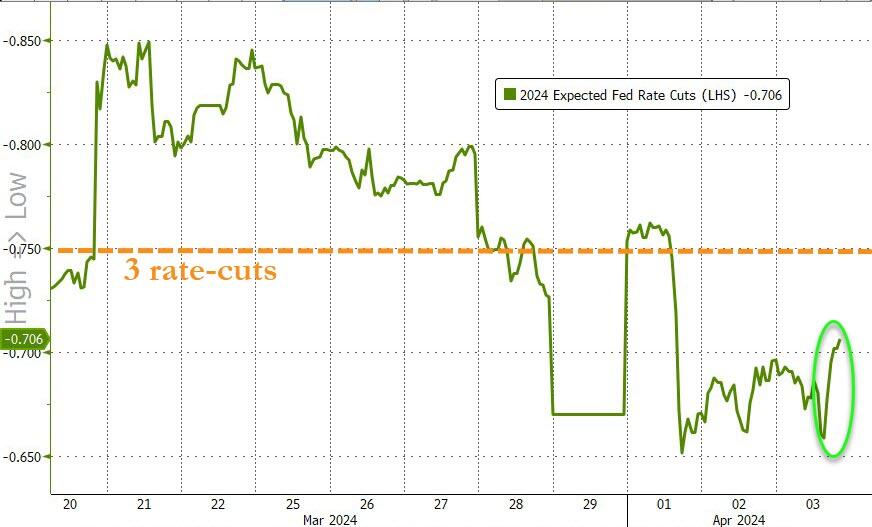
“Gorillas playing basketball is a very odd thing; the Fed cutting rates before the last quarter of this year would be even odder. Before then, though, markets are likely to try to re-impose some sobriety by reducing or eliminating the number of rate cuts priced in.”
The Fed Hasn’t Done Enough to Win the Inflation Fight
White reveals an ugly truth – the Fed hasn’t done enough to win this inflation fight and any declaration of victory is actually a surrender.
Looking at how Federal Reserve Chairman Paul Volker handled the 1970s and 80s inflation is informative.
Volker went on the warpath in 1980 and raised rates to 20 percent. At the time, CPI was in the 14 percent range. CPI didn’t return to 2 percent until 1986. At that point, the average Fed funds rate was 14.35 percent. Even with that, the CPI spiked back up for several years in the late 80s and early 90s.
You’ll notice that Volker drove rates significantly above the CPI. But Powell is no Volker. You can claim that the Fed drove rates modestly above CPI, but as we’ve seen, it’s all smoke and mirrors.
Monetary policy is still loose.
The problem is raising rates was still enough to pop bubbles and break things. Easy money is the mother’s milk of this debt-riddled economy. And while Fed policy isn’t tight, it is tighter – too tight for the level of debt.
It’s only a matter of time before the crisis manifests.
On the one hand, it can choose to stick to its guns, keep rates higher for longer, and bring down inflation. But that will almost certainly drag the economy into a crisis.
On the other hand, it can pick inflation and maybe rescue the economy.
And the reality is we may get both the rock and the hard place – stagflation.
This week Peter returned from vacation, and he was just in time for a surge in the price of gold. He discusses the factors contributing to gold’s record prices, the similarities between today and the 1970s, and data pointing to future inflation in America.
Peter starts this episode by noting how gold’s recent rise hasn’t received much coverage from the mainstream financial press:
“$30 on a Sunday night— that’s very rare to see that kind of move. But what’s even more rare is that there was no news. It’s not like something happened. Nobody dropped the bomb anywhere, right? It just went up. And that was on top of the near $40 rise that gold had on Friday before the holiday weekend. … Very rare to have that kind of move. But also very rare was the complete lack of attention that the gold rally has been getting.”
The media’s silence on gold serves larger financial interests in America that benefit from a weak economy and dollar:
“Another reason that CNBC and other financial analysts don’t want to talk about gold is because of the message that gold is sending. … Gold is not just some commodity. It is a commodity, but it’s a special commodity. … Gold is special because of the monetary properties and the monetary role that gold plays. If anything can be said to be the canary in the coal mine, it’s gold.
…
What is gold telling people, if they’re smart enough to listen? What gold is screaming is that what the Fed is contemplating is a mistake, that cutting interest rates whenever these cuts begin is the wrong policy.”
Even widely respected Fed Chairman Alan Greenspan has acknowledged the signaling power of gold’s price, but Jerome Powell and the current Fed are ignoring the signs of a weak economy:
“The Fed says they’re data dependent. Well, why are they ignoring all of this data that says everything they’re saying about inflation is BS? Powell keeps saying, ‘yes, we’re confident we think inflation is going to go back down to 2%.’ Why? Why should it do that? What gives him this confidence? Just because he’s raised interest rates up to 5.25%? Big deal! That’s not a high rate of interest, especially when you have a big inflation problem.”
Any student of history can recognize the political parallels between the inflation of the 1970s and now:
“We had the Vietnam War, which was expensive. We had the war on poverty, which was also expensive. Interestingly, we’ve lost both of those wars. … Poverty won, but we spent a lot of money on both of those wars. Then we also had the space race. … So the government was running these big deficits. … Where did the government get all the money to pay for all this stuff? Well, it borrowed it, right? They ran deficits, and they printed a lot of money. And so naturally, the consequence was inflation, rising prices.”
Peter sees a weakening dollar as the main recent driver behind gold’s price. If the dollar depreciates against other foreign currencies, gold could take off:
“I still believe that soon we’re going to see the dollar crack against other fiat currencies. And when that happens, you’re going to see a much more spectacular rise in the price of gold. If you think about what’s already happened, we’ve seen this big jump in gold prices without a weak dollar relative to other fiat currencies. Imagine how much stronger gold would be if the dollar were also falling in relation to the euro or the Australian dollar, Canadian dollar, emerging market currencies, the yen.”
Apparently foreign central banks can see what Powell can’t, and they’re stockpiling gold because of it:
“Foreign central banks realize that we don’t care [about inflation]. They’re holding all these dollars, and they see that we’re about to create more of them. We’re going to cut rates in the face of mounting evidence that they’re ignoring that inflation is going to be moving in the opposite direction. They claim that they want it down at 2%. All the evidence shows that it’s headed higher and their response is ‘we’re going to cut rates.’ And so foreign central banks want to get out.“
With its price at record highs and foreign central banks clamoring for the yellow metal, gold is strengthening as a hedge against terrible monetary policy. If Peter is right about future price action, now is the perfect time for investors to add to their precious metal holdings.
END
2.Commentaries from: Egon von Greyerz///Matthew Piepenburg via GoldSwitzerland.com, Pam and Russ Martens/
Remember that time in 2016 when Attorney General Loretta Lynch decided she would take a private meeting with Bill Clinton on her plane as it was parked on the tarmac in Phoenix – while his wife, Hillary Clinton, was under federal investigation for using an unsafe private email server at her New York home to receive classified government emails when she was Secretary of State?
What President Biden’s Vice President, Kamala Harris, and his Chief of Staff, Jeff Zients, did in mid-March was equally scandalous. Harris had a “one-on-one lunch at the White House” with Jamie Dimon, the Chairman and CEO of the most crime-riddled bank in the United States, JPMorgan Chase. Zients also separately met with Dimon. That reporting comes courtesy of reporters Joshua Franklin and James Politi of the Financial Times (paywall). It has not been disputed by the Biden administration.
Dimon’s private meetings in Washington come as the bank (that has already admitted to a string of five criminal felony charges) is currently facing a serious investigation for “billions” of improperly conducted trades by its federally-insured bank. Two of its federal regulators, the Office of the Comptroller of the Currency and the Federal Reserve, settled those charges in March for a combined $348 million. Both regulators provided extremely sketchy details as to the precise nature of the trading misconduct. JPMorgan Chase revealed in an SEC filing in February that it remains under investigation in the same matter by a third regulator “but there is no assurance that such discussions will result in a resolution,” the bank wrote in the filing.
It would certainly not be the first time that Dimon attempted to throw his weight around in Washington to get his bank out of trouble. During Congressional hearings in 2012, when Dimon was called to testify about his bank allowing its traders to use deposits from its federally-insured bank to gamble in derivatives in London and lose what eventually tallied up to $6.2 billion (the infamous “London Whale” scandal), Dimon had the temerity to wear presidential cuff links to show off a gift from the White House.
Then there was Dimon’s meeting with Attorney General Eric Holder during the Obama administration when JPMorgan Chase was being investigated for widespread mortgage fraud. For what the bank got away with in that matter, see Matt Taibbi’s report revealing that the Justice Department sandbagged their key witness, a former lawyer/ whistleblower inside JPMorgan Chase, who called it “the biggest financial cover-up in history.”
According to the recent Financial Times report, Vice President Harris did not list the luncheon on her official daily calendar, suggesting she knew it was inappropriate. The FT reporters also reveal the following:
“Dimon, one of the most influential voices on Wall Street, also separately met White House chief of staff Jeff Zients while he was in Washington, as well as federal regulators and members of Congress. It could not be learnt what was discussed at the meetings. The White House and JPMorgan, the largest US bank by assets, declined to comment.”
“In Chapter 4, we compared JPMC [JPMorgan Chase] to the Gambino crime family to demonstrate the many areas in which these two organizations had the same goals and strategies. In fact, the most significant difference between JPMC and the Gambino Crime Family is the way the government treats them. While Congress made it a national priority to eradicate organized crime, there is an appalling lack of appetite in Washington to decriminalize Wall Street. Congress and the executive branch of the government seem determined to protect Wall Street criminals, which simply assures their proliferation…
“If Jamie Dimon is running a criminal institution, he should be prosecuted for it. And law enforcement has the perfect tool for such a prosecution: the Racketeer Influenced and Corrupt Organizations ACT (RICO).”
In 2014, the non-profit watchdog, Better Markets, filed a federal lawsuit against the U.S. Department of Justice and the man who sat at its helm, Attorney General Eric Holder. The lawsuit challenged what had emerged out of that cozy meeting between Holder and Dimon – a $13 billion out-of-court settlement over the bank’s sale of toxic mortgages.
Better Markets wrote on its website that this was at the time “The largest settlement in U.S. history from a single entity by more than 300%” and that it “granted JP Morgan blanket civil immunity for years of alleged, but undisclosed, pervasive, egregious and knowing fraudulent and illegal conduct that contributed to the 2008 financial crash and the worst economy since the Great Depression.”
“The Attorney General and other senior DOJ political appointees negotiated directly and entirely in secret with the CEO of JP Morgan Chase [Jamie Dimon], someone who was considered a possible Treasury Secretary just a few years ago.
“The cellphone of DOJ’s third highest ranking official rang with the ‘familiar’ phone number of JP Morgan Chase’s CEO [Jamie Dimon], who called to offer billions of dollars to stop DOJ from holding a press conference and filing a lawsuit in just a few hours. The call worked, and the press conference and lawsuit were both called off.
“DOJ gave complete civil immunity to JP Morgan Chase for defrauding thousands in exchange for $13 billion, via a contract that was negotiated and finalized in secret without any review or approval by a federal court.”
Attorneys for the Justice Department asked the federal court to dismiss the Better Markets lawsuit on the basis that Better Markets lacked standing to file the lawsuit. The U.S. District Court for the District of Columbia did just that in a longwinded decision that effectively stripped Americans of their ability to fight back against the increasingly corrupt nexus between Washington and Wall Street.
If you agree with Wall Street On Parade that the current banking structure in the U.S. represents a threat to national security and economic stability, please contact your U.S. Senators today via the U.S. Capitol switchboard by dialing (202) 224-3121. Tell your Senators to hold immediate hearings on the urgent need to restore the Glass-Steagall Act to separate Wall Street’s trading casinos from federally-insured commercial banks.
END
JAMES RICKARDS…
Rickards is correct: Russia has no interest in invading European countries
A lot of people seem to have forgotten about the war in Ukraine. That’s a mistake.
Russia is slowly but steadily defeating Ukraine, which is becoming increasingly obvious to everyone except the most anti-Russian diehards.
That’s leading to desperation in elite Western circles determined to stop Russia one way or the other. In their minds, they simply can’t let Putin win. They think that if Putin wins in Ukraine, he’ll next move on to the Baltic states, Poland and elsewhere.
You know the West is getting desperate based on recent threats by France’s Emmanuel Macron to send troops to Ukraine.
The vice president of the Russia Duma, Pyotr Tolstoy (descendant of the great Russian writer Leo Tolstoy), warned that French troops would be priority targets for Russian forces if they entered Ukraine.
Even though France would send troops independent of NATO, that puts us on a very dangerous path that ultimately leads to direct conflict between NATO and Russia. And that path ends in nuclear war ultimately.
Tolstoy added that it would take “just two minutes to nuke Paris.” It’s not hard to envision how quickly things could escalate if France decided to send troops to Ukraine.
More Escalation
Meanwhile, NATO is preparing to send F-16s to Ukraine. Airfields in Ukraine are highly vulnerable to Russian attack, especially since Ukraine’s air defenses are heavily depleted at this point and the Russian air force is becoming increasingly active in Ukraine.
But if NATO allows the F-16s to be based on its own airbases, Putin has warned that these airfields would become a “legitimate target” if strikes against Russian forces were launched from them.
By the way, Russia has hypersonic missiles that NATO has no practical ability to shoot down, so these attacks would likely be successful. Of course, NATO would have to retaliate in kind. You can imagine where all this could lead.
We’re already well along the escalation ladder. And the higher you go, the more face you stand to lose if you back down. I warned about that from the outset of the war.
But the entire notion that Russia poses some existential threat to NATO or Europe is absurd.
Putin Has Nothing to Gain and Everything to Lose
First off, the theory that Putin will invade other countries if he wins in Ukraine is nonsense. The Russian army lacks the men and materiel to occupy Ukraine while simultaneously invading other countries.
This isn’t the Soviet Union with its massive tank armies poised to roll over Western Europe. And Soviet communism is long dead, so there’s no ideological basis for Russia to invade Europe. These days Russia is a conservative, Orthodox Christian nation.
But more importantly, Putin has absolutely no incentive to invade any of these nations, which are NATO members. What do they have that he wants?
All it would do is trigger Article 5 of the NATO Charter, which stipulates that an attack on one member is an attack on all, inviting a massive NATO response. At that point, you’re on the fast track to nuclear war.
Putin is fully aware of that.
Fearmongers like to point to what Putin once said in a speech:
“Whoever doesn’t miss the Soviet Union doesn’t have a heart.”
They take that as proof that he wants to recreate the Soviet Union. But they conveniently omit what he said next:
“Whoever wants it back doesn’t have a brain.”
Whatever you think of Putin, he definitely has a brain. He has no intention to restore the Soviet Union.
It’s Not Just About Intentions
But like any great power, Russia has interests, and Ukraine has always been a vital strategic interest to Russia.
And Russia is not going to tolerate Ukraine joining a NATO alliance that’s hostile to Russia. Critics say Ukraine is a free and independent nation that can join NATO if it wants. Russia has no say in the matter, even though Ukraine borders Russia.
Well, I guess they never heard of the Monroe Doctrine. The U.S. basically declared the entire Western hemisphere its own domain. But a great power like Russia can’t have a say in its own backyard?
Critics also say that the idea of NATO invading Russia is ridiculous. That’s just Russian paranoia. And that’s true, NATO isn’t going to actually invade Russia. But it’s not just intentions that count in the world of geopolitics. It’s also capabilities.
As Bismarck once noted: “What matters in politics is capabilities, not intentions. Intentions change, capabilities remain.”
Given Russia’s long history of being invaded, it’s not hard to imagine why it might seem a bit paranoid of exterior threats.
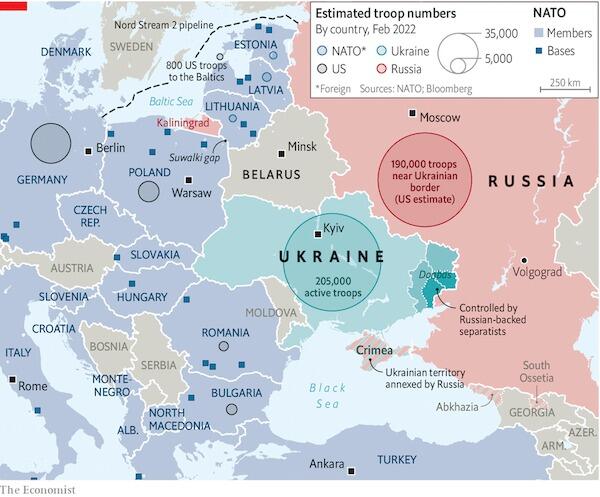
If you look at a map, parts of Ukraine are actually east of Moscow.
Source: The Economist
Will the U.S. Keep the War Going?
Of course, Ukraine can’t continue fighting without U.S. assistance. The Biden White House wants $60 billion of new money to give to Ukraine to fight the war. This is on top of several hundred billion already provided.
This was proposed last summer but has stalled in the Senate and House of Representatives ever since. The House passed a separate bill to aid Israel last fall, but the Senate refused to take it up because they want to tie that aid to money for Ukraine.
The Senate passed a bill that would provide aid for Ukraine, Israel and Taiwan in one package combined with some money for phony border security.
That bill was so unpopular it could not even make it out of the Senate. Then the House insisted on passing regular appropriations before considering Ukraine.
That process was completed on March 23, but now Congress is on a two-week Easter recess so nothing further will happen until mid-April. No one has even answered the most important question, which is what would Ukraine do with the money.
They can’t buy badly needed 155mm artillery shells because the Western arsenals are bare and factories are not geared to make more than a handful. It will take years to expand that manufacturing capacity.
You can walk into a store with a wallet full of $100 bills, but if the shelves are empty, it doesn’t do you any good. The products simply aren’t there.
Meanwhile, wonder weapons from the West such as tanks, cruise missiles, armored personnel carriers, HIMARS precision-guided artillery and anti-missile batteries have all been destroyed, disabled or shot down by Russia.
The war in Ukraine hasn’t been good advertising for Western weapons.
Fallout
To repeat what I said earlier, Ukraine is losing the war badly. Russia is advancing on the southern and eastern fronts in Ukraine.
Still, the pressure on House Speaker Mike Johnson to do something remains. The Republican warmongers in the Senate like Lindsey Graham and Joni Ernst won’t let up. Many Republicans in the House such as Chip Roy and Marjorie Taylor Greene are opposed to Johnson on this.
Incredibly, Johnson may respond to the pressure with a solution worse than an outright appropriation. He may get behind efforts to steal $300 billion in Russian central bank assets held in the form of U.S. Treasury securities.
That would destroy confidence in the U.S. dollar, U.S. Treasury securities and the U.S. rule of law. Russia would quickly recover the loss by seizing $300 billion or more of Western assets still in Russia. No one in Congress seems to understand any of this.
If they follow through, the economic fallout would be bad enough. But if this war doesn’t stop soon, we could ultimately be looking at nuclear fallout.
END
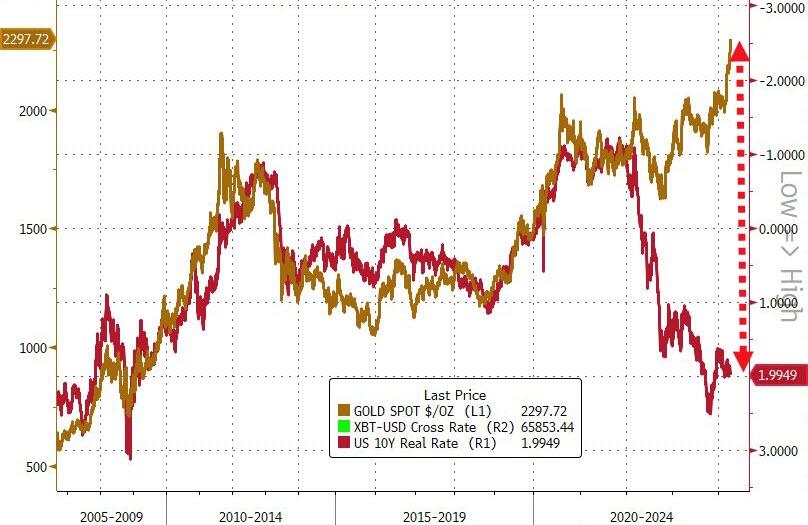
Inflation-Risk Latecomers Pile Into Silver
WEDNESDAY, APR 03, 2024 – 10:50 AM
Authored by Simon White, Bloomberg macro strategist,
As gold makes new highs, speculators’ net longs in silver are jumping higher.
Inflation and global growth risks – as well as demand from China – are helping to drive gold to new all-time highs. For those late to the trade, silver is serving as the next best thing.
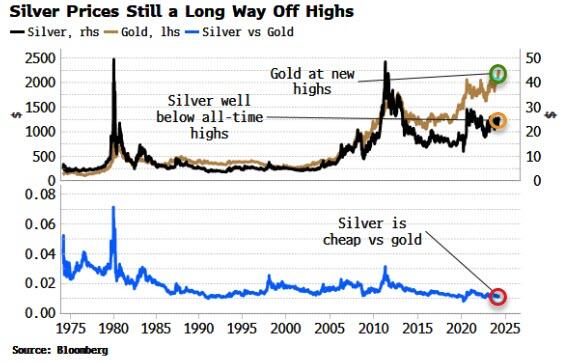
Silver remains well off the highs it reached in 1980 (the Hunt brothers’ infamous corner) and in 2011, and it is very cheap in comparison to gold.
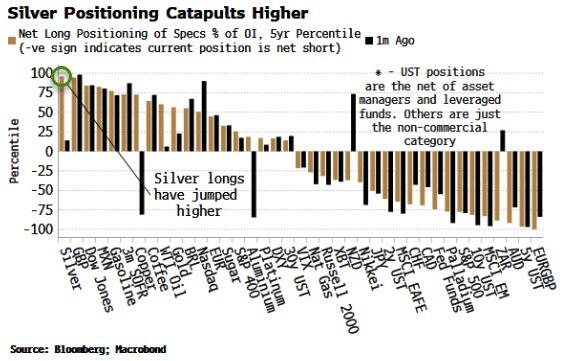
That probably explains the surge higher in speculator net longs in silver, according to the Commitment of Traders data.
Silver positioning, from being nearly flat a month ago, is now near five-year highs, and longer on a percentile basis than any other major bond, equity or commodity future.
Silver is notoriously volatile, and if speculators are correct in their view, the gains could be rapid and large.
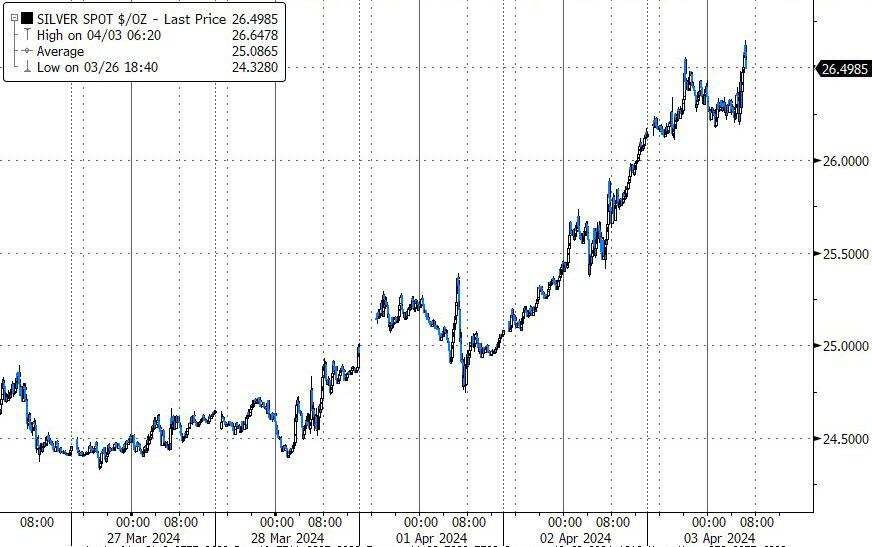
It’s up today over 9% in the last few days, topping its recent high of ~$26.
In these days of rampant inflation, it’s imperative that we return to the gold standard – and the real thing too.
By this I mean the classical gold standard, not the so-called “gold exchange” standard, and with no fractional reserve banking, just as the great Murray Rothbard wanted. In what follows, I’ll discuss some of the economic issues below, but it’s important to realize that it’s a moral issue as well.
I spoke about the difference between the classical gold standard and the fake gold standard. This might seem a technical issue, but it’s one of vital importance. Joe Salerno, the leading contemporary Austrian School authority on monetary economics and Academic Vice President of the Mises Institute, explains:
“The historical embodiment of monetary freedom is the gold standard. The era of its greatest flourishing was not coincidentally the 19th century, the century in which classical liberal ideology reigned, a century of unprecedented material progress and peaceful relations between nations. Unfortunately, the monetary freedom represented by the gold standard, along with many other freedoms of the classical liberal era, was brought to a calamitous end by World War I.
Also, and not so coincidentally, this was the “War to Make the World Safe for Mass Democracy,” a political system which we have all learned by now is the great enemy of freedom in all its social and economic manifestations.
Now, it is true that the gold standard did not disappear overnight, but limped along in weakened form into the early 1930s. But this was not the pre-1914 classical gold standard, in which the actions of private citizens operating on free markets ultimately controlled the supply and value of money and governments had very little influence.
Under this monetary system, if people in one nation demanded more money to carry out more transactions or because they were more uncertain of the future, they would export more goods and financial assets to the rest of the world, while importing less. As a result, additional gold would flow in through a surplus in the balance of payments increasing the nation’s money supply.
Sometimes, private banks tried to inflate the money supply by issuing additional bank notes and deposits, called “fiduciary media,” promising to pay gold but unbacked by gold reserves. They lent these notes and deposits to either businesses or the government. However, as soon as the borrowers spent these additional fractional-reserve notes and deposits, domestic incomes and prices would begin to rise.
As a result, foreigners would reduce their purchases of the nation’s exports, and domestic residents would increase their spending on the relatively cheap foreign imports. Gold would flow out of the coffers of the nation’s banks to finance the resulting trade deficit, as the excess paper notes and checks were returned to their issuers for redemption in gold.
To check this outflow of gold reserves, which made their depositors very nervous, the banks would contract the supply of fiduciary media bringing about a monetary deflation and an ensuing depression.
Temporarily chastened by the experience, banks would refrain from again expanding credit for a while. If the Treasury tried to issue convertible notes only partially backed by gold, as it occasionally did, it too would face these consequences and be forced to restrain its note issue within narrow bounds.
Thus, governments and commercial banks under the gold standard did not have much influence over the money supply in the long run. The only sizable inflations that occurred during the 19th century did so during wartime when almost all belligerent nations would “go off the gold standard.” They did so in order to conceal the staggering costs of war from their citizens by printing money rather than raising taxes to pay for it.
For example, Great Britain experienced a substantial inflation at the beginning of the 19th century during the period of the Napoleonic Wars, when it had suspended the convertibility of the British pound into gold. Likewise, the United States and the Confederate States of America both suffered a devastating hyperinflation during the War for Southern Independence, because both sides issued inconvertible Treasury notes to finance budget deficits. It is because politicians and their privileged banks were unable to tamper with and inflate a gold money that prices in the United States and in Great Britain at the close of the 19th century were roughly the same as they were at the beginning of the century.
Within weeks of the outbreak of World War I, all belligerent nations departed from the gold standard. Needless to say by the war’s end the paper fiat currencies of all these nations were in the throes of inflations of varying degrees of severity, with the German hyperinflation that culminated in 1923 being the worst. To put their currencies back in order and to restore the public’s confidence in them, one country after another reinstituted the gold standard during the 1920s.
Unfortunately, the new gold standard of the 1920s was fundamentally different from the classical gold standard. For one thing, under this latter version, gold coin was not used in daily transactions. In Great Britain, for example, the Bank of England would only redeem pounds in large and expensive bars of gold bullion. But gold bullion was mainly useful for financing international trade transactions.
Other countries such as Germany and the smaller countries of Central and Eastern Europe used gold-convertible foreign currencies such as the US dollar or the pound sterling as reserves for their own domestic currencies. This was called the gold-exchange standard.
While the US dollar was technically redeemable in honest-to-goodness gold coin, banks no longer held reserves in gold coin but in Federal Reserve notes. All gold reserves were centralized, by law, in the hands of the Fed and banks were encouraged to use Fed notes to cash checks and pay for checking and savings deposit withdrawals. This meant that very little gold coin circulated among the public in the 1920s, and residents of all nations came increasingly to view the paper IOUs of their central banks as the ultimate embodiment of the dollar, franc, pound, etc.
This state of affairs gave governments and their central banks much greater leeway for manipulating their national money supplies. The Bank of England, for example, could expand the amount of paper claims to gold pounds through the banking system without fearing a run on its gold reserves for two reasons.
Foreign countries on the gold exchange standard would be willing to pile up the paper pounds that flowed out of Great Britain through its balance of payments deficit and not demand immediate conversion into gold. In fact by issuing their own currency to tourists and exporters in exchange for the increasing quantities of inflated paper pounds, foreign central banks were in effect inflating their own money supplies in lock-step with the Bank of England. This drove up prices in their own countries to the inflated level attained by British prices and put an end to the British deficits.
In effect, this system enabled countries such as Great Britain and the United States to export monetary inflation abroad and to run “a deficit without tears” — that is, a balance-of-payments deficit that does not involve a loss of gold.
But even if gold reserves were to drain out of the vaults of the Bank of England or the Fed to foreign nations, British and US citizens would be disinclined, either by law or by custom, to put further pressure on their respective central banks to stop inflating by threatening bank runs to rid themselves of their depreciating notes and retrieve their rightful property left with the banks for safekeeping.
Unfortunately, contemporary economists and economic historians do not grasp the fundamental difference between the hard-money classical gold standard of the 19th century and the inflationary phony gold standard of the 1920s.” See here.
Many people think that even if 100% reserve banking is desirable as an ideal, it would never work in practice. How could banks stay in business if they couldn’t lend their checking deposits? Doesn’t the supply of money need to expand as the economy grows? Murray Rothbard demolishes these objections with characteristic force:
“Certain standard objections have been raised against 100 percent banking and against 100 percent gold currency in particular. One generally accepted argument against any form of 100 percent banking I find particularly and strikingly curious: that under 100 percent reserves, banks would not be able to continue profitably in business. I see no reason why banks should not be able to charge their customers for their services, as do all other useful businesses. This argument points to the supposedly enormous benefits of banking; if these benefits were really so powerful, then surely the consumers would be willing to pay a service charge for them, just as they pay for traveler’s checks now. If they were not willing to pay the costs of the banking business as they pay the costs of all other industries useful to them, then that would demonstrate the advantages of banking to have been highly overrated. At any rate, there is no reason why banking should not take its chance in the free market with every other industry.
The major objection against 100 percent gold is that this would allegedly leave the economy with an inadequate money supply. Some economists advocate a secular increase of the supply of money in accordance with some criterion: population growth, growth of volume of trade, and the like; others wish the money supply to be adjusted to provide a stable and fixed price level. In both cases, of course, the adjusting and manipulating could only be done by government. These economists have not fully absorbed the great monetary lesson of classical economics: that the supply of money essentially does not matter. Money performs its function by being a medium of exchange; any change in its supply, therefore, will simply adjust itself in the purchasing power of the money unit, that is, in the amount of other goods that money will be able to buy. An increase in the supply of money means merely that more units of money are doing the social work of exchange and therefore that the purchasing power of each unit will decline. Because of this adjustment, money, in contrast to all other useful commodities employed in production or consumption, does not confer a social benefit when its supply increases. The only reason that increased gold mining is useful, in fact, is that the large supply of gold will satisfy more of the non–monetary uses of the gold commodity.
There is therefore never any need for a larger supply of money (aside from the non-monetary uses of gold or silver). An increased supply of money can only benefit one set of people at the expense of another set, and, as we have seen, that is precisely what happens when government or the banks inflate the money supply. And that is precisely what my proposed reform is designed to eliminate. There can, incidentally, never be an actual monetary “shortage,” since the very fact that the market has established and continues to use gold or silver as a monetary commodity shows that enough of it exists to be useful as a medium of exchange.
The number of people, the volume of trade, and all other alleged criteria are therefore merely arbitrary and irrelevant with respect to the supply of money. And as for the ideal of the stable price level, apart from the grave flaws of deciding on a proper index, there are two points that are generally overlooked. In the first place, the very ideal of a stable price level is open to challenge. Hoarding, as we have indicated, is always attacked; and yet it is the freely expressed and desired action on the market. People often wish to increase the real value of their cash balances, or to raise the purchasing power of each dollar. There are many reasons why they might wish to do so. Why should they not have this right, as they have other rights on the free market? And yet only by their “hoarding” taking effect through lower prices can they bring about this result. Only by demanding more cash balances and thus lowering prices can the dollars assume a higher real value. I see no reason why government manipulators should be able to deprive the consuming public of this right.
Second, if people really had an overwhelming desire for a stable price level, they would negotiate all their contracts in some agreed-upon price index. The fact that such a voluntary “tabular standard” has rarely been adopted is an apt enough commentary on those stable-price-level enthusiasts who would impose their ambitions by government coercion.
Money, it is often said, should function as a yardstick, and therefore its value should be stabilized and fixed. Not its value, however, but its weight should be eternally fixed, as are all other weights. Its value, like all other values, should be left to the judgment, estimation and ultimate decision of every individual consumer.” See here.
If we want a true gold standard, can we get back to it? Of course we can. The inflationary monetary policy we have today is the key to the financial elites control over us. Without it brain-dead Biden and his gang of neocon controllers couldn’t function. We must prevail, and we can prevail. As I said in 2002,
“The power to create money is the most ominous power ever bestowed on any human being. This power is rightly criminalized when it is exercised by private individuals, and even today, everyone knows why counterfeiting is wrong and knavish. Far fewer are aware of the role of the federal government, the Fed, and the fiat dollar in making possible the largest counterfeiting operation in human history, which is called the world dollar standard. Fewer still understand the connection between this officially sanctioned criminality and the business cycle, the rise and collapse of the stock market, and the continued erosion of the value of the dollar.
In fact, I would venture to guess that a sizeable percentage of even educated adults would be astounded to discover that the Federal Reserve does more than manage the nation’s money accounts, that, in fact, its main activity consists in actually creating money that distorts production and creates inflation and the business cycle. In fact, I would go further to suggest that many educated adults believe that gold continues to serve as the ultimate backing of our monetary system, and would be astonished to discover that our money is backed by nothing but more of itself.
We have our work cut out for us, to be sure, mainly at the educational level. We must continue to state the obvious at every opportunity, that the fiat system is exactly what it is, a system of paper money backed by nothing of real value. We must continue to point out that because of this, our economic system is not depression proof, but rather highly vulnerable to complete meltdown. We must continue to draw attention to the only long-term solution: a complete separation of money and state based on the commodity that the market has always chosen as money, namely, gold.
This takes us back to our original question: is the gold standard history? Is it so preposterously unrealistic to advocate it that we might as well move to on other things? It won’t surprise you that my answer is no. If there is one thing that a long-term view of politics teaches, it is that only the long-term really matters.
There will come a time when the current money and banking system, living off credit created by a fiat money system, will be stretched beyond the limit. When it happens, attitudes will turn on a dime. No advocate of the gold standard looks forward to the crisis nor to the human suffering that will come with it. We do, however, look forward to the reassertion of economic law in the field of money and banking. When it becomes incredibly obvious that something drastic must replace the current system, new attention will be paid to the voices that have long cast aspersions on the current system and called for a restoration of sound money.
Must a crisis lead to monetary reforms that we will like? Not necessarily, and, for that matter, a crisis is not a necessary precursor to radical reform. As Mises himself used to emphasize, political history has no predetermined course. Everything depends on the ideas that people hold about fundamental issues of human freedom and the place of government. Under the right conditions, I have no doubt that a gold standard can be completely restored, no matter how unfavorable the current environment appears towards its restoration.
What is essential for us today is to continue the research, the writing, the advocacy for sound money, for a dollar that is as good as gold, for a monetary system that is separate from the state. It is a beautiful vision indeed, one in which the people and not the government and its connected interest groups maintain control of their money and its safe keeping.
What has been true for hundreds of years remains true today. The clearest path to the restoration of economic health is the free market undergirded by a sound monetary system. The clearest path toward economic destruction is for us to stop working toward what is right and true.” See here.
Let’s do everything we can to end the Fed and restore the real gold standard!
5 a. IMPORTANT COMMENTARIES ON COMMODITIES/LITHIUM
White Gold: Mapping US Lithium Mines
TUESDAY, APR 02, 2024 – 09:20 PM
The U.S. doubled imports of lithium-ion batteries for the third consecutive year in 2022, and with EV demand growing yearly, U.S. lithium mines must ramp up production or rely on other nations for their supply of refined lithium.
To determine if the domestic U.S. lithium opportunity can meet demand, Visual Capitalist partnered with EnergyX to determine how much lithium sits within U.S. borders.
U.S. Lithium Projects
The most crucial measure of a lithium mine’s potential is the quantity that can be extracted from the source.
For each lithium resource, the potential volume of lithium carbonate equivalent (LCE) was calculated with a ratio of one metric ton of lithium producing 5.32 metric tons of LCE. Cumulatively, existing U.S. lithium projects contain 94.8 million metric tons of LCE.
U.S. Lithium Opportunities, By State
U.S. lithium projects mainly exist in western states, with comparatively minor opportunities in central or eastern states.
Currently, the U.S. is sitting on a wealth of lithium that it is underutilizing. For context, in 2022, the U.S. only produced about 5,000 metric tons of LCE and imported a projected 19,000 metric tons of LCE, showing that the demand for the mineral is healthy.
The Next Gold Rush?
U.S. lithium companies have the opportunity to become global leaders in lithium production and accelerate the transition to sustainable energy sources. This is particularly important as the demand for lithium is increasing every year.
EnergyX is on a mission to meet U.S. lithium demands using groundbreaking technology that can extract 300% more lithium from a source than traditional methods.
5 B GLOBAL COMMODITY ISSUES/FOOD IN GENERAL//FREIGHT
1.YOUR EARLY CURRENCY VALUES/GOLD AND SILVER PRICING/ASIAN AND EUROPEAN BOURSE MOVEMENTS/AND INTEREST RATE SETTINGSWEDNESDAY MORNING.7:30 AM
ONSHORE YUAN: CLOSED DOWN 7.2358
OFFSHORE YUAN: DOWN TO 7.2691
SHANGHAI CLOSED DOWN 5.66 PPTS OR 0.18%
HANG SENG CLOSED DOWN 206.42 OR 1.22%
2. Nikkei closed DOWN 387.06 OR 0.99%
3. Europe stocks SO FAR: MOSTLY ALL GREEN
USA dollar INDEX DOWN TO 104.51 EURO RISES TO 1.0777 UP 8 BASIS PTS
3b Japan 10 YR bond yield: RISES TO. +.768 Japan buying 100% of bond issuance)/Japanese YEN vs USA cross now at 151.90/JAPANESE YEN NOW FALLING AS WELL AS LONG TERM 10 YR. YIELDS RISING //EVENTUALLY THIS WILL BREAK THE JAPANESE CENTRAL BANK
3c Nikkei now ABOVE 17,000
3d USA/Yen rate now well ABOVE the important 120 barrier this morning
3e Gold UP /JAPANESE Yen DOWN CHINESE ONSHORE YUAN: DOWN/ OFFSHORE: DOWN
3f Japan is to buy INFINITE TRILLION YEN worth of BONDS. Japan’s GDP equals 5 trillion USA
Japan to buy 100% of all new Japanese debt and NOW they will have OVER 50% of all Japanese debt.
3g Oil UP for WTI and UP FOR Brent this morning
3h European bond buying continues to push yields lower on all fronts in the EMU. German 10yr bund YIELD UP TO +2.3985***/Italian 10 Yr bond yield UP to 3.827* /SPAIN 10 YR BOND YIELD UP TO 3.248…**
3i Greek 10 year bond yield UP TO 3.364
3j Gold at $2273.00 silver at: 26.40 1 am est) SILVER NEXT RESISTANCE LEVEL AT $26.40
3k USA vs Russian rouble;// Russian rouble UP 0 AND 33 /100 roubles/dollar; ROUBLE AT 92.24//
3m oil into the 85 dollar handle for WTI and 89 handle for Brent/
3n Higher foreign deposits moving out of China// huge risk of outflows and a currency depreciation. This can spell financial disaster for the rest of the world/
JAPAN ON JAN 29.2016 CONTINUES NIRP. THIS MORNING RAISES AMOUNT OF BONDS THAT THEY WILL PURCHASE UP TO .5% ON THE 10 YR BOND///YEN TRADES TO 151.90// 10 YEAR YIELD AFTER FIRST BREAKING .54% LAST YEAR NOW EXCEEDS THAT LEVEL TO 0.768% STILL ON CENTRAL BANK (JAPAN) INTERVENTION
30 SNB (Swiss National Bank) still intervening again in the markets driving down the FRANC. It is not working: USA/SF this 0.9088 as the Swiss Franc is still rising against most currencies. Euro vs SF: 0.9795 well above the floor set by the Swiss Finance Minister. Thomas Jordan, chief of the Swiss National Bank continues to purchase euros trying to lower value of the Swiss Franc.
USA 10 YR BOND YIELD: 4.405 UP 4 BASIS PTS…
USA 30 YR BOND YIELD: 4.529 UP 2 BASIS PTS/
USA 2 YR BOND YIELD: 4.710 UP 1 BASIS PTS
USA DOLLAR VS TURKISH LIRA: 31.94…(TURKEY SET TO BLOW UP FINANCIALLY)
GREAT BRITAIN/10 YEAR YIELD: UP 1 BASIS PTS AT 4.1164
end
2.a Overnight: Newsquawk and Zero hedge,
Futures Drop As Rates Continue Rising With Brent Back To $90
WEDNESDAY, APR 03, 2024 – 08:17 AM
US futures are down small with Tech underperforming and small-caps flat, as rates held at 4 month highs, and Brent is about to rise above $90. As of 8:00am, both S&P and Nasdaq futures are down -0.2%, with yields higher pre-market ahead of Powell’s 12.10pm ET speech; despite his dovish rhetoric at the Mar 20 Fed Meeting press conference investors are nervous of a hawkish pivot according to JPM. This comes amid a surge a commodity prices and a spike in geopolitical tensions; pre-market all 3 commodity complexes are higher with gold the notable laggard despite USD being flat (although gold lagging these days means it hasn’t hit a new all time high in the past 15 minutes). Today’s macro focus is on ADP (has not been predictive of the brutally manipulated NFP print), ISM Services and 2x Fedspeakers, including Powell.
In premarket trading, Mag7 and Semis are under pressure with Intel tumbling over 5% after the chipmaker said losses have deepened at its factory business and the unit may not reach a break-even point for several years. Here are some other notable premarket movers:
Ally Financial shares fall 2.6% in thin premarket trading after JPMorgan cut its recommendation to underweight from neutral. The broker also revisited its ratings on other consumer finance companies, downgrading Guild Holdings and Essent Group, while raising Navient.
Dave & Buster’s shares rise 7.1% after the restaurant chain reported fourth-quarter Ebitda that was ahead of consensus estimates. The company also announced an additional $100 million share-buyback program.
Vanda Pharmaceuticals shares rise 23% after the biopharmaceutical company said it got FDA approval for Fanapt (iloperidone) tablets for treating manic or mixed episodes associated with bipolar I disorder in adults.
Wolfspeed shares fall 2.2% as Wells Fargo Securities cut the recommendation on the semiconductor device company to equal-weight from overweight.
Global stocks are suddenly struggling to extend the previous quarter’s strong gains, with MSCI’s all-country index down for a third straight day, and Wall Street also heading for a weaker open, with contracts on the S&P Global index down 0.2% as 10-year Treasury yields crept higher again, rising to about 4.37%, up more than 15 basis points from last week’s close, after traders pared expectations for the timing and scope of US rate cuts this year and as commodity prices soared. The dollar held near seven-week highs against a basket of Group-of-Ten currencies.
The spotlight now is on Fed Chair Jerome Powell, who last week said the central bank is awaiting more evidence that inflation is in check and who speaks again today at 12:10pm ET. A strong monthly US jobs print on Friday, coming on top of a robust reading on US manufacturing, could further dent policy-easing expectations.
“Given the risk that payrolls data may affirm a higher-for-longer outlook for Fed rates, it is not surprising that risk appetite has taken a step back,” said Jane Foley, head of FX strategy at Rabobank in London.
Swap traders currently price less than three Fed rate cuts in 2024, with a high chance that policy easing is delayed beyond June. Pacific Investment Management Co. is among the asset managers that are positioning for the Fed to deliver fewer cuts than other major central banks. That’s despite comments Tuesday from San Francisco President Mary Daly and the Cleveland Fed’s Loretta Mester, who threw their weight behind three cuts this year.
Rising commodity prices, meanwhile, are fanning inflation expectations, with Brent crude futures holding above $89 a barrel. Copper advanced for a third day, while palm oil is at the highest since November 2022, raising the risk of higher global food inflation. Adding to the concerns, Taiwan’s strongest earthquake in 25 years cast uncertainty over chip production, as the world’s largest chipmaker, Taiwan Semiconductor, evacuated factory areas. Shares in the firm slipped 1.3%.
In Europe, the Stoxx 600 equity index held flat and bond yields slipped after a below-forecast inflation print. That cemented expectations that the European Central Bank will kick off its policy-easing campaign in June, possibly ahead of the Federal Reserve. European markets rebounded as bonds caught a bid following yesterday’s global rates selloff after the latest Euro area CPI data came in cooler than expected. Baskets tied to a recovery/reflation scenario continue to perform well. Rising Yields/Value are leading, Momentum/Quality are lagging; Cyclicals over Defensives. UKX -0.4%, SX5E +0.5%, SXXP +0.1%, DAX +0.3%.
Earlier in the session, Asian equities declined, driven by losses in technology stocks, amid speculation that major global central banks will keep interest rates higher for longer. The MSCI Asia Pacific Index fell as much as 0.8%, to a two-week low, with virtually all markets in the red. Chip-related stocks were among the biggest drags on the region after Intel posted widening foundry losses and TSMC evacuated production lines following Taiwan’s biggest earthquake in 25 years. EV makers led a gauge of tech stocks lower in Hong Kong after Tesla missed expectations for deliveries.
“I think people are just mindful of what happens with rates, especially with the Fed,” Catherine Yeung, investment director at Fidelity International, told Bloomberg TV. “Investors are treading water and looking for opportunity,” she said.
Asian equities have struggled in the first week of the new quarter, with Japan and China failing to build on recent gains. Pessimism returned following Tuesday’s strong rally in Hong Kong, as a recent slew of upbeat Chinese economic data failed to provide further momentum. The yuan slid to a four-month low against the dollar in onshore trading Tuesday.
Hang Seng and Shanghai Comp. conformed to the downbeat mood across the region amid tech weakness and mixed US-China headlines with the US asking South Korea to toughen controls on semiconductor technology exports to China. However, the losses in the mainland were cushioned after an improvement in Caixin Services PMI data and Biden-Xi phone talks.
Nikkei 225 briefly dipped beneath 39,500 with index heavyweight Fast Retailing among the worst hit after lower Uniqlo same-store sales, while Japan also issued a tsunami warning after a powerful earthquake struck Taiwan.
TAIEX was pressured after Taiwan’s most powerful earthquake in 25 years which collapsed at least 26 buildings.
ASX 200 was led lower by tech and real estate as the rate-sensitive sectors suffered from firmer yields.
In FX, the Bloomberg Dollar Spot Index is little changed in another quiet session for FX. The onshore yuan fell toward the weak end of its allowed trading band.
In rates, treasuries fell and kept US equity futures subdued as investors awaited another batch of economic data and a flurry of Fed speakers later today including Powell. US 10-year yields rise 2bps to 4.37%, close to Tuesday’s year-to-date high of 4.40%. ISM services will be closely watched after the manufacturing gauge topped estimates on Monday. Fed Chair Powell is also due to deliver remarks on the economic outlook. Bunds rise as data showed euro-area inflation slowed more than expected in March. European stocks inch higher.
In commodities, oil prices advance, with WTI rising 0.3% to trade near $85.40 and Brent just shy of $90. Spot gold falls 0.3%.
The Bitcoin sell-off from the prior day has cooled, with the coin now holding around USD 66.5k after the latest ETF flows data showed a reversal to yesterday’s GBTC-driven outflow.
Looking to the day ahead now, data releases in the US include the ADP’s report of private payrolls for March, and the ISM services index for March. Otherwise from central banks, we’ll hear from Fed Chair Powell, along with the Fed’s Bowman, Goolsbee, Barr and Kugler, as well as the ECB’s De Cos.
Market Snapshot
S&P 500 futures down 0.2% to 5,251.00
STOXX Europe 600 little changed at 508.19
MXAP down 0.8% to 175.21
MXAPJ down 0.9% to 536.40
Nikkei down 1.0% to 39,451.85
Topix down 0.3% to 2,706.51
Hang Seng Index down 1.2% to 16,725.10
Shanghai Composite down 0.2% to 3,069.30
Sensex up 0.1% to 73,999.33
Australia S&P/ASX 200 down 1.3% to 7,782.54
Kospi down 1.7% to 2,706.97
German 10Y yield little changed at 2.40%
Euro little changed at $1.0775
Brent Futures down 0.1% to $88.82/bbl
Gold spot down 0.4% to $2,270.51
US Dollar Index little changed at 104.76
Top Overnight News
Taiwan was hit by its strongest earthquake in 25 years, leveling dozens of buildings on the eastern side of the island. At least nine people died, Taiwan’s emergency service said. TSMC halted some chipmaking and evacuated plants. BBG
Nato is drawing up plans to secure a five-year military aid package of up to $100bn, in an attempt to shield Ukraine from “winds of political change” that could usher in a second Trump presidency. FT
In meetings in Guangzhou and Beijing, Yellen is expected to tell her Chinese counterparts to stop relying on exports to prop up their underperforming economy and instead boost their own consumer market. The warning from Yellen is a sign that the Biden administration is moving toward raising Trump-era tariffs on some Chinese products, including electric vehicles. Such a move could reignite tensions between the world’s two largest economies, which have tried to stabilize relations in recent months. WSJ
Eurozone CPI for Mar falls a bit short of expectations, coming in at +2.4% on the headline (down from +2.6% in Feb and below the Street’s +2.5% forecast) and +2.9% core (down from +3.1% in Feb and below the Street’s +3% forecast). BBG
Joe Biden rebuked Israel for not doing enough to protect civilians and aid workers in Gaza, some of his sternest criticism yet of the country’s conduct. The remarks echo reprimands from the UK and Australia as Israel’s global isolation grows. BBG
Auto sales in the US Mar came in at an annualized rate of 15.5M last month, down from 15.8M in Feb and below the consensus forecast of 15.9M, while average sales prices tumbled 3.6% Y/Y (the largest recorded decline in the month of March) and discounts surged by ~66%. Marketwatch
The rally in crude prompted the US to cancel plans to buy up to 3 million barrels for its strategic reserve. Separately, US stockpiles fell by 2.3 million barrels last week, the API is said to have reported, and OPEC+ may today affirm its current supply curbs. BBG
Loretta Mester, president of the Cleveland Federal Reserve and a voting member of the Federal Open Market Committee, revealed in a speech on Tuesday that she had raised her estimate of the longer-run federal funds rate from 2.5% to 3%. FT
Disney secured enough votes before today’s shareholder meeting to defeat a challenge against its board by Nelson Peltz’s Trian, Reuters reported. BBG
A more detailed look at global markets courtesy of Newsquawk
APAC stocks followed suit to losses in the US where treasuries bear-steepened and oil prices ramped up. ASX 200 was led lower by tech and real estate as the rate-sensitive sectors suffered from firmer yields. Nikkei 225 briefly dipped beneath 39,500 with index heavyweight Fast Retailing among the worst hit after lower Uniqlo same-store sales, while Japan also issued a tsunami warning after a powerful earthquake struck Taiwan. TAIEX was pressured after Taiwan’s most powerful earthquake in 25 years which collapsed at least 26 buildings. Hang Seng and Shanghai Comp. conformed to the downbeat mood across the region amid tech weakness and mixed US-China headlines with the US asking South Korea to toughen controls on semiconductor technology exports to China. However, the losses in the mainland were cushioned after an improvement in Caixin Services PMI data and Biden-Xi phone talks.
Top Asian News
US Treasury Secretary Yellen is to travel to China on April 3rd-9th to continue economic dialogue with top Chinese officials and is to meet with Vice Premier He Lifeng, the Guangdong province Governor and US business executives in Guangzhou. Furthermore, Yellen is to meet with PBoC’s Governor Pan Gongsheng and former Vice President Liu He on April 8th, while she is to underscore global economic consequences of Chinese industrial overcapacity in meetings with Chinese officials.
A strong earthquake was felt in Taipei and parts of the city experienced a power outage, while the Taiwan Central Weather Administration said the earthquake registered a 7.2 magnitude and was Taiwan’s most powerful earthquake in 25 years. Taipei city government said it had not yet received any reports of major damage following the earthquake and it was later reported that Taipei’s MRT resumed operations although there were reports of collapsed buildings in the city of Hualien with people reportedly trapped in the buildings, while Taiwan announced the earthquake caused 26 buildings to collapse.
Japan issued an evacuation advisory for Okinawa coastal areas and a tsunami warning after the initial announcement of a preliminary magnitude 7.5 earthquake off southwestern Japan but later revised the Taiwan earthquake magnitude up to 7.7 and lifted the tsunami warnings.
China March prelim car sales +7% Y/Y (vs -21% in Feb).
Foxonn (2354 TT) says Co. shut down some of its production lines in Taiwan for inspection following the earthquake; currently normal production operations have gradually resumed; no damage to manufacturing equipment.
European bourses, Stoxx600 (+0.2%), were mostly but modestly firmer at the open, and trade remained directionless up until the EZ CPI; following the print, stocks trudged higher. European sectors hold a negative tilt, though with no overarching theme or bias. Banks and Tech take the top spots, whilst Real Estate continues to be hampered by the yield environment. US Equity Futures (ES -0.2%, NQ -0.2%, RTY -0.3%) are all marginally lower continuing the downside seen in the prior session. Intel (-4.6%) suffers pre-market after reporting its Foundry had an op. loss for 2023 at USD 7bln.
Top European news
ECB’s Holzmann says he has no in-principle objection to a June rate cut, but wants to see more supportive data. Holzmann added that cutting out-of-sync with the Fed would diminish the impact of easing, whilst also noting that a 3.0% deposit rate could prove too tight over the longer-term, given weak EZ productivity.
Italian Finance Minister Giorgetti says the EU is to open a deficit infringement procedure against Italy and several other countries. Adds, Italy is already in line with the EU requirements to cut deficit below 3% of GDP over time
Barclays raises Eurostoxx600 target to 540 (prev. target 510, current 508); upgrades Europe to overweight.
Norwegian Parliament received a bomb threat, according to local reports; debate continues in Norway’s parliament despite bomb threat
FX
USD on net steady vs. peers after failing to hold above the 105 mark, within a tight 104.84-70 range; topped out at 105.10 yesterday.
EUR is contained vs. the USD as post-CPI downside proved to be fleeting. The data may accelerate calls for a move next week but June still firmly the base case. EUR/USD holding above yesterday’s 1.0724 low.
USD/JPY remains in consolidation mode around recent highs as recent Fed repricing provides support. Upside targets include the YTD high at 151.97 and the psych 152 mark, above which, there is clean air.
Antipodeans are both a touch softer vs. the USD after yesterday’s session of gains. AUD able to hold onto a 0.65 handle and above yesterday’s 0.6482 low.
PBoC set USD/CNY mid-point at 7.0949 vs exp. 7.2282 (prev. 7.0957).
Chile Central Bank cut its benchmark interest rate by 75bps to 6.50%, as expected, with the decision unanimous. Chile Central Bank said the board will continue cutting rates, while the size and timing of rates will consider the trajectory of inflation and the macroeconomic scenario.
Fixed Income
USTs were contained during APAC trade as participants took a slight breather from Tuesday’s pronounced bear-steepening, though overnight Fed speak was on the hawkish side of things. Modest pressure emerged in the European morning, USTs down to a 109-18 base before Tuesday’s 109-14+ trough.
Bunds were initially contained, in-fitting with USTs, before experiencing modest upside on Holzmann’s remarks which had an uncharacteristic dovish-tilt. A dovish but fleeting reaction was seen following the cooler than expected EZ HICP print. Currently near session peaks around 132.50.
BTPs were dented after Economy Minister Giorgetti announced that the EU is likely to begin deficit infringement procedures against the nation and others, sending BTPs down from 117.90 to 117.50 where they currently reside.
Commodities
Horizontal trade in the crude complex overnight and in early European hours ahead of the OPEC+ JMMC at 12:00BST, although no recommendations are expected. Brent holds around USD 88.20/bbl.
Mixed trade for precious metals with some potential profit-taking (ahead of US ADP and a slew of Fed speakers) in the yellow metal after hitting a fresh ATH this morning at USD 2,288.43/oz; XAU has pulled back towards the bottom of a USD 2,269.27-2,288.82/oz intraday range.
Flat/mixed picture across base metals amid quiet newsflow and with the complex taking a breather after yesterday’s data-induced rally.
US Energy Inventory Data (bbls): Crude -2.3mln (exp. -1.5mln), Gasoline -1.5mln (exp. -0.8mln), Distillate -2.5mln (exp. -0.6mln), Cushing -0.8mln.
Mexico’s Pemex requested trading unit PMI to cancel up to 436k bpd of Mexican crude exports in April which would increase the availability of crude for domestic use including for a new refinery, according to a document cited by Reuters.
US President Biden is reportedly open to ending LNG export pause for Ukraine aid, according to Reuters.
Russian Deputy PM Novak said gasoline and diesel fuel stocks remain high in Russia.
Kazahkstan’s Kashagan oil field operator says output was fully restored on April 2 after brief stoppage on April 1.
Indian oil secretary says higher oil prices are a cause of concern; oil prices reflect geopolitical premium; firms will take appropriate decision on fuel prices if global oil prices stay high for more than a month.
Spot premiums for US Mars crude exports to Asia reportedly jump after Mexico cuts supply, according to Reuters sources.
Some Japanese aluminium buyers agree April-June premium at USD 148/ton, +64% from prev. quarter.
BofA research increases 2024 Brent and WTI crude forecasts to USD 86 and USD 81/bbl respectively; sees prices peaking at around USD 95/bbl in the summer
OPEC’s JMMC will meet at 12:00BST on April 3rd, according to Energy Intel’s Bakr.
Geopolitics: Middle East
US President Biden criticised Israel for failing to adequately protect civilians and is pushing for an immediate ceasefire as part of a hostage deal, while Biden said he is outraged over the deaths of World Central Kitchen staff in Gaza, according to Bloomberg and AFP.
Deep divisions between the US and Israel over an operation in Rafah were evident in a virtual meeting between senior officials, according to three sources cited by Axios. Furthermore, the parties agreed there will be separate virtual meetings of four expert working groups in the next 10 days that will focus on different aspects of a possible Rafah operation.
Geopolitics: Other
NATO Foreign Ministers will meet on Wednesday to discuss how to put military support for Ukraine on long-term footing including a proposal for a EUR 100bln five-year military fund, according to Reuters.
North Korea said it successfully test-fired a new mid- to long-range hypersonic missile, while its leader Kim said they completely turned all missiles to solid fuel with warhead control and capable of nuclear weaponisation, according to Yonhap.
UK FCDO said North Korea’s ballistic missile launch on April 2nd is a breach of multiple UN Security Council resolutions and the UK urges North Korea to refrain from further provocations, return to dialogue and take credible steps towards denuclearisation.
Philippine National Security Council spokesperson said the commitment to maintain the grounded warship in Second Thomas Shoal will always be there and any attempt by China to interfere with resupply missions will be met by the Philippines in a fashion that protects its troops, while the spokesperson added that resupply missions to Second Thomas Shoal will never stop.
US Event Calendar
07:00: March MBA Mortgage Applications, prior -0.7%
08:15: March ADP Employment Change, est. 150,000, prior 140,000
09:45: March S&P Global US Services PMI, est. 51.7, prior 51.7
March ISM Services Prices Paid, est. 58.4, prior 58.6
March ISM Services Employment, est. 49.0, prior 48.0
March ISM Services New Orders, est. 55.5, prior 56.1
March ISM Services Index, est. 52.8, prior 52.6
Central Bank Speakers
08:30: Fed’s Bostic Speaks on CNBC
09:45: Fed’s Bowman Speaks on Bank Liquidity, Fed
12:00: Fed’s Goolsbee Gives Opening Remarks
12:10: Fed’s Powell Speaks on Economic Outlook
13:10: Fed’s Barr Speaks on Community Reinvestment Act
16:30: Fed’s Kugler Speaks on Economic, Monetary Policy Outlook
DB’s Jim Reid concludes the overnight wrap
Markets continued their rocky start to Q2 yesterday, with bonds and equities both selling off for a second day running. That’s been driven by a succession of hawkish developments, which have led to growing questions about how soon the Fed will be cutting rates, particularly given the resilience of both growth and inflation. All eyes will now be on Fed Chair Powell’s remarks today, but in the meantime, the 10yr Treasury yield was up another +4.0bps yesterday to 4.35%, marking its highest level since November. And equities also struggled in response, with the S&P 500 (-0.72%) posting its worst daily performance in 4 weeks.
These moves have come on the back of several headlines in recent days, which have seen investors price out the number of rate cuts likely to happen this year. On Friday, we had the latest PCE inflation print for February, which is the measure the Fed officially targets. And even though the monthly print was broadly as the consensus expected, it still meant that core PCE over the previous 3 months was running at an annualised rate of 3.5%. Then on Monday, the ISM manufacturing was back in expansionary territory for the first time since October 2022, whilst the prices paid indicator was the highest since July 2022. Yesterday, that was then followed up by a fresh rise in oil prices, which saw Brent Crude close at nearly $89/bbl, its highest since October, and Bloomberg’s Commodity Spot Index (+0.79%) also hit a 4-month high. And with all that happening, there’ve been clear signs that investors are raising their inflation expectations as well. For instance, 5yr US inflation swaps were up another +2.5bps yesterday to 2.53%, closing at their highest level since November.
This backdrop has led to a significant selloff for sovereign bonds around the world, with a sharp rise in yields. In the US, it saw the 10yr Treasury yield rise +3.9bps to 4.35%, which built on its +10.9bps move the previous day. And 30yr yields were up +4.7bps to 4.50%, with both reaching their highest levels since November. Meanwhile in Europe, there were even bigger moves as they caught up from the previous day’s holiday. For example, yields on 10yr bunds (+10.0bps), OATs (+11.1bps), BTPs (+12.5bps) all saw significant rises. And here in the UK, 10yr gilts (+15.1bps) saw the biggest rise in yields after multiple data releases came in stronger than expected. That included mortgage approvals, which were up to a 17-month high in February of 60.4k (vs. 56.5k expected). Moreover, the final UK manufacturing PMI for March was revised up to 50.3 (vs. flash 49.9), which is the first in expansionary territory since July 2022.
The main exception to that bond selloff came at the front-end of the US Treasury curve, where the 2yr yield was down -1.6bps to 4.69%. That came as market pricing for a June cut moved up slightly relative to Monday, with futures now pricing in a 66% chance of a cut by June. In part, that followed fairly balanced remarks from Fed speakers. San Francisco Fed President Daly said that three cuts this year was “a very reasonable baseline” but that as of now “growth is going strong, so there’s really no urgency to adjust the rate”. Cleveland Fed President Mester also said she still saw three cuts in 2024 but that “it’s a close call” whether fewer cuts would be needed, and noting earlier that “At this point, I think the bigger risk would be to begin reducing the funds rate too early.”
Today, we’ll hear from Fed Chair Powell who’s giving a speech on the economic outlook, so the focus will be on whether he offers any new commentary about the timing of potential rate cuts. We’ve also got the ISM services index today, along with the jobs report on Friday, so there’s still plenty of data this week that will shape the market narrative.
For equities, the concern about rates staying higher for longer led to a sizeable selloff, with the major indices losing ground on both sides of the Atlantic. That meant the S&P 500 (-0.72%) saw its worst daily performance in 4 weeks, and the STOXX 600 (-0.80%) saw its worst performance in 7 weeks. The decline was a broad-based one, with almost 80% of the S&P 500 losing ground on the day. Small caps underperformed for the second session in a row, with the Russell 2000 down -1.80%. But losses among US tech stocks were also a factor, and the Magnificent 7 (-0.90%) fell to a two-week low. That came as Tesla fell -4.90% after it reported lower-than-expected sales, with its first year-on-year decline in vehicle deliveries since 2020.
That negative tone has continued overnight, with all the major indices in Asia moving lower this morning. That includes the Nikkei (-0.64%), the KOSPI (-1.19%), the Hang Seng (-0.74%), the CSI 300 (-0.28%) and the Shanghai Comp (-0.24%). And over in the US, futures on the S&P 500 (-0.17%) are pointing towards further losses today. Alongside that, Taiwan has been hit by an earthquake overnight of 7.4 magnitude, the strongest there in 25 years. Separately on the PMIs, the final composite PMI in Japan was up to a 6-month high of 51.7 in March, whilst the Caixin composite PMI from China was up to a 10-month high of 52.7.
Whilst there was a lot of focus on the hawkish narrative yesterday, we did get a downside inflation surprise from Germany yesterday, which follows other downside surprises from Europe over recent days. The release showed CPI was down to +2.3% using the EU-harmonised measure (vs. +2.4% expected), and using the national definition, it was down to its lowest since May 2021, at +2.2%. So adding some encouraging signs ahead of the Euro Area March inflation print this morning. Alongside that, we also got some positive news from the final Euro Area manufacturing PMI, which was revised up four-tenths from the flash reading to 46.1.
Finally in the US, there were several data prints for February out yesterday, including the JOLTS report of job openings. That showed openings were at 8.756m (vs. 8.73m expected), which was basically in line with the downwardly-revised 8.748m in January. Indeed, it was the smallest monthly change in job openings since the pandemic. Elsewhere, the report showed that the quits rate of those voluntarily leaving their job was stable at 2.2%, where it’s been since November.
To the day ahead now, and data releases from the Euro Area include the flash CPI print for March, along with the unemployment rate for February. Meanwhile in the US, there’s the ADP’s report of private payrolls for March, and the ISM services index for March. Otherwise from central banks, we’ll hear from Fed Chair Powell, along with the Fed’s Bowman, Goolsbee, Barr and Kugler, as well as the ECB’s De Cos.
2 B) NOW NEWSQUAWK (EUROPE/REPORT)
US equity futures lower, DXY flat and Bunds firmer post-EZ HICP; US ADP and OPEC+ JMMC due – Newsquawk US Market Open
WEDNESDAY, APR 03, 2024 – 06:05 AM
European bourses are modestly firmer, US equity futures are in the red though with trade contained
Dollar is flat and G10 peers are incrementally softer
USTs are incrementally softer whilst Bunds are firmer after dovish-tilting speak from ultra-hawk Holzmann coupled with softer EZ-HICP metrics
Crude is incrementally firmer but within recent levels, XAU is off best
Looking ahead, US ADP, ISM Services, Australian PMI (F), OPEC+ JMMC, Comments from Fed’s Powell, Bowman, Goolsbee, Barr & Kugler.
2. Listen to this report in the market open podcast (available on Apple and Spotify)
3. Trial Newsquawk’s premium real-time audio news squawk box for 7 days
EUROPEAN TRADE
EQUITIES
European bourses, Stoxx600 (+0.2%), were mostly but modestly firmer at the open, and trade remained directionless up until the EZ CPI; following the print, stocks trudged higher.
European sectors hold a negative tilt, though with no overarching theme or bias. Banks and Tech take the top spots, whilst Real Estate continues to be hampered by the yield environment.
US Equity Futures (ES -0.2%, NQ -0.2%, RTY -0.3%) are all marginally lower continuing the downside seen in the prior session. Intel (-4.6%) suffers pre-market after reporting its Foundry had an op. loss for 2023 at USD 7bln.
Click here and here for the sessions European pre-market equity newsflow, including earnings.
USD on net steady vs. peers after failing to hold above the 105 mark, within a tight 104.84-70 range; topped out at 105.10 yesterday.
EUR is contained vs. the USD as post-CPI downside proved to be fleeting. The data may accelerate calls for a move next week but June still firmly the base case. EUR/USD holding above yesterday’s 1.0724 low.
USD/JPY remains in consolidation mode around recent highs as recent Fed repricing provides support. Upside targets include the YTD high at 151.97 and the psych 152 mark, above which, there is clean air.
Antipodeans are both a touch softer vs. the USD after yesterday’s session of gains. AUD able to hold onto a 0.65 handle and above yesterday’s 0.6482 low.
PBoC set USD/CNY mid-point at 7.0949 vs exp. 7.2282 (prev. 7.0957).
Chile Central Bank cut its benchmark interest rate by 75bps to 6.50%, as expected, with the decision unanimous. Chile Central Bank said the board will continue cutting rates, while the size and timing of rates will consider the trajectory of inflation and the macroeconomic scenario.
USTs were contained during APAC trade as participants took a slight breather from Tuesday’s pronounced bear-steepening, though overnight Fed speak was on the hawkish side of things. Modest pressure emerged in the European morning, USTs down to a 109-18 base before Tuesday’s 109-14+ trough.
Bunds were initially contained, in-fitting with USTs, before experiencing modest upside on Holzmann’s remarks which had an uncharacteristic dovish-tilt. A dovish but fleeting reaction was seen following the cooler than expected EZ HICP print. Currently near session peaks around 132.50.
BTPs were dented after Economy Minister Giorgetti announced that the EU is likely to begin deficit infringement procedures against the nation and others, sending BTPs down from 117.90 to 117.50 where they currently reside.
Horizontal trade in the crude complex overnight and in early European hours ahead of the OPEC+ JMMC at 12:00BST, although no recommendations are expected. Brent holds around USD 88.20/bbl.
Mixed trade for precious metals with some potential profit-taking (ahead of US ADP and a slew of Fed speakers) in the yellow metal after hitting a fresh ATH this morning at USD 2,288.43/oz; XAU has pulled back towards the bottom of a USD 2,269.27-2,288.82/oz intraday range.
Flat/mixed picture across base metals amid quiet newsflow and with the complex taking a breather after yesterday’s data-induced rally.
US Energy Inventory Data (bbls): Crude -2.3mln (exp. -1.5mln), Gasoline -1.5mln (exp. -0.8mln), Distillate -2.5mln (exp. -0.6mln), Cushing -0.8mln.
Mexico’s Pemex requested trading unit PMI to cancel up to 436k bpd of Mexican crude exports in April which would increase the availability of crude for domestic use including for a new refinery, according to a document cited by Reuters.
US President Biden is reportedly open to ending LNG export pause for Ukraine aid, according to Reuters.
Russian Deputy PM Novak said gasoline and diesel fuel stocks remain high in Russia.
Kazahkstan’s Kashagan oil field operator says output was fully restored on April 2 after brief stoppage on April 1.
Indian oil secretary says higher oil prices are a cause of concern; oil prices reflect geopolitical premium; firms will take appropriate decision on fuel prices if global oil prices stay high for more than a month.
Spot premiums for US Mars crude exports to Asia reportedly jump after Mexico cuts supply, according to Reuters sources.
Some Japanese aluminium buyers agree April-June premium at USD 148/ton, +64% from prev. quarter.
BofA research increases 2024 Brent and WTI crude forecasts to USD 86 and USD 81/bbl respectively; sees prices peaking at around USD 95/bbl in the summer
OPEC’s JMMC will meet at 12:00BST on April 3rd, according to Energy Intel’s Bakr.
ECB’s Holzmann says he has no in-principle objection to a June rate cut, but wants to see more supportive data. Holzmann added that cutting out-of-sync with the Fed would diminish the impact of easing, whilst also noting that a 3.0% deposit rate could prove too tight over the longer-term, given weak EZ productivity.
Italian Finance Minister Giorgetti says the EU is to open a deficit infringement procedure against Italy and several other countries. Adds, Italy is already in line with the EU requirements to cut deficit below 3% of GDP over time
Barclays raises Eurostoxx600 target to 540 (prev. target 510, current 508); upgrades Europe to overweight.
Norwegian Parliament received a bomb threat, according to local reports; debate continues in Norway’s parliament despite bomb threat
DATA RECAP
EU HICP Flash YY (Mar) 2.4% vs. Exp. 2.6% (Prev. 2.6%); HICP-X F, E, A, T Flash MM (Mar) 1.10% (Prev. 0.70%); HICP-X F,E,A&T Flash YY (Mar) 2.9% vs. Exp. 3.0% (Prev. 3.1%); HICP-X F&E Flash YY (Mar) 3.1% vs. Exp. 3.2% (Prev. 3.3%)
EU Unemployment Rate (Feb) 6.5% vs. Exp. 6.4% (Prev. 6.4%, Rev. 6.5%)
Italian Unemployment Rate (Feb) 7.5% vs. Exp. 7.2% (Prev. 7.2%)
French Budget Balance (Feb) -44.03B (Prev. -25.74B)
Turkish CPI MM (Mar) 3.16% vs. Exp. 3.5% (Prev. 4.53%); YY (Mar) 68.5% vs. Exp. 69.1% (Prev. 67.07%); PPI YY (Mar) 51.47% (Prev. 47.29%); PPI MM (Mar) 3.29% (Prev. 3.74%)
NOTABLE US HEADLINES
Tesla (TSLA) CEO Musk “While I don’t own any Disney (DIS) shares today, I would definitely buy their shares if Nelson were elected to the board. His track record is excellent.”
Intel (INTC) outlines financial framework for foundry business and sets path to margin expansion, notes Intel Foundry operating loss for 2023 at USD 7.0bln. Shares -4.8% pre-market.
GEOPOLITICS
MIDDLE EAST
US President Biden criticised Israel for failing to adequately protect civilians and is pushing for an immediate ceasefire as part of a hostage deal, while Biden said he is outraged over the deaths of World Central Kitchen staff in Gaza, according to Bloomberg and AFP.
Deep divisions between the US and Israel over an operation in Rafah were evident in a virtual meeting between senior officials, according to three sources cited by Axios. Furthermore, the parties agreed there will be separate virtual meetings of four expert working groups in the next 10 days that will focus on different aspects of a possible Rafah operation.
OTHER
NATO Foreign Ministers will meet on Wednesday to discuss how to put military support for Ukraine on long-term footing including a proposal for a EUR 100bln five-year military fund, according to Reuters.
North Korea said it successfully test-fired a new mid- to long-range hypersonic missile, while its leader Kim said they completely turned all missiles to solid fuel with warhead control and capable of nuclear weaponisation, according to Yonhap.
UK FCDO said North Korea’s ballistic missile launch on April 2nd is a breach of multiple UN Security Council resolutions and the UK urges North Korea to refrain from further provocations, return to dialogue and take credible steps towards denuclearisation.
Philippine National Security Council spokesperson said the commitment to maintain the grounded warship in Second Thomas Shoal will always be there and any attempt by China to interfere with resupply missions will be met by the Philippines in a fashion that protects its troops, while the spokesperson added that resupply missions to Second Thomas Shoal will never stop.
CRYPTO
The Bitcoin sell-off from the prior day has cooled, with the coin now holding around USD 66.5k.
APAC TRADE
APAC stocks followed suit to losses in the US where treasuries bear-steepened and oil prices ramped up.
ASX 200 was led lower by tech and real estate as the rate-sensitive sectors suffered from firmer yields.
Nikkei 225 briefly dipped beneath 39,500 with index heavyweight Fast Retailing among the worst hit after lower Uniqlo same-store sales, while Japan also issued a tsunami warning after a powerful earthquake struck Taiwan.
TAIEX was pressured after Taiwan’s most powerful earthquake in 25 years which collapsed at least 26 buildings.
Hang Seng and Shanghai Comp. conformed to the downbeat mood across the region amid tech weakness and mixed US-China headlines with the US asking South Korea to toughen controls on semiconductor technology exports to China. However, the losses in the mainland were cushioned after an improvement in Caixin Services PMI data and Biden-Xi phone talks.
NOTABLE ASIA-PAC HEADLINES
US Treasury Secretary Yellen is to travel to China on April 3rd-9th to continue economic dialogue with top Chinese officials and is to meet with Vice Premier He Lifeng, the Guangdong province Governor and US business executives in Guangzhou. Furthermore, Yellen is to meet with PBoC’s Governor Pan Gongsheng and former Vice President Liu He on April 8th, while she is to underscore global economic consequences of Chinese industrial overcapacity in meetings with Chinese officials.
A strong earthquake was felt in Taipei and parts of the city experienced a power outage, while the Taiwan Central Weather Administration said the earthquake registered a 7.2 magnitude and was Taiwan’s most powerful earthquake in 25 years. Taipei city government said it had not yet received any reports of major damage following the earthquake and it was later reported that Taipei’s MRT resumed operations although there were reports of collapsed buildings in the city of Hualien with people reportedly trapped in the buildings, while Taiwan announced the earthquake caused 26 buildings to collapse.
Japan issued an evacuation advisory for Okinawa coastal areas and a tsunami warning after the initial announcement of a preliminary magnitude 7.5 earthquake off southwestern Japan but later revised the Taiwan earthquake magnitude up to 7.7 and lifted the tsunami warnings.
China March prelim car sales +7% Y/Y (vs -21% in Feb).
Foxonn (2354 TT) says Co. shut down some of its production lines in Taiwan for inspection following the earthquake; currently normal production operations have gradually resumed; no damage to manufacturing equipment.
PBoC monetary policy committee holds a meeting; PBoC says expectations for economic growth is relatively weak. Click here for all headlines.
DATA RECAP
Chinese Caixin Services PMI (Mar) 52.7 vs. Exp. 52.7 (Prev. 52.5); Caixin Composite PMI (Mar) 52.7 (Prev. 52.5)
3C ASIA AFFAIRS/
WEDNESDAY MORNING/TUESDAY NIGHT
SHANGHAI CLOSED DOWN 5.66 PTS OR 0.18% //Hang Seng CLOSED DOWN 206.42 OR 1.22%
/ Nikkei CLOSED DOWN 387.06 PTS OR 0.99% //Australia’s all ordinaries CLOSED DOWN 1.38%
/Chinese yuan (ONSHORE) closed DOWN 7.2358 //OFFSHORE CHINESE YUAN CLOSED DOWN TO 7.2791 /Oil UP TO 85.91 dollars per barrel for WTI and BRENT DOWN AT 89.63/ Stocks in Europe OPENED MOSTLY ALL GREEN// ONSHORE YUAN TRADING ABOVE LEVEL OF OFFSHORE YUAN/ONSHORE YUAN TRADING WEAKER AGAINST US DOLLAR/OFFSHORE YUAN WEAKER
In recent years, my homeland, Hungary, a small country in central-eastern Europe, has captured the attention of the American public, particularly those on the political Right. Led by Prime Minister Viktor Orbán, Hungary’s government has championed a somewhat “Pat Buchanan” style of conservatism, with a strong emphasis on putting the interests of Hungarian families first and resisting supranational political powers, such as the federalist bureaucrats of the European Union, globalist nongovernmental organizations like the Open Society Foundation backed by George Soros, mass immigration, and other threats to its national sovereignty. Viktor Orbán’s unapologetic embrace of right-wing sovereigntism and noninterventionist foreign policy offers valuable lessons and points of inspiration for the American Right. However, like all states, Hungary is far from being a perfect model; thus, Americans should be cautious when trying to learn from it.
Dispelling the Smears
First, it is unfortunately necessary to address and dispel at least some of the most common smears perpetuated by leftists in mainstream Western media. Hungary’s leader, Viktor Orbán, is often portrayed as a puppet of Russian president Vladimir Putin, a narrative that conveniently overlooks the geopolitical realities of the region. While Orbán does maintain good diplomatic relations with Russia—as do many other nations—insinuating that he is under Putin’s thumb is just as unfounded as was the Trump-Russia hoax.
The reality is that there is a historical minority of about one hundred twenty-five thousand Hungarians living in Transcarpathia, a territory that was unjustly taken away from Hungary after World War I and is currently being occupied by the Ukrainian regime. As any sober-thinking person would realize, Orbán is understandably making sure that the Russian artillery and Air Force do not target his people. Furthermore, Hungary has been dependent on Russian natural gas ever since the communist era, a fact Orbán has endeavored to change. Orbán, being the leader of Hungary and not Ukraine nor the European Union, is first and foremost responsible for the well-being of his people and is completely in the right when refusing to satisfy the absurd demands of the Western Left in Washington and Brussels about completely cutting its diplomatic relationships with Russia.
Moreover, even though Orbán could have refused to take in refugees from Ukraine, a country that has been terrorizing its Hungarian minority for decades, he decided to provide refuge for the innocent civilians trying to flee this war. But, of course, almost no one in the West gave him credit for his actions. As Paul Gottfried rightly pointed out,
The media have said little about the world’s “largest democracy,” India, also buying energy from Russia and remaining conspicuously neutral in the Russian-Ukrainian conflict. There is a good reason for that lack of indignation. Since India is predominantly non-Christian, lies outside the West, and has a relatively dark-skinned population, the media is not going to hold that country to the same PC standard as a non-woke Western state.
But Viktor Orbán, as the leader of a white Christian country, is, of course, held to different standards; but what is this double standard if not antiwhite racism?
Orbán’s Success
Viktor Orbán’s success in winning elections through populism cannot be ignored. His ability to tap into the concerns and aspirations of ordinary people has been a driving force behind his political longevity. Moreover, after winning elections, he was able to institute meaningful reforms.
Since taking office in 2010, Orbán has quickly restored public order from the chaos that the social democrats created. He also instituted a more just and reasonable flat tax than the previous “progressive” tax policy that punished success. Orbán’s government also passed an income tax break for young people under twenty-five and tax relief that increases with the number of children raised by the family. Moreover, he built a fence on the southern border of the country to keep out the masses of invaders coming from the Middle East and Africa. Although receiving massive international attacks for doing so, Orbán has not shied away from confronting the agendas of powerful figures like George Soros, whose funding of leftist NGOs has been a toxic intrusion into Hungary’s domestic affairs. On the war question, Orbán consequently held a “Hungary first” position, advocating for peace and staying out of the Ukraine-Russia conflict, not sending soldiers, weapons, or ammunition. Also, in the European Union parliament, Hungary has been a frequent solo veto against economic sanctions that hurt its people. Orbán also banned LGBTQ propaganda from schools, putting an end to the “drag queen story hour” before it even really began.
Orbán’s government has effectively grabbed power by recognizing the concerns of ordinary people and unapologetically pointing out who the enemies are: leftists, socialists, the bureaucrats of the European Union, Soros-backed nongovernmental organizations, warmongers, and more. Thus, by not being afraid to use his political power against the Left, Orbán was able to implement policies that have positioned him as a champion of national sovereignty.
Proceed with Caution
While Hungary’s successes under Orbán cannot be understated, American right-wingers must proceed with caution before embracing it as a flawless model. Like any nation, Hungary has its share of challenges and imperfections, many of which are legacies of its communist past and the social democrats that came after it and before Orbán. Also, since Orbán must play by the rules of the game—that is, a democracy—he has to appeal to a population that grew up in socialism; thus, often, even though he most likely understands how some of his policies are detrimental to the economy, he has an election to win in order to make any reforms and thus has to embrace bad economic policies to please the Hungarian public. Nevertheless, high taxes, massive bureaucracies, inflation, economic regulations, price controls, subsidies, protectionist trade policies, and the promotion of green energy are all things that exist under Orbán and greatly hinder economic prosperity.
Moreover, the extreme regulations on gun ownership and the effective impossibility of obtaining permits to carry firearms for self-defense are not something that we, Hungarians, can be proud of either. Additionally, Orbán’s government sadly also passed a new Public Education Law that extensively regulates private schools, effectively bans homeschooling, and makes kindergarten mandatory from age four.
Learning from Each Other
In considering Hungary as a model, the American Right should recognize both its strengths and weaknesses. Orbán’s strategic approach to politics and his ability to enact meaningful policies that protect Hungary’s sovereignty and identity from global leftist hegemony offer valuable lessons. However, blindly adopting all aspects of Hungary’s governance would be shortsighted. Americans should be selective, taking inspiration from Orbán’s successes while remaining vigilant against policies that undermine liberty and prosperity.
Additionally, Hungary could benefit from observing the American Right, especially paleolibertarians, particularly in areas such as free-market economics, sound money, the importance of the right to bear arms, and the sovereignty of parents over their children’s education. By learning from each other, both Hungary and the American Right could greatly benefit. To ensure that both sides only learn from each other the good and not the bad, it is vital to keep in mind the words of Saint Basil the Great in his “Address to Young Men on the Right Use of Greek Literature.” In it, Saint Basil the Great of Caesarea gave guidance to the Christian youth about whether they should read literature from pagan sources, such as the great Greek philosophers. St. Basil instructed them to do so but with caution, only taking the good and leaving the bad:
Now, then, altogether after the manner of bees must we use these writings, for the bees do not visit all the flowers without discrimination, nor indeed do they seek to carry away entire those upon which they light, but rather, having taken so much as is adapted to their needs, they let the rest go. So we, if wise, shall take from heathen books whatever befits us and is allied to the truth, and shall pass over the rest. And just as in culling roses we avoid the thorns, from such writings as these we will gather everything useful, and guard against the noxious.
In conclusion, Hungary under Viktor Orbán presents a compelling case study for the American Right, showcasing the power of right-sovereigntist populism. However, it is essential to approach the Hungarian model with wisdom. The relationship between Hungary and the American Right should mirror the wisdom of Saint Basil’s counsel on using Greek literature. Just as bees selectively gather nectar from flowers, Americans should selectively adopt elements from Hungary’s model that align with its principles and goals while guarding against those that may be detrimental. And we, as Austrians and paleolibertarians, must be ready to point out when fellow right-wingers are about to take “poison with honey.” By doing so, the American Right can continue advancing its vision for a better future, guided by wisdom and discernment.
END
EUROPE/NATO/RUSSIA/UKRAINE
Estonia claims that every NATO country has troops on the ground in Ukraine
(zerohedge)
Every NATO Country Already Has Troops In Ukraine, Estonia Says
WEDNESDAY, APR 03, 2024 – 02:45 AM
Estonia has long been no friend of Russia, and a leading anti-Moscow hawkish voice within the Baltics, and that’s why a fresh interview by Estonian Defense Minister Hanno Pevkur in European media is raising eyebrows as he issued some very revealing statements.
The defense chief said in the interview with the Austrian newspaper Die Presse that all NATO countries already have NATO personnel stationed in Ukraine, but that they aren’t directly engaged in hostilities as they are there in advisory roles. He was responding to recent provocative statements by France’s Macron.
“The reality is that every NATO member country already has military personnel in Ukraine, such as military attaches or people who travel to Ukraine from time to time,” the Estonian defense chief said. “What [French] President [Emmanuel] Macron said mainly related to personnel training,” he added, according to a translation in Russian media.
Starting in late February Macron had told a gathering of top defense officials in Paris that Western boots on the ground in Ukraine should be an option as “we cannot exclude anything” in the pursuit of preventing Russia from winning the war.
Still, in the interview Pevkur emphasized that currently there’s no serious talk of NATO troops directly participating in fighting and that “this has already been ruled out.”
However, he did preview a very dangerous potential plan which would certainly lead to escalation: “Western defense officials are currently planning to set up training camps in Ukraine in a bid to avoid issues with border crossings and to speed up the preparation process,” Pevkur said to the Vienna-based publication.
Already, Moscow has accused France of having significant numbers of its Foreign Legion present on the front lines. Russia has said it has attacked their positions in places like Kharkiv.
Some European leaders have revealed information in the recent past which shows Defense Minister Pevkur’s words to be accurate.
For example in February British Prime Minister Sunak’s office said that the UK is not planning a “large-scale deployment of troops” in Ukraine… “Other than a small number of personnel who are in the country supporting the Ukrainian armed forces, we have no plans for a large-scale deployment.”
Dangerously, this shows that little by little, inch by inch, nuclear armed superpowers are at this rate continuously moving toward direct conflict in Ukraine.
5. RUSSIA AND MIDDLE EASTERN AFFAIRS.
ISRAEL HAMAS/USA
No comment necessary..
Michigan Congressman Under Fire For Suggesting ‘Hiroshima & Nagasaki’ Solution For Gaza
Rep. Tim Walberg (R-Michigan) has come under fire for saying Gaza should be handled like “Hiroshima and Nagasaki,” suggesting that he was calling for a nuclear bomb to be dropped on the Strip, which could kill millions of Palestinians.
Walberg made the comments at a town hall last week when asked about the US funding the construction of a port in Gaza, supposedly to bring in more aid. “We shouldn’t be spending a dime on humanitarian aid,” he said. “It should be like Nagasaki and Hiroshima. Get it over quick.”
The genocidal comments became public when they surfaced in a video on social media. In response to the controversy, Walberg claimed he was using a “metaphor” by naming the only two cities in the world that have ever been hit with a nuclear bomb.
“I used a metaphor to convey the need for both Israel and Ukraine to win their wars as swiftly as possible, without putting American troops in harm’s way,” he claimed. “As a child who grew up in the Cold War era, the last thing I’d advocate for would be the use of nuclear weapons,” he sought to explain.
“My reasoning was the exact opposite of what is being reported: the quicker these wars end, the fewer innocent lives will be caught in the crossfire.”
Israeli officials have frequently pointed to the US and Allied bombings of Germany and Japan during World War II to justify the mass killing of civilians in Gaza. Military historians say the destruction in Gaza is on par with the destruction of German cities, which are some of the most heavily bombed places in history.
Walberg came under heavy criticism from fellow Michigan politicians for his reference to Hiroshima and Nagasaki, including former Rep. Justin Amash, a Palestinian-American who lost family members to Israel’s bombing campaign in Gaza.
Amash said Walberg’s comments “evince an utter indifference to human suffering. The people of Gaza are our fellow human beings—many of them children trapped in horrific circumstances beyond their individual control.
A video has widely circulated of Walberg’s original comments:
“For him to suggest that hundreds of thousands of innocent Palestinians should be obliterated, including my own relatives sheltering at an Orthodox Christian church, is reprehensible and indefensible,” Amash continued.
END
/ISRAEL
Terror attack in central Israel…
Terror attack in central Israel, hostile aircraft invades southern border
Four wounded in a ramming attack, attempted stabbing • A hostile aircraft intrusion warning was activated in the Arava
Hostile aircraft warning sounds in the Arava, southern Israel
A hostile aircraft intrusion warning was activated in the Arava, in Israel’s south, in the early hours of Wednesday morning.
This is a developing story.
END
ISRAEL/HAMAS/RAFAH
Interesting; the uSA tells Israel is evacuation plan is not viable but they do not offer an alternative
Times of Israel
Report: In ‘difficult’ video call, US tells Israel its Rafah evacuation plan not viable
Virtual meeting between Blinken, Sullivan, Dermer and Hanegbi underlines sides are on ‘completely different pages’ regarding potential IDF op in southernmost Gaza city
File: From left to right: Strategic Affairs Minister Ron Dermer, US Secretary of State Antony Blinken and National Security Council chairman Tzachi Hanegbi at the State Department in Washington on March 7, 2023. (Antony Blinken/Twitter)
A virtual meeting on Monday between US and Israeli officials to discuss a potential IDF ground operation in Rafah was reportedly marked by tensions and accusations as Washington expressed deep skepticism over Israeli plans to operate in the southernmost Gaza city.
The two-hour video call between US National Security Adviser Jake Sullivan and US Secretary of State Antony Blinken on the American side and Strategic Affairs Minister Ron Dermer and National Security Adviser Tzachi Hanegbi on the Israeli side was extremely “difficult,” a Tuesday Channel 12 report claimed, stating that it showed the US and Israel are on “completely different pages” when it comes to Israel’s planned operation in Rafah where Jerusalem says four Hamas battalions remain.
The US representatives expressed deep concern about the threat of famine in Gaza and were highly critical of the IDF’s plans for Rafah, saying its evacuation proposal for the million-plus noncombatants in the city was unimpressive and not implementable.
Offering Hebrew translations of the alleged English conversation, Channel 12 reported that Sullivan told the group: “You’re going to be responsible for the third famine crisis of the 21st century. That is not something we can accept as partners.
Blinken was said to tell Dermer and Hanegbi that “according to the pace of your operations, it will take you four months to evacuate Rafah.”
The Israeli officials were quoted as not having anything to say regarding the US critiques other than reiterating their belief that Hamas cannot be dismantled without the IDF going into Rafah.
Palestinians inspect the ruins of a residential building after an Israeli airstrike in Rafah, southern Gaza Strip, March 29, 2024. (AP/Hatem Ali)
Sullivan reportedly responded: “If you don’t have a proper plan for the day after, nothing will help you in dismantling Hamas. Not [operating in] Rafah, and not anything else.”
Essentially, Channel 12 summed up, the US representatives on the call made clear that if Israel wants any kind of American green light for an operation in Rafah, it needs to provide a viable “day after” plan for the post-war management of Gaza along with a credible evacuation plan for Rafah.
In a joint readout issued following the meeting on Monday, Israel agreed to take into account US concerns regarding Rafah and also agreed to hold a follow-up meeting in-person in Washington next week.
The sides “agreed that they share the objective to see Hamas defeated in Rafah” during the two-hour meeting, the US readout said.
Prime Minister Benjamin Netanyahu said during a press conference on Sunday evening that he had “approved the IDF operational plan for Rafah. The IDF is prepared for the evacuation of the civilian population and for the provision of humanitarian assistance.” He has made such declarations several times, though, in recent months; and it remains unclear whether any IDF operation in Rafah is imminent, given that the army has withdrawn the vast majority of its troops from Gaza.
Netanyahu added that “this is the right thing both operationally and internationally. This will take time but it will be done. We will enter Rafah and we will eliminate the Hamas battalions there for one simple reason: There is no victory without entering Rafah and there is no victory without eliminating the Hamas battalions there.”
Palestinian children sit on a hill next to tents housing the displaced in Rafah in the southern Gaza Strip on March 30, 2024. (MOHAMMED ABED / AFP)
The US-Israel inter-agency meeting was supposed to have been held in-person last week but was delayed after Netanyahu refused to send his top aides to Washington in protest of the US decision to allow the passing of a UN Security Council resolution that called for a temporary ceasefire and hostage release without explicitly conditioning the former on the latter.
The US maintains that such an incursion will not advance Israel’s war aims because it will lead to even more civilian casualties, cut off the delivery of humanitarian aid that is hubbed in Rafah, further isolate Israel internationally and harm Israel’s long-term security. Moreover, US officials have told The Times of Israel that Washington doesn’t view Israel’s aim of evacuating that many Palestinians as realistic, arguing that there is nowhere left in Gaza to which civilians can safely evacuate and shelter.
Two senior US officials told The Times of Israel last month that Washington envisions Israel focusing instead on securing the Egypt-Gaza border, preventing the smuggling of weapons that have allowed Hamas to re-arm between wars with Israel.
Jacob Magid contributed to this report.
end
END
//ISRAEL//HEZBOLLAH
Gallant: We’re boosting our readiness, expanding our operations against Hezbollah
Defense Minister Yoav Gallant speaks during a home front command drill in Haifa, April 3, 2024. (Ariel Hermoni/Defense Ministry)
Speaking at a homefront readiness drill in Haifa, Defense Minister Yoav Gallant says Israel is “increasing preparedness, and at the same time we are also expanding our operations against Hezbollah, against other bodies that threaten us, we strike our enemies all over the Middle East.”
He says one of the main issues that Israel is facing is how to let some 80,000 displaced Israelis return to their homes in northern Israel amid daily attacks by Hezbollah.
“We prefer… an agreement that will result in the removal of the threat, but we have to prepare for the possibility of [using] force in Lebanon which can also take into account the scenario we are describing here, which is a scenario of war, and we need to be prepared for this issue and understand that it can happen,” Gallant says.
“We need to be prepared and ready for every scenario and every threat, against close enemies and against distant enemies,” he adds.
The drill evaluated the coordination between local authorities, government ministries, and rescue services in a war scenario, “in light of the increasing need to return the residents of the north to their homes,” the Defense Ministry says.
end
/ISRAEL//HAMAS
Ismail Haniyeh: Hamas won’t back down from hostage deal demands
Hamas is sticking to its original ceasefire and hostage negotiations demands that Israel must halt all military operations in the Gaza Strip, Hamas leader abroad, Ismail Haniyeh, said in a Wednesday speech, according to Arab media sources.
Speaking on International Quds Day, Haniyeh said, “We are adhering to our demands for a permanent ceasefire, a comprehensive withdrawal from the Gaza Strip, and the return of the displaced.”
Spain: Bertín Osborne battling “long Covid”; NZ: “Real Housewives” star Marcia Wallace has skin cancer; British Airways pilot “incapacitated” mid-flight; AU: TV contestant’s “medical emergency”; more
Michaela Strachan’s ‘traumatic grief’ as pal dies of same cancer she had
March 26, 2024
Renowned wildlife presenter Michaela Strachan embarks on a profoundly emotional journey alongside six other celebrities, tracing the footsteps of saints to places of worship. However, she reveals feeling fragile and overwhelmed, grappling with traumatic grief following the loss of a close friend to breast cancer, despite her own triumphant battle against the disease. This poignant exploration sheds light on the often unspoken struggles individuals face amidst the complexities of loss and healing.
News from Underground by Mark Crispin Miller is a reader-supported publication. To receive new posts and support my work, consider becoming a free or paid subscriber.
UN humanitarian chief Martin Griffiths stepping down for health reasons
March 25, 2024
UN humanitarian chief Martin Griffiths is stepping down from his role for health reasons after nearly three years of trying to tackle mounting crises in Ukraine, Gaza and Africa, the United Nations announced. Secretary-General Antonio Guterres praised Mr Griffiths “for his tremendous leadership and service to the United Nations and the humanitarian community in advocating for people affected by crises and mobilising resources to address their needs”, UN deputy spokesman Farhan Haq said. Mr Griffiths, 72, told The Associated Press earlier this month that he suffered a severe case of Covid-19 in October and is still has long Covid.
Man City goalkeeper Roebuck recovering after suffering stroke
March 31, 2024
Manchester City goalkeeper Ellie Roebuck said she is “on the road to recovery” after revealing she recently suffered a stroke, adding there was no lasting damage to her brain or vision.
Roebuck, who has 11 caps for England and was apart of the country’s Euro 2022-winning squad, last appeared for City in May 2023. She said she suffered a “left occipital infarct” — a type of ischaemic stroke, caused by a blood clot clogging an artery in a brain — although she is recovering well.
British Airways 777 diverts to St Johns in Canada after pilot is incapacitated
March 21, 2024
London – A British Airways Boeing 777-200ER flying from New York-JFK to London-Gatwick (LGW) was forced to divert to St John’s in Newfoundland, Canada after one of the pilots became incapacitated. The flight, with flight number BA 2272, departed New York-JFK at 21:54 on March 14, 2024, for the seven-hour and 50-minute flight back to London, where it was due to land at 08:05 the following morning. However, after around three hours of flying eastbound and with the aircraft cruising at 40,000 ft and 440 nautical miles northeast of St. John’s, the crew declared an emergency, reporting that one of the flight crew was unable to continue in their duties. Upon further discussion between the crew and air traffic controllers based in Canada, the flight subsequently left its designated oceanic airway and turned back towards St John’s.
Bertín Osborne improves long covid with natural remedies
March 26, 2024
The singer Bertín Osborne is following a vitamin and mineral treatment to, as he said, “try to recover defenses so that my immune system can fight against the bacteria and virus that have been attacking me for more than three months now.” The famous presenter and singer continues to face a tough battle against a persistent form of COVID-19, which has caused him various severe symptoms, deeply impacting his health and well-being. Complications have included respiratory infections, migraines, pharyngitis, and a persistent cough that have not only diminished his quality of life, but have also led to notable weight loss and a state of extreme fatigue. After experiencing unsatisfactory results with conventional treatments, including powerful courses of antibiotics that apparently did not work, Bertín Osborne has chosen to explore more natural alternatives. Among them, a magnet therapy that is added to an outpatient treatment in Córdoba based on the injection of vitamins. The goal is to strengthen his immune system and recover his health in a comprehensive way.
Alone Australia star suffers medical emergency in the New Zealand wilderness during the season two premiere of the brutal reality series
March 27, 2024
An Alone Australia contestant suffered a medical emergency in the New Zealand wilderness during the season two launch of the brutal reality series. The grueling show sees 10 survivalists dropped in the wilderness on New Zealand’s South Island, where they must outlast their competition for the chance to win $250,000. And its second series got off to a very tense start on Wednesday as one competitor suffered a shocking medical emergency.60-year-old resilience coach Mike from NSW, who is the eldest of the cast, started experiencing chest pains while he tried to build a fire for the night. The former Waratahs player and rugby union coach started panting and wheezing as he tried to light the kindling for his campfire. Mike then started sputtering and coughing before struggling to hold himself upright between two trees in an unsettling moment. Later that night, Mike was in so much agony that he used the emergency satellite phone to call in the show’s medical team, who raced across the lake to his aid. The first episode, which aired on SBS, ended on a cliffhanger with the medical team dashing to reach Mike as it remains to be seen if he will continue in the competition.
Australian fitness influencer Ashy Bines diagnosed with brain aneurysm after losing vision
March 26, 2024
Australian fitness influencer Ashy Bines faces regular health checks due to an aneurysm on her brain found after she lost her vision. The 35-year-old mum-of-two went to Gold Coast University Hospital on Sunday, having momentarily lost her vision three times last week. A scan of her brain at the hospital revealed a “small aneurysm”, Bines said. “They said it’s unlikely my aneurysm will rupture or bleed at its current size,” she said on Instagram, a platform where she has more than one million followers. “But I’ll be back in three months to keep an eye on it. It’s something I will need to get checked regularly for the rest of my life.” She said losing her sight was a “gift” because she otherwise “wouldn’t have ever got a scan and this wouldn’t have been found”. Bines, a personal trainer turned fitness entrepreneur and social media star, said she has lost a grandmother and uncle to aneurysms.
‘Dr. Mike Yeadon: Introductory Statement About Serious Crimes To UK Police March 11, 2024
“please consider posting this letter, immediately, to every single social medium of which you are part. Don’t let them get away with it, Don’t let them get away with it!”
Alexander COVID News_a PCR manufactured fake COVID pandemic is a reader-supported publication. To receive new posts and support my work, consider becoming a free or paid subscriber.
I don’t think it’s too great a claim to say that there isn’t anyone better qualified than I am to do this in relation to these novel treatments. I’m going to go directly to the charges. These injections have been carefully designed to intentionally cause toxicity in those injected with them. I can detect at least three, separate features of these injections which would be expected to injure, to kill or to reduce fertility in survivors. These are not mistakes. Each are so obviously deliberate to anyone who has a history of involvement in rational drug design for new medicines. -Dr. Yeadon
IOJ’s courageous whistleblower and humble Chief Scientist Dr. Yeadon reached out to the UK police yesterday in regard to retired police officer Mark Sextons dismissed UK criminal investigation. The letter below is a MUST SHARE!!!!
Dr. Yeadon is asking us all to share, so please help the message get out.
IOJ side Note: If you want your criminal investigation to be DISMISSED LIKE MARK SEXTON, why don’t you get all cocky and RELEASE THE CASE # so the poor investigators get bombarded with outsiders sending repeat information to sort and calling the Department 24/7 to check up on the status of your case/investigation…
Any prosecutor would have a hard time not to dismiss under those circumstances – it was NOT professional of the filers to release the case # and ask people globally to give evidence or contact the Police about the case which was still in investigation stage.
Having said that, IOJ would like to see a LOT more indictments filed (in secret – or announce and PLEASE do NOT give the public your case #) and despite our concerns of the way it was handled, we really do think Mark Sexton did a valiant effort, early on no less, which is commendable. Maybe Dr. Yeadon could get the UK criminal case to be reopened & taken seriously based on new facts? You never know.
Pleased to see that Mark Sexton’s patient allegations of serious criminal conduct have been accepted & a new crime number issued.
Obviously, it doesn’t mean that something will now happen, but what I believe it will do is pressurise those insiders who know something serious is afoot & that this is being smothered.
Former police officer Mark Sexton has assembled a substantial file of evidence from a large number of highly credible witnesses.
MP Andrew Bridgen’s recent letter to the head of London’s Metropolitan Police force is clearly a related activity.
The cover message to the Met Police which I wrote upon Mark’s request is included in The Expose article at the link.
Beyond ensuring you have your own mind clear of the entire everblooming so far, I continue to urge that you share far and wide whichever allegations you find most compelling.
Helping others get to the point where they can no longer believe, or continue to go along with a fake & malevolent narrative is, over time I think, the single most effective thing we can do.
Best wishes and thanks,
Mike
Ps: for the first time in months, I slept very badly. A friend used to say, rather cynically that:
“It’s not the disaster or problem that overwhelms you in the end. It’s the hope”.
Learn and share the facts of the global crime below from a real expert with integrity. Science integrity died during covid, but with Dr. Yeadon it was strengthened, as he himself criticized and refined his own scientific analysis methodology and insights.
Thank you Dr. Yeadon for being a beacon of light in these dark times!
In retrospect we were, of course, right (and area idiots will continue failing upward until finally someone gives them the old rugpull) because even though WTI did indeed spend a few months below $80 before exploding back up again, this is how much oil the Biden admin purchased to refill the SPR after it intentionally drained it in 2022 to limit the surge in gas prices. Can’t see it? It’s highlighted in the yellow circle (yeah, no wonder you can’t see it).
And now that WTI is back to $86 and the Biden admin has completely missed its window to add some more oil to the SPR besides the token several hundred barrels here and there, the Biden administration has capitulated and today announced it won’t move forward with its latest plans to buy oil for the Strategic Petroleum Reserve amid rising prices.
According to Bloomberg, Biden’s Energy Department said it was “keeping the taxpayer’s interest at the forefront” in its decision not to purchase as many as 3 million barrels of oil for a Strategic Petroleum Reserve site in Louisiana. The plan for the barrels to be delivered in August and September had been announced in mid-March. It has now been canceled meaning that the already dismal rate of SPR refill will now flatline for the foreseeable future, at least until the NBER admits the US is in a recession.
“We will not award the current solicitations for the Bayou Choctaw SPR site and will solicit available capacity as market conditions allow,” the department said. “We will continue to monitor market dynamics.”
The capitulation follows a surge in crude prices, with WTI on Tuesday rising above $86 a barrel for the first time since October. The Biden administration has a target to buy oil at $79 or lower to refill the reserve, though spent an average of about $81 a barrel in its latest purchase of 2.8 million barrels late last month.
The Energy Department has been slowly refilling the emergency oil supply after it reached a 40-year-low following the administration’s unprecedented drawdown of a record 180 million barrels in the wake of Russia’s invasion of Ukraine. It currently holds about 363 million barrels, according to Energy Department data, down from almost 600 million at the start of 2022.
And just like that anyone hoping that Biden would add more than a few drops to the SPR can stop holding their breath: “Domestic crude prices are likely to remain too high for the remainder of the year for DOE to resume its refilling program,” said Bob McNally, president of consultant Rapidan Energy Group and a former adviser to President George W. Bush.
“If pump prices keep rising, the Biden administration will shift gears and reconsider SPR releases, though we current do not think they are imminent.”
Of course, Wall Street which is always wrong about everything, urged its clients to sell oil at the lows and turned bullish, well, now.
Ironically, Biden’s White House handlers didn’t listen to either the right, or the wrong call. And now they have $100 oil to deal with and the elections are 7 months away: good luck explaining the coming decision to drain another 60 million barrels in SPR oil in the next few weeks as a “national emergency” although we are certain they will try.
8. EMERGING MARKETS//AUSTRALIA NEW ZEALAND ISSUES//
CANADA
Trudeau Admits That Canada Is Being Overwhelmed By Mass Immigration
WEDNESDAY, APR 03, 2024 – 01:45 PM
In a rare admission that all is not well in the socialist paradise of the north, Canada’s Prime Minister Justin Trudeau stated this week that the country has seen a ‘massive spike in temporary immigrants’ which is ‘far beyond what Canada can absorb.’ The nation’s percentage of temporary migrants (illegals using asylum loopholes to dodge proper immigration standards) has jumped from 2% of the total population in 2017 to over 7.5% of the total population in 2024.
In 2023 Canada marked its most rapid population growth in 66 years, with migrants making up over 97% of all new residents. Only 2% came from a natural increase.
Though Trudeau continues his attempt to virtue signal by praising the general concept of mass immigration and lies about the supposed benefits that illegal immigrants bring to the economy, reality cannot be denied. It is proven time and time again that illegals represent a net drain on any economy they come into contact with – If they truly add value, then why don’t they add value to the economies in their home countries?
The legal population of Canada is realizing this fact and is becoming increasingly hostile to Trudeau’s open borders policies. Trudeau’s national approval rating fell to all time lows of 30% in December 2023 and has hovered near that marker ever since. This may be why he has suddenly chosen (reluctantly) to acknowledge the immigration problem.
The use of the term “temporary immigrants” is obviously political spin. The goal of the majority of migrants is to stay in Canada permanently, otherwise, the problem would be greatly reduced. Immigration Minister Marc Miller said on March 21 Ottawa would set targets for temporary residents allowed into Canada to ensure “sustainable” growth in the number of temporary residents entering the nation. Over the next three years, Miller said the goal is to reduce the amount of temporary residents to five percent of Canada’s population.
Canada is not only dealing with the runoff from the flood of illegal migrants hitting the US in the past few years under Joe Biden, it has also seen a direct influx of migrants from Islamic countries overseas. Toronto’s Muslim population, for example, recently hit 7.7% of the city’s total citizenry. But going beyond the issue of incompatible cultures is the ever present economic crisis. Canada’s population is 38 million people, around the same size as the population of California. It does not take more than a few million migrants siphoning welfare benefits and subsidies from the system to cause chaos.
Canada’s poverty rate has been climbing the past year and is expected to jump again this spring along with inflation. Keep in mind that large population influxes can create more demand for goods which also drives up prices. The nation’s CPI has fallen (for now), but the central bank is likely to keep interest rates high in tandem with the Federal Reserve, which is not planning to cut in the near term as any reduction in rates invites a resurgence in inflation right before the 2024 elections.
Home rental costs are also crushing legal Canadian residents. The average price for a two-bedroom apartment or house is now $2193 per month. Limited housing availability in Canada combined with the sharp rise in migrants is leading to disaster.
Both Joe Biden and Justin Trudeau face considerable backlash for their far-left immigration policies. Illegal immigration and open borders have become two of the top issues cited by citizens of either country in national polls. Biden faces a reelection campaign in 2024 and Trudeau faces reelection campaigns in 2025. At this time, neither leader has the approval numbers to realistically keep office (without some form of chicanery), and this has largely been due to their continuing refusal to stop mass immigration.
END
YOUR EARLY CURRENCY/GOLD AND SILVER PRICING/ASIAN CLOSING MARKETS AND EUROPEAN BOURSE OPENING AND CLOSING/ INTEREST RATE SETTINGS WEDNESDAY MORNING 7;30AM//OPENING AND CLOSING
EURO VS USA DOLLAR: 1.0777 UP .0008
USA/ YEN 151.90 UP .358 NOW TARGETS INTEREST RATE AT 1.00% AS IT WILL BUY UNLIMITED BONDS TO GETS TO THAT LEVEL…//YEN STILL FALLS//
GBP/USA 1.2573 DOWN .0003
USA/CAN DOLLAR: 1.3568 UP .0004 (CDN DOLLAR DOWN 4 BASIS PTS)
Last night Shanghai COMPOSITE CLOSED DOWN 5.66 PTS OR 0.18%
Hang Seng CLOSED DOWM 206.42 PTS OR 1.22%
AUSTRALIA CLOSED DOWN 1.38%
// EUROPEAN BOURSE: MOSTLY ALL GREEN
Trading from Europe and ASIA
I) EUROPEAN BOURSES: MOSTLY ALL GREEN
2/ CHINESE BOURSES / :Hang SENG CLOSED DOWN 206,48 OR 1.22%
/SHANGHAI CLOSED DOWN 5.66 PTS OR 0.18%
AUSTRALIA BOURSE CLOSED DOWN 1.38%
(Nikkei (Japan) CLOSED DOWN 387.06 PTS OR 0.99%
INDIA’S SENSEX IN THE RED
Gold very early morning trading: 2266.00
silver:$26.25
USA dollar index early WEDNESDAY morning: 104.51 DOWN 5 BASIS POINTS FROM TUESDAY’s CLOSE.
The USA/Yuan, CNY: closed ON SHORE CLOSED DOWN AT 7.2354
THE USA/YUAN OFFSHORE: (YUAN CLOSED (DOWN)…. (7.2525)
TURKISH LIRA: 31.94 EXTREMELY DANGEROUS LEVEL/DEATH WATCH/HYPERINFLATION TO BEGIN.//ON DEATH WATCH
the 10 yr Japanese bond yield at +0.768…
Your closing 10 yr US bond yield UP 2 in basis points from TUESDAY at 4.385% //trading well ABOVE the resistance level of 2.27-2.32%) very problematic
USA 30 yr bond yield 4.539 UP 3 in basis points /12.00 PM
USA 2 YR BOND YIELD: 4.712 UP 1 BASIS PTS.
GOLD AT 11;30 AM 2283,00
SILVER AT 11;30: 26.79
Your 12:00 AM bourses for Europe and the Dow along with the USA dollar index closing and interest rates: WEDNESDAY CLOSING TIME 12:00 PM//
London: CLOSED UP 2.35 PTS OR 0.04%
German Dax : CLOSED UP 84.59 PTS OR 0.46%
Paris CAC CLOSED UP 23.18 PTS OR 0.29%
Spain IBEX CLOSED UP 56.70PTS OR 0.52%
Italian MIB: CLOSED UP 155.64 PTS OR 0.45%
WTI Oil price 85.73 12: EST/
Brent Oil: 89.71 12:00 EST
USA /RUSSIAN ROUBLE /// AT: 92.33 ROUBLE DOWN 0 AND 34/100
GERMAN 10 YR BOND YIELD; +2.4055 DOWN 1 BASIS PTS
UK 10 YR YIELD: 4.1150 UP 0 BASIS POINTS
CLOSING NUMBERS: 4 PM
Euro vs USA UP.0062 OR 62 BASIS POINTS
British Pound: UP .0072 or 72 basis pts AT 1.2646
BRITISH 10 YR GILT BOND YIELD: 4.077 UP 2 BASIS PTS//
JAPAN 10 YR YIELD: .768
USA dollar vs Japanese Yen: 151.70 UP 0.153//YEN DOWN 15 BASIS PTS//
USA dollar vs Canadian dollar: 1.3536 DOWN .0029 CDN dollar UP 29 basis pts)
West Texas intermediate oil: 85.48
Brent OIL: 89.35
USA 10 yr bond yield DOWN 1 BASIS pts to 4.352%
USA 30 yr bond yield UP 12 BASIS PTS to 4.451%
USA 2 YR BOND: DOWN 2 PTS AT 4.679%
USA dollar index: 104.06 DOWN 51 BASIS POINTS
USA DOLLAR VS TURKISH LIRA: 31.94 (GETTING QUITE CLOSE TO BLOWING UP/
USA DOLLAR VS RUSSIA//// ROUBLE: 92.31 UP 0 AND 27/100 roubles
GOLD 2295.20 3:30 PM
SILVER: 27.02 3:30 PM
DOW JONES INDUSTRIAL AVERAGE: DOWN 43.03 PTS OR 0.11%
NASDAQ UP 38.41 PTS OR 0.21%
VOLATILITY INDEX: 14.34 DOWN .27 PTS OR 1.85%
GLD: $212.74 UP 1.85 OR 1.88%
SLV/ $24.73UP .89 OR 3.73%
end
USA AFFAIRS
TODAY’S TRADING IN GRAPH FORM
Gold Closes At Record High For 5th Straight Day, Dollar Dumps As Bond Bloodbath Stalls
WEDNESDAY, APR 03, 2024 – 04:00 PM
Another mixed bag of data today – something for everyone – ADP showed better job gains than expected (but wage growth soared, re-igniting inflation fears). S&P Global’s Services PMI dropped (but prices paid soared) and ISM Services PMI also dropped (notably more than expected) while Manufacturing rose yesterday.
But the market only had eyes for one thing – the plunge in prices paid in ISM Services (which literally diverged from all other recent ‘prices paid’ surveys and the respondents’ comments)…
Source: Bloomberg
For context, that is the biggest two-month plunge in ISM Services Prices Paid since Dec 2008…
Source: Bloomberg
That one datapoint was all the algos needed and stocks rallied, the dollar and bond yields dropped, gold spiked to new highs, bitcoin jumped higher, and even rate-cut hopes rose immediately (but still less than 3 total rate-cuts priced in for 2024)…
Source: Bloomberg
Small Cap stocks loved the ‘dovishness’ of lower prices paid (and Powell didn’t offer much either way) and along with Nasdaq and the S&P ended the day green.
“On inflation, it is too soon to say whether the recent readings represent more than just a bump,” Mr. Powell stated.
“We do not expect that it will be appropriate to lower our policy rate until we have greater confidence that inflation is moving sustainably down toward 2 percent.”
At the same time, he said that cuts to the benchmark federal funds rate are “likely to be appropriate at some point this year” as he does not believe “inflation is reversing higher.”
Then, at 1515ET, a huge sell program suddenly hit stocks out of nowhere…
And that spoiled the party overall for stonks but they bounced back from that shock. Quite a crazy day – although small moves in the bigger picture. The Dow ended red and is on target for its worst week since October…
Notably, the S&P bounced perfectly at the lows from the 3/20 FOMC meeting spike…
While the broad market was up today, Disney was not – after Iger won in the fight against Trian…
Treasury yields were higher once again overnight but the ISM prices paid data sent them back down to basically end the day unch-ish (2Y -1bp, 30Y +1bp)…
Source: Bloomberg
The yield curve (2s30s) continues to steepen…
Source: Bloomberg
The dollar dived back to one-week lows…
Source: Bloomberg
And that helped send gold to its fifth record closing high in a row, within pennies of $2300 (spot)…
Source: Bloomberg
Crude prices rallied for the fifth day in a row, with WTI topping $86
Source: Bloomberg
Positioning is once again very long in Brent futures…
Source: Bloomberg
Finally, as gold pushes to record-er and record-er highs (in USD terms), Real yields refuse to play along…
Source: Bloomberg
Whatever gold is worrying about… is big.
END
MORNING TRADING/
AFTERNOON TRADING/
II USA DATA
ADP
Wage growth explodes
(ADP)
ADP Employment Report Shows Wage-Growth Explode Higher In March
WEDNESDAY, APR 03, 2024 – 08:23 AM
Expectations were for a small increase in jobs added MoM in today’s ADP Employment Report, but instead we saw a sizable jump from +155k to +184k jobs added in March – the highest since July…
Source: Bloomberg
Almost all cohorts were positive…
Job gains in Services once again dominated Goods-Producing firms, but both saw increases in March…
“March was surprising not just for the pay gains, but the sectors that recorded them,” said Nela Richardson Chief Economist, ADP.
“The three biggest increases for job-changers were in construction, financial services, and manufacturing. Inflation has been cooling, but our data shows pay is heating up in both goods and services.”
But most problematically for the inflation picture, Job-Changers saw wage growth jump dramatically to +10.0% YoY…
Finally, we note that ADP has under-estimated BLS’s version of the truth for the last seven months…and it’s getting worse.
Source: Bloomberg
So, with this kind of labor market, can The Fed maintain the illusion of rate-cuts at some point this year? What will Powell say today?
end
renewed upward pressure on prices paid is very problematic for the Biden administration
(zerohedge)
WTF Is Going On With Services PMI Prices-Paid?
WEDNESDAY, APR 03, 2024 – 10:09 AM
Following the mixed picture on Manufacturing PMIs (ISM up, S&P Global down), but strong impulse in prices in both surveys; today’s Services PMIs offered no more clarity at all…
S&P Global’s Services PMI printed 51.7 final for March (flat to the flash print) but down from February’s 52.3 – that is the lowest Services print since December
ISM’s Services PMI disappointed, printing 51.4 in March from 52.6 in February (and below 52.8 exp)
“The US service sector reported a further rise in business activity in March, adding to signs that the economy enjoyed robust growth in the first quarter. Combined with an acceleration of growth in the manufacturing sector, the latest services PMI data point to GDP having risen at an approximate 2% annualized rate in the first three months of the year.
“Confidence in the outlook for the coming year has also lifted higher, which should help to sustain solid growth into the second quarter.
But there is a major problem looming for Powell and his pals…
“The sustained upturn is being accompanied by renewed upward price pressures, however, with wage growth in particular driving costs higher.
Rising raw material and fuel prices are also adding to cost burdens, which is in turn driving average selling prices for goods and services higher at a rate not seen since July of last year.
Both manufacturers and services providers alike are seeing intensifying cost and selling price inflation rates, which is likely to feed through to higher consumer price inflation in the near term.“
That surge in prices fits with a resurgent trajectory for wage growth (from ADP) but, as always, the data is there to baffle you with bullshit.
The ISM Service Prices Paid print plunged to 53.4… the lowest since March 2020…
So, take your pick: either Services prices are rising at the fastest pace since July (S&P Global)… or they are rising at the slowest pace since March 2020 (ISM).
Does this sound like prices are plunging?
“Continued inflationary pressure across multiple clinical device categories as contracts expire or are renewed.” [Health Care & Social Assistance]
And then there’s manufacturing prices (which ISM sees rising)…
What a fucking joke!
TUCKER CARLSON…
END
III USA ECONOMIC COMMENTARIES
Gen Z revolts against the Democrats
(zerohedge)
Bidenomics Failure Shows Up At Polls As Gen-Z Revolts Against Democrats
WEDNESDAY, APR 03, 2024 – 05:45 AM
It is no surprise that a new Gallup poll shows a growing number of Gen-Zers and millennials are becoming increasingly frustrated with the failure of ‘Bidenomics‘ as they struggle with the cost-of-living crisis.
We didn’t need a poll to reveal the frustrations of youngsters working two or three jobs just to afford rent, auto payments, and avocado and toast. The writing has been on the wall, especially on social media feeds of TikTok and X:
The struggle is real for the new generation, which is just now learning that working a 9-5 isn’t as easy as college. pic.twitter.com/FvAeYkTddt— Ian Miles Cheong (@stillgray) October 25, 2023
A lot of people seem to think this mindset is unique to Gen Z. It’s not.
Every generation goes through this. Watch Reality Bites, where a group of 20-somethings in the early 90s deal with the exact same struggles and emotions as described in this video.
Woman defends Gen-Z not wanting to work a 9-5 for the rest of their lives
“I don’t want to work my tail end off, wasting all of my life working, just to barely be able to pay my bills” pic.twitter.com/BxaTXjaxcd— Unlimited L’s (@unlimited_ls) January 8, 2024
The new Gallup poll of 18-29-year-olds validates the Biden administration, which seemingly cares more about illegal aliens and the LGBTQQIP2SAA community (not sure what all those letters mean), is quickly losing the young vote.
People in that age cohort are more than twice as likely to cite the economy as their top concern compared with older adults in recent Gallup data. And while all voters are more worried about the economy now than they were heading into the 2020 presidential election, the pessimism has spiked the most among those under 30. –Bloomberg
It’s a wake-up call for the Biden administration. A recent Bloomberg News/Morning Consult poll reveals a surprising trend: Former President Trump is leading President Biden 47% to 40% among voters 18-34 in swing states. This is a significant shift from the last presidential cycle when Biden won 61% of voters under 30.
The Biden administration understands they desperately need Gen-Z and millennial support to win in November. They are trying everything in their power to buy votes by bailing out youngsters with student debt (despite the Supreme Court ruling).
Youngsters are coming of age in one of the worst economic periods this nation has seen in a generation. Elevated inflation is crushing household finances.
With the election cycle well underway, there are mounting risks inflation could accelerate once again, and gas prices at the pump are rising.
Bidenomics has been a colossal failure, and young people are seeing that and are furious with the elderly, senile president who should be in a retirement home. Young people are beginning to understand they might never be able to afford the average American home as that dream died a long time ago. These frustrations are showing up in the polling data.
END
Office tower vacancy rates hit record highs
(zerohedge)
Office Tower Vacancy Rate Hits Record High As Zombie Buildings Litter Skylines of Cities
WEDNESDAY, APR 03, 2024 – 09:30 AM
There are more dormant office towers in the United States than at any point since 1979, according to a new report from Moody’s Analytics, which began tracking office leasing vacancies that year.
The rising supply of office space is due to a combination of surging remote and hybrid work that forces companies to reduce corporate footprints. Also, companies are exiting imploding progressive cities and high-taxed blue states for red ones while downsizing space.
In the report, office tower vacancies rose to a record 19.8%, up from 19.6% in the fourth quarter of 2023.
Even with the increase, there is an eerily calm across the commercial real estate sector. This comes as the Federal Reserve’s interest rate hiking cycle is higher for longer, indicating that the pain train is nearing (perhaps after the presidential election).
“The office stress isn’t quite done yet,” Thomas LaSalvia, Moody’s head of commercial real estate economics and one of the authors of the report, told Bloomberg in an interview. He noted recent positive economic indicators stave off a “perfect storm in the office sector.”
“There are spots of light and there are spots of extreme darkness,” LaSalvia said, adding, “This is part of a longer-term evolution where we are seeing obsolete buildings in obsolete neighborhoods.”
The high office vacancy rate continues to be terrible news for landlords and developers eager to fill their buildings, and the Fed’s hiking cycle has made refinancing very challenging.
Viswanathan said there have been no major fireworks in CRE tower debt because the debt is being “extended and modified rather than refinanced,” which “mitigates a default wave and a sharp pick-up in losses on CRE loan portfolios.”
BALTIMORE
IIIB USA COMMENTARIES RE ISRAEL/HAMAS WAR/ and PERVASIVE ANTISEMITISM/WOKISM…
end
iiiC USA COVID //VACCINE ISSUES
END
FREIGHT ISSUES/USA
END
VICTOR DAVIS HANSON
END
SWAMP STORIES
Jack Smith Slams Federal Judges’ “Fundamentally Flawed Legal Premise” In Trump Case, Warns Of Consequences
The federal judge overseeing former President Donald Trump’s classified documents case in Florida needs to clarify recent instructions to parties so the government can seek a higher court ruling, special prosecutor Jack Smith said late April 2.
In March, U.S. District Judge Aileen Cannon, who was appointed by President Trump, ordered prosecutors and the defendant’s lawyers to file proposals for jury instructions.
The parties must offer “alternative draft text” that assumes two “competing scenarios” are “a correct formulation of the law to be issued to the jury,” she wrote.
The scenarios are former presidents being able to retain personal records under the Presidential Records Act (PRA), and presidents being able to designate records as personal.
But both scenarios rest on a “fundamentally flawed legal premise,” Mr. Smith and his team wrote in the new filing.
The distinction in the PRA between personal and presidential records is irrelevant because President Trump has been charged under the Espionage Act, prosecutors said.
“Based on the current record, the PRA should not play any role at trial at all,” they wrote, urging Judge Cannon to “decide whether the unstated legal premise underlying the recent order does, in the Court’s view, represent ‘a correct formulation of the law.’”
If Judge Cannon wrongly decides that it does, the filing states, then the government may seek intervention from a higher court.
They cited a ruling by an appeals court in a separate case that concluded, “the adoption of a clearly erroneous jury instruction that entails a high probability of failure of a prosecution—a failure the government could not then seek to remedy by appeal or otherwise—constitutes the kind of extraordinary situation in which we are empowered to issue the writ of mandamus.”
A writ of mandamus is an order to a lower court.
“The question of whether the PRA has an impact on the element of unauthorized possession … does not turn on any evidentiary issue, and it cannot be deferred,” prosecutors said. “It is purely a question of law that must be decided promptly. If the court were to defer a decision on that fundamental legal question it would inject substantial delay into the trial and, worse, prevent the government from seeking review before jeopardy attaches.”
President Trump, charged with 32 counts of violating the Espionage Act for retaining what the government described as national defense documents and other sensitive materials after his presidency, has stated that under the PRA, he could designate even classified records as personal and retain them upon leaving office.
“There is no basis for the special counsel’s office, this court, or a jury to second-guess President Trump’s document-specific PRA categorizations,” his lawyers wrote in a separate filing on April 2.
Proposed jury instructions from President Trump said that to establish unauthorized possession of the records in question, “the government must prove beyond a reasonable doubt that the document you are considering is a ‘presidential record’ and not a ‘personal record.’”
“Before the end of President Trump’s term in office on January 20, 2021, President Trump had exclusive authority under the Presidential Records Act to, himself or in working with his staff, categorize records as either ‘presidential records’ or ’personal records,’ and he was authorized to possess both types of records,” the proposed instructions state.
In proposed instructions from prosecutors, jurors would be told that possession of classified records is unauthorized if a person “does not hold a security clearance or the individual does not have a need to know the information.”
“I instruct you, however, that, as to a former president, even if he lacks a security clearance, lacks a need to know classified information, and stores information outside of a secure facility, he is authorized to do so if the classified information is contained within a ‘personal record,’ as that term is defined by the Presidential Records Act (PRA), a statute that establishes the public ownership of presidential records and ensures the preservation of presidential records for public access after the termination of a president’s term in office,” the instructions state.
“Therefore, to determine whether the defendant had ‘unauthorized possession’ of the documents charged in Counts 1-32, you must determine whether each document was a ‘presidential record’ or a ‘personal record’ within the meaning of the PRA.”
Prosecutors said they were offering the draft instructions to comply with Judge Cannon’s order even as they protested against the premise.
END
KING REPORT
The King Report April 3, 2024 Issue 7213
Independent View of the News
Bitcoin Sinks on Ebbing Rate-Cut Bets and Cooling ETF Demand – BBG Gold and oil soared while stocks, bonds, and Bitcoin sank on ‘ebbing rate-cute bets.’ Bitcoin correlates more with trading sardines than gold. “Over the past six months, the correlation between Bitcoin and gold is very low at 7.2%.” – Barron’s Ukrainian Drones Hit Russia’s Third-Largest Oil RefineryThe refinery has a capacity to process 340,000 barrels per day (bpd) of crude… According to Reuters estimates, the amount of Russian oil refining capacity that has been taken offline due to Ukrainian drone strikes is 14% of Russia’s total refining capacity…https://oilprice.com/Latest-Energy-News/World-News/Ukrainian-Drones-Hit-Russias-Third-Largest-Oil-Refinery.htmlTesla stock slides following big Q1 delivery missFor Q1, Tesla reported 386,810 global deliveries, well below estimates of 449,080 as compiled by Bloomberg. Tesla produced 433,371 vehicles, which was also below estimates of 452,976. Tesla’s Q1 delivery total is a significant drop sequentially from the fourth quarter, during which it delivered 484,000 vehicles. But more concerning to investors is that the Q1 figure represents a year-over-year decline compared to Q1 last year, when Tesla delivered 423,000 vehicles. Tesla’s Q1 figure is the first annual Q1 decline in deliveries since 2020… https://t.co/YIADszf6SG @WallStCynic: Lost in the deliveries disaster was the fact that TSLA Energy growth also decelerated dramatically in the 1Q. MWh deployed up only 4% Y/Y. https://t.co/6HY8QEHGuo Feb US Factory Orders 1.4% m/m, 1.0% exp., prior -3.8% from -3.6% (Bidenomics)Feb Factory Orders Ex-Trans Feb: 1.1%, 0.5% exp., prior -0.6% from -0.8%Feb US Durable Goods Orders 1.3% m/m, 1.4% exp., prior 1.4%Feb Durables Ex-Trans 0.3% m/m, 0.5% exp., prior 0.5%Feb Cap Goods Orders Nondef Ex-Air 0.7% as expected and priorFeb Cap Goods Ship Nondef Ex-Air -0.6%, prior -0.4%Feb JOLTs Job Openings: 8.756m, 8.730m exp., prior 8.748m revised from 8.863m (Bidenomics) @BLS_gov: February job openings, hires, and total separations change littlehttps://t.co/1SRAm0teYeSame-store sales and customer trafficRestaurant operators reported dampened same-store sales and customer traffic in FebruaryRestaurant operators still reported a net decline from year-ago levels. Thirty-eight percent of operators said their same-store sales rose between February 2023 and February 2024, according to the National Restaurant Association’s monthly tracking survey. That was up from only 24% of operators who reported higher sales in January. Fifty-one percent of operators said their sales were lower in February, down from 69% who reported a sales decline in January… Only 26% of operators said their customer traffic rose between February 2023 and February 2024, while 56% reported a traffic decline. That represented the 11th consecutive month of net declines in customer traffic… https://restaurant.org/research-and-media/research/economists-notebook/economic-indicators/same-store-sales-and-customer-traffic/ Economist @spomboy: For the life of me I can’t figure why this hasn’t gotten more attention. I’ve been routinely chided that consumers are spending on services/experiences instead of stuff. But restaurant sales & traffic are the weakest since they were CLOSED during covid, and the GFC before that, these last 2 months!! Hellooooo…. https://twitter.com/spomboy/status/1774853498191896740Two-speed economy: The rich keep spending, but lower-income Americans are facing stresshttps://www.axios.com/2024/03/26/american-economy-consumers-spending-patternsKevin Warsh, floated as Trump Fed chief, says Powell is ‘goosing’ the economySpurring it to grow “even as asset prices are melting up.”… Warsh said he was puzzled by the Fed’s current working theory of inflation. He noted that one measure of inflation featured by the Fed – service prices excluding housing – is now growing at a 4% rate… “And I don’t see the restrictiveness in most parts of the economy that they claim,” he said…https://www.morningstar.com/news/marketwatch/20240325117/kevin-warsh-floated-as-trump-fed-chief-says-powell-is-goosing-the-economyThe Fed is going to make inflation worse with rate-cut promises, former central banker saysAccording to former Fed Governor Kevin Warsh, who says the central bank is “goosing” the economy… “The Treasury Department, the Federal Reserve … are goosing this economy,” Warsh said. “A Fed promising to cut rates even as asset prices are melting up.“The premonition of coming rate cuts has the effect of loosening financial conditions, as investors have grown more bullish on stocks and plowed more cash into the market… I think pre-committing as they do in these series of dots, each person saying how many times they cut … is deeply counterproductive,” Warsh said of the Fed’s rate cut forecasts indicated in the “dot plot.” “They’re taking a big risk with inflation.”…https://finance.yahoo.com/news/fed-going-inflation-worse-rate-015108372.htmlFed’s Mester Wants More Inflation Data Before Starting Rate Cuts – BBG 12:05 ETMester said she does anticipate higher inflation than the median Fed officials in 2024 and repeated that rate cuts will likely start this year. She also said she raised her long-term federal funds rate forecast to 3% from 2.5%… (This purported Fed hawk sees higher inflation but 3 rate cuts!!?!?) “At this point, I think the bigger risk would be to begin reducing the funds rate too early,”…https://finance.yahoo.com/news/fed-mester-wants-more-inflation-160500386.html @TaviCosta: The US monetary base just increased again by $53 billion. That is now up $575 Billion since February 2023. A reminder that this is happening during what is supposed to be one of the most restrictive monetary policies in history. https://t.co/QyEDsnjnQwCalifornia fast food restaurants conduct mass layoffs in retaliation against state minimum wage increasehttps://www.wsws.org/en/articles/2024/03/29/amit-m29.html @KailashConcepts: The chart depicts the Corporate Profits After Tax as a percentage of Total US GDP from 1929 to 2023. https://twitter.com/KailashConcepts/status/1775194312218751230Corporate profit margins are at the highest level (11.1%) in over 100 years. History tells us that this is not a sustainable situation. Periods of elevated profit margins, such as the late 1960s, 1990s, and mid-2000s, have historically been followed by contractions. High corporate profits also coincide with (and exacerbate) record levels of inequality, as wealth has not been broadly shared with wider society. ESMs traded modestly negative but sideways from the Nikkei opening until they broke down at 6 ET. ESMs intractably sank until they hit a daily low of 5235.00 at 10:09 ET. After a moderate bounce, ESMs traipsed sideways, with a slight upward bias, until they hit a peak of 5232.00 at 13:08 ET. ESMs then retreated because SF Fed Pres and usual dove Mary Daly issued a few hawkish comments. Daly said there is no urgency to adjust interest rates; there’s a path to 3 cuts this year, but we’re not there yet; standing pat is the right policy for the moment. ESMs then went inert until the last hour rally began at 15:00 ET. A 9-handle rally ended at 15:05 ET. After an 8-handle retreat, ESMs headed higher. ESMs hit 5261.25 at the NYSE close. Fangs tumbled on Tuesday, led by Tesla, which sank as much as 6.8%. Wall Street sinks on rate worries as health care stocks and Tesla tumblehttps://trib.al/W8nNodAHealth insurance companies led the market lower on worries about their upcoming profits after the U.S. government announced lower-than-expected rates for Medicare Advantage. Humana tumbled 14.2%. USMs traded modestly higher but sideways from the Nikkei opening until they weakened after 2 ET. USMs sank after 5 ET, hitting a daily low of 117 5/32 at 9:45 ET. After a rebound to 117 27/32 at 11:02 ET, USMs traded sideways until a modest rally appeared at the NYSE close. US Treasury’s Yellen to return to China, emphasize excess capacity threat (China ROTFL)U.S. Treasury Secretary Janet Yellen will return to China this week to continue her economic dialogue with top Chinese officials amid a new emphasis on the global threat posed by the Asian superpower’s growing excess industrial capacity, the Treasury Department said on Tuesday…https://ca.finance.yahoo.com/news/us-treasurys-yellen-return-china-154228742.htmlPositive aspects of previous sessionAfter early US declines, stocks and bonds rallied moderately Negative aspects of previous sessionBonds and stocks declined sharplyGold and precious metals soared; oil and gasoline rallied sharply Fangs got hammered, led by Tesla Ambiguous aspects of previous sessionWhat are bonds and gold trying to tell us?Why is gold soaring if the odds of a Fed rate cut are falling?First Hour/Last Hour Action [S&P 500 Index]: 1st Hour from NYSE Open: Down;Last Hour: UpPivot Point for S&P 500 Index [above/below indicates daily trend to traders]: 5199.40Previous session S&P 500 Index High/Low: 5208.34; 5184.05College will cost up to $95,000 this fall. Schools say it’s OK, financial aid can numb sticker shockhttps://apnews.com/article/college-costs-elite-wellesley-harvard-tuition-aid-16dc3cb23d713a206d050da8594b998cSullivan to meet MBS to push Saudi side of Israel mega-dealWhite House national security adviser Jake Sullivan will travel to Saudi Arabia Tuesday to meet with Crown Prince Mohammed bin Salman about a potential mega-deal that would include Saudi normalization with Israel. With the war in Gaza ongoing and the U.S. presidential election just seven months away, White House officials admit there’s a slim chance they can pull off the historic peace agreement. Sullivan’s trip shows President Biden is still determined to pursue it…https://www.axios.com/2024/04/02/saudi-arabia-israel-normalization-deal-sullivanJoe Biden holds call with Chinese leader Xi Jinping in latest effort to ease tensions over Taiwan, fentanyl, AI and election interferencehttps://www.dailymail.co.uk/news/article-13263489/joe-biden-call-china-xi-jinping.html @paulmcleary: The Navy released a fact sheet late Tuesday showing that every major shipbuilding program they’re working on is delayed by years. YEARS. It’s jaw-dropping. (Buh-bye Taiwan!)https://twitter.com/paulmcleary/status/1775287808724226289Today – After two down days to start April, the usual suspects will try to affect a rally. ESMs have rallied smartly during early Nikkei trading over the past several weeks, but they have run into selling during early US trading. Afternoon rallies in the US have truncated losses. The key for today is likely to be Powell’s appearance at 12:10 ET. ESUs are -4.75; NQHs are -17.75; USHs are +1/32; JuneGold is +21.20 at 20:20 ET. Expected economic data: March ADP Employment Change 150k; Mar S&P Global US Services PMI 51.7; Mar ISM Services 52.8 Fed Speakers: Gov. Bowman 9:45 ET, Chicago Pres Goolsbee 12:00 ET, Powell 12:10 ET on Economic Outlook, Gov. Barr 13:10 ET S&P Index 50-day MA: 5063; 100-day MA: 4851; 150-day MA: 4683; 200-day MA: 4627DJIA 50-day MA: 38,802; 100-day MA: 37,608; 150-day MA: 36,363, 200-day MA: 35,938(Green is positive slope; Red is negative slope) S&P 500 Index (5205.81) – Trender BBG trading model and MACD for key time framesMonthly: Trender andMACD arepositive – a close below 4539.68 triggers a sell signalWeekly: Trender andMACD arepositive – a close below 5020.17 triggers a sell signalDaily: Trender and MACD arepositive – a close below 5177.38 triggers a sell signalHourly: Trender andMACD arenegative – a close above 5243.32 triggers a buy signal Biden says favorite WH memory is grandkids ‘sneaking up’ and jumping into his bed — but most are adults – the exception of Beau, 4, and Navy Joan Roberts, 5, whom he has not met…https://trib.al/z2H3QNdDeSantis Criticizes Biden After President Denies Proclaiming Easter Sunday ‘Transgender Day’“Who’s running the presidency? Is it a bunch of woke, 20-something-year-old White House staffers‘? So, I don’t know who’s in charge,” Mr. DeSantis said.https://t.co/NOleVvgI2RBiden shrinks Ramadan event after Muslim leaders refuse to go in protest of Gaza warhttps://trib.al/vyTCGnt @RNCResearch: Immigrant crime ring targeting high-end homes as families leave for vacation, Michigan sheriff warnshttps://t.co/4bFO8sEPth @CollinRugg: Chilean gangs are taking advantage of the U.S. Visa Waiver Program and are coming to the U.S. just to burglarize luxury homes. The U.S. Visa Waiver Program allows tourists to enter America for 90 days or less. The gangs are very well equipped and use wifi-jammers to disrupt security systems. The international thugs recently robbed a neighborhood in Michigan and stole $800,000 in jewelry and cash from a single home. “They are super well-trained when they get here, highly organized. They look like ninjas they’re all masked up, gloves. They each have a backpack with their particular set of tools for their job in the burglary,” said Oakland County Sheriff Michael Bouchard. The gangs are targeting homes throughout the country, especially in Southern California.https://twitter.com/CollinRugg/status/1774850233052356947 Ex-DNI for DJT @RichardGrenell: (Dem Rep) @AdamSchiff has paid $10 million in campaign dollars to the daughter of the NY Judge overseeing Donald Trump’s trial. Our legal system is filled with corruption… @comcast’s media (NBC and MSNBC) haven’t mentioned it. @julie_kelly2: Judge Merchan, desperate to conceal his daughter’s lucrative business with Democrats including Adam Schiff, now expands his gag order to BAN Trump from making any public statements about her.https://twitter.com/julie_kelly2/status/1774957387067031774Trump rages against Louisiana Republican: ‘One of the worst senators in the United States’ Former President Donald Trump raged against Sen. Bill Cassidy on Monday, calling the Louisiana Republican “one of the worst senators in the United States Senate.” Trump, 77, who endorsed Cassidy in his 2020 re-election campaign, fumed over the senator’s 2021 vote to convict him at his impeachment trial for his role in the Jan. 6 riot at the Capitol Building… (Dems rabidly loyal, GOP not!)https://nypost.com/2024/04/01/us-news/trump-rages-against-louisiana-republican-one-of-the-worst-senators-in-the-united-states/Sticky-fingered White House reporters warned to stop pocketing items from Air Force Onehttps://t.co/xgdeiqSiev @Jkylebass: Chicago had 37 shootings THIS WEEKEND with 7 being fatalities and 3 ‘mass shootings’. The left should be screaming for a cease-fire in CHICAGO. Or just goes to show us all how idiotic these lists are. (World’s Most Dangerous Cities)https://abc7chicago.com/chicago-shootings-this-weekend-violence-police-news/14598040/CERN to test world’s most powerful particle accelerator during April’s solar eclipse to search for ‘invisible’ matter that secretly powers our universehttps://www.dailymail.co.uk/sciencetech/article-13249813/CERN-accelerator-smash-particles-solar-eclipse.html @NikolovScience: Here is one BIG problem in modern Physics: They are spending $Billions to look for something, which was invented as a fudge factor to keep Einstein’s hypothesis alive that gravity is the dominant force holding the Universe together, while observations did not support it. Why??
Legendary financial and geopolitical cycle analyst Martin Armstrong has new data on President Biden’s approval numbers. Nearly two years ago, President Biden’s real job approval rating in America was just 12%. More than one year ago, the real Biden approval number slipped to 9.5% (and stayed there) according to Armstrong’s world renowned “Socrates” predictive computer program. Now, Biden’s rating tumbled again. Armstrong says, “It is basically hovering around 7.5% to 8% at this stage. I know this goes against the mainstream media, but if you look at Google, it is really politically motivated. . . . The other number you need to look at is the confidence in government, and it is at 28%. . . . This number is unheard of since World War II. (I have another confidential data miner source who backs up Armstrong’s numbers, including the latest 8% job approval number, with nearly identical Biden job approval numbers going back two years. So, yes, there are two solid sources for Biden’s true approval rating.)
You will never see Biden’s real numbers on the Lying Legacy Media (LLM), but everybody at the top of the D.C. swamp knows how weak Biden really is.
What does this record low Biden approval rating mean? Armstrong explains, “What you have to be concerned about is our computer is showing a massive panic cycle in September. This is very curious because the Democrat convention is August 19th. . . . At that convention, they can just draft somebody. That has been the rumor for quite some time. They know Biden is really quite pathetic. The Neocons like him because they can do whatever they want. The climate change people are doing the same thing. . . . The President is supposed to act as a referee in the cabinet, and he’s not even there 40% of the time. The collapse in government is because all these agencies are just doing the wrong thing, and nobody is standing in-between. You’ve got the State Department threatening World War III. . . .The problem is a government will fail when you can’t sell the new debt to pay off the old. That’s when a default comes. . . . That’s how a default takes place. You have these Neocons in the State Department constantly trying to create WWIII. Why would you buy a 10-year bond in the face of war? Interest rates always go up in wartime. We don’t have a President running as referee between all these agencies.”
Armstrong says, “Everything is pointing towards war.”
Armstrong sees an important turn date coming up and explains, “If we don’t have war, the Fed may do a rate cut after May . . . . I don’t see Powell doing a rate cut at this stage. Our computers see the economy expanding into May, and the ideal peak is May 7th. After that, we are going to move into a recessionary atmosphere up to 2028. It is an inflationary period, and inflation will be rising above economic growth, and that is stagflation.”
On record high gold prices, Armstrong says, “Gold prices go up when confidence in government goes down. . . . I expect the gold price will be at least around the $5,000 per ounce level by 2027 or 2028.”




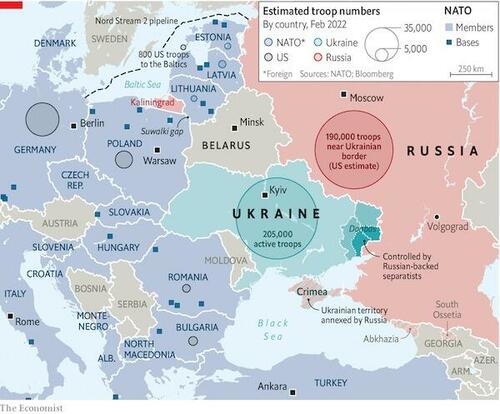
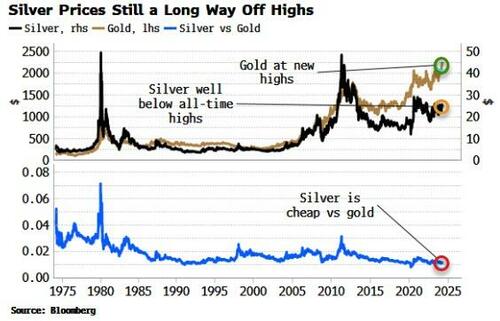
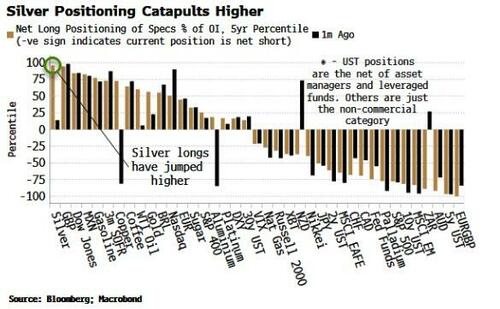
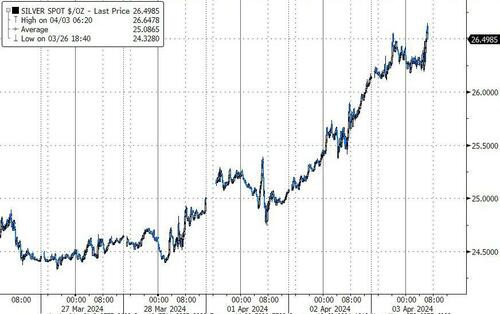

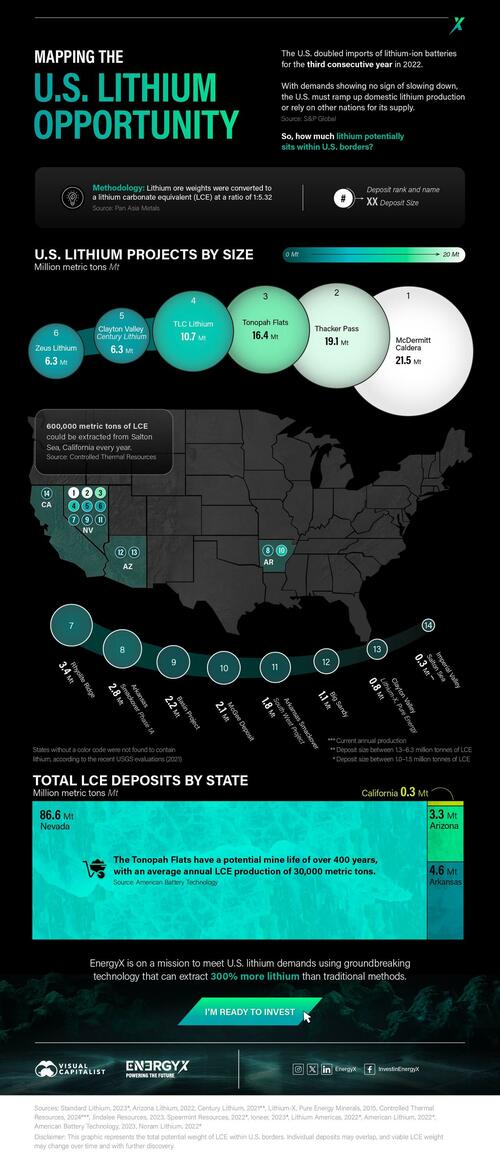
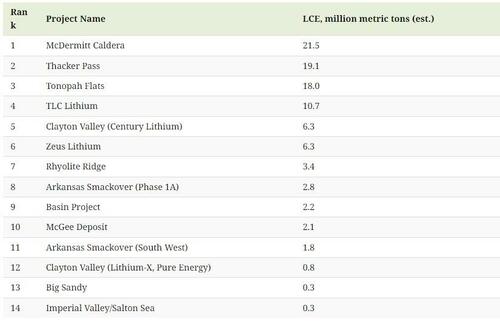
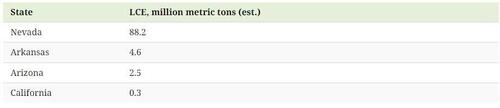
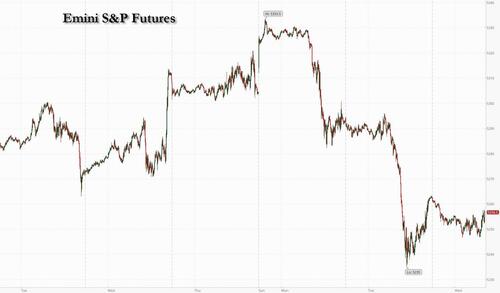
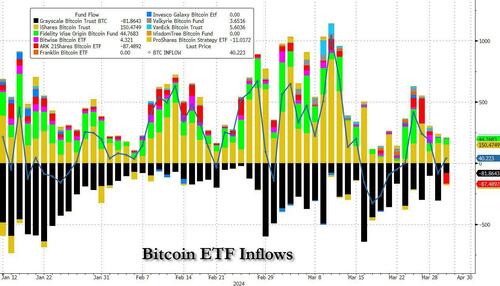

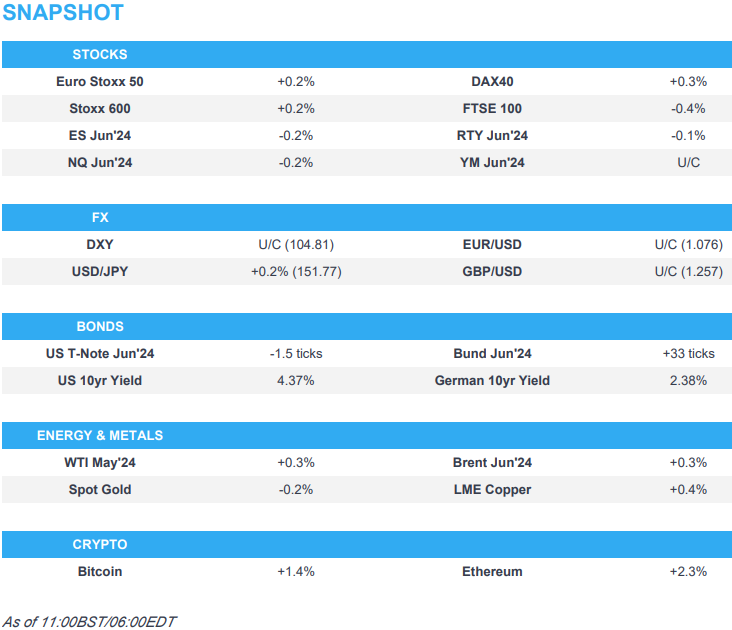










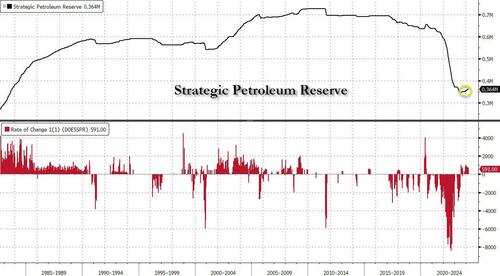
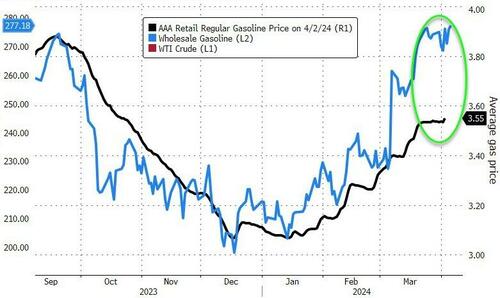
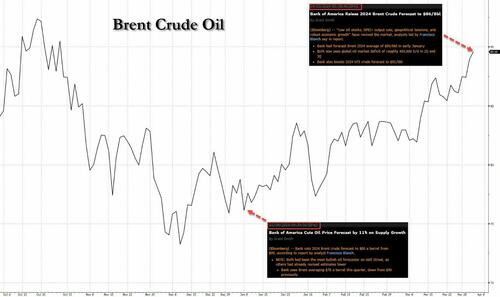

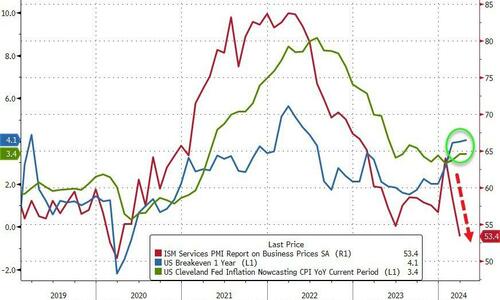
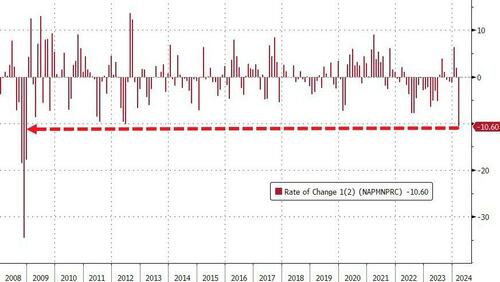
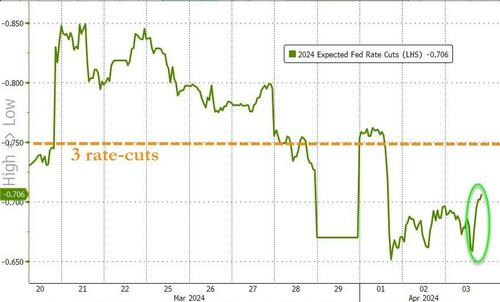
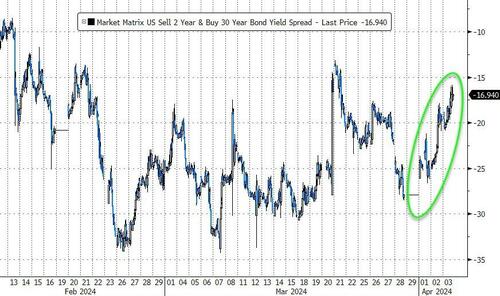
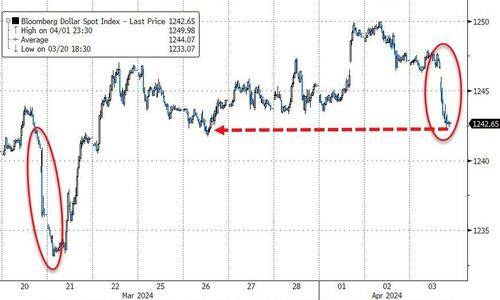
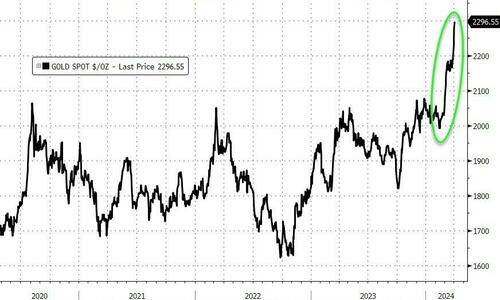
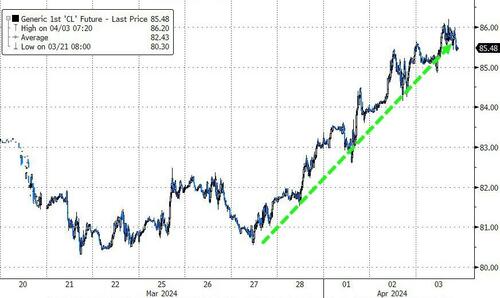
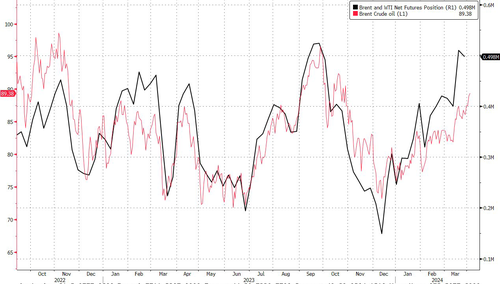
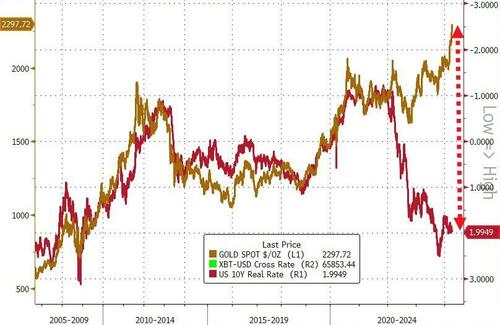
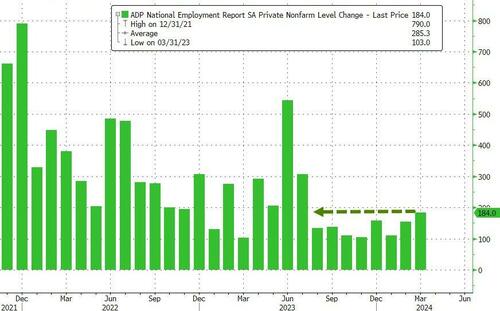
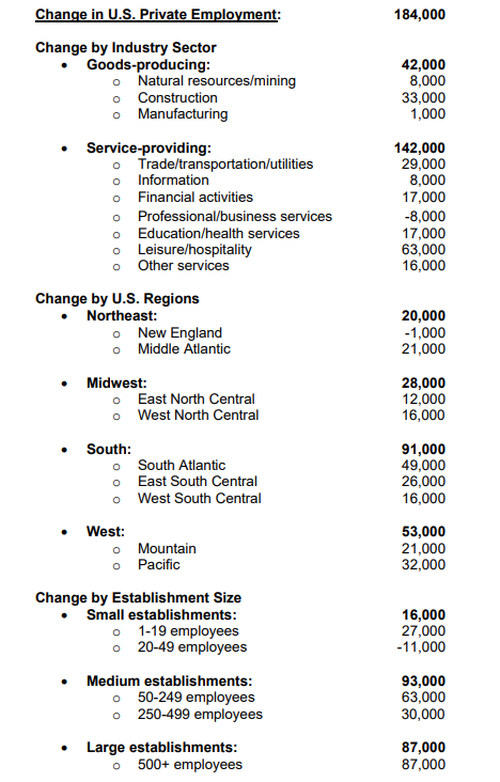
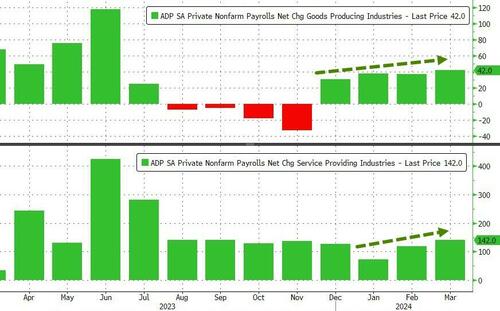
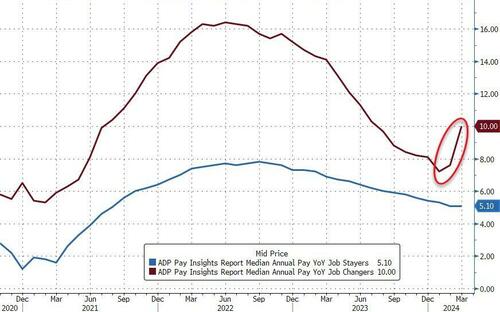
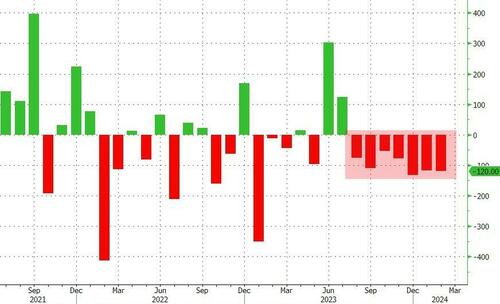
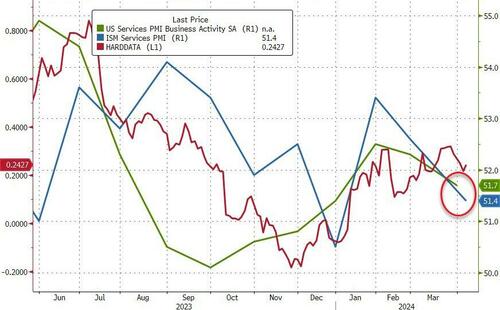
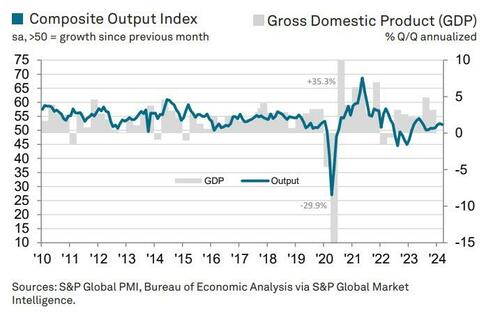
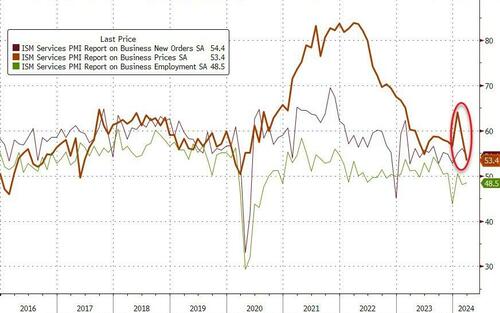
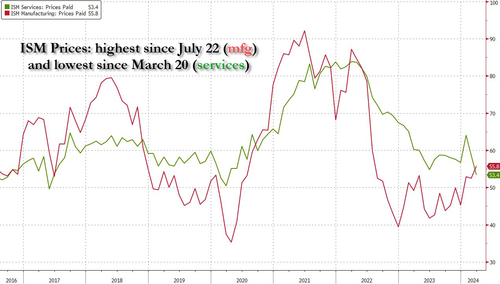
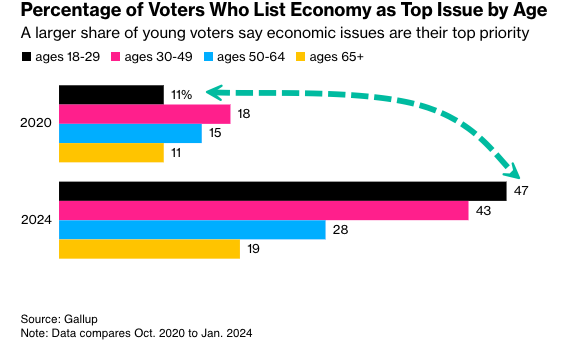
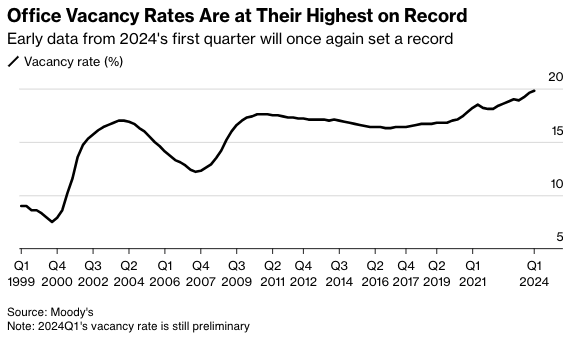




 harveyorganblog.com