SEPT 12//HIGHER PPI AND ECB RATE CUT PROPELS OUR PRECIOUS METALS TODAY; GOLD CLOSED UP $37,80 TO $2552,05//SILVER CLOSED UP $1,13 TO $29,74//PLATINUM CLOSED UP $24,80 TO $980,50 WHILE PALLADIUM JUMPED 33.25 TO $1045,95//TWO GOLD COMMENTARIES TODAY FROM MIKE MAHARRAY: A MUST READ!// ISECB LOWERS RATE BY .25% AS EXPECTED/GERMANY SUSPENDS SCHENGEN WITH OTHER COUNTRIES TO FOLLOW DUE TO MIGRANT INFLUX//ISRAEL VS HAMAS/HEZBOLLAH UPDATES/RUSSIA VS UKRAINE: RUSSIA BEGINS OFFENSIVE IN KURSK//COVID UPDATES/VACCINE INJURY REPORT/DR PAUL ALEXANDER/SLAY NEWS ETC//USA NEWS: PPI ELEVATED AGAIN/GREAT COMMENTARY FROM RICHARD PORTER; KAMOFLAGE:HARRIS POLICY..” TEXAS CITY HAS A HUGE PROBLEM AS A VENEZUELAN GANG TOOK CONTROL OF A HOTEL//SWAMP STORIES FOR YOU TONIGHT AS WE LOOK TO ANOTHER GOVERNMENT SHUTDOWN “WAR”
323 C HSBC 1 363 H WELLS FARGO SEC 4 657 C MORGAN STANLEY 3 661 C JP MORGAN 1 737 C ADVANTAGE 15 7 905 C ADM 1
TOTAL: 16 16 MONTH TO DATE: 3,918
JPMorgan stopped 1/16
GOLD: NUMBER OF NOTICES FILED FOR SEPT/2024. CONTRACT: 16 NOTICES FOR 1600 OZ or 0.0497 TONNES
total notices so far: 3918 contracts for 391,800 Oz (12.187 tonnes)
FOR SEPT:
SILVER NOTICES: 12 NOTICE(S) FILED FOR 60,000 OZ/
total number of notices filed so far this month : 4,826 for 24.120 million oz
XXXXXXXXXXXXXXXXXX
Click here if you wish to send a donation. I sincerely appreciate it as this site takes a lot of preparation
END
GLD/
BOTH GLD AND SLV ARE FRAUDULENT VEHICLES//THEY ARE NOW RAIDING GLD AND SLV FOR PHYSICAL
THE CROOKS ARE STEALING GOLD AND SILVER FROM THE GLD/SLV AND REPLACING THE PHYSICAL WITH PAPER DOLLARS.
WITH GOLD UP $37.80 INVESTORS SWITCHING TO SPROTT PHYSICAL (PHYS) INSTEAD OF THE FRAUDULENT GLD/ HUGE CHANGES IN GOLD INVENTORY AT THE GLD: A DEPOSIT OF 1.74 TONNES OF GOLD INTO THE GLD
/ /INVENTORY RESTS AT 866.18 TONNES
INVENTORY RESTS AT 866.18 TONNES
SLV/
WITH NO SILVER AROUND AND SILVER UP $1.13 AT THE SLV
NO CHANGES IN SILVER INVENTORY AT THE SLV: ..
INVESTORS ARE SWITCHING SLV TO SPROTT’S PSLV.
CLOSING INVENTORY: 467.648 MILLION OZ
Let us have a look at the data for today
SILVER//OUTLINE
SILVER COMEX OI ROSE BY A HUGE SIZED 1116 CONTRACTS TO 130,075 AND CONTINUING ON ITS MARCH TO THE RECORD HIGH OI OF 244,710, SET FEB 25/2020, AND THIS HUGE GAIN IN COMEX OI WAS ACCOMPLISHED WITH OUR GAIN OF $0.33 IN SILVER PRICING AT THE COMEX ON WEDNESDAY’S TRADING. WE LOST ZERO NET LONGS WITH THE STRONG GAIN IN PRICE. WE HAD A HUMONGOUS GAIN OF 1321 TOTAL CONTRACTS ON OUR TWO EXCHANGES. WE HAD AGAIN A HUGE LIQUIDATION OF T.A.S. CONTRACTS DURING WEDNESDAY’S TRADING//. WE HAD CONSIDERABLE SHORT COVERING BY OUR SPECS WITH THE STRONG GAIN IN PRICE. WE HAD A FAIR 205 CONTRACT EXCHANGE FOR PHYSICAL ISSUANCE ACCOMPANIED BY ANOTHER HUGE 713 CONTRACT T.A.S ISSUANCE. IN ESSENCE WE GAINED A HUMONGOUS 1321 CONTRACTS ON OUR TWO EXCHANGES WITH THE GAIN IN PRICE.
PLEASE NOTE THAT THE CROOKS NEED A HIGHER SILVER/GOLD T.A.S. TO CARRY ON THEIR CROOKED MANIPULATION ON A DAILY BASIS BUT DEMAND IS JUST TOO HIGH FOR THEM. THE HIGHER ISSUANCE OF T.A.S. IS NOW USED TO TEMPER OUR SILVER/GOLD PRICE RISE OR RAID AS WHAT HAPPENED SEVERAL TIMES LAST MONTH AND AGAIN YESTERDAY. THE ACCUMULATED T.A.S. IS BEING USED TO MANIPULATE PRICES AT THE COMEX NOW EVERY DAY..
CRAIG HEMKE HAS POINTED OUT THAT THE CROOKS USE THE MID MONTH FOR MANIPULATION AS THEY SELL THEIR BUY SIDE OF THE CALENDAR SPREAD FIRST AND THEN KEEP THE SELL SIDE TO LIQUIDATE AT A LATER DATE. THUS WE HAVE TWO VEHICLES THE CROOKS USE FOR MANIPULATION AND BOTH ARE SPREADERS: 1) AT MONTH’S END/SPREADERS COMEX AND 2/ TAS SPREADERS, MID MONTH. TOTAL TAS ISSUED ON WEDNESDAY NIGHT: 713 CONTRACTS. DESPITE MANY COMPLAINTS THAT THE CROOKS HAVE VIOLATED POSITION LIMITS DUE TO THE FACT THAT THE TAS ISSUED HAVE A VALUE OF ZERO (AS TO POSITION LIMITS FOR OUR CROOKED BANKERS). THE PROBLEM OF COURSE IS THAT THE CROOKS DO NOT LIQUIDATE THE TAS TOGETHER BUT SELL THE BUY SIDE FIRST AND THEN LIQUIDATE THE SELL SIDE TWO MONTHS HENCE. IT IS OBVIOUS MANIPULATION TO THE HIGHEST DEGREE BUT IT NATURALLY FELL ON DEAF EARS WITH OUR REGULATORS (OCC) WHEN THEY RECEIVED OUR COMPLAINTS.IT NOW SEEMS THAT THE OCC HAS ORDERED THE BANKS TO REDUCE ITS NEW LEVEL OF 1/2 TRILLION DOLLARS IN GOLD/SILVER DERIVATIVES AND THUS THE REASON FOR CONSTANT RAIDS BUT TO NO AVAIL. IT ALSO LOOKS LIKE THE FED (GOV’T) IS BEHIND EVERY DAY TRADING.
WE HAVE IN THE PAST YEAR SET ANOTHER RECORD LOW AT 114,102 CONTRACTS ///JULY 3.2023// OUR BANKERS WITH THE HELP OF SPECULATORS AND HIGH FREQUENCY TRADERS WERE UNSUCCESSFUL IN KNOCKING THE PRICE OF SILVER DOWN (IT ROSE BY $0.33) AND WERE UNSUCCESSFUL IN KNOCKING ANY NET SILVER LONGS FROM THEIR PERCH AS WE HAD A HUMONGOUS GAIN OF 1321 TOTAL OI CONTRACTS ON OUR TWO EXCHANGES.
WE HAD A FAIR 205 CONTRACT ISSUANCE OF EXCHANGE FOR PHYSICALS) iiii) AN INITIAL SILVER STANDING FOR COMEX SILVER MEASURING AT 22.765 MILLION OZ (FIRST DAY NOTICE) FOLLOWED BY TODAY’S 80,000 OZ QUEUE JUMP//NEW STANDING ADVANCES TO 24.415 MILLION OZ
//NEW STANDING FOR SILVER//SEPT ADVANCES TO 24.415 MILLION OZ
WE HAD:
/ HUGE SIZED COMEX OI GAIN //FAIR SIZED EFP ISSUANCE/ VI) HUGE SIZED NUMBER OF T.A.S. CONTRACT ISSUANCE 713 CONTRACTS)/
I AM NOW RECORDING THE DIFFERENTIAL IN OI FROM PRELIMINARY TO FINAL REMOVED 204CONTRACTS.
HISTORICAL ACCUMULATION OF EXCHANGE FOR PHYSICALS AUGUST ACCUMULATION FOR EFP’S SILVER/JPMORGAN’S HOUSE OF BRIBES/STARTING FROM FIRST DAY/MONTH OF SEPT
TOTAL CONTRACTS for 8 DAYS, total 5446contracts: OR 27.230 MILLION OZ (680 CONTRACTS PER DAY)
TOTAL EFP’S FOR THE MONTH SO FAR: 27.230 MILLION OZ
LAST 23 MONTHS TOTAL EFP CONTRACTS ISSUED IN MILLIONS OF OZ:
MAY 137.83 MILLION
JUNE 149.91 MILLION OZ
JULY 129.445 MILLION OZ
AUGUST: MILLION OZ 140.120
SEPT. 28.230 MILLION OZ//
OCT: 94.595 MILLION OZ
NOV: 131.925 MILLION OZ
DEC: 100.615 MILLION OZ
YEAR 2022:
JAN 2022-DEC 2022
JAN 2022// 90.460 MILLION OZ
FEB 2022: 72.39 MILLION OZ//
MARCH 2022: 207.140 MILLION OZ//A NEW RECORD FOR EFP ISSUANCE
APRIL: 114.52 MILLION OZ FINAL//LOW ISSUANCE
MAY: 105.635 MILLION OZ//
JUNE: 94.470 MILLION OZ
JULY : 87.110 MILLION OZ
AUGUST: 65.025 MILLION OZ
SEPT. 74.025 MILLION OZ///FINAL
OCT. 29.017 MILLION OZ FINAL
NOV: 134.290 MILLION OZ//FINAL
DEC, 61.395 MILLION OZ FINAL
TOTALS YR 2022: 1135.767 MILLION OZ (1.1356 BILLION OZ)
JAN 2023/// 53.070 MILLION OZ //FINAL
FEB: 2023: 100.105 MILLION OZ/FINAL//MUCH STRONGER ISSUANCE VS THE LATTER TWO MONTHS.
MARCH 2023: 112.58 MILLION OZ//FINAL//STRONG ISSUANCE
APRIL 111.035 MILLION OZ(SLIGHTLY GREATER THAN THAN LAST MONTH)
MAY 66.120 MILLION OZ/INITIAL (MUCH SMALLER THIS MONTH)
JUNE: 110.395 MILLION OZ//MUCH LARGER THAN LAST MONTH
JULY 85.745 MILLION OZ (SMALLER THAN LAST MONTH)
AUGUST: 171.43 MILLION OZ (THIS MONTH IS GOING TO BE HUGE //2ND HIGHEST ON RECORD
SEPT: 72.705 MILLION OZ (SMALLER THIS MONTH)
OCT: 97.455 MILLION OZ
NOV. 50.050 MILLION OZ
DEC. 66.140 MILLION OZ//
TOTAL 2023: 1,104.10 MILLION OZ/
JAN ’24 : 78.655 MILLION OZ//
FEB /2024 : 66.135 MILLION OZ./FINAL
MARCH: 143.750 MILLION OZ// 4TH HIGHEST ON RECORD.
APRIL: 161.770 MILLION OZ (THIS MONTH WILL BE A WHOPPER OF ISSUANCE OF EFPS//3RDHIGHEST EVER RECORDED FOR A MONTH)
MAY: 135.995 MILLION OZ //WILL BE A STRONG MONTH FOR EXCHANGE FOR PHYSICAL ISSUANCE
JUNE 110.575 MILLION OZ ( WILL BE ANOTHER STRONG MONTH ISSUANCE)
JULY: 108.870 MILLION OZ (WILL BE A STRONG ISSUANCE MONTH/ A TOUCH OVER 100 MILLION OZ/)
AUGUST; 99.740 MILLION OZ//THIS MONTH WILL PROBABLY BE STRONG FOR ISSUANCE BUT LESS THAN JULY.
SEPT: 27.23 MILLION OZ//WILL BE A HUGE MONTH FOR EXCHANGE FOR PHYSICAL ISSUANCE
RESULT: WE HAD A HUGE SIZED INCREASE IN COMEX OI SILVER COMEX CONTRACTS OF 1116 CONTRACTS WITH OUR GAIN IN PRICE OF SILVER PRICING AT THE COMEX//WEDNESDAY.,. THE CME NOTIFIED US THAT WE HAD A HUGE EFP ISSUANCE CONTRACTS:713 ISSUED FOR SEPT AND 0 CONTRACTS ISSUED FOR ALL OTHER MONTHS) WHICH EXITED OUT OF THE SILVER COMEX TO LONDON AS FORWARDS. WE HAVE A GOOD INITIAL SILVER OZ STANDING FOR AUGUST OF 22.765 MILLION OZ ON FIRST DAY NOTICE FOLLOWED BY TODAY’S HUGE 80,000 OZ QUEUE JUMP
//NEW TOTAL STANDING FOR SEPT ADVANCES TO 24.415 MILLION OZ
WE HAVE A HUMONGOUS GAINOF 1321 OI CONTRACTS ON THE TWO EXCHANGES WITHTHE GAIN IN PRICE…..THE TOTAL OF TAS INITIATED CONTRACTS TODAY: A HUGE SIZED 713 CONTRACTS,//HUGE FRONT END OF THE TAS CONTRACTS WERE LIQUIDATED DURING THE WEDNESDAY COMEX TRADING//// MASSIVE ATTEMPTED SHORT COVERING FROM OUR SPEC SHORTS WITH THE SLIGHT LOSS IN PRICE TUESDAY/ AND ZERO LIQUIDATION OF LONGS. ALSO SOME OF OUR LONGS EXERCISED THEIR RIGHT AND TENDERED FOR PHYSICAL SILVER.
THE NEW TAS ISSUANCE WEDNESDAY NIGHT (713) WILL BE PUT INTO “THE BANK” TO BE COLLUSIVELY USED AT A LATER DATE//AND FOR SURE TODAY., .
WE HAD 12 NOTICE(S) FILED TODAY FOR 60,000 OZ
THE SILVER COMEX IS NOW BEING ATTACKED FOR METAL BY LONDONERS ET AL.
GOLD//OUTLINE
IN GOLD, THE COMEX OPEN INTEREST ROSE BY A FAIR SIZED 1868 OI CONTRACTS TO 513,469 AND CLOSER TO THE RECORD (SET JAN 24/2020) AT 799,733 AND PREVIOUS TO THAT: (SET JAN 6/2020) AT 797,110, BUT WE ARE NOW MUCH FURTHER FROM OUR ALL TIME LOW OF 390,000 CONTRACTS.
THE DIFFERENTIAL FROM PRELIMINARY OI TO FINAL OI IN GOLD TODAY: REMOVED A HUGE 6446 CONTRACTS//
WE HAD A FAIR SIZED INCREASE IN COMEX OI (1968 CONTRACTS) OCCURRED DESPITE OUR TINY LOSS OF $0.95 IN PRICE /WEDNESDAY. THE FRBNY SUPPLIED THE NECESSARY SHORT PAPER.. WE ALSO HAD A HUGE INITIAL STANDING IN GOLD TONNAGE FOR SEPT AT 12.885 TONNES ON FIRST DAY NOTICE FOLLOWED BY WEDNESDAYS STRONG 2800 OZ QUEUE JUMP
NEW STANDING ADVANCES TO 12.432 TONNES
/ ALL OF THIS HAPPENED WITH OUR $0.95 LOSS IN PRICE WITH RESPECT TO WEDNESDAY’S TRADING. WE HAD A STRONG SIZED GAIN OF 4627 OI CONTRACTS (14.391 PAPER TONNES) ON OUR TWO EXCHANGES, WITH MANY LONGS, REMAINING AT THE END OF THE DAY, TENDERING FOR PHYSICAL GOLD VIA THE EXCHANGE FOR PHYSICAL ROUTE, MUCH TO THE ANGER AND HORROR EXHIBITED BY OUR MAJOR BANKER, THE FEDERAL RESERVE BANK OF NEW YORK.
E.F.P. ISSUANCE
THE CME RELEASED THE DATA FOR EFP ISSUANCE AND IT TOTALED A GOOD SIZED 2659 CONTRACTS:
The NEW COMEX OI FOR THE GOLD COMPLEX RESTS AT 519,915
IN ESSENCE WE HAVE A STRONG SIZED INCREASE IN TOTAL CONTRACTS ON THE TWO EXCHANGES OF 4627 CONTRACTS WITH 1968 CONTRACTS INCREASED AT THE COMEX// AND A GOOD SIZED 2659 EFP OI CONTRACTS WHICH NAVIGATED OVER TO LONDON. THUS TOTAL OI GAIN ON THE TWO EXCHANGES OF 4627 CONTRACTS.. WE HAD THE FOLLOWING TAS CONTRACTS INITIATED (ISSUED): A HUGE SIZED 3304 CONTRACTS,
CALCULATIONS ON GAIN/LOSS ON OUR TWO EXCHANGES
WE HAD A GOOD SIZED ISSUANCE IN EXCHANGE FOR PHYSICALS (2659 CONTRACTS) ACCOMPANYING THE FAIR SIZED INCREASE IN COMEX OI OF 1968 CONTRACTS/TOTAL GAIN FOR OUR THE TWO EXCHANGES: 4627 CONTRACTS. WE HAVE ( 1) NOW RETURNED TO OUR FORMER FORMAT OF BANKERS GOING LONG AND SPECULATORS GOING SHORT ,2.) STRONG INITIAL STANDING AT THE GOLD COMEX FOR SEPT 12.885 TONNES FOLLOWED BY TODAY’S 2800 OZ QUEUE JUMP
//NEW STANDING ADVANCES TO: /SEPT 12.432 TONNES.
/ 3) ZERO T.A.S. LIQUIDATION WITH ZERO NET LONG SPECS BEING CLIPPED,
4) FAIR SIZED COMEX OPEN INTEREST INCREASE 5) GOOD ISSUANCE OF EXCHANGE FOR PHYSICAL PAPER///HUGE T.A.S. ISSUANCE: 3304 T.A.S.CONTRACTS
HISTORICAL ACCUMULATION OF EXCHANGE FOR PHYSICALS IN 2023-2024 INCLUDING TODAY
SEPT.
ACCUMULATION OF EFP’S GOLD AT J.P. MORGAN’S HOUSE OF BRIBES: (EXCHANGE FOR PHYSICAL) FOR THE MONTH OF SEPT. :
TOTAL EFP CONTRACTS ISSUED: 37,955 CONTRACTS OF 3,795,500 OZ OR 118.055 TONNES IN 8 TRADING DAY(S) AND THUS AVERAGING: 4749 EFP CONTRACTS PER TRADING DAY
TO GIVE YOU AN IDEA AS TO THE SIZE OF THESE EFP TRANSFERS : THIS MONTH IN 8 TRADING DAY(S) IN TONNES 118.055 TONNES
TOTAL ANNUAL GOLD PRODUCTION, 2023, THROUGHOUT THE WORLD EX CHINA EX RUSSIA: 3555 TONNES
THUS EFP TRANSFERS REPRESENTS 118.055 DIVIDED BY 3550 x 100% TONNES = 3.32% OF GLOBAL ANNUAL PRODUCTION
SEPT 142.12 TONNES FINAL ISSUANCE ( LOW ISSUANCE)_
OCT: 141.13 TONNES FINAL ISSUANCE (LOW ISSUANCE)
NOV: 312.46 TONNES FINAL ISSUANCE//NEW RECORD!! (INCREASING DRAMATICALLY)//SIGN OF REAL STRESS//SURPASSING THE MARCH 2021 RECORD OF 276.50 TONNES OF EFP
DEC. 175.62 TONNES//FINAL ISSUANCE//
TOTALS: 2,578.08 TONNES/2021
JAN:2022 247.25 TONNES //FINAL
FEB: 196.04 TONNES//FINAL
MARCH/2022: 409.30 TONNES //FINAL( THIS IS NOW A RECORD EFP ISSUANCE FOR MARCH AND FOR ANY MONTH.
APRIL: 169.55 TONNES (FINAL VERY LOW ISSUANCE MONTH)
MAY: 247.44 TONNES FINAL//
JUNE: 238.13 TONNES FINAL
JULY: 378.43 TONNES FINAL/SECOND HIGHEST ON RECORD
AUGUST: 180.81 TONNES FINAL
SEPT. 193.16 TONNES FINAL
OCT: 177.57 TONNES FINAL ( MUCH SMALLER THAN LAST MONTH)
NOV. 223.98 TONNES//FINAL ( MUCH LARGER THAN PREVIOUS MONTHS//comex running out of physical)
DEC: 185.59 tonnes // FINAL
TOTAL: 2,847,25 TONNES/2022
JAN 2023: 228.49 TONNES FINAL//HUGE AMOUNT OF EFP’S ISSUED THIS MONTH!!
FEB: 151.61 TONNES/FINAL
MARCH: 280.09 TONNES/INITIAL (ANOTHER STRONG MONTH FOR EFP ISSUANCE)
APRIL: 197.42 TONNES
MAY: 236.67 TONNES (A VERY STRONG ISSUANCE FOR THIS MONTH)
JUNE: 172.667 TONNES (WEAKER ISSUANCE THIS MONTH)
JULY: 151.69 TONNES (WEAKER THAN LAST MONTH)
AUGUST: 195.28 TONNES (A STRONGER MONTH)//FINAL
SEPT: 254.709 TONNES (WILL BE LARGER THAN LAST MONTH AND A STRONG MONTH)
OCT. 248.09 TONNES. LIKE SILVER, THIS MONTH IS GOING TO BE A STRONG E.F.P. ISSUANCE.
NOV. 239.16 TONNES//WILL BE STRONG THIS MONTH,
DEC. 213.704 TONNES. A STRONG MONTH//
TOTAL FOR YEAR 2023: 2,569.57 TONNES VS 2578 TONNES LAST YEAR
JAN ’24: 291.76 TONNES (WILL BE MUCH GREATER THAN LAST MONTH.//3RD HIGHEST EVER RECORDED EXCHANGE FOR PHYSICAL)
FEB’24: 201.947 TONNES
MARCH 2024: 352.21 TONNES//2ND HIGHEST EVER RECORDED EFP ISSUANCE.
APRIL: 267.05TONNES (WILL BE AN EXTREMELY STRONG MONTH BUT LESS THAN MARCH 2024)
MAY; 316.606 TONNES (WILL BE ANOTHER STRONG MONTH// 3RD HIGHEST RECORDED EFP ISSUANCE )// NOTICE THE HUGE INCREASES IN EX FOR PHYSICAL THESE PAST FEW MONTHS. THESE CONTRACTS ARE CIRCLED BACK FROM LONDON WHEREBY METAL IS REMOVED FROM THE COMEX.
JUNE 175.11 tonnes HEADING FOR A WEAKER MONTH AND MUCH LESS THAN THE THREE PREVIOUS MONTHS
JULY: 351. 65 TONNES (3RD HIGHEST EVER RECORDED EXCHANGE FOR PHYSICAL AND THE HIGHEST EVER RECORDED POST BASEL III)
AUGUST: 274.79 TONNES//THIS MONTH WILL NO DOUBT BE A STRONG ISSUANCE OF EFP’S BUT MUCH LESS THAN LAST MONTH.
SEPT: 118.055 TONNES//IF THIS CONTINUES WE WILL HAVE A HUMDINGER OF AN EFP ISSUANCE.
SPREADING OPERATIONS
(/NOW SWITCHING TO GOLD) FOR NEWCOMERS, HERE ARE THE DETAILS
SPREADING LIQUIDATION HAS NOW COMMENCED AS WE HEAD TOWARDS THE NEW ACTIVE FRONT MONTH OF SEPTEMBER. WE ARE NOW INTO THE SPREADING OPERATION OF GOLD
HERE IS A BRIEF SYNOPSIS OF HOW THE CROOKS FLEECE UNSUSPECTING LONGS IN THE SPREADING ENDEAVOUR ;MODUS OPERANDI OF THE CORRUPT BANKERS AS TO HOW THEY HANDLE THEIR SPREAD OPEN INTERESTS:HERE IS HOW THE CROOKS USED SPREADING AS WE ARE NOW INTO THE NON ACTIVE DELIVERY MONTH OF NOV HEADING TOWARDS THE ACTIVE DELIVERY MONTH OF FEB., FOR GOLD: AND MARCH FOR SILVER
YOU WILL ALSO NOTICE THAT THE COMEX OPEN INTEREST STARTS TO RISE BUT SO IS THE OPEN INTEREST OF SPREADERS. THE OPEN INTEREST IN WILL CONTINUE TO RISE UNTIL ONE WEEK BEFORE FIRST DAY NOTICE OF AN UPCOMING ACTIVE DELIVERY MONTH (OCT), AND THAT IS WHEN THE CROOKS SELL THEIR SPREAD POSITIONS BUT NOT AT THE SAME TIME OF THE DAY. THEY WILL USE THE SELL SIDE OF THE EQUATION TO CREATE THE CASCADE (ALONG WITH THEIR COLLUSIVE FRIENDS) AND THEN COVER ON THE BUY SIDE OF THE SPREAD SITUATION AT THE END OF THE DAY. THEY DO THIS TO AVOID POSITION LIMIT DETECTION. THE LIQUIDATION OF THE SPREADING FORMATION CONTINUES FOR EXACTLY ONE WEEK AND ENDS ON FIRST DAY NOTICE.”
WHAT IS ALARMING TO ME, ACCORDING TO OUR LONDON EXPERT ANDREW MAGUIRE IS THAT THESE EFP’S ARE BEING TRANSFERRED TO WHAT ARE CALLED SERIAL FORWARD CONTRACT OBLIGATIONS AND THESE CONTRACTS ARE LESS THAN 14 DAYS. ANYTHING GREATER THAN 14 DAYS, THESE MUST BE RECORDED AND SENT TO THE COMPTROLLER, GREAT BRITAIN TO MONITOR RISK TO THE BANKING SYSTEM. IF THIS IS INDEED TRUE, THEN THIS IS A MASSIVE CONSPIRACY TO DEFRAUD AS WE NOW WITNESS A MONSTROUS TOTAL EFP’S ISSUANCE AS IT HEADS INTO THE STRATOSPHERE.
The crooks also use the spread in the TAS account (trade at settlement). They buy the spot TAS (e.g. June) and sell the future TAS two months out (e.g. August). Then they unload the front month (i.e. unload the buy side first so the price of gold/silver falls. This occurs in the middle of the front delivery month cycle. They unload the sell side of the equation, two months down the road. The crooks violate position limits as the OCC refuse to hear our complaints.
First, here is an outline of what will be discussed tonight:
1.TODAY WE HAD THE OPEN INTEREST AT THE COMEX IN SILVER ROSE BY A HUGE SIZED 1116 CONTRACTS OI TO 130,075 AND CLOSER TO THE COMEX HIGH RECORD //244,710( SET FEB 25/2020). THE LAST RECORDS WERE SET IN AUG.2018 AT 244,196 WITH A SILVER PRICE OF $14.78/(AUGUST 22/2018)..THE PREVIOUS RECORD TO THAT WAS SET ON APRIL 9/2018 AT 243,411 OPEN INTEREST CONTRACTS WITH THE SILVER PRICE AT THAT DAY: $16.53). AND PREVIOUS TO THAT, THE RECORD WAS ESTABLISHED AT: 234,787 CONTRACTS, SET ON APRIL 21.2017 OVER 6 YEARS AGO. HOWEVER WE HAVE NOW SET A NEW RECORD LOW OF 114,102 CONTRACTS JULY 3.2023
EFP ISSUANCE 205 CONTRACTS
OUR CUSTOMARY MIGRATION OF COMEX LONGS CONTINUE TO MORPH INTO LONDON FORWARDS AS OUR BANKERS USED THEIR EMERGENCY PROCEDURE TO ISSUE:
DEC 205 and ALL OTHER MONTHS: ZERO. TOTAL EFP ISSUANCE: 205 CONTRACTS. EFP’S GIVE OUR COMEX LONGS A FIAT BONUS PLUS A DELIVERABLE PRODUCT OVER IN LONDON. IF WE TAKE THE COMEX OI GAIN OF 1116 CONTRACTS AND ADD TO THE 205 E.FP. ISSUED
WE OBTAIN A HUMONGOUS SIZED GAIN OF OPEN INTEREST CONTRACTS FROM OUR TWO EXCHANGES OF 1321 CONTRACTS
THUS IN OUNCES, THE GAIN ON THE TWO EXCHANGES TOTALS 6.605 MILLION OZ OCCURRED WITH OUR $0.33 GAIN IN PRICE
c) Commentaries from: Egon von Greyerz///Matthew Piepenburg via GoldSwitzerland.com, Pam and Russ Martens
ii a) Chris Powell of GATA provides to us very important physical commentaries
b. Other gold/silver commentaries
c. Commodity commentaries//
d)/CRYPTOCURRENCIES/BITCOIN ETC
2.ASIAN AFFAIRS//
THURSDAY MORNING/WEDNESDAY NIGHT
SHANGHAI CLOSED DOWN 4.67 PTS OR 0.17% //Hang Seng CLOSED UP 131,68 PTS OR 0.71% // Nikkei CLOSED UP 1213.50 OR 3.41%//Australia’s all ordinaries CLOSED UP 1.20%///Chinese yuan (ONSHORE) CLOSED DOWN TO 7,1206 CHINESE YUAN OFFSHORE CLOSED DOWN TO 7.1273/ Oil UP TO 68.38dollars per barrel for WTI and BRENT UP AT 71.62 Stocks in Europe OPENED ALL GREEN
ONSHORE YUAN TRADING ABOVE LEVEL OF OFFSHORE YUAN/ONSHORE YUAN TRADING WEAKER AGAINST US DOLLAR/OFFSHORE YUAN WEAKER
1. COMEX DATA//AMOUNTS STANDING//VOLUME OF TRADING/INVENTORY MOVEMENTS
GOLD
LET US BEGIN:
THE TOTAL COMEX GOLD OPEN INTEREST ROSE BY A FAIR SIZED 1968 CONTRACTS TO 513,469 DESPITE OUR TINY LOSS IN PRICE OF $0.95 WITH RESPECT TO WEDNESDAY’S TRADING. WE LOST ZERO IN NUMBER LONGS WITH THE LOWER PRICE FOR GOLD. THE LIQUIDATION OF T.A.S. CONTRACTS THROUGHOUT THE MONTH DISTORTS OPEN INTEREST NUMBERS.
THE FED IS THE MAJOR SHORT OF AROUND 157+ TONNES OF GOLD OWING TO THE B.I.S. THE FED NEEDS TO COVER AS THEY ARE VERY WORRIED ABOUT WHAT IS GOING TO HAPPEN TO GOLD PRICES ONCE THE BRICS BEGIN THEIR INITIATIVE AND ABANDON THE US DOLLAR. THIS IS SCHEDULED TO HAPPEN LATE SEPT 2024/BEGINNING OF OCTOBER. THE FOUR OR FIVE BANKS ARE ALSO WORRIED ABOUT THEIR HUGE PRECIOUS METAL DERIVATIVE EXPOSURE (NORTH OF ONE TRILLION DOLLARS) AND THIS IS PROBABLY THE MAJOR REASON FOR GOLD/SILVER CONTAINMENT.
OUR PHYSICAL LONDONERS ALSO BOUGHT NEW MASSIVE QUANTITIES OF LONGS AT THESE PRICES AND THIS GOLD BOUGHT WILL BE TENDERED FOR PHYSICAL ON A T + 1 BASIS. BECAUSE GOLD IS BASEL III COMPLIANT, GOLD MUST BE DELIVERED IN A VERY TIMELY ONE DAY. CENTRAL BANKS AROUND THE WORLD, BEING REPRESENTED BY OUR LONDONERS, ARE THE REAL PURCHASERS OF THIS GOLD.
WE HAD A ZERO T.A.S. LIQUIDATION ON WEDNESDAY’S LOSS IN PRICE WITH ZERO LONGS BEING CLIPPED (AS YOU WILL SEE BELOW) BUT WE DID HAVE MAJOR SHORT COVERING. THE PROBLEM FOR THOSE PROVIDING THE SHORT PAPER IS THE SHOCK TO THEM ON RECEIVING NOTICE THAT THE LONGS WANT THE PHYSICAL GOLD AS THEY TENDER FOR THAT SHINY YELLOW METAL. THE HIGH LIQUIDATION OF THE SPREADERS // T.A.S DURING LAST WEEK AND THIS WEEK IS SURELY DISTORTING COMEX OPEN INTEREST.
EXCHANGE FOR PHYSICAL ISSUANCE
WE ARE NOW ENTERING INTO THE NON ACTIVE DELIVERY MONTH OF SEPTEMBER.… THE CME REPORTS THAT THE BANKERS ISSUED A FAIR SIZED TRANSFER THROUGH THE EFP ROUTE AS THESE LONGS RECEIVED A DELIVERABLE LONDON FORWARD TOGETHER WITH A FIAT BONUS.,
THAT IS A FAIR SIZED 2659 EFP CONTRACTS WERE ISSUED: : OCT/DEC2659 & ZERO FOR ALL OTHER MONTHS:
TOTAL EFP ISSUANCE: 2659 CONTRACTS. THESE EFP;S CIRCLE AROUND LONDON ON A 13 DAY BASIS AND ARE NOW USED BY GLOBAL CENTRAL BANKS TO EXERCISE FOR PHYSICAL GOLD WITH THE OBLIGATION TO DELIVER BEING FORCED ONTO COMEX BANKS. THE GOLD DELIVERED COMES FROM LONDON.
ON A NET BASIS IN OPEN INTEREST WE GAINED THE FOLLOWING TODAY ON OUR TWO EXCHANGES: A STRONG SIZED TOTAL OF 4627 CONTRACTS IN THAT 2659 LONGS WERE TRANSFERRED AS EXCHANGE FOR PHYSICALS TO LONDON AND WE HAD A FAIR GAIN OF 1968 COMEX CONTRACTS..AND THIS VERY STRONG GAIN ON OUR TWO EXCHANGES HAPPENED DESPITE OUR LOSS IN PRICE OF $0.95/WEDNESDAY COMEX. THE EXCHANGE FOR PHYSICALS WILL BE USED BY CENTRAL BANKS, TO EXERCISE FOR PHYSICAL GOLD AS MENTIONED ABOVE. THE RAIDS ON LAST WEDNESDAY, FRIDAY AND THIS PAST TUESDAY AND FRIDAY WERE ORCHESTRATED BY THE FRBNY AS WE ARE NOW FINISHED WITH OPTIONS EXPIRY FOR THE OTC/LONDON LBMA BETS ENDING LAST FRIDAY AFTERNOON. DESPITE THE FED’S HUGE SHORT PREDICAMENT THEY STILL HAVE TIME AND ENERGY TO RAID OUR PRECIOUS METALS. SUCH CROOKS!
AS PER OUR NEWBIE TRADE AT SETTLEMENT (TAS) MANIPULATION OPERATION (WHICH CRAIG HEMKE HAS POINTED OUT HAPPENS DURING MID MONTH IN THE DELIVERY CYCLE), THE CME REPORTS THAT THE TOTAL T.A.S. ISSUANCE FOR WEDNESDAY NIGHT A HUGE SIZED 3304 CONTRACTS. ALMOST ALL OF THE TRADING AND SUPPLY OF CONTRACTS WAS ORCHESTRATED BY GOVERNMENT (FEDERAL RESERVE BANK OF NEW YORK)
THROUGHOUT THE PAST SEVERAL WEEKS, THE BANKERS CONTINUE TO SELL OFF THE LONG SIDE OF THE SPREAD WHICH OF COURSE CONTINUES TO MANIPULATE THE PRICE OF GOLD SOUTHBOUND. (THEY KEEP THE SHORT SIDE OF THE CALENDAR/T.A.S. SPREAD WHICH WILL BE LIQUIDATED IN DAYS HENCE//. IT SEEMS THAT OUR CROOKS ARE HAVING A HARD TIME TRYING TO CONTROL THE PRICE OF GOLD AND THUS THE NEED FOR STRONG T.A.S. ISSUANCE (AND SPREADERS LATE IN THE MONTH). THE USE OF T.A.S. IS OF EXTREME IMPORTANCE TO OUR CROOKS IN LAST WEEK’S AND THIS WEEK’S TRADING//RAIDS
// WE HAVE A STRONG AMOUNT OF GOLD TONNAGE STANDING: SEPT (12.432 TONNES) WHICH IS HUGE FOR A NON DELIVERY MONTH.
HERE ARE THE AMOUNTS THAT STOOD FOR DELIVERY IN THE PRECEDING 44 MONTHS OF 2021-2024:
DEC 2021: 112.217 TONNES
NOV. 8.074 TONNES
OCT. 57.707 TONNES
SEPT: 11.9160 TONNES
AUGUST: 80.489 TONNES
JULY 7.2814 TONNES
JUNE: 72.289 TONNES
MAY 5.77 TONNES
APRIL 95.331 TONNES
MARCH 30.205 TONNES
FEB ’21. 113.424 TONNES
JAN ’21: 6.500 TONNES.
TOTAL YEAR 2021 (JAN- DEC): 601.213 TONNES
YEAR 2022:
JANUARY 2022 17.79 TONNES
FEB 2022: 59.023 TONNES
MARCH: 36.678 TONNES
APRIL: 85.340 TONNES FINAL.
MAY: 20.11 TONNES FINAL
JUNE: 74.933 TONNES FINAL
JULY 29.987 TONNES FINAL
AUGUST:104.979 TONNES//FINAL
SEPT. 38.1158 TONNES
OCT: 77.390 TONNES/ FINAL
NOV 27.110 TONNES/FINAL
Dec. 64.000 tonnes
(TOTAL YEAR 656.076 TONNES)
2023:
JAN/2023: 20.559 tonnes
FEB 2023: 47.744 tonnes
MAR: 19.0637 TONNES
APRIL: 75.676 tonnes
MAY: 19.094 TONNES + 1.244 tonnes of exchange for risk = 20.338
JUNE: 64.354 TONNES
JULY: 10.2861 TONNES
AUGUST: 38.855 TONNES(INCLUDING .6842 EXCHANGE FOR RISK)
SEPT: 15.281 TONNES FINAL
OCT. 35.869 TONNES + 1.665 EXCHANGE FOR RISK =37.0355 tonnes
DEC. 47.073 + 4.634 TONNES OF EXCHANGE FOR RISK = 51.707 TONNES
TOTAL 2023 YEAR : 436.546 TONNES
2024
JAN ’24. 22.706 TONNES
FEB. ’24: 66.276TONNES (INCLUDES 1.723 TONNES EX. FOR RISK)
MARCH: 18.8398 TONNES + 1.1695 EX FOR RISK = 20.093 TONNES
APRIL: 2024: 53.673TONNES FINAL
MAY/ 2024 8.5536 TONNES + 3.3716 TONNES EX FOR RISK/PRIOR= 11.9325
JUNE; 95.578 TONNES. + 1.045 TONNES EXCHANGE FOR RISK =96.623 THIS IS THE HIGHEST RECORDED GOLD STANDING SINCE AUGUST 2022
JULY: 11.692 TONNES
AUGUST 69.602 TONNES//FINAL STANDING
SEPT. 12.432 TONNES.
THE SPECS/HFT WERE SUCCESSFUL IN LOWERING GOLD’S PRICE( IT FELL BY $0.95////BUT WERE UNSUCCESSFUL IN KNOCKING OFF ANY SPECULATOR LONGS AS WE DID HAVE A STRONG GAIN IN OUR TWO EXCHANGES. WE HAD ZERO T.A.S. SPREADER LIQUIDATION. BUT CENTRAL BANK LONGS, SEIZING THE MOMENT, EXERCISED FOR PHYSICAL IN A BIG WAY.
WE HAVE GAINED A TOTAL OI OF 14.391 PAPER TONNES FROM OUR TWO EXCHANGES, ACCOMPANYING OUR INITIAL GOLD TONNAGE STANDING FOR SEPT (12.885 TONNES) ON FIRST DAY NOTICE FOLLOWED BY TUESDAY’S QUEUE JUMP OF A HUGE SIZED 2800 OZ
//NEW STANDING FOR SEPT ADVANCES TO: 12.432 TONNES.
NEW STANDING FOR SEPT: 12.432 TONNES
ALL OF THIS WAS ACCOMPLISHED WITH OUR LOSS IN PRICE TO THE TUNE OF $0.95
WE HAVE REMOVED 6446CONTRACTS FROM THE COMEX TRADES TO OPEN INTEREST (CROOKS)//PRELIMINARY TO FINAL.
NET GAIN ON THE TWO EXCHANGES 4627 CONTRACTS OR 462,700 OZ (14,391
Total monthly oz gold served (contracts) so far this month
3918 notices 391,800oz 12.187 TONNES
Total accumulative withdrawals of gold from the Dealers inventory this month
NIL oz
Total accumulative withdrawal of gold from the Customer inventory this month
x
0 dealer deposits:
total dealer deposits: nil oz
we have 0 customer deposits
i
total deposits niloz
withdrawals: 2
i) Out of Brinks 11,109,971 oz
ii) Out of JPMorgan 17,792,063 oz
TOTAL WITHDRAWALS: 28,902,034 oz
adjustments:
0
CALCULATIONS FOR THE AMOUNT OF GOLD STANDING FOR SEPTEMBER
For the front month of SEPT. we have an oi of 95 contracts having GAINED 7 contracts. We had 21 notices filed on WEDNESDAY so we GAINED 28 contracts or 2800 oz will stand at the comex as these boys seek metal on this side of the pond.
OCTOBER LOST 834 CONTRACTS UP TO 40,960 CONTRACTS
NOVEMBER GAINED 23 CONTRACTS TO STAND AT 140
DECEMBER, THE BIGGEST DELIVERY MONTH GAINED 2239 CONTRACTS TO 413,342
We had 16 contracts filed for today representing 1600 oz
This is a major assault on the comex for gold and this time it is physical that will be requested.
Today, 0 notice(s) were issued from J.P.Morgan dealer and 0 notice issued from their client or customer account. The total of all issuance by all participants equate to 16 contract(s) of which 0 notices were stopped (received) by j.P. Morgan dealer and 1notice(s) was (were) stopped (received) by J.P.Morgan//customer account
To calculate the INITIAL total number of gold ounces standing for SEPT /2024. contract month, we take the total number of notices filed so far for the month (3918 x 100 oz ) to which we add the difference between the open interest for the front month of SEPT 95 CONTRACTS) minus the number of notices served upon today (16x 100 oz per contract( equals 399,700 OZ OR 12.432 TONNES.
thus the INITIAL standings for gold for the SEPTEMBER contract month: No of notices filed so far (3918x 100 oz +we add the difference for front month of SEPT (95/ , OI} minus the number of notices served upon today (16 x 100 oz which equals 399,700oz (12.432 TONNES)
TOTAL COMEX GOLD STANDING FOR SEPT.: 12.432 TONNES WHICH IS HUGE FOR THIS NON ACTIVE DELIVERY MONTH IN THE CALENDAR.
total pledged gold: 1,780,327.447 oz 55.375 tonnes
TOTAL OF ALL GOLD ELIGIBLE AND REGISTERED GOLD: 17,038,434.827OZ
TOTAL REGISTERED GOLD 7,414,839.770 ( 230.63 tonnes).
TOTAL OF ALL ELIGIBLE GOLD: 9,623,595.051 OZ
REGISTERED GOLD THAT CAN BE SERVED UPON: 5,634.503 oz (REG GOLD- PLEDGED GOLD)= 175.25 tonnes //
END
SILVER/COMEX
SEPT 12/2024
INITIAL
//2024// THE SEPT 2024 SILVER CONTRACT//INITIAL
Silver
Ounces
Withdrawals from Dealers Inventory
NIL oz
Withdrawals from Customer Inventory
399,055.259 OZ
Delaware
CNT HSBC
.
Deposits to the Dealer Inventory
nil oz
Deposits to the Customer Inventory
603,374.500oz loomis
No of oz served today (contracts)
12 CONTRACT(S) (60,000 OZ)
No of oz to be served (notices)
57 contracts (0.285 million oz)
Total monthly oz silver served (contracts)
4826 Contracts (24.120 MILLION oz)
Total accumulative withdrawal of silver from the Dealers inventory this month
NIL oz
Total accumulative withdrawal of silver from the Customer inventory this month
i) 0 dealer deposit/
total dealer deposit : NIL oz
i) We had 0 dealer withdrawal
total dealer withdrawals: 0 oz
We had 1 customer deposits:
i) Into Loomis 603,374,5000 oz
total customer deposit 603,374,500 oz
JPMorgan has a total silver weight: 134.996million oz/306.156 million or 44.13%
adjustment:1
brinks//customer to dealer 50,696,479 oz
withdrawals: 3
i) Out of Delaware 113,834,632oz
ii) HSBC 80,685.600 oz
III) CNT 204,535.027
total customer withdrawals: 399,055.259oz
TOTAL REGISTERED SILVER: 76,117 MILLION OZ//.TOTAL REG + ELIGIBLE. 306.156 million oz
CALCULATIONS FOR THE NEW STANDING FOR SILVER FOR SEPTEMBER:
silver open interest data:
FRONT MONTH OF SEPT/2024 OI: 69 CONTRACTS HAVING GAINED 3 CONTRACT(S).
WE HAD 13 NOTICES FILED ON WEDNESDAY, SO WE GAINED 16 CONTRACTS OR 80,000 OZ
UNDERWENT A QUEUE JUMP TO TAKE DELIVERY OF SILVER OVER ON THIS SIDE OF THE POND..
THERE MUST BE ENOUGH SILVER OVER HERE.
OCTOBER SAW ANOTHER GAIN OF 65 OF OPEN INTEREST CONTRACTS AND THUS WE HAVE 1447 OPEN INTEREST CONTRACTS FOR OCTOBER.
NOVEMBER SAW ITS ANOTHER GAIN OF 2 CONTRACTS TO STAND AT 20
DECEMBER SAW A GAIN OF 1035 CONTRACTS UP TO 114,411
.
TOTAL NUMBER OF NOTICES FILED FOR TODAY: 12 for 60,000 oz
CONFIRMED volume; ON WEDNESDAY 73,447 good
To calculate the number of silver ounces that will stand for delivery in SEPT. we take the total number of notices filed for the month so far at 4826 x 5,000 oz = 24.120 MILLION oz
to which we add the difference between the open interest for the front month of SEPT(69) and the number of notices served upon today 12 x (5000 oz) equals the number of ounces standing.
Thus the standings for silver for the SEPT/2024 contract month: 4826 notices served so far) x 5000 oz + OI for the front month of SEPT (69)x number of notices served upon today minus (12)x 5000 oz of silver standing for the SEPT contract month equates to 24.415 MILLION OZ.
New total standing: 24.415 million oz.
There are 76m168million oz of registered silver.
The record level of silver open interest is 234,787 contracts set on April 21./2017 with the price on that day at $18.42. The previous record was 224,540 contracts with the price at that time of $20.44.
Now that we have surpassed $28.40 the next big line in the sand for silver is $34.76. After that the moon
END
BOTH GLD AND SLV ARE MASSIVE FRAUDS!
GLD AND SLV INVENTORY LEVELS//
GLD
SEPT 12 WITH GOLD UP $37.80 ON THE DAY; HUGE CHANGES IN GOLD AT THE GLD /:/A DEPOSIT OF 1.74 TONNES OF GOLD INTO THE GLD/ //////INVENTORY RESTS AT 866.18 TONNES
SEPT 11 WITH GOLD DOWN $0.90 ON THE DAY; HUGE CHANGES IN GOLD AT THE GLD /:/A DEPOSIT OF 1.70 TONNES OF GOLD INTO THE GLD/ //////INVENTORY RESTS AT 864.44 TONNES
SEPT 10 WITH GOLD UP $12.00ON THE DAY; NO CHANGES IN GOLD AT THE GLD /:/ //////INVENTORY RESTS AT 862.74 TONNES
SEPT 9 WITH GOLD UP $12.95 ON THE DAY; NO CHANGES IN GOLD AT THE GLD /:/ //////INVENTORY RESTS AT 862.74 TONNES
SEPT 6 WITH GOLD DOWN $17.65 ON THE DAY; NO CHANGES IN GOLD AT THE GLD /:/ //////INVENTORY RESTS AT 862.74 TONNES
SEPT 5 WITH GOLD UP $18.00 ON THE DAY; NO CHANGES IN GOLD AT THE GLD /:/ //////INVENTORY RESTS AT 862.74 TONNES
SEPT 4 WITH GOLD UP $3.45 ON THE DAY; NO CHANGES IN GOLD AT THE GLD /:/ //////INVENTORY RESTS AT 862.74 TONNES
SEPT 3 WITH GOLD DOWN $4.25 ON THE DAY; HUGE CHANGES IN GOLD AT THE GLD A DEPOSIT OF 5,47 TONNES OF GOLD INTO THE GLD/:/ //////INVENTORY RESTS AT 862.74 TONNES
AUGUST 30 WITH GOLD DOWN $31.30 ON THE DAY; HUGE CHANGES IN GOLD AT THE GLD A DEPOSIT OF 1.15 TONNES OF GOLD INTO THE GLD/:/ //////INVENTORY RESTS AT 857.27 TONNES
AUGUST 29 WITH GOLD UP $23.50 ON THE DAY; NO CHANGES IN GOLD AT THE GLD:/ //////INVENTORY RESTS AT 856.12 TONNES
AUGUST 28 WITH GOLD DOWN $14.65 ON THE DAY; NO CHANGES IN GOLD AT THE GLD:/ //////INVENTORY RESTS AT 856.12 TONNES
AUGUST 27 WITH GOLD DOWN $1.65 ON THE DAY; NO CHANGES IN GOLD AT THE GLD:/ //////INVENTORY RESTS AT 856.12 TONNES
AUGUST 26 WITH GOLD UP $9.00 ON THE DAY; HUGE CHANGES IN GOLD AT THE GLD: A WITHDRAWAL OF 1.73 TONNES OF GOLD VAPOUR GOLD OUT OF THE GLD./ //////INVENTORY RESTS AT 856.12 TONNES
AUGUST 23 WITH GOLD UP $29.70 ON THE DAY; HUGE CHANGES IN GOLD AT THE GLD: A MONSTER WITHDRAWAL OF 8.88 TONNES OF GOLD VAPOUR GOLD OUT OF THE GLD./ //////INVENTORY RESTS AT 857.85 TONNES
AUGUST 22 WITH GOLD DOWN $28.90 ON THE DAY; HUGE CHANGES IN GOLD AT THE GLD: A MONSTER DEPOSIT OF 9.43 TONNES OF GOLD VAPOUR GOLD INTO THE GLD./ //////INVENTORY RESTS AT 866.70 TONNES
AUGUST 21 WITH GOLD DOWN $1.80 ON THE DAY; HUGE CHANGES IN GOLD AT THE GLD: A MONSTER WITHDRAWAL OF 1.73 TONNES OF GOLD OUT OF THE GLD./ //////INVENTORY RESTS AT 857.27 TONNES
AUGUST 20 WITH GOLD UP $9.40 ON THE DAY; HUGE CHANGES IN GOLD AT THE GLD: A MONSTER DEPOSIT OF 4.03 TONNES OF GOLD VAPOUR INTO THE GLD./ //////INVENTORY RESTS AT 859.00 TONNES
AUGUST 19 WITH GOLD UP $3.05 ON THE DAY; HUGE CHANGES IN GOLD AT THE GLD: A MONSTER DEPOSIT OF 7.19 TONNES OF GOLD VAPOUR INTO THE GLD./ //////INVENTORY RESTS AT 854.97 TONNES
AUGUST 16 WITH GOLD UP $44.65 ON THE DAY; NO CHANGES IN GOLD AT THE GLD: //////INVENTORY RESTS AT 847.78 TONNES
AUGUST 15 WITH GOLD UP $13,70 ON THE DAY; HUGE CHANGES IN GOLD AT THE GLD: A DEPOSIT OF 2.02 TONNES OF GOLD OUT OF THE GLD//////INVENTORY RESTS AT 847.78 TONNES
AUGUST 14 WITH GOLD DOWN $26.20 ON THE DAY; HUGE CHANGES IN GOLD AT THE GLD: A WITHDRAWAL OF 4.03 TONNES OF GOLD OUT OF THE GLD//////INVENTORY RESTS AT 845.76 TONNES
AUGUST 13 WITH GOLD UP $3.35 ON THE DAY; HUGE CHANGES IN GOLD AT THE GLD: A DEPOSIT OF 2.88 TONNES OF GOLD INTO THE GLD//////INVENTORY RESTS AT 849.79 TONNES
AUGUST 12 WITH GOLD UP $30.00 ON THE DAY; NO CHANGES IN GOLD AT THE GLD: ////INVENTORY RESTS AT 846.91 TONNES
AUGUST 9 WITH GOLD UP $10.50 ON THE DAY; HUGE CHANGES IN GOLD AT THE GLD: A DEPOSIT OF 2.87 TONNES OF GOLD INTO THE GLD////INVENTORY RESTS AT 846.91 TONNES
AUGUST 8 WITH GOLD UP $31.50 ON THE DAY; HUGE CHANGES IN GOLD AT THE GLD: A WITHDRAWAL OF 4.02 TONNES OF GOLD OUT OF THE GLD////INVENTORY RESTS AT 844.04 TONNES
AUGUST 7 WITH GOLD UP $1.90 ON THE DAY; HUGE CHANGES IN GOLD AT THE GLD: A DEPOSIT OF 3.16 TONNES OF GOLD INTO THE GLD////INVENTORY RESTS AT 848.06 TONNES
AUGUST 6 WITH GOLD DOWN $13.10 ON THE DAY; SMALL CHANGES IN GOLD AT THE GLD” A WITHDRAWAL OF .57 TONNES OF GOLD FROM THE GLD////INVENTORY RESTS AT 844.90 TONNES
AUGUST 2 WITH GOLD DOWN $9.95 ON THE DAY; HUGE CHANGES IN GOLD INVENTORY AT THE GLD: A WITHDRAWAL OF 0.58 TONNES OF GOLD OUT OF THE GLD//INVENTORY RESTS AT 845.47 TONNES
AUGUST 1 WITH GOLD UP $9.15 ON THE DAY; HUGE CHANGES IN GOLD INVENTORY AT THE GLD: A DEPOSIT OF 2.88 TONNES OF GOLD INTO THE GLD//INVENTORY RESTS AT 846.05 TONNES
GLD INVENTORY: 866.18 TONNES, TONIGHTS TOTAL
SILVER
SEPT12//WITH SILVER UP $1.13/ NOCHANGES IN SILVER INVENTORY:./. /: .///./// /INVENTORY AT SLV 467.648MILLION OZ
SEPT 11//WITH SILVER UP $0.33/SMALL CHANGES IN SILVER INVENTORY: A HUGE DEPOSIT OF 2.099 MILLION OZ INTO THE SLV/ OZ OF SILVER FROM THE SLV./. /: .///./// /INVENTORY AT 467.648MILLION OZ
SEPT 10//WITH SILVER DOWN $.06/SMALL CHANGES IN SILVER INVENTORY: A WITHDRAWAL OF 639,000 OZ OF SILVER FROM THE SLV./. /: .///./// /INVENTORY AT 465.549MILLION OZ
SEPT 9//WITH SILVER UP $0.45//SMALL CHANGES IN SILVER INVENTORY: A WITHDRAWAL OF 46,000 OZ OF SILVER FROM THE SLV./. /: .///./// /INVENTORY AT 466.188 MILLION OZ
SEPT 6//WITH SILVER DOWN $.84//NO CHANGES IN SILVER INVENTORY /: .///./// /INVENTORY AT 466.234 MILLION OZ
SEPT 5//WITH SILVER UP $.55//SMALL CHANGES IN SILVER INVENTORY A WITHDRAWAL OF 0.193 MILLION OZ OF SILVER INTO THE SLV/: .///./// /INVENTORY AT 466.234 MILLION OZ
SEPT 4//WITH SILVER UP $.17//SMALL CHANGES IN SILVER INVENTORY A DEPOSIT OF 0.456 MILLION OZ OF SILVER INTO THE SLV/: .///./// /INVENTORY AT 466.427 MILLION OZ
SEPT 3//WITH SILVER DOWN $.74//HUGE CHANGES IN SILVER INVENTORY A DEPOSIT OF 1.278 MILLION OZ OF SILVER INTO THE SLV/: .///./// /INVENTORY AT 465.971 MILLION OZ
AUGUST30//WITH SILVER DOWN $.42//NO CHANGES IN SILVER INVENTORY: .///./// /INVENTORY AT 464.693 MILLION OZ
AUGUST 29//WITH SILVER UP $.37//SMALL CHANGES IN SILVER INVENTORY:A WITHDRAWAL OF 0.558 MILLION OZ OZ OUT OF THE SLV. .///./// /INVENTORY AT 464.693 MILLION OZ
AUGUST 28//WITH SILVER DOWN $0.76//HUGE CHANGES IN SILVER INVENTORY:A DEPOSIT OF 2.301 MILLION OZ OZ OUT OF THE SLV. .///./// /INVENTORY AT 465.281 MILLION OZ
AUGUST 27//WITH SILVER DOWN $0.03//HUGE CHANGES IN SILVER INVENTORY:A WITHDRAWAL OF 2.921 MILLION OZ OZ OUT OF THE SLV. .///./// /INVENTORY AT 462.959 MILLION OZ
AUGUST 26//WITH SILVER UP $0.23//SMALL CHANGES IN SILVER INVENTORY:A WITHDRAWAL OF 45,000 OZ OUT OF THE SLV. .///./// /INVENTORY AT 465.880 MILLION OZ
AUGUST 23//WITH SILVER UP $0.72//HUGE CHANGES IN SILVER INVENTORY:A WITHDRAWAL OF 1.506 MILLION OZ INTO THE SLV. .///./// /INVENTORY AT 465.925 MILLION OZ
AUGUST 22//WITH SILVER DOWN $0.44//HUGE CHANGES IN SILVER INVENTORY:A WITHDRAWAL OF 0.943 MILLION OZ INTO THE SLV. .///./// /INVENTORY AT 468.344 MILLION OZ
AUGUST 21//WITH SILVER $0.03//HUGE CHANGES IN SILVER INVENTORY:A DEPOSIT OF 1..552 MILLION OZ INTO THE SLV. .///./// /INVENTORY AT 468.344 MILLION OZ
AUGUST 20//WITH SILVER $0.24//HUGE CHANGES IN SILVER INVENTORY:A DEPOSIT OF 1.369 MILLION OZ FROM THE SLV. .///./// /INVENTORY AT 466.792 MILLION OZ
AUGUST 19//WITH SILVER $0.39//HUGE CHANGES IN SILVER INVENTORY:A WITHDRAWAL OF 1.506 MILLION OZ FROM THE SLV. .///./// /INVENTORY AT 465.423 MILLION OZ
AUGUST 16//WITH SILVER $0.49//NO CHANGES IN SILVER INVENTORY: .///./// /INVENTORY AT 466.929 MILLION OZ
AUGUST 15//WITH SILVER $1.14//HUGE CHANGES IN SILVER INVENTORY: A DEPOSIT OF 1.186 MILLION ON INTO THE SLV.///./// /INVENTORY AT 466.929 MILLION OZ
AUGUST 14//WITH SILVER DOWN $0.40//NO CHANGES IN SILVER INVENTORY:///./// /INVENTORY AT 465.743 MILLION OZ
AUGUST 13//WITH SILVER DOWN $0.19//NO CHANGES IN SILVER INVENTORY:///./// /INVENTORY AT 465.743 MILLION OZ
AUGUST 12//WITH SILVER UP $.37//NO CHANGES IN SILVER INVENTORY:///./// /INVENTORY AT 465.743 MILLION OZ
AUGUST 9//WITH SILVER DOWN $.03//NO CHANGES IN SILVER INVENTORY:///./// /INVENTORY AT 465.743 MILLION OZ
AUGUST 8//WITH SILVER UP $.70//HUGE CHANGES IN SILVER INVENTORY: A DEPOSIT OF 3.241 MILLION OZ INTO THE SLV////./// /INVENTORY AT 462.502 MILLION OZ
AUGUST 7//WITH SILVER DOWN $0.27//HUGE CHANGES IN SILVER INVENTORY: A DEPOSIT OF 4.552 MILLION OZ INTO THE SLV////./// /INVENTORY AT 462.502 MILLION OZ
AUGUST 6//WITH SILVER UP $0.05//NO CHANGES IN SILVER INVENTORY:///./// /INVENTORY AT 458.851 MILLION OZ
AUGUST 2//WITH SILVER DOWN $0.01//HUGE CHANGES IN SILVER INVENTORY: A WITHDRAWAL OF 1.243 MILLION OZ OF SILVER OUT OF THE SLV ///./// /INVENTORY AT 460.961 MILLION OZ
AUGUST 1//WITH SILVER DOWN $0.46//HUGE CHANGES IN SILVER INVENTORY: A DEPOSIT OF 1.608 MILLION OZ OF SILVER VAPOUR INTO THE SLV///./// /INVENTORY AT 462.204 MILLION OZ
CLOSING INVENTORY 467.648 MILLION OZ//
PHYSICAL GOLD/SILVER COMMENTARIES
1/ PETER SCHIFF/SCHIFF GOLD/MIKE MAHARRY
Bad Data And Bad Models: How The Fed Has Shattered Confidence
This has been an ongoing pattern. The BLS releases a report. The media trumpets the greatness of the labor market. And then the BLS quietly revises the numbers down a month or two later and you hardly hear a peep.
The BLS struck again last week when it released revisions to its June Job Openings and Labor Turnover Survey (JOLTS) report. It initially reported 8.18 million job openings. The media reported this as great news — better than expected. The revised number came in at 7.910 million job openings.
That was a miss.
But as a post on X by ZeroHedge put it, “Of course, nobody cares one month later. This is how the Kamala/Biden Department of Labor has operated for the past 4 years.”
You might be tempted to laugh this off as “politics as usual,” but when you consider that the central bankers at the Federal Reserve use this data to make monetary policy decisions, it’s not funny.
Federal Reserve Chairman Jerome Powell and his fellow central bankers constantly talk about their “data dependence.” Kansas City Fed president Jeff Schmid recently said he wants to see “more data,” before deciding on a rate cut.
They wear data dependence like a badge of honor. After all, it does sound “sciency.” But given the reliability of the data, maybe they should rethink the approach.
Prior to Jerome Powell’s speech at Jackson Hole, Independent Institute Senior Fellow Judy Shelton appeared on Fox Business to talk about Fed monetary policy. Shelton is an economist and the author of several books, including Good as Gold How to Unleash the Power of Sound Money.
Shelton made a strong case against this data-dependent approach at the Fed. After all, bad data is going to lead to bad decision-making. As Shelton said, “There’s good reason for all of us to be skeptical about that data, especially when it gives us conflicting results,” pointing out that “there have long been discrepancies between the payroll jobs numbers and the household survey.”
“You end up getting these conflicting numbers that on the one hand said that we had tremendous job growth, and now we’re wondering if that was all a mirage.”
That leads to the logical conclusion.
“The fact that the Fed is so data-dependent should not give us confidence.”
During his Jackson Hole speech, Powell effectively surrendered to inflation, saying that the “balance of risk” has moved away from inflationary pressures to shakiness in the jobs market. But given the revisions to the data, it appears the Fed is behind the curve. The job market has been shakier than advertised for quite a while.
It gets worse.
Not only is the Fed using bad data, it plugging it into a bad model.
Shelton pointed out, “It’s ironic that on its own website, the Fed admits it can’t have much impact on the labor market and that it tends to be driven more by structural variables.”
The Federal Reserve primarily relies on curtailing demand. That’s the whole point of rate hikes. But as Shelton noted, the Fed can only impact demand on the consumer side of the economy. It has little to no impact on government spending, and that’s a big part of the equation.
“I sometimes wonder – how is the Fed going to explain why inflation came down at all? Is it just because they made the cost of capital so expensive for private business that they couldn’t hire people? They couldn’t expand?”
Meanwhile, government spending has gone on unabated. The Biden administration is blowing through half a trillion dollars every single month and running massive budget shortfalls in the process. But Powell refuses to even talk about it, instead insisting that the central bank just takes the fiscal situation “as given.”
Shelton drove home an important point. The central bank should at least acknowledge the contribution of government debt and spending to the inflation situation.
“It’s not clear that they’re really accomplishing their goal, and yet they stick with that model and claim that they have responsibility for price stability no matter what the government does.”
At least some people at the Federal Reserve know they can’t control inflation alone. A paper co-authored by Leonardo Melosi of the Federal Reserve Bank of Chicago and John Hopkins University economist Francesco Bianchi and published by the Kansas City Federal Reserve argues that central bank monetary policy alone can’t control inflation. U.S. government fiscal policy contributes to inflationary pressure and makes it impossible for the Fed to do its job.
“Trend inflation is fully controlled by the monetary authority only when public debt can be successfully stabilized by credible future fiscal plans. When the fiscal authority is not perceived as fully responsible for covering the existing fiscal imbalances, the private sector expects that inflation will rise to ensure sustainability of national debt. As a result, a large fiscal imbalance combined with a weakening fiscal credibility may lead trend inflation to drift away from the long-run target chosen by the monetary authority.”
If the monetary policy alone can’t control inflation, and the government has no intention of getting its fiscal house in order, why should we have any confidence that the Fed really has beaten inflation?
As Shelton pointed out, this also raises questions about the future.
“What if inflation starts ramping up again because of the government spending? Won’t the Fed have to go back to its model and its only tool to curtail demand is to raise interest rate?”
When you put it all together, it’s clear we shouldn’t have any confidence in the Federal Reserve. It is plugging bad data into a faulty model. This isn’t exactly a recipe for success.
end
ING Bank: This Gold Rally Is “Just Getting Started”
The Dutch financial group cites the prospect of a Federal Reserve rate-cutting cycle, geopolitical risks, and uncertainty going into the presidential election as potential catalysts to drive gold to new record highs. The report also noted several bullish trends supporting the gold price.
ING now projects gold to average $2,700 an ounce in 2025.
According to ING, the “most anticipated” Federal Reserve rate cut in decades is by far the biggest factor driving the current gold market.
During his recent Jackson Hole speech, Federal Reserve Chairman Jerome Powell gave the clearest indication yet that rate cuts are on the horizon saying, “The time has come for policy to adjust. The direction of travel is clear.”
The ING report says the only question remaining is the pace of cuts.
ING analysts note that gold is a non-yielding asset and tends to benefit from a low interest rate environment.
Lowering interest rates and ending balance sheet reduction will increase the money supply, and the expansion of the money supply is, by definition, inflation.
The Fed has tightened things up just enough to slow rising prices, but it hasn’t come close to wringing the pandemic-era inflation out of the economy. The central bank pumped nearly $5 trillion into the economy through quantitative easing alone. That was on top of the credit expansion incentivized by artificially low interest rates. It has only shrunk the balance sheet by about $1.8 trillion.
In fact, the Fed never substantively shrank the balance sheet after the 2008 financial crisis despite Ben Bernanke saying, “Ultimately, at the right time, the Federal Reserve will normalize its balance sheet,” in February of 2011.
Today, most of the inflation created during the pandemic and the Great Recession is still sloshing around in the economy.
And now, by slowing balance sheet reduction and signaling interest rate cuts, the Fed is telling you it plans to ramp up the inflation machine.
ING doesn’t mention any of this, and yet it still projects a bullish future for gold!
Bullish Indicators
ING analysts do note some other factors supporting gold, including election uncertainty in the U.S. and geopolitics. They anticipate further safe-haven demand due to the ongoing war in Ukraine and tensions in the Middle East.
Meanwhile, there are several strong and getting stronger demand sources in the gold market.
Globally, central banks added a net 37 tons of gold to their holdings in July, according to the latest data compiled by the World Gold Council (WGC). It was a 206 percent month-on-month increase and the highest level of central bank gold purchases since January.
This came on the heels of record central bank gold purchases through the first half of the year.
The report also pointed out that gold has started flowing into gold-backed ETFs. Funds in every region reported an increase in gold holdings in August with Western-based ETFs leading the way. It was the fourth straight month of global net inflows. According to ING, “Investor holdings in gold ETFs generally rise when gold prices gain, and vice versa. However, gold ETF holdings have been in decline for much of 2024, while spot gold prices have hit new highs. ETF flows finally turned positive in May.”
COMEX total net longs have also continued to rise, charting a 17 percent month-on-month increase as of the end of August. It was the highest month-end level since February 2020.
Given all of these bullish factors, ING projects gold to average $2,580 in the fourth quarter. That would boost the 2024 average to $2,388, with that average rising by more than 13 percent next year.
ING Bank photo from Wikimedia Commons and used under a Creative Commons License.
end
2. ALASDAIR MACLEOD/JIM RICKARDS/PAM AND RUSS MARTENS/ JAMES RICKARDS/ VON GREYERZ//GOLD AND SILVER COMMENTARY//BILL HOLTER:
The Fed Just Kicked the Capital Increases for the Dangerous Megabanks and their Derivatives Down the Road for Years
by Pam Martens and Russ Martens: September 12, 2024
~Federal Reserve Building, Washington, D.C.
When the next megabank blows up from its derivative exposure, you can add the names Jamie Dimon and Patick McHenry to former Republican Congressmen Randy Hultgren and Kevin Yoder as four of the men who greased the skids for another derivatives banking crisis. (For our report on the role played by Hultgren and Yoder, see our 2021 report here.)Dimon and McHenry are the latest lead players in the disastrous history of derivative regulation in the U.S.Dimon is the Chair and CEO of the riskiest and largest bank in the United States, JPMorgan Chase. After his bank lost $6.2 billion gambling in derivatives in London in 2012 – using deposits from his federally-insured bank – Dimon would, to rational minds, seem like the least qualified candidate to be giving advice to his banking regulators on how much capital megabanks need to hold to offset their gargantuan trading and derivatives risks. (See All the Devils from 2008 Are Back at the Megabanks: Leverage, Off- Balance-Sheet Debt, Over $192 Trillion in Derivatives, Shaky Capital Levels.)Unfortunately, rational thought holds no weight in a kleptocracy. (If it did, America would not have a 34-count indicted felon as the Republican candidate for the Presidency and safekeeper of the nuclear codes.) For the same reason that Dimon’s Board of Directors gave him a $50 million bonus after he settled his bank’s fourth and fifth criminal felony counts, Dimon is still able to throw his weight around and intimidate federal banking regulators into becoming his lapdogs.
A little background on Dimon’s battle with his banking regulators on the issue of adequate capital is in order:
On July 27 of last year, the Federal Reserve, FDIC and Office of the Comptroller of the Currency (OCC) released a proposal to require higher capital levels at banks with $100 billion or more in assets. Many of these banks had demonstrated quite clearly in the spring of 2023, via bank runs on deposits, that they could spread systemic contagion throughout the U.S. banking system.T
The three federal bank regulators provided a very generous public comment period of 120 days on the proposal. The megabanks had to only begin transitioning to the new rules on July 1, 2025, with full compliance not due for a preposterously long five years – on July 1, 2028.On September 12, 2023 the megabank cartel made its anger and intention to push back known in a 7-page letter that assaulted the proposal. The cartel demanded that the three federal agencies turn over all “evidence and analyses the agencies relied on” in making the proposal.
One of the signatories to the letter was the Bank Policy Institute (BPI), whose Board of Directors consists of the CEOs of the megabanks on Wall Street. BPI is Chaired by none other than Jamie Dimon.
BPI then launched an ad campaign that grossly distorted what the increase in capital would do, claiming that it would harm working families. (These are the same megabanks that blew up the U.S. economy in 2008, put millions of Americans out of work, left millions of working families in foreclosure and got a secret $29 trillion bailout from the Fed – because they had inadequate capital. These megabanks then formed their own coalition to battle in court against the Fed releasing the details of the trillions of dollars in revolving loans these banks had received from December 2007 to the middle of 2010. They lost that battle.
The Bank Policy Institute then hired Eugene Scalia, a law partner at Big Law firm Gibson, Dunn, to weigh options for potentially suing the Federal Reserve and the other bank regulators over the proposed higher capital rules. Scalia was expected to argue, if the case went to court, that the banking regulators did not do a proper cost benefit analysis prior to proposing the capital rule.Scalia is the son of the late Supreme Court Justice Antonin Scalia, who didn’t see anything wrong with accepting lots of free vacations from private interests while he sat on the high court. Eugene Scalia is also the lawyer who previously wielded a hatchet to gut key elements of the Dodd-Frank financial reform legislation of 2010.
The very suggestion that the Fed could end up in an embarrassing, headline-grabbing court battle with the very banks it regulates – with appeals dragging the case out for years – had the intended effect of intimidation.Fed Chair Jerome Powell appeared before the Senate Banking Committee on March 7 of this year for his regularly scheduled Semiannual Monetary Policy Report.
After Republicans on the Committee gushed over Powell’s willingness to rethink, redraft or repropose the capital rules, it came time for Senator Elizabeth Warren (D-MA) to question Powell.Warren was incensed that after Powell had promised in 2023 to support the Fed’s Vice Chair for Supervision, Michael Barr, in making capital reforms to prevent more bank runs and systemic contagion, Powell was now caving to pressure from the banking industry.
Senator Warren said the 37 largest banks that would be impacted by the higher capital rules have “spent tens of millions of dollars running ads during Sunday night football and millions more for an army of lobbyists to try to twist arms here in Congress.”Warren told Powell this: “Despite all you said last year when the banks failed about supporting Vice Chair Barr’s recommendations to strengthen rules for big banks, public reporting now says that you are driving efforts inside the Fed to weaken the capital rule. You even told the House Financial Services Committee representatives yesterday that you think it’s ‘very plausible’ that you withdraw the rule.”Warren concluded with this:”You are the leader of the Fed and when the heat was on last year, you talked a lot about getting tougher on the banks.
But now the giant banks are unhappy about that and you’ve gone weak-kneed on this. The American people need a leader at the Fed who has the courage to stand up to these banks and protect our financial system.”Dimon received assistance in his effort to bully and intimidate federal banking regulators to back off the capital proposals by Patrick McHenry, the Republican Chair of the House Financial Services Committee.According to a report in the Financial Times on Tuesday, McHenry threatened that if the Fed didn’t overhaul its capital proposal, Congress would invoke the Congressional Review Act, which gives Congress the ability to reverse federal agency rules.
The long and short of this bullying and intimidation campaign is that Michael Barr, the Fed’s Vice Chair for Supervision, addressed an audience at the Hutchins Center on Fiscal and Monetary Policy at the Brookings Institution on Tuesday and formally capitulated on the proposed capital reforms. The capital increase for the megabanks is now being proposed by the Fed at a 9 percent increase, down by more than half from the original proposal submitted for public comment in July 2023.As for those dodgy trillions of dollars in derivatives, it appears that the Fed intends to let the megabanks continue to use their own internal models to assess that risk.
The bank regulators will now need to resubmit their new capital proposal for public comment; negotiate for months or years to issue a final rule; and then offer a multi-year phase-in period – meaning this can is being indefinitely kicked down the road.At present, it’s not clear if the FDIC and the OCC are going along with the Fed’s capitulation to the demands of the Wall Street megabanks. We will report more on that as we obtain clarifying information.
3.CHRIS POWELL AND DAILY GOLD/SILVER DISPATCHE
4. OTHER GOLD COMMENTARIES/:l
New Scandal: Watch Tor These Bullion Dealer And Depository Red Flags
One of the best tips anyone can offer when it comes to investing in physical bullion is to choose your dealer well.
The wrong choice can mean a total loss for clients who are caught as an unreputable dealer took their money and disappeared before delivering their metal.
This is, of course, also true for people putting bullion into their self-directed IRA accounts.
But these investors have an additional imperative; they must also choose well when deciding where their IRA metal will be stored.
First State Depository in Delaware recently failed after it was discovered the vault owner had absconded with much of the metal that was supposed to be held for safekeeping.
When it comes to IRAs, the term “self-directed” has an important legal connotation. The account holders will be responsible for the choices they make.
Up until now at least, IRA custodians have generally tried to be hands off and avoid making recommendations as to which dealers or depositories might be best. They have interpreted IRS guidelines to mean they should be neutral and simply serve as a record keeper. After all, these IRAs are “self-directed.”
Oxford Gold Group Scandal Tars IRA Provider
Equity Trust Company, a provider of self-directed IRAs, was named in a class-action lawsuit last month. An unscrupulous metals dealer, Oxford Gold Group, had utilized Equity Trust as the custodian when clients purchased metal for their retirement accounts.
When Oxford collapsed, news reports indicated a great number of orders had been paid for from client IRA funds held at Equity Trust. But the precious metals purchased were never delivered to the IRA holders’ chosen depository.
Oxford Gold Group’s unfortunate victims seek to hold Equity Trust liable too, specifically for not warning them about Oxford’s failures to deliver.
It will be some time before a resolution is reached. Regardless of the lawsuit’s outcome, however, one thing is clear for self-directed investors…
Nobody should rely on a dealer list or depository list provided by the IRA custodian as anything more than a starting point.
The fact that an IRA custodian has listed a particular dealer or depository as “approved” does not mean the dealer or depository has been fully vetted by the custodian. It does not mean the dealer or depository provide fast delivery or great customer service.
These lists just mean some minimal setup has been completed. Conducting additional due diligence makes sense.
One way is to look at customer reviews online.
The reality, though, is that shady precious metals dealers have managed to create seemingly good reputations online using fake or paid reviews. (And bad reviews can also be fake, planted by a company’s unethical competitors.)
In our estimation, the Better Business Bureau (BBB) is the only reasonably credible review site out there. Buyers should watch out for BBB reports of delivery delays – just as they should carefully monitor delivery speed, communication, and service as to their own orders.
Dealer Delivery Delays Are a Red Flag
Rising numbers of complaints about delays receiving delivery of orders have been a reliable indication of trouble ahead for a dealer. It was for Oxford Gold Group and for many others in the past several years.
It could even be running a Ponzi scheme; i.e., money coming from most recent orders is being used to purchase the inventory needed to fulfill other orders placed weeks earlier.
The depository you select should be able to provide independent audits of the company’s financials and the metal they store. They should also be able to furnish a Cover Note of Insurance or similar document showing that stored metals are fully insured.
Money Metals Exchange has an A+ rating with BBB and lots of happy clients leaving reviews. Meanwhile, Money Metals Depository readily provides disclosures, audits, and insurance information.
Investors who choose Money Metals when buying, selling, or storing their gold and silver can have peace of mind.
5 B GLOBAL COMMODITY ISSUES/FOOD IN GENERAL//FREIGHT/COMMODITIES: IRON ORE
Goldman Predicts Iron Ore ‘Short Covering Rally’ Amid Structurally Bearish Outlook
Wednesday, Sep 11, 2024 – 08:10 PM
Despite Goldman analysts highlighting the latest gloomy high-frequency economic data out of China, and others at the bank noting that iron ore’s “fundamental outlook remains bleak” with prices hovering around a multi-year low of $93/ton, a trader from the bank told clients on Tuesday that the base metal could be primed for a ‘short covering rally.’
“The desk turn slightly more constructive in the next couple of weeks, but remain structurally bearish for longer-term outlook,” Goldman’s commodity trader Mark Ma wrote in a weekly update on iron ore and steel markets, which was featured in a note distributed to clients by Thomas Evans.
Ma said, “We expect to see short covering led rally before the long weekend and the Golden Week, after bears have gained >10% within a week only,” adding, “Pre-holiday restocking from steel mills would also add fuel to the rebound. Having said that, we still believe iron ore would remain structurally oversupplied in the long term on abundant shipment and poor Chinese demand. We don’t think the market could rebalance itself until we see production cut from mining juniors, which hasn’t materialized yet. Market sentiment can’t be more pessimistic. 9 out of 10 people in the market are bearish. Positioning wise, CTA is almost max short. Hedge ratio is high for large trading houses.”
He expects any squeeze in the base metal could “trigger a 5% short covering bounce from here” and that clients should “be ready to sell at the $95-100” level.
Ma continued, “Macro bears, CTA and discretionary money managers can’t wait for the peak demand season to pass to go short. Iron ore slumps for 5 consecutive days in a row to end the week 12% lower WoW.”
The trader summarizes the driving forces behind the iron ore market, including there is elevated supply and soft demand for steel in China, and elsewhere:
Market looks pass the seasonal demand recovery and continues to trade the longer term structural surplus in Fe content resulted from robust IO supply and lackluster domestic steel demand.
Pig iron output has bottomed out at 2.2mtpd and gradually picks up on marginal margin expansion due to lower met coke and IO price. There is more room for pig iron output to grow sequentially from here to 2.3mtpd if margin could hold or further improve.
Portside inventory stays at elevated level on back of strong shipment from Brazil and lack of production cut from mining juniors. Import arb stays slightly negative owing to the inventory overhang. 2/3 of 150mnt+ inventory is held by traders, which leaves very little room for trading houses to speculate.
Index-setting tons are well supplied in both port and seaborne market. MNPJ premium all stays in negative territory. SGX curve has shifted to contango from Sep to Dec, as a result of weak premium market and poor pricing.
Not only MNPJ premium, but also LP and 65/62 are sold off. LP retraces to 14c/dmtu upon traders puking and MOC offering down. 65/62 is compressed to the lowest level of the year, as mills continuously switch from high grade to low grade IO consumption to reduce productivity.
Steel mills take the tumble as a good opportunity to restock ahead of the long weekend and upcoming golden week in early Oct. Miners and traders are also keen to sell into the pre-holiday restocking flows, and thus transaction volumes grow at lower prices.
Hot metal production across China has slumped to a seasonal low amid high inventory levels at ports.
As for the steel market, the trader said prices touched a “7-year low upon the continuation of distressed property demand and slowing infra demand, in spite of a resilient steel export push.”
In a separate note, a team of Goldman analysts led by Aurelia Waltham and Daan Struyven said that iron ore’s “fundamental outlook remains bleak” as prices traded at a two-year low.
This was the most stunning chart from the analysts’ report: Only 1% of steel mills are profitable in the world’s second-largest economy. As profitability collapses, hot metal output declines.
Earlier this month, Goldman’s Rich Privorotsky told clients, “Iron ore is dropping to 90, China will continue to struggle, and commodities as a whole, I think, are reflecting the downgrade to growth expectations in the geography.”
A memo released by the China Iron & Steel Association to industry insiders also noted, “There will be a certain degree of recovery in steel demand through September and October, which is favorable for the steel market.”
“However, we need to be cautious of the impulse to restart production,” the association said, adding the risk of too much steelmaking material output could dampen “any improvement in the situation will end up a flash in the pan.”
China’s steel industry has been under pressure amid a severe property market downturn and weak economic recovery.
Last month, Baowu Steel Group Chairman Hu Wangming warned that economic conditions in the world’s second-largest economy felt like a “harsh winter.”
As the world’s largest steel producer, Baowu Steel’s chairman said the steel industry’s downturn could be “longer, colder, and more difficult to endure than expected,” potentially mirroring the severe downturns of 2008 and 2015.
Another team of Goldman analysts, led by Yuting Yang and Lisheng Wang, published high-frequency economic indicators, including consumption and mobility; production and investment; other macro activity, and markets and policy, that revealed there was no imminent recovery in China.
END
STEEL
Falling Chinese Steel Prices Send Ripples Through Global Markets
Weak domestic demand in China has led to a significant drop in steel rebar and h-beam steel prices, impacting global steel markets.
The US construction industry, hampered by high interest rates, is preparing for a potential resurgence in demand as the Federal Reserve signals rate cuts in late 2024.
While interest rate cuts are expected to stimulate the US construction sector, the recovery may not be immediate.
The Construction MMI (Monthly Metals Index) broke further out of its sideways trend, dipping by 3.61%. The main culprits driving the index down month-over-month were falling steel rebar and h-beam steel prices, compelled by weak domestic demand within China. With China’s property sector not anticipated to strengthen in the short term, steel prices could continue to witness bearish pressure. This, in turn, could impact the steel and construction industries far beyond China’s borders.
H-Beam and Steel Rebar Prices Drop Amid Weak Chinese Demand
The global steel market took a turn over the past month as h-beam and steel rebar prices dropped in response to weakened domestic demand in China. This drop, a direct result of China’s ongoing construction slowdown and tightening restrictions on financing for real estate developers, continues to create ripple effects across global steel markets.
Slowing Demand, Sliding Steel Prices
China’s real estate sector, which accounts for a significant portion of steel consumption, witnessed a decline in new projects as government-imposed restrictions on developer financing weigh heavily on the market. This has significantly reduced demand for h-beam steel and steel rebar, essential components for heavy-duty construction.
For Chinese steel rebar, prices dropped by about 7% through August and early September. Meanwhile, the ongoing weak domestic demand is causing an oversupply situation that has spilled into global markets.
The h-beam steel market has experienced a similar downturn, with Chinese prices dropping approximately 7-8% from August to September. This, too, reflects the broader slowdown in infrastructure and construction in China’s property sector.
Global Impact of China’s Steel Slowdown on Steel Prices
China’s weakened steel demand continues to impact global demand as well. This is mainly because China is responsible for more than half of the world’s steel production. As Chinese suppliers flood international markets with excess steel products, other major economies are seeing downward price pressure on both h-beam and rebar steel.
This means that countries that rely heavily on steel imports are now witnessing price decreases in construction materials, which could benefit industries like real estate and infrastructure. However, this trend also risks creating imbalances in global trade. With the Chinese government showing no signs of loosening financing restrictions for developers, the construction sector is unlikely to see a rapid recovery.
Source: MetalMiner Insights, which offers both short-term and long-term h-beam steel and steel rebar prices forecasts.
Meanwhile, the outlook for steel rebar and h-beam steel remains similar. Without a clear resurgence in infrastructure projects within China, the oversupply of steel in the global market will likely persist, keeping prices low through the end of the year and further threatening domestic producers of steel in other countries, who can’t compete with such low prices.
U.S. Construction Industry Prepares for Anticipated Interest Rate Drops
The U.S. construction industry currently finds itself in a precarious, yet hopeful situation. For over a year, high interest rates set by the Federal Reserve have cast a shadow over the sector, dampening new residential and commercial projects and pushing developers to the sidelines. However, the anticipation of rate cuts—projected to begin in the latter half of 2024—recently sparked a wave of preparation across the industry.
For the past 18 months, high borrowing costs have slowed the pace of U.S. construction. As high mortgage rates deterred buyers, developers, facing skyrocketing financing costs, significantly scaled back on projects. In fact, construction spending fell for the first time in over a year in mid-2024, signaling a growing weariness across the industry.
The business sector endured the most hardship, as expenditures on retail stores, medical facilities, and offices declined. Meanwhile, the rising cost of mortgages discouraged both developers and potential homeowners, negatively impacting residentialbuilding.
The Fed’s Shift in Strategy
The construction industry is already adjusting its strategy in light of signals from Federal Reserve officials that interest rate reductions may start by late 2024. Builders are preparing to profit from a drop in borrowing rates, which could spur demand for residential and commercial real estate once again.
Still, project planning acceleration is one of the tactics. Many developers delayed starting new projects to wait for anticipated rate decreases that will lower the cost of financing, hoping to capitalize on the surge of fresh demand.
How Will Interest Rate Cuts Impact the Construction Industry?
The Federal Reserve’s decision to start cutting interest rates will behoove the construction sector in several ways. First, developers will find it easier to finance new projects as borrowing costs drop. Both residential and commercial building will probably see a resurgence due to this, especially in the housing industry, which suffered significantly under high borrowing rates.?
Also, lower interest rates in the commercial real estate market will make borrowing less expensive for companies wishing to grow or restore real estate. This would revive the market for commercial buildings, shopping centers, and industrial sites, reversing some of the declines seen in recent months. However, while interest rate cuts will undoubtedly have a positive impact, the recovery may not be immediate.
6 CRYPTOCURRENCY NEWS
END
ASIA TRADING/THURSDAY MORNING/WEDNESDAY NIGHT
SHANGHAI CLOSED DOWN 4.67 PTS OR 0.17% //Hang Seng CLOSED UP 131,68 PTS OR 0.71% // Nikkei CLOSED UP 1213.50 OR 3.41%//Australia’s all ordinaries CLOSED UP 1.20%///Chinese yuan (ONSHORE) CLOSED DOWN TO 7,1206 CHINESE YUAN OFFSHORE CLOSED DOWN TO 7.1273/ Oil UP TO 68.38dollars per barrel for WTI and BRENT UP AT 71.62 Stocks in Europe OPENED ALL GREEN
ONSHORE YUAN TRADING ABOVE LEVEL OF OFFSHORE YUAN/ONSHORE YUAN TRADING WEAKER AGAINST US DOLLAR/OFFSHORE YUAN WEAKER
1.YOUR EARLY CURRENCY VALUES/GOLD AND SILVER PRICING/ASIAN AND EUROPEAN BOURSE MOVEMENTS/AND INTEREST RATE SETTINGS THURSDAY MORNING.7:30 AM
ONSHORE YUAN: CLOSED DOWN TO 7.1206
OFFSHORE YUAN: DOWN TO 7.1273
SHANGHAI CLOSED DOWN 4.67 PTS OR 0.17 %
HANG SENG CLOSED UP 131.68 PTS OR 0.71%
2. Nikkei closed UP 1213.50PTS OR 3.41%
3. Europe stocks SO FAR: ALL GREEN
USA dollar INDEX UP TO 101.71 EURO RISES TO 1.1018 UP 6 BASIS PTS
3b Japan 10 YR bond yield: FALL TO. +0.871 Japan buying 100% of bond issuance)/Japanese YEN vs USA cross now at 142.47…… JAPANESE YEN NOW RISING AS WE HAVE NOW REACHED THE COLLAPSING OF THE YEN CARRY TRADE AGAIN AFTER DISASTROUS POLICY ISSUED BY UEDA
3c Nikkei now ABOVE 17,000
3d USA/Yen rate now well ABOVE the important 120 barrier this morning
3e Gold UP /JAPANESE Yen DOWN CHINESE ONSHORE YUAN: DOWN OFFSHORE: DOWN
3f Japan is to buy INFINITE TRILLION YEN worth of BONDS. Japan’s GDP equals 5 trillion USA
Japan to buy 100% of all new Japanese debt and NOW they will have OVER 50% of all Japanese debt.
3g Oil UP for WTI and UP FOR BRENT this morning
3h European bond buying continues to push yields lower on all fronts in the EMU. German 10yr bund YIELD DOWN TO +2.1270Italian 10 Yr bond yield UP to 3.527SPAIN 10 YR BOND YIELD DOWN TO 2,935
3i Greek 10 year bond yield DOWN TO 3.115
3j Gold at $2520.95/Silver at: 28.80 1 am est) SILVER NEXT RESISTANCE LEVEL AT $34.40//AFTER 28.40
3k USA vs Russian rouble;// Russian rouble UP 0 AND 5/ 100 roubles/dollar; ROUBLE AT 91.50
3m oil into the 68 dollar handle for WTI and 71 handle for Brent/
3n Higher foreign deposits moving out of China// huge risk of outflows and a currency depreciation. This can spell financial disaster for the rest of the world/
JAPAN ON JAN 29.2016 CONTINUES NIRP. THIS MORNING RAISES AMOUNT OF BONDS THAT THEY WILL PURCHASE UP TO .5% ON THE 10 YR BOND///YEN TRADES TO 142.47 10 YEAR YIELD AFTER FIRST BREAKING .54% LAST YEAR NOW EXCEEDS THAT LEVEL TO 0.871 % STILL ON CENTRAL BANK (JAPAN) INTERVENTION//YEN CARRY TRADE IS NOW UNWINDING.
30 SNB (Swiss National Bank) still intervening again in the markets driving down the FRANC. It is not working: USA/SF this 0.8535 as the Swiss Franc is still rising against most currencies. Euro vs SF: 0.9402 well above the floor set by the Swiss Finance Minister. Thomas Jordan, chief of the Swiss National Bank continues to purchase euros trying to lower value of the Swiss Franc.
USA 10 YR BOND YIELD: 3.667 UP 2 BASIS PTS…
USA 30 YR BOND YIELD: 3.983 UP 2 BASIS PTS/
USA 2 YR BOND YIELD: 3.658 UP 1 BASIS PTS
USA DOLLAR VS TURKISH LIRA: 33,95…
10 YR UK BOND YIELD: 3.8090 UP 5 PTS
10 YR CANADA BOND YIELD: 2.939 UP 2 BASIS PTS
5 YR CANADA BOND YIELD: 2.778 UP 2 PTS.
2a New York OPENING REPORT
Futures Gain As Post-Nvidia Tech Rally Goes Global, ECB Cuts
Thursday, Sep 12, 2024 – 08:25 AM
Futures are trading higher ahead of today’s PPI report, extending on yesterday’s post-NVDA rebound momentum, as a rally that started in the US spread to stock markets in Asia and Europe Thursday as the Goldman Communacopia tech conference enters its final day. As of 8:00am, S&P and Nasdaq 100 futures are up 0.1%, with NVDA, GOOG, and META the top performers among MegaCap Tech. European stocks zoomed 1% higher led by Dutch chip-equipment maker ASML as traders braced for another rate cut by the European Central Bank. Asian stocks are also broadly higher with the exception of Chinese equities, which fell to the lowest since early 2019. Bond yields are higher, with the 10Y trading at 3.67% and the 2s10s curve is almost inverted again; the USD is flat. Commodities are mixed with Oil and Base Metals higher, while Precious Metals are lower. Today, the key focus will be PPI and Jobless claims: consensus est are for PPI to print 0.1% MoM vs. 0.1% prior and Core PPI to print 0.2% MoM vs. 0.0% prior. On earnings, keep an eye on consumer read-through from KR (before market-open) and AI/Tech sentiment from ADBE.
In premarket trading Moderna plunged 8% after the company plans to slash its R&D budget by about 20% over the next three years as the biotech tries to find a path to profitability. Here are some other notable premarket movers:
Alaska Air rises 5% after the company increased its profit forecast for the current quarter, citing an improved revenue and fuel cost outlook.
Caleres drops 15% after the footwear retailer reported 2Q sales and adjusted EPS that missed expectations and reduced its annual forecasts.
Fulcrum Therapeutics sinks 69% after its phase 3 REACH trial failed to achieve its primary endpoint.
Netgear surges 22% after the company raised its 3Q revenue guidance following a settlement agreement with TP-Link Systems over patents.
Oxford Industries slides 10% after the apparel company cut its annual adjusted earnings per share guidance to a level below the average analyst estimate.
Signet rises 9% after the company posted 2Q profit that topped estimates.
In corporate news, OpenAI is in talks to raise $6.5 billion from investors at a valuation of $150 billion, according to people familiar with the situation. Nvidia CEO Jensen Huang said the limited supply of their products has frustrated some customers and raised tensions. Alimentation Couche-Tard Inc. is discussing improving its takeover proposal for Seven & i Holdings Co. with the goal of convincing the Japanese convenience store operator to start engaging in discussions, people with knowledge of the matter said.
The ECB is poised for another move lower that would bring its key interest rate down a quarter-point to 3.5%. Still, policymakers are taking a cautious approach with inflation not fully vanquished. “We still expect the ECB to remain gradual in its approach, weighing the risk of growth and inflation,” said Camille de Courcel, head of European rates strategy at BNP Paribas SA.
The CPI report on Wednesday reinforced the view that the Fed will cut 25bps amid continued sticky shelter inflation.. Swap traders have fully priced in a quarter-point reduction at the Fed’s policy announcement next week, ditching bets on a half-point rate cut.
European stocks gain 1%, as traders’ attention turns to the European Central Bank’s interest rates decision today. Miners lead gains, boosted by rising metals prices, while semiconductor firms drive tech stocks’ outperformance. Health care and food and beverage stocks are the only sectors in the red. Among single stocks, Roche shares slid after its closely-watched experimental obesity pill was tied to side effects. Here are the most notable European movers:
Europe’s mining sub-index jumps as much as 2.6%, the most in two months, boosted by rising metals prices. Glencore, Rio Tinto, Anglo American, KGHM Polska, Boliden and Antofagasta are among gainers.
Spirit makers climb, led by Diageo following an upgrade at BofA Global Research, after analysts said they are turning selectively more constructive on the sector.
DSV shares gain as much as 9.7% after Bloomberg News reported it’s finalizing the terms of an agreement to buy Deutsche Bahn’s logistics unit Schenker in a deal valued at around €14 billion.
Alten shares climb as much as 6.6% after the technology consulting company was raised to outperform by BNP Paribas Exane analysts.
IG Group shares rise as much as 2.2% after the trading platform’s first-quarter trading update showed a 15% rise in revenue from the year before thanks to increased volatility in the markets.
Valeo shares rise as much as 6.7% and is the leading gainer on the Stoxx 600 autos index on Thursday following an upgrade to buy at BofA.
Trainline shares jump as much as 12%, the most in six months, after the e-ticketing platform said annual adjusted Ebitda this year will exceed its guidance.
NCC Group shares jump as much as 11%, the most in two years, after the cybersecurity company said it performed better than anticipated during the four months to the end of September.
Roche shares drop as much as 5% in Zurich after its closely watched experimental obesity pill was tied to side effects, including nausea and vomiting, in a small study.
Fevertree shares drop as much as 6.1% after the tonic maker reported first-half earnings that missed consensus estimates. Analysts flagged the impact of poor weather in Europe and the UK.
Europe’s airline stocks fall after Reuters reported that Ryanair expects average fares 5% to 10% lower for the remainder of the year, citing the airline’s CEO Michael O’Leary.
Edenred and Pluxee shares lose ground as analysts at Oddo BHF noted smaller peer Swile turned profitable for the first time ever during the first half of 2024.
Earlier in the session, Asian equities surged, snapping a three-day run of losses, boosted by gains in technology stocks. However, Chinese shares slumped to their lowest level since early 2019. The MSCI Asia Pacific Index advanced as much as 1.7%, the most in nearly a month. TSMC, Toyota Motor and Samsung were among the biggest contributors to the gauge’s gain. Japan’s Nikkei 225 Average halted a seven-day slump as the yen weakened, while benchmarks in South Korea, Taiwan, Hong Kong and Australia also closed higher. A regional gauge of tech companies jumped over 3% after Nvidia gained 8.2% following comments by the company’s CEO that it’s struggling to meet strong demand for its AI-related products. That spurred a broad intraday rebound in US stocks after an early dip as faster-than-anticipated inflation damped expectations for a half-point rate cut from the Federal Reserve next week.
In FX, the Bloomberg Dollar Spot Index was little changed as traders pared bets on the extent of Federal Reserve interest-rate cuts after the inflation data, almost pricing out the prospect of a 50 basis-point cut. EUR/USD climbs 0.1% to 1.1022; the central bank is forecast to cut for a second time this cycle as the region’s economy struggles to maintain growth momentum. USD/JPY rose 0.4% to 142.90 as the Nikkei 225 Stock Average rallied 3.5%. The pair fell as much as 0.1% earlier after Bank of Japan board member Naoki Tamura said policymakers will need to raise the benchmark interest rate to at least 1%
In rates, yields are cheaper by around 2bp across the curve amid similar weakness in bunds ahead of European Central Bank decision, with markets priced for a 25bp rate cut. 10-year TSYs are around 3.67%, with bunds and gilts in the sector also about 2bp cheaper on the day; curve spreads are within 1bp of Wednesday’s closing levels. Treasury’s three-auction cycle concludes with $22b 30-year reopening at 1pm New York time after two previous sales — $39b 10-year and $58b 3-year — drew strong demand; WI 30-year yield near 3.985% is 1.5bp richer than last month’s auction, which tailed by 3.1bp, a poor result
In commodities, oil extended gains from Wednesday as Hurricane Francine ripped through key oil-producing zones in the Gulf of Mexico, prompting traders to cover bearish bets. WTI drifted 1.4% higher above $68. Spot gold rises roughly $5 to trade near $2,517/oz. Most base metals trade in the green.
The US economic data calendar includes August PPI and jobless claims (8:30am), 2Q household change in net worth (12pm) and August monthly budget statement (2pm) Fed speakers are in self-imposed quiet period until the Sept. 18 policy decision
Market Snapshot
S&P 500 futures little changed at 5,564.50
STOXX Europe 600 up 0.9% to 512.67
MXAP up 1.6% to 181.86
MXAPJ up 1.5% to 564.62
Nikkei up 3.4% to 36,833.27
Topix up 2.4% to 2,592.50
Hang Seng Index up 0.8% to 17,240.39
Shanghai Composite down 0.2% to 2,717.12
Sensex up 0.6% to 82,047.83
Australia S&P/ASX 200 up 1.1% to 8,075.73
Kospi up 2.3% to 2,572.09
German 10Y yield little changed at 2.13%
Euro little changed at $1.1018
Brent Futures up 1.3% to $71.55/bbl
Gold spot up 0.3% to $2,518.40
US Dollar Index little changed at 101.74
Top Overnight News
Japan’s PPI undershoots the Street in Aug, coming in at +2.5% Y/Y (down 50bp from +3% in Jul and falling short of the Street’s +2.8% forecast). BBG
Western firms dramatically dial back on China investment plans due to a more inhospitable operating environment and slowing domestic growth. WSJ
China could cut rates on >$5T worth of mortgages as soon as this month as the gov’t looks to bolster the economy. BBG
Oil demand growth continues to “rapidly decline”, due primarily to weaker consumption in China (consumption in China contracted Y/Y for the fourth straight month in Jul), while supply on the rise. IEA
China has detained at least three top investment bankers since August and firms have asked many more to hand in their passports, people familiar said. Regulators are said to be scrutinizing capital-raising activities, and some staffers were told they need approval if they wish to resign. BBG
Brussels examines ways to refinance/roll over ~EU350B worth of joint debt issued during COVID to avoid a budget crunch going forward. FT
US and UK are discussing whether to ease restrictions placed on Ukraine’s ability to launch strikes deeper into Russian territory. WSJ
UniCredit CEO Andrea Orcel said all options are open for Commerzbank, including a possible takeover. His firm’s move should be no surprise as there’s room for consolidation in the German market, he said. BBG
The ECB is set to cut rates again today, but will probably remain tight-lipped on the pace and extent of further action. The deposit rate will be decreased by 25 bps to 3.5%, with two other rates also be adjusted as part of a policy revamp unveiled in March. BBG
Fed’s Office of Inspector General released a report on Atlanta Fed President Bostic’s (2024 Voter) financial disclosures in which it stated that Bostic violated Fed rules on trading and created an appearance of acting on confidential information, as well as created the appearance of a conflict of interest. However, it didn’t find evidence that Bostic traded on confidential information.
Goldman Sachs CEO Solomon said he sees 2 or maybe 3 Fed rate cuts, while he added that they could see the possibility of a 50bps cut but his base case is for a cut of 25bps: CNBC
A more detailed look at global markets courtesy of Newsquawk
APAC stocks gained as the region took impetus from the post-CPI tech-led rebound stateside. ASX 200 advanced with strength in the tech and the energy sectors making up for the slack in mining stocks. Nikkei 225 outperformed on the back of recent currency weakness and softer Japanese PPI data. Hang Seng and Shanghai Comp were mixed as the former benefitted from the broad risk-on mood and with tech stocks inspired by their global peers, while the mainland lagged behind regional counterparts in the absence of any major pertinent drivers and amid protectionist policies with China said to have asked its carmakers to keep key EV technology at home.
Top Asian News
BoJ’s Tamura said Japan’s neutral rate is likely to be around 1% at the minimum and the path toward ending easy policy is still very long, while he added they will carefully scrutinise the balance of pros and cons in exiting easy policy and must push up short-term rates at least to around 1% by the latter half of their long-term forecast period through fiscal 2026, to stably achieve the 2% inflation target. Furthermore, Tamura said the pace at which markets expect the BoJ to hike rates is very slow and hiking at such a pace could further heighten upward inflation risk, as well as noted that the likelihood of Japan sustainably achieving the BoJ’s price target is heightening further.
China asked its carmakers to keep key EV technology at home, according to Bloomberg.
South Korean aims to end short-selling ban on all stocks in March, according to Bloomberg.
China’s CSI 300 index closes at the lowest level since early 2019.
Chinese Commerce Ministry will visit Europe next week to discuss EV tariffs; Chinese Commerce Minister to meet with EU Commission Vice President on September 19th for talks, according to the Chinese Commerce Ministry.
China is to reportedly cut rates on USD 5tln mortgages as soon as September to boost consumption; China to cut rates by up to 50bps, according to Bloomberg sources
European bourses, Stoxx 600 (+1%) are firmer across the board as the region catches up to the late gains on Wall Street which saw a surge in the tech sector, with NVIDIA closing higher by 8.2% on Wednesday, with the impact reverberating across APAC and now in Europe. European sectors are mostly firmer; Basic Resources is the clear outperformer amid the positive action in the base metals complex, overtaking the Tech sector which opened as the best performer following the strong performance on on Wall Street. Healthcare is dragged down by Roche (-4.2%) after its obesity-related updates. US Equity Futures (ES +0.1%, NQ +0.1%, RTY +0.4%) are modestly firmer and holding onto the significant gains made in the prior session.
Top European News
UK Treasury refused to disclose key details of the GBP 22bln fiscal black hole that Chancellor Reeves claimed to have discovered, following a freedom of information request by the FT.
Brussels explores Draghi option of extending up to EUR 350bln in EU debt as officials examine ways to roll over hundreds of billions of Covid-era bonds to avoid the common budget from being underwhelmed by repayment costs, according to FT.
BoE has made “substantial amendments to our proposals in response to consultation feedback and evidence”. “In terms of the capital impact, the BoE said there will only be a very small impact on requirements, on average, across UK firms.”. “In some cases, changes were designed following “too much conservatism” in the original proposals, or where reforms were too difficult or costly to implement in practice.”
Norges Bank Regional Network Report: expects activity to increase somewhat in H2 2024
FX
DXY is steady after Wednesday’s trading session which saw a scaling back of bets for a 50bps Fed rate cut next week (currently priced at just 13%). Inflation will remain front of mind today with PPI metrics due on the docket.
EUR steady vs. USD in the run-up to today’s ECB press conference which is widely expected to deliver a 25bps cut to the deposit rate. Focus will also fall on any guidance over future easing plans. EUR/USD is currently sat within Wednesday’s 1.1001-54 range.
GBP flat vs. the USD with the pair contained within Wednesday’s 1.3001-1.3111 trading range. Fresh UK drivers remain light during today’s session and therefore it may be the case that the USD leg of the equation provides the greater source of traction for the pair with PPI and IJC due on deck later.
JPY is the laggard across the majors despite hawkishly-perceived comments from BoJ’s Tamura overnight who followed suit from other policymakers this week alluding to the upward policy path at the bank. USD/JPY briefly traded on a 143 handle vs. Wednesday’s 140.70 trough.
Antipodeans are both steady vs. the USD. AUD/USD attempted to extend on Wednesday’s bounce after the pair printed an MTD low at 0.6622. Currently, AUD/USD is back above its 100 and 50DMAs at 0.6649 and 0.6667 respectively.
Fixed Income
USTs are a touch lower in an extension of Wednesday’s downside post-CPI which saw the curve flatten. Today’s docket holds US PPI (F) and the weekly jobless claims. The 10yr yield currently sits towards the top-end of Wednesday’s 3.605-689% range.
Bunds are lower in the run-up to today’s ECB policy announcement which is widely expected to deliver a 25bps cut to the deposit rate and 60bps reductions in the main refi and marginal lending rates. Focus will also fall on any guidance over future easing plans; the German 10yr yield sits around the mid-point of Wednesday’s 2.086-2.157% range.
Gilts are currently tracking losses in global peers with not much in the way of fresh UK drivers for today’s session. Focus for the UK will begin to turn towards next week’s UK CPI print which is followed up the next day by the latest BoE rate decision. UK 10yr yield is currently tucked within Wednesday’s 3.745-3.809% band.
UK DMO sells GBP 2bln 0.125% 2026 Gilt via tender; b/c 4.17x, average yield 3.559%, yield tail 0.9bps
Crude is firmer and benefits from the broader risk-on mood across markets, whilst some desks also flag potential short covering after the market moved into “oversold” territory. Within IEA’s Oil Market Report, it cut its 2024 world oil demand growth forecast to 900k BPD (prev. 970k BPD). Brent Nov printed a USD 70.59/bbl trough before rising to a USD 71.87/bbl session high.
Precious metals are firmer across the board but to varying degrees. Spot palladium briefly outperformed in the European morning whilst spot gold posts shallower gains ahead of the ECB decision. Spot gold trades in a narrow USD 2,511.09-2,522.36/oz range.
Base metals are firmer across the board amid the continued revival across industrial commodities, with prices also helped by the broader risk-on mood.
NHC announced that Francine became a category 2 hurricane as the eye approaches the Louisiana coast, with a life-threatening storm surge and hurricane conditions spreading onto the Louisiana coast.
39% of oil production and 49% of natgas production in the US Gulf of Mexico is shut, due to Hurricane Francine.
Chile’s Codelco reached an early contract agreement with El Teniente union.
Indian oil secretary wants OPEC+ to raise oil output; Indian Cos to maximise crude purchases from cheapest suppliers including Russia. Oil cos to consider fuel price cut if crude oil stays low for long.
Russia attacked energy infrastructure in six regions in the past 24 hours, Ukraine’s energy ministry said.
IEA OMR: cuts 2024 world oil demand growth forecast to 900k BPD (prev. 970k BPD), sees 2025 demand growth at 950k BPD; said “The rapid decline in global oil demand growth in recent months, led by China, has fuelled a sharp sell-off in oil markets”. “Outside of China, oil demand growth is tepid at best”. China is leading rapid decline.
UBS said Hurricane Francine likely disrupted about 1.5mln barrels of US oil production; due to the hurricane, September production in the Gulf of Mexico will be reduced by some 50k BPD.
Geopolitics: Middle East
Hamas said its negotiation team met Qatar’s PM and Egypt’s intelligence chief in Doha on Wednesday to discuss the latest Gaza developments. Furthermore, it reiterated its readiness to implement an ‘immediate’ ceasefire based on the US’s previous proposal without accepting new conditions from any party.
Palestinian draft resolution at the United Nations demands that Israel end its illegal presence in the occupied territories and called for the establishment of a mechanism to compensate for the damage committed by Israel in the occupied territory, while the draft resolution is expected to be voted on on September 18th during the 10th session of the General Assembly, according to Al Jazeera.
Geopolitics: Other
White House is finalising plans to expand where Ukraine can strike inside of Russia, according to POLITICO.
North Korea fired a suspected ballistic missile which fell shortly after outside of Japan’s Exclusive Economic Zone, while the South Korean military later announced that North Korea fired multiple short-range ballistic missiles.
Top Chinese general is to visit the US Indo-Pacific Command in Hawaii next week as the two militaries step up engagement, according to FT.
US event calendar
08:30: Aug. PPI Final Demand MoM, est. 0.1%, prior 0.1%
Aug. PPI Final Demand YoY, est. 1.7%, prior 2.2%
Aug. PPI Ex Food and Energy MoM, est. 0.2%, prior 0%
Aug. PPI Ex Food and Energy YoY, est. 2.4%, prior 2.4%
08:30: Sept. Initial Jobless Claims, est. 227,000, prior 227,000
Aug. Continuing Claims, est. 1.85m, prior 1.84m
12:00: 2Q US Household Change in Net Wor, prior $5.12t
14:00: Aug. Monthly Budget Statement, est. -$292.5b, prior -$243.7b
DB’s JIm Reid concludes the overnight wrap
Morning from Frankfurt and I’ve woken up to news that my daughter Maisie has been made U9 B-team netball captain at school for their first ever series of matches today. It’s her birthday on Monday and I’d bought her a netball hoop and ball. So I was slightly surprised to learn on text this morning as I woke up that my wife had let her open it early to practise given her elevated status in the B-team! In the unlikely event that the match isn’t being televised live in Frankfurt, I’ll await to see if it made a difference later! After a few weeks of the ball running around the edge of the hoop before deciding whether to go in or not, yesterday’s US CPI report finally seems to have settled the 25 vs 50bps debate for the Fed in favour of 25. The main reason is that core CPI was at the upper end of expectations, coming in at +0.3% for the month (vs. +0.2% consensus). So when coupled with payrolls still running at +146k in August, the thinking is that the Fed won’t want to be too aggressive given that inflation is still (slightly) above target, and the current activity data simply isn’t pointing towards a recession whatever the risks might be.
That’s been reflected in market pricing, as immediately before the CPI print came out, futures were still pricing in a 31% chance that the Fed would deliver a larger 50bps cut next week. But by the close yesterday, that had come down to just 17%, which is the lowest since July 31, before the recent market turmoil had really kicked off. So investors aren’t completely dismissing the chance, but it would be a decent surprise from where things stand right now. Moreover, futures adjusted the profile of Fed rate cuts over the months ahead, and they now only see 106bps of cuts by Christmas, down from 115bps the previous day. This is the largest reversal in Fed pricing in four weeks but the market is still pricing nearly 150bps of cuts over the four meetings after September, which would be a historically aggressive easing cycle outside of recessions.
In terms of the details of the CPI print, headline CPI came in at +0.19% on the month, which took the year-on-year rate down to +2.5% as expected. That’s the lowest annual inflation rate since February 2021, before the inflation spike really got going, so that’s a significant milestone. But markets were more focused on the upside surprise for core inflation, which was running at a monthly pace of +0.28%. In large part, that was down to a rise in Owners’ Equivalent Rent, which came in at a 7-month high of +0.50% for the month. That OER component makes up just over a quarter of the overall CPI number, and around a third of the core CPI number, so it plays a big role. Today all eyes will be on the PPI reading for September, as several categories in that feed into the core PCE number that the Fed focuses on.
Given the shift in market pricing, it’s making it increasingly hard for the Fed to cut by 50bps without triggering a significant market surprise. After all, one thing that’s been evident throughout this cycle is that the Fed have consistently delivered the rate decision that markets were expecting on the day. Sometimes those shifted not long before the day, such as in June 2022 when they moved by 75bps rather than 50bps, and market pricing moved over the previous week. But even in that case, market expectations had adjusted by the time the decision was made. So if markets were expecting a 25bp cut on the day and the Fed then delivered 50bps, that would be a shock decision of the sort we haven’t seen at all in recent years.
US equities initially fell back sharply in response to the CPI print, with the S&P 500 trading -1.6% lower early on, but with a strong tech-driven rebound the index posted a +1.07% gain by the close. This marked the first time since October 2022 that the S&P 500 erased an intra-day loss of over 1.5%. The NASDAQ (+2.17%) and the Magnificent 7 (+2.62%) outperformed, with Nvidia (+8.15%) seeing its strongest day since July. However, the equity mood was more downbeat outside of tech, with more than half of the S&P 500 constituents down on the day, led by energy (-0.93%) and consumer staples (-0.88%) sectors. Another interesting theme was that the “Trump trades” generally didn’t do so well after the previous night’s debate. For instance, Trump Media & Technology Group fell -10.47%. By contrast, solar energy firms outperformed, including First Solar (+15.19%) and SolarEdge Technologies (+8.46%). European equities were little changed, with the STOXX 600 up by +0.01%.
For US Treasuries, the prospect of more gradual rate cuts helped to lift front-end yields, and the 2yr yield ended the day up +4.7bps at 3.64%. The 10yr yield saw a more modest increase of +1.0bps, only rising to 3.65%, but that still marked an end to 6 consecutive daily declines, having closed at 3.90% before the Labor Day holiday. By contrast, Europe saw an ongoing bond rally ahead of today’s ECB meeting, with yields on 10yr bunds (-1.8bps) falling for the seventh day in a row and to their lowest level since January at 2.11%.
In terms of that ECB decision today, it’s widely expected that they’ll deliver another 25bp rate cut, which would take the deposit rate down to 3.50%. So the bigger question will be what they signal about the subsequent steps in this easing cycle, and how fast they might cut rates from here. Our European economists’ baseline has a quarterly pace of cuts continuing in December and into 2025. But they see the risks as tilted dovishly over the next six months, as there is value in the ECB retaining optionality to ease faster if downside risks to inflation materialise. See their full preview here for more details.
This morning Asian equity markets are rallying for the first time this week and being fuelled by a tech rally. The Nikkei (+2.77%) is leading gains and halting a seven-day losing streak as the yen’s strengthening has paused for now while the KOSPI (+1.57%), the Hang Seng (+1.07%) and the S&P/ASX 200 (+0.60%) are also trading higher. Elsewhere, Chinese stocks have reversed initial gains with the CSI (-0.14%) and the Shanghai Composite (-0.05%) both seeing small losses. S&P 500 (+0.08%) and NASDAQ 100 (+0.12%) futures are edging higher.
Early morning data showed that Japan’s PPI rose +2.5% y/y in August, less than the expected +2.8% and down from the +3% gain reported the previous month. Meanwhile, the Japanese yen (-0.18%) is losing ground against the dollar, trading at 142.62, even with BOJ board member Naoki Tamura commenting that the bank needs to raise interest rates to at least 1% to avoid inflationary risks. Looking ahead, the BOJ is set to meet next week, with the consensus mostly expecting the bank to remain on hold for now.
Finally, looking at yesterday’s other data, UK monthly GDP was unchanged in July (vs. +0.2% expected). As a result, investors dialled up their expectations for BoE rate cuts over the months ahead, and gilts outperformed with the 10yr yield down -5.8bps. To the day ahead now, and the main highlight will be the ECB’s policy decision, along with President Lagarde’s subsequent press conference. Other data releases include the US PPI reading for August, and the weekly initial jobless claims.
2B) European report
Risk-on mood as stocks/crude gains, DXY is flat & Bunds slip ahead of the ECB; US PPI / IJC due – Newsquawk US Market Open
Thursday, Sep 12, 2024 – 06:21 AM
European bourses are entirely in the green with the region taking impetus from the prior day’s strength seen on Wall Street; US futures are modestly firmer.
Dollar is flat ahead of US PPI/IJC, JPY & CHF are subdued amid their haven statuses in risk-on trade.
Bonds are modestly lower giving back some the prior day’s advances ahead of ECB.
Crude oil and base metals are on a firmer footing benefiting from the risk-on mood, precious metals hold an upward bias.
Looking ahead, US IJC, PPI (F), ECB Policy Announcement, ECB President Lagarde’s Post-Meeting Press Conference, Supply from the US, Earnings from Lennar, Adobe & Kroger.
2. Listen to this report in the market open podcast (available on Apple and Spotify)
3. Trial Newsquawk’s premium real-time audio news squawk box for 7 days
EUROPEAN TRADE
EQUITIES
European bourses, Stoxx 600 (+1%) are firmer across the board as the region catches up to the late gains on Wall Street which saw a surge in the tech sector, with NVIDIA closing higher by 8.2% on Wednesday, with the impact reverberating across APAC and now in Europe.
European sectors are mostly firmer; Basic Resources is the clear outperformer amid the positive action in the base metals complex, overtaking the Tech sector which opened as the best performer following the strong performance on on Wall Street. Healthcare is dragged down by Roche (-4.2%) after its obesity-related updates.
US Equity Futures (ES +0.1%, NQ +0.1%, RTY +0.4%) are modestly firmer and holding onto the significant gains made in the prior session.
DXY is steady after Wednesday’s trading session which saw a scaling back of bets for a 50bps Fed rate cut next week (currently priced at just 13%). Inflation will remain front of mind today with PPI metrics due on the docket.
EUR steady vs. USD in the run-up to today’s ECB press conference which is widely expected to deliver a 25bps cut to the deposit rate. Focus will also fall on any guidance over future easing plans. EUR/USD is currently sat within Wednesday’s 1.1001-54 range.
GBP flat vs. the USD with the pair contained within Wednesday’s 1.3001-1.3111 trading range. Fresh UK drivers remain light during today’s session and therefore it may be the case that the USD leg of the equation provides the greater source of traction for the pair with PPI and IJC due on deck later.
JPY is the laggard across the majors despite hawkishly-perceived comments from BoJ’s Tamura overnight who followed suit from other policymakers this week alluding to the upward policy path at the bank. USD/JPY briefly traded on a 143 handle vs. Wednesday’s 140.70 trough.
Antipodeans are both steady vs. the USD. AUD/USD attempted to extend on Wednesday’s bounce after the pair printed an MTD low at 0.6622. Currently, AUD/USD is back above its 100 and 50DMAs at 0.6649 and 0.6667 respectively.
USTs are a touch lower in an extension of Wednesday’s downside post-CPI which saw the curve flatten. Today’s docket holds US PPI (F) and the weekly jobless claims. The 10yr yield currently sits towards the top-end of Wednesday’s 3.605-689% range.
Bunds are lower in the run-up to today’s ECB policy announcement which is widely expected to deliver a 25bps cut to the deposit rate and 60bps reductions in the main refi and marginal lending rates. Focus will also fall on any guidance over future easing plans; the German 10yr yield sits around the mid-point of Wednesday’s 2.086-2.157% range.
Gilts are currently tracking losses in global peers with not much in the way of fresh UK drivers for today’s session. Focus for the UK will begin to turn towards next week’s UK CPI print which is followed up the next day by the latest BoE rate decision. UK 10yr yield is currently tucked within Wednesday’s 3.745-3.809% band.
UK DMO sells GBP 2bln 0.125% 2026 Gilt via tender; b/c 4.17x, average yield 3.559%, yield tail 0.9bps
Crude is firmer and benefits from the broader risk-on mood across markets, whilst some desks also flag potential short covering after the market moved into “oversold” territory. Within IEA’s Oil Market Report, it cut its 2024 world oil demand growth forecast to 900k BPD (prev. 970k BPD). Brent Nov printed a USD 70.59/bbl trough before rising to a USD 71.87/bbl session high.
Precious metals are firmer across the board but to varying degrees. Spot palladium briefly outperformed in the European morning whilst spot gold posts shallower gains ahead of the ECB decision. Spot gold trades in a narrow USD 2,511.09-2,522.36/oz range.
Base metals are firmer across the board amid the continued revival across industrial commodities, with prices also helped by the broader risk-on mood.
NHC announced that Francine became a category 2 hurricane as the eye approaches the Louisiana coast, with a life-threatening storm surge and hurricane conditions spreading onto the Louisiana coast.
39% of oil production and 49% of natgas production in the US Gulf of Mexico is shut, due to Hurricane Francine.
Chile’s Codelco reached an early contract agreement with El Teniente union.
Indian oil secretary wants OPEC+ to raise oil output; Indian Cos to maximise crude purchases from cheapest suppliers including Russia. Oil cos to consider fuel price cut if crude oil stays low for long.
Russia attacked energy infrastructure in six regions in the past 24 hours, Ukraine’s energy ministry said.
IEA OMR: cuts 2024 world oil demand growth forecast to 900k BPD (prev. 970k BPD), sees 2025 demand growth at 950k BPD; said “The rapid decline in global oil demand growth in recent months, led by China, has fuelled a sharp sell-off in oil markets”. “Outside of China, oil demand growth is tepid at best”. China is leading rapid decline.
UBS said Hurricane Francine likely disrupted about 1.5mln barrels of US oil production; due to the hurricane, September production in the Gulf of Mexico will be reduced by some 50k BPD.
UK RICS Housing Survey (Aug) 1.0 vs. Exp. -14.0 (Prev. -19.0, Rev. -18.0)
German Wholesale Price Index YY (Aug) -1.1% (Prev. -0.1%); Wholesale Price Index MM (Aug) -0.8% (Prev. 0.3%)
Swedish CPIF MM (Aug) -0.5% vs. Exp. -0.4% (Prev. 0.1%); CPIF YY (Aug) 1.2% vs. Exp. 1.3% (Prev. 1.7%); CPI MM (Aug) -0.6% vs. Exp. -0.5% (Prev. 0.1%); CPI YY (Aug) 1.9% vs. Exp. 2.1% (Prev. 2.6%)
Spanish HICP Final YY (Aug) 2.4% vs. Exp. 2.4% (Prev. 2.4%); CPI YY Final NSA (Aug) 2.3% vs. Exp. 2.2% (Prev. 2.2%); CPI MM Final NSA (Aug) 0.0% vs. Exp. 0.0% (Prev. 0.0%); Core CPI YY (Aug) 2.7% (Prev. 2.8%)
NOTABLE EUROPEAN HEADLINES
UK Treasury refused to disclose key details of the GBP 22bln fiscal black hole that Chancellor Reeves claimed to have discovered, following a freedom of information request by the FT.
Brussels explores Draghi option of extending up to EUR 350bln in EU debt as officials examine ways to roll over hundreds of billions of Covid-era bonds to avoid the common budget from being underwhelmed by repayment costs, according to FT.
BoE has made “substantial amendments to our proposals in response to consultation feedback and evidence”. “In terms of the capital impact, the BoE said there will only be a very small impact on requirements, on average, across UK firms.”. “In some cases, changes were designed following “too much conservatism” in the original proposals, or where reforms were too difficult or costly to implement in practice.”
Norges Bank Regional Network Report: expects activity to increase somewhat in H2 2024
NOTABLE US HEADLINES
Fed’s Office of Inspector General released a report on Atlanta Fed President Bostic’s (2024 Voter) financial disclosures in which it stated that Bostic violated Fed rules on trading and created an appearance of acting on confidential information, as well as created the appearance of a conflict of interest. However, it didn’t find evidence that Bostic traded on confidential information.
Goldman Sachs CEO Solomon said he sees 2 or maybe 3 Fed rate cuts, while he added that they could see the possibility of a 50bps cut but his base case is for a cut of 25bps, according to a CNBC interview.
GEOPOLITICS
MIDDLE EAST
Hamas said its negotiation team met Qatar’s PM and Egypt’s intelligence chief in Doha on Wednesday to discuss the latest Gaza developments. Furthermore, it reiterated its readiness to implement an ‘immediate’ ceasefire based on the US’s previous proposal without accepting new conditions from any party.
Palestinian draft resolution at the United Nations demands that Israel end its illegal presence in the occupied territories and called for the establishment of a mechanism to compensate for the damage committed by Israel in the occupied territory, while the draft resolution is expected to be voted on on September 18th during the 10th session of the General Assembly, according to Al Jazeera.
OTHER
White House is finalising plans to expand where Ukraine can strike inside of Russia, according to POLITICO.
North Korea fired a suspected ballistic missile which fell shortly after outside of Japan’s Exclusive Economic Zone, while the South Korean military later announced that North Korea fired multiple short-range ballistic missiles.
Top Chinese general is to visit the US Indo-Pacific Command in Hawaii next week as the two militaries step up engagement, according to FT.
CRYPTO
Bitcoin climbs above USD 58k, whilst Ethereum is relatively contained around USD 2.3k.
APAC TRADE
APAC stocks gained as the region took impetus from the post-CPI tech-led rebound stateside.
ASX 200 advanced with strength in the tech and the energy sectors making up for the slack in mining stocks.
Nikkei 225 outperformed on the back of recent currency weakness and softer Japanese PPI data.
Hang Seng and Shanghai Comp were mixed as the former benefitted from the broad risk-on mood and with tech stocks inspired by their global peers, while the mainland lagged behind regional counterparts in the absence of any major pertinent drivers and amid protectionist policies with China said to have asked its carmakers to keep key EV technology at home.
NOTABLE ASIA-PAC HEADLINES
BoJ’s Tamura said Japan’s neutral rate is likely to be around 1% at the minimum and the path toward ending easy policy is still very long, while he added they will carefully scrutinise the balance of pros and cons in exiting easy policy and must push up short-term rates at least to around 1% by the latter half of their long-term forecast period through fiscal 2026, to stably achieve the 2% inflation target. Furthermore, Tamura said the pace at which markets expect the BoJ to hike rates is very slow and hiking at such a pace could further heighten upward inflation risk, as well as noted that the likelihood of Japan sustainably achieving the BoJ’s price target is heightening further.
China asked its carmakers to keep key EV technology at home, according to Bloomberg.
South Korean aims to end short-selling ban on all stocks in March, according to Bloomberg.
China’s CSI 300 index closes at the lowest level since early 2019.
Chinese Commerce Ministry will visit Europe next week to discuss EV tariffs; Chinese Commerce Minister to meet with EU Commission Vice President on September 19th for talks, according to the Chinese Commerce Ministry.
China is to reportedly cut rates on USD 5tln mortgages as soon as September to boost consumption; China to cut rates by up to 50bps, according to Bloomberg sources
DATA RECAP
Japanese Corp Goods Price MM (Aug) -0.2% vs Exp. 0.0% (Prev. 0.3%)
Japanese Corp Goods Price YY (Aug) 2.5% vs. Exp. 2.8% (Prev. 3.0%)
2C ASIAN REPORT.
APAC stocks gained as the region took impetus from the post-CPI tech-led rebound stateside- Newsquawk Europe market open
Thursday, Sep 12, 2024 – 01:59 AM
APAC stocks gained as the region took impetus from the post-CPI tech-led rebound stateside.
DXY traded little changed, JPY saw brief support from hawkish comments from BoJ’s Tamura; EUR awaits the ECB.
Goldman Sachs CEO Solomon said he sees 2 or maybe 3 Fed rate cuts, while he added that they could see the possibility of a 50bps cut but his base case is for a cut of 25bps, according to a CNBC interview.
European equity futures are indicative of a positive cash open with the Euro Stoxx 50 future +1.3% after the cash market closed higher by 0.4% on Wednesday.
Looking ahead, highlights include Swedish CPI, Spanish HICP (F), US IJC, PPI (F), ECB Policy Announcement and Press Conference, Norges Bank Regional Network (Q3), IEA OMR, Supply from Italy & US, Earnings from Lennar, Adobe & Kroger.
2. Listen to this report in the market open podcast (available on Apple and Spotify)
3. Trial Newsquawk’s premium real-time audio news squawk box for 7 days
US TRADE
EQUITIES
US stocks eventually strengthened in a reversal of post-CPI moves with outperformance in the tech-heavy NDX which was buoyed by strength in mega-cap tech names including Nvidia (NVDA)(+8%), while sectors were ultimately mixed with underperformance in Energy (-0.93%) and Consumer Staples (-0.88%). Nonetheless, it was a choppy day overall for markets as participants digested the US CPI which printed mixed but with attention on the hotter-than-expected core M/M print.
SPX +1.07% at 5,554, NDX +2.17% at 19,237, DJIA +0.31% at 40,862, RUT +0.31% at 2,104.
Fed’s Office of Inspector General released a report on Atlanta Fed President Bostic’s (2024 Voter) financial disclosures in which it stated that Bostic violated Fed rules on trading and created an appearance of acting on confidential information, as well as created the appearance of a conflict of interest. However, it didn’t find evidence that Bostic traded on confidential information.
Goldman Sachs CEO Solomon said he sees 2 or maybe 3 Fed rate cuts, while he added that they could see the possibility of a 50bps cut but his base case is for a cut of 25bps, according to a CNBC interview.
APAC TRADE
EQUITIES
APAC stocks gained as the region took impetus from the post-CPI tech-led rebound stateside.
ASX 200 advanced with strength in the tech and the energy sectors making up for the slack in mining stocks.
Nikkei 225 outperformed on the back of recent currency weakness and softer Japanese PPI data.
Hang Seng and Shanghai Comp were mixed as the former benefitted from the broad risk-on mood and with tech stocks inspired by their global peers, while the mainland lagged behind regional counterparts in the absence of any major pertinent drivers and amid protectionist policies with China said to have asked its carmakers to keep key EV technology at home.
US equity futures took a breather following the recent price fluctuations.
European equity futures are indicative of a positive cash open with the Euro Stoxx 50 future +1.3% after the cash market closed higher by 0.4% on Wednesday.
FX
DXY traded little changed after yesterday’s two-way price action and eventual recovery owing to the mixed CPI data whereby the firmer-than-expected Core MM print took precedence and resulted in a further winding down of bets for a 50bp cut next week.
EUR/USD lacked commitment after yesterday’s intraday pullback and as participants await a widely expected ECB rate cut.
GBP/USD remained uninspired after its recent retreat to below the 1.3100 handle in the aftermath of the US CPI print.
USD/JPY continued the prior day’s rebound but was off best levels and stalled just shy of 143.00 as participants reflected on the hawkish comments from BoJ Board Member Tamura who said they must raise short-term rates in several stages.
Antipodeans remained afloat amid the mostly positive risk tone but with price action uneventful amid a quiet calendar.
FIXED INCOME
10yr UST futures marginally softened following the prior day’s whipsawing and curve flattening as participants digested VP Harris’s perceived win in the Presidential Debate, a hotter core CPI M/M print and a very strong 10yr auction.
Bund futures pulled back from recent highs but just about held on to the 135.00 status amid expectations of an ECB cut.
10yr JGB futures followed suit to the lacklustre mood across global counterparts with prices not helped by hawkish comments from BoJ’s Tamura, while the slightly improved results from this month’s 20yr JGB auction did little to spur prices.
COMMODITIES
Crude futures edged mild gains after yesterday’s choppy mood and amid the risk on mood and Gulf of Mexico shut-ins.
NHC announced that Francine became a category 2 hurricane as the eye approaches the Louisiana coast, with a life-threatening storm surge and hurricane conditions spreading onto the Louisiana coast.
39% of oil production and 49% of natgas production in the US Gulf of Mexico is shut, due to Hurricane Francine.
Spot gold lacked firm direction after sliding post-CPI data, but with the downside cushioned by support near USD 2,500/oz.
Copper futures were underpinned alongside the mostly constructive mood across the Asia-Pac region.
Chile’s Codelco reached an early contract agreement with El Teniente union.
CRYPTO
Bitcoin steadily gained throughout the session to above USD 58,000 amid the positive risk appetite.
NOTABLE ASIA-PAC HEADLINES
BoJ’s Tamura said Japan’s neutral rate is likely to be around 1% at the minimum and the path toward ending easy policy is still very long, while he added they will carefully scrutinise the balance of pros and cons in exiting easy policy and must push up short-term rates at least to around 1% by the latter half of their long-term forecast period through fiscal 2026, to stably achieve the 2% inflation target. Furthermore, Tamura said the pace at which markets expect the BoJ to hike rates is very slow and hiking at such a pace could further heighten upward inflation risk, as well as noted that the likelihood of Japan sustainably achieving the BoJ’s price target is heightening further.
China asked its carmakers to keep key EV technology at home, according to Bloomberg.
DATA RECAP
Japanese Corp Goods Price MM (Aug) -0.2% vs Exp. 0.0% (Prev. 0.3%)
Japanese Corp Goods Price YY (Aug) 2.5% vs. Exp. 2.8% (Prev. 3.0%)
GEOPOLITICS
MIDDLE EAST
Hamas said its negotiation team met Qatar’s PM and Egypt’s intelligence chief in Doha on Wednesday to discuss the latest Gaza developments. Furthermore, it reiterated its readiness to implement an ‘immediate’ ceasefire based on the US’s previous proposal without accepting new conditions from any party.
Palestinian draft resolution at the United Nations demands that Israel end its illegal presence in the occupied territories and called for the establishment of a mechanism to compensate for the damage committed by Israel in the occupied territory, while the draft resolution is expected to be voted on on September 18th during the 10th session of the General Assembly, according to Al Jazeera.
OTHER
White House is finalising plans to expand where Ukraine can strike inside of Russia, according to POLITICO.
North Korea fired a suspected ballistic missile which fell shortly after outside of Japan’s Exclusive Economic Zone, while the South Korean military later announced that North Korea fired multiple short-range ballistic missiles.
Top Chinese general is to visit the US Indo-Pacific Command in Hawaii next week as the two militaries step up engagement, according to FT.
EU/UK
NOTABLE HEADLINES
UK Treasury refused to disclose key details of the GBP 22bln fiscal black hole that Chancellor Reeves claimed to have discovered, following a freedom of information request by the FT.
Brussels explores Draghi option of extending up to EUR 350bln in EU debt as officials examine ways to roll over hundreds of billions of Covid-era bonds to avoid the common budget from being underwhelmed by repayment costs, according to FT.
DATA RECAP
UK RICS Housing Survey (Aug) 1.0 vs. Exp. -14.0 (Prev. -19.0, Rev. -18.0)
.
3 CHINA
CHINA/USA
WHAT TOOK THEM SO LONG?
(zerohedge)
House Pushes Back On China’s Infiltration Of American Campuses With New Bill
Wednesday, Sep 11, 2024 – 10:00 PM
In a move aimed at curbing China’s growing influence on American soil, the House of Representatives passed a bill aimed squarely at slashing Chinese sway in U.S. universities. This legislative punch landed on the second day of “China Week,” a concerted effort by House Republican leadership to tackle China’s expanding footprint across multiple sectors.
On September 9th, the House passed 15 bills, all designed to ensure that the United States keeps its edge in tech and to combat China’s alleged subversive activities. Front and center was a bill introduced by Rep. August Pfluger (R-TX) that bars American schools, which are cozy with Confucius Institutes (CIs)—widely seen as CCP propaganda hubs—or are recipients of Chinese funds, from getting any grants from the Department of Homeland Security (DHS).
The Senate now holds the bill’s fate in its hands as it sits with the relevant committee. But for schools that cozy up to CIs, the writing’s on the wall—you’re either with the U.S. or you’re helping the Chinese Communist Party (CCP) undermine America’s institutions.
“You’re either going to take a step in support of the strength of the United States and push back on the CCP… or you’re going to be on the side of somebody else’s security,” Pfluger thundered on the House floor.
Confucius Institutes Under Fire
The Confucius Institutes are funded by the CCP, which not only picks and pays for the textbooks but also sends over Chinese nationals to teach. A 2018 report from the U.S.–China Economic and Security Review Commission even laid bare the “longstanding and formal ties” between CIs and the CCP’s United Front Work Department—a well-oiled machine for influence operations. And while many Confucius Institutes were forced to shut their doors in 2020 and 2021 after a State Department crackdown, the CCP has simply povited. Some of these so-called institutes just got a facelift, rebranding under different banners but maintaining the same mission.
As the Epoch Timesnotes further, A 2022 report revealed that although the institutes went through massive closure in the United States in 2020 and 2021 after the State Department designated the Confucius Institute U.S. Center (CIUS) as a Chinese foreign mission, a significant portion of them re-branded under similar programs.
Rep. Bennie Thompson (D-Miss.) and Rep. Seth Magaziner (D-R.I.) spoke against the bill, saying that the language was too broad to ban all types of DHS funding, including disaster relief, for all American colleges that receive money from China.
In a statement issued on Sept. 10, the White House supported the spirit of the bill but questioned the approach.
“The administration appreciates Congress’s efforts to ensure that DHS funding is made available only to partners that advance U.S. interests, homeland security, and democratic norms.
“However, there may be more appropriate ways to prevent DHS funding from being directed toward academic institutions that are vulnerable to the PRC’s increasing monetary influence.”
The bill passed later in the afternoon with a vote of 249–161, with most representatives voting on party lines. Thirty-six Democrats voted for the bill.
The amended version narrowed down the definition of Chinese entities of concern to those that assist the persecution of Uyghur Muslims, work against U.S.–Taiwan relations, or take part in the Thousand Talents Program, a Chinese initiative to attract talent with critical military technology.
Only the recipient of funding from these Chinese entities of concern will disqualify an American higher education institution from receiving DHS funding.
The amended version also requires the Secretary of Homeland Security to report to Congress any colleges among DHS grant recipients that work with a Confucius Institute or Chinese entity of concern.
After the passage of his bill, Pfluger wrote in an emailed statement to The Epoch Times that the CCP is using Confucius Institutes to “infiltrate American university campuses and engage in espionage, steal intellectual property, intimidate Chinese dissidents, promote communist propaganda, and funnel sensitive information back to the People’s Liberation Army.”
“This bill protects students and universities while ensuring that American dollars are not enabling foreign malign influence,” he said.
The bill passed shortly after a prominent American university cut ties with the CCP.
On Sept. 6, Georgia Tech announced that it would not continue its Shenzhen Institute (GTSI) in Shenzhen, China’s southern city bordering Hong Kong. Georgia Tech reached an agreement with Tianjin University, a public research university in China, in 2016 to establish the GTSI.
The university cited its “extensive role in national security” and the fact that the Commerce Department has blacklisted Tianjin University since December 2020 as reasons to pull the plug on the institute in China.
Current students can still graduate through the program.
Several months ago, Rep. John Moolenaar (R-Mich.), chair of the House China panel, launched an investigation into Georgia Tech’s Tianjin University partnership.
“I appreciate Georgia Tech’s productive engagement with the committee’s investigation and look forward to continuing to work with Georgia Tech as they proceed with the termination.”
The congressman also called for other colleges with similar ties to consider the potential impact.
“It is my hope that other American institutions of higher learning who have similar arrangements with Chinese institutions will pay close attention here and likewise think hard about the impact their pursuits in China are having on America’s long-term national security.”
END
4.EUROPEAN AFFAIRS//UK /SCANDINAVIAN AFFAIRS
ECB
ECB cuts rats by .25% as expected but it projects worsening stagflation
(zerohedge)
ECB Cuts Rates By 25bps (As Expected); Projects Worsening Stagflation
Thursday, Sep 12, 2024 – 08:24 AM
As expected, The ECB cut rates by 25bps today to 3.50%.
In its statement (below), the central bank confirmed it will continue to follow data dependent path, cut its PEPP by €7.5 bn a month…hiked inflation expectations and cut growth expectations…
The ECB staff increased its inflation expectations:
ECB Sees 2024 Inflation Ex-Food/Energy at 2.9% vs 2.8%
ECB Sees 2025 Inflation Ex-Food/Energy at 2.3% vs 2.2%
ECB Sees 2026 Inflation Ex-Food/Energy at 2% vs 2%
ECB Sees 2026 Inflation at 1.9%; Prior Forecast 1.9%
And cuts its growth expectations:
Staff project that the economy will grow by 0.8% in 2024, rising to 1.3% in 2025 and 1.5% in 2026. This is a slight downward revision compared with the June projections, mainly owing to a weaker contribution from domestic demand over the next few quarters.
So more stagflationary!
But forward guidance remains absolutely unchanged:
“The Governing Council is determined to ensure that inflation returns to its 2% medium-term target in a timely manner. It will keep policy rates sufficiently restrictive for as long as necessary to achieve this aim. The Governing Council will continue to follow a data-dependent and meeting-by-meeting approach… The Governing Council is not pre-committing to a particular rate path.”
The euro is basically unchanged after the statement.
Watch Lagarde explain her decision here (due to start at 0845T):
The Governing Council today decided to lower the deposit facility rate – the rate through which it steers the monetary policy stance – by 25 basis points. Based on the Governing Council’s updated assessment of the inflation outlook, the dynamics of underlying inflation and the strength of monetary policy transmission, it is now appropriate to take another step in moderating the degree of monetary policy restriction.
Recent inflation data have come in broadly as expected, and the latest ECB staff projections confirm the previous inflation outlook. Staff see headline inflation averaging 2.5% in 2024, 2.2% in 2025 and 1.9% in 2026, as in the June projections. Inflation is expected to rise again in the latter part of this year, partly because previous sharp falls in energy prices will drop out of the annual rates. Inflation should then decline towards our target over the second half of next year. For core inflation, the projections for 2024 and 2025 have been revised up slightly, as services inflation has been higher than expected. At the same time, staff continue to expect a rapid decline in core inflation, from 2.9% this year to 2.3% in 2025 and 2.0% in 2026.
Domestic inflation remains high as wages are still rising at an elevated pace. However, labour cost pressures are moderating, and profits are partially buffering the impact of higher wages on inflation. Financing conditions remain restrictive, and economic activity is still subdued, reflecting weak private consumption and investment. Staff project that the economy will grow by 0.8% in 2024, rising to 1.3% in 2025 and 1.5% in 2026. This is a slight downward revision compared with the June projections, mainly owing to a weaker contribution from domestic demand over the next few quarters.
The Governing Council is determined to ensure that inflation returns to its 2% medium-term target in a timely manner. It will keep policy rates sufficiently restrictive for as long as necessary to achieve this aim. The Governing Council will continue to follow a data-dependent and meeting-by-meeting approach to determining the appropriate level and duration of restriction. In particular, its interest rate decisions will be based on its assessment of the inflation outlook in light of the incoming economic and financial data, the dynamics of underlying inflation and the strength of monetary policy transmission. The Governing Council is not pre-committing to a particular rate path.
As announced on 13 March 2024, some changes to the operational framework for implementing monetary policy will take effect from 18 September. In particular, the spread between the interest rate on the main refinancing operations and the deposit facility rate will be set at 15 basis points. The spread between the rate on the marginal lending facility and the rate on the main refinancing operations will remain unchanged at 25 basis points.
Key ECB interest rates
The Governing Council decided to lower the deposit facility rate by 25 basis points. The deposit facility rate is the rate through which the Governing Council steers the monetary policy stance. In addition, as announced on 13 March 2024 following the operational framework review, the spread between the interest rate on the main refinancing operations and the deposit facility rate will be set at 15 basis points. The spread between the rate on the marginal lending facility and the rate on the main refinancing operations will remain unchanged at 25 basis points. Accordingly, the deposit facility rate will be decreased to 3.50%. The interest rates on the main refinancing operations and the marginal lending facility will be decreased to 3.65% and 3.90% respectively. The changes will take effect from 18 September 2024.
Asset purchase programme (APP) and pandemic emergency purchase programme (PEPP)
The APP portfolio is declining at a measured and predictable pace, as the Eurosystem no longer reinvests the principal payments from maturing securities.
The Eurosystem no longer reinvests all of the principal payments from maturing securities purchased under the PEPP, reducing the PEPP portfolio by €7.5 billion per month on average. The Governing Council intends to discontinue reinvestments under the PEPP at the end of 2024.
The Governing Council will continue applying flexibility in reinvesting redemptions coming due in the PEPP portfolio, with a view to countering risks to the monetary policy transmission mechanism related to the pandemic.
Refinancing operations
As banks are repaying the amounts borrowed under the targeted longer-term refinancing operations, the Governing Council will regularly assess how targeted lending operations and their ongoing repayment are contributing to its monetary policy stance.
***
The Governing Council stands ready to adjust all of its instruments within its mandate to ensure that inflation returns to its 2% target over the medium term and to preserve the smooth functioning of monetary policy transmission. Moreover, the Transmission Protection Instrument is available to counter unwarranted, disorderly market dynamics that pose a serious threat to the transmission of monetary policy across all euro area countries, thus allowing the Governing Council to more effectively deliver on its price stability mandate.
end
GERMANY
Immigration suspension
(Mish Shedlock)
Germany Suspends Schengen, Immigration Repercussion Across The Entire EU
For the first time in EU history, Germany is at the forefront of immigration suspension. Other EU countries will follow.
Image notes, I created the image using Grok, then modified the image in Photoshop to add German text, hopefully contextually accurate.
Schengen Zone
The Schengen Area (English: /ˈʃɛŋən/ SHENG-ən, Luxembourgish: [ˈʃæŋən]) is an area encompassing 29 European countries that have officially abolished border controls at their mutual borders.
Germany’s government announced plans to impose tighter controls at all of the country’s land borders in what it called an attempt to tackle irregular migration and protect the public from threats such as Islamist extremism. The controls within what is normally a wide area of free movement – the European Schengen zone – will start on Sept. 16 and initially last for six months, Interior Minister Nancy Faeser said on Monday.
The government has also designed a scheme enabling authorities to reject more migrants directly at German borders, Faeser said, without adding details on the controversial and legally fraught move.
The restrictions are part of a series of measures Germany has taken to toughen its stance on irregular migration in recent years following a surge in arrivals, in particular people fleeing war and poverty in the Middle East.
Recent deadly knife attacks in which the suspects were asylum seekers have stoked concerns over immigration. The Islamic State group claimed responsibility for a knife attack in the western city of Solingen that killed three people in August.
Polls show it is also voters’ top concern in the state of Brandenburg, which is set to hold elections in two weeks.
Scholz and Faeser’s centre-left Social Democrats (SPD) are fighting to retain control of the government there, in a vote billed as a test of strength of the SPD ahead of next year’s federal election.
“The intention of the government seems to be to show symbolically to Germans and potential migrants that the latter are no longer wanted here,” said Marcus Engler at the German Centre for Integration and Migration Research.
Horst Seehofer, Germany’s Interior Minister, threatens to start the automatic rejection of refugees by executive order – which would be the end of the coalition.
The government crisis was triggered by two unrelated events – the murder of a young girl by an immigrant, and a scandal about the granting of refugee status to illegal immigrants.
No Longer Wanted
We have gone from “We Can Do This” to “No Longer Wanted”
From Eurointelligence …
It is almost comical that as Mario Draghi presents his report on the future of Europe, Germany has the brilliant idea to re-impose border controls and suspend the Schengen system of passport-free travel. The German government has come under pressure to crack down on immigration by trying to stop refugees at the border. Nancy Faeser, the interior minister, said the reason was to protect Germany against Islamic extremism, following a series of murders and attempted murders committed by immigrants in the last few weeks. The Schengen rules require an over-riding national security interest.
The collateral damage will be huge. Austria already said it will not take in any immigrants rejected by Germany. So Austria will almost surely do the same and close its border. Nobody to the east and south-east of Germany has the physical capacity and political willingness to absorb immigrants. The Czech Republic, Slovakia, Hungary, Slovenia and Croatia will all do the same. We assume that Switzerland, not a member of the EU but a member of Schengen, will follow. Italy has no border to close, but France does. Germany has now become an active participant in the beggar-thy-neighbour refugee policies of EU member states. Except that when Germany plays this game, it has much more serious consequences. This is a serious threat to the whole idea of Schengen. This is where the unravelling of Europe could be starting.
Annalena Baerbock, the foreign minister, warned her colleagues not to endanger the EU’s migration deal, and not to succumb to the illusion that European countries can solve the refugee problem at a national level.
The border closures do not come with a change in current laws. The German border guards will have to take in anybody who mentions the word asylum. But a majority of immigrants do not. FAZ notes that Friedrich Merz wants to go much beyond the current rule. He wants the police to be able to even reject people who claim asylum. The argument he uses is that Germany’s borders only with safe countries, so it is technically impossible for anyone to claim asylum at a German land border. He also maintains that law and order within Germany have a higher priority than Germany’s obligations under international law.
Friedrich Merz is leader of the CDU and leader of the opposition to the current Traffic Light Coalition: Social Democratic Party of Germany (SPD), the Free Democratic Party (FDP) and the Greens, (red, yellow, green) respectively.
No Change in Current Laws
Schengen is enshrined in treaty. No country will propose any changes.
Instead, every county will ignore the treaty on grounds of a “higher law”.
Higher Laws
Given there are now higher laws than the EU treaties, I have a question:
When does France or Italy say the same thing about budget rules? Such logic could finally spell the end of EU and Eurozone Monetary Union (EMU) rules.
Meanwhile, back in the states ….
More Americans Call Volume of Immigrants a ‘Critical Threat’
Americans’ concerns about immigration have risen sharply this year, with half of Americans saying that the large number of immigrants and refugees entering the country is a “critical threat” to U.S. interests, up from 42 percent last fall to the highest level since 2010, according to a poll by the Chicago Council on Global Affairs.
The poll found that most Americans support two proposals laid out by former president Donald Trump: using U.S. troops to stop immigrants from coming into the United States from Mexico and expanding a wall on that border.
But a larger majority of Americans oppose Trump’s proposal to put undocumented immigrants in mass-detention camps. If elected, Trump has pledged to immediately launch “the largest domestic deportation operation in American history.”
A late July Wall Street Journal poll found that voters thought Trump would handle immigration better than Harris by 53 percent to 40 percent.
Chicago Council’s poll found 50 percent of Americans say large numbers of immigrants and refugees coming into the United States is a critical threat to the country’s interests, marking the highest level in Chicago Council polling since 2010, when it was 51 percent. Concerns over immigrants as a threat peaked at 60 percent in 2002, less than one year after the Sept. 11 terrorist attacks. The United States has about 45 million immigrants, about 11 million of whom are undocumented.
Many eyes are on the McKelvey recession indicator. Too many? That would probably be the case if everyone believed it.
Heck, most of my own readers don’t seem to believe it. I have the odds well over 50 percent that a recession is underway. Click on the above link for discussion.
END
5/RUSSIAN AND MIDDLE EASTERN AFFAIRS
ISRAEL//HAMAS/
Gazan journalist is actually a terrorist
(JerusalemPost)
Gazan ‘journalist’ reveals he is actually a terrorist during IDF interrogation – KAN
Until now, campaigns on social media have been calling for Rida’s release from prison and accused Israel of kidnapping the journalist.
By JERUSALEM POST STAFFSEPTEMBER 11, 2024 22:17Updated: SEPTEMBER 12, 2024 01:07
Interrogation room detective interrogating suspect Police work investigation. 3D Illustration(photo credit: SHUTTERSTOCK)
A Gazan named Amro Abu Rida, who claimed to be a journalist, was arrested for his involvement in the October 7 massacre, and during an IDF interrogation, it was revealed that he was actually a terrorist, KAN news reported on Wednesday night.
In his interrogation, Rida said that he was an operative of the Popular Front for the Liberation of Palestine (PFLP) terror organization and admitted to kicking the body of one of the hostages, the KAN report added.
Until now, campaigns on social media have been calling for Rida’s release from prison, including media outlets such as Al Jazeera, which reportedly accused Israel of kidnapping the journalist.
According to the report, Rida explained during his interrogation with the IDF that he had the role of a military operative in the PFLP terror group.
Rida also said that he mostly served as a field documenter for the terror group, as he filmed and edited videos of terror activities. However, Rida also reportedly confessed to participating in ambushes against the IDF while troops operated in the Gaza Strip.
Palestinians react as an Israeli military vehicle burns after it was hit by Palestinian gunmen who infiltrated areas of southern Israel, at the Israeli side of Israel-Gaza border, October 7, 2023. (credit: REUTERS/Mohammed Fayq Abu Mostafa)
An active participant in the October 7 attacks
On October 7, Rida participated in an attack in front of Kibbutz Nir Oz. The IDF has documentation of him shooting in an incident in which soldiers fell and were taken hostage.
Additionally, according to the KAN report, Rida’s brother was found to have participated in the kidnapping of the Bibas family members, who included 9-month-old Kfir and 4-year-old Ariel.
During Rida’s arrest back in February, he was found outside of the Nasser Hospital in Khan Yunis, and when attempting to flee the area, he reportedly posed as an innocent civilian.
After the IDF besieged the hospital, Rida was captured.
END
ISRAEL/HAMAS/
In May Khan Yunis commander asks Sinwar for help in his collapsing brigade and it was to no avail
(JerusalemPost)
Khan Yunis chief letter begs Sinwar for help with collapsing brigade
The now-deceased Hamas Khan Yunis Brigade Commander Rafah Salame stated that at least 50% of his forces were killed and that only 25% remained to fight.
By YONAH JEREMY BOBSEPTEMBER 11, 2024 19:34Updated: SEPTEMBER 11, 2024 20:08
Hamas leader Yahya Sinwar in front of ruins from the October 7 massacre, with a bloody border (illustrative)(photo credit: REUTERS/FLASH90)
The now-deceased Hamas Khan Yunis Brigade Commander Rafah Salame wrote a letter in May, addressed to Gaza Chief Yahya Sinwar where he pleaded for help and described how his forces were significantly damaged, Defense Minister Yoav Gallant revealed on Wednesday.
Salame wrote to Sinwar, and his brother Muhammad Sinwar, that 90-95% of his rockets were gone.
Further, he said that 65-70% of his anti-tank missiles were gone.
Hamas’s remaining forces in the Khan Yunis Brigade
In addition, he stated that at least 50% of his forces were killed and that only 25% remained to fight, with another 25% wounded or fleeing.
IDF operating in Khan Yunis during third reinvasion (credit: IDF SPOKESMAN’S UNIT)
Even that remaining 25% he said were starting to fall apart.
Salame asked for reinforcements from Sinwar.
Gallant added that help never came from the Sinwar brothers since they were also fleeing from place to place to avoid being caught or killed, and later the IDF found the letter in one of Hamas’ headquarters.
On July 13, the IDF assassinated both Salame and Hamas military chief Muhammad Deif in an air strike near Khan Yunis after weeks of tracking the two.
Most of the Khan Yunis brigade was already beaten by early February.
END
The corrupt UNRWA claims 6 staffers killed in Nuseirat when israel struck Hamas operatives at a school
(Times of Israel)
UNRWA says 6 staffers killed in Nuseirat, where IDF struck Hamas operatives in school
UN chief denounces strike as ‘totally unacceptable’; no immediate comment from army * Smotrich said readying to propose shutting 5 ministries in effort to curb deficit spending
United Nations Secretary-General Antonio Guterres says that Israeli airstrikes targeting Hamas operatives at a school-turned-shelter in Gaza killed six staffers from the UN Palestinian refugee agency, following an earlier announcement from UNRWA.
“What’s happening in Gaza is totally unacceptable,” Guterres says in a post on social media platform X. “Six of our @UNRWA colleagues are among those killed.”
UNRWA called it the highest death toll among its staff in a single incident.
“This school has been hit five times since the war began. It is home to around 12,000 displaced people, mainly women and children,” UNRWA separately posted on X.
end
Ramming at a junction as tankers rams: kills IDF soldier
(Jerusalem Post)
ISRAEL/WEST BANK
IDF soldier killed as Palestinian tanker rams West Bank bus stop
Footage shows truck careening full speed into guard post near recently legalized Givat Assaf settlement; 7 Palestinians said killed in separate airstrikes on Tubas and Tulkarem
The scene of a vehicle-ramming attack near the West Bank settlement of Givat Assaf on September 11, 2024. Inset: Staff Sgt. Geri Gideon Hanghal, who was killed in the attack. (Chaim Goldberg/Flash90; Israel Defense Forces)
An Israeli soldier was run over and killed Wednesday at a West Bank bus stop in an apparent attack by the driver of a fuel tanker, reinforcing worries that violence in the territory could continue to heat up.
The incident, outside an Israeli settlement near Ramallah, came as security officials have reportedly sought to beef up anti-terror activity in the West Bank, and hours after Palestinians reported that five people had been killed in an Israel Defense Forces drone strike in a town in the West Bank’s Jordan Valley.
Footage from the scene of the attack showed a truck with Palestinian license plates veer off a busy highway and barrel full speed into an IDF guard post adjacent to a bus stop before coming to a halt.
The Magen David Adom ambulance service said it treated an Israeli man in his 20s who suffered critical injuries in the attack. He was pronounced dead at the scene and later identified by the military as a soldier.
He was named by the IDF as Staff Sgt. Geri Gideon Hanghal, 24, of the Kfir Brigade’s Nahshon Battalion, from the northern city of Nof Hagalil.
Get The Times of Israel’s Daily Editionby email and never miss our top storiesNewsletter email addressGet it
The assailant was shot at the scene by soldiers and an armed civilian, the IDF said, describing the incident as terrorism. Forces deployed to the scene were setting up roadblocks, the army added.
The apparent assault occurred on Route 60 outside Givat Assaf, a former wildcat outpost that the government retroactively legalized in late June, though the settlement’s homes remain unauthorized amid claims that they were placed on private Palestinian land.
The suspect was named by Israeli security sources as 58-year-old Hayil Dhaifallah, from the central West Bank town of Rafat. His condition was not immediately clear, the Palestinian Authority’s official mouthpiece Wafa reported.
The IDF later operated at the assailant’s home to measure it for potential demolition.
The apparent attack was the latest to raise fears of a drastic resurgence in violence in the West Bank, after a series of attempted suicide bombings claimed by Hamas in recent weeks as well as a shooting attack on the Jordanian border Sunday that killed three Israelis.
According to Israeli authorities, 33 people including Israeli security personnel have been killed in terror attacks in Israel and the West Bank since October 7, when the war against Hamas in Gaza started with the terror group’s massacre in southern Israel. Another six members of the security forces were killed in clashes with terror operatives in the West Bank over that period.
Much of the violence over the past month has taken part in areas of the West Bank outside the northern third of the territory where the IDF has concentrated anti-terror efforts in recent years, including a major 10-day operation in refugee camps connected to Jenin, Tulkarem and the Jordan Valley town of Tubas that ended Saturday.
Security forces at the scene of a ramming attack near the West Bank settlement of Givat Assaf on September 11, 2024. (Chaim Goldberg/Flash90)
The Palestinian health ministry in the West Bank said Wednesday that five Palestinians were killed in an airstrike in Tubas overnight. Another two people were injured by Israeli fire, one critically, as troops raided Tubas and the neighboring town of Tammun, Wafa reported.
An IDF spokesperson confirmed carrying out an airstrike, saying it targeted members of a terror cell.
The military later confirmed a separate drone strike in Tulkarem, but did not immediately provide further details. The Palestinian Red Crescent reported two Palestinians were killed in the strike.
Palestinian authorities did not say whether those killed or injured by Israeli fire were civilians or members of armed groups.
Once a rare occurrence, the IDF has carried out more than 70 airstrikes in the West Bank since October 7, using drones, attack helicopters, and fighter jets.
Israeli soldiers drive down a street in Tubas in the north of the West Bank on September 11, 2024 (Zain JAAFAR / AFP)
A report earlier this week suggested that defense brass were increasingly worried that the violence in the West Bank could swell into a major conflagration, with the military already stretched by intense fighting against Hamas in the Gaza Strip and Lebanese terror group Hezbollah on the northern border.
According to Channel 12 news, the heads of various security agencies told the cabinet Sunday that Israel “must do everything to avoid another front,” warning that “what is happening in the West Bank could blow up in all of our faces.”
Israeli officials have previously said that the violence is being helped along by Iran-backed groups smuggling weapons into the West Bank from Jordan and encouraging attacks.
Hardline Israeli settlers in the central and northern West Bank have also appeared to step up attacks on Palestinians in recent weeks, including a fiery rampage on a village last month in which a Palestinian man was killed while trying to confront the rioters.
Israeli police speak to Palestinians returning to the West Bank village of Khirbet Zanuta, after they were previously driven out by threats from settlers ,Thursday, Aug. 29, 2024. (AP/Maya Alleruzzo)
On Wednesday, the Yesh Din organization said extremist youths burned and cut down dozens of olive trees belonging to a Palestinian farmer from the village of Burin in the northern West Bank.
Video footage shared by Yesh Din, an Israeli group that campaigns against settler violence, showed masked individuals holding chainsaws and wearing religious Jewish garb leaving an olive grove as fires burn by several trees.
The group was later seen walking toward a yeshiva in Yitzhar, a settlement with a long history of extremism southwest of Burin.
According to the PA health ministry, more than 670 West Bank Palestinians have been killed by Israelis since October 7. The IDF says the vast majority of them were gunmen killed in exchanges of fire, rioters who clashed with troops or terrorists carrying out attacks.
Troops have arrested some 5,000 wanted Palestinians across the West Bank over the same time period, including more than 2,000 affiliated with Hamas.
END
ISRAEL /LEBANON/HEZBOLLAH
What does Hezbollah hope to achieve with its war of attrition? – analysis
Hezbollah has to continue its attacks because it cannot be seen to be abandoning Hamas.
By SETH J. FRANTZMANSEPTEMBER 11, 2024 18:15Updated: SEPTEMBER 11, 2024 18:51
A HOUSE in Katzrin, Golan Heights goes up in flames after sustaining a direct hit in a rocket attack from Lebanon on Wednesday. The recent escalation between Israel and Hezbollah has added another layer of complexity to an already volatile regional situation, states the writer.(photo credit: MICHAEL GILADI/FLASH90)
This week, just like the last few weeks, Hezbollah continued its attacks. The Iranian-backed terrorist group knows that it must keep up the pressure because Iran is closely monitoring the Gaza front and other fronts.
Hezbollah launched unprovoked attacks on Israel on October 8, helping Hamas in its war. It continued them because it cannot be seen to be abandoning Hamas, putting it in a complex bind: holding up its end of the bargain dictates its tempo of attacks.
This is a big shift from when Hezbollah was its own terrorist group and an Iranian proxy, the senior partner of any other proxy. But now, the others are growing. The Houthis have taken control of parts of the Red Sea, the Iraqi militias are growing stronger and threatening US troops and Israel. Hezbollah works with Iran’s Islamic Revolutionary Guards Corps, but since October 8, it has seen its independent choices curtailed and bookended by the Gaza war.
Hezbollah’s expectations
The question arises: Did Hezbollah expect a long war of attrition? It is clear that war is not in Israel’s interest – but it is in Hezbollah’s? However, the organization has become so strong in Lebanon in the last decade that it is not too big to fail. Thus, it has to continue to show that it can hold up its end of the attacks; it can’t slack off.
This is why, every day, Hezbollah tries to show that it is doing something, trying to alternate the sectors it attacks and increase and decrease the tempo of attacks, as well as the mix of rockets, missiles, and drones it uses. On Wednesday, it claimed to have carried out a number of attacks on various sites. It claimed it targeted IDF soldiers in one site it called “Matla” and then claimed that it “targeted a gathering of occupation soldiers around the ‘Al-Raheb’ site, the ‘Ruwaisat Al-Qarn’ sites, and the ‘Zabdin’ barracks, in the occupied Lebanese Shebaa Farms, with rocket weapons, and achieved direct hits,” according to pro-Iran Al-Mayadeen.
The result of a direct hit on a home in Shtula, northern Israel, January 13, 2024 (credit: VIA MAARIV ONLINE)
One of the network’s journalists claimed to confirm a Hezbollah attack targeting Metulla in northern Israel. Hezbollah also claimed it targeted Shtula and Arab el-Aramsha, two other villages on the northern border. Shtula has been evacuated, but Arab el-Aramsha, a Bedouin Arab village, has not.
The IDF carried out airstrikes and artillery shelling in Lebanon in response to the attacks, and Al-Mayadeen reported that “The Lebanese Ministry of Health confirmed the death of a martyr, in a preliminary toll from the Israeli raid on the town of Mays al-Jabal.” Hezbollah published a photo of one of its members who it said was “martyred on the road to Jerusalem,” the term used for Hezbollah members who have fallen in the last 11 months of clashes. The tally is above 400 now.
As it continues to rise, the group must be asking itself what comes next. Will the fighting expand, and if so is that in Hezbollah’s interests? Or is a ceasefire in Gaza more in Hezbollah’s interests so it can catch its breath after eleven months of war?
Hezbollah has achieved much in its war by forcing 60,000 Israelis to evacuate the border. It is unclear what Hezbollah hopes to achieve at the moment. The war of attrition in the North does not appear to benefit either Israel, Lebanon, or even Hezbollah at that. However, it does benefit Iran and it may benefit Hamas.
However, it’s not clear how many more casualties Hezbollah wants to lose just to further Hamas’s ambitions.
END
IRAN/USA
ISRAEL.HAMAS
end
ISRAEL/HAMAS
RUSSIA/UKRAINE/TURKEY
Never will happen
Turkey’s Erdogan Demands Russia Must Return Crimea To Ukraine
Thursday, Sep 12, 2024 – 02:45 AM
While some people think Turkey is an ally to Russia, the reality is that this “friendship” is more often shaky and could perhaps even be seen as a facade ready to collapse at any moment.
Turkish President Recep Tayyip Erdogan on Wednesday reminded the world that his country firmly reflects NATO’s view of the Ukraine war. He said in video message to 4th Crimea Platform happening in Kiev, a Ukrainian government sponsored event, that the return of Crimea to Ukraine is “a requirement of international law.”
“Our support for Ukraine’s territorial integrity, sovereignty, and independence is unwavering. The return of Crimea to Ukraine is a requirement of international law,” Erdogan declared, while also stressing ongoing support for Crimean Tatar rights.
He said of the minority ethnic group commonly viewed as Turkish: “I believe that additional steps will continue to be taken to strengthen the rights of the Crimean Tatar Turks in the upcoming period.”
Turkey has long denounced not only historic persecution of the Tatars at the hands of Russians which reaches back to the 18th-19th centuries, but also the alleged persecution following Russia’s 2014 takeover of the peninsula. Erdogan stressed before the conference that Tatars must be able to live “freely, securely, and peacefully in their own homeland.”
Erdoğan added of the broader conflict, “Our sincere wish is for the war to end with a fair and lasting peace based on Ukraine’s territorial integrity, sovereignty and independence.”
The Kremlin was quick to respond, saying the following within hours after Erdogan’s speech:
“Subjects of the Russian Federation are not subject to negotiation,” Zakharova told reporters who asked about Erdogan’s remarks during the press briefing at the Foreign Ministry, adding that anyone who wants to address the issue needs to read the Russian constitution first.
Residents of Crimea and the city of Sevastopol voted overwhelmingly to rejoin Russia in March 2014, shortly after a US-backed coup in Kiev overthrew the Ukrainian government in favor of militant nationalists. Neither Ukraine nor its Western backers have ever accepted the results of the referendum, declaring it to be an illegal “annexation.”
This isn’t the first time that the Turkish leader has expressed such a firm position, which has not made Russia happy. Turkey has also since near the start of the conflict supplied Ukraine forces with armed drones.
Turkey was central along with UN negotiators in securing the 2022-2023 Black Sea Grain Initiative, and has been a rare open line of communication to the Kremlin within NATO. It has also positioned itself as a potential future mediator of peace.
But Erdogan’s Crimea stance is yet another reminder that Turkey in the end is still a powerful NATO member, and with a Washington relationship that’s more impactful for Ankara than its ties with Moscow.
* * *
Meanwhile, using Erdogan should be more consistent…
Cyprus must return to Cyprus Our support for Cyprus’ territorial integrity is unwavering & all of Cyprus shall return to Cyprus as mandated by intl law. Oops
Quote
Lord Bebo
@MyLordBebo
·
19h
“Crimea must return to Ukraine” Turkish President Erdogan in video message to 4th Crimea Platform happening in Kiev:
🇺🇦🇹🇷 “Crimea must return to Ukraine”
Turkish President Erdogan in video message to 4th Crimea Platform happening in Kiev:
– Our support for Ukraine's territorial integrity is unwavering & Crimea's return to Ukraine is mandated by intl law
Russian Counteroffensive In Kursk Belatedly In Full Swing
Thursday, Sep 12, 2024 – 11:00 AM
There are many indicators showing that Russia is now belatedly pushing back Ukraine forces in Kursk at full force. Ukraine’s President Zelensky acknowledged this reality in Thursday comments, saying at a briefing that the Russian “counteroffensive actions were according to our Ukrainian plan.”
And Russia’s Defense Ministry (MoD) said the same day that its offensive to regain sovereign Russian territory is in full swing, having already captured almost a dozen towns in the southern border region.
“Units of the ‘North’ grouping of forces liberated 10 settlements within two days,” the statement indicated. “Likewise, over the past day, units of the group repelled two enemy counterattacks near the towns of Fanaseyevka and Snagost, as well as thwarted an attempted attack near the town of Olgovka,” the MoD added.
Pro-Russian war bloggers have also described that Russian forces are engaged in a “local counteroffensive” in the Korenevsky district, near Ukraine’s Sumy region.
Since the Aug.6 cross-border incursion, Kiev leadership has boasted of capturing some 500 square miles of Russian territory, encompassing some 100 towns and villages – but this significant extent has never been confirmed. But what became clear was the huge size of Russian evacuation efforts. Within a couple weeks after the invasion, there were reports that 100,000 Russians fled border regions, and now that figure is estimated at 150,000 who were evacuated.
The MoD described that in the last couple days of the counteroffensive, “The AFU [Armed Forces of Ukraine] losses amounted to more than 300 troops and 24 units of hardware, including five tanks, six armored personnel carriers, 13 armored fighting vehicles, as well as two artillery guns, nine motor vehicles, two counter-obstacle vehicles, and two electronic warfare stations.”
In total, Moscow claims that Kiev forces have lost over 12,500 in the Kursk operation. Along with this, it lost “101 tanks, 42 infantry fighting vehicles, 83 armored personnel carriers, 669 armored fighting vehicles, 401 motor vehicles, 92 artillery guns, 26 launchers, including seven American-made HIMARS and five MLRS systems, eight air defense systems, two transport-loading vehicles, 22 electronic warfare stations, seven counter-battery radars, two aerial radars, ten engineering vehicles, including four counter obstacle vehicles and one UR-77 mine clearing vehicle”—according to recently published figures in state sources.
Recent ISW war map:
h
NEW: Russian forces began counterattacks along the western edge of the Ukrainian salient in Kursk Oblast and reportedly seized several settlements northeast and south of Korenevo on September 10 and 11. 🧵(1/7)
Russian sources have claimed that Ukrainian troops are currently surrendering in droves. For example, RT says of one video showing a large group of men walking down a street with their hands up, “Another one [unverified clip] purports to show a group of Ukrainian POWs walking down a road. Some of them are holding their hands behind their heads while others prop up an injured comrade.” The conflict continues to be a horrific war of attrition.
But Western officials have continued cheering on the Ukraine operation, with British Defense Secretary John Healey saying in fresh remarks before the House of Commons that “the longer they hold Kursk, the weaker Putin becomes. The longer they hold Kursk, the better defended Ukraine will be.” But the tide of battle in Ukraine’s east tells a different story.
END
We told you that this was dangerous: Putin warns the west that long range arms for Ukraine will mean that NATO is at war with Russia
(zerohedge)
Putin Puts West On Notice: Long-Range Arms For Ukraine Will Mean ‘NATO At War With Russia’
Thursday, Sep 12, 2024 – 12:30 PM
Update(1230ET): Putin says not so fast… First, here’s a UK Times report within the last hour:
Britain and the United States are on the verge of allowing Ukraine to use long-range missiles against targets in Russia after accusing President Putin of “escalating” the conflict by accepting ballistic missiles from Iran.
David Lammy, the foreign secretary, and Anthony Blinken, the US secretary of state, said they would return to their respective countries to inform their leaders of the “operational details” surrounding Ukraine’s use of weapons such as Storm Shadow missiles after meeting President Zelensky in Kyiv.
President Putin is currently speaking at the St. Petersburg International United Cultures Forum, which addresses current events related to Russia. He issued the following red line while speaking to a reporter on the sidelines of the conference Thursday:
Putin says long-range arms for Kyiv would mean ‘NATO countries at war with Russia’
Russian President Vladimir Putin said Thursday that the West giving Kyiv a green-light to use longer-range weapons to strike Russian targets would mean NATO will be “at war” with Russia.
“This would in a significant way change the very nature of the conflict… It would mean that NATO countries are at war with Russia,” Putin told a state television reporter.
Just prior to this warning, Russian Senator Aleksey Pushkov wrote on Telegram in response to the UK prepping more, longer-range Storm Shadow missiles for Ukraine, “The decision to strike Russian territory is clearly being prepared.”
The White House is ready to green-light use of American missiles to strike targets deep inside of Russia. The Russians have many ways to retaliate. Why are we taking this risk? Ukraine is neither a treaty ally nor a vital interest. Biden himself once warned this could cause WW3. pic.twitter.com/osae4nPhu5
The Russian lawmaker continued, “There are too many conversations and hints about it for it to be reversed. Even if it has not been made yet, it looks like it will be a matter of days. The leak via The Guardian is not accidental. Public opinion is being prepared.”
Below are the full Thursday Putin comments, translated and issued by Russian state media:
“I have already mentioned this, and any experts will confirm, both in our country and in the West, that the Ukrainian army is not capable of [independently] carrying out strikes using Western modern, long-range precision systems. It cannot do this. This is possible only with the use of intelligence from satellites which Ukraine does not have. This data is only available from satellites of the European Union or the United States, in other words, from NATO satellites. That’s the first point,” Putin said.
“The second and very important, perhaps key point is that only NATO servicemen can make flight assignments to these missile systems. Ukrainian servicemen cannot do this,” Putin said.
“So this is not about whether or not to allow the Ukrainian regime to strike Russia using these weapons, but of deciding whether or not NATO countries are directly involved in the military conflict or not. If such a decision is taken, it will mean nothing short of direct participation of NATO countries, the United States, European countries, in the war in Ukraine. This would constitute their direct participation, and this, of course, changes the very essence, the very nature of the conflict. It will mean that NATO countries, the United States and European countries, are at war with Russia. And if this is so, bearing in mind the change in the very nature of the conflict, we will make appropriate decisions based on the threats that will be posed to us,” Putin said.
⚡️The use of Western high-precision long-range weapons against Russia will mean direct participation of NATO countries in military operations in Ukraine — Putin
The Ukrainian army cannot strike with modern Western-made high-precision long-range systems, said President Vladimir… pic.twitter.com/0kKBAzsbw7
There are many indicators showing that Russia is now belatedly pushing back Ukraine forces in Kursk at full force. Ukraine’s President Zelensky acknowledged this reality in Thursday comments, saying at a briefing that the Russian “counteroffensive actions were according to our Ukrainian plan.”
And Russia’s Defense Ministry (MoD) said the same day that its offensive to regain sovereign Russian territory is in full swing, having already captured almost a dozen towns in the southern border region.
“Units of the ‘North’ grouping of forces liberated 10 settlements within two days,” the statement indicated. “Likewise, over the past day, units of the group repelled two enemy counterattacks near the towns of Fanaseyevka and Snagost, as well as thwarted an attempted attack near the town of Olgovka,” the MoD added.
Pro-Russian war bloggers have also described that Russian forces are engaged in a “local counteroffensive” in the Korenevsky district, near Ukraine’s Sumy region.
Since the Aug.6 cross-border incursion, Kiev leadership has boasted of capturing some 500 square miles of Russian territory, encompassing some 100 towns and villages – but this significant extent has never been confirmed. But what became clear was the huge size of Russian evacuation efforts. Within a couple weeks after the invasion, there were reports that 100,000 Russians fled border regions, and now that figure is estimated at 150,000 who were evacuated.
The MoD described that in the last couple days of the counteroffensive, “The AFU [Armed Forces of Ukraine] losses amounted to more than 300 troops and 24 units of hardware, including five tanks, six armored personnel carriers, 13 armored fighting vehicles, as well as two artillery guns, nine motor vehicles, two counter-obstacle vehicles, and two electronic warfare stations.”
In total, Moscow claims that Kiev forces have lost over 12,500 in the Kursk operation. Along with this, it lost “101 tanks, 42 infantry fighting vehicles, 83 armored personnel carriers, 669 armored fighting vehicles, 401 motor vehicles, 92 artillery guns, 26 launchers, including seven American-made HIMARS and five MLRS systems, eight air defense systems, two transport-loading vehicles, 22 electronic warfare stations, seven counter-battery radars, two aerial radars, ten engineering vehicles, including four counter obstacle vehicles and one UR-77 mine clearing vehicle”—according to recently published figures in state sources.
end
IRAN/RUSSIA
Iran Insists It Did Not Send Russia Ballistic Missiles
Faced with furious US accusations that Iran has supplied Russia with ballistic missiles, Iranian officials in public and private are strenuously denying the claims. A senior Iranian diplomat, speaking to Middle East Eye on condition of anonymity, said Russia has indeed requested military assistance from Iran since the Russian invasion of Ukraine began in February 2022.
“On multiple occasions, Russia has requested military assistance, including ballistic missiles, from Iran. Yet, at the highest levels, Iranian officials have categorically rejected these requests and firmly declined Moscow’s appeals,” the diplomat said.
On Tuesday, US Secretary of State Antony Blinken said short-range ballistic missiles capable of making a serious impact on the momentum of the Ukraine war had been sent by Iran to Russia. According to Blinken, Russian military personnel were recently in Iran for training on how to operate the weapons, said to be Fath-360 missiles that have a range of 30km to 120km. He did not provide evidence of the alleged transfer.
Blinken also implied that Washington was reconsidering its ban on long-range weapons, like the UK-supplied Storm Shadow missile, being used on attacks deep into Russian territory.
Iranian weapons have already been seen on the Ukrainian battlefield. Since mid-2022, Russia has appeared to use Iranian-made Shahed 136 “kamikaze” attack drones, which the United States and European Union say have been supplied to Moscow regularly over the conflict.
However, the senior Iranian diplomat said these drones were all supplied before the war broke out. “The drones were sold prior to the conflict,” he said.
A former senior diplomat who served during the 2013-2021 Hassan Rouhani presidency also said the drones were supplied before the conflict. He said there were suspicions that news of the drone sale was actually deliberately leaked to the western media by Moscow. “The aim was to portray Iran as an accomplice in the Ukraine conflict and to burn bridges behind Tehran,” he suggested. “Regrettably, Europe has fallen for this trap and continues to push Tehran closer to Moscow.”
On Tuesday, the UK, France and Germany announced sanctions on Iran in response to the alleged transfer of ballistic missiles. “We have been clear that any transfer of ballistic missiles by Iran would face a significant response. Today, alongside our international partners, we are calling out this behavior and its attempts to undermine global security,” UK Foreign Secretary David Lammy said.
The senior Iranian diplomat described the accusations and retaliation as “misunderstandings”, saying Iran wanted to engage in dialogue with European countries – including Ukraine – to resolve the issues. “Tehran remains open to talks, as it has before, to review the documents and evidence pertaining to the alleged missile transfers in order to clarify the situation,” he said.
Officially denying Blinken’s allegations, Iran’s foreign ministry said it had a neutral stance on the Ukraine war. “The Islamic Republic’s position on the Ukraine conflict has been consistent and principled. The recurring claims of missile transfers to Russia are driven by certain western countries with specific political motivations and objectives,” foreign ministry spokesperson Hossein Kanaani said.
Pushing Tehran and Moscow together
This fresh downturn in Iranian relations with the West comes soon after the election of Masoud Pezeshkian, a member of Iran’s reformist political camp who campaigned promising to pursue better ties with western countries. A prominent Iranian foreign policy analyst, who frequently writes for reformist media, believes the West’s approach to Iran has inadvertently strengthened the ties between Tehran and Moscow.
“Initially, I questioned why western countries were pushing Tehran into Russia’s arms, especially when there was a real opportunity to improve relations with Iran under the new administration of President Pezeshkian,” the analyst told MEE. “It now seems clear that the allegations about Iran sending ballistic missiles to Russia are part of a larger narrative designed to create a pretext for arming Ukraine with long-range missiles.”
Western media, including CNN and Sky News have featured the following claims on Thursday:
h
Satellite image of Russian cargo ship PORT OLYA 3 in the port of Olya in Astrakhan region on the Caspian Sea, September 4, 2024.
The ship brought about 220 Iranian Fath-360 ballistic missiles with a range of over 70 miles from the Iranian port of Amirabad.
In his view, this strategy could backfire in the long term. “Ultimately, this approach will serve Russia’s interests by preventing any potential rapprochement between Iran and the West, particularly with the US and Europe. “The ongoing sanctions and accusations only push Tehran closer to Russia, cutting off any chance of meaningful dialogue on regional and nuclear issues,” he said.
The western approach to Iran has been nothing short of counterproductive in recent years, he added. “If you look at the last five years, it’s clear how misguided the West’s policies toward Iran have been. By continually blocking all diplomatic avenues, they have left Tehran with no choice but to deepen its ties with Russia,” he said.
6.COVID ISSUES/VACCINE ISSUES//DRUG AND HEALTH ISSUE
watch out for phthalate products
Study Links Children’s Skin Care Products To Hormone-Disrupting Chemical
A new study found for the first time that common skin care products used by young children may increase their exposure to hormone-disrupting chemicals.
The results may help guide parents to limit their children’s exposure to toxins that could harm their development, Michael Bloom, study leader and professor at George Mason University’s College of Public Health, told The Epoch Times.
“We found associations between recent use of different skin care products and higher concentrations of phthalate and phthalate-replacement compounds,” Bloom said in a press release.
Phthalates, often found in skincare products, can disrupt the endocrine system, potentially interfering with hormones. These chemicals may be added to skincare products to improve absorption, prolong fragrances, or make the product more lubricating.
“Phthalates are endocrine-disrupting chemicals, and children’s exposure has been associated with differences in body composition, neurodevelopment, and pulmonary and immune function,” the researchers wrote in the study.
“While the evidence is not definitive at present, the potential hazardous human health effects … demands a precautionary approach,” said Bloom, who has worked on several other studies involving phthalates and other potential health hazards.
Phthalate-replacement compounds are chemicals used instead of phthalates. Replacements can also be toxic.
Potential Risks Demand Precautions
Researchers from George Mason University collected data from 630 children, aged 4 to 8, across 10 different clinical sites in the United States. Each child underwent a physical examination, including a urinalysis to detect phthalate byproducts left in the body.
As part of the clinical study, parents were asked to list skin care products that had been applied in the 24 hours before the examination. These products included soaps, lotions, shampoos, cosmetics, and sunscreen. The researchers noted frequent use of skin care products among participants during this period, with most children using at least one type of soap and lotion.
The researchers also surveyed the parents about their children’s racial and ethnic backgrounds. Black participants had the highest rate of phthalates in their urine, possibly because of their choice of products and frequency of use.
“Consumers can check product labels to identify potentially harmful ingredients in skin care products and refer to websites that provide detailed information about commercially-available skin care products,” Bloom said.
The U.S. Food and Drug Administration requires manufacturers to declare their ingredients through a label. So consumers can tell whether some products contain phthalates by reading the ingredient declaration for ingredients that contain the word “phthalate.”
Common phthalates added to personal products in diethyl phthalate (DEP) and monoethyl phthalate (MEP).
However, the regulations do not require the listing of the individual fragrance or flavor, or their specific ingredients. As a result, a consumer may not be able to determine from the ingredient declaration on the label if phthalates are present in a fragrance or a flavor used in the product. Thus, some groups advise people to avoid scents and flavors.
Phthalates can also migrate from plastic packaging into products, Bloom said, suggesting that policy changes may be needed to limit children’s exposure.
The study, published Wednesday in Environmental Health Perspectives journal, was funded by the U.S. National Institute of Health (NIH) Environmental Influences on Child Health Outcomes study.
Toxic or Not? The Ongoing Debate
Although this study did not directly investigate the health risks, Bloom said other experimental studies using animal models and cell cultures have shown phthalates can affect hormone function, cause inflammation, and induce oxidative stress. These biological pathways, shared by humans, that might lead to adverse health effects in humans.
“These studies were often conducted at very high doses of phthalates, greater than those typically experienced by human populations,” Bloom said. “Still many observational studies in human populations worldwide have reported associations between exposure to some phthalates and neurocognitive problems, reproductive problems, changes in hormones, metabolic disease, and other adverse health effects, suggesting that there are toxic effects,” he added.
The results in human studies have been mixed, which makes the toxicity of these chemicals a controversial subject. Due to ethical concerns “it’s difficult to study phthalate exposure in people, especially in children,” Bloom said.
A Growing Health Concern
Previous studies have suggested widespread use of phthalates may harm human health.
A 2020 Columbia study identified that some phthalates can harm attention span in children and was linked to neurological harms.
A 2024 French study linked phthalate exposure in pregnant women to decreased placenta weight and decreased placenta to infant ratio, both of which are negative health outcomes.
The current study’s results may inform policymakers, doctors, and parents to “help limit children’s exposure to developmental toxicant,” authors of the current study wrote.
end
Moderna belongs to the zero club level in price: people have caught on and refuse to take additional shots
(zerohedge)
Moderna Shares Tumble As R&D Cuts Follow COVID Business Slump
Thursday, Sep 12, 2024 – 09:05 AM
Moderna’s post-pandemic future remains highly uncertain. The company revealed new plans to slash $1.1 billion in expenses by 2027 to steer toward profitability. This comes a little over a month after investors were left disappointed following management’s outlook cut on slumping vaccine sales amid a sliding Covid business.
“Moderna’s broad clinical success and recent commercial challenges necessitate a more selective and paced approach to its research and development investment. Through portfolio prioritization and cost efficiencies, the company expects to reduce annual research and development expense by approximately $1.1 billion starting in 2027,” the Cambridge, Massachusetts-based company wrote in a press release.
Here are the key initiatives management outlined:
Focuses on ten product approvals through 2027
Expects to submit next-generation COVID vaccine for approval in 2024
Expects to submit flu/COVID combination vaccine for approval in 2024
Announces positive Phase 3 results for its RSV vaccine for high-risk adults aged 18 to 59; expects to submit sBLA for US approval in 2024
Announces positive Phase 3 results for its standalone flu vaccine for adults aged 65 and older relative to high-dose licensed comparator
Announces norovirus vaccine advances into Phase 3 study, bringing the total of non-respiratory pivotal stage programs to five, across oncology, rare diseases and first-in-class vaccines
Implements portfolio prioritization and cost efficiencies to reduce R&D expense by $1.1 billion, from $4.8 billion in 2024E to $3.6-3.8 billion in 2027
Updates and extends financial framework through 2028
In response to a sliding Covid business, Moderna said it would “expand its commercial portfolio into oncology, rare diseases, and first-in-class non-respiratory vaccines. The company expects this strategy to yield 10 product approvals over the next three years.”
“We are still dealing with a market of uncertainty,” Moderna CFO Jamey Mock said in an interview, which Bloomberg quoted.
Mock said, “We hope that will settle out this year, but we have to brace ourselves just in case vaccination rates continue to go down.” He noted that the R&D cuts are a sign the company “is exercising financial discipline,” adding that the need to reduce costs was based on expensive later-stage trials.
Moderna expects ten products to be approved for US commercial use in the next three years.
“We do recognize the need to pace ourselves because there is now this huge bolus of important medicines to get approved,” Moderna President Stephen Hoge said in an interview.
In early August, Moderna posted a second straight quarterly loss. It downgraded its sales outlook to a range between $3 billion and $3.5 billion, down from its prior outlook of roughly $4 billion. The company does not project breaken until 2026.
At the time, Jefferies analyst Michael Yee said the forecast cut “heightens concerns, given Moderna is already running net losses and raises doubt about hitting profitability and cash burn goals.”
Bloomberg Intelligence’s Sam Fazeli noted, “Moderna’s reduced 2024 sales guidance of $3-$3.5 billion, from $4 billion at the end of 1Q, may still not be enough, given vaccine fatigue and the competitive nature of the nascent US market. The lack of any commentary on the potential sales of its mRESVIA RSV vaccine is also a concern.”
In markets, Moderna shares plunged 11% in premarket trading in New York. Through Wednesday’s close, shares tumbled into a bear market year-to-date.
Current Bloomberg data shows 25.6 million shares in the float are short, or about 7.48%. A steady short position has been building in a post-pandemic world.
Moderna executives just need another pandemic to clear all the uncertainty from the air…
Acevedo-Whitehouse and Alden et al. highlights human species deleterious mRNA reverse transcription back to human DNA; possibility of synthetic mRNA-driven epigenetic and genomic modifications arising
Raises very serious questions for Malone, Bancel, Sahin, Kariko, Bourla et al.; they knew; they cashed in, they remained silent! They harmed humanity by their death research, focused on NOBELS, money, fame…what do we do?
This finding should be a major safety concern, given the possibility of synthetic mRNA-driven epigenetic and genomic modifications arising. Malone the Garden Gnome, must have known this too, yet was silent, why? Ask yourself why? Now on his knees with puckered lips begging RFK Jr. for a job. Does not get any funnier than that…Told us the vaccines were good, then bad, then good, then bad as he assessed political winds and money winds…told us he took it (showed us photos) then told us it was bad, then told us his doctor made him whereby the guy who was telling you it was bad and knew the harms told us his doctor convinced him, told us the data was unambiguous that it saved lives knowing he was defrauding the public as he had no such data…the mRNA vaccine never saved any lives….I mean do you understand the depth of the conman? All of them, Bourla, Bancel et al…these are criminals in my book, conmen, all….the lies and deceit and the silence…when it was not needed. And most of all they deceived POTUS Trump, these mRNA Malone et al. vaccines are Trump’s legacy and the harms they have caused, if he does not stand up against them. He has to decide his legacy. We know Kennedy Jr. knows the deadliness of the Malone et al. mRNA vaccines and will not stand for that Malone et al. bullshit and lies…he RFK Jr. will continue speaking out against OWS, the deadly lockdown lunacy and the deadly Malone et al. mRNA vaccines.
Alexander MAGA Trump news; fake PCR created non-pandemic is a reader-supported publication. To receive new posts and support my work, consider becoming a free or paid subscriber.
‘ To date, there are no published studies on the biodistribution, cellular uptake, endosomal escape, translation rates, functional half-life and inactivation kinetics of synthetic mRNA, rates and duration of vaccine-induced antigen expression in different cell types.
Furthermore, despite the assumption that there is no possibility of genomic integration of therapeutic synthetic mRNA, only one recent study has examined interactions between vaccine mRNA and the genome of transfected cells, and reported that an endogenous retrotransposon, LINE-1 is unsilenced following mRNA entry to the cell, leading to reverse transcription of full length vaccine mRNA sequences, and nuclear entry.
This finding should be a major safety concern, given the possibility of synthetic mRNA-driven epigenetic and genomic modifications arising.
We propose that in susceptible individuals, cytosolic clearance of nucleotide modified synthetic (nms-mRNAs) is impeded.
Sustained presence of nms-mRNA in the cytoplasm deregulates and activates endogenous transposable elements (TEs), causing some of the mRNA copies to be reverse transcribed. The cytosolic accumulation of the nms-mRNA and the reverse transcribed cDNA molecules activates RNA and DNA sensory pathways. Their concurrent activation initiates a synchronized innate response against non-self nucleic acids, prompting type-I interferon and pro-inflammatory cytokine production which, if unregulated, leads to autoinflammatory and autoimmune conditions, while activated TEs increase the risk of insertional mutagenesis of the reverse transcribed molecules, which can disrupt coding regions, enhance the risk of mutations in tumour suppressor genes, and lead to sustained DNA damage. Susceptible individuals would then expectedly have an increased risk of DNA damage, chronic autoinflammation, autoimmunity and cancer.’
LIVE-ATTENUATED (weakened) vaccine; I had written prior that the subversion of the COVID vaccinated person’s immune system leaves us societally open to a smallpox epidemic! see this by REBEKAH
Societally, we have serious questions with this monkeypox and the use of live-attenuated virus vaccine for with dysregulated subverted immune systems systemwide due to the CO VID vaccine, we can in effect cause a smallpox outbreak epidemic and monkeypox epidemic, the latter my gravest concern.
‘Naturally, vaccinees can and should take steps to minimize the possibility of shedding live virus to unvaccinated people. The TGA consumer information sheet recommends not touching babies or sharing a bed and linens with an unvaccinated person for the period after vaccination, but that’s as specific as it gets. Are vaccinees aware of the potentially grave effects of not taking seriously the precautions recommended in the consumer info sheet? Do doctors administering ACAM2000 impress upon vaccinees the danger to close contacts? Is anyone regulating what information is provided to vaccinees, in how much detail, and whether unvaccinated contacts are receiving the appropriate information also?’
Alexander MAGA Trump news; fake PCR created non-pandemic is a reader-supported publication. To receive new posts and support my work, consider becoming a free or paid subscriber.
A vaccine that can kill you even if you don’t take it. Wait, what?!
Excellent scholarship by Rebekah, please support her work! Excellent work!
Please consider going from an UNPAID subscriber or follower to a PAID at $5 per month or $30 per year. This can provide me help. If this is not possible at this time, this is ok, please remain a subscriber for FREE and there is no difference between FREE and PAID. No restrictions.
Alternatively, if you wish to give a donation to help, you can at:
MICHAEL EVERY/PHIL MAREY/OR OTHER EXECS //RABOBANK
7.OIL PRICES/GAS PRICES/OIL ISSUES
8. EMERGING MARKETS//AUSTRALIA NEW ZEALAND ISSUES//
VENEZUELA
Venezuela’s Plight By The Numbers…
Thursday, Sep 12, 2024 – 04:15 AM
Tensions remain high in Venezuela following a disputed presidential election on July 28.
According to Human Rights Watch, at least 24 people have been killed, including protesters and bystanders, as well as a member of the Bolivarian National Guard. The post-election turmoil hits hard in a country already suffering from a weak economy.
In recent years, Venezuela has faced runaway inflation, political upheavals and falling oil prices, creating an extremely difficult environment for businesses and workers. The Venezuelan economy has suffered a prolonged collapse, with triple-digit inflation and massive migration in search of better prospects.
“Venezuela has experienced a recession unprecedented for a Latin American country or globally for a country without war. The economic contraction between 2014 and 2021 exceeded 70 percent and reached its lowest point,” says Asdrúbal Oliveros, director of the consulting firm Ecoanalítica, in an interview with CNN.
The country has emerged from the hyperinflation period it experienced between 2018 and the end of 2019; however, as Statistas Anna Fleck shows in the chart below, it is still premature to consider it restored from the losses accumulated in the last decade.
Gross Domestic Product (GDP) at current prices is slowly recovering, with an estimated value of US$102.3 billion in 2024, but remains a fraction of pre-crisis levels.
The national public debt has risen to US$4.2 trillion in 2023, further exacerbating the economic situation. Although the unemployment rate is relatively low at 5.5 percent, this figure does not fully reflect the underemployment and informal work faced by many Venezuelans.
While Venezuelan inflation is no longer the highest in Latin America, with Argentina exceeding 200 percent, it remained above 50 percent in June 2024. This economic instability continues to affect Venezuelans’ standard of living. The minimum wage has remained frozen at 130 bolivars since March 2022, but its value has been devalued to approximately $3.50. However, in May 2024, President Nicolás Maduro announced an increase in state bonuses for the public sector, which include the minimum wage, a $40 food bonus and an “Economic War Bonus” that will increase from $60 to $90.
YOUR EARLY CURRENCY/GOLD AND SILVER PRICING/ASIAN CLOSING MARKETS AND EUROPEAN BOURSE OPENING AND CLOSING/ INTEREST RATE SETTINGS THURSDAY MORNING 6;30AM//OPENING AND CLOSING
EURO VS USA DOLLAR: 1.1018 UP 0.0006
USA/ YEN 142.47 UP 0.016 NOW TARGETS INTEREST RATE AT 1.00% AS IT WILL BUY UNLIMITED BONDS TO GETS TO THAT LEVEL…//YEN STILL FALLS//END OF YEN CARRY TRADE BEGINS JULY 2024/Bank of Japan raises rates by .15% to 1.15..UEDA END HIKING RATES AND NOW CARRY TRADES NO 2 DISINTEGRATES//YEN CARRY TRADE FINISHED
GBP/USA 1.30845UP .0002
USA/CAN DOLLAR: 1.3579 UP.0005 (CDN DOLLAR DOWN 5 BASIS PTS)
Last night Shanghai COMPOSITE CLOSED DOWN 4.67 PTS OR 0.17%
Hang Seng CLOSED UP 131.68 NPTS OR 0.71%
AUSTRALIA CLOSED UP 1.20%
// EUROPEAN BOURSE: ALL GREEN
Trading from Europe and ASIA
I) EUROPEAN BOURSES: ALL GREEN
2/ CHINESE BOURSES / :Hang SENG CLOSED UP 131.68 PTS OR 0.71 %
/SHANGHAI CLOSED DOWN 4.67 PTS OR 0.17%
AUSTRALIA BOURSE CLOSED UP 1.20%
(Nikkei (Japan) CLOSED UP 1213.50 PTS OR 3.41
INDIA’S SENSEX IN THE GREEN
Gold very early morning trading: 2518,70
silver:$28.77
USA dollar index early THURSDAY morning: 101.71 UP 5 BASIS POINTS FROM WEDNESDAY’s CLOSE.
The USA/Yuan, CNY ON SHORE CLOSED DOWNAT 7.11893(ON SHORE)
THE USA/YUAN OFFSHORE: (YUAN CLOSED (DOWN)…. (7.1267)
TURKISH LIRA: 33.92 EXTREMELY DANGEROUS LEVEL/DEATH WATCH/HYPERINFLATION TO BEGIN.//ON DEATH WATCH
the 10 yr Japanese bond yield at +0.870
Your closing 10 yr US bond yield UP 2 in basis points from WEDNESDAY at 3.669% //trading well ABOVE the resistance level of 2.27-2.32%)
USA 30 yr bond yield 3.988 UP 3 in basis points /11:00 AM
USA 2 YR BOND YIELD: 3.656 UP 1 BASIS PTS.
GOLD AT 11;00 AM 2547.00
SILVER AT 11;00: 29.30
Your 11:00 AM bourses for Europe and the Dow along with the USA dollar index closing and interest rates: THURSDAY CLOSING TIME 11:00 AM//
London: CLOSED UP 47.03PTS OR 0,57%
German Dax : CLOSED UP 38.24 PTS OR 0.52%
Paris CAC CLOSED UP 38.24 PTS OR 0.52%
Spain IBEX CLOSED UP 121.30 OR 1.08%
Italian MIB: CLOSED UP 279.36OR 0.84
WTI Oil price 68.36 12EST/
Brent Oil: 71.1812:00 EST
USA /RUSSIAN ROUBLE /// AT: 91.20 ROUBLE UP 0 AND 38100
GERMAN 10 YR BOND YIELD; +2.1200 UP 3 BASIS PTS.
UK 10 YR YIELD: 3.7920 UP 1 BASIS POINTS
CDN 10 YEAR RATE: 2.915 UP 1 BASIS PTS.
CDN 5 YEAR RATE: 2.751 DOWN 0
CLOSING NUMBERS: 4 PM
Euro vs USA 1.1069 UP 0.0058 OR 58 BASIS POINTS
British Pound: 1.3117 UP 0.0074 OR 74 basis pts
BRITISH 10 YR GILT BOND YIELD: 3.784 UP 2 BASIS PTS//
JAPAN 10 YR YIELD: 0.867
USA dollar vs Japanese Yen: 141.86 DOWN .600 YEN UP 60 BASIS PTS//
USA dollar vs Canadian dollar: 1.3583 UP 0.0008/CDN dollar DOWN 8 BASIS PTS
West Texas intermediate oil: 69.17
Brent OIL: 72.11
USA 10 yr bond yield UP 3 BASIS pts to 3.678
USA 30 yr bond yield UP 3 BASIS PTS to 3.995%
USA 2 YR BOND: UP 2 PTS AT 3.650
CDN 10 YR RATE 2.934 DOWN 0 BASIS PTS
CDN 5 YEAR RATE: 2.761 DOWN 1
USA dollar index: 101.26 DOWN 40 BASIS POINTS
USA DOLLAR VS TURKISH LIRA: 33.88 GETTING QUITE CLOSE TO BLOWING UP/
USA DOLLAR VS RUSSIA//// ROUBLE: 89.20 UP 2 0AND 38 //100 roubles
GOLD 2,557.20 3:30 PM
SILVER: 29.83 3;30 PM
DOW JONES INDUSTRIAL AVERAGE: UP 226.65 PTS OR 0.55%
NASDAQ UP 185.76 PTS OR 0.97%
VOLATILITY INDEX: 16.889 DOWN 0.80PTS OR 4.32%
GLD: $236.33 UP 4.08OR 1.76%
SLV/ $27,27 UP 1.15 OR 4.40%
end
USA AFFAIRS
TODAY’S TRADING IN GRAPH FORM
Gold Surges To New Record High After Hot PPI As ECB/WSJ Trigger Dollar Dump
by Tyler Durden
Thursday, Sep 12, 2024 – 04:00 PM
ECB cut rates by 25bps as expected (along with a stagflationary cut to growth and hike to inflation forecasts) but all eyes were on US data. A hotter than expected PPI followed the hotter than expected core CPI pushed rate-cut expectations lower (although jobless claims fell). Interestingly, rate cut expectations for 2024 jumped after the ugly 30Y auction and WSJ Fed-whisperer Nick Timiraos comments (which were entirely useless, merely stating that policymakers were considering whether to cut by 25bp or 50bp)…
Source: Bloomberg
As the chart above shows, the shift in rate cut expectations was away from 2024 and into 2025 today… even though Sept rate-cut odds shifted dovishly after Timiraos (erasing all of yesterday’s CPI-driven hawkish shoft)…
Source: Bloomberg
…and despite the hawkish shift in US STIRs, the dollar dumped as EURUSD rallied after The ECB statement had a smidge of hawkishness (about domestic inflation fears) and then the WSJ comments accelerated the decline…
Source: Bloomberg
…the dollar weakness drove gold to a new record high above $2550…
Source: Bloomberg
Small Caps (big short squeeze) and Mega-Cap tech (safe haven flows and NVDA) dominated the equity indices today with the Dow lagging (but still higher)…
‘Most Shorted’ stocks dipped and ripped…
Source: Bloomberg
…and Mag7 stocks extended their rebound…
Source: Bloomberg
Goldman’s trading desk noted that they were seeing the market “quiet flow wise with volumes muted and S&P top of book tracking lower.”
Our floor is -3% better for sale with HF’s $120mm net for sale (Short sales are outpacing long sales) and LO’s $250mm net to buy. LOs buying Hcare and Tech vs HFs selling Discretionary + macro Products.
Back to bond land, yields were higher across the curve (with the long-end marginally underperforming – 30Y +3bps, 2Y +1bp) leaving rates back to unchanged on the week…
Source: Bloomberg
…with the 30Y yield breaking back above 4.00% (after the ugly auction)…
Source: Bloomberg
…and 2s10s briefly inverted again today, before reverting back to bear steepening and dis-inversion…
Source: Bloomberg
Oil prices extended their rebound with WTI testing up towards $70 handle again…
Source: Bloomberg
Bitcoin also extended its rebound, back above $58,000…
Source: Bloomberg
Ethereum continues to underperform, dropping to a new post-DeFi-boom low relative to bitcoin…
Source: Bloomberg
Finally, with gold at record highs, real yields have started to shift back lower…
Source: Bloomberg
What’s more likely a return to negative real yields or gold back at $500?
MORNING TRADING
AFTERNOON TRADING///
II USA DATA
PPI rises higher than expected
(zerohedge)
Producer Prices Rose More Than Expected In August
Thursday, Sep 12, 2024 – 08:39 AM
After a mixed (to hotter than expected) CPI, this morning’s Producer Prices also surprised to the upside with headline PPI rose 0.2% MoM (vs +0.1% MoM exp). This did push the YoY PPI down to +1.7% (the lowest since Feb)…
Source: Bloomberg
Core PPI rose 0.3% MoM (also hotter than expected) with YoY core PPI re-accelerating…
Source: Bloomberg
Services costs rebounded significantly in August (offset by energy costs deflating)…
Source: Bloomberg
Final demand services:
Prices for final demand services rose 0.4 percent in August after declining 0.3 percent in July. Nearly 60 percent of the increase is attributable to a 0.3-percent advance in the index for final demand services less trade, transportation, and warehousing.
Product detail:
A 4.8-percent rise in the index for guestroom rental was a major factor in the August advance in prices for final demand services.
The indexes for machinery and vehicle wholesaling, automotive fuels and lubricants retailing, residential real estate loans (partial), professional and commercial equipment wholesaling, and furniture retailing also moved higher.
Conversely, prices for airline passenger services fell 0.8 percent.
The indexes for food and alcohol retailing and for membership dues, admissions, and recreational facility use fees (partial) also decreased.
Final demand goods:
Prices for final demand goods were unchanged in August after rising 0.6 percent in July. In August, the indexes for final demand goods less foods and energy and for final demand foods advanced 0.2 percent and 0.1 percent, respectively. In contrast, prices for final demand energy fell 0.9 percent.
Product detail:
In August, the index for non-electronic cigarettes increased 2.3 percent.
Prices for chicken eggs, gasoline, diesel fuel, and drugs and pharmaceuticals also moved up.
Conversely, the index for jet fuel decreased 10.5 percent. Prices for meats; electric power; hay, hayseeds, and oilseeds; and nonferrous scrap also declined
One bright spot was that the ‘pipeline’ for PPI (intermediate demand) slowed notably in August…
Source: Bloomberg
Not a pretty picture for a dovish Fed to defend.
end
jobless
WTF Chart Of The Day: Initial Jobless Claims Continue To Confuse
Thursday, Sep 12, 2024 – 08:54 AM
Having torn apart the “official” BLW labor market data earlier in the month, this morning’s jobless claims data remains a mystery. Unadjusted initial jobless claims tumbled to +177k – practically a record low while adjusted claims has been flat for the last month…
Source: Bloomberg
Continuing claims was flat on the week at 1.85mm Americans…
Source: Bloomberg
But the gap between the unemployment rate and unadjusted claims continues to widen…
Source: Bloomberg
…how can The Fed cut rates with near-record-low initial jobless claims prints?
III USA ECONOMIC COMMENTARIES
Another Season Of Shutdown Theater Is Upon Us, And Republicans Are Already Cucking Out
Thursday, Sep 12, 2024 – 10:20 AM
Another season of shutdown malarkey is upon us – this time with a deadline of October 1st before it’s time to fling poo.
Republicans want to tie a six-month funding stopgap (Continuing Resolution or CR) to the SAVE Act – which would require proof of citizenship when registering to vote. On Wednesday, House Speaker Mike Johnson (R-LA) yanked a funding bill off the House floor hours before an expected vote after a growing number of Republicans vowed to tank the measure which includes the SAVE Act.
Democrats want a “clean” funding bill that would keep the government open until December, right after the elections, without (of course) the SAVE Act.
Donald Trump wants Johnson and the Republicans to grow a pair of balls and let the government shut down if they can’t preserve the SAVE Act.
On Tuesday, before he yanked the funding bill off the floor, Johnson told reporters “We are going to put the SAVE Act and the CR together, and we’re going to move that through the process. And I am resolved to that; we’re not looking at any other alternative. … I think almost 90% of the American people believe in that principle and that’s why we’re going to stand and fight,” adding “You know how I operate: You do the right thing and you let the chips fall where they may.” Hilarious.
After he pulled the bill, Johnson said: “We’re in the consensus-building business here in Congress with small majorities,” adding “We’re having thoughtful conversations, family conversations, within the Republican conference, and I believe we’ll get there.”
Of course, going head-to-head with Democrats (and some Republicans) over the SAVE Act means litigating claims of election fraud, which Republicans folded like a wet napkin over after the 2020 US election instead of circling the wagons around Trump.
Meanwhile, at least seven Republicans have said they would vote against a CR, period, as it only kicks the can down the road.
Johnson is dealing with a tough math problem. Because of their minuscule majority, House Republicans can only afford four GOP defections if all lawmakers vote. Rep. Joe Wilson, R-S.C., was hospitalized Tuesday night after collapsing at an event. And at least seven other Republicans have publicly stated they will vote against a stopgap measure, known as a continuing resolution or “CR.” Many others said they could join them.
Two sources told NBC News that leadership was anticipating as many as 15 GOP no votes if the vote had been held Wednesday. -NBC
Republicans opposing a CR include Reps. Cory Mills of Florida, Jim Banks of Indiana, Matt Rosendale of Montana, Andy Biggs of Arizona and Tim Burchett of Tennessee.
“I’ve continuously voted against CRs. I think it is terrible legislating,” said Burchett. “And the No. 1 threat to this country is fiscal irresponsibility. We are going off a fiscal cliff, and I think that every time we do this, we just kick that can further down the road.”
According to Mills, a military veteran and fiscal conservative who serves on the Armed Services and Foreign Affairs Committee, “This CR would weaken our defense capabilities and the readiness of our military, just as global threats are rapidly evolving. It would prevent us from responding effectively to adversarial nations like China, hinder innovation, and delay modernization,” adding “Six months is a long time in politics, but it’s an eternity in geopolitics, where quick responses are critical to countering foreign adversaries threatening to harm U.S. interests.
Mills is a ‘yes’ on the SAVE Act, saying: “I’m a firm NO on bankrupting the nation and a YES on election integrity.”
Rep. Thomas Massie (R-KY) explains the charade we’re about to see unfold over the next two weeks:
I refuse to be a thespian in the Speaker’s failure theater.
The 6 month continuing resolution with the SAVE Act attached is an insult to Americans’ intelligence.
The CR doesn’t cut spending, and the shiny object attached to it will be dropped like a hot potato before passage. pic.twitter.com/0FdHRYTm1q— Thomas Massie (@RepThomasMassie) September 9, 2024
The Harris-Walz campaign has been vibe-a-licious and content-free; its positions on domestic and foreign policy have (with apologies to Hollywood) essentially consisted of open defiance of any presidential campaign norms: “Policy? We ain’t got no policy. We don’t need no policy. We don’t have to show you any stinkin’ policy.”
But the campaign’s policy on policy changed, sort of, the day before the debate, when it went ahead and posted some stinkin’ policy anyway.
In a word, Harris’ policy dump should be seen for what it is: Kamaflage. She uses words that score well with Republicans and moderates, but inverts the meaning of those words, creating an unintelligible stinkin’ mess.
“Kamala Harris will create an Opportunity Economy where everyone has a chance to compete and a chance to succeed – whether they live in a rural area, small town, or big city.” Really? How is she going to do that?
The campaign also promises that Harris would “make it a top priority to bring down costs and increase economic security for all Americans.” It added, “As President, she will fight to cut taxes for more than 100 million working and middle class Americans while lowering the costs of every day needs like health care, housing and groceries.”
How would Harris cut taxes? Not by actually reducing anyone’s taxes, but by increasing spending: “restoring” (i.e. increasing) the amount paid out under two tax credits that provide cash payments to lower income families, most of whom already do not pay federal income taxes. But, as we learned from the ironically named Inflation Reduction Act, pumping more money into the system without increasing the supply of goods and services just devalues the dollar and creates inflation for everyone.
Harris’ campaign calls for both “making our tax system fairer and prioritizing investment and innovation,” while also calling for higher taxes on corporate earnings, quadrupling the tax on corporate distributions through stock buybacks, and increasing the capital gains rate by 40%. With a flourish that would make George Orwell blush, she blithely asserts that tax increases bolster the economy too: “When the government encourages investment, it leads to broad-based economic growth and creates jobs, which makes our economy stronger.” In what alternate reality does raising taxes on investments encourage investments?
A lifelong government employee who never worked in the private sector, Harris apparently envisions herself a preternaturally talented real estate developer. Her campaign’s policy paper claims she has a “comprehensive plan” to build three million more rental units and affordable homes “to end the national housing supply crisis in her first term.” What’s the big plan? She’ll “cut red tape” to build housing faster, while also penalizing companies that “hoard available homes to drive up prices,” and “outlaw new forms of price fixing by corporate landlords.”
Did you follow that? She will cut red tape and build more housing by imposing new red tape in the form of federal rent regulations so that landlords make less money. This is merely contradictory nonsense with poll-tested verbiage.
She would also give $25,000 to first-time home buyers, “with even more generous support for first-generation homeowners.” Obviously, giving people more money to buy houses means houses will cost more, not less. Note, too, that not all first-time home buyers would be treated equally. Some, such as immigrants (whether here legally or illegally), would get even more than young Americans who are descended from (gasp!) previous homeowners.
Harris also wants you to know that “neighborhood shops, high-tech startups, small manufacturers, and more – are the engines of our economy.”
“Kamala Harris will always support small businesses and invest in entrepreneurs as president,” the campaign vows in employing good Republican words! How will she do this? By expanding set-asides for minority-owned small businesses. She has set a goal of 25 million new business applications (apparently you’ll have to apply to start a small business under Kamala Harris) and would expand the start-up expense deduction, while driving venture capital to the talent that exists all across our country, including in rural areas. Does this portend new geographic investment regulations for venture capital? Note too, that she asserts she will drive this investment at the same time as increasing the tax on investments.
She also calls for the first-ever price regulations for grocery and food businesses, claiming that price gouging is rampant in an industry where the profit margins are usually around 1.5%. She also calls for extending price regulations with respect to health care and prescription drugs. Of course, it’s axiomatic that price regulations reduce supply – so what would happen in the real world is that there would be less food, drugs, and healthcare services, and what’s still produced will cost more too.
The Orwellian theme of using Republican words to Kamaflage socialist policies while asserting that down is up continues throughout the entire package of policies: Secure the borders by hiring more agents to process more immigrants! Reduce crime by making lawful gun ownership harder! Stand up for Israel’s right to defend itself, except with respect to Palestinian terrorists! Protect voting by blocking states from taking steps to secure the vote, like imposing ID requirements!
You get the gist. Her policy dump is an incoherent mess put out under the thin guise of poll-tested verbiage in the hope of Kamaflaging the reality that a Harris administration would double down on the dumbest ideas of Sen. Bernie Sanders and the socialist “squad” in the House. The only thing clear from her policy proposals is that Kamala Harris has not changed. She’s only hiding her hard-left values behind verbiage she’s expropriating from her opponents.
Richard Porter is a lawyer in Chicago and a former policy advisor to President George H.W. Bush and Vice President Dan Quayle.
end
texas
TEXAS
My goodness! Another Hotel occupied by Venezuelan gang
(zerohedge)
Texas City Shuts Down Hotel Occupied By Venezuelan Gang After 693 Police Calls
Texas authorities say they are shutting down a crime-ridden hotel housing Tren de Aragua gang members and investigating the gang’s criminal involvement in other cities.
El Paso County Attorney Christina Sanchez filed a lawsuit on Aug. 27 to close the Gateway Hotel on Stanton St. in downtown El Paso, Texas, for multiple code violations, noting 693 police and service calls to the location over the past two years.
The lawsuit names as defendants the Gateway Hotel; Gigante Enterprises LLC, which owns the business; and hotel owner Howard Yun.
Tren de Aragua gang members have occupied the Gateway Hotel since at least June, according to court documents obtained by The Epoch Times.
Elhiu Dominguez, special projects coordinator with El Paso County, told The Epoch Times that a judge granted an order to close the hotel by Sept. 12.
The temporary injunction signed by District Judge Maria Salas-Mendoza will shut down the hotel pending a Dec. 9 hearing on a permanent injunction. Residents will have until 10 a.m. on Sept. 12 to vacate the hotel.
Tren de Aragua, a Venezuelan gang with an estimated 5,000 members, is feared in Latin America and has been connected to murder, drugs, and human trafficking.
Their members are believed to be taking advantage of the border crisis chaos, illegally slipping across the U.S. southern border.
“Watch out for this gang. It is the most powerful in Venezuela, known for murder, drug trafficking, sex crimes, extortion, & other violent acts,” Border Patrol Chief Jason Owens wrote on X, formerly known as Twitter, in April as a warning about the gang.
President Joe Biden designated Tren de Aragua as a transnational criminal organization in July at the urging of Rep. María Elvira Salazar (R-Fla.) and Sen. Marco Rubio (R-Fla.).
“Over the last year, the Venezuelan gang Tren de Aragua has managed to move their operations north by taking advantage of our porous southern border,” Salazar said.
“My constituents in Miami, many of them Venezuelans themselves, should not have to endure living amongst the same kinds of criminals that forced them to leave their home country.”
In El Paso, “deplorable” conditions exist inside the once-condemned hotel, which has been the location of at least 10 aggravated assaults, 13 instances of assaultive conduct/fights, 11 drug delivery or possession charges, 20 disorderly conduct incidents, and at least one indecency with a child call, according to court documents.
Security videos at the Gateway Hotel show an aggravated assault and “men holding knives and another man with a hatchet assaulting people and causing damage to the hotel in front of a security guard,” court documents state.
In an affidavit included in the court documents, El Paso Police Officer Samuel Medina said he suspects prostitution is taking place at the hotel and said the “continuous incidents of criminal activity” have increased “with the introduction of the Tren de Aragua organization into the hotel.”
During a “hotel check” in July, a police officer noted that there were “people behind the front desk without hotel insignia or uniform looking at paperwork,” and an officer identified Tren de Aragua members at the hotel, according to court documents.
In August, police were called to the hotel with reports of loud noise and drinking. They reported that one person living on the third floor had a tattoo associated with the Venezuelan gang.
The hotel received a conditional certificate of occupancy for the first floor in 2018, but the court documents state that a new certificate was never issued.
The Epoch Times was unable to reach Yun for comment.
El Paso isn’t the only Texas city dealing with the Venezuelan gang.
Dallas Police spokeswoman Jennifer Pryor told The Epoch Times in a Sept. 10 email that gang activity in north Dallas has been linked to Tren de Aragua.
“Our department is collaborating with other agencies to address possible crimes linked to this and other gangs in our city. We are dedicated to preventing criminal activity in our community and ensuring the safety of our residents,” she wrote.
Gang’s Presence in Colorado Drew National Attention
The Venezuelan gang captured the attention of the nation in a viral video showing gun-toting gangsters seemingly operating with impunity at an apartment complex in Aurora, Colorado.
Law firm Perkins Coie, which represents the lender for Whispering Pines, a 54-unit apartment complex at 1357 Helena Street in Aurora, investigated the situation.
Perkins Coie’s 10-page letter to city officials documented how Tren de Aragua took over the Whispering Pines apartments with threats of murder, beatings, and intimidation.
Evidence indicates that the Venezuelan gang members in Aurora also engaged in human trafficking, according to Perkins Coie attorney T. Markus Funk.
Extortion, unlawful firearms possession, and sexual abuse of minors allegedly occurred at the apartment complex, “targeting vulnerable Venezuelan and other immigrant populations,” the letter states.
In one case, according to Funk, a consultant for the apartment complex’s management company was so severely beaten that he had to go to the hospital. The incident was captured on videotape.
The city of Aurora has cited “isolated situations” in a statement. The Aurora Police Department didn’t respond to The Epoch Times’ request for a tour of the affected buildings.
In a statement on Facebook on Sept. 11, Aurora Mayor Mike Coffman and Public Safety Chair Danielle Jurinsky detailed the city’s efforts to combat the presence of the Venezuelan gang in their city.
Well before the issue came to national attention, they said, the Aurora police “had been arresting people for various criminal activities who had suspected, but not necessarily confirmed” connections to the gang.
Tren de Aragua’s presence in Aurora “is limited to specific properties, all of which the city has been addressing in various ways for months,” according to the statement.
Epoch Times Reporter Allan Stein contributed to this report.
END
WOW!! demand must be extremely poor for EVs
“We’re Just Giving Them Away”: EV Leases Have Plunged To As Low As $20 Per Month
Thursday, Sep 12, 2024 – 02:40 PM
Thanks to tax incentive loopholes, the price of EV leases have plunged to as low as just $20 per month in some areas of the county.
Leases have become the customer’s method of choice for taking home EVs since sale prices have become too expensive, according to a new report from Bloomberg.
Average monthly payments for new vehicles in the U.S. rose to $735 in the first quarter of 2024, while lease payments dropped to $595, according to Experian.
This has driven more EV buyers to opt for leases, which made up 32% of EV transactions in Q1, up from 11% a year ago, per Cox Automotive. EV leases are $88 cheaper per month on average compared to new electric vehicle loans.
Bloomberg writes that lease payments for electric vehicles have become more affordable due to cooling demand, automaker incentives, and changes in the $7,500 federal tax credit, which now often favors leasing over buying.
The Inflation Reduction Act of 2022 limited tax breaks for EV purchases, so many models don’t qualify, but a loophole allows leased EVs to qualify as commercial vehicles.
This lets automakers apply the tax credit to lease deals, reducing monthly payments.
Manufacturers receive the tax credit on leased EVs but often pass it to consumers as a rebate or discount, the report says.
In some areas, it has led to stunning offers. In Colorado, some 2025 Nissan Leaf leases were offered for as low as $20 a month in July, thanks to EV tax credits and state incentives, the article notes.
At Koons Kia in Virginia, Finance Director Ramon Nawabi says few customers inquire about EVs, with high prices deterring them.
Some EV6 SUVs have been on the lot for over six months, leading Kia to offer discounted leases on top of the $7,500 tax credit. “In a sense, we’re just giving them away,” he told Bloomberg.
In the first quarter of 2024, BMW led EV leases with 89%, followed by Audi at 87%, according to Cox.
Tesla, the largest U.S. EV maker, leased only 24% of its cars. Tesla’s leases are less appealing due to no lease-to-purchase options and because many models qualify for the $7,500 tax credit when bought.
IIIB USA COMMENTARIES RE ISRAEL/HAMAS WAR/ and PERVASIVE ANTISEMITISM/WOKISM
iiiC USA COVID //VACCINE ISSUES/IMPORTANT MEDICAL ISSUES
end
END
FREIGHT ISSUES/USA/
END
VICTOR DAVIS HANSON OR NEWT GINGRICH/TUCKER CARLSON
SWAMP STORIES
KING REPORT
he King Report September 12, 2024 Issue 7325
Independent View of the News
The yen/dollar hit 140.91 at 0:20 ET. This forced NQUs to -142.00 and ESUs to -30.00. The yen/$ hit topped out at 140.71 at 1:22 ET. Buying on hope that US Aug CPI would provoke the Fed into a 50bps rate cut pushed the yen/$ to 142.44 at 8:46 ET. The yen/$ strengthened on the Aug CPI report.
Aug CPI 0.2% m/m and 2.5% y/y as expected; but Core CPI 0.3% m/m and 3.2% y/y; 0.2% m/m and 3.2% y/y expected.
@GordonJohnson19: Aug. MoM Supercore CPI jumped +0.327%, or the biggest increase since Apr. ‘24 – This is the measure J. Powell has said, recently, is the most important. Yet, the @federalreserve will STILL cut rates next week b/c they are NOT data dependent. https://x.com/GordonJohnson19/status/1833858692447416454
@AtlantaFed: The Atlanta Fed’s sticky-price consumer price index (CPI)—a weighted basket of items that change price relatively slowly—rose 3.5% (on an annualized basis) in August, following a 3.2% increase in July. On a year-over-year basis, the series is up 4.1%:https://atlfed.org/3Xp32k0
CPI y/y: Food +2.1% with Food away from Home +4.0%; Energy -4.0%; Electricity +3.9%; Used Cars & Trucks -10.4% (but should be substantially higher in Sept.); Shelter +5.2%; Medical +3.2%; Trans +7/9% https://www.bls.gov/news.release/cpi.nr0.htm
Most of the media, main and financial, heralded the drop in inflation and did not report that Core CPI was hotter than expected – and that it kills a 50bp rate cut, and perhaps latter cuts this year.
@RealEJAntoni: CPI’s proxy for homeownership is up just 22.6% since Jan ’21, but that’s b/c the BLS doesn’t look at home prices or interest rates; real world data shows that costs have actually doubled over that same period; CPI is grossly undercounting today’s higher cost of living. (Our view for 30+yrs) https://x.com/RealEJAntoni/status/1833860518576005340
@charliebilello: Shelter CPI increased 5.2% over the last year. That’s the 29th consecutive month above 5%, the longest period of elevated housing inflation since the early 1980s. https://t.co/l5IYmkeySJ
ESUs sank during early Wednesday night trading (well before the debate began) and hit a bottom of 5471.00 at 1:28 ET, six minutes after the yen/$ peaked. Ergo, the tumble was due to the yen/$.
ESUs then rallied to a daily high of 5498.25 at 8:24 ET on hope that the August CPI report would generate a 50bps rate cut. ESUs then sank to 5468.50 at 8:28 ET. Someone then juiced ESUs to a daily high of 5507.50 at 9:24 ET. Alas, despite media braying about ‘inflation receding in August,’ the details of the report, notably Core and Supercore were very disappointing.
So, ESUs plunged to a daily low of 5412.00 (-92.00) at 10:44 ET. Risibly, media types tried to attribute the tumble to ‘Harris won the debate.’ Aggressive and intractable buying then forced ESUs to 5541.00 (+37.00) at 14:42 ET. Upon further view, did Trump win the debate? (Too much more below)
ESUs slowly retreated to 5525.25 at 14:54 ET. The last-hour rally took ESUs to a daily high of 5567.50 at 15:59 ET. Is the equity market pricing in a GOP sweep? It’s getting back to all-time highs!
@EricLDaugh at 15:56 ET on Wednesday: Trump remains the favorite in Nate Silver election model after new polls released today: Trump: 61.6% (+23.5), Harris: 38.1% (Dems used to revere Nate Silver’s work!) https://x.com/EricLDaugh/status/1833957737891594578/photo/1
Positive aspects of previous session Another rally after a morning drop on negative news; Fangs soared (NVDA CEO hyped chip demand).
Negative aspects of previous session Bonds declined; The yen/$ hit 140.71. Gasoline, oil, and industrial commodities rallied sharply (Hurricane Francine will hit Louisiana)
Ambiguous aspects of previous session How high will the yen/$ fly?
First Hour/Last Hour Action [S&P 500 Index]: 1st Hour from NYSE Open: Down; Last Hour: Up
Pivot Point for S&P 500 Index [above/below indicates daily trend to traders]: 5507.17 Previous session S&P 500 Index High/Low: 5560.41; 5406.96
Today – The August PPI Report should have little or no effect. Despite the August Core CPI that negated the hoped for 50bps rate cut, equities, led by Fangs, soared from early lows on Wednesday. The trading momentum is now on the upside.
The S&P 500 Index and NY Fang+ index decisively broke above their downward channel yesterday. A DJIA rally today would breach its downward channel that commenced in late August for the DJIA.
Expected Economic Data: Aug PPI 0.1% m/m & 1.7% y/y, Core 0.2% m/m & 2.4% y/y; Initial Jobless Claims 227k, Continuing Claims 2.85m; Aug Monthly Budget Statement -$276.0B
NQUs are -25.00; ESUs are -4.00; and USUs are -5/32 at 20:10 ET – even tho Nikkei is +3.1%. S&P Index 50-day MA: 5506; 100-day MA: 5388; 150-day MA: 5298; 200-day MA: 5157 DJIA 50-day MA: 40,300; 100-day MA: 39,599; 150-day MA: 39,343; 200-day MA: 38,825 (Green is positive slope; Red is negative slope)
S&P 500 Index (5544.13 close) – BBG trading model Trender and MACD for key time frames Monthly: Trender and MACD are positive – a close below 4983.62 triggers a sell signal Weekly: Trender is positive; MACD is negative – a close below 5274.15 triggers a sell signal Daily: Trender and MACD are negative – a close above 5606.12 triggers a buy signal Hourly: Trender and MACD are positive – a close below 5455.01 triggers a sell signal
Post-debate polling shows little or no change in voter preferences. This is bad for Harris; she was behind.
Team Harris requested a second debate minutes after the debate ended. This is surprising because Harris will NOT get coddled and abetted at another network like ABC did. Dem-run focus groups probably were unhappy with Harris. Some poll respondents said Harris won the debate because she was not as bad as Biden; but they still favor Trump due to his policies.
Trump engaging reporters at the ‘spin room’ after the debate:“She wants a second debate because she lost tonight, very badly. They immediately call for a second debate because they lost. We’ll think about that…” https://x.com/nicksortor/status/1833714636794839414
Harris did NOT go to the spin room and engage reporters after the debate.
@EricLDaugh: NBC analyst right now: Kamala Harris wants another debate because she didn’t explain enough what she will do.
The NYT on Wed: Pundits Said Harris Won the Debate; Undecided Voters Weren’t So Sure. Voters said the vice-president talked about a sweeping vision to fix the country’s most stubborn problems. But they wanted the fine print…Ms. Harris, who remains unfamiliar to many Americans, is working under an extreme time crunch to persuade voters that she is presidential material… https://www.nytimes.com/2024/09/11/us/politics/undecided-voters-react-debate.html @seanmdav: The regime is sounding the alarm that its corrupt antics last night didn’t work. You can sense the desperation and fear coming from the regime: “We rigged that debate perfectly and made it impossible for him to look good, and it still didn’t work??”
@StephenM: This isn’t complicated. Kamala spent the entire night playing to the DC pundit class with bizarre personal barbs, ancient history and hoaxes. Trump spent the entire night taking about the border invasion, inflation, war and peace. Trump spoke to America. Kamala spoke to MSNBC.
@RealPData: The debate response of actual voters is extremely bizarre: People think Harris slightly won the debate/it was a draw; Harris actually lost ground on issues like immigration and the economy.
Trump is a poor debater. He makes glaring mistakes, is easily rattled, and misses opportunities to inject impact statements and facts. He has been fortunate that his opponents are poor, or worse, debaters. DJT is a fool if he debates again. He has little to gain and a lot to lose. It’s disheartening that with the USA moving toward a totalitarian bankrupt state, Trump is presently the best hope to avoid the abyss.
Impact line of the debate: Trump: “She doesn’t have a plan. She copied Biden’s plan and it’s like 4 sentences: run spot run.” Trump is very lucky that he is one the right side of the largest issues in the campaign: The economy, inflation, and illegal immigration, which most voters realize are intertwined.
@YossiGestetner:Post Debate, CNN Instant Poll: 55-35 Trump lead on economy. 56-33 Trump lead on IMMIGRATION! 49-43 Trump lead on being Commander in Chief (HAHA). 49-40 Harris leads to protect democracy. 52-32 Harris lead on abortion. This debate was a DISASTER for Harris! https://x.com/YossiGestetner/status/1833915005953343779/photo/1 First Debates, CNN Instant Polls: 2016: Clinton 62% (+35 Point Win). Trump 27% 2020: Biden 60 (+32 Point Win), Trump 28; 2024: Harris 63 (+25 Point Win). Trump 38Narrower win for Harris despite unprecedented interference by the moderates. And Trump did better than the past. While the main Harris attack (Orange Man Bad) failed miserably as seen in the poll results above, Trump connected Harris to the Biden Mess so effectively that Harris begged him to stop (“you are not running against Biden”) and Trump indeed GAINED a net 4 on the economy.
Research shows people are reluctant to tell pollsters their views, especially if they think their views conflict with the interviewer’s views. Questions about issues more accurately reflect voters’ views.
About an hour after the debate, Taylor Swift endorsed Harris. Months before Biden was jettisoned from the race, it was widely reported that Swift would announce her support for Biden as an ‘October Surprise.’ The fact that ‘they’ rushed the Swift endorsement implies Harris failed in the debate.
Why Team Obama-Harris failed at the debate: She relentlessly, with the palpably unfair aid of the moderators, attacked Trump and did not articulate how her plans would help people. She also did too much smug mugging, constantly put her hand under her chin in an apparent rehearsed pose, and condescendingly laughed at DJT. Pose at: https://x.com/ChayaRaichik10/status/1834002903612465426/photo/1
It was reported days before the debate that Harris would be programed to attack, insult, and prosecute Trump. This was a means to inoculate her from addressing her flip flopping and policy void.
So, Kamala was snide, insulting, confrontational, and smug – all the qualities that swing voters and undecided voters regularly say that they detest about Trump. Because Harris is hemorrhaging male voters, Team Obama-Harris told her to be tough/nasty. On Wednesday morning, a Dem operative tried to mitigate the damage from not articulating policies by saying, ‘she didn’t layout her economic plans, but she was tough and showed leadership.’ Like Hillary, Kamala has a ‘likability problem’ that negates Trump’s likability liability. @ABCNewsLive: @PhilippeReines, former advisor to Hillary Clinton, helped VP Harris prepare for the ABCdebate… (That figures!)
AP confirms our view on Harris’ facial expressions: “Kamala Harris leaned into nonverbal communication during the debate, “speaking” to the audience with her facial expressions even while Donald Trump ostensibly had the floor.”
To attract male voters, Team Obama-Harris might have alienated swing voters by channeling Hillary. Hillary drove males that normally are too lazy or indifferent to vote to the polls. Plus, female voters that detest confrontational and ‘mean’ politics were offended by Hillary’s antics.
As we noted a few weeks ago, when you go negative on an opponent, your negatives will go up; so you must be sure that your negatives will go up less than your opponent’s negatives. Team Obama-Harris is either woefully incompetent or desperate. After 9 years of wide-spread incessant Trump bashing and decades of his boorish behavior, it is futile and foolish to try to ‘drive up Trump’s negatives.’
Big Data pollster Rich Baris: The problem for Harris is most of the undecideds are now men. She turned them off and she’s not gonna get them back.
@Peoples_Pundit (Rich Barris): Trump is winning these post-debate focus groups. He is, no doubt. The media bias was too obvious. But again, she and the media got the bites they wanted and he missed lay ups, enormous opportunities to knock it out of the park. It’s his momentum against the narrative push. I’m just gonna say what other people are too afraid to say. She won a 3 on 1 debate because Trump missed every opportunity he had to level the playing field. But… She came across as a b**ch, and nobody likes a b**ch. Her facial expressions were atrocious. We all know it. There is no chance Harris is up in the battleground states if national polls are tied like this. The most Democrat-friendly polls are tied, yet their state polls still show a competitive race. If the national PV is close, the election is not.
Ann Coulter: Feminists were ecstatic when Trump called Clinton “a nasty woman” at one of the debates… it never occurred to them that maybe she was nasty. In order to test the feminist theory that Clinton, as a woman, was judged much more harshly than Trump, a couple of professors at New York University and INSEAD designed the perfect experiment. Two months after the election, they re-created the 2016 debates, but with a man playing Clinton and a woman playing Trump… The professors and their (sold-out) audiences were stunned by the result. As NYU professor Joe Salvatore put it, instead of confirming their “liberal assumption” that “no one would have accepted Trump’s behavior from a woman, and that the male Clinton would seem like the much stronger candidate,” audience members found themselves hating the male Clinton and being impressed by the female Trump… The simplicity of Trump’s message became easier for people to hear when it was coming from a woman — that was a theme. One person said, ‘I’m just so struck by how precise Trump’s technique is.’ I suspect the Trump-Harris debate will elicit similar reactions. Trump is Trump, a known quantity…If you already detest the man, your view was confirmed. But if you don’t hate him, Trump put a lot of points on the board, while Harris said nothing, and said it smugly… But they know that life was better under Trump. And they know that Harris, like Clinton, is a nasty woman. https://anncoulter.substack.com/p/the-debate-about-the-debate?r=wm1tt&triedRedirect=true
Most US elections depend on influencing the small percentage of voters that do NOT have ingrained biases. Voters have inculcated notions about DJT. Harris has less than 2 months to articulate her plan. Her big problem is moving away from her past radical policies without alienating her core supporters.
@EricLDaugh on Wed: YOUGOVfinds Trump, Harris TIED in the national popular vote – she led in their last poll. Trump+2 with independents. https://t.co/BbFDtixorF
CBS’s @olivialarinaldi: I asked RFK Jr. about Trump’s debate performance last night: “I think he was frustrated. I think his personality came across. I think he was restrained. I think he was pretty disciplined, but I think he was very frustrated at the treatment that he was getting…” On what advice he would give to Trump after the debate, RFK Jr. says: “I would advise him to continue to hit on public health. And I think that’s very, very popular with independents and particularly with suburban women.”
@Pro__Trading: I think undecideds went into this debate wanting actual policy answers from Kamala Harris and they didn’t get any. They watched her deflect, cry “orange man bad” and get no pushback from the moderators. (Do NOT underestimate the sympathy vote fomented by unfairness!)
Tim Walz thanks the ABC News moderators for attacking Donald Trump and supporting Kamala Harris during tonight’s debate. https://t.co/gVCs1ODTLR
Daily Mail: David Muir and ABC called a ‘disgrace’ for recurring feature of Harris-Trump debate herehttps://trib.al/DhDxb8i
Trump-Harris presidential debate live updates: Trump supporters rage at ABC moderators after multiple fact checks of ex-prez, zero for Kamala — ‘Three on one’https://trib.al/CwvBgcr
WSJ’s @KimStrassel: Wow. The moderators. Just wow. At least pretend to not be on one side.
@eScarry: ABC’s Martha Raddatz saying she hates Trump and loves Kamala right now on ABC, the network that hosted the debate. Astounding.
@RobertKennedyJr: “The moderators were clearly biased. They were constantly fact checking Donald Trump but none of these whoppers that the Vice President was saying and her failure to answer that first question. That critical first question. They simply sat there on the sidelines.” https://x.com/TrumpWarRoom/status/1833704023637082470
@ggreenwald: David Muir is criticizing and attacking Trump more than Kamala is. Kamala can relax because the ABC “moderators” are handling the debate for her.
@StephenM: Trump crushed Harris so hard on immigration tonight that every time he brought up the border Muir begged him to change the subject.
@Cernovich: It’s obvious that ABC gave Harris the questions in advance when you compare her answers to soft ball questions compared to her rebuttals, when she had to think on her feet.
@JackPosobiec: I’ve never seen anything like that. That wasn’t a debate. That was corporate media trying to politically assassinate Donald Trump for 90 minutes. The craziest part of ABC rigging the debate tonight was that less than 2 months ago a crazed leftist tried to blow Trump’s head off on live TV and not one question was asked about it.
ABC’s David Muir asked Trump more than once if he wants Ukraine to win the war. DJT said he wants the war to end ASAP. Muir never asked Kamala the same question or if she wants Israel to win the war.
@RobertKennedyJr: Goldman Sachs approves of Kamala Harris’s plan? Not sure if that is something I’d be boasting about.
@JoshWalkos: ABC News Head Dana Walden has been close with Harris since 1994 and her husband Matt Walden has known Harris’ husband Doug Emhoff since the 1980s. The couple introduced Harris and Emhoff via a blind date. ABC insists there is no conflicts of interest.https://t.co/bpk1WfgHlG
@TheBabylonBee: Moderators Call Timeout to Huddle and Discuss Strategy with Kamala https://buff.ly/3Zjj0yI
Post-debate polling on who won the debate reflected network’s audiences. CNN had Harris winning by a large margin. Fox had DJT winning by a huge margin; Newsmax had DJT winning by a titanic margin.
Read Trump and Harris’ closing statements from their first presidential debatehttps://trib.al/0abDXIs
@ArkhamIntel: POLYMARKET USER BETS $1.2 MILLION ON KAMALA AFTER THE DEBATE Polymarket address “paragon” received funds originating from QCP Capital and purchased over $600K each of Trump No and Kamala Yes. They stand to win over $2.6M if Kamala wins the election.
Betting markets on politics have lost their luster because people realize that the market can be manipulated by a few and the money of one or a few large bettors does NOT reflect the public’s view.
@Polymarket at midday on Wed: Trump’s odds are back to 2% ahead. (DJT +3 in PA)
@MZHemingway: 58 million watched last night. By comparison, Clinton-Trump debate seen by 84 million. 73 million watched first Biden-Trump debate. And Carter-Reagan had 80.6 million. (Our country is more than 50% bigger now than 1980)
@KanekoaTheGreat: A Springfield, Ohio man claims he saw Haitian migrants in a van catching cats, and they later admitted to the police that they were eating them. “We’ve lost a whole bunch of cats.” “A van pulled over, and it had over 100 cats in it with the Haitians.” “They said they was eating them.” “I watched them get pulled over with the cats and admit to the police that they was eating them.” Can we get a fact-check, @ABC?https://x.com/KanekoaTheGreat/status/1833986686348656817
Some Taylor Swift ‘Eras Tour’ US and Canada ticket prices are droppinghttps://trib.al/IA6IRDb (Economic indicator? Political indicator?)
Babylon Bee: Woman Who Made Career Singing About Her Bad Choices Endorses Kamala https://buff.ly/4dYawBK
Actor @RealJamesWoods: My final word on the last night’s debate: the Republicans willingly fall into this tar pit of media bias every time. Trying to be “fair,” they allow these liberal moderators to dog pile their candidate every four years. It’s just plain stupid. No other word for it. And it’s a shame, because I would have loved to have heard what the candidates had to say without the incessant, annoying and absolutely incorrect “fact checking” of one candidate on his every response, while the other got a free ride on lie after lie after lie. And honestly the Republicans deserve it. They know what these liberal lap dogs are going to do, yet they let them do it every single time.
Election officials warn that widespread problems with USPS could disrupt votinghttps://trib.al/O6oXk2w (Trump must be winning. Setting the stage for more mail-in chicanery?)
Disturbing rise in religious animal sacrifices in NYC – with pigs, rats and birds discovered tortured to death as part of religious rituals…https://t.co/j2MjtrIgBE
Kirby: ‘No use in responding’ to a ‘handful of vets’ on Biden’s botched Afghan withdrawal Kirby’s message was sent in error, with him following up with a Fox News Digital reporter, “Clearly, I didn’t realize you were on the chain.” Kirby sent the email while traveling with President Biden on the anniversary of 9/11… https://www.foxnews.com/politics/kirby-no-use-responding-handful-vets-bidens-botched-afghan-withdrawal
9/11 remains a painful memory for many Americans, particularly those, like us, that lost friends, clients, and ex-work mates in the attack. We salute them and their loved ones.





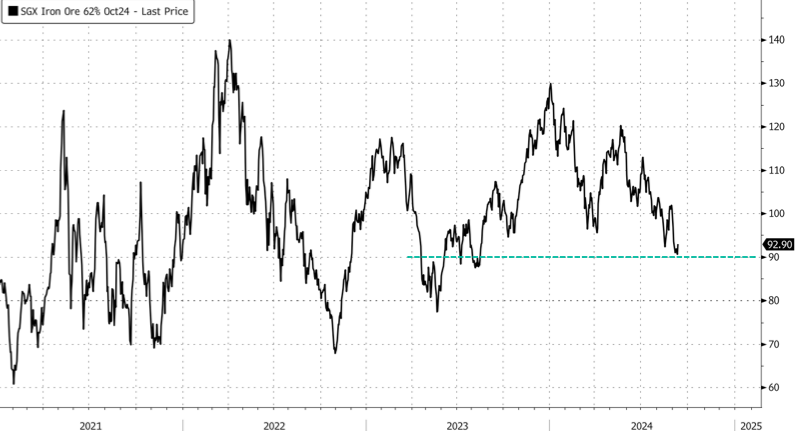
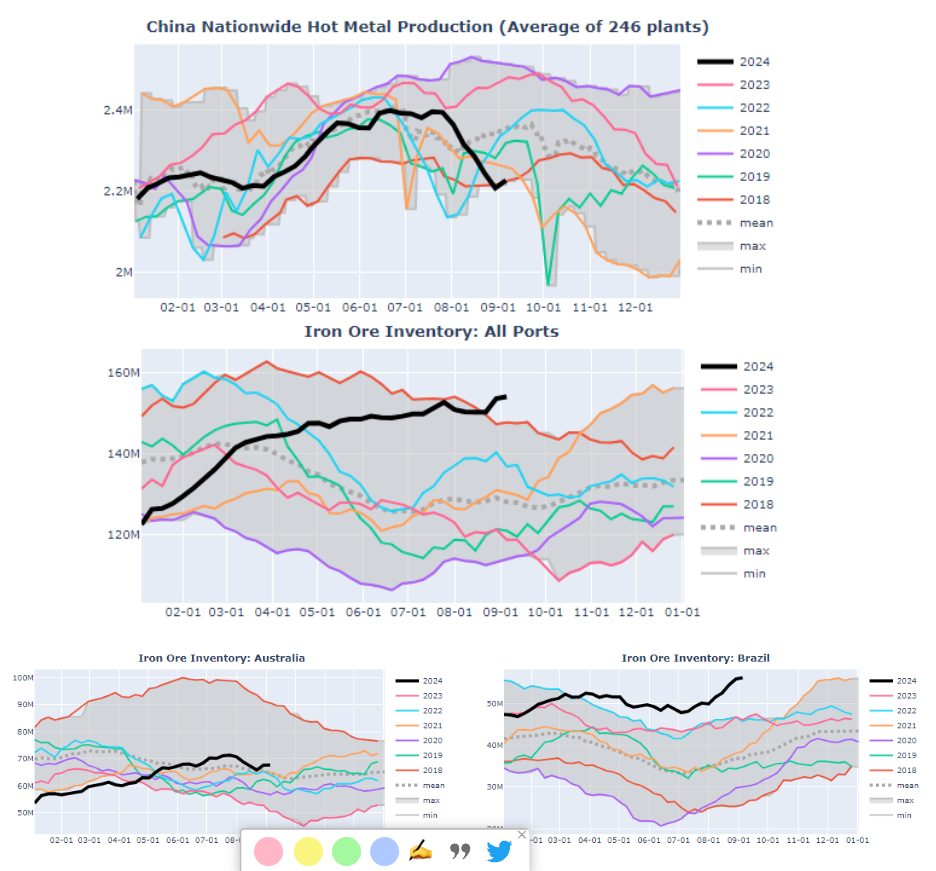
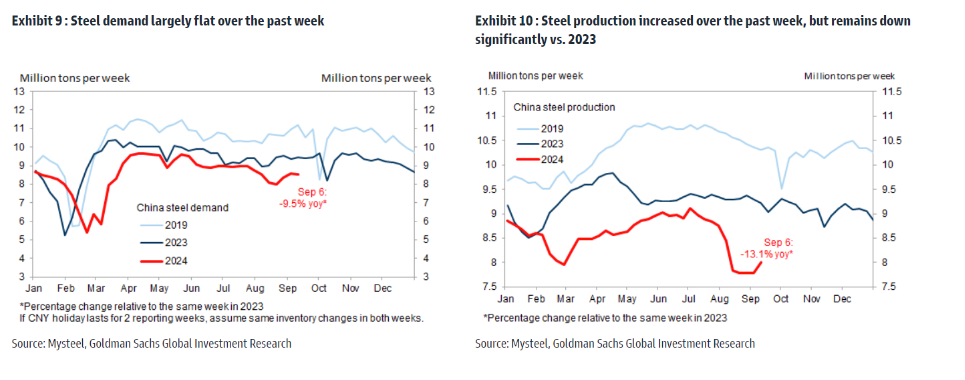
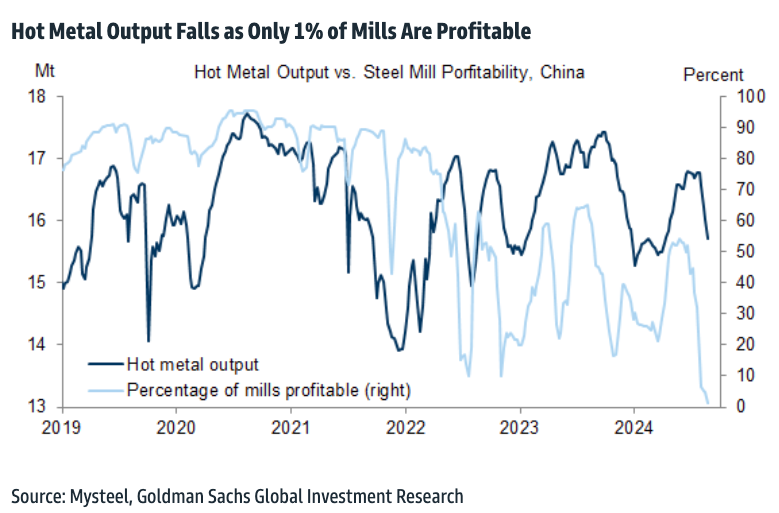

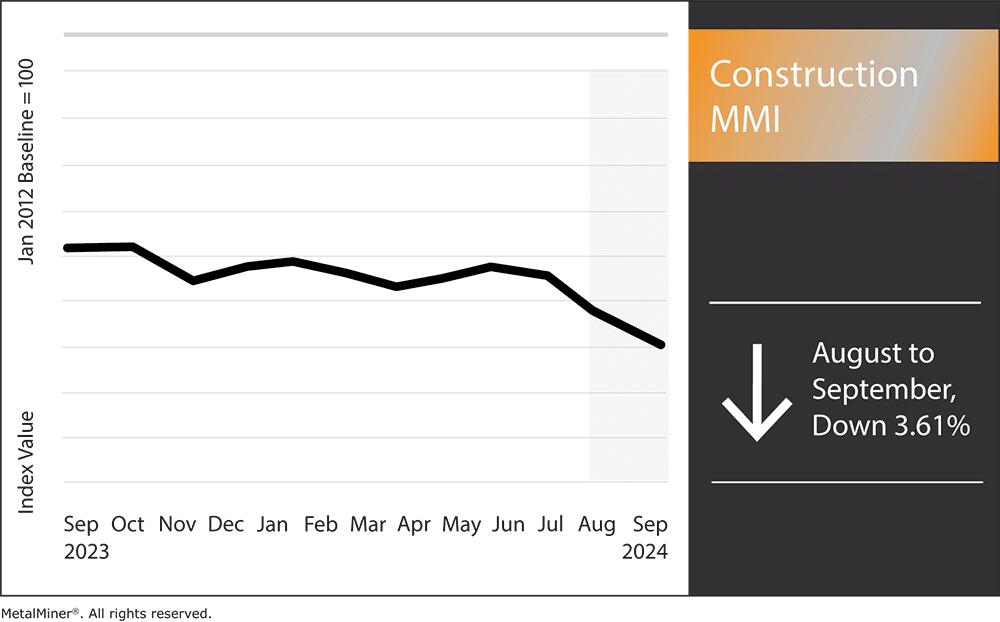


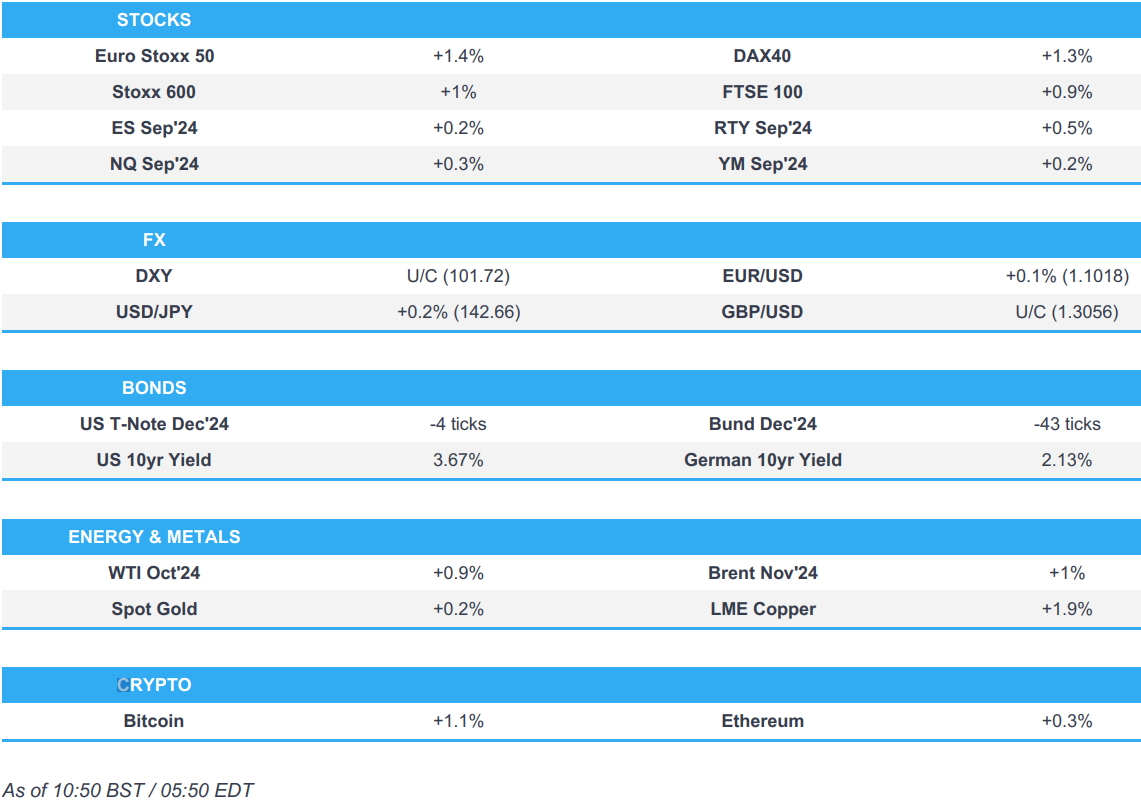
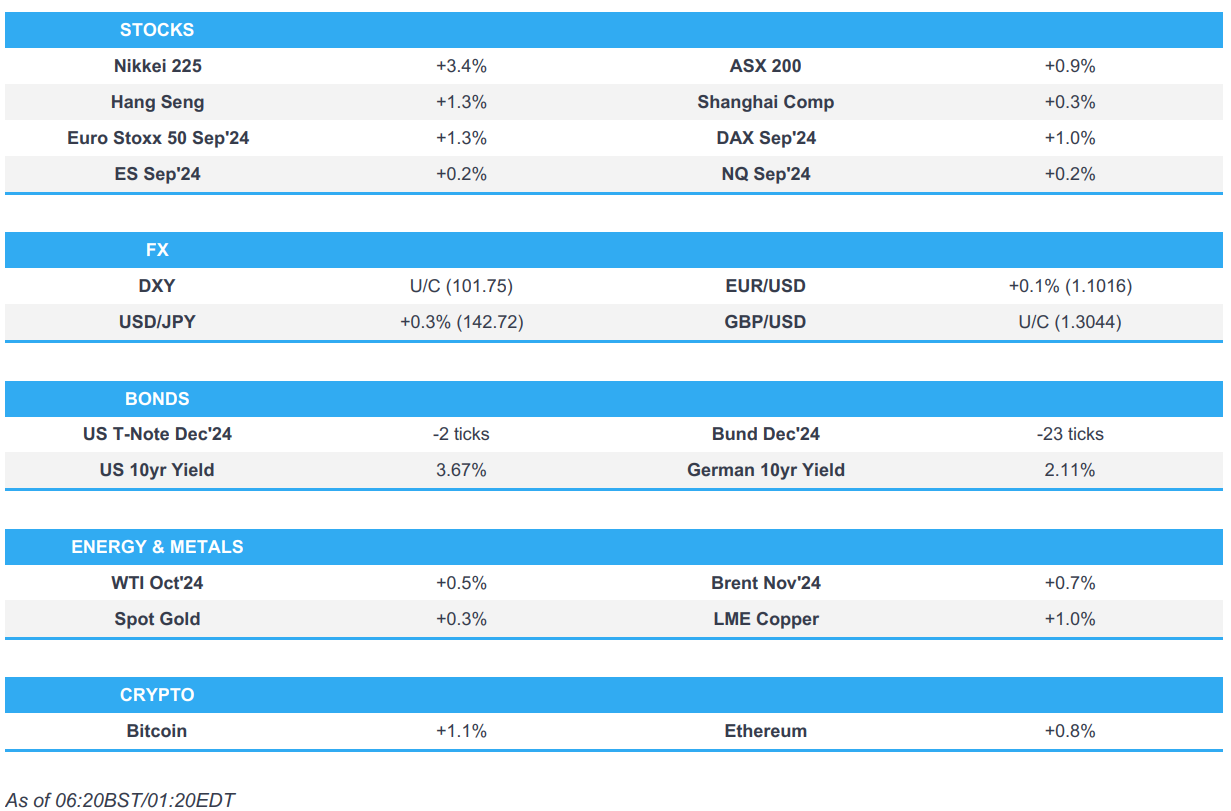




















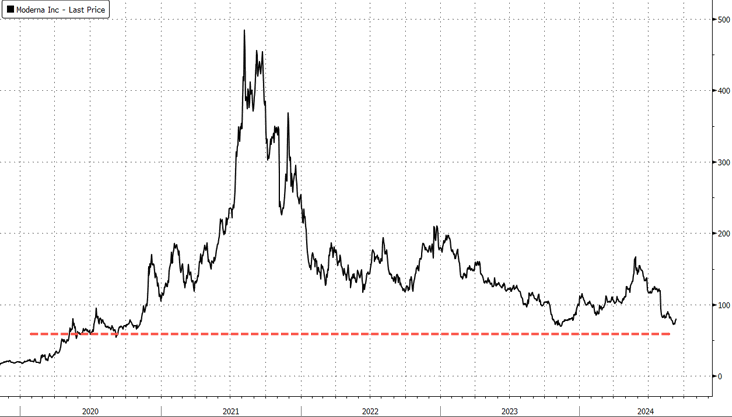
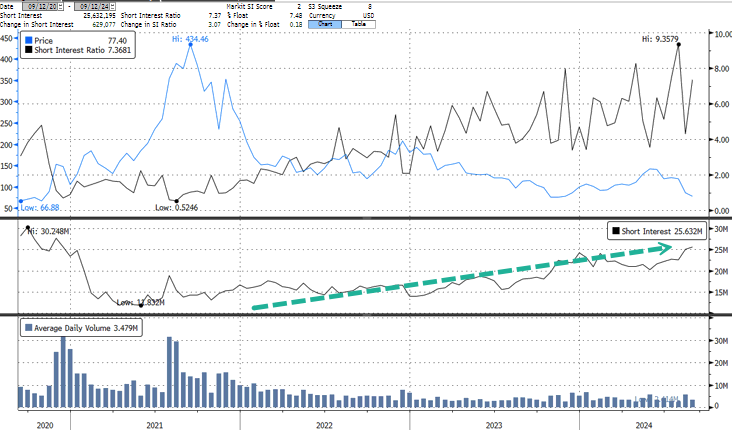


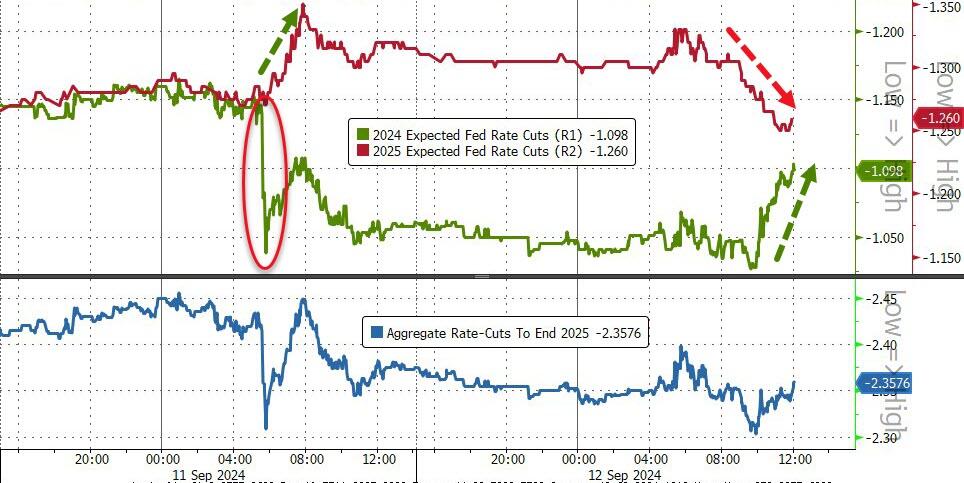
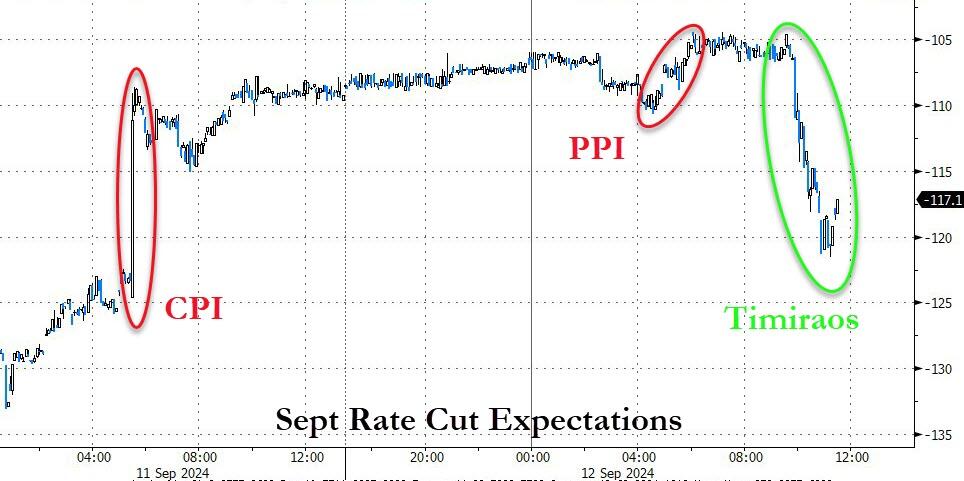
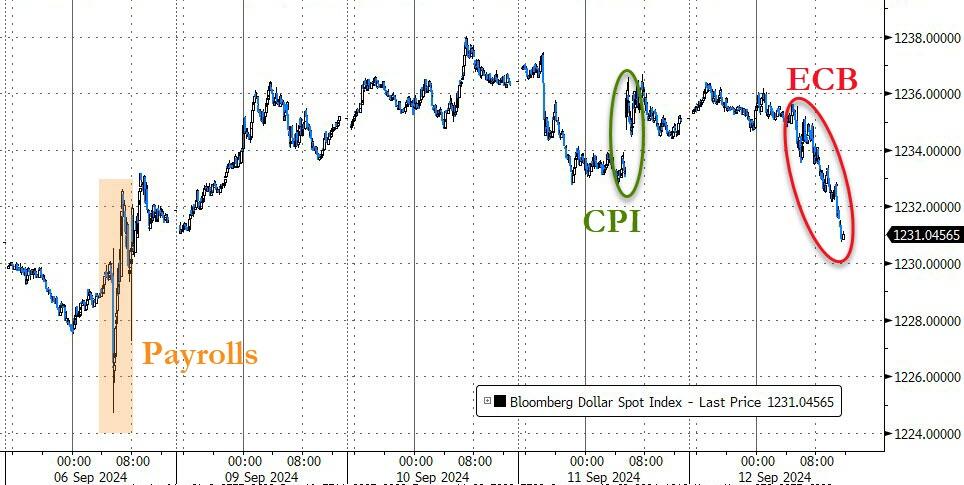
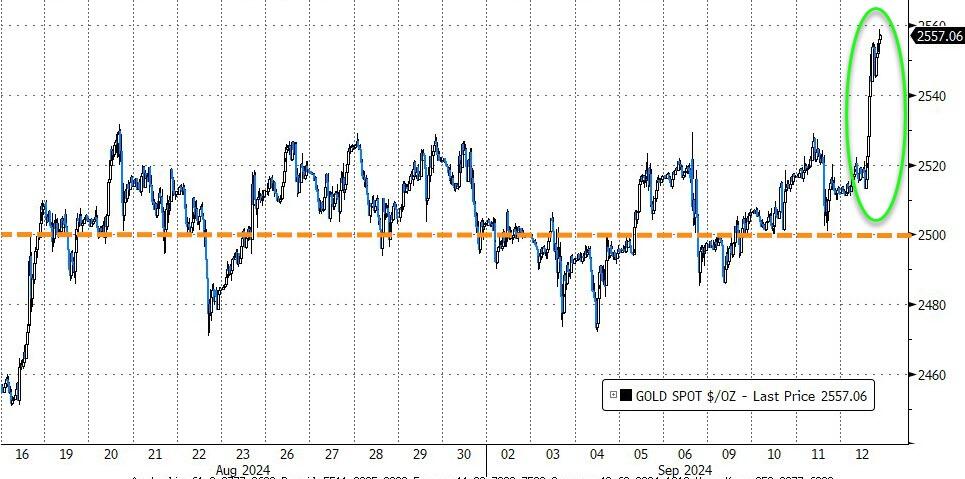
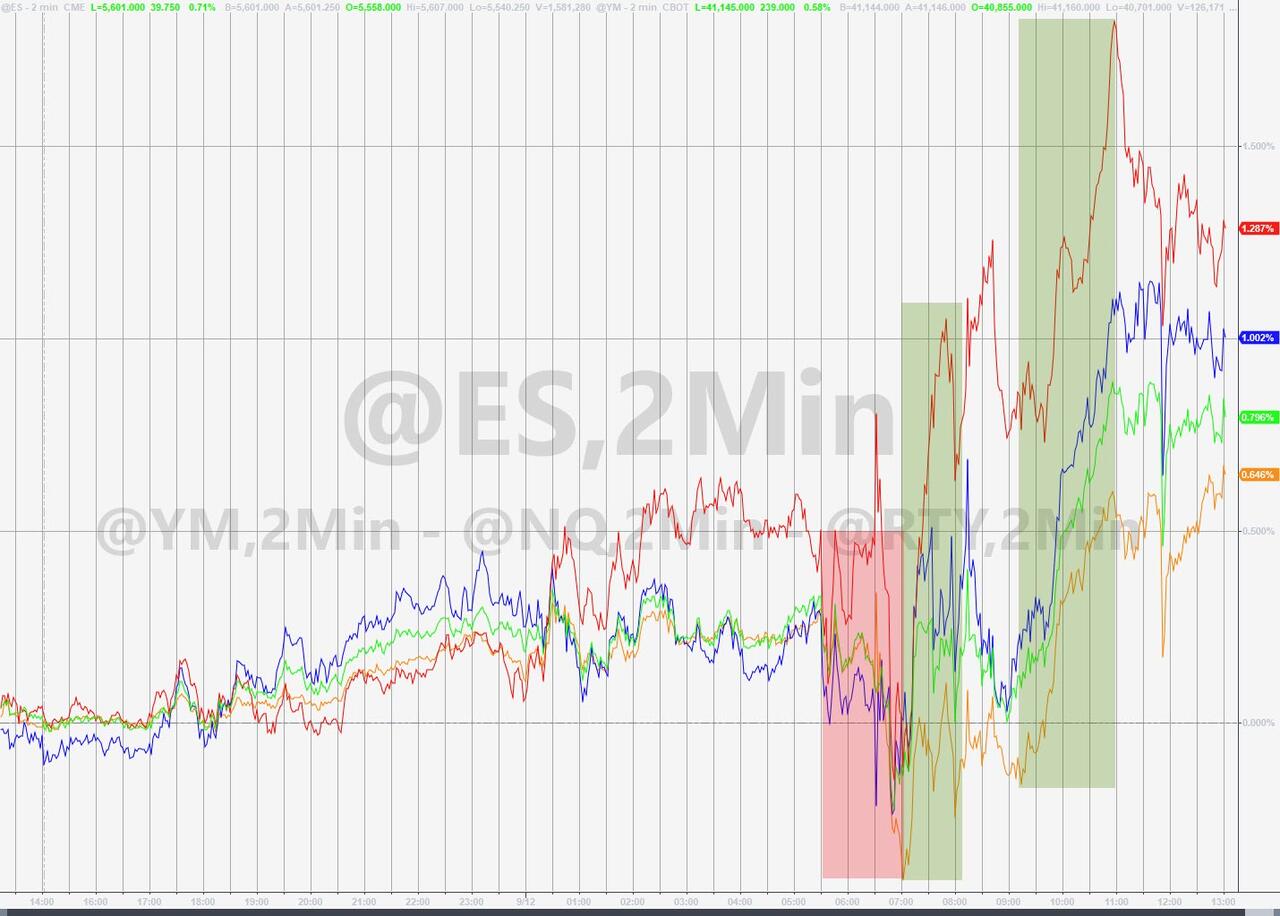
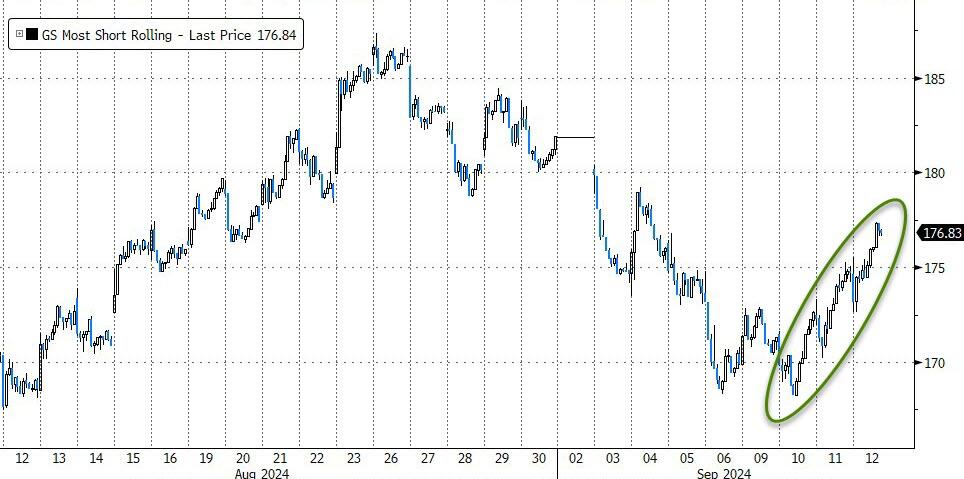
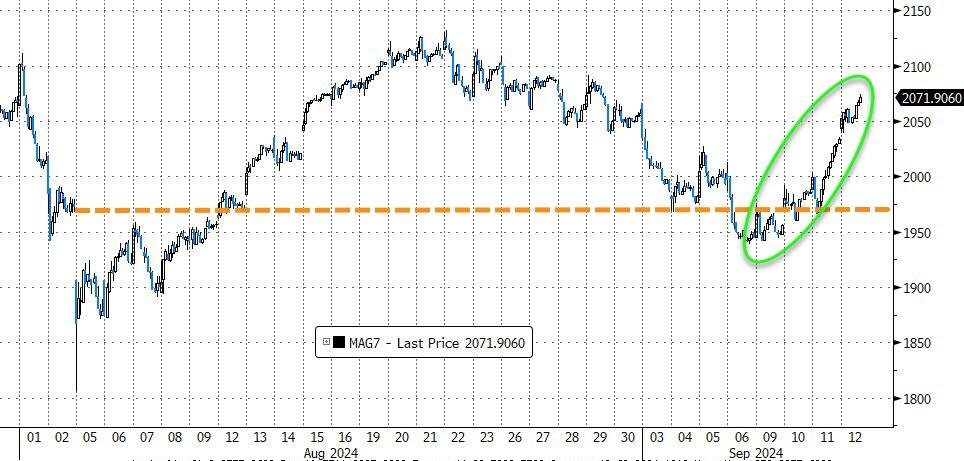
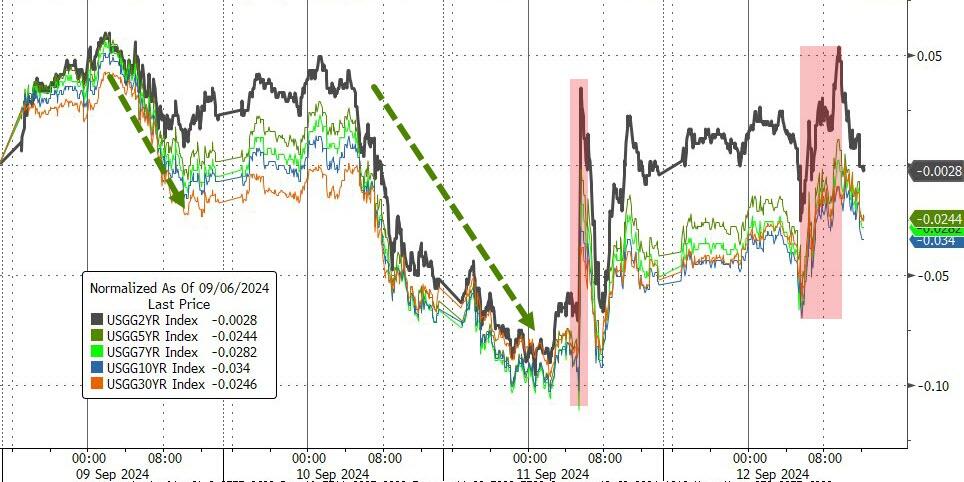
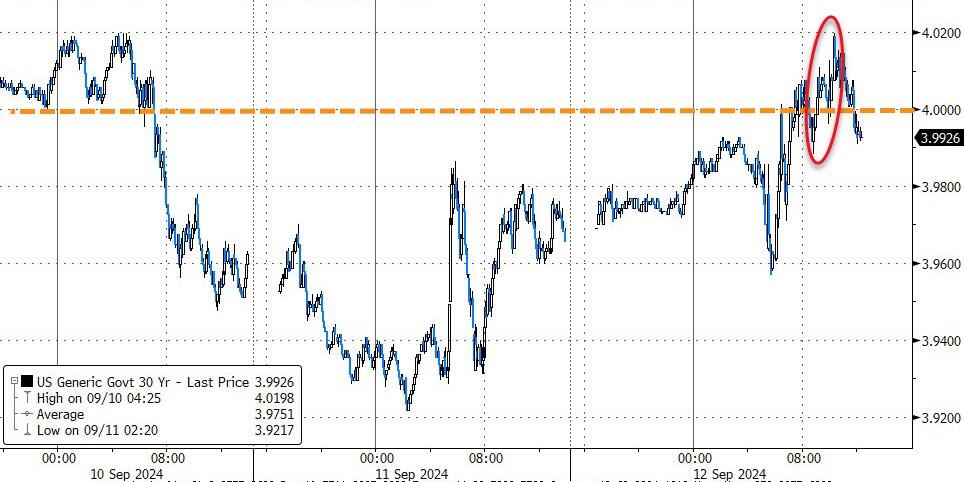
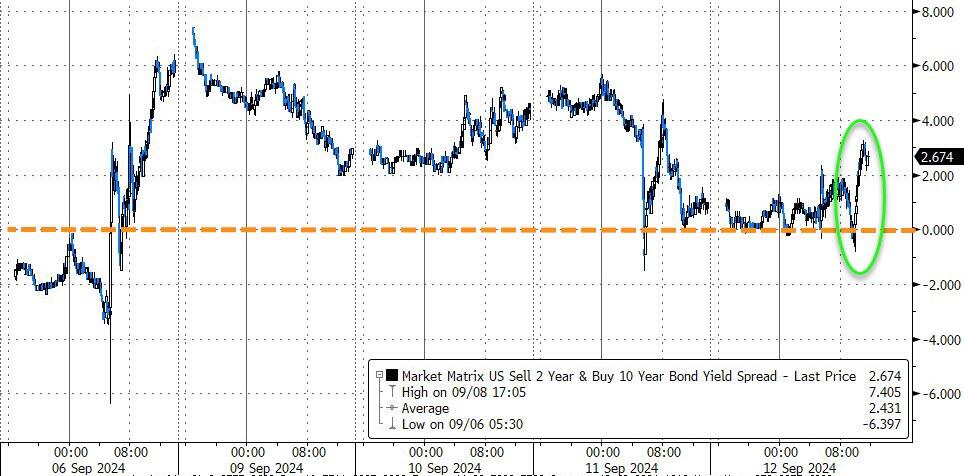
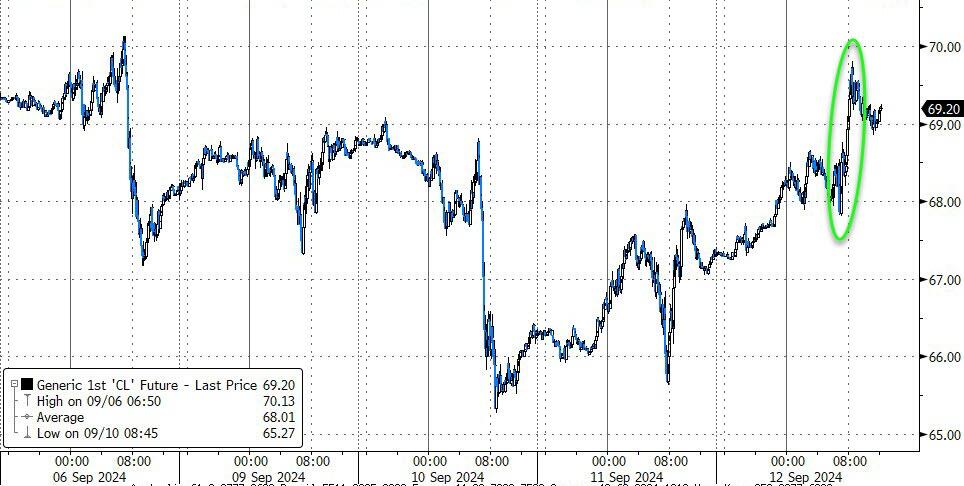
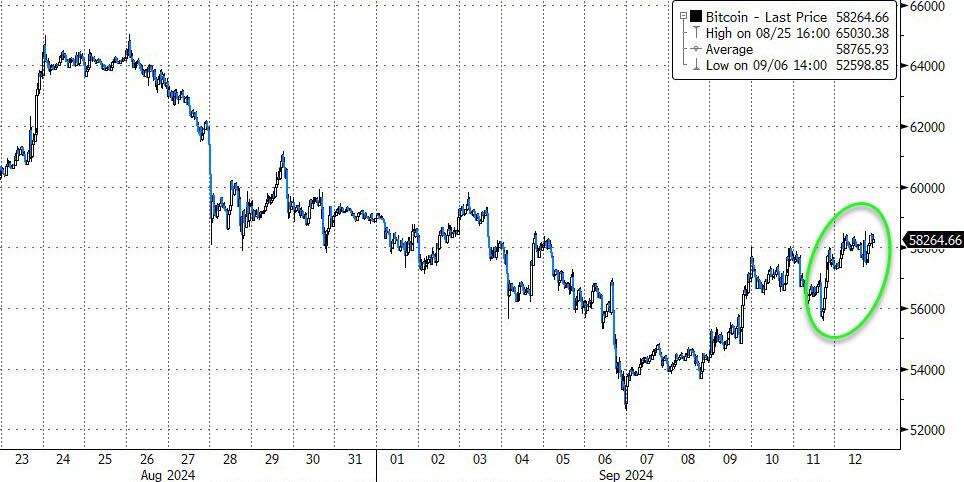
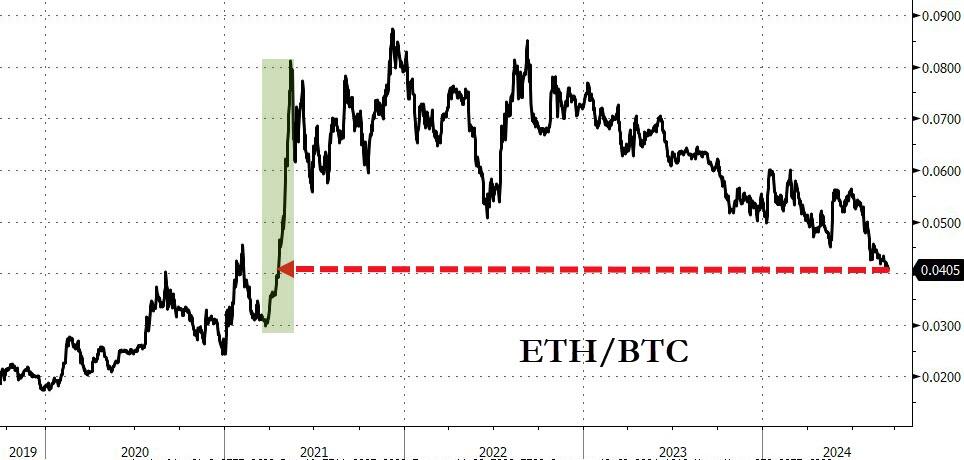
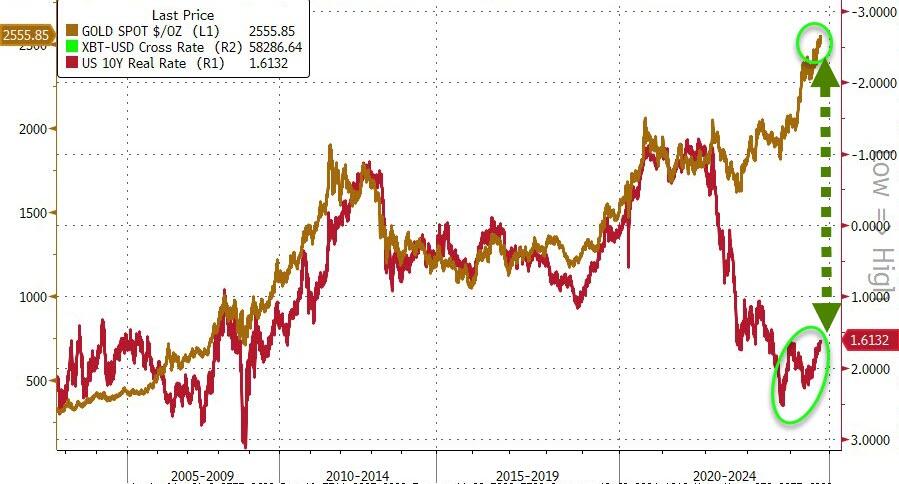
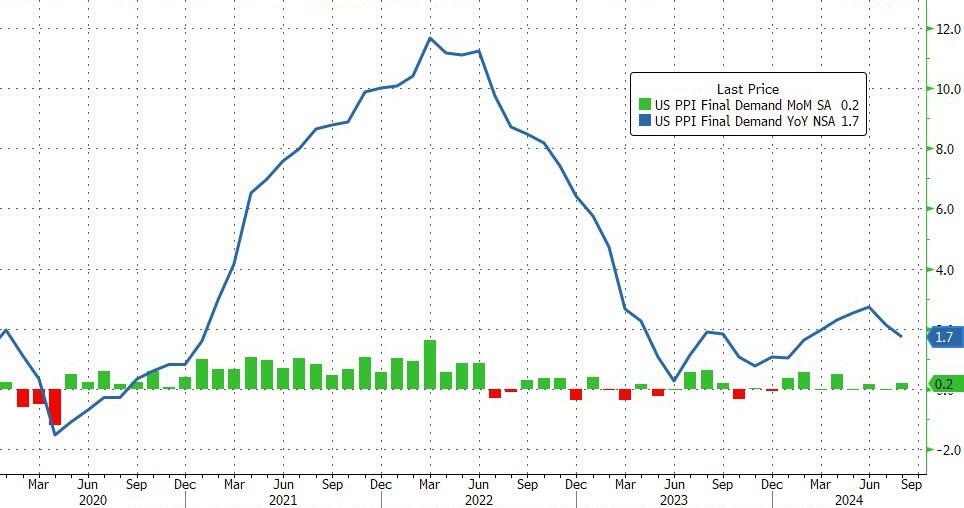
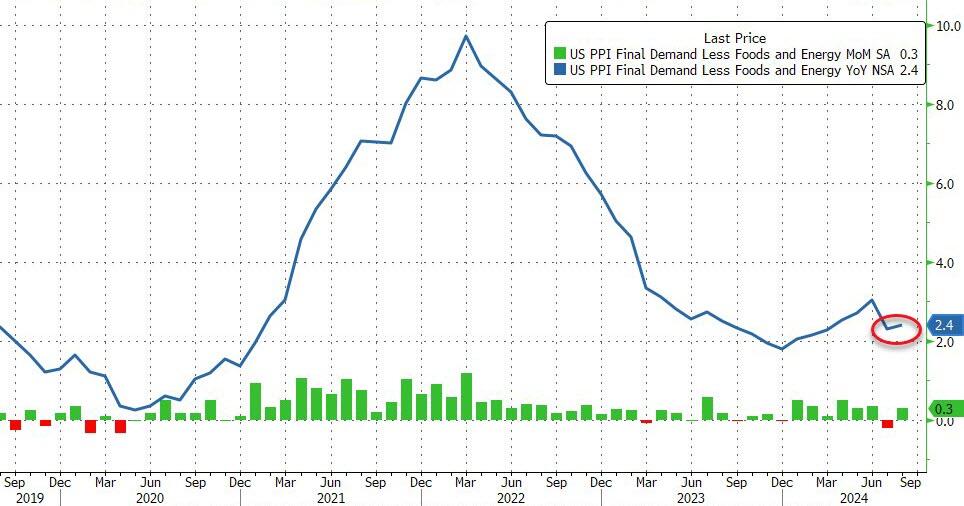
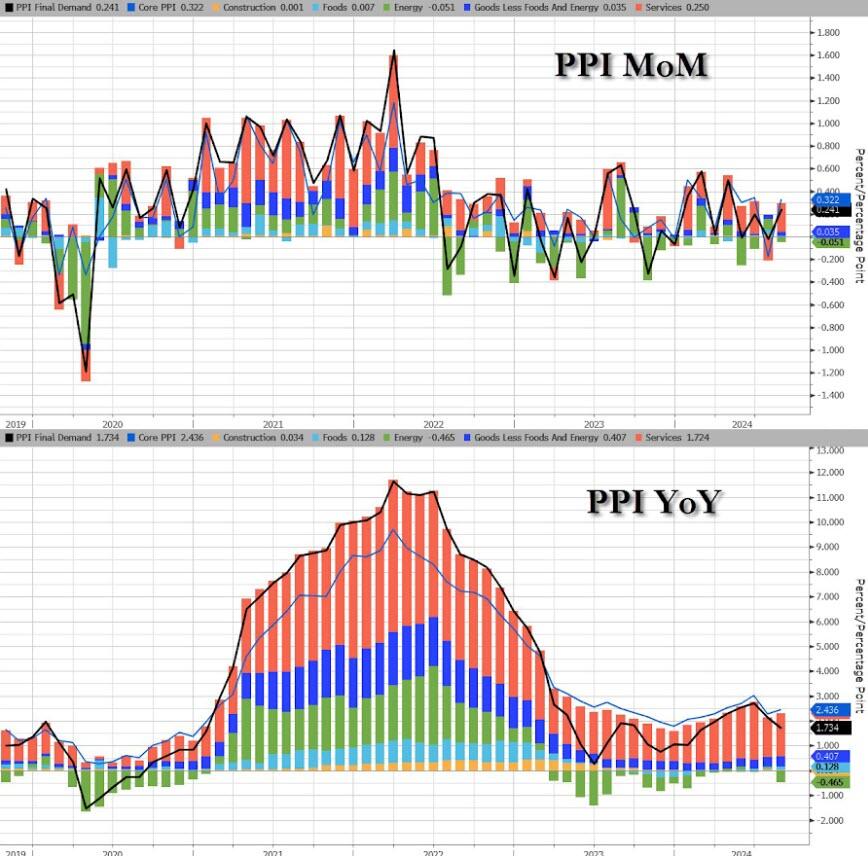
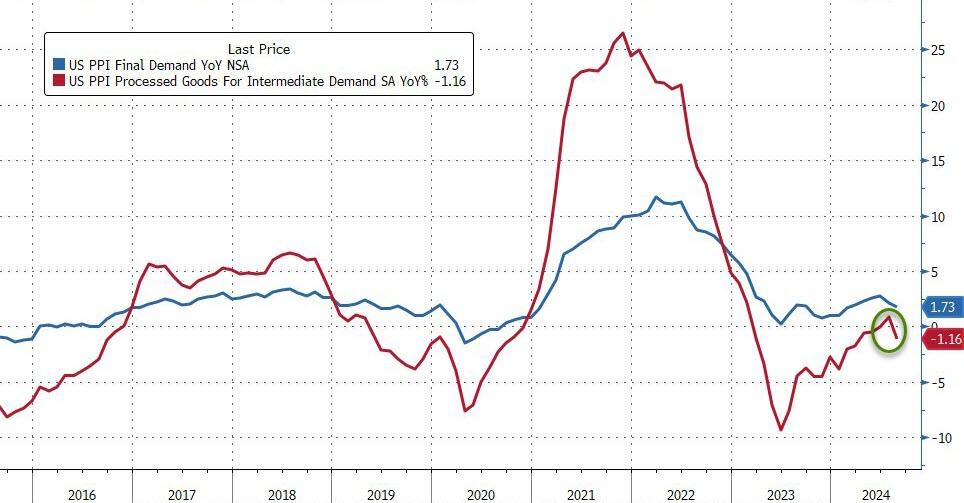
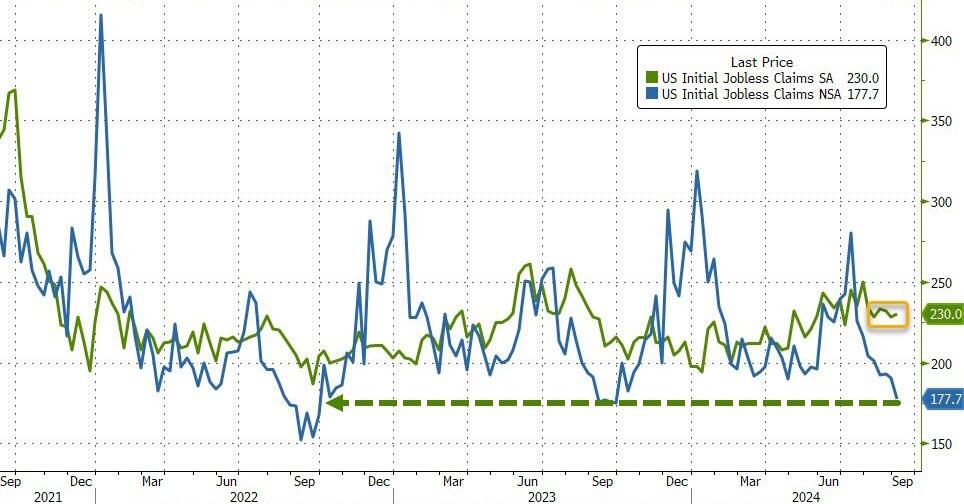
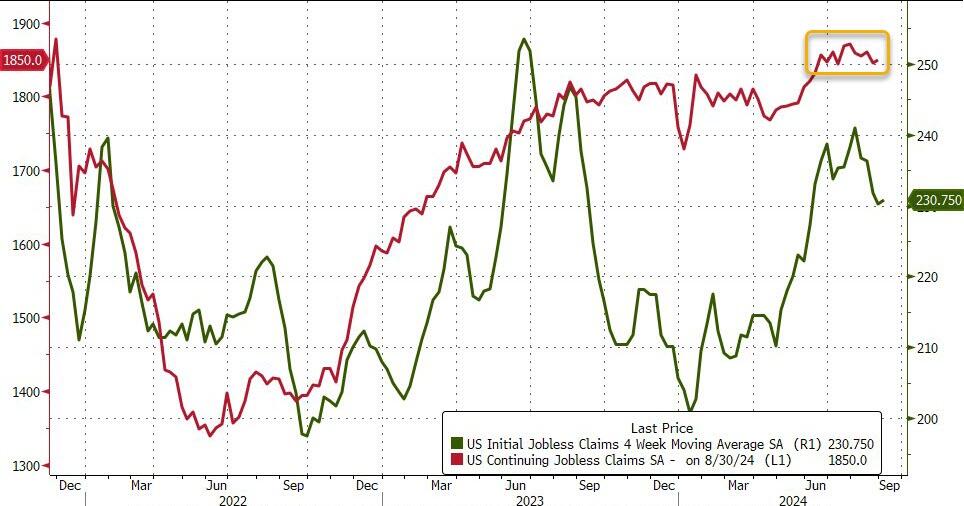
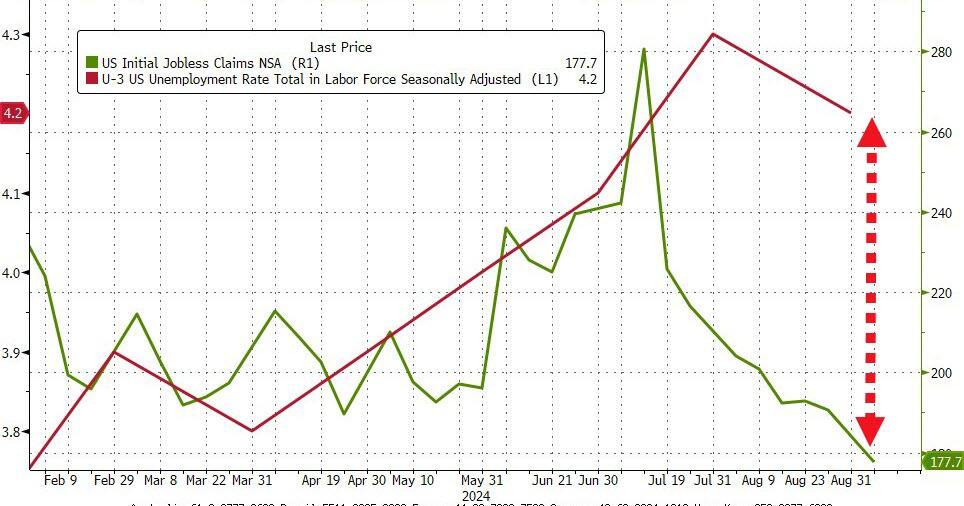






 harveyorganblog.com


