WE HAVE NOW ENTERED OPTIONS EXPIRY MONTH WITH THE OTC/LONDON OPTIONS EXPIRY ON MONDAY.
132 C SG AMERICAS 21
624 H BOFA SECURITIES 25
686 C STONEX FINANCIAL INC 1
737 C ADVANTAGE FUTURES 1
905 C ADM 2
GOLD: NUMBER OF NOTICES FILED FOR JUNE/2024: 25 CONTRACTs NOTICES FOR 2500 OZ or 0.0777 TONNES
total notices so far: 29,851 contracts for 2,985,100 OR 92.849 tonnes)
SILVER NOTICES: 16 NOTICE(S) FILED FOR 80,000 OZ/
total number of notices filed so far this month : 3387 CONTRACTS (NOTICES) for 16.935 million oz
JULY: 351. 65 TONNES (3RD HIGHEST EVER RECORDED EXCHANGE FOR PHYSICAL AND THE HIGHEST EVER RECORDED POST BASEL III)
AUGUST: 274.79 TONNES//THIS MONTH WILL NO DOUBT BE A STRONG ISSUANCE OF EFP’S BUT MUCH LESS THAN LAST MONTH.
SEPT: 335 .104 TONNES//IF THIS CONTINUES WE WILL HAVE A HUMDINGER OF AN EFP ISSUANCE. WE WILL PROBABLY END JUST SHORT OF THE 3RD HIGHEST ISSUANCE EVER RECORDED.
OCT. 277.71 TONNES (THIS WILL BE A GOOD ISSUANCE THIS MONTH)
NOV: 393.875 TONNES ( A HUGE MONTH////NOW SURPASSED THE PREVIOUS 3RD AND 2ND HIGHEST EVER RECORDED EX FOR PHYSICAL ISSUANCE TO BECOME THE 2ND HIGHEST EVER RECORDED
DEC 360.03 TONNES THIRD HIGHEST EVER RECORDED FOR EFP ISSUANCE
TOTAL 2024 YEAR. 3,597.846 TONNES
AN. 2025: 257.919 TONNES (ISSUANCE WILL BE PRETTY GOOD THIS MONTH BUT MUCH LOWER THAN LAST MONTH)
FEB: 207.21 TONNES//EX FOR PHYSICAL ISSUANCE (WILL BE A FAIR SIZED ISSUANCE THIS MONTH)
MARCH 130.84 TONNES//QUITE SMALL THIS MONTH.
APRIL; 208.57 TONNES. STILL A SMALL TO FAIR ISSUANCE FOR THE MONTH.
MAY: 113.499 TONNES OF GOLD EFP ISSUANCE//QUITE SMALL THIS MONTH
JUNE: 92.69 TONNES OF GOLD EFP ISSUANCE/EXTREMELY SMALL
SPREADING OPERATIONS
NOW SWITCHING TO GOLD FOR NEWCOMERS, HERE ARE THE DETAILS
SPREADING LIQUIDATION HAS NOW COMMENCED AS WE HEAD TOWARDS THE NEW ACTIVE FRONT MONTH OF APRIL. WE ARE NOW INTO THE SPREADING OPERATION OF GOLD
HERE IS A BRIEF SYNOPSIS OF HOW THE CROOKS FLEECE UNSUSPECTING LONGS IN THE SPREADING ENDEAVOUR ;MODUS OPERANDI OF THE CORRUPT BANKERS AS TO HOW THEY HANDLE THEIR SPREAD OPEN INTERESTS:HERE IS HOW THE CROOKS USED SPREADING AS WE ARE NOW INTO THE NON ACTIVE DELIVERY MONTH OF NOV HEADING TOWARDS THE ACTIVE DELIVERY MONTH OF FEB., FOR GOLD: AND MARCH FOR SILVER
YOU WILL ALSO NOTICE THAT THE COMEX OPEN INTEREST STARTS TO RISE BUT SO IS THE OPEN INTEREST OF SPREADERS. THE OPEN INTEREST IN WILL CONTINUE TO RISE UNTIL ONE WEEK BEFORE FIRST DAY NOTICE OF AN UPCOMING ACTIVE DELIVERY MONTH (OCT), AND THAT IS WHEN THE CROOKS SELL THEIR SPREAD POSITIONS BUT NOT AT THE SAME TIME OF THE DAY. THEY WILL USE THE SELL SIDE OF THE EQUATION TO CREATE THE CASCADE (ALONG WITH THEIR COLLUSIVE FRIENDS) AND THEN COVER ON THE BUY SIDE OF THE SPREAD SITUATION AT THE END OF THE DAY. THEY DO THIS TO AVOID POSITION LIMIT DETECTION. THE LIQUIDATION OF THE SPREADING FORMATION CONTINUES FOR EXACTLY ONE WEEK AND ENDS ON FIRST DAY NOTICE.”
WHAT IS ALARMING TO ME, ACCORDING TO OUR LONDON EXPERT ANDREW MAGUIRE IS THAT THESE EFP’S ARE BEING TRANSFERRED TO WHAT ARE CALLED SERIAL FORWARD CONTRACT OBLIGATIONS AND THESE CONTRACTS ARE LESS THAN 14 DAYS. ANYTHING GREATER THAN 14 DAYS, THESE MUST BE RECORDED AND SENT TO THE COMPTROLLER, GREAT BRITAIN TO MONITOR RISK TO THE BANKING SYSTEM. IF THIS IS INDEED TRUE, THEN THIS IS A MASSIVE CONSPIRACY TO DEFRAUD AS WE NOW WITNESS A MONSTROUS TOTAL EFP’S ISSUANCE AS IT HEADS INTO THE STRATOSPHERE.
The crooks also use the spread in the TAS account (trade at settlement). They buy the spot TAS (e.g. June) and sell the future TAS two months out (e.g. August). Then they unload the front month (i.e. unload the buy side first so the price of gold/silver falls. This occurs in the middle of the front delivery month cycle. They unload the sell side of the equation, two months down the road. The crooks violate position limits as the OCC refuse to hear our complaints.
First, here is an outline of what will be discussed tonight:
1.TODAY WE HAD THE OPEN INTEREST AT THE COMEX IN SILVER ROSE BY A FAIR SIZED 310 CONTRACTS OI TO 168,815 AND CLOSER TO TO THE COMEX HIGH RECORD //244,710( SET FEB 25/2020). THE LAST RECORDS WERE SET IN AUG.2018 AT 244,196 WITH A SILVER PRICE OF $14.78/(AUGUST 22/2018)..THE PREVIOUS RECORD TO THAT WAS SET ON APRIL 9/2018 AT 243,411 OPEN INTEREST CONTRACTS WITH THE SILVER PRICE AT THAT DAY: $16.53). AND PREVIOUS TO THAT, THE RECORD WAS ESTABLISHED AT: 234,787 CONTRACTS, SET ON APRIL 21.2017 OVER 7 YEARS AGO. HOWEVER WE HAVE NOW SET A NEW RECORD LOW OF 114,102 CONTRACTS JULY 3.2023
EFP ISSUANCE 740 CONTRACTS
OUR CUSTOMARY MIGRATION OF COMEX LONGS CONTINUE TO MORPH INTO LONDON FORWARDS AS OUR BANKERS USED THEIR EMERGENCY PROCEDURE TO ISSUE:
JULY 740 CONTRACTS and 0 ALL OTHER MONTHS: ZERO. TOTAL EFP ISSUANCE: 740 CONTRACTS. EFP’S GIVE OUR COMEX LONGS A FIAT BONUS PLUS A DELIVERABLE PRODUCT OVER IN LONDON. IF WE TAKE THE COMEX OI GAIN OF 310 CONTRACTS AND ADD TO THE 740 E.FP. ISSUED
WE OBTAIN A HUGE SIZED GAIN OF 1047 OF OPEN INTEREST CONTRACTS FROM OUR TWO EXCHANGES WITH OUR GAIN IN PRICE OF $0.48 THE RATS ARE FLEEING THE ARENA.
THUS IN OUNCES, THE GAIN ON THE TWO EXCHANGES TOTALS 5.235 MILLION PAPER OZ
OCCURRED DESPITE OUR $0.48 GAIN IN PRICE.
OUTLINE FOR TODAY’S COMMENTARY
1a/COMEX GOLD AND SILVER REPORT
(report Harvey)
1a/COMEX GOLD AND SILVER REPORT
(report Harvey)
b, ) Gold/silver trading overnight Europe,//GOLD COMMENT
Peter Schiff)
c) Commentaries from: Egon von Greyerz///Matthew Piepenburg via GoldSwitzerland.com, Pam and Russ Martens
ii a) Chris Powell of GATA provides to us very important physical commentaries
b. Other gold/silver commentaries
c. Commodity commentaries//
d)/CRYPTOCURRENCIES/BITCOIN ETC
2.ASIAN AFFAIRS
XXXXX
ASIAN MARKETS THIS FRIDAY MORNING:
SHANGHAI CLOSED DOWN 7.52 PTS OR 0.22%
//Hang Seng CLOSED DOWN 149.27 PTS OR 0.61%
// Nikkei CLOSED UP 642.27 PTS OR 0.61% //Australia’s all ordinaries CLOSED UP 0.07%
//Chinese yuan (ONSHORE) CLOSED UP AT 7.1700 OFFSHORE CLOSED UP AT 7.1679/ Oil DOWN TO 64.98 dollars per barrel for WTI and BRENT DOWN TO 67.80 Stocks in Europe OPENED ALL GREEN
ONSHORE USA/ YUAN TRADING BELOW LEVEL OF OFFSHORE YUAN TRADING :/ONSHORE YUAN UP TRADING AT 7.1700 AND STRONGER//OFF SHORE YUAN TRADING UP TO 7.1679 AGAINST US DOLLAR/ AND THUS STRONGER
XXXXXXXXXXXXXXXXXXXXXXXXXXXX
END
A)NORTH KOREA/SOUTH KOREA
outline
b) REPORT ON JAPAN/
OUTLINE
3 CHINA
OUTLINE
4/EUROPEAN AFFAIRS
OUTLINE
5. RUSSIAN AND MIDDLE EASTERN AFFAIRS
OUTLINE
6.Global Issues//COVID ISSUES/VACCINE ISSUES
OUTLINE
7. OIL ISSUES
OUTLINE
8 EMERGING MARKET ISSUES
9. USA
XXXXXXXXXXXXXXXXXXXXXXXXXXXXXXXXXXXXXXXXXXXXXXXXXXXXXXXXXXXXXXXXXXXXXXXXXXXXXXXXXXXXXXXXXXXXXXXXXXXXXXXXXX
1. COMEX DATA//AMOUNTS STANDING//VOLUME OF TRADING/INVENTORY MOVEMENTS
GOLD
LET US BEGIN:
THE TOTAL COMEX GOLD OPEN INTEREST GAINED BY A SMALL SIZED 310 CONTRACTS TO A STILL LOW NUMBER OF 434,448 OI WITH OUR SMALL GAIN IN PRICE OF $4.90 WITH RESPECT TO THURSDAY’S // TRADING. WE GAINED SOME NUMBER OF NET LONGS WITH THAT PRICE GAIN FOR GOLD. AND AS YOU WILL SEE BELOW, OUR GAIN IN PRICE ALSO HAD A FAIR NUMBER OF EXCHANGE FOR PHYSICAL ISSUED (1310 ). WE HAD LITTLE T.A.S. LIQUIDATION ALONG AND LITTLE MONTH END CALENDAR SPREADER LIQUIDATION YESTERDAY. THEY WERE SAVING IT UP FOR TODAY!!
THE CME ANNOUNCED THURSDAY NIGHT, A ZERO EXCHANGE FOR RISK CONTRACT ISSUANCE FOR 0 OZ OR NIL TONNES. TOTAL ISSUANCE FOR MAY WAS RECORDED AT 9.591 TONNES OF GOLD AND THIS TOTAL WAS ADDED TO OUR NORMAL DELIVERIES. THE BANK OF ENGLAND MUST BE GETTING QUITE ANTSY OF GETTING ITS GOLD BACK.
IN THE MONTH OF APRIL WE HAD RECORDED A NEW RECORD 7 ISSUANCES OF EXCHANGE FOR RISK AS THE BANK OF ENGLAND IS GETTING VERY ANTSY ABOUT GETTING ITS GOLD BACK. THUS OUR TOTAL EXCHANGE FOR RISK FOR THE MONTH OF APRIL STOOD AT 8.3571 TONNES OF GOLD WHICH WERE ADDED TO OUR NORMAL APRIL GOLD DELVERIES.
HISTORY: LAST FIVE MONTH’S EXCHANGE FOR RISK
IN MARCH:
THE TOTAL NO. OF EXCHANGE FOR RISK ISSUANCE FOR THE MONTH OF MARCH (3 NOTICES) EQUALED: 7.6179 TONNES OF GOLD WHICH WAS ADDED TO OUR MARCH DELIVERY TOTALS.
IN FEBRUARY:
WE HAD A HUGE FIVE EXCHANGE FOR RISKS ISSUANCES FOR GOLD, TOTALLING 18.4527 TONNES!.
THE RECIPIENT OF ALL OF THESE EXCHANGE FOR RISK CONTRACTS IS THE BANK OF ENGLAND WHO DESPERATELY WANT THEIR LEASED GOLD BACK. THUS WE HAVE TWO SEPARATE ENTITIES (CENTRAL BANKS) DEMANDING THEIR GOLD BACK:
- THE BANK OF ENGLAND
- THE FEDERAL RESERVE BANK OF NEW YORK (NEED TO RETRIEVE THEIR LEASED GOLD FROM THE BIS)
THE COUNTERPARTY TO THE BANK OF ENGLAND’S EXCHANGE FOR RISK ARE BULLION BANKS THAT CANNOT VERIFY THAT THEIR GOLD IS UNENCUMBERED AND THUS THE BUYER, THE CENTRAL BANK OF ENGLAND, ASSUMES THE RISK OF THAT DELIVERY. THIS IS THE 5TH CONSECUTIVE MONTH FOR ISSUANCE OF EXCHANGE FOR RISK !!.(DEC THROUGH APRIL)
IN APRIL:
WE CONCLUDED APRIL WITH 7 ISSUANCE OF EXCHANGE FOR RISK FOR A TOTAL TONNAGE OF 8.3571 TONNES.
IN MAY:
MAY: 3 EX. FOR RISK ISSUED SO FAR FOR 3025 CONTRACTS OR 302,500 OZ OR 9.4054 TONNES. THIS WILL BE ADDED TO OUR NORMAL DELIVERY TO GIVE US TOTAL STANDING FOR MAY!THIS IS THE 6TH CONSECUTIVE MONTH FOR ISSUANCE OF EXCHANGE FOR RISK//NEW TOTAL EX FOR RISK IS 9.591 TONNES FOR THE 3 ISSUANCE!
IN JUNE
JUNE: ZERO ISSUED SO FAR!!
DETAILS ON JUNE COMEX MONTH//INITIAL
IN TOTAL WE HAD A FAIR SIZED GAIN ON OUR TWO EXCHANGES OF 1620 CONTRACTS WITH OUR GAIN IN PRICE. HOWEVER, OUR FRIENDLY PHYSICAL LONDON BOYS HAD ANOTHER FIELD DAY AGAIN ON TUESSDAY NIGHT AS THEY WERE READY FOR THE FRBNY.S CONTINUED ORCHESTRATED ATTEMPTED AND FAILED RAID VERY EARLY IN THE COMEX SESSION AS THEY TRIED TO ABSORB EVERYTHING IN SIGHT FROM THE DAILY ATTACKS WITH THE CONTINUAL LIQUIDATION OF T.A.S. CONTRACTS. LONDONERS EXERCISED THEIR BOUGHT CONTRACTS FOR PHYSICAL GOLD VIA THE EXCHANGE FOR PHYSICAL ROUTE AND THANKED THE FRBNY FOR THE THOUGHTFULNESS. LONDON ANNOUNCED LATE (JAN 30) THAT THEY WERE OUT OF GOLD. WRONGLY IT WAS ATTRIBUTED TO THEIR SHIPPING PHYSICAL GOLD TO COMEX FOR STORAGE DUE TO TRUMP’S INITIATION OF TARIFFS. THE TRUTH OF THE MATTER IS THAT THIS GOLD LEFT LONDON TO CENTRAL BANKS, AND COMEX BANKS HAVE BEEN PAPERING THEIR LOSSES (DERIVATIVE) WITH KILOBAR ENTRIES. DELIVERY OF GOLD CONTRACTS ARE NOW TAKING SEVERAL WEEKS. NO DEFAULT HAS BEEN INITIATED AS DEALERS ARE AFRAID OF LOSS OF THEIR JOBS. SO THIS FRAUD CONTINUES. THE LEASE RATES IN LONDON HAVE NOW REVERTED BACK TO 1% BUT GOLD IN LONDON IS STILL EXTREMELY SCARCE. WE CAN NOW SAFELY SAY THAT THERE IS A RUN ON A BANK AND THAT BANK IS THE BANK OF ENGLAND!!!
THE LIQUIDATION OF T.A.S. CONTRACTS THROUGHOUT LAST MONTH OF MAY, AND JUNE CONTINUES TO DISTORT OPEN INTEREST NUMBERS GREATLY ALTHOUGH THE T.A.S. ISSUANCES IN GOLD HAVE GENERALLY BEEN ON THE LOW SIDE COMPARED TO SILVER WHICH HAVE BEEN HUGE. TODAY’S NUMBER HOWEVER IS SMALL AS THE CME NOTIFIES US THAT THEY HAVE ISSUED 965 T.A.S.
THE T.A.S. LIQUIDATION OF THESE T.AS. CONTRACTS(ALONG WITH MONTH END SPREADERS) IS WHY WE ARE HAVING DISTORTED COMEX OPEN INTEREST GAINS AND LOSSES IN OI BUT THIS IS COUPLED WITH MEGA HUGE AMOUNTS OF GOLD STANDING FOR DELIVERY TO CONFUSE THE ISSUE!!!!! AND THIS WAS SURELY ON DISPLAY WITH FIRST DAY NOTICE TOTALS WITH GOLD TONNES STANDING FOR APRIL AT 209 + TONNES INCLUDING MANY MASSIVE QUEUE JUMPS AND THIS CONTINUED INTO MAY WITH FINAL STANDING AT 90.23 TONNES. HOWEVER JUNE WHICH IS NORMALLY A HUGE DELIVERY MONTH , INITIAL STANDING IS RECORDED AT 62.534 TONNES PLUS TODAY’S 0.1493 TONNES QUEUE JUMP = 93.085 TONNES. (IS THE COMEX RUNNING OUT OF GOLD?)//TOTAL NET QUEUE JUMPING FOR THE MONTH FOR THE MONTH: 31.027 TONNES
NEW TOTAL TONNES STANDING JUNE: 94.085 TONNES
THE FED IS THE OTHER MAJOR SHORT OF AROUND 32+ TONNES OF GOLD OWING TO THE B.I.S. THE FED NEEDS TO COVER AS THEY ARE VERY WORRIED ABOUT WHAT IS GOING TO HAPPEN TO GOLD PRICES NOW THAT THEY MUST BECOME COMPLIANT TO BASEL III RULES JULY 1/2023 AS OUTLINED IN ANDREW MAGUIRE’S LATEST LIVE FROM THE VAULT 225 EPISODE. AS HE TACKLES THIS IMPORTANT TOPIC. THE FOUR OR FIVE BANKS ARE ALSO WORRIED ABOUT THEIR HUGE PRECIOUS METAL DERIVATIVE EXPOSURE (NORTH OF ONE TRILLION DOLLARS) AND THIS IS PROBABLY THE MAJOR REASON FOR GOLD/SILVER’S RISE THESE PAST THREE MONTHS. THEY ARE TOTALLY TRAPPED., AND THEIR FAILURE TO STOP CENTRAL BANK PURCHASES OF PHYSICAL GOLD IS THE MAJOR ISSUE OF THE DAY!IT SURE LOOKS LIKE THE BIS HAS GIVEN THE FED ITS MARCHING ORDERS TO COVER ITS PHYSICAL GOLD SHORT. TRUMP WILL PROBABLY BE FURIOUS WITH THE FED IF IT FINDS OUT THAT THEY (FRBNY) HAS BEEN MANIPULATING THE GOLD MARKET FOR THE PAST TWO YEARS.
OUR PHYSICAL LONDONERS BOUGHT NEW MASSIVE QUANTITIES OF LONGS AT ANY PRICE AND THIS GOLD BOUGHT WILL BE TENDERED FOR PHYSICAL ON A T + ???? BASIS. BECAUSE GOLD IS BASEL III COMPLIANT, GOLD IS SUPPOSED BE DELIVERED IN A VERY TIMELY ONE DAY. CENTRAL BANKS AROUND THE WORLD, BEING REPRESENTED BY OUR LONDONERS, ARE THE REAL PURCHASERS OF THIS GOLD.
EUROPE IS NOW BASEL III COMPLIANT. THE WEST (FED AND COMEX) MUST BE COMPLIANT BY JULY 1//2025.
THE PROBLEM FOR THOSE PROVIDING THE SHORT PAPER IS THE SHOCK TO THEM ON RECEIVING NOTICE THAT THE LONGS WANT THE PHYSICAL GOLD AS THEY TENDER FOR THAT SHINY YELLOW METAL. THE HIGH LIQUIDATION OF OUR TWO SPREADERS: 1) THE MONTH END SPREADERS AND 2. T.A.S DURING THESE PAST SEVERAL WEEKS IS SURELY DISTORTING COMEX OPEN INTEREST BUT THAT DOES NOT STOP LONDON’S ACCUMULATION OF PHYSICAL! YOU CAN ALSO VISUALIZE THAT PERFECTLY WITH THE HUGE AMOUNTS OF QUEUE JUMPING ORCHESTRATED BY CENTRAL BANKERS BOLTING AHEAD OF ORDINARY LONGS AS THEIR NEED FOR PHYSICAL IS GREAT AS THEY SCOUR THE PLANET LOOKING FOR GOLD, AND THE MASSIVE AMOUNT OF GOLD STANDING EACH AND EVERY MONTH INCLUDING FIRST DAY NOTICE OF GOLD TONNAGE STANDING.
EXCHANGE FOR PHYSICAL ISSUANCE
THE CME REPORTS THAT THE BANKERS ISSUED A FAIR SIZED TRANSFER THROUGH THE EFP ROUTE AS THESE LONGS RECEIVED A DELIVERABLE LONDON FORWARD TOGETHER WITH A FIAT BONUS.,
THAT IS A FAIR SIZED 1310 EFP CONTRACT WAS ISSUED: : /AUGUST 1310 & ZERO FOR ALL OTHER MONTHS:
TOTAL EFP ISSUANCE: 1310 CONTRACT. THESE EFP;S CIRCLE AROUND LONDON ON A 13 DAY BASIS AND ARE NOW USED BY GLOBAL CENTRAL BANKS TO EXERCISE FOR PHYSICAL GOLD WITH THE OBLIGATION TO DELIVER BEING FORCED ONTO COMEX BANKS. THE GOLD GENERALLY DELIVERED COMES FROM LONDON BUT THEY ARE OUT!! THUS COMEX BECOMES THE MAJOR SOURCE FOR OUR CENTRAL BANKERS. THE REGULATORY BODY THAT IS SUPPOSE TO CONTROL THESE EFP’S IS THE OCC HEADQUARTERED IN BOTH LONDON AND WASHINGTON.
WE HAD :
- ZERO LIQUIDATION OF OUR T.A.S. SPREADERS
- ZERO NET SPEC LIQUIDATION WITH OUR SMALL GAIN IN PRICE
T.A.S.SPREADER ISSUANCE
AS PER OUR NEWBIE TRADE AT SETTLEMENT (TAS) MANIPULATION OPERATION (WHICH CRAIG HEMKE HAS POINTED OUT HAPPENS USUALLY DURING MID MONTH IN THE DELIVERY CYCLE), BUT NOW ON A DAILY BASIS, THE CME REPORTS THAT THE TOTAL T.A.S. ISSUANCE FOR FRIDAY MORNING//THURSDAY NIGHT WAS A SMALL SIZED, 965 CONTRACTS.
THE RAIDS WHETHER ON OPTIONS EXPIRY MONTH OR OTHERWISE LIKE TODAY, ACCOMPLISHES TWO IMPORTANT ASPECTS FOR OUR CROOKS:
- STALLS THE ADVANCE IN PRICE
- LOWERS THEIR ADVANCING DERIVATIVE LOSSES.
MECHANICS OF T.A.S CONTRACTS/DECEMBER THROUGH MARCH, APRIL MAY AND JUNE
THROUGHOUT THE FEW YEARS, THE BANKERS CONTINUE TO SELL OFF THE LONG SIDE OF THE SPREAD (T.A.S.) WHICH OF COURSE CONTINUES TO MANIPULATE THE PRICE OF GOLD SOUTHBOUND. (THEY KEEP THE SHORT SIDE OF THE CALENDAR/T.A.S. SPREAD WHICH WILL BE LIQUIDATED IN DAYS HENCE.THIS WAS SURELY IN EVIDENCE IN TRADING THURSDAY WITH THE SMALL GAIN IN PRICE!
STANDING LAST 6 MONTHS OF 2025: STANDING FOR GOLD
YEAR 2025:
JAN 2025:
113.30 TONNES (WHICH INCLUDES 43.408 TONNES EX FOR RISK)
FEB: 2025:
256.607 TONNES (WHICH INCLUDES 18.4567 TONNES OF EX FOR RISK)
MARCH:
STANDING FOR GOLD : 60.33 TONNES + 7.6179 TONNES EX FOR RISK = 67.9479 TONNES WHICH IS EXTREMELY HIGH FOR A NON DELIVERY MONTH.
APRIL:
FINAL STANDING FOR GOLD: 201.573 TONNES + 8.3571 TONNES EX FOR RISK = 209.953 TONNES
MAY: FINAL STANDING 90.235 TONNES WHICH INCLUDES QUEUE JUMPING AND 9.591 TONNES EX FOR RISK.
JUNE: INITITAL STANDING 62.534 TONNES PLUS 0.1493TONNES OF QUEUE JUMP EQUALS 93.085 TONNES
THIS IS CENTRAL BANKS STANDING FOR PHYSICAL GOLD!!
XXXXXXXXXXXXXXXXXXXXXXXXXXXXXXXXXXXXXXXXXXXXXXXXXX
HERE ARE THE AMOUNTS THAT STOOD FOR DELIVERY IN THE PRECEDING 54 MONTHS OF 2021-2025:
DEC 2021: 112.217 TONNES
NOV. 8.074 TONNES
OCT. 57.707 TONNES
SEPT: 11.9160 TONNES
AUGUST: 80.489 TONNES
JULY 7.2814 TONNES
JUNE: 72.289 TONNES
MAY 5.77 TONNES
APRIL 95.331 TONNES
MARCH 30.205 TONNES
FEB ’21. 113.424 TONNES
JAN ’21: 6.500 TONNES.
TOTAL YEAR 2021 (JAN- DEC): 601.213 TONNES
YEAR 2022: STANDING FOR GOLD/COMEX
JANUARY 2022 17.79 TONNES
FEB 2022: 59.023 TONNES
MARCH: 36.678 TONNES
APRIL: 85.340 TONNES FINAL.
MAY: 20.11 TONNES FINAL
JUNE: 74.933 TONNES FINAL
JULY 29.987 TONNES FINAL
AUGUST:104.979 TONNES//FINAL
SEPT. 38.1158 TONNES
OCT: 77.390 TONNES/ FINAL
NOV 27.110 TONNES/FINAL
Dec. 64.000 tonnes
(TOTAL YEAR 656.076 TONNES)
2023:STANDING FOR GOLD/COMEX
JAN/2023: 20.559 tonnes
FEB 2023: 47.744 tonnes
MAR: 19.0637 TONNES
APRIL: 75.676 tonnes
MAY: 19.094 TONNES + 1.244 tonnes of exchange for risk = 20.338
JUNE: 64.354 TONNES
JULY: 10.2861 TONNES
AUGUST: 38.855 TONNES(INCLUDING .6842 EXCHANGE FOR RISK)
SEPT: 15.281 TONNES FINAL
OCT. 35.869 TONNES + 1.665 EXCHANGE FOR RISK =37.0355 tonnes
NOV: 18.7122 TONNES + 16.2505 EX. FOR RISK = 34.9627 TONNES
DEC. 47.073 + 4.634 TONNES OF EXCHANGE FOR RISK = 51.707 TONNES
TOTAL 2023 YEAR : 436.546 TONNES
2024/STANDING FOR GOLD/COMEX
JAN ’24. 22.706 TONNES
FEB. ’24: 66.276 TONNES (INCLUDES 1.723 TONNES EX. FOR RISK)
MARCH: 18.8398 TONNES + 1.1695 EX FOR RISK = 20.093 TONNES
APRIL: 2024: 53.673TONNES FINAL
MAY/ 2024 8.5536 TONNES + 3.3716 TONNES EX FOR RISK/= 11.9325
JUNE; 95.578 TONNES. + 1.045 TONNES EXCHANGE FOR RISK =96.623 THIS IS THE HIGHEST RECORDED GOLD STANDING SINCE AUGUST 2022
JULY: 11.692 TONNES
AUGUST 69.602 TONNES//FINAL STANDING
SEPT. 13.164 TONNES.
OCT 39.474 TONNES + + 20.917 TONNES EXCHANGE FOR RISK =60.391 TONNES
NOV . 11.265 TONNES +4.665 TONNES EXCHANGE FOR RISK/TUESDAY + 3.11 TONNES OF EX. FOR RISK/PRIOR = 19.0425 TONNES
DEC: 80.4230 TONNES PLUS DEC MONTH EXCHANGE FOR RISK TOTAL 14.6836 TONNES EQUALS 95.1066 TONNES
total year 2024: 540.30 tonnes
COMEX GOLD TRADING/JUNE CONTRACT MONTH
THE SPECS/HFT WERE UNSUCCESSFUL IN LOWERING GOLD’S PRICE( IT ROSE BY $4.90/ /) AND THEY WERE UNSUCCESSFUL IN KNOCKING OFF ANY NET SPECULATOR LONGS AS WE DID HAVE A SMALL SIZED GAIN IN OI FROM TWO EXCHANGES. AND AS EXPLAINED ABOVE WE HAD ZERO T.A.S. SPREADER LIQUIDATION + CALENDAR SPREADER LIQUIDATION ////THURSDAY AS THEY SAVING THEM UP FOR TODAY’S RAID. THE BANKERS ARE QUITE NERVOUS ABOUT BASEL III WITH ITS IMPLEMENTATION TO COMMENCE ON JULY 1. THEY ARE VERY CONCERNED WITH THEIR HIGH AMOUNT OF DERIVATIVES LOSSES ON THEIR BOOKS
FRIDAY MORNING//THURSDAY NIGHT
THE CROOKS HOWEVER COULD NOT STOP CENTRAL BANK LONGS, SEIZING THE MOMENT, THEY EXERCISED AGAIN FOR PHYSICAL IN A BIG WAY TENDERING FOR PHYSICAL THURSDAY EVENING FRIDAY MORNING AND THUS OUR HUGE NUMBER OF GOLD CONTRACTS STANDING FOR DELIVERY AT THE COMEX. CENTRAL BANKERS WAIT PATIENTLY FOR THE GOLD TO ARRIVE BY BOAT. IT IS NOW TAKING SEVERAL WEEKS TO DELIVER
EXCHANGE FOR RISK EXPLANATION/FEB THROUGH /JUNE TRADING
EXCHANGE FOR RISK CONTRACTS/MONTH FOR FEBRUARY://FINISHES AT 4 ISSUANCES
THE CME ANNOUNCED TO THE WORLD THAT ON FEB 4 THEY ISSUED 100 CONTRACTS OF EXCHANGE FOR RISK TTO THE BANK OF ENGLAND.THEN ,FEB 4 THEY ISSUED THEIR SECOND CONSECUTIVE EXCHANGE FOR RISK OF 500 CONTRACTS FOR 50,000 OZ (1.555 TONNES OF GOLD. FEB 6 WAS THE THIRD ISSUANCE FOR A HUGE 2400 CONTRACTS, 240,000 OZ OR 7.465 TONNES. AND THEN FINALLY FRIDAY NIGHT, THE 4TH EXCHANGE FOR RISK WAS ISSUED REPRESENTED BY 2834 CONTRACTS OR 283400 OZ OR 8.8149 TONNES OF GOLD WITH THE OWNER OF THOSE CONTRACTS BEING THE BANK OF ENGLAND. THE BANK OF ENGLAND WANTS THEIR GOLD BACK. THIS NEW EXCHANGE FOR RISK WAS ADDED TO PREVIOUS EXCHANGE FOR RISK OF 9.3264 TONNES TO A NEW TOTAL EXCHANGE FOR RISK = 18.1413 TONNES. IN MID WEEK WE HAD ANOTHER .3114 TONNES OF EXCHANGE FOR RISK ISSUANCED//NEW TOTAL 18,4527 TONNES!..FINALLY THIS TOTAL WAS ADDED TO OUR REGULAR DELIVERIES THROUGH THE MONTH.
EXCHANGE FOR RISK CONTRACTS/MONTH FOR MARCH
EARLY IN THE DELIVERY CYCLE THE CME NOTIFIED US THAT WE HAD OUR FIRST EXCHANGE FOR RISK CONTRACT ISSUANCE IN MARCH FOR 150 CONTRACTS REPRESENTING 15,000 OZ OF GOLD OR .46656 TONNES. THE BANK OF ENGLAND WAS STILL NOT SATISFIED AS THEY NEED TO RETRIEVE ALL OF ITS LOST GOLD THROUGH LEASING! THE 15,000 OZ WAS ADDED TO OUR NORMAL DELIVERY TOTAL.
MARCH ISSUES IT’S THIRD EXCHANGE FOR RISK: TOTAL FOR THE MONTH FINISHED AT 3
TOTAL ISSUANCE OF EXCHANGE FOR RISK MARCH 28 TOTALS 2200 CONTRACTS FOR 6.8429 TONNES OF GOLD. PRIOR ISSUANCE: .7775 TONNES. THUS TOTAL EXCHANGE FOR RISK FOR MARCH : 7.6179 TONNES OF GOLD. MARCH BECOMES THE 4TH CONSECUTIVE MONTH FOR EXCHANGE FOR RISK ISSUANCE.
APRIL, ISSUED ITS 7TH EXCHANGE FOR RISK: 187 CONTRACTS OR 18,700 OZ OR 0.5816 TONNES
SUMMARY EXCHANGE FOR RISK FOR THE MONTH OFAPRIL//TOTAL ISSUANCES 7 FOR 8.3571 TONNES OF GOLD!:
ISSUANCE FOR EXCHANGE FOR RISK ON FIRST DAY NOTICE//APRILL MONTH// WAS 700 CONTRACTS FOR 70,000 OZ OR 2.177 TONNES OF GOLD TO WHICH WE ADD (APRIL 4) : 250 CONTRACTS FOR 25,000 OZ OR .777 TONNES, APRIL 7 ISSUANCE OF 280 CONTRACTS FOR 28,000 OZ OR .8709 TONNES THEN APRIL 9 484 CONTRACTS FOR 48400 OZ OR 1.5054 TONNES AND FINALLY MONDAY MORNING APRIL 14 AT 200 CONTRACTS FOR 20,000 OZ OR .5816 TONNES AND NOW APRIL 24: 600 CONTRACTS FOR 60,000 OZ OR 1.866 TONNES AND NOW APRIL 25 187 CONTRACTS FOR 18700 OZ OR .5816 TONNES//NEW FINAL TOTAL ISSUANCE FOR APRIL: 8.3571 TONNES!!. APRIL ISSUANCE OF EXCHANGE FOR RISK MEANS WE NOW HAVE 5 CONSECUTIVE MONTHS FOR EXCHANGE FOR RISK ISSUANCE. THESE DELIVERIES WERE ADDED TO OUR NORMAL DELIVERY CYCLE.
MAY ISSUANCE OF EXCHANGE FOR RISK NOW TOTALS 3 ISSUANCES FOR 308,350 OZ. THIS TOTALS 9.591 TONNES OF GOLD WHICH WILL BE ADDED TO OUR REGULAR DELIVERY SCHEDULE. THE RECPIENT OF THIS LARGESS IS THE BANK OF ENGLAND.
JUNE ISSUANCE: SO FAR ZERO
XXXXXXXXXXXXXXXXXXXXXXXXXXXXXXXXXXXXXXXXXXXXXXXXXXXXXXXXXXXXXXXXX
ANALYSIS JUNE DELIVERY MONTH GOING FROM FIRST DAY NOTICE// JUNE COMEX CONTRACT
WE HAVE GAINED A FAIR SIZED TOTAL OF 5.038 PAPER TONNES FROM OUR TWO EXCHANGES, ACCOMPANYING OUR INITIAL GOLD TONNAGE STANDING FOR JUNE FIRST RECORDED AT 62.534 TONNES ON FIRST DAY NOTICE/MAY 30. TO THIS WE ADD THURSDAY NIGHT’S QUEUE JUMP OF 4800 OZ OR 0.1493 TONNES OF GOLD//NEW STANDING FOR JUNE GOLD ADVANCES TO 93.085
ALL OF THIS QUITE GOOD STANDING FOR JUNE WAS ACCOMPLISHED WITH OUR GAIN IN PRICE TO THE TUNE OF $4.90
WE HAD A HUGE 4806 CONTRACTS REMOVED TO THE COMEX TRADES TO OPEN INTEREST (CROOKS)//PRELIMINARY TO FINAL. AND THIS IS TOTALLY INSANE AS WELL.
NET GAIN ON THE TWO EXCHANGES 1620 CONTRACTS OR 162000 0Z (5.038 TONNES)
confirmed volume THURSDAY 168,212. contracts: awful volume////
//speculators have left the gold arena
END
INITIAL
JUNE CONTRACT MONTH
JUNE 27/2025
| Gold | Ounces |
| Withdrawals from Dealers Inventory in oz | nil |
| Withdrawals from Customer Inventory in oz | 0 ENTRIES . 0 ENTRIES |
| Deposit to the Dealer Inventory in oz | 0 ENTRY |
| Deposits to the Customer Inventory, in oz | 0 ENTRY xxxxxxxxxxxxxxxxI |
| No of oz served (contracts) today | 25 notice(s) 2500 OZ 0.07777 TONNES |
| No of oz to be served (notices) | 46 contracts 4600 OZ 0.1430 TONNES |
| Total monthly oz gold served (contracts) so far this month | 29,851 notices 2,985,100 oz 92.849 TONNES |
| Total accumulative withdrawals of gold from the Dealers inventory this month | NIL oz |
| Total accumulative withdrawal of gold from the Customer inventory this month |
dealer deposits: 0 entry
0 ENTRY
xxxxxxxxxxxxxxxxxxxxx
DEPOSITS/CUSTOMER
we have 0 customer entry
xxxxxxxxxxxxxxxxxxxxxxxxxxxxxxxxxxxxxxxxxx
withdrawals:
0 ENTRIES
adjustments: 5 (ALL DEALER TO CUSTOMER ACCTS)
a) Brinks 15,818.292 oz (492 kilobars)
b) JPMorgan 52,663.338 oz (1338 kilobars)
c) Loomis 14,467,950 oz (450 kilobars)
d) Malca: 4259.488 oz (285 kilobars)
e) Manfra 4,243.932 oz (132 kilobars)
AMOUNT OF GOLD STANDING FOR JUNE
THE FRONT MONTH OF JUNE STANDS AT 71 CONTRACTS FOR A LOSS OF 287 CONTRACTS. WE HAD 335 CONTRACTS SERVED ON THURSDAY SO WE GAINED 48 CONTRACTS FOR 4800 OZ OR .1493 TONNES OF GOLD WHICH UNDERWENT A QUEUE JUMP. THIS TOTAL WILL BE ADDED TO OUR INITIAL AMOUNT OF GOLD STANDING AT 62.534 TONNES//NEW STANDING ADVANCES TO 93.085 TONNES
JULY LOST 372 CONTRACTS TO STAND AT 5942
AUGUST LOST 1042 CONTRACTS UP TO 319,534
We had 335 contracts filed for today representing 33,500 oz
Today, 0 notice(s) were issued from J.P.Morgan dealer and 0 notices issued from their client or customer account. The total of all issuance by all participants equate to 25 contract(s) of which 0 notices were stopped (received) by j.P. Morgan dealer and 0 notice(s) was (were) stopped (received) by J.P.Morgan//customer account
To calculate the INITIAL total number of gold ounces standing for JUNE /2025. contract month, we take the total number of notices filed so far for the month (29,851 X 100 oz ) to which we add the difference between the open interest for the front month of JUNE (71 CONTRACTS) minus the number of notices served upon today (25 x 100 oz per contract) equals 2,992,700 OZ OR 93.085 TONNES to which we add 0 tonnes of gold issued under exchange for risk// total standing 93.085 tonnes
thus the INITIAL standings for gold for the JUNE contract month: No of notices filed so far (29,851 x 100 oz +we add the difference for front month of JUNE (71 OI} minus the number of notices served upon today (25 x 100 oz) which equals 2,992,700 OZ OR 93.085 TONNES + 0 tonnes EX FOR RISK = 93.085 tonnes
TOTAL COMEX GOLD STANDING FOR JUNE.: 93.085 TONNES WHICH IS SMALL FOR THIS NORMALLY ACTIVE ACTIVE DELIVERY MONTH IN THE CALENDAR. FEBRUARY HAD THE HIGHEST DELIVERY FOR ANY MONTH AND APRIL WAS SECOND..JUNE DID NOT FOLLOW FEB AND APRIL’S LEAD!!
XXXXXXXXXXXXXXXXXXXXXXXXXXXXXXXXXXXXXXXXXXXXXXXXXXXXXXXXXXXXX
COMEX GOLD INVENTORIES/CLASSIFICATION
NEW PLEDGED GOLD:
241,794.285 oz NOW PLEDGED /HSBC 5.94 TONNES
204,937.290 OZ PLEDGED MANFRA 3.08 TONNES
83,657.582 PLEDGED JPMorgan no 1 1.690 tonnes
265,999.054, oz JPM No 2
1,152,376.639 oz pledged Brinks/
Manfra: 33,758.550 oz
Delaware: 193.721 oz
International Delaware:: 11,188.542 oz
total pledged gold: 2,206,307.064 oz 68.62 tonnes
TOTAL OF ALL GOLD ELIGIBLE AND REGISTERED GOLD 37,048.334.641 oz
TOTAL REGISTERED GOLD 20,165,828.999: or 627.241 tonnes
TOTAL OF ALL ELIGIBLE GOLD 16,882,505.612 OZ
END
REGISTERED GOLD THAT CAN BE SERVED UPON 17,959,521 oz (REG GOLD- PLEDGED GOLD)= 548.62 tonnes //
total inventories in gold declining rapidly
SILVER/COMEX
THE JUNE 2025 SILVER CONTRACT//INITIAL
JUNE 27
INITIAL
| Silver | Ounces |
| Withdrawals from Dealers Inventory | NIL oz |
| Withdrawals from Customer Inventory | 3 entries i) CNT 29,983.501 oz ii) HSBC 302,806.900 oz iii) Loomis 600,370.600 oz total withdrawal 933,161.001 oz |
| Deposits to the Dealer Inventory | 0 entry |
| Deposits to the Customer Inventory | 1 DEPOSIT ENTRY/CUSTOMER ACCOUNT i) Into Delaware 2,936.878 oz total deposit 2936.378 oz |
| No of oz served today (contracts) | 16 CONTRACT(S) (80,000 OZ |
| No of oz to be served (notices) | 2contracts (10,000 oz) |
| Total monthly oz silver served (contracts) | 3387 Contracts (16.935 million oz) |
| Total accumulative withdrawal of silver from the Dealers inventory this month | NIL oz |
| Total accumulative withdrawal of silver from the Customer inventory this month |
0 deposits into dealer accounts
total deposit nil oz
xxxxxxxxxxxxxxxxxxxxxxxxxxxxxxxxxxxxxxxxxxx
1 DEPOSIT ENTRY/CUSTOMER ACCOUNT
1 DEPOSIT ENTRY/CUSTOMER ACCOUNT
i) Into Delaware 2,936.878 oz
total deposit 2936.378 oz
xxxxxxxxxxxxxxxxxxxxxxxxxxxxxxxxxxxxxxxxxxxxxxxxxxxx)
withdrawals: customer side/eligible
3 entries
i) CNT 29,983.501 oz
ii) HSBC 302,806.900 oz
iii) Loomis 600,370.600 oz
total withdrawal 933,161.001 oz
ADJUSTMENTs 2/
a) Dealer to customer ASAHI 608,147,700 oz
b) Delaware: dealer to customer: 10,008.45 oz
TOTAL REGISTERED SILVER: 187.681 MILLION OZ//.TOTAL REG + ELIGIBLE. 499.090 Million oz
CALCULATIONS FOR THE NEW STANDING FOR SILVER FOR JUNE
silver open interest data:
FRONT MONTH OF JUNE /2025 OI: 18 OPEN INTEREST CONTRACTS FOR A GAIN OF 16 CONTRACTS. WE HAD 1 CONTRACT SERVED ON THURSDAY SO WE GAINED 17 CONTRACTS OR 85,000 OZ UNDERWENT A QUEUE JUMP IN ORDER TO TAKE DELIVERY OF PHYSICAL SILVER OVER ON THIS SIDE OF THE POND.
JULY LOST 14,625 CONTRACTS DOWN TO 10,163 CONTRACTS WITH ONE DAY LEFT BEFORE FIRST DAY NOTICE. WE WILL HAVE AROUND 30 MILLION OZ OF SILVER STAND FOR JULY DELIVERY.
AUGUST GAINED 435 CONTRACTS TO 2247
TOTAL NUMBER OF NOTICES FILED FOR TODAY: 16 or 80,000 oz
CONFIRMED volume; ON THURSDAY 108,091 huge//
AND NOW MAY DELIVERIES:
To calculate the number of silver ounces that will stand for delivery in JUNE. we take the total number of notices filed for the month so far at 3387 X5,000 oz = 16.935 MILLION oz
to which we add the difference between the open interest for the front month of JUNE (18) AND the number of notices served upon today (16 )x (5000 oz)
Thus the standings for silver for the JUNE 2025 contract month: (3387) Notices served so far) x 5000 oz + OI for the front month of JUNE(18) minus number of notices served upon today (16)x 5000 oz equals silver standing for the JUNE contract month equating to 16.945 MILLION OZ .
New total standing: 16.945 million oz which is huge for this NON active delivery month of JUNE.
We must also keep in mind that there is considerable silver standing in London coming from our longs in New York that underwent EFP transfers.
There are 187.681million oz of registered silver
JPMorgan as a percentage of total silver: 214.820/499/090 million. 42.88%
The record level of silver open interest is 234,787 contracts set on April 21./2017 with the price on that day at $18.42. The previous record was 224,540 contracts with the price at that time of $20.44.
Now that we have surpassed $28.40 the next big line in the sand for silver is $34.76. After that the moon
the next big line in the sand for silver is $34.76. After that the moon
END
BOTH GLD AND SLV ARE MASSIVE FRAUDS!
GLD AND SLV INVENTORY LEVELS
JUNE 27 WITH GOLD DOWN $58.50 TODAY// NO CHANGES IN GOLD AT THE GLD //: /// ///INVENTORY RESTS AT 953.39 TONNES/
JUNE 26 WITH GOLD UP $4.90 TODAY// HUGE CHANGES IN GOLD AT THE GLD A WITHDRAWAL OF 2.29 TONNES OF GOLD OUT OF THE GLD//: /// ///INVENTORY RESTS AT 953.39 TONNES/
JUNE 25 WITH GOLD UP $8.70 TODAY// HUGE CHANGES IN GOLD AT THE GLD A WITHDRAWAL OF 1.72 TONNES OF GOLD OUT OF THE GLD//: /// ///INVENTORY RESTS AT 955.68 TONNES/
JUNE 24 WITH GOLD DOWN $58.05 TODAY// HUGE CHANGES IN GOLD AT THE GLD A DEPOSIT OF 7.16 TONNES OF GOLD INTO THE GLD//: /// ///INVENTORY RESTS AT 957.40 TONNES/SINCE JUNE 13 ADDED 24.49 TONNES
JUNE 23 WITH GOLD UP $9.25 TODAY// HUGE CHANGES IN GOLD AT THE GLD A DEPOSIT OF 2.599 TONNES OF GOLD INTO THE GLD//: /// ///INVENTORY RESTS AT 950.241 TONNES
JUNE 20 WITH GOLD DOWN $19.80 TODAY// HUGE CHANGES IN GOLD AT THE GLD A DEPOSIT OF 1.43 TONNES OF GOLD INTO THE GLD//: /// ///INVENTORY RESTS AT 947.37 TONNES
JUNE 18 WITH GOLD UP $1.30 TODAY// HUGE CHANGES IN GOLD AT THE GLD A DEPOSIT OF 4.03 TONNES OF GOLD INTO THE GLD//: /// ///INVENTORY RESTS AT 945.94 TONNES
JUNE 17 WITH GOLD DOWN $9.60 TODAY// HUGE CHANGES IN GOLD AT THE GLD A DEPOSIT OF 1.44 TONNES OF GOLD INTO THE GLD//: /// ///INVENTORY RESTS AT 941.93 TONNES
JUNE 16 WITH GOLD DOWN $33.85 TODAY// HUGE CHANGES IN GOLD AT THE GLD A DEPOSIT OF 1.758 TONNES OF GOLD INTO THE GLD//: /// ///INVENTORY RESTS AT 940.49 TONNES
JUNE 13 WITH GOLD UP $53.40 TODAY// HUGE CHANGES IN GOLD AT THE GLD A WITHDRAWAL OF 1.38 TONNES OF GOLD OUT OF THE GLD//: /// ///INVENTORY RESTS AT 932.91 TONNES
JUNE 12 WITH GOLD UP $55.75 TODAY// HUGE CHANGES IN GOLD AT THE GLD A WITHDRAWAL OF 1.72 TONNES OF GOLD OUT OF THE GLD//: /// ///INVENTORY RESTS AT 934.19 TONNES
JUNE 11 WITH GOLD UP $1.10 TODAY// SMALL CHANGES IN GOLD AT THE GLD A WITHDRAWAL OF 0.31 TONNEES OF GOLD OUT OF THE GLD//: /// ///INVENTORY RESTS AT 935.91 TONNES
JUNE 10 WITH GOLD DOWN $11.80 TODAY// HUGE CHANGES IN GOLD AT THE GLD A DEPOSIT OF 2.02 TONNEES OF GOLD INTO THE GLD//: /// ///INVENTORY RESTS AT 936.22 TONNES
JUNE 9 WITH GOLD UP $10.00 TODAY// HUGE CHANGES IN GOLD AT THE GLD A WITHDRAWAL OF 1.45 TONNEES OF GOLD FROM THE GLD//: /// ///INVENTORY RESTS AT 934.20 TONNES
JUNE 6 WITH GOLD DOWN $28.00 TODAY// NO CHANGES IN GOLD AT THE GLD: /// ///INVENTORY RESTS AT 935.65 TONNES
JUNE 5 WITH GOLD DOWN $23.10 TODAY// NO CHANGES IN GOLD AT THE GLD: /// ///INVENTORY RESTS AT 935.65 TONNES
JUNE 4 WITH GOLD UP $22.30 TODAY// HUGE CHANGES IN GOLD AT THE GLD:A DEPOSIT OF 2.58 TONNES OF GOLD INTO THE GLD. /// ///INVENTORY RESTS AT 935.65 TONNES
JUNE 3 WITH GOLD DOWN $19.85 TODAY// HUGE CHANGES IN GOLD AT THE GLD:A DEPOSIT OF 2.87 TONNES OF GOLD INTO THE GLD. /// ///INVENTORY RESTS AT 933.07 TONNES
JUNE 2 WITH GOLD UP $80.90 TODAY// NO CHANGES IN GOLD AT THE GLD: /// ///INVENTORY RESTS AT 930.20 TONNES
MAY 30 WITH GOLD DOWN $27.10 TODAY// HUGE CHANGES IN GOLD AT THE GLD: A DEPOSIT OF 4.59 TONNES OF GOLD INTO THE GLD/// ///INVENTORY RESTS AT 930.20 TONNES
MAY 29 WITH GOLD UP $22.35 TODAY// HUGE CHANGES IN GOLD AT THE GLD: A DEPOSIT OF 3.15 TONNES OF GOLD INTO THE GLD/// ///INVENTORY RESTS AT 925.71 TONNES
MAY 28 WITH GOLD DOWN $5.30 TODAY// NO CHANGES IN GOLD AT THE GLD:/ ///INVENTORY RESTS AT 925.61 TONNES
MAY 27 WITH GOLD DOWN $63.50 TODAY// HUGE CHANGES IN GOLD AT THE GLD:A WITHDRAWAL OF 1.43 TONNES OF GOLD OUT OF THE GLD/ ///INVENTORY RESTS AT 922.46 TONNES
MAY 23 WITH GOLD UP $69.70 TODAY// HUGE CHANGES IN GOLD AT THE GLD:A DEPOSIT OF 4.01 TONNES OF GOLD INTO THE GLD/ ///INVENTORY RESTS AT 923.89TONNES
MAY 22 WITH GOLD DOWN $15.50 TODAY// HUGE CHANGES IN GOLD AT THE GLD:A WITHDRAWAL OF 1.72 TONNES OF GOLD OUT OF THE GLD/ ///INVENTORY RESTS AT 919.88 TONNES
MAY 21 WITH GOLD UP $28.75 TODAY// HUGE CHANGES IN GOLD AT THE GLD:A DEPOSIT OF 0.57 TONNES OF GOLD INTO THE GLD/ ///INVENTORY RESTS AT 921.60 TONNES
MAY 20 WITH GOLD UP $51.40 TODAY// HUGE CHANGES IN GOLD AT THE GLD:A DEPOSIT OF 2.30 TONNES OF GOLD INTO THE GLD/ ///INVENTORY RESTS AT 921.03 TONNES
MAY 19 WITH GOLD UP $46.65 TODAY// HUGE CHANGES IN GOLD AT THE GLD:A WITHDRAWAL OF 4.89 TONNES OF GOLD OUT OF THE GLD/ ///INVENTORY RESTS AT 918.73 TONNES
MAY 16 WITH GOLD DOWN $38.90 TODAY// HUGE CHANGES IN GOLD AT THE GLD:A WITHDRAWAL OF 4.30 TONNES OF GOLD OUT OF THE GLD/ ///INVENTORY RESTS AT 927.62 TONNES
MAY 15 WITH GOLD UP $38.80 TODAY// HUGE CHANGES IN GOLD AT THE GLD:A WITHDRAWAL OF 4.53 TONNES OF GOLD OUT OF THE GLD/ ///INVENTORY RESTS AT 931.92 TONNES
MAY 14 WITH GOLD DOWN $40.35 TODAY// HUGE CHANGES IN GOLD AT THE GLD:A WITHDRAWAL OF 1.43 TONNES OF GOLD OUT OF THE GLD/ ///INVENTORY RESTS AT 936.51 TONNES
GLD INVENTORY: 953.39 TONNES, TONIGHTS TOTAL
SILVER
JUNE 27 WITH SILVER DOWN $0.53/ HUGE CHANGES AT THE SLV:. A WITHDRAWAL OF 1.636 MILLION OZ IOUT OF THE SLV..////INVENTORY RESTS AT 477.958 MILLION OZ.//
JUNE 26 WITH SILVER UP $0.48/ HUGE CHANGES AT THE SLV:. A WITHDRAWAL OF 1.091 MILLION OZ IOUT OF THE SLV..////INVENTORY RESTS AT 479.594 MILLION OZ.//
JUNE 25 WITH SILVER UP $0.35/ HUGE CHANGES AT THE SLV:. A WITHDRAWAL OF 2.363 MILLION OZ IOUT OF THE SLV..////INVENTORY RESTS AT 480.685 MILLION OZ.//
JUNE 24 WITH SILVER DOWN $0.37/ HUGE CHANGES AT THE SLV:. A DEPOSIT OF 3.453 MILLION OZ INTO THE SLV..////INVENTORY RESTS AT 480.685 MILLION OZ.//FROM JUNE 2 A HUGE 19.264 MILLION OZ ADDED
JUNE 23 WITH SILVER UP $0.18/ HUGE CHANGES AT THE SLV:. A DEPOSIT OF 2.591 MILLION OZ INTO THE SLV..////INVENTORY RESTS AT 477.232 MILLION OZ.
JUNE 20 WITH SILVER DOWN $0.83/ HUGE CHANGES AT THE SLV:. A DEPOSIT OF 2.818 MILLION OZ INTO THE SLV..////INVENTORY RESTS AT 474.641 MILLION OZ.
JUNE 18 WITH SILVER DOWN $0.20/ HUGE CHANGES AT THE SLV:. A WITHDRAWAL OF 1.273 MILLION OZ INTO THE SLV..////INVENTORY RESTS AT 471.823 MILLION OZ.
JUNE 17 WITH SILVER UP $0.67/ HUGE CHANGES AT THE SLV:. A DEPOSIT OF 1.273 MILLION OZ INTO THE SLV..////INVENTORY RESTS AT 473.096 MILLION OZ.
JUNE 16 WITH SILVER UP $0.18/ HUGE CHANGES AT THE SLV:. A WITHDRAWAL OF 1.727 MILLION OZ FROM THE SLV..////INVENTORY RESTS AT 471.823 MILLION OZ.
JUNE 13 WITH SILVER UP $0.11/NO CHANGES AT THE SLV:.////INVENTORY RESTS AT 473.550 MILLION OZ.
JUNE 12 WITH SILVER UP $0.11/HUGE CHANGES AT THE SLV:A DEPOSIT OF 1.276 MILLION OZ INTO THE SLV/ ././///INVENTORY RESTS AT 473550 MILLION OZ.
JUNE 11 WITH SILVER DOWN $0.45/HUGE CHANGES AT THE SLV:A DEPOSIT OF 1.046 MILLION OZ INTO THE SLV/ ././///INVENTORY RESTS AT 472.274 MILLION OZ.
JUNE 10 WITH SILVER DOWN $0.16/HUGE CHANGES AT THE SLV:A DEPOSIT OF 1.182 MILLION OZ INTO THE SLV/ ././///INVENTORY RESTS AT 471.232 MILLION OZ.
JUNE 9 WITH SILVER UP $0.69/HUGE CHANGES AT THE SLV:A DEPOSIT OF 1.182 MILLION OZ INTO THE SLV/ ././///INVENTORY RESTS AT 472.914 MILLION OZ.
JUNE 6 WITH SILVER UP $0.63/HUGE CHANGES AT THE SLV:A DEPOSIT OF 3.863 MILLION OZ INTO THE SLV/ ././///INVENTORY RESTS AT 471.732 MILLION OZ. (A TOTAL DEPOSIT OF 11.856 MILLION PHANTOM OZ IN THE LAST 4 DAYS)
JUNE 5 WITH SILVER UP $1.14/HUGE CHANGES AT THE SLV:A DEPOSIT OF 4.364 MILLION OZ INTO THE SLV/ ././///INVENTORY RESTS AT 467.869 MILLION OZ.
JUNE 4 WITH SILVER DOWN $0.01/HUGE CHANGES AT THE SLV:A DEPOSIT OF 2.084 MILLION OZ INTO THE SLV/ ././///INVENTORY RESTS AT 463.505 MILLION OZ.
JUNE 3 WITH SILVER DOWN $0.02/HUGE CHANGES AT THE SLV:A DEPOSIT OF 1.545 MILLION OZ INTO THE SLV/ ././///INVENTORY RESTS AT 461.421 MILLION OZ.
JUNE 2 WITH SILVER UP $1.58/NO CHANGES AT THE SLV: ././///INVENTORY RESTS AT 459.876 MILLION OZ.
MAY 30 WITH SILVER DOWN $0.36/HUGE CHANGES AT THE SLV: A DEPOSIT OF 2.773 MILLION OZ INTO THE SLV././///INVENTORY RESTS AT 459.876 MILLION OZ.
MAY 29 WITH SILVER UP $0.29/NO CHANGES AT THE SLV////INVENTORY RESTS AT 457.103 MILLION OZ.
MAY 28 WITH SILVER DOWN $0.18/NO CHANGES AT THE SLV////INVENTORY RESTS AT 457.103 MILLION OZ.
MAY 27 WITH SILVER DOWN $0.34/HUGE CHANGES AT THE SLV//A DEPOSIT OF 2.728 MILLION OZ INTO THE SLV//INVENTORY RESTS AT 457.103 MILLION OZ.
MAY 23 WITH SILVER UP $0.38/HUGE CHANGES IN SILVER INVENTORY AT THE SLV: A DEPOSIT OF 2.5 MILLION OZ OF SILVER INTO THE SLV/: //INVENTORY AT SLV RESTS AT 454.375 MILLION OZ
MAY 22 WITH SILVER DOWN $0.27/NO CHANGES IN SILVER INVENTORY AT THE SLV:////: //INVENTORY AT SLV RESTS AT 451.875 MILLION OZ
MAY 21 WITH SILVER UP $0.35/HUGE CHANGES IN SILVER INVENTORY AT THE SLV: A DEPOSIT OF 2.091 MILLION OZ INTO THE SLV// ////: //INVENTORY AT SLV RESTS AT 451.875 MILLION OZ
MAY 20 WITH SILVER UP $0.65/HUGE CHANGES IN SILVER INVENTORY AT THE SLV: A DEPOSIT OF 2.41 MILLION OZ INTO THE SLV// ////: //INVENTORY AT SLV RESTS AT 449.784 MILLION OZ
MAY 19 WITH SILVER UP $0.17/HUGE CHANGES IN SILVER INVENTORY AT THE SLV: A WITHDRAWAL OF 1.819 MILLION OZ OUT OF THE SLV// ////: //INVENTORY AT SLV RESTS AT 447.193 MILLION OZ
MAY 16 WITH SILVER DOWN $0.24/NO CHANGES IN SILVER INVENTORY AT THE SLV ////: //INVENTORY AT SLV RESTS AT 449.193 MILLION OZ
MAY 15 WITH SILVER UP 0.04/HUGE CHANGES IN SILVER INVENTORY AT THE SLV A WITHDRAWAL OF 0.909 MILLION OZ OUT OF SILVER INVENTORY AT THE SLV ////: //INVENTORY AT SLV RESTS AT 449.193 MILLION OZ
MAY 14 WITH SILVER DOWN $0.39/HUGE CHANGES IN SILVER INVENTORY AT THE SLV A WITHDRAWAL OF 0.682 MILLION OZ OUT OF SILVER INVENTORY AT THE SLV ////: //INVENTORY AT SLV RESTS AT 450.102 MILLION OZ
CLOSING INVENTORY 477.958 MILLION OZ//
PHYSICAL GOLD/SILVER COMMENTARIES
1/ PETER SCHIFF/SCHIFF GOLD/MIKE MAHARRY
PETER SCHIFF
MATHEW PIEPENBERG
ALASDAIR MACLEOD…
End-month markdowns
Predictably, futures contract expiry is coinciding with precious metals weakness. But it ignores weakness in the dollar, likely to prompt further dollar selling in favour of gold.
| Alasdair MacleodJun 27∙Paid |

Another week of universal apathy. It is the end of the first half of 2025 with book squaring in mind, and the July futures contract running off the board. In Europe this morning, gold was $3285, down $93 on the week, and silver at $35.85 down 20 cents. Interestingly, price weakness featured during Hong Kong and Shanghai trading hours particularly for gold, a pattern which has been noticeable recently.
Nevertheless, it is noticeable how well gold and silver are holding current price levels when Comex shorts would normally wish to see them much lower. Instead, we can assume that it is punters on the Shanghai Futures Exchange who are in a pickle, with their June contract settlement expiring yesterday.
This week, silver has been notably firm despite Comex open interest declining, shown in the chart below:

Meanwhile, Comex warehouse stocks have held up as the Macromicro chart shows. This is next:

This compares with gold stocks, which have declined sharply:

Silver stand for deliveries continue apace at 3,351 tonnes in Q2. Perhaps the difference between silver and gold is that silver remains in Comex warehouses while gold is being withdrawn.
The initial migration of gold into Comex from London, Switzerland, and elsewhere is now being reversed, mainly through stand for deliveries. Since warehouse stocks peaked in early-April, 245.5 tonnes have been stood for delivery while stocks declined a similar 249.3 tonnes. While it cannot be totally ruled out, we can be certain that the bulk of these deliveries are not returning to the arbitrageurs who flew bullion from Europe to trade futures premiums.
It leaves the question hanging as to how they will find the bullion to close the arbitrage. Some of it is due to be returned to leasing central banks in London, and we can also surmise that some of it was raided from ETF holdings. An assumption in London is that higher prices will produce the sellers to close these arbitrages out, which is presumably why major bullion banks are forecasting higher prices.
But this does not account for the mismatch in ownership. Those standing for deliveries appear to be hoarding gold instead of trading it. And this rationale was justified by the dollar’s weakness in the last few weeks. The dollar’s trade weighted index chart is truly awful:

Pressure is mounting on the Fed to cut interest rates, with President Trump publicly criticising Jay Powell for not doing so. With Powell’s term due to end in 11 months, Trump could announce a dovish successor in September creating a shadow Fed chief, according to the Wall Street Journal. Ramming Trump’s point home was a decline in US GDP of 0.5% in Q1 2025, significantly worse than expected. But price inflation is still well above the 2% target, and the tariff truce ends on 8 July, creating further price uncertainty.
The sharp decline in the dollar’s TWI is bound to bring additional price inflation from imported consumer goods. With these uncertainties, Powell’s caution is understandable. But with Trump seemingly determined to force the pace on monetary policy it is hardly surprising that gold is holding close to its highs. But it is the fiat dollar that’s declining, and that decline is accelerating as our last chart illustrates:

Foreign holders of an estimated $39.6 trillion dollars and underlying financial assets are staring at significant losses as Trump squabbles with the Fed. Their selling is set to weaken the dollar even more, and therefore gold higher
END
3. CHRIS POWELL AND GATA DISPATCHES
4. ANDRE MAGUIRE/LIVE FROM THE VAULT KINESIS 229
5. COMMODITY REPORT…COPPER
Goldman Sees Copper Peaking In August Amid Ex-US Supply Squeeze
Thursday, Jun 26, 2025 – 10:50 PM
Goldman Sachs analysts have released a new note this morning, raising their price forecast for 2H25 copper. The upgrade stems from tightening global supplies, as the ongoing US Section 232 investigation into the industrial metal drives massive inflows into the domestic market.
“The ex-US copper market has tightened, causing fears of a regional copper shortage despite the global market currently being in surplus,” a team of Goldman analysts, led by Eoin Dinsmore, wrote in a note to institutional clients.
As a result of the ongoing US Section 232 copper investigation, Dinsmore told clients this “continues to drive an unusually wide gap between COMEX (US) and LME (UK) prices, resulting in the US over-importing ~400kt of copper so far this year. US inventory has risen to over 100 days worth of consumption, up from just 33 days at the beginning of the year.”

Prices are expected to keep rising and peak in August…
We upgrade our 2H 2025 LME copper price forecast to $9,890/t from $9,140 previously, meaning that we expect the LME price to continue rising over the next two months, peaking for the year at $10,050 in August, before falling to $9,700 by December. With a 25% tariff on US copper imports by September remaining our base case, we reiterate our copper tariff trade of long Dec-25 COMEX-LME copper arbitrage.
Despite low inventories in China and the rest of the world, the global copper market remains in a modest surplus—estimated at ~280kt built in H1 2025 and ending the year with a 105kt surplus. However, this surplus is entirely concentrated in the US, with an expected 400kt post-trade surplus, while China and the rest of the world face regional deficits of ~100kt and ~200kt, respectively—creating significant regional supply imbalances.

The outcome of the ongoing Section 232 tariff investigation by the Trump administration will determine how oversupplied the US copper market becomes—and how tight the ex-US market remains. Dinsmore expects continued US inflows until a decision is made, with a base case 80% probability of a 25% tariff by September.
More color here from the analysts:
The timing of the ongoing S232 tariff investigation is crucial to how oversupplied the US copper market becomes, and how tight the rest of world market becomes. Because of how wide LME timespreads would need to get in order to close the import arbitrage, we expect copper to continue to flow into the US until the outcome of the investigation is announced – albeit at a slower pace as the import arbitrage narrows. Our base case (80% probability) of a 25% tariff being put in place on copper imports by September (Exhibit 5) means that we expect US inventories (including unreported) to increase by 150kt in Q3, before drawing by 120kt in Q4 after the tariff is imposed and imports fall close to zero. Conversely, we expect rest of world (ex-US and China) stocks to continue drawing in Q3 before turning to a build in Q4. However, a later than anticipated tariff announcement would mean that US importing continues into Q4, tightening the ex-US market even further.
The analysts noted that while it’s highly unlikely, if no tariff is announced, COMEX prices would likely fall below LME prices due to elevated US inventories. As a result, LME forward spreads would ease, with surplus US copper either exported or delivered into domestic LME warehouses.

The analysts stated: “We remain bullish copper prices in 2027 as a growing deficit, driven by strong electrification demand and limited mine supply growth, likely pushes prices to an annual average of $10,750 – the price level needed to incentivise investment in brownfield Chilean mine supply.”

Other key themes copper bulls have pumped in recent years include the AI boom and data center buildout, along with the broader “Powering Up America” narrative—focused on rebuilding the nation’s aging power grid to support the electrification wave of the 2030s.
More from Goldman Sachs research here available to pro subs.
ASIAN MARKETS THIS FRIDAY MORNING:
SHANGHAI CLOSED DOWN 24.23 PTS OR 0.70%
//Hang Seng CLOSED DOWN 41.09 PTS OR 0.17%
// Nikkei CLOSED UP 566.21 PTS OR 1.43% //Australia’s all ordinaries CLOSED DOWN 0.34%
//Chinese yuan (ONSHORE) CLOSED DOWN AT 7.1684 OFFSHORE CLOSED DOWN AT 7.1676/ Oil UP TO 65.71 dollars per barrel for WTI and BRENT DOWN TO 68.23 Stocks in Europe OPENED ALL GREEN
ONSHORE USA/ YUAN TRADING BELOW LEVEL OF OFFSHORE YUAN TRADING :/ONSHORE YUAN UP TRADING AT 7.1684 AND STRONGER//OFF SHORE YUAN TRADING UP TO 7.1676 AGAINST US DOLLAR/ AND THUS STRONGER
END
XXXXXXXXXXXXXXXXXXXXXXXXXXXXXXXXXXXX
YOUR EARLY CURRENCY VALUES/GOLD AND SILVER PRICING/ASIAN AND EUROPEAN BOURSE MOVEMENTS/AND INTEREST RATE SETTINGS FRIDAY MORNING.7:30 AM
ONSHORE YUAN: CLOSED UP TO 7.1684 (CHINESE COMMUNIST PARTY MANIPULATED)
OFFSHORE YUAN: DOWN TO 7.1676 (CCP MANIPULATED)
SHANGHAI CLOSED DOWN 24.23 PTS OR 0.70%
HANG SENG CLOSED DOWN 41.09 PTS OR 0.17%
2. Nikkei closed UP 566.21 PTS OR 1.43%
3. Europe stocks SO FAR: ALL GREEN
USA dollar INDEX UP TO 96.88/ EURO RISES TO 1.1711 UP 18 BASIS PTS
3b Japan 10 YR bond yield: RISE TO. +1.440//Japan buying 100% of bond issuance)/Japanese YEN vs USA cross now at 144.51…… JAPANESE YEN NOW FALLING AS WE HAVE NOW REACHED THE RE EMERGING OF THE YEN CARRY TRADE AGAIN AFTER DISASTROUS POLICY ISSUED BY UEDA
3c Nikkei now ABOVE 17,000
3d USA/Yen rate now well ABOVE the important 120 barrier this morning
3e Gold DOWN /JAPANESE Yen UP CHINESE ONSHORE YUAN: UP OFFSHORE: UP
3f Japan is to buy INFINITE TRILLION YEN worth of BONDS. Japan’s GDP equals 5 trillion USA
Japan to buy 100% of all new Japanese debt and NOW they will have OVER 50% of all Japanese debt.
3g Oil UP for WTI and UP FOR UP FOR BRENT this morning
3h European bond buying continues to push yields lower on all fronts in the EMU. German 10yr bund YIELD UP TO +2.5870/Italian 10 Yr bond yield UP to 3.505 SPAIN 10 YR BOND YIELD UP TO 3.234%
3i Greek 10 year bond yield UP TO 3.306
3j Gold at $3288.20 Silver at: 36.24 1 am est) SILVER NEXT RESISTANCE LEVEL AT $50.00//AFTER 28.40
3k USA vs Russian rouble;// Russian rouble UP 0 AND 28 /100 roubles/dollar; ROUBLE AT 78.46
3m oil (WTI) into the 65 dollar handle for WTI and 68 handle for Brent/
3n Higher foreign deposits moving out of China// huge risk of outflows and a currency depreciation. This can spell financial disaster for the rest of the world/
JAPAN ON JAN 29.2016 CONTINUES NIRP. THIS MORNING RAISES AMOUNT OF BONDS THAT THEY WILL PURCHASE UP TO .5% ON THE 10 YR BOND///YEN TRADES TO 144.51// 10 YEAR YIELD AFTER FIRST BREAKING .54% LAST YEAR NOW EXCEEDS THAT LEVEL TO 1.440% STILL ON CENTRAL BANK (JAPAN) INTERVENTION//YEN CARRY TRADE IS NOW UNWINDING.
30 SNB (Swiss National Bank) still intervening again in the markets driving down the FRANC. It is not working: USA/SF this 0.8002 as the Swiss Franc is still rising against most currencies. Euro vs SF: 0.9372 well above the floor set by the Swiss Finance Minister. Thomas Jordan, chief of the Swiss National Bank continues to purchase euros trying to lower value of the Swiss Franc.
USA 10 YR BOND YIELD: 4.267 UP 2 BASIS PTS…
USA 30 YR BOND YIELD: 4.821 UP 1 BASIS PTS/
USA 2 YR BOND YIELD: 3.745 UP 3 BASIS PTS
USA DOLLAR VS TURKISH LIRA: 39.89
10 YR UK BOND YIELD: 4.470 DOWN 0 PTS
10 YR CANADA BOND YIELD: 3.3380 UP 2 BASIS PTS
5 YR CANADA BOND YIELD: 2.882 DOWN 3 PTS
2a New York OPENING REPORT
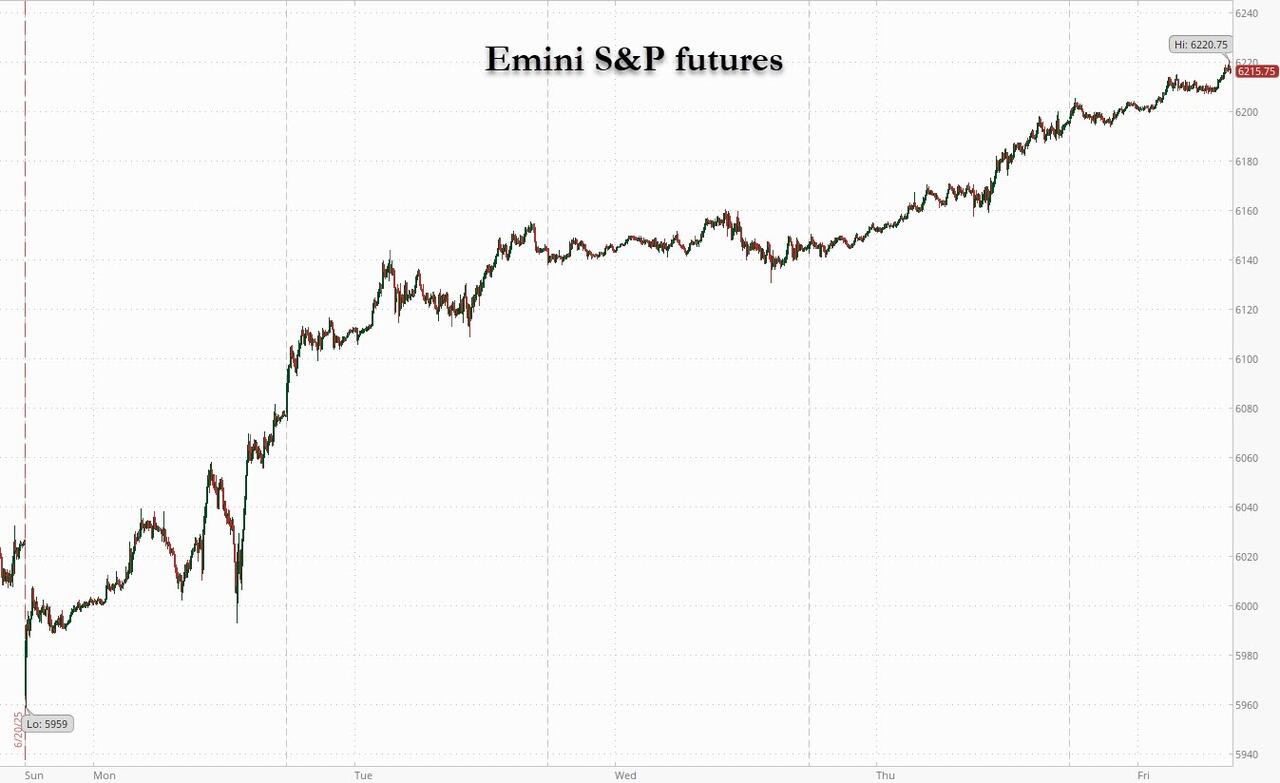
S&P Futures Trade At All Time High Boosted By Trade Talks, Nike Results
Friday, Jun 27, 2025 – 08:28 AM
US equity futures are higher, buoyed by the (non) news that the US and China have signed a trade truce (which they first signed three weeks ago but nobody complied with it, so may as well push stocks up on the exact same headline again). The positive mood has also been helped by expectations of Fed rate cuts, a better-than-feared outlook from Nike and equity flow data. As JPM recaps, since yesterday’s close, there have been three major market focuses: (i) Lutnick said that US and China have already signed their trade deal; (ii) Nike’s guidance beats expectation; (iii) the removal of Section 899 yesterday afternoon. As of 8:00am ET, S&P futures are 0.3% higher and currently trading in record territory after Howard Lutnick indicated the US has plans to reach agreements with 10 major trading partners, while Nasdaq futures continued their panic FOMO meltup, rising another 0.5%, and set to rise every day this week. Pre-Market, Mag 7 are all higher; NKE shares are the outlier surging 10% after earnings. 2y fell -3bp, while 10y added 1bp; USD is higher. Commodities are mixed: Oil added +1.9%, while Ags are mostly lower. US economic data slate includes May personal income and spending (8:30am), June final University of Michigan sentiment (10am) and Kansas City Fed services activity (11am).
In premarket trading, Mag 7 stocks are higher alongside futures (AMZN +1.2%, Nvidia +0.9%, Meta +0.8%, Tesla +0.5%, Apple +0.5%, Alphabet +0.4%, Microsoft 0%).
- Amazon (AMZN) leads gains in the Magnificent Seven cohort of US tech stocks, rising 1.2%, after receiving an upgrade from BNP Paribas Exane.
- Atlantic Union Bankshares Corp. shares (AUB) are up 9.3% after the bank said it sold about $2 billion of its performing commercial real estate loans to Blackstone.
- Estee Lauder Cos. (EL) up 2.9% after HSBC raised its recommendation to buy from hold and increased its price target to $99 from $80 as it sees the cosmetics company at the end of a downgrade cycle.
- Li Auto ADRs (LI) drop 2.7% after the Chinese EV maker reduced its vehicle deliveries target for the second quarter, citing a sales system upgrade.
- Nike shares (NKE) rise 10% after forecasting a smaller-than-expected drop in revenue for the current quarter, a sign that the sportswear company’s earnings trend may have hit an inflection point, analysts say.
- WR Berkley Corp. (WRB) edges down 0.7% after a TD Cowen analyst cut its recommendation to hold from buy, citing outperformance following news Mitsui Sumitomo Insurance was buying a 15% equity stake.
- Trade Desk (TTD) gained 3.9% in premarket trading after being upgraded to outperform at Evercore ISI, while Baidu fell 0.8%.
- CorMedix (CRMD) falls 11% after launching an $85 million share offering via RBC.
Commerce Secretary Howard Lutnick said that the US and China had finalized an understanding, and added the White House is nearing agreements with 10 major trading partners ahead of a July 9 deadline for reciprocal tariffs.
Meanwhile, the Treasury Department announced a deal with G-7 allies that will exclude US companies from some taxes imposed by other countries in exchange for removing the “revenge tax” proposal from President Donald Trump’s tax bill.
“There were fears that the revenge tax would make it much harder for companies and individuals to invest in the US, since it would increase their tax rates,” said Kathleen Brooks, research director at Xtb Ltd. “There are still more trade agreements to be done, for example with the European Union, but things are moving in the right direction.”
The Thursday moves were driven by US economic data that supported the case for policy easing. The swaps market has fully priced two further rate reductions this year and increased bets on a third.
A flurry of Fed officials this week made clear they’ll need a few more months to gain confidence that tariff-driven price hikes won’t raise inflation in a persistent way. Economists see the personal consumption expenditures price index excluding food and energy marking the tamest three-month stretch since the pandemic five years ago.
Copper rose as Goldman analysts warned that shortages will get worse before levies come into effect. A key one-day copper price spread surged to the highest level in four years on the London Metal Exchange, placing fresh strains on buyers contending with a rapid decline in inventories fueled by US plans to impose tariffs on the metal.
European stocks also gain with the Stoxx 600 climbing almost 1% and set for its first weekly advance in three. Data Friday showed inflation inched up in France and Spain, but not enough to concern European Central Bank officials who are optimistic that their 2% target will be met sustainably this year. Most sectors are in the green with auto, media and consumer products leading while miners lag. Here are some of the biggest movers on Friday:
- Adidas, Puma and JD Sports are rising after US giant Nike said its yearlong sales decline is starting to ease, with a smaller sales drop seen in the current quarter than earlier anticipated.
- Schneider Electric shares gain as much as 4.8% after electrical power equipment manufacturer reiterated its full-year guidance on a pre-close analyst call, which Oddo BHF said is “reassuring.”
- Pearson shares rise as much as 3.8% as analysts at BNP Paribas Exane upgraded the education-focused company and flagged a buying opportunity following recent weakness in the share price.
- Knorr-Bremse falls as much as 5.8%, the most since April, as shares in the German maker of brakes for trains and commercial vehicles were downgraded to neutral by both Citi and JPMorgan due to US truck data weakness and FX.
- Babcock shares drop as much as 4.1% after Deutsche Bank downgraded the stock.
Earlier in the session, Asian stocks rose, on track to cap their best week in nearly two months, helped by positive developments on US-China trade and bets on Federal Reserve interest-rate cuts. The MSCI Asia Pacific Index rose as much as 0.7% Friday, with Xiaomi providing a boost as the release of its electric SUV saw strong demand. Japanese stocks led gains, with the blue-chip Nikkei 225 topping 40,000. The regional gauge is poised for a weekly gain of more than 3% as risk-on sentiment returns after a cooling of Israel-Iran tensions. Next week’s key focal points include inflation data in South Korea, Indonesia and the Philippines as well as a US jobs report. Asean is holding a bond market forum in Kyoto while the ECB holds an annual forum in Portugal.
“Easing tariff concerns, lower geopolitical risks especially in the Middle East, rising hopes of Fed cuts, higher confidence on AI demand” are all contributing to gains in Asian stocks, said Vey-Sern Ling, a managing director at Union Bancaire Privee. “Asia markets are in a good position especially with a potentially weaker dollar,” he said.
In FX, the Bloomberg Dollar Spot Index is flat. The Swedish krona is leading gains against the greenback among the G-10’s, rising 0.4%. EURUSD is up a seventh day, longest winning streak in a year; euro is up 1.6% on a weekly basis, the most in a month. GBPUSD up 0.1% at 1.3745; the pair is up 2.2% this week, best performance since early March. USD/JPY little changed at 144.39.
In rates, treasures fall for the first time this week; Yields are 1bp-3bp cheaper with front-end and belly lagging slightly, flattening 2s10s spread by about 0.5bp, 5s30s by 1.5bp; 10-year near 4.27% is 2bp cheaper on the day, slightly underperforming bunds and gilts in the sector. European government bonds are little changed.
In commodities, oil pared some of the biggest weekly decline in two years after a ceasefire between Israel and Iran, with the market’s focus shifting from the conflict in the Middle East to US trade negotiations. Spot copper contracts continued to trade at huge premiums to later-dated futures on the London Metal Exchange, after key price spreads this week hit the highest levels since an historic short squeeze in 2021. Gold falls $40 and below $3,300/oz as demand for haven assets dwindles; the precious metal heads for its second consecutive weekly loss, after a ceasefire between Israel and Iran dented demand for havens.
Looking to the day ahead, the key release will be today’s May PCE in the US, closely watched following the weaker-than-expected CPI print earlier this month. Other data releases include US personal income, personal spending, June Kansas City Fed services activity, We’ll also get Fed’s Williams, Hammack and Cook speak, ECB’s Rehn speaks
Market snapshot
- S&P 500 mini +0.2%
- Nasdaq 100 mini +0.3%
- Russell 2000 mini +0.3%
- Stoxx Europe 600 +0.9%
- DAX +0.8%, CAC 40 +1.4%
- 10-year Treasury yield +3 basis points at 4.27%
- VIX -0.4 points at 16.2
- Bloomberg Dollar Index little changed at 1194.19
- euro little changed at $1.1709
- WTI crude +0.9% at $65.8/barrel
Top Overnight News
- Lutnick said the US will imminently announce trade deals with 10 major trading partners while Trump hinted at an agreement arriving soon with India. BBG
- Equities momentum continuing this morning after the US and China finalized an understanding on trade. The deal includes a commitment from China to deliver rare earths. BBG
- US lawmakers said they would remove Section 899 from the tax bill: Reuters.
- On whether the US Reconcilliation Bill can be sent to President Trump by the July 4th deadline, Punchbowl says that it is possible, but is becoming increasingly difficult; Senators say voting will not being until Saturday at the absolute earliest. “…one key holdout said they’re far from the point when Trump will be needed to help close a deal.” Senators say voting will not being until Saturday at the absolute earliest, with that viewed as optimistic. Senate parliamentarian ruling focused on “the provider tax freeze in the bill rather than the Senate’s more drastic constraints for Medicaid expansion states, according to two sources with knowledge of the decision”. Republicans believe they can come up with a fix. President Trump has reportedly told multiple GOP senators privately that he prefers the House’s provider tax framework, which is much less drastic than the Senate’s version.
- US DOGE Service has sent staff to the Bureau of Alcohol, Tobacco, Firearms and Explosives with the goal of revising or eliminating dozens of rules and gun restrictions by July 4th: WaPo
- Europe considers a range of concessions to the White House in an effort to strike a trade deal in the near-term, including lowering tariffs on a range of imports, removing certain non-tariff barriers, buying more American products, and taking steps to address concerns about China. WSJ
- A flurry of Federal Reserve officials this week made clear they’ll need a few more months to gain confidence that tariff-driven price hikes won’t raise inflation in a persistent way. After Waller and Bowman’s dovish commentary on lowering rates as soon as July, nearly a dozen policymakers have dumped cold water on that idea since then. BBG
- China’s industrial profits slumped 9.1% in May, the biggest drop since October, under the weight of higher US tariffs and deflationary pressure. The decline adds urgency for more stimulus to meet growth goals. BBG
- Japan’s Tokyo CPI for June cools by more than anticipated, coming in at +3.1% Y/Y on a core basis (down from +3.3% in May and below the Street’s +3.3% forecast). WSJ
- Individual investors in Japan are boosting their purchases of government bonds at the fastest pace in 18 years as a rise in yields enhances the asset’s appeal. BBG
- Goldman forecast that core PCE prices rose 0.18% in May and 2.63% over the last year. Data from the CPI, PPI, and import prices suggest a modest tariff effect and a soft core print this month. Headline PCE prices rose 0.14% in May and 2.29% over the last year. GS expects the largest tariff effects on monthly inflation to show up from June through August. GIR
- NKE +9% pre mkt…after mgmt reaffirmed that 4Q will be peak pressure on call keeping turnaround story intact; That overshadows the weaker quarter last night (EPS $0.14 vs bogey of $0.20+).
Trade/Tariffs
- US President Trump said he just signed a deal with China on Wednesday, and says he has one maybe coming up with India. Trump added that China is starting to open up. It was later clarified that the US and China have agreed to an additional understanding to implement the Geneva agreement, according to a White House official cited by Fox’s Lawrence. A second Administration official confirmed that the framework finalises what was agreed in London and also addresses Chinese export controls, according to a source familiar with the agreement.
- China issues a statement on trade framework with US; two sides confirmed details on framework China will approve export applications for controlled items in accordance with the law. Both sides maintained close communications after meetings in London. The US side will accordingly lift a series of restrictive measures taken against China.
- European Commission President von der Leyen said the EU received the latest US proposal today and is prepared for both a deal and a no-deal outcome, stating all options remain on the table.
- French President Macron said he favours a speedy and fair EU–US trade deal, but warned that if the US maintains a 10% tariff, Europe would have to apply equivalent compensatory measures.
- US chip export curbs may slow China’s adoption of DeepSeek’s next model, R2, via The Information.
- US Commerce Secretary Lutnick said tax bill passage is expected within the next week or two, adding that the China deal was “signed and sealed” two days ago. Lutnick stated that several deals will be announced in the coming week, with the Europe deal expected at the end. He noted that although Europe had a sluggish start, it is now performing excellently and there is optimism about a deal with the EU. Countries seeking further negotiations are welcome, and all nations will be categorised into appropriate tariff groups by the 9 July deadline for reciprocal tariff agreements. He added that the US is close to finalising a deal with India and that the tariff programme will not need to change if the bill is adjusted.
- German Chancellor Merz said von der Leyen proposed the creation of a new European trade organisation, and added that EU leaders are largely united on finalising the Mercosur trade deal.
- Chinese Foreign Ministry says Yi will travel to EU headquarters June 30th for China-EU high-level strategic dialogue; will also visit Germany and France.
A more detailed look at global markets courtesy of Newsquawk
APAC stocks traded mostly firmer for a bulk of the session following gains on Wall Street amid expectations of a future Fed Chair more aligned with the President. Sentiment was further supported after US President Trump announced he had signed a deal with China on Wednesday. Although initial reports were unclear and caused some confusion, White House officials later clarified that the signing finalised what had previously been agreed upon in Geneva and London. China has not yet confirmed the signing of the deal. APAC stocks later waned off best levels to trade mixed. ASX 200 was supported by the broader mood, with the rise in copper keeping miners propped up before paring back. Nikkei 225 outperformed across the region, buoyed by recent JPY weakness and a softer-than-expected Tokyo Core CPI reading, which could temper some of the recent hawkish rhetoric from BoJ’s Tamura. Hang Seng and Shanghai Comp opened with modest gains, drawing some support from US President Trump’s announcement of a signed deal with China. It was later clarified the deal finalised prior agreements made in Geneva and London, though China has yet to confirm the signing. Chinese bourses later turned flat.
Top Asian News
- The PBoC injected CNY 525.9bln via 7-day reverse repos, maintaining the rate at 1.40%.
- Japanese Finance Minister Kato said they will continue cautious consideration of potential buybacks of previously issued bonds, according to local Reuters.
- The South Korean government held an emergency meeting on household debt, and plans to strengthen measures to control it, according to the financial regulator.
- Li Auto (2015 HK) expects to deliver circa 108k vehicles in Q2 (vs. May 29th guidance of 123-128k).
European bourses (STOXX 600 +1%) opened with a strong positive bias and continued to trudge higher as the morning progressed – currently trading at session highs. Sentiment over the past couple of days has been boosted by; 1) Thursday’s report that Trump is looking to announce Powell’s replacement early, 2) WSJ reports that the EU is considering lowering tariffs on US imports in a bid to woo US President Trump, 3) von der Leyen suggesting the EU had received the latest US trade proposal – stressing that whilst they are ready for a deal, they have made preparations for no deal. European sectors are entirely in the green. Autos leads, followed by Consumer Products as the likes of Adidas (+4%) and Puma (+5%) benefit from Nike’s post-earning strength.
Top European News
- ECB’s Knot, when asked about market expectations of one more 25bps cut by the end of the year, Knot said that possibility was “difficult for me to exclude”, via FT.
- German minimum wage to increase to EUR 14.60/hr by 2027; will take place via two steps from current level of EUR 12.82.
- ECB’s de Guindos says the ECB is on track to meet its 2% inflation target
FX
- DXY has extended its losing streak to a fifth session as a combination of geopolitical tensions easing, declining yields, concerns over Fed independence and ongoing fiscal concerns act as a drag on the greenback. Over the past 24 hours, the trade agenda has reasserted itself on the market narrative after US President Trump said he signed a deal with China on Wednesday; it was later clarified that the US and China have agreed to an additional understanding to implement the Geneva agreement. DXY is currently contained within Thursday’s 96.99-97.60 range, into US PCE and a couple of Fed speakers.
- EUR is firmer vs. the USD amid some encouragement on the trade front for the EU. This comes after the WSJ reported that the EU is reportedly considering lowering tariffs on US imports in a bid to woo US President Trump. Furthermore, US Commerce Secretary Lutnick said that although Europe had a sluggish start, it is now performing excellently and there is optimism about a deal with the EU. That being said, European Commission President von der Leyen said the EU is prepared for both a deal and a no-deal outcome, stating all options remain on the table. EUR/USD currently trading around 1.1715.
- JPY is still struggling to make much headway vs. the USD relative to other peers with Japanese data overnight acting as a headwind for the Yen. National inflation data for June came in soft on a headline and core basis (retail sales were also weak). USD/JPY is currently tucked within Thursday’s 143.75-145.26 range and sat just above its 50DMA at 144.32.
- GBP is a touch firmer vs. the USD and steady on a 1.37 handle. It has been a week lacking in fresh macro drivers for the UK and that remains the case. There has been some attention on the political scene with UK PM Starmer facing a possible rebellion from his own MPs over proposed welfare cuts. Cable is currently tucked below Thursday’s multi-year high at 1.3770.
- Antipodeans are both marginally stronger vs. the USD alongside the positive risk tone and subsequently shrugging off a contraction in Chinese Industrial Profits. Both currencies are also likely being underpinned by the aforementioned developments between the US and China on the trade front. Albeit, details remain light at this stage.
Fixed Income
- A contained/slightly softer start to the day for USTs. Benchmark pulling back from Thursday’s 112-03 MTD high, but only marginally with the current trough at 111-26+, comfortably clear of Thursday’s 111-21 base. Focus overnight has been on the latest US-China framework agreement, but essentially just firming the prior Geneva/London talks. Focus today now turns to US PCE and a couple of Fed speakers.
- Bunds are in-fitting with the above. Under modest pressure in the European morning into the region’s first inflation figures for June. Before those, no reaction to ECB’s Knot who said to the FT that the possibility of a 25bps cut by end-2025 was “difficult for me to exclude”. To recap those HICP metrics, French figures were hotter-than-expected across the board sparking a modest hawkish reaction. Specifically, this sent Bunds down from near the 130.66 high to around 130.44. Spanish figures were a little more mixed, but also held a hawkish skew, taking Bunds to a fresh low of 130.20.
- Gilts opened higher by a few ticks and then extended a handful more to 93.36, catching up to the late-Thursday performance for USTs/Bunds, before conforming to the broader bias and slipping slightly. However, action has been minimal with Gilts comfortably above the 93.00 mark and shy of today and Thursday’s open at 93.32.
- Italy sells EUR 6.5bln vs exp. EUR 5.5-6.5bln 2.70% 2030, 2.95% 2030 & 3.60% 2035 BTP and EUR vs exp. EUR 1.5-2.0bln 2034 CCTeu.
Commodities
- Crude is on a firmer footing today, in what has been a session lacking of pertinent geopolitical updates; more focus on US-China / US-EU trade updates, but details are light at the moment. Price action has been relatively steady throughout the morning, awaiting US PCE later. Brent Aug’25 currently trading around USD 67.20/bbl.
- Spot gold trades with a downward bias, and fails to benefit from the slightly softer Dollar and seemingly continuing to be weighed upon by the relatively calm in the Middle East; currently sits below USD 3.3k/oz.
- 3M LME Copper is unable to benefit from the risk tone. However, while softer, 3M LME Copper is holding onto essentially all of the upside it derived on Monday when it rose by near USD 200 to a USD 9.91k peak. As it stands, the base metal has slipped just below the USD 9.9k mark, but remains on track to close out the week with strong gains after opening it at USD 9.65k.
- The US Energy Department announced that scheduled oil deliveries into the Strategic Petroleum Reserve will be delayed until December, due to maintenance at SPR sites. Of the 15.8mln barrels originally planned through May, only 8.8mln have been delivered so far.
- Goldman Sachs said Brent crude could reach USD 90/bbl by year-end in a Strait of Hormuz disruption scenario, while options markets see a 60% chance Brent stays in the USD 60s in 3 months and a 28% chance it exceeds USD 70.
- Shanghai Warehouse Stocks: Copper -19.26k/T (prev. -1.1k).
Geopolitics
- Iranian Foreign Minister Araqchi said Tehran is assessing whether diplomacy with the US is in its interest, adding that there is currently no understanding for renewed talks with the US. Araqchi dismissed speculation about the resumption of negotiations with the US, saying it should not be taken seriously. There are no plans to receive IAEA Chief Grossi in Tehran, according to Reuters.
- Iran’s representative to the UN said Tehran is open to forming a regional nuclear consortium and exchanging uranium in the event of an agreement with Washington, via Sky News Arabia.
- An explosion occurred at the “Aluf” plant within a complex belonging to the Iranian defence industries in the Republic of Azerbaijan, according to Al Hadath.
- Israeli Prime Minister Netanyahu agreed with US President Trump to end the Gaza war within two weeks, according to Al Arabiya citing Israeli press.
- Israeli Defence Minister warned of further strikes on Iran if it resumes nuclear development, according to Al Arabiya.
- EU leaders agreed to renew existing Russia sanctions for another six months, according to Reuters
US Event Calendar
- 8:30am: U.S. Personal Income, May, est. 0.3%, prior 0.8%
- 8:30am: U.S. Personal Spending, May, est. 0.1%, prior 0.2%
- 8:30am: U.S. Core PCE Price Index MoM, May, est. 0.1%, prior 0.1%
- 8:30am: U.S. Core PCE Price Index YoY, May, est. 2.6%, prior 2.5%
- 8:30am: U.S. PCE Price Index MoM, May, est. 0.1%, prior 0.1%
- 8:30am: U.S. PCE Price Index YoY, May, est. 2.3%, prior 2.1%
- 10am: U.S. U. of Mich. Sentiment, June F, est. 60.5, prior 60.5
DB’s Jim Reid concludes the overnight wrap
A rare period of 2025 calm seems to have broken out for now. It may be that we’re in the eye of the storm that was the Middle East, and later to become tariffs again. However for now markets are not thinking about, or are not particularly concerned about, the upcoming July 9th tariff deadline. However after the bell we got some more positive headlines on trade which we’ll detail below. However, even before that, US markets steamed ahead with the first S&P 500 (+0.80%) closing just shy of a new all-time high as investors have again begun to anticipate further rate cuts this year. The optimism for lower borrowing costs in the near term was helped by Tuesday night’s news that Trump is considering naming his pick for the Fed’s next chair early. Even as the White House yesterday suggested that such a nomination was not “imminent”, markets are getting themselves used to the prospect over lower rates going forward. Whether this will prove to be yet another false dawn only time will tell.
Being precise, the S&P ended the day a mere 0.05% below its record high on February 19, briefly surpassing that level late in yesterday’s session. Tech stocks outperformed, with the Nasdaq Composite (+0.97%) closing an even smaller 0.03% from its December high, while the Magnificent 7 rose +1.06%. In Big Tech, Meta shares rose the most (+2.46%) after the company won a landmark copyright lawsuit over AI training on books, and Nvidia’s continued to extend its gains (+0.46%) from its record high the previous day which was the first since early January. The upbeat mood also saw the VIX (-0.17pts to 16.59) inch down to a 4-month low. Treasury yields fell across the curve as investors continued to increase their bets for further rate cuts this year (65bps by December and now 28bps in September). This led to the 2yr falling -6.3bps and the 10yr falling -5.0bps, with both down to their lowest levels since the start of May.
The continued positive momentum in equities was impressive. We seem to be in a sweet spot post Middle Eastern calm and pre the July 9th reciprocal tariff extension deadline. This will start to come into view soon, and headlines are starting to bubble up. Lutnick last night said that an agreement with China has now been agreed and that imminent plans have been made to agree deals with ten of its major trading partners. It’s not clear if this includes the EU and trade was clearly a key subject at the EU leaders’ summit that concluded last night. European Commission President von der Leyen revealed that the EU was assessing the latest counter-offer proposed by the US, saying “We are ready for a deal. At the same time we are preparing for the possibility that no satisfactory agreement is reached”. There have been some tensions over the EU’s approach to the talks, with Germany’s Chancellor Merz earlier calling the Commission’s negotiating strategy “far too complicated” as he favoured a “quick and simple” deal. Meanwhile, France’s Macron said last night that he would settle for 10% tariffs from the US but that this would result in the same levy being applied to US goods. So some event risk to watch out for over the next couple of weeks.
We are also waiting to see if the US administration will pass its budget megabill as they hope by the July 4th holiday. Senate Republicans have been aiming to vote on the bill this week but that timing looks uncertain, with the latest issue being a technical hurdle that some of the proposed Medicaid changes do not meet the strict rules of the reconciliation process that allows to approve budget policies with a simple majority in the Senate. So that could force meaningful last minute changes. One to monitor going into the weekend. There is good news that late last night we found out that the US Treasury Department has asked the Senate and the House to remove Section 899 (aka the “revenge tax”) from the bill after a deal was struck with G7 leaders to exempt US companies from some taxes. Given how much email traffic there’s been in my inbox on this topic, it’s fair to say global investors will breathe a sigh of relief on this news.
Moving to the US data, we saw slightly lower weekly initial jobless claims (falling from 243k to 236k vs. 243k estimates) but higher continuing claims (+1,974k vs +1,950k estimates). US May goods exports also fell -5.2% m/m, while revised estimates for Q1 GDP showed the economy contracted by -0.5% (vs. previous -0.2% estimates). That included worse-than-expected consumption, which grew by +0.5% annualized (vs. +1.2% prev.), its slowest quarterly pace since the 2020 pandemic shock. However, May durable goods data was strong at +16.4% vs +8.5% estimates due to bumper aircraft orders, but even ex-transport it came in half a percent higher than expected at +0.5%.
Fedspeak struck a mostly patient tone, with Richmond Fed Barkin’s saying that he does “believe we will see pressure on prices”, SF Fed’s Daly expected that “we would begin to be able to adjust the rates in the fall”, while Boston Fed’s Collins expected at least one cut this year but indicated that July would be too early.
The dollar index (-0.54%) continued to fall further on Thursday as tensions in the Middle East receded and earlier reports that Trump will soon pick a more dovish Fed chair continued to resonate. The EUR/USD rose +0.36% to 1.1701, yesterday, perhaps also helped by Europe’s pledge for higher defence spending and the more front-loaded German fiscal spending than expected announced earlier this week.
In Europe, defence stocks were higher on the back of the NATO Summit, where defence spending targets were raised to 5% by 2035. The DAX jumped (+0.64%), lifted by German defence companies like Rheinmetall (+7.28%), Hensoldt (+5.19%) and Renk (+3.87%) which are expected to continue benefiting from the increased defence pledge.
On a related theme, things are looking much better for Germany at the moment. Our German economists have lifted their growth forecasts to 0.5% for 2025 and 2% for 2026, well above consensus, believing the government’s fresh budget plans as well as the good momentum so far this year warrant a more positive outlook. You can read it here. Outside of Germany, other indices like the FTSE 100 (+0.19%), STOXX 600 (+0.09%), and CAC (-0.01%) posted more modest moves.
As in the US, European bond yields also moved lower despite more fiscal optimism in Europe, with 10yr gilts (-0.9bps), OATs (-1.1bs) and BTPs (-2.5bps) falling. But 10yr bunds underperformed for a fifth day running (+0.3bps) and its 30-year bond inched even higher (+1.8bps).
On geopolitics, yesterday Iran’s Supreme Leader said that the US strikes on Iran “did not achieve anything” and that Iran would retaliate should the US attack again. There was also a report from the FT that said European officials received intel that Iran had moved its uranium before the strikes, although at a press conference later that day, US Defence Secretary Pete Hegseth refuted this saying that nothing was moved out of Iran’s nuclear facility. Oil prices saw muted moves, with Brent crude up +0.07% to $67.73/bbl.
Asian equity markets are seeing a few divergent trends this morning. The Nikkei (+1.59%) is outperforming jumping to its highest level since late January, boosted by tech stocks and helped by lower inflation (see below). Elsewhere, the Hang Seng (-0.01%), the CSI (-0.02%) and the S&P/ASX 200 (-0.02%) are struggling to find direction with the KOSPI (-1.15%) experiencing noticeable losses in early trading. Outside of Asia, US equity futures are suggesting a positive opening with those on the S&P 500 (+0.13%) and NASDAQ 100 (+0.14%) edging higher. Meanwhile, yields on the 10yr USTs are +1.5bps higher trading at 4.26% as we go to press.
Early morning data indicated that Tokyo’s consumer price index (+3.1% y/y) increased less than anticipated in June, down from a +3.4% rise observed in the previous month, thereby raising questions about the BOJ’s capacity to hike in July. Tokyo’s core CPI decreased to +3.1% y/y in June from +3.3% in the prior month. In a separate report, Japan’s unemployment rate remained steady at 2.5% in May for the third month in a row, aligning with market forecasts. Meanwhile, retail sales in Japan rose by +2.2% y/y in May 2025, a decline from an upwardly adjusted +3.5% increase the previous month and falling short of market expectations of +2.5% growth. This represents the 38th consecutive month of retail sales growth, albeit at the slowest rate since February.
Elsewhere, China’s industrial firms reported their most significant profit decline since October, highlighting the challenges faced by an economy affected by increased US tariffs and ongoing deflationary pressures. Industrial profits decreased by -9.1% last month compared to the same period last year. The May figures reversed a slight gain earlier this year, bringing the decline over the first five months to -1.1%.
To the day ahead now, the key release will be today’s May PCE in the US, closely watched following the weaker-than-expected CPI print earlier this month. Our US economist forecast MoM growth in core PCE in May at +0.14% (+0.1% in April), with personal income growing at +0.2% (+0.8%) and consumption at +0.3% (+0.2%). In Europe, preliminary June CPI readings are due in France and Spain, with the rest of the key prints due the week after. Their forecasts are 2.0% for the Eurozone-wide HICP print, with country level estimates at 2.26% for Germany, 0.68% for France, 1.86% for Italy and 2.07% for Spain.
Other data releases include US personal income, personal spending, June Kansas City Fed services activity, France May PPI, consumer spending, Italy June consumer confidence index, economic sentiment, manufacturing confidence, May PPI, April industrial sales, Eurozone June economic confidence, Canada April GDP. We’ll also get Fed’s Williams, Hammack and Cook speak, ECB’s Rehn speaks
2b European opening report
European bourses benefit on US-EU trade optimism, DXY lower & US equity futures gain into PCE – Newsquawk US Market Open

Friday, Jun 27, 2025 – 05:56 AM
- US Commerce Secretary Lutnick stated that several deals will be announced in the coming week, with the Europe deal expected at the end.
- Punchbowl reports that Republican Senators say voting on the Reconciliation Bill will not begin until Saturday at the absolute earliest.
- European bourses benefit from a flurry of US-EU trade updates, US futures gain modestly into PCE.
- DXY extends its losing streak for a fifth session as PCE looms.
- USTs are under modest pressure with Bunds also hampered following French/Spanish inflation figures.
- Crude is firmer & XAU slips given the risk tone but base metals fail to benefit.
- Looking ahead, US PCE, UoM Survey Final, Fed’s Williams, Hammack; ECB’s Cipollone.
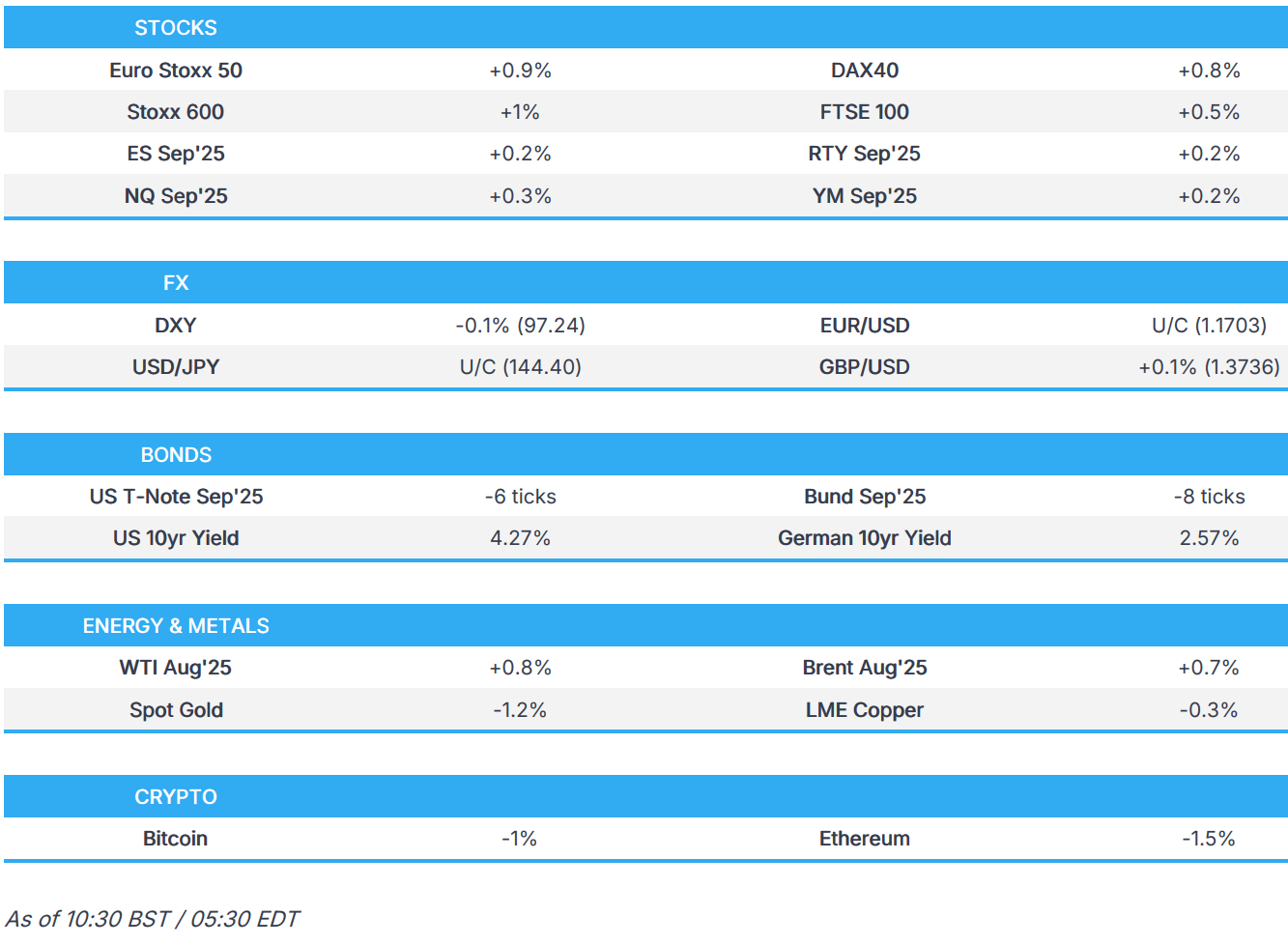
Newsquawk in 3 steps:
1. Subscribe to the free premarket movers reports
2. Listen to this report in the market open podcast (available on Apple and Spotify)
3. Trial Newsquawk’s premium real-time audio news squawk box for 7 days
TRADE/TARIFFS
- US President Trump said he just signed a deal with China on Wednesday, according to Reuters, and says he has one maybe coming up with India. Trump added that China is starting to open up. It was later clarified that the US and China have agreed to an additional understanding to implement the Geneva agreement, according to a White House official cited by Fox’s Lawrence. A second Administration official confirmed that the framework finalises what was agreed in London and also addresses Chinese export controls, according to a source familiar with the agreement.
- China issues a statement on trade framework with US; two sides confirmed details on framework China will approve export applications for controlled items in accordance with the law. Both sides maintained close communications after meetings in London. The US side will accordingly lift a series of restrictive measures taken against China.
- European Commission President von der Leyen said the EU received the latest US proposal today and is prepared for both a deal and a no-deal outcome, stating all options remain on the table.
- French President Macron said he favours a speedy and fair EU–US trade deal, but warned that if the US maintains a 10% tariff, Europe would have to apply equivalent compensatory measures.
- US chip export curbs may slow China’s adoption of DeepSeek’s next model, R2, via The Information.
- US Commerce Secretary Lutnick said tax bill passage is expected within the next week or two, adding that the China deal was “signed and sealed” two days ago. Lutnick stated that several deals will be announced in the coming week, with the Europe deal expected at the end. He noted that although Europe had a sluggish start, it is now performing excellently and there is optimism about a deal with the EU. Countries seeking further negotiations are welcome, and all nations will be categorised into appropriate tariff groups by the 9 July deadline for reciprocal tariff agreements. He added that the US is close to finalising a deal with India and that the tariff programme will not need to change if the bill is adjusted.
- German Chancellor Merz said von der Leyen proposed the creation of a new European trade organisation, and added that EU leaders are largely united on finalising the Mercosur trade deal.
- Chinese Foreign Ministry says Yi will travel to EU headquarters June 30th for China-EU high-level strategic dialogue; will also visit Germany and France.
EUROPEAN TRADE
EQUITIES
- European bourses (STOXX 600 +1%) opened with a strong positive bias and continued to trudge higher as the morning progressed – currently trading at session highs.
- Sentiment over the past couple of days has been boosted by; 1) Thursday’s report that Trump is looking to announce Powell’s replacement early, 2) WSJ reports that the EU is considering lowering tariffs on US imports in a bid to woo US President Trump, 3) von der Leyen suggesting the EU had received the latest US trade proposal – stressing that whilst they are ready for a deal, they have made preparations for no deal.
- European sectors are entirely in the green. Autos leads, followed by Consumer Products as the likes of Adidas (+4%) and Puma (+5%) benefit from Nike’s post-earning strength.
- US equity futures (ES +0.2%, NQ +0.3%, RTY +0.2%) are modestly firmer across the board, taking impetus from a strong European morning but with gains capped ahead of the US PCE later today.
- Nike (+9.5% pre-market) signalled that the sales slump is bottoming out, and CEO’s turnaround strategy gained investor support following an upbeat earnings call, reversing some of the stock’s recent declines.
- EU antitrust regulators says Meta (META) will only make limited changes to pay-or-consent mode; cannot say whether changes are sufficient to comply with EU rules; EU to consider next steps, including daily fines for non-compliance starting June 27th
- Click for the sessions European pre-market equity newsflow
- Click for the additional news
- Click for a detailed summary
FX
- DXY has extended its losing streak to a fifth session as a combination of geopolitical tensions easing, declining yields, concerns over Fed independence and ongoing fiscal concerns act as a drag on the greenback. Over the past 24 hours, the trade agenda has reasserted itself on the market narrative after US President Trump said he signed a deal with China on Wednesday; it was later clarified that the US and China have agreed to an additional understanding to implement the Geneva agreement. DXY is currently contained within Thursday’s 96.99-97.60 range, into US PCE and a couple of Fed speakers.
- EUR is firmer vs. the USD amid some encouragement on the trade front for the EU. This comes after the WSJ reported that the EU is reportedly considering lowering tariffs on US imports in a bid to woo US President Trump. Furthermore, US Commerce Secretary Lutnick said that although Europe had a sluggish start, it is now performing excellently and there is optimism about a deal with the EU. That being said, European Commission President von der Leyen said the EU is prepared for both a deal and a no-deal outcome, stating all options remain on the table. EUR/USD currently trading around 1.1715.
- JPY is still struggling to make much headway vs. the USD relative to other peers with Japanese data overnight acting as a headwind for the Yen. National inflation data for June came in soft on a headline and core basis (retail sales were also weak). USD/JPY is currently tucked within Thursday’s 143.75-145.26 range and sat just above its 50DMA at 144.32.
- GBP is a touch firmer vs. the USD and steady on a 1.37 handle. It has been a week lacking in fresh macro drivers for the UK and that remains the case. There has been some attention on the political scene with UK PM Starmer facing a possible rebellion from his own MPs over proposed welfare cuts. Cable is currently tucked below Thursday’s multi-year high at 1.3770.
- Antipodeans are both marginally stronger vs. the USD alongside the positive risk tone and subsequently shrugging off a contraction in Chinese Industrial Profits. Both currencies are also likely being underpinned by the aforementioned developments between the US and China on the trade front. Albeit, details remain light at this stage.
- PBoC set USD/CNY mid-point at 7.1627 vs exp. 7.1771 (prev. 7.1620)
- Click for a detailed summary
- Click for NY OpEx Details
FIXED INCOME
- A contained/slightly softer start to the day for USTs. Benchmark pulling back from Thursday’s 112-03 MTD high, but only marginally with the current trough at 111-26+, comfortably clear of Thursday’s 111-21 base. Focus overnight has been on the latest US-China framework agreement, but essentially just firming the prior Geneva/London talks. Focus today now turns to US PCE and a couple of Fed speakers.
- Bunds are in-fitting with the above. Under modest pressure in the European morning into the region’s first inflation figures for June. Before those, no reaction to ECB’s Knot who said to the FT that the possibility of a 25bps cut by end-2025 was “difficult for me to exclude”. To recap those HICP metrics, French figures were hotter-than-expected across the board sparking a modest hawkish reaction. Specifically, this sent Bunds down from near the 130.66 high to around 130.44. Spanish figures were a little more mixed, but also held a hawkish skew, taking Bunds to a fresh low of 130.20.
- Gilts opened higher by a few ticks and then extended a handful more to 93.36, catching up to the late-Thursday performance for USTs/Bunds, before conforming to the broader bias and slipping slightly. However, action has been minimal with Gilts comfortably above the 93.00 mark and shy of today and Thursday’s open at 93.32.
- Italy sells EUR 6.5bln vs exp. EUR 5.5-6.5bln 2.70% 2030, 2.95% 2030 & 3.60% 2035 BTP and EUR vs exp. EUR 1.5-2.0bln 2034 CCTeu.
- Click for a detailed summary
COMMODITIES
- Crude is on a firmer footing today, in what has been a session lacking of pertinent geopolitical updates; more focus on US-China / US-EU trade updates, but details are light at the moment. Price action has been relatively steady throughout the morning, awaiting US PCE later. Brent Aug’25 currently trading around USD 67.20/bbl.
- Spot gold trades with a downward bias, and fails to benefit from the slightly softer Dollar and seemingly continuing to be weighed upon by the relatively calm in the Middle East; currently sits below USD 3.3k/oz.
- 3M LME Copper is unable to benefit from the risk tone. However, while softer, 3M LME Copper is holding onto essentially all of the upside it derived on Monday when it rose by near USD 200 to a USD 9.91k peak. As it stands, the base metal has slipped just below the USD 9.9k mark, but remains on track to close out the week with strong gains after opening it at USD 9.65k.
- The US Energy Department announced that scheduled oil deliveries into the Strategic Petroleum Reserve will be delayed until December, due to maintenance at SPR sites. Of the 15.8mln barrels originally planned through May, only 8.8mln have been delivered so far.
- Goldman Sachs said Brent crude could reach USD 90/bbl by year-end in a Strait of Hormuz disruption scenario, while options markets see a 60% chance Brent stays in the USD 60s in 3 months and a 28% chance it exceeds USD 70.
- Shanghai Warehouse Stocks: Copper -19.26k/T (prev. -1.1k).
- Click for a detailed summary
NOTABLE DATA RECAP
- French CPI (EU Norm) Prelim MM (Jun) 0.4% vs. Exp. 0.2% (Prev. -0.2%); Prelim YY (Jun) 0.8% vs. Exp. 0.7% (Prev. 0.6%)
- French CPI Prelim YY NSA (Jun) 0.9% vs. Exp. 0.7% (Prev. 0.7%); French CPI Prelim MM NSA (Jun) 0.3% vs. Exp. 0.1% (Prev. -0.1%)
- French Producer Prices YY (May) 0.2% (Prev. -0.8%); MM (May) -0.8% (Prev. -4.3%, Rev. -4.2%)
- French Consumer Spending MM (May) 0.2% vs. Exp. 0.1% (Prev. 0.3%, Rev. 0.5%)
- Spanish HICP Flash YY (Jun) 2.2% vs. Exp. 2.0% (Prev. 2.0%); Flash MM (Jun) 0.6% vs. Exp. 0.6% (Prev. 0.0%)
- Spanish CPI MM Flash NSA (Jun) 0.6% vs. Exp. 0.40% (Prev. 0.10%); YY Flash NSA (Jun) 2.2% vs. Exp. 2.0% (Prev. 2.0%); Core 2.2% (prev. 2.2%)
- Spanish Retail Sales YY (May) 4.8% (Prev. 4.0%)
- Italian Manufacturing Business Confidence (Jun) 87.3 vs. Exp. 87.0 (Prev. 86.5, Rev. 86.6); Confidence (Jun) 96.1 vs. Exp. 97.0 (Prev. 96.5)
- EU Selling Price Expec (Jun) 5.6 (Prev. 7.9, Rev. 7.7); Cons Infl Expec (Jun) 21.2 (Prev. 23.6); Consumer Confid. Final (Jun) -15.3 vs. Exp. -15.3 (Prev. -15.3); Services Sentiment (Jun); 2.9 vs. Exp. 1.6 (Prev. 1.5, Rev. 1.8); Economic Sentiment (Jun) 94.0 vs. Exp. 95.1 (Prev. 94.8); Industrial Sentiment (Jun) -12.0 vs. Exp. -9.9 (Prev. -10.3, Rev. -10.4).
NOTABLE EUROPEAN HEADLINES
- ECB’s Knot, when asked about market expectations of one more 25bps cut by the end of the year, Knot said that possibility was “difficult for me to exclude”, via FT.
- German minimum wage to increase to EUR 14.60/hr by 2027; will take place via two steps from current level of EUR 12.82.
- ECB’s de Guindos says the ECB is on track to meet its 2% inflation target
NOTABLE US HEADLINES
- On whether the US Reconcilliation Bill can be sent to President Trump by the July 4th deadline, Punchbowl surmises that it is possible, but is becoming increasingly difficult; Senators say voting will not being until Saturday at the absolute earliest. “…one key holdout said they’re far from the point when Trump will be needed to help close a deal.” Senators say voting will not being until Saturday at the absolute earliest, with that viewed as optimistic. Senate parliamentarian ruling focused on “the provider tax freeze in the bill rather than the Senate’s more drastic constraints for Medicaid expansion states, according to two sources with knowledge of the decision”. Republicans believe they can come up with a fix. President Trump has reportedly told multiple GOP senators privately that he prefers the House’s provider tax framework, which is much less drastic than the Senate’s version.
- US lawmakers said they would remove Section 899 from the tax bill, according to Reuters.
- US DOGE Service has sent staff to the Bureau of Alcohol, Tobacco, Firearms and Explosives with the goal of revising or eliminating dozens of rules and gun restrictions by July 4th, via WaPo citing sources.
GEOPOLITICS
MIDDLE EAST
- Iranian Foreign Minister Araqchi said Tehran is assessing whether diplomacy with the US is in its interest, adding that there is currently no understanding for renewed talks with the US. Araqchi dismissed speculation about the resumption of negotiations with the US, saying it should not be taken seriously. There are no plans to receive IAEA Chief Grossi in Tehran, according to Reuters.
- Iran’s representative to the UN said Tehran is open to forming a regional nuclear consortium and exchanging uranium in the event of an agreement with Washington, via Sky News Arabia.
- An explosion occurred at the “Aluf” plant within a complex belonging to the Iranian defence industries in the Republic of Azerbaijan, according to Al Hadath.
- Israeli Prime Minister Netanyahu agreed with US President Trump to end the Gaza war within two weeks, according to Al Arabiya citing Israeli press.
- Israeli Defence Minister warned of further strikes on Iran if it resumes nuclear development, according to Al Arabiya.
RUSSIA-UKRAINE
- EU leaders agreed to renew existing Russia sanctions for another six months, according to Reuters.
CRYPTO
- Bitcoin is slightly lower and trades around USD 106.5k; Ethereum posts slightly deeper losses.
CENTRAL BANKS
- Fed’s Kashkari (2026 voter) said independent monetary policy generally leads to lower inflation and a better labour market, noting the Fed strives to base decisions on data and analysis rather than politics. He stated inflation remains above the 2% target and must be brought back down, while the labour market is still strong and not “falling off a cliff.”
- US President Trump said it would be helpful if the Fed lowered rates; on Fed Chair Powell, Trump said “We have to fight this guy”
- Banxico cut rates by 50bps to 8.00% as expected, and stated that looking ahead, the board will assess further adjustments to the reference rate — a shift from its previous guidance that it could continue the calibrating policy and consider adjustments in similar magnitudes.
APAC TRADE
- APAC stocks traded mostly firmer for a bulk of the session following gains on Wall Street amid expectations of a future Fed Chair more aligned with the President. Sentiment was further supported after US President Trump announced he had signed a deal with China on Wednesday. Although initial reports were unclear and caused some confusion, White House officials later clarified that the signing finalised what had previously been agreed upon in Geneva and London. China has not yet confirmed the signing of the deal. APAC stocks later waned off best levels to trade mixed.
- ASX 200 was supported by the broader mood, with the rise in copper keeping miners propped up before paring back.
- Nikkei 225 outperformed across the region, buoyed by recent JPY weakness and a softer-than-expected Tokyo Core CPI reading, which could temper some of the recent hawkish rhetoric from BoJ’s Tamura.
- Hang Seng and Shanghai Comp opened with modest gains, drawing some support from US President Trump’s announcement of a signed deal with China. It was later clarified the deal finalised prior agreements made in Geneva and London, though China has yet to confirm the signing. Chinese bourses later turned flat.
NOTABLE ASIA-PAC HEADLINES
- The PBoC injected CNY 525.9bln via 7-day reverse repos, maintaining the rate at 1.40%.
- Japanese Finance Minister Kato said they will continue cautious consideration of potential buybacks of previously issued bonds, according to local Reuters.
- The South Korean government held an emergency meeting on household debt, and plans to strengthen measures to control it, according to the financial regulator.
- Li Auto (2015 HK) expects to deliver circa 108k vehicles in Q2 (vs. May 29th guidance of 123-128k).
DATA RECAP
- Chinese Industrial Profit YTD (May) -1.1% (Prev. 1.4%).
- Japanese CPI Tokyo Ex fresh food YY (Jun) 3.1% vs. Exp. 3.3% (Prev. 3.6%)
- Japanese CPI, Overall Tokyo (Jun) 3.1% (Prev. 3.4%)
- Japanese Retail Sales YY (May) 2.2% vs. Exp. 2.7% (Prev. 3.3%, Rev. 3.5%)
- Japanese Jobs/Applicants Ratio (May) 1.24 vs. Exp. 1.26 (Prev. 1.26)
2C Asian opening report
EU receives latest US trade proposal, European indices set to open higher – Newsquawk Europe Market Open
Friday, Jun 27, 2025 – 01:42 AM
- US President Trump said he just signed a deal with China on Wednesday; it was later clarified that the US and China have agreed to an additional understanding to implement the Geneva agreement.
- US Commerce Secretary Lutnick stated that several deals will be announced in the coming week, with the Europe deal expected at the end.
- Iranian Foreign Minister Araqchi said Tehran is assessing whether diplomacy with the US is in its interest, adding that there is currently no understanding for renewed talks with the US.
- APAC stocks traded mostly firmer for a bulk of the session following gains on Wall Street, before waning off best levels to trade mixed.
- European equity futures are indicative of a firmer open – catching up to some of the late Wall Street gains – with the Euro Stoxx 50 future +0.5% after cash closed -0.2% on Thursday.
- Looking ahead, highlights include French CPI, Spanish HICP, Retail Sales, EZ Business Climate, Italian Industrial Sales, US PCE, UoM Survey Final, Fed’s Williams, Hammack; ECB’s Cipollone, and Supply from Italy.
- Click for the Newsquawk Week Ahead.
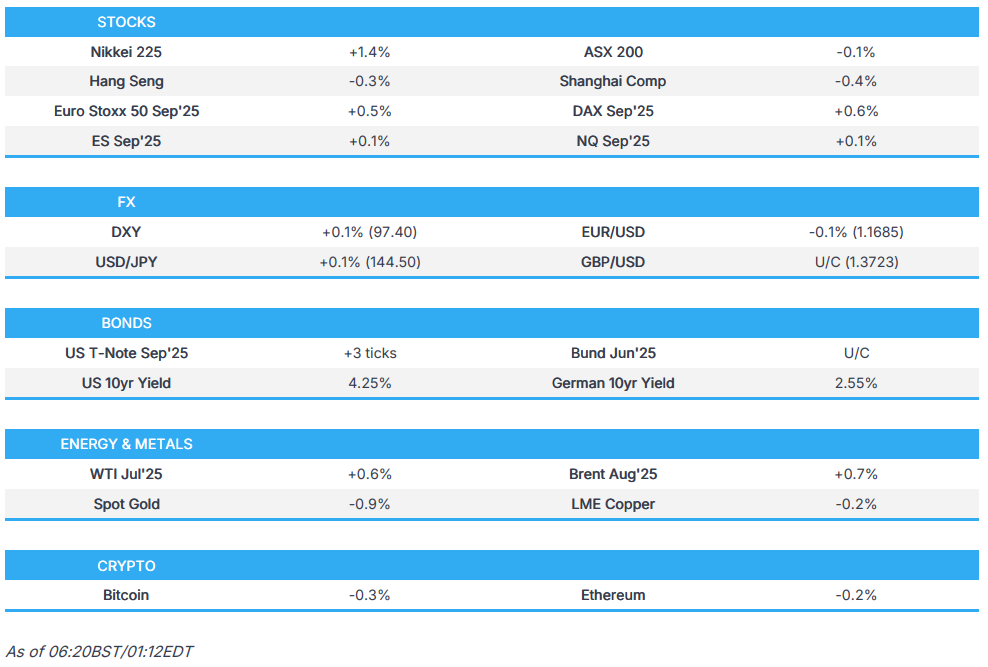
Newsquawk in 3 steps:
1. Subscribe to the free premarket movers reports
2. Listen to this report in the market open podcast (available on Apple and Spotify)
3. Trial Newsquawk’s premium real-time audio news squawk box for 7 days
US TRADE
EQUITIES
- US stocks were bid on Thursday to see SPX hover around record highs while NDX pushed above record highs.
- SPX +0.85% at 6,144, NDX +0.94% at 22,447, DJI +0.94% at 43,387, RUT +1.60% at 2,170
- Click here for a detailed summary.
NOTABLE HEADLINES
- US President Trump to appear on Fox News on Sunday morning.
- US Treasury Secretary Bessent said they have asked the Senate and House to remove the Section 899 protective measure from consideration in the “One, Big, Beautiful Bill”. Bessent also said that following dialogue with other countries on the OECD global tax deal, the US will announce a joint understanding among G7 countries that defends American interests. He added that OECD Pillar 2 taxes will not apply to US companies, according to Reuters.
- US Senate Parliamentarians have struck a “massive blow” to Republican Medicaid cuts, via Punchbowl’s Weiss citing Senate Budget Democrats; ruled that it is not compliant with the Byrd Rule.
- US Senate Republicans are reportedly going to attempt to rework the “provider” tax to retain it within the Reconciliation bill, via Politico’s Carney citing sources; Republicans state that a vote on Friday remains a possibility.
- US lawmakers said they would remove Section 899 from the tax bill, according to Reuters.
- Nike Inc (NKE) Q4 2025 (USD): GAAP EPS 0.14 (exp. 0.12), Revenue 11.097bln (exp. 10.66bln), Net income 211mln (exp. 185.9mln), Pretax profit 318mln (exp. 233.5mln). Inventory 7.49bln (exp. 7.17bln). Q4 reflected the largest financial impact for its Win Now actions, and expect headwinds to moderate from here.Shares rose 10.7% after hours.
TRADE/TARIFFS
- US President Trump said he just signed a deal with China on Wednesday, according to Reuters, and says he has one maybe coming up with India. Trump added that China is starting to open up. It was later clarified that the US and China have agreed to an additional understanding to implement the Geneva agreement, according to a White House official cited by Fox’s Lawrence. A second Administration official confirmed that the framework finalises what was agreed in London and also addresses Chinese export controls, according to a source familiar with the agreement.
- European Commission President von der Leyen told EU leaders that the EU executive received the latest counterproposal from the Trump administration today, according to two EU diplomats cited by POLITICO. This marks the latest engagement between Brussels and Washington, as the EU is coming to terms with potentially having to accept an agreement that still includes a “reciprocal”.
- European Commission President von der Leyen said the EU received the latest US proposal today and is prepared for both a deal and a no-deal outcome, stating all options remain on the table.
- EU reportedly considers lowering tariffs on US imports in a bid to woo US President Trump, via WSJ citing sources. “The European Union is considering lowering tariffs on a range of US imports in a bid to clinch a speedy trade deal with President Trump, according to people familiar with the matter.” “EU leaders are set to debate how much they are willing to sacrifice to win over Trump at a meeting in Brussels on Thursday evening. Other concessions under consideration include lowering nontariff barriers, buying more American products including liquefied natural gas, and offering to cooperate with the US to tackle its economic concerns about China.”
- French President Macron said he favours a speedy and fair EU–US trade deal, but warned that if the US maintains a 10% tariff, Europe would have to apply equivalent compensatory measures.
- White House Press Secretary Leavitt said the 9th July deadline for trade deals is not critical; trade deadline change would be Trump’s decision. Trump can pick a reciprocal tariff rate if deals fail, according to Reuters.
- US chip export curbs may slow China’s adoption of Deepseek’s next model, R2, via The Information.
- US Commerce Secretary Lutnick said tax bill passage is expected within the next week or two, adding that the China deal was “signed and sealed” two days ago. Lutnick stated that several deals will be announced in the coming week, with the Europe deal expected at the end. He noted that although Europe had a sluggish start, it is now performing excellently and there is optimism about a deal with the EU. Countries seeking further negotiations are welcome, and all nations will be categorised into appropriate tariff groups by the 9 July deadline for reciprocal tariff agreements. He added that the US is close to finalising a deal with India and that the tariff programme will not need to change if the bill is adjusted.
- German Chancellor Merz said von der Leyen proposed the creation of a new European trade organisation, and added that EU leaders are largely united on finalising the Mercosur trade deal.
APAC TRADE
EQUITIES
- APAC stocks traded mostly firmer for a bulk of the session following gains on Wall Street amid expectations of a future Fed Chair more aligned with the President. Sentiment was further supported after US President Trump announced he had signed a deal with China on Wednesday. Although initial reports were unclear and caused some confusion, White House officials later clarified that the signing finalised what had previously been agreed upon in Geneva and London. China has not yet confirmed the signing of the deal. APAC stocks later waned off best levels to trade mixed.
- ASX 200 was supported by the broader mood, with the rise in copper keeping miners propped up before paring back.
- Nikkei 225 outperformed across the region, buoyed by recent JPY weakness and a softer-than-expected Tokyo Core CPI reading, which could temper some of the recent hawkish rhetoric from BoJ’s Tamura.
- Hang Seng and Shanghai Comp opened with modest gains, drawing some support from US President Trump’s announcement of a signed deal with China. It was later clarified the deal finalised prior agreements made in Geneva and London, though China has yet to confirm the signing. Chinese bourses later turned flat.
- US equity futures gradually edged higher ahead of Friday’s PCE data. Meanwhile, Nike shares surged 10.7% post-earnings, with traders citing “turnaround hopes.”
- European equity futures are indicative of a firmer open – catching up to some of the late Wall Street gains – with the Euro Stoxx 50 future +0.5% after cash closed -0.2% on Thursday.
FX
- DXY was flat for the bulk of the session in quiet trade ahead of the upcoming PCE release — the Fed’s preferred inflation gauge. The index later dipped to session lows despite a lack of newsflow, but as EUR/USD mounted 1.1700. DXY traded within a 97.23–97.41 range after finding support at 97.00 on Thursday.
- EUR/USD was choppy around the 1.1700 handle amid a lack of fresh newsflow during APAC hours and ahead of preliminary CPI prints from France and Spain, which typically influence the EUR. On the trade front, European Commission President von der Leyen confirmed the EU received the latest US document for further negotiations, but warned that all options remain on the table, stating: “We are ready for a deal; at the same time, we are preparing for the possibility of no deal.”
- GBP/USD gradually edged up towards 1.3750 from a 1.3717 base, with UK-specific newsflow quiet overnight. Focus turns to UK Q1 GDP, though key April GDP Estimate metrics were already released on June 12th.
- USD/JPY initially outperformed a softer JPY, with the pair underpinned by weaker-than-expected Tokyo CPI and Japanese Retail Sales figures. USD/JPY reclaimed its 50DMA at 144.32 to hit a peak of 144.80 before retreating back towards session lows as the USD weakened.
- Antipodeans eventually tilted modestly higher as the USD weakened despite the indecisive risk tone and a lack of catalysts. A contraction in Chinese Industrial Profits did little to help sentiment for AUD or NZD at the time.
- PBoC set USD/CNY mid-point at 7.1627 vs exp. 7.1771 (prev. 7.1620)
FIXED INCOME
- 10yr UST futures took a breather after the prior day’s gains, where T-notes remained largely unfazed despite a relatively weak 7-year note auction ahead of Thursday settlement. Market focus now turns to the US Core PCE metrics.
- Bund futures were flat and uneventful, with newsflow light during APAC hours. Traders now eye preliminary CPI prints from France and Spain in early European trade, which could introduce some volatility.
- 10yr JGB futures saw choppy trade within tight ranges. Some initial upside followed the softer-than-expected Tokyo CPI metrics, but gains were later trimmed. Meanwhile, Japanese Finance Minister Kato said they will continue cautious consideration of potential buybacks of previously issued bonds.
- US sells USD 44bln of 7yr notes; Stop through 0.2bps. High Yield: 4.022% (prev. 4.194%, six-auction average 4.289%); WI 4.024%. Tail: -0.2bps (prev. -2.2bps, six-auction avg. -0.9bps). Bid-to-Cover: 2.53x (prev. 2.69x, six-auction avg. 2.64x). Dealers: 11.64% (prev. 4.8%, six-auction avg. 10.1%). Directs: 11.62% (prev. 23.6%, six-auction avg. 21.0%). Indirects: 76.74% (prev. 71.5%, six-auction avg. 68.8%).
COMMODITIES
- Crude futures continued the choppy trade seen on Thursday, with newsflow from Israel and Iran considerably quieter amid the ceasefire. Some optimism for crude may have stemmed from US President Trump’s announcement that the US signed a deal with China on Wednesday — though the agreement appeared to finalise what was previously settled in Geneva and London.
- Spot gold was subdued with newsflow quiet, and the yellow metal remained capped by the lack of fresh geopolitical updates following the flurry of headlines earlier in the month prior to the Israel–Iran ceasefire. Traders looked ahead to the upcoming US Core PCE data.
- Copper futures gave up some of the earlier optimism linked to US-China headlines, with the red metal later aligning with the broader indecisive and cautious market tone ahead of the July 9th US reciprocal tariff deadline.
- The US Energy Department announced that scheduled oil deliveries into the Strategic Petroleum Reserve will be delayed until December, due to maintenance at SPR sites. Of the 15.8mln barrels originally planned through May, only 8.8mln have been delivered so far.
- Goldman Sachs said Brent crude could reach USD 90/bbl by year-end in a Strait of Hormuz disruption scenario, while options markets see a 60% chance Brent stays in the USD 60s in 3 months and a 28% chance it exceeds USD 70.
CRYPTO
- Bitcoin tilted higher during APAC trade and eventually rose above USD 107.5k.
NOTABLE ASIA-PAC HEADLINES
- The PBoC injected CNY 525.9bln via 7-day reverse repos, maintaining the rate at 1.40%.
- Japanese Finance Minister Kato said they will continue cautious consideration of potential buybacks of previously issued bonds, according to local Reuters.
- The South Korean government held an emergency meeting on household debt, and plans to strengthen measures to control it, according to the financial regulator.
DATA RECAP
- Chinese Industrial Profit YTD (May) -1.1% (Prev. 1.4%).
- Japanese CPI Tokyo Ex fresh food YY (Jun) 3.1% vs. Exp. 3.3% (Prev. 3.6%)
- Japanese CPI, Overall Tokyo (Jun) 3.1% (Prev. 3.4%)
- Japanese Retail Sales YY (May) 2.2% vs. Exp. 2.7% (Prev. 3.3%, Rev. 3.5%)
- Japanese Jobs/Applicants Ratio (May) 1.24 vs. Exp. 1.26 (Prev. 1.26)
CENTRAL BANKS
- Fed’s Collins (2025 voter) said July is probably too early for a rate cut; the baseline outlook is to resume cutting later this year. The Fed has time to carefully evaluate incoming information, according to Reuters.
- Fed Governor Barr (voter) said monetary policy is well positioned to wait and see how economic conditions unfold, stressing the importance of bringing inflation back to target as low-income households are most vulnerable to price increases. He warned that tariffs will exert upward pressure on inflation with some persistence, while potentially slowing the economy and increasing unemployment. Barr noted that low-income workers are often the hardest hit during job market downturns and that there remains considerable uncertainty regarding tariff policies and their effects.
- Fed’s Kashkari (2026 voter) said independent monetary policy generally leads to lower inflation and a better labour market, noting the Fed strives to base decisions on data and analysis rather than politics. He stated inflation remains above the 2% target and must be brought back down, while the labour market is still strong and not “falling off a cliff.”
- Bloomberg article highlighted the majority of Fed officials are leaning against a July interest rate cut – citing recent commentary.
- US President Trump said it would be helpful if the Fed lowered rates; on Fed Chair Powell, Trump said “We have to fight this guy”
- Banxico cut rates by 50bps to 8.00% as expected, and stated that looking ahead, the board will assess further adjustments to the reference rate — a shift from its previous guidance that it could continue the calibrating policy and consider adjustments in similar magnitudes.
GEOPOLITICS
MIDDLE EAST
- Iranian Foreign Minister Araqchi said Tehran is assessing whether diplomacy with the US is in its interest, adding that there is currently no understanding for renewed talks with the US. Araqchi dismissed speculation about the resumption of negotiations with the US, saying it should not be taken seriously. There are no plans to receive IAEA Chief Grossi in Tehran, according to Reuters.
- Iran’s representative to the UN said Tehran is open to forming a regional nuclear consortium and exchanging uranium in the event of an agreement with Washington, via Sky News Arabia.
- Trump admin has discussed possibly helping Iran access as much as USD 30bln to build a civilian-energy-producing nuclear programme, easing sanctions, and freeing up billions of dollars in restricted Iranian funds, according to CNN sources. All that is part of an intensifying attempt to bring Tehran back to the negotiating table.
- An explosion occurred at the “Aluf” plant within a complex belonging to the Iranian defence industries in the Republic of Azerbaijan, according to Al Hadath.
- Israeli Prime Minister Netanyahu agreed with US President Trump to end the Gaza war within two weeks, according to Al Arabiya citing Israeli press.
- Israeli Defence Minister warned of further strikes on Iran if it resumes nuclear development, according to Al Arabiya.
RUSSIA-UKRAINE
- EU leaders agreed to renew existing Russia sanctions for another six months, according to Reuters.
EU/UK
NOTABLE HEADLINES
- ECB’s Knot, when asked about market expectations of one more 25bps cut by the end of the year, Knot said that possibility was “difficult for me to exclude”, via FT.
LATAM
- Brazil Treasury Secretary Ceron said Congress’ reversal of the IOF tax increase will have a significant impact in 2025 and 2026, adding that the government has 2 to 3 weeks to define what the budget solution will be, according to Reuters.
- Moody’s cuts Colombia’s rating to Baa3 from Baa2; outlook stable.
- S&P downgraded Colombia’s sovereign credit rating to BB from BB+ with a negative outlook, citing weaker fiscal performance.
3 .ASIA
3A NORTH KOREA/SOUTH KOREA
3B JAPAN
3C CHINA
CHINA/USA
Confusion As Trump Says Deal With China “Signed” Yet Both Sides Violate Terms Of Ceasefire
Thursday, Jun 26, 2025 – 10:11 PM
There was a burst of confusion late in the day when Donald Trump said that the US and China had signed a trade deal two weeks after saying they had reached an understanding in London about how to implement a ceasefire in the countries’ dispute.
“We just signed with China yesterday,” the president said at the White House on Thursday, without providing any details.
The reality turned out to be far less exciting than what Trump represented.
Shortly after, a White House official said the US and China had “agreed to an additional understanding for a framework to implement the Geneva agreement”, in a reference to the trade talks that the nations held in May, when they first negotiated a truce, which was really just an agreement to continue negotiating. And since there was still leftover confusion, Trump’s Commerce Secretary Howard Lutnick, said that the US and China sign a “finalized a trade understanding” reached last month in Geneva adding that the White House has imminent plans to reach agreements with a set of 10 major trading partners.
The China deal, which Lutnick said had been signed two days ago, codified the terms laid out in trade talks between Beijing and Washington, including a commitment from China to deliver rare earths used in everything from wind turbines to jet planes.
In other words, the “deal” that was just signed was merely another reaffirmation that the two sides continue to talk about eventually sitting down to negotiate.
Lutnick told Bloomberg Television that President Donald Trump was also prepared to finalize a slate of trade deals in the coming two weeks in connection with the president’s July 9 deadline to reinstate higher tariffs he paused in April.
“We’re going to do top 10 deals, put them in the right category, and then these other countries will fit behind,” he said. Lutnick did not specify which nations would be part of that first wave of trade pacts, though earlier Thursday Trump suggested the US was nearing an agreement with India.
As a reminder, the “China accord” Lutnick described is far from a comprehensive trade deal that addresses thorny questions about fentanyl trafficking and American exporters’ access to Chinese markets.
After an initial round of negotiations in Geneva resulted in a reduction in tariffs imposed by both countries, the US and China accused each other of violating their agreement. After subsequent talks in London this month, negotiators from the US and China announced they had arrived at an understanding, pending approval from Trump and Chinese President Xi Jinping.
Lutnick said that under the agreement inked two days ago, US “countermeasures” imposed ahead of the London talks would be lifted, but only once rare earth materials start flowing from China.
Which is a problem: as discussed previously, China’s biggest point of leverage in the trade war negotiations is its control of rare earth exports to the US; it’s also why the ceasefire deal announced in early June was mostly meant to restart exports of Chinese rare earths to the US.
That never happened. As the WSJ reported overnight, two weeks after China promised the U.S. it would ease the exports of rare-earth magnets, Chinese authorities have been dragging out approval of Western companies’ requests for the critical components, a situation that is bound to reignite trade tensions between Washington and Beijing.
Western companies say they are receiving barely enough magnets for their factories and have little visibility of future supplies. Firms are waiting weeks as Chinese authorities scrutinize their applications, only to be rejected in some cases. And applications for raw rare earths, which are used to make magnets, are rarely granted.
As a result, Western companies are concerned that the shortages could soon affect manufacturing. Companies are so desperate for magnets that they are opting for expensive airfreight whenever licenses are granted to prevent costly production shutdowns. Some manufacturers are experimenting with workarounds that would allow them to make their products without the most powerful magnets.
“It’s hand to mouth—the normal supply-chain scrambling that you have to do,” said Lisa Drake, a vice president overseeing Ford’s industrial planning for batteries and electric vehicles, earlier this week. Although she said the situation had improved, the scarcity of the rare-earth magnets is forcing Ford to “move things around” to avoid factory shutdowns, she said.
As a result, contrary to White House assertions that the flow of the critical components would return to normal, manufacturers have taken the continuing challenges as a sign that new Chinese rare-earth export restrictions, introduced in April after President Trump raised tariffs on China, are here to stay.
“Yes, the export restrictions have been paused on paper. However, ground reality is completely different,” said Neha Mukherjee, a rare-earths analyst at Benchmark Mineral Intelligence. The licensing process is plagued by “bureaucratic drag.”
On Thursday, China’s Ministry of Commerce issued a token statement that it has been accelerating the review of rare-earth export license applications and has approved “a certain number.”
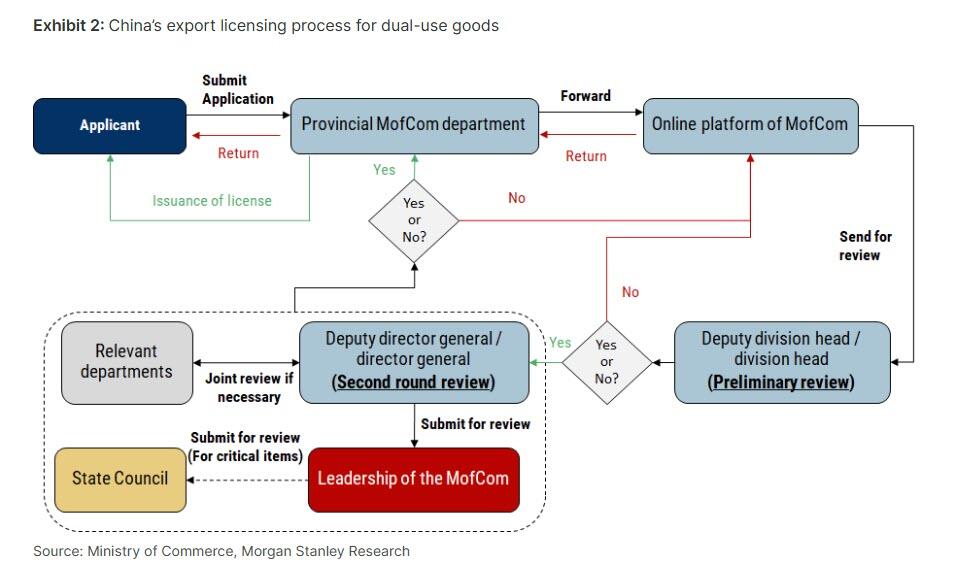
The restrictions illustrate the power Beijing holds through its formidable supply chains and how it can use them to inflict pain on Western businesses and exact concessions from the US. China makes 90% of the world’s most powerful rare-earth magnets, a key component in everything from cars to jet fighters. In April, after Trump heaped stiff tariffs on Chinese products, Beijing established an export-control system for rare earths. While it said the license system was set up to regulate the export of materials for military use, the regime has in effect allowed China to clamp down on rare-earths supplies as it wishes.
After April, the supply of magnets to Western businesses slowed to a trickle, causing shock waves for global car, defense and electronics makers. Exports of rare-earth magnets to the U.S. declined 93% in May from a year earlier. Ford stopped production of its Explorer SUV at its Chicago plant for a week in May.
The U.S. accused China of slow-walking the approval of export licenses, which China denied. The shortage drove both sides back to the bargaining table earlier this month, where China agreed to free up the flow of rare earths in exchange for the U.S. easing its own restrictions on certain U.S. exports to China.
Following the deal, Trump wrote that “full magnets, and any necessary rare earths, will be supplied up front by China.”
However, China put only a six-month limit on any new licenses, we later learned as Beijing seeks to keep DC on a tight leash. Now, in the applications for export licenses, Chinese authorities are asking Western companies for sensitive details such as contact information of those buying their magnets and even designs of how their magnets are integrated into components like motors.
Beijing also appears to be trying to prevent stockpiling by Western businesses. One Chinese magnet maker has warned clients seeking to import more magnets than usual that they may have to explain to government officials the “business drivers” behind such large orders, according to an advisory note the magnet maker shared with clients.
Fearful of shortages, many Western businesses are complying with the information requests—but are still facing long delays. The success of their application also depends on their supplier. Big state-connected magnet companies are getting export licenses faster than smaller private ones, according to many in the industry.
“The export policy for magnet[s] is still very strict,” said a representative for one Chinese magnet maker. Now, some Western businesses say they are resigned to the fact that the restrictions may remain in place indefinitely.
For a detailed analysis of the leverage China has with its supply chain of Rare Earths, please read Morgan Stanley’s key report on the topic “How China Is Playing Its Rare Earth Card” (available to pro subscribers).
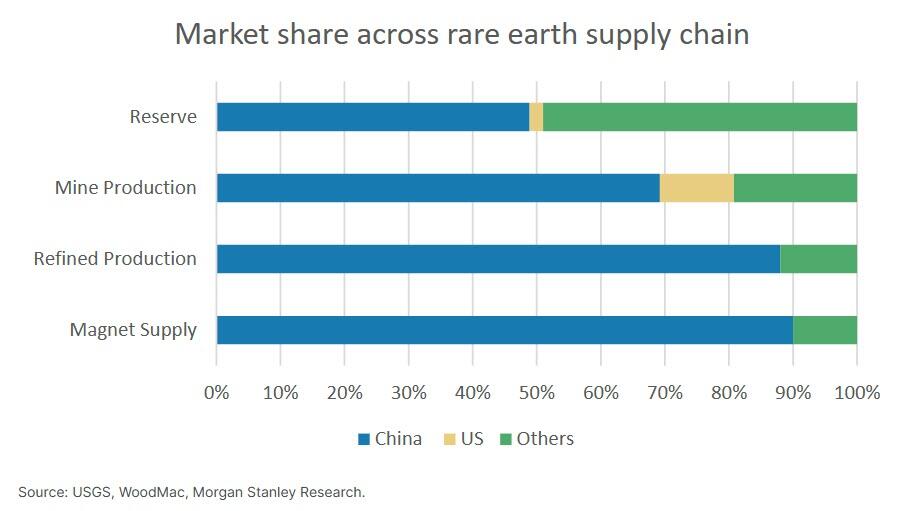
And while China is clearly dominating the rare earth supply chain (for now, as it is only a matter of time before the Trump admin subsidizes domestic producers such as MP Materials to ramp up production as an alternative to China), the US is doing the same with ethane (a relationship we described in “China’s Need For US Chemicals Greater Than US Need For Rare Earths“.)
China imported more than 565,000 barrels per day of petrochemical feedstocks from the US in 2024 according to the Energy Information Administration, with a value of over $4.7 billion. That dwarfed the $170 million of rare earths the US imported last year, about 70% of which came from China, according to the US Geological Survey.
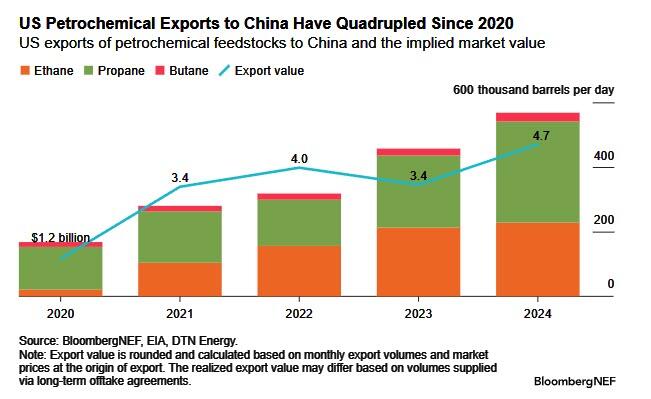
The figures show the dependence the US and China have developed on each other by ever tightening trade links over the past few decades. While China has a tight grip on refining many metals crucial for industry, it also takes in niche chemicals from the US that are difficult to buy elsewhere.
China leans on naphtha to produce most base chemicals, which are processed further to end up in everyday items like electronics and clothing. However, some plants can switch to cheaper propane when the economics make sense, which they do regularly. Propane dehydrogenation plants however can’t process alternatives like naphtha. The US accounted for over half of all China’s propane imports in 2024.
And so, with China refusing to comply with the terms of the recent ceasefire and unlock rare earth exports to the US, Washington is doing the same, and as Reuters reported yesterday, the US sent letters to Enterprise Products and Energy Transfer on Wednesday informing the companies they could load ethane on vessels destined for China but could not unload the ethane in China without authorization.
The letters from the U.S. Department of Commerce follow a licensing requirement imposed several weeks ago on the companies’ exports of ethane to China, which halted shipments and led to vessels anchoring in or hovering around the US Gulf Coast
A copy of the letter seen by Reuters and later released by Enterprise Products said, “This letter authorizes Enterprise Products to load vessels with ethane, transport and anchor in foreign ports, even if… to a party located in China,” the letter said. “However, Enterprise Products may not complete such export… to a party that is located in China,” without further authorization.
The letters, Reuters muses, may signal the US preparing to lift restrictions imposed on exports to China in late May and early June, as the U.S.-China trade war shifted from retaliatory tariffs, to curbs on each others supply chains. With China granting rare earth export licenses to some firms and saying it would speed up the approval process, the U.S. now appears close to permitting ethane exports to China.
However, the decision to limit unloading of ethane is more likely another form of negotiation, one which signals that the cargo will not be released unless China complies with its own terms, and resumes shipments of rare earths.
About half of all US ethane exports go to China, where it is used by the petrochemical industry. China’s ethane cracking capacity is dwarfed by its capacity to process naphtha and propane, but almost all of its ethane imports come from the US. The restrictions will have a significant impact on the Lianyungang and Tianjin plants, owned by Satellite Chemical, Sinopec and INEOS. SP Chemicals, a Singapore-based producer, sources most of its feedstock from Enterprise Products Partners.
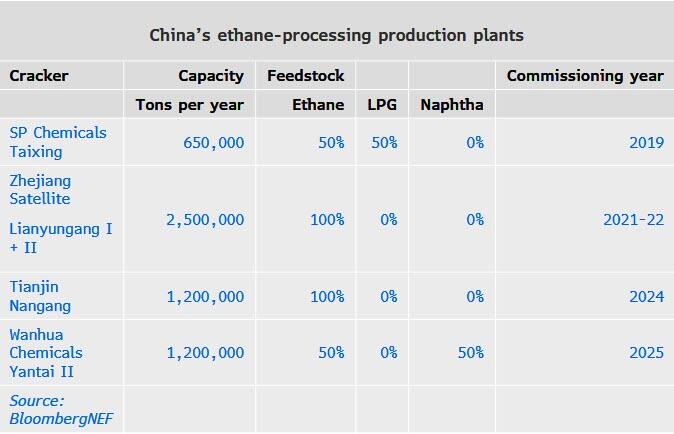
The ability to load and begin transporting ethane could relieve congestion at ports along the U.S. Gulf coast, where vessels have been stalled, although that now appears to be dependent on China complying with the terms of the London ceasefire.
Since May 23, the U.S. imposed new restrictions on exports to China of everything from ethane and chip design software to jet engines and nuclear plant parts.
As the trade war continues, it appears commodities are now leading the confrontation, with players on both sides set to feel the pain.
More in the Morgan Stanley report “How China Is Playing Its Rare Earth Card“, available to pro subscribers.
END
KEVIN W.. ON THE ABOVE
note the timelines; sources, headlines, copy and fine print.
Lies and confessions – come from the Zionists
and allows them billions in trading profits
Story #1
Lutnick says U.S.-China trade truce signed, 10 deals imminent
BY KAILEY LEINZ
JUNE 27, 2025, 12:32 AM EDT
The U.S. and China finalized a trade understanding reached last month in Geneva, U.S. Commerce Secretary Howard Lutnick said, adding that the White House has imminent plans to reach agreements with a set of 10 major trading partners.
A White House official said the U.S. and China agreed to the terms to implement the Geneva accord. A spokesman for the Chinese Embassy in Washington declined to comment, while China’s Foreign Ministry in Beijing didn’t immediately respond to a request for comment on Friday.
Story #2 – 4:15 a.m. June 27 EDT
JUNE 27, 2025 / 13:45 IST
Rare-earth magnet squeeze reignites US-China trade tensions
Despite a deal to ease restrictions, Chinese export licence delays are throttling supplies of critical magnets, disrupting Western manufacturing and deepening geopolitical friction.
“China produces 90% of the world’s most powerful rare-earth magnets. Though Beijing assured the US earlier this month that it would resume exports, the reality on the ground tells a different story.
To cope, some magnet users are redesigning products to use less-powerful, non-restricted magnets—such as ferrite-based alternatives—even though these replacements offer lower performance. In high-performance sectors like AI servers and electric vehicles, such substitutions are not always feasible. Some Chinese suppliers have even suggested new magnet formulations that avoid restricted elements like dysprosium and terbium.”
Kevin
4.European affairs
GERMANY
brilliant!!
Berlin To Build New Asylum Complex For Over 1,000 Migrants While Locals Face Housing Crisis
Friday, Jun 27, 2025 – 02:00 AM
Authored by Thomas Brooke via Remix News,
Amid a continuing housing shortage for locals, Berlin’s state government has approved the construction of a new container village to house more than 1,000 asylum seekers on Tempelhofer Feld.
The site, once a Nazi labor camp and later an airport, has long been protected by a 2014 law banning new construction, but that law is now being overridden for migrant housing.
According to Senator Cansel Kiziltepe of the left-wing Social Democrats (SPD), the facility will open in the second half of 2028, offering between 1,000 and 1,100 beds. The justification, she says, is that Berlin’s regular shelters for migrants are still overflowing.
Sports and leisure areas are expected to remain intact, though minor amenities like a mini-golf course and barbecue lawn will be relocated. Officials were keen to stress that historically sensitive parts of the former forced labor camp will be left untouched.
Meanwhile, discussions about using Tempelhofer Feld for urgently needed housing for Berliners remain on the back burner. As reported by Junge Freiheit, six proposals for the future of the field are being reviewed, but no decisions will be made until at least September, and a public referendum may be required.
The planned asylum facility will go ahead regardless of what Berliners decide.
This decision follows a pattern of prioritizing asylum seekers over local residents. In 2023, Remix News reported that a new social housing complex in the Spandau district would be reserved exclusively for refugees. The complex, consisting of 128 apartments built by the city-owned WBM housing association, was to house 570 asylum seekers indefinitely, despite the long wait for Berliners seeking social housing.
The financial burden of migration continues to mount for the city. In 2023, Berlin spent at least €2.1 billion on asylum-related costs, accounting for 5 percent of its entire budget.
The state government, facing rising expenses, has turned to emergency borrowing. In March, Economics Senator Franziska Giffey confirmed that Berlin will take on new debt to cover refugee-related spending, taking advantage of relaxed rules under the so-called debt brake introduced by the new Grand Coalition federal government. This allows the city to borrow approximately €670 million annually, totaling €1.3 billion for the 2026 and 2027 budgets.
While money is being poured into housing for migrants, Berliners are facing a severe housing shortage. Germany’s largest cities are short an estimated 800,000 apartments. At the same time, office vacancy rates are at record highs, with enough empty office space to create around 152,000 homes nationwide.
However, the conversion of offices into apartments is being stifled by a raft of 20,000 building regulations, high interest rates, and spiraling construction costs.
Despite these challenges, Berlin’s government continues to rent out office space for migrant housing at rates well above market value.
In one case, the State Office for Refugees is paying €40 per square meter for a building that was initially offered at €25.80.
Other examples include €165 million for housing 1,500 people in Kreuzberg over 10 years, €143 million for 1,200 people in Lichtenberg, and €118 million for 950 people in Westend.
end
UK
UK To Buy US F-35s As Starmer Signals NATO Commitment
Friday, Jun 27, 2025 – 02:45 AM
The UK will purchase at least 12 U.S.-made F-35A stealth fighter jets, restoring the Royal Air Force’s nuclear strike capability for the first time since 1998, according to Bloomberg.
Prime Minister Keir Starmer announced the move ahead of the NATO summit in The Hague, in a move widely seen as both a gesture to President Donald Trump and a step to reinforce Europe’s defense amid doubts about long-term American security guarantees.
“You have to get relatively close to targets in order to drop it,” said Justin Bronk, a senior research fellow at RUSI, referring to the B61-12 tactical nuclear bomb the F-35A was certified to carry in 2023. “If the RAF is to be given a free-fall nuclear capability as part of the beefed-up deterrent plans, the F-35A is the only choice.”
Defense Secretary John Healey emphasized that this is not a new weapons program, but a reinforcement of NATO’s nuclear mission. “We’re facing increasing threats, we’re facing rising nuclear risks,” he told Sky News. “This is not the UK taking on a new nuclear weapon, it’s playing a part in the established nuclear mission in NATO.”
Under current arrangements, the U.S. would retain control over the nuclear bombs, and any deployment would require joint authorization by the U.S. and NATO’s top commander.
The £3.2 billion ($4.4 billion) purchase will include 27 aircraft by decade’s end, replacing more costly short-takeoff versions and supporting 20,000 UK jobs. “These planes will save money,” said defense procurement minister Maria Eagle, explaining that the UK will host 15% of the supply chain.
Bloomberg writes that the announcement comes as NATO is expected to adopt a bold new defense spending target of 5% of GDP, aimed at appeasing Trump’s long-standing criticism of European underinvestment in defense.
Starmer’s move reflects broader European anxiety over Trump’s wavering commitment to NATO’s Article 5, the alliance’s mutual defense clause. With Russia’s war in Ukraine ongoing and fears growing about President Vladimir Putin’s intentions, the UK is renewing its broader nuclear deterrent. This includes £15 billion ($20.4 billion) in new nuclear warheads and up to 12 nuclear-powered submarines as part of the AUKUS pact with the U.S. and Australia.
While most MPs backed the move, critics—including former Labour leader Jeremy Corbyn—warned it undermines nuclear non-proliferation commitments. Eagle dismissed the concerns, saying the UK was “establishing a way to use another state’s nuclear weapons to support an existing mission.”
Starmer’s strategy is to present the UK as a serious NATO contributor while courting a U.S. president known to reward big defense deals. However, Trump has so far offered little in return—ignoring EU calls for stronger sanctions on Russia and launching airstrikes on Iran despite European objections.
5. RUSSIAN AND MIDDLE EASTERN AFFAIRS
ISRAEL IRAN/USA
Iran denies any meeting with the USA next week
(JerusalemPost)
Iran denies any meeting with US next week, foreign minister says
The Iranian foreign minister said Tehran was assessing whether talks with the US were in its interest, following five previous rounds of negotiations that were cut short by Israel and the US attacks.

Iranian Foreign Minister Abbas Araghchi talks during a press conference in Istanbul, Turkey, June 22, 2025.(photo credit: REUTERS/UMIT BEKTAS)ByREUTERSJUNE 26, 2025 22:40Updated: JUNE 26, 2025 23:35
Iran currently has no plan to meet with the United States, Foreign Minister Abbas Araqchi said on Thursday in an interview on state TV, contradicting US President Donald Trump’s statement that Washington planned to have talks with Iran next week.
The Iranian foreign minister said Tehran was assessing whether talks with the US were in its interest, following five previous rounds of negotiations that were cut short by Israel and the US attacking Iran’s nuclear facilities.
The US and Israel said the strikes were meant to curb Iran’s ability to create nuclear weapons, while Iran says its nuclear program is solely geared toward civilian use.
Aragchi said the damages to nuclear sites “were not little” and that relevant authorities were figuring out the new realities of Iran’s nuclear program, which he said would inform Iran’s future diplomatic stance.
This is a developing story.
END
IRAN
(TIMES OF ISRAEL)
Macron says Iran quitting non-proliferation treaty would be ‘worst-case scenario’
By AFPToday, 2:13 am
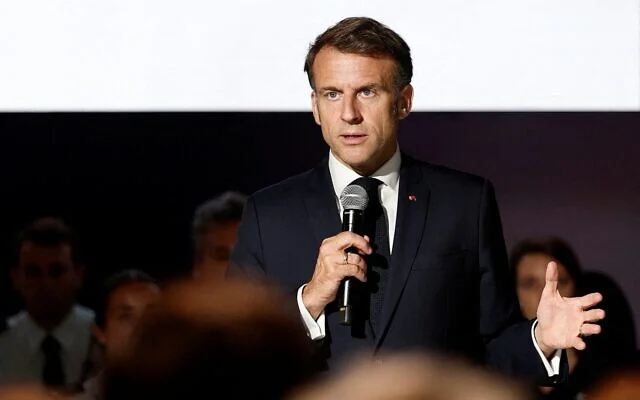
French President Emmanuel Macron delivers a speech at the Paris Air Show at Le Bourget Airport, June 20, 2025. (Benoit Tessier / AFP)
French President Emmanuel Macron says that US strikes on Iran’s nuclear facilities were “genuinely effective” but the “worst-case scenario” would be if Tehran now exits the global non-proliferation treaty.
“The worst would be that the consequence of this is Iran’s exit from the Non-Proliferation Treaty and therefore, ultimately, a drift and a collective weakening,” Macron tells journalists after an EU summit in Brussels.
END
IRAN/HOLLAND/GEERT
Geert Wilders calls the Ayatollah a ‘d***head’ on X in response to Khamenei’s celebratory post
Wilders responded to Khamenei’s celebratory post on winning the war on X saying, “You lost and went on your knees for Trump and Netanyahu you d***head.”

Dutch far-right leader Geert Wilders speaks to the media following his decision to leave the governing coalition, in The Hague, Netherlands, June 3, 2025.(photo credit: REUTERS/PIROSCHKA VAN DE WOUW)ByJERUSALEM POST STAFFJUNE 27, 2025 04:47Updated: JUNE 27, 2025 04:51
Geert Wilders called Ayatollah Khamenei a d***head on an X/ twitter post on Wednesday.
Wilders, a Member of the House of Representatives of the Netherlands, took to X to write a response to the Ayatollah’s post.
Khamenei had posted, “I offer my congratulations on the victory over the fallacious Zionist regime.”
The Ayatollah was inferring that his regime had won the war between Iran and Israel.
Wilders responded on X saying, “You lost and went on your knees for Trump and Netanyahu you d***head.”
This is not the first interaction Wilders had with Khamenei on social media. He had previously called the Ayatollah a “psychopath” and a “dangerous maniac,” while affirming his unwavering support for Israel. “Reason, democracy, and freedom will prevail,” Wilders declared
This was in response to Khamenei’s threat that “the blows of the resistance front will grow stronger and more painful against the worn and decaying body of the Zionist regime,” signaling Iran’s increasing hostility toward Israel.
A friend to Israel
Wilders has been an outspoken supporter of Israel, making multiple social media posts in support of the country, despite threats and criticisms.
He posted on social media a list of threats, such as “A bullet. Wilders, like Jews, is vermin that must be exterminated,” “Zionist dogs like you will be shot,” and “we will cut your head soon.”
Wilders told the Jerusalem Post that he had conveyed the threats to the police, but with “all the threats, hundreds of times a year, sometimes they can find the sender and prosecute, but most of the times they can’t or the authorities of the country of the sender will not cooperate with the Dutch authorities.”
END
ISRAEL/IRAN/OPINION
‘The stars aligned’: Why Israel set out for a war against Iran, and what it achieved
IDF saw growing nuclear threat, alongside collapse of proxy groups, and its readiness to act reaching peak; ‘existential threat’ removed, but Iran will continue to challenge Israel

By Emanuel Fabian FollowToday, 6:00 am

A file photo shows an Israeli Air Force F-16 fighter jet taking off for strikes in Iran during the June 2025 conflict, in a handout photo published on June 27, 2025. (Israel Defense Forces)
Over the past decades, Israel has come up with numerous different plans to attack Iran’s nuclear program. None of them were activated, nor were they considered ready. Until this month.
In the early hours of June 13, the Israel Defense Forces launched what it dubbed a “preemptive” operation against not just the Iranian nuclear program, but the wider threat of Iran’s ballistic missiles and its overarching plans to destroy Israel.
The war began with surprise strikes carried out by the Israeli Air Force in Tehran and other areas of Iran, some 1,500 kilometers from Israel. The sudden assault was multifaceted.
In what is now known as Operation Red Wedding, some 30 top Iranian military commanders — including the three most senior generals — were eliminated in near-simultaneous strikes in Tehran, which, according to the IDF, disrupted Iran’s command and control and prevented it from responding to Israel for nearly a full day.
Most significant among them was the chief of Iran’s Revolutionary Guards’ air force, Brig. Gen. Amir Ali Hajizadeh, who was killed alongside the rest of the top brass of the IRGC Aerospace Force — responsible for Iran’s ballistic missiles and drones — as they met in an underground command center to prepare Iran’s retaliation.
Unlike other Iranian commanders killed in their homes during the opening strikes, Hajizadeh and his subordinates were already gathered at their command center when the offensive began, as Iran was on heightened alert in the days ahead of the Israeli operation.
Israel had carried out a deception campaign to lull Iran into a false sense of security and cause the IRGC air force officials to gather that morning.

A firefighter calls out to his colleagues at the scene of an explosion in a residential compound in northern Tehran, Iran, June 13, 2025. (Vahid Salemi/AP)
The commander of Iran’s Islamic Revolutionary Guard Corps’ elite Quds Force, Gen. Esmail Qaani, was among those whom Israel wanted to eliminate, but he was not targeted that night.
In another effort at the same time, known as Operation Narnia, nine senior Iranian nuclear scientists, who, according to Israel, were working on a bomb, were also killed in strikes in the Iranian capital.
All of this occurred within minutes.
The IAF over the following hours struck several nuclear facilities, destroyed many of Iran’s air defenses, giving its fighter jets and drones freedom of action, and struck ballistic missile launchers to thwart Iran’s initial response.

Iranian ballistic missile launchers are targeted in Israeli airstrikes, in footage released by the IDF on June 16, 2025. (Israel Defense Forces)
In the following days, the IDF targeted additional Iranian nuclear facilities, eliminated more military commanders and nuclear scientists, and continued to work to thwart Iran’s attacks on Israel. The United States later joined on June 22 with its strikes on Iran’s nuclear sites, particularly the underground Fordo facility.
The IDF has said that it “fully met, and even exceeded, all the objectives and goals” that it had set out before the operation, which lasted just 12 days.
But why now?
Ahead of the operation, the IDF presented its assessments to Israel’s political echelon, according to which the development of the Iranian threat in all aspects — ballistic missiles, the nuclear program and the plan to destroy Israel — was reaching a “point of no return,” and that at the same time, the Israeli military was at “optimal readiness for action.”

A Ghadr-H missile, (c), a solid-fuel surface-to-surface Sejjil missile, and a portrait of the Supreme Leader Ayatollah Ali Khamenei displayed at Baharestan Square in Tehran, Iran, on Sept. 24, 2017, for the annual Defense Week, marking the 37th anniversary of the 1980s Iran-Iraq war. (AP/Vahid Salemi)
In April, a month into his role as IDF chief of staff, Lt. Gen. Eyal Zamir determined that June would be the window of opportunity for the Iran operation. Otherwise, according to the IDF, the opportunity would be missed due to several factors.
Any delay would have meant that the IDF might not be able to remove those threats at a later date, according to the military. It therefore launched the preemptive campaign, given the codename Operation Rising Lion, to “eliminate the existential threat to Israel” posed by Iran’s nuclear and missile programs.
Israel’s intelligence on the Iranian nuclear program suggested that Iran was “accelerating its progress along the weaponization track” while continuing to enrich uranium to 60 percent or higher on a large scale, and was accumulating enough fissile material that could be enriched to weapons-grade level for several nuclear bombs “in a short period.”
According to the Military Intelligence Directorate’s assessments, from the moment it made a decision to do so, it would take Iran at most two months to produce a bomb.
Some of the indications identified by the Intelligence Directorate included a secret plan, led by senior Iranian nuclear scientists, to create the components necessary for a nuclear weapon.
As part of the plan, Israeli intelligence reports showed covert experiments and research and development efforts were conducted: “The advancement of the plan brought the Iranian regime very close to the point of being able to produce a nuclear weapon upon deciding to do so, and to possessing a capability for mass destruction,” the military said.

Footage of the Natanz nuclear facility aired by Iranian state TV on April 17, 2021. (Screen capture/Twitter)
The Intelligence Directorate also identified that Iran planned to triple the rate of its ballistic missile production and to increase its stockpile from some 2,500 to 8,800 within two years.
If Iran were to have close to 9,000 ballistic missiles, this would pose an existential threat to Israel, the IDF determined. Such a quantity of missiles would be able to cause massive and widespread damage in Israel.
Additionally, the Intelligence Directorate identified that Iran was continuing to advance its “plan to destroy Israel,” which included a multi-front ground invasion by its regional proxies alongside a massive ballistic missile attack.
Allowing these efforts by Iran to progress would make them much harder to combat in the future, according to the IDF.

A woman walks past a banner showing missiles being launched, in northern Tehran, Iran, April 19, 2024. (AP/Vahid Salemi)
At the same time, the army identified a “strategic window of opportunity” to act against these threats.
This included Israel’s operational and intelligence capabilities reaching a point of maturation and readiness; the collapse of the Iran-led Axis of proxies on Israel’s borders, including Hezbollah in Lebanon, Bashar al-Assad’s regime in Syria, and Hamas in Gaza; and increased coordination with the United States.
The IDF said it exploited the strategic window of opportunity driven by the growing threat from Iran, the deterioration of Iran’s proxies and Israel’s peak readiness to act.
“The stars aligned,” one IDF general said during a recent discussion.
Planning the operation
Over the years, the IDF had monitored the developments in Iran and carried out various actions, mostly covert, to delay and disrupt the nuclear and missile threats.
After identifying the rising threat, in October 2024 — at the height of the fighting with Hezbollah in Lebanon, and after a second missile attack on Israel by Tehran within months — the IDF accelerated its plan for a campaign against the Islamic Republic. It based the plans on its considerable intelligence and capabilities it had developed over the years, and refined them.

A file photo shows Israeli Air Force F-15 fighter jets flying over Israel en route to carry out strikes in Iran, during the June 2025 conflict, in a handout photo published on June 27, 2025. (Israel Defense Forces)
At the end of November, while Israel’s ground offensive in Lebanon was underway, the Intelligence Directorate and IAF held a joint conference during which they outlined Iran’s “centers of gravity”: Iranian firepower, air superiority, the nuclear program, force buildup, the Iranian economy, governance and the military industry.
The conclusion after that joint conference was that establishing air superiority was the key.
A joint Intelligence Directorate and IAF team spent months mapping out Iran’s air defense systems, which required cross-referencing thousands of intelligence sources alongside generating new ones.
By March, the issue had been cracked, and intelligence teams began working on creating a target bank based on the identified centers of gravity.
The entire plan was kept compartmentalized and secret within the IDF to ensure the surprise assault. Even some top generals, such as the heads of the military’s regional commands, were unaware of it.
In coordination with Israel’s political echelon, the military defined the main goals of the operation as: “Creating conditions to prevent Iran’s nuclearization over time, and improving Israel’s strategic balance.”
The IDF feared its attack plans would leak, with Iran thought to be on heightened alert. The military assessed that Iran had 500 ballistic missiles ready to be fired at Israel within minutes or hours. But the surprise attack was able to knock Iranian forces out of balance, delaying their response.
Air superiority
During the 12 days of war, the IAF said it carried out more than 1,500 sorties in Iran and over 600 aerial refuelings en route.
The Air Force struck some 900 targets — including 1,500 separate components — using some 4,300 munitions, after achieving aerial supremacy from western Iran to Tehran and beyond. Of the strikes, 370 were carried out by fighter jets, and the rest by drones.
Aerial supremacy was achieved not just over Iran, but over other countries that Israel needed to pass through to reach it. This was the reason Israel destroyed Syria’s air defenses following the fall of the Assad regime and objecting to Turkish military presence in the country.
Despite its air superiority, the IAF lost eight drones during operations in Iran. However, no fighter jets were shot down, contrary to what the military had assessed before the operation.

An IAF Boeing 707 refueling plane flies alongside F-35 fighter jets over the Middle East, in a handout photo issued on June 18, 2025. (Israel Defense Forces)
The military said its policy during the war was that loss of unmanned drones was acceptable for the purpose of thwarting ballistic missile attacks on Israel’s home front. Such attacks killed 28 people during the fighting, injured hundreds and left thousands homeless.
The IAF’s policy amid the war was to risk having a drone shot down in order to thwart Iran’s ballistic missile fire by targeting the launchers. Iran’s attacks on Israel left 28 dead.
IAF strikes destroyed 80 Iranian surface-to-air missile systems, according to the military, out of around 100 in the areas where it was operating. Bombings managed to thwart around 60% of Iran’s ballistic missile fire.
Fighter jets and drones also destroyed some 200 of Iran’s estimated 400 ballistic missile launchers; 15 Iranian aircraft; 70 radars; six airports and air bases; over 35 missile and air defense production facilities; and dozens of command centers.
A series of strikes on Monday in Tehran, jsut before the ceasefire, eliminated an estimated 300 members of the Islamic Revolutionary Guard Corps, mostly members of the Basij internal security force.

Footage posted to social media shows the aftermath of Israeli strikes in Tehran on June 23, 2025 (X; used in accordance with Clause 27a of the Copyright Law)
The farthest fighter jet strike during the operation was carried out at Mashhad Airport, hitting an Iranian refueling plane, approximately 2,400 kilometers from Israeli territory.
Damage to Iran’s nuclear program
The military has assessed that Iran’s nuclear program has been set back years, after both its own strikes and those carried out by the US hit several uranium enrichment sites and supporting facilities, and took out top nuclear scientists.
According to the IDF’s assessments, the Iranian nuclear program has been “significantly damaged,” and its ability to potentially enrich uranium to 90% purity has been “neutralized for an extended period.”
Additionally, Iran’s ability to produce a “nuclear core” for a bomb has been “temporarily neutralized.”

This handout satellite picture, provided by Maxar Technologies and taken on June 22, 2025, shows damage after US strikes on the Isfahan nuclear enrichment facility in central Iran. (Satellite image ©2025 Maxar Technologies / AFP)
Iran’s weaponization efforts were “damaged significantly” through strikes on research and development infrastructure, the elimination of key nuclear scientists, and the loss of documented knowledge, according to the IDF’s assessments.
Israel’s strikes destroyed or badly damaged uranium conversion infrastructure and labs at the Isfahan nuclear facility; an enrichment hall housing centrifuges and other infrastructure at Natanz; and the inactive Arak heavy water reactor.
The IDF’s strikes also damaged “thousands of centrifuges,” according to the military’s assessments, and extensive strikes were also carried out against centrifuge production capabilities, research facilities and other supporting infrastructure.
The US, meanwhile, bombed Iran’s underground Fordo site. The IDF said it had prepared alternative plans for Fordo if the US had not joined Israel in the operation.
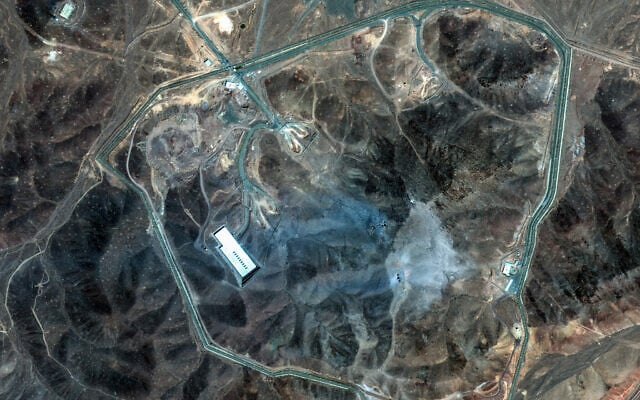
This handout satellite picture provided by Maxar Technologies, and taken on June 22, 2025, shows Iran’s Fordo Fuel Enrichment Plant (FFEP), northeast of the city of Qom, after US strikes on the site. (Satellite image ©2025 Maxar Technologies / AFP)
A total of 11 senior Iranian nuclear scientists, who Israel says were “key knowledge-holders in Iran’s weaponization group,” were targeted and killed.
Missiles and drones
Iran launched more than 500 ballistic missiles at Israel in 18 separate barrages, most of which were intercepted, according to the IDF.
There were a total of 36 ballistic missile impacts in populated areas and critical infrastructure sites, including multiple apartment buildings, a power station in southern Israel, an oil refinery in Haifa and a university in central Israel.

Israeli air defense systems fire to intercept missiles during an Iranian attack, as seen near the border with Lebanon June 18, 2025. (Ayal Margolin/Flash90)
Iran also launched 1,100 drones at Israel during the 12 days of war, 99% of which were intercepted or failed to reach Israel’s borders. One drone struck a home in Beit She’an, causing damage, and another two fell in open areas in northern and southern Israel.
The drones were mostly intercepted by the IAF with fighter jets, helicopters and ground-based air defense systems. The Israeli Navy shot down 30 with missile boats. And the 5114th Spectrum Battalion intercepted dozens using electronic warfare, according to the military.
To assist with the defensive efforts, the Home Front Command deployed its entire reserve personnel, some 26,000 members, across the country.
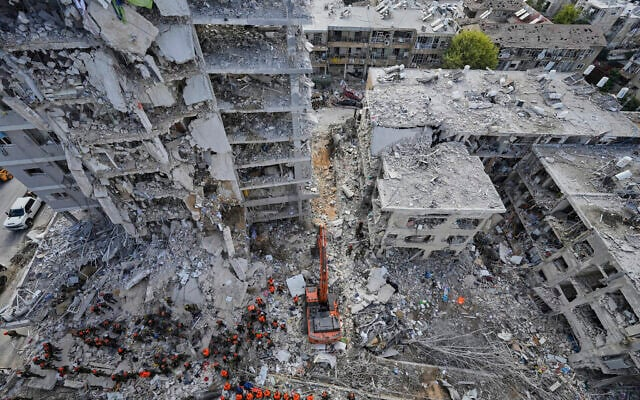
Israeli soldiers search through the rubble of residential buildings destroyed by an Iranian missile strike in Bat Yam, central Israel, June 15, 2025. (AP/Baz Ratner)
A total of 51 Home Front Command battalions were ready to respond to missile impacts, with an average response time of 15 minutes, according to the IDF. Home Front Command search and rescue teams operated at 25 impact sites throughout the conflict, the military said.
In all, 2,305 homes in 240 buildings were damaged by Iran’s attacks, leaving over 13,000 Israelis displaced.
The bottom line
Despite Iran’s nuclear setbacks, the Israeli military has assessed that “the Iranian threat will continue to accompany us” in the years to come, but the recent operation “removed the existential threat” that Israel was facing.
In the future, Israel will “not allow an existential threat to redevelop in Iran,” the IDF said, stressing that “the Iranian regime no longer has immunity.”
The military assessed that it had caused “deep damage” to Iran’s ballistic missile production industry.
Iran has lost the ability to produce thousands more missiles by 2027, but still, the IDF assessed that Iran would attempt to recover its capabilities in the long run.
Finally, Iran’s proxies, for the most part, did not get involved in the war. Iraqi militias launched several drones at Israel, and the Houthis in Yemen fired a couple of missiles, attacks that went almost unnoticed amid the war. Hezbollah, once considered Iran’s most powerful and dangerous proxy, stood on the sidelines.
END
ISRAEL IRAN/DETAILS OF MISSION
IDF releases details of damage to Iran’s nuclear, missile production sites
IDF Spox. Brig.-Gen. Effie Defrin warned that despite the success of the operation in preventing Iran’s existential threat to Israel, the regime would still attempt to destroy Israel.
https://player.jpost.com/public/player.html?player=jpost&media=3916915&url=https://www.jpost.com/IDF Spokesperson Brig.-Gen. Effie Defrin revealing details on the damage done to Iran’s nuclear and missile production sites, June 27, 2025. (CREDIT: IDF SPOKESPERSON’S UNIT)ByJERUSALEM POST STAFFJUNE 27, 2025 13:54Updated: JUNE 27, 2025 13:55
IDF Spokesperson Brig.-Gen. Effie Defrin spoke on Friday about the details behind the war with Iran, revealing the scale of damage to Iran’s nuclear and missile programs.
Defrin began by saying that Israel had tried to prevent the expansion and development of Iran’s nuclear and missile capabilities “behind the scenes,” but said they had been “left no choice” but to proceed with the strikes.
The IDF believed that Iran had sufficient nuclear material to assemble several nuclear bombs within a short period of time and that Iran had begun ramping up missile production, aiming to increase its arsenal from 2,500 to 8,000 within two years.
Israel targeted dozens of senior military figures, 11 nuclear experts, as well as a variety of development sites in an opening surprise attack, Defrin noted.
At the same time, the Israel Air Force targeted aerial defense sites ranging from launching facilities to production sites to radar arrays. This led to Israel achieving air superiority over western Iran within a matter of hours.

This surprise attack, says Defrin, prevented a much larger planned Iranian counterattack than what actually occurred.
Israel’s strikes on Iran had two main goals
The next twelve days of strikes had two main goals: first, to target and destroy Iran’s various nuclear enrichment and development sites and Iran’s missile production and launch sites.
Defrin described the US’s strikes on Fordow and Israel’s strikes on Natanz as having prevented Iran from developing a nuclear weapon at this time.
The IAF also targeted thousands of centrifuge production sites as well as other facilities used to produce components needed to produce a nuclear bomb.
The assassination of 11 Iranian nuclear scientists will also have set back the regime’s efforts to produce a nuclear weapon.
The second major focus of the strikes was Iranian missile production and launch sites.
The IDF struck over 30 facilities relating to missile production throughout Iran.
The strikes set back missile production, particularly of long-range missiles, through the targeting of navigation systems factories.
The elimination of over 30 senior Iranian military commanders helped to prevent Iran from deadlier retaliation.
Over 50% of launchers and hundreds of ballistic missiles were destroyed during the strikes.
Over 80% of aerial defense arrays were destroyed in the strikes.
Over 530 missiles and 1,100 drones were launched at Israel, with 99% of the drones being intercepted.
Defrin warned that despite the success of the operation in preventing Iran’s existential threat to Israel, the regime would still attempt to destroy Israel.
END
IRAN/ISRAEL/MOSSAD
ANOTHER MESSAGE BEEPER EXPLOSION TO BE?
Mossad warns Iranian citizens to distance themselves from IRGC affiliates
The Israeli spy agency told residents that if an IRGC affiliate “suddenly receives a phone call or message on their personal phone,” they should move away from them immediately.

A woman’s shadow is seen over the Mossad logo (illustrative)(photo credit: SHUTTERSTOCK)ByJERUSALEM POST STAFFJUNE 27, 2025 15:28Updated: JUNE 27, 2025 15:53
The Mossad advised Iranian citizens to distance themselves from members of the Iranian Revolutionary Guard Corps (IRGC) to keep themselves safe in a post on X/Twitter on Friday afternoon from its new account in Farsi.
The post provided a list of guidelines, advising Iranians to avoid high-ranking IRGC officials, IRGC bases, especially if they hear a sound from the sky similar to a lawnmower, and vehicles belonging to the regime.
The Israeli spy agency also told residents that if an IRGC affiliate “suddenly receives a phone call or message on their personal phone,” they should move away from them immediately.
This message recalls the Mossad beeper operation in Lebanon against Hezbollah terrorists in September 2024 when the agency activated explosive pagers, wounding thousands and killing scores of people.
Mossad: ‘Our war is against Islamic Republic’
“You should know that we will do everything in our power to ensure you are not harmed. Our war is with the oppressive regime of the Islamic Republic,” the spy agency said.

“Remain vigilant. The leaders are hiding in tunnels and protecting themselves — you are the ones at risk. Please follow these guidelines; they save lives.”
The Israeli spy agency announced on Thursday it had established a medical center in Iran for affected citizens that will run from 9:30 a.m. to 4:00 p.m. from Sunday to Thursday, and can be reached via WhatsApp, Telegram, or Signal apps.
The doctors involved in the initiative are bilingual in Persian and English, and work in a variety of fields that include diabetes and infectious diseases, among others.
The spy agency recommended that Iranians reach out for assistance via VPN.
Mossad Chief David Barnea on Wednesday said in an address to agents that the spy agency’s achievements against Iran were “unimaginable,” with public details indicating they were involved in assassinating top Iranian military chiefs and nuclear scientists and blowing up nuclear facilities, drone facilities, and ballistic missile facilities.
Yonah Jeremy Bob contributed to this report.
END
IRAN/USA
Trump Says He Would Bomb Iran Again ‘Without Question’ & Not Looking To Drop Sanctions Anymore
Friday, Jun 27, 2025 – 01:19 PM
Update(1319ET): In comments to the press on Friday President Trump has reiterated his belief that Iran’s nuclear program was ‘obliterated’ – despite skepticism voiced by leading Senators and Representatives, on both sides of the aisle.
Importantly, he’s backing off his prior words suggesting he’s ready to soften or even drop sanctions, as Iran essentially no longer has a program in his view, while saying he’s ready to bomb Iran again if it needs to happen:
President Donald Trump said on Friday he would bomb Iran again “without a question” if intelligence were to find that Iran can enrich uranium to a level higher than what he is comfortable with.
“Without a question. Absolutely,” he told reporters in the White House briefing room.
“They’re exhausted. The last thing they are thinking about is nuclear [weapons],” Trump said of Iran.
Responding to Ayatollah Ali Khamenei’s claim that Iran won the war, Trump said, “You got beat to hell. Israel was beat up too, they were both beat up.”
His analogy of a schoolyard fight is similar to words used for the Ukraine war previously, suggesting he is ready to step away from the Iran conflict at this point (just as he did from pushing hard for Ukraine peace). Trump also in the remarks claimed that he ‘saved’ Iran’s leader from an ‘ugly and ignominious death’ – amid reports Israel was looking to assassinate the Ayatollah.
And more in a fresh Truth Social Post:
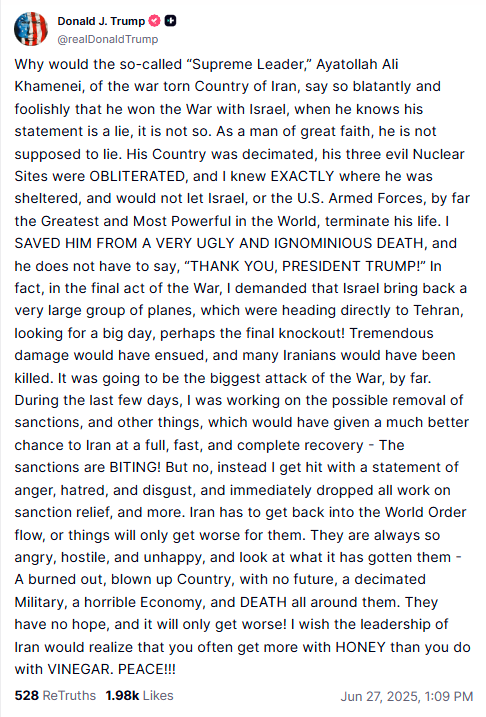
But Trump further said both sides “violated” the ceasefire that he announced late on Monday – suggesting that for now at least he’s not ready to take further military against Iran.
The White House on Thursday had explained that the Ayatollah simply wants to save face, naturally, in proclaiming ‘victory’ over the US and Israel – but apparently Trump didn’t get the memo from press secretary Karoline Leavitt. She had answered precisely this during the prior afternoon’s press briefing.
* * *
Iran says it is still assessing damage at its nuclear sites which were hit during the 12-day war with Israel, and which were bombed in a special Trump-ordered B-2 raid last weekend; however, Tehran has made clear it has no intention to host UN International Atomic Energy Agency (IAEA) chief Raphael Grossi and his team for inspections.
Iran’s Foreign Minister Abbas Araghchi has acknowledged that the damage was “serious” and that “a detailed assessment of the damage is being carried out by experts from the Atomic Energy Organization [of Iran].”

He said further in the Thursday state TV interview, “Now, the discussion of demanding damages [from the US and Israel] and the necessity of providing them has been placed as one of the important issues on the country’s diplomatic agenda.”
However, he clarified that an Iranian negotiating team has no plan to meet with the United States, after President Trump earlier proclaimed that Washington planned to have talks with Iran next week.
He said that leaders are still assessing whether talks with the US would be in Iran’s interest, after previously saying that the Islamic Republic doesn’t engage in negotiations under duress.
Araghchi’s remarks followed the passage of a “binding” bill by Iranian lawmakers to halt all collaboration with the UN nuclear watchdog IAEA.
As for the rejection of talks with the US next week, it flatly contradicts Trump’s words during a NATO summit presser at The Hague. “We’re going to talk to them next week, with Iran,” the president had told reporters.
“I don’t care if I have an agreement or not,” he said. “The only thing we’d be asking for is what we were asking for before about, ‘we want no nuclear.’ But we destroyed the nuclear. In other words, that’s destroyed. I said, ‘Iran will not have nuclear.’ Well, we blew it up. It’s blown up to kingdom come. And so I don’t feel very strongly about it. If we got a document, it wouldn’t be bad.”
He strongly suggested a deal is no longer needed after all, given the assertion that core nuclear components have been ‘destroyed’ and ‘obliterated’. Later the White House Press Secretary confirmed that there is as yet no meeting with the Iranians scheduled.
Meanwhile, the IAEA’s Grossi has expressed doubts: “There is a chance that much of Iran’s highly enriched uranium survived Israeli and U.S. attacks because it may have been moved by Tehran soon after the first strikes, U.N. nuclear watchdog chief Rafael Grossi said on Wednesday,” according to Reuters.
A Financial Times article, based on early European intelligence assessments and voiced by EU officials, has concluded something similar. “Preliminary intelligence assessments provided to European governments indicate that Iran’s highly enriched uranium stockpile remains largely intact following US strikes on its main nuclear sites, two officials have said,” the FT wrote Thursday.
END
ISRAEL HAMAS
State Department approves $30 million for funding of Gaza Humanitarian Foundation
“This support is simply the latest iteration of President Trump’s and Secretary Rubio’s pursuit of peace in the region,” State Department deputy spokesperson Tommy Pigott said.

A Palestinian man carries aid supplies, in Beit Lahiya, in the northern Gaza Strip, June 16, 2025; illustrative.(photo credit: REUTERS/DAWOUD ABU ALKAS)ByREUTERS, JERUSALEM POST STAFFJUNE 26, 2025 21:55
The US State Department has approved $30 million in funding for the Gaza Humanitarian Foundation, the State Department said on Thursday, calling on other countries to also support the group delivering aid in war-torn Gaza.
“This support is simply the latest iteration of President [Donald] Trump’s and Secretary [Marco] Rubio’s pursuit of peace in the region,” State Department deputy spokesperson Tommy Pigott told reporters.
Reuters reported earlier this week that the United States was giving $30 million to the humanitarian aid group.
US-backed group says it distributed aid at three points
On Thursday, the GHF announced that it distributed 38,880 boxes of aid across three distribution sites.
The sites included the Saudi Neighborhood, Khan Yunis, and Wadi Gaza, according to the organization.

GHF stated that approximately 46,589,422 meals have been distributed to date via roughly 830,400 boxes.
GHF Interim Executive Director John Acree said in a statement, “The GHF team again did yeoman’s work today distributing food aid to the Palestinian people in Gaza. The hard work of our volunteers and other team members is saving lives.”
He added that, “Unfortunately, GHF was the only humanitarian organization permitted to distribute food aid in Gaza today. Our hope is that this will be a temporary pause and all other aid organizations will soon be able to resume distribution in the region. However, it is imperative that aid be distributed in a responsible way directly to the people who need it. Our model has proven effective in achieving this, and we stand ready to assist all other organizations in doing so.”
END
HAMAS/ISRAEL CLANSMEN
Gazan media reports clash between Hamas, armed clansmen at Nasser Hospital in Khan Younis
Reports from Gaza: Gunfire exchange between Hamas and armed clansmen at Nasser Hospital in Khan Younis yesterday.
Media outlets in Gaza report that a confrontation broke out yesterday between Hamas operatives and armed members of the influential Barbakh family clan at Nasser Hospital in southern Gaza’s Khan Younis.
Footage shared on social media captures sounds of gunfire during the confrontation, and burned vehicles and damaged equipment can be seen in the vicinity of the hospital.
There are no known casualties as a result of the clash.
The Hamas-run interior ministry says that “armed individuals operating outside of the law” entered Nasser Hospital, fired weapons inside the facility, set fire to ambulances, and destroyed equipment.
Hamas police forces reportedly clashed with the gunmen, expelled them from the hospital, and arrested several of them.
Anti-Hamas media outlets in Gaza report a different version of events, however, saying that members of Hamas’s “Sahm Unit — a unit tasked with enforcing order and pursuing those accused of theft or collaboration with Israel — killed a member of the Barbakh family and then fled to Nasser Hospital.
According to these reports, armed members of the Barbakh clan pursued them, resulting in the confrontation. The reports further claim that Hamas forces used ambulances and fired toward homes belonging to the Barbakh family members.
A Telegram channel affiliated with Hamas’s Sahm Unit claims that Hamas acted against a member of the clan involved in the theft of humanitarian aid entering Gaza. The post does not specify the fate of that individual.Share
SYRIA
Offshoot Of Syria’s Ruling HTS Claims Credit For Damascus Church Bombing
Thursday, Jun 26, 2025 – 09:45 PM
Authored by Jason Ditz via AntiWar.com,
On Sunday, a massive suicide bomb attack tore through the important Greek Orthodox church Mar Elias in Damascus, killing 27 and wounding dozens more. The huge attack just added to the spate of sectarian violence across Syria, which undercuts the Islamist Hayat Tahrir al-Sham (HTS) government’s claim to be protecting religious minorities.
The HTS was quick to blame ISIS for the Mar Elias bombing, and on Monday announced the arrest of a number of ISIS associates who they claimed were involved, vowing to bring them to justice. Now that whole narrative seems in doubt.

ISIS never took credit for the Mar Elias bombing, which, since it was the biggest attack in Damascus in a very long time, would be an unusual oversight. Now, another group, Saraya Ansar al-Sunnah (SAAS), issued its own statement claiming credit for the attack.
SAAS, which was said to be formed in February, went on to say that the government’s claims of arresting people involved with the attack were “untrue, fabricated.” The group is being presented as an ISIS splinter group by some reports, but the reality is substantially different.
SAAS does indeed have some ISIS defectors within, according to reports, but it also has a substantial number of HTS defectors.
SAAS founder Abu Aisha al-Shami was an HTS member, and said he broke away and formed his own group because he perceived HTS as being too soft on Shi’ites and other “rejectionists.”
While HTS has undergone a massive reformation in its presentation in the media, the group was a renamed al-Qaeda affiliate that retains its deeply Salafist ideologies.
While playing nice with religious minorities in Syria on paper, they’ve tended to turn a blind eye to attacks on them, notably the massacre of the Alawites, where well over 1,300 Alawites were killed in March, many by security forces. Those killings continue to this day, and the promised investigation never seemed to go anywhere.
Speaking of Alawites, SAAS played a part in these massacres as well. The group regularly brags of carrying out attacks on Alawites and Druze Syrians, including what they called the “Harvest of Ramadan,” where they listed attacks and vandalism done during the holiday on the Alawite town of Qardaha.
That they would be behind the Mar Elias attack is not out of keeping with the way the group has operated in its brief existence. It provides a messaging problem for the HTS though, since the government has not done much about the SAAS at all since it came into existence.
The Orthodox Christian leader in Syria has called out the Jolani regime:
Syrian Christian leader Patriarch John X. Yazigi issued a statement after the attack criticizing the government for its inability to protect religious minorities, saying “condolences are not enough for us” and that the government has a fundamental duty to protect all its citizens. For now, though, that has begun and ended with blaming ISIS to justify ongoing operations against ISIS in the east.
END
WEST BANK
Police free all settlers detained in Wednesday’s deadly rampage of Palestinian village
A Palestinian man walks near a burnt car after an Israeli settlers attack the previous day in the village of Kafr Malik in the West Bank, on June 26, 2025. (Photo by Zain JAAFAR / AFP)
Police released all five Israeli suspects who were detained in yesterday’s deadly settler rampage in the Palestinian village of Kafr Malik.
The suspects had been detained by Israeli troops before being transferred to police at a nearby station, where officers promptly released them and informed them that they were no longer suspects in the case, Haaretz reports.
No other suspects have been arrested.
Settler attacks on Palestinians throughout the West Bank have been taking place on a near-daily basis with almost complete impunity, in what has sparked mounting sanctions from Western governments.
The head of the Israel Police’s West Bank division is currently under investigation for ignoring settler violence to curry favor in the eyes of Ben Gvir. He was allowed to return to his post, despite the ongoing investigation.
end
ISRAEL/HEZBOLLAH/LEBANON
IDF strikes Hezbollah targets in southern Lebanon; Lebanese authorities say 1 dead, 11 hurt

Lebanese health ministry says one killed, 11 injured in strike on southern Lebanon apartment
The Lebanese health ministry says one woman was killed and 11 others were injured in an Israeli strike on an apartment in Nabatieh, southern Lebanon.
Earlier, Lebanese media reported that an Israeli drone targeted an apartment in Nabatieh.
It remains unclear whether the incident is part of the wave of strikes in southern Lebanon previously announced by the IDF.
END
THEN ANOTHER WHACK ON A TERROR CELL:
IDF strikes Hezbollah terror site in south Lebanon
“The presence of this site and the attempts to re-establish it constitute a blatant violation of the understandings between Israel and Lebanon,” the IDF stated.

Hezbollah supporters celebrate what they say is Iran’s victory, after US President Donald Trump announced a ceasefire between Israel and Iran, in Beirut, Lebanon, June 25, 2025(photo credit: REUTERS/MOHAMED AZAKIR)ByJERUSALEM POST STAFFJUNE 27, 2025 11:31
Israel Air Force fighter jets struck a Hezbollah terror fire and defense array near the Beaufort Ridge in south Lebanon on Friday morning, the military confirmed.
The site was part of a “significant underground project,” the IDF noted, adding that it was “completely taken out” by the strikes.
The IDF struck because it identified “rehabilitation attempts” made by Hezbollah terrorists to use the underground facility.
“The presence of this site and the attempts to re-establish it constitute a blatant violation of the understandings between Israel and Lebanon,” the IDF stated.
“The IDF will not allow attempts made by Hezbollah to operate at the site and will continue to operate to eliminate any threat against the State of Israel,” they added.
This is a developing story.
END
RUSSIA VS UKRAINE
Kremlin Condemns White House Envoy’s Comparing Iran & Ukraine Wars
Friday, Jun 27, 2025 – 04:15 AM
Moscow has reacted angrily to fresh words of Trump special envoy to the Middle East Steve Witkoff, who has also been working on US diplomacy with Russia’s Putin, after he drew parallels between the Ukraine war and Israel-Iran conflict.
“We’re hopeful that people look at what happened in Iran and say: ‘we want a part of that sort of peace process as well,’” Witkoff told CNBC on Wednesday. “This may well gravitate towards Russia and Ukraine.”
In the interview he expressed hope for expanding the Abraham Accords, particularly to Saudi Arabia: “We are hoping for normalization across an array of countries, maybe that people would never have contemplated coming in before,” he said. “We’re excited for that prospect. That would also be a stabilizer in the Middle East.”

But the fact that he briefly drew comparison to the Ukraine war, expressing hope that Russia would take note of President Trump’s peace ‘successes’ – has drawn condemnation from the Kremlin:
Israel’s “unprovoked” attack on Iran bears no comparison to the Ukraine conflict, Kremlin spokesman Dmitry Peskov said on Thursday, rejecting an assessment made by the US special envoy to the Middle East, Steve Witkoff.
Witkoff had suggested earlier that the recent ceasefire between Iran and Israel could serve as a model for ending the hostilities between Russia and Ukraine.
Peskov emphasized that the two wars greatly differ in “in their essence and nature” and further asserted that the “Israeli attacks on Iran were absolutely unprovoked.”
He said that the Russia-Ukraine conflict is something “going back several decades” – and highlighted constant NATO expansion up to Russa’s doorstep, and especially the “armed coup” in Kiev in 2014.
“It is hardly appropriate to draw parallels here,” Peskov continued, and said that unlike Israel’s and the United States’ aerial assaults on Iran, the notion of “peace by force” is not something Russia did in the context of Ukraine. Israeli officials have even dubbed their actions ‘preemptive’.
But of course, the West is going to vehemently disagree with this narrative, with the difference fundamentally coming down to whether the Ukraine war was provoked or unprovoked.
The question has increasingly been belatedly hotly debated over the last year, & finally even in mainstream publications…
6. GLOBAL ISSUES//COVID ISSUES/VACCINE ISSUES/HEALTH ISSUES
as we have reporting for the last two years: Ivermectin and Vermox are great for cancer treatments
(zerohedge)
Cancer Patients Recover By Taking Repurposed Anti-Parasitic Drugs
Thursday, Jun 26, 2025 – 10:35 PM
Authored by Huey Freeman via The Epoch Times (emphasis ours),
Joe Tippens never planned to discover a potential remedy that he credits with saving his life and thrust him into the spotlight among notable cancer survivors. The 67-year-old businessman told The Epoch Times he just wanted to beat a type of cancer with an extremely low survival rate.

In August 2016, Tippens was diagnosed with small cell lung cancer with a fist-sized tumor. After undergoing chemotherapy and radiation five times a week in Houston, the large tumor in his left lung was eliminated. However, Tippens said the treatments came closer to killing him than curing him.
When he returned home to Oklahoma after the New Year, he received devastating news. His oncologist told him he had zero chance of surviving for more than a few months.
“In January of 2017, my PET scan lit up like a Christmas tree and I had wide metastasis everywhere, including in my neck, bones, pancreas, and liver,” Tippens said.
Finding a Lifeline
Facing a prognosis of three months to live, Tippens heard an intriguing story from a veterinarian he knew: A scientist with terminal cancer reportedly cured her lab mice and then herself using fenbendazole, an antiparasitic drug.
The story was the beginning of what eventually became the “Joe Tippens Protocol.”
Fenbendazole, used for 30 years to treat intestinal parasites in animals, has not received U.S. Food and Drug Administration (FDA) approval for human use, meaning doctors cannot prescribe it for people. However, with a terminal diagnosis and nothing to lose, Tippens decided to try it alongside his conventional treatments.
Tippens found that Panacur, a trade name for fenbendazole, was sold over the counter at outlets that carry veterinary medications.
Starting in the third week of January 2017, Tippens began taking the canine medication, Panacur, 1 gram per day for three consecutive days per week. After four days without the medication, which contains about 222 milligrams of fenbendazole per gram, he would repeat his three-day routine. Three months later, Tippens was cancer-free.
His protocol also included Theracurmin, a form of the active compound in turmeric, and CBD, an extract of cannabis which does not cause intoxication.
Scientific Support and Mechanisms
Dr. William Makis, an oncologist and cancer researcher based in Edmonton, Canada, has studied Tippens’s approach and treats cancer patients worldwide, primarily through telehealth.
“I’ve had several patients declared cancer-free after doing the protocol for a number of months,” Makis told The Epoch Times. “What made [Tippens’] situation so powerful is that he cured himself of a cancer that is very aggressive—small cell lung cancer—and he had a terminal diagnosis.”
According to Makis, the family of anti-parasitic drugs that includes fenbendazole, mebendazole, and albendazole works well—scientists have found at least 12 ways the medications can fight cancer.
The effectiveness of the drugs stems from key similarities between parasite and cancer cells: both have the capacity for autonomous survival and proliferation, resistance to cell-death pathways, and the ability to circumvent the host immune system.
Anti-parasitic drugs appear to fight cancer through multiple mechanisms:
- Boosting protein called p53: P53 is a tumor suppressor protein that helps kill cancer cells.
- Blocking glucose uptake: Cancer cells depend on sugar for energy and growth.
- Disrupting microtubules: These cellular structures are crucial for cell division of cancer cells.
- Affecting mitochondrial function: Depletes cellular energy, increases oxidative stress, and blocks a critical pathway that regulates cell growth of cancer cells.
Researchers at the Stanford University Medical Center have reported several case reports, using fenbendazole to cure Stage 4 cancer cases, Makis said. The series of case reports was published in 2021 in SciTechnol, an online, London-based publisher of scientific journal articles.
A thought-provoking review citing animal studies published in 2024 in Anticancer Research Journal concluded that fenbendazole affects energy metabolism—mainly by increasing the levels of p53 and affecting pathways that control sugar uptake. It ultimately starves cancer cells and causes them to die with minimal harm to normal cells. The researchers concluded that fenbendazole’s effects on energy metabolism “could lead to significant advances in cancer treatment.”
Some preliminary research also suggested potential anti-cancer mechanisms for fenbendazole. A study published in Scientific Reports in 2018 by researchers in India found that fenbendazole “may be evaluated as a potential therapeutic agent because of its effect on multiple cellular pathways leading to effective elimination of cancer cells.” Specifically, fenbendazole interferes with microtubules involved in cell division.
A 2016 study published in Biochemical and Biophysical Research Communications found that ivermectin, an antiparasitic drug approved for human use, shows promise against glioblastoma, an aggressive brain cancer known for treatment resistance. The drug kills glioblastoma cells and inhibits blood vessel development. In laboratory and mouse studies, ivermectin triggers cancer cell death and significantly reduces tumor growth.
Recent research has shown that a combination of fenbendazole and diisopropylamino dichloroacetate, a compound used to treat hepatitis, has shown some anticancer properties in cell cultures and animal studies. Combined, the drugs kill lung cancer cells more effectively than either drug alone.
Makis has found that combining fenbendazole with ivermectin can increase the protocol’s effectiveness.
“When you combine them, you go from attacking cancer in a dozen ways to attacking cancer in two dozen ways,” Makis said. “I have found it very reasonable to include both of them in protocols if there is pre-clinical research that each of them has an effect [on] that particular type of cancer. Whenever you have a specific cancer, I want to look at the body of research to see if there is a proven effect of either ivermectin or fenbendazole for that type of cancer. If there is, then I share that research with my patients.”
Makis has treated patients with various cancers—from common types like breast, prostate, colon, and lung cancer to rarer forms such as cholangiocarcinoma (bile duct cancer) and sarcomas (soft tissue cancers). “I’ve had several patients declared cancer-free after doing the protocol for a number of months,” Makis said.
Although Makis has been recommending ivermectin and fenbendazole for cancer treatment, he acknowledges that many doctors refrain from this practice.
Doctors are very hesitant to help cancer patients with repurposed drugs because of repercussions from the medical boards, Makis said.
“On the other hand, you have doctors who are willing to help patients with repurposed drugs but no experience with oncology,” he said.
When asked whether he recommends that cancer patients consult with an integrative physician who approves of those treatments, Makis said it is good for a patient to have a relationship with a doctor who has experience with oncology.
“It depends on the physician’s background,” Makis said. “Some doctors have extensive experience, after seeing cancer patients for many years.”
Patient Success Stories
Donna Leland, 64, a show host on the national Moody Radio Network, was diagnosed with Stage 3 cervical and endometrial cancer in April 2023. She underwent a hysterectomy but declined the recommended chemotherapy and radiation.
“I had seen the outcome for other people who had gone that route,” Leland told The Epoch Times. “Some had gotten all cleared, but then the cancer came back. I know it diminishes your own immune system’s ability to fight off disease.”
Leland told the doctor she did not want those treatments and asked for another option. But she was offered nothing else.
“I knew there had to be a better way than to fry everything. I just said, ‘I’d rather die than fry.’”
Leland began taking fenbendazole and ivermectin. She also found support from Terry Harmon, a chiropractor and functional medicine physician in Kentucky.
Harmon says more than 100 of his patients have reported positive health benefits from using fenbendazole or ivermectin.
“The reason so many people are finding success is twofold,” Harmon told The Epoch Times. “It is addressing infections. It helps the body heal and get stronger. There is research showing this combination helps the body’s ability genetically to kill cancer and prevent cancer from growing and spreading.”
Leland said she had confirmation of the effectiveness of these alternative treatments from studies on ivermectin, fenbendazole, and other anti-parasitic drugs. Mebendazole is another anti-parasitic drug that both Makis and Harmon recommended as an effective cancer treatment.
One year after her hysterectomy, Leland said she is healthier than she has ever been, partly because of her continuing use of anti-parasitic drugs for preventive purposes.
“After being checked every three months for evidence of cancer, my oncologist continues to declare me cancer-free.”
“I feel like I’m 20 years younger,” Leland said. “God has been faithful to lead me on this journey.”
Global Impact
The Tippens Protocol has achieved significant international reach, particularly in China, where a translated blog has garnered more than 20 million views. This has led to an estimated 70,000 followers of what’s affectionately called the “Uncle Joey Protocol.”
Despite opportunities to monetize his discovery, Tippens has refused all financial gain.
“I have had search engine experts who have told me I could monetize this blog to the tune of $25,000 to $30,000 per month,” he said. “I can’t do that for a simple reason: I have hundreds of people who have told me the reason they believe me and trust me is because I am doing all this and not monetizing it. The second I monetized it, I would be just another guy out there hawking product out on the Internet, trying to make money.”
Tippens warns about fraudulent Facebook pages that falsely use his name to sell substandard drugs.
Regulatory and Medical Challenges
The FDA confirmed that it has not approved “drug products containing fenbendazole for use in humans,” said Lauren-Jei McCarthy, FDA press officer, in a statement to The Epoch Times. It has not gone through the rigorous testing and clinical trials required for drugs intended for human use. Fenbendazole is approved by the FDA as an antiparasitic drug for use in animals. It is commonly used to deworm dogs, cats, horses, and cattle.
Ivermectin, while FDA-approved for human use against parasitic worms, is not approved for cancer treatment. Health care providers may prescribe ivermectin to fight cancer as a repurposed medication. Both medications are available without prescriptions and are routinely purchased for veterinary use.
Makis, who has been at the cutting edge of advocating for holistic treatments that include the repurposed drugs, said he believes we are in a revolutionary era of effective cancer treatments.
“This is the first time in several generations there is a strong movement for true medical freedom, to allow for exploration of treatments that don’t benefit any big company,” he said.
Serious side effects from fenbendazole and ivermectin are rare, Makis said.
“I have seen moderate side effects, which include unpleasant visual symptoms, some dizziness, and fatigue,” Makis said.
Tippens is encouraged by ongoing research into other FDA-approved drugs that might be repurposed for cancer treatment.
“Because of my story, I think there are other efforts in research in the anti-parasitic category,“ Tippen said. ”There are seven sister drugs to fenbendazole. One medical group has used mebendazole in their protocol. I think I’ve started at least opening people’s brains to something.”
end
ROBERT H;
IVERMECTIN and FENBENDAZOLE Testimonial: Stage II Hodgkin Lymphoma Remission After 3 Month
end
More Fetal Losses Than Expected After Pfizer COVID-19 Vaccination In Israel: Study
Thursday, Jun 26, 2025 – 06:25 PM
Authored by Zachary Stieber via The Epoch Times (emphasis ours),
A higher-than-expected number of miscarriages and other forms of fetal loss were associated with COVID-19 vaccinations in Israel, a new study has revealed.

Researchers found 13 fetal losses—four more than the nine expected—for every 100 pregnant women who received a COVID-19 vaccine during weeks eight to 13 in pregnancy, according to the study, which was published as a preprint on the medRxiv server.
Most people in Israel, including pregnant women, received the Pfizer-BioNTech COVID-19 vaccine.
Pfizer did not respond by publication time to a request for comment.
The team behind the study includes Retsef Levi, a Massachusetts Institute of Technology researcher who was recently named to the committee that advises the Centers for Disease Control and Prevention on vaccines, and Dr. Tracy Hoeg, who works for the Food and Drug Administration.
The researchers analyzed electronic health records from Maccabi Healthcare Services, one of four organizations that provide health care to Israelis. They looked at 226,395 pregnancies that occurred between March 1, 2016, and Feb. 28, 2022. The primary analysis looked at fetal loss for pregnant women after dose one or dose three of a COVID-19 vaccine, with fetal loss including miscarriage, abortion, and stillbirth.
The researchers came up with an expected number of fetal losses based on a model that drew from data before the COVID-19 pandemic, then compared the expected number of fetal losses with those that occurred from week eight of pregnancy onward.
They identified 13,214 fetal losses after the COVID-19 pandemic started, compared with 12,846 fetal losses in the reference period, finding that women who received a COVID-19 vaccine during weeks eight to 13 in pregnancy experienced a higher-than-expected number of fetal losses.
“If you believe this result … every 100 women that you would vaccinate during weeks eight to 13, you are going to see close to four additional fetal losses,” Levi told The Epoch Times.
The researchers cautioned that more information is required to say for sure that the vaccines cause fetal losses.
They also noted that when they carried out the same analysis for pregnant women who received a COVID-19 vaccine during weeks 14 to 27, the number of fetal losses was lower than expected.
An additional analysis of pregnant women who received an influenza vaccine from March 1, 2018, to Feb. 28, 2019, also found a lower-than-expected number of fetal losses.
The researchers said those results could stem from what is known as healthy vaccine bias—the data could be skewed because people who receive vaccines are typically healthier than those who do not.
Maccabi Healthcare Services did not return an inquiry by publication time. Dr. Yaakov Segal, head of obstetrics and gynecology medicine at the organization, is one of the paper’s co-authors.
Israel’s Ministry of Health and the American College of Obstetricians and Gynecologists, which encourages pregnant women to receive a COVID-19 vaccine in any trimester, did not respond to requests for comment by publication time.
“Generally, medical advice to pregnant women follows the precautionary principle and is based on sound and careful research,” Josh Guetzkow, researcher with Hebrew University of Jerusalem and another study co-author, told The Epoch Times via email. “Our study shows just how irresponsible it was for our health authorities to abandon these core principles.”
COVID-19 vaccination was recommended for pregnant women in Israel and the United States early in the COVID-19 pandemic, even though the clinical trials for the vaccines excluded pregnant women.
Moderna’s clinical trial for pregnant women was ultimately terminated, while Pfizer ended its trial early after enrolling just 175 women. The latter found slightly lower COVID-19 incidence among the vaccinated when compared with those who received a placebo.
Some observational studies have determined that pregnant women benefit from COVID-19 vaccination.
The Centers for Disease Control and Prevention recently narrowed its COVID-19 vaccine recommendations and no longer advises COVID-19 vaccination during pregnancy.
The new paper was published as a preprint, without peer review. Levi said the paper had been rejected by two journals, and the authors decided that the implications were too important to continue to not release it to the public.
Guetzkow said the researchers are going to keep trying to get the paper published by a journal.
MARK CRISPIN MILLER
Water, water everywhere—and, everywhere, more dead: Reports from NZ to the USA (and Uruguay)
“The science” must catch up with this bizarre development, and help explain it
| Mark Crispin MillerJun 27 |
A survey of the likely global toll of COVID “vaccination,” based on the reports collected by our worldwide team of researchers this past week.
To help support our work, consider subscribing or making a donation.
NEW ZEALAND
One dead in water-related incident at beach
March 9, 2024

No age or cause of death reported.
Body [60-70] found in Wellington Harbour
April 21, 2024
No cause of death reported.
One body recovered from water in search for missing Whangārei fishermen
May 3, 2024
No age or cause of death reported.
Person found dead in Henderson, West Auckland, body located in Riverpark Reserve
May 5, 2024
No age or cause of death reported.
NZ woman [49] drowns in Cook Islands
May 22, 2024
No cause of death reported.
Body found after man vanishes in Whanganui River
June 15, 2024

No age or cause of death reported.
Body of missing snorkeller found
September 29, 2024
No age or cause of death reported.
Milford Sound kayak death: Police name Daymon Nuhaj, 23, as water incident victim
October 10, 2024
No cause of death reported.
Water-related incident in Maraetai: Woman in 40s dies at Auckland beach after CPR attempts
October 28, 2024
No cause of death reported.
Swimmer pulled from rip at Auckland beach dies
November 12, 2024
No age or cause of death reported.
Snorkeller dies at popular Northland beach
December 31, 2024
No age or cause of death reported.
Man dies in water-related incident at Omaio, Bay of Plenty
January 1, 2025
No age or cause of death reported.
Mount Maunganui water death: Person pulled unresponsive from Pilot Bay
January 9, 2025
No age or cause of death reported.
NORWAY
UNN surgeon Petter (46) died suddenly on family holiday [pool]
January 4, 2023
No cause of death reported.
Death of a 60-year-old man in pool
January 16, 2024
PANAMA
Young man [19] dies of drowning after suffering cardiac arrest
26 January 2023
PHILIPPINES
Scuba diver [57] drowns after suffering cardiac arrest in Sipalay City
11 January 2023

Ironman 70.3 organizers confirm death of triathlete [49] in Davao race [swim coach, during the swimming course]
27 March 2023
IRONMAN 70.3 confirmed the death of one of its triathletes on Sunday in its Davao event. In a media statement, organizers identified the casualty as Jerry Kasim, a swim coach who it said succumbed to a heart attack during the swim course. He was 49. Kasim’s younger sister Sanita Kasim Soreny, a former national dragon boat team member now based in the United Kingdom, said the family was stunned by his untimely passing since they were not aware of any heart-related disease he might have had.
Woman [66] dies due to heart attack while at beach in Sorsogon
April 2, 2024
Fisherman from Alcoy, Cebu dies of heart attack while at sea
May 14, 2024
No age reported.
Man [44] dies after Elbow Beach [Bermuda] medical emergency
October 30, 2024
No cause of death reported.
POLAND
Silesia: Sudden death of a woman [67] at the swimming pool. “Her heart stopped beating”
August 4, 2023
Death of a Pole [52] in Germany. Suddenly he felt ill [diving]
September 4, 2023

No cause of death reported.
PORTUGAL
Man [56] dies on board vessel off Armação de Pêra
October 1, 2024
No cause of death reported.
Portuguese Tourist [27] Dies from Cardiac Arrest [tubing] on Pai River
December 6, 2024
ROMANIA
Unraveling the Mystery Behind the Mysterious Drowning of Bodybuilding Champion Catalin Stefanescu [30]
12 July 2023

No cause of death reported.
RUSSIA
Man [47] dies in a Swimming Pool in Moscow Fitness Club
29 March 2023
Prosecutor [57] of Chuvashia Fomin died during a swim along the Volga
1 July 2023
SAUDI ARABIA
Fisherman [46]dies ‘suddenly’
23 January 2023

No cause of death reported.
SERBIA
CrossFit Games: Lazar Dukic [28] drowns in Fort Worth lake during swimming event
August 8, 2024

No cause of death reported.
SLOVAKIA
Slovak coach Dayana [28] died suddenly [bathtub] : First words of a devastated mother!
August 12, 2023
No cause of death reported.
SOUTH AFRICA
Former EC journalist [55] dies while surfing in Port Alfred
February 27, 2024

No cause of death reported.
Tremors Suffered by Cape Town Family as Surfing Enthusiast [30] Passes Away Post Recent Trip
January 16, 2024
No cause of death reported.
SOUTH KOREA
Fishing Boat Tragedy Claims Lives Off South Korea’s Coast [all seven dead crew members were found inside the boat and exhibited signs of cardiac arrest when pulled from the water]
December 9, 2024
No age reported.
DR PAUL ALEXANDER
NEWS ADDICTS
NEWSWIZE
EVOL NEWS
MIKE EVERY/OR PICTON OR RABOBANK EXECUTIVE/COMMENTARY ON WORLDLY AFFAIRS
7.OIL AND NATURAL GAS//GLOBAL/ENERGY/
“Train Wreck”: Extreme Measures Being Taken To Battle Biden’s ‘Green’ Energy Grid Crisis
Thursday, Jun 26, 2025 – 08:30 PM
Energy Secretary Chris Wright warns that the U.S. power grid is nearing its capacity limit, as his department urgently works to avert a potential crisis.
This week, the Energy Department issued an emergency order to counter a Southeast heatwave threatening grid stability and blackouts, authorizing full operation of specific electric generating units.

“In my department, we’ve issued four emergency orders just in the last few weeks to stop the closure of reliable plants, so we can keep the lights on and stop pushing up electricity prices,” Wright said in an interview Thursday with Fox News.
“We were on a course that was a train wreck,” the Trump official warned. “We’re doing everything possible now to sweep out the nonsense.”
Wright blamed Biden-era regulations, specifically emission regulation, for that power grid being on the brink of failure.
“We had to issue an emergency order a few days ago just to let utilities in the Southeast run their plants at full capacity so they could keep the lights on. Under the Biden laws, that’s illegal,” Wright said. “Emissions rules would have prevented them from producing all the electricity they could, and they would have had rolling brownouts. That’s just total nonsense.”
U.S. electricity demand is projected to surge 16% over the next five years, three times the growth predicted just last year, according to the White House. In April, President Donald Trump signed an executive order to bolster the reliability and security of the grid.
“We need to make changes rapidly. We need to see new capacity built, smarter regulation, we need to use our grid wiser. There’s so many things we need to do to improve it. We can’t do it all overnight,” Wright cautioned.
Trump was elected to bring back ‘common sense’ on energy: Secretary Chris Wright pic.twitter.com/EqZcmknpRc— Mornings with Maria (@MorningsMaria) June 26, 2025
“I can assure you, the team at [the] Department of Energy and across this administration are 24/7, seven days a week, working to get out the morass, the nonsense that got put in,” he added. “Free American energy production, and bring jobs back here. We want a shortage of electricity and plumbers and all that, that pushes wages up and that gives great job opportunities for all those hard-working Americans.”
Interior Secretary Doug Burgum declared in May that the U.S. is on the brink of crippling blackouts, much like those that paralyzed Spain, thanks to reckless over-subsidization of unreliable renewable energy sources.
Burgum attributed Spain’s grid collapse to its heavy reliance on unreliable wind and solar power, declaring, “It just defies physics. You can’t run an electrical grid with just intermittent power. You cannot run with something that is based on intermittent, which is the definition of solar or wind, because the sun doesn’t shine at night, and the wind doesn’t blow every day.”
Burgum didn’t mince words, warning that America is barreling toward the same disaster. “We became dangerously close to that right now. We’ve got parts of our country that are at risk for those same kind of—what I’ll call the Biden brownouts and blackouts—to happen,” the Trump official told Friedberg.
Burgum also blasted the administration’s obsession with over-subsidizing flaky renewable energy while slapping punishing regulations on dependable coal and nuclear power. Burgum argued these misguided moves, all in the name of “saving the planet,” are recklessly jeopardizing America’s energy security. “All we’re doing is potentially putting our own country at risk,” he stressed, calling for an immediate pivot to secure a robust grid to fuel the Trump administration’s economic goals—especially as China races ahead with its aggressive energy expansion.
END
Europe’s huge mess for not signing a long term LNG deal:
(zerohedge)
Europe’s LNG Gamble Exposed By Middle East War
by Tyler Durden
Friday, Jun 27, 2025 – 05:00 AM
Authored by Irina Slav via OilPrice.com,
- The Israel-Iran conflict has driven up diesel, jet fuel, and gas prices.
- With 20% of global LNG flowing through the Strait of Hormuz, even threats of disruption have raised EU gas prices by 20%.
- Europe’s refusal to sign long-term LNG deals or develop local hydrocarbon resources is backfiring.
Oil and the security of its supply have stolen the media spotlight in the context of the new Middle East war, and with good reason. Ever since Israel first bombed Iran, diesel prices have soared, jet fuel prices have soared, and importers have been troubled. For Europe, the situation is even worse due to natural gas.

Europe has been hurt more than others by the diesel price surge because it has boosted its imports considerably over the past years. About 20% of the diesel Europe consumes comes from imports, and a lot of these imports come from the Middle East. The situation is not much different in jet fuel. Europe depends on imports and a solid chunk of these imports comes from the Middle East.
What’s true of these essential fuels is doubly true of natural gas—even though direct imports of gas from the Middle East constitute a modest 10% of total imports. Yet they constitute a substantial portion of global gas exports, so any suggestion of disrupted supply affects gas prices in exactly the same way it has affected oil prices—and makes a vital commodity less affordable for Europeans.
The latest import figures from the European Commission, for 2024, show that Norway was the EU’s biggest supplier of natural gas via pipeline, and the United States was its biggest supplier of liquefied natural gas. Other large suppliers of LNG included—awkwardly—Russia, with 17.5% of the total inflows of LNG, and Algeria, with 10.7%. Qatar’s share in EU LNG imports stood at 10.4%, largely because Qatar prefers to deal in long-term contracts, and European Union planners don’t.
Yet it is not these 10.4% that matter. It is the fact that around 20% of global LNG trade passes through the Strait of Hormuz and Iran threatened to close the waterway in response to Israeli and U.S. attacks. This prompted a jump in European natural gas prices by a fitting 20% per the Financial Times, which highlighted the dangers of import dependence in energy commodities.
To be fair, the European leadership is aware of these dangers.
They are one reason for many European leaders’ near-obsession with the energy transition, on the assumption that wind and solar would be able to provide local energy—which is true—and that this energy can replace that provided by gas—which is not true. The latter was proven rather conclusively by the April 28 events in Spain, although it will be a while before the facts become accepted.
In the meantime, Europe is in for more suffering, even if Iran doesn’t close the Strait of Hormuz, which for the time being seems to have been taken off the table amid ceasefire efforts. The reason is that Europe needs to refill its gas storage caverns for next winter. Even if it cancels the 90% refill rate requirement, it still needs to buy a lot of gas, most of it on the spot market because of that aversion to long-term gas commitments it believes is part and parcel of the transition effort. And geopolitics has made LNG costlier—which will add billions to the refill bill.
Earlier this year, it became clear that Europe’s bill for natural gas would be higher this year than last because the winter of 2024-25 was colder and storage levels fell lower than in the previous two years. So, this year, Europe needs to buy more gas, adding some $11.2 billion to its total tab. But that was before the latest Middle Eastern war broke out. Now, the tab has gone further up—and Europe is already struggling with high energy costs, not least because of its dependence on LNG imports.
Once again, then, Europe would need to rely on luck. If it is lucky, demand for liquefied natural gas from Asia will remain tepid, as it has been over the first half of the year. If it is lucky, the war between Israel and Iran will be over within the month, removing the supply disruption premium from LNG prices. If it is lucky, finally, winter 2025-26 will be as mild as winter 2023-24 and gas demand will be lower.
Even if Europe gets lucky on all three, however, the cost of its energy will remain elevated compared to places such as China and the United States—its main business rivals. The reason is as simple as it is unpalatable for European political decision-makers: local supply. Both the U.S. and China are putting their local natural gas resources to good use. Europe isn’t, although in all fairness, it doesn’t have as much of an easily accessible gas resource abundance as either the U.S. or even China.
The staunch refusal to develop any hydrocarbon resources locally, however, is as counterproductive as the refusal to make long-term LNG supply commitments. It is a refusal to acknowledge the reality of energy demand and supply. The sooner Europe gets over this, the better for energy supply security.
8. EMERGING MARKETS//AUSTRALIA NEW ZEALAND ISSUE
YOUR EARLY CURRENCY/GOLD AND SILVER PRICING/ASIAN CLOSING MARKETS AND EUROPEAN BOURSE OPENING AND CLOSING/ INTEREST RATE SETTINGS FRIDAY MORNING 6;30AM//OPENING AND CLOSING
EURO/USA: 1.1711 UP 0.0018 PTS OR 18 BASIS POINTS
USA/ YEN 144.51 DOWN 0.158 NOW TARGETS INTEREST RATE AT 1.00% AS IT WILL BUY UNLIMITED BONDS TO GETS TO THAT LEVEL…//YEN STILL FALLS//END OF YEN CARRY TRADE BEGINS AGAIN OCT 2024/Bank of Japan raises rates by .15% to 1.15..UEDA ENDS HIKING RATES AND NOW CARRY TRADES RE INVENTS ITSELF//
GBP/USA 1.3738 UP .0013 OR 13 BASIS PTS
USA/CAN DOLLAR: 1.3635 DOWN 0.0007(CDN DOLLAR UP 7 BASIS PTS)
Last night Shanghai COMPOSITE DOWN 24.23 PTS OR 0.70%
Hang Seng CLOSED DOWN 41.09 PTS OR 0.17%
AUSTRALIA CLOSED DOWN 0.34%
// EUROPEAN BOURSE: ALL GREEN
Trading from Europe and ASIA
I) EUROPEAN BOURSES: ALL GREEN
2/ CHINESE BOURSES / :Hang SENG CLOSED DOWN 41.09 PTS OR 0.17%
/SHANGHAI CLOSED DOWN 24.23 PTS OR 0.70%
AUSTRALIA BOURSE CLOSED DOWN 0.34 %
(Nikkei (Japan) CLOSED UP 566.21 PTS OR 1.43%
INDIA’S SENSEX IN THE GREEN
Gold very early morning trading: 3284.00
silver:$36.17
USA dollar index early FRIDAY morning: 96.88 UP 12 BASIS POINTS FROM THURSDAY’s CLOSE
FRIDAY MORNING NUMBERS ENDS
And now your closing FRIDAY NUMBERS 1: 30 AM
Portuguese 10 year bond yield: 3.066% UP 3 in basis point(s) yield
JAPANESE BOND YIELD: +1.450% UP 3 FULL POINTS AND 0/100 BASIS POINTS /JAPAN losing control of its yield curve/
SPANISH 10 YR BOND YIELD: 3.232 UP 2 in basis points yield
ITALIAN 10 YR BOND YIELD 3.522 UP 2 points in basis points yield ./ THE ECB IS QE’ ING ITALIAN BONDS (BUYING ITALIAN BONDS/SELLING GERMAN BUNDS)
GERMAN 10 YR BOND YIELD: 2.595 UP 4 BASIS PTS
IMPORTANT CURRENCY CLOSES : MID DAY FRIDAY
Closing currency crosses for day /USA DOLLAR INDEX/USA 10 YR BOND YIELD/1:00 PM
Euro/USA 1.1737 UP 0.0045 OR 45 basis points
USA/Japan: 144.59 DOWN .076 OR YEN IS UP 8 BASIS PTS//
Great Britain 10 YR RATE 4.499 UP 2 BASIS POINTS //
Canadian dollar UP .0000 OR 00 BASIS pts to 1.3642
xxxxxxxxxxxxxxxxxxxxxxxxxxxxxxxxxxxxxxxxxxxxxxxxxxxxxxxxxxxxxxxxxxxxxxxxxxxxxxxx
The USA/Yuan CNY DOWN AT 7.1704 CNY ON SHORE ..
THE USA/YUAN OFFSHORE DOWN TO 7.1720
TURKISH LIRA: 39.89 EXTREMELY DANGEROUS LEVEL/DEATH WATCH/HYPERINFLATION TO BEGIN.//
the 10 yr Japanese bond yield at +1.450
Your closing 10 yr US bond yield UP 2 in basis points from THURSDAY at 4.274% //trading well ABOVE the resistance level of 2.27-2.32%)
USA 30 yr bond yield 4.813 DOWN 1 in basis points /11:00 AM
USA 2 YR BOND YIELD: 3.750 UP 4 BASIS PTS.
GOLD AT 11;00 AM 3260.80
SILVER AT 11;00: 35.92
Your 11:00 AM bourses for Europe and the Dow along with the USA dollar index closing and interest rates: FRIDAY CLOSING TIME 11:00 AM//
London: CLOSED UP 63.31 PTS OR 0.72%
GERMAN DAX: UP 388.92 pts or 1.62%
FRANCE: CLOSED UP 134.24 pts or 1.78%
Spain IBEX CLOSED UP 103.50pts or 1.10%
Italian MIB: CLOSED UP 390.89 or 0.99%
WTI Oil price 65.83 11 EST/
Brent Oil: 68.20 1:00 EST
USA /RUSSIAN ROUBLE /// AT: 78.98 ROUBLE DOWN 0 AND 24/ 100
CDN 10 YEAR RATE: 3.348 UP 1 BASIS PTS.
CDN 5 YEAR RATE: 2.890 DOWN 1 BASIS PTS
CLOSING NUMBERS: 4 PM
Euro vs USA 1.1706 UP 0.0012 OR 12 BASIS POINTS//
British Pound: 1.3708 DOWN .0025 OR 25 basis pts/
BRITISH 10 YR GILT BOND YIELD: 4.5000 UP 4 FULL BASIS PTS//
JAPAN 10 YR YIELD: 1.439 UP 2 FULL BASIS PTS
USA dollar vs Japanese Yen: 144.71 UP 0.040 BASIS PTS
USA dollar vs Canadian dollar: 1.3704 UP 0.0069 BASIS PTS CDN DOLLAR DOWN 69 BASIS PTS
West Texas intermediate oil: 65.18
Brent OIL: 67.45
USA 10 yr bond yield UP 3 BASIS pts to 4.285
USA 30 yr bond yield UP 3 PTS to 4.847%
USA 2 YR BOND: UP 3 PTS AT 3.746%
CDN 10 YR RATE 3.320 DOWN 2 BASIS PTS
CDN 5 YEAR RATE: 2.850 DOWN 3 BASIS PTS
USA dollar index: 96.99 UP 23 BASIS POINTS
USA DOLLAR VS TURKISH LIRA: 39.88 GETTING QUITE CLOSE TO BLOWING UP/
USA DOLLAR VS RUSSIA//// ROUBLE: 78.93 DOWN 0 AND 18/100 roubles
GOLD $3271.10 (3:30 PM)
SILVER: 35.92 (3:30 PM)
DOW JONES INDUSTRIAL AVERAGE: UP 432.43 OR 1.00%
NASDAQ 100 UP 105.54 PTS OR 0.52%
VOLATILITY INDEX: 16.52 DOWN 0.07 PTS OR 0.42%
GLD: $ 301.22 DOWN 5.56 PTS OR 1.81%
SLV/ $32.62 DOWN .72 PTS OR OR 2.16%
TORONTO STOCK INDEX// TSX INDEX: CLOSED DOWN 92.23 OR 0.34%
end
TRADING today ZEROHEDGE 4 PM: HEADLINE NEWS/TRADING
Stocks, Bonds, & Bitcoin Jump; Gold, Oil, & The Dollar Dumped During Dismal Data Week
Friday, Jun 27, 2025 – 08:00 PM
Quite a week for US macro – Weak income and spending data, weak housing data, ‘meh’ inflation data, and sentiment rebounding from near record lows – sending hard data reeling…

Source: Bloomberg
Indeed, the picture of the US economy is not as bright and shiny as Powell would have us believes as for the first time since 2019, every sub-index of Bloomberg’s US Economic Surprise Index is negative…

Source: Bloomberg
And that ‘bad news’ was ‘good news’ for markets broadly as rate-cut expectations (for 2025) soared…

Source: Bloomberg
Despite rolling over today on the Canadian trade deal termination headlines (and then panic-bid for the last hour of the day)…

…US equities were all higher on the week, led by Nasdaq…

It’s back to a ‘bad news is good news’ regime as Nasdaq 100 and the S&P 500 both broke to new record intraday highs this week…

Source: Bloomberg
Mag7 stocks dominated the price action this week…

Source: Bloomberg
The early going today saw the ultimate ‘FOMO’ signal appear – Spot Up, Vol Up (green shaded rectangle) – as traders chase calls (bidding up vol)

Source: Bloomberg
There it is: VIX HOD, stonks HOD
This is the blow off top phase, where VIX rises on CALL buying. https://t.co/yVL2G7nwzl
— zerohedge (@zerohedge) June 27, 2025
Bonds rallied across the curve this week with the short-end outperforming…

Source: Bloomberg
The dollar was dumped for the third week in the last four, closing at its weakest since Feb 2022…

Source: Bloomberg
The dollar did get some support today as the Loonie dumped after Trump terminated trade discussions withe Canada…

Source: Bloomberg
Gold fell for the second week in a row…

Source: Bloomberg
…breaking below its 50DMA and a key uptrend channel…

Source: Bloomberg
As gold dropped, Palladium soared (its best week since Oct 2024)…

Source: Bloomberg
Crude oil prices plunged as the Israel-Iran war ‘ended’ – WTI was down almost 13% on the week – the worst week since March 2023 as it erased all the geopol premium…

Source: Bloomberg
Bitcoin had its best week in almost two months, back above $108k intraday…

Source: Bloomberg
Beef was really mooving this week…

Source: Bloomberg
Finally, it was a big week for ‘uncertainty’…

Source: Bloomberg
…both geopolitical uncertainty and global trade policy uncertainty continued their decline with trade policy fears now at their lowest since January (though given today’s shitshow with Canada, who knows what happens next).
Short-term, the market is pricing out fear entirely, but risk starts to come back on Thursday (payrolls) ahead of the long weekend…

Source: Bloomberg
…and then we have the end of the tariff pause, the FOMC, and the debt ceiling’s looming X-date.
Will vol-sellers suffer from a broken heart?
BIG NEWS OF THE DAY/
GOP Kills ‘Revenge Tax’ In Trump’s Megabill, Wall Street Breathes Easy
Friday, Jun 27, 2025 – 09:30 AM
Wall Street analysts are breathing a major sigh of relief this morning following overnight news that President Trump’s ‘One, Big, Beautiful Bill’ will not include the controversial Section 899 “revenge tax” proposal. The announcement came after Treasury Secretary Scott Bessent posted on X, noting that productive discussions with international trade partners have helped “defend American interests.”
Trump’s support for Section 899 stems from his economic nationalism agenda and desire to penalize foreign countries that discriminate against U.S. companies through digital services taxes and other taxes. This was primarily aimed at countering the taxation of U.S. firms by several European countries, as well as Canada and Australia.
“Based on this progress and understanding, I have asked the Senate and House to remove the Section 899 protective measure from consideration in the One, Big, Beautiful Bill. This understanding with our G7 partners provides greater certainty and stability for the global economy and will enhance growth and investment in the United States and beyond,” Bessent wrote in a series of X posts.
He continued, “By reversing the Biden Administration’s unwise commitments, we are now protecting our Nation’s authority to enact tax policies that serve the interests of American businesses and workers,” adding, “We are also preserving our tax base, preventing the loss of over $100 billion in American taxpayer dollars according to Treasury estimates and the non-partisan Joint Committee on Taxation.”
“The Trump Administration remains vigilant against all discriminatory and extraterritorial foreign taxes applied against Americans. We will defend our tax sovereignty and resist efforts to create an unlevel playing field for our citizens and companies,” Bessent noted.
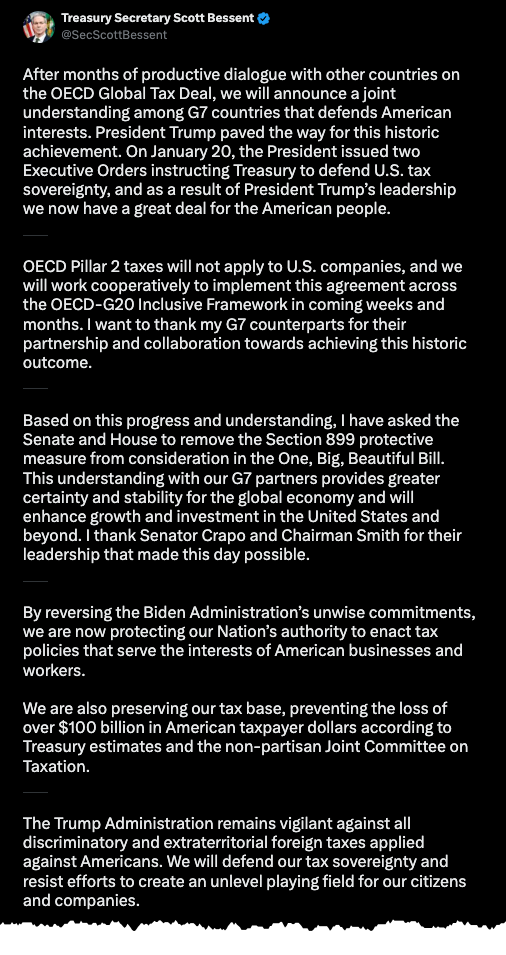
Shortly after Bessent’s comments, Finance Committee Chairman Mike Crapo (R-Idaho) and House Ways and Means Committee Chairman Jason Smith (R-Missouri) issued statements on Section 899 and the OECD Pillar 2 / global minimum tax project:
“At the request of Secretary Bessent and in light of this joint understanding to preserve U.S. tax sovereignty and allow U.S. tax laws to co-exist with the Pillar 2 regime, we will remove proposed tax code Section 899 from the One Big Beautiful Bill Act, and we look forward to active engagement with Treasury on these important issues.”
Gennadiy Goldberg, head of U.S. rates strategy at TD Securities, penned a first take note earlier to clients, calling the move by Bessent a “sigh of relief.”
“Removing Section 899 from the budget negotiations would potentially allow investors to breathe a sigh of relief,” Goldberg said, adding, “That said, it’s difficult to know if the market seriously expected this statute to make it into the final law.”
Deutsche’s global head of macro research, Jim Reid, told clients:
“We are also waiting to see if the U.S. administration will pass its budget megabill as they hope by the July 4th holiday. Senate Republicans have been aiming to vote on the bill this week but that timing looks uncertain, with the latest issue being a technical hurdle that some of the proposed Medicaid changes do not meet the strict rules of the reconciliation process that allows to approve budget policies with a simple majority in the Senate. So that could force meaningful last minute changes. One to monitor going into the weekend. There is good news that late last night we found out that the U.S. Treasury Department has asked the Senate and the House to remove Section 899 (aka the “revenge tax”) from the bill after a deal was struck with G7 leaders to exempt U.S. companies from some taxes. Given how much email traffic there’s been in my inbox on this topic, it’s fair to say global investors will breathe a sigh of relief on this news.”
Goldman Sachs chief economist Jan Hatzius noted that “the Senate looks likely to pass the fiscal package by this weekend, though several unresolved issues could delay passage until early July.”
Hatzius provided clients with five key points surrounding the new developments:
- Senate Finance Committee Chairman Crapo and House Ways and Means Committee Chairman Smith announced that they would remove the provision to increase taxes on foreign investors, businesses, and governments known as Section 899.
- This follows an announcement from Treasury Secretary Bessent that the U.S. has reached an understanding with other G7 countries to exclude U.S. companies from the tax, and that the U.S. would work to implement this agreement in the OECD framework in coming weeks and months. While Sec. Bessent did not elaborate on what the understanding includes, it seems likely to involve a deal with other countries to grandfather the existing U.S. tax on global intangible low-tax income (GILTI) as a qualified tax under the OECD rules, which would have the effect of reducing foreign taxes on U.S. companies.
- The Senate’s version of Sec. 899 had already been scaled back from the House’s provision, but would have raised an estimated $52bn/10yrs. While removing the provision will add to the estimated cost of the bill, the international tax agreement could offset some or all of this, as it would likely result in U.S. multinationals paying a greater share of their tax liabilities to the U.S. and a smaller share to other jurisdictions.
- While it now looks unlikely that Congress will pass Sec. 899 or something like it this year, we note that the president currently has authority under another longstanding section of law (Sec. 891) to double the tax on foreign individuals and corporations in response to discriminatory or extraterritorial taxes on U.S. entities. In light of the announced agreement, there is little reason to expect this authority to come into play, though it could become relevant if other countries do not follow through with the understanding that Sec. Bessent has announced.
- The Senate looks likely to pass the fiscal package by this weekend, though several unresolved issues could delay passage until early July. The odds of enactment into law by early July have risen, though we still see a fair chance this could slip to later in July or early August, depending on how long the Senate takes to pass the bill and the extent of disagreements between the House- and Senate-passed versions of the bill.
The big takeaway is that some of Wall Street’s top analysts are relieved after the Trump administration dropped the controversial Section 899 from its massive fiscal bill.
end
USA DATA RELEASES
DOGE Sparks Biggest Plunge In Social Security Handouts Ever; Fed’s Favorite Inflation Indicator Ticked Higher In May
Friday, Jun 27, 2025 – 08:47 AM
The Fed’s favorite inflation indicator – Core PCE – came in hotter than expected in May, rising 0.2% MoM (+0.1% MoM exp) and +2.7% YoY (+2.6% YoY exp)…
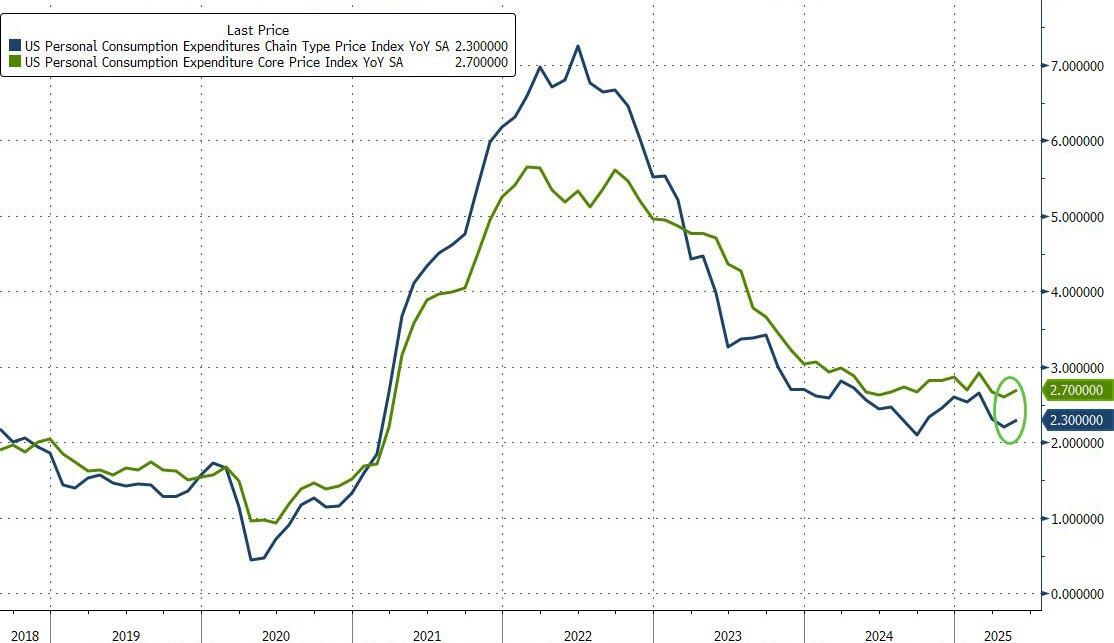
Source: Bloomberg
Not exactly the hyped-up inflationary surge the tariff fearmongers had hoped for as non-durable goods price show modest increase MoM…
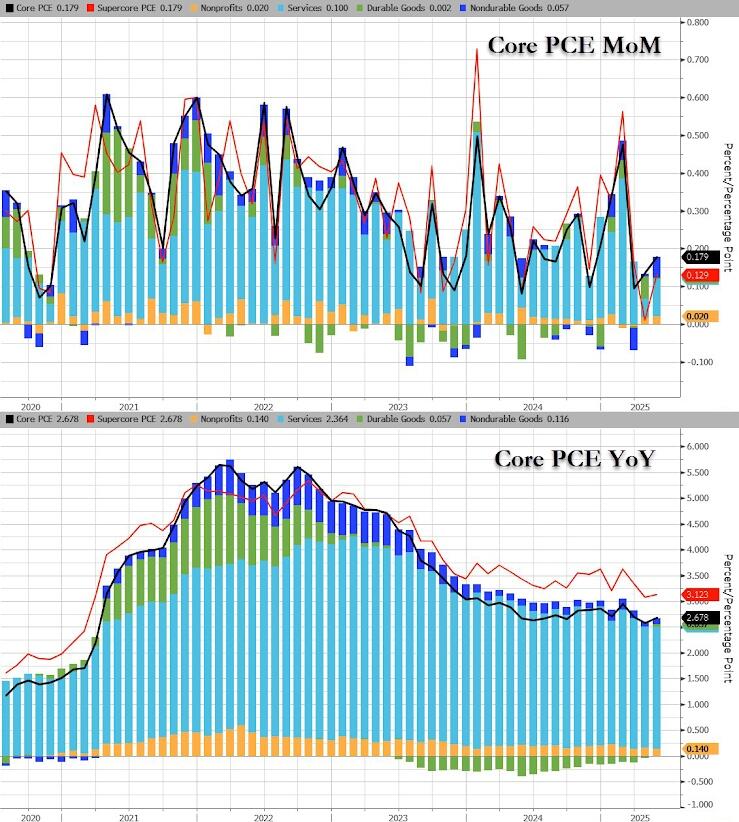
Source: Bloomberg
Headline PCE rose 0.1% MoM (as expected) and the YoY change ticked up to +2.3% YoY…
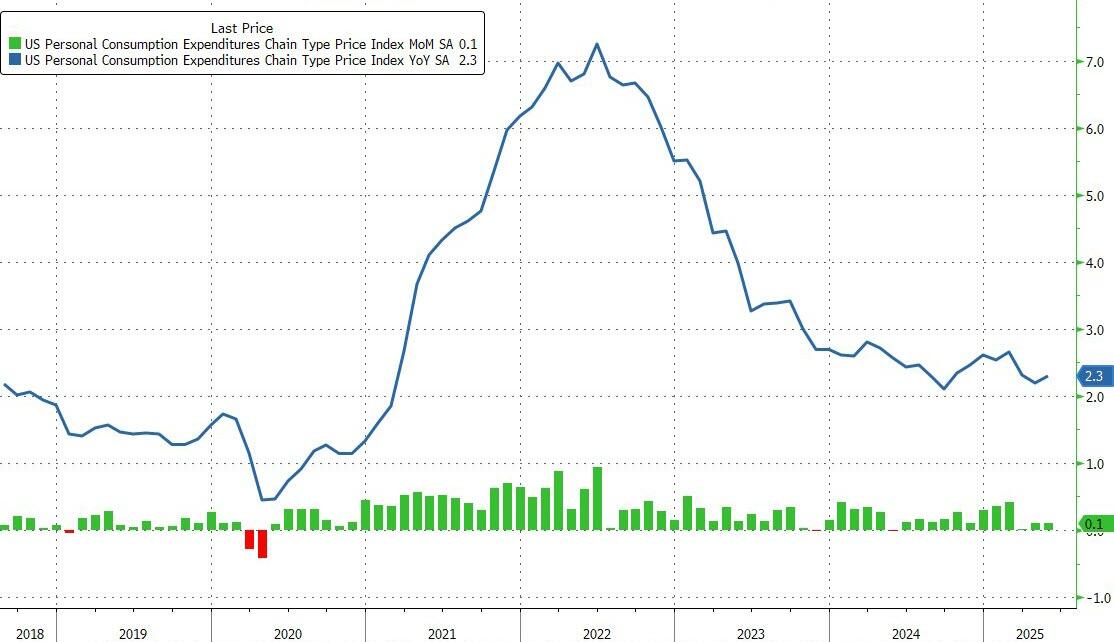
Source: Bloomberg
Non-durable goods flipped from deflationary to inflationary (modestly) in May…
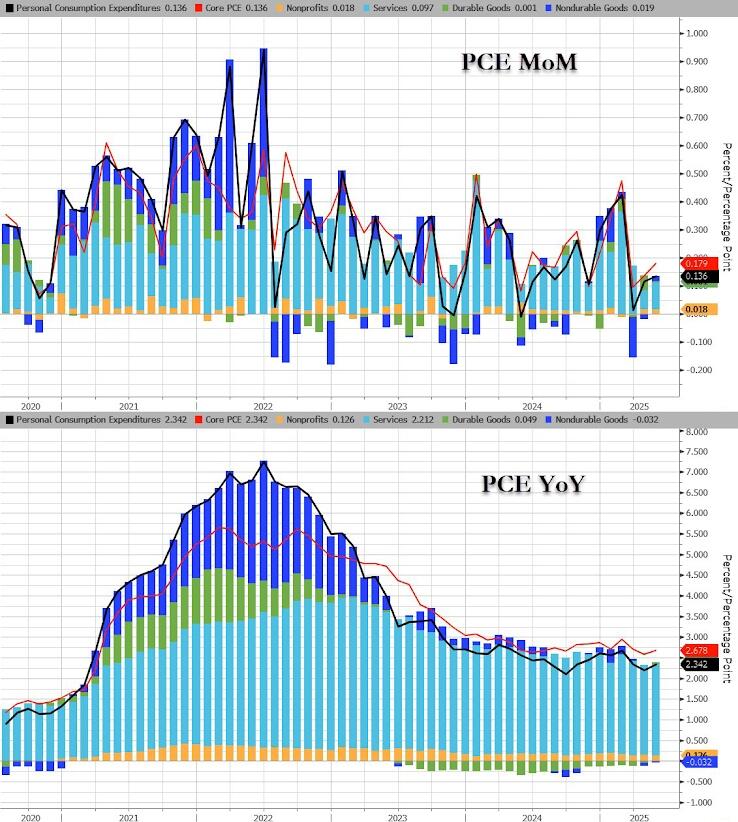
Source: Bloomberg
SuperCore PCE inched higher on a YoY basis (from +3.07% to +3.12% YoY)…
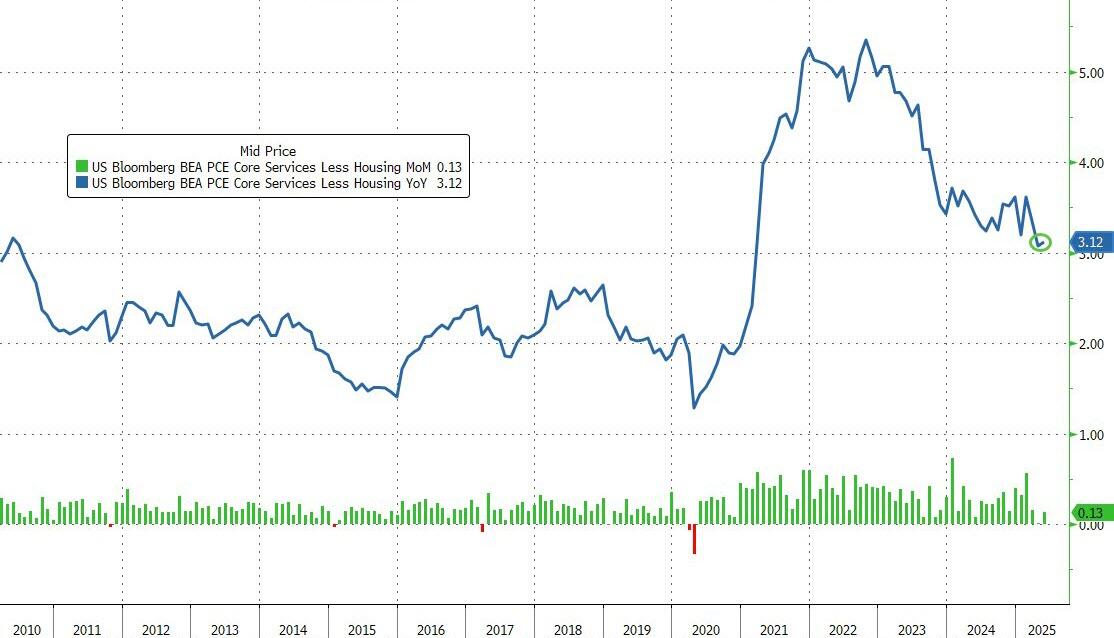
Source: Bloomberg
Both personal income and spending tumbled in May (the former by the most since Sept 2021)…
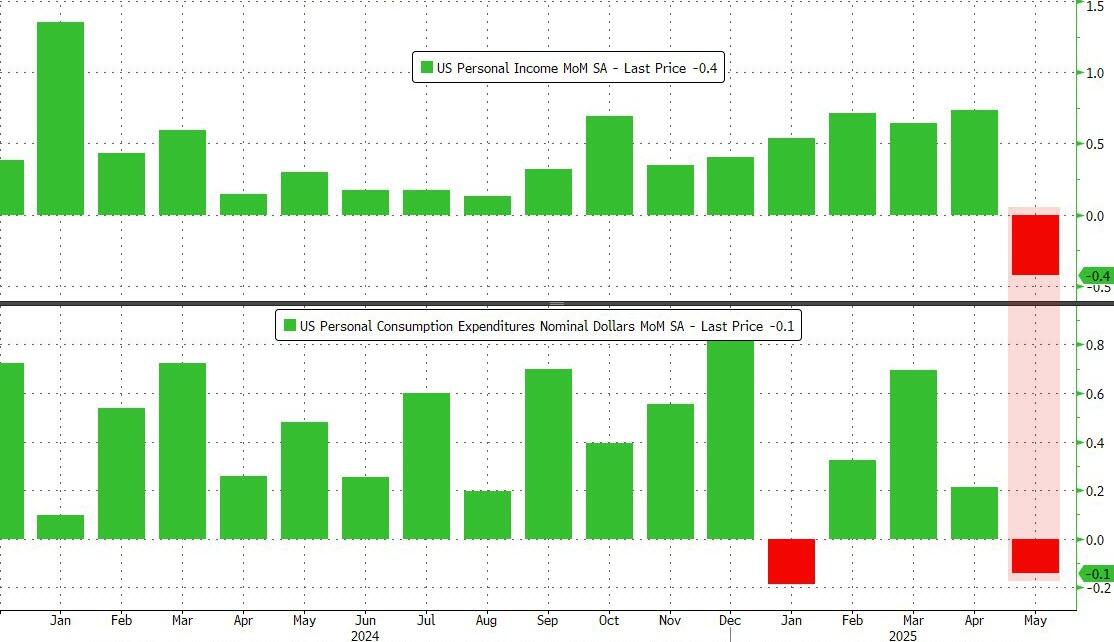
Source: Bloomberg
On the income side, govt workers saw wage growth slow:
- Private worker wages rose 4.6% yoy, up from 4.4% and the highest since Dec 24
- Govt worker wages rose 5.2%, down from 5.3% and lowest since Oct 22
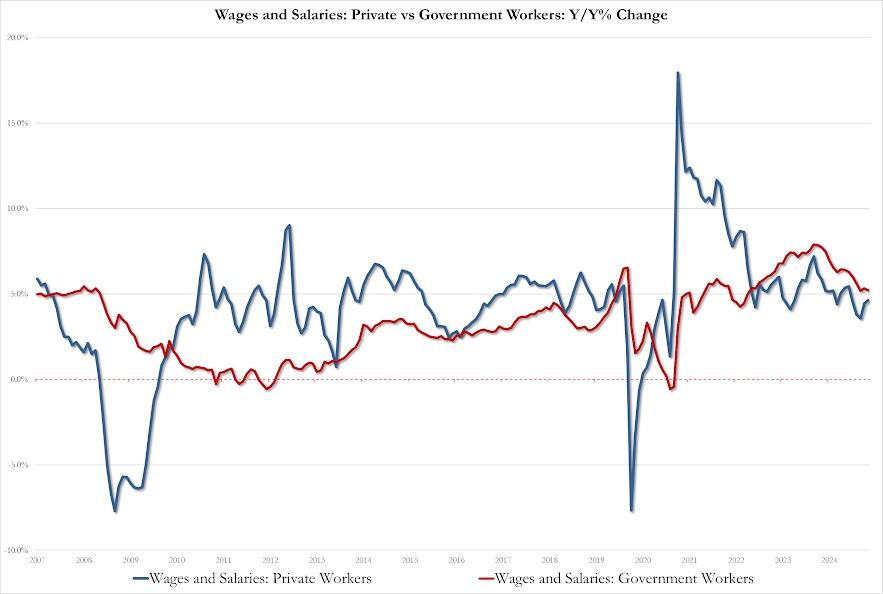
But, Income’s drop was mainly due to a plunge in government handouts…
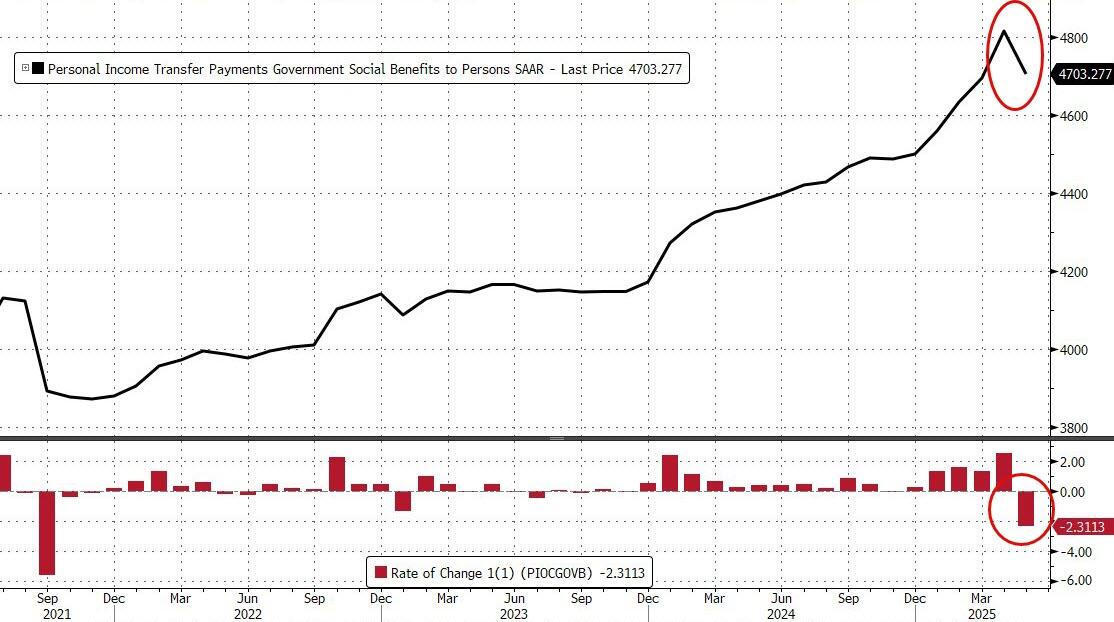
Source: Bloomberg
With the biggest drop in social security benefit handouts ever as DOGE killed all the payments to those ‘dead’ or extremely old people…
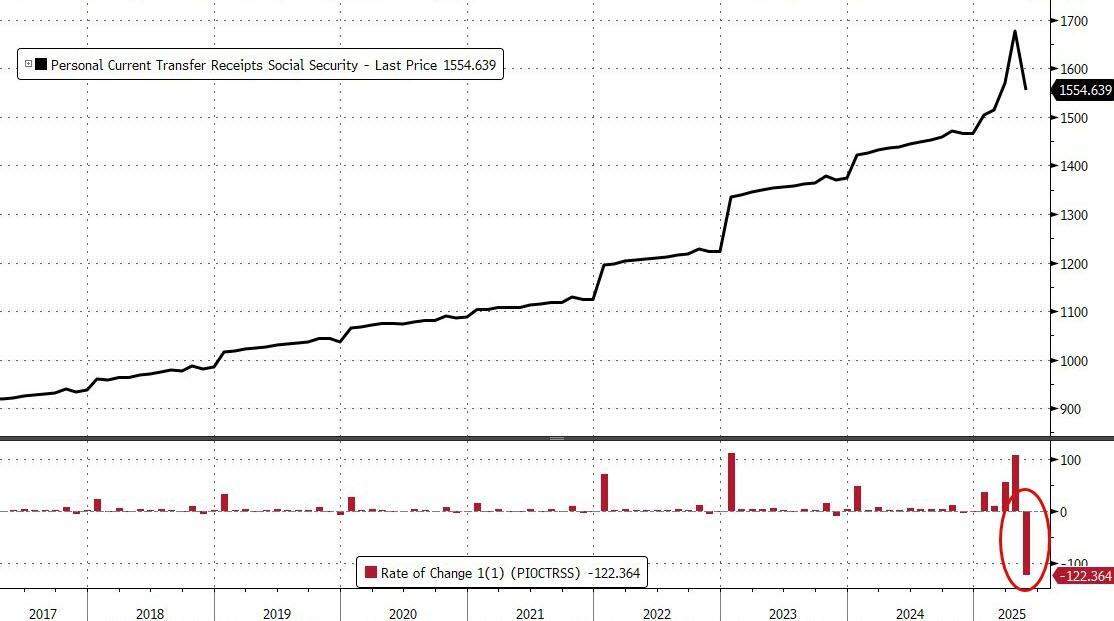
Source: Bloomberg
The savings rate dropped significantly to 4.5% of DPI…
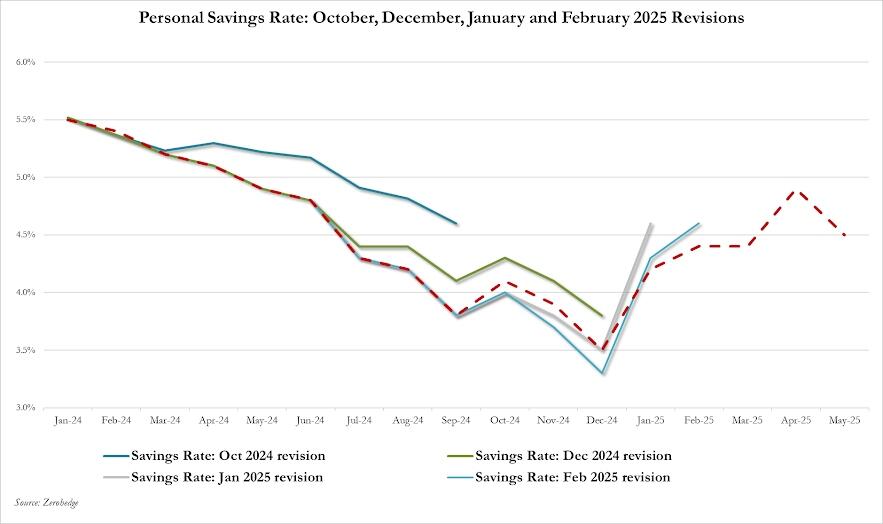
Source: Bloomberg
Is there enough here to nudge The Fed towards a cut? Or do we keep waiting for the ‘lagged’ effect of tariffs to finally show up in prices?
This is the ‘transitory’ no inflationary impact period!
end
UMich Confidence Jumps As Inflation Fears Plunge Most Since 2001
Friday, Jun 27, 2025 – 10:10 AM
Following this morning’s very modest rise in Core PCE (coming just a couple of weeks after CPI disappointed the Trump Tariff infation fear-mongers once again) and a month since the UMich survey found that “Women, Democrats, & Low-Income Americans Are Out Of Their TDS-Addled Minds“, and one week after Goldman finally called out the idiocy of the UMich survey, slamming its “partisanship” and the “sample design break starting from June 2024“…
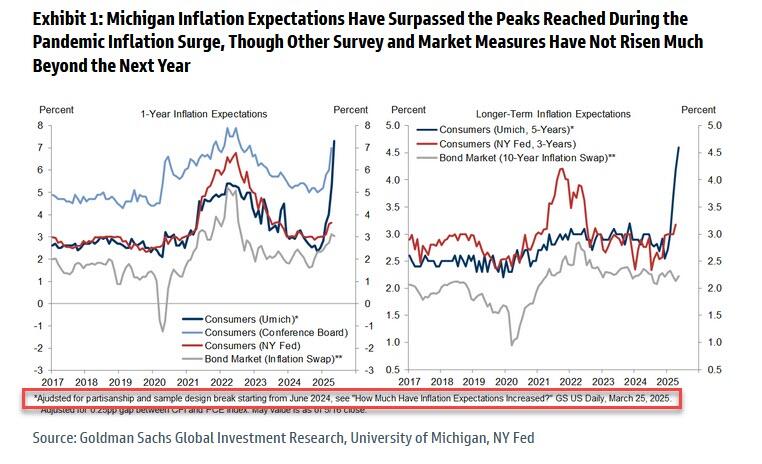
… not to mention that it has been chronically wrong, warning that “Michigan inflation expectations have already risen even more than in 2022 and this time long-term expectations have risen sharply too, all before tariffs have even meaningfully boosted consumer prices” while “technicalities have exaggerated the increase in the Michigan [inflation] survey, as other survey measures and market-implied inflation compensation have not risen much at horizons beyond the next year”, moments ago the final UMich survey for the month of June saw some notable revisions to the prelim prints, to wit:
The final June sentiment index increased to 60.7 from 52.2 a month earlier, according to the University of Michigan.
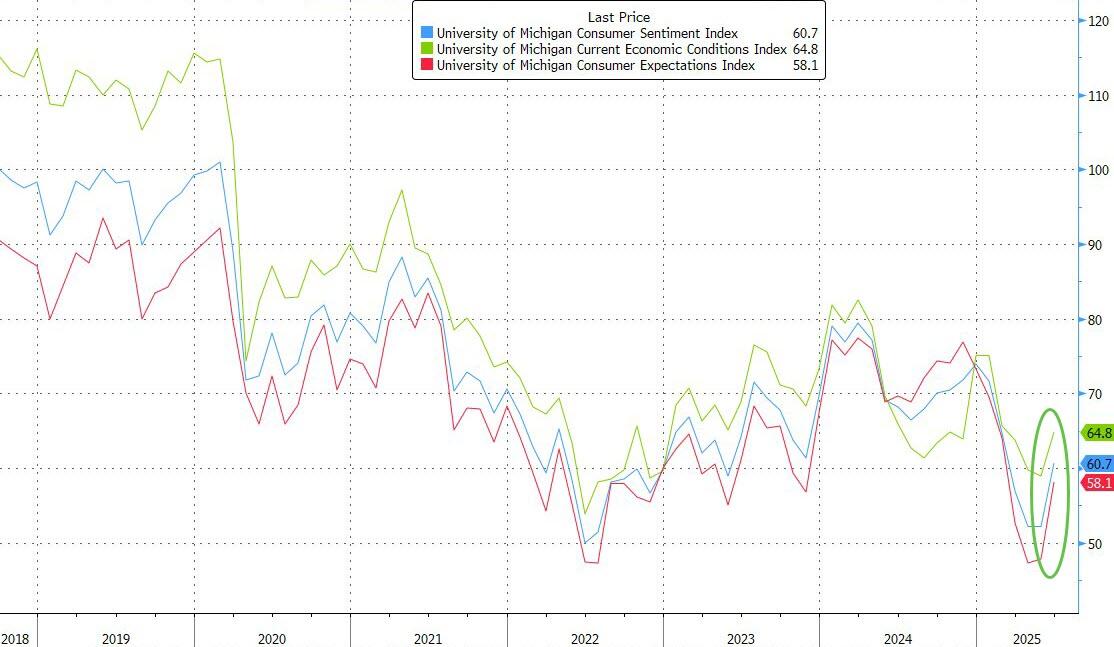
The 8.5-point increase was the largest since the start of 2024. The median estimate in a Bloomberg survey of economists called for no change from the preliminary reading of 60.5.
“The improvement was broad-based across numerous facets of the economy,’’ Joanne Hsu, director of the survey, said in a statement.
“With the recent moderation in both tariff levels and trade policy volatility, consumers now appear to believe that their worst fears may not come to pass and have moderated their expectations accordingly.”
More notably, consumers expect prices to rise 5% over the next year, data released Friday showed. That is down slightly from the preliminary reading. It’s also far better than the 6.6% registered in May – the biggest monthly improvement since 2001.
They saw costs rising at an annual rate of 4% over the next five to 10 years, also lower than a month earlier.
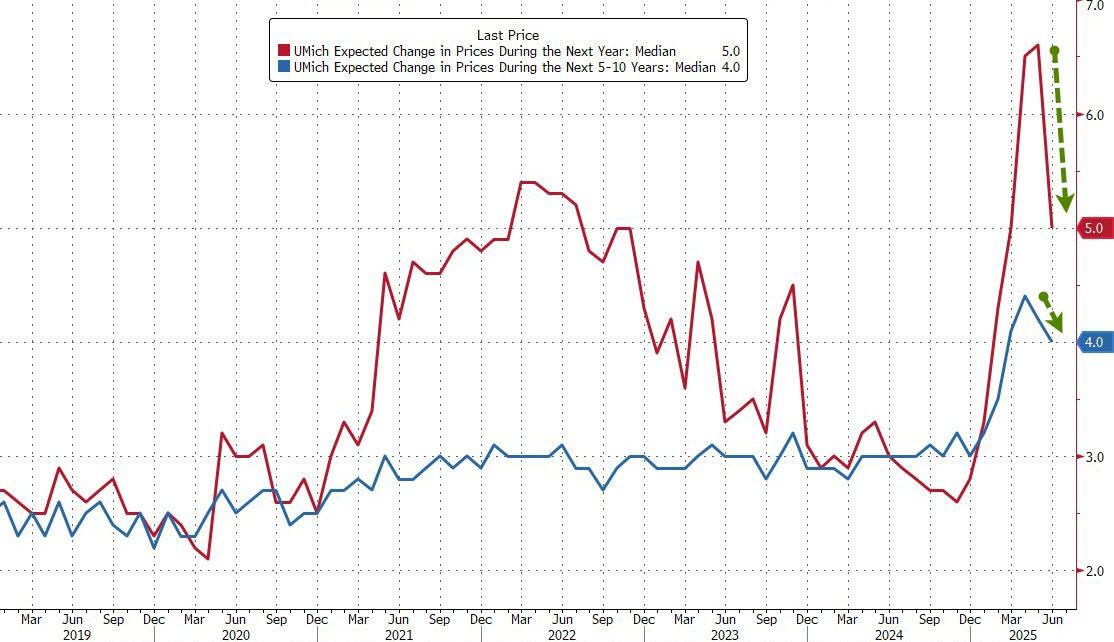
Source: Bloomberg
Under the hood, it was Democrats that eased back (very modestly) on their inflation fears (over the short term)…
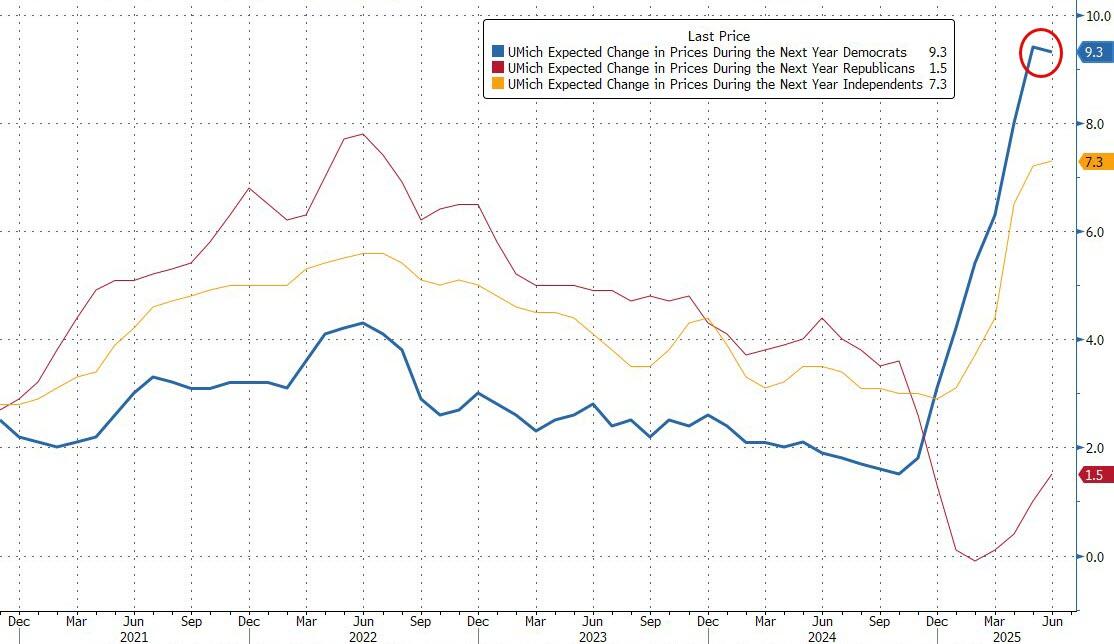
Source: Bloomberg
…and over the medium term (but independents seem to have caught the ‘tariff derangement syndrome)…
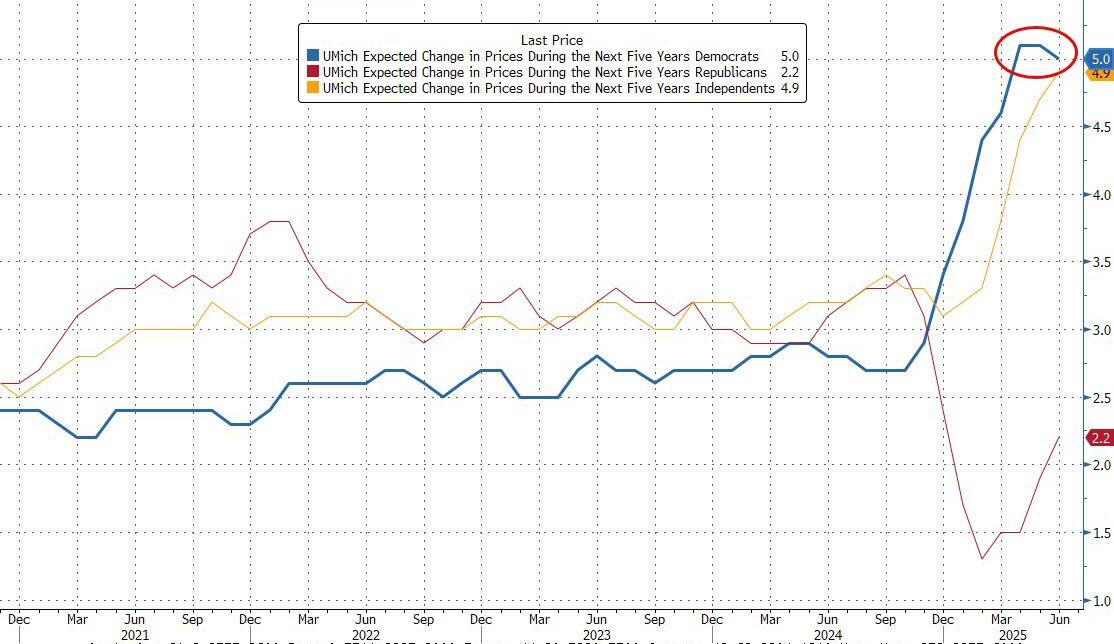
Source: Bloomberg
As a reminder, its the Democratic-run states that are seeing the highest level of inflation, so perhaps they’re on to something…
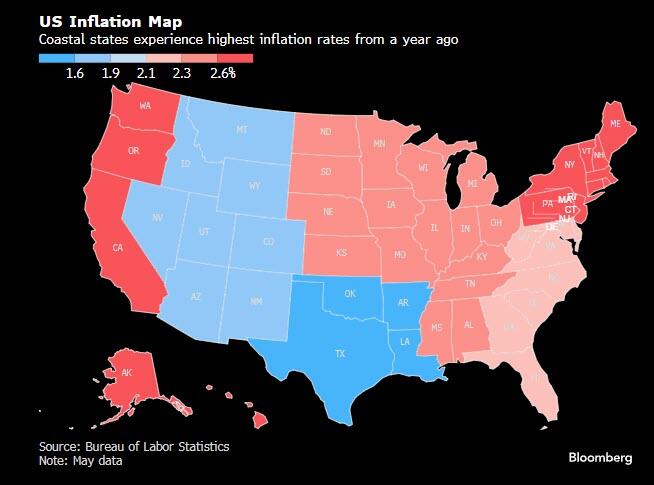
Source: Bloomberg
One more for fun – comparing Democrats view of the inflationary outlook to the ‘hard’ inflationary data…
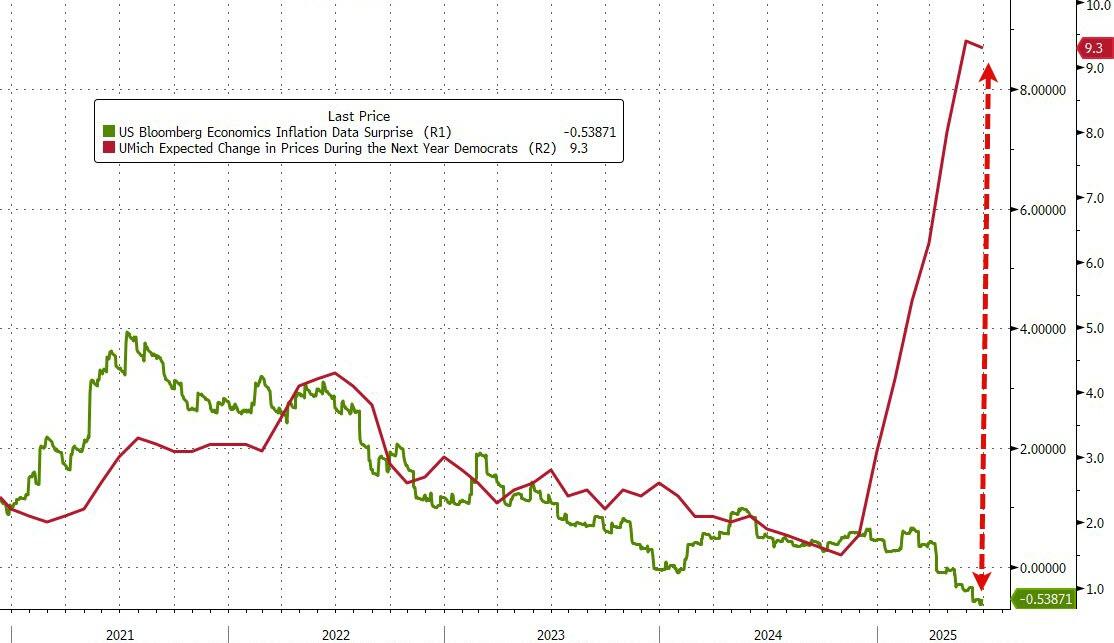
Source: Bloomberg
With stocks near record highs, the percentage of UMich respondents making unsolicited negative comments about news they’ve heard on government economic policy dropped notably from record highs…
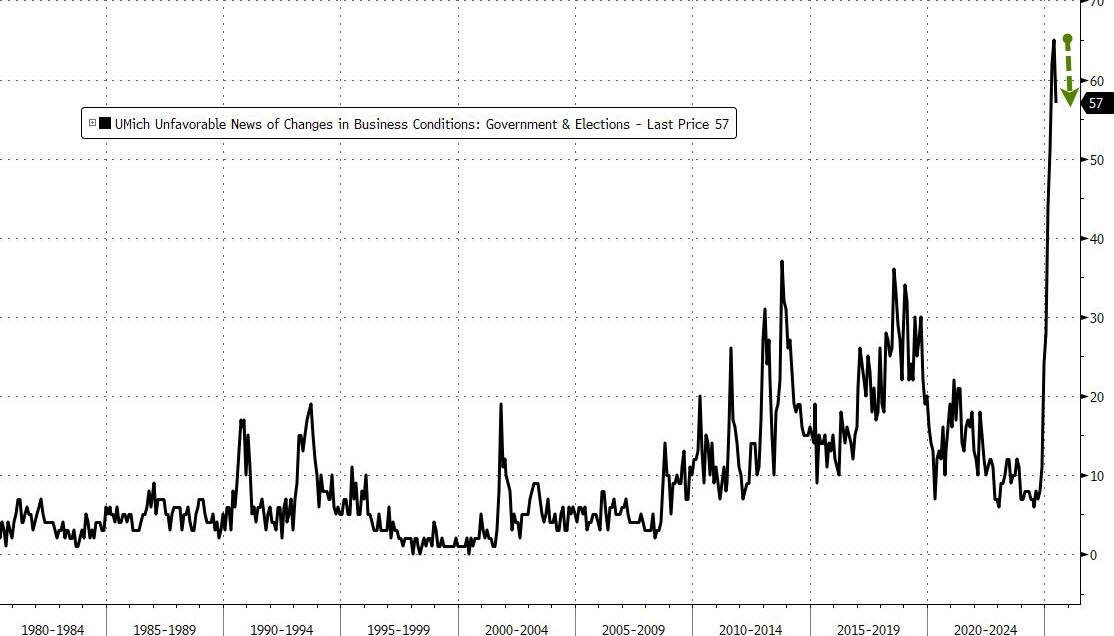
Source: Bloomberg
The latest data suggest sluggish household demand, especially for services, extended into May after the weakest quarter for consumer spending since the onset of the pandemic.
“Consumer views are still broadly consistent with an economic slowdown and an increase in inflation to come,” Hsu said.
USA ECONOMIC NEWS
a big story!!
Six Million Student Loan Borrowers On Track To Have Wages Garnished
Friday, Jun 27, 2025 – 07:20 AM
Authored by Mike Shedlock via MishTalk.com,
It’s 2 million now with another 4 million projected. And jobs are harder to find.
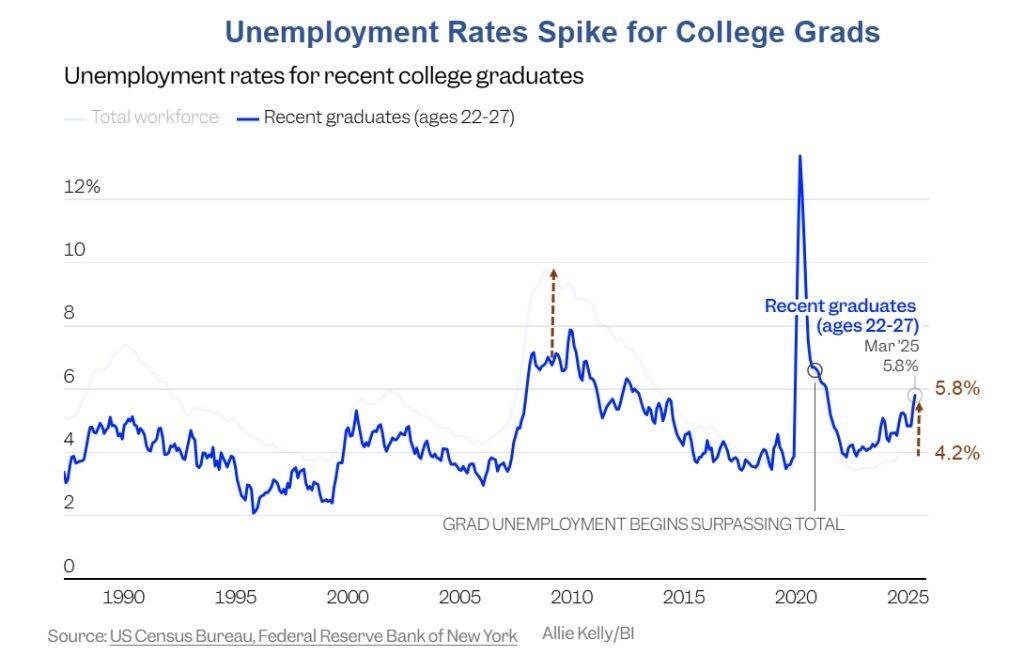
Student-Loan Borrowers Are at Risk of Docked Pay This Summer
The Wall Street Journal reports Nearly Two Million Student-Loan Borrowers Are at Risk of Docked Pay This Summer
Roughly six million federal student-loan borrowers are 90 days or more past due after a pandemic-era reprieve ended, according to TransUnion. The credit-reporting company estimates that about a third of them, or nearly two million borrowers, could move into default in July and start having their pay docked by the government. That’s up from the 1.2 million that TransUnion had estimated in early May.
An additional one million borrowers are on track to default by August, followed by another two million in September. Borrowers fall into default when they are 270 days past due.
Wage garnishment is also set to restart this summer. Until past due payments are paid in full or the default status is resolved, borrowers could see up to 15% of their wages automatically deducted from their paychecks.
Borrowers who have been newly reported as delinquent since then on their student loans have seen an average 60-point drop in their credit scores, according to TransUnion. Nine percent of borrowers who fell into delinquency were current on their payments by April, according to TransUnion.
The Education Department has been urging borrowers to resume payments and emphasizing the consequences. Roughly 43 million borrowers owe more than $1.6 trillion in student-loan debt.
More than nine million of them are expected to see their credit scores drop this year, according to data from the New York Fed released in March.
This is no small deal. Millions of zoomers and millennials are spending every penny right now and struggling.
Now come wage garnishment up to 15 percent.
And those graduating now are struggling with a much tougher job market.
Gen Z College Grads Hit the Job Market at the Worst Possible Time
Business Insider reports Gen Z College Grads Hit the Job Market at the Worst Possible Time
Zoomers are staring down a tough hiring market: Economic uncertainty has contributed to employees’ wariness to quit and companies’ hesitancy to hire. Artificial intelligence is disrupting the entry-level rung of the career ladder in industries like tech. Recent graduates have told Business Insider that they’re frustrated by hundreds of rejected applications and being ghosted by prospective employers. Some are settling for whatever work they can find.
It’s long been typical for 20-somethings to have a higher unemployment rate than the general population, and the overall US unemployment rate is still relatively low. One relatively new development, however, is that young people with college degrees are being hit hard by the economic slowdown — especially if they’re hoping to land a role in traditionally white-collar fields. Many Gen Zers are losing faith in the ROI of higher education and are turning toward blue-collar opportunities.
The unemployment rate for recent college graduates ages 22 to 27 has soared compared to unemployment for all workers ages 16 to 65 in recent years. This is a new trend: young people with degrees have historically almost always been more likely to be employed than the rest of the labor force.
The unemployment rate gap between the total workforce and recent grads was historically wide this spring, meaning that the job market for 20-somethings with degrees is among the worst the cohort has seen in at least four decades. Those who studied anthropology, physics, or computer engineering had the highest unemployment rates in 2023, per the Federal Reserve Bank of New York’s analysis of Census Bureau data.
The pool of jobs available for Gen Z — and the workforce as a whole — to apply for has shrunk. Job openings have cooled from 12 million in March 2022 to 7 million this past April. In what’s been dubbed the Big Stay, current employees are holding on to their seats as well, with the monthly quit rate falling from 3% in March 2022 to 2% this past April.
Small and midsize businesses aren’t hiring as many recent grads
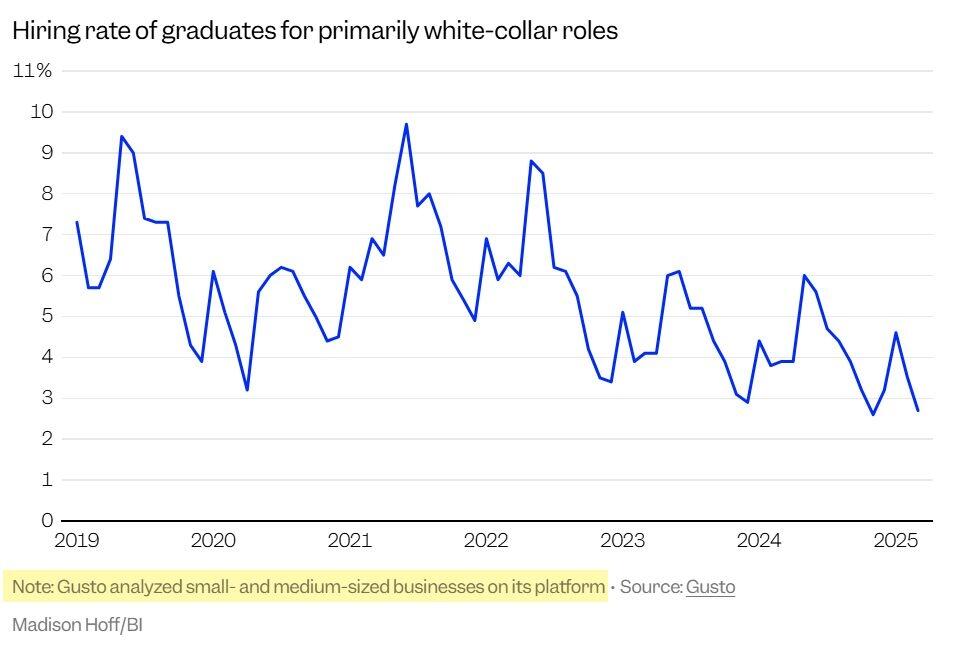
Gusto, a payroll and benefits platform for small- and medium-sized businesses, found the rate of primarily white-collar hires aged 20 to 24 at small and midsize employers has fallen from pre-pandemic levels, declining from 9.4% in May 2019 to 2.7% this past March.
Even if new graduates have a job, they may be working in a role that doesn’t typically require a college degree. While this figure fluctuates over time, the share of 20-somethings who have jobs they’re overeducated for is rising in 2025. It coincides with the generation’s pivot toward skilled-trades roles such as electricians or plumbers.
Fed Chair Jerome Powell says the labor market is healthy.
I disagree.
END
Supreme Court Slaps Down Activist Judges, Curbs Injunctions Against Trump Birthright Citizenship EO
by Tyler Durden
Friday, Jun 27, 2025 – 10:16 AM
The Supreme Court on Friday allowed President Trump’s executive order restricting birthright citizenship to go into effect in some areas of the country – blocking judges’ ability to halt the president’s policies nationwide.

The order, signed Trump’s first day in office, curbs birthright citizenship for children born on US soil if they don’t have at least one parent with permanent legal status – which quickly became a legal question surrounding the 14th Amendment’s Citizenship Clause.
The 6-3 ruling along ideological lines found that three federal district judges went too far in issuing nationwide injunctions against Trump’s order. The decision hobbles a key tool used by venue-shopping Democrats and the activist judges that have been blocking Trump’s path since January – with every court having found the legality of Trump’s EO ‘likely’ unconstitutional.
Justice Ketanji Brown Jackson was specifically called out for being retarded…
That said, it doesn’t definitively resolve whether Trump’s restrictions on birthright citizenship are constitutional – a question which could end up in front of the Supremes down the road. It does, howeever, narrow the lower court rulings to only block Trump’s order as applied to the 22 Democratic-led states, expectant mothers and immigration organizations that are suing.
Furthermore, Justices Alito and Thomas note that the Supreme Court ‘completely punted on the issue of third-party class certifications, which will be the gimmick now used to get around the universal injunction ban,” according to The Federalist‘s Sean Davis.
The cases will now return to lower courts where they will play out as Trump’s order partially goes into effect. Once the appeals courts issue their final rulings, the parties could bring the case back to the SCOTUS.
VICTOR DAVIS HANSON
VDH: In the End, Everyone Hated The Iranian Theocracy
Thursday, Jun 26, 2025 – 11:25 PM
Authored by Victor Davis Hanson via AmericanGreatness.com,
It is hard even to digest the incredible train of events of the last few days in the Middle East.
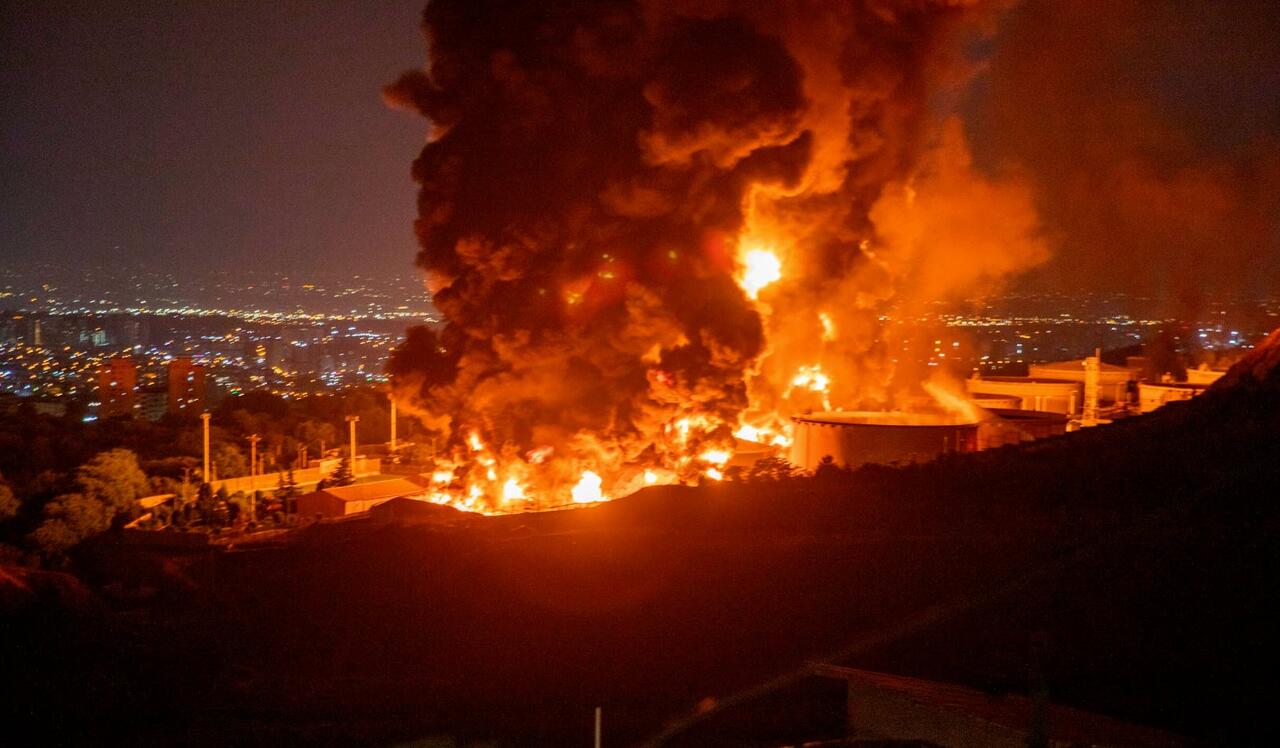
Iran had been reduced to an anemic, performance-art missile attack on our base in Qatar—the last Parthian shot from a terrified regime, desperate for an out—and a ceasefire.
Iran would have been better off not launching such a ceremonial but ultimately humiliating proof of impotence.
Even worse for the theocracy, Iran’s temporary reprieve came from the now magnanimous but still hated Donald Trump.
So ends the creepy mystique of the supposedly indomitable terror state of Iran, the bane of the last seven American presidents over half a century.
For Supreme Leader Khamenei, it was hard to swallow that U.S. bombers got their permission to fly into Iranian airspace from the Israeli air force.
A good simile is that Trump put a pot of water on the stove, told Iran to jump in, put the lid over them, then smiled, turned up the heat—and will now let them stew.
As postbellum realities now simmer in Iran, the theocracy is left explaining the inexplicable to its humiliated military and shocked but soon-to-be-furious populace. All the regime’s blood-curdling rhetoric, apocalyptic threats against Israel, goose-stepping thugs, and shiny new missiles ended in less than nothing.
A trillion dollars and five decades’ worth of missiles and centrifuges are now up in smoke. That money might have otherwise saved Iranians from the impoverishment of the last fifty years.
How about the little Satan Israel, to which Iran for nearly 50 years promised extinction?
Israel had destroyed Iran’s expeditionary terrorists, Iran’s defenses, its nuclear viability, and the absurd mythology of Iranian military competence. And worse, Israel showed it could repeat all that destruction when and if it is necessary.
So, the most hated regime in the world crawled into the boiling pot because it looked around in vain for someone to void Trump’s ultimatum for a cease and desist.
But there were no last-minute saviors to rescue them.
The dreaded decades-long Iranian nuclear threat?
It is either gone for now, or if it resurfaces, it will be again far easier to vaporize at will than to rebuild a lost trillion-dollar investment.
Russia? Its former Obama-Kerry re-invitation back into the Middle East lasted only a decade.
It will now cut its losses like it did with the vanished Assad kleptocracy in Syria. Putin exits the Middle East not entirely displeased that his lunatic Iranian client did not get a bomb—but did get its just desserts. A tense Middle East tends to prop up Russian export oil prices.
Did China come to the mullahs’ aid?
No, they were not shy about ordering their Iranian lackey to keep the Strait of Hormuz open, through which 50 percent of Chinese-purchased oil passes.
For President Xi, the Iranians are treated as little more than Uyghurs with oil.
The world decided that it was tired of a half-century of crybully terrorism, empty nuke threats, mindless mobs screaming scripted banalities, cowardly murdering, and medieval theocrats threatening the general peace.
So, the world turned its back on Iran. And with a wink and nod, it let Israel and the U.S. do what they must.
As for Iran’s terrorist appendages, Hezbollah’s commanders are either dead, maimed, or in hiding.
Hamas has fled into a subterranean labyrinth.
The last Assad thug fled to Russia.
The crazy Houthis? They are reconsidering the idea of launching their last missile at the cost of their last port or power grid.
The anti-Trump Democrats and loony left?
Their talk of impeaching Trump for the supposedly “illegal” 35-minute, one-off strike will fade.
The Trump mission equaled less than one day of Obama’s predator drone strikes, targeted killings, or his five-year chaotic bombing in Libya.
Is the incoherent left furious that there is no more Iranian nuclear threat?
Mad that no Americans were killed last Saturday night?
Furious America likely killed few if any Iranians.
Or is it raging because Trump ignored Iran’s last-gasp attack and instead orchestrated a cease-fire?
Of course, in the Middle East, there is never a real end to anything.
We may see freelancing terrorists try to fill the vacuum of Iran’s decline. Or Iran itself may try to let loose a terrorist cell. It may later boast it has hidden away some enriched uranium.
But no matter.
The dimensions of this new Middle East will persist.
The new reality is that either Israel or the U.S.—if they keep their earned confidence within proper limits—can now ensure a non-nuclear Iran by easily blowing up its costly nuclear program as often as it is rebuilt.
Views expressed in this article are opinions of the author and do not necessarily reflect the views of ZeroHedge.
USA NEWS/ANTISEMITISM..
KING NEWS
| The King Report June 27, 2025 Issue 7522 | Independent View of the News |
| US Final Q1 GDP declined 0.5%; -0.2% was consensus. Consumption 0.5%, 1.2% expected. GDP Price Index 3.8%, 3.7% expected and prior; Core PCE 3.5%, 3.4% expected and prior Full GDP Report & Tables: https://www.bea.gov/sites/default/files/2025-06/gdp1q25-3rd.pdf Table 2 Contributions to Percent Change in Real Gross Domestic Product Services 0.3 with household consumption expenditures 0.69 (Healthcare and Housing & Utilities each 0.30), Non profits -.39 (DOGE?), Nonresidential 1.36 (Software .39), Net Exports -4.61 on Imports -4.66 with Goods Imports -4.84; Inventories 2.89, Fed Gov -.31 (Def -.27), State & Local .21 @RealEJAntoni: Final Q1 GDP print comes in worse at -0.5% as PCE (consumer spending) hits a wall, up only 0.5% while exports were up just 0.4%; imports were up less than prior estimates but still exploded 37.9%, more than half of which went into inventories, which buoyed investment (up 23.8%): https://x.com/RealEJAntoni/status/1938216137495613583 Rush to front run tariffs caused inventories to jump higher, contributing a whopping 2.59 percentage points to GDP in Q1; it’s likely that a good chunk of imports still hasn’t been captured either here, or in equipment, or on the consumer side, so it’ll add to GDP in Q2 or later: https://x.com/RealEJAntoni/status/1938246965956919388 US goods trade deficit widens in May as exports fall The goods trade gap widened 11.1% to $96.6 billion last month, the Commerce Department’s Census Bureau said on Thursday. Exports of goods dropped $9.7 billion to $179.2 billion. Goods imports were little changed at $275.8 billion… https://finance.yahoo.com/news/us-goods-trade-deficit-widens-132805318.html Other US Economic Data released on ThursdayMay Chicago Fed National Activity Index -0.28%, -0.13 consensus, prior -0.36 from -0.25%May Durable Goods 16.4% (Middle East plane orders after DJT visit), 8.5% exp., Ex-Trans 0.5%, 0.0% exp, Nondef Ex-Air 1.7%, 0.1% exp., Shipments 0.5%, -0.1%Initial Jobless Claims 26k, 243k exp, 246k prior; Continuing1.974m, 1.95m exp, 1.937m priorMay Pending Home Sales 1.8% m/m 0.0% exp, -6.3% prior; -0.3% y/y, -0.4% exp., prior -3.6%June KC Fed Mfg. Activity -2, -5 expected, -3 priorMay Wholesale Inventories -0.3% m/m, 0.1% exp, Retail Inventories 0.3% m/m -0.1% exp @MauiBoyMacro: See that plunge in Consumer Goods Imports (-36.2% so far)? Again, you can’t have inflation when consumers are tapped out. If this tariff nonsense were happening at the beginning or middle of the economic cycle, this chart would look different. https://x.com/MauiBoyMacro/status/1938246719541809188 Despite the ugly US Q1 GDP Report, stocks rallied sharply on Thursday. Bonds were flat early. ESUs waffled between modest gains and moderate losses from the Nikkei opening on Thursday until they broke higher after 23:00 ET. ESUs then relentlessly rallied to 6170.00 at 4:23 ET. ESUs then traded in a wide range with two minor new top and two belated attempts to make new highs. Buying for the expected retail buying at 10:00 ET pushed ESUs to a new high of 6185.00 at 11:19 ET. Trader liquidation for the Europe close pushed ESUs down to 6174.25 at 11:30 ET. After the close, ESUs quickly rebounded to 6182.00 at 11:38 ET. ESUs then intractably rallied to a daily high of 6200.00 at 15:52 ET. During the trek, there were only three modest retrenchments. In Thursday’s King Report we erroneously stated: This implies that there are motivated sellers in the market. It should have been: “This implies that there are few or no motivated sellers in the market.” The next part we wrote accurately: But there are desperate buyers in the market: the performance chasers that need to boost their portfolios by next Monday (Q2 end). Leftist Fed Gov Barr, appointed by Biden and an Obama Treasury official, proved he is deceitful and a hypocrite. Barr said climate change is likely to be a risk for the financial system and the Fed needs to monitor how banks manage their climate risks. Minutes later, Barr claimed the Fed does NOT comment on fiscal policy issues. As we stated before, crime is a far greater risk than climate change. Why doesn’t the Fed comment on crime and its effects on the economy and a Fed District? Barr’s leftist bona fides: In November 2020, Barr was named a volunteer member of the Joe Biden presidential transition Agency Review Team; He is a non-resident scholar at the Brookings Institution and is an advisor to the Clinton Global Initiative… the Bill & Melinda Gates Foundation, and the Washington Center for Equitable Growth. In addition to his academic work, Barr serves as a non-resident senior fellow at the Center for American Progress, a liberal think tank… https://en.wikipedia.org/wiki/Michael_Barr_(U.S._official) Senate Hearing Exposes CCP-Tied Group’s Role in Pushing Climate Lawfare An organization with ties to the Chinese Communist Party is quietly pushing left-wing climate research and lawfare to undermine U.S. energy producers and promote alternatives with CCP-controlled supply chains… https://www.nationalreview.com/news/senate-hearing-exposes-ccp-tied-groups-role-in-pushing-climate-lawfare/ University of Michigan to End Joint Institute with Chinese University https://selectcommitteeontheccp.house.gov/media/press-releases/university-michigan-end-joint-institute-chinese-university China-CCP Tied Bioagent Smuggling at University of Michigan Sparks Federal Inquiry https://walberg.house.gov/media/in-the-news/thumbwind-china-ccp-tied-bioagent-smuggling-university-michigan-sparks-federal ‘Pattern emerging’ with University of Michigan’s Chinese student cases, expert says In August 2023, five Chinese students at the University of Michigan were found with cameras near military vehicles and classified communications equipment during the Northern Strike training exercise at Camp Grayling in Northern Michigan… In 2020, UM students from China were caught photographing military and naval infrastructure at Naval Air Station Key West in Florida… https://www.mlive.com/news/ann-arbor/2025/06/pattern-emerging-with-university-of-michigans-chinese-student-cases-expert-says.html PS – Fed Gov Barr was a dean at the University of Michigan. Fury erupts as unelected Senate ‘scorekeeper’ blocks Trump’s agenda The Senate Parliamentarian is not elected. She is not accountable to the American people. Yet she holds veto power over legislation supported by millions of voters,” Rep. Greg Steube, R-Fla., wrote on X. “It is time for our elected leaders to take back control.” He called on Vice President JD Vance to “overrule the Parliamentarian and let the will of the people, not some staffer hiding behind Senate procedure, determine the future of this country.”… Senate Democrats vowed to inflict as much pain as possible through the process known as the “Byrd Bath,” which tests if each provision, line-by-line, is compliant with the Byrd Rule that governs the budget reconciliation process… https://www.foxnews.com/politics/fury-erupts-unelected-senate-scorekeeper-blocks-trumps-agenda GOP Senate Leader Thune said won’t overrule the senate parliamentarian on GOP Medicaid cuts, even though she has no authority and has only an advisory role. Hopefully Thune will hit puberty soon. Positive aspects of previous session US stocks, led by Fangs, rallied on Q2 performance chasing and gaming. The S&P 500 Index, Nasdaq, the Nasdaq 100, and the NY Fang+ Index hit all-time highs USUs were +18/32 at the NYSE close due to a solid 7-year auction ($44B), 4.022% vs 4.0224 WI. Negative aspects of previous session The dollar declined smartly. Platinum soared 84.50; oil and gasoline rallied smartly. Ambiguous aspects of previous session How high will stocks go? First Hour/Last Hour Action [S&P 500 Index]: 1st Hour from NYSE Open: Up; Last Hour: Up Pivot Point for S&P 500 Index [above/below indicates daily trend to traders]: 6131.60 Previous session S&P 500 Index High/Low: 6146.52; 6107.27 A subscriber notes that when questioned by Dem Rep Hines, Powell did NOT know what percentage of the CPI basket is represented by energy and “at what price point does the American household begin to feel some inflationary effects?” Here is the exchange and the link to the video: WATCH LIVE: Fed Chair Jerome Powell Testifies Before The House Financial Services Committee – YouTube Rep Jim Hines (01:22:20): As a technical matter, we tend to refer to CPI, which is a basket of goods and we measure the price changes. Roughly speaking, what percentage of that basket is comprised of energy? Powell: I don’t have that on the top of my head. It’s much less than it was, of course. Oil consumption is much less than it was in the ’70s as a percent of GDP, but it’s come… (It’s 6.387%, Jay) Rep Hines: But energy includes natural gas and gasoline and that sort… It’s a meaningful portion of the basket? Powell: Yes, of course, we have so much natural gas, so that’ll always be there for us. Rep Hines: At what price point does the American household begin to feel some inflationary effects? Powell: I don’t want to throw out a number. Frankly, it’s too early to say that something like that’s going to happen. And I know you know that, but I wouldn’t want to throw out a specific number. If prices went up materially, people would feel that…” https://www.youtube.com/watch?v=5VHb9lm6GV0 Fed Balance Sheet: -$18.856B on MBS -$17.672B; Reserves: -$37.038B Com Sec Lutnick: We Inked the China (Trade) Deal – BBG 17:18 ET Lutnick: China Deal Was Signed and Sealed Two Days Ago – BBG 17:19 ET Trump: “Well, we just signed with China yesterday, right? We are starting to open up China, things that could have never happened.” Later, the WH dialed back DJT and Lutnick’s boasting: “The administration and China agreed to an additional understanding for a framework to implement the Geneva Agreement… about how we can implement expediting rare earths shipments to the U.S. again.” https://www.reuters.com/world/china/trump-says-deal-related-trade-was-signed-with-china-wednesday-2025-06-26/ Trump: We’ll probably just extend short-term debt. (‘King of Debt’ has no interest in fiscal prudence) Trumps drop ‘Made in the USA’ label for $499 smartphone: ‘Proudly American’ https://trib.al/2uY79pE Trump “God Bless the USA” Bibles, which an AP investigation last year showed were printed in China. Trump administration has ‘no imminent plans’ to refill nation’s emergency oil reserve https://www.reuters.com/business/energy/trump-administration-has-no-imminent-plans-refill-nations-emergency-oil-reserve-2025-06-26/?taid=685dda5ccf7ebf00013ec75c Today – The usual suspects will play for the Friday Rally abetted by the China-US trade deal news. Q2 performance gaming and chasing should continue through Monday, June 30. Then, the pre-4th of July Rally could come into play. If stocks stay strong next week, look for the propensity of stocks to retreat after a 4th of July Rally. Equities look fabulous now and could remain firm through Q2 earnings season in July. However, the technical condition of the market is faltering. On Wednesday, about 70% of S&P 500 stocks declined; rapid Fang buying obfuscated the technical weakness. Also, liquidity is drying up in ESUs and stocks and will continue to do so on the usual summer contraction. This dynamic has created summer equity rallies that get crazy – but incubate autumn catastrophes (1929, 1987, 1989). Summer rallies with an ebbing economy is a very, very dangerous condition (1929 worst result). ESUs are +4.25; NQUS are +20.25; USUs are +4/32; and Gold is -18.50 at 19:07 ET. Expected Economic Data: May Personal Income 0.3%, Spending 0.1%, PCE Price Index 0.1% m/m & 2.3% y/y, Core PCE Price Index 0.1% m/m & 2.6% y/y; The hokey UM Sentiment for June 60.5, Current Conditions 63.2, 1-year Inflation 5.2%, 5-10-year Inflation 4.1% Fed Speakers: NY Pres Williams 7:30 ET, Cleveland Pres Hammack and Gov Cook 9:15 ET S&P Index 50-day MA: 5794; 100-day MA: 5771; 150-day MA: 5844; 200-day MA: 5826 DJIA 50-day MA: 41,681; 100-day MA: 42,076; 150-day MA: 42,616; 200-day MA: 42,567 (Green is positive slope; Red is negative slope) S&P 500 Index (6141.02 close) – BBG trading model Trender and MACD for key time frames Monthly: Trender is positive; MACD is negative – a close below 5807.26 triggers a buy signal Weekly: Trender and MACD are positive – a close below 5340.64 triggers a sell signal Daily: Trender and MACD are positive – a close below 5997.10 triggers a sell signal Hourly: Trender and MACD are positive – a close below 6112.59 triggers a sell signal Def Sec Pete Hegseth: You, and I mean specifically YOU, the press, you cheer against Trump so hard, it’s in your DNA and in your blood to cheer against Trump, because you want him not to be successful so bad, you have to cheer against the efficacy of these strikes. You have to hope maybe they weren’t effective…. https://x.com/ericldaugh/status/1938210240568209726 Iran Supreme Leader @khamenei_ir: My congratulations on our dear Iran’s victory over the US regime. The US regime entered the war directly because it felt that if it didn’t, the Zionist regime would be completely destroyed. It entered the war in an effort to save that regime but achieved nothing. WSJ Editorial Board: How Democratic Failure Made Mamdani Mr. Mamdani couldn’t have done it without the establishment’s help—to wit, the failure of big-city Democratic governance. Chicago, Los Angeles, San Francisco—all are run by Democrats, and all are wracked by crime, homelessness and a punishing cost of living… NY Dem Reps. Tom Suozzi, Laura Gillen distance themselves from lefty NYC mayoral nominee Zohran Mamdani: ‘We’re not socialists’ https://trib.al/CtGzF7G @EndWokeness: Zohran Mamdani on why he wants to empty jails: “Violence is an artificial construct“ https://x.com/EndWokeness/status/1938368181287989550 @nicksortor: Zohran Mamdani pledges to “weed out bigotry” by implementing an “800% INCREASE in funding for hate crime prevention programs.”!… https://x.com/nicksortor/status/1938048912683573633 @RealAmVoice: “This guy belongs to a group of Muslims called the ‘Twelvers’ who believe that to this day, there is a 1,200-year-old living prophet on earth who is in hiding and going to come out sometime soon and proselytize Islam the world over.” – @RaheemKassam on New York’s Dem mayoral candidate. @LauraLoomer: Why are Republicans only calling out @ZohranKMamdanifor being a communist? It’s more concerning that he’s a jihadi Shia Muslim… @DC_Draino: A lot of people say don’t call Zohran a radical Islamist b/c he isn’t as explicit about that as he is his socialist ideas… @nicksortor: Rep. Andy Ogles just formally asked Attorney General Bondi to REVOKE Zohran Mamdani’s citizenship and DEPORT him back to Uganda. Mamdani was openly supporting TERR0R ORGANIZATIONS prior to becoming a citizen, making him INELIGIBLE… https://t.co/uXorJ37h2t @alx: Ex-Dem Rep Jamaal Bowman: “The reason why heart disease and cancer and obesity and diabetes are bigger in the black community…Is because of the stress we carry from having to deal with being called the N-word directly or indirectly every day.” https://x.com/alx/status/1938087345313448037 @Wirepoints: US Census reveals Illinois’ disastrous demographics. 2020-2024. 1) Nation’s worst drop, 18 and under 2) 6th-worst drop in working age residents, 19-64 3) Seniors’ share of population grows Foreshadows higher taxes, more flight. Via @Wirepoints https://wirepoints.org/illinois-disastrous-demographics-fewer-youth-a-drop-in-working-age-residents-and-a-jump-in-elderly-wirepoints/ Babylon Bee: Democrats Discover Innovative Strategy of Promising Free Stuff to Stupid People https://buff.ly/UL9FeVj @PeterSweden7: Two men have been jailed for gangr*ping a 14-year-old girl in Britain – They got 30 months prison. Meanwhile a mother who posted an offensive social media post and quickly delete it – She got 31 months prison. @libsoftiktok: Swiss National Women’s Soccer Team DEMOLISHED 7-1 by a bunch of teen boys ahead of the Euro 2025 tournament. This is why men do not belong in women’s sports. It’s not even CLOSE. https://x.com/libsoftiktok/status/1938249068838555809 | |
SWAMP STORIES FOR YOU TONIGHT
Homan Reveals ICE Rescuing Migrant Children Trafficked To Pedos Under Biden, Lives Apart From Wife Due To Death Threats
Thursday, Jun 26, 2025 – 04:40 PM
President Donald Trump’s border czar, Tom Homan, revealed that ICE has rescued migrant children sex-trafficked under the Biden administration, while noting he’s been separated from his wife due to death threats tied to enforcing Trump’s immigration policies.
“There were 300,000 missing children under the last administration,” Homan told Miranda Devine’s “Pod Force One” podcast. “We rescued victims of sex trafficking [and] two weeks ago, we rescued a 14-year-old that was already pregnant, living with adult men.”
“We rescued some victims of forced labor. We found children working on ranches and chicken farms, not going to school, but enslaved labor in the United States of America,” Trump’s border czar continued.
“Some of the children we found [were] perfectly fine with their families. They just didn’t respond to call-ins [because they] didn’t want to face the consequences of immigration court,” he added.
ICE officers previously disclosed to the Department of Homeland Security’s Office of Inspector General that thousands of migrant children were handed over to non-family sponsors, with HHS releasing over 14,500 in 2023 and 9,600 in 2024 to unrelated individuals or distant relatives, according to the New York Post. Additionally, only 1,000 of 2,400 kids in one November 2023 week went to parents or legal guardians.
“Although these relatives may have been appropriately qualified, [one ICE officer] noted the UACs most at risk for trafficking or forced labor are those released to an unrelated sponsor,” an IG report said.
Homan also told Devine DNA testing showed up to 30% of supposed families were unrelated.
“A lot of parents paid a smuggling organization to bring their kids [over the border]. Some of these children were trafficked. We know HSI [Homeland Security Investigations] had several investigations where a child was rented by the criminal cartel to an adult male or female, crossed the border [and] when you’re done, you send the kid back [and] re-rent them,” Homan said.
Later in the interview, Homan told Devine that living apart from his wife due to death threats he has received.
Homan has revealed that he’s living away from his wife because of death threats he’s receiving.
“I spent a lot of time with my boys growing up, but as I got more and more — climbed the ladder of what I’ve done with ICE director and now back — I don’t see my family very much,” Homan said. “My wife’s living separately from me right now, mainly because I worked for many hours, but mostly because of the death threats against me.
“She’s someplace else. I see her as much as I can, but the death threats against me and my family are outrageous,” he added.
GREG HUNTER


 harveyorganblog.com