SEPTEMBER 2/GOLD SKYROCKETS $79.90 TO $3528.60 WITH SILVER JOINING INTO THE FESTIVITIES RISING 95 CENTS TO $40.82//PLAITNUM WAS UP ANOTHER $31.85 TO $1397.60 WITH PALLADIUM ALSO UP $35.25 TO $1140.45 AND THIS WAS WITH A STRONG USA DOLLAR//GOLD COMMENTARIES TONIGHT FROM ZERO HEDGE AND TWO FROM ALASDAIR MACLEOD//FRANCE AND THE UK ARE SEEING THEIR BOND SPREADS RISING INDICATING TROUBLE AT THIS END//GERMAN MIGRANTS RECEIVE THE MOST ON WELFARE BENEFITS/ISRAEL VS HAMAS: GAZA UPDATES//ISRAEL WIPES OUT THE ENTIRE HOUTHI CABINET AND THEY RETALIATE ON A SHIP IN THE RED SEA AND THIS FAILED/IRAN UPDATES//COVID UPDATES/VACCINE INJURY REPORT//MARK CRISPIN MILLER/DR PAUL ALEXANDER/NEWS ADDICTS/NEWSWIZE/EVOL NEWS/INDIA CONTINUES TO IGNORE TRUMP AND BUY DISCOUNTED RUSSIAN OIL//USA DATA RELEASES//USA ECONOMIC NEWS/SWAMP STORIES FOR YOU TONIGHT//
118 H MACQUARIE FUTURES US 1 323 C HSBC 19 332 H STANDARD CHARTERED B 4 363 H WELLS FARGO SECURITI 31 435 H SCOTIA CAPITAL (USA) 22 624 H BOFA SECURITIES 1 661 C JP MORGAN SECURITIES 12 690 C ABN AMRO CLR USA LLC 4 732 C RBC CAP MARKETS 6 737 C ADVANTAGE FUTURES 1 880 C CITIGROUP 8 905 C ADM 1
TOTAL: 55 55 MONTH TO DATE: 2,541
JPMORGAN stopped 12/95
SEPT
GOLD: NUMBER OF NOTICES FILED FOR SEPT/2025: 95 CONTRACTs NOTICES FOR 9500 OZ or 0.2954 TONNES
total notices so far: 2541 contracts for 254,100 OR 7.9035 tonnes)
FOR SEPT
XXXXXXXXXXXXXXXXXX
SILVER NOTICES: 584 NOTICE(S) FILED FOR 2.920 OZ/
total number of notices filed so far this month : 8286 CONTRACTS (NOTICES) for 41.430 million oz
Click here if you wish to send a donation. I sincerely appreciate it as this site takes a lot of preparation
END
GLD/
BOTH GLD AND SLV ARE FRAUDULENT VEHICLES//THEY ARE NOW RAIDING GLD AND SLV FOR PHYSICAL
THE CROOKS ARE STEALING GOLD AND SILVER FROM THE GLD/SLV AND REPLACING THE PHYSICAL WITH PAPER DOLLARS.
WITH GOLD UP $79.90 INVESTORS SWITCHING TO SPROTT PHYSICAL (PHYS) INSTEAD OF THE FRAUDULENT GLD: HUGE CHANGES IN GOLD INVENTORY AT THE GLD: A DEPOSIT OF 9.74 TONNES OF GOLD VAPOUR GOLD INTO THE GLD
INVENTORY RESTS AT 977.68 TONNES
SLV/
WITH NO SILVER AROUND AND SILVER UP $0.95 AT THE SLV: HUGE CHANGES IN SILVER INVENTORY AT THE SLV:/ A WITHDRAWAL OF 0.727 MILLION 0Z FROM THE SLV.
CLOSING INVENTORY RESTS AT:
CLOSING INVENTORY: 492.227 MILLION OZ
Let us have a look at the data for today
SILVER//OUTLINE
SILVER COMEX OI FELL BY A HUGE 2076 CONTRACTS TO 153,979 AND STALLING ON ITS MARCH TO THE RECORD HIGH OI OF 244,710, SET FEB 25/2020, AND THIS HUGE SIZED LOSS IN COMEX OI WAS ACCOMPLISHED DESPITE OUR STRONG GAIN OF $0,80 IN SILVER PRICING AT THE COMEX WITH RESPECT TO FRIDAY’S TRADING. WE FINALLY ARE MOVING MUCH HIGHER THAN THE BASE $34.40 SILVER PRICE BARRIER. WE HAD A STRONG SIZED LOSS OF 1003 TOTAL CONTRACTS ON OUR TWO EXCHANGES AS THE CME NOTIFIED US OF A HUGE 1075 CONTRACT EXCHANGE FOR PHYSICAL ISSUANCE.. WE HAD HUGE LIQUIDATION OF T.A.S. CONTRACTS IN COMEX TRADING WITH RESPECT TO FRIDAY’S TRADING COUPLED WITH FINALIZATION OF OUR MONTHLY SPREADER LIQUIDATION AS THEY DESPERATELY AGAIN TRIED TO CONTAIN SILVER’S PRICE RISE FOR THE PAST SEVERAL WEEKS (WHERE RAIDS ARE CALLED UPON AGAIN AND AGAIN TRYING TO STOP THE RISE IN SILVER’S PRICE TO ABOVE $36.00 AND TO QUELL ADDITIONAL DERIVATIVE LOSSES TO OUR BANKERS’ MASSIVE TOTALS). THEY FAILED ON FRIDAY WITH SILVER’S HUGE GAIN IN PRICE. THE PRICE HOWEVER FINISHED MILES ABOVE THE MAGIC NUMBER OF $36.00 SILVER SPOT PRICE CLOSING AT $39.88 . WE FINALLY STOPPED HAVING THOSE MEGA MEGA HUGE T.A.S. ISSUANCE BUT STILL WITNESSING LARGE ISSUANCE: AS TODAY’S TOTAL ISSUANCE WAS RECORDED AT A HUGE SIZED 788 CONTRACTS. THE CROOKS ARE BECOMING MORE DESPERATE TO STOP SILVER BREAKING WELL ABOVE THE 38.00 DOLLAR MARK!!. THE NEXT LINE IN THE SAND IS THE ORIGINAL HIGH POINT OF 50.00 DOLLAR SILVER. WE HAD A HUGE 1075 CONTRACT EXCHANGE FOR PHYSICAL ISSUANCE ACCOMPANIED BY OUR HUGE SIZED 788 CONTRACT T.A.S ISSUANCE WHICH WILL BE USED IN NEXT WEEK’S TRADING OR BEYOND/ AS THEY PLAY AN INTEGRAL PART IN OUR COMEX TRADING TRYING TO CONTAIN ANY SILVER PRICE RISE. IN ESSENCE WE LOST A HUGE SIZED 1003 CONTRACTS ON OUR TWO EXCHANGES DESPITE OUR GAIN IN PRICE OF $0.80. ALL OF THE LOSS WAS DUE TO OUR TWO SPREADERS!
CRAIG HEMKE HAS POINTED OUT THAT THE CROOKS USE THE MID MONTH FOR MANIPULATION AS THEY SELL THEIR BUY SIDE OF THE CALENDAR SPREAD FIRST AND THEN KEEP THE SELL SIDE TO LIQUIDATE AT A LATER DATE. THUS WE HAVE TWO VEHICLES THE CROOKS USE FOR MANIPULATION AND BOTH ARE SPREADERS: 1) AT MONTH’S END/SPREADERS COMEX AND 2/ TAS SPREADERS, MID MONTH. TOTAL TAS ISSUED ON FRIDAY NIGHT/SATURDAY MORNING: A STRONG SIZED 788 CONTRACTS. DESPITE MANY COMPLAINTS THAT THE CROOKS HAVE VIOLATED POSITION LIMITS DUE TO THE FACT THAT THE TAS ISSUED HAVE A VALUE OF ZERO (AS TO POSITION LIMITS FOR OUR CROOKED BANKERS). THE PROBLEM OF COURSE IS THAT THE CROOKS DO NOT LIQUIDATE THE TAS TOGETHER BUT SELL THE BUY SIDE FIRST AND THEN LIQUIDATE THE SELL SIDE TWO MONTHS HENCE. IT IS OBVIOUS MANIPULATION TO THE HIGHEST DEGREE BUT IT NATURALLY FELL ON DEAF EARS WITH OUR REGULATORS (OCC) WHEN THEY RECEIVED OUR COMPLAINTS. IT NOW SEEMS THAT THE OCC HAS ORDERED THE BANKS TO REDUCE ITS NEW LEVEL OF 1 TRILLION DOLLARS IN GOLD/SILVER DERIVATIVES.
WE HAVE IN THE PAST YEAR SET ANOTHER RECORD LOW AT 114,102 CONTRACTS ///JULY 3.2023// OUR BANKERS WITH THE HELP OF SPECULATORS AND HIGH FREQUENCY TRADERS WERE UNSUCCESSFUL IN KNOCKING THE PRICE OF SILVER DOWN (IT ROSE BY $0.80) AND WERE UNSUCCESSFUL IN KNOCKING OFF ANY NET SILVER LONGS FROM THEIR PERCH AS DESPITE HAVING HAD A STRONG LOSS OF 640 CONTRACTS ON OUR TWO EXCHANGES ALL OF THAT LOSS WAS DUE TO OUR TWO SPREADERS.
WE HAD A 1075 CONTRACT ISSUANCE OF EXCHANGE FOR PHYSICALS) iiii) AN INITIAL SILVER STANDING FOR COMEX SILVER MEASURING AT 49.825 MILLION OZ COUPLED WITH TODAY’S MASSIVE 4.580 MILLION OZ QUEUE JUMP//NEW STANDING ADVANCES TO 53.405 MILLION OZ///
THUS:
INITIAL STANDING FOR SEPT: 53.405 MILLION OZ
WE HAD:
/ HUGE COMEX OI LOSS+// A HUGE SIZED EFP ISSUANCE 1075 CONTRACTS (/ VI) A HUGE NUMBER OF T.A.S. CONTRACT ISSUANCE 788 CONTRACTS)
I AM NOW RECORDING THE DIFFERENTIAL IN OI FROM PRELIMINARY TO FINAL: 363 CONTRACTS.
HISTORICAL ACCUMULATION OF EXCHANGE FOR PHYSICALS AUGUST. ACCUMULATION FOR EFP’S SILVER/JPMORGAN’S HOUSE OF BRIBES/STARTING FROM FIRST DAY/MONTH OF AUGUST
TOTAL CONTRACTS for 21 DAY(S), total 11,891 contracts: OR 59.455 MILLION OZ (566 CONTRACTS PER DAY)
TOTAL EFP’S FOR THE MONTH SO FAR: 59.455 MILLION OZ
LAST 24 MONTHS TOTAL EFP CONTRACTS ISSUED IN MILLIONS OF OZ:
MAY 137.83 MILLION
JUNE 149.91 MILLION OZ
JULY 129.445 MILLION OZ
AUGUST: MILLION OZ 140.120
SEPT. 28.230 MILLION OZ//
OCT: 94.595 MILLION OZ
NOV: 131.925 MILLION OZ
DEC: 100.615 MILLION OZ
YEAR 2022:
JAN 2022-DEC 2022
JAN 2022// 90.460 MILLION OZ
FEB 2022: 72.39 MILLION OZ//
MARCH 2022: 207.140 MILLION OZ//A NEW RECORD FOR EFP ISSUANCE
APRIL: 114.52 MILLION OZ FINAL//LOW ISSUANCE
MAY: 105.635 MILLION OZ//
JUNE: 94.470 MILLION OZ
JULY : 87.110 MILLION OZ
AUGUST: 65.025 MILLION OZ
SEPT. 74.025 MILLION OZ///FINAL
OCT. 29.017 MILLION OZ FINAL
NOV: 134.290 MILLION OZ//FINAL
DEC, 61.395 MILLION OZ FINAL
TOTALS YR 2022: 1135.767 MILLION OZ (1.1356 BILLION OZ)
JAN 2023/// 53.070 MILLION OZ //FINAL
FEB: 2023: 100.105 MILLION OZ/FINAL//MUCH STRONGER ISSUANCE VS THE LATTER TWO MONTHS.
MARCH 2023: 112.58 MILLION OZ//FINAL//STRONG ISSUANCE
APRIL 111.035 MILLION OZ(SLIGHTLY GREATER THAN THAN LAST MONTH)
MAY 66.120 MILLION OZ/INITIAL (MUCH SMALLER THIS MONTH)
JUNE: 110.395 MILLION OZ//MUCH LARGER THAN LAST MONTH
JULY 85.745 MILLION OZ (SMALLER THAN LAST MONTH)
AUGUST: 171.43 MILLION OZ (THIS MONTH IS GOING TO BE HUGE //2ND HIGHEST ON RECORD
SEPT: 72.705 MILLION OZ (SMALLER THIS MONTH)
OCT: 97.455 MILLION OZ
NOV. 50.050 MILLION OZ
DEC. 66.140 MILLION OZ//
TOTAL 2023: 1,104.10 MILLION OZ/
JAN ’24 : 78.655 MILLION OZ//
FEB /2024 : 66.135 MILLION OZ./FINAL
MARCH: 143.750 MILLION OZ// 4TH HIGHEST ON RECORD.
APRIL: 161.770 MILLION OZ (THIS MONTH WILL BE A WHOPPER OF ISSUANCE OF EFPS//3RD HIGHEST EVER RECORDED FOR A MONTH)
MAY: 135.995 MILLION OZ //WILL BE A STRONG MONTH FOR EXCHANGE FOR PHYSICAL ISSUANCE
JUNE 110.575 MILLION OZ ( WILL BE ANOTHER STRONG MONTH ISSUANCE)
JULY: 108.870 MILLION OZ (WILL BE A STRONG ISSUANCE MONTH/ A TOUCH OVER 100 MILLION OZ/)
AUGUST; 99.740 MILLION OZ//THIS MONTH WILL BE STRONG FOR ISSUANCE BUT LESS THAN JULY.
SEPT: 112.415 MILLION OZ//WILL BE A HUGE MONTH FOR EXCHANGE FOR PHYSICAL ISSUANCE
OCT; 97.485 MILLION OZ (WILL BE SMALLER ISSUANCE THIS MONTH )
NOV. 115.970 MILLION OZ ( HUGE THIS MONTH)
DEC: 132.54 MILLION OZ (THIS MONTH WILL BE A HUMDINGER FOR ISSUANCE BUT ISSUANCE SLOWED DRAMATICALLY THESE PAST FIVE DAYS/// WILL NOT EXCEED MARCH 2022 RECORD OF 209 MILLION OZ
YEAR 2024 TOTAL: 1363.84 MILLION OR 1.363 BILLION OZ
JANUARY 2025: 67.230 MILLION OZ///(THIS MONTH’S ISSUANCE OF EXCHANGE FOR PHYSICAL WILL BE SMALL)
FEB. 58.260 MILLION OZ//EXCHANGE FOR PHYSICAL ISSUANCE/FINAL
MARCH: 67.020 MILLION OZ///QUITE SMALL AND BECOMING SMALLER EACH AND EVERY MONTH.
APRIL: 100.895 MILLION OZ///AVERAGE SIZE ISSUANCE
MAY: 28.975 MILLION OZ (ISSUANCE WILL BE QUITE SMALL THIS MONTH)
JUNE: 81.065 MILLION OZ
JULY: 50.925 MILLION OZ (QUITE SMALL)
AUGUST: 59.455 MILLION OZ (QUITE SMALL)
RESULT: WE HAD A HUGE SIZED DECREASE IN COMEX OI SILVER COMEX CONTRACTS OF 2078 CONTRACTS DESPITE OUR GAIN IN PRICE OF $0.80 IN SILVER PRICING AT THE COMEX// FRIDAY.,. . THE CME NOTIFIED US THAT WE HAD A HUGE 1075 CONTRACT EFP ISSUANCE CONTRACTS: 1075 ISSUED FOR SEPT., AND 0 CONTRACTS ISSUED FOR ALL OTHER MONTHS) WHICH EXITED OUT OF THE SILVER COMEX TO LONDON AS FORWARDS.
XXXXXXXXXXXXXXXXXXXXXXXXXXXXXXXXXXXX
LAST 6 MONTHS OF SILVER DELIVERIES:
WE FINISHED APRIL WITH A STRONG SILVER OZ STANDING OF 16.050 MILLION OZ NORMAL DELIVERY , PLUS OUR 4.00 MILLION EX FOR RISK
FINAL STANDING APRIL: 19.965 MILLION OZ
AND MAY:
NEW STANDING FOR MAY FINISHES AT: 75.615 MILLION OZ. (INCLUDES 5,000 OZ EFP TRANSFER TO LONDON + 12.93 MILLION OZ EXCHANGE FOR RISK ISSUANCE/PRIOR.//NEW TOTAL STANDING 88.540 MILLION OZ
AND JUNE: FINAL 16.995 MILLION OZ
AND JULY: 46.720 MILLION OZ//
AUGUST: 4.70 MILLION OZ INITIAL STANDING PLUS TODAY;S 5,000 OZ QUEUE JUMP //NEW STANDING ADVANCES TO 10.960 MILLION OZ
SEPTEMBER: 53.405 MILLION OZ
THE NEW TAS ISSUANCE FRIDAY NIGHT (788) WILL BE PUT INTO “THE BANK” TO BE COLLUSIVELY USED AT A LATER DATE AND FOR SURE IN NEXT WEEK’S TRADING
WE HAD 584 NOTICE(S) FILED TODAY FOR 2.920 million OZ
THE SILVER COMEX IS NOW BEING ATTACKED FOR METAL BY LONDONERS ET AL. IT IS NOW TIME FOR THE FBI TO ENTER THE COMEX AND ARREST THESE CROOKS EVEN THOUGH THE MAJORITY OF THE TRADING IS GOVERNMENT. THE BANKERS ARE COMPLICIT. THE SILVER COMEX IS NOW ON COMPLETE SIEGE LOOKING FOR PHYSICAL SILVER!!
GOLD//OUTLINE
IN GOLD, THE COMEX OPEN INTEREST ROSE BY A HUMONGOUS SIZED 15,014 OI CONTRACTS TO 478,014 AND CLOSER TO THE RECORD (SET JAN 24/2020) AT 799,105 AND PREVIOUS TO THAT: (SET JAN 6/2020) AT 797,110. (ALL TIME LOW OF 390,000 CONTRACTS.) THUS WE HAVE STILL A LOW OI IN COMEX WITH AN EXTREMELY HIGH PRICE OF GOLD. THE SHORT RATS ARE ABANDONING THE SHIP.
THE DIFFERENTIAL FROM PRELIMINARY OI TO FINAL OI IN GOLD TODAY: REMOVED A MASSIVE 6,774 CONTRACTS //.
WE HAD A INCREASE IN COMEX OI (15,014 CONTRACTS) . THIS OCCURRED WITH OUR GAIN OF $33.40 IN PRICE// FRIDAY///.
LAST 5 MONTHS OF GOLD DELIVERIES:
MAY: SUMMARY FOR MAY TONNES WHICH STOOD FOR DELIVERY:
FINAL STANDING FOR MAY: 70.174 TONNES OF GOLD TO WHICH WE ADD 1. MONDAY’S (MAY 19) 6.221 TONNES EXCHANGE FOR RISK , 2. THEN WE ADD: 1.35 TONNES TO LAST WEEK”S. THEN WE ADD 3. 1.55 TONNES TO EQUAL 9.591 TONNES// NEW EXCHANGE FOR RISK = 9.591 TONNES WHICH MUST BE ADDED TO OUR NORMAL DELIVERY SCHEDULE OF 80.644 TONNES. THUS STANDING FOR MAY INCREASES TO 90.235 TONNES OF GOLD
JUNE CONTRACT MONTH: 93.085 TONNES OF GOLD (WHICH INCLUDES ALL QUEUE JUMPING AND 0 EX FOR RISK)
JULY INITIIAL STANDING FIRST DAY NOTICE: 17.847 TONNES. PLUS TODAY’S 0 TONNES QUEUE JUMP + 1.555 TONNES EX FOR RISK + 2.195 TONNES EX FOR RISK TODAY = 41.106 TONNES STANDING
AUGUST: 60.547 TONNES OF INITIAL GOLD FIRST DAY NOTICE FOLLOWED BY THE NET MONTH’S QUEUE JUMP OF 47.2312 TONNES TO WHICH WE ADD THE FOLLOWING EXCHANGE FOR RISK ISSUANCE RECEIVED FOR THE MONTH: 5.4432 TONNES EX FOR RISK/AUG 7 , AUG 11: 2.413 TONNES EX FOR RISK AND AUG. 12 OF 2.637 TONNES EX FOR RISK//AUG 25: 9.107 TONNES , AUGUST 26: 9.1010 TONNES ANND NOW AUGUST 27: 9.0699 TONNES//NEW STANDING ADVANCES TO 107.5117 TONNES OF GOLD NORMAL STANDING (INCLUDES ALL MONTHLY QUEUE JUMPS/EX FOR PHYSICAL TRANSFERS//) +44.696 TONNES EX.FOR RISK = 152.208 TONNES
AND NOW SEPT: INITIAL 8.093 TONNES OF GOLD PLUS TODAY’S QUEUE JUMP OF .5101 TONNES PLUS 2.333 TONNES OF EXCHANGE FOR RISK//NEW TOTAL STANDING 10.9053 TONNES!!
E.F.P. ISSUANCE/FOR OPENING SEPT GOLD CONTRACT
THE CME RELEASED THE DATA FOR EFP ISSUANCE AND IT TOTALED A FAIR SIZED 1463 CONTRACTS:
The NEW COMEX OI FOR THE GOLD COMPLEX RESTS AT 471,240 /STILL EXTREMELY LOW AND WE NOW WITNESS A LOW COMEX OI WITH AN EXTREMELY HIGH PRICE OF GOLD
SILVER ALSO HAS A LOW COMEX OI OF 153,979 CONTRACTS
IN ESSENCE WE HAVE A HUMONGOUS SIZED INCREASE IN TOTAL CONTRACTS ON THE TWO EXCHANGES OF 18,074 CONTRACTS WITH 15,014 CONTRACTS INCREASED AT THE COMEX// AND A FAIR SIZED 3060 EXCHANGE FOR PHYSICAL OI CONTRACT ISSUANCE WHICH NAVIGATED OVER TO LONDON. THUS TOTAL OI GAIN ON THE TWO EXCHANGES OF 18,074 CONTRACTS.. WE HAD THE FOLLOWING TAS CONTRACTS INITIATED (ISSUED): A FAIR SIZED AND CRIMINAL 1463 CONTRACTS AND THESE ISSUANCES ARE GENERALLY USED TO INITIATE A RAID LIKE LAST THURSDAY WHEN CALLED UPON. GOLD PRICE ON FRIDAY ROSE BY $33.40
CALCULATIONS ON GAIN/LOSS ON OUR TWO EXCHANGES
WE HAD A STRONG SIZED ISSUANCE IN EXCHANGE FOR PHYSICALS CONTRACT(3060) ACCOMPANYING THE HUMONGOUS SIZED INCREASE IN COMEX OI OF 15,014 CONTRACTS/TOTAL GAIN FOR OUR THE TWO EXCHANGES: 18,074 CONTRACTS..WE HAVE 1) NOW RETURNED TO OUR FORMER FORMAT OF BANKERS GOING LONG AND SPECULATORS GOING SHORT ,2.) STRONG INITIAL STANDING FOR GOLD FOR SEPT AT 8.093 TONNES PLUS 0.5101 TONNES QUEUE JUMP PLUS 2.333 TONNES EXCHANGE FOR RISK = 10.9053 TONNES.@!
NEW STANDING FOR GOLD, SEPT CONTRACT AT 10.9053 TONNES OF GOLD
.
/ 3) LITTLE T.A.S. LIQUIDATION (AND SOME MONTHLY SPREADER LIQUIDATION) AS WE HAD 1)A $33.40 COMEX PRICE GAIN. WE HAD 2) ZERO NET LONG SPECS BEING CLIPPED AS WE HAD A HUMONGOUS SIZED GAIN OF 18,074 CONTRACTS ON OUR TWO EXCHANGE /./ ALSO, 3)STICKY GOLD’S LONGS WERE REWARDED FRIDAY EVENING AS THEY EXERCISED EFP’S FROM LONDON TO TAKE DELIVERY OF BADLY NEEDED PHYSICAL AND YOU CAN VISUALIZE THIS BY THE HUGE AMOUNTS OF QUEUE JUMPING WE HAVE BEEN HAVING LATELY (TODAY = 0.5101 TONNES)
4) MEGA HUMONGOUS SIZED COMEX OI GAIN// 5) STRONG SIZED ISSUANCE OF EXCHANGE FOR PHYSICAL PAPER (3060 CONTRACTS)/// FAIR T.A.S. ISSUANCE: 1463 T.A.S.CONTRACTS/
ACCUMULATION OF EFP’S GOLD AT J.P. MORGAN’S HOUSE OF BRIBES: (EXCHANGE FOR PHYSICAL) FOR THE MONTH OF AUGUST :
TOTAL EFP CONTRACTS ISSUED: 56,539 CONTRACTS OR 5,653,900 OZ OR 175.86 TONNES IN 21 TRADING DAY(S) AND THUS AVERAGING: 2692 EFP CONTRACTS PER TRADING DAY
TO GIVE YOU AN IDEA AS TO THE SIZE OF THESE EFP TRANSFERS : THIS MONTH IN21 TRADING DAY(S) IN TONNES: 175.86 TONNES
TOTAL ANNUAL GOLD PRODUCTION, 2024, THROUGHOUT THE WORLD EX CHINA EX RUSSIA: 3555 TONNES
THUS EFP TRANSFERS REPRESENTS 175.86 TONNES DIVIDED BY 3550 x 100% TONNES = 4.92% OF GLOBAL ANNUAL PRODUCTION
SEPT 142.12 TONNES FINAL ISSUANCE ( LOW ISSUANCE)_
OCT: 141.13 TONNES FINAL ISSUANCE (LOW ISSUANCE)
NOV: 312.46 TONNES FINAL ISSUANCE//NEW RECORD!! (INCREASING DRAMATICALLY)//SIGN OF REAL STRESS//SURPASSING THE MARCH 2021 RECORD OF 276.50 TONNES OF EFP
DEC. 175.62 TONNES//FINAL ISSUANCE//
TOTALS: 2,578.08 TONNES/2021
JAN:2022 247.25 TONNES //FINAL
FEB: 196.04 TONNES//FINAL
MARCH/2022: 409.30 TONNES //FINAL( THIS IS NOW A RECORD EFP ISSUANCE FOR MARCH AND FOR ANY MONTH.
APRIL: 169.55 TONNES (FINAL VERY LOW ISSUANCE MONTH)
MAY: 247.44 TONNES FINAL//
UNE: 238.13 TONNES FINAL
JULY: 378.43 TONNES FINAL/SECOND HIGHEST ON RECORD
AUGUST: 180.81 TONNES FINAL
SEPT. 193.16 TONNES FINAL
OCT: 177.57 TONNES FINAL ( MUCH SMALLER THAN LAST MONTH)
NOV. 223.98 TONNES//FINAL ( MUCH LARGER THAN PREVIOUS MONTHS//comex running out of physical)
DEC: 185.59 tonnes // FINAL
TOTAL: 2,847,25 TONNES/2022
JAN 2023: 228.49 TONNES FINAL//HUGE AMOUNT OF EFP’S ISSUED THIS MONTH!!
FEB: 151.61 TONNES/FINAL
MARCH: 280.09 TONNES/INITIAL (ANOTHER STRONG MONTH FOR EFP ISSUANCE)
APRIL: 197.42 TONNES
MAY: 236.67 TONNES (A VERY STRONG ISSUANCE FOR THIS MONTH)
JUNE: 172.667 TONNES (WEAKER ISSUANCE THIS MONTH)
JULY: 151.69 TONNES (WEAKER THAN LAST MONTH)
AUGUST: 195.28 TONNES (A STRONGER MONTH)//FINAL
SEPT: 254.709 TONNES (WILL BE LARGER THAN LAST MONTH AND A STRONG MONTH)
OCT. 248.09 TONNES. LIKE SILVER, THIS MONTH IS GOING TO BE A STRONG E.F.P. ISSUANCE.
NOV. 239.16 TONNES//WILL BE STRONG THIS MONTH,
DEC. 213.704 TONNES. A STRONG MONTH//
TOTAL FOR YEAR 2023: 2,569.57 TONNES VS 2578 TONNES LAST YEAR
2024 AND 2025:
JAN. 2025: 257.919 TONNES (ISSUANCE WILL BE PRETTY GOOD THIS MONTH BUT MUCH LOWER THAN LAST MONTH)
FEB: 207.21 TONNES//EX FOR PHYSICAL ISSUANCE (WILL BE A FAIR SIZED ISSUANCE THIS MONTH)
MARCH 130.84 TONNES//QUITE SMALL THIS MONTH.
APRIL; 208.57 TONNES. STILL SMALL TO FAIR
MAY: 113.499 TONNES OF GOLD EFP ISSUANCE//QUITE SMALL THIS MONTH
JUNE: 97.79 TONNES OF GOLD EFP ISSUANCE/EXTREMELY SMALL
JULY : 150.877 TONNES// QUITE SMALL
AUGUST: 175.86 TONNES GETTING A LOT LARGER THIS MONTH.
SPREADING OPERATIONS
NOW SWITCHING TO GOLD FOR NEWCOMERS, HERE ARE THE DETAILS
SPREADING LIQUIDATION HAS NOW COMMENCED AS WE HEAD TOWARDS THE NEW ACTIVE FRONT MONTH OF APRIL. WE ARE NOW INTO THE SPREADING OPERATION OF GOLD
HERE IS A BRIEF SYNOPSIS OF HOW THE CROOKS FLEECE UNSUSPECTING LONGS IN THE SPREADING ENDEAVOUR ;MODUS OPERANDI OF THE CORRUPT BANKERS AS TO HOW THEY HANDLE THEIR SPREAD OPEN INTERESTS:HERE IS HOW THE CROOKS USED SPREADING AS WE ARE NOW INTO THE NON ACTIVE DELIVERY MONTH OF NOV HEADING TOWARDS THE ACTIVE DELIVERY MONTH OF FEB., FOR GOLD: AND MARCH FOR SILVER
YOU WILL ALSO NOTICE THAT THE COMEX OPEN INTEREST STARTS TO RISE BUT SO IS THE OPEN INTEREST OF SPREADERS. THE OPEN INTEREST IN WILL CONTINUE TO RISE UNTIL ONE WEEK BEFORE FIRST DAY NOTICE OF AN UPCOMING ACTIVE DELIVERY MONTH (OCT), AND THAT IS WHEN THE CROOKS SELL THEIR SPREAD POSITIONS BUT NOT AT THE SAME TIME OF THE DAY. THEY WILL USE THE SELL SIDE OF THE EQUATION TO CREATE THE CASCADE (ALONG WITH THEIR COLLUSIVE FRIENDS) AND THEN COVER ON THE BUY SIDE OF THE SPREAD SITUATION AT THE END OF THE DAY. THEY DO THIS TO AVOID POSITION LIMIT DETECTION. THE LIQUIDATION OF THE SPREADING FORMATION CONTINUES FOR EXACTLY ONE WEEK AND ENDS ON FIRST DAY NOTICE.”
WHAT IS ALARMING TO ME, ACCORDING TO OUR LONDON EXPERT ANDREW MAGUIRE IS THAT THESE EFP’S ARE BEING TRANSFERRED TO WHAT ARE CALLED SERIAL FORWARD CONTRACT OBLIGATIONS AND THESE CONTRACTS ARE LESS THAN 14 DAYS. ANYTHING GREATER THAN 14 DAYS, THESE MUST BE RECORDED AND SENT TO THE COMPTROLLER, GREAT BRITAIN TO MONITOR RISK TO THE BANKING SYSTEM. IF THIS IS INDEED TRUE, THEN THIS IS A MASSIVE CONSPIRACY TO DEFRAUD AS WE NOW WITNESS A MONSTROUS TOTAL EFP’S ISSUANCE AS IT HEADS INTO THE STRATOSPHERE.
The crooks also use the spread in the TAS account (trade at settlement). They buy the spot TAS (e.g. June) and sell the future TAS two months out (e.g. August). Then they unload the front month (i.e. unload the buy side first so the price of gold/silver falls. This occurs in the middle of the front delivery month cycle. They unload the sell side of the equation, two months down the road. The crooks violate position limits as the OCC refuse to hear our complaints.
First, here is an outline of what will be discussed tonight:
1.TODAY WE HAD THE OPEN INTEREST AT THE COMEX IN SILVER FELL BY A MEGA HUGE 2078 CONTRACTS OI TO 153,979 AND CLOSER TO THE COMEX HIGH RECORD //244,710( SET FEB 25/2020). THE LAST RECORDS WERE SET IN AUG.2018 AT 244,196 WITH A SILVER PRICE OF $14.78/(AUGUST 22/2018)..THE PREVIOUS RECORD TO THAT WAS SET ON APRIL 9/2018 AT 243,411 OPEN INTEREST CONTRACTS WITH THE SILVER PRICE AT THAT DAY: $16.53). AND PREVIOUS TO THAT, THE RECORD WAS ESTABLISHED AT: 234,787 CONTRACTS, SET ON APRIL 21.2017 OVER 7 YEARS AGO. HOWEVER WE HAVE NOW SET A NEW RECORD LOW OF 114,102 CONTRACTS JULY 3.2023
EFP ISSUANCE 1075 CONTRACTS
OUR CUSTOMARY MIGRATION OF COMEX LONGS CONTINUE TO MORPH INTO LONDON FORWARDS AS OUR BANKERS USED THEIR EMERGENCY PROCEDURE TO ISSUE:
SEPT 1075 CONTRACTS and 0 ALL OTHER MONTHS: ZERO. TOTAL EFP ISSUANCE: 1075 CONTRACTS. EFP’S GIVE OUR COMEX LONGS A FIAT BONUS PLUS A DELIVERABLE PRODUCT OVER IN LONDON. IF WE TAKE THE COMEX OI LOSS OF 2078 CONTRACTS AND ADD TO THE 1075 E.FP. ISSUED
WE OBTAIN A HUGE SIZED LOSS OF 1003 OF OPEN INTEREST CONTRACTS FROM OUR TWO EXCHANGES DESPITE OUR GAIN IN PRICE OF $0.80 THE RATS ARE FLEEING THE ARENA.
THUS IN OUNCES, THE LOSS ON THE TWO EXCHANGES TOTALS 5.015 MILLION PAPER OZ
c) Commentaries from: Egon von Greyerz///Matthew Piepenburg via GoldSwitzerland.com, Pam and Russ Martens
ii a) Chris Powell of GATA provides to us very important physical commentaries
b. Other gold/silver commentaries
c. Commodity commentaries//
d)/CRYPTOCURRENCIES/BITCOIN ETC
2.ASIAN AFFAIRS
ASIAN MARKETS THIS TUESDAY MORNING:
SHANGHAI CLOSED DOWN 17.40 PTS OR 0.45%
//Hang Seng CLOSED DOWN 120.87 PTS OR 0.47%
// Nikkei CLOSED UP 121.70 PTS OR 0.29% //Australia’s all ordinaries CLOSED DOWN 0.31%
//Chinese yuan (ONSHORE) CLOSED DOWN AT 7.1472 OFFSHORE CLOSED DOWN AT 7.1469/ Oil UP TO 65.82 dollars per barrel for WTI and BRENT UP TO 69.34 Stocks in Europe OPENED ALL DEEPLY RED
ONSHORE USA/ YUAN TRADING BELOW LEVEL OF OFFSHORE YUAN TRADING :/ONSHORE YUAN UP IN TRADING AT 7.1472 AND WEAKER//OFF SHORE YUAN TRADING UP TO 7.1469 AGAINST US DOLLAR/ AND THUS WEAKER
1. COMEX DATA//AMOUNTS STANDING//VOLUME OF TRADING/INVENTORY MOVEMENTS
GOLD
LET US BEGIN:
THE TOTAL COMEX GOLD OPEN INTEREST ROSE BY A HUGE SIZED 15,014 CONTRACTS TO 471,240 OI WITH OUR STRONG GAIN IN PRICE OF $33.40 WITH RESPECT TO FRIDAY’S // TRADING.. WE OF COURSE, LOST NO NET LONGS, WITH THAT PRICE GAIN FOR GOLD. AND AS YOU WILL SEE BELOW, OUR GAIN IN PRICE ALSO HAD A STRONG NUMBER OF EXCHANGE FOR PHYSICAL ISSUED (3060). WE HAD ZERO T.A.S. LIQUIDATION BUT CONSIDERABLE FINAL MONTH END SPREADER LIQUIDATION //FRIDAY TRADING AS WE HAD A TOTAL GAIN IN OI ON BOTH OF OUR EXCHANGES, THE COMEX AND LONDON’S EXCHANGE FOR PHYSICAL EQUATING TO 18,074 CONTRACTS (OR 56.217 TONNES).THEN WE WERE NOTIFIED, MUCH TO MY SURPRISE, THAT WE HAD OUR FIRST EXCHANGE FOR RISK FOR SEPTEMBER FOR 750 CONTRACTS OR 75000 OZ (2.333 TONNES).
HERE IS A CLOSER LOOK AT EXCHANGE FOR RISK ISSUANCES THESE PAST 3 MONTHS;
JULY:
SUMMARY: EXCHANGE FOR RISK ISSUANCE IN JULY/2025: 2 ISSUANCES//3.75 TONNES
ON WEDNESDAY MORNING,JULY 23, MUCH TO MY SHOCK, AFTER A TWO MONTH HIATUS,THE CME ANNOUNCED A 500 EXCHANGE FOR RISK CONTRACT ISSUANCE FOR 50,000 OZ OR 1.555 TONNES. THEN JULY 30 THE CME ANNOUNCED (ISSUED) MUCH TO MY HORROR ITS SECOND EXCHANGE FOR RISK FOR 706 CONTRACTS OR 70,600 OZ (2.195 TONNES) AS THE BANK OF ENGLAND WAS NOT SATISFIED AND NEEDS MORE GOLD TO COVER ITS LEASES TO BULLION BANKS. ( IT WAS NOT THE FRBNY WHO ALSO OWES GOLD TO THE BIS AND THEY NEED TO COVER BADLYAS YOU WILL SEE).THE TOTAL EXCHANGE FOR RISK FOR THE MONTH OF JULY WAS RECORDED AT 3.750 TONNES OF GOLD WHICH WAS ADDED TO OUR REGULAR DELIVERY TO GIVE US OUR FINAL TOTALS FOR JULY!
AUGUST:
SUMMARY EXCHANGE FOR RISK ISSUANCE IN AUGUST; 7 ISSUANCES//44.696 TONNES
AUGUST: 7 ISSUANCES FOR A MONTHLY MONSTER 14,370 CONTRACTS OR 1,437,000 OZ ( 44.696) TONNES). LAST TUESDAY THE CME ISSUED THE 2ND HIGHEST EVER MONTHLY RECORDED ISSUANCE OF 2924 CONTRACTS AND THIS IS FOLLOWED BY THURSDAY’S HUGE ISSUANCE OF 2226 CONTRACTS THUS BECOMING THE 4TH HIGHEST EVER RECORDED BY THE CME, SLIGHTLY BELOW WEDNESDAY’S ISSUANCE OF 2924 CONTRACTS. THE HUGE NUMBERS OF EXCHANGE FOR RISK SUGGEST THAT A MAJOR CENTRAL BANK IS DEMANDING ITS GOLD BACK.
SEPT:
SEPTEMBER: ONE FOR FAR TOTALLING 750 CONTRACTS OR 75,000 OZ OR 2.33 TONNES.
HISTORY: LAST 8 MONTH’S EXCHANGE FOR RISK
IN FEBRUARY:
WE HAD A HUGE FIVE EXCHANGE FOR RISKS ISSUANCES FOR GOLD, TOTALLING 18.4527 TONNES!.
IN MARCH:
THE TOTAL NO. OF EXCHANGE FOR RISK ISSUANCE FOR THE MONTH OF MARCH (3 NOTICES) EQUALED: 7.6179 TONNES OF GOLD WHICH WAS ADDED TO OUR MARCH DELIVERY TOTALS.
IN APRIL:
WE CONCLUDED APRIL WITH 7 ISSUANCE OF EXCHANGE FOR RISK FOR A TOTAL TONNAGE OF 8.3571 TONNES.
IN MAY:
MAY: 3 EX. FOR RISK ISSUED SO FAR FOR 3025 CONTRACTS OR 302,500 OZ OR 9.4054 TONNES. THIS WILL BE ADDED TO OUR NORMAL DELIVERY TO GIVE US TOTAL STANDING FOR MAY!THIS IS THE 6TH CONSECUTIVE MONTH FOR ISSUANCE OF EXCHANGE FOR RISK//NEW TOTAL EX FOR RISK IS 9.591 TONNES FOR THE 3 ISSUANCE!
IN JUNE
JUNE: ZERO ISSUED
jULY: 2 OCCASIONS LATE IN JULY: 1206 CONTRACTS FOR 120,600 OZ OR 3.750 TONNES/ISSUED JULY 23/2025 AND JULY 30/2025
AUGUST: 7 ISSUANCES FOR A MONTHLY MONSTER 14,370 CONTRACTS OR 1,437,000 OZ ( 44.696) TONNES).LAST TUESDAY THE CME ISSUED THE 2ND HIGHEST EVER MONTHLY RECORDED ISSUANCE OF 2924 CONTRACTS AND THIS IS FOLLOWED BY THURSDAY’S HUGE ISSUANCE OF 2226 CONTRACTS THUS BECOMING THE 4TH HIGHEST EVER RECORDED BY THE CME, SLIGHTLY BELOW YESTERDAY’S ISSUANCE OF 2924 CONTRACTS. THE HUGE NUMBERS OF EXCHANGE FOR RISK SUGGEST THAT A MAJOR CENTRAL BANK IS DEMANDING ITS GOLD BACK.
SEPTEMBER: 1 ISSUED SO FAR FOR 75,000 OZ OR 2.333 TONNES OF GOLD!!
AS I EXPLAINED ABOVE,:THE RECIPIENT OF EXCHANGE FOR RISK COULD BE EITHER:
THE BANK OF ENGLAND WHO CONTINUES TO LEASE OUT ITS GOLD TO BULLION BANKS
THE FEDERAL RESERVE BANK OF NEW YORK (NEED TO RETRIEVE THEIR LEASED GOLD FROM THE BIS)
THE COUNTERPARTY TO EITHER THE BANK OF ENGLAND’S OR THE FRBNY ARE BULLION BANKS THAT CANNOT VERIFY THAT THEIR GOLD IS UNENCUMBERED. THE BUYER, REPRESENTING THE CENTRAL BANK OF ENGLAND OR THE FRBNY, ASSUMES THE RISK OF THAT DELIVERY. THIS IS THE 7TH MONTH FOR ISSUANCE OF EXCHANGE FOR RISK !!.(DEC THROUGH AUGUST.)……… THE FACT THAT A CENTRAL BANK TAKES THE RISK OF A DELIVERY IS TOTALLY INSANE.
DETAILS ON AUGUST COMEX MONTH//FINAL
IN TOTAL WE HAD A STRONG SIZED GAIN ON OUR TWO EXCHANGES OF 18,074 CONTRACTS WITH OUR GAIN IN PRICE. HOWEVER, OUR FRIENDLY PHYSICAL LONDON BOYS HAD ANOTHER FIELD DAY AGAIN THROUGHOUT OF THE WEEK AS THEY WERE READY FOR THE FRBNY.S CONTINUED ORCHESTRATED ATTACKS VERY EARLY IN THE COMEX SESSIONS AS THEY TRIED TO ABSORB EVERYTHING IN SIGHT FROM THEIR DAILY ATTACKS. LONDONERS EXERCISED THEIR BOUGHT CONTRACTS FOR PHYSICAL GOLD VIA THE EXCHANGE FOR PHYSICAL ROUTE AND THANKED THE FRBNY FOR THE THOUGHTFULNESS. LONDON ANNOUNCED EARLY IN THE YEAR (AND SCARCITY CONTINUES TO THIS DAY) THAT THEY WERE OUT OF GOLD. WRONGLY IT WAS ATTRIBUTED TO THEIR SHIPPING PHYSICAL GOLD TO COMEX FOR STORAGE DUE TO TRUMP’S INITIATION OF TARIFFS. THE TRUTH OF THE MATTER IS THAT THIS GOLD LEFT LONDON TO CENTRAL BANKS, AND COMEX BANKS HAVE BEEN PAPERING THEIR LOSSES (DERIVATIVE) WITH KILOBAR ENTRIES. DELIVERY OF GOLD CONTRACTS ARE NOW TAKING SEVERAL WEEKS. NO DEFAULT HAS BEEN INITIATED AS DEALERS ARE AFRAID OF LOSS OF THEIR JOBS. SO THIS FRAUD CONTINUES. THE LEASE RATES IN LONDON HAVE NOW INCREASED TO 5.0% LATELY AS GOLD IN LONDON IS STILL EXTREMELY SCARCE.
THE LIQUIDATION OF T.A.S. CONTRACTS THROUGHOUT THE MONTHS OF JUNE THROUGH AUGUST CONTINUES TO DISTORT OPEN INTEREST NUMBERS GREATLY ALTHOUGH THE T.A.S. ISSUANCES IN GOLD HAVE GENERALLY BEEN ON THE LOW SIDE COMPARED TO SILVER WHICH HAVE BEEN HUGE. TODAY’S NUMBER IS HOWEVER A SMALL T.A.S ISSUANCE AS THE CME NOTIFIES US THAT THEY HAVE ISSUED 1463 T.A.S CONTRACTS. THESE T.A.S ISSUANCES ARE USED FOR RAID PURPOSES TO STOP GOLD’S RISE AND TO TEMPER HUGE LOSSES IN OTC DERIVATIVE BETS AND IT WAS IN FULL FORCE WITH LAST MONTH’S RAID DURING COMEX OPTION EXPIRY WEEK FOR JULY. THE TAS SPREADER LIQUIDATIONS COMBINE WITH MONTH END AUGUST SPREADERS AS THEY JOIN FORCES IN AN ATTEMPT TO TEMPER THE GOLD/SILVER PRICE GAINS. THE RAIDS ON OUR PRECIOUS METALS CONTINUED 4 WEEKS AGO WITH HUGE FURY AS WE FINALIZED THE LONDON/OTC OPTION EXPIRY AND THEY WILL TRY AGAIN WITH RAIDS FINALIZATION OF AUGUST OPTIONS EXPIRY WEEK ENDS TODAY.
THE T.A.S. LIQUIDATION OF THESE T.AS. CONTRACTS (ALONG WITH LAST MONTH’S AUGUST MONTH- END SPREADERS) IS WHY WE ARE HAVING DISTORTED COMEX OPEN INTEREST GAINS AND LOSSES IN OI BUT THIS IS COUPLED WITH MEGA HUGE AMOUNTS OF GOLD STANDING FOR DELIVERY TO CONFUSE THE ISSUE!!!!! AND THIS WAS SURELY ON DISPLAY WITH FIRST DAY NOTICE TOTALS WITH GOLD TONNES STANDING FOR APRIL AT 209 + TONNES INCLUDING MANY MASSIVE QUEUE JUMPS AND THIS CONTINUED INTO MAY WITH FINAL STANDING AT 90.23 TONNES. JUNE WHICH IS A HUGE DELIVERY MONTH , FINAL STANDING WAS RECORDED AT A STRONG 93.085 TONNES. (IS THE COMEX RUNNING OUT OF GOLD?)//TOTAL NET QUEUE JUMPING FOR THE JUNE MONTH: 31.027 TONNES. IN JULY WE HAD HUGE DELIVERY NOTICES ESPECIALLY FOR A NON ACTIVE DELIVERY MONTH WITH INITIAL STANDING AT 17.947 TONNES PLUS MANY QUEUE JUMPS + 3.75 TONNES EX FOR RISK = 41.106 TONNES OF GOLD
NEW FINAL TOTAL TONNES STANDING JULY: 41.106 TONNES
AND NOW FOR THE MONTH OF AUGUST:
INITIAL AMOUNT OF GOLD STANDING FOR AUGUST: 60.547 TONNES PLUS THE MONTHS HUGE QUEUE JUMPS OF 47.2312 TONNES +44.696 TONNES EX FOR RISK (7 ISSUANCES) //NEW STANDING 152.208 TONNES
AND NOW INITIAL AMOUNT OF GOLD STANDING FOR SEPT; 2602 CONTRACTS OR 260,200 OZ FOR 8.093 TONNES OF GOLD FOLLOWED BY TODAY’S HUGE 16,400 OZ QUEUE JUMP TO GO ALONG WITH THE HUGE 2.333 TONNES OF EXCHANGE FOR RISK ISSUANCE//NEW TOTALS STANDING JUMP TO 10.9053 TONNES OF GOLD!!!
THE FED IS THE OTHER MAJOR SHORT OF AROUND 34+ TONNES OF GOLD OWING TO THE B.I.S. THE FED NEEDS TO COVER AS THEY ARE VERY WORRIED ABOUT WHAT IS GOING TO HAPPEN TO GOLD PRICES NOW THAT THEY MUST BECOME COMPLIANT TO BASEL III RULES JULY 1/2023 AS OUTLINED IN ANDREW MAGUIRE’S LATEST LIVE FROM THE VAULT 231 TO 238 EPISODES AS HE TACKLES THIS IMPORTANT TOPIC. THE MAJOR FOUR OR FIVE BANKS ARE ALSO WORRIED ABOUT THEIR HUGE PRECIOUS METAL DERIVATIVE SHORT EXPOSURE (NORTH OF ONE TRILLION DOLLARS) AND THIS IS PROBABLY THE MAJOR REASON FOR GOLD/SILVER’S RISE THESE PAST THREE MONTHS. THEY ARE TOTALLY TRAPPED., AND THEIR FAILURE TO STOP CENTRAL BANK PURCHASES OF PHYSICAL GOLD IS THE MAJOR ISSUE OF THE DAY!IT SURE DOES NOT LOOK LIKE THE BIS HAS GIVEN THE FED ITS MARCHING ORDERS TO COVER ITS PHYSICAL GOLD SHORT AS THEIR OUTSTANDING LOAN REMAINS ON THE BOOKS OF THE BIS. TRUMP WILL PROBABLY BE FURIOUS WITH THE FED IF HE FINDS OUT THAT THEY (FRBNY) HAS BEEN MANIPULATING THE GOLD MARKET FOR THE PAST TWO YEARS. THE FRBNY IS NOW NON COMPLIANT WITH RESPECT TO BASEL III BUT IT IS NOT NECESSARY FOR THEM TO BE COMPLIANT ONLY COMMERCIAL BANKERS MUST BE.
OUR PHYSICAL LONDONERS BOUGHT NEW MASSIVE QUANTITIES OF LONGS AT ANY PRICE AND THIS GOLD BOUGHT WILL BE TENDERED FOR PHYSICAL ON A T + ???? BASIS. BECAUSE GOLD IS BASEL III COMPLIANT, GOLD IS SUPPOSED BE DELIVERED IN A VERY TIMELY ONE DAY. CENTRAL BANKS AROUND THE WORLD, BEING REPRESENTED BY OUR LONDONERS, ARE THE REAL PURCHASERS OF THIS GOLD.
EUROPE IS NOW BASEL III COMPLIANT. THE WEST ( COMEX) IS NOW COMPLIANT EFFECTIVE JULY 1//2025.
THE PROBLEM FOR THOSE PROVIDING THE SHORT PAPER IS THE SHOCK TO THEM ON RECEIVING NOTICE THAT THE LONGS WANT THE PHYSICAL GOLD AS THEY TENDER FOR THAT SHINY YELLOW METAL. THE HIGH LIQUIDATION OF OUR TWO SPREADERS: 1) THE MONTH END SPREADERS AND 2. T.A.S DURING THESE PAST SEVERAL WEEKS IS SURELY DISTORTING COMEX OPEN INTEREST BUT THAT DOES NOT STOP LONDON’S ACCUMULATION OF PHYSICAL! YOU CAN ALSO VISUALIZE THAT PERFECTLY WITH THE HUGE AMOUNTS OF QUEUE JUMPING ORCHESTRATED BY CENTRAL BANKERS BOLTING AHEAD OF ORDINARY LONGS AS THEIR NEED FOR PHYSICAL IS GREAT AS THEY SCOUR THE PLANET LOOKING FOR GOLD, AND THE MASSIVE AMOUNT OF GOLD STANDING EACH AND EVERY MONTH INCLUDING FIRST DAY NOTICE OF GOLD TONNAGE STANDING.
SUMMARY AUGUST: TOTAL QUEUE JUMPING AND TOTAL EXCHANGE FOR RISKS ISSUANCE FOR THE MONTH OF AUGUST;
WE HAVE A HUGE 60.547 TONNES OF INITIAL GOLD STANDING FOR AUGUST, FIRST DAY NOTICE FOLLOWED BY THE MONTHS HUGE TOTAL OF 47.2312 TONNES OF QUEUE JUMPS TO WHICH WE ADD AUGUST 7TH,S HUGE 5.443 TONNES EXCHANGE FOR RISK ISSUANCE +LAST SATURDAY’S/MONDAY AUG 10 HUGE 776 CONTRACT EXCHANGE FOR RISK FOR 2.413 TONNES THEN AUGUST 12: 2.637 TONNES: AND NOW AUG 25: 9.107 TONNES ISSUANCE MONDAY’S MASSIVE 9.1016 TONNES ISSUANCE/AUGUST 25, AUGUST 26 9.0699 TONNES , YESTERDAYDAY’S (AUGUST 27) 9.0699 TONNES AND FINALLY TODAY’S TODAL OF 6.923 TONNESS/NEW STANDING ADVANCES TO 152.208 TONNES.
SUMMARY SO FAR SEPT: 8.093 TONNES INITIALLY STANDING FOR GOLD COUPLED TODAY;S .5101 TONNES OF QUEUE JUMPING AND 2.333 TONNES OF EXCHANGE FOR RISK ISSUANCE:
THAT IS;
A) 2.333 TONNES OF EXCHANGE FOR RISK ISSUANCE
B) 0.5101 TONNES TODAY QUEUE JUMP
TOTALS: 10.9053 TONNES INITIALLY STANDING FOR GOLD/SEPT.
EXCHANGE FOR PHYSICAL ISSUANCE/SEPTEMBER
THE CME REPORTS THAT THE BANKERS ISSUED A STRONG SIZED TRANSFER THROUGH THE EFP ROUTE AS THESE LONGS RECEIVED A DELIVERABLE LONDON FORWARD TOGETHER WITH A FIAT BONUS.,
THAT IS A STRONG SIZED 3060 EFP CONTRACT WAS ISSUED: : /DEC 3060 & ZERO FOR ALL OTHER MONTHS:
TOTAL EFP ISSUANCE: 3060 CONTRACT. THESE EFP;S CIRCLE AROUND LONDON ON A 13 DAY BASIS AND ARE NOW USED BY GLOBAL CENTRAL BANKS TO EXERCISE FOR PHYSICAL GOLD WITH THE OBLIGATION TO DELIVER BEING FORCED ONTO COMEX BANKS. THE GOLD GENERALLY DELIVERED COMES FROM LONDON BUT THEY ARE OUT!! THUS COMEX BECOMES THE MAJOR SOURCE FOR OUR CENTRAL BANKERS. THE REGULATORY BODY THAT IS SUPPOSE TO CONTROL THESE EFP’S IS THE OCC HEADQUARTERED IN BOTH LONDON AND WASHINGTON.
WE HAD :
ZERO OR TINY LIQUIDATION OF OUR T.A.S. SPREADERS//FRIDAY
MONTH END SPREADERS HAVE NOW BEEN FINALIZED AND THEY FOR THE FIRST TIME CAUSED NO DAMAGE TO OUR GOLD PRICE
T.A.S.SPREADER ISSUANCE//SEPT.
AS PER OUR NEWBIE TRADE AT SETTLEMENT (TAS) MANIPULATION OPERATION (WHICH CRAIG HEMKE HAS POINTED OUT HAPPENS USUALLY DURING MID MONTH IN THE DELIVERY CYCLE), BUT NOW ON A DAILY BASIS, THE CME REPORTS THAT THE TOTAL T.A.S. ISSUANCE FOR FRIDAY NIGHT/SATURDAY MORNING WAS A FAIR SIZED SIZED 1453 CONTRACTS
THE RAIDS WHETHER ON OPTIONS EXPIRY MONTH OR OTHERWISE LIKE LAST MONTH ON OPTIONS EXPIRY WEEK ACCOMPLISHES TWO IMPORTANT ASPECTS FOR OUR CROOKS:
STALLS THE ADVANCE IN PRICE
LOWERS THEIR ADVANCING DERIVATIVE LOSSES.
MECHANICS OF T.A.S CONTRACTS TRADING; (AND MONTH END SPREADERS)
THROUGHOUT THE FEW YEARS, THE BANKERS CONTINUE TO SELL OFF THE LONG SIDE OF THE SPREAD (T.A.S.) WHICH OF COURSE CONTINUES TO MANIPULATE THE PRICE OF GOLD SOUTHBOUND. (THEY KEEP THE SHORT SIDE OF THE CALENDAR/T.A.S. SPREAD WHICH WILL BE LIQUIDATED IN DAYS HENCE..
THAT SET UP YESTERDAY’S STRONG GAIN IN PRICE IN GOLD AND A CORRESPONDING HUGE GAIN OF COMEX OI AND A FAIR EXCHANGE FOR PHYSICAL ISSUANCE.. THE COMEX IS IN TOTAL TURMOIL ESPECIALLY WITH JULY’S RARE TWO ISSUANCES OF EXCHANGE FOR RISK (LATE IN JULY) AND THIS WAS FOLLOWED WITH AUGUST’S 7 ISSUANCES OF EXCHANGE FOR RISK FOR 44.696 TONNES TO BE FOLLOWED BY TODAY’S 1 ISSUANCE FOR SEPT//EXCHANGE FOR RISK FOR 2.333 TONNES.
STANDING FOR GOLD LAST 8 MONTHS OF 2025:
YEAR 2025:
JAN 2025:
113.30 TONNES (WHICH INCLUDES 43.408 TONNES EX FOR RISK)
FEB: 2025:
256.607 TONNES (WHICH INCLUDES 18.4567 TONNES OF EX FOR RISK)
MARCH:
STANDING FOR GOLD : 60.33 TONNES + 7.6179 TONNES EX FOR RISK = 67.9479 TONNES WHICH IS EXTREMELY HIGH FOR A NON DELIVERY MONTH.
APRIL:
FINAL STANDING FOR GOLD: 201.573 TONNES + 8.3571 TONNES EX FOR RISK = 209.953 TONNES
MAY: FINAL STANDING 90.235 TONNES WHICH INCLUDES QUEUE JUMPING AND 9.591 TONNES EX FOR RISK.
JUNE: FINAL STANDING 62.534 TONNES PLUS 0.1493TONNES OF QUEUE JUMP EQUALS 93.085 TONNES
JULY: 17.947 TONNES INITIAL STANDING FIRST DAY NOTICE PLUS TODAY’S 0 TONNES QUEUE JUMP + 1.555 TONNES EX FOR RISK/PRIOR + 2.195 EX FOR RISK TODAY = = 41.106 TONNES
AUGUST:INITIAL AMOUNT OF GOLD STANDING: 60.547 TONNES FOLLOWED TO TODAY’S QUEUE JUMP OF 0.5816TONNES TO WHICH WE ADD OUR 7 MONTHLY ISSUANCES OF: EXCHANGE FOR RISK TOTALLING 44.696 TONNES//NEW STANDING ADVANCES AS FOLLOWS:
107.5117 TONNES NORMAL DELIVERIES (INCLUDES ALL QUEUE JUMPS /EXCHANGE FOR PHYSICAL TRANSFERS) +
5.4432 TONNES EXCHANGE FOR RISK/PRIOR/AUGUST 7
2.413 TONNES EXCHANGE FOR RISK AUGUST 11
PLUS 2.637 TONNES EX FOR RISK AUGUST 12
PLUS: 9.107 TONNES EX FOR RISK AUGUST 25
PLUS 9.1010 TONNES EX FOR RISK AUGUST 26!!
PLUS 9.0699 TONNES EX FOR RISK AUGUST 27
PLUS 6.923 TONNES EX. FOR RISK/AUGUST 28
MONTHLY TOTAL 44.696 TONNES EXCHANGE FOR RISK!MONTH OF AUGUST.
EQUALS
152.208 TONNES TONNES OF GOLD.
SEPT: 8.5723 TONNES OF GOLD (INCLUDES TODAY’S QUEUE JUMP) + 2.333 TONNES EX FOR RISK = 10.9053 TONNES
HERE ARE THE AMOUNTS THAT STOOD FOR DELIVERY IN THE PRECEDING 48 MONTHS OF 2021-2024:
DEC 2021: 112.217 TONNES
NOV. 8.074 TONNES
OCT. 57.707 TONNES
SEPT: 11.9160 TONNES
AUGUST: 80.489 TONNES
JULY 7.2814 TONNES
JUNE: 72.289 TONNES
MAY 5.77 TONNES
APRIL 95.331 TONNES
MARCH 30.205 TONNES
FEB ’21. 113.424 TONNES
JAN ’21: 6.500 TONNES.
TOTAL YEAR 2021 (JAN- DEC): 601.213 TONNES
YEAR 2022: STANDING FOR GOLD/COMEX
JANUARY 2022 17.79 TONNES
FEB 2022: 59.023 TONNES
MARCH: 36.678 TONNES
APRIL: 85.340 TONNES FINAL.
MAY: 20.11 TONNES FINAL
JUNE: 74.933 TONNES FINAL
JULY 29.987 TONNES FINAL
AUGUST:104.979 TONNES//FINAL
SEPT. 38.1158 TONNES
OCT: 77.390 TONNES/ FINAL
NOV 27.110 TONNES/FINAL
Dec. 64.000 tonnes
(TOTAL YEAR 656.076 TONNES)
2023:STANDING FOR GOLD/COMEX
JAN/2023: 20.559 tonnes
FEB 2023: 47.744 tonnes
MAR: 19.0637 TONNES
APRIL: 75.676 tonnes
MAY: 19.094 TONNES + 1.244 tonnes of exchange for risk = 20.338
JUNE: 64.354 TONNES
JULY: 10.2861 TONNES
AUGUST: 38.855 TONNES(INCLUDING .6842 EXCHANGE FOR RISK)
SEPT: 15.281 TONNES FINAL
OCT. 35.869 TONNES + 1.665 EXCHANGE FOR RISK =37.0355 tonnes
DEC. 47.073 + 4.634 TONNES OF EXCHANGE FOR RISK = 51.707 TONNES
TOTAL 2023 YEAR : 436.546 TONNES
2024/STANDING FOR GOLD/COMEX
JAN ’24. 22.706 TONNES
FEB. ’24: 66.276TONNES (INCLUDES 1.723 TONNES EX. FOR RISK)
MARCH: 18.8398 TONNES + 1.1695 EX FOR RISK = 20.093 TONNES
APRIL: 2024: 53.673TONNES FINAL
MAY/ 2024 8.5536 TONNES + 3.3716 TONNES EX FOR RISK/= 11.9325
JUNE; 95.578 TONNES. + 1.045 TONNES EXCHANGE FOR RISK =96.623 THIS IS THE HIGHEST RECORDED GOLD STANDING SINCE AUGUST 2022
JULY: 11.692 TONNES
AUGUST 69.602 TONNES//FINAL STANDING
SEPT. 13.164 TONNES.
OCT 39.474 TONNES + + 20.917 TONNES EXCHANGE FOR RISK =60.391 TONNES
NOV . 11.265 TONNES +4.665 TONNES EXCHANGE FOR RISK/TUESDAY + 3.11 TONNES OF EX. FOR RISK/PRIOR = 19.0425 TONNES
DEC: 80.4230 TONNES PLUS DEC MONTH EXCHANGE FOR RISK TOTAL 14.6836 TONNES EQUALS 95.1066 TONNES
total year 2024: 540.30 tonnes
XXXXXXXXXXXXXXXXXXXXXXXXXXXXXXXXXXXXXXXXX
COMEX GOLD TRADING BEGINNING SEPTEMBER CONTRACT;
THE SPECS/HFT WERE UNSUCCESSFUL IN LOWERING GOLD’S PRICE( IT ROSE BY A STRONG $33.40/ /) AND WERE UNSUCCESSFUL IN KNOCKING OFF ANY NET SPECULATOR LONGS AS WE DID HAVE A MEGA HUMONGOUS SIZED GAIN IN OI FROM TWO EXCHANGES. BUT AS EXPLAINED ABOVE WE HAD ZERO T.A.S. SPREADER LIQUIDATION AND THAT GAIN IN OI FOR OUR TWO EXCHANGES WAS DUE TO THE LONGS PILING IT ON TRYING TO OBTAIN BADLY NEEDED GOLD///. THE BANKERS ARE QUITE NERVOUS ABOUT BASEL III WITH ITS IMPLEMENTATION COMMENCING JULY 1. THEY ARE VERY CONCERNED WITH THEIR HIGH AMOUNT OF DERIVATIVES LOSSES ON THEIR BOOKS. THUS THE REASON THEY NEEDED THESE T.A.S. ISSUANCES WHICH ARE JOINED BY OUR MONTHLY SPREADERS IN ORDER TO FORMALIZE RAIDS ON OUR PRECIOUS METALS WHICH OF COURSE NORMALLY ENDS IN TOTAL FAILURE LIKE IT DID WITH LAST WEEK’S TRADING!! THIS IS THE FIRST TIME THAT THE CROOKS COULD NOT MUSTER A RAID ON OPTIONS EXPIRY LONDON/OTC TRADING.
SATURDAY MORNING//FRIDAY NIGHT
THE CROOKS HOWEVER COULD NOT STOP CENTRAL BANK LONGS, SEIZING THE MOMENT, THEY EXERCISED AGAIN FOR PHYSICAL IN A BIG WAY TENDERING FOR PHYSICAL FRIDAY EVENING/ SATURDAY MORNING AND THUS OUR HUGE NUMBER OF GOLD CONTRACTS STANDING FOR DELIVERY AT THE COMEX. CENTRAL BANKERS WAIT PATIENTLY FOR THE GOLD TO ARRIVE BY BOAT. IT IS NOW TAKING WEEKS TO DELIVER
DETAIL SUMMARY OF NUMBER OF EXCHANGE FOR RISK ISSUANCES: FEB THROUGH SEPTEMBER TRADING:
EXCHANGE FOR RISK CONTRACTS/MONTH FOR FEBRUARY://FINISHES AT 4 ISSUANCES
THE CME ANNOUNCED TO THE WORLD THAT ON FEB 4 THEY ISSUED 100 CONTRACTS OF EXCHANGE FOR RISK TTO THE BANK OF ENGLAND.THEN ,FEB 4 THEY ISSUED THEIR SECOND CONSECUTIVE EXCHANGE FOR RISK OF 500 CONTRACTS FOR 50,000 OZ (1.555 TONNES OF GOLD. FEB 6 WAS THE THIRD ISSUANCE FOR A HUGE 2400 CONTRACTS, 240,000 OZ OR 7.465 TONNES. AND THEN FINALLY FRIDAY NIGHT, THE 4TH EXCHANGE FOR RISK WAS ISSUED REPRESENTED BY 2834 CONTRACTS OR 283,400 OZ OR 8.8149 TONNES OF GOLD WITH THE OWNER OF THOSE CONTRACTS BEING THE BANK OF ENGLAND. THE BANK OF ENGLAND WANTS THEIR GOLD BACK. THIS NEW EXCHANGE FOR RISK WAS ADDED TO PREVIOUS EXCHANGE FOR RISK OF 9.3264 TONNES TO A NEW TOTAL EXCHANGE FOR RISK = 18.1413 TONNES. IN MID WEEK WE HAD ANOTHER .3114 TONNES OF EXCHANGE FOR RISK ISSUANCED//NEW TOTAL 18,4527 TONNES!..FINALLY THIS TOTAL WAS ADDED TO OUR REGULAR DELIVERIES THROUGH THE MONTH. FEBRUARY IS THE SECOND HIGHEST ISSUANCE OF EXCHANGE FOR RISK AS AUGUST BECOMES THE HIGHEST EVER RECORDED AS YOU WILL SEE BELOW!
EXCHANGE FOR RISK CONTRACTS/MONTH FOR MARCH 3 ISSUANCES
EARLY IN THE DELIVERY CYCLE THE CME NOTIFIED US THAT WE HAD OUR FIRST EXCHANGE FOR RISK CONTRACT ISSUANCE IN MARCH FOR 150 CONTRACTS REPRESENTING 15,000 OZ OF GOLD OR .46656 TONNES. THE BANK OF ENGLAND WAS STILL NOT SATISFIED AS THEY NEED TO RETRIEVE ALL OF ITS LOST GOLD THROUGH LEASING! THE 15,000 OZ WAS ADDED TO OUR NORMAL DELIVERY TOTAL.
MARCH ISSUES IT’S THIRD EXCHANGE FOR RISK: TOTAL FOR THE MONTH FINISHED AT 3
TOTAL ISSUANCE OF EXCHANGE FOR RISK MARCH 28 TOTALS 2200 CONTRACTS FOR 6.8429 TONNES OF GOLD. PRIOR ISSUANCE: .7775 TONNES. THUS TOTAL EXCHANGE FOR RISK FOR MARCH : 7.6179 TONNES OF GOLD. MARCH BECOMES THE 4TH CONSECUTIVE MONTH FOR EXCHANGE FOR RISK ISSUANCE.
APRIL, ISSUED ITS 7TH EXCHANGE FOR RISK: 187 CONTRACTS OR 18,700 OZ OR 0.5816 TONNES
SUMMARY EXCHANGE FOR RISK FOR THE MONTH OF APRIL//TOTAL ISSUANCES 7 FOR 8.3571 TONNES OF GOLD!:
ISSUANCE FOR EXCHANGE FOR RISK ON FIRST DAY NOTICE//APRIL MONTH// WAS 700 CONTRACTS FOR 70,000 OZ OR 2.177 TONNES OF GOLD TO WHICH WE ADD (APRIL 4) : 250 CONTRACTS FOR 25,000 OZ OR .777 TONNES, APRIL 7 ISSUANCE OF 280 CONTRACTS FOR 28,000 OZ OR .8709 TONNES THEN APRIL 9 484 CONTRACTS FOR 48400 OZ OR 1.5054 TONNES AND FINALLY MONDAY MORNING APRIL 14 AT 200 CONTRACTS FOR 20,000 OZ OR .5816 TONNES AND NOW APRIL 24: 600 CONTRACTS FOR 60,000 OZ OR 1.866 TONNES AND NOW APRIL 25 187 CONTRACTS FOR 18700 OZ OR .5816 TONNES//NEW FINAL TOTAL ISSUANCE FOR APRIL: 8.3571 TONNES!!. APRIL ISSUANCE OF EXCHANGE FOR RISK MEANS WE NOW HAVE 5 CONSECUTIVE MONTHS FOR EXCHANGE FOR RISK ISSUANCE. THESE DELIVERIES WERE ADDED TO OUR NORMAL DELIVERY CYCLE.
MAY ISSUANCE: 3
MAY ISSUANCE OF EXCHANGE FOR RISK NOW TOTALS 3 ISSUANCES FOR 308,350 OZ. THIS TOTALS 9.591 TONNES OF GOLD WHICH WILL BE ADDED TO OUR REGULAR DELIVERY SCHEDULE. THE RECIPIENT OF THIS LARGESS IS THE BANK OF ENGLAND.
JUNE ISSUANCE: ZERO
JULY ISSUANCE; AFTER A TWO MONTH HIATUS AFTER AN INITIAL ISSUANCE OF 500 CONTRACTS FOR 50,000 OZ OR 1.555 TONNES OF GOLD (OCCURRED ON JULY 25) THE CME NOTIFIED US OF A SECOND ISSUANCE OF 706 CONTRACTS FOR 70,600 OZ OR 2.195 TONNES WHICH WILL BE ADDED TO OUR OFFICIAL STANDING. THUS 35.176 TONNES OFFICIAL STANDING + 1.555 TONNES EX FOR RISK PRIOR + 2.195 TONNES EX FOR RISK TODAY = 41.106 TONNES OF GOLD STANDING
AUGUST: 7 ISSUED,
TOTAL EXCHANGE FOR RISK MONTH OF AUGUST 44.696 TONNES, THE HIGHEST MONTHLY EVER COMEX ISSUANCE!!!!!!
THUS 107.5117 TONNES OF NORMAL GOLD STANDING (INCLUDING ALL QUEUE JUMPS/EX FOR PHYS TRANSFERS) + 44.696 TONNES EX FOR RISK = 152.208 TONNES.
SEPTEMBER: 1 ISSUED:
THE CME NOTIFIED US THAT OUR INITIAL ISSUANCE OF EXCHANGE FOR RISK EQUATES TO 750 CONTRACTS FOR 75,000 OZ OR 2.333 TONNES. WE WILL PROBABLY HAVE A DOOZY OF A MONTH AS EITHER THE BANK OF ENGLAND OR THE BIS (LOANED TO THE FRBNY) WANTS ITS GOLD BACK.
ANALYSIS SEPT DELIVERY MONTH GOING FROM FIRST DAY NOTICE// SEPT COMEX CONTRACT
WE HAVE A STRONG SIZED GAIN TOTAL OF 56.217 PAPER TONNES FROM OUR TWO EXCHANGES, ACCOMPANYING OUR INITIAL GOLD TONNAGE STANDING FOR SEPTEMBER AT 8.093 TONNES. WE HAD THE FOLLOWING QUEUE JUMP OF 0.5101 TONNES OF GOLD ALONG WITH 2.333 TONNES OF EXCHANGE FOR RISK//NEW TOTAL STANDING: 10.9053 TONNES.
ALL OF THIS HUGE STANDING FOR SEPTEMBER WAS ACCOMPLISHED WITH OUR STRONG GAIN IN PRICE TO THE TUNE OF $33.40
WE HAD 6774 CONTRACTS REMOVED TO THE COMEX TRADES TO OPEN INTEREST (CROOKS)//PRELIMINARY TO FINAL. AND THIS IS TOTALLY INSANE AS WELL.
NET GAIN ON THE TWO EXCHANGES 18,074 CONTRACTS OR 1807400 0Z (56.217 TONNES)
confirmed volume FRIDAY 207,110 contracts// fair//everybody vacating the comex???
1 ENTRIES i) Into Loomis: 32,009.410 oz total deposit: 32,009.410 oz
0.996 tonnes
xxxxxxxxxxxxxxxxI
No of oz served (contracts) today
95 notice(s) 9500 OZ 0.2954 TONNES
No of oz to be served (notices)
215 contracts 21,500 OZ 0.6687 TONNES
Total monthly oz gold served (contracts) so far this month
2541 notices 254100 oz 7.9035 TONNES
Total accumulative withdrawals of gold from the Dealers inventory this month
NIL oz
Total accumulative withdrawal of gold from the Customer inventory this month
dealer deposits: 0 entries
xxxxxxxxxxxxxxxxxxxxx
DEPOSITS/CUSTOMER
1 ENTRIES i) Into Loomis: 32,009.410 oz
total deposit: 32,009.410 oz
0.996 tonnes
xxxxxxxxxxxxxxxxxxxxxxxxxxxxxxxxxxxxxxxxxx
customer withdrawal
0 entries
adjustments: 1
i) Brinks dealer to customer acct: 31,415.272 0z
AMOUNT OF GOLD STANDING FOR SEPTEMBER
THE FRONT MONTH OF SEPTEMBER STANDS AT 310 CONTRACTS FOR A LOSS OF 2292 CONTRACTS. WE HAD 2456 CONTRACTS FILED ON FRIDAY SO WE GAINED 164 CONTRACTS OR 16,400 OZ ENTERTAINED A QUEUE JUMP OF 0.5101 TONNES. WE NOW MUST ADD OUR INITIAL 2.333 TONNES OF GOLD ISSUED UNDER EXCHANGE FOR RISK//THUS NEW TOTAL OF GOLD STANDING 10.9053 TONNES
OCTOBER GAINED 1653 CONTRACTS UP TO 59,118
NOVEMBER GAINED 202 CONTRACTS UP TO 2508 CONTRACTS.
We had 95 contracts filed for today representing 9500 oz
Today, 0 notice(s) were issued from J.P.Morgan dealer and 0 notices issued from their client or customer account. The total of all issuance by all participants equate to 95 contract(s) of which 0 notices were stopped (received) by j.P. Morgan dealer an 2541 notice(s) was (were) stopped (received) by J.P.Morgan//customer account
To calculate the INITIAL total number of gold ounces standing for SEPTEMBER /2025. contract month, we take the total number of notices filed so far for the month (2541 X 100 oz ) to which we add the difference between the open interest for the front month of SEPT ( 310 CONTRACTS) minus the number of notices served upon today (95 x 100 oz per contract) equals 275,600 OZ OR 8.5723 TONNES OF GOLD TO WHICH WE ADD OUR INITIAL EX FOR RISK OF 2.333 TONNES//NEW TOTAL STANDING: 10.9053 TONNES
thus the INITIAL standings for gold for the SEPTEMBER contract month: No of notices filed so far (2541 x 100 oz +we add the difference for front month of SEPT. (310 OI} minus the number of notices served upon today (95 x 100 oz) which equals 275,600 OZ OR 8.5723 TONNES PLUS 2.333 TONNES EXCHANGE FOR RISK = 10.9053 TONNES.
TOTAL COMEX GOLD STANDING FOR SEPT..: 10.9053 TONNES TONNES WHICH IS STRONG FOR THIS NORMALLY INACTIVE ACTIVE DELIVERY MONTH IN THE CALENDAR.
XXXXXXXXXXXXXXXXXXXXXXXXXXXXXXXXXX
COMEX GOLD INVENTORIES/CLASSIFICATION
NEW PLEDGED GOLD:
241,794.285 oz NOW PLEDGED /HSBC 5.94 TONNES
204,937.290 OZ PLEDGED MANFRA 3.08 TONNES
83,657.582 PLEDGED JPMorgan no 1 1.690 tonnes
265,999.054, oz JPM No 2
1,152,376.639 oz pledged Brinks/
Manfra: 33,758.550 oz
Delaware: 193.721 oz
International Delaware:: 11,188.542 oz
total pledged gold: 2,068,567.237 oz 64.34 tonnes
TOTAL OF ALL GOLD ELIGIBLE AND REGISTERED GOLD 38,957,797.857 oz
TOTAL REGISTERED GOLD 21,426,967.559 or 666.46 tonnes
TOTAL OF ALL ELIGIBLE GOLD 17,530,830.298 OZ
END
REGISTERED GOLD THAT CAN BE SERVED UPON 19,365,161 oz ((REG GOLD- PLEDGED GOLD)= 602.33 tonnes // (
total inventories in gold declining rapidly
SILVER/COMEX
SILVER/COMEX
THE SEPTEMBER 2025 SILVER CONTRACTS
SEPT 2 2025
INITIAL
Silver
Ounces
Withdrawals from Dealers Inventory
NIL oz
Withdrawals from Customer Inventory
0 entries:
Deposits to the Dealer Inventory
0 ENTRY
Deposits to the Customer Inventory
0 DEPOSIT ENTRY/CUSTOMER ACCOUNT
No of oz served today (contracts)
584 CONTRACT(S) (2.920 million OZ
No of oz to be served (notices)
2395 contracts (11.975 MILLION oz)
Total monthly oz silver served (contracts)
8286 Contracts (41.430 million oz)
Total accumulative withdrawal of silver from the Dealers inventory this month
NIL oz
Total accumulative withdrawal of silver from the Customer inventory this month
a) Asahi customer to dealer account of ASAHI 490,734.330 oz
b) CNT: dealer to customer account; 435,921.850 oz
TOTAL REGISTERED SILVER: 200.884 MILLION OZ//.TOTAL REG + ELIGIBLE. 518.232 Million oz
CALCULATIONS FOR THE NEW STANDING FOR SILVER FOR AUGUST
silver open interest data:
FRONT MONTH OF SEPTEMBER /2025 OI: 2979 OPEN INTEREST CONTRACTS FOR A LOSS OF 6,786 CONTRACTS. WE HAD 7702 CONTRACTS SERVED YESTERDAY SO WE GAINED A WHOPPING 916 CONTRACT SOR 4.580 MILLION OZ ENTERTAINED A QUEUE JUMP//NEW STANDING FOR SILVER COMEX ADVANCES TO 53.405 MILLION OZ.
STANDING FOR SILVER: 53.405 MILLION OZ
OCTOBER GAINED 140 CONTRACTS TO 2186
NOVEMBER GAINED 39 CONTRACTS UP TO 953.
TOTAL NUMBER OF NOTICES FILED FOR TODAY:584 or 2.920 MILLION oz
CONFIRMED volume; ON FRIDAY 153,979 humongous//
AND NOW SEPT. DELIVERIES:
To calculate the number of silver ounces that will stand for delivery in SEPTEMBER. we take the total number of notices filed for the month so far at 8286 X5,000 oz = 41.430 MILLION oz
to which we add the difference between the open interest for the front month of SEPT (2979) AND the number of notices served upon today (584 )x (5000 oz)
Thus the standings for silver for the SEPTEMBER 2025 contract month: (8286) Notices served so far) x 5000 oz + OI for the front month of SEPTEMBER(2979) minus number of notices served upon today (584)x 5000 oz equals silver standing for the SEPTEMBER contract month equating to 53.405 MILLION OZ .
New total standing: 53.405 million oz which is HUGE for this active delivery month of SEPT.. THE SILVER COMEX IS NOW UNDER SIEGE!!
We must also keep in mind that there is considerable silver standing in London coming from our longs in New York that underwent EFP transfers.
There are 200.884 million oz of registered silver
JPMorgan as a percentage of total silver: 210.283/518.232 million. 40.61%
The record level of silver open interest is 234,787 contracts set on April 21./2017 with the price on that day at $18.42. The previous record was 224,540 contracts with the price at that time of $20.44.
Now that we have surpassed $28.40 the next big line in the sand for silver is $34.76. After that the moon
the next big line in the sand for silver is $34.76. After that the moon
END
BOTH GLD AND SLV ARE MASSIVE FRAUDS!
SEPT 2 WITH GOLD UP $79.90 TODAY/HUGE CHANGES IN GOLD AT THE GLD ; A DEPOSIT OF 9.74 TONNES OF GOLD VAPOUR INTO THE GLD// ///INVENTORY RESTS AT 977.68 TONNES
AUGUST 29 WITH GOLD UP $33.40 TODAY/HUGE CHANGES IN GOLD AT THE GLD ; A DEPOSIT OF 5.44 TONNES OF GOLD INTO THE GLD// ///INVENTORY RESTS AT 962.50 TONNES
AUGUST 28 WITH GOLD UP $18.20 TODAY/HUGE CHANGES IN GOLD AT THE GLD ; A DEPOSIT OF 2.58 TONNES OF GOLD INTO THE GLD// ///INVENTORY RESTS AT 962.50 TONNES
AUGUST 27 WITH GOLD UP $12.60 TODAY/HUGE CHANGES IN GOLD AT THE GLD ; A DEPOSIT OF 1.43 TONNES OF GOLD INTO THE GLD// ///INVENTORY RESTS AT 959.92 TONNES
AUGUST 26 WITH GOLD UP $12.15 TODAY/HUGE CHANGES IN GOLD AT THE GLD ; A DEPOSIT OF 1.72 TONNES OF GOLD INTO THE GLD// ///INVENTORY RESTS AT 958.49 TONNES
AUGUST 25 WITH GOLD DOWN $1.05 TODAY/NO CHANGES IN GOLD AT THE GLD// ///INVENTORY RESTS AT 956.77 TONNES
AUGUST 22 WITH GOLD UP $35.35 TODAY/HUGE CHANGES IN GOLD AT THE GLD: A WITHDRAWAL OF 1.44 TONNES OF GOLD FROM THE GLD/// ///INVENTORY RESTS AT 956.77 TONNES
AUGUST 21 WITH GOLD DOWN $6.80 TODAY/HUGE CHANGES IN GOLD AT THE GLD: A WITHDRAWAL OF 4.00 TONNES OF GOLD FROM THE GLD/// ///INVENTORY RESTS AT 958.21 TONNES
AUGUST 20 WITH GOLD UP $29.95 TODAY/HUGE CHANGES IN GOLD AT THE GLD: A WITHDRAWAL OF 3.16 TONNES OF GOLD FROM THE GLD/// ///INVENTORY RESTS AT 962.21 TONNES
AUGUST 19 WITH GOLD DOWN $16.90 TODAY/NO CHANGES IN GOLD AT THE GLD:/// ///INVENTORY RESTS AT 965. TONNES
AUGUST 18 WITH GOLD DOWN $4.05 TODAY/HUGE CHANGES IN GOLD AT THE GLD:A DEPOSIT OF 4.01 TONNES OF GOLD INTO THE GLD//// ///INVENTORY RESTS AT 961.36 TONNES
AUGUST 15 WITH GOLD DOWN $0.45 TODAY/HUGE CHANGES IN GOLD AT THE GLD:A WITHDRAWAL OF 2.86 TONNES OF GOLD//// ///INVENTORY RESTS AT 961.36 TONNES
AUGUST 14 WITH GOLD DOWN $20.80 TODAY//NO CHANGES IN GOLD AT THE GLD://// ///INVENTORY RESTS AT 964.22 TONNES
AUGUST 13 WITH GOLD UP $9.65 TODAY//NO CHANGES IN GOLD AT THE GLD://// ///INVENTORY RESTS AT 964.22 TONNES
AUGUST 12 WITH GOLD UP $2.65 TODAY//HUGE CHANGES IN GOLD AT THE GLD A DEPOSIT OF 4.58 TONNES OF GOLD INTO THE GLD/://// ///INVENTORY RESTS AT 964.22 TONNES
AUGUST 11 WITH GOLD DOWN $53.55 TODAY//SMALL CHANGES IN GOLD AT THE GLD A DEPOSIT DEPOSIT OF 0.55 TONNES OF GOLD INTO THE GLD/://// ///INVENTORY RESTS AT 959.64 TONNES
AUGUST 8 WITH GOLD UP $10.00 TODAY//HUGE CHANGES IN GOLD AT THE GLD A HUGE DEPOSIT OF 6.30 TONNES OF GOLD INTO THE GLD/://// ///INVENTORY RESTS AT 959.09 TONNES
AUGUST 7 WITH GOLD UP $16.10 TODAY//HUGE CHANGES IN GOLD AT THE GLD A WITHDRAWAL OF 3.15 TONNES OF GOLD OUT OF THE GLD/://// ///INVENTORY RESTS AT 952.79 TONNES
AUGUST 6 WITH GOLD DOWN $8.15 TODAY//HUGE CHANGES IN GOLD AT THE GLD A DEPOSIT OF 1.14 TONNES OF GOLD INTO THE GLD/://// ///INVENTORY RESTS AT 955.94 TONNES
AUGUST 5 WITH GOLD UP $8.45 TODAY//HUGE CHANGES IN GOLD AT THE GLD A DEPOSIT OF 1.72 TONNES OF GOLD INTO THE GLD/://// ///INVENTORY RESTS AT 954.80 TONNES
AUGUST 4 WITH GOLD UP $24.65 TODAY//HUGE CHANGES IN GOLD AT THE GLD A WITHDRAWAL OF 1.43 TONNES OF GOLD FROM THE GLD/://// ///INVENTORY RESTS AT 953.08 TONNES
AUGUST 1 WITH GOLD UP $51.40 TODAY//HUGE CHANGES IN GOLD AT THE GLD A WITHDRAWAL OF 1.72 TONNES OF GOLD FROM THE GLD/://// ///INVENTORY RESTS AT 954.51 TONNES/
JULY 31 WITH GOLD DOWN $2.65 TODAY//NO CHANGES IN GOLD AT THE GLD://// ///INVENTORY RESTS AT 956.23 TONNES/
JULY 30 WITH GOLD DOWN $27.50 TODAY//NO CHANGES IN GOLD AT THE GLD://// ///INVENTORY RESTS AT 956.23 TONNES/
JULY 29 WITH GOLD UP $16.45 TODAY//SMALL CHANGES IN GOLD AT THE GLD:A WITHDRAWAL OF 0.86 TONNES OF GOLD FROM THE GLD/ //// ///INVENTORY RESTS AT 956.23 TONNES/
JULY 28 WITH GOLD DOWN $24.00 TODAY//NO CHANGES IN GOLD AT THE GLD: //// ///INVENTORY RESTS AT 957.09 TONNES/
JULY 25 WITH GOLD DOWN $37.30 TODAY//HUGE CHANGES IN GOLD AT THE GLD: A HUGE DEPOSIT OF 2.29 TONNES OF GOLD INTO THE GLD//// ///INVENTORY RESTS AT 957.09 TONNES/
JULY 24 WITH GOLD DOWN $17.30 TODAY//HUGE CHANGES IN GOLD AT THE GLD: NO CHANGES AT THE GLD// ///INVENTORY RESTS AT 954.80 TONNES/
JULY 23 WITH GOLD DOWN $40.00 TODAY//HUGE CHANGES IN GOLD AT THE GLD:A FRAUDULENT DEPOSIT OF 7.74 TONNES OF GOLD OUT OF THE GLD// ///INVENTORY RESTS AT 954.80 TONNES/
JULY 22 WITH GOLD UP $36.60 TODAY//HUGE CHANGES IN GOLD AT THE GLD:A FRAUDULENT DEPOSIT OF 3.43 TONNES OF GOLD INTO THE GLD// ///INVENTORY RESTS AT 947.06 TONNES/
JULY 21 WITH GOLD UP $40.30 TODAY//HUGE CHANGES IN GOLD AT THE GLD:A FRAUDULENT WITHDRAWAL OF 4.87 TONNES OF GOLD OUT OF THE GLD// ///INVENTORY RESTS AT 943.63 TONNES/
JULY 18 WITH GOLD UP $11.10 TODAY//HUGE CHANGES IN GOLD AT THE GLD:A WITHDRAWAL OF 2.29 TONNES OF GOLD OUT OF THE GLD// ///INVENTORY RESTS AT 948.50 TONNES/
JULY 17 WITH GOLD DOWN $11.10 TODAY//HUGE CHANGES IN GOLD AT THE GLD:A DEPOSIT OF 3.14 TONNES OF GOLD INTO THE GLD// ///INVENTORY RESTS AT 950.79 TONNES/
JULY 16 WITH GOLD UP $22.70 TODAY//NO CHANGES IN GOLD AT THE GLD: ///INVENTORY RESTS AT 947.64 TONNES/
JULY 15 WITH GOLD DOWN $20.80 TODAY//HUGE CHANGES IN GOLD AT THE GLD A WITHDRAWAL OF 1.17 TONNES OF GOLD INOT THE GLD //: /// ///INVENTORY RESTS AT 947.64 TONNES/
JULY 14 WITH GOLD UP $0.90 TODAY//HUGE CHANGES IN GOLD AT THE GLD A DEPOSIT OF 1.44 TONNES OF GOLD INOT THE GLD //: /// ///INVENTORY RESTS AT 948.81 TONNES/
JULY 11 WITH GOLD UP $32.35 TODAY//HUGE CHANGES IN GOLD AT THE GLD A DEPOSIT OF 1.44 TONNES OF GOLD INOT THE GLD //: /// ///INVENTORY RESTS AT 948.81 TONNES/
GLD INVENTORY: 977.68 TONNES, TONIGHTS TOTAL
SILVER
SEPT 2 WITH SILVER UP $0.95/ HUGE CHANGES AT THE SLV AT WITHDRAWAL OF .727 MILLION OZ FROM THE SLV:// ////INVENTORY RESTS AT 492.227 MILLION OZ./
AUGUST 29 WITH SILVER UP $0.80/ HUGE CHANGES AT THE SLV AT DEPOSIT 0F 1.862 MILLION OZ:// ////INVENTORY RESTS AT 492.954 MILLION OZ./
AUGUST 28 WITH SILVER UP $0.48/ NO CHANGES AT THE SLV:// ////INVENTORY RESTS AT 491.092 MILLION OZ./
AUGUST 27 WITH SILVER UP $0.04/ SMALL CHANGES AT THE SLV: A WITHDRAWAL OF 454,000 OZ FORM THE SLV// ////INVENTORY RESTS AT 491.092 MILLION OZ./
AUGUST 26 WITH SILVER DOWN $0.19/ NO CHANGES AT THE SLV: // ////INVENTORY RESTS AT 491.546 MILLION OZ./
AUGUST 25 WITH SILVER DOWN $0.28/ SMALL CHANGES AT THE SLV: A SMALL DEPOSIT OF 0.363 MILLION OZ OF SILVER LEAVES THE SLV// ////INVENTORY RESTS AT 491.546 MILLION OZ./
AUGUST 22 WITH SILVER UP $0.92/ SMALL CHANGES AT THE SLV: A SMALL WITHDRAWL OF 0.908 MILLION OZ OF SILVER LEAVES THE SLV// ////INVENTORY RESTS AT 491.183 MILLION OZ./
AUGUST 21 WITH SILVER UP $0.29/ SMALL CHANGES AT THE SLV: A SMALL WITHDRAWL OF 1.09 MILLION OZ OF SILVER LEAVES THE SLV// ////INVENTORY RESTS AT 492.091 MILLION OZ.//
AUGUST 20 WITH SILVER UP $0.41/ SMALL CHANGES AT THE SLV: A SMALL WITHDRAWL OF 545,000 OZ OF SILVER LEAVES THE SLV// ////INVENTORY RESTS AT 493.181 MILLION OZ.//
AUGUST 19 WITH SILVER DOWN $0.64/ HUGE CHANGES AT THE SLV: A MAMMOTH DEPOSIT OF 9.173 MILLION OZ OF SILVER VAPOUR ARRIVES AT THE SLV// ////INVENTORY RESTS AT 493.726 MILLION OZ.//
AUGUST 18 WITH SILVER UP $0.06/ NO CHANGES AT THE SLV ////INVENTORY RESTS AT 484.553 MILLION OZ.//
AUGUST 15 WITH SILVER DOWN $0.04/ SMALL CHANGES AT THE SLVA WITHDRAWAL OF .909 MILLION OZ FROM THE SLV//////INVENTORY RESTS AT 484.553 MILLION OZ.//
AUGUST 14 WITH SILVER DOWN $0.52/ NO CHANGES AT THE SLV/////INVENTORY RESTS AT 485.462 MILLION OZ.//
AUGUST 13 WITH SILVER UP $0.62/ HUGE CHANGES AT THE SLV// A DEPOSIT OF 1.317 MILLION OZ INTO THE SLV:.////INVENTORY RESTS AT 485.462 MILLION OZ.//
AUGUST 12 WITH SILVER UP $0.68/ HUGE CHANGES AT THE SLV// A DEPOSIT OF 2.18 MILLION OZ FORM THE SLV:.////INVENTORY RESTS AT 484.145 MILLION OZ.//
AUGUST 11 WITH SILVER DOWN $0.56/ HUGE CHANGES AT THE SLV// A WITHDRAWAL OF 3.905 MILLION OZ FORM THE SLV:.////INVENTORY RESTS AT 481.965 MILLION OZ.//
AUGUST 8 WITH SILVER UP $0.20/ NO CHANGES AT THE SLV//:.////INVENTORY RESTS AT 485.870 MILLION OZ.//
AUGUST 7 WITH SILVER UP $0.25/ HUGE CHANGES AT THE SLV//: A DEPOSIT OF 2.179 MILLION OZ OUT OF THE SLV.////INVENTORY RESTS AT 485.870 MILLION OZ.//
AUGUST 6 WITH SILVER UP $0.02/ SMALL CHANGES AT THE SLV//: A DEPOSIT OF 0.727 MILLION OZ OUT OF THE SLV.////INVENTORY RESTS AT 483.691 MILLION OZ.//
AUGUST 5 WITH SILVER UP $1.51/ SMALL CHANGES AT THE SLV//: A WITHDRAWAL OF 1.119 MILLION OZ OUT OF THE SLV.////INVENTORY RESTS AT 482.964 MILLION OZ.//
AUGUST 4 WITH SILVER UP $0.50/ SMALL CHANGES AT THE SLV//: A WITHDRAWAL OF 0.183 MILLION OZ INTO THE SLV.////INVENTORY RESTS AT 484.083 MILLION OZ.//
AUGUST 1 WITH SILVER UP $0.19/ HUGE CHANGES AT THE SLV//: A WITHDRAWAL OF 2.816 MILLION OZ INTO THE SLV.////INVENTORY RESTS AT 484.264 MILLION OZ.//
JULY 31 WITH SILVER DOWN $1.00/ HUGE CHANGES AT THE SLV//: A DEPOSIT OF 0.454 MILLION OZ INTO THE SLV.////INVENTORY RESTS AT 487/398 MILLION OZ.//
JULY 30 WITH SILVER DOWN $0.54/ HUGE CHANGES AT THE SLV//: A DEPOSIT OF 0.454 MILLION OZ INTO THE SLV.////INVENTORY RESTS AT 487.852 MILLION OZ.//
JULY 29 WITH SILVER UP $0.11/ HUGE CHANGES AT THE SLV//: A WITHDRAWAL OF 2.211 MILLION OZ OUT OF THE SLV.////INVENTORY RESTS AT 487.398 MILLION OZ.//
JULY 25 WITH SILVER DOWN $0.84/ NO CHANGES AT THE SLV//:.////INVENTORY RESTS AT 488.942 MILLION OZ.//
JULY 24 WITH SILVER DOWN $0.11/ HUGE CHANGES AT THE SLV// A FRAUDLENT DEPOSIT OF 4.906 MILLION OZ INTO THE SLV//:.////INVENTORY RESTS AT 488.942 MILLION OZ.//
JULY 23 WITH SILVER DOWN $0.04/ HUGE CHANGES AT THE SLV// A FRAUDLENT DEPOSIT OF 4.906 MILLION OZ INTO THE SLV//:.////INVENTORY RESTS AT 487.353 MILLION OZ.//
JULY 22 WITH SILVER UP $0.20/ HUGE CHANGES AT THE SLV// A FRAUDLENT DEPOSIT OF 11.175 MILLION OZ OUT OF THE SLV//:.////INVENTORY RESTS AT 482.447 MILLION OZ.//
JULY 21 WITH SILVER UP $0.78/ HUGE CHANGES AT THE SLV// A FRAUDLENT WITHDRAWAL OF 1.181 MILLION OZ OUT OF THE SLV//:.////INVENTORY RESTS AT 471.272 MILLION OZ.//
JULY 18 WITH SILVER UP $0.13/ HUGE CHANGES AT THE SLV// A FRAUDLENT WITHDRAWAL OF 3.998 MILLION OZ OUT OF THE SLV//:.////INVENTORY RESTS AT 472.453 MILLION OZ.//
JULY 17 WITH SILVER UP $0.22/ HUGE CHANGES AT THE SLV// A FRAUDLENT WITHDRAWAL OF 1.181 MILLION OZ OUT OF THE SLV//:.////INVENTORY RESTS AT 476.451 MILLION OZ.//
JULY 16 WITH SILVER UP $0.09/ HUGE CHANGES AT THE SLV// A FRAUDLENT WITHDRAWAL OF 3.543 MILLION OZ OUT OF THE SLV//:.////INVENTORY RESTS AT 477.632 MILLION OZ.//
JULY 15 WITH SILVER DOWN $0.65/ HUGE CHANGES AT THE SLV// A DEPOSIT OF 2.453 MILLION OZ OUT OF THE SLV//:.////INVENTORY RESTS AT 481.175 MILLION OZ.//
JULY 14 WITH SILVER UP $0.14/ HUGE CHANGES AT THE SLV// A WITHDRAWAL OF 2.453 MILLION OZ OUT OF THE SLV//:.////INVENTORY RESTS AT 478.722 MILLION OZ.//
JULY 11 WITH SILVER UP $1.42/ HUGE CHANGES AT THE SLV// A WITHDRAWAL OF 2.453 MILLION OZ OUT OF THE SLV//:.////INVENTORY RESTS AT 478.722 MILLION OZ.//
Gold continues marching higher post the school book break out. RSI has come up sharply, although overbought can stay overbought for longer than most think possible. A proper close above $3500 and things risk going much more squeezy…
Source: LSEG Workspace
Exploding higher
Gold volatility, GVZ, showing that classical “gold trades with an upside skew” behavior. Make sure to roll into higher strikes if you played the call spreads logic here (gaining from direction as well as the move higher in volatility).
Source: LSEG Workspace
Why so low?
GDX vs gold gap getting wider by the day, despite gold’s latest squeeze. Chart shows 1 year performance in %.
Source: LSEG Workspace
The VIX connection
Gold breakout moves together with VIX spikes should be observed closely.
Source: LSEG Workspace
Hungry for more
Last week Citi pointed out: “CTAs have been signaled to add back to their longs after the post-Jackson Hole rally continued through the final buy level.” Looks like they weren’t aggressive enough…
Source: MentorQ
The everything hedge…
…has been following the leader of the rising long end. Chart shows gold vs. Japan 30 year.
It’s no coincidence that all G7 nations face a debt crisis and that gold is going higher again, with silver playing catch up. It’s the beginning of the end for the major fiat currencies.
Last Friday, there was great excitement in the goldbug community, because all of a sudden it looked like gold’s four-month consolidation phase is over and it’s about to rise to who knows where. Buying was notable on Comex with open interest in the gold contract increasing sharply by 21,788 contracts representing about 68 paper gold tonnes on Friday’s preliminary figures.
By way of contrast, silver’s open interest fell to the lowest level for three months as a vicious bear squeeze drove the price higher to just under $40 before closing up 1.8% — the highest level in 24 years. Egon von Greyertz of his eponymous gold and silver storage firm confirmed in a King World News interview that finding physical silver for his clients is difficult, confirming its scarce liquidity. And as he put it, investment demand for it has hardly started.
After decades of suppression, without doubt silver is undergoing a massive rerating even against gold. And coincidently with gold’s breakout, after a brief consolidation silver is breaking higher as well:
These advanced warnings of systemic danger are flagging a developing crisis in fiat currencies. In each of the main currency jurisdictions, economic commentators are warning of an impending national crisis without appearing to realise that the other G7s are in the same boat. When it blows, taking the looney down with them the four major G7 currencies will face a collapse in the faith upon which their value relies for similar reasons. The 54-year fiat currency era faces an existential crisis.
This raises the question: when will the crisis be triggered, what form will it take, and how rapidly will it occur?
Essentially, we are looking at escalating credit risk. The most sensitive risk indicator in any currency is changes in its long maturity government bond yield. The chart below shows yields in 30-year maturities of the four major currencies, all of which are at or close to long-term highs:
While bond market commentary focuses on the US long bond which has yet to break into new 18-year high ground, the other three are clearly signalling government debt distress. It is not a stretch of imagination to expect the US to soon follow.
These representative bonds are issues of highly indebted governments, but high debt levels on their own do not explain why yields should be high and rising. The risk factor is in a government’s ability to cover the interest element through growth in its tax receipts. Otherwise, it cannot afford to maintain the debt, and it enters into a debt trap where yields continue rising for lack of buyers and/or the currency collapses.
To assess a government’s ability to maintain its debt, GDP should be adjusted by subtracting or adding any budget deficit or surplus respectively. Today, it is always a deficit, and the table below illustrates the approximate position for the four major currencies.
These figures are indicative because of timing differences, but they reveal the general picture. So far analysts have ignored the fact that adjusted for excess government spending, which is injected almost entirely into national GDP, major economies have either stagnated or been in recession in recent years. Presumably, this is because deficit spending has been conventionally viewed as economically simulative by Keynesians, who have failed to differentiate it from genuine private sector activity.
A contracting GDP is also a contracting tax base, calling into question a government’s ability to maintain its debt and to roll over bond interest into future debt. As already noted, it has not yet caused alarm beyond elevating 30-year debt maturity yields. This now appears to be changing, signalled by the gold price. Deteriorating economic outlooks in the G7 nations are now likely to make bond yields rise more generally, hitting new long-term highs.
The cost of funding government debt is increasing because investors are now looking for risk compensation — the classic debt trap. Debt traps being sprung on government finances will drive bond yields ever higher, making a deteriorating situation even worse. And as bond yields rise, government finances enter a doom loop. Private sector insolvencies rise sharply. The viability of banks with high balance sheet leverage is called into question, and financial collateral begins to be liquidated.
Mortgage finance becomes more expensive, hitting household wealth. And it is not just the underlying economy. In an attempt to reduce credit risk, banks will withdraw lending from financial speculation, which according to FINRA’s statistics is at an all-time high:
The rise in margin finance since mid-2022 has coincided with a near-doubling of the S&P 500 Index. The contraction of margin debt as banks reduce their exposure will have a dramatic impact on equities, likely to crash the entire market. Furthermore, the value relationship between the long bond and equities is more stretched now than it has probably ever been. The next chart makes this point graphically:
Value theory tells us that low bond yields are good for equities, while high bond yields are bad. The chart above captures and confirms this relationship by rebasing both the S&P index and the long bond’s inverted yield to 1985. For most of the time, this negative correlation is close and confirmed.
The greatest exceptions were in 2020 during and shortly following covid lockdowns, when economic activity was suspended and bond yields were suppressed toward the zero bound by the Fed’s policies. The severe undervaluation of the long bond without a commensurate bullish equity response needs no explanation.
The second exception is today, with equities hitting new highs while the long bond yield is at the highest levels for 18 years. This disparity is at a record: either the long bond’s yield must fall sharply, or the S&P must collapse to correct it. In fact, this gap is more than twice as extreme than during the dotcom bubble and is probably at the highest level ever.
It is not unusual for equities to rise in the early stages of a bond bear market. It is the second phase of the bond bear which kills equities. And if, as now seems inevitable, long bond yields rise from here a severe bear market in equities is bound be triggered.
The shape of the next financial crisis is now becoming apparent. Rising bond yields, driven by increasing risk in the light of G7 government debt crises in the four major currencies will have the following consequences:
· A collapse in equities, the suddenness of which will be exacerbated by sudden awareness of the knock-on consequences.
· Liquidation of malinvestments in the private sector, leading to insolvencies, unemployment, and potential banking distress.
· Panicked collateral liquidation of equity stocks by banks as loans become uncovered.
· Economic slumps in all the G7, leading to lower tax revenues and higher welfare costs leading to soaring budget deficits, which in turn tightens the bond trap screws.
· A doom loop of rising bond yields, interest rates, deficits, collapsing financial collateral values, deepening economic slumps, corporate failures, and banking crises occurs. Rinse and repeat, again and again.
Financial and systemic contagion between G7 nations will ensure that none of them escape the collapse, and individual national remedies will be overwhelmed.
In a nutshell, the entire system of credit embodied in fiat currencies faces the prospect of a rapid collapse. Undoubtedly, governments, their finance ministries, and their central banks will move heaven and earth to prevent widespread bankruptcies and their systemic consequences by expanding ultra-short term government finance, undermining the value of their fiat currencies.
The only escape route for individuals from this now certain credit crisis is to get out all G7 fiat currencies in favour of money without counterparty risk, which in everybody’s common law is metallic — principally gold.
How high will gold go?
This is the wrong question. Instead, we should ask low will currencies go. In the absence of a combined political will across G7 nations to embrace higher interest rates and slash public sector spending, their downside is infinite. It can only be hoped that Russia and China, who are not in the G7 club and possess sufficient gold reserves secure their currencies by introducing gold standards, will force a behavioural change on G7 governments before their currencies collapse entirely.
Meanwhile, it would be a triumph of hope over experience to expect anything else.
On existing estimates, global portfolio investment exceeds $300 trillion, while the estimated value of 200,000 tonnes of above-ground gold stocks is $22 trillion. Most gold is in firm hands not available to investors, being in jewellery, central bank holdings and firmly hoarded. Available liquidity is remarkably low, and most mine output is spoken for.
With the entire investment industry yet to buy gold, the enormous scale of investment demand from panicking investors will face highly restricted supply. And as Egon von Greyerz warned in that KWN interview, it is a situation already emerging in silver.
No snapshot says more about Britain’s fiscal crisis than the soaring yield on the long gilt. One glance at the chart says it’s going far higher. Welcome to a classic debt trap!
This week, prime minister Starmer has appointed Baroness Minouche Shafik as his own chief economic adviser, and Dan York-Smith who spent two decades at the treasury as his principal private secretary. It should be remembered that the prime minister’s official title is First Lord of the Treasury. That he is taking his own advice outside the department is evidence of a serious problem.
The media describes it as sidelining his chancellor, Rachel Reeves, which in a sense it is. Clearly, Reeves is in difficulties. We can be sure that tax receipts are falling far short of initial treasury estimates as a result of the ideological errors in her first budget. And she is finding it impossible to make up the shortfall by cutting spending, denied by her spending ministers and parliamentary party. With her Autumn statement weeks away, it is clear that she cannot square this circle.
It would appear that Starmer is trying to address what is a looming and major crisis by appointing his own experts. This is why he is seeking independent advice, a desperate move for the Treasury’s boss who has lost confidence in his chancellor. But instead of getting independent advice, he has appointed yet more socialists whose advice will almost certainly be deeper socialism and wealth destruction. They will only bolster his confidence that more socialism is the answer, when plainly it is not.
That’s why markets have suddenly woken up to Britain having a major problem. Gilt yields are rising, and sterling falling. And the crisis is only just starting.
By making his dilemma public, Starmer has brought forward a sterling crisis ahead of Reeve’s autumn statement. By increasing pressure on her, her instinct should be to resign instead of carrying the can for this looming disaster, made worse by a boss (Starmer) who refuses to listen. Her problem is that if she resigns, she will undermine sterling and gilts will plummet. But then they will anyway.
Meanwhile, British savers are likely to see their wealth being raided more aggressively to rescue this Labour government. The best thing they can do is get out of sterling credit, selling all forms of it for the safety of gold sovereigns and Britannias, which being legal tender can be stored away from a desperate government’s grasp.
END
Ray Dalio….
Gold Hits New Record High As Dalio Fears Trump Stoking Imminent “Debt-Induced Heart Attack”
Tuesday, Sep 02, 2025 – 02:05 PM
The real ‘fear’ index – of fiscal folly – hit a new record high overnight following its breakout last week…
…topping $3500 for the first time as hedge fund billionaire Ray Dalio warned Donald Trump’s America is drifting into 1930s-style autocratic politics — and told The FT that other investors are too scared of the president to speak up.
The Bridgewater Associates founder told the Financial Times that “gaps in wealth”, “gaps in values” and a collapse in trust were driving “more extreme” policies in the US.
“I think that what is happening now politically and socially is analogous to what happened around the world in the 1930-40 period,” Dalio said.
State intervention in the private sector, such as Trump’s decision to take a 10 per cent stake in chipmaker Intel, was the sort of “strong autocratic leadership that sprang out of the desire to take control of the financial and economic situation”, Dalio said.
Dalio also warned about the threats to the Federal Reserve’s independence days after Trump launched an unprecedented move to sack one of its governors.
Dalio said a politically weakened central bank, pressed to keep rates low, “would undermine the confidence in the Fed defending the value of money and make holding dollar-denominated debt assets less attractive which would weaken the monetary order as we know it.”
Dalio said he also believed many years of big deficits and unsustainable debt growth had brought the US economy to the brink of a debt crisis, although he noted “presidents from both parties” had overseen a worsening situation before Trump’s latest fiscal plan.
“The great excesses that are now projected as a result of the new budget will likely cause a debt-induced heart attack in the relatively near future,” he said.
“I’d say three years, give or take a year or two.”
The veteran investor also took aim at a rising impulse towards state control under Trump.
Dalio resisted calling the president’s model authoritarian or socialist, but described the mechanics bluntly:
“Governments increasingly take control of what is done by central banks and businesses.”
Goldman Sachs notes that there was good re-engagement from Chinese specs overnight as LBMA approaches the all-time-highs.
Western macros appear under-positioned given price has ignored all perceived catalysts (US debt, Trump vs Powell etc) until last Thursday / Friday when we saw re-engagement
We’re still ~5% away from the SHFE gold ATH (which is arguably more important given Chinese volumes).
3. CHRIS POWELL AND GATA GOLD DISPATCHES/OTHER GOLD RELATED TOPICS
4. ANDREW MAGUIRE/LIVE FROM THE VAULT KINESIS 238
5. COMMODITY REPORT GOLD
ROBERT H
JDBYD on X: “For the first time since the mid-1990s, the US national debt is losing its share of central bank balance sheets to gold. https://t.co/TxeRmhmCGX”
This is big . Why? Because gold is seen safer than a Treasury.
For the first time since the mid-1990s, the US national debt is losing its share of central bank balance sheets to gold. pic.twitter.com/TxeRmhmCGX
// Nikkei CLOSED UP 121.70 PTS OR 0.29% //Australia’s all ordinaries CLOSED DOWN 0.31%
//Chinese yuan (ONSHORE) CLOSED DOWN AT 7.1472 OFFSHORE CLOSED DOWN AT 7.1469/ Oil UP TO 65.82 dollars per barrel for WTI and BRENT UP TO 69.34 Stocks in Europe OPENED ALL DEEPLY RED
ONSHORE USA/ YUAN TRADING BELOW LEVEL OF OFFSHORE YUAN TRADING :/ONSHORE YUAN UP IN TRADING AT 7.1472 AND WEAKER//OFF SHORE YUAN TRADING UP TO 7.1469 AGAINST US DOLLAR/ AND THUS WEAKER
YOUR EARLY CURRENCY VALUES/GOLD AND SILVER PRICING/ASIAN AND EUROPEAN BOURSE MOVEMENTS/AND INTEREST RATE SETTINGS TUESDAY MORNING.7:30 AM
ONSHORE YUAN: CLOSED DOWN TO 7.1472
OFFSHORE YUAN: DOWN TO 7.1469
HANG SENG CLOSED DOWN 120.87 PTS OR 0.47%
2. Nikkei closed UP 121.70 PTS OR 0.29%
3. Europe stocks SO FAR: ALL DEEPLY RED
USA dollar INDEX UP TO 98.35 EURO FALLS TO 1.1628 DOWN 82 BASIS PTS
3b Japan 10 YR bond yield: RISES TO. +1.631//Japan buying 100% of bond issuance)/Japanese YEN vs USA cross now at 148.61…… JAPANESE YEN NOW FALLING AS WE HAVE NOW REACHED THE RE EMERGING OF THE YEN CARRY TRADE AGAIN AFTER DISASTROUS POLICY ISSUED BY UEDA
3c Nikkei now ABOVE 17,000
3d USA/Yen rate now well ABOVE the important 120 barrier this morning
3e Gold DOWN /JAPANESE Yen DOWN CHINESE ONSHORE YUAN: UP OFFSHORE: UP
3f Japan is to buy INFINITE TRILLION YEN worth of BONDS. Japan’s GDP equals 5 trillion USA
Japan to buy 100% of all new Japanese debt and NOW they will have OVER 50% of all Japanese debt.
3g Oil UP for WTI and UP FOR BRENT this morning
3h European bond buying continues to push yields lower on all fronts in the EMU. German 10yr bund YIELD UP TO +2.7835 Italian 10 Yr bond yield UP to 3.682 SPAIN 10 YR BOND YIELD UP TO 3.391
3i Greek 10 year bond yield UP TO 3.513
3j Gold at $3478.40 Silver at: 40.42 1 am est) SILVER NEXT RESISTANCE LEVEL AT $50.00//AFTER 28.40
3k USA vs Russian rouble;// Russian rouble DOWN 0 AND6 /100 roubles/dollar; ROUBLE AT 80.51
3m oil (WTI) into the 65 dollar handle for WTI and 69 handle for Brent/
3n Higher foreign deposits moving out of China// huge risk of outflows and a currency depreciation. This can spell financial disaster for the rest of the world/
JAPAN ON JAN 29.2016 CONTINUES NIRP. THIS MORNING RAISES AMOUNT OF BONDS THAT THEY WILL PURCHASE UP TO .5% ON THE 10 YR BOND///YEN TRADES TO 147.15/ 10 YEAR YIELD AFTER FIRST BREAKING .54% LAST YEAR NOW EXCEEDS THAT LEVEL TO 1.608% STILL ON CENTRAL BANK (JAPAN) INTERVENTION//YEN CARRY TRADE IS NOW UNWINDING.
30 SNB (Swiss National Bank) still intervening again in the markets driving down the FRANC. It is not working: USA/SF this 0.8054 as the Swiss Franc is still rising against most currencies. Euro vs SF: 0.9366 well above the floor set by the Swiss Finance Minister. Thomas Jordan, chief of the Swiss National Bank continues to purchase euros trying to lower value of the Swiss Franc.
USA 10 YR BOND YIELD: 4.280 UP 3 BASIS PTS…
USA 30 YR BOND YIELD: 4.974 UP 6 BASIS PTS/
USA 2 YR BOND YIELD: 3.652 UP 3 BASIS PTS
USA DOLLAR VS TURKISH LIRA: 41.16
10 YR UK BOND YIELD: 4.7640 UP 4 PTS
10 YR CANADA BOND YIELD: 3.375 DOWN 0 BASIS PTS
5 YR CANADA BOND YIELD: 2.883 DOWN 0 PTS
2a New York OPENING REPORT
Futures Tumble As Yields, Dollar Spike; Gold Hits All Time High
by Tyler Durden
Tuesday, Sep 02, 2025 – 08:38 AM
Following our warning that September tends to be the worst month for the S&P by a wide margin…
… US equity futures are acting accordingly and tumble on the first trading day of the month, dragged lower as part of a global risk-off tone sparked by a selloff in global government bonds which spooked investors and sent the dollar surging into a critical two weeks of macro data. As of 8:00am ET, S&P futures are down 0.8%, and Nasdaq futures slide 1%, deepening the tech-driven selloff that closed out last week. Nvidia led premarket losses among the Mag7 retreating 2.2% with all Mag7 names lower in premarket trading. Energy names are outperforming as crude rallies ahead of an OPEC+ meeting this week. Commodities are weaker ex-Energy complex as WTI heads for its best day since late July; gold hit a record high above $4,500 before retracing some of the move; silver also broke out to a new 11 year high, however subsequent USD strength is pressuring precious metals. The dollar posted its biggest gain since July, putting it on course for a first advance in six days. Today’s macro data focus is on ISM-Mfg and Construction Spending.
In premarket trading, Magnificent Seven stocks slide alongside index futures (Nvidia -2.3%, Amazon -1.4%, Meta -1.2%, Alphabet -1.2%, Tesla -1.3%, Microsoft -0.8%, Apple -0.6%).
Cytokinetics (CYTK) climbs 29% after the heart-drug developer gave data from a late-stage trial of its experimental therapy for a heart disease that impressed Wall Street.
Constellation Brands (STZ) falls 8% after cutting its fiscal 2026 profit outlook.
Frontier Group (ULCC) jumps 12% after Deutsche Bank raised the recommendation on low-cost carrier to buy, saying the firm is best-positioned to benefit from rival Spirit’s bankruptcy.
Ideaya Biosciences (IDYA) rises 7% after entering into an exclusive license agreement with Servier for regulatory and commercial rights to darovasertib outside the US.
Ionis Pharmaceuticals (IONS) rises 23% after the company announced that olezarsen reduced triglycerides and acute pancreatitis events in Phase 3 studies for people with severe hypertriglyceridemia.
Mineralys Therapeutics (MLYS) jumps 37% after competitor AstraZeneca gave results for its experimental hypertension pill that Jefferies sees as “numerically worse” than Mineralys’ data.
PepsiCo (PEP) rises 4% after the WSJ reported that activist investor Elliott Investment Management has built a roughly $4 billion stake in in the company and plans to push the beverage giant to make changes.
Signet Jewelers (SIG) rises 4% after the company boosted its adjusted earnings per share forecast for the full year.
Telus Digital (TIXT) gains 14% after Telus Corp. agreed to acquire all remaining shares of the company that it doesn’t already own.
United Therapeutics (UTHR) shares rise 49% after saying its Teton-2 study evaluating the use of nebulized Tyvaso inhalation solution for the treatment of idiopathic pulmonary fibrosis met its primary efficacy endpoint.
Wall Street returned from a long weekend to renewed anxiety over frothy technology stocks and stretched government budgets. Global bonds staged a broad retreat and gold briefly touched an all-time high. The yield on 30-year Treasuries climbed five basis points to 4.98%, while their UK counterparts hit the highest since 1998. Britain’s need to fund a widening budget gap came into focus amid a 10-year debt sale that raised a record £14 billion. The pound fell more than 1%.
This year’s record-breaking stock rally enters a decisive stretch, with markets about to see whether bets on the first Fed rate cut of 2025 will play out this month and whether expectations for further easing remain intact. Adding to the pressure are tariff tensions and concerns that President Donald Trump’s attacks on the Fed could stoke inflation.
“I think the long end of the curve should continue to rise because we have big fiscal deficits that need to be funded,” David Zahn, head of European fixed income at Franklin Templeton, told Bloomberg TV. “And how is that going to be done? It will have to be termed out.”
A raft of data is due this week, starting with the ISM’s August surveys of manufacturers and service providers on Tuesday. Friday’s nonfarm payrolls report is expected to show a fourth straight month of sub-100,000 job growth, the weakest stretch since the onset of the pandemic in 2020. Swaps currently imply a 90% chance of a quarter-point Fed rate cut later this month, with three more similar moves expected by June.
“There’s a lot of caution around moving closer to key US inflation and labor market data,” said Andrea Tueni, head of sales trading at Saxo Banque France. “That warrants some prudence moving forward.”
In Europe, the Stoxx 600 is down 0.7% with 501 members down, 91 up and 8 unchanged. European stocks were weighed down by Nestle, after the world’s largest food company dismissed its chief executive officer. Here are some of the biggest movers on Tuesday:
Ferrari shares rise as much as 2.5% after Deutsche Bank upgraded the stock to buy from hold, saying it expects the supercar maker to unveil ambitious mid-term targets at its capital markets day next month.
Wise shares rise as much as 4.7% after Goldman Sachs reiterates its buy recommendation and increases its price target to the highest of all analysts tracked by Bloomberg.
Partners Group shares rise as much as 5.6% after the Swiss investment firm’s higher performance fees fueled unexpectedly strong first-half earnings.
Coloplast shares rise as much as 3.7% to the highest since May 21 after the Danish medical-products maker provided new financial targets.
Grenergy Renovables shares rise as much as 7.8%, the most since May, after the Spanish renewable energy company agreed to sell phase 4 of the Oasis de Atacama project.
Nestlé shares decline as much as 3.6% after the world’s biggest food company dismissed CEO Laurent Freixe after only a year in charge, following an undisclosed workplace affair.
SMA Solar shares fall as much as 27% after the German solar-energy equipment maker issued a profit warning.
BAT shares fall as much as 2.9% after RBC downgrades it to underperform from sector perform, saying the profit expectations for the new category businesses are “seriously overblown.”
Oxford Nanopore shares fall as much as 5.7% after the British DNA-sequencing firm reiterated its guidance for the full year and reported an adjusted Ebitda loss in the first half-year that was narrower than expected.
Ithaca plunges as much as 17%, its biggest drop on record, after investors offloaded shares in the oil and gas company at a discount to Monday’s close.
Earlier in the session, Asian stocks edged lower, weighed by Chinese tech firms amid profit-taking after a recent rally. Gauges in Japan and South Korea traded higher. The MSCI Asia Pacific Index fell as much as 0.3% in a volatile session. Samsung Electronics and Xiaomi were among the biggest boosts to the benchmark gauge, while Chinese tech stocks, including Alibaba, were key drags after strong advances in the previous session. Optimism in technology shares have helped bolster gains in Asia’s risk assets this year, with sentiment getting a boost from earnings and developments in artificial intelligence. Bullish sentiment in China’s markets remained, with margin trades surging to a fresh record of 2.28 trillion yuan ($320 billion) on Monday. While some correction is expected after a strong run-up in equities, according to Xin-Yao Ng, a fund manager at Aberdeen Investments, liquidity tailwinds can persist in the near term. A sub-gauge of regional technology stocks has climbed more than 14% in 2025. Elsewhere in the region, Indonesia’s stock benchmark rebounded after the nation’s finance minister promised a step-up in the government’s policies, a move seen to quell political tensions. The Jakarta Composite Index rose more than 1% after falling sharply on Monday. Shares in India failed to hold early gains, with the benchmark NSE Nifty 50 gauge slipping as much as 0.4%.
In FX, the Bloomberg Dollar Spot Index rises 0.6% as the greenback emerged as the haven of choice. Sterling leads G-10 losses, dropping 1.1%, while the yen weakens 1% on Japanese political uncertainty.
In rates, the selloff in global government bonds spooked investors and prompted a broader risk-off move, hitting equities and lifting the dollar. UK 30-year yields earlier rose to the highest since 1998 with the Autumn budget approaching. French 30-year yields also topped 4.5% for the first time since 2011 amid political turmoil, with the US 10-year yields rising 5 bps to 4.28% and 30Y yields on the verge of 5.00%.
In commodities, Gold erases an earlier rally to a record above $3,500 and is little changed. WTI crude jumps 2.8% to $65.80. Bitcoin rises 1.5%, trading above $110,000.
Looking ahead, today’s US data includes the ISM manufacturing report for August, while the Euro Area will release its flash CPI for the same month. Central bank speakers include the ECB’s Müller.
Market Snapshot
S&P 500 mini -0.5%
Nasdaq 100 mini -0.6%
Russell 2000 mini -0.7%
Stoxx Europe 600 -0.7%
DAX -1.2%
CAC 40 -0.1%
10-year Treasury yield +5 basis points at 4.28%
VIX +1 points at 17.14
Bloomberg Dollar Index +0.6% at 1208.26
euro -0.7% at $1.1627
WTI crude +2.8% at $65.82/barrel
Top Overnight News
Trump may declare a national housing emergency this fall, Scott Bessent told the Washington Examiner. The Treasury secretary said in a Semafor interview that several candidates for Fed chair are also contenders for the two open board seats. BBG
US Treasury Secretary Bessent said the Fed is and should be independent, but added the Fed has also made a lot of mistakes and commented that ‘we haven’t seen anything yet’ regarding the market reaction to President Trump’s pressure on the Fed. Bessent also commented that Fed Governor Cook should be removed or should step down if mortgage allegations are true and noted that Cook hasn’t denied them. Furthermore, Bessent said he thinks there will be a good chance that Stephen Miran is seated before the September meeting: Reuters and Semafor.
US Senate Republicans are on track to trigger the so-called “nuclear option” to make it easier for the Senate to confirm Trump’s nominees: Punchbowl.
A continuing resolution will be needed to avoid a US government shutdown on October 1st, adding that there is no way Congress can pass 12 spending bills by then as there are just 14 legislative days left: Punchbowl
Donald Trump said India offered to cut its import tariffs to zero. Elsewhere on the trade front, the US is preparing new measures against Banco do Brasil and Brazil’s diesel imports from Russia. BBG
Kraft Heinz shares rose premarket after it announced a plan to separate into two publicly traded companies via a spin-off. The move unwinds a $46 billion merger a decade ago that united the two brands. BBG
China and Russia have signed an agreement to build the Power of Siberia 2 pipeline, a gas project that could reshape global energy flows as both countries seek to outline an alternative to Trump’s US-led global order. FT
China’s homegrown robot makers are driving a wave of low-cost automation that is helping local factories churn out more goods at lower prices, allowing the country to increase its share of exports, even in labor intensive products. FT
BOJ deputy governor said on Tuesday the central bank should keep raising interest rates but warned that global economic uncertainty remains high, suggesting it was in no rush to push up still-low borrowing costs. While Japan’s trade deal with the U.S. helps alleviate uncertainty over the economy, the exact impact of U.S. tariffs remained unknown at this time, he said. RTRS
Eurozone CPI for Aug was inline on the headline at +2.1% (up from +2% in Jul) and a bit firmer in Jul (+2.3% vs. the Street +2.2% and inline w/Jul). BBG
Russian President Vladimir Putin is expanding his strikes on Ukrainian cities, threatening escalation against Kyiv’s backers and pressing for further military gains in defiance of President Trump’s deadlines to enter serious peace talks. WSJ
France’s far-right National Rally said on Monday it was preparing for the possibility of snap elections, adding that Prime Minister Francois Bayrou’s efforts this week to try to stave off the collapse of his government would fail. RTRS
Corporate News
Klarna Group Plc and some of its shareholders are seeking to raise as much as $1.27 billion as the financial-technology company revives a New York initial public offering.
Activist investor Elliott Investment Management has built a roughly $4 billion stake in PepsiCo Inc. and plans to push the beverage and snacks giant to make changes to boost its sagging share price, the Wall Street Journal has reported.
Air Lease Corp., the aviation finance firm built by industry pioneer Steven Udvar-Hazy, agreed to a $7.4 billion sale to a group led by Sumitomo Corp. and rival SMBC Aviation Capital.
Kraft Heinz Co. said it will split into two separate, publicly listed companies to streamline operations and unlock value.
Banca Monte dei Paschi di Siena SpA added as much as €750 million ($877 million) in cash to its bid for Mediobanca SpA and lowered the acceptance threshold, closing in on a plan to create Italy’s third-largest bank.
Nestlé SA dismissed Chief Executive Officer Laurent Freixe after only a year due to an undisclosed workplace affair, extending the management turmoil at the world’s biggest food company that’s known for its conservative corporate culture. The shares fell.
SMG Swiss Marketplace Group AG announced plans to list on the SIX Swiss Exchange, which would mark Switzerland’s first substantial offering in more than a year.
Trade/Tariffs
US Treasury Secretary Bessent said he plans to write a brief for the US Solicitor General to file that defends US President Trump’s tariffs, as well as commented that he is confident the Supreme Court will uphold Trump tariffs and noted there are other statutes that could be used to justify tariffs, but they are not as efficient and not as powerful. Bessent stated the US is making headway with Europe on the need to crack down on India over Russian oil purchases, while he played down the significance of the China-hosted meeting of leaders from non-Western countries as performative, and accused China and India of being ‘bad actors’ by fuelling the Russian war machine.
Brazil’s President Lula called for a virtual BRICS meeting on September 8th to discuss US tariffs.
EU Council President Costa said it would have been an imprudent risk to escalate trade tensions with the US whilst Europe’s eastern border is under threat, and that is why they chose diplomacy over escalation.
Japan’s trade negotiator Akazawa said there is no gap in understanding with the US on the trade deal and the schedule of his next visit is not yet set, while he added it is not true that Japan agreed to cut tariffs on farm products.
Indian Trade Minister says India is in talks with the US over bilateral trade agreement.
European bourses (STOXX 600 -0.6%) opened mixed, trading on either side of the unchanged mark. But sentiment took a hit seemingly after UK assets (GBP/Gilts) took a beating. As it stands, bourses are lower across the board and trading near lows – the CAC 40 manages to hold afloat, with the Luxury sector doing much of the heavy lifting. European sectors hold a strong negative bias; initially opening with a very narrow breadth, but has widened, particularly as the losers slip further. Real Estate is found right at the foot of the pile, dragged lower by the higher yield environment, which has been sparked by continued pressure in Gilts. Thereafter, a couple of cyclical sectors (Retail / Travel & Leisure) take a beating amidst the risk-off tone. Despite the subdued sentiment, Consumer Products tops the pile – this is thanks to a couple of broker upgrades for the Luxury sector. HSBC upgraded both LVMH (2.8%) & Kering (+3.3%), whilst Hermes (U/C) was downgraded.
Top European News
ECB’s Schnabel says rates are already mildly accommodative; Tariffs are on balance inflationary; Do not see a reason for a further rate cut. Less worried about the exchange rate. Inflation risks are tilted to the upside. Global rate hikes may come earlier than people think. Highly unlikely inflation expectations de-anchor to the downside.
ECB’s Kocher advocates caution ahead of next rate decision.
ECB’s Simkus says, “additional negative information might lead us to discuss a cut again in October”, via Econostream on X. “More true than not” that another cut is coming, and it is just a matter of timing. Many force now at work that point to lower future inflation. Risks to the economy and to inflation are tilted to the downside. Some risks are already materialising.
Santander expects the BoE to keep rates at 4% until end-2026 (prev. saw two cuts in 2026).
APAC stocks traded mostly lower with the region cautious amid a lack of fresh drivers and following the holiday lull stateside. ASX 200 was subdued amid underperformance in the consumer-related sectors, real estate, telecoms and energy, although the downside was somewhat cushioned by gains in the top-weighted financial industry. Nikkei 225 initially benefitted from currency weakness but pulled away from best levels following somewhat varied comments from BoJ’s Himino who reiterated it is appropriate to continue raising interest rates in accordance with improvements in the economy and prices, but also noted high uncertainty surrounding the global economy and trade policy. Hang Seng and Shanghai Comp were pressured owing to weakness in tech and with a lack of fresh macro drivers, while participants also digested several automaker monthly updates and there were recent comments from US Treasury Secretary Bessent who downplayed the significance of the China-hosted meeting of leaders from non-Western countries as performative, and accused both China and India of being ‘bad actors’ by fuelling the Russian war machine.
Top Asian News
BoJ Deputy Governor Himino said despite the three policy interest rate hikes by the central bank thus far, real interest rates have remained at significantly low levels as inflation has stayed strong, while he reiterated it is appropriate to continue raising interest rates in accordance with improvements in the economy and prices. Himino said there are various upside and downside risks to the economy and prices, as well as noted the baseline scenario is for Japan’s corporate profits to come under pressure from the global slowdown and the impact of trade policy. Himino said uncertainty surrounding the global economy remains high, and there is uncertainty over how trade policies could affect the economy and the fate of China’s ongoing trade negotiations with the US. Furthermore, he commented that as tapering moves forward, there may be a need to start exploring the amount of JGB monthly buying that is consistent with appropriate reserve levels, and it would be prudent to reduce the size of the BoJ’s balance sheet over time. There is no intention to signal the timing for the offloading of the BoJ’s ETF and REIT holdings. Will make rate decision looking not just at whether the likelihood of underlying inflation achieving 2% heightening, but upside and downside risks to baselines. If it becomes clear US tariff impact on Japan’s economy does not materialise, that would work in favour of raising rates. Hard to say exactly when BoJ can judge the impacts of US tariffs on Japan’s economy would be limited. Wants to pay close attention to the impact of US tariffs on US/Japanese corporate profits. Wants to look not just at numerical data but mechanism in which the impact could spread, re. US tariffs.
Japanese PM Ishiba is reportedly making arrangements to instruct ministers as early as this week to compile economic measures to address inflation and Trump tariffs, according to Sankei newspaper. It was separately reported that Japanese Finance Minister Kato said the government will continue monitoring the impact of inflation and US tariff policies on corporate profits, while he added that he is not aware of plans for new economic stimulus package.
South Korea and the US agreed to increase South Korea’s defence budget from 2.4% to 3.5% of GDP, costing KRW 30tln, according to Dong-A Ilbo.
Russian President Putin says they are ready to support a strategic partnership with China and the strengthening of contacts on a high level, via Ria.
Fast Retailing (9983 JT) UNIQLO Japan SSS August 5.3% Y/Y (prev. 2.4%).
Possible meeting between Russian President Putin and North Korean leader Kim Jung Un will be discussed after the latter’s arrival to China, according to Tass.
Japan’s Ruling LPD’s Moriyama intends to step down, according to Kyodo.
Japan’s LDP Policy Chief Onodera will reportedly resign, according to TV Asahi
Japanese PM Ishiba says there is responsibility for addressing various challenges the LDP faces; will decide on responsibility at the appropriate time. On the economy, says, need to swiftly conduct economic policies including tariffs.
FX
DXY is very much on the front foot following Monday’s market holiday with the dollar showing the greatest gains vs. JPY and GBP. In terms of fresh fundamental drivers from the US, there hasn’t been much fallout from the US appeals court ruling that most tariffs issued by US President Donald Trump are illegal. US Treasury Secretary Bessent has since noted that other statutes could be used to justify tariffs, but they are not as efficient and not as powerful. Market focus this week is set to be dominated by the data slate with today’s highlight coming via ISM Manufacturing PMI metrics. Current session high at 98.44. Next target comes via the 27th August peak at 98.73.
EUR is in-fitting with the performance seen in peers, EUR is on the backfoot vs. the USD. Albeit with some support provided by cross-related flows into EUR/GBP. Today’s Eurozone inflation data showed an unexpected uptick in inflation to 2.1% from 2.0%, super-core held steady at 2.3% (Exp. 2.2%) and services ticked low to 3.1% from 3.2%. The data is non-incremental for the near-term policy outlook with an unchanged rate next week priced at 99%. EUR/USD has reverted back onto a 1.16 handle and slipped below its 50DMA at 1.1660. Current session low sits at 1.1624 with focus on a potential test of 1.16.
JPY sits near the foot of the majors following a combination of BoJ rhetoric and political instability. On the former, remarks from Deputy Governor Himino appeared at first glance hawkish with the central banker noting that despite the three policy interest rate hikes by the central bank thus far, real interest rates have remained at significantly low levels as inflation has stayed strong. He subsequently reiterated it is appropriate to continue raising interest rates in accordance with improvements in the economy. On the political front, reports suggest that following the party’s poor electoral performance, LDP sec gen Moriyama and policy chief Onodera will resign from their positions. USD/JPY has ripped through the 148 mark and is approaching its 200DMA at 148.85
GBP is getting hit pretty hard this morning with ongoing focus on the UK’s desperate fiscal outlook. This has been reflected in fixed income markets with the UK 30yr yield hitting its highest level since 1998. In terms of what has changed since the start of the week, focus has been on PM Starmer’s decision to bring in several economic advisers to oversee the Autumn budget. The changes have been framed by the PM as a move to help improve economic growth. However, as the budget comes into view, markets are becoming increasingly concerned over the prospect of higher taxation and other market-unfriendly policies given the lack of scope to cut spending further. The timing of the budget is yet to be confirmed. Cable has crashed through the 1.35 mark and briefly made its way onto a 1.33 handle with a session low at 1.3376.
Antipodeans are softer vs. the dollar alongside the soft risk tone and broadly stronger USD. Overnight, little reaction was seen following the marginally better-than-expected Current Account Data and Net Exports Contribution to GDP from Australia.
PBoC set USD/CNY mid-point at 7.1089 vs exp. 7.1325 (Prev. 7.1072)
Fixed Income
JGBs opened higher by a couple of ticks before treading water into supply, an outing that was strong with a b/c near 4x. This lifted JGBs by over 20 ticks to a 137.62 peak for the session, with gains of just under 40 ticks at most. However, much of this then pared and JGBs have since reverted back to pre-auction levels of c. 137.40. Since, though not spurring any significant JGB action thus far but potentially driving some of the post-supply pullback, LDP members Moriyama and Onodera reportedly intend to resign. Resignations seemingly framed as the LDP taking responsibility for the recent Upper House defeat, and adds pressure on PM Ishiba to resign.
Gilts opened in the red by a handful of ticks but have since slumped to downside of 40 ticks at worst in 90.16-89.82 confines. A bout of pressure that has been reflected across the broader fixed income space with significant moves seen across assets as well (USD bid, Equities hit). The move appeared to begin with UK assets, despite a lack of fresh newsflow at the time. Action has propelled the 30yr yield to yet another multi-year high, at 5.69%, and taken the 10yr yield to 4.806% and approaching the zone which, at the time of the Spring Statement, was seen as sufficient to erode Reeves headroom via heightened funding costs.
Bunds are lower and currently trading off by around 30 ticks, in a 128.77 to 129.24 range. A couple of ECB speakers today, but not really adding too much – Simkus said that additional negative information could see the Bank discuss a cut in October. Today’s Flash HICP data will alleviate some of those fears as it came in hotter-than-expected for the headline and super-core Y/Y metrics while the core printed as forecast and the services figure moderated from the prior. No reaction to ECB pricing, implies just 6bps of further easing this year.
On France, we continue to count down to Monday’s confidence vote. Major updates a little light since Sunday’s media rounds from PM Bayrou, though National Rally (RN) has reportedly begun preparing for the possibility of the vote sparking a snap election, according to Les Echos. OAT-Bund 10yr yield spread is wider today, but thus far remains around the 80bps mark
USTs are also lower, following peers. Overnight focus was on trade and Fed commentary from US officials. Firstly, Treasury Secretary Bessent said they are confident the Supreme Court will uphold Trump’s tariffs and highlighted that there are other ways of justifying tariffs. On the Fed, Bessent said we haven’t seen anything yet’ regarding the market reaction to President Trump’s pressure on the Fed, and believes there is a good chance Miran is in place before the September FOMC. USTs lower by 11 ticks at most, holding just off lows in a 112-05 to 112-16 band. Focus for the day is on any further trade updates, developments on Fed’s Cook (court document submission deadline) and ISM Manufacturing.
Price guidance for UK’s 4.75% Oct 2035 Gilt set at 8.25bps above March 2035 Gilt; Books set to close at 09:30BST, according to bookrunner cited by Reuters.
Germany sells EUR 3.552bln vs exp. EUR 4.5bln 1.90% 2027 Schatz: b/c 2x (prev. 2.50x), average yield 1.96% (prev. 1.90%) and retention 21.07% (prev. 21.68%).
Commodities
Crude is firmer and edging higher this morning, totally ignoring headwinds from a firmer dollar and broader risk aversion, with the gap in intraday price changes between WTI and Brent a function of yesterday’s lack of settlement amid the US Labor Day holiday. Focus appears to be on the lack of peace progress between Russia-Ukraine and as Israel intensifies its attack on Gaza. WTI currently resides in a 63.66-65.35/bbl range while Brent sits in a USD 68.15-68.83/bbl range.
Mixed fortunes for precious metals but with outperformance in gold vs peers. Spot silver pulls back after yesterday’s outperformance, whilst palladium succumbs to broader risk aversion. Spot gold eked a fresh record high overnight at USD 3,508.79/oz before pulling back towards lows on USD strength, albeit losses remain cushioned.
Mostly lower trade across base metals amid the firmer dollar and broader risk aversion across the complex. 3M LME copper resides in a USD 9,850.00-9,944.85/t.
European Union countries are looking to ways to plug any remaining loopholes to ensure that Russian gas won’t be furtively mixed into the bloc’s supplies once a ban takes effect by the end of 2027, according to Bloomberg News.
Gazprom CEO Miller states Power of Siberia 2 gas supply deal with China agreed for 30 years, with pricing below European levels; Russia and China continue work on new possibilities in gas supplies.
Russian oil product loadings from the Black Sea Port of Tuapse planned at 1.098mln tonnes in September (vs 1.068mln tonnes in August), according to traders cited by Reuters.
Commerzbank expects gold to reach USD 3,600/oz by end the of next year (unchanged from June).
Shell (SHEL LN) will begin a major turnaround at its Pernis refinery (404k BPD capacity) from mid-September, according to a statement.
Geopolitics: Middle East
“The Israeli prime minister is holding a meeting to discuss the possibility of full control of the West Bank and measures against the Palestinian Authority”, according to Iran International citing i24.
Huge explosions reportedly shook Gaza City and northern areas, according to Al-Haddath via X.
“Iranian Foreign Ministry: We have not yet made a decision on continuing negotiations with the International Atomic Energy Agency (IAEA)”, according to Al Jazeera.
Geopolitics: Russia-Ukraine
Russian President Putin stated that for a Ukrainian settlement to be sustainable and lasting, the root causes of the crisis that he has spoken about many times before must be addressed, and a fair balance in the sphere of security must be restored.
French President Macron said he has spoken to the NATO Secretary General about preparations for the “Alliance of the Willing” meeting on Thursday in Paris. Macron also said they will move forward with their partners and in cooperation with NATO to define strong security guarantees for Ukraine, while he added that Ukraine’s security guarantees are a prerequisite for real progress towards peace.
Russian President Putin says Russia has no intention of attacking anyone; claims about Russia’s intention to attack Europe are either a provocation or incompetence; West and NATO are trying to absorb the post-Soviet space, says “we have to react to this”. Russia is now responding seriously to Ukrainian attacks on energy infrastructure. Ukraine’s membership of NATO remains unacceptable to Russia. Believes there is an opportunity to find a consensus, in the context of matters discussed during the Alaska summit.
Finnish President, on security guarantees for Ukraine, says, “we are making progress on this and hopefully will get a solution soon”; not very optimistic that Ukraine ceasefire or framework for peace will be achieved in the near future.
NATO Secretary General Rutte says NATO takes the jamming of GPS signals very seriously.
Geopolitics: Other
Chinese President Xi met with Russian President Putin, while Putin commented that Russia-China close communication reflects the strategic nature of Russia-China relations which are at an unprecedentedly high level. Furthermore, it was also reported that North Korean leader Kim travelled to China via train ahead of China’s Victory Day Parade.
US Event Calendar
9:45 am: Aug F S&P Global U.S. Manufacturing PMI, est. 53.3, prior 53.3
10:00 am: Aug ISM Manufacturing, est. 48.95, prior 48
10:00 am: Aug ISM Prices Paid, est. 65, prior 64.8
10:00 am: Jul Construction Spending MoM, est. -0.1%, prior -0.4%
DB’s Jim Reid concludes the overnight wrap
We have exciting news this morning as I return from holiday, delighted to be back at work—mainly to escape the kids. Over the last 10–15 years, I’ve had countless requests to turn the EMR into a podcast. It’s never quite been practical: the admin hassle and logistics of recording an audio version after writing are considerable, and there’d always be a delay before we could start to record since compliance approval only comes just before the email hits your inbox.
However, thanks to the wonders of AI, today we’re launching a podcast version of the EMR, read to you daily by our AI hero, “conversational Joe”. This will arrive almost simultaneously with the email. You’ll see the link to listen in the email itself—indeed, you may be doing so right now. You can listen on any device, including your personal phone, as long as your research entitlements are set up. It’s very easy and you can create your own app on your phone that takes you straight there every day by clicking the share button and pressing “Add to Home Screen” when you’re on the audio landing page that you can also find here (https://research.db.com/research/audio).
You can change the speed as with all normal podcasts. Please give it a listen and let us know if it’s of value to you. The tech is already in place for AI to replicate and use my voice to read the text, but for now we’re sparing you that. You’ll learn to love “conversational Joe”—in fact, in beta testing, my wife already prefers him.
Speaking of AI, Adrian Cox on my team has just published “The Summer AI Turned Ugly”, the first instalment of a two-part report on AI themes for the rest of the year. It explores the rising anxiety and acrimony surrounding the technology. Click on the link (here) for more.
Today marks the start of the final stretch of the year as the US returns from yesterday’s Labor Day holiday. While the US was out, European markets traded on familiar themes, with long-end bond yields creeping higher amid ongoing fiscal concerns. Yields on 30-year German, French, and Dutch bonds reached their highest levels since the Euro crisis in 2011, while the UK’s 30-year gilt yield hit its highest since 1998. Even in orderly markets, we’re seeing a slow-moving vicious circle: rising debt concerns push yields higher, worsening debt dynamics, which in turn push yields higher again. The immediate catalyst has been the upcoming no-confidence vote in the French government, scheduled for Monday, 8 September. French 10-year yields rose 2.5bps to 3.53% yesterday—their highest since mid-March—despite no fresh news. Enough parties in the National Assembly still say they’ll vote against the government, so we may be heading for another collapse, similar to what happened to Michel Barnier last December. Investors fear that more political paralysis will make fiscal tightening harder, which is worrying given France’s current deficit levels.
But it wasn’t just France. Yields rose across the continent: 10-year bunds (+2.2bps), OATs (+2.5bps), and BTPs (+2.2bps) all moved higher. In the US, although markets were closed, Treasury futures lost ground across the curve. In Asia, 10-year US Treasuries are up +1.7bps. Rate cut expectations have been dialled back slightly, with the amount of Fed cuts priced by December 2026 falling -3.7bps to 136bps over the last 24 hours. Japanese yields have partly bucked the international trend this morning with the strongest 10-year auction since October 2023 helping yields dip -1.4bps. However, 30-year yields have followed their international peers and are up +1.7bps in Asia trading, hovering around their highest ever yield since they were first issued in 1999. This is ahead of a 30-year auction on Thursday.
Back to yesterday and equities were steady across Europe, with the STOXX 600 up +0.23%. Defence stocks outperformed following weekend comments from EU Commission President Ursula von der Leyen, who mentioned “pretty precise plans” for military deployments to Ukraine. Rheinmetall (+3.49%) led the German DAX (+0.57%), while BAE Systems (+1.91%) also gained. Elsewhere, gains were muted: FTSE 100 (+0.10%), CAC 40 (+0.05%), and US futures pointed to modest gains around the European close. As I type, S&P and NASDAQ futures are -0.10% and -0.15% lower respectively.
Asian equity markets are mixed this morning, with the Nikkei (+0.17%) and the KOSPI (+0.90%) recovering from losses in their previous sessions, while the Hang Seng (-0.61%), the CSI (-0.91%), and the S&P/ASX 200 (-0.28%) are lower. Data released this morning indicated that South Korea’s headline inflation decreased for the second month in a row, reaching a nine-month low of +1.7% year-on-year in August (compared to an expected +1.9% and +2.1% in July). This decline has been primarily attributed to a 50% reduction in bills from SK Telecom, the country’s largest mobile service provider, thus helping to keep inflation below the central bank’s 2% target and opening the door for additional rate cuts to bolster the economy.
Another boost to risk assets yesterday came from supportive European data. The final August manufacturing PMI for the Euro Area was revised up two-tenths to 50.7, the highest in over three years. Meanwhile, the Euro Area unemployment rate fell to 6.2% in July, matching its joint lowest level since the euro’s inception in 1999. Together, these figures suggest the economy is holding up into Q3, despite the drag from expanding US tariffs.
In the background, precious metals continued their rally. Gold prices (+0.82%) closed at an all-time high of $3,476/oz, while silver (+2.46%) broke above $40/oz for the first time since 2011. This surge is largely driven by anticipation of rate cuts and persistent inflation fears, reinforcing their role as classic inflation hedges and safe havens during turbulent times.
Looking ahead, today’s US data includes the ISM manufacturing report for August, while the Euro Area will release its flash CPI for the same month. Central bank speakers include the ECB’s Müller.
2b European Opening report
2c Asian opening report
Cautious APAC trade given the US holiday, awaiting trade & Fed updates – Newsquawk Europe Market Open
Tuesday, Sep 02, 2025 – 01:35 AM
APAC stocks traded mostly lower with the region cautious amid a lack of fresh drivers and following the holiday lull stateside.
BoJ Deputy Governor Himino reiterated it is appropriate to continue raising interest rates in accordance with improvements in the economy and prices but noted high uncertainty.
European equity futures indicate a slightly softer cash market open with Euro Stoxx 50 future down 0.2% after the cash market closed with gains of 0.3% on Monday.
DXY is higher, JPY lags, EUR/USD has reverted back onto a 1.16 handle and antipodeans lag alongside the soft risk tone.
Bunds are subdued following the prior day’s retreat, crude futures extended the prior day’s gains, spot gold hit a fresh record high above USD 3.500/oz.
Looking ahead, highlights include EZ Flash HICP (Aug), US ISM Manufacturing PMI (Aug), Atlanta Fed GDP, Speakers including ECB’s Elderson & Nagel, and Supply from Germany.
2. Listen to this report in the market open podcast (available on Apple and Spotify)
3. Trial Newsquawk’s premium real-time audio news squawk box for 7 days
US TRADE
EQUITIES
US stock markets were closed on Monday for Labor Day.
TARIFFS/TRADE
US Treasury Secretary Bessent said he plans to write a brief for the US Solicitor General to file that defends US President Trump’s tariffs, as well as commented that he is confident the Supreme Court will uphold Trump tariffs and noted there are other statutes that could be used to justify tariffs, but they are not as efficient and not as powerful. Bessent stated the US is making headway with Europe on the need to crack down on India over Russian oil purchases, while he played down the significance of the China-hosted meeting of leaders from non-Western countries as performative, and accused China and India of being ‘bad actors’ by fuelling the Russian war machine.
Brazil’s President Lula called for a virtual BRICS meeting on September 8th to discuss US tariffs.
EU Council President Costa said it would have been an imprudent risk to escalate trade tensions with the US whilst Europe’s eastern border is under threat, and that is why they chose diplomacy over escalation.
Japan’s trade negotiator Akazawa said there is no gap in understanding with the US on the trade deal and the schedule of his next visit is not yet set, while he added it is not true that Japan agreed to cut tariffs on farm products.
NOTABLE HEADLINES
US Treasury Secretary Bessent said the Fed is and should be independent, but added the Fed has also made a lot of mistakes and commented that ‘we haven’t seen anything yet’ regarding the market reaction to President Trump’s pressure on the Fed. Bessent also commented that Fed Governor Cook should be removed or should step down if mortgage allegations are true and noted that Cook hasn’t denied them. Furthermore, Bessent said he thinks there will be a good chance that Stephen Miran is seated before the September meeting, according to interviews with Reuters and Semafor.
US Treasury Secretary Bessent said President Trump may declare a national housing emergency this fall to address rising prices and dwindling supply, according to an interview with the Washington Examiner.
APAC TRADE
EQUITIES
APAC stocks traded mostly lower with the region cautious amid a lack of fresh drivers and following the holiday lull stateside.
ASX 200 was subdued amid underperformance in the consumer-related sectors, real estate, telecoms and energy, although the downside was somewhat cushioned by gains in the top-weighted financial industry.
Nikkei 225 initially benefitted from currency weakness but pulled away from best levels following somewhat varied comments from BoJ’s Himino who reiterated it is appropriate to continue raising interest rates in accordance with improvements in the economy and prices, but also noted high uncertainty surrounding the global economy and trade policy.
Hang Seng and Shanghai Comp were pressured owing to weakness in tech and with a lack of fresh macro drivers, while participants also digested several automaker monthly updates and there were recent comments from US Treasury Secretary Bessent who downplayed the significance of the China-hosted meeting of leaders from non-Western countries as performative, and accused both China and India of being ‘bad actors’ by fuelling the Russian war machine.
US equity futures (ES -0.2%, NQ -0.2%) struggled for direction following the recent US holiday closure and as data releases loom.
European equity futures indicate a slightly softer cash market open with Euro Stoxx 50 future down 0.2% after the cash market closed with gains of 0.3% on Monday.
FX
DXY gradually strengthened as trade began to pick up following the holiday lull and with participants awaiting upcoming data releases with ISM Manufacturing scheduled later, although the main focus for the potential to influence Fed policy will be Friday’s BLS jobs report and next week’s CPI data. Nonetheless, there were some recent comments from Treasury Secretary Bessent who commented that ‘we haven’t seen anything yet’ regarding the market reaction to President Trump’s pressure on the Fed and also said he thinks there will be a good chance that Stephen Miran is seated before the September meeting.
EUR/USD trickled lower and reverted to sub-1.1700 territory amid light catalysts and with EU HICP data scheduled later.
GBP/USD faded some of its recent gains after hitting resistance at the 1.3550 level but with the pullback contained in the absence of any major drivers, while UK PM Starmer’s mini-reshuffle of his Downing Street team had little impact on GBP.
USD/JPY gained a firmer footing at the 147.00 territory amid the upside in the greenback and following a deluge of comments from BoJ Deputy Governor Himino who stated that despite the three policy interest rate hikes by the central bank thus far, real interest rates have remained at significantly low levels as inflation has stayed strong, while he reiterated it is appropriate to continue raising interest rates in accordance with improvements in the economy and prices but noted high uncertainty regarding the global economy and trade.
Antipodeans were lower amid the cautious overnight mood and with little reaction seen following the marginally better-than-expected Current Account Data and Net Exports Contribution to GDP from Australia.
PBoC set USD/CNY mid-point at 7.1089 vs exp. 7.1325 (Prev. 7.1072)
FIXED INCOME
10yr UST futures remained lacklustre after the US holiday closure and with short-term supply scheduled later today.
Bund futures demand was subdued following the prior day’s retreat and as participants await EU inflation data, while there is also a EUR 4.5bln Schatz issuance scheduled later, followed by a EUR 5bln Bund auction tomorrow.
10yr JGB futures nursed some losses with support seen following stronger demand at the latest 10yr JGB auction.
COMMODITIES
Crude futures extended on the prior day’s gains amid the ongoing geopolitical tensions with Israel’s recent strikes across Gaza and after Yemen’s Houthis recently vowed retaliation for the killing of their PM and other senior officials last week.
European Union countries are looking to ways to plug any remaining loopholes to ensure that Russian gas won’t be furtively mixed into the bloc’s supplies once a ban takes effect by the end of 2027, according to Bloomberg News.
Spot gold briefly breached through the USD 3,500/oz level and printed a fresh record high amid the expectations for a Fed rate cut this month.
Copper futures rebounded from Monday’s trough but with price action kept relatively rangebound amid the mixed overnight risk appetite.
CRYPTO
Bitcoin steadily gained throughout the session and returned to above the USD 110k level.
NOTABLE ASIA-PAC HEADLINES
BoJ Deputy Governor Himino said despite the three policy interest rate hikes by the central bank thus far, real interest rates have remained at significantly low levels as inflation has stayed strong, while he reiterated it is appropriate to continue raising interest rates in accordance with improvements in the economy and prices. Himino said there are various upside and downside risks to the economy and prices, as well as noted the baseline scenario is for Japan’s corporate profits to come under pressure from the global slowdown and the impact of trade policy. Himino said uncertainty surrounding the global economy remains high, and there is uncertainty over how trade policies could affect the economy and the fate of China’s ongoing trade negotiations with the US. Furthermore, he commented that as tapering moves forward, there may be a need to start exploring the amount of JGB monthly buying that is consistent with appropriate reserve levels, and it would be prudent to reduce the size of the BoJ’s balance sheet over time.
Japanese PM Ishiba is reportedly making arrangements to instruct ministers as early as this week to compile economic measures to address inflation and Trump tariffs, according to Sankei newspaper. It was separately reported that Japanese Finance Minister Kato said the government will continue monitoring the impact of inflation and US tariff policies on corporate profits, while he added that he is not aware of plans for new economic stimulus package.
South Korea and the US agreed to increase South Korea’s defence budget from 2.4% to 3.5% of GDP, costing KRW 30tln, according to Dong-A Ilbo.
DATA RECAP
Australian Current Account Balance SA (AUD) -13.7B vs. Exp. -16.0B (Prev. -14.7B)
Australian Net Exports Contribution (Q2) 0.1% vs. Exp. 0.0% (Prev. -0.1%)
New Zealand Terms of Trade QQ (Q2) 4.1% vs. Exp. 1.9% (Prev. 1.9%)
New Zealand Export Volumes SA (Q2) -3.7% vs. Exp. -0.4% (Prev. 4.6%)
New Zealand Export Prices SA (Q2) 0.2% vs. Exp. 1.5% (Prev. 7.1%)
New Zealand Import Prices SA (Q2) -3.7% vs. Exp. -1.3% (Prev. 5.1%)
GEOPOLITICS
MIDDLE EAST
Huge explosions reportedly shook Gaza City and northern areas, according to Al-Haddath via X.
RUSSIA-UKRAINE
Russian President Putin stated that for a Ukrainian settlement to be sustainable and lasting, the root causes of the crisis that he has spoken about many times before must be addressed, and a fair balance in the sphere of security must be restored.
French President Macron said he has spoken to the NATO Secretary General about preparations for the “Alliance of the Willing” meeting on Thursday in Paris. Macron also said they will move forward with their partners and in cooperation with NATO to define strong security guarantees for Ukraine, while he added that Ukraine’s security guarantees are a prerequisite for real progress towards peace.
OTHER
Chinese President Xi met with Russian President Putin, while Putin commented that Russia-China close communication reflects the strategic nature of Russia-China relations which are at an unprecedentedly high level. Furthermore, it was also reported that North Korean leader Kim travelled to China via train ahead of China’s Victory Day Parade.
3A NORTH KOREA/SOUTH KOREA
SOUTH KOREA//NORTH KOREA/
3B JAPAN
3C CHINA
Treasury Says Chinese Money Launderers ‘Vital’ To Cartel Fentanyl Trafficking
The Treasury Department revealed in an Aug. 28 advisory the scope of Chinese money laundering networks’ role in the fentanyl crisis and the harm they have caused the United States.
Banks are required by law to report suspicious activity indicative of money laundering. Reports between January 2020 and December 2024 show approximately $312 billion linked to suspected Chinese money laundering activity, according to the Treasury’s Financial Crimes Enforcement Network (FinCEN).
These money laundering networks, run by Chinese nationals, are preferred by major cartels, including the Mexico-based Jalisco New Generation and Sinaloa cartels, because of their speed, effectiveness, and willingness to absorb financial losses or assume risks on behalf of the cartels, according to the FinCEN report.
The cartels, many of which have been designated as terrorist organizations, control “nearly all illegal traffic across the southwest border,” to which the launderers contribute in a “vital” way, according to the report.
“Money laundering networks linked to individual passport holders from the People’s Republic of China enable cartels to poison Americans with fentanyl, conduct human trafficking, and wreak havoc among communities across our great nation,” John Hurley, the Treasury’s undersecretary for terrorism and financial intelligence, said in a statement.
Communist China is already considered a key contributor to the fentanyl crisis because the majority of chemicals used to assemble illicit fentanyl are known to originate in Chinese chemical companies.
According to FinCEN, the primary goal of these networks is to acquire large quantities of U.S. dollars and other currencies. FinCEN released a trend report on Chinese money laundering networks earlier in August that outlines ties to other crimes unrelated to fentanyl trafficking, such as health care fraud and illicit gambling activity.
Both Mexico and China have laws that restrict citizens from depositing large amounts of U.S. currency. As a result, cartels and Chinese citizens seeking to circumvent the Chinese regime’s currency reporting requirements have turned to laundering networks, according to the report.
“Chinese money laundering networks are global and pervasive, and they must be dismantled,” FinCEN Director Andrea Gacki said.
Where Do the Dollars Go?
According to the advisory, the networks will buy the illicit dollars from a cartel, paying in virtual currency or a rough equivalent in pesos that the cartels can safely deposit in Mexican financial institutions.
The networks then sell the dollars they purchased from cartels to Chinese citizens or businesses that may be trying to avoid Beijing’s foreign currency restrictions, generally at a higher exchange rate and sometimes through Hong Kong. The buyers transfer Chinese currency from and to China-based accounts to pay for the cost of the dollars.
In the interim, the dollars may be stored in accounts in U.S. banks. The Treasury Department is warning banks to watch for reportable red flags.
International Students Becoming Money Mules
The advisory also sheds more light on the Trump administration’s investigation into Chinese international students announced earlier in 2025. On the heels of that investigation, several Chinese researchers working in the United States were charged with smugglingdangerous biomaterials into the country.
The FinCEN advisory states that Chinese students at U.S. universities are increasingly recruited into these laundering networks and that some students continue to participate after graduating. As student visa holders, they are restricted from seeking many kinds of lawful employment.
Financial institutions are advised to look out for red flags, such as Chinese nationals opening an account under a student, retiree, housewife, or other low-income occupation yet having unexplained wealth. They may regularly make deposits labeled as “tuition” or “living expenses,” none of which appears to be related to routine payroll, and transfer this money to unknown individuals or escrow and shell companies, often for real estate purchases, according to the advisory.
Sometimes, the laundering is trade-based and the account holder appears to purchase U.S. electronics and luxury goods. In one case, Sinaloa Cartel members allegedly struck a deal with a Chinese money laundering network to move $50 million in illicit drug proceeds, according to a 2024 Justice Department indictment. Cash was given to the network, which allegedly purchased property, luxury goods, and cars to be shipped to China. Alleged conspirators have been charged but not convicted.
In the case of businesses, red flags include business accounts receiving regular deposits from online marketplaces but with rare or no transactions indicating the purchase of inventory; regular transfers from Mexico, China, Hong Kong, and the United Arab Emirates; and a mismatch between the business type and income.
END
CHINA
dangerous indeed!
China Expected To Unveil “World’s Most Powerful Laser,” New Hypersonic “Eagle” Missiles At Military Parade
Tuesday, Sep 02, 2025 – 06:55 AM
Beijing is set to display a range of previously unseen advanced weaponry during a military parade in Tiananmen Square on September 3, signaling its growing military prowess amid heightened tensions with the U.S. over the Taiwan Strait and South China Sea.
Satellite imagery circulating on social media indicates that the parade, marking the 80th anniversary of the end of World War II, will showcase several new anti-ship missiles, including the YJ-15, YJ-17, YJ-19, and YJ-20, with “YJ” standing for “Ying Ji” or “Eagle Attack.” Some of these missiles are believed to be hypersonic, capable of traveling at speeds exceeding five times the speed of sound, posing a potential challenge to naval defenses.
“China must bolster its anti-ship and anti-aircraft carrier capabilities to counter potential threats to national security from the United States,” said Song Zhongping, a former Chinese army instructor and military commentator, in an interview with Agence France-Presse (AFP).
Beyond missiles, China is expected to debut at least two unmanned underwater vehicles, designated “AJX002.” The parade may also feature the HQ-29, described by experts as a “satellite hunter” capable of intercepting missiles at altitudes up to 500 kilometers (310 miles) outside Earth’s atmosphere, according to AFP. Additionally, a post from the X account “Zhao DaShuai,” linked to the Chinese military, touted what it called “the world’s most powerful laser air defense system.”
The military display, which will involve more than 10,000 personnel, is slated to last only 70 minutes.
Chinese President Xi Jinping will be joined by Russian President Vladimir Putin to observe the parade. Among the attendees is also North Korean leader Kim Jong Un, making a rare international appearance and his first visit to China since 2019. Myanmar’s military leader, Senior Gen. Min Aung Hlaing, who seized power in a 2021 coup, will also be present. Other heads of state include Cuban President Miguel Díaz-Canel, as well as the leaders of the Democratic Republic of Congo and Zimbabwe. From Europe, the only two leaders that will attend are Serbian President Aleksandar Vučić and Slovakian Prime Minister Robert Fico, the Associated Press reports.
4. European affairs and NATO
FRANCE:
Bond Spreads Are Only Part Of The Risks Building In France
Tuesday, Sep 02, 2025 – 09:00 AM
Authored by Simon White, Bloomberg macro strategist,
A holistic indicator of market-based risks in France is wider than it’s been since June last year when President Macron called a snap election.
That’s in contrast to the go-to measure for risk in France, government bond-yield spreads with Germany, which are only as wide as they were in November when Michel Barnier’s resigned as Prime Minister.
Spreads only capture one aspect of market-based risk, however.
The more holistic measure, which includes asset swap spreads, periphery spreads, sovereign CDS, basis swaps and stock-market spreads, widened last week to its greatest extent since President Macron called a snap election last June.
Prime Minister Francois Bayrou said yesterday that “compromise is a beautiful thing, but I’m not sure it’s possible” on efforts to gain support for the confidence vote.
The market is currently intimating that his pessimism will win out, in which case risk spreads will likely widen further.
END
UK
“Quite Dangerous”: Gilt Yields Hit Highest In 27 Years As UK Budget Bungle Rattles Investors
Tuesday, Sep 02, 2025 – 08:20 AM
UK capital markets are creaking once again as investors’ confidence in the Starmer government is crushed amid concerns over the fiscal outlook.
The yield on long-dated UK bonds rose to the highest since 1998…
Source: Bloomberg
…and the pound was pummeled…
Source: Bloomberg
…sparking a vicious circle whereby rising debt costs threaten to worsen a perilous fiscal backdrop facing Chancellor of the Exchequer Rachel Reeves ahead of her autumn budget.
Reeves is scrambling to find savings or raise taxes to plug a £35 billion ($46.9 billion) budget hole, according to Bloomberg Economics estimates. That may prove politically difficult, given the government had to U-turn on welfare reforms after a rebellion among lawmakers.
“The situation in the UK is quite dangerous at the moment because of the return of the bond vigilantes,” said Ludovic Subran, Allianz chief investment officer.
“What is striking is that it took so long to factor in the return of inflation into gilts. Forward guidance on the fiscal side will be needed.”
As Bloomberg reports, economists are predicting the UK will soon need to raise taxes to keep on the right side of the government’s self-imposed fiscal rules.
Borrowing costs are a key determinant of the UK’s fiscal arithmetic – potentially putting Reeves and Starmer at the mercy of bond yields.
“Tax rises are inevitable, but we are reaching a stage where further tax rises could become counterproductive,” said Mohit Kumar, chief European strategist at Jefferies International.
“We remain negative on the UK long end and continue to favour steepeners along the curve.”
Further shaking confidence, Starmer announced a raft of changes to his Downing Street team on Monday in a reset aimed at securing more influence over economic policy.
The main fiscal rule is that day-to-day government spending should be covered by tax revenues within five years, so that borrowing is only for investment.
“The moves Starmer made yesterday — bringing some different people into Number 10 — is kind of making people question who’s actually in charge of the fiscal side,” David Zahn, head of European fixed income at the firm, said in a Bloomberg TV interview.
He repeated his call for the 30-year yield to surpass 6%.
“I think they’re going to continue to try and just plug along and not really address the problems,” Zahn said.
“But if the yields get too high, eventually they will have to do something much more substantial which will include spending cuts.”
The rise in borrowing costs has invited comparisons to the market meltdown under former Prime Minister Liz Truss.
Eurizon SLJ Capital chief executive Stephen Jen and Joana Freire wrote Friday that the the UK risks a “Starmer Moment” similar to the fallout from Truss’s mini-budget three years ago if the government fails to restore faith in the nation’s public finances.
END
UK
THIS IS GOING BAD TO WORSE!!!
British Comedy Writer Arrested For Three Gender-Critical Tweets; Hospitalized As A Result
An acclaimed comedy writer in the UK was arrested and thrown in a jail cell over three tweets that were critical of gender ideology, causing him to become extremely stressed and require hospitalisation.
In a recent Substack post, Graham Linehan recounts his arrest at Heathrow Airport upon returning from the US, a development he attributes to complaints from trans activists over three tweets.
Author JK Rowling shared the news via her X account.
What the fuck has the UK become? This is totalitarianism. Utterly deplorable. https://t.co/CRl2n9rorh
The ordeal began even before Linehan boarded his flight in Arizona. “When I handed over my passport at the gate, the official told me I didn’t have a seat and had to be re-ticketed,” he writes, initially dismissing it as a typical travel mishap. In hindsight, however, he believes it was a sign he’d been “flagged” by authorities, speculating that “Someone, somewhere, probably wearing unconvincing make-up and his sister/wife’s/mum’s underwear, had made a phone call.”
Upon landing at Heathrow, Linehan says he was met by “five armed police officers” who escorted him to a private area and informed him he was under arrest for the tweets. He emphasizes the absurdity of the situation, noting “In a country where paedophiles escape sentencing, where knife crime is out of control, where women are assaulted and harassed every time they gather to speak, the state had mobilised five armed officers to arrest a comedy writer for this tweet (and no, I promise you, I am not making this up.”
The tweets in question included one showing a man in women’s clothing with the caption implying a call to challenge such individuals, and a follow-up referencing a “punch in the bollocks” as a metaphorical point about height differences and self-defense, not literal violence.
Linehan’s initial reaction was one of disbelief and humor: “When I first saw the cops, I actually laughed. I couldn’t help myself. ‘Don’t tell me! You’ve been sent by trans activists,’” he writes.
At the Heathrow police station, Linehan recounts how his belongings were confiscated, including his belt, bag, and devices. He was placed in a “small green-tiled cell with a bunk, a silver toilet in the corner and a message from Crimestoppers on the ceiling next to a concave mirror that was presumably there to make you reflect on your life choices.”
During the police interview, Linehan remarks that the tone became more intense. An officer questioned him about each tweet “with the sort of earnest intensity usually reserved for discussing something serious like… oh, I dunno—crime?”
Linehan defended his posts, explaining that the ‘punch’ tweet was “a serious point made with a joke,” explaining that “Men who enter women’s spaces ARE abusers and they need to be challenged every time.”
The conversation touched on terminology when the officer used “trans people,” prompting Linehan to challenge: “I asked him what he meant by the phrase. ‘People who feel their gender is different than what was assigned at birth.’ I said ‘Assigned at birth? Our sex isn’t assigned.’” He dismissed the officer’s response as “semantics” and accused him of using “activist language,” lamenting that “The damage Stonewall has done to the UK police force will take years to mend.”
Linehan recounts that the stress of the situation took a huge physical toll on him, and when a nurse checked on him, it was discovered that his blood pressure was “over 200—stroke territory,” and he was rushed to A&E for observation.
Linehan attributes this to “The stress of being arrested for jokes,” combined with travel fatigue, and his ongoing eight-year battle against “trans activists working in tandem with police in a dedicated, persistent harassment campaign because I refuse to believe that lesbians have cocks.”
Linehan’s account paints a picture of a surreal clash between free speech, activism, and law enforcement, highlighting his frustration with a system that now prioritises ideological complaints over real crimes.
Is it a coincidence that Linehan was on the world’s most popular podcast just three weeks ago talking about how much of a police state Britain has become?
Linehan has been targeted for cancellation and much worse for years now, since making his views on the gender issue clear:
The Free Speech Union in the UK has announced that it will back Linehan, posting on X:
We do not believe Graham’s arrest or the bail conditions imposed were lawful. We will be backing him all the way in his fight against these preposterous allegations and the disproportionate response from the police.
When @Glinner landed at Heathrow, he was met by five armed police officers, and immediately arrested.
His ‘crime’? Three gender-critical tweets.
As Graham says in his Substack:
“In a country where paedophiles escape sentencing, where knife crime is out of control, where women are assaulted and harassed every time they gather to speak, the state had mobilised five armed officers to arrest a comedy writer.”
Graham’s single bail condition is that he does not go on X.
All of this comes in the wake of Prime Minister Kier Starmer repeatedly claiming that the UK is proud of free speech.
Your support is crucial in helping us defeat mass censorship. Please consider donating via Locals or check out our unique merch. Follow us on X @ModernityNews.
EUROPE
ROBERT H;
Europe is headed for big trouble
Capital and physical located assets are no longer safe in Europe. Personal safety is beyond reach in many major cities.
On September 8th you will see a vote on the French government in a confidence vote. It more than likely will fail. Turmoil will result.
On September 13 you will see the start of major protests in London against Starmer and Labor. Another disaster which found a place to be. All of England is quietly and soon loudly saying enough. Would buy the debt of either country? Remember Greece and the contagion that was caused. This promises to be worse.
Which one of England or France will call the IMF first? Perhaps both will call. This begs the question how another illusionary outfit can bail out anyone when it has no money. Real money is money that comes from the labor of people within a country. We are watching a shell game. Except now many more people understand the entities are naked without substance. When confidence leaves any monetary system it falters and implodes as a result.
The clown thief called Zelensky plays his part well to fleece more money to kick back and line his pockets while innocent Ukrainians and Russians die for looters of the Ukraine. Not to be outdone, Israel appears to be headed for round 2 with Iran. Both parties will suffer more than in round 1 while innocent people will die. And we are not too far off from Turkey joining in. Yes, Erdogan dreams of a new Ottoman Empire with himself as leader.
Next week Russia, India and China will meet for 4 days with the prospect of saying NO to America on trade relations and USD settlements. Whatever these parties decide will be negative for the entire Western Hemisphere. The likelihood of a stronger Global South integration will be hastened. If you look at what China is now producing with the latest phones and tablets and cars you will realize just how exposed companies are like Apple or even Samsung. Nothing short of tariffs and outright bans on such imports will stave off consumer demand for the latest smartphones and the like. And this only buys time. September promises much excitement and frankly none of it good headed into what is a more turbulent 2026.
The big question is whether America can mobilize itself to compete in a world marching to some gold based system of currency exchange. Come December, Moscow goes live with their gold exchange. And there is no reason to think they will follow the London fix. No doubt China and Russia have other plans. China wants to be and has planned to be the dominant actor for hegemony. And the West just may give to them. Because in the end what really counts is the last person standing.
END
EUROPE
AMAZING!
German Political Parties (Ex-AfD) Sign ‘Fairness Pact’ That Prevents Criticizing Immigration
In Cologne’s upcoming local election campaign, all major parties except the Alternative for Germany (AfD) have pledged to speak only positively about immigration and avoid linking it to social problems.
The CDU, SPD, Greens, FDP, Left Party, Volt, and Die Partei signed a “fairness agreement” initiated by the “Cologne Round Table for Integration” association.
The pact commits the signatories not to blame migrants or refugees for unemployment, crime, or security concerns. It also promises an active fight against racism and antisemitism, with compliance monitored by Protestant and Catholic church representatives. Citizens are encouraged to report possible breaches of the agreement by party campaigners or candidates.
The agreement explicitly excluded the AfD from the process, with those involved insisting the right-wing party does not share their values and should not be welcomed to sign, not that there was any suggestion that the party would do so.
The deal has sparked sharp criticism from both academics and political rivals. Political scientist Werner Patzelt toldBild that the decision was “tactically stupid,” arguing that leaving migration concerns unaddressed hands the AfD an open goal.
“Our parties are so stupid that they don’t see the tactical disadvantage and are so weak-minded that they don’t see that they themselves are damaging our democracy by not wanting to talk about important issues,” he said.
The AfD condemned the agreement as an attempt to silence debate.
The party’s Cologne district spokesperson, Christer Cremer, told RTL, as cited by T-Online:
“I view this fairness agreement somewhat critically, because I believe it is intended to suppress debate. Especially during the election campaign, it must be possible to address all issues, including issues of migration, but also many other things.”
“The AfD is not going along with this. We won’t allow the left to forbid us from saying what we say. We address problems and propose solutions.”
The CDU has already been accused of violating the agreement with the distribution of a flyer opposing a planned initial reception center for 500 refugees in Cologne’s Agnesviertel district. While church ombudsmen monitoring the pact stopped short of calling the flyer discriminatory, they warned its wording was misleading. Claus-Ulrich Prölß of the Cologne Refugee Council went further, calling it a “gross violation of the fairness agreement.”
CDU leader in Cologne, Serap Güler, rejected the accusations as “absurd,” adding that the CDU had no intention of stirring hostility toward refugees, but insisted: “At this point, we simply believe a facility of this size is wrong.”
A Focus Online analysis of reader comments found most focused on criticizing the party’s strategy to avoid talking about the issues linked to mass immigration, while others highlighted the security concerns related to the topic, and the third most popular response expressed concern over hindrances to free speech and democratic debate.
The local elections in North Rhine-Westphalia, including Cologne, are scheduled for September 14.
Europe Advancing ‘Precise’ Plans For Troops In Ukraine, Backstopped By US
Monday, Sep 01, 2025 – 10:35 PM
European Commission President Ursula von der Leyen told the Financial Times that European nations are developing detailed plans to potentially send troops to Ukraine as part of a future peace agreement, despite it being obvious to all the world that Moscow would never agree to this as a basis of peace or ceasefire.
Hawkish European leaders continue to claim they have support from President Donald Trump for pursuing such a plan, which would see a joint multinational force of troops from various European armies, backed by a US security guarantee. “President Trump made it very clear that the US would be part of the security backstop,” von der Leyen said.
“Security guarantees are paramount and absolutely crucial,” she described of the European consensus. “We have a clear road map and we had an agreement in the White House… and this work is going forward very well.”
She had also said that “President Trump reassured us that there will be [an] American presence as part of the backstop. That was very clear and repeatedly affirmed.”
Indeed Trump had declared immediately after hosting European leaders at the White House last month, “We’re willing to help, especially from the air – because no one has what we have.”
However, there still appears to be some distance between Washington and European expectations, with one senior official recently explaining to Axios, “Europe can’t drag out this war with unreasonable expectations and expect the US. to foot the bill. If Europe chooses to escalate, that’s their decision – but they risk turning a potential win into a loss.”
Von der Leyen admitted there’s a long road ahead in terms of organizing a joint commitment for a multinational ‘peacekeeping’ force for Ukraine.
“Of course, it always needs the political decision of the respective country, because deploying troops is one of the most important sovereign decisions of a nation,” she said, adding that “the sense of urgency is very high . . . it’s moving forward. It’s really taking shape.”
Her words were issued during a tour of European countries which lie close to Russia, which the Kremlin is sure to see as provocative in its own right – given for example she was at a military base in Estonia, and at one point was along the Poland-Belarus border, and in Bulgaria, and toured arms depots and factories in ‘NATO’s eastern flank’.
📍Sopot, Bulgaria, VMZ ammunition factory.
Shells are produced here in large quantities.
Not only for Europe’s stockpile but also for Ukraine’s defence.
1/3 of the weapons delivered to Ukraine at the start of the war came from Bulgaria.
She called for greater EU investment in drones and missile defense, as well as cyber warfare, and even space tech. “The role of the commission is paramount in enabling the member states to finance a surge in defense.” She added: “The character of warfare has completely changed,” she added, citing the need for EU militaries to invest in drones, air and missile defense, space and cyber capabilities.”
But Germany didn’t get the memo, with its defense minister Boris Pistorius questioning on Monday, “Those are things that you don’t discuss before you sit down at the negotiating table with many parties that have a say in the matter.”
“I would know better than to comment or confirm such considerations in any way, apart from the fact that the European Union has no mandate or competency whatsoever when it comes to positioning troops,” Pistorius followed with.
end
GERMANY/WELFARE BENEFITS
Mohammed Becomes Most Common Name Among Welfare Benefit Recipients In Germany
New figures released by Germany’s federal government have reshaped the rankings of citizen’s allowance recipients in the country, placing Mohammed and its many spelling variants at the top of the list.
A recent government response to an Alternative for Germany (AfD) inquiry originally suggested that Michael, Andreas, Thomas, and Daniel were the most frequent first names among those receiving the allowance, known locally as Bürgergeld. However, the government’s list had separated different spellings of the same name, resulting in distortions.
AfD lawmaker René Springer requested additional data that consolidated all variations of the same name.
The government’s updated response, obtained by Bild, shows that Mohammed — counted across 19 different spellings and variants such as Mohamed, Muhammad, and Mahamadou — now ranks first with 39,280 entries.
By comparison, Michael (including Michel, Mischa, and Maik) comes second with 24,660 entries, followed by Ahmad (20,660), Andreas (18,420), and Thomas (17,920). Names with fewer spelling variations, such as Andreas and Thomas, lost ground, while Ahmad, which has multiple common versions including Achmet and Amed, rose to third place.
The federal government stressed that first names cannot be used to directly determine nationality, though they undeniably serve as an indicator of native Germans and those of a migration background.
Three Islamic names, Mohammed, Ahmad, and Ali, were included in the top 10 first names of recipients.
At the end of 2024, a total of 5.42 million people in Germany received a citizen’s allowance, including 2.82 million Germans (52 percent) and 2.6 million foreigners (48 percent).
Critics argue that these numbers understate the role of foreign-born individuals, since many migrants are now naturalized German citizens and therefore counted as “German” in the statistics. Bild also reported that nearly half of Germany’s €17.68 billion housing support budget for 2024 went to foreigners.
The debate comes as the Federal Employment Agency continues to advertise welfare benefits to migrants, with parts of its website dedicated to “people from abroad,” promising financial support to cover living expenses.
Germany’s governing CDU/CSU bloc is finally calling for stricter limits on migrant reliance on welfare. Deputy parliamentary leader Mathias Middelberg argued earlier this week that job centers need to do more to integrate Afghans and Syrians into work. “Just 100,000 more people in work instead of relying on the citizen’s allowance could, depending on wage levels, relieve the federal budget in the low single-digit billion range every year,” Middelberg said.
Government figures show that 52.8 percent of Syrians and 46.7 percent of Afghans in Germany receive a citizen’s allowance, while fewer than 40 percent in both groups are in jobs subject to social security contributions.
“We cannot accept that hundreds of thousands of young asylum seekers here in Germany are unemployed for decades,” Middelberg added.
Earlier this month, two Social Democratic Party district administrators in Thuringia also broke with their party’s national leadership by demanding that non-EU migrants, including asylum seekers and recognized refugees, should receive social benefits only as interest-free loans, repayable once they find employment.
Four Alternative for Germany (AfD) candidates died “suddenly and unexpectedly” in Germany’s largest state, North Rhine-Westphalia, right before state elections.
Anger and theories are running rife on social media about the sudden deaths of the AfD candidates.
“According to WDR, four AfD candidates who were not excluded have died immediately before the NRW municipal election: Blomberg, Rheinberg, Schwerte, Bad Lippspringe. Statistically almost impossible,” wrote Stefan Homburg in a post that received 1 million views.
“4 AfD candidates died within 2 weeks during the NRW local elections: Wolfgang Seitz (Rheinberg), Ralph Lange (Blomberg), Stefan Berendes (Bad Lippspringe), Wolfgang Klinger (Schwerte), all 4 died suddenly and unexpectedly. An astonishing accumulation of deaths, isn’t it?”
4 tote AfD-Kandidaten innerhalb von 2 Wochen bei den NRW-Kommunalwahlen: Wolfgang Seitz (Rheinberg), Ralph Lange (Blomberg), Stefan Berendes (Bad Lippspringe), Wolfgang Klinger /Schwerte), alle 4 starben plötzlich und unerwartet. Eine erstaunliche Häufung von Todesfällen, oder? pic.twitter.com/RoqbLf8tJ3
Despite concerns expressed on social media, not much is known about the circumstances of the deaths of the four candidates other than they died “unexpectedly,” which means none of them died from a long battle with cancer, for example.
As of yet, nobody has provided any evidence that the AfD candidates died from anything other than natural causes. In addition, there does not appear to have been any police investigations launched into the deaths of any four of the individuals.
However, in Germany’s polarized political environment, there is no surprise that AfD supporters are worried about the safety of their candidates.
Local elections are set for Sept. 14, but the Welt newspaper reports that the latest death was from Ralph Lange, the AfD’s direct candidate for the Blomberg council, who “died unexpectedly,” according to WDR and the Lippische Landeszeitung, among other media outlets. A number of reports claim he was either 66 or 67 years old.
Other candidates were Wolfgang Seitz from Rheinberg, reportedly 59 years old, along with Wolfgang Klinger of Schwerte, reportedly 71 or 72 years old. Finally, Stefan Berendes of Bad Lippsringe passed away, at 59 years old.
🇩🇪🚨 AfD supporters in Germany should be attacked and people should "vomit in their faces."
"Break down their doors and gates, slap them in the face. Vomit in their faces. I don’t give a sh*t," said public figure Peter Fischer to RTL.
Authorities are under pressure to print new ballots, and with elections quickly approaching, there are serious time constraints. In some of the affected districts, new ballots have already been sent out.
Some voters had already sent in mail-in ballots. These ballots will no longer be valid and they must vote again.
Welt writes, citing WDR, that “an AfD candidate (Wolfgang Klinger) in Schwerte (North Rhine-Westphalia, Arnsberg administrative district) and the 59-year-old AfD candidate Wolfgang Seitz in Rheinberg (North Rhine-Westphalia, Wesel district) also died ‘suddenly and unexpectedly’ almost two weeks ago.”
BREAKING: 🇩🇪AfD politician Heinrich Koch STABBED in Mannheim. Here is the alleged video, showing Koch confronting an Antifa member tearing down AfD posters in the city.
The Antifa thug swings a knife multiple times, leaving multiple stab wounds on the 59-year-old Koch's body.… pic.twitter.com/xtozfJoT57
ISRAEL /GAZA/HEZBOLLAH/IRAN/SUMMARY OF THE LAST 24 HR/TBN
ISRAEL VS HAMAS
Seven IDF soldiers wounded by explosive device in Gaza City’s Zeitoun neighborhood
The seven were wounded after encountering an explosive device while operating on an Israeli Namer APV.
IDF soldiers sit on top of tanks at the Gaza border, August 26, 2025(photo credit: REUTERS/AMIR COHEN)ByJERUSALEM POST STAFFAUGUST 30, 2025 11:46Updated: AUGUST 30, 2025 12:01
Seven Israeli soldiers were wounded during IDF activity in Gaza City’s Zeitoun neighborhood on Friday night, Israeli media reported on Saturday.
The seven were wounded after encountering an explosive device while operating on an Israeli Namer APV.
Two of the seven were lightly-to-moderately wounded and were rushed to hospital for further treatment. The remaining five were discharged after receiving treatment at a hospital on Friday night.
The families of the wounded soldiers were notified shortly after the incident occurred.
IDF operates in Gaza City, Khan Yunis
The IDF operated in Gaza City, as well as the southern city of Khan Yunis, on Friday, striking targets from the air and on the ground, as per Walla.
The Hezbollah-affiliated source Al-Mayadeen reported that one was killed and several others were wounded from a strike that targeted the Al-Shawa Tower, located on Al-Wahda Street in Gaza City.
IDF operates in Gaza, August 29, 2025. (credit: IDF SPOKESPERSON UNIT)
This comes as Israel is preparing for its planned takeover of Gaza City, which has been dubbed by the IDF as “Operation Gideon’s Chariots II.”
IDF denies Palestinian claims of kidnapped soldiers
Also on Saturday, IDF’s Arabic-language spokesperson Avichay Adraee published a video on his social media channels refuting Palestinians claims of the kidnapping of Israeli soldiers in the area.
“Last night, the bankrupt Muslim Brotherhood media published new false news about heroic battles of the defeated Hamas in Gaza,” the IDF spokesman wrote. “This is the illusion of victory that they are trying to market, but they will fail and admit defeat.”
END
ISRAEL VS HAMAS
Hamas spokesman Abu Obeida killed in Gaza City strike – report
Israeli officials told The Jerusalem Post they are optimistic he was killed in the strike. However, his death has not been confirmed.
Scene of the strike in northern Gazs City, where Hamas military spokesman Abu Obeida was reportedly present on August 30, 2025.(photo credit: TPS-IL)ByJERUSALEM POST STAFFAUGUST 31, 2025 08:13Updated: AUGUST 31, 2025 15:02
Hamas military wing spokesperson Abu Obeida was killed in an IDF strike in Gaza City, Saudi channel Al Arabiya reported on Sunday, citing a Palestinian source.
The source told Al Arabiya that the IDF struck the apartment where Abu Obeida was located, killing him and everyone else who was inside, and that his family and Qassam Brigades leaders confirmed his death.
The IDF carried out the strike targeting “a senior Hamas terrorist in Gaza City,” the IDF and the Shin Bet (Israel Security Agency) confirmed in a joint statement Saturday.
Israeli officials told The Jerusalem Post they are optimistic he was killed in the strike. However, his death has not been confirmed.
The IDF said that prior to the strike, it took steps to mitigate harm to civilians, including the use of precise ammunition, aerial surveillance, and intelligence.
Hamas spokesman Abu Obeida delivers a speech following a ceasefire between Israel and Hamas, January 19, 2025 (credit: Hamas Armed Wing Media/Handout via REUTERS)
Obeida threatened soldiers, hostages as IDF prepares for Gaza City invasion
Obeida on Friday declared that Israeli hostages are being held alongside its fighters in combat zones under the same perilous conditions.
“We will preserve the lives of the captives to the extent that we can,” the terror group said. “They will remain with our fighters in the places of confrontation, exposed to the same risks.”
This is a developing story.
END
ISRAEL //HAMAS
APCs packed with explosives become key IDF weapon in Gaza war
The IDF’s Southern Command has tripled the use of armored personnel carriers (APCs) during ground maneuvers, but in a new and explosive way.
An APC maneuvers on the Israeli side of the Israel-Gaza border, as seen from Israel, June 7, 2025.(photo credit: AMIR COHEN/REUTERS)ByAMIR BOHBOTSEPTEMBER 2, 2025 09:53Updated: SEPTEMBER 2, 2025 17:41
Acting on orders from IDF Southern Command chief Maj.-Gen. Yaniv Asor, the deployment of these vehicles has surged, with officers in the field reporting that their usage has tripled. Forces on the ground have testified to the movement of hundreds of these explosive-laden APCs toward the Gaza border.
The aging M113 model has long faced public criticism due to its vulnerability to enemy fire and its maintenance challenges. During Operation Protective Edge in 2014, one such vehicle was struck by an anti-tank missile and set ablaze – an incident that led to the kidnapping of St.-Sgt. Oron Shaul. The tragedy shocked the public and reignited debate over the continued use of these outdated vehicles.
JPost Videos
IDF repurposes APCs into offensive weapons
At the onset of the Israel-Hamas War, the IDF’s Technological and Logistics Directorate developed a method to repurpose these APCs into offensive weapons. They are loaded with large quantities of explosives and then transported into terrorist-controlled areas within the Gaza Strip and detonated remotely.
IDF soldiers operate in the Gaza Strip, September 1, 2025. (credit: IDF SPOKESPERSON’S UNIT)
According to engineering officers, the resulting blasts are designed to neutralize explosive devices planted by terrorists, destroy surveillance equipment, and eliminate hostile squads hiding in the vicinity.
“This method protects our forces ahead of the ground incursion and enables faster, safer movement,” the officers said.
Over time, additional techniques for operating these vehicles have emerged, ranging from towing them into position to using robots for remote deployment.
More recently, reports have surfaced regarding the development of explosive barrels that can be dropped by the APCs along streets lined with mines and terrorist strongholds, amplifying their destructive impact. The force of these explosions is so intense that they can be heard over 100km. away from the Gaza Strip.
ISRAEL/PALESTINIAN AUTHORITY/USA
SMART MOVE!
Rubio Blocks Visas For Palestinian Leaders, Including Abbas, Ahead Of UN Summit
Friday, Aug 29, 2025 – 07:40 PM
A major Friday development has put the prospect of peace in Gaza and the West Bank even further away. The Trump administration has revoked visas for officials from the Palestinian Authority (PA) and the Palestine Liberation Organization (PLO) – including PA President Mahmoud Abbas.
They were expected to attend upcoming high-level meetings at the United Nations headquarters in New York next month, for the annual UN General Assembly. The action’s timing specifically impedes their ability to travel for the major gathering, at a moment there’s an international movement to recognize a Palestinian state at the UN.
“In compliance with the laws and national security interests of the United States, Secretary of State Marco Rubio is denying and revoking visas from members of the Palestine Liberation Organization (PLO) and the Palestinian Authority (PA) ahead of the upcoming UN General Assembly,” a State Department spokesman said in a statement.
“Before they can be taken seriously as partners for peace, the PA and PLO must repudiate terrorism, lawfare campaigns at the ICC and ICJ, and the pursuit of unilateral recognition of statehood,” it added.
“The United States remains open to re-engagement should the PA/PLO demonstrably take concrete steps to return to constructive engagement. The Trump Administration does not reward terrorism,” the statement concluded.
Deputy Secretary of State Christopher Landau said the sanctions were the result of Palestinian leaders “unilaterally declaring Palestinian statehood; glorifying violence; promoting antisemitism; and providing material support to terrorists (‘pay for slay’).”
Friday’s State Department memo also cited reports that Abbas was preparing to introduce a “constitutional declaration” declaring Palestinian independence at the General Assembly, which will host its General Debate Sept. 23-27.
A big focus of the State Dept in its denunciation of the PA, which is over the West Bank, is that it’s been backing international “lawfare campaigns” targeting Israeli officials.
The US is arguing that this has helped convince Hamas to not release the hostages, by seeking to create a groundswell of international criticism against the Netanyahu government. Historically, the PA/PLO is a political rival to Hamas, and is more secular and Left-leaning in its basic political ideology.
On the global stage, Israel’s reputation has been sinking, as more and more US allies plan to recognize a ‘state of Palestine’ at the September UN General Assembly meeting. France was among the first leading EU powers to announce this.
It seems the US is busy trying to preempt all this and fight back by its drastic action of blocking visas for Palestinian officials. Ironically, actions like ‘lawfare’ campaigns on the part of the PA is actually a form of peaceful action.
END
ISRAEL HOUTHIS
Houthis Target Israeli-Owned Tanker As Retaliation For Slain Prime Minister
Tuesday, Sep 02, 2025 – 02:45 AM
In apparent retaliation for massive Israeli strikes which killed the Yemeni Houthi prime minister, Ahmed al-Rahawi, last week – who was the most senior Houthi official to have been slain in the ongoing conflict thus far, amongother high ranking officials and commanders – the Houthi military has claimed responsibility for a missile attack on a tanker in the Red Sea on Sunday.
The targeted ship is Israeli-owned and Liberian-flagged, named the Scarlet Ray, according to the maritime security company Ambrey. The United Kingdom Maritime Trade Operations (UKMTO) agency, has disputed the claim, saying the missile missed the vessel.
“The crew witnessed a splash in close proximity to their vessel from an unknown projectile and heard a loud bang,” UKMTO said. It further stated that the crew are unharmed and that the ship has continued on its voyage.
On Saturday, the Houthis announced that the prime minister and other senor officials had been assassinated, in large daytime strikes on the capital. Israeli intelligence had reportedly been monitoring a top-level meeting in Sanaa in real-time.
According to a description of the attack in Israeli media:
The Iran-backed Houthi terror group said Monday that it had fired a missile at an Israeli-owned tanker in the Red Sea, days after the prime minister of Yemen’s rebel government and several other ministers were killed in an IDF strike on the capital Sanaa.
Houthi military spokesman Brig. Gen. Yahya Saree claimed responsibility for the launch in a prerecorded message aired on al-Masirah, a Houthi-controlled satellite news channel. He alleged the vessel, the Liberian-flagged Scarlet Ray, had ties to Israel.
The ship’s owners, Singapore-based Eastern Pacific Shipping, could not be immediately reached. However, the maritime security firm Ambrey described the ship as fitting the Houthis’ “target profile, as the vessel is publicly Israeli owned.”
The Houthis have by and large respected the months-long US ceasefire declared by President Trump, but have said they will continue to target any Israeli-linked or Israel-bound vessel traversing the Red Sea.
As the US Navy stepped back from regional operations, Washington has pressured the Europeans to step up defense of the vital trade transit waters.
Funeral events were held Monday in Sanaa for the slain prime minster, which saw tens of thousands of Yemenis take to the streets.
One top Houthi official told the crowds, “We are facing the strongest intelligence empire in the world, the one that targeted the government – the whole Zionist entity (comprising) the US administration, the Zionist entity, the Zionist Arabs and the spies inside Yemen.”
High-ranking officials slain in Israeli strike on Thursday, which was confirmed in a Houthi statement Saturday:
VIDEO | Scenes from Sanaa, Yemen, of the funeral of Yemeni Prime Minister Ahmad Ghaleb Rahwi and his fellow ministers.
The Houthis are an Iran-aligned movement which has shown resiliency, given that for over a half-decade it was bombed by the Saudi-US-UAE coalition, largely to no effect, and now it is in a war with Israel, and has managed to effectively shut down international transit shipping through the Red Sea.
IRAN
Iran’s looming collapse: Dangers of civil war, regional instability
IRAN AFFAIRS: As Iran teeters on the brink of collapse, the country faces the looming threat of civil war and regional instability, with power struggles between rival factions.
IS THE clock ticking for the Islamic Republic regime in Iran? There is a danger that the collapse of the regime could lead to civil war, a new report by the Henry Jackson Society warned.(photo credit: Office of the Supreme Leader of Iran via Getty Images)ByMATHILDA HELLERAUGUST 30, 2025 11:44
There is a danger that the collapse of the Iranian regime could lead to a vacuum of governance and subsequent civil war, a report released on Wednesday by the Henry Jackson Society (HJS) warns.
Civil war must be avoided at all costs for the Iranian people, and every step must therefore be made to ensure that any transition is “quick and painless,” the report, by HJS associate research fellow Barak Seener, advises. It suggested that civil war could be prevented by supporting a viable opposition to the regime, but that waiting for the regime to “implode of its own accord is extremely unlikely.”
The report comes in light of various setbacks to the Iranian regime: Israel’s targeted strikes in April 2024 and June 2025 resulted in the weakening of its air defense capabilities; Israel’s decapitation of Iran’s proxies Hamas and Hezbollah have detracted from its regional influence; and the overthrow of the regime of former Syrian president Bashar al-Assad also resulted in a setback.
As a result, the report states, Iran’s “Ring of Fire” strategy of surrounding Israel by its proxies while affording the Iranian regime strategic depth “has been totally undermined.”
Nevertheless, the report predicts that Iran will seek to reconstitute its terrorist activities, as well as its nuclear program and missile programs. Despite the US and Israeli targeted strikes on its key facilities, Iran claims that it moved its fissile materials before the strikes took place, and thus remains a viable threat.
An anti-Israel billboard is displayed in Tehran in July, depicting Prime Minister Benjamin Netanyahu with text in Persian and Hebrew reading ‘Netanyahu lost another war; you fell victim to Bibi’s political games. Where will the next failure to stay in power occur?’ (credit: AFP VIA GETTY IMAGES)
In the event of a regime collapse, the HJS report argues, the worst-case scenario would be for the Islamic Revolutionary Guard Corps to consolidate power and establish an alternative leadership.
HJS writes that increased authoritarianism and concentration of power in the regime has created cracks, and may drive a wedge between rival factions such as hardliners and reformists.
Additionally, the IRGC already dominates the Iranian economy, existing as an economic conglomerate, HJS continues. For example, Khatam-al Anbiya, an Iranian engineering firm controlled by the IRGC and affiliated networks, owns industries including energy, automobile manufacturing, electronic sensors, construction, and logistics. The IRGC thus has the ability and infrastructure to regroup, if needed.
Another worrying outcome could be a non-IRGC-led regime that nevertheless remains authoritarian and anti-Western. HJS argues that this is highly possible, as the current regime has survived this far by tapping into Persian nationalism and Shi’ite ideology. A regime change could conceivably therefore take the form of an alternative autocracy, either religious or Persian nationalist in nature.
While Persian nationalism is not entirely anti-Western, HJS points out that the Iranian Revolution in 1979 was partly a reaction against perceived Western influence and interference in Iranian affairs, especially under the Pahlavi regime and its close ties with the United States.
“Even opposition movements that reject the Islamic Republic often retain anti-Western tones, viewing foreign powers as historically complicit in Iranian repression,” HJS explains, adding that this reflects a “deep national memory of colonization, resource extraction, and foreign meddling, such as British oil interests and the 1953 coup.”
Any future military strikes on Iran must be accompanied by influence campaigns aimed at the Iranian public, asserting that it is the Iranian regime that is “an Iranian historical aberration, as opposed to the West’s military intervention,” HJS advises. This is because, while Iranians may view the regime in a negative way, they still condemn foreign aggression.
Dabbagh, an Iranian, told HJS: “The feeling on the ground is one of hopelessness and heartbreak. Yes, many Iranians hold their own government responsible for decades of corruption, repression, and international isolation.
“But that doesn’t mean they accept or excuse Israel’s aggression, apart from those who openly supported the strikes. When bombs fall on cities like Tehran, Isfahan or Tabriz, and when children are killed, it’s very hard for people to see this as anything but an unlawful and disproportionate aggression.
“The Iranian people want change, but not through this kind of violence. If anything, these attacks complicate the democratic aspirations of many Iranians. They cast opposition voices as aligned with foreign enemies, when in fact most of us are simply calling for accountability, freedom, and a future grounded in justice, not revenge,” he concluded.
ADDITIONALLY, HJS says foreign military intervention may increase separatist resistance among ethnic groups. An example is with the Kurdish groups such as the Kurdish Freedom Party or the Arab Struggle Movement for the Liberation of Ahwaz, which HJS says may become militarized in order to resist the IRGC in their regions.
While these secessionist groups could help to bring about regime change – especially during times of external attack where they may target the IRGC or the army – it does risk turning a future post-regime Iran into a “void.”
“The toppling of the regime will not necessarily lead to a centralized and coherent regime that represents all of Iran’s different ethnic groups,” HJS says, warning of the risk of decentralized power struggles.
To mitigate this, HJS suggests that Western states help Iran’s opposition movements to integrate these movements into a post-regime framework, leading to a future constitution that both represents Iran’s multiethnic nature and prevents secessionism.
Iranian democracy would need a viable vision to succeed
According to HJS, the best-case scenario would be for a participatory democracy to take over – one that capitalizes on the educational and cultural background of the Iranian people.
However, in order for this to succeed, there would need to be a viable vision; otherwise, Iranians may not risk opposing the regime, fearing Syrian- or Iraqi-style unregulated chaos.
HJS encourages Western policy-makers to offer training for all opposition groups, but only if they are outside of Iran’s political structures, and only if they support regime collapse.
Such training and coordination should address the opposition’s lack of a structured and unified leadership that is accepted by all opposition groups.
Currently, the opposition is “decentralized, fragmented and there is also no shared vision or strategy amongst the opposition,” it argues, citing different groups such as the National Council of Resistance of Iran and the Mojahedin-e-Khalq. HJS explains that the lack of centralization, on top of mutual distrust, has historically undermined cohesive resistance to the regime.
Nevertheless, while opposition groups differ in tactics, HJS finds that they share a similar outlook. Both NCRI and MEK want Iran to be a nonnuclear state, with no weapons of mass destruction. Both also envision a liberal and secular democratic Iran.
As a result, HJS argues, there is a great opportunity for Western states to “complement their military interventionism with recognizing opposition groups in exile and within Iran, and coordinating their positions to mitigate the potential negative effects of regime collapse with a transition of power and authority.”
Creating a viable opposition also depends on creating economic continuity for Iran, HJS added. The National Unity for Democracy in Iran therefore established the Iran Prosperity Project to promote liberal democratic principles such as freedom of individuals to make interest-based decisions, respect for private property, and fostering personal responsibility and innovation.
The Iran Prosperity Project advocates eliminating barriers for domestic entrepreneurs, and for women to participate in the labor market.
It would also be critical for the future government to establish regulatory frameworks before privatizing state-owned enterprises, in order to prevent corruption and avoid elite asset capture and thus safeguard essential services to ensure that water, electricity, food distribution, and healthcare would be provided uninterrupted through transitional budgets and oversight mechanisms during transition.
HJS concludes the report by saying that military intervention alone is a “counterproductive response, as it serves to cause people to rally around the flag and entrench the regime’s true authoritarianism.”
It instead recommends a “pincer movement” in terms of both external pressure and the fostering of internal pressure.
According to HJS, to create further cracks in the regime, airstrikes and sanctions are recommended, as well as a communication strategy that “redefines Persian nationalism and Iran’s Islamic identity.”
This could, for example, take the form of increased broadcasting to the Iranian people as well as covert assistance to the domestic opposition and the funding of NGOs. Coupled to this would be the continued support for exiled opposition and financial incentives for senior officials who defect.
This, HJS says, would help to mitigate the risk of a vacuum of governance which would disincentivize opposition to the Iranian regime.
END
PALESTINIANS/USA
U.S. Freezes Visas For Palestinian Passport Holders Amid Mounting National Security Threats
Monday, Sep 01, 2025 – 08:35 AM
Weeks after the Trump administration paused approvals of visitor visas for people of Gaza, the New York Times now reports that the administration has broadened the suspension to cover nearly all categories of visitor visas for Palestinian passport holders.
NYT cited an August 18 State Department cable, sent to U.S. embassies and consulates abroad, detailing new sweeping measures that would bar many Palestinians from entering the U.S. on various types of non-immigrant visas. The cable was obtained by the media outlet and confirmed by four anonymous U.S. officials.
Impacted Palestinian visas include medical treatment, university studies, visits to friends or relatives, and business travel.
U.S. consular officers have been instructed to invoke Section 221(g) of the Immigration Nationality Act (INA), a legal provision that allows them to refuse visa applications from Palestinian passport holders temporarily.
“Effective immediately, consular officers are instructed to refuse under 221(g) of the Immigration Nationality Act all otherwise eligible Palestinian Authority passport holders using that passport to apply for a non-immigrant visa,” the State Department cable said.
NYT spoke with Kerry Doyle, the former lead attorney for Immigration and Customs Enforcement under the Biden-Harris regime, who said the Trump administration should be open about its decision-making:
“If it’s a true ban, then it’s concerning to me in that they should be transparent about it and then make their arguments for the basis of such a ban.”
Last month, the State Department halted visitor visas for the roughly two million Palestinians from Gaza. This came shortly after Laura Loomer called incoming flights a “national security threat …”
The national security threat Loomer could be describing appears to come from one of her X posts: “We have been totally infiltrated by Islamic jihadists. The Palestinian movement is a terrorist movement.”
PFLP states in their manifesto about their weird obsession with Marxism and their dream of destroying capitalism across the West.
Late last month, Senator Tom Cotton (R-Ark.) sounded the alarm about a separate rogue non-profit, Palestinian Youth Movement (PYM), a leftist activist group closely aligned with Students for Justice in Palestine (SJP), accusing it of working across university campuses to incite anti-Israel protests and campus chaos.
“PYM’s support of Hamas and ties to terror groups should prevent it from receiving tax-exempt donations. I’m asking the IRS to investigate and remedy this situation,” Cotton wrote on X last month.
Tom Cotton Targets Tax Status Of 'Terrorist-Supporting' Youth Movement https://t.co/retubA3goC
We suspect that the Trump administration views the potential influx of Palestinians as a national security threat, given the Marxist revolutionary activities of Samidoun, the PFLP, and other affiliated groups already underway on the Homeland.
IRAN/ISRAEL
E-3 must see ‘snapback’ trigger through to the end, ignore Iranian trickery – opinion
KNOW COMMENT: Europe must not fall for the ayatollahs’ bait-and-delay scam and offer Iran yet another opportunity to wiggle off the hook.
IRAN’S SUPREME LEADER Ayatollah Ali Khamenei speaks during a meeting in Tehran on Sunday. He declared that ‘Tehran would never bow’ to US, European, and Zionist pressures, says the writer.(photo credit: Office of the Iranian Supreme Leader/West Asia News Agency/Reuters)ByDAVID M. WEINBERGAUGUST 31, 2025 00:44Updated: AUGUST 31, 2025 11:37
The so-called “snapback” mechanism for sanctions against Iran was triggered yesterday. But the three European countries that made the call – Britain, France, and Germany (the E-3) – may yet fudge the issue and fritter away Western leverage on Iran.
Meeting with the Iranians in Istanbul last month and in Geneva this week, they are talking about giving Iran six months’ grace to reach an understanding about curbs on its nuclear bomb and missile programs.
That would be a whopping mistake. The only thing that the E-3 should be talking to Tehran about is the complete and permanent dismantlement of Iran’s nuclear program, its ballistic missile programs, and its armed proxy and terrorist programs across the Middle East. Otherwise, snapback now!
JPost Videos
With Iran charred by the emphatic Israeli and American military strikes of July and weakened by economic and domestic upheavals, the Europeans should be toughly negotiating Iran down and away from its aggressive capabilities and postures, not giving the Islamic Republic a sugarcoated lifeline.
A BIT OF BACKGROUND is necessary. Between 2006 and 2010, the UN Security Council passed six tranches of sanction resolutions against Iran because of its nuclear and ballistic missile programs.
Then in 2015, the P5+1 (the five permanent members of the UN Security Council: Britain, France, Russia, China, and America, plus Germany) reached an agreement with Iran called the Joint Comprehensive Plan of Action (JCPOA) to limit Iran’s nuclear program in exchange for massive sanctions relief and the release of billions of dollars of escrowed Iranian funds. This was US President Obama’s signature foreign policy “achievement.”
But an emergency brake was built into the JCPOA that allows for swift reimposition of United Nations sanctions against Iran on the tenth anniversary of the agreement – which will be soon, on October 18, 2025 – if Iran is found in violation of its nuclear commitments by the International Atomic Energy Agency (IAEA). This is the snapback mechanism.
Well, the IAEA formally determined this past June that Iran is indeed in flagrant “non-compliance” with its nuclear obligations. And then shortly thereafter, Iran showed off its illegal ballistic missile capabilities by firing more than 600 of them at Israel.
Invoking snapback requires a majority of P5+1 members, but not a UN Security Council resolution. (The snapback was specifically designed this way to avoid the UN Security Council, where Russia and China could be expected to veto any decision against Iran.)
Now here is the math: Since Russia and China are in cahoots with Iran, and since President Trump withdrew the US from the P5+1 and the rotten JCPOA in 2018, that leaves the decision to trigger snapback to the E-3.
So the E-3 had to do something because snapback requires 30 days’ advance notice, which brings the deadline forward to September 18, and the E-3 said it would pronounce on snapback by the end of August, which is this weekend.
At the same time, even after starting the snapback process, the wishy-washy Europeans are offering Iran a way out; suggesting that they won’t actually apply snapback if Iran returns within 30 days to the negotiating table – in direct talks with the US too, and if Iran accounts for the country’s large stock of enriched uranium and fully re-opens its nuclear facilities to IAEA inspections.
Iran will attempt to sneak its way to more time, no sanctions
OF COURSE, Iran is up to its old tricks: Promise, postpone, stall, threaten, smile and negotiate, and then threaten and negotiate some more. All the while, in some as-yet-undetected Iranian bunker, the uranium centrifuges may be spinning.
Iranian foreign minister Abbas Araghchi is demanding an extension to the snapback deadline, “to give diplomacy the time and space it needs,” and threatening the E-3 with a “harsh” Iranian response (– terrorism?) if the Europeans play tough.
(Araghchi also this week threatened Israel with a repeat war, and Gulf countries with blockage of their oil shipping through the Straits of Hormuz – if they don’t line up with Iran against Israel.)
Russia is also trying to buy more time for Iran. It has circulated a draft Security Council resolution that would tack a six-month extension onto the Iran nuclear accord, during which time no snapback action could be taken.
And note this: Iran’s “Supreme Leader” Ayatollah Ali Khamenei said on Sunday that the nuclear issue is “unsolvable.” He defiantly declared that “Tehran would never bow” to US, European, and Zionist pressures. “They want Iran to be obedient to America. The Iranian nation will stand with all its power against those who have such erroneous expectations,” he declared.
Given such Iranian intransigence and arrogance, the E-3 must not revert to the failed diplomacy of the past. It must not fall prey to Iran’s bait-and-delay scam. It is high time for the E-3 to crack the whip and trigger snapback now – without waffling and equivocating, without offering Iran yet another opportunity to wiggle off the hook.
This would mean automatic reinstatement of the pre-JCPOA sanctions: a renewed global embargo on arms sales to Iran, limits on Iranian missile production and distribution, trade restrictions, banking and financial sanctions on Iran, a freeze on Iranian assets around the world, and travel bans on Iranian leaders.
Iran is genuinely concerned about this. Given the rickety state of the Iranian economy, such sanctions could accelerate deep rifts inside Iran and destabilize the Islamic Republic, and perhaps even bring an end to the radical theocratic regime that has ruled Iran since 1979.
IN FACT, even full compliance with past UN resolutions may no longer be sufficient. Those demands were the floor. Today’s reality demands much more.
After all, Iran didn’t just aggressively enrich uranium to bomb-grade levels over the past ten years, but it launched hundreds of ballistic missiles at Israeli civilian and military targets. As Jacob Nagel and Mark Dubowitz of the Foundation for the Defense of Democracies have written in this newspaper, this alone justifies new red lines.
Among the necessary new redlines are the elimination of the three pillars of Iran’s nuclear weapons program: Complete destruction of all enriched uranium, centrifuges, and enrichment facilities. Full disclosure and termination of all nuclear warhead design, related research and development, and any remaining weaponization infrastructure. Termination of Iran’s ballistic missile, cruise missile, and drone arsenals, including ICBMs that can strike Europe and the US.
This also means an end to Tehran’s longtime arming of Hamas, Hezbollah, the Houthis, and other proxy forces; and cancellation of Iran’s nuclear, missile, and arms agreements with Russia, China, and North Korea.
All this would require super-invasive American or IAEA monitoring of Iran’s bank accounts, uranium mines, mills, ore processing facilities, military and missile bases, ports and airfields, along with total destruction of Iran’s underground bunkers for nuclear activities and weapons storage.
In short, another naïve diplomatic deal based on delayed snapback and flimsy-phony inspections, without real-time dismantlement of Iran’s core nuclear and terrorist infrastructure, would repeat Obama’s fatal errors.
Hello E-3, wake up! A dawdling deal is worse than no deal. Half-measures benefit Iran, providing camouflage for nuclear rebuilding. Weakness will whet Iran’s jihadist appetite for rage and revenge.
The writer is managing senior fellow at the Jerusalem-based Misgav Institute for National Security & Zionist Strategy. The views expressed here are his own. His diplomatic, defense, political, and Jewish world columns over the past 28 years are at davidmweinberg.com.
END
ISRAEL IRAN
Israel And The West Set The Stage For Next Round Of Warfare On Iran
Peace-loving people throughout the world breathed a sigh of relief when the Israeli-American war on Iran ended in June after 12 days, with President Trump racing to triumphantly declare US strikes had “obliterated” Iran’s nuclear program.
While his rhetoric suggested he wanted Israel and the world to view the US bombing as a lasting resolution of accusations that Iran was pursuing nuclear weapons, Israel and its Western collaborators are already setting the stage for new aggression against Iran. Israeli strikes could be just days or weeks away, with Netanyahu hoping that, this time, the United States will be drawn into yet another protracted, bloody regime-change campaign to further the Israeli agenda.
On Thursday, France, Germany and the United Kingdom notified the UN Security Council that they were starting the process to reimpose UN sanctions on Iran via “snapback” provisions of the 2015 nuclear deal. Under that agreement — the Joint Comprehensive Plan of Action (JCPOA) — Iran agreed to many additional safeguards to ensure its nuclear program remains peaceful. For example, Iran eliminated its inventory of medium-enriched uranium, cut its low-enriched uranium by 98%, capped future enrichment at 3.67%, and rendered its heavy-water reactor inoperable by filling it with concrete. In exchange, Iran was granted sanctions relief.
Despite Iran’s compliance with the JCPOA, President Trump spontaneously withdrew the United States from the deal in 2018 and reimposed US sanctions that his administration called “the toughest sanctions ever imposed” on Iran. Victimized by a new round of Israel-encouraged US economic warfare, and lacking any other leverage to nudge the United States back into the deal, Iran began enriching uranium well above the levels allowed under the JCPOA.
Parroting Israel, Trump has insisted that Iran must cease all nuclear enrichment, something Tehran has categorically ruled out for years, asserting that it’s Iran’s right, both as a sovereign state and — unlike nuclear-armed Israel — as a signatory to the nuclear Non-Proliferation Treaty (NPT). Internal politics play a significant role in the impasse, with important Iranian segments opposed to bending to Western demands on a point of national pride for the scientifically-advanced country.
In something akin to Vito Corleone’s “offer that can’t be refused,” US-Israeli insistence on zero enrichment is — quite deliberately — a demand that won’t be accepted. To the benefit of the warmongers, this demand helps ensure perpetual tension and recurring US-Israeli military brinksmanship, all pursuant to Israel’s long-standing goal of maneuvering the United States into an all-out war on Iran, or at least a major drive to topple the regime via proxies. That’s consistent with Israel’s strategy, which centers on continuously shattering territories and countries throughout the region so none can serve as a potent rival. It’s a strategy that’s taken an unfathomable toll that falls heaviest on the people of the region, but also profoundly harms the United States.
If broader UN sanctions are indeed reimposed on Iran via the JCPOA snapback provisions 30 days from last week’s joint notification, Iran’s rulers will be under pressure to respond. In July, Iran’s deputy foreign minister threatened that Iran may do so by withdrawing from the NPT, which would mean an end to ongoing supervision of the Iranian nuclear program by the International Atomic Energy Agency (IAEA).
Iran’s relationship with the IAEA is already badly strained. “Iran expelled IAEA inspectors in the wake of the US-Israeli war in response to the watchdog’s role in providing a pretext for the initial Israeli attack and for its failure to condemn the bombing of Iranian nuclear facilities,” explained Antiwar.com’s Dave DeCamp. Iran also says it suspects Israel obtained information from the IAEA that enabled the assassinations of more than a dozen Iranian scientists in June.
Iran allowed a team of inspectors to return last week, but it remains to be seen how much access they’ll be given. Among the largest questions looming over Iran’s bombed nuclear program: Where is the stockpile of 60%-enriched uranium that had been held deep under a mountain at Fordow? That enrichment facility was hammered by US bunker-buster bombs on June 22, but some reports have suggested Iran preemptively moved the uranium to another location before the Trump-ordered strike.
With both Israel and the United States threatening renewed warfare if Iran makes good on its promise to continue enriching uranium, Tehran will be justifiably reluctant to disclose the fate of its 60%-enriched uranium, or to give full access to its nuclear facilities, including those hit by Israel and the United States in June. After all, full transparency would certainly be exploited by military planners in Washington and Tel Aviv.
It’s a no-win situation for Iran. A withdrawal from the NPT will be portrayed by Israel and its Western allies as proof that Iran is building a nuclear bomb. The same narrative will be promoted if Iran continues to allow inspections, but fails to grant every request for access to sites around the country. It’s easy to purposefully trigger refusals — for example, by asking for access to sites that aren’t sincerely suspected of harboring nuclear assets, but are nonetheless sensitive from an Iranian national security standpoint.
Either way, Israel and its collaborators in Western governments can create a pretext for military intervention. Ironically, Israel may be pushing Iran into a corner that prompts Ayatollah Khamenei to withdraw his religious edict forbidding the development of nuclear weapons, turning a long-false accusation into reality.
Short of an all-out war or regime-change campaign, Israel — at the least — wants to impose a new, violent reality on Iran, says Trita Parsi, executive director of the Quincy Institute for Responsible Statecraft. “What the Israelis wanted to achieve [in June], short of decapitation, was to make sure that they turn Iran into the next Lebanon or Syria, a country that Israel can bomb at will without American involvement and with complete impunity,” said Parsi on a recent appearance on the Scott Horton Show. “It’s part of the larger security strategy of the Israelis, which is security through complete military hegemony and domination. This is why they are very inclined to start a war again, and they want to do so before the political window in Washington closes.”
To preclude a new era in which Iran is routinely bombed by Israel, Parsi thinks Tehran will take a far more aggressive approach to retaliation than it did in June. “The Iranians will not show any of the restraint they showed in the last 12-day war. It’s very clear they were [planning] for a long confrontation, and as a result, they were not consuming everything they had at an early or a fast pace. But for the next war, they’re probably going to go all-in right away to completely dispel any notion in Israel that they can turn Iran into the next Syria.” Such a massive retaliation would seemingly amplify the risk of major US involvement.
CRAZY FOOTAGE 🔴
Video shows an Iranian hypersonic missile slamming down with lightning-like force. pic.twitter.com/YweBMOr0kH
Iran’s likely approach to the next round of warfare may be driving a sense of urgency in Israel to strike soon, given both countries are racing to replenish their arsenals. It’s not clear who’s best-positioned for that competition and the next exchange of fire.
Israel rapidly neutralized Iran’s air defenses in June, but, as the war progressed, Iran had increasing success of its own, bypassing Israeli air defenses and achieving some spectacular hypersonic ballistic-missile strikes on targets around the country. On the other hand, Iran’s offensive missile arsenal was depleted by use and degraded by Israeli attacks, and its missile and fuel production facilities were also hit.
IDF air defenses reportedly ran low on ammunition too, and the US arsenal was also weakened. In the most egregious example, to defend Israel from the consequences of its aggression, the US military burned through a quarter of its global inventory of high-end, THAAD missile interceptors, firing 150 of them at a staggering cost of some $2 billion. At the pace Lockheed Martin produces them, it will take more than a year to restore the THAAD inventory.
In addition to the ambiguous, multi-variable dynamics of the arms race, Israel’s eagerness to start the next round of warfare could also be driven by the shelf-life of whatever assets the Mossad still has inside Iran. Such assets played a major role in Israel’s surprise attack — reportedly deploying long-concealed drones, destroying anti-aircraft batteries, and facilitating the assassination of scientists and military commanders. Since the war, Iran has been sweeping the country for remaining Israeli assets, and rounding up suspected spies.
As Parsi indicated, US politics must also figure in Israel’s calculus. Americans’ support of Israel has been cratering as the IDF campaign in Gaza continues to produce images of suffering on an enormous scale, alongside a never-ending stream of credible testimonies about Israeli atrocities against civilians. The collapse in pro-Israel sentiment extends to what has long been the foremost cornerstone of Israeli support — the Republican Party. A spring Pew poll found that 50% of Republicans under 50 now have an unfavorable view of the Zionist state, and Trump’s decision to join Israel’s war on Iran in June sparked an uproar from his America-First base, led by influential figures like Steve Bannon.
Meanwhile, legislators from both sides of the aisle have been enduring disruptions at summer-recess town halls, with angry constituents condemning them for failing to block ongoing US facilitation of Israeli war crimes in Gaza. Add it all up, and Israel would likely want to make its next attempt at entangling Trump in a major war well before he’s highly sensitized to the potential impact on the 2025 midterms. Taking the longer view, Prime Minister Benjamin Netanyahu and others must be contemplating the possibility that the long era of unwavering US support of Israel could be at the beginning of its end — incentivizing them to cash in on every American dollar, missile, UN veto and misguided military intervention they can before the party’s over.
In the meantime, Israel and its collaborators throughout the West will continue doing all they can grease the skids for the next war, which includes propaganda campaigns to cultivate fear and loathing of Iran. Decades into that undertaking, the anti-Iran material is dominated by tired old lines that just don’t hit like they used to, like warnings that Iran is “months away” from having a nuclear weapon — warnings we’ve been subjected to for decades, despite contradictory conclusions of the US intelligence community.
After launching his war on Iran in June, Netanyahu dusted off a propaganda line from the run-up to the 2003 Iraq invasion,claiming Israeli intelligence had just learned that, if Iran obtained nuclear weapons, it would hand them over to non-state proxies to inflict “nuclear terrorism on global scale.” The fact that Netanyahu quickly dropped that far-fetched claim from his wartime oratory speaks volumes.
Speaking of things that sound made up, last week Australian Prime Minister Anthony Albanese said his security agencies determined Iran had directed arson attacks on a Jewish business and a synagogue in Australia in 2024. Western reporters dutifully quoted the claim, without adding their newfangled “without evidence” modifier they selectively apply to statements made by politicians they revile. Iran’s supposed motive? “To undermine social cohesion and sow discord in our community,” said Albanese with a straight face. Embedding a second dubious claim inside the first, Australia says its intelligence community reached its conclusion about Iranian government involvement in the arsons on its own.
After leveling the accusation, Australia expelled Iran’s ambassador — the first time it did so to any country’s ambassador since World War II — and designated Iran’s Islamic Revolutionary Guard Corps as a terrorist group. Aside from serving the broader propaganda campaign, the claim and related moves carried potential political benefits for Albanese — countering Netanyahu’s recent accusation that Albanese had failed to take “decisive action” against an “alarming rise of antisemitism in Australia.” Netanyahu even went so far as to assign the Australian prime minister a Sept 23, Rosh Hashanah deadline to “replace weakness with action, appeasement with resolve.”
You can expect many more accusations to be leveled against Iran in the coming days and weeks. Some may be true, but allow me to pass on a useful reminder from Aussie Caitlin Johnstone. With each new claim, bear in mind Hitchens’ Razor: “What can be asserted without evidence can also be dismissed without evidence.”
RUSSIA VS UKRAINE
The Power Behind The Picture: Why SWIFT, Not Sanctions, May Shape The Ukraine Endgame
When European leaders gathered in the Oval Office last week—Macron, von der Leyen, Starmer, Merz—the photo quickly made the rounds. President Trump sat behind the Resolute Desk, flanked by figures from across the Atlantic. The posture, the optics, the framing—it appeared to confirm a familiar narrative: Washington leads, Europe follows.
But the real balance of influence isn’t captured in images. It resides in quieter mechanisms, the systems beneath the surface that increasingly shape negotiations. At the center of that unseen power structure is a little-discussed institution headquartered in Belgium: SWIFT.
In the context of the Ukraine conflict, SWIFT—the Society for Worldwide Interbank Financial Telecommunication—has become a decisive lever.
Though often mistaken as merely a messaging platform, it is now a strategic instrument with capabilities to screen, freeze, and exclude.
And in this war, exclusion from SWIFT has proved more economically consequential than any single battlefield loss.
One case illustrates the stakes clearly: Russia’s Rosselkhozbank.
Obscure to most outside financial circles, Rosselkhozbank plays a pivotal role in Russia’s rural economy.
It finances roughly 15 percent of the country’s agribusiness sector, including fertilizer exports and grain shipments.
Moscow has consistently made its reconnection to SWIFT a condition for extending Black Sea grain deals—highlighting just how critical access is to maintaining even non-military economic flows.
Yet its access remains cut. Without SWIFT, Rosselkhozbank cannot reliably process cross-border payments.
Alternatives such as Russia’s SPFS are limited, flagged for sanctions risk, and avoided even by some of Moscow’s closer partners.
Chinese and Turkish financial institutions have grown wary.
OFAC scrutiny makes participation costly. In practical terms, without SWIFT, Russian exports must navigate workarounds fraught with uncertainty and delay.
Washington has signaled flexibility.
Since the Trump–Putin summit in Alaska, the White House has floated the idea of targeted relief—trial exemptions tied to progress on humanitarian issues, resource trade, or even a ceasefire roadmap. This approach reflects a broader strategy: use selective sanctions relief as leverage, not as concession.
But Europe takes a different view.
At a meeting in Paris earlier this year, EU leaders reaffirmed their stance: no access to SWIFT for any Russian bank until full withdrawal from occupied Ukrainian territory.
The policy is not merely a negotiating tactic—it is treated as foundational.
The European Commission reiterated this position, calling Russia’s withdrawal a “non-negotiable precondition” for financial reintegration.
This divergence is significant. While Washington treats sanctions as a fluid tool, Brussels sees them as a principle. And in the case of SWIFT, it is Brussels that holds the administrative key. Despite American influence, SWIFT operates under EU jurisdiction. Decisions about membership, reconnection, and compliance flow through Belgium, not Washington.
That matters, because the Kremlin sees Rosselkhozbank as more than a bank—it sees it as a wedge. If one entity can be reconnected under humanitarian grounds, the door opens for others. Gazprombank. Sberbank. Each new reconnection becomes a precedent, each exception a potential erosion of the sanctions wall.
It’s not difficult to see the contours of the strategy. Russia ties grain exports to banking access. Ceasefire proposals are linked to transaction routes. By framing financial connectivity as humanitarian necessity, Moscow attempts to turn operational requirements into bargaining leverage.
Yet the transatlantic gap on this issue is real. The Trump administration, wary of indefinite escalation, favors measured flexibility to extract concessions. European institutions, less convinced by Moscow’s signals, remain committed to hard conditionality.
That difference could become more than rhetorical. EU sanctions require unanimous renewal every six months.
Hungary, already an outlier on Ukraine policy, continues to threaten vetoes. Some European capitals fear that if U.S. pressure for flexibility increases, internal EU cohesion may weaken. Quiet voices now warn that sanctions unity is not a given—it is conditional and finite.
That is the paradox.
The United States commands NATO forces, leads diplomacy, and provides the lion’s share of financial aid to Ukraine. But Europe—by controlling access to SWIFT—holds the more durable power over Russia’s economic reentry.
It is, in essence, statecraft by infrastructure. Not force of arms, but force of systems.
This is why the Rosselkhozbank issue, seemingly marginal, carries strategic weight. It tests whether sanctions policy remains intact or begins to splinter under political and economic pressures. It measures whether transatlantic unity is resilient or conditional. And it challenges whether Europe’s commitment to sanctions is compatible with Washington’s push for deal-making.
Trump’s photo with European leaders may dominate headlines, but the decisions that shape the war’s endgame may be happening in conference rooms thousands of miles away—in Brussels, not Washington.
In that quiet divergence lies a deeper contest: over timelines, terms, and tools.
And perhaps, ultimately, over control.
END
RUSSIA/GERMANY EU
Putin Hits Back At Germany’s Merz: ‘Stoking Hysteria’ With ‘Unfounded Nonsense’
Tuesday, Sep 02, 2025 – 02:45 PM
President Vladimir Putin while in China vehemently denounced and condemned Western assertions that Russia seeks to expand its special military operation into other European states. He described such statements and assumptions coming out of European officials as either a provocation or a sign of utter incompetence. He said this at a meeting with Slovak Prime Minister Robert Fico in Beijing on Tuesday.
“They are constantly stoking hysteria that Russia is allegedly nurturing plans to attack Europe. I think that it is clear for same people that this is either a provocation or a sign of utter incompetence,” Putin said, as translated in TASS. He appeared to be directly responding to recent words of German Chancellor Friedrich Merz.
“Any sane person clearly realizes that Russia has never had, does not have, and will never have any intention to attack anyone,” he added.
The Russian leader reiterated that Russia only seeks to protect its legitimate security interests in Ukraine, and that the conflict started with the West and NATO’s own behavior. “As for ‘Russia’s aggressive plans regarding Europe,’ I’d like to emphasize once again that this is unfounded nonsense,” Putin emphasized.
His words come as hawkish European leaders continue to speak in terms of Cold War-era domino theory, with the assumption that Russia aims to take over European countries one by one.
This is exactly how Chancellor Merz sounded in telling German public broadcaster ZDF on Sunday that Ukraine has to be defended, and not compromise, or else Germany could be next to be at risk of Russian invasion. He also said on this basis that the Ukraine war is likely to drag on with no end in sight.
While he described he hasn’t lost hope of a Trump-brokered ceasefire – he said he still “harbors no illusions” and that backing Ukraine’s defense remains an “absolute priority”.
“We are trying to end it as quickly as possible. But certainly not at the price of Ukraine’s capitulation. You could end the war tomorrow if Ukraine surrendered and lost its independence,” Merz said.
“Then the next country would be at risk the day after tomorrow. And the day after that, it would be us. That is not an option,” the German chancellor stated.
Putin in Beijing had some further interesting commentary on Ukraine and its security:
In his remarks, Putin said that that Moscow had never opposed Ukraine’s potential membership of the European Union, and dismissed claims that Moscow was somehow planning to attack Europe.
He argued, in comments reported by Reuters, that with Nato expanding eastwards, the alliance wanted to absorb the entire post-Soviet space, and Russia simply had to defend its interests. He also repeated that Ukrainian membership of Nato would have been unacceptable to Russia.
Fico has been receiving severe pushback from other EU countries for attending events in China hosted by President Xi.
Fico tells Putin an ancient Chinese parable.
"As EU and NATO members were talked against coming here. But many in the EU are like the frog in a well. They sit at the bottom, and they cannot see what is happening in the world.
The Slovak PM is expected to attend China’s big military parade on Wednesday. Putin told him Tuesday that Russia “highly values the independent foreign policy that you and your team, your government, are pursuing.”
Meanwhile, on the battlefield Russian forces continue to make gains in the east, with Moscow’s Defense Ministry announcing Tuesday the capture of the village of Fedorivka in Donetsk region.
END
6. GLOBAL ISSUES//COVID ISSUES/VACCINE ISSUES/HEALTH ISSUES
ROBERT H: TWO IMPT. STUDIES
BREAKING: First Population-Wide Study Finds COVID-19 “Vaccines” Increase Risk of Multiple Cancers
“I Want The Answer”: Trump Demands Pfizer Prove mRNA Jabs Work
Late last month a CDC advisory committee launched a review into the “safety, effectiveness, and immunogenicity” of COVID-19 vaccines, as well as whether mRNA remains in the body longer than advertised.
As part of the review, they will look at gaps in existing knowledge “relating to bio distribution, pharmacokinetics, and persistence of the spike protein, mRNA, and lipid nanoparticles to inform immunization recommendations,” the document states. In other words – they’ll be looking at whether the vaccine has ever worked, as well as harms it may cause. As ZeroHedge readers know, studies have found that the spike protein and mRNA in the vaccines persist for some time.
Days after the committee was announced, the Department of Health & Human Services announced that Susan Monarez, who championed mRNA shots for COVID-19, is “no longer director of the CDC” – after she “clashed with the secretary (Kennedy) over vaccine policy,” which ultimately led to her firing.
Meanwhile at least four other CDC officials resigned on Wednesday in a massive leadership shakeup at the agency: Dr. Debra Houry, the CDC’s chief medical officer; Dr. Demetre Daskalakis, director of the National Center for Immunization and Respiratory Diseases; Dr. Daniel Jernigan, the director of the National Center for Emerging and Zoonotic Infectious Diseases; and Dr. Jennifer Layden, director of the Office of Public Health Data, Surveillance and Technology.
As the leadership crisis at the CDC unfolds, President Trump issued a somewhat cryptic ‘truth’ – challenging Pfizer and other vaccine makers to make public the same ‘GREAT’ claims his administration was shown in order to justify operation Warp Speed.
“It is very important that the Drug Companies justify the success of their various Covid Drugs. Many people think they are a miracle that saved Millions of lives. Others disagree!” Trump wrote.
“I have been shown information from Pfizer, and others, that is extraordinary, but they never seem to show those results to the public. Why not???” the ‘truth’ continues. “With CDC being ripped apart over this question, I want the answer, and I want it NOW.”
According to Trump, drugmakers need to “clear up this MESS,” adding that they “let everyone rip themselves apart, including Bobby Kennedy Jr. and CDC, trying to figure out the success or failure of the Drug Companies Covid work.”
END
21st CENTURY NUREMBERG: DNI Tulsi Confirms Federal Investigation into Pandemic Puppetmaster Fauci. Perjury. Biolab Money Trails. Crimes Against the American People. Operation: Full Disclosure — Step by Step, Lie by Lie – amg-news.com – American Media Group
ROBERT h:
He should be locked up forever and stripped of all his funds! The amount of damage caused by these shots is unbelievable and pure again to those affected by various batches, since none were all the same.
Indian actress Tannishtha Chatterjee, Aussie reality TV star Anastasia Katselas, Aussie CEO Glen Dougall, NZ cyclist Nathan Seddon all have cancer; & more
EastEnders’ icon Cheryl Fergison, 59, reveals she’s been left unable to walk after suffering heartbreaking stroke
August 24, 2025
EastEnders legend Cheryl Fergison has revealed she’s been left unable to walk following her stroke. The actress was struck by the medical emergency in May which has left her walking with a stick. Recalling the terrifying experience, former EastEnders star Cheryl, 59, said: “I went to bed but couldn’t settle. When I got up in the night to go to the bathroom, my balance completely went and I had to stop myself from falling over. My whole right side felt numb, heavy and tingly.” Speaking to The Sun recently, she said: “Until I have steady work, I’m not rich or comfortable—I’m just surviving.”
News from Underground by Mark Crispin Miller is a reader-supported publication. To receive new posts and support my work, consider becoming a free or paid subscriber.
Ex-Tottenham and England star recovering in hospital after suffering heart attack
August 24, 2025
Former QPR star Andy Sinton is recovering in hospital after suffering a heart attack on Friday, his former club have announced. The 59-year-old suffered the heart attack on Friday, QPR said, but added he was now on the road to recovery in a post on their social media channels.
‘Antiques Roadshow’ Star Theo Burrell, 38, Living With Brain Cancer, Breaks Down in Tears Watching Son Start School: “I Didn’t Think I’d See This Day”
August 14, 2025
For “Antiques Roadshow” expert Theo Burrell, life’s everyday moments now carry extraordinary weight. Diagnosed with aggressive braincancer in 2022, Burrell has faced the brutal realities of glioblastoma—yet recently, she experienced a milestone she once feared she’d never witness: her young son Jonah’s first day of school. Burrell’s diagnosis came after months of worsening symptoms like intense headaches that eventually led doctors to discover a tumor in her brain. Glioblastoma is one of the most aggressive forms of brain cancer, with a median survival of just 15 months even with treatment. The odds are steep, but Burrell has remained candid and courageous throughout her journey. Earlier this summer, she shared that she’s been undergoing multiple rounds of chemotherapy and grappling with the uncertainty of what lies ahead.
Rugby World Cup: Ireland offer support to Shannon Ikahihifo after cancer diagnosis
August 22, 2025
Ireland’s World Cup squad have offered their support to their teammate Shannon Ikahihifo after she revealed her breast cancer diagnosis. On Friday the 30-year-old posted news of her condition on Instagram, writing: “Crazy to think that one day you can be running around on the rugby pitch feeling completely fine, then five days later you’re sitting in a hospital room being told you have cancer.”
Line Baun Danielsen reveals cancer diagnosis: Came to her son’s birthday
August 25, 2025
Popular TV host and blogger Line Baun Danielsen [63] has shared a deeply personal message with her followers: She has been diagnosed with breast cancer. She reveals this in an honest and touching post on Instagram, where she also says that she is now undergoing treatment and has chosen to use her situation to help others. It was on June 25th – her eldest son’s birthday – that life took a dramatic turn. ”I was diagnosed with breast cancer on June 25th, my eldest son’s birthday. I had surgery on July 8th, where they removed two malignant nodes and two lymph nodes,” she says. She is now undergoing three weeks of radiation therapy, followed by medical treatment with anti-estrogen and osteoporosis prevention. But even without chemo, it has been a tough period.
Tannishtha Chatterjee reveals she has been diagnosed with Stage 4 oligo metastatic Cancer: ‘Can’t get worse than this’
August 24, 2025
Actor Tannishtha Chatterjee, who has starred in films like Joram, Parched and Angry Indian Godessess, took to her Instagram account on Sunday to reveal that she has been diagnosed with stage 4 oligo metastatic Cancer. Tannishtha shared a picture of herself with her shaved head and penned a long note in the caption of her post. She began, “So the last 8 months have been incredibly difficult- to put it mildly. As if losing my father to Cancer was not enough. 8 months back, I got diagnosed with stage 4 oligo metastatic Cancer.” She went on to add that this post is about the gratitude she feels for all the women who stood beside her in this difficult time and supported her. Opening up about her responsibilities, Tannishtha shared the overwhelming burden of being a single mother while also caring for her elderly mother. “It can’t get worse than this. A 70-year-old mother and a 9-year-old daughter, both totally dependent on me,” she wrote.
Gogglebox star rushed to hospital for emergency surgery following shock cancer diagnosis: ‘It was a big scare’
August 23, 2025
A Gogglebox star was rushed into hospital this week to undergo emergency surgery in Melbourne after she was diagnosed with cancer. Anastasia Katselas [62] revealed the harrowing news on Friday in a video she shared to Instagram following an emergency hysterectomy. The TV personality said doctors discovered cancer in her uterus just over a week ago when she went in ‘for a concern’ and they performed a pap smear. ‘It was a big scare, but thank God they caught it early and I am fine,’ she said on social media.
City of Fremantle CEO Glen Dougall receiving medical treatment after cancer diagnosis
August 20, 2025
City of Fremantle CEO Glen Dougall has taken leave after being diagnosed with cancer. The city announced via its social media channels Mr Dougall would be taking leave to receive medical treatment after being recently diagnosed with prostatecancer.
A top New Zealand track cyclist who has competed on the world stage is now facing an even bigger challenge. Two-time Commonwealth Games track cyclist Nathan Seddon [47] said he found out about two weeks ago he had grade three braincancer. The father of three moved back to his hometown of Mosgiel after having a “pretty major” operation in Wellington to remove the tumorous growth in his brain. He would receive further treatment in Dunedin.
Weissman et al. mRNA technology gene based mRNA gene injection was a bioweapon to depopulate, cull the planet, to kill people! IMO a binary bioweapon of sorts! NEVER was a lab leak!
The lab-leak theory I have come to realize is a lie! Like the COVID pandemic. 100% lie.
Murder in the first!
Alexander COVID News-Dr. Paul Elias Alexander’s substack is a reader-supported publication. To receive new posts and support my work, consider becoming a free or paid subscriber.
Why can’t someone challenge Couey? Challenge him. Debate him. You can’t. ‘RNA can’t pandemic, RNA can’t copy itself even once perfectly, not once’! Challenge Couey!
DNA can, it has the built in ability to correct errors in the copying, accessory protein enzymes exist to ensure this. DNA to DNA is a high fidelity biological process. But RNA cannot be copied well like DNA. RNA copying is not high fidelity. Every time RNA copies, there are copying errors, there is no proper proof reading. Based on what we know thus far.
As I have said, you drag these beasts, the entire 43 Horsemen into courts for proper judges and juries to deal with them and pronounce judgement, either way, innocent or guilty, we accept and we move on. If they did however cost lives as per judges ruling and if judges say death penalty then we hang them via the legal system. We have no mercy as they had none for our parents, granny etc. They suffered granny! Needlessly.
___
You must not wait for another catastrophic crisis (at times manufactured but we are prevented from making our own basic personal decisions or accessing needed drugs and response tools) to catch you off-guard. We must take charge and be prepared today so that we can enjoy peace of mind tomorrow.
Enter the Wellness Company as a solution and a willing participant in the health care conversation. The Wellness Company, launched in 2022, offers health care, prescriptions, and supplements, all backed by research
The Wellness Company isn’t chasing profits — it’s trying to help people recover. While the government continues pushing vaccines, The Wellness Company is focusing on real solutions.
From telemedicine, prescriptions, memberships, and supplements, TWC is leading America with alternative choices to the traditional health care model.
Judge Delivers Brutal Blow to TrumpA federal judge temporarily blocked the Trump administration from quickly deporting illegal migrants living in the interior of the U.S.Washington, D.C.-based District Judge Jia Cobb, a Biden appointee, issued the ruling Friday.Cobb argued that “prioritizing speed over all else will inevitably lead the Government to erroneously remove people.”The Trump administration had sought to expand expedited removals, a process previously reserved …READ MORE
Bondi Drops Huge Move After Sickening AttackAttorney General Pam Bondi has fired a Department of Justice employee after she repeatedly bragged about flipping off National Guard personnel outside her office building in Washington, DC.The employee, identified as Elizabeth Baxter, worked as a paralegal in the DOJ’s environmental division.Bondi confirmed the firing in a statement Friday after reviewing security footage and witness testimony.Baxter first made headlines after …READ MORE
Ex-President Raises Serious Health ConcernsFormer President Bill Clinton is raising fresh questions about his health after being spotted in the Hamptons with a portable defibrillator, just two months after a public stumble in New York City.Images captured Thursday show Clinton and his wife, Hillary, boarding a private plane while carrying what appears to be a Propaq MD Air Medical Bag, a transport monitor and …READ MORE
DOJ Unleashes Dire Nationwide CallThe Department of Justice is now calling on Americans to report employers who give preference to foreign workers over U.S. citizens in hiring, particularly in H-1B and seasonal visa programs.DOJ officials said citizens can flag “discriminatory” job postings that explicitly favor visa holders, including H-1B applicants.Tips can also cover potential human trafficking violations related to temporary visa programs.Harmeet Dhillon, President …READ MORE
Trump Dead? Shocking Rumors EruptPresident Donald Trump appeared alive and well Saturday morning, shutting down a grotesque death hoax that had been spreading across left-wing circles online.The president was spotted in Virginia ahead of a golf outing with his grandchildren.That appearance ended hours of wild speculation that Trump had somehow died.The hoax began circulating earlier in the week.Much of it centered on Trump not …READ MORE
India’s refiners are expected to import more Russian crude oil in September compared to this month’s levels as discounts are deepening amid Russia’s constrained refining capacity due to Ukrainian drone strikes, traders told Reuters on Thursday.
A few weeks ago, the biggest Indian state-owned refiners, including IndianOil and BPCL, pulled out of spot purchases of Russian crude for cargoes loading in October, after the U.S. announced an additional 25% tariff on India over its imports of crude from Russia.
The overall 50% tariff on Indian goods took effect on August 27.
Despite the hiked tariff, due to India’s continued purchases of Russian oil, Indian refiners are set to raise their imports by between 150,000 barrels per day (bpd) and 300,000 bpd in September, or up by 10-20% compared to August volumes, anonymous trade sources involved in the deals told Reuters.
Russia’s crude volumes for exports have jumped in recent weeks, as Ukrainian drone strikes on Russian refineries have crippled Russia’s processing capacity.
As a result, Russian sellers need India to ship more crude abroad and are again offering deeper discounts.
With difficult U.S.-India trade talks, the Trump Administration has singled out India to punish as a buyer of Russian crude.
Russia and India, however, have talked up their strategic partnership with high-level meetings and visits since the U.S. tariff threat, and have reiterated their strategic alliance and cooperation in the energy sector—a sign that India isn’t giving up on Russia’s cheap crude.
Due to stronger demand in India in September and October, crude arrivals will likely increase in the next two months, driven by higher inflows of Russian crude, said Ivan Mathews, Head of APAC Analysis at energy flow analytics firm Vortexa.
“We expect refineries in India to continue processing Russian oil, as their feedstock procurement decisions are mainly economics-driven,” Mathews wrote on Tuesday.
END
8. EMERGING MARKETS//AUSTRALIA NEW ZEALAND ISSUES
INDIA//CHINA
Isolation, They Said: Xi Embraces Putin & Modi In Major China Summit – Trump Responds
by Tyler Durden
Monday, Sep 01, 2025 – 05:55 PM
The Shanghai Cooperation Organization (SCO) summit in Tianjin, held from August 31 to September 1, was clearly an economic ‘show of force’ aimed at the West, which included the typical formal greetings and speeches, and group photos – but also with some not so subtle messaging.
Amid the chummy atmosphere which saw Presidents Xi, Modi, and Putin share hugs, handshakes, and warm moments filled with laughter, it is intent on signaling to the world a major shift away from US-led global dominance and toward a multipolar world increasingly shaped by Asia, Eurasia, and the Global South, also coming at a moment Washington is threatening severe secondary sanctions on any nation doing business with Russia.
The populations of China, India, and Russia represent over a third of the global population alone, and heads of state from over 20 more countries were also represented, among them Belarus and Slovakia.
Russian President Putin at one point hailed it as a summit of “authentic multilateralism” and called for a new Eurasian security framework free from Western influence. Indian Prime Minister Modi’s presence was a first in many years.
The NY Times described “a scene in eastern China almost certainly intended for an audience on the other side of the world: The leaders of China, Russia and India, the three largest powers not aligned with the West, smiling and laughing like good friends as they greeted each other at a summit on Monday.”
The publication went on: “It starts with Prime Minister Narendra Modi of India and President Vladimir V. Putin of Russia holding hands and walking into a meeting hall filled with other world leaders. They head straight for President Xi Jinping of China, shake hands and form a close circle. A few words are exchanged before translators join the huddle. Mr. Putin cracks a broad smile, and Mr. Modi lets out a big laugh. At one point, Mr. Modi joins hands with the two leaders.”
The Times further says the SCO summit has “given China and Russia a platform to rally partners such as Iran, Kazakhstan, Kyrgyzstan, Belarus and Pakistan.”
Various state media outlets have been emphasizing this theme of standing up to America’s military and economic might. For example, Russian state media, interviewing a China analyst, said:
China and India can now stand together against US hegemony — Wang Wen, Executive Dean of the Chongyang Institute for Financial Studies
“The Dragon and Elephant ‘have the wisdom’ to resolve their differences and border conflicts.”
China’s Xi in his opening speech urged the attendees to stand against the “Cold War mentality, bloc confrontation and bullying.” He urged for the organization to “forge ahead’ amid “global upheaval.”
All of this is of course happening amid the backdrop of the Ukraine war, and China is one of the few places Putin can freely go and enjoy the red carpet, where Global South heads of state clamor for a handshake with him, or photo op.
One Moscow-based Wester journalist captioned a photo, ironically: Isolation, today in China.
However, Gautam Bambawale, India’s former ambassador to China, cautioned in an interview with CNBC: “The dragon and the elephant are not dancing as yet. They are just looking at each other from opposite sides of a room and trying to assess what are the implications of the relationship between the two? It’s going to take time to bring the relationship back on track.”
Still, the years-long trend has been that the more Washington ramps up pressure and the threat of sanctions on both, the faster that historic tensions and divides are healed.
The pitch: Xi is promoting an order that “democratizes” global governance and reduces dependence on US-centric finance (think: less dollar gravity, more regional institutions). Putin called the SCO a vehicle for “genuine multilateralism” and Eurasian security. By calling China a partner rather than a rival, Modi signaled New Delhi won’t be locked into Washington’s anti-China agenda.
The audience: More than 20 non-Western leaders were in the room, with United Nations (UN) Secretary-General António Guterres endorsing the event organisation – not a club meeting in the shadows, but a UN-centered frame at a China-led forum.
President Trump responded to the clear messaging of ‘friendship’ and ‘unity’ among China, Russia, and India on Monday – writing on Truth Social, “What few people understand is that we do very little business with India, but they do a tremendous amount of business with us.” He added that theUS remains India’s “biggest client.”
Vice President JD Vance featured the somewhat defensive statement on X as well…
“The reason is that India has charged us, until now, such high Tariffs, the most of any country, that our businesses are unable to sell into India. It has been a totally one sided disaster! Also, India buys most of its oil and military products from Russia, very little from the U.S. They have now offered to cut their Tariffs to nothing, but it’s getting late. They should have done so years ago,” Trump posted.
As for Modi, he wrote on X just following the close of the summit, “Held an excellent meeting with President Putin on the sidelines of the SCO summit in Tianjin. We discussed ways to deepen bilateral cooperation in all spheres, including trade, fertilizers, space, security, and culture. We exchanged views on regional and global processes, including the peaceful settlement of the conflict in Ukraine.”
END
CANADA
Canadian Hikers Get The COVID-Style Tyranny Treatment
Canadian politicians are creating one bonfire after another of freedom and individual rights. COVID crackdowns established persecution precedents that politicians in some provinces refuse to allow to gather dust. Politicians are claiming the right to financially cripple anyone who makes a single misstep in violation of the latest idiotic decrees.
On August 5, Nova Scotia Premier Tim Houston decreed a $25,000 fine for anyone walking in the woods or otherwise violating a new prohibition that covered both government and private lands. The prohibition will continue until October. Houston declared, “Most wildfires are caused by human activity, so to reduce the risk, we’re keeping people out of the woods until conditions improve. I’m asking everyone to do the right thing—don’t light that campfire, stay out of the woods and protect our people and communities.” Canadian politicians are exploiting wildfires the same way that former Prime Minister Justin Trudeau exploited COVID to lockdown the entire nation.
One critic on X/Twitter scoffed that “the province needs 10 weeks of no walking in the woods to flatten the curve”—paralleling the “two weeks to flatten the curve” crapola that initially sanctified the most onerous COVID restrictions. During the pandemic, Nova Scotia heavily fined citizens caught walking their dogs or exercising in park.
The government failed to document how the environmental peril situation this year was fundamentally different than in previous years. Author Peter Clark observed, “Fears of arson or climate hysteria appear to be behind bans on fishing & hiking in Nova Scotia’s forests. Canada’s forest fires have fallen almost half in the last 40 years & seem unrelated to weather or climate.” At the same time that Nova Scotian politicians are treating every resident and visitor like an arsonist, Canadian governments have let actual arsonists go free with legal wrist slaps.
Canadians are denouncing the new decree as “climate confinement”—an ominous development in a nation whose politicians have long swooned over the World Economic Forum. According to Travel and Tour News, “Even though the COVID-19 pandemic has officially ended, the consequences of restrictive policies are still being felt. With domestic travel restrictions now in place due to wildfire risks, many Canadians feel that their freedom to explore their country has been drastically reduced.”
“They’ve turned the great outdoors into the Forbidden Forest,” scoffed one critic. A photography website warned: “Photographing in the Woods in Nova Scotia Is Currently Illegal.” The government decrees provoked a firestorm of opposition:
“How does hiking in the woods with my dogs come across as a fire hazard?”
“Please tell me the difference between a trail and an unpaved road.”
“I’m confused. We’re banned from the woods? Half of us live in the woods.”
Nova Scotia established a snitch line so people could report neighbors or hooligans who strolled in the woods, and it quickly received thousands/tens of thousands of complaints.
Many opponents of the anti-hiking decree would support a government ban on campfires or other fires in areas at risk of wildfires. But defenders of the ban have gone stir crazy (maybe they have been inside too long?). They have claimed that “hikers could cause fires by dropping water bottles that might, in a remote theoretical scenario, focus sunlight like a magnifying glass.” Also, hiking in the woods might cause an asteroid to hit the earth, so better safe than sorry.
Canadian political mania has gone even further than in the progressive states south of the U.S.-Canadian border. Christine Van Geyn of the Canadian Constitution Foundation warns that “governments and institutions have embraced what’s been called safetyism: the belief that safety, especially from physical or emotional harm, should override all other values, including freedom, autonomy and open debate. When safety becomes the highest good, risk becomes intolerable, state control is normalized ‘for your own good,’ and dissent is cast as dangerous.”
But according to some Canadian political scorecards, the risk of wildfires apparently nullifies the risk of tyranny. And since there will always be a risk of wildfires, tyranny will be a small price to pay for any purported risks politicians choose to suppress.
The pre-emptive repression of hikers and dog walkers is symptomatic of regimes that feel entitled to unlimited power. The same mindset is driving Canada’s persecution of the leaders of the COVID lockdown protests. According to Canada’s top prosecutors, the only thing worse than tyranny is “mischief.” And the worst possible “mischief” is objecting to tyranny.
The Canadian government is seeking an eight year prison sentence for one of the leaders of the COVID “Freedom Convoy” protest that riled Ottawa in early 2022. In April, a court ruled that Tamara Lich and Chris Barber were not guilty of obstructing police or intimidation during the demonstrations. But they were convicted of “mischief”—in part because the truckers in the forty mile convoy honked their horns to protest some of the most oppressive COVID mandates in the world.
WOAH: Nova Scotia Premier, Tim Houston, announces that citizens are now banned from entering the woods including HIKING to prevent wildfires.
After Trudeau dictated that all truck drivers who cross the U.S. border must get COVID vaccines, a protest quickly snowballed and landed in Canada’s capital. Trudeau responded by invoking the Emergencies Act, effectively dropping a legal nuclear bomb on his opponents. Canada’s Deputy Prime Minister Chrystia Freeland announced that the government was “broadening the scope of Canada’s…terrorist-financing rules so that they cover Crowd Funding Platforms and the payment service providers they use.” The Trudeau government did not formally redefine horn honking as a terrorist offense but that didn’t impede their crackdown. Banks were authorized to freeze the personal accounts of anyone suspected of donating to the truckers. No court order was necessary to strip suspected COVID dissidents of their property. The government conscripted towing companies to cart away the trucks of the protestors.
Actually, the COVID vaccines were catastrophically failing to prevent infections at the same time Trudeau dropped an iron fist on anti-vax protestors. Almost 90% of Canadian adults had been vaccinated by the start of 2022 but COVID cases were soaring, setting records almost every week. Even though he was vaxxed and boosted, Trudeau himself came down with COVID during the trucker protest.
In January 2024, a Canadian federal judge ruled that Trudeau’s use of the Emergencies Act had been unreasonable, illegal, and unconstitutional. Trudeau’s regulations “criminalized the attendance of every single person at those protests regardless of their actions.” The judge slammed “the absence of any objective standard” for freezing bank accounts. There was no “threat to the security of Canada” – regardless of Trudeau’s panic about so many Canadians scoffing at his decrees and his majesty. But the court decision provided no relief for any of the victims whose bank accounts were unjustifiably seized or whose freedom and privacy was shredded.
Unless it is overturned, the Nova Scotia ban on hiking, photographing, and dog walking will set a precedent that will ravage far more Canadian freedom. Such policies will create a toxic legal precedents that could prove far more disruptive in this nation than the occasional smoke from Canadian wildfires.
YOUR EARLY CURRENCY/GOLD AND SILVER PRICING/ASIAN CLOSING MARKETS AND EUROPEAN BOURSE OPENING AND CLOSING/ INTEREST RATE SETTINGS TUESDAY MORNING 6;30AM//OPENING AND CLOSING
EURO/USA: 1.1628 DOWN 0.0082 PTS OR 82 BASIS POINTS
USA/ YEN 148.61 UP 1.515 NOW TARGETS INTEREST RATE AT 1.00% AS IT WILL BUY UNLIMITED BONDS TO GETS TO THAT LEVEL…//YEN STILL FALLS//END OF YEN CARRY TRADE BEGINS AGAIN OCT 2024/Bank of Japan raises rates by .15% to 1.15..UEDA ENDS HIKING RATES AND NOW CARRY TRADES RE INVENTS ITSELF//
GBP/USA 1.3391 DOWN .01540 OR 154 BASIS PTS
USA/CAN DOLLAR: 1.3775 UP 0.0027 (CDN DOLLAR DOWN 27 BASIS PTS)
Last night Shanghai COMPOSITE DOWN 17.40. PTS OR 0.45%
Hang Seng CLOSED DOWN 120.87 PTS OR 0.47%
AUSTRALIA CLOSED DOWN 0.31%
// EUROPEAN BOURSE: ALL DEEPLY RED
Trading from Europe and ASIA
I) EUROPEAN BOURSES: ALL RED
2/ CHINESE BOURSES / :Hang SENG CLOSED DOWN 120.87 PTS OR 0.47%
/SHANGHAI CLOSED DOWN 17.40 PTS OR 0.45%
AUSTRALIA BOURSE CLOSED DOWN 0.31 %
(Nikkei (Japan) CLOSED UP 121.70 PTS OR 0.29%
INDIA’S SENSEX IN THE RED
Gold very early morning trading: 3479.30
silver:$40.43
USA dollar index early TUESDAY morning: 98.35 UP 66 BASIS POINTS FROM FRIDAY’s CLOSE
TUESDAY MORNING NUMBERS ENDS
And now your closing TUESDAY NUMBERS 1: 30 AM
Portuguese 10 year bond yield: 3.241% UP 7 in basis point(s) yield
JAPANESE BOND YIELD: +1.608% DOWN 1 FULL POINTS AND 40/100 BASIS POINTS /JAPAN losing control of its yield curve/
SPANISH 10 YR BOND YIELD: 3.408 UP 12 in basis points yield
ITALIAN 10 YR BOND YIELD 3.700 UP 8 points in basis points yield ./ THE ECB IS QE’ ING ITALIAN BONDS (BUYING ITALIAN BONDS/SELLING GERMAN BUNDS)
GERMAN 10 YR BOND YIELD: 2.7902 UP 8 BASIS PTS
IMPORTANT CURRENCY CLOSES : MID DAY TUESDAY
Closing currency crosses for day /USA DOLLAR INDEX/USA 10 YR BOND YIELD/1:00 PM
Euro/USA 1.1644 DOWN 0.0070 OR 70 basis points
USA/Japan: 148.43 UP 1.854 OR YEN IS DOWN 185 BASIS PTS//
Great Britain 10 YR RATE 4.7940 UP 8 BASIS POINTS //
Canadian dollar DOWN .0047 OR 47 BASIS pts to 1.3795
Bullion, Bitcoin, & Black Gold Bid As ‘Back To School’ Batters Bonds & Big-Tech Stocks
Tuesday, Sep 02, 2025 – 08:00 PM
US stocks traded definitively lower Tuesday, kicking off the new ‘school year’ on a down note as investors digest the steady gains we have seen in stocks since Apr-9, an elevated market P/E multiple, tariff terminations, and a modest improvement in business sentiment as captured by the ISM Manufacturing Index.
In case you were wondering, President Trump clarified the market’s situation today: “STOCK MARKET GOES DOWN BECAUSE OF UNCERTAINTY”
Three decent waves of selling pressure were each met with buying today but all the majors ended the day in the red…
The first of the big start-of-the-month economic data points was delivered this morning and the ISM Manufacturing Index came in at 48.7, up 0.7 points from last month and only a touch below consensus. ISM composition was mixed with increases in the new orders and employment components but a decline in the production component; tariffs were mentioned 17x vs 14x last month. And separately, construction spending declined in July, although not by as much as Goldman’s model anticipated causing their economists to RAISE their GDP growth tracking estimate a touch to +1.7% for 3Q25.
Source: Bloomberg
Goldman’s trading desk noted that it was a very busy start to the month with tariffs, conferences, momentum, IPOs & seasonality all in focus. Market volumes certainly reflecting the “back to school” dynamic…
Source: Bloomberg
Market weakness being mostly chalked up to seasonality (as Sept remains the most challenging month of the year) plus systematic selling with CTA positioning in the 100th percentile. Nasdaq traded back below its 50DMA for the first time since April…
Momentum winners remain under pressure with the Mag7 names responsible for more than 50% of the NDX decline…
Source: Bloomberg
An ugly open for ‘most shorted’ stocks saw dip-buyers steep in immediately…
Source: Bloomberg
VIX topped 19 today and while bond vol is on the rise, it remains significantly suppressed relative to equity risk…
Source: Bloomberg
Once again, VVIX led the charge higher in VIX and infers more pain to come for the ‘fear’ index…
Source: Bloomberg
But the vol market knows this Friday is all that matters for now…
Source: Bloomberg
Treasury yields started the month of September to the upside with no real curve impact (yields up 4-5bps across the curve). Yields did fall around the ISM data…
Source: Bloomberg
30Y Yields surged higher today, almost tagging 5.00% for the first time in seven weeks…
Source: Bloomberg
On a side note, UK capital markets shit the bed today with Cable crashing and long-dated gilt yields hitting their highest since 1998…
Source: Bloomberg
September rate-cut odds rose today…
Source: Bloomberg
The dollar shot higher today (as cable was weaker)…
Source: Bloomberg
Bitcoin has been on a wild ride for the last three days with dumps immediately met with waves of buying, leaving the cyrpocurrency back above $111k…
Source: Bloomberg
Gold broke out of its range last week and extended those gains over the long weekend, topping $3500 for the first time ever…
Source: Bloomberg
Bitcoin has now fallen to its lowest relative to gold since mid-June…
Source: Bloomberg
The rise in gold (and crypto) is (unusually) occurring at the same time as the dollar is strengthening…
Source: Bloomberg
Oil prices pushed up to one-month highs today (a notable technical level from the Israel-Iran chaos in June)…
Source: Bloomberg
Finally, it’s that time of year again…
Is it different this time?
big story: pre jobs report
Brace For Another Huge Negative Payrolls Revision, Greenlighting A 50bps September Rate Cut
Friday, Aug 29, 2025 – 11:15 PM
It was almost exactly one year ago that the constant stream of BS coming out of the BLS (Bureau of Labor Statistics) finally snapped.
For years, ZeroHedge had been writing that Biden’s Bureau of Labor Statistics had been massaging the jobs data to make the economy appear stronger than it was – if only to give the braindead puppet in the White House talking points with which to fill countless awkward silences – chronically revising every prior month’s data lower while overestimating the current month (until next month’s downward revision) while using every trick imaginable to cover up the deteriorating reality: fewer full-time jobs, more part-time jobs, a staggering gap between the Establishment and Household surveys, chronic overestimates of birth-death adjustments, generous boosts from seasonal adjustments, record multiple job holders as well as non-native (read illegal immigrant) workers. It all came to a head in March 2024 when we reported that “Philadelphia Fed Admits US Payrolls Overstated By At Least 800,000.”
As we wrote at the time, according to estimates from the far more accurate Quarterly Census of Employment and Wages (QCEW) report “the BLS had overstated payrolls by 800,000 through Dec 2023 (and more if one were to extend the data series into 2024). It’s truly statistically remarkable how every time the data error is in favor of a stronger, if fake, economy.“
The analysis also found that far from the stellar 230K average monthly increase in payrolls in 2023, which the White House would spin time and again as direct evidence of the benefits of Bidenomics, the true average monthly payroll increase in 2023 was only 130K! The full monthly change in payrolls as originally reported by the BLS (in green) and the actual monthly number, as per the QCEW (in red) is shown below.
And while there was a small if vocal response to the report, most promptly went on about with their lives, moving on from the latest accusation that the BLS had generously misreported the labor market data.
But five months later it all came crashing down when on August 21, the BLS confirmed everything we had said, when it unveiled in its annual CES Preliminary Benchmark Announcement, that “the preliminary estimate of the benchmark revision indicates an adjustment to March 2024 total nonfarm employment of -818,000 (-0.5 percent)” or just above the 800,000 was said to expect back in March.
How big is the 818,000 revision in context? As the chart below shows, the 2024 revision was the biggest in the past decade, and the second biggest on record, with just the 824K downward revision in 2009 just (barely) greater.
More importantly, it helped seal the jumbo rate cut that followed just 3 weeks later when on Sept 17, Powell shocked markets by cutting not 25bps as everyone had expected, but a whopping 50bps. There were various explanations for the shockingly big cut, and the best one was delivered by Rabobank’s Michael Every who correctly called out the fact that Powell was desperately pushing the strings to get Kamala elected…
Powell had a clear incentive to deliver a 50 bps cut before Election Day, because Trump has already made clear that he would not reappoint him as Fed Chair. In fact, he may decide to remove him prematurely. So Powell’s only chance of another term is by pleasing Kamala Harris and her fellow Democrats in the Senate
… but since Powell would never admit that the Fed was a political organization, he had to come up with an economic justification for the move, and that was precisely the near record revision to catch down to the QCEW that came into play. Note this exchange between Economist reporter Simon Rabinovitch and Jerome Powell during the Fed’s post jumbo cut press conference:
SIMON RABINOVITCH. Thank you, Chair Powell. Simon Rabinovitch with the Economist. You’ve mentioned how closely you’re watching the labor market, but you also noted that payroll numbers have been a little bit less reliable lately because of the big downward revisions. Does that put your focus overwhelmingly on the unemployment rate? And given the SEP projection of 4.4 [percent] basically being the peak in the cycle, would going above that be the kind of thing that would trigger another 50 basis point cut?
CHAIR POWELL. So we will continue to look at that broad array of labor market data, including the payroll numbers. We’re not discarding those. I mean, we’ll certainly look at those, but we will mentally tend to adjust them based on the QCEW adjustment, which you referred to.
Of course, Powell was looking at the near record QCEW adjustment just three weeks earlier, if for no other reason then to have a pretext for the first jumbo rate cut since the covid crash: a jumbo rate cut which would take place just two months before the election and in a time when the liberal media propaganda apparatus was praising the state of the US economy and labor market to anyone who bothered to listen.
Well, Powell is about to have to listen once again, because in just ten days, the US economy is about to be hit with another monster negative jobs revision, one which will likely tip the scales for another jumbo 50bps rate cut on September 17, when consensus for a 25bps rate cut is already in the bag.
Many may have missed it due to the excitement over the presidential transition, and the looming holidays, but on December 17, the Philly Fed once again stunned the world’s economists when it revealed the latest data fabrication out of the BLS, when it reported that in the second quarter of 2024 instead of a 1.1% increase in US jobs, the true change in US payrolls was actually down 0.1%. We detailed this finding in “Biden Lied About Everything: Philly Fed Finds All Jobs “Created” In Q2 Were Fake.”
So with that in mind it isn’t at all difficult to anticipate that the latest data from the Philadelphia Fed would expose even more data rigging and manipulation by the BLS, and even lower real job numbers. Which of course, we now know was the case… but there is much more to come.
First, recall that last month there was a shocking development when not only did the July payrolls come in far below estimates, at just 73K, the lowest since last year, but the real shocker were the massive monthly revisions which cut the previous two months by a near record amount:
May was revised down by 125,000, from +144,000 to +19,000,
June was revised down by 133,000, from +147,000 to +14,000.
With these revisions, employment in May and June combined was 258,000 lower than previously reported, which according to Goldman was one of the worst two-month revisions in history.
It culminated with a furious Donald Trump firing the BLS commissioner – Biden appointee Erika McEntarfer – and appointing BLS skeptic, E.J. Antoni, chief economist at the Heritage Foundation and someone who has frequently digested and amplified our labor market observations and analyses. But that is just the start.
On September 9, 2025, the Bureau of Labor Statistics (BLS) will release its preliminary annual benchmark revision for nonfarm payrolls. This will be a significant revision to previous monthly jobs reports, as it will adjust nonfarm payroll data from April 2024 through March 2025. That will be this year’s version of the shocker from August 2024, which as noted above was the trigger for Powell to do a jumbo rate cut.
The problem, as we have extensively discussed in recent years, is that there is ample justification for another massive negative revision if for no other reason than the BLS’s chronic overestimation of Birth Death adjustments, not to mention everything else that the Bureau assumes in order to put lipstick on the pig of a job market, only to quietly revise it all away. But don’t take our word for it.
In a report published on August 17 (available here to pro subscribers), Goldman economist David Mericle wrote that after the shockinly bad July jobs report, the bank’s estimate of trend job growth “is now clearly below even that low bar at 30k per month” but more importantly, “future revisions to job growth are more likely to be negative because the birth-death model is likely a bit too generous, changes in trend payroll growth can initially be partially misattributed to changes in seasonal factors, revisions to the raw payrolls data tended to be negative in past slowdowns, data from ADP raise doubts about officially reported payroll growth in healthcare, and the household survey is now overstating immigration and employment gains.”
They sound almost like us. Of the above we will drill down only on two of the points brought up by Goldman, starting with the Birth Death adjustment, a fudge factor which we have repeatedly disparaged in the past decade as a chronic source of overestimation of true labor strength.
Why 1 million jobs will be quietly removed from the payrolls? Because as noted below, 57% of all YTD jobs are statistical fakes from Birth/Death adjustment which assume the same new business vibrancy as just after covid (which was mostly to facilitate PPP fraud) https://t.co/YHvKRyYFds
In a separate report discussing how and why the BLS is overestimating payroll growth (available here to pro subs), Goldman explained that “job gains in the QCEW and establishment survey can differ because the QCEW offers a more comprehensive picture of net job gains from opening and closing businesses. The establishment survey does not capture employment at opening firms. As a result, the BLS excludes job losses at closing firms and imputes net job creation from business openings and closings—the birth-death model.”
To check whether the birth-death model may be leading payroll job gains to be overstated, in the next chart Goldman “update its model of net job gains based on higher-frequency business formation and bankruptcies data as well as detailed data from the business employment dynamics (BED) program.” Goldman’s model suggests that the birth-death model probably overstated payroll gains in 2024H2 — and would justify about 45k/month of the large downward revision from the QCEW — but that that overstatement has shrunk more recently, as the birth-death estimates have come down somewhat and net business formation has stabilized.
An almost identical analysis comes from Steven Englander, head of FX research at Standard Chartered, who agrees that Birth/Death is the consummate fudge factor, and recently wrote that his best estimate is that published NFP data overstates true NFP growth by about 70k per month: “Investors and policy makers who take the published numbers literally probably contribute a hawkish bias to monetary policy expectations. We think the NFP overstatement arises from the BLS birth-death adjustment, which is based on an autoregressive model, is pre-determined early in the year (ignoring subsequent labour-market conditions). It has also increasingly diverged from an accurate count of jobs created by net firm openings.”
More shocking is Englander’s discovery that if one takes published NFP data literally, continuing firms in the private sector have added only 25k jobs per month since the start of 2024, while net firm openings have added more than 100k jobs per month. This contradicts Business Employment Dynamics (BDM) data – regarded as the gold standard – suggesting that net firm openings accounted for about 20% of total job creation in 2024. Moreover, the BDM data have shown a far more dramatic drop than the NFP data in jobs created by net firm openings.
The BDM data provide an accurate calculation of jobs creation from net firm openings, and they show a drop in 2024 to less than 20% of 2022 levels! If the birth death-adjustment reflected the same drop, published NFP would be running 70k lower on a monthly basis (chart below). Englander estimates that the NFP number published by BLS would need to be around 170k to keep the underlying labor market in equilibrium. This 170k comprises 100k ‘real’ jobs (the estimate of underlying equilibrium growth driven by demographics and immigration) and 70k jobs that reflect the bias in the BLS data.
As an aside, the BDM data shown above are universally regarded as more accurate, albeit lagging (the latest available data is for 2024). They are based on the same administrative data used to produce the Quarterly Census of Employment and Wage (QCEW) data, which are used to benchmark NFP (and is what tipped us off last year about the looming 800K downward revision). BDM data are not sample-based; rather, they represent a count based on all payments into the unemployment insurance system. If BDM is saying that job creation from net firm openings has dropped, this is based on a count of employment at firms that have just started to pay into the unemployment insurance system minus those that have just stopped.
In any case, it is extremely likely that this trend has continued in 2025, as both BDM and NFP data showed a low rate of net job creation by continuing firms in 2024, and NFP data show this continuing well into 2025 (Figure 2). NFP is benchmarked to QCEW/BDM though March 2024, but data since then show the same weakness. As Goldman also notes above, it is very unlikely that net firm openings will be a major source of net new jobs if continuing firms have created only 25k jobs per month on average since the start of 2024. Job creation from net firm openings tends to correlate closely with job creation from continuing firms (Figure 3).
Of course, it’s not just the birth death model. As Goldman also highlighted, seemingly echoing everything we have said in recent years, there are several other reasons why the jobs data is likely far worse than originally reported (it is curious why the bank didn’t report these negative factors at the time but only after the dramatic negative BLS revisions to the jobs data, almost as if to goalseek their conclusion). Among these are:
Collapse in illegal immigration: Based on Goldman’s estimates of monthly illegal immigration. the bank finds that the breakeven rate of payroll growth is 80k per month today and will continue to fall in the years ahead as the effect of lagged entry by those who came during the 2022-2024 surge fades. Furthermore, the legacy complexities of the immigration chaos left by the Biden administration make this estimate much more uncertain than usual. What share of immigrants awaiting an asylum hearing and a work permit work anyway, whether those who do are captured in the official employment data, and to what extent worksite raids, the loss of Temporary Protected Status, and other aspects of the tightening of immigration policy this year make immigrant workers less likely to work and to be captured in the official data are all very hard to know.
Seasonal adjustments: the seasonal adjustment algorithm tends to initially misattribute part of a change in the trend pace of payroll growth to a change in the seasonal factors. When data for subsequent months confirm that the trend has indeed slowed, the algorithm reverses that change to the seasonal factors and correctly revises seasonally-adjusted payroll growth down.
Chronic negative adjustments: There is a tendency for the raw (not seasonally adjusted) payroll data to be revised down as more information came in late when the economy slowed in the past, as Governor Cook recently noted. This occurred, for example, in every recession but one since 1979, when data on the composition of revisions begin.
ADP: The divergent data reported by ADP raises doubts about the official BLS data on payroll growth in the healthcare industry. The healthcare industry is particularly important at the moment because it has accounted for more than all total payroll growth in each of the last three months. The BLS-ADP gap has widened to over 100k jobs per month, whereas the gap in the real-time data had been close to 50k in previous years. While the BLS numbers are more consistent with trends in healthcare spending, employment counts from large healthcare companies and views from our healthcare sector analysts suggest that the truth might be somewhere in the middle
Household Survey: The household survey is now likely overstating population growth and consequently household employment growth. The reason is that it is using an estimate of immigration that was reasonable at the start of the year but is now likely much too high, the reverse of the problem in past years when it underestimated immigration. The assumed rate of population growth might be as much as a million per year too high, which would imply that household employment growth—which has averaged -30k per month this year on a payrolls-equivalent basis—could be overstated by around 50k per month.
Which brings us to the latest QCEW estimate. Looking at the latest Philly Fed Early benchmark revision data and applying the same analysis to the underlying excel data we did back in March 2024 when we correctly predicted the 800K drop, we find that another major negative revision is on deck.
The chart below shows three data series. The first one (in green) is the originally reported payrolls data, which however was dramatically revised back in February for the series ending December 2024 and which noted at the time, resulted in a loss of 610K jobs from the pre-revised data to the revised payrolls. The blue line is the most recent payrolls data, while the dotted blue line shows the recent negative revisions on the monthlies. This however does not represent the comprehensive revision which will be published on Sept 9 and which we are trying to estimate. Finally, the redline is the latest preliminary QCEW data reported by the Philly Fed. Like the last time we looked at it, it shows that the BLS is once again dramatically overestimating jobs data, and as the two series converge, we expect the BLS to unveil another dramatic negative revision in ten days, when on Sept 9 the Dept of Labor will announce that another 550,000 jobs never existed!
Putting it all together, we can conclude that the labor market is far weaker than it has been represented and despite recent revisions – either as part of annual wholesale or recurring month revisions – there is still substantial catch down to the true underlying data, largely as a result of flawed Birth-Death assumptions and far fewer illegal immigrants entering the labor market. Attempting to quantify the data shows that the looming negative revision is anywhere between 40K per month (as part of the QCEW catch up) or as much as 70K (as per Standard Chartered calculations), suggesting that on Sept 9 the BLS will revise the “actual” payroll number lower by 550K-800K.
The implications are huge: as one of Goldman’s top traders correctly said, all that matters now – after Powell’s dovish pivot on is jobs – is not inflation but “payrolls that will dictate Powell’s pace“, and another massive downward revision to jobs at exactly the same time as we got it last year when the same QCEW haircut was cited by Powell as a pretext for his jumbo cut, will force the Fed chair to pursue a similar jumbo cut as he did last September, if only to confirm that the 50bps rate cut last September was not political but drive by economic reasons.
And just in case the Fed Chair forgets what’s at stake, his replacement Chris Waller will be sure to remind him. Just last night Waller said that “based on the data in hand”, he did not “believe that a cut of larger than [0.25 percentage points] is needed in September” but he was quick to add that his view “could change if the employment report for August, due out a week from tomorrow, points to a substantially weakening economy and inflation remains well contained”.
Needless to say, another huge negative jobs revision – which is certainly not in the data at hand – will be just the indicator that the economy is weakening enough to warrant not a 25bps but a jumbo 50 basis point rate cut… just like it did one year ago according to his soon-to-be-former boss.
Much more in the full notes from Goldman (here and here) and Standard Chartered (here) available to pro subs.
USA DATA RELEASES
US Manufacturing Surveys Surged In August As New Orders Jumped
Tuesday, Sep 02, 2025 – 10:06 AM
After tumbling in July, expectations for August’s US Manufacturing surveys were optimistic (with both ISM and S&P Global both expected to tick higher, though the former expected to remain in contraction).
S&P Global’s US Manufacturing PMI rose dramatically from 49.8 in July to 53.0 in August (down very marginally from its preliminary print of 53.3) – the strongest in over three years
ISM’s US Manufacturing PMI rose from 48.0 in July to 48.7 in August (below the 49.0 expected)
And both of these increases in ‘soft’ survey data come as hard data has disappointed…
Source: Bloomberg
Under the hood of the ISM data, we see prices falling significantly, nmew orders jumping, but employment remaining significantly weaker (as we suggested will happen)…
“The past three months have seen the strongest expansion of production since the first half of 2022, with the upturn gathering pace in August amid rising sales. Hiring also picked up again in August as factories took on more staff to meet an influx of new orders and an accumulation of uncompleted work for waiting customers.”
“The manufacturing sector is therefore on course to provide a boost to the US economy in the third quarter.
But inflationary fears loom…
“The upturn is in part being fueled by inventory building, with factories reporting a further jump in warehouse holdings in August due to concerns over future price rises and potential supply constraints. These concerns are being stoked by uncertainty over the impact of tariffs, fears which were underpinned by a further jump in prices paid for inputs by factories, linked overwhelmingly by purchasing managers to these tariffs.
“Cost increases are being passed on to customers via widespread hikes to factory gate prices. The big question is the degree to which these price rises will then feed through to higher consumer price inflation in the coming months.”
So S&P Global sees prices higher and hiring improving while ISM sees prices falling and employment still badly lagging… take your pick!!
USA ECONOMIC COMMENTARIES/NEWS
Bessent: “We May Declare A National Housing Emergency In Fall”
Tuesday, Sep 02, 2025 – 07:20 AM
Treasury Secretary Scott Bessent told the Washington Examiner on Labor Day that the Trump administration may declare a national housing emergency in the coming months to address the affordability crisis. Bessent’s comments come just ahead of an expected interest-rate cut cycle, underscoring the administration’s urgent effort to address the affordability crisis, which is set to be one of the key topics ahead of the 2026 midterms.
Bessent joined the Washington Examiner for breakfast on Labor Day at McLean Family Restaurant on Monday. He told the outlet that President Trump plans to make “affordability” a critical pillar of America First’s 2026 midterm election platform.
“We may declare a national housing emergency in the fall,” Bessent told the Washington Examiner.
A toxic combination of elevated mortgage rates and record-high home prices has sparked one of the worst housing affordability crises in a generation, sidelining many working-class folks from homeownership.
“We’re trying to figure out what we can do, and we don’t want to step into the business of states, counties, and municipal governments,” Bessent noted, adding, “I think everything is on the table.”
The treasury secretary did not elaborate on specific actions Trump could take, but he did mention officials within the administration are analyzing ways to standardize local building and zoning codes and decrease closing costs. He added that the possibility of considering some tariff exemptions for housing materials will be considered.
“I think we’re going to see a big economic pickup in 2026,” Bessent continued. “This very, very, very nice young lady here, who’s had this restaurant for 32 years, she’s going to get a large tax refund of the ‘No Tax on Tips.’ So 2026 is going to be a good year.”
Another way the Trump admin is seeking to boost housing supply is by removing illegal aliens from federal housing assistance programs. In addition, efforts to restore law and order in crime-ridden, Democrat-controlled cities could also free up housing stock.
We’ll leave readers with one chart that shows America’s “civilization crisis“…
America First is about rebuilding the middle class after globalists spent decades chipping away at the working class that built this nation. Making homeownership, family, and country “Great Again” seems to be all the rage today – especially on the internet.
END
Is The US Treasury Kindling A Wildfire In Global Bond Markets?
Tuesday, Sep 02, 2025 – 05:05 PM
Authored by Simon White, Bloomberg macro strategist,
The US Treasury’s strategy of repressing bond volatility is creating the potential for an abrupt move higher in the measure, taking yields and the curve with it.
Wildfires and the Treasury market are not obvious bedfellows. Both are self-regulating when left alone, but both can be victims of micro-management that gives the impression of stability which ultimately leads to instability. Treasury policies of buybacks and relying less on longer-term debt to finance the deficit are intended to keep volatility low and the yield curve from steepening, but they may end up doing the exact opposite.
Wildfires are a common occurrence on the western side of North America. But there is a marked difference between the US and Mexico. They are less frequent in California, but they are often disastrous when they do occur. Blazes in Mexico are more common, but smaller.
A policy of micro-management in California puts out the small fires that burn off undergrowth, while in Mexico these are left to exhaust themselves. Thus when a spark is lit in California, the results can be catastrophic. Stability leads to massive instability.
The Treasury’s objectives with buybacks are to support liquidity and to aid cash management. The policy is to purchase less-liquid off-the-run securities and replace them with on-the-runs. At the last quarterly refunding in July the Treasury announced it was doubling the frequency at which it would conduct buybacks in the 10- to 20-year and 20- to 30-year buckets, from two to four times per quarter.
The amounts are rising. Buybacks this year total about $138 billion so far compared with $79 billion for 2024.
How much of an impact the buybacks are having on bond-market stability it’s hard to tell exactly, but there’s little doubt the illiquidity in off-the-run issues were gumming up the market.
Less demand for them was coming from bond funds, who are increasingly using bond futures to hedge their duration, and unwanted off-the-runs were likely helping to clog up dealer balance sheets. Dealers are key facilitators of liquidity in the Treasury market.
Bloomberg’s measure of Treasury liquidity, which looks at how far individual bonds trade away from an idealized yield curve, has improved, and latterly the amount of Treasury inventory dealers have on their balance sheets has been falling (see chart above).
The buyback amounts may be small, but it’s quite feasible that the increased and steady demand for off-the-runs is enough to encourage more market participants to transact in them, enabling better liquidity conditions across the market as a whole.
On top of that – and also expected to help reduce volatility – has been the Treasury’s aversion to funding more at the longer end of the curve. Treasury Secretary Scott Bessent has made it clear he does not see the point in increasing borrowing at longer maturities when bills are a cheaper alternative. That’s especially the case when his boss is applying extraordinary pressure on the Federal Reserve to cut rates.
Bill issuance soared in late 2022 and remains significantly greater in gross terms than bond issuance. It’s leveled off over the last 18 months and in net terms it’s back to close to zero, but that’s likely to change as the Fed lowers rates.
The view is that issuing less longer-term debt will keep a lid on yields and help to repress rate volatility, as upside moves in yields are typically more volatile than downside ones.
Repressing volatility, it is hoped, will reduce the likelihood of the basis trade blowing up again. It did so in March 2020, cajoling the Fed into a massive expansion of its balance sheet that it is yet to fully reverse.
But the Treasury’s policies are fated to lead to higher volatility, worse liquidity conditions, greater yields and a steeper yield curve.
Why? The combination of buybacks and less reliance on longer-term debt will reduce the Treasury’s WAM, the weighted-average maturity of its debt outstanding. This typically leads to a steeper yield curve, as demand for short-term liabilities such as bills is fairly inelastic. Short-term rates overall don’t move much on increased bill supply, while at the margin it pulls demand away from longer-term bonds. The curve steepens.
A steeper yield curve is anathema for low bond volatility. Steeper curves mean forward rates are higher than spot rates, and therefore there are many more potential paths for the first to converge to the second (as they must). Bond volatility rises to reflect this increased uncertainty.
The yield curve is relatively flat right now. Whether it rises or inverts (although the latter is less likely), bond volatility is likely to climb.
Corroboration is a good sign. We get exactly the same message if we look at the rising proportion of bills outstanding relative to total government debt, which typically foreshadows greater volatility. We should see that proportion start inching higher again.
Rising bill issuance is also inflationary. More money-like liabilities in the system has in the past led to a structural rise in inflation. That’s something which would likely be welcome at the Treasury as it will help to reduce the debt-to-GDP ratio (with the main proviso being the primary budget deficit needs to stabilize).
Bond vol is also starting to look low versus realized volatility. The Move index spends most of its time notably above realized volatility, but it has fallen to be almost at par with it.
Moreover, bond volatility is low compared to other assets. Relative to itself over the last year, the Move is lower than credit vol, the VIX, FX vol, oil volatility and the volatility of the VIX.
Volatility in bonds is no different from other assets, in that when it is historically low and persistently falling, this is not a sign of market resilience but one of fragility, with reversals likely to be violent and abrupt rather than incremental.
The Treasury is trying to prevent a fire starting, but its actions increase the likelihood of a bigger conflagration ahead.
END
Large US Companies Are Going Bankrupt At The Fastest Pace Since The Global Financial Crisis
Is the fact that large companies are filing for bankruptcy at the fastest pace in 15 years a good sign for the economy or a bad sign for the economy? I don’t even have to answer that question because all of you already know the answer. And as you will see below, other types of bankruptcies are soaring as well. We are a nation that is absolutely drowning in debt, and now bubbles are bursting all around us. I hope that you have positioned yourself for what is about to happen, because the months ahead are going to be rough.
According to Newsweek, 446 large companies filed for bankruptcy during the first seven months of this year. That is the highest total that we have seen since 2010…
The U.S. saw a sharp increase in corporate bankruptcy filings in July, according to a recent report, reaching a post-COVID peak and placing 2025 on track to surpass last year’s total.
S&P Global Market Intelligence, the research and data arm of the credit-rating agency, found that filings by large public and private companies rose to 71 last month from 66 in June, marking the highest monthly tally since July 2020. So far in 2025, meanwhile, the total of 446 bankruptcy filings is the highest for this seven-month stretch since 2010.
In 2010, we were experiencing the tail end of the global financial crisis.
So there was a very good reason for why so many large companies were going bankrupt at that time.
What reason do we have for what we are witnessing right now?
Of course it isn’t just large companies that are going bankrupt in staggering numbers…
Personal and business bankruptcy filings rose 11.5 percent in the twelve-month period ending June 30, 2025, compared with the previous year.
According to statistics released by the Administrative Office of the U.S. Courts, annual bankruptcy filings totaled 542,529 in the year ending June 2025, compared with 486,613 cases in the previous year.
Business filings rose 4.5 percent, from 22,060 to 23,043 in the year ending June 30, 2025. Non-business bankruptcy filings rose 11.8 percent to 519,486, compared with 464,553 in the previous year.
Wow.
I had no idea that the bankruptcy numbers were that bad.
An 11.5 percent increase in bankruptcy filings in just one year is a really troubling sign.
And it turns out that the number of farm bankruptcies in the United States has been spiking as well…
Hit with high interest rates and labor shortages, more American farmers are filing for bankruptcy, according to new data from the University of Arkansas.
Researchers found that more than 250 farms filed for Chapter 12 bankruptcy between April 2024 and March of this year, marking a sharp increase in financial distress across the agricultural sector.
“We’ve already beat last year in terms of Q1 national filings,” said Ryan Loy, an economist at the university. “Once you see this on a national level, it’s a clear sign that financial pressures that we saw before in the 2018 and ‘19 are kind of reemerging.”
A lot of people out there are in denial about what is really happening to the economy.
We have been on an unprecedented debt binge for many years, and now we are beginning to experience the consequences.
Millions upon millions of Americans are in way over their heads, and there is no easy way out.
The study of 1,078 adults by Self Financial exposes a nation drowning not just in debt, but in the shame that comes with it. Of those carrying debt, 66.3% admitted to minimizing or hiding it from others. This breaks down to 28.1% outright lying about their situation, 20.8% downplaying how bad things really are, and 17.4% avoiding the topic entirely.
We may want to hide our financial distress from others, but there is no way to hide it from ourselves.
Americans have become so obsessed with financial troubles that they are thinking about it constantly…
Between bills to pay, tariff news and inflation worries, money is living rent-free in Americans’ minds.
They’re spending nearly four hours a day on average thinking about it, according to new research from Empower, a financial services company.
Needless to say, that isn’t healthy.
Continually worrying about your finances can eat you alive.
But this is what daily life is like for so many people these days. One recent survey discovered that 53 percent of Americans are feeling financial stress “more acutely than ever”…
At 54%, a little more than half of the 2,206 adults surveyed said they’re thinking about it more than they did last year. In fact, the June survey found 53% of Americans said they’re feeling financial stress “more acutely than ever,” including 62% of Gen Xers and 41% of baby boomers.
One of the biggest reasons why Americans are feeling so much financial stress is because we are spending an average of 42 percent of our incomes on housing costs…
More than half of Americans say they’re paying too much for housing, with the average person spending 42% of their income on housing costs.
Meanwhile, just about everything else that we regularly spend money on has been getting increasingly more expensive.
For example, beef prices just keep hitting brand new record high after brand new record high…
Grocery prices have been climbing and one area where prices have hit a record high is beef, a staple for many households.
Ground beef, usually the inexpensive choice for shoppers, has hit a record high. Shoppers can expect to pay $6.25 per pound, up from $5.49 a year ago and $4.26 five years ago, in July of 2020.
The average price for beef steaks has hit $11.87 a pound as of July. That’s up from $10.85 in July of 2024 and $8.69 in July of 2020.
A more than 30% year-over-year rise in retail prices for coffee is staggering — and consumers are not likely to see relief anytime soon, even as a merger between two beverage giants looks to create an entity that can better manage rising costs.
If we stick our heads in the sand and keep repeating “everything is going to be okay”, will that make things better?
Of course not.
We need to realize what is happening and adjust our plans accordingly if we are going to navigate through this very harsh economic environment.
For one thing, if you have a good job right now please do not give it up unless you absolutely must do so.
Mass layoffs are being conducted all over the nation, and yet another example of this was just in the news…
Nearly 1,000 corporate Kroger employees are losing their jobs after the company previously announced its intentions not to lay off employees.
The layoffs come after the grocer decided to shutter more than 60 underperforming stores by the end of 2026.
Kroger initiated the closures as a way to cut costs following its failed $25 billion merger with Albertsons.
Sadly, I think that a lot more Americans will lose their jobs in the months ahead.
And since most of the population is living paycheck to paycheck these days, those that lose their jobs are at risk of losing everything.
There was no way that we were going to be able to pile up debt indefinitely.
We have now reached the “bubbles are bursting” chapter of our story, and it certainly isn’t going to be pleasant.
Almost weekly in the United Kingdom, the Netherlands, France, and Germany, a sensational assault committed by an illegal migrant — often enjoying some sort of state support or with prior arrests for the same crime — surfaces.
Until recently, European politicians and the media sought to either ignore such news or accuse those who clamored for tighter borders, more police protection, and stiffer penalties of being “racists” or “xenophobes.”
Until recently, that is.
Mass protests are now common in Britain against the Labour Party’s open borders policies and generous welfare entitlements for immigrants who arrive illegally and without authentic “political refugee” status.
Greek officials, also swamped by illegal immigration, now cite President Donald Trump’s secure border policies as new models for their own.
The majority of European immigrants now come from majority-Muslim countries in the Middle East and North Africa. Yet many arrivals seem angrier at their newfound liberal hosts than at the dictatorships they fled back home.
Europe’s immigration policies will not work in a multi-ethnic democracy.
Too many immigrants are arriving too quickly, without sufficient diversity, language fluency, skills, or familiarity with the customs and culture of their host nations. They often enter with separatist religious and cultural values antithetical to the very place they seek refuge.
Yet, there is no European plan of civic education to assimilate immigrants and teach them the rules, laws, and culture of their hosts.
It is then no surprise that what follows is ghettoization, resentment, and loud attacks on the very nation in which they seek sanctuary, denouncing it as decadent and godless.
In the past, Europe’s anemic military budgets, reliance on borrowed money, socialism, and a once-strong economy papered over these existential challenges of illegal immigration.
Or, as left-wing former German chancellor Angela Merkel once inanely said of massive illegal influxes into Europe, “Wir schaffen das” (“We can do this”).
But, of course, Merkel could not.
She offered zero plans on how to integrate, assimilate, and acculturate millions of Europe’s illegal aliens. Now, some 15 percent of Germany’s population are foreign nationals.
Unfortunately, the statist economies of high-cost Europe are stagnating.
Massive welfare outlays, coupled with a shrinking and aging native population — with a birth rate sinking below 1.4 — are finally slowing economic growth.
Current German Chancellor Friedrich Merz put the dilemma bluntly: “The welfare state as we have it today can no longer be financed with what we can economically afford.”
Yet the more socialism ossifies, the more popular culture still demands free benefits that a shrinking number of taxpayers can no longer provide.
The United States is finally taking the opposite approach of cracking down on illegal immigration, deregulating the economy, and unleashing high technology to fast-track new frontiers of artificial intelligence, robotics, cryptocurrency, and genetic engineering.
Often, Europe’s best and brightest — and frustrated — are migrating to greater opportunities and freedom in the U.S., further hampering European research and development.
Europe foolishly adopted a self-defeating energy policy to achieve net-zero emissions by subsidizing inefficient wind and solar power while ignoring or shutting down far cheaper natural gas, nuclear, and coal-powered electrical generation.
Meanwhile, China, grinning like a Cheshire cat and caring little about its carbon footprint, is eagerly exporting wind and solar systems to the suicidal West.
Yet China itself is busy building about two massive coal-fired plants a month, and the largest and most environmentally disruptive hydroelectric projects in the world.
No wonder average European electricity costs are even steeper than those in failing California. European consumers often cannot afford to turn their heaters and air conditioners on, while businesses cannot compete with industries abroad that enjoy far cheaper power.
Trump has declared that the 80-year postwar order is calcified and that the U.S. will no longer run huge trading deficits with European Union nations. Instead, it will demand symmetrical tariffs, further challenging past European mercantile profitability.
The days of Europe disarming and relying on the United States for defense are also over, given that Russian leader Vladimir Putin, for the third time in 15 years, invaded a neighboring country.
Yet Ukraine is not Chechnya or Georgia, but instead on the doorstep of Europe.
So in panic, a perennially delinquent NATO is not only promising to spend the required 2 percent of GDP on defense but also increasing arms budgets to 5% of GDP, a higher rate even than that of the U.S.
No one knows how Europeans will afford such massive rearmament.
To do so would require opening up their economies, adopting far more flexible and traditional energy policies, securing their borders, ending illegal immigration, pruning the welfare state, increasing their fertility rates, and dropping the DEI salad bowl while re-embracing the melting pot of integration and acculturation.
We will soon see whether Europeans can adopt such needed reforms, or find the necessary medicine worse than their current crippling continental disease.
KING NEWS
The King Report September 2, 2025 Issue 7568
Independent View of the News
July US spending & inflation data on Friday was as expected. Spending +0.4% m/m, Income 0.5% m/m
July PCE Price Index 0.2% m/m & 2.6% y/y, Core PCE 0.3% m/m & 2.9% y/y
Contributions to US PCE Index y/y% SA: Nonprofits 0.084, Services 2.355, Durable Goods 0.123, Nondurable Goods 0.043, Core PCE 2.877
Contributions to US Core PCE Index y/y% SA: Supercore 3.321, Nonprofits 0.095, Services 2.508, Durable Goods 0.142, Nondurable Goods 0.132
Contributions to US Supercore PCE Index y/y% SA: Nonprofits 0.166, Food Service & Accommodations 0.399, Financial Services & Insurance 0.845, Housing & Utilities 0.073, Health Care 0.868, Other Services 0.444, Recreation Services 0.247, Transportation Services 0.28
The politically contaminated University of Michigan Final Aug Sentiment 58.2, 58.6 expected & prior Current Conditions 61.7, 60.8 expected, 60.9 prior; Expectations 55.9, 57.5 expected, 57.2 prior 1-yr Inflation 4.8%, 5% expected, 4.9% prior; 5-10-yr Inflation 3.5%, 2.9% expected & prior 1-yr Inflation: Dems 6.1%, GOP 1.3%, Ind 5.1%; Dem 5-10-yr Inflation 4.5%
The Big Market Event on Friday: Gold broke out of a 4-month consolidation to close at a record high. Plus, The Gold Miners ETF, which forecast AU’s upside breakout, hit a new high.
Physical Gold
Gold Miners ETF
ESUs opened a tad higher on Thursday night but a slow-motion, modest fall quickly developed. The decline accelerated after the European opening rally quickly aborted. ESUs sank to 6488.75 at 5:01 ET. After a rebound to 6505.75 at 8:28 ET, ESUs retreated 9 handles. The ensuing bounce formed a double top at 9:24 ET. An early pro dump appeared; ESUs tumbled to a daily low of 6455.50 at 10:51 ET.
Apparently Nvidia’s disappointing results made some investors rethink their exposure to the AI bubble. Fangs got hammered with NVDA leading the way. Most everyone expected the usual suspects to manipulate Fangs higher to game August performance.
After an A-B-C rebound to 6474.25 at 12:47 ET, ESUs retreated moderately, bounced modestly, and then traded in a range until they spiked modestly higher to 6479.25 one minute before the NYSE close.
OpenAI’s dark side: ChatGPT accused of causing suicide, murder – Jon Turley The exchange between Raine and the AI is part of the court record in a potentially groundbreaking case against OpenAI, the company that operates ChatGPT. It is only the latest lawsuit against the corporate giant run by billionaire Sam Altman… At issue is the liability of companies in using such virtual employees in dispensing information or advice. If a human employee of OpenAI negligently gave harmful information or counseling to a troubled teen, there would be little debate that the company could be sued for the negligence of its employee. As AI replaces humans, these companies should be held accountable for their virtual agents… OpenAI is facing other potential litigation over these “poorly trained” AI agents. Writer Laura Reiley wrote an essay about how her daughter, Sophie, confided in ChatGPT before taking her own life… Previously, I was one of those defamed by ChatGPT when it reported that I was accused of sexually assaulting a law student on a field trip to Alaska as a Georgetown faculty member. It did not matter that I had never taught at Georgetown, never taken law students on field trips, and had never been accused of any sexual harassment or assault. ChatGPT hallucinated and reported the false story about me as fact…https://thehill.com/opinion/5478336-openais-dark-side-chatgpt-accused-of-causing-suicide-murder/
US Housing Director @pulte on Thursday night: 3 strikes and you’re out. Today, U.S. Federal Housing sent a 2nd Criminal Referral in the matter of Lisa D. Cook, related to a mortgage on a 3rd property and alleged misrepresentations about her properties to the United States Government during her time as Governor of the Federal Reserve. On April 7, 2021, Cook entered a 15-year mortgage for a condominium in Cambridge, MA, representing it as her “Second Home”. Only eight months later, on December 1, 2021, Cook signed an ethics form with the U.S. Government that this property was an “investment/rental property”. In subsequent filings from 2022 to 2025, Cook consistently listed this property as an investment/rental property, not a second home. Representing the property as a second home may have allowed Cook to secure a lower “Second Home” mortgage down payment and rates, as investment properties typically carry higher down payments and higher rates due to increased risk. Additionally, Cook allegedly misrepresented her Atlanta, GA property from 2022-2025 to the U.S. Government as her residence, despite evidence suggesting it was being rented out to tenants. Similarly, Cook declared in a 2025 government filing that her Ann Arbor, MI property was her personal residence, however, we have reason to believe that as of 2025, the Ann Arbor property is being used as a rental property, not a personal residence. These inconsistencies appear Cook made additional, multiple false representations, including to the U.S. Government, regarding the status of her mortgages and properties. https://x.com/pulte/status/1961239276148199679
In our Friday missive, we cited (William R.) Reagan v. United States, 182 U.S. 419 (1901) as granting a POTUS the ability to remove Fed employees for cause at his/her discretion when cause is not codified. https://supreme.justia.com/cases/federal/us/182/419/
Trump’s legal team cited Reagan v. US in its response to Lisa Cook’s lawsuit.
@financialjuice: Legal Reporter Tillman: The judge made it clear that she knows her ruling won’t be the final word… she asked Cook’s lawyer if there was precedent supporting his position that would ensure she doesn’t get “smacked down” by a higher court.
The Cook hearing ended with no decision. The judge asked for follow-up filings from both sides for Tuesday. The Biden-appointed, confirmed only by VP Harri’s tie breaking vote (Yes, she is NOT qualified) anti-DJT judge knows the law but is looking for a reason to aid and abet Cook.
@pulte: CNBC reports that Jerome Powell has continued to let Lisa Cook have access to her office and electronics, despite the President of the United States ordering her firing. (Now, Trump can fire Powell for cause!) @chrisbrunet: I obtained Lisa Cook’s 85-page Tenure Packet via FOIA. Download link below. It’s heavily redacted, but here are the big takeaways: 1) Michigan State’s econ dept likely voted against tenure — but were overruled by the Dean. This means she was not even good enough for tenure at MSU based on merit, yet somehow Fed Board material?… 5) Every letter writer recognized her as an econ historian, not a macroeconomist or an international economist, which she self-proclaimed to be in Senate testimony… https://x.com/chrisbrunet/status/1962321298660430297?t=Y18O6U3Qo3JHqH1fCD-jyw
Positive aspects of previous session The Dollar Index only declined modestly while precious metals soared. The DJTA closed +1.95 points, the only major equity index with a gain.
Negative aspects of previous session Gold and Gold Stocks are screaming that the Fed should NOT cut rates! Nvidia dropped as much as 3.88% and led Fangs to a sharp decline. USUs declined as much as 26/32. No rally to end August and the late manipulation was very lame.
Ambiguous aspects of previous session With September arriving, how concerned about a bubble burst should we be?
First Hour/Last Hour Action [S&P 500 Index]: 1st Hour from NYSE Open: Down; Last Hour: Up
Pivot Point for S&P 500 Index [above/below indicates daily trend to traders]: 6465.53 Previous session S&P 500 Index High/Low: 6491.76; 6444.57
Eating meat not linked to higher risk of death — and may even protect against cancer-related mortality: studyhttps://trib.al/gMroNhr
@RealSaavedra: NEW report from The Financial Times finds that declining birth rates around the world are “overwhelmingly driven by people on the Left having fewer kids.” (Dems MUST import voters!) https://x.com/RealSaavedra/status/1961430124663840811
@elonmusk: To survive, an ideology that fails to reproduce itself must necessarily infect the minds of the children of those who do reproduce. That’s why they push so hard to control education.
Article I, Section 8 of the U.S. Constitution vests the power to lay and collect tariffs with Congress… the Reciprocal Trade Agreements Act of 1934, allowing the President to negotiate trade agreements without separate congressional approval each time… The Trade Expansion Act of 1962 and the Trade Act of 1974 further evolved this delegated authority. These allowed the President to act on national security concerns through tariffs or respond to unfair foreign trade practices. However, this delegation is not unchecked. For instance, Section 232 of the 1962 Act enables the President to impose tariffs if imports threaten national security, but this is bounded by specific findings and processes… Section 301 of the Trade Act of 1974: Allows the President to impose retaliatory tariffs to counteract unfair foreign trade practices… https://www.usconstitution.net/executive-tariff-authority/
Ultimately, Congress can limit or expand the presidential tariffs powers through legislation, but the CRS concludes that based on precedents dating back to the time of Chief Justice Marshall, judicial precedent “has given the President broad latitude to exercise his tariff authorities.” https://constitutioncenter.org/blog/how-congress-delegates-its-tariff-powers-to-the-president
On Friday, Texas Governor signed legislation that will create 5 GOP-leaning US House seats.
@nicksortor: Missouri Gov. Mike Kehoe has just officially ORDERED a redraw of the state’s U.S. House map, which will likely cut the Democrats down to only ONE SEAT in Missouri. EVERY Republican state should follow suit. (Current break down: GOP 6 Seats, Dems 2 seats)
@TheCalvinCooli1: Former Kansas Governor and current candidate for Governor @DrJeffColyer is calling on the Kansas State Senate to officially redistrict its State Congressional Map for 2026. The current map is 3R-1D. A new map for Kansas would become 4R-0D.
As noted by others, Dems have gerrymandered so many states that they don’t have the ability to gerrymandering as many House seats as the GOP has. Watch Florida: 20 GOP seats, 8 Dem seats.
How China Influences Elections in America’s Biggest City – The Chinese Consulate in Manhattan has mobilized community groups to defeat candidates who don’t fallin line with the authoritarian state… The groups, many of them tax-exempt nonprofits, have allowed America’s most formidable adversary to influence elections in the country’s largest city, The New York Times found… https://dnyuz.com/2025/08/25/how-china-influences-elections-in-americas-biggest-city/
@BraVoCycles: In any instance in which the S&P 500’s Shiller P/E ratio has surpassed and sustained 30 for a period of at least two months has been a harbinger of significant downside. The S&P 500, Dow Jones, and/or Nasdaq Composite lost between 20% and 89% of their value following the five previous occurrences of the Shiller P/E topping 30. Source: Motley Full. Shiller’s PE Ratio is 38.6 now! https://x.com/BraVoCycles/status/1962338745878782268/photo/1
Markets on Monday Nikkei -1.25%, Hand Seng +2.15%, CSI 300 +0.6%, Shanghai Comp +0.46%, Shenzhen Comp +0.87% Euro Stoxx 50 +0.29%, FTSE +0.1%, CAC +0.05%, DAX +0.57%, Ibex +0.02%, MIB +0.51% Precious metals rallied sharply; gold hit a new high; oil and gasoline rallied smartly.
Bessent: Trump may declare a national housing emergency this fall to address rising prices and dwindling supply – Washington Examiner Interview. (Then make PE and HFs sell their houses!)
@nicksortor: Trump may declare a “national housing emergency” this fall to address skyrocketing home prices in America, per Secretary Bessent This would ease regulation, prioritize the allocation of critical materials like lumber and steel for housing, and standardize building codes across the country to expedite construction time and lower costs, among other things.
New home inventory is at its highest level since just before the housing market collapse that led to the Great Recession, but that doesn’t mean it’s the same market As of June, existing-home supply reached 4.7 months, the highest level since July 2016. New-home supply surged even further to 9.8 months—its highest point since 2022—highlighting how quickly inventory is building across the housing market… “The Pandemic Housing Boom saw too much housing demand all at once, home prices overheated too fast in many markets, and underlying fundamentals got too stretched.”… The median price of a new home has actually fallen below that of an existing home—a reversal of the usual market dynamic. BofA said this pricing inversion underscores how builders are being forced to discount amid rising supply and softer demand… https://www.aol.com/finance/home-inventory-highest-level-since-214245305.html
Trump and Bessent apparently believe that there is a shortage of homes. However, there is an ample supply of homes for sale; but prices remain near all-time highs. Something is preventing the immutable law of economic supply & demand from operating.
Existing Homes for sale are so numerous that they are forcing prices to fall below new home comparable prices. Perhaps, Trump and Bessent want even more new homes for sale to collapse the price in existing homes for sale. How would PE and HFs handle that problem? Would they ‘mark to model?’
@realDonaldTrump on Monday: What few people understand is that we do very little business with India, but they do a tremendous amount of business with us. In other words, they sell us massive amounts of goods, their biggest “client,” but we sell them very little – Until now a totally one-sided relationship, and it has been for many decades. The reason is that India has charged us, until now, such high Tariffs, the most of any country, that our businesses are unable to sell into India. It has been a totally one-sided disaster! Also, India buys most of its oil and military products from Russia, very little from the U.S. They have now offered to cut their Tariffs to nothing, but it’s getting late. They should have done so years ago. Just some simple facts for people to ponder!!!
For years, Trump has heralded and bragged about his ‘Operation Warp Speed’ that delivered the Covid Vax in 5 months. A few months ago, when he did this to a friendly audience, they booed him. Trump asked his associates why this occurred. They told him the truth. On Monday, Trump started to backtrack.
Trump on Monday ingenuously asserted, “It is very important that Drug Companies justify the success of their various Covid Drugs… I want the answer; and I want it now… I hope Operation Warp Speed was as ‘Brilliant’ as many said it was (You said so! Don’t weasel out now!). If not, we all want to know about it and why…” https://x.com/DrewHLive/status/1962533558473658591/photo/1
Today – The usual suspects will play for a start of September rally. Astute traders are acutely aware that the S&P 500 Index, after closing at a record high, one handle above 6500, closed 40 handles below 6500.
Ergo, it is imperative for bulls to get the S&P 500 Index safely above 6500 to rejuvenate bullish urges. However, the relentless organic selling on Friday and in prior sessions suggests that some large PMs are unloading. It could be the propensity for September to be bad for equities, or overvaluation, or both.
ESUs are -5.00; NQUs are -28.75; AU is +37.90 and USUs are -15/32 (Running it hot!) at 20:22 ET.
Expected Economic Data: Aug S&P Global US Mfg. PMI 53.4; Aug ISM Mfg. 49, Prices Paid 65; July Construction Spending -0.1% m/m
S&P Index 50-day MA: 6316; 100-day MA: 6007; 150-day MA: 5952; 200-day MA: 5959 DJIA 50-day MA: 44,424; 100-day MA: 42,896; 150-day MA: 42,922; 200-day MA: 43,093 (Green is positive slope; Red is negative slope)
S&P 500 Index (6460.25 close) – BBG trading model Trender and MACD for key time frames Monthly: Trender and MACD are positive – a close below 5447.29 triggers a sell signal Weekly: Trender and MACD are positive – a close below 6195.79 triggers a sell signal Daily: Trender is positive: MACD is negative – a close below 6376.37 triggers a sell signal Hourly: Trender and MACD are negative – a close above 6500.84 triggers a buy signal
@America1stLegal: Biden’s FDA knew puberty blockers were linked to “increased risk of depression and suicidality” — yet still recommended approving them for kids… (JAIL them!) https://x.com/America1stLegal/status/1961101670873788646
America Has A “Transtifa” Problem @br4dm4l0n3y: I was at an FBI briefing just 6 months ago where “Nihilistic Accelerationism” was a hot topic as an emerging threat. That meant groups like The Com, 764, O9A… Self-proclaimed investor and “CIA/NSA contractor/whistleblower” Tony Seruga wrote on X that the demonic transgender mass shooter had attended “at least five antifa protests” and “also appeared to have been present with several Zizians.” Seruga made this claim using GPS data… This propaganda is blasted nonstop across social media, Reddit threads, internet forums, and radical leftist blogs. It encourages gender-confused individuals, many with mental health conditions, to grow grievances, collect every perceived wound, and convert that narcissism into violent rage… https://www.zerohedge.com/political/america-has-transtifa-problem?s=02
Minneapolis church shooter’s mother refuses to talk to police, obtains criminal defense attorney It is not clear why the shooter’s mother is not cooperating with investigators… investigators have not yet said whether the shooter, identified as 23-year-old Robin Westman, lived with his mother or father, noting there are three addresses associated with the individual… https://www.foxnews.com/us/minneapolis-church-shooters-mother-refuses-talk-police-after-deadly-attack-children
Minneapolis gunman Robin Westman blamed massacre on mom warning him not to change gender— and discouraged people from letting their kids transition “Gender and weed f+++ed up my head,” he claimed. “I wish I never tried experimenting with either. Don’t let your kids smoke weed or change gender until they are like seventeen.”… Despite the antagonistic feelings displayed in the manifesto, Westman penned a separate letter to his family and friends telling them how much he loved them and how his parents shouldn’t blame themselves with how he turned out… https://nypost.com/2025/08/29/us-news/minneapolis-gunman-robin-westman-blamed-massacre-on-mom-warning-him-not-to-change-gender-and-discouraged-people-from-letting-their-kids-transition/
Until the Seventies, Americans could buy guns via mail order. No mass shootings, big cities were much safer than now. What changed? The guns are basically the same!
@MinnPost: A new report finds Minnesota has a higher share of adults identifying as transgender than any other state. One advocate credits decades of policy protections. https://t.co/VyjyAbMVJl
@libsoftiktok: Michigan Democrats reportedly caught in $5B fraud scheme. House GOP uncovers 4,277 fake “phantom jobs” to fund FAKE programs, gender surgeries for prisoners and “arts and culture” grants for programs that don’t even exist. Where did the money go?! https://x.com/libsoftiktok/status/1962535651238150248
U.S. generals ran cover for Taliban, despite violent attacks during bungled withdrawal Generals Milley, McKenzie, and other Pentagon officials claimed the Taliban wasn’t attacking the U.S. during the withdrawal from Afghanistan in 2021, then contended that the Taliban was businesslike and helpful during the chaotic and deadly evacuation that ensued. Neither narrative was true… The Taliban had also violated that provision, because the Taliban attacked U.S. and NATO bases in Afghanistan multiple times, both before and after President Joe Biden’s “Go-to-Zero” order, including attacks on Bagram Air Base when U.S. troops were still there. The Taliban’s official spokespeople would often take credit for the attacks too… Milley said on May 6, 2021 that “there have been no attacks against U.S. and coalition forces since the retrograde began on about 1 May, and that is also consistent for the past year.” This was incorrect, as the Taliban had conducted indirect fire attacks against U.S. and coalition bases earlier in the year and would soon carry out similar small attacks against U.S. and coalition forces during the retrograde… https://justthenews.com/government/security/milley-mckenzie-ran-cover-taliban-despite-attacks-during-withdrawal-violence
@ByronYork: By law, former VPs receive Secret Service protection for 6 months after leaving office. Harris’s expired July 21. But unknown until now, Biden, before leaving office, extended her protection for a year after that. That’s what Trump canceled.
US DoJ Civil Rights Division Chief @HarmeetKDhillon: For those of us who moved to DC or the suburbs from America, trying to find primary medical care has proven a nightmare. I’m shocked at what passes for acceptable primary care in DC. Doctors don’t take insurance, practice in a convenient area, have clean and modern facilities, or staff that seem into their jobs. I have been here for six months and this has been my experience. Why does the AMA artificially limit the number of medical schools in America?
@EricLDaugh: Outrage is ensuing after Brandon Levy – charged with m-rdering a police officer in St. Louis – was released on a measly $5,000 bond. Charged with first-degree m-rder. Let out on $5K. What is wrong with our major cities? https://x.com/EricLDaugh/status/1961239043129426100
Bondi fires DOJ staffer (Elizabeth Baxter) who flipped off National Guard in DC — and was seen boasting about it – At 12:18 p.m. the same day, Baxter was observed on DOJ security cameras putting up her middle finger toward the National Guard and saying, “F– you!” One week later, on Aug. 25, Baxter arrived at work and again told the DOJ security guard that she hated the National Guard and told them to “F– off!”… “You are removed from your position of Paralegal Specialist, GS-0950-11, Environmental Defense Section, Environment and Natural Resources Division, and from the federal service, effective immediately.”…https://trib.al/CRFxWmk
@LarryOConnor: Newsom: “Do you think ICE is not gonna show up around voting and polling booths to chill participation? You know that!” Illegal aliens voting is a key part of Democrat election strategy… And this clown just admitted it. https://x.com/LarryOConnor/status/1961799050883162165
Chicago mayor orders police not to cooperate with federal troops or agents amid Trump’s planned immigration crackdown https://t.co/8lvLyULznu
Trump on Saturday: …JB Pritzker, the weak and pathetic Governor of Illinois, just said that he doesn’t need help in preventing CRIME,” Trump wrote on Truth Social. “He is CRAZY!!! He better straighten it out, FAST, or we’re coming!…
On Saturday through early Sunday afternoon, 32 people were shot in Chicago.
@IlliniJen: Pritzker is saying Trump is sending federal agents to Chicago to scare voters away from the voting booth.Why would legal, registered voters fear going to the polls? Or is he talking about illegals? I thought illegals didn’t vote in elections? https://t.co/1EquNL9D91
Chuck Schumer I 1996: “The number one reason people come to the US illegally is to defraud systems like social security and I want to stop it.” https://t.co/1SLnIq9Me7
@BuzzPatterson: Catholic Churches that have been attacked since 2020. The war on Christianity is real. (Map at link) https://t.co/vaIF250VzL
@jeffreyatucker: During the Covid years, it seemed as if the CDC was being run by sadistic Satantists. It turns out that the CDC was actually being run by sadistic Satanists.
@KobeissiLetter: Most people don’t realize just how bad the fiscal picture is for the UK. Spending is set to cross 60% of GDP, compared to 53% during the pandemic. Meanwhile, revenue as a % of GDP is set to drift slightly lower, below 40%. This is the UK government’s OWN forecast. https://x.com/KobeissiLetter/status/1962532561235718226
Victor D. Hanson: Europe Is Unravelling from a Self-Inflicted Crisis – Europe is reaching a breaking point. In Britain, mass protests erupt over illegal immigration & rising crime. In Germany, defections grow as leaders admit they can’t subsidize millions living on entitlements. Similar unrest spreads to the Netherlands & France… Europe’s energy crisis and bloated socialist policies are driving instability. The continent must return to secure borders, legal-only immigration, common-sense energy, and competitiveness on the world stage. https://x.com/DailySignal/status/1961851910715052210
@realMaalouf: Muslim migrants in Germany: “When we become the majority, we will take over Germany by force. German laws will be replaced by Sharia law. If anyone stands against us, we will attack them. Christians and Jews will have to convert or leave.” They mean every word they say! https://x.com/realMaalouf/status/1962240531213308054
@RadioGenoa: Saliha Raiss, a politician from Molenbeek, wants a Europe without Europeans: “Anyone who doesn’t accept veiled women, anyone who doesn’t accept Islam in Belgium, can leave!” This is Islam. https://t.co/uvYJbwaHho
@LauraLoomer: Michigan’s “People’s Conference for Palestine” Speaker Nidal Jboor Calls for Politicians in US, Israel and Europe to Be Assassinated If They Oppose A Palestinian State …which took place this weekend in Detroit, Michigan… He framed his call for violence as being driven by “love for the children… Speaking up isn’t enough… it’s time to escalate and act,” he declared, advocating for systemic overthrow rather than humanitarian efforts. His rhetoric is terroristic and raises serious concerns about the promotion of the targeting of leaders in the West, and legitimizing violence and acts of terrorists under the guise of supporting the Palestinian movement. He should be arrested by the @FBI for making terrorist threats, and all visa holders who attended this Conference should immediately be DEPORTED! @marcorubio Additionally, @SpeakerJohnson should CENSURE Palestinian Congresswoman @RashidaTlaib for attending and speaking at this conference. Supporters of Palestinian terrorism have no place in the US Congress… I hope President Trump will issue a statement CONDEMNING this terrorist conference. It aligns perfectly with his plan to crack down on crime in US cities. Detroit, Michigan is one of the most dangerous cities in America, so it’s no wonder why the Jihadis chose Detroit in the Islamic caliphate of Michigan as the location for their terror festival… I’m confident @POTUS will lead with moral clarity on this issue and keep us safe from these jihadists. I’m going to make sure he and @SecRubio see this video and all of the Islamic terrorist propaganda that was present at this conference this weekend. President Trump should shut down these terrorist sympathizers who hate America! Thank you for your attention to this matter! @realDonaldTrump https://x.com/LauraLoomer/status/1962578174413545632
@thestustustudio: PYM’s (Palestine Youth Movement) Aisha: How to Disrupt the F-35 Program This may be the most alarming thing to come out of the People’s Conference for Palestine because it is a step-by-step playbook that America’s enemies could benefit from. Aisha, a leader with the Palestinian Youth Movement, explained how activists could cripple the U.S. military’s crown jewel fighter jet program, the F-35: “70% of the cost of the F-35 program actually comes from the supply chain… It functions off of this just-in-time logistics process… If one specific node of the F-35 supply chain is intervened in, it has a huge impact… We need to be surgical. We need to be strategic… there are many different points of these supply chains of death that we can intervene in and we must intervene in.” This is an operational roadmap for undermining U.S. defense readiness. Framed through Palestine, the implications reach far beyond. Imagine a global conflict where anti-American activists, taking these words literally, set out to sabotage the logistics of America’s crown jewel weapons systems. I cannot overstate how radical and dangerous this really is. https://x.com/thestustustudio/status/1962580156582658212
Qatar bankrolled over a decade worth of films directed by Zohran Mamdani’s momhttps://trib.al/5TnAM1g
Robert Mueller III, the former special counsel, was diagnosed with Parkinson’s disease four years ago, his family said. – A congressional committee dropped a request for Mr. Mueller to testify this week.https://t.co/YsMSuSShrp
@paulsperry_: Robert Mueller’s prosecutors claimed in their 2024 book that “Mueller himself wrote the book’s preface,” warning of new “Russian government attacks” in 2024 election. But now his family confirms Mueller was incapacitated. So, who wrote preface? NY Times is running interference, claiming “he was sharp and fully in command of his team and made all of its major investigative decisions.” Lawyers who worked w/ SCO 2017-19 told me neither is true.
After Mueller’s pathetic testimony to Congress on Russia gate, numerous pundits opined that it was clear the Mueller had some mental incapacity – and he was chosen to head the investigation because his subordinates would have an easier time ‘getting Trump.’
“The mind of a sage appreciates proverbs; and an attentive ear is the joy of the wise.” Book of Sirach
SWAMP STORIES FOR YOU TONIGHT
the anti-semite Erdogan angry at Trump for blocking Palestinian leaders coming to the UN. Next on the list to be sanctioned will be Belgium that just sanctioned Israel. Belgium has major problems in their country with the migrants. They should know better.
Erdogan Slams US For Blocking Palestinian Leaders At UN; Belgium Sanctions Israel
Tuesday, Sep 02, 2025 – 03:25 PM
Turkish President Recep Tayyip Erdogan is fuming after the Trump administration blocked Palestinian Authority (PA) leaders from attending the upcoming United Nations General Assembly meeting in New York scheduled for later this month.
PA leader Mahmoud Abbas is not being issued a visa to enter US soil (along with his delegation), as retribution for his leading the charge in support of a Palestinian state, and for waging a ‘lawfare campaign’ against Prime Minister Netanyahu and other Israeli officials. Erdogan said this only plays into Israel’s hands, which is busy conducting “massacres” and “cruelty” in Gaza.
The move “does not fit the United Nations’ raison d’etre,” Erdogan told reporters on a flight after leaving China, where he attended the SCO Tianjin Summit 2025. “The decision needs to be urgently revised. The United Nations General Assembly exists for the issues of the world to be discussed and for solutions to be found,” he said.
“The Palestinian delegation not being at the General Assembly would only please Israel,” he added. “What is expected from the United States is to say ‘stop’ to Israel’s massacres, cruelty.”
Turkey has throughout much of the conflict been hands down the most vocal global critic of Israel, denouncing what Erdogan has called the mass murder of Palestinians and Israel’s “genocidal policies”. A trade war has also ensued. Many products from Israel have been banned from entering Turkey.
Meanwhile, one of the things that Washington and Tel Aviv fear most is the growing trend of recognition of Palestinian statehood among the West.
Belgium is the latest EU nation to announce it will recognize the State of Palestine at the UNGA. Belgian Foreign Minister Maxime Prevot announced, “Palestine will be recognized by Belgium at the UN session! And firm sanctions will be imposed against the Israeli government.”
The statement said that “Belgium had to take strong decisions to increase pressure on the Israeli government and Hamas terrorists.” It added, “This is not about sanctioning the Israeli people but about ensuring that their government respects international and humanitarian law and taking action to try to change the situation on the ground.” It previewed that “firm” sanctions are coming.
France has meanwhile been leading the way on this, and it’s somewhat unprecedented that significant European countries one by one would also be bringing sanctions against Israel. Canada, Australia, and Britain have made similar declarations – ramping up the pressure on Israel. But these sanctions have been limited mostly to products coming from illegal Israeli settlements in the West Bank.
The Palestinian Ministry of Foreign Affairs welcomed Belgium’s announcement, urging other nations to also “intensify practical efforts to stop the crimes of genocide, displacement, starvation, and annexation, and to open a real political path to resolve the conflict.”
A statement on X said the PA considers Belgium’s right actions “to be in line with international law and United Nations resolutions, and protective of the two-state solution and supportive of achieving peace.”


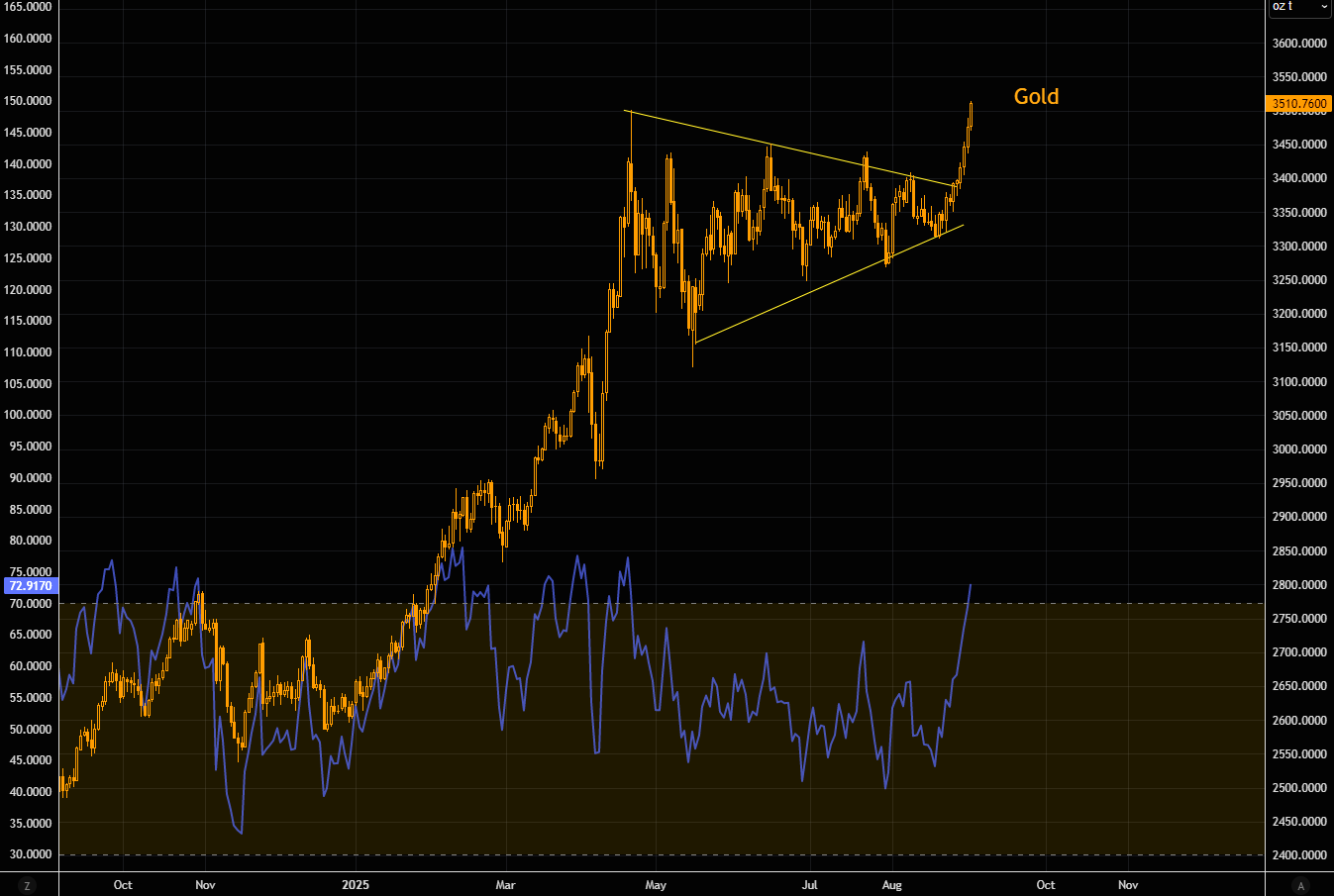
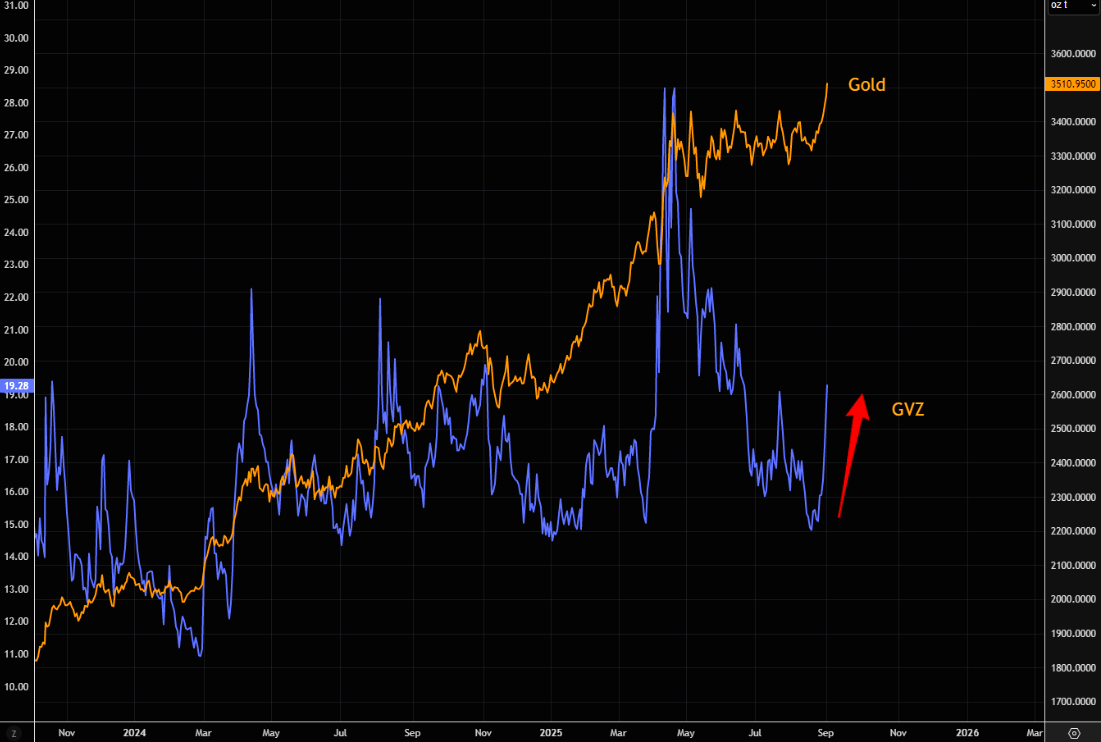
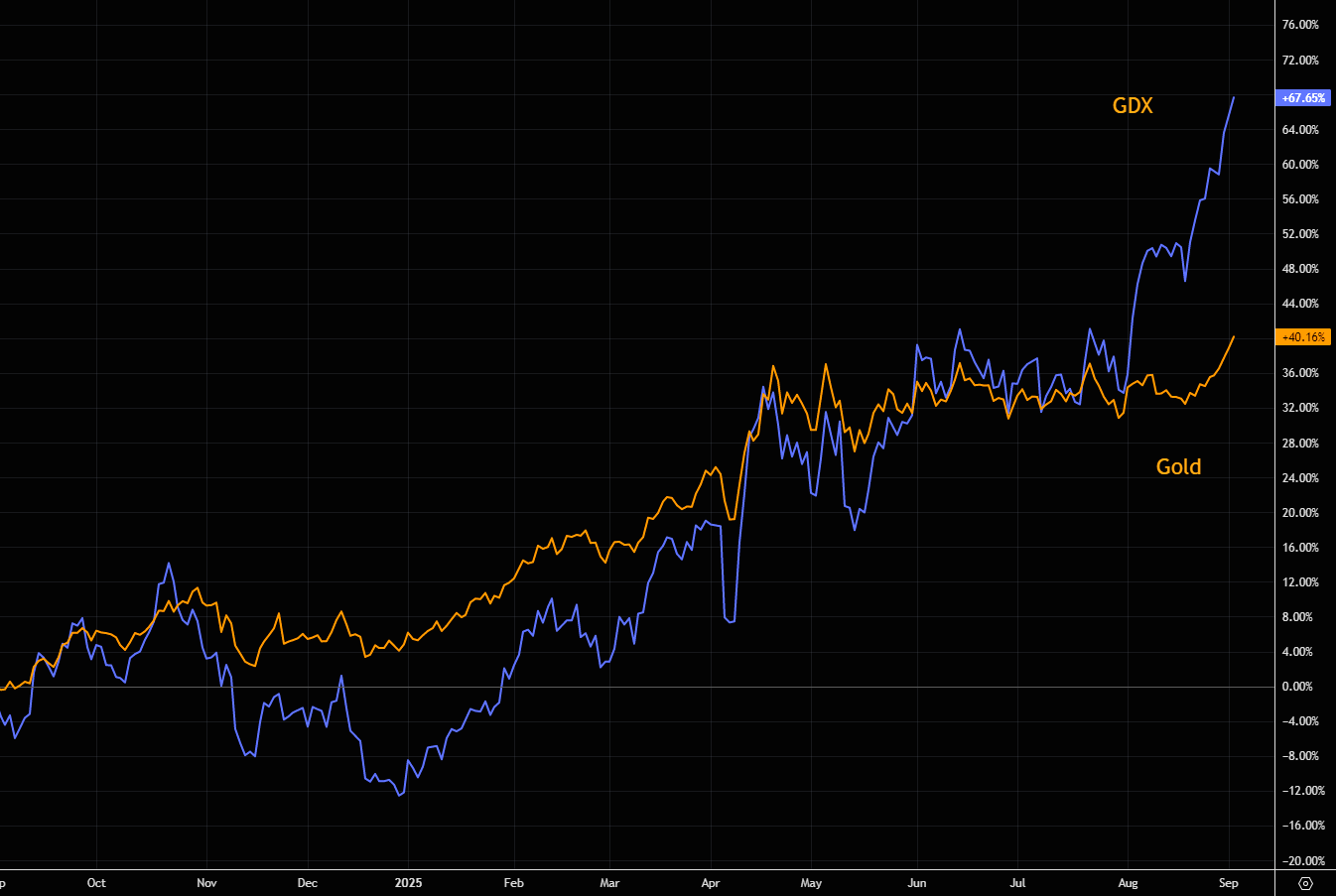
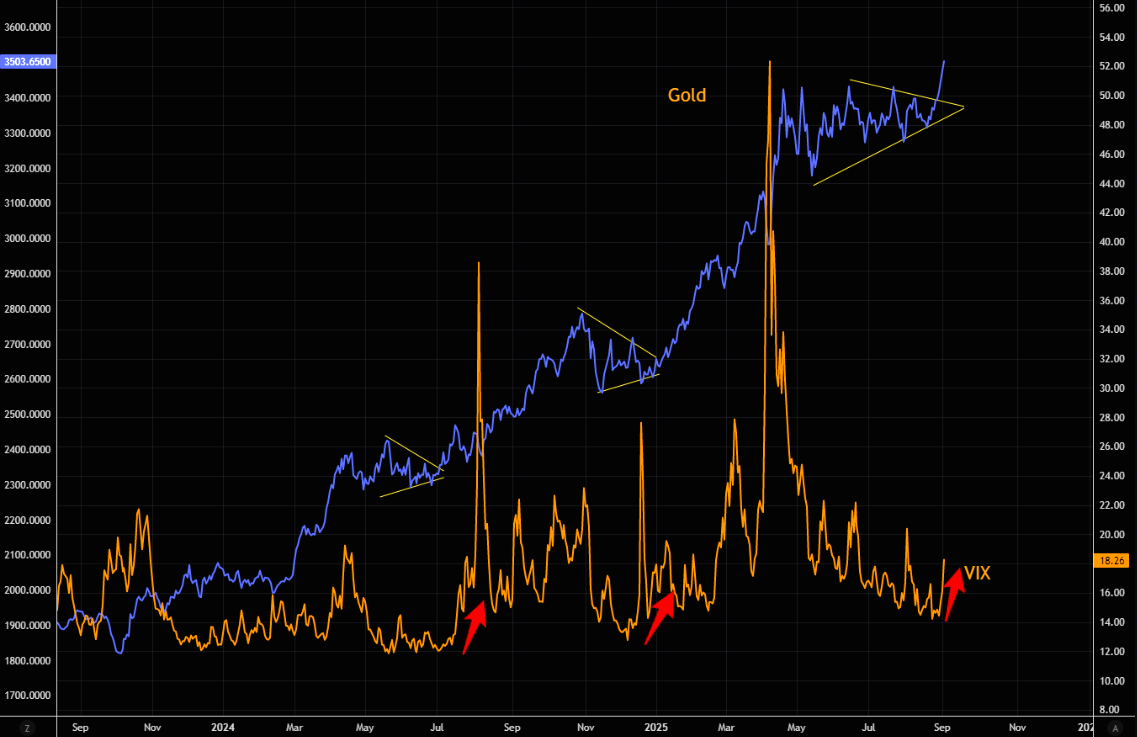
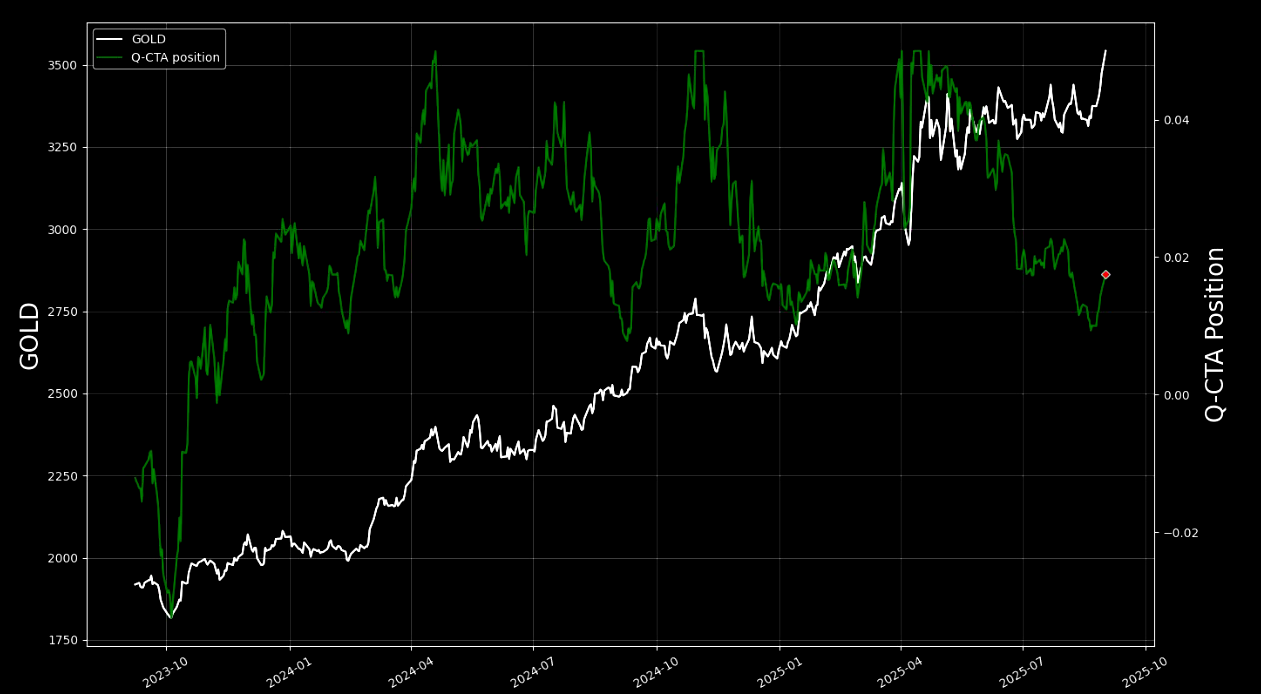
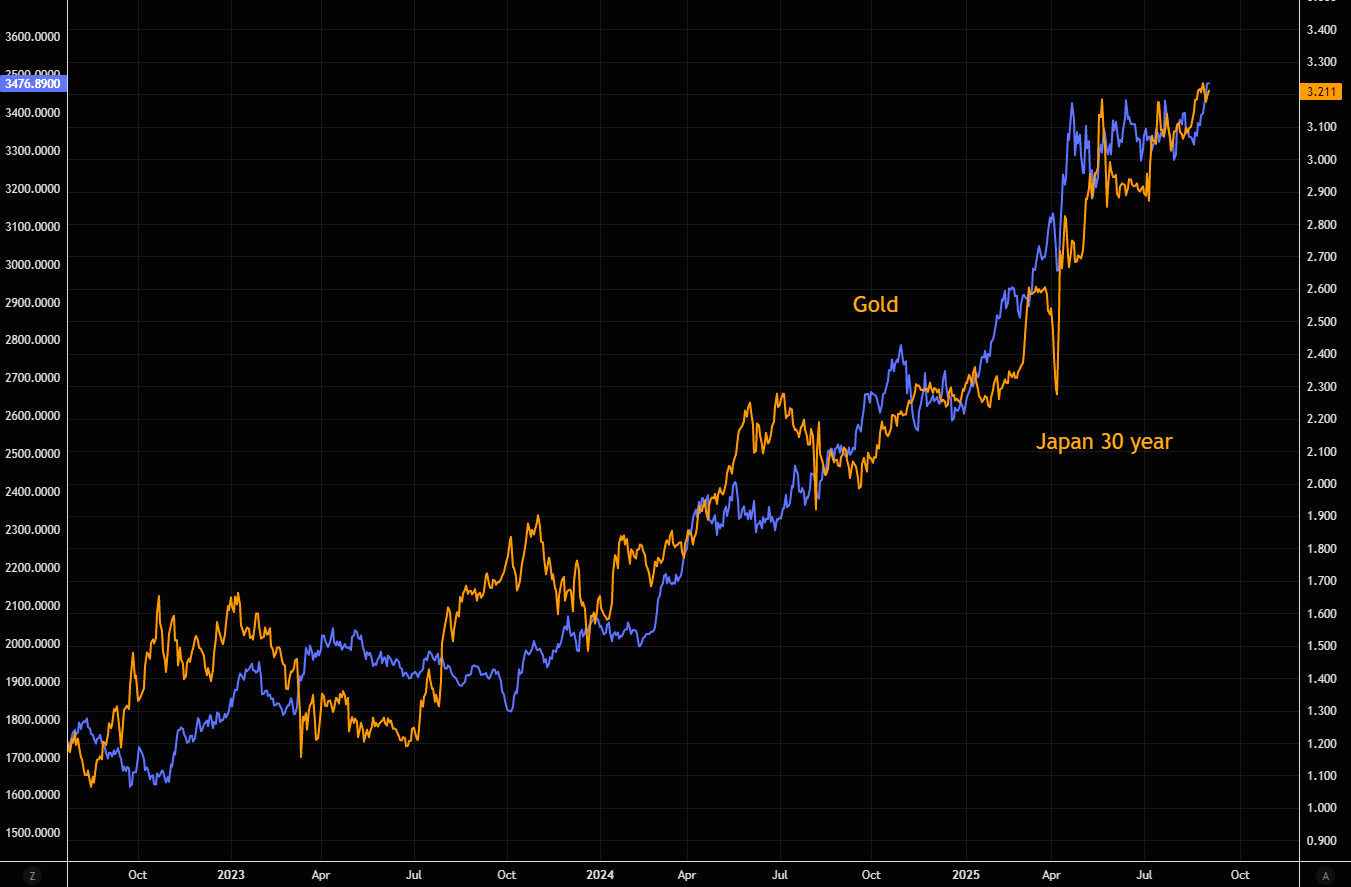


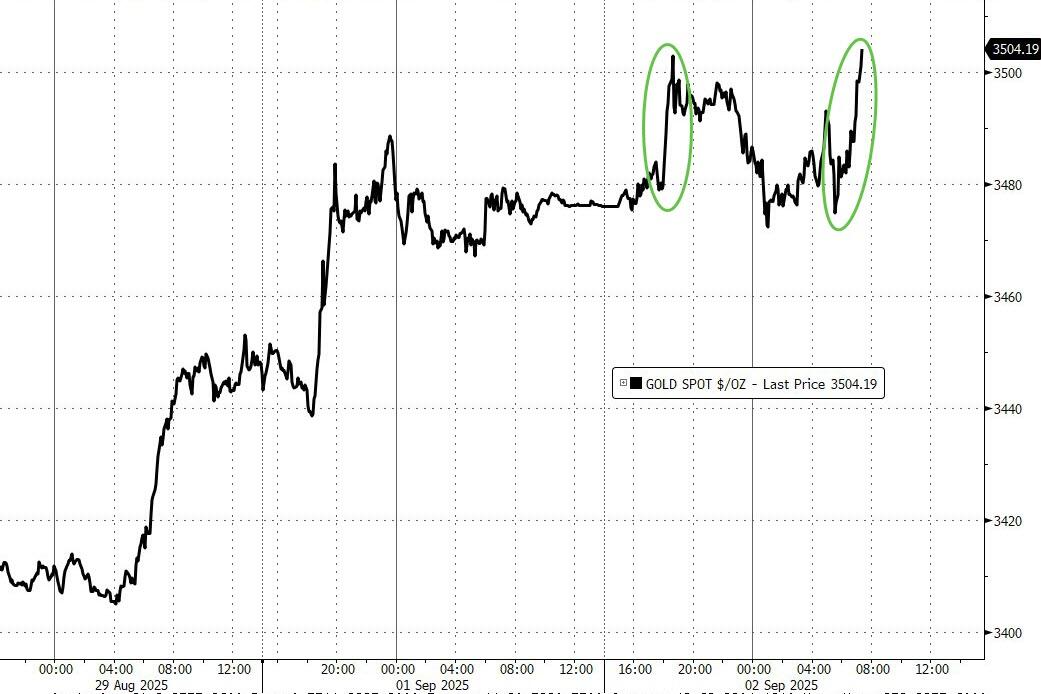
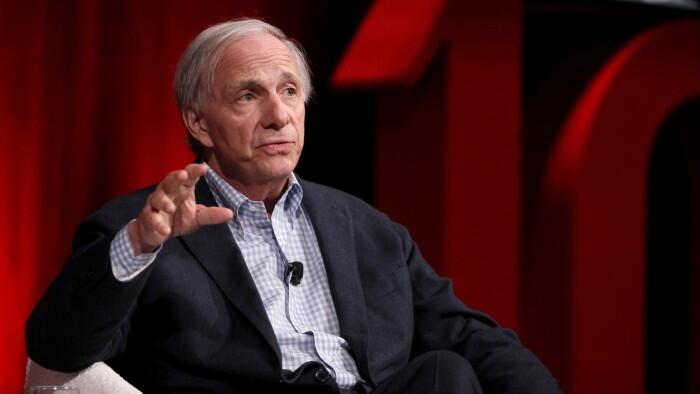
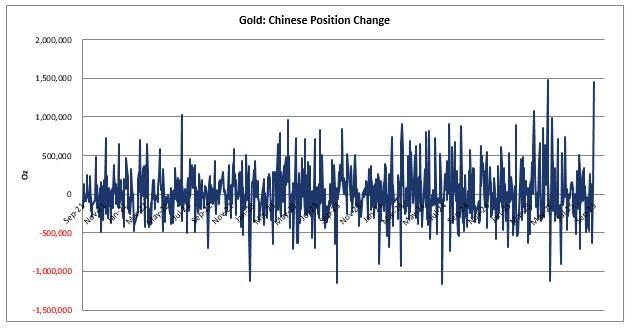
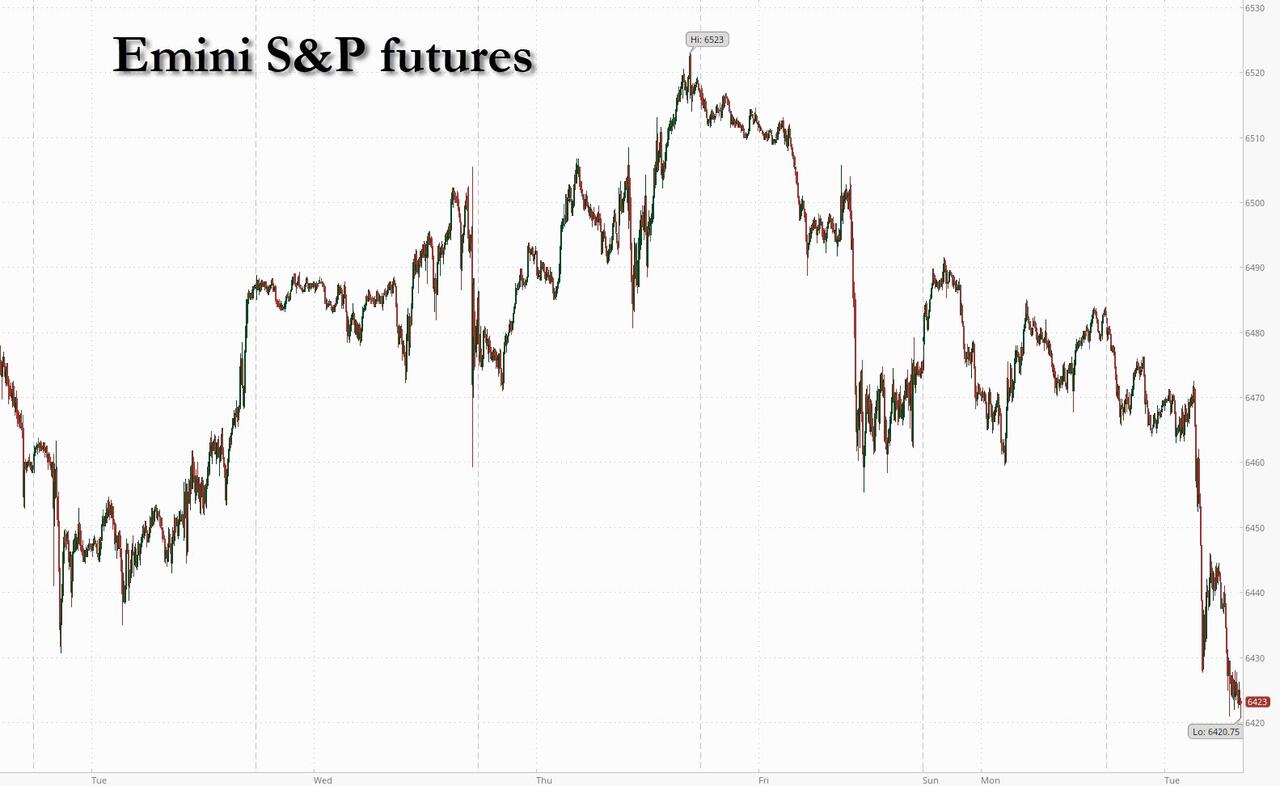
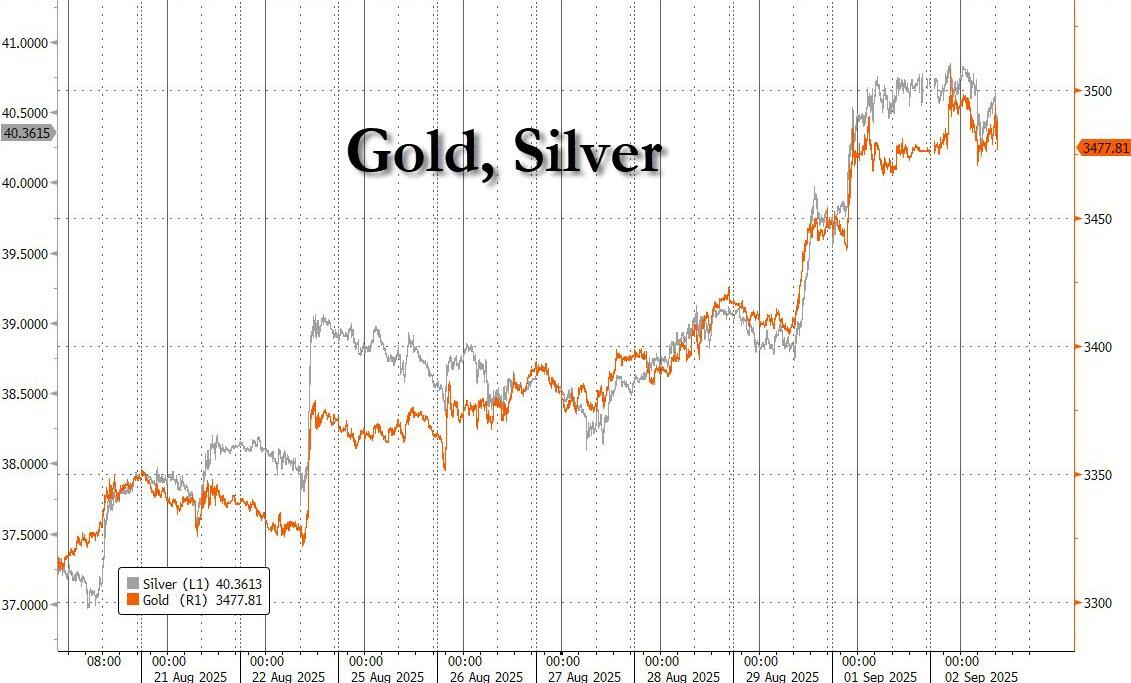

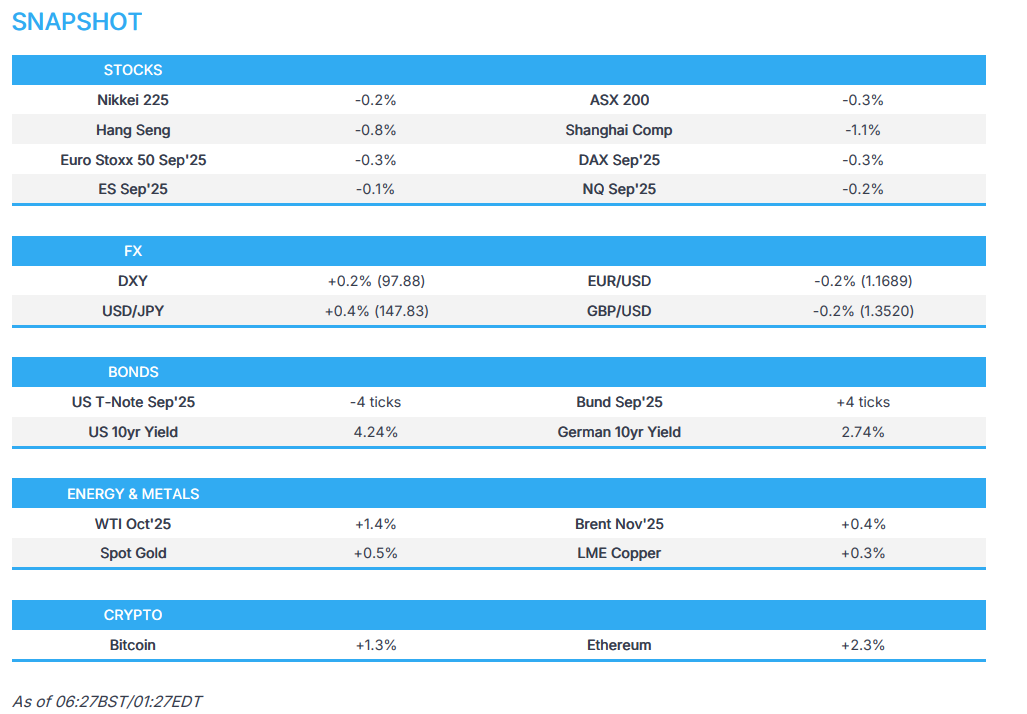




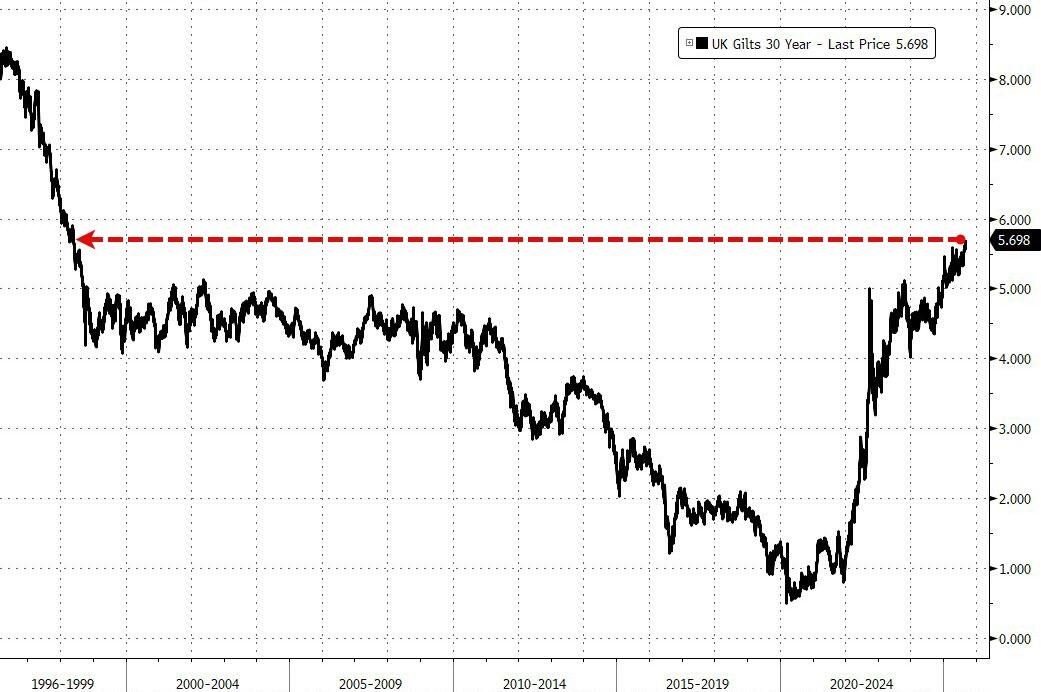
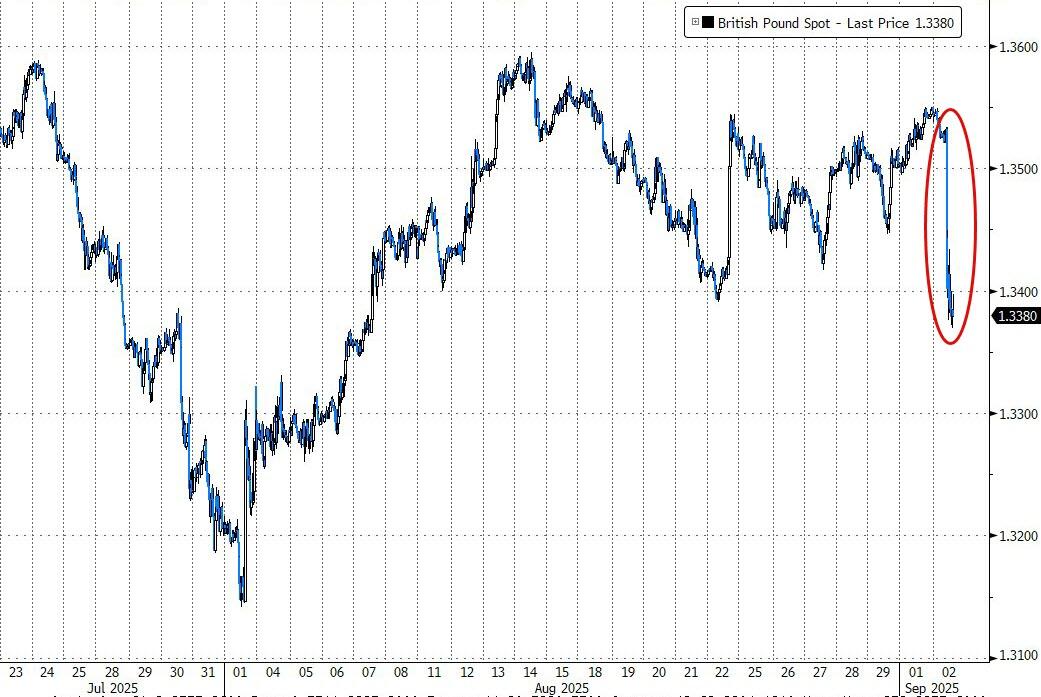














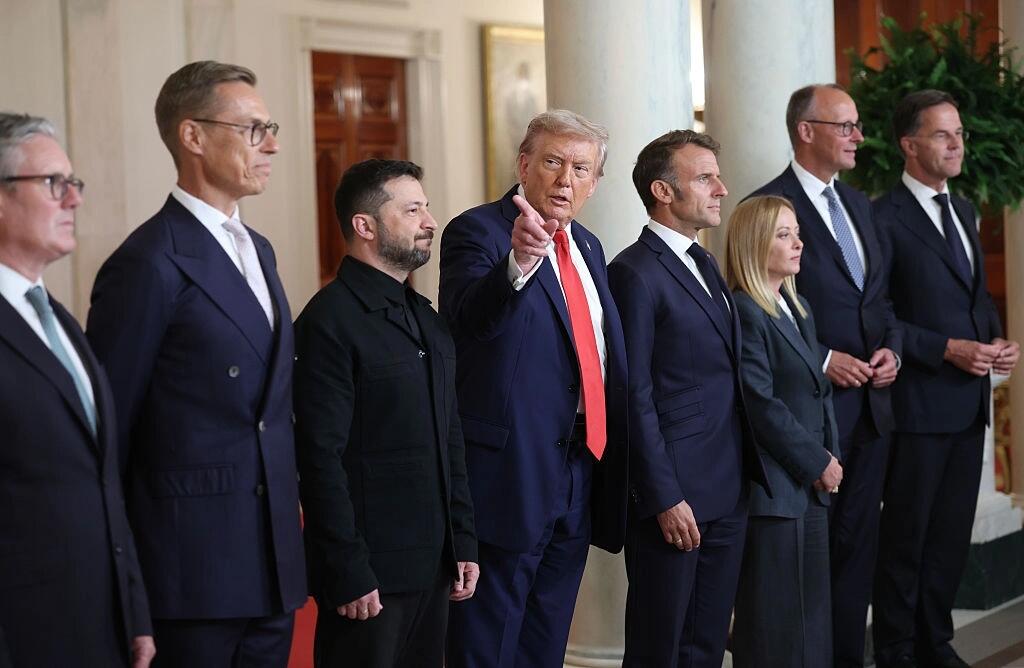




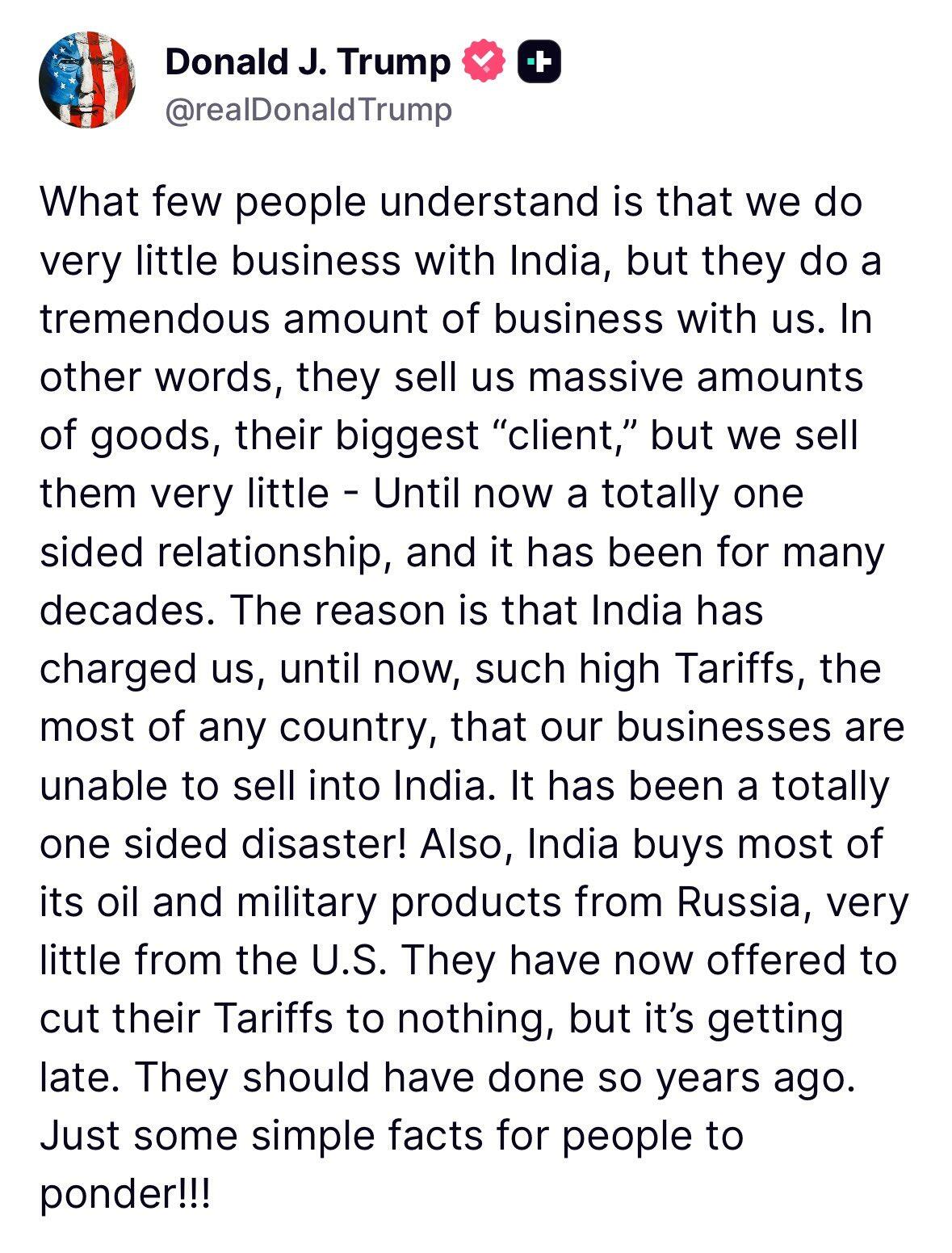



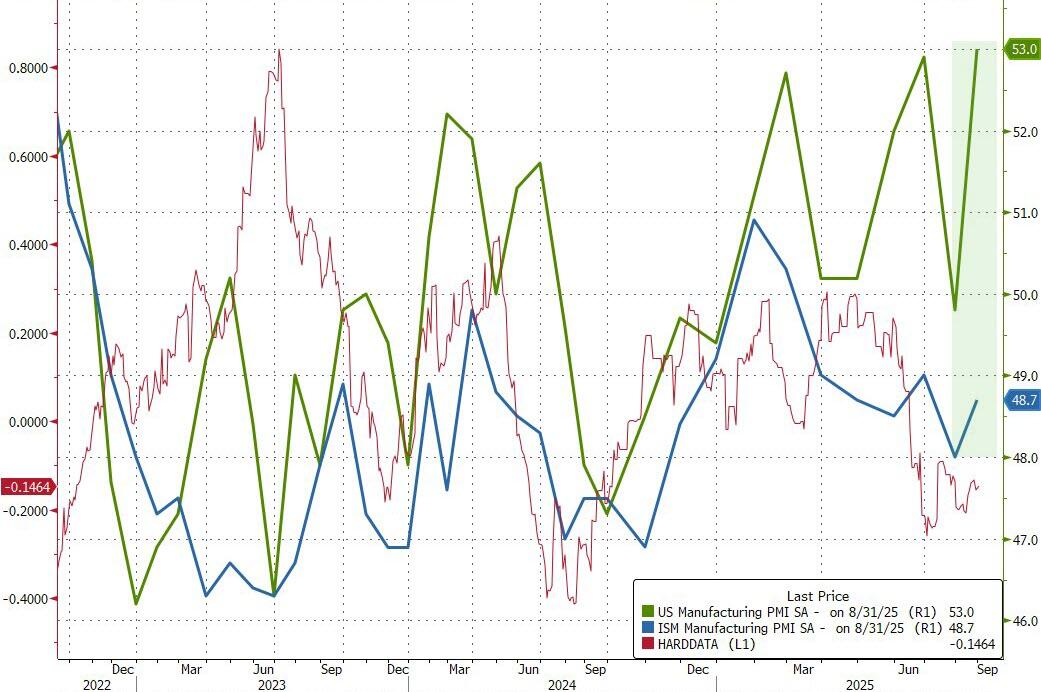
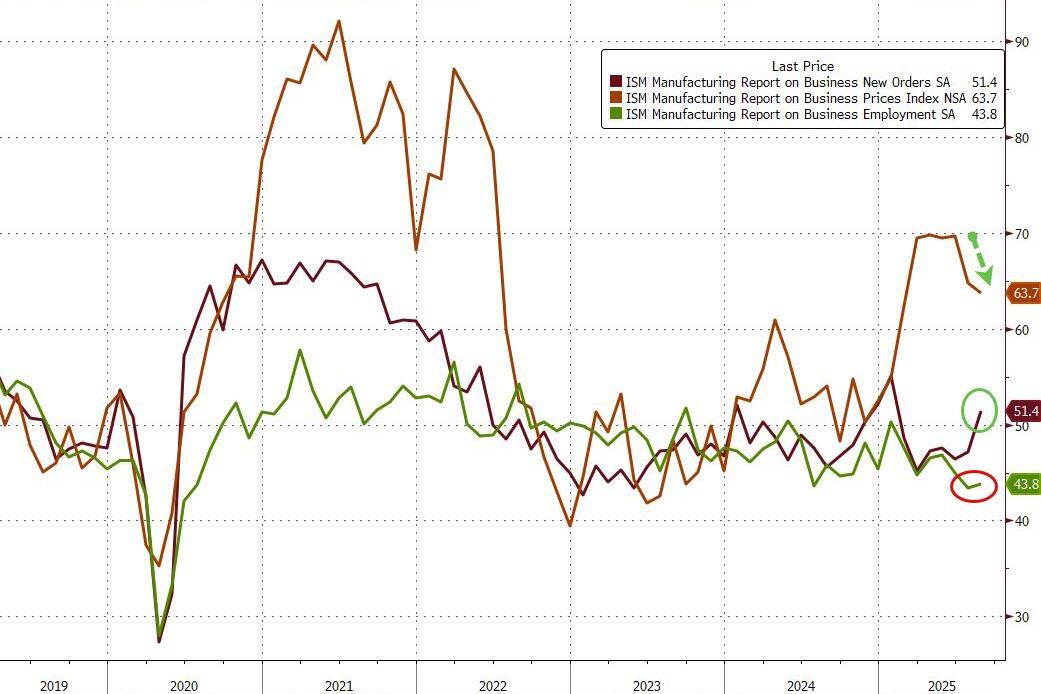
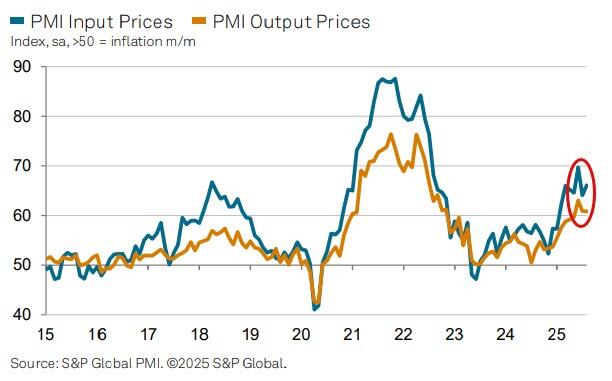
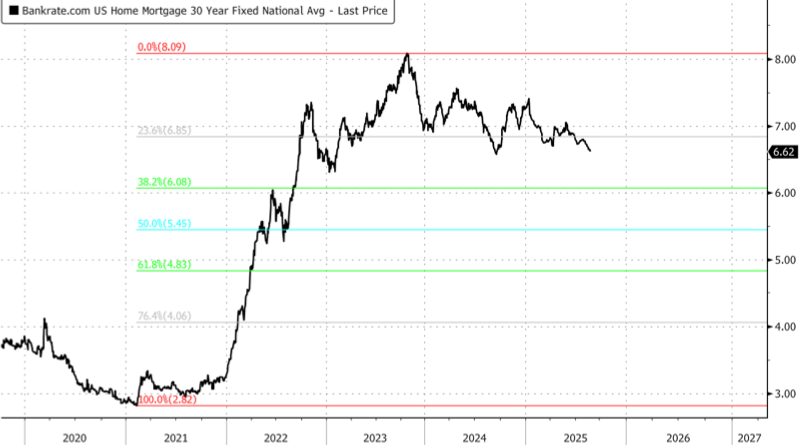








 harveyorganblog.com


