OCT 27//ANOTHER RAID AS THE FED WILL MOSTLY LIKELY LOWER INTEREST RATES THIS WEDNESDAY, MAYBE BY 1/2% AND THE FRBY MUST OCVER ITS 30 TONNE SHORTFALL/GOLD CLOSED DOWN $115.55 TO $4006,10 WITH SILVER DOWN A STRONG $1.84 TO $46.86//PLATINUM WAS DOWN A SMALLISH $21.05 TO $1593.95 WITH PALLADIUM DOWN ONLY $2.40 TO $1411.30// COMMODITY REPORT TONIGHT FROM ALASDAIR MACLEOD//UPDATES ON CHINA AND THEIR ECONOMY//MAJOR COMMENTARIES ON THE PLIGHT OF THE GERMAN ECONOMY//COMMENTARY ON HUNGARY, THE SAFEST COUNTRY IN EUROPE//ISRAEL VS HAMAS UPDATES//IRAN UPDATES//COVID INJURY REPORTS/DR PAUL ALEXANDER//ARGENTINA MELEI WINS BIG IN THAT COUNTRY//REPORT OUT OF CANADA WHERE TRUMP HIT OUR COUNTRY WITH ANOTHER 10% TARIFF//CANADA HAS MAJOR PROBLEMS TO FACE//MORE UPDATES ON THE USA ECONOMY//SWAMP STORIES FOR YOU TONIGHT/GREG HUNTER INTERVIEWS MARTIN ARMSTRONG ON THE RUSSIA VS UKRAINE SAGA//
099 H DEUTSCHE BANK AG 73 323 C HSBC 2 363 H WELLS FARGO SECURITI 10 657 H MORGAN STANLEY 13 661 C JP MORGAN SECURITIES 1 686 C STONEX FINANCIAL INC 31 1 737 C ADVANTAGE FUTURES 53 905 C ADM 10
TOTAL: 97 97 M
JPMORGAN STOPPED 1/97
OCT
GOLD: NUMBER OF NOTICES FILED FOR OCT/2025: 97 CONTRACTs NOTICES FOR 9700 OZ or 0.3017 TONNES
total notices so far: 58,436 contracts for 5,843,600 OR 181.760 tonnes)
FOR OCT
XXXXXXXXXXXXXXXXXX
SILVER NOTICES: 120 NOTICE(S) FILED FOR 0.600 MILLION OZ/
total number of notices filed so far this month : 7748 CONTRACTS (NOTICES) for 38.740 million oz
Click here if you wish to send a donation. I sincerely appreciate it as this site takes a lot of preparation
END
GLD/
BOTH GLD AND SLV ARE FRAUDULENT VEHICLES//THEY ARE NOW RAIDING GLD AND SLV FOR PHYSICAL
THE CROOKS ARE STEALING GOLD AND SILVER FROM THE GLD/SLV AND REPLACING THE PHYSICAL WITH PAPER DOLLARS.
WITH GOLD DOWN $115.55 INVESTORS SWITCHING TO SPROTT PHYSICAL (PHYS) INSTEAD OF THE FRAUDULENT GLD
HUGE CHANGES IN GOLD INVENTORY AT THE GLD: A WITHDRAWAL OF 5.44 TONNES OF GOLD FROM THE GLD/.
INVENTORY RESTS AT 1046.93 TONNES
SLV/
WITH NO SILVER AROUND AND SILVER DOWN $1.84 AT THE SLV:
HUGE CHANGES IN SILVER INVENTORY AT THE SLV:/ //A WITHDRAWAL OF 1.588 MILLION OZ OF SILVER OUT OF THE SLV//
CLOSING INVENTORY RESTS AT:
CLOSING INVENTORY: 495.758 MILLION OZ
Let us have a look at the data for today
SILVER//OUTLINE
SILVER COMEX OI FELL BY A HUGE SIZED 1405 CONTRACTS TO 164,052 AND STALLING ON ITS MARCH TO THE RECORD HIGH OI OF 244,710, SET FEB 25/2020, AND THIS HUGE SIZED LOSS IN COMEX OI WAS ACCOMPLISHED WITH OUR SMALL LOSS OF $0.25 IN SILVER PRICING AT THE COMEX WITH RESPECT TO FRIDAY’S // TRADING.! WE FINALLY ARE MOVING TO A MUCH HIGHER BASE SURPASSING THE $34.40 SILVER PRICE BARRIER TO A HIGH DEGREE, AND NOW SURPASSING OUR LAST MAJOR HURDLE OF $50.00 SILVER. WE HAD A HUGE SIZED LOSS OF 1275 TOTAL CONTRACTS ON OUR TWO EXCHANGES AS THE CME NOTIFIED US OF A SMALL 130 CONTRACT EXCHANGE FOR PHYSICAL ISSUANCE.. WE HAD HUGE LIQUIDATION OF T.A.S. CONTRACTS IN COMEX TRADING WITH RESPECT TO FRIDAY’S TRADING / WITH AS YOU WILL WITNESS, WITH SOME SUCCESS AS THEY DESPERATELY AGAIN TODAY TRIED TO CONTAIN SILVER’S PRICE RISE FOR THE PAST SEVERAL WEEKS (WHERE RAIDS ARE CALLED UPON AGAIN AND AGAIN TRYING TO STOP THE RISE IN SILVER’S PRICE TO ABOVE $50.00 AND TO QUELL ADDITIONAL DERIVATIVE LOSSES TO OUR BANKERS’ MASSIVE TOTALS). THEY SUCCEEDED ON FRIDAY WITH SILVER’S SMALL LOSS IN PRICE. THE PRICE FINISHED MILES BELOW THE MAGIC NUMBER OF $50.00 SILVER SPOT PRICE CLOSING AT $48.70 DOWN $0.25 . WE ARE NOW WITNESSING HAVING MANY HUGE T.A.S ISSUANCES // TODAY’S WAS AT A STRONG SIZED 355 T.A.S. CONTRACTS. THE CROOKS ARE BECOMING MORE DESPERATE TO STOP SILVER BREAKING AGAIN THE 50.00 DOLLAR MARK!!. THERE IS NO NEXT LINE IN THE SAND ONCE THE 50.00 DOLLAR SILVER IS PIERCED AGAIN. WE HAD A SMALL SIZED 135 CONTRACT EXCHANGE FOR PHYSICAL ISSUANCE ACCOMPANIED BY OUR STRONG SIZED 355 CONTRACT T.A.S ISSUANCE WHICH WILL BE USED IN FUTURE TRADING//RAIDS AS THEY PLAY AN INTEGRAL PART IN OUR COMEX TRADING TRYING TO CONTAIN ANY SILVER PRICE RISE. IN ESSENCE WE LOST A HUGE SIZED 1275 CONTRACTS ON OUR TWO EXCHANGES DESPITE OUR TINY LOSS IN PRICE OF $0.25 WE HAD HUGE GOVERNMENT COMEX CONTRACTS TRADING FRIDAY AND A MAJOR PORTION WILL BE REMOVED BY DAYS END. (I RECORD THIS FOR YOU ON A DAILY BASIS)
CRAIG HEMKE HAS POINTED OUT THAT THE CROOKS USE THE MID MONTH FOR MANIPULATION AS THEY SELL THEIR BUY SIDE OF THE CALENDAR SPREAD FIRST AND THEN KEEP THE SELL SIDE TO LIQUIDATE AT A LATER DATE. THUS WE HAVE TWO VEHICLES THE CROOKS USE FOR MANIPULATION AND BOTH ARE SPREADERS: 1) AT MONTH’S END/SPREADERS COMEX AND 2/ TAS SPREADERS, MID MONTH. TOTAL TAS ISSUED ON FRIDAY NIGHT//SATURDAY MORNING: A STRONG SIZED 355 CONTRACTS. DESPITE MANY COMPLAINTS THAT THE CROOKS HAVE VIOLATED POSITION LIMITS DUE TO THE FACT THAT THE TAS ISSUED HAVE A VALUE OF ZERO (AS TO POSITION LIMITS FOR OUR CROOKED BANKERS). THE PROBLEM OF COURSE IS THAT THE CROOKS DO NOT LIQUIDATE THE TAS TOGETHER BUT SELL THE BUY SIDE FIRST AND THEN LIQUIDATE THE SELL SIDE TWO MONTHS HENCE. IT IS OBVIOUS MANIPULATION TO THE HIGHEST DEGREE BUT IT NATURALLY FELL ON DEAF EARS WITH OUR REGULATORS (OCC) WHEN THEY RECEIVED OUR COMPLAINTS. IT NOW SEEMS THAT THE OCC HAS ORDERED THE BANKS TO REDUCE ITS NEW LEVEL OF 1.1 TRILLION DOLLARS IN GOLD/SILVER DERIVATIVES.
WE HAVE IN THE PAST YEAR SET ANOTHER RECORD LOW AT 114,102 CONTRACTS ///JULY 3.2023// OUR BANKERS WITH THE HELP OF SPECULATORS AND HIGH FREQUENCY TRADERS WERE SUCCESSFUL IN KNOCKING THE PRICE OF SILVER DOWN (IT FELL BY A FAIR $0.25) AND WERE SUCCESSFUL IN KNOCKING OFF SOME NET SILVER LONGS FROM THEIR PERCH AS WE HAD A HUGE SIZED LOSS OF 1275 CONTRACTS ON OUR TWO EXCHANGES DESPITE OUR TINY LOSS IN PRICE..THE COMEX IS IN ONE BIG SIZED MESS!!
WE HAD A SMALL 135 CONTRACT ISSUANCE OF EXCHANGE FOR PHYSICALS) iiii) AN INITIAL SILVER STANDING FOR COMEX SILVER MEASURING AT 13.240 MILLION OZ FOLLOWED BY TODAY’S 0.700 MILLION OZ CONTRACT QUEUE JUMP WHICH FOLLOWED ALL OTHER QUEUE JUMPS IN OCTOBER ALONG WITH OUR INITIAL 2.11 MILLION OZ EXCHANGE FOR RISK ISSUANCE//NEW STANDING ADVANCES TO 41.070 MILLION OZ.
THUS:
INITIAL STANDING FOR OCT: 38.960 MILLION OZ (WHICH INCLUDES ALL QUEUE JUMPING)
+ 2.110 MILLION OZ EXCHANGE FOR RISK
EQUALS
41.070 MILLION OZ..
WE HAD:
/ HUGE COMEX OI LOSS+// A SMALL SIZED 135 EFP ISSUANCE CONTRACTS (/ VI) A STRONG NUMBER OF T.A.S. CONTRACT ISSUANCE 355 CONTRACTS)
I AM NOW RECORDING THE DIFFERENTIAL IN OI FROM PRELIMINARY TO FINAL: A LARGE 256 CONTRACTS WERE REMOVED!!!!!!
HISTORICAL ACCUMULATION OF EXCHANGE FOR PHYSICALS OCT.. ACCUMULATION FOR EFP’S SILVER/JPMORGAN’S HOUSE OF BRIBES/STARTING FROM FIRST DAY/MONTH OF OCT.
TOTAL CONTRACTS for 19 DAY(S), total 15,320 contracts: OR 76.660 MILLION OZ (806 CONTRACTS PER DAY)
TOTAL EFP’S FOR THE MONTH SO FAR: 76.660 MILLION OZ
LAST 24 MONTHS TOTAL EFP CONTRACTS ISSUED IN MILLIONS OF OZ:
MAY 137.83 MILLION
JUNE 149.91 MILLION OZ
JULY 129.445 MILLION OZ
AUGUST: MILLION OZ 140.120
SEPT. 28.230 MILLION OZ//
OCT: 94.595 MILLION OZ
NOV: 131.925 MILLION OZ
DEC: 100.615 MILLION OZ
YEAR 2022:
JAN 2022-DEC 2022
JAN 2022// 90.460 MILLION OZ
FEB 2022: 72.39 MILLION OZ//
MARCH 2022: 207.140 MILLION OZ//A NEW RECORD FOR EFP ISSUANCE
APRIL: 114.52 MILLION OZ FINAL//LOW ISSUANCE
MAY: 105.635 MILLION OZ//
JUNE: 94.470 MILLION OZ
JULY : 87.110 MILLION OZ
AUGUST: 65.025 MILLION OZ
SEPT. 74.025 MILLION OZ///FINAL
OCT. 29.017 MILLION OZ FINAL
NOV: 134.290 MILLION OZ//FINAL
DEC, 61.395 MILLION OZ FINAL
TOTALS YR 2022: 1135.767 MILLION OZ (1.1356 BILLION OZ)
JAN 2023/// 53.070 MILLION OZ //FINAL
FEB: 2023: 100.105 MILLION OZ/FINAL//MUCH STRONGER ISSUANCE VS THE LATTER TWO MONTHS.
MARCH 2023: 112.58 MILLION OZ//FINAL//STRONG ISSUANCE
APRIL 111.035 MILLION OZ(SLIGHTLY GREATER THAN THAN LAST MONTH)
MAY 66.120 MILLION OZ/INITIAL (MUCH SMALLER THIS MONTH)
JUNE: 110.395 MILLION OZ//MUCH LARGER THAN LAST MONTH
JULY 85.745 MILLION OZ (SMALLER THAN LAST MONTH)
AUGUST: 171.43 MILLION OZ (THIS MONTH IS GOING TO BE HUGE //2ND HIGHEST ON RECORD
SEPT: 72.705 MILLION OZ (SMALLER THIS MONTH)
OCT: 97.455 MILLION OZ
NOV. 50.050 MILLION OZ
DEC. 66.140 MILLION OZ//
TOTAL 2023: 1,104.10 MILLION OZ/
JAN ’24 : 78.655 MILLION OZ//
FEB /2024 : 66.135 MILLION OZ./FINAL
MARCH: 143.750 MILLION OZ// 4TH HIGHEST ON RECORD.
APRIL: 161.770 MILLION OZ (THIS MONTH WILL BE A WHOPPER OF ISSUANCE OF EFPS//3RD HIGHEST EVER RECORDED FOR A MONTH)
MAY: 135.995 MILLION OZ //WILL BE A STRONG MONTH FOR EXCHANGE FOR PHYSICAL ISSUANCE
JUNE 110.575 MILLION OZ ( WILL BE ANOTHER STRONG MONTH ISSUANCE)
JULY: 108.870 MILLION OZ (WILL BE A STRONG ISSUANCE MONTH/ A TOUCH OVER 100 MILLION OZ/)
AUGUST; 99.740 MILLION OZ//THIS MONTH WILL BE STRONG FOR ISSUANCE BUT LESS THAN JULY.
SEPT: 112.415 MILLION OZ//WILL BE A HUGE MONTH FOR EXCHANGE FOR PHYSICAL ISSUANCE
OCT; 97.485 MILLION OZ (WILL BE SMALLER ISSUANCE THIS MONTH )
NOV. 115.970 MILLION OZ ( HUGE THIS MONTH)
DEC: 132.54 MILLION OZ (THIS MONTH WILL BE A HUMDINGER FOR ISSUANCE BUT ISSUANCE SLOWED DRAMATICALLY THESE PAST FIVE DAYS/// WILL NOT EXCEED MARCH 2022 RECORD OF 209 MILLION OZ
YEAR 2024 TOTAL: 1363.84 MILLION OR 1.363 BILLION OZ
JANUARY 2025: 67.230 MILLION OZ///(THIS MONTH’S ISSUANCE OF EXCHANGE FOR PHYSICAL WILL BE SMALL)
FEB. 58.260 MILLION OZ//EXCHANGE FOR PHYSICAL ISSUANCE/FINAL
MARCH: 67.020 MILLION OZ///QUITE SMALL AND BECOMING SMALLER EACH AND EVERY MONTH.
APRIL: 100.895 MILLION OZ///AVERAGE SIZE ISSUANCE
MAY: 28.975 MILLION OZ (ISSUANCE WILL BE QUITE SMALL THIS MONTH)
JUNE: 81.065 MILLION OZ
JULY: 50.925 MILLION OZ (QUITE SMALL)
AUGUST: 59.455 MILLION OZ (QUITE SMALL)
SEPT. 50.510 MILLION OZ.(QUITE SMALL)
OCT; 76.660 MILLION OZ (WILL BE STRONG THIS MONTH)/ OCC WANTS TO REIN IN THESE ISSUANCES!
RESULT: WE HAD A HUGE SIZED DECREASE IN COMEX OI SILVER COMEX CONTRACTS OF 1405 CONTRACTS DESPITE OUR SMALL LOSS IN PRICE OF $0.25 IN SILVER PRICING AT THE COMEX// FRIDAY.,. . THE CME NOTIFIED US THAT WE HAD A SMALL SIZED CONTRACT EFP ISSUANCE : 135 ISSUED FOR DEC., AND 0 CONTRACTS ISSUED FOR ALL OTHER MONTHS) WHICH EXITED OUT OF THE SILVER COMEX TO LONDON AS FORWARDS.
XXXXXXXXXXXXXXXXXXXXXXXXXXXXXXXXXXXX
LAST 6 MONTHS OF SILVER DELIVERIES:
WE FINISHED APRIL WITH A STRONG SILVER OZ STANDING OF 16.050 MILLION OZ NORMAL DELIVERY , PLUS OUR 4.00 MILLION EX FOR RISK
FINAL STANDING APRIL: 19.965 MILLION OZ
AND MAY:
NEW STANDING FOR MAY FINISHES AT: 75.615 MILLION OZ. (INCLUDES 5,000 OZ EFP TRANSFER TO LONDON + 12.93 MILLION OZ EXCHANGE FOR RISK ISSUANCE/PRIOR.//NEW TOTAL STANDING 88.540 MILLION OZ
AND JUNE: FINAL 16.995 MILLION OZ
AND JULY: 46.720 MILLION OZ//
AUGUST: 4.70 MILLION OZ INITIAL STANDING PLUS TODAY;S 5,000 OZ QUEUE JUMP //NEW STANDING ADVANCES TO 10.960 MILLION OZ
SEPTEMBER: 68.040 MILLION OZ NORMAL DELIVERY(INCLUDES ALL QUEUE JUMPING AND EXCHANGE FOR PHYSICAL TRANSFERS) PLUS 3.0 MILLION OZ EX FOR RISK = 71.040 MILLION OZ. (THIS IS THE FIRST AND ONLY ISSUANCE OF EXCHANGE FOR RISK FOR SILVER SINCE MAY.)
AND NOW OCTOBER: 38.860 MILLION OZ OF NORMAL DELIVERY INCLUDES ALL QUEUE JUMPING
PLUS
2.110 MILLION OZ EXCHANGE FOR RISK//TOTAL OZ STANDING IN OCT ADVANCES TO 41.070 MILLION OZ
THE NEW TAS ISSUANCE FRIDAY NIGHT (355) WILL BE PUT INTO “THE BANK” TO BE COLLUSIVELY USED NO DOUBT WITH FUTURE TRADING!!
WE HAD 120 NOTICE(S) FILED TODAY FOR 0.600 million OZ
THE SILVER COMEX IS NOW BEING ATTACKED FOR METAL BY LONDONERS ET AL. IT IS NOW TIME FOR THE FBI TO ENTER THE COMEX AND ARREST THESE CROOKS EVEN THOUGH THE MAJORITY OF THE TRADING IS GOVERNMENT. THE BANKERS ARE COMPLICIT. THE SILVER COMEX IS NOW ON A MASSIVE SIEGE LOOKING FOR PHYSICAL SILVER!!
GOLD//OUTLINE
IN GOLD, THE COMEX OPEN INTEREST FELL BY A VERY TINY SIZED 44 OI CONTRACTS TO 464,052 OI AND CLOSER TO THE RECORD (SET JAN 24/2020) AT 799,105 AND PREVIOUS TO THAT: (SET JAN 6/2020) AT 797,110. (ALL TIME LOW OF 390,000 CONTRACTS.) THUS WE HAVE STILL A RELATIVELY LOW OI IN COMEX WITH AN EXTREMELY HIGH PRICE OF GOLD. THE SHORT RATS ARE ABANDONING THE SHIP.
THE DIFFERENTIAL FROM PRELIMINARY OI TO FINAL OI IN GOLD TODAY: REMOVED A HUGE AND CRIMINAL 11061 CONTRACTS //HUGE GOVERNMENT REMOVALS
WE HAD A DE
DECREASE IN COMEX OI (44 CONTRACTS) . THIS OCCURRED WITH OUR LOSS OF $7.65 IN PRICE// THURSDAY///.
LAST 6 MONTHS OF GOLD DELIVERIES:
MAY: SUMMARY FOR MAY TONNES WHICH STOOD FOR DELIVERY:
FINAL STANDING FOR MAY: 70.174 TONNES OF GOLD TO WHICH WE ADD 1. MONDAY’S (MAY 19) 6.221 TONNES EXCHANGE FOR RISK , 2. THEN WE ADD: 1.35 TONNES TO LAST WEEK”S. THEN WE ADD 3. 1.55 TONNES TO EQUAL 9.591 TONNES// NEW EXCHANGE FOR RISK = 9.591 TONNES WHICH MUST BE ADDED TO OUR NORMAL DELIVERY SCHEDULE OF 80.644 TONNES. THUS STANDING FOR MAY INCREASES TO 90.235 TONNES OF GOLD
JUNE CONTRACT MONTH: 93.085 TONNES OF GOLD (WHICH INCLUDES ALL QUEUE JUMPING AND 0 EX FOR RISK)
JULY INITIIAL STANDING FIRST DAY NOTICE: 17.847 TONNES. PLUS TODAY’S 0 TONNES QUEUE JUMP + 1.555 TONNES EX FOR RISK + 2.195 TONNES EX FOR RISK TODAY = 41.106 TONNES STANDING
AUGUST: 60.547 TONNES OF INITIAL GOLD FIRST DAY NOTICE FOLLOWED BY THE NET MONTH’S QUEUE JUMP OF 47.2312 TONNES TO WHICH WE ADD THE FOLLOWING EXCHANGE FOR RISK ISSUANCE RECEIVED FOR THE MONTH: 5.4432 TONNES EX FOR RISK/AUG 7 , AUG 11: 2.413 TONNES EX FOR RISK AND AUG. 12 OF 2.637 TONNES EX FOR RISK//AUG 25: 9.107 TONNES , AUGUST 26: 9.1010 TONNES AND NOW AUGUST 27: 9.0699 TONNES//NEW STANDING ADVANCES TO 107.5117 TONNES OF GOLD NORMAL STANDING (INCLUDES ALL MONTHLY QUEUE JUMPS/EX FOR PHYSICAL TRANSFERS//) +44.696 TONNES EX.FOR RISK = 152.208 TONNES
SEPT: INITIAL 8.093 TONNES OF GOLD PLUS TODAY’S QUEUE JUMP OF 0.4883 TONNES PLUS 2.2827 TONNES OF EXCHANGE FOR RISK TODAY//NEW TOTAL EX. FOR RISK/MONTH = 22.923//NEW TOTAL STANDING FOR GOLD SEPT ADVANCES TO = 48.801 TONNES!!
AND NOW OCTOBER: 90.012 TONNES OF INITIAL GOLD STANDING WITH TODAY’S STRONG .3048 TONNES QUEUE JUMP WHICH FOLLOWS ALL OTHER QUEUE JUMPS DURING OCT OF 75.391 TONNES
THEN WE MUST ADD OUR 14.553 TONNES OF OUR ISSUANCE OF EXCHANGE FOR RISK/6 OCCASIONS//NEW TOTAL OF GOLD STANDING ADVANCES TO 196.534 TONNES OF GOLD.
E.F.P. ISSUANCE/FOR OPENING OCT GOLD CONTRACT
THE CME RELEASED THE DATA FOR EFP ISSUANCE AND IT TOTALED A FAIR SIZED 1450 CONTRACTS:
The NEW COMEX OI FOR THE GOLD COMPLEX RESTS AT 475,113 / AND WE NOW WITNESSING A STRONG COMEX OI WITH AN EXTREMELY HIGH PRICE OF GOLD
SILVER ALSO HAS A STRONG SIZED COMEX OI OF 164,523 CONTRACTS
IN ESSENCE WE HAVE A VERY STRONG SIZED INCREASE IN TOTAL CONTRACTS ON THE TWO EXCHANGES OF 12,467 CONTRACTS WITH 11,017 CONTRACTS INCREASED AT THE COMEX// AND A FAIR SIZED 1450 EXCHANGE FOR PHYSICAL OI CONTRACT ISSUANCE WHICH NAVIGATED OVER TO LONDON. THUS TOTAL OI GAIN ON THE TWO EXCHANGES OF 12,467 CONTRACTS.. WE HAD THE FOLLOWING TAS CONTRACTS INITIATED (ISSUED): A FAIR SIZED AND CRIMINAL 1307 CONTRACTS AND THESE ISSUANCES ARE GENERALLY USED TO INITIATE A RAID WHEN CALLED UPON LIKE WE WITNESSED DURING THIS PAST WEEK (3 RAIDS)
GOLD PRICE ON FRIDAY FELL BY A SMALL $7.65
CALCULATIONS ON GAIN/LOSS ON OUR TWO EXCHANGES
WE HAD A FAIR SIZED ISSUANCE IN EXCHANGE FOR PHYSICALS CONTRACT(1450) ACCOMPANYING THE VERY TINY LOSS IN COMEX OI OF 44 CONTRACTS/TOTAL GAIN FOR OUR THE TWO EXCHANGES: 1406 CONTRACTS..WE HAVE 1) NOW RETURNED TO OUR FORMER FORMAT OF BANKERS GOING LONG AND SPECULATORS GOING SHORT ,2.) STRONG INITIAL STANDING FOR GOLD FOR OCT AT 90.012 TONNES OF NORMAL DELIVERY+TODAY’S QUEUE JUMP OF 0.3049 FOLLOWING ALL OTHER QUEUE JUMPS OF 75.391 TONNES TO WHICH WE ADD+ 14.553 TONNES TOTAL EX FOR RISK//6 OCCASIONS//NEW TOTAL OF GOLD STANDING; 196.534 TONNES
NEW STANDING FOR GOLD, OCT CONTRACT AT 196.634 TONNES OF GOLD
3) ZERO T.A.S. LIQUIDATION (BUT CONSIDERABLE GOVT LIQUIDATION AND AGAIN STRONG LIQUIDATION OF EQUITY SHARES) AS WE HAD 1)A GOOD $7.65 COMEX PRICE LOSS. WE HAD 2) ZERO NET LONG SPECS BEING CLIPPED AS WE HAD A VERY FAIR SIZED GAIN OF 1406 CONTRACTS ON OUR TWO EXCHANGES. THIS WAS COUPLED WITH CONSIDERABLE GOVERNMENT LIQUIDATED CONTRACTS ALONG WITH ZERO TAS LIQUIDATION AND SOME LIQUIDATION GOLD EQUITY SHARES/./ ALSO, 3)STICKY GOLD’S LONGS WERE REWARDED FRIDAY EVENING AS THEY EXERCISED EFP’S FROM LONDON TO TAKE DELIVERY OF BADLY NEEDED PHYSICAL AND YOU CAN VISUALIZE THIS BY THE HUGE AMOUNTS OF QUEUE JUMPING WE HAVE BEEN HAVING LATELY
4) VERY STRONG SIZED COMEX OI GAIN// 5) V) FAIR SIZED ISSUANCE OF EXCHANGE FOR PHYSICAL GOLD (1450)
ACCUMULATION OF EFP’S GOLD AT J.P. MORGAN’S HOUSE OF BRIBES: (EXCHANGE FOR PHYSICAL) FOR THE MONTH OF OCT. :
TOTAL EFP CONTRACTS ISSUED: 67,425 CONTRACTS OR 6,742,500 OZ OR 209.720 TONNES IN 19 TRADING DAY(S) AND THUS AVERAGING: 3548 EFP CONTRACTS PER TRADING DAY
TO GIVE YOU AN IDEA AS TO THE SIZE OF THESE EFP TRANSFERS : THIS MONTH IN19 TRADING DAY(S) IN TONNES: 209.720 TONNES
TOTAL ANNUAL GOLD PRODUCTION, 2024, THROUGHOUT THE WORLD EX CHINA EX RUSSIA: 3555 TONNES
THUS EFP TRANSFERS REPRESENTS 209.720 TONNES DIVIDED BY 3550 x 100% TONNES = 5.88% OF GLOBAL ANNUAL PRODUCTION
SEPT 142.12 TONNES FINAL ISSUANCE ( LOW ISSUANCE)_
OCT: 141.13 TONNES FINAL ISSUANCE (LOW ISSUANCE)
NOV: 312.46 TONNES FINAL ISSUANCE//NEW RECORD!! (INCREASING DRAMATICALLY)//SIGN OF REAL STRESS//SURPASSING THE MARCH 2021 RECORD OF 276.50 TONNES OF EFP
DEC. 175.62 TONNES//FINAL ISSUANCE//
TOTALS: 2,578.08 TONNES/2021
JAN:2022 247.25 TONNES //FINAL
FEB: 196.04 TONNES//FINAL
MARCH/2022: 409.30 TONNES //FINAL( THIS IS NOW A RECORD EFP ISSUANCE FOR MARCH AND FOR ANY MONTH.
APRIL: 169.55 TONNES (FINAL VERY LOW ISSUANCE MONTH)
MAY: 247.44 TONNES FINAL//
JUNE: 238.13 TONNES FINAL
JULY: 378.43 TONNES FINAL/SECOND HIGHEST ON RECORD
AUGUST: 180.81 TONNES FINAL
SEPT. 193.16 TONNES FINAL
OCT: 177.57 TONNES FINAL ( MUCH SMALLER THAN LAST MONTH)
NOV. 223.98 TONNES//FINAL ( MUCH LARGER THAN PREVIOUS MONTHS//comex running out of physical)
DEC: 185.59 tonnes // FINAL
TOTAL: 2,847,25 TONNES/2022
JAN 2023: 228.49 TONNES FINAL//HUGE AMOUNT OF EFP’S ISSUED THIS MONTH!!
FEB: 151.61 TONNES/FINAL
MARCH: 280.09 TONNES/INITIAL (ANOTHER STRONG MONTH FOR EFP ISSUANCE)
APRIL: 197.42 TONNES
MAY: 236.67 TONNES (A VERY STRONG ISSUANCE FOR THIS MONTH)
JUNE: 172.667 TONNES (WEAKER ISSUANCE THIS MONTH)
JULY: 151.69 TONNES (WEAKER THAN LAST MONTH)
AUGUST: 195.28 TONNES (A STRONGER MONTH)//FINAL
SEPT: 254.709 TONNES (WILL BE LARGER THAN LAST MONTH AND A STRONG MONTH)
OCT. 248.09 TONNES. LIKE SILVER, THIS MONTH IS GOING TO BE A STRONG E.F.P. ISSUANCE.
NOV. 239.16 TONNES//WILL BE STRONG THIS MONTH,
DEC. 213.704 TONNES. A STRONG MONTH//
TOTAL FOR YEAR 2023: 2,569.57 TONNES VS 2578 TONNES LAST YEAR
2024 AND 2025:
JAN. 2025: 257.919 TONNES (ISSUANCE WILL BE PRETTY GOOD THIS MONTH BUT MUCH LOWER THAN LAST MONTH)
FEB: 207.21 TONNES//EX FOR PHYSICAL ISSUANCE (WILL BE A FAIR SIZED ISSUANCE THIS MONTH)
MARCH 130.84 TONNES//QUITE SMALL THIS MONTH.
APRIL; 208.57 TONNES. STRONG THIS MONTH
MAY: 113.499 TONNES OF GOLD EFP ISSUANCE//QUITE SMALL THIS MONTH
JUNE: 97.79 TONNES OF GOLD EFP ISSUANCE/EXTREMELY SMALL
JULY : 150.877 TONNES// QUITE SMALL
AUGUST: 175.86 TONNES A LOT LARGER THIS MONTH.
SEPT. 116.13 TONNES VERY SMALL
OCT. 209.720 TONNES//CERTAINLY MUCH LARGER THIS MONTH
SPREADING OPERATIONS
NOW SWITCHING TO GOLD FOR NEWCOMERS, HERE ARE THE DETAILS
SPREADING LIQUIDATION HAS NOW COMMENCED AS WE HEAD TOWARDS THE NEW ACTIVE FRONT MONTH OF OCT. WE ARE NOW INTO THE SPREADING OPERATION OF GOLD
HERE IS A BRIEF SYNOPSIS OF HOW THE CROOKS FLEECE UNSUSPECTING LONGS IN THE SPREADING ENDEAVOUR ;MODUS OPERANDI OF THE CORRUPT BANKERS AS TO HOW THEY HANDLE THEIR SPREAD OPEN INTERESTS:HERE IS HOW THE CROOKS USED SPREADING AS WE ARE NOW INTO THE NON ACTIVE DELIVERY MONTH OF NOV HEADING TOWARDS THE ACTIVE DELIVERY MONTH OF FEB., FOR GOLD: AND MARCH FOR SILVER
YOU WILL ALSO NOTICE THAT THE COMEX OPEN INTEREST STARTS TO RISE BUT SO IS THE OPEN INTEREST OF SPREADERS. THE OPEN INTEREST IN WILL CONTINUE TO RISE UNTIL ONE WEEK BEFORE FIRST DAY NOTICE OF AN UPCOMING ACTIVE DELIVERY MONTH (OCT), AND THAT IS WHEN THE CROOKS SELL THEIR SPREAD POSITIONS BUT NOT AT THE SAME TIME OF THE DAY. THEY WILL USE THE SELL SIDE OF THE EQUATION TO CREATE THE CASCADE (ALONG WITH THEIR COLLUSIVE FRIENDS) AND THEN COVER ON THE BUY SIDE OF THE SPREAD SITUATION AT THE END OF THE DAY. THEY DO THIS TO AVOID POSITION LIMIT DETECTION. THE LIQUIDATION OF THE SPREADING FORMATION CONTINUES FOR EXACTLY ONE WEEK AND ENDS ON FIRST DAY NOTICE.”
WHAT IS ALARMING TO ME, ACCORDING TO OUR LONDON EXPERT ANDREW MAGUIRE IS THAT THESE EFP’S ARE BEING TRANSFERRED TO WHAT ARE CALLED SERIAL FORWARD CONTRACT OBLIGATIONS AND THESE CONTRACTS ARE LESS THAN 14 DAYS. ANYTHING GREATER THAN 14 DAYS, THESE MUST BE RECORDED AND SENT TO THE COMPTROLLER, GREAT BRITAIN TO MONITOR RISK TO THE BANKING SYSTEM. IF THIS IS INDEED TRUE, THEN THIS IS A MASSIVE CONSPIRACY TO DEFRAUD AS WE NOW WITNESS A MONSTROUS TOTAL EFP’S ISSUANCE AS IT HEADS INTO THE STRATOSPHERE.
The crooks also use the spread in the TAS account (trade at settlement). They buy the spot TAS (e.g. June) and sell the future TAS two months out (e.g. August). Then they unload the front month (i.e. unload the buy side first so the price of gold/silver falls. This occurs in the middle of the front delivery month cycle. They unload the sell side of the equation, two months down the road. The crooks violate position limits as the OCC refuse to hear our complaints.
First, here is an outline of what will be discussed tonight:
1.TODAY WE HAD THE OPEN INTEREST AT THE COMEX IN SILVER FELL BY A HUGE SIZED 1405 CONTRACTS OI TO 164,267 AND CLOSER TO THE COMEX HIGH RECORD //244,710( SET FEB 25/2020). THE LAST RECORDS WERE SET IN AUG.2018 AT 244,196 WITH A SILVER PRICE OF $14.78/(AUGUST 22/2018)..THE PREVIOUS RECORD TO THAT WAS SET ON APRIL 9/2018 AT 243,411 OPEN INTEREST CONTRACTS WITH THE SILVER PRICE AT THAT DAY: $16.53). AND PREVIOUS TO THAT, THE RECORD WAS ESTABLISHED AT: 234,787 CONTRACTS, SET ON APRIL 21.2017 OVER 7 YEARS AGO. HOWEVER WE HAVE NOW SET A NEW RECORD LOW OF 114,102 CONTRACTS JULY 3.2023
EFP ISSUANCE 135 CONTRACTS
OUR CUSTOMARY MIGRATION OF COMEX LONGS CONTINUE TO MORPH INTO LONDON FORWARDS AS OUR BANKERS USED THEIR EMERGENCY PROCEDURE TO ISSUE:
DEC 135 CONTRACTS and 0 ALL OTHER MONTHS: ZERO. TOTAL EFP ISSUANCE: 0 CONTRACTS. EFP’S GIVE OUR COMEX LONGS A FIAT BONUS PLUS A DELIVERABLE PRODUCT OVER IN LONDON. IF WE TAKE THE COMEX OI LOSS OF 1450 CONTRACTS AND ADD TO THE 135 E.FP. ISSUED
WE OBTAIN A HUGE SIZED LOSS OF 1275 OF OPEN INTEREST CONTRACTS FROM OUR TWO EXCHANGES WITH OUR LOSS OF $0.25 THE RATS ARE FLEEING THE ARENA.
THUS IN OUNCES, THE LOSS ON THE TWO EXCHANGES TOTALS 6.375 MILLION PAPER OZ
c) Commentaries from: Egon von Greyerz///Matthew Piepenburg via GoldSwitzerland.com, Pam and Russ Martens
ii a) Chris Powell of GATA provides to us very important physical commentaries
b. Other gold/silver commentaries
c. Commodity commentaries//
d)/CRYPTOCURRENCIES/BITCOIN ETC
2.ASIAN AFFAIRS
ASIAN MARKETS THIS MONDAY MORNING:
SHANGHAI CLOSED UP 46.23 PTS OR 1.18%
Hang Seng CLOSED CLOSED UP 273.55 PTS OR 1.05%
// Nikkei CLOSED : UP 1212.47 PTS OR 2.46% //Australia’s all ordinaries CLOSED UP 0.37%
//Chinese yuan (ONSHORE) CLOSED UP TO 7.1064// OFFSHORE CLOSED UP AT 7.1039/ Oil DOWN TO 61.25 dollars per barrel for WTI and BRENT DOWN TO 65.69 Stocks in Europe OPENED ALL MIXED
ONSHORE USA/ YUAN TRADING UP TO 7.1064 // OFFSHORE YUAN TRADING UP TO 7.1039 :/ONSHORE YUAN TRADING BELOW AND UP ON THE DOLLAR// / AND THUS STRONGER//OFF SHORE YUAN TRADING UP AGAINST US DOLLAR/ AND THUS STRONGER
1. COMEX DATA//AMOUNTS STANDING//VOLUME OF TRADING/INVENTORY MOVEMENTS
GOLD
LET US BEGIN:
THE TOTAL COMEX GOLD OPEN INTEREST FELL BY A SMALL 44 CONTRACTS TO 464,052 OI DESPITE OUR LOSS IN PRICE OF $7.65 WITH RESPECT TO FRIDAY’S // TRADING/ //COMEX CLOSING TIME:… WE LOST NO NET LONGS, DESPITE THAT PRICE LOSS FOR GOLD. AND AS YOU WILL SEE BELOW, OUR LOSS IN PRICE ALSO HAD A FAIR NUMBER OF EXCHANGE FOR PHYSICAL ISSUED (1307). WE HAD MASSIVE T.A.S. LIQUIDATION WEDNESDAY NO T.A.S LIQUIDATION ON THURSDAY AND FRIDAY.. WE HAD A TOTAL GAIN IN OI ON BOTH OF OUR EXCHANGES, THE COMEX AND LONDON’S EXCHANGE FOR PHYSICAL EQUATING TO 1406 CONTRACTS (OR 4.373 TONNES).THEN WE WERE NOTIFIED OF A ZERO CONTRACT EXCHANGE FOR RISK ISSUANCE IN GOLD CONTRACTS ISSUED FOR NIL OZ OR 0 TONNES OF GOLD.
EXCHANGE FOR PHYSICAL//GOLD ISSUANCE//OCTOBER:
THUS THE TOTAL NUMBER OF CONTRACTS EXCHANGE FOR RISK ISSUED FOR THE MONTH OF OCT FOR GOLD REMAINS AT 14.553 TONNES OF GOLD UNDER THE GUIDANCE OF 6 ISSUANCES.
A LITTLE HISTORY ON OUR EXCHANGE FOR RISK ISSUANCES/ GOLD:
HERE IS A CLOSER LOOK AT EXCHANGE FOR RISK ISSUANCES FOR THESE PAST 4 MONTHS;
(TOTAL EXCHANGE FOR RISK LAST 4 MONTHS 70.097 TONNES//BANK OF ENGLAND TOTAL RESERVES LISTED AT 310 TONNES.)
JULY:
SUMMARY: EXCHANGE FOR RISK ISSUANCE IN JULY/2025: 2 ISSUANCES//3.75 TONNES
ON WEDNESDAY MORNING,JULY 23, MUCH TO MY SHOCK, AFTER A TWO MONTH HIATUS,THE CME ANNOUNCED A 500 EXCHANGE FOR RISK CONTRACT ISSUANCE FOR 50,000 OZ OR 1.555 TONNES. THEN JULY 30 THE CME ANNOUNCED (ISSUED) MUCH TO MY HORROR ITS SECOND EXCHANGE FOR RISK FOR 706 CONTRACTS OR 70,600 OZ (2.195 TONNES) AS THE BANK OF ENGLAND WAS NOT SATISFIED AND NEEDS MORE GOLD TO COVER ITS LEASES TO BULLION BANKS. ( IT WAS NOT THE FRBNY WHO ALSO OWES GOLD TO THE BIS AND THEY NEED TO COVER BADLY AS YOU WILL SEE).THE TOTAL EXCHANGE FOR RISK FOR THE MONTH OF JULY WAS RECORDED AT 3.750 TONNES OF GOLD WHICH WAS ADDED TO OUR REGULAR DELIVERY TO GIVE US OUR FINAL TOTALS FOR JULY!
AUGUST:
SUMMARY EXCHANGE FOR RISK ISSUANCE IN AUGUST; 7 ISSUANCES//44.696 TONNES
AUGUST: 7 ISSUANCES FOR A MONTHLY MONSTER 14,370 CONTRACTS OR 1,437,000 OZ ( 44.696) TONNES). EARLY IN THE MONTH THE CME ISSUED THE 2ND HIGHEST EVER MONTHLY RECORDED ISSUANCE OF 2924 CONTRACTS AND THIS IS FOLLOWED BY THURSDAY’S HUGE ISSUANCE OF 2226 CONTRACTS THUS BECOMING THE 4TH HIGHEST EVER RECORDED BY THE CME, SLIGHTLY BELOW AN ISSUANCE OF 2924 CONTRACTS. THE HUGE NUMBERS OF EXCHANGE FOR RISK SUGGEST THAT A MAJOR CENTRAL BANK IS DEMANDING ITS GOLD BACK.
SEPT:
SEPTEMBER: SEVEN ISSUANCES SO FAR TOTALLING 7,370 CONTRACTS OR 737,000 OZ OR 22.923 TONNES.
THESE ISSUANCES WILL OF COURSE BE ADDED TO OUR NORMAL DELIVERIES TO GIVE US OUR TOTAL SEPT STANDING FOR GOLD.
AND NOW OCTOBER: 6 ISSUANCES
WE RECEIVED NOTICE THAT OUR INITIAL EXCHANGE FOR RISK ISSUED ON FIRST DAY NOTICE WAS FOR 500 CONTRACTS OR 50,000 OZ /1.555 TONNES OF GOLD!!THAT WAS FOLLOWED BY A STRONG 650 CONTRACT ISSUED THURSDAY OCT 2 FOR 2.0217 TONNES AND THAT WAS FOLLOWED THE NEXT DAY BY ANOTHER HUGE 1320 CONTRACT ISSUANCE FOR 13,200 OZ OR 4.1057 TONNES AND THIS WAS FOLLOWED BY SATURDAY’S OCT 4: 180 CONTRACT ISSUANCE FOR 18,000 OZ OR .5596 TONNES:THIS BRINGS US TO OCT 8 WITH A HUGE ISSUANCE OF 1000 CONTRACTS FOR 100,000 OZ OR 3.1104 TONNES. NOW AFTER A TWO WEEK HIATUS, OCT 21: 1029 CONTRACTS FOR 10290 OZ OR 3.200 TONNES TOTAL ISSUANCES 6 OCCASIONS FOR 4679 CONTRACTS OR 467,900 OZ OR 14.553 TONNES
HISTORY: LAST 8 MONTH’S EXCHANGE FOR RISK
IN FEBRUARY:
WE HAD A HUGE FIVE EXCHANGE FOR RISKS ISSUANCES FOR GOLD, TOTALLING 18.4527 TONNES!.
IN MARCH:
THE TOTAL NO. OF EXCHANGE FOR RISK ISSUANCE FOR THE MONTH OF MARCH (3 NOTICES) EQUALED: 7.6179 TONNES OF GOLD WHICH WAS ADDED TO OUR MARCH DELIVERY TOTALS.
IN APRIL:
WE CONCLUDED APRIL WITH 7 ISSUANCE OF EXCHANGE FOR RISK FOR A TOTAL TONNAGE OF 8.3571 TONNES.
IN MAY:
MAY: 3 EX. FOR RISK ISSUED SO FAR FOR 3025 CONTRACTS OR 302,500 OZ OR 9.4054 TONNES. THIS WILL BE ADDED TO OUR NORMAL DELIVERY TO GIVE US TOTAL STANDING FOR MAY!THIS IS THE 6TH CONSECUTIVE MONTH FOR ISSUANCE OF EXCHANGE FOR RISK//NEW TOTAL EX FOR RISK IS 9.4054 TONNES FOR THE 3 ISSUANCE!
IN JUNE
JUNE: ZERO ISSUED
jULY: 2 OCCASIONS LATE IN JULY: 1206 CONTRACTS FOR 120,600 OZ OR 3.750 TONNES/ISSUED JULY 23/2025 AND JULY 30/2025
AUGUST: 7 ISSUANCES FOR A MONTHLY MONSTER 14,370 CONTRACTS OR 1,437,000 OZ ( 44.696) TONNES).AT THE BEGINNING OF THE MONTH THE CME ISSUED THE 2ND HIGHEST EVER MONTHLY RECORDED ISSUANCE OF 2924 CONTRACTS AND THIS IS FOLLOWED BY THURSDAY’S HUGE ISSUANCE OF 2226 CONTRACTS THUS BECOMING THE 4TH HIGHEST EVER RECORDED BY THE CME, SLIGHTLY BELOW PREVIOUS DAY’S ISSUANCE OF 2924 CONTRACTS. THE HUGE NUMBERS OF EXCHANGE FOR RISK SUGGEST THAT A MAJOR CENTRAL BANK IS DEMANDING ITS GOLD BACK.
SEPTEMBER: SEVEN ISSUANCES FOR 7370 CONTRACTS SO FAR FOR 737,000 OZ OR 22.923 TONNES OF GOLD!!
OCTOBER: FIRST INITIAL ISSUANCE OF 500 CONTRACTS FOR 50,000 OZ OR 1.555 TONNES OF GOLD. THIS WAS FOLLOWED BY AN ISSUANCE OF 650 CONTRACTS OR 65000 OZ OR 2.0217 TONNES. THEN ON OCT 3 WE RECEIVED OUR 3RD NOTICE FOR A HUGE 1320 CONTRACTS OR 132000 OZ OR 4.1057, AND THEN SATURDAY OCT 4, THE CME ISSUED ITS 4 ISSUANCE FOR 180 CONTRACTS FOR 18,000 OZ OR .5594 TONNES. THEN OCT 8 FOR 1000 CONTRACTS, OR 100,000 OZ OR 3.1104 TONNES AND FINALLY OCT 21; 3.200 TONNES// THUS ON 6 OCCASIONS TOTAL EXCHANGE FOR RISK ISSUANCE; 14.553 TONNES
AS I EXPLAINED ABOVE,:THE RECIPIENT OF EXCHANGE FOR RISK FOR GOLD IS THE BANK OF ENGLAND
here are the only possible candidates who must bring back loaned gold
THE BANK OF ENGLAND WHO CONTINUES TO LEASE OUT MUCH ITS GOLD TO BULLION BANKS AND :(EX FOR RISK 9 MONTH TOTALS 127.5 TONNES)//TOTAL RESERVES OF BOE EQUALS 310 TONNES)
THE FEDERAL RESERVE BANK OF NEW YORK (NEED TO RETRIEVE THEIR LEASED/BORROWED GOLD FROM THE BIS).THE FED STILL REFUSES TO BRING BACK MUCH OF ITS 30 TONNES SHORTFALL. IT BOUGHT BACK ONLY 4 TONNES LAST MONTH AND THUS THEIR SHORTFALL TO THE BIS IS 30 TONNES.
HOWEVER, IN OUR CASE, EXCHANGE FOR RISK RECIPIENT IS THE BANK OF ENGLAND. THE COUNTERPARTY TO THE BANK OF ENGLAND EXCHANGE FOR RISK ARE BULLION BANKS THAT CANNOT VERIFY THAT THEIR GOLD IS UNENCUMBERED. THE BUYER, REPRESENTING THE CENTRAL BANK OF ENGLAND ASSUMES THE RISK OF THAT DELIVERY. THIS IS THE 9TH MONTH FOR ISSUANCE OF EXCHANGE FOR RISK !!…..(DEC THROUGH OCT//ONLY MISSING JUNE. TOTAL 9 MONTHS ISSUANCE 130.3 TONNES)……… THE FACT THAT A CENTRAL BANK TAKES THE RISK OF A DELIVERY IS TOTALLY INSANE. THE VERY FIRST ISSUE OF EXCHANGE FOR RISK CAME IN MAY 2023. HUGE ISSUANCES BEGAN OCT AND DEC 2024. ROBERT LAMBOURNE, GATA CONSULTANT AND EXPERT ON BIS AND BANK OF ENGLAND ISSUES HAS WRITTEN TO THE BANK OF ENGLAND AUTHORITIES CONCERNING THE REFUSAL OF THE BANK OF ENGLAND’S E.E.A. AUDITORS TO SUPPLY A POSITIVE AUDIT ON THEIR GOLD TONNAGE AND OTHER ASSETS HELD UNDER THE E.E.A. .AND NOW THE OCC HAS WRITTEN NEW RULES ON BORROWED GOLD AND THE HANDLING OF EXCHANGE FOR PHYSICAL ISSUANCES AS TO NOT BREAK ANY LAWS!!! STRANGE: THEY HAVE BEEN BREAKING LAWS FOR 5 YEARS NOW.
DETAILS ON OCTOBER COMEX MONTH//
IN TOTAL WE HAD A VERY FAIR SIZED GAIN ON OUR TWO EXCHANGES OF 1406 CONTRACTS DESPITE OUR LOSS IN PRICE. HOWEVER, OUR FRIENDLY PHYSICAL LONDON BOYS HAD ANOTHER FIELD DAY AGAIN THROUGHOUT OF THE WEEK AS THEY WERE READY FOR THE FRBNY.S CONTINUED ORCHESTRATED ATTACKS VERY EARLY IN THE COMEX SESSIONS AS THEY TRIED TO ABSORB EVERYTHING IN SIGHT FROM THEIR DAILY ATTACKS. LONDONERS EXERCISED THEIR BOUGHT CONTRACTS FOR PHYSICAL GOLD VIA THE EXCHANGE FOR PHYSICAL ROUTE AND THANKED THE FRBNY FOR THE THOUGHTFULNESS. LONDON ANNOUNCED EARLY IN THE YEAR (AND SCARCITY CONTINUES TO THIS DAY) THAT THEY WERE OUT OF GOLD. WRONGLY IT WAS ATTRIBUTED TO THEIR SHIPPING PHYSICAL GOLD TO COMEX FOR STORAGE DUE TO TRUMP’S INITIATION OF TARIFFS. THE TRUTH OF THE MATTER IS THAT THIS GOLD LEFT LONDON TO CENTRAL BANKS, AND COMEX BANKS HAVE BEEN PAPERING THEIR LOSSES (DERIVATIVE) WITH KILOBAR ENTRIES. DELIVERY OF GOLD CONTRACTS ARE NOW TAKING SEVERAL WEEKS. NO DEFAULT HAS BEEN INITIATED AS DEALERS ARE AFRAID OF LOSS OF THEIR JOBS. SO THIS FRAUD CONTINUES. THE LEASE RATES IN LONDON HAVE NOW INCREASED TO 6.0% LATELY AS GOLD IN LONDON IS STILL EXTREMELY SCARCE. THE FORCE MAJEURE AT GRASBERG IS CERTAINLY HAVING AN EFFECT ON LEASE RATES IN LONDON WITH RESPECT TO GOLD/SILVER.
THE LIQUIDATION OF T.A.S. CONTRACTS THROUGHOUT THE MONTHS OF JUNE THROUGH OCT CONTINUES TO DISTORT OPEN INTEREST NUMBERS GREATLY ALTHOUGH THE T.A.S. ISSUANCES IN GOLD HAVE GENERALLY BEEN ON THE LOW SIDE COMPARED TO SILVER WHICH HAVE BEEN HUGE. TODAY’S NUMBER IS HOWEVER A FAIR SIZED T.A.S ISSUANCE AS THE CME NOTIFIES US THAT THEY HAVE ISSUED 1307 T.A.S CONTRACTS. THESE T.A.S ISSUANCES ARE USED FOR RAID PURPOSES TO STOP GOLD’S RISE AND TO TEMPER HUGE LOSSES IN OTC DERIVATIVE BETS AND IT WAS IN FULL FORCE AGAIN ON LAST FRIDAY’S AND TUESDAY’S HUGE RAIDS, DESPERATELY TRYING TO STOP GOLD’S ADVANCE. THIS GENERALLY ENDS IN FAILURE AS WE WE WILL PROBABLY SEE GOLD//SILVER RISE HUGELY ON OUR UPCOMING DAYS.
A LITTLE HISTORY ON TAS ATTEMPTED RAIDS:
AS FOR THE FIRST TIME EVER, THEY FAILED TO RAID AT MONTH’S END AUGUST COMEX AND OTC/LONDON LBMA EXPIRY!! SO THE CROOKS DECIDED IT WAS NECESSARY TO RAID AROUND THE BIG INTEREST RATE ANNOUNCEMENT SEPT 17-SEPT 18 AND THEY TRIED AGAIN RIGHT BEFORE FIRST DAY NOTICE SEPT 30, WITH MUCH FAILURE AS THE TOTAL OPEN INTEREST REFUSED TO BUCKLE!! THIS LEADS US TO FIRST DAY NOTICE SEPT 30 AND THE LAST POSSIBLE DAY FOR A RAID AND TRUE TO FORM OUR CROOKS DECIDED TO RAID MUCH TO THE DELIGHT OF OUR BOYS IN LONDON WHO PICKED UP EXTRA AMOUNTS OF GOLD AND TENDERED FROM THIS SHORT PAPER ISSUANCE. THEN MUCH TO MY ANGER THEY DECIDED TO RAID AGAIN ON OCT 2 WITH CHINA OFF THIS WEEK FOR THEIR FALL FESTIVAL (BACK TODAY) AND OF COURSE THE IMPORTANT RELIGIOUS HOLIDAY FOR THE JEWISH PEOPLE OCT 1-2, YOM KIPPUR. AGAIN THIS ENDED IN ABSOLUTE FAILURE AS LONDON AGAIN CAME TO THE RESCUE WITH THEIR MASSIVE TENDERING FOR PHYSICAL. YOU CAN JUST VISUALIZE THE MASSIVE HEADACHE THE CROOKS UNDERWENT WITH THIS HUGE PHYSICAL TENDERING FOR GOLD.(THE HUGE INCREASE IN QUEUE JUMPING). AND NOW AS WE ARE SET TO BEGIN OPTION EXPIRY WEEK, THE CROOKS HAVE DECIDED TO RAID AGAIN. IT WILL BE QUITE A TRADING WEEK //OTC OPTIONS EXPIRY FRIDAY OCT 31..COMEX EXPIRY TUESDAY OCT 28. THE FED IS MOST LIKELY TRYING TO CONTAIN THE PRICE OF GOLD AND SILVER PRIOR TO THEIR MEETING OCT 29 WHERE HE WILL LOWER INTEREST RATES (MAYBE 1/2 PT) AND THAT WILL SET A FIRESTORM OF PRICE INFLATION.
HERE IS A SUMMARY OF GOLD STANDING FOR DELIVERY ON OUR LAST 7 MONTHS:
FOR APRIL AT 209 + TONNES
AND THIS CONTINUED INTO MAY WITH FINAL STANDING AT 90.23 TONNES.
JUNE WHICH IS A HUGE DELIVERY MONTH , FINAL STANDING WAS RECORDED AT A STRONG 93.085 TONNES. //(TOTAL NET QUEUE JUMPING FOR THE JUNE MONTH: 31.027 TONNES.)
IN JULY WE HAD HUGE DELIVERY NOTICES ESPECIALLY FOR A NON ACTIVE DELIVERY MONTH WITH INITIAL STANDING AT 17.947 TONNES PLUS MANY QUEUE JUMPS + 3.75 TONNES EX FOR RISK = 41.106 TONNES OF GOLD // FINAL TOTAL TONNES STANDING JULY: 41.106 TONNES
FOR THE MONTH OF AUGUST:
INITIAL AMOUNT OF GOLD STANDING FOR AUGUST: 60.547 TONNES PLUS THE MONTHS HUGE QUEUE JUMPS OF 47.2312 TONNES +44.696 TONNES EX FOR RISK (7 ISSUANCES) //NEW STANDING 152.208 TONNES WHICH IS MONSTROUS!!!
FINAL AMOUNT OF GOLD STANDING FOR SEPT; INITIAL STANDING; 2,602 CONTRACTS OR 260,200 OZ FOR 8.093 TONNES OF GOLD FOLLOWED BY TODAY’S 0.4883 TONNES QUEUE JUMP TO GO ALONG WITH TODAY’S 2.817 TONNES OF EXCHANGE FOR RISK ISSUANCE TODAY AND // TOTAL EXCHANGE FOR RISK ISSUANCE SEPT: 22.923 TONNES//NEW TOTALS STANDING ADVANCES TO 48.801 TONNES OF GOLD!!!
AND THIS BRINGS US TO OCTOBER:
OCTOBER: INITIAL STANDING FOR GOLD: 90.164 TONNES TO WHICH WE ADD OUR LATEST OCT 27 OF 0.3048 TONNES WHICH FOLLOWS: OCT 24 OF 0.8615 TONNES, FOLLOWING OCT 23 QUEUE JUMP OF 1.695 TONNES OCT 22 JUMP OF 8.622 TONNES WHICH FOLLOWS OCT 21: 3.8600 TONNES TO OCT 20 QUEUE JUMP OF 7.695 TONNES WHICH FOLLOWED OCT 17 RECORD SETTING: 12.031 TONNE QUEUE JUMP WHICH FOLLOWED THURSDAY’S QUEUE JUMP OF 8.326 TONNES WHICH FOLLOWED WEDNESDAY;S 6.469 WHICH FOLLOWED ALL PREVIOUS QUEUE JUMPS OF 42.549 TONNES TO WHICH WE ADD OUR TOTAL 4679 EXCHANGE FOR RISK CONTRACTS ON 6 OCCASIONS FOR 467,900 OZ OR 14.553 TONNES.! TOTAL STANDING ADVANCES TO 195.349 TONNES OF GOLD
SUMMARY FOR OCTOBER STANDING:
THAT IS;
a) INITIAL STANDING 90.164 TONNES
b) INITIAL EXCHANGE FOR RISK ISSUANCE OF 500 CONTRACTS FOR 50,000 OZ OR 1.555 TONNES
c) ANOTHER 3 CONSECUTIVE EXCHANGE FOR RISK ISSUANCES OF 2150 CONTRACTS FOR 215000 OZ OR 6.687 TONNES
D) AFTER A ONE DAY HIATUS, A 5TH ISSUANCE FOR 1000 CONTRACTS //100,000 OZ OR 3.1104 TONNES
E) AFTER A TWO WEEK HIATUS: ITS 6TH ISSUANCE FOR 1029 CONTRACTS/102,900 OZ OR 3.200 TONNES
TOTAL EXCHANGE FOR RISK OCT 6 OCCASIONS: 14.553 TONNES
TO WHICH WE ADD ALL OUR QUEUE JUMPING IN OCT:
F) A MASSIVE QUEUE JUMP,OCT 3 OF 4.898 TONNES OF GOLD
G) STRONG QUEUE JUMP OCT 4: 0.9704 TONNES
H) A MASSIVE QUEUE JUMP OCT 7 OF 3.623 TONNES
I) A MASSIVE QUEUE JUMP OCT 8 FOR 6.942 TONNES
J) A MASSIVE QUEUE JUMP OCT 9 FOR 4.979 TONNES
K) A MASSIVE AND 3RD HIGHEST EVER OCT 10 QUEUE JUMP FOR 7.504 TONNES
L) A MASSIVE QUEUE JUMP OF 4.3919 TONNES
M) A RECORD SETTING QUEUE JUMP OF 9.564 TONNES
N) A HUGE 6.469 TONNES QUEUE JUMP
0) A HUGE 8.326 TONNES QUEUE JUMP
P) A RECORD SETTING 12.031 TONNE QUEUE JUMP THE HIGHEST EVER RECORDED IN COMEX HISTORY SURPASSING TUESDAY’S 9.564 TONNES
Q/ QUEUE JUMP OF 7.695 TONES OF GOLD//
R/ TODAY’S QUEUE JUMP OF 3.8600 TONNE JUMP
S) OCT 22 QUEUE JUMP OF 8.622 TONNES//
T) 1OCT 23 1.695 TONNES
U) OCT 24. 0.8615 TONNES
V) OCT 27 0.3048 TONNE QUEUE JUMP
(ALL OF THESE QUEUE JUMPS ARE REPRESENTED BY CENTRAL BANKS DESPERATELY ADDING TO THEIR OFFICIAL RESERVES)
EQUALS
196.229 TONNES OF GOLD!!
THE FED IS THE OTHER MAJOR SHORT OF AROUND 30+ TONNES OF GOLD OWING TO THE B.I.S. THE FED NEEDS TO COVER AS THEY ARE VERY WORRIED ABOUT WHAT IS GOING TO HAPPEN TO GOLD PRICES NOW THAT THEY MUST BECOME COMPLIANT TO BASEL III RULES JULY 1/2023 AS OUTLINED IN ANDREW MAGUIRE’S LATEST LIVE FROM THE VAULT 231 TO 245 EPISODES AS HE TACKLES THIS IMPORTANT TOPIC. THE MAJOR FOUR OR FIVE BANKS ARE ALSO WORRIED ABOUT THEIR HUGE PRECIOUS METAL DERIVATIVE SHORT EXPOSURE (NORTH OF ONE TRILLION DOLLARS) AND THIS IS PROBABLY THE MAJOR REASON FOR GOLD/SILVER’S RISE THESE PAST THREE MONTHS. THEY ARE TOTALLY TRAPPED., AND THEIR FAILURE TO STOP CENTRAL BANK PURCHASES OF PHYSICAL GOLD IS THE MAJOR ISSUE OF THE DAY!IT SURE DOES NOT LOOK LIKE THE BIS HAS GIVEN THE FED ITS MARCHING ORDERS TO COVER ITS PHYSICAL GOLD SHORT AS THEIR OUTSTANDING LOAN REMAINS ON THE BOOKS OF THE BIS. TRUMP WILL PROBABLY BE FURIOUS WITH THE FED IF HE FINDS OUT THAT THEY (FRBNY) HAS BEEN MANIPULATING THE GOLD MARKET FOR THE PAST TWO YEARS. THE FRBNY IS NOW NON COMPLIANT WITH RESPECT TO BASEL III BUT IT IS NOT NECESSARY FOR THEM TO BE COMPLIANT ONLY COMMERCIAL BANKERS MUST BE.
OUR PHYSICAL LONDONERS BOUGHT NEW MASSIVE QUANTITIES OF LONGS AT ANY PRICE AND THIS GOLD BOUGHT WILL BE TENDERED FOR PHYSICAL ON A T + ???? BASIS. BECAUSE GOLD IS BASEL III COMPLIANT, GOLD IS SUPPOSED BE DELIVERED IN A VERY TIMELY ONE DAY. CENTRAL BANKS AROUND THE WORLD, BEING REPRESENTED BY OUR LONDONERS, ARE THE REAL PURCHASERS OF THIS GOLD.
EUROPE IS NOW BASEL III COMPLIANT. THE WEST ( COMEX) IS NOW COMPLIANT EFFECTIVE JULY 1//2025.
THE PROBLEM FOR THOSE PROVIDING THE SHORT PAPER IS THE SHOCK TO THEM ON RECEIVING NOTICE THAT THE LONGS WANT THE PHYSICAL GOLD AS THEY TENDER FOR THAT SHINY YELLOW METAL. THE HIGH LIQUIDATION OF OUR TWO SPREADERS: 1) THE MONTH END SPREADERS AND 2. T.A.S DURING THESE PAST SEVERAL WEEKS IS SURELY DISTORTING COMEX OPEN INTEREST BUT THAT DOES NOT STOP LONDON’S ACCUMULATION OF PHYSICAL! YOU CAN ALSO VISUALIZE THAT PERFECTLY WITH THE HUGE AMOUNTS OF QUEUE JUMPING ORCHESTRATED BY CENTRAL BANKERS BOLTING AHEAD OF ORDINARY LONGS AS THEIR NEED FOR PHYSICAL IS GREAT AS THEY SCOUR THE PLANET LOOKING FOR GOLD, AND THE MASSIVE AMOUNT OF GOLD STANDING EACH AND EVERY MONTH INCLUDING FIRST DAY NOTICE OF GOLD TONNAGE STANDING.
SUMMARY OF GOLD QUEUE JUMPING AND EXCHANGE FOR RISK ISSUANCE: AUGUST THROUGH SEPT. AND SUBSEQUENT STANDING FOR GOLD.
AUGUST:
AUGUST: TOTAL QUEUE JUMPING AND TOTAL EXCHANGE FOR RISKS ISSUANCE FOR THE MONTH OF AUGUST; AND THUS STANDING:
WE HAD A HUGE 60.547 TONNES OF INITIAL GOLD STANDING FOR AUGUST, FIRST DAY NOTICE FOLLOWED BY THE MONTHS HUGE TOTAL OF 47.2312 TONNES OF QUEUE JUMPS TO WHICH WE ADD AUGUST 7TH,S HUGE 5.443 TONNES EXCHANGE FOR RISK ISSUANCE +LAST SATURDAY’S/MONDAY AUG 10 HUGE 776 CONTRACT EXCHANGE FOR RISK FOR 2.413 TONNES THEN AUGUST 12: 2.637 TONNES: AND NOW AUG 25: 9.107 TONNES ISSUANCE MONDAY’S MASSIVE 9.1016 TONNES ISSUANCE/AUGUST 25, AUGUST 26 9.0699 TONNES , YESTERDAYDAY’S (AUGUST 27) 9.0699 TONNES AND FINALLY TODAY’S TODAL OF 6.923 TONNESS/NEW STANDING ADVANCES TO 152.208 TONNES.
SEPT:
SEPTEMBER: TOTAL EXCHANGE FOR RISK AND QUEUE JUMPING; STANDING FOR GOLD
SUMMARY SEPT: 8.093 TONNES INITIALLY STANDING FOR GOLD // 7 ISSUANCES OF 22.923 TONNES OF EXCHANGE FOR RISK ISSUANCE/ SEPT MONTH AND THIS IS ADDED TO OUR NORMAL DELIVERY OF 25.878 TONNES
THAT IS;
A) //TOTAL FOR MONTH EXCHANGE FOR RISK/MONTH: 22.923 TONNES EX FOR RISK!!
B) //NORMAL DELIVERY OF 25.878 TONNES WHICH INCLUDES ALL QUEUE JUMPING.
TOTALS: 48.801 TONNES FINAL STANDING FOR GOLD/SEPT.
EXCHANGE FOR PHYSICAL ISSUANCE/OCT
THE CME REPORTS THAT THE BANKERS ISSUED A FAIR SIZED EXCHANGE FOR PHYSICAL OF 1450 CONTRACTS.
THAT IS A FAIR SIZED 1450 EFP CONTRACT WAS ISSUED: : /DEC 1450 & ZERO FOR ALL OTHER MONTHS:
TOTAL EFP ISSUANCE: 1450 CONTRACT. THESE EFP;S CIRCLE AROUND LONDON ON A 13 DAY BASIS AND ARE NOW USED BY GLOBAL CENTRAL BANKS TO EXERCISE FOR PHYSICAL GOLD WITH THE OBLIGATION TO DELIVER BEING FORCED ONTO COMEX BANKS. THE GOLD GENERALLY DELIVERED COMES FROM LONDON BUT THEY ARE OUT!! THUS COMEX BECOMES THE MAJOR SOURCE FOR OUR CENTRAL BANKERS. THE REGULATORY BODY THAT IS SUPPOSE TO CONTROL THESE EFP’S IS THE O.C.C. HEADQUARTERED IN BOTH LONDON AND WASHINGTON. SEEMS NOW THAT THE OCC IS CLAMPING DOWN ON THIS EFP’S CIRCLING AROUND IN LONDON!
WE HAD :
ZERO LIQUIDATION OF OUR T.A.S. SPREADERS//FRIDAY + GOVERNMENT LIQUIDATION
MONTH END SPREADERS HAVE NOW FINISHED AS IT WAS IN FULL FORCE ON FIRST DAY NOTICE SEPT 30 WITH OUR ATTEMPTED FAILED RAID, FOLLOWED BY ANOTHER RAID OCT 2 AND THAT ENDED IN TOTAL FAILURE! , OCT 7 WE WITNESSED A SMALL RAID TRYING TO STOP GOLD’S ADVANCE TO THE 4000 BARRIER!! EARLY Y\OCT 8 MORNING THE BARRIER TO 4,000 DOLLAR GOLD WAS PIERCED!! AND THAT SET IN MOTION OUR CROOKS DESPERATE TO CONTROL THEIR HUGE DERIVATIVE LOSSES. (OCT 9 SAW FINALLY AFTER MANY YEARS SILVER PIERCING THE 50 DOLLAR MARK AND THAT WAS WHEN THE CROOKS THREW ANOTHER TEMPER TANTRUM WHEN GOLD FINALLY BROKE THROUGH 4,000 DOLLAR MARK ON OCT. 10 AND GOLD NEVER LOOKED BACK DESPITE OUR TWO RAIDS THIS PAST WEEK, ON FRIDAY AND OCT 21 AND ATTEMPTED RAID OCT 24
T.A.S.SPREADER ISSUANCE//OCT
AS PER OUR NEWBIE TRADE AT SETTLEMENT (TAS) MANIPULATION OPERATION (WHICH CRAIG HEMKE HAS POINTED OUT HAPPENS USUALLY DURING MID MONTH IN THE DELIVERY CYCLE), BUT NOW ON A DAILY BASIS, THE CME REPORTS THAT THE TOTAL T.A.S. ISSUANCE FOR FRIDAY NIGHT/SATURDAY MORNING WAS A STRONG SIZED SIZED 1307 CONTRACTS
THE RAIDS WHETHER ON OPTIONS EXPIRY MONTH OR OTHERWISE LIKE LAST MONTH ON OPTIONS EXPIRY WEEK AND THEN OCT 9 AND THEN OCT 21 AND NOW OCT 24, ACCOMPLISHES TWO IMPORTANT ASPECTS FOR OUR CROOKS:
STALLS THE ADVANCE IN PRICE
LOWERS THEIR ADVANCING DERIVATIVE LOSSES.
MECHANICS OF T.A.S CONTRACTS TRADING; (AND MONTH END SPREADERS)
THROUGHOUT THE FEW YEARS, THE BANKERS CONTINUE TO SELL OFF THE LONG SIDE OF THE SPREAD (T.A.S.) WHICH OF COURSE CONTINUES TO MANIPULATE THE PRICE OF GOLD SOUTHBOUND. (THEY KEEP THE SHORT SIDE OF THE CALENDAR/T.A.S. SPREAD WHICH WILL BE LIQUIDATED IN DAYS HENCE..
THAT SET UP YESTERDAY’S GAIN IN PRICE IN GOLD AND A CORRESPONDING FAIR GAIN OF COMEX OI AND A STRONG EXCHANGE FOR PHYSICAL ISSUANCE.. THE COMEX IS IN TOTAL TURMOIL ESPECIALLY THESE PAST 3 MONTHS ESPECIALLY WITH THE FOLLOWING;
WITH JULY’S RARE TWO ISSUANCES OF EXCHANGE FOR RISK (LATE IN JULY)
AND THIS WAS FOLLOWED WITH AUGUST’S 7 ISSUANCES OF EXCHANGE FOR RISK FOR 44.696 TONNES
TO BE FOLLOWED BY SEPTEMBER’S 7 ISSUANCES FOR EXCHANGE FOR RISK FOR 22.923 TONNES.
TO BE FOLLOWED BY OCTOBER’S 6 ISSUANCES FOR 14.553 TONNES
THE LONDON BANKING AUDITORS HAVE SO FAR REFUSED TO GIVE CERTIFICATION ON THE BANK OF ENGLAND’S SISTER HOLDING OPERATION, THE E.E.A. ON ITS GOLD AND OTHER ASSETS HELD UNDER THE E.E.A.(SEE ROBERT LAMBOURNE’S LETTER OCT 8/
GOLD STANDING AT THE COMEX FOR GOLD LAST 9 MONTHS OF 2025:
YEAR 2025:
JAN 2025:
113.30 TONNES (WHICH INCLUDES 43.408 TONNES EX FOR RISK)
FEB: 2025:
256.607 TONNES (WHICH INCLUDES 18.4567 TONNES OF EX FOR RISK)
MARCH:
STANDING FOR GOLD : 60.33 TONNES + 7.6179 TONNES EX FOR RISK = 67.9479 TONNES WHICH IS EXTREMELY HIGH FOR A NON DELIVERY MONTH.
APRIL:
FINAL STANDING FOR GOLD: 201.573 TONNES + 8.3571 TONNES EX FOR RISK = 209.953 TONNES
MAY: FINAL STANDING 90.235 TONNES WHICH INCLUDES QUEUE JUMPING AND 9.591 TONNES EX FOR RISK.
JUNE: FINAL STANDING 62.534 TONNES PLUS 0.1493TONNES OF QUEUE JUMP EQUALS 93.085 TONNES
JULY: 17.947 TONNES INITIAL STANDING FIRST DAY NOTICE PLUS TODAY’S 0 TONNES QUEUE JUMP + 1.555 TONNES EX FOR RISK/PRIOR + 2.195 EX FOR RISK TODAY = = 41.106 TONNES
AUGUST:INITIAL AMOUNT OF GOLD STANDING: 60.547 TONNES TO WHICH WE ADD OUR 7 MONTHLY ISSUANCES OF: EXCHANGE FOR RISK TOTALLING 44.696 TONNES//NEW STANDING ADVANCES AS FOLLOWS:
107.5117 TONNES NORMAL DELIVERIES (INCLUDES ALL QUEUE JUMPS /EXCHANGE FOR PHYSICAL TRANSFERS) +
5.4432 TONNES EXCHANGE FOR RISK/PRIOR/AUGUST 7
2.413 TONNES EXCHANGE FOR RISK AUGUST 11
PLUS 2.637 TONNES EX FOR RISK AUGUST 12
PLUS: 9.107 TONNES EX FOR RISK AUGUST 25
PLUS 9.1010 TONNES EX FOR RISK AUGUST 26!!
PLUS 9.0699 TONNES EX FOR RISK AUGUST 27
PLUS 6.923 TONNES EX. FOR RISK/AUGUST 28
MONTHLY TOTAL 44.696 TONNES EXCHANGE FOR RISK!MONTH OF AUGUST.
EQUALS
152.208 TONNES TONNES OF GOLD.
SEPT:
SEPT: 25.878 TONNES OF GOLD INITIAL GOLD STANDING TO WHICH WE ADD OUR 22.923 TONNES OF EXCHANGE FOR RISK ISSUED 7 TIMES DURING THE MONTH:
TOTAL EX FOR RISK// FOR MONTH = 22.923//NEW TOTALS FOR GOLD STANDING SEPT ADVANCES TO 48.801 TONNES
THIS IS HUGE FOR A GENERALLY WEAK SEPTEMBER DELIVERY MONTH.
AND NOW OCTOBER: INITIAL AMOUNT OF GOLD STANDING: 90.164 TONNES OF GOLD FOLLOWED BY TODAY’S STRONG 0.3048 TONNE QUEUE JUMP WHICH FOLLOWS ALL PREVIOUS QUEUE JUMPS OF 75.391 TONNES WHICH MUST BE ADDED TO OUR 6 ISSUANCES OF 14.553 TONNES EXCHANGE FOR RISK//TOTAL NEW STANDING FOR GOLD IN THIS ACTIVE OCTOBER DELIVERY MONTH ADVANCES TO 196.591 TONNNES.
HERE ARE THE AMOUNTS THAT STOOD FOR DELIVERY IN THE PRECEDING 48 MONTHS OF 2021-2024:
DEC 2021: 112.217 TONNES
NOV. 8.074 TONNES
OCT. 57.707 TONNES
SEPT: 11.9160 TONNES
AUGUST: 80.489 TONNES
JULY 7.2814 TONNES
JUNE: 72.289 TONNES
MAY 5.77 TONNES
APRIL 95.331 TONNES
MARCH 30.205 TONNES
FEB ’21. 113.424 TONNES
JAN ’21: 6.500 TONNES.
TOTAL YEAR 2021 (JAN- DEC): 601.213 TONNES
YEAR 2022: STANDING FOR GOLD/COMEX
JANUARY 2022 17.79 TONNES
FEB 2022: 59.023 TONNES
MARCH: 36.678 TONNES
APRIL: 85.340 TONNES FINAL.
MAY: 20.11 TONNES FINAL
JUNE: 74.933 TONNES FINAL
JULY 29.987 TONNES FINAL
AUGUST:104.979 TONNES//FINAL
SEPT. 38.1158 TONNES
OCT: 77.390 TONNES/ FINAL
NOV 27.110 TONNES/FINAL
Dec. 64.000 tonnes
(TOTAL YEAR 656.076 TONNES)
2023:STANDING FOR GOLD/COMEX
JAN/2023: 20.559 tonnes
FEB 2023: 47.744 tonnes
MAR: 19.0637 TONNES
APRIL: 75.676 tonnes
MAY: 19.094 TONNES + 1.244 tonnes of exchange for risk = 20.338
JUNE: 64.354 TONNES
JULY: 10.2861 TONNES
AUGUST: 38.855 TONNES(INCLUDING .6842 EXCHANGE FOR RISK)
SEPT: 15.281 TONNES FINAL
OCT. 35.869 TONNES + 1.665 EXCHANGE FOR RISK =37.0355 tonnes
DEC. 47.073 + 4.634 TONNES OF EXCHANGE FOR RISK = 51.707 TONNES
TOTAL 2023 YEAR : 436.546 TONNES
2024/STANDING FOR GOLD/COMEX
JAN ’24. 22.706 TONNES
FEB. ’24: 66.276TONNES (INCLUDES 1.723 TONNES EX. FOR RISK)
MARCH: 18.8398 TONNES + 1.1695 EX FOR RISK = 20.093 TONNES
APRIL: 2024: 53.673TONNES FINAL
MAY/ 2024 8.5536 TONNES + 3.3716 TONNES EX FOR RISK/= 11.9325
JUNE; 95.578 TONNES. + 1.045 TONNES EXCHANGE FOR RISK =96.623 THIS IS THE HIGHEST RECORDED GOLD STANDING SINCE AUGUST 2022
JULY: 11.692 TONNES
AUGUST 69.602 TONNES//FINAL STANDING
SEPT. 13.164 TONNES.
OCT 39.474 TONNES + + 20.917 TONNES EXCHANGE FOR RISK =60.391 TONNES
NOV . 11.265 TONNES +4.665 TONNES EXCHANGE FOR RISK/TUESDAY + 3.11 TONNES OF EX. FOR RISK/PRIOR = 19.0425 TONNES
DEC: 80.4230 TONNES PLUS DEC MONTH EXCHANGE FOR RISK TOTAL 14.6836 TONNES EQUALS 95.1066 TONNES
total year 2024: 540.30 tonnes
XXXXXXXXXXXXXXXXXXXXXXXXXXXXXXXXXXXXXXXXX
COMEX GOLD TRADING BEGINNING OCT,. CONTRACT;
THE SPECS/HFT WERE SUCCESSFUL IN LOWERING GOLD’S PRICE( IT FELL BY A $7.75./ /) BUT WERE UNSUCCESSFUL IN KNOCKING OFF ANY NET SPECULATOR LONGS AS WE DID HAVE VERY FAIR GAIN IN OI FROM TWO EXCHANGES OF 1406 CONTRACTS.. BUT AS EXPLAINED ABOVE WE HAD HUGE T.A.S. SPREADER LIQUIDATION WEDNESDAY BUT NONE ON THURSDAY AND FRIDAY .THIS WAS COUPLED WITH A) GOVERNMENT LIQUIDATING THEIR CONTRACTS OUT OF SEVERE FEAR!!(PRELIMINARY NUMBERS LOWERED TO FINAL SHOWING MASSIVE LIQUIDATION). AND B) NOW THE COMMENCEMENT OF MONTH END SPREADER LIQUIDATION /// THE BANKERS ARE QUITE NERVOUS ABOUT BASEL III WITH ITS IMPLEMENTATION COMMENCING JULY 1. THEY ARE VERY CONCERNED WITH THEIR HIGH AMOUNT OF DERIVATIVES LOSSES ON THEIR BOOKS EVEN THOUGH THEY TRANSFERRED THESE LOSSES ONTO THE FED’S BALANCE SHEET.THUS THE REASON THEY NEEDED THESE T.A.S. ISSUANCES NOW IN ORDER TO FORMALIZE RAIDS: OUR CROOKS TRIED AGAIN LATEOCT 2 WITH CHINA OUT FOR A WEEK, WITH NOT MUCH LUCK. WITH CHINA COMING BACK THURSDAY OCT 9 THE CROOKS NEEDED TO RAID TRYING DESPERATELY TO HALT GOLD’S ADVANCE. I GUESS THAT THEIR LUCK HAS RUN OUT WITH GOLD INITIALLY PIERCING THE 4,000 DOLLAR BARRIER OCT 7-8 ALONG WITH THE PIERCING OF SILVER’S MAGIC 50 DOLLAR MARK. GOLD AND SILVER FROM OCT 10 ON, NEVER LOOKED BACK ONCE THEY PIERCED THEIR RESPECTIVE BARRIERS OF 4,000 DOLLAR GOLD AND 50 DOLLAR SILVER. THE CROOKS NOW NEED TO RAID ON EVERY OTHER DAY. AS OCT 21 WAS ANOTHER MASSIVE RAID ON OUR PRECIOUS METALS AND EQUITY SHARES. THEY ARE TRYING TO CONTAIN PRICING ON OUR PRECIOUS METALS YESTERDAY, OCT 24.
SATURDAY MORNING//FRIDAY NIGHT
THE CROOKS HOWEVER COULD NOT STOP CENTRAL BANK LONGS, SEIZING THE MOMENT, THEY EXERCISED AGAIN FOR PHYSICAL IN A BIG WAY TENDERING FOR PHYSICAL FRIDAY EVENING/ SATURDAY MORNING AND THUS OUR HUGE NUMBER OF GOLD CONTRACTS STANDING FOR DELIVERY AT THE COMEX. CENTRAL BANKERS WAIT PATIENTLY FOR THE GOLD TO ARRIVE BY BOAT. IT IS NOW TAKING WEEKS TO DELIVER
ANALYSIS OCT DELIVERY MONTH GOING FROM FIRST DAY NOTICE// OCT COMEX CONTRACT
WE HAVE A VERY FAIR SIZED GAIN OF A TOTAL OF 4.373 PAPER TONNES FROM OUR TWO EXCHANGES, ACCOMPANYING OUR INITIAL GOLD TONNAGE STANDING FOR OCT AT 90.164 TONNES TO BE FOLLOWED BY TODAY’S 0.3048 TONNES QUEUE JUMP FOLLOWED BY ALL PREVIOUS QUEUE JUMPS OF 75.391 TONNES WHICH WE ADD OUR 14.553 TONNES EX FOR RISK/6 OCCASIONS:
/ NEW TOTAL STANDING 196.534 TONNES.
ALL OF THIS HUGE STANDING FOR OCTOBER WAS ACCOMPLISHED WITH OUR LOSS IN PRICE TO THE TUNE OF $7.65
WE HAD A HUGE 11,061 CONTRACTS REMOVED TO THE COMEX TRADES TO OPEN INTEREST (CROOKS)//PRELIMINARY TO FINAL. AND THIS IS TOTALLY INSANE AS WELL.
NET GAIN ON THE TWO EXCHANGES 1406 CONTRACTS OR 1,40600 0Z (4.373 TONNES)
i) Out of Asahi: 18,877.213 oz ii) Out of JPMorgan enhanced: 161,216..475 or 403 London good delivery bars: 400 oz each bar
iii) Out of Manfra: 1515.940 oz
total withdrawal 180,611.437 oz or 5.617
Deposit to the Dealer Inventory in oz
0 ENTRIES
Deposits to the Customer Inventory, in oz
DEPOSITS/CUSTOMER
nil
xxxxxxxxxxxxxxxxI
No of oz served (contracts) today
97 notice(s) 9700 OZ
0.3017 TONNES OF GOLD
No of oz to be served (notices)
71 contracts 7100 OZ 0.2208 TONNES
Total monthly oz gold served (contracts) so far this month
58,436notices 5,843,600oz 181.760 TONNES
Total accumulative withdrawals of gold from the Dealers inventory this month
NIL oz
Total accumulative withdrawal of gold from the Customer inventory this month
dealer deposits: 0
0 ENTRIES
xxxxxxxxxxxxxxxxxxxxx
DEPOSITS/CUSTOMER
0 entries
customer withdrawals:
3 ENTRIES
i) Out of Asahi: 18,877.213 oz ii) Out of JPMorgan enhanced: 161,216..475 or 403 London good delivery bars: 400 oz each bar
iii) Out of Manfra: 1515.940 oz
total withdrawal 180,611.437 oz or 5.617
xxxxxxxxxxxxxxxxxxxxxxxxxxxxxxxxxxxxxxxxxx
ADJUSTMENTs 2 all dealer to customer
i) out of HSBC: 17,116.064 oz
ii) Out of Malca: 77,162.470 oz
volume at the comex: FRIDAY: 313,806oz (STRONG//
AMOUNT OF GOLD STANDING FOR OCTOBER
THE FRONT MONTH OF OCTOBER STANDS AT 168 CONTRACTS FOR A LOSS OF 180 CONTRACTS.
WE HAD 278 CONTRACTS FILED ON FRIDAY SO WE GAINED A STRONG 98 CONTRACT QUEUE JUMP FOR 9800 OZ OR 0.3048 TONNES OF GOLD, WHICH FOLLOWS BY ALL THE REST OF OCTOBER QUEUE JUMP OF 75.391 TONNES
THUS OUR NEW NORMAL DELIVERY RISES TO 181.981 TONNES WHICH INCLUDES ALL PREVIOUS QUEUE JUMPS) PLUS OUR 14.553 TONNES EX FOR RISK//NEW TOTAL STANDING FOR GOLD ADVANCES TO 196.534 TONNES
NOVEMBER LOST 475 CONTRACTS DOWN TO 3629 CONTRACTS.
DECEMBER LOST 430 CONTRACTS UP TO 352,515 CONTRACTS.
We had 97 contracts filed for today representing 9700 oz
Today, 0 notice(s) were issued from J.P.Morgan dealer and 0 notices issued from their client or customer account. The total of all issuance by all participants equate to 97 contract(s) of which 0 notices were stopped (received) by j.P. Morgan dealer an 1 notice(s) was (were) stopped (received) by J.P.Morgan//customer account
To calculate the INITIAL total number of gold ounces standing for OCT /2025. contract month, we take the total number of notices filed so far for the month (58,436 oz ) to which we add the difference between the open interest for the front month of OCT ( 168 CONTRACTS) minus the number of notices served upon today (97x 100 oz per contract) equals 5,850700 OZ OR 181.981 TONNES OF GOLD TO WHICH WE ADD OUR 6 ISSUANCES OF 14.553 TONNES OF EXCHANGE FOR RISK //NEW TOTALS STANDING FOR GOLD OCTOBER ADVANCES TO 196.553 TONNES. NO WONDER THE COMEX IS IN TURMOIL WITH THIS MAMMOTH STANDING FOR GOLD.
thus the INITIAL standings for gold for the OCT contract month: No of notices filed so far (58,536 x 100 oz +we add the difference for front month of OCT. (168 OI} minus the number of notices served upon today (97 x 100 oz) which equals 5,850,700 OZ OR 181.981 TONNES + 14.553 TONNES EXCHANGE FOR RISK//NEW TOTAL OF GOLD STANDING IN OCTOBER ADVANCES TO 196.534 TONNES
TOTAL COMEX GOLD STANDING FOR OCT..: 196.534 TONNES TONNES WHICH IS HUGE FOR THIS NORMALLY SMALL ACTIVE ACTIVE DELIVERY MONTH OF OCT.
volume FRIDAY confirmed 327,800 contracts huge
XXXXXXXXXXXXXXXXXXXXXXXXXXXXXXXXXX
COMEX GOLD INVENTORIES/CLASSIFICATION
NEW PLEDGED GOLD:
241,794.285 oz NOW PLEDGED /HSBC 5.94 TONNES
204,937.290 OZ PLEDGED MANFRA 3.08 TONNES
83,657.582 PLEDGED JPMorgan no 1 1.690 tonnes
265,999.054, oz JPM No 2
1,152,376.639 oz pledged Brinks/
Manfra: 33,758.550 oz
Delaware: 193.721 oz
International Delaware:: 11,188.542 oz
total pledged gold: 1,706,422.489 oz 53.07 tonnes pledged gold lowers
TOTAL OF ALL GOLD ELIGIBLE AND REGISTERED GOLD 38,687,475.291oz
TOTAL REGISTERED GOLD 18,877.214 or 587.1602tonnes
TOTAL OF ALL ELIGIBLE GOLD 18,873,928.052 OZ
REGISTERED GOLD THAT CAN BE SERVED UPON 17,170,792 oz ((REG GOLD- PLEDGED GOLD)= 534.08tonnes // (declining rapidly)
total inventories in gold declining rapidly
SILVER/COMEX
SILVER/COMEX
THE OCT. 2025 SILVER CONTRACTS
OCT 27 2025
INITIAL/
Silver
Ounces
Withdrawals from Dealers Inventory
NIL oz
Withdrawals from Customer Inventory
4 entries
i) Out of Asahi: 3088,806.400 oz ii) Out of CNT 601,948.940 oz
iii) Out of HSBC 602,135.910 oz iiv) Out of Loomis: 92,868.620 oz v) Out of Manfra 501075 oz
total withdrawal 4,390,470.710 oz
Deposits to the Dealer Inventory
0 ENTRY
Deposits to the Customer Inventory
nil
1 entries
i) into Delaware:
1064,157 oz
total deposit 1064.157 oz oz
No of oz served today (contracts)
120 CONTRACT(S) ( 0.600 MILLION OZ
No of oz to be served (notices)
44 contracts (220,000 oz)
Total monthly oz silver served (contracts)
7748 Contracts (38.740 MILLION oz)
Total accumulative withdrawal of silver from the Dealers inventory this month
NIL oz
Total accumulative withdrawal of silver from the Customer inventory this month
i) Out of Asahi: 3088,806.400 oz ii) Out of CNT 601,948.940 oz
iii) Out of HSBC 602,135.910 oz iiv) Out of Loomis: 92,868.620 oz v) Out of Manfra 501075 oz
total withdrawal 4,390,470.710 oz
adjustments: 3
3 dealer to customer
a) CNT 479,242.004 oz
b) Delaware 9511.400 oz
c) JPMorgan 74,463.271 oz oz
comex is in turmoil
TOTAL REGISTERED SILVER: 167.141 MILLION OZ//.TOTAL REG + ELIGIBLE. 492.557 Million oz
CALCULATIONS FOR THE NEW STANDING FOR SILVER FOR OCT.
silver open interest data:
FRONT MONTH OF OCT /2025 OI: 164 OPEN INTEREST CONTRACTS FOR A LOSS OF 180 CONTRACTS.
WE HAD 320 CONTRACTS SERVED ON FRIDAY, SO WE GAINED 140 CONTRACTS WHICH UNDERWENT A STRONG QUEUE JUMP FOR 0.700 MILLION 0Z
THUS
NORMAL STANDING FOR SILVER OCT ADVANCES TO 38.960 MILLION OZ WHICH INCLUDES TODAY’S STRONG 0.700 MILLION OZ QUEUE JUMP + 2,110 MILLION OZ EX. FOR RISK = 41.070 MILLION OZ WHICH IS MASSIVE FOR A NON ACTIVE DELIVERY MONTH!!
NOVEMBER GAINED 72CONTRACTS UP TO 2781
DECEMBER LOST 1627 CONTRACTS DOWN TO 113,856
TOTAL NUMBER OF NOTICES FILED FOR TODAY: 120 or 0.600 MILLION oz
CONFIRMED volume; ON FRIDAY 78,402 good//
AND NOW OCT. DELIVERIES:
To calculate the number of silver ounces that will stand for delivery in OCTOBER. we take the total number of notices filed for the month so far at 7748 X5,000 oz = 38.740 MILLION oz
to which we add the difference between the open interest for the front month of OCT (164) AND the number of notices served upon today (120 )x (5000 oz)
Thus the standings for silver for the OCTOBER 2025 contract month: (7748) Notices served so far) x 5000 oz + OI for the front month of OCTOBER(164) minus number of notices served upon today (120)x 5000 oz equals silver standing for the OCT.contract month equating to 38.960 MILLION OZ to which we must add our initial 2.110 million oz exchange for risk issuance//new standing advances to 41.070 which is mammoth for a non active delivery monthj.
New total standing: 41.070 million oz. THE SILVER COMEX IS NOW UNDER MASSIVE SIEGE!! AND THIS IS HAPPENING WITH THE MASSIVE SIEGE ON GOLD AS WELL.
We must also keep in mind that there is considerable silver standing in London coming from our longs in New York that underwent EFP transfers.
There are 167.141 million oz of registered silver
JPMorgan as a percentage of total silver: 206.153/492.557million. 41.86%
The record level of silver open interest is 234,787 contracts set on April 21./2017 with the price on that day at $18.42. The previous record was 224,540 contracts with the price at that time of $20.44.
Now that we have surpassed $28.40 the next big line in the sand for silver is $34.76. After that the moon
the next big line in the sand for silver is $34.76. After that the moon
END
BOTH GLD AND SLV ARE MASSIVE FRAUDS
OCT 27 WITH GOLD DOWN $115.55 TODAY/HUGE CHANGES IN GOLD AT THE GLD: A HUGE WITHDRAWAL OF 5.44 TONNES OF GOLD FROM THE GLD./// . /// ///INVENTORY RESTS AT 1046.93 TONNES
OCT 24 WITH GOLD DOWN $7.65 TODAY/HUGE CHANGES IN GOLD AT THE GLD: A HUGE WITHDRAWAL OF 6.29 TONNES OF GOLD FROM THE GLD./// . /// ///INVENTORY RESTS AT 1052.37TONNES
OCT 23 WITH GOLD UP $78.00 TODAY/HUGE CHANGES IN GOLD AT THE GLD: A HUGE WITHDRAWAL OF 6.29 TONNES OF GOLD FROM THE GLD./// . /// ///INVENTORY RESTS AT 1052.37 TONNES
OCT 22 WITH GOLD DOWN $78.95 TODAY/NO CHANGES IN GOLD AT THE GLD: A DEPOSIT// . /// ///INVENTORY RESTS AT 1058.66 TONNES
OCT 21 WITH GOLD DOWN $240.40 TODAY/HUGE CHANGES IN GOLD AT THE GLD: A DEPOSIT OF 11.45TONNEES OF GOLD INTO THE GLD// . /// ///INVENTORY RESTS AT 1058.66 TONNES
OCT 20 WITH GOLD UP $137.70 TODAY/HUGE CHANGES IN GOLD AT THE GLD: A DEPOSIT OF 12.59TONNEES OF GOLD INTO THE GLD// . /// ///INVENTORY RESTS AT 1047.21 TONNES
OCT 17 WITH GOLD DOWN $90.00 TODAY/HUGE CHANGES IN GOLD AT THE GLD: A DEPOSIT OF 12.04TONNEES OF GOLD INTO THE GLD// . /// ///INVENTORY RESTS AT 1034.62 TONNES
OCT 16 WITH GOLD UP $104,45 TODAY/HUGE CHANGES IN GOLD AT THE GLD: A DEPOSIT OF 1.15TONNES OF GOLD INTO THE GLD// . /// ///INVENTORY RESTS AT 1022,60 TONNES
OCT 15 WITH GOLD UP $41.25 TODAY/HUGE CHANGES IN GOLD AT THE GLD: A DEPOSIT OF 2 TONNEES OF GOLD INTO THE GLD// . /// ///INVENTORY RESTS AT 1021.45 TONNES
OCT 14 WITH GOLD UP $33.90 TODAY/HUGE CHANGES IN GOLD AT THE GLD: A DEPOSIT OF 1.72 TONNEES OF GOLD INTO THE GLD// . /// ///INVENTORY RESTS AT 1018.88 TONNES
OCT 11 WITH GOLD UP $!29.35 TODAY/HUGE CHANGES IN GOLD AT THE GLD: A DEPOSIT OF 3.72 TONNEES OF GOLD FROM THE GLD// . /// ///INVENTORY RESTS AT 1017.16 TONNES
OCT 10 WITH GOLD UP $26.00 TODAY/HUGE CHANGES IN GOLD AT THE GLD: A WIHTDRAWAL OF 1.14 TONNEES OF GOLD FROM THE GLD// . /// ///INVENTORY RESTS AT 1013.44 TONNES
OCT 9 WITH GOLD DOWN $91.45 TODAY/NO CHANGES IN GOLD AT THE GLD . /// ///INVENTORY RESTS AT 1014.58 TONNES
OCT 8 WITH GOLD UP $68.60 TODAY/NO CHANGES IN GOLD AT THE GLD . /// ///INVENTORY RESTS AT 1013.17 TONNES
OCT 7 WITH GOLD UP $29.20 TODAY/HUGE CHANGES IN GOLD AT THE GLD A WITHDRAWAL OF 1.17 TONNES OF GOLD OUT OF THE GLD. . /// ///INVENTORY RESTS AT 1013.17 TONNES
OCT 6 WITH GOLD UP $68.70 TODAY/HUGE CHANGES IN GOLD AT THE GLD A WITHDRAWAL OF 0.86 TONNES OF GOLD OUT OF THE GLD. . /// ///INVENTORY RESTS AT 1014.88 TONNES
OCT 3 WITH GOLD UP $38.40 TODAY/HUGE CHANGES IN GOLD AT THE GLD A MASSIVE DEPOSIT OF 2.86 TONNES OF GOLD VAPOUR ENTERED INTO THE GLD. . /// ///INVENTORY RESTS AT 1015.74 TONNES
OCT 1 WITH GOLD UP $25.65 TODAY/HUGE CHANGES IN GOLD AT THE GLD A MASSIVE DEPOSIT OF 1.15 TONNES OF GOLD VAPOUR ENTERED INTO THE GLD. . /// ///INVENTORY RESTS AT 1012.88TONNES
SEPT 30 WITH GOLD UP $18.95 TODAY/HUGE CHANGES IN GOLD AT THE GLD A MASSIVE DEPOSIT OF 6.01 TONNES OF GOLD VAPOUR ENTERED INTO THE GLD. . /// ///INVENTORY RESTS AT 1011.73 TONNES
SEPT 29 WITH GOLD UP $48.65 TODAY/HUGE CHANGES IN GOLD AT THE GLD A MASSIVE DEPOSIT OF 8.87 TONNES OF GOLD VAPOUR ENTERED INTO THE GLD. . /// ///INVENTORY RESTS AT 1005.72 TONNES
SEPT 26 WITH GOLD UP $38.40 TODAY/NO CHANGES IN GOLD AT THE GLD . /// ///INVENTORY RESTS AT 996.85 TONNES
SEPT 25 WITH GOLD UP $5.70 TODAY/HUGECHANGES IN GOLD AT THE GLD A WITHDRAWAL OF 3.82 TONNES OF GOLD FROM THE GLD/ . /// ///INVENTORY RESTS AT 996.85 TONNES
SEPT 24 WITH GOLD DOWN $47.70 TODAY/NO CHANGES IN GOLD AT THE GLD . /// ///INVENTORY RESTS AT 1000.67 TONNES
SEPT 23 WITH GOLD UP $42.10 TODAY/HUGE CHANGES IN GOLD AT THE GLD A MAMMOTH DEPOSIT OF 6/11 TONNES OF GOLD VAPOUR ENTERED THE GLD. /// ///INVENTORY RESTS AT 1001.67 TONNES
SEPT 22 WITH GOLD UP $68.40 TODAY/HUGE CHANGES IN GOLD AT THE GLD A MAMMOTH DEPOSIT OF 14.61 TONNES OF GOLD VAPOUR ENTERED THE GLD. /// ///INVENTORY RESTS AT 994.56 TONNES
SEPT 19 WITH GOLD UP $26.70 TODAY/HUGE CHANGES IN GOLD AT THE GLD A WITHDRAWAL OF 4.29 TONNES OF GOLD FROM THE GLD /// ///INVENTORY RESTS AT 979.95 TONNES
SEPT 18 WITH GOLD DOWN $37.50 TODAY/HUGE CHANGES IN GOLD AT THE GLD A WITHDRAWAL OF 4.29 TONNES OF GOLD FROM THE GLD /// ///INVENTORY RESTS AT 975.66 TONNES
SEPT 17 WITH GOLD DOWN $8.30 TODAY/NO CHANGES IN GOLD AT THE GLD /// ///INVENTORY RESTS AT 979.95 TONNES
SEPT 16 WITH GOLD UP $8.30 TODAY/HUGE CHANGES IN GOLD AT THE GLD A DEPOSIT OF 2.01 TONNES OF GOLD FROM THE GLD:/// ///INVENTORY RESTS AT 979.95 TONNES
SEPT 15 WITH GOLD UP $45.30 TODAY/HUGE CHANGES IN GOLD AT THE GLD A WITHDRAWAL OF 3.01 TONNES OF GOLD FROM THE GLD:/// ///INVENTORY RESTS AT 974.80 TONNES/
SEPT 12 WITH GOLD UP $12.40 TODAY/HUGE CHANGES IN GOLD AT THE GLD A WITHDRAWAL OF 2.01 TONNES OF GOLD FROM THE GLD:/// ///INVENTORY RESTS AT 977.95 TONNES/
SEPT 11 WITH GOLD DOWN $7.50 TODAY/SMALL CHANGES IN GOLD AT THE GLD A DEPOSIT OF .28 TONNES OF GOLD INTO THE GLD:/// ///INVENTORY RESTS AT 979.96 TONNES//
SEPT 10 WITH GOLD DOWN $1.10 TODAY/NO CHANGES IN GOLD AT THE GLD:/// ///INVENTORY RESTS AT 979.68 TONNES//
SEPT 9 WITH GOLD UP $47.40 TODAY/HUGE CHANGES IN GOLD AT THE GLD: A WITHDRAWAL OF 2.29 TONNES OF GOLD FROM THE GLD/// ///INVENTORY RESTS AT 979.68 TONNES//
SEPT 8 WITH GOLD UP $41.40 TODAY/NO CHANGES IN GOLD AT THE GLD// ///INVENTORY RESTS AT 981.97 TONNES//
SEPT 5 WITH GOLD UP $47.10 TODAY/HUGE CHANGES IN GOLD AT THE GLD ; A FRAUDULENT WITHDRAWAL OF 2.29 TONNES OF PAPER GOLD OUT OF THE GLD// ///INVENTORY RESTS AT 981.97 TONNES//
GLD INVENTORY: 1046.93 TONNES, TONIGHTS TOTAL
SILVER
OCT 27 WITH SILVER DOWN $1.84 TODAY/HUGE CHANGES IN SILVER AT THE SLV: A WITHDRAWAL OF 1.588 MILLION OZ OUT OF THE SLV /// ///INVENTORY RESTS AT 495.758 MILLION OZ
OCT 24 WITH SILVER DOWN $0.25 TODAY/HUGE CHANGES IN SILVER AT THE SLV: A WITHDRAWAL OF 2.541 MILLION OZ OUT OF THE SLV /// ///INVENTORY RESTS AT 497.346 MILLION OZ
OCT 23 WITH SILVER UP $0.87 TODAY/HUGE CHANGES IN SILVER AT THE SLV: A WITHDRAWAL OF 2.541 MILLION OZ OUT OF THE SLV /// ///INVENTORY RESTS AT 501.474 MILLION OZ
OCT 22 WITH SILVER DOWN $0.33 TODAY/HUGE CHANGES IN SILVER AT THE SLV: A WITHDRAWAL OF 2.995 MILLION OZ OUT OF THE SLV /// ///INVENTORY RESTS AT 504.015 MILLION OZ
OCT 21 WITH SILVER DOWN $3.73 TODAY/HUGE CHANGES IN SILVER AT THE SLV: A DEPOSIT OF 8.757 MILLION OZ INTO THE SLV /// ///INVENTORY RESTS AT 507.010 MILLION OZ
OCT 20 WITH SILVER UP $0.94 TODAY/HUGE CHANGES IN SILVER AT THE SLV: A DEPOSIT OF 2.405 MILLION OZ INTO THE SLV /// ///INVENTORY RESTS AT 498.253 MILLION OZ
OCT 17 WITH SILVER DOWN $2.85 TODAY/NO CHANGES IN SILVER AT THE SLV /// ///INVENTORY RESTS AT 495.848 MILLION OZ
OCT 16 WITH SILVER UP $1.63 TODAY/HUMONGOUS CHANGES IN SILVER AT THE SLV A HUGE WITHDRAWAL OF 9.982MILLION OZ OF SILVER OUT OF THE SLV/: /// ///INVENTORY RESTS AT 495.848 MILLION OZ
OCT 15 WITH SILVER UP $0.55 TODAY/SMALL CHANGES IN SILVER AT THE SLV A SMALL WITHDRAWAL OF 0.681 MILLION OZ OF SILVER OUT OF THE SLV/: /// ///INVENTORY RESTS AT 505.830 MILLION OZ
OCT 14 WITH SILVER DOWN $0.07 TODAY/MAMMOTH CHANGES IN SILVER AT THE SLV A HUGE DEPOSIT OF 9.983 MILLION OZ OF SILVER INTO THE SLV/: /// ///INVENTORY RESTS AT 506.511 MILLION OZ
OCT 11 WITH SILVER UP $1.78 TODAY/SMALL CHANGES IN SILVER AT THE SLV A WITHDRAWAL OF 0.272 MILLION OZ OF SILVER INTO THE SLV/: /// ///INVENTORY RESTS AT 496.528 MILLION OZ
OCT 10 WITH SILVER UP $1.27 TODAY/HUGE CHANGES IN SILVER AT THE SLV A DEPOSIT OF 1.180 MILLION OZ OF SILVER INTO THE SLV/: /// ///INVENTORY RESTS AT 496.800 MILLION OZ
OCT 9 WITH SILVER DOWN $0.54 TODAY/HUGE CHANGES IN SILVER AT THE SLV A DEPOSIT OF 0.635 MILLION OZ OF SILVER INTO THE SLV/: /// ///INVENTORY RESTS AT 495.620 MILLION OZ
OCT 8 WITH SILVER UP $1.75 TODAY/HUGE CHANGES IN SILVER AT THE SLV A HUGE DEPOSIT OF 2.723 MILLION OZ OF SILVER INTO THE SLV/: /// ///INVENTORY RESTS AT 494.985 MILLION OZ
OCT 7 WITH SILVER DOWN $0.89 TODAY/HUGE CHANGES IN SILVER AT THE SLV A HUGE DEPOSIT OF 4.538 MILLION OZ OF SILVER INTO THE SLV/: /// ///INVENTORY RESTS AT 492.262 MILLION OZ
OCT 6 WITH SILVER UP $0.63 TODAY/HUGE CHANGES IN SILVER AT THE SLV A HUGE WITHDRAWAL OF 7.67 MILLION OZ OF SILVER OUT OF THE SLV/: /// ///INVENTORY RESTS AT 487.724 MILLION OZ
OCT 3 WITH SILVER UP $1.43 TODAY/HUGE CHANGES IN SILVER AT THE SLV A HUGE WITHDRAWAL OF 8.893 MILLION OZ OF SILVER OUT OF THE SLV/: /// ///INVENTORY RESTS AT 495.394 MILLION OZ
OCT 1 WITH SILVER UP $1.09 TODAY/HUGE CHANGES IN SILVER AT THE SLV A HUGE DEPOSIT OF 5.264 MILLION OZ OF SILVER DEPOSITED INTO THE SLV/: /// ///INVENTORY RESTS AT 504.287 MILLION OZ
SEPT 30 WITH SILVER DOWN $0.34 TODAY/HUGE CHANGES IN SILVER AT THE SLV A HUGE DEPOSIT OF 5.129 MILLION OZ OF SILVER DEPOSITED INTO THE SLV/: /// ///INVENTORY RESTS AT 499.023 MILLION OZ/
SEPT 29 WITH SILVER UP $0.37 TODAY/SMALL CHANGES IN SILVER AT THE SLV A SMALL WITHDRAWAL OF 0.908 MILLION OZ OF SILVER DEPOSITED OUT OF THE COMEX/: /// ///INVENTORY RESTS AT 493.894 MILLION OZ//
SEPT 26 WITH SILVER UP $1.58 TODAY/SMALL CHANGES IN SILVER AT THE SLV A SMALL DEPOSIT OF 0.681 MILLION OZ OF SILVER DEPOSITED INTOTHE COMEX/: /// ///INVENTORY RESTS AT 494.802 MILLION OZ//
SEPT 25 WITH SILVER UP $1.44 TODAY/HUGE CHANGES IN SILVER AT THE SLV A MASSIVE WITHDRAWAL OF 3.222 MILLION OZ OF SILVER OUT OF THE COMEX THE COMEX/: /// ///INVENTORY RESTS AT 494.121 MILLION OZ//
SEPT 24 WITH SILVER DOWN $0.48 TODAY/HUGE CHANGES IN SILVER AT THE SLV A MASSIVE DEPOSIT OF 3.222 MILLION OZ OF SILVER VAPOUR ENTERED THE COMEX/: /// ///INVENTORY RESTS AT 497.343 MILLION OZ//
SEPT 23 WITH SILVER UP $0.32 TODAY/HUGE CHANGES IN SILVER AT THE SLV A MASSIVE DEPOSIT OF 5.265 MILLION OZ OF SILVER VAPOUR ENTERED THE COMEX/: /// ///INVENTORY RESTS AT 494.121 MILLION OZ//
SEPT 22 WITH SILVER UP $1.16 TODAY/NO CHANGES IN SILVER AT THE SLV: /// ///INVENTORY RESTS AT 488.357 MILLION OZ//
SEPT 19 WITH SILVER UP $0.89 TODAY/HUGE CHANGES IN SILVER A WITHDRAWAL OF 0.908 MILLION OZ OUT OF THE SLV: /// ///INVENTORY RESTS AT 488.357 MILLION OZ//
SEPT 18 WITH SILVER DOWN $0.69 TODAY/HUGE CHANGES IN GOLD AT THE GLD A WITHDRAWAL OF 0.908 MILLION OZ OUT OF THE SLV: /// ///INVENTORY RESTS AT 488.357 MILLION OZ//
SEPT 17 WITH SILVER DOWN $0.03 TODAY/HUGE CHANGES IN GOLD AT THE GLD A DEPOSIT OF 2.088 MILLION OZ INTO THE SLV: /// ///INVENTORY RESTS AT 489.265 MILLION OZ//
SEPT 16 WITH SILVER DOWN $0.05 TODAY/HUGE CHANGES IN GOLD AT THE GLD A DEPOSIT OF 1.500 MILLION OZ INTO THE SLV: /// ///INVENTORY RESTS AT 487.177 MILLION OZ//
SEPT 15 WITH SILVER UP $0.28 TODAY/NO CHANGES IN GOLD AT THE GLD: /// ///INVENTORY RESTS AT 485.677 MILLION OZ//
SEPT 12 WITH SILVER UP $0.46 TODAY/NO CHANGES IN GOLD AT THE GLD: /// ///INVENTORY RESTS AT 485.677 MILLION OZ//
SEPT 11 WITH SILVER UP $0.46 TODAY/NO CHANGES IN GOLD AT THE GLD: /// ///INVENTORY RESTS AT 485.677 MILLION OZ//
SEPT 10 WITH SILVER UP $0.28 TODAY/NO CHANGES IN GOLD AT THE GLD: /// ///INVENTORY RESTS AT 485.677 MILLION OZ //
SEPT 9 WITH SILVER DOWN $0.55/ HUGE CHANGES AT THE SLV AT WITHDRAWAL OF 1.816 MILLION OZ OUT OF THE SLV:// ////INVENTORY RESTS AT 486.677 MILLION OZ./
SEPT 8 WITH SILVER UP $0.35/ HUGE CHANGES AT THE SLV AT WITHDRAWAL OF 1.181 MILLION OZ OUT OF THE SLV:// ////INVENTORY RESTS AT 488.493 MILLION OZ./
SEPT 5 WITH SILVER UP $0.25/ HUGE CHANGES AT THE SLV AT WITHDRAWAL OF 2.735 MILLION OZ OUT OF THE SLV:// ////INVENTORY RESTS AT 489.674 MILLION OZ./
It’s 5 years since central banks suppressed interest rates at the zero bound, or even below it. It is the origin of many debt zombies that now face refinancing at far higher rates.
There is little doubt that the suppression of interest rates by central banks ahead of, during, and following covid lockdowns led to an explosion of unproductive debt. Businesses had to finance shutdowns and supply chain disruptions, and governments had to fund support plans and the loss of tax revenue.
The surprise for many was the consequences for the inflation rate, which led to higher interest rates as central banks struggled to contain it. And it wasn’t until late last year that the interest rate shock softened. Interest rate policies since covid are illustrated in the Fed Funds Rate, below.
What now?
There is little doubt that so long as a 4% Fed Funds Rate exists there will continue to be debt refinancing problems. Pressure on central banks to reduce rates persists, particularly for the Fed and Bank of England. But the spectacular increase in gold prices points to lower rates being inflationary, better described as undermining fiat currencies’ purchasing powers.
Not that macroeconomists, who reject classical economic theories and gold standards take gold’s signal seriously enough — they are inclined to view its rise as speculative excess. But it indicates instability in the outlook for fiat currencies, and particularly the dollar. After all, they are only credit, whose values depend on faith.
The problem is in the quantity of debt, with government debt increasing from $23.2 trillion before covid to over $38 trillion today — that’s a 64% increase and an enormous acceleration in debt creation inflating GDP. It should be noted that credit is the other side of debt, and when government increases it, it is unproductive. Over the same timeframe, total credit to the non-financial sector has hardly grown:
While there has been volatility, total credit to non-financials is up by only $500 billion in five years, just a fraction of overall credit creation.
We know or should know that nominal GDP is no more than the total credit deployed in the non-financial economy. This is because GDP measures transaction payments, not what they are actually for. Statistically, it has grown. But that growth is substantially due to the government deficit, the contribution from the non-financial economy swinging wildly since covid but only being up a net 5% to today.
Admittedly, there has been some recovery since mid-2022, but we have to ask ourselves whether it reflects genuine recovery in business conditions, or credit being deployed unproductively. Given the increase in interest rates at that time which is reflected in the first chart, we can reasonably assume that much of the credit expansion has been to pay interest.
Yet bank credit increased significantly more — about $4.8 billion. But some of this funded short-term government debt through T-bills, and the rest expanded financial activities other than the smaller figure for non-financial activities. Of this financial lending, stock market leveraging has been of growing importance, as our next chart shows:
In these days of huge numbers, a trillion dollars is commonplace. But it gives leverage to three times that. Above all else, this explains why the non-financial economy stagnates, while stocks are hitting record levels. Stocks are soaring on the back of credit expansion instead of earnings.
Let’s take a moment to reflect on current stock market conditions. While Main Street stagnates, Wall Street booms. It replicates the roaring twenties which similarly were fuelled by credit aimed at stock speculation. Additionally, in 1929 which was the peak of that credit bubble, the Smoot-Hawley Tariff Act of 1930 was being considered by Congress, finally signed into law the following year by President Hoover.
Today’s credit bubble is magnitudes greater, permitted by the dollar’s detachment from gold and giving free rein to credit expansion. Additionally, President Trump is replicating the trade disaster that was Smoot Hawley. Furthermore, the US economy is more dependent on foreign trade inputs today than in 1929.
Put more brutally, stock markets are in the grip of extraordinary popular delusions, where value is disregarded in favour of outright speculation.
As with all credit bubbles, this bubble will end. And when it does risks of default over the whole US economy and the rest of the interconnected G7 will soar, not just as leveraged bets go sour but as collapsing stock markets reveal all the weaknesses hitherto ignored. And as default risk replaces other considerations, bond yield are bound to increase.
The order of events is open to question, whether the bubble pops first or bond yields rise to expose the dichotomy between markets and economic reality. But as sure as the sun rises every morning it will happen, because it always does.
Our final chart confirms the disparity between the sober valuation metric of the long bond yield relative to that of equities. It is constructed to show how the long bond yield is normally inversely tracked by the S&P 500 Index and illustrates that deviations from trend are valuation signals not to be ignored.
Note how the negative correlation between the bond yield and the S&P 500 index is normally pretty tight. And if it deviates it always reverts to trend. The disparity today is three times as great as at the time of the dotcom bubble (both arrowed) and given the size of the debt-cum-credit bubble, which is almost certainly the most extreme in financial history, the correction for overvalued equity markets will be on a nuclear scale.
The implications for the dollar’s value
So far, we have described the accumulation of debt, and how it has increasingly been to support speculation in financial assets. We have also shown both by a priori analysis and historical evidence that markets are in the last stages of a credit-fuelled mania, unsupported by deteriorating conditions for the large majority of non-financial businesses.
When the bubble pops, the political mandate will be to take measures to protect the banking system and their more important customers from bankruptcy. Already, we are seeing the Fed reducing interest rates as credit risk increases. But as credit risk increases, lending rates are bound to reflect it, with banks refusing to support zombie corporations. They are already doing so, as the slow growth in bank lending to Main Street proves.
Now, the Fed’s Beige Book, which informs monetary policy, is producing growing evidence of an economic downturn. It is bound to confirm expectations of lower funds rates from 4 ¼% at the next two FOMC meetings. In other words, the inflation target is being abandoned to one which is designed to stop unemployment rising.
No wonder the gold price took off in August, when it became increasing clear to markets that the inflation target was being downgraded in importance. There can be little doubt that this trend will continue and likely accelerate, better described as the outlook for the dollar being one of deteriorating purchasing power.
The flight out of credit into real legal money without counterparty risk is bound to continue.
END
3. CHRIS POWELL AND HIS GATA DISPATCHES
4. ANDREW MAGUIRE/LIVE FROM THE VAULT KINESIS /245 AND 246
5. COMMODITY REPORT/
ASIAN MARKETS THIS MONDAY MORNING:
SHANGHAI CLOSED UP 46.23 POINTS OR 1.18%
//Hang Seng CLOSED CLOSED UP 273.55 PTS OR 1.05%
// Nikkei CLOSED : UP 1212.47 PTS OR 2.46% //Australia’s all ordinaries CLOSED UP 0.37%
//Chinese yuan (ONSHORE) CLOSED UP TO 7.1064// OFFSHORE CLOSED UP AT 7.1039/ Oil DOWN TO 61.25 dollars per barrel for WTI and BRENT DOWN TO 65.69 Stocks in Europe OPENED ALL MIXED
ONSHORE USA/ YUAN TRADING UP TO 7.1064 // OFFSHORE YUAN TRADING UP TO 7.1039 :/ONSHORE YUAN TRADING BELOW AND UP ON THE DOLLAR// / AND THUS STRONGER//OFF SHORE YUAN TRADING UP AGAINST US DOLLAR/ AND THUS STRONGER
YOUR EARLY CURRENCY VALUES/GOLD AND SILVER PRICING/ASIAN AND EUROPEAN BOURSE MOVEMENTS/AND INTEREST RATE SETTINGS MONDAY MORNING.7:30 AM
ONSHORE YUAN: CLOSED UP AT 7.1064
OFFSHORE YUAN: UP TO 7.1039
HANG SENG CLOSED UP 273.55 PTS OR 1.05%
2. Nikkei closed UP 1212.47 PTS OR 2.46%
3. Europe stocks SO FAR: ALL MIXED
USA dollar INDEX UP TO 98.62 EURO RISES TO 1.16036 UP 13 BASIS PTS
3b Japan 10 YR bond yield: RISES TO. +1.670//Japan buying 100% of bond issuance)/Japanese YEN vs USA cross now at 152.75…… JAPANESE YEN NOW FALLING AS WE HAVE NOW REACHED THE RE EMERGING OF THE YEN CARRY TRADE AGAIN AFTER DISASTROUS POLICY ISSUED BY UEDA. JAPAN 30 YR BOND YIELD: 3.077 UP 2 FULL BASIS PTS.
3c Nikkei now ABOVE 17,000
3d USA/Yen rate now well ABOVE the important 120 barrier this morning
3e Gold DOWN /JAPANESE Yen UP CHINESE ONSHORE YUAN: UP OFFSHORE: UP
3f Japan is to buy INFINITE TRILLION YEN worth of BONDS. Japan’s GDP equals 5 trillion USA
Japan to buy 100% of all new Japanese debt and NOW they will have OVER 50% of all Japanese debt.
3g Oil DOWN for WTI and DOWN FOR BRENT this morning
3h European bond buying continues to push yields HIGHER on all fronts in the EMU. German 10yr bund YIELD UP TO +2.6306// Italian 10 Yr bond yield DOWN to 3.4060 SPAIN 10 YR BOND YIELD DOWN TO 3.152
3i Greek 10 year bond yield DOWN TO 3.258
3j Gold at $4017.75Silver at: 47.37 1 am est) SILVER NEXT RESISTANCE LEVEL AT $50.00//AFTER 28.40
3k USA vs Russian rouble;// Russian rouble UP 0 AND 79 /100 roubles/dollar; ROUBLE AT 78.95
3m oil (WTI) into the 61 dollar handle for WTI and 65 handle for Brent/
3n Higher foreign deposits moving out of China// huge risk of outflows and a currency depreciation. This can spell financial disaster for the rest of the world/
JAPAN ON JAN 29.2016 CONTINUES NIRP. THIS MORNING RAISES AMOUNT OF BONDS THAT THEY WILL PURCHASE UP TO .5% ON THE 10 YR BOND///YEN TRADES TO 152.75/ 10 YEAR YIELD AFTER FIRST BREAKING .54% LAST YEAR NOW EXCEEDS THAT LEVEL TO 1.670% STILL ON CENTRAL BANK (JAPAN) INTERVENTION//YEN CARRY TRADE IS NOW UNWINDING.//JAPAN 30 YR: 3.077 UP 2 BASIS PTS.
30 SNB (Swiss National Bank) still intervening again in the markets driving down the FRANC. It is not working: USA/SF this 0.7957 as the Swiss Franc is still rising against most currencies. Euro vs SF: 0.9240 well above the floor set by the Swiss Finance Minister. Thomas Jordan, chief of the Swiss National Bank continues to purchase euros trying to lower value of the Swiss Franc.
USA 10 YR BOND YIELD: 4.031 UP 3 BASIS PTS…
USA 30 YR BOND YIELD: 4.618 UP 3 BASIS PTS/
USA 2 YR BOND YIELD: 3.505 UP 2 BASIS PTS
USA DOLLAR VS TURKISH LIRA: 41.92 DOWN 7 BASIS PTS/LIRA GETTING KILLED
10 YR UK BOND YIELD: 4.4230 UP 2 PTS
30 YR UK BOND YIELD: 5.208 DOWN 1 BASIS PTS
10 YR CANADA BOND YIELD: 3.096 DOWN 1 BASIS PTS
5 YR CANADA BOND YIELD: 2.467 UP 1 BASIS PTS.
a New York OPENING REPORT
Futures Soar To New Record High On US-China Deal Optimism
Monday, Oct 27, 2025 – 08:36 AM
US equity futures are higher after progress was made by US and Chinese trade negotiators, with a framework in place ahead to provide a basis for the upcoming Trump-Xi meeting on Thursday. As of 8:00am ET, S&P 500 futures rise 0.9% to a new all time high, having closed last week at a record, with Nasdaq and Russell outperforming as the framework deal is boosting Semis / Mag7 while rare earth plays are under pressure. AMD, AVGO, and NVDA are +2% with all Mag7 higher. Cyclicals are outpacing Defensives with parts of Staples in the red. Bond yields are up 2bp across the curve, pushing the 10Y to 4.02%. The dollar weakened against all major peers except the Swiss franc. Commodities are mixed as both energy and precious metals slide, though base metals are higher and Ags are mostly higher. Copper, a bellwether for global growth, neared an all-time high. Earnings and the Fed are the focus this week with ~44% of SPX market cap reporting this week and the Fed likely to cut by 25bps and potentially to halt QT.
In premarket trading, Magnificent 7 stocks are all higher (Nvidia +2.4%, Amazon +1.8%, Alphabet +2%, Tesla +1.3%, Meta +1.3%, Microsoft +1.2%, Apple +0.8%)
US stocks with significant exposure to Argentina are rallying after President Javier Milei posted a strong showing in legislative elections, soothing worries that his economic plans would stall.
US-listed rare earth stocks fell after US Treasury Secretary Scott Bessent said on Sunday that he believed China would delay its rare earth curbs for a year. Rare earth export restrictions were expected to impact supply.
Avidity Biosciences (RNA) soars 43% after Novartis agreed to buy the biotechnology company in a deal valued at $12 billion. Shares in peer Dyne Therapeutics (DYN) jump 36%.
BridgeBio Pharma (BBIO) climbs 10% after reporting positive topline results from its Phase 3 pivotal study of BBP-418 in individuals living with limb-girdle muscular dystrophy type 2I/R9.
Cadence Bank (CADE) rises 2% after agreeing to be bought by Huntington Bancshares Inc. (HBAN) in an all-stock transaction that values Cadence at $7.4 billion. Shares of Huntington are down 4%.
Essential Utilities Inc. (WTRG) climbs 1.9% after American Water Works Co. agreed to buy the company in an all-stock deal valued at about $12 billion
GameStop (GME) rises 7% after the White House’s Rapid Response 47 account reposted a statement from the company on X that declared the so-called “console wars” over.
Grindr (GRND) is up 2% and set to extend Friday’s 19% rally after the dating app confirmed the special committee of its board received a non-binding, unsolicited take-private proposal from large shareholders Ray Zage and James Lu for $18 per share in cash.
Keurig Dr Pepper Inc. (KDP) gains 6% after raising its full-year net sales outlook, as focus turns to its acquisition of JDE Peet’s NV.
Zenas Biopharma (ZBIO) soars 56% after the drug developer said a mid-stage trial of its investigative therapy for multiple sclerosis met its primary endpoint.
In corporate news, Novartis agreed to buy Avidity Biosciences in a $12 billion deal. Boeing factory workers in St. Louis narrowly rejected a new five-year contract that would boost wages by an average of 24%, extending a nearly three-month strike. Newmont is set to extend Friday’s losses after the company is said to be is studying a potential deal to gain control of Canadian rival Barrick Mining’s prized Nevada gold assets.
S&P 500 futures traded in fresh record territory after US and Chinese negotiators said they’d reached agreements on issues spanning tariffs, shipping fees, fentanyl and export controls ahead of a meeting between Trump and Xi Jinping later this week. Bloomberg Economics’ Chief Asia Economist Chang Shu expects leaders to approve the deal, but whether it will bring lasting relief to markets is less clear — “the new reality for US-China ties appears to be one of frequent ruptures and short-term fixes.”
“The shift of attention to the negotiations with China is causing the markets to open higher, but only a positive outcome will be sustainable,” said Guillermo Hernandez Sampere, head of trading at asset manager MPPM. “This week could be crucial for the course of the rest of the year, with the greatest focus on the Federal Reserve’s wording regarding monetary policy.”
Easing trade tensions between the world’s largest economies are giving investors fresh confidence to extend equities’ rally from April lows, when markets slumped as Trump moved to rewrite global trade rules. That advance faces key tests this week, with the Fed expected to cut interest rates and earnings from AI-heavyweights set to offer clues on profit durability.
“This looks like a win on optics for both sides — the US tempers inflation and supply-chain risks tied to rare earths and electronics, while China avoids sweeping tariffs and keeps its export channels open,” said Charu Chanana, chief investment strategist at Saxo Markets in Singapore. “But until the leaders’ summit signs off, it’s a truce extension, not a breakthrough.”
Elsewhere, Trump announced an additional 10% in tariffs on Canada in response to an advertisement by the province of Ontario that’s critical of the levies. Trump also hailed a “big win” for Javier Milei after his party’s comeback victory in Argentina’s midterm elections, which came after a series of unorthodox steps by the US aimed at stabilizing Argentine assets.
“Fears around the Trump–Xi summit are dissipating, with the tone turning more conciliatory and Bessent suggesting a 100% tariff scenario is practically off the table,” said Susana Cruz, strategist at Panmure Liberum. “Cyclical sectors are likely to benefit the most.”
Besides key trade events, we also have a huge week of tech earnings on deck, including results from Microsoft, Alphabet, Meta Platforms, Amazon.com and Apple. Investors will be seeking color on AI spending plans — and when companies will see returns on their huge investments. Out of the 145 S&P 500 companies that have reported so far in the earnings season, 84% have managed to beat analyst forecasts, while 14% have missed.
Also on the radar is a slew of central bank policy meetings this week. The Fed is widely expected to deliver a second straight rate cut — though eyes will be on deepening divisions between policymakers. Meanwhile, Trump said he expects to make a decision on the next Fed Chair by the end of the year as Treasury Secretary Scott Bessent confirmed the names of five finalists to succeed Powell.
Equity analysts are expected to broaden their earnings revisions to more stocks toward the end of the year and into 2026, according to Morgan Stanley. The third-quarter earnings season has proved stronger than expected so far and could deliver results beyond what analysts expected prior to the tariff turmoil in April, Deutsche Bank strategists said. If beats continue at current rates, y/y earnings growth for the S&P 500 is on track to pick up to 13.2% in 3Q from 9.3% in 2Q, they said.
The US market euphoria hasn’t quite translated for European stocks, with the Stoxx 600 only rising 0.1% on a drag from France and the UK, and a slide in Switzerland. Denmark’s Sydbank surges on a surprise tie-up with two local rivals, and Porsche rises after it reported earnings on Friday after market close. Goodwin shares jump after it said it expects annual trading profit before tax to double. Here are the biggest movers Monday:
Sydbank gains as much as 7.4%, the most since June, after the Danish lender announced it would buy and merge two of its rivals, Arbejdernes Landsbank and Vestjysk Bank
Porsche shares rise as much as 4.4% to their highest intraday level since May after posting its latest earnings after market close on Friday. Analysts said the release was consistent with the September profit warning
Goodwin shares jumped as much as 33%, climbing to a record high, after the engineering company said it expects annual trading profit before tax to double from the prior year and announced a special interim dividend
Beijer Alma gains as much as 5.3%, extending Friday’s 8.5% earnings-triggered gains, after Handelsbanken upgraded its view on the Swedish industrial components group to buy, saying the company is making “significant” progress
Galp Energia shares rise as much as 3%, hitting a nine-month high, after the oil and gas firm reported adjusted net income that blew past estimates. Management said the company is well positioned to surpass its current guidance
Sika falls as much as 1.9% after Bank of America resumed coverage of the chemicals group with an underperform rating after the company’s disappointing 3Q earnings on Friday. Meanwhile, Oddo BHF downgraded its view to neutral
Earlier in the session, Asian stock benchmarks climbed to a fresh record after the US and China came to terms on a range of contentious points, setting the table for a finalized trade deal. The MSCI Asia Pacific Index gained 1.5%, with TSMC and Tencent among the biggest boosts. South Korea’s Kospi jumped more than 2.5% to a new all-time high, helped by chipmaker shares, while Japan’s Topix reached record levels amid strong public support for newly appointed Prime Minister Sanae Takaichi. Benchmarks in Hong Kong and mainland China rose about 1% each, as trade tensions between the world’s largest economies that rattled investors appeared set to ease. Trade egotiators announced Sunday that they’d struck agreements on issues from tariffs to shipping fees, fentanyl and export controls, ahead of Thursday’s planned meeting between Donald Trump and Xi Jinping. Thailand’s main equity gauge rose nearly 1.5% after the nation reached an agreement with Cambodia to manage a border dispute. Stocks declined in Indonesia, the Philippines and Vietnam.
In FX, Bloomberg Dollar Spot Index down 0.1%, with Aussie dollar outperforming on a combination of trade optimism and hawkish comments from RBA Governor Bullock.
In rates, treasury futures hold small losses after gapping lower at the Asian open as prospect of a US-China trade agreement stokes risk appetite, lifting stock futures. Rates market also faces pressure from two- and five-year note auctions slated for Monday, an accelerated schedule enabling supply cycle to conclude before Fed rate decision Wednesday. US yields are 2bp-3bp cheaper across the curve with 10-year around 4.03%, lagging bunds and gilts in the sector by about 1bp and 2bp respectively; curve spreads are little changed. German business confidence hit the highest since 2022, while French markets are digesting Moody’s turning negative on its debt. Monday’s auctions include $69 billion 2-year at 11:30am and $70 billion 5-year at 1pm; cycle ends Tuesday with $44 billion 7-year sale. WI 2-year yield near 3.50% is ~7bp richer than last month’s, which stopped through by 0.1bp; WI 5-year near 3.64% is also ~7bp richer than previous
In commodities, oil reverses an earlier rise and Brent slides well below $66/barrel. Copper rising but short of a record high. Gold falling, down by $73 to $4,040/oz.
The US economic calendar calendar includes October Dallas Fed manufacturing activity at 10:30am; September durable goods orders slated for 8:30am face postponement due to government shutdown.
Market Snapshot
S&P 500 mini +0.8%
Nasdaq 100 mini +1.1%
Russell 2000 mini +1%
Stoxx Europe 600 little changed
DAX little changed
CAC 40 -0.2%
10-year Treasury yield +2 basis points at 4.02%
VIX -0.6 points at 15.74
Bloomberg Dollar Index little changed at 1211.98
euro little changed at $1.1634
WTI crude -1% at $60.91/barrel
Top Overnight News
Chinese and US trade negotiators struck a slew of agreements on issues spanning tariffs and shipping fees to fentanyl and export controls. Donald Trump said he’ll have a great talk with Xi Jinping later this week as his visit to Asia continued. BBG
Argentine President Milei’s libertarian party has won a big victory in midterm legislative elections, giving his free-market reform drive fresh impetus after a financial market crisis threatened to derail it. Milei’s La Libertad Avanza party garnered 40.7% against 31.7% for the Peronist opposition alliance with 98% of the vote counted. FT
President Donald Trump said a decision on the next Federal Reserve chair might be made by the end of the year. The pool of candidates has been narrowed to five, including Trump’s aide Kevin Hassett, former Fed Governor Kevin Warsh, current Fed Governor Christopher Waller, Fed Vice Chair for Supervision Michelle Bowman and BlackRock executive Rick Rieder. RTRS
American employers are increasingly making the calculation that they can keep the size of their teams flat—or shrink through layoffs—without harming their businesses. Part of that thinking is the belief that artificial intelligence will be used to pick up some of the slack and automate more processes. WSJ
Mark Carney said Canada is ready to resume talks, but Trump ruled out meeting him for a while. Brazil’s Lula da Silva said he had a “surprisingly good” meeting with the US president, and predicted a “definitive solution” within days. BBG
Apartment rents nationally are advancing at their slowest pace in years, thanks to the glut of new units that has taken longer than expected to absorb. More recently, job concerns among young people are posing a new threat to the rental market. The U.S. unemployment rate for people aged 20 to 24 was 9.2% in August, more than double the overall rate. WSJ
China’s industrial profits rose sharply in September, extending momentum from a stronger-than-expected increase in August. Industrial profits rose 21.6% from a year earlier in September, following a 20.4% rise in August that ended a three-month run of declines. WSJ
South Korea’s President Lee Jae Myung warned its property market is a bubble that’s about to burst as he backed the central bank decision to hold rates.BBG
French lawmakers didn’t vote on a Socialist proposal for a wealth tax Saturday, delaying a possible compromise in a budget debate. French assets wavered after Moody’s cut the country’s credit outlook to negative. BBG
After 2 straight weeks of selling, HFs reversed course and net bought US equities this week, driven by short covers in Macro Products and to a lesser extent long buys in Single Stocks – nearly all of the ETF shorts raised last week (+6.1%) were covered this week (-5.9%). GS PB
Fed proposed changes to boost bank stress test transparency on Friday, with the Fed to disclose and solicit feedback on stress test models and scenarios for the first time under the new proposal. Fed Vice Chair for Supervision Bowman said the changes would improve bank capital planning, while Fed’s Barr objected to the proposed changes and warned that it would weaken the test and lower bank capital.
Trade/Tariffs
US President Trump said he expects a very fair meeting with Chinese President Xi and he is optimistic about a China deal, while he said he will do some good business with Chinese President Xi and that he has a lot to talk about with Xi.
US President Trump said they might sign a final deal on TikTok on Thursday; received provision approval from Chinese President Xi.
Bessent said overall inflation has come down since President Trump took office and he is confident that inflation will fall further towards the Fed’s 2% target, while Bessent also said that the government shutdown is starting to eat into the muscle of the US economy.
US Treasury Secretary Bessent said China is ready to make a trade deal and that they have a framework for Trump-Xi talks, while he added that US President Trump and Chinese President Xi will make the final decisions. Bessent separately commented that the tariffs increase on China was averted and that China agreed to delay a new rare earths export licensing regime for a year. Bessent also stated that he expects the Chinese to be making substantial purchases of US soybeans again soon and that US soybean farmers will feel good about coming soybean seasons for several years when the Trump-Xi trade deal is announced, as well as noted that the details of the TikTok deal are ironed out with Trump and Xi able to consummate that transaction in South Korea on Thursday.
Transportation Secretary Duffy warned that travellers will face more flight delays and cancellations in the coming weeks amid the continuing shutdown: Bloomberg.
China’s top trade negotiator Li said they reached a consensus with the US and talked about tariffs and export controls, while he added they will enhance communication with the US and talked about 301 port fees, trade expansion and fentanyl.
Chinese Vice Premier He said they should jointly implement the consensus reached with the US, while he added that China and the US should find ways to properly address each other’s concerns through equal dialogue and consultation.
USTR said on Friday that they initiated a trade investigation of China’s implementation of the Phase One agreement with the US. It was also reported that China’s embassy to the US said regarding the USTR investigation that China opposes false accusations related to investigation measures and that US actions have done serious damage to US-China ties as well as economic and trade relations, while it urged the US to promptly correct wrong practices.
Chinese Premier Li met with European Council President Costa and said China is willing to work with the EU to keep bilateral relations on the right track, according to Xinhua. It was separately reported that Costa said he shared a strong concern with Li about expanding export controls on critical raw materials, and urged Li to restore as soon as possible fluid, reliable and predictable supply chains. Furthermore, he expressed expectations that China helps to put an end to Russia’s war against Ukraine and stressed the need to make concrete progress as a follow-up to the EU-China summit.
US President Trump says they will come away with a deal with China.
US President Trump announced the US is to immediately raise tariffs on Canada by another 10% because of the fraudulent ad misrepresenting Ronald Reagan’s view on tariffs. Trump said Canada has been ripping the US off for a long time, and they’re not going to do it anymore.
Canadian PM Carney says that Canada is ready to sit down with the US, hasn’t had contact with US President Trump since Thursday.
A more detailed look at global markets courtesy of Newsquawk
APAC stocks were mostly higher amid trade-related optimism after the US and China reached a framework for Trump-Xi talks this week, with the US tariff increase on China averted, while China was said to have agreed to delay a new rare earth exports licensing regime for a year. ASX 200 gained as strength in tech, financials and industrials led the upside seen in most sectors, while defensives lagged. Nikkei 225 rallied to above the 50k level for the first time ahead of US President Trump’s visit to Japan, where the sides are expected to ink a tech-cooperation MOU covering areas, including bio, quantum, nuclear fusion energy and space. Hang Seng and Shanghai Comp benefitted amid hopes of improving US-China ties, with the sides said to reach a consensus ahead of the Trump-Xi meeting on Thursday, while Industrial Profits data from China showed the fastest growth in two years.
Top Asian News
PBoC Governor says they will resume government bond purchases and selling in the open market; will continue to maintain supportive monetary policy stance; to implement properly loose monetary policy.
Almost two dozen world leaders are visiting the Malaysian capital of Kuala Lumpur for the 47th ASEAN summit, which takes place from Sunday to Tuesday.
US President Trump posted “Just leaving Malaysia, a great and very vibrant Country. Signed major Trade and Rare Earth Deals, and yesterday, most importantly, signed the Peace Treaty between Thailand and Cambodia. NO WAR! Millions of lives saved. Such an honor to have gotten this done. Now, off to Japan!!!”
RBA’s Bullock says that reducing inflation while maintaining employment levels is very satisfying; unemployment rate could come down once again in the next month. Board is cautious about policy, with rates still a bit restrictive. US tariffs could potentially be deflationary for Australia. Labour supply growth is not as fast as it was but will not fall off a cliff. Prepared to adjust policy if proven wrong on the labour market.
European bourses (STOXX 600 U/C) opened firmer across the board, with sentiment boosted by the constructive US-China trade talks over the weekend, whereby the two countries reached a framework for Trump-Xi talks. However, some indices did pare off best levels as the morning progressed, albeit still remain mostly firmer in Europe. European sectors opened with a strong positive bias, but are now mixed. Basic Resources leads, followed closely by Tech; the pair boosted by the aforementioned trade optimism. To the bottom of the pile resides Chemicals and Consumer Products.
Top European News
French lawmakers refrained from voting on a Socialist proposal for a wealth tax on Saturday, delaying a possible compromise in a budget debate which risks collapsing the fragile minority government, according to Bloomberg.
ECB’s Escriva said the ECB is communicating in its statements after each meeting that inflation is truly at the target of 2% and they think it is a good time to look ahead and consider the current level of interest rates appropriate.
Moody’s maintained France’s rating at Aa3, but revised the outlook to negative from stable.
EU nations could be called upon to raise 10s of billions of Euros worth of joint debt as part of a backup plan to support Ukraine, via Politico citing sources.
ECB Survey on the Access to Finance of Enterprises: Inflation expectations remained unchanged across horizons. Firms continue to report upside risks to their long-term inflation outlook, broadly unchanged compared with the previous round. Firms reported a small net tightening in bank loan interest rates as well as in other loan conditions related to both price and non-price factors. Financing needs, bank loan availability and the financing gap were broadly unchanged.
FX
DXY is flat and trades in a 98.77 to 98.99 range. Ultimately, very little action despite the US reaching a consensus with China ahead of Trump-Xi talks on Thursday and inking several trade agreements with South East Asian partners during President Trump’s visit to the region including a rare earths deal with Malaysia, while Trump now heads to Japan where he is set to meet the Emperor later today before meeting PM Takaichi on Tuesday. Dollar traders may ultimately be focusing on the looming key risk events this week, which includes; the Fed, BoC, BoJ and ECB policy announcements, and then the Trump-Xi meeting on Thursday. On the theme of trade, the US raised tariffs on Canada by another 10% following the recent ad-saga; USD/CAD currently a little higher today, trading at the upper end of a 1.3974 to 1.4010 range.
EUR is essentially flat/slightly firmer vs USD. The Single-currency was little moved on the latest German Ifo data which was ultimately mixed; Business Climate rose a touch above expectations, Current Conditions was a little short of the consensus, whilst Expectations surpassed the top-end of the forecast range. The Ifo head said, “Expectations are increasing in all sectors”, and the German economy has not yet lost hope for a recovery. Elsewhere, the latest ECB SAFE release highlighted that inflation expectations remained unchanged across horizons. Overnight, ECB’s Escriva suggested that current interest rates are appropriate. Elsewhere, late on Friday, Moody’s maintained France’s rating at Aa3, but revised the outlook to negative from stable. The agency cited heightened risks associated with political fragmentation which could limit France’s ability to reduce its deficit. EUR/USD currently sits in a 1.1618-1.1647 range.
JPY is slightly firmer vs the Dollar and trades within a 152.66 to 153.25 confine. Overnight, USD/JPY hovered around 153.00. Initial price action saw some pressure in the JPY, given the risk tone, though this was offset by firmer-than-expected Services PPI data from Japan. Yen traders will be mindful of Trump’s meeting with the Japanese Emperor later today, and then more pertinently his meeting with PM Takaichi. On that, reports in recent weeks have suggested the Japanese PM is willing to purchase US pickups, soybeans and gas but may avoid Trump’s new defence spending targets. She has recently been on the wires, where she said she is looking forward to having a positive discussion with the POTUS.
GBP is on a mildly firmer footing with the high-beta currency propped up by the overall risk appetite across the markets. Comments from UK Chancellor Reeves, speaking in Riyadh, had little effect on Sterling, with less than a month to go till the Autumn Budget. On trade, the Chancellor suggested taking US President Trump seriously was key in the UK-US trade deal, whilst the UK had really good meetings around a UK-GCC trade deal in Riyadh, and she’s confident that she can get the deal over the line. GBP/USD trades within Friday’s 1.3287-1.3364 range, in a current 1.3311-1.3339 parameter.
Antipodeans outperform due to their high-beta statuses and China exposure amid the US-China trade optimism, while the PBoC also set the strongest USD/CNY reference rate setting in just over a year. AUD is propped up by a surge in base metals amid the aforementioned optimism, with RBA Governor Bullock saying little to move the Aussie this morning. AUD/USD in a 0.6528-0.6555 range, with the 100 DMA at 0.6536 and the 50 DMA at 0.6552. NZD/USD sees shallower gains amid the AUD/NZD cross’ rise above 1.1350.
Barclays’ proprietary month-end rebalancing model indicates weak USD selling against all majors at the end of October. October saw heightened policy uncertainty and mixed markets, driven by the US government shutdown, limited data releases, and global political shifts, though sentiment improved late in the month as US-China tensions eased.
Fixed Income
USTs are firmer today, with upside facilitated by the latest US-China trade optimism. In brief, the US and China have come to a framework for Thursday’s leader-level talks, a US tariff increase on China has been averted which, in-turn, resulted in a one year delay to China’s new rare earth licensing regime being agreed. Updates that sent USTs to a 113-04 base, taking out last week’s 113-09 trough. Since, as the risk tone eases marginally from best, the complex has lifted off lows taking USTs to a 113-09 high, but still very much in the red. For today, the docket is light and the discussed trade points are likely to remain in focus into/after a frontloaded supply slate on account of the Fed with USD 139bln due across 2yr and 5yr notes. Elsewhere, the PBoC has announced that they will be resuming bond activity in the open market. As a reminder, the PBoC suspended such activity at the start of 2025 after beginning it in 2024 as a policy tool for liquidity management purposes. A resumption that comes after growing speculation over the last few weeks that the PBoC could recommence such activity, potentially in Q4-2025.
Bunds in the red throughout the early morning, down to a 129.26 trough with losses of 20 ticks at most, hit by the risk tone following the trade progress (see USTs) and also potentially weighed on by talk of joint issuance. Since, as the risk tone deteriorates from best, benchmarks generally have climbed off worst and for Bunds this has been sufficient to bring them to highs of 129.45 and near the unchanged mark. Even if the benchmark moves into the green, there is some way to go before the best levels from last week’s sessions are tested, between 130.02 and 130.38. On the joint issuance report, Politico writes that EU nations could be called upon to raise 10s of billions of Euros of joint debt to support Ukraine. A backup plan following the use of frozen Russian assets being blocked by Belgium due to legal concerns.
Gilts opened lower by 22 ticks before falling a little further to a 92.15 low, acknowledging the pressure seen in peers given the trade tone. Since, the benchmark has lifted off that low and holds around the 93.30 mark, just off a 93.36 peak. If the move continues and Gilts manage to get into the green then resistance lies at 93.60, 93.80 and 93.93 from last week. For the UK, specifics a little light after last week’s packaged data agenda. As such, the benchmark is following the direction set out by USTs/EGBs thus far. Weekend press reports remain focussed on the approaching budget. The Times outlined that Chancellor Reeves is set to increase the National & Real Living Wages, adjustments that have unsurprisingly drawn critique from some.
OATs are outperforming post-Moody’s. On Friday, France narrowly avoided losing its final AA rating. Moody’s kept France at Aa3, but cut the outlook to negative (prev. stable). Commentary in the review was similar to the last assessment, but also highlighted the fresh concern around the postponement of pension reform until the next presidential cycle. Amidst all this, OATs trade a little better than their German peer, benefitting from Moody’s and an extra day of talks on wealth tax adjustments. As such, the OAT-Bund 10yr yield spread is a little narrower down to just below the 80bps mark after climbing incrementally over it last week.
Commodities
Crude is currently lower after spending most of the overnight session on a firmer footing. Nothing really behind the recent dip in prices, but does come as market sentiment wanes a touch – perhaps as focus turns back to oversupply concerns. WTI and Brent trade in a USD 60.98-62.17/bbl and USD 65.37-66.64/bbl range. In geopols, US President Trump said he won’t meet with Russian President Putin until he thinks they have a peace plan.
Spot gold is on the backfoot today, with haven assets generally shunned as traders focus on the latest trade optimism. On that, US and China agree on a framework of a trade deal ahead on the Trump-Xi meeting on Thursday. The US Trade Sec described it as a “positive framework”. XAU has gradually dipped throughout the session, and currently resides at the lower end of a USD 4,039.11-4,109.08/oz range.
Base metals are mixed, but with some clear strength in copper prices today, as traders cheer the latest US-China trade developments. 3M LME currently trading in a USD 11,005.75-11,096/t range.
Iraqi oil minister says there are talks to adjust Iraq’s quota within the available production capacity; says Iraq’s current production capacity is 5.5mln BPD but they are committed to the OPEC quota of 4.4mln. BPD Crude oil exports from Kurdistan region at around 195k BPD. Total oil exports at 3.6mln BPD. Fire in Iraq’s Zubair oilfield has not affected exports.
At least 5 workers were seriously injured in an oil pipeline fire in Iraq’s Zubair oilfield, while the fire has not affected production from the oilfield, which stands at 400k bpd.
US Energy Secretary Wright said the US is to double natural gas exports in the next five years, and could double it again in another five to ten years if demand is there.
TotalEnergies (TTE FP) is ready to restart the USD 20bln Mozambique LNG project four years after it was halted due to a terrorist attack, according to FT.
Geopolitics: Middle East
Israel’s military said it conducted a targeted strike in central Gaza.
US President Trump said on Saturday that Hamas must start returning the bodies of hostages and that they will be closely watching over the next 48 hours.
US Secretary of State Rubio said the US team is working on a possible UN resolution or international agreement to authorise a multinational force in Gaza.
Geopolitics: Ukraine
US President Trump said he won’t meet with Russian President Putin until he thinks they have a peace plan.
Kremlin said Russian armed forces will respond harshly in the event of strikes deep inside of Russia. It also stated that it is wrong to talk about the cancellation of the Putin-Trump summit and there is an understanding between Russia and the US that it would not be good to delay the meeting, according to RIA.
Russian President Putin said Russian forces conducted training live launches of all three components of the strategic nuclear forces drill, while the strategic nuclear forces drill confirmed the reliability of Russia’s nuclear shield.
Russia’s General Staff of the Armed Forces head Gerasimov said Russian forces are advancing in Ukraine’s Dnipropetrovsk and Zaporizhzhia regions, while he also stated that a successful test of the Burevestnik missile with a nuclear power unit was conducted on October 21st, according to Interfax.
Russian President Putin’s special envoy Dmitriev said on Friday that Russia-US dialogue is vital for the world and must continue with full understanding of Russia’s position and respect for its national interests. Dmitriev said dialogue between Russia and the US is continuing despite recent ‘unfriendly steps’ from Washington, and such dialogue is only possible if Russia’s interests are treated with respect, while he added that various forces, mainly the UK and Europeans, are trying to derail direct dialogue between Putin and Trump.
Ukrainian President Zelensky called for sanctions on all Russian oil companies, the shadow fleet and oil terminals on Friday.
UK PM Starmer said on Friday that the coalition of the willing is determined to go further than ever to ratchet up pressure on Russian President Putin, while he stated the meeting was clear that work on using frozen Russian assets needs to come to fruition quickly.
Russia’s Kremlin says Russia is guided by its own national interest in relation to US President Trump’s comment. On the Burevestnik missile test, the Kremlin adds that there is nothing there to strain relations with the US and are only ensuring Russia’s national security and thereby are just developing new weapons. Russia must do everything to ensure its security amid the militarist mood in Europe.
Geopolitics: Other
US President Trump responded that they will see, when asked about strikes in Venezuela. Trump also commented that he has a lot of respect for Taiwan, while he is not sure if he will meet with North Korean leader Kim during his Asia trip, but added that he likes Kim personally. It was separately reported that North Korea may possibly be preparing for a Trump-Kim meeting, although a South Korean presidential adviser said that they don’t see a meeting between US President Trump and North Korea leader Kim likely to happen.
US President Trump said he would like to meet North Korean leader Kim Jong Un, if the North Korean leader would like to meet; would extend his trip if it was possible to meet with the North Korean leader
North Korea’s Foreign Minister is to visit Russia on October 26th-28th.
US Secretary of State Rubio said Taiwan should not be concerned about US-China talks, while he added the US is not going to walk away from Taiwan in return for trade benefits with China.
Thailand and Cambodia signed a peace deal on the sidelines of the ASEAN Summit in Kuala Lumpur, according to Nikkei.
US Event Calendar
8:30 am: Sep P Durable Goods Orders, est. 0.2%
8:30 am: Sep P Durables Ex Transportation, est. 0.2%
8:30 am: Sep P Cap Goods Orders Nondef Ex Air, est. 0.3%
8:30 am: Sep P Cap Goods Ship Nondef Ex Air
10:30 am: Oct Dallas Fed Manf. Activity, est. -7.8, prior -8.7
DB’s Jim Reid concludes the overnight wrap
Investors face a busy week ahead that includes rates decisions by four of the G7 central banks, with the Fed and BoC on Wednesday followed by the BoJ and ECB on Thursday. A packed earnings calendar will see reports from five of the Mag-7 (Microsoft, Alphabet, Meta, Apple and Amazon), together representing a quarter of the S&P 500 market cap. But ahead of all that, markets are in a buoyant mood this morning as US and China officials indicated that they have largely aligned a deal to ease trade tensions ahead of the Trump-Xi meeting this Thursday.
Starting with the US-China news, China’s Ministry of Commerce said that the sides reached an initial consensus on a range of issues including an extension of the tariff truce, fentanyl, agricultural trade, export controls and shipping levies. In turn, US Treasury Secretary Bessent suggested that China would defer its new rare-earth export controls for one year and make “substantial” purchases of US soybeans, while the US threat of 100% tariffs on China was “effectively off the table”. Bessent signalled that the agreed “framework” should allow Presidents Trump and Xi to have “a very productive meeting” when they meet on Thursday on the sidelines of the APEC summit. The details from that meeting should give a clearer sense whether this represents a genuine stabilisation in US-China trade relations or only a return to the uneasy trade truce in place before the rhetoric escalated earlier this month. Any reduction of the 20% fentanyl tariffs by the US will be one key barometer to watch.
Asian markets are surging amid the US-China optimism this morning, with Japan’s Nikkei (+2.17%) and Korea’s KOSPI (+2.00%) on course for new record highs. Chinese stocks are showing significant, if slightly smaller, gains, with the CSI, the Shanghai Composite and the Hang Seng all about +1% higher. US equity futures are also advancing strongly from Friday’s record close (see last week’s recap at the end), with S&P 500 and NASDAQ futures +0.75% and +0.97% higher respectively. The risk-on mood is also boosting copper (+1.54%) and oil (+0.26%), but weighing on 10yr USTs (+3.2bps) and gold (-1.06%).
In other weekend trade news, Trump signed trade framework pacts with Malaysia, Thailand, Vietnam and Cambodia. The countries will allow preferential access for US goods in return for tariff exemptions on some of their exports to the US, though many of exact details are still to be finalised. By contrast, Trump announced a 10% additional tariff on Canada amid a spat over an anti-tariff ad released by the government of Ontario. It’s not clear whether USMCA-compliant goods would remain exempt from the extra 10% levy, which would mitigate much of its impact, but it’s a reminder that tariffs remain a go-to policy tool for the US administration even if peak trade uncertainty is behind us.
Looking to the week ahead, a second consecutive 25bps Fed cut looks locked in for Wednesday’s FOMC meeting, with markets pricing 49bps of cuts across the next two meetings. With a dearth of data and a still-divided FOMC, our US economists think Chair Powell is unlikely to provide clear signals on the policy path ahead, focusing more on topics including balance sheet policy and financial stability. Indeed, their baseline is that the Fed will this week announce an end to QT in response to the recent tightening in funding markets. See our US economists’ overall Fed preview here and our strategists’ note on what to expect on the balance sheet here.
In Europe, the ECB is widely expected to keep the deposit rate steady at 2% for a third consecutive meeting. Our economists think ECB President Lagarde will again describe policy as “in a good place” and will be watching whether she maintains the net hawkish tone that she struck in July and September. The Bank of Japan (Thursday) is expected to maintain its current policy stance, while the Bank of Canada is likely to deliver its own 25bp rate cut on Wednesday.
The Q3 earnings season will reach its apex this week with key reports due from Microsoft, Alphabet and Meta on Wednesday as well as Apple and Amazon on Thursday. The five biggest companies in the world after Nvidia now make up $15tn in total market capitalisation or 25% of the S&P 500. The full list of key reports is in the week ahead calendar at the end as usual.
On the data front, in the US the Conference Board’s October consumer confidence readings (Tuesday) are likely to be the main indicator of note amid the government shutdown. In the euro area, Germany’s ifo survey today will receive extra attention after last Friday’s jump in the PMIs, the ECB’s quarterly Bank Lending Survey (Tuesday) will precede its rates decision, and we’ll get the October inflation readings for Germany and Spain on Thursday, followed by France, Italy and the Eurozone on Friday. In Asia, we have the October PMIs in China (Friday) as well as September retail sales, industrial production and the Tokyo CPI for October in Japan (Thursday).
In data out of Asia this morning, China’s industrial profits have risen by +21.6% year-on-year in September, representing the largest increase since November 2023. This follows a +20.4% surge in August and brings the YTD increase to +3.2% in the first nine months of the year.
In other overnight news, Argentina’s mid-term elections saw an unexpected clear victory for President Javier Milei’s party, with 41% of the vote according to provisional results. That should allow Milei to protect his veto power and pursue aggressive reform policies, with local assets expected to rally this morning. Political developments will also be in focus in Europe this week, with the ongoing 2026 budget deliberations in France and the snap general election in the Netherlands (Wednesday).
Now recapping last week, a risk-on mood dominated after some volatility, helped by reduced US-China fears and Friday’s soft US CPI print. This saw lower-than-expected headline (+0.31% m/m vs +0.4% expected) and core CPI (+0.23% vs. +0.3% expected), mostly driven by softness in owner equivalent rents (+0.13% m/m) which saw their slowest monthly rise since the Covid pandemic. The trimmed mean and median CPI measures were also on the softer side at +0.2% m/m, but there some concerning price increases for tariff-affected goods categories. You can see our US economists’ full CPI take here.
Friday’s softer CPI cemented expectations of 25bp rate cuts for the next two Fed meetings and helped the S&P 500 rise +0.79% (+1.92% over the week) to a new record high. A strong start to the Q3 earnings season and confirmation of the upcoming Trump-Xi meeting drove tech outperformance, with the NASDAQ (+2.31%, +1.15% Friday) and the Philadelphia Semiconductor Index (+2.94%, +1.89% Friday) also reaching new all-time highs. And bank stocks continued to pare back earlier losses, with the KBW Bank Index up +3.62% as credit quality fears eased. This meant that US IG and HY credit spreads tightened by -3bps and -12bps respectively over the week, while European IG and HY spreads were -4bps and -15 bps tighter.
Global equities also posted new highs. That included the Stoxx 600 (+1.68% Friday, +0.23% Friday) and the FTSE 100 (+3.11%, +0.70% Friday) in Europe. And in Japan, with Sanae Takaichi becoming the new PM after winning a parliamentary vote, the Nikkei was up +3.61% (+1.35% Friday) to a record high of its own.
Bonds saw a more mixed performance. Treasuries initially rallied in response to Friday’s CPI print but were little changed by the close as markets digested the signal that tariff effects still had some way to play out. The 2yr yield was up +2.5bps over the week (-0.9bps Friday) to 3.48%, while 10yr yields ended the week -0.7bps lower at 4.00% (+0.1bps Friday) after touching a 12-month low of 3.95% on Wednesday. In Europe, yields on 10yr bunds (+4.5bps), OATs (+7.2bps) and BTPs (+3.7bps) all moved higher. Most of that rise came on Friday as the Euro area composite PMI rose to a 17-month high of 52.2 and Germany’s composite PMI to a 2-year high of 53.8.
Lastly, some of the biggest market moves last week came in commodities, with both oil and precious metals seeing sharp volatility. Brent crude oil rose +7.59% to $65.94/bbl after the US announced sanctions against Russia’s two largest oil companies. For gold, a sudden -5.20% slump last Tuesday – its biggest daily drop in 5 years – left the precious metal -3.26% lower on the week.
b) European opening report
US-China trade talks advance, whilst US-Canada relations remain sour; US equity futures firmer – Newsquawk US Opening News
Monday, Oct 27, 2025 – 06:29 AM
US and China reached a framework for Trump-Xi talks this week. US tariff increase on China averted, China was said to have agreed to delay a new rare earth exports licensing regime for a year.
The US is to immediately raise tariffs on Canada by another 10%.
US President Trump said he won’t meet with Russian President Putin until he thinks they have a peace plan.
European bourses firmer but off best levels; US equity futures soar as traders digest the latest US-China trade commentary.
High-beta FX propped up by US-Sino optimism, CAD overlooks US tariffs.
USTs/Bunds knocked by the risk tone and reports of EU issuance, OATs outperform as Moody’s maintained France’s rating at Aa3, but revised the outlook to negative from stable.
Positive US-China optimism weigh on XAU and lifts Copper near ATHs; Crude was initially boosted by the risk-tone but has since slipped into the red.
Looking ahead, highlights include US Dallas Fed (Oct), Suspended Releases: US Durable Goods (Sep), Atlanta Fed GDPNow, Supply from US, Earnings including NXP Semiconductor.
UK clocks moved back an hour during the weekend and reverted to GMT, which means there will just be a 4-hour time difference between London and New York for the week until US clocks change on Sunday 2nd November.
2. Listen to this report in the market open podcast (available on Apple and Spotify)
3. Trial Newsquawk’s premium real-time audio news squawk box for 7 days
TARIFFS/TRADE
CHINA
US President Trump said he expects a very fair meeting with Chinese President Xi and he is optimistic about a China deal, while he said he will do some good business with Chinese President Xi and that he has a lot to talk about with Xi.
US President Trump said they might sign a final deal on TikTok on Thursday; received provision approval from Chinese President Xi.
US Treasury Secretary Bessent said China is ready to make a trade deal and that they have a framework for Trump-Xi talks, while he added that US President Trump and Chinese President Xi will make the final decisions. Bessent separately commented that the tariffs increase on China was averted and that China agreed to delay a new rare earths export licensing regime for a year. Bessent also stated that he expects the Chinese to be making substantial purchases of US soybeans again soon and that US soybean farmers will feel good about coming soybean seasons for several years when the Trump-Xi trade deal is announced, as well as noted that the details of the TikTok deal are ironed out with Trump and Xi able to consummate that transaction in South Korea on Thursday.
China’s top trade negotiator Li said they reached a consensus with the US and talked about tariffs and export controls, while he added they will enhance communication with the US and talked about 301 port fees, trade expansion and fentanyl.
Chinese Vice Premier He said they should jointly implement the consensus reached with the US, while he added that China and the US should find ways to properly address each other’s concerns through equal dialogue and consultation.
USTR said on Friday that they initiated a trade investigation of China’s implementation of the Phase One agreement with the US. It was also reported that China’s embassy to the US said regarding the USTR investigation that China opposes false accusations related to investigation measures and that US actions have done serious damage to US-China ties as well as economic and trade relations, while it urged the US to promptly correct wrong practices.
Chinese Premier Li met with European Council President Costa and said China is willing to work with the EU to keep bilateral relations on the right track, according to Xinhua. It was separately reported that Costa said he shared a strong concern with Li about expanding export controls on critical raw materials, and urged Li to restore as soon as possible fluid, reliable and predictable supply chains. Furthermore, he expressed expectations that China helps to put an end to Russia’s war against Ukraine and stressed the need to make concrete progress as a follow-up to the EU-China summit.
US President Trump says they will come away with a deal with China.
CANADA
US President Trump announced the US is to immediately raise tariffs on Canada by another 10% because of the fraudulent ad misrepresenting Ronald Reagan’s view on tariffs. Trump said Canada has been ripping the US off for a long time, and they’re not going to do it anymore.
Canadian PM Carney says that Canada is ready to sit down with the US, hasn’t had contact with US President Trump since Thursday.
OTHER
US and Vietnam announced a framework for an agreement on reciprocal, fair and balanced trade, while the deal will provide both countries’ exporters unprecedented access to each other’s markets. The joint statement noted that the US will maintain a 20% tariff on Vietnam but will identify products and potential tariff adjustments for aligned partners to receive a 0% reciprocal tariff rate.
US signed a trade deal with Thailand, Cambodia and Malaysia in which the US would maintain a tariff rate of 19% on exports from all three countries under the deals, while the deal with Malaysia enhances US access to rare earths.
US and Malaysia joint statement noted that Malaysia has committed to provide significant preferential market access for US industrial goods exports and committed to address non-tariff barriers that affect bilateral trade in priority industrial areas.
US and Thailand joint statement noted that the US will maintain a 19% tariff on Thailand, but will identify products and potential tariff adjustments for aligned partners to receive a 0% reciprocal tariff rate.
US and Cambodia joint statement noted that Cambodia commits to eliminating tariffs on 100% of US industrial goods and US foods and agricultural products exported to Cambodia.
US President Trump said that they are going to make a deal with Brazil, while he also commented that they may reduce Brazil’s tariffs and are pretty close on a South Korean deal.
South Korean President Lee said South Korea and the US trade talks are still deadlocked over USD 350bln investment in the US, while a South Korean presidential advisor said they find it difficult to reach a tariff agreement between South Korean President Lee and US President Trump during the APEC period.
Brazil’s President Lula said decisions against Brazil by the US are wrong, but noted he had a very good impression at the meeting with US President Trump, while he added that he respects Trump and Trump respects him, and he handed Trump a written agenda. Furthermore, Lula said they will reach a deal with the US and that Trump was the most enthusiastic in the meeting, while he is convinced in a few days they will reach a solution and is sure everything is going to work out well.
Brazil’s Foreign Minister Vieira said US President Trump and Brazilian President Lula had a happy conversation and the meeting was positive, while he stated that Trump gave the instruction to start a bilateral negotiation process. Furthermore, he said they will have conversations targeting a tariffs suspension, and the first step of negotiations was with USTR Greer, Commerce Secretary Lutnick and Secretary of State Rubio on Sunday.
UK Chancellor Reeves is to hold Gulf trade talks in a push for pro-growth policies with Reeves to conduct trade talks in Riyadh on Monday, according to FT.
Japanese PM Takaichi says she is looking forward to seeing US President Trump on Tuesday, and having a positive discussion on strengthening their alliance.
EUROPEAN TRADE
EQUITIES
European bourses (STOXX 600 U/C) opened firmer across the board, with sentiment boosted by the constructive US-China trade talks over the weekend, whereby the two countries reached a framework for Trump-Xi talks. However, some indices did pare off best levels as the morning progressed, albeit still remain mostly firmer in Europe.
European sectors opened with a strong positive bias, but are now mixed. Basic Resources leads, followed closely by Tech; the pair boosted by the aforementioned trade optimism. To the bottom of the pile resides Chemicals and Consumer Products.
US equity futures (ES +0.9% NQ +1.3% RTY +1.0%) are stronger across the board, as traders cheer the latest US-China trade talks and now await the Trump-Xi meeting this Thursday; markets now expect a potential formal announcement on soybean purchases, and an extension to the existing tariff pause.
DXY is flat and trades in a 98.77 to 98.99 range. Ultimately, very little action despite the US reaching a consensus with China ahead of Trump-Xi talks on Thursday and inking several trade agreements with South East Asian partners during President Trump’s visit to the region including a rare earths deal with Malaysia, while Trump now heads to Japan where he is set to meet the Emperor later today before meeting PM Takaichi on Tuesday. Dollar traders may ultimately be focusing on the looming key risk events this week, which includes; the Fed, BoC, BoJ and ECB policy announcements, and then the Trump-Xi meeting on Thursday. On the theme of trade, the US raised tariffs on Canada by another 10% following the recent ad-saga; USD/CAD currently a little higher today, trading at the upper end of a 1.3974 to 1.4010 range.
EUR is essentially flat/slightly firmer vs USD. The Single-currency was little moved on the latest German Ifo data which was ultimately mixed; Business Climate rose a touch above expectations, Current Conditions was a little short of the consensus, whilst Expectations surpassed the top-end of the forecast range. The Ifo head said, “Expectations are increasing in all sectors”, and the German economy has not yet lost hope for a recovery. Elsewhere, the latest ECB SAFE release highlighted that inflation expectations remained unchanged across horizons. Overnight, ECB’s Escriva suggested that current interest rates are appropriate. Elsewhere, late on Friday, Moody’s maintained France’s rating at Aa3, but revised the outlook to negative from stable. The agency cited heightened risks associated with political fragmentation which could limit France’s ability to reduce its deficit. EUR/USD currently sits in a 1.1618-1.1647 range.
JPY is slightly firmer vs the Dollar and trades within a 152.66 to 153.25 confine. Overnight, USD/JPY hovered around 153.00. Initial price action saw some pressure in the JPY, given the risk tone, though this was offset by firmer-than-expected Services PPI data from Japan. Yen traders will be mindful of Trump’s meeting with the Japanese Emperor later today, and then more pertinently his meeting with PM Takaichi. On that, reports in recent weeks have suggested the Japanese PM is willing to purchase US pickups, soybeans and gas but may avoid Trump’s new defence spending targets. She has recently been on the wires, where she said she is looking forward to having a positive discussion with the POTUS.
GBP is on a mildly firmer footing with the high-beta currency propped up by the overall risk appetite across the markets. Comments from UK Chancellor Reeves, speaking in Riyadh, had little effect on Sterling, with less than a month to go till the Autumn Budget. On trade, the Chancellor suggested taking US President Trump seriously was key in the UK-US trade deal, whilst the UK had really good meetings around a UK-GCC trade deal in Riyadh, and she’s confident that she can get the deal over the line. GBP/USD trades within Friday’s 1.3287-1.3364 range, in a current 1.3311-1.3339 parameter.
Antipodeans outperform due to their high-beta statuses and China exposure amid the US-China trade optimism, while the PBoC also set the strongest USD/CNY reference rate setting in just over a year. AUD is propped up by a surge in base metals amid the aforementioned optimism, with RBA Governor Bullock saying little to move the Aussie this morning. AUD/USD in a 0.6528-0.6555 range, with the 100 DMA at 0.6536 and the 50 DMA at 0.6552. NZD/USD sees shallower gains amid the AUD/NZD cross’ rise above 1.1350.
Barclays’ proprietary month-end rebalancing model indicates weak USD selling against all majors at the end of October. October saw heightened policy uncertainty and mixed markets, driven by the US government shutdown, limited data releases, and global political shifts, though sentiment improved late in the month as US-China tensions eased.
PBoC set USD/CNY mid-point at 7.0881 vs exp. 7.1146 (Prev. 7.0928)
USTs are firmer today, with upside facilitated by the latest US-China trade optimism. In brief, the US and China have come to a framework for Thursday’s leader-level talks, a US tariff increase on China has been averted which, in-turn, resulted in a one year delay to China’s new rare earth licensing regime being agreed. Updates that sent USTs to a 113-04 base, taking out last week’s 113-09 trough. Since, as the risk tone eases marginally from best, the complex has lifted off lows taking USTs to a 113-09 high, but still very much in the red. For today, the docket is light and the discussed trade points are likely to remain in focus into/after a frontloaded supply slate on account of the Fed with USD 139bln due across 2yr and 5yr notes. Elsewhere, the PBoC has announced that they will be resuming bond activity in the open market. As a reminder, the PBoC suspended such activity at the start of 2025 after beginning it in 2024 as a policy tool for liquidity management purposes. A resumption that comes after growing speculation over the last few weeks that the PBoC could recommence such activity, potentially in Q4-2025.
Bunds in the red throughout the early morning, down to a 129.26 trough with losses of 20 ticks at most, hit by the risk tone following the trade progress (see USTs) and also potentially weighed on by talk of joint issuance. Since, as the risk tone deteriorates from best, benchmarks generally have climbed off worst and for Bunds this has been sufficient to bring them to highs of 129.45 and near the unchanged mark. Even if the benchmark moves into the green, there is some way to go before the best levels from last week’s sessions are tested, between 130.02 and 130.38. On the joint issuance report, Politico writes that EU nations could be called upon to raise 10s of billions of Euros of joint debt to support Ukraine. A backup plan following the use of frozen Russian assets being blocked by Belgium due to legal concerns.
Gilts opened lower by 22 ticks before falling a little further to a 92.15 low, acknowledging the pressure seen in peers given the trade tone. Since, the benchmark has lifted off that low and holds around the 93.30 mark, just off a 93.36 peak. If the move continues and Gilts manage to get into the green then resistance lies at 93.60, 93.80 and 93.93 from last week. For the UK, specifics a little light after last week’s packaged data agenda. As such, the benchmark is following the direction set out by USTs/EGBs thus far. Weekend press reports remain focussed on the approaching budget. The Times outlined that Chancellor Reeves is set to increase the National & Real Living Wages, adjustments that have unsurprisingly drawn critique from some.
OATs are outperforming post-Moody’s. On Friday, France narrowly avoided losing its final AA rating. Moody’s kept France at Aa3, but cut the outlook to negative (prev. stable). Commentary in the review was similar to the last assessment, but also highlighted the fresh concern around the postponement of pension reform until the next presidential cycle. Amidst all this, OATs trade a little better than their German peer, benefitting from Moody’s and an extra day of talks on wealth tax adjustments. As such, the OAT-Bund 10yr yield spread is a little narrower down to just below the 80bps mark after climbing incrementally over it last week.
Crude is currently lower after spending most of the overnight session on a firmer footing. Nothing really behind the recent dip in prices, but does come as market sentiment wanes a touch – perhaps as focus turns back to oversupply concerns. WTI and Brent trade in a USD 60.98-62.17/bbl and USD 65.37-66.64/bbl range. In geopols, US President Trump said he won’t meet with Russian President Putin until he thinks they have a peace plan.
Spot gold is on the backfoot today, with haven assets generally shunned as traders focus on the latest trade optimism. On that, US and China agree on a framework of a trade deal ahead on the Trump-Xi meeting on Thursday. The US Trade Sec described it as a “positive framework”. XAU has gradually dipped throughout the session, and currently resides at the lower end of a USD 4,039.11-4,109.08/oz range.
Base metals are mixed, but with some clear strength in copper prices today, as traders cheer the latest US-China trade developments. 3M LME currently trading in a USD 11,005.75-11,096/t range.
Iraqi oil minister says there are talks to adjust Iraq’s quota within the available production capacity; says Iraq’s current production capacity is 5.5mln BPD but they are committed to the OPEC quota of 4.4mln. BPD Crude oil exports from Kurdistan region at around 195k BPD. Total oil exports at 3.6mln BPD. Fire in Iraq’s Zubair oilfield has not affected exports.
At least 5 workers were seriously injured in an oil pipeline fire in Iraq’s Zubair oilfield, while the fire has not affected production from the oilfield, which stands at 400k bpd.
US Energy Secretary Wright said the US is to double natural gas exports in the next five years, and could double it again in another five to ten years if demand is there.
TotalEnergies (TTE FP) is ready to restart the USD 20bln Mozambique LNG project four years after it was halted due to a terrorist attack, according to FT.
German Ifo Expectations New (Oct) 91.6 vs. Exp. 89.9 (Prev. 89.7, Revised 89.8); Ifo Current Conditions New (Oct) 85.3 vs. Exp. 85.5 (Prev. 85.7); Ifo Business Climate New (Oct) 88.4 vs. Exp. 87.9 (Prev. 87.7); Ifo head says, expectations are increasing in all sectors. The German economy has not yet lost hope for upwards recovery. Slight glimmer of hope for industrial orders – decline in order seemed to have stopped.
EU Money-M3 Annual Growth (Sep) 2.8% vs. Exp. 2.8% (Prev. 2.9%); Loans to Non-Fin (Sep) 2.9% (Prev. 3.0%); Loans to Households (Sep) 2.6% (Prev. 2.5%)
NOTABLE EUROPEAN HEADLINES
French lawmakers refrained from voting on a Socialist proposal for a wealth tax on Saturday, delaying a possible compromise in a budget debate which risks collapsing the fragile minority government, according to Bloomberg.
ECB’s Escriva said the ECB is communicating in its statements after each meeting that inflation is truly at the target of 2% and they think it is a good time to look ahead and consider the current level of interest rates appropriate.
Moody’s maintained France’s rating at Aa3, but revised the outlook to negative from stable.
EU nations could be called upon to raise 10s of billions of Euros worth of joint debt as part of a backup plan to support Ukraine, via Politico citing sources.
ECB Survey on the Access to Finance of Enterprises: Inflation expectations remained unchanged across horizons. Firms continue to report upside risks to their long-term inflation outlook, broadly unchanged compared with the previous round. Firms reported a small net tightening in bank loan interest rates as well as in other loan conditions related to both price and non-price factors. Financing needs, bank loan availability and the financing gap were broadly unchanged.
NOTABLE US HEADLINES
US Treasury Secretary Bessent said overall inflation has come down since President Trump took office and he is confident that inflation will fall further towards the Fed’s 2% target, while Bessent also said that the government shutdown is starting to eat into the muscle of the US economy.
US Transportation Secretary Duffy warned that travellers will face more flight delays and cancellations in the coming weeks amid the continuing shutdown, according to Bloomberg.
Fed proposed changes to boost bank stress test transparency on Friday, with the Fed to disclose and solicit feedback on stress test models and scenarios for the first time under the new proposal. Fed Vice Chair for Supervision Bowman said the changes would improve bank capital planning, while Fed’s Barr objected to the proposed changes and warned that it would weaken the test and lower bank capital.
European rating agency Scope downgraded the US credit ratings from AA to AA-; outlook revised to stable from negative.
GEOPOLITICS
MIDDLE EAST
Israel’s military said it conducted a targeted strike in central Gaza.
US President Trump said on Saturday that Hamas must start returning the bodies of hostages and that they will be closely watching over the next 48 hours.
US Secretary of State Rubio said the US team is working on a possible UN resolution or international agreement to authorise a multinational force in Gaza.
RUSSIA-UKRAINE
US President Trump said he won’t meet with Russian President Putin until he thinks they have a peace plan.
Kremlin said Russian armed forces will respond harshly in the event of strikes deep inside of Russia. It also stated that it is wrong to talk about the cancellation of the Putin-Trump summit and there is an understanding between Russia and the US that it would not be good to delay the meeting, according to RIA.
Russian President Putin said Russian forces conducted training live launches of all three components of the strategic nuclear forces drill, while the strategic nuclear forces drill confirmed the reliability of Russia’s nuclear shield.
Russia’s General Staff of the Armed Forces head Gerasimov said Russian forces are advancing in Ukraine’s Dnipropetrovsk and Zaporizhzhia regions, while he also stated that a successful test of the Burevestnik missile with a nuclear power unit was conducted on October 21st, according to Interfax.
Russian President Putin’s special envoy Dmitriev said on Friday that Russia-US dialogue is vital for the world and must continue with full understanding of Russia’s position and respect for its national interests. Dmitriev said dialogue between Russia and the US is continuing despite recent ‘unfriendly steps’ from Washington, and such dialogue is only possible if Russia’s interests are treated with respect, while he added that various forces, mainly the UK and Europeans, are trying to derail direct dialogue between Putin and Trump.
Ukrainian President Zelensky called for sanctions on all Russian oil companies, the shadow fleet and oil terminals on Friday.
UK PM Starmer said on Friday that the coalition of the willing is determined to go further than ever to ratchet up pressure on Russian President Putin, while he stated the meeting was clear that work on using frozen Russian assets needs to come to fruition quickly.
Russia’s Kremlin says Russia is guided by its own national interest in relation to US President Trump’s comment. On the Burevestnik missile test, the Kremlin adds that there is nothing there to strain relations with the US and are only ensuring Russia’s national security and thereby are just developing new weapons. Russia must do everything to ensure its security amid the militarist mood in Europe.
OTHER
US President Trump responded that they will see, when asked about strikes in Venezuela. Trump also commented that he has a lot of respect for Taiwan, while he is not sure if he will meet with North Korean leader Kim during his Asia trip, but added that he likes Kim personally. It was separately reported that North Korea may possibly be preparing for a Trump-Kim meeting, although a South Korean presidential adviser said that they don’t see a meeting between US President Trump and North Korea leader Kim likely to happen.
US President Trump said he would like to meet North Korean leader Kim Jong Un, if the North Korean leader would like to meet; would extend his trip if it was possible to meet with the North Korean leader
North Korea’s Foreign Minister is to visit Russia on October 26th-28th.
US Secretary of State Rubio said Taiwan should not be concerned about US-China talks, while he added the US is not going to walk away from Taiwan in return for trade benefits with China.
Thailand and Cambodia signed a peace deal on the sidelines of the ASEAN Summit in Kuala Lumpur, according to Nikkei.
CRYPTO
Bitcoin and Ethereum are both firmer by roughly 2.5% and 4.3% respectively, with the complex boosted by the latest US-China trade optimism; BTC trades around USD 115.2k currently.
PBoC Governor says the Bank is to crack down on domestic crypto currency operations and speculations.
APAC TRADE
APAC stocks were mostly higher amid trade-related optimism after the US and China reached a framework for Trump-Xi talks this week, with the US tariff increase on China averted, while China was said to have agreed to delay a new rare earth exports licensing regime for a year.
ASX 200 gained as strength in tech, financials and industrials led the upside seen in most sectors, while defensives lagged.
Nikkei 225 rallied to above the 50k level for the first time ahead of US President Trump’s visit to Japan, where the sides are expected to ink a tech-cooperation MOU covering areas, including bio, quantum, nuclear fusion energy and space.
Hang Seng and Shanghai Comp benefitted amid hopes of improving US-China ties, with the sides said to reach a consensus ahead of the Trump-Xi meeting on Thursday, while Industrial Profits data from China showed the fastest growth in two years.
NOTABLE ASIA-PAC HEADLINES
PBoC Governor says they will resume government bond purchases and selling in the open market; will continue to maintain supportive monetary policy stance; to implement properly loose monetary policy.
Almost two dozen world leaders are visiting the Malaysian capital of Kuala Lumpur for the 47th ASEAN summit, which takes place from Sunday to Tuesday.
US President Trump posted “Just leaving Malaysia, a great and very vibrant Country. Signed major Trade and Rare Earth Deals, and yesterday, most importantly, signed the Peace Treaty between Thailand and Cambodia. NO WAR! Millions of lives saved. Such an honor to have gotten this done. Now, off to Japan!!!”
RBA’s Bullock says that reducing inflation while maintaining employment levels is very satisfying; unemployment rate could come down once again in the next month. Board is cautious about policy, with rates still a bit restrictive. US tariffs could potentially be deflationary for Australia. Labour supply growth is not as fast as it was but will not fall off a cliff. Prepared to adjust policy if proven wrong on the labour market.
In response to the Trump administration’s new U.S. policy of reasserting control over the Panama Canal, China and Brazil are exploring the possibility of building a transcontinental railway to provide an advantageous alternative to the Panama Canal. The proposed rail system would potentially run from Brazil’s Atlantic coast, perhaps Ilhéus, Bahia, to Peru’s Pacific coast at Chancay.
The project, known as the Central Bi-Oceanic Railway Corridor (CRBC), has been in consideration since at least 2017. Other proposed projects of a similar nature and objectives have been considered since at least 2013. There are other terms applied to the transoceanic railway project, but essentially, the system would cut across the Amazon rainforest and go over—and likely tunnel through—the Andes mountain range, linking Atlantic and Pacific port facilities.
Many Obstacles and Risks to Overcome
Of course, there’s often a wide gap between planning a project and actually doing it successfully. There are certainly formidable obstacles that would have to be overcome for the project to move forward to completion. The geographic and topographic challenges are considerable. Clearing a path through the Amazon rainforest or tunneling through the Andes mountains aren’t easy engineering feats.
There would also be legal challenges over land rights and environmental resistance to the project and against the development of the necessary supporting infrastructure along the way. The initial costs incurred by each country would also be a significant challenge, as would be establishing a sustainable debt service and maintaining the political will to stick to the plan when these and other obstacles arise.
The Trade Advantages Would Be Significant
Although it would be a complex, multi-year project with significant costs and engineering challenges, there would also be several advantages in doing so. For one, proponents estimate that it would cut shipping time to Asia by 10 to 12 days. With shipping costs rising and economies struggling, those factors aren’t easily ignored.
But it’s not just a railway system that would be built. The system will be a key addition to the deep-water port that China is building in Chancay, Peru, on the Pacific Ocean. Deep-water ports enable the largest cargo ships and container vessels to dock and transfer their goods quickly and easily, without the complications of moving through various locks and channels that come with relying on the passage through a very crowded and slow Panama Canal transit.
A similar deep-water port would be constructed on Brazil’s Atlantic coast, with both ports providing a much smoother and more economical way to move goods around the world.
Much More Than Just a Railroad
Chinese planners envision the CRBC as a comprehensive project that serves the entire trade and transportation cycle. This “dual-track” logistics corridor—combining port infrastructure, rail links, logistics hubs, and industrial zones to permit transit from Pacific to Atlantic (or vice versa)—could well prove to reimagine and redirect global and regional trade flows.
It would also reduce the canal’s chokepoint dependencies and potential vulnerabilities. Compared to all of the benefits the proposed railway, the Panama Canal would become seen as more burdensome—not less—to global trade, rendering it a less-desirable, more costly and time-consuming option.
The transformative potential of the CRBC project cannot be overstated. It would be a continuation of China’s role as a major player in ports, dams, energy, and other infrastructure in the region.
Gaining Strategic Regional Leverage While Avoiding US Control
From China’s perspective, the proposed transcontinental rail system is a way to minimize or even eliminate U.S. dominance of interoceanic trading in the region. The proposed overland route would significantly reduce Beijing’s vulnerability to U.S. control, blockades, and trade leverage over canal access.
That alone is a compelling reason to pursue the project.
But developing an economically superior alternative to the Panama Canal also gives Beijing more leverage and influence over their Latin American trading partners. That influence would largely come at the expense of U.S. influence, thereby diminishing American power in the region. It would also add proof of concept and gravitas to China’s Global South initiative and help expand the BRICS currency influence and use in the Americas.
All of these factors would give China added leverage over its Latin American partners. Those countries helping to build and host parts of the railway system will certainly gain strategic importance. At the same time, their dependency on Chinese capital, products, and technical assistance would expand, allowing Beijing to embed itself into those regional governments and economies more deeply.
Furthermore, the development of deep-water ports in both Brazil and Peru will give the Chinese regime safe havens to park its rapidly expanding navy, and the pretext to establish and maintain a large and adversarial naval warship presence in America’s backyard. A regional threat on such a scale would have been unthinkable even a few years ago. It could reasonably be compared to the re-colonization of the region.
A Multidimensional, Long-Term Impact
Beijing’s plans for the CRBC are as expansive as they are threatening to U.S. regional hegemony and beyond. The resulting impact of the CRBC would be transformational in a multidimensional context, and for the long term. Beijing would reasonably be able to shape trade terms, shipping standards, customs operations, and logistics norms in the region, and much of the rest of the world.
If Beijing succeeds in its CBRC plans, it could elevate the blighted Belt and Road Initiative up to a new level and lift China to the pinnacle of global power. The United States, on the other hand, would find itself out-hustled, out-traded, out-funded, and out-gunned by China in the Americas.
Let’s hope that the United States has plans to preempt or prevent China’s big move in America’s backyard.
Views expressed in this article are opinions of the author and do not necessarily reflect the views of The Epoch Times or ZeroHedge.
END
CHINA VS GLOBE
Strip mining the West Chinese style
EOBERT H..
While the neocons in the WEST have fixated on conquering Russia as the wealthiest natural resource country in the world; they threw caution into the wind. Indeed, their blindness was their weakness which would be exploited by CHina who lay await. Unlike blinkered Neocons, the Chinese think strategically. And always will allow an opponent to defeat themselves.
You will recall the Netherlands boldly decided to seize ownership of Nexperia from Chinese hands after the Chinese purchased it. You may recall that CHina has said that it will give permits for rare earth exports solely at its own discretion. And we already know that Germany car plants are closing due to chip shortages as China has cut them off. Ask why? Because what should have been clear long ago is becoming clear. You see Russia never sought global hegemony. What it sought was simply to be a participant in a multipolar world accelerated by sanctions that threatened its existence. Do you know that if you were search history, there are no examples of sanctions ever working? One imagines that no one has bothered to ask whether such things have ever worked throughout history.
We now the reality comes to light. Germany has revealed that China is now demanding German companies share sensitive industrial data — including blueprints (e.g., diagrams and supply chain layouts), customer lists, and even three-year production forecasts — with Chinese authorities, in order to obtain export permits for rare earths.
You may say that this is an astounding development; China essentially wants all the proprietary data for all products and all industries around the whole world (which they can then steal). If this surprises you then consider that Russia does not need any external country to prosper as they have the resources within their borders. China on the other hand does not. And unlike Russia China seeks hegemony to be the unipolar nation of the world. This has always been the plan. Yes, they do not mind paying or bribing or stealing if that is all it takes. After all one’s weakness on display is one to be exploited without advice. And in so doing it should be clear that China is no one’s friend. China seeks benefit for china and only China. Have NO illusions!
The world is fast-approaching the moment when there can be literally no trade at all with China. Germany is learning this lesson the hard way This is a real problem because countries like the USA exported almost all manufacturing to China over the past twenty or so years, so that the Oligarchs of corporate American industry could enhance their profits even at the expense of American jobs. Outsourcing to China was always a dirty game. But it kept Wall Street happy and Stock options paid.
By outsourcing manufacturing, America and the entire WEST became vulnerable to this type of China extortion!
The question that America and the world faces at this moment is how to get along WITHOUT China manufacturing, in the time it takes to re-industrialize our own nations? Perhaps if a real rule of law existed stolen or misappropriated need to see the light of day to rebuild the WEST. Otherwise there is a real dark shadow that haunts the future. Whether this can be pulled off is a major question. However the future does depend on this success.
It maybe be a real “hurt” for a couple years, and almost impossible because of Pharmaceuticals. Right now, about eighty percent of all the prescription medicines in the USA, are manufactured in China. And if trade were to stop with China, people who need medicines would be in a death spiral, as their medicines run out. Do not think that CHINA would have empathy. Are we ready to face this? Getting well to avoid medication is and should be a priority.
It will take massive investment in new factories, and a number of years of construction, to even have hope of getting ourselves out of the mess by outsourcing manufacturing to China. And this means new thinking and an openness to allow new wealth to be created that is not controlled by current oligarchs. Simply because new ones need to be created that only growth can accomplish as the status quo is not sustainable. And the concept of more profits and higher stock prices has to give way to industrialize. Much like what Russia is doing. The difference being is that we need partnerships like the one America has done with Australia on rare earths. And to lose this poorly thought through idea of conquering Russia.
And as for the Neocons they have already lost and the only question is how much will the West lose as a result of their folly?
END
4 EUROPEAN/NATO AFFAIRS
POLAND/EU
GERMANY/KOLBE
Germany’s Industrial Core Is Collapsing As PwC Warns Of “Decisive Year”
Monday, Oct 27, 2025 – 07:20 AM
Submitted by Thomas Kolbe
Germany’s Minister of Economic Affairs, Katherina Reiche (CDU), hopes her new debt package will trigger an economic turnaround. But new data from consulting firm PwC shows the downward spiral in the industrial heart of Germany – its machinery sector – is accelerating.
The path back from economic depression keeps getting longer. PwC’s latest industry analysis shows conditions in machinery manufacturing continued to worsen over the course of the year. For 2024, a sales decline of 5.6 percent is now expected.
No Light at the End of the Tunnel
This brings the total production slump since pre-Covid times to over 22 percent. Average capacity utilization has fallen to 80.8 percent – its lowest level in five years. Rising energy-related cost pressures, suffocating regulation, and weakening demand in major export markets such as China and the U.S., also a result of Washington’s tariff policy are pushing output into the basement.
PwC’s industry expert Bernd Jung says: “2025 will be a decisive year for machinery and plant engineering. After the government collapses in France and Germany, alongside geopolitical conflicts, fears are growing about the viability of the sector’s business model.”
This assessment is reinforced by a surge in insolvencies reported by industry association VDMA and Creditreform. Compared to last year, bankruptcies increased by 22 percent. Since January, around 12,000 jobs have been lost in machinery manufacturing. PwC warns another 20,000 could disappear by year’s end if the expected recovery fails to materialize.
A Rabbit in Front of the Snake
Where should the turnaround come from? The federal government remains a monolithic obstacle. Its reaction to this dramatic situation exposes a political class unable to diagnose problems or correct them.
Coalition parties are tangled up in internal disputes and tax-hike fantasies. The only consensus? Defending Brussels’ eco-socialist agenda at any cost. Climate targets—and their catastrophic downstream effects on German industry—are non-negotiable.
The sole measure actually enacted to ease industry pressure is a 30 percent degressive depreciation allowance introduced on July 1. But where little or no investment happens, tax write-offs are meaningless.
A tiny tax cut of €11 billion annually from 2027 for four years is an even smaller band-aid.
To recap: Germany is now the most expensive business location in the OECD—and with a regulatory cost burden of €60 billion, hardly an investor’s paradise.
Investors Are Fleeing Germany
PwC’s report confirms the trend: companies relocate wherever possible. Automakers like BMW and Audi now invest heavily in Hungary—BMW’s expansion in Debrecen being one prime example.
Berlin hopes to counter this trend with a capped industrial electricity price. If adopted into law, about 1,200 energy-intensive firms in chemicals, metals and glass could apply for subsidies capping wholesale power costs at five cents per kWh for up to half their consumption.
The €4 billion relief package is another drop in the ocean—and predictably tied to “climate-friendly production.”
One can’t shake the impression that policymakers have consciously turned against traditional German industry to impose their ideological experiment.
The Myth of Growth
PwC offers a clear view of the near- and mid-term economic outlook—and it’s bleak. While the government celebrates its debt package with fairy tales of an imminent boom, Germany digs itself deeper into economic depression.
Machinery manufacturing is the industrial seismograph: once it shakes, the entire economic engine rattles. These companies are the first to feel when corporate investment is slashed.
The sector is also burdened by the collapse of the German auto industry. What politicians and powerful climate NGOs—such as German Environmental Aid, long suspected of serving foreign interests—call “transformation” was in truth a direct assault on the core of national prosperity.
China, meanwhile, plays a major role in financing anti-industry climate activism in the EU and U.S.
While Beijing showers its automakers with support, Berlin has pulled the rug out from under its own flagship sector—triggering cascading damage throughout the industrial value chain.
Cascading Decline
A cumulative production decline of 22 percent since the 2018 peak is a glaring alarm signal—proof of an economic depression that not only cripples industry but threatens social insurance funds with a debt spiral.
This crisis is triggering a massive social shock, driven by an eco-socialist crash policy that imposes ideology regardless of economic reality. It carries the potential for explosive societal upheaval.
A social crisis of historic scale will erupt the moment the state can no longer reliably provide pensions, ensure basic living standards, or maintain adequate healthcare. Germany has overextended itself—trying to run the world’s social welfare office and a centrally planned green economy at the same time. That “green miracle” now stands revealed for what it always was: a utopian illusion detached from reality.
END
GERMANY
Germany Blows Up Last Nuclear Plant Towers While Economy Collapses
Monday, Oct 27, 2025 – 05:00 AM
Submitted by Thomas Kolbe
On Saturday, the last cooling towers of a German nuclear power plant were demolished in Gundremmingen, Bavaria. Germany thus continues, symbolically and materially, its isolated energy policy path. Even the increasingly dramatic economic situation seems unable to shake the German spirit.
It was a gloomy, rainy day, that Saturday, October 25, 2025, when at precisely 12 o’clock noon the last two cooling towers of a German nuclear power plant collapsed into dust.
In Germany, two cooling towers at the former Gundremmingen nuclear power plant were demolished, almost four years after the last reactor was shut down. Thousands came to watch the spectacle, according to the police. pic.twitter.com/Lqh2vaQNqa
Damp and cold, that’s what you’d call the weather in Swabian Gundremmingen. Typical German October weather. No trace of climate change. Even the second-perfect timing of the explosion showed a final glimpse of German virtues: at 12:01 pm, German nuclear power, embodied by the massive towers of the reactors, became history.
For now. The condemned are known to live longer, but more on that later.
Oddballs With Sunflowers
Yes, the green nuclear-bashers did a thorough job. For a long time, society managed to keep these eccentrics, these dreamers with their sunflower charm and their eco-socialist utopia of a deindustrialized nation, in check.
Even the Chernobyl disaster of 1986 could not harm German nuclear power. Always technically state-of-the-art, a safe provider of baseload power in a hard-working nation, it was part of the economic foundation and reliably delivered around 30 percent of gross electricity production by the turn of the millennium.
And Chernobyl, well, that was the Soviet Union. That was communism. Back then, Germans still understood that such a system could only produce poverty and decay. Disasters like Chernobyl were the logical consequence of ideological delusion. Complex technology belongs in the hands of more complex, capitalist societies.
A Tragic Coincidence of History
In the end, the anti-nuclear movement benefited from a tragic accident that posed no threat to Central Europeans: the tsunami in Japan’s Fukushima and the ensuing core meltdown. In 2011, all parliamentary factions except the Left Party voted to exit nuclear energy. They were all afraid that whoever harnessed the political momentum of Fukushima panic would reap the greatest rewards. So they pulled the plug together.
The apologists of Fukushima, led by the great opportunist Angela Merkel, did their job well. Who would have thought that the political leadership of a country, with the broad approval of an intoxicated audience, would saw away the very energetic foundation of its existence, refusing even amid the ensuing economic crisis, job losses, and energy price shocks to abandon this crash course?
Deliberately, ideologically, in the chest-pounding tone of moral superiority, even maliciously, an embittered campaign has been waged against apostates of this pseudo-religion ever since.
In 2011, like in an alchemical accident, newly discovered German climate apocalypticism fused with a short-lived panic neurosis. Suddenly Fukushima was everywhere, even here, where 20 nuclear reactors once reliably and safely supplied electricity. No more talk of technical safety, decades of stable operations, or engineering achievements that powered generations with affordable energy.
Psychosis and the Green Deal
Germany descended into a collective psychosis. And while patting itself on the back for saving the planet, it began the fatal project we now know as the Green Deal. The great green transformation. An ideologically motivated blow to the backbone of German industry.
Swamp-flowers such as the smear word “climate denier,” the most famous target being U.S. President Donald Trump, have been flourishing in this moral swamp ever since. A genuine scientific debate with figures from economists, physicists, independent institutes unmolested by the state-affiliated media apparatus or eco-socialist NGOs is simply impossible.
We can be grateful that the United States has now broken up the CO₂ cult inaugurated by Barack Obama in 2009, removing carbon dioxide from the list of dangerous climate gases. Perhaps this will reopen the future, if Americans lead the way and return to rational energy policy.
Energy Hunger Grows
And Americans know exactly what’s at stake. They are betting on the economy of the future: artificial intelligence, autonomous driving, robotics, and massive data centers that devour unimaginable quantities of energy. And they are betting again on nuclear power.
President Trump’s administration plans to quadruple the nation’s nuclear capacity by 2050. Small modular reactors (SMRs), featuring accelerated permitting and excluding meltdown risks through technology, will provide the foundation.
In addition, ten new large reactors are planned, with an average construction time in the U.S. of about seven and a half years.
A Market in Motion
Movement is returning to the market. Around 440 reactors are currently operating worldwide with a total capacity of roughly 390 GW, generating about nine percent of global electricity. Considering the booming nuclear programs in Asia, this share could rise to 12 percent by 2040, with total capacity growing by roughly 87 percent to 746 GW. Energy demand is rising at an even faster pace.
The global economy demands massive investments in power capacity. Only the Germans stand aside as disciples of the degrowth movement. Oddballs whose peculiar ideology no one truly understands anymore. Are they victims of the Buddenbrooks syndrome? Is it that after two successful postwar generations, the third becomes weak and retreats into ideology and fantasy worlds? Perhaps Thomas Mann, willingly or not, foresaw what his compatriots would one day face.
Nuclear Power, No Thanks?
Nuclear power plants provide what is indispensable in a highly industrialized energy system: plannable, continuous capacity for necessary baseload. They deliver power independent of weather and daylight, stabilizing the grid frequency at all times.
While renewables create strong fluctuations in power grids, nuclear energy, like other baseload-capable sources such as coal, gas, or biomass, ensures security of supply is not left to chance. It prevents sudden shortages, reduces the need for expensive backup power plants, and eases the burden of constant compensatory interventions.
Their high capacity factor ensures continuous full-power operation. This makes them a reliable pillar of the power system: low-emission, land-efficient, suitable to supply industry, transportation, and critical infrastructure.
Friends of emissions-free energy should in fact be nuclear power’s greatest fans. The reactors deliver a low-emission product, around the clock.
Rise of Eco-Socialism
Germany’s problem with nuclear power was political from the start. In the 1960s, obscure environmental movements and forest romantics found a political home in the Green Party. Through relentless media work, the construction of a powerful NGO network, and influence in schools and academia, fueled by the Fukushima shock, they managed to infuse both the climate movement and the anti-nuclear movement into the programs of all major parties.
None of the political parties that governed over past decades can wash their hands of guilt. They all adopted the eco-socialist ideals of centrally controlled energy policy, the destruction of nuclear power, the fight against the combustion engine that advanced technologically each year, and grotesque regulatory zeal under the Net Zero climate agenda.
These ideals have literally become the DNA of the German party state.
This energy policy aberration is now being relentlessly continued at the European Commission level. For climate crusaders, this must feel like an Olympic torch relay. The flame passes from hand to hand, blazing fiercely and leaving a trail of destruction.
It is tragic that those responsible for the catastrophe of the German economy will never answer for their fanatical behavior. They retreat into the comfort zone of German cultural journalism, play the role of heroic climate saviors, and erase the traces of their political rampage.
The future of the nation’s children and grandchildren has been gambled away in a Teutonic frenzy. And those who lit the fire still present themselves as guardians of a better world.
END
EU
(KOLBE)
EU is one bid disaster zone with huge regulatory problems and policies such as climate change. Economically the EU is failing badly
(Kolbe)
EU Leaders Call for “Regulatory Reset”, But It’s Just A Power Play
Saturday, Oct 25, 2025 – 08:10 AM
Submitted by Thomas Kolbe
The criticism of the European Union’s regulatory policies is growing louder. In a letter to Ursula von der Leyen, 19 EU heads of government demand the abolition of “superfluous and unbalanced regulations.”
It’s a grotesque political theater we are witnessing these days. Nineteen EU heads of government have signed a semi-public letter—obtained by Handelsblatt—demanding nothing less than a “regulatory reset” in Brussels. This comes after years of these same governments diligently building up the bloc’s eco-bureaucratic behemoth.
Merz Renews His Criticism
The letter follows just days after sharp remarks from German Chancellor Friedrich Merz, who criticized Brussels’ overregulation and the resulting bureaucratic burden—factors that have contributed significantly to Germany’s economic crisis.
Speaking at the SME Day of the Mittelstands- und Wirtschaftsunion in Cologne in September, Merz declared:
“Let me put it a bit more bluntly: we need to throw a stick into the spokes of this Brussels machine so it finally stops.”
He lambasted the EU legislative machine for continuing its regulatory work “on and on and on—completely independent of whether a new Parliament has been elected or not, whether a new Commission is in office or not.”
Tough words from a chancellor who, domestically, has so far failed to reform even a single aspect of Germany’s own regulatory overreach, sky-high tax burdens, or its bloated welfare state.
A Coordinated PR Offensive?
Merz’s words appear to have set the stage for a broader wave of criticism that has now culminated in the letter signed by 19 EU leaders. Alongside Merz, Emmanuel Macron and Giorgia Meloni have openly joined in the chorus against Brussels’ regulatory frenzy.
Their stated goal: to return Europe to a path of growth and competitiveness.
The letter calls for the elimination of “superfluous, excessive or unbalanced regulations.” A truism, perhaps—but in the face of Brussels’ sprawling regulatory apparatus, this reads like a maximalist demand, as real reform would also require dismantling parts of the bureaucracy itself.
The authors also demand relief for SMEs from reporting obligations—such as those contained in the planned supply chain law—and from absurd climate regulations like the EU deforestation regulation.
Subsidies, Once Again
More telling, however, are the letter’s final paragraphs. Here the true intentions are revealed: demands for eased rules on subsidies and corporate mergers. The scale of these subsidies is no mystery: they involve the enormous funds embedded in both the EU and national budgets for climate programs—and possibly for building a European war economy.
In other words, the transformation toward an increasingly centrally planned EU economy is supposed to run more smoothly. Merz’s recent call for a “European competitiveness pact” and his warnings about competition from Asia and the U.S. are not wrong per se—but the crucial question is how this challenge is interpreted, and how it’s addressed.
Notably, there was no mention whatsoever of lowering the bloc’s absurd CO2 taxes.
The Draghi Plan as a Blueprint
Brussels and EU capitals are now, in effect, aligning with the blueprint laid out by former Mario Draghi. He had called for an investment fund worth €800 billion annually for the Eurozone economy—flanked by deregulation where it suits Brussels’ interests.
In short: capital flows are to be channeled more directly into Brussels-preferred pipelines—fast, concentrated, and with minimal red tape. Policymakers hope this will trigger a kind of self-healing economic effect. But the crisis itself is largely the consequence of precisely this misallocation of capital and top-down overregulation.
Europe has clearly chosen the path of isolationism: centralization, debt pumping, and chronic deficit financing. It’s a dead end—and Brussels is its most visible manifestation.
Smoke Screens and Shadow Boxing
The fact that 19 EU leaders are now publicly criticizing Brussels’ regulatory politics is remarkable in two respects. First, it raises the question of whether Brussels has indeed become a bureaucratic spaceship—so detached from reality on the ground that its occupants no longer notice Europe’s accelerating economic decline.
Given the regulatory orgy of recent years, much of it justified by an apocalyptic framing of climate change, the answer is most likely yes.
Second, the semi-public way in which this criticism was presented—via selective leaks to outlets like Handelsblatt—was carefully chosen to create the impression that national governments are still sovereign, economically competent, and attuned to the concerns of their citizens.
In reality, it’s the same old shadowboxing between Brussels and increasingly powerless national governments. Apart from a few outliers like Hungary, Czech Republic or recently Poland, they all share the same ideological course.
Von der Leyen Firmly in Control
Von der Leyen may appear isolated, but she has already achieved her central objective: expanding the EU Commission’s budget for 2028–2034 to around €2 trillion. Roughly €750 billion—more than one-third—will be funneled into the drying channels of green cronyism. On top of this, massive national subsidy injections, such as Germany’s special funds, will flow.
Such state intervention cannot be implemented without additional regulation and an even larger bureaucracy.
So despite the lofty language in the letter to von der Leyen, there will be no real regulatory or administrative relief for businesses.
Ultimately, she should be judged not by her words—or those of her critics—but by her actions. And by that measure, this policy direction is already clear.
* * *
About the author: Thomas Kolbe, born in 1978 in Neuss/ Germany, is a graduate economist. For over 25 years, he has worked as a journalist and media producer for clients from various industries and business associations. As a publicist, he focuses on economic processes and observes geopolitical events from the perspective of the capital markets. His publications follow a philosophy that focuses on the individual and their right to self-determination.
END
no doubt, the safest country in Europe
(Brooke)
HUNGARY
Orbán Vows Hungary Will Remain ‘Island Of Peace’ And ‘Migrant-Free’ As He Likens Brussels To Soviet Oppressors
Hungarian Prime Minister Viktor Orbán marked the anniversary of the 1956 Revolution in Budapest with a public address portraying his government as the spiritual heir of those who rose up against Soviet tanks nearly 70 years ago.
Speaking before tens of thousands gathered for a Peace March on the national holiday, Orbán cast modern-day Brussels as Hungary’s new oppressor and vowed that the country would remain “a strong and sovereign nation with dignity” standing for peace while the rest of Europe “marches with the war alliance.”
“The pro-war countries have already formed a coalition of the willing,” Orbán declared. “They are willing to send others to die. If Brussels had not blocked the U.S. President’s peace mission, the war would be over. Everybody knows that if Donald Trump had been president, the war would not have broken out, and if he were not chained now, there would be peace.”
Throughout the speech, Orbán repeatedly drew parallels between the 1956 uprising against Soviet domination and his government’s present-day confrontations with the European Union. “From there, the Soviets have left, the IMF has gone home, and the pro-migration Brussels will go the same way,” he said to loud applause. “None of them could swallow us. We were stuck in their throats.”
Portraying Hungary as the “only migrant-free country in Europe,” Orbán praised supporters of his Fidesz movement for defending “families against the whole Brussels snake pit,” expelling “LGBTQ activists from schools,” and maintaining a “Christian and patriotic constitution.” He described his supporters as “the largest national patriotic movement in Central Europe, and perhaps in Europe as a whole.”
On foreign policy, Orbán insisted that Hungary would not be drawn into the conflict in Ukraine, calling it “not our war.” “We will not give our money, we will not give our weapons, we will not go to war, and we will not die for Ukraine — but we will live for Hungary,” he said. He rejected any prospect of Ukraine joining the European Union or NATO, asserting that such membership “would bring the war in, take our money out, and destroy our economy. Partnership, yes; membership, no.”
As the 2026 elections draw closer — Hungarians will head to the polls in April next year — Orbán framed the coming months as a historic choice between “peace or war, freedom or slavery.” He urged his followers to convince “misled Hungarians” that opposition parties “sent here from Brussels” are tools of “the Brussels bureaucrats who want to impose the migration pact on us.”
Calling on Hungary’s youth to “wake up, rebel, your country is waiting for you,” Orbán warned that “the Brussels empire wants you to be homeless Europeans… It wants you to stay in the virtual world, hooked up to a computer.”
Concluding his speech on Kossuth Square, Orbán declared: “In 1956, Budapest was the European capital of freedom. In 2025, Budapest will be the European capital of peace. God above us all, Hungary above all!”
Israel searches for slain hostages buried under Gaza rubble in IDF-controlled zones
Israeli officials believe several deceased hostages in areas under IDF control • Red Cross enters Rafah to locate more remains along with Egyptian teams
View of destroyed buildings following an Israeli military operation in Gaza City, October 25, 2025(photo credit: Ali Hassan/Flash90)ByAMICHAI STEIN, JERUSALEM POST STAFFOCTOBER 26, 2025 12:06Updated: OCTOBER 26, 2025 22:07
Israel believes that several deceased hostages may be located in areas of the Yellow Line under IDF control, and searches are currently underway to locate them, two Israeli officials told The Jerusalem Post on Sunday morning. The Yellow Line marks the ceasefire demarcation zone between Israel and Hamas in Gaza.
Additionally, a Red Cross team has arrived in Rafah, near the Yellow Line, to locate additional deceased hostages, N12 reported. The Israeli government approved Cairo’s request to allow the entry of Egyptian equipment and personnel to assist as part of the efforts to locate and retrieve remains of slain hostages, an Israeli security official told the Post on Saturday evening.
Egyptian teams enter Gaza to help locate remains of slain hostages
The team and equipment have entered the Gaza Strip. Israel was preparing for the possibility that Hamas would release the remains of two more hostages soon, Army Radio and N12 News reported earlier, each citing an Israeli source. On Friday, there were indications that the terror group was preparing to do so; however, it did not.
Red Cross vehicles escort trucks transporting the bodies of deceased Palestinian prisoners in Khan Yunis, southern Gaza Strip, October 15, 2025 (credit: REUTERS/Mahmoud Issa)
Hamas could return eight more hostages to Israel; however, there are another five whose whereabouts are unknown, a senior Israeli official told Ynet.
No more remains of hostages have been returned since Tuesday night. Prime Minister Benjamin Netanyahu said on Sunday that Israel would determine which foreign forces it would allow into Gaza as part of a planned international force to help secure a fragile ceasefire under US President Donald Trump’s plan.
It remains unclear whether Arab and other states will be ready to commit troops, in part given the refusal of Hamas terrorists to disarm as called for by the plan, while Israel has voiced concerns about the makeup of the force. While the Trump administration has ruled out sending US soldiers into the Gaza Strip, it has been speaking to Indonesia, the UAE, Egypt, Qatar, Turkey, and Azerbaijan about contributing to the multinational force.
“We are in control of our security, and we have also made it clear regarding international forces that Israel will determine which forces are unacceptable to us, and this is how we operate and will continue to operate,” Netanyahu said. “This is, of course, acceptable to the United States as well, as its most senior representatives have expressed in recent days,” he told a session of his cabinet.
Turkish involvement
Israel, which began a military campaign in Gaza against Hamas after the terror group’s cross-border attack on October 7, 2023, continues to control all access to the territory. Last week, Netanyahu hinted that he would be opposed to Turkish security forces having any role in Gaza. Once-warm Turkish-Israeli relations soured drastically during the Gaza war, with Turkish President Recep Tayyip Erdogan lambasting Israel’s military campaign in the enclave.
US Secretary of State Marco Rubio, on a visit to Israel aimed at shoring up the truce, said on Friday that the international force would have to be made up of “countries that Israel is comfortable with.” He made no comment on Turkish involvement.
Rubio added that Gaza’s future governance still needed to be worked out among Israel and partner nations, but could not include Hamas. Rubio later said US officials were receiving input on a possible UN resolution or international agreement to authorize the multinational force in Gaza and would discuss the issue in Qatar, a key Gulf mediator on Gaza, on Sunday.
Challenges to Trump’s plan
A major challenge to Trump’s plan is that Hamas has balked at disarming. Since the ceasefire took hold two weeks ago as the first stage of Trump’s 20-point plan, the terror group has waged a violent crackdown on clans that have tested its grip on power. At the same time, the remains of 13 deceased hostages remain in Gaza, with Hamas citing obstacles to locating them in the pervasive rubble left by the fighting.
An Israeli government spokesperson said on Sunday that Hamas, which released the remaining 20 living hostages it had kidnapped in its October 2023 assault, knew where the bodies were. “Israel is aware that Hamas knows where our deceased hostages are, in fact, located. If Hamas made more of an effort, they would be able to retrieve the remains of our hostages,” the spokesperson said.
Israel had, however, allowed the entry of an Egyptian technical team to work with the Red Cross to locate the bodies, she said, adding that the team would use excavator machines and trucks to search beyond the so-called yellow line in Gaza, behind which Israeli troops had initially pulled back under Trump’s plan.
Netanyahu began the cabinet session by stressing that Israel was an independent country and rejecting the notion that “the American administration controls me and dictates Israel’s security policy.” Israel and the US, he said, are a “partnership.”
Diplomats and analysts say Trump managed to push Netanyahu, who had long rejected global pressure for a ceasefire in Gaza, to accept his framework for a broader peace deal and also forced him to call Qatar’s leader to apologize after Israel’s failed bombing raid targeting Hamas negotiators in Qatar.
Trump also persuaded Arab states to convince Hamas to return all the Israeli hostages, its key leverage in the war.
ISRAEL/IRAN/GLOBE
There will be failout on this to Iran as they now identified the architect for Iranian plots against Australia Greece and Germany
(JerusalemPost)
Mossad names ‘Sardar Ammar’ as architect of Iranian plots in Australia, Greece, and Germany
Israel’s Mossad named a senior IRGC officer behind thwarted attacks on Jewish and Israeli targets abroad, triggering diplomatic fallout in Australia and Germany.
The Mossad logo is seen with the Iranian flag (illustrative)(photo credit: SHUTTERSTOCK)ByAMICHAI STEINOCTOBER 26, 2025 14:27Updated: OCTOBER 26, 2025 21:53
Israel’s Mossad on Sunday publicly identified a senior Islamic Revolutionary Guard Corps (IRGC) figure it says oversaw multiple foiled attacks against Israeli and Jewish targets worldwide in 2024–2025 and pointed to fresh diplomatic fallout, including Australia’s expulsion of Iran’s ambassador and Germany’s summoning of Tehran’s envoy.
In a statement released via the Prime Minister’s Office on behalf of the Mossad, the agency said it was “exposing for the first time” a network under Sardar Ammar, a senior IRGC commander operating under Esmail Qaani, the commander of the Quds Force, which it said directed attempts in Australia, Greece, and Germany.
The Mossad described the modus operandi as “terror without Iranian fingerprints, high compartmentalization, recruitment of foreigners, use of criminals, and covert communications,” adding that “thanks to intensive activity with partners in Israel and abroad, dozens of attack tracks were thwarted, saving many lives.”
The agency said Ammar’s mechanism “was directly responsible for the attempted attacks revealed in Greece, Australia, and Germany over the past year,” alleging it sought to strike “Israeli and Jewish targets in Israel and abroad” but was repeatedly exposed, leading to “a wave of arrests.”
The Mossad also cited diplomatic repercussions it said were tied to the network’s exposure and broader Iranian activity.
In late August, Australia expelled Iranian Ambassador Ahmad Sadeghi and said it would move to designate the IRGC a terrorist organization after intelligence linked Tehran to antisemitic arson attacks in Melbourne and Sydney; Sadeghi denied the allegations as he departed the country.
In Germany, authorities in July summoned Iran’s ambassador, Majid Nili Ahmadabadi, after the arrest of a Danish suspect accused of surveilling Jewish and Israel-linked sites in Berlin on behalf of Iranian intelligence, with officials warning such activity could be preparatory to terrorist attacks.
Years-long campaign
The Mossad statement framed Iran’s approach as a years-long campaign to exact a cost from Israel “by harming innocents around the globe while maintaining deniability,” and said the new exposure “strips Iran of its space for denial, removes its immunity, and exacts heavy diplomatic costs.”
Recent cases in Greece illustrate the pattern: in 2024, Greek police arrested suspects, including Iranian and Afghan nationals, over arson attacks on an Israeli-owned hotel and a synagogue in Athens; earlier, in 2023, two Pakistanis were charged over an alleged Iranian-directed plot to target Israeli and Jewish sites in the city.
END
RUSSIA VS UKRAINE
THEY ARE ESCALATING TENSIONS !!
‘Not Playing Games’: Trump Responds To Putin Testing ‘Invincible’ Nuclear Cruise Missile
Monday, Oct 27, 2025 – 10:45 AM
Russian President Vladimir Putin on Sunday touted a successful test of his military’s new “invincible” nuclear-capable cruise missile, which means a next step of actually deploying the doomsday weapon as part of Russia’s strategic arsenal.
Putin oversaw the test in a video released by the Kremlin while dressed in military fatigues, which included him ordering his top general to start preparing the Burevestnik missile for integration into active forces. “We need to determine the possible uses and begin preparing the infrastructure for deploying these weapons to our armed forces,” Putin sated.
President Donald Trump has reacted to the announcement in an early Monday statement, saying it is “not appropriate” amid ratcheting tensions between Moscow and Washington and as peace talks have stalled.
Trump described that Putin should focus on ending the war with Ukraine rather than testing missiles. He was pressed on the issue by reporters on Air Force One regarding the nuclear test.
“They know we have a nuclear submarine, the greatest in the world, right off their shores,” Trump posited in response. “We don’t need to go 8,000 miles. Putin ought to end the war — a war that should’ve taken one week is now in its fourth year,” he continued. “That’s what he ought to do instead of testing missiles.”
But he also noted of the US military, “We test missiles all the time.” He said this to perhaps downplay the seriousness of the event in the exchange with reporters:
“They are not playing games with us. We are not playing games with them either. We test missiles all the time,” he said.
While Russia first disclosed the test on Sunday, it actually took place on October 21 according to the Kremlin announcement.
Citing Chief of the General Staff Valery Gerasimov, Russian media describes:
The missile completed a multi-hour flight that covered 14,000km, though he stressed that this is not the range limit for the Burevestnik.
“The technical characteristics of the Burevestnik missile make it capable of striking highly protected targets at any distance with guaranteed accuracy,” Chief of the General Staff Valery Gerasimov stated.
“During the test flight, the missile successfully performed all designated vertical and horizontal maneuvers, demonstrating its strong ability to evade anti-missile and air defense systems.”
Below: audio of the Trump exchange with reporters…
Reporter asks Trump about Russia testing a missile with 8,000-mile range.
Trump:
They know we have a nuclear submarine, the greatest in the world, right off their shores. We don’t need to go 8,000 miles.
Gen. Gerasimov additionally described that no other nation in the world has such a ‘unique’ weapon which is practically invincible. “It is undetectable by conventional radar and can only be tracked by specialized spacecraft during the launch and acceleration phases,” Russian media has additionally claimed.
The Burevestnik project was first publicly disclosed during initial development by President Putin in 2018, when he said that a one-of-a-kind weapon with unlimited range and extreme maneuverability was being worked on.
END
6. GLOBAL ISSUES//COVID ISSUES/VACCINE ISSUES/HEALTH ISSUES
mRNA Vaccine For Birth Defects Didn’t Work Well, Won’t Be Continued: Moderna
Sunday, Oct 26, 2025 – 10:45 PM
Moderna – which has been around less than10 years and ‘somehow’ convinced the government to mandate their mRNA jabs for hundreds of millions of Americans to participate in normal life during the pandemic – announced this week that its vaccine for birth defects did not perform well in a clinical trial, so they’re scrapping it.
The company’s mRNA vaccine for cytomegalovirus (CMV) did not meet the primary efficacy endpoint in preventing CMV infection in healthy females of childbearing age (16-40) in a phase 3 randomized trial involving around 7,500 women.
Pregnant mothers can pass CMV to their babies – with about 1 in every 200 born with CMV and around 20% of babies who contract it suffering from birth defects or long term health problems, including hearing loss.
As the Epoch Times notes further, Moderna’s CMV vaccine utilizes messenger ribonucleic acid (mRNA) technology, just like its only approved shots, which target COVID-19.
Moderna executives said in January that the trial for the CMV vaccine, mRNA-1647, needed to keep going because interim results did not show enough efficacy, but expressed optimism that the shot would ultimately be successful, noting it could be the first such vaccine on the market because no others exist as of yet.
The efficacy of the shot turned out to be between 6 percent and 23 percent, depending on the case definition.
“We are clearly disappointed by the failure to prevent primary infection because it means there is still no vaccine for the prevention of congenital CMV despite the many decades of work by the field,” Dr. Stephen Hoge, Moderna’s president, said in a statement.
The company has decided to discontinue its CMV program.
Moderna said that the vaccine was “generally well-tolerated … with a safety profile consistent with earlier studies.” It will continue studying mRNA-1647 in bone marrow transplant patients.
“CMV does cause significant disease in other contexts, including reactivation of the latent virus in those undergoing bone marrow transplantation, and we will continue to explore the potential of mRNA-1647 to suppress disease associated with reactivation in those high-risk patients through our ongoing Phase 2 study,” Hoge said.
That study started in 2023 and is scheduled to be completed in 2026. About 224 people were set to receive the vaccine or placebo after ceasing prophylactic treatment for CMV, including the drug letermovir.
Moderna said its 2025 financial outbreak is not expected to be impacted by the trial failure.
“Moderna anticipated minimal initial revenue contribution from mRNA-1647 given necessary investments in market building and launch,” it stated.
Let’s stop sifting the minutiae of Charlie Kirk’s murder (if any), and focus on the reason(s) WHY this psy-op happened when it did, so that the Powers That Be can make things even worse for all of us
Now let’s leave the rabbit hole of how, or if, it happened, and ask why
Although it’s tempting to go on unraveling the story of Charlie Kirk’s (apparent) murder, finding further oddities. (I can’t resist: There was the whitet-shirt that Charlie wore at Utah Valley U., unlike the black one that he usually had on at such events—the white one presenting a stark visual contrast with Charlie’s “blood”; and there were the many Google searches, by persons (FBI?) in Washington, on Tyler Robinson, the Losey Center [from whose rooftop Robinson allegedly fired the fatal shot] and the Mauser 98 that Robinson allegedly used to “murder” Charlie, some days prior to Kirk’s “murder”—data that has now been scrubbed, as noted in a recent “Jimmy Dore Show.”¹) In closely parsing the Official Story as it hardens into myth, by over-focusing on the minutiae of the logistics and ballistics and chronology, etc., we turn the whole inquiry into a pedantic game; because it’s not the how of such traumatic episodes that finally matters, but the crucial question as to why they were arranged.
So let’s now leave the rabbit hole of how it happened (or didn’t happen), to raise the crucial question of its propaganda purpose²—for propaganda is exactly what it was.
And the only way to figure out its purpose is to focus of these facts, which are beyond dispute:
Fact Number 1: Charlie Kirk was killed, or seemed to be, on September 10th…
hundreds of thousands of fewer babies are being born. In the U.S., birth data is scarce; Evidence is growing in Europe that many fewer babies are being born in the taking COVID vaccine
This article is part of a publishing collaboration between RESCUE and TrialSite News.
Alexander COVID News-Dr. Paul Elias Alexander’s Newsletter is a reader-supported publication. To receive new posts and support my work, consider becoming a free or paid subscriber.
First, never forget the lipid-nano particle biodistribution rat data (Japanese study by Pfizer). What does the bioaccumulation data show in these rats in the ovaries and testis (male and female rats)? Below it shows massive accumulation:
In Switzerland, births declined sharply after covid vaccination campaigns. Monthly vaccination rates are shown at top, births at bottom. The red line at center is labeled in German, “9 Monate,” or 9 months, showing the interval between the trends. A nearly identical pattern in other countries is depicted below. (Source: Lawsuit against Swissmedic, November 14, 2022.)
“Evidence is growing in Europe that many fewer babies are being born in the aftermath of—and circumstantially related to—the covid-19 vaccination rollouts. This widespread phenomenon is alarming doctors, data analysts, and others who say a monumental shift is being ignored.
“Since January 2022, the number of live births has fallen like never before in Switzerland and the canton of Bern,” reads an urgent report by canton legislators. A separate Swiss research study, meantime, reported a 10 percent decline in births in the first half of 2022 compared to the prior three-year average. Using statistical modelling, it found “a striking temporal correlation between the peak of first vaccination and the decline in births in Switzerland.”
While the famously neutral Alpine nation has emerged as ground zero in a battle against vaccine-related infertility, several other reports suggest this is an across-the-continent problem that should be worldwide news. Because these key emerging reports are not in English, they are virtually unknown in the United States.
In perhaps the largest study on this worrisome trend, three analysts based in Germany studied data from nineteen countries in Europe. They found a 7 percent decline in births, translating into 110,059 fewer births in the first half of 2022 than the average of similar periods from 2019 to 2021. (Data was not analyzed for the United Kingdom and Italy.)
This emerging wave of European research—most in the last four months—is being done outside of normal channels and by independent researchers: a doctor, university professor, and legislator here; a high school educator, pharmacist, and statistician there. As such, a network of grassroots but statistically savvy people is stepping into a void left by government and regulatory agencies who reject the possibility of vaccine harm in all but a few discreet cases.
Written in German and translated also into French, the European study reported drops in births of more than 10 percent in five countries. In ten others, births declined from 4 percent to 9.4 percent. The highest decline, 18.8 percent, was in Romania.
“This very alarming signal cannot be explained by Covid-19 infections,” concluded the August 25, 2022 report, which, as in the Swiss reports, saw parallels between huge vaccination campaigns and, nine months later, the start of what one report called a “baby gap.”
“The correlation with the vaccination campaign and the situation at the time suggests that vaccination had physiological influences on the fertility of women or men,” the report on Europe stated, pointing to evidence of menstrual irregularities and declining sperm counts after vaccination.
But, so far, the Swiss and Europe-wide studies, along with articles on rising stillbirths in Germany and declining births in Germany and Sweden, have failed to raise much interest in the regulatory structures within Europe.
Swissmedic, which is the Swiss version of the U.S. Food and Drug Administration, has rejected any “causal connection” between covid vaccines and fewer babies.
Upgrade to paid
This graph shows the trend in births in Switzerland. The decline in births in 2022 was eclipsed only once—during the mobilization for World War I. (Source: Dr. Konstantin Beck)
The 6,000 missing
On November 14, a Zurich attorney announced a lawsuit against three officials in Swissmedic and five in Insel Group, which runs a large hospital center in Bern. The 300-page complaint alleges Swissmedic violated the nation’s criminal code by approving poorly tested, ineffective vaccines and then ignoring thousands of Swiss cases of related disability and death. Insel Group is part, it states, of the “circle of offenders.”
Among many alleged injuries listed in the complaint, including disability and deaths, was this: “Collapse in birth rates: over 6,000 missing babiesin 2022.”
Dr. Konstantin Beck, a University of Luzern insurance economist and statistician, co-authored the leading Swiss report that found “historic” birth declines. The last comparable drop in births, 13 percent, he told me, was during the 1914 mobilization of the Swiss Army at the start of World War I.
In a Zoom call, Beck and his co-author, infectious diseases physician Pietro Vernazza, discussed the“historically unprecedented drop in birth rates” that they found. Along with researchers like them, they are analyzing data as it becomes available and updating their findings; they are acutely aware of the need to share these trends quickly in a world in which adults of child-bearing age are still being pressured to vaccinate.
For now, Vernazza told me, he is “not convinced” that vaccines are indeed driving down births. But he is also suspect of the early official assurances, for example, that vaccine particles did not move throughout the body; evidence has since shown they accumulate in reproductive organs.
“With this situation, as a physician who wants to decide, or help decide, whether to take a booster or vaccine,” he said on our call, “I have less and less confidence that this vaccine cannot cause fertility issues.”
Warn potential parents? Absolutely not.
The thirty-nine-page report by Beck and Vernazza, dated September 22, 2022, calls on Swissmedic to warn potential parents about possible fertility risks of the vaccine. Beyond the documented decline in post-vaccine births, they contend that a fertility disorder caused by vaccination is “plausible” based on published findings.
“(A)nimal experimental pharmacokinetic data from Pfizer shows a continuous increase in the tissue level of mRNA lipid particles in the ovaries and testes of the experimental animals up to 48 hours after injection,” they wrote. Data is missing as to how long the concentrations last, they note.
Further, and also key to fertility, they pointed to a study of sperm donors that found a 22 percent drop in the number of motile sperm three to four months after vaccination. The drop was still 19 percent after five months.
The researchers acknowledge that these few and incomplete studies “are not sufficient to document a mechanism for the emergence of this drop in births.”
They are enough, however, to suggest that vaccinating people who want children might be reconsidered. Given the low covid-19 risk in this population, the natural immunity most people have, and the “unknown extent of fertility disorders, we would support an immediate recommendation to the population: people who still want to have children should be aware of the possibility of a fertility disorder…and refrain from further vaccination until this still open causal connection has been clarified.”
Swissmedic disagreed. Eight days after release of the Swiss birth report, the agency categorically rejected its conclusions in a letter to Beck and Vernazza.
“After carefully examining the report, Swissmedic comes to the conclusion that the data presented and the analysis cannot statistically prove a causal connection,” it states.
In country after country, the nine month interval after covid vaccination campaigns (shown monthly on top) is followed by a decline in births (at bottom). The interval is depicted by the red line between the top and bottom charts. The charts, in French, show, clockwise from top left, Finland, Denmark, the Netherlands, and Germany. (Source: “Decline in Birth Rate in Europe,” August 2022.)
Nine months later
As in Switzerland, the study on Europe, entitled“Decline in Birth Rate in Europe,” tied the declining number of births to vaccine rollouts. “An effect of Covid 19 vaccinations is evident in view of the overall decline in birth rates 9 months after the start of the vaccination campaign in the 18-49 age group,” the report said. “This is evident in almost all countries.”
Raimund Hagemann, a retired chemistry teacher in Germany, worked with two like-minded researchers to assemble the report, which is part of the evidence in the Swiss lawsuit. The study includes eighty-nine pages of statistical compilations depicted in charts and annotated with scientific references.
Hagemann’s group reported that its analysis yielded a veritable statistical guarantee of accuracy in the form of p-values of 0.005 or less. In other words, there was less than a 1-in-200 chance that the link between rising vaccination levels and declining births was incorrectly made. That applies to the analysis for Europe as a whole and, individually, for the countries of Finland, Switzerland, the Netherlands, Latvia, Austria, Germany, and Lithuania.
Hagemann told me he obtained birth data from each country’s statistical reporting system, which was available into 2022 for all but a handful of nations. In the United States, by contrast, such data is inexplicably difficult to come by, even as anecdotal reports point to problems in pregnancy (which I will write about in my next article). The Centers for Disease Control posts birth data only through 2020, as does my home state of New York. I asked the CDC press office via email if anything more recent was available and got no response.
Hagemann shares the frustration of dealing with governments that have no interest in criticizing vaccination programs they have ceaselessly trumpeted as safe, effective, and, even, honorable. Think what could be done if they took these signals seriously.
“If serious efforts were made to clarify the situation,” his report states, “close cooperation between clinics and specialist doctors could provide valuable information for the necessary and urgent re-evaluation of the risk-benefit assessment.” This, however, “is clearly not desired under the great influence of politics and the pharmaceutical industry.”
Indeed, Swissmedic’s rejection of any link between plummeting births and the vaccines was, by its own admission, closely linked to the vaccine movement internationally, not what is going on its own backyard:
“Findings from Swissmedic’s international cooperation with other drug authorities have shown that in none of the countries surveyed is a signal regarding Covid-19 vaccinations and a decline in the birth rate seen or evaluated.”
NEWSWIZE
MICHAEL EVERY/OR OR PICTON/GIFFIN OR RABOBANK EXECUTIVE/COMMENTARY ON WORLDLY AFFAIRS
Buying The Rumor
Monday, Oct 27, 2025 – 03:00 PM
By Benjamin Picton, Senior Strategist At Rabobank
The Dow Jones closed up more than 1% on Friday, the S&P500 rose by 0.79% and stocks are set to close higher today following the release of a benign CPI inflation report and news that the USA and China have come to agreement on a new trade deal. Bitcoin caught a bid over the weekend and both the AUD and NZD are trading higher this morning as representatives from both sides indicated that progress had been made on export controls, port fees and fentanyl issues. Treasury Secretary Scott Bessent said that the 100% additional tariffs that the US was set to impose on Chinese imports from November 1st are “effectively off the table”.
Thursday will be the critical day this week for the trade negotiations. That is the day that Presidents Trump and Xi are set to meet on the sidelines of the APEC conference to sign the agreement nutted-out by their respective underlings. In an interview with CBS Bessent said that he expected China to defer its stringent export control regime on rare earths and resume buying US soybeans. He also said that the US would not be changing its export controls directed at China, which restricts the sale of high-end AI chips, software applications and certain aerospace components.
Bessent also said that Trump and Xi are planning to discuss a global peace plan, where Trump hopes to gain support from Xi to end Russia’s war in Ukraine. That would be quite the development because peace in Europe would allow the United States to focus its efforts on containing China in the Western Pacific, and so would seemingly run counter to China’s own vital strategic interests. If China does indeed agree to loosen controls on the export of rare earths and pressure Russia to end the war in Ukraine, without extracting commitments from the US to lift its own export controls, it will look like capitulation on the part of the Chinese. In market parlance that would be XACO, not TACO.
Over the weekend Trump also ‘Truthed’ that the USA will be applying an additional 10% tariff to imports from Canada in retaliation for a TV advertisementrun by the Province of Ontario that used audio from former President Ronald Reagan to criticise the use of tariffs in trade policy. The additional tariff follows an announcement from Trump earlier last week that he was terminating trade negotiations with Canada over the advertisement.
Trump claimed that the advertisement was “fraudulent”, quoting criticism from the Reagan Foundation that claimed the ad was selectively edited and misrepresented Reagan’s views. PBS fact-check disagrees with that assessment, but leaving accuracy to one side the decision to criticise the country that buys 75% of Canada’s merchandise exports (and who has a notoriously thin-skinned leader) in the middle of the World Series is a masterclass in the impolitic. CAD is this morning underperforming other high beta currencies and Toronto stock futures are conspicuous in their restraint as Canada cops the fallout of what market parlance might politely term the MAFO (mess around and find out) trade.
In geopolitics news, Argentina appears to have handed a ringing endorsement to the laissez-faire policies of President Javier Milei in midterm elections. With 92% of the vote counted the Wall Street Journal reports that Milei’s Freedom Advances party has won almost 41% of the national vote and will likely more than double its representation in Congress to win approximately 30% of the seats. That result exceeds the predictions of most polls and likely shores up deals with Washington for the USA to provide a $20bn USD currency swap facility and an additional $20bn in private loans. Trump had earlier tied that support to Milei’s prospects in the elections by saying “if he wins, we’re staying with him. And if he doesn’t win, we’re gone.”
Pundits regularly call the Trump style “transactional”, and the transaction here is monetary support in exchange for support of the US’s Monroe Doctrine foreign policy goals in South America. A huge part of that is supporting the role of the Dollar as the global reserve currency – highlighting the geopolitical importance of US Dollar swaplines in ensuring that Argentina trades in Dollars and not in… something else.
While the USA seeks to bolster its own influence in what it sees as its geopolitical backyard, Beijing has been busy trying to internationalize the role of the Renminbi by converting Dollar-denominated development loans into CNY. Reuters detailsa recent refinancing where a $3.5bn railway infrastructure loan to Kenya was converted to CNY, saving Kenya about $215m/year in interest repayments due to the lower yields associated with CNY lending. Bloomberg reports that Ethiopia is considering a similar move to convert up to $5.38bn of Dollar-denominated loans into CNY to reduce financing costs.
Of course, there is no free lunch here and Beijing is effectively accepting debt haircuts in order to expand the CNY’s role in global trade and settlement. The end game is to erode the global role of the Dollar, and reduce the US’s ability to exert influence via sanctions, the freezing of central bank assets or the extension/withdraw of Dollar swaplines. China’s comparatively low interest rates give it an advantage in convincing other countries to borrow in its currency rather than Dollars.
As it happens, there is a FOMC meeting scheduled for this week. A 25bp cut to the Fed Funds rate is now fully priced, as is a follow up cut in December (our full preview available here). With capital markets now clearly an open front in the geopolitical competition between the USA and China, you can bet your bottom Dollar that the Administration will be lobbying Powell and Co to go harder on cutting Dollar financing costs. Inflation is a secondary concern.
END
7. OIL ISSUES/NATURAL GAS/ENERGY ISSUES/GLOBAL
Between A Dock & A Hard Place: Record Short Oil Positions Squeezed By Sanctions Despite Record Crude Glut On-Water
Monday, Oct 27, 2025 – 01:25 PM
There are some extreme dichotomies in the crude complex currently that are worth a quick look…
Amid what Eric Nuttall coined as “the most anticipated oil supply glut in history”…
Why "we remain bullish" on natural gas and a quick update on "the most anticipated oil supply glut in history"™️: pic.twitter.com/C5QK50nMVz
… crude prices had fallen to 5-month lows just over a week ago. Then Washington unleashed sanctions on two of Russia’s oil giants, Rosneft PJSC and Lukoil PJSC (and India and China suggested it would cut back on Russian oil purchases, implying demand for alternatives), prices for oil surged back higher…
OilPrice reports that India imported 19.93 million tons of crude oil last month, a 1.7% increase from August, the Economic Times reported, citing government data. The total is equal to roughly 4.87 million barrels daily.
The annual increase in imports for September was more pronounced, at 6.1%, the data also showed.
In oil products, the government’s Petroleum Planning and Analysis Cell reported imports of 4.40 million tons, which was a 20.9% increase on September 2024. Product exports, on the other hand, fell by 4.8% to 6.18 million tons.
But, the publication also reported that Russian exports of crude oil to India declined by 8.4% over the three months to September amid shrinking discounts and tighter availability of barrels. The decline is expected to become sharper in the coming weeks, following the latest U.S. sanctions on Russian oil, targeting two of the largest exporters—Rosneft and Lukoil.
India needs more local discoveries of oil and gas in order to be able to meet future energy demand, the secretary of petroleum and natural gas at the Indian energy ministry said.
“One day, we will be looking at a situation where alternative forms of energy will increasingly matter more for incremental demand satisfaction than fossil fuels,” Pankaj Jain said, as quoted by PTI.
Additionally, supertanker freight futures surged on Thursday and Friday after the U.S. sanctions against Russia’s biggest oil firms created a rush to replace Russian barrels.
The front-month supertanker contracts on the route Middle East to China, the benchmark route, jumped by 16% on Thursday, to the highest level in nearly two years, according to data from the Baltic Exchange data cited by Bloomberg.
“We anticipate the rush for replacement crudes will be larger and more sustained because of the exhaustive list of Russian producers under OFAC sanctions,” Anoop Singh, global head of shipping research at Oil Brokerage, told Bloomberg.
Supertanker rates were already rising earlier this month due to the latest tit-for-tat fees on port callings in the U.S.-China trade spat.
The port fees threaten to create additional vortexes in global oil flows.
Ahead of the rally, money managers boosted bearish positions on the global benchmark by 40,233 lots to 197,868 in the week ended Oct. 21, according to ICE Futures Europe. That’s the most on record… providing a lot of ammunition for a sizable short squeeze…
…as traders worldwide bet on mounting evidence that a long-anticipated supply surplus is finally underway with a flotilla of crude oil on the world’s oceans expanded to a fresh high as producer nations keep adding barrels and the tankers sail further for deliveries…
Production is rising from members of the OPEC+ group of nations, which are unwinding earlier output cuts – as well as countries outside the group, predominantly in the Americas, where Guyana recently started pumping from a new offshore field and US output hit a new high.
The build-up comes at a time when demand growth is slowing, with forecasters predicting a surplus that could rise to as much as 4 million barrels a day in the early months of next year.
However, as Eric Nuttall reminds, inventory on land is much lower than expected…
“…onshore inventories have FALLEN by 39MM Bbls in the first 20 days of October, and are actually the tightest to the 5 year average in ~ 4 months. It wasn’t supposed to be like this!”
…and much of the oil-on-water is already headed to specific processing units.
Finally, remember China is stockpiling 500k barrels-a-day for its own Strategic Petroleum Reserve, so there’s plenty of demand (for bulls to squeeze on), but any progress toward peace, such as reviving Budapest meeting plans, may undermine the rally as will chatter that OPEC+ is currently expected to focus on reviving another modest sliver of oil production in December as a base case when key members meet this weekend, according to two delegates.
Domestic demand is booming too, as Bloomberg’s Javier Blas notes, US oil consumption is heading toward a 18-year high of 20.59 million b/d in 2025. And further increases are likely.
That’s a lot of supply, demand, and positioning extremes to consider.
8. EMERGING MARKETS//AUSTRALIA NEW ZEALAND ISSUES
VENEZUELA
CANADA
Trump announces 10% increase in tariffs on Canada | Just The News
Ford’s arrogance to show he has guts just cost all Canadians. Even Carney could not get him to cancel until Monday.
The announcement comes days after he ended trade talks with Canada
President Donald Trump said on Saturday he is going to increase tariffs on Canada by 10% “above what they’re paying now.”
The announcement comes days after he ended trade talks with Canada over a controversial ad that quoted former President Ronald Reagan.
“Their Advertisement was to be taken down, IMMEDIATELY, but they let it run last night during the World Series, knowing that it was a FRAUD,” Trump wrote in a post on Truth Social on his way to Malaysia for a summit.
“Because of their serious misrepresentation of the facts, and hostile act, I am increasing the Tariff on Canada by 10% over and above what they are paying now,” he added.
END
ARGENTINA
big win for Melei
Trump Says Milei’s Argentina Win “Made A Lot Of Money” For U.S.
Monday, Oct 27, 2025 – 07:10 AM
Update (0710ET):
Earlier this month, US Treasury Secretary Scott Bessent arranged a $20 billion currency swap with Argentina’s central bank to stabilize the country’s bond market ahead of Sunday’s elections. The midterm results were surprising, as President Javier Milei’s party scored a major comeback, and the move may now pay dividends for the US.
Goldman analyst Clara Mourey provided clients with midterm election results:
With 94% of ballots counted, President Milei’s party, La Libertad Avanza, received 40.8% of the votes, above expectations, and will increase its representation in Congress starting December 10, up from the current 10% in the Senate and 15% in the Lower House. Importantly, the government’s representation would exceed the one-third threshold in the lower house, and together with allies also in the Senate. This outcome would enhance the President’s veto authority and bolster governability.
The left-wing coalition Fuerza Patria received 24.4% of the votes, and together with other Peronist groups reached 31.6% of the votes. Finally, the group of governors united under the Provincias Unidas coalition received 7.0% of the vote.
Aboard Air Force One earlier while on his Asia tour, Trump told reporters that Sunday’s midterm election results were a “big win” for Milei’s party. “Not only did he win, he won by a lot.”
Trump’s backing of Milei is part of a strategic political shift across Latin America, following decades in which failed socialist leaders sent the country’s economy into the dumps.
One of Bessent’s bets included over $1 billion in peso purchases, according to Bloomberg estimates, which appears to have paid off.
BBG: ARGENTINA DOLLAR BONDS SOAR AFTER MILEI’S MIDTERM WIN
BBG: ARGENTINA BONDS JUMP 10-13 CENTS ACROSS THE CURVE ON MILEI WIN
The nation’s debt jumped across the curve in early trading, with dollar notes due in 2035 up more than 13 cents to trade at a record 70.34 cents on the dollar.
A stronger Argentine currency in Monday’s trading session will mean the US could net hundreds of millions of dollars in gains.
In the US, Global X MSCI Argentina ETF (ARGT) jumped 17%.
“That election made a lot of money for the United States,” Trump said Monday. “The bonds have gone up,” he said. “The whole debt rating has gone up.“
Goldman’s Mourey continued, “The election results improve the outlook for structural reforms in the second half of the Administration. Following the election, investors will monitor any shifts to the government’s economic policy mix, especially those related to the exchange rate and monetary regime. In the months leading up to the elections, Argentine assets were affected by heightened political and policy uncertainty.”
In a separate note earlier, UBS analyst Matthew Cowley told clients, “The peso is expected to appreciate post-election, alleviating currency pressure, though Argentina’s $48 bn debt payments by 2027 remain a concern. A reinforced political mandate and potential foreign investment flows could stabilize reserves and support international debt market re-entry. Milei’s victory signals optimism for Argentina’s economic trajectory, with key reforms now more likely to advance.”
Bessent told reporters earlier, “Now I think the market is going to take care of itself and it’s going to have a lot of confidence in his policies,” referring to Milei, adding, “They have some big refinancings next year, but the Argentinian people have spoken.”
Bessent also congratulated Milei on X:
end
YOUR EARLY CURRENCY/GOLD AND SILVER PRICING/ASIAN CLOSING MARKETS AND EUROPEAN BOURSE OPENING AND CLOSING/ INTEREST RATE SETTINGS MONDAY MORNING 6;30AM//OPENING AND CLOSING
EURO/USA: 1.1636 UP 0.0013 PTS OR 13 BASIS POINTS
USA/ YEN 152.75 UP 0.007 NOW TARGETS INTEREST RATE AT 1.00% AS IT WILL BUY UNLIMITED BONDS TO GETS TO THAT LEVEL…//YEN STILL FALLS//END OF YEN CARRY TRADE BEGINS AGAIN OCT 2024/Bank of Japan raises rates by .15% to 1.15..UEDA ENDS HIKING RATES AND NOW CARRY TRADES RE INVENTS ITSELF//JAPAN IN TROUBLE WITH RISING RATES
GBP/USA 1.3339 UP .0040 OR 40 BASIS PTS
USA/CAN DOLLAR: 1.3973 DOWN 0.0007 (CDN DOLLAR UP 7 BASIS PTS//CDN DOLLAR GETTING KILLED)
Last night Shanghai COMPOSITE CLOSED UP 46.23 PTS OR 1.18%
Hang Seng CLOSED UP 273.55 PTS OR 1.05%
AUSTRALIA CLOSED UP 0.37%
// EUROPEAN BOURSE: ALL MIXED
Trading from Europe and ASIA
I) EUROPEAN BOURSES: ALL MIXED
2/ CHINESE BOURSES / :Hang SENG CLOSED UP 273.55 PTS OR 1.05%
/SHANGHAI CLOSED UP 46.23 POINTS OR 1.18%
AUSTRALIA BOURSE CLOSED UP 0.37 %
(Nikkei (Japan) CLOSED UP 1212.67 PTS OR 2.46%
INDIA’S SENSEX IN THE GREEN
Gold very early morning trading: 4017.75
silver:$47.37
USA dollar index early MONDAY morning: 98.62 DOWN 13 BASIS POINTS FROM FRIDAY’s CLOSE
MONDAY MORNING NUMBERS ENDS
And now your closing MONDAY NUMBERS 11: 30 AM
Portuguese 10 year bond yield: 3.008% UP 0 in basis point(s) yield
JAPANESE BOND 10 yr YIELD: +1.669% UP 1 FULL POINTS AND 0/100 BASIS POINTS /JAPAN losing control of its yield curve/
JAPAN 30 YR: 3.077 UP 2 BASIS PTS//DEADLY
SPANISH 10 YR BOND YIELD: 3.151 UP 0 in basis points yield
ITALIAN 10 YR BOND YIELD 3.409 DOWN 1/2 points in basis points yield ./ THE ECB IS QE’ ING ITALIAN BONDS (BUYING ITALIAN BONDS/SELLING GERMAN BUNDS)
GERMAN 10 YR BOND YIELD: 2.6293 UP 1 BASIS PTS
IMPORTANT CURRENCY CLOSES : MID DAY MONDAY
Closing currency crosses for day /USA DOLLAR INDEX/USA 10 YR BOND YIELD/1:00 PM
Euro/USA 1.1636 UP 0.0013 OR 13 basis points
USA/Japan: 153.16 UP 0.406 OR YEN IS DOWN 41 BASIS PTS//
Great Britain 10 YR RATE 4.4290 DOWN 0 BASIS POINTS //
GREAT BRITAIN 30 YR BOND; 5.205 DOWN 1/2 BASIS POINTS.
Canadian dollar DOWN 0.0012 OR 12 BASIS pts to 1.3996
Gold Tests Down To $4000 As Big-Tech & Bitcoin Rally On China ‘Deal’ Hope
WRAP UP;
Stocks rise on US/China optimism – Newsquawk US Market Wrap
Monday, Oct 27, 2025 – 04:09 PM
SNAPSHOT: Equities up, Treasuries flatten, Crude down, Dollar down, Gold down
REAR VIEW: US and China agree on framework for a deal; China expected to delay new rare earth export controls; US signs trade deals with Vietnam, Thailand, Cambodia, and Malaysia; Zelensky says Ukraine to expand strikes against Russian refineries; Soft US 2yr note auction, Strong 5yr auction; Trump says might sign a final deal on TikTok on Thursday; Mixed German Ifo; QCOM unveils AI chips; KDP beats.
COMING UP: Data: German GfK (Nov), Richmond Fed (Oct). Suspended Releases: US Consumer Confidence (Oct). Events: ECB SCE (Sept); US President Trump to meet Japanese PM Takaichi. Speakers: RBNZ’s Richardson. Supply: Australia, Italy, UK, Germany, US. Earnings: Bloom Energy, Visa, Electronic Arts, PPG Industries, UnitedHealth, SoFi, PayPal, UPS, DR Horton, VF Corp, HSBC, BNP Paribas, Novartis, Logitech, Iberdrola, and ASM International.
2. Trial Newsquawk’s premium real-time audio news squawk box for 7 days
MARKET WRAP
US indices were firmer and buoyed by the risk-on sentiment to start the week amid reports that the U.S. and China agreed on a framework for a trade deal ahead of the Trump/Xi meeting later this week. As a result, spot gold was sold and fell beneath USD 4k/oz, while the crude complex was initially bid, albeit later sold off to settle in the red. In FX, the Dollar was more or less flat with the Aussie, the clear outperformer and havens lagging on the aforementioned trade updates. The Loonie was flat, with USD/CAD trading within a narrow range despite Trump imposing an additional 10% tariff amid the latest anti-tariff advert. T-Notes flattened in risk-on trade and front-loaded supply, with mixed 2- and 5-year auctions today, ahead of the 7-year on Tuesday, before the FOMC on Wednesday. While newsflow was light to start the week, it quickly ramps up with Fed, BoJ, ECB, and BoC all this week, the Trump/Xi meeting, and 5 of the Mag-7 are reporting earnings. Sectors were predominantly green with Communications leading the gains, followed by Tech and Discretionary, while Consumer Staples and Materials were the only sectors in the red. The stock-specific highlight was arguably Qualcomm (QCOM), which surged after announcing the launch of Qualcomm AI200 and AI250 chip-based accelerator cards and racks for data centres.
FIXED INCOME
T-NOTE FUTURES (Z5) SETTLE HALF A TICK LOWER AT 113-13+
T-Notes flattened in risk-on trade and front-loaded supply. At settlement, 2-year +1.3bps at 3.497%, 3-year +1.2bps at 3.500%, 5-year +0.9bps at 3.611%, 7-year 0.0bps at 3.783%, 10-year -0.6bps at 3.991%, 20-year -1.6bps at 4.540%, 30-year -2.0bps at 4.566%.
INFLATION BREAKEVENS: 1-year BEI +0.1bps at 3.121%, 3-year BEI -1.3bps at 2.579%, 5-year BEI -1.3bps at 2.328%, 10-year BEI -2.2bps at 2.273%, 30-year BEI -0.1bps at 2.221%.
THE DAY: T-Notes started the session lower amid risk on trade following optimism from US/China talks over the weekend, ahead of the Presidential meeting on Thursday. However, the long-end managed to recover to see the 10yr settle flat with the curve flatter on the session. There had also been a plethora of corporate issuance on Monday, while the Treasury sold 2 and 5-year notes (more below), ahead of the 7-year issuance on Tuesday before the FOMC on Wednesday. The Federal Reserve decision and US/China talks are the key focus of traders this week, with the FOMC expected to cut rates by 25bps while it is also expected to make alterations to its balance sheet process. Meanwhile, on trade after the optimism expressed over the weekend, the US and China agreed on the framework of a potential trade deal that will be discussed between Xi and Trump on Thursday. This includes a final deal on TikTok’s US operations and a deferral on China’s tightened rare earth controls. This has set up expectations for an extension of the current trade truce between the US and China, providing the talks go well on Thursday.
SUPPLY
Notes
The US Treasury sold USD 69bln of 2-year notes at a high yield of 3.504%, a lower yield when compared to the prior 3.571%. This tailed the when issued by 0.1bps, marking the first tail in the 2-year issuance since April. The bid-to-cover was in line with the six auction average at 2.59x, above the 2.51x prior, while direct demand rose slightly to 34.8% from 30.8%, above the 30.1% average, with indirect demand slipping to 53.7% from 57.7%, below the 58.4% average. This left dealers with an in line 11.6%. Overall, a relatively average auction, despite the tail.
The US Treasury sold USD 70bln of 5-year notes at a high yield of 3.625%, a lower yield when compared to the September offering. However, it stopped through the when issued by 0.1bps, an improvement when compared to the prior and six-auction average of a 0.1bps tail. The B/C also saw slight improvements, to 2.38x from 2.34x, above the 2.36x average. Within the breakdown, direct demand fell to 23.9% from 28.6%, below the 25.1% average. However, indirect demand rose to 66.8% from 59.4%, above the 64.2% average. This left dealers with just 9.3% of the auction. An improvement when compared to the prior 11.9% and 10.7% average. Overall, a solid auction.
US to sell USD30bln in 2-year FRN’s on October 29th, to settle October 31st.
Bills
US sold USD 81bln of 6-month bills at a high rate of 3.640%, B/C 3.06x.
US sold USD 91bln of 3-month bills at a high rate of 3.730%, B/C 3.07x.
To sell USD 95bln in 6-week bills and USD 50bln in 52-week bills on October 28th.
STIRS/OPERATIONS
Market Implied Fed Rate Cut Pricing: Oct 24bps (prev. 24bps), Dec 49bps (prev. 50bps), January 61bps (prev. 64bps).
NY Fed RRP Op demand at USD 10.6bln (prev. 2.4bln) across 13 counterparties (prev. 4).
NY Fed Repo Operation Demand at USD 8.4bln (5.4bln MBS, 3.0bln Treasury) (prev. 0.00bln on Friday).
EFFR at 4.11% (prev. 4.11%), volumes at USD 90bln (prev. 93bln) on October 24th.
SOFR at 4.24% (prev. 4.24%), volumes at USD 3.000tln (prev. 3.002tln) on October 24th.
CRUDE
WTI (Z5) SETTLES USD 0.19 LOWER AT 61.31/BBL; BRENT (Z5) SETTLES USD 0.32 LOWER AT 65.62/BBL
The crude complex was choppy, but ended with mild losses. To start the week, WTI and Brent began on the front foot to hit highs of USD 62.17/bbl and 66.64/bbl, respectively, as the benchmarks were buoyed by risk-on sentiment as US/China agreed a framework deal ahead of Trump/Xi meeting on Thursday. Nonetheless, WTI and Brent soon reversed this move, albeit on no headline driver, to hit troughs in the European morning of USD 60.67 and 65.06/bbl, respectively. Meanwhile, the Iraqi oil minister said there are talks to adjust Iraq’s quota within the available production capacity, and suggested Iraq’s current production capacity is 5.5mln BPD, but they are committed to the OPEC quota of 4.4mln BPD. Separately, source reports noted that OPEC+ is leaning towards another modest oil output increase at Sunday’s meeting, and could be the third monthly increase of 137k BPD. Finally, Ukrainian President Zelensky said Ukraine to expand strikes against Russian refineries. There is plenty of risk ahead this week, including the FOMC rate decision, five Mag-7 earnings, and Trump/Xi trade talks.
EQUITIES
CLOSES: SPX +1.23% at 6,875, NDX +1.83% at 25,822, DJI +0.71% at 47,545, RUT +0.28% at 2,520.
SECTORS: Communication Services +2.29%, Technology +2.01%, Consumer Discretionary +1.52%, Industrials +0.60%, Financials +0.35%, Utilities +0.29%, Energy +0.29%, Health +0.27%, Real Estate +0.26%, Consumer Staples -0.27%, Materials -0.27%
EUROPEAN CLOSES: Euro Stoxx 50 +0.63% at 5,710, Dax 40 +0.28% at 24,309, FTSE 100 +0.09% at 9,654, CAC 40 +0.16% at 8,239, FTSE MIB +1.00% at 42,912, IBEX 35 +0.87% at 16,000, PSI -0.21% at 8,352, SMI -0.39% at 12,519, AEX +0.31% at 982.
STOCK SPECIFICS:
Qualcomm (QCOM) announced the launch of Qualcomm AI200 and AI250 chip-based accelerator cards and racks for data centers. Expected to be commercially available in 2026 and 2027, respectively.
The US Department of Energy formed a USD 1bln partnership with AMD (AMD) to build two new supercomputers.
Amazon (AMZN) reportedly targets as many as 30k job cuts, according to Reuters sources.
Google (GOOGL) announced a new partnership with NextEra Energy (NEE) to restart Iowa’s only nuclear power plant, according to Fox Business.
NVIDIA (NVDA) and Deutsche Telecom (DTE GY) reportedly planning a EUR 1bln data centre in Germany, according to Bloomberg
Keurig Dr Pepper (KDP): Revenue topped & raised FY net sales growth outlook.
Cadence Bank (CADE) to be acquired by Huntington Bancshares (HBAN) for USD 7.4bln.
American Water Works (AWK) & Essential Utilities (WTRG) to merge in an all-stock deal worth c. USD 63bln, incl. debt.
Janus Henderson (JHG) confirmed acquisition proposal from Trian and General Catalyst, and board to appoint special committee for proposal review; proposal worth USD 46/shr in cash.
Avidity Biosciences (RNA) agreed to be acquired by Novartis in a $12bln all-cash transaction.
Microsoft (MSFT) upgraded at Guggenheim ‘Buy’ from ‘Neutral’.
PT raised at Alphabet (GOOGL) to USD 300 from 265 at KeyBanc, who keep its ‘Overweight’ rating.
Cantor Fitzgerald raised Tesla (TSLA) PT to USD 510 from 355.
FX
The Dollar saw slight weakness to start the week as modest upticks in GBP and EUR were offset by downticks in havens. The US-China talks in Malaysia sparked a risk-on tone across markets, leaving US and China equities higher, as the two countries agreed on a trade framework ahead of Trump/Xi meeting later this week. Nonetheless, the Dollar didn’t get much traction, as perhaps participants are also awaiting the Fed statement and Chair Powell on Wednesday to gain a clearer picture on the domestic front to better gauge the dollar’s next move. As it stands on trade, the US says additional tariffs on China will not be imposed, while China will delay its new rare earth export licensing for a year. DXY traded within a narrow range of 98.729-999. Barclays’ proprietary month-end rebalancing model indicates weak USD selling against all majors at the end of October.
USD/CAD continues to trade around levels seen prior to US President Trump terminating talks with Canada over a “fake” advertisement which criticised tariffs. Despite Trump over the weekend increasing tariffs on Canada by 10%, the pair is unfazed, trading flat on the day.
Antipodeans outperformed as risk appetite grew for high-beta FX, given the more sanguine view over their exposure to trade with China as ties with the US have improved over the weekend. At the RBA, Governor Bullock described rates as still a bit restrictive and on labour, said the unemployment rate could come down once again in the next month. AUD/USD rose to 0.6559 from 0.6527 lows, and NZD/USD rose to 0.5786 from 0.5748 lows.
In Germany, the Ifo Business Climate Index rose to 88.4 in October (exp. 87.9) from 87.7. Expectations also rose to 91.6 (prev. 89.9) above the expected 89.9, while Current Conditions unexpectedly fell to 85.3 (exp. 85.5, prev. 85.7). The Ifo President writes, “Companies remain hopeful that the economy will pick up in the coming year. However, the current business situation was assessed as slightly worse”. EUR/USD was unreactive to the update, as well as the EU addressing its concerns to China over the expansion of export controls on critical raw materials.
CNY was firmer following the US-China trade optimism. Additionally, the PBoC favoured the Yuan for the second consecutive time with a lower fix, setting the USD/CNY mid-point at 7.0881 beneath the expected 7.1146 (prev. 7.0928). ING writes that a stronger renminbi is normally supportive for global EM currencies and a mild dollar negative.
USA DATA RELEASES
USA ECONOMIC COMMENTARIES
“You Have To Be Scared… Forcefully Rise Up”: Democrat Leaders Ramp Up Resistance Rhetoric
Despite calls for many Democratic politicians and pundits to temper their inflammatory rhetoric, this week has proven a further escalation in this dangerous form of rage rhetoric.
DNC Chair Ken Martin just told MSNBC’s “The Beat” that “we may be nearing” the moment when “elections don’t matter and then the resistance looks completely different.”
Senate Minority Leader Chuck Schumer called on people to “forcefully rise up.”
With political violence on the rise, these leaders are clearly fueling the mob in hopes that they and their party can ride the wave of rage back into power.
History suggests that it is a foolish delusion. Today’s revolutionaries quickly become tomorrow’s reactionaries.
House Minority Leader Hakeem Jeffries, D-N.Y., who pictures himself brandishing a baseball bat has previously called upon people to “fight in the streets.”
California Governor Gavin Newsom previously declared, “I’m going to punch these sons of bitches in the mouth.”
In his podcast with co-host Al Hunt, James Carville was again spewing unhinged hate. He returned to treating Trump and others as Nazis and their supporters as “collaborators.” I previously criticized Carville for that analogy. He later attacked me.
Doubling down, Carville declared
“You know what we do with collaborators? I think these corporations, my fantasy dream is that this nightmare ends in 2029 and I think we ought to have radical things. I think they all ought to have their heads shaven, they should be put in orange pajamas and they should be marched down Pennsylvania Avenue and the public should be invited to spit on them.”
To be sure that his menacing words were not lost, he then added “The universities, the corporations, the law firms, all of these collaborators should be shaved, pajamaed and spit on.”
There was no later push back by his co-host Hunt or anyone else associated with the podcast.
[ZH: Carville later ratcheted up the Trump hysteria with a full-blown doomer meltdown, raging that Trump “hates the United States” and that Americans should be living in fear.
“You have to be scared…there is no hope…there is fear…I know I’m an old man, but I’m one scared dude.”]
As one of those Carville has already attacked, I expect he has a haircut and public humiliation in mind for me and a significant number of others deemed insufficiently committed to the resistance.
Even with the assassination of Charlie Kirk and the attempts on Trump and Justice Brett Kavanaugh, these politicians and pundits are still fueling the madness. Even with the sniper attack on ICE officers, they are still calling these law enforcement officers “Gestapo” and “Nazis.”
“What few today want to admit is that they like it. They like the freedom that it affords, the ability to hate and harass without a sense of responsibility. It is evident all around us as people engage in language and conduct that they repudiate in others. We have become a nation of rage addicts, flailing against anyone or anything that stands in opposition to our own truths. Like all addictions, there is not only a dependency on rage but an intolerance for opposing views. … Indeed, to voice free speech principles in a time of rage is to invite the rage of the mob.”
The appearance of guillotines has become commonplace in left-wing protests. From protests against Trump to those against Israel, the symbol of the Terror is being rolled out as a warning to those with opposing views: “We got the guillotine, youbetterrun.”
It is the ultimate expression of an age of rage. There is no question that it is protected speech. However, it is part of what I have called “rage rhetoric,” and it is meant to inflame others. It suggests that the only solution to these issues is what the French called “the razor of the Republic.”
In the French Revolution, the irony is that those who turned the guillotine into the symbol of revolution were themselves beheaded on the same platforms. Robespierre and others would ultimately be dispatched in the same atmosphere of rage and revelry.
As my new book discusses, most revolutions are driven by establishment figures who seek to capitalize on the wave of popular rage to gain power. We are seeing that today with many Democratic leaders using rage rhetoric to appeal to the far extremes of their political bases.
In the end, today’s pseudo-revolutionaries are likely to find themselves tomorrow’s reactionaries. Leading mobs is rarely a safe place to be as more radical elements take hold of a movement. The result is an inexorable pattern that runs throughout history as revolution devours its own.
VICTOR DAVIS HANSON
KING NEWS
The King Report October 27, 2025 Issue 7606
Independent View of the News
Trump on Thursday night: The Ronald Reagan Foundation has just announced that Canada has fraudulently used an advertisement, which is FAKE, featuring Ronald Reagan speaking negatively about Tariffs. The ad was for $75,000,000. They only did this to interfere with the decision of the U.S. Supreme Court, and other courts. TARIFFS ARE VERY IMPORTANT TO THE NATIONAL SECURITY, AND ECONOMY, OF THE U.S.A. Based on their egregious behavior, ALL TRADE NEGOTIATIONS WITH CANADA ARE HEREBY TERMINATED.
US September CPI: 0.3% m/m and 3.0% y/y, 0.4% m/m & 3.1% y/y was expected. How could anyone think that Trump would allow a worse CPI than expected? Core CPI 0.2% m/m and 3.0% y/y; 0.3% m/m and 3.1% y/y consensus.
@wolfofwolfst: Massive Outlier in Owner’s Equivalent of Rent Pushed Down CPI, Core CPI, Core Services CPI: Something Went Awry at the BLS. OER weighs 26% of CPI, 33% of core CPI, 44% of core services CPI. CPI inflation would have been a lot hotter without this outlier… OER rose by only 0.13% in September from August (blue line in the chart), according to the BLS today, compared to 0.38% in the prior month, and compared to the 12-month range from +0.27% (May) at the low end to +0.41% (July) at the high end… https://wolfstreet.com/2025/10/24/massive-outlier-in-owners-equivalent-of-rent-pushed-down-cpi-core-cpi-core-services-cpi-something-went-awry-at-the-bls/
October UM Sentiment 53.6, 54.5 expected, 55 prior; Current Conditions 58.6, 60.8 expected, 61 prior; Expectations 50.3, 50.9 expected, 51.2 prior; 1-year Inflation 4.6% as expected and prior; 5-10-year Inflation 3.9%, 3.7% expected and prior
Fangs soared on Friday as the usual suspects poured into the trading sardines for coming Mag 7 results. The DJTA rallied sharply; the DJTA rally was lame.
ESZs traded modestly higher but sideways from the Nikkei opening on Friday until they commenced a gradual rally after 21:00 ET. ESZs hit 6798.25 (+23.25) at 2:27 ET. After a retreat to 6784.00 at 4:12 ET on the professional dump, ESZs did an A-B-C rally to 6798.75 at 5:40 ET. ESZs then went inert as traders waited for the US September CPI Report.
Two minutes before the 8:30 ET OFFICIAL release of the CPI Report, ESZs exploded higher. Someone keeps getting advance word of US economic data and Team Trump pronouncements!
ESZs hit 6837.225 at 8:28 ET, two minutes before the September CPI Report was released. They fell to 6810.25 at 8:38 ET on an Insiders’ Dump. ESZs went inert until they rallied at the NYSE opening. Eventually ESZs made a double top of 6841.25 at 11:23 ET and 12:19 ET.
After a slow retreat to 6828.25 at 12:42 ET, a feeble afternoon rally took ESZs to 6840.75 at 13:49 ET. Because action was lame, seasoned traders sensed an effective triple top had formed. ESZs did a slow rollover. During the final hour of NYSE trading, ESZs kept trying to get above 6840.75 but did not do so. After 15:30 ET, traders liquidated for the weekend. ESZs fell to 6823.75 at 15:59 ET.
BBG @business: Japan’s Finance Minister Satsuki Katayama signaled that it may be necessary to issue additional debt to fund Prime Minister Sanae Takaichi’s upcoming economic package, if existing resources prove insufficient
@yieldsearcher: Port of Los Angeles Imports (% YoY): Jul: +8.5%, Aug: -0.2%, Sep: -7.6% Port of Long Beach Imports (% YoY): Jul: +7.6%, Aug: -3.6%, Sep: -7.0% We may not have the official US Census’ import data yet, but these figures give a good indication of the direction of overall imports. (LA and LB handle 40%+ of this country’s import volumes)
Wall Street used to worship and glorify The Taylor Rule for Fed Funds. You don’t hear that anymore because The Taylor Rule says Fed Funds should be 6.06%. Funds are now 4.25%. See gold!
What Is the Taylor Rule? The Taylor Rule is a formula that links a central bank’s policy rate to inflation and economic growth, aiming to stabilize the economy. Developed by economist John Taylor in 1993, it assumes an equilibrium federal funds rate of 2% above the annual inflation rate. The formula adjusts the rate based on the difference between actual and targeted inflation and real GDP growth, emphasizing inflation. The Taylor Rule does not consider alternative monetary tools like quantitative easing or the challenges posed by negative interest rates… and doesn’t account for the Federal Reserve’s dual mandate of stable prices and maximum employment… https://www.investopedia.com/terms/t/taylorsrule.asp
@charliebilello: 1. Stocks: all-time high 2. Home Prices: all-time high 3. Bitcoin: all-time high 4. Gold: all-time high 5. Money Supply: all-time high 6. National Debt: all-time high 7. CPI Inflation: 4% per year since Jan 2020, 2x the Fed’s “target” 8. Fed: cutting rates again next week
Powell, who recently spoke far more dovish than expected, might be setting up the injudicious Trump, who wants to run assets and the economy ‘hot.’ Powell will eject from the asset bubble in May, if not sooner, and bestow the coming disaster, its cleanup, and public contempt on Trump and his stooges.
Positive aspects of previous session Fangs rallied sharply on buying for coming results. The DJIA closed +472.51.
Negative aspects of previous session USZs were -8/32 at the NYSE close. The DJTA rallied only 33.64.
Ambiguous aspects of previous session The S&P 500 hit 6807.11 but closed (6791.69) below 6800.
First Hour/Last Hour Action [S&P 500 Index]: 1st Hour from NYSE Open: Up; Last Hour: Down
Pivot Point for S&P 500 Index [above/below indicates daily trend to traders]: 6790.29 Previous session S&P 500 Index High/Low: 6807.11; 6772.07
Speaker @MikeJohnson: Well, it’s official: the Democrat Party is a full-fledged, radical, big-government SOCIALIST party. House Democrats now fully endorse and stand by truly dangerous policies like defunding the police and massive tax increases. Meanwhile, Republicans are fighting to lower costs, make streets safer, secure our border, and deliver peace through strength. The contrast has never been more clear. Marxist Zohran Mamdani’s extreme agenda is the future of the Democrat Party— but we will NOT allow it to be the future of America.
Titular Dem House Leader Jeffries endorsed Mamdani on Friday afternoon. @BillAckman: The Democratic Party is in the final stages of destroying itself. It is about to be replaced by the Socialist Party. The NYC mayoral election is not just about the future of NYC. It is also about the future of our country.
Trump on Thursday said an anonymous billionaire (The NYT says its Tim Mellon) contributed $130 million to pay US troops who have been unpaid during Schumer’s Shutdown.
WH Deputy CoS @StephenM: Tren De Aragua, a designated Foreign Terrorist Organization from Venezuela, operating under the direct control of the Venezuelan regime, has waged a campaign of rape, torture and murder against Americans and its members are designated as Alien Enemies of the U.S.
US @SecWar: Overnight, at the direction of President Trump, the Department of War carried out a lethal kinetic strike on a vessel operated by Tren de Aragua (TdA), a Designated Terrorist Organization (DTO), trafficking narcotics in the Caribbean Sea. The vessel was known by our intelligence to be involved in illicit narcotics smuggling, was transiting along a known narco-trafficking route, and carrying narcotics. Six male narco-terrorists were aboard the vessel during the strike, which was conducted in international waters—and was the first strike at night. All six terrorists were killed and no U.S. forces were harmed in this strike. If you are a narco-terrorist smuggling drugs in our hemisphere, we will treat you like we treat Al-Qaeda. Day or NIGHT, we will map your networks, track your people, hunt you down, and kill you.
Fox: US deploys Ford carrier strike group to combat narco-terror in Western Hemisphere (World’s largest aircraft carrier, accompanied by a cruiser, five destroyers, and ~90 aircraft.)
Trump is determined to change the regime in Venezuela. He doesn’t want another Cuba near the US.
On Saturday, Trump announced a 10% increase in tariffs on Canada.
@SecScottBessent on President Trump’s meeting with Xi Jinping: “I believe that we have the framework for the two leaders to have a very productive meeting for both sides — and I think it will be fantastic for U.S. citizens, for U.S. farmers, and for our country in general.” https://x.com/RapidResponse47/status/1982442585433018673
@FaceTheNation: China will make “substantial” purchases of U.S. soybeans, Treasury Secretary Scott Bessent tells @margbrennan after trade talks with Chinese counterparts in Malaysia, adding that the global soybean market has been brought “back into equilibrium.” “Soybean farmers are going to be extremely happy with this deal for this year and for the coming years,” Bessent says… https://x.com/FaceTheNation/status/1982456875569303677
Today – This is Fed Week. The world expects a 25bp rate cut but bulls want a 50bp rate cut. The peak of Fang results appears on Wednesday (META, MSFT. GOOGL) and Thursday (APPL & AMZN).
This week could produce some type of equity peak on a Fed rate cut, the end of Fang reporting season, Trump-Xi meeting on Thursday, and October performance gaming.
The grand seasonal bullish bias for equities begins on November 1 and runs through April. However, if equities get too jiggy this week, stocks can fall into the latter part of November, which is historically is a time of trend reversal (2008 for one).
Traders manically bought on the Sunday night opening on the anticipation of at least a 25bp rate cut; great Mag 7 results; and a China-US trade deal. ESZs hit 6890.00, +63.00 and NQZs hit +259.00. ESAs are +45.50; NQZs are +217.00; Dec AU is -51.80; and USZs are -13/32 at 20:10 ET.
S&P Index 50-day MA: 6595; 100-day MA: 6407; 150-day MA: 6143; 200-day MA: 6087 DJIA 50-day MA: 45,960; 100-day MA: 44,897; 150-day MA: 43,631; 200-day MA: 43,576 (Green is positive slope; Red is negative slope)
S&P 500 Index (6791.69 close) – BBG trading model Trender and MACD for key time frames Monthly: Trender and MACD are positive – a close below 5643.15 triggers a sell signal Weekly: Trender and MACD are positive – a close below 6487.33 triggers a sell signal Daily: Trender is negative; MACD is positive – a close above 6834.79 triggers a buy signal Hourly: Trender and MACD are positive – a close below 6747.76 triggers a sell signal
Fox’s @JesseBWatters: Attorney General Pam Bondi has just ORDERED NANCY PELOSI to “PRESERVE HER EMAILS” after she ORDERED ICE to be ARRESTED@PamBondi: “You are impeding an investigation, and we will charge you. If they think I won’t, they have not met me”https://t.co/l79LRwQNwP
U.S. Department of Justice @TheJusticeDept: “Anyone who places a bounty—figurative or real—on the head of a federal officer, whether directed by gang leaders or by California state or local officials, will be held accountable. The Department of Justice will not tolerate threats, intimidation, or interference with federal officers.Anyone who assaults, obstructs, or directs others to impede a federal officer carrying out the laws of the United States is committing a serious federal crime and will be investigated and prosecuted to the fullest extent of the law… To California’s elected leaders: do not weaponize your police forces for politics. Ordering or directing state or local officers to act against federal agents risks violating federal law and endangering public safety. Focus your resources where they belong—on the violent crime, fentanyl, and gang activity plaguing California’s streets. Let there be no mistake: federal law will be enforced; federal authority will be upheld. This Department of Justice is committed to Making America Safe Again.” — Attorney General Pam Bondi & Deputy Attorney General Todd Blanche https://x.com/TheJusticeDept/status/1981420104597319956
US Deputy AG @DAGToddBlanche: Careful, @GovPritzker – this applies to you too. Federal law. Federal authority. Federal consequences.
@EricLDaugh: FBI Director Kash Patel promises to ARREST ANYONE who endangers immigration agents’ lives by doxxing their locations on “tracker apps”“If these people continue to endanger the lives of law enforcement, you bet this FBI is going to chase EVERY single one of them down!” “On the chance that they participate in a scheme via an app or otherwise that [harms law enforcement], they will find themselves in HANDCUFFS!” “No one is allowed to touch a cop on my watch and no one’s going to touch a cop on our watch.” https://x.com/EricLDaugh/status/1981504061489741890
Fox’s @BillMelugin: A senior official in the FL AG’s office tells me initial results of their investigation into Harjinder Singh, the Indian illegal alien truck driver charged w/ killing 3 people in a crash in FL in August, reveal Singh failed his CDL test 10 times in a 2-month window between 3/10/2023 and 5/5/2023 in the state of Washington… The FL AG’s office also sued California and Washington via SCOTUS last week, asking SCOTUS to prevent both states from issuing CDLs to illegal immigrants, and accusing both states of not complying with federal safety and immigration status requirements when issuing CDLs.Ultimately, the state of Washington gave Singh a CDL first, then the state of California also gave him a CDL.
Florida AG @AGJamesUthmeier: Our investigation into California, Washington, and Harjinder Singh, learned that Singhfailed his written exam 10 times, and he took his behind-the-wheel training course at a private CDL school in Washington. That school will be hearing from my office soon.
@SarahisCensored: CBS Sacramento did a segment last night on the growing threat to Sikh truck drivers. (After 2 illegal Sikh truck drivers killed multiple people) You don’t hate the MSM enough https://x.com/SarahisCensored/status/1981767128123576638
@greg_price11: Zohran through tears: “My aunt stopped taking the subway after 9/11 because she did not feel safe in her hijab.” Yes, she was the real victim of 9/11. https://x.com/greg_price11/status/1981785770659586431
@JerryDunleavy: Mamdani gave a speech on “Islamophobia” outside a NYC mosque today, and he repeatedly invoked 9/11 to frame himself & fellow Muslims as victims of the post-9/11 era. Despite invoking 9/11 multiple times, he said nothing, *not one word about the actual ~3,000 victims of 9/11.
JD Vance slams Zohran Mamdani for making ‘his auntie’ the ‘real victim of 9/11’https://t.co/t7uubBb7Bb
“What terrifies me is if ISIS were to detonate a nuclear device and kill 50 million Americans. Imagine the backlash against peaceful Muslims?” – the late Norm McDonald
@mazemoore: Zohran Mamdani’s father: America is the root of all evil and was the inspiration for the nazis. Hitler learned genocide from Abraham Lincoln… Nice job NYC. https://t.co/iwDzioc9Kk
@joma_gc: Chuck Schumer is badly trailing in fundraising for his 2026 re-election bid, bringing in a dismal $133,000 last quarter. AOC, who’s expected to primary him, brought in $4.5 million. New polling finds she would beat him by double digits. The Schumer shutdown won’t be enough to save him. At least he can spend his retirement learning how to grill a burger.
@DOGE__news: “I’m black. I’m a veteran and I have 6 forms of ID.” “The idea that a black or brown person can not get an ID to vote, is insulting.”https://t.co/4V1Xs7dy5d
“Our Constitution was made only for a moral and religious people. It is wholly inadequate to the government of any other.” — John Adams
@Patri0tContr0l: Former NBA superstar Rasheed Wallace knows all about the NBA rigging games. He says he used to call out the refs to their face about secret emails the NBA would send directing them which way to rig it. Rasheed used to say to refs, “Y’all makin it too obvious, too blatant.” https://x.com/Patri0tContr0l/status/1981754671405416687
@realDonaldTrump: Ask former President Barack Hussein Obama whether or not he really believes that in 2020 Joe Biden got 15 Million more Votes than he did in 2012 (65.9 vs. 81 Million). Additionally, ask him why it is that Joe Biden “beat” Obama in every single Swing State with the Black Vote in 2020, even though Black Voters hate him, but in no other State?THE 2020 ELECTION WAS AN ILLEGAL SCAM/HOAX THAT THE PEOPLE OF OUR GREAT COUNTRY WILL NEVER FORGET!
Disgraced ex-NBA ref Tim Donaghy warns ‘bigger scandal’ coming soon after sports betting, poker arrests –“You’re going to see maybe a more of a bigger scandal coming out of the college level…” https://trib.al/E6XhWbC
SWAMP STORIES FOR YOU TONIGHT
TROUBLE HERE!!
‘The Well Has Run Dry’: USDA Says SNAP Benefits Will Expire For 41 Million People If Shutdown Persists
More than 41 million Americans will go without food stamps next month if Congress does not vote to reopen the government in time, the U.S. Department of Agriculture (USDA) stated on Oct. 25.
With the government shutdown now well into its 25th day, Senate Republicans and Democrats remain at an impasse over expiring health care subsidies.
“Bottom line, the well has run dry,” the USDA wrote on its website. “At this time, there will be no benefits issued November 01.”
During fiscal year 2024, the government’s Supplemental Nutrition Assistance Program (SNAP) supported, on average, 41.7 million participants, or 12.3 percent of the U.S. population, every month. Anywhere between 4.8 percent and 21.2 percent of each state’s population was on SNAP in 2024.
The total spending for SNAP reached $99.8 billion that year, averaging out to $187.20 per participant per month. While the federal government fully funds the program, states contribute part of the costs of administering SNAP.
In a memo obtained by The Epoch Times on Oct. 24, the USDA stated that it can’t use agency emergency funds to keep the SNAP program running if Congress doesn’t vote to pass a funding agreement.
“SNAP contingency funds are only available to supplement regular monthly benefits when amounts have been appropriated for, but are insufficient to cover, benefits,” the memo reads. “The contingency fund is not available to support [fiscal year] 2026 regular benefits, because the appropriation for regular benefits no longer exists.”
The memo states that the money is used for emergencies such as “hurricanes, tornadoes, and floods, that can come on quickly and without notice.”
That memo was met with criticism from the Center on Budget and Policy Priorities, which pointed out that the agency is contradicting its now-deleted Sept. 30 “Lapse of Funding Plan” page, which can still be found in an archived version on the USDA website.
“Congressional intent is evident that SNAP’s operations should continue since the program has been provided with multi-year contingency funds that can be used for State Administrative Expenses to ensure that the State can also continue operations during a Federal Government shutdown,” the agency’s now-deleted shutdown policy reads. “These multi-year contingency funds are also available to fund participant benefits in the event that a lapse occurs in the middle of the fiscal year.”
Center on Budget and Policy Priorities President Sharon Parrott—who served in the Office of Management and Budget (OMB) from 2016 to 2017 and the Department of Health and Human Services from 2009 to 2012—said the Trump administration is legally required to keep SNAP payments flowing during a government shutdown.
“The Administration itself admits these reserves are available for use. It could have, and should have, taken steps weeks ago to be ready to use these funds,” Parrott said in an Oct. 23 statement. “Instead, it may choose not to use them in an effort to gain political advantage.”
Last week, officials from multiple states said food stamp recipients who have saved up their benefits may soon lose access to the money if the government shutdown continues.
“The SNAP retail system may disallow purchases beginning on Nov. 1 even if you have funds in your account,” the Arkansas Department of Human Services said in an Oct. 22 statement.
Officials from Oklahoma reiterated that concern, saying it’s unclear if recipients will be able to use existing SNAP funds after Oct. 31.
However, other states, such as Hawaii, said SNAP benefits already loaded onto Electronic Benefits Transfer cards from October or previous months should still be available on Nov. 1. The state recommended purchasing shelf-stable foods or essentials with existing SNAP benefits because of uncertainty over how much longer the shutdown may last.
Zachary Stieber contributed to this report.
END
Wrecking Ball Politics: Swalwell Calls for Destructive Pledge from Democratic Presidential Candidates
Rep. Eric Swalwell, D-Calif., did the impossible last week: he reached a new low in American politics.
Previously, Swalwell mocked a female senator after she complained about being threatened by leftists.
However, even on the Swalwell scale, it is hard to measure the depths of a member who calls for potential presidents to pledge to demolish the Trump ballroom as a litmus test for office.
Consider that for a second.
According to Swalwell, Democrats will only consider politicians who promise to destroy a $300 million building to appease the lowest common denominator of their party.
Swalwell went on X to declare:
“Don’t even think of seeking the Democratic nomination for president unless you pledge to take a wrecking ball to the Trump Ballroom on DAY ONE.”
That is Eric Swalwell’s measure of a president: the willingness to destroy hundreds of millions of dollars in construction in an anti-Trump fit.
One can object to the unilateral decision to tear down the East Wing, but Trump likely has the authority to do so.
Past presidents have ordered substantial alterations to the building. What is also clear is that the White House has long needed a ballroom. Trump is right that it is embarrassing to have guests at state dinners sit outside in a tent, since we are among the few major countries without such a space.
The rhetoric continued to ratchet up over the ballroom last week. It is clear that Swalwell was not getting through, as people piled onto social media to denounce the move. He then came up with something that no sane person would demand.
What is interesting is that he is right about one thing. Such a pledge would be useful for voters. Anyone taking the Swalwell pledge would instantly disqualify themselves from the office in the minds of most Americans.
While it certainly worked to get Swalwell back in the news, it was for all the wrong reasons. While Miley Cyrus may have ridden a wrecking ball to fame, Swalwell is unlikely to ride the wave of rage to relevancy in American politics.
END
GREG HUNTER..INTERVIEWING MARTIN ARMSTRONG
IMPORTANT
Trump Finally Calls in Armstrong to Prevent WWIII – Martin Armstrong
Finally, President Trump called on Marting Armstrong to come up with a peace plan. Armstrong says, “I was surprised that I was called in for a briefing on Russia. They know where I stand. They know I have back channels into Russia. . .. They wanted me to come up with a peace proposal that they thought Putin would accept. I said do you really want me to do this? I said alright, fine. It took me four days to write an almost 200-page report. I went through absolutely everything.”
This is a report called “Peace Proposal to Prevent World War III.” It was written specifically for President Trump and the top people in his administration. Armstrong has posted this for all to read.
Armstrong’s first piece of advice is about President Trump’s Russian oil sanctions. Armstrong says, “I emphasized in this report, which you can freely download, sanctions have never, ever worked once. They are a neocon’s dream.”
What happens if President Trump takes the bait and blunders into a NATO war with Russia? Armstrong says, “We are going to lose because this will turn nuclear.”
On top of that, Armstrong says, “China says we are not prepared to allow Russia to lose, and then they followed it up and said, ‘Because we know we would be next.’”
If Putin backs down, there is another big problem. Armstrong says, “Putin’s problem, and I would be very concerned about this, is a coup. . .. Anyone who thinks these sanctions can force Putin to back down, you better build a bomb shelter in your basement. There is going to be . . . a coup, and their neocons are just as nasty as our neocons. They hate Americans. If Putin had to back down, they would see that as a disgrace, and just like Khrushchev, they would overthrow him (Putin). Then you are going to get somebody like Medvedev. Then it’s full on.”
What Armstrong is proposing is basically America going into business with Russia to mine rare earth minerals. Armstrong says, “They have the expertise, which we do not have on mining these rare earth minerals. . .. It takes 920 pounds of it to make just one F-35.”
Martin Armstrong also points out, “Nixon and Kissinger opened up a dialogue with China to split China from Russia. Divide and conquer. Our neocons are doing exactly the opposite. What have they done? They have put the two together.”
If President Trump does not go to war with Russia and China, Armstrong says, “Capital will flow into the US from Europe.”
Armstrong says if Trump can stay out of this NATO/Russia war, he would be one of the best presidents in history. Let’s hope President Trump sees it the way Martin Armstrong does.



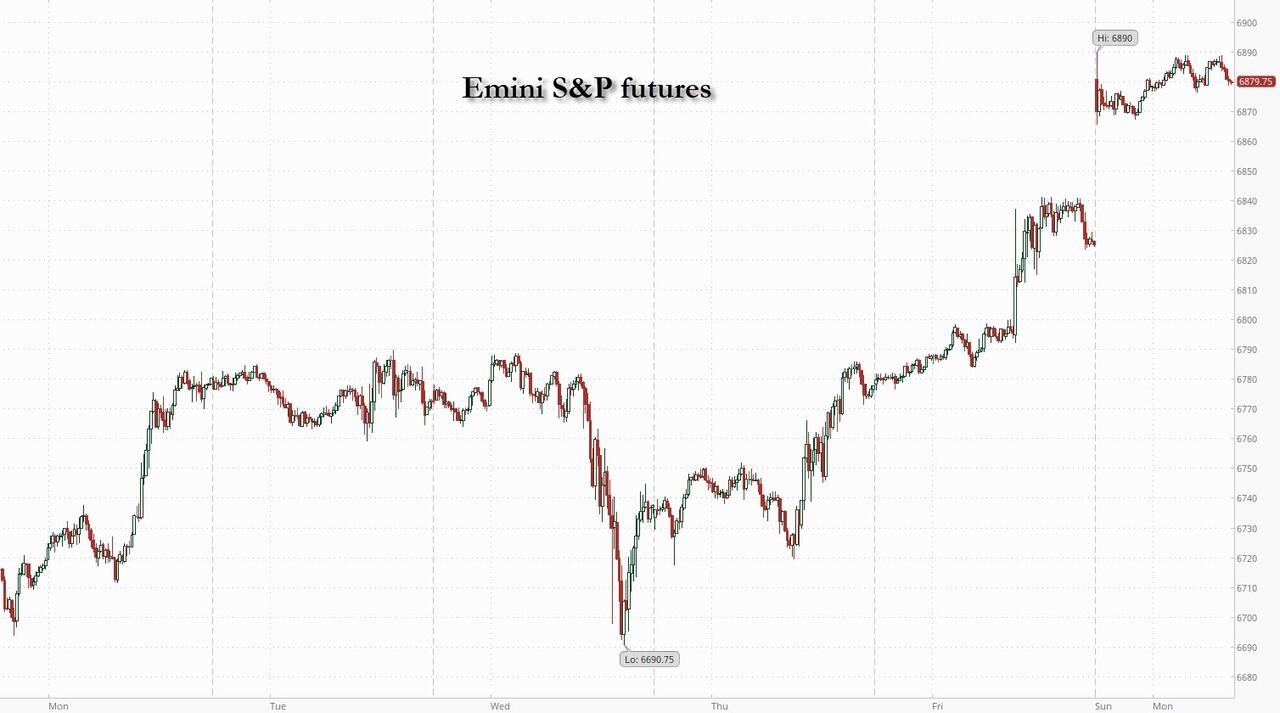
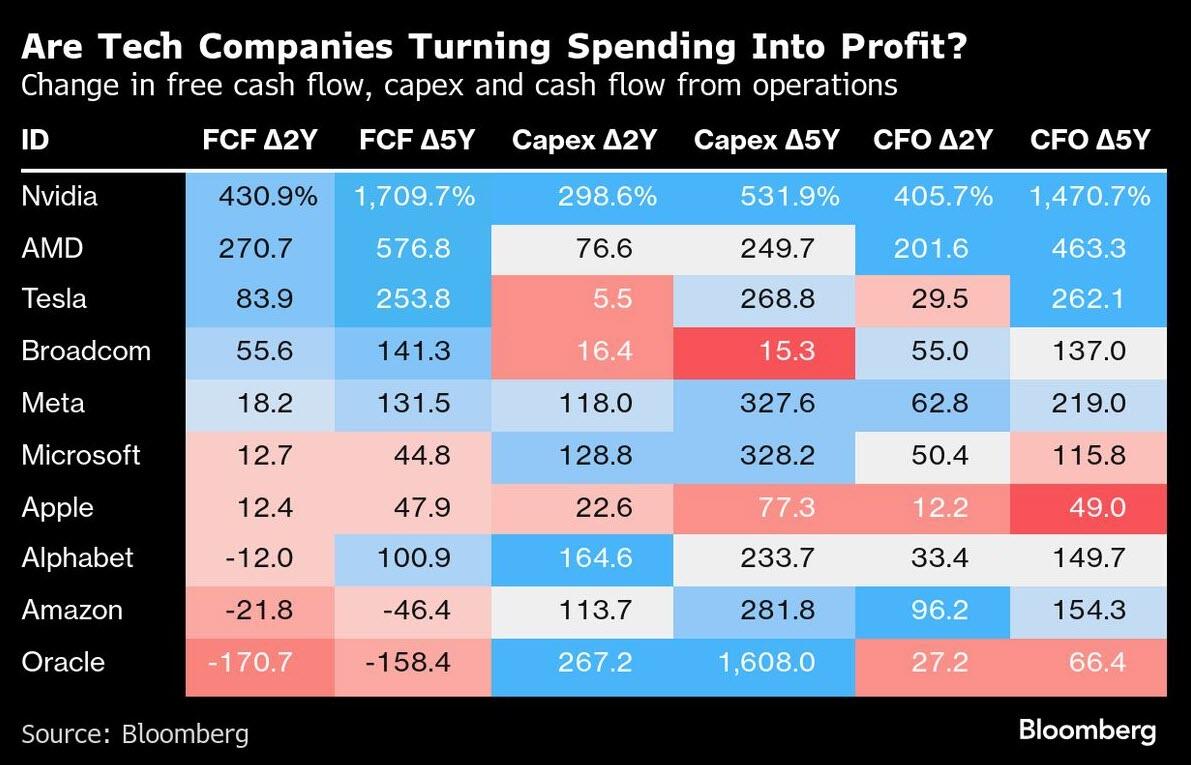

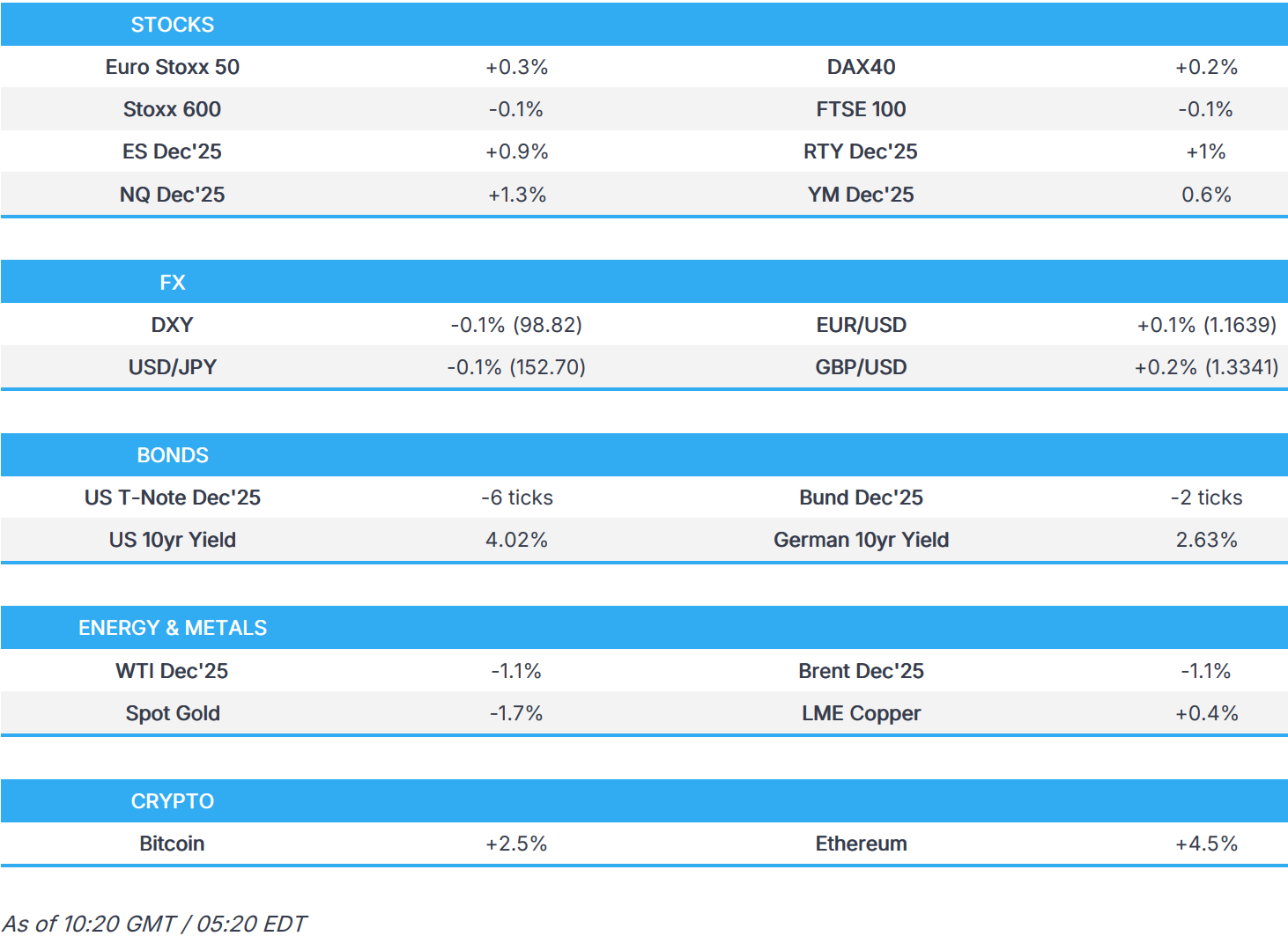


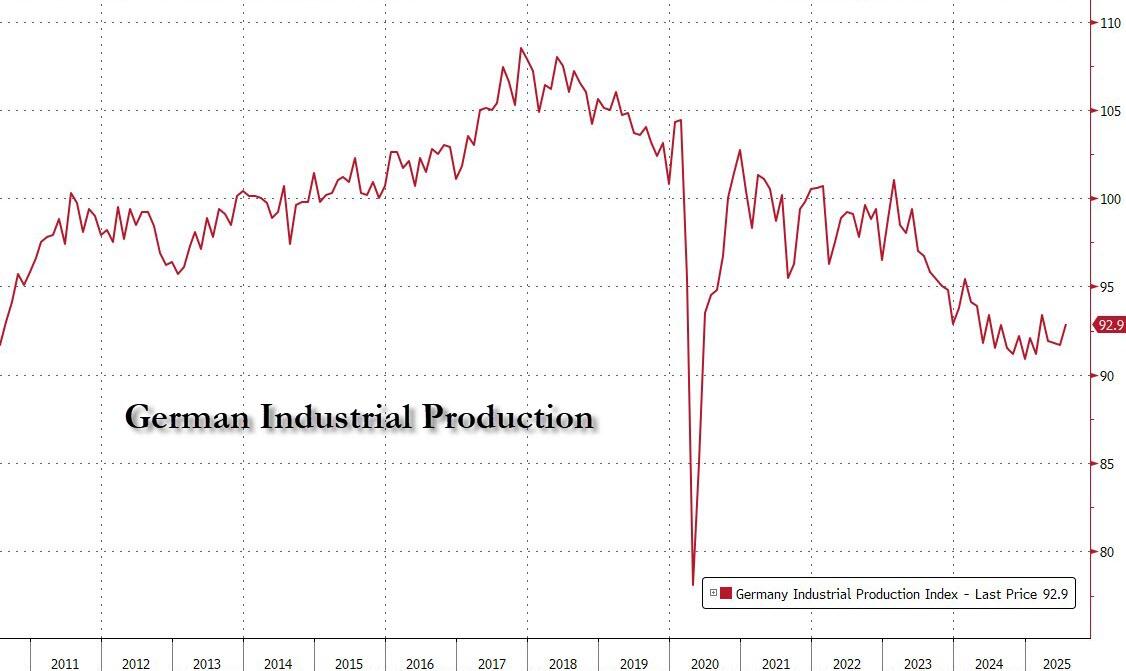




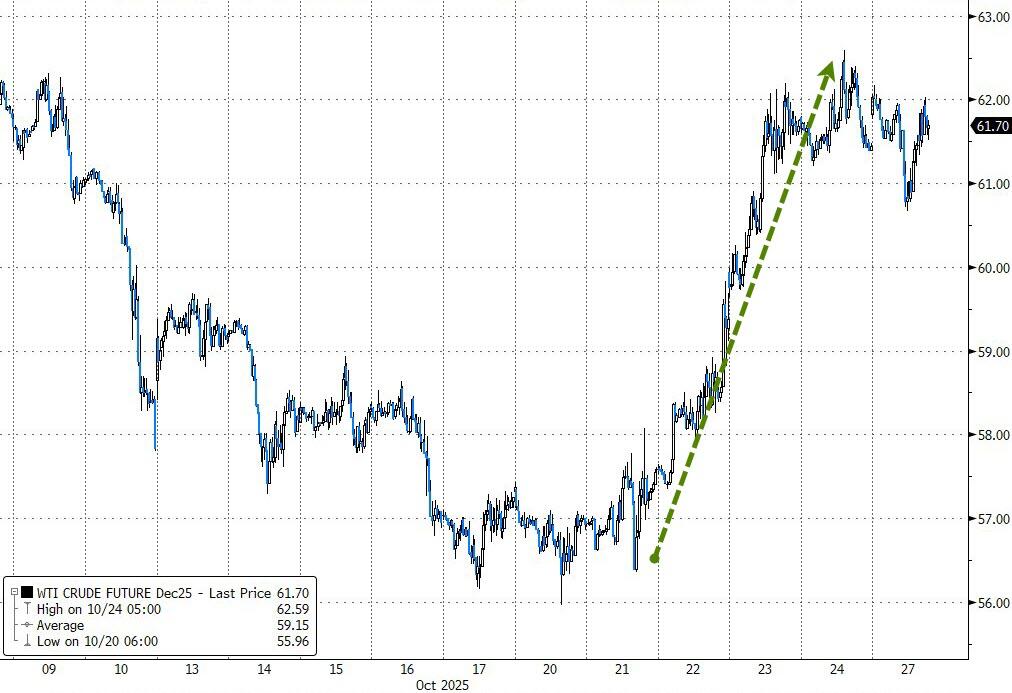

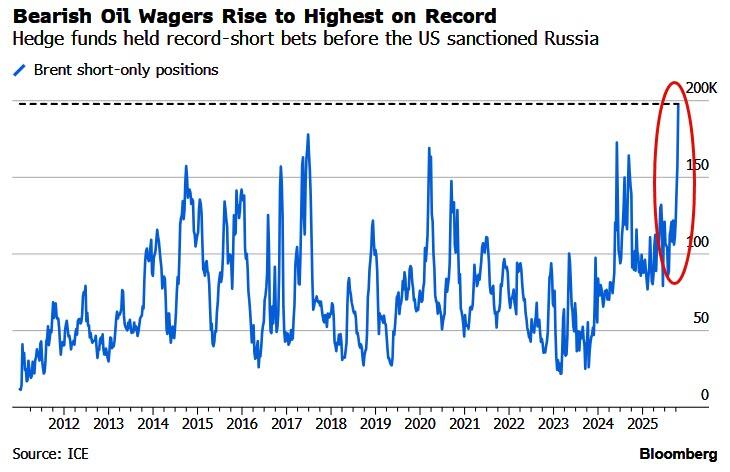
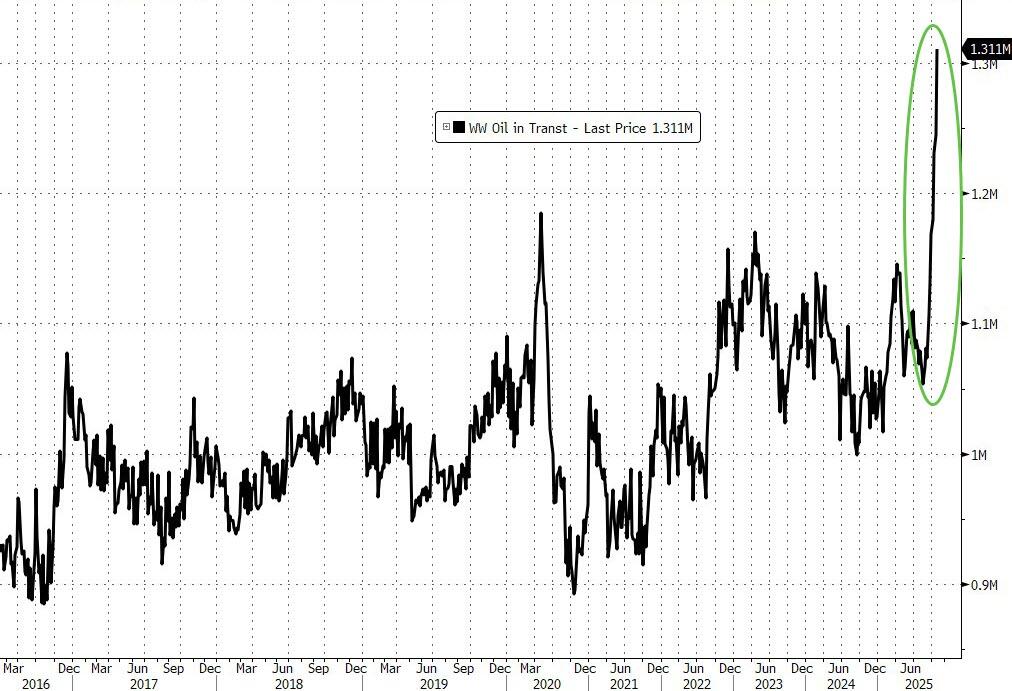
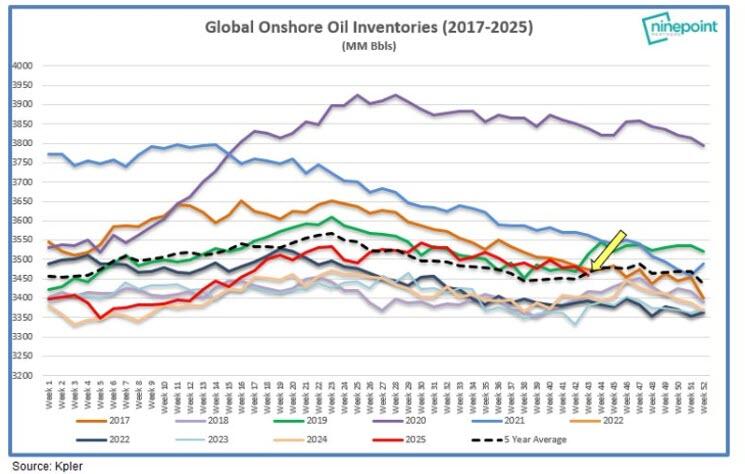
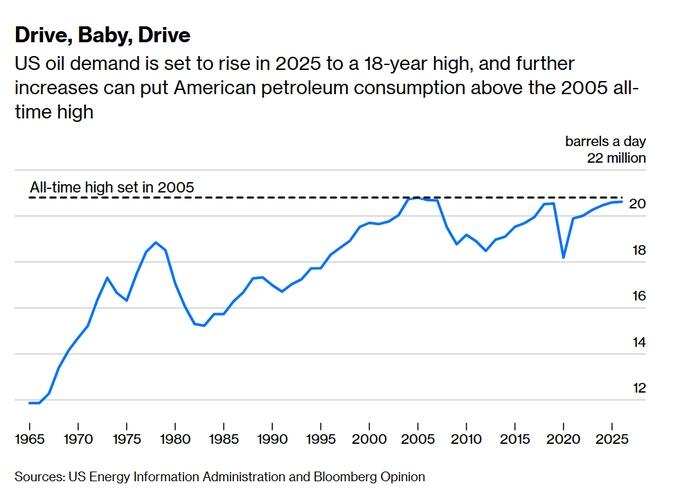
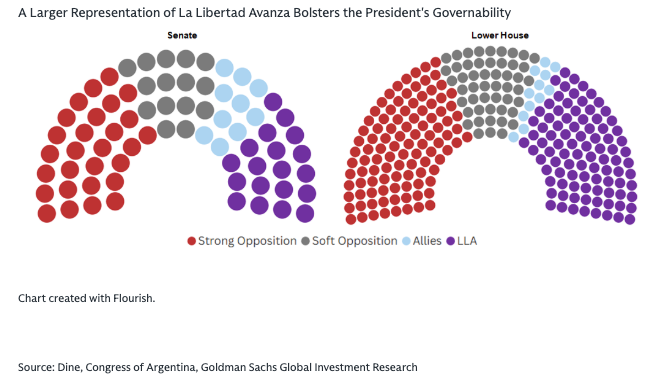
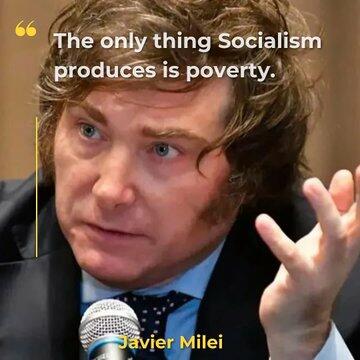
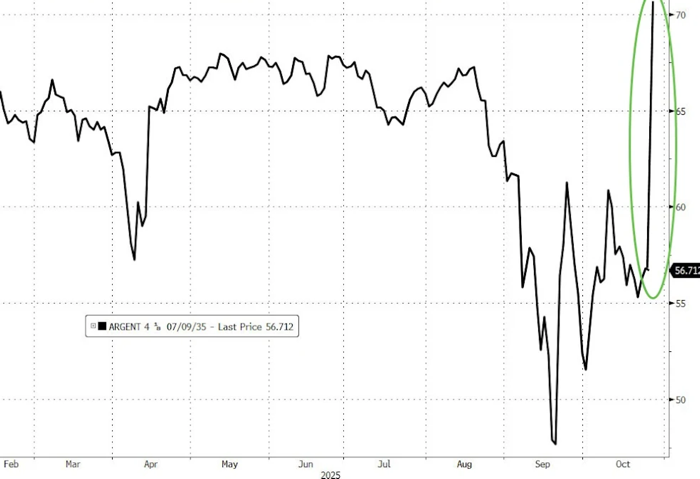

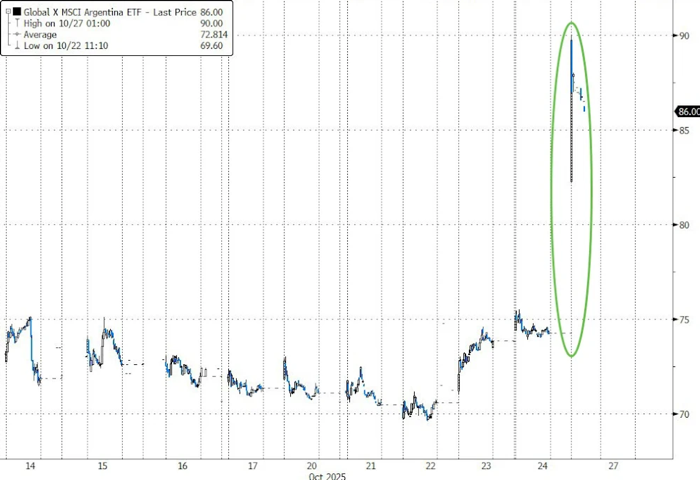
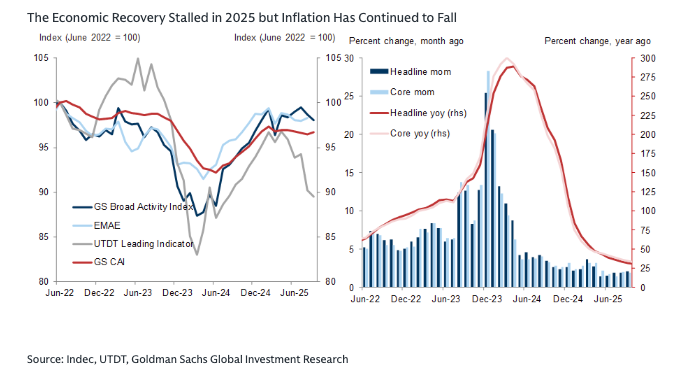




 harveyorganblog.com


