
access market
XXXXXXXXXXXXXXXXXXXXXXXXXXXXXXXXXXXXXXXXXXXXXXXXXX
XGE: COMEX
072 C GOLDMAN 1
092 C DEUTSCHE BANK 52
099 H DEUTSCHE BANK AG 21
104 C MIZUHO SECURITIES US 1
118 C MACQUARIE FUTURES US 6
118 H MACQUARIE FUTURES US 288
132 C SG AMERICAS 2
332 H STANDARD CHARTERED B 180
363 C WELLS FARGO SECURITI 1
363 H WELLS FARGO SECURITI 38
365 C MAREX CAPITAL MARKET 2
435 H SCOTIA CAPITAL (USA) 52
661 C JP MORGAN SECURITIES 200 118
709 C BARCLAYS 4
732 H RBC CAP MARKETS 3
880 H CITIGROUP 8
905 C ADM 3
JPMORGAN STOPPED: 114/490
GOLD: NUMBER OF NOTICES FILED FOR DEC/2025: 490 CONTRACTs NOTICES FOR 49000 OZ or 1.524 TONNES
total notices so far: 26,603 contracts for 2,660,300 OR 82.902 tonnes)
SILVER NOTICES: 103 NOTICE(S) FILED FOR 0.515 MILLION OZ/
total number of notices filed so far this month : 10,195 CONTRACTS (NOTICES) for 50.975 million oz
INITIAL STANDING FOR DEC: 49.33 MILLION OZ FOLLOWED BY TODAY’S STRONG 0.505 MILLION OZ QUEUE JUMP//STANDING ADVANCES TO 55.060 MILLION OZ//
JULY: 50.925 MILLION OZ (QUITE SMALL)
AUGUST: 59.455 MILLION OZ (QUITE SMALL)
SEPT. 50.510 MILLION OZ.(QUITE SMALL)
OCT; 82.020 MILLION OZ (WILL BE STRONG THIS MONTH)/ OCC WANTS TO REIN IN THESE ISSUANCES!
NOVEMBER: 36.425 MILLION OZ
DEC: 12.295 MILLION OZ
AND JULY: 46.720 MILLION OZ//
AUGUST: 4.70 MILLION OZ INITIAL STANDING PLUS TODAY;S 5,000 OZ QUEUE JUMP //NEW STANDING ADVANCES TO 10.960 MILLION OZ
SEPTEMBER: 68.040 MILLION OZ NORMAL DELIVERY(INCLUDES ALL QUEUE JUMPING AND EXCHANGE FOR PHYSICAL TRANSFERS) PLUS 3.0 MILLION OZ EX FOR RISK = 71.040 MILLION OZ. (THIS IS THE FIRST AND ONLY ISSUANCE OF EXCHANGE FOR RISK FOR SILVER SINCE MAY.)
OCTOBER: 39.565 MILLION OZ OF NORMAL DELIVERY INCLUDES ALL QUEUE JUMPING
PLUS
2.110 MILLION OZ EXCHANGE FOR RISK//TOTAL OZ STANDING IN OCT ADVANCES TO 41.675 MILLION OZ
NOVEMBER: INITIAL STANDING AT 11.575 MILLION OZ FOLLOWED BY TODAY’S 195,000 OZ QUEUE JUMP WHICH FOLLOWS ALL OTHER QUEUE JUMPS OF 9.155 MILLION OZ//STANDING ADVANCES TO 19.670 MILLION OZ/
DECEMBER: INITIAL AMOUNT STANDING FOR DELIVERY: 49.33 MILLION OZ// FOLLOWED BY ANOTHER HUGE 0.505 MILLION OZ QUEUE JUMP // STANDING ADVANCES TO 55.050 MILLION OZ//
- MAY: SUMMARY FOR MAY TONNES WHICH STOOD FOR DELIVERY:
4. AUGUST: 60.547 TONNES OF INITIAL GOLD FIRST DAY NOTICE FOLLOWED BY THE NET MONTH’S QUEUE JUMP OF 47.2312 TONNES TO WHICH WE ADD THE FOLLOWING EXCHANGE FOR RISK ISSUANCE RECEIVED FOR THE MONTH: 5.4432 TONNES EX FOR RISK/AUG 7 , AUG 11: 2.413 TONNES EX FOR RISK AND AUG. 12 OF 2.637 TONNES EX FOR RISK//AUG 25: 9.107 TONNES , AUGUST 26: 9.1010 TONNES AND NOW AUGUST 27: 9.0699 TONNES//NEW STANDING ADVANCES TO 107.5117 TONNES OF GOLD NORMAL STANDING (INCLUDES ALL MONTHLY QUEUE JUMPS/EX FOR PHYSICAL TRANSFERS//) +44.696 TONNES EX.FOR RISK = 152.208 TONNES
5.SEPT: INITIAL 8.093 TONNES OF GOLD PLUS TODAY’S QUEUE JUMP OF 0.4883 TONNES PLUS 2.2827 TONNES OF EXCHANGE FOR RISK TODAY//NEW TOTAL EX. FOR RISK/MONTH = 22.923//NEW TOTAL STANDING FOR GOLD SEPT ADVANCES TO = 48.801 TONNES!!
6.OCTOBER: 90.012 TONNES OF INITIAL GOLD STANDING WITH TODAY’S TINY 0.00311 TONNES QUEUE JUMP WHICH FOLLOWS ALL OTHER QUEUE JUMPS DURING OCT OF 76.1656 TONNES
THEN WE MUST ADD OUR 14.553 TONNES OF OUR ISSUANCE OF EXCHANGE FOR RISK/6 OCCASIONS//NEW TOTAL OF GOLD STANDING ADVANCES TO 197.5141 TONNES OF GOLD.
7.NOVEMBER BEGINS WITH 15.651 TONNES INITIALLY STANDING FOR DELIVERY FOLLOWED BY TODAY’S QUEUE JUMP OF 2.323 TONNES FOLLOWED BY ALL PREVIOUS QUEUE JUMPS IN OF OF 21.3775 TONNES TO WHICH WE ADD OUR TWO EXCHANGE FOR RISK ISSUANCE OF 4.5596 TONNES//NEW STANDING ADVANCES TO 43.9716 TONNES OF GOLD.
8. DECEMBER BEGINS WITH INITIAL STANDING OF 83.813 TONNES OF GOLD FOLLOWED BY TODAY’S 0.1586 TONNE QUEUE JUMP WHICH FOLLOWS ALL OTHER QUEUE JUMPS OF: 3.9084 TONNES//NEW STANDING ADVANCES TO 86.849 TONNES/
NEW STANDING FOR GOLD, DEC CONTRACT AT 86.849 TONNES OF GOLD
JAN. 2025: 257.919 TONNES (ISSUANCE WILL BE PRETTY GOOD THIS MONTH BUT MUCH LOWER THAN LAST MONTH)
FEB: 207.21 TONNES//EX FOR PHYSICAL ISSUANCE (WILL BE A FAIR SIZED ISSUANCE THIS MONTH)
MARCH 130.84 TONNES//QUITE SMALL THIS MONTH.
APRIL; 208.57 TONNES. STRONG THIS MONTH
MAY: 113.499 TONNES OF GOLD EFP ISSUANCE//QUITE SMALL THIS MONTH
JUNE: 97.79 TONNES OF GOLD EFP ISSUANCE/EXTREMELY SMALL
JULY : 150.877 TONNES// QUITE SMALL
AUGUST: 175.86 TONNES A LOT LARGER THIS MONTH.
SEPT. 116.13 TONNES VERY SMALL
OCT. 252.72 TONNES//CERTAINLY MUCH LARGER THIS MONTH/VERY STRONG
NOV: 124.74 TONNES
DEC: 36.88 TONNES//VERY SMALL THIS MONTH.
SPREADING OPERATION
NOW SWITCHING TO GOLD FOR NEWCOMERS, HERE ARE THE DETAILS
SPREADING LIQUIDATION HAS NOW COMMENCED AS WE HEAD TOWARDS THE NEW ACTIVE FRONT MONTH OF OCT. WE ARE NOW INTO THE SPREADING OPERATION OF GOLD
HERE IS A BRIEF SYNOPSIS OF HOW THE CROOKS FLEECE UNSUSPECTING LONGS IN THE SPREADING ENDEAVOUR ;MODUS OPERANDI OF THE CORRUPT BANKERS AS TO HOW THEY HANDLE THEIR SPREAD OPEN INTERESTS:HERE IS HOW THE CROOKS USED SPREADING AS WE ARE NOW INTO THE NON ACTIVE DELIVERY MONTH OF NOV HEADING TOWARDS THE ACTIVE DELIVERY MONTH OF FEB., FOR GOLD: AND MARCH FOR SILVER
YOU WILL ALSO NOTICE THAT THE COMEX OPEN INTEREST STARTS TO RISE BUT SO IS THE OPEN INTEREST OF SPREADERS. THE OPEN INTEREST IN WILL CONTINUE TO RISE UNTIL ONE WEEK BEFORE FIRST DAY NOTICE OF AN UPCOMING ACTIVE DELIVERY MONTH (OCT), AND THAT IS WHEN THE CROOKS SELL THEIR SPREAD POSITIONS BUT NOT AT THE SAME TIME OF THE DAY. THEY WILL USE THE SELL SIDE OF THE EQUATION TO CREATE THE CASCADE (ALONG WITH THEIR COLLUSIVE FRIENDS) AND THEN COVER ON THE BUY SIDE OF THE SPREAD SITUATION AT THE END OF THE DAY. THEY DO THIS TO AVOID POSITION LIMIT DETECTION. THE LIQUIDATION OF THE SPREADING FORMATION CONTINUES FOR EXACTLY ONE WEEK AND ENDS ON FIRST DAY NOTICE.”
WHAT IS ALARMING TO ME, ACCORDING TO OUR LONDON EXPERT ANDREW MAGUIRE IS THAT THESE EFP’S ARE BEING TRANSFERRED TO WHAT ARE CALLED SERIAL FORWARD CONTRACT OBLIGATIONS AND THESE CONTRACTS ARE LESS THAN 14 DAYS. ANYTHING GREATER THAN 14 DAYS, THESE MUST BE RECORDED AND SENT TO THE COMPTROLLER, GREAT BRITAIN TO MONITOR RISK TO THE BANKING SYSTEM. IF THIS IS INDEED TRUE, THEN THIS IS A MASSIVE CONSPIRACY TO DEFRAUD AS WE NOW WITNESS A MONSTROUS TOTAL EFP’S ISSUANCE AS IT HEADS INTO THE STRATOSPHERE.
The crooks also use the spread in the TAS account (trade at settlement). They buy the spot TAS (e.g. June) and sell the future TAS two months out (e.g. August). Then they unload the front month (i.e. unload the buy side first so the price of gold/silver falls. This occurs in the middle of the front delivery month cycle. They unload the sell side of the equation, two months down the road. The crooks violate position limits as the OCC refuse to hear our complaints.
First, here is an outline of what will be discussed tonight:
1.TODAY WE HAD THE OPEN INTEREST AT THE COMEX IN SILVER ROSE BY A HUGE SIZED 1504 CONTRACTS OI TO 151,419 AND FURTHER FROM THE COMEX HIGH RECORD //244,710( SET FEB 25/2020). THE LAST RECORDS WERE SET IN AUG.2018 AT 244,196 WITH A SILVER PRICE OF $14.78/(AUGUST 22/2018)..THE PREVIOUS RECORD TO THAT WAS SET ON APRIL 9/2018 AT 243,411 OPEN INTEREST CONTRACTS WITH THE SILVER PRICE AT THAT DAY: $16.53). AND PREVIOUS TO THAT, THE RECORD WAS ESTABLISHED AT: 234,787 CONTRACTS, SET ON APRIL 21.2017 OVER 7 YEARS AGO. HOWEVER WE HAVE NOW SET A NEW RECORD LOW OF 114,102 CONTRACTS JULY 3.2023
EFP ISSUANCE 650 CONTRACTS
OUR CUSTOMARY MIGRATION OF COMEX LONGS CONTINUE TO MORPH INTO LONDON FORWARDS AS OUR BANKERS USED THEIR EMERGENCY PROCEDURE TO ISSUE:
MAR 650 CONTRACTS and 0 ALL OTHER MONTHS: ZERO. TOTAL EFP ISSUANCE: 0 CONTRACTS. EFP’S GIVE OUR COMEX LONGS A FIAT BONUS PLUS A DELIVERABLE PRODUCT OVER IN LONDON. IF WE TAKE THE COMEX OI GAIN OF 1504 CONTRACTS AND ADD TO THE 650 E.FP. ISSUED
WE OBTAIN A HUGE SIZED GAIN OF 2154 OF OPEN INTEREST CONTRACTS FROM OUR TWO EXCHANGES DESPITE OUR LOSS OF $1.12 THE RATS ARE FLEEING THE ARENA.
THUS IN OUNCES, THE GAIN ON THE TWO EXCHANGES TOTALS 10.77 MILLION PAPER OZ
OCCURRED DESPITE OUR LOSS IN PRICE.OF $1.12
OUTLINE FOR TODAY’S COMMENTARY
1a/COMEX GOLD AND SILVER REPORT
(report Harvey)
b, ) Gold/silver trading overnight Europe,//GOLD COMMENT
Peter Schiff)
c) Commentaries from: Egon von Greyerz///Matthew Piepenburg via GoldSwitzerland.com, Pam and Russ Martens
ii a) Chris Powell of GATA provides to us very important physical commentaries
b. Other gold/silver commentaries
c. Commodity commentaries//
d)/CRYPTOCURRENCIES/BITCOIN ETC
2.ASIAN AFFAIRS
ASIAN MARKETS THIS FRIDAY MORNING:
ASIA RESULTS; FRIDAY DEC 5
SHANGHAI CLOSED UP 27.02 POINTS OR 0.70%
//Hang Seng CLOSED UP 149.18 PTS OR 0.58%
// Nikkei CLOSED DOWN 536.55 PTS OR 1.05% //Australia’s all ordinaries CLOSED UP 0.22%
//Chinese yuan (ONSHORE) CLOSED UP TO 7.0699
/ OFFSHORE CLOSED UP AT 7.0676/ Oil UP TO 59.72 dollars per barrel for WTI and BRENT UP TO 63.34 Stocks in Europe OPENED ALL GREEN
ONSHORE USA/ YUAN TRADING UP TO 7.0699 OFFSHORE YUAN TRADING UP TO 7.0676:/ONSHORE YUAN TRADING BELOW OFF SHORE AND UP ON THE DOLLAR// / AND THUS STRONGER//OFF SHORE YUAN TRADING UP AGAINST US DOLLAR/ AND THUS STRONGER
XXXXXXXXXXXXXXXXXXXXXXXXXXXX
A)NORTH KOREA/SOUTH KOREA
outline
b) REPORT ON JAPAN/
OUTLINE
3 CHINA
OUTLINE
4/EUROPEAN AFFAIRS
OUTLINE
5. RUSSIAN AND MIDDLE EASTERN AFFAIRS
OUTLINE
6.Global Issues//COVID ISSUES/VACCINE ISSUES
OUTLINE
7. OIL ISSUES
OUTLINE
8 EMERGING MARKET ISSUES
9. USA
XXXXXXXXXXXXXXXXXXXXXXXXXXXX
1. COMEX DATA//AMOUNTS STANDING//VOLUME OF TRADING/INVENTORY MOVEMENTS
GOLD
LET US BEGIN:
THE TOTAL COMEX GOLD OPEN INTEREST ROSE BY A FAIR SIZED 2741 CONTRACTS TO 426,136 OI WITH OUR GAIN IN PRICE OF $9.95 WITH RESPECT TO THURSDAY’S // TRADING/ //COMEX CLOSING TIME:… WE LOST ZERO NET LONGS, WITH THAT PRICE GAIN FOR GOLD. AND AS YOU WILL SEE BELOW, OUR GAIN IN PRICE ALSO HAD A STRONG NUMBER OF EXCHANGE FOR PHYSICAL ISSUED (2944). WE HAD ZERO T.A.S. LIQUIDATION THURSDAY (WITH MONTH END SPREADER LIQUIDATIONS FINISHED ON NOV 30). .. IT SEEMS THAT THE SPECULATORS WENT STRONGLY TO THE LONG SIDE WITH OUR FRBNY PROVIDING THE NECESSARY PAPER AND OTHER CENTRAL BANKERS CONTINUING ON THE LONG SIDE . JUDGING BY THE MASSIVE NOTICES FOR DELIVERY FILED THURSDAY NIGHT AT 490 NOTICES FOR 49000 OZ (1.524 TONNES), THE EASTERN CENTRAL BANKERS ARE STANDING FOR CONSIDERABLE AMOUNT OF GOLD FOR DECEMBER DELIVERIES. YOU WILL NOTICE THAT THE COMEX OI HAS STILL A VERY LOW AT 4326,136 AND THESE GUYS ARE VERY STICKY AND A LITTLE HIGHER THAN THURSDAY SO AGAIN THEY PROVIDE A LITTLE FODDER FOR OUR CROOKS TO RAID!!
WE THUS HAD A TOTAL GAIN IN OI ON BOTH OF OUR EXCHANGES, THE COMEX AND LONDON’S EXCHANGE FOR PHYSICAL EQUATING TO 5685 CONTRACTS (OR 17.68 TONNES). THEN WE WERE NOTIFIED OF A 0 CONTRACT EXCHANGE FOR RISK ISSUANCE IN GOLD CONTRACTS ISSUED FOR 0 OZ OR NIL TONNES OF GOLD.
FIRST LETS DO A REVIEW OF EXCHANGE FOR RISK ISSUANCES THIS PAST YEAR
A LITTLE HISTORY ON OUR EXCHANGE FOR RISK ISSUANCES/ GOLD PRIOR MONTHS
HERE IS A CLOSER LOOK AT EXCHANGE FOR RISK ISSUANCES FOR THESE PAST 4 MONTHS;TOTAL EXCHANGE FOR RISK LAST 6 MONTHS 70.097 TONNES. THE RECIPIENT OF THESE EXCHANGE FOR RISK IS THE BANK OF ENGLAND. THIS CENTRAL BANK LOANED OUT ITS GOLD AND WANTS IT BACK. THEIR TOTAL RESERVES PRIOR TO THE LOANS IS LISTED AT 310 TONNES.
LET US LOOK AT JULY:
SUMMARY: EXCHANGE FOR RISK ISSUANCE IN JULY/2025: 2 ISSUANCES//3.75 TONNES
ON WEDNESDAY MORNING,JULY 23, MUCH TO MY SHOCK, AFTER A TWO MONTH HIATUS,THE CME ANNOUNCED A 500 EXCHANGE FOR RISK CONTRACT ISSUANCE FOR 50,000 OZ OR 1.555 TONNES. THEN JULY 30 THE CME ANNOUNCED (ISSUED) MUCH TO MY HORROR ITS SECOND EXCHANGE FOR RISK FOR 706 CONTRACTS OR 70,600 OZ (2.195 TONNES) AS THE BANK OF ENGLAND WAS NOT SATISFIED AND NEEDS MORE GOLD TO COVER ITS LEASES TO BULLION BANKS. ( IT WAS NOT THE FRBNY WHO ALSO OWES GOLD TO THE BIS AND THEY NEED TO COVER BADLY AS YOU WILL SEE).THE TOTAL EXCHANGE FOR RISK FOR THE MONTH OF JULY WAS RECORDED AT 3.750 TONNES OF GOLD WHICH WAS ADDED TO OUR REGULAR DELIVERY TO GIVE US OUR FINAL TOTALS FOR JULY!
NOW LET US LOOK AT THE MONTH OF AUGUST:
AUGUST:
SUMMARY EXCHANGE FOR RISK ISSUANCE IN AUGUST; 7 ISSUANCES//44.696 TONNES
AUGUST: 7 ISSUANCES FOR A MONTHLY MONSTER 14,370 CONTRACTS OR 1,437,000 OZ ( 44.696) TONNES). EARLY IN THE MONTH THE CME ISSUED THE 2ND HIGHEST EVER MONTHLY RECORDED ISSUANCE OF 2924 CONTRACTS AND THIS IS FOLLOWED BY THURSDAY’S HUGE ISSUANCE OF 2226 CONTRACTS THUS BECOMING THE 4TH HIGHEST EVER RECORDED BY THE CME, SLIGHTLY BELOW AN ISSUANCE OF 2924 CONTRACTS. THE HUGE NUMBERS OF EXCHANGE FOR RISK SUGGEST THAT A MAJOR CENTRAL BANK IS DEMANDING ITS GOLD BACK.
NOW LET US LOOK AT SEPT.
SEPT:
SEPTEMBER: SEVEN ISSUANCES SO FAR TOTALLING 7,370 CONTRACTS OR 737,000 OZ OR 22.923 TONNES.
THESE ISSUANCES WILL OF COURSE BE ADDED TO OUR NORMAL DELIVERIES TO GIVE US OUR TOTAL SEPT STANDING FOR GOLD.
AND NOW OCTOBER: 6 ISSUANCES//FOR 14.553 TONNES
WE RECEIVED NOTICE THAT OUR INITIAL EXCHANGE FOR RISK ISSUED ON FIRST DAY NOTICE WAS FOR 500 CONTRACTS OR 50,000 OZ /1.555 TONNES OF GOLD!!THAT WAS FOLLOWED BY A STRONG 650 CONTRACT ISSUED THURSDAY OCT 2 FOR 2.0217 TONNES AND THAT WAS FOLLOWED THE NEXT DAY BY ANOTHER HUGE 1320 CONTRACT ISSUANCE FOR 13,200 OZ OR 4.1057 TONNES AND THIS WAS FOLLOWED BY SATURDAY’S OCT 4: 180 CONTRACT ISSUANCE FOR 18,000 OZ OR .5596 TONNES:THIS BRINGS US TO OCT 8 WITH A HUGE ISSUANCE OF 1000 CONTRACTS FOR 100,000 OZ OR 3.1104 TONNES. NOW AFTER A TWO WEEK HIATUS, OCT 21: 1029 CONTRACTS FOR 10290 OZ OR 3.200 TONNES TOTAL ISSUANCES 6 OCCASIONS FOR 4679 CONTRACTS OR 467,900 OZ OR 14.553 TONNES
LET’S SUM UP EXCHANGE FOR RISK FOR THE LAST 11 MONTHS
HISTORY: LAST 11 MONTH’S EXCHANGE FOR RISK//TOTAL CONTRACT ISSUANCES //TONNES OF GOLD
IN FEBRUARY:
WE HAD A HUGE FIVE EXCHANGE FOR RISKS ISSUANCES FOR GOLD, TOTALLING 18.4527 TONNES!.
IN MARCH:
THE TOTAL NO. OF EXCHANGE FOR RISK ISSUANCE FOR THE MONTH OF MARCH (3 NOTICES) EQUALED: 7.6179 TONNES OF GOLD WHICH WAS ADDED TO OUR MARCH DELIVERY TOTALS.
IN APRIL:
WE CONCLUDED APRIL WITH 7 ISSUANCE OF EXCHANGE FOR RISK FOR A TOTAL TONNAGE OF 8.3571 TONNES.
IN MAY:
MAY: 3 EX. FOR RISK ISSUED SO FAR FOR 3025 CONTRACTS OR 302,500 OZ OR 9.4054 TONNES. THIS WILL BE ADDED TO OUR NORMAL DELIVERY TO GIVE US TOTAL STANDING FOR MAY!THIS IS THE 6TH CONSECUTIVE MONTH FOR ISSUANCE OF EXCHANGE FOR RISK//NEW TOTAL EX FOR RISK IS 9.4054 TONNES FOR THE 3 ISSUANCE!
IN JUNE
JUNE: ZERO ISSUED
jULY: 2 OCCASIONS LATE IN JULY: 1206 CONTRACTS FOR 120,600 OZ OR 3.750 TONNES/ISSUED JULY 23/2025 AND JULY 30/2025
AUGUST: 7 ISSUANCES FOR A MONTHLY MONSTER 14,370 CONTRACTS OR 1,437,000 OZ ( 44.696) TONNES).AT THE BEGINNING OF THE MONTH THE CME ISSUED THE 2ND HIGHEST EVER MONTHLY RECORDED ISSUANCE OF 2924 CONTRACTS AND THIS IS FOLLOWED BY THURSDAY’S HUGE ISSUANCE OF 2226 CONTRACTS THUS BECOMING THE 4TH HIGHEST EVER RECORDED BY THE CME, SLIGHTLY BELOW PREVIOUS DAY’S ISSUANCE OF 2924 CONTRACTS. THE HUGE NUMBERS OF EXCHANGE FOR RISK SUGGEST THAT A MAJOR CENTRAL BANK IS DEMANDING ITS GOLD BACK.
SEPTEMBER: SEVEN ISSUANCES FOR 7370 CONTRACTS SO FAR FOR 737,000 OZ OR 22.923 TONNES OF GOLD!!
OCTOBER: FIRST INITIAL ISSUANCE OF 500 CONTRACTS FOR 50,000 OZ OR 1.555 TONNES OF GOLD. THIS WAS FOLLOWED BY AN ISSUANCE OF 650 CONTRACTS OR 65000 OZ OR 2.0217 TONNES. THEN ON OCT 3 WE RECEIVED OUR 3RD NOTICE FOR A HUGE 1320 CONTRACTS OR 132000 OZ OR 4.1057, AND THEN SATURDAY OCT 4, THE CME ISSUED ITS 4 ISSUANCE FOR 180 CONTRACTS FOR 18,000 OZ OR .5594 TONNES. THEN OCT 8 FOR 1000 CONTRACTS, OR 100,000 OZ OR 3.1104 TONNES AND FINALLY OCT 21; 3.200 TONNES// THUS ON 6 OCCASIONS TOTAL EXCHANGE FOR RISK ISSUANCE; 14.553 TONNES
NOVEMBER:
NOVEMBER: TWO ISSUANCES:
WHICH NOW BRINGS US TO NOVEMBER WHERE WE RECEIVED NOTICE OF OUR SECOND ISSUANCE OF 1016 CONTRACTS FOR 101,600 OZ OR 3.165 TONNES. WE MUST NOW ADD THIS TO OUR INITIAL ISSUANCE OF 450 NOTICES //45000 OZ OR 1.3996 TONNES. THUS THE NEW TOTAL EXCHANGE FOR RISK FOR NOVEMBER IS 1,466 NOTICES FOR 146,600 OZ OR 4.5598 TONNES OF GOLD.
AND NOW DECEMBER: SO FAR 0 NOTICES ISSUED:
DEC 0
AS I EXPLAINED ABOVE,:THE RECIPIENT OF EXCHANGE FOR RISK FOR GOLD IS THE BANK OF ENGLAND
here are the only possible candidates who must bring back loaned gold
- THE BANK OF ENGLAND WHO CONTINUES TO LEASE OUT MUCH ITS GOLD TO BULLION BANKS AND :(EX FOR RISK 10 MONTH TOTALS 134.8646 TONNES)//TOTAL RESERVES OF BOE EQUALS 310 TONNES) NO WONDER THE BANK OF ENGLAND THROUGH THE E.E.A. CANNOT SIGN OFF ON THEIR AUDIT
- THE FEDERAL RESERVE BANK OF NEW YORK (NEED TO RETRIEVE THEIR LEASED/BORROWED GOLD FROM THE BIS).THE FED STILL REFUSES TO BRING BACK MUCH OF ITS 54 TONNES SHORTFALL. IT BOUGHT BACK ONLY 4 TONNES IN AUGUST AND THEN ADDED 24 TONNES IN SEPT. AND THUS THEIR SHORTFALL TO THE BIS IS 54 TONNES.
HOWEVER, IN OUR CASE, EXCHANGE FOR RISK RECIPIENT IS THE BANK OF ENGLAND. THE COUNTERPARTY TO THE BANK OF ENGLAND EXCHANGE FOR RISK ARE BULLION BANKS THAT CANNOT VERIFY THAT THEIR GOLD IS UNENCUMBERED. THE BUYER, REPRESENTING THE CENTRAL BANK OF ENGLAND ASSUMES THE RISK OF THAT DELIVERY. THIS IS THE 12TH MONTH FOR ISSUANCE OF EXCHANGE FOR RISK THIS YEAR !!…..(DEC 24 THROUGH DEC 25//ONLY MISSING JUNE. TOTAL 12 MONTHS ISSUANCE 134.8646 TONNES)……… THE FACT THAT A CENTRAL BANK TAKES THE RISK OF A DELIVERY IS TOTALLY INSANE. THE VERY FIRST ISSUE OF EXCHANGE FOR RISK CAME IN MAY 2023. HUGE ISSUANCES BEGAN OCT AND DEC 2024. ROBERT LAMBOURNE, GATA CONSULTANT AND EXPERT ON BIS AND BANK OF ENGLAND ISSUES HAS WRITTEN TO THE BANK OF ENGLAND AUTHORITIES CONCERNING THE REFUSAL OF THE BANK OF ENGLAND’S E.E.A. AUDITORS TO SUPPLY A POSITIVE AUDIT ON THEIR GOLD TONNAGE AND OTHER ASSETS HELD UNDER THE E.E.A. .AND NOW THE OCC HAS WRITTEN NEW RULES ON BORROWED GOLD AND THE HANDLING OF EXCHANGE FOR PHYSICAL ISSUANCES AS TO NOT BREAK ANY LAWS!!! STRANGE: THEY HAVE BEEN BREAKING LAWS FOR 5 YEARS NOW.
DETAILS ON OUR NEW DECEMBER COMEX CONTRACT MONTH//
IN TOTAL WE HAD A STRONG SIZED GAIN ON OUR TWO EXCHANGES OF 14,515 CONTRACTS WITH OUR GAIN IN PRICE. HOWEVER, OUR FRIENDLY PHYSICAL LONDON BOYS HAD ANOTHER FIELD DAY AGAIN THROUGHOUT OF THE WEEK AS THEY WERE READY FOR THE FRBNY.S CONTINUED ORCHESTRATED ATTACKS VERY EARLY IN THE COMEX SESSIONS AS THEY TRIED TO ABSORB EVERYTHING IN SIGHT FROM THEIR DAILY ATTACKS. LONDONERS EXERCISED THEIR BOUGHT CONTRACTS FOR PHYSICAL GOLD VIA THE EXCHANGE FOR PHYSICAL ROUTE AND THANKED THE FRBNY AND OUR SHORT SPECULATORS FOR THE THOUGHTFULNESS. LONDON ANNOUNCED EARLY IN THE YEAR (AND SCARCITY CONTINUES TO THIS DAY) THAT THEY WERE OUT OF GOLD. WRONGLY IT WAS ATTRIBUTED TO THEIR SHIPPING PHYSICAL GOLD TO COMEX FOR STORAGE DUE TO TRUMP’S INITIATION OF TARIFFS. THE TRUTH OF THE MATTER IS THAT THIS GOLD LEFT LONDON TO OTHER CENTRAL BANKS, AND COMEX BANKS HAVE BEEN PAPERING THEIR LOSSES (DERIVATIVE) WITH KILOBAR ENTRIES. DELIVERY OF GOLD CONTRACTS ARE NOW TAKING SEVERAL WEEKS. NO DEFAULT HAS BEEN INITIATED AS DEALERS ARE AFRAID OF LOSS OF THEIR JOBS. SO THIS FRAUD CONTINUES. THE LEASE RATES IN LONDON HAVE NOW INCREASED TO 3.9% LATELY AS GOLD IN LONDON IS STILL EXTREMELY SCARCE. THE FORCE MAJEURE AT GRASBERG IS CERTAINLY HAVING AN EFFECT ON LEASE RATES IN LONDON WITH RESPECT TO GOLD/SILVER. GRASBERG WILL NOT BE READY TO RESUME NORMAL PRODUCTION UNTIL JULY 2026
THE LIQUIDATION OF T.A.S. CONTRACTS THROUGHOUT THE MONTHS OF JUNE THROUGH DECEMBER/ CONTINUES TO DISTORT OPEN INTEREST NUMBERS GREATLY ALTHOUGH THE T.A.S. ISSUANCES IN GOLD HAVE GENERALLY BEEN ON THE LOW SIDE COMPARED TO SILVER WHICH HAVE BEEN HUGE. TODAY’S NUMBER IS A FAIR T.A.S ISSUANCE CONTRACTS AS THE 5 CONSECUTIVE MEGA HUGE ISSUANCES HAS ENDED. THE CME NOTIFIES US THAT THEY HAVE ISSUED 729 T.A.S CONTRACTS. THE 5 CONSECUTIVE MEGA HUGE T.A.S ISSUANCES IN NOVEMBER WERE USED FOR RAID PURPOSES TO STOP GOLD’S RISE AND TO TEMPER HUGE LOSSES IN OTC DERIVATIVE BETS AND IT WAS IN FULL FORCE DURING LAST WEEK FINISHING OFF WITH A MASSIVE HUGE RAID ON GOLD (AND SILVER) DESPERATELY TRYING TO STOP GOLD’S ADVANCE. THIS ALWAYS ENDS IN FAILURE AS WE SAW GOLD//SILVER RISE HUGELY ON MONDAY AND THEN IT WENT UP CONSIDERABLY TODAY, FRIDAY DEC 5.
HERE IS A SUMMARY OF GOLD STANDING FOR DELIVERY ON OUR LAST 9 MONTHS:
- FOR APRIL AT 209 TONNES
2. AND THIS CONTINUED INTO MAY WITH FINAL STANDING AT 90.23 TONNES.
3. JUNE WHICH IS A HUGE DELIVERY MONTH , FINAL STANDING WAS RECORDED AT A STRONG 93.085 TONNES. //(TOTAL NET QUEUE JUMPING FOR THE JUNE MONTH: 31.027 TONNES.)
4. IN JULY WE HAD HUGE DELIVERY NOTICES ESPECIALLY FOR A NON ACTIVE DELIVERY MONTH WITH INITIAL STANDING AT 17.947 TONNES PLUS MANY QUEUE JUMPS + 3.75 TONNES EX FOR RISK = 41.106 TONNES OF GOLD // FINAL TOTAL TONNES STANDING JULY: 41.106 TONNES
5. FOR THE MONTH OF AUGUST:
INITIAL AMOUNT OF GOLD STANDING FOR AUGUST: 60.547 TONNES PLUS THE MONTHS HUGE QUEUE JUMPS OF 47.2312 TONNES +44.696 TONNES EX FOR RISK (7 ISSUANCES) //NEW STANDING 152.208 TONNES WHICH IS MONSTROUS!!!
6. FINAL AMOUNT OF GOLD STANDING FOR SEPT; INITIAL STANDING; 2,602 CONTRACTS OR 260,200 OZ FOR 8.093 TONNES OF GOLD FOLLOWED BY TODAY’S 0.4883 TONNES QUEUE JUMP TO GO ALONG WITH TODAY’S 2.817 TONNES OF EXCHANGE FOR RISK ISSUANCE TODAY AND // TOTAL EXCHANGE FOR RISK ISSUANCE SEPT: 22.923 TONNES//NEW TOTALS STANDING ADVANCES TO 48.801 TONNES OF GOLD!!!
7. OCTOBER:
OCTOBER: INITIAL STANDING FOR GOLD: 90.164 TONNES TO WHICH WE ADD OUR LATEST OCT 30 QUEUE JUMP OF 0.00311 TONNES WHICH FOLLOWS OCT 29 QUEUE JUMP OF .4096 WHICH FOLLOWS; OCT 28 QUEUE JUMP OF .5069 TONNES WHICH FOLLOWS OCT 27 OF 0.3048 TONNES WHICH FOLLOWS: OCT 24 OF 0.8615 TONNES, FOLLOWING OCT 23 QUEUE JUMP OF 1.695 TONNES OCT 22 JUMP OF 8.622 TONNES WHICH FOLLOWS OCT 21: 3.8600 TONNES TO OCT 20 QUEUE JUMP OF 7.695 TONNES WHICH FOLLOWED OCT 17 RECORD SETTING: 12.031 TONNE QUEUE JUMP WHICH FOLLOWED THURSDAY’S QUEUE JUMP OF 8.326 TONNES WHICH FOLLOWED WEDNESDAY;S 6.469 WHICH FOLLOWED ALL PREVIOUS QUEUE JUMPS OF 42.549 TONNES TO WHICH WE ADD OUR TOTAL 4679 EXCHANGE FOR RISK CONTRACTS ON 6 OCCASIONS FOR 467,900 OZ OR 14.553 TONNES.! TOTAL STANDING ADVANCES TO 197.511 TONNES OF GOLD
SUMMARY FOR OCTOBER STANDING:
THAT IS;
a) INITIAL STANDING 90.164 TONNES
b) INITIAL EXCHANGE FOR RISK ISSUANCE OF 500 CONTRACTS FOR 50,000 OZ OR 1.555 TONNES
c) ANOTHER 3 CONSECUTIVE EXCHANGE FOR RISK ISSUANCES OF 2150 CONTRACTS FOR 215000 OZ OR 6.687 TONNES
D) AFTER A ONE DAY HIATUS, A 5TH ISSUANCE FOR 1000 CONTRACTS //100,000 OZ OR 3.1104 TONNES
E) AFTER A TWO WEEK HIATUS: ITS 6TH ISSUANCE FOR 1029 CONTRACTS/102,900 OZ OR 3.200 TONNES
TOTAL EXCHANGE FOR RISK OCT 6 OCCASIONS: 14.553 TONNES
TO WHICH WE ADD ALL OUR QUEUE JUMPING IN OCT: TOTAL MONTH;: 92.7648 TONNES
(ALL OF THESE QUEUE JUMPS ARE REPRESENTED BY CENTRAL BANKS DESPERATELY ADDING TO THEIR OFFICIAL RESERVES)
EQUALS
197.5141 TONNES OF GOLD!!
END
8. NOVEMBER:TOTAL TONNES STANDING INCLUDING ALL QUEUE JUMPS AND EXCHANGE FOR RISK ISSUANCE:
INITIAL GOLD STANDING AT THE COMEX IS 5032 CONTRACTS OR 503,200 OZ (15.651 TONNES) FOLLOWED BY ITS TODAY’S QUEUE JUMP OF 2.323 TONNES/ FOLLOWED BY ALL NOVEMBER QUEUE JUMPS OF 21.3775 TONNES TO WHICH WE ADD OUR SECOND EXCHANGE FOR RISK OF 1016 CONTRACTS FOR 101600 OZ OR 3.165 TONNES TO OUR FIRST EXCHANGE FOR RISK ISSUANCE OF 1.3966 TONNES/// NEW EXCHANGE FOR RISK: 4.5595 TONNES//NEW TOTAL GOLD STANDING IN NOVEMBER ADVANCES TO 43.9716 TONNES
9. DECEMBER: INITIAL AMOUNT OF GOLD STANDING FOR DELIVERY: 83.813 TONNES OF GOLD FOLLOWED BY TODAY’S 0.1586 TONNES OF QUEUE JUMP WHICH FOLLOWS ALL OTHER NET QUEUE JUMPING OF 3.9084 TONNES//STANDING ADVANCES TO 86.849 TONNES.
THE FED IS THE OTHER MAJOR SHORT OF AROUND 54+ TONNES OF GOLD OWING TO THE B.I.S. THE OCC ORDERED THE BANKS TO COVER THEIR GOLD LOSSES FROM OCC BETS. THIS IS SUCH A SMALL FRACTION OF WHAT IS OWED!!! THE FRBNY BORROWED GOLD FROM THE BIS TO COVER THOSE HUGE LOSSES OF AROUND 54 TONNES OF GOLD.. THE FED IS VERY WORRIED ABOUT WHAT IS GOING TO HAPPEN TO GOLD PRICES IF THEY DO NOT BORROW THIS GOLD.
THE MAJOR FOUR OR FIVE BANKS ARE ALSO WORRIED ABOUT THEIR HUGE PRECIOUS METAL DERIVATIVE SHORT EXPOSURE (NORTH OF ONE TRILLION DOLLARS) AND THIS IS PROBABLY THE MAJOR REASON FOR GOLD/SILVER’S RISE THESE PAST THREE MONTHS. THEY ARE TOTALLY TRAPPED., AND THEIR FAILURE TO STOP OTHER CENTRAL BANK PURCHASES OF PHYSICAL GOLD IS THE MAJOR ISSUE OF THE DAY. IT SURE DOES LOOK LIKE THE BIS HAS NOW GIVEN THE FED ITS MARCHING ORDERS TO COVER ITS PHYSICAL GOLD SHORT AS THEIR OUTSTANDING LOAN OF 54 TONNES REMAIN ON THE BOOKS OF THE BIS AND THE END OF THE YEAR IS APPROACHING. IT LOOKS LIKE THE FRBNY IS QUITE NERVOUS, MAYBE I AM WRONG. WE MUST WAIT TO SEE THE DATA FROM BIS SWAPS FROM ROBERT LAMBOURNE TO SEE IF THEY WILL BEGIN TO COVER!!
THE FRBNY IS STILL NON COMPLIANT WITH RESPECT TO BASEL III BUT IT IS NOT NECESSARY FOR THEM TO BE COMPLIANT ONLY COMMERCIAL BANKERS MUST BE.
OUR PHYSICAL LONDONERS BOUGHT NEW MASSIVE QUANTITIES OF LONGS AT ANY PRICE AND THIS GOLD BOUGHT WILL BE TENDERED FOR PHYSICAL ON A T + ???? BASIS. BECAUSE GOLD IS BASEL III COMPLIANT, GOLD IS SUPPOSED BE DELIVERED IN A VERY TIMELY ONE DAY. CENTRAL BANKS AROUND THE WORLD, BEING REPRESENTED BY OUR LONDONERS, ARE THE REAL PURCHASERS OF THIS GOLD.
EUROPE IS NOW BASEL III COMPLIANT. THE WEST ( COMEX) IS NOW COMPLIANT EFFECTIVE JULY 1//2025.
THE PROBLEM FOR THOSE PROVIDING THE SHORT PAPER IS THE SHOCK TO THEM ON RECEIVING NOTICE THAT THE LONGS WANT THE PHYSICAL GOLD AS THEY TENDER FOR THAT SHINY YELLOW METAL. THE HIGH LIQUIDATION OF OUR TWO SPREADERS: 1) THE MONTH END SPREADERS AND 2. T.A.S DURING THESE PAST SEVERAL WEEKS IS SURELY DISTORTING COMEX OPEN INTEREST BUT THAT DOES NOT STOP LONDON’S ACCUMULATION OF PHYSICAL! YOU CAN ALSO VISUALIZE THAT PERFECTLY WITH THE HUGE AMOUNTS OF QUEUE JUMPING ORCHESTRATED BY CENTRAL BANKERS BOLTING AHEAD OF ORDINARY LONGS AS THEIR NEED FOR PHYSICAL IS GREAT AS THEY SCOUR THE PLANET LOOKING FOR GOLD, AND THE MASSIVE AMOUNT OF GOLD STANDING EACH AND EVERY MONTH INCLUDING FIRST DAY NOTICE OF GOLD TONNAGE STANDING:
EXCHANGE FOR PHYSICAL ISSUANCE/DEC.//BORROWINGS FROM THE FRBNY:
THE CME REPORTS THAT THE BANKERS ISSUED A STRONG SIZED EXCHANGE FOR PHYSICAL OF 2944 CONTRACTS.
THAT IS A STRONG SIZED 2944 EFP CONTRACT WAS ISSUED: : /DEC 2944 & ZERO FOR ALL OTHER MONTHS:
TOTAL EFP ISSUANCE: 2944 CONTRACT. THESE EFP;S CIRCLE AROUND LONDON ON A 13 DAY BASIS AND ARE NOW USED BY GLOBAL CENTRAL BANKS TO EXERCISE FOR PHYSICAL GOLD WITH THE OBLIGATION TO DELIVER BEING FORCED ONTO COMEX BANKS. THE GOLD GENERALLY DELIVERED COMES FROM LONDON BUT THEY ARE OUT!! THUS COMEX BECOMES THE MAJOR SOURCE FOR OUR CENTRAL BANKERS. THE REGULATORY BODY THAT IS SUPPOSE TO CONTROL THESE EFP’S IS THE O.C.C. HEADQUARTERED IN BOTH LONDON AND WASHINGTON. SEEMS NOW THAT THE OCC IS CLAMPING DOWN ON THIS EFP’S CIRCLING AROUND IN LONDON AS THEY ORDERED THE BULLION BANKS TO COVER MUCH OF THEIR DERIVATIVE BETS ON THESE CONTRACTS!! THUS THE FRBNY SAVED OUR BULLION BANKS FROM EXTINCTION WITH THIS BORROWED GOLD FROM THE BIS OF 54 TONNES
WE HAD :
- ZERO LIQUIDATION OF OUR T.A.S. SPREADERS DURING THE COMEX SESSION + BUT DID HAVE CONSIDERABLE GOVERNMENT LIQUIDATION
- MONTH END SPREADERS HAVE NOW FINISHED
T.A.S.SPREADER ISSUANCE//DECEMBER
AS PER OUR NEWBIE TRADE AT SETTLEMENT (TAS) MANIPULATION OPERATION (WHICH CRAIG HEMKE HAS POINTED OUT HAPPENS USUALLY DURING MID MONTH IN THE DELIVERY CYCLE), BUT NOW ON A DAILY BASIS, THE CME REPORTS THAT THE TOTAL T.A.S. ISSUANCE FOR THURSDAY NIGHT//FRIDAY MORNING WAS A FAIR SIZED 729 CONTRACTS
THE RAIDS WHETHER ON OPTIONS EXPIRY MONTH OR T.A.S. DRIVEN, ACCOMPLISHES TWO IMPORTANT ASPECTS FOR OUR CROOKS:
- STALLS THE ADVANCE IN PRICE
- LOWERS THEIR ADVANCING DERIVATIVE LOSSES.
THAT SET UP THURSDAY’S GAIN IN PRICE IN GOLD WITH A CORRESPONDING STRONG GAIN OF COMEX OI AND A STRONG EXCHANGE FOR PHYSICAL ISSUANCE..ENOUGH FODDER FOR A RAID//
THE COMEX IS IN TOTAL TURMOIL ESPECIALLY THESE PAST 5 MONTHS WITH THE FOLLOWING;
- WITH JULY’S RARE TWO ISSUANCES OF EXCHANGE FOR RISK (LATE IN JULY)
- AND THIS WAS FOLLOWED WITH AUGUST’S 7 ISSUANCES OF EXCHANGE FOR RISK FOR 44.696 TONNES
- TO BE FOLLOWED BY SEPTEMBER’S 7 ISSUANCES FOR EXCHANGE FOR RISK FOR 22.923 TONNES.
- TO BE FOLLOWED BY OCTOBER’S 6 ISSUANCES FOR 14.553 TONNES
- TO BE FOLLOWED BY NOVEMBER’S TWO ISSUANCES FOR 4.5575 TONNES
- THE LONDON BANKING AUDITORS HAVE SO FAR REFUSED TO GIVE CERTIFICATION ON THE BANK OF ENGLAND’S SISTER HOLDING OPERATION, THE E.E.A. ON ITS GOLD AND OTHER ASSETS HELD UNDER THE E.E.A.(SEE ROBERT LAMBOURNE’S LETTER OCT 8/
- FRBNY BORROWS ANOTHER 24 TONNES OF GOLD FROM THE BIS IN OCT TO SAVE THE BULLION BANKS FROM EXTINCTION AFTER THE O.C.C ORDERED THE BULLION BANKS TO BE ONSIDE WITH THEIR DERIVATIVES. THE FRBNY IS NOW SHORT 54+ TONNES OF GOLD.
- MASSIVE REMOVAL OF COMEX CONTRACTS FROM PRELIMINARY OI TO FINAL OI//RECORD 33,000 CONTRACTS REMOVED FRIDAY NOV 21//
- MASSIVE T.A.S. CONTRACTS ISSUED FOR 5 CONSECUTIVE DAYS/SIGNALLING A MASSIVE RAID TO BE!
- MASSIVE RAIDS AT THE COMEX CALLED UPON EVERY OTHER DAY LAST WEEK
JAN 2025:
113.30 TONNES (WHICH INCLUDES 43.408 TONNES EX FOR RISK)
FEB: 2025:
256.607 TONNES (WHICH INCLUDES 18.4567 TONNES OF EX FOR RISK)
MARCH:
STANDING FOR GOLD : 60.33 TONNES + 7.6179 TONNES EX FOR RISK = 67.9479 TONNES WHICH IS EXTREMELY HIGH FOR A NON DELIVERY MONTH.
APRIL:
FINAL STANDING FOR GOLD: 201.573 TONNES + 8.3571 TONNES EX FOR RISK = 209.953 TONNES
MAY: FINAL STANDING 90.235 TONNES WHICH INCLUDES QUEUE JUMPING AND 9.591 TONNES EX FOR RISK.
JUNE: FINAL STANDING 62.534 TONNES PLUS 0.1493TONNES OF QUEUE JUMP EQUALS 93.085 TONNES
JULY: 17.947 TONNES INITIAL STANDING FIRST DAY NOTICE PLUS TODAY’S 0 TONNES QUEUE JUMP + 1.555 TONNES EX FOR RISK/PRIOR + 2.195 EX FOR RISK TODAY = = 41.106 TONNES
AUGUST:INITIAL AMOUNT OF GOLD STANDING: 60.547 TONNES TO WHICH WE ADD OUR 7 MONTHLY ISSUANCES OF: EXCHANGE FOR RISK TOTALLING 44.696 TONNES//NEW STANDING ADVANCES AS FOLLOWS:
107.5117 TONNES NORMAL DELIVERIES (INCLUDES ALL QUEUE JUMPS /EXCHANGE FOR PHYSICAL TRANSFERS) +
5.4432 TONNES EXCHANGE FOR RISK/PRIOR/AUGUST 7
2.413 TONNES EXCHANGE FOR RISK AUGUST 11
PLUS 2.637 TONNES EX FOR RISK AUGUST 12
PLUS: 9.107 TONNES EX FOR RISK AUGUST 25
PLUS 9.1010 TONNES EX FOR RISK AUGUST 26!!
PLUS 9.0699 TONNES EX FOR RISK AUGUST 27
PLUS 6.923 TONNES EX. FOR RISK/AUGUST 28
MONTHLY TOTAL 44.696 TONNES EXCHANGE FOR RISK!MONTH OF AUGUST.
EQUALS
152.208 TONNES TONNES OF GOLD.
SEPT:
SEPT: 25.878 TONNES OF GOLD INITIAL GOLD STANDING TO WHICH WE ADD OUR 22.923 TONNES OF EXCHANGE FOR RISK ISSUED 7 TIMES DURING THE MONTH:
TOTAL EX FOR RISK// FOR MONTH = 22.923//NEW TOTALS FOR GOLD STANDING SEPT ADVANCES TO 48.801 TONNES
THIS IS HUGE FOR A GENERALLY WEAK SEPTEMBER DELIVERY MONTH.
OCTOBER: INITIAL AMOUNT OF GOLD STANDING: 90.164 TONNES OF GOLD FOLLOWED BY TODAY’S TINY 0.00311 TONNES QUEUE JUMP WHICH FOLLOWS ALL PREVIOUS QUEUE JUMPS OF 76.1656 TONNES WHICH MUST BE ADDED TO OUR 6 ISSUANCES OF 14.553 TONNES EXCHANGE FOR RISK//TOTAL NEW STANDING FOR GOLD IN THIS ACTIVE OCTOBER DELIVERY MONTH ADVANCES TO 197.5141 TONNNES.
NOVEMBER WHERE INITIAL AMOUNT OF GOLD STANDING IS REGISTERED AT 15.651 TONNES OF GOLD FOLLOWED BY TODAY’S QUEUE JUMP OF 2.323 TONNES AND FOLLOWED BY ALL OTHER NOV QUEUE JUMPS OF 21.3775 TONNES TO WHICH WE ADD OUR TWO EXCHANGE FOR RISK ISSUANCE FOR 4.5596 TONNES.
/STANDING ADVANCES TO 43.9716 TONNES OF GOLD.
XXXXXXXXXXXXXXXXXXXXXXXXXXXXXXXXXXXXXXXXXXXXXXXXXXXXXXXXXXXXXXXXXXXXXXX
DECEMBER: INITIAL AMOUNT OF GOLD STANDING FOR DELIVERY IN THIS ACTIVE MONTH IS 83.813 TONNES FOLLOWED BY TODAY’S 0.1586 TONNES QUEUE JUMP. THIS FOLLOWS ALL OTHER QUEUE JUMPING: 3.9084 TONNES//NEW STANDING ADVANCES TO 86.849 TONNES
HERE ARE THE AMOUNTS THAT STOOD FOR DELIVERY IN THE PRECEDING 48 MONTHS OF 2021-2024:
DEC 2021: 112.217 TONNES
NOV. 8.074 TONNES
OCT. 57.707 TONNES
SEPT: 11.9160 TONNES
AUGUST: 80.489 TONNES
JULY 7.2814 TONNES
JUNE: 72.289 TONNES
MAY 5.77 TONNES
APRIL 95.331 TONNES
MARCH 30.205 TONNES
FEB ’21. 113.424 TONNES
JAN ’21: 6.500 TONNES.
TOTAL YEAR 2021 (JAN- DEC): 601.213 TONNES
YEAR 2022: STANDING FOR GOLD/COMEX
JANUARY 2022 17.79 TONNES
FEB 2022: 59.023 TONNES
MARCH: 36.678 TONNES
APRIL: 85.340 TONNES FINAL.
MAY: 20.11 TONNES FINAL
JUNE: 74.933 TONNES FINAL
JULY 29.987 TONNES FINAL
AUGUST:104.979 TONNES//FINAL
SEPT. 38.1158 TONNES
OCT: 77.390 TONNES/ FINAL
NOV 27.110 TONNES/FINAL
Dec. 64.000 tonnes
(TOTAL YEAR 656.076 TONNES)
AN/2023: 20.559 tonnes
FEB 2023: 47.744 tonnes
MAR: 19.0637 TONNES
APRIL: 75.676 tonnes
MAY: 19.094 TONNES + 1.244 tonnes of exchange for risk = 20.338
JUNE: 64.354 TONNES
JULY: 10.2861 TONNES
AUGUST: 38.855 TONNES(INCLUDING .6842 EXCHANGE FOR RISK)
SEPT: 15.281 TONNES FINAL
OCT. 35.869 TONNES + 1.665 EXCHANGE FOR RISK =37.0355 tonnes
NOV: 18.7122 TONNES + 16.2505 EX. FOR RISK = 34.9627 TONNES
DEC. 47.073 + 4.634 TONNES OF EXCHANGE FOR RISK = 51.707 TONNES
TOTAL 2023 YEAR : 436.546 TONNES
2024/STANDING FOR GOLD/COMEX
AN ’24. 22.706 TONNES
FEB. ’24: 66.276 TONNES (INCLUDES 1.723 TONNES EX. FOR RISK)
MARCH: 18.8398 TONNES + 1.1695 EX FOR RISK = 20.093 TONNES
APRIL: 2024: 53.673TONNES FINAL
MAY/ 2024 8.5536 TONNES + 3.3716 TONNES EX FOR RISK/= 11.9325
JUNE; 95.578 TONNES. + 1.045 TONNES EXCHANGE FOR RISK =96.623 THIS IS THE HIGHEST RECORDED GOLD STANDING SINCE AUGUST 2022
JULY: 11.692 TONNES
AUGUST 69.602 TONNES//FINAL STANDING
SEPT. 13.164 TONNES.
OCT 39.474 TONNES + + 20.917 TONNES EXCHANGE FOR RISK =60.391 TONNES
NOV . 11.265 TONNES +4.665 TONNES EXCHANGE FOR RISK/TUESDAY + 3.11 TONNES OF EX. FOR RISK/PRIOR = 19.0425 TONNES
DEC: 80.4230 TONNES PLUS DEC MONTH EXCHANGE FOR RISK TOTAL 14.6836 TONNES EQUALS 95.1066 TONNES
total year 2024: 540.30 tonnes
XXXXXXXXXXXXXXXXXXXXXXXXXXXXXXXXXXXXXXXXX
COMEX GOLD TRADING BEGINNING DECEMBER,. CONTRACT;
THE SPECS/HFT WERE UNSUCCESSFUL IN LOWERING GOLD’S PRICE( IT ROSE BY $9.95/ /)
WE HAD ZERO T.A.S. SPREADER LIQUIDATION THURSDAY WITH THE PRICE GAIN// COMEX TRADING//.. BUT OUR SPECULATORS REMAIN STOIC//THEY REFUSED TO BE RINSED. OTHER EASTERN CENTRAL BANKS TENDERED FOR PHYSICAL THURSDAY NIGHT WHICH EXPLAINS THE HUGE NUMBER OF TONNES OF GOLD STANDING FOR DECEMBER. THE COMEX IS ONE BIG MESS!! THIS WEEK,
FRIDAY MORNING//THURSDAY NIGHT
THE CROOKS HOWEVER COULD NOT STOP OTHER CENTRAL BANK LONGS, SEIZING THE MOMENT, THEY EXERCISED AGAIN FOR PHYSICAL IN A BIG WAY TENDERING FOR PHYSICAL THURSDAY EVENING/ FRIDAY MORNING AND THUS OUR HUGE NUMBER OF GOLD CONTRACTS STANDING FOR DELIVERY AT THE COMEX. CENTRAL BANKERS WAIT PATIENTLY FOR THE GOLD TO ARRIVE BY BOAT. IT IS NOW TAKING WEEKS TO DELIVER
A LITTLE REVIEW OF GOLD STANDING THESE PAST 3 MONTHS:
STANDING FOR GOLD OCT THROUGH TO DECEMBER:
- ANALYSIS// OCT DELIVERY MONTH GOING FROM FIRST DAY NOTICE// OCT COMEX CONTRACT TO FINALIZATION OCT 31:
OCT AT 90.164 TONNES TO BE FOLLOWED BY ALL PREVIOUS QUEUE JUMPS OF 75.696 TONNES WHICH WE ADD OUR 14.553 TONNES EX FOR RISK/6 OCCASIONS:
/ TOTAL STANDING 197.551 TONNE/OCTOBER FINAL//ABSOLUTELY A MONSTER DELIVERY FOR A NORMALLY QUIET OCT MONTH
2. AND NOW NOVEMBER:
NOVEMBER BEGINS WITH A HUGE 15.651 TONNES INITIALLY STANDING FOR DELIVERY FOLLOWED BY OUR TODAY’S QUEUE JUMP OF 2.323 TONNES WHICH FOLLOWED ALL OTHER NOVEMBER QUEUE JUMPS OF 21.3775 TONNES TO WHICH WE ADD OUR TWO ISSUANCES OF EXCHANGE FOR RISK OF 4.5596 TONNES..
NEW STANDING ADVANCES TO 43.9716 ONNES OF GOLD.
3. AND NOW DECEMBER:
3. DECEMBER: INITIAL AMOUNT OF GOLD STANDING FOR DELIVERY: 83.813 TONNES FOLLOWED BY A 51 CONTRACT QUEUE JUMP FOR 5100 OZ OR .1586 TONNES WHICH FOLLOWS OTHER DEC QUEUE JUMPS OF: 3.9084 TONNES///STANDING ADVANCES TO 86.849 TONNES.
ALL OF THIS WAS ACCOMPLISHED WITH OUR GAIN IN PRICE TO THE TUNE OF $9.95
WE HAD A HUGE 8770 CONTRACTS REMOVED TO THE COMEX TRADES TO OPEN INTEREST (CROOKS)//PRELIMINARY TO FINAL. AND THIS IS TOTALLY INSANE AS WELL. ALL TIME RECORD REMOVAL
INITIAL GOLD COMEX
DEC 5
DEC CONTRACT MONTH
| Gold | Ounces |
| Withdrawals from Dealers Inventory in oz | nil |
| Withdrawals from Customer Inventory in oz | 2 entries i) Out of Asahi: 15,526.880 oz ii) Out of Brinks 1671.740 oz (52 kilobars) oz total withdrawal: 17,198.620 oz0.534 tonnes |
| Deposit to the Dealer Inventory in oz | 0 ENTRIES |
| Deposits to the Customer Inventory, in oz | DEPOSITS/CUSTOMER i) entry i) Into Loomis 80,313.1198 oz (1498 kilobars) xxxxxxxxxxxxxxxxI |
| No of oz served (contracts) today | 490 notice(s) 49,000 OZ 1.524 TONNES OF GOLD |
| No of oz to be served (notices) | 1269 contracts 126,900 OZ 3.947 TONNES |
| Total monthly oz gold served (contracts) so far this month | 26,653 notices 2,665,300 0z 82.902 TONNES |
| Total accumulative withdrawals of gold from the Dealers inventory this month | NIL oz |
| Total accumulative withdrawal of gold from the Customer inventory this month |
dealer deposits: 0
xxxxxxxxxxxxxxxxxxxxx
DEPOSITS/CUSTOMER
i) entry
i) Into Loomis
80,313.1198 oz
(1498 kilobars)
customer withdrawals:
2 entries
i) Out of Asahi: 15,526.880 oz
ii) Out of Brinks 1671.740 oz (52 kilobars) oz
total withdrawal: 17,198.620 oz 0.534 tonnes
they are draining the comex of gold
xxxxxxxxxxxxxxxxxxxxxxxxxxxxxxxxxxxxxxxxxx
ADJUSTMENTs 1 customer to dealer
a) Brinks 172,285.195 oz oz
chaos inside the comex
AMOUNT OF GOLD STANDING FOR DECEMBER
THE FRONT MONTH OF DECEMBER STANDS AT 1759 CONTRACTS FOR A LOSS OF 1650 CONTRACTS. WE HAD 1701 CONTRACTS FILED ON THURSDAY SO WE GAINED 51 CONTRACT QUEUE JUMP FOR 5100 OZ OR 0.1586 TONNES TO WHICH WE ADD TO OUR PREVIOUS QUEUE JUMPS .THUS STANDING FOR GOLD IN DECEMBER INCREASES HUGELY TO 86.849 TONNES
JANUARY LOST 15 CONTRACTS DOWN TO 2621
FEB GAINED 2861 CONTRACTS UP TO 321,720 CONTRACTS
We had 490 contracts filed for today representing 4900 oz
Today, 0 notice(s) were issued from J.P.Morgan dealer and 200 notices issued from their client or customer account. The total of all issuance by all participants equate to 490 contract(s) of which 0 notices were stopped (received) by j.P. Morgan dealer an 118 notice(s) was (were) stopped (received) by J.P.Morgan//customer account
To calculate the INITIAL total number of gold ounces standing for DEC /2025. contract month, we take the total number of notices filed so far for the month (26,653 ) to which we add the difference between the open interest for the front month of DEC ( 1759 CONTRACTS) minus the number of notices served upon today (490 x 100 oz per contract) equals 2,792,200 OZ OR 86.849 Tonnes of gold
thus the INITIAL standings for gold for the DEC contract month: No of notices filed so far (26,653 x 100 oz +we add the difference for front month of DEC (1759 OI} minus the number of notices served upon today (490)x 100 oz) which equals 2,792,200 OR 86.849 TONNES
new total of gold standing in DECEMBER is 86.849 tonnes
TOTAL COMEX GOLD STANDING FOR DEC ..: 86.849 TONNES TONNES WHICH IS STRONG FOR THIS NORMALLY VERY ACTIVE ACTIVE DELIVERY MONTH OF DECEMBER
volume THURSDAY confirmed 181,431 contracts POOR
XXXXXXXXXXXXXXXXXXXXXXXXXXXXXXXXXX
COMEX GOLD INVENTORIES/CLASSIFICATION
NEW PLEDGED GOLD:
241,794.285 oz NOW PLEDGED /HSBC 5.94 TONNES
204,937.290 OZ PLEDGED MANFRA 3.08 TONNES
83,657.582 PLEDGED JPMorgan no 1 1.690 tonnes
265,999.054, oz JPM No 2
1,152,376.639 oz pledged Brinks/
Manfra: 33,758.550 oz
Delaware: 193.721 oz
International Delaware:: 11,188.542 oz
total pledged gold: 1,899,593.651 oz 59.08 tonnes pledged gold lowers
TOTAL OF ALL GOLD ELIGIBLE AND REGISTERED GOLD 36,310,675.240 oz
TOTAL REGISTERED GOLD 18,033,903.255or 560.93 Tonnes
TOTAL OF ALL ELIGIBLE GOLD 18,876,771.985OZ
REGISTERED GOLD THAT CAN BE SERVED UPON 16,134,310oz ((REG GOLD- PLEDGED GOLD)=
501.847 Tonnes // (declining rapidly)
total inventories in gold declining rapidly
DEC 5 2025
INITIAL/
| Silver | Ounces |
| Withdrawals from Dealers Inventory | NIL oz |
| Withdrawals from Customer Inventory | 2 entries i) out of CNT 944.400 oz ii) Out of Manfra 156,970.410 oz titak withdrawal 455,514.570 oz |
| Deposits to the Dealer Inventory | 0 ENTRY |
| Deposits to the Customer Inventory | 2 entries i) Into CNT 1060.000 oz ii) Into Loomis: 304,503.540 oz total deposit: 305,503.540 oz |
| No of oz served today (contracts) | 103 CONTRACT(S) ( 0.515 million OZ |
| No of oz to be served (notices) | 817 contracts (4.085 MILLION oz) |
| Total monthly oz silver served (contracts) | 10,195 Contracts (50.975 MILLION oz) |
| Total accumulative withdrawal of silver from the Dealers inventory this month | NIL oz |
| Total accumulative withdrawal of silver from the Customer inventory this month |
please note: lack of any silver coming in or leaving the comex
DEPOSITS INTO DEALER ACCOUNTS
0 ENTRY
xxxxxxxxxxxxxxxxxxxxxxxxxxxxxxxxxxxxxxxxxxx
DEPOSIT ENTRIES/CUSTOMER ACCOUNT
2 entries
i) Into CNT 1060.000 oz
ii) Into Loomis: 304,503.540 oz
total deposit: 305,503.540 oz
withdrawals: customer side/eligible
2 entries
i) out of CNT 944.400 oz
ii) Out of Manfra 156,970.410 oz
titak withdrawal 455,514.570 oz
adjustments: 1//dealer to customer
a) STONEX: 1,413,532.310 OZ
TOTAL REGISTERED SILVER: 136.914MILLION OZ//.TOTAL REG + ELIGIBLE. 457.070Million oz
registered silver dropping in numbers
CALCULATIONS FOR THE NEW STANDING FOR SILVER FOR DEC.
silver open interest data:
FRONT MONTH OF DECEMBER /2025 OI: 920 OPEN INTEREST CONTRACTS FOR A LOSS OF 464 CONTRACTS. WE HAD 565 CONTRACTS FILED ON THURSDAY SO WE ACTUALLY HAD ANOTHER HUGE QUEUE JUMP OF 101 CONTRACTS OR 0.505 MILLION OZ
JANUARY LOST 49 CONTRACTS DOWN TO 3952 CONTRACTS
FEB GAINED 32 CONTRACTS UP TO 1056 CONTRACTS
TOTAL NUMBER OF NOTICES FILED FOR TODAY: 103 or 0.515 MILLION oz
CONFIRMED volume; ON TUESDAY 109,448 huge//
AND NOW DECEMBER. DELIVERIES:
To calculate the number of silver ounces that will stand for delivery in DEC. we take the total number of notices filed for the month so far at 10,195 X5,000 oz = 50,975 MILLION oz
to which we add the difference between the open interest for the front month of DEC (920) AND the number of notices served upon today (103 )x (5000 oz)
Thus the standings for silver for the DECEMBER 2025 contract month: (10,195) Notices served so far) x 5000 oz + OI for the front month of DEC(920) minus number of notices served upon today (103)x 5000 oz equals silver standing for the DEC.contract month equating to 55.060 MILLION OZ
New total standing: 55.060 million oz. THE SILVER COMEX IS NOW UNDER MASSIVE SIEGE!! AND THIS IS HAPPENING WITH THE MASSIVE SIEGE ON GOLD AS WELL.
We must also keep in mind that there is considerable silver standing in London coming from our longs in New York that underwent EFP transfers.
There are 136/914. million oz of registered silver
JPMorgan as a percentage of total silver: 197.099/457.070million. 43.10%
The record level of silver open interest is 234,787 contracts set on April 21./2017 with the price on that day at $18.42. The previous record was 224,540 contracts with the price at that time of $20.44.
Now that we have surpassed $28.40 the next big line in the sand for silver is $34.76. After that the moon
the next big line in the sand for silver is $34.76. After that the moon
END
BOTH GLD AND SLV ARE MASSIVE FRAUDS
DEC 5/WITH GOLD UP $9.30 TODAY/HUGE CHANGES IN GOLD AT THE GLD: A FRAUDULENT DEPOSIT OF 4.00 TONNES OF GOLD INTO THE GLD// /// ///INVENTORY RESTS AT 1050.58 TONNES
DEC 4/WITH GOLD UP $9.95 TODAY/HUGE CHANGES IN GOLD AT THE GLD: A WITHDRAWAL OF 1.72 TONNES OF GOLD OUT OF THE GLD// /// ///INVENTORY RESTS AT 1046.58 TONNES
DEC 3/WITH GOLD UP $14.25 TODAY/HUGE CHANGES IN GOLD AT THE GLD: A WITHDRAWAL OF 1.71 TONNES OF GOLD OUT OF THE GLD// /// ///INVENTORY RESTS AT 1048.30 TONNES
DEC 2/WITH GOLD DOWN $53.35 TODAY/HUGE CHANGES IN GOLD AT THE GLD: A DEPOSIT OF 4.58 TONNES OF GOLD VAPOUR INTO THE GLD// /// ///INVENTORY RESTS AT 1050.01TONNES
DEC 1/WITH GOLD UP $22.75 TODAY/NO CHANGES IN GOLD AT THE GLD: A DEPOSIT OF 1.14 TONNES OF GOLD INTO THE GLD// /// ///INVENTORY RESTS AT 1045.43TONNES
NOV 28/WITH GOLD UP $51.85 TODAY/HUGE CHANGES IN GOLD AT THE GLD: A DEPOSIT OF 1.14 TONNES OF GOLD INTO THE GLD// /// ///INVENTORY RESTS AT 1045.43 TONNES
NOV 26/WITH GOLD UP $25.40 TODAY/HUGE CHANGES IN GOLD AT THE GLD: A FRAUDULENT PAPER DEPOSIT OF 4.57 TONNES OF GOLD INTO THE GLD// /// ///INVENTORY RESTS AT 1040.57 TONNES
NOV 25/WITH GOLD UP $46.60 TODAY/HUGE CHANGES IN GOLD AT THE GLD: A DEPOSIT OF 1.14 TONNES OF GOLD INTO THE GLD// /// ///INVENTORY RESTS AT 1040.57 TONNES
NOV 24/WITH GOLD UP $16.95 TODAY/SMALL CHANGES IN GOLD AT THE GLD: A DEPOSIT OF 0.29 TONNES OF GOLD INTO THE GLD// /// ///INVENTORY RESTS AT 1040.86 TONNES
NOV 21/WITH GOLD UP $18.55 TODAY/HUGE CHANGES IN GOLD AT THE GLD: A WITHDRAWAL OF 2.00 TONNES OF GOLD OUT OF THE GLD// /// ///INVENTORY RESTS AT 1039.43 TONNES
NOV 20/WITH GOLD DOWN $20.45 TODAY/NO CHANGES IN GOLD AT THE GLD: /// ///INVENTORY RESTS AT 1041.43 TONNES
NOV 19/WITH GOLD UP $14.55 TODAY/NO CHANGES IN GOLD AT THE GLD: /// ///INVENTORY RESTS AT 1041.43 TONNES
NOV 18/WITH GOLD DOWN $6.30 TODAY/HUGE CHANGES IN GOLD AT THE GLD: A WITHDRAWAL OF 2.57 TONNES OF GOLD INTO THE GLD /// ///INVENTORY RESTS AT 1041.43 TONNES
NOV 17/WITH GOLD DOWN $20.40 TODAY/HUGE CHANGES IN GOLD AT THE GLD: A WITHDRAWAL OF 4.93 TONNES OF GOLD INTO THE GLD /// ///INVENTORY RESTS AT 1044.000 TONNES
NOV 14/WITH GOLD DOWN $97.55TODAY/HUGE CHANGES IN GOLD AT THE GLD: A DEPOSIT OF 2.29 TONNES OF GOLD INTO THE GLD /// ///INVENTORY RESTS AT 1048.93 TONNES
NOV 13/WITH GOLD DOWN $17.80.TODAY/SMALL CHANGES IN GOLD AT THE GLD: A DEPOSIT OF 0.28 TONNES OF GOLD INTO THE GLD /// ///INVENTORY RESTS AT 1064.64 TONNES
NOV 12/WITH GOLD UP $97.70.TODAY/HUGE CHANGES IN GOLD AT THE GLD: A DEPOSIT OF 4.30 TONNES OF GOLD INTO THE GLD /// ///INVENTORY RESTS AT XXX TONNES
NOV 11/WITH GOLD DOWN $3.80TODAY/NO CHANGES IN GOLD AT THE GLD: . /// ///INVENTORY RESTS AT 1042.06 TONNES
NOV 10/WITH GOLD UP $114.40TODAY/HUGE CHANGES IN GOLD AT THE GLD: A DEPOSIT 0F 3.43 TONNES OF GOLD INTO THE GLD . /// ///INVENTORY RESTS AT 1042.06 TONNES
NOV 7/WITH GOLD UP $18.55 TODAY/HUGE CHANGES IN GOLD AT THE GLD: A DEPOSIT OF 3.43 TONNES OF GOLD INTO THE GLD . /// ///INVENTORY RESTS AT1042.06TONNES
NOV 6//WITH GOLD UP $0.30TODAY/HUGE CHANGES IN GOLD AT THE GLD: A WITHDRAWAL 0F 3.15 TONNES OF GOLD OUT OF THE GLD . /// ///INVENTORY RESTS AT1038,63TONNES
NOV 5//WITH GOLD UP $32.50TODAY/HUGE CHANGES IN GOLD AT THE GLD: A WITHDRAWAL 0F 3.15 TONNES OF GOLD OUT OF THE GLD . /// ///INVENTORY RESTS AT1038,63TONNES
NOV 4 WITH GOLD DOWN $50.00 TODAY/HUGE CHANGES IN GOLD AT THE GLD: A DEPOSIT 0F 2.58 TONNES OF GOLD OUT OF THE GLD . /// ///INVENTORY RESTS AT 1041.78TONNES
NOV 3 WITH GOLD UP $17.20 TODAY/HUGE CHANGES IN GOLD AT THE GLD: A WITHDRAWAL 0F 1.15 TONNES OF GOLD OUT OF THE GLD . /// ///INVENTORY RESTS AT 1039,20 TONNES
OCT 31 WITH GOLD DOWN $17.40 TODAY/HUGE CHANGES IN GOLD AT THE GLD: A MASSIVE DEPOSIT OF 4.30 TONNES OF GOLD INTO THE GLD . /// ///INVENTORY RESTS AT 1040.35 TONNES
OCT 30 WITH GOLD UP $15.20 TODAY/HUGE CHANGES IN GOLD AT THE GLD: A WITHDRAWAL OF 2.87 TONNES OF GOLD FROM THE GLD . /// ///INVENTORY RESTS AT 1036.05 TONNES
OCT 29 WITH GOLD UP $18.60 TODAY/NO CHANGES IN GOLD AT THE GLD: . /// ///INVENTORY RESTS AT 1038.92 TONNES
OCT 28 WITH GOLD DOWN $38.10 TODAY/HUGE CHANGES IN GOLD AT THE GLD: A HUGE WITHDRAWAL OF 8.01 TONNES OF GOLD FROM THE GLD./// . /// ///INVENTORY RESTS AT 1038.92 TONNES
OCT 27 WITH GOLD DOWN $115.55 TODAY/HUGE CHANGES IN GOLD AT THE GLD: A HUGE WITHDRAWAL OF 5.44 TONNES OF GOLD FROM THE GLD./// . /// ///INVENTORY RESTS AT 1046.93 TONNES
OCT 24 WITH GOLD DOWN $7.65 TODAY/HUGE CHANGES IN GOLD AT THE GLD: A HUGE WITHDRAWAL OF 6.29 TONNES OF GOLD FROM THE GLD./// . /// ///INVENTORY RESTS AT 1052.37TONNES
GLD INVENTORY: 1050.58 TONNES, TONIGHTS TOTAL
SILVER
DEC 5/WITH SILVER UP 1.39/HUGE CHANGES IN SILVER AT THE SLV: A HUGE DEPOSIT OF 3.083 MILLION OZ INTO THE SLV./ :INVENTORY RESTS AT 517.448 MILLION OZ //
DEC 4/WITH SILVER DOWN $1.12/HUGE CHANGES IN SILVER AT THE SLV: A HUGE DEPOSIT OF 4383 MILLION OZ INTO THE SLV./ :INVENTORY RESTS AT 514.365 MILLION OZ //
DEC 3/WITH SILVER UP $0.23/HUGE CHANGES IN SILVER AT THE SLV: A HUGE DEPOSIT OF 1.956 MILLION OZ INTO THE SLV./ :INVENTORY RESTS AT 510.012 MILLION OZ //
DEC 2/WITH SILVER DOWN $0.65 TODAY/HUGE CHANGES IN SILVER AT THE SLV: A MASSIVE AND FRAUDLUENT PAPER DEPOSIT OF 6.167 MILLION OZ INTO THE SLV./ :INVENTORY RESTS AT 508.057 MILLION OZ //
DEC 1/WITH SILVER UP $2.21 TODAY/HUGE CHANGES IN SILVER AT THE SLV: A DEPOSIT OF 907,000 OZ INTO THE SLV./ :INVENTORY RESTS AT 501.890 MILLION OZ //
NOV28/WITH SILVER UP $3.28 TODAY/NO CHANGES IN SILVER AT THE SLV:/ :INVENTORY RESTS AT 500.983 MILLION OZ //
NOV26/WITH SILVER UP $1.86 TODAY/HUGE CHANGES IN SILVER AT THE SLV: A MAMMOTH DEPOSIT OF 2.267 MILLION OZ INTO THE SLV/ :INVENTORY RESTS AT 500.983 MILLION OZ //
NOV25/WITH SILVER UP $0.69 TODAY/HUGE CHANGES IN SILVER AT THE SLV: A MAMMOTH DEPOSIT OF 8.163 MILLION OZ INTO THE SLV/ :INVENTORY RESTS AT 498.716 MILLION OZ //THIS IS A FRAUDULENT TRANSACTION
NOV24/WITH SILVER UP $0.43 TODAY/SMALL CHANGES IN SILVER AT THE SLV: A WITHDRAWAL OF 277,000, OZ OUT OF THE SLV/ :INVENTORY RESTS AT 490.553 MILLION OZ MILLION OZ
NOV21/WITH SILVER DOWN $0.53 TODAY/SMALL CHANGES IN SILVER AT THE SLV: A DEPOSIT OF 635,000 OZ INTO THE SLV/ :INVENTORY RESTS AT 490.190 MILLION OZ MILLION OZ
NOV20/WITH SILVER DOWN $0.53 TODAY/NO CHANGES IN SILVER AT THE SLV: :INVENTORY RESTS AT 489.555 MILLION OZ MILLION OZ
NOV 19/WITH SILVER UP $0.36 TODAY/NO CHANGES IN SILVER AT THE SLV: :INVENTORY RESTS AT 489.283 MILLION OZ MILLION OZ
NOV 18/WITH SILVER DOWN $0.13 TODAY/NO CHANGES IN SILVER AT THE SLV: :INVENTORY RESTS AT 489..283 MILLION OZ MILLION OZ
NOV 17/WITH SILVER DOWN $0.07 TODAY/HUGE CHANGES IN SILVER AT THE SLV: A DEPOSIT OF 1.451 MILLION OZ INTO THE SLV:INVENTORY RESTS AT 489.283 MILLION OZ MILLION OZ
NOV 14/WITH SILVER DOWN $2.08 TODAY/HUGE CHANGES IN SILVER AT THE SLV: A DEPOSIT OF 2.722 MILLION OZ INTO THE SLV:
INVENTORY RESTS AT 487.832 MILLION OZ MILLION OZ
NOV 13/WITH SILVER DOWN $0.58 TODAY/NO CHANGES IN SILVER AT THE SLV: . /// ///INVENTORY RESTS AT 485.110 MILLION OZ
NOV 12/WITH SILVER UP $2.59 TODAY/NO CHANGES IN SILVER AT THE SLV: . /// ///INVENTORY RESTS AT 485.110 MILLION OZ
NOV 11/WITH SILVER UP $0.63 TODAY/NO CHANGES IN SILVER AT THE SLV: . /// ///INVENTORY RESTS AT 485.110 TONNES
NOV 10/WITH SILVER UP $2.05 TODAY/NO CHANGES IN GOLD AT THE SLV: . /// ///INVENTORY RESTS AT 485.110 TONNES
NOV 7 WITH SILVER UP $0.22 TODAY/HUGE CHANGES IN SILVER AT THE SLV: A WITHDRAWAL OF 2.54 MILLION OZ FROM THE SLV / ///INVENTORY RESTS AT 485.110 MILLION OZ
NOV 6 WITH SILVER DOWN $0.12 TODAY/SMALL CHANGES IN SILVER AT THE SLV: A WITHDRAWAL OF 713,000 OZ FROM THE SLV / ///INVENTORY RESTS AT 487,650 MILLION OZ
NOV 5 WITH SILVER UP $0.67TODAY/SMALL CHANGES IN SILVER AT THE SLV: A WITHDRAWAL OF 713,000 OZ FROM THE SLV / ///INVENTORY RESTS AT 487,650 MILLION OZ
NOV 4 WITH SILVER DOWN $0.82 TODAY/NO CHANGES IN SILVER AT THE SLV: / ///INVENTORY RESTS AT 488.363 MILLION OZ
NOV 3 WITH SILVER $0.12 TODAY/NO CHANGES IN SILVER AT THE SLV: / ///INVENTORY RESTS AT 488.363 MILLION OZ
OCT 31 WITH SILVER DOWN $0.35 TODAY/SMALL CHANGES IN SILVER AT THE SLV: ///A WITHDRAWAL OF 636,000 OZ FROM THE SLV// ///INVENTORY RESTS AT 488.363 MILLION OZ
OCT 30 WITH SILVER UP $0.95 TODAY/NO CHANGES IN SILVER AT THE SLV: /// ///INVENTORY RESTS AT 488.999 MILLION OZ
OCT 29 WITH SILVER UP $0.68 TODAY/HUGE CHANGES IN SILVER AT THE SLV: A WITHDRAWAL OF 4.218 MILLION OZ OUT OF THE SLV /// ///INVENTORY RESTS AT 488.999 MILLION OZ
OCT 28 WITH SILVER UP $0.36 TODAY/HUGE CHANGES IN SILVER AT THE SLV: A WITHDRAWAL OF 2.541 MILLION OZ OUT OF THE SLV /// ///INVENTORY RESTS AT 493.217 MILLION OZ
OCT 27 WITH SILVER DOWN $1.84 TODAY/HUGE CHANGES IN SILVER AT THE SLV: A WITHDRAWAL OF 1.588 MILLION OZ OUT OF THE SLV /// ///INVENTORY RESTS AT 495.758 MILLION OZ
OCT 24 WITH SILVER DOWN $0.25 TODAY/HUGE CHANGES IN SILVER AT THE SLV: A WITHDRAWAL OF 2.541 MILLION OZ OUT OF THE SLV /// ///INVENTORY RESTS AT 497.346 MILLION OZ
CLOSING INVENTORY 517.448 MILLION OZ OF SILVER
PHYSICAL GOLD/SILVER
1/PETER SCHIFF
JOHN RUBINO
jAMES RICKARDS
2. MATHEW PIEPENBURG/VON GREYERZ
Alasdair Macleod….
Silver tests new highs
While silver bullion stocks are improving in SGE/SHFE vaults, shortages persist in London and Comex deliveries are soaring. Meanwhile a global bond market crisis will drive gold higher.
| Alasdair MacleodDec 5∙Paid |
With China protecting her own silver supplies, the silver squeeze is set to continue, particularly as India continues to ramp up her demand. Meanwhile, developments in global bond markets increasingly point to a funding crisis for the US government which can only be resolved through massive QE, debasing the dollar in 2026.

In European trade this morning, gold was $4224, barely changed on the week, while silver at $58.20 was up $1.60 from last Friday’s close. Silver spent most days establishing new highs before a brief selloff yesterday (Thursday).
It was definitely silver’s week, despite appearing to cool slightly in China. Metal in the SGE/SHFE vaults increased above the 600-tonne level to 688 tonnes, suggesting panic over. But China is imposing a strict licensing criteria to restrict exports from January to protect domestic supplies. More on this follows.
Meanwhile, the silver squeeze continues in London and Comex, with liquidity continuing to be tight. Comex stand for deliveries associated with the December contract expiry total 1,570 tonnes so far bringing the total for 2025 to 14,404 tonnes, proving that Comex is the largest single source of silver in the world, driven entirely by industrial demand.
Much of that demand is from a new source — India. India’s economy is growing rapidly, enjoying an economic transformation similar to that which propelled China in recent decades. Investment in manufacturing is soaring, nowhere more than in photovoltaics. And where do the large Indian conglomerates go for their silver, when the refiners are already busy and giving long wait times? Comex of course.
With China dominating over half of global refined supply and restricting exports to protect its industries, there can only be one outcome — the most vicious squeeze on industrial supplies has only just started. This is just beginning to be understood by investors in Asia. In a tweet this morning, BullionStar in Singapore reported silver demand surging, selling three times more silver than gold by value.
With this attention focusing on silver, it is perhaps understandable that gold is flying under the radar. But there are major developments which are increasingly destabilising the global monetary system. At a time when the Fed is abandoning inflation targeting in favour of monetary easing, bond yields elsewhere are rising sharply. The charts below should be ringing alarm bells.

Global carry trades are based on low interest rates and bond yields in yen and euros. Yet bond yields in JGBs and German bunds are rising steeply, a trend which looks like accelerating. Meanwhile US jobless figures are beginning to rise, and the Fed is moving from QT to QE. With the carry trade set to collapse and recession threatening to increase US funding requirements, there is only one way in which this dilemma can be resolved: QE by the Fed on an unimaginable scale.
The dollar’s debasement in 2026 will be substantial, driving gold significantly higher — not because gold is rising but because the dollar’s purchasing power will be destroyed by the only policy a Trump appointee to replace Jay Powell at the Fed can follow.
We finish with a technical chart on the gold/silver ratio, which is plummeting:

END
ARTICLE NO 2
| Understand this, and you are on the way to dismissing macroeconomics as sham! |
The Problem With GDP
When “growth” is just debt in disguise, collapse is not a question — it’s a timetable.
| Alasdair MacleodDec 5 |
With signs of economic stagnation hard to ignore, politicians, economists, and even central bankers talk about the necessity for economic growth. Not only are they displaying economic ignorance, but by chasing something that is not a measure of production, they are bound to fail in their objectives.
The consequences for us all end in a crisis of reality. The errors of economic and monetary management by modern governments result in a credit crisis, which ultimately destroys their currencies. The signs that such a crisis is descending upon us are growing.
This article focuses on the delusions and destruction by macroeconomics: its principle objective is demonstrated to be an egregious error: to achieve economic growth. Being the sum of all recorded qualifying transactions over a period usually of a year, the measure of GDP is not of output, but of credit deployed in the economy. The error is to assume that all credit is deployed productively.
Credit recorded in GDP finances consumption, production (including investment), and government spending. Only credit for production and investment in it leads to price stability. But US industrial production is lower than in 2008, when on the Federal Reserve Bank of St Louis’s total index, it was 102.38 compared with 101.27 last:

Separately, FRED shows that industrial investment increased by a paltry $100 billion since 2008.
Credit expansion to finance production, particularly of goods, is non-inflationary because it is employed to make goods better, cheaper and more relevant to evolving consumer desires. And if credit funding goods production and investment have gone nowhere in the last seventeen years, then the increase in GDP is misleading.
Since 2008, GDP has more than doubled to about $30,000 billion. With the exception of service industries, many of which add little value, the expansion of credit funds, excess consumption and government spending. Credit expansion to finance the credit bubble is excluded from GDP, which is a separate issue.
It should now be clear that economists and politicians trumpeting growth are being misled or misleading themselves into promoting inflationary policies. The only offset is savings. If consumers save instead of spending, then consumer prices will not be driven up so much by excess credit. But here the US’s record over time is dismal:

Other than the spikes during the COVID lockdowns, when no one could spend, the long-term savings trend is down. Not only are savings down, but consumer debt is up:

Using 2008 as our base, consumer debt has doubled, while production of goods has stagnated. So not only has the personal savings rate generally declined, but the expansion of consumer debt has been a driving factor behind growth in GDP.
That leaves government spending. Governments are notoriously bad distributors of economic resources, and nowhere is this more so than reflected in GDP. Total US Government spending is about 40% of GDP, with the federal government portion being 23%. At least state and local governments’ spending is more relevant to their communities, but federal government spending is not, and that is where trouble is mounting from wasteful spending, all of which is included in GDP.
The easiest way to grow GDP is for the federal government to increase its useless and economically destructive spending, which undoubtedly encourages the political class to do so.
The deflator myth
Starting with nominal GDP, econometricians point out that it should be deflated for inflation. If nominal GDP is shown to grow by 5%, than an inflation rate of 2% reduces that to real growth of 3%. The deflator usually used is the consumer price index.
The temptation to bolster real GDP growth by tinkering with the CPI is irresistible. Various methods are used to achieve this outcome. The result is that the current US inflation rate is calculated by the Bureau of Labour Statistics to be 3%, while John Williams of Shadowstats, who uses the original 1980 basis of calculation, computes it as 12%. Taking nominal GDP growth currently estimated by the Congressional Budget Office of 4.5%, this changes “real” GDP growth from 1.5% to minus 7.5%.
Imagine the furore if that was admitted! But we can’t even believe this more realistic presentation of the contraction of the value of total credit deployed in the economy (for that is what it is), because in theory there is a general level of prices, but in practice, no such thing exists. Its construction is therefore purely subjective and can say anything a government statistician wants. Hence, the difference between Shadowstats’ 1980 basis and subsequent revisions.
Consequently, the idea that GDP growth, nominal or real, represents the economic progress we all desire gets even further away from the truth. Instead, we can explain how the real economy is being suppressed by statistical misrepresentation, despite GDP headlines.
The debt trap
If there is one thing GDP is genuinely useful for, it gives a nation’s lenders a basis for judging its creditworthiness. Put simply, if national debt is growing faster than its tax base — roughly measured by the growth in GDP — then the economy is in a debt trap. However, if we are realistic about the distortions in the numbers, then many of the G7 nations are already there.
The reason that debt traps are yet to be properly recognised by markets is that they have been captured by governments themselves. The entire macroeconomic myth, coupled with regulatory oversight, have engendered complacency, which eventually will be shattered.
It happened in Britain the last time it had a far-left government. In 1976, sterling began to fall, and the IMF were called in to stabilise government finances. Inflation the previous year had hit 25% and bond yields had soared to over 16%. The problem was that without the IMF forcing the UK government to cut spending and raise taxes to generate a budget surplus, the dynamics of the debt trap would have driven gilt yields higher still.
An understanding that GDP represents credit and not economic progress, and that most of its deployment is inflationary, tells us that the dollar and other major currencies already face debt traps. That is why central bankers in the know are selling currencies and buying gold.

Conclusion
Investors should be aware that the government statistics upon which they rely for guidance are thoroughly misleading. Nowhere is this truer than in GDP, the quicksand upon which macroeconomics is built. Distortion of the facts compounds distortions of the past. This is why the entire basis of economic analysis is misleading and is bound to end up in a general economic and credit crisis when reality returns.
For this reason, individuals should follow the actions of central banks and protect themselves from a looming credit crisis. That can only be done by getting out of credit and into real money without counterparty risk, which is only physical gold.
3.CHRIS POWELL, Secretary/Treasurer//GATA DISPATCHES
252: P Radomski (a silver guy)
SPECIAL THANKS TO KEVIN W. FOR SENDING THIS IMPORTANT DATA TO US:
‘It Went to Mumbai’: The Real Reason London Silver Vaults Are Draining | Phil Baker
One of the best interviews highly recommended the whole listen
Kevin
…
[Message clipped] View entire message
Attachments area


SHANGHAI CLOSED UP 27.02 POINTS OR 0.70%
//Hang Seng CLOSED UP 149.18 PTS OR 0.58%
// Nikkei CLOSED DOWN 536.55 PTS OR 1.05% //Australia’s all ordinaries CLOSED UP 0.22%
//Chinese yuan (ONSHORE) CLOSED UP TO 7.0699
/ OFFSHORE CLOSED UP AT 7.0676/ Oil UP TO 59.72 dollars per barrel for WTI and BRENT UP TO 63.34 Stocks in Europe OPENED ALL GREEN
ONSHORE USA/ YUAN TRADING UP TO 7.0699 OFFSHORE YUAN TRADING UP TO 7.0676:/ONSHORE YUAN TRADING BELOW OFF SHORE AND UP ON THE DOLLAR// / AND THUS STRONGER//OFF SHORE YUAN TRADING UP AGAINST US DOLLAR/ AND THUS STRONGER
YOUR EARLY CURRENCY VALUES/GOLD AND SILVER PRICING/ASIAN AND EUROPEAN BOURSE MOVEMENTS/AND INTEREST RATE SETTINGS FRIDAY MORNING.7:30 AM
ONSHORE YUAN: CLOSED UP AT 7.0699
OFFSHORE YUAN: UP TO 7.0676
HANG SENG CLOSED UP 149.18 PTS OR 0.58%
2. Nikkei closed DOWN 536.55 PTS OR 1.05%
3. Europe stocks SO FAR: ALL GREEN
USA dollar INDEX UP TO 98.93 /// EURO RISES TO 1.1653 UP 9 BASIS PTS
3b Japan 10 YR bond yield: RISES TO. +1.945 // UP 1/2 FULL BASIS PTS/ VERY TROUBLESOME//Japan buying 100% of bond issuance)/Japanese YEN vs USA cross now at 154.91…… JAPANESE YEN NOW FALLING AS WE HAVE NOW REACHED THE ENDING OF THE YEN CARRY TRADE AGAIN AND THE REPATRIATION OF YEN DENOMINATED BONDS TRADING IN THE USA/EUROPE. JAPAN 30 YR BOND YIELD: 3.355 DOWN 4 FULL BASIS PTS. AND STILL VERY TROUBLESOME
3c Nikkei now ABOVE 17,000
3d USA/Yen rate now well ABOVE the important 120 barrier this morning
3e Gold UP/JAPANESE Yen UP CHINESE ONSHORE YUAN: UP OFFSHORE: UP
3f Japan is to buy INFINITE TRILLION YEN worth of BONDS. Japan’s GDP equals 5 trillion USA
Japan to buy 100% of all new Japanese debt and NOW they will have OVER 50% of all Japanese debt.
3g Oil UP for WTI and UP FOR UP this morning
3h European bond buying continues to push yields HIGHER on all fronts in the EMU. German 10yr bund YIELD UP TO +2.7765/ Italian 10 Yr bond yield UP to 3.476 SPAIN 10 YR BOND YIELD UP TO 3.248
3i Greek 10 year bond yield UP TO 3.399
3j Gold at $4224.20 Silver at: 58.20 1 am est) SILVER NEXT RESISTANCE LEVEL AT $54.00//AFTER 50.00
3k USA vs Russian rouble;// Russian rouble UP 1 AND 20/100 roubles/dollar; ROUBLE AT 75.99
3m oil (WTI) into the 59 dollar handle for WTI and 63 handle for Brent/
3n Higher foreign deposits moving out of China// huge risk of outflows and a currency depreciation. This can spell financial disaster for the rest of the world/
JAPAN ON JAN 29.2016 CONTINUES NIRP. THIS MORNING RAISES AMOUNT OF BONDS THAT THEY WILL PURCHASE UP TO .5% ON THE 10 YR BOND///YEN TRADES TO 154.91 10 YEAR YIELD AFTER FIRST BREAKING .54% LAST YEAR NOW EXCEEDS THAT LEVEL TO 1.945% STILL ON CENTRAL BANK (JAPAN) INTERVENTION//YEN CARRY TRADE IS NOW UNWINDING//YEN BOND TRADING OVERSEAS REPATRIATED.//JAPAN 30 YR: 3.355 DOWN 4 BASIS PTS.
30 SNB (Swiss National Bank) still intervening again in the markets driving down the FRANC. It is not working: USA/SF this 0.8030 as the Swiss Franc is still rising against most currencies. Euro vs SF: 0.9358 well above the floor set by the Swiss Finance Minister. Thomas Jordan, chief of the Swiss National Bank continues to purchase euros trying to lower value of the Swiss Franc.
USA 10 YR BOND YIELD: 4.105 UP 1 BASIS PTS…
USA 30 YR BOND YIELD: 4.764 UP 1 BASIS PTS/
USA 2 YR BOND YIELD: 3.525 DOWN 1 BASIS PTS
USA DOLLAR VS TURKISH LIRA: 42.53 UP 1 BASIS PTS/LIRA GETTING KILLED
10 YR UK BOND YIELD: 4.4370 DOWN 0 PTS
30 YR UK BOND YIELD: 5.159 DOWN 1 BASIS PTS
10 YR CANADA BOND YIELD: 3.253 UP 0 BASIS PTS
5 YR CANADA BOND YIELD: 2.817 UP 0 BASIS PTS.
S&P Futures Rise, On Pace For 9th Gain In 10 Days
Friday, Dec 05, 2025 – 08:38 AM
Stock futures rise as investors look ahead to Friday’s release of the Fed’s preferred inflation gauge, the core PCE, a reading that may help shape next week’s rate outlook as the BoJ charts its own divergent policy course. As of *;15am ET, S&P 500 futures were 0.2% higher and on pace for the 9th gain in 10 days; Nasdaq 100 futures are +0.3% as Mag 7 names are mostly higher premarket, led by META (+0.6%), AMZN (+0.5%) and NVDA (+0.5%). Tech sentiment got a boost after Nvidia partner Hon Hai Precision Industry reported strong sales. Moore Threads, a leading Chinese AI chipmaker, jumped 425% in its Shanghai trading debut. Netflix meanwhile, fell in the premarket after agreeing a tie-up with Warner Bros, acquiring HBO. Bond yields are modestly higher; the USD is flat. Commodities are mixed: oil and base metals are lower, while precious metals are higher. US economic calendar includes September personal income/spending and PCE inflation gauges and December preliminary University of Michigan sentiment (10am New York time) and October consumer credit (3pm
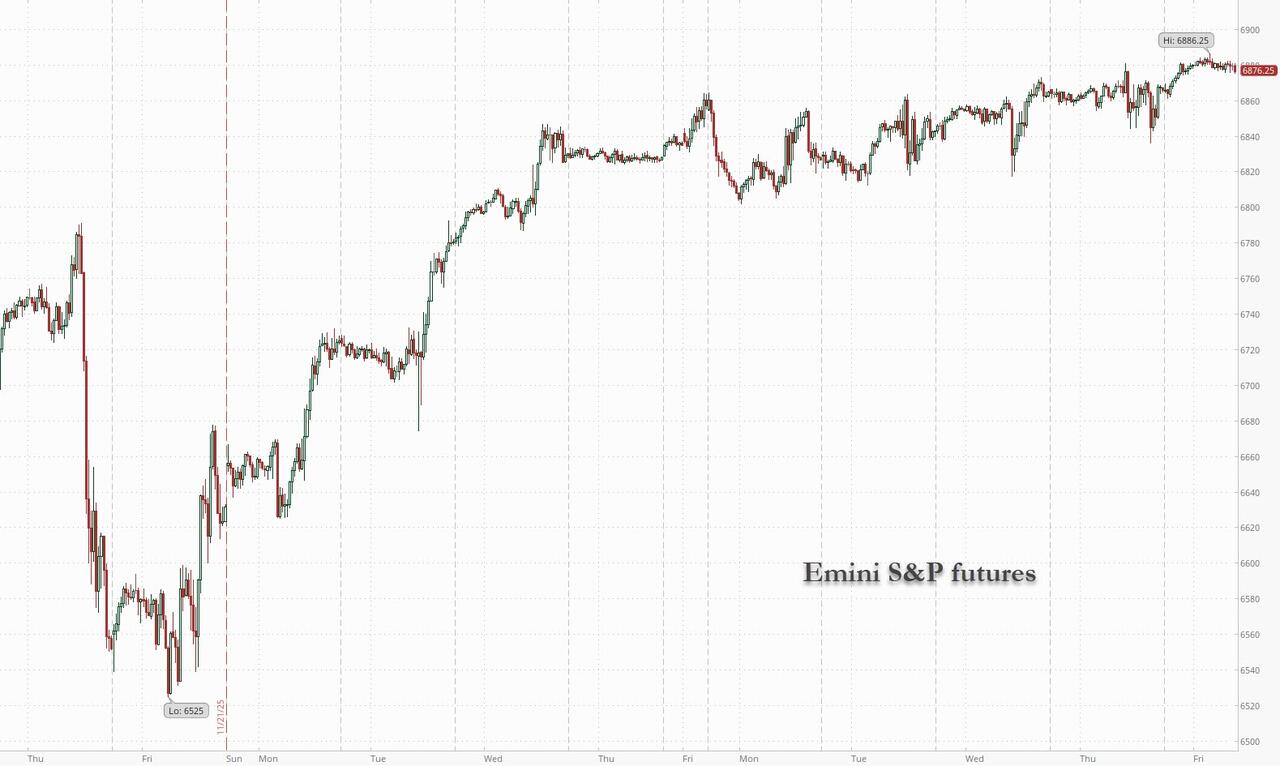
In premarket trading, Mag 7 stocks are mostly higher (Meta +0.5%, Nvidia +0.4%, Alphabet +0.4%, Microsoft +0.3%, Amazon +0.4%, Tesla unchanged, Apple unchanged).
- Cooper Cos (COO) rises 13% after the health-care company’s guidance for 2026 adjusted earnings per share topped the average analyst estimate. The company also launched a strategic review.
- Hewlett Packard Enterprise Co. (HPE) drops 8% after the company gave an outlook for sales in the current quarter that fell short of high expectations for the AI server business.
- ITT Inc. (ITT) slips 2% after agreeing to acquire industrial equipment manufacturer SPX Flow Inc. from Lone Star Funds in a $4.775 billion cash and stock deal.
- Netflix (NFLX) slips 1.3% after agreeing to buy Warner Bros. Discovery Inc. in a historic combination, joining the world’s dominant paid streaming service with one of Hollywood’s oldest and most revered studios. Shares of Warner Bros. (WBD) are up 1.5%.
- Parsons (PSN) tumbles 15% after the US Federal Aviation Administration and the Department of Transportation awarded the Brand New Air Traffic Control System contract to Peraton.
- Rubrik (RBRK) rallies 18% after the cybersecurity firm raised its revenue forecast for 2026 while narrowing its view for adjusted losses per share.
- SentinelOne (S) falls 8% after the software firm’s fourth-quarter outlook missed expectations. It also initiated a search for a new chief financial officer.
- SoFi Technologies (SOFI) is down 7% after the online lender’s offering of 54.5m shares.
- Ulta Beauty Inc. (ULTA) rises 6% after raising its full-year outlook and reporting better-than-expected results in the third quarter, a sign that consumers are overcoming any reluctance to spend and shelling out for cosmetics and hair supplies.
- Victoria’s Secret (VSCO) climbs 12% after the company reported better-than-expected sales and lifted its outlook for the year, a sign that its turnaround strategy is working.
In corporate news, Perplexity AI says billionaire Cristiano Ronaldo has become an investor. Cloudflare is investigating issues with dashboard and related APIs.
Futures on the US benchmark rose on Friday after the index closed within 0.5% of a fresh record. The gauge is set for its first back-to-back weekly gain since October, signaling that traders are shaking off recent jitters over valuations and the lack of visibility on the economy during the government shutdown. Yet in a notable change from recent trends, tech hasn’t led the recent rally, and with sector participation broadening, the market’s advance may continue – even as the economic data underpinning the move exhibits a “split screen,” with non-jobs data surprising to the upside.
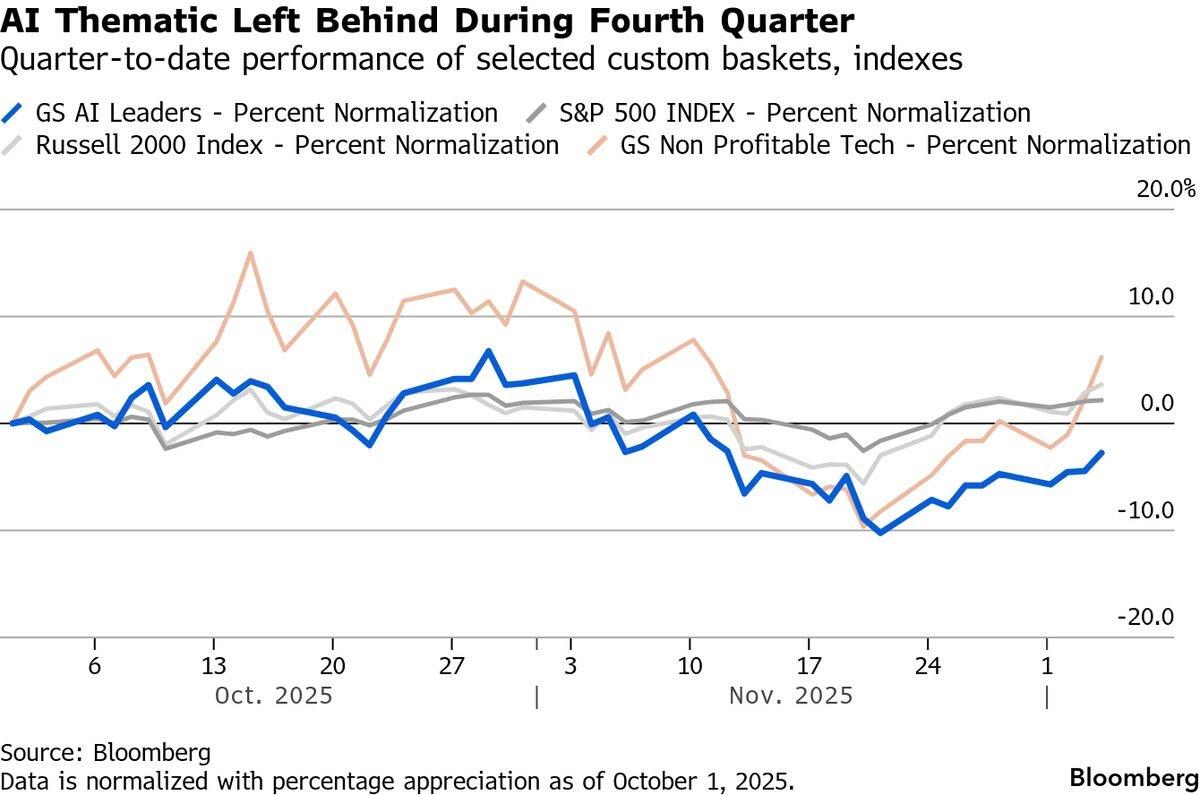
With a rate cut next week largely priced in and bets pointing to further easing into 2026, investors are gearing up for a year-end rally in what is typically a supportive month for stocks. Growing confidence that the US economy remains resilient, despite softer employment, is also prompting rotations into stocks that tend to benefit from domestic strength.
“Santa will bring presents for everybody, toys for the kids and gains for investors,” said Stephan Kemper, chief investment strategist at BNP Paribas Wealth Management. “Apart from the regular seasonality there are plenty of other reasons supporting the market: rate cuts and ongoing M&A activity are some of them.”
Bloomberg Economics Chief Economist Tom Orlik expects a dovish Fed to cut rates another 100 basis points in 2026, adding support to the AI investment upswing. A bonfire of regulations will also stoke growth and together with gradual price pass-through from tariffs, these factors will keep inflation above target. Kevin Hassett said the Fed should cut rates next week and said he wanted to “get to a much lower rate” over the long run.
Later on Friday, markets will a get a dated reading on the Federal Reserve’s preferred inflation gauge. The figures will include the personal consumption expenditures price index and a core measure that excludes food and energy. Economist project a third-straight 0.2% increase in the core index for September. That would keep the year-over-year figure hovering a little below 3%, a sign that inflationary pressures are stable, yet sticky.
While the data is unlikely to derail a December rate cut, it “may change the tone from Chairman Powell,” said Wolf von Rotberg, equity strategist at Bank J Safra Sarasin. “If he emphasizes inflation risks in his press conference, markets may reprice the rate trajectory for 2026, thereby increasing the pressure on the long end of the curve and on equity market valuations.”
BofA strategist Michael Hartnett notes bond vigilantes have effectively become the new regulators of AI capex.
Nvidia partner Hon Hai reported a 26% sales jump in November, suggesting robust demand for AI servers amid a broader development boom. Moore Threads Technology, a leading Chinese AI chipmaker, jumped 425% in its Shanghai trading debut after raising 8 billion yuan ($1.13 billion).
In Europe, the Stoxx 600 is up 0.3%, rising for a fourth day and hitting a three-week high in the process. Financial services, autos and construction are leading gains while energy is a drag after downgrades in the sector from JPMorgan. Here are some of the biggest movers on Friday:
- UCB shares jump as much as 8.2% after the Belgian biopharma company lifted its guidance for the full year.
- Renk rises as much as 5.7% as Bank of America double upgrades the shares to buy, citing an attractive valuation.
- Ocado shares rise as much as 16% after the online grocer said it will receive a $350 million cash payment from Kroger to compensate for the US grocer’s decision to close three automated warehouses and to not go ahead with another.
- Trustpilot shares jump as much as 11% after Morgan Stanley raised the stock to overweight a day after the stock was targeted by short seller Grizzly Research, saying the company’s user reviews hold unique value against increasing content from generative AI.
- Swiss Re drops as much as 7.6% after announcing targets for 2026, with analysts seeing both the buyback and group net income guidance as “underwhelming.”
- Big Yellow Group shares drop as much as 6% after talks about a possible takeover offer from Blackstone collapsed.
- Baltic Classifieds shares drop as much as 5.1% after analysts cut their price target on the online platform.
- OVH Groupe shares drop as much as 15% after an investor offloaded shares in the IT services company at a discount to yesterday’s close.
Earlier in the session, Asian stocks reversed earlier losses as investors await key US economic data later Friday. Japan markets closed lower amid profit-taking following strong gains in the previous session. The MSCI Asia Pacific Index rose as much as 0.3%, boosted by TSMC, Samsung Electronics and SoftBank Group. The gauge is on track for a second straight week of gains. Shares advanced in India after the central bank cut interest rate and signaled an openness for further easing. Benchmarks in Japan fell more than 1%. Chinese chipmakers are coming into focus, with Moore Threads surging 425% in its Shanghai trading debut after raising 8 billion yuan ($1.13 billion), the second-largest onshore IPO of the year. Elsewhere in the region, Philippine inflation slowed in November, supporting another cut in benchmark interest rates as a graft scandal shattered consumer and investor confidence. Markets were closed in Thailand.
In FX, the Bloomberg Dollar Spot Index falls 0.1%. The yen is lower, having erased an earlier gain of 0.5%, seen after Bloomberg reported reported Bank of Japan officials are ready to raise interest rates at a policy meeting later this month. The Aussie is leading gains against the greenback, up 0.4%.
In rates, treasuries drop across the curve, following similar price action across European bonds in the wake of strong October German factory orders and French industrial production data. Treasury long-end yields are about 1.5bp higher on the day, steepening curve spreads by less than a basis point. US 10-year yield is near 4.11%, about 1bp cheaper on the day, broadly in line with bunds and gilts. Focal points of US session include PCE inflation gauge derived from September personal income and spending data, in release delayed by last month’s US government shutdown. IG dollar bond issuance slate is blank so far after just one offering was priced Thursday, however $26 billion was priced over the first three days of this week by 23 issuers — one of the strongest starts to a December. Treasury auctions resume Monday with $58 billion 3-year new issue, followed by $39 billion 10-year and $22 billion 30-year reopenings Tuesday and Thursday, skipping over Wednesday’s Fed policy announcement.
In commodities, oil prices are steady, with WTI crude futures near $59.50 a barrel. Spot gold rises $18. Bitcoin falls 0.8%.
Looking to the day ahead now, US data releases include PCE inflation for September, and the University of Michigan’s preliminary consumer sentiment index for December, all at 10am ET. We also get German factory orders and French industrial production for October, and Canada’s employment report for November. Finally from central banks, we’ll hear from the ECB’s Villeroy and Lane.
Market Snapshot
- S&P 500 mini +0.2%
- Nasdaq 100 mini +0.4%
- Russell 2000 mini little changed
- Stoxx Europe 600 +0.3%
- DAX +0.5%
- CAC 40 +0.3%
- 10-year Treasury yield +1 basis point at 4.11%
- VIX little changed at 15.75
- Bloomberg Dollar Index little changed at 1213.14
- euro little changed at $1.1652
- WTI crude -0.2% at $59.53/barrel
Top Overnight News
- A divided Supreme Court cleared Texas to use its new Republican-drawn congressional map for the 2026 midterm election, overruling a lower court order and bolstering GOP hopes of picking up as many as five new House seats in the state. BBG
- The US is prioritizing a stable trade dynamic with China despite a push by some allies for coordinated action against Beijing, USTR Jamieson Greer said. BBG
- President Trump has issued a new national-security strategy that sharply criticizes the “unrealistic expectations” of European leaders for settling the war in Ukraine and calls for an end to NATO expansion. WSJ
- A bipartisan Senate bill seeks to block Nvidia from shipping advanced AI chips to China. The legislation proposes a 30-month halt on export licenses to US adversaries. BBG
- US Homeland Security Secretary Noem said the Trump administration is expanding the countries on the travel ban to over 30: Fox News.
- BOJ officials are ready to raise the policy rate at this month’s meeting — taking it to its highest level since 1995 — provided there’s no major shocks in the meantime, people familiar said. The yen strengthened. BBG
- China’s exports likely returned to growth in November after an unexpected dip in October, as manufacturers rushed to move inventory to take advantage of a fresh tariff truce with the U.S. RTRS
- The Reserve Bank of India (RBI) cut its key repo rate by 25 basis points on Friday and left the door open for further easing as it took steps to boost banking-sector liquidity by up to $16 billion to support a “goldilocks” economy. RTRS
- The Dutch pensions overhaul looks set to push European nations to sell fewer long-dated bonds. Changes may be announced in coming weeks as governments unveil their 2026 issuance plans. BBG
- Netflix to Acquire Warner Bros. Following the Separation of Discovery Global for a Total Enterprise Value of $82.7 Billion (Equity Value of $72.0 Billion).
- Morgan Stanley forecasts a 25bps Fed cut in December (prev. forecast unchanged). Cuts in January and April 2026, a terminal of 3.00-3.25%.
- Federal Reserve Board announced a new pricing for payment services provided to banks and credit unions, effective 1st January 2026, while Fed’s Bowman emphasised the importance of checks as a payment method and said the Fed cannot endorse the RFI regarding the future of check services.
Company News
- Dell (DELL) reportedly plans a price hike of 15-20% from mid-December and Lenovo (992 HK) from January 2026, according to TrendForce, citing sources.
- Cloudflare (NET) announced service issues have been resolved, according to the status page. Following issues that lasted for around 30 minutes.
- Baidu (9888 HK/ BIDU) reportedly weighs a Hong Kong IPO for its AI chip unit Kunlunxin, to rival NVIDIA (NVDA), according to Bloomberg, citing sources; unit could be valued in excess of USD 3bln
- Apple (AAPL), Google (GOOGL) and Samsung (005930 KS) have asked the Indian Government not to accept telecom proposal over privacy concerns and regulatory overreach, according to Reuters, citing sources.
Trade/Tariffs
- US Trade Representative Greer said trade with China needs to be balanced and probably needs to be smaller, while he added they want to have stability in the relationship with China, and that the US trade deficit in goods with China is down about 25%, which is the right direction.
- USTR Greer also noted there are problems with the US-Mexico-Canada Trade Agreement and that they already have adjustments to some of these challenges, as well as stated that the US wants to make sure that Canada and Mexico aren’t used as an export hub for China, Vietnam or Indonesia, among others.
- China’s Foreign Ministry Spokesperson said that China has repeatedly stated its position on the issue of US chip exports to China, via Global Times.
- Chinese drone maker DJI urged the Trump administration to complete audits or extend the deadline for the security review, according to a letter to Congress.
- China and France issued a joint statement on agricultural cooperation and signed an MOU on registration of infant milk powder formulas, according to Xinhua.
- Japanese Trade Minister Akazawa said they are monitoring US tariff lawsuit developments and he confirmed that Japanese companies have filed lawsuits in the US seeking refunds of additional tariffs.
- Russian President Putin said Russia is ready to provide uninterrupted fuel supplies to India. Russia and India express interest in deepening cooperation in the exploration, processing and refining technologies for critical minerals and rare earths.
A more detailed look at global markets courtesy of Newsquawk
APAC stocks were mixed with the regional bourses mostly rangebound, amid light fresh catalysts ahead of US PCE data. ASX 200 edged higher but with gains capped as strength in the mining and materials sectors was partially offset by weakness in consumer discretionary, energy and telecoms, while price action was also contained by the absence of any pertinent data. Nikkei 225 underperformed amid the increased BoJ December rate hike bets and after dismal Household Spending data, which showed a surprise contraction. Hang Seng and Shanghai Comp saw two-way price action with early headwinds following another consecutive liquidity drain by the PBoC and reports that US senators seek to block NVIDIA (NVDA) sales of advanced chips to China for 30 months, which would target NVIDIA’s H200 and Blackwell chips.
Top Asian News
- BoJ is said to likely hike this month and leave the door open to more, while the central bank is to check the data and market moves up to the final decision, according to Bloomberg.
- Japan’s Chief Cabinet Secretary Kihara said they will take appropriate steps on excessive and disorderly moves in the FX market if necessary. Expects the BoJ to conduct monetary policy in an appropriate manner.
- Japan’s Economy Minister Kiuchi said the inflationary impact of the stimulus package will likely be limited. The government will keep an eye on market moves with a high sense of urgency. Important for stocks, FX and bond markets to move in line with fundamentals. Specific monetary policy means is up to the BoJ, and the Government will not comment. Hopes the BoJ guides appropriate monetary policy to stably achieve the 2% inflation target.
- Hong Kong’s Court endorsed a proposal allowing Country Garden Holdings (2007 HK) to extend repayment of USD 17.7bln in offshore debt.
- China’s Commerce Minister said China will ramp up efforts to expand imports, via Xinhua. The Commerce Minister will also expand service consumption, increase implementation of inclusive policies that directly reach consumers, expand auto consumption and promote renewal consumption of home appliances and eliminate restrictive measures.
- RBI cut the Repurchase Rate by 25bps to 5.25%, as expected, with the decision unanimous and it maintained a neutral stance although MPC member Ram Singh wanted the stance to be changed to accommodative from neutral, while the Marginal Lending Facility Rate was lowered by 25bps to 5.50% and the Standing Deposit Facility Rate was reduced by 25bps to 5.00%.
European bourses trade modestly firmer, with little macro news to steer price action. Sentiment follows on from a mixed and quiet APAC session. European sectors mostly reside in the green, led by Financial Services, Basic Resources, Construction and Chemicals. Higher metal prices—particularly copper—help underpin sentiment in Basic Resources, while broader macro flow remains light.
Top European News
- Regulators at the BoE announce plans to support the growth of the mutuals sector. Measures include: A PRA and FCA review of mutual credit union regulations, considering more risk-based requirements for larger, complex firms and proportionality for smaller credit unions.
FX
- DXY has unwound most of its earlier losses. Initially hit by a firmer JPY on the back of more hawkish BoJ sources, coupled with verbal intervention (see below for details). The JPY reaction took DXY down to a 98.805 intraday trough (vs 99.075 APAC high), although since newsflow quietened and despite a stable risk environment, the JPY waned and DXY now attempts to reclaim 99.00 to the upside at the time of writing. The index, however, remains within yesterday’s 98.765-99.08 ahead of the September US PCE, which was delayed by the US government shutdown.
- JPY has surrendered most of its earlier gains after an initial surge triggered by Bloomberg sources suggesting the BoJ is likely to hike this month while keeping the door open to further tightening. The reports briefly pushed USD/JPY below 154.50. This was followed by verbal intervention from Chief Cabinet Secretary Kihara, who reiterated that authorities would take appropriate steps against excessive or disorderly FX moves if needed. USD/JPY subsequently touched a 154.34 low before rebounding and stalling just shy of 155.00, despite limited follow-through newsflow and a stable risk backdrop.
- AUD is the top gainer, lifted by a surge in copper prices and earlier USD softness, though both AUD and copper later eased off highs as the dollar attempted a recovery. The AUD/NZD cross extended its rebound, pushing back above 1.1450 and trading toward the upper end of a 1.1461–1.1484 range.
- Other G10s vary and continue to take their cue from broader USD moves, though EUR saw a couple of brief upticks after slight upward revisions to Eurozone Q3 GDP and Employment. EUR/USD now trades mid-range within 1.1640–1.1672.
Fixed Income
- USTs remain flat in a thin 112-22+ to 112-27+ band. Traders look ahead to US PCE at 15:00 GMT / 10:00 ET, a release that will feed into the debate around a potential December Fed cut. Odds of such a move have climbed above 85% in recent sessions, up from the low-60% range a month ago, aided by comments from Fed’s Williams, who said policymakers have room for another adjustment in the “near term.”
- JGBs were hit overnight on further hawkish BoJ source reports, with market-implied odds of a December hike nearing 80%. The 10yr Japanese future fell over 20 ticks to a 133.91 trough before stabilising. Since then, bonds have held in tighter ranges as attention turns to US PCE.
- Bunds were marginally softer in a 128.29–128.52 range as markets awaited the 11:30 GMT Bundestag pension vote, which is now widely expected to pass after Die Linke signalled it will abstain—lowering the effective majority threshold and reducing the relevance of dissent within the CDU/CSU’s Young Group. The vote remains a key barometer of Chancellor Merz’s coalition stability.
Commodities
- WTI and Brent continue to trade in tight ranges with European trade underway, and following an overnight session devoid of crude-specific catalysts. Early-door comments from a Kremlin aide noted that Russia and the US are progressing in Ukraine-related talks and that Moscow is ready for further engagement, though this echoed recent rhetoric and left crude benchmarks largely unreactive pending fresh developments.
- Spot Gold found support near USD 4,200/oz in early APAC trade and steadily climbed to a USD 4,231/oz peak as Europe opened. The overnight bid was helped by weakness in the Dollar, with JPY strength driven by reports of a potential December BoJ rate hike. Since the European open, the Dollar has begun to recover, but XAU continues to hold near session highs.
- 3M LME Copper extended its rally to fresh record highs after Thursday’s consolidation in a tight USD ~180/t band. The contract opened just below USD 11.45k/t before buyers immediately stepped in, driving prices to a new all-time high at USD 11.7k/t as Europe opened.
- Discounts for Russian ESPO blend crude oil delivered to China have widened to USD 5-6/bbl vs ICE Brent due to falling demand, according to Reuters
Geopolitics: Middle East
- Hamas Leader to Al-Arabiya: “The Movement Does Not Want to Continue to Rule Gaza … We Agreed to Form a Technocratic Committee to Govern Gaza”.
- US President Trump plans to announce before Christmas the transition to phase 2 of the agreement to end the war in Gaza and the establishment of the new governing body that will manage the strip, according to Axios’s Ravid.
Geopolitics: Ukraine
- Russia’s Kremlin said Moscow is waiting for the US reaction after Putin-Witkoff meeting, while it added that there is no plan for a Putin-Trump call for now.
- Russian Kremlin aide said Russia and the US are moving forward in talks relating to Ukraine. Ready for further work with the current US negotiating team.
- The US has urged the EU to oppose the plan to use frozen Russian central bank assets to back a massive loan to Ukraine, via Bloomberg Sources.
- UK ministers are prepared to unlock GBP 8bln of frozen Russian assets to aid Ukraine, according to The Times.
Geopolitics: Other
- US military said it conducted a lethal kinetic strike on a vessel in international waters in the eastern Pacific on Thursday.
US Event Calendar
- 10:00 am: Sep Personal Income, est. 0.3%, prior 0.4%
- 10:00 am: Sep Personal Spending, est. 0.3%, prior 0.6%
- 10:00 am: Sep Real Personal Spending, est. 0.1%, prior 0.4%
- 10:00 am: Sep PCE Price Index MoM, est. 0.3%, prior 0.3%
- 10:00 am: Sep PCE Price Index YoY, est. 2.8%, prior 2.7%
- 10:00 am: Sep Core PCE Price Index MoM, est. 0.2%, prior 0.2%
- 10:00 am: Sep Core PCE Price Index YoY, est. 2.8%, prior 2.9%
- 10:00 am: Dec P U. of Mich. Sentiment, est. 52, prior 51
- 3:00 pm: Oct Consumer Credit, est. 10.48b, prior 13.09b
DB’s Jim Reid concludes the overnight wrap
Markets saw a modest risk-on move yesterday, as a decent batch of US data saw investors price in fewer rate cuts next year. That optimism meant the S&P 500 (+0.11%) advanced for a third consecutive session, closing less than half a percent beneath its record high, while the VIX index of volatility (-0.30pts) fell to a two-month low of 15.78. Moreover, futures are pointing to a further advance this morning, with those on the S&P 500 up another +0.20% overnight, which would take the index even closer to its October record. However, more hawkish expectations meant bonds struggled, and the 10yr Treasury yield (+3.5bps) hit a two-week high of 4.10%. Meanwhile, those bond losses echoed around the world, not least after multiple reports suggested the Bank of Japan was on the verge of another rate hike in a couple of weeks’ time. So yesterday saw 10yr JGB yields close at a post-2007 high of 1.93%, and they’re up another +1.1bps this morning to 1.94%.
That US data helped to drive the hawkish repricing, because it suggested the labour market was in a more robust position than previously thought. For instance, the weekly initial jobless claims fell to just 191k in the week ending November 29 (vs. 220k expected). Clearly it’s worth noting that we often see distortions in these numbers around the Thanksgiving holiday, so we shouldn’t overegg the improvement, but it was still a promising sign. Indeed, the 4-week moving average fell to its lowest since January, at just 214.75k. And in other news, the report on announced layoffs from Challenger, Gray & Christmas found there were fewer layoffs than expected, with a rise of +23.5% year-on-year in November (vs. +48.0% expected). So collectively, those releases suggested the US labour market was in a slightly better position than previously thought, despite the broader signs of softening we’ve seen recently. In addition, those releases matter more than usual for the Fed next week, because the data backlog from the shutdown means we won’t get the November jobs report as originally scheduled today, and instead have to wait until December 16.
With that in mind, investors adjusted their expectations in a hawkish direction for the coming months. For instance, even though a December cut is priced above 90%, there was growing scepticism that would be followed up by another, with the total amount of cuts priced by March 2026 down -1.8bps on the day to 39bps. And looking further out, the amount of rate cuts priced by the December 2026 meeting came down -5.2bps on the day to 86bps. So that shift in expectations meant Treasuries lost ground across the curve, with the 2yr yield (+3.8bps) up to 3.52%, whilst the 10yr yield (+3.5bps) rose to 4.10%.
In the meantime, the newsflow out of Japan also goes some way to explaining the latest bond selloff, as markets have become increasingly confident the BoJ will hike again this month. First, there was a Reuters report shortly before we went to press yesterday, which said the BoJ would likely hike rates this month, and the government would tolerate the move. Then a few hours later, Bloomberg similarly reported that key members of the government wouldn’t try to stop the BoJ from hiking in December. So that meant the Japanese yen strengthened against other major currencies yesterday, and this morning it’s strengthened back above 155 per dollar to 154.89.
That newsflow has continued overnight, with Bloomberg reporting this morning that BoJ officials are ready to hike rates at the next meeting, “provided there’s no major shock to the economy or financial markets in the meantime”. Moreover, the article said that the BoJ would indicate that further rate hikes would follow if its outlook for the economy were realised. So if they do proceed, that would take the policy rate up to 0.75%, the highest since 1995. That’s led to a hawkish reaction among Japanese assets, with the yen strengthening +0.18% this morning against the US Dollar, whilst the Nikkei is down -1.29%. And the yield curve has steepened as well, with the 5yr yield (+2.2bps) up to a post-2008 high of 1.42% this morning.
Elsewhere in Asia, we’ve seen a more mixed performance this morning. So the KOSPI (+1.23%) has posted a strong advance, but the CSI 300 (+0.11%) and the Shanghai Comp (+0.05%) have only posted a modest gain, whilst the Hang Seng (-0.06%) is slightly lower. Meanwhile in India, the central bank cut rates by 25bps in line with expectations, taking the repurchase rate down to 5.25%.
All that follows on from a pretty subdued session for US equities yesterday, with the S&P 500 (+0.11%) posting a third consecutive advance. That left the index just -0.49% beneath its record closing high from late-October, whilst other indices like the NASDAQ (+0.22%) and the Magnificent 7 (+0.53%) also moved higher. In terms of specifics, Meta (+3.43%) rose after a Bloomberg report said that executives were considering budget cuts up to as much as 30% for the metaverse group. Meanwhile, Dollar General (+14.01%) was the top performer in the S&P after raising their full-year outlook. However, some of the more defensive sectors in the S&P 500 struggled, with consumer staples (-0.73%) and healthcare (-0.73%) both losing ground. Futures on the S&P 500 are pointing to further gains this morning, with a +0.20% advance.
Earlier in Europe, equities had put in an even stronger performance, with the STOXX 600 (+0.45%) closing less than 1% beneath its own record high. That was echoed across the continent, where the DAX (+0.79%) and the CAC 40 (+0.43%) also rose, whilst Spain’s IBEX 35 (+0.97%) hit an all-time high. As in the US however, sovereign bonds struggled, with yields on 10yr bunds (+2.4bps), OATs (+3.2bps) and BTPs (+2.2bps) all moving higher. Finally in the commodity space, Brent crude rose +1.02% to $63.31/bbl as investors weighed ongoing risks to Russian oil supply.
To the day ahead now, and US data releases include PCE inflation for September, and the University of Michigan’s preliminary consumer sentiment index for December. Otherwise, we’ll get German factory orders and French industrial production for October, and Canada’s employment report for November. Finally from central banks, we’ll hear from the ECB’s Villeroy and Lane.
1b European opening report
1c) Asian opening report
European equities to open with modest gains; US senators propose blocking NVDA’s Blackwell chips to China – Newsquawk EU Market Open

Friday, Dec 05, 2025 – 12:54 AM
- APAC stocks were mixed, with the regional bourses mostly rangebound, amid light fresh catalysts ahead of US PCE data.
- US senators seek to block NVIDIA (NVDA) sales of advanced chips to China for 30 months and would target NVIDIA’s H200 and Blackwell chips, according to FT.
- Russia’s Kremlin said Moscow is waiting for the US reaction after the Putin-Witkoff meeting, while it added that there is no plan for a Putin-Trump call for now.
- BoJ is said to likely hike this month and leave the door open to more, while the central bank is to check the data and market moves up to the final decision, according to Bloomberg.
- European equity futures indicate a positive cash market open with Euro Stoxx 50 futures up 0.2% after the cash market closed with gains of 0.4% on Thursday.
- Looking ahead, highlights include German Industrial Orders (Oct), French Trade Balance (Oct), Italian Retail Sales (Oct), EZ Employment Final (Q3), EZ GDP Revised (Q3), Canadian Jobs Report (Nov), US PCE (Sep), US University of Michigan Prelim (Dec), and Comments from ECB’s Lane.
SNAPSHOT
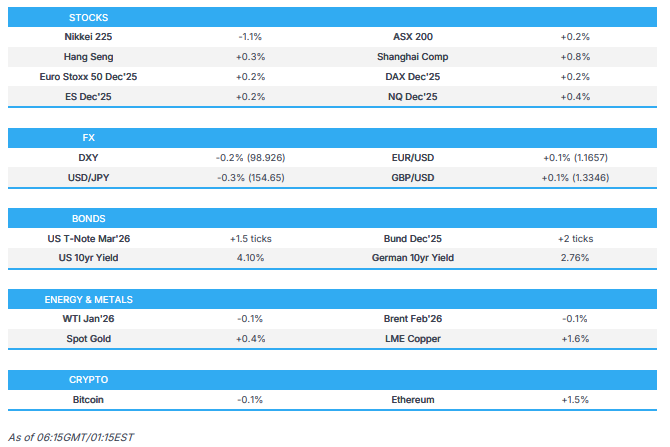
Newsquawk in 3 steps:
1. Subscribe to the free premarket movers reports
2. Listen to this report in the market open podcast (available on Apple and Spotify)
3. Trial Newsquawk’s premium real-time audio news squawk box for 7 days
US TRADE
EQUITIES
- US stocks finished mixed, with the Russell posting notable gains while the Nasdaq underperformed, and the S&P 500 was roughly flat. Futures were supported briefly in pre-market trade on reports that Meta (META) is cutting 30% of its budget on Metaverse spending, which gave a boost to Meta shares and US indices as the tech giant puts more effort into AI. However, the move was only short-lived for the indices, but Meta still closed with gains of c. 3.5%. Focus then turned to US data, which showed a slowdown both in challenger layoffs and in the total non-farm payroll losses M/M reported by RevelioLabs. There was also a minor M/M improvement on the Chicago Fed unemployment rate estimate for November. Meanwhile, both initial and continued jobless claims came in below all analyst forecasts, helping ease some recent labour market concerns.
- SPX +0.11% at 6,857, NDX -0.10% at 25,582, DJI -0.07% at 47,851, RUT +0.76% at 2,531.
- Click here for a detailed summary.
TARIFFS/TRADE
- US President Trump is to talk trade with Mexico and Canada in Washington DC on Friday, according to CBS. This follows reports that Canadian PM Carney is to have brief meetings with US President Trump and Mexican President Sheinbaum at the World Cup draw on Friday, while Canada’s Trade Minister LeBlanc had earlier commented that Carney doesn’t plan to talk trade with Trump at the FIFA event.
- US Trade Representative Greer said trade with China needs to be balanced and probably needs to be smaller, while he added they want to have stability in the relationship with China, and that the US trade deficit in goods with China is down about 25%, which is the right direction. Greer also noted there are problems with the US-Mexico-Canada Trade Agreement and that they already have adjustments to some of these challenges, as well as stated that the US wants to make sure that Canada and Mexico aren’t used as an export hub for China, Vietnam or Indonesia, among others.
- US senators seek to block NVIDIA (NVDA) sales of advanced chips to China for 30 months and would target NVIDIA’s H200 and Blackwell chips, according to FT. It was separately reported that a bipartisan group of US senators, including prominent China hawk Cotton, unveiled a bill that would block the Trump administration from loosening rules that restrict Beijing’s access to artificial intelligence chips for 2.5 years, according to Reuters.
- US trade delegation is likely to visit Delhi, India for talks next week, according to Reuters sources.
- Chinese drone maker DJI urged the Trump administration to complete audits or extend the deadline for the security review, according to a letter to Congress.
- China and France issued a joint statement on agricultural cooperation and signed an MOU on registration of infant milk powder formulas, according to Xinhua.
- Japanese Trade Minister Akazawa said they are monitoring US tariff lawsuit developments and he confirmed that Japanese companies have filed lawsuits in the US seeking refunds of additional tariffs.
NOTABLE HEADLINES
- Federal Reserve Board announced a new pricing for payment services provided to banks and credit unions, effective 1st January 2026, while Fed’s Bowman emphasised the importance of checks as a payment method and said the Fed cannot endorse the RFI regarding the future of check services.
- US NEC Director Hassett said real wage growth is now higher than inflation, and it is likely that the Fed will cut at the next meeting.
- US Supreme Court revived the redrawn pro-Republican Texas voting map intended to help Republicans keep control of Congress.
- US Homeland Security Secretary Noem said the Trump administration is expanding the countries on the travel ban to over 30, according to Fox News.
APAC TRADE
EQUITIES
- APAC stocks were mixed with the regional bourses mostly rangebound, amid light fresh catalysts ahead of US PCE data.
- ASX 200 edged higher but with gains capped as strength in the mining and materials sectors was partially offset by weakness in consumer discretionary, energy and telecoms, while price action was also contained by the absence of any pertinent data.
- Nikkei 225 underperformed amid the increased BoJ December rate hike bets and after dismal Household Spending data, which showed a surprise contraction.
- Hang Seng and Shanghai Comp saw two-way price action with early headwinds following another consecutive liquidity drain by the PBoC and reports that US senators seek to block NVIDIA (NVDA) sales of advanced chips to China for 30 months, which would target NVIDIA’s H200 and Blackwell chips.
- US equity futures remained afloat after the prior day’s gains, but with price action contained heading into the Fed’s preferred inflation measure.
- European equity futures indicate a positive cash market open with Euro Stoxx 50 futures up 0.2% after the cash market closed with gains of 0.4% on Thursday.
FX
- DXY slightly eased back following the gains during the previous session, where there was a somewhat mixed performance among the dollar’s major counterparts, and participants digested some encouraging labour market data, including a larger-than-expected drop in the weekly claims report in which both Initial and Continued Claims printed beneath analysts’ forecast range, while the attention stateside now turns to the Fed’s preferred PCE inflation measure.
- EUR/USD nursed some losses after having previously conceded ground to the firmer buck.
- GBP/USD struggled for direction amid a lack of pertinent catalysts, and retained most of its mid-week spoils.
- USD/JPY was choppy and initially returned to the 155.00 level on Gotobi day after rebounding from the prior day’s lows, but later retreated amid increased BoJ December rate hike bets and a further source report pointing to the BoJ resuming its policy normalisation this month.
- Antipodeans mildly gained in range-bound trade amid the mixed risk appetite and a relatively quiet overnight calendar.
- PBoC set USD/CNY mid-point at 7.0749 vs exp. 7.0745 (Prev. 7.0733)
FIXED INCOME
- 10yr UST futures marginally rebounded off this week’s trough after declining yesterday following the labour metrics.
- Bund futures were contained after recently retreating alongside the pressure seen in global peers.
- 10yr JGB futures remain subdued after suffering from the increased bets for a BoJ December rate hike, with the latest source report noting that the BoJ is likely to hike this month and leave the door open to more.
COMMODITIES
- Crude futures eased back following the prior day’s mild gains, in which they continued to claw back some of the losses from earlier in the week that had been triggered by the US-Russia talks in Moscow, while demand was constrained amid light catalysts and after WTI hit resistance around the USD 60/bbl level.
- Spot gold briefly dipped beneath the USD 4,200/oz level in choppy trade ahead of the Fed’s preferred inflation gauge.
- Copper futures gradually edged higher with 3-month LME copper prices hitting fresh record highs.
CRYPTO
- Bitcoin was indecisive and returned to flat territory around the USD 92,000 level.
NOTABLE ASIA-PAC HEADLINES
- BoJ is said to likely hike this month and leave the door open to more, while the central bank is to check the data and market moves up to the final decision, according to Bloomberg.
- RBI cut the Repurchase Rate by 25bps to 5.25%, as expected, with the decision unanimous and it maintained a neutral stance although MPC member Ram Singh wanted the stance to be changed to accommodative from neutral, while the Marginal Lending Facility Rate was lowered by 25bps to 5.50% and the Standing Deposit Facility Rate was reduced by 25bps to 5.00%. RBI Governor Malhotra said since the October policy meeting, the economy has witnessed rapid disinflation, and it is a rare goldilocks period for the Indian economy, but noted that the geopolitical and trade environment weigh on the outlook. Malhotra also announced they will conduct OMO purchases of INR 1tln and a USD 5bln dollar swap, with the primary purpose of open market operations is to provide sufficient liquidity and not influence yields. Furthermore, he said underlying inflation pressures are even lower, and growth is expected to somewhat soften going ahead, but stated that policy space exists to support growth momentum, while the central bank raised its FY26 real GDP growth forecast to 7.3% (prev. 6.8%) and cut its FY26 CPI inflation forecast to 2.0% (prev. 2.6%).
DATA RECAP
- Japanese All Household Spending MM (Oct) -3.5% vs. Exp. 0.7% (Prev. -0.7%)
- Japanese All Household Spending YY (Oct) -3.0% vs. Exp. 1.0% (Prev. 1.8%)
GEOPOLITICS
MIDDLE EAST
- US President Trump plans to announce before Christmas the transition to phase 2 of the agreement to end the war in Gaza and the establishment of the new governing body that will manage the strip, according to Axios’s Ravid.
RUSSIA/UKRAINE
- Russia’s Kremlin said Moscow is waiting for the US reaction after Putin-Witkoff meeting, while it added that there is no plan for a Putin-Trump call for now.
OTHER NEWS
- US military said it conducted a lethal kinetic strike on a vessel in international waters in the eastern Pacific on Thursday.
b. JAPAN
JAPAN 10 yr and 30 yr
QUESTION TO A I
which yield is more important to watch re Japan: the 10 year bond yield or the 30 yr bond yield//which is more closely watched?
Searching the web
27 results
Searching on X
4 results
The 10-year Japanese Government Bond (JGB) yield is both more important to watch and more closely tracked by investors, analysts, and the Bank of Japan (BOJ) compared to the 30-year yield. Here’s why, broken down step by step:1. Benchmark Status and BOJ Policy Anchor
- The 10-year JGB is the official benchmark for Japan’s sovereign debt market. For decades, the BOJ has used it as the primary reference point for its monetary policy tools, including the now-abandoned Yield Curve Control (YCC) framework (2016–2024), which explicitly targeted the 10-year yield around 0% to stimulate the economy and combat deflation.
- Even after ending YCC in March 2024, the BOJ continues to reference the 10-year yield in communications about policy normalization, inflation expectations, and interest rate paths. For instance, recent spikes in the 10-year yield to ~1.95% (its highest since 2007) have directly fueled speculation about BOJ rate hikes, as seen in December 2025 market reactions.
- The 30-year yield, while influential for long-term fiscal risks, is not a direct policy target and is more of a secondary indicator for ultra-long-term inflation or debt sustainability concerns.
2. Liquidity and Market Depth
- The 10-year JGB has the highest trading volume, liquidity, and daily price discovery among JGB maturities. It’s the go-to instrument for hedging, benchmarking corporate bonds, and gauging overall market sentiment. Data from sources like Bloomberg and the Japan Securities Dealers Association show it accounts for the largest share of JGB trading (~30–40% of daily volume).
- In contrast, the 30-year (and super-long bonds like the 40-year) has thinner liquidity, making it more prone to volatility from auction results or fiscal news. Recent record highs in the 30-year yield (e.g., 3.445% in December 2025) often stem from specific events like weak auctions or stimulus fears, but these don’t ripple as broadly as 10-year moves.
3. Investor and Global Focus
- Global investors, central banks, and media overwhelmingly prioritize the 10-year yield as Japan’s “risk-free rate” equivalent. It’s tracked in real-time by platforms like Trading Economics, Investing.com, and FRED (Federal Reserve Economic Data), with dedicated charts and historical series dating back to 1989. Economic models for yen carry trades, currency pairs (e.g., USD/JPY), and global bond correlations heavily weight the 10-year.
- The 30-year yield garners attention during episodes of fiscal stress (e.g., Japan’s debt-to-GDP ratio nearing 230%), such as its surge to multi-decade highs in 2025 amid stimulus debates. However, it’s described as “more commonly cited” only in niche contexts like super-long bond auctions, not as the core metric.
- On X (formerly Twitter), recent discussions (e.g., from strategists like Robin Brooks and Dan Greenhaus) highlight the 30-year for specific risks like yen intervention or carry trade unwinds, but the 10-year dominates broader conversations on BOJ policy and market stability.
4. Economic Implications
- 10-year yield: More directly impacts short- to medium-term borrowing costs for households, businesses, and the government. A rise here signals tighter financial conditions, higher mortgage rates, and potential yen appreciation—key for Japan’s export-driven economy.
- 30-year yield: Better reflects long-term fiscal sustainability and pension fund liabilities, but its moves are often amplified by supply/demand imbalances (e.g., reduced BOJ buying under quantitative tightening). It’s “important to watch” for tail risks but less predictive of near-term policy or growth.
Quick Comparison Table
| Aspect | 10-Year JGB Yield | 30-Year JGB Yield |
|---|---|---|
| Primary Role | Benchmark for BOJ policy and market pricing | Indicator of long-term fiscal/inflation risks |
| Liquidity/Volume | Highest (daily benchmark) | Lower (auction-driven volatility) |
| Recent High (Dec 2025) | ~1.95% (18-year peak) | ~3.445% (all-time record) |
| Key Drivers | BOJ rate bets, inflation expectations | Stimulus fears, super-long auction demand |
| Global Watchlist | Top priority (e.g., FRED, Bloomberg terminals) | Secondary (e.g., during fiscal crises) |
In summary, while the 30-year yield’s dramatic spikes (like in 2025) deserve monitoring for potential global spillovers (e.g., yen carry trade reversals), the 10-year is the one that truly moves the needle for Japan’s economy and markets. If you’re trading or investing, prioritize daily 10-year updates alongside BOJ announcements.
3. CHINA
Did China Trigger A “DeepSeek Moment” In Hypersonic Missiles
Thursday, Dec 04, 2025 – 09:20 PM
China has triggered a “DeepSeek moment” in hypersonic weapons, unveiling cement-coated Mach-7 missiles that can be mass-produced for roughly $100,000 per unit. The development is setting off alarm bells within the U.S. military, which has yet to field a hypersonic weapon and cannot come anywhere close to matching such production costs.
The South China Morning Post reports that Chinese private aerospace firm Lingkong Tianxing introduced the YKJ-1000, a Mach-7 hypersonic glide weapon built almost entirely from civilian-grade materials to keep costs ultra-low.
Slides circulating on X claim the YKJ-1000 costs just $100,000 to produce. The economics are absolutely staggering because a U.S. SM-6 interceptor costs about $4 million per unit, a THAAD interceptor can run upwards of $15 million, and a Patriot PAC-3 can cost as much as $4.2 million.
“Developed by a private company rather than state-owned firms, demonstrating the success of China’s Military–Civil Fusion strategy,” one slide reads.
The economics of war shift dramatically when missiles become cheap. Low-cost hypersonic systems will reduce Beijing’s marginal cost of engagement. Just imagine: a swarm of YKJ-1000s would cost the U.S. or regional Asian allies hundreds of millions to shoot down in the event of a conflict.
The missile showcases how China leverages its civilian manufacturing base of low-cost sensors, BeiDou chips, off-the-shelf camera modules, die-cast structures, and other locally produced technologies.
“If this missile were introduced on the international defence market, it would be formidably competitive,” military commentator Wei Dongxu told state broadcaster CCTV earlier this week.
Dongxu added: “Many nations have yet to develop their own hypersonic missiles, and this one—with its long range, high destructive power, and strong penetration capability—would likely become a hot commodity due to its dirt-cheap price.”
If the report is accurate, then the “DeepSeek moment” for hypersonic missiles has officially arrived.
REMIX
YOU MUST BE KIDDING!!
Court Eases Sentence For Afghan Who ‘Showed Restraint’ After ‘Only’ Stabbing Teacher Six Times
Friday, Dec 05, 2025 – 09:25 AM
A 29-year-old Afghan migrant has been sentenced to six years in prison for stabbing a 27-year-old teacher at random on the street, in the middle of the day, in the German city of Kirchheim unter Teck.

However, despite stabbing his victim four times in the back and twice in the thigh, the fact that the Afghan stopped stabbing her once she screamed was enough to convince the court in Stuttgart to drop the attempted murder charge.
On March 14 of this year, the teacher was seriously injured while walking home from work. The 29-year-old, who did not know his victim, walked up to her from behind in a residential area and grabbed her neck. With his other hand, he began stabbing her in the back with a 9.5-centimeter knife four times. He then stabbed her twice in her thigh.
The woman began screaming, at which time, her attacker let her go and ran away.
Based on the fact that he stopped stabbing her and ran away, the court claimed this was a “withdrawal from attempted murder,” according to reporting from Yvonne Kussman for Aktuelle Informiert. Therefore, since the man could have kept stabbing her but stopped, he was only convicted of the lesser crime of previous bodily harm.
A similar legal ruling was recently applied to another controversial case in Germany involving SPD Mayor Iris Stalze, who was tortured and stabbed by her adopted daughter from Africa, to the point that she almost died. In that case as well, the ruling of a “withdrawal” was also issued, and no arrest was even made, with legal experts calling the ruling into question.
Regarding the details of this case involving the Afghan stabbing, it is worth noting that this “withdrawal” clause in the German legal system can only be invoked when there is a “genuine” withdrawal.
As Remix News cited: “If the perpetrator believes they have done everything necessary for the victim to die, they must then perform a voluntary and genuine counter-act that causes the prevention of the victim’s death.”
In other words, while the Afghan stopped, the question is what motivated his “withdrawal.” Did he truly not want to kill her? A “genuine” withdrawal, in German legal tradition, would have likely meant he stopped stabbing the woman and then began treating her wounds and called the police. Instead, he just stabbed her and ran away, raising questions about whether this should constitute a “genuine” withdrawal of attempted murder. Nevertheless, that is how the court ruled.
The 27-year-old teacher suffered serious injuries, but they were not life-threatening and she was able to leave the hospital after three days. She also did not suffer from any permanent damage.
However, she is reportedly left with serious psychological damage from the attack.
“I can no longer leave the house alone, I have no stamina, and my mobility is limited,” she said after the attack, adding, “My life has been turned upside down.”
The defendant denied that he stabbed the woman; however, DNA traces of his were found on the teacher’s clothing. He was also found with the knife used in the crime.
The Afghan man has no certificate proving he even graduated from high school nor vocational training. He left Afghanistan in 2018 and entered several European countries. He was in Germany briefly in 2023, left, and then came back again to apply for asylum.
Despite receiving social benefits, he broke into a bank branch in Kirchheim unter Teck after hours and stole a small amount of cash. While in custody, his DNA was linked to the stabbing of the teacher.
He has been sentenced to six years in prison for the stabbing attack and an additional year and a half in prison for the bank robberies.
5. RUSSIA AND MIDDLE EASTERN AFFAIRS
ISRAEL VS HAMAS
ISRAEL VS HAMAS
Trump to announce transition to Phase II of Gaza deal, ‘Board of Peace’ by Christmas – Axios
The report cited two US officials and a Western source familiar with the details.
US President Donald Trump poses with the signed agreement at a world leaders’ summit on ending the Gaza war, amid a US-brokered prisoner-hostage swap and ceasefire deal between Israel and Hamas, in Sharm el-Sheikh, Egypt, October 13, 2025.(photo credit: REUTERS/Suzanne Plunkett/Pool)ByJERUSALEM POST STAFFDECEMBER 5, 2025 00:25Updated: DECEMBER 5, 2025 01:44
US President Donald Trump is expected to announce Gaza’s “Board of Peace” and the transition to the second phase of the US-backed Gaza deal in the next three weeks, Axios reported on Thursday, citing two US officials and a Western source familiar with the details.
“All of the different elements are pretty well advanced. It’s all moving ahead, and the aim is to announce it before people break for the holidays,” Axios reported, citing the Western source.
The “Board of Peace” will reportedly include approximately 10 Arab and Western leaders and will work alongside an international executive board composed of former British prime minister Tony Blair, Jared Kushner, US envoy Steve Witkoff, and other senior officials from contributing countries.
“The equation will be IDF out of Gaza but Hamas out of power,” Axios cited the Western source as saying. “The moment of truth will come in the next few weeks.”
Mediators are attempting to reach an agreement with Hamas regarding ended its governance of the Gaza Strip and its disarmament, according to Axios.
The current discussion will reportedly have the terror group lay down its heavy arms first, and only afterward call for the group’s handover of its lighter weapons.

Israeli delegation negotiates release of final deceased hostage held in Gaza
The announcement follows the return of slain hostage Sudthisak Rinthalak‘s remains on Wednesday, and an Israeli delegation’s Thursday visit to Cairo to try to negotiate the release of the final slain hostage held in Gaza, St.-Sgt.-Maj. Ran Gvili.
Gvili was killed in battle fighting infiltrating Hamas terrorists on October 7, 2023, after saving the lives of those fleeing the Nova music festival in Re’im and defending Kibbutz Alumim from Hamas terrorists.
The delegation was headed by the Coordinator for Hostages and Missing Persons, Brig.-Gen. (res.) Gal Hirsch, and included officials from the IDF, the Shin Bet (Israel Security Agency), and the Mossad.
This is a developing story.
ISRAEL VS HAMAS
Hamas officials create new security guidelines amid fear of Israeli assassination attempt – report
Concern grew after the killing of senior Hezbollah official Haytham Ali Tabatabai in late November, Hamas officials told the Saudi news site.

Hamas senior official Mohammed Nazzal speaks during an interview with Reuters, in Doha, Qatar, October 15, 2025.(photo credit: REUTERS/IBRAHEEM ABU MUSTAFA)ByJERUSALEM POST STAFFDECEMBER 5, 2025 14:42
Hamas officials fear another Israeli assassination attempt outside of Palestinian territory, and, as a result, have created new preventative security guidelines for leadership to follow, senior officials in the terror group told Asharq al-Awsat on Thursday.
The leadership of the terrorist organization has tightened its security measures since the strike in Doha, convinced that Israel will use advanced technologies to target its leadership, the sources said.
The new instructions say that leaders must keep cell phones at least 70 meters away from meeting sites, as well as medical and electronic devices, including watches.
The instructions also stressed that meeting venues must be constantly inspected in case small cameras are planted through human agents, “particularly since Israeli security services resort to installing cameras and spying devices during maintenance work inside buildings that they identify as future targets,” the report quoted the instructions as saying.
“Israel relies on a chain of elements to monitor and track its targets, including human factors such as cleaning staff or others, or even individuals in the first circle around the wanted person, as well as mobile phones and other tools that can be used for surveillance, such as screens, air conditioners, and more,” the document reportedly says.

The document also emphasized that turning off phones does not prevent tracking, as any device operating through WiFi can be hacked. Additionally, it states that smart watches and similar devices can be used to count the number of people in any room, according to Asharq al-Awsat.
A source said that it has assessed that its leaders may be targeted in a non-Arab state; however, they did not say which one.
Concern grows after killing of senior Hezbollah official
Concern grew after the killing of senior Hezbollah official Haytham Ali Tabatabai in late November, the sources told the Saudi news site.
Despite American reassurances to Gaza deal mediators, including Turkey, Qatar, and Egypt, that last September’s Doha strike would not be repeated, Hamas’s leadership still “does not trust Israel,” according to the officials.
One source said that Israel could attempt another assassination to obstruct the second phase of the Gaza deal.
In addition to the strike in Doha, the IDF killed former deputy Hamas leader Saleh al-Arouri in the southern suburbs of Beirut in January 2024, and former head of its political bureau Ismail Haniyah in Tehran in July of the same year.
Prime Minister Benjamin Netanyahu apologized for the Qatar strike after pressure from US President Donald Trump.
END
I
RUSSIA VS UKRAINE/IRELAND
Zelensky’s Jet Reportedly In Near-Miss With Military Grade Drones In Ireland
Friday, Dec 05, 2025 – 04:15 AM
Various major publications including The Telegraph and Newsweek are reporting claims that military-grade drones threatened Ukrainian President Volodymyr Zelensky’s plane shortly before it landed at Dublin Airport on Monday.
The mystery drones reportedly reached the coordinates where the Ukrainian president’s plane had been expected, but Zelensky is said to have arrived a little earlier than scheduled, touching down at around 11 pm, thus missing the drones.
Irish security officials believe the drones were intended to interfere with Zelensky’s arrival, noting that they were flying with their lights on, also given the UAVs were military-spec. The episode is being presented in Irish and UK press reports as a form of hybrid warfare.

Afterward, the unidentified aircraft circled above an Irish Navy vessel that had been covertly positioned in the Irish Sea and which was patrolling there related to providing security for Zelensky’s visit.
In all the drones were reportedly airborne for roughly two hours – which again would suggest are more sophisticated or even military drone technology, and the drone operators are unknown, amid an investigation.
Conflicting reports have suggested that four or up to five drones were involved in the incursion. Their operators and current whereabouts remain unknown.
According to more details via The Daily Mail:
The Dublin intrusion occurred inside a no-fly zone ordered by the Irish Aviation Authority for the duration of Zelenskyy’s visit. Ahead of the visit, Irish MEP Barry Andrews posted a graphic on social media showing the no-fly zone which was imposed.
The drones then entered Irish-controlled waters and circled above the LÉ William Butler Yeats, which did not have air-search radar and was unable to disable them. An Irish Air Corps aircraft was airborne at the time but did not engage.
One security official has been cited in press reports as describing of the UAVs, “They had their lights on. They wanted to be seen. They had both the capability and the intent. They could have acted at any time.”
Western officials have suspected that this is an extension of alleged Russia-backed ‘hybrid warfare’ targeting Europe’s skies.
However, there is cause for skepticism to these ‘Russia did it!’ allegations and mystery incursions…
Suspicious drone sightings have of late disrupted air traffic at key hubs in places like Denmark, Germany, and other places in northern Europe. EU officials are pushing forward with plans to invest in a collective ‘drone wall’ defense.
end
RUSSIA/INDIA
Putin and Modi Adopt Joint Statement Following Their New Delhi Talks
Kevin W:
India already allows their people to use silver as collateral for loans at banks. Hmm. What about the RBI and and Russian Central Bank the latter of which is buying silver. Silver being recognized as a monetary metal to settle trade just like gold. Why wouldn’t it with its history as such
6. GLOBAL ISSUES//COVID ISSUES/VACCINE ISSUES/HEALTH ISSUE
Texas Law Allowing Ivermectin to Be Sold Over the Counter Goes Into Effect
The law is seen as a victory for medical freedom advocates in the state.
0:00
2:56X 1
A Texas law allowing ivermectin to be sold over the counter went into effect Dec. 4, but rollout appears slow as pharmacies wrestle with how to proceed.
House Bill 25, signed into law by Gov. Greg Abbott in August, allows pharmacies to sell the antiviral drug without a prescription.
Ivermectin gained popularity for off-label use during the COVID-19 pandemic, which influenced support and criticism of the measure. The drug was discovered in the 1970s and developed to treat parasites in humans and animals, and has been studied for its cancer-fighting properties.
Medical freedom advocates supported the bill, but others, such as the Texas Medical Association, worried about health risks to patients.
“Removing clinical involvement is a risk to patient safety,” the group said on its website.
The law indicates a pharmacy may dispense the drug “in accordance with any written standardized procedures or protocols issued by the Texas State Board of Pharmacy, including, if required, providing the person with instructions on the proper use of ivermectin.”
dispense ivermectin without a prescription, but said the protocols for doing so haven’t been finalized yet.
“The law states to follow the state Board of Pharmacy guidelines, but there are no guidelines in place yet,” the store’s pharmacist, Katelin Nuon, told The Epoch Times.
At Cody Pharmacy in Sulfur Springs, Texas, the store manager said they didn’t have ivermectin available yet because the law just went into effect, but advised checking back next week.
However, Republican state Sen. Bob Hall, who sponsored a companion bill in the Texas Senate, told The Epoch Times that pharmacies could sell ivermectin even if the pharmacy guidelines were not in place.
“There is nothing in the bill that requires the pharmacy board to do anything,” he said. “We’re checking with the pharmacy board to see if there is something buried in their rules that preempts this changeover.”
The Texas State Board of Pharmacy did not immediately respond to The Epoch Times’ request for comment.
Hall said he has received calls from constituents complaining that their local pharmacies claim they can’t sell ivermectin.
Despite this, Hall believes that independent pharmacies will take the lead in offering the drug to the public. He noted that some outlets have told him they intend to mail it to consumers if needed.
Hall said he has not received information that large retail pharmacies intend to sell the drug over the counter.
Texas is one of five states to legalize the sale of the drug without a prescription. The others are Arkansas, Idaho, Louisiana, and Tennessee.
GLOBAL ISSUES
ROBERT H: TO US: EXTREMELY IMPORTANT!!
Pfizer mRNA flu shot linked to serious side effects, especially in seniors – LifeSite
Why does anyone take these shots?
MARK CRISPIN MILLER
DR PAUL ALEXANDER
Dear Pfizer: Leave the Children Alone’; I wrote this over 4 years ago, BEFORE the Malone Bourla Pfizer Moderna Bancel et al. mRNA vaccine was shoved onto our children, 4 years ago! while many did
not yet grasp the harms of the mRNA vaccine and on children…I wrote then “Pfizer plans to go to the FDA to get authorization for vaccination of 5 to 12 year old children based on a study they claim
| Dr. Paul AlexanderDec 4 |

to have completed. The Biden administration is on board. This is absolutely reckless, dangerous based on lack of safety data and poor research methodology, and without any scientific basis.” I wrote more:
“There is very little risk and no data or evidence or science to justify any of the Covid-19 injections in children. Under no circumstance should we expose the risk of the injections to children, and to consider putting risk on children so as to protect adults is perverse and reckless and very dangerous. There is no safety data.”
Alexander News Network (ANN): Trump’s War 2.0 for America is a reader-supported publication. To receive new posts and support my work, consider becoming a free or paid subscriber.
I am not a ‘just come’ to the table. I have been fighting with my colleague Ramin Oskoui, Harvey Risch, Ladapo, Urso, McCullough, Naiomi Wolf, Jim Thorp et al., we have been fighting this vaccine years now!

Dear Pfizer: Leave the Children Alone ⋆ Brownstone Institute Paul Elias Alexander
start here:
“This is absolutely reckless, dangerous based on lack of safety data and poor research methodology, and without any scientific basis.
Are children at risk for Covid-19 that would warrant a vaccine? What does the evidence show?
The infection mortality rate (IFR) is roughly similar (or likely lower once all infection data are collected) to seasonal influenza. Stanford’s John P.A. Ioannidis identified 36 studies (43 estimates) along with an additional 7 preliminary national estimates (50 pieces of data) and concluded that among people <70 years old across the world, infection fatality rates ranged from 0.00% to 0.57% with a median of 0.05% across the different global locations (with a corrected median of 0.04%). Survival for those under 70 years is 99.5% (Ioannidis update). Moreover, with a focus on children, “The estimated IFR is close to zero for children and young adults.” The global data is unequivocal that “deaths from Covid are incredibly rare” in children.
The published evidence is conclusive that the risk of severe illness or death from Covid-19 in children is almost nil (statistical zero) and this evidence has accumulated for well over a year now; in fact we knew this for over 18 months. It is clear that children are at very low risk of spreading the infection to other children, of spreading to adults as seen in household transmission studies, or of taking it home or becoming ill, or dying, and this is settled scientific global evidence. Children are less at risk of developing severe illness courses, and also are far less susceptible and likely to spread and drive SARS-CoV-2 (references 1, 2, 3, 4). This implies that any mass injection/inoculation or even clinical trials on children with such near zero risk of spread and illness/death is contraindicated, unethical, and potentially associated with significant harm.
The risk-benefit discussion for children with these Covid-19 injections is a very different one than that for adults. The fact is that this is a completely novel and experimental injection therapy with no medium or long-term safety data (or even definitive effectiveness data). If we move forward with the vaccination of our children without the proper safety testing, then we will present them with potentially catastrophic risk, including deaths in some.
A team of Johns Hopkins researchers recently reported that when they looked at a group of about 48,000 children in the US infected with the virus, they found no (zero) Covid deaths among the healthy kids. Dr. Makary indicated that his team “worked with the non-profit FAIR Health to analyze approximately 48,000 children under 18 diagnosed with Covid in health-insurance data from April to August 2020…after studying comprehensive data on thousands of children, the team “found a mortality rate of zero among children without a pre-existing medical condition such as leukemia.”
With this background, we knew of the very low risk to children in the first place, but wanted scientific documentation (molecular/biological) of why this low risk existed, to help support our argument against these injections in our children. The evidence presented below (including on the risk of the injection itself) may help explain why children are not candidates for the Covid vaccines (here and here) and may well be (are) immune and can be considered “fully vaccinated.”
The key arguments are:
1.) The virus uses the ACE 2 receptor to gain entry to the host cell, and the ACE 2 receptor has limited (less) expression and presence in the nasal epithelium in young children (potentially in upper respiratory airways); this partly explains why children are less likely to be infected in the first place, or spread it to other children or adults, or even get severely ill; the biological molecular apparatus is simply not there in the nasopharynx of children as reported eloquently by Patel and Bunyavanich. By bypassing this natural protection (limited nasal ACE 2 receptors in young children) and entering the shoulder deltoid, this could release vaccine, its mRNA and LNP content (e.g. PEG), and generated spike into the circulation that could then damage the endothelial lining of the blood vessels (vasculature) and cause severe allergic reactions (e.g. here, here, here, here, here).
2) Recent research (August 2021) by Loske deepens our understanding of this natural type biological/molecular protection even further by showing that pre-activated (primed) antiviral innate immunity in the upper airways of children work to control early SARS-CoV-2 infection…resulting in a stronger early innate antiviral response to SARS-CoV-2 infection than in adults.”
3) When one is vaccinated or gets infected naturally, this drives the formation, tissue distribution, and clonal evolution of B cells which is key to encoding humoral immune memory. There is recent research evidence by Yang published in Science (May 2021) that blood examined from children retrieved prior to Covid-19 pandemic have memory B cells that can bind to SARS-CoV-2, suggestive of the potent role of early childhood exposure to common cold coronaviruses (coronaviruses). This is supported by Mateus et al. who reported on T cell memory to prior coronaviruses that cause the common cold (cross-reactivity/cross-protection).
4) Weisberg and Farber et al. suggest (and building on research work by Kumar and Faber) that the reason children can more easily neutralize the virus is that their T cells are relatively naïve. They argue that since children’s T cells are mostly untrained, they can thus immunologically respond more rapidly and nimbly to novel viruses.
5) Risk: There is an emerging discussion that with approximately 570 Covid injection deaths registered in VAERS in children, and the CDC reporting approximately 350 deaths in children since the inception of the emergency (Feb/March 2020), then the vaccine is killing more children than the virus/disease itself (Steve Kirsh, personal communication, September 2nd 2021).
6) A Yale University report (Yale and Albert Einstein College of Medicine report Sept. 18, 2020 in the journal Science Translational Medicine) indicates that children and adults display very diverse and different immune system responses to SARS-CoV-2 infection which helps understanding why they have far less illness or mortality from COVID. “Since the earliest days of the COVID-19 outbreak, scientists have observed that children infected with the virus tend to fare much better than adults…researchers reported that levels of two immune system molecules — interleukin 17A (IL-17A), which helps mobilize immune system response during early infection, and interferon gamma (INF-g), which combats viral replication — were strongly linked to the age of the patients. The younger the patient, the higher the levels of IL-17A and INF-g, the analysis showed…these two molecules are part of the innate immune system, a more primitive, non-specific type of response activated early after infection.”
7) Dowell et al. (2022) recently published and commented on antibody and cellular immunity in children (aged 3-11 years) and adults. Their findings confirm a biological basis for why SARS-CoV-2 infection is generally mild or asymptomatic in children. They reported that antibody responses against spike protein were elevated in children and seroconversion “boosted responses against seasonal Beta-coronaviruses through cross-recognition of the S2 domain. Neutralization of viral variants was comparable between children and adults. Spike-specific T cell responses were more than twice as high in children and were also detected in many seronegative children, indicating pre-existing cross-reactive responses to seasonal coronaviruses.” Very key in the findings were that children maintained and preserved “antibody and cellular responses 6 months after infection, whereas relative waning occurred in adults. Spike-specific responses were also broadly stable beyond 12 months. Therefore, children generate robust, cross-reactive and sustained immune responses to SARS-CoV-2 with focused specificity for the spike protein.”
What can be concluded? Pulling these emerging research findings together strengthens the case that children are not candidates for the Covid vaccines and are to be considered already “fully and completely Covid-vaccinated.” Furthermore, as lucidly outlined by Whelan, it is potentially disastrous to children if we move forward with vaccines without proper study of the possible harms to them. Vaccine developers failed to conduct the proper safety studies and for the duration that would unravel any harms.
Regulators: please slow down and demand safety testing, no matter how long it takes. Conduct proper risk-benefit analyses and see that the injections are contraindicated in children. Particular care is needed with regard to the potential widespread injection of children before there are any real data on the safety or effectiveness of these injections.
There is very little risk and no data or evidence or science to justify any of the Covid-19 injections in children. Under no circumstance should we expose the risk of the injections to children, and to consider putting risk on children so as to protect adults is perverse and reckless and very dangerous. There is no safety data. The focus rather has to be on early treatment and testing (sero antibody or T cell) to establish who is a credible candidate for these injections if properly ethically informed and consented, for it is very dangerous to layer inoculation on top of existing Covid-recovered, naturally acquired immunity (no benefit and only potential harm/adverse effects) (here, here, here, here, here, and here).
We must establish who is Covid-recovered, which is natural immunity, as this is a critical piece of the puzzle before any injection. Additionally, if public health agency leaders Fauci, Walensky, and Collins continue to demand that our children be vaccinated, then they must remove liability protection for all who benefit from it.
What does all of this mean? A biological and molecular (as well as epidemiological) argument was presented that shows children are already ‘vaccinated.’ Pfizer and all Covid vaccine developers (including Walensky of the CDC, Fauci of NIAID, and Francis Collins of the NIH) must step away from our children and only discuss this if they remove liability protection from the table.
If they have no risk on the table, then we cannot take this chance as parents. Something then is not entirely proper about these vaccines in our children. If children are at such low risk, then it should be a problem for these officials and vaccine developers to remove their protection. With such low risk in children and no opportunity for benefit and just costs in terms of possible harms, then these vaccines are a ‘no go’ for our children.”
___
NEWSWIZE/NEWS ADDICTS
Suspected Pirates Swarm Bulk Carrier In Critical Red Sea Maritime Chokepoint
Friday, Dec 05, 2025 – 06:55 AM
This week’s maritime focus, mostly centered on Ukraine’s drone strikes against Russia’s shadow-fleet tankers, has shifted to the Bab el-Mandeb Strait, the critical chokepoint linking the Red Sea and the Gulf of Aden, where reports now indicate a bulk carrier has come under attack.
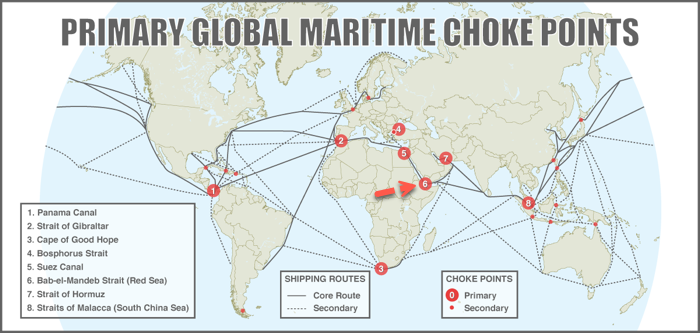
UK Maritime Trade Operations (UKMTO) said it received a report that a bulk carrier transiting the Bab el-Mandeb Strait was attacked by a swarm of 15 small craft.
“A vessel reports sighting approximately 15 small craft; some of the small craft closed to within a range of 1–2 cables, and there was an exchange of fire,” UKMTO wrote in a warning notice.

Maritime analytics provider MarineTraffic posted an update on X stating that the bulk carrier was approximately 14 nautical miles west of Yemen when the captain issued the first distress call.
MarineTraffic provided further details about the attack:
A bulk carrier transiting the Bab el-Mandeb Strait came under attack early Friday, according to incident reports shared by UKMTO. #MarineTraffic data shows the vessel Bobic maintaining speed while altering course at 03:32 UTC, approximately 14 nautical miles west of Yemen, when the first distress call was issued. The ship reported being approached by up to 15 small craft, prompting its onboard security team to return fire. A second attack followed shortly afterward, involving two skiffs and a suspected mothership several miles away.
Another vessel, the Globe Aliki, was also transiting the area at the time and crossed paths with the Bobic at 03:35 UTC. According to reports, the Globe Aliki observed the small boats from roughly 1 nautical mile away, describing them as fishing-type craft. The vessel itself was not targeted.
Prior to the incident, AIS data shows that on 3 December at 17:55 UTC, the Bobic’s AIS destination was changed to “Armed Guard Onboard.” On 5 December at 05:47 UTC, the AIS destination changed again to “Chinese Crew.” The Bobic is now continuing toward its next port of call, with all crew reported safe and the security team having successfully repelled both attacks.
Shipping journal Lloyd’s List posted exclusive footage showing security personnel on the ship firing long rifles at the small boats.

Lloyd’s List noted: “The lack of serious intent from the attackers, as well as the location of the incident, suggest the perpetrators are as likely to be local fishermen protecting their nets and lines as they are to be Somali pirates or Houthi militants.”
YOUR EARLY CURRENCY/GOLD AND SILVER PRICING/ASIAN CLOSING MARKETS AND EUROPEAN BOURSE OPENING AND CLOSING/ INTEREST RATE SETTINGS FRIDAY MORNING 6;30AM//OPENING AND CLOSING
EURO/USA: 1.1653 UP 0.0009 PTS OR 9 BASIS POINTS/WITH STOCKS IN EUROPE ALL GREEN
USA/ YEN 154.91 DOWN 0.222 NOW TARGETS INTEREST RATE AT 1.00% AS IT WILL BUY UNLIMITED BONDS TO GETS TO THAT LEVEL…//YEN STILL FALLS//END OF YEN CARRY TRADE BEGINS AGAIN OCT 2024/Bank of Japan raises rates by .15% to 1.15..TAKAICHI NEW PM AS YIELDS RISE//JAPAN DEEPLY IN TROUBLE WITH RISING RATES
GBP/USA 1.3346 UP .0025 OR 25 BASIS PTS
USA/CAN DOLLAR: 1.3945 DOWN 0.0015 CDN DOLLAR UP 15 BASIS PTS//CDN DOLLAR STILL GETTING KILLED)
Last night Shanghai COMPOSITE CLOSED UP 27.02 PTS OR 0.70%
Hang Seng CLOSED UP 149.18 PTS OR 0.58%
AUSTRALIA CLOSED UP 0.22%
// EUROPEAN BOURSE: ALL GREEN
Trading from Europe and ASIA
I) EUROPEAN BOURSES: ALL GREEN
2/ CHINESE BOURSES / :Hang SENG CLOSED UP 149.18 PTS OR 0.58%
/SHANGHAI CLOSED UP 27.02 POINTS OR 0.70%
AUSTRALIA BOURSE CLOSED UP 0.22 %
(Nikkei (Japan) CLOSED DOWN 536.55 PTS OR 1.05%
INDIA’S SENSEX IN THE GREEN
Gold very early morning trading: 4224.75
silver:$58.26
USA dollar index early FRIDAY morning: 98.93 DOWN 2 BASIS POINTS FROM THURSDAY’s CLOSE
FRIDAY MORNING NUMBERS ENDS
And now your closing FRIDAY NUMBERS 11: 30 AM
Portuguese 10 year bond yield: 3.098 % UP 0 in basis point(s) yield
JAPANESE BOND 10 yr YIELD: +1.945% UP 1/2 FULL POINTS AND 10/100 BASIS POINTS /JAPAN losing control of its yield curve/
JAPAN 30 YR: 3.356 DOWN 4 BASIS PTS//DEADLY
SPANISH 10 YR BOND YIELD: 3.241 UP 0 in basis points yield
ITALIAN 10 YR BOND YIELD 3.465 UP 0 points in basis points yield ./ THE ECB IS QE’ ING ITALIAN BONDS (BUYING ITALIAN BONDS/SELLING GERMAN BUNDS)
GERMAN 10 YR BOND YIELD: 2.775 UP 1 BASIS PTS
IMPORTANT CURRENCY CLOSES : MID DAY FRIDAY
Closing currency crosses for day /USA DOLLAR INDEX/USA 10 YR BOND YIELD/1:00 PM
Euro/USA 1.1653 UP 0.0010 OR 10 basis points
USA/Japan: 155.16 UP 0.025 OR YEN IS DOWN 3 BASIS PTS// HIGHLY INFLATIONARY TO JAPAN
Great Britain 10 YR RATE 4.420 DOWN 0 BASIS POINTS //
GREAT BRITAIN 30 YR BOND; 5.158 UP 1/3 BASIS POINTS.
Canadian dollar UP 0.0080 OR 80 BASIS pts to 1.3878
xxxxxxxxxxxxxxxxxxxxxxxxxxxxxxxxxxxxxxxxxxxxxxxxxxxxxxxxxxxxxxxxxxxxxxxxxxxxxxxx
The USA/Yuan CNY UP AT 7.0712 ON SHORE ..
THE USA/YUAN OFFSHORE UP TO 7.0702
TURKISH LIRA: 42.52 EXTREMELY DANGEROUS LEVEL/DEATH WATCH/HYPERINFLATION TO BEGIN.//
the 10 yr Japanese bond yield at +1.945 UP 1 FULL basis pts
THE 30 YR JAPANESE BOND YIELD: 3.356 DOWN 4 basis pts
Your closing 10 yr US bond yield UP 0 in basis points from THURSDAY at 4.107% //trading well ABOVE the resistance level of 2.27-2.32%)
USA 30 yr bond yield 4.770 UP 1 basis points /11:00 AM
USA 2 YR BOND YIELD: 3.540 UP 1 BASIS PTS.
GOLD AT 10;00 AM 4237.40
SILVER AT 10;00: 58.40
Your 11:00 AM bourses for Europe and the Dow along with the USA dollar index closing and interest rates: FRIDAY CLOSING TIME 11:00 AM//
London: CLOSED DOWN 43.86 PTS OR 0.45%
GERMAN DAX: UP 146.11pts or 0.61%
FRANCE: CLOSED DOWN 7.29 pts or 0.09%
Spain IBEX CLOSED DOWN 58.10pts or 0.35%
Italian MIB: CLOSED DOWN 86.30. or 0.20%
WTI Oil price 59.57 0.00 EST/
Brent Oil: 63.16 10:00 EST
USA /RUSSIAN ROUBLE /// AT: 77.34 ROUBLE DOWN AND 14/ 100
CDN 10 YEAR RATE: 3.296 UP 4 BASIS PTS.
CDN 5 YEAR RATE: 2.987 UP 17 BASIS PTS
CLOSING NUMBERS: 4 PM
Euro vs USA 1.1643 DOWN 0.0007 OR 7 BASIS POINTS//
British Pound: 1.3329 UP 0.0008 OR 8 basis pts/
BRITISH 10 YR GILT BOND YIELD: 4.4790 UP 4 FULL BASIS PTS//
BRITISH 30 YR BOND YIELD: 5.197 UP 3 IN BASIS PTS.
JAPAN 10 YR YIELD: 1.951UP 1 FULL BASIS PTS (DANGEROUS TO THEIR ECONOMY
JAPANESE 30 YR BOND: 3.360 DOWN 4 PTS AND STILL VERY DANGEROUS TO THEIR ECONOMY
USA dollar vs Japanese Yen: 155.33 UP 0.195 OR YEN DOWN 20 BASIS PTS EXTREMELY DANGEROUS/YEN FALLING DEEPLY IN VALUE
USA dollar vs Canadian dollar: 1.3827 DOWN 0.01332 PTS// CDN DOLLAR UP 133 BASIS PTS
West Texas intermediate oil: 60.18
Brent OIL: 63.76
USA 10 yr bond yield UP 3 BASIS pts to 4.139
USA 30 yr bond yield UP 3 PTS to 4.795%
USA 2 YR BOND 3.562 UP 3 PTS
CDN 10 YR RATE 3.419 UP 16 BASIS PTS
CDN 5 YEAR RATE: 3.011 UP 13 BASIS PTS
USA dollar index: 98/96 UP 21 BASIS POINTS
USA DOLLAR VS TURKISH LIRA: 42.53 GETTING QUITE CLOSE TO BLOWING UP/
USA DOLLAR VS RUSSIA//// ROUBLE: 76.60 UP 0 AND 50/100 roubles //
GOLD $4195.00(3:30 PM)
SILVER: 58.31 3;30 PM)
DOW JONES INDUSTRIAL AVERAGE: UP 164.05 OR 0.22 %
NASDAQ 100 UP 110.35 PTS OR 0.43%
VOLATILITY INDEX 15.41 DOWN 0.37 PTS OR 2.34.%
GLD: $ 386.44 DOWN 0.69 PTS OR 0.18%
SLV/ $52.95 UP 1.19 PTS OR OR 2.30%
TORONTO STOCK INDEX// TSX INDEX: CLOSED DOWN 166.16 PTS OR 0.53%
end
TRADING today ZEROHEDGE 4 PM: HEADLINE NEWS/TRADING
Most-Shorted, Mag7, & Momo Gains; Bitcoin, Bonds & Bullion Pains
WRAP UP;
Stocks mixed and bonds sold as eyes turn to FOMC next week – Newsquawk US Market Wrap
Friday, Dec 05, 2025 – 03:59 PM
- SNAPSHOT: Equities mixed, Treasuries down, Crude up, Dollar flat, Gold down
- REAR VIEW: US PCE largely matches expectations; UoM sentiment rises above forecasts; Strong Canada jobs report; G7 & EU reportedly in discussions to remove oil price cap on Russia; RBI cuts Repurchase Rate as expected; NFLX set to acquire WBD; DELL reportedly plans 15-20% price hike from mid December.
- COMING UP: Data: German Industrial Output, EZ Sentix, Chinese Trade Balance. Speakers: BoE’s Taylor, Lombardelli; ECB’s Cipollone. Supply: US.
- WEEK AHEAD: Highlights include FOMC, RBA, BoC, SNB, UK GDP, Aussie Jobs, Chinese Trade and Inflation. For the full report, please click here
- CENTRAL BANK WEEKLY: Previewing FOMC, RBA, BoC, SNB, CBRT; Reviewing RBI. For the full report, please click here
- WEEKLY US EARNINGS ESTIMATES: Highlights include AVGO, ORCL, COST, ADBE, and SNPS. For the full report, please click here
More Newsquawk in 2 steps:
1. Subscribe to the free premarket movers reports
2. Trial Newsquawk’s premium real-time audio news squawk box for 7 days
MARKET WRAP
Stocks ultimately finished the session with an upward bias, with SPX, NDX and DJI closing green, but RUT lagged and closed lower. Sectors were also mixed. Communication, Tech and Consumer Discretionary led the gains, while Utilities, Health Care and Industrials underperformed. Focus on Friday was largely on US data, which saw PCE lean softer than expected in September, while UoM beat forecasts with declining inflation expectations. The data had little impact on Fed expectations. Meanwhile, T-notes were sold across the curve with yields settling c. 3bps firmer across maturities tracking Canadian bonds lower after a very strong Canadian jobs report. There was also a slew of chunky block trades in the 5- and 10-year futures alongside commentary from NEC Director Hassett to digest. The potential Fed Chair said it is time for the Fed to proceed “cautiously” with rate cuts, with the cautious language perhaps not as dovish as you would expect from a close Trump ally. The Dollar managed to claw back losses to finish Friday trade flat, with Yen strength pared as the currency appears exhausted by further BoJ hawkish sources, as well as weighed on by higher US yields. CAD was the clear outperformer after a stellar Canadian jobs report, which saw a hawkish shift in rate pricing to see a 25bps hike fully priced in from the BoC next year. Gold continues to hover around USD 4,200/oz while silver caught a bid. Oil prices settled in the green amid the lack of progress on the Russia/Ukraine peace talks.
US DATA
PCE: Core PCE rose 0.198% in September, in line with the 0.2% forecast and prior, seeing the Y/Y rise 2.8%, cooler than the 2.9% seen in August, despite expectations for another 2.9% print. On the headline, PCE rose 0.269%, in line with the 0.3% prior and forecast, with Y/Y rising 2.8%, in line with forecasts but ticking up from the prior 2.7%. Within the report, Personal Income rose 0.4%, above the 0.3% forecast, matching the prior pace, while adj. consumption rose 0.3%, in line with forecasts, while the prior was revised down to 0.5% from 0.6%. Real consumption was unchanged, beneath the 0.1% consensus. The cooler price data is welcome, albeit quite stale, given it is from September, with data delayed due to the government shutdown – it ultimately had little impact on Fed expectations. However, it may influence the projections the Fed are set to update next week. Pantheon Macroeconomics note the rise in core PCE should be small enough for most to revise down near-term inflation forecasts, helping justify more policy easing. PM expects most members to revise down their Core PCE Y/Y forecast to 2.9% next week. Within the report, Pantheon suggests, based on their calculations, that the inflation uplift from the tariffs is continuing to build to 0.41% in September, from 0.37% in August. The desk also writes that “Core PCE inflation probably still will slightly exceed 2% at the end of next year, but progress towards the FOMC’s target likely will be sufficient for the Committee to ease policy by a further 75bp in 2026.” If the Fed cuts by 25bps (as expected) on Wednesday, it takes the FFR to 3.50-3.75%. The Bloomberg dot plot median estimate for the 2026 dot is at 3.25-3.50%, which implies just one more rate cut in 2026. Money markets and Pantheon are more dovish than this. Money markets are pricing in rates between 3.00-3.25%; Pantheon expects rates between 2.75-3.00%.
UOM PRELIM: The Sentiment Index saw its first rise in five months, hitting 53.3 in December from 51.0 in November (exp. 52.0). The increase was concentrated primarily among younger consumers. Current conditions fell to 50.7 from 51.1 despite expectations for an uptick to 51.3. Expectations rose to 55.0, matching the highest forecast among analysts surveyed (exp. 51.2, prev. 51.0), led by a 13% rise in expected personal finances, with improvements visible across age, income, education, and political affiliation. Director Hsu notes that consumers see modest improvements from November on a few dimensions, but the overall tenor of views is broadly sombre, as consumers continue to cite the burden of high prices. On inflation, year-ahead inflation expectations fell to 4.1% from 4.5%, the lowest reading since January, while the five-year-ahead fell to 3.2% from 3.4%.
FIXED INCOME
T-NOTE FUTURES (H6) SETTLED 6+ TICKS LOWER AT 112-16+
T-notes sold across the curve amid a chunky slew of block trades, US data, and commentary from Hassett. At settlement, 2-year +3.6bps at 3.567%, 3-year +3.7bps at 3.590%, 5-year +3.4bps at 3.717%, 7-year +3.0bps at 3.909%, 10-year +3.3bps at 4.141%, 20-year +3.4bps at 4.757%, 30-year +3.0bps at 4.794%.
INFLATION BREAKEVENS: 1-year BEI +0.8bps at 2.743%, 3-year BEI +2.0bps at 2.466%, 5-year BEI +0.4bps at 2.263%, 10-year BEI +0.0bps at 2.253%, 30-year BEI +0.0bps at 2.228%.
THE DAY: T-notes were sold across the curve on Friday with yields 3-4bps firmer across maturities. A lot of the focus was on the US data, which saw US PCE mostly in line with expectations (core Y/Y slightly soft), while UoM sentiment beat expectations with a drop in both inflation expectations. The data did little to shape Fed expectations. However, T-notes started to rise on little news just ahead of the cash equity open before then reversing ahead of the US data. The data supported T-notes briefly, but better selling resumed thereafter across the curve. There was little fresh US news driving prices lower, but there were several, very chunky block trades (click here) likely behind the movement. Meanwhile, Canadian bonds were sold hard with markets now fully pricing in a 25bps hike in 2026 from the BoC after a stellar jobs report, which saw the unemployment rate drop to 6.5% from 6.9%. T-notes settled around lows, but it is worth noting that in wake of the US data, there was a downward revision to the Atlanta Fed GDPNow model to 3.5% from 3.8% for Q3, while the NY Fed Nowcast for Q4 fell to 1.73% from 2.33%, albeit it did little to stop the Treasury downside. There was also commentary from NEC Director, or “potential Fed Chair”, Hassett, who perhaps wasn’t as dovish as you would expect. He said it is time for the Fed to “cautiously” reduce rates. A cautious approach would differ from one that Trump favours and be more aligned with some of the commentary from current Fed officials. However, he said he did agree with Bessent’s view on Fed Reserve Bank Presidents – that they should be living in a district for three years before being a Fed president. The criticism against regional Fed presidents further raises concerns over Fed independence, particularly when it is the regional Fed presidents who are leaning more hawkish than the board of Governors.
SUPPLY:
Notes
- US to sell USD 58bln of 3-year notes on 8th Dec.
- US to sell USD 39bln in 10-year notes on 9th Dec.
- US to sell USD 22bln of 30-year bonds on Dec 11th.
Bills
- US to sell USD 75bln of 6-week bills on December 9th
- US to sell USD 86bln of 13-week bills on December 8th.
- US to sell USD 77bln of 26-week bills on December 8th.
STIRS/OPERATIONS
- Market Implied Fed Rate Cut Pricing: Dec 21.07bps (prev. 21.3bps), January 29.15bps (prev. 29.6bps), March 36.3bps (prev. 36.7bps).
- NY Fed RRP op demand at USD 1.5bln (prev. 2.2bln) across 8 counterparties (prev. 39).
- NY Fed Repo Op demand at USD 0.002bln (prev. 0.002bln) across two operations.
- EFFR at 3.89% (prev. 3.89%), volumes at USD 87bln (prev. 85bln) on December 4th.
- SOFR at 3.92% (prev. 3.95%), volumes at USD 3.300tln (prev. 3.360tln) on December 4th.
CRUDE
WTI (F6) SETTLED USD 0.41 HIGHER AT 60.08/BBL; BRENT (G6) SETTLED USD 0.49 HIGHER AT USD 63.75/BBL
Crude extended on recent gains driven by a lacklustre US/Russia meeting aimed at finding a resolution on the Russia-Ukraine war. Market-moving headlines were absent to end the week as newsflow dried up with Russia’s Kremlin saying Moscow is waiting for the US reaction after the Putin-Witkoff meeting; no plan for Putin-Trump call for now, they said. Energy updates included discounts for Russian ESPO blend crude oil delivered to China, widening to USD 5-6/bbl vs ICE Brent due to falling demand; Russia planning to boost oil exports from western ports by 27% M/M in December; and the G7 and EU discussing imposing a full ban on accessing maritime services by Russia to disrupt oil exports (all via Reuters). WTI and Brent hit highs of USD 60.50/bbl and USD 64.09/bbl, respectively, but trimmed around half of the gains into settlement. Meanwhile, the weekly Baker Hughes rig count saw drillers add oil and natgas rigs for the fourth time in five weeks: Oil +6 at 413, natgas -1 at 129, total +5 at 549.
EQUITIES
CLOSES: SPX +0.19% at 6,870, NDX +0.43% at 25,692, DJI +0.22% at 47,955, RUT -0.38% at 2,521
SECTORS: Utilities -0.98%, Energy -0.43%, Health -0.41%, Materials -0.39%, Industrials -0.28%, Consumer Staples -0.26%, Real Estate unchanged, Financials +0.03%, Consumer Discretionary +0.44%, Technology +0.45%, Communication Services +0.95%.
EUROPEAN CLOSES: Euro Stoxx 50 +0.12% at 5,725, Dax 40 +0.66% at 24,039, FTSE 100 -0.45% at 9,667, CAC 40 -0.09% at 8,115, FTSE MIB -0.20% at 43,433, IBEX 35 -0.35% at 16,689, PSI -0.49% at 8,198, SMI +0.31% at 12,934, AEX -0.03% at 948
STOCK SPECIFICS
- Hewlett Packard Enterprise (HPE): Decline in server revenue outweighs earnings beat.
- DocuSign (DOCU): Uncertainty surrounding FY27 setup weighs.
- Ulta Beauty (ULTA): Beat quarterly exp.; raised FY revenue & SSS outlook.
- Netflix (NFLX): To buy Warner Bros Discovery (WBD, +2.9%) for an equity value of USD 72bln; US Senator Elizabeth Warren called the deal an ‘anti-monopoly nightmare’ which will raise consumer costs and limit choice.
- Parsons (PSN): Double downgraded at Raymond James after the FAA awarded a contract to Peraton instead.
- Oklo (OKLO): Announced equity distribution agreement for up to $1.5B.
- MP Materials (MP): Upgraded at Morgan Stanley to ‘Overweight’ from ‘Equal Weight’.
- Albemarle (ALB): Upgraded at UBS to ‘Buy’ from ‘Neutral’.
- Shell (SHEL), BP (BP): Downgraded at BofA.
FX
The Dollar Index was flat on Friday, with the delayed September PCE report likely having little impact on the Fed’s decision-making at the December meeting. The report was largely in line with expectations (core Y/Y slightly soft), with monthly figures in keeping with H2 25 levels. Separately, UoM Sentiment saw its first increase in five months after hitting its second-lowest level ever in November, helped by a rise in expected personal finances, particularly those of a younger age. DXY hit 98.805 lows before recovering losses amid an extension of the move higher in US yields; newsflow was light at the time.
CAD outperformance was seen on the November jobs report. Job growth surprised on the upside (act. 53.6k vs exp. -5k) with the unemployment rate sinking to 6.5% from 6.9% (exp. 7.0%) alongside a drop in the participation rate to 65.1% from 65.3%. The report resulted in a huge shift in BoC policy expectation, whereby money markets now look for a 25bps hike by the end of 2026 as opposed to the prior view of rates being steady. USD/CAD moved lower to September levels, trading around the lows of 1.3834 from an earlier peak of 1.3960.
JPY was weaker vs USD as the currency appears exhausted by further BoJ hawkish sources, as well as weighed on by higher US yields. This time, Bloomberg reported that the BoJ is likely to hike in December and leave the door open to more, but before it will check data and market moves. JPY had been originally firmer on said themes, extending after verbal intervention from Chief Cabinet Secretary Kihara, leaving USD/JPY hitting lows of 154.35 before moving back above 155.20 over EU & US trade as the Dollar clawed back lost ground.
INR finished weaker vs USD following the RBI decision to cut the Repo Rate by 25bps to 5.25%, as widely expected. The central bank maintained its neutral stance while lowering its FY26 CPI inflation outlook to 2.0% from 2.6%.
BRL was hit on Friday following Former Brazilian President Bolsonaro stating for the first time that he wants to launch his son, Flávio Bolsonaro, in the 2026 election against President Lula, local press reported. The development leaves political uncertainty heightened, with Flávio consolidating party unity and having a significant support base of allied governors like Tarcísio de Freitas (Republicanos) in São Paulo, aiming to clash with President Lula.
DATA RELEASES
Economic Confidence Slips To 17-Month Low, Holiday Spending Plans Weaken
Friday, Dec 05, 2025 – 08:25 AM
Authored by Tom Ozimek via The Epoch Times,
A new Gallup poll shows that U.S. consumer confidence deteriorated sharply in November, falling to its weakest level in 17 months as households contended with a protracted federal government shutdown, volatile financial markets, cooling job prospects, and renewed inflation anxiety.

The gloomier mood—reflected in Gallup’s Dec. 4 poll and aligning with several other major sentiment surveys—coincided with a pullback in Americans’ holiday spending plans, raising concerns about softer momentum heading into the final weeks of 2025.
Gallup’s economic confidence index fell seven points to –30 in November, its weakest reading since July 2024. The drop reflected dimmer views of both current conditions and the outlook: 21 percent of Americans called the economy “excellent” or “good,” while 40 percent said it is “poor.”
Expectations slipped further, with just 27 percent saying the economy is improving—down from 31 percent in October—and 68 percent saying it is getting worse.
The downturn marks a notable reversal from the relative stability seen for much of the year.
After improving through late 2024 on post-election optimism, the index had hovered between –14 and –22 for most of 2025 before slipping in October and then tumbling last month. At -30, November’s sentiment reading is well above the recent low of -58 notched in June 2022, when inflation soared to a recent peak of 9 percent and sent confidence plummeting. The lowest the gauge has ever hit is -72, in October 2008, during the financial crisis.
Historic Pullback in Holiday Spending Plans
Consumers’ heightened economic anxiety in November translated into a far smaller appetite for holiday gift spending than earlier in the season. Gallup found that Americans have cut their expected holiday budgets by $229 since October – the largest midseason drop the organization has ever recorded, surpassing even the $185 decline during the 2008 financial crisis.
Despite the sharp contraction in projected spending, only 29 percent of Americans say they plan to spend less than last year, up from 23 percent in October but still far below the 46 percent who reported plans to cut back in November 2008.
Labor market sentiment also softened meaningfully. Just a third of Americans (33 percent) said it is a good time to find a quality job, the weakest reading since January 2021, when COVID-19 lockdowns were pressuring labor markets. Views on job availability have worsened steadily through the fall, mirroring private-sector payroll data showing a broad pullback in hiring.
ADP Research reported this week that the private sector shed 32,000 jobs in November—the weakest showing since early 2023—driven largely by steep losses at small firms. Wage gains continued to cool, with year-over-year pay growth easing to 4.4 percent in November from the prior month’s 4.5 percent pace of growth.
Other gauges of economic activity suggest a mixed backdrop. The Conference Board’s consumer confidence gauge slid to 88.7, its lowest since April, and expectations remained mired below the recession-warning threshold for a tenth consecutive month.
Michigan’s sentiment survey showed a double-digit plunge in current conditions and weaker buying plans for big-ticket goods. JPMorganChase Institute data showed real household income growth slowed to 1.6 percent in October, leaving consumers heading into the holidays with flat bank balances and limited purchasing-power gains.
These readings reflect sentiment shaped by the 43-day federal government shutdown, which delayed pay for federal workers, disrupted flights, and halted key benefit programs, adding strain to household finances. Michigan’s consumer sentiment index fell to 50.3 in November, its lowest since June 2022, as respondents reported worsening personal finances and growing anxiety about the shutdown’s broader economic fallout.
Retail Spending Cools but Continues to Grow
Retail activity has cooled, though it has continued to expand. The latest government data—interrupted by the shutdown—indicate slower sales in September, and while private-sector card spending figures from the Bank of America Institute show relatively solid year-over-year gains in October, some of that strength was buoyed by higher prices rather than higher volumes.
Despite the sour near-term mood, forecasters remain cautiously optimistic about next year. A recent National Association for Business Economics outlook sees 2026 growth improving to 2 percent, supported by resilient consumer spending and firmer business investment.
Similarly, the Organisation for Economic Co-operation and Development (OECD) has raised its U.S. growth forecast, with the 38-country group saying the upgrade reflects exceptional rates of investment in information processing equipment, software, and data center construction, helping offset cooling job growth and other headwinds.
USA ECONOMIC COMMENTARIES\
Federal Watchdog Reveals Rampant Obamacare Fraud; 90% Of Bad-Doc Applicants Approved In Undercover Test
Thursday, Dec 04, 2025 – 07:40 PM
A new bombshell report from the Government Accountability Office (GAO) details a long-running vulnerability in the Affordable Care Act exchanges, showing that weak verification controls continue to expose federal subsidies to significant fraud and abuse.

“Preliminary results from GAO’s ongoing covert testing suggest fraud risks in the advance premium tax credit (APTC) persist,” the report reads. “The federal Marketplace approved coverage for nearly all of GAO’s fictitious applicants in plan years 2024 and 2025, generally consistent with similar GAO testing in plan years 2014 through 2016.”
According to the report, GAO conducted undercover tests by creating fictitious applicants with fake identities and fraudulent or never-issued Social Security numbers to see how the federal Marketplace would respond. Over the past two years, 90% of those fake applicants were approved for subsidized coverage despite lacking required documentation. In plan year 2024, all four of GAO’s fabricated applicants were approved and received about $2,350 per month in subsidies paid to insurers, even though they failed to provide proof of Social Security numbers, citizenship, or income. GAO scaled up the test for 2025 to 20 fake applicants; 18 were still enrolled as of September 2025, generating more than $10,000 per month in subsidies
More broadly, GAO’s preliminary analyses identified vulnerabilities related to potential SSN misuse and likely unauthorized enrollment changes in federal Marketplace data for plan years 2023 and 2024. Such issues can contribute to APTC that is not reconciled through enrollees’ tax filings to determine the amount of premium tax credit for which enrollees were ultimately eligible. GAO’s preliminary analysis of data from tax year 2023 could not identify evidence of reconciliation for over $21 billion in APTC for enrollees who provided SSNs to the federal Marketplace for plan year 2023. Unreconciled APTC may not necessarily represent overpayments, as enrollees who did not reconcile may have been eligible for the subsidy. However, it may include overpayments for enrollees who were not eligible for APTC.
A big problem with reconciling these Obamacare subsidies is when someone uses a Social Security number that doesn’t actually belong to the person getting the insurance. GAO’s early look at federal Marketplace data found more than 29,000 Social Security numbers in 2023 that showed over a full year of subsidized coverage. One number was used so many times that it totaled more than 26,000 days of insurance across more than 125 plans – the equivalent of more than 71 years of coverage tied to a single number.
The pattern continued in 2024, with nearly 66,000 Social Security numbers being linked to more than a year of subsidized coverage. This can result from identity theft, fake identities, or simple typing errors. According to the GAO, determining the true owner of a Social Security number can be complicated, so it’s examining these cases and other examples of overlapping coverage more closely.
CMS officials say the federal Marketplace lets people sign up even when a Social Security number is already in use. They claim this helps the real owner of the number get coverage in cases of identity theft or simple typing mistakes. The system uses a model that analyzes various pieces of personal information to distinguish applicants, and CMS runs this check monthly to clear out duplicate accounts. They also say applications with repeated Social Security numbers are supposed to go through a data-matching process in which people send in documents to verify their identities. However, even with those explanations, the setup makes it far too easy for fake applicants to slip through, and clearly, they do. The way the system works gives fraudsters plenty of room to abuse Social Security numbers long before anyone notices.
GAO notes that its “covert testing is illustrative and cannot be generalized to the enrollee population.”
This report lands in the middle of an active policy fight on Capitol Hill over whether to extend enhanced Obamacare subsidies, giving Republicans fresh evidence for their arguments about the program’s structural problem, validating their long-standing criticisms of Obamacare. House Ways and Means Chair Jason Smith (R-Mo.) called the report a “smoking gun” showing how a flawed system, protected by Democrat policies, has pushed tens of billions of taxpayer dollars to insurers through identity fraud.
Energy and Commerce Chair Brett Guthrie (R-KY) argued that Democrats’ temporary expansion of subsidies worsened fraud, harmed patients, and hid deeper affordability problems. “Republicans have sounded the alarm on the flawed structural integrity of Obamacare and how Democrats’ failed policies to temporarily prop up the program have exacerbated fraud, hurt patients, increased the burden on American taxpayers, and artificially masked the true health care affordability crisis plaguing Americans today,” Guthrie said. “The concerning findings from GAO’s report further confirm that Republican efforts to strengthen, secure, and sustain our federal health programs are critical and necessary to ensure access to quality health care at prices Americans can afford.”
US 10-Year Keeps Trying, Yield Gaps Rip Wider, and Treasury’s Interest Costs Close In teaser image Treasury can’t afford a rise in financing costs: interest already consumes ~14% of federal outlays.
US Treasury Market Update:
December 4, 2025The US Treasury market is under pressure today, with the benchmark 10-year note yield climbing back toward 4.11% after dipping to around 4.06% earlier in the week amid softer private payroll data. This uptick reflects ongoing volatility, driven by a mix of Federal Reserve policy expectations, fiscal concerns, and shifting investor sentiment. Meanwhile, yield curve spreads—particularly between short- and long-term maturities—are steepening notably, signaling potential economic divergence or liquidity strains. At the same time, the US Treasury’s ballooning interest expenses are approaching a critical threshold, now accounting for roughly 14-15% of federal outlays and projected to exceed that mark soon. This dynamic underscores the fragility of the government’s fiscal position: any sustained rise in borrowing costs could exacerbate deficits and crowd out other spending priorities.
The 10-Year Yield’s Persistent Push Higher
The 10-year Treasury yield has been on a choppy upward trajectory throughout 2025, peaking at 4.79% in mid-January before partially retracing. As of today, it’s at 4.11%, up 5 basis points from yesterday’s close, following a brief reprieve from weaker-than-expected ADP private payrolls (showing a surprise decline) that bolstered odds of a December Fed rate cut to near 95%. Over the past month, yields have eased slightly by 5 basis points, but they’re still 6 basis points above year-ago levels.Key drivers include:
- Fed Policy Uncertainty: Markets are pricing in aggressive easing under potential new leadership, with the Fed’s quantitative tightening program ending this month. However, primary dealers anticipate increased short-term bill purchases to stabilize funding markets, tempering the downside for yields.
- Economic Signals: Cooling labor data supports rate-cut bets, but persistent inflation (hovering around 3%) and stronger-than-expected growth forecasts for 2026 are capping declines.
- Global and Political Factors: Speculation around White House economic adviser Kevin Hassett replacing Fed Chair Jerome Powell in May is fueling bets on deeper cuts, while tariff proposals add inflationary upside risks.
If yields breach 4.20% sustainably, it could signal renewed selling pressure from leveraged funds deleveraging or foreign investors reassessing US debt’s safe-haven status.Yield Gaps Widening: A Steepening Curve Amid StressTreasury yield spreads are ripping wider, with the curve transitioning from inversion to modest steepening—a classic sign of shifting recession odds or term premium demands. The 10-year minus 2-year spread (T10Y2Y) has expanded to +27 basis points as of early December, up from deeply negative territory earlier in the year. This follows a volatile summer where short-end yields (e.g., 3-month T-bills at ~4.35% in July) outpaced longs, but recent Fed cut expectations have flipped the script.Notable gaps include:
- 10Y-2Y Spread: Now +27 bps (from -ve in mid-2025), implying growth optimism but also liquidity concerns.
- 10Y-30Y Spread: ~58 bps, with the 30-year yield at ~4.69%, reflecting higher term premiums on ultra-long debt amid fiscal expansion worries.
- Treasury-Swap Spreads: The 10-year Treasury-SOFR swap gap has widened to -51 bps from -44 bps in April, indicating Treasuries are trading “cheap” relative to derivatives— a red flag for potential forced selling by basis trades or hedge funds.
| Maturity Spread | Current Value (bps) | Change Since Jan 2025 | Implication |
|---|---|---|---|
| 10Y – 2Y | +27 | +150 (from inversion) | Steepening; reduced recession risk |
| 10Y – 30Y | +58 | +20 | Higher long-end premiums; inflation/fiscal fears |
| 10Y Swap Spread | -51 | -7 | Liquidity strain; cheap cash Treasuries |
This widening isn’t uniform—earlier 2025 saw compressed spreads due to heavy supply—but recent auctions (e.g., solid foreign demand in 3-year notes) have stabilized things. Still, with $38 trillion in outstanding debt, any further steepening could amplify volatility if demand lags the “deluge” of new issuance.Treasury’s Interest Burden: Nearing 15% of OutlaysThe US government’s interest payments are a ticking fiscal bomb, already consuming ~14% of federal outlays in FY2025 and on track to hit 15% in the current fiscal year (through nine weeks of FY2026 data). Gross interest spending topped $1 trillion in FY2025, up from $970 billion the prior year, with monthly outlays averaging $11 billion. In dollar terms, that’s outpacing categories like Medicaid and veterans’ benefits early in FY2026.Projections paint a grim picture:
- CBO Baseline: Net interest outlays rise to $1.0 trillion in FY2026 (3.3% of GDP), climbing to $1.8 trillion by 2035 (5.4% of GDP). Total outlays for 2025: $7.0 trillion (23.3% of GDP).
- As % of Revenues: Expected to reach 18.4% by end-2025, surpassing the 1991 peak.
- Debt Context: Public debt at 100% of GDP in 2025, ballooning to 118% by 2035, fueled by mandatory spending and these interest costs.
The Treasury “can’t afford” higher financing costs, as you noted—yet with yields trying higher and potential tariff revenues ($300-400B/year) earmarked for rebates rather than debt service, relief seems elusive. A 30 bps rise in average yields could add $1.8 trillion to decade-long debt.Outlook and RisksBulls see the Fed’s December cut (75% odds for 25 bps) capping yields near 4.00% by year-end, but bears point to inflation stubbornness and political gridlock pushing 10-year yields toward 4.50%. For investors, this environment favors selective long-duration plays if steepening persists, but watch auction tails and swap spreads for liquidity cracks. The interplay of rising yields and fiscal strain could force tough choices: spending cuts, tax hikes, or—more likely—more borrowing, perpetuating the cycle.If you’d like a deeper dive into specific spreads, historical charts, or scenario modeling (e.g., via code for yield projections), let me know!
END
A Global Currency Crisis in 2026?

by TDB
Thursday, Dec 04, 2025 – 13:39
Originally posted by Shan N. on TheDailyBell.com and Dollarcollapse.com:
Let me start with an “AI” summary of the article, since that’s the most likely step for readers.
- The US Federal Reserve, through its ultra-loose monetary policies, has inflated a series of asset bubbles – AI Bubble, Housing Bubble (HB) 2.0, and the Bond Bubble – and the bursting of these bubbles is very likely to start in 2026.
- The bursting of the asset bubbles would push the US Economy into an Inflationary Depression that would eventually be called “The Greater Depression”. Price inflation will be higher than the US experience during the stagflationary 1970s (near 15% at its peak), while the contraction in GDP will rival that of “The Great Depression” of 1929 to 1946.
- Notwithstanding the similarities to the 2008 GFC (Global Financial Crisis) in terms of the underlying causative factors and the response of the US Government/Federal Reserve to the bubbles bursting, the eventual outcomes in terms of the impact on the US Economy as well as the US Dollar would be vastly different. The US Dollar is likely to substantially weaken not only against Gold but also against other currencies.
The bubbles referred to above have been in the making for quite a few years now – perhaps even more than a decade. The fact that the bubbles have grown bigger (e.g., HB2.0 as compared to HB1.0 leading up to 2008), newer bubbles (the AI / MAG7) have been inflated, and the stock markets have chugged along steadily without any meaningful correction has only lulled investors into a deep slumber. Perhaps even closer to the stage of coma, as far as the perception of risk is concerned. FDR’s quote, “the only thing to fear is fear itself,” that he made at the very depth of The Great Depression in 1933, might be more applicable to the attitude of the US investor today than at any other point in history.
Yet every objective indicator points to bubble valuations across multiple sectors and to the currency on the verge of a precipitous fall, given the prevailing fiscal dominance. What this implies is that US dollar-denominated investments (stocks, bonds, and real estate) are in for a rude awakening in the years ahead, and the Economy itself is headed for a depression that will make the 2008 GFC look like a walk in the park.
I. The Federal Reserve’s De Facto Dual Mandate – The Arsonist and the Fireman
Let us start with the Federal Reserve, the engine of Monetary Inflation, a necessary condition for the formation of asset bubbles. Jim Grant popularized the arsonist-and-fireman analogy, explaining how the Fed ignites bubbles through prolonged artificially low interest rates. When the bubbles eventually meet the pin, the Fed again rushes in with easing – much like the arsonist calling the fire department. We have seen this cycle repeatedly over the last 35 years.
i. The easing cycle during the early 1990s, leading to the NASDAQ/dotcom bubble.
ii. Post the Nasdaq burst in March 2000, the Fed again rushed into lowering the interest rates to a then-unprecedented 1% causing the formation of the Housing Bubble 1.0.
iii. Post the collapse of the Lehman Brothers in September 2008, the Fed lowered the interest rates to 0% and maintained them around that level for nearly 15 years. Interest rates have never been this low for this long in 4000 years of monetary history.
But interest rates are only part of the story in the current easing cycle. A much more potent form of monetary inflation has occurred through an increase in the Fed’s balance sheet via Quantitative Easing (QE), through which the US Fed purchased US Treasuries and Mortgage-Backed Securities. The Fed’s balance sheet, which was less than $1 trillion at the time of the 2008 GFC, would rise more than 6-fold in the subsequent 18 years to more than $6.5 trillion today.
The National debt has ballooned during this period as well, i.e., the accumulated US National debt over more than 200 years leading up to 2008 was $10 trillion, while in the subsequent 18 years, the debt has nearly quadrupled to $39 trillion. If the BBB (Big Beautiful Bill) is indicative, we will witness the National Debt cross $50 trillion before Trump’s second term ends in 2028, even without a significant economic crisis.
This combination of reckless fiscal spending, aided by an ever-accommodative monetary policy, has fomented multiple bubbles that dwarf those of the past. All bubbles, eventually, find their pins, and given the enormity of the bubbles today, a tiny prick is all that would be required. The dominoes are lined up.
But before proceeding on to the “bubbles”, some questions ought to be asked and answered. We can clearly see the Boom-Bust pattern repeatedly playing out over the last 35 years in the figure above. Surely there must be sound theoretical explanations and ways to prevent these wild swings in economic activity. Why is it that there is a sudden rush to invest in a technology or in a specific asset class amongst a majority of the investing class?
The Misesian Theory of the Business Cycle accounts for all of the above questions and more (as explained in the book “The Theory of Money and Credit”). Rothbard’s essay “Economic Depressions: Their Cause and Cure” provides a succinct note of the relevant concepts. Given below is a two-paragraph summary of the Business Cycle Theory. For those not unduly interested in the economic theory, please feel free to skip to the next section.
When a central bank artificially sets a low interest rate below the market rate (as determined by the confluence of the supply curve for savings and the demand curve for borrowing), it creates an illusion of greater savings. This ensures that marginal projects are brought online that would otherwise not be funded. However, given that the savings were an illusion, the market demand for the products created by these marginal projects is not forthcoming. Hence, these (mal)investments have to be liquidated.
The correct course of action for the government at this stage would be to stand by and allow the markets to clear the excesses of malinvestments. However, as we have seen repeatedly, a new wave of money/credit is created that furthers the current malinvestments or worse, create new ones. The process continues until we reach the stage of the Crack-Up Boom, or, more commonly, hyperinflation.
II. Bubbles Meeting the Pin of Economic Reality
Bubbles are created when excessive money and credit are directed to specific sectors of the economy. Given the enormity of the new money and credit that has been created since the 2008 GFC as explained in the previous section, the US is now floating on a sea of asset bubbles – HB2.0, AI Bubble, and the Bond Bubble.
II.1 Housing Bubble 2.0
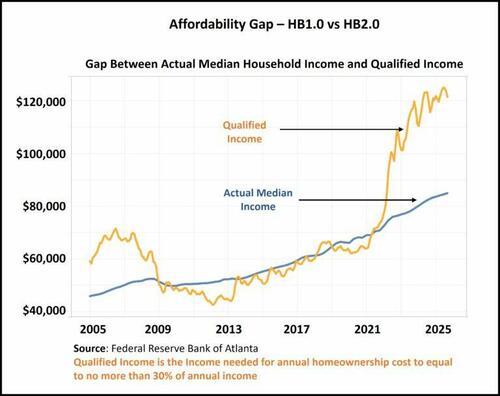
Several factors can explain why HB2.0 is much larger than HB1.0 of 2008. Some typical ones include median housing prices, inflation-adjusted housing prices, mortgage payments as a function of household income, etc. But the one Index that accounts for all factors, including home prices, household income, interest rates, taxes, and insurance, etc, is the Home Affordability Index (HAI). A modified version of the HAI is presented above to indicate that housing prices need to decline by more than 33% for affordability to return.
The fact that two other bubbles accompany the HB2.0 makes it nearly inconceivable that a solution could arise in the form of ZIRP and QE as happened after the 2008 GFC. Therefore, median prices will drop well below the levels indicated by median income. Ultimately, we should not be surprised by a 50% drop in housing prices when the HB2.0 bursts.
II.2 The AI Bubble
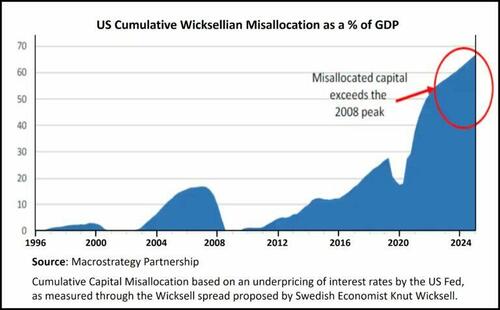
Any number of indicators can be used to indicate the AI bubble – MAG7 M.Cap to GDP ratio, Top 5 stocks today to Top 5 in 2000 as a % of S&P 500, Marginal AI Capex as a % of GDP growth, the circular vendor financing within the AI circuit etc.
The indicator that captures the total misallocation – AI, cryptos, NFTs, housing etc indicates a level of capital misallocation that far surpasses the 2008 GFC. In fact, the misallocation during the dotcom days appears like a rounding error compared to the total misallocation today. Investments in LLMs and Data Centres are soon going to look for a “Return Of Capital” let alone “Return On Capital”.
II.3 The BOND Bubble
Despite the massive overvaluations, there is at least something to show for the money sunk into housing and AI. Investments in long-term treasury bonds, in comparison, are just paying US dollars today to receive pieces of paper two or three decades down the line. With an overwhelming probability, 30-year bonds are likely to become confetti if held to maturity – perhaps even a whole lot sooner than that.
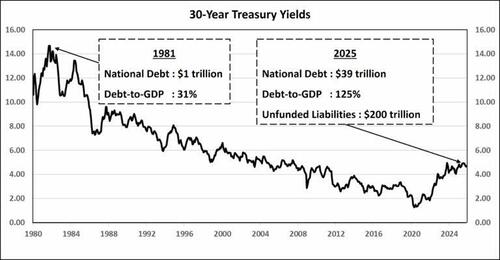
If you think of the US as a company, it had revenues of $5.2 trillion and an operating loss of $2 trillion in 2025. If this company had debt of nearly $40 trillion and other off-balance-sheet liabilities of $200 trillion, what would its bond rating be?
JUNK wouldn’t come close to describing the situation, with the only difference being that the government has a printing press to create dollar bills (digitally these days) out of thin air and hand them to creditors. But the question is, “What would the dollar’s purchasing power be under these circumstances?” Unquestionably, very close to those of confetti.
The 30-year Treasury today would have to be the mother of all bubbles, given the sheer size of the market and the brazenness of rating agencies in looking past the fundamentals. And as it unwinds over the next few years, with interest rates increasing amidst a severe recession caused by the bursting of the AI and HB2.0 bubbles, the consequences are indeed unfathomable at this juncture.
LOOKING AHEAD INTO 2026!
What is looking very probable is that the first two bubbles – the HB2.0 and the AI bubble are going to burst one after the other. For the first time in more than 45 years, the US Government and the Federal Reserve are going to realize in no uncertain terms that it can only print its way into trouble, not print its way out.
Despite the similarities to the 2008 GFC, the key difference is that 2008 was a liquidity crisis while 2026 is going to be a solvency crisis. The consequence is that the US Dollar will rapidly lose value not only against gold but also against a majority of its trading partners.
The depression would be prolonged, and it stands to reason that the depth of the correction would be proportional to the inflationary boom during the preceding period. We have also seen that the monetary inflation after the 2008 GFC has not only been quantitatively much higher, but also, on a qualitative basis, reckless (“unconventional” would be the term the mainstream media would use). This depression is going to be one for the record books as the GDP contraction is going to rival the Great Depression.
Can anything be done at all at this point? At the outset, we should recognize that the recession is the cure to clear the malinvestments of the artificial boom. The problem we face is monetary inflation, which leads to the formation of bubbles. Let me quote from Rothbard’s essay on the correct way to handle a recession/ depression.
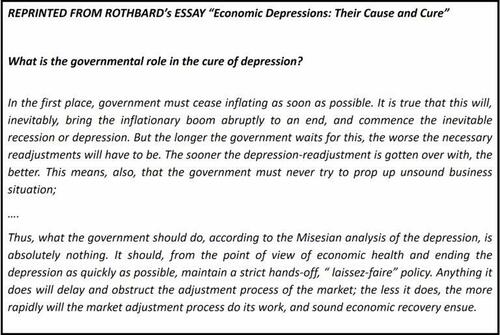
But did the US Government not solve the 2000 and the 2008 recessions by doing exactly the opposite? Not exactly “solve”, but merely managed to postpone the consequences by inflating bigger bubbles. But this has come at an enormous cost to the US Dollar. Gold that traded at $250/oz in 2000 is now more than $ 4,200/oz, indicating a more than 95% decline in purchasing power over this short 25-year period.
Any attempt at a reflation this time around would be the equivalent of throwing gasoline on a raging inferno. But one can almost certainly bet on the US Government in doing the one thing that it should not attempt.
Are we looking at a Weimar replay, perhaps by the end of this decade? Possibly… maybe even probably.
What about the rest of the World? This is where it gets interesting. The conventional (keynsesian) economic thinking is that it is the US borrowing and consumption that keeps the rest of the world going. The truth is the opposite – it is always savings and production that drive economic growth. The rest of the world will hopefully conclude that the US is “too big to be bailed out,” and it is best to allow the dollar and the US economy to sink. The world would be better off without the US draining the savings of the world, importing the manufactured goods and exporting its monetary inflation. Not to mention the second export of military adventurism. Any country or currency that tethers itself to the US is going to sink with the Titanic.
That said, most countries face the same issues that afflict the US, i.e., large fiscal deficits, central bank monetization of deficits, and government infringement on civil rights and privacy – the list is almost endless. The US is the epicentre of the problems, primarily because of the US dollar’s status as a reserve currency. However, all countries would face a currency issue, albeit to a lesser degree than the US. The solution for the other countries would be much the same – balanced budgets, sound money, deregulation and decentralization, and individual liberty.
About the Author
The Author, Shanmuganathan N, is an Austrian/Libertarian Economist based in India and can be contacted at shan@plus43capital.com
END
Washington’s F-35 Sale To Saudi Arabia Might Be Part Of Trump’s Ultimate Plan To Revive IMEC
Friday, Dec 05, 2025 – 05:00 AM
Authored by Andrew Korybko via Substack,
This could make it easier for Saudi Arabia to normalize relations with Israel even in the absence of Palestinian independence and thus restore the political viability of this geo-economic megaproject.

The announcement that the US will sell F-35s to Saudi Arabia is a monumental development. Israel is the only country in West Asia to field these cutting-edge fighter jets so its “qualitative military edge” could be eroded as a result, ergo why the IDF officially objected to this.
Axios reported that Israel wants the sale conditional on Saudi Arabia normalizing their relations, ideally through the Abraham Accords, or at least the US guaranteeing that the F-35s won’t be deployed in Saudi Arabia’s western regions near Israel.
It remains unclear whether the US will comply with these requests, but what’s much clearer is that Saudi Arabia will occupy a greater role in the US’ regional strategy, which brings the Kingdom back into the US’ orbit after it diversified its partnerships in recent years by expanding ties with Russia and China. Saudi Arabia was already moving towards a rapprochement with the US after the last four years of troubled ties under Biden, however, as proven by its reluctance to formally join BRICS after being invited in 2023.
The latest Gaza War that broke out shortly afterwards, which evolved into the first West Asian War between Israel and the Iranian-led Resistance Axis and ended in the latter’s defeat, derailed progress on the “India-Middle East-Europe Economic Corridor” (IMEC) from that year’s G20. IMEC’s geo-economic scope importantly necessitates the normalization of Israeli-Saudi ties for facilitating this, which the US might now try to broker after ending the Gaza War that disrupted this previously fast-moving process.
Saudi Arabia’s commitment to invest nearly $1 trillion in the US economy, up from the $600 billion that it agreed to during Trump’s visit in May, can be interpreted as a bribe for obtaining the best terms possible. Trump might therefore try to coerce Bibi into at least making superficial concessions on Palestinian sovereignty in the West Bank so that Crown Prince Mohammad Bin Salman (MBS) doesn’t “lose face” by agreeing to the normalization of their countries’ relations without Palestine first becoming independent.
At the same time, selling F-35s to Saudi Arabia and bestowing it “Major Non-NATO Ally” status might suffice for MBS abandoning even the minimal aforesaid implied demand, especially since IMEC is indispensable to his Kingdom’s post-oil future and associated “Vision 2030” development program. If the US brokers an Israeli-Saudi deal that leads to swift progress being made on implementing IMEC, then it can push IMEC as a replacement for India’s North-South Transport Corridor (NSTC) with Iran and Russia.
The US already revoked India’s Chabahar sanctions waiver before reinstating it, correspondingly as a form of pressure amidst their trade talks and then as a goodwill gesture therein as they made progress, but it arguably aims to redirect India from the NSTC to IMEC as a means of containing Russia. After all, the NSTC enables India to help Russia counterbalance the expansion of Turkish influence in Central Asia via TRIPP, so an indefinite waiver is extremely unlikely even in the event of an Indo-US trade deal.
It would be easier for India to accept this geo-economic concession, which might be reciprocated by tariff concessions on the US’ part, if IMEC is once again viable and could thus replace the NSTC. For that to happen, the US must first mediate the normalization of Israeli-Saudi ties, which it might now prioritize after brokering an end to the Gaza War and reaching its latest series of agreements with the Kingdom. The US’ F-35 deal with Saudi Arabia might therefore be part of Trump’s ultimate plan to revive IMEC.
END
“Widespread Misconduct”: Trump Admin Orders All Beneficiaries Of Nation’s Largest DEI Program To Surrender Financial Records
Friday, Dec 05, 2025 – 04:40 PM
The Daily Wire has learned that the Small Business Administration has ordered all 4,300 firms in its 8(a) “socially disadvantaged” program, which receive no-bid federal contracts, to turn over their financial records, including general ledgers, bank statements, payroll files, subcontracting agreements, and other internal documents, by January 5 or face removal from the program.
SBA’s crackdown on one of Washington’s oldest DEI initiatives follows mounting evidence that some 8(a) firms have become a major pipeline for fraud, pass-through schemes, and artificially inflated contract costs.
Late last month, Peter Schweizer, president of the Government Accountability Institute and the investigative journalist who broke the Clinton Cash corruption story, published a report exposing the cronyism and corruption inside the 8(a) program, where pass-through firms handed bidless contracts on silver platters while quietly outsourcing the real work to major consulting companies.
“For years, DC insiders have exploited a federal DEI contracting program that provides windfalls to Beltway elites. This open secret isn’t about helping the downtrodden; it’s about bagging no-bid paydays. The SBA’s 8(a) program is long overdue for reform,” Schweizer wrote on X.
X.com/peterschweizer/status/1993503214872735947?ref_src=twsrc%5Etfw%7Ctwcamp%5Etweetembed%7Ctwterm%5E1993503214872735947%7Ctwgr%5E4b6510804c9d5fe6d81de5e8a961c1016cd7859f%7Ctwcon%5Es1_&ref_url=https%3A%2F%2Fwww.zerohedge.com%2Fpolitical%2Fwidespread-misconduct-trump-admin-orders-all-beneficiaries-nations-largest-dei-program
There was also a recent U.S. Treasury Department investigation into $9 billion in small-business contracting, amid alarming concerns from Treasury Secretary Scott Bessent and others about rampant fraud and abuse in preference-based programs. In other words, meritocracy will return under the Trump administration.
Everyone in the DC consulting world understands how the game works: set up a compliant 8(a) “small business,” win the no-bid award, and let the big consulting firms do all the work.

8(a) was DC’s best-kept secret – until journalist James O’Keefe blew the lid off the DEI program. O’Keefe went undercover and captured video of an individual linked to ATI Government Solutions bragging about keeping $65 million of a $100 million contract while subcontracting out the work.
Several firms, including ATI, have since been suspended. Native American tribes whose names were used in pass-through schemes are also under increasing scrutiny.
SBA Administrator Kelly Loeffler said there is mounting evidence that minority contracts had become “a pass-through vehicle for rampant abuse and fraud,” especially after the Biden administration raised the target for contracts “set aside” for minorities from 5% to 15% of all contracting dollars.
“We’re committed to thoroughly reviewing every federal contract, contracting officer, and contractor — while working alongside federal law enforcement,” Loeffler said.
Such reports “have raised questions about widespread misconduct within the 8(a) Business Development Program, adding to years of credible concerns that the program designed to serve ‘socially and economically disadvantaged’ businesses has become a vehicle for institutionalized abuse at taxpayer expense,” the SBA wrote in its letter to the 4,300 “disadvantaged” firms.
Schweizer hinted at the 8(a) reforms needed:
Last week…
DEI mandates have proven to make the government more dysfunctional and more costly. It’s time to end the madness and “Make Meritocracy Great Again.”
VICTOR DAVIS HANSON
KING NEWS
SWAMP STORIES FOR YOU TONIGHT
Victim Mentality: Walz Whines About Driveby “Retard” Shoutings As Omar Suggests Trump Inciting Violence Against Her
Thursday, Dec 04, 2025 – 08:30 PM
Leave it to Democrats to try spinning a billionaire fraud against the American people into an attack on… them.

The saga began late last month when Manhattan Institute senior fellow Christopher Rufo and reporter Ryan Thorpe published a bombshell report alleging widespread, large-scale fraud schemes exploiting Minnesota’s welfare programs, primarily involving members of the state’s Somali immigrant community.
The centerpiece of their reporting focused on the infamous Feeding Our Future scandal, the COVID-era child nutrition program fraud labeled by federal prosecutors as the largest pandemic-related scheme in the nation. Rufo and Thorpe reported how fraudsters allegedly stole at least $250–300 million by claiming to feed millions of children while providing few or no meals. Many of the indicted individuals—over 70 charged by late 2025, with dozens convicted or pleading guilty—were Somali-Americans. Funds were reportedly used for personal enrichment, including luxury cars and real estate in the U.S., Turkey, and Kenya.
Rufo and Thorpe’s reporting expanded the scope to other programs, including Medicaid-funded autism services (where claims skyrocketed from $3 million in 2018 to $399 million in 2023, with disproportionately high diagnoses among Somali children) and Housing Stabilization Services. Overall, the pair of journalists estimated billions in taxpayer dollars stolen across multiple schemes under Minnesota Gov. Tim Walz’s (D) watch.
The most shocking claim was that federal counterterrorism sources told Rufo that millions in stolen funds were remitted to Somalia via informal hawala networks, ultimately reaching the al-Qaeda-affiliated terrorist group Al-Shabaab.
Within days, President Donald Trump announced the revocation of Temporary Protected Status (TPS) for Somali migrants in Minnesota and referred to Walz as “seriously retarded” in a late-night Thanksgiving Day post on Truth Social.
In a Thursday press conference, Walz complained that people are driving past the governor’s residence shouting retard thanks to the president roasting him.
“This creates danger,” Walz said about Trump’s post. “I’ve never seen this before, people driving by my house and using the R-word in front of people.”
“This is shameful,” he continued. “I have yet to see an election official—a Republican election official— say, ‘you’re right, that’s shameful. He should not say it.’” “We know how things go,” he added. “They start with taunts, they turn to violence.”
Then on Wednesday night, Rep. Ilhan Omar (D-MN), who was born in Somalia and has deep ties to the Somali community in Minnesota, also played victim by claiming Trump calling Somalis “garbage” and demanding their deportation were creating a dangerous situation because his followers have “exhibited violence.”
“It creates fear. And there is a possible danger that a lot of the people who follow the president have exhibited violence in many cases, especially in my case, whenever he has said something about me that is derogatory or says I’m a threat to the country, I have gotten death threats,” Omar told CNN host Jake Tapper. “There are so many people that have been incarcerated over the years that have been encouraged by the president’s words. And so there is fear for Somalis, not just in Minnesota, but across the country, that some of these people might attack and harm them.”
What a couple of retards!

END
ICE Arrests (Another) Afghan National Accused Of Supporting ISIS
Thursday, Dec 04, 2025 – 08:05 PM
Authored by Naveen Athrappully via The Epoch Times,
Federal authorities on Wednesday arrested an Afghan national on suspicion of providing support to the ISIS terrorist group, the third such arrest in a week, according to a Department of Homeland Security (DHS) statement.

Jaan Shah Safi was arrested by Immigration and Customs Enforcement (ICE) agents in Waynesboro, Virginia. Safi is an “illegal alien terrorist who entered the U.S. on Sept. 8, 2021, in Philadelphia” under President Joe Biden’s Operation Allies Welcome program, the statement said.
He had applied for Temporary Protected Status, but his application was terminated once DHS Secretary Kristi Noem ended TPS for Afghans.
The TPS was terminated in May as Afghanistan no longer met the requirements for the designation, and “DHS records indicate that there are recipients who have been under investigation for fraud and threatening our public safety and national security,” Noem said at the time.
The DHS said that Safi was also found to provide weapons to his father, a commander of a militia group back in Afghanistan.
The Epoch Times could not ascertain whether Safi was given any legal representation.
This is the third arrest of a suspected Afghan terrorist in about a week.
The first case was that of Rahmanullah Lakanwal, who was arrested Nov. 26 on suspicion of shooting two National Guard members in Washington. One of the victims, Sarah Beckstrom, died afterward, and the other, Andrew Wolfe, remains in serious condition.
Lakanwal had worked with the CIA during the war in Afghanistan. Authorities charged him with first-degree murder and two counts of assault with intent to kill, among other charges.
Noem said in a media interview that authorities believe Lakanwal became radicalized after he arrived in the United States through connections in his community and state.
A day before the attack and in a separate incident, Mohammad Dawood Alokozay was arrested and charged with making bomb threats.
Alokozay had posted social media videos threatening to blow up a target in Fort Worth, Texas.
The three are among 190,000 Afghan nationals who were resettled in the United States as part of Operation Allies Welcome, later renamed Enduring Welcome.
Regarding Safi, Noem said, “This terrorist was arrested miles from our nation’s capital where our brave National Guard heroes … were shot just days ago by another unvetted Afghan terrorist brought into our country.”
On Dec. 2, the Trump administration suspended the processing of immigration applications from 19 countries, including Afghanistan and Somalia, citing national security and public safety concerns.
The Epoch Times reached out to Afghan Support Network, a nonprofit that focuses on the welfare of Afghan refugees, for comment and did not receive a response by publication time.
Overhauling Vetting Process
When the United States withdrew from Afghanistan in August 2021, the Biden administration initiated the Operation Allies Welcome program to resettle thousands of Afghan nationals in the United States, including those who worked alongside U.S. authorities in the war-torn nation over the previous two decades.
“It’s the biggest national security failure in the history of the nation,” border czar Tom Homan said in a media interview on Sunday, noting that the DHS inspector general came out with a report at the time stating multiple failures in the vetting process.
“People need to understand, in these third world nations, they don’t have systems like we do. So a lot of these Afghans, who did get here to get better, they had no identification at all. Not a single travel document, not one piece of identification. And we’re going to count on the people that run Afghanistan, the Taliban, to provide us any information who the bad guys were or who the good guys are? Certainly not.”
Noem said in a Dec. 1 post on X that many Afghan nationals brought into the country were “military-aged men” who were not vetted for security clearance.
Homeland Security is currently overhauling the vetting process for aliens, requiring the country of origin to cross-reference biometric data and criminal history, screening social media accounts, and directing individuals to check in every year, Noem said.
According to the State Department’s travel advisory, Afghanistan’s security situation remains extremely unstable, with the highest critical-level threat to U.S. citizens.
All Afghanistan provinces are dangerous for travel, with targeted or random hostile acts perpetrated by the country’s citizens. “U.S. citizens and other foreign nationals are primary targets of terrorist organizations,“ warned the advisory.
END
“Instinctually Programmed To Lie”: CNN’s Jake Tapper Mislabels D.C. Pipe-Bomb Suspect As “White Man”
Friday, Dec 05, 2025 – 07:45 AM
Leftist CNN anchor Jake Tapper was blasted online as “an NPC programmed to lie” after he falsely identified the accused D.C. pipe-bomber Brian Cole Jr. as “a white man.”
“Brian Cole Jr., a 30-year-old white man from the D.C. suburbs, is charged with transporting an explosive device in interstate commerce and with malicious destruction by means of explosion. CNN observed local and federal law enforcement outside his home in Woodbridge, Virginia, this morning,” Tapper told viewers – a statement that now appears grossly misleading and suggests the unhinged anchor is upholding a political and racial bias simply because the facts don’t fit the fake-news narrative mainstream media has pushed for years.
Tapper’s segment refers to pipe bombs found near the Republican and Democratic National Committee headquarters on January 5, 2021, the night before the Capitol riot.
In a separate report, the New York Post noted: “Cole’s father is also Black and once enlisted the services of Ben Crump, an attorney best known for his racial discrimination cases.”
According to an FBI affidavit filed on Wednesday, Cole works in the office of a bail bondsman in northern Virginia. He resides in a single-family home in Woodbridge with his mother and other relatives.
Public records indicate that Brian Cole is connected to a wide network of bail-bonds companies.
When corporate media’s manufactured narratives collapse like a house of cards, their immediate reaction is always the same: lie. But this time, the fake news isn’t sticking – ordinary people see through the bullshit, and trust in mainstream media continues plunging to record lows.
GREG HUNTER…


 harveyorganblog.com


