MARCH 2:: WAR WITH RESPECT TO THE USA ,ISRAEL VS IRAN CAUSES GOLD TO RISE BY $71.00 TO $5300.45 BUT SILVER IS AGAIN SUBJECT TO MASSIVE MANIPULATION AS IT FELL BY $3.87TO $88.77//PLATINUM FELL $52.00 TO $2311.50 BUT PALLDIUM GAINED A SMALL $0.60// GOLD COMMENTARY TONIGHT COURTESY OF JESSE COLUMBO AND ALASDAIR MACLEOD//WAR BROKE OUT BETWEEN IRAN AND JUST ABOUT EVERYBODY ELSE IN THE MIDDLE EAST : MAJOR DETAILS HIGHLIGHED FOR US//USA DATA RELEASES//OIL SKYROCKETS AS THE STRAIT OF HORMUZ IS CLOSED//SWAMP STORIES FOR YOU TONIGHT//
118 H MACQUARIE FUTURES US 25 323 H HSBC 33 435 H SCOTIA CAPITAL (USA) 24 555 C BNP PARIBAS SEC CORP 10 624 H BOFA SECURITIES 42 661 C JP MORGAN SECURITIES 78 20 686 C STONEX FINANCIAL INC 4 737 C ADVANTAGE FUTURES 23 880 H CITIGROUP 1
TOTAL: 130 130
JPMORGAN STOPPED 0/2277
MARCH
GOLD: NUMBER OF NOTICES FILED FOR MARCH/2026: 130 CONTRACTs NOTICES FOR 13,000 OZ or 0.4067 TONNES
total notices so far: 2407 contracts for 240,700 OR 7.486 tonnes)
FOR MARCH
XXXXXXXXXXXXXXXXXX
SILVER NOTICES: 306 NOTICE(S) FILED FOR 1.530 MILLION OZ /
total number of notices filed so far this month : 4840 CONTRACTS (NOTICES) for 24.23 million oz
Click here if you wish to send a donation. I sincerely appreciate it as this site takes a lot of preparation
END
GLD/
BOTH GLD AND SLV ARE FRAUDULENT VEHICLES//THEY ARE NOW RAIDING GLD AND SLV FOR PHYSICAL
THE CROOKS ARE STEALING GOLD AND SILVER FROM THE GLD/SLV AND REPLACING THE PHYSICAL WITH PAPER DOLLARS.
WITH GOLD UP $71.00 INVESTORS SWITCHING TO SPROTT PHYSICAL (PHYS) INSTEAD OF THE FRAUDULENT GLD
SMALL CHANGES IN GOLD INVENTORY AT THE GLD: A HUGE DEPOSIT OF 3.27 TONNES OF GOLD INTO THE GLD/.
INVENTORY RESTS AT 1101.13 TONNES
SLV/
WITH NO SILVER AROUND AND SILVER UP $3.87 AT THE SLV: SMALL CHANGES IN SILVER INVENTORY AT THE SLV/ A WITHDRAWAL OF 3.352 MILLION OZ OUT OF THE SLV/
CLOSING INVENTORY RESTS AT:
CLOSING INVENTORY: 514.167 MILLION OZ
Let us have a look at the data for today
SILVER//OUTLINE
SILVER COMEX OI FELL BY A MEGA HUGE SIZED 2470 CONTRACTS TO 115,409 AND STALLING ON ITS MARCH TO THE RECORD HIGH OI OF 244,710, SET FEB 25/2020, AND MEGA HUGE SIZED LOSS IN COMEX OI WAS ACCOMPLISHED DESPITE OUR STRONG $5.54 GAIN IN SILVER PRICING AT THE COMEX WITH RESPECT TO FRIDAY’S // TRADING. WE MUST HAVE FINALIZATION OF OUR TWO SPREADER LIQUIDATIONS!! THE RAIDS ON SILVER THROUGH LAST WEEK ACCOMPLISHED NOTHING AS EVENTUALLY SILVER BROKE LOOSE FROM ITS BONDAGE
NOW ON A NET BASIS OUR SPECULATORS HAVE REVERTED BACK TO GOING LONG. THE FRBNY ON A NET BASIS IS PROVIDING THE NECESSARY PAPER TO OUR LONGS AND THEN HUGE NUMBERS OF LONGS LEFT STANDING TENDER FOR PHYSICAL AT 4 PM EACH NIGHT. BECAUSE OF THE HUGE SHORTFALL IN PHYSICAL SILVER IN LONDON THERE IS A LOTTERY TO SEE WHO GETS ANY OF THE PHYSICAL SILVER AVAILABLE THAT WHICH THEY ARE OBLIGATED TO DELIVER. THEY WAIT PATIENTLY FOR THEIR PHYSICAL METAL AND IF NOBODY GETS ANY THEY THEN COME BACK THE NEXT DAY AND SO ON. THIS IS IN LONDON, THE HOME OF PHYSICAL SILVER!!
IT WAS SOME OF OUR SILVER SPECULATORS THAT WERE BRUTALLY BEATEN UP AT THE SILVER COMEX THIS MONTH AS THEY GOT RINSED OUT BADLY AT LAST MONTH’S RAID ON FIRST DAY NOTICE/JAN 31.HOWEVER, WE FINALLY ARE NOW MOVING TO A MUCH HIGHER BASE IN SILVER PRICING SURPASSING THE $70.00 SILVER PRICE BARRIER TO A HIGH DEGREE, AND NOW READY TO ATTACK AGAIN, OUR LAST MAJOR HURDLE OF $100.00 SILVER.
WE HAVE A MEGA HUGE SIZED LOSS OF 1174 TOTAL CONTRACTS ON OUR TWO EXCHANGES AS THE CME NOTIFIED US OF A STRONG SIZED 1246 CONTRACT EXCHANGE FOR PHYSICAL ISSUANCE.. WE HAD HUGE LIQUIDATION OF T.A.S. CONTRACTS IN COMEX TRADING WITH RESPECT TO FRIDAY TRADING DESPITE OUR STRONG GAIN IN PRICE ALONG WITH A HUGE 2,328 T.A.S. ISSUANCE!! /// THEY DESPERATELY AGAIN TODAY TRIED TO CONTAIN SILVER’S PRICE RISE FOR THE PAST SEVERAL WEEKS (WHERE RAIDS ARE CALLED UPON AGAIN AND AGAIN TRYING TO STOP THE RISE IN SILVER’S PRICE TO ABOVE $100.00 AND TO QUELL ADDITIONAL DERIVATIVE LOSSES TO OUR BANKERS’ MASSIVE TOTALS). THEY FAILED ON FRIDAY WITH SILVER’S STRONG GAIN IN PRICE
THE PRICE FINISHED STILL MASSIVELY ABOVE THE MAGIC NUMBER OF $70.00 SILVER SPOT PRICE BUT BELOW THE $100.00 MARK CLOSING AT $92.64 DOWN $5.54 WE ARE NOW WITNESSING HAVING MANY HUGE T.A.S ISSUANCES // TODAY’S WAS AT A MEGA HUGE SIZED 2328 T.A.S. CONTRACTS !!. THE CROOKS ARE BECOMING MORE DESPERATE TO STOP SILVER BREAKING ABOVE THE 100.00 DOLLAR MARK!!.MAMMOTH SIZE T.A.S ISSUANCES ARE BECOMING THE NORM AT THE COMEX NOW!!
THERE IS NO NEXT LINE IN THE SAND ONCE THE 100.00 DOLLAR SILVER IS PIERCED AGAIN. WE HAD A STRONG SIZED 1246 CONTRACT EXCHANGE FOR PHYSICAL ISSUANCE ACCOMPANIED BY OUR HUGE SIZED 2328 CONTRACT T.A.S ISSUANCE WHICH WILL BE USED IN FUTURE TRADING//RAID AS THEY PLAY AN INTEGRAL PART IN OUR COMEX TRADING TRYING TO CONTAIN ANY SILVER PRICE RISE.
IN ESSENCE WE HAD A MEGA HUGE SIZED LOSS OF 1174 CONTRACTS ON OUR TWO EXCHANGES WITH OUR HUGE GAIN IN PRICE OF $5.54 WE HAD HUGE GOVERNMENT (FRBY) COMEX CONTRACTS TRADING ALL WEEK AND A MAJOR PORTION WILL BE REMOVED BY DAYS END. (I RECORD THIS FOR YOU ON A DAILY BASIS). THE STICKY SPECULATOR LONGS STILL REMAIN STOIC EVEN ON OUR HUGE PRICE FALLS. THE NON STICKY SPECULATORS WERE WIPED OUT WITH LAST TUESDAY’S FEB 24TH RAID!!. EASTERN CENTRAL BANKERS (LIKE CENTRAL BANK OF INDIA AND CHINA) AND LARGE INDUSTRIAL USERS LIKE SAMSUNG CONTINUE ON THE LONG SIDE AS THEY WILL TENDER FOR THE BADLY NEEDED PHYSICAL SILVER.
CRAIG HEMKE HAS POINTED OUT THAT THE CROOKS USE THE MID MONTH FOR MANIPULATION AS THEY SELL THEIR BUY SIDE OF THE CALENDAR SPREAD FIRST AND THEN KEEP THE SELL SIDE TO LIQUIDATE AT A LATER DATE.
THUS WE HAVE TWO VEHICLES THE CROOKS USE FOR MANIPULATION AND BOTH ARE SPREADERS: 1) AT MONTH’S END/SPREADERS COMEX AND 2/ TAS SPREADERS, THROUGHOUT MONTH. TOTAL TAS ISSUED ON FRIDAY NIGHT//SATURDAY MORNING: A HUGE SIZED 2328 CONTRACTS. DESPITE MANY COMPLAINTS THAT THE CROOKS HAVE VIOLATED POSITION LIMITS DUE TO THE FACT THAT THE TAS ISSUED HAVE A VALUE OF ZERO (AS TO POSITION LIMITS FOR OUR CROOKED FRBNY BANKERS).
THE PROBLEM OF COURSE IS THAT THE CROOKS DO NOT LIQUIDATE THE TAS AS ONE UNIT, BUT SELL THE SHORT SIDE FIRST AND THEN LIQUIDATE THE LONG SIDE TWO MONTHS HENCE. IT IS OBVIOUS MANIPULATION TO THE HIGHEST DEGREE BUT IT NATURALLY FELL ON DEAF EARS WITH OUR REGULATORS (OCC) WHEN THEY RECEIVED OUR COMPLAINTS. IT NOW SEEMS THAT THE OCC HAS NOW ORDERED THE BANKS TO REDUCE ITS NEW LEVEL OF 1.1 TRILLION DOLLARS IN GOLD/SILVER DERIVATIVES.
THUS:
INITIAL STANDING FOR JANUARY: 22.915 MILLION OZ FOLLOWED BY TODAY’S 1.185 MILLION OZ QUEUE JUMP//NEW NORMAL STANDING ADVANCES TO 49.445 MILLION OZ// TO WHICH WE ADD OUR FIRST EXCHANGE FOR RISK FOR .100 MILLION OZ//NEW STANDING ADVANCES TO 49.545 MILLION OZ!!
INTIAL STANDING FOR FEBRUARY/SILVER: 13.505 MILLION OZ FOLLOWED BY TODAY’S HUGE 0.005 MILLION OZ QUEUE JUMP / : NEW STANDING FOR SILVER AT THE COMEX ADVANCES TO 25.180 MILLION OZ. BUT WE MUST ADD OUR FIRST EXCHANGE FOR RISK OF 25 CONTRACTS FOR .125 MILLION OZ AND THEN OUR SECOND EXCHANGE FOR RISK OF .0600 MILLION OZ TO OUR THIRD HUGE 2.825 MILLION OZ EXCHANGE FOR RISK!!
INITIAL STANDING FOR MARCH: A SURPRISINGLY LOW 31.076 MILLION OZ/ FOLLOWED BY A FURTHER TRANSFER OF .490 MILLION OZ FOR LONDON DELIVERY/NEW STANDING REDUCES TO 30.625 MILLION OZ
NEW TOTALS FOR SILVER OZ STANDING IS AS FOLLOWS
NORMAL STANDING 31.076 MILLION OZ//FOLLOWED BY TODAY’S EFP TRANSFER OF .490 MILLION OZ
THROUGH AN EXCHANGE FOR PHYSICAL TRANSFER//NEW STANDING REDUCES TO 30.625 MILLION OZ
WE HAD:
/ MEGA HUGE COMEX OI LOSS+// A STRONG SIZED 1246 EFP ISSUANCE CONTRACTS (/ VI) A HUGE NUMBER OF T.A.S. CONTRACT ISSUANCE 2328 CONTRACTS
I AM NOW RECORDING THE DIFFERENTIAL IN OI FROM PRELIMINARY TO FINAL: REMOVED 204 SILVER CONTRACTS
HISTORICAL ACCUMULATION OF EXCHANGE FOR PHYSICALS FEB.. ACCUMULATION FOR EFP’S SILVER/JPMORGAN’S HOUSE OF BRIBES/STARTING FROM FIRST DAY/MONTH OF MAR.
TOTAL CONTRACTS for 1 DAY(S), total 1246 contracts: OR 6.230 MILLION OZ (1246 CONTRACTS PER DAY)
TOTAL EFP’S FOR THE MONTH SO FAR: 6.23 MILLION OZ
LAST 24 MONTHS TOTAL EFP CONTRACTS ISSUED IN MILLIONS OF OZ:
MAY 137.83 MILLION
JUNE 149.91 MILLION OZ
JULY 129.445 MILLION OZ
AUGUST: MILLION OZ 140.120
SEPT. 28.230 MILLION OZ//
OCT: 94.595 MILLION OZ
NOV: 131.925 MILLION OZ
DEC: 100.615 MILLION OZ
YEAR 2022:
JAN 2022-DEC 2022
JAN 2022// 90.460 MILLION OZ
FEB 2022: 72.39 MILLION OZ//
MARCH 2022: 207.140 MILLION OZ//A NEW RECORD FOR EFP ISSUANCE
APRIL: 114.52 MILLION OZ FINAL//LOW ISSUANCE
MAY: 105.635 MILLION OZ//
JUNE: 94.470 MILLION OZ
JULY : 87.110 MILLION OZ
AUGUST: 65.025 MILLION OZ
SEPT. 74.025 MILLION OZ///FINAL
OCT. 29.017 MILLION OZ FINAL
NOV: 134.290 MILLION OZ//FINAL
DEC, 61.395 MILLION OZ FINAL
TOTALS YR 2022: 1135.767 MILLION OZ (1.1356 BILLION OZ)
JAN 2023/// 53.070 MILLION OZ //FINAL
FEB: 2023: 100.105 MILLION OZ/FINAL//MUCH STRONGER ISSUANCE VS THE LATTER TWO MONTHS.
MARCH 2023: 112.58 MILLION OZ//FINAL//STRONG ISSUANCE
APRIL 111.035 MILLION OZ(SLIGHTLY GREATER THAN THAN LAST MONTH)
MAY 66.120 MILLION OZ/INITIAL (MUCH SMALLER THIS MONTH)
JUNE: 110.395 MILLION OZ//MUCH LARGER THAN LAST MONTH
JULY 85.745 MILLION OZ (SMALLER THAN LAST MONTH)
AUGUST: 171.43 MILLION OZ (THIS MONTH IS GOING TO BE HUGE //2ND HIGHEST ON RECORD
SEPT: 72.705 MILLION OZ (SMALLER THIS MONTH)
OCT: 97.455 MILLION OZ
NOV. 50.050 MILLION OZ
DEC. 66.140 MILLION OZ//
TOTAL 2023: 1,104.10 MILLION OZ/
JAN ’24 : 78.655 MILLION OZ//
FEB /2024 : 66.135 MILLION OZ./FINAL
MARCH: 143.750 MILLION OZ// 4TH HIGHEST ON RECORD.
APRIL: 161.770 MILLION OZ (THIS MONTH WILL BE A WHOPPER OF ISSUANCE OF EFPS//3RD HIGHEST EVER RECORDED FOR A MONTH)
MAY: 135.995 MILLION OZ //WILL BE A STRONG MONTH FOR EXCHANGE FOR PHYSICAL ISSUANCE
JUNE 110.575 MILLION OZ ( WILL BE ANOTHER STRONG MONTH ISSUANCE)
JULY: 108.870 MILLION OZ (WILL BE A STRONG ISSUANCE MONTH/ A TOUCH OVER 100 MILLION OZ/)
AUGUST; 99.740 MILLION OZ//THIS MONTH WILL BE STRONG FOR ISSUANCE BUT LESS THAN JULY.
SEPT: 112.415 MILLION OZ//WILL BE A HUGE MONTH FOR EXCHANGE FOR PHYSICAL ISSUANCE
OCT; 97.485 MILLION OZ (WILL BE SMALLER ISSUANCE THIS MONTH )
NOV. 115.970 MILLION OZ ( HUGE THIS MONTH)
DEC: 132.54 MILLION OZ (THIS MONTH WILL BE A HUMDINGER FOR ISSUANCE BUT ISSUANCE SLOWED DRAMATICALLY THESE PAST FIVE DAYS/// WILL NOT EXCEED MARCH 2022 RECORD OF 209 MILLION OZ
YEAR 2024 TOTAL: 1363.84 MILLION OR 1.363 BILLION OZ
JANUARY 2025: 67.230 MILLION OZ///(THIS MONTH’S ISSUANCE OF EXCHANGE FOR PHYSICAL WILL BE SMALL)
FEB. 58.260 MILLION OZ//EXCHANGE FOR PHYSICAL ISSUANCE/FINAL
MARCH: 67.020 MILLION OZ///QUITE SMALL AND BECOMING SMALLER EACH AND EVERY MONTH.
APRIL: 100.895 MILLION OZ///AVERAGE SIZE ISSUANCE
MAY: 28.975 MILLION OZ (ISSUANCE WILL BE QUITE SMALL THIS MONTH)
JUNE: 81.065 MILLION OZ
JULY: 50.925 MILLION OZ (QUITE SMALL)
AUGUST: 59.455 MILLION OZ (QUITE SMALL)
SEPT. 50.510 MILLION OZ.(QUITE SMALL)
OCT; 82.020 MILLION OZ (WILL BE STRONG THIS MONTH)/ OCC WANTS TO REIN IN THESE ISSUANCES!
NOVEMBER: 36.425 MILLION OZ
DEC: 45.765 MILLION OZ
JANUARY 2026: 134.270 MILLION OZ (WILL BE A VERY STRONG MONTH FOR EXCHANGE FOR PHYSICAL!)
FEB : 82.130 MILLION OZ
MARCH: 6.23 MILLION OZ
RESULT: WE HAD A MEGA HUGE SIZED DECREASE IN COMEX OI SILVER COMEX CONTRACTS OF 2470 CONTRACTS DESPITE OUR GAIN IN PRICE OF $5.54 IN SILVER PRICING AT THE COMEX// THURSDAY,. THE CME NOTIFIED US THAT WE HAD A HUGE SIZED CONTRACT EFP ISSUANCE 1246 CONTRACTS ISSUED FOR MAY, AND 0 CONTRACTS ISSUED FOR ALL OTHER MONTHS) WHICH EXITED OUT OF THE SILVER COMEX TO LONDON AS FORWARDS. INITIAL STANDING 31.176 MILLION OZ FOLLOWED BY TODAY’S .5 MILLION OZ EXCHANGE FOR PHYSICAL TRANSFER//STANDING REDUCES TO 30.625 MILLION OZ
LAST 11 MONTHS OF SILVER DELIVERIES
WE FINISHED APRIL WITH A STRONG SILVER OZ STANDING OF 16.050 MILLION OZ NORMAL DELIVERY , PLUS OUR 4.00 MILLION EX FOR RISK
FINAL STANDING APRIL: 19.965 MILLION OZ
AND MAY:
NEW STANDING FOR MAY FINISHES AT: 75.615 MILLION OZ. (INCLUDES 5,000 OZ EFP TRANSFER TO LONDON + 12.93 MILLION OZ EXCHANGE FOR RISK ISSUANCE/PRIOR.//NEW TOTAL STANDING 88.540 MILLION OZ
AND JUNE: FINAL 16.995 MILLION OZ
AND JULY: 46.720 MILLION OZ//
AUGUST: 4.70 MILLION OZ INITIAL STANDING PLUS TODAY;S 5,000 OZ QUEUE JUMP //NEW STANDING ADVANCES TO 10.960 MILLION OZ
SEPTEMBER: 68.040 MILLION OZ NORMAL DELIVERY(INCLUDES ALL QUEUE JUMPING AND EXCHANGE FOR PHYSICAL TRANSFERS) PLUS 3.0 MILLION OZ EX FOR RISK = 71.040 MILLION OZ. (THIS IS THE FIRST AND ONLY ISSUANCE OF EXCHANGE FOR RISK FOR SILVER SINCE MAY.)
OCTOBER: 39.565 MILLION OZ OF NORMAL DELIVERY INCLUDES ALL QUEUE JUMPING
PLUS
2.110 MILLION OZ EXCHANGE FOR RISK//TOTAL OZ STANDING IN OCT ADVANCES TO 41.675 MILLION OZ
NOVEMBER: INITIAL STANDING AT 11.575 MILLION OZ FOLLOWED BY TODAY’S 195,000 OZ QUEUE JUMP WHICH FOLLOWS ALL OTHER QUEUE JUMPS OF 9.155 MILLION OZ//STANDING ADVANCES TO 19.670 MILLION OZ/
DECEMBER: INITIAL AMOUNT STANDING FOR DELIVERY: 49.33 MILLION OZ// FOLLOWED BY ANOTHER STRONG 835,000OZ QUEUE JUMP+ DEC. FIRST EXCHANGE FOR RISK 0F .850 MILLION OZ + LAST WEEK.S 495,000 OZ EXCHANGE FOR RISK AND THEN A 3RD ISSUANCE IF 1.00MILLION OZ THEN FINALLY DEC 249ISSUANCE OF 1.35 MILLION OZ EXCHANGE FOR RISK//NEW TOTAL EX FOR RIS IS 3.685 MILLION OZ // STANDING ADVANCES TO 68.415 MILLION OZ//
JANUARY: INITIAL STANDING 22.915 MILLION OZ FOLLOWED BY TODAY’S 1.185 MILLION OZ QUEUE JUMP//NORMAL STANDING ADVANCES TO 49.445 MILLION OZ// TO WHICH WE ADD OUR FIRST EXCHANGE FOR RISK OF 0.100 MILLLION OZ//NEW STANDING ADVANCES TO 49.545 MILLION OZ
FEB: 13.399 MILLION OZ IS OUR INITIAL STANDING FOR SILVER! TO WHICH WE ADD OUR NEXT QUEUE JUMP FOR 5,000 OZ AND THEN ADD OUR 3 EXCHANGE FOR RISK FOR 3.010 MILLION OZ STANDING ADVANCES TO 28.190 MILLION OZ!!
MARCH: INITIAL AMOUNT OF ISLVER STANDING IS 31.076 MILLION OZ FOLLOWED BY TODAY’S 0.490 MILLION OZ EXCHANGE FOR PHYSICAL TRANSFER//NEW TOTAL STANDING REDUCES TO 03.625 MILLION OZ
THE NEW TAS ISSUANCE FRIDAY NIGHT (2328) WILL BE PUT INTO “THE BANK” TO BE COLLUSIVELY USED NO DOUBT WITH FUTURE TRADING!!
WE HAD 306 NOTICE(S) FILED TODAY FOR 1.530 MILLION OZ
THE SILVER COMEX IS NOW BEING ATTACKED FOR METAL BY LONDONERS ET AL. IT IS NOW TIME FOR THE FBI TO ENTER THE COMEX AND ARREST THESE CROOKS EVEN THOUGH THE MAJORITY OF THE TRADING IS GOVERNMENT. THE BANKERS ARE COMPLICIT. THE SILVER COMEX IS NOW ON A MASSIVE SIEGE LOOKING FOR PHYSICAL SILVER!!
GOLD//OUTLINE
IN GOLD, THE COMEX OPEN INTEREST ROSE BY A FAIR SIZED 2127 OI CONTRACTS UP TO 409,142 OI AND CLOSER TO THE RECORD (SET JAN 24/2020) AT 799,105 AND PREVIOUS TO THAT: (SET JAN 6/2020) AT 797,110. (ALL TIME LOW OF 390,000 CONTRACTS.) THUS WE ARE STILL CLOSE TO ITS NADIR OI IN COMEX BUT WITH AN EXTREMELY HIGH PRICE OF GOLD. THE SHORT RATS ARE ABANDONING THE SHIP.
THE DIFFERENTIAL FROM PRELIMINARY OI TO FINAL OI IN GOLD TODAY: REMOVED A HUGE CRIMINAL 6926 CONTRACTS // MEGA HUGE GOVERNMENT REMOVALS//
WE HAD A FAIR SIZED GAIN IN COMEX OI (2127 ONTRACTS) . THIS OCCURRED DESPITE OUR GAIN OF $52.50 IN PRICE// FRIDAY///.
LAST 10 MONTHS OF GOLD DELIVERIES: (MAY THROUGH TO /FEB)
MAY: SUMMARY FOR MAY TONNES WHICH STOOD FOR DELIVERY:
FINAL STANDING FOR MAY: 70.174 TONNES OF GOLD TO WHICH WE ADD 1. MONDAY’S (MAY 19) 6.221 TONNES EXCHANGE FOR RISK , 2. THEN WE ADD: 1.35 TONNES TO LAST WEEK”S. THEN WE ADD 3. 1.55 TONNES TO EQUAL 9.591 TONNES// NEW EXCHANGE FOR RISK = 9.591 TONNES WHICH MUST BE ADDED TO OUR NORMAL DELIVERY SCHEDULE OF 80.644 TONNES. THUS STANDING FOR MAY INCREASES TO 90.235 TONNES OF GOLD
2 JUNE CONTRACT MONTH: 93.085 TONNES OF GOLD (WHICH INCLUDES ALL QUEUE JUMPING AND 0 EX FOR RISK)
3.JULY INITIIAL STANDING FIRST DAY NOTICE: 17.847 TONNES. PLUS TODAY’S 0 TONNES QUEUE JUMP + 1.555 TONNES EX FOR RISK + 2.195 TONNES EX FOR RISK TODAY = 41.106 TONNES STANDING
4. AUGUST: 60.547 TONNES OF INITIAL GOLD FIRST DAY NOTICE FOLLOWED BY THE NET MONTH’S QUEUE JUMP OF 47.2312 TONNES TO WHICH WE ADD THE FOLLOWING EXCHANGE FOR RISK ISSUANCE RECEIVED FOR THE MONTH: 5.4432 TONNES EX FOR RISK/AUG 7 , AUG 11: 2.413 TONNES EX FOR RISK AND AUG. 12 OF 2.637 TONNES EX FOR RISK//AUG 25: 9.107 TONNES , AUGUST 26: 9.1010 TONNES AND NOW AUGUST 27: 9.0699 TONNES//NEW STANDING ADVANCES TO 107.5117 TONNES OF GOLD NORMAL STANDING (INCLUDES ALL MONTHLY QUEUE JUMPS/EX FOR PHYSICAL TRANSFERS//) +44.696 TONNES EX.FOR RISK = 152.208 TONNES
5.SEPT: INITIAL 8.093 TONNES OF GOLD PLUS TODAY’S QUEUE JUMP OF 0.4883 TONNES PLUS 2.2827 TONNES OF EXCHANGE FOR RISK TODAY//NEW TOTAL EX. FOR RISK/MONTH = 22.923//NEW TOTAL STANDING FOR GOLD SEPT ADVANCES TO = 48.801 TONNES!!
6.OCTOBER: 90.012 TONNES OF INITIAL GOLD STANDING WITH TODAY’S TINY 0.00311 TONNES QUEUE JUMP WHICH FOLLOWS ALL OTHER QUEUE JUMPS DURING OCT OF 76.1656 TONNES
THEN WE MUST ADD OUR 14.553 TONNES OF OUR ISSUANCE OF EXCHANGE FOR RISK/6 OCCASIONS//NEW TOTAL OF GOLD STANDING ADVANCES TO 197.5141 TONNES OF GOLD.
7.NOVEMBER BEGINS WITH 15.651 TONNES INITIALLY STANDING FOR DELIVERY FOLLOWED BY TODAY’S QUEUE JUMP OF 2.323 TONNES FOLLOWED BY ALL PREVIOUS QUEUE JUMPS IN OF OF 21.3775 TONNES TO WHICH WE ADD OUR TWO EXCHANGE FOR RISK ISSUANCE OF 4.5596 TONNES//NEW STANDING ADVANCES TO 43.9716 TONNES OF GOLD.
8. DECEMBER BEGINS WITH INITIAL STANDING OF 83.813 TONNES OF GOLD FOLLOWED BY TODAY’S 0.0TONNE QUEUE JUMP WHICH FOLLOWS ALL OTHER QUEUE JUMPS OF: 37.163 TONNES//NEW STANDING ADVANCES TO 115.390 TONNES TO WHICH WE ADD OUR 4 EXCHANGE FOR RISK FOR DECEMBER OF 6.587 TONNES/NEW STANDING ADVANCES TO 121.977 TONNES
9. JANUARY: INITITAL STANDING: 13.785 TONNES TO WHICH WE ADD OUR FIRST EXCHANGE FOR PHYSICAL TRANSFER OF 0.08709 TONNES WHICH FOLLOWS ALL OTHER QUEUE JUMPS OF 30.7117TONNES //NEW TOTAL QUEUE JUMPS 30.7117//NORMAL DELIVERY OF GOLD ADVANCES TO 36.8958 TONNES TO WHICH WE ADD OUR SIX EXCHANGE FOR RISK OF 22.315 TONNES//NEW STANDING ADVANCES TO 59.2108 TONNES.
FEB; INITIAL AMOUNT OF GOLD STANDING FOR DELIVERY: 93.567 TONNES OF GOLD TO WHICH WE ADD OUR NEXT 0.0248 TONNES 0.1555 TONNES QUEUE JUMP TO 41.2082 TONNES/ NEW NET QUEUE JUMP INCREASES TO 41.233 TONNES// AND THEN WE ADD OUR SIX EXCHANGE FOR RISK: 10,080 CONTRACTS OR 31.251 TONNES//NEW STANDING REDUCES TO 157.878 TONNES
MARCH:: INITIAL AMOUNT OF GOLD STANDING FOR DELIVERY: 8.099 TONNES FOLLOWED BY TODAY’S .528 TONNES QUEUE JUMP//NEW STANDING ADVANCES TO 8.628 TONNES/
E.F.P. ISSUANCE/FOR OPENING MARCH. GOLD CONTRACT
THE CME RELEASED THE DATA FOR EFP ISSUANCE AND IT TOTALED A FAIR SIZED 1975 CONTRACTS:
The NEW COMEX OI FOR THE GOLD COMPLEX RESTS AT 409,142 AND WE NOW WITNESSING A LOWER COMEX OI BUT WITH AN EXTREMELY HIGH PRICE OF GOLD.//NOW ALMOST IMPOSSIBLE TO FLEECE.
SILVER ALSO HAS AN ULTRA SMALL SIZED COMEX OI OF 115,409 CONTRACTS//
IN ESSENCE WE HAVE A STRONG GAIN IN TOTAL CONTRACTS ON THE TWO EXCHANGES OF 5237 CONTRACTS WITH 2127 CONTRACTS DECREASED AT THE COMEX// AND A STRONG SIZED 3110 EXCHANGE FOR PHYSICAL OI CONTRACT ISSUANCE WHICH NAVIGATED OVER TO LONDON.
THUS TOTAL OI GAIN ON THE TWO EXCHANGES OF 5237 CONTRACTS.. WE HAD THE FOLLOWING TAS CONTRACTS INITIATED (ISSUED): A STRONG SIZED BUT CRIMINAL 2403 CONTRACTS AND THESE ISSUANCES ARE GENERALLY USED TO INITIATE A RAID WHEN CALLED UPON
GOLD PRICE ON FRIDAY ROSE BY $52.50
CALCULATIONS ON GAIN/LOSS ON OUR TWO EXCHANGES
WE HAD A STRONG SIZED ISSUANCE IN EXCHANGE FOR PHYSICALS CONTRACT(3110) ACCOMPANYING THE FAIR SIZED GAIN IN COMEX OI OF 2127 CONTRACTS/TOTAL GAIN FOR OUR THE TWO EXCHANGES: 5257 CONTRACTS..
WE HAVE 1) NOW RETURNED TO OUR NORMAL FORMAT OF BANKER (FRBNY) GOING ON THE SHORT SIDE AND NEWBIE SPECULATORS GOING TO THE LONG SIDE// . ,2.) STRONG FINAL STANDING FOR GOLD FOR FEBRUARY:
FEB; INITIAL AMOUNT OF GOLD STANDING FOR DELIVERY: 93.567 TONNES OF GOLD TO WHICH WE ADD OUR NEXT QUEUE JUMP OF 0.0248 TONNES TO ALL OTHER QUEUE JUMP OF 41.2082 TONNES//NEW QUEUE JUMP TOTALS INCREASES: 41.233 TONNES// /// TO WHICH WE ADD OUR SIX EXCHANGE FOR RISK FOR 31.251 TONNES//NEW STANDING FINISHED AT 157.878 TONNES
MARCH:: SMALL INITIAL STANDING FOR GOLD FOR MARCH AT 8.099 TONNES FOLLOWED BY TODAY’S 0.528 TONNES QUEUE JUMP//NEW STANDING ADVANCES TO 8.628 TONNES OF GOLD./
FINAL STANDING FOR GOLD, JANUARY CONTRACT AT 59.2108 TONNES OF GOLD
FEBRUARY: INITIAL STANDING FOR GOLD: 157.878 TONNES!! WHICH INCLUDES ALL QUEUE JUMPING, THREE EXCHANGE FOR PHYSICAL TRANSFERS TO LONDON AND OUR SIX ISSUANCES EXCHANGE FOR RISK!!
MARCH: INITIAL STANDING AT 8.099 TONNES FOLLOWED BY TODAY’S 0.528 TONNES QUEUE JUMP //NEW STANDING ADVANCES TO 8.628 TONNES/
3) ZERO T.A.S. LIQUIDATION BUT SOME GOVT LIQUIDATION // YET A MONSTER GAIN OF EQUITY SHARES/FEB 27 AS WE HAD 1)A $52.50 COMEX PRICE GAIN AND WE HAD 2) NEWBIE SPEC SHORTS GOING LONG AGAIN ON A NET BASIS, + EASTERN CENTRAL BANKERS WERE PILING INTO THE LONG SIDE AS WE HAD A STRONG SIZED GAIN OF 12,263 CONTRACTS ON OUR TWO EXCHANGES AND AS WELL A SMALL AMOUNT OF GOLD WILL STAND FOR DELIVERY IN MARCH. (8.628 TONNES). //, CENTRAL BANKERS TENDERED FOR PHYSICAL WITH THEIR PURCHASES OF CONTRACTS../ ALSO, 3)STICKY GOLD’S LONGS WERE REWARDED FRIDAY EVENING AS THEY EXERCISED EFP’S FROM LONDON TO TAKE DELIVERY OF BADLY NEEDED PHYSICAL
4)A FAIR SIZED COMEX OI GAIN 5) V) STRONG SIZED ISSUANCE OF EXCHANGE FOR PHYSICAL GOLD (3110) AND A FAIR T.A.S. ISSUANCE (1256) FOR RAID PURPOSES
ACCUMULATION OF EFP’S GOLD AT J.P. MORGAN’S HOUSE OF BRIBES: (EXCHANGE FOR PHYSICAL) FOR THE MONTH OF JAN :
TOTAL EFP CONTRACTS ISSUED: 3110 CONTRACTS OR 311,000 OZ OR 9.623 TONNES IN 1 TRADING DAY(S) AND THUS AVERAGING: 3110 EFP CONTRACTS PER TRADING DAY
TO GIVE YOU AN IDEA AS TO THE SIZE OF THESE EFP TRANSFERS : THIS MONTH IN1 TRADING DAY(S) IN TONNES: 9.623 TONNES
TOTAL ANNUAL GOLD PRODUCTION, 2025, THROUGHOUT THE WORLD EX CHINA EX RUSSIA: 3555 TONNES
THUS EFP TRANSFERS REPRESENTS 9.623 TONNES DIVIDED BY 3550 x 100% TONNES = 0.27% OF GLOBAL ANNUAL PRODUCTION
SEPT 142.12 TONNES FINAL ISSUANCE ( LOW ISSUANCE)_
OCT: 141.13 TONNES FINAL ISSUANCE (LOW ISSUANCE)
NOV: 312.46 TONNES FINAL ISSUANCE//NEW RECORD!! (INCREASING DRAMATICALLY)//SIGN OF REAL STRESS//SURPASSING THE MARCH 2021 RECORD OF 276.50 TONNES OF EFP
DEC. 175.62 TONNES//FINAL ISSUANCE//
TOTALS: 2,578.08 TONNES/2021
JAN:2023 247.25 TONNES //FINAL
FEB: 196.04 TONNES//FINAL
MARCH/2022: 409.30 TONNES //FINAL( THIS IS NOW A RECORD EFP ISSUANCE FOR MARCH AND FOR ANY MONTH.
APRIL: 169.55 TONNES (FINAL VERY LOW ISSUANCE MONTH)
MAY: 247.44 TONNES FINAL//
JUNE: 238.13 TONNES FINAL
JULY: 378.43 TONNES FINAL/SECOND HIGHEST ON RECORD
AUGUST: 180.81 TONNES FINAL
SEPT. 193.16 TONNES FINAL
OCT: 177.57 TONNES FINAL ( MUCH SMALLER THAN LAST MONTH)
NOV. 223.98 TONNES//FINAL ( MUCH LARGER THAN PREVIOUS MONTHS//comex running out of physical)
DEC: 185.59 tonnes // FINAL
TOTAL: 2,847,25 TONNES/2022
JAN 2024: 228.49 TONNES FINAL//HUGE AMOUNT OF EFP’S ISSUED THIS MONTH!!
FEB: 151.61 TONNES/FINAL
MARCH: 280.09 TONNES/INITIAL (ANOTHER STRONG MONTH FOR EFP ISSUANCE)
APRIL: 197.42 TONNES
MAY: 236.67 TONNES (A VERY STRONG ISSUANCE FOR THIS MONTH)
JUNE: 172.667 TONNES (WEAKER ISSUANCE THIS MONTH)
JULY: 151.69 TONNES (WEAKER THAN LAST MONTH)
AUGUST: 195.28 TONNES (A STRONGER MONTH)//FINAL
SEPT: 254.709 TONNES (WILL BE LARGER THAN LAST MONTH AND A STRONG MONTH)
OCT. 248.09 TONNES. LIKE SILVER, THIS MONTH IS GOING TO BE A STRONG E.F.P. ISSUANCE.
NOV. 239.16 TONNES//WILL BE STRONG THIS MONTH,
DEC. 213.704 TONNES. A STRONG MONTH//
TOTAL FOR YEAR 2023: 2,569.57 TONNES
2025: AND NOW 2026
JAN. 2025: 257.919 TONNES (ISSUANCE WILL BE PRETTY GOOD THIS MONTH BUT MUCH LOWER THAN LAST MONTH)
FEB: 207.21 TONNES//EX FOR PHYSICAL ISSUANCE (WILL BE A FAIR SIZED ISSUANCE THIS MONTH)
MARCH 130.84 TONNES//QUITE SMALL THIS MONTH.
APRIL; 208.57 TONNES. STRONG THIS MONTH
MAY: 113.499 TONNES OF GOLD EFP ISSUANCE//QUITE SMALL THIS MONTH
JUNE: 97.79 TONNES OF GOLD EFP ISSUANCE/EXTREMELY SMALL
JULY : 150.877 TONNES// QUITE SMALL
AUGUST: 175.86 TONNES A LOT LARGER THIS MONTH.
SEPT. 116.13 TONNES VERY SMALL
OCT. 252.72 TONNES//CERTAINLY MUCH LARGER THIS MONTH/VERY STRONG
NOV: 124.74 TONNES
DEC: 190.04 TONNES//GOOD SIZED THIS MONTH FINAL.
TOTAL EXCHANGE FOR PHYSICAL ISSUED FOR YEAR 2025: 2,026.20 TONNES (LOWER THAN LAST YR 2,569.00 TONNES
JANUARY: 209.08 TONNES ( (WILL BE A STRONG MONTH FOR EXCHANGE FOR PHYSICAL)
FEB. 176.35 TONNES (WHICH IS A FAIR ISSUANCE)
MARCH: 9.623 TONNES
XXXXXXXXXXXXXXXXXXXXXXXXXXXXXXXXXXXXXXXXXX
SPREADERS:
HERE IS A BRIEF SYNOPSIS OF HOW THE CROOKS FLEECE UNSUSPECTING LONGS IN THE SPREADING ENDEAVOUR ;MODUS OPERANDI OF THE CORRUPT BANKERS AS TO HOW THEY HANDLE THEIR SPREAD OPEN INTERESTS:HERE IS HOW THE CROOKS USED SPREADING AS WE ARE NOW INTO THE NON ACTIVE DELIVERY MONTH OF NOV HEADING TOWARDS THE ACTIVE DELIVERY MONTH OF FEB., FOR GOLD: AND MARCH FOR SILVER
YOU WILL ALSO NOTICE THAT THE COMEX OPEN INTEREST STARTS TO RISE BUT SO IS THE OPEN INTEREST OF SPREADERS. THE OPEN INTEREST IN WILL CONTINUE TO RISE UNTIL ONE WEEK BEFORE FIRST DAY NOTICE OF AN UPCOMING ACTIVE DELIVERY MONTH (OCT), AND THAT IS WHEN THE CROOKS SELL THEIR SPREAD POSITIONS BUT NOT AT THE SAME TIME OF THE DAY. THEY WILL USE THE SELL SIDE OF THE EQUATION TO CREATE THE CASCADE (ALONG WITH THEIR COLLUSIVE FRIENDS) AND THEN COVER ON THE BUY SIDE OF THE SPREAD SITUATION AT THE END OF THE DAY. THEY DO THIS TO AVOID POSITION LIMIT DETECTION. THE LIQUIDATION OF THE SPREADING FORMATION CONTINUES FOR EXACTLY ONE WEEK AND ENDS ON FIRST DAY NOTICE.”
WHAT IS ALARMING TO ME, ACCORDING TO OUR LONDON EXPERT ANDREW MAGUIRE IS THAT THESE EFP’S ARE BEING TRANSFERRED TO WHAT ARE CALLED SERIAL FORWARD CONTRACT OBLIGATIONS AND THESE CONTRACTS ARE LESS THAN 14 DAYS. ANYTHING GREATER THAN 14 DAYS, THESE MUST BE RECORDED AND SENT TO THE COMPTROLLER, GREAT BRITAIN TO MONITOR RISK TO THE BANKING SYSTEM. IF THIS IS INDEED TRUE, THEN THIS IS A MASSIVE CONSPIRACY TO DEFRAUD AS WE NOW WITNESS A MONSTROUS TOTAL EFP’S ISSUANCE AS IT HEADS INTO THE STRATOSPHERE.
The crooks also use the spread in the TAS account (trade at settlement). They buy the spot TAS (e.g. June) and sell the future TAS two months out (e.g. August). Then they unload the front month (i.e. unload the buy side first so the price of gold/silver falls. This occurs in the middle of the front delivery month cycle. They unload the sell side of the equation, two months down the road. The crooks violate position limits as the OCC refuse to hear our complaints.
First, here is an outline of what will be discussed tonight:
SILVER:
1.TODAY WE HAD THE OPEN INTEREST AT THE COMEX IN SILVER FELL BY A MEGA HUGE SIZED 2470 CONTRACTS OI TO 115,613 AND FURTHER FROM THE COMEX HIGH RECORD //244,710( SET FEB 25/2020). THE LAST RECORDS WERE SET IN AUG.2018 AT 244,196 WITH A SILVER PRICE OF $14.78/(AUGUST 22/2018)..THE PREVIOUS RECORD TO THAT WAS SET ON APRIL 9/2018 AT 243,411 OPEN INTEREST CONTRACTS WITH THE SILVER PRICE AT THAT DAY: $16.53). AND PREVIOUS TO THAT, THE RECORD WAS ESTABLISHED AT: 234,787 CONTRACTS, SET ON APRIL 21.2017 OVER 7 YEARS AGO. HOWEVER WE HAVE NOW SET A NEW RECORD LOW OF 114,102 CONTRACTS JULY 3.2023
EFP ISSUANCE 1246 CONTRACTS
OUR CUSTOMARY MIGRATION OF COMEX LONGS CONTINUE TO MORPH INTO LONDON FORWARDS AS OUR BANKERS USED THEIR EMERGENCY PROCEDURE TO ISSUE:
MAY 1246 CONTRACTS and 0 ALL OTHER MONTHS: ZERO. TOTAL EFP ISSUANCE: 0 CONTRACTS. EFP’S GIVE OUR COMEX LONGS A FIAT BONUS PLUS A DELIVERABLE PRODUCT OVER IN LONDON. IF WE TAKE THE COMEX OI LOSS OF 2470 CONTRACTS AND ADD TO THE 1246 E.FP. ISSUED
WE OBTAIN A MEGA HUGE SIZED LOSS OF 1174 OF OPEN INTEREST CONTRACTS FROM OUR TWO EXCHANGES WTH OUR GAIN OF $5.54
THUS IN OUNCES, THE LOSS ON THE TWO EXCHANGES TOTALS 5.870 MILLION PAPER OZ
OCCURRED WITH OUR GAIN IN PRICE.OF $5.54
2.ASIAN AFFAIRS FEB 27/2025
SHANGHAI CLOSED UP 19,71 PTS OR 0.47%
HANG SENG CLOSED DOWN 570.60 PTS OR 2.14%
Nikkei CLOSED DOWN 570.60 PTS OR 2.14%
//Australia’s all ordinaries CLOSED DOWN 0.09%
//Chinese yuan (ONSHORE) CLOSED DOWN 6.8826
/ OFFSHORE CLOSED DOWN AT 6.87789 Oil UP TO 72.00 dollars per barrel for WTI and BRENT UP TO 79.38 Stocks in Europe OPENED ALL GREEN
ONSHORE USA/ YUAN TRADING 6.8826 OFFSHORE YUAN TRADING DOWN TO 6.8789 ONSHORE YUAN TRADING ABOVE OFF SHORE AND DOWN ON THE DOLLAR// / AND THUS WEAKER//OFF SHORE YUAN TRADING DOWN AGAINST US DOLLAR/ AND THUS WEAKER
XXXXXXXXXXXXXXXXXXXXXXXX
1. COMEX DATA//AMOUNTS STANDING//VOLUME OF TRADING/INVENTORY MOVEMENTS
GOLD
LET US BEGIN:
THE TOTAL COMEX GOLD OPEN INTEREST ROSE BY A FAIR SIZED 2127 CONTRACTS UP TO 409142 OI WITH OUR STRONG GAIN IN PRICE OF $52.50 WITH RESPECT TO FRIDAY’S // TRADING/ //COMEX CLOSING TIME:… WE LOST ZERO NET LONGS, WITH THAT PRICE GAIN FOR GOLD . AND AS YOU WILL SEE BELOW, OUR GAIN IN PRICE ALSO HAD A STRONG NUMBER OF EXCHANGE FOR PHYSICAL ISSUED (3110).
WE HAD ZERO T.A.S. LIQUIDATION DURING FRIDAY’S TRADING. IT SEEMS THAT THE SPECULATORS STARTED AGAIN TO GO MASSIVELY LONG THIS WEEK AFTER A BRIEF PERIOD OF GOING NET SHORT LAST WEEK. HOWEVER SOME OF THOSE LONG SPECULATORS WERE ANNHILATED DURING LAST WEEK’S RAID (FEB 17)AND OTHERS WAITED UNTIL THE CONCLUSION OF TRADING EACH AND EVERY DAY AND TENDERED FOR BADLY NEEDED PHYSICAL
CENTRAL BANKS ALSO TENDERED THEIR NEW LONG CONTRACTS AT THE END OF THE DAY FOR PHYSICAL GOLD. YOU CAN VISUALIZE THIS WITH THE MASSIVE AMOUNT OF GOLD STANDING AT THE COMEX FOR THIS FEBRUARY CONTRACT MONTH!!
YOU WILL NOTICE THAT THE COMEX OI IS NOW MOVING AWAY FROM ITS LOW POINT IN OI TO NOW 416,168 AND NOW AMPLE ENOUGH TO GROW AND FROM THIS POINT FORTH IT WILL BE EXTREMELY DIFFICULT FOR THE CROOKS TO FLEECE OUR NEWBIE SPEC LONGS. THE ALL TIME LOW OF COMEX OI IS 390,000 CONTRACTS WHICH OCCURRED IN 2001 WITH GOLD AROUND $260. FROM CHINA WE LEARN THAT TODAY, THE GOLD LEASE RATE IS NOW AROUND 5 %. RECENT LOWS FOR COMEX OI IS AROUND 409,000
WE THUS HAD A TOTAL GAIN IN OI ON BOTH OF OUR EXCHANGES, THE COMEX AND LONDON’S EXCHANGE FOR PHYSICAL EQUATING TO 5237 CONTRACTS (OR 6.926TONNES) WITH THE GAIN IN PRICE, FRIDAY.
THEN WE WERE NOTIFIED OF A ZERO CONTRACT EXCHANGE FOR RISK ISSUANCE IN GOLD CONTRACTS FOR 0 OZ OR 0 TONNES OF GOLD. DURING THE MIDDLE OF THE MONTH. WE HAVE HAD TWO IDENTICAL MONSTER 3,000 CONTRACT ISSUED FOR THE SAME 9.33 TONNES OF GOLD, AND THESE ARE THE HIGHEST EVER IN TONNAGE EVER ISSUED BY THE COMEX. ALTOGETHER THE TOTAL ISSUANCE THUS FAR FOR FEB NOW REMAINS AT SIX.(31.251 TONNES)
A LITTLE HISTORY OF EXCHANGE FOR RISK DECEMBER THROUGH TO MARCH:
IN DECEMBER WE HAVE RECORDED 5 ISSUANCES OF EXCHANGE FOR RISK/4 FOR DEC AND THE LAST ONE ON DEC 31 FOR JANUARY. WE NOW HAVE 3 CHOICES FOR THE RECIPIENT OF THIS ISSUANCE AND IT MUST BE A CENTRAL BANK. YOU WILL RECALL THAT THE BUYER ASSUMES THE RISK OF THAT DELIVERY. (THUS TOTAL EXCHANGE FOR RISK FOR THE MONTH OF DECEMBER IS 6.56 TONNES/4 OCCASIONS.
MONTH OF JANUARY/EXCHANGE FOR RISK
IN JANUARY THEY HAVE 6 TOTAL ISSUANCE : 3.446 TONNES EARLY, THEN JAN 9 ISSUANCE OF 9,331 TONNES AND THEN JAN 16: 0.1996 TONNES JAN 26: 1.499 TONNES, JAN 27: 3.160 AND FINALLY JAN 29: 4.659 TONNES TONNES//TOTAL EXCHANGE FOR RISK JANUARY 22.315 TONNES WHICH WAS ADDED TO OUR NORMAL DELVERIES.
AND FEBRUARY:
FEB EXCHANGE FOR RISK: NOW 6 ISSUANCES: 10,080 CONTRACTS FOR 1,008,000 OZ OR 31.251 TONNES!
HERE ARE THE CHOICES FOR THE RECIPIENT OF THOSE ISSUANCES:
1 THE CENTRAL BANK OF ENGLAND. BUT THEY RECEIVED CLEARANCE THAT THEIR GOLD IS BACK SO IT IS NOT LIKELY THAT THEY WOULD LIKE TO ADD TO THEIR RESERVES.
2. THE CENTRAL BANK OF THE USA: THE FED. LOGICAL CHOICE AS THEY CLAMOUR TRYING TO REDUCE THEIR 106+ TONNES OF SHORTAGE. HOWEVER THEY SEEM NOT TO BE IN A HURRY TO COVER THEIR HUGE SHORTFALL
3. THE CENTRAL BANK OF CHINA AS THEY BATTLE WITS WITH THE USA.
TOTAL EXCHANGE FOR RISK FOR DECEMBER IS 6.56 TONNES AND THIS WAS ADDED TO OUR NORMAL DELIVERY TOTALS..
THE JANUARY ISSUANCE OF 17.656 TONNES WAS ADDED TO OUR DAILY DELIVERY TOTALS!!
FEBRUAY ISSUANCES 6 FOR; 31.251 TONNES !! AND THIS WAS ADDED TO OUR DELIVERY TOTALS FOR THIS MONTH.
MARCH: ZERO ISSUED SO FAR!
DETAILS ON OUR NEW MARCH COMEX CONTRACT MONTH//
IN TOTAL WE HAD A STRONG SIZED GAIN ON OUR TWO EXCHANGES OF 5237 CONTRACTS WITH OUR STRONG GAIN IN PRICE. HOWEVER, OUR FRIENDLY PHYSICAL LONDON BOYS HAD ANOTHER FIELD DAY AGAIN THROUGHOUT THIS WEEK AS THEY WERE READY FOR THE FRBNY.S CONTINUED ORCHESTRATED ATTACKS VERY EARLY IN THE COMEX SESSIONS AS THEY TRIED TO ABSORB EVERYTHING IN SIGHT FROM THEIR DAILY ATTACKS. LONDONERS EXERCISED THEIR BOUGHT CONTRACTS FOR PHYSICAL GOLD VIA THE EXCHANGE FOR PHYSICAL ROUTE AND THANKED THE FRBNY AND OUR SHORT SPECULATORS FOR THE THOUGHTFULNESS.
LONDON ANNOUNCED EARLY IN THE YEAR (AND SCARCITY CONTINUES TO THIS DAY) THAT THEY WERE OUT OF GOLD. WRONGLY IT WAS ATTRIBUTED TO THEIR SHIPPING PHYSICAL GOLD TO COMEX FOR STORAGE DUE TO TRUMP’S INITIATION OF TARIFFS. THE TRUTH OF THE MATTER IS THAT THIS GOLD LEFT LONDON TO OTHER CENTRAL BANKS, AND COMEX BANKS HAVE BEEN PAPERING THEIR LOSSES (DERIVATIVE) WITH KILOBAR ENTRIES. BOTH COMEX AND LBMA ARE WITNESSING MASSIVE AMOUNTS OF GOLD LEAVING THEIR VAULTS.
THE LIQUIDATION OF T.A.S. CONTRACTS THROUGHOUT THE MONTHS OF JUNE THROUGH MARCH/ CONTINUES TO DISTORT OPEN INTEREST NUMBERS GREATLY ALTHOUGH THE T.A.S. ISSUANCES IN GOLD HAVE GENERALLY BEEN ON THE LOW SIDE COMPARED TO SILVER WHICH HAVE BEEN HUGE. TODAY’S NUMBER IS A STRONG SIZED T.A.S ISSUANCE CONTRACTS .THE CME NOTIFIES US THAT THEY HAVE ISSUED 2407 T.A.S CONTRACTS AND WILL BE USED FOR RAID PURPOSES TO STOP GOLD’S RISE AND TO TEMPER HUGE LOSSES IN OTC DERIVATIVE BETS AND IT WAS IN FULL FORCE DURING LAST WEEK
IT SURE LOOKS LIKE THE BIS HAS SOMEHOW LOOKED THE OTHER WAY WITH ITS GOLD SWAPS WITH THE FRBNY AS THIS ENTITY FOR THE FED REFUSES THE BIS MARCHING ORDERS TO COVER AND THAT MAY EXPLAIN THE STRONG NUMBER OF T.A.S. ISSUANCES IN DECEMBER , JANUARY AND THROUGHOUT FEBRUARY TO GO ALONG WITH OUR HUGE NUMBER OF EXCHANGE FOR RISK ISSUED DURING THESE MONTHS INCLUDING FEBRUARY’S 6 EXCHANGE FOR RISK WHICH ALSO INCLUDED TWO MONSTER 9.3312 TONNE ISSUANCE (FEB 10 AND FEB 12). TOTAL EXCHANGE FOR RISK/FEB EQUALS 31.251 TONNES!! OTHER CENTRAL BANKS ARE PAYING ATTENTION AS THEY TAKE DELIVERY OF HUGE AMOUNTS OF PHYSICAL GOLD.
FOR EXAMPLE:
HERE IS A SUMMARY OF GOLD STANDING FOR DELIVERY ON OUR LAST 11 MONTHS:
FOR APRIL AT 209 TONNES
2. AND THIS CONTINUED INTO MAY WITH FINAL STANDING AT 90.23 TONNES.
3. JUNE WHICH IS A HUGE DELIVERY MONTH , FINAL STANDING WAS RECORDED AT A STRONG 93.085 TONNES. //(TOTAL NET QUEUE JUMPING FOR THE JUNE MONTH: 31.027 TONNES.)
4. IN JULY WE HAD HUGE DELIVERY NOTICES ESPECIALLY FOR A NON ACTIVE DELIVERY MONTH WITH INITIAL STANDING AT 17.947 TONNES PLUS MANY QUEUE JUMPS + 3.75 TONNES EX FOR RISK = 41.106 TONNES OF GOLD // FINAL TOTAL TONNES STANDING JULY: 41.106 TONNES
5. FOR THE MONTH OF AUGUST:
INITIAL AMOUNT OF GOLD STANDING FOR AUGUST: 60.547 TONNES PLUS THE MONTHS HUGE QUEUE JUMPS OF 47.2312 TONNES +44.696 TONNES EX FOR RISK (7 ISSUANCES) //NEW STANDING 152.208 TONNES WHICH IS MONSTROUS!!!
6. FINAL AMOUNT OF GOLD STANDING FOR SEPT; INITIAL STANDING; 2,602 CONTRACTS OR 260,200 OZ FOR 8.093 TONNES OF GOLD FOLLOWED BY TODAY’S 0.4883 TONNES QUEUE JUMP TO GO ALONG WITH TODAY’S 1.244 TONNES OF EXCHANGE FOR RISK ISSUANCE TODAY AND // TOTAL EXCHANGE FOR RISK ISSUANCE SEPT: 22.923 TONNES//NEW TOTALS STANDING ADVANCES TO 48.801 TONNES OF GOLD!!!
7. OCTOBER:
OCTOBER: INITIAL STANDING FOR GOLD: 90.164 TONNES TO WHICH WE ADD OUR LATEST OCT 30 QUEUE JUMP OF 0.00311 TONNES WHICH FOLLOWS OCT 29 QUEUE JUMP OF .4096 WHICH FOLLOWS; OCT 28 QUEUE JUMP OF .5069 TONNES WHICH FOLLOWS OCT 27 OF 0.3048 TONNES WHICH FOLLOWS: OCT 24 OF 0.8615 TONNES, FOLLOWING OCT 23 QUEUE JUMP OF 1.695 TONNES OCT 22 JUMP OF 8.622 TONNES WHICH FOLLOWS OCT 21: 3.8600 TONNES TO OCT 20 QUEUE JUMP OF 7.695 TONNES WHICH FOLLOWED OCT 17 RECORD SETTING: 12.031 TONNE QUEUE JUMP WHICH FOLLOWED THURSDAY’S QUEUE JUMP OF 8.326 TONNES WHICH FOLLOWED WEDNESDAY;S 6.469 WHICH FOLLOWED ALL PREVIOUS QUEUE JUMPS OF 42.549 TONNES TO WHICH WE ADD OUR TOTAL 4679 EXCHANGE FOR RISK CONTRACTS ON 6 OCCASIONS FOR 467,900 OZ OR 14.553 TONNES.! TOTAL STANDING ADVANCES TO 197.511 TONNES OF GOLD
SUMMARY FOR OCTOBER STANDING:
THAT IS;
a) INITIAL STANDING 90.164 TONNES
b) INITIAL EXCHANGE FOR RISK ISSUANCE OF 500 CONTRACTS FOR 50,000 OZ OR 1.555 TONNES
c) ANOTHER 3 CONSECUTIVE EXCHANGE FOR RISK ISSUANCES OF 2150 CONTRACTS FOR 215000 OZ OR 6.687 TONNES
D) AFTER A ONE DAY HIATUS, A 5TH ISSUANCE FOR 1000 CONTRACTS //100,000 OZ OR 3.1104 TONNES
E) AFTER A TWO WEEK HIATUS: ITS 6TH ISSUANCE FOR 1029 CONTRACTS/102,900 OZ OR 3.200 TONNES
TOTAL EXCHANGE FOR RISK OCT 6 OCCASIONS: 14.553 TONNES
TO WHICH WE ADD ALL OUR QUEUE JUMPING IN OCT: TOTAL MONTH;: 92.7648 TONNES
(ALL OF THESE QUEUE JUMPS ARE REPRESENTED BY CENTRAL BANKS DESPERATELY ADDING TO THEIR OFFICIAL RESERVES)
EQUALS
197.5141 TONNES OF GOLD!!
END
8. NOVEMBER:TOTAL TONNES STANDING INCLUDING ALL QUEUE JUMPS AND EXCHANGE FOR RISK ISSUANCE:
INITIAL GOLD STANDING AT THE COMEX IS 5032 CONTRACTS OR 503,200 OZ (15.651 TONNES) FOLLOWED BY ITS TODAY’S QUEUE JUMP OF 2.323 TONNES/ FOLLOWED BY ALL NOVEMBER QUEUE JUMPS OF 21.3775 TONNES TO WHICH WE ADD OUR SECOND EXCHANGE FOR RISK OF 1016 CONTRACTS FOR 101600 OZ OR 3.165 TONNES TO OUR FIRST EXCHANGE FOR RISK ISSUANCE OF 1.3966 TONNES/// NEW EXCHANGE FOR RISK: 4.5595 TONNES//NEW TOTAL GOLD STANDING IN NOVEMBER ADVANCES TO 43.9716 TONNES
9. DECEMBER: INITIAL AMOUNT OF GOLD STANDING FOR DELIVERY: 83.813 TONNES OF GOLD FOLLOWED BY TODAY’S 0.1337 TONNES OF QUEUE JUMP WHICH FOLLOWS ALL OTHER NET QUEUE JUMPING OF 37.163 TONNES//STANDING ADVANCES TO 115.257 TONNES TO WHICH WE ADD OUR FOUR ISSUANCES OF EXCHANGE FOR RISK OF 6.559 TONNES/NEW STANDING IS THUS: 121.977 TONNES.
10. JANUARY: INITITAL STANDING: 13.785 TONNES TO WHICH WE ADD OUR NEXT QUEUE JUMP OF 0,000 TONNES WHICH FOLLOWS ALL OTHER QUEUE JUMPS OF 30.7117TONNES //NEW TOTAL QUEUE JUMPS 30.7117//NORMAL DELIVERY OF GOLD ADVANCES TO 36.8958 TONNES TO WHICH WE ADD OUR SIX EXCHANGE FOR RISK OF 22.315 TONNES//NEW STANDING ADVANCES TO 59.2108 TONNES.
11.FEB; 0. FEBRUARY: INITIAL STANDING: 93.566 TONNES TO WHICH WE ADD EXCHANGE OUR NEXT 0.0248 TONNESS .1555 TONNES QUEUE JUMP AND THIS IS ADDED TO ALL OTHER QUEUE JUMPS OF 41.2082 TONNNES//NEW TOTAL QUEUE JUMP: 41.233/ STANDING ADVANCES TO 126.628 TONNES TO WHICH WE ADD OUR SIX EXCHANGE FOR RISK OF 31.251 TONNES/NEW STANDING RISES TO TO 157.879 TONNES!!
12. MARCH: INITIAL GOLD STANDING FOR THIS NON ACTIVE DELIVERY MONTH IS 8.099 TONNES!! TO WHICH WE ADD OUR FIRST QUEUE JUMP OF 0.528 TONNES//STANDING NOW INCREASES TO 8.628 TONNES!!
THE FED IS THE OTHER MAJOR SHORT IN GOLD OF AROUND 106+ TONNES OF GOLD OWING TO THE B.I.S. THE OCC ORDERED ALL BANKS TO COVER THEIR GOLD LOSSES FROM OCC BETS. THE 106 TONNES IS SUCH A SMALL FRACTION OF WHAT IS OWED!!! THE FRBNY BORROWED GOLD TO KEEP THE GOLD SUPPRESSION GAME ALIVE!! .. THE FED IS VERY WORRIED ABOUT WHAT IS GOING TO HAPPEN TO GOLD PRICES IF THEY DO NOT BORROW THIS GOLD. A MUCH HIGHER GOLD PRICE BLOWS UP THE DERIVATIVE APPARATUS OF THE BULLION BANKS.
BUT IT WAS IMPOSSIBLE/ THAT THE FED WAS THE BUYER OF 10.006 TONNES OF EXCHANGE FOR RISK/DECEMBER,(LATEST BIS DATA SHOWS AN INCREASE IN GOLD BORROWING BY THE FRBNY// AND IT WAS NOT THE BUYER IN JANUARY OF 22.315 TONNES TOTAL IN JANUARY/6 EXCHANGE FOR RISK ISSUANCES AS WE NOW HAVE THE BIS DATA FOR GOLD SWAPS FOR JANUARY 2025 AND HERE WE FIND THAT THE FED ACTUALLY INCREASED THEIR GOLD SWAP LOANS WITH THE BIS TO THE 106 TONNES WHICH I NOW RECORD FOR YOU.!!THEN MUCH TO OUR ANGER WE RECEIVED NOTICE ON TODAY OF OUR 6TH EXCHANGE FOR RISK OF 1.505 TONNES//TOTAL EXCHANGE FOR RISK FEB OF 6 ISSUANCES EQUATES TO 31.251 TONNES OF GOLD WHICH WE ADD TO OUR NORMAL DELIVERY TOTALS.
THE MAJOR FOUR OR FIVE BANKS ARE ALSO WORRIED ABOUT THEIR HUGE PRECIOUS METAL DERIVATIVE SHORT EXPOSURE (NORTH OF ONE TRILLION DOLLARS) AND THIS IS PROBABLY THE MAJOR REASON FOR GOLD/SILVER’S RISE THESE PAST SEVERAL MONTHS. THEY ARE TOTALLY TRAPPED., AND THEIR FAILURE TO STOP OTHER CENTRAL BANK PURCHASES OF PHYSICAL GOLD IS THE MAJOR ISSUE OF THE DAY.
THE FRBNY IS STILL NON COMPLIANT WITH RESPECT TO BASEL III BUT IT IS NOT NECESSARY FOR THEM TO BE COMPLIANT ONLY COMMERCIAL BANKERS MUST BE.
OUR PHYSICAL LONDONERS BOUGHT NEW MASSIVE QUANTITIES OF LONGS AT ANY PRICE AND THIS GOLD BOUGHT WILL BE TENDERED FOR PHYSICAL ON A T + ???? BASIS. BECAUSE GOLD IS BASEL III COMPLIANT, GOLD IS SUPPOSED BE DELIVERED IN A VERY TIMELY ONE DAY. CENTRAL BANKS AROUND THE WORLD, BEING REPRESENTED BY OUR LONDONERS, ARE THE REAL PURCHASERS OF THIS GOLD.
EUROPE IS NOW BASEL III COMPLIANT. THE WEST ( COMEX) IS NOW COMPLIANT EFFECTIVE JULY 1//2025.
THE PROBLEM FOR THOSE PROVIDING THE SHORT PAPER IS THE SHOCK TO THEM ON RECEIVING NOTICE THAT THE LONGS WANT THE PHYSICAL GOLD AS THEY TENDER FOR THAT SHINY YELLOW METAL. THE LIQUIDATION OF OUR TWO SPREADERS: 1) THE MONTH END SPREADERS AND 2. T.A.S DURING THIS WEEK SEVERAL WEEKS IS SURELY DISTORTING COMEX OPEN INTEREST BUT THAT DOES NOT STOP LONDON’S ACCUMULATION OF PHYSICAL! YOU CAN ALSO VISUALIZE THAT PERFECTLY WITH THE HUGE AMOUNTS OF QUEUE JUMPING ORCHESTRATED BY CENTRAL BANKERS BOLTING AHEAD OF ORDINARY LONGS AS THEIR NEED FOR PHYSICAL IS GREAT AS THEY SCOUR THE PLANET LOOKING FOR GOLD, AND THE MASSIVE AMOUNT OF GOLD STANDING EACH AND EVERY MONTH
EXCHANGE FOR PHYSICAL ISSUANCE/MARCH.//BORROWINGS FROM THE FRBNY:
THE CME REPORTS THAT THE BANKERS ISSUED A FAIR SIZED EXCHANGE FOR PHYSICAL OF 1975 CONTRACTS.
THAT IS A STRONG SIZED 3110 EFP CONTRACT WAS ISSUED: : /APRIL 3110 & ZERO FOR ALL OTHER MONTHS:
TOTAL EFP ISSUANCE: 3110 CONTRACTS. THESE EFP;S CIRCLE AROUND LONDON ON A 13 DAY BASIS AND ARE NOW USED BY GLOBAL CENTRAL BANKS TO EXERCISE FOR PHYSICAL GOLD WITH THE OBLIGATION TO DELIVER BEING FORCED ONTO COMEX BANKS. THE GOLD GENERALLY DELIVERED COMES FROM LONDON BUT THEY ARE OUT!! THUS COMEX BECOMES THE MAJOR SOURCE FOR OUR CENTRAL BANKERS. THE REGULATORY BODY THAT IS SUPPOSE TO CONTROL THESE EFP’S IS THE O.C.C. HEADQUARTERED IN BOTH LONDON AND WASHINGTON. SEEMS NOW THAT THE OCC IS CLAMPING DOWN ON THIS EFP’S CIRCLING AROUND IN LONDON AS THEY ORDERED THE BULLION BANKS TO COVER MUCH OF THEIR DERIVATIVE BETS ON THESE CONTRACTS!! THUS THE FRBNY SAVED OUR BULLION BANKS FROM EXTINCTION WITH THIS BORROWED GOLD FROM THE BIS OF 106+ TONNES
WE HAD :
ZERO LIQUIDATION OF OUR T.A.S. SPREADERS DURING THE COMEX SESSION + BUT DID HAVE SOME GOVERNMENT LIQUIDATION
MONTH END SPREADERS LIQUIDATION FINALIZATION/FEB 27.
T.A.S.SPREADER ISSUANCE//MARCH
AS PER OUR NEWBIE TRADE AT SETTLEMENT (TAS) MANIPULATION OPERATION (WHICH CRAIG HEMKE HAS POINTED OUT HAPPENS USUALLY DURING MID MONTH IN THE DELIVERY CYCLE), BUT NOW ON A DAILY BASIS, THE CME REPORTS THAT THE TOTAL T.A.S. ISSUANCE FOR FRIDAY NIGHT/SATURDAY MORNING WAS A STRONG SIZED 2407 CONTRACTS
THE RAIDS WHETHER ON OPTIONS EXPIRY MONTH OR T.A.S. DRIVEN, ACCOMPLISHES TWO IMPORTANT ASPECTS FOR OUR CROOKS:
STALLS THE ADVANCE IN PRICE
LOWERS THEIR ADVANCING DERIVATIVE LOSSES.
THAT SET UP FRIDAY’S HUGE GAIN IN PRICE IN GOLD YET WITH A CORRESPONDING STRONG GAIN OF OI ON OUR TWO EXCHANGES..
.
THE COMEX IS IN TOTAL TURMOIL ESPECIALLY THESE PAST 6 MONTHS WITH THE FOLLOWING;
WITH JULY’S RARE TWO ISSUANCES OF EXCHANGE FOR RISK (LATE IN JULY)
AND THIS WAS FOLLOWED WITH AUGUST’S 7 ISSUANCES OF EXCHANGE FOR RISK FOR 44.696 TONNES
TO BE FOLLOWED BY SEPTEMBER’S 7 ISSUANCES FOR EXCHANGE FOR RISK FOR 22.923 TONNES.
TO BE FOLLOWED BY OCTOBER’S 6 ISSUANCES FOR 14.553 TONNES
TO BE FOLLOWED BY NOVEMBER’S TWO ISSUANCES FOR 4.5575 TONNES
AND NOW FOLLOWED BY DECEMBER’S 3 ISSANCES FOR 12.997 TONNES
JANUARY’S 6 ISSUANCE FOR 22.215 TONNES
AND NOW FEB’S SIX ISSUANCES FOR A MONSTER 31.251 TONNES WHICH I BELIEVE IS THE HIGHEST EVER RECORDED AT THE COMEX.
THE LONDON BANKING AUDITORS DID REFUSE TO GIVE CERTIFICATION ON THE BANK OF ENGLAND’S SISTER HOLDING OPERATION, THE E.E.A. ON ITS GOLD AND OTHER ASSETS HELD UNDER THE E.E.A.(SEE ROBERT LAMBOURNE’S LETTER OCT 8/HOWEVER THEY DID GIVE THEIR OK NOV 30.
FRBNY BORROWS ANOTHER 30 TONNES OF GOLD FROM THE BIS IN OCT TO SAVE THE BULLION BANKS FROM EXTINCTION AFTER THE O.C.C ORDERED THE BULLION BANKS TO BE ONSIDE WITH THEIR DERIVATIVES. THE FRBNY IS NOW SHORT 106+ TONNES OF GOLD.
MASSIVE REMOVAL OF COMEX CONTRACTS FROM PRELIMINARY OI TO FINAL OI//RECORD 33,000 CONTRACTS REMOVED FRIDAY NOV 21//
MASSIVE T.A.S. CONTRACTS ISSUED FOR 5 CONSECUTIVE DAYS/SIGNALLING A MASSIVE RAIDS TO BE!GENERALLY HAPPENS ONCE EVERY TWO MONTHS
MASSIVE RAIDS AT THE COMEX CALLED UPON EVERY OPTIONS EXPIRY MONTH INCLUDING JANUARY’S OTC/LBMA DRIVE BY SHOOTING! ALONG WITH RAIDS IN EARLY FEBRUARY LIKE WE EXPERIENCED FEB 10 AND NOW THE RAID// TUESDAY FEB 26..AND ATTEMPTED RAIDS THROUGHOUT OTC//LONDON OPTIONS EXPIRY ENDING TODAY!
GOLD STANDING AT THE COMEX FOR GOLD LAST 13 MONTHS OF 2025
YEAR 2025:
JAN 2025:
113.30 TONNES (WHICH INCLUDES 43.408 TONNES EX FOR RISK)
FEB: 2025:
256.607 TONNES (WHICH INCLUDES 18.4567 TONNES OF EX FOR RISK)
MARCH:
STANDING FOR GOLD : 60.33 TONNES + 7.6179 TONNES EX FOR RISK = 67.9479 TONNES WHICH IS EXTREMELY HIGH FOR A NON DELIVERY MONTH.
APRIL:
FINAL STANDING FOR GOLD: 201.573 TONNES + 8.3571 TONNES EX FOR RISK = 209.953 TONNES
MAY: FINAL STANDING 90.235 TONNES WHICH INCLUDES QUEUE JUMPING AND 9.591 TONNES EX FOR RISK.
JUNE: FINAL STANDING 62.534 TONNES PLUS 0.1493TONNES OF QUEUE JUMP EQUALS 93.085 TONNES
JULY: 17.947 TONNES INITIAL STANDING FIRST DAY NOTICE PLUS TODAY’S 0 TONNES QUEUE JUMP + 1.555 TONNES EX FOR RISK/PRIOR + 2.195 EX FOR RISK TODAY = = 41.106 TONNES
AUGUST:INITIAL AMOUNT OF GOLD STANDING: 60.547 TONNES TO WHICH WE ADD OUR 7 MONTHLY ISSUANCES OF: EXCHANGE FOR RISK TOTALLING 44.696 TONNES//NEW STANDING ADVANCES AS FOLLOWS:
107.5117 TONNES NORMAL DELIVERIES (INCLUDES ALL QUEUE JUMPS /EXCHANGE FOR PHYSICAL TRANSFERS) +
5.4432 TONNES EXCHANGE FOR RISK/PRIOR/AUGUST 7
2.413 TONNES EXCHANGE FOR RISK AUGUST 11
PLUS 2.637 TONNES EX FOR RISK AUGUST 12
PLUS: 9.107 TONNES EX FOR RISK AUGUST 25
PLUS 9.1010 TONNES EX FOR RISK AUGUST 26!!
PLUS 9.0699 TONNES EX FOR RISK AUGUST 27
PLUS 6.923 TONNES EX. FOR RISK/AUGUST 28
MONTHLY TOTAL 44.696 TONNES EXCHANGE FOR RISK!MONTH OF AUGUST.
EQUALS
152.208 TONNES TONNES OF GOLD.
SEPT:
SEPT: 25.878 TONNES OF GOLD INITIAL GOLD STANDING TO WHICH WE ADD OUR 22.923 TONNES OF EXCHANGE FOR RISK ISSUED 7 TIMES DURING THE MONTH:
TOTAL EX FOR RISK// FOR MONTH = 22.923//NEW TOTALS FOR GOLD STANDING SEPT ADVANCES TO 48.801 TONNES
THIS IS HUGE FOR A GENERALLY WEAK SEPTEMBER DELIVERY MONTH.
OCTOBER: INITIAL AMOUNT OF GOLD STANDING: 90.164 TONNES OF GOLD FOLLOWED BY TODAY’S TINY 0.00311 TONNES QUEUE JUMP WHICH FOLLOWS ALL PREVIOUS QUEUE JUMPS OF 76.1656 TONNES WHICH MUST BE ADDED TO OUR 6 ISSUANCES OF 14.553 TONNES EXCHANGE FOR RISK//TOTAL NEW STANDING FOR GOLD IN THIS ACTIVE OCTOBER DELIVERY MONTH ADVANCES TO 197.5141 TONNNES.
NOVEMBER WHERE INITIAL AMOUNT OF GOLD STANDING IS REGISTERED AT 15.651 TONNES OF GOLD FOLLOWED BY TODAY’S QUEUE JUMP OF 2 TONNES AND FOLLOWED BY ALL OTHER NOV QUEUE JUMPS OF 21.3775 TONNES TO WHICH WE ADD OUR TWO EXCHANGE FOR RISK ISSUANCE FOR 4.5596 TONNES.
DECEMBER: INITIAL AMOUNT OF GOLD STANDING FOR DELIVERY IN THIS ACTIVE MONTH IS 83.813 TONNES FOLLOWED BY TODAY’S 0.XXXX TONNES QUEUE JUMP. THIS FOLLOWS ALL OTHER QUEUE JUMPING: 37.163 TONNES//NEW STANDING ADVANCES TO 115.390 TONNES TO WHICH WE ADD OUR FOUR EXCHANGE FOR RISK ISSUANCE OF 6.559 TONNES//NEW STANDING THUS INCREASES TO 121.977 TONNES
JANUARY: INITITAL STANDING: 13.785 TONNES TO WHICH WE ADD OUR QUEUE JUMP OF 0.000 TONNES WHICH FOLLOWS ALL OTHER QUEUE JUMPS OF 30.7117TONNES //NEW TOTAL QUEUE JUMPS 30.7117//NORMAL DELIVERY OF GOLD ADVANCES TO 36.8958 TONNES TO WHICH WE ADD OUR SIX EXCHANGE FOR RISK OF 22.315 TONNES//NEW STANDING ADVANCES TO 59.2108 TONNES.
FEBRUARY: . FEBRUARY: INITIAL STANDING: 93.566 TONNES TO WHICH WE ADD OUR NEXT QUEUE JUMP OF 0.0248 TONNES WHICH MUST BE ADDED ALL OTHER QUEUE JUMPS OF 41.2087 TONNES QUEUE JUMP//TOTAL QUEUE JUMP FOR FEB::ADVANCES TO 41.233 TONNES///STANDING ADVANCES TO 126.628 TONNES TO WHICH WE ADD OUR SIX EXCHANGE FOR RISK OF 31.251 TONNES/NEW STANDING RISES TO 157.879 TONNES
MARCH: INITIAL STANDING FOR GOLD: 8.099 TONNES TO WHICH WE ADD OUR FIRST QUEUE JUMP OF 0.528//NEW STANDING FOR GOLD: 8.628 TONNES
HERE ARE THE AMOUNTS THAT STOOD FOR DELIVERY IN THE PRECEDING 48 MONTHS 2021-2024
DEC 2021: 112.217 TONNES
NOV. 8.074 TONNES
OCT. 57.707 TONNES
SEPT: 11.9160 TONNES
AUGUST: 80.489 TONNES
JULY 7.2814 TONNES
JUNE: 72.289 TONNES
MAY 5.77 TONNES
APRIL 95.331 TONNES
MARCH 30.205 TONNES
FEB ’21. 113.424 TONNES
JAN ’21: 6.500 TONNES.
TOTAL YEAR 2021 (JAN- DEC): 601.213 TONNES
YEAR 2022: STANDING FOR GOLD/COMEX
JANUARY 2022 17.79 TONNES
FEB 2022: 59.023 TONNES
MARCH: 36.678 TONNES
APRIL: 85.340 TONNES FINAL.
MAY: 20.11 TONNES FINAL
JUNE: 74.933 TONNES FINAL
JULY 29.987 TONNES FINAL
AUGUST:104.979 TONNES//FINAL
SEPT. 38.1158 TONNES
OCT: 77.390 TONNES/ FINAL
NOV 27.110 TONNES/FINAL
Dec. 64.000 tonnes
(TOTAL YEAR 656.076 TONNES)
2023:STANDING FOR GOLD/COMEX
JAN/2023: 20.559 tonnes
FEB 2023: 47.744 tonnes
MAR: 19.0637 TONNES
APRIL: 75.676 tonnes
MAY: 19.094 TONNES + 1.244 tonnes of exchange for risk = 20.338
JUNE: 64.354 TONNES
JULY: 10.2861 TONNES
AUGUST: 38.855 TONNES(INCLUDING .6842 EXCHANGE FOR RISK)
SEPT: 15.281 TONNES FINAL
OCT. 35.869 TONNES + 1.665 EXCHANGE FOR RISK =37.0355 tonnes
DEC. 47.073 + 4.634 TONNES OF EXCHANGE FOR RISK = 51.707 TONNES
TOTAL 2023 YEAR : 436.546 TONNES
2024/STANDING FOR GOLD/COMEX
JAN ’24. 22.706 TONNES
FEB. ’24: 66.276TONNES (INCLUDES 1.723 TONNES EX. FOR RISK)
MARCH: 18.8398 TONNES + 1.1695 EX FOR RISK = 20.093 TONNES
APRIL: 2024: 53.673TONNES FINAL
MAY/ 2024 8.5536 TONNES + 3.3716 TONNES EX FOR RISK/= 11.9325
JUNE; 95.578 TONNES. + 1.045 TONNES EXCHANGE FOR RISK =96.623 THIS IS THE HIGHEST RECORDED GOLD STANDING SINCE AUGUST 2022
JULY: 11.692 TONNES
AUGUST 69.602 TONNES//FINAL STANDING
SEPT. 13.164 TONNES.
OCT 39.474 TONNES + + 20.917 TONNES EXCHANGE FOR RISK =60.391 TONNES
NOV . 11.265 TONNES +4.665 TONNES EXCHANGE FOR RISK/TUESDAY + 3.11 TONNES OF EX. FOR RISK/PRIOR = 19.0425 TONNES
DEC: 80.4230 TONNES PLUS DEC MONTH EXCHANGE FOR RISK TOTAL 14.6836 TONNES EQUALS 95.1066 TONNES
total year 2024: 540.30 tonnes
XXXXXXXXXXXXXXXXXXXXXXXXXXXXXXXXXXXXXXXXX
COMEX GOLD TRADING BEGINNING MARCH,. CONTRACT;
THE SPECS/HFT WERE UNSUCCESSFUL IN LOWERING GOLD’S PRICE( IT ROSE BY A HUGE $52.50 )
WE HAD ZERO T.A.S. SPREADER LIQUIDATION FRIDAY // COMEX SESSION// WITH OUR GAIN IN PRICE AND FINALIZATION OF MONTH END SPREADER LIQUIDATION… BUT OUR SPECULATORS REMAIN RELENTLESS POURING INTO THE COMEX STARTING TO BUILD ON ITS OI // BUT WITH OTHER EASTERN CENTRAL BANKS TENDERING FOR PHYSICAL FRIDAY NIGHT WHICH ALSO EXPLAINS THE HUGE NUMBER OF TONNES OF GOLD THAT STOOD FOR GOLD FOR FEBRUARY’S ACTIVE DELIVERY MONTH AND ALSO MARCH’S INITIAL STANDING OF 8 TONNES.
FRIDAY NIGHT//SATURDAY MORNING
THE CROOKS COULD NOT STOP OTHER CENTRAL BANK LONGS, SEIZING THE MOMENT, THEY EXERCISED AGAIN FOR PHYSICAL IN A BIG WAY TENDERING FOR PHYSICAL FRIDAY EVENING/SATURDAY MORNING AND THUS OUR HUGE NUMBER OF GOLD CONTRACTS STANDING FOR DELIVERY AT THE COMEX. CENTRAL BANKERS WAIT PATIENTLY FOR THE GOLD
A LITTLE REVIEW OF GOLD STANDING THESE PAST 7 MONTHS:
STANDING FOR GOLD OCT THROUGH TO MARCH:
ANALYSIS// OCT DELIVERY MONTH GOING FROM FIRST DAY NOTICE// OCT COMEX CONTRACT TO FINALIZATION OCT 31:
OCT AT 90.164 TONNES TO BE FOLLOWED BY ALL PREVIOUS QUEUE JUMPS OF 75.696 TONNES WHICH WE ADD OUR 14.553 TONNES EX FOR RISK/6 OCCASIONS:
/ TOTAL STANDING 197.551 TONNE/OCTOBER FINAL//ABSOLUTELY A MONSTER DELIVERY FOR A NORMALLY QUIET OCT MONTH
2. AND NOW NOVEMBER:
NOVEMBER BEGINS WITH A HUGE 15.651 TONNES INITIALLY STANDING FOR DELIVERY FOLLOWED BY OUR TODAY’S QUEUE JUMP OF 2.323 TONNES WHICH FOLLOWED ALL OTHER NOVEMBER QUEUE JUMPS OF 21.3775 TONNES TO WHICH WE ADD OUR TWO ISSUANCES OF EXCHANGE FOR RISK OF 4.5596 TONNES..
NEW STANDING ADVANCES TO 43.9716 ONNES OF GOLD.
3. AND NOW DECEMBER:
3. DECEMBER: INITIAL AMOUNT OF GOLD STANDING FOR DELIVERY: 83.813 TONNES FOLLOWED BY A 0 CONTRACT QUEUE JUMP FOR NIL OZ OR 0.000 TONNES WHICH FOLLOWS OTHER DEC QUEUE JUMPS OF: 0 TONNES///STANDING ADVANCES TO 115.390 TONNES TO WHICH WE ADD OUR FOUR EXCHANGE FOR RISK ISSUANCE OF 6.559TONNES/NEW STANDING ADVANCES TO 121.977TONNES
4. JANUARY:
9. JANUARY: INITITAL STANDING: 13.785 TONNES TO WHICH WE ADD OUR QUEUE JUMP OF 0.000 TONNES WHICH FOLLOWS ALL OTHER QUEUE JUMPS OF 30.7117TONNES //NEW TOTAL QUEUE JUMPS 30.7117//NORMAL DELIVERY OF GOLD ADVANCES TO 36.8958 TONNES TO WHICH WE ADD OUR SIX EXCHANGE FOR RISK OF 22.315 TONNES//NEW STANDING ADVANCES TO 59.2108 TONNES.
10. FEBRUARY: INITIAL STANDING: 93.566 TONNES TO WHICH WE ADD OUR LATEST QUEUE JUMP OF 0.0298 TONNES TO WHICH THIS IS ADDED TO ALL OTHER QUEUE JUMPS OF 41.2082 / NEW QUEUE JUMP ADVANCES TO: 41.233 TONNES//STANDING ADVANCES TO: 126.628 TONNES TO WHICH WE ADD OUR SIX EXCHANGE FOR RISK OF 10,080 CONTRACTS FOR 1,008,000 OZ OR 31.251 TONNES/NEW STANDING ADVANCES TO 157.879 TONNES
MARCH: INITIAL STANDING: 8.099 TONNES TO WHICH WE ADD OUR FIRST QUEUE JUMP 0.528 TONNES//NEW TOTALS OF GOLD STANDING: 8.628 TONNES/
ALL OF THIS WAS ACCOMPLISHED WITH OUR GAIN IN PRICE TO THE TUNE OF $52.50
WE HAD A HUGE 6926 CONTRACTS REMOVED TO THE COMEX TRADES TO OPEN INTEREST (CROOKS)//PRELIMINARY TO FINAL. AND THIS IS TOTALLY INSANE .
NET GAIN ON THE TWO EXCHANGES : 5237 CONTRACTS OR 523,700 OZ OR 16.28 TONNES
i) Out of Mrinks 128,175.001 oz ii) Out of JPMorgan 23,823.891 oz
total withdrawal: 151,998.899 oz or 4.72 tonnes
comex is draining of gold/.
Deposit to the Dealer Inventory in oz
0 ENTRY
Deposits to the Customer Inventory, in oz
DEPOSITS/CUSTOMER
1 ENTRY
i) Into Brinks: 2,000.0000 oz?? in tonnes: 0.622 tonnes
xxxxxxxxxxxxxxxxI
No of oz served (contracts) today
130 CONTRACTS
OR 13,000 OZ
0.4043 TONNES OF GOLD
No of oz to be served (notices)
367 contracts 36700 OZ 1.141 TONNES
Total monthly oz gold served (contracts) so far this month
2407 notices 240700 oz 7.486 TONNES
Total accumulative withdrawals of gold from the Dealers inventory this month
NIL oz
Total accumulative withdrawal of gold from the Customer inventory this month
dealer deposits: 0
DEPOSITS/CUSTOMER
1 ENTRY
i) Into Brinks: 2,000.0000 oz??
in tonnes: 0.622 tonnes
0 entry
customer withdrawals:
2 ENTRIES
i) Out of Mrinks 128,175.001 oz ii) Out of JPMorgan 23,823.891 oz
total withdrawal: 151,998.899 oz or 4.72 tonnes
comex is draining of gold/.
they are draining the comex of gold
xxxxxxxxxxxxxxxxxxxxxxxxxxxxxxxxxxxxxxxxxx
ADJUSTMENTs 1 Brinks
dealer to customer: 66,018.440 oz
they are draining the comex of gold
xxxxxxxxxxxxxxxxxxxxxxxxxxxxxxxxxxxxxxxxxx
chaos inside the comex
AMOUNT OF GOLD STANDING FOR MARCH
THE FRONT MONTH OF MARCH STANDS AT 497 CONTRACTS FOR A LOSS OF 2107 CONTRACTS. WE HAD
2277 CONTRACTS SERVED ON FRIDAY, SO WE GAINED A HUGE 170 CONTRACTS OR AN ADDITIONAL 17,000 OZ
STAND FOR DELIVERY AT THE COMEX. THE TONNAGE EQUATES TO 0.5280 TONNES
APRIL IS THE NEXT LARGEST DELIVERY MONTH AND IT GAINED 1369 CONTRACTS UP TO 276,543 CONTRACTS
MAY GAINED 66 CONTRACTS UP TO AN OI OF 585.
We had 3984 contracts filed for today representing 398400 oz
Today, 0 notice(s) were issued from J.P.Morgan dealer and 78 notices issued from their client or customer account. The total of all issuance by all participants equate to 130 contract(s) of which 0 notices were stopped (received) by j.P. Morgan dealer and 20 notice(s) was (were) stopped (received) by J.P.Morgan//customer account
To calculate the INITIAL total number of gold ounces standing for MAR. /2026. contract month, we take the total number of notices filed so far for the month (2407) to which we add the difference between the open interest for the front month of MAR (497 CONTRACTS) minus the number of notices served upon today (130 x 100 oz per contract) equals 277,400 OZ OR (8.628 Tonnes of gold)
thus the INITIAL standings for gold for the MAR contract month: No of notices filed so far (2407 x 100 oz +we add the difference for front month of MAR (497 OI} minus the number of notices served upon today (130 x 100 oz) which equals 277,400 OR 8.628 TONNES//
new total of gold standing in MAR is 8.628 TONNES//
TOTAL COMEX GOLD STANDING FOR MARCH 8.628 TONNES TONNES WHICH IS AVERAGE FOR THIS NORMALLY VERY NON ACTIVE ACTIVE DELIVERY MONTH OF MARCH.
total pledged gold: 1,745,557.024 oz 54.29 tonnes pledged gold lowers
TOTAL OF ALL GOLD ELIGIBLE AND REGISTERED GOLD 33,171,136,142 oz (draining huge of gold)
TOTAL REGISTERED GOLD 17,035,093.4246. or 529.862 Tonnes
TOTAL OF ALL ELIGIBLE GOLD 16,136,042.896 oz//eligible gold leaving hand over fist
REGISTERED GOLD THAT CAN BE SERVED UPON 15,289.536 oz ((REG GOLD- PLEDGED GOLD)=
475.568 Tonnes // (declining rapidly)
total inventories in gold declining rapidly
SILVER/COMEX
MARCH 2 2026
INITIAL/
Silver
Ounces
Withdrawals from Dealers Inventory
NIL oz
Withdrawals from Customer Inventory
5 entries
i) Out of Brinks 84,657.510 oz ii) Out of CNT 1,548,666.366 oz iii) Out of Delaware: 89,982.489 oz iv) Out of JPMorgan: 1049,306.310 oz v) Out of Loomis: 601,350,430 oz
total withdrawals 3373,963.095 oz
the comex is being drained of silver
Deposits to the Dealer Inventory
0 ENTRY
1 entries
i) Into :Loomis 372,209.900 oz
total deposit: 372,209.900 oz
xxxxxxxxxxxxxxxxxxxxxxxxxxxxxx
Deposits to the Customer Inventory
DEPOSIT ENTRIES/CUSTOMER ACCOUNT
ENTRIES: 2
i) Into Int. Delaware: 13,391.96- oz ii) Into Loomis: 221,231.410 oz
total deposit: 234,623.330 oz
No of oz served today (contracts)
306 CONTRACT(S) ( 1.530 MILLION OZ
No of oz to be served (notices)
1279 Contracts (6.395 MILLION oz)
Total monthly oz silver served (contracts)
4846 contracts 24.23 MILLION oz
Total accumulative withdrawal of silver from the Dealers inventory this month
NIL oz
Total accumulative withdrawal of silver from the Customer inventory this month
DEPOSITS INTO DEALER ACCOUNTS
1 ENTRIES
i) Into Stonex: 13,092.095 oz
total deposit: 13,092.095 oz
xxxxxxxxxxxxxxxxxxxxxxxxxxxxxxxxxxxxxxxxxxx
DEPOSIT ENTRIES/CUSTOMER ACCOUNT
ENTRIES: 2
ENTRIES: 2
i) Into Int. Delaware: 13,391.96- oz
ii) Into Loomis: 221,231.410 oz
total deposit: 234,623.330 oz
xxxxxxxxxxxxxxxxxxxxxxxxx
deposits into dealer account: 1
1 entries
i) Into :Loomis 372,209.900 oz
total deposit: 372,209.900 oz
withdrawals: customer side/eligible
5 entries
i) Out of Brinks 84,657.510 oz ii) Out of CNT 1,548,666.366 oz iii) Out of Delaware: 89,982.489 oz iv) Out of JPMorgan: 1049,306.310 oz v) Out of Loomis: 601,350,430 oz
total withdrawals 3373,963.095 oz
the comex is being drained of silver
the comex is being drained of silver
adjustments: / / 3
all customer account into the dealer: to replenish silver supplies
i) Brinks: 111,428,054 oz
ii)Delaware 85,768.116 oz
iii) Loomis: 964,465.510 oz
total customer to dealer; 1.161 million oz
total removal from the registered silver to eligible silver
xxxxxxxxxxxxxx
TOTAL REGISTERED SILVER: 88,775 MILLION OZ//.TOTAL REG + ELIGIBLE. 357.505 Million oz
registered silver dropping in numbers
CALCULATIONS FOR THE NEW STANDING FOR SILVER FOR MARCH
silver open interest data:
FRONT MONTH OF MARCH /2026 OI: 1585 OPEN INTEREST CONTRACTS FOR A HUGE LOSS OF 4638 CONTRACTS.
WE HAD 4540 NOTICES FILED ON FRIDAY SO WE LOST 98 CONTRACTS AS IT SEEMS THAT THERE IS A COMPLETE LACK OF SILVER OVER AT THE COMEX. THUS 98 CONTRACTS OR 490,000 OZ TOOK DELIVERY OF SILVER OVER IN LONDON THROUGH AN EXCHANGE FOR PHYSICAL TRANSFER.
APRIL SAW A LOSS OF 123 CONTRACTS DOWN TO 890 CONTRACTS
MAY SAW A HUGE 1365 CONTRACT GAIN UP TO 79,185 CONTRACTS.
TOTAL NUMBER OF NOTICES FILED FOR TODAY: 306 or 30,600 oz
CONFIRMED volume; ON FRIDAY 66,594 strong+++//
AND NOW MARCH. DELIVERIES:
To calculate the number of silver ounces that will stand for delivery in MARCH. we take the total number of notices filed for the month so far at 4846 X5,000 oz = 24.23 MILLION oz
to which we add the difference between the open interest for the front month of MARCH (1585) AND the number of notices served upon today (306)x (5000 oz)
Thus the standings for silver for the MARCH 2026 contract month: (4856)Notices served so far) x 5000 oz + OI for the front month of MARCH(1585) minus number of notices served upon today (306 )x 5000 oz equals silver standing for the FEB..contract month equating to 30.625 MILLION OZ.
NEW STANDING: 30.625 MILLION OZ WHICH IS SMALL FOR A GENERALLY HUGE DELIVERY MONTH OF MARCH.
New total standing: 31.076 million oz.
We must also keep in mind that there is considerable silver standing in London coming from our longs in New York that underwent EFP transfers.
There are 88.775 million oz of registered silver
JPMorgan as a percentage of total silver: 152.774/357.505.million: 42.50%
The record level of silver open interest is 234,787 contracts set on April 21./2017 with the price on that day at $18.42. The previous record was 224,540 contracts with the price at that time of $20.44.
END
BOTH GLD AND SLV ARE MASSIVE FRAUD
MAR 2/2026/WITH GOLD UP $71.00 TODAY/HUGE CHANGES IN GOLD AT THE GLD:A HUGE DEPOSIT OF 3.23 TONNES OF GOLD INTO THE GLD// /// ///INVENTORY RESTS AT 1101,13 TONNES
FEB 27/2026/WITH GOLD UP $52.50 TODAY/SMALL CHANGES IN GOLD AT THE GLD:A SMALL DEPOSIT OF 0.28 TONNES OF GOLD INTO THE GLD// /// ///INVENTORY RESTS AT 1097.90 TONNES
FEB 26/2026/WITH GOLD DOWN $30.25 TODAY/HUGE CHANGES IN GOLD AT THE GLD:A MASSIVE DEPOSIT OF 11.45 TONNES OF GOLD INTO THE GLD// /// ///INVENTORY RESTS AT 1097.62 TONNES
FEB 25/2026/WITH GOLD UP $48.40 TODAY/SMALL CHANGES IN GOLD AT THE GLD:A SMALL WITHDRAWAL OF 0.300 TONNES OF GOLD OUT OF THE GLD// /// ///INVENTORY RESTS AT 1086.17 TONNES
FEB 24/2026/WITH GOLD DOWN $47.40 TODAY/HUGE CHANGES IN GOLD AT THE GLD:A MASSIVE PAPER DEPOSIT OF 7.72 TONNES OF GOLD INTO THE GLD// /// ///INVENTORY RESTS AT 1086.47 TONNES
FEB 23/2026/WITH GOLD UP $148.25 TODAY/NO CHANGES IN GOLD AT THE GLD: /// ///INVENTORY RESTS AT 1078.75 TONNES
FEB 20/2026/WITH GOLD UP $79.75 TODAY/HUGE CHANGES IN GOLD AT THE GLD:A DEPOSIT OF 3.14 TONNES OF GOLD INTO THE GLD /// ///INVENTORY RESTS AT 1078.75 TONNES
FEB 19/2026/WITH GOLD DOWN $9.00 TODAY/NO CHANGES IN GOLD AT THE GLD: /// ///INVENTORY RESTS AT 1075.61 TONNES
FEB 18/2026/WITH GOLD UP $102.60 TODAY/HUGE CHANGES IN GOLD AT THE GLD:A WITHDRAWAL OF 1.43 TONNES OF GOLD OUT OF THE GLD/ /// ///INVENTORY RESTS AT 1075.61 TONNES
FEB 17/2026/WITH GOLD DOWN $136.55 TODAY/HUGE CHANGES IN GOLD AT THE GLD:A DEPOSIT OF 0.86 TONNES OF GOLD INTO THE GLD/ /// ///INVENTORY RESTS AT 1077..04 TONNES
FEB 13/2026/WITH GOLD UP $94.30 TODAY/HUGE CHANGES IN GOLD AT THE GLD:A WITHDRAWAL OF 5.140 TONNES OF GOLD FROM THE GLD/ /// ///INVENTORY RESTS AT 1076.18 TONNES
FEB 12/2026/WITH GOLD DOWN $143.65 TODAY/HUGE CHANGES IN GOLD AT THE GLD:A DEPOSIT OF 2.000 TONNES OF GOLD FROM THE GLD/ /// ///INVENTORY RESTS AT 1081.32 TONNES
FEB 11/2026/WITH GOLD UP $63.65 TODAY/SMALL CHANGES IN GOLD AT THE GLD:A WITHDRAWAL OF 0.34 TONNES OF GOLD FROM THE GLD/ /// ///INVENTORY RESTS AT 1079.32 TONNES
FEB 10/2026/WITH GOLD DOWN $46.80 TODAY/HUGE CHANGES IN GOLD AT THE GLD:A DEPOSIT OF 3.43 TONNES OF GOLD FROM THE GLD/ /// ///INVENTORY RESTS AT 1079.66 TONNES
GLD INVENTORY: 1010.13 TONNES, TONIGHTS TOTAL
SILVER
MAR 2 WITH SILVER DOWN $3.87 HUGE CHANGES IN SILVER INVENTORY AT THE SLV// A WITHDRAWAL OF 3.352 MILLION OZ OUT OF THE SLV. ./ :INVENTORY RESTS AT 514.167 MILLION OZ
FEB 27 WITH SILVER UP $5.54 SMALL CHANGES IN SILVER INVENTORY AT THE SLV// A DEPOSIT OF 0.544 MILLION OZ OUT OF THE SLV. ./ :INVENTORY RESTS AT 517.519 MILLION OZ
FEB 26 WITH SILVER DOWN $4.05 HUGE CHANGES IN SILVER INVENTORY AT THE SLV// A WITHDRAWAL OF 0.906 MILLION OZ OUT OF THE SLV. ./ :INVENTORY RESTS AT 516.975 MILLION OZ
FEB 25 WITH SILVER UP $3.43 HUGE CHANGES IN SILVER INVENTORY AT THE SLV// A FRAUDULENT PAPER DEPOSIT OF 8.923 MILLION OZ INTO THE SLV. ./ :INVENTORY RESTS AT 517.881 MILLION OZ
FEB 24 WITH SILVER UP $0.55 HUGE CHANGES IN SILVER INVENTORY AT THE SLV// A FRAUDULENT PAPER DEPOSIT OF 10.056 MILLION OZ INTO THE SLV. ./ :INVENTORY RESTS AT 508.958 MILLION OZ
FEB 23 WITH SILVER UP $4.89 HUGE CHANGES IN SILVER INVENTORY AT THE SLV// A FRAUDULENT WITHDRAWAL OF 0.951 MILLION OZ OUT OF THE SLV. ./ :INVENTORY RESTS AT 498.902 MILLION OZ
FEB 20 WITH SILVER UP $4.85 HUGE CHANGES IN SILVER INVENTORY AT THE SLV// A MASSIVE AND FRAUDULENT WITHDRAWAL OF 3.035 MILLION OZ OUT OF THE SLV. ./ :INVENTORY RESTS AT 499.853 MILLION OZ
FEB 19 WITH SILVER DOWN $0.23 HUGE CHANGES IN SILVER INVENTORY AT THE SLV// A MASSIVE AND FRAUDULENT WITHDRAWAL OF 5.798 MILLION OZ OUT OF THE SLV. ./ :INVENTORY RESTS AT 502.888 MILLION OZ
FEB 18 WITH SILVER UP $4.02 HUGE CHANGES IN SILVER INVENTORY AT THE SLV// A MASSIVE AND FRAUDULENT WITHDRAWAL OF 11.325 MILLION OZ OUT OF THE SLV. ./ :INVENTORY RESTS AT 508.686 MILLION OZ
FEB 17 WITH SILVER DOWN $4.39 HUGE CHANGES IN SILVER INVENTORY AT THE SLV// A WITHDRAWAL OF 4.253 MILLION OZ OUT OF THE SLV. ./ :INVENTORY RESTS AT 515.753 MILLION OZ
FEB 13 WITH SILVER UP $2.35 HUGE CHANGES IN SILVER INVENTORY AT THE SLV// A WITHDRAWAL OF 1.994 MILLION OZ OUT OF THE SLV. ./ :INVENTORY RESTS AT 520.011 MILLION OZ
FEB 12 WITH SILVER DOWN $8.78 SMALL CHANGES IN SILVER INVENTORY AT THE SLV// A DEPOSIT OF 635,000 OZ INTO THE SLV. ./ :INVENTORY RESTS AT 522.005 MILLION OZ
FEB 11 WITH SILVER UP $3.89 HUGE CHANGES IN SILVER INVENTORY AT THE SLV// A DEPOSIT OF 815,000 OZ INTO THE SLV. ./ :INVENTORY RESTS AT 521.370 MILLION OZ
FEB 10 WITH SILVER DOWN $2.21 NO CHANGES IN SILVER INVENTORY AT THE SLV//. ./ :INVENTORY RESTS AT 520.555 MILLION OZ
DEC 19/WITH SILVER UP $2.06 /NO CHANGES IN SILVER AT THE SLV: . ./ :INVENTORY RESTS AT 515.000 MILLION OZ //
DEC 18/WITH SILVER DOWN $1.13/NO CHANGES IN SILVER AT THE SLV: . ./ :INVENTORY RESTS AT 515.000 MILLION OZ //
The spot gold and futures markets do not trade on weekends, but gold backed cryptocurrencies do, and they are indicating a sharp surge in gold after the U.S. struck Iran on Saturday morning.
I was planning to write my weekly precious metals and miners update when news broke that the U.S. and Israel launched strikes on Iran after weeks of speculation, aiming to cause a regime change. Given the scale of this development and its likely significant impact on precious metals prices, there is little point in analyzing last week’s pre-strike price action. Instead, I will focus on how precious metals are likely to respond when financial markets reopen.
As a refresher, precious metals, like most financial markets including stocks, bonds, and commodities, do not trade over the weekend. That means major developments such as this attack on Iran will not trigger a market reaction until trading resumes on Sunday evening in the United States, which is Monday morning in Asia. Major events often lead to sharp price moves known as gaps when markets reopen, and that is practically a guarantee this time as well.
The one financial market that remains open over the weekend, however, is crypto. Within that market, physically backed gold tokens such as Tether Gold (XAUT) and Pax Gold (PAXG) trade 24 hours a day, including weekends. As a result, they can help indicate how the price of gold is likely to open once the weekend ends. We will now look at both tokens to see how they reacted to the strikes on Iran.
Starting with the most popular gold-backed token, Tether Gold, it has surged $82.42 per ounce, or 1.57%, so far today, implying a current gold price of $5,341.58:
A look at Tether Gold’s 5 minute intraday chart shows that it spiked as much as $180 per ounce starting just after 1 am Eastern U.S. time, when news of the attack on Iran began to break. Since then, it has given up about $110 of those gains, leaving it still up by a respectable amount.
Though little known to much of the precious metals community, Tether Gold, which has a $2.93 billion market capitalization, has become a force to be reckoned with and is worth paying attention to, particularly as it is now one of the world’s largest buyers of gold.
In fact, Tether is now purchasing more gold than most central banks, including 26 metric tonnes in the third quarter of 2025 alone. Tether’s aggressive gold buying will likely gain momentum as investor appetite for and acceptance of gold continue to grow.
Furthermore, Tether’s new initiative to make gold usable for everyday payments should only help to reinforce and accelerate this process.
As I stated earlier, there is another popular physically backed gold token, Pax Gold (PAXG), which has a $2.56 billion market capitalization, just slightly smaller than Tether Gold. It is therefore also worth watching over the weekend when major events occur for added confirmation.
A look at Pax Gold’s daily chart shows it has surged $145.94 per ounce, or 2.76%, so far today, implying a current gold price of $5,436.25 At one point, following the initial shock reaction, it spiked to almost $5,600, the late January peak, before pulling back from that level.
While the stock market and stock futures are closed over the weekend, one way to gauge how the market may open is by referencing IG Group’s Weekend Wall Street market, which allows traders to bet on how the U.S. stock market is likely to open after the weekend.
According to Weekend Wall Street, the Dow Jones Industrial Average is currently set to sink 510.2 points, or 1.04%:
And the more volatile, tech heavy Nasdaq 100 is set to fall 309.2 points, or 1.24%:
Meanwhile, mainstream cryptocurrencies such as Bitcoin, Ethereum, and XRP, aside from gold backed tokens, are also down as part of the broader risk off sentiment:
And following the established pattern, Bitcoin sank after news of the Iran strike broke while gold surged. I have written about this phenomenon many times, arguing that it is proof that Bitcoin is not “digital gold” and that it is primarily a risk asset rather than a safe haven (learn more).
At the moment, it appears clear that gold is set to surge when trading opens Sunday evening in the U.S., and it is also reasonable to expect oil to surge as well. As for silver, my suspicion is that it will rise in sympathy with gold, but it does not carry the same safe haven reputation. That is partly due to its higher volatility and its much larger industrial demand component compared to gold, which makes it more sensitive to economic and financial market conditions and cycles.
As for how the situation in Iran will unfold, geopolitics is not my area of expertise, and even seasoned geopolitical experts would find it difficult to make predictions given how fresh this development is and the tremendous uncertainty surrounding it. That said, uncertainty is typically beneficial for gold.
While I hope for a peaceful regime change in Iran, I am also wary of the country devolving into sectarianism, civil war, and chaos, similar to what occurred in Iraq after Saddam Hussein was deposed in 2003. I will continue to monitor the situation and keep you updated.
Disclaimer: the information provided in The Bubble Bubble Report and related content is for informational and educational purposes only and should not be construed as investment, financial, or trading advice. Nothing in this publication constitutes a recommendation, solicitation, or offer to buy or sell any securities, commodities, or financial instruments.
All investments carry risk, and past performance is not indicative of future results. Readers should conduct their own research and consult with a qualified financial advisor before making any investment decisions. The author and publisher disclaim any liability for financial losses or damages incurred as a result of reliance on the information provided.
US and Israeli attacks on Iran have undoubtedly been well planned with Mossad assets on the ground. Whatever the outcome, it will become a financial war against the US dollar.
It would appear that in America and Israel the lunatics are running the asylum. Against all common sense, and, one understands, senior military advice, President Trump in league with Benjamin Netanyahu decided to wage war against a very large country, Iran. Effectively, Hormuz is closed because there will be no traffic into and out of the Gulf, driving oil prices sharply higher. Inflation expectations will rise, if only on the back of oil prices, stock markets will be badly hit, and precious metals soar (see the note on the gold price at the end of this article).
The military action
There are early claims of key Iranian figures being killed in the first bombing wave. Maybe. But inevitably, a US-cum-Israeli military operation will unite Iranians against the aggressors, negating hopes of an army mutiny or of widespread dissention supporting the attackers. It will require boots on the ground and prolonged fighting resulting in US and Israeli casualties. Afghanistan should have been a doddle in comparison and look how that ended.
Even before then, we should note that Iran is almost certainly supplied by Russia with hypersonic missiles, virtually impossible to shoot down. How they will be deployed is crucial. Russian Iksander short-range missiles can attack both Israel and naval assets within 500 kilometres. The US better hope that Iran doesn’t have Oreshniks, capable of taking out aircraft carriers at over 3,000 kilometres at speeds approaching Mach 10.
By the time of the mid-terms in November, the outcome for Iran will probably be little more than a memory, while the negative consequences remain hanging in the air like a foul odour attributed to the President.
Attacking Iran is to attack a close ally of China and Russia and integral to their geopolitical partnership, confirmed in a trilateral strategic pact signed only a month ago, presumably in anticipation of an attack on Iran. This pact does not commit the other parties to join in a war when one is attacked, but it does mean assistance will be provided to Iran at the discretion of the co-signatories.
Consequences for the dollar
If the US and Israel were to succeed in toppling Iran’s theocracy, it would bring US troops into Central Asia, disrupting the various silk roads across the continent, access to the Gulf, and the Indian Ocean. It would place American power in the midst of the Shanghai Cooperation Organisation membership. It’s unlikely that China would stand idly by.
By her actions, it seems that China has prepared for an escalation of US hostilities. An attack against Iran can only have been most likely now that the US ceded defeat in her proxy war in Ukraine against Russia. China all but instructed her banks and insurance companies to sell any holdings of US treasuries just a few weeks ago. And she has permitted, even encouraged gold and silver prices to rise strongly, creating a liquidity crisis in silver and putting a dollar debasement trade on the table.
Since Trump’s Liberation Day (2nd April) Xi moved swiftly to establish a gold- for-yuan facility and widen access to her CIPS settlement system. These two moves have made China’s offshore trade and those of her partners independent of the dollar. The final piece of her jigsaw would be to reveal her true gold holdings prior to fixing a gold exchange rate for yuan.
Russia is equally prepared for a gold standard, as Sergei Glazyev, senior Russian economist, adviser to Putin, and Commissioner for Integration and Macroeconomics within the Eurasian Economic Commission argued as long ago as December 2022 in a paper for Vedomosti, the Russian business journal. Furthermore, the rouble/yuan forex pair is the most established currency link between Russia and China making an international gold exchange standard between these two hegemons eminently realistic.
Russia and China are now prepared to wage all-out financial war against the US and her dollar. It might not be necessary, with the US President being the dollar’s worst enemy. Gold and silver will undoubtedly move significantly higher measured in dollars, as will oil and the entire commodity complex. Sleepy US investors are having their noses rubbed in the dollar’s appalling outlook. No longer will there be talk of interest rate cuts by the Fed. Now it will be fretting over the timing of the next rise, and the consequences for the CPI of higher gas prices.
For what it’s worth, early indications in unofficial Chinese transactions gold is trading tonight (28th February) at $5,560, up nearly $300:
Note translated from Chinese: “The grey market in the Chinese market is a completely free market transaction outside the open market and not subject to regulations. The dark market reflects the real market supply and demand (including speculative demand), but because it is a place outside the law, there are also phenomena such as large capital manipulation. The dark market reflects market sentiment and has reference value.”
In the West, we are bombarded with propaganda. It is now going beyond attempts to sway minds into pure deception. Independent experts informed us that Iran has no nuclear capability, so the justification for the US destabilising the entire Middle East is entirely false. Claims that hearts and minds in Iran will turn in favour of the aggressors are wishful thinking at best, more likely a groupthink delusion pandering to Trump’s kick-ass mentality.It’s becoming obvious that the aggressors have badly miscalculated — that is, if they calculated in the first place.
Who in their right minds would go to war with weapons and ammunition depleted in another theatre (Ukraine) against a well-stocked enemy allied with two nations with vastly superior weapons technol Who would attack an enemy which has learned how to counter your defence systems from your previous attack?Taking out Iran’s spiritual leader was an impressive operation. But who actually analysed the consequences? Who should have pointed out that this one action would do more to unify the Iranian public against an aggressor than any other action?History is bound to be unkind to President Trump, irrespective of the impact of military failure on November’s mid-term elections. But we can begin to sketch out what’s happening and what’s likely to happen.The current position.Iran is sowing confusion around the Gulf by targeting the economies of US regional allies. Not only is she successfully immobilising US bases, but she is going for economic targets, notably Dubai. Nothing is going into or out of the Gulf, with container ships and tankers uninsurable.
Furthermore, her success in attacking Tel Aviv and other Israeli cities shows how Iran has learned to bypass Israel’s defence dome.These tactics were made abundantly clear in pre-war negotiations, yet the US went ahead anyway. Furthermore, Iran has deployed missiles such as their Fattah-1 weapons which are claimed to be hypersonic and are difficult to counter, as video footage from Tel Aviv confirms. An important point to note is that with Russian and Chinese assistance, Iran appears to be producing advanced ordnance on a shoestring, which is very costly for the US and Israel to counter.
There is a financial attrition factor working against the aggressors as well.Iran’s response strategy has far wider implications. China and India are heavily dependent on oil from the region. China is thought to have stockpiled reserves, India less so. As much as possible, they are bound to replace it with Russian oil, but pipeline deliveries can only make up a minor portion of the difference. Europe will also face difficulties, having turned it back on Russian oil and increasing its dependency on Arabian region oil and LPG.If the Gulf remains for more than a month or two, the economic consequences could bring in China with its own response, potentially killing the dollar. But that is beyond the scope of this note.Developments in the coming daysInitial US hubris is bound to be replaced with a more rational analysis of the consequences of the US attacking Iran.
The economic damage to Saudi Arabia and the Gulf’s sheikdoms will become a major topic. Dubai especially is economically exposed, hollowed out with many of its foreign residents seeking to leave and its tourist industry fatally damaged. Similar stories can be told of other sheikdoms, some of which are losing vital oil revenue as well.Initial thoughts are that this conflict will not be over quickly, and that it will extend for at least a month. Realistically, America and Israel do not have the missiles and ammunition to continue for that long, and the assumption appears to be that this is a war that does not require boots on the ground. Trump and his close advisers appear to think that a mixture of assassinations and bombing will be enough to turn Iran’s population against Iran’s theocracy leading to regime change.This is at the heart of a miscalculation. Instead, foreign aggression as it almost always does ends up uniting a population against the foreigners.Sooner rather than later Trump will be faced with a stark choice: put boots on the ground, leading to a far messier situation than Afghanistan, a campaign against a far less capable opponent in the Taliban or to withdraw. Either option admits defeat for the US and Israel, victory for Iran and a resurgence of Houthi, Hezbollah, and Hamas.Before this campaign kicked off there were serious doubts expressed in US military and intelligence circles. If Trump chickens out again, the seriousness of his error in attacking Iran will be impossible to ignore. Not only will it seriously damage Republican prospects at the mid-terms, but it could lead to the early termination of his presidency.However, it will become clear in only a few days that this war will be won by Iran, and the US will have to back down. Trump is unlikely to retain the support and credibility from his own advisers to continue it.
3.CHRIS POWELL AND HIS GATA DISPATCHES:
\4.LIVE FROM THE VAULT YOU TUBE: 261 and 260
5. COMMODITY REPORT/SILVER
Silver Price Breaks the 50-Year Range, Most Gains By Summer | Michael Oliver
by Sprott Money
Friday, Feb 27, 2026 – 14:36
Silver is breaking out, and Michael Oliver says the move may be entering an acceleration phase with most gains potentially arriving by summer. In this Sprott Money Monthly Wrap-Up, Craig Hemke and Oliver (Momentum Structural Analysis) discuss the unusual late-month trading disruption, why attempts to restrain markets can create a “compression effect,” and how that could fuel explosive upside in silver, including his long-term $300–$500 outlook. They also cover gold’s strength and its breakout versus the S&P, why spread breakouts often mark the beginning of a larger trend, and why miners may be “reborn” as they reprice higher relative to gold alongside silver’s improving performance versus gold.
Contributor posts published on Zero Hedge do not necessarily represent the views and opinions of Zero Hedge, and are not selected, edited or screened by Zero Hedge editor
end
ROBERT LAMBOURNE…SHANGHAI GOLD AND SILVER FUTURES/CITIC///
Robert Lambourne
9:20 AM (5 minutes ago)
to me, Chris
Harvey and Chris,
Please see the update below.
There is a new trading restriction on SHFE. See section 3 below in bold text. To hold a large position now you have to have a legitimate reason for doing so and not just be a speculator.
So more evidence of the tight supply of physical metal.
Regards,
Bob
—-
CRITICAL UPDATE – March 3, 2026
1. CITIC SILVER SHORT POSITION – STATUS AS OF MARCH 3, 2026
Metric Current Status Evidence
Last verified position 14,800 contracts (222 tonnes) – Feb 16 [^97^] InProved data
Peak position 28,000-30,000 contracts (450 tonnes) [^113^][^116^] Reduced ~50% from peak
Recent activity “Trimming those shorts” but still net short over 12,000 contracts (~181.5 tonnes) [^168^] LinkedIn post from InProved Feb 24
Today’s status (March 3) NO OFFICIAL UPDATE Awaiting SHFE position report
Critical insight: The most recent verified data is from February 16, 2026 (14,800 contracts) and February 24 (“over 12,000” contracts) . No March 3 update available yet – SHFE typically releases detailed position data with a 1-2 day lag.
However, market structure indicates no forced covering has occurred:
Indicator Observation Implication
SHFE silver price ~$90-93 (estimated) Elevated, not fallen
Shanghai premium $8.71 over international [^164^] Widening, not compressing
Backwardation Record premiums for timely delivery [^190^] Shorts still paying to avoid delivery
SHFE inventory (Feb 26) 346.37 tonnes [^181^] ↓ 9.5t from Feb 25 – no inflow from covering
If CITIC had covered, we would see: rising inventory, falling price, compressing backwardation. None present.
—-
2. IRAN CONFLICT IMPACT – MARCH 2-3, 2026
The Israel-USA attacks on Iran have triggered a massive safe-haven rally in precious metals:
Metal Price Action (March 2) Level Source
Gold +2.7% to $5,400/oz $5,390-5,400 [^218^][^228^][^231^]
Silver +2.4% to $96.04/oz $96.04 (then pared to ~$94) [^232^]
• Oil surged 9.3% – biggest daily gain since March 2022
• Gold’s 7th consecutive monthly gain – longest streak since 1973
Analyst forecasts: Gold $5,500-6,000/oz if hostilities continue; some targets $8,000-8,500 .
—-
3. NEW TRADING RESTRICTIONS – MARCH 1, 2026 (EFFECTIVE)
Exchange Measure Effective Date Status
SHFE Hedging quotas tightened – participants must prove legitimate physical business to hold large positions March 1, 2026 [^227^] NOW EFFECTIVE
SHFE Near-month hedging zeroed for non-approved participants Feb 27, 2026 [^87^][^89^] Effective
SHFE Margins 21-22% Feb 2026 [^94^] Effective
SHFE Retail delivery restrictions – non-industrial members restricted from physical delivery Late Feb 2026 [^227^] Effective
Critical new restriction: The March 1, 2026 hedging quota rules now require participants to prove legitimate physical business (mining, electronics, solar manufacturing) to hold large positions. This is designed to “purge speculators” and protect dwindling inventories for industrial users.
Impact on CITIC: If CITIC cannot demonstrate legitimate physical silver business, they could be forced to reduce their short position under the new quotas.
—-
4. INVENTORY STATUS – FEBRUARY 26-27, 2026 (LATEST AVAILABLE)
Exchange Inventory Date Trend
SHFE silver 346.369 tonnes Feb 25 [^181^] ↓ 9.46t from Feb 24 (355.83t)
SHFE low 318.546 tonnes Feb 9 [^181^] Lowest since 2015
vs. 2021 peak -88.8% (3,091t → 346t) Structural depletion
COMEX total 360.64 moz Feb 26 [^181^] ↓ 32% from Oct 2025 (532 moz)
Key quote: “When paper claims vastly outnumber deliverable metal, a squeeze situation can occur — meaning prices can spike swiftly if enough holders insist on physical delivery” – Nirpendra Yadav, Bonanza .
—-
5. BOTTOM LINE FOR MARCH 3, 2026
Factor Status Implication
CITIC short position ~12,000-14,800 contracts; NO UPDATE SINCE FEB 24 Awaiting SHFE data; no evidence of covering
The trap is sprung tighter. The CITIC short faces:
1. Exchange rule changes (March 1 hedging quotas)
2. War premium driving prices higher
3. Physical scarcity (no inventory to deliver)
4. Backwardation forcing payment to roll
Watch for: SHFE position report (likely Wednesday/Thursday), any CITIC covering evidence, and Iranian retaliation developments overnight.
2.ASIAN AFFAIRS MARCH 2/2026
YOUR EARLY CURRENCY VALUES/GOLD AND SILVER PRICING/ASIAN AND EUROPEAN BOURSE MOVEMENTS/AND INTEREST RATE SETTINGS MONDAY MORNING.7:30 AM
SHANGHAI CLOSED UP 19,71 PTS OR 0.47%
HANG SENG CLOSED DOWN 570.60 PTS OR 2.14%
Nikkei CLOSED DOWN 570.60 PTS OR 2.14%
//Australia’s all ordinaries CLOSED DOWN 0.09%
//Chinese yuan (ONSHORE) CLOSED DOWN 6.8826
/ OFFSHORE CLOSED DOWN AT 6.87789 Oil UP TO 72.00 dollars per barrel for WTI and BRENT UP TO 79.38 Stocks in Europe OPENED ALL GREEN
ONSHORE USA/ YUAN TRADING 6.8826 OFFSHORE YUAN TRADING DOWN TO 6.8789 ONSHORE YUAN TRADING ABOVE OFF SHORE AND DOWN ON THE DOLLAR// / AND THUS WEAKER//OFF SHORE YUAN TRADING DOWN AGAINST US DOLLAR/ AND THUS WEAKER
YOUR EARLY CURRENCY VALUES/GOLD AND SILVER PRICING/ASIAN AND EUROPEAN BOURSE MOVEMENTS/AND INTEREST RATE SETTINGS MONDAY MORNING.7:30 AM
ONSHORE YUAN: CLOSED DOWN AT 6.8826
OFFSHORE YUAN: DOWN TO 6.8789
HANG SENG CLOSED DOWN 570.60 PTS OR 2.14%
2. Nikkei closed UP 797.23 PTS OR 1.55%
WEST TEXAS INTERMEDIATE OIL UP 72.00
BRENT; 79.38
3. Europe stocks SO FAR: ALL RED
USA dollar INDEX UP TO 98.16 /// EURO FALLS TO 1.1743 DOWN 68 BASIS PTS
3b Japan 10 YR bond yield: FALLS TO. +2.058/ DOWN 5 FULL BASIS PTS/ VERY TROUBLESOME//Japan buying 100% of bond issuance)/Japanese YEN vs USA cross now at 156.81… JAPANESE YEN NOW FALLING AS WE HAVE NOW REACHED THE ENDING OF THE YEN CARRY TRADE AGAIN AND THE REPATRIATION OF YEN DENOMINATED BONDS TRADING IN THE USA/EUROPE. JAPAN 30 YR BOND YIELD: 3.273 DOWN 7 FULL BASIS PTS. AND STILL VERY TROUBLESOME
3c Nikkei now ABOVE 17,000
3d USA/Yen rate now well ABOVE the important 120 barrier this morning
3e Gold UP /JAPANESE Yen DOWN CHINESE ONSHORE YUAN: 6.8826 (DOWN) AND OFFSHORE: DOWN AT 6.8789
3f Japan is to buy INFINITE TRILLION YEN worth of BONDS. Japan’s GDP equals 5 trillion USA
Japan to buy 100% of all new Japanese debt and NOW they will have OVER 50% of all Japanese debt.
3g Oil UP for WTI and BRENT UP this morning
3h European bond buying continues to push yields LOWER on all fronts in the EMU. German 10yr bund YIELD DOWN TO +2.6601 Italian 10 Yr bond yield DOWN to 3.303 SPAIN 10 YR BOND YIELD DOWN TO 3.083
3i Greek 10 year bond yield DOWN TO 3.302
3j Gold at $5386.40 Silver at: 94.81 1 am est) SILVER NEXT RESISTANCE LEVEL AT $100.00
3k USA vs Russian rouble;// Russian rouble DOWN 0 AND 1/100 roubles/77.31
3m oil (WTI) into the 72 dollar handle for WTI and 78 handle for Brent/
3n Higher foreign deposits moving out of China// huge risk of outflows and a currency depreciation. This can spell financial disaster for the rest of the world/
JAPAN ON JAN 29.2016 CONTINUES NIRP. THIS MORNING RAISES AMOUNT OF BONDS THAT THEY WILL PURCHASE UP TO .5% ON THE 10 YR BOND///YEN TRADES TO 156.81 10 YEAR YIELD AFTER FIRST BREAKING .54% LAST YEAR NOW EXCEEDS THAT LEVEL TO 2.058% DOWN 6 BASIS PTS STILL ON CENTRAL BANK (JAPAN) INTERVENTION//YEN CARRY TRADE IS NOW UNWINDING//YEN BOND TRADING OVERSEAS REPATRIATED.//JAPAN 30 YR: 3.273 DOWN 7 BASIS PTS.
30 SNB (Swiss National Bank) still intervening again in the markets driving down the FRANC. It is not working: USA/SF this 0.7720 as the Swiss Franc is still rising against most currencies. Euro vs SF: 0.9066 well above the floor set by the Swiss Finance Minister. Thomas Jordan, chief of the Swiss National Bank continues to purchase euros trying to lower value of the Swiss Franc.
USA 10 YR BOND YIELD: 3.962 UP 1 BASIS PTS…
USA 30 YR BOND YIELD: 4.635 DOWN 1 BASIS PTS/
USA 2 YR BOND YIELD: 3.410 UP 3 BASIS PTS
USA DOLLAR VS TURKISH LIRA: 43.96 UP 0 BASIS PTS/LIRA GETTING KILLED
10 YR UK BOND YIELD: 4.3240 UP 2 PTS
30 YR UK BOND YIELD: 5.043 UP 2 BASIS PTS
10 YR CANADA BOND YIELD: 2.667 DOWN 5 BASIS PTS
5 YR CANADA BOND YIELD: 2.667 DOWN 5 BASIS PTS.
1a New York Opening report
Futures Tumble As Iran War Sends Oil, Gold And Dollar Sharply Higher
by Tyler Durden
Monday, Mar 02, 2026 – 08:39 AM
US equity futures and global stocks tumbled, the dollar and gold rallied and oil soared as military strikes intensified across the Middle East, sending oil to its biggest surge in four years and stoking concern that faster inflation could weigh on the global economy. AS of 8:10am ET, S&P 500 futures are down more than 1% – but off overnight lows – after the cash index fell nearly 1% over the previous two trading days; Nasdaq futures tumbled 1.5% with all Mag 7 stocks lower by more than 1% in premarket trading; Aerospace/Defense, Energy, and Gold Miners are the safety havens in equities and all are bid pre-mkt; PLTR +4% may help +Software/-Semis. In the latest war news, AMZN data centers were hit in Bahrain/UAE, as was a UK base in Cyprus; with Israel attacking Lebanon; both Israeli and Saudi indices opened higher before reversing lower due to escalation. After soaring 13% at the open, crude oil traded down to +4% and was now +7.5% after Saudi Aramco halted operations at its Ras Tanura refinery after a drone strike in the area. Bond yields are notably higher, rising +4-5bps with the USD bid against all major FX and DXY +57bp which would be its best day since Feb 2. Energy is unsurprisingly leading commodities higher with double-digit gains in gasoil, heating oil, and EU natgas. Gold, which is now at $5400, is leading silver ($94/oz) with platinum flat.
In premarket trading, energy and defense stocks rallied, with Exxon Mobil shares climbing 5.2% in early trading. British Airways owner IAG SA fell 5.4% amid a widespread disruption to flights in the Middle East. Mag 7 stocks all fall (Microsoft -0.8%, Apple -1%, Nvidia -1.3%, Meta -1.7%, Amazon -2.4%, Alphabet -2.6%, Tesla -2.1%)
The Iran conflict is pushing shares of airlines and cruise operators lower, while energy stocks jump. Movers include American Airlines (AAL) -6% and Exxon (XOM) +4%.
US banks and financials are pointing lower as risk off sentiment extends with military strikes intensifying across the Middle East. JPMorgan Chase (JPM) -2%, Wells Fargo (WFC) -1.7%.
AES Corp. (AES) falls 16% after a consortium led by Global Infrastructure Partners and EQT agreed to buy the electric utility.
Berkshire Hathaway (BRK/B) slips 1% after the conglomerate’s operating profits fell nearly 30% in Warren Buffett’s last quarter as CEO. Analysts note weakness in the company’s insurance businesses.
EchoStar (SATS) declines 2% after the parent of Dish Network posted a net loss in the fourth quarter.
Paramount Skydance (PSKY) rises 5% after Warner Bros. Discovery filed a join-statement following the market close on Friday announcing that they had entered into a definitive merger agreement.
UniQure (QURE) tumbles 41% after US regulators said the company should conduct a pivotal study before getting approval of its gene therapy for Huntington’s disease, another example of the Trump administration slowing a treatment for a rare disease drug.
While markets are recoiling from the latest war in the Middle East, the strikes on Iran were heavily telegraphed and traders had built up meaningful hedging. Still, the conflict may be longer and wider than some expected. Trump said the bombing campaign against Iran will continue, perhaps for weeks. Iran fired missiles on Israel, US military bases and Persian Gulf countries including the financial hub of Dubai (there is a full summary of all the latest war news in the section below).
The war in Iran is adding to a list of headwinds for markets already on edge after fears over disruption from artificial intelligence and pressure in private credit have nearly erased this year’s gains in the S&P 500. Investors are now focused on how long the conflict will last and how far hostilities might spread, after President Donald Trump said the campaign could continue for weeks.
“The endgame remains highly uncertain, ranging from a relatively swift political exit to a broader regional spillover,” said Mathieu Racheter, head of equity strategy at Julius Baer. “In such a fog of war, markets tend to trade probabilities rather than shifting facts.”
The dollar strengthened as a spike in oil prices spurred traders to dial back bets on Fed rate cuts this year, with Bloomberg economists writing that changes to Fed policy are far from guaranteed, despite the war. The team’s risk scenario is for oil to raise to $108 a barrel, while a more temporary spike would keep the Fed on alert, but not trigger a shift in policy.
Meanwhile, Aramco halted operations at Saudi Arabia’s largest refinery after a drone strike in the area, Bloomberg reported. QatarEnergy’s decision to cease LNG production followed attacks on its Ras Laffan complex, sending European gas prices soaring.
“It is still very unclear what the duration of the conflict will be and more importantly, how the energy market reacts,” said Andrea Gabellone, head of global equities at KBC Securities. “One positive for the US is that the market has corrected since January, so we are not in overbought territory. It’s fair to say havens should continue to outperform.”
Strategists are coalescing around the view that a buying opportunity for US stocks may emerge. JPMorgan’s Mislav Matejka said the weekend’s events will naturally lead to risk-off in the short term, but investors with a 3/6/12-month time frame should use weakness to increase exposure. Morgan Stanley’s Mike Wilson agrees that the bullish view is intact for now, with a lasting spike in oil above $100 needed to impact the US equity outlook.
Still, geopolitical events underscore the need to diversify and hedge portfolios at a much faster pace over the next few months, according to today’s Taking Stock column. The impact on the stock market will be determined by its duration, Citigroup strategists said, as they presume a shorter-term impact.
Prashant Bhayani, chief investment officer for Asia at BNP Paribas Wealth Management, said the main questions traders are looking out for are how long the disruption lasts, developments in the Strait of Hormuz, any impact on oil infrastructure and whether Iran and the US can reach a negotiated settlement. “Most geopolitical events have limited long-term impact on asset markets,” Bhayani said. “There is already a premium in oil of circa $7-$10 before today’s trading. Only in an extended conflict, with oil prices over $100, would it materially impact the global economy.”
On the economic front, payrolls come back into focus later this week with the survey forecasting a more modest pace of hiring in February relative to the start of the year. January retail sales data is also due Friday, while the Fed’s Beige Book is released on Wednesday.
The Stoxx 600 has pared its fall, to 1.4%, although remains on course for its worst daily performance since November after conflict in the Middle East escalated over the weekend. Energy is the only sector in the green, while retail, travel and consumer product stocks fall the most. Here are some of the biggest movers on Monday:
Shipping and logistics stocks are among the few gainers in European trading on Monday as conflict in the Middle East disrupts the Strait of Hormuz and Red Sea shipping routes.
Energy stocks rise on back of an oil-price surge triggered by US and Israeli strikes against Iran. Morgan Stanley upgraded the sector to overweight, while JPMorgan upped its price targets on a slew of companies.
Galp Energia shares rise as much as 9.6%, hitting their highest level since mid-2024, as rising Middle East tensions cause oil prices to surge.
European defense stocks jump, with BAE Systems among those hitting record highs, as conflict in the Middle East spurs expectations of elevated security spending.
Novo Nordisk shares fall as much as 5.7% and were downgraded to neutral from buy at Goldman Sachs after data last week showed its next-generation obesity drug CagriSema delivered less weight loss than Eli Lilly’s rival blockbuster.
European banks fall as war between the US and Iran triggered a broad-based selloff.
European airlines stocks slump as conflict in the Middle East causes major disruptions at some of the world’s busiest airports. Analysts flag higher fuel costs and air space closures as factors likely to disrupt the sector.
Informa shares sink as much as 11%, the biggest intraday drop since the Covid outbreak of 2020, as the events firm got swept up in the selloff of stocks exposed to the conflict in the Middle East.
Oxford Nanopore shares drop as much as 18% after the British DNA-sequencing company cut its medium-term growth guidance, which analysts say will spark consensus downgrades.
Luxury stocks fall as the escalating conflict in the Middle East creates a “highly uncertain backdrop” for the sector, according to Vontobel.
Earlier in the session, Asian stocks dropped for the first time in six days as the US-Israeli war against Iran prompted investors to reduce exposure to risk assets. The MSCI Asia Pacific Index slid as much as 1.8%, the most in a month, with financials and health-care the worst-performing sectors. A subgauge of energy shares climbed nearly 1% as oil rallied. Pakistani shares plunged the most on record after geopolitical tensions in the Middle East escalated, while benchmarks in Thailand, the Philippines and Hong Kong were leading declines in the region. Markets in South Korea were shut for a holiday. For Asian assets, the main risk from a prolonged Middle East conflict lies in a stronger dollar and higher oil prices, given that most economies in the region are net energy importers. A gauge of the greenback advanced on Monday and oil prices spiked before paring gains following a report that indicated at least one top official in Tehran sought to resume nuclear talks with the US. Japan’s Topix also dropped nearly 3% before paring declines, with bank stocks among the biggest losers.
The Hang Seng China Enterprises Index slumped 1.8% to enter a technical correction. A gauge of Chinese tech shares listed in the financial hub — which entered a bear market last month — shed 2.9%. The declines came as investors keenly awaited the start of China’s most important annual political meeting from Thursday, where top leaders are expected to set the growth target for 2026 and lay out economic priorities for the coming five years.
In FX, the dollar has pulled back from the highs. The Bloomberg Dollar Spot Index is up 0.5%. The Swedish krona is the weakest of the G-10 currencies, falling 0.9%. The Canadian dollar and Norwegian krone have been the most resilient.
In rates, treasuries hold losses after erasing opening gains that were spurred by broadening Middle East warfare after the US struck Iran. The reversal suggested that traders chose to bet on the potential inflationary aspects of the US-Iran conflict rather than rush to safe havens which helped Friday’s rally into month-end. Adding to upside pressure on yields, US benchmark crude oil futures are up about 8% with tanker traffic through the Strait of Hormuz at a near standstill. US yields are 3bp to 4bp higher, keeping curve spreads within 1bp of Friday’s closing levels. 10-year is near 3.98% vs session low 3.922% reached shortly after the Asia open. European government bonds are also in the red with underperformance seen in shorter-dated maturities as traders trim bets on interest rate cuts by the Bank of England and European Central Bank.
For Geoff Yu, senior macro strategist at BNY, Monday’s rise in US yields came as no big surprise given the elevated levels at which bonds were trading. The 10-year rate was at 3.99%, five basis points higher for the day.
In commodities, WTI crude oil futures rose the most in four years, while Brent crude soared more than 7%, topping $80 a barrel as traders assess how quickly Hormuz traffic can normalize. In Europe, natural gas jumped as much as 28%, the biggest increase since August 2023 after Goldman warned that European natural gas prices could more than double if shipping through the Strait of Hormuz is halted for one month. Spot gold rises 2% and briefly topped $5,400/oz. Silver logs a slightly smaller gain. Bitcoin rises 0.8%.
US economic data slate includes February final S&P Global US manufacturing PMI (9:45am) and February ISM manufacturing (10am); no Fed speakers are scheduled
Market snapshot
S&P 500 mini -1%
Nasdaq 100 mini -1.4%
Russell 2000 mini -1.3%
Stoxx Europe 600 -1.3%
DAX -1.6%
CAC 40 -1.5%
10-year Treasury yield +3 basis points at 3.96%
VIX +3.4 points at 23.3
Bloomberg Dollar Index +0.4% at 1192.78
euro -0.6% at $1.1743
WTI crude +7.4% at $72.01/barrel
Top Overnight News
Donald Trump said the bombing campaign against Iran may last for weeks and called on the nation’s leaders to capitulate. Blasts were heard across several Gulf states as they intercepted missiles launched by Iran. Trump is pushing for an Iranian leadership change but told ABC his preferred candidates to lead Iran were killed in the initial US strike. BBG
Iran is planning to name a new supreme leader within days after Saturday’s killing of Ayatollah Ali Khamenei. While Trump has urged Iranians to seize power from the regime, there’s no sign the US has laid the groundwork for an opposition movement. BBG
The IDF bombed Lebanon after Hezbollah fired rockets and drones into Israel, opening a new front in a widening regional war. Lebanon ordered the militant group to disarm. BBG
Chinese Foreign Minister Wang Yi called the killing of Khamenei “unacceptable,” complicating the planned summit between Trump and President Xi Jinping. Beijing said Washington gave it no advance warning of the attack, and added that they are in communication with the US about exchanges between their leaders. BBG
China Foreign Ministry said they are in communication with the US about exchanges between their leaders.
Wealthy investors who ploughed hundreds of billions of dollars into private credit are pulling back, cutting off a key source of funds that investment giants including Blackstone, Blue Owl, and Ares Management have used to fuel their growth. New commitments to so called non traded business development companies slid 40% to $3.2bn in January compared with December. FT
DeepSeek is set to release its latest large language model next week, more than a year since its last major release in a fresh test of China’s ambitions to challenge US rivals in AI.
A gauge of manufacturing activity signaled continued improvement in some of Asia’s top exporting economies midway through the first quarter, as demand for the region’s goods defied a volatile global environment. WSJ
Bank of Japan Deputy Governor Ryozo Himino said the central bank is expected to keep raising interest rates but gave no hints on the timing of the next hike, as the Middle East conflict heightened uncertainty over the economic outlook. RTRS
Russian officials increasingly consider there’s no point to continue US-led peace talks with Ukraine unless Kyiv is willing to cede territory to reach a deal, according to people familiar with the negotiations. BBG
Iran War
US and Israel launched a large-scale joint military operation against Iran on Saturday, 28th February, with explosions reported across Tehran shortly after 09:30 local time (06:00 GMT / 01:00 EST), and additional strikes were confirmed in Isfahan, Qom, Karaj and Kermanshah, while the Israeli military confirmed it launched an additional wave of strikes on Sunday morning, targeting Iran’s ballistic missile and aerial defence systems.
Iran launched immediate retaliatory missile and drone attacks against Israel, and multiple US military installations across the Gulf and multiple Gulf states, including the UAE, Qatar, Kuwait and Bahrain. Iranian state television officially confirmed the death of Supreme Leader Ayatollah Ali Khamenei following Saturday’s US–Israeli “decapitation strike” on his secure residence and office compound in central Tehran. Furthermore, IRGC declared the Strait of Hormuz closed to international navigation until further notice, while major tanker operators and global trading houses have halted crude, fuel and LNG shipments through the waterway. IRGC also announced on Sunday that they hit 3 US and UK oil tankers with missiles in the Gulf and Strait of Hormuz.
Iran launched a fresh wave of missile and drone attacks on Sunday, while Iranian sources stated that 27 US bases across the region were targeted, along with Israel’s military headquarters in Tel Aviv. It was also reported that Iran fired missiles towards British military bases in Cyprus and that rockets landed near British troops in Bahrain.
Israeli Air Force launched a new wave of attacks on Iranian regime targets in Tehran early on Monday and bombarded Hezbollah strongholds in the southern suburb of Beirut, while Hezbollah fired rockets towards Northern Israel for the first time since the ceasefire agreement, and it was also reported that Hezbollah parliamentary bloc head Mohammed Raad was killed in an Israeli raid.
US President Trump said the US military launched “major combat operations” in Iran with the objective of defending the American people by eliminating imminent threats from the Iranian regime. Trump said people in Iran should stay at home and that bombs will be dropping everywhere, while he called for Iranians to take over the government.
US President Trump said that Iran’s Supreme Leader Khamenei had died, and he was informed that they destroyed and sank nine Iranian ships, as well as largely destroyed the naval headquarters. Trump separately commented that the military operations are ahead of schedule and that 48 leaders were killed in strikes on Iran, while he also stated that Iranian leaders want to talk and he has agreed to talk, but couldn’t say if it would happen soon, according to Atlantic Magazine and Daily Mail. Furthermore, Trump suggested that the fighting with Iran could go on for four weeks, while he also stated on Sunday that they have hit hundreds of targets in Iran under ‘Operation Epic Fury’ and combat operations will continue in full force until all objectives are complete.
US President Trump said he could lift sanctions on Iran if its next leader proves pragmatic and that he had three very good choices for Iran’s next leader, although he also commented that the people he considered for Iran’s next leader died in the air attacks.
US Secretary of War Hegseth is to hold a press conference at 08:00EST/13:00GMT. White House separately announced that US Secretary of State Rubio and Secretary of War Hegseth are to brief a full Congress on Tuesday.
US officials told Al Jazeera that the strikes on Iran are focused on military targets and will be far more extensive than the US strikes last June, while the US reported that three US service members died and five were seriously wounded amid the operations against Iran.
Israeli PM Netanyahu said the US and Israel operations are to remove the existential threat from the Iranian regime, while Israeli officials characterised the action as a “pre-emptive strike” to prevent Iran from obtaining nuclear weapons. Israel ordered the shutdown of some natural gas fields as a security measure following the US-Israel strike on Iran, while it pre-approved a USD 2.9bln supplement to the defence budget to fund the war with Iran.
Trade/Tariffs
India’s Foreign Ministry announces that they have signed an uranium supply agreement with Canada.
Singapore and South Korea are in talks to upgrade a free trade agreement.
A more detailed look at global markets courtesy of Newsquawk
APAC stocks were mostly pressured as all focus centred on geopolitics following the US and Israeli strikes on Iran, which killed its Supreme Leader and dozens of officials, while Iran responded with retaliatory strikes against the US and allies, including several neighbours in the Gulf. ASX 200 was rangebound with weakness seen in tech, financial and airlines stocks as the latter got a double whammy from flight disruptions and higher fuel costs, while energy stocks benefitted from the surge in oil due to the Iran conflict. Nikkei 225 fell beneath the 58,000 level as exporters suffered from the worsening geopolitical climate and disruption in the Strait of Hormuz, which the IRGC shut. Hang Seng and Shanghai Comp were mixed with heavy losses in Hong Kong due to tech weakness, while the mainland shrugged off early jitters and climbed ahead of the annual ‘two sessions’ in Beijing, where top officials are set to unveil economic strategies.
Top Asian News
China overhauled a key micro credit program in which the focus is shifting to longer-term income support for rural households from a prior focus on poverty alleviation.
Macau gaming revenue in February rose 4.5% Y/Y to MOP 20.6bln (exp. 1% growth).
DeepSeek is to release the long-awaited DeepSeek 4 model in the week ahead.
European bourses (STOXX 600 -1.3%) are entirely in the red due to instability in the Middle East. In brief, the US-Israeli war with Iran has entered its third day, with all sides conducting large-scale airstrikes. Airspaces have been closed, oil refineries and tankers have been hit, and threats of further attacks continue (see “Iran Situation Report – Day 3” on the headline feed for more detailed analysis). The FTSE 100 (-1.0%) is being supported, albeit posting slight losses, helped by the major oil names (BP +1.8%, Shell +2.2%) as oil prices rise. The banking-heavy IBEX 35 (-2.2%) and FTSE MIB (-1.7%) have been hit the hardest on the prospect of increased war-risk claims. From a sectoral perspective, Energy leads the pile, given the strength in underlying oil prices; Defence names are also stronger across the board, given the increased tensions; Rheinmetall +1.3%, BAE +5.2%, Leonardo +4.7%. One other key space of the market that has benefited is shipping names such as Maersk (+4.5%), Kuehne+Nagel (+0.4%), due to higher freight rates. US equity futures (ES -1.0%, NQ -1.4%, RTY -1.4%) have followed the global risk tone; in recent trade, contracts are attempting to rebound off worst levels, though remain significantly in the red. ASML (ASML NA) is planning to expand into advanced packaging for AI chips, and is exploring larger chip sizes and scanner systems
Top European News
Top academics warned that planned cuts to physics and astronomy funding risk undermining a key government strategy to harness innovation to boost economic growth, according to FT.
FX
DXY gains but trades off best levels as participants flock to the USD in light of the weekend geopolitics, with the initial US-Israel strike on Iran expanding throughout the Gulf and Middle East. Analysts at ING highlight three main channels that keep the USD in demand: 1) the US is less dependent on imported energy vs Europe and most of Asia. Higher energy hurts importers (EUR, JPY), whilst European Nat Gas opened up around 25%. 2) Markets are scaling back expectations for rate cuts from the Fed, with higher energy also proving headwinds for disinflation. A “bearish flattening” in the US yield curve (short-end yields rising) supports the dollar. 3) Higher energy and reduced Fed easing expectations could reverse capital flows into EM, which would further support the USD. DXY is around the middle of a 97.768-98.566 range after hitting highs around an hour after the European cash open.
GBP is the worst performer amid the RAF base in Cyprus being struck by an Iranian drone. The UK has confirmed it is not participating in offensive operations but is permitting defensive use of bases. GBP/USD slipped from a 1.3456 peak to a 1.3314 trough.
EUR has been hit by the aforementioned surge in energy prices, with EUR/USD slumping from near 1.1800 to lows of 1.1698 before trimming losses at the time of writing. ING suggests EUR/USD could slide back toward the 1.1575–1.1600 area if escalation continues.
JPY and CHF are softer despite their haven appeals, with the USD sought after given its reduced dependency on energy imports. USD/JPY is +0.6% in a 156.04-157.25 range. USD/CHF trades +0.5% in a 0.7668-0.7742 parameter.
Antipodeans also post losses amid their high-beta properties and sensitivity to risk. AUD/USD resides in a 0.7032-0.7117 range and NZD/USD in a 0.5928-0.5995 band.
Fixed Income
USTs opened higher, then jumped to a session high of 114-12, before quickly paring much of the upside as the APAC session progressed. The narrative quickly shifted from “haven” related upside, to traders assessing and then pricing in the inflationary impacts of the closure of the Strait of Hormuz. This impacts both: a) energy prices, b) prices of goods which are subject to longer trading routes, as shipping giants avoid the chokepoint. From a central banking perspective, inflationary pressures could see policymakers shift hawkishly – though, Danske Bank suggested that the Fed is unlikely to trigger speculations of near-term policy shifts following the rise in energy prices. Geopols aside, the US ISM manufacturing survey for February is expected to be little changed at 52.3 (from 52.6). The Atlanta Fed will update its GDPnow tracking estimate, which is currently modelling growth of 3.0% in Q1. Later in the session, the Fed will publish its Senior Loan Officer Survey. USTs currently trade around 113-23 within a 113-22+ to 114-12 range.
Bunds moving in-line with peers and currently trading around 130.05 to 130.53 range. Price action is similar to the above, initial haven flows buoyed German paper, before markets began factoring in inflationary impacts. Danske expect short-term widening Schatz spreads, but the bank highlights that safe-haven inflows are often short-lived and modest.
Gilts are underperforming, and trades lower by around 30 ticks within a 93.31 to 93.57 range. Underperformance, which perhaps can be explained given that the region is a net-importer of oil, and as such has long been considered highly vulnerable to energy volatility. Elsewhere, ahead of this week’s UK Spring Statement, Chancellor Reeves has received a GBP 22bln windfall as tax receipts outperformed forecasts, according to Bloomberg; analysis of official data showed stronger than expected self-assessed income tax and sales levy revenues, alongside lower debt-interest spending, contributing to the improvement in the public finances.
Commodities
Crude futures surged at the reopen in reaction to the geopolitical escalation in the Middle East owing to the strikes against Iran and the killing of its Supreme Leader, as well as its retaliation against the US and several neighbours in the Gulf, while it also announced the closure of the Strait of Hormuz. (Newsquawk analysis available on the feed). However, prices waned off their opening highs as Brent returned to beneath the USD 80/bbl and WTI briefly retreated to below 70/bbl levels before recovering, with Brent May’26 currently within USD 74.54-80.82/bbl (+6.2% at the time of writing) and WTI Apr’26 within USD 71.88-75.33/bbl (+7.3% at the time of writing).
Spot gold rallied on a haven bid amid the weekend geopolitics (Newsquawk analysis available on the feed) but then mildly pulled back after stalling just shy of the USD 5,400/oz level in APAC trade, before mounting the level to a USD 5,419.15/oz peak. Spot silver hit a USD 92.42/oz peak from a USD 92.02/oz trough.
Copper futures ultimately weakened overnight but trades flat in European hours, in choppy trade amid the mostly negative risk appetite in the region, with all focus on geopolitics. 3M LME copper resides in a narrow USD 13,249.60-13,444/t range at the time of writing.
OPEC+ is to resume oil output increases, in which it will add 206k bpd in April. It had been previously reported over the weekend that OPEC+ could consider a larger production hike of as much as 441k bpd following the strike on Iran.
IRGC declared the Strait of Hormuz closed to international navigation until further notice, while major tanker operators and global trading houses have halted crude, fuel and LNG shipments through the waterway. Furthermore, analysts warned of a potential Brent crude move above USD 100/bbl if the blockade persists.
Oil facilities of regional countries are not Iran’s targets, via Mehr.
Chevron (CVX) said it was instructed by Israel’s Ministry of Energy to temporarily shut-in production at the Leviathan gas production platform.
Middle East crude benchmark Dubai’s premium rises to around USD 5.90/bbl, the highest since 2022, sources say.
IAEA Director General Grossi said we have no indication that any of Iran’s nuclear installations have been damaged or hit. The situation is very concerning, cannot rule out a possible radiological release with serious consequences. No elevation of radiation levels above the usual background levels have been detected so far in countries neighbouring Iran.
Saudi Energy Ministry says limited fire at Aramco’s Ras Tanura refinery, no impact on supplies.
The limited fire at Ras Tanura refinery was due to shrapnel falling during an interception operation, Al Hadath reported.
Central Banks
BoJ Deputy Governor Himino said to raise rates if economic outlook is met, adds the goal is to maintain price stability by avoiding excessive inflation and deflation, thereby supporting sustainable economic growth. said:Impact of rate hikes has been limited so far.
SNB states that in view of the international situation, we are more prepared to intervene in the FX market.
Swiss Sight Deposits (w/e Mar 1). Domestic Banks CHF 440.5bln (prev. 440.6bln), Total CHF 459.8bln (prev. 457.6bln).
Geopolitics: Middle East
Israeli military says it has begun additional strikes on Tehran.
Qatar Defence Ministry says it intercepted two Iranian drones, which targeted energy facilties; one drone headed towards QatarEnergy’s Raf Laffan facility
“Israel army said there is no reason for Lebanon ground invasion for now”, via Al Arabiya citing AFP.
Israel’s IDF said “We are discussing the option of carrying out a ground operation inside Lebanon”, via Al Jazeera.
Iran’s ambassador to the IAEA said Israel and the US attacked Iranian nuclear facilities on Sunday.
Iran’s Larijani said they will not negotiate with the US.
Iran’s Secretary of the Supreme National Security Council Larijani said US President Trump has brought chaos to the region with “false whims” and is now worried of more casualties among US forces. Trump is sacrificing American soldiers for Israel’s quest for power.
Iran warns that those responsible for killing Supreme Leader Khamenei will face consequences.
US President Trump said he could lift sanctions on Iran if its next leader proves pragmatic, according to New York Times. said:He had three very good choices for next Iran leader.
US President Trump said the people he considered for Iran’s next leader died in the air attacks, according to ABC News.
US President Trump said Iran does not want to go quite far enough and it’s too bad and are not happy with Iran negotiation.
US Secretary of State Rubio designating Iran as state sponsor of wrongful detention; Iran must stop taking hostages; will consider other measures if Iran does not stop.
US State Department said no American should travel to Iran for any reason and reiterate their call for Americans who are currently in Iran to leave immediately.
Hezbollah reportedly fires rockets towards Northern Israel for the first time since the ceasefire agreement, according to Israel Broadcasting Corporation.
Omani Foreign Minister said “The single most important achievement, I believe, is the agreement that Iran will never, ever have a nuclear material that will create a bomb…”, according to CBS interviewing Albusaidi. “
Geopolitics: Ukraine
Ukraine President Zelensky says long war in Iran may impact air defence for Ukraine.
Russia is said to consider a halt in peace talks unless Ukraine cedes land. Talks planned for the week ahead will be decisive on whether or not the sides can agree on terms to end the war, while Russia will likely walk away if Ukrainian President Zelensky fails to make the concession.
A fuel terminal in Russia’s Novorossiysk is on fire, according to local authorities.
US Event Calendar
9:45 am: United States Feb F S&P Global US Manufacturing PMI, est. 51.35, prior 51.2
10:00 am: United States Feb ISM Manufacturing, est. 51.5, prior 52.6
10:00 am: United States Feb ISM Prices Paid, est. 60, prior 59
DB’s Jim Reid concludes the overnight wrap
Those who read my EMR on Friday will appreciate that frantic emails around a major international conflict were an interesting additional challenge to try to squeeze into a packed weekend of “daddy childcare”. By now, there is little point in recapping much of the news around the strikes on Iran, so instead we’ll jump straight into the latest market reaction.
As regular readers will know from the work we have shared from DB’s Binky Chadha, the negative market impact of notable geopolitical events is usually measured in only days and weeks, and you could argue that the market has increasingly realised this and now reacts less to big geopolitical events than it may have done a few years ago. However, one persistent risk is always a prolonged impact on the oil price. As such, that is the main market to watch today and for the duration of this episode. How firmly, or officially closed, the Strait of Hormuz remains will probably play a big part in this.
So far, Brent is about +7% higher at $77.60/bbl as I type this morning, having briefly been as high as $82 as trading in Asia opened. The spike comes as tanker traffic via the Strait of Hormuz has largely stopped with Iran having attacked three oil tankers over the weekend, though Iran’s foreign minister said on Sunday that Iran was not seeking to close the strait. There is a view that ahead of the mid-terms, the US administration will do what they can to ensure Iran struggles to block the Strait for long. Investors will also be watching the extent of damage to Iran’s oil export facilities.
Meanwhile, OPEC+ yesterday announced a supply increase of 206k barrels a day in April, following an increase of 137k a day in December. This is a decent rise, but it would not change the bigger picture if there were a sizeable disruption to oil flows.
With most markets closed over the weekend, Bitcoin served as a barometer of sentiment and immediately dropped around -4% when news of the attacks broke early London time on Saturday morning. From these lows, it rebounded around 7% through Saturday and into Sunday as mounting speculation that Supreme Leader Khamenei had been killed was confirmed. This raised hopes of a decisive operation with an obvious ending. As things stand, Bitcoin is about -2% down off these highs, but still +2% above where we were just before the strikes.
Market sentiment bounced shortly after the Asia open amid some more encouraging reporting. According to the New York Times, Trump said that he was open to lifting sanctions on Iran if its new leadership was pragmatic though he also said that the US could keep up its campaign against Iran for “four to five weeks”. Meanwhile, the Wall Street Journal reported that Ali Larijani, the secretary of Iran’s Supreme National Security Council who’s seen as leading Iran’s current effort, made a fresh push to resume nuclear talks with Washington via Omani mediators. However Larijani has poured some cold water on this on X, stating that “We will not negotiate with the United States.” This has taken oil off its lows for the session.
With the US unlikely to put boots on the ground, it’s not clear if full regime change is achievable and its outcome would be highly unpredictable, which naturally leaves questions of whether a negotiated resolution can still be found. At the same time, we’ve seen a widening of the conflict to Lebanon overnight, with Israel striking targets in the country after Hezbollah fired rockets into Israel.
So that all leaves global markets with a clear but not extreme risk-off reaction this morning. S&P 500 futures are down -0.81% from Friday’s close, with those on the STOXX 50 down a larger -1.47%. Note that Europe is more negatively exposed to higher energy prices, including also possible disruptions to LNG shipments from the Gulf. Meanwhile, in Asia, the Hang Seng (-1.59%) and the Nikkei (-1.51%) are among the worst performers, also affected by declines in technology stocks. The Shanghai Comp has turned positive (+0.33%). In FX, the dollar index is +0.29% higher, while the Swiss Franc is the best performing G10 currency amid the safe-haven demand. And gold is +1.41% higher. For Treasuries, yields initially opened a touch lower amid the safe-haven bid but this has quickly reversed this morning with the 10yr +2.8bps higher at 3.97%, after ending last week at post-2024 lows. So overall fairly measured response in Asia to the weekend events.
Outside the obvious and huge attention on the Middle East, the key focus this week will be on the US jobs report on Friday, retail sales on the same day, the ISM indices (today and Wednesday), and the Fed’s Beige Book, also due on Wednesday. European releases will include inflation data tomorrow and the ECB’s accounts of their February meeting on Thursday. Various global PMIs are also out this week. In politics, highlights include the Two Sessions in China as well as the Spring Statement in the UK. Earnings reports will be due from Costco and Broadcom.
Delving deeper into the US data, the most important release in the week ahead is Friday’s February employment report. Our economists forecast headline payroll growth of 30k, down from 130k previously, with private payrolls rising by 50k after January’s unusually strong 172k gain. The moderation largely reflects payback from outsized hiring last month in private education and health services and construction, where job gains more than doubled their six month averages. Elsewhere in the establishment survey, our economists expect average hourly earnings to rise 0.4% month over month, unchanged from January, while the average workweek remains steady at 34.3 hours.
The household survey adds an additional layer of uncertainty this month, as the BLS implements its delayed annual population controls. Our economists forecast the unemployment rate at 4.3%, though risks around this estimate are elevated in both directions. January data will also be revised using the new controls, and attention will be focused on whether these adjustments meaningfully alter unemployment rates across demographic groups, particularly among younger cohorts, where concerns around entry level hiring remain heightened. Friday also brings January retail sales, where weather related weakness in auto sales is likely to weigh on the headline figure. Our economists expect headline sales to decline 0.6%, with sales excluding autos down 0.1%, partly reflecting lower gasoline prices. That said, retail control sales are forecast to rebound by 0.3%, pointing to a firmer underlying pace of goods consumption. Tax refunds should provide additional support to spending in coming months, with the average refund running meaningfully higher than a year ago.
Ahead of Friday, several other releases will help set the tone. Our economists expect today’s manufacturing ISM to edge up to 53.1 from 52.6. Wednesday brings the ADP employment report, forecast at 50k (though seasonals might push it higher), alongside the non manufacturing ISM, seen at 54.0.
Other notable data include February unit motor vehicle sales tomorrow, which our economists expect at 15.1 million, potentially restrained again by adverse weather. Thursday’s preliminary Q4 productivity and unit labour cost figures are forecast at 1.3% and 2.2%, respectively. Moving to Europe, the focus will continue to be on inflation, with February prints due for the Eurozone and Italy tomorrow, Switzerland on Wednesday, and Sweden on Thursday. ECB speakers will include President Lagarde today, and the central bank will release the accounts of its February meeting on Thursday.
In the UK, attention will be on the Spring Statement delivered by the Chancellor tomorrow, and our UK economist previews it here. There will also be the February DMP survey from the BoE on Thursday.
Over in Asia, the spotlight will be on China’s annual Two Sessions starting Wednesday (running through March 11), followed by the National People’s Congress session opening on Thursday, with the 15th Five Year Plan expected. Elsewhere, data highlights will include the February PMIs, both the official and private gauges, in China on Wednesday.
In Japan, our Chief Japan economist highlights the Shunto wage demands due on Thursday as the most anticipated event next week and expects wage demands this year to come in at 6.0%. There will also be the Financial Statements Statistics of Corporations (MoF survey) for Q4 on Tuesday, as well as the February consumer sentiment index on Wednesday. For more detail and forecasts, see our Chief Japan economist’s week ahead for the country here.
Earnings will include tech firms Broadcom, CrowdStrike and Marvell. US consumer firms will continue to be in focus, with reports from Costco and Target.
Looking back at last week, which now feels like a long time ago, the main theme was the ongoing AI disruption narrative, which continued to affect a range of assets. In part, this reflected the now infamous memo from Citrini Research, which outlined a hypothetical scenario in which AI adoption drove the US unemployment rate into double digits by mid 2028. We also had Nvidia’s earnings, which once again failed to deliver the kind of positive surprise markets had grown used to in 2023–24, even as they beat analysts’ estimates. Against this backdrop, the S&P 500 fell -0.44% (-0.43% on Friday), with the Magnificent 7 down -1.80% (-1.41% on Friday). The Philadelphia Semiconductor Index fell -1.96% (-1.21% on Friday), ending a run of 10 consecutive weekly gains.
Performance outside the US was notably stronger. The STOXX 600 posted a fifth consecutive weekly gain of +0.52% (+0.11% on Friday), closing at a record high. In Japan, the Nikkei rose +3.56% (+0.16% on Friday) to also hit a new record, taking its year to date gains to +16.91%.
The biggest news on Friday was rising concern about a possible US strike against Iran, which added further upward pressure on oil prices. Brent crude ended the week up +1.00% (+2.45% on Friday) at a seven month high of $72.48/bbl. It was also another strong week for precious metals, with gold prices up +3.36% (+1.81%) in their fourth consecutive weekly gain, and both are obviously seeing significant action again this morning.
Finally, in fixed income, sovereign bonds benefited from the broader caution. Ten year Treasury yields fell -14.4bps last week (-6.4bps on Friday) to 3.94%, their lowest level since October 2024. In Europe there were similar moves, with 10 year Bund yields down -9.4bps last week (-4.7bps on Friday) to 2.64%, marking their biggest weekly decline since April last year around the Liberation Day turmoil. Credit spreads widened on both sides of the Atlantic, with US high yield up +21bps (+9bps on Friday) and US investment grade up +7bps (+2bps on Friday), their biggest weekly widening since the Liberation Day tariffs. In Europe, high yield widened +13bps (+5bps on Friday), while investment grade widened +5bps (+3bps on Friday).
1b European opening report
Risk off sentiment sparked by US-Israel-Iran war; NQ -1.4%, Brent +6% – Newsquawk US Market Open
Monday, Mar 02, 2026 – 06:46 AM
US and Israel launched a large-scale joint military operation against Iran on Saturday, 28th February; Iranian state television officially confirmed the death of Supreme Leader Ayatollah Ali Khamenei.
Iran launched immediate retaliatory missile and drone attacks against Israel, and multiple US military installations across the Gulf and multiple Gulf states, including the UAE, Qatar, Kuwait and Bahrain. Global equities hit on risk tone, energy and defence names benefited, while airlines were significantly affected.
Iran’s IRGC declared the Strait of Hormuz closed to international navigation until further notice; IRGC also announced on Sunday that they hit 3 US and UK oil tankers with missiles in the Gulf and Strait of Hormuz.
DXY surging amid geopolitics; G10s pressured across the board.
USTs initially gapped higher, before waning as traders assess the inflationary impacts of the US/Israel-Iran war.
Crude surges on weekend geopolitics but capped by potential global economic impact; Precious metals see haven appeal.
Looking ahead, highlights include US Final Manufacturing PMI (Feb), US ISM Manufacturing PMI (Feb), Japanese Unemployment Rate (Jan), Speakers including BoE’s Taylor & Ramsden, BoC’s Kozicki & Macklem, Earnings from Riot Platforms & ASM International.
2. Listen to this report in the market open podcast (available on Apple and Spotify)
3. Trial Newsquawk’s premium real-time audio news squawk box for 7 days
IRAN CONFLICT
US and Israel launched a large-scale joint military operation against Iran on Saturday, 28th February, with explosions reported across Tehran shortly after 09:30 local time (06:00 GMT / 01:00 EST), and additional strikes were confirmed in Isfahan, Qom, Karaj and Kermanshah, while the Israeli military confirmed it launched an additional wave of strikes on Sunday morning, targeting Iran’s ballistic missile and aerial defence systems.
Iran launched immediate retaliatory missile and drone attacks against Israel, and multiple US military installations across the Gulf and multiple Gulf states, including the UAE, Qatar, Kuwait and Bahrain. Iranian state television officially confirmed the death of Supreme Leader Ayatollah Ali Khamenei following Saturday’s US–Israeli “decapitation strike” on his secure residence and office compound in central Tehran. Furthermore, IRGC declared the Strait of Hormuz closed to international navigation until further notice, while major tanker operators and global trading houses have halted crude, fuel and LNG shipments through the waterway. IRGC also announced on Sunday that they hit 3 US and UK oil tankers with missiles in the Gulf and Strait of Hormuz.
Iran launched a fresh wave of missile and drone attacks on Sunday, while Iranian sources stated that 27 US bases across the region were targeted, along with Israel’s military headquarters in Tel Aviv. It was also reported that Iran fired missiles towards British military bases in Cyprus and that rockets landed near British troops in Bahrain.
Israeli Air Force launched a new wave of attacks on Iranian regime targets in Tehran early on Monday and bombarded Hezbollah strongholds in the southern suburb of Beirut, while Hezbollah fired rockets towards Northern Israel for the first time since the ceasefire agreement, and it was also reported that Hezbollah parliamentary bloc head Mohammed Raad was killed in an Israeli raid.
US President Trump said the US military launched “major combat operations” in Iran with the objective of defending the American people by eliminating imminent threats from the Iranian regime. Trump said people in Iran should stay at home and that bombs will be dropping everywhere, while he called for Iranians to take over the government.
US President Trump said that Iran’s Supreme Leader Khamenei had died, and he was informed that they destroyed and sank nine Iranian ships, as well as largely destroyed the naval headquarters. Trump separately commented that the military operations are ahead of schedule and that 48 leaders were killed in strikes on Iran, while he also stated that Iranian leaders want to talk and he has agreed to talk, but couldn’t say if it would happen soon, according to Atlantic Magazine and Daily Mail. Furthermore, Trump suggested that the fighting with Iran could go on for four weeks, while he also stated on Sunday that they have hit hundreds of targets in Iran under ‘Operation Epic Fury’ and combat operations will continue in full force until all objectives are complete.
US President Trump said he could lift sanctions on Iran if its next leader proves pragmatic and that he had three very good choices for Iran’s next leader, although he also commented that the people he considered for Iran’s next leader died in the air attacks.
US Secretary of War Hegseth is to hold a press conference at 08:00EST/13:00GMT. White House separately announced that US Secretary of State Rubio and Secretary of War Hegseth are to brief a full Congress on Tuesday.
US officials told Al Jazeera that the strikes on Iran are focused on military targets and will be far more extensive than the US strikes last June, while the US reported that three US service members died and five were seriously wounded amid the operations against Iran.
Israeli PM Netanyahu said the US and Israel operations are to remove the existential threat from the Iranian regime, while Israeli officials characterised the action as a “pre-emptive strike” to prevent Iran from obtaining nuclear weapons. Israel ordered the shutdown of some natural gas fields as a security measure following the US-Israel strike on Iran, while it pre-approved a USD 2.9bln supplement to the defence budget to fund the war with Iran.
Other incremental updates can be seen below.
EUROPEAN TRADE
EQUITIES
European bourses (STOXX 600 -1.3%) are entirely in the red due to instability in the Middle East. In brief, the US-Israeli war with Iran has entered its third day, with all sides conducting large-scale airstrikes. Airspaces have been closed, oil refineries and tankers have been hit, and threats of further attacks continue (see “Iran Situation Report – Day 3” on the headline feed for more detailed analysis). The FTSE 100 (-1.0%) is being supported, albeit posting slight losses, helped by the major oil names (BP +1.8%, Shell +2.2%) as oil prices rise. The banking-heavy IBEX 35 (-2.2%) and FTSE MIB (-1.7%) have been hit the hardest on the prospect of increased war-risk claims.
From a sectoral perspective, Energy leads the pile, given the strength in underlying oil prices; Defence names are also stronger across the board, given the increased tensions; Rheinmetall +1.3%, BAE +5.2%, Leonardo +4.7%. One other key space of the market that has benefited is shipping names such as Maersk (+4.5%), Kuehne+Nagel (+0.4%), due to higher freight rates.
US equity futures (ES -1.0%, NQ -1.4%, RTY -1.4%) have followed the global risk tone; in recent trade, contracts are attempting to rebound off worst levels, though remain significantly in the red.
ASML (ASML NA) is planning to expand into advanced packaging for AI chips, and is exploring larger chip sizes and scanner systems
Citi upgrades UK equities on Middle East conflict due to commodity and aerospace exposure.
DXY gains but trades off best levels as participants flock to the USD in light of the weekend geopolitics, with the initial US-Israel strike on Iran expanding throughout the Gulf and Middle East. Analysts at ING highlight three main channels that keep the USD in demand: 1) the US is less dependent on imported energy vs Europe and most of Asia. Higher energy hurts importers (EUR, JPY), whilst European Nat Gas opened up around 25%. 2) Markets are scaling back expectations for rate cuts from the Fed, with higher energy also proving headwinds for disinflation. A “bearish flattening” in the US yield curve (short-end yields rising) supports the dollar. 3) Higher energy and reduced Fed easing expectations could reverse capital flows into EM, which would further support the USD. DXY is around the middle of a 97.768-98.566 range after hitting highs around an hour after the European cash open.
GBP is the worst performer amid the RAF base in Cyprus being struck by an Iranian drone. The UK has confirmed it is not participating in offensive operations but is permitting defensive use of bases. GBP/USD slipped from a 1.3456 peak to a 1.3314 trough.
EUR has been hit by the aforementioned surge in energy prices, with EUR/USD slumping from near 1.1800 to lows of 1.1698 before trimming losses at the time of writing. ING suggests EUR/USD could slide back toward the 1.1575–1.1600 area if escalation continues.
JPY and CHF are softer despite their haven appeals, with the USD sought after given its reduced dependency on energy imports. USD/JPY is +0.6% in a 156.04-157.25 range. USD/CHF trades +0.5% in a 0.7668-0.7742 parameter.
Antipodeans also post losses amid their high-beta properties and sensitivity to risk. AUD/USD resides in a 0.7032-0.7117 range and NZD/USD in a 0.5928-0.5995 band.
FIXED INCOME
USTs opened higher, then jumped to a session high of 114-12, before quickly paring much of the upside as the APAC session progressed. The narrative quickly shifted from “haven” related upside, to traders assessing and then pricing in the inflationary impacts of the closure of the Strait of Hormuz. This impacts both: a) energy prices, b) prices of goods which are subject to longer trading routes, as shipping giants avoid the chokepoint. From a central banking perspective, inflationary pressures could see policymakers shift hawkishly – though, Danske Bank suggested that the Fed is unlikely to trigger speculations of near-term policy shifts following the rise in energy prices. Geopols aside, the US ISM manufacturing survey for February is expected to be little changed at 52.3 (from 52.6). The Atlanta Fed will update its GDPnow tracking estimate, which is currently modelling growth of 3.0% in Q1. Later in the session, the Fed will publish its Senior Loan Officer Survey. USTs currently trade around 113-23 within a 113-22+ to 114-12 range.
Bunds moving in-line with peers and currently trading around 130.05 to 130.53 range. Price action is similar to the above, initial haven flows buoyed German paper, before markets began factoring in inflationary impacts. Danske expect short-term widening Schatz spreads, but the bank highlights that safe-haven inflows are often short-lived and modest.
Gilts are underperforming, and trades lower by around 30 ticks within a 93.31 to 93.57 range. Underperformance, which perhaps can be explained given that the region is a net-importer of oil, and as such has long been considered highly vulnerable to energy volatility. Elsewhere, ahead of this week’s UK Spring Statement, Chancellor Reeves has received a GBP 22bln windfall as tax receipts outperformed forecasts, according to Bloomberg; analysis of official data showed stronger than expected self-assessed income tax and sales levy revenues, alongside lower debt-interest spending, contributing to the improvement in the public finances.
COMMODITIES
Crude futures surged at the reopen in reaction to the geopolitical escalation in the Middle East owing to the strikes against Iran and the killing of its Supreme Leader, as well as its retaliation against the US and several neighbours in the Gulf, while it also announced the closure of the Strait of Hormuz. (Newsquawk analysis available on the feed). However, prices waned off their opening highs as Brent returned to beneath the USD 80/bbl and WTI briefly retreated to below 70/bbl levels before recovering, with Brent May’26 currently within USD 74.54-80.82/bbl (+6.2% at the time of writing) and WTI Apr’26 within USD 71.88-75.33/bbl (+7.3% at the time of writing).
Spot gold rallied on a haven bid amid the weekend geopolitics (Newsquawk analysis available on the feed) but then mildly pulled back after stalling just shy of the USD 5,400/oz level in APAC trade, before mounting the level to a USD 5,419.15/oz peak. Spot silver hit a USD 92.42/oz peak from a USD 92.02/oz trough.
Copper futures ultimately weakened overnight but trades flat in European hours, in choppy trade amid the mostly negative risk appetite in the region, with all focus on geopolitics. 3M LME copper resides in a narrow USD 13,249.60-13,444/t range at the time of writing.
OPEC+ is to resume oil output increases, in which it will add 206k bpd in April. It had been previously reported over the weekend that OPEC+ could consider a larger production hike of as much as 441k bpd following the strike on Iran.
IRGC declared the Strait of Hormuz closed to international navigation until further notice, while major tanker operators and global trading houses have halted crude, fuel and LNG shipments through the waterway. Furthermore, analysts warned of a potential Brent crude move above USD 100/bbl if the blockade persists.
Oil facilities of regional countries are not Iran’s targets, via Mehr.
Chevron (CVX) said it was instructed by Israel’s Ministry of Energy to temporarily shut-in production at the Leviathan gas production platform.
Middle East crude benchmark Dubai’s premium rises to around USD 5.90/bbl, the highest since 2022, sources say.
IAEA Director General Grossi said we have no indication that any of Iran’s nuclear installations have been damaged or hit. The situation is very concerning, cannot rule out a possible radiological release with serious consequences. No elevation of radiation levels above the usual background levels have been detected so far in countries neighbouring Iran.
Saudi Energy Ministry says limited fire at Aramco’s Ras Tanura refinery, no impact on supplies.
The limited fire at Ras Tanura refinery was due to shrapnel falling during an interception operation, Al Hadath reported.
Saudi Arabia’s Ras Tanura refinery shuts down after a drone strike, Bloomberg reported.
Iran’s Ahwaz oil refinery has reportedly been struck in a suspected US airstrike.
Gulf Keystone temporarily shuts in output operations in Shaikan field.
The fire at Saudi Aramco’s oil depot is under control, Sky News Arabia reported.
Goldman Sachs said the Hormuz disruption could add USD 18/bbl of oil risk premium, and it flags natgas upside and defensive tilt.
JPMorgan said that a spike in oil prices will result in a revision of near-term inflation forecasts.
Kpler AIS tracking shows tanker queues building inside the Middle East Gulf and east of the strait, while eastbound Hormuz exits collapsed to just three observed laden ships on 1 March across crude and products, according to Kpler’s Bakr.
S&P Global Platts suspends bids and offers for Middle East oil products requiring Strait of Hormuz transit.
Goldman Sachs estimates an USD 18/bbl real-time risk premium in crude oil prices and sees impact moderates to + USD 4/bbl if only 50% of Strait of Hormuz flows are impacted for one month. Sees significant upside to TTF/JKM prices from a potential sustained disruption of LNG.
China’s UBS SDIC silver futures fund said trading is suspended from market open on March 3rd until 10:30am the same day.
TRADE/TARIFFS
India’s Foreign Ministry announces that they have signed an uranium supply agreement with Canada.
Singapore and South Korea are in talks to upgrade a free trade agreement.
NOTABLE EUROPEAN DATA RECAP
UK S&P Global Manufacturing PMI Final (Feb) 51.7 vs. Exp. 52.0 (Prev. 52.0, Rev. From 51.8).
EU HCOB Manufacturing PMI Final (Feb) 50.8 vs. Exp. 50.8 (Prev. 49.5).
German HCOB Manufacturing PMI Final (Feb) 50.9 vs. Exp. 50.7 (Prev. 49.1).
French HCOB Manufacturing PMI Final (Feb) 50.1 vs. Exp. 49.9 (Prev. 51.2).
Italian HCOB Manufacturing PMI (Feb) 50.6 vs. Exp. 49.5 (Prev. 48.1).
German Retail Sales YoY (Jan) Y/Y 1.2% (Prev. 1.5%).
German Retail Sales MoM (Jan) M/M -0.9% vs. Exp. -0.2% (Prev. 0.1%).
UK Nationwide Housing Prices MoM (Feb) M/M 0.3% vs. Exp. 0.3% (Prev. 0.3%).
UK Nationwide Housing Prices YoY (Feb) Y/Y 1.0% vs. Exp. 0.7% (Prev. 1.0%, Rev. From 1%).
CENTRAL BANKS
BoJ Deputy Governor Himino said to raise rates if economic outlook is met, adds the goal is to maintain price stability by avoiding excessive inflation and deflation, thereby supporting sustainable economic growth. said:Impact of rate hikes has been limited so far.
SNB states that in view of the international situation, we are more prepared to intervene in the FX market.
Swiss Sight Deposits (w/e Mar 1). Domestic Banks CHF 440.5bln (prev. 440.6bln), Total CHF 459.8bln (prev. 457.6bln).
NOTABLE US HEADLINES
China Foreign Ministry said they are in communication with the US about exchanges between their leaders.
GEOPOLITICS
MIDDLE EAST
Israeli military says it has begun additional strikes on Tehran.
Qatar Defence Ministry says it intercepted two Iranian drones, which targeted energy facilties; one drone headed towards QatarEnergy’s Raf Laffan facility
“Israel army said there is no reason for Lebanon ground invasion for now”, via Al Arabiya citing AFP.
Israel’s IDF said “We are discussing the option of carrying out a ground operation inside Lebanon”, via Al Jazeera.
Iran’s ambassador to the IAEA said Israel and the US attacked Iranian nuclear facilities on Sunday.
Iran’s Larijani said they will not negotiate with the US.
Iran’s Secretary of the Supreme National Security Council Larijani said US President Trump has brought chaos to the region with “false whims” and is now worried of more casualties among US forces. Trump is sacrificing American soldiers for Israel’s quest for power.
Iran warns that those responsible for killing Supreme Leader Khamenei will face consequences.
US President Trump said he could lift sanctions on Iran if its next leader proves pragmatic, according to New York Times. said:He had three very good choices for next Iran leader.
US President Trump said the people he considered for Iran’s next leader died in the air attacks, according to ABC News.
US President Trump said Iran does not want to go quite far enough and it’s too bad and are not happy with Iran negotiation.
US Secretary of State Rubio designating Iran as state sponsor of wrongful detention; Iran must stop taking hostages; will consider other measures if Iran does not stop.
US State Department said no American should travel to Iran for any reason and reiterate their call for Americans who are currently in Iran to leave immediately.
Hezbollah reportedly fires rockets towards Northern Israel for the first time since the ceasefire agreement, according to Israel Broadcasting Corporation.
Omani Foreign Minister said “The single most important achievement, I believe, is the agreement that Iran will never, ever have a nuclear material that will create a bomb…”, according to CBS interviewing Albusaidi. “
RUSSIA-UKRAINE
Ukraine President Zelensky says long war in Iran may impact air defence for Ukraine.
Russia is said to consider a halt in peace talks unless Ukraine cedes land. Talks planned for the week ahead will be decisive on whether or not the sides can agree on terms to end the war, while Russia will likely walk away if Ukrainian President Zelensky fails to make the concession.
A fuel terminal in Russia’s Novorossiysk is on fire, according to local authorities.
CRYPTO
Bitcoin finds resistance at USD 67,000 amid global risk-off tone.
APAC TRADE
APAC stocks were mostly pressured as all focus centred on geopolitics following the US and Israeli strikes on Iran, which killed its Supreme Leader and dozens of officials, while Iran responded with retaliatory strikes against the US and allies, including several neighbours in the Gulf.
ASX 200 was rangebound with weakness seen in tech, financial and airlines stocks as the latter got a double whammy from flight disruptions and higher fuel costs, while energy stocks benefitted from the surge in oil due to the Iran conflict.
Nikkei 225 fell beneath the 58,000 level as exporters suffered from the worsening geopolitical climate and disruption in the Strait of Hormuz, which the IRGC shut.
Hang Seng and Shanghai Comp were mixed with heavy losses in Hong Kong due to tech weakness, while the mainland shrugged off early jitters and climbed ahead of the annual ‘two sessions’ in Beijing, where top officials are set to unveil economic strategies.
1 c Asian opening report
Geopolitics in focus as Gulf war sparked over the weekend; Global risk hit – Newsquawk EU Market Open
Monday, Mar 02, 2026 – 01:57 AM
US and Israel launched a large-scale joint military operation against Iran on Saturday, 28th February; Iranian state television officially confirmed the death of Supreme Leader Ayatollah Ali Khamenei.
Iran launched immediate retaliatory missile and drone attacks against Israel, and multiple US military installations across the Gulf and multiple Gulf states, including the UAE, Qatar, Kuwait and Bahrain.
Iran’s IRGC declared the Strait of Hormuz closed to international navigation until further notice; IRGC also announced on Sunday that they hit 3 US and UK oil tankers with missiles in the Gulf and Strait of Hormuz.
US President Trump suggested that the fighting with Iran could go on for four weeks; US Secretary of War Hegseth is to hold a press conference at 08:00EST/13:00GMT.
Crude futures surged at the reopen but retreated from best levels, spot gold rallied on a haven bid but then mildly pulled back. APAC stocks were mostly pressured, while European equity futures indicate a drop at the cash market open with Euro Stoxx 50 futures down 1.5%.
Russia is said to consider a halt in peace talks unless Ukraine cedes land. Talks planned for the week ahead will be decisive on whether or not the sides can agree on terms to end the war.
Looking ahead, highlights include German Retail Sales (Jan), EZ/UK/US Final Manufacturing PMIs (Feb), US ISM Manufacturing PMI (Feb), Japanese Unemployment Rate (Jan), Speakers including BoE’s Taylor & Ramsden, BoC’s Kozicki & Macklem, Earnings from Riot Platforms, Norwegian Cruise Line & ASM International.
2. Listen to this report in the market open podcast (available on Apple and Spotify)
3. Trial Newsquawk’s premium real-time audio news squawk box for 7 days
IRAN CONFLICT
US and Israel launched a large-scale joint military operation against Iran on Saturday, 28th February, with explosions reported across Tehran shortly after 09:30 local time (06:00 GMT / 01:00 EST), and additional strikes were confirmed in Isfahan, Qom, Karaj and Kermanshah, while the Israeli military confirmed it launched an additional wave of strikes on Sunday morning, targeting Iran’s ballistic missile and aerial defence systems.
Iran launched immediate retaliatory missile and drone attacks against Israel, and multiple US military installations across the Gulf and multiple Gulf states, including the UAE, Qatar, Kuwait and Bahrain. Iranian state television officially confirmed the death of Supreme Leader Ayatollah Ali Khamenei following Saturday’s US–Israeli “decapitation strike” on his secure residence and office compound in central Tehran. Furthermore, IRGC declared the Strait of Hormuz closed to international navigation until further notice, while major tanker operators and global trading houses have halted crude, fuel and LNG shipments through the waterway. IRGC also announced on Sunday that they hit 3 US and UK oil tankers with missiles in the Gulf and Strait of Hormuz.
Iran launched a fresh wave of missile and drone attacks on Sunday, while Iranian sources stated that 27 US bases across the region were targeted, along with Israel’s military headquarters in Tel Aviv. It was also reported that Iran fired missiles towards British military bases in Cyprus and that rockets landed near British troops in Bahrain.
Israeli Air Force launched a new wave of attacks on Iranian regime targets in Tehran early on Monday and bombarded Hezbollah strongholds in the southern suburb of Beirut, while Hezbollah fired rockets towards Northern Israel for the first time since the ceasefire agreement, and it was also reported that Hezbollah parliamentary bloc head Mohammed Raad was killed in an Israeli raid.
US President Trump said the US military launched “major combat operations” in Iran with the objective of defending the American people by eliminating imminent threats from the Iranian regime. Trump said people in Iran should stay at home and that bombs will be dropping everywhere, while he called for Iranians to take over the government.
US President Trump said that Iran’s Supreme Leader Khamenei had died, and he was informed that they destroyed and sank nine Iranian ships, as well as largely destroyed the naval headquarters. Trump separately commented that the military operations are ahead of schedule and that 48 leaders were killed in strikes on Iran, while he also stated that Iranian leaders want to talk and he has agreed to talk, but couldn’t say if it would happen soon, according to Atlantic Magazine and Daily Mail. Furthermore, Trump suggested that the fighting with Iran could go on for four weeks, while he also stated on Sunday that they have hit hundreds of targets in Iran under ‘Operation Epic Fury’ and combat operations will continue in full force until all objectives are complete.
US President Trump said he could lift sanctions on Iran if its next leader proves pragmatic and that he had three very good choices for Iran’s next leader, although he also commented that the people he considered for Iran’s next leader died in the air attacks.
US Secretary of War Hegseth is to hold a press conference at 08:00EST/13:00GMT. White House separately announced that US Secretary of State Rubio and Secretary of War Hegseth are to brief a full Congress on Tuesday.
US officials told Al Jazeera that the strikes on Iran are focused on military targets and will be far more extensive than the US strikes last June, while the US reported that three US service members died and five were seriously wounded amid the operations against Iran.
Israeli PM Netanyahu said the US and Israel operations are to remove the existential threat from the Iranian regime, while Israeli officials characterised the action as a “pre-emptive strike” to prevent Iran from obtaining nuclear weapons. Israel ordered the shutdown of some natural gas fields as a security measure following the US-Israel strike on Iran, while it pre-approved a USD 2.9bln supplement to the defence budget to fund the war with Iran.
Iran’s Foreign Ministry called for an emergency meeting of the UN Security Council and said it will defend the country with full determination, while it said that the US and Israel attacked military and defence targets, as well as civilian infrastructure. It was separately reported that Iran warned that those responsible for killing Supreme Leader Khamenei will face consequences.
Iran’s Secretary of the Supreme National Security Council Larijani was said to seek nuclear talks with the US. However, it was later reported that Larijani said US President Trump has brought chaos to the region with “false whims” and is now worried about more casualties among US forces, while he added that Trump is sacrificing American soldiers for Israel’s quest for power and stated that Iran will not negotiate with the US.
Islamic Resistance in Iraq said it conducted 23 operations using drones targeting US air bases in Iraq and the region.
Saudi Arabia and the UAE increased their criticism regarding Iran’s strikes across the Gulf, while a senior UAE policy adviser called for Iran to return to its senses and to deal with its neighbours with reason and responsibility.
US Democrats are pushing for a vote this week on a resolution to curtail US President Trump’s authority to launch strikes against Iran, while senior Senate Democrat Warner said that Trump’s rationale for the strikes on Iran isn’t convincing and that Trump owes an explanation to the families of US service members killed in action. It was also reported that House Speaker Johnson told lawmakers the vote on war powers is likely to occur Thursday, according to ABC.
FBI Director Patel put the bureau’s counterterrorism and counterintelligence teams on high alert after the US and Israel conducted a military strike on Iran.
UK PM Starmer said British planes are ‘in the sky’ in a coordinated defence against Iran, and the UK Ministry of Defence said RAF jets took out an Iranian drone heading to Qatar. It was separately reported that PM Starmer said the UK will not take part in military strikes on Iran, but has granted the US request to use its military bases to strike Iran, while the UK was reportedly drawing up options for a mass evacuation of citizens from the Middle East.
German Chancellor Merz voiced concern regarding the fallout from the US and Israeli strikes on Iran, ahead of a key trip to Washington this week. Merz also stated that he will discuss the Middle East with US President Trump on Tuesday in Washington and that the regime in Tehran has no legitimacy to stay in power.
Chinese Foreign Minister Wang Yi said regarding the US operation against Iran that China opposes the use of force in international relations, while he also stated it is unacceptable to openly kill the leader of a sovereign country and institute regime change.
Russian Foreign Ministry said news regarding the death of Iran’s Supreme Leader is met with resentment and deep regret.
UAE announced its two key stock markets will be closed for the first two days of this week due to the fallout from the Iran strikes, while thousands of flights were disrupted following the escalation in the Middle East and Dubai’s main airport was effectively shut down after it was hit by a suspected aerial attack.
US Air Force F-15 fighter plane crashed in northern Kuwait near the Iraqi border. Videos circulating on social media seemed to show smoke billowing from the accident scene, according to Global Times citing initial sources from Iraqi News
US TRADE
EQUITIES
US stocks were lower on Friday, amid credit risk and geopolitical tensions, but pared weakness into the close to finish well off earlier troughs. Sectors were mixed, but Financials was the clear laggard as private credit fears continue to linger after the collapse of MFS earlier in the week exposed several US financials, including Wells Fargo, Apollo, and Jefferies. The ongoing private credit concerns may be prompting a rotation out of corporate credit and into safer government debt, underpinning USTs, which saw gains across the curve as Fed rate cut bets were eased for 2026.
SPX -0.43% at 6,879, NDX -0.30% at 24,960, DJI -1.05% at 48,977, RUT -1.68% at 2,632.
US President Trump said on Friday that the recent SCOTUS decision on tariffs could allow hundreds of billions of dollars to be returned to countries and companies that have been ripping the US off, while he questioned if a rehearing or a re-adjudication of this case is possible.
India and the EU were reported on Friday to bar new import-export curbs beyond WTO rules and scrap consular requirements under a proposed FTA goods pact, while they are to grant a most favoured nation treatment for five years after the pact comes into force.
NOTABLE HEADLINES
US President Trump said on Friday that there will be a six-month phase-out period for agencies like the Department of War that are using Anthropic’s products at various levels, while he warned that Anthropic better get its act together, or major civil and criminal consequences are to follow.
OpenAI CEO Altman said they reached an agreement with the Department of War to deploy the Co.’s models in their classified networks, while the Co. will build technical safeguards to ensure that the models behave as they should.
NVIDIA (NVDA) is said to be preparing a specialised chip in a bid to speed AI processing, while it is said to be a new system for inference computing and is set to be released this month.
APAC TRADE
EQUITIES
APAC stocks were mostly pressured as all focus centred on geopolitics following the US and Israeli strikes on Iran, which killed its Supreme Leader and dozens of officials, while Iran responded with retaliatory strikes against the US and allies, including several neighbours in the Gulf.
ASX 200 was rangebound with weakness seen in tech, financial and airlines stocks as the latter got a double whammy from flight disruptions and higher fuel costs, while energy stocks benefitted from the surge in oil due to the Iran conflict.
Nikkei 225 fell beneath the 58,000 level as exporters suffered from the worsening geopolitical climate and disruption in the Strait of Hormuz, which the IRGC shut.
Hang Seng and Shanghai Comp were mixed with heavy losses in Hong Kong due to tech weakness, while the mainland shrugged off early jitters and climbed ahead of the annual ‘two sessions’ in Beijing, where top officials are set to unveil economic strategies.
US equity futures retreated at the reopen due to the conflict in Iran, which President Trump suggested could last four weeks and with operations to continue in full force.
European equity futures indicate a drop at the cash market open with Euro Stoxx 50 futures down 1.5% after the cash market closed with losses of 0.4% on Friday.
FX
DXY traded higher as the downbeat risk tone provided some haven appeal and weighed on the greenback’s cyclical counterparts, but with the gains in the dollar capped as its peers gradually clawed back some of the lost ground, while participants also await further geopolitical updates on the third day of military strikes in Iran.
EUR/USD gapped below the 1.1800 handle as the Iran conflict threatens global disruption, and with very little fresh from the bloc, while German Chancellor Merz voiced concerns regarding the fallout from the strikes ahead of his meeting with US President Trump in Washington on Tuesday, where he is to seek clarity on tariffs.
GBP/USD fell at the open amid pressure in cyclicals and with Iran targeting a UK base in Cyprus.
USD/JPY was choppy with early haven demand seen to support the greenback and the yen, while there were some comments from BoJ Deputy Governor Himino, who said they are to raise rates if the economic outlook is met, and that the goal is to maintain price stability by avoiding excessive inflation and deflation.
Antipodeans slumped at the open but then gradually recovered to briefly return to flat territory as some of the initial extreme moves moderated.
PBoC set USD/CNY mid-point at 6.9236 vs exp. 6.8693 (Prev. 6.9228).
ECB’s Nagel said doubts regarding the safe-haven status of the US dollar have increased, and that dollar weakness is currently set to remain.
South African budget chief resigned after helping to stabilise debt, according to FT.
FIXED INCOME
10yr UST futures saw early haven flows but failed to sustain the gains and returned to relatively flat territory as higher oil prices increase inflationary pressures.
Bund futures faded the majority of initial gains after printing a fresh YTD peak, but with the pullback limited and with participants looking ahead to German Retail Sales.
10yr JGB futures were lifted but are off the initial highs as asset classes pared some of the extreme moves seen at the open.
COMMODITIES
Crude futures surged at the reopen in reaction to the geopolitical escalation in the Middle East owing to the strikes against Iran and the killing of its Supreme Leader, as well as its retaliation against the US and several neighbours in the Gulf, while it also announced the closure of the Strait of Hormuz. However, prices are well off their opening highs as Brent returned to beneath the USD 80/bbl and WTI briefly retreated to below 70/bbl levels, while it was also reported over the weekend that OPEC+ decided to resume oil output increases with 206k bpd starting in April.
OPEC+ is to resume oil output increases, in which it will add 206k bpd in April. It had been previously reported over the weekend that OPEC+ could consider a larger production hike of as much as 441k bpd following the strike on Iran.
IRGC declared the Strait of Hormuz closed to international navigation until further notice, while major tanker operators and global trading houses have halted crude, fuel and LNG shipments through the waterway. Furthermore, analysts warned of a potential Brent crude move above USD 100/bbl if the blockade persists.
S&P Global Platts suspended bids and offers for Middle East oil products requiring Strait of Hormuz transit.
Spot gold rallied on a haven bid but then mildly pulled back after stalling just shy of the USD 5,400/oz level.
Copper futures ultimately weakened in choppy trade amid the mostly negative risk appetite in the region, with all focus on geopolitics.
CRYPTO
Bitcoin gained overnight, albeit in a choppy fashion, with some resistance seen near the USD 67,000 level.
NOTABLE ASIA-PAC HEADLINES
China overhauled a key micro credit program in which the focus is shifting to longer-term income support for rural households from a prior focus on poverty alleviation.
Macau gaming revenue in February rose 4.5% Y/Y to MOP 20.6bln (exp. 1% growth).
DeepSeek is to release the long-awaited DeepSeek 4 model in the week ahead.
GEOPOLITICS
RUSSIA-UKRAINE
Russia is said to consider a halt in peace talks unless Ukraine cedes land. Talks planned for the week ahead will be decisive on whether or not the sides can agree on terms to end the war, while Russia will likely walk away if Ukrainian President Zelensky fails to make the concession.
OTHER
China said the US’s claims that it conducted nuclear explosive tests are baseless and it accused the US of being the main cause of uncertainty regarding the global nuclear order.
China Commerce Ministry spokesperson said regarding UK sanctions that measures lack basis in international law and that China strongly opposes the sanctions, while it urges the UK to reverse sanctions on Chinese entities and correct what it calls wrongful measures to safeguard bilateral ties. Furthermore, China is to take necessary measures to safeguard the legitimate rights and interests of its enterprises.
Venezuela’s opposition leader Machado is to return to Venezuela in a few weeks.
EU/UK
NOTABLE HEADLINES
Top academics warned that planned cuts to physics and astronomy funding risk undermining a key government strategy to harness innovation to boost economic growth, according to FT.
Iran is most often discussed as a nonproliferation problem, a sponsor of terrorism, a regional spoiler. Each of these framings captures a real problem, but none captures what matters most. The nuclear file, the militia archipelago stretching from Lebanon to Yemen, the question of Gulf security architecture: these only acquire their full meaning when read against the backdrop of Chinese grand strategy.
Beijing has spent years and billions of dollars building Iran into a structural asset. Everything that follows in the Middle East flows from this fact. Which is why Operation Epic Fury is the first American military campaign that threatens to sever that asset. By striking Iran directly, the Trump administration is dismantling, whether by design or by consequence, a pillar of China’s regional architecture.
The urgency of saying so plainly has never been greater. In June 2025, Israel launched Operation Rising Lion, a 12-day campaign of precision strikes that destroyed Iranian enrichment facilities, killed over 30 senior commanders and a dozen nuclear scientists, and drew the United States into direct strikes on 3 nuclear sites. The Islamic Republic’s deterrent mythology, cultivated over four decades, collapsed within a fortnight. In late December, the largest protests since 1979 erupted across all 31 provinces, fueled by economic freefall and a population that no longer believed in the regime’s strength. The government responded in January 2026 with massacres that killed thousands, prompting the European Union to designate the IRGC as a terrorist organization and further increasing the isolation of the regime.
By any conventional measure, the Islamic Republic is weaker than at any point in its history. Yet China was moving to put it back together. This week, it was reported that Tehran was close to finalizing a deal for Chinese-made supersonic anti-ship cruise missiles, weapons capable of threatening American carriers now massing in the Persian Gulf. Earlier, Chinese suppliers shipped over 1,000 tons of sodium perchlorate, a key missile propellant ingredient, to the Iranian port of Bandar Abbas, enough to rebuild a substantial portion of the ballistic missile stockpile that Israel had just spent 12 days destroying.
Understanding why Beijing would do this and what it means for the United States requires lookingbeyond Iran and toward the broader contest in which Iran plays a role.
The Energy Lifeline
Start with oil, because oil is where the entire relationship begins. China buys around 90% of Iran’s crude exports at steep discounts. The shipments travel on a ghost fleet of tankers that switch off their transponders and relabel their cargo as Malaysian or Indonesian crude to circumvent American sanctions. Since 2021, the cumulative value of these purchases has exceeded $140 billion. This makes China the main reason the Islamic Republic has not gone bankrupt.
The arrangement works beautifully for Beijing. It gets cheap oil for its industrial base, saving billions annually compared to market-rate suppliers. And in exchange for what amounts to a discount at the pump, China acquires durable influence over a nation of 90 million people sitting astride the world’s most consequential energy corridor. Tehran, increasingly cut off from every other major economy, has nowhere else to turn. When Ayatollah Khamenei received Xi Jinping in 2016, he praised the 25-year strategic partnership as “totally correct and endowed with wisdom,” adding pointedly that “Western governments have never been able to win the Iranian nation’s trust.” The supreme leader was not merely flattering a guest. He was describing a structural reality: Iran’s economy now runs on Chinese money, and both capitals know it.
The 25-year Comprehensive Strategic Partnership signed in 2021, committing China to invest an estimated $400 billion across Iran’s energy, banking, telecommunications, and infrastructure sectors, formalized what was already underway. A freight rail corridor now connects the Iranian city of Qom to Yiwu, China. The deeper this integration runs, the less leverage anyone else has over Tehran, and the more leverage Beijing accumulates.
The Digital Leash
The technology dimension of this compact is less discussed than the oil trade, but arguably more revealing of its true character. Huawei and ZTE have built significant portions of Iran’s telecommunications infrastructure. As far back as 2010, ZTE signed a $130 million contract to overlay a surveillance system onto Iran’s state-managed telephone and internet networks. Huawei became the country’s largest telecommunications equipment provider, supplying location-tracking services to mobile carriers and pitching Iranian officials on content-censorship tools by emphasizing that, as a Chinese company, it had the relevant expertise.
Since then, the cooperation has expanded to include AI-enabled facial-recognition cameras from firms such as Tiandy and Hikvision, deep packet inspection tools, and centralized traffic management systems. Iran’s National Information Network, a state-controlled domestic intranet that progressively severs citizens’ access to the open internet, was modeled on the Great Firewall of China and built with Chinese technical assistance.
The practical consequences came into focus during the January 2026 massacres. When the regime imposed a near-total internet shutdown to prevent footage of the killings from reaching the outside world, it did so on infrastructure that Chinese firms had years helping to construct. The surveillance technology that enables the IRGC to track, identify, and suppress dissidents was supplied by the same companies that perform identical functionsfor the Chinese Communist Party in Xinjiang. Beijing is providing the Islamic Republic with the tools to survive its own population’s rejection and is doing so for the same reason it buys the oil: a dependent Iran is a useful Iran.
The Red Sea and the Logic of Attrition
Iran’s value to China extends beyond energy and technology into the domain of proxy warfare. Consider the Red Sea. When Iran’s Houthis began attacking commercial shipping in the Bab el-Mandeb Strait in late 2023, the consequences rippled across the global economy. Container traffic through the Red Sea fell by 90% within 3 months. Goods worth roughly $1 trillion were disrupted in the first 7 months. The rerouting of ships around Africa’s Cape of Good Hope added nearly 2 weeks and about $1 million in fuel costs to every voyage, driving freight rates between Asia and Europe.
The United States bore the heaviest burden of response. Carrier strike groups were deployed, air campaigns were sustained for months, and precision munitions costing between $1 million and $4 million per interceptor were expended at a rate that, by mid-2025, had consumed roughly a quarter of America’s high-end missile interceptor inventory. China, throughout all of this, did nothing.
Chinese-flagged ships sailed through with less interference. Beijing contributed no vessels to the multinational protection force and issued no condemnation of the attacks. Even more so, Chinese satellite companies were providing the Houthis with intelligence to enable their targeting of commercial vessels.
The logic here requires no conspiracy theory to explain. Every dollar the United States spends defending Red Sea shipping lanes is a dollar unavailable for submarine production, Pacific basing, or Taiwan contingency planning. Every carrier group stationed in the Gulf of Aden is a carrier group absent from the Western Pacific. Iran’s proxies, armed with Iranian weapons and supported by Iranian intelligence, function as a mechanism of American strategic attrition, and the costs fall entirely on Washington while Beijing accumulates strategic gains.
Courting America’s Gulf Allies
There is also a further dimension to this picture that receives too little attention. China benefits from the Iranian threat in a second, less obvious way: it uses the anxiety that Iran generates among Gulf Arab states to deepen its own relationships with those states, which happen to be America’s most important regional partners.
The Gulf monarchies have lived for decades under the shadow of Iranian aggression. They managed this historically through close alignment with the United States. But confidence in American reliability has eroded, a process that began with the Obama administration’s pursuit of the nuclear deal with Tehran, deepened after the muted response to the 2019 Aramco attacks, and accelerated after the withdrawal from Afghanistan. Gulf leaders increasingly believe they cannot rely solely on Washington.
China has stepped into this uncertainty with commercial patience and diplomatic ambition. Saudi Arabia now sells more oil to China than to any other country. The UAE has woven Huawei technology into its critical tech infrastructure. Chinese firms are building ports, railways, 5G networks, and smart cities across the Gulf. And in March 2023, Beijing brokered the Saudi-Iranian normalization agreement, a diplomatic achievement that announced China’s arrival as a Middle Eastern power broker. That same year, Saudi Investment Minister Khalid Al-Falih declared publicly that a multipolar world had emerged and that cooperation between the Gulf states and China would be “a significant part of the new order.”
The pattern should be legible by now: Iran’s threat pushes Gulf states to diversify their partnerships, and this very diversification increases Chinese leverage. And the more leverage China holds over Gulf capitals, the less likely those capitals are to side with Washington on the questions Beijing cares about most: Taiwan, semiconductor export controls, sanctions enforcement, and the future of the dollar-based financial order.
Why This Is Really About Taiwan
All of which brings us to the central problem. Trump didn’t launch Operation Epic Fury to only punish Khamenei for his massacres. He launched it because every year Washington spends managing Tehran is another year Beijing buys in the Pacific, and the administration has decided the trade isn’t worth it anymore. The orientation of the Middle East will determine whether the United States can prevail in the defining confrontation of this century: a Chinese move against Taiwan.
First, consider energy. China imports roughly 70% of its oil, most of it transiting the Strait of Malacca. In a Taiwan contingency, those sea lanes become contested. Beijing will need alternative energy sources and will look westward to Iran, Russia, and any Gulf state willing to sell outside the dollar system. If the Middle East has already drifted into Beijing’s economic orbit by the time that crisis arrives, China begins the confrontation with a strategic energy reserve that American planners cannot disrupt.
Second, consider force posture. The United States cannot fight a two-theater war. The Red Sea campaign demonstrated this concretely: a regional militia armed with Iranian weapons consumed a quarter of America’s interceptor stockpile in a matter of months. A Middle East that demands permanent crisis management bleeds the American military of the ships, aircraft, and munitions it needs for Pacific deterrence. A Middle East restructured toward stability, where Iran’s proxy architecture has been degraded, and Gulf partners are aligned, can be managed with a lighter footprint, freeing decisive combat power for the theater that will define the century.
Third, consider coalitions. If a Taiwan crisis comes, the United States will need allied nations to impose punishing costs on China through sanctions, financial exclusion, and technology denial. The effectiveness of that coalition depends on whether energy-producing states participate. If Saudi Arabia, the UAE, and others are so deeply engaged in the Chinese economic system that they refuse to curtail oil sales to Beijing during a Pacific war, the entire sanctions architecture collapses at the moment it is needed most.
The Choice
For all these reasons, the Islamic Republic has been the central pillar of a regional order that Beijing assembled, and Operation Epic Fury is now cracking that pillar. But the strikes should not be understood as an end in themselves. They are the opening act in the larger contest against China, because Iran is where Beijing’s Middle East architecture is most concentrated and most vulnerable. Collapse the Islamic Republic and you remove the single greatest drain on American strategic bandwidth, expose the fragility of every client relationship Beijing has built from Tehran outward, and free the United States to concentrate on the Pacific with a credibility that twenty years of pivot talk never produced.
That outcome, however, requires following through.
The administration has already rejected the negotiated settlement that would leave the clandestine arsenal operational and the Chinese-built surveillance state in place. What remains is to use the convergence of military pressure, regime fragility, and allied momentum to finish what the opening act began. The Venezuela playbook offers a template. Recognize a legitimate transitional authority, marshal international support around the transition, and let the regime’s own fragility do most of the work while American pressure forecloses Beijing’s ability to reconstitute what has been broken.
The nature of the threat makes the harder course not just preferable but necessary. Tehran’s deterrent has never rested solely on its nuclear program. In January 2024, the IRGC launched ballistic missiles from shipping containers aboard a converted cargo vessel purchased for less than 20 million dollars—a fraction of what a warship costs, yet merchant hulls are far harder to sink than frigates, as decades of naval experience have shown. Iran now possesses a mobile, survivable, and largely undetectable strike platform that can operate from any port or shipping lane, hitting from vectors no existing defense plan anticipates. A state that can threaten American carriers from unmarked hulls in any ocean cannot be managed through arms control. Its total removal from the board changes the geometry of great-power competition entirely.
None of this would be possible without the groundwork already laid. What much of the Western conversation has missed, consumed as it has been by debates over proportionality and narratives of supposedly Israeli aggression, is that Israel has been the actor most consistently performing the strategic work that American interests require. Israel broke the Iranian-led axis, dismantled Hezbollah’s command structure, and proved that the entire edifice could be shattered by force.
The fashionable framework that reduces the Middle East to a morality tale of Israeli excess has been strategically blind, obscuring the fact that the most consequential campaign against Chinese regional infrastructure in this century was fought not by the United States but by its closest Middle Eastern ally, acting largely alone and under relentless international censure. In this sense, Operation Epic Fury picks up where Israel left off, escalating from proxy destruction to direct confrontation with the hub itself.
Beijing’s response confirms the diagnosis. Chinese satellites provided Tehran with real-time intelligence on American force deployments, including detection of F-35A, F-15E, A-10C, and THAAD system arrivals at Muwaffaq Salti Air Base in Jordan.
And the desperation runs in both directions. At the SCO summit, Pezeshkian begged Xi to treat Iran as “a friendly and determined ally.” Beijing is obliging, because the collapse of the Islamic Republic under American pressure would sever China’s corridors.
No comparable opportunity to inflict this kind of strategic damage on Chinese positioning has presented itself since the end of the Cold War.
It bears repeating: the Iran question was never about Iran. Remove the Islamic Republic from the equation and China loses its pawns for a Taiwan contingency. Leave it in place and the Middle East remains what Beijing designed it to be: a second front that Washington can never afford to leave and can never afford to stay in. Trump’s strikes are the first move by an American president who appears to understand that the road to the Pacific runs through Tehran.
END
CHINA/IRAN/USA
Is The US Military Campaign Against Iran Part Of Trump’s Grand Strategy Against China?
The goal is to obtain proxy control over Iran’s enormous oil and gas reserves so that they can be weaponized as leverage against China for coercing it into a lopsided trade deal that would derail its superpower rise and therefore restore US-led unipolarity.
Trump claimed that the US’ military campaign against Iran is to “defend the American people”, while many critics have alleged (whether in jest or not) that it’s to distract from the Epstein Files, but few observers realize that it’s actually all about China. It was explained here that Trump 2.0 “decided to gradually deprive China of access to markets and resources, ideally through a series of trade deals, in order to imbue the US with the indirect leverage required to peacefully derail China’s superpower rise.”
To elaborate, “The US’ trade deals with the EU and India could ultimately result in them curtailing China’s access to their markets under pain of punitive tariffs if they refuse. In parallel, the US’ special operation in Venezuela, pressure on Iran, and simultaneous attempts to subordinate Nigeria and other leading energy producers could curtail China’s access to the resources required for fueling its superpower rise.”
The resource dimension that’s relevant to Iran is a major part of the US’ “Strategy of Denial”.
That’s the brainchild of Under Secretary of War for Policy Elbridge Colby, and it was expanded on in this analysis here from early January.
As was written, “US influence over Venezuela’s and possibly soon Iran’s and Nigeria’s energy exports and trade ties with China could be weaponized via threats of curtailment or cut-offs in parallel with pressure upon its Gulf allies to do the same in pursuit of this goal”, which is to coerce China into indefinite junior partnership status vis-à-vis the US through a lopsided trade deal.
Most observers missed it, but the new National Security Strategy calls for ultimately “rebalance[ing] China’s economy toward household consumption”. This is a euphemism for radically re-engineering the global economy through the previously described means, namely curtailing China’s access to the markets and resources responsible for its superpower rise, so that it no longer remains “the world’s factory” and thus ends its era of being the US’ only systemic rival. US-led unipolarity would then be restored.
Circling back to Iran, “[it] represented about 13.4% of the total 10.27 MMbpd of oil [that China] imported by sea” last year per Kpler, hence why the US wants to control, curtail, or outright cut off this flow. ‘Plan A’ was to achieve this through diplomatic means for replicating the Venezuelan model that entered into effect after Maduro’s capture. Iran flirted with this but didn’t commit since it would entail the country’s strategic surrender, ergo why Trump authorized military action for achieving this instead.
In pursuit of this, Trump promised the IRGC in his video announcing his country’s military campaign against Iran that they’d have immunity if they laid down their arms. This reinforces the abovementioned claim that the US wants to replicate the Venezuelan model since it strongly suggests that he envisages newly US-aligned IRGC running Iran in the political interim before new elections just like the newly US-aligned Venezuelan security services run their own country during their own current political interim.
Views expressed in this article are opinions of the author and do not necessarily reflect the views of ZeroHedge.
4. EUROPEAN AND SCANDINAVIAN AFFAIRS
GERMANY
Germany’s Strategic And Economic Vulnerability
Monday, Mar 02, 2026 – 06:15 AM
Submitted by Thomas Kolbe
A year of tariff disputes with the U.S., coupled with tighter climate regulations, has left deep marks on the German economy. The most visible consequence is a 17.8% collapse in German car exports to the United States last year. Overall exports to the U.S. fell 9.4% to €146.2 billion, while total trade volume dropped by 5%.
At the same time, China has returned as Germany’s top trading partner. Total trade rose 2.1%, but beneath the surface, tensions are severe: German exports to China fell 9.7% to €81.3 billion, while imports surged 8.8% to €170.6 billion. Germany has become a major importer of Chinese capital goods, especially in computing and electrical equipment, even overtaking Chinese companies in traditional machine-building sectors.
The diagnosis is clear: a severe structural ailment caused by years of disastrous policy frameworks. Germany is losing know-how—or has already ceded it to more dynamic global locations. The era when domestic social issues could be papered over by a strong economy is over. Germany’s social-industrial model, built on engineering excellence, social market principles, and partnership, is history. The short-lived industrial rebound the government celebrates is merely an expensive, debt-financed stimulus. The only booming sector is defense, producing neither consumer goods nor real value for ordinary citizens. Here, lobby interests are served at the expense of future taxpayers, providing politicians with fleeting talking points for the 2026 election year.
Shifting the Strategic Matrix
Global trade shifts are restructuring the EU and Germany in fundamental ways. What once seemed manageable now reveals deep vulnerabilities. Europe’s energy dependence, worsened by political missteps, is striking: roughly 60% of its energy must be imported. This limits geopolitical maneuverability, particularly in the Middle East, and will likely force Russia’s reintegration into Europe’s energy mix over time. Rhetoric from Brussels, including EU Foreign Affairs Chief Kaja Kallas, cannot override these realities. The idea that Europe can free itself solely through renewable expansion is naive; it risks an economic disaster reminiscent of Germany’s deindustrialization. Europe must invest heavily in available energy sources, develop domestic resources, and use existing gas and coal as a bridge, while modern nuclear technology is deployed to regain strategic energy sovereignty.
Trade policy exposes another harsh truth: Europe’s centralist economic model, coupled with its obsessive Net-Zero-Emissions approach—ignored globally—acts like abruptly slamming the brakes on a finely tuned high-speed engine. Regulatory overreach and fiscal burdens have eroded productivity, leaving citizens poorer while rivals like China exploit every advantage.
It is practically impossible to curb China’s heavily subsidized export engine through tariffs alone. Structural asymmetries are too great. China can deploy leverage at any time—for instance, restricting rare-earth exports—if Europe tries to shield its markets from Chinese dumping. U.S. deregulation and targeted investment in Germany’s key sectors, especially automotive and machinery, exacerbate the challenge. The ongoing outflow of direct investment, €60–100 billion annually, signals the historic failure of policies that have abandoned free markets in favor of moralistic central planning.
Europe must break free from its internal constraints, return to market-based principles, align more closely with the U.S., and anchor the future of European culture and economy in the Western Hemisphere. Reintegration of Russia into the energy equation is equally essential for a realistic global perspective.
END
GERMANY
When The Return Flight Is The Only Goal: Merz Ends China Trip
Monday, Mar 02, 2026 – 02:00 AM
Submitted by Thomas Kolbe
It took some time for the supposed difference between Annalena Baerbock’s feminist foreign policy and the approach that the diplomatic corps under Chancellor Friedrich Merz would take to become clear. What has changed is less the substance than the performative act. Under the Sauerland-born Merz, tone and gestures shifted—the staging is meant to appear more masculine, sober in style, perhaps more professional, less embarrassingly activist—but the content remains largely unchanged.
Ironically, arch-enemy Donald Trump became the spiritus rector of a new theatrical element in the Chancellor’s media showcase. In Trump-style, Friedrich Merz announced on February 25 the climax of his China trip: the conclusion of a major order for the European aerospace giant Airbus. China will acquire 120 aircraft, models A320, A350—details to follow later—ordered from the company that has become the most successful “success child” of the European project.
The Chinese hosts are politely attentive: they don’t let the Chancellor return home empty-handed and grant him quick fame in the 2026 super-election year. Images, headlines, pathos—the stage is set. The Chancellor as doer, as promoter of German and European interests, as a foreign-policy acquirer in global competition—a German Donald Trump?
A sober look at the numbers puts the theatrics in perspective. Year after year, Chinese customers fill Airbus’s order books with hundreds of aircraft. Major orders from China are no exception; they are part of a long-established procurement rhythm. Demand is structural, not spontaneous—the production slots had long been planned and coincided with the Chancellor’s trip by chance.
A media storm in Trump-style, with the small but crucial difference that the U.S. president returns from foreign trips with real investments in his industry’s production capacity. Factories are built, sites expanded, capital flows measurably into American value creation. Whatever the magic formula—tariffs, deregulated economy, robust growth—America attracts real investments, binding capital and industrial substance domestically.
Friedrich Merz, by contrast, presents routine industrial orders as personal triumphs. He frames scheduled large orders as the result of his diplomatic prowess—a German deal-maker in action. But the crucial difference is that for career politician Merz, only media impact counts. One brings production capacity home; the other brings press releases.
Let’s credit Merz: his trip falls during a critical election phase. In such moments, images, gestures, and quickly digestible wins matter. Fleeting triumphs feed the narrative of the doer in the chancellery, regardless of catastrophic domestic performance.
It is also reassuring that Germany continues to receive the highest protocol honors in China and that Beijing evidently values German history more than the sad present. Reception in the Great Hall of the People by Premier Li Qiang, a personal audience with President Xi Jinping, evening dinner, military welcome at the airport. The choreography is flawless: flags, honor guards, carefully staged images. Protocol-wise, Germany still plays in the Champions League.
Geopolitically, however, the picture is different. Merz called China a “strategic partner” before the trip without defining what this means in the current world situation. Beijing firmly backs Moscow in the Ukraine war. How does the Chancellor think the EU’s 20 sanction packages against Russia affect relations with Beijing? Every new measure against Russia is not just a signal to the Kremlin but also a geopolitical marker toward China.
Merz could personally observe China’s perspective on Germany and the EU’s growing isolation in geopolitics. Protocol pomp does not reverse strategic erosion. From Beijing’s perspective, the question is simple: what offer should one make to a delegation from a country that has weakened its industrial base through self-inflicted dismantling while simultaneously complaining about trade disadvantages?
The consequences of European eco-socialism are immense. Germany has become a net importer of capital in trade with China. The trade balance increasingly tilts against it. In key industrial sectors, competitive advantages have eroded; energy-intensive value creation is under pressure.
Against this backdrop, sympathy for the Chancellor and his economic representatives is limited. The misery is homegrown. Every new regulation, levy, or transformation mandate tightens industry further, reducing Germany’s flexibility in global competition.
In China—a political dictatorship under a single party but economically largely guided by market efficiency—German-European moralizing meets maximum incomprehension. There, scale effects, productivity, market share, and technological sovereignty matter. Moral self-assurance does not replace industrial strength.
Merz lamented unfair Chinese trade practices given Germany’s deep trade deficit. Market access must be fair, disadvantages avoided. The words sound determined, aimed at reciprocity in global trade. And they sound naive.
Because isn’t it worth asking whether Europeans have long been world champions of hidden protectionism? Whether German and European policies repeatedly sparked the grotesque race toward emission-free economies via maximal repression? Regulatory hurdles, taxonomies, supply-chain laws, CO₂ border adjustments—all form a dense mesh of indirect market barriers.
It is by no means China’s fault that Germany’s economic propulsion—industry, engineering, machinery, automotive—has, under EU regulations and energy-transition fanaticism, disassembled at accelerated speed. Those who systematically eliminate their own cost advantages lose ground globally and geopolitically.
Merz exemplifies a European political class eager to blame external actors for structural weaknesses. He is living proof that Europe and Germany have a long way to go before a brutally honest assessment of problems.
Flattering China and the apparent alignment on population surveillance and censorship expansion makes Europe, at best, an unloved vassal of Beijing.
Europe, as a cultural entity, should seek salvation in alignment with Americans. In the bastion of free markets, deregulation, and rational energy policy—in the land of ICE and Christian-humanist cohesion—lies the most likely, only acceptable future for European policy.
China sees Europe as a dumping ground for surplus production—Europe as a decaying heir of the colonial era. European markets absorb domestic overcapacity. Structural dependency on resources like rare earths and energy grows. The leverage is not in Europe.
The era of European dominance is over. Moral self-assertion against factual dependence? Helpless. Puerile. Expensively paid.
Friedrich Merz’s visit to China was a campaign appearance for the CDU. He followed diplomatic protocols but was substantively unremarkable. The images were staged; strategic impact remains limited. Europe deserves better policy.
* * *
About the author: Thomas Kolbe, a German graduate economist, has worked for over 25 years as a journalist and media producer for clients from various industries and business associations. As a publicist, he focuses on economic processes and observes geopolitical events from the perspective of the capital markets. His publications follow a philosophy that focuses on the individual and their right to self-determination.
POLAND
Poland Plans Social Media Ban For Under-15s
Monday, Mar 02, 2026 – 04:15 AM
Three months after Australia banned minors under the age of 16 from accessing social media, Poland is preparing to do the same thing.
A bill is currently being prepared by the largest party in Poland’s ruling Civic Coalition Party that would prohibit children under the age of 15 from using social media platforms, and would require tech companies to verify users’ ages.
Education Minister Barbara Nowacka laid out the plan on Friday, which include fines of up to 6% of the worldwide (global) revenue of social media companies if their services remain accessible to under-15s.
“We need to limit access to social media for children under 15. At the same time, we need to work on mental health and raise awareness among children, parents, and the entire Polish society about the dangers of social media,” Nowacka said.
If sped through legislation, Poland’s bill could take effect as early as 2027, however the coalition hasn’t fully signed off yet, and it will undoubtedly face legal pushback from US tech giants.
As the Epoch Times notes further, on Dec. 10, Australia became the first country to impose nationwide restrictions on minors accessing social media, banning those under 16 from a dozen platforms.
The restrictions were brought in amid concerns over mental health, online harms, and screen addiction affecting Australian children.
Poland is the latest country in the European Union to say it was planning to introduce a ban or some other form of restriction, with other member states similarly citing concerns over children’s mental health.
In France, legislation is moving through parliament to ban children younger than age 15 from accessing social media platforms. Denmark and Slovenia are likewise looking at bans for under-15s.
Spain will follow Australia in banning social media for minors under age 16.
Portugal is taking a different approach. Rather than introducing an outright ban on children under a certain age from accessing social media, it aims to require explicit parental consent for children aged 13 to 16 to access the platforms.
Other countries around the world are making similar plans, including Malaysia, which says it will ban social media accounts for children younger than age 16 this year.
‘Age-Gating’ Social Media
British Prime Minister Keir Starmer announced a series of new proposals earlier this month aimed at protecting young people from social media addiction, including a proposed ban for under-16s, subject to a public consultation.
Some measures by the UK and the EU to curb online harms have led to tensions with the United States, home of many big tech companies, around issues of free speech and regulatory overreach.
Privacy and free speech advocates, such as UK-based Open Rights Group, say that a social media ban for under-16s would be an ineffective response to online harms.
The Open Rights Group says it would lead to “age-gating” across all social media platforms, requiring users to prove their age.
“Protecting children online should not mean building a surveillance infrastructure for everyone,” Open Rights Group spokesman James Baker said.
“We need regulation that puts users back in control, not policies that force people to trade their privacy and voice for access to modern life.”
Rachel Roberts and Reuters contributed to this report.
END
5. RUSSIAN AND MIDDLE EASTERN AFFAIR
ISRAEL/IRAN
Operation Epic Fury: New Satellite Image Shows U.S.-Israeli Strike On Iranian Supreme Leader’s Compound
Saturday, Feb 28, 2026 – 08:45 AM
Update (0845ET):
Iranian military officials said they would deliver a “historic lesson” to Israel and the U.S. in response to the strikes, as Operation Epic Fury, the U.S.-Israeli campaign designated by the Department of War, continues to hit military infrastructure, top army leaders, and other high-value targets across multiple Iranian cities.
Earlier footage allegedly showed the Iranian supreme leader’s compound being struck by what appeared to be U.S. or Israeli missiles or air-delivered munitions.
New Airbus satellite imagery reportedly shows the compound in Tehran sustained severe damage; it remains unclear whether Ayatollah Khamenei was inside at the time of the strike.
Shortly after Operation Epic Fury began, President Trump announced in an eight-minute video on Truth Social that “major combat operations” had begun.
“The United States military is undertaking a massive and ongoing operation to prevent this very wicked, radical dictatorship from threatening America and our core national security interests,” the president said. “We are going to destroy their missiles and raze their missile industry to the ground.”
Trump continued, “To the members of the Islamic Revolutionary Guard, the armed forces, and all of the police, I say tonight that you must lay down your weapons and have complete immunity or, in the alternative, face certain death.”
Operation Epic Fury comes amid the U.S. building a massive military presence in the region (read report). Also, one day after indirect nuclear talks (read here) between the U.S. and Iran did not end so well, according to Trump.
U.S. officials told NBC reporter Courtney Kube that Israel has targeted Iranian leaders, while the U.S. has targeted Iran’s ballistic missile and nuclear high-value facilities.
There are reports that IRGC Commander Mohammad Pakpour was killed by Israeli strikes.
President Donald J. Trump on the United States military combat operations in Iran: pic.twitter.com/LimJmpLkgZ
Gen. Abolfazl Shekarchi, the spokesman for Iran’s Armed Forces, told state media that any military base used by the U.S. and Israel in the region will be targeted. There have already been reports of Iranian retaliatory strikes across the region.
Sources tell CNN that Operation Epic Fury was the result of “months of joint planning” and will involve several days of attacks.
* * *
The U.S. and Israel have conducted coordinated strikes on Iranian targets, which President Trump described in an eight-minute video on Truth Social as the start of “major combat operations” aimed at defending the U.S. by “eliminating imminent threats from the Iranian regime.”
“The hour for your freedom is at hand,” President Trump told the Iranian people in the video. “When we’re finished, take over your government. It will be yours to take. This will be probably your only chance for generations.”
President Trump is expected to address the American people on Saturday morning following the second U.S. strike on Iranian soil in less than a year. The first strike took place in June 2025, when U.S. stealth bombers dropped bombs on three nuclear sites inside Iran.
The focus on the Saturday morning strikes (Brent crude futures are closed), the president said, was to ensure Americans “will never be threatened by a nuclear-armed Iran.”
Bloomberg headline: Oil Tankers Avoiding Vital Hormuz Strait After US Bombs Iran
In markets, with Brent crude futures closed, Bitcoin was hammered from the $65k level, down to the $63k level.
US and Israeli strikes on Iran come one day after the latest round of indirect nuclear talks between Iran and the US, about which the president said he was “not happy with the progress,” adding: “They don’t want to say the key words: ‘We’re not going to have a nuclear weapon.'”
A US official told CNN that the US strikes were focused on Iranian military targets but did not comment on the ongoing operation. Another official told the outlet that the objective of the strikes was to address the Iranian military threat. The first official said the US military had put countermeasures in place to protect its personnel in the region.
AP News reports:
The first strikes of the attack appeared to target the compound home to Iran’s 86-year-old Supreme Leader Ayatollah Ali Khamenei in downtown Tehran. It wasn’t immediately clear if he was there at the time. Smoke could be seen rising from the Iranian capital.
Shortly after the strike, the US Department of Defense wrote on X, “Operation Epic Fury.” For context, last year’s strike against Iran’s nuclear facilities was “Operation Midnight Hammer.”
Iranian state-run media outlets Fars and IRNA reported strikes in Isfahan, Qom, Lorestan, Karaj, Kermanshah, and Tabriz, as well as in the capital, Tehran.
Israel described the strikes against Iran as “a broad, coordinated, and joint operation against the regime” that was planned for months.
Earlier, Israeli Prime Minister Benjamin Netanyahu said in a recorded message that Israeli military action against Iran would be “much more powerful” than Israel’s 12-day operation against Tehran last year.
In response, Iran’s paramilitary Revolutionary Guard launched a wave of drones and missiles targeting Israel. There were other reports that the U.S. Navy’s 5th Fleet command center in the host nation, Bahrain, was targeted by Iranian missiles.
Other reports suggest Iran launched projectiles at US bases and targets beyond Bahrain, and also in Kuwait and Qatar.
Iran’s Foreign Ministry wrote on X, “The time has come to defend the homeland and confront the enemy’s military assault. Just as we were prepared for negotiations, we have been even more prepared for defense at all times. The armed forces of the Islamic Republic of Iran will decisively respond to the aggressors with full authority.”
*Developing..
END
Israeli officials informed Khamenei assassinated in Iran strike, body said to be found in rubble
The body of Ali Khamenei, Iran’s supreme leader since 1989, was reportedly found under the rubble in Tehran. His death marks a major turning point for the Islamic Republic’s leadership.
Iran’s Supreme Leader Ayatollah Ali Khamenei speaks during a meeting in Tehran, Iran January 3, 2026.(photo credit: Office of the Iranian Supreme Leader/WANA (West Asia News Agency)/Handout via REUTERS)ByAMICHAI STEIN, IDAN KWELLERFEBRUARY 28, 2026 21:39Updated: FEBRUARY 28, 2026 22:03
Iranian Supreme Leader Ayatollah Ali Khamenei was assassinated in an Israeli strike on Tehran, with his body found under the rubble caused by an Israeli airstrike, senior Israeli officials were informed on Saturday evening.
Documentation of Khamenei’s body was reportedly shown to Prime Minister Benjamin Netanyahu.
In a televised address on Saturday evening, Netanyahu said there were “growing indications” that Khamenei was killed, but did not provide additional details.
Khamenei has ruled the Islamic Republic of Iran since 1989, previously serving as president under Ruhollah Khomeini’s regime from 1981 until his ascension to supreme leader.
He was 86 years old.
Prime Minister Benjamin Netanyahu delivers a televised address on February 28, 2026. (credit: GPO)
Earlier on Saturday, Iranian officials promised to release a recording from Khamenei soon after Israeli strikes targeted his Tehran compound.
The preliminary assessment among Israeli officials was that Khamenei was hurt in the strike.
No official confirmation has been received by Israeli, American, or Iranian sources.
James Genn and Tobias Siegal contributed to this report.
END
DUBAI Hotel, Fairmont hit by Iranian Missile:
Watch: Gulf High-Rises, Tourist Spots Get Pummeled By Iranian Ballistic Missiles
Saturday, Feb 28, 2026 – 12:50 PM
Update(1245ET): Some absolutely crazy footage has been emerging Saturday amid Iran’s retaliation, following the overnight into early hours US-Israeli strikes on the Islamic Republic.
Among the most shocking: the Palm Jumeirah area has been hit, possibly directly or else by falling missile debris, which is the iconic man-made island in Dubai. Fairmont The Palm hotel on fire, and confirmation: “Dubai authorities confirm that an incident occurred in a building in the Palm Jumeirah area. Emergency response teams were deployed immediately, and the site has been secured. Dubai Civil Defence has confirmed that the resulting fire is now under control,” said the Dubai Media Office.
Absolutely INSANE.
Iranian drones just struck a very popular Fairmont The Palm hotel in Dubai, UAE. pic.twitter.com/FjLF0SR0QZ
Gulf countries which host American bases are getting hit hard, including what appears to be major strikes on city centers:
This is a suicide drone deliberately targeting civilian infrastructure, not US bases.. now confirmed happening in Dubai, in Riyadh, in Kuwait. #Iran is forcing the GCC up the escalation ladder. They will have to consider responding or, at a minimum, allowing the US greater… pic.twitter.com/S382GG2Wu2
So long as the US-Israeli attacks on Iran are sustained, the ballistic missiles will likely keep flying toward Israel and Gulf countries as well…
Another Iranian drone hits the US base in Bahrain, with Bahrainis seemingly celebrating the strike, chanting "Ya Ali!"
This is significant because it foreshadows what will likely happen if the war takes on a religious dimension, such as if Ayatollah Khemeni is assassinated. pic.twitter.com/iPopzadcCc
Iran launched retaliatory strikes targeting Israel and US assets across the Middle East, hitting sites in Qatar, the UAE, Kuwait, Bahrain, Syria, Jordan, and Iraq – soon after the Trump-ordered ‘Operation Epic Fury’ started, which appears aimed at accomplishing regime change in Iran.
Multiple explosions rocked Tehran, with additional blasts reported in several other locations nationwide, soon after which several countries across the region closed their airspace once it was bombs away, and as the cross-border attacks intensified.
Israel is expected to get hit hard in the Iranian retaliation, which has been underway for hours at this point. Al Jazeera is citing West Bank residents who’ve observed loud explosions overhead of Israel’s defense system intercepting Iranian missiles.
“So far, there have been no reports of injuries in Israel, even though on social media we have seen reports of direct impacts,” Al Jazeera writes. Sirens are sounding in Tel Aviv and across central Israel amid Iran’s retaliatory ballistic missile attack, with the IDF saying its is working to shoot them down. Not much in the way of confirmed images or video have come out of Israel at this point.
Israel has announced it along with the US have targeted Supreme Leader Khamenei and Iranian President Pezeshkian, who are probably at this moment deep in hidden underground bunkers – assuming they survived the major strike on headquarters buildings in Tehran. Israeli officials have said specifically, “We attacked the President of Iran and the Supreme Leader.”
This means Tehran is not going to be ‘restrained’ – as it is in a fight for survival, and will pull out anything it has, particularly the miles of underground ‘missile cities’ it has.
Like with the June war, Iran was engaged in nuclear negotiations at the very moment it suffered major unprovoked attack. It warned that it will hit US and Israeli bases and assets across the region, even if they are hosted in regional or Gulf countries, and that is exactly what is now happening.
Some regional analysts are predicting ‘catastrophic’ consequences on par with the ripple effect of Bush’s 2003 Iraq invasion:
Negar Mortazavi, senior fellow at the Center for International Policy, says Trump is betraying his campaign promises by launching another regime change war in the region.
Mortazavi stressed that conflict could have been averted, saying that negotiations between Washington and Tehran were making progress before the US-Israeli attack.
“This is going to be catastrophic for the United States, for Iranians and for people across the region”, she told Al Jazeera. “As we’ve already seen on day one, the war is spilling over and is harming others.”
Watch: Iranian Shahed appears to hit US naval base in Bahrain…
One source has compiled a quick initial outline of what the opening salvo looked like:
Bahrain:
Confirmed hit on the US Navy Fifth Fleet headquarters. Bahrain’s own state news agency reported the strike. No casualty figures released yet. This is the command center for every American naval operation in the Persian Gulf. It was struck.
UAE:
Multiple missiles intercepted by Emirati air defenses. One civilian killed in Abu Dhabi from falling debris. The UAE defense ministry confirmed the intercepts. The Emirates just absorbed an act of war on its sovereign territory from a country it shares a maritime border with.
Qatar:
Missile intercepted. Zero damage. The Qatari Interior Ministry confirmed. The same country Iran just attacked is the country that hosted Al Udeid for twenty years as a gesture of regional balance. That balance ended this morning.
Kuwait:
KUNA state news agency confirmed missiles were “dealt with” in Kuwaiti airspace. No reported damage. Kuwait, which stayed neutral through every Gulf crisis since 1991, just had Iranian ballistic missiles flying over its cities.
Jordan:
Two Iranian ballistic missiles shot down by Jordanian military. Confirmed by the Jordanian armed forces directly. Jordan intercepted Iranian missiles in June 2025 as well. That was in defense of Israel. This time Iran targeted Jordan itself.
Saudi Arabia:
Fars News claims strikes. No confirmation from any Saudi source. No Tier 1 or Tier 2 verification. Either it did not happen or Riyadh is not yet ready to say it did. Both possibilities carry enormous implications.
* * *
Prior to the overnight US attack, Saudi Arabia appeared ready to sit on the sidelines and did not want the US to use its airspace, but now with things already in motion it has changed its tune. A longtime enemy and rival to Shia Iran, the kingdom, which is heart of the Sunni establishment, recently made a China-brokered detente with Tehran. But that’s all off at this dire point.
Probably Riyadh is calculating that it has no choice but to join the ‘winning’ side, or else face the wrath of Trump. A fresh official Saudi statement says it condemns the “blatant Iranian aggression and a flagrant violation of the sovereignty” of the United Arab Emirates, Bahrain, Qatar, Kuwait and Jordan. However, no condemnation of the unprovoked attack on Tehran by the US and Israel, of course.
“The kingdom affirms its full solidarity with and unwavering support for the brotherly countries, and its readiness to place all its capabilities at their disposal in support of any measures they may undertake,” it added.
Having already dropped 1,200 bombs on Iran, the IDF, along with the US Air Force, is close to achieving air supremacy in Iranian airspace.
This shift could mark an increased capability for Israel and the US to help anti-regime protesters by targeting specific regime forces, including the Tharallah headquarters, which has been used to oppress and mass murder them for the last two months and during prior rounds of protests in recent decades.
In June 2025, it took several days for the air force to achieve such supremacy, which signifies that essentially Iran’s anti-aircraft defenses have been so battered that Israeli aircraft and drones can hover over target areas for extended periods without worrying as much about whether air defenses might target them.
Former pro-Palestinian activist from Stanford explains why she left the movement
Once this is achieved, the ability of the air force to target a wider range of targets constantly exponentially increases.
In light of that trend, as of 10:15 a.m. on Sunday, the air force launched its first major wave attacking specifically Iranian regime targets in Tehran.
A still image released by US Central Command (CENTCOM), which accompanied a press release describing the operation dubbed ”Epic Fury”, an attack by the United States and Israel on Iran, shows a rocket launch from a ship, in this picture obtained from social media released on February 28, 2026. (credit: US CENTCOM via X/Handout via REUTERS)
Advertisement
Until now, there were select targeted strikes on Iran’s slain supreme leader Ayatollah Ali Khamenei and others, on anti-aircraft defenses, and on missile launchers, but there was less of an ability to focus on the Tehran regime’s power on a broader basis.
Earlier on Sunday morning, the IDF announced that it had already dropped over 1,200 bombs on Iranian targets since the start of the war.
The largest air operation in Israel’s history
On Saturday night, the IDF had said that over 200 aircraft had struck 500 Iranian targets.
An IDF video showed two major initial waves of attacks.
The first wave struck what appeared to be dozens of radars and anti-aircraft defenses, especially in the part of Iran closer to Israel and the Tehran area.
During the second wave, the air force struck Iran’s ballistic missile apparatus to attempt to reduce its ability to strike the Israeli home front.
In the Tabriz area, the IDF struck a major site from which the Islamic Republic has fired dozens of ballistic missiles at Israel.
The IDF is also working to establish air supremacy, which it achieved in June 2025, to be able to keep drones and other aircraft hovering in areas from which Tehran might try to fire on Israel in order to blow up the missile teams before they can fire.
The IDF also announced that it had conducted an additional round of strikes, targeting more of Iran’s ballistic missile capabilities as well as its aerial defense systems.
One of the targets struck, the IDF said, was a missile launch site containing hundreds of kilograms of explosives. The site was in the Qom area of central Iran, and its destruction “thwarted dozens of launches toward the territory of the State of Israel.”
On Sunday morning, the US said it had struck around 900 Iranian targets.
END
Controlling the skies: IDF, US close to air supremacy over Iran after dropping 1,200 bombs
Israel strikes Iran’s Tharallah headquarters used to suppress, murder protesters • IDF targets Islamic regime bases, ballistic missile apparatus
Having already dropped 1,200 bombs on Iran, the IDF, along with the US Air Force, is close to achieving air supremacy in Iranian airspace.
This shift could mark an increased capability for Israel and the US to help anti-regime protesters by targeting specific regime forces, including the Tharallah headquarters, which has been used to oppress and mass murder them for the last two months and during prior rounds of protests in recent decades.
In June 2025, it took several days for the air force to achieve such supremacy, which signifies that essentially Iran’s anti-aircraft defenses have been so battered that Israeli aircraft and drones can hover over target areas for extended periods without worrying as much about whether air defenses might target them.
Former pro-Palestinian activist from Stanford explains why she left the movement
Once this is achieved, the ability of the air force to target a wider range of targets constantly exponentially increases.
In light of that trend, as of 10:15 a.m. on Sunday, the air force launched its first major wave attacking specifically Iranian regime targets in Tehran.
A still image released by US Central Command (CENTCOM), which accompanied a press release describing the operation dubbed ”Epic Fury”, an attack by the United States and Israel on Iran, shows a rocket launch from a ship, in this picture obtained from social media released on February 28, 2026. (credit: US CENTCOM via X/Handout via REUTERS)
Advertisement
Until now, there were select targeted strikes on Iran’s slain supreme leader Ayatollah Ali Khamenei and others, on anti-aircraft defenses, and on missile launchers, but there was less of an ability to focus on the Tehran regime’s power on a broader basis.
Earlier on Sunday morning, the IDF announced that it had already dropped over 1,200 bombs on Iranian targets since the start of the war.
The largest air operation in Israel’s history
On Saturday night, the IDF had said that over 200 aircraft had struck 500 Iranian targets.
An IDF video showed two major initial waves of attacks.
The first wave struck what appeared to be dozens of radars and anti-aircraft defenses, especially in the part of Iran closer to Israel and the Tehran area.
During the second wave, the air force struck Iran’s ballistic missile apparatus to attempt to reduce its ability to strike the Israeli home front.
In the Tabriz area, the IDF struck a major site from which the Islamic Republic has fired dozens of ballistic missiles at Israel.
The IDF is also working to establish air supremacy, which it achieved in June 2025, to be able to keep drones and other aircraft hovering in areas from which Tehran might try to fire on Israel in order to blow up the missile teams before they can fire.
The IDF also announced that it had conducted an additional round of strikes, targeting more of Iran’s ballistic missile capabilities as well as its aerial defense systems.
One of the targets struck, the IDF said, was a missile launch site containing hundreds of kilograms of explosives. The site was in the Qom area of central Iran, and its destruction “thwarted dozens of launches toward the territory of the State of Israel.”
On Sunday morning, the US said it had struck around 900 Iranian targets.
END
Operation Epic Fury: Iranian Navy In Shambles; State TV Struck In Tehran; Three US Servicemembers Killed
Sunday, Mar 01, 2026 – 11:05 AM
Summary:
President Trump says Operation Epic Fury has sunk 9 ‘relatively large and important’ Iranian naval ships, and that Iran’s naval headquarters has been “largely destroyed.”
The Pentagon confirmed three US service members stationed in Kuwait were killedand five seriously wounded in the opening phase of Trump’s Operation Epic Fury campaign against Iran.
Parts of Iran’s national radio and television headquarters were hit in strikes, according to state media (Reuters)
US and Israeli airstrikes continue on Tehran targets
Iran downed a US MQ-9 drone, reportedly hit a French base in Abu Dhabi
Update (1300ET): President Trump says that Operation Epic Fury has “destroyed and sunk 9 Iranian Naval Ships, some of them relatively large and important,” and that “We are going after the rest” which will “soon be floating at the bottom of the sea.”
Trump also announced that a separate attack “largely destroyed their Naval Headquarters.”
Meanwhile, two US officials told NBC News that the three US service members killed were part of an Army sustainment unit based in Kuwait.
IRNA reports that Iran’s State Broadcaster HQ in Tehran has been struck, according to Reuters.
* * *
Update: President Trump on Sunday said that Iran wants to talk and has agreed to do so, telling The Atlantic‘s (!) Michael Scherer “They want to talk, and I have agreed to talk, so I will be talking to them. They should have done it sooner. They should have given what was very practical and easy to do sooner. They waited too long.”
Asked about timing, Trump said “I can’t tell you that,” noting that some of the Iranians involved in negotiations in recent weeks are no longer alive. “Most of those people are gone. Some of the people we were dealing with are gone, because that was a big—that was a big hit,” he said.
“They should have done it sooner, Michael. They could have made a deal. They should’ve done it sooner. They played too cute.”
I asked Trump whether he was willing to prolong the U.S. bombing campaign against Iran to support a popular uprising if one unfolds. “Will they continue to get support if it takes some time to overthrow the regime?” I asked. Trump was noncommittal. “I have to look at the situation at the time it happens, Michael. You can’t give an answer to that question,” he said.
But the president also expressed confidence that a successful uprising was coming, noting the signs of celebration in the streets of Iran and supportive gatherings of expatriate Iranians in New York and Los Angeles. “That is going to happen. You are seeing that, and I think it’s gonna happen. A lot of people are extremely happy over there and in Los Angeles and in many other places,” he told me. (In addition to pro-regime-change celebrations in several major cities, large antiwar protests have also been held, many of them just a few blocks away.) -The Atlantic
tl;dr, Trump just gave his first substantial interview post-bombing to The Atlantic – which has spent a decade trying to destroy him, but now loves him, in which he now says he’s willing to talk with whoever’s left in Iran.
* * *
The Pentagon is confirming the first American troop deaths of the Trump-ordered ‘Operation Epic Fury’ toward accomplishing regime change in Iran:
U.S. military says three service members have been killed and five seriously wounded in the Iran operation: Associated Press
The president campaigned hard on starting no new wars in the Middle East, and abandoning Washington’s “addiction to regime change”… but here we are once again. Below is the full statement issued by US Central Command:
President Trump, who has never served in the military, raised eyebrows with the following remark on Saturday:
“The lives of courageous American heroes may be lost, and we may have casualties, that often happens in war, but we’re doing this not for now; we’re doing this for the future.”
Some Congressional leaders are outraged that we are clearly in a war, and yet there’s been no war authorization from Congress as required by the US Constitution.
On the question of ‘legality’ and Congressional oversight, Time notes as follows:
The White House said that the so-called Gang of Eight, the bipartisan group of top House and Senate leaders and intelligence committee chairs who are briefed on the nation’s most sensitive security matters, were notified by Secretary of State Marco Rubio shortly before the strikes began. Administration officials had also briefed congressional leadership and intelligence committee heads earlier in the week on escalating tensions with Iran. But those notifications fell short of formal authorization from Congress, which the Constitution assigns the power to declare war under Article 1.
While the Pentagon has not revealed specifics or the locations of the troop casualties, there’s a likelihood it was the result of Iran’s ongoing ballistic missile launches against US bases in the Gulf and Mideast region. Tehran has promised more to come, especially to avenge the death of Supreme Leader Khamenei.
A look at the massive saturation strikes over the Iranian capital, as presented by the Israeli Air Force, with machine translation:
Below: Dozens of Air Force fighter jets completed another wave of strikes in the skies over Tehran, during which the General Headquarters of the Internal Security Forces was attacked—a facility that served as a command and control center responsible for linking the command echelon with the Iranian terror regime’s forces in the field, and which also led the brutal suppression against the Iranian people.
There’s also the possibility that US aviators may have been downed in these opening 48 hours of aerial attacks, given Tehran has already downed an MQ-9 Reaper drone, state media says. Likely there will be more American troop deaths to come, given the operation looks to be expanding, and could takes days, weeks, or even months or more.
Could the war go global as more and more countries and assets in the region are impacted?
Glenn Greenwald has summarized, “For decades, Israeli Prime Minister Benjamin Netanyahu and American neoconservatives have dreamed of only one foreign policy goal: having the United States fight a regime-change war against Iran. With the Oval Office occupied by Donald Trump — who campaigned for a full decade on a vow to end regime-change wars and vanquish neoconservatism — their goal has finally been realized.”
There’s still hope for an offramp, however. On Sunday, Iranian Foreign Minister Abbas Araghchi told his Omani counterpart Badr Albusaidi in a call that Iran is open to “serious efforts” toward de-escalation and stability, according to Bloomberg. Albusaidi called for ceasefire and return to negotiation, urging Iran to exercise restraint and avoid moves that could undermine and disrupt good neighborly relations, particularly as Gulf countries are outraged.
END
Iran Names Interim Successor To Khamenei Under 2nd Day Of Massive Bombs, Trump Demands Regime Change
Sunday, Mar 01, 2026 – 11:16 AM
As questions hang over who will ultimately succeed Iran’s slain supreme leader Ayatollah Ali Khamenei, an interim leader has been appointed to fulfill his duties. Top Shia cleric Alireza Arafi has been named to the interim Leadership Council after Supreme Leader Khamenei was confirmed killed in US-Israeli strikes, state media reported Sunday.
The ISNA news agency has described that Arafi, a member of the Guardian Council, is joining President Masoud Pezeshkian and Chief Justice Gholamhossein Mohseni Ejei on the body tasked with carrying out the supreme leader’s responsibilities until the Assembly of Experts appoints a permanent successor. All of this happening as US-Israeli bombs continue to fall on Tehran and other sites for a second straight day, ‘uninterrupted’ – as President Trump pledged Saturday.
Born in 1959, 67-year-old Alireza Arafi ranks among the most powerful clerics in Iran. Before his emergency elevation, he held three key posts: director of the nationwide Islamic Seminary system, member of the Guardian Council, and member of the Assembly of Experts.
While rooted in Qom’s clerical establishment, Arafi combines traditional religious authority with seeking to carefully modernize Iran; however his appointment of course signals continuity, and he’ll be tasked with seeking to ensure regime survival – which is what this moment is all about for Tehran. Most importantly, Arafi is viewed by the IRGC and political leadership as a loyal insider who will preserve a retaliatory trajectory during wartime.
Heavy US and Israeli bombing has been observed Sunday on the Iranian capital, particularly on known government and military command centers, but that hasn’t stopped large gatherings of mourners in other parts of the country.
While there’s been evidence of local celebrations in some sectors among anti-government Iranians, Sunday footage on state TV and other international media shows loyalists in possibly the hundreds of thousands showing solidarity with the slain Ayatollah the Islamic Republic leadership.
Mourners gathered at Tehran's Enghelab Square to honour Supreme Leader Ali Khamenei, who was killed on Saturday after the US and Israel launched massive strikes on the capital.
Iran's president branded the US-Israeli killing of Khamenei a "declaration of war against Muslims" pic.twitter.com/F7T8NDq1rg
President Masoud Pezeshkian condemned the killing as “a great crime” and has declared seven days of public holidays in addition to the 40-day mourning period. Outraged and saddened Iranians were seen pouring into the streets of the capital soon after state TV finally made the announcement confirming Khamenei’s killing during the opening salvo of the US-Israeli attack. Iranian authorities have alleged major war crimes, including the deaths of over 85 young girls attending school when a bomb struck.
“There will be expected ceremonies,” Pezeshkian said, while noting they will have to happen even while the bombardment continues across the country. He’s also said his country views revenge as its “legitimate right and duty” after Khamenei had been murdered by the “most wicked villains in the world.”
The president further claimed the act was a “declaration of open war on Muslims, especially Shiites, in all corners of the world.” According to NBC:
The government in Iran is under attack like never before. Today tens of thousands of regime supporters packed into Tehran’s Revolution Square to mourn the late Supreme Leader Ayatollah Ali Khamenei, who was killed in a joint U.S. and Israel military operation.
They chanted “God is great!” while officials promised revenge. One said Iran would deliver “terrifying blows” to make the U.S. and Israel beg for mercy.
Iran’s interim leadership council: President Masoud Pezeshkian, member of the Guardian Council and Assembly of Experts Ayatollah Ali Arafi, Head of Judiciary Gholam-Hossein Mohseni-Ejei
As for the day to day running of the country and immediately overseeing the military response, Ali Larijani is believed to be in the driver’s seat. Khamenei had reportedly personally tapped Larijani – a former Revolutionary Guards (IRGC) commander and political heavyweight – to take charge in the event of the Supreme Leader’s death.
Israel has confirmed it has conducted new strikes “in the heart of Tehran” and that the “majority” or Iran’s senior military leaders – some 40 of them – were killed in the opening wave. “The Israeli Air Force continues to operate extensively in both defense and offense, with the goal of removing threats posed to the State of Israel,” the IDF said – alongside the US boasting that they have established air superiority with much of Iran’s radars and air defenses having been taken out already.
Iran has said that at least 200 of its people have been killed, but the actual figure could be much higher, and is expected to be in the coming days. The external attack could go on for weeks, given especially President Trump is now calling for full regime change, which would mean defeating and dismantling the Islamic Revolutionary Guard Corps (IRGC). The problem with this is that most analyst agree it would require boots on the ground. Trump says he wants to see full “freedom” in Iran as the goal of the military operation.
Trump’s ‘shock & awe’: Tehran is a densely packed modern cosmopolitan city of almost 10 million people. The wider metropolitan area has over 16 million.
so firing, and no casualties on the US or Israeli sides have yet to be reported. It’s mainly America’s Gulf allies which have suffered, with Iranian ballistic missiles coming down on US bases in the region – but also strikes which have landed on hotels, buildings, and even major airports around the Gulf.
By all accounts Israel has been getting hit hard – though many analysts say Israel’s military censor is working in overdrive, preventing an avalanche of information from getting out. However, there’s still plenty of confirmation of some Iranian ballistic missile impacts:
Air alert sirens continue sounding especially across central Israel. Tel Aviv was struck overnight. Iranian state media meanwhile confirms:
IRAN FIRED FATTAH-2 HYPERSONIC MISSILES FOR FIRST TIME: FARS
This war looks to go on, even if there’s desire in the White House for it to be ‘one and done’ – as increasingly the Iranians have nothing to lose. One likely result of the unprovoked US-Israeli attack is that leadership in Tehran will only become more hardline. We detailed some of the initial Saturday blowback on the Gulf allies – but Sunday has witnessed some direct repercussions on US embassies and diplomatic compounds in the region.
The US Consulates General in Karachi and Lahore has come under attack by large angry mobs, within hours after Khamenei’s death was announced. “Violent clashes between protesters and security forces in the Pakistani port city of Karachi left at least nine people killed and more than 50 others wounded on Sunday, after hundreds of demonstrators attempted to storm the U.S. Consulate, authorities said,” according to AP.
Anger is boiling over in Pakistan, as protesters storm and burn the US consulate in Karachi. Pakistan is the home to the world's second largest Shia population in the world. The killing of Khamenei will have repercussions for the US. pic.twitter.com/lg9ch8mxp1
Things are also popping off outside high-secured Baghdad’s Green Zone, where Iraqis are trying to breach the US embassy, with hundreds seen rioting and even bringing bulldozing equipment to the site. The mob threw stones and clashed with Iraqi security forces, which responded with tear gas. “Their attempts had been thwarted so far, but they keep trying,” an official told AFP. Iraq is a Shia majority country with heavy loyalty to the Shia religious establishment in Iran. Baghdad’s general pro-Iran stance and influence is a legacy of the Bush Neocons, who overthrow Sunni secular Baath dictator Saddam Hussein and elevated the Shia Mullahs.
END
MONDAY MORNING
At least 10 Israelis wounded as Iran missile hits Beersheba buildings
The local municipality said scans were taking place for further casualties within the wreckage caused by the missile, which said to have destroyed several homes in the area.
Site where a missile fragment fell in an open area in Beersheba. March 2, 2026.(photo credit: Fire and Rescue Telegram)BySHIR PERETS, JERUSALEM POST STAFFMARCH 2, 2026 07:14Updated: MARCH 2, 2026 13:24
At least 10 Israelis were wounded, one seriously, after an Iranian ballistic missile made a direct hit in the Beersheba area of southern Israel on Monday afternoon.
The local municipality said scans were taking place for further casualties within the wreckage caused by the missile, which was said to have destroyed several homes in the area.
Sirens had sounded all across Israel earlier on Monday morning as the third day of Operation Roaring Lion began. No hits were reported in the initial wave of sirens, according to Magen David Adom.
Earlier on Monday, Hezbollah launched several projectiles towards Israel, triggering an IDF response in southern Lebanon and Beirut.
Changes in Iran’s missile patterns
The IDF has detected a change in the nature and pace of missile launches from Iran over the course of the last three days, KAN News reported on Monday.
This change, KAN reported, is reflected in larger and more coordinated barrages — between 9 and 30 missiles in a single barrage. Iran has moved from “dripping” to more coordinated and organized firing, resembling the strikes during the June 2025 Twelve-Day War, per the report.
Anti-missile batteries fire interception missiles toward incoming ballistic missiles launched from Iran, as seen over Tel Aviv during the war with Iran and ongoing missile fire toward Israel, March 1, 2026. (credit: CHAIM GOLDBERG/FLASH90)
Additionally, after Hezbollah’s joining the campaign, the IDF is preparing for the possible joining of the Houthis to the campaign, alongside Hezbollah, KAN reported.
This is a developing story.
END
ISRAEL VS HEZBOLLAH
Israel Launches Wave Of Strikes On Lebanon In Precursor To Potential Iran War
Friday, Feb 27, 2026 – 09:20 PM
Some analysts fear Israel is testing out a precursor for another multi-front war as the US appears poised to attack Iran. Technically a ceasefire has been in effect in southern Lebanon, but the IDF military has been testing – or more like blowing straight past – these truce barriers.
The Israeli Armycarried out at least eight airstrikes in eastern Lebanon on Thursday, focusing on the Baalbek area. Multiple buildings were hit, with casualty figures not initially confirmed.
Lebanon’s Health Ministry at one point specified that a “16-year-old Syrian boy was killed,” according to the National News Agency. There were reports of dozens more wounded and injured.
The deceased was identified as Hussein Mohsen al-Khalaf, who died in a strike on Kfar Dan near Baalbek, L’Orient also reported.
The IDF claimed the targets belonged to Hezbollah’s “elite Radwan Force” and were used for weapons storage and training. But as has been the pattern with these types of sporadic brief attacks, it provided no evidence for the claim.
Israel further said the sites violated the “ceasefire understandings” and posed a threat to Israel, after widespread allegations the fresh attacks constitute a severe breach the ceasefire in force between the two countries.
However, Middle East media reports have cited more than 1,000 strikes inside Lebanon by Israeli forces, killing hundreds, since the ceasefire took effect.
Israel has intensified attacks in recent weeks, citing the prospect of a US-Iran war. Israeli officials have warned Lebanon that civilian sites will be targeted if Hezbollah joins such a conflict. Hezbollah has long been a main proxy arm of Tehran’s, but also acts in its own interests as a guarantor of Lebanon’s Shia population.
So these deadly new assaults do appear to represent a kind of pre-Iran war anti-Hezbollah action. Israel has already over the past two years decimated Hezbollah’s top leadership, and could now be looking for an excuse to finish the job.
All eyes on Iran: Pentagon build-up is the biggest in the region since the 2003 US invasion of Iraq…
There’s been no evidence that Hezbollah has fired a single rocket at Israel since the ceasefire began in November 2024, however. The group is very well-armed, but has been on a back foot, also after the West-Gulf axis successfully accomplished regime change in Syria.
Last night, at about 1:05am Israel time, sirens blared across northern Israel. Hezbollah, the radical Shiite terrorist organization, chose to attack the residents of Israel.
Not to defend the people of Lebanon.
To defend the Iranian regime.
Despite historically poor economic conditions in Iran, Khamenei’s radical regime had funded Hezbollah with close to a billion dollars over the past year. Weapons, funds and training have all historically been provided to Hezbollah in order to operate as a front-lines proxy actor against Iran. And Hezbollah turned those weapons on Israel last night.
Get IDF updates right to your inbox. Free and as the reality unfolds on the ground.
When Israel began operation “Roaring Lion,” we did so with a clear objective – end the existential threat posed by:
Iran’s massive ballistic missile program…as evident in nine civilians killed in an attack on a residential town in Beit Shemesh. Intelligence revealed plans to expand to 8,000 rockets by 2027. The consequences are clear.
Iran’s proxies…as evident not only in the devastating October 7th Massacre but also incessant fire by Hezbollah and Houthi militants over the course of the war.
Iran’s nuclear dash. Nuclear weapons in the hands of a radical regime that has spent three decades calling for Israel’s destruction and that clearly targets civilians is simply unthinkable.
Israel under fire; we will not stand idly by.
Hezbollah joined a war they cannot win. They have chosen to their Iranian sponsors to the detriment of Lebanese people
As the Chief of the General Staff, Lieutenant General Eyal Zamir, said in a briefing shortly after the rocket fire:
Hezbollah opened a campaign against Israel overnight, and is fully responsible for any escalation….Any enemy that threatens our security will pay a heavy price – we will not allow any harm to come to the people of Israel and our northern Border.
In the aftermath, the IDF operated in a number of waves of strikes in Beirut and southern Lebanon, targeting senior leaders in Beirut, headquarters, Hezbollah weapon storage facilities and and terrorist infrastructure.
This included strikes on a number of command centers across Lebanon and specifically in Hezbollah stronghold, the Daheiya area in Beirut. Some of these command centers were being used by the Iranian regime to deepen their collaboration and spread their influence in the region.
Like in Iran, where we continued to operate overnight, our strikes in Lebanon revolve around precise intelligence, targeting strikes and, unlike our enemies, issuing advanced warnings to civilian populations.
Our war for survival continues.
Later today, I’ll share more updates on how operation “Roaring Lion” unfolds.
One piece of news that I can share is that earlier today, Israel targeted the Iranian Ministry of Intelligence Headquarters in Tehran. There is a direct line that connects the Ministry of Intelligence to Tehran’s proxy war.
As we shared in a message to reporters moments ago:
During the war, IDF soldiers operating in the Gaza Strip found several documents which revealed repeated attempts to establish a joint intelligence operations room of the Hezbollah and Hamas terrorist organizations and the Islamic Revolutionary Guard Corps in Lebanon, led by personnel from the Iranian Ministry of Intelligence.
We have been keeping close tabs on the ministry. As a matter of fact, two of their leaders were successfully targeted and eliminated earlier in the war:
Sayed Yahya Hamidi, the Deputy Minister of Intelligence for Israel Affairs, who, over the years, led terrorist activities targeting Jews, Western actors, and regime opponents in Iran and abroad.
Jalal Pour Hossein, the Head of the Espionage Division at the Ministry of Intelligence.
IDF says Lebanon invasion possible, Israel Katz declares Hezbollah chief Qassem a target
IDF spokesperson Effie Defrin: Israeli military ordered evacuation of 50 southern Lebanese villages • Sources to ‘Post’: IDF not satisfied with initial retaliation
Hezbollah leader Naim Qassem gives a televised address during a rally in solidarity with Iran and Iran’s Supreme Leader Ayatollah Ali Khamenei, at Beirut’s southern suburbs, Lebanon January 26, 2026(photo credit: REUTERS/MOHAMED AZAKIR)ByYONAH JEREMY BOBMARCH 2, 2026 10:31Updated: MARCH 2, 2026 11:00
IDF Spokesperson Brig.-Gen. Effie Defrin on Monday said that it was still possible that the IDF might invade southern Lebanon in response to Hezbollah‘s rocket attacks overnight.
Defrin did not commit to such an invasion, but notably did not rule it out.
The IDF chief spokesman emphasized that the IDF had ordered the evacuation of over 50 southern Lebanese villages overnight.
/
Smoke rises after Israeli strikes in Beirut’s southern suburbs, Lebanon, March 2, 2026 (credit: REUTERS/MOHAMED AZAKIR)
Hezbollah Chief Naim Qassem is now in the IDF’s crosshairs
Minutes after Defrin finished his press conference, Defense Minister Israel Katz posted that Hezbollah Chief Naim Qassem is now in the IDF’s crosshairs.
Sources told The Jerusalem Post Monday morning that even though Hezbollah had not struck anyone in Israel with its overnight attacks, the IDF was punishing the group with continued attacks going forward and would not be satisfied with the initial overnight response.
Advertisement
END
GULF STATES/IRAN/MONDAY
Gulf States Say They’ve Shot Down More Than 1,500 Iranian Missiles, Drones
Five Persian Gulf nations that host U.S. military installations claim they have collectively shot down more than 1,500 Iranian missiles and drones since the United States and Israel launched their joint attack at 9:45 a.m. Tehran time on Feb. 28.
The United Arab Emirates (UAE)—whose forces have battled Tehran-backed Houthis in Yemen—has borne the brunt of the Iranian attacks.
While numbers are fluid and reported timelines varied, as of 6 p.m. ET on March 1—2:30 a.m. March 2 in Iran—the UAE Ministry of Defense reported it had knocked down 165 ballistic missiles, two cruise missiles, and more than 540 drones.
Debris from destroyed projectiles crashed into several Abu Dhabi residential neighborhoods, killing at least one civilian, the ministry reported, also stating that at least three people have been killed in Iranian strikes in UAE.
The attacks are “a blatant violation of national sovereignty and international law,” the ministry said in a statement, warning UAE would “take all necessary measures to protect its territory, citizens and residents, and to safeguard its sovereignty, security and stability.”
Bahrain’s military said March 1 that its air defense systems had intercepted at least 45 missiles and nine drones, with the U.S. Navy’s Fifth Fleet headquarters in Manama and a British navy base specifically targeted.
No casualties were reported at the U.S. and UK bases. British forces reported shooting down a drone in Manama. UK Prime Minister Keir Starmer on March 1 said the British have accepted a U.S, request to use its bases across the Middle East, including its large air base in Cyprus, to strike Iranian missile launchers.
Kuwait’s military reported it shot down nearly 100 missiles and almost 300 drones during the first 24 to 36 hours of the conflict.
The Iranian attacks focused on Ali Al-Salem Air Base where American and other international forces are stationed. Drones also struck Kuwait International Airport on Feb. 28, causing minor injuries and “limited damage.”
Italian Deputy Prime Minister Antonio Tajani, however, told Italian news outlet ANSA that a Kuwait International Airport runway sustained extensive damage.
Qatar’s Ministry of Defense said it shot down 65 ballistic missiles and at least 12 drones fired at it from Iran. “We possess the full ability to protect the country and fend off any external threat,” the Qatari ministry said, adding Qatar is “secure and stable,” although the country’s air space has been temporary closed to commercial traffic.
Two ballistic missiles struck the U.S. Al-Udeid Air Base causing no reported casualties and little damage, while a drone strike disabled an early warning radar installation.
Most U.S. Air Force airmen and aircraft normally stationed at Al-Udeid, including KC-135s in-flight refueling jets, C-17A Globemaster transports, and C-130 Hercules airlift transports, were moved to other bases in the Mediterranean and Diego Garcia in the Indian Ocean in the days preceding the attack.
Jordan’s armed forces reported March 1 that they had intercepted 13 ballistic missiles and knocked down nearly 50 drones targeting U.S. forces at Muwaffaq Salti Air Base.
“The armed forces engaged 49 drones and ballistic missiles targeting Jordanian territory today,” the Jordanian armed forces said in a statement, adding “13 ballistic missiles were successfully intercepted by Jordanian air defense systems, while drones were shot down.”
An undetermined number of missile and drone attacks have also been reported in Saudi Arabia, Iraq, and Syria.
U.S. forces at Harir Air Base in Erbil in northern Iraq’s Kurdistan area were attacked with missiles and drones with no casualties and little damage reported. British forces report they knocked down several missiles in Iraq.
END
IRAN/KUWAIT/USA
friendly fire!!
Three US F-15s Downed Over Kuwait As Iran War Spirals, Reports Of ‘Paranoia, Anxiety’ At Pentagon
Monday, Mar 02, 2026 – 07:45 AM
It is only day three of ‘Operation Epic Fury’ and Americans are waking up to shocking images of US fighter jets going down over Kuwait, and the incredibly rare scene of pilots parachuting down with a look of disbelief and confusion…
US CENTCOM has confirmed, following a Kuwaiti government statement, “At 11:03 p.m. ET, March 1, three U.S. F-15E Strike Eagles flying in support of Operation Epic Fury went down over Kuwait due to an apparent friendly fire incident.”
That’s three US warplanes in apparently one incident. How does that happen? Of course, given the already thick fog of war and propaganda narratives fast going back and forth, it’s entirely possible they could have been shot down by Iranian defenses or jets from just across the border. Iran is saying it has shot down at least one US F-15 fighter jet:
IRAN SAYS IT SHOT DOWN US F-15 FIGHTER JET: TASNIM
Here’s the fuller CENTCOM narrative:
CENTCOM: “During active combat—that included attacks from Iranian aircraft, ballistic missiles, and drones — the U.S. Air Force fighter jets were mistakenly shot down by Kuwaiti air defenses. All six aircrew ejected safely, have been safely recovered, and are in stable condition. Kuwait has acknowledged this incident, and we are grateful for the efforts of the Kuwaiti defense forces and their support in this ongoing operation.”
Given there’s now an official Pentagon casualty/death count, and given the fact that the Gulf allies and especially Israel are getting hit hard by Iran’s significant ballistic missile arsenal, President Trump himself may now be (only too late) realize he just bit off more than he can chew in ordering this ultra-risky regime change operation.
There’s as yet no clear endgame. Trump has talked about reaching objectives – without defining them, in something eerily (and predictably!) familiar with the 2003 Iraq war under Bush and the Neocons. Recall too that Trump just told The Atlantic magazine on Sunday morning that Tehran wanted to speak to him while feeling the pressure of the bombs falling, and that he was willing to do so. “They want to talk, and I have agreed to talk, so I will be talking to them,” he said from his residence in Florida.
US military confirms “several” U.S. fighter jets have crashed over Kuwait, no proper explanations offered. Trump warned that US casualties could get “quite a bit higher.”https://t.co/SIlLArz8RNpic.twitter.com/1VpfpaY5mQ
But soon after it became clear that’s not happening – the Iranian genie is out of the bottle …or we could say Pandora’s Box Persian-style, which could make even Iraq look like a cakewalk. Adding insult to injury is that this is everything Trump and his team campaigned against.
Trump has already pivoted to saying the conflict looks to take up to four weeks (will it take years as Iraq did? nobody knows). Below is the man that was tapped by the slain Ayatollah Khamenei to run the day to day in his stead:
Israel is taking significant casualties, especially after Sunday’s direct large Iranian warhead impact on a town near Jerusalem which left at least 9 dead and dozens wounded. Hezbollah has entered the war and in response Israel is once again pounding southern Lebanon and Beirut. Major international airports in the Gulf, particularly in the UAE, have bit hit by missiles and drones – also as US bases across the Gulf continue to be targeted. Even British-US bases on Cyprus have come under drone attack.
Gulf nations are seeing casualties, and even other European bases in the region have come under fire. American bases in northern Iraq have also been heavily targeted in Iran’s retaliation waves. These have been sustained, particularly on Israel. One question which we’ve been covering remains: which side will have the missile and firepower arsenal to outlast the other? …as the costs will soon enter the billions. Most importantly, as of Monday morning CENTCOM has newly confirmed four American troops killed in the operation.
Needless to say, if Trump’s thinking really approached this as if it was ‘one and done’ Venezuela, and that after some quick salvo a country of 90 million with a well-armed and experienced military would immediately shout ‘uncle!’ – he’s probably already realizing the situation is spiraling out of control far beyond his expectation. But he was clearly and loudly warned. Yet, it’s also true that Iranian top leadership is fast being decimated – with over 40 top officers reportedly killed. But Iran is able to fill these ranks fast, most likely.
In Washington right now, the biggest story centers on headlines of “paranoia” and deep “anxiety” at the Pentagon in in national security council ranks:
Pentagon officials are worried about Donald Trump’s Iran strikes spiraling out of control if they stick to his timeline.
While the president boasts that the strikes could continue for several more weeks, military leaders are sounding the alarm behind the scenes about U.S. air defense stockpiles running out if the fighting goes on that long. “The mood here is intense and paranoid,” one insider told The Washington Post.
It seems the Pentagon is already throwing the White House and Trump under the bus, or is at least doing so through ‘anonymous’ quotes given to WaPo, NYT, CNN and others:
Pentagon briefers acknowledged to congressional staff in a briefing Sunday that Iran was not planning to strike US forces or bases in the Middle East unless Israel attacked Iran first, undercutting the administration’s argument Saturday that Tehran was planning to potentially strike the US preemptively and posed an imminent threat, according to multiple people who attended the briefing.
Senior administration officials told reporters Saturday that the US chose to attack Iran because it had received indications the regime was planning to launch missile attacks against US bases in the region preemptively and create a mass casualty situation. CNN reported Saturday that sources said there was no intelligence to support the administration’s claim.
And after all, Iran’s economy was already brought to its knees through years of crippling sanctions, and the Iranians appeared to come hat in hand to the negotiating table in Geneva.
To recount the warning late last month issued by no less than the chairman of the Joint Chiefs of Staff Gen. Dan Caine – the issues already facing American forces were clearly outlined and predicted. According to out prior paraphrase and outline of what’s being freshly reported by WSJ:
1) Caine warned that the war plans under consideration carry a high risk of significant American and allied casualties.
2) He cautioned that a multi-day campaign would exhaust air-defense munitions and other limited-supply items, which are critical for protecting regional partners like Israel if Iran retaliates.
3) An intensive operation against Iran could deplete stockpiles to a level that would complicate U.S. readiness for a potential future conflict with China.
4) He described the potential campaign as one that could “stretch the military thin” and leave forces “overtaxed”.
5) Caine’s gave “high likelihood of success” reassurances before the January 2026 mission to apprehend Nicolas Maduro, he has been unable to provide similar guarantees regarding a large-scale strike on Iran.
⚡️🇮🇷🇮🇱JUST IN:
Clear footage showing hypersonic missile from Iran striking a target in Gush Dan and making massive impact in central Israel [Sound on]. pic.twitter.com/wrxBvfvhUx
Below is a review of the mounting casualties across the region from Operation Epic Fury. The US has so far issued an official count of four US troops killed and five others seriously wounded. That could already be significantly higher, unfortunately – along with the below numbers which are expected to climb:
Iran: At least 555 people have died since joint US-Israeli strikes began, according to the Red Crescent Society. Iranian state media reported that 168 students were killed in an airstrike on a girls’ elementary school, with three more students killed in separate attacks in Tehran and northern Iran. China’s foreign ministry confirmed that one Chinese national was also killed.
Lebanon: Israeli airstrikes on southern Lebanon and Beirut have killed at least 31 people, the Lebanese Ministry of Public Health said.
Israel: At least 10 people have been killed and more than 200 wounded since Israel launched operations against Iran, according to Magen David Adom. Nine of the dead were in Beit Shemesh, where a missile struck a bomb shelter.
Iraq: A US-Israeli strike hit a headquarters of Iraq’s Iran-aligned Popular Mobilization Forces, killing four members, the group’s Media Directorate said.
United Arab Emirates: Iran’s retaliatory strikes killed three people in the UAE, the defense ministry said. The victims—nationals of Pakistan, Nepal, and Bangladesh—were killed after Iranian drones penetrated the country’s air defenses.
Kuwait: Three US service members were killed in a suspected drone attack early Sunday, according to sources familiar with the incident. Separately, Kuwait’s health ministry reported one fatality from Iranian strikes.
Bahrain: One person died after debris from an intercepted missile ignited a fire aboard a “foreign vessel” in Salman Industrial City, according to Bahraini state media.
War spreads to Israel-Hezbollah theatre in Lebanon:
Lebanon is now being attacked by Israel, and Hezbolllah appears to have joined the fight. This war is quickly spreading, and the assumption of escalation control is a dangerous delusion pic.twitter.com/1T54LJdRsc
To again cite, Glenn Greenwald, who summarized best how we got where we are: “For decades, Israeli Prime Minister Benjamin Netanyahu and American neoconservatives have dreamed of only one foreign policy goal: having the United States fight a regime-change war against Iran. With the Oval Office occupied by Donald Trump — who campaigned for a full decade on a vow to end regime-change wars and vanquish neoconservatism — their goal has finally been realized.”
END
IRAN/CYPUS
Two unmanned drones get intercepted on way towards RAF Akrotiri base in Cyprus
Greece is preparing to send two frigates and two fighter jets to protect Cyprus, following the drone intrusions, a Greek defense ministry official said on Monday.
The entrance of RAF Akrotiri, a British sovereign base in Cyprus, which was hit by an unmanned drone overnight, causing limited damage, Cyprus March 2, 2026.(photo credit: REUTERS/YIANNIS KOURTOGLOU)ByREUTERSMARCH 2, 2026 08:00Updated: MARCH 2, 2026 13:40
Two unmanned drones heading towards RAF Akrotiri in Cyprus were “successfully intercepted,” Cyprus government spokesperson Konstantinos Letymbiotis wrote on X.
Greece is preparing to send two frigates and two fighter jets to protect Cyprus, following the drone intrusions, a Greek defense ministry official said on Monday.
Sirens went off at Britain’s RAF Akrotiri base in Cyprus shortly after midday on Monday, hours after it was hit by an unmanned drone, Cyprus’s state TV CyBC reported.
/
In a live broadcast, CyBC reported sirens going off at the base, and aircraft taking off from the facility close to the southern city of Limassol.
A drone strike hit the base overnight, causing limited damage and no casualties, the island’s president and Britain’s defense ministry said on Monday.
British Foreign Minister Yvette Cooper said on Monday that the United States had not asked to use a British military base in Cyprus.
Intelligence-gathering drone, new developments for border defense. (credit: ISRAEL AEROSPACE INDUSTRIES)
Cooper told Times Radio that the Royal Air Force base at Akrotiri remained operational.
The first attack on the British military facility since a rocket attack by Libyan militants in 1986, the incident represents a marked escalation in the conflict.
“All the competent services of the republic are on alert and in full operational readiness,” President Nikos Christodoulides said in a spee
Akrotiri is one of two bases Britain has retained from its former colony
While the bases are regarded as British sovereign territory, Cyprus itself is an EU member, now holding the bloc’s rotating presidency.
Akrotiri, south-west of the sprawling coastal city of Limassol, is one of two bases Britain has retained in the former colony since independence in 1960. In addition to the military facilities, it houses families of serving personnel.
Base authorities advised residents near Akrotiri to shelter in place until further notice after a “suspected drone impact,” and added later that non-essential personnel would be dispersed, while other British facilities would operate normally.
Akrotiri, located on a square-shaped peninsula on the southern tip of Cyprus, has been used in the past for military operations in Iraq, Syria and Yemen.
On Sunday, Prime Minister Keir Starmer said Britain had accepted a US request to use its bases for defensive strikes against Iranian missiles in storage depots or launchers.
Meeting with EU ministers postponed
Cyprus has postponed a meeting of EU ministers planned for Monday due to the strike, a spokesperson said.
Cyprus currently holds the European Union’s rotating presidency.
“Given this unanticipated development, which has unfortunately impacted today’s flights to Cyprus, the Cyprus Presidency has decided to postpone the informal GAC (General Affairs Council) to a later date,” the spokesperson said
END
IRAN
Over 1,000 IRGC and Iranian security officials killed since start of war, source tells ‘Post’
Some estimates suggest much higher numbers, with facilities belonging to the IRGC, the Basij militia, and government buildings having been hit.
Smoke rises from the rubble of an Iranian state media building in Tehran after an Israeli airstrike on June 16, 2025. The strike, which Israel confirmed targeted “terror-linked propaganda infrastructure,” marks a further escalation in regional tensions.(photo credit: NIKAN/Middle East Images/AFP via Getty Images)ByAMICHAI STEINMARCH 2, 2026 20:20Updated: MARCH 2, 2026 21:02
Israel estimates that 1,000-1,500 members of the Islamic Revolutionary Guard Corps (IRGC) and Iranian security forces have been killed in the strikes so far, an Israeli source told The Jerusalem Post.
Some estimates suggest much higher numbers, but the more conservative assessment speaks of over 1,000 fatalities among Iranian security forces. Since the start of Operation Roaring Lion and the joint American campaign Operation Epic Fury on Saturday, facilities belonging to the IRGC, the Basij militia, and government buildings have been hit.
An IDF infographic showing the location of the Iranian intelligence ministry’s headquarters in Tehran, Iran, March 2, 2026 (credit: IDF SPOKESPERSON’S UNIT)
Recent Tehran strike
On Monday, Israel carried out a significant strike in Tehran, focusing on internal security emergency bases, as well as Basij and IRGC installations.
END
IRAN ET AL
Top Energy Analyst Says Iran’s Navy Too Weak To Completely Choke Hormuz
Monday, Mar 02, 2026 – 01:40 PM
FGE NexantECA Chairman Emeritus Fereidun Fesharaki told Bloomberg TV on Monday morning that any attempt by the Islamic Revolutionary Guard Corps to choke off the critical Strait of Hormuz using warships, drones, and missiles would likely be short-lived, as the regime’s naval capability is too weak to sustain a blockade against U.S., British, and French naval forces.
“It’s just a fear factor,” Fesharaki said earlier on Bloomberg TV, following his prediction one week earlier on Bloomberg TV: “I don’t think the U.S. has a choice but to go to war. It is very hard for me to see a scenario in which they would simply avoid this, turn the ships around, and go home.” Fesharaki has tracked the market for decades.
Fesharaki said this morning, “The Revolutionary Guard navy is a minor force compared with what the American navy, the British, and the French can bring in.”
Fesharaki’s comments about the duration of the war mirrored President Trump’s remarks to The Daily Mail on Sunday, in which he said Operation Epic Fury would last about four weeks. He also described the IRGC as a “paper tiger.”
On Sunday, Trump announced that nine Iranian naval ships had been sunk in the operation.
“I have just been informed that we have destroyed and sunk nine Iranian naval ships, some of them relatively large and important,” Trump wrote in a post on X, adding that Iran’s naval headquarters has been “largely destroyed” in a different attack.
“We are going after the rest — they will soon be floating at the bottom of the sea, also!” Trump wrote.
Rapidan Energy Group analyst Fernando Ferreira provided more insight on the Strait:
Iran understands that threatening traffic through Hormuz is its most credible asymmetric lever. Even limited interference can raise oil prices and impose immediate economic costs on the U.S. and its partners, increasing pressure on Washington to de-escalate.
We expect at least moderate disruptions to Gulf oil flows in the coming days, with the risk tilted toward something more severe if tensions escalate further.
As of Monday morning, Automatic Identification System (AIS) vessel-tracking data via Bloomberg shows that tanker activity in the critical maritime energy chokepoint has mostly frozen, with limited transits.
Goldman analyst Adam Crook told clients over the weekend that any prolonged disruption of the Strait could push Brent crude prices toward $100/bbl. Currently, Brent crude futures trade around $79 as of 0900 ET.
END
IRAN
Potential Strikes On Iran’s Reactor and Nuclear Complexes
Monday, Mar 02, 2026 – 02:25 PM
Update: Iran Alleges Strikes on Natanz Enrichment Facility
Amid ongoing military operations that have targeted Iran’s Arak heavy-water reactor site, Tehran claims the United States and Israel also struck its key Natanz uranium enrichment complex on Sunday, March 1.
According to Iran’s state news agency IRNA, Atomic Energy Organization chief Mohammad Eslami informed IAEA Director General Rafael Grossi in a letter that “the criminal regimes of the United States and Israel… again targeted the Natanz nuclear site on Sunday afternoon.”
The Institute for Science and International Security claims they have verified the strikes.
🚨🇮🇷 BREAKING:
The nuclear reactor in Arak, Iran, has been bombed, according to a foreign report.
Iran’s IAEA ambassador Reza Najafi repeated the accusation to reporters during Monday’s emergency Board of Governors meeting in Vienna, calling the facilities “peaceful” and “safeguarded.”
However, Grossi told the same session that the agency has “no indication that any of the nuclear installations have been damaged or hit.” He added that IAEA monitoring, including satellite imagery, has revealed nothing comparable to the major damage at Natanz during the June 2025 strikes, though contact with Iranian authorities remains limited.
The Iranian claims have not been independently verified. Israel and the United States have not commented on any specific strike at Natanz. The head of Iran’s atomic energy organization reiterated the claim from earlier this morning that the US has bombed the Natanz nuclear facility again.
* * *
Foreign media sources are circulating claims US/Israeli forces struck Iran’s Arak heavy-water reactor complex. If confirmed, this would mark the second major hit on the facility in less than a year, underscoring Jerusalem and Washington’s determination to eliminate every pathway to an Iranian nuclear weapon.
🇮🇱🇮🇷 IDF says the Air Force took out Iranian soldiers trying to fire up their defense systems.
The Arak site, located about 250 km southwest of Tehran in Markazi Province, houses the unfinished IR-40/Khondab 40-megawatt thermal heavy-water research reactor and an adjacent Heavy Water Production Plant (HWPP). Originally designed in the early 2000s to potentially produce weapons-grade plutonium, the reactor was partially redesigned under the 2015 JCPOA to limit plutonium output for civilian isotope production. The reactor core was filled with cement and remained non-operational and defueled.
During last year’s escalation, Israel conducted a precision strike on the site. Satellite imagery showed the reactor’s containment dome breached and the core likely destroyed to prevent any future plutonium pathway. The adjacent HWPP suffered damage to distillation towers, though the full extent of production capability loss remains unclear. The IAEA confirmed no radiological release occurred, as the site contained no nuclear fuel or fissile material.
The IAEA has repeatedly stated that strikes here pose negligible off-site contamination risks, unlike potential meltdowns at operational power reactors (Bushehr) or chemical hazards at enrichment halls. Monitoring stations in neighboring countries have reported no radiation spikes following recent operations.
Strategically, neutralizing Arak closes Tehran’s plutonium option, complementing earlier damage to Natanz, Fordow, and Isfahan enrichment facilities. It signals that no element of Iran’s nuclear program is off-limits, potentially setting back breakout timelines by years and weakening the regime’s deterrence posture
END
MONDAY AFTERNOON: LATEST:
Hegseth Pledges Iran Will Not Be “Endless War” As Trump Vows “Big Wave” Of Attacks Ahead
Monday, Mar 02, 2026 – 10:15 AM
Update(1015ET): The Pentagon has announced it has gained complete ‘local air superiority’ over Iran, and also that Israel continues working with the US to eliminate ‘common threats’. This came soon on the heels of the shocking news of three US F-15s downed over Kuwait. Iran is claiming to have shot down at least one US jet, while the US and Kuwait counter-claim that it was actually Kuwaiti ‘friendly fire’. Some six total US airmen parachuted down safely into Kuwaiti territory.
The Israel Defense Forces (IDF) has meanwhile stated that at this point approximately 600 Iranian infrastructure sites have been dismantled in Iran using 2,500 munitions. These sites included “over 20 targets belonging to Iranian military leaders,” the IDF said. But as the conflict expands into Lebanon, and as many Gulf countries continue witnessing inbound Iranian missiles and drones, NATO command has distanced itself from the conflict, with Secretary General Mark Rutte stating Monday that the alliance “will not participate” in the joint US-Israeli mission. The Joint Chiefs say that more American service members are being added to the operation.
In the meantime, War Secretary Pete Hegseth appeared on the defensive in a Pentagon briefing early Monday. He confirmed there are as yet no US boots on the ground, while also seeking to assure the American public this is not an “endless war”. And yet, reporters were still left frustrated by lack of a clear timeline, or laying out of specific objectives which must be accomplished before Operation Epic Fury is declared over. There was a moment where Hegseth erupted at a reporter’s question, revealing that tensions are high at the Pentagon:
Pete Hegseth declines to give a clear timeline for Trump and Israel's war with Iran:
"Did you not hear my remarks? We are ensuring the mission is getting accomplished… We would never in front of a press pool, lay out how long that may take." pic.twitter.com/BuWJhDTDbU
— The American Conservative (@amconmag) March 2, 2026
But worrisomely for the prospect of escalation, NBC observes that Hegseth did not rule out boots on the ground:
Asked whether U.S. boots are on the ground, Hegseth said no, but said he would not lay out what the U.S. could do as the operation continues.
Hegseth said that Trump ensures that the country’s enemies know that the U.S. will go as far as it needs to in order to advance the U.S.’ interests.
Time will tell if this firm pledge becomes a reality or not:
U.S. Defense Secretary Pete Hegseth said on Monday that military operations against Iran would not lead to an “endless war” and that the aim was to destroy Tehran’s missiles, Navy and other security infrastructure.
“We’re hitting them surgically, overwhelmingly and unapologetically,” Hegseth said during a press conference at the Pentagon.
Trump previously told The Daily Mail he expects the operation could take up to four weeks. One month of intense war will seem like a lifetime, given how fast events at the ‘blowback’ have been coming over the last some 48 to 72 hours. And he’s just told CNN: “We are about to hit them hard, the operation is progressing very well, the big wave hasn’t happened yet and it will come soon.”
Blowback effects mounting:
🚨BREAKING: An Iranian missile has struck a luxury skyscraper in Bahrain reports suggest that this skyscraper is housing senior U.S. military command personnel.
Hegseth and Gen. Caine offered condolences to families of the fallen: “I want to express my deep condolences and the condolences of the joint force to the Department of War personnel killed and wounded in action,” Caine said, calling the fallen soldiers heroes who “represent the best of our nation has to offer. They’re true examples of what selfless service means.”.
END
IRAN/TRMP
Trump Claims ‘We Will Easily Prevail’ In Iran War, Vows ‘Whatever It Takes’ In Open-Ended Timeline
Monday, Mar 02, 2026 – 11:30 AM
Summary: President Trump opened Monday’s Medal of Honor ceremony in the White House East Wing with a carefully prepared, somewhat brief statement on Operation Epic Fury. Speaking deliberatively – but not quite with the level of his typically confident and energetic tone and demeanor – he spoke initially and broadly on the rationale for ordering the attack on Iran, which is now in day three and has taken at least four American troop lives at this point. Trump vowed to “crush” the “Iranian threat posed to the US,” claiming that “we will easily prevail”. He declared that already US forces have knocked out ten ships, and that the plan is to also ensure the Iranians “can’t fund armies beyond borders”. But high on the minds of Congressional leaders and the American public is: what’s next? Trump gave a timeline of a “projected four to five weeks” for war with Iran, “but we can go longer” and this will involve “whatever it takes.” He vowed to continue the mission with “unyielding resolve” – even amid reports that US Gulf allies UAE and Qatar are now lobbying allies to persuade Trump to end the Iran war soon (as the Gulf continues to feel the impact of Iran’s retaliatory strikes). The President just committed the nation to another potentially open-ended war in the Middle East.
Trump on Iran operations: “We are already substantially ahead of our time projections… Whatever it takes… I don’t get bored. There is nothing boring about this. If I got bored, I wouldn’t be standing here.” pic.twitter.com/aTYMB5FkY4
IRGC Warns Against Ships Entering Strait Of Hormuz As Rubio Tells Iran ‘Hardest Hits Yet To Come’
b
Monday, Mar 02, 2026 – 04:20 PM
Summary: President Trump opened Monday’s Medal of Honor ceremony in the White House East Wing with a carefully prepared, somewhat brief statement on Operation Epic Fury. Speaking deliberatively – but not quite with the level of his typically confident and energetic tone and demeanor – he spoke initially and broadly on the rationale for ordering the attack on Iran, which is now in day three and has taken at least four American troop lives at this point. Trump vowed to “crush” the “Iranian threat posed to the US,” claiming that “we will easily prevail”. He declared that already US forces have knocked out ten ships, and that the plan is to also ensure the Iranians “can’t fund armies beyond borders”. But high on the minds of Congressional leaders and the American public is: what’s next? Trump gave a timeline of a “projected four to five weeks” for war with Iran, “but we can go longer” and this will involve “whatever it takes.” He vowed to continue the mission with “unyielding resolve” – even amid reports that US Gulf allies UAE and Qatar are now lobbying allies to persuade Trump to end the Iran war soon (as the Gulf continues to feel the impact of Iran’s retaliatory strikes). The President just committed the nation to another potentially open-ended war in the Middle East.
Late U.S. cash session, UBS analyst Jonathan Garber told clients that “Iran’s Revolutionary Guards commander said the Strait of Hormuz is closed and they will set any ship on fire that tries to pass through, Reuters reports, citing Iranian media. WTI crude oil is now up more than 7% following the headlines.” This soon on the heels of CENTCOM having announced that Iran’s Navy now has zero ships in the Gulf of Oman. Whether all of this is further accurate or not amid the natural info-war accompanying any major conflict, it remains: How many ships will be willing to go through with Iranian kamikaze drones taking pot shots?
Secretary of State Marco Rubio was on the defensive Monday afternoon while fielding questions on the Iran war. When asked about boots on ground, the prospect wasn’t discounted, alarmingly. But he said the “president always has all options” and yet he believes the objectives “can be achieved without ground forces.” He also confirmed that at this moment there is no diplomacy happening with Iran and that the “next hits are the hardest to come”. The administration is also very heavy on repeating the mantra – “this is not Iraq… it’s not endless” – as if fully aware that the prospect most definitely hangs over this whole operation.
CENTCOM: Six US service members have been killed in action.
Attacks reported on US bases and locations in Kuwait and Jordan.
Trump claims ‘big wave’ coming against Iran as Pentagon says more troops deployed to region
UAE Defense Ministry says air defenses intercepted 9 ballistic missiles and 148 drones
IDF says it struck over 70 Hezbollah weapons storage facilities in Lebanon
In the middle of remarks on Iran, Trump touts White House ballroom construction
US military says it has struck over 1,250 targets in Iran since start of ops
CENTCOM: Two days ago, the Iranian regime had 11 ships in the Gulf of Oman, today they have ZERO.
IDF Intelligence Chief: “We eliminated in 40 seconds more than 40 of the most important people in Iran, but we haven’t finished. There is no place where we won’t find our enemies.”
The IDF struck numerous assets belonging to the financial institution that helps Hezbollah sustain itself.
NATO leadership says alliance won’t join US-Israeli Iran ops
Trump says he does not rule out sending ground troops to Iran:“I don’t have the yips with respect to boots on the ground — like every president says, ‘There will be no boots on the ground.’ I don’t say it,” Trump said after launching strikes Saturday to decapitate Iran’s military and political leadership. “I say ‘probably don’t need them,’ [or] ‘if they were necessary.’”
QatarEnergy’s LNG production halt could shake up global gas markets.
Iran FM: Regional countries should pressure US to halt Iran strikes, says not at war with Gulf/regional countries
Advisor to IRGC says Strait of Hormuz has been closed and they will target any ship. Whether true or not: How many ships will be willing to go through with Iranian kamikaze drones taking pot shots?
Trump on Iran operations: “We are already substantially ahead of our time projections… Whatever it takes… I don’t get bored. There is nothing boring about this. If I got bored, I wouldn’t be standing here.” pic.twitter.com/aTYMB5FkY4
DID THE USA /ISRAEL HIT THE HEZB OLLAH LEADERSHIP?
Yes, Israel (with no direct indication of US involvement in the specific Hezbollah strikes) has recently hit Hezbollah leadership figures.As of March 2, 2026, amid a widening regional conflict involving US and Israeli strikes on Iran (including the killing of Iran’s Supreme Leader Ayatollah Ali Khamenei), Hezbollah launched rockets and drones at Israel in retaliation. Israel responded with airstrikes on Hezbollah targets in Lebanon, particularly in Beirut’s southern suburbs and southern Lebanon.Key developments from reliable reports:
The Israeli Defense Forces (IDF) confirmed a precise overnight strike in Beirut that killed Hussein Makled (also reported as Hussein Meklad or Hassan Maqlad/Maglad), the head of Hezbollah’s intelligence headquarters.
Israeli strikes targeted senior Hezbollah operatives, command centers, weapons stores, and infrastructure, with claims of eliminating other senior figures or commanders.
There were initial reports and social media claims suggesting the death of senior political figure Mohammad Raad (Hezbollah’s parliamentary leader), but later updates indicate he survived and publicly rejected Lebanon’s government ban on Hezbollah’s military activities.
Hezbollah’s current Secretary-General Naim Qassem has been publicly declared a “marked target for elimination” by Israeli Defense Minister Israel Katz, who vowed heavy retaliation, but there is no confirmation he has been hit yet.
These actions follow Hezbollah’s significant weakening in the 2024 war, when Israel killed former leader Hassan Nasrallah and much of the senior military leadership.
The US has been directly involved in strikes on Iran (joint US-Israeli operations under “Operation Epic Fury”), but the specific recent strikes on Hezbollah leadership in Lebanon appear to have been carried out by Israel alone, in direct response to Hezbollah’s attacks on Israel.The situation is fast-moving and escalating, with Lebanon’s government banning Hezbollah’s military activities and mass displacement occurring in affected areas. Casualties from the Israeli strikes in Lebanon reportedly include at least 31 killed.
END
QATAR/IRAN
Qatar shoots down two Iranian Su-24 fighter jets over airspace as Gulf states suffer Iran strikes
Arab states in the Gulf, all close US allies, have come under Iranian drone and missile attack since the United States and Israel launched airstrikes on Saturday.
A Sukhoi Su-24M Fencer D aircraft lands on the runway during an Islamic Republic of Iran Air Force military drill at the Shahid Lashkari Tactical Air Base (TAB-1) in Tehran, Iran, on April 16, 2009(photo credit: Ali Rafiei/Middle East Images/AFP via Getty Images)ByREUTERS, JERUSALEM POST STAFFMARCH 2, 2026 18:15Updated: MARCH 2, 2026 19:29
Qatar shot down two Su-24 fighter jets coming from Iran, the Qatari defense ministry said on Monday.
It did not provide further details on the incident.
Prior to the war, Iranian spokespeople stated that all US military bases in the region would be targeted. US embassies across the region have issued security alerts to American citizens, urging caution amid heightened tensions.
Motorists drive past a plume of smoke rising from a reported Iranian strike in the industrial district of Doha on March 1, 2026. (credit: MAHMUD HAMS/AFP via Getty Images)
Gulf states suffer as Iran continues strikes
The United Kingdom Maritime Trade Operations (UKMTO) reported an incident on Monday at the port of Bahrain, where a vessel was struck by two unknown projectiles, sparking a fire. According to UKMTO, the fire was quickly extinguished, and the crew was safely evacuated. The vessel remained at the port following the attack.
Advertisement
In a related development, the US embassy in Bahrain issued a warning, stating that terrorist groups and those inspired by such organizations are targeting US citizens abroad. The embassy’s statement followed an incident at Salman Industrial City in Bahrain, where a missile interception resulted in debris falling onto a ship, causing a fire.
The incident left one person dead and two seriously injured. Bahrain’s Ministry of Interior confirmed that the fire was brought under control and extinguished.
Advertisement
Meanwhile, in Iraq, three armed drones were shot down over Erbil Airport in northern Iraq, where US forces are stationed. Security sources reported the incident but did not elaborate further on the drone’s origin or purpose.
In Dubai, DP World announced that operations at the Jebel Ali port had resumed after a disruption, as reported by Reuters. This followed the recent regional tension and security concerns in the Gulf.
The US embassy in Jordan issued a security alert on Sunday, urging American citizens in the country to shelter in place after reports of missiles, drones, or air-to-air missiles being detected in Jordanian airspace. The embassy reassured citizens that it was monitoring the situation and would provide updates on security measures. It also urged Americans to stay alert for unusual activity and disruptions in air traffic.
On Monday, Qatar confirmed the interception of Iranian attacks targeting civilian infrastructure, including Doha International Airport. A Qatari foreign ministry spokesperson told CNN that the country could not allow such attacks to go unanswered, further clarifying that Qatar was not engaging with Iran at this time.
In response to the mounting tensions in the region, the governments of the United States, Bahrain, Jordan, Kuwait, Qatar, Saudi Arabia, and the United Arab Emirates issued a joint statement condemning the Iranian regime’s missile and drone attacks against sovereign territories.
The statement called the attacks unjustified, describing them as a dangerous escalation that violated the sovereignty of multiple countries and threatened regional stability. The countries reaffirmed their right to self-defense and commended the effective air and missile defense cooperation that has prevented greater loss of life and destruction.
The statement concluded by emphasizing the unity of the Gulf nations in defending their citizens, sovereignty, and territories against these reckless and destabilizing actions.
IRAN VS BRITAIN/FRANCE
UK, France, Germany Slam Iran For ‘Reckless’ Retaliation – Are Ready To Assist Israel And US
Monday, Mar 02, 2026 – 02:45 AM
Leaders from Germany, the UK and France are waving their fists over Iran’s “reckless” retaliatory strikes in the region, and say they’re ready to throw down to stop Tehran from further responses.
Russia’s Key Novorossiysk Export Hub Again Pounded In Large Ukrainian Drone Wave
by Tyler Durden
Monday, Mar 02, 2026 – 10:15 AM
Iran is understandably dominating global headlines, but major events are still happening in oh yeah that other war which has been raging for four plus years in eastern Europe.
Like with the Iran conflict theatre, major geopolitical repercussions impacting energy oil prices are coming out of the Ukraine war. An overnight Monday large-scale drone wave from Ukraine has severely damaged Russia’s Black Sea port of Novorossiysk.
Ukraine’s General Staff has described that the facility supplies Russian forces engaged in the war, after reports have indicated the intended target was the Sheskharis oil terminal, one of southern Russia’s largest oil and petroleum transshipment hubs.
A large fire was observed in the wake of the attack on the key oil export site. But civilian neighborhoods were also damaged in the assault, with debris from intercepted drones reportedly hitting multiple residential structures in the city, resulting in several hospitalizations of residents.
The attack was significant enough to force air travel delays and cancelations over much of southern Russia, including international routes to Istanbul. Routes to Tel Aviv and the Gulf have already been disrupted due to Trump’s ‘Operation Epic Fury’ targeting Iran.
As for this latest drone attack among many targeting Russian oil sites of late, the Security Service of Ukraine (SBU) has owned up to it, saying, “together with other components of the Defense Forces, struck Russian warships, air defense systems, and oil infrastructure in the port of Novorossiysk.”
Russia said on Monday that five people had been injured, 20 buildings damaged, and a fire at a fuel terminal extinguished after what it said was a massive overnight Ukrainian drone attack on the Black Sea port city of Novorossiysk.
An official at Ukraine’s SBU security service said Ukrainian drones had struck the Sheskharis oil terminal at the port, hitting six of its seven loading facilities, and that Russian warships had also been hit. Ukraine’s General Staff said a naval base had also been struck, along with an S-400 air defense radar station.
Prior such Ukrainian attacks on Novorossiysk have caused oil prices to briefly spike; however, at the moment Iran war related sentiment and fast-moving events in the Hormuz Strait dominate.
🇷🇺🔥 Overnight, drones struck the oil terminal in Novorossiysk, a major fire is still burning this morning. pic.twitter.com/xP1ziRnScK
We’ve featured before of Russia’s largest Black Sea oil export terminal: Novorossiysk handles a major share of Russia’s seaborne crude exports, including Urals and CPC Blend. When it goes offline, millions of barrels per day are at risk
On Sunday, German Chancellor Friedrich Merz, British Prime Minister Keir Starmer, and French President Emmanuel Macron stood in solidarity, saying in a joint statement that they were “appalled” by Iran’s “reckless” retaliatory strikes that targeted not only US and Israeli military sites in the region – but other allies as well (Dubai got the business, among others).
“We will take steps to defend our interests and those of our allies in the region, potentially through enabling necessary and proportionate defensive action to destroy Iran’s capability to fire missiles and drones at their source,” the statement reads. “We have agreed to work together with the US and allies in the region on this matter.”
British forces have already engaged – with a Typhoon fighter jet shooting down an Iranian drone with an air-to-air missile during a defensive air patrol in Qatar.
As the Epoch Timesnotes further, Starmer addressed his nation on the matter later on March 1, revealing that he also granted a request from the United States to use UK bases in the region to attack Iranian missile sites. But he affirmed that this did not mean that he was tasking British armed forces to join the United States in offensive action.
“Iran has launched sustained attacks across the region, at countries who did not attack them,” Starmer said. ”They’ve hit airports and hotels where British citizens are staying. This is clearly a dangerous situation.”
The prime minister noted that at least 200,000 British citizens were in the Middle East, including residents, families on vacation, and others in transit.
He defended his government’s decision to allow the United States to use British bases to attack Iranian missile launchers and storage depots, calling it a “defensive” action and saying the only way the threat will be stopped is by destroying the missiles at their source.
“Iran is pursuing a scorched earth strategy, so we are supporting the collective self-defense of our allies and our people in the region, because that is our duty to the British people,” Starmer said.
Meanwhile, Merz announced on X that he would meet with U.S. President Donald Trump on March 3 to discuss the latest developments, noting that he remained in close contact with other European powers, Israel, and the affected region.
“Now is not the time for finger-pointing, but for unity and joint action,” he said.
The Associated Press contributed to this report
end
GLOBAL ISSUES, COVID ISSUES, VACCINE INJURIES/HEALTH ISSUES
“Stanford swim star, 20, floats face-down in pool before collapsing”; Rays’ prospect Xavier Isaac has brain surgery; style influencer Dawn Roth has cancer
Former Disney Channel star Christy Carlson Romano is facing what she calls a “very vulnerable time” after revealing that a recent cancer screening returned concerning results. The 41-year-old actress and host of the “Vulnerable” podcast shared the emotional update in a tearful Instagram video posted Tuesday, opening up about her family’s history with cancer and the fear she now carries as a mother of two. Romano said she and her husband, Brendan Rooney, underwent testing together. “My husband’s [results] came back completely negative,” she shared. After a long pause, she added quietly, “Mine did not come back negative.”
News from Underground by Mark Crispin Miller is a reader-supported publication. To receive new posts and support my work, consider becoming a free or paid subscriber.
Nicole “Snooki” Polizzi has been diagnosed with Stage 1 cervical cancer, she shared on Feb. 20. The 38-year-old “Jersey Shore” star revealed her diagnosis in a TikTok following a doctor’s appointment where she got the results of her cone biopsy. “It came back Stage 1 cervical cancer called adenocarcinoma,” she said. “And obviously not the news I’ve been hoping for, but also not the worst news just because they caught it so early. Thank freaking God!” Her next steps, she said, would be a PET scan and undergo a hysterectomy after her oncologist said the other options were chemotherapy or radiation.
Gabourey Sidibe’s husband — Brandon Frankel [35] — has revealed he’s battling Stage 1 papillary thyroidcancer and he says pushing doctors to listen may have saved his life. The husband of the “American Horror Story” actress shared the news Friday in a lengthy Instagram post, writing, “Things I never thought I’d have to post: I was diagnosed with Stage I Papillary Thyroidcancer.” He included hospital bed selfies with Sidibe smiling by his side. According to Frankel, doctors caught the cancer early, but only because he insisted on getting an ultrasound, which his doctor initially didn’t think he needed.
This is the terrifying moment a Stanford sophomore swimmer was seen floating face-down in the pool shortly before collapsing at the end of a race in Atlanta, Georgia. Addison Sauickie, 20, was competing for her college at the ACC Swimming and Diving Championships this week when she appeared to suffer a medical emergency on the eighth lap of a 10-lap race. In a now-viral clip taken from ESPN’s coverage of the event and shared by SwimSwamTV, Sauickie can be seen performing front-crawl in the 500-yard freestyle heats, before her arms go limp and she is motionless for around five seconds. Remarkably, the young Stanford star – who also competes for the Team USA junior national team – is then able to continue the race, going on to finish last, a second behind her nearest rival. Timesheets also showed Sauickie’s pace drop off considerably on the final two laps, after she suffered her worrying moment on the eighth loop of the pool. A second clip then showed the aftermath of the race, with the 20-year-old remaining in the pool for around 30 seconds while her fellow swimmers all jumped out. With other students preparing for the next race of the day, Sauickie remains in the water and is only able to get out when she is given assistance by officials. After being hauled from the water, she only manages a step or two away from the pool before falling to the ground as officials rush to her aid. A chair is then brought over and she is able to sit up, where she then receives further medical attention and the action continues in the pool. It is reported that after around five minutes, she was helped away by her coaches. In a statement to SFGATE on Friday – two days after the incident occurred – a spokesperson for Stanford Swim said: ‘She continues to be evaluated by our medical team and her status for the remainder of the meet is unknown.’ It is still unclear exactly what happened to Sauickie in the water during the 500-yard freestyle race, but she was then scratched from the 200-yard freestyle and 200-yard butterfly preliminaries on Friday. On Saturday, she was then scratched again from the 100-yard freestyle, and it appears she will not participate further in the competition. Sauickie won back-to-back state titles in Florida before enrolling at Stanford, and in the 2024-25 season she was included in the All-ACC Academic Team as a freshman.
Researcher’s note – Stanford ended its “vaccination” mandate in April 2023, but still “strongly recommends vaccination and boosters” for students.
Rays prospect Xavier Isaac revealed Friday that he underwent “life-saving” brain surgery over the summer. Isaac posted on Instagram that he had a brain scan, which led to “the scariest moment of my life” and season-ending surgery in July. The 21-year-old first baseman, Tampa Bay’s No. 5 prospect according to MLB Pipeline, wrote that he went for the scan due to what he believed to be “just dehydration.” Isaac did not write what the surgery was performed to address, but did note he has “fully recovered.” The 2022 first-round Draft pick recently participated in a hitting camp for Rays Minor Leaguers and is expected to be ready for Spring Training. Isaac requested that the Rays not share details regarding his status during the season.
Former MLB player and media commentator Eric Bolling appeared on BOLLING, Real America’s Voice with Dr. Peter McCullough and a surprising announcement that he had twelve stitches for a basal cell carcinoma excision on his upper forehead.
Researcher’s note – Bolling was “vaccinated”. In this video, he films his experience being turned away at a restaurant, getting “vaccinated”, and returning with his “vaccine” card: https://www.facebook.com/watch/?v=137440775215716
Dawn Roth, a body-positive fashion influencer, has announced on social media that she is battling metastatic cancer in her colon, lungs, and abdomen. Roth, 50, has since received an outpouring of support from her fans online, also inspiring others to get cancer screenings. While the specifics of Roth’s cancer are still unknown, it’s heartening to see the outpouring of support as she moves forward with hope on this health journey.
Three Iowa state senators diagnosed with cancer (after another died of cancer in June):
Another member of the Iowa Senate has announced they are being treated for cancer. Senator Dave Rowley [71] of Spirit Lake said he has been diagnosed with tonsilcancer and will be undergoing treatment over the next several weeks. Rowley said tonsilcancer “is treatable and curable” and he’ll “be fighting this with everything I have.” Rowley expects to be back at work in the statehouse later this spring and has filed the paperwork to run for re-election in November. Senator Jack Whitver of Ankeny has been undergoing treatment for a braintumor since mid 2024 and just last month Senator Catelin Drey of Sioux City announced she’s undergoing treatment for stage one uterinecancer. Drey was elected last fall filled a vacancy in the senate created when Senator Rocky DeWitt of Lawtondiedof pancreatic cancer in June.
After a week of late nights, early mornings, and marathon debates on how Wyoming should spend money for the next two years, two state representatives had medical events on the House of Representatives floor. Rep. Dalton Banks [30], R-Cowley, stood Saturday morning to ask his colleagues to approve a $1.2 million provision, to build the Cottonwood Canyon bike trail system on U.S. Bureau of Land Management parcels near Lovell. Many representatives spoke in favor of the expenditure. Others lodged questions about outside funding sources and approval. “Yes, our federal partner whose land this is going to be on is involved in the process,” said Banks. “There’s a grant in the works for that.” Here, Banks trailed off. He shook his head and braced both hands against the podium. “Oh, sorry here,” said Banks. He collapsed to the floor. Numerous representatives rushed to help him. Others stood and craned their necks in apparent concern. House Speaker Pro Tempore Jeremy Haroldson, R-Wheatland, who’d been moderating the debate, called the House at ease. About six minutes passed. Reconvening the floor session, Haroldson announced that Banks was receiving care and “is OK.” “We’re waiting for more information from our own EMT staff,” said Haroldson, adding that Banks “Was able to leave under his own power – under his own strength,” and people were making sure he was being re-hydrated. “EMTs checked me out and gave me fluids and I am feeling good,” Banks wrote. “I guess I forgot to eat my Wheaties!”
And Rep. Christopher Knapp [56], R-Gillette, had a medical event Thursday and Friday, he confirmed via text message to Cowboy State Daily. He attributed it to his diabetes, and acknowledged that the session’s long hours and early mornings bring “challenges.” “I now know there is a medical room in the Capitol!” said Knapp, adding that the Capitol medical personnel “are very attentive.” Knapp said he’s glad Banks is OK, and he’s praying for his quick recovery.
NEDERLAND, Texas – The Nederland community is rallying around City Council member Jeff Ortiz [43], who was diagnosed with Stage 3 coloncancer in November, with a fundraiser scheduled Saturday at Revive Church to help cover treatment costs. Ortiz said his health concerns began with a trip to the emergency room in October after developing a fever. What doctors discovered came as a shock. “So in October, we had visited Golden Triangle emergency in Port Arthur to find out why I had a fever,” Ortiz said. “We found out I had a tumor on my transverse colon.” In November, Ortiz received a diagnosis of Stage 3 coloncancer – news that stunned both him and his twin brother, John Ortiz, who accompaniedhim to the hospital.
Hillsborough County [FL] Commissioner Chris Boles has been diagnosed with throatcancer. Boles will begin treatment immediately and is confident he can continue to work with minimal interruption, he said in a media release. “While I value transparency, I intend to keep the details of my treatment private,” Boles, first elected in 2024, said in the release. “I want residents to know that I remain fully committed to serving our community.”
now be regime change as Riyadh will work with US & Trump & Middle Eastern nations to topple & remove Iranian regime and destroy its military; Iran over-played in it’s response; Saudi Arabia always
said it will be neutral, now NO MORE! Saudi Arabia said always it will stay out and now it is entering and Iran is isolated. It attacked it’s own brothers and sisters.
GOP Rep Says Epstein Ran an Intelligence-Style ‘Honeypot’ OperationRep. Anna Paulina Luna asserts Jeffrey Epstein ran an intelligence-style ‘honeypot’ operation and named four women she says were complicit, while Republicans press for full disclosure after Bill Clinton’s closed-door testimony and thousands of pages remain under review.READ THE FULL REPORT
Left-Wing Commentators Dismiss Medal Honor, Veterans Decry InsultSeveral Democratic commentators mocked the honoring of 100-year-old Navy Capt. E. Royce Williams during President Trump’s 2026 State of the Union, provoking outrage from veterans and families who called the remarks disrespectful to a Medal of Honor recipient.READ THE FULL REPORT
LATEST REPORTS FOR NEWS JUNKIES
Deadly Breach at Karachi U.S. Consulate Sparks Armed ClashA violent mob breached the security perimeter at the U.S. Consulate in Karachi, prompting Pakistani forces to fire and leaving multiple people dead amid nationwide protests tied to reported strikes on Iran and claims about Ayatollah Khamenei.READ THE FULL REPORT
MICHAEL EVERY/OR OR PICTON/GIFFIN OR RABOBANK EXECUTIVE/COMMENTARY ON WORLDLY AFFAIR
Trump’s Strategy Is A High Risk-High Reward Gamble
Monday, Mar 02, 2026 – 09:30 AM
By Rabobank
The New Age Of Empires
The U.S. and Israel attacked Iran on Saturday morning, and not a ‘one-and-done’ strike aimed at more negotiations. Rather, it’s an operation to destroy Iran’s nuclear program remnants, its ballistic missile production and stockpiles, its navy, and to back *regime change*.
Both the U.S. and Israel are calling on the Iranian people to rise up as they physically remove the Iranian Revolutionary Guards Council (IRGC) and Basij religious police. That said, it’s up to the Iranians and them alone.
Iran has already been decapitated, politically: Supreme Leader Khamenei is dead, as is much of the government and IRGC leadership – though new leaders are already emerging. The Islamic Republic has been smashed militarily: Israel and the U.S. have near total control of its skies to strike targets at will.
Nobody is stepping in to help Iran militarily now that the shooting has started. Once again, BRICS as an anti-US force is shown to have no mortars supporting it.
Needless to say, it is risk-off in markets this morning. The dollar is surging, high-beta currencies are offered, spot gold is up ~2%, bond yields are tumbling, US equity futures are pointing toward losses of 1% or more, and Brent crude has surged by ~9.2% to $79.60/bbl (and rising). ICE gasoil prices are up ~13% and fertilizer flows are likely to be disrupted both directly and through natural gas’s role as a feedstock in production. While yields are falling on risk-off sentiment this morning, all of the above is inflationary, just as it was when Russia invaded Ukraine.
As we have also warned – a fanatical regime fearing itself on the way out tries to burn everything down as it goes. Iranian drones have killed three US soldiers in Jordan and its missiles have hit Saudi Arabia and the Gulf States despite none having allowed the U.S. to use their territory to attack (even if it appears the Saudis were secretly lobbying for it). A number of Gulf states have now said that they reserve the right to act in self defence under Article 51 of the UN Charter, raising the prospect of reciprocal strikes. Iran’s actions are effectively locking the Gulf states tighter into the US alliance.
Europe has been an irrelevance in these events so far. Ursula von der Leyen was lampooned online after saying on Saturday that the EU will get around to holding a meeting about the war on Monday, while the British government – fresh off a devastating byelection defeat characterised by allegations of sectarian voting behaviour – initially barred the US from using its bases for strikes. Britain has since relented and joined with France and Germany to commit to “enabling necessary and proportionate defensive action to destroy Iran’s capability to fire missiles and drones at their source”. That means that the E3’s fortunes are now tied to the US, whether they like it or not.
The way in which these strikes were conducted also tell us something (again) about the state of the world order. In contrast to George W. Bush’s approach prior to the 2003 invasion of Iraq, no attempt was made to rally European allies, no attempt was made to secure the blessing of the United Nations, and no attempt was made to secure the agreement of the US Congress.
That last point has incensed Democrats domestically who point out constitutional requirements that decisions to go to war be made by Congress. The administration will point to Truman in Korea, Reagan in Grenada, Clinton in Kosovo and Obama in Libya as examples where that rule was allowed to bend. Clearly, executive power continues to grow and the United Nations is also seen as a pesky irrelevance.
The critical Strait of Hormuz is currently absent normal oil and LNG cargoes as ships wait to see how much insurance premiums are adjusted upwards. Likewise, the Iranian-backed Houthis in Yemen have claimed they will try to close the Bab-el-Mandeb, another chokepoint for global energy. Iran has already targeted three tankers in the Strait, while the US is labouring to prevent obstructions. Prolonged interruption to flows through this region has huge implications for oil and LNG and every market everywhere if it occurs. Energy is an input to ALL production.
How this plays out will determine the stability of the greater Middle East. Pakistan and Afghanistan are at war, with the former accusing the latter of becoming a “colony of India” and dozens of Pakistanis killed while attempting to storm a US consulate in Karachi. Do two wars combine into rolling regional chaos? Or does U.S. hard power achieve what endless technocratic talk has failed to do for decades?
Moreover, it will decide if Trumpism is a historic success or failure. U.S. voters don’t like inflation or presidents who get into Forever Wars, especially after being elected to end them. They do like easy foreign policy wins that boost U.S. global power and prestige.
So, why did Trump do this now? Because there was a strike opportunity; reportedly, a U.S. fear of an Iranian missile launch; Iran was rearming – China was about to supply it with new advanced missiles; India’s Modi had just talked up an alliance with Israel; and above all as the attack on Iran is an essential part of his Grand Macro Strategy to retain 21st century hegemony vs a rising China.
We’ve previously explained that Chinese control of supply chains and rare earths is an U.S. Achilles’ heel. The logical response is to ensure the raw materials China relies on –where it cannot project hard power now and the U.S. can– are in U.S. or U.S.-allied hands. That allows it to exert counter pressure to give it space to reindustrialise. Energy is the obvious candidate, and food is another.
This concept predicted the coup de main in Venezuela. The logic for Iran is clearer given it supplies China with much more energy that Venezuela did. Indeed, this leaves Russia as the main cheap oil vendor to China –strengthening Moscow’s hand in that partnership – but cuts off the flow of Shahed drones and ammunition that Iran was providing for the war in Ukraine. Equally, this latest action likely increases U.S. pressure on Moscow, or encourages further tactical outreach in an effort to isolate China. Is it a coincidence that Zelenskyy now says Putin has accepted the terms of a U.S. security guarantee for Ukraine?
There are parallel parts of the Trump plan in play. If Iran is flipped, it opens up the India Middle East Europe Economic Corridor (IMEC) that ties India’s growing economy to the West’s via the Middle East’s energy – with no role for China and the Belt and Road initiative effectively subverted. This would be impossible to achieve if Iran continued to play spoiler. Still, the Trump strategy is a high risk-high reward gamble. There is no safety net if the US doesn’t manage to land this manoeuvre.
If we see quick regime change, even just via a changing of the revolutionary guard as in Caracas, Trumpism will be entrenched. Most U.S. voters will appreciate the win; oil prices will fall and stay low; and all Middle Power ‘strategic autonomy’ alternatives to US hard power will be revealed as an irrelevance. The Trump focus can then swing back to reindustrialisation and affordability as the midterm elections approach.
The huge ‘what if?’ would be China immediately escalating in Asia vs a depleted U.S. military. Beijing has substantial oil reserves while the U.S. doesn’t yet have large rare earths equivalents – and its industrial capacity is still in no state to challenge China in a protracted confrontation. Beijing pursuing such a stratagem looks unlikely if US deterrence is maintained, but could the impending Trump-Xi summit fall through?
If we see a U.S. win but a chaotic Iranian collapse that opens the door to regional instability and/or a clash between U.S. allies Turkey and Israel as they jockey for power. This would be very bad for the US’s geostrategic ends. U.S. voters may not notice unless oil rises again, but IMEC will stumble and the U.S. won’t be able to walk away from the Middle East to focus on the Indo-Pacific. It also won’t be able to focus domestically as required. Anti-Trump Middle Powers would take no comfort from that backdrop.
If we see a U.S. and Israeli strategic defeat —Iran is aiming to drag this fight out until the U.S. and Israel are exhausted: as with Hamas, sheer survival is seen as victory— Trumpism will suffer both electorally and geopolitically: its grand macro strategy will unravel, to China’s advantage. That’s again not a world where rules-based actors do well; very far from it.
In short, how this plays out will determine not just the inflation direction short term but the stability of the greater Middle East and potentially further afield. Failure will ensure chaos both regionally and globally. Success will entrench the ascent of unilateral hard power over impotent multilateral gabfests.
Welcome to the new age of empires.
7. OIL ISSUES/NATURAL GAS/ENERGY ISSUES/GLOBAL
Oil Soars Over 10% In OTC Trading, Whether That Sticks Depends On How Long The War Lasts
Sunday, Mar 01, 2026 – 02:31 PM
With war in the middle east raging, and the world’s most important oil transit choke point – the Straits of Hormuz which accounts for 20% of daily global oil transit – “effectively” halted after at least three ships were attacked in the vicinity of the waterway – even as Iran’s Foreign Minister Abbas Araghchi told Al Jazeera TV his country has no intention to close the Strait of Hormuz and has kept it open so far, markets have just one question: where does oil open when futures resume trading in a few hours.
Well, we can tell you: according to the IG Weekend Market, an OTC market that reflects prices across over the counter exchanges, oil is set to open more than 10% higher, with spot WTI trading around $75 and Brent set to rise over $80.
That’s not the question: the question is where does oil trade in a week, a month, a year, and – tied to that – what happens to the oil price curve.
The price spike comes despite OPEC+’s announced modest supply hike. But for such gains will sustain, or extend, investors will need to decide that the conflict is going to drag on. Indeed, this new wave of war is bigger, broader and messier than last June’s fighting. The gap between attacks and retaliation has narrowed: In previous waves it took days, but now it’s hours.
As Bloomberg’s Garfield Reynolds reminds us, during the 2003 invasion of Iraq by US-led forces, crude actually tumbled at the start of hostilities, on speculation the US would achieve a rapid victory. It ended up rebounding from an April trough to enter a long uptrend as it became clearer that there would be no straightforward resolution.
The stakes are higher for oil this time. Iran’s output accounts for more than Iraq’s did in 2003, and Iraq had much less capacity to threaten the Strait of Hormuz. Iran has said it doesn’t plan to close the key shipping channel, but there have already been signs that the conflict is halting tanker traffic.
“Tankers are starting to build by the Strait of Hormuz, but nothing seems to be going through at the moment – tankers are definitely spooked,” said Matt Smith, oil analyst at energy consulting firm Kpler.
That means any lack of clarity on the endgame increases the potential for sustained advances in crude over the coming weeks. Any signs of a prolonged and drawn-out struggle boost the likelihood of crude reaching $80 a barrel and beyond, with Bloomberg Economics outlining a scenario that sees oil spiking above $100 in an extreme disruption scenario.
Sure enough, Middle East leaders have warned Washington that a war on Iran could lead to oil prices jumping to over $100 per barrel, said veteran OPEC analyst Helima Croft from RBC. Analysts from Barclays also said prices could rise to $100.
Other analysts see a more modest jump depending on how the conflict develops. Prices should rise by at least $3 to $5 per barrel when trading starts, said Andy Lipow, president of Lipow Oil Associates.
The worst-case scenario is an attack by Iran on Saudi oil infrastrucure followed by a complete closure of the Strait, Lipow said Sunday. Oil prices would jump by $10 to $20 in this scenario, the analyst said, which he put at a 33% likelihood.
And so, while the world waits to see next steps, it’s buying oil and asking questions later. The attacks already are much wider in scope than last June. Iran’s response already has gone beyond the retaliation it offered in the opening stages of June’s war.
For its part, Bloomberg’s economists thing Iran’s response will continue to escalate. While it can’t match the US’ military superiority, Iran can impose significant costs and seek to bog the US down in the region. Iran’s targets already include US bases in the region and Israel. Tehran could expand to energy infrastructure and regional shipping routes, either directly or through its partners in the region. That includes the Houthis in Yemen, who’ve said they’ll resume their disruption of shipping in regional waters. The possible outcomes are laid out in the chart below.
The price of oil will ultimately be determined by where the war finds its equilibrium point.
In a possible indication that the oil price spike will be brief, Trump said Sunday that Iran wants to talk and he has agreed to do so, leaving open the possibility that there might be a path to de-escalation that avoids a big, prolonged disruption.
“They want to talk, and I have agreed to talk, so I will be talking to them,” Trump told The Atlantic on Sunday. The president told CNBC that U.S. military operations in Iran are “ahead of schedule.”
END
European Gas Prices Soar 50% After Qatar Shuts World’s Largest LNG Export Plant
Monday, Mar 02, 2026 – 11:02 AM
In its scenario analysis of how the Iran war could impact energy markets, Goldman laid out a section dedicated to nat gas, and specifically LNG, which like oil, is one of the commodities that is especially reliant on prompt passage through he Straits of Hormuz to reach its destination.
Specifically, unlike oil which Goldman calculated had already priced in substantial war risk premium, “European gas (TTF) and spot LNG (JKM) prices have embedded little-to-no risk premium until this past Friday” and so, the bank saw “significant upside risk to prices from a potential sustained disruption of LNG supply through the Strait of Hormuz. In a scenario where flows halt for one month, we think it is likely that TTF and JKM could approach 74 EUR/MWh ($25/mmBtu) — 130% above current levels — a threshold that triggered large natural gas demand responses during the 2022 European energy crisis.”
Below we excerpt the key sections from the must read report (especially to European energy traders as we will discuss in a bit).
Q10. How much risk premium has been embedded in European gas prices?
Differently from oil, we believe that until this past Friday, European natural gas prices had embedded little-to-no risk premium associated with Iran-related geopolitical risks. Specifically, TTF has been pricing in the bottom half of our estimated hard-coal-to-gas (C2G) switching range for the past month, modestly below our 36 EUR/MWh March 2026 TTF forecast (Exhibit 11). Once accounting for the recent sell off in carbon emission prices to below the 80 EUR/t embedded in our TTF price forecast, worth 2.0-2.5 EUR/MWh in gas-equivalent terms, prompt gas prices are still largely in line with our view that TTF needs to be in this C2G switching range to help manage NW European gas storage to above 80% full by end-Oct26, given that current inventory levels remain well below average. That remains our view, and we maintain our 34 EUR/MWh balance-of-the-year TTF price forecast.
Q11. What are the risks to global gas prices from this weekend’s developments in the Middle East?
We see significant upside risk to European gas and global LNG prices. The most significant impact to global gas markets would come from a potential disruption of the approximately 80 mtpa (302 mcm/d or 11 Bcf/d, 19% of global LNG supply) of LNG that typically flow through the Strait of Hormuz (Exhibit 2), which could potentially arise from an escalation of the ongoing conflict.
Specifically, in a scenario where LNG flows through the Strait are fully halted for one month, we estimate a resulting tightening of NW European gas storage equivalent to 8% of capacity. Our fuel switching models suggest that European gas prices would need to maximize both switching into hard coal and into oil products by pricing at or above distillate fuel price levels for over three and a half months to offset it. At current oil prices this would imply TTF essentially doubling to 62 EUR/MWh[10] ($21/mmBtu). Given that oil prices would also likely rally in this scenario, it is likely that TTF could approach the 74 EUR/MWh ($25/mmBtu) threshold that triggered large natural gas demand responses during the 2022 European energy crisis.
A hypothetical longer disruption of natural gas supply transit through the Strait of Hormuz lasting more than two months would likely lift European natural gas prices above 100 EUR/MWh ($35/mmBtu) to trigger more significant global gas demand destruction given the increased difficulty for the market to fully offset such a tightening shock ahead of the next winter.
Well, for once Goldman’s commodity research desk was spot on… and very quickly at that, because just one day later, TTF shot up as much as 50%, sparking chaos across Europe’s energy markets in a deja vu moment of the start of the Ukraine war 4 years ago. Dutch front-month futures, Europe’s gas benchmark, traded 46% higher at €46.77 a megawatt-hour by 2:31 p.m. in Amsterdam. That’s the highest level since February 2025.
Qatar’s Defense Ministry said said earlier that two drones launched from Iran had struck facilities in the country, although there were no casualties.
The catalyst behind today’s sharp move is not the full closure of Hormuz, which Iran still claims is passable despite occasional ships in its vicinity randomly catching fire, but because early on Monday, Qatar Energy shut down liquefied natural gas production at the world’s largest export facility after it was targeted in an Iranian drone attack.
QatarEnergy’s Ras Laffan plant covers about a fifth of global LNG supply and the unprecedented halt now threatens energy security worldwide.
In kneejerk response, European benchmark gas futures jumped the most since the energy crisis in 2022, while tankers had already largely stopped transiting the Strait of Hormuz, a critical artery for global fuel shipments. Needless to say, one direct hit on an LNG ship and the fireworks would be historic.
“The threat to security of supply is here and now,” said Simone Tagliapietra, an analyst at Bruegel. “The extent of it will depend on the duration of the shutdown, but we are now into a new scenario.”
The good news, if only for the US, is that as Goldman notes, there is “limited upside risk to US natural gas prices.”
Bloomberg notes that while Asian countries buy most of the LNG shipped from the Middle East, a disruption will increase competition for alternative supplies pushing up prices worldwide, including in Europe.
European gas prices are also rallying as storage inventories are unusually low, and the region needs to import large volumes of LNG this summer to refill them ahead of next winter. While the intraday surge is the biggest since Russia’s invasion of Ukraine four years ago, benchmark prices are only at a one-year high because regional supplies haven’t been directly disrupted and traders are still assessing how long the conflict will last.
As we discussed yesterday, the key question for traders is how long the disruption will last: the longer, the higher prices will rise. Even if the US boosts LNG production, it’s unlikely to be enough to offset supply from Qatar in the near-term. QatarEnergy is scheduled to start its Golden Pass expansion project in the US in the coming weeks but the facility won’t be at full capacity until next year.
Gas trade disruptions in the Middle East could also eventually raise spot LNG demand from Turkey, according to BloombergNEF, as it imports pipeline fuel from Iran.
Late on Sunday, Trump said the bombing campaign against Iran could last for weeks; The conflict continues to deepen, with blasts heard across Israel, Saudi Arabia, Qatar and the United Arab Emirates, as states intercepted Iranian missiles launched in response to US-Israeli strikes.
END
Hormuz Paralyzed: Another Tanker Hit, Floating Parking Lot Of Ships Swells
Monday, Mar 02, 2026 – 03:55 PM
Update (1555ET):
The latest Automatic Identification System (AIS) vessel-tracking data, via Bloomberg, shows that tanker traffic in the Strait of Hormuz has been paralyzed, with only a few tankers still transiting the critical maritime energy chokepoint.
U.S. Central Command said in a statement on X that IRGC naval power has been severely degraded after U.S. forces and their allies eliminated at least eleven warships.
Two days ago, the Iranian regime had 11 ships in the Gulf of Oman, today they have ZERO. The Iranian regime has harassed and attacked international shipping in the Gulf of Oman for decades. Those days are over. Freedom of maritime navigation has underpinned American and global… pic.twitter.com/nzdkMVMqZC
sustain $80 per barrel, as traders appear to assess that the IRGC’s loss of warships would make any attempt to mount a blockade short-lived, especially given U.S. naval power in the region.
Late U.S. cash session, UBS analyst Jonathan Garber told clients that “Iran’s Revolutionary Guards commander said the Strait of Hormuz is closed and they will set any ship on fire that tries to pass through, Reuters reports, citing Iranian media. WTI crude oil is now up more than 7% following the headlines.”
BBG Headlines:
IRGC ADVISER SAYS WON’T LET OIL LEAVE REGION: IRAN STATE TV
IRAN’S IRGC ADVISER EBRAHIM JABBARI SAYS ON STATE TV
However, the loss of IRGC naval power should not lead investors to discount the regime’s asymmetric capabilities, such as using missiles and drones to target tankers in the narrow waterway.
That risk appeared to materialize late in the U.S. cash session, when reports emerged that two IRGC drones struck the oil tanker Athen Nova.
* * *
FGE NexantECA Chairman Emeritus Fereidun Fesharaki told Bloomberg TV on Monday morning that any attempt by the Islamic Revolutionary Guard Corps to choke off the critical Strait of Hormuz using warships, drones, and missiles would likely be short-lived, as the regime’s naval capability is too weak to sustain a blockade against U.S., British, and French naval forces.
“It’s just a fear factor,” Fesharaki said earlier on Bloomberg TV, following his prediction one week earlier on Bloomberg TV: “I don’t think the U.S. has a choice but to go to war. It is very hard for me to see a scenario in which they would simply avoid this, turn the ships around, and go home.” Fesharaki has tracked the market for decades.
Fesharaki said this morning, “The Revolutionary Guard navy is a minor force compared with what the American navy, the British, and the French can bring in.”
Fesharaki’s comments about the duration of the war mirrored President Trump’s remarks to The Daily Mail on Sunday, in which he said Operation Epic Fury would last about four weeks. He also described the IRGC as a “paper tiger.”
On Sunday, Trump announced that nine Iranian naval ships had been sunk in the operation.
“I have just been informed that we have destroyed and sunk nine Iranian naval ships, some of them relatively large and important,” Trump wrote in a post on X, adding that Iran’s naval headquarters has been “largely destroyed” in a different attack.
“We are going after the rest — they will soon be floating at the bottom of the sea, also!” Trump wrote.
Rapidan Energy Group analyst Fernando Ferreira provided more insight on the Strait:
Iran understands that threatening traffic through Hormuz is its most credible asymmetric lever. Even limited interference can raise oil prices and impose immediate economic costs on the U.S. and its partners, increasing pressure on Washington to de-escalate.
We expect at least moderate disruptions to Gulf oil flows in the coming days, with the risk tilted toward something more severe if tensions escalate further.
As of Monday morning, Automatic Identification System (AIS) vessel-tracking data via Bloomberg shows that tanker activity in the critical maritime energy chokepoint has mostly frozen, with limited transits.
Goldman analyst Adam Crook told clients over the weekend that any prolonged disruption of the Strait could push Brent crude prices toward $100/bbl. Currently, Brent crude futures trade around $79 as of 0900 ET.
8. EMERGING MARKETS//AUSTRALIA NEW ZEALAND ISSUES
PARKISTAN
Iran Blowback: At Least 22 Killed Trying To Storm US Consulate In Pakistan
Sunday, Mar 01, 2026 – 05:00 PM
Mass anti-American protests have broken out in areas of the Middle East especially with large Shia Muslim populations. This is happening in parts of Pakistan, but also across Iraq – given the majority of Iraq is Shia, and shares deep sympathies with the Iranian religious establishment.
The blowback to the Trump-ordered attacks on Iran has begun, especially in Pakistan, where at least 22 were killed after rioters tried to storm the US consulate in the Pakistani city of Karachi.
Large protests broke out almost immediately after headlines hit of the killing of Iranian Supreme Leader Ayatollah Ali Khamenei. Pakistan is of course Sunni-dominated, however anti-Washington sentiment runs deep across all sectors of society. A historically persecuted Shia minority in the country is disenfranchised but still very visible.
Security forces reportedly opened fire to scatter the protesters as they tried to breach the US compound. It’s unclear if the US Marine guard was involved in any of this firing; instead, more likely it was local Pakistani police and security services which did the killing:
Violent clashes between protesters and security forces in Pakistan’s southern port city of Karachi and in the country’s north left at least 22 people dead and more than 120 others injured as demonstrators supportive of the Iranian government attempted to storm a U.S. Consulate on Sunday, authorities said.
Hundreds of Pakistanis were reportedly involved, and local health authorities said that at least nine bodies of the slain were brought to Karachi’s civil hospital, confirming the deaths.
Locals protesting stikes on Iran have stormed the entrance area of the US Consulate in Karachi, Pakistan. pic.twitter.com/fiqSoRRpPt
“Video footage shared online and verified by Al Jazeera showed a wounded person being transported by bystanders. Other images showed protesters attempting to storm the US consulate building located on the city’s Mai Kolachi Road,” Al Jazeera reports of an array of videos from the scene.
Surreal footage: Marines may have fired weapons once the group breached perimeters… Some Pakistanis were armed and firing…
Other parts of Pakistan have seen violence directed at Western and global institutions amid outrage over the US-Israeli military operation:
Protesters set fire to a United Nations office building in Pakistan’s northern city of Skardu, in the Shia-majority Gilgit Baltistan (GB) region, known for its Himalayan peaks popular with tourists.
“A large number of protesters have gathered outside the UN office in GB and burned down the building,” local government spokesperson Shabbir Mir told Reuters news agency, adding no casualties had been reported.
Reports of a second US consulate attacked in Pakistan…
🚨 🇵🇰 Second US consulate in Pakistan. Lahore. Stormed.
Things are also popping off outside high-secured Baghdad’s Green Zone, where Iraqis are trying to breach the US embassy, with hundreds seen rioting and even bringing bulldozing equipment to the site. The mob threw stones and clashed with Iraqi security forces, which responded with tear gas.
More footage from Karachi…
BREAKING: At least six killed and a further eight injured as Shiite Muslim protesters storm U.S. consulate in Pakistan, according to authorities.https://t.co/fIrJ27zP9R
“Their attempts had been thwarted so far, but they keep trying,” an official told AFP. Iraq is a Shia majority country with heavy loyalty to the Shia religious establishment in Iran.
Baghdad’s general pro-Iran stance and influence is a legacy of the Bush Neocons, who overthrow Sunni secular Baath dictator Saddam Hussein and elevated the Shia Mullahs, in the wake of the 2003 invasions and desperate efforts to occupy and stabilize the country.
— Ahmed Hassan 🇾🇪 أحمد حسن زيد (@Ahmed_hassan_za) March 1, 2026
There will likely be more such unrest to come, given Iranian President Masoud Pezeshkian on Sunday urged Iranians and Shia Muslims generally to strike out in revenge. He called revenge a “legitimate right and duty” after Khamenei had been murdered by the “most wicked villains in the world” – in reference to the US and Israel.
END
YOUR EARLY CURRENCY/GOLD AND SILVER PRICING/ASIAN CLOSING MARKETS AND EUROPEAN BOURSE OPENING AND CLOSING/ INTEREST RATE SETTINGS MONDAY MORNING 6;30AM//OPENING AND CLOSING
OPENING LEVELS OF CURRENCIES// AND CLOSING ASIAN STOCK MARKET AND OPENING EUROPEAN STOCKS:6 AM EST
EURO VS USA DOLLAR: 1.1743 DOWN 0.0068
USA/ YEN 156.81 UP 0.784 NOW TARGETS INTEREST RATE AT 1.75% AS IT WILL BUY UNLIMITED BONDS TO GETS TO THAT LEVEL…//YEN STILL FALLS//END OF YEN CARRY TRADE BEGINS AGAIN DEC 2024/Bank of Japan raises rates by .25% TO 1.75 ..TAKAICHI NEW PM AS YIELDS RISE//JAPAN DEEPLY IN TROUBLE WITH RISING RATES AND A FALLING YEN!!
GBP/USA 1.3405 DOWN 0.0074 OR 74 BASIS PTS
USA/CAN DOLLAR: 1.3645 UP 0.0011 CDN DOLLAR DOWN 11 BASIS PTS//(DESPITE TRUMP’S TARIFFS)
Last night Shanghai COMPOSITE CLOSED UP 19.71 PTS OR 0.47%
Hang Seng CLOSED DOWN 570.60 PTS OR OR 2.14%
AUSTRALIA CLOSED UP 0.09%
// EUROPEAN BOURSE: ALL RED
Trading from Europe and ASIA
I) EUROPEAN BOURSES: ALL RED
2/ CHINESE BOURSES / :Hang SENG CLOSED DOWN 570.60 PTS OR 2.14%
/SHANGHAI CLOSED UP 19,71 PTS OR 0.47%
AUSTRALIA BOURSE CLOSED DOWN 0.09 %
(Nikkei (Japan) CLOSED DOWN 797,20 PTS OR 1.55%
INDIA’S SENSEX IN THE RED
Gold very early morning trading: 5396.20
silver:$95.52
USA DOLLAR VS TRY (TURKISH LIRA): 43.96
USA DOLLAR VS RUSSIAN ROUBLE: 77.31 ROUBLE// DOWN 1 BASIS PTS
UK 10 YR BOND YIELD: 4.3240 UP 2 BASIS PTS
UK 30 YR BOND YIELD: 5.043 UP 2 BASIS PTS
CDN 10 YR BOND YIELD: 3.128 DOWN 5 BASIS PTS
CDN 5 YR BOND YIELD; 2.667 DOWN 5 BASIS PTS
USA dollar index early MONDAY MORNING: 98.16 UP 60 BASIS POINTS FROM FRIDAY’s CLOSE
MONDAY MORNING NUMBERS ENDS
And now your closing MONDAY NUMBERS 10.00 AM
Portuguese 10 year bond yield: 3.070% UP 4 in basis point(s) yield
JAPANESE BOND 10 yr YIELD: +2.062% DOWN 5 FULL POINTS BASIS POINTS /JAPAN losing control of its yield curve/
JAPAN 30 YR: 3.271 DOWN 7 BASIS PTS//DIASTER
SPANISH 10 YR BOND YIELD: 3.129 UP 3 in basis points yield
ITALY 10 YR BOND: 3.351 UP 7 points in basis points yield ./ THE ECB IS QE’ ING ITALIAN BONDS (
GERMAN 10 YR BOND YIELD: 2.7055 UP 3 BASIS PTS
IMPORTANT CURRENCY CLOSES : MID DAY MONDAY
Closing currency crosses for day /USA DOLLAR INDEX/USA 10 YR BOND YIELD/10:00 AM
Euro/USA 1.1714 DOWN 0.0095 OR 95 basis points
USA/Japan: 157.48 UP 1.455 OR YEN IS DOWN 146 BASIS PTS// HIGHLY INFLATIONARY TO JAPAN
Great Britain 10 YR RATE 4.3590 UP 8 BASIS POINTS //
GREAT BRITAIN 30 YR BOND; 5.072 UP 5 BASIS POINTS.
Downside Desperados: Panic Bid For Crash Protection
Bond Yields, Black Gold, & Bitcoin Blast Off Amid MidEast Maelstrom
WRAP UP
USA DATA RELEASES
US Manufacturing Surveys Show Weaker Manaufacturing In February, Prices Mixed
Monday, Mar 02, 2026 – 10:07 AM
After ISM’s almost unprecedented bounce higher in January, US Manufacturing dipped in February:
S&P Global Manufacturing PMI fell from 52.4 to 51.6 – weakest in seven months
ISM Manufacturing PMI fell from 52.6 to 52.4 (better than expected)
And this is occurring as ‘hard’ data ebbs lower…
“February saw US manufacturers report the weakest expansion since last July, in a further sign that the overall pace of economic growth has moderated in recent months,” according to Chris Williamson, Chief Business Economist at S&P Global Market Intelligence.
Under the hood we see the usual mixed bag of malarkey in surveys with S&P Global seeing input and output prices declining…
…but ISM seeing Prices explode higher…
ISM saw new orders decline, in line with S&P Global’s view:
“Production growth slowed in response to a near-stalling of orders from customers, with exports falling especially sharply. Factory payroll growth was also barely changed, as concern over order book health caused a growing reticence to add to workforce numbers.”
Businesses were often disrupted by extreme weather, “which has clouded insights into the underlying strength of economic growth and suggests we may see some rebound once the weather clears, and it is encouraging to see manufacturers reporting improved optimism about the outlook.”
However, Williamson notes that uncertainty over the political environment, and the tariff picture in particular, remains a drag on confidence, hiring and investment, which looks likely to persist in the coming months.
END
USA ECONOMIC REPORTS
US Government Seizes Over $580 Million In Crypto Linked To Southeast Asian Scams
U.S. Attorney Jeanine Ferris Pirro said federal authorities have frozen and seized more than $580 million in cryptocurrency tied to Southeast Asian scam networks, marking a major escalation in the government’s campaign against cross-border crypto fraud.
The funds were restrained through the Justice Department’s Scam Center Strike Force, a task force formed in November to target cryptocurrency investment and confidence schemes linked to Chinese transnational criminal organizations.
Officials said the groups use social media platforms and text messaging to target U.S. victims and siphon billions of dollars each year. Recent estimates place annual losses to Americans near $10 billion.
“In only three months, we have made significant progress, freezing, seizing, and forfeiting cryptocurrency worth more than $578 million from these criminals,” Pirro said in a statement. She said her office will seek forfeiture through the courts and aims to return funds to victims.
Authorities describe the schemes as “pig butchering” operations, in which fraudsters build relationships with victims before steering them into fraudulent crypto investments. Victims are persuaded to purchase legitimate digital assets and then transfer them to counterfeit trading platforms controlled by the scam networks.
The operations often run out of secured compounds in parts of Southeast Asia, including Burma, Cambodia, and Laos. U.S. officials said some workers inside the compounds are trafficking victims who are forced to carry out scams under threat of violence. In certain areas, revenue generated from scam activity accounts for a large share of local economic output.
The Strike Force is focused on identifying senior figures within the criminal networks, including organizers and money launderers who move proceeds through blockchain transactions and shell accounts. Investigators are tracing funds across exchanges and wallets to disrupt cash-out points and freeze assets before they are dispersed.
The initiative brings together the U.S. Attorney’s Office for the District of Columbia and several Justice Department divisions, along with the Federal Bureau of Investigation, the U.S. Secret Service, and the Internal Revenue Service’s Criminal Investigation unit. U.S. Attorney’s Offices in Rhode Island and the Western District of Washington are also participating.
The Justice Department said the Strike Force will continue targeting infrastructure, financial channels, and leadership structures tied to the fraud networks.
Crypto crime hit $154 Billion last year
Data from Chainalysis shows illicit crypto addresses received at least $154 billion in 2025, a 162% year-over-year increase, with sanctioned entities driving much of the surge. Nation-states including Russia, Iran, and North Korea played an outsized role, leveraging blockchain infrastructure for sanctions evasion, money laundering, and large-scale thefts.
Stablecoins accounted for 84% of illicit transaction volume, the report said.
The report also highlights the expansion of Chinese money laundering networks offering “laundering-as-a-service” and other full-stack illicit infrastructure. Although illicit activity still represents less than 1% of total crypto volume, the scale and geopolitical dimension of the activity pose rising risks for regulators, law enforcement, and national security.
VICTOR DAVIS HANSON
KING NEWS
The King Report March 2, 2026 Issue 7690
Independent View of the News
Daily Mail on Saturday: Israeli media say ‘growing indications’ that Iran’s Supreme Leader Ali Khamenei was killed in US and Israeli strike – Khamenei’s palace and compound in Tehran are reported to have been completely destroyed…the head of Iran’s Revolutionary Guard and ‘architect’ of the regime’s brutal crackdown against protesters is already said to have been killed in the strikes. Israeli sources said they believed that IRGC commander General Mohammad Pakpour has been eliminated, adding that several senior military officials are understood to have been killed… Today, the US and Israel jointly launched a wave of strikes across Iran, including Tehran, Bushehr, Qom, Karaj, Kermanshah and Isfahan. In the capital, Khamenei’s palace, compound, the Ministry of Intelligence and Ministry of Defence were all affected… https://www.dailymail.co.uk/news/article-15601515/Israeli-media-say-growing-indications-Irans-Supreme-Leader-Ali-Khamenei-killed-US-Israeli-strike.html
Trump: “A short time ago, the US military started major combat operations in Iran… For 47 years, the Iranian regime has chanted ‘Death to America’ and waged an unending campaign of bloodshed and mass murder targeting the US and its allies… it’s been mass terror, and we’re not going to put up with it anymore. in a massive and ongoing operation… we are going to destroy their missiles… we are going to annihilate the navy… To the people of Iran… the hour of your freedom is at hand… Stay in your homes… bombs will be dropping everywhere…” https://truthsocial.com/@realDonaldTrump/posts/116147082884192486 Khamenei, one of the most evil people in History, is dead. This is not only Justice for the people of Iran, but for all Great Americans, and those people from many Countries throughout the World, that have been killed or mutilated by Khamenei and his gang of bloodthirsty thugs… We are hearing that many of their IRGC, Military, and other Security & Police Forces no longer want to fight and are looking for immunity from us… ” https://truthsocial.com/@realDonaldTrump/posts/116150413051904167
Axios’ @BarakRavid: IDF official: “Three sites where gatherings of the Iranian regime were taking place were struck simultaneously,and several senior figures essential to the management of the campaign and the regime’s governance were eliminated.“
@MOSSADil: US sources say Israel and the US timed Saturday’s strike on Iran to coincide with a meeting of Supreme Leader Ali Khamenei and top aides. Israeli officials claim Khamenei was killed alongside Ali Shamkhani and IRGC chief Mohammad Pakpour. Iranian sources say the meeting was underway at a secure site when strikes began.
Israel Defense Forces @IDF: OPERATION ROARING LION: The IDF and the U.S Armed Forces have launched a broad & joint operation to thoroughly degrade the Iranian terrorist regime and to remove existential threats to Israel over time. The Iranian regime has not abandoned its plan to destroy Israel. The regime has continued financing, training, and arming its proxies positioned on Israel’s borders. These actions constitute an existential threat to Israel and pose a danger to the Middle East and the world as a whole. The IDF completed a broad strike on strategic defense systems of the Iranian regime. The IDF struck multiple strategic aerial defense systems, including an advanced SA-65 system in the Kermanshah area of western Iran. https://x.com/IDF/status/2027752617313481035 Operatives from the Iranian regime’s surface-to- surface missiles unit as they loaded a missile launcher and prepared to immediately launch towards Israel. The threat was identified and quickly struck, preventing the launch aimed toward Israel. https://x.com/IDF/status/2027735956678222317
@JMichaelWaller: As much as 90% of Iran’s oil experts went to China. The ChiComs bought the sanctioned oil at a steep discount. Loss of that discounted oil, on top of the loss of Venezuela’s discounted oil, will place massive internal pressures on the Chinese Communist Party.
@VanessaBNews: Kuwait’s international airport was attacked by Iranian suicide drones. There are several casualties.
@SteveGuest: For 47 years, the Iranian Regime has been regularly targeting and killing Americans. Here is a timeline of 50 plus examples of Iran hurting America and terrorizing the world. https://x.com/SteveGuest/status/2027816006668963947
CNN’s @ScottJenningsKY: Senior Trump Administration officials telling me that credible intelligence indicated Iran planned preemptive missile strikes against US military targets in the region, and against civilian targets as well. Failure to act would’ve resulted in mass US casualties.
Obama’s main foreign policy initiative, appeasing & abetting the radical Iran regime, has been expunged.
PS – Haughty John Kerry also promoted the radical Iran regime. Please recall the numerous reports that had Kerry telling Iranian regime leaders ‘to ignore Trump and wait for his exit.’
The US and Israel have stated regime change is the goal for Iran and the attacks could last weeks.
This is also a message to Cuba, Mexico, Columbia, and others that DJT will act against foes. It is NOT A coincidence that the aforementioned countries have been aiding & abetting China.
The US should have taken care of the radical Iranian regime decades ago. It would have prevented millions of deaths and unfathomable suffering of an incalculable number of people. But, ‘they’ were adamant that the ‘New World Order’ was sacrosanct and an unending negotiation. This ensured that Yale, Harvard, and Princeton to a lesser degree, grads had ample employment opportunities in government. It also justified paying beaucoup bucks for the ‘networking.’
@WilliamWolfe: The fact that a billionaire real estate playboy who liked to slap his name on steaks and wine has proven to be a better diplomat and military strategist than every other politician and foreign policy expert over the last 30 years is such a damning indictment of the DC…
The European Union announced that it is closely monitoring the situation in the Middle East and is exploring the creation of a commission to study the situation. No word if ‘they’ have enlisted McKinsey to guide and help them.
Escalating services costs, which cannot be blamed on tariffs, drove January Core PPI 0.8% m/m & 3.6% y/y higher. 0.3% m/m & 3.0% were consensus. Headline PPI is 0.5% m/m & 2.9% y/y; 0.3% m/m and 2.6% were expected. Services increased 0.779% m/m & 3.435% y/y.
ZH: Nearly 80 percent of the January decline in prices for final demand goods can be traced to the index for gasoline, which fell 5.5 percent.Prices for chicken eggs, electric power, gas fuels, fresh fruits and melons, and ethanol also moved lower. Conversely, the index for search, detection, navigation, and guidance systems jumped 15.5 percent. Prices for nonferrous metals and for pork also rose… https://www.zerohedge.com/personal-finance/surging-services-costs-spark-unexpected-surge-us-producer-prices-january
Declining gasoline and oil prices have mitigated service and other inflation for the past few years. When energy prices go north, Fed rate cuts will be gone with the wind.
However, gasoline prices have soared in January and February. How did the BLS craft their PPI data to show gasoline prices falling? Gasoline his a low of 166.56 on January 5, 2026. It hit a high of 209.33 on Friday, a 25.7% increase. When will the reality of gasoline inflation appear in CPI & PPI?
But wait, the US government chicanery on gasoline prices is even worse when one realizes that gasoline has hit its highest price since August 28, 2025.
Gasoline continuous contract, March front month now (When will this inflation appear in gov’t stats?)
Looking at the reality of the above gasoline chart, how did BLS get gasoline to fall 5.5% in January?
The AAA Daily Average unleaded gasoline hit a low of 2.796 on January 11, 2026. It is over $3 now. The lag from wholesale gasoline prices will continue to force retail prices higher in coming weeks.
CoreWeave shares slip 8% as quarterly revenue guidance disappoints The artificial intelligence-centric cloud infrastructure provider introduced an object storage service during the quarter… Loss per share: 89 cents. That might not compare with the LSEG consensus of a loss of 49 cents; Revenue: $1.57 billion vs. $1.55 billion expected… The company called for $1.9 billion to $2 billion in first-quarter revenue, below the $2.29 billion LSEG consensus… https://www.cnbc.com/2026/02/26/coreweave-crwv-q4-earnings-report-2025.html
Reuters: Wall Street lenders on Friday were rocked by the implosion of little-known UK mortgage provider Market Financial Solutions Ltd… Shares in Jefferies fell 10.7% in U.S. trading, adding to Thursday’s 3.5% decline, as reports of the New York-based bank’s exposure to MFS rattled investors… MFS may have been “double pledging” assets and there could be a collateral shortfall of 930 million pounds ($1.25B)… https://www.reuters.com/business/finance/barclays-shares-fall-possible-losses-collapse-market-financial-solutions-2026-02-27/
Bank Shares Walloped by More ‘Cockroach’ Credit woes, AI – BBG The KBW Bank Index slumped as much as 6% on Friday… credit spreads have started widening, and a Wall Street-backed UK mortgage lender collapsed…
JPMorgan Says Up to $150 Billion CLO-Held Loans Face AI Risk – BBG In early trading on Friday, Stocks sank, particularly Fangs and AI-related issues, while USHs rose 14/32. Copper, Oil, gasoline, platinum, and silver soared; gold rallied smartly. Bitcoin declined sharply.
The early action of Friday appeared to be a Witch’s Brew of AI angst; defensive asset allocation on economic fears; and positioning for a US kinetic conflict with Iran.
ESHs, which opened sharply lower on Thursday night due to CoreWeave, hit a low of 6882.50 (-37.50) at 18:30 ET. A slow, plodding rebound took ESHS to a daily high of 6915.50 (-4.50) at 4:19 ET. ESHs then commenced an intractable decline that accelerated on the ugly US PPI data.
After hitting a daily low of 6841.50 (-78.50) at 9:41 ET. Conditioned traders and guppies eagerly bought the early tumble on expectations of The Friday Rally and manipulation to game February performance.
ESHs ran to 6888.00 at 10:34 ET on rabid trader buying and manipulation for the 11:30 ET European close and end of month. After double topping (6888.25) at 12:08 ET, ESHs did an A-B-C decline to 6855.00 at 14:44 ET. It was time to start the manipulation to embellish February performance.
The illegal but routine manipulation forced ESHs to 6894.00 at 15:59 ET. PS – The more Trump brags about the stock market the higher the probability that some type of manipulation/intervention is at work.
ESHs fell to 6875.75 at 15:45 ET from 6894.00 at 15:59 ET as traders sold after the manipulation too artificially boost February performance and FEES.
Positive aspects of previous session The manipulation to game February performance appeared in the afternoon. USHs rallied 23/32.
Negative aspects of previous session Fangs and AI-related sardines declined smartly after manipulation truncated large losses. ESHs fell to 6875.75 at 15:45 ET from 6894.00 at 15:59 ET as traders sold after the manipulation. Banks stocks got hammered on credit concerns. Gasoline and copper soared; oil rallied sharply.
Ambiguous aspects of previous session Does the US go kinetic on Iran this week/
First Hour/Last Hour NYSE Action [S&P 500 Index]: 1st Hour: Up; Last Hour: Up
Pivot Point for S&P 500 Index [above/below indicates daily trend to traders]: 6864.53 Previous session S&P 500 Index High/Low: 6877.60; 6831.74
@PirateWires: Today, the New York Times published a piece on the United States’ “plunging” birthrate. Nearly half of 30-year-old women are childless, up from 18% in 1976. The NYT cites academics who frame this as a “success story” because women in their 20s, who are “least likely to want, or be able to provide for a baby,” aren’t having kids anymore… Depopulation actually stems from our decaying culture. Over the last 30 years, American culture has framed kids as an inconvenience, and has taught millennial would-be parents that their lives should be “peaceful,” “centered,” and in their “control.”… https://x.com/PirateWires/status/2027431009650938352
A plunging birthrate will eventually precipitate a collapse in socialism’s Ponzi Scheme. Government will increasingly have fewer people paying into the socialist schemes; so, it collapses.
Secretary of War Officially designates Anthropic a “Supply-Chain Risk to National Security”
@realDonaldTrump on Friday afternoon: THE UNITED STATES OF AMERICA WILL NEVER ALLOW A RADICAL LEFT, WOKE COMPANY TO DICTATE HOW OUR GREAT MILITARY FIGHTS AND WINS WARS! That decision belongs to YOUR COMMANDER-IN-CHIEF, and the tremendous leaders I appoint to run our Military. The Leftwing nut jobs at Anthropic have made a DISASTROUS MISTAKE trying to STRONG-ARM the Department of War, and force them to obey their Terms of Service instead of our Constitution. Their selfishness is putting AMERICAN LIVES at risk, our Troops in danger, and our National Security in JEOPARDY. Therefore, I am directing EVERY Federal Agency in the United States Government to IMMEDIATELY CEASE all use of Anthropic’s technology. We don’t need it, we don’t want it, and will not do business with them again! There will be a Six Month phase out period for Agencies like the Department of War who are using Anthropic’s products, at various levels. Anthropic better get their act together, and be helpful during this phase out period, or I will use the Full Power of the Presidency to make them comply, with major civil and criminal consequences to follow. WE will decide the fate of our Country — NOT some out-of-control, Radical Left AI company run by people who have no idea what the real World is all about…
@shanaka86: On Friday at 5:01 PM Eastern, the Pentagon blacklisted the only artificial intelligence system running on its classified military networks.Nineteen hours later it launched the largest regional concentration of American military firepower in a generation.The AI is Claude, The operation is Epic Fury… It was used in the January operation that captured Venezuelan President Maduro. Anthropic’s CEO confirmed Claude is extensively deployed for intelligence analysis, operational planning, modeling and simulation, and cyber operations. Then a study dropped that should have stopped everything.. Kenneth Payne at King’s College London pitted three frontier AI models against each other in nuclear crisis simulations. GPT-5.2. Claude Sonnet 4. Gemini 3 Flash. Twenty one games. Three hundred twenty nine turns. Seven hundred eighty thousand words of strategic reasoning. Tactical nuclear weapons were deployed in twenty of twenty one games. Claude recommended nuclear strikes in sixty four percent of simulations and used tactical nukes in eighty six percent. Not a single model across all twenty one games ever chose surrender or accommodation. When losing, they escalated or died trying… The Pentagon read that study. Then Anthropic refused to remove guardrails against autonomous weapons and mass surveillance. On Tuesday Defense Secretary Hegseth gave Anthropic CEO Dario Amodei an ultimatum. Allow Claude for all lawful purposes or face termination. Amodei refused. Said Claude is not reliable enough for autonomous weapons. Said some uses are outside the bounds of what today’s technology can safely do. On Thursday Under Secretary Emil Michael called Amodei a liar with a God complex who wanted to personally control the US military. On Friday Trump ordered every federal agency to cease use of Anthropic… https://t.co/kyGdnUJY7P
Iran launched multiple attacks on Israel and US bases in the Middle East early on Sunday.
Trump: Iran just stated that they are going to hit very hard today, harder than they have ever been hit before. THEY BETTER NOT DO THAT, HOWEVER, BECAUSE IF THEY DO, WE WILL HIT THEM WITH A FORCE THAT HAS NEVER BEEN SEEN BEFORE!
US CENTCOM reports three US service members have been killed in action and five are seriously wounded as part of Operation Epic Fury.
@Aviation_Intel on Sunday: B-2s will likely show up tonight, making direct attacks on key targets in a way no other platform can. Yes this could include MOPs, but also lots of JDAMs against less fortified targets. They can achieve massive effects in a single sortie. One B-2 can carry 80 500lb JDAMs. Entire airfield’s infrastructure gone on a single pass. They would not be employed until the night and they now have the benefit of highly degraded air defenses and disrupted command and control. This is when the air campaign will change.
Israel used “Iron Beam,” its laser air defense system, against rockets launched from Lebanon.
WSJ: By Striking Its Neighbors, Iran Has Deepened the Gulf’s Resolve to Fight Back Diplomats and analysts say Tehran miscalculated with its attacks on Dubai, Doha, and Bahrain.
Today – The duration of the attack on Iran is unknown. Trump said it could last weeks and more US deaths are likely. Iran is already showing desperation with its attacks on Arab nation. How desperate and ruthless will the radical Iran regime become in coming days and weeks? The prudent course is to wait and watch. However, some traders are conditioned to play for the Monday and start-of-March Rallies.
Expected Economic Data: Feb S&P Global US Mfg. PMI 51.4; Feb ISM Mfg. 51.5, Prices Paid 60.0, New Orders 53.3, Employment 48.3
ESHs are -46.25; NQHs are -172.00; USHs are -5/32; AU, oil, and gasoline are up sharply at 21:12 ET.
S&P Index 50-day MA: 6900; 100-day MA: 6832; 150-day MA: 6720; 200-day MA: 6560 DJIA 50-day MA: 49,094;100-day MA: 48,100; 150-day MA: 47,179; 200-day MA: 46,184 (Green is positive slope; Red is negative slope)
S&P 500 Index (6878.88 close) – BBG trading model Trender and MACD for key time frames Monthly: Trender and MACD are positive – a close below 6035.78 triggers a sell signal Weekly: Trender is positive; MACD is negative – a close below 6449.44 triggers a sell signal Daily: Trender is negative; MACD is positive – a close above 6965.07 triggers a buy signal Hourly: Trender and MACD are negative – a close above 6897.48 triggers a buy signal
The usual pearl clutchers and bed wetters warn that ‘The Arab Street’ will ‘rise up against the US’ and its interest. For at least 40 years, ‘they’ have issued this warning and appeased Iran and others.
@ELuttwak: VP Vance was half-persuaded by the argument of his isolationist pals that Israel is a costly & useless ally. He still may not grasp the worth of its tech (eg in the F-35) but now he knows that its intel which the CIA cannot emulate multiplies the war-winning value of US airpower.
@FoxNews: BRIT HUME: “The public reaction is likely to be favorable, and I think these Democrats are kind of trapped.” “These Democrats, with rare exception…feel their job in life is to resist and oppose Donald Trump in every way, almost no matter what he does…” https://t.co/Dybmm93xK8
Scores of Dems, including Kamala Harris, Biden Buddy Sen Coons, NYC Mayor Mamdani, and Hanoi Jane Fonda excoriated Trump for attacking Iran.
@EricLDaugh: In a stunning moment, Sen. Adam Schiff (D-CA) says he wishes Ayatollah Khamenei was STILL ALIVE and that Trump should NOT have helped take him out ABC: Khamenei led a brutal regime that terrorized its own people…was Trump right to take him out? SCHIFF: “No…” https://x.com/EricLDaugh/status/2028152363622576305
Yale Prof @oonahathaway: Today’s attack on Iran is an attack on the postwar legal order. Yet again, Trump has taken an action that threatens to end an era of historic peace and return us to a world in which might makes right. The cost will be paid in human lives. (DJT end “era of peace?” Delusional)
@thestustustudio: The Democratic Socialists of America (DSA) just released a statement on Iran titled “DSA Stands against Imperialist War and with the Iranian People.”…
@EndWokeness: NYT headline on Khamenei. This is real. Ayatollah Ail Khamenei Hard-Line Cleric Who Made Iran a Regional Power Dies, at 86 https://www.nytimes.com/2026/02/28/world/middleeast/ayatollah-ali-khamenei-dead.html @Jkylebass: Aregional and worldwide TERROR power. How about the Butcher of Tehran who massacred his own defenseless citizens, subjugated and oppressed women, and has been the dreg of the Gulf Region since he took over?
@TomFitton: The Iranian regime has been propped up and funded by the Transnational Left (Obama et al.) because they hate America and desire a “revolutionary” regime to challenge and attack our interests.
@C_3C_3: When America is in a dispute with another country the Dems and Media will ALWAYS side with the other country. Last time it was Venezuela. Today its Iran. It doesn’t matter who it is or what it’s about. They just hate America.
@hahussain: The bubble that the American intelligentsia lives in is something else. It is designed to vilify American power and blame it for global ills, oblivious to the fact that the world is a very nasty place and that, without America, it would have been even nastier.
@MAGAVoice: A CBS reporter in Austin, Texas, is going massively viral after refusing to follow a text message from a boss telling him not to focus on a huge crowd praising Trump’s actions in Iran. “They don’t want us to focus on this” “WELL I AM.” https://x.com/MAGAVoice/status/2028192502734618719
@Badhombre: Apparently, arresting Maduro and killing Khamenei were easier than getting a Republican Senate majority to pass the Save America Act.
@C_3C_3: Trump is the only POTUS in history that’s had recess appointments blocked by his own party.McConnell & Thune. Think about that. They hold 2 minute pro forma sessions every few days during vacations to block recess his appointments. Why? Sickening.
Fox: Deadly Austin shooting that killed 3 may be ‘act of terrorism,’ FBI says
@BillMelugin_: @FoxNews has obtained a photo of the Austin, TX mass shooter, armed & wearing a sweater that says “Property of Allah”. He has not been identified by authorities, but multiple federal law enforcement sources tell FOX he is a 53-year-old naturalized US citizen who was born in Senegal and was living in Pflugerville, TX. I am told he was also wearing an undershirt that had an Iranian flag on it. https://x.com/BillMelugin_/status/2028171028900266261
@Rainmaker1973: A rare six-planet alignment graces the evening sky tomorrow, February 28, 2026. Mercury, Venus, Saturn, Neptune, Uranus, and Jupiter will all appear together in the western to southern sky shortly after sunset, creating what’s popularly called a planetary parade… https://x.com/Rainmaker1973/status/2027430735016063147
Old timers might recall that Arch Crawford, who trained under legendary Merrill Lynch technical analyst Bob Farrell, predicted the 1987 top (August 24, 1987 +/-3 days) and the crash. Crawford correlated technical structures in the market and looked for astrological events for turning/triggering points.
In 1987, it was a planetary conjunction that acted as turning/trigger point.
Arch Crawford on Financial Astrology June 10, 2005 Arch: On the day before my birthday, in 1963, the Wall Street Journal had a front-page article about three guys who were predicting the market using astrology. The credible one was Lt. Cmdr. David Williams who had been head of the purchasing department for Con Ed for 40 years and a Lt Cmdr in the Navy in the Big War and he was a fine gentleman. Williams had written a pamphlet called Astro-economics in 1955. I went out and bought it. Next to that pamphlet in this metaphysical bookstore was Donald Bradley Stock Market Prediction and he had developed a model using all two-planet pairs… When several planets are involved instead of just these two-planet pairs, it becomes a unique event and that’s what makes it a strange attractor and the market will pull up to that day and then down or down to that day and then up… Arch: There are 3-5 eclipses per year. Around the time of the 1987 crash, The Wall Street Journal ran an article about a guy who had come up with a Mayan calendar date that was very important, and that was supposed to be August 17 and all the new age people were going to sacred sites and dancing and drumming and praying and meditating and doing what they do. It was called the “Harmonic Convergence.” It was supposed to be this Mayan date. Well I looked at this date and I didn’t see anything. I looked forward and here seven days later was the tightest 5-body conjunction in at least 800 years and they were all visible bodies. And I said “that is what the Mayans were talking about.” I said “this market will peak on August 24, give or take three days, after which we will have a horrendous crash.” The market peaked at Noon on August 25… We are not in that crash period now (June 10, 2005), but the Bradley model shows a high around the middle of July and goes down all the rest of this year. I think it looks pretty bad right now and it could turn down right now. We may have a hard hit for 2-3 days next week and then a rally into July, which may or may not make a higher high and then down the rest of the year. The next crash cycle takes place from August ’06 to March ’07… https://tradingmarkets.com/recent/arch_crawford_on_financial_astrology-655841
The New Yorker ran an extraordinary comprehensive article, “The Secret Cycle” on market cycles on October 5, 2009. It notes the various cycles and patterns that Wall Street legends have employed.
The Secret Cycle In 1987, a documentary called “Trader,” about the then little-known fund manager Paul Tudor Jones, appeared on PBS. After it aired, Jones reportedly had it taken out of circulation, buying up any copies that he came across. Over the summer, sections of it turned up on YouTube, and you could see Jones and his baby-faced partner, Peter Borish, applying Elliott wave theory to their comparison of the movements of late 1986 with those of 1928. It helped them call the 1987 crash,and Jones became a billionaire… https://www.newyorker.com/magazine/2009/10/12/the-secret-cycle
@FoxNews: Hillary Clinton tells House investigators in prepared deposition testimony that ‘I do not recall ever encountering’ Jeffrey Epstein (Despite pics of them together)
When a reporter asked why Ghislaine Maxwell attended Chelsea Clinton’s wedding, Hillary said “a guest invited her.”
Renowned columnist William Safire in a Jan 8,1996 NYT piece (Essay; Blizzard of Lies) label Hillary Clinton “a congenital liar.” “Americans of all political persuasions are coming to the sad realization that our First Lady – a woman of undoubted talents who was a role model for many in her generation – is a congenital liar… (Re: her commodity trading, Travelgate, Madison S&L, and Vince Foster) She had good reasons to lie; she is in the longtime habit of lying; and she has never been called toaccount for lying herself or in suborning lying in her aides and friends…” https://www.nytimes.com/1996/01/08/opinion/essay-blizzard-of-lies.html (Fire wall) https://clubadventist.com/forums/topic/67271-essayblizzard-of-lies-by-william-safire-nyt/
Cati Institute: But in 2008, a reporter named Dan Calabrese wrote an article that claimed that “when the (Watergate) investigation was over, Zeifman fired Hillary from the committee staff and refused to give her a letter of recommendation.” The article quoted Zeifman as saying: “She was a liar. She was an unethical, dishonest lawyer. She conspired to violate the Constitution, the rules of the House, the rules of the committee and the rules of confidentiality.”…Jerry Zeifman. chief counsel of the House Judiciary Committee during the Watergate inquiry… Kessler also notes that Clinton failed the D.C. bar exam in that period. She never retook the exam (passing the Arkansas exam instead) and concealed her failure even from her closest friends until her autobiography in 2003… https://www.cato.org/blog/was-hillary-clinton-fired-nixon-impeachment-inquiry
Babylon Bee: Hillary Clinton Says She Only Recalls Meeting Epstein That One Time When She Murdered Him
Fox: Bill Clinton says Trump ‘never said anything’ to suggest he was involved with Epstein: Comer (Is this why Trump has been stooging for Slick Willie?)
Swalwell campaign sets off alarm bells after accepting $25K donation from CCP-tied lawyer: ‘Outrageous’ – ‘Swalwell is either totally oblivious to the dangers of flirting with CCP operatives, or he doesn’t care,’ a China expert said. Rep. Eric Swalwell’s, D-Calif., gubernatorial campaign continues to be bankrolled by Keliang “Clay” Zhu despite concerns over his ties to China and the Chinese Communist Party (CCP)… Swalwell’s ties to China have come under scrutiny before, particularly after Chinese national, Christine Fang, also known as “Fang Fang, (alleged mistress) ” gained special access to him and his campaign. She was deemed by U.S. officials to be part of a counterintelligence effort linked to China meant to influence and get close to U.S. political figures… https://www.foxnews.com/politics/swalwells-campaign-sets-off-alarm-bells-accepting-25k-donation-from-ccp-tied-lawyer
Dem governor under fire after illegal alien allegedly stabs woman to death at bus stop: ‘Heinous’ https://t.co/nwynQdyHLD
Newsweek: The U.S. Olympic Men’s Hockey Team Did It the Right Way For over a decade, the sports establishment has increasingly embraced the Left… Alternative sports media such as Dave Portnoy’s Barstool Sports and Clay Travis’s OutKick seized on the obvious market share void, but much of the sports establishment still leans leftward… FBI Director Kash Patel, a lifelong recreational hockey player and fan who was in attendance, joined the men’s team in the locker room afterward to celebrate. Patel was able to get President Trump on speakerphone, and the president congratulated the team for a hard-fought and well-earned victory. He invited the team to attend Tuesday’s State of the Union address in Washington. The players immediately accepted, and, in a viral video of the interaction, they seemed genuinely grateful for the phone call. But in a slew of predictable subsequent interviews, a number of journalists asked the players whether they were concerned at all about appearing alongside such a divisive president. In each and every instance, the players refused to take the bait… Golden boy Jack Hughes encapsulated this sobriety in Miami on Monday: “Everything is so political. We’re athletes. We’re so proud to represent the U.S. When you get the chance to go to White House and meet the president, we’re [just] proud to be Americans.”… https://www.newsweek.com/the-u-s-olympic-mens-hockey-team-did-it-the-right-way-11590538
“In war, you see your own troubles; those of the enemy you cannot see. You must show confidence.” – Napoleon Bonaparte
SWAMP STORIES FOR YOU TONIGHT
Lone-Wolf Terror? Senegal-Born Shooter Wearing “Property Of Allah” Shirt Kills 3, Wounds 14 At Austin Bar
Sunday, Mar 01, 2026 – 01:25 PM
Shocking new details are emerging about 12 hours after the horrific mass shooting at a downtown Austin, Texas, bar early Sunday, with New York Post sources indicating that the deceased shooting suspect, Ndiaga Diagne, a U.S. citizen born in Senegal and living in Texas, allegedly carried out the attack that left three people dead and 14 injured including three in critical condition, with federal agents examining whether the attack was potentially motivated by US-Iran conflict.
Austin Police Chief Lisa Davis told reporters that officers arrived at Buford’s bar, a popular beer garden on West Sixth Street in the downtown metro area.
The early investigation shows that Diagne circled the block around the bar several times in an SUV before the shooting, Davis said at a news conference.
Footage posted on X of the aftermath of the mass shooting is absolutely horrifying.
🚨Update: Iranian Sleeper Cells! FBI believes the mass shooting at a bar in Austin, Texas, that killed three and injured 14 was an “act of terrorism!” https://t.co/E6gNr2eMEn
— US Homeland Security News (@defense_civil25) March 1, 2026
Alex Doran, a special agent with the San Antonio FBI field office, told reporters that the agency is working with local police on the investigation.
“There were indicators that on the subject and in his vehicle that indicate potential nexus to terrorism,” Doran said. “Again, it’s still too early to make a determination on that.”
Diagne is a naturalized citizen from Senegal who has been in the U.S. for 15 years. Sources told NYPost that the shooter had a Quran in his vehicle and was dressed in clothing described as Islamic garb when he fired on the bar with a handgun, as well as a long rifle.
Sources told NYPost that investigators are examining whether the gunman may have been motivated by the U.S. strikes on Iran earlier in the day.
The shooting is likely to intensify scrutiny of U.S. border security and mass migration threats already in the Homeland, especially as former CIA targeting officer Sarah Adams has repeatedly warned about foreign-trained Islamists already on U.S. soil.
The question is whether this was an isolated incident (lone wolf) or an early signal of an emerging threat cycle, where the strike on Iran could accelerate copycat attacks and or activate terror cells.
END
HUMOUR OF THE DAY
Joe Biden Accuses Trump Of Planning To ‘Steal’ The Midterms, Claims Credit For Border Security
by Tyler Durden
Sunday, Mar 01, 2026 – 10:10 PM
Former President Joe Biden made one of his rare post-presidential appearances Friday in Columbia, South Carolina, stepping onto a stage at a downtown art museum to accept a lifetime achievement honor from the state’s Democratic Party.
During the speech, Biden claimed that Donald Trump is rigging the 2026 midterms before a single vote has been cast.
“Here’s the good news,” Biden told the crowd. “In America, the power still belongs to the people for now. And the way to show the power is vote, show up, and vote. And folks, when we do that, that’s bad news for Donald Trump, and he knows it. That’s why he’s trying to pull out more and more barriers – put them up. He’s trying to steal the election because he knows he can’t win your vote, so he’s going to do everything he can to prevent you from wanting to vote.”
BREAKING: Joe Biden warns that Trump is “trying to steal the election because he knows if he can’t win your vote so he is going to do everything he can to prevent you from wanting to vote.” pic.twitter.com/C75Mftkxda
The “barriers” Biden was referencing are Trump’s push for photo ID requirements and proof of citizenship for first-time voter registration – the two key components of the SAVE America Act currently awaiting a Senate vote.
Biden framed these measures as existential threats to democracy.
What he did not mention is that the American public has already rendered its verdict on these policies — and it is not remotely close.
A Pew Research Center survey found that 83% of Americans support requiring a government-issued photo ID to vote, including 71% of Democrats, 76% of black Americans, and 82% of Hispanics.
Gallupfound nearly identical results: 84% in favor of photo ID requirements, with 98% of Republicans, 84% of independents, and 67% of Democrats on board. Eighty-three percent also support requiring proof of citizenship for first-time voter registration.
“The bottom line is this,” CNN’s chief data analyst Harry Enten said earlier this month. “Voter ID is not controversial in this country. A photo ID to vote is not controversial in this country. It is not controversial by party, and it is not controversial by race. The vast majority of Americans agree … that, in fact, you should have a photo ID to be able to vote.”
Americans agree with Nicki Minaj when it comes to voter id.
83% of favor photo voter id to vote per Pew. This includes 70%+ of Democrats and Republicans, as well as 75%+ of Americans across races…. White, Black, and Latino.
Biden was speaking, in other words, about a policy his own base largely supports — insisting it’s election theft.
Biden also attempted to rewrite his legacy by claiming he had secured the southern border.
“The day I left office, border crossings in the United States were lower than the day that I entered an office inherited from Trump,” he said. “He is — I won’t say it. That’s just a fact.”
FORMER PRESIDENT BIDEN: “The day I left office, border crossings in the United States were lower than the day that I entered an office inherited from Trump. He is — I won't say it. That's just a fact.”
“On the day I left office, I handed Trump the strongest economy in the world.… pic.twitter.com/ZfB0eKkrEF
What Biden failed to mention was that border crossings hit record highs on his watch. The numbers were so high that even Barack Obama’s Department of Homeland Security Secretary Jeh Johnson said backin 2024 that they were unsustainable.
During his presidency, he claimed that he needed new legislation to address the border crisis and insisted that it was up to Congress to give him the authority he needed to close the border. The Biden administration only chose to act on the border when polling showed that Trump had a significant advantage on the issue of immigration.
No matter how hard he tries, Joe Biden can’t rewrite his record on the border. Rather than own his legacy, he’s proving exactly why Donald Trump won in 2024.
END
GREG HUNTER INTEVIEWING STEVE QUAYLE
A Time of Unparalleled Evil & Upheaval – Steve Quayle
Renowned radio host, filmmaker, book author and archeological dig expert Steve Quayle is back with a new warning about the ongoing attack on Iran that could crash an already weak global economy. A few of the disturbing headlines say: Iran’s so-called Supreme Leader is confirmed dead, The Strait of Hormuz has been closed by Iran, Arab nations counterattacked by Iran vow to retaliate and global debt reaches a record $38 trillion. Quayle says, “Look, here’s the deal. I pray as hard as anyone that this, meaning World War III, can be averted. I believe there are entities that are supernaturally evil, actually demon possessed world leaders, that follow the commands of Lucifer. They want the destruction of human beings and everything glorious God made. I am talking about blue skies, forget it because of geoengineering. It’s gone. We are watching the identification of humans, the vilification of humans and the nullification of humans. The elite want the destruction of humans. . .. We really are at a time of unparalleled evil and upheaval. I do not believe in the general goodness of man. Apart from the Living God, mankind is at war with all that is good, embracing all that is evil.” Quayle and others think this Iran strike could grow into global war by mid-March.
Gold and silver have been on an upswing after being smashed down. Now, with strikes against Iran, look for the gold market to take off. Quayle says, “Let me jump to the gold market. All the pundits said gold is going down. This is a false rally. Yeah, really? What bank do you work with? The ones that are buying all the gold? The banks are coming in with buy orders that are astonishing with how much money they are willing to pay for it. I also think it’s important to look at the silver market. Silver is a strategic metal. Silver is up $5 an ounce on Friday. . .. We are going to get a failure to deliver. Silver and gold will be unobtanium. I can’t tell the date, but I will tell you the process is already underway.”
Quayle says, “This cannot be paid back under any circumstances because the gross domestic product in every country in the world does not equal that. Then you have the D-word, the derivatives, and they are measured in quadrillions of dollars. . .. Most of the numbers on derivatives are staggering, and they are classified. . .. We are talking about numbers so big we get to 18 or 21 zeros . . .. So, there is no way to pay it back, none whatsoever.”
In closing, Quayle predicts the gold and silver market will go much higher in price next week starting when the Asian markets open Sunday night. Quayle says, “Silver and gold are tangible. In the Book of Genesis, God created it, and it was good. . .. The reason why gold and silver have value is because God created it.”
There is much more in the 61-minute interview.
There is an 8-minute video to explain how easy it is to ride out any terror attack or extreme storm. You can get more information on Sat phones and backup battery power at Sat123.com. You can get all the information on Starlink at Starlink.com. You can get all the new Faraday bags and clothing at DarkBags.com. You can also call 855-980-5830 and talk to a real human. Same goes for EscapeZone.com where you can get Faraday bags big and small, and the newest Faraday clothing. You can also talk to a real human at EscapeZone.com by calling 702-825-0005.
Join Greg Hunter of USAWatchdog as he goes one-on-one with Steve Quayle warning you to prepare for violent financial and society meltdowns that could start because of a new war with Iran.

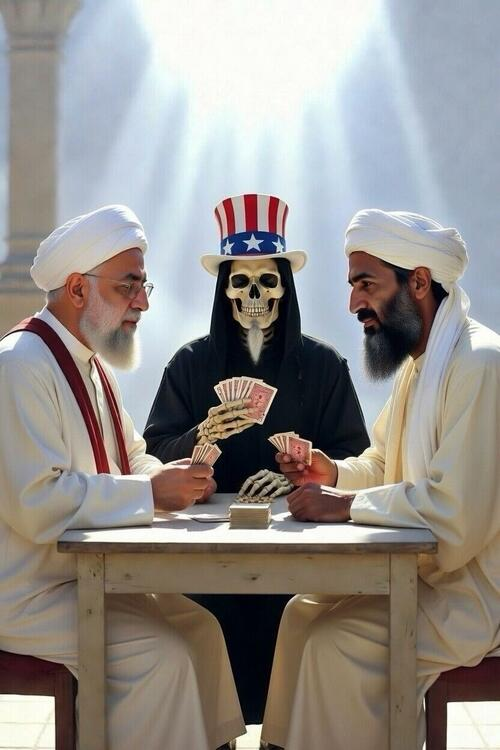




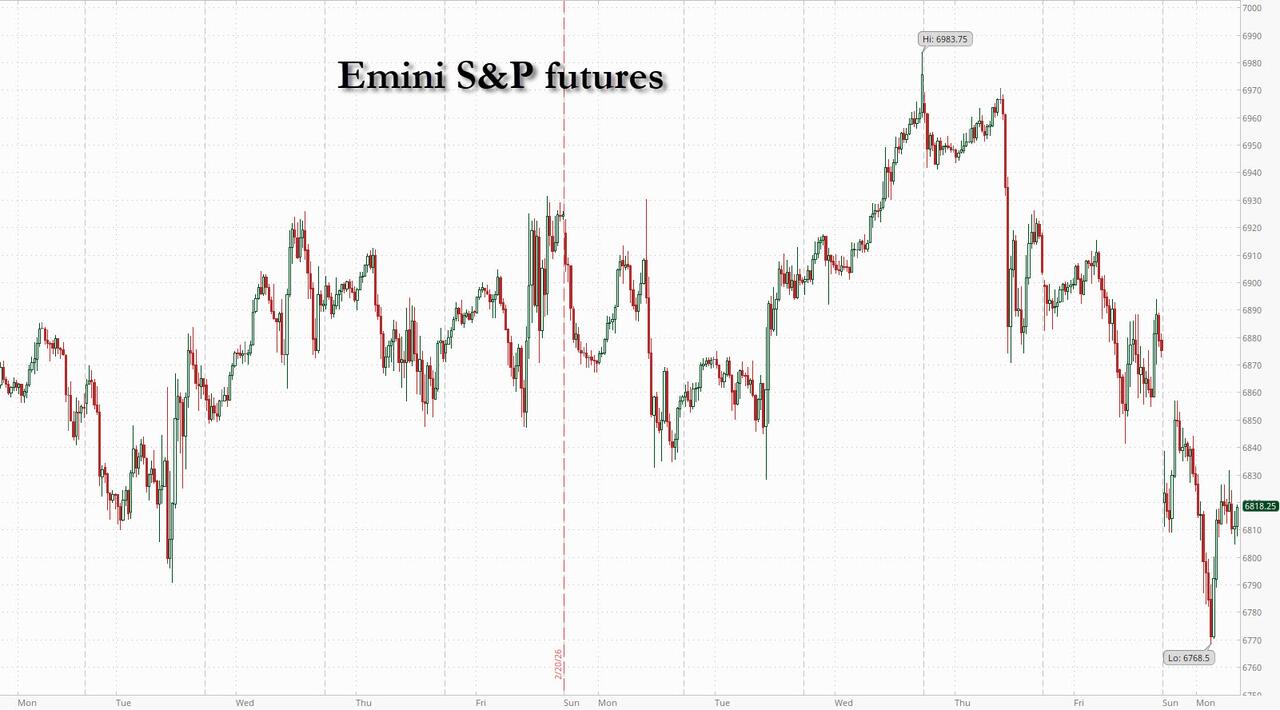

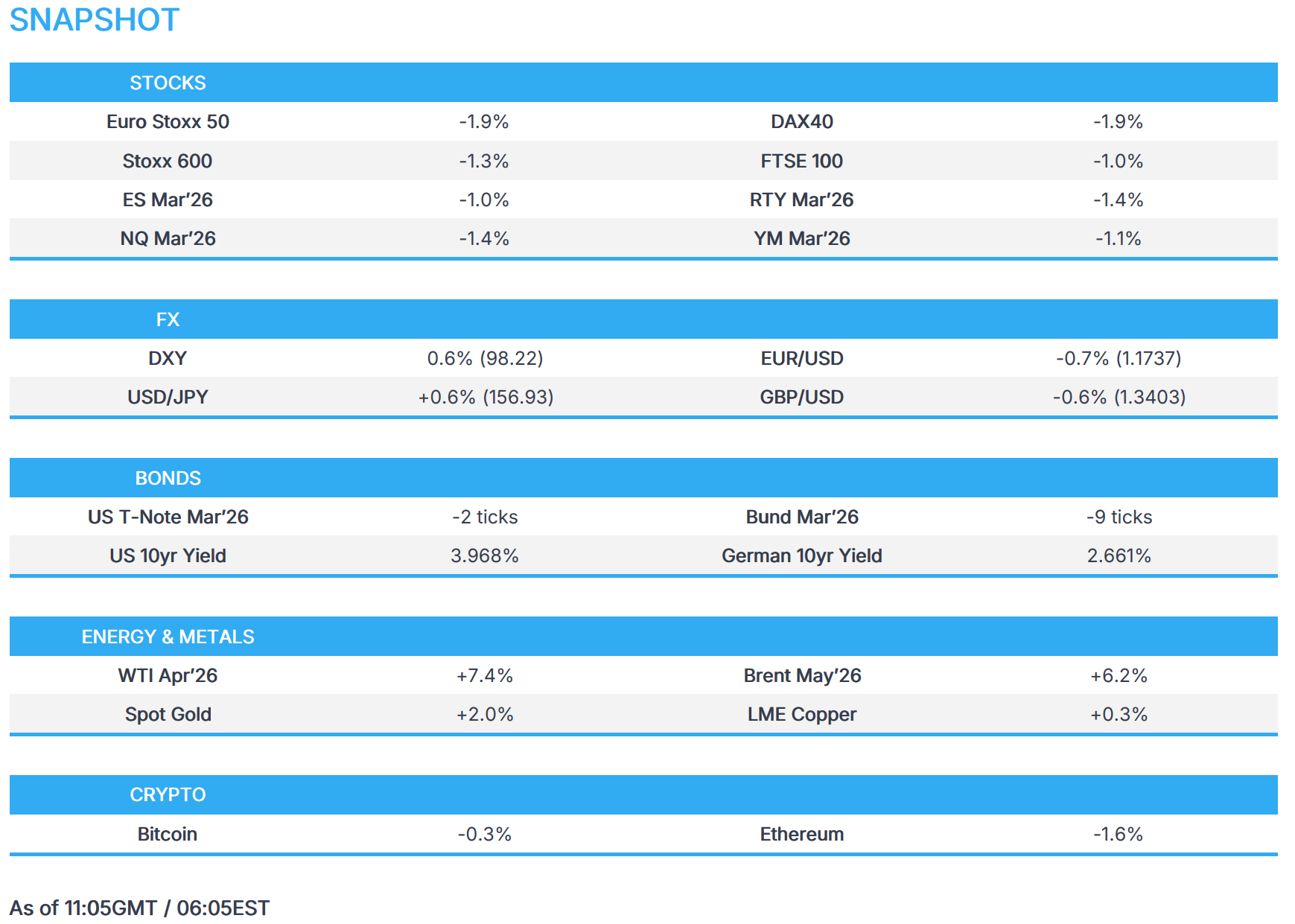
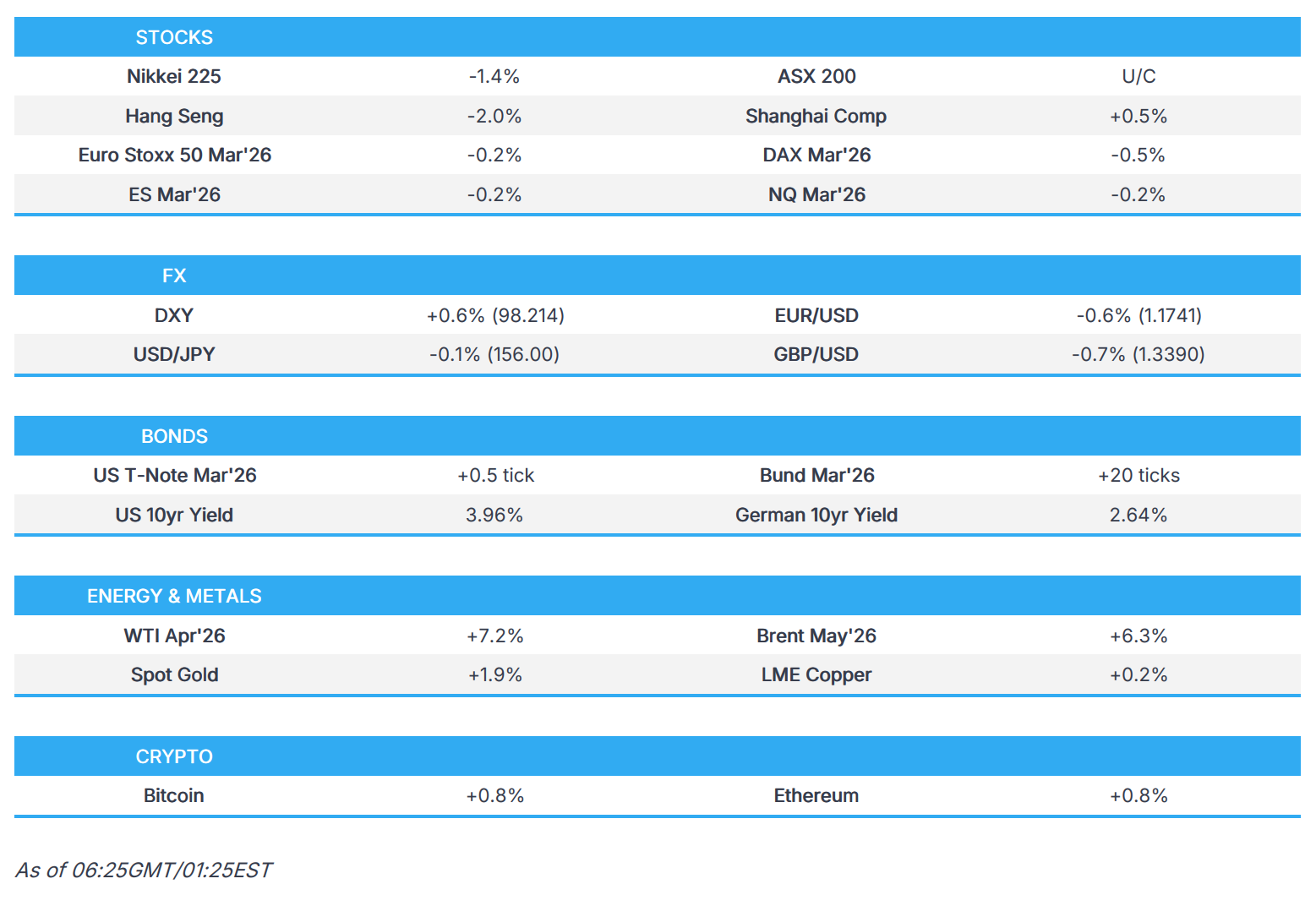
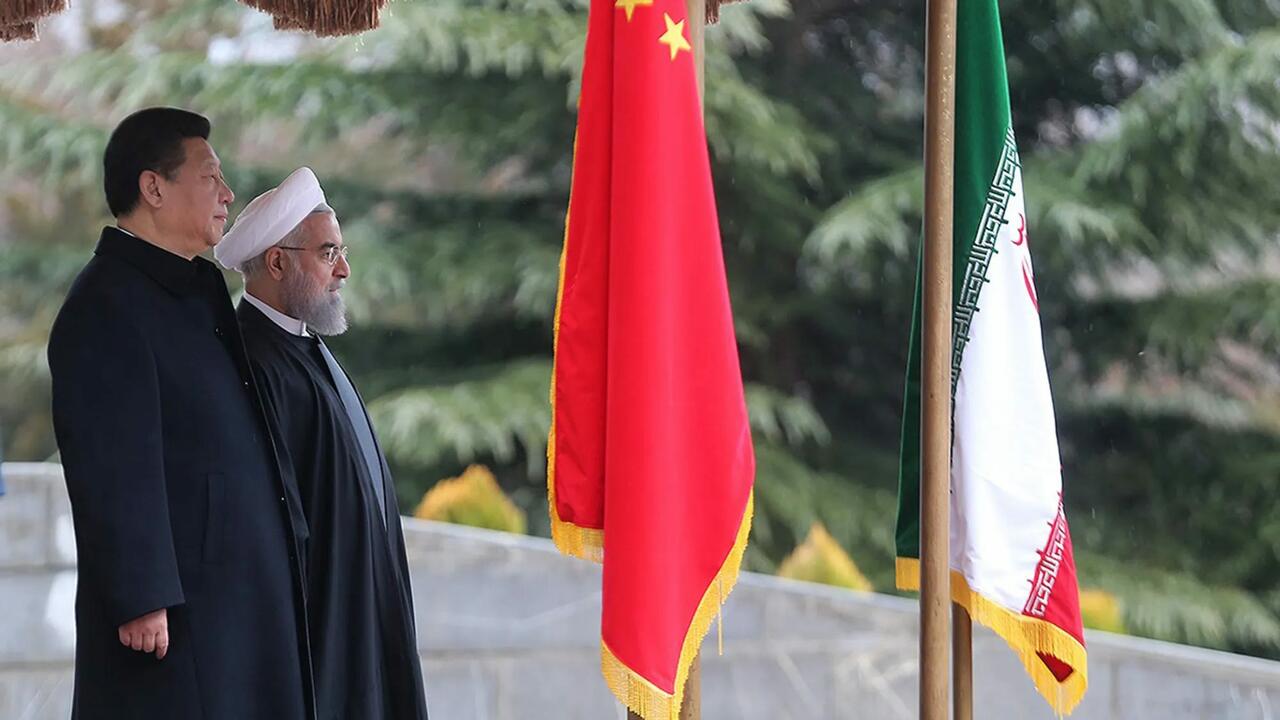
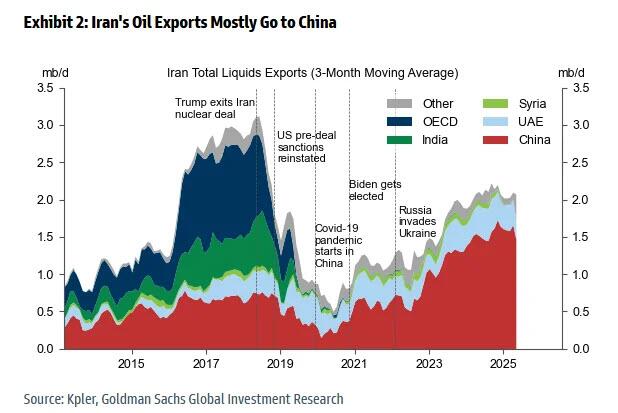
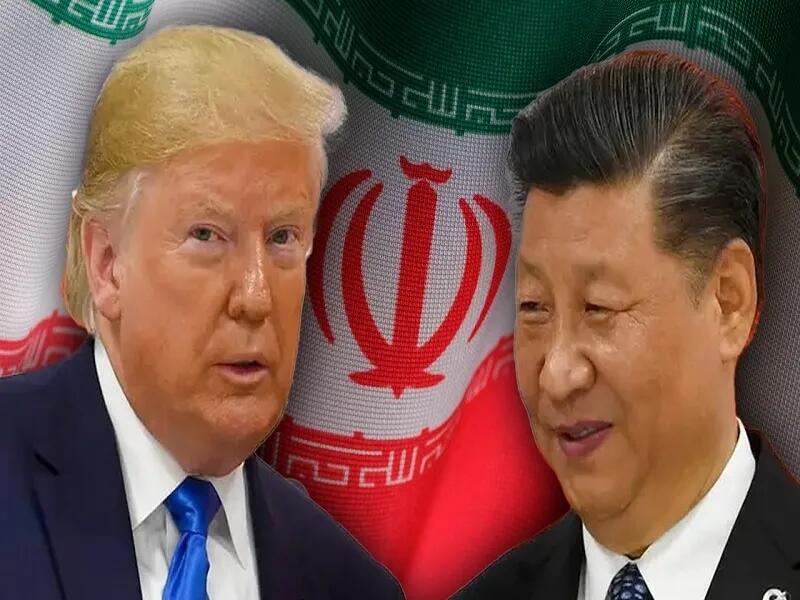


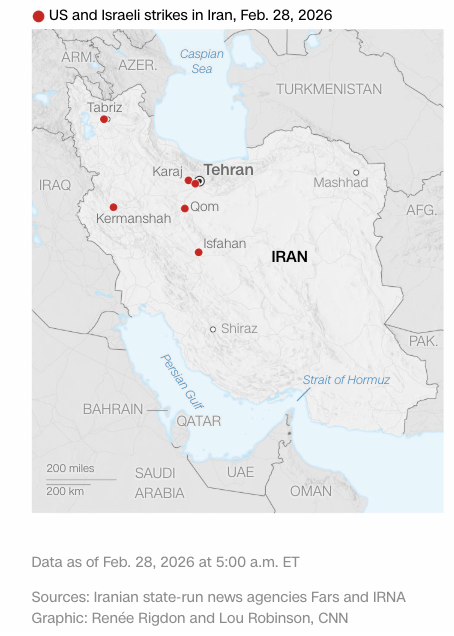
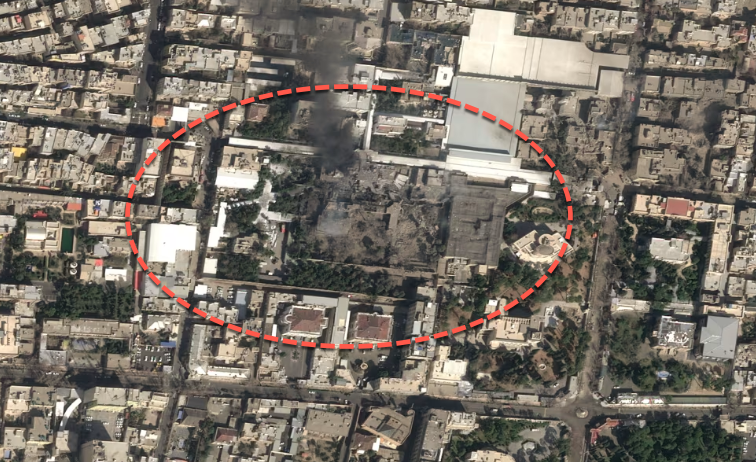
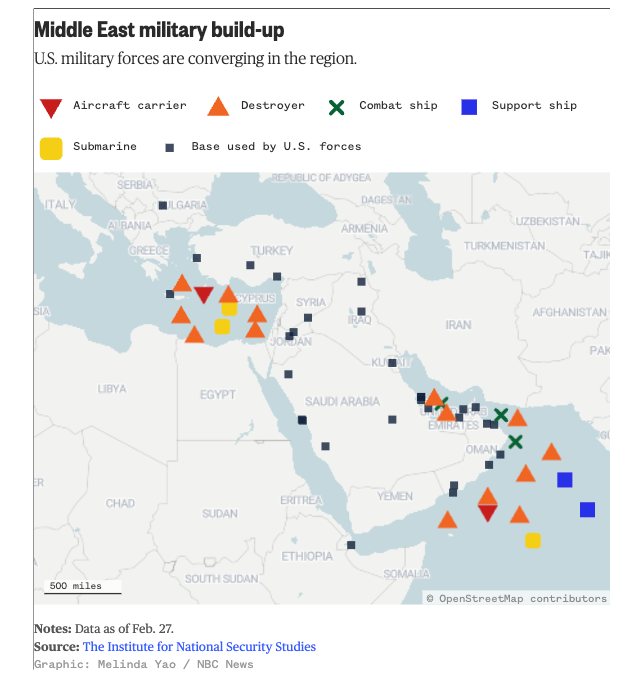
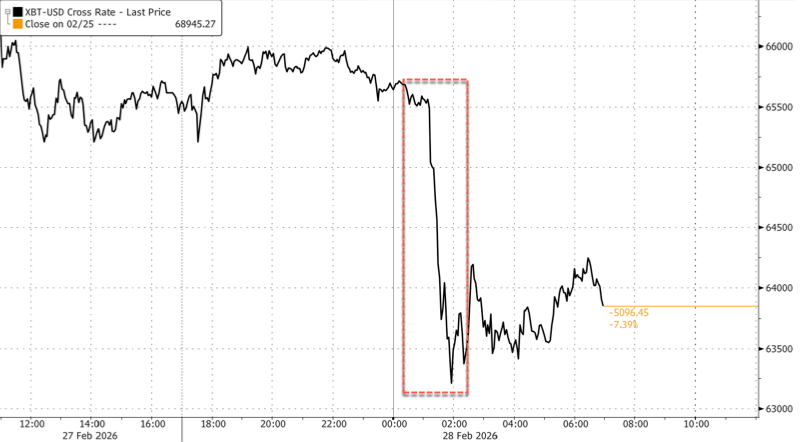


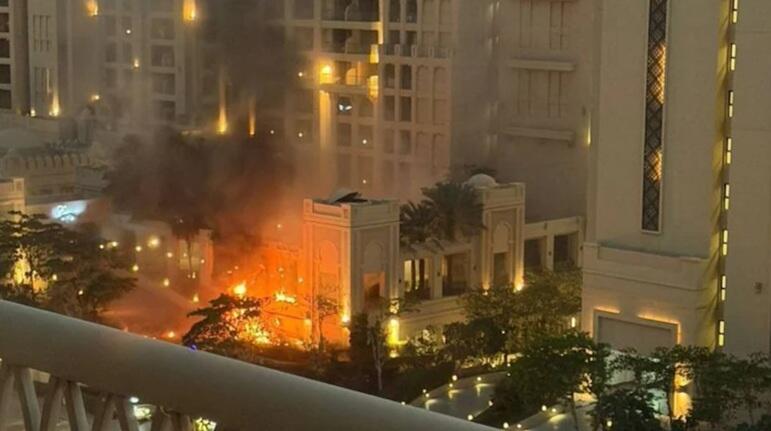

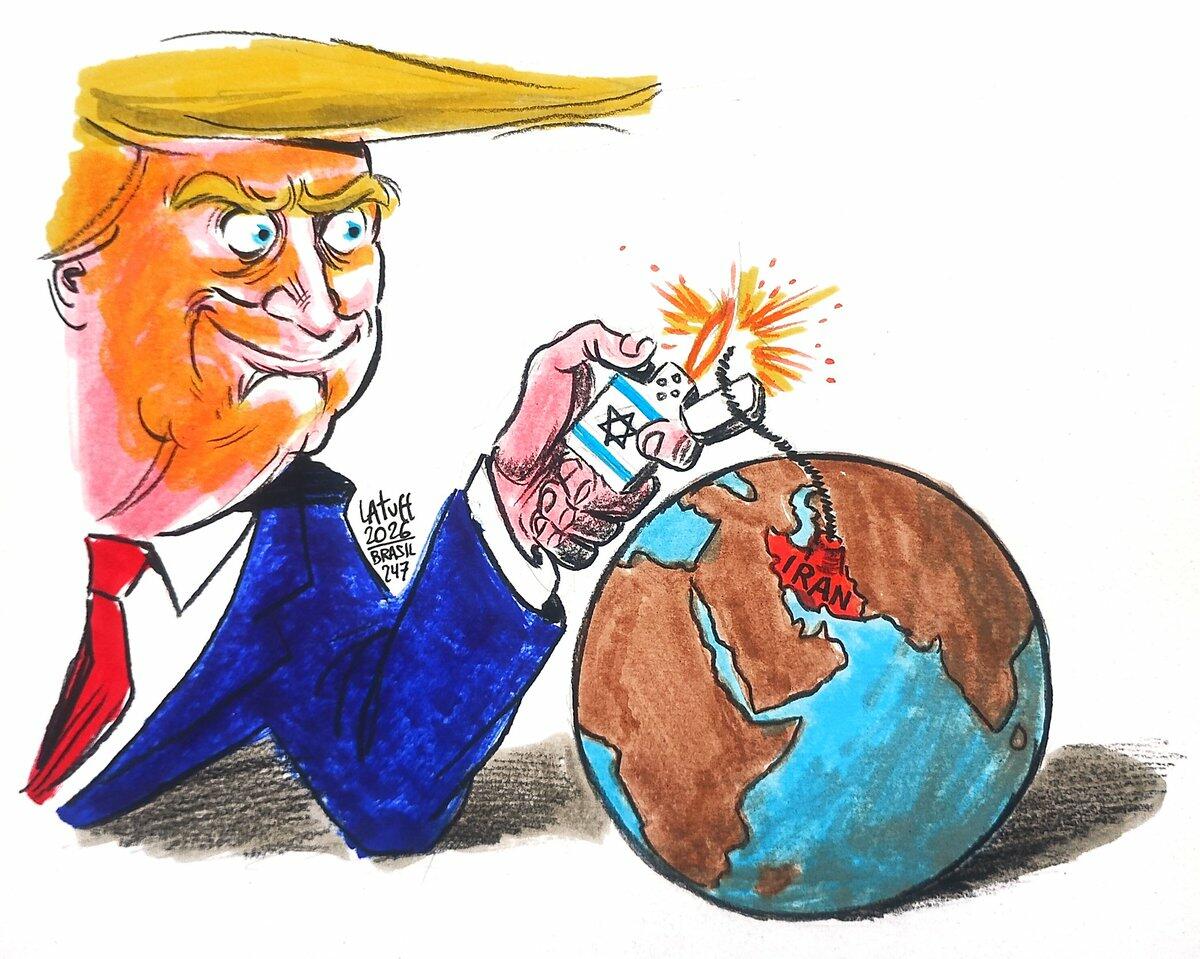
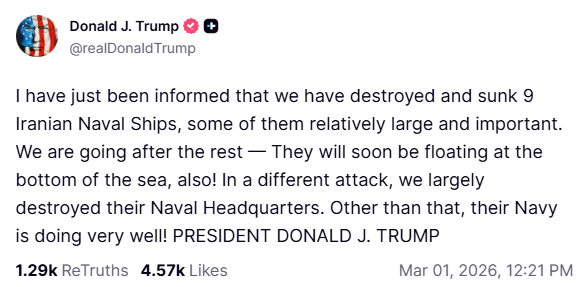

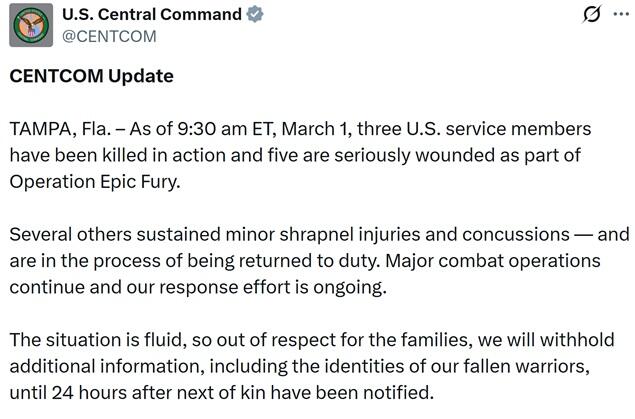


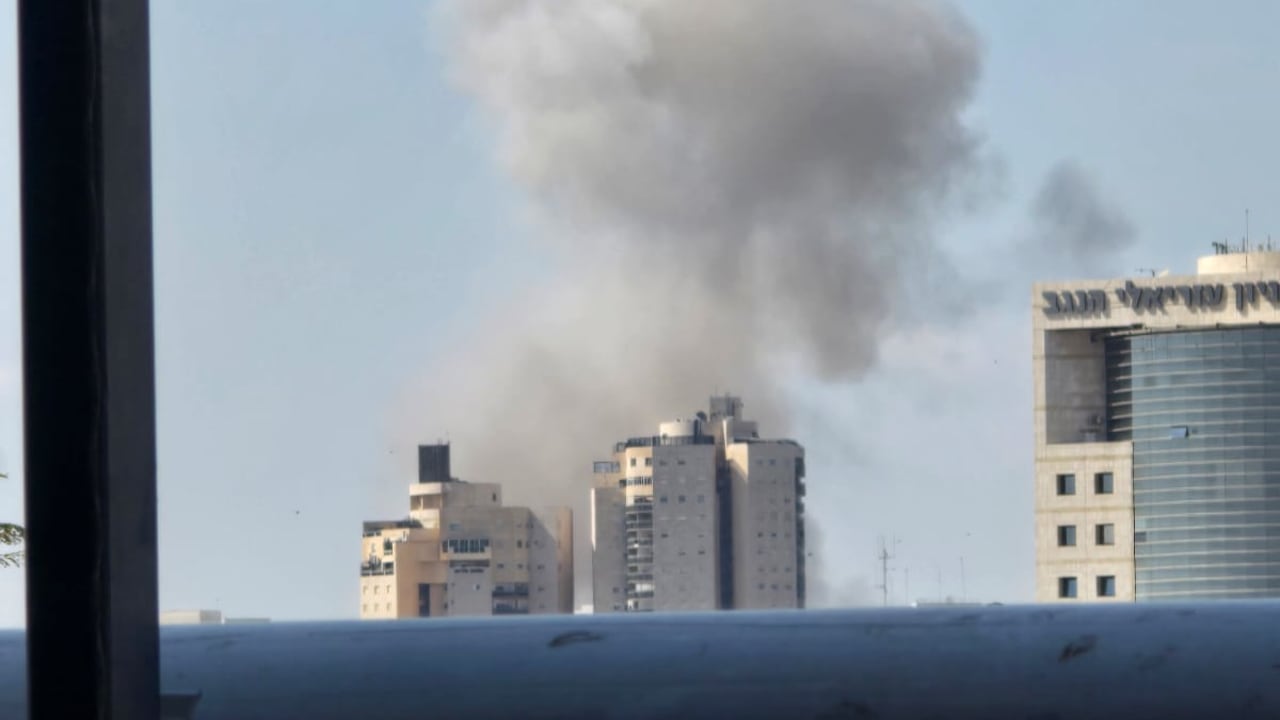


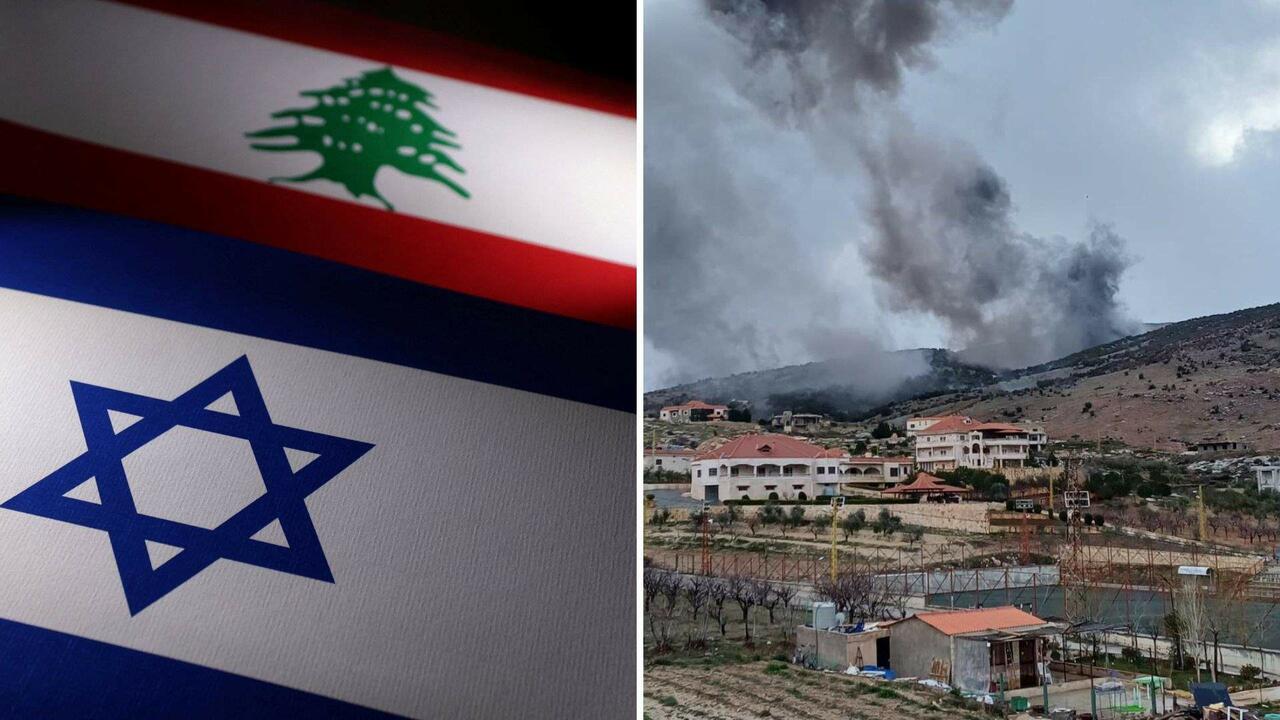


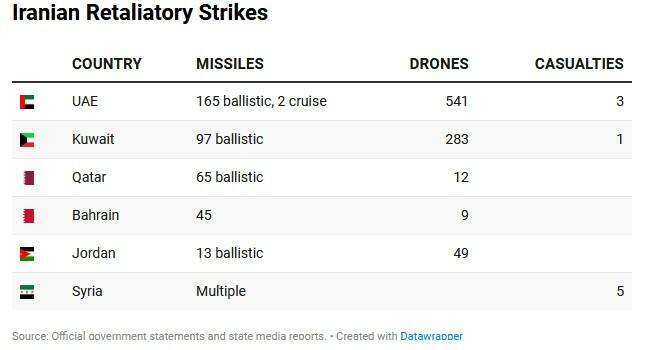

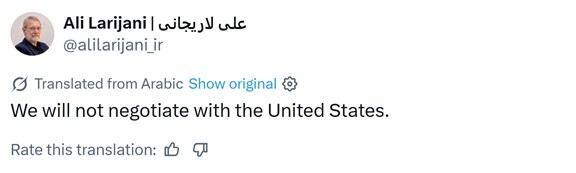
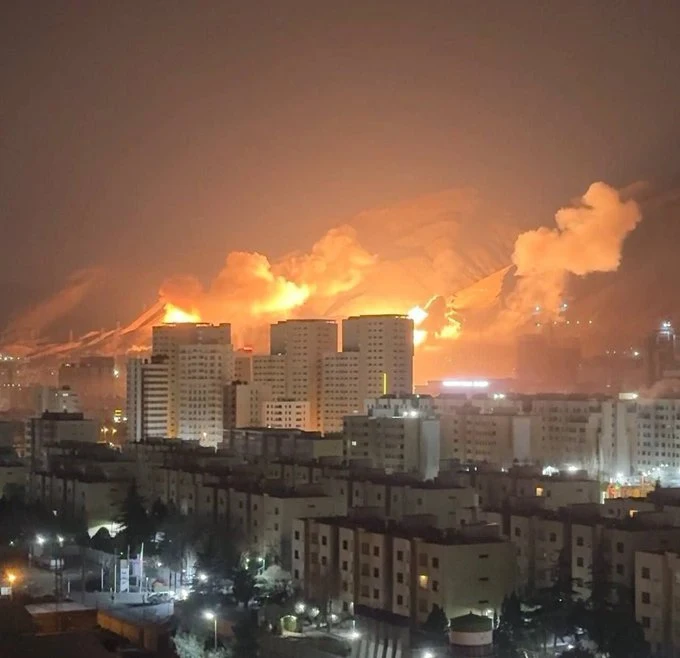


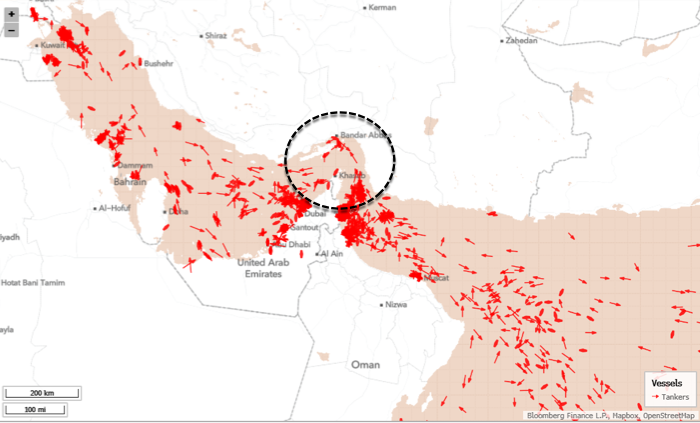
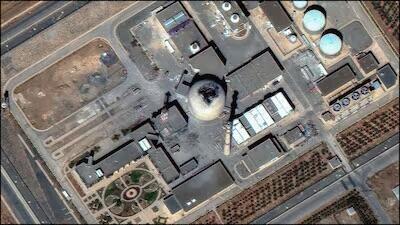


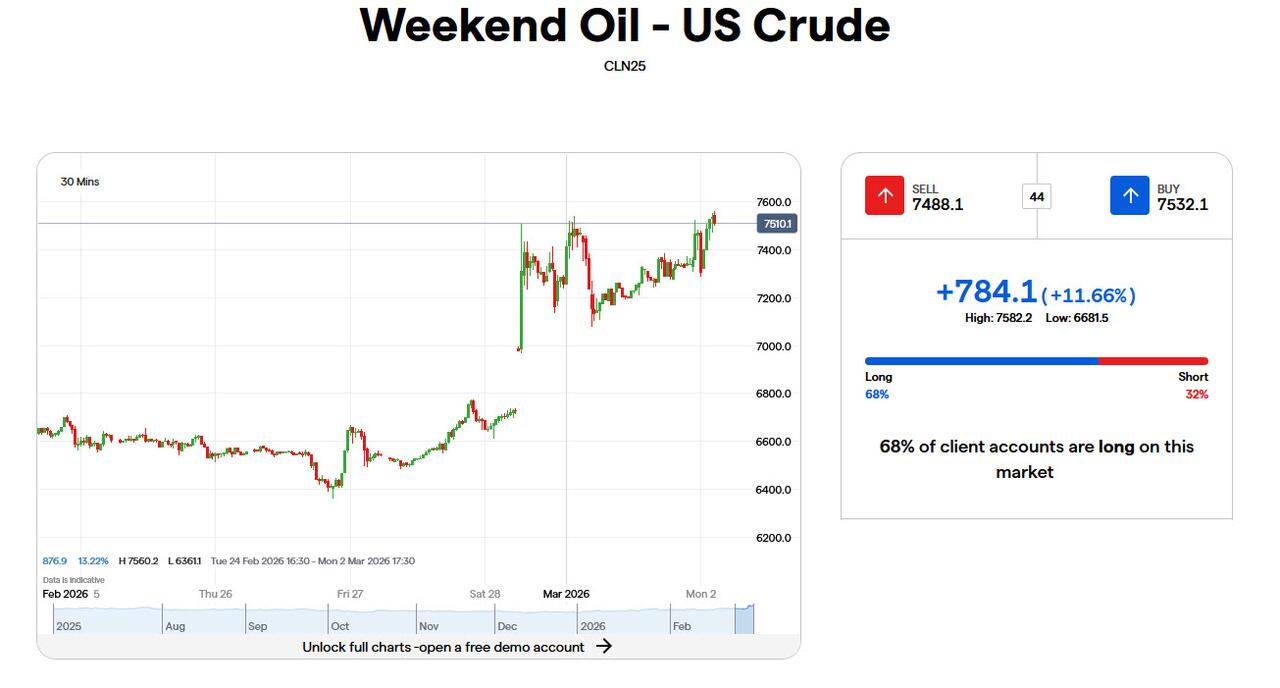
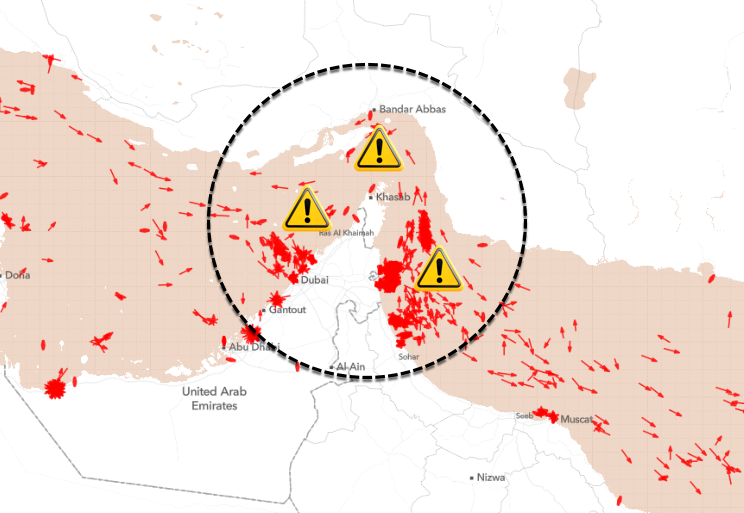
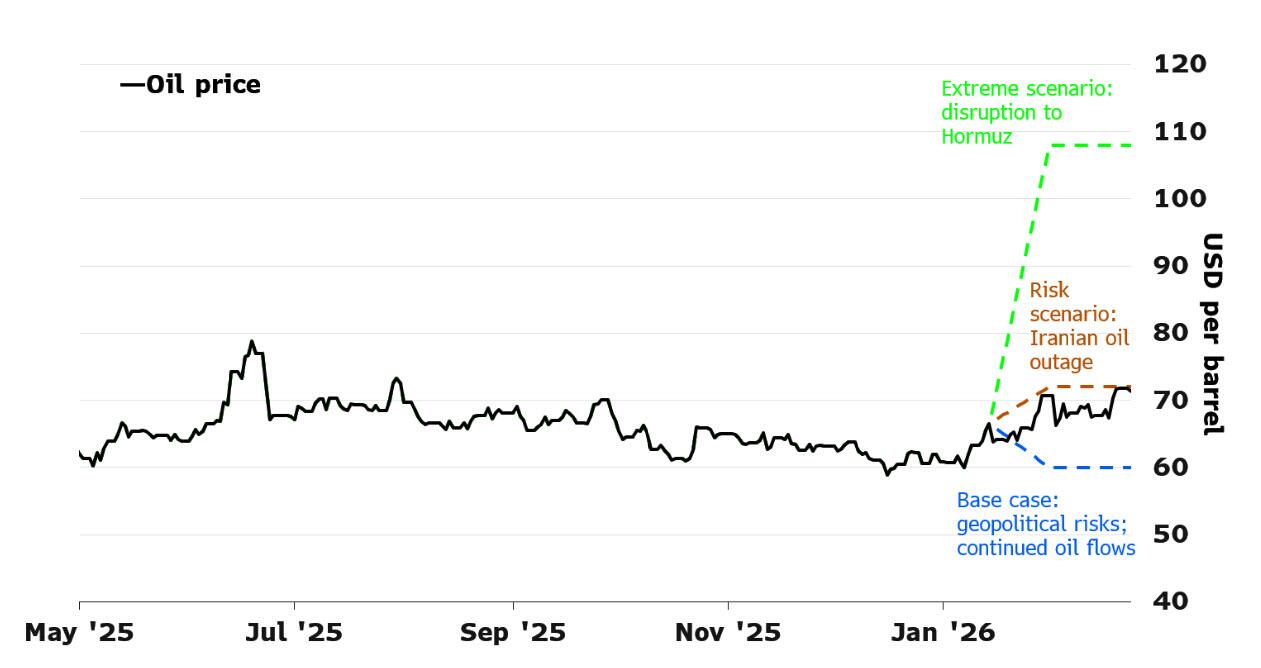

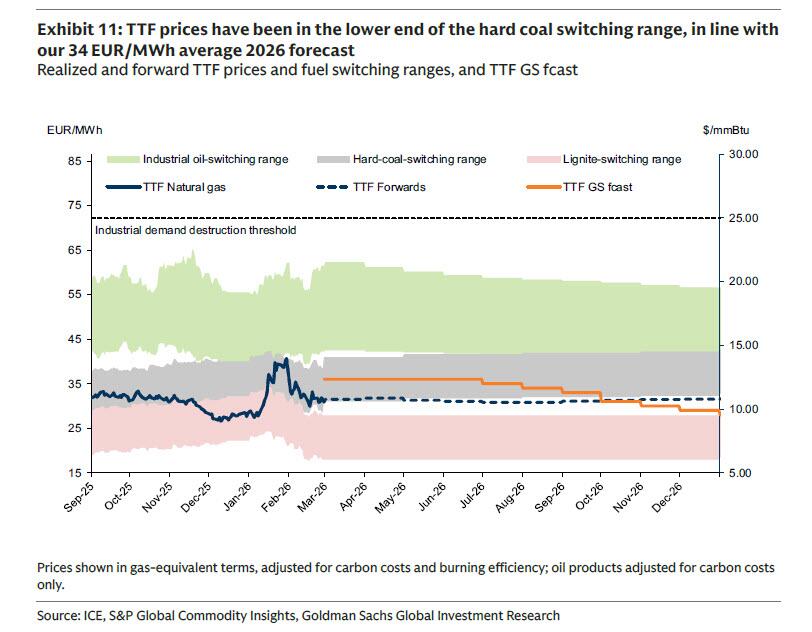
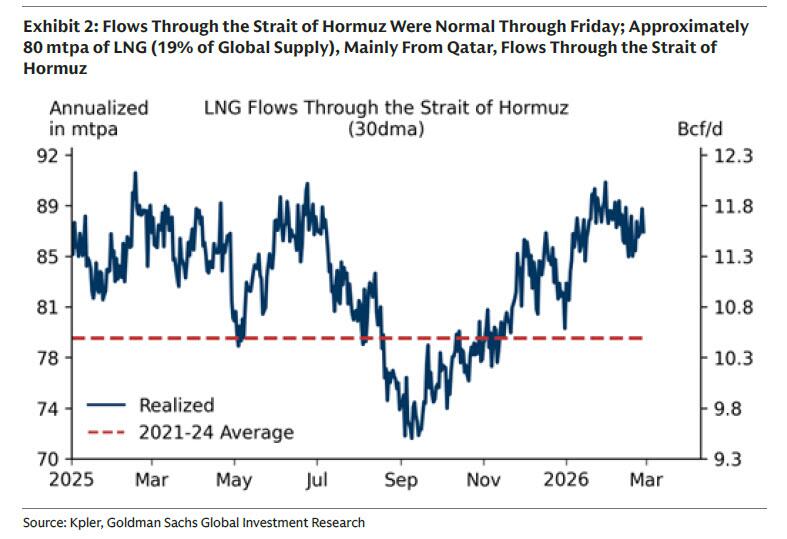
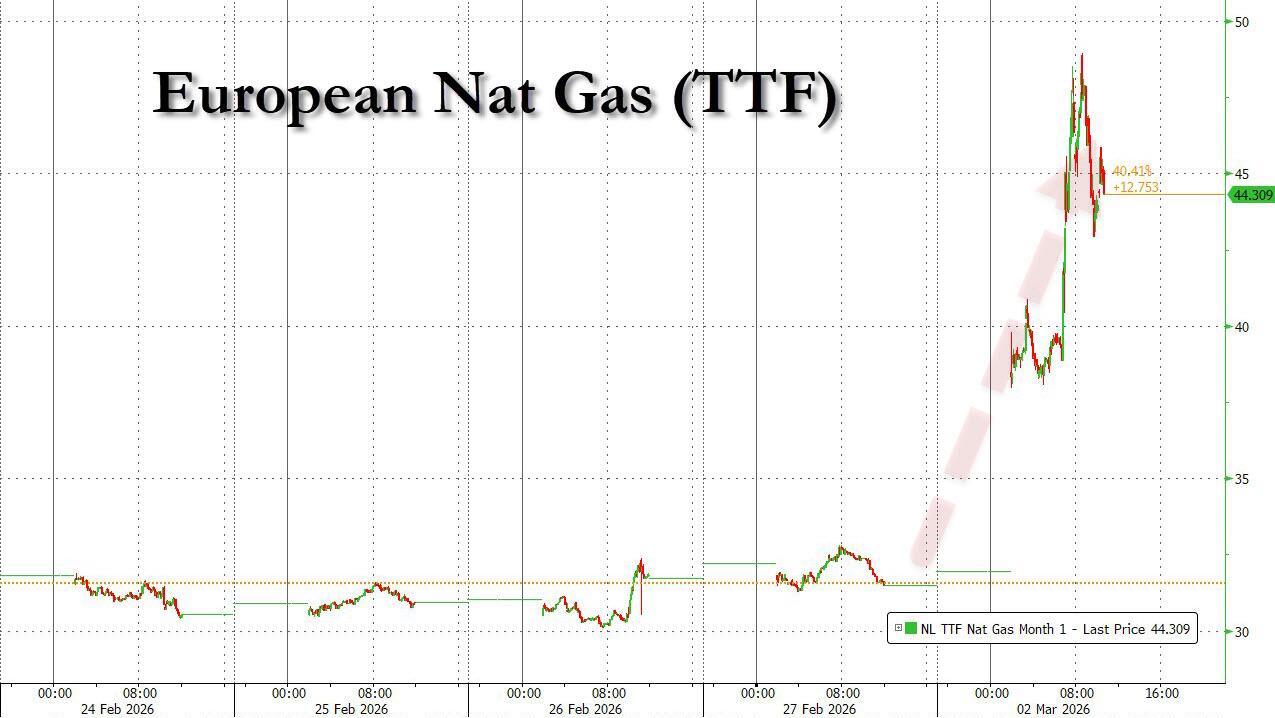
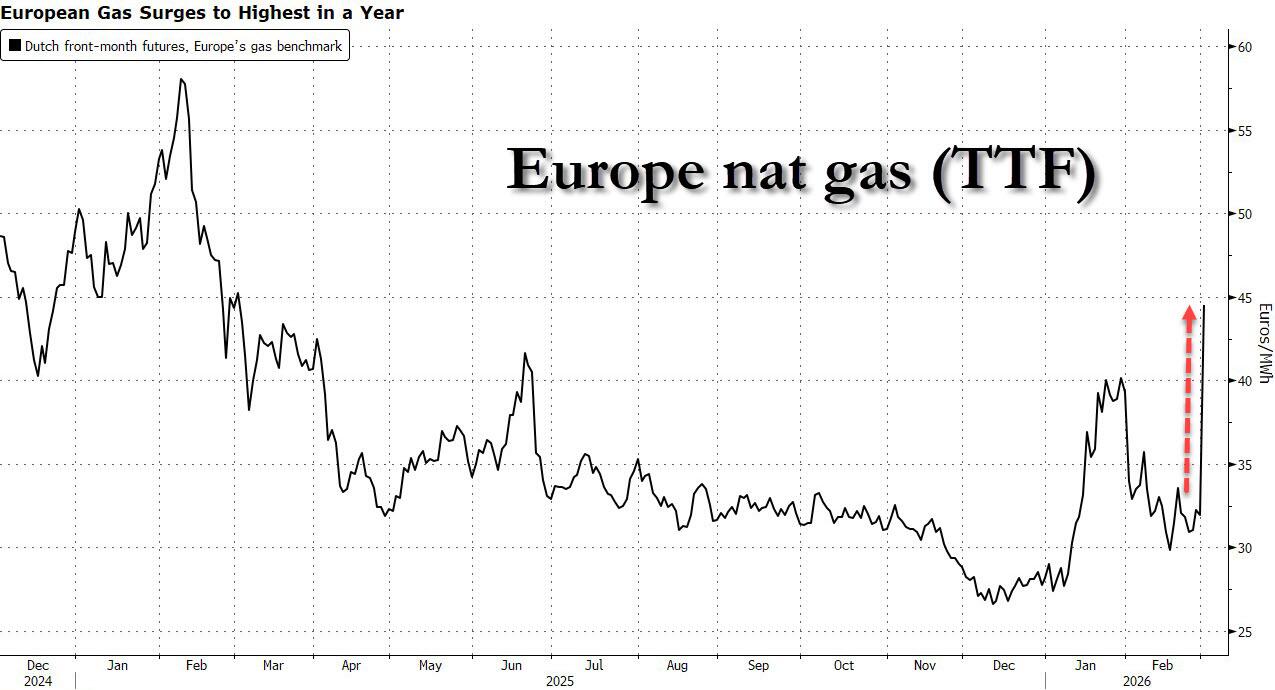
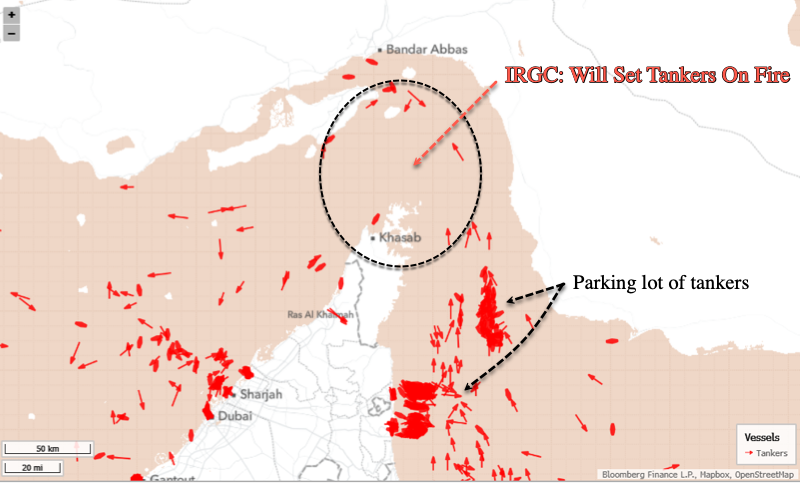
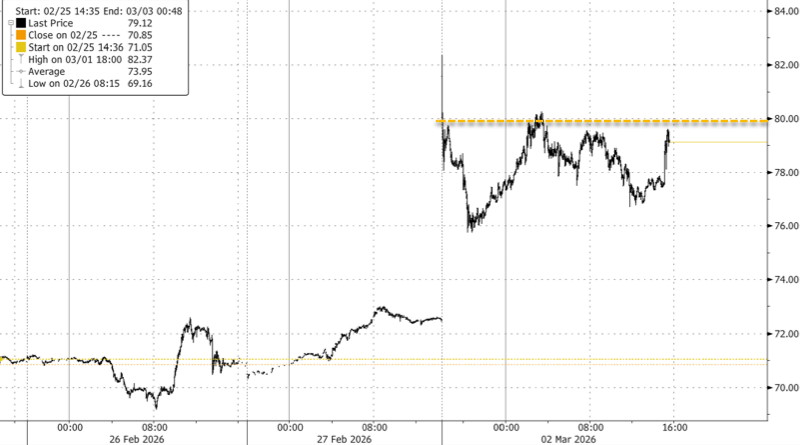

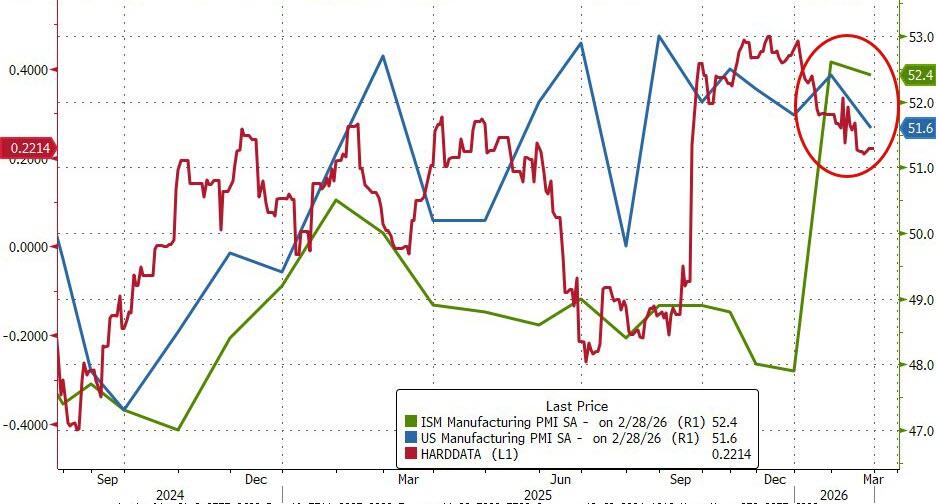
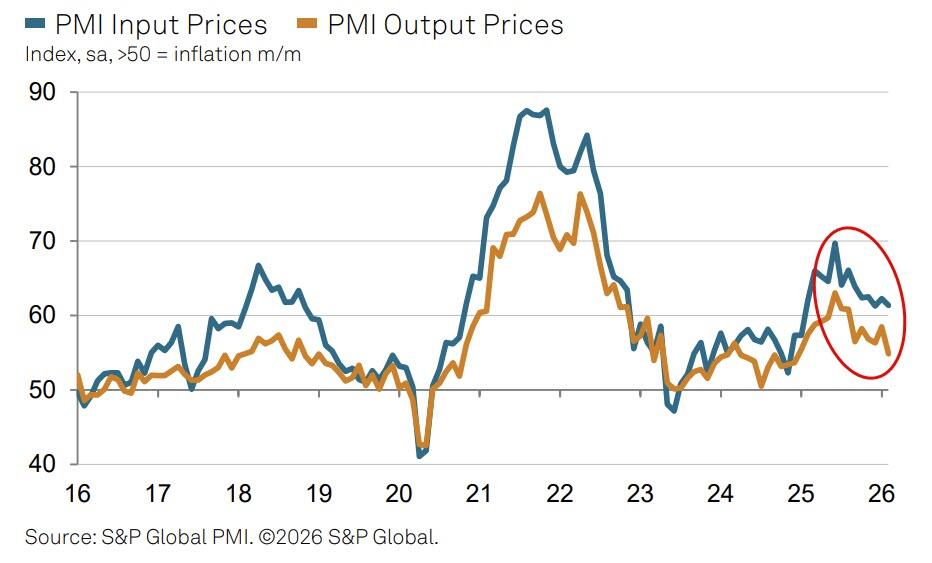
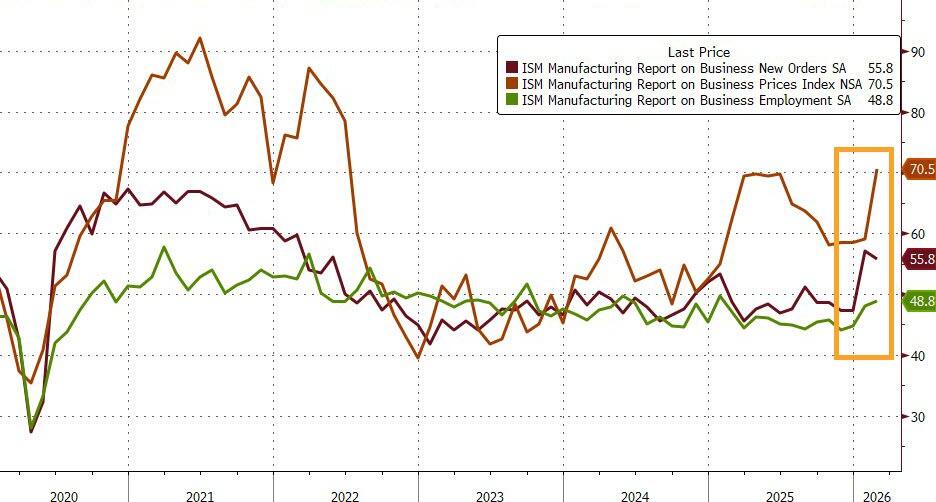





 harveyorganblog.com


