
GOLD CLOSED CLOSED UP $6.80 TO $5002.70
ACCESS MARKET
GOLD $5000.80 3:30 PM)
SILVER: 79.20 3;30 PM)

EXCHANGE: COMEX
EXCHANGE: COMEX
CONTRACT: MARCH 2026 COMEX 100 GOLD FUTURES
SETTLEMENT: 4,994.000000000 USD
INTENT DATE: 03/16/2026 DELIVERY DATE: 03/18/2026
FIRM ORG FIRM NAME ISSUED STOPPED
099 H DEUTSCHE BANK AG 8
555 C BNP PARIBAS SEC CORP 2
624 H BOFA SECURITIES 5
661 C JP MORGAN SECURITIES 33 8
709 C BARCLAYS 10
TOTAL: 33 33
MONTH TO DATE: 9,731
JPMORGAN STOPPED 8/33
GOLD: NUMBER OF NOTICES FILED FOR MARCH/2026: 33 CONTRACTs NOTICES FOR 3300 OZ or 0.1026 TONNES
total notices so far: 9731contracts for 973,100 OR 30.267 tonnes)
CME CORRECTED
SILVER NOTICES: 37 NOTICE(S) FILED FOR 0.185 MILLION OZ /
total number of notices filed so far this month : 8149 CONTRACTS (NOTICES) for 40.795 million oz
SILVER//OUTLINE
INITIAL STANDING FOR JANUARY: 22.915 MILLION OZ FOLLOWED BY TODAY’S 1.185 MILLION OZ QUEUE JUMP//NEW NORMAL STANDING ADVANCES TO 49.445 MILLION OZ// TO WHICH WE ADD OUR FIRST EXCHANGE FOR RISK FOR .100 MILLION OZ//NEW STANDING ADVANCES TO 49.545 MILLION OZ!!
INTIAL STANDING FOR FEBRUARY/SILVER: 13.505 MILLION OZ FOLLOWED BY TODAY’S HUGE 0.005 MILLION OZ QUEUE JUMP / : NEW STANDING FOR SILVER AT THE COMEX ADVANCES TO 25.180 MILLION OZ. BUT WE MUST ADD OUR FIRST EXCHANGE FOR RISK OF 25 CONTRACTS FOR .125 MILLION OZ AND THEN OUR SECOND EXCHANGE FOR RISK OF .0600 MILLION OZ TO OUR THIRD HUGE 2.825 MILLION OZ EXCHANGE FOR RISK!!
INITIAL STANDING FOR MARCH: A SURPRISINGLY LOW 31.076 MILLION OZ/ FOLLOWED BY A STRONG QUEUE JUMP OF 75 CONTRACTS OR 0.375 MILLION OZ/NEW STANDING ADVANCES TO 42.955 MILLION OZ
JULY: 50.925 MILLION OZ (QUITE SMALL)
AUGUST: 59.455 MILLION OZ (QUITE SMALL)
SEPT. 50.510 MILLION OZ.(QUITE SMALL)
OCT; 82.020 MILLION OZ (WILL BE STRONG THIS MONTH)/ OCC WANTS TO REIN IN THESE ISSUANCES!
NOVEMBER: 36.425 MILLION OZ
DEC: 45.765 MILLION OZ
JANUARY 2026: 134.270 MILLION OZ (WILL BE A VERY STRONG MONTH FOR EXCHANGE FOR PHYSICAL!)
FEB : 82.130 MILLION OZ
MARCH: 38.690 MILLION OZ
AND JULY: 46.720 MILLION OZ//
AUGUST: 4.70 MILLION OZ INITIAL STANDING PLUS TODAY;S 5,000 OZ QUEUE JUMP //NEW STANDING ADVANCES TO 10.960 MILLION OZ
SEPTEMBER: 68.040 MILLION OZ NORMAL DELIVERY(INCLUDES ALL QUEUE JUMPING AND EXCHANGE FOR PHYSICAL TRANSFERS) PLUS 3.0 MILLION OZ EX FOR RISK = 71.040 MILLION OZ. (THIS IS THE FIRST AND ONLY ISSUANCE OF EXCHANGE FOR RISK FOR SILVER SINCE MAY.)
OCTOBER: 39.565 MILLION OZ OF NORMAL DELIVERY INCLUDES ALL QUEUE JUMPING
PLUS
2.110 MILLION OZ EXCHANGE FOR RISK//TOTAL OZ STANDING IN OCT ADVAN
NOVEMBER: INITIAL STANDING AT 11.575 MILLION OZ FOLLOWED BY TODAY’S 195,000 OZ QUEUE JUMP WHICH FOLLOWS ALL OTHER QUEUE JUMPS OF 9.155 MILLION OZ//STANDING ADVANCES TO 19.670 MILLION OZ/
DECEMBER: INITIAL AMOUNT STANDING FOR DELIVERY: 49.33 MILLION OZ// FOLLOWED BY ANOTHER STRONG 835,000OZ QUEUE JUMP+ DEC. FIRST EXCHANGE FOR RISK 0F .850 MILLION OZ + LAST WEEK.S 495,000 OZ EXCHANGE FOR RISK AND THEN A 3RD ISSUANCE IF 1.00MILLION OZ THEN FINALLY DEC 249ISSUANCE OF 1.35 MILLION OZ EXCHANGE FOR RISK//NEW TOTAL EX FOR RIS IS 3.685 MILLION OZ // STANDING ADVANCES TO 68.415 MILLION OZ//
JANUARY: INITIAL STANDING 22.915 MILLION OZ FOLLOWED BY TODAY’S 1.185 MILLION OZ QUEUE JUMP//NORMAL STANDING ADVANCES TO 49.445 MILLION OZ// TO WHICH WE ADD OUR FIRST EXCHANGE FOR RISK OF 0.100 MILLLION OZ//NEW STANDING ADVANCES TO 49.545 MILLION OZ
FEB: 13.399 MILLION OZ IS OUR INITIAL STANDING FOR SILVER! TO WHICH WE ADD OUR NEXT QUEUE JUMP FOR 5,000 OZ AND THEN ADD OUR 3 EXCHANGE FOR RISK FOR 3.010 MILLION OZ STANDING ADVANCES TO 28.190 MILLION OZ!!
MARCH: INITIAL AMOUNT OF SILVER STANDING IS 31.076 MILLION OZ FOLLOWED BY TODAY’S 0.375 MILLION OZ QUEUE //NEW TOTAL STANDING ADVANCESTO 42.955MILLION OZ
- MAY: SUMMARY FOR MAY TONNES WHICH STOOD FOR DELIVERY:
4. AUGUST: 60.547 TONNES OF INITIAL GOLD FIRST DAY NOTICE FOLLOWED BY THE NET MONTH’S QUEUE JUMP OF 47.2312 TONNES TO WHICH WE ADD THE FOLLOWING EXCHANGE FOR RISK ISSUANCE RECEIVED FOR THE MONTH: 5.4432 TONNES EX FOR RISK/AUG 7 , AUG 11: 2.413 TONNES EX FOR RISK AND AUG. 12 OF 2.637 TONNES EX FOR RISK//AUG 25: 9.107 TONNES , AUGUST 26: 9.1010 TONNES AND NOW AUGUST 27: 9.0699 TONNES//NEW STANDING ADVANCES TO 107.5117 TONNES OF GOLD NORMAL STANDING (INCLUDES ALL MONTHLY QUEUE JUMPS/EX FOR PHYSICAL TRANSFERS//) +44.696 TONNES EX.FOR RISK = 152.208 TONNES
5.SEPT: INITIAL 8.093 TONNES OF GOLD PLUS TODAY’S QUEUE JUMP OF 0.4883 TONNES PLUS 2.2827 TONNES OF EXCHANGE FOR RISK TODAY//NEW TOTAL EX. FOR RISK/MONTH = 22.923//NEW TOTAL STANDING FOR GOLD SEPT ADVANCES TO = 48.801 TONNES!!
6.OCTOBER: 90.012 TONNES OF INITIAL GOLD STANDING WITH TODAY’S TINY 0.00311 TONNES QUEUE JUMP WHICH FOLLOWS ALL OTHER QUEUE JUMPS DURING OCT OF 76.1656 TONNES
THEN WE MUST ADD OUR 14.553 TONNES OF OUR ISSUANCE OF EXCHANGE FOR RISK/6 OCCASIONS//NEW TOTAL OF GOLD STANDING ADVANCES TO 197.5141 TONNES OF GOLD.
7.NOVEMBER BEGINS WITH 15.651 TONNES INITIALLY STANDING FOR DELIVERY FOLLOWED BY TODAY’S QUEUE JUMP OF 2.323 TONNES FOLLOWED BY ALL PREVIOUS QUEUE JUMPS IN OF OF 21.3775 TONNES TO WHICH WE ADD OUR TWO EXCHANGE FOR RISK ISSUANCE OF 4.5596 TONNES//NEW STANDING ADVANCES TO 43.9716 TONNES OF GOLD.
8. DECEMBER BEGINS WITH INITIAL STANDING OF 83.813 TONNES OF GOLD FOLLOWED BY TODAY’S 0.0TONNE QUEUE JUMP WHICH FOLLOWS ALL OTHER QUEUE JUMPS OF: 37.163 TONNES//NEW STANDING ADVANCES TO 115.390 TONNES TO WHICH WE ADD OUR 4 EXCHANGE FOR RISK FOR DECEMBER OF 6.587 TONNES/NEW STANDING ADVANCES TO 121.977 TONNES
9. JANUARY: INITITAL STANDING: 13.785 TONNES TO WHICH WE ADD OUR FIRST EXCHANGE FOR PHYSICAL TRANSFER OF 0.08709 TONNES WHICH FOLLOWS ALL OTHER QUEUE JUMPS OF 30.7117TONNES //NEW TOTAL QUEUE JUMPS 30.7117//NORMAL DELIVERY OF GOLD ADVANCES TO 36.8958 TONNES TO WHICH WE ADD OUR SIX EXCHANGE FOR RISK OF 22.315 TONNES//NEW STANDING ADVANCES TO 59.2108 TONNES.
FEB; INITIAL AMOUNT OF GOLD STANDING FOR DELIVERY: 93.567 TONNES OF GOLD TO WHICH WE ADD OUR NEXT 0.0248 TONNES 0.1555 TONNES QUEUE JUMP TO 41.2082 TONNES/ NEW NET QUEUE JUMP INCREASES TO 41.233 TONNES// AND THEN WE ADD OUR SIX EXCHANGE FOR RISK: 10,080 CONTRACTS OR 31.251 TONNES//NEW STANDING REDUCES TO 157.878 TONNES
MARCH:: INITIAL AMOUNT OF GOLD STANDING FOR DELIVERY: 8.099 TONNES FOLLOWED BY TODAY’S STRONG 0.2612 TONNES QUEUE JUMP //NEW STANDING ADVANCES TO 32.942 TONNES/
MARCH:: SMALL INITIAL STANDING FOR GOLD FOR MARCH AT 8.099 TONNES FOLLOWED BY TODAY’S 0.2426TONNES QUEUE JUMP///NEW STANDING ADVANCES TO 32.942TONNES OF GOLD./
FINAL STANDING FOR GOLD, JANUARY CONTRACT AT 59.2108 TONNES OF GOLD
FEBRUARY: INITIAL STANDING FOR GOLD: 157.878 TONNES!! WHICH INCLUDES ALL QUEUE JUMPING, THREE EXCHANGE FOR PHYSICAL TRANSFERS TO LONDON AND OUR SIX ISSUANCES EXCHANGE FOR RISK!!
MARCH: INITIAL STANDING AT 8.099 TONNES FOLLOWED BY TODAY’S 0.2426 TONNES QUEUE JUMP +//NEW STANDING ADVANCES TO 32.942TONNES/
JAN. 2025: 257.919 TONNES (ISSUANCE WILL BE PRETTY GOOD THIS MONTH BUT MUCH LOWER THAN LAST MONTH)
FEB: 207.21 TONNES//EX FOR PHYSICAL ISSUANCE (WILL BE A FAIR SIZED ISSUANCE THIS MONTH)
MARCH 130.84 TONNES//QUITE SMALL THIS MONTH.
APRIL; 208.57 TONNES. STRONG THIS MONTH
MAY: 113.499 TONNES OF GOLD EFP ISSUANCE//QUITE SMALL THIS MONTH
JUNE: 97.79 TONNES OF GOLD EFP ISSUANCE/EXTREMELY SMALL
JULY : 150.877 TONNES// QUITE SMALL
AUGUST: 175.86 TONNES A LOT LARGER THIS MONTH.
SEPT. 116.13 TONNES VERY SMALL
OCT. 252.72 TONNES//CERTAINLY MUCH LARGER THIS MONTH/VERY STRONG
NOV: 124.74 TONNES
DEC: 190.04 TONNES//GOOD SIZED THIS MONTH FINAL.
TOTAL EXCHANGE FOR PHYSICAL ISSUED FOR YEAR 2025: 2,026.20 TONNES (LOWER THAN LAST YR 2,569.00 TONNES
JANUARY: 209.08 TONNES ( (WILL BE A STRONG MONTH FOR EXCHANGE FOR PHYSICAL)
FEB. 176.35 TONNES (WHICH IS A FAIR ISSUANCE)
MARCH: 123.04 TONNES//WILL BE VERY STRONG ISSUANCE THIS MONTH
XXXXXXXXXXXXXXXXXXXXXXXXXXXXXXXXXXXXXXXXXX
SPREADERS:
HERE IS A BRIEF SYNOPSIS OF HOW THE CROOKS FLEECE UNSUSPECTING LONGS IN THE SPREADING ENDEAVOUR ;MODUS OPERANDI OF THE CORRUPT BANKERS AS TO HOW THEY HANDLE THEIR SPREAD
YOU WILL ALSO NOTICE THAT THE COMEX OPEN INTEREST STARTS TO RISE BUT SO IS THE OPEN INTEREST OF SPREADERS. THE OPEN INTEREST IN WILL CONTINUE TO RISE UNTIL ONE WEEK BEFORE FIRST DAY NOTICE OF AN UPCOMING ACTIVE DELIVERY MONTH (OCT), AND THAT IS WHEN THE CROOKS SELL THEIR SPREAD POSITIONS BUT NOT AT THE SAME TIME OF THE DAY. THEY WILL USE THE SELL SIDE OF THE EQUATION TO CREATE THE CASCADE (ALONG WITH THEIR COLLUSIVE FRIENDS) AND THEN COVER ON THE BUY SIDE OF THE SPREAD SITUATION AT THE END OF THE DAY. THEY DO THIS TO AVOID POSITION LIMIT DETECTION. THE LIQUIDATION OF THE SPREADING FORMATION CONTINUES FOR EXACTLY ONE WEEK AND ENDS ON FIRST DAY NOTICE.”
WHAT IS ALARMING TO ME, ACCORDING TO OUR LONDON EXPERT ANDREW MAGUIRE IS THAT THESE EFP’S ARE BEING TRANSFERRED TO WHAT ARE CALLED SERIAL FORWARD CONTRACT OBLIGATIONS AND THESE CONTRACTS ARE LESS THAN 14 DAYS. ANYTHING GREATER THAN 14 DAYS, THESE MUST BE RECORDED AND SENT TO THE COMPTROLLER, GREAT BRITAIN TO MONITOR RISK TO THE BANKING SYSTEM. IF THIS IS INDEED TRUE, THEN THIS IS A MASSIVE CONSPIRACY TO DEFRAUD AS WE NOW WITNESS A MONSTROUS TOTAL EFP’S ISSUANCE AS IT HEADS INTO THE STRATOSPHERE.
The crooks also use the spread in the TAS account (trade at settlement). They buy the spot TAS (e.g. June) and sell the future TAS two months out (e.g. August). Then they unload the front month (i.e. unload the buy side first so the price of gold/silver falls. This occurs in the middle of the front delivery month cycle. They unload the sell side of the equation, two months down the road. The crooks violate position limits as the OCC refuse to hear our complaints.
First, here is an outline of what will be discussed tonight:
SILVER:
1.TODAY WE HAD THE OPEN INTEREST AT THE COMEX IN SILVER FELL BY A STRONG SIZED 472 CONTRACTS OI TO 114,618 AND FURTHER FROM THE COMEX HIGH RECORD //244,710( SET FEB 25/2020). THE LAST RECORDS WERE SET IN AUG.2018 AT 244,196 WITH A SILVER PRICE OF $14.78/(AUGUST 22/2018)..THE PREVIOUS RECORD TO THAT WAS SET ON APRIL 9/2018 AT 243,411 OPEN INTEREST CONTRACTS WITH THE SILVER PRICE AT THAT DAY: $16.53). AND PREVIOUS TO THAT, THE RECORD WAS ESTABLISHED AT: 234,787 CONTRACTS, SET ON APRIL 21.2017 OVER 7 YEARS AGO. HOWEVER WE HAVE NOW SET A NEW RECORD LOW OF 112,794 CONTRACTS THIS MONTH( MARCH 4/2026)
EFP ISSUANCE 60 CONTRACTS
OUR CUSTOMARY MIGRATION OF COMEX LONGS CONTINUE TO MORPH INTO LONDON FORWARDS AS OUR BANKERS USED THEIR EMERGENCY PROCEDURE TO ISSUE:
MAY 60 CONTRACTS and 0 ALL OTHER MONTHS: ZERO. TOTAL EFP ISSUANCE: 0 CONTRACTS. EFP’S GIVE OUR COMEX LONGS A FIAT BONUS PLUS A DELIVERABLE PRODUCT OVER IN LONDON. IF WE TAKE THE COMEX OI LOSS OF 419 CONTRACTS AND ADD TO THE 60 E.FP. ISSUED
WE OBTAIN A STRONG SIZED LOSS OF 422OI OPEN INTEREST CONTRACTS FROM OUR TWO EXCHANGES DESPITE OUR HUGE LOSS OF $0.57
THUS IN OUNCES, THE LOSS ON THE TWO EXCHANGES TOTALS 2.110 MILLION PAPER OZ
OCCURRED WITH OUR LOSS IN PRICE.OF $0.57
2.ASIAN AFFAIRS MARCH 17 /2025
HANGHAI CLOSED DOWN 34.88 PTS OR 0.85%
HANG SENG CLOSED UP 58.48 PTS OR 0.23%
Nikkei CLOSED DOWN 120.65 PTS OR 0.22%
//Australia’s all ordinaries CLOSED DOWN 0.54%
//Chinese yuan (ONSHORE) CLOSED UP 6.8887
/ OFFSHORE CLOSED UP AT 6.8885 Oil UP TO 97.16 dollars per barrel for WTI and BRENT UP TO 104.13 Stocks in Europe OPENED ALL DEEPLY IN THE GREEN
ONSHORE USA/ YUAN TRADING 6.8887// OFFSHORE YUAN TRADING UP TO 6.88885/ONSHORE YUAN TRADINGBELOW OFF SHORE AND UP ON THE DOLLAR// / AND THUS STRONGER//OFF SHORE YUAN TRADING UP AGAINST US DOLLAR/ AND THUS STRONGER
1. COMEX DATA//AMOUNTS STANDING//VOLUME OF TRADING/INVENTORY MOVEMENTS
THE TOTAL COMEX GOLD OPEN INTEREST FELL BY A STRONG SIZED 6847 CONTRACTS U TO 412,183 OI , (CLOSE TO DECADES ALL TIME LOW OF 404,829), WITH OUR HUGE LOSS IN PRICE OF $60.45 WITH RESPECT TO MONDAY’S // TRADING/ //COMEX CLOSING TIME:… WE LOST SOME NET LONGS, WITH THAT HUGE PRICE LOSS FOR GOLD . AND AS YOU WILL SEE BELOW, OUR LOSS IN PRICE ALSO HAD A FAIR NUMBER OF EXCHANGE FOR PHYSICAL ISSUED (1535).
WE HAD CONSIDERABLE T.A.S. LIQUIDATION DURING MONDAY’S TRADING/RAID. IT SEEMS THAT THE SPECULATORS STARTED AGAIN TO GO MASSIVELY LONG THIS MONTH AFTER A BRIEF PERIOD OF GOING NET SHORT AT THE BEGINNING OF FEBRUARY.
CENTRAL BANKS ALSO TENDERED THEIR NEW LONG CONTRACTS AT THE END OF THE DAY FOR PHYSICAL GOLD. YOU CAN VISUALIZE THIS WITH THE MASSIVE AMOUNT OF GOLD STANDING AT THE COMEX FOR THIS MARCH CONTRACT MONTH!!
YOU WILL NOTICE THAT THE COMEX OI IS NOW MOVING SLIGHTLY AWAY FROM ITS ALL TIME LOW POINT IN OI OF 404,829 AND FROM THIS POINT, OI WILL RISE BUT IT WILL BE EXTREMELY DIFFICULT FOR THE CROOKS TO FLEECE OUR NEWBIE SPEC LONGS. THE ALL TIME LOW OF COMEX OI IS 390,000 CONTRACTS WHICH OCCURRED IN 2001 WITH GOLD AROUND $260. FROM CHINA WE LEARN THAT TODAY, THE GOLD LEASE RATE IS NOW AROUND 1 TO 2 %.(SILVER IS AT 8%). WITH AN OI OF 412,183 THERE IS LITTLE ROOM FOR THE CROOKS TO RAID OUR NEWBIE SPECULATORSWHO ARE VERY STICKY AT THIS POINT.
WE THUS HAD A TOTAL LOSS IN OI ON BOTH OF OUR EXCHANGES, THE COMEX AND LONDON’S EXCHANGE FOR PHYSICAL EQUATING TO 5262 CONTRACTS (OR 16.367 TONNES) WITH THE HUGE LOSS IN PRICE, MONDAY.
THEN WE WERE NOTIFIED OF A ZERO CONTRACT EXCHANGE FOR RISK ISSUANCE IN GOLD CONTRACTS FOR 0 OZ OR 0 TONNES OF GOLD. DURING THE MIDDLE OF THE MONTH. WE HAVE HAD TWO IDENTICAL MONSTER 3,000 CONTRACT ISSUED FOR THE SAME 9.33 TONNES OF GOLD, AND THESE ARE THE HIGHEST EVER IN TONNAGE EVER ISSUED BY THE COMEX. ALTOGETHER THE TOTAL ISSUANCE THUS FAR FOR FEB NOW REMAINS AT SIX.(31.251 TONNES)
A LITTLE HISTORY OF EXCHANGE FOR RISK DECEMBER THROUGH TO MARCH:
IN DECEMBER WE HAVE RECORDED 5 ISSUANCES OF EXCHANGE FOR RISK/4 FOR DEC AND THE LAST ONE ON DEC 31 FOR JANUARY. WE NOW HAVE 3 CHOICES FOR THE RECIPIENT OF THIS ISSUANCE AND IT MUST BE A CENTRAL BANK. YOU WILL RECALL THAT THE BUYER ASSUMES THE RISK OF THAT DELIVERY. (THUS TOTAL EXCHANGE FOR RISK FOR THE MONTH OF DECEMBER IS 6.56 TONNES/4 OCCASIONS.
MONTH OF JANUARY/EXCHANGE FOR RISK
IN JANUARY THEY HAVE 6 TOTAL ISSUANCE : 3.446 TONNES EARLY, THEN JAN 9 ISSUANCE OF 9,331 TONNES AND THEN JAN 16: 0.1996 TONNES JAN 26: 1.499 TONNES, JAN 27: 3.160 AND FINALLY JAN 29: 4.659 TONNES TONNES//TOTAL EXCHANGE FOR RISK JANUARY 22.315 TONNES WHICH WAS ADDED TO OUR NORMAL DELVERIES.
AND FEBRUARY:
FEB EXCHANGE FOR RISK: NOW 6 ISSUANCES: 10,080 CONTRACTS FOR 1,008,000 OZ OR 31.251 TONNES!
HERE ARE THE CHOICES FOR THE RECIPIENT OF THOSE ISSUANCES:
1 THE CENTRAL BANK OF ENGLAND. BUT THEY RECEIVED CLEARANCE THAT THEIR GOLD IS BACK SO IT IS NOT LIKELY THAT THEY WOULD LIKE TO ADD TO THEIR RESERVES.
2. THE CENTRAL BANK OF THE USA: THE FED. LOGICAL CHOICE AS THEY CLAMOUR TRYING TO REDUCE THEIR 106+ TONNES OF SHORTAGE. HOWEVER THEY SEEM NOT TO BE IN A HURRY TO COVER THEIR HUGE SHORTFALL
3. THE CENTRAL BANK OF CHINA AS THEY BATTLE WITS WITH THE USA.
TOTAL EXCHANGE FOR RISK FOR DECEMBER IS 6.56 TONNES AND THIS WAS ADDED TO OUR NORMAL DELIVERY TOTALS..
THE JANUARY ISSUANCE OF 17.656 TONNES WAS ADDED TO OUR DAILY DELIVERY TOTALS!!
FEBRUAY ISSUANCES 6 FOR; 31.251 TONNES !! AND THIS WAS ADDED TO OUR DELIVERY TOTALS FOR THIS MONTH.
MARCH: ZERO ISSUED SO FAR!
DETAILS ON OUR NEW MARCH COMEX CONTRACT MONTH//
IN TOTAL WE HAD A STRONG SIZED LOSS ON OUR TWO EXCHANGES OF 5262 CONTRACTS WITH OUR HUGE LOSS IN PRICE. HOWEVER, OUR FRIENDLY PHYSICAL LONDON BOYS HAD ANOTHER FIELD DAY AGAIN THROUGHOUT THIS WEEK AS THEY WERE READY FOR THE FRBNY.S CONTINUED ORCHESTRATED ATTACKS VERY EARLY IN THE COMEX SESSIONS AS THEY TRIED TO ABSORB EVERYTHING IN SIGHT FROM THEIR DAILY ATTACKS. LONDONERS EXERCISED THEIR BOUGHT CONTRACTS FOR PHYSICAL GOLD VIA THE EXCHANGE FOR PHYSICAL ROUTE AND THANKED THE FRBNY AND OUR SHORT SPECULATORS FOR THE THOUGHTFULNESS.
LONDON ANNOUNCED EARLY IN THE YEAR (AND SCARCITY CONTINUES TO THIS DAY) THAT THEY WERE OUT OF GOLD. WRONGLY IT WAS ATTRIBUTED TO THEIR SHIPPING PHYSICAL GOLD TO COMEX FOR STORAGE DUE TO TRUMP’S INITIATION OF TARIFFS. THE TRUTH OF THE MATTER IS THAT THIS GOLD LEFT LONDON TO OTHER CENTRAL BANKS, AND COMEX BANKS HAVE BEEN PAPERING THEIR LOSSES (DERIVATIVE) WITH KILOBAR ENTRIES. BOTH COMEX AND LBMA ARE WITNESSING MASSIVE AMOUNTS OF GOLD LEAVING THEIR VAULTS.
THE LIQUIDATION OF T.A.S. CONTRACTS THROUGHOUT THE MONTHS OF JUNE THROUGH MARCH/ CONTINUES TO DISTORT OPEN INTEREST NUMBERS GREATLY ALTHOUGH THE T.A.S. ISSUANCES IN GOLD HAVE GENERALLY BEEN ON THE LOW SIDE COMPARED TO SILVER WHICH HAVE BEEN HUGE. TODAY’S NUMBER IS A FAIR SIZED T.A.S ISSUANCE CONTRACTS .THE CME NOTIFIES US THAT THEY HAVE ISSUED 2439 T.A.S CONTRACTS (ENDING OUR 5 STRAIGHT DAY OF MEGA ISSUANCES LAST FRIDAY. . THESE WILL BE USED FOR RAID PURPOSES TO STOP GOLD’S RISE AND TO TEMPER HUGE LOSSES IN OTC DERIVATIVE BETS AND IT WAS IN FULL FORCE DURING THIS WEEK WITH ANOTHER RAID CALLED FOR LASTFRIDAY.
IT SURE LOOKS LIKE THE BIS HAS SOMEHOW LOOKED THE OTHER WAY WITH ITS GOLD SWAPS WITH THE FRBNY AS THIS ENTITY FOR THE FED REFUSES THE BIS MARCHING ORDERS TO COVER AND THAT MAY EXPLAIN THE STRONG NUMBER OF T.A.S. ISSUANCES IN DECEMBER , JANUARY AND THROUGHOUT FEBRUARY TO GO ALONG WITH OUR HUGE NUMBER OF EXCHANGE FOR RISK ISSUED DURING THESE MONTHS INCLUDING FEBRUARY’S 6 EXCHANGE FOR RISK WHICH ALSO INCLUDED TWO MONSTER 9.3312 TONNE ISSUANCE (FEB 10 AND FEB 12). TOTAL EXCHANGE FOR RISK/FEB EQUALS 31.251 TONNES!! OTHER CENTRAL BANKS ARE PAYING ATTENTION AS THEY TAKE DELIVERY OF HUGE AMOUNTS OF PHYSICAL GOLD.
FOR MARCH NO EXCHANGE FOR RISK ISSUANCE SO FAR.. BUT DELIVERIES OF GOLD THESE PAST SEVERAL MONTHS HAVE BEEN HUGE:
FOR EXAMPLE:
HERE IS A SUMMARY OF GOLD STANDING FOR DELIVERY ON OUR LAST 11 MONTHS:
- FOR APRIL AT 209 TONNES
2. AND THIS CONTINUED INTO MAY WITH FINAL STANDING AT 90.23 TONNES.
3. JUNE WHICH IS A HUGE DELIVERY MONTH , FINAL STANDING WAS RECORDED AT A STRONG 93.085 TONNES. //(TOTAL NET QUEUE JUMPING FOR THE JUNE MONTH: 31.027 TONNES.)
4. IN JULY WE HAD HUGE DELIVERY NOTICES ESPECIALLY FOR A NON ACTIVE DELIVERY MONTH WITH INITIAL STANDING AT 17.947 TONNES PLUS MANY QUEUE JUMPS + 3.75 TONNES EX FOR RISK = 41.106 TONNES OF GOLD // FINAL TOTAL TONNES STANDING JULY: 41.106 TONNES
5. FOR THE MONTH OF AUGUST:
INITIAL AMOUNT OF GOLD STANDING FOR AUGUST: 60.547 TONNES PLUS THE MONTHS HUGE QUEUE JUMPS OF 47.2312 TONNES +44.696 TONNES EX FOR RISK (7 ISSUANCES) //NEW STANDING 152.208 TONNES WHICH IS MONSTROUS!!!
6. FINAL AMOUNT OF GOLD STANDING FOR SEPT; INITIAL STANDING; 2,602 CONTRACTS OR 260,200 OZ FOR 8.093 TONNES OF GOLD FOLLOWED BY TODAY’S 0.4883 TONNES QUEUE JUMP TO GO ALONG WITH TODAY’S 1.244 TONNES OF EXCHANGE FOR RISK ISSUANCE TODAY AND // TOTAL EXCHANGE FOR RISK ISSUANCE SEPT: 22.923 TONNES//NEW TOTALS STANDING ADVANCES TO 48.801 TONNES OF GOLD!!!
7. OCTOBER:
OCTOBER: INITIAL STANDING FOR GOLD: 90.164 TONNES TO WHICH WE ADD OUR LATEST OCT 30 QUEUE JUMP OF 0.00311 TONNES WHICH FOLLOWS OCT 29 QUEUE JUMP OF .4096 WHICH FOLLOWS; OCT 28 QUEUE JUMP OF .5069 TONNES WHICH FOLLOWS OCT 27 OF 0.3048 TONNES WHICH FOLLOWS: OCT 24 OF 0.8615 TONNES, FOLLOWING OCT 23 QUEUE JUMP OF 1.695 TONNES OCT 22 JUMP OF 8.622 TONNES WHICH FOLLOWS OCT 21: 3.8600 TONNES TO OCT 20 QUEUE JUMP OF 7.695 TONNES WHICH FOLLOWED OCT 17 RECORD SETTING: 12.031 TONNE QUEUE JUMP WHICH FOLLOWED THURSDAY’S QUEUE JUMP OF 8.326 TONNES WHICH FOLLOWED WEDNESDAY;S 6.469 WHICH FOLLOWED ALL PREVIOUS QUEUE JUMPS OF 42.549 TONNES TO WHICH WE ADD OUR TOTAL 4679 EXCHANGE FOR RISK CONTRACTS ON 6 OCCASIONS FOR 467,900 OZ OR 14.553 TONNES.! TOTAL STANDING ADVANCES TO 197.511 TONNES OF GOLD
SUMMARY FOR OCTOBER STANDING:
NOVEMBER WHERE INITIAL AMOUNT OF GOLD STANDING IS REGISTERED AT 15.651 TONNES OF GOLD FOLLOWED BY TODAY’S QUEUE JUMP OF 2 TONNES AND FOLLOWED BY ALL OTHER NOV QUEUE JUMPS OF 21.3775 TONNES TO WHICH WE ADD OUR TWO EXCHANGE FOR RISK ISSUANCE FOR 4.5596 TONNES.
/STANDING ADVANCES TO 43.9716 TONNES OF GOLD.
XXXXXXXXXXXXXXXXXXXXXXXXXXXXXXXXXXXXXXXXXXXXXXXXXXXXXXXXXXXXXXXXXXXXXXX
DECEMBER: INITIAL AMOUNT OF GOLD STANDING FOR DELIVERY IN THIS ACTIVE MONTH IS 83.813 TONNES FOLLOWED BY TODAY’S 0.XXXX TONNES QUEUE JUMP. THIS FOLLOWS ALL OTHER QUEUE JUMPING: 37.163 TONNES//NEW STANDING ADVANCES TO 115.390 TONNES TO WHICH WE ADD OUR FOUR EXCHANGE FOR RISK ISSUANCE OF 6.559 TONNES//NEW STANDING THUS INCREASES TO 121.977 TONNES
JANUARY: INITITAL STANDING: 13.785 TONNES TO WHICH WE ADD OUR QUEUE JUMP OF 0.000 TONNES WHICH FOLLOWS ALL OTHER QUEUE JUMPS OF 30.7117TONNES //NEW TOTAL QUEUE JUMPS 30.7117//NORMAL DELIVERY OF GOLD ADVANCES TO 36.8958 TONNES TO WHICH WE ADD OUR SIX EXCHANGE FOR RISK OF 22.315 TONNES//NEW STANDING ADVANCES TO 59.2108 TONNES.
FEBRUARY: . FEBRUARY: INITIAL STANDING: 93.566 TONNES TO WHICH WE ADD OUR NEXT QUEUE JUMP OF 0.0248 TONNES WHICH MUST BE ADDED ALL OTHER QUEUE JUMPS OF 41.2087 TONNES QUEUE JUMP//TOTAL QUEUE JUMP FOR FEB::ADVANCES TO 41.233 TONNES///STANDING ADVANCES TO 126.628 TONNES TO WHICH WE ADD OUR SIX EXCHANGE FOR RISK OF 31.251 TONNES/NEW STANDING RISES TO 157.879 TONNES
MARCH: INITIAL STANDING FOR GOLD: 8.099 TONNES TO WHICH WE ADD OUR NEXT STRONG QUEUE JUMP OF 0.2612TONNES//NEW STANDING FOR GOLD ADVANCES TO: 32.942TONNES
HERE ARE THE AMOUNTS THAT STOOD FOR DELIVERY IN THE PRECEDING 48 MONTHS 2021-2
DEC 2021: 112.217 TONNES
NOV. 8.074 TONNES
OCT. 57.707 TONNES
SEPT: 11.9160 TONNES
AUGUST: 80.489 TONNES
JULY 7.2814 TONNES
JUNE: 72.289 TONNES
MAY 5.77 TONNES
APRIL 95.331 TONNES
MARCH 30.205 TONNES
FEB ’21. 113.424 TONNES
JAN ’21: 6.500 TONNES.
TOTAL YEAR 2021 (JAN- DEC): 601.213 TONNES
YEAR 2022: STANDING FOR GOLD/COMEX
JANUARY 2022 17.79 TONNES
FEB 2022: 59.023 TONNES
MARCH: 36.678 TONNES
APRIL: 85.340 TONNES FINAL.
MAY: 20.11 TONNES FINAL
JUNE: 74.933 TONNES FINAL
JULY 29.987 TONNES FINAL
AUGUST:104.979 TONNES//FINAL
SEPT. 38.1158 TONNES
OCT: 77.390 TONNES/ FINAL
NOV 27.110 TONNES/FINAL
Dec. 64.000 tonnes
(TOTAL YEAR 656.076 TONNES)
JAN/2023: 20.559 tonnes
FEB 2023: 47.744 tonnes
MAR: 19.0637 TONNES
APRIL: 75.676 tonnes
MAY: 19.094 TONNES + 1.244 tonnes of exchange for risk = 20.338
JUNE: 64.354 TONNES
JULY: 10.2861 TONNES
AUGUST: 38.855 TONNES(INCLUDING .6842 EXCHANGE FOR RISK)
SEPT: 15.281 TONNES FINAL
OCT. 35.869 TONNES + 1.665 EXCHANGE FOR RISK =37.0355 tonnes
NOV: 18.7122 TONNES + 16.2505 EX. FOR RISK = 34.9627 TONNES
DEC. 47.073 + 4.634 TONNES OF EXCHANGE FOR RISK = 51.707 TONNES
TOTAL 2023 YEAR : 436.546 TONNES
2024/STANDING FOR GOLD/COMEX
JAN ’24. 22.706 TONNES
FEB. ’24: 66.276 TONNES (INCLUDES 1.723 TONNES EX. FOR RISK)
MARCH: 18.8398 TONNES + 1.1695 EX FOR RISK = 20.093 TONNES
APRIL: 2024: 53.673TONNES FINAL
MAY/ 2024 8.5536 TONNES + 3.3716 TONNES EX FOR RISK/= 11.9325
JUNE; 95.578 TONNES. + 1.045 TONNES EXCHANGE FOR RISK =96.623 THIS IS THE HIGHEST RECORDED GOLD STANDING SINCE AUGUST 2022
JULY: 11.692 TONNES
AUGUST 69.602 TONNES//FINAL STANDING
SEPT. 13.164 TONNES.
OCT 39.474 TONNES + + 20.917 TONNES EXCHANGE FOR RISK =60.391 TONNES
NOV . 11.265 TONNES +4.665 TONNES EXCHANGE FOR RISK/TUESDAY + 3.11 TONNES OF EX. FOR RISK/PRIOR = 19.0425 TONNES
DEC: 80.4230 TONNES PLUS DEC MONTH EXCHANGE FOR RISK TOTAL 14.6836 TONNES EQUALS 95.1066 TONNES
total year 2024: 540.30 tonnes
XXXXXXXXXXXXXXXXXXXXXXXXXXXXXXXXXXXXXXXXX
COMEX GOLD TRADING BEGINNING MARCH,. CONTRACT;
THE SPECS/HFT WERE SUCCESSFUL IN LOWERING GOLD’S PRICE( IT FELL BY A HUGE $60.45 )
WE HAD CONSIDERABLE T.A.S. SPREADER LIQUIDATION MONDAY // COMEX SESSION// WITH OUR LOSS IN PRICE BUT OUR SPECULATORS REMAIN RELENTLESS POURING INTO THE COMEX STARTING TO BUILD ON ITS OI // BUT WITH OTHER EASTERN CENTRAL BANKS TENDERING FOR PHYSICAL EVERY NIGHT WHICH ALSO EXPLAINS THE HUGE NUMBER OF TONNES OF GOLD THAT STOOD FOR GOLD FOR FEBRUARY’S ACTIVE DELIVERY MONTH (157 TONNES) AND ALSO MARCH’S STANDING OF 32+ TONNES.
MONDAY NIGHT//TUESDAY MORNING
THE CROOKS COULD NOT STOP OTHER CENTRAL BANK LONGS, SEIZING THE MOMENT, THEY EXERCISED AGAIN FOR PHYSICAL IN A BIG WAY TENDERING FOR PHYSICAL MONDAY EVENING/TUESDAY MORNING AND THUS OUR HUGE NUMBER OF GOLD CONTRACTS STANDING FOR DELIVERY AT THE COMEX. CENTRAL BANKERS WAIT PATIENTLY FOR THE GOLD
A LITTLE REVIEW OF GOLD STANDING THESE PAST 7 MONTHS:
STANDING FOR GOLD OCT THROUGH TO MARCH:
- ANALYSIS// OCT DELIVERY MONTH GOING FROM FIRST DAY NOTICE// OCT COMEX CONTRACT TO FINALIZATION OCT 31:
OCT AT 90.164 TONNES TO BE FOLLOWED BY ALL PREVIOUS QUEUE JUMPS OF 75.696 TONNES WHICH WE ADD OUR 14.553 TONNES EX FOR RISK/6 OCCASIONS:
/ TOTAL STANDING 197.551 TONNE/OCTOBER FINAL//ABSOLUTELY A MONSTER DELIVERY FOR A NORMALLY QUIET OCT MONTH
2. AND NOW NOVEMBER:
NOVEMBER BEGINS WITH A HUGE 15.651 TONNES INITIALLY STANDING FOR DELIVERY FOLLOWED BY OUR TODAY’S QUEUE JUMP OF 2.323 TONNES WHICH FOLLOWED ALL OTHER NOVEMBER QUEUE JUMPS OF 21.3775 TONNES TO WHICH WE ADD OUR TWO ISSUANCES OF EXCHANGE FOR RISK OF 4.5596 TONNES..
NEW STANDING ADVANCES TO 43.9716 ONNES OF GOLD.
3. AND NOW DECEMBER:
3. DECEMBER: INITIAL AMOUNT OF GOLD STANDING FOR DELIVERY: 83.813 TONNES FOLLOWED BY A 0 CONTRACT QUEUE JUMP FOR NIL OZ OR 0.000 TONNES WHICH FOLLOWS OTHER DEC QUEUE JUMPS OF: 0 TONNES///STANDING ADVANCES TO 115.390 TONNES TO WHICH WE ADD OUR FOUR EXCHANGE FOR RISK ISSUANCE OF 6.559TONNES/NEW STANDING ADVANCES TO 121.977TONNES
4. JANUARY:
9. JANUARY: INITITAL STANDING: 13.785 TONNES TO WHICH WE ADD OUR QUEUE JUMP OF 0.000 TONNES WHICH FOLLOWS ALL OTHER QUEUE JUMPS OF 30.7117TONNES //NEW TOTAL QUEUE JUMPS 30.7117//NORMAL DELIVERY OF GOLD ADVANCES TO 36.8958 TONNES TO WHICH WE ADD OUR SIX EXCHANGE FOR RISK OF 22.315 TONNES//NEW STANDING ADVANCES TO 59.2108 TONNES.
10. FEBRUARY: INITIAL STANDING: 93.566 TONNES TO WHICH WE ADD OUR LATEST QUEUE JUMP OF 0.0298 TONNES TO WHICH THIS IS ADDED TO ALL OTHER QUEUE JUMPS OF 41.2082 / NEW QUEUE JUMP ADVANCES TO: 41.233 TONNES//STANDING ADVANCES TO: 126.628 TONNES TO WHICH WE ADD OUR SIX EXCHANGE FOR RISK OF 10,080 CONTRACTS FOR 1,008,000 OZ OR 31.251 TONNES/NEW STANDING ADVANCES TO 157.879 TONNES
MARCH: INITIAL STANDING: 8.099 TONNES TO WHICH WE ADD OUR NEXT STRONG QUEUE JUMP 0.2612 // GOLD STANDING ADVANCES TO: 32.942 TONNES/
ALL OF THIS WAS ACCOMPLISHED WITH OUR LOSS IN PRICE TO THE TUNE OF $44.25
WE HAD A SMALL 286 CONTRACTS ADDED TO THE COMEX TRADES TO OPEN INTEREST (CROOKS)//PRELIMINARY TO FINAL. AND THIS IS TOTALLY INSANE (YOU ADD CONTRACTS?)
NET LOSS ON THE TWO EXCHANGES : 5262 CONTRACTS OR 526,200 OZ OR 16.367TONNES
INITIAL GOLD COMEX
MARCH 17
MARCH DELIVERY MONTH
| Gold | Ounces |
| Withdrawals from Dealers Inventory in oz | nil |
| Withdrawals from Customer Inventory in oz | 2 ENTRIES i) Out of JPMorgan; 64,302.000 oz (2000 kilobars) ii) Out of HSBC enhanced: 96,020.75 oz or 240 Good London delivery bars!! total tonnes removed: 160,322.75 oz 4.98 tonnes |
| Deposit to the Dealer Inventory in oz | 0 ENTRY |
| Deposits to the Customer Inventory, in oz | DEPOSITS/CUSTOMER 0 ENTRY xxxxxxxxxxxxxxxxI |
| No of oz served (contracts) today | 33 CONTRACTS OR 3300 OZ 0.1026TONNES OF GOLD |
| No of oz to be served (notices) | 860contracts 86,000 OZ 2.674TONNES |
| Total monthly oz gold served (contracts) so far this month | 9731 notices 973,100 oz 30.267 TONNES |
| Total accumulative withdrawals of gold from the Dealers inventory this month | NIL oz |
| Total accumulative withdrawal of gold from the Customer inventory this month |
dealer deposits: 0
DEPOSITS/CUSTOMER
0 ENTRY
0 entry
customer withdrawals:
2 ENTRIES
i) Out of JPMorgan; 64,302.000 oz (2000 kilobars)
ii) Out of HSBC enhanced: 96,020.75 oz
or 240 Good London delivery bars!!
total tonnes removed: 160,322.75 oz 4.98 tonnes
i) Out of Brinks; 58,257.612 oz (1812 kilobars)
ii) Out of JPMORGAN enhanced: 96,906.750 oz
or 242 Good London delivery bars!!
this is London bars removed from London but debited to Comex JPMorgan.
total tonnes removed: 155,164.362 oz 4.82 tonnes
comex is draining of gold/.
they are draining the comex of gold
xxxxxxxxxxxxxxxxxxxxxxxxxxxxxxxxxxxxxxxxxx
ADJUSTMENTs
ADJUSTMENTS 3
adjustments: / / 2// Dealer to customer:
a) Asahi: 5495.769 oz
b) Manfra: 7106.704 oz
xxxxxxxxxxxxxxxx
next customer to dealer
c) JPMorgan 100,504.026 oz
net gold leaving eligible comex:to dealer 2.734 tonnes
COMEX IS DRAINING GOLD
xxxxxxxxxxxxxxxxxxxxxxxxxxxxxxxxxxxxxxxxxx
chaos inside the comex
AMOUNT OF GOLD STANDING FOR MARCH//CME CORRECTED/HUGE INCREASE IN GOLD STANDING!!
THE FRONT MONTH OF MARCH STANDS AT 893 CONTRACTS FOR A LOSS OF 1972 CONTRACTS. WE HAD 2056 CONTRACTS SERVED ON MONDAY, SO WE GAINED A STRONG 84 CONTRACTS OR AN ADDITIONAL 8400 OZ WILL STAND FOR DELIVERY AT THE COMEX. THE TONNAGE EQUATES TO 0.2612TONNES . WE HAVE A MASSIVE AMOUNT OF GOLD WILLING TO STAND AS CENTRAL BANKERS CLAMOUR FOR OUR ANCIENT METAL OF KINGS ON THIS SIDE OF THE PLANET
APRIL IS THE NEXT LARGEST DELIVERY MONTH AND IT LOST 9363 CONTRACTS DOWN TO 191,976 CONTRACTS. APRIL IS NOW THE NEW FRONT MONTH FOR DELIVERY OF GOLD. APRIL IS GENERALLY A VERY STRONG DELIVERY MONTH
MAY LOST 10 CONTRACTS TO AN OI OF 887
JUNE IS A HUGE DELIVERY MONTH AND HERE THE OI ROSE BY A STRONG 4313 CONTRACTS UP TO AN OI OF 146,461
We had 33 contracts filed for today representing 3300 oz
Today, 0 notice(s) were issued from J.P.Morgan dealer and 0 notices issued from their client or customer account. The total of all issuance by all participants equate to 33 contract(s) of which 0 notices were stopped (received) by j.P. Morgan dealer and 58notice(s) was (were) stopped (received) by J.P.Morgan//customer account
To calculate the INITIAL total number of gold ounces standing for MAR. /2026. contract month, we take the total number of notices filed so far for the month (9731) to which we add the difference between the open interest for the front month of MAR (893 CONTRACTS) minus the number of notices served upon today 33 x 100 oz per contract) equals 1,059,100 OZ OR (32.942Tonnes of gold)
thus the INITIAL standings for gold for the MAR contract month: No of notices filed so far (9731 x 100 oz +we add the difference for front month of MAR (893 OI} minus the number of notices served upon today (33)x 100 oz) which equals 1,059,100 OZ OR 32.942TONNES//
new total of gold standing in MAR is 32.942TONNES//
TOTAL COMEX GOLD STANDING FOR MARCH 32.942TONNES TONNES WHICH IS NOW MEGA HUGE FOR THIS NORMALLY VERY NON ACTIVE ACTIVE DELIVERY MONTH OF MARCH.
confirmed volume MONDAY confirmed 212,889 fair
COMEX GOLD INVENTORIES/CLASSIFICATION
NEW PLEDGED GOLD:
241,794.285 oz NOW PLEDGED /HSBC 5.94 TONNES
204,937.290 OZ PLEDGED MANFRA 3.08 TONNES
83,657.582 PLEDGED JPMorgan no 1 1.690 tonnes
265,999.054, oz JPM No 2
1,152,376.639 oz pledged Brinks/
Manfra: 33,758.550 oz
Delaware: 193.721 oz
International Delaware:: 11,188.542 oz
total pledged gold: 1,746,898.591 oz 54.34 tonnes pledged gold lowers
total inventories in gold declining rapidly
total pledged gold: 1,746,898.591 tonnes oz 54.34 tonnes
TOTAL OF ALL GOLD ELIGIBLE AND REGISTERED GOLD 32,236,075.059 oz
TOTAL REGISTERED GOLD 16,760,534.752 or 521.322 Tonnes
TOTAL OF ALL ELIGIBLE GOLD 15,475,540.307 oz//eligible gold leaving hand over fist
REGISTERED GOLD THAT CAN BE SERVED UPON 15,013,640 oz ((REG GOLD- PLEDGED GOLD)=
466.987 Tonnes // (declining rapidly)
total inventories in gold declining rapidly
SILVER COMEX
MARCH DELIVERY MONTH
MARCH 17 2026
INITIAL/
| Silver | Ounces |
| Withdrawals from Dealers Inventory | NIL oz |
| Withdrawals from Customer Inventory | 3 entries i) Brinks 379,199.638 oa ii) Out of CNT 10,191,610 oz iii) Out of JPMorgan: 1,300,178.300 oz total withdrawal: 1,689,369.540 oz the comex is being drained of silver |
| Deposits to the Dealer Inventory | 0 ENTRY xxxxxxxxxxxxxxxxxxxxxxxxxxxxxx |
| Deposits to the Customer Inventory | DEPOSIT ENTRIES/CUSTOMER ACCOUNT ENTRIES: 1 i) into Customer account: Delaware 6030.300 oz total deposit: 6030.300 oz |
| No of oz served today (contracts) | 37 CONTRACT(S) ( 0.185 MILLION OZ |
| No of oz to be served (notices) | 442 Contracts (2.21 MILLION oz) |
| Total monthly oz silver served (contracts) | 8149 contracts 40.745 MILLION oz |
| Total accumulative withdrawal of silver from the Dealers inventory this month | NIL oz |
| Total accumulative withdrawal of silver from the Customer inventory this month |
DEPOSITS INTO DEALER ACCOUNTS
nil
DEPOSIT ENTRIES/CUSTOMER ACCOUNT
ENTRIES: 1
i) into Customer account: Delaware
6030.300 oz
total deposit: 6030.300 oz
xxxxxxxxxxxxxxxxxxxxxxxxx
withdrawals: customer side/eligible
3 entries
i) Brinks 379,199.638 oa
ii) Out of CNT 10,191,610 oz
iii) Out of JPMorgan: 1,300,178.300 oz
total withdrawal: 1,689,369.540 oz
the comex is being drained of silver
the comex is being drained of silver
adjustments: / / 2//dealer to customer acct:
a) Brinks 24,467.500 oz
b) Loomis: 14,620.620 oz
net out of registered to customer: 39,088. oz
xxxxxxxxxxxxxx
TOTAL REGISTERED SILVER: 78.903 MILLION OZ//.TOTAL REG + ELIGIBLE. 337.892 Million oz
registered silver dropping in numbers
CALCULATIONS FOR THE NEW STANDING FOR SILVER FOR MARCH
silver open interest data:
FRONT MONTH OF MARCH /2026 OI: 479 OPEN INTEREST CONTRACTS FOR A LOSS OF 729CONTRACTS.
WE HAD 804 NOTICES FILED ON MONDAY SO WE GAINED A STRONG 75 CONTRACTS OR AN ADDITIONAL 0.375 MILLION OZ OF SILVER WILL TRY FOR DELIVERY OVER HERE AS A BANKER ASSISTED QUEUE JUMP.
APRIL, THE NEW FRONT MONTH SAW A LOSS OF 59 CONTRACTS DOWN TO 1920 CONTRACTS
MAY SAW A 110 CONTRACT GAIN UP TO 76,344 CONTRACTS.
JUNE SAY A GAIN OF 33 CONTRACTS UP TO 393 OI CONTRACTS.
TOTAL NUMBER OF NOTICES FILED FOR TODAY: 37 or 0.185MILLION oz
CONFIRMED volume; ON MONDAY 50,072 poor+++//
AND NOW MARCH. DELIVERIES:
To calculate the number of silver ounces that will stand for delivery in MARCH. we take the total number of notices filed for the month so far at 8149 X5,000 oz = 40.745 MILLION oz
to which we add the difference between the open interest for the front month of MARCH (479) AND the number of notices served upon today (37)x (5000 oz)
Thus the standings for silver for the MARCH 2026 contract month: (8149)Notices served so far) x 5000 oz + OI for the front month of MARCH 479) minus number of notices served upon today (37 )x 5000 oz equals silver standing for the FEB..contract month equating to 42.955 MILLION OZ.
NEW STANDING: 42.955 MILLION OZ WHICH IS STILL LOWISH FOR A GENERALLY HUGE DELIVERY MONTH OF MARCH.
New total standing: 42.955 million oz.
We must also keep in mind that there is considerable silver standing in London coming from our longs in New York that underwent EFP transfers.
There are ONLY 78.903 million oz of registered silver
JPMorgan as a percentage of total silver: 150.074/337.892.million: 44.50%
The record level of silver open interest is 234,787 contracts set on April 21./2017 with the price on that day at $18.42. The previous record was 224,540 contracts with the price at that time of $20.44.
BOTH GLD AND SLV ARE MASSIVE FRAUD
MAR 17/2026/WITH GOLD UP $6.80 TODAY/HUGE CHANGES IN GOLD AT THE GLD:A HUGE WITHDRAWAL OF 0.857 TONNES OF GOLD OUT OF THE GLD// /// ///INVENTORY RESTS AT 1070.708 TONNES
MAR 16/2026/WITH GOLD DOWN $60.45 TODAY/HUGE CHANGES IN GOLD AT THE GLD:A HUGE WITHDRAWAL OF 4/327 TONNES OF GOLD OUT OF THE GLD// /// ///INVENTORY RESTS AT 1071/.565 TONNES
MAR 13/2026/WITH GOLD DOWN $61.40 TODAY/HUGE CHANGES IN GOLD AT THE GLD:A HUGE WITHDRAWAL OF 1.428 TONNES OF GOLD INTO THE GLD// /// ///INVENTORY RESTS AT 1075.852 TONNES
MAR 12/2026/WITH GOLD DOWN $49.25 TODAY/HUGE CHANGES IN GOLD AT THE GLD:A HUGE DEPOSIT OF 3.715 TONNES OF GOLD INTO THE GLD// /// ///INVENTORY RESTS AT 1077.28 TONNES
MAR 11/2026/WITH GOLD DOWN $70.55 TODAY/HUGE CHANGES IN GOLD AT THE GLD:A HUGE DEPOSIT OF 2.858 TONNES OF GOLD INTO THE GLD// /// ///INVENTORY RESTS AT 1073.565 TONNES
MAR 10/2026/WITH GOLD UP $137.75 TODAY/HUGE CHANGES IN GOLD AT THE GLD:ANOTHER MONSTER WITHDRAWAL OF 2.614 TONNES OF GOLD OUT OF THE GLD// /// ///INVENTORY RESTS AT 1070.707 TONNES
MAR 9/2026/WITH GOLD DOWN $53.80 TODAY/HUGE CHANGES IN GOLD AT THE GLD:ANOTHER MONSTER WITHDRAWAL OF 2.573 TONNES OF GOLD OUT OF THE GLD// /// ///INVENTORY RESTS AT 1073.321 TONNES
MAR 6/2026/WITH GOLD UP $77.25 TODAY/HUGE CHANGES IN GOLD AT THE GLD:ANOTHER MONSTER WITHDRAWAL OF 5.144 TONNES OF GOLD OUT OF THE GLD// /// ///INVENTORY RESTS AT 1075.894 TONNES
MAR 5/2026/WITH GOLD DOWN $49.00 TODAY/HUGE CHANGES IN GOLD AT THE GLD:A WITHDRAWAL OF 18.032 TONNES OF GOLD INTO THE GLD// /// ///INVENTORY RESTS AT 1081.038 TONNES
MAR 4/2026/WITH GOLD UP $9.55 TODAY/HUGE CHANGES IN GOLD AT THE GLD:A WITHDRAWAL OF 2.545 TONNES OF GOLD INTO THE GLD// /// ///INVENTORY RESTS AT 1099.07 TONNES
MAR 3/2026/WITH GOLD DOWN $188.75 TODAY/SMALL CHANGES IN GOLD AT THE GLD:A SMALL DEPOSIT OF 0.35 TONNES OF GOLD INTO THE GLD// /// ///INVENTORY RESTS AT 1101.36 TONNES
MAR 2/2026/WITH GOLD UP $71.00 TODAY/HUGE CHANGES IN GOLD AT THE GLD:A HUGE DEPOSIT OF 3.23 TONNES OF GOLD INTO THE GLD// /// ///INVENTORY RESTS AT 1101,13 TONNES
FEB 27/2026/WITH GOLD UP $52.50 TODAY/SMALL CHANGES IN GOLD AT THE GLD:A SMALL DEPOSIT OF 0.28 TONNES OF GOLD INTO THE GLD// /// ///INVENTORY RESTS AT 1097.90 TONNES
FEB 26/2026/WITH GOLD DOWN $30.25 TODAY/HUGE CHANGES IN GOLD AT THE GLD:A MASSIVE DEPOSIT OF 11.45 TONNES OF GOLD INTO THE GLD// /// ///INVENTORY RESTS AT 1097.62 TONNES
FEB 25/2026/WITH GOLD UP $48.40 TODAY/SMALL CHANGES IN GOLD AT THE GLD:A SMALL WITHDRAWAL OF 0.300 TONNES OF GOLD OUT OF THE GLD// /// ///INVENTORY RESTS AT 1086.17 TONNES
FEB 24/2026/WITH GOLD DOWN $47.40 TODAY/HUGE CHANGES IN GOLD AT THE GLD:A MASSIVE PAPER DEPOSIT OF 7.72 TONNES OF GOLD INTO THE GLD// /// ///INVENTORY RESTS AT 1086.47 TONNES
FEB 23/2026/WITH GOLD UP $148.25 TODAY/NO CHANGES IN GOLD AT THE GLD: /// ///INVENTORY RESTS AT 1078.75 TONNES
FEB 20/2026/WITH GOLD UP $79.75 TODAY/HUGE CHANGES IN GOLD AT THE GLD:A DEPOSIT OF 3.14 TONNES OF GOLD INTO THE GLD /// ///INVENTORY RESTS AT 1078.75 TONNES
FEB 19/2026/WITH GOLD DOWN $9.00 TODAY/NO CHANGES IN GOLD AT THE GLD: /// ///INVENTORY RESTS AT 1075.61 TONNES
FEB 18/2026/WITH GOLD UP $102.60 TODAY/HUGE CHANGES IN GOLD AT THE GLD:A WITHDRAWAL OF 1.43 TONNES OF GOLD OUT OF THE GLD/ /// ///INVENTORY RESTS AT 1075.61 TONNES
FEB 17/2026/WITH GOLD DOWN $136.55 TODAY/HUGE CHANGES IN GOLD AT THE GLD:A DEPOSIT OF 0.86 TONNES OF GOLD INTO THE GLD/ /// ///INVENTORY RESTS AT 1077..04 TONNES
FEB 13/2026/WITH GOLD UP $94.30 TODAY/HUGE CHANGES IN GOLD AT THE GLD:A WITHDRAWAL OF 5.140 TONNES OF GOLD FROM THE GLD/ /// ///INVENTORY RESTS AT 1076.18 TONNES
FEB 12/2026/WITH GOLD DOWN $143.65 TODAY/HUGE CHANGES IN GOLD AT THE GLD:A DEPOSIT OF 2.000 TONNES OF GOLD FROM THE GLD/ /// ///INVENTORY RESTS AT 1081.32 TONNES
FEB 11/2026/WITH GOLD UP $63.65 TODAY/SMALL CHANGES IN GOLD AT THE GLD:A WITHDRAWAL OF 0.34 TONNES OF GOLD FROM THE GLD/ /// ///INVENTORY RESTS AT 1079.32 TONNES
FEB 10/2026/WITH GOLD DOWN $46.80 TODAY/HUGE CHANGES IN GOLD AT THE GLD:A DEPOSIT OF 3.43 TONNES OF GOLD FROM THE GLD/ /// ///INVENTORY RESTS AT 1079.66 TONNES
GLD INVENTORY: 1070.708 TONNES, TONIGHTS TOTALGOLD INVENTORY
SILVER
MAR 17 WITH SILVER DOWN $0.89: HUGE CHANGES IN SILVER INVENTORY AT THE SLV// A WITHDRAWAL OF 3.351 MILLION OZ FROM THE SLV/.. ./ :INVENTORY RESTS AT 493.705 MILLION OZ.
MAR 16 WITH SILVER DOWN $0.57: HUGE CHANGES IN SILVER INVENTORY AT THE SLV// A WITHDRAWAL OF 2.536 MILLION OZ FROM THE SLV/.. ./ :INVENTORY RESTS AT 497.056 MILLION OZ.
MAR 13 WITH SILVER DOWN $3.83: NO CHANGES IN SILVER INVENTORY AT THE SLV// . ./ :INVENTORY RESTS AT 499.592
MAR 12 WITH SILVER DOWN $0.51 HUGE CHANGES IN SILVER INVENTORY AT THE SLV// ANOTHER MONSTER WITHDRAWAL OF 3.713 MILLION OZ OUT OF THE SLV. ./ :INVENTORY RESTS AT 499.592 MILLION OZ
MAR 11 WITH SILVER DOWN $3.96 HUGE CHANGES IN SILVER INVENTORY AT THE SLV// ANOTHER MONSTER WITHDRAWAL OF 1.812 MILLION OZ OUT OF THE SLV. ./ :INVENTORY RESTS AT 503.305 MILLION OZ
MAR 10 WITH SILVER UP $5. HUGE CHANGES IN SILVER INVENTORY AT THE SLV// A MONSTER WITHDRAWAL OF 1.63 MILLION OZ OUT OF THE SLV. ./ :INVENTORY RESTS AT 505.117 MILLION OZ
MAR 9 WITH SILVER DOWN $0.30 HUGE CHANGES IN SILVER INVENTORY AT THE SLV// A MONSTER WITHDRAWAL OF 1.54 MILLION OZ OUT OF THE SLV. ./ :INVENTORY RESTS AT 506.747 MILLION OZ
MAR 6 WITH SILVER UP $2.02 HUGE CHANGES IN SILVER INVENTORY AT THE SLV// A MONSTER WITHDRAWAL OF 5.526 MILLION OZ OUT OF THE SLV. ./ :INVENTORY RESTS AT 508,287 MILLION OZ
MAR 5 WITH SILVER DOWN $0.98 HUGE CHANGES IN SILVER INVENTORY AT THE SLV// A WITHDRAWAL OF 1.097 MILLION OZ INTO THE SLV. ./ :INVENTORY RESTS AT 512.726 MILLION OZ
MAR 4 WITH SILVER DOWN $0.21 HUGE CHANGES IN SILVER INVENTORY AT THE SLV// A DEPOSIT OF 2.545 MILLION OZ INTO THE SLV. ./ :INVENTORY RESTS AT 513.813 MILLION OZ
MAR 3 WITH SILVER DOWN $5.27 HUGE CHANGES IN SILVER INVENTORY AT THE SLV// A WITHDRAWAL OF 2/899 MILLION OZ OUT OF THE SLV. ./ :INVENTORY RESTS AT 511.268 MILLION OZ
MAR 2 WITH SILVER DOWN $3.87 HUGE CHANGES IN SILVER INVENTORY AT THE SLV// A WITHDRAWAL OF 3.352 MILLION OZ OUT OF THE SLV. ./ :INVENTORY RESTS AT 514.167 MILLION OZ
FEB 27 WITH SILVER UP $5.54 SMALL CHANGES IN SILVER INVENTORY AT THE SLV// A DEPOSIT OF 0.544 MILLION OZ OUT OF THE SLV. ./ :INVENTORY RESTS AT 517.519 MILLION OZ
FEB 26 WITH SILVER DOWN $4.05 HUGE CHANGES IN SILVER INVENTORY AT THE SLV// A WITHDRAWAL OF 0.906 MILLION OZ OUT OF THE SLV. ./ :INVENTORY RESTS AT 516.975 MILLION OZ
FEB 25 WITH SILVER UP $3.43 HUGE CHANGES IN SILVER INVENTORY AT THE SLV// A FRAUDULENT PAPER DEPOSIT OF 8.923 MILLION OZ INTO THE SLV. ./ :INVENTORY RESTS AT 517.881 MILLION OZ
FEB 24 WITH SILVER UP $0.55 HUGE CHANGES IN SILVER INVENTORY AT THE SLV// A FRAUDULENT PAPER DEPOSIT OF 10.056 MILLION OZ INTO THE SLV. ./ :INVENTORY RESTS AT 508.958 MILLION OZ
FEB 23 WITH SILVER UP $4.89 HUGE CHANGES IN SILVER INVENTORY AT THE SLV// A FRAUDULENT WITHDRAWAL OF 0.951 MILLION OZ OUT OF THE SLV. ./ :INVENTORY RESTS AT 498.902 MILLION OZ
FEB 20 WITH SILVER UP $4.85 HUGE CHANGES IN SILVER INVENTORY AT THE SLV// A MASSIVE AND FRAUDULENT WITHDRAWAL OF 3.035 MILLION OZ OUT OF THE SLV. ./ :INVENTORY RESTS AT 499.853 MILLION OZ
FEB 19 WITH SILVER DOWN $0.23 HUGE CHANGES IN SILVER INVENTORY AT THE SLV// A MASSIVE AND FRAUDULENT WITHDRAWAL OF 5.798 MILLION OZ OUT OF THE SLV. ./ :INVENTORY RESTS AT 502.888 MILLION OZ
FEB 18 WITH SILVER UP $4.02 HUGE CHANGES IN SILVER INVENTORY AT THE SLV// A MASSIVE AND FRAUDULENT WITHDRAWAL OF 11.325 MILLION OZ OUT OF THE SLV. ./ :INVENTORY RESTS AT 508.686 MILLION OZ
FEB 17 WITH SILVER DOWN $4.39 HUGE CHANGES IN SILVER INVENTORY AT THE SLV// A WITHDRAWAL OF 4.253 MILLION OZ OUT OF THE SLV. ./ :INVENTORY RESTS AT 515.753 MILLION OZ
FEB 13 WITH SILVER UP $2.35 HUGE CHANGES IN SILVER INVENTORY AT THE SLV// A WITHDRAWAL OF 1.994 MILLION OZ OUT OF THE SLV. ./ :INVENTORY RESTS AT 520.011 MILLION OZ
FEB 12 WITH SILVER DOWN $8.78 SMALL CHANGES IN SILVER INVENTORY AT THE SLV// A DEPOSIT OF 635,000 OZ INTO THE SLV. ./ :INVENTORY RESTS AT 522.005 MILLION OZ
FEB 11 WITH SILVER UP $3.89 HUGE CHANGES IN SILVER INVENTORY AT THE SLV// A DEPOSIT OF 815,000 OZ INTO THE SLV. ./ :INVENTORY RESTS AT 521.370 MILLION OZ
FEB 10 WITH SILVER DOWN $2.21 NO CHANGES IN SILVER INVENTORY AT THE SLV//. ./ :INVENTORY RESTS AT 520.555 MILLION OZ
CLOSING INVENTORY 493.705 MILLION OZ OF SILVER..
.2. MATHEW PIEPENBERG/EGON VON GREYERZ
MATHEW PIEPENBURG…
ALASDAIR MACLEOD
JESSE COLUMBO
This is a post from Jesse Colombo’s The Bubble Bubble Report—a bestselling newsletter focusing on precious metals investing and global economic risks. We specialize in detailed reports and analyses.
Encouraging Signs in Metals & Miners
The precious metals complex is oversold across the board while still in an uptrend, which means there is a high probability of a rebound soon.
| Jesse ColomboMar 17∙Paid |
In today’s update, I want to show some encouraging signs I am seeing that indicate a high likelihood of a rebound in precious metals and miners after their recent Iran-war-related pullback. These encouraging signs are a result of investors becoming excessively pessimistic on the precious metals complex in the short term while losing sight of the long-term bull market that remains very much alive and well, even if it may not feel that way at the moment.
To understand today’s update and the positive signs I’m seeing, I recommend first reviewing my two tutorials. The first explains how to identify and trade with the trend, and the second covers when to buy dips and sell rips.
Now that you have that background, let’s start by looking at the current setup in gold. Gold is in a strong uptrend, as shown by the upward-sloping 200-day moving average. This means the bias is to the upside, and pullbacks are more likely to fail and lead to further bullish action (i.e., rebounds).
Next, a look at the Williams %R indicator at the bottom of the chart shows that gold is now in oversold territory after the pullback of the past couple of weeks triggered by the Iran conflict, and assuming you’ve read the two tutorials above, you’ll know that an asset being oversold in an uptrend is a classic signal that a rebound is likely near.
I used that same method to successfully call the bottom in precious metals in early November and early February after pullbacks, and now I’m seeing the same type of setup, so this is worth paying attention to and keeping in mind.

In addition, I recently showed that gold appears to be forming its fourth triangle pattern of the past couple of years, and assuming it breaks out to the upside on heavy volume, there is a strong likelihood that it will surge to $6,000 to $7,000 or even higher fairly quickly.
My advice is not to be overly precise or pedantic about the lines forming the triangle, as the pattern is still developing. The most critical thing to watch for is a convincing breakout from the triangle and then above the $5,600 peak seen in late January. Assuming that occurs, gold should then embark on the next leg of its bull market.

Moving on to silver, it also remains in a confirmed uptrend, as shown by the upward slope of the 200-day moving average, and it is now oversold according to the Williams %R indicator below the chart, which signals that a rebound is likely near.

In an update last week, I showed that a triangle pattern has been forming in silver since late January, and that is still the case. I now want to see whether a rebound from the oversold conditions will lead to a breakout from the triangle and the next leg of the bull market, which I see resulting in silver reaching $120 to $150 next, but a breakout on strong volume is necessary to confirm that scenario.

Platinum shows a similar encouraging setup to gold and silver, having recently reached oversold conditions while still in a confirmed uptrend:

Palladium has also recently become oversold while still in an uptrend, which should bode well for it:

Next, let’s look at gold miners, as represented by the VanEck Gold Miners ETF (GDX).
As with gold itself, GDX has just become oversold while still in a strong uptrend, which is typically a favorable setup for a rebound. The GDXJ junior gold miners ETF shows the same setup, though it is not shown here.

Silver miners, as represented by the Global X Silver Miners ETF (SIL), are also showing the same favorable setup as gold miners. The SILJ junior silver miners ETF shows the same setup, though it is not included here.

Finally, let’s take a look a the U.S. Dollar Index because it is one of the most important influences on precious metals prices. Dollar strength is typically bearish for precious metals, and dollar weakness tends to support them.
In recent weeks, the initial shock of the Iran war has led investors to cut risk exposure and seek liquidity, resulting in upward pressure on the dollar’s exchange rate against other currencies. This has been one of the main reasons for the pullback in precious metals in March.
The recent rise in the U.S. Dollar Index has once again pushed it up against the key 100 resistance level that I have been monitoring and highlighting for nearly a year. As you can see, 100 is a level the index has attempted to break above multiple times but has failed to do so.
I want to see how the Dollar Index behaves at the 100 level, and whether it pulls back from there as it has many times before, especially if the severity of the war with Iran eases or at least if the initial shock subsides. If the index does pull back, that should provide a boost to precious metals.

To summarize, investors are overly pessimistic toward precious metals and mining stocks right now and are forgetting that they are in a powerful secular bull market with many more years left. This pessimism is reflected in the oversold conditions across the precious metals complex, which, when it occurs in an uptrend, means there is a high probability of a rebound. This is the scenario I am watching closely and will keep you updated on how it plays out.
3.CHRIS POWELL AND HIS GATA DISPATCHES:
4. ANDREW MAGUIRE AND LIVE FROM THE VAULT PODCASTS
5. COMMODITY REPORT//
ASIAN AFFAIRS MARCH 17/2026
YOUR EARLY CURRENCY VALUES/GOLD AND SILVER PRICING/ASIAN AND EUROPEAN BOURSE MOVEMENTS/AND INTEREST RATE SETTINGS TUESDAY MORNING.7:30 AM
SHANGHAI CLOSED DOWN 34.88 PTS OR 0.85%
HANG SENG CLOSED UP 58.48 PTS OR 0.23%
Nikkei CLOSED DOWN 120.65 PTS OR 0.22%
//Australia’s all ordinaries CLOSED DOWN 0.54%
//Chinese yuan (ONSHORE) CLOSED UP 6.8887
/ OFFSHORE CLOSED UP AT 6.8885 Oil UP TO 97.16 dollars per barrel for WTI and BRENT UP TO 104.13 Stocks in Europe OPENED ALL DEEPLY IN THE GREEN
ONSHORE USA/ YUAN TRADING 6.8887// OFFSHORE YUAN TRADING UP TO 6.88885/ONSHORE YUAN TRADINGBELOW OFF SHORE AND UP ON THE DOLLAR// / AND THUS STRONGER//OFF SHORE YUAN TRADING UP AGAINST US DOLLAR/ AND THUS STRONGER
XXXXXXXXXXXXXXXXXXXXXXXXXXXXXXXXXXXXX
YOUR EARLY CURRENCY VALUES/GOLD AND SILVER PRICING/ASIAN AND EUROPEAN BOURSE MOVEMENTS/AND INTEREST RATE SETTINGS TUESDAY MORNING.7:30 AM
ONSHORE YUAN: CLOSED UP AT 6.8887
OFFSHORE YUAN: UP TO 6.8885
1.HANG SANG UP 58.48 POINTS OR 0.23%
2. Nikkei closed DOWN 120.68 PTS OR 0.22%
WEST TEXAS INTERMEDIATE OIL UP 97.16
BRENT; 104.13
3. Europe stocks SO FAR: ALL GREEN
USA dollar INDEX UP TO 99.765/// EURO FALLS TO 1.1489 DOWN 10BASIS PTS
3b Japan 10 YR bond yield: RISES TO. +2.2867DOWN 2 FULL BASIS PTS/ VERY TROUBLESOME//Japan buying 100% of bond issuance)/Japanese YEN vs USA cross now at 159.16… JAPANESE YEN NOW FALLING AS WE HAVE NOW REACHED THE ENDING OF THE YEN CARRY TRADE AGAIN AND THE REPATRIATION OF YEN DENOMINATED BONDS TRADING IN THE USA/EUROPE. JAPAN 30 YR BOND YIELD: 3.550 DOWN 1 FULL BASIS PTS. AND STILL VERY TROUBLESOME
3c Nikkei now ABOVE 17,000
3d USA/Yen rate now well ABOVE the important 120 barrier this morning
3e Gold UP /JAPANESE Yen UDOWNCHINESE ONSHORE YUAN: 6.8887(UP) AND OFFSHORE: UP AT 6.8885
3f Japan is to buy INFINITE TRILLION YEN worth of BONDS. Japan’s GDP equals 5 trillion USA
Japan to buy 100% of all new Japanese debt and NOW they will have OVER 50% of all Japanese debt.
3g Oil UP for WTI and BRENT UP this morning
3h European bond buying continues to push yields LOWERER on all fronts in the EMU. German 10yr bund YIELD DOWNTO +2.9392 Italian 10 Yr bond yield DOWN to 3.709 SPAIN 10 YR BOND YIELD DOWN TO 3.425
3i Greek 10 year bond yield UDOWNTO 3.703
3j Gold at $5020.40Silver at: 81.10 1 am est) SILVER NEXT RESISTANCE LEVEL AT $100.00
3k USA vs Russian rouble;// Russian rouble DOWN 0 AND 36/100 roubles/81.76
3m oil (WTI) into the 97 dollar handle for WTI and 104 handle for Brent/
3n Higher foreign deposits moving out of China// huge risk of outflows and a currency depreciation. This can spell financial disaster for the rest of the world/
JAPAN ON JAN 29.2016 CONTINUES NIRP. THIS MORNING RAISES AMOUNT OF BONDS THAT THEY WILL PURCHASE UP TO .5% ON THE 10 YR BOND///YEN TRADES TO 159.16 10 YEAR YIELD AFTER FIRST BREAKING .54% LAST YEAR NOW EXCEEDS THAT LEVEL TO 2.267% DOWN 2 BASIS PTS STILL ON CENTRAL BANK (JAPAN) INTERVENTION//YEN CARRY TRADE NOW UNWINDING//YEN BOND TRADING OVERSEAS REPATRIATED.//JAPAN 30 YR: 3.5500 DOWN 1PTS..: USA/SF this 0.7879 as the Swiss Franc . Euro vs SF: 0.9053
USA 10 YR BOND YIELD: 4.235 UP 2 BASIS PTS…
USA 30 YR BOND YIELD: 4.881 UP 2 BASIS PTS/
USA 2 YR BOND YIELD: 3.6000 DOWN 2 BASIS PTS
USA DOLLAR VS TURKISH LIRA: 44.21 UP 3 BASIS PTS/LIRA GETTING KILLED
10 YR UK BOND YIELD: 4.7480 DOWN 2 PTS
30 YR UK BOND YIELD: 5.423UDOWN 2BASIS PTS
10 YR CANADA BOND YIELD: 3.435 DOWN 7BASIS PTS
5 YR CANADA BOND YIELD: 2.987DOWN 8 BASIS PTS.
1a New York Opening report
Israel strikes Iran’s Larijani while Supreme Leader rejected peace proposals – Newsquawk US Market Open

Tuesday, Mar 17, 2026 – 06:59 AM
- A senior Iranian official said the new Supreme Leader rejected proposals that were sent to Iran’s Foreign Ministry by two intermediary countries, with the Leader stating it is not the right time for peace and that the US and Israel must be defeated.
- Israeli Defence Minister Katz said Iran’s Top Security Chief Larijani was killed in the airstrike; Iran has not confirmed the status of Larijani.
- Crude gains in choppy trade as the Iranian war continues; metals move with the dollar.
- European bourses are mixed, Neste lifts the Utilities sector; US equity futures fall following Nvidia’s GTC event.
- DXY muted, G10s mixed while AUD outperforms after the RBA hiked rates.
- Fixed income continues to be driven by energy and geopolitics.
- Looking ahead, highlights include US ADP Employment Weekly, Japanese Trade Balance (Feb), Comments from ECB’s Nagel, and Supply from the US.
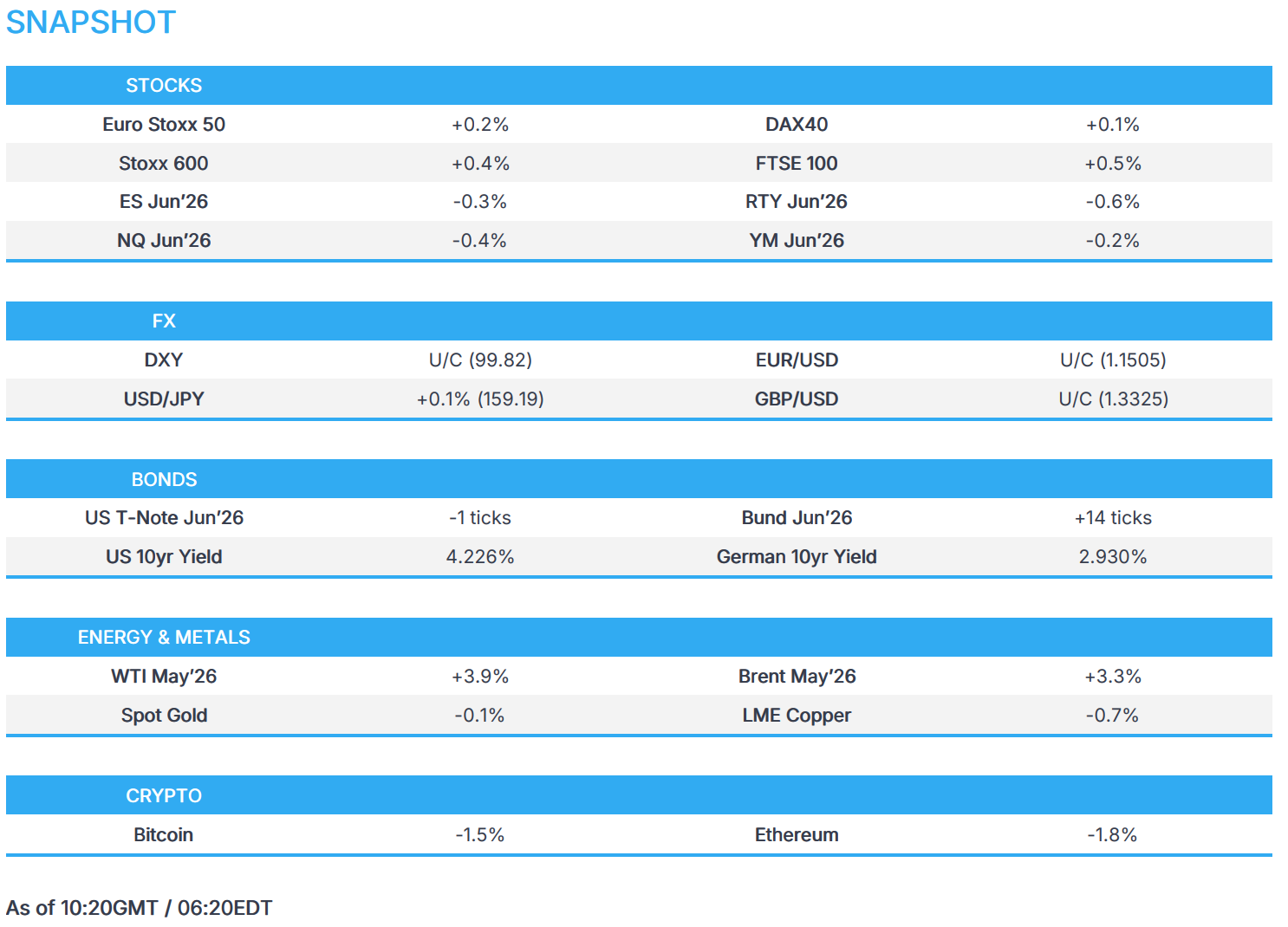
EUROPEAN TRADE
EQUITIES
- European Bourses are all gaining as markets continue to price in the effects of oil prices. The IBEX 35 is the outperformer, closely followed by the FTSE 100. On the other hand, the DAX 40 is the laggard.
- European Sectors give no additional bias. Utilities outperform, with an upgrade for Neste at Barclays, lifting the entire sector. The Technology sector lies towards the bottom of the pile, not benefiting from the NVIDIA GTC event. Other key movers include Close Brothers, Fraport and Roche.
- US equity futures are subdued (ES -0.3%) as price action is dictated by oil. NVIDIA CEO Huang said at the Co. annual GTC event that its flagship AI processors for Blackwell and Vera Rubin systems would help generate USD 1tln in sales through 2027 with Vera Rubin set to ship later this year.
- Click for the sessions European pre-market equity newsflow
- Click for the additional news
FX
- DXY is flat within a narrow range, easing from overnight highs and trading closer to session lows after recent weakness. Price action remains sensitive to oil and geopolitics, with limited fresh escalation. Headlines around potential US–Iran dialogue and conflicting reports of contact have kept direction subdued, while reports of a senior Iranian security figure being killed briefly weighed on the USD.
- EUR/USD edges higher, reversing earlier weakness in line with the softer USD. Focus includes comments from EU’s Kallas, who suggested a Black Sea-style security model could be applied to the Strait of Hormuz and left the door open to EU participation. Broader EUR catalysts remain limited, with little reaction to progress on an EU–Australia trade deal. EUR saw downticks on the sub-par ZEW Economic Sentiment metrics.
- GBP/USD trades firmer alongside peers amid modest USD softness. UK-specific newsflow is light, though markets continue to monitor UK–US relations amid reported tensions over positioning in the Iran conflict. The pair holds near the top of its recent range.
- USD/JPY rebounded from a brief move below 159.00, supported by a partial recovery in the dollar and oil overnight. Upside is capped by broader USD softness during European hours, leaving the pair off recent highs and consolidating within yesterday’s range.
- Antipodeans are mixed, with AUD/USD modestly firmer post-RBA. The initial dovish reaction to the rate decision reversed as Governor Bullock struck a hawkish tone, stressing that inflation remains elevated and that dissent centred on timing rather than the direction of further tightening.
FIXED INCOME
- USTs initially extended yesterday’s sell-off, with crude strength lifting yields and pushing prices to session lows. More recent headlines around Larijani triggered a pullback in oil and a recovery in risk sentiment, supporting bonds and bringing USTs back to broadly unchanged levels.
- Bunds followed a similar pattern, hitting early lows on higher yields driven by energy strength. The move reversed as oil pared gains on Larijani-related headlines, lifting Bunds back into positive territory. Negative ZEW Economic Sentiment propped up bunds in recent trade.
- Gilts opened amid the initial Larijani headlines and saw only modest early downside before sharply reversing higher. The benchmark rallied strongly alongside the pullback in yields and energy, outperforming peers.
- UK sells GBP 4bln 4.125% 2031 Gilt: b/c 3.33x (prev. 3.94x), average yield 4.228% (prev. 4.001%), tail 0.3bps (prev. 0.2bps).
- UK DMO plans to sell a new 10-year conventional gilt in April and long-maturity gilt in June. Also plans 2 syndicated gilt sales between April and June.
- Japan sold JPY 613bln 20-year JGBs; b/c 3.25x (prev. 3.08), average yield 3.141% (prev. 2.968%).
COMMODITIES
- Crude futures rebounded overnight after the prior session’s pullback, as the Iran conflict continues without major escalation. Late US trade saw pressure on reports of US–Iran contact, which were subsequently denied, alongside renewed Iranian attacks on regional energy assets, supporting prices. In Europe, headlines added further volatility: Fujairah port suspended oil loadings, while Israel indicated Iran’s top security chief Larijani may have been killed. Strait of Hormuz developments remain in focus, with EU’s Kallas suggesting a Black Sea-style framework, while Iraq noted ongoing discussions with Iran to allow tanker passage—prompting some intraday softness.
- Spot gold trades in a narrow range, largely tracking USD moves. Geopolitical tensions and inflation concerns are limiting haven-driven upside, keeping price action contained around the USD 5,000/oz level.
- Base Metals are mixed, with copper consolidating after prior gains supported by improved risk sentiment. Prices remain capped below the USD 13,000/t level, with momentum flattening following the recent advance.
- Fujairah port has suspended oil loadings, Bloomberg reported citing sources; loading berths at the Fujairah Oil Tanker Terminals were halted as of Tuesday morning.
- UAE’s Fujairah confirms a fire in its petroleum industrial area.
- Chinese state oil majors have recommenced seeking Russian oil shipments following the US waiver, according to sources.
- Iraq’s oil minister said they are in contact with Iran to allow some oil tankers to pass through the Strait of Hormuz, state news reported.
- Kazakhstan and Russia have discussed increasing Russian oil transit to China to 12.5mln tonnes per year, according to Kazakhstan’s Kaztransoil.
- EU’s Kallas said a model similar to the Black Sea could be used in the Strait of Hormuz but the question is what neighbouring countries, including Iran, could agree on; the door is not closed on the participation in the Strait.
- Allies of the US President are concerned that Iranian attacks on oil tankers within the Strait of Hormuz are boxing in the US, Politico reported.
- Iranian oil exports continue without interruption, Tasnim reported citing the Parliamentary Energy Committee spokesperson.
- Some Japanese aluminium buyers have reportedly agreed with a global producer to pay a premium of USD 350/t for shipments between April and June.
NOTABLE EUROPEAN HEADLINES
- UK, Finland and others are reportedly exploring new defence financing mechanism by 2027, with the aim of increasing the availability of critical capabilities such as munitions.
NOTABLE EUROPEAN DATA RECAP
- EU ZEW Economic Sentiment Index (Mar) -8.5 vs Exp. 24 (Prev. 39.4).
- German ZEW Economic Sentiment Index (Mar) -0.5 vs Exp. 39 (Prev. 58.3, Low. 30, High. 54.5).
- Italian Inflation Rate MoM Final (Feb) M/M 0.7% vs. Exp. 0.8% (Prev. 0.4%).
- Italian Inflation Rate YoY Final (Feb) Y/Y 1.5% vs. Exp. 1.6% (Prev. 1%).
CENTRAL BANKS
- RBA hikes the Cash Rate by 25bps to 4.10%, as expected, with the decision made by a majority decision (5-4 vote split). Five members voted for a 25bps hike and four voted to leave the Cash Rate unchanged. Material risk inflation will stay above target for longer. Inflation risks have tilted further to the upside. Board will do what’s necessary to deliver price and jobs goals. Short-term inflation expectations have already risen. The conflict in the Middle East poses substantial risks in both directions and has resulted in sharply higher fuel prices, which, if sustained, will add to inflation. Will be attentive to data, evolving outlook, and risks in decisions. Wide range of data over recent months confirmed inflationary pressures picked up materially in H2 2025.
- RBA Governor Bullock said rise in oil prices is not the reason for the rate increase and that inflation was already too high, adds risks to inflation are to the upside and cash rate was not high enough to bring inflation back to the target. All members agreed inflation was too high, board agreed inflation was too high. Had a very robust meeting. Members that voted to hold, voted in a hawkish sense. Discussion was about timing, not the direction of policy and hike. Difference was timing and those who voted against, still felt the need for an eventual rate increase. Today’s hike does not say anything about the forward path, and the forward path for rates is uncertain.
- BoJ Governor Ueda said price trend is rising gradually and underlying inflation is gradually accelerating towards the 2% target. Will implement appropriate policy to maintain stable prices. Will guide monetary policy suitably to steadily and durably achieve the 2% price target. Expect underlying inflation to approach the target in the latter half of fiscal 2026 through fiscal 2027. Reaffirmed stance that it will act flexibly in exceptional situations when JGB yields suddenly rise. BoJ to conduct bond operations flexibly in exceptional cases.
- Indonesian Interest Rate Decision 4.75% (Prev. 4.75%).
NOTABLE US HEADLINES
- US President Trump announces and signs executive orders to bring more community banks back into the mortgage business and to lower construction costs for building more affordable homes.
- China’s Foreign Minister, on US President Trump seeking a delay to the summit with Chinese President Xi, said China and the US are in communication over Trump’s visit to China.
GEOPOLITICS
MIDDLE EAST
- Israeli Defence Minister Katz said Iran’s Top Security Chief Larijani was killed in the airstrike.
- Israel struck senior Iranian official Larijani but it is unknown if he was injured or killed, an Israeli official tells the Jerusalem Post.
- Israel Defence Forces announce wide-scale strikes against Iranian infrastructure and began additional wave of strikes on Hezbollah infrastructure in Beirut.
- A senior Iranian official says the new Supreme Leader rejected proposals that were sent to Iran’s Foreign Ministry by two intermediary countries, with the Leader stating it is not the right time for peace and that US and Israel must be defeated.
- New Iranian Supreme Leader Mojtaba Khamenei is to deliver a message soon, according to Iranian media.
- Iran’s Revolutionary Guard arrests 10 foreigners on espionage charges in northeast of country.
- Iran officials say the US has crossed the line and they signalled an intention to deliver a major lesson.
- Iran’s Foreign Minister Araghchi said his last contact with US envoy Witkoff was before the American attack on Iran.
OTHERS
- UAE updated that air navigation has returned to normal across its airspace.
- Pakistan confirmed it carried out airstrikes on Kabul and Nangarhar.
- US President Trump’s administration was said to tell Cuba its president has to go for there to be meaningful progress in negotiations, according to NYT.
- US President Trump said he believes he’ll have the honour of taking Cuba.
- South Korea’s Foreign Minister Cho and US Secretary of State Rubio discussed ensuring safe navigation in the Strait of Hormuz.
CRYPTO
- Bitcoin falls away from USD 76k while Ethereum holds above USD 2.3k.
APAC TRADE
- APAC stocks eventually traded mixed, with the region initially following suit to the gains on Wall Street, where sentiment was underpinned amid softer yields and oil price declines, although gains were capped overnight as oil prices partially rebounded and with participants bracing for this week’s central bank bonanza, which was kicked off by the RBA, which delivered a widely expected back-to-back 25bps rate hike.
- ASX 200 was kept afloat as gains in miners, utilities, and financials offset the losses in tech and consumer discretionary, although the upside was limited amid the RBA rate decision, in which the central bank hiked rates for the second consecutive meeting in a 5-4 vote split.
- Nikkei 225 briefly reclaimed the 54,000 status but later fell into the red as oil partially rebounded from an early trough.
- Hang Seng and Shanghai Comp were mixed with the Hong Kong benchmark outperforming in early trade amid strength in consumer stocks, while the mainland lagged after US President Trump revealed the US asked to delay the Trump-Xi summit by a month or so due to the Iran war.
NOTABLE ASIA-PAC HEADLINES
- China’s Ministry of Finance said more pro-active fiscal policy is to continue in 2026, while it is to support the domestic market and self-reliance in tech, as well as ensure necessary expenditure levels.
- Japanese PM Takaichi reiterates that not considering further increase in consumption tax.
NOTABLE APAC DATA RECAP
- Japanese Tertiary Industry Index MoM (Jan) M/M 1.7% (Prev. -0.5%).
- New Zealand Food Inflation YoY (Feb) Y/Y 4.5% (Prev. 4.6%).
- South Korean Import Prices YoY (Feb) Y/Y 1.2% (Prev. -1.2%).
- South Korean Export Prices YoY (Feb) Y/Y 10.7% (Prev. 7.8%).v
1b European opening report
Energy continues to dictate macro sentiment; RBA hiked as expected with a hawkish presser – Newsquawk Europe Market Open
Tuesday, Mar 17, 2026 – 03:23 AM
- US President Trump said Iran wants to make a deal and is talking with their people, but he does not know if Iran is ready yet.
- US Envoy Witkoff and Iranian Foreign Minister Araghchi have reportedly been in contact over text messages in recent days; Iran denied these reports.
- US President Trump said regarding the potential Strait of Hormuz coalition that Secretary of State Rubio will announce the countries, while he added it takes a while to get to the Hormuz and that some countries are fairly local.
- The RBA hiked rates for a second consecutive meeting as expected, through a narrow majority of 5-4 votes, which dragged the currency lower. However, AUD later rebounded as RBA Governor Bullock provided a hawkish tone.
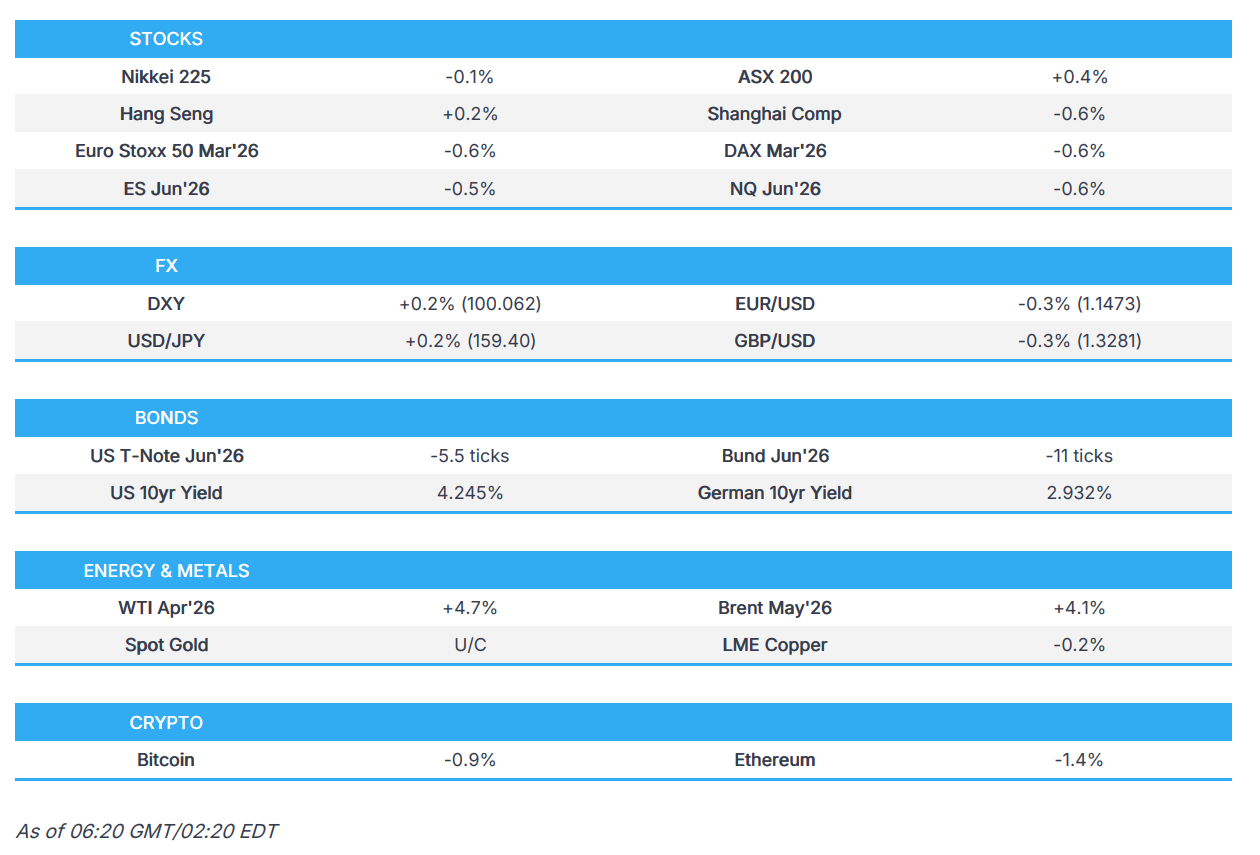
- APAC stocks eventually traded mixed, with the region initially following suit to the gains on Wall Street; European equity futures indicate a lower cash market open with Euro Stoxx 50 futures down 0.6%.
- Looking ahead, highlights include Italian HICP Final (Feb), German/EZ ZEW Economic Sentiment Index (Mar), US ADP Employment Weekly, Japanese Trade Balance (Feb), Comments from ECB’s Nagel, Supply from UK & US.
More Newsquawk in 3 steps:
1. Subscribe to the free premarket movers reports
2. Listen to this report in the market open podcast (available on Apple and Spotify)
3. Trial Newsquawk’s premium real-time audio news squawk box for 7 days
SNAPSHOT
IRAN CONFLICT
- US President Trump said regarding the potential Strait of Hormuz coalition that Secretary of State Rubio will announce the countries, while he added it takes a while to get to the Hormuz and that some countries are fairly local. Furthermore, he has spoken to French President Macron about Hormuz, and on a scale of 0-10, he said Macron has been an 8 and thinks Macron is going to help. Trump also stated he is not happy with the UK but thinks they will be involved.
- US President Trump said Iran wants to make a deal and is talking with their people, but he does not know if Iran is ready yet. Trump said they don’t even know Iran’s leaders, and as far as they know, they are all dead. Trump said Iran has people wanting to negotiate, but they have no idea who they are, and he does not know if Khamenei is dead or not.
- US President Trump said other countries should be thanking him, and he’s very proud of what they have done, while he added that had they not done this, there would have been a nuclear war. Furthermore, he said China, Japan, and South Korea should be helping them and commented that the war will be wrapped up soon, but not this week.
- US intelligence said Iran’s regime will likely remain in place, albeit weakened and more hard-line, according to WaPo.
- US Special Envoy Witkoff is to brief a bipartisan group of senators on Tuesday regarding Iran, according to Axios.
- US Envoy Witkoff and Iranian Foreign Minister Araghchi have reportedly been in contact over text messages in recent days, according to Channel 12. It was separately reported that Iran and the US have been in direct contact in recent days, according to Axios sources. However, it was reported shortly after that Iran said reports of recent contacts with the US are false, and Iran’s Foreign Minister Araghchi also said that his last contact with US envoy Witkoff was before the American attack on Iran.
- Iranian officials said the US has crossed the line and they signalled an intention to deliver a major lesson. It was separately reported that Tehran is to strike oil and gas facilities in any country where any US attack on oil facilities on Kharg island originates, according to state media.
- Israeli Defence Forces detected missiles launched from Iran, while it also announced large-scale strikes against Iranian infrastructure and began an additional wave of strikes on Hezbollah infrastructure in Beirut.
- UAE Ministry of Defence said air defences were intercepting missile and drone attacks from Iran, while it announced a temporary and partial closure of its airspace as an exceptional precautionary measure, but later updated that air navigation had returned to normal across its airspace.
- Several explosions were reported in Doha and Dubai following a missile alert, according to AFP.
- Kuwait’s army said air defences confronted enemy missile and drone attacks.
- Saudi Arabia said more than 20 drones were intercepted and destroyed in the eastern province.
- Japanese PM Takaichi said the government is exploring SDF Middle East deployment within legal limits and will discuss SDF deployment with parliamentary parties if approval is required.
US TRADE
EQUITIES
- US stocks were firmer as oil prices moved lower after the US targeted Kharg Island over the weekend, but avoided any oil infrastructure, while US President Trump reiterated he thinks the war could be over soon and suggested that Iran has been speaking to the US. Furthermore, it was reported that Iran’s Foreign Minister Araghchi and US Special Envoy Witkoff have been in contact by text messaging over recent days which further weighed on oil, although Iran denied this shortly after, and Araghchi said his last contact with Witkoff was prior to the US attack on Iran.
- SPX +1.05% at 6,702, NDX +1.13% at 24,655, DJI +0.83% at 49,946, RUT +0.96% at 2,504.
- Click here for a detailed summary.
TARIFFS/TRADE
- US President Trump’s administration has started discussing a new “board of trade” with China to try to balance what US officials see as an unequal economic relationship, according to NYT.
- Mexico’s Economy Ministry said the deputy minister is to meet with USTR officials today for USMCA review talks.
- European Union said it is close to finalising a trade deal with Australia after years of negotiations, while EU Commission President Von der Leyen may travel to Australia as soon as this weekend to sign the deal, according to sources.
NOTABLE HEADLINES
- US President Trump signed executive orders to bring more community banks back into the mortgage business and to lower construction costs for building more affordable homes.
- US President Trump reiterated criticisms against Fed Chair Powell, and called for him to have a special meeting and cut rates.
- DoJ asked judge Boasberg to reconsider the ruling that quashed the subpoenas against Fed Chair Powell.
- US Commerce Dept. announced a new AI export program phase and asked for AI export package proposals.
- US SEC is preparing a proposal to eliminate the quarterly earnings report requirement and instead give companies the option to share results twice a year, according to WSJ citing sources.
APAC TRADE
EQUITIES
- APAC stocks eventually traded mixed, with the region initially following suit to the gains on Wall Street, where sentiment was underpinned amid softer yields and oil price declines, although gains were capped overnight as oil prices partially rebounded and with participants bracing for this week’s central bank bonanza, which was kicked off by the RBA, which delivered a widely expected back-to-back 25bps rate hike.
- ASX 200 was kept afloat as gains in miners, utilities, and financials offset the losses in tech and consumer discretionary, although the upside was limited amid the RBA rate decision, in which the central bank hiked rates for the second consecutive meeting in a 5-4 vote split.
- Nikkei 225 briefly reclaimed the 54,000 status but later fell into the red as oil partially rebounded from an early trough.
- Hang Seng and Shanghai Comp were mixed with the Hong Kong benchmark outperforming in early trade amid strength in consumer stocks, while the mainland lagged after US President Trump revealed the US asked to delay the Trump-Xi summit by a month or so due to the Iran war.
- US equity futures slightly pulled back following Monday’s gains, with recent price action largely driven by oil swings.
- European equity futures indicate a lower cash market open with Euro Stoxx 50 futures down 0.6% after the cash market closed with gains of 0.4% on Monday.
FX
- DXY regained some composure after weakening yesterday with recent price action largely at the whim of oil prices, while the focus remained on geopolitics, although there was nothing too escalatory, and President Trump said that Iran wants to make a deal and is talking to their people. Furthermore, it was reported that Iran’s Foreign Minister Araghchi and US Envoy Witkoff were in contact over text messages in recent days, although Iran has since refuted the reports of recent contacts.
- EUR/USD retraced some of the prior day’s advances and returned to beneath the 1.1500 handle as the dollar regained some composure, while there was little reaction seen to reports that the EU is close to finalising a trade deal with Australia after years of negotiations.
- GBP/USD partially faded its gains and retested the 1.3300 level to the downside, where it found some slight support, but with price action contained amid the lack of fresh catalysts for the UK.
- USD/JPY rebounded from a brief dip to sub-159.00 territory with upside facilitated as the dollar and oil partially recovered.
- Antipodeans were mixed after recent outperformance and with AUD/USD choppy following the RBA decision to hike rates for a second consecutive meeting, through a narrow majority of 5-4 votes, which dragged the currency lower. However, AUD later rebounded as RBA Governor Bullock provided a hawkish tone during the press conference as she stated that the rise in oil prices is not the reason for the rate increase and that inflation was already too high, while she added that the dissenters voted to hold in a hawkish sense and that the discussion was about the timing, and not the direction of policy and hike.
- PBoC set USD/CNY mid-point at 6.8961 vs exp. 6.8874 (Prev. 6.9057)
FIXED INCOME
- 10yr UST futures slightly pulled back after gaining yesterday as yields softened alongside lower oil prices and weak US data, while demand is constrained overnight ahead of a looming flurry of central bank activity and with US supply scheduled later.
- Bund futures were rangebound following the recent choppy, but positive performance, in which prices returned to above the 126.00 level, although further upside was capped heading into German ZEW data.
- 10yr JGB futures traded indecisively but are off the initial lows after rebounding from a brief dip beneath the 131.00 level and following the mixed 20yr JGB auction which resulted in a higher-than-previous bid-to-cover but lower accepted prices.
COMMODITIES
- Crude futures rebounded overnight after declining yesterday as the Iran war dragged on, but with no major escalation, while there was pressure seen in late US trade on reports that US Special Envoy Witkoff and Iranian Foreign Minister Araghchi have been in contact in recent days. However, Iran denied this shortly after, which alongside Iranian attacks on its neighbouring energy assets, facilitated a recovery in oil.
- Gulf Cooperation Council’s regional emergency plan committee for petroleum products held an urgent meeting to discuss regional developments and maintain continuity of refined product supplies, according to Saudi state TV.
- Two explosive drones hit Iraq’s Southern Majnoon oilfield.
- UAE’s Fujairah confirmed a fire in its petroleum industrial area, while Abu Dhabi’s Shah gas field operations were suspended pending damage assessment, after a drone attack caused a fire earlier.
- Spot gold gradually edged higher after rebounding from a brief dip beneath the USD 5,000/oz level.
- Copper futures plateaued overnight after gaining throughout the prior day alongside the positive risk sentiment.
CRYPTO
- Bitcoin wiped out early gains and more, after stalling just shy of the USD 76,000 level.
NOTABLE ASIA-PAC HEADLINES
- China’s Ministry of Finance said more proactive fiscal policy is to continue in 2026, while it is to support the domestic market and self-reliance in tech, as well as ensure necessary expenditure levels.
- BoJ Governor Ueda said the price trend is rising gradually and underlying inflation is gradually accelerating towards the 2% target. Ueda added that they will implement appropriate policy to maintain stable prices and will guide monetary policy suitably to steadily and durably achieve the 2% price target. Furthermore, he expects underlying inflation to approach the target in the latter half of fiscal 2026 through fiscal 2027 and reaffirmed the stance that the BoJ will act flexibly in exceptional situations when JGB yields suddenly rise.
- RBA hiked the Cash Rate by 25bps to 4.10%, as expected, with the decision made by a majority decision in which five members voted for a 25bps hike, and four voted to leave the Cash Rate unchanged. RBA noted a material risk that inflation will stay above target for longer and that inflation risks have tilted further to the upside, while it added that the Board will do what’s necessary to deliver price and jobs goals. RBA stated short-term inflation expectations have already risen and that the conflict in the Middle East poses substantial risks in both directions and has resulted in sharply higher fuel prices, which, if sustained, will add to inflation. Furthermore, it will be attentive to data, the evolving outlook, and risks in its decisions.
- RBA Governor Bullock said in the post-meeting press conference that the rise in oil prices is not the reason for the rate increase and that inflation was already too high, while she added that risks to inflation are to the upside and the Cash rate was not high enough to bring inflation back to the target. Bullock stated that all members agreed inflation was too high and they had a very robust meeting in which the discussion was about timing, not the direction of policy and hike. Furthermore, she said members that voted to hold, voted in a hawkish sense and that the difference was timing, as those who voted against a hike still felt the need for an eventual rate increase.
GEOPOLITICS
OTHER
- US President Trump said he believes he’ll have the honour of ‘taking Cuba’. It was also reported that the Trump administration was said to tell Cuba its president has to go for there to be meaningful progress in negotiations, according to NYT.
- Pakistan confirmed it carried out airstrikes on Kabul and Nangarhar, while the Afghan government said the death toll from a Pakistani raid targeting a hospital has risen to 400.
1 c Asian report
2.a NORTH KOREA/SOUTH KOREA/JAPAN
/JAPAN
JDBYD on X: “https://t.co/oaFmhNIEHQ” / X
Japan saying no to Islam
3. CHINA//PAKISTAN/AFGHANISTAN
China Directly Mediating Between Pakistan & Afghanistan After Weeks Of War
Monday, Mar 16, 2026 – 11:05 PM
There’s actually another hot war in the Middle East which has been raging, quite apart from the Iran-US-Israel war. Pakistan and Afghanistan have been engaged in a tense border conflict for weeks at this point. The Associated Press on Monday described the latest developments in the following:
Afghanistan’s Taliban government on Monday accused Pakistan’s military of targeting a Kabul hospital that treats drug addicts in airstrikes that killed four people and wounded several others.
The attack came hours after Afghan officials said the two sides exchanged fire along their common border, killing four people in Afghanistan, as the deadliest fighting between the neighbors in years entered a third week.

It was on Feb. 27 that Pakistan’s Defense Minister Khawaja Asif declared an “all-out war” on Afghanistan, and began bombing border regions as well as the capital of Kabul.
Pakistan’s army has total force domination; however, the Taliban can still inflict pain through acts of terrorism, which Pakistani cities have suffered immensely under.
Acts of terror by Islamist groups have become almost a regular occurrence in Pakistan – with many suspected of having support through Afghanistan, which is precisely what Islamabad has cited as a key rationale for the war.
But now, China is seeking to directly coordinate de-escalation, reportedly attempting to broker a ceasefire between the two neighbors.
Beijing confirmed Monday that Foreign Minister Wang Yi has held phone calls with both Pakistani and Afghan counterparts in recent days as the situation continues to deteriorate.
“The MFA Special Envoy on Afghan Affairs has been shuttling between Afghanistan and Pakistan,” Foreign Ministry spokesperson Lin Jian said in a statement on X. “China’s embassies have been in close communication with both sides as well.”
“China hopes Afghanistan and Pakistan will remain calm and exercise restraint, engage face to face ASAP, achieve a ceasefire at the earliest opportunity, and resolve differences and disputes through dialogue,” Jian said.
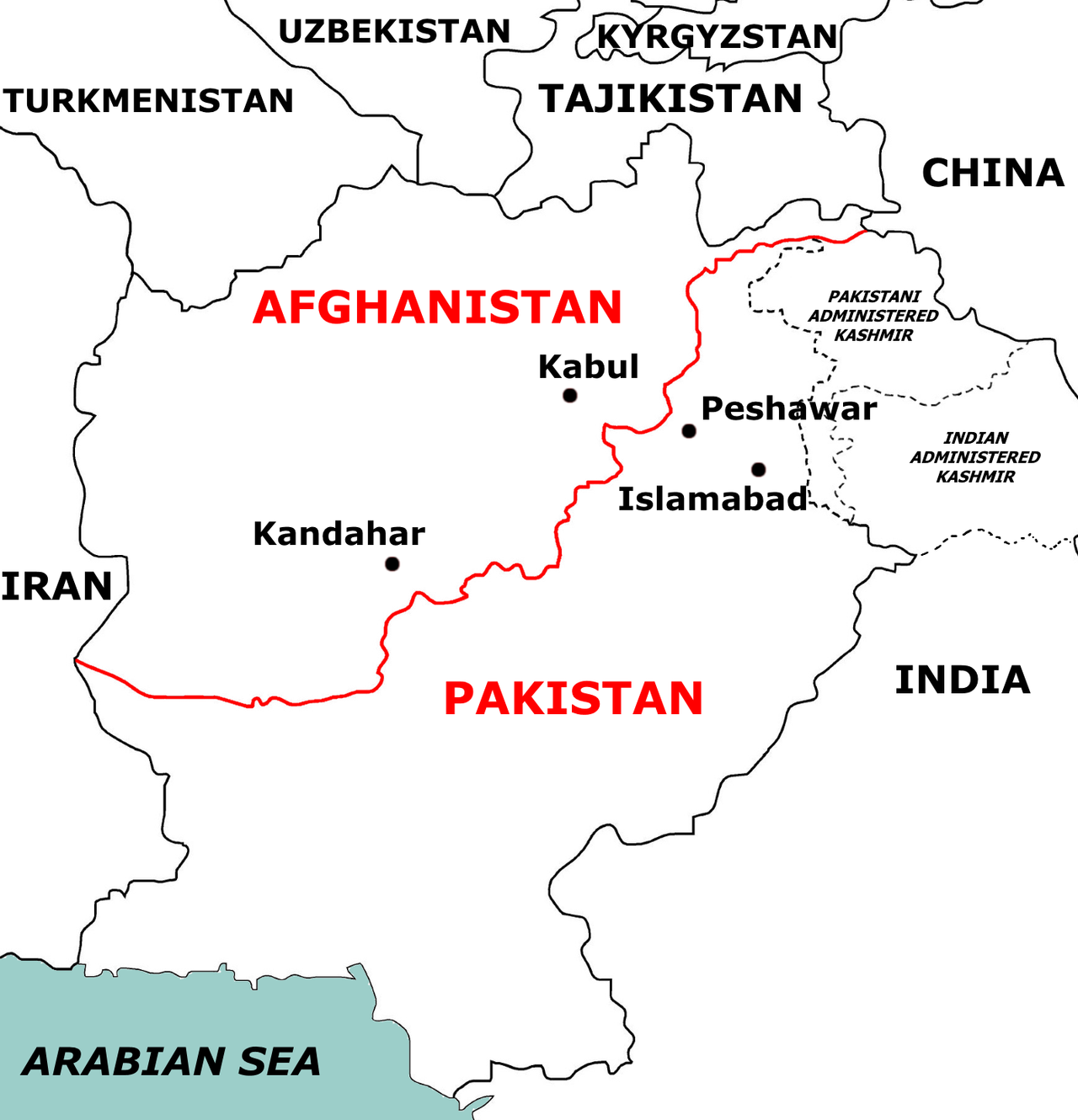
China over the last several years has been making deeper diplomatic inroads in the Middle East and central Asia, while playing its hand at “peacemaker” – and trying to contrast itself from Washington’s history of regime change wars in the same region.
4. EUROPEAN AND SCANDINAVIAN AFFAIRS
EUROPE GULF STATES AND OTHER ALLIES/IRAN
TUESDAY MORNING:
“Not Our War”: ‘Allies’ Shun Trump Coalition; Iran Security Chief Allegedly Killed As Oil Infrastructure Attacks Escalate
Tuesday, Mar 17, 2026 – 08:20 AM
Summary:
- Israel claims major decapitation strike: Says Ali Larijani and Basij chief Gholamreza Soleimani were killed, but Iran disputes.
- Iran rejects ceasefire, vows escalation: Leadership says it’s not “the right time for peace” until the US and Israel are “brought to their knees,” while denying any negotiations.
- New oil targeting phase as Tehran pledges to be gatekeeper of Hormuz: Ships pass only “in coordination” with Tehran – talk of separate deal-making with BRICS capitals.
- Iraq is in contact with Iran to persuade Tehran to allow some Iraqi oil tankers to pass through the Strait of Hormuz
- Allies hesitate as Trump issues contradictory rhetoric: Key NATO states are refusing to join US efforts to secure Hormuz, amid lack of confidence in Trump’s often shifting articulation of operation.
* * *
Israel Claims Big Decapitation Strike: Larijani & Basij Chief
Israel is making another big ‘decapitation strike’ claim, saying it has taken out Iran’s top security believed to be effectively running the country and the war, Ali Larijani. Israel further announced early Tuesday the longtime head of the Basij militia, Gholamreza Soleimani, was also killed.
If true it would mark one of the most significant blows to Tehran’s leadership since the war began. But in classic fog-of-war fashion, Tehran is pushing back against Israeli statements. Tehran has presented a handwritten message attributed to him, though not exactly what passes for proof of life.

The note was released ahead of funeral ceremonies for Iranian sailors killed in a recent US strike, and urges citizens to show support for the national ‘martyrs’ – but in the end does little to clarify whether Larijani is alive or dead. Just days ago he was seen marching defiantly in the streets of Tehran with other high-ranking officials as US-Israeli bombs fell not too far away.
The IDF announcement proclaiming his alleged death:
“The martyrdom of the brave members of the Navy of the Army of the Islamic Republic in Dena is part of the sacrifices of the proud nation that has emerged in this time of struggle against international oppressors,” Larijani wrote, in what could prove to be his last message. If he is deceased, he is likely to quickly be replaced.
No Peace Yet: Must Be ‘Brought to Their Knees’
Iranian President Masoud Pezeshkian is calling on citizens to flood the streets for mass funerals of sailors killed when the IRIS Dena was sunk off the coast of Sri Lanka. Enemies “should know that in the shadow of the name of each of these high-ranking martyrs, thousands of other brave men will rise,” he said.
Most importantly, he announced that Islamic Republic leadership is rejecting any talk of de-escalation. Iran will exact a steep cost against its aggressors, he vowed. It is not “the right time for peace until the United States and Israel are brought to their knees, accept defeat, and pay compensation,” a senior official was quoted in Al Jazeera as saying, describing the position as “very tough and serious.”
Iran’s messaging here has been consistent. On Monday when President Trump claimed Tehran was “talking” – and later there were reports of text messages between Iran’s FM Araghchi and White House envoy Steve Witkoff, Iran’s government was quick to call this fake news.
“We don’t ask for ceasefire, but this war must end, in a way that our enemies never again think about repeating such attacks,” Araghchi has said. Central Israel has also continued to see inbound projectiles, also from Hezbollah in Lebanon.
Iran: Hormuz Isn’t Officially Shut, But it Controls Who Gets Through
Foreign Ministry spokesman Esmail Baghaei pushed back on blockade claims, while signaling Tehran is effectively managing traffic through the critical chokepoint – as it tries to play nice with its BRICS allies but tries to keep the leverage on Washington, its allies, and the global economy.
“Ships from some countries passed through the Strait of Hormuz in coordination with the Islamic Republic of Iran,” he said, framing Iran’s position as ultimately as the gatekeeper of the world’s most important oil artery. “Iran has always been the guardian of the Strait of Hormuz and the safe passage of ships.”
This could include pledges for Indian, Chinese, and Russian safe passage – and there’s been evidence of some of these getting through, just as in the Houthis Red Sea crisis of last year.
On Tuesday, Iranian parliamentary speaker Mohammad Baqer Qalibaf said: “The Strait of Hormuz cannot be the same as before and return to its previous conditions,” adding that “there is no longer any security.”
Bombardment of US Bases, Embassy, Oil Sites
“We have no hostility toward regional countries,” Baghad also said. “What we target are American bases and assets.” This after a likely Iranian-made drone hit the US Embassy in Baghad to start of this week, and also a drone slammed into the central Al-Rasheed Hotel in Baghdad’s highly protected Green Zone.
Air defenses in the Green Zone engaged incoming threats, but to no avail – the drones still got through. At the same time, energy infrastructure is increasingly in the crosshairs.
A drone attack forced the shutdown of a gas field in Abu Dhabi, while a tanker was reportedly hit by an “unknown projectile” near a UAE oil port – only adding more pressure to already volatile markets and pushing oil prices higher.
C-RAM System reportedly seen in action, but is Green Zone’s defense crumbling?
“Nor Our War”: NATO Allies
Still, amid all this, NATO allies are holding back – perhaps confused and lacking confidence in President Trump’s daily shifting rhetoric, and as sometimes Trump issues contradictory messaging on the same day, or even in the very same presser.
“What does … Donald Trump expect a handful or two handfuls of European frigates to do in the Strait of Hormuz that the powerful US Navy cannot do?” German Defense Minister Boris Pistorius told reporters on Monday. “This is not our war, we have not started it.“
What the Western allies see…
Some leading NATO powers have made clear they won’t directly support any military effort to unblock the strait – including Germany, Italy, and Spain.
President Trump himself has conceded this week of Western partners: “Some are very enthusiastic about it, and some aren’t. Some are countries that we’ve helped for many, many years. We’ve protected them from horrible outside sources, and they weren’t that enthusiastic. And the level of enthusiasm matters to me.” Naturally they might be looking back only to last year and the Gaza War, when the major US-led naval coalition in the Red Sea struggled to halt Houthi attacks on global shipping, resulting in a stalemate and uneasy status quo where the Iran-linked Houthis built a lot of leverage.
Iran’s “New Phase Of Oil War”
Bloomberg Opinion and commodities columnist Javier Blas has written on X. “Further ominous developments today. For the first time, Iran successfully targeted oil and gas production facilities, rather than refining, terminals, and storage,”
Blas listed the IRGC’s attacks on Gulf oil and gas facilities:
- Oil and gas field in the UAE (Shah) hit
- Oil field in Iraq (Majnoon) attacked
- Plus Saudi Arabia saw large drone swarms
He explained that these attacks suggest “Iran has started a new phase of its oil war” against Gulf states aligned with the US. “Tehran is clearly going after the Strait of Hormuz bypass route, with Fujairah (UAE) coming under attack. But so far, the Saudi pipeline bypass hasn’t been attacked, and neither the Yemeni Houthis have tried to close the Red Sea,” Blas said. Brent crude has jumped more than 40% since the start of Operation Epic Fury in late February, but out-of-control spikes in crude markets have largely been capped so far by the IEA’s 32-nation “historic” emergency SPR release. Read our fuller analysis here.
Iraq Negotiates With Iran To Reopen Vital Oil Shipping Route
The federal Iraqi government is in contact with Iran to persuade Tehran to allow some Iraqi oil tankers to pass through the Strait of Hormuz, Iraq’s Oil Minister Hayyan Abdul Ghani said on Tuesday.
“There is communication with Iran regarding allowing the passage of some Iraqi oil tankers,” the minister said in statements carried by the Iraqi News Agency (INA).
Iraq, unlike Saudi Arabia and the United Arab Emirates (UAE), doesn’t have any options – even partial – to bypass the Strait of Hormuz, which has been closed for over two weeks now, forcing Baghdad to slash oil production as storage sites and tankers available in the Gulf filled up.
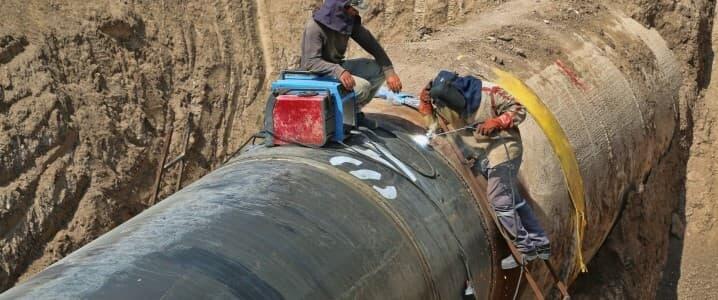
Iraq was the first to announce more than a week ago it was slashing crude oil production amid the de facto blockade of the Strait of Hormuz.
END
EUROPE
European Nations Pull Their ‘Anti-ISIS’ Mission Troops Out Of Iraq
Tuesday, Mar 17, 2026 – 02:45 AM
Spain has quietly pulled its special forces out of Iraq after deteriorating security conditions made it impossible to continue operations safely, the Spanish Ministry of Defense confirmed Sunday. Spain currently has about 300 troops deployed in Iraq as part of the US-led coalition against ISIS.
The Special Operations Task Group had been training Iraqi counter-terrorism units in Baghdad and at bases in Kurdish-controlled areas in the north. Madrid said its Special Operations Task Group was relocated to undisclosed secure locations after the situation on the ground made training missions with Iraqi forces completely untenable.

It’s unknown where the commandos were moved to, but Turkey may be the safest regional country at this point, given that even American bases in Jordan have been hit by Iranian ballistic missiles and/or drone strikes.
American sites in Iraq are under attack from Iraq and local pro-Tehran militia groups, which has included the US Embassy in Baghdad being struck by a drone over the weekend, causing a broad withdrawal of Western coalition forces.
Spain’s withdrawal follows a deadly drone strike Thursday on a French military base near Erbil that killed Chief Warrant Officer Arnaud Frion and wounded several other French soldiers. An Iranian-made Shahed drone hit the Mala Qara facility dozens of miles southwest of Erbil.
French President Emmanuel Macron slammed the attack as “unacceptable” – stressing that French forces are deployed strictly for counter-terrorism missions against ISIS. “The war in Iran cannot justify such attacks,” Macron said.
Italy has also begun quietly pulling personnel from Iraq, after Prime Minister Meloni essentially said Trump’s Iran war is not Italy’s fight. Military.com reports Monday:
Italy has also begun pulling back some of its military personnel stationed in the region. The Italian defense ministry confirmed that troops stationed at a base in Erbil in Iraq’s Kurdistan region were being withdrawn as the security situation deteriorated.
The base had hosted more than 300 Italian troops before the current escalation. Roughly 100 of those personnel have already returned to Italy, while around 40 others have been relocated to Jordan as part of the repositioning effort.
The decision to accelerate the withdrawal came after a drone strike hit the base in Erbil, highlighting the growing risks faced by foreign forces operating in the region as the war spreads. No Italian personnel were injured in that attack. Italian officials said the move was primarily intended to protect personnel as the regional security environment deteriorates.
Italian troops are expected to at least keep a light footprint in the region broadly, given that “Meloni has also stressed that tens of thousands of Italian citizens live across the Middle East and Gulf region, while roughly 2,000 Italian troops remain deployed across various missions in the area.” She has explained protecting those citizens and personnel remains a top priority, but also that Italy can’t be a party to the war.
5. RUSSIAN AND MIDDLE EASTERN AFFAIRS
ISRAEL TBN//LAST 24 HRS
ISRAEL/IRAN
their no. 1 Larijani is dead!!!
IDF kills Ali Larijani, biggest targeted killing since former supreme leader Khamenei
The IDF also confirmed it had assassinated the head of the Islamic Revolutionary Guard Corps’ Basij paramilitary militia, Gholamreza Soleimani, and his deputy, Seyyed Karishi.

Senior Iranian official Ali Larijani, speaking in May 2024; illustrative.(photo credit: AFP/via Getty Images)ByYONAH JEREMY BOB, AMICHAI STEINMARCH 17, 2026 10:34Updated: MARCH 17, 2026 13:08
Iran’s Supreme National Security Council Secretary Ali Larijani was targeted in the single most momentous targeted killing since the beginning of the war on February 28, three separate sources confirmed to The Jerusalem Post on Tuesday. Larijani’s death was confirmed by Defense Minister Israel Katz shortly after.
The military referred to Larijani as “the de facto leader of the Iranian terror regime.”

The IDF also confirmed it had assassinated the head of the Islamic Revolutionary Guard Corps’ Basij paramilitary militia, Gholamreza Soleimani, and his deputy, Seyyed Karishi. The two were killed in a makeshift tent area, which had been set up to make it harder to follow them as opposed to in a known headquarters.
The military also announced that it killed the IRGC’s Aerospace Force chief.
An Israeli official also confirmed to The Jerusalem Post that the majority of the Basij leadership was eliminated overnight in the Israeli airstrike.

Iranian authorities stated that Larijani was due to give a public address on Tuesday, but two IDF sources expressed skepticism about his making a statement and expressed stronger optimism that the strike succeeded in killing him, before his death was announced.
After Larijani’s death was confirmed, the Mossad Farsi account posted on X/Twitter, saying “In the end, people without mercy will die.”
Some have viewed Larijani as the man running the Iranian regime since Ayatollah Ali Khamenei was assassinated by the IDF, along with Iran’s military chief, IRGC chief, defense minister, and around 40 other top officials on February 28.
Larijani has been the Islamic regime‘s most public voice, responding directly to threats and comments by US President Donald Trump and others.
Whereas Mojtaba Khamenei has been technically appointed the next supreme leader, IDF and American intelligence have said he is badly wounded, and given a total lack of public appearances, doubts have been expressed about whether he is actually running the country.

Larijani targeted in Israel’s latest military operation
Further, Larijani was promoted to run day-to-day operations for the country and all negotiations with the West over the conflict in the weeks before the war started.
Larijani, on March 1, announced that he would be heading an interim committee for running the country, given Khamenei’s death. However, just because Larijani issued such a statement does not mean that he is for sure calling the shots.
The Iranian leader has had ups and downs with Khamenei, having been an IRGC commander, speaker of parliament, and a national security council chief, but then was disqualified from running for Iranian president to pave the way for Ebrahim Raisi’s election in 2021, and was out of favor for a time.
However, in recent months, Larijani made a comeback as one of the older and still living top advisers to Khamenei, following so many top officials being killed in June 2025, and became Khamenei’s number two, running the country’s day-to-day security affairs and nuclear negotiations with the US.
If Larijani has been the number one official in Iran these last two weeks, and even if he is only one of the top few, killing or wounding him could significantly impact the overall strategic picture.
Besides Mojtaba Khamenei and Larijani, another figure who could be running much of the regime behind the scenes is Ahmad Vahidi, who was the IRGC deputy chief on the eve of the war.
Vahidi was announced on March 1 by the IRGC as its new leader.
Given the IRGC’s centrality to running the regime’s security forces, Vahidi being its new leader could position him as the current reigning authority for the regime.
This would be ironic because Vahidi has not been a known name or in the Iranian security forces’ top ten until very recently.
He only became the IRGC deputy chief around two months ago, in December 2025.
Most of Iran’s top leadership was killed in June 2025, and most of its current top leaders were also in some sense newer to their posts.
Vahidi was even below them, having been the Interior Minister from 2021 to 2024.
However, he had also been defense minister from 2009-2013, and served in other relatively high posts and has been an IRGC commander since the late 1980s.
President Masoud Pezeshkian has also made public statements relating to the Islamic regime’s goals and priorities, but is viewed as too weak in his influence with the IRGC to be in overall control at this moment
END
ISRAEL
Jerusalem Braces For Unrest After Wartime Closure Of Al-Aqsa Mosque Through Ramadan
by Tyler Durden
Monday, Mar 16, 2026 – 11:30 PM
Israel is set to keep Al-Aqsa Mosque closed through the upcoming Muslim holiday of Eid al-Fitr and beyond, Middle East Eye has learnt. Sources familiar with the occupied East Jerusalem mosque’s affairs said Israeli authorities informed the Islamic Waqf, the body responsible for administering the site, of the decision in recent days.
Al-Aqsa Mosque, deemed one of the holiest sites in Islam, was closed by Israeli authorities earlier this month, citing the “security situation” amid the US-Israeli war on Iran. The unprecedented closure, particularly during the month of Ramadan, has been condemned by Palestinians as the latest attempt by Israel to exploit security tensions to impose further restrictions and consolidate control over Al-Aqsa.

This has been the first Ramadan since Israel seized East Jerusalem in 1967 that Palestinians have been unable to perform Friday prayers at the mosque.
Last week, eight Muslim-majority countries condemned the “unjustified” closure, saying Israel has “no sovereignty” over the revered site and must lift the restrictions immediately.
However, the closure has continued unchecked. Friday prayers and Ramadan night prayers remain banned, and Palestinians have been barred from reaching the site, with a heavy presence of Israeli forces in the Old City.
Since the closure, no more than 25 Waqf staff members have been allowed inside the vast mosque complex per shift. A source told MEE that Israeli authorities even rejected a request for an additional staff member from the manuscripts department to enter the site.
Police reportedly told the Waqf that if any additional employee were allowed in, Israeli settlers would be permitted to resume their daily incursions into the mosque.
The source added that Waqf officials suspect Israeli forces have also installed cameras inside prayer halls within Al-Aqsa Mosque, including inside the Dome of the Rock, enabling constant surveillance of the site.
Old City shutdown
The closure of the mosque has been accompanied by a near-total lockdown of the Old City, where Al-Aqsa Mosque and dozens of normally vibrant Palestinian-run markets are located.
Only residents of the Old City have been allowed inside since the war with Iran began, leaving the area deserted. Meanwhile, life has continued largely uninterrupted just meters away outside the Old City’s ancient walls.
Sunday was the Laylat al-Qadr, the holiest night in the Islamic calendar. Israel deployed hundreds of police to block routes to the mosque, forcing worshippers to pray on the streets under the threat of violence.
“Closing the Old City in this manner has never happened before,” said Dr Mustafa Abu Sway, a professor who teaches at Al-Aqsa Mosque and a member of the Islamic Waqf Council in Jerusalem. “There is an inconsistency when you compare what is happening inside the Old City with what is happening outside it, where people are moving freely, praying in mosques, and life in the city continues as normal.”
Abu Sway added that if the concern were people’s safety, worshippers could take shelter in the prayer halls beneath Al-Aqsa, which can accommodate thousands.
Aouni Bazbaz, director of international affairs at the Islamic Waqf, told MEE earlier this month that the closure has raised concerns about long-term change. “This has fueled fears that what is presented as a temporary measure could gradually become a permanent or semi-permanent arrangement, particularly if people become accustomed to the restrictions or if patterns of access to the site are altered,” he said.
Al-Aqsa Mosque has been governed under a decades-long status quo, or international arrangement, preserving its religious status as an exclusively Islamic site. Under this status quo, the administration of the site, including control over access, falls to the Islamic Waqf in Jerusalem, the Jordanian-appointed religious endowment responsible for managing the mosque complex.
However, since Israel’s occupation of East Jerusalem in 1967, Palestinians say this arrangement has been gradually eroded through increasing restrictions on Muslim access while Jewish presence and Israeli control have expanded.
Palestinians have long alleged and complained Israel’s control over East Jerusalem, including the Old City, violates several principles of international law, which stipulate that an occupying power has no sovereignty over the territory it occupies and cannot make permanent changes there.
END
ISRAEL AND THE USA VS IRAN
TUESDAY AFTERNOON (LATEST)
Trump Scoffs At ‘Vietnam Quagmire’ – Says Iran War Ends ‘Soon’ And Oil To ‘Drop Like A Rock’
Tuesday, Mar 17, 2026 – 12:45 PM
Summary:
- Trump: War will be over “soon” after which “oil prices will drop like a rock”; We are “not ready to leave Iran yet” but will in “near future”. Brushes off potential for ‘Vietnam-style quagmire.’
- Trump on China and delayed Xi meeting – “Looks like it’ll happen in five weeks.”
- Macron: “We are not party to the conflict and therefore France will never take part in operations to open” Strait of Hormuz. Trump says we don’t need NATO.
- Israel issues widest evacuation order for southern Lebanon since the major 2006 war.
- Israel claims major decapitation strike: Says Ali Larijani and Basij chief Gholamreza Soleimani were killed, but Iran disputes. Iran rejects ceasefire, vows escalation.
- Trump confirmed earlier he asked China to delay Xi meeting ‘a month or so’ due to Iran war.
- New oil targeting phase as Tehran pledges to be gatekeeper of Hormuz: Ships pass only “in coordination” with Tehran – talk of separate deal-making with BRICS capitals, while Iraq is in contact with Iran to persuade Tehran to allow some Iraqi oil tankers to pass through Hormuz.
- Allies hesitate as Trump issues contradictory rhetoric: Key NATO states are refusing to join US efforts to secure Hormuz, amid lack of confidence in Trump’s often shifting articulation of operation.
* * *
Trump: “Not Ready to Leave Iran Yet” But Will in “Near Future”
President Trump met with Irish Prime Minister Taoiseach Micheál Martin on Tuesday late morning in honor of St. Patrick’s Day, and the Q&A focused almost exclusively on Iran, with Trump again signaling an eventual US exit from the Iran war – but not just yet, and really with no set timeline (amid at least a “five week” delay until Xi summit). “We’re not ready to leave yet, but we will be leaving in the near future,” he said, adding that US-Israeli strikes have set Iran back so severely it could take “a decade” to rebuild.
Important: Trump on China and Xi meeting – “Looks like it’ll happen in five weeks.”
Crucially (and alarmingly) Trump also brushed off warnings from Tehran that deploying US ground troops could trigger a Vietnam-style quagmire. “No, I’m not afraid of – I’m really not afraid of anything,” he said.
At the same time, Trump is lashing out at NATO allies for sitting on the sidelines. “We help them, and they didn’t help us, and I think that’s a very bad thing for NATO,” Trump said. “Everyone agrees with this, but they don’t want to help,” he said.
Still, he stopped short of threatening immediate consequences, calling it simply “not good for a partnership.” All the while, Trump kept touting that the world faced “nuclear holocaust” from Iran if he didn’t give the order to attack. He even claimed nuclear conflict would have reached Europe if he hadn’t taken action.
US Doesn’t Need NATO to Help with Iran Mission: Trump
President Trump is not happy with NATO and is letting the world know it. First countries like Spain, Germany, and Greece made it clear they would not heed his call for a coalition to open the Strait of Hormuz, and on Tuesday France’s Macron stated it is “not our war”.
Trump said in a fresh Truth Social Post “I am not surprised by their action, however, because I always considered NATO, where we spend Hundreds of Billions of Dollars per year protecting these same Countries, to be a one way street — We will protect them, but they will do nothing for us, in particular, in a time of need.” And more:
Because of the fact that we have had such Military Success, we no longer “need,” or desire, the NATO Countries’ assistance — WE NEVER DID! Likewise, Japan, Australia, or South Korea. In fact, speaking as President of the United States of America, by far the Most Powerful Country Anywhere in the World…
Without doubt, these countries have memories of Iraq and Afghanistan, which were multi-national efforts (and largely failures in terms of becoming unanticipated ‘forever wars’ and quagmires).
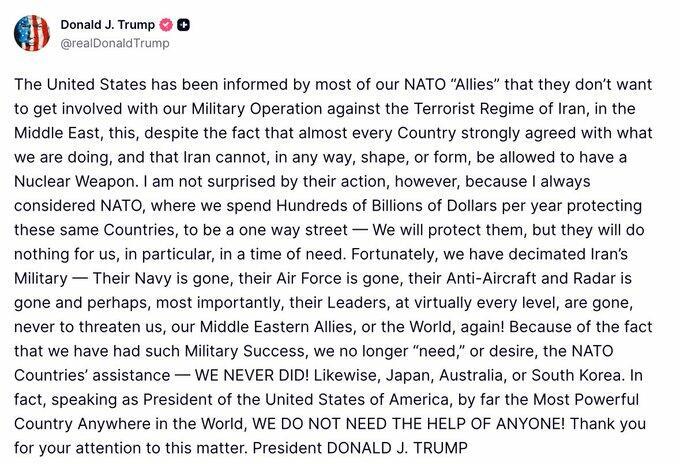
END
THIS IS A MUST READ….
The US-Israeli strategy against Iran is working. Here is why
Every aspect of Iran’s ability to project regional power is being successfully degraded.

Published On 16 Mar 202616 Mar 2026Listen (14 mins)
![Two explosions are seen in footage released by US President Donald that he says shows the bombing of Iran's Kharg Island. [Donald Trump via social media]](https://www.aljazeera.com/wp-content/uploads/2026/03/us_strikes_iran_kharg_island_airport_airbase-1773461350.jpg?resize=770%2C513&quality=80)
Two weeks into Operation Epic Fury, the dominant narrative has settled into a comfortable groove: The United States and Israel stumbled into a war without a plan. Iran is retaliating across the region. Oil prices are surging, and the world is facing another Middle Eastern quagmire. US senators have called it a blunder. Cable news has tallied the crises. Commentators have warned of a long war.
The chorus is loud and, in some respects, understandable. War is ugly, and this one has imposed real costs on millions of people across the Middle East, including the city I live in.
But this narrative is wrong. Not because the costs are imaginary, but because the critics are measuring the wrong things. They are cataloguing the price of the campaign while ignoring the strategic ledger.
When you look at what has actually happened to Iran’s principal instruments of power – its ballistic missile arsenal, its nuclear infrastructure, its air defences, its navy and its proxy command architecture – the picture is not one of US failure. It is one of systematic, phased degradation of a threat that previous administrations allowed to grow for four decades.
I write this from Doha, where Iranian missiles have triggered alerts for residents to take shelter and Qatar Airways has started operating evacuation flights. I lived through four years of war in Baghdad.
I have worked for the US Department of State and advised defence and intelligence agencies in multiple countries. I have no interest in cheerleading for war.
But I have spent my academic career studying how states authorise the use of force through intelligence institutions, and what I see in the current campaign is a recognisable military operation proceeding through identifiable phases against an adversary whose capacity to project power is collapsing in real time.
An arsenal built over decades, dismantled in days
Iranian ballistic missile launches have fallen by more than 90 percent from 350 on February 28 to roughly 25 by March 14, according to publicly available data. Drone launches tell the same story: from more than 800 on Day 1 to about 75 on Day 15.
The figures drawn from US and Iranian military statements differ in detail but converge on the trajectory. Hundreds of Iranian missile launchers have been rendered inoperable. According to some reports, 80 percent of Iran’s capacity to strike Israel has been eliminated.
Iran’s naval assets, fast-attack craft, midget submarines and mine-laying capabilities are being liquidated. Its air defences have been suppressed to the point at which the US is now flying nonstealth B-1 bombers over Iranian airspace, a decision that signals near-total confidence in air dominance.
Get instant alerts and updates based on your interests. Be the first to know when big stories happen.Yes, keep me updated
The campaign has moved through two distinct phases. The first suppressed Iran’s air defences, decapitated its command and control, and degraded its missile and drone launch infrastructure. By March 2, US Central Command announced local air superiority over western Iran and Tehran, achieved without the confirmed loss of a single American or Israeli combat aircraft.
The second phase, now under way, targets Iran’s defence industrial base: missile production facilities, dual-use research centres and the underground complexes where remaining stockpiles are stored. This is not aimless bombing. It is a methodical campaign to ensure that what has been destroyed cannot be rebuilt.
Iran now faces a strategic dilemma that tightens every day. If it fires its remaining missiles, it exposes launchers that are promptly destroyed. If it conserves them, it forfeits the ability to impose costs of the war. Missile and drone launch data suggest Iran is rationing its remaining capacity for politically timed salvoes rather than sustaining operational tempo.
This is a force managing decline, not projecting strength.
The nuclear threshold that previous US presidents accepted
Much of the criticism of the US-Israeli campaign focuses on its costs while treating the status quo ante as if it were cost-free. It was not.
Iran entered 2026 with 440kg of uranium enriched to 60 percent purity – enough, if further enriched, for as many as 10 nuclear weapons. Before the June strikes, Tehran was less than two weeks away from enriching enough uranium for one nuclear bomb, according to US intelligence assessments. At that time, the International Atomic Energy Agency acknowledged that Iran’s accumulation of near-weapons-grade material had no clear civilian justification.
The current campaign has damaged further the Natanz nuclear facility. The one in Fordow remains inoperable. The defence industrial facilities that would be needed to reconstitute enrichment capacity are being systematically targeted.
Reasonable people can disagree about whether diplomatic alternatives were fully exhausted, the Omani-mediated negotiations in February showed real progress, and there are legitimate questions about whether Washington walked away too soon.
But the critics’ implicit alternative, continued restraint while Iran inched towards a nuclear weapon, is the policy that produced the crisis in the first place. Every year of strategic patience added centrifuges to the enrichment halls and kilogrammes to the stockpile.
The limits of military force against a nuclear programme are real, and as others have argued elsewhere, strikes can destroy facilities but cannot eliminate knowledge. The 440kg of enriched uranium remains unaccounted for.
A successor regime of any political colour will inherit a strategic environment in which the case for nuclear deterrence has been strengthened, not weakened. These are genuine long-term risks. But they are arguments for a comprehensive post-conflict diplomatic architecture, not arguments against the campaign itself.
The Strait of Hormuz: Iran’s wasting asset
The closure of the Strait of Hormuz is dominating the critical commentary. US Senator Chris Murphy has called it evidence that President Donald Trump misjudged Iran’s capacity to retaliate. CNN has described it as proof that the administration has lost control of the war’s escalation.
The economic pain is real: Oil prices have surged, a record 400 million barrels of oil will be released from global reserves, and Gulf states are facing drone and missile strikes on their energy infrastructure.
But this framing inverts the strategic logic. Closing the strait was always Iran’s most visible retaliatory card, and always a wasting asset. About 90 percent of Iran’s own oil exports pass through Kharg Island and then the strait.
China, Tehran’s largest remaining economic partner, cannot receive Iranian crude while the strait is shut. Every day the blockade continues, Iran severs its own economic lifeline and alienates the one major power that has consistently shielded it at the United Nations. The closure does not just hurt the global economy; it accelerates Iran’s isolation.
Meanwhile, the naval assets Iran needs to sustain the blockade – fast-attack boats, drones, mines, shore-based antiship missiles – are being degraded daily. Its naval bases at Bandar Abbas and Chahbahar have been severely damaged.
The question is not whether the strait reopens but when and whether Iran retains any naval capacity to contest it. Critics compare the challenge of escorting a hundred tankers daily to an impossible logistical burden. But you do not need to escort tankers through a strait if the adversary no longer has the means to threaten them. That is the operational trajectory.
A proxy network that is fragmenting, not expanding
The regional escalation – Hezbollah resuming attacks on Israel, Iraqi militias striking US bases, Houthis issuing threats in the Red Sea – is cited as the clearest evidence of US-Israeli strategic failure. The war is spreading, the critics say, just as it did in Iraq. This misreads the dynamics of Iran’s alliance network.
My research on how states authorise proxy violence identifies four layers of control: strategic legitimation, operational coordination, financial-logistical distribution and deniability calibration. The current campaign has disrupted all four simultaneously.
The assassination of Supreme Leader Ali Khamenei eliminated the apex of the authorisation pyramid. His son Mojtaba’s appointment as his successor, a dynastic transfer without precedent in the Islamic Republic, signals institutional fragility, not continuity. The Islamic Revolutionary Guard Corps (IRGC) command structure has been decapitated at multiple levels – the acting defence minister was among those killed.
When proxies launch retaliatory attacks across the region, this is not evidence of an expanding network; it is evidence of predelegated response authority, which is what a centralised command system activates when it anticipates its own destruction.
Predelegation is a sign of desperation, not strength. It means the centre can no longer coordinate. The attacks will continue, but they will become increasingly uncoordinated, strategically incoherent and politically costly for the host states where these groups operate.
Qatar and Bahrain are arresting IRGC operatives. Kuwait and Saudi Arabia are intercepting Iranian drones over their own territory. The regional environment that sustained Iran’s proxy architecture, including the grudging tolerance by Gulf states fearful of Iranian retaliation, is being replaced by active hostility.
Hezbollah is weaker than at any point since 2006, degraded by more than a year of Israeli operations before this campaign began. Iraqi militias retain the ability to launch attacks, but they are doing so into a region where they face increasing isolation.
The Houthis in Yemen possess independent capability but lack the command integration with Tehran that transforms militia activity into strategic effect. What the critics described as an expanding regional war is better understood as the death spasm of a proxy architecture whose authorising centre has been shattered.
A clear endgame
The most politically potent criticism is that the administration has no endgame. Trump’s own rhetoric has not helped: the oscillation between “unconditional surrender” and hints at negotiation, between regime change and denial of regime change, feeds the impression of strategic incoherence. Only 33 percent of American respondents in a recent Reuters-Ipsos poll said the president had clearly explained the mission’s purpose.
But the endgame is visible in the operational phasing, even if the rhetoric obscures it. The objective is the permanent degradation of Iran’s ability to project power beyond its borders through missiles, nuclear latency and proxy networks.
Call it strategic disarmament. This is closer to the approach of the Allies to Germany’s industrial war-making capacity in 1944-1945 than to the US war on Iraq in 2003. The analogy is imperfect: Strategic disarmament without occupation requires a verification and enforcement architecture that no one has yet proposed, but the operational logic is the same.
No one is proposing to occupy Tehran. The question is what happens when the bombing stops, and here the critics raise a legitimate concern, which Murphy articulated concisely after a classified briefing: What prevents Iran from restarting production?
The answer requires a post-conflict framework that does not yet exist in public: a verification regime, a diplomatic settlement or a sustained enforcement posture. The administration owes the American public and its regional partners a clear account of what that framework would look like.
Advertisement
But the absence of a public diplomatic blueprint does not mean the military campaign is failing. It means the campaign is ahead of the diplomacy, a sequencing problem, not a strategic one. The military conditions for a durable settlement – Iranian missile capacity too degraded to rebuild quickly, nuclear infrastructure inaccessible, proxy networks fragmented – are being created right now.
War is ugly, but the war strategy is working
None of this minimises the human costs. More than 1,400 civilians have been killed in Iran, a moral burden the US and Israel will carry. Oil price spikes are hurting every economy on Earth. At least 11 US service members have been killed. I live with these sirens every day, as does everyone across the Gulf. The costs are real, they are serious, and any accounting that ignores them is dishonest.
But the critics are making a different error: They are treating the costs of action as if the costs of inaction were zero. They were not. They were measured in the slow accretion of a threat that, left unchecked, would have produced exactly the crisis everyone claims to fear: a nuclear-armed Iran capable of closing the Strait of Hormuz at will, surrounded by proxy forces that could hold the entire region hostage indefinitely.
Seventeen days in, Iran’s supreme leader is dead, his successor is reportedly wounded and every principal instrument of Iranian power projection – missiles, nuclear infrastructure, air defences, the navy, proxy command networks – has been degraded beyond near-term recovery. The campaign’s execution has been imperfect, its public communication poor and its post-conflict planning incomplete. War is never clean. But the strategy – the actual strategy, measured in degraded capabilities rather than cable news cycles – is working.
The views expressed in this article are the author’s own and do not necessarily reflect Al Jazeera’s editorial stance.
ISRAEL; VS HEZBOLLAH
IRAN VS USA AND ISRAEL AND GULF STATES
MONDAY NIGHT
Iran Denies Talks Taking Place As Drone Smashes Into Landmark Baghdad Hotel Hosting EU, Saudi Diplomats
Monday, Mar 16, 2026 – 03:59 PM
Summary:
- Trump says ‘I don’t think so’ when asked if war will be wrapped up soon, notes ‘not this week’.
- Iconic Baghdad hotel and home to EU, Saudi missions struck by drone, fire ensues.
- Trump is regularly presented with options to end the war in Iran: NBC.
- Iran has rejected prior reports of diplomatic contacts with the US, calling them “false”: state media
- Iran FM Araghchi and US envoy Witkoff have been in contact via text messages in recent days: Israeli media
- Trump speculates on Iran’s leadership, talks: Said “we don’t even know their leaders” – top Iranian officials – possibly even Ayatollah Khamenei – may be dead, while also claiming “they are negotiating” but may not yet be ready for deal.
- Trump asked about Israeli nukes and escalation: “Israel wouldn’t do that.”
- Trump reiterates military campaign continuing in full force, main efforts to Iran’s threat to shipping
- Trump presses for multinational Hormuz escort coalition as allies hesitate; Bessent says US allowing limited Iranian, Chinese, and Indian tanker transits “for now” to stabilize global supply.
- Headlines, rumors fly on new Ayatollah’s personal life & whether he’s actually in charge.
- Bessent downplays link to Trump-Xi summit, calling any potential delay “logistical” due to Iran war coordination needs.
- Trump floated delaying March 31–April 2 Beijing meeting unless China helps reopen Strait fully, citing Beijing’s heavy reliance on Gulf oil.
- Europe reluctant to join Hormuz operation, Germany outright rejects it alongside Italy and Greece: Trump warned of a “very bad” future for NATO if allies don’t help reopen the strait. UK also says it won’t be ‘NATO-led’.
- Iran rejects ceasefire, vows prolonged defense; selective Hormuz policy continues, with traffic still down 70-90% and only “friendly” vessels passing safely.
- Gulf energy infrastructure under ongoing attack; regional proxies (Houthis, others) threaten further disruptions to bypass routes.
* * *
Iconic Baghdad Hotel & Home To EU, Saudi Missions Struck By Drone; Iran Denies US Talks
A drone slammed into the Al-Rasheed Hotel in central Baghdad Monday evening, triggering a massive fire and sending thick smoke pouring from the upper floors of the landmark building in what’s widely being seen as one of the most symbolic and significant strikes on the Iraqi capital since the US-Iran war erupted more than two weeks ago.
The strike hit the 18-story hotel mid-evening, with eyewitness videos also confirming the attack. So far, no group has claimed responsibility, and Iraqi authorities have yet to confirm who launched the drone. US bases in Iraq have lately come under attack allegedly by pro-Iran Iraqi paramilitary groups, and not just directly from Iran.

Al Jazeera reports on a state of panic at the scene:
The last two floors of the Al-Rasheed Hotel, home to the European Union and Saudi diplomatic missions, were hit by a drone. Western workers are also based at the hotel, including oil company employees.
We do not know for certain who is responsible for the attack, but it is worth noting the hotel lies within the Green Zone, so it’s not far from the US embassy, which was also hit less than 48 hours ago.
Security forces deployed to the area right after the explosion. They say the blast only caused material damage and no casualties were reported.
Earlier in the day Iran warned that US companies, interests, and industrial zones across the region could be attacked. It warned bystanders to flee these places, which are all potential targets. Iran has also said it would hit the ‘hiding places’ of US forces, even if they be in hotels.
Also of note late in the day Monday is that Iran has rejected prior reports of diplomatic contacts with the US, calling them “false” – according to state media. Oil rallied on that denial. Additionally, from President Trump today:
Iran FM Araghchi, US envoy Witkoff have been in Contact via Text Messages in Recent Days
Israel’s Channel 12 is reporting this apparently lone line of Washington-Tehran communication, but at least it is something. President Trump seems to have referenced it while speaking with reporters earlier, saying the warring sides are “talking” – but it’s unclear whether Tehran is ready for a lasting Truce. Indeed Tehran has lately been stating it wants to exact more of a cost on the United States.
This apparent confirmation of contact between Witkoff and Arachchi sent oil prices falling on the newswire headline:
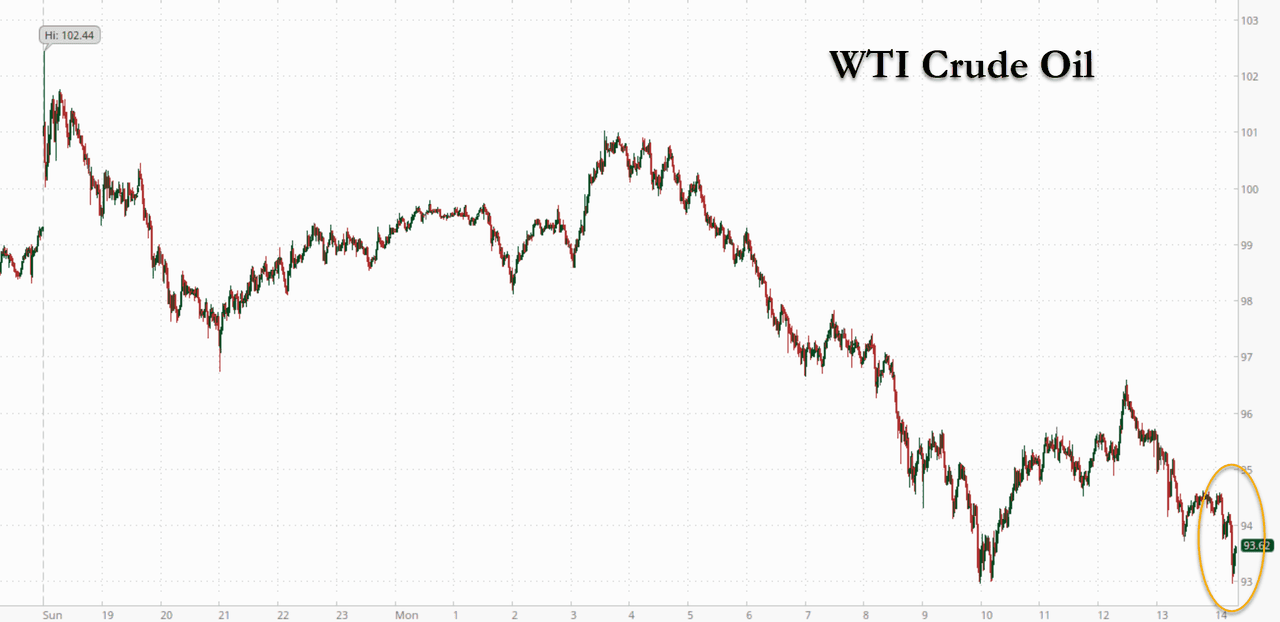
Speculation, Propaganda Abounds on Khamenei’s Sexuality, Ability to Lead
It is to be expected that during wartime, propaganda and psychological warfare will fly between warring enemies. That appears to be happening as more and more questions surround the mysterious supreme leader Mojtaba Khamenei. There’s an avalanche of speculation and headlines on Monday. For example:
President Trump has reportedly been briefed on intelligence that Iran’s regime’s supreme leader Mojtaba Khamenei, who earned the nickname “the power behind the robes” while serving as his aging dad’s gatekeeper, has had a long-term sexual relationship with his childhood tutor and is probably gay.
Apparently his father harbored serious doubts about the younger Khamenei’s abilities, and worried that he was “unqualified”. Time wrote that “Khamenei was also aware of problems in Mojtaba’s personal life that reinforced his doubts about succession.” Seizing on these reports and all the speculation, NY Post claims based on anonymous sourcing that “Trump couldn’t contain his surprise and laughed aloud when he was briefed on the intel, according to sources.” Whether any of this is true or not is another matter, and America’s Middle East wars over the last two plus decades have shown during intense times of conflict, Western public audiences get inundated with all kinds of sensationalist claims. There are also persistent rumors the new Ayatollah could be dead after two weeks of heavy US-Israeli bombardment.
END
TUESDAY MORNING
Iran “Starts New Phase Of Oil War” After Energy Production Hit
Tuesday, Mar 17, 2026 – 07:20 AM
Crude oil futures rose in overnight trading, with Brent nearly reaching $105 per barrel and WTI climbing as high as $98.42 per barrel, as Iran intensified drone strikes on energy infrastructure across the Gulf.
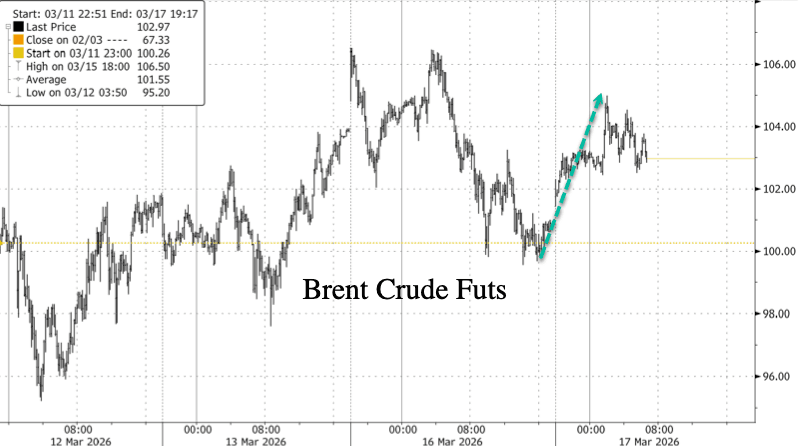
“Further ominous developments today. For the first time, Iran successfully targeted oil and gas production facilities, rather than refining, terminals, and storage,” Bloomberg Opinion and commodities columnist Javier Blas wrote on X.
Blas listed the IRGC’s attacks on Gulf oil and gas facilities:
- Oil and gas field in the UAE (Shah) hit
- Oil field in Iraq (Majnoon) attacked
- Plus Saudi Arabia saw large drone swarms
He explained that these attacks suggest “Iran has started a new phase of its oil war” against Gulf states aligned with the US.
“Tehran is clearly going after the Strait of Hormuz bypass route, with Fujairah (UAE) coming under attack. But so far, the Saudi pipeline bypass hasn’t been attacked, and neither the Yemeni Houthis have tried to close the Red Sea,” Blas said.
The continued bombardment of Gulf energy infrastructure by IRGC forces entered its third week, with the Strait of Hormuz mostly paralyzed.
Brent crude has jumped more than 40% since the start of Operation Epic Fury in late February, but out-of-control spikes in crude markets have largely been capped so far by the IEA’s 32-nation “historic” emergency SPR release.
To begin the week, the Trump administration showed urgency to reopen the critical maritime chokepoint, the Strait of Hormuz.
Treasury Secretary Scott Bessent told CNBC’s Squawk Box on Monday morning that the US is deliberately “allowing Iranian oil tankers to transit the Strait of Hormuz” and is “fine” with some Indian and Chinese ships moving through “for now… to supply the rest of the world.”
Bessent highlighted “more and more of the fuel ships start[ing] to go through” and a possible “natural opening” the Iranians are permitting, a tactical concession to stabilize global supply while full escorts remain “militarily” off the table for now.
Last week, we highlighted JPMorgan’s head of commodity research, Natasha Kaneva, who warned that policy measures will have, at best, a limited impact on oil prices unless safe passage through the Strait of Hormuz is assured, given the potential for up to 12 mbd in losses over the next two weeks.
Kaneva noted that Strait traffic is likely to become “increasingly conditional,” with Iran permitting passage for some vessels depending on their affiliation.
“The biggest risk in the market is the Strait of Hormuz remaining constrained for a longer stretch and the market feeling the US and its allies have a limited capacity to alter the dynamic,” Pepperstone Group analyst Chris Weston said.
Trump’s move to reopen the Hormuz chokepoint with a naval coalition largely fell flat at the start of the week. Allied countries, including Australia, Germany, and Japan, said they weren’t planning to send their warships through the critical waterway to shadow commercial tanker traffic.
In the US, the effects of an energy shock from the Middle East, according to new AAA data, show regular gas at the pump has jumped the most for any single month on record, up 25% so far in March.
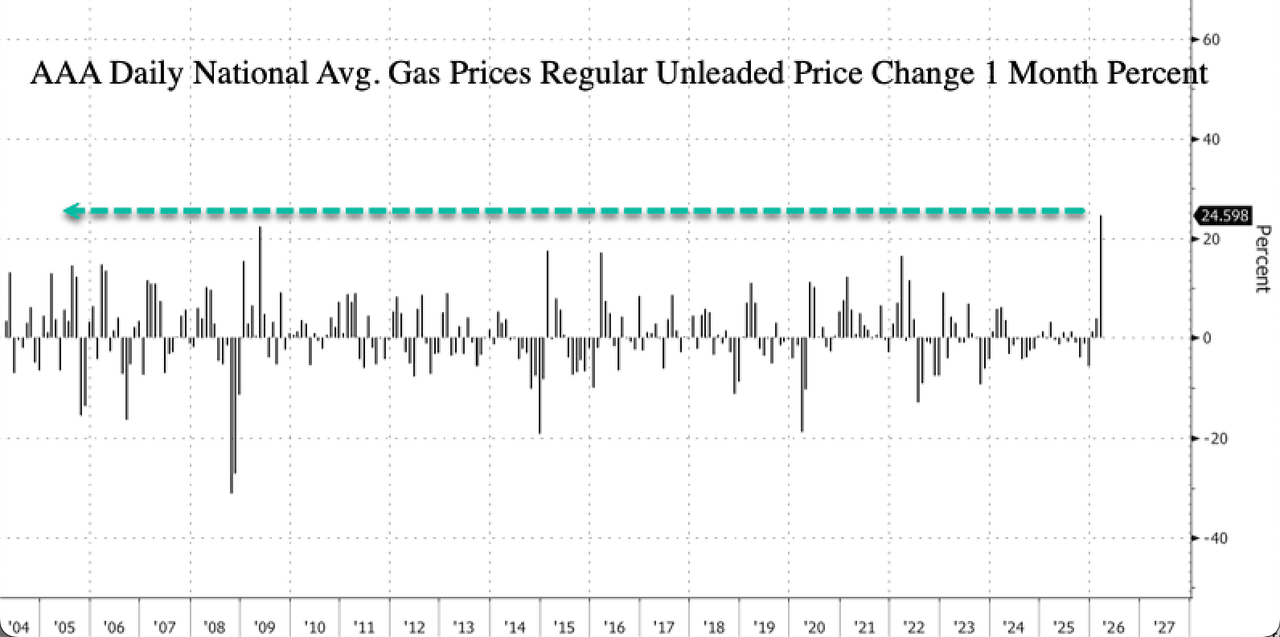
The US national average for regular gas could very well be headed for the politically sensitive $4 mark.
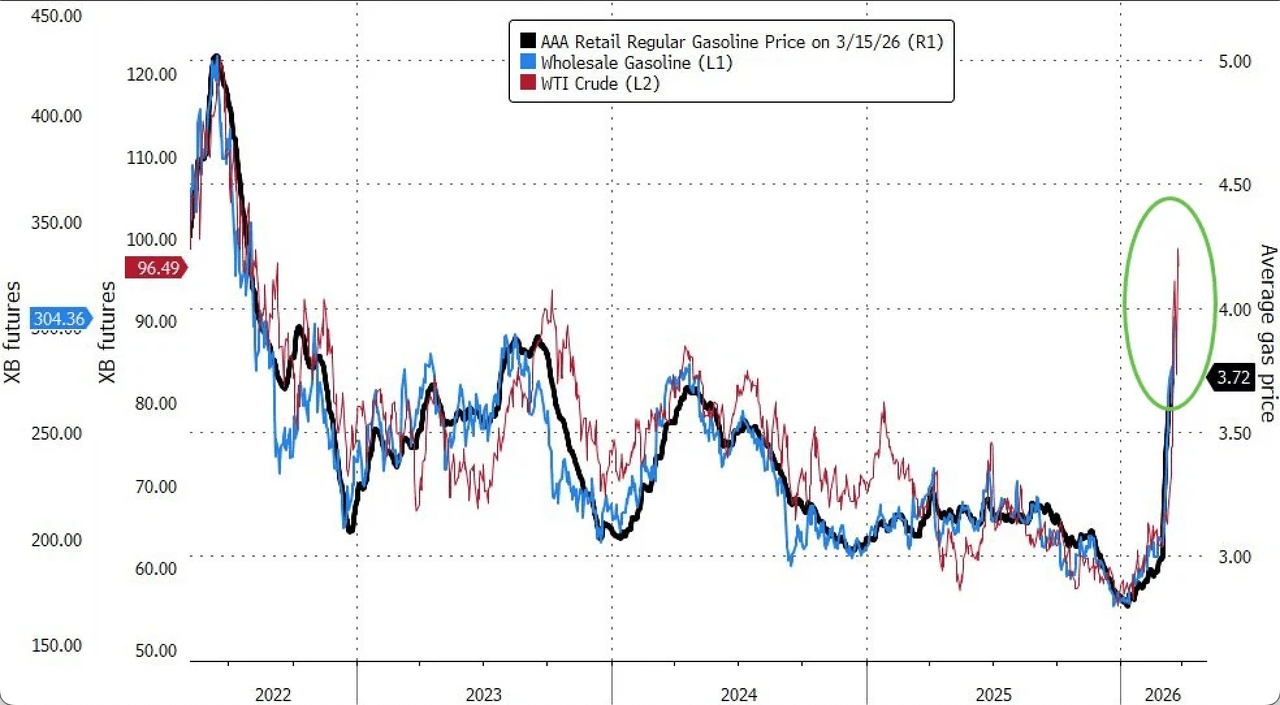
AAA data also showed the nationwide average retail price for diesel hit $5 a gallon, for the first time since December 2022.
On Monday, JPMorgan analysts asked, “Is there an off-ramp?” to the Middle East conflict. That answer remains unclear at the moment. While the Trump administration is searching for an off-ramp, that may take a few more weeks.
RUSSIA VS UKRAINE
Russia Seeks To Keep Iran ‘In The Fight’ As Pentagon Eyes Mass Kamikaze Drone Production
Tuesday, Mar 17, 2026 – 03:59 PM
Summary:
- Russia is trying to keep its regional ally Iran “in the fight”; Pentagon eyes ramping up Kamikaze drone use and production.
- Trump: War will be over “soon” after which “oil prices will drop like a rock”; We are “not ready to leave Iran yet” but will in “near future”. Brushes off potential for ‘Vietnam-style quagmire.’ Trump on China and delayed Xi meeting – “Looks like it’ll happen in five weeks.”
- Macron: “We are not party to the conflict and therefore France will never take part in operations to open” Strait of Hormuz. Trump says we don’t need NATO. Key NATO states are refusing to join US efforts to secure Hormuz, amid lack of confidence in Trump’s often shifting articulation of operation.
- Israel claims major decapitation strike: Larijani and Basij chief Gholamreza Soleimani were killed. Iran state media confirms Soleimani’s death. Israel issues widest evacuation order for Lebanon since the major 2006 war.
- New oil targeting phase as Tehran pledges to be gatekeeper of Hormuz: Ships pass only “in coordination” with Tehran – talk of separate deal-making with BRICS capitals.
* * *
Internationalization of Kamikaze Drone War over Gulf
On Tuesday afternoon the WSJ is reporting on two trends which suggesting a creeping internationalization of the Iran conflict. First, it says Russia is trying to keep its regional ally Iran “in the fight” through expanded intelligence-sharing. “Russia has been expanding its intelligence sharing and military cooperation with Iran, providing satellite imagery and improved drone technology to aid Tehran’s targeting of U.S. forces in the region, people familiar with the matter said,” the publication writes. This might prolong the war, keeping the US and Israel bogged down, to the geostrategic benefit of Moscow. There are reports that China too is doing more to step up support, but there’s little in the way of specifics that can ultimately be verified. Are superpowers starting to get into a drone-lobbing competition over the Gulf?
The technology provided includes components of modified Shahed drones, which are meant to improve communication, navigation and targeting, the people said. Russia has also been drawing on its experience using drones in Ukraine, offering tactical guidance on how many drones should be used in operations and what altitudes they should strike from, said the people, who included a senior European intelligence officer. –WSJ
Another big headline, from the same publication, is that the Pentagon is looking to mass produce a kamikaze drone the U.S. recently used to strike Iran – this according to a top US defense official. “The one-way attack drone, called Lucas, is an American-made copy of Iran’s Shahed drones, which have terrorized Iran’s neighbors in the current conflict with the U.S. and Israel,” the WSJ writes.
After only a few years, we continue to refine that and make that something that we can mass produce at scale,” Emil Michael, the undersecretary of defense for research and engineering, was quoted as saying. “They’ve worked very well so far and it’s proven out to be a useful tool in the arsenal. It was further reported SpektreWorks has manufactured “dozens” of the drones – but it’s unclear how many have been used in combat.
Trump: “Not Ready to Leave Iran Yet” But Will in “Near Future”
President Trump met with Irish Prime Minister Taoiseach Micheál Martin on Tuesday late morning in honor of St. Patrick’s Day, and the Q&A focused almost exclusively on Iran, with Trump again signaling an eventual US exit from the Iran war – but not just yet, and really with no set timeline (amid at least a “five week” delay until Xi summit). “We’re not ready to leave yet, but we will be leaving in the near future,” he said, adding that US-Israeli strikes have set Iran back so severely it could take “a decade” to rebuild.
Important: Trump on China and Xi meeting – “Looks like it’ll happen in five weeks.”
Crucially (and alarmingly) Trump also brushed off warnings from Tehran that deploying US ground troops could trigger a Vietnam-style quagmire. “No, I’m not afraid of – I’m really not afraid of anything,” he said.
At the same time, Trump is lashing out at NATO allies for sitting on the sidelines. “We help them, and they didn’t help us, and I think that’s a very bad thing for NATO,” Trump said. “Everyone agrees with this, but they don’t want to help,” he said.
Still, he stopped short of threatening immediate consequences, calling it simply “not good for a partnership.” All the while, Trump kept touting that the world faced “nuclear holocaust” from Iran if he didn’t give the order to attack. He even claimed nuclear conflict would have reached Europe if he hadn’t taken action.
US Doesn’t Need NATO to Help with Iran Mission: Trump
President Trump is not happy with NATO and is letting the world know it. First countries like Spain, Germany, and Greece made it clear they would not heed his call for a coalition to open the Strait of Hormuz, and on Tuesday France’s Macron stated it is “not our war”.
Trump said in a fresh Truth Social Post “I am not surprised by their action, however, because I always considered NATO, where we spend Hundreds of Billions of Dollars per year protecting these same Countries, to be a one way street — We will protect them, but they will do nothing for us, in particular, in a time of need.” And more:
Because of the fact that we have had such Military Success, we no longer “need,” or desire, the NATO Countries’ assistance — WE NEVER DID! Likewise, Japan, Australia, or South Korea. In fact, speaking as President of the United States of America, by far the Most Powerful Country Anywhere in the World…
Without doubt, these countries have memories of Iraq and Afghanistan, which were multi-national efforts (and largely failures in terms of becoming unanticipated ‘forever wars’ and quagmires).
6.GLOBAL ISSUES, COVID ISSUES, VACCINE INJURIES/HEALTH ISSUES
EXCLUSIVE: Leaked report to federal advisers calls for urgent recognition of Covid vaccine injuries
GLOBAL ISSUES
EXCLUSIVE: Leaked report to federal advisers calls for urgent recognition of Covid vaccine injuries
MARK CRISPIN MILLER
DR PAUL ALEXANDER
NEWSWIZE
| Beloved Character Actor Passes Away Following Surgery ComplicationsMatt Clark, a veteran American actor famed for his role in Back to the Future Part III, has sadly passed away at the age of 89. His career spanned over five decades, leaving a lasting impact in Hollywood.READ THE FULL REPORT |
| US Eyes Iran’s Key Oil Hub as Tensions RisePresident Trump is prepared to strike Iran’s Kharg Island, labeled its crucial oil hub, while signaling readiness for negotiations. Despite military options, the focus remains on diplomatic solutions.READ THE FULL REPORT |
| Kristi Noem Faces DOJ Criminal Investigation Over TestimonyFormer Homeland Security Secretary Kristi Noem is under investigation by the Justice Department for alleged perjury linked to her statements about a $220 million ad campaign approved by President Trump.READ THE FULL REPORT |
| Rep. Dunn’s Health Crisis Averted by White House InterventionRep. Neal Dunn faced a terminal diagnosis before a timely intervention from White House doctors turned his fate around. Colleagues praised his dedication to serving despite his severe health issues.READ THE FULL REPORT |
| Rhode Island Democrats Propose Bill Targeting ICE AgentsIn a move that intensifies resistance to immigration enforcement, Rhode Island Democrats are introducing legislation to prevent local police from hiring certain ICE personnel. Critics argue this is politically motivated discrimination amid recruitment challenges.READ THE FULL REPORT |
MICHAEL EVERY/OR OR PICTON/GIFFIN OR RABOBANK EXECUTIVE/COMMENTARY ON WORLDLY AFFAIR
7. OIL ISSUES/NATURAL GAS/ENERGY ISSUES/GLOBAL
Diesel Tops $5, Echoing 2022 Russia-Ukraine Invasion Energy Shock
Tuesday, Mar 17, 2026 – 08:40 AM
US Fuel Spike Summary:
- AAA national average diesel prices have jumped 34%, the largest increase for any month on record.
- AAA national average gasoline prices have jumped 24.5%, also the largest increase for any month on record.
- The spike in refined products comes just ahead of driving season and, if it persists long enough, could dent consumer sentiment polls.
- The Trump administration assures the conflict will be short-term.
- Countdown to Memorial Day driving season: 69 days.
* * *
Update (0840ET)
The partially paralyzed Hormuz chokepoint has unleashed a worldwide tightening in the refined products market, sending gasoline and diesel prices at the pump in the US skyrocketing.
AAA (American Automobile Association) reports that the national average price for a gallon of diesel has topped $5, surging 34% so far this month. The monthly jump is the highest on record and may spark an energy shock across the core of the US economy, from freight to construction to agriculture to even heating oil.
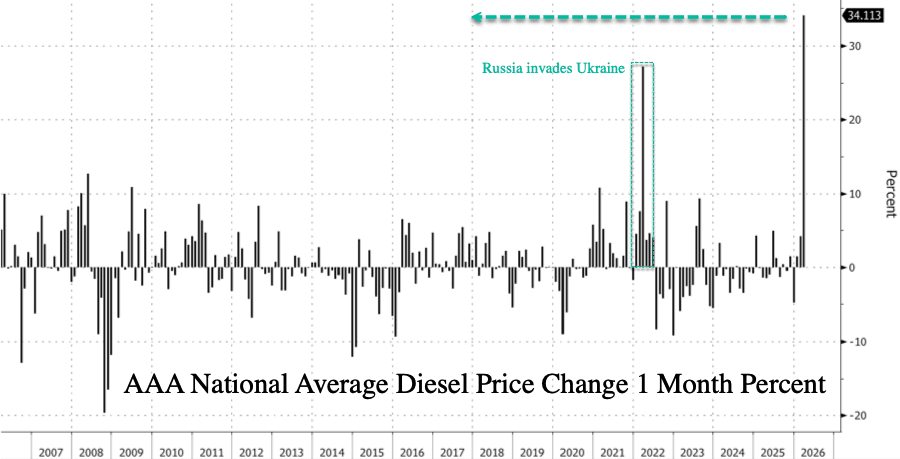
The national average price for diesel now exceeds $5; the last time this happened was during the Russian invasion of Ukraine.
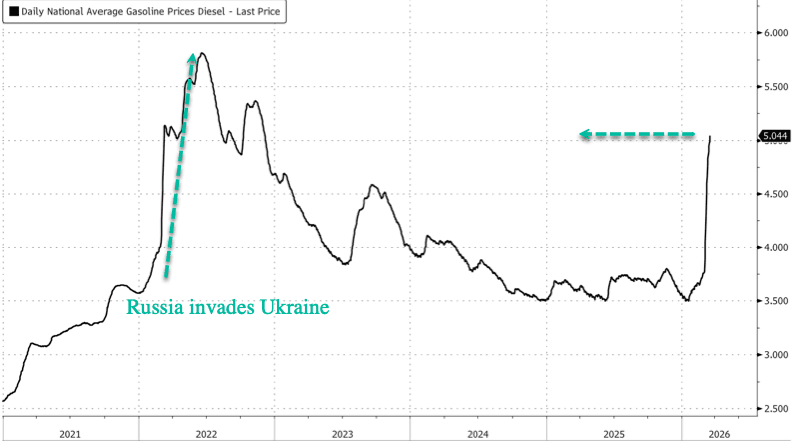
Seasonally…
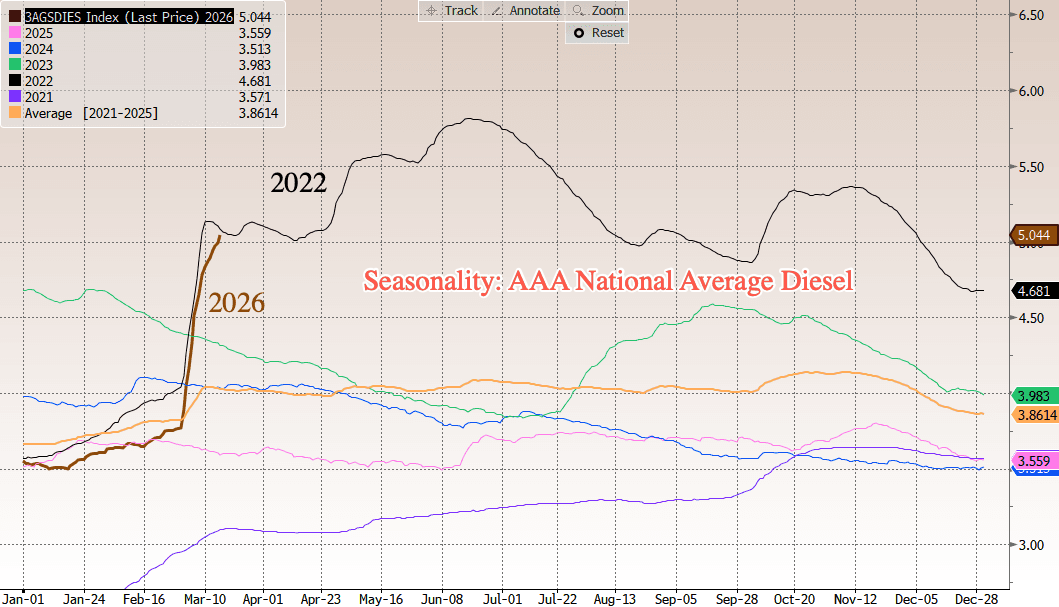
Earlier, UBS analyst Matthew Cowley commented on a colleague’s note about global refined products markets tightening:
The refined products market is already sensing tightness in the crude market, according to UBS chief strategist Bhanu Baweja.
Producers are reducing the output of petrochemicals given the likely rationing of crude supply. Markets are also getting tight because of fears of export limitations being imposed by large refining countries such as China.
Increases in prices of jet fuel, diesel, naphtha and urea are already in excess of the surge seen ahead of and through the Russian invasion of Ukraine. This has not yet spread aggressively to the broader commodity universe, including food and metals, but that is possible.
The longer the energy shock persists in the refined market space, the greater the risk of broader inflationary pressures and a political headache for the Trump administration ahead of the midterms. The administration assures that the conflict in the Middle East will be short-term.
On Monday, we reported that AAA data showed the national average for regular gasoline prices jumped the most on record for any given month, inching closer to the politically sensitive $4-a-gallon level.
Memorial Day is about 69 days away, and it tends to be one of the biggest travel periods, alongside Thanksgiving and Independence Day. This only suggests the administration needs to find an off-ramp to the conflict before the driving travel season really begins ramping up in May, or higher prices at the pump could start denting sentiment polls – bad news ahead of midterms.
* * *
AAA (American Automobile Association) reports that the national average price for a gallon of regular gasoline has surged nearly 25% so far this month, putting it on track for the largest monthly increase on record, even surpassing the May 2009 spike, unless the Middle East conflict is resolved quickly.
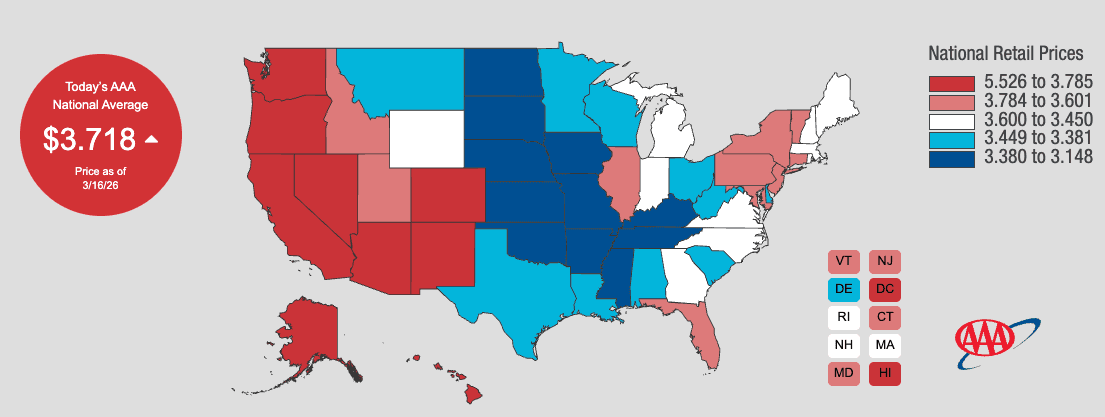
This consumer fuel-price shock is coming at about the worst possible moment: it is a midterm election year for MAGA, and as we have noted previously, an emergency SPR release would do little to contain the spike, leaving the administration with few viable options.
Brent crude is trading near $102 a barrel and WTI around $95 on Monday afternoon, levels that suggest the national average price for regular gasoline could soon push even closer to the politically sensitive $4-per-gallon threshold.
Consumers have already noticed, as Google Search trends for “Why are gas prices going up” have surged to levels seen when crude prices spiked during Russia’s 2022 invasion of Ukraine.
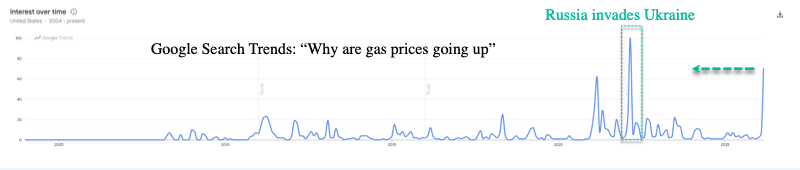
The good news is that comments from the Trump administration show an urgency to reopen the critical maritime chokepoint, the Strait of Hormuz.
Treasury Secretary Scott Bessent told CNBC’s Squawk Box this morning that the US is deliberately “allowing Iranian oil tankers to transit the Strait of Hormuz” and is “fine” with some Indian and Chinese ships moving through “for now… to supply the rest of the world.”
He highlighted “more and more of the fuel ships start[ing] to go through” and a possible “natural opening” the Iranians are permitting – a tactical concession to stabilize global supply while full escorts remain “militarily” off the table for now.
Last week, we highlighted JPMorgan’s head of commodity research, Natasha Kaneva, who warned that policy measures will have, at best, a limited impact on oil prices unless safe passage through the Strait of Hormuz is assured, given the potential for up to 12 mbd in losses over the next two weeks.
Some of those policy maneuvers included the 32-nation IEA’s emergency release of 400 million barrels that will soon hit crude markets, along with the initial flows from the U.S. SPR release of 86 million barrels, which could begin as soon as this week. As we have noted, this is not a stockpile problem, but a flow problem.
Kaneva’s other five options beyond SPR releases to contain soaring oil prices include export restrictions, lifting the Jones Act (which Trump is set to do), waiving federal fuel taxes (which could occur if gas hits $4 a gallon), relaxing E15 gasoline blending rules, and issuing a Reid Vapor Pressure waiver (read her full note here).
With the national average price of gas inching closer to the politically sensitive $4-per-gallon level, the key question is what tools the Trump administration is prepared to use to contain pump prices to mitigate any risk of political fallout.
The immediate focus at the start of the week is clearly on reopening the Strait of Hormuz, but domestically, the policy maneuvering is far narrower, likely centering on an SPR release by mid-week and potentially a temporary waiver on federal fuel taxes.
Soaring pump prices come as spring break begins. Will Trump’s Iran conflict be over before the Memorial Day driving season?
END
IRAN/OIL FIELDS
Iran “Starts New Phase Of Oil War” After Energy Production Hit
Tuesday, Mar 17, 2026 – 07:20 AM
Crude oil futures rose in overnight trading, with Brent nearly reaching $105 per barrel and WTI climbing as high as $98.42 per barrel, as Iran intensified drone strikes on energy infrastructure across the Gulf.
“Further ominous developments today. For the first time, Iran successfully targeted oil and gas production facilities, rather than refining, terminals, and storage,” Bloomberg Opinion and commodities columnist Javier Blas wrote on X.
Blas listed the IRGC’s attacks on Gulf oil and gas facilities:
- Oil and gas field in the UAE (Shah) hit
- Oil field in Iraq (Majnoon) attacked
- Plus Saudi Arabia saw large drone swarms
He explained that these attacks suggest “Iran has started a new phase of its oil war” against Gulf states aligned with the US.
“Tehran is clearly going after the Strait of Hormuz bypass route, with Fujairah (UAE) coming under attack. But so far, the Saudi pipeline bypass hasn’t been attacked, and neither the Yemeni Houthis have tried to close the Red Sea,” Blas said.
The continued bombardment of Gulf energy infrastructure by IRGC forces entered its third week, with the Strait of Hormuz mostly paralyzed.
Brent crude has jumped more than 40% since the start of Operation Epic Fury in late February, but out-of-control spikes in crude markets have largely been capped so far by the IEA’s 32-nation “historic” emergency SPR release.
To begin the week, the Trump administration showed urgency to reopen the critical maritime chokepoint, the Strait of Hormuz.
Treasury Secretary Scott Bessent told CNBC’s Squawk Box on Monday morning that the US is deliberately “allowing Iranian oil tankers to transit the Strait of Hormuz” and is “fine” with some Indian and Chinese ships moving through “for now… to supply the rest of the world.”
Bessent highlighted “more and more of the fuel ships start[ing] to go through” and a possible “natural opening” the Iranians are permitting, a tactical concession to stabilize global supply while full escorts remain “militarily” off the table for now.
Last week, we highlighted JPMorgan’s head of commodity research, Natasha Kaneva, who warned that policy measures will have, at best, a limited impact on oil prices unless safe passage through the Strait of Hormuz is assured, given the potential for up to 12 mbd in losses over the next two weeks.
Kaneva noted that Strait traffic is likely to become “increasingly conditional,” with Iran permitting passage for some vessels depending on their affiliation.
“The biggest risk in the market is the Strait of Hormuz remaining constrained for a longer stretch and the market feeling the US and its allies have a limited capacity to alter the dynamic,” Pepperstone Group analyst Chris Weston said.
Trump’s move to reopen the Hormuz chokepoint with a naval coalition largely fell flat at the start of the week. Allied countries, including Australia, Germany, and Japan, said they weren’t planning to send their warships through the critical waterway to shadow commercial tanker traffic.
In the US, the effects of an energy shock from the Middle East, according to new AAA data, show regular gas at the pump has jumped the most for any single month on record, up 25% so far in March.
The US national average for regular gas could very well be headed for the politically sensitive $4 mark.
AAA data also showed the nationwide average retail price for diesel hit $5 a gallon, for the first time since December 2022.
On Monday, JPMorgan analysts asked, “Is there an off-ramp?” to the Middle East conflict. That answer remains unclear at the moment. While the Trump administration is searching for an off-ramp, that may take a few more weeks.
8. EMERGING MARKETS//AUSTRALIA NEW ZEALAND ISSUES
CUBA
YOUR EARLY CURRENCY/GOLD AND SILVER PRICING/ASIAN CLOSING MARKETS AND EUROPEAN BOURSE OPENING AND CLOSING/ INTEREST RATE SETTINGS TUESDAY MORNING 6;30AM//OPENING AND CLOSING
OPENING LEVELS OF CURRENCIES// AND CLOSING ASIAN STOCK MARKET AND OPENING EUROPEAN STOCKS:6 AM EST
EURO VS USA DOLLAR: 1.1489 DOWN 0.0010
USA/ YEN 159.16 UP 0.030OW TARGETS INTEREST RATE AT 1.75% AS IT WILL BUY UNLIMITED BONDS TO GETS TO THAT LEVEL…//YEN STILL FALLS//END OF YEN CARRY TRADE BEGINS AGAIN DEC 2024/Bank of Japan raises rates by .25% TO 1.75 ..TAKAICHI NEW PM AS YIELDS RISE//JAPAN DEEPLY IN TROUBLE WITH RISING RATES AND A FALLING YEN!!
GBP/USA 1.3300 DOWN 0.0012 OR 12 BASIS PTS
USA/CAN DOLLAR: 1.36903 UP 0.0007 CDN DOLLAR DOWN 7 BASIS PTS//
Last night Shanghai COMPOSITE CLOSED DOWN 34.83 PTS OR 0.85%
Hang Seng CLOSED UP 58.48PTS OR OR 0.23%
AUSTRALIA CLOSED UDOWN 0.54%
// EUROPEAN BOURSE: ALL GREEN
Trading from Europe and ASIA
I) EUROPEAN BOURSES: ALL GREEN
2/ CHINESE BOURSES / :Hang SENG CLOSED UP 58.48 PTS OR 0.23%
/SHANGHAI CLOSED DOWN 34.88 PTS OR 0.85%
AUSTRALIA BOURSE CLOSED DOWN 0.54%
(Nikkei (Japan) CLOSED DOWN 120.68PTS OR 0.22%
INDIA’S SENSEX IN THE GREEN
Gold very early morning trading: 5024.60
silver:$81.05
USA DOLLAR VS TRY (TURKISH LIRA): 44.21
USA DOLLAR VS RUSSIAN ROUBLE: 81.76 ROUBLE// DOWN 0 ROUBLE AND 36 BASIS PTS
UK 10 YR BOND YIELD: 4.7480DOWN 2 BASIS PTS
UK 30 YR BOND YIELD: 5.423 DOWN 2 BASIS PTS
CDN 10 YR BOND YIELD: 3.435 DOWN 7 BASIS PTS
CDN 5 YR BOND YIELD; 2,987 DOWN 8BASIS PTS
USA dollar index early TUESDAY MORNING: 99..65 UP 20 BASIS POINTS FROM MONDAY’s CLOSE
TUESDAY MORNING NUMBERS ENDS
And now your closing TUESDAY NUMBERS 10.00 AM
Portuguese 10 year bond yield: 3.329% DOWN 6 in basis point(s) yield
JAPANESE BOND 10 yr YIELD: +2.265% DOWN 2 FULL POINTS BASIS POINTS /JAPAN losing control of its yield curve/
JAPAN 30 YR: 3.554 DOWN 1/2 BASIS PTS//
SPANISH 10 YR BOND YIELD: 3.385 DOWN 3 in basis points yield
ITALY 10 YR BOND: 3.656 DOWN 7 points in basis points yield ./ THE ECB IS QE’ ING ITALIAN BONDS (
GERMAN 10 YR BOND YIELD: 2.9100 DOWN 2 BASIS PTS
IMPORTANT CURRENCY CLOSES : MID DAY TUESDAY
Closing currency crosses for day /USA DOLLAR INDEX/USA 10 YR BOND YIELD/10:00 AM
Euro/USA 1.1537 UP 0.0037 OR 37 basis points
USA/Japan: 158.87 DOWN 0.265 OR YEN IS UP 27 BASIS PTS// HIGHLY INFLATIONARY TO JAPAN
Great Britain 10 YR RATE 4.6930 DOWN 7 BASIS POINTS //
GREAT BRITAIN 30 YR BOND; 5.374 DOWN 6 BASIS POINTS.
Canadian dollar DOWN 12 BASIS pts to 1.3698
xxxxxxxxxxxxxxxxxxxxxxxxxxxxxxxxxxxxxxxxxxxxxxxxxxxxxxxxxxxxxxxxxxxxxxxxxxxxxxxx
The USA/Yuan CNY UP 6.8869 ON SHORE ..
THE USA/YUAN OFFSHORE// CNH UP TO 6.880
TURKISH LIRA: 44.21 EXTREMELY DANGEROUS LEVEL/DEATH WATCH/HYPERINFLATION TO BEGIN.//
Your closing 10 yr US bond yield DOWN 2 in basis points from MONDAY at 4.204.% //trading well ABOVE the resistance level of 2.27-2.32%)
USA 30 yr bond yield 4.852 DOWN 2 basis points /10:00 AM
USA 2 YR BOND YIELD: 3.561 DOWN 6 BASIS PTS.
GOLD AT 10;00 AM 5011.00
SILVER AT 10;00: 80.89
Your 11:00 AM bourses for Europe and the Dow along with the USA dollar index closing and interest rates TUESDAY CLOSING TIME 10:00 AM//
London: CLOSED UP 85.91 PTS OR 0.83%
GERMAN DAX: CLOSED UP 116.91 OR 0.71%
FRANCE: CLOSED UP 38.52 PTS OR 0.49%
Spain IBEX CLOSED UP 159.30 PTS OR 0.93%
Italian MIB: CLOSED UP 539..98 PTS OR 1.98%
WTI Oil price 94.66 10.00 EST/
Brent Oil: 102.07 10:00 EST
USA /RUSSIAN ROUBLE /// AT: 82.89 ROUBLE DOWN 1 AND 39 / 100
CDN 10 YEAR RATE: 3.399 DOWN 4 BASIS PTS.
CDN 5 YEAR RATE: 2.951 DOWN 4 BASIS PTS
CLOSING NUMBERS: 4 PM
Euro vs USA 1.1535 UP 0.0037 OR 37 BASIS POINTS//
British Pound: 1.3353 UP 0.0042 OR 42 basis pts/
BRITISH 10 YR GILT BOND YIELD: 4.6900 DOWN 5 FULL BASIS PTS//
BRITISH 30 YR BOND YIELD: 5.387 DOWN 6 IN BASIS PTS.
JAPAN 10 YR YIELD: 2.263 DOWN 1 FULL BASIS PTS (DANGEROUS TO THEIR ECONOMY
JAPANESE 30 YR BOND: 3.546 DOWN 2 PTS AND STILL VERY DANGEROUS TO THEIR ECONOMY
USA dollar vs Japanese Yen: 159.04 DOWN 0.087 OR YEN UP 9 BASIS PTS EXTREMELY DANGEROUS/YEN FALLING DEEPLY IN VALUE
USA dollar vs Canadian dollar: 1.3694 UP 0.0007 PTS// CDN DOLLAR DOWN 7 BASIS PTS
West Texas intermediate oil: 96.16
Brent OIL: 103.706
USA 10 yr bond yield DOWN 6 BASIS pts to 4.223
USA 30 yr bond yield: DOWN 5 PTS to 4.862%
USA 2 YR BOND 3.616 DOWN 8 PTS
CDN 10 YR RATE 3.391 DOWN 4 BASIS PTS
CDN 5 YEAR RATE: 2.950 DOWN 4 BASIS PTS
USA dollar index: 99.33 DOWN 14 BASIS POINTS
USA DOLLAR VS TURKISH LIRA: 44.19 GETTING QUITE CLOSE TO BLOWING UP/
USA DOLLAR VS RUSSIA//// ROUBLE: 83.05 DOWN 1 AND 55/100 roubles //
GOLD $5000.80 3:30 PM)
SILVER: 79.20 3;30 PM)
DOW JONES INDUSTRIAL AVERAGE: UP 46.85 OR 0.10%
NASDAQ 100 UP 125.08 PTS OR 0.51%
VOLATILITY INDEX 22.49 DOWN 1.02 PTS OR 4.34%
GLD: $ 459.31 DOWN 1.12 PTS OR 0.24%
SLV/ $71.67 DOWN 1.55 PTS OR OR 2.12 %
TORONTO STOCK INDEX// TSX INDEX: CLOSED UP 43.86 PTS OR 0.13%
end
TRADING today ZEROHEDGE 4 PM: HEADLINE NEWS/TRADING
Oil-Equity Link Breaks As Trump Says ‘War Over Soon’; Market Plumbing Starts To Creak
WRAP UP
Stocks and bonds gain as eyes look to Fed – Newsquawk US Market Wrap
Tuesday, Mar 17, 2026 – 04:14 PM
- SNAPSHOT: Equities up, Treasuries up, Crude up, Dollar down, Gold down.
- REAR VIEW: Trump says Xi meeting looks like it’ll happen in 5 weeks; Trump says not ready to leave Iran yet, but will in the near future; US & Israel says Iranian official Larijani dead from strike, but Iran has yet to confirm it; Iraq in contact with Iran to allow some oil tankers through Hormuz; Strong US 20yr auction; US Pending Home Sales top expectations; RBA hikes cash rate as expected; German ZEW Economic Sentiment sinks into negative; AMZN CEO says AI to double AWS sales to $600B by 2036; QCOM raised dividend & new buyback prog.
- COMING UP: Data: EZ CPI Final (Feb), US PPI (Feb), New Zealand GDP (Q4). Event: BoC, Fed, BCB Policy Announcements. Speakers: BoC’s Macklem, Rogers; Fed’s Powell; Nvidia (NVDA) CEO Huang. Supply: Australia, Germany. Earnings: Micron, HelloFresh.
More Newsquawk in 2 steps:
- 1. Subscribe to the free premarket movers reports
- 2. Trial Newsquawk’s premium real-time audio news squawk box for 7 days
MARKET WRAP
US indices were firmer on Tuesday in broader risk-on sentiment, as despite the constant flow of Middle East headlines, there were few escalatory or de-escalatory developments. There have been conflicting reports regarding the health of Iran’s Top Security Chief, Larijani, as Israel and the US said he was killed in an airstrike, but Iran has yet to confirm this. In terms of some of the more notable remarks, the EU’s Kallas remarked that a model similar to the Black Sea could be used in the Strait of Hormuz, but the question is what neighbouring countries, including Iran, could agree on; and the door is not closed on participation in the Strait. From the US side of things, Trump spoke heavily and did not garner much reaction, but he noted they are not ready to leave Iran yet, although they will leave in the near future, and won’t be too long before ships can go through the Strait of Hormuz. Sectors were largely firmer, with only Health and Consumer Staples in the red, while Energy sat atop the pile. WTI and Brent saw gains, retracing some of Monday’s losses, while Treasuries were firmer across the curve with the 20yr auction coming in strong. Precious metals were weaker, with spot silver underperforming its peer, while the Dollar Index saw losses, to the benefit of most G10s. AUD outperformed after the RBA hiked rates overnight, as widely anticipated, with Bullock’s press conference also deemed hawkish as participants debated whether they will raise rates for the third time in May. There was no tier 1 US data, although pending home sales impressed with the US PPI, FOMC and SEPS, the upcoming highlights on Wednesday.
US
PENDING HOME SALES: Pending home sales for February rose 1.8% M/M from January’s decline of 0.8%, and above the expected -0.5%. Gains occurred in the Midwest, South and West, but declined in the Northeast. NAR Chief Economist Lawrence Yun writes that improved affordability seems to have led to a climb in pending contracts, but regions like the NW continued to be held back by the combination of higher home prices and a shortage of supply. Yun warns, “conditions could reverse if higher oil prices lead to an uptick in mortgage rates.” He further added, “For first-time homebuyers, purchasing a home is not a snap decision. It takes time to build credit, save for a down payment, and fulfill existing rental lease agreements. Still, there is sizable pent-up demand that could be released into the market.”
FIXED INCOME
T-NOTE FUTURES (M6) SETTLED 3+ TICKS HIGHER AT 112-00
Yields continue to pare back recent gains as eyes turn to FOMC on Wednesday. At settlement, 2-year -0.2bps at 3.671%, 3-year -0.8bps at 3.675%, 5-year -1.2bps at 3.786%, 7-year -1.7bps at 3.977%, 10-year -2.2bps at 4.198%, 20-year -2.7bps at 4.819%, 30-year -1.9bps at 4.849%.
THE DAY: T-notes were higher across the curve today with yields lower by 0-3bps across the curve. The move lower in yields came despite further upside in oil prices and a lack of fresh tier 1 data. The data today saw the weekly US ADP Employment Change at 9k from 15.5k, while the NY Fed Services Business Activity declined. Pending Home Sales rose M/M in February. There was little fresh driving price action today, and seemingly just a further unwind of recent price action and perhaps still supported by some of the sell side commentary, about risks being tilted to the downside for yields. Meanwhile, although focus remains on the Middle East, attention will be on the FOMC Rate decision and summary of economic projections tomorrow. Before that, the February US PPI will be released, albeit it will still not incorporate any impacts from the war. Nonetheless, it will be a gauge into the February PCE report due April 9th. The 20-year auction was strong however, echoing the strength in the 30-year last week while overnight also saw a strong JGB 20-year auction.
SUPPLY
Notes
- Overall, a very strong 20-year bond offering. The USD 13bln 20-year reopening was sold at a high yield of 4.817%, stopping through the when issued by 0.7bps, a notable improvement when compared to the prior 2bps tail and six auction average of coming in on the screws. The bid-to-cover was also solid, rising to 2.76x from 2.36x, and above the average 2.63x. The strong demand was led by a jump in indirect bidders to 69.2% from 55.2%, above the 62.1% average. Direct demand fell to 21.6% from 27.2%, below the 27% average. However, dealers were only left with 9.2% of the auction, well below the prior 17.6% and a touch beneath the 10.9% average. The strong 20-year auction was likely supported by a combination of factors. The offering came off the back of a very weak February auction, while yields were higher this time around, providing a more attractive entry point for investors. Reopenings in the 20-year sector have also tended to perform well, as highlighted by BMO Capital ahead of the sale. The strength further mirrors demand seen in last week’s 30-year auction, in contrast to the softer 3-year, suggesting investors are favouring duration over the front end. It also follows the strong 20-year JGB auction overnight. In addition, recent sell-side commentary pointing to lower yields ahead may have encouraged participants to lock in the higher yield on offer.
US to sell USD 19bln of 10-year TIPS on March 19th; all to settle March 31st
Bills
- US sold 6-wk bills at a high-rate of 3.635%, B/C 3.02x; sold 1-yr bills at a high rate of 3.485%, B/C 3.43x
STIRS/OPERATIONS
- Fed Rate Cut Pricing: March 0bps (prev. 0bps), April 0bps (prev. 0bps), June 2.7bps (prev. 3.9bps), December 24.6bps (prev. 24.1bps).
- NY Fed RRP op demand at 0.80bln (prev. 0.58bln) across 5 counterparties (prev. 9) on March 17th
- SOFR at 3.70% (prev. 3.65%), volumes at USD 3.178tln (prev. USD 3.164tln) on March 16th
- EFFR at 3.64% (prev. 3.64%), volumes at USD 88bln (prev. USD 92bln) on March 16th
CRUDE
WTI (J6) SETTLED USD 2.71 HIGHER AT USD 96.21/BBL; BRENT (K6) SETTLED USD 3.21 HIGHER AT USD 103.42/BBL
The crude complex was firmer, reversing some of Monday’s losses, all while the Middle East war dominates, there has been no further major escalation. Of course, headlines remain exceedingly busy, but there was actually not too much new on Tuesday, though there have been conflicting reports regarding the health of Iran’s Top Security Chief, Larijani. Israel says he was killed in an airstrike, but Iran has yet to confirm this. In terms of market-moving headlines, crude saw downside as EU’s Kallas remarked a model similar to the Black Sea could be used in the Strait of Hormuz, but the question is what neighbouring countries, including Iran, could agree on; the door is not closed on the participation in the Strait. From the US side of things, Trump spoke heavily and did not garner much reaction, but he noted they are not ready to leave Iran yet, although will leave in the near future, and won’t be too long before ships can go through the Strait of Hormuz. He once again issued his dissatisfaction with NATO allies. WTI traded between USD 92.88-97.65/bbl and Brent USD 100.86-104.98, respectively, as the latter closed above USD 100/bbl for the fourth consecutive day. Heading into settlement, benchmarks saw a slight boost, albeit well within session ranges, as Iran’s parliament speaker Qalibaf said the Strait of Hormuz situation won’t return to its pre-war status. After-hours we get the weekly private inventory figures, whereby current expectations are (bbls): Crude +0.4mln, Distillates -1.5mln, Gasoline -1.6mln.
EQUITIES
CLOSES: SPX +0.25% at 6,716, NDX +0.51% at 24,780, DJI +0.10% at 46,994, RUT +0.67% at 2,520
SECTORS: Health -0.92%, Consumer Staples -0.48%, Utilities -0.26%, Materials +0.17%, Real Estate +0.20%, Technology +0.21%, Industrials +0.25%, Financials +0.51%, Communication Services +0.67%, Consumer Discretionary +1.00%, Energy +1.02%.
EUROPEAN CLOSES: Euro Stoxx 50 +0.50% at 5,768, Dax 40 +0.67% at 23,721, FTSE 100 +0.83% at 10,404, CAC 40 +0.49% at 7,974, FTSE MIB +1.22% at 44,888, IBEX 35 +0.92% at 17,247, PSI +0.50% at 9,175, SMI +0.50% at 12,959, AEX +0.50% at 1,013
STOCK SPECIFICS:
- Nvidia (NVDA): Post CEO Huang’s keynote address at GTC; sees $1tln Blackwell & Rubin sales by 2027.
- Victory Capital submits revised bid for Janus Henderson (JHG) which amounts to $56.84/shr for JHG shares.
- Delta Airlines (DAL) lifted revenue outlook on demand momentum.
- United Airlines (UAL) CEO said remains solidly on the path to low double digit margins and a prolonged fuel spike has the potential to actually accelerate some of the industry restructuring that moves them into mid-double digit range.
- JetBlue Airways (JBLU) expects stronger Q1 travel demand vs. prior expected.
- Steel Dynamics (STLD) cuts Q1 profit guidance.
- Nebius (NBIS) to raise USD 3.75bln in convertible loan offering.
- Lensar (LNSR) and Alcon agreed to terminate their previously announced merger agreement.
- Morgan Stanley said default rates in private credit could rise to 8% as AI disruption continues to pressure software sector.
- Qualcomm (QCOM) boosts quarterly cash dividend and announces new USD 20bln stock repurchase authorisation.
- New Fortress Energy (NFE) signed restructuring support agreement, Bloomberg reports.
- Nvidia (NVDA) plans to use 50% of free cash for investor returns; will shift to returns when funded investment commitments; CFO sees shift to buybacks and dividends in H2.
- Amazon (AMZN) CEO says AI to double AWS sales to USD 600bln by 2036; previously estimated at USD 300bln.
FX
The Dollar continued to trim last week’s gains as risk-on entered global equities amid oil prices starting a modest bounce after yesterday’s weakness. Energy and geopolitical headlines dominated the session, with updates bringing neither escalations nor easing of tensions. Attacks continue, Iran remains firm on restricting the Strait of Hormuz to its enemies, and Trump shows no imminent sign of walking away, as he cited “a couple weeks”. Other updates included US Pending Home Sales topping expectations, ADP weekly easing from the prior, while the 20yr bond auction came in strong. On Wednesday, focus will be on the Fed, where expectations are for a hold as money market pricing for the first 25bps rate cut has been pushed back to December amid the surge in oil prices over the last month. Click here for the Newsquawk FOMC Preview.
AUD outperformed despite initial downticks on the “dovish” framing of the RBA announcement, while a hawkish response from Governor Bullock in the press conference afterwards supported further strength. The RBA hiked the Cash Rate by 25bps as expected to 4.1%, but in a 5-4 vote split. Later, Bullock stated the discussion over the decision was about the timing, not the direction of policy and the hike (March vs May).
EUR, GBP, and CHF all saw strengthening on Tuesday, while JPY and NZD were flat, and CAD weakened modestly. Currency-specific news was generally light in the G10 space. For EUR, the German ZEW Economic Sentiment Index saw its third-largest monthly decline ever in March, but its downside impact on EUR/USD was limited and brief. EUR/USD sits around session highs of 1.1547.
On Wednesday, CAD is in focus amid the BoC, which is expected to hold rates at 2.25%, as seen by money markets and a Reuters poll of economists. In the past two months, cooling in inflation and losses in employment have reduced bets for a return to hikes by year end. Click here for the full BoC Newsquawk Preview.
USA DATA RELEASES
US Pending Home Sales Barely Bounce Off Record Lows Despite Tumbling Rates In Feb
Tuesday, Mar 17, 2026 – 10:08 AM
After reaching a record low last month – with the decline blamed on weather – pending home sales bounced modestly in February (up 1.8% MoM vs -0.6% MoM exp and -10.% MoM prior).
Year-over-year home sales continue to decline (down 0.6% YoY)…
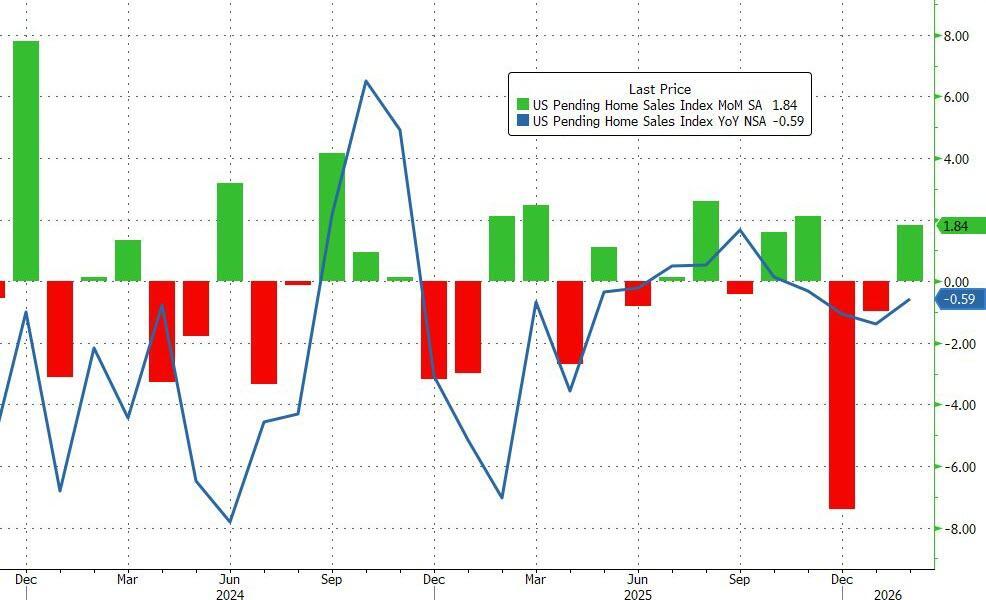
Source: Bloomberg
…just barely off of all-time-record lows…
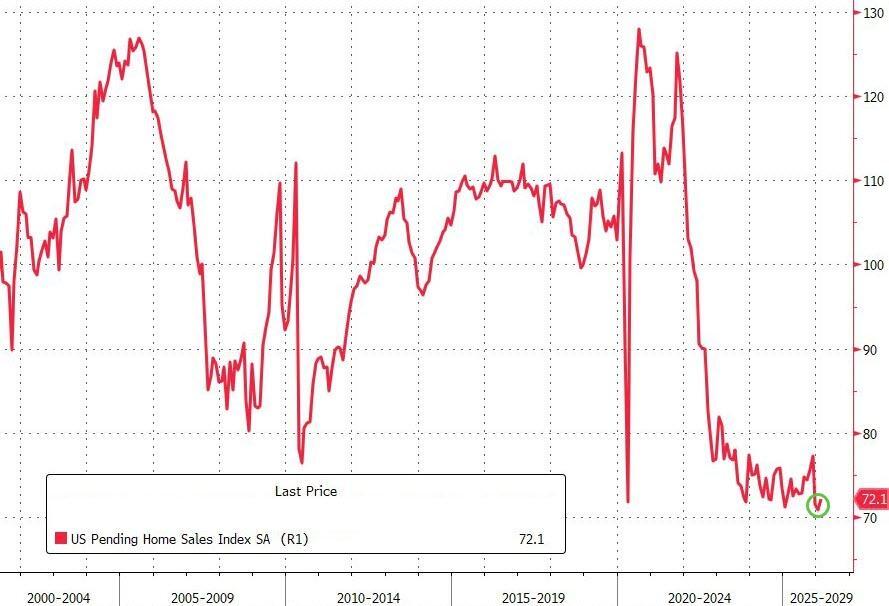
Source: Bloomberg
Pending home sales in the South, the biggest home-selling region in the country, increased 2.7%.
They rose 4.6% in the Midwest and edged up in the West.
Contract signings dropped in the Northeast.
Mortgage-rates have tumbled (to their lowest since 2022) – helping affordability – so what is holding pending home sales back?
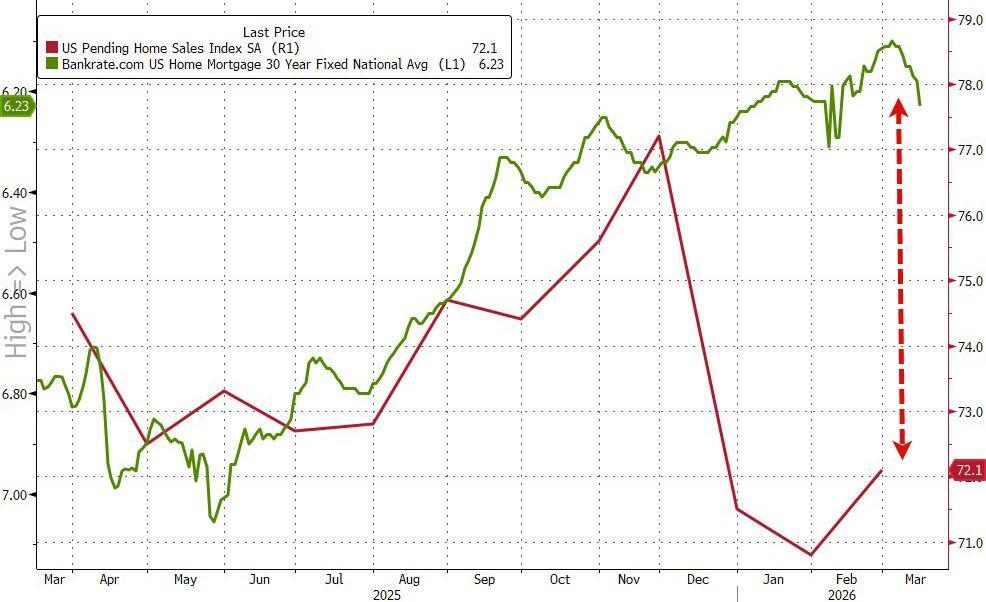
Source: Bloomberg
“The slight gain in pending contracts appears to be driven by improved affordability conditions. However, those conditions could reverse if higher oil prices lead to an uptick in mortgage rates,” NAR Chief Economist Lawrence Yun said in a statement.
Indeed, it certainly won’t help in April that in the first week of March, mortgage rates jumped by the most since September as war with Iran sparked concerns about inflation.
Housing affordability has been a key issue ahead of November’s midterm election. President Trump has taken several steps to boost home ownership, including signing two executive orders last week aimed at improving access to mortgage credit and easing environmental rules to speed up development projects.
As a reminder, pending-homes sales tend to be a leading indicator for previously owned homes, as houses typically go under contract a month or two before they’re sold.
USA ECONOMIC REPORTS
I BELIEVE STRONGLY THAT MIKE EVERY IS THE CORRECT ONE ON THIS
Will The Iran War Trigger A Dollar Crisis?
Tuesday, Mar 17, 2026 – 10:00 AM
The oil spike has moderated and markets are mellow for the time being, but could the long-term economic consequences of this war just be getting started?

U.S. allies have shown a lackluster response after President Trump’s request for assistance in reopening the Strait of Hormuz — a corridor carrying roughly 20% of global oil supply — and this may spell a trend of what’s to come. What happens when oil-producing Gulf states have had enough of our/Israel’s foreign policy machinations and, as a result, begin to de-dollarize or offload U.S. sovereign debt?
Tonight at 7pm ET, wealth manager Peter Schiff, proponent of the Austrian school of economics, and Rabobank global strategist Michael Every will square off on these questions and debate whether the Iran war will undermine the foundations of dollar dominance.
Moderating the discussion is the great Dave Collum, chemistry professor at ZeroHedge and long-time friend of ZH.
Schiff: Dollar’s Days Numbered
Schiff has long argued that U.S. fiscal deficits, monetary expansion, and reliance on foreign capital have put the dollar on an unsustainable trajectory. In recent commentary on the Iran conflict, he warned the war could accelerate those vulnerabilities.
According to Schiff, the combination of higher oil prices, massive war spending, and renewed inflation pressures could trigger a severe economic downturn and destroy purchasing power for Americans. The conflict could be the catalyst that finally exposes structural weaknesses he has warned about for years: a heavily indebted U.S. economy dependent on monetary stimulus and foreign financing.
When other countries start offloading their dollars, it may be rapid and jarring. As Schiff is fond of saying, stocks take the escalator up and the elevator down.
Every: Manufactured Hegemony
Rabobank’s Michael Every takes a different approach.
Less worrisome, he sees Hormuz being opened in two to three weeks:
Rather than collapsing the dollar, crises can actually reinforce its dominance, as global investors rush into U.S. assets during periods of uncertainty. Indeed, in the opening days of the Iran conflict the dollar initially strengthened even as global markets tumbled.
Every also sees the war as a geopolitical chess move that can strengthen the U.S. dollar. If the post-war Iranian regime is more subservient to the Americans, they would control another crux of the world’s energy trade.
Tune in tonight at 7pm ET to witness the showdown. Right here on the ZeroHedge homepage and streaming on X.
END
VICTOR DAVIS HANSON
VDH: Our New Ungracious Immigrants
Tuesday, Mar 17, 2026 – 04:20 PM
Authored by Victor Davis Hanson via American Greatness,
The Traditional Immigrant
Silicon Valley was energized by legal immigrants from all over the world who founded eBay, Google, Nvidia, SpaceX, Stripe, Sun Microsystems, Tesla, Yahoo, and a host of others.
The Greek American Elia Kazan’s 1963 film America, America is a fictional account based on the Herculean struggle of the director’s uncle to immigrate to the United States from an impoverished and hostile Turkish Anatolia.
The film summed up Americans’ traditional view of immigrants: They had risked everything for the chance to reach America, and once there, became hyperpatriotic in their gratitude for the magnanimity of their new hosts.
An excellent example is the recently released memoir from Encounter Books, American Trojan, by former University of Southern California president and Cypriot immigrant Dr. Max Nikias. It resonates with thankfulness to America for offering him opportunities undreamed of elsewhere.
He and his wife arrived in the U.S. from war-torn Cyprus nearly penniless but determined to work hard, master English, and enrich the country that welcomed them with their talents and education. What followed was an amazing American trajectory that saw Nikias become president of the University of Southern California—arguably the most successful one in recent memory.
I grew up in rural California surrounded by hard-working immigrant farm families from Armenia, India, Japan, and Mexico. Their work ethic, love of America, and productive farms were models for U.S. non-immigrants. Such immigrants explained why the San Joaquin Valley was the most productive and richest agricultural region in the nation.
My own Swedish grandfather, disabled by poison gas while fighting on the Western Front in World War I, loved all things Swedish, but not nearly as much as his beloved America.
Four Hansons fought on the front lines of World Wars I and II. One was disabled, and another was killed on Okinawa. And all felt blessed that their parents and grandparents had gotten to America.
Gratitude and Ingratitude
But recently, something has gone terribly wrong with immigration—an open border, of course, but also a change in legal immigration as well as student visitors.
During World War II, Japanese Americans fought heroically in horrific conditions in Italy in the famous 442nd Regimental Combat Team and 100th Infantry Battalion—even as their families were interned in the Western United States. Few native-born Americans were more loyal or patriotic than the Japanese Americans.
And now?
While America is at war with Iran and de facto with its terrorist proxies, crowds of immigrants, visitors, and foreign students in New York scream anti-American slogans as they cheer on our enemies in theocratic Iran and its terrorist proxies, Hezbollah and Hamas.
Are we surprised, then, when Islamic terrorists begin hunting down Americans on our own soil?
On campuses today, thousands of Middle Eastern international students, mostly arriving from autocratic, tribal, and failed nations, have staged often violent demonstrations in the years following the October 7, 2023, massacre. They are not shy about cheering on the Hamas slaughter of Israeli civilians.
These pro-Hamas students have not just damned Israel but also often harassed Jewish Americans. They revile their host America and expect Americans to smile and shrug.
It is hard to determine whether such zealots hate the U.S. more than they love living in America and preserving their student visas and work permits.

Hating or Loving the Great Satan?
Take Dr. Fatemeh Ardeshir-Larijani. She is the daughter of Ali Larijani, one of the late Supreme Leader Khamenei’s murderous henchmen. He sent his daughter Fatemeh to the top schools in the satanic United States. She was eventually even hired as a professor at Emory University—at least until popular outrage at the Larijani family’s hypocrisy prompted her dismissal.
To our enemies in Iran, we may be the “Great Satan.” But Iranian theocrats apparently prefer their children and other relatives to study and get rich in Luciferian America. So, many send their kids to universities in the USA.
Another surreal example is the case of Mahmoud Khalil, who arrived on a student visa at Columbia University and soon led the “Gaza Solidarity Encampment.”
When the State Department sought to revoke his temporary visa, the Left made Khalil a veritable martyr. Apparently, his university supporters reasoned that the U.S. had an obligation to invite to its shores those who are active supporters of terrorists like Hamas.
New York Mayor Zohran Mamdani, a naturalized citizen from Uganda whose parents became public figures and multimillionaires in America, in the past has had little good to say about his adopted country.
His quite public wife, Rama, whose parents were naturalized Syrian citizens, illustrated a book that was rife with antisemitism. It’s no accident that after October 7, she posted “likes” of social media praise of the terrorist Hamas killers, who are sworn enemies of her own country.
Many Somali immigrants of Minneapolis repaid the kindness of Americans in welcoming them from war-torn Somalia by committing the greatest welfare fraud in U.S. history, which may reach $9 billion in theft. Their iconic representative, Ilhan Omar, has voiced antisemitic vitriol, downplayed 9/11, claimed the U.S. has a dictatorship worse than the one she fled, and said the U.S. was turning into one of the worst countries in the world. That is the thanks she returns for entering a hospitable America under controversial circumstances and dubious legality.
Hating—or Hating to Leave—America?
Stranger still is the attitude of visitors and illegal aliens when they finally face deportation.
Joe Biden allowed 10–12 million foreign nationals to illegally enter the U.S. during his tenure, among them some 500,000 known criminals. In the years since his inauguration, not a day goes by without news that illegal aliens of that era have murdered, assaulted, been arrested for felonious acts, or caused horrific auto accidents.
One of them was Kilmar Ábrego Garcia, an illegal alien from El Salvador, who long ago was ordered to be deported for his unlawful entry and residence.
Instead, he too became an icon to the Left when he was recently and belatedly facing permanent deportation. He had clearly ignored his earlier deportation orders, and was an alleged gang member, an often violent spousal abuser, and a human trafficker.
Ábrego Garcia apparently felt he had a right to enter the U.S. illegally. He successfully made a mockery of our immigration laws. But he presciently expected that soon hundreds of thousands of dollars of free legal help would come his way, ensuring he could stay in the country for which he showed utter contempt.
And in the U.S., one of the most bizarre aspects of recent protests against ICE efforts involved episodes of Mexican nationals waving the flag of the country to which under no circumstances they wished to return, even as they burned the flag of the nation in which they insisted they had an innate right to stay.
Our New Americans Killing Americans
Yet the immigration disaster transcends student visas and illegal aliens, since it extends to many naturalized citizens as well.
Consider the terrorist acts that have transpired in just the last eight days.
On March 1, Ndiaga Diagne, a naturalized U.S. citizen originally from Senegal, shot up a beer garden in Austin, Texas. He murdered three people and wounded 14 others. Diagne wore a “Property of Allah” sweatshirt, along with an Iranian flag T-shirt.
On March 7, 2026, Emir Balat, the son of a naturalized citizen from Turkey, and Ibrahim Kayumi, the son of naturalized Afghan refugees, threw IEDs toward a conservative protest outside Gracie Mansion, the New York mayor’s residence.
The media sought to cover up their Islamist motives but could not, given that the two terrorists openly boasted of their aims. Indeed, the two bragged that they wanted to achieve something “bigger than the Boston Marathon bombing.”
That was a reference to Tamerlan and Dzhokhar Tsarnaev, the murderous Chechen-immigrant brothers. In 2013, they murdered three and injured hundreds at the Boston Marathon. Their aim too was apparently to further the so-called global “Islamic cause.”
This same week, on March 12, Mohamed Bailor Jalloh, another naturalized U.S. citizen, this time from Sierra Leone, went into an ROTC meeting at Old Dominion University in Norfolk, Virginia. Once there, he murdered the instructor, Lieutenant Colonel Brandon Shah, a decorated combat veteran. Jalloh shouted “Allahu Akbar” as he fired. Jalloh had previously been convicted for attempting to support ISIS but was released before serving his full sentence.
That same March day, Ayman Muhammed Ghazali, a naturalized U.S. citizen born in Lebanon, whose family in the Middle East currently has strong Hezbollah terrorist ties, drove his car rigged with explosive fireworks into Temple Israel in West Bloomfield, Michigan.
Ghazali was killed by security guards before he could carry out his homicidal plan. Hezbollah, remember, in the past, butchered hundreds of Americans in Lebanon.
There is an endless list of illegal aliens and naturalized citizens who have killed hundreds of Americans, both as common criminals and as would-be jihadists.
And not all the killing is intentional. Thousands of driver’s licenses have been issued to both illegal aliens and legal residents from all over the world, including those who do not understand English, cannot pass a commercial driver’s test, and are utterly unqualified to drive. Is it any surprise that we have recently witnessed serial horrific crashes, where incompetent drivers rammed their 80,000-pound semi-trucks into unsuspecting drivers?
What Happened to Immigration?
So what made the U.S. adopt such a suicidal immigration and visitation policy—one that welcomes in millions illegally, hundreds of thousands who are known criminals, tens of thousands of students who despise the U.S., and thousands of terrorists themselves and their sympathizers?
In the mid-1960s, amid the Great Society’s dreams of transforming America, new immigration laws were passed that ended the older quota process. That traditional system tended to favor better-off immigrants from Europe and the former British Empire to reflect somewhat the founding demographics of the republic.
But the new law junked the prior merit-based system and instead admitted immigrants chiefly on the basis of family ties and the purported need of the host country for inexpensive labor—with most now arriving from Asia, Africa, and Latin America. Suddenly, far less important for entry were critical skill sets, English mastery, high school diplomas, proof of self-support, and knowledge of, or familiarity with, the American system.
But in the subsequent 60 years, Democrats went even further beyond the 1965 Hart–Celler Act efforts to change the demography of the U.S. They began welcoming in anyone, legal or not, who simply crashed the border or claimed they wanted to study in the U.S. The old melting pot was banished, replaced by the “salad bowl.”
Immigration was seen by the Left as the answer to why they had never been able to complete their socialist agendas amid a skeptical American public. Supposedly, by welcoming in a “diverse” demographic, poor and without English fluency, they would grow the welfare state, creating a new dependent constituency.
The new immigrants and visitors were envisioned as left-wing voters-to-be who would look to the Democratic Party as their guarantors of open borders, a new entitlement society, and a criminal justice system that saw the perpetrator as a victim—and the real criminal as a racist America itself.
Diversity, the Immigration Force Multiplier
The new “diversity” ideology peaked under Barack Obama and Joe Biden. The subtext of their open-borders nihilism was a new oppressor/oppressed binary.
It dictated that traditional America was still too white, too traditionalist, too Christian, too unfairly successful—and too hostile to the Democratic-socialist agenda of a mandated equality of result achieved through massive coercive government redistributive efforts.
Under this warped view, the criminally minded Ábrego Garcia became a victim of supposed “Gestapo” ICE “goons” (ironic, when patriotic and skilled Mexican American officers disproportionately staff ICE ranks).
The Tsarnaev Boston Marathon killers became “hot” underdog freedom fighters. So the supposedly sexy, photogenic young murderer Dzhokhar Tsarnaev was highlighted on the cover of Rolling Stone.
The more Mahmoud Khalil took on the mantle of an anti-American, pro-Hamas activist, the more the Left rallied to his cause.
When Major Nidal Hasan, the son of naturalized Palestinian immigrants, slaughtered 13 and wounded 32 fellow soldiers at Fort Hood, the Pentagon resisted efforts to tie him to the Islamic terrorist cause. That was hard to do, since he screamed “Allahu Akbar!” as he mowed down his fellow soldiers.
Then Army Chief of Staff George Casey responded to the mass murder with his lamentation on CNN that, “As great a tragedy as this was, it would be a shame if our diversity became a casualty as well.” He sought to quash any speculation about Hasan’s Islamic motives, in fear that the ensuing truth might endanger the Army’s diversity efforts.
Then we come to the case of Eileen Gu, the recent American Winter Olympic multi-medalist skier.
She was born in San Francisco to a Chinese immigrant mother and an American father and lived her entire life in the U.S. But Gu chose to compete in the games for communist China, despite its efforts to isolate, dehumanize, and eventually vastly “reduce” its Uyghur minority population.
Dr. Frankenstein and his Monster
The final irony: Why do so many criminals believe they can enter the U.S. illegally and get away with murder?
Is it because they feel contempt for any nation that opens its borders, requires no background checks, destroys its own immigration laws, and weaponizes its criminal justice system to make the criminal the victim and the state his victimizer?
Why do so many burn the U.S. flag while waving the flag of Mexico, a country they have no intention of returning to?
Is it because they sense they might be praised for “celebrating diversity,” as the popular culture would term such abject cultural schizophrenia?
Why would the Tsarnaev brothers repay the country that took them in by killing innocent Americans?
Would it be because, in their formative years in American schools, their teachers and texts emphasized what was wrong with a supposedly exploitative U.S.?
Why, in the middle of a near-existential war with Iran to stop its efforts to obtain nuclear-tipped ballistic missiles pointed at the U.S. and its allies, would naturalized citizens feel so free to slaughter Americans for the cause of Islam?
Would it be because they sense from left-wing universities and popular culture that it is a virtual open season on Jews?
Or that any time an Islamic terrorist commits an act, a Democratic operative will warn America of “Islamophobia”—as if, say, mowing down soldiers at Fort Hood is the lesser crime?
Why would a rich, privileged Eileen Gu feel no discomfort competing for a murderous regime whose agenda is to displace her country from its global preeminence in favor of a communist dictatorship?
Is it because in our relativist modern America, Gu’s “truth” is just as meaningful as any other? And who, after all, is qualified to judge anything or anyone?
Who created our current Frankensteinian monstrosities?
We did.
We are the Dr. Frankensteins who asked nothing of immigrants, in a complete break from our nation’s past.
And we got our wish for a new, quite different class of immigrants, who treated the U.S. the very way they were taught to do by the Left: as an evil entity that deserved what it got.
And we sure have gotten it.
KING NEWS
| he King Report March 17, 2026 Issue 7701 | Independent View of the News |
| War with Iran and ugly geopolitics be damned! The burning desire to play for the Monday, Expiry, and Fed Week Rallies trumped all! Early on Monday, stocks rallied sharply; bonds rallied moderately; gold and silver declined moderately; tech stocks (trading sardines) led the equity rally, which is characteristic of Expiry and Fed Week Rallies. ESMs opened -29.75 on Sunday night but quickly commenced a 5-wave rally that took they to 6719.50 (+33.50) at 20:16 ET. ESMs meandered up to 6733.25 for the 3 ET European opening. The Pro Dump commenced at 3:02 ET; ESMs slid to 6702.25 at 5:43 ET. ESMs then intractably rallied to a daily high of 6778.25 (+92.50) at 10:09 ET. An A-B-C decline dropped ESMs to 6734.50 at 12:29 ET. Oil and gasoline sank to the lows of the day in the afternoon on reports than Iran FM Araghchi and US Envoy Wikoff were exchanges text messages. ESMs did an A-B-C rally to 6766.75 at 14:48 ET. After a modest retreat, ESMs went vertical after Nvidia CEO Huang said he expects to generate at least $1 trillion in revenue through 2027. After hitting a daily high of 6784.75 at 15:10 ET on Huang’s latest carnival barking, ESMs quickly sank to 6760.75 at 15:13 ET because most pro traders know BS when they hear it. After spiking to 188.88 (+8.63) at 15:10 ET, Nvidia tumbled to a daily low of 181.41 (+1.16) at 15:31 ET. Obviously, some traders expected Huang to issue grandiose hype and got long to unload into patsies. ESMs fell to 6747.50 at 15:47 ET and then eased up to 6753.25 at 16:00 ET. @wallstengine: NVDA unveiled Vera Rubin as a full rack-scale AI system for agentic AI, with 7 chips, 5 racks, 3.6 exaflops of compute, and 260 TB/s of NVLink bandwidth. The platform includes the Vera CPU, NVLink 6, BlueField-4 storage, Spectrum-X co-packaged optics, and a fully liquid-cooled architecture aimed at faster deployment and better power efficiency. The platform is now 100% liquid-cooled, cuts install time from 2 days to 2 hours, and uses 45°C hot-water cooling to improve data center efficiency. https://x.com/wallstengine/status/2033628760080322894 Germany to Trump: We won’t help you reopen the Strait of Hormuz Berlin says Iran is “not NATO’s war.” https://www.politico.eu/article/germany-to-trump-this-not-nato-war-strait-hormuz-iran/ The US should exit NATO. The UK, Spain, Italy, and Germany won’t aid the US in Iran and has offered tepid support to Ukraine. NATO has become a one-way pact in which Old Europe expects the US to defend it and spend trillions while the Old World does de minis to keep the US from exiting NATO. Of course, Western Europe, ex-Churchill, lost its desire to defend itself after WWI. You can look it up! @Osint613: Trump: I know we’ll protect them if ever needed. But if we ever needed help, they wouldn’t be there for us. I’ve known that for a long period of time. Just like I knew that the Strait would be used as a weapon. I predicted all of this a long time ago. I predicted a lot of things. Osama bin Laden—knocking out the World Trade Center—I made that prediction. https://x.com/Osint613/status/2033584223504732366 PS – TDS has induced the media, nations, and others to ignore or downplay the fact that Iran tried to assassinate Trump. You could imagine the reaction if some nation tried to assassinate Obama! Positive aspects of previous session Stocks, led by Fangs, led by Nvidia, rallied sharply in the morning USMs were +24/32 at the NYSE close. Negative aspects of previous session Stocks peaked near midday and sank after the NVDA hype issuance. Gold declined 41.30; Silver fell .21. Ambiguous aspects of previous session Did too many traders get too long on Monday? First Hour/Last Hour NYSE Action [S&P 500 Index]: 1st Hour: Up; Last Hour: Down Pivot Point for S&P 500 Index [above/below indicates daily trend to day traders]: 6701.18 Previous session (S&P 500 Index) High/Low: 6729.79; 6674.37 @ClayTravis: Iran has reportedly kidnapped the families of the Iranian women’s soccer team members who requested asylum & the women are now abandoning those claims and returning to the country to face torture or death. No prominent left wing American women’s soccer players have said a word. Trump to formally name Vance chair of fraud task force – with California, New York among states in crosshairs https://trib.al/iiG47yK @PauloMacro: This NVDA is hysterical. First, it’s NVIDIA CEO SEES 2027 AT LEAST ONE TRILLION DOLLARS OF REVENUE; Now it’s $1T for 2025-27. Now look at the revenue line from Bloomberg table… $216bn 2025 + 364b 2026 + $470b 2027 = $1.05T; did Jensen just guide down?? https://x.com/PauloMacro/status/2033624921394282715 S&P 500 Index – A breach of its 200-DMA could be very bad. Today – Traders got very long early on Monday for the Monday, Fed Week, and the Expiry Week Rallies. Apparently, some lucky operators got long Nvidia and related trading sardines on expectations that NVDA CEO Huang would perform his usual over-the-top hype routine. Stocks could rest today. However, traders want to be long for the Fed Week rally that ends on Wednesday plus the Expiry Week Manipulation. So, declines, barring news, could be shallow. ESMs are -10.75; NQMs are -42.25; USMs are -6/32; oil and gas are smartly higher at 20:07 ET. Expected Economic Data: Feb LEI -0.1%; Feb Pending Homes Sales -0.7% S&P Index 50-day MA: 6881; 100-day MA: 6842; 150-day MA: 6752; 200-day MA: 6608 DJIA 50-day MA: 48,963;100-day MA: 48,255; 150-day MA: 47,429; 200-day MA: 46,485 (Green is positive slope; Red is negative slope) S&P 500 Index (6699.38 close) – BBG trading model Trender and MACD for key time frames Monthly: Trender and MACD are positive – a close below 6035.78 triggers a sell signal Weekly: Trender is positive; MACD is negative – a close below 6458.06 triggers a sell signal Daily: Trender and MACD are negative – a close above 6828.49 triggers a buy signal Hourly: Trender and MACD are positive – a close below 6665.11 triggers a sell signal Video shows Arizona center processing ballots in manner that alarmed Congress’ monitors The visit by the congressional staffers sparked concerns about how Maricopa County and an outsourced third-party elections facility were handling 2024 election ballots… Video footage captured by congressional observers shows a third-party election vendor in Arizona’s largest county processing live ballots and performing signature verification in 2024 far away from the official Maricopa County election center where bipartisan monitors witness such activities, a discovery that prompted the observers to file a formal report alleging “alarming” concerns… U.S. intel holds secret evidence China accessed American voter registration files as Senate weighs new election security law – Porter, who wrote a dissenting report suggesting there was some evidence China did meddle in the 2020 election… (Preparing the nation for proof of election fraud?) https://justthenews.com/government/security/us-intel-has-known-2020-china-gained-access-us-voter-files-memos-show Boston’s woke Democrat mayor raises eyebrows after skipping traditional St Patrick’s Day event… weeks after she made sure to attend Ramadan night market https://t.co/QCJYYVbIV9 @JonathanTurley: NBC has a shocking poll that reflects the shift in the Democratic Party. Today, only 13 percent of Democrats have a positive view of Israel. In addition, only 17 percent favor Israel over the Palestinians. https://nbcnews.com/politics/2026-election/poll-israels-standing-plummets-democrats-fueling-primaries-left-rcna262995 @ArutzSheva_En: The unexpected star of Prime Minister Benjamin Netanyahu’s viral video was the smiling barista in the background at Jerusalem’s Sataf coffee house, with many social media users saying she projected the face of the “beautiful Israeli” to millions worldwide. https://t.co/2cUZBH5cio | |
SWAMP STORIES FOR YOU TONIGHT]
Obama’s Presidential Center Seeking 100 Unpaid Volunteers To Staff Lavish Facility
Monday, Mar 16, 2026 – 08:10 PM
Authored by Bryan Hyde via American Greatness,
Former president Barack Obama’s foundation has announced that it will be launching its lavish $850 million presidential center in Chicago in June and is seeking unpaid volunteers to help staff the facility.

That may seem on brand for a former president who has made volunteerism a central tenet of his civic career since his beginnings as a community organizer in Chicago.
At the same time, the staggering costs and jaw-dropping salaries being paid to Obama’s cronies who will run the presidential center are not as easy to pass off as part of his legacy of civic engagement.
Valerie Jarrett, a longtime advisor who will head up the center, is being paid $740,000 salary according to Breitbart.
In a press release from the Obama Foundation, Jarrett described the intended role of the unpaid volunteers, saying, “As Ambassadors, they will create a welcoming and inclusive experience for visitors while representing the strength, resilience, and leadership of this community. Together, we are building something that inspires service, connection, and action far beyond our walls.”
Foundation officials told Fox News Digital that the volunteers will complement the roughly 300 full- and part-time employees and that the volunteer program represents the foundation’s values both onsite and in the community.
Jarrett is one of several former Obama White House officials collecting six-figure paychecks as foundation executives.
According to Fox News Digital, tax filings show “Total salaries and benefits at the foundation climbed from $18.5 million in 2018 to $43.7 million in 2024 as staffing expanded to 337 employees and annual revenue reached nearly $210 million.”
Unpaid volunteers are commonly employed by presidential libraries, nonprofit cultural institutions, and museums.
In the case of the Obama Presidential Center, the foundation reports that “volunteer ‘Ambassadors’ will greet visitors, provide directional assistance, share information on exhibitions and events, and ensure every guest feels personally welcomed from the moment they arrive.”
The center is scheduled to open on Juneteenth, the holiday commemorating the end of slavery in Texas.
Using unpaid labor to carry out the day-to-day work of running an opulent institution run by a well-connected, wealthy elite?
If that isn’t irony, it’s certainly missing a great opportunity.
END
GOOD FOR THEM!!
Las Vegas Cops Refuse To Release Violent Repeat Offender, Defying Judge’s Order
Tuesday, Mar 17, 2026 – 11:05 AM
Authored by Debra Heine via American Greatness,
Las Vegas Metro police are refusing to release a violent repeat offender, in defiance of a local judge’s order.

The career criminal, 36-year-old Joshua Sanchez-Lopez, has been arrested 35 times, with a rap sheet that includes involuntary manslaughter, drugs and car theft, according to the New York Post.
The legal standoff began in January, when police arrested Sanchez-Lopez on a warrant for grand larceny of a motor vehicle.
Justice Eric Goodman set Sanchez-Lopez’s bail at $25,000 and ordered his release with an ankle monitor once he posted bond.
The program allows defendants to leave jail and wear an ankle bracelet. Various levels of the program require different levels of confinement. Goodman ordered Sanchez-Lopez to high-level electronic monitoring, which Dickerson described as house arrest. About 450 defendants are in the program at a time.
Sanchez-Lopez reportedly posted bail on January 24, but the Las Vegas police refused to place him in the program, given his history of failing to comply with the rules. Attorneys for Metro filed a petition last week challenging the judge’s authority to release him, arguing that the Department has the authority to declare a defendant too dangerous to release.
In a letter to the court, the department gave three reasons for refusing the judge’s order.
- Sanchez-Lopez’s history of failing to appear in court
- His previous bench warrants
- His past violations of electronic monitoring rules
Police cited a case in 2020, where Sanchez-Lopez, armed with a gun, ran from the cops and later joked about his ankle monitor on Snapchat and gloated about being “chased again.”
“We have to take a look at that and say, ‘Is this somebody who our electronic supervision program can monitor safely in the community?” Mike Dickerson, assistant general counsel for Metro police, told KLAS. “This is an issue of public safety.”
Goodman last month threatened to hold the police department and Clark County Sheriff Kevin McMahill, who heads Metro police, in contempt of court for defying his order.
In its petition, filed on March 9, the department asked “for the justice court to stop trying to force Clark County Sheriff Kevin McMahill to violate his statutory duty.”
Sanchez-Lopez’s public defender told KLAS the cops are out of line.
“Metro’s argument is flat wrong,” attorney P. David Westbrook told the outlet. “It is the job of the elected judge to decide whether someone charged with a crime should be released and under what conditions.
“The idea that a Metro employee can overrule a judge’s release order and keep someone locked up should worry anyone who believes in the Constitution and the rule of law,” Westbrook said.
Metro’s Office of Public Information also provided the following statement to KLAS:
On Monday, March 9, 2026, the Las Vegas Metropolitan Police Department filed a petition with the Nevada Supreme Court asking for a writ of prohibition against the Justice Court of the Las Vegas Township.
LVMPD is asking for the justice court to stop trying to force Clark County Sheriff Kevin McMahill to violate his statutory duty. The justice court is threatening contempt proceedings against Sheriff McMahill for not releasing a pretrial detainee to LVMPD’s electronic supervision program even though the sheriff determined that electronic supervision of that individual would pose an unreasonable risk to public safety and communicated his determination to the justice court.
Sheriff McMahill’s authority to evaluate whether electronic supervision of a defendant poses an unreasonable risk to public safety is clearly defined in NRS 211.250(2) and NRS 211.300.
The Justice Court of the Las Vegas Township has the authority to release dangerous people into our community. However, the sheriff will not violate the law to assist those few judges who seek to use LVMPD’s electronic monitoring program in disregard of public safety and the safety of the dedicated LVMPD corrections officers who administer the electronic monitoring program.
Sanchez-Lopez’s case is scheduled to return to Goodman’s courtroom on Thursday, March 19, KLAS reported.
The case comes as the public becomes increasingly concerned about the dire consequences of liberal, soft-on crime policies amid a slew of appalling stories in the news featuring homicidal maniacs, illegal alien gangbangers, and career criminals being released back onto the streets again and again to victimize innocent Americans thanks to lenient judges like Goodman, Soros district attorneys and Blue State sanctuary politicians.
GREG HUNTER..
SEE YOU TOMORROW


 harveyorganblog.com


