MARCH 24/GOLD CLOSED DOWN $7.25 TO $4398.40 WHILE SILVER WAS DOWN $0.15 TO $69.24/PLATINUM WAS THE LOAN PRECIOUS METAL TO RISE: UP $63.20 TO $1900.60 WITH PALLADIUM DOWN $33.00 TO $1414.00//COMMODITY REPORT TONIGHT ON: FERTILIZER/AMMONIUM NITRATE//CHINA BLASTS THE USA FOR INTERVENING IN THE ISRAEL IRAN WAR//CHINA FIRST TO PAY IRAN FOR TRANSIT THROUGH STRAIT OF HORMUZ//REPORTS TONIGHT FROM EUROPE ON GERMANY/ ISRAEL/USA VS IRAN UPDATES/ISRAEL TBN//ISRAEL VS IRAN UPDATES FROM LAST NIGHT TO TUESDAY AFTERNOON//LEBANON UPDATES: LEBANON REMOVES IRAN DIPLOMATS FROM THEIR COUNTRY/OIL CRISIS CAUSES PROBLEMS FOR OUR EMERGING MARKETS/USA DATA RELEASE/THE USA 10 YR RATE CLIMBS TO 4.4$ AND THAT IS PERILOUS
099 H DEUTSCHE BANK AG 39 190 H BMO CAPITAL MARKETS 5 363 H WELLS FARGO SECURITI 497 555 C BNP PARIBAS SEC CORP 427 661 C JP MORGAN SECURITIES 13 709 C BARCLAYS 41 905 C ADM 28
TOTAL: 525 525 MONTH TO DA
JPMORGAN STOPPED 13/525
MARCH
GOLD: NUMBER OF NOTICES FILED FOR MARCH/2026: 525 CONTRACTs NOTICES FOR 52,500 OZ or 1.6329TONNES
total notices so far: 13,057contracts for 1,305,700 OR 40.6127 tonnes)
FOR MARCH
XXXXXXXXXXXXXXXXXX
SILVER NOTICES: 121 NOTICE(S) FILED FOR 0.605 MILLION OZ /
total number of notices filed so far this month : 8834 CONTRACTS (NOTICES) for 44.170 million oz
Click here if you wish to send a donation. I sincerely appreciate it as this site takes a lot of preparation
END
GLD/
BOTH GLD AND SLV ARE FRAUDULENT VEHICLES//THEY ARE NOW RAIDING GLD AND SLV FOR PHYSICAL
THE CROOKS ARE STEALING GOLD AND SILVER FROM THE GLD/SLV AND REPLACING THE PHYSICAL WITH PAPER DOLLARS.
WITH GOLD DOWN $7.25 INVESTORS SWITCHING TO SPROTT PHYSICAL (PHYS) INSTEAD OF THE FRAUDULENT GLD
HUGE CHANGES IN GOLD INVENTORY AT THE GLD:: A HUGE WITHDRAWAL OF 4.286 TONNES OF GOLD OUT OF THE GLD/.
INVENTORY RESTS AT 1052.705 TONNES
SLV/
WITH NO SILVER AROUND AND SILVER DOWN $0.15 AT THE SLV: HUGE CHANGES IN SILVER INVENTORY AT THE SLV/A MASSIVE AND FRAUDULENT DEPOSIT OF 10.505 MILLION OZ INTO THE SLV//
CLOSING INVENTORY RESTS AT:
CLOSING INVENTORY: 498.776 MILLION OZ
Let us have a look at the data for today
SILVER//OUTLINE
SILVER COMEX OI ROSE BY A HUGE SIZED 1253 CONTRACTS TO 112,860AND CONTINUING ON ITS MARCH TO THE RECORD HIGH OI OF 244,710, SET FEB 25/2020, AND THIS HUGE SIZED GAIN IN COMEX OI WAS ACCOMPLISHED DESPITE OUR SMALL $0.06 GAIN IN SILVER PRICING AT THE COMEX WITH RESPECT TO MONDAY’S // TRADING. YESTERDAY MARCH 23 WE REACHED AT OUR RECORD LOW OI OF 111,576 SURPASSING OUR PREVIOUS LOW OF 112,034 SET EARLIER IN THIS MONTH.
NOW ON A NET BASIS OUR SPECULATORS HAVE REVERTED BACK TO GOING SHORT. THE FRBNY ON A NET BASIS IS PROVIDING THE NECESSARY PAPER TO OUR LONGS AND THEN HUGE NUMBERS OF LONGS ,OUR BANKERS TOOK THE LONG SIDE ANDTENDER EDFOR PHYSICAL AT 4 PM EACH NIGHT. BECAUSE OF THE HUGE SHORTFALL IN PHYSICAL SILVER IN LONDON THERE IS A LOTTERY TO SEE WHO GETS ANY OF THE PHYSICAL SILVER AVAILABLE THAT WHICH THEY ARE OBLIGATED TO DELIVER. THEY WAIT PATIENTLY FOR THEIR PHYSICAL METAL AND IF NOBODY GETS ANY THEY THEN COME BACK THE NEXT DAY AND SO ON. THIS IS IN LONDON, THE HOME OF PHYSICAL SILVER!!
IT WAS SOME OF OUR SILVER SPECULATORS THAT WERE BRUTALLY BEATEN UP AT THE SILVER COMEX THIS PAST MONTH AS THEY GOT RINSED OUT BADLY AT LAST MONTH’S RAID ON FIRST DAY NOTICE FOR THE MAR CONTRACT/.HOWEVER, WE FINALLY ARE NOW MOVING TO A MUCH HIGHER BASE IN SILVER PRICING AT MAJOR SUPPORT LEVEL OF $70.00 EVEN THOUGH IT BROKE THROUGH IT FRIDAY. SHORTLY WE WILL AGAIN ATTEMPT TO BREAK THE MAJOR 100 DOLLAR BARRIER.
WE HAVE A MEGA HUGE SIZED GAIN OF 1752 TOTAL CONTRACTS ON OUR TWO EXCHANGES AS THE CME NOTIFIED US OF A STRONG SIZED 499 CONTRACT EXCHANGE FOR PHYSICAL ISSUANCE.. WE HAD HUGE LIQUIDATION OF T.A.S. CONTRACTS IN COMEX TRADING WITH RESPECT TO MONDAY TRADING//RAID/DESPITE OUR TINY GAIN IN PRICE ALONG WITH A HUGE 1056 CONTRACT T.A.S. ISSUANCE!! / THEY DESPERATELY AGAIN TODAY TRIED TO CONTAIN SILVER’S PRICE RISE FOR THE PAST SEVERAL WEEKS (WHERE RAIDS ARE CALLED UPON AGAIN AND AGAIN TRYING TO STOP THE RISE IN SILVER’S PRICE TO ABOVE $100.00 AND TO QUELL ADDITIONAL DERIVATIVE LOSSES TO OUR BANKERS’ MASSIVE TOTALS). THEY FAILED ON MONDAY WITH SILVER’S SLIGHT GAIN IN PRICE
THE PRICE FINISHED BELOW THE MAGIC NUMBER OF $70.00 SILVER SPOT PRICE AND BELOW THE $100.00 MARK CLOSING AT $69.39 UP 6 CENTS WE ARE NOW WITNESSING HAVING MANY HUGE T.A.S ISSUANCES // TODAY’S WAS AT A HUGE SIZED 1056 T.A.S. CONTRACTS !!. THE CROOKS ARE BECOMING MORE DESPERATE TO STOP SILVER BREAKING ABOVE THE 100.00 DOLLAR MARK!! AND NOW THE HUGE SUPPORT LEVEL OF 70 DOLLARS!!.MAMMOTH SIZE T.A.S ISSUANCES ARE BECOMING THE NORM AT THE COMEX NOW!!
THERE IS NO NEXT LINE IN THE SAND ONCE THE 100.00 DOLLAR SILVER IS PIERCED AGAIN. WE HAD A STRONG SIZED 499 CONTRACT EXCHANGE FOR PHYSICAL ISSUANCE ACCOMPANIED BY OUR HUGE SIZED 1056 CONTRACT T.A.S ISSUANCE WHICH WILL BE USED IN FUTURE TRADING//AS THEY PLAY AN INTEGRAL PART IN OUR COMEX TRADING TRYING TO CONTAIN ANY SILVER PRICE RISE.
IN ESSENCE WE HAD A MEGA HUGE GAIN OF 1752 CONTRACTS ON OUR TWO EXCHANGES WITH OUR GAIN IN PRICE OF $0.06. WE HAD HUGE GOVERNMENT (FRBY) COMEX CONTRACTS TRADING ALL WEEK AND A MAJOR PORTION WILL BE REMOVED BY DAYS END. (I RECORD THIS FOR YOU ON A DAILY BASIS). THE STICKY SPECULATOR LONGS STILL REMAIN STOIC EVEN ON OUR HUGE PRICE FALLS. THE NON STICKY SPECULATORS WERE WIPED OUT WITH OUR HUGE FEB 24TH RAID!! THE RAID, THIS WEEK ON 5 CONSECUTIVE DAYS WAS A MASSACRE TO THE PAPER PRICE OF SILVER BUT NOBODY SOLD AN OUNCE OF PHYSICAL SILVER WITH THE ABOVE MENTIONED RAID !
CRAIG HEMKE HAS POINTED OUT THAT THE CROOKS USE THE MID MONTH FOR MANIPULATION AS THEY SELL THEIR BUY SIDE OF THE CALENDAR SPREAD FIRST AND THEN KEEP THE SELL SIDE TO LIQUIDATE AT A LATER DATE.
THUS WE HAVE TWO VEHICLES THE CROOKS USE FOR MANIPULATION AND BOTH ARE SPREADERS: 1) AT MONTH’S END/SPREADERS COMEX AND 2/ TAS SPREADERS, THROUGHOUT MONTH. TOTAL TAS ISSUED ON MONDAY NIGHT//TUESDAY MORNING: A HUGE SIZED 1056 CONTRACTS. DESPITE MANY COMPLAINTS THAT THE CROOKS HAVE VIOLATED POSITION LIMITS DUE TO THE FACT THAT THE TAS ISSUED HAVE A VALUE OF ZERO (AS TO POSITION LIMITS FOR OUR CROOKED FRBNY BANKERS).
THE PROBLEM OF COURSE IS THAT THE CROOKS DO NOT LIQUIDATE THE TAS AS ONE UNIT, BUT SELL THE SHORT SIDE FIRST AND THEN LIQUIDATE THE LONG SIDE TWO MONTHS HENCE. IT IS OBVIOUS MANIPULATION TO THE HIGHEST DEGREE BUT IT NATURALLY FELL ON DEAF EARS WITH OUR REGULATORS (OCC) WHEN THEY RECEIVED OUR COMPLAINTS. IT NOW SEEMS THAT THE OCC HAS NOW ORDERED THE BANKS TO REDUCE ITS NEW LEVEL OF 1.1 TRILLION DOLLARS IN GOLD/SILVER DERIVATIVES.
THUS:
INITIAL STANDING FOR JANUARY: 22.915 MILLION OZ FOLLOWED BY TODAY’S 1.185 MILLION OZ QUEUE JUMP//NEW NORMAL STANDING ADVANCES TO 49.445 MILLION OZ// TO WHICH WE ADD OUR FIRST EXCHANGE FOR RISK FOR .100 MILLION OZ//NEW STANDING ADVANCES TO 49.545 MILLION OZ!!
INTIAL STANDING FOR FEBRUARY/SILVER: 13.505 MILLION OZ FOLLOWED BY TODAY’S HUGE 0.005 MILLION OZ QUEUE JUMP / : NEW STANDING FOR SILVER AT THE COMEX ADVANCES TO 25.180 MILLION OZ. BUT WE MUST ADD OUR FIRST EXCHANGE FOR RISK OF 25 CONTRACTS FOR .125 MILLION OZ AND THEN OUR SECOND EXCHANGE FOR RISK OF .0600 MILLION OZ TO OUR THIRD HUGE 2.825 MILLION OZ EXCHANGE FOR RISK!!
INITIAL STANDING FOR MARCH: A SURPRISINGLY LOW 31.076 MILLION OZ/ FOLLOWED BY A STRONG QUEUE JUMP OF 150 CONTRACTS OR 0.750 MILLION OZ/NEW STANDING ADVANCES TO 45.030 MILLION OZ
WE HAD:
/ HUGE COMEX OI GAIN+// STRONG SIZED 499 EFP ISSUANCE CONTRACTS (/ VI) A HUGE NUMBER OF T.A.S. CONTRACT ISSUANCE 1056 CONTRACTS
I AM NOW RECORDING THE DIFFERENTIAL IN OI FROM PRELIMINARY TO FINAL: REMOVED 52 SILVER CONTRACT//
HISTORICAL ACCUMULATION OF EXCHANGE FOR PHYSICALS FEB.. ACCUMULATION
TOTAL CONTRACTS for 18 DAY(S), total 9625 contracts: OR 48.125 MILLION OZ (534 CONTRACTS PER DAY)
TOTAL EFP’S FOR THE MONTH SO FAR: 48.125 MILLION OZ
LAST 24 MONTHS TOTAL EFP CONTRACTS ISSUED IN MILLIONS OF OZ:
MAY 137.83 MILLION
JUNE 149.91 MILLION OZ
JULY 129.445 MILLION OZ
AUGUST: MILLION OZ 140.120
SEPT. 28.230 MILLION OZ//
OCT: 94.595 MILLION OZ
NOV: 131.925 MILLION OZ
DEC: 100.615 MILLION OZ
YEAR 2022:
JAN 2022-DEC 2022
JAN 2022// 90.460 MILLION OZ
FEB 2022: 72.39 MILLION OZ//
MARCH 2022: 207.140 MILLION OZ//A NEW RECORD FOR EFP ISSUANCE
APRIL: 114.52 MILLION OZ FINAL//LOW ISSUANCE
MAY: 105.635 MILLION OZ//
JUNE: 94.470 MILLION OZ
JULY : 87.110 MILLION OZ
AUGUST: 65.025 MILLION OZ
SEPT. 74.025 MILLION OZ///FINAL
OCT. 29.017 MILLION OZ FINAL
NOV: 134.290 MILLION OZ//FINAL
DEC, 61.395 MILLION OZ FINAL
TOTALS YR 2022: 1135.767 MILLION OZ (1.1356 BILLION OZ)
JAN 2023/// 53.070 MILLION OZ //FINAL
FEB: 2023: 100.105 MILLION OZ/FINAL//MUCH STRONGER ISSUANCE VS THE LATTER TWO MONTHS.
MARCH 2023: 112.58 MILLION OZ//FINAL//STRONG ISSUANCE
APRIL 111.035 MILLION OZ(SLIGHTLY GREATER THAN THAN LAST MONTH)
MAY 66.120 MILLION OZ/INITIAL (MUCH SMALLER THIS MONTH)
JUNE: 110.395 MILLION OZ//MUCH LARGER THAN LAST MONTH
JULY 85.745 MILLION OZ (SMALLER THAN LAST MONTH)
AUGUST: 171.43 MILLION OZ (THIS MONTH IS GOING TO BE HUGE //2ND HIGHEST ON RECORD
SEPT: 72.705 MILLION OZ (SMALLER THIS MONTH)
OCT: 97.455 MILLION OZ
NOV. 50.050 MILLION OZ
DEC. 66.140 MILLION OZ//
TOTAL 2023: 1,104.10 MILLION OZ/
JAN ’24 : 78.655 MILLION OZ//
FEB /2024 : 66.135 MILLION OZ./FINAL
MARCH: 143.750 MILLION OZ// 4TH HIGHEST ON RECORD.
APRIL: 161.770 MILLION OZ (THIS MONTH WILL BE A WHOPPER OF ISSUANCE OF EFPS//3RD HIGHEST EVER RECORDED FOR A MONTH)
MAY: 135.995 MILLION OZ //WILL BE A STRONG MONTH FOR EXCHANGE FOR PHYSICAL ISSUANCE
JUNE 110.575 MILLION OZ ( WILL BE ANOTHER STRONG MONTH ISSUANCE)
JULY: 108.870 MILLION OZ (WILL BE A STRONG ISSUANCE MONTH/ A TOUCH OVER 100 MILLION OZ/)
AUGUST; 99.740 MILLION OZ//THIS MONTH WILL BE STRONG FOR ISSUANCE BUT LESS THAN JULY.
SEPT: 112.415 MILLION OZ//WILL BE A HUGE MONTH FOR EXCHANGE FOR PHYSICAL ISSUANCE
OCT; 97.485 MILLION OZ (WILL BE SMALLER ISSUANCE THIS MONTH )
NOV. 115.970 MILLION OZ ( HUGE THIS MONTH)
DEC: 132.54 MILLION OZ (THIS MONTH WILL BE A HUMDINGER FOR ISSUANCE BUT ISSUANCE SLOWED DRAMATICALLY THESE PAST FIVE DAYS/// WILL NOT EXCEED MARCH 2022 RECORD OF 209 MILLION OZ
YEAR 2024 TOTAL: 1363.84 MILLION OR 1.363 BILLION OZ
JANUARY 2025: 67.230 MILLION OZ///(THIS MONTH’S ISSUANCE OF EXCHANGE FOR PHYSICAL WILL BE SMALL)
FEB. 58.260 MILLION OZ//EXCHANGE FOR PHYSICAL ISSUANCE/FINAL
MARCH: 67.020 MILLION OZ///QUITE SMALL AND BECOMING SMALLER EACH AND EVERY MONTH.
APRIL: 100.895 MILLION OZ///AVERAGE SIZE ISSUANCE
MAY: 28.975 MILLION OZ (ISSUANCE WILL BE QUITE SMALL THIS MONTH)
JUNE: 81.065 MILLION OZ
JULY: 50.925 MILLION OZ (QUITE SMALL)
AUGUST: 59.455 MILLION OZ (QUITE SMALL)
SEPT. 50.510 MILLION OZ.(QUITE SMALL)
OCT; 82.020 MILLION OZ (WILL BE STRONG THIS MONTH)/ OCC WANTS TO REIN IN THESE ISSUANCES!
NOVEMBER: 36.425 MILLION OZ
DEC: 45.765 MILLION OZ
JANUARY 2026: 134.270 MILLION OZ (WILL BE A VERY STRONG MONTH FOR EXCHANGE FOR PHYSICAL!)
FEB : 82.130 MILLION OZ
MARCH: 48.125 MILLION OZ
RESULT: WE HAD A HUGE SIZED INCREASE IN COMEX OI SILVER COMEX CONTRACTS OF 1253 CONTRACTS DESPITE OUR TINY GAIN IN PRICE OF $0.06 IN SILVER PRICING AT THE COMEX// MONAY,. THE CME NOTIFIED US THAT WE HAD A STRONG SIZED CONTRACT EFP ISSUANCE 499 CONTRACTS ISSUED FOR MAY, AND 0 CONTRACTS ISSUED FOR ALL OTHER MONTHS) WHICH EXITED OUT OF THE SILVER COMEX TO LONDON AS FORWARDS. INITIAL STANDING 31.176 MILLION OZ FOLLOWED BY TODAY’S 0.750 MILLION OZ QUEUE JUMP //STANDING ADVANCES TO 45.030 MILLION OZ. DESPITE HUGE SILVER DELIVERIES DURING THE PAST SEVERAL MONTHS, THIS PAST WEEK, WE HAVE REACHED OUR ABSOLUTE LOW POINT IN SILVER COMEX OI. (111,570). RAIDS ACCOMPLISH NOTHING FOR OUR CROOKS AS LONGS WILL BE QUITE STICKY WITH THIS LOW COMEX OI!! HOWEVER WE HAD A HUGE INCREASE IN SPEC SHORTS AND THESE GUYS MUST DELIVER TO OUR LONGS .
LAST 11 MONTHS OF SILVER DELIVERIES
WE FINISHED APRIL WITH A STRONG SILVER OZ STANDING OF 16.050 MILLION OZ NORMAL DELIVERY , PLUS OUR 4.00 MILLION EX FOR RISK
FINAL STANDING APRIL: 19.965 MILLION OZ
AND MAY:
NEW STANDING FOR MAY FINISHES AT: 75.615 MILLION OZ. (INCLUDES 5,000 OZ EFP TRANSFER TO LONDON + 12.93 MILLION OZ EXCHANGE FOR RISK ISSUANCE/PRIOR.//NEW TOTAL STANDING 88.540 MILLION OZ
AND JUNE: FINAL 16.995 MILLION OZ
AND JULY: 46.720 MILLION OZ//
AUGUST: 4.70 MILLION OZ INITIAL STANDING PLUS TODAY;S 5,000 OZ QUEUE JUMP //NEW STANDING ADVANCES TO 10.960 MILLION OZ
SEPTEMBER: 68.040 MILLION OZ NORMAL DELIVERY(INCLUDES ALL QUEUE JUMPING AND EXCHANGE FOR PHYSICAL TRANSFERS) PLUS 3.0 MILLION OZ EX FOR RISK = 71.040 MILLION OZ. (THIS IS THE FIRST AND ONLY ISSUANCE OF EXCHANGE FOR RISK FOR SILVER SINCE MAY.)
OCTOBER: 39.565 MILLION OZ OF NORMAL DELIVERY INCLUDES ALL QUEUE JUMPING
PLUS
2.110 MILLION OZ EXCHANGE FOR RISK//TOTAL OZ STANDING IN OCT ADVAN
NOVEMBER: INITIAL STANDING AT 11.575 MILLION OZ FOLLOWED BY TODAY’S 195,000 OZ QUEUE JUMP WHICH FOLLOWS ALL OTHER QUEUE JUMPS OF 9.155 MILLION OZ//STANDING ADVANCES TO 19.670 MILLION OZ/
DECEMBER: INITIAL AMOUNT STANDING FOR DELIVERY: 49.33 MILLION OZ// FOLLOWED BY ANOTHER STRONG 835,000OZ QUEUE JUMP+ DEC. FIRST EXCHANGE FOR RISK 0F .850 MILLION OZ + LAST WEEK.S 495,000 OZ EXCHANGE FOR RISK AND THEN A 3RD ISSUANCE IF 1.00MILLION OZ THEN FINALLY DEC 249ISSUANCE OF 1.35 MILLION OZ EXCHANGE FOR RISK//NEW TOTAL EX FOR RIS IS 3.685 MILLION OZ // STANDING ADVANCES TO 68.415 MILLION OZ//
JANUARY: INITIAL STANDING 22.915 MILLION OZ FOLLOWED BY TODAY’S 1.185 MILLION OZ QUEUE JUMP//NORMAL STANDING ADVANCES TO 49.445 MILLION OZ// TO WHICH WE ADD OUR FIRST EXCHANGE FOR RISK OF 0.100 MILLLION OZ//NEW STANDING ADVANCES TO 49.545 MILLION OZ
FEB: 13.399 MILLION OZ IS OUR INITIAL STANDING FOR SILVER! TO WHICH WE ADD OUR NEXT QUEUE JUMP FOR 5,000 OZ AND THEN ADD OUR 3 EXCHANGE FOR RISK FOR 3.010 MILLION OZ STANDING ADVANCES TO 28.190 MILLION OZ!!
MARCH: INITIAL AMOUNT OF SILVER STANDING IS 31.076 MILLION OZ FOLLOWED BY TODAY’S 0.750 MILLION OZ QUEUE //NEW TOTAL STANDING ADVANCESTO 45.030 MILLION OZ
THE NEW TAS ISSUANCE MONDAY NIGHT (1056) WILL BE PUT INTO “THE BANK” TO BE COLLUSIVELY USED NO DOUBT WITH FUTURE TRADING!
WE HAD 121 NOTICE(S) FILED TODAY FOR 0.605 MILLION OZ
THE SILVER COMEX IS NOW BEING ATTACKED FOR METAL BY LONDONERS ET AL. IT IS NOW TIME FOR THE FBI TO ENTER THE COMEX AND ARREST THESE CROOKS EVEN THOUGH THE MAJORITY OF THE TRADING IS GOVERNMENT. THE BANKERS ARE COMPLICIT. THE SILVER COMEX IS NOW ON A MASSIVE SIEGE LOOKING FOR PHYSICAL SILVER!!
GOLD//OUTLINE
IN GOLD, THE COMEX OPEN INTEREST ROSE BY A STRONG SIZED 6827 OI CONTRACTS UP TO 406,224 OI AND CLOSER TO THE RECORD (SET JAN 24/2020) AT 799,105 AND PREVIOUS TO THAT: (SET JAN 6/2020) AT 797,110. (ALL TIME LOW OF 390,000 CONTRACTS.) THUS WE ARE STILL CLOSE TO OUR ALL TIME NADIR OI IN COMEX BUT WITH AN EXTREMELY HIGH PRICE OF GOLD. THE SHORT RATS ARE ABANDONING THE SHIP.
THE DIFFERENTIAL FROM PRELIMINARY OI TO FINAL OI IN GOLD TODAY: REMOVED A 1178 CRIMINAL CONTRACTS //.
WE HAD A STRONG SIZED GAIN IN COMEX OI (6827 ONTRACTS) . THIS GAIN OCCURRED DESPITE OUR LOSS IN PRICE OF $39.55 MONDAY///.
LAST 10 MONTHS OF GOLD DELIVERIES: (MAY THROUGH TO /FEB)
MAY: SUMMARY FOR MAY TONNES WHICH STOOD FOR DELIVERY:
FINAL STANDING FOR MAY: 70.174 TONNES OF GOLD TO WHICH WE ADD 1. MONDAY’S (MAY 19) 6.221 TONNES EXCHANGE FOR RISK , 2. THEN WE ADD: 1.35 TONNES TO LAST WEEK”S. THEN WE ADD 3. 1.55 TONNES TO EQUAL 9.591 TONNES// NEW EXCHANGE FOR RISK = 9.591 TONNES WHICH MUST BE ADDED TO OUR NORMAL DELIVERY SCHEDULE OF 80.644 TONNES. THUS STANDING FOR MAY INCREASES TO 90.235 TONNES OF GOLD
2 JUNE CONTRACT MONTH: 93.085 TONNES OF GOLD (WHICH INCLUDES ALL QUEUE JUMPING AND 0 EX FOR RISK)
3.JULY INITIIAL STANDING FIRST DAY NOTICE: 17.847 TONNES. PLUS TODAY’S 0 TONNES QUEUE JUMP + 1.555 TONNES EX FOR RISK + 2.195 TONNES EX FOR RISK TODAY = 41.106 TONNES STANDING
4. AUGUST: 60.547 TONNES OF INITIAL GOLD FIRST DAY NOTICE FOLLOWED BY THE NET MONTH’S QUEUE JUMP OF 47.2312 TONNES TO WHICH WE ADD THE FOLLOWING EXCHANGE FOR RISK ISSUANCE RECEIVED FOR THE MONTH: 5.4432 TONNES EX FOR RISK/AUG 7 , AUG 11: 2.413 TONNES EX FOR RISK AND AUG. 12 OF 2.637 TONNES EX FOR RISK//AUG 25: 9.107 TONNES , AUGUST 26: 9.1010 TONNES AND NOW AUGUST 27: 9.0699 TONNES//NEW STANDING ADVANCES TO 107.5117 TONNES OF GOLD NORMAL STANDING (INCLUDES ALL MONTHLY QUEUE JUMPS/EX FOR PHYSICAL TRANSFERS//) +44.696 TONNES EX.FOR RISK = 152.208 TONNES
5.SEPT: INITIAL 8.093 TONNES OF GOLD PLUS TODAY’S QUEUE JUMP OF 0.4883 TONNES PLUS 2.2827 TONNES OF EXCHANGE FOR RISK TODAY//NEW TOTAL EX. FOR RISK/MONTH = 22.923//NEW TOTAL STANDING FOR GOLD SEPT ADVANCES TO = 48.801 TONNES!!
6.OCTOBER: 90.012 TONNES OF INITIAL GOLD STANDING WITH TODAY’S TINY 0.00311 TONNES QUEUE JUMP WHICH FOLLOWS ALL OTHER QUEUE JUMPS DURING OCT OF 76.1656 TONNES
THEN WE MUST ADD OUR 14.553 TONNES OF OUR ISSUANCE OF EXCHANGE FOR RISK/6 OCCASIONS//NEW TOTAL OF GOLD STANDING ADVANCES TO 197.5141 TONNES OF GOLD.
7.NOVEMBER BEGINS WITH 15.651 TONNES INITIALLY STANDING FOR DELIVERY FOLLOWED BY TODAY’S QUEUE JUMP OF 2.323 TONNES FOLLOWED BY ALL PREVIOUS QUEUE JUMPS IN OF OF 21.3775 TONNES TO WHICH WE ADD OUR TWO EXCHANGE FOR RISK ISSUANCE OF 4.5596 TONNES//NEW STANDING ADVANCES TO 43.9716 TONNES OF GOLD.
8. DECEMBER BEGINS WITH INITIAL STANDING OF 83.813 TONNES OF GOLD FOLLOWED BY TODAY’S 0.0TONNE QUEUE JUMP WHICH FOLLOWS ALL OTHER QUEUE JUMPS OF: 37.163 TONNES//NEW STANDING ADVANCES TO 115.390 TONNES TO WHICH WE ADD OUR 4 EXCHANGE FOR RISK FOR DECEMBER OF 6.587 TONNES/NEW STANDING ADVANCES TO 121.977 TONNES
9. JANUARY: INITITAL STANDING: 13.785 TONNES TO WHICH WE ADD OUR FIRST EXCHANGE FOR PHYSICAL TRANSFER OF 0.08709 TONNES WHICH FOLLOWS ALL OTHER QUEUE JUMPS OF 30.7117TONNES //NEW TOTAL QUEUE JUMPS 30.7117//NORMAL DELIVERY OF GOLD ADVANCES TO 36.8958 TONNES TO WHICH WE ADD OUR SIX EXCHANGE FOR RISK OF 22.315 TONNES//NEW STANDING ADVANCES TO 59.2108 TONNES.
FEB; INITIAL AMOUNT OF GOLD STANDING FOR DELIVERY: 93.567 TONNES OF GOLD TO WHICH WE ADD OUR NEXT 0.0248 TONNES 0.1555 TONNES QUEUE JUMP TO 41.2082 TONNES/ NEW NET QUEUE JUMP INCREASES TO 41.233 TONNES// AND THEN WE ADD OUR SIX EXCHANGE FOR RISK: 10,080 CONTRACTS OR 31.251 TONNES//NEW STANDING REDUCES TO 157.878 TONNES
MARCH:: INITIAL AMOUNT OF GOLD STANDING FOR DELIVERY: 8.099 TONNES TO WHICH WE SUBTRACT TODAY’S STRONG 52,000 OZ QUEUE JUMP (1.6474TONNE) AND THEN WE ADD OUR TWO EXCHANGE FOR RISK OF 13.063 TONNES //NEW STANDING ADVANCES TO 54.002TONNES/
E.F.P. ISSUANCE/FOR OPENING MARCH. GOLD CONTRACT
THE CME RELEASED THE DATA FOR EFP ISSUANCE AND IT TOTALED A STRONG SIZED 3485 CONTRACTS:
The NEW COMEX OI FOR THE GOLD COMPLEX RESTS AT 406,224AND WE NOW WITNESSING A LOWER COMEX OI BUT WITH AN EXTREMELY HIGH PRICE OF GOLD.//NOW ALMOST IMPOSSIBLE TO FLEECE STICKY LONGS. BUT SHORTS ARE A DIFFERENT MATTER AS YESTERDAT THEY CONTINUED TO PILE ONTO THE SHORT SIDE!!
SILVER ALSO HAS AN ULTRA SMALL SIZED AND RECORD LOW COMEX OI OF 112,860 ONTRACTS// RISING FROM PREVIOUS ALL TIME LOW SET MARCH 23OF 111,576CONTRACTS.
IN ESSENCE WE HAVE A VERY STRONG GAIN IN TOTAL CONTRACTS ON THE TWO EXCHANGES OF 11,490 CONTRACTS WITH 8005 CONTRACTS INCREASED AT THE COMEX// AND A STRONG SIZED 3485 EXCHANGE FOR PHYSICAL OI CONTRACT ISSUANCE WHICH NAVIGATED OVER TO LONDON.
THUS TOTAL OI GAIN ON THE TWO EXCHANGES OF 11,490 CONTRACTS.. WE HAD THE FOLLOWING TAS CONTRACTS INITIATED (ISSUED): A STRONG SIZED BUT CRIMINAL 2898 CONTRACTS AND THESE ISSUANCES ARE GENERALLY USED TO INITIATE A RAID WHEN CALLED UPON LIKE TUESDAY THROUGH TO FRIDAY LASTWEEK!!
GOLD PRICE ON FRIDAY FELL BY $39.55
CALCULATIONS ON GAIN/LOSS ON OUR TWO EXCHANGES
WE HAD A STRONG SIZED ISSUANCE IN EXCHANGE FOR PHYSICALS CONTRACT(3485) ACCOMPANYING THE STRONG SIZED GAIN IN COMEX OI OF 6827CONTRACTS/TOTAL GAIN FOR OUR THE TWO EXCHANGES: 211,490 CONTRACTS..
WE HAVE 1) NOW REVERTED TO OUR ABNORMAL FORMAT OF BANKER (FRBNY) GOING ON THE LONG SIDE AND NEWBIE SPECULATORS GOING TO THE SHORT SIDE// . ,2.) STRONG FINAL STANDING FOR GOLD FOR FEBRUARY AND VERY STRONG FOR MARCH:
FEB; INITIAL AMOUNT OF GOLD STANDING FOR DELIVERY: 93.567 TONNES OF GOLD TO WHICH WE ADD OUR NEXT QUEUE JUMP OF 0.012 TONNES TO ALL OTHER QUEUE JUMPS//NEW QUEUE JUMP TOTALS INCREASES: 41.233 TONNES// /// TO WHICH WE ADD OUR SIX EXCHANGE FOR RISK FOR 31.251 TONNES//NEW STANDING FINISHED AT 157.878 TONNES
MARCH:: SMALL INITIAL STANDING FOR GOLD FOR MARCH AT 8.099 TONNES TO WHICH WE SUBTRACT TODAY’S TINY 3 CONTRACT OR 0.009 TONNES EXCHANGE FOR PHYSICAL TRANSFER TO LONDON AND THEN WE ADD BY OUR TWO EXCHANGE FOR RISK: 13.063///NEW STANDING ADVANCES TO 52.383TONNES OF GOLD./
FINAL STANDING FOR GOLD, JANUARY CONTRACT AT 59.2108 TONNES OF GOLD
FEBRUARY: INITIAL STANDING FOR GOLD: 157.878 TONNES!! WHICH INCLUDES ALL QUEUE JUMPING, THREE EXCHANGE FOR PHYSICAL TRANSFERS TO LONDON AND OUR SIX ISSUANCES EXCHANGE FOR RISK!!
MARCH: INITIAL STANDING AT 8.099 TONNES TO WHICH WE ADD TODAY’S 1.6174 TONNES QUEUE JUMP AND THEN ADD +13.063 TONNES EXCHANGE FOR RISK//NEW STANDING ADVANCES TO 54.002TONNES/
3) HUGE T.A.S. LIQUIDATION AND SOME GOVT LIQUIDATION // WITH A STRONG GAIN OF EQUITY SHARES/MARCH 23 HAVING 1)A $39.55COMEX PRICE LOSS AND YET WE HAD 2) NEWBIE SPEC SHORTS WILL BE CLOBBERED ON A NET BASIS, + EASTERN CENTRAL BANKERS WERE PILING INTO THE LONG SIDE AS WE HAD A STRONG SIZED GAIN OF 10,362 CONTRACTS ON OUR TWO EXCHANGES AND AS WELL A STRONG AMOUNT OF GOLD WILL STAND FOR DELIVERY IN MARCH. (54.002TONNES). //, CENTRAL BANKERS TENDERED FOR PHYSICAL WITH THEIR PURCHASES OF CONTRACTS../ ALSO, 3)STICKY GOLD’S LONGS WERE REWARDED MONDAY EVENING AS THEY EXERCISED EFP’S FROM LONDON TO TAKE DELIVERY OF BADLY NEEDED PHYSICAL
4)A STRONG SIZED COMEX OI GAIN 5) V) STRONG SIZED ISSUANCE OF EXCHANGE FOR PHYSICAL GOLD (3485) AND A STRONG T.A.S. ISSUANCE (2898) FOR RAID PURPOSES
ACCUMULATION OF EFP’S GOLD AT J.P. MORGAN’S HOUSE OF BRIBES: (EXCHANGE FOR PHYSICAL) FOR THE MONTH OF JAN :
TOTAL EFP CONTRACTS ISSUED: 56,888 CONTRACTS OR 5,688,800OZ OR 176.94TONNES IN 18 TRADING DAY(S) AND THUS AVERAGING: 3160 EFP CONTRACTS PER TRADING DAY
TO GIVE YOU AN IDEA AS TO THE SIZE OF THESE EFP TRANSFERS : THIS MONTH IN18 TRADING DAY(S) IN TONNES: 176.94TONNES
TOTAL ANNUAL GOLD PRODUCTION, 2025, THROUGHOUT THE WORLD EX CHINA EX RUSSIA: 3555 TONNES
THUS EFP TRANSFERS REPRESENTS 176.94 TONNES DIVIDED BY 3550 x 100% TONNES = 4.98% OF GLOBAL ANNUAL PRODUCTION
SEPT 142.12 TONNES FINAL ISSUANCE ( LOW ISSUANCE)_
OCT: 141.13 TONNES FINAL ISSUANCE (LOW ISSUANCE)
NOV: 312.46 TONNES FINAL ISSUANCE//NEW RECORD!! (INCREASING DRAMATICALLY)//SIGN OF REAL STRESS//SURPASSING THE MARCH 2021 RECORD OF 276.50 TONNES OF EFP
DEC. 175.62 TONNES//FINAL ISSUANCE//
TOTALS: 2,578.08 TONNES/2021
JAN:2023 247.25 TONNES //FINAL
FEB: 196.04 TONNES//FINAL
MARCH/2022: 409.30 TONNES //FINAL( THIS IS NOW A RECORD EFP ISSUANCE FOR MARCH AND FOR ANY MONTH.
APRIL: 169.55 TONNES (FINAL VERY LOW ISSUANCE MONTH)
MAY: 247.44 TONNES FINAL//
JUNE: 238.13 TONNES FINAL
JULY: 378.43 TONNES FINAL/SECOND HIGHEST ON RECORD
AUGUST: 180.81 TONNES FINAL
SEPT. 193.16 TONNES FINAL
OCT: 177.57 TONNES FINAL ( MUCH SMALLER THAN LAST MONTH)
NOV. 223.98 TONNES//FINAL ( MUCH LARGER THAN PREVIOUS MONTHS//comex running out of physical)
DEC: 185.59 tonnes // FINAL
TOTAL: 2,847,25 TONNES/2022
JAN 2024: 228.49 TONNES FINAL//HUGE AMOUNT OF EFP’S ISSUED THIS MONTH!!
FEB: 151.61 TONNES/FINAL
MARCH: 280.09 TONNES/INITIAL (ANOTHER STRONG MONTH FOR EFP ISSUANCE)
APRIL: 197.42 TONNES
MAY: 236.67 TONNES (A VERY STRONG ISSUANCE FOR THIS MONTH)
JUNE: 172.667 TONNES (WEAKER ISSUANCE THIS MONTH)
JULY: 151.69 TONNES (WEAKER THAN LAST MONTH)
AUGUST: 195.28 TONNES (A STRONGER MONTH)//FINAL
SEPT: 254.709 TONNES (WILL BE LARGER THAN LAST MONTH AND A STRONG MONTH)
OCT. 248.09 TONNES. LIKE SILVER, THIS MONTH IS GOING TO BE A STRONG E.F.P. ISSUANCE.
NOV. 239.16 TONNES//WILL BE STRONG THIS MONTH,
DEC. 213.704 TONNES. A STRONG MONTH//
TOTAL FOR YEAR 2023: 2,569.57 TONNES
2025: AND NOW 2026
JAN. 2025: 257.919 TONNES (ISSUANCE WILL BE PRETTY GOOD THIS MONTH BUT MUCH LOWER THAN LAST MONTH)
FEB: 207.21 TONNES//EX FOR PHYSICAL ISSUANCE (WILL BE A FAIR SIZED ISSUANCE THIS MONTH)
MARCH 130.84 TONNES//QUITE SMALL THIS MONTH.
APRIL; 208.57 TONNES. STRONG THIS MONTH
MAY: 113.499 TONNES OF GOLD EFP ISSUANCE//QUITE SMALL THIS MONTH
JUNE: 97.79 TONNES OF GOLD EFP ISSUANCE/EXTREMELY SMALL
JULY : 150.877 TONNES// QUITE SMALL
AUGUST: 175.86 TONNES A LOT LARGER THIS MONTH.
SEPT. 116.13 TONNES VERY SMALL
OCT. 252.72 TONNES//CERTAINLY MUCH LARGER THIS MONTH/VERY STRONG
NOV: 124.74 TONNES
DEC: 190.04 TONNES//GOOD SIZED THIS MONTH FINAL.
TOTAL EXCHANGE FOR PHYSICAL ISSUED FOR YEAR 2025: 2,026.20 TONNES (LOWER THAN LAST YR 2,569.00 TONNES
JANUARY: 209.08 TONNES ( (WILL BE A STRONG MONTH FOR EXCHANGE FOR PHYSICAL)
FEB. 176.35 TONNES (WHICH IS A FAIR ISSUANCE)
MARCH: 176.94 TONNES//WILL BE STRONG ISSUANCE THIS MONTH
SPREADERS:
HERE IS A BRIEF SYNOPSIS OF HOW THE CROOKS FLEECE UNSUSPECTING LONGS IN THE SPREADING ENDEAVOUR ;MODUS OPERANDI OF THE CORRUPT BANKERS AS TO HOW THEY HANDLE THEIR SPREAD
YOU WILL ALSO NOTICE THAT THE COMEX OPEN INTEREST STARTS TO RISE BUT SO IS THE OPEN INTEREST OF SPREADERS. THE OPEN INTEREST IN WILL CONTINUE TO RISE UNTIL ONE WEEK BEFORE FIRST DAY NOTICE OF AN UPCOMING ACTIVE DELIVERY MONTH (OCT), AND THAT IS WHEN THE CROOKS SELL THEIR SPREAD POSITIONS BUT NOT AT THE SAME TIME OF THE DAY. THEY WILL USE THE SELL SIDE OF THE EQUATION TO CREATE THE CASCADE (ALONG WITH THEIR COLLUSIVE FRIENDS) AND THEN COVER ON THE BUY SIDE OF THE SPREAD SITUATION AT THE END OF THE DAY. THEY DO THIS TO AVOID POSITION LIMIT DETECTION. THE LIQUIDATION OF THE SPREADING FORMATION CONTINUES FOR EXACTLY ONE WEEK AND ENDS ON FIRST DAY NOTICE.”
WHAT IS ALARMING TO ME, ACCORDING TO OUR LONDON EXPERT ANDREW MAGUIRE IS THAT THESE EFP’S ARE BEING TRANSFERRED TO WHAT ARE CALLED SERIAL FORWARD CONTRACT OBLIGATIONS AND THESE CONTRACTS ARE LESS THAN 14 DAYS. ANYTHING GREATER THAN 14 DAYS, THESE MUST BE RECORDED AND SENT TO THE COMPTROLLER, GREAT BRITAIN TO MONITOR RISK TO THE BANKING SYSTEM. IF THIS IS INDEED TRUE, THEN THIS IS A MASSIVE CONSPIRACY TO DEFRAUD AS WE NOW WITNESS A MONSTROUS TOTAL EFP’S ISSUANCE AS IT HEADS INTO THE STRATOSPHERE.
The crooks also use the spread in the TAS account (trade at settlement). They buy the spot TAS (e.g. June) and sell the future TAS two months out (e.g. August). Then they unload the front month (i.e. unload the buy side first so the price of gold/silver falls. This occurs in the middle of the front delivery month cycle. They unload the sell side of the equation, two months down the road. The crooks violate position limits as the OCC refuse to hear our complaints.
First, here is an outline of what will be discussed tonight:
SILVER:
1.TODAY WE HAD THE OPEN INTEREST AT THE COMEX IN SILVER ROSE BY A HUGE SIZED 1253 CONTRACTS OI TO 112,860 AND CLOSER THE COMEX HIGH RECORD //244,710( SET FEB 25/2020). THE LAST RECORDS WERE SET IN AUG.2018 AT 244,196 WITH A SILVER PRICE OF $14.78/(AUGUST 22/2018)..THE PREVIOUS RECORD TO THAT WAS SET ON APRIL 9/2018 AT 243,411 OPEN INTEREST CONTRACTS WITH THE SILVER PRICE AT THAT DAY: $16.53). AND PREVIOUS TO THAT, THE RECORD WAS ESTABLISHED AT: 234,787 CONTRACTS, SET ON APRIL 21.2017 OVER 7 YEARS AGO. HOWEVER WE HAVE NOW SET A NEW RECORD LOW OF 111,576 CONTRACTS MARCH 20.2026
EFP ISSUANCE 499 CONTRACTS
OUR CUSTOMARY MIGRATION OF COMEX LONGS CONTINUE TO MORPH INTO LONDON FORWARDS AS OUR BANKERS USED THEIR EMERGENCY PROCEDURE TO ISSUE:
MAY 499 CONTRACTS and 0 ALL OTHER MONTHS: ZERO. TOTAL EFP ISSUANCE: 0 CONTRACTS. EFP’S GIVE OUR COMEX LONGS A FIAT BONUS PLUS A DELIVERABLE PRODUCT OVER IN LONDON. IF WE TAKE THE COMEX OI GAIN OF 1305 CONTRACTS AND ADD TO THE 499 E.FP. ISSUED
WE OBTAIN A MEGA HUGE SIZED GAIN OF 1752 OI OPEN INTEREST CONTRACTS FROM OUR TWO EXCHANGES DESPITE OUR TINY GAINOF $0.06
THUS IN OUNCES, THE LOSS ON THE TWO EXCHANGES TOTALS 8.760MILLION PAPER OZ
OCCURRED WITH OUR GAIN IN PRICE.OF $0.06
2.ASIAN AFFAIRS MARCH 24 /2025
SHANGHAI CLOSED UP 68.60 PTS OR 1.78%
HANG SENG CLOSED UP 681.74 PTS OR 2.79%
Nikkei CLOSED UP 804.51 PTS OR 1.56%
//Australia’s all ordinaries CLOSED DOWN 1.19%
//Chinese yuan (ONSHORE) CLOSED UP 6.8911
/ OFFSHORE CLOSED UP AT 6.8945 1Oil UP TO 98.70ollars per barrel for WTI and BRENT UP TO 113.06 Stocks in Europe OPENED ALL DEEPLY IN THE RED
ONSHORE USA/ YUAN TRADING 6.8911 OFFSHORE YUAN TRADING UP TO 6.8945ONSHORE YUAN TRADING ABOVE OFF SHORE AND UP ON THE DOLLAR// / AND THUS STRONGER/OFF SHORE YUAN TRADING UP AGAINST US DOLLAR/ AND THUS STRONGERER
XXXXXXXXXXXXXXXXXXXXXXX
1. COMEX DATA//AMOUNTS STANDING//VOLUME OF TRADING/INVENTORY MOVEMENTS
GOLD
LET US BEGIN:
THE TOTAL COMEX GOLD OPEN INTEREST ROSE BY A STRONG SIZED 6827 CONTRACTS DOWN TO 406,224 OI , (YESTERDAY MARCH 23 WE REACHED OUR MULTI YEAR LOW OI OF 400,317. THE ALL TIME LOW IN OI IS 390,00 SET IN THE YEAR 2001 WHEN GOLD WAS TRADING $260.00)
WE HAD CONSIDERABLE T.A.S. LIQUIDATION DURING MONDAY’S TRADING//RAID. IT SEEMS THAT THE SPECULATORS CONTINUED AGAIN TO GO MASSIVELY SHORT WITH THE BANKERS TAKING THE LONG SIDE,
CENTRAL BANKS ALSO TENDERED THEIR NEW LONG CONTRACTS AT THE END OF THE DAY FOR PHYSICAL GOLD. YOU CAN VISUALIZE THIS WITH THE MASSIVE AMOUNT OF GOLD STANDING AT THE COMEX FOR THIS MARCH CONTRACT MONTH!!
THE STRONG SIZED GAIN ON OUR TWO EXCHANGES OCCURRED WITH A HUGE FALL IN PRICE IN GOLD. IT WAS THE SPECS AGAIN WHO WERE LED BY THE NOSE BY THE BANKERS/HIGH FREQUENCY TRADERS TO MASSIVELY GO TO THE SHORT SIDE OF THE TRADE WITH THE FRBNY AND OTHER CENTRAL BANKERS ON THE LONG SIDE. THE CENTRAL BANKS DUTIFULLY TENDERED FOR PHYSICAL GOLD ON A T PLUS ONE BASIS. TUESDAY MORNING THEY WILL JUST RECEIVED THEIR RELIGIOUS MOMENT, ASKING FOR DIVINE INTERVENTION AS THE SPECS MUST SUPPLY THE PHYSICAL GOLD TO THE CENTRAL BANKERS.
WE THUS HAD A TOTAL STRONG GAIN IN OI ON BOTH OF OUR EXCHANGES, THE COMEX AND LONDON’S EXCHANGE FOR PHYSICAL EQUATING TO 10,362 CONTRACTS (OR 32.07 TONNES) DESPITE THE HUGE LOSS IN PRICE, MONDAY. SEEMS ON A NET BASIS NOBODY LEFT THE ARENA! AS NOBODY SOLD ANY PHYSICAL GOLD.
THEN WE WERE NOTIFIED TODAY OF A 0 CONTRACT EXCHANGE FOR RISK ISSUANCE IN GOLD CONTRACTS FOR 0 OZ OR 0 TONNES OF GOLD. DURING THE MIDDLE OF THE FEBRUARY CONTRACT MONTH, WE HAD TWO IDENTICAL MONSTER 3,000 CONTRACT ISSUED FOR THE SAME 9.33 TONNES OF GOLD, AND THESE WERE THE HIGHEST EVER IN TONNAGE EVER ISSUED BY THE COMEX. ALTOGETHER THE TOTAL ISSUANCE FOR FEB NOW REMAINED AT SIX.(31.251 TONNES).
AND NOW MARCH:
LAST THURSDAY MARCH 17 WE RECEIVED ITS INITIAL 2000 CONTRACT EXCHANGE FOR RISK ISSUANCE FOR 6.22 TONNES. ON FRIDAY: 0 ISSUANCE OF EXCHANGE FOR RISK. BUT YESTERDAY, MONDAY MARCH 23 WE RECEIVED NOTICE OF OUR SECOND EXCHANGE FOR RISK ISSUANCE FOR 2200 CONTRACTS (220,000 OZ OR 6.843 TONNES)/ THESE TWO ISSUANCES WILL NOW BE ADDED TO THE REGULAR AMOUNT OF GOLD STANDING 13.063 TONNES TO GIVE US WHAT WILL STAND FOR PHYSICAL GOLD FOR MARCH!
A LITTLE HISTORY OF EXCHANGE FOR RISK DECEMBER THROUGH TO MARCH:
IN DECEMBER WE HAVE RECORDED 5 ISSUANCES OF EXCHANGE FOR RISK/4 FOR DEC AND THE LAST ONE ON DEC 31 FOR JANUARY. WE NOW HAVE 3 CHOICES FOR THE RECIPIENT OF THIS ISSUANCE AND IT MUST BE A CENTRAL BANK. YOU WILL RECALL THAT THE BUYER ASSUMES THE RISK OF THAT DELIVERY. (THUS TOTAL EXCHANGE FOR RISK FOR THE MONTH OF DECEMBER IS 6.56 TONNES/4 OCCASIONS.
MONTH OF JANUARY/EXCHANGE FOR RISK
IN JANUARY THEY HAVE 6 TOTAL ISSUANCE : 3.446 TONNES EARLY, THEN JAN 9 ISSUANCE OF 9,331 TONNES AND THEN JAN 16: 0.1996 TONNES JAN 26: 1.499 TONNES, JAN 27: 3.160 AND FINALLY JAN 29: 4.659 TONNES TONNES//TOTAL EXCHANGE FOR RISK JANUARY 22.315 TONNES WHICH WAS ADDED TO OUR NORMAL DELVERIES.
AND FEBRUARY:
FEB EXCHANGE FOR RISK: NOW 6 ISSUANCES: 10,080 CONTRACTS FOR 1,008,000 OZ OR 31.251 TONNES!
HERE ARE THE CHOICES FOR THE RECIPIENT OF THOSE ISSUANCES:
1 THE CENTRAL BANK OF ENGLAND. BUT THEY RECEIVED CLEARANCE THAT THEIR GOLD IS BACK SO IT IS NOT LIKELY THAT THEY WOULD LIKE TO ADD TO THEIR RESERVES.
2. THE CENTRAL BANK OF THE USA: THE FED. LOGICAL CHOICE AS THEY CLAMOUR TRYING TO REDUCE THEIR 106+ TONNES OF SHORTAGE. HOWEVER THEY SEEM NOT TO BE IN A HURRY TO COVER THEIR HUGE SHORTFALL
3. THE CENTRAL BANK OF CHINA AS THEY BATTLE WITS WITH THE USA.
TOTAL EXCHANGE FOR RISK FOR DECEMBER IS 6.56 TONNES AND THIS WAS ADDED TO OUR NORMAL DELIVERY TOTALS..
THE JANUARY ISSUANCE OF 17.656 TONNES WAS ADDED TO OUR DAILY DELIVERY TOTALS!!
FEBRUAY ISSUANCES 6 FOR; 31.251 TONNES !! AND THIS WAS ADDED TO OUR DELIVERY TOTALS FOR THIS MONTH.
MARCH: CME ANNOUNCES ITS FIRST EXCHANGE FOR RISK FOR 2000 CONTRACTS FOR 200,000 OZ OR 6.22 TONNES OF GOLD AND THEN TODAY MONDAY MARCH 22 , WE RECEIVED ITS SECOND NOTICE ISSUANCE OF 2200 CONTRACTS OR 220000 OZ (6.843 TONNES). TOGETHER BOTH ISSUANCES TOTAL 13.063 TONNES WHICH WILL BE ADDED TO OUR NORMAL DELIVERY SCHEDULE.
DETAILS ON OUR NEW MARCH COMEX CONTRACT MONTH//
IN TOTAL WE HAD A STRONG SIZED GAIN ON OUR TWO EXCHANGES OF 11,490 CONTRACTS DESPITE OUR LOSS IN PRICE. HOWEVER, OUR FRIENDLY PHYSICAL LONDON BOYS HAD ANOTHER FIELD DAY AGAIN THROUGHOUT THIS WEEK AS THEY WERE READY FOR THE FRBNY.S CONTINUED ORCHESTRATED ATTACKS VERY EARLY IN THE COMEX SESSIONS AS THEY TRIED TO ABSORB EVERYTHING IN SIGHT FROM THEIR DAILY ATTACKS. LONDONERS EXERCISED THEIR BOUGHT CONTRACTS FOR PHYSICAL GOLD VIA THE EXCHANGE FOR PHYSICAL ROUTE AND THANKED THE FRBNY AND OUR SHORT SPECULATORS FOR THE THOUGHTFULNESS.
LONDON ANNOUNCED EARLY IN THE YEAR (AND SCARCITY CONTINUES TO THIS DAY) THAT THEY WERE OUT OF GOLD. WRONGLY IT WAS ATTRIBUTED TO THEIR SHIPPING PHYSICAL GOLD TO COMEX FOR STORAGE DUE TO TRUMP’S INITIATION OF TARIFFS. THE TRUTH OF THE MATTER IS THAT THIS GOLD LEFT LONDON TO OTHER CENTRAL BANKS, AND COMEX BANKS HAVE BEEN PAPERING THEIR LOSSES (DERIVATIVE) WITH KILOBAR ENTRIES. BOTH COMEX AND LBMA ARE WITNESSING MASSIVE AMOUNTS OF GOLD LEAVING THEIR VAULTS.
THE LIQUIDATION OF T.A.S. CONTRACTS THROUGHOUT THE MONTHS OF JUNE THROUGH MARCH/ CONTINUES TO DISTORT OPEN INTEREST NUMBERS GREATLY ALTHOUGH THE T.A.S. ISSUANCES IN GOLD HAVE GENERALLY BEEN ON THE LOW SIDE COMPARED TO SILVER WHICH HAVE BEEN HUGE. TODAY’S NUMBER IS A GOOD SIZED T.A.S ISSUANCE CONTRACTS .THE CME NOTIFIES US THAT THEY HAVE ISSUED 2898 T.A.S CONTRACTS. THESE WILL BE USED FOR RAID PURPOSES TO STOP GOLD’S RISE AND TO TEMPER HUGE LOSSES IN OTC DERIVATIVE BETS AND IT WAS IN FULL FORCE DURING THIS WEEK WITH OUR CONTINUOUS 4 DAY RAID!
IT SURE LOOKS LIKE THE BIS HAS SOMEHOW LOOKED THE OTHER WAY WITH ITS GOLD SWAPS WITH THE FRBNY AS THIS ENTITY FOR THE FED REFUSES THE BIS MARCHING ORDERS TO COVER AND THAT MAY EXPLAIN THE STRONG NUMBER OF T.A.S. ISSUANCES IN DECEMBER , JANUARY AND THROUGHOUT FEBRUARY TO GO ALONG WITH OUR HUGE NUMBER OF EXCHANGE FOR RISK ISSUED DURING THESE MONTHS INCLUDING FEBRUARY’S 6 EXCHANGE FOR RISK WHICH ALSO INCLUDED TWO MONSTER 9.3312 TONNE ISSUANCE (FEB 10 AND FEB 12). TOTAL EXCHANGE FOR RISK/FEB EQUALS 31.251 TONNES!! AND MARCH’S TWO ISSUANCES FOR 13.063 TONNES! OTHER CENTRAL BANKS ARE PAYING ATTENTION AS THEY TAKE DELIVERY OF HUGE AMOUNTS OF PHYSICAL GOLD.
FOR MARCH WE HAVE 2 EXCHANGE FOR RISK ISSUANCES SO FAR FOR 4200 CONTRACTS OR 420,000 OZ/13.063 TONNES.. BUT DELIVERIES OF GOLD THESE PAST SEVERAL MONTHS HAVE BEEN HUGE!!
FOR EXAMPLE:
HERE IS A SUMMARY OF GOLD STANDING FOR DELIVERY ON OUR LAST 11 MONTHS:
FOR APRIL AT 209 TONNES
2. AND THIS CONTINUED INTO MAY WITH FINAL STANDING AT 90.23 TONNES.
3. JUNE WHICH IS A HUGE DELIVERY MONTH , FINAL STANDING WAS RECORDED AT A STRONG 93.085 TONNES. //(TOTAL NET QUEUE JUMPING FOR THE JUNE MONTH: 31.027 TONNES.)
4. IN JULY WE HAD HUGE DELIVERY NOTICES ESPECIALLY FOR A NON ACTIVE DELIVERY MONTH WITH INITIAL STANDING AT 17.947 TONNES PLUS MANY QUEUE JUMPS + 3.75 TONNES EX FOR RISK = 41.106 TONNES OF GOLD // FINAL TOTAL TONNES STANDING JULY: 41.106 TONNES
5. FOR THE MONTH OF AUGUST:
INITIAL AMOUNT OF GOLD STANDING FOR AUGUST: 60.547 TONNES PLUS THE MONTHS HUGE QUEUE JUMPS OF 47.2312 TONNES +44.696 TONNES EX FOR RISK (7 ISSUANCES) //NEW STANDING 152.208 TONNES WHICH IS MONSTROUS!!!
6. FINAL AMOUNT OF GOLD STANDING FOR SEPT; INITIAL STANDING; 2,602 CONTRACTS OR 260,200 OZ FOR 8.093 TONNES OF GOLD FOLLOWED BY TODAY’S 0.4883 TONNES QUEUE JUMP TO GO ALONG WITH TODAY’S 1.244 TONNES OF EXCHANGE FOR RISK ISSUANCE TODAY AND // TOTAL EXCHANGE FOR RISK ISSUANCE SEPT: 22.923 TONNES//NEW TOTALS STANDING ADVANCES TO 48.801 TONNES OF GOLD!!!
7. OCTOBER:
OCTOBER: INITIAL STANDING FOR GOLD: 90.164 TONNES TO WHICH WE ADD OUR LATEST OCT 30 QUEUE JUMP OF 0.00311 TONNES WHICH FOLLOWS OCT 29 QUEUE JUMP OF .4096 WHICH FOLLOWS; OCT 28 QUEUE JUMP OF .5069 TONNES WHICH FOLLOWS OCT 27 OF 0.3048 TONNES WHICH FOLLOWS: OCT 24 OF 0.8615 TONNES, FOLLOWING OCT 23 QUEUE JUMP OF 1.695 TONNES OCT 22 JUMP OF 8.622 TONNES WHICH FOLLOWS OCT 21: 3.8600 TONNES TO OCT 20 QUEUE JUMP OF 7.695 TONNES WHICH FOLLOWED OCT 17 RECORD SETTING: 12.031 TONNE QUEUE JUMP WHICH FOLLOWED THURSDAY’S QUEUE JUMP OF 8.326 TONNES WHICH FOLLOWED WEDNESDAY;S 6.469 WHICH FOLLOWED ALL PREVIOUS QUEUE JUMPS OF 42.549 TONNES TO WHICH WE ADD OUR TOTAL 4679 EXCHANGE FOR RISK CONTRACTS ON 6 OCCASIONS FOR 467,900 OZ OR 14.553 TONNES.! TOTAL STANDING ADVANCES TO 197.511 TONNES OF GOLD
SUMMARY FOR OCTOBER STANDING:
NOVEMBER WHERE INITIAL AMOUNT OF GOLD STANDING IS REGISTERED AT 15.651 TONNES OF GOLD FOLLOWED BY TODAY’S QUEUE JUMP OF 2 TONNES AND FOLLOWED BY ALL OTHER NOV QUEUE JUMPS OF 21.3775 TONNES TO WHICH WE ADD OUR TWO EXCHANGE FOR RISK ISSUANCE FOR 4.5596 TONNES.
DECEMBER: INITIAL AMOUNT OF GOLD STANDING FOR DELIVERY IN THIS ACTIVE MONTH IS 83.813 TONNES FOLLOWED BY TODAY’S 0.XXXX TONNES QUEUE JUMP. THIS FOLLOWS ALL OTHER QUEUE JUMPING: 37.163 TONNES//NEW STANDING ADVANCES TO 115.390 TONNES TO WHICH WE ADD OUR FOUR EXCHANGE FOR RISK ISSUANCE OF 6.559 TONNES//NEW STANDING THUS INCREASES TO 121.977 TONNES
JANUARY: INITITAL STANDING: 13.785 TONNES TO WHICH WE ADD OUR QUEUE JUMP OF 0.000 TONNES WHICH FOLLOWS ALL OTHER QUEUE JUMPS OF 30.7117TONNES //NEW TOTAL QUEUE JUMPS 30.7117//NORMAL DELIVERY OF GOLD ADVANCES TO 36.8958 TONNES TO WHICH WE ADD OUR SIX EXCHANGE FOR RISK OF 22.315 TONNES//NEW STANDING ADVANCES TO 59.2108 TONNES.
FEBRUARY: . FEBRUARY: INITIAL STANDING: 93.566 TONNES TO WHICH WE ADD OUR NEXT QUEUE JUMP OF 0.0248 TONNES WHICH MUST BE ADDED ALL OTHER QUEUE JUMPS OF 41.2087 TONNES QUEUE JUMP//TOTAL QUEUE JUMP FOR FEB::ADVANCES TO 41.233 TONNES///STANDING ADVANCES TO 126.628 TONNES TO WHICH WE ADD OUR SIX EXCHANGE FOR RISK OF 31.251 TONNES/NEW STANDING RISES TO 157.879 TONNES
MARCH: INITIAL STANDING FOR GOLD: 8.099 TONNES TO WHICH WE ADD OUR NEXT QUEUE JUMP OF 1,6074 TONNES AND THEN WE ADD OUR TWO EXCHANGE FOR RISK OF 13.063 TONNES////NEW STANDING FOR GOLD ADVANCES TO: 54.002TONNES
HERE ARE THE AMOUNTS THAT STOOD FOR DELIVERY IN THE PRECEDING 48 MONTHS 2021-2
DEC 2021: 112.217 TONNES
NOV. 8.074 TONNES
OCT. 57.707 TONNES
SEPT: 11.9160 TONNES
AUGUST: 80.489 TONNES
JULY 7.2814 TONNES
JUNE: 72.289 TONNES
MAY 5.77 TONNES
APRIL 95.331 TONNES
MARCH 30.205 TONNES
FEB ’21. 113.424 TONNES
JAN ’21: 6.500 TONNES.
TOTAL YEAR 2021 (JAN- DEC): 601.213 TONNES
YEAR 2022: STANDING FOR GOLD/COMEX
JANUARY 2022 17.79 TONNES
FEB 2022: 59.023 TONNES
MARCH: 36.678 TONNES
APRIL: 85.340 TONNES FINAL.
MAY: 20.11 TONNES FINAL
JUNE: 74.933 TONNES FINAL
JULY 29.987 TONNES FINAL
AUGUST:104.979 TONNES//FINAL
SEPT. 38.1158 TONNES
OCT: 77.390 TONNES/ FINAL
NOV 27.110 TONNES/FINAL
Dec. 64.000 tonnes
(TOTAL YEAR 656.076 TONNES)
2023:STANDING FOR GOLD/COMEX
JAN/2023: 20.559 tonnes
FEB 2023: 47.744 tonnes
MAR: 19.0637 TONNES
APRIL: 75.676 tonnes
MAY: 19.094 TONNES + 1.244 tonnes of exchange for risk = 20.338
JUNE: 64.354 TONNES
JULY: 10.2861 TONNES
AUGUST: 38.855 TONNES(INCLUDING .6842 EXCHANGE FOR RISK)
SEPT: 15.281 TONNES FINAL
OCT. 35.869 TONNES + 1.665 EXCHANGE FOR RISK =37.0355 tonnes
DEC. 47.073 + 4.634 TONNES OF EXCHANGE FOR RISK = 51.707 TONNES
TOTAL 2023 YEAR : 436.546 TONNES
2024/STANDING FOR GOLD/COMEX
JAN ’24. 22.706 TONNES
FEB. ’24: 66.276TONNES (INCLUDES 1.723 TONNES EX. FOR RISK)
MARCH: 18.8398 TONNES + 1.1695 EX FOR RISK = 20.093 TONNES
APRIL: 2024: 53.673TONNES FINAL
MAY/ 2024 8.5536 TONNES + 3.3716 TONNES EX FOR RISK/= 11.9325
JUNE; 95.578 TONNES. + 1.045 TONNES EXCHANGE FOR RISK =96.623 THIS IS THE HIGHEST RECORDED GOLD STANDING SINCE AUGUST 2022
JULY: 11.692 TONNES
AUGUST 69.602 TONNES//FINAL STANDING
SEPT. 13.164 TONNES.
OCT 39.474 TONNES + + 20.917 TONNES EXCHANGE FOR RISK =60.391 TONNES
NOV . 11.265 TONNES +4.665 TONNES EXCHANGE FOR RISK/TUESDAY + 3.11 TONNES OF EX. FOR RISK/PRIOR = 19.0425 TONNES
DEC: 80.4230 TONNES PLUS DEC MONTH EXCHANGE FOR RISK TOTAL 14.6836 TONNES EQUALS 95.1066 TONNES
total year 2024: 540.30 tonnes
XXXXXXXXXXXXXXXXXXXXXXXXXXXXXXXXXXXXXXXXX
COMEX GOLD TRADING BEGINNING MARCH,. CONTRACT;
THE SPECS/HFT WERE SUCCESSFUL IN LOWERING GOLD’S PRICE( IT FELL BY A HUGE $39.55)
WE HAD STRONG T.A.S. SPREADER LIQUIDATION MONDAY // COMEX SESSION// WITH OUR LOSS IN PRICE BUT OUR SPECULATORS REMAIN RELENTLESS POURING INTO THE COMEX STARTING TO BUILD ON ITS OI // BUT WITH OTHER EASTERN CENTRAL BANKS TENDERING FOR PHYSICAL EVERY NIGHT WHICH ALSO EXPLAINS THE HUGE NUMBER OF TONNES OF GOLD THAT STOOD FOR GOLD FOR FEBRUARY’S ACTIVE DELIVERY MONTH (157 TONNES) AND ALSO MARCH’S STANDING OF 52+ TONNES.
MONDAY NIGHT//TUESDAY MORNING
THE CROOKS COULD NOT STOP OTHER CENTRAL BANK LONGS, SEIZING THE MOMENT, THEY EXERCISED AGAIN FOR PHYSICAL IN A BIG WAY TENDERING FOR PHYSICAL MONDAY EVENING/TUESDAY MORNING AND THUS OUR HUGE NUMBER OF GOLD CONTRACTS STANDING FOR DELIVERY AT THE COMEX. CENTRAL BANKERS WAIT PATIENTLY FOR THE GOLD
A LITTLE REVIEW OF GOLD STANDING THESE PAST 7 MONTHS:
STANDING FOR GOLD OCT THROUGH TO MARCH:
ANALYSIS// OCT DELIVERY MONTH GOING FROM FIRST DAY NOTICE// OCT COMEX CONTRACT TO FINALIZATION OCT 31:
OCT AT 90.164 TONNES TO BE FOLLOWED BY ALL PREVIOUS QUEUE JUMPS OF 75.696 TONNES WHICH WE ADD OUR 14.553 TONNES EX FOR RISK/6 OCCASIONS:
/ TOTAL STANDING 197.551 TONNE/OCTOBER FINAL//ABSOLUTELY A MONSTER DELIVERY FOR A NORMALLY QUIET OCT MONTH
2. AND NOW NOVEMBER:
NOVEMBER BEGINS WITH A HUGE 15.651 TONNES INITIALLY STANDING FOR DELIVERY FOLLOWED BY OUR TODAY’S QUEUE JUMP OF 2.323 TONNES WHICH FOLLOWED ALL OTHER NOVEMBER QUEUE JUMPS OF 21.3775 TONNES TO WHICH WE ADD OUR TWO ISSUANCES OF EXCHANGE FOR RISK OF 4.5596 TONNES..
NEW STANDING ADVANCES TO 43.9716 ONNES OF GOLD.
3. AND NOW DECEMBER:
3. DECEMBER: INITIAL AMOUNT OF GOLD STANDING FOR DELIVERY: 83.813 TONNES FOLLOWED BY A 0 CONTRACT QUEUE JUMP FOR NIL OZ OR 0.000 TONNES WHICH FOLLOWS OTHER DEC QUEUE JUMPS OF: 0 TONNES///STANDING ADVANCES TO 115.390 TONNES TO WHICH WE ADD OUR FOUR EXCHANGE FOR RISK ISSUANCE OF 6.559TONNES/NEW STANDING ADVANCES TO 121.977TONNES
4. JANUARY:
9. JANUARY: INITITAL STANDING: 13.785 TONNES TO WHICH WE ADD OUR QUEUE JUMP OF 0.000 TONNES WHICH FOLLOWS ALL OTHER QUEUE JUMPS OF 30.7117TONNES //NEW TOTAL QUEUE JUMPS 30.7117//NORMAL DELIVERY OF GOLD ADVANCES TO 36.8958 TONNES TO WHICH WE ADD OUR SIX EXCHANGE FOR RISK OF 22.315 TONNES//NEW STANDING ADVANCES TO 59.2108 TONNES.
10. FEBRUARY: INITIAL STANDING: 93.566 TONNES TO WHICH WE ADD OUR LATEST QUEUE JUMP OF 0.0298 TONNES TO WHICH THIS IS ADDED TO ALL OTHER QUEUE JUMPS OF 41.2082 / NEW QUEUE JUMP ADVANCES TO: 41.233 TONNES//STANDING ADVANCES TO: 126.628 TONNES TO WHICH WE ADD OUR SIX EXCHANGE FOR RISK OF 10,080 CONTRACTS FOR 1,008,000 OZ OR 31.251 TONNES/NEW STANDING ADVANCES TO 157.879 TONNES
MARCH: INITIAL STANDING: 8.099 TONNES TO WHICH WE ADD OUR NEXT QUEUE JUMP OF 1.6074 TO WHICH WE THEN ADD OUR TWO EXCHANGE FOR RISK FOR 13.063 TONNES// GOLD STANDING ADVANCES TO: 54.002 TONNES/
ALL OF THIS WAS ACCOMPLISHED WITH OUR LOSS IN PRICE TO THE TUNE OF $39.55
WE HAD A STRONG 1178 CONTRACTS REMOVED FROM THE COMEX TRADES TO OPEN INTEREST (CROOKS)//PRELIMINARY TO FINAL. AND THIS IS TOTALLY INSANE (YOU ADD CONTRACTS?)
NET GAIN ON THE TWO EXCHANGES : 10,312 CONTRACTS OR 1,031,200OZ OR 32.07TONNES
Total monthly oz gold served (contracts) so far this month
13,057 notices 1,305,700 oz 40.6127 TONNES
Total accumulative withdrawals of gold from the Dealers inventory this month
NIL oz
Total accumulative withdrawal of gold from the Customer inventory this month
dealer deposits: 0
DEPOSITS/CUSTOMER
0 ENTRY
0 entry
customer withdrawals:
comex is draining of gold/.
1 ENTRIES
1 ENTRIES
i) Brinks:: 16,107.651oz (501 kilobars)
in tonnes; .501 tonnes
they are draining the comex of gold
xxxxxxxxxxxxxxxxxxxxxxxxxxxxxxxxxxxxxxxxxx
ADJUSTMENTs
ADJUSTMENTS 1
adjustments:1 / /
a) dealer to customer: JPMORGAN: 29,707.871 oz
net dealer gold removal: 29,707..871 oz (0.92 tonnes)
COMEX IS DRAINING GOLD
chaos inside the comex
THE FRONT MONTH OF MARCH OI STANDS AT 630 CONTRACTS FOR A LOSS OF 229 CONTRACTS. WE HAD 749 CONTRACTS SERVED ON MONDAY, SO WE GAINED A HUGE 520 CONTRACTS OR 52,000OZ WILL STAND FOR DELIVERY AT THE COMEX.. IN TONNAGE THIS REPRESENTS A QUEUE JUMP OF 1.6174 TONNES. CENTRAL BANKERS WHETHER IN LONDON OR NEW YORK ARE PONDING THE TABLE DEMANDING THEIR PHYSICAL GOLD!!
APRIL IS THE NEXT LARGEST DELIVERY MONTH AND IT LOST 9114 CONTRACTS DOWN TO 140,259CONTRACTS. APRIL IS NOW THE NEW FRONT MONTH FOR DELIVERY OF GOLD. APRIL IS GENERALLY A VERY STRONG DELIVERY MONTH
MAY GAINED 802 CONTRACTS TO AN OI OF 1887
JUNE IS A HUGE DELIVERY MONTH AND HERE THE OI ROSE BY A HUGE 15,298 CONTRACTS UP TO AN OI OF 186,497
We had 525 contracts filed for today representing 52,500oz
Today, 0 notice(s) were issued from J.P.Morgan dealer and 0 notices issued from their client or customer account. The total of all issuance by all participants equate to 525 contract(s) of which 0 notices were stopped (received) by j.P. Morgan dealer and 13 notice(s) was (were) stopped (received) by J.P.Morgan//customer account
To calculate the INITIAL total number of gold ounces standing for MAR. /2026. contract month, we take the total number of notices filed so far for the month (13,057) to which we add the difference between the open interest for the front month of MAR (630 CONTRACTS) minus the number of notices served upon today 525 x 100 oz per contract) equals 1,310,200 OZ OR (40.930Tonnes of gold) to which we add our two exchange for physical of 13.063 tonnes//standing advances to 54.002 tonnes
thus the INITIAL standings for gold for the MAR contract month: No of notices filed so far (13,057 x 100 oz +we add the difference for front month of MAR (630OI} minus the number of notices served upon today (535)x 100 oz) which equals 1,310,200OZ OR 40.930 TONNES// to which we add our two exchange for risk of 13.063 tonnes//new standing advances to 54.002
new total of gold standing in MAR is 54.002 TONNES//
TOTAL COMEX GOLD STANDING FOR MARCH 54.002 TONNES TONNES WHICH IS NOW MEGA HUGE FOR THIS NORMALLY VERY NON ACTIVE ACTIVE DELIVERY MONTH OF MARCH.
total pledged gold: 1,816,236.281 oz 56.492 tonnes pledged gold lowers
total inventories in gold declining rapidly
total pledged gold: 1,816,236.281 tonnes oz 56.492 tonnes
TOTAL OF ALL GOLD ELIGIBLE AND REGISTERED GOLD 32,016,434.504 oz
TOTAL REGISTERED GOLD 16,544,928.507 or 514.616 Tonnes
TOTAL OF ALL ELIGIBLE GOLD 15,471,505.697 oz//eligible gold leaving hand over fist
REGISTERED GOLD THAT CAN BE SERVED UPON 14,728,692 oz ((REG GOLD- PLEDGED GOLD)=
458.124 Tonnes // (declining rapidly)
total inventories in gold declining rapidly
SILVER COMEX
MARCH DELIVERY MONTH
MARCH 24 2026
INITIAL/
Silver
Ounces
Withdrawals from Dealers Inventory
NIL oz
Withdrawals from Customer Inventory
the comex is being drained of silver
Deposits to the Dealer Inventory
0 entries
xxxxxxxxxxxxxxxxxxxxxxxxxxxxxx
3 entries
i) out of Delaware: 18,486.138 oz ii) Out of JPMorgan: 606,500.100 oz iii) Out of Loomis 14,,620,200 oz
total withdrawal: 639,606.438 oz
Deposits to the Customer Inventory
DEPOSIT ENTRIES/CUSTOMER ACCOUNT
1 ENTRIES
i) Into Delaware 919.780 oz
total deposit 919.780 oz
No of oz served today (contracts)
121 CONTRACT(S) ( 0.605 MILLION OZ
No of oz to be served (notices)
172 Contracts (0.860 MILLION oz)
Total monthly oz silver served (contracts)
8834 contracts 44.170 MILLION oz
Total accumulative withdrawal of silver from the Dealers inventory this month
NIL oz
Total accumulative withdrawal of silver from the Customer inventory this month
DEPOSITS INTO DEALER ACCOUNTS
0 ENTRIES
DEPOSIT ENTRIES/CUSTOMER ACCOUNT
i)Deposit: Into Delaware: 919.780 oz
total deposit 919.780 oz
0 ENTRIES
xxxxxxxxxxxxxxxxxxxxxxxxx
withdrawals: customer side/eligible
3 entries
i) out of Delaware: 18,486.138 oz
ii) Out of JPMorgan: 606,500.100 oz
iii) Out of Loomis 14,,620,200 oz
total withdrawal: 639,606.438 oz
the comex is being drained of silver
the comex is being drained of silver
adjustments: / / 7//dealer to customer acct:
i) Asahi: 751,804.36 oz
ii) Out of Brinks: 327,479.795 oz
iii) CNT 595,479.745 oz
iv) HSBC 305,501.290 oz
v) Loomis 92,261.380 oz
vi) 318,098.444 oz
vi) Manfra 318,098,441 oz
vii) Out of Stonex 260,267.950 oz
total adjusted out of dealer: 2,680,969 oz
xxxxxxxxxxxxxx
TOTAL REGISTERED SILVER: 76.548 MILLION OZ//.TOTAL REG + ELIGIBLE. 331/451 Million oz
registered silver dropping in numbers
CALCULATIONS FOR THE NEW STANDING FOR SILVER FOR MARCH
silver open interest data:
FRONT MONTH OF MARCH /2026 OI: 293 OPEN INTEREST CONTRACTS FOR A GAIN OF 118 CONTRACTS.
WE HAD 32 NOTICES FILED ON MONDAY SO WE GAINED A STRONG 150 CONTRACTS OR AN ADDITIONAL 0.750 MILLION OZ OF SILVER WILL TRY FOR DELIVERY OVER HERE AS A BANKER ASSISTED QUEUE JUMP.
APRIL, THE NEW FRONT MONTH SAW A GAIN OF 102 CONTRACTS DOWN TO 1825 CONTRACTS
MAY SAW A LOSS CONTRACT GAIN OF 1262 UP TO 73,997 CONTRACTS.
JUNE SAW A LOSS OF 5 CONTRACTS DOWN TO 424 OI CONTRACTS.
TOTAL NUMBER OF NOTICES FILED FOR TODAY: 121 or 0.605 MILLION oz
CONFIRMED volume; ON MONDAY 108,164 huge
AND NOW MARCH. DELIVERIES:
To calculate the number of silver ounces that will stand for delivery in MARCH. we take the total number of notices filed for the month so far at 8834 X5,000 oz = 44.170 MILLION oz
to which we add the difference between the open interest for the front month of MARCH (293) AND the number of notices served upon today (121)x (5000 oz)
Thus the standings for silver for the MARCH 2026 contract month: (8834)Notices served so far) x 5000 oz + OI for the front month of MARCH (293) minus number of notices served upon today (121 )x 5000 oz equals silver standing for the MAR..contract month equating to 45.030 MILLION OZ.
NEW STANDING: 45.030 MILLION OZ WHICH IS STILL LOWISH FOR A GENERALLY HUGE DELIVERY MONTH OF MARCH.
New total standing: 45.030million oz.
We must also keep in mind that there is considerable silver standing in London coming from our longs
There are ONLY 76.548 million oz of registered silver
JPMorgan as a percentage of total silver: 146.307/331.451million: 44.10%
The record level of silver open interest is 234,787 contracts set on April 21./2017 with the price on that day at $18.42. The previous record was 224,540 contracts with the price at that time of $20.44.
BOTH GLD AND SLV ARE MASSIVE FRAUD
MAR 24/2026/WITH GOLD DOWN $7.25 TODAY/HUGE CHANGES IN GOLD AT THE GLD:A HUGE WITHDRAWAL OF 4.286 TONNES OF GOLD OUT OF THE GLD/INVENTORY RESTS AT 1052.705
MAR 23/2026/WITH GOLD DOWN $165.65 TODAY/HUGE CHANGES IN GOLD AT THE GLD:A HUGE WITHDRAWAL OF 5.149 TONNES OF GOLD OUT OF THE GLD/INVENTORY RESTS AT 1056.991
MAR 20/2026/WITH GOLD DOWN $39,55 TODAY/HUGE CHANGES IN GOLD AT THE GLD:A HUGE WITHDRAWAL OF 4.855 TONNES OF GOLD OUT OF THE GLD/INVENTORY RESTS AT 1062.135
MAR 19/2026/WITH GOLD DOWN $XXX TODAY/HUGE CHANGES IN GOLD AT THE GLD:A HUGE WITHDRAWAL OF 2.57 TONNES OF GOLD OUT OF THE GLD/INVENTORY RESTS AT 1066.99
MAR 18/2026/WITH GOLD DOWN $111.80 TODAY/HUGE CHANGES IN GOLD AT THE GLD:A HUGE WITHDRAWAL OF 1.144 TONNES OF GOLD OUT OF THE GLD// /// ///INVENTORY RESTS AT 1069.564 TONNES
MAR 17/2026/WITH GOLD UP $6.80 TODAY/HUGE CHANGES IN GOLD AT THE GLD:A HUGE WITHDRAWAL OF 0.857 TONNES OF GOLD OUT OF THE GLD// /// ///INVENTORY RESTS AT 1070.708 TONNES
MAR 16/2026/WITH GOLD DOWN $60.45 TODAY/HUGE CHANGES IN GOLD AT THE GLD:A HUGE WITHDRAWAL OF 4/327 TONNES OF GOLD OUT OF THE GLD// /// ///INVENTORY RESTS AT 1071/.565 TONNES
MAR 13/2026/WITH GOLD DOWN $61.40 TODAY/HUGE CHANGES IN GOLD AT THE GLD:A HUGE WITHDRAWAL OF 1.428 TONNES OF GOLD INTO THE GLD// /// ///INVENTORY RESTS AT 1075.852 TONNES
MAR 12/2026/WITH GOLD DOWN $49.25 TODAY/HUGE CHANGES IN GOLD AT THE GLD:A HUGE DEPOSIT OF 3.715 TONNES OF GOLD INTO THE GLD// /// ///INVENTORY RESTS AT 1077.28 TONNES
MAR 11/2026/WITH GOLD DOWN $70.55 TODAY/HUGE CHANGES IN GOLD AT THE GLD:A HUGE DEPOSIT OF 2.858 TONNES OF GOLD INTO THE GLD// /// ///INVENTORY RESTS AT 1073.565 TONNES
MAR 10/2026/WITH GOLD UP $137.75 TODAY/HUGE CHANGES IN GOLD AT THE GLD:ANOTHER MONSTER WITHDRAWAL OF 2.614 TONNES OF GOLD OUT OF THE GLD// /// ///INVENTORY RESTS AT 1070.707 TONNES
MAR 9/2026/WITH GOLD DOWN $53.80 TODAY/HUGE CHANGES IN GOLD AT THE GLD:ANOTHER MONSTER WITHDRAWAL OF 2.573 TONNES OF GOLD OUT OF THE GLD// /// ///INVENTORY RESTS AT 1073.321 TONNES
MAR 6/2026/WITH GOLD UP $77.25 TODAY/HUGE CHANGES IN GOLD AT THE GLD:ANOTHER MONSTER WITHDRAWAL OF 5.144 TONNES OF GOLD OUT OF THE GLD// /// ///INVENTORY RESTS AT 1075.894 TONNES
MAR 5/2026/WITH GOLD DOWN $49.00 TODAY/HUGE CHANGES IN GOLD AT THE GLD:A WITHDRAWAL OF 18.032 TONNES OF GOLD INTO THE GLD// /// ///INVENTORY RESTS AT 1081.038 TONNES
MAR 4/2026/WITH GOLD UP $9.55 TODAY/HUGE CHANGES IN GOLD AT THE GLD:A WITHDRAWAL OF 2.545 TONNES OF GOLD INTO THE GLD// /// ///INVENTORY RESTS AT 1099.07 TONNES
MAR 3/2026/WITH GOLD DOWN $188.75 TODAY/SMALL CHANGES IN GOLD AT THE GLD:A SMALL DEPOSIT OF 0.35 TONNES OF GOLD INTO THE GLD// /// ///INVENTORY RESTS AT 1101.36 TONNES
MAR 2/2026/WITH GOLD UP $71.00 TODAY/HUGE CHANGES IN GOLD AT THE GLD:A HUGE DEPOSIT OF 3.23 TONNES OF GOLD INTO THE GLD// /// ///INVENTORY RESTS AT 1101,13 TONNES
FEB 27/2026/WITH GOLD UP $52.50 TODAY/SMALL CHANGES IN GOLD AT THE GLD:A SMALL DEPOSIT OF 0.28 TONNES OF GOLD INTO THE GLD// /// ///INVENTORY RESTS AT 1097.90 TONNES
FEB 26/2026/WITH GOLD DOWN $30.25 TODAY/HUGE CHANGES IN GOLD AT THE GLD:A MASSIVE DEPOSIT OF 11.45 TONNES OF GOLD INTO THE GLD// /// ///INVENTORY RESTS AT 1097.62 TONNES
FEB 25/2026/WITH GOLD UP $48.40 TODAY/SMALL CHANGES IN GOLD AT THE GLD:A SMALL WITHDRAWAL OF 0.300 TONNES OF GOLD OUT OF THE GLD// /// ///INVENTORY RESTS AT 1086.17 TONNES
FEB 24/2026/WITH GOLD DOWN $47.40 TODAY/HUGE CHANGES IN GOLD AT THE GLD:A MASSIVE PAPER DEPOSIT OF 7.72 TONNES OF GOLD INTO THE GLD// /// ///INVENTORY RESTS AT 1086.47 TONNES
FEB 23/2026/WITH GOLD UP $148.25 TODAY/NO CHANGES IN GOLD AT THE GLD: /// ///INVENTORY RESTS AT 1078.75 TONNES
FEB 20/2026/WITH GOLD UP $79.75 TODAY/HUGE CHANGES IN GOLD AT THE GLD:A DEPOSIT OF 3.14 TONNES OF GOLD INTO THE GLD /// ///INVENTORY RESTS AT 1078.75 TONNES
FEB 19/2026/WITH GOLD DOWN $9.00 TODAY/NO CHANGES IN GOLD AT THE GLD: /// ///INVENTORY RESTS AT 1075.61 TONNES
FEB 18/2026/WITH GOLD UP $102.60 TODAY/HUGE CHANGES IN GOLD AT THE GLD:A WITHDRAWAL OF 1.43 TONNES OF GOLD OUT OF THE GLD/ /// ///INVENTORY RESTS AT 1075.61 TONNES
FEB 17/2026/WITH GOLD DOWN $136.55 TODAY/HUGE CHANGES IN GOLD AT THE GLD:A DEPOSIT OF 0.86 TONNES OF GOLD INTO THE GLD/ /// ///INVENTORY RESTS AT 1077..04 TONNES
FEB 13/2026/WITH GOLD UP $94.30 TODAY/HUGE CHANGES IN GOLD AT THE GLD:A WITHDRAWAL OF 5.140 TONNES OF GOLD FROM THE GLD/ /// ///INVENTORY RESTS AT 1076.18 TONNES
FEB 12/2026/WITH GOLD DOWN $143.65 TODAY/HUGE CHANGES IN GOLD AT THE GLD:A DEPOSIT OF 2.000 TONNES OF GOLD FROM THE GLD/ /// ///INVENTORY RESTS AT 1081.32 TONNES
FEB 11/2026/WITH GOLD UP $63.65 TODAY/SMALL CHANGES IN GOLD AT THE GLD:A WITHDRAWAL OF 0.34 TONNES OF GOLD FROM THE GLD/ /// ///INVENTORY RESTS AT 1079.32 TONNES
FEB 10/2026/WITH GOLD DOWN $46.80 TODAY/HUGE CHANGES IN GOLD AT THE GLD:A DEPOSIT OF 3.43 TONNES OF GOLD FROM THE GLD/ /// ///INVENTORY RESTS AT 1079.66 TONNES
GLD INVENTORY: 1052.705 TONNES, TONIGHTS TOTAL GOLD INVENTORY
SILVER
MAR 24 WITH SILVER DOWN $0.15: HUGE CHANGES IN SILVER INVENTORY AT THE SLV// A MASSIVE AND FRAUDULENT DEPOSIT OF 10.505 MILLION OZ INTO THE SLV :INVENTORY RESTS AT 498.776 MILLION OZ
MAR 23 WITH SILVER UP $0.06: HUGE CHANGES IN SILVER INVENTORY AT THE SLV// NO CHANGE IN INVENTORY/.. ./ :INVENTORY RESTS AT 488.271 MILLION OZ
MAR 20 WITH SILVER DOWN $1.92: HUGE CHANGES IN SILVER INVENTORY AT THE SLV// A WITHDRAWAL OF 2.490 MILLION OZ FROM THE SLV/.. ./ :INVENTORY RESTS AT 488.271 MILLION OZ
MAR 19 WITH SILVER DOWN $6.22: HUGE CHANGES IN SILVER INVENTORY AT THE SLV// A WITHDRAWAL OF 2.9444 MILLION OZ FROM THE SLV/.. ./ :INVENTORY RESTS AT 490.761 MILLION OZ
MAR 18 WITH SILVER DOWN $2.36: HUGE CHANGES IN SILVER INVENTORY AT THE SLV// A DEPOSIT OF 1.087 MILLION OZ FROM THE SLV/.. ./ :INVENTORY RESTS AT 494.792 MILLION OZ.
MAR 17 WITH SILVER DOWN $0.89: HUGE CHANGES IN SILVER INVENTORY AT THE SLV// A WITHDRAWAL OF 3.351 MILLION OZ FROM THE SLV/.. ./ :INVENTORY RESTS AT 493.705 MILLION OZ.
MAR 16 WITH SILVER DOWN $0.57: HUGE CHANGES IN SILVER INVENTORY AT THE SLV// A WITHDRAWAL OF 2.536 MILLION OZ FROM THE SLV/.. ./ :INVENTORY RESTS AT 497.056 MILLION OZ.
MAR 13 WITH SILVER DOWN $3.83: NO CHANGES IN SILVER INVENTORY AT THE SLV// . ./ :INVENTORY RESTS AT 499.592
MAR 12 WITH SILVER DOWN $0.51 HUGE CHANGES IN SILVER INVENTORY AT THE SLV// ANOTHER MONSTER WITHDRAWAL OF 3.713 MILLION OZ OUT OF THE SLV. ./ :INVENTORY RESTS AT 499.592 MILLION OZ
MAR 11 WITH SILVER DOWN $3.96 HUGE CHANGES IN SILVER INVENTORY AT THE SLV// ANOTHER MONSTER WITHDRAWAL OF 1.812 MILLION OZ OUT OF THE SLV. ./ :INVENTORY RESTS AT 503.305 MILLION OZ
MAR 10 WITH SILVER UP $5. HUGE CHANGES IN SILVER INVENTORY AT THE SLV// A MONSTER WITHDRAWAL OF 1.63 MILLION OZ OUT OF THE SLV. ./ :INVENTORY RESTS AT 505.117 MILLION OZ
MAR 9 WITH SILVER DOWN $0.30 HUGE CHANGES IN SILVER INVENTORY AT THE SLV// A MONSTER WITHDRAWAL OF 1.54 MILLION OZ OUT OF THE SLV. ./ :INVENTORY RESTS AT 506.747 MILLION OZ
MAR 6 WITH SILVER UP $2.02 HUGE CHANGES IN SILVER INVENTORY AT THE SLV// A MONSTER WITHDRAWAL OF 5.526 MILLION OZ OUT OF THE SLV. ./ :INVENTORY RESTS AT 508,287 MILLION OZ
MAR 5 WITH SILVER DOWN $0.98 HUGE CHANGES IN SILVER INVENTORY AT THE SLV// A WITHDRAWAL OF 1.097 MILLION OZ INTO THE SLV. ./ :INVENTORY RESTS AT 512.726 MILLION OZ
MAR 4 WITH SILVER DOWN $0.21 HUGE CHANGES IN SILVER INVENTORY AT THE SLV// A DEPOSIT OF 2.545 MILLION OZ INTO THE SLV. ./ :INVENTORY RESTS AT 513.813 MILLION OZ
MAR 3 WITH SILVER DOWN $5.27 HUGE CHANGES IN SILVER INVENTORY AT THE SLV// A WITHDRAWAL OF 2/899 MILLION OZ OUT OF THE SLV. ./ :INVENTORY RESTS AT 511.268 MILLION OZ
MAR 2 WITH SILVER DOWN $3.87 HUGE CHANGES IN SILVER INVENTORY AT THE SLV// A WITHDRAWAL OF 3.352 MILLION OZ OUT OF THE SLV. ./ :INVENTORY RESTS AT 514.167 MILLION OZ
FEB 27 WITH SILVER UP $5.54 SMALL CHANGES IN SILVER INVENTORY AT THE SLV// A DEPOSIT OF 0.544 MILLION OZ OUT OF THE SLV. ./ :INVENTORY RESTS AT 517.519 MILLION OZ
FEB 26 WITH SILVER DOWN $4.05 HUGE CHANGES IN SILVER INVENTORY AT THE SLV// A WITHDRAWAL OF 0.906 MILLION OZ OUT OF THE SLV. ./ :INVENTORY RESTS AT 516.975 MILLION OZ
FEB 25 WITH SILVER UP $3.43 HUGE CHANGES IN SILVER INVENTORY AT THE SLV// A FRAUDULENT PAPER DEPOSIT OF 8.923 MILLION OZ INTO THE SLV. ./ :INVENTORY RESTS AT 517.881 MILLION OZ
FEB 24 WITH SILVER UP $0.55 HUGE CHANGES IN SILVER INVENTORY AT THE SLV// A FRAUDULENT PAPER DEPOSIT OF 10.056 MILLION OZ INTO THE SLV. ./ :INVENTORY RESTS AT 508.958 MILLION OZ
FEB 23 WITH SILVER UP $4.89 HUGE CHANGES IN SILVER INVENTORY AT THE SLV// A FRAUDULENT WITHDRAWAL OF 0.951 MILLION OZ OUT OF THE SLV. ./ :INVENTORY RESTS AT 498.902 MILLION OZ
FEB 20 WITH SILVER UP $4.85 HUGE CHANGES IN SILVER INVENTORY AT THE SLV// A MASSIVE AND FRAUDULENT WITHDRAWAL OF 3.035 MILLION OZ OUT OF THE SLV. ./ :INVENTORY RESTS AT 499.853 MILLION OZ
FEB 19 WITH SILVER DOWN $0.23 HUGE CHANGES IN SILVER INVENTORY AT THE SLV// A MASSIVE AND FRAUDULENT WITHDRAWAL OF 5.798 MILLION OZ OUT OF THE SLV. ./ :INVENTORY RESTS AT 502.888 MILLION OZ
FEB 18 WITH SILVER UP $4.02 HUGE CHANGES IN SILVER INVENTORY AT THE SLV// A MASSIVE AND FRAUDULENT WITHDRAWAL OF 11.325 MILLION OZ OUT OF THE SLV. ./ :INVENTORY RESTS AT 508.686 MILLION OZ
FEB 17 WITH SILVER DOWN $4.39 HUGE CHANGES IN SILVER INVENTORY AT THE SLV// A WITHDRAWAL OF 4.253 MILLION OZ OUT OF THE SLV. ./ :INVENTORY RESTS AT 515.753 MILLION OZ
FEB 13 WITH SILVER UP $2.35 HUGE CHANGES IN SILVER INVENTORY AT THE SLV// A WITHDRAWAL OF 1.994 MILLION OZ OUT OF THE SLV. ./ :INVENTORY RESTS AT 520.011 MILLION OZ
FEB 12 WITH SILVER DOWN $8.78 SMALL CHANGES IN SILVER INVENTORY AT THE SLV// A DEPOSIT OF 635,000 OZ INTO THE SLV. ./ :INVENTORY RESTS AT 522.005 MILLION OZ
FEB 11 WITH SILVER UP $3.89 HUGE CHANGES IN SILVER INVENTORY AT THE SLV// A DEPOSIT OF 815,000 OZ INTO THE SLV. ./ :INVENTORY RESTS AT 521.370 MILLION OZ
FEB 10 WITH SILVER DOWN $2.21 NO CHANGES IN SILVER INVENTORY AT THE SLV//. ./ :INVENTORY RESTS AT 520.555 MILLION OZ
CLOSING INVENTORY 498,776 MILLION OZ OF SILVER..
1.PETER SCHIFF
2. MATHEW PIEPENBERG/EGON VON GREYERZ
MATHEW PIEPENBURG…
JESSE COLUMBO
ALASDAIR MACLEOD….
Iran’s TACO lesson
Trump’s story about positive contacts with Iran about ending the war, firmly denied by them, is Trump chickening out. The markets’ response simply forced his hand.
President Trump would have been woken at six in the morning on Monday to be informed that his 48-hour ultimatum to Iran was creating panic in European bond markets which in turn was undermining equities. From his previous TACOs, markets are obviously important to Trump, but this time Treasury Secretary Bessant would have been particularly alarmed. As a former hedge fund trader, he would have been aware not only of the destruction higher bond yields would do to his debt management programme, but also of the difficulties faced by other G7 nations: in particular the UK, France, Germany, and Japan all of whose 10-year government bond yields were close to or making new post-covid highs.
There was only one answer: TACO.
While Iran was fighting a strategic military war rather well, their leaders have uncovered real economic power, not just over their neighbours in the Gulf, but over the American Satan as well — but they probably knew that already. They are now exploiting this particular form of psychological control over President Trump.
Iran has demonstrated an unexpectedly sophisticated level of strategic thinking and planning, taking the US-Israeli partnership by surprise. It is Iran that will determine when the bombing ends, not Trump.
As Trump TACOs, it is doubly in Iran’s interest to keep the war going. TACO is Trump admitting defeat. He is about to discover Iran’s version of the Art of the Deal. With a winning hand, Iran can play him along, while they destroy all US bases in the Gulf. They won’t need US withdrawal as a red line in negotiations because they will have already been bombed out. This reality must be extremely worrying for Israel, whose survival is at stake. While the US can walk away from defeat, Israel is cornered. Not only will she continue to face unstoppable hypersonic missile attacks carefully aimed at her military capability, but an American withdrawal from the region is bound to change relations with her neighbours. Undoubtedly, post-war their oil interest is likely to align them more closely with the Asian hegemons, China and Russia who are already in partnership with Iran. Furthermore, while the westernised Arab princes and sheiks were prepared to accept Israel under pressure from the US, their populations are sympathetic with the Palestinians.
If Israel does become regionally isolated, she would have no option but to sue for peace with the aid of Russia and China. The cost will be what she has tried to avoid — the two-state solution advocated by Russia and supported by the Arab world. It would be an enormous blow to Zionism, and Netanyahu particularly.
With this in prospect, the Jewish lobby in America will bring maximum pressure to bear on the US not to leave Israel in the lurch. With the lack of alternatives if America does TACO, Israel could threaten to go nuclear to ensure her survival. In all probability, that would shut down the whole Gulf for years, something the Americans cannot afford because of the implications for her own finances, markets, and economy. But, as the Israelis are bound to argue, their own survival is more important. There really is no escape for the US: it simply cannot abandon Israel, nor can it permit the Gulf states to lose the US as their controlling hegemon. We don’t even need to bring the high-level conflict with Russia and China into the picture as some commentators are wont to do. So, what is the solution?
The solution is in Iran’s hands. A precondition is that she must fully demonstrate her superior missile technology and her invincibility. Like the porcupine which is never attacked by predators because they get a face full of painful spines, both America and Israel must realise that Iran will always inflict lasting damage against anyone who attacks her. Once that lesson is hoisted inboard, there is no need for her current demands for the US to completely withdraw from the region. Rather, a lower level of representation consistent with maintaining some face-saving US interests should be an acceptable compromise.
Lifting all sanctions would be mandatory, as well as some compensation for the damage caused by the allies in their illegal war against Iran. In return, Iran would promise to call off Hezbollah, the Houthis. And allow free passage through Hormuz. That is about the only solution which can be achieved if the war is to end without escalating to a nuclear level, or if the Straits of Hormuz are to be reopened. America would have to accept that the Middle East is West Asia, the preferred description of the Asian hegemons. And the Global South. America’s retreat will be to the Americas, in accordance with the original Monroe doctrine. And Netanyahu’s failure will probably end up with a two-state solution for Israel anyway. This war against Iran would be Israel’s last throw of the dice.
If America’s neocons don’t accept this outcome, the immediate financial consequences for US T-bond yields and the survival of the fiat dollar already predicted by China and Russia will come into the picture, killing any desire to escalate stone dead. At the end of the day, it is markets which demand TACO.
3.CHRIS POWELL AND HIS GATA DISPATCHES:
4. ANDREW MAGUIRE AND LIVE FROM THE VAULT PODCASTS NO 264/263
5. COMMODITY REPORT//FERTILIZER
Russia Halts Ammonium Nitrate Exports As Global Fertilizer Crisis Set To Worsen
Tuesday, Mar 24, 2026 – 10:55 AM
The fertilizer crisis appears to be worsening just as the Northern Hemisphere planting season, in some areas, is about to begin, with top ammonium nitrate supplier Russia announcing on Tuesday via state media that exports of the critical crop nutrient will be halted.
Russia’s state-run news agency TASS said Russia will suspend ammonium nitrate exports from March 21 through April 21. The report cited a statement from the Agriculture Ministry.
The temporary restriction is intended to secure domestic fertilizer supplies during the spring planting season. Exports made under intergovernmental agreements are exempt.
Russia is the world’s largest producer of ammonium nitrate. In 2024, the country produced about 12 million tons, roughly 47% of the global output of the plant nutrient. It was also the largest exporter at about 2.7 million tons, around 37% of global export volume and 40% of export value.
Export disruptions of the critical crop nutrient can hit import-dependent buyers hard, especially in markets such as Brazil, Canada, India, Peru, and Ukraine.
Russia’s temporary export comes at the worst possible timing as the Northern Hemisphere planting season begins in some regions.
The risk now is that, as the Middle East conflict enters its fourth week, a global energy shock is also spreading to fertlizer markets and may only suggest a delayed food price shock later this year.
“The speed of the move [energy shock] pushed volatility sharply higher, with energy once again becoming the primary transmission channel for geopolitical risk into broader macro pricing,” UBS analyst Claudio Martucci warned clients earlier this month.
Claudio pointed out, “Agricultural markets reacted more indirectly to the energy shock via higher fertilizer costs, and higher input and biofuel costs lifted soybean oil to two-year highs, while wheat experienced elevated volatility and some profit-taking late in the week despite an otherwise supportive commodity backdrop.”
Last week, former central banker advisor Alexandra Prokopenko warned on X that the near-shutdown of the Strait of Hormuz has triggered an energy shock that risks morphing into a “slower, more consequential story”: fertilizers.
“A near-shutdown of the Strait of Hormuz is triggering a supply shock that will show up in food prices 6–9 months from now,” Prokopenko wrote on X, adding, “Putin’s gains here may be more long-term than simply lining his pockets with petrodollars.”
Bloomberg macro strategist Simon White recently warned, “But food prices are likely to be as troublesome for second-round inflationary effects. Less well known is that the shock to food prices was worse than the oil price shocks of the 1970s, following the Arab oil embargo and the Iranian revolution. Food inflation in the US was already rising before both shocks, and contributed more to headline CPI than energy through almost all of the 70s.”
Prokopenko pointed out, “Consequences already material. Urea up 25-30% since Feb. 28. Gulf producers have declared force majeure on contracts to South America and Asia. ~1 million metric tons of fertilizer physically stranded in the Gulf. Force majeure means contracts are legally severed, not delayed. Buyers must find alternatives now.”
The shock in energy markets has already driven crude prices into triple digits and sent gasoline and diesel prices surging worldwide. In countries heavily dependent on Gulf imports, shortages have already developed…
And fertilizer disruption could be the next wave. It may not hit all at once, but the effects could show up later this year as lower crop yields, tighter food supplies, and higher prices.
So the real-world hedge right now, ahead of the growing season in the Lower 48, is to start small with a backyard garden. Then build a chicken coop (we advise buying one) and use this global energy shock as an excuse to control your own food supply.
* * *
ASIAN AFFAIRS MARCH 24/2026
YOUR EARLY CURRENCY VALUES/GOLD AND SILVER PRICING/ASIAN AND EUROPEAN BOURSE MOVEMENTS/AND INTEREST RATE SETTINGS TUESDAY MORNING.7:30 AM
SHANGHAI CLOSED UP 68.60 PTS OR 1.78%
HANG SENG CLOSED UP 681.74 PTS OR 2.79%
Nikkei CLOSED UP 804.51 PTS OR 1.56%
//Australia’s all ordinaries CLOSED DOWN 1.19%
//Chinese yuan (ONSHORE) CLOSED UP 6.8911
/ OFFSHORE CLOSED UP AT 6.8945 1Oil UP TO 98.70ollars per barrel for WTI and BRENT UP TO 113.06 Stocks in Europe OPENED ALL DEEPLY IN THE RED
ONSHORE USA/ YUAN TRADING 6.8911 OFFSHORE YUAN TRADING UP TO 6.8945ONSHORE YUAN TRADING ABOVE OFF SHORE AND UP ON THE DOLLAR// / AND THUS STRONGER/OFF SHORE YUAN TRADING UP AGAINST US DOLLAR/ AND THUS STRONGER
XXXXXXXXXXXXXXXXXXXXXXXXXXXXXXXXXXXXX
YOUR EARLY CURRENCY VALUES/GOLD AND SILVER PRICING/ASIAN AND EUROPEAN BOURSE MOVEMENTS/AND INTEREST RATE SETTINGS TUESDAY MORNING.7:30 AM
ONSHORE YUAN: CLOSED UP AT 6.8911
OFFSHORE YUAN: UP TO 6.8945
1.HANG SANG UP 681.74POINTS OR 2.79%
2. Nikkei closed UP 804.510PTS OR 1.56%
WEST TEXAS INTERMEDIATE OIL UP TO 89.68
BRENT; 100.86
3. Europe stocks SO FAR: ALL MIXED
USA dollar INDEX UP TO 99.16/// EURO FALLS TO 1.1589 DOWN 19 BASIS PTS
3b Japan 10 YR bond yield: FALLS TO. +2.268 DOWN 2 FULL BASIS PTS/ VERY TROUBLESOME//Japan buying 100% of bond issuance)/Japanese YEN vs USA cross now at 159.59… JAPANESE YEN NOW FALLING AS WE HAVE NOW REACHED THE ENDING OF THE YEN CARRY TRADE AGAIN AND THE REPATRIATION OF YEN DENOMINATED BONDS TRADING IN THE USA/EUROPE. JAPAN 30 YR BOND YIELD: 3.552 DOWN 2 FULL BASIS PTS. AND STILL VERY TROUBLESOME
3c Nikkei now ABOVE 17,000
3d USA/Yen rate now well ABOVE the important 120 barrier this morning
3e Gold UP /JAPANESE Yen DOWN CHINESE ONSHORE YUAN: 6.8911( UP AND OFFSHORE: UPAT 6.8945
3f Japan is to buy INFINITE TRILLION YEN worth of BONDS. Japan’s GDP equals 5 trillion USA
Japan to buy 100% of all new Japanese debt and NOW they will have OVER 50% of all Japanese debt.
3g Oil DOWN for WTI and BRENT DOWN this morning
3h European bond buying continues to push yields LOWER on all fronts in the EMU. German 10yr bund YIELD DOWNTO +3.0076 Italian 10 Yr bond yield DOWN to 3.922SPAIN 10 YR BOND YIELD DOWN TO 3.536
3i Greek 10 year bond yield DOWN TO 3.845
3j Gold at $4436,90 ilver at: 70.25 1 am est) SILVER NEXT RESISTANCE LEVEL AT $100.00
3k USA vs Russian rouble;// Russian rouble UP 0 AND 89 100 roubles/81.02
3m oil (WTI) into the 89 dollar handle for WTI and 100 handle for Brent/
3n Higher foreign deposits moving out of China// huge risk of outflows and a currency depreciation. This can spell financial disaster for the rest of the world/
JAPAN ON JAN 29.2016 CONTINUES NIRP. THIS MORNING RAISES AMOUNT OF BONDS THAT THEY WILL PURCHASE UP TO .5% ON THE 10 YR BOND///YEN TRADES TO 158.71 10 YEAR YIELD AFTER FIRST BREAKING .54% LAST YEAR NOW EXCEEDS THAT LEVEL TO 2.268% DOWN 2 BASIS PTS STILL ON CENTRAL BANK (JAPAN) INTERVENTION//YEN CARRY TRADE NOW UNWINDING//YEN BOND TRADING OVERSEAS REPATRIATED.//JAPAN 30 YR: 3.552 DOWN 2 PTS..: USA/SF this 0.7833 as the Swiss Franc . Euro vs SF: 0.9125
USA 10 YR BOND YIELD: 4.376 UP 4 BASIS PTS…
USA 30 YR BOND YIELD: 4.939 UP 3 BASIS PTS/
USA 2 YR BOND YIELD: 3.891UP 6 BASIS PTS
USA DOLLAR VS TURKISH LIRA: 44.34 UP 2 BASIS PTS/LIRA GETTING KILLED
10 YR UK BOND YIELD: 4.918 UP 2PTS
30 YR UK BOND YIELD: 5.6535UP 1 BASIS PTS
10 YR CANADA BOND YIELD: 3.573 UP 2 BASIS PTS
5 YR CANADA BOND YIELD: 3.2260 UP 3 BASIS PTS.
1a New York Opening report
Futures Drop As Oil, Yields Rise On Relentless War Headline Ping-Pong
Tuesday, Mar 24, 2026 – 08:35 AM
Futures are lower but well off session lows, as overnight headlines induced another bout of aggressive choppiness: those headlines include strikes on Iranian gas facilities, Saudi and UAE considering entering the war, Iranian lawmaker ruling out US negotiations, and then reports of Iran / Egypt discussions on the region pointing toward mediation.As of 8:00am ET, S&P futures were down 0.2%, but moves are staggered jittery and extremely illiquid, and swung earlier between gains and losses. Nasdaq futures are down 0.1% with Mag7 mostly lower, Energy is higher with the balance of Cyclicals flat to Defensives. Treasuries dipped, with the two-year yield climbing two basis points to 3.88%, giving back most of yesterday’s moves; The dollar gained 0.2% while gold edged 0.3% higher. In commodities, Energy leads and precious metals have caught a bid despite the stronger USD. Oil rebound partially from Monday’s slump, with Brent crude back above $100 a barrel. Today’s macro data focus is on weekly ADP, regional Fed activity indicators, and Flash PMIs which may give us an early look at the impact of the Middle East conflict.
In premarket trading, Mag 7 stocks are mixed (Nvidia +0.2%, Microsoft +0.1%, Apple -0.1%, Meta -0.1%, Tesla -0.2%, Amazon -0.2%, Alphabet -0.3%)
Applied Optoelectronics Inc. (AAOI) gains 2.4% after the electronics component manufacturer said it has received a new volume order from one of its major hyperscale customers for 800G single-mode data center transceivers to help expand its network capacity for AI-driven workloads.
Jefferies Financial Group Inc. (JEF) is up 7.6% after the Financial Times reported that Sumitomo Mitsui Financial Group Inc. is working on plans for a potential takeover of the bank.
JFrog (FROG) is up 3.6% after UBS upgraded the software firm to buy from neutral following recent stock weakness, with the analyst noting that there are no signs of a slowdown.
Netgear (NTGR) gains 11% after the US Federal Communications Commission ordered a ban on the import of new models of foreign-produced consumer wireless routers.
In corporate news, Japan’s SMFG is working on plans for a possible takeover of Jefferies, according to the Financial Times. In Europe, Estée Lauder is in talks to buy Puig Brands in a deal that would create a cosmetics giant. The Korea Economic Daily reported that SK Hynix is said to be seeking to raise $10 billion from a potential listing in the US. And Nintendo is cutting back production of the Switch 2 after demand trailed expectations.
Traders continue to juggle headlines around the US-Israeli war against Iran after Trump signaled a possible end to hostilities on Monday following what he described as productive talks. The positive sentiment from those comments faded after Iran denied substantive discussions, while the Wall Street Journal reported that Saudi Arabia and the UAE have taken steps toward joining US efforts in the war against Tehran. Meanwhile, Iran launched overnight missile and drone attacks on the Israeli cities of Eilat, Dimona and Tel Aviv, as well as US bases in the Middle East. Saudi Arabia said it intercepted a drone in its eastern region, and Kuwait said some power lines were put out of service after an Iranian attack. Sirens sounded in Bahrain. Pakistan is said to be making a push to mediate talks to end the hostilities.
In Iran, the Fars news agency reported US-Israeli attacks that damaged a gas pressure-regulation plant and an administrative building in the central city of Isfahan. There was also a strike on a pipeline supplying gas to the Khorramshahr Combined Cycle Power Plant in southwestern Iran, according to Fars.
“It’s a very tricky situation,” said Arnaud Girod, head of cross-asset strategy at Kepler Cheuvreux. “If there’s a deal in five days then there’s a chance the market can bounce back and investors may be able to look through the crisis but if there’s not, a recession is a possibility. The range of outcomes is very large still, which explains the volatility.”
Renewed tensions risk keeping oil prices elevated, potentially stoking inflation and reinforcing expectations that policymakers may delay easing or even tighten monetary policy. Investors are concerned the war will have lasting effects on economic growth and prices, even if hostilities end soon.
“Yes, markets can rebound if talks succeed but even in that case we’re expecting volatility to remain,” said Claudia Panseri, chief investment officer at UBS Wealth Management, who is “as defensive as possible” in Europe and cutting exposure to cyclical stocks like banks. “Oil reserves must be replenished, supply bottlenecks tackled, so things will not go back to where they were prior to the strikes. That means that there would still be an impact on growth and inflation.”
Markets remain on “hyper alert” for the next development, said Anna Wu, a cross asset strategist at Van Eck Associates Corp. “Most investors are still waiting for some sort of talk to be confirmed between Iran and the US for clarity,” she said.
Private credit headlines are adding to the nervousness in markets. A fund jointly run by Future Standard and KKR was cut to junk by Moody’s Ratings, while Apollo capped redemptions from one of its largest non-traded private credit funds for retail investors, after clients sought to redeem 11.2%. Ares gated investors shortly after too. Michael Dell’s family office see the tumult in private-credit markets turning into a buying opportunity.
In politics, Markwayne Mullin was confirmed Department of Homeland Security secretary, placing the Oklahoma senator in charge of a Trump administration immigration crackdown that has triggered a 37-day funding shutdown of the cabinet agency.
For markets, it’s difficult to know what to do. “There are no reliable havens right now; even the dollar, typically the biggest beneficiary of a flight to safety, has made only modest gains compared with the world’s major currencies,” writes Bloomberg Opinion’s Marcus Ashworth. Goldman strategists, meanwhile, recommend allocations to real assets such as TIPS and infrastructure stocks to mitigate stagflation risks. Hedging is increasingly expensive, raising the question of whether there is even any point in buying protection, with moves playing out within minutes instead of weeks.
The latest Options Snapshot looks at realized vol-of-vol soaring on Monday and the VIX term structure flip-flopping in and out of inversion, reflective of unstable short-term implied volatility. Some spreads have reached quite extreme levels, including the MSCI Emerging Markets ETF/State Street SPDR S&P 500 ETF ratio.
US PMI data for March is due this morning, after numbers in France and Germany signaled corporate profits are already being squeezed by the war. Houston’s showpiece energy conference, CERAWeek by S&P Global, kicked off on Monday, bringing together top executives in the sector. “We’ve never been in such a crisis, which has so many repercussions long term,” said Carlyle’s chairman of energy, Marcel van Poecke.
European futures marked lower during APAC hours before staging a recovery with the Eurostoxx 50 contracts now basically unchnaged with energy and health care stocks the biggest gainers, while mining and bankiing shares are the worst-performing sectors. Here are the biggest movers Tuesday:
Puig shares rise as much as 17%, their largest-ever intraday gain, after Estée Lauder said the companies were discussing a deal that would create a cosmetics giant with about $20 billion in annual sales
Straumann shares rise as much as 5.6%, the biggest gainers in the Stoxx 600 Health Care Index on Tuesday, after a sell-side meeting with CFO Isabelle Wege reassured analysts
INWIT shares rose as much as 5.3% after Il Sole 24 Ore reported Ardian is exploring strategic options for its stake, including a potential joint bid with Brookfield Asset Management to take full control of the Italian tower group
Tecan shares gain as much as 8%, the most since Jan. 9, after a regulatory disclosure showed SEO Management held a 3.4% stake on March 16
SAP shares slip as much as 5.1% after JPMorgan downgraded the software maker to neutral from overweight on a view that margin expansion will decelerate due to a business model transition as the AI cycle unfolds
Exor shares fall as much as 7.7%, hitting the lowest level since September 2022, after the Agnellis’ investment company reported net assets for the full year that missed the average analyst estimate
Exail Technologies shares drop as much as 9.7% after one of the investors in the French company offloaded shares at a discount to Monday’s closing price
Bytes Technology shares slide as much as 16% to their lowest intraday level on record after the information technology company said it expects 2027 full-year operating profit to be broadly flat
Skan drops as much as 16% after reporting its full-year results, with UBS saying the health care supplier’s 2026 targets are below expectations
YouGov falls as much as 17% as the research company’s first-half adjusted Ebit misses expectations, with JPMorgan saying this is attributable to sizable investments in both Shopper and AI-enabled products
Earlier in the session, Asian stocks rose, recovering some losses of the previous session, as US comments about discussions with Iran sparked fresh optimism, although market watchers cautioned against over-exuberance. The MSCI Asia Pacific Index rose as much as 2.2%, halting a three-day rout. Advances in Hong Kong, Japanese, Indian and South Korean equity markets led gains in the region, while Malaysia fell. The technology sector, which is closely tied to risk sentiment in the region, rose to support the broader Asian index higher. Indonesia remains shut. Meantime in Japan, a key inflation gauge slowed more than expected to its weakest pace in nearly four years. Japan consumer prices excluding fresh food climbed 1.6% from a year earlier in February, the smallest gain since March 2022.
“It is quite likely that this week we see a relief rally given the market was oversold, but this might be a final solution. The situation is still very fluid,” said Suresh Tantia, head CIO of Asia equity strategy at UBS Global Wealth Management, in a Bloomberg TV interview.
In FX, the Bloomberg Dollar index is higher by 0.2%. The euro and pound saw little follow-through from flash PMI metrics which saw misses on composite readings for the UK and Eurozone – manufacturing prints beat, services missed.
In rates, treasuries hold small losses as US trading begins, with futures just off session lows. US yields are higher by 3bp to 4bp across the curve, keeping curve spreads within a basis point of Monday’s close; 20-year sector underperforms, widening 10s20s30s fly by almost 2bp on the day. US 10-year near 4.37% is cheaper by 2.5bp with UK and German counterparts richer by less than 1bp; UK 2- and 5-year yields outperform, trading richer by 1bp-2bp. European bonds outperform led by gilts after UK March Services PMI missed estimate. This week’s Treasury auction cycle begins at 1pm in New York with $69 billion 2-year note sale; $70 billion 5-year and $44 billion 7-year follow on Wednesday and Thursday. WI 2-year yield near 3.892% is ~44bp cheaper than last month’s, which tailed by 0.1bp
In commodities, brent crude has pulled back a touch in recent trading but remains higher by 0.6% and holding above the $100/bbl level. Prices had been underpinned by an Iranian lawmaker reportedly ruling out negotiations with US President Trump and a Wall Street Journal report that Saudi Arabia and UAE have taken steps toward joining the war. Spot gold is attempting to recover recent losses, up 0.5% versus a 1.5% gain for silver. Bitcoin is up 0.4%.
Today’s US economic data scheduled includes weekly ADP employment change (8:15am), March Philadelphia Fed non-manufacturing activity, 4Q unit labor costs (8:30am), S&P Global US March manufacturing and services PMIs (9:45am) and Richmond Fed manufacturing index (10am). Fed speaker slate includes Barr speaking on the economic outlook at 6:30pm. Core & Main and Dollarama are among companies due to report results before the market open. Dollarama’s Canadian total sales for fiscal 4Q could rise 7%, BI’s scenario analysis suggests, as value-seeking behavior continues to drive traffic. Earnings from GameStop and KB Home follow later.
Market Snapshot
S&P 500 mini -0.3%
Nasdaq 100 mini -0.3%
Russell 2000 mini -0.4%
Stoxx Europe 600 -0.5%
DAX -1%
CAC 40 -0.6%
10-year Treasury yield +3 basis points at 4.37%
VIX +1 points at 27.1
Bloomberg Dollar Index +0.3% at 1209.28
euro -0.3% at $1.1582
WTI crude +3.4% at $91.09/barrel
Top Overnight News
Iran publicly denied that any direct negotiations were occurring, and US officials said the contacts were at a “very early stage and not substantive.” NYT
Fighting between Iran and the US-Israeli alliance continued with Iran launching overnight missile and drone attacks on Israeli cities and US bases in the Middle East. Trump claimed talks are under way to end the conflict, but Iranian officials denied his claims of behind-the-scenes diplomacy, causing confusion over the participants in the talks and the parameters of a potential deal. BBG
Oil rebounded as Iran launched overnight attacks on several targets, including in Bahrain and Kuwait, while Israel said its Iran strikes are continuing at full intensity. Kuwait said some power lines were put out of service after Iranian attacks. Saudi Arabia and the UAE have taken steps toward joining the war. BBG, WSJ
The Trump administration is quietly weighing Iran’s parliament speaker as a potential partner — and even a future leader — as the president signals a shift from military pressure toward a negotiated endgame. Mohammad Bagher Ghalibaf is seen by at least some in the White House as a workable partner. Politico
Oil companies and the world’s largest energy consumers face a significant challenge to rebuild global petroleum supply chains and inventories once the critical Strait of Hormuz bottleneck opens, Chevron CEO Mike Wirth said Monday. Wirth cautioned that Iran’s attacks on oil tankers and the broader damage of the Middle East war did greater damage to oil and gas markets than the Russia-Ukraine war. Politico
Chinese banks are experiencing system failures due to surging volumes in gold investment products as investors buy on dips, according to China Securities Journal. BBG
Japan’s core inflation rose 1.6% from a year earlier in February, below the BOJ’s target for the first time since 2022. BBG
The ECB must be “very agile and vigilant” to keep prices in check as the Iran war brings stagflation risks closer, said incoming ECB vice president Boris Vujcic. BBG
A fund run by Future Standard and KKR was cut to junk by Moody’s, a rare occurrence in the $1.8 trillion market. Apollo capped withdrawals from one of its largest non-traded funds for retail investors. BBG
US GOP senators see a path to ending the Department of Homeland Security shutdown after a Trump meeting on Monday: POLITICO.
Four Senate Republicans meeting with US President Trump at the White House and discuss funding for the Department of Homeland Security: POLITICO.
A more detailed look at global markets courtesy of Newsquawk
APAC stocks took their cues from the positive performance on Wall Street, where the major indices rallied, and oil dropped after US President Trump announced US-Iran conversations and a five-day halt of strikes against Iranian energy infrastructure, while Iran denied the talks and called it fake news. Nonetheless, stocks gained in Asia but are well off their earlier highs as the conflict persisted overnight, while oil prices also partially rebounded amid news that gas-related facilities were hit in strikes on Isfahan in central Iran, where offices belonging to a gas company and a gas pressure reduction station were damaged. ASX 200 climbed at the open with outperformance in mining, materials and resources, although the index eventually pared the majority of gains with losses seen in tech and financials, while flash PMI data weakened. Nikkei 225 traded higher but had given back a chunk of the earlier spoils and briefly returned to beneath the 52,000 level with headwinds seen as oil prices partially rebounded from yesterday’s slump. Hang Seng and Shanghai Comp gained with outperformance in Hong Kong amid tech strength and with attention on earnings.
Top Asian News
Japanese Inflation Rate YoY (Feb) Y/Y 1.30% vs. Exp. 1.50% (Prev. 1.50%).
Japanese Core Inflation Rate YoY (Feb) Y/Y 1.60% vs. Exp. 1.70% (Prev. 2.00%, Low. 1.50%, High. 1.80%).
Japanese Inflation Rate MoM (Feb) M/M -0.2% (Prev. -0.1%).
Japanese Inflation Rate Ex-Food and Energy YoY (Feb) Y/Y 2.50% vs. Exp. 2.70% (Prev. 2.60%).
Japanese S&P Global Services PMI Flash (Mar) 52.8 vs. Exp. 51.8 (Prev. 53.8).
Japanese S&P Global Manufacturing PMI Flash (Mar) 51.4 vs. Exp. 52.8 (Prev. 53).
Japanese S&P Global Composite PMI Flash (Mar) 52.50 vs. Exp. 51.3 (Prev. 53.90).
Australian S&P Global Services PMI Flash (Mar) 46.6 (Prev. 52.8).
Australian S&P Global Composite PMI Flash (Mar) 47.0 (Prev. 52.4).
Australian S&P Global Manufacturing PMI Flash (Mar) 50.1 (Prev. 51.0).
European bourses (STOXX 600 U/C) trade mixed, with the AEX outperforming its peers while the FTSE MIB lags. The market reaction to the Flash PMIs were muted. However, the commentary within the PMIs gave the first glimpse at the effects of the Iranian war on businesses sentiment and the economy. The EZ release suggested the “eurozone GDP growth slowing to a quarterly rate of just below 0.1% in March with the forward-looking indicators pointing to a heightened risk of a downturn the coming months”. European sectors show a positive bias. Energy tops the sector pile, closely followed by Chemicals following broker upgrades for BASF and Brenntag. At the bottom of the pile lies Banks and Basic Resources. In the Luxury space, Puig (+14%) soars after Estee Lauder confirmed it is in talks with the Spanish company, regarding a potential merger.
Top European News
UK S&P Global Composite PMI Flash (Mar) 51.0 vs. Exp. 52.8 (Prev. 53.7, Low. 51.3, High. 53.6). “The war in the Middle East has hit the UK economy in March, stalling growth while driving inflation sharply higher.”. “Inflationary pressures have surged higher on the back of rising energy prices and fractured supply chains. The acceleration in cost growth in the manufacturing sector was especially severe, being the sharpest since the depreciation of sterling following Black Wednesday in 1992.”
UK S&P Global Manufacturing PMI Flash (Mar) 51.4 vs. Exp. 50.5 (Prev. 51.7, Low. 48.0, High. 51.6).
UK S&P Global Services PMI Flash (Mar) 51.2 vs. Exp. 53 (Prev. 53.9, Low. 50.0, High. 53.8).
EU S&P Global Composite PMI Flash (Mar) 50.5 vs. Exp. 51 (Prev. 51.9, Low. 49.7, High. 51.5). “The survey data are indicative of eurozone GDP growth slowing to a quarterly rate of just below 0.1% in March with the forward-looking indicators pointing to a heightened risk of a downturn the coming months. The survey’s price gauge is meanwhile indicative of consumer price inflation accelerating close to 3%, with cost pressure likely to add still further to selling price inflation in the coming months.”
EU S&P Global Manufacturing PMI Flash (Mar) 51.4 vs. Exp. 49.4 (Prev. 50.8, Low. 48.2, High. 50.3).
EU S&P Global Services PMI Flash (Mar) 50.1 vs. Exp. 51 (Prev. 51.9, Low. 50.2, High. 51.9).
German S&P Composite PMI Flash (Mar) 51.9 vs. Exp. 51.8 (Prev. 53.2, Low. 50.7, High. 52.7). “The service sector has seen an immediate negative impact. Growth in business activity has slowed sharply to its weakest since the current upturn began last September, weighed down by a drop in inflows of new work that reflects a combination of increased uncertainty and rising price pressures.”. “The big surprise is perhaps the acceleration in growth in the manufacturing sector. Reports from goods producers indicate that demand has in some cases been boosted by companies reacting to the disruption and uncertainty brought on by the war in the Middle East.”
Trade/Tariffs
EU farmers see the concessions offered as part of the EU-Australia trade deal as ‘unacceptable’, AFP reported.
EU and Australia agreed to a free trade deal, according to a joint statement.
Chinese Commerce Minister Wang Wentao meets the US-China Business Council delegation; details light.
FX
DXY is firmer this morning and currently holds at the upper end of a 99.09-99.39 range. Action which appears to be a slight bounce back from the pressure seen in the prior session after US President Trump announced a five-day postponement to military strikes on Iranian power plants. Since, Iran has reportedly denied the notion that talks took place, whilst Israeli press suggested that Iranian Foreign Araghchi informed US envoy Witkoff that Mojtaba Khamenei agreed to negotiations. Markets will await more clarity on the matter in the near term, which may cap the index below recent highs (100.54). Geopols aside, focus later on will be on the weekly ADP jobs stats (last week, the series reported an average of +9k/week over the four-week window) and also Flash PMIs.
G10s are entirely losing against the USD, with clear underperformance in the Antipodeans, which have been impacted by regional factors. For AUD/USD, the pair currently trades around 0.6955, but is still far from Monday’s trough of 0.6910; pressure which stems from weak flash PMIs. As for the Kiwi, RBNZ Governor Bremen highlighted that they would see higher inflation in the near term, which may have impacts on growth.
Over in Europe, a number of PMI metrics have been released. In brief, Manufacturing appears to be remaining resilient whilst the Services component has deteriorated. However, markets looked to the figures for any early indications of the impact on the economy following the Iran conflict. Within the accompanying German report, analysts highlighted that “the service sector has seen an immediate negative impact”, whilst describing manufacturing resilience as a “surprise” – but potentially on “forward purchases over concerns about potential supply disruption in the coming months”. EUR/USD was ultimately little moved on these metrics, and currently trades within a 1.1575-1.1618 range, and around its 21 DMA at 1.1617.
JPY is also a touch lower vs USD, with USD/JPY currently trading within a 158.27-158.79 range. Overnight, Japanese inflation was softer than expected, with headline Y/Y printing at 1.3% (exp. 1.5%). ING opines that the soft print will prove temporary and will not alter the BoJ’s rate hike cycle.
Finally, the UK’s PMI metrics also indicated resilience in Manufacturing, whilst Services were weaker than expected. The accompanying release highlighted that “the war in the Middle East has hit the UK economy in March, stalling growth while driving inflation sharply higher”. Cable saw some fleeting pressure on the report itself, but this was ultimately short-lived; currently trading around its 200 DMA at 1.3434.
Central Banks
BoJ Governor Ueda said he expects underlying inflation to accelerate moderately and price trend is to rise gradually. Tight labour market, firms’ active wage, price-setting behaviour will keep in place a cycle in which wages and prices rise in tandem. Temporary freeze on food sales tax may briefly push down inflation, but is likely to have a limited impact on inflation expectations. Will guide monetary policy appropriately to stably achieve the inflation target, accompanied by wage gains. To conduct policy for stable prices with wage growth.
ECB’s Kazaks says it is clear prices will be higher, and growth will be slower.
ECB’s Vujcic said ECB must be vigilant facing stagflation risk and officials will know soon whether they must act, adds if hikes are needed, better to start with a small move.
RBNZ Governor Bremen said will see higher inflation over the near term and some growth impacts, adds will be looking if firms are passing on costs or absorbing them, also looking for second round effects and will act if inflation expectations shift.
Fixed Income
A bearish start to the day has given way to a slightly mixed session as the morning progresses and broader market benchmarks move.
USTs in the red, lower by just under 10 ticks as it stands, but a few ticks off worst levels. Specifics for the space have been a little light in the early hours, with the market focused primarily on geopolitics and reporting around the Iranian Supreme Leader; see Commodities for a full breakdown.
As it stands, USTs in 110-16 to 110-29 confines, awaiting Flash PMIs for timely insight into how the Middle East situation is impacting the US economy; a point that may be of note as domestic focus turns increasingly to the midterms. Elsewhere, the docket features 2yr supply.
Bunds are now nearly unchanged. Started the day lower by 21 ticks, hitting a 125.24 trough as yesterday’s move retraced. Thereafter, the benchmarks lifted in the mid-morning alongside a modest bounce in peers. More recently, a bout of fresh pressure has been seen on Flash PMIs that point to a stagflation environment for the bloc, and one where price pressures are already evident.
Gilts started on the front foot, got to an 88.17 high early doors, as while the benchmark hadn’t fully acknowledged the bearishness in fixed seen late-US/early-APAC, the narrative had by the open reverted back to one of modest fixed upside as the energy space came under pressure once again. More recently, Flash PMIs for the UK also point to stagflation, as inflationary pressure “surged” while growth has “stalled”. A dynamic that underscores the difficult balancing act the BoE has at the moment, given a desire to avoid a return to price upside, but the already precarious labour and growth narrative factor against tightening.
Commodities
WTI and Brent futures are trimming some of the prior day’s heavy losses that were triggered by US President Trump’s announcement to postpone military strikes against Iranian power plants and energy infrastructure after the US and Iran had ‘very good and productive conversations’. Nonetheless as it stands, Iran denied talks with the US and called it fake news, but said messages had been conveyed in recent days through several friendly countries, while the partial rebound in oil was also spurred by a report that some gas-related facilities were hit amid US-Israeli strikes on Isfahan. Price action this morning has been rather rangebound, although some downside was seen following reports that Iranian Foreign Minister Araghchi is said to have secretly informed US Envoy Witkoff of Iranian Supreme Leader Mojtaba Khamenei’s agreement to negotiate, Al Arabiya reported citing Israeli press Yedioth Ahronoth citing sources, although this remains unconfirmed. Prices clambered off those lows as Israeli official suggests that it is unlikely that Iran will agree to US demands. WTI resides in a current USD 88.50-92.29/bbl range, and Brent in a USD 101.93-101.93/bbl parameter.
Spot gold is subdued amid a firmer USD as traders continue to weigh conflicting reports, with the yellow metal at the whim of the USD and oil prices, trading off lows in a current USD 4,305.94-4,448.33/oz range, but well within yesterday’s USD 4,099-4,536/oz range.
Base metals are mixed with a softer bias. 3M LME copper futures hover on either side of USD 12k/t as concerns over the Iran war’s impact on global growth and inflation weighed on sentiment, with PMIs also pointing to stagflation. 3M LME copper resides in a USD 11,908.00-12,111.98/t range at the time of writing.
Russia’s agriculture ministry said the fertiliser export restrictions only concern ammonium nitrate. This comes following TASS reporting that Russia is introducing some limits on fertiliser exports until April 21st.
India’s Reliance (RIL IS) has reportedly purchased 5mln bbls of Iranian oil following the US sanctions waiver.
The attacks on the gas pipeline in Khorramshahr did not affect its operations, Iran’s Fars News agency reported.
Mitsui O.S.K. Lines (9104 JT) denies reported its vessel passed through Strait of Hormuz.
Japanese PM Takaichi said will start releasing joint oil storage with oil producing countries by end of March.
Macquarie forecasts Brent hitting a floor of USD 85-90/bbl if the Iranian tensions decrease; said USD 150/bbl is still an option if the Strait of Hormuz remains shut until April.
Geopolitics
Iranian Foreign Minister Araghchi is said to have secretly informed US Envoy Witkoff of Iranian Supreme Leader Mojtaba Khamenei’s agreement to negotiate, Al Arabiya reported citing Israeli press Yedioth Ahronoth citing sources.
Senior Iranian Foreign Ministry official said Iran received points from the US through mediators and that they are being reviewed, according to CBS News.
Iranian Revolutionary Guard said it is launching the 78th wave of Operations Al-Waad Al-Sadiq 4 towards the occupied territories and American bases.
The chances of an agreement between the US and Iran are “very small,” Israeli officials told The Jerusalem Post; sources said the deployment of American forces in the Middle East is continuing as usual. Israeli officials also said there has been no change in coordination with the US military or in operational plans.
Israeli official suggests that it is unlikely that Iran will agree to US demands; said US President Trump is determined to reach a deal with Iran.
Israel’s Air Force is launching raids on military infrastructure and production sites near Isfahan,, Israel’s Channel 12 reports.
Israeli Defence Minister Katz says Israel will establish a buffer zone in southern Lebanon, modelled on what was implemented in Rafah, Al Jazeera reports; the army is now carrying out ground operations in Lebanese territory to control the front line.
Gas-related facilities said to be hit in strikes on Isfahan in central Iran, in which offices belonging to a gas company and a gas pressure reduction station were damaged in a US-Israeli attack on Isfahan in central Iran, according to Fars News Agency.
A projectile fell on a gas pipeline feeding a power station in Khorramshahr, Iran, while there were no casualties.
Saudi Arabia reportedly told the US it was ready to strike Iran if its own power and water facilities were targeted by Iran, according to reported citing sources.
US President Trump’s admin is eyeing Iran’s parliament speaker Ghalibaf as US-backed leader, according to POLITICO.
The US is ready to provide real security guarantees if Ukraine withdraws from Donbas, according to Ukrainian press citing sources. According to the interlocutors, in the absence of progress, the American side is allegedly considering the possibility of withdrawing from the negotiations and switching attention to other areas, in particular Iran.
US Event Calendar
9:45 am: United States Mar P S&P Global US Manufacturing PMI, est. 51.45, prior 51.6
9:45 am: United States Mar P S&P Global US Services PMI, est. 52, prior 51.7
9:45 am: United States Mar P S&P Global US Composite PMI, est. 51.9, prior 51.9
10:00 am: United States Mar Richmond Fed Manufact. Index, est. -8, prior -10
6:30 pm: United States Fed’s Michael Barr Speaks on Economic Outlook
DB’s Jim Reid concludes the overnight wrap
If Friday does mark the worst point for markets in this conflict (and it’s a big if), you’d have to say bravo to the geopolitical playbook often cited by us but borrowed from Binky Chadha and Parag Thatte in our equity strategy team. The average US equity market bottom after a geopolitical shock is 15 days as you can see from last week’s CoTD here. Friday was trading day 15 and a horrible close.
We had a horrible open yesterday as well but markets ultimately saw a massive turnaround, with a huge multi-asset rally after Trump said that the US and Iran were talking, alongside a 5-day suspension of US strikes against Iran’s power plants and energy infrastructure that he had threatened on Saturday. For markets, the fact that the two sides might be talking was taken as a huge positive, because it opened up the tail outcome of a much quicker end to the conflict than previously supposed. So by the close, Brent crude oil prices (-10.92%) were back down to $99.94/bbl, which significantly eased fears about the scale of any inflation shock. And in turn, other markets surged back, with the S&P 500 up +1.15% by the close, even though futures were down -1.15% in the European morning, whilst bond yields fell sharply on both sides of the Atlantic. Perhaps bond yields played a part in the strategic calculations with 10yr US yields up +50bps from just before the strikes 3 weeks ago in the London morning yesterday. Stand by today for the European and US flash PMIs for the first signs of the data impact from the war.
Obviously much now depends on the progress of any talks, and whether the more optimistic rhetoric is followed up by concrete action. Indeed, Iranian officials have repeatedly denied that talks with the US were even happening, which had contributed to markets reversing some of the initial risk-on reaction late yesterday and overnight. Brent crude has edged back up nearly 4 percent to $103.88/bbl this morning, with futures on the S&P 500 (-0.69%) and STOXX 50 (-0.84%) notably lower. 10yr USTs are +3.8bps at 4.38%. So some nervousness has crept back in. The WSJ last night reported that Saudi Arabia and the UAE were considering joining the war against Iran which hasn’t helped sentiment.
Before this, the catalyst for yesterday’s big moves was a post from Trump on his Truth Social platform, where he said the US and Iran had held “very good and productive conversations regarding a complete and total resolution of our hostilities”. Moreover, he added the US would “postpone any and all military strikes against Iranian power plants and energy infrastructure for a five day period”. Later on, Trump added that the most recent discussions happened the previous evening, with Steve Witkoff and Jared Kushner on the US side. Admittedly, there was a bit of a pullback to the news shortly after, as Iran’s state-run Mizan news said there were no talks between Iran and the US, and that Trump’s statements were “part of efforts to reduce energy prices and buy time for the implementation of his military plans”. Nevertheless, even that statement said there were “initiatives from regional countries to reduce tensions”. And later on, an Axios reporter tweeted that an Israeli official had told him that Witkoff and Kushner were negotiating with the speaker of Iran’s parliament.
The trajectory of this newsflow was taken positively, with the prospect of talks leading to a huge slump in oil prices. So Brent crude fell from $113/bbl right before Trump’s post to close at $99.94/bbl. It was a similar story for WTI as well, which fell from around $99/bbl immediately beforehand to just $88.13/bbl by the close. And as optimism mounted about a potential deal, those declines were echoed further out the energy futures curve. So the 6-month Brent future was down from $92/bbl before the post to $83.22/bbl by the close. It’s back up to $86.39/bbl as I type this morning.
We’re still comfortably below the highs from yesterday morning and that pullback in oil prices was treated with a huge sigh of relief, as it significantly eased fears about a stagflationary shock, and also pushed back against the prospect of imminent rate hikes. That was a big theme yesterday, and during the European morning, investors had moved to fully price an ECB hike as soon as the next meeting in April, which helped trigger a fresh bout of records for sovereign bond yields. In fact at the intraday high, the 10yr bund yield got as high as 3.07%, a level last seen back in 2011 during the Euro crisis.
However, it was a completely different story by the close, with investors ultimately pricing in a less hawkish path for the ECB relative to Friday. For instance, the chance of an April hike was down to 68%, having been at 80% on Friday. And looking further out, 63bps of hikes were priced by the December meeting, down from 77bps on Friday. So that eased the pressure across European sovereigns, with yields on 10yr bunds (-3.9bps), OATs (-4.6bps) and gilts (-7.4bps) all seeing sharp declines. 10yr Bunds traded as low as 2.95% before closing at 3.00%. The yield declines were particularly clear at the front-end of the curve, with the 2yr German (-9.9bps) and 2yr UK (-15.1bps) yields posting their biggest daily drop since the Liberation Day turmoil last April. They’ll give up some of these gains at the open this morning though.
For US Treasuries it was much the same pattern, as market pricing for the Fed oscillated dramatically through the session. At the most hawkish point shortly before Trump’s post, futures were pricing in a 90% chance of a hike by December. But that completely turned around afterwards, with futures basically pricing in a flat path for the year ahead. So that also led to a big turnaround for US Treasuries, with the 10yr yield (-3.7bps) eventually closing at 4.34%, despite being at an 8-month high of 4.44% earlier in the day. As mentioned at the top, US yields have reversed some of those gains this morning.
The turnaround was evident for equity markets too, as an initial slump gave way to a strong recovery. Indeed at the open, the STOXX 600 was into technical correction territory on an intraday basis, with the index down -11.8% from its record high before the strikes began. But that then completely turned around, with the index rising to as much as +2.30% intra-day, though it pared those gains to +0.61% by the close. And it was much the same story in the US, with S&P 500 futures down -1.15% in the European morning, before the index closed +1.15% higher and having traded as high as +2.23%. Moreover, the VIX had risen above the 30 mark once again, before also coming down to close at 26.15pts.
The partial reversal of the initial market relief came amid doubts over prospects for a negotiated resolution. Iran denied the premise of that Axios report, with the speaker of Iran’s Parliament saying that fake news was being used “to manipulate the financial and oil markets and escape the quagmire in which the US and Israel are trapped”. Meanwhile, Iranian state TV said that the US had tried to negotiate with Iran via intermediaries, but that Iran hadn’t responded to the request. And then overnight, Iran’s Deputy Speaker of Parliament said there would be no negotiations, and that Iran will not “return the Strait of Hormuz to its previous state”.
In Asia markets are off their highs as nervousness around a deal increases. Remember they closed yesterday with sentiment near its lows so markets are still higher. The KOSPI (+2.53%), Hang Seng (+1.48%), Shanghai Composite, and Nikkei (+0.64%) are all higher. In terms of data, Japanese core CPI inflation decreased to a near four-year low of +1.6% (v/s +1.7% expected), attributed to ongoing government initiatives aimed at alleviating elevated food and utility costs. It was also lower than the 2.0% figure recorded last month. The headline CPI inflation increased by 1.3% y/y, marking its slowest growth since March 2022. The core-core CPI, which excludes fresh food and energy prices, rose by +2.5% y/y in February, a slight deceleration from the +2.6% increase last month. The preliminary Japanese S&P Global flash composite PMI dropped to 52.5 in March from 53.9 in February, indicating the slowest rate of expansion in three months. This deceleration was widespread across various sectors. Services activity decreased to 52.8 from 53.8, while manufacturing exhibited a more significant decline in momentum, with the headline PMI falling to 51.4 from 53.0. Around all the news flow over the last 24 hours, 10yr JGBs are -3.2bps lower trading at 2.27%.
Elsewhere, the S&P Global Australia manufacturing PMI fell to 50.1 in March 2026 from 51.0 in February. The services PMI dropped from 52.8 to 46.6, signalling the first contraction in over two years. This is the first signs of the impact of the war on the global data. We’ll get the rest of the numbers from Europe and the US today, which are important because they’re one of the first indicators we’ll have covering the period since the strikes began on February 28.
Looking at the day ahead, data releases include the March flash PMIs from the US and Europe, whilst there’s also the Richmond Fed’s manufacturing index for March. Central bank speakers include the Fed’s Barr, and the ECB’s Kocher, Sleijpen, Cipollone and Lane, and the BoE’s Pill. Finally, there’s a general election taking place in Denmark.
* * *
1 b European opening report
1 c Asian opening report
Markets digest conflicting reports regarding US-Iran talks as US sets end date – Newsquawk EU Market Open
Tuesday, Mar 24, 2026 – 02:46 AM
US President Trump reiterated that the US and Iran had preliminary talks over the past few days, and that they had very good discussions with Iran.
Iran denied talks with the US and called it fake news, but said messages had been conveyed in recent days through several friendly countries.
Washington set April 9th as the date to end the war on Iran, according to an Israeli official cited by Yedioth Ahronoth.
US officials said the Strait of Hormuz is dotted with about a dozen Iranian mines, although an IRGC spokesperson said there is no need to mine the Strait of Hormuz as Iranian armed forces have full control.
A partial rebound in oil was spurred by a report that some gas-related facilities were hit amid US-Israeli strikes on Isfahan.
APAC stocks took their cues from the positive performance on Wall Street; European equity futures indicate a lower cash market open with Euro Stoxx 50 futures down 0.6%.
Looking ahead, highlights include Global Flash PMIs (Mar), US ADP Employment Change Weekly. Speakers include ECB’s Cipollone, Lane & Nagel, BoE’s Pill, SNB’s Schlegel, Fed’s Barr. Supply from UK, Germany & US.
2. Listen to this report in the market open podcast (available on Apple and Spotify)
3. Trial Newsquawk’s premium real-time audio news squawk box for 7 days
IRAN CONFLICT
US President Trump reiterated that the US and Iran had preliminary talks over the past few days, and that they had very good discussions with Iran, while he added that energy strikes were postponed temporarily, and this time, Iran means business and wants to settle, and he hopes that they will get it done. Trump also commented that they will make sure Iran cannot get a nuclear weapon, and they have eliminated everything there is to eliminate in Iran, including leaders.
Washington set April 9th as the date to end the war on Iran, according to an Israeli official cited by Yedioth Ahronoth.
US President Trump’s admin is reportedly eyeing Iran’s parliament speaker Ghalibaf as a US-backed leader, according to POLITICO. It was separately reported by Pakistani media that Ghalibaf had discussed the Strait of Hormuz issue with US officials in Islamabad.
US VP Vance and Israel PM Netanyahu discussed components of a possible deal to end the war with Iran.
US Interior Secretary Burgum said regarding Iran that President Trump is going to resolve it and win, while he added that there is engagement with Iran about a possible solution going forward, according to a CNBC Interview.
US Central Command denied rumours of an F-15 being shot down over Kuwait.
US Pentagon officials weigh deployment of airborne troops to Iran, according to NYT. It was also reported that there has been no change in plans to send thousands more marines and sailors to the Middle East, military sources told CBS News.
Thousands of US Marines are slated to arrive in the Middle East on Friday, according to two US officials cited by WSJ, the day President Trump has set as the deadline for Iran to reopen the Strait of Hormuz.
US officials said Strait of Hormuz dotted with about a dozen Iranian mines, although an IRGC spokesperson said there is no need to mine the Strait of Hormuz as Iranian armed forces have full control.
Iranian Foreign Ministry senior official said Iran received points from the US through mediators and that they are being reviewed, according to CBS News. Furthermore, a senior official told Al-Jazeera that a transfer of messages is taking place between Tehran and Washington, mediated by Egypt and Turkey, based on good intentions aimed at reducing the tension.
Iranian senior official said Washington still refuses to accept two essential conditions, which are paying reparations and acknowledging the aggression against them. It was stated that the issue of closing the Strait of Hormuz and planting mines remains on the table in anticipation of any reckless American action, while the official added that the US President does not have the authority to set conditions or deadlines for negotiations.
Iranian Supreme Leader Khamenei’s military adviser said the war continues until all sanctions are lifted and damages to Iran must also be compensated, according to State TV.
Iran is said to be ready to offer very significant and serious concessions regarding its nuclear programme, although an Israeli official said the likelihood of reaching an agreement remains very low, while it was also reported that Iran agrees to freeze its missile project for five years, according to Israel’s Channel 12.
Gas-related facilities were said to be hit in strikes on Isfahan in central Iran, in which offices belonging to a gas company and a gas pressure reduction station were damaged in a US-Israeli attack on Isfahan, according to Fars News Agency. It was also reported that a projectile fell on a gas pipeline feeding a power station in Khorramshahr, but there were no casualties, while explosions were heard in Tehran, Chamran and Ba’ath, and a missile site in Andimeshk was heavily targeted.
Iran launched a new wave of missiles at Israel, and Israeli media reported sirens sounding in 121 Israeli locations, while the Israeli Home Front announced sirens sounded in several towns in Western Galilee and northern Israel.
Israeli PM Netanyahu summoned the leaders of the government coalition to an urgent meeting regarding US talks with Iran, while it was reported that Netanyahu is worried the US may reach an unfavourable deal with Iran, according to Israeli media.
Israeli security official told Ynet that even if the war continues for several more weeks, Israel does not expect to fully stop, or reduce to zero, Iranian ballistic missile launches, and in this assessment, attacks are likely to persist until the war ends.
Negotiations between Iranian Islamic Parliament Speaker Ghalibaf and the US were completely false, and one of the purposes of fabricating this false information was to create conditions for the assassination of Ghalibaf, according to Chinese press.
US allies in the Persian Gulf are reportedly inching toward joining the fight against Iran, following persistent attacks, WSJ.
Saudi Defence spokesperson stated that they intercepted drones in the eastern province.
Kuwait responded to incoming missile and drone attacks, while explosions were reported at a US base in Kuwait.
Bahrain circulated to members of the UN Security Council an initial draft of a new resolution against Iran, focusing on freedom of navigation in the Strait of Hormuz, according to a copy of the draft proposal obtained by The Jerusalem Post.
Mitsui OSK Lines (9104 JT) denied reports that its vessel passed through the Strait of Hormuz.
US TRADE
EQUITIES
US stocks rallied on Monday after President Trump announced a halt to the attacks on Iranian energy and power infrastructure for five days. This led to a reduction of the geopolitical risk premiums with stocks rallying and crude tumbling. Crude settled well off the overnight peaks and helped ease some of the inflationary concerns too, in turn seeing global yields move lower, particularly in the front-end, as hawkish rate bets eased somewhat from the shift seen at the end of last week. However, the Iranian side largely pushed back on Trump’s claims that talks between the US and Iran were held, while Trump was adamant that they occurred, which leaves a lot of uncertainty, but the overall messaging is a positive one with Trump making an effort to de-escalate for now, while Trump also suggested talks will be held this week and that a deal could be announced within five days.
SPX +1.15% at 6,581, NDX +1.22% at 24,189, DJI +1.38% at 46,208, RUT +2.29% at 2,494.
US and EU are close to a critical minerals deal, which would incentivise Western investment and hinder Chinese investors from “flooding the market”, according to WSJ.
EU and Australia agreed to a free trade deal, according to a joint statement.
NOTABLE HEADLINES
Fed’s Daly (2027 voter, dove) says there are at least two possible paths for the US economy, with one being that the conflict in the Middle East is resolved quickly, oil and energy prices fall, and the impact on the US economy is short-lived and muted. Under such circumstances, it likely would make sense to look through the temporary rise in energy prices, assuming inflation expectations remain well anchored. However, Daly said if the conflict becomes more protracted, a different scenario is possible, in which disruptions in energy supply and associated cost pressures could persist, with increased risks for higher inflation, slower growth, and a weaker labour market. This would amplify the current tradeoffs for monetary policy, making it harder to balance the risks to both sides of our dual mandate. Furthermore, she said there is no single most-likely path, and with policy in a good place, they need to remain flexible and able to respond to rapidly evolving risks.
US President Trump told Republicans not to deal with Democrats until the voting law is passed and there will be no deal without the voter ID law, tying voter ID and DHS funding together.Four Senate Republicans met with President Trump and discussed funding for the Department of Homeland Security, while it was reported that the GOP senators see a path to ending the DHS shutdown after meeting with Trump, according to POLITICO.
US Senate approved the nomination of Markwayne Mullin as Secretary of Homeland Security.
APAC TRADE
EQUITIES
APAC stocks took their cues from the positive performance on Wall Street, where the major indices rallied, and oil dropped after US President Trump announced US-Iran conversations and a five-day halt of strikes against Iranian energy infrastructure, while Iran denied the talks and called it fake news. Nonetheless, stocks gained in Asia but are well off their earlier highs as the conflict persisted overnight, while oil prices also partially rebounded amid news that gas-related facilities were hit in strikes on Isfahan in central Iran, where offices belonging to a gas company and a gas pressure reduction station were damaged.
ASX 200 climbed at the open with outperformance in mining, materials and resources, although the index eventually pared the majority of gains with losses seen in tech and financials, while flash PMI data weakened.
Nikkei 225 traded higher but had given back a chunk of the earlier spoils and briefly returned to beneath the 52,000 level with headwinds seen as oil prices partially rebounded from yesterday’s slump.
Hang Seng and Shanghai Comp gained with outperformance in Hong Kong amid tech strength and with attention on earnings.
US equity futures trickled lower as strikes in the Middle East continued and oil partially rebounded.
European equity futures indicate a lower cash market open with Euro Stoxx 50 futures down 0.6% after the cash market closed with gains of 1.3% on Monday.
FX
DXY regained poise after weakening yesterday as the drop in oil and the broad risk-on environment sapped haven demand. Nonetheless, the rebound overnight was facilitated by a partial recovery in oil and upside in yields, while recent commentary from Fed officials had little impact, with Fed’s Daly noting there are at least two possible paths for the US economy depending on whether the Middle East conflict is resolved quickly, or becomes more protracted.
EUR/USD returned to beneath the 1.1600 handle as the greenback recovered, while there was little reaction in the single currency to the EU and Australia agreeing to a free trade agreement, nor to reports of a nearing US-EU critical minerals deal.
GBP/USD struggled to sustain the 1.3400 status after climbing yesterday in the heightened risk environment, but with price action contained overnight by a lack of fresh drivers and as the Middle East conflict persisted.
USD/JPY mildly bounced back from yesterday’s trough after finding support at the 158.00 level, with mild tailwinds seen as oil edged higher and after Japanese CPI decelerated.
Antipodeans retreated with AUD/USD back at sub-0.7000 territory and was not helped by weak flash PMI data from Australia, while NZD/USD was subdued with RBNZ Governor Bremen flagging higher inflation in the near term and growth impacts.
PBoC set USD/CNY mid-point at 6.8943 vs exp. 6.8840 (Prev. 6.9041)
FIXED INCOME
10yr UST futures faded some of the prior day’s gains as the partial rebound in oil prices spurred upside in yields, while prices were also not helped by incoming supply with a US 2yr note auction due later.
Bund futures continued to pull back from yesterday’s peak with price action across asset classes largely driven by fluctuations in oil, while demand for Bunds was also contained ahead of a total of EUR 7bln of Bobl and Bund issuances scheduled Tuesday-Wednesday.
10yr JGB futures oscillated around the 131.00 level with mild gains seen as participants digested the softer-than-expected Japanese CPI data and somewhat mixed results from the 40yr JGB auction.
COMMODITIES
Crude futures clawed back some of the prior day’s heavy losses that were triggered by US President Trump’s announcement to postpone military strikes against Iranian power plants and energy infrastructure after the US and Iran had ‘very good and productive conversations’. Nonetheless, Iran denied talks with the US and called it fake news, but said messages had been conveyed in recent days through several friendly countries, while the partial rebound in oil was also spurred by a report that some gas-related facilities were hit amid US-Israeli strikes on Isfahan.
Valero’s Port Arthur refinery experienced a large fire, likely caused by an industrial heater, while there were no injuries.
Spot gold retreated as the dollar strengthened and yields climbed alongside a rebound in oil prices.
Copper futures retraced some of the recent risk-fuelled advances amid ongoing uncertainty and conflicting headlines on the Iran war.
CRYPTO
Bitcoin gradually declined during the session and approached closer to retesting the USD 70,000 level to the downside.
NOTABLE ASIA-PAC HEADLINES
RBNZ’s Breman said the RBNZ is well positioned to handle challenges to price and financial stability mandates caused by the ongoing conflict in the Middle East, while she added they are likely to see higher headline inflation over the near term and somewhat weaker growth momentum. However, she also stated that monetary policy can and should ensure that a temporary inflation spike does not turn into enduring inflationary pressures.
BoJ Governor Ueda said he expects underlying inflation to accelerate moderately and price trend is to rise gradually. He said tight labour market, firms’ active wage, price-setting behaviour will keep in place a cycle in which wages and prices rise in tandem. He noted a temporary freeze on food sales tax may briefly push down inflation, but is likely to have a limited impact on inflation expectations. He said the BoJ will guide monetary policy appropriately to stably achieve the inflation target, accompanied by wage gains, and are to conduct policy for stable prices with wage growth.
DATA RECAP
Japanese Inflation Rate YY (Feb) 1.30% vs. Exp. 1.50% (Prev. 1.50%)
Japanese Inflation Rate Ex. Fresh Food YY (Feb) Y/Y 1.60% vs. Exp. 1.70% (Prev. 2.00%)
Japanese Inflation Rate Ex-Food and Energy YY (Feb) 2.50% vs. Exp. 2.70% (Prev. 2.60%)
Japanese S&P Global Manufacturing PMI Flash (Mar) 51.4 vs. Exp. 52.8 (Prev. 53)
Japanese S&P Global Services PMI Flash (Mar) 52.8 vs. Exp. 51.8 (Prev. 53.8)
Japanese S&P Global Composite PMI Flash (Mar) 52.50 vs. Exp. 51.3 (Prev. 53.90)
Australian S&P Global Manufacturing PMI Flash (Mar) 50.1 (Prev. 51.0)
Australian S&P Global Services PMI Flash (Mar) 46.6 (Prev. 52.8)
Australian S&P Global Composite PMI Flash (Mar) 47.0 (Prev. 52.4)
GEOPOLITICS
OTHER
North Korean leader vowed an ‘irreversible’ nuclear status, while he formally called South Korea the “most hostile state” and warned of merciless consequences if provoked, according to KCNA. South Korea’s Blue House later responded that the declaration of ‘most hostile state’ against South Korea is not desirable for a peaceful coexistence.
EU/UK
NOTABLE HEADLINES
ECB’s Vujcic said ECB must be vigilant facing stagflation risk and officials will know soon whether they must act, while he added that if hikes are needed, it is better to start with a small move.
2.a NORTH KOREA/SOUTH KOREA/JAPAN
/JAPAN
3. CHINA/
CHINA//IRAN
Chinese Containership Is First To Pay Iran For “Safe Passage” Through Strait As Iraqi Tanker Crosses With Signal Off
Tuesday, Mar 24, 2026 – 02:45 AM
The blockaded Strait of Hormuz is getting progressively less “blockaded” by the day.
An oil supertanker hauling two-million barrels of Iraq’s crude got through the Strait of Hormuz, the first vessel observed moving Baghdad’s barrels through the the vital waterway – according to Bloomberg – since it all but closed to commercial shipping because of the Iran war.
The Omega Trader, managed by Japan’s Mitsui OSK Lines Ltd, signaled over the past few days that it reached Mumbai. Its prior signal before reaching the Indian port city had been from inside the Persian Gulf more than ten days ago, suggesting the tanker had shut off its tracking beacon while making the transit.
While only a few tankers have gone through since the conflict began, the transits help to alleviate what the International Energy Agency describes as the biggest supply disruption in the history of the oil market.
Many of the ships that have managed to get through Hormuz have discharged in India (the rest have proceeded onward to Singapore and “friendly” China). The nation’s government has engaged with Iranian officials to seek passage for vessels due to haul energy to the country, and one liquefied petroleum gas vessel was guided through Hormuz by the Iranian navy.
The ship’s technical manager is Mitsui OSK, according to data on the Equasis maritime database. The company didn’t respond to a request for comment outside of normal business hours.
Meanwhile, in a first for the Strait’s new role as Iran’s (temporary), toll road a Chinese-owned feeder containership has become the first vessel with confirmed mainland Chinese ownership to pay Iran for passage through the Strait of Hormuz, transiting via a so-called “safe” shipping corridor near Tehran’s Larak Island, Lloyd’s List reported.
As previously reported, multiple oil tankers and containerships have made a break from the Persian Gulf in recent days. The Al Ruwais loaded naphtha from the UAE in early March and is now heading to Asia, while the Abu Dhabi-III is expected to arrive in India’s Vadinar port on Monday after also loading fuel at Ruwais. Given that a lot of ships go through with their signals off, it’s possible that other tankers will pop up having already left the Persian Gulf.
end
CHINA/USA IRAN
China Condemns US Starting ‘Vicious Cycle’ Of ‘Chaos’ In Attacking Iran
Tuesday, Mar 24, 2026 – 11:35 AM
Chinese Special Envoy to the Middle East Zhai Jun has said at a briefing after his shuttle-diplomacy trip that included recent stops in Saudi Arabia, the United Arab Emirates and Kuwait that the US-Israeli operation against Iran must immediately cease or else a “vicious cycle” toward destabilizing the region and disrupt global trade would persist.
“Should hostilities continue to escalate and the situation deteriorate further, the entire region will be plunged into chaos. The use of force will only lead to a vicious cycle… the war should not have begun in the first place,” Zhai declared.
Washington’s latest war of choice in the Middle East has been focus of growing condemnation from Beijing, with Zhai having added: “The one who tied the bell must be the one to untie it.” Or this is another way of saying whatever the US broke it must quickly fix.
Separately, Chinese Foreign Ministry spokesperson Lin Jian reiterated at the start of this week that continued military action risks deepening instability, and reminded Washington that its past wars in the same region “are not far behind us.”
It was only days ago that President Trump called on China and Japan to assist in getting the Hormuz Strait back open, but something which especially China has little incentive to do, as its instead content to watch the US get bogged down in a quagmire amid Tehran’s unexpected resilience under the bombs.
Iran has meanwhile held a phone call with China’s foreign minister, per Bloomberg: “Chinese Foreign Minister Wang Yi on Tuesday called on all parties in the Iran war to seize every opportunity and window for peace and start peace talks as soon as possible, Xinhua reports. Wang made the appeal in a phone conversation with Iranian Foreign Minister Seyed Abbas Araghchi.”
China has long been a powerful ally of Tehran providing with diplomatic cover, institutional support, military cooperation and an economic lifeline – especially as its major oil buyer; however, China is not expected to go further with any kind of direct military support.
There are claims that it could be, alongside Russia, providing some intelligence support though. If this is the case, there is not much Washington can do about it – also as the White House response to widespread reports of Russian intelligence-sharing has been met with some pretty mild and meager statements out of the White House.
END
CHINA/CUBA
China Is About to Lose Its Cuban Military Bases :: Gatestone Institute
“China and Cuba are negotiating to establish a new joint military training facility on the island,” reported the Wall Street Journal in 2023. So, whatever one thinks of the harsh consequences of the U.S. naval embargo, the Havana regime, by allowing the Chinese to have the run of the island, does pose a threat to the United States. Pictured: People wave the flags of Cuba and China as several Chinese Navy vessels enter the port of Havana on November 10, 2015. (Photo by Yamil Lage/AFP via Getty Images)
Cuban society, due to a U.S. naval embargo, is close to collapse.
Friends of Havana blame the U.S., but the Trump administration had to act before China turned the island into a military bastion.
America took control of Venezuela’s national oil company, PDVSA, after the January 3 raid that resulted in the capture of Nicolás Maduro and his wife. Then the U.S. stopped the flow of Venezuelan oil to the Cuban regime.
At the same time, the Trump administration, by threatening tariffs on oil suppliers, imposed a de facto oil embargo on Havana. The U.S. Navy has deterred vessels from unloading cargo in Cuba.
To get through the American picket line, tankers have been employing deceptive tactics. For instance, the Hong Kong-flagged Sea Horse, carrying gasoil, was falsely broadcasting that it was “not under command” and drifting in the Sargasso Sea for almost three weeks. In reality, the ship spoofed its location and probably unloaded 190,000 barrels in Cuba in the early part of this month.
A delivery from the Sea Horse, according to the Windward site, would be “the first confirmed arrival of a refined products cargo at the island since early January.”
As a result of the American actions, Cuba has almost run out of energy. The Cuban grid has collapsed three times so far this month, throwing the island into darkness.
“Why is the U.S. doing this?” asks Cambridge University’s Jostein Hauge on X, referring to the blockade on Cuba. “For no reason other than its dislike of the Cuban regime. Cuba poses no threat to the U.S.”
Really?
“China uses Cuba as a platform for many of its regional intelligence and security operations,” Joseph Humire, then executive director of the Center for a Secure Free Society, told this author in 2021.
There is, most prominently, the Lourdes facility just west of Havana near Bejucal, once the Soviet Union’s largest listening station outside its borders. The Chinese are thought to have taken over the facility shortly after the fall of the USSR.
China now has more than just Lourdes. A December 2024 Center for Strategic & International Studies report identifies three more likely Chinese listening posts in Cuba. There is the Soviet-era Calabazar, and a second, Wajay, appears to have been built after the fall of the Soviet Union. There is also a new station, El Salao.
The CSIS report notes that unconfirmed accounts of China’s intelligence presence on the island began with the visit of China’s Defense Minister General Chi Haotian in 1999.
The Chinese may have been operating listening posts in Cuba since 1993, R. Evan Ellis of the U.S. Army War College told Gatestone at the beginning of last year.
China and Cuba, the Wall Street Journal reported in June 2023, agreed in principle to establish a new listening site on Cuban soil. The Biden administration denied the report, but two days later declassified intelligence showing that Chinese signals-intelligence collection facilities had been operating in Cuba since at least 2019.
Cuba is an ideal location to surveil America. “Sitting less than 100 miles south of Florida, Cuba is well-positioned to keep watch on sensitive communications and activities, including those of the U.S. military,” the CSIS report states. “The southeastern seaboard of the United States brims with military bases, combatant command headquarters, space launch centers, and military testing sites.”
Moreover, Cuba is an ideal location for a Chinese military base. “China and Cuba are negotiating to establish a new joint military training facility on the island, sparking alarm in Washington that it could lead to the stationing of Chinese troops and other security and intelligence operations just 100 miles off Florida’s coast,” reported the Wall Street Journal in 2023.
China stated that the Wall Street Journal report was “totally mendacious and unfounded,” but it is nonetheless evident that China wants an enhanced facility on Cuba, just as it has established de facto military sites throughout Latin America.
Moreover, President Donald Trump acted before the Chinese could base missiles in Cuba.
So, whatever one thinks of the harsh consequences of the U.S. naval embargo — there is a worsening humanitarian crisis in Cuba now — the Havana regime, by allowing the Chinese to have the run of the island, does pose a threat to the United States.
A mother in Lower Saxony who found a disturbing video on her daughter’s phone that revealed that she was gang raped inside a church-run youth center by three teens, including a Syrian, Iranian, and Dutch national, in Gnarrenburg. However, once the story came out, it only grew darker, as it was revealed that staff, church officials and local authorities subsequently did everything possible to bury the story.
This gang rape comes after national news reports revealed that a gang rape sexual assault occurred in another youth center in Berlin, but which was covered up because the assailants were Muslims and the youth center workers did not want to increase stigmatization.
In this latest case, the woman, 43, says she first suspected something was wrong when she found a disturbing video on her daughter’s phone. It showed a girl being pinned down by a boy, filmed from behind. Confronted with the footage, her daughter was defensive, saying she had “no idea” where the footage came from and claimed, “It’s not me!”
However, within days, the truth emerged in a WhatsApp message the girl sent to her mother: “Then they all did it to me and locked the door and turned on music so you wouldn’t hear anything.”
The assault is alleged to have taken place in an upper room of the youth center in Gnarrenburg. The facility is jointly run by the local Protestant church and the Gnarrenburg community.
Three suspects have been identified — a 16-year-old Dutch national who attends the vocational school across the street and is said to have lured the girl there via Snapchat, an 18-year-old Iranian with a substantial file at the youth welfare office, and a 15-year-old Syrian who, according to the mother, later claimed he was coerced into participating.
The supervisor on duty, a part-time church deacon, later claimed he heard nothing.
When the girl showed him a pregnancy test in the days that followed, he neither contacted her parents nor the police, reportedly telling the family he was bound by a duty of confidentiality.
Experts say no such obligation exists in cases of serious criminal conduct.
During the rape, other young people were reportedly cheering outside the locked door during the attack.
The story only became impossible to contain a week later, when recordings of the incident began circulating among local young people. The girl told her mother: “This video is going around everywhere. I was also approached by two girls at the outdoor pool that something had probably happened before.”
She ultimately documented her account across seven handwritten pages for police. The Stade public prosecutor’s office has confirmed to Bild newspaper that the case is a priority, though no outcome is expected for at least two months.
The mother says she has received no support from the church, the youth center, or the local administration. The mayor of Gnarrenburg was reportedly informed that boys had allegedly been arranging such encounters at his municipality’s youth center, yet was unavailable to speak with Bild.
“We’re fighting windmills,” said the mothers.
“The congregation, the church, everyone remains dead silent, as if nothing had happened. Everyone carries on as if nothing happened. Only we as a family will never be able to forget it. It will always accompany us.”
Her decision to go public, she says, was driven by her daughter’s isolation.
“The story is all over the whole village and at the school. My daughter doesn’t go anywhere anymore. I want to give her a sign: you are not to blame.”
The mother continued, saying: “We simply want the alleged perpetrators to receive their just punishment, and most importantly, we want our daughter to be able to walk through the community with her head held high, without feeling ashamed or anything like that.”
The doors to the room where the assault allegedly took place have since been removed from their hinges. In a joint statement to Bild, the mayor and the superintendent of the Bremervörde-Zeven church district said the team had acted correctly at all times based on their knowledge at the time.
Israel, US Strike Gas Facilities In Iran’s Isfahan, Possibly Triggering Retaliation Against Gulf
Monday, Mar 23, 2026 – 11:55 PM
Summary
Israel, US strike gas pipeline, distribution station in Iran
Trump announces “productive” talks with Iran, “postpones” military strikes for 5 days
Iran Foreign Ministry + Parliament speaker say no talks have happened, after Trump said “speaking with a top person in Iran”, says will “just keep bombing” if Iran talks fail
Trump says Hormuz will be “jointly controlled”; Russia and Pakistan step-up as potential mediators, engage with Tehran; US officials have told CBS News that there are at least a dozen underwater mines through the vital passageway, citing US intelligence.
Israel is not seeing an imminent end to the war, and plans to continue operations while avoiding energy assets, an Israeli official said. US says Israel “will be pleased”
Iran publishes broad list of potential regional targets: threatens “the entire region will go dark.”
IEA Executive Director warns of 1970s level oil shocks: “No country will be immune to the effects of this crisis if it continues to go in this direction.” Russia mediates in call with Tehran.
Market response on the day: oil down, yields down, stocks up (but all well off their kneejerk extremes as skepticism grows as strikes continue – on both sides)
“The market woke up to some potentially good news,” said Chris Larkin at E*Trade from Morgan Stanley.
“But follow-through on any relief rally will likely require tangible follow-through on the geopolitical front. We’re still living in a headline-driven market.”
The prediction market odds of a ceasefire by April 30th surged above 65% initially but have faded since, back below 50%…
“It is impossible to tell whether this signals genuine progress towards an off-ramp for the war, or Trump ‘zig-zagging’ to buy time and keep oil from breaking out towards $150,” said Krishna Guha at Evercore.
“It should though offer at least a brief respite on rates – possibly more.”
Gas Facilities Hit in Strikes On Isfahan: FARS
Overnight reports are emerging of a huge and alarming escalation which will likely dash any chance at alleged peace talks: US-Israeli strikes Monday reportedly targeted energy-related facilities in Iran’s Isfahan province and southwestern city of Khorramshahr:
Israel and the United States have delivered strikes on a pipeline and a gas distribution station in southwestern and central Iran, Fars reported.
According to the news agency, the building of a gas distribution station in Isfahan and a gas pipeline running to a power plant in Khorramshahr on the border with Iraq came under attack. No injuries have been reported. Material damage was caused to the infrastructure and adjacent residential buildings, the news agency specified.
Reportedly a natural gas administration building and a gas pressure reduction station were hit, with damage in the area also impacting residential areas. As a reminder of where things stand, via TASS:
On March 21, President Donald Trump stated that the United States would destroy several Iranian power plants if the Strait of Hormuz was not fully reopened to shipping within 48 hours. In response, the Iranian Armed Forces General Staff warned that, in the event of such an attack, Iran would launch retaliatory strikes against US energy and communications infrastructure in the region.
On March 23, the US leader ordered the Pentagon to postpone strikes on Iran’s energy infrastructure for five days amid what he called ongoing “constructive conversations” between Washington and Tehran. Iran denied holding talks with the United States.
Immediate reaction in oil…
All of this holds the potential for Iran to retaliate in kind against sites in the Gulf region, in potential runaway escalation.
The IRGC’s Fars News says U.S.-Israeli airstrikes targeted Iranian energy facilities, including the gas management building and a gas pressure reduction facility in Isfahan, and a gas pipeline feeding the Khorramshahr power plant. The footage is of tonight’s strikes in Isfahan. pic.twitter.com/11sbxkVBQE
— Ariel Oseran أريئل أوسيران (@ariel_oseran) March 24, 2026
Trump Doubles Down, Insists There Have Been Talks, Amid Iranian Denials
In his latest comments to the press, President Trump reiterates the US and Iran had preliminary talks over the past few days, had very good discussions with Iran, and that’s why energy strikes were postponed temporarily. He described that this time, Iran means business, they want to settle, and Trump stresses “we will get it done I hope.” Meanwhile speculation and theories of secretive backchannel dealing abound.
Below is a note and astute observation from Rich Privorotsky, Goldman’s EU head of Equity Execution:
Escalate to De-Escalate?: Trump’s behavior over the past 72 hours follows a familiar pattern. Friday he floats “winding down”… Saturday he escalates to an extreme ultimatum. Signal willingness to exit, then maximize leverage to extract a concession he can frame as a win. Same playbook as North Korea 2017–18, Soleimani 2020, tariffs with China… escalate then create deadline then offer off ramp. Issue is… this time may be harder. Iran likely sees the pattern and won’t offer an easy concession. A decentralized IRGC makes negotiation structurally difficult. And the West/Gulf won’t accept any equilibrium where Iran has de facto control over Hormuz transit.
US troop status update:
There are indications, based on plane spotters, that elements of the 82nd Airborne Division—likely the alert brigade—have arrived in the Middle East via cargo flights from Fort Bragg and likely Fort Campbell.
Iran Confirms No Talks With US, “Fake News”; IRGC Launches More Missiles on Israel
Finally a little ‘clarity’ from a top Iranian state source: Iran’s Foreign Ministry Spokesperson says they had no talks with the US, via IRNA. “In recent days, friendly countries sent messages indicating US request to talks to end the war but Iran did not respond,” the statement says.
Iran’s Foreign Ministry Spokesperson affirms that the stance on Strait of Hormuz, conditions to end war did not change, according to more from IRNA. Importantly, state media further says the US tried to negotiate with Iran via intermediaries. Previously, Iranian officials have made clear they want to impose more costs on their attackers. Huge direct confirmation of Iran’s rejection/denial:
The IRGC further announced fresh missile launches on Israel, also as FT reports on further mediation efforts: Pakistan steps up as go-between in Trump’s Iran crisis.
The question of whether Israel actually wants de-escalation remains a big one, as Israel has continued attacking the Islamic Republic even as Trump touts alleged indirect dialogue. This was Trump earlier in the day… some surprising words to say the least:
Reporter: “what about the Strait of Hormuz, who is going to be in control of that?”
President Trump Refutes Iran’s Denial of Talks, says Hormuz Will Be “Jointly Controlled”
Trump says US, Iran talks have “major points of agreement”.
President Trump responded to reporters questions about Iran’s denial of talks:
TRUMP: IRAN NEEDS BETTER PUBLIC RELATIONS PEOPLE
TRUMP: IRAN WOULD LIKE TO MAKE A DEAL, WE WOULD LIKE A DEAL TOO
TRUMP: WE’LL GET TOGETHER WITH IRAN PROBABLY BY PHONE
TRUMP: SPEAKING WITH A TOP PERSON IN IRAN
TRUMP: PERSON WE’RE SPEAKING WITH IS NOT IRAN’S SUPREME LEADER
TRUMP: WE HAVE NOT HEARD FROM IRAN’S SUPREME LEADER
Trump then laid out what Washington wants:
TRUMP: WE WANT NO ENRICHMENT, WE ALSO WANT THE ENRICHED URANIUM
TRUMP: WE WANT TO SEE NO NUCLEAR BOMB OR WEAPON FOR IRAN
On Hormuz:
*TRUMP: HORMUZ WILL BE OPEN VERY SOON `IF IT WORKS’
*TRUMP: STRAIT OF HORMUZ WILL BE JOINTLY CONTROLLED
On oil prices:
*TRUMP: OIL PRICES WILL ‘DROP LIKE A ROCK’ WHEN DEAL IS DONE
On funding:
TRUMP: THE $200B MILITARY FUNDING WOULD BE NICE TO HAVE
Israel is not seeing an imminent end to the war, and plans to continue operations while avoiding energy assets, according to an Israeli official, who asked Bloomberg not to be identified discussing private matters.
Israel was told about Trump’s social media post ahead of time, two officials said.
*TRUMP: WE JUST SPOKE WITH ISRAEL A LITTLE WHILE AGO
*TRUMP: ISRAEL WILL BE VERY HAPPY WITH WHAT WE HAVE ON IRAN
President Trump, asked about Iranian media denying talks with the US, says the most recent set of negotiations took place last night, Fox Business reports.
He said talks involved Steve Witkoff, Jared Kushner and their counterparts, adding a deal with Iran could be reached in five days or sooner. CBS: “Amid Trump administration demands for Tehran to keep the free flow of commerce in the Strait of Hormuz, U.S. officials have told CBS News that there are at least a dozen underwater mines through the vital passageway, according to current American intelligence assessments.”
Russia as Potential Mediator
As we reported, Iranian Foreign Minister Abbas Araghchi held talks with Russian Foreign Minister Sergei Lavrov shortly after Trump claimed Washington and Tehran were dialoguing. Russia moved to position itself as a mediator. Its Foreign Ministry said Lavrov called for an “immediate cessation of hostilities and a political settlement that takes into account the legitimate interests of all parties involved, above all Iran,” in a call initiated by Tehran.
Oman’s Foreign Minister Badr Albusaidi said the conflict with Iran is “not of their making” and is already causing major economic disruption. “Whatever your view of Iran, this war is not of their making,” he said. And the UK too has weighed in on Trump’s messaging, with a spokesperson for Prime Minister Keir Starmer responding: “Any reports of productive talks are welcome.” The statement indicated: “We’ve always said that swift resolution to the war is in global interests and the Strait of Hormuz specifically needs to be reopened.”
Iran State Media Casts Trump As In Retreat, Who Warns US Can Just ‘Keep Bombing’
President Trump in Monday remarks to the press stated that the United States will “just keep bombing” if Iran talks fail.
Iran’s Foreign Ministry made clear there is “no dialogue” between Tehran and Washington despite President Trump’s early Monday assertion that weekend discussions were productive.
“Yes, there are initiatives from regional countries to reduce tensions, and our response to all of them is clear: we are not the party that started this war, and all these requests should be referred to Washington,” the ministry said, according to state broadcaster IRIB. It added that Trump’s statements were “part of efforts to reduce energy prices and buy time to implement his military plans,” which could include occupying or blockading Iran’s critical Kharg Island.
Weekend major air strikes targeted the Dezful air base (Shekari 4) of Iran’s air force in western Iran:
Multiple major air strikes target the Dezful air base (Shekari 4) of Iran's air force in western Iran today. The impact of the blast wave is visible at the end.
The Dezful air base is home to Iran's F-5 fighter jets.
To recount, Trump said the US and Iran had held talks on the “complete and total resolution of hostilities” in the Middle East and that he would delay attacks on Iranian power plants by five days after “productive conversations” with Tehran. Iranian media has cast Trump’s remarks as a retreat: “Fearing a response from Iran, Trump backed down from his 48-hour ultimatum,” IRIB said.
Iranian media outlets to issue some kind of response/ reaction so far are Fars News, and Tasnim – both considered to have close ties with the IRGC.
Irna, or IRIB, the more traditional govt-linked outfits, yet to issue any comment.
Amid the headline pingpong, Yields are rebounding higher, along with oil as stocks retreat from earlier gains…
So who’s lying, and is the truth somewhere inbetween the bombastic headlines?
“This feels very similar to Trump’s tariff playbook — delay, create optionality, and ultimately step back,” said Manish Singh, chief investment officer at Crossbridge Capital.
“If cooler heads prevail, the outcome here could be a shift toward negotiation rather than confrontation.”
The key now will be how Donald Trump takes the Iranian response.
“The tone is more upbeat now. But it would be naïve to assume the situation will now be resolved to the satisfaction of all the main combatants and victims of hostilities,” said Bloomberg macro strategist, Simon White.
“Further, negative effects from higher energy prices are now baked in. Stock dynamics will continue to remain negative while an abundance of potential pitfalls remain ahead.”
There’s a chance he will find the situation embarrassing and that matters to markets because he would be more likely to swing back towards a more belligerent stance.
Israeli Strikes A Mere Hour After Trump Announced US Halt
Israel launched a new wave of strikes on Iran about an hour after Trump announced the halt to US attacks. “The Air Force has begun, a short while ago, another wave of strikes targeting infrastructure of the Iranian terror regime across Tehran,” the Israeli Air Force said on X.
Various reports suggest that Trump waving an olive branch will not be received well by Israeli leadership. “For Israeli Prime Minister Benjamin Netanyahu and members of the Israeli cabinet, anything but escalation and complete regime change in Iran is a catastrophe, says Akiva Eldar, an Israeli author and former columnist for the Haaretz newspaper, referring to how Trump’s announcement of talks with Iran was received in Israel,” Al Jazeera writes.
“Trump going back to negotiations means that Israel will not be able to remove the Iranian nuclear threat, which has become Netanyahu’s flag, his claim to fame,” Eldar told the outlet.
There continues to be evidence of severe damage and destruction in Tehran and across the Islamic Republic:
Just ahead of Trump’s decision to delay further strikes, Tehran threatened to expand attacks on US and regional infrastructure. The weekend saw Iranian military spokesman Lt. Col. Ebrahim Zolfaghari warn Iran would target all US -used fuel, energy, technology, and desalination infrastructure in the region if its own energy sites were hit.
Trump “Postpones” Military Strikes On Iran for 5 Days, Citing “Productive” Talks
Market sentiment has flipped dramatically optimistic this morning just after 7am ET, following a post by President Trump on his TruthSocial feed that says due to “very good and productive conversations” on a “total resolution” of hostilities in the Middle East, the US will postpone “any and all military strikes” against Iran’s energy infrastructure for five days…
The front-running of his self-imposed ultimatum deadline (around 7pmET tonight) has caught market participants off guard. Iran hasn’t confirmed the talks but, if they do, this is the first time we’re seeing any kind of opening for an off-ramp to end the war.
Iran has repeatedly said it wasn’t looking to sit down with the US.
There has been no comment from Israeli officials.
The reaction to Trump’s statement – as you might expect – is a crash lower in crude…
…though still well above pre-war levels (as traders are still pricing in a prolonged hit from higher energy prices, even if there is relief following the latest headlines)…
…and spike higher in stocks…
…still below pre-war levels)…
What did the oil producers know?
END
IRAN ISRAEL
TUESDAY MORNING
Iranian Missiles Pound Israel Overnight After US Claims Progress On Talks; Tehran Appoints Larijani Successor, Cuts Gas Flows To Turkey
Tuesday, Mar 24, 2026 – 09:00 AM
Summary
Backchannel diplomacy vs skepticism: Abbas Araghchi reportedly signaled openness to negotiations with the US via envoy Steve Witkoff, but Israel has appeared cool on deal prospects or offramp.
Heavy exchange of fire and testing red lines: Iran continues missile and drone waves targeting Israel and US bases, amid reports of overnight airstrikes on military and gas infrastructure near Isfahan.
Iran reshuffles its security leadership, appointing Mohammad Bagher Zolghadr: he’s a former IRGC commander and replaces the assassinated Ali Larijani.
Iran haltsnatural gas exports to Turkey: follows last week’s Israeli strike on the massive South Pars gas field.
* * *
Iran & Israel Trade Blows Despite US Promoting Backchannel Talks
Despite the White House touting backchannel interactions with the Iranians as basis for some kind of peaceful offramp, Israel and Iran intensified direct and regional strikes, in continued escalation of the war. The Israeli military said it had “completed a wave of extensive strikes targeting production sites” across Iran, including in Isfahan, following overnight reports that gas facilities were hit, triggering fears of potential Iranian retaliation on Gulf energy and infrastructure sites – which doesn’t appear to have happened yet.
Iran has kept up its attacks on Israel, launching at least eight overnight missile waves, including reports of cluster munitions as well as new cutting-edge warheads and projectiles. Impacts were reported across Tel Aviv, causing heavy building damage and multiple casualties, as well as with sirens sounding from the Judean Foothills to Eilat. One strike marked a shift in capability, per the NY Times: “One of the Iranian missiles that hit Tel Aviv carried a warhead of around 100 kilograms… This missile was ‘something we have not yet encountered in the war,'” said Col. Miki David.
A 100-kg warhead was used on the Iranian missile that slammed into Tel Aviv early this morning. Significant damage was caused to a residential area. pic.twitter.com/ujkuJpxUVO
More energy flows impact and blowback as Iran has halted natural gas exports to Turkey following last week’s Israeli strike on the massive South Pars gas field, according to regional sources and Bloomberg. Turkey sourced roughly 14% of its gas from Iran last year, per industry data, but continues to rely on Russia and Azerbaijan as primary suppliers while drawing on existing reserves. Ankara has not initially confirmed or commented.
The South Pars field, part of the world’s largest natural gas reserve, sits at the core of Iran’s energy system, underpinning both domestic supply and export flows. Per Middle East Eye: “Data from Turkey’s Energy Market Regulatory Authority suggests that the country imports around 13 percent of its gas needs annually, roughly 7 billion cubic metres (bcm), from Iran.”
The report concludes that “A sharp drop in Iranian gas flows to Turkey following Israel’s strike on the South Pars gas field and Tehran’s retaliatory attacks across the Gulf has raised energy security concerns. But analysts say Ankara will likely be able to cushion the blow.
New National Security Chief (former IRGC), Ongoing Retaliation on Gulf
Iran has continued to signal resilience, downplaying threats to its grid and stating damaged infrastructure could be quickly rebuilt, even as a gas pipeline at Khorramshahr was hit apparently without disruption. Saudi Arabia said it “intercepted and destroyed” more than a dozen drones in its east, while the UAE reported intercepting five ballistic missiles and 17 drones in a single day, bringing totals since the war began to hundreds of missiles and more than 1,800 drones. Bahrain said another facility was set ablaze “as a result of Iranian aggression.”
Tehran has reportedly simultaneously struck US bases, and Gulf states including Kuwait and Saudi Arabia, while warning any attack on its energy network will trigger region-wide blackouts. Northern Iraq has continued to see drone threats. “The entire region will go dark” – Iranian leadership has threatened. Meanwhile, Iran has reshuffled its security leadership, appointing Mohammad Bagher Zolghadr to replace the assassinated Ali Larijani, underscoring wartime consolidation at the top. Zolghadr is a former Revolutionary Guards commander.
Status of Diplomacy
Lebanon has declared the Iranian ambassador persona non grata and ordered him to leave the country by Sunday, after an Iranian ballistic missile fell on Lebanese territory. This appears also a way to pressure Hezbollah, given the Lebanese state has long wanted the Tehran-linked group to lay down is arms so war doesn’t engulf the whole country.
Both Pakistan and Qatar have stepped up mediation efforts, with chatter that Islamabad could play host to future Iranian and US talks. Despite the rumors of ongoing backchannel communications, and President Trump himself insisting Sunday into Monday this is happening, there’s as yet no clear evidence that Tehran and Washington are actually dialoguing. Pakistan’s Foreign Ministry has told Al Jazeera that Islamabad is ready to host talks between the US and Iran: “If the parties desire, Islamabad is always willing to host talks,” Foreign Ministry spokesman Tahir Andrabi said. Andrabi’s comment came a day after Trump put on hold, for a period five days, his threat to bomb Iranian power plants.
WSJ meanwhile writes, “Foreign ministers from Egypt, Turkey, Saudi Arabia and Pakistan gathered before dawn Thursday in Riyadh for talks aimed at finding a diplomatic off-ramp to the war in Iran.” The report continues, “But there was one big problem, according to Arab officials involved in the discussions: finding a counterpart in Iran to negotiate with. Earlier that week, Israel killed Iran’s national security chief, Ali Larijani, who had been considered a viable partner who could engage with the West.”
USAF B-52s began to carry out Iran strike missions yesterday using 2,000 pound JDAM guided bombs.
And Bloomberg’s assessment: “Fighting between the US-Israeli alliance and Iran raged unabated, even as President Donald Trump claimed talks are under way to end the conflict.” The report then notes no observable cooling or offramp in the tit-for-tat exchanges of fire:
Iran carried out overnight missile and drone attacks on the Israeli cities of Tel Aviv, Eilat and Dimona, as well as on US bases in the Middle East. Israel launched a wave of strikes in western and central Iran, including Tehran, with Defense Minister Israel Katz saying the campaign would continue “at full intensity.”
Israel is Cool on Prospect of a Deal
Reports out of regional and Israeli media claim Iranian Foreign Minister Abbas Araghchi quietly signaled to US envoy Steve Witkoff that Supreme Leader Mojtaba Khamenei has agreed to negotiations, while Iranian officials said they have received US proposals via intermediaries and are reviewing them. However, Tehran keeps threatening and delivering more ‘retaliatory’ action, perceiving that it has the long-term strategic leverage given the Strait of Hormuz crisis and Trump seeming to issue forth dictates on a back foot.
Israeli officials have by and large dismissed the prospects of a deal, warning the chances of agreement are “very small” and stressing that US force deployments and joint operational planning remain unchanged.
More Regional Spillover: Caspian & Lebanon
The Kremlin has newly warned that any expansion into the Caspian Sea would be viewed “extremely negatively” after Israeli strikes reportedly targeted Iranian naval assets there. Meanwhile, a parallel ground war in Lebanon is accelerating. Israeli Defense Minister Israel Katz signaled a long-term buffer zone and mass displacement, stating, “Hundreds of thousands… will not return south of the Litani River until security is guaranteed.”
Video purports to show large Israeli strike on Southern Lebanon overnight – an apparent hit on a gas station:
Israel has already destroyed key infrastructure, with Katz confirming, “All five bridges over the Litani… have been blown up,” as forces move to control the area. There are over 1,000 dead and more than a million displaced in Lebanon, with much of Israel’s north also still under emergency evacuation orders, given Hezbollah rocket fire there. At least two Lebanese died in the last day due to Israeli strikes Bshamoun.
END
ISRAEL IRAN/TUESDAY AFTERNOON
4 people lightly hurt, buildings mangled as Iranian missile attack hits Tel Aviv
Wounded did not require hospital; IDF says it struck Islamic Guards HQ in Tehran; UN Security Council negotiating draft resolution demanding Iran halt Hormuz attacks
Security and rescue forces at the scene where a missile fired from Iran caused damage in Tel Aviv, March 24, 2026 (Eli Katzoff/Times of Israel)
An Iranian ballistic missile attack lightly injured four people and badly damaged property in Tel Aviv on Tuesday morning after Israeli airstrikes struck multiple Islamic Republic regime sites overnight.
The attack on Tel Aviv was one of several salvos fired from Iran at Israel overnight Monday and into Tuesday morning, targeting north, south, and central Israel, sending millions repeatedly scrambling for bomb shelters. One person was also lightly wounded in a Haifa suburb.
In Tel Aviv, medics said they treated the four people at the site of the Iranian ballistic missile impact, but none required hospitalization.Promoted: The Jaffa Institute: Providing war relief to Israelis in needKeep Watching
Images showed widespread destruction after the missile impact left a large crater alongside mangled buildings and vehicles at the scene of the attack.
According to the military, the Iranian missile carried a conventional warhead — with an estimated several hundred kilograms of explosives — not a cluster bomb.
“As soon as we received reports of the impact, we responded with large forces and arrived at the scene within minutes. We saw destruction, smoke, and chaos. We immediately began conducting searches. Four casualties were walking around in mild condition and did not require further medical treatment,” said Magen David Adom medic Yoel Moshe.
Security and rescue forces at the scene where a missile fired from Iran caused damage in Tel Aviv, March 24, 2026 (Flash90)
Home Front Command official Col. Miki David said the warhead caused significant damage to three nearby buildings, but resulted in no serious injuries.
“I’m happy to say that in this incident you’re seeing behind me, which appears visually dramatic, there are only light injuries,” he told reporters at the scene, adding that most residents took cover in a nearby bomb shelter.
The Israeli Air Force was investigating the failure to shoot down the missile. The IDF said several attempts to intercept the missile were made, but air defenses failed to knock the projectile down.
The missile used in the attack has been intercepted before, and was not considered a new threat, the IDF added.
Israeli security and rescue forces at the scene where a missile fired from Iran toward Israel caused damage in Tel Aviv, March 24, 2026. (Flash90)
Tel Aviv Mayor Ron Huldai told reporters at the scene that “many homes were damaged, and I assume others will be found when the examination is over.”
He said the main building hit was old and will be demolished if there is no way to repair it.
Security and rescue forces respond at the site of an Iranian missile strike in Tel Aviv, Tuesday, March 24, 2026. (AP Photo/Ohad Zwigenberg)
Doron, a resident of the damaged neighborhood, told the Maariv news outlet he couldn’t stop shaking after the impact.
“It was a crazy boom. I went to the stairwell with my partner, and suddenly I heard a huge boom. I embraced her, and we were both scared. I told her it was right above us, right here above us,” he said. “Thank God we are okay.”
Israel will protect its interests if US, Iran engage in peace talks, Netanyahu says
The prime minister confirmed that Israel will continue to strike both Iran and Hezbollah until a deal is reached.
US President Donald Trump meets with Israeli Prime Minister Benjamin Netanyahu in the Oval Office at the White House in Washington, US, April 7, 2025.(photo credit: REUTERS/Kevin Mohatt/File Photo)BySHIR PERETSMARCH 23, 2026 21:07
US President Donald Trump believes Israel and the US can reach a joint agreement with Iran that protects Israel’s interests, Prime Minister Benjamin Netanyahu said in a statement on Monday.
“We will safeguard our vital interests under all circumstances,” Netanayhu affirmed.
The prime minister confirmed that Israel will continue to strike both Iran and Hezbollah until a deal is reached.
Sleeper cells, a new supreme leader, and Iran on the brink
“We are continuing to strike in both Iran and Lebanon. We are smashing the missile program and the nuclear program, and we continue to deal severe blows to Hezbollah. Just a few days ago, we eliminated two more nuclear scientists – and we are still active.”https://player.jpost.com/public/player.html?player=jpost&media=4030562&url=www.jpost.comPrime Minister Benjamin Netanyahu speaks on US, Israel war with Iran, March 23, 2026. (CREDIT: GPO)
Trump says Iran open to talks
On Monday, Trump claimed that the US and Iran have had “very good and productive” discussions over the last two days regarding a permanent end to the war.
Advertisement
“I am pleased to report that the United States of America, and the country of Iran, have had, over the last two days, very good and productive conversations regarding a complete and total resolution of our hostilities in the Middle East,” Trump wrote on Truth Social.
An Iranian source later denied that the US and Iran were holding talks about ending the war.
“There is no direct contact with Trump, not even through intermediaries. Trump retreated after hearing that our targets would be all power plants in West Asia,” the unnamed source told the Iranian state-affiliated Fars News Agency.
Tobias Siegal and Sam Halpern contributed to this report.
END
Israel’s Mossad Promised It Could Ignite Regime Change In Iran: Report
Israel’s intelligence agency Mossad had a plan to ignite public protests that would lead to the collapse of Iran’s government, the New York Times has reported.
David Barnea, Mossad’s chief, met with Israeli Prime Minister Benjamin Netanyahu days before the US and Israel began their war on Iran and told him that the agency would be able to galvanize Iranian opposition in order to bring about regime change.
Barnea, according to the report, which cites interviews with US and Israeli officials, also presented this proposal to senior US officials during a visit to Washington in mid-January.
The plan was then taken up by Netanyahu and Trump, despite doubts among some senior American officials and Israeli military intelligence. Mossad’s promises were, according to US and Israeli officials, used by Netanyahu to convince the US president that collapsing the Iranian government was possible.
In the plan’s conception, the war would begin with the killing of Iranian leaders, followed by a “series of intelligence operations intended to encourage regime change.” This could, Mossad believed, lead to a mass uprising that would bring about victory for Israel and the US.
As the war began, Trump’s public messaging reflected this. In an eight-minute video statement he said:
“Finally, to the great, proud people of Iran, I say tonight that the hour of your freedom is at hand…when we are finished, take over your government. It will be yours to take. This will be probably your only chance for generations.”
But talk of regime change quickly evaporated. Less than two weeks in, US senators came out of a briefing on the war to say that overthrowing the Islamic Republic was not one of its goals, and that in fact there was “no plan” at all for the military operation.
Netanyahu frustrated with Mossad
The CIA’s own assessment of the situation is that the Iranian administration will not be overthrown. In fact, the US intelligence agency had said that if Iran’s leaders were killed, a “more radical” leadership would take power.
Israeli intelligence sees Iran’s government as weakened but intact. “The belief that Israel and the United States could help instigate widespread revolt was a foundational flaw in the preparations for a war that has spread across the Middle East,” the NYT report said.
While Netanyahu has remained bullish about the prospect of putting troops on the ground in Iran, he is said to be frustrated that Mossad’s promises to bring about an uprising have not come to fruition.
According to the NYT, Netanyahu said in a security meeting days after the war began that Trump could end the war at any moment if Mossad’s operations did not bear fruit.
Allegations that the White House went in the direction of ‘optimistic’ Israeli assessments over US intelligence consensus:
Mossad’s promises were, according to the report, disputed by many senior US officials and analysts at the Israeli army’s intelligence agency, Aman.
US military leaders told Trump that Iranians would not take to the streets while bombs were falling, while intelligence officials assessed that the chances of a mass uprising were low.
END
USA ISRAEL //IRAN
Chances of US-Iran deal ‘very small,’ Israeli officials tell ‘Post’
An American source told the Post that “the strikes are continuing as planned,” and Israeli officials also said there has been no change in coordination with the US military or in operational plans.
An illustration of US-Iranian negotiatons.(photo credit: Novikov Aleksey/Shutterstock.com)ByAMICHAI STEINMARCH 24, 2026 11:07Updated: MARCH 24, 2026 11:39
The chances of an agreement between the United States and Iran are “very small,” Israeli officials told The Jerusalem Post on Tuesday.
The gap stems not only from US demands – including restrictions on Iran’s nuclear program, ballistic missiles, and freedom of navigation in the Strait of Hormuz – but also from Iranian demands.
“At the moment, the Iranians are insisting on American compensation, as well as guarantees from the administration that there will be no further action against Iran as part of any agreement,” two sources involved in mediation efforts told the Post.
Ethnic cleansing, targeting journalists, and Israel controls America | Scratching the Surface
end
more troops heading into the middle east
(zerohedge)
Imminent Signs Of 82nd Airborne Deployment As Tehran Appoints Larijani Successor, Cuts Gas Flows To Turkey
Tuesday, Mar 24, 2026 – 12:25 PM
Summary
Commander of the 82nd Airborne Division Maj Gen Brandon Tegtmeier and his “command element” being sent to Middle East, Fox reports.
Backchannel diplomacy vs skepticism: Abbas Araghchi reportedly signaled openness to negotiations with the US via envoy Steve Witkoff, but Israel has appeared cool on deal prospects or offramp.
Heavy exchange of fire and testing red lines: Iran continues missile and drone waves targeting Israel and US bases, amid reports of overnight airstrikes on military and gas infrastructure near Isfahan.
Iran reshuffles its security leadership, appointing Mohammad Bagher Zolghadr: he’s a former IRGC commander and replaces the assassinated Ali Larijani.
Iran haltsnatural gas exports to Turkey: follows last week’s Israeli strike on the massive South Pars gas field.
* * *
Signs Growing of 82nd Airborne Division Deployment
Amid speculation that President Trump could seek to force open the Strait of Hormuz by some kind of ultra high risk Kharg Island takeover operation, Fox chief national security correspondent Jennifer Griffin has posted the following:
Fox News has learned that the Commander of the 82nd Airborne Division Maj Gen Brandon Tegtmeier and his “command element,” members of his headquarters staff, have been ordered to deploy to the Middle East as the Pentagon and White House weigh whether to send the 82nd Airborne Division to the Middle East for possible land operations.
It was only on Monday that the NYT began reporting Pentagon was seriously weighing whether to send the elite 82nd Airborne. This would be a sure sign of escalation into potential ‘ground operations’.
Iran & Israel Trade Blows Despite US Promoting Backchannel Talks
Despite the White House touting backchannel interactions with the Iranians as basis for some kind of peaceful offramp, Israel and Iran intensified direct and regional strikes, in continued escalation of the war. The Israeli military said it had “completed a wave of extensive strikes targeting production sites” across Iran, including in Isfahan, following overnight reports that gas facilities were hit, triggering fears of potential Iranian retaliation on Gulf energy and infrastructure sites – which doesn’t appear to have happened yet.
Iran has kept up its attacks on Israel, launching at least eight overnight missile waves, including reports of cluster munitions as well as new cutting-edge warheads and projectiles. Impacts were reported across Tel Aviv, causing heavy building damage and multiple casualties, as well as with sirens sounding from the Judean Foothills to Eilat. One strike marked a shift in capability, per the NY Times: “One of the Iranian missiles that hit Tel Aviv carried a warhead of around 100 kilograms… This missile was ‘something we have not yet encountered in the war,'” said Col. Miki David.
Iran Halts NatGas Exports to Turkey
More energy flows impact and blowback as Iran has halted natural gas exports to Turkey following last week’s Israeli strike on the massive South Pars gas field, according to regional sources and Bloomberg. Turkey sourced roughly 14% of its gas from Iran last year, per industry data, but continues to rely on Russia and Azerbaijan as primary suppliers while drawing on existing reserves. Ankara has not initially confirmed or commented.
The South Pars field, part of the world’s largest natural gas reserve, sits at the core of Iran’s energy system, underpinning both domestic supply and export flows. Per Middle East Eye: “Data from Turkey’s Energy Market Regulatory Authority suggests that the country imports around 13 percent of its gas needs annually, roughly 7 billion cubic metres (bcm), from Iran.”
The report concludes that “A sharp drop in Iranian gas flows to Turkey following Israel’s strike on the South Pars gas field and Tehran’s retaliatory attacks across the Gulf has raised energy security concerns. But analysts say Ankara will likely be able to cushion the blow.
.
END
LEBANON IRAN
Lebanon declares Iran’s ambassador-designate persona non grata, gives him until Sunday to leave
The decision comes after a week of meetings between Lebanese officials and other leaders from the region, many of whom have been on the receiving end of Iranian attacks.
People celebrate what they say is Iran’s victory, after US President Donald Trump announced a ceasefire between Israel and Iran, in Beirut, Lebanon June 25, 2025.(photo credit: REUTERS/MOHAMED AZAKIR)ByDANIELLE GREYMAN-KENNARDMARCH 24, 2026 13:08Updated: MARCH 24, 2026 14:26
Lebanon declared Iran’s ambassador-designate Mohammad Reza Sheibani persona non grata on Tuesday, giving the appointed figure until Sunday to leave the country.
Lebanon’s foreign ministry summoned the Lebanese ambassador to Iran for consultations, citing what it described as Tehran’s violation of diplomatic norms and established practices between the two countries.
Sheibani was only appointed to the role in February and had not yet presented his credentials, though he had served in the same role in the 2000s.
Lt.-Col. (Res.) Sarit Zehavi, the founder and president of the Alma Research and Education Center, who previously complained to The Jerusalem Post about Lebanon’s inaction against Hezbollah, said the latest move could lay the foundation for trust needed with Jerusalem for direct talks.
“This is very important because the Iranian embassy is traditionally known as a branch of the IRGC. The IRGC operated from within this embassy for many years to activate Hezbollah in Lebanon. And I’m very happy that Lebanon is doing that,” Zehavi told The Post.
Iran’s ambassador-designate to Lebanon Mohammad Reza Sheibani with Iranian Foreign Minister Abbas Araghchi. (credit: SCREENSHOT/X/VIA SECTION 27A OF THE COPYRIGHT ACT)
“It is definitely a step in the right direction. And with more physical step measures like this one, it will be very helpful to build the trust between Israel and Lebanon to talk about negotiations and also to build a new future while Israel is still fighting Hezbollah and to disarm it, doing what the Lebanese government refrained from doing for many years.”
The decision comes after a week of meetings between Lebanese officials and regional leadership, many of whom have been on the receiving end of Iran’s missile and drone attacks or found members of the regime’s proxy group on its soil.
Last week, the foreign ministry stated its solidarity with Kuwait and the United Arab Emirates after the discovery of Hezbollah terror cells there, and reiterated that as of March 2, all military and security exercises by the Iran-backed group were banned in Lebanon.
Lebanese foreign minister Youssef Rajji also appeared at a meeting in Riyadh late last week, where he condemned Iran’s attacks on Saudi Arabia. The kingdom also notably named a number of Iranian officials as persona non grata.
Lebanese FM: Iran exploits Arab security for its own aims
“By targeting Arab and Islamic countries, Iran is attempting to hijack their security and peace and trade them for its own opportunistic objectives,” Rajji said at the meeting, condemning the Iran-backed Hezbollah for dragging Lebanon into another war.
“The most dangerous aspect of these attacks is that they are directed against countries that have consistently pursued a policy of de-escalation with Iran. These are countries that have always adhered to good neighborly relations, extended bridges of cooperation, and strived to prevent the region from sliding into conflict… What message is Iran sending to our region when moderation is rewarded with aggression?”
Despite US President Donald Trump’s statements about progress in talks, a source familiar with the details said the deployment of American forces in the Middle East is continuing as usual.
The additional forces include US Marines intended to enable a potential takeover of Iran’s Kharg oil island in the Strait of Hormuz.
A satellite image shows an oil terminal at Kharg Island, Iran, February 25, 2026. (credit: 2026 PLANET LABS PBC/Handout via REUTERS)
Trump has not yet decided whether to launch a ground operation to seize the island, which could help ensure freedom of navigation. The decision depends in part on ongoing negotiations between Washington and Tehran.
On Sunday, the Post reported that senior American officials told Israeli counterparts that “there will probably be no choice but to carry out a ground operation on Kharg Island.”
The amphibious assault ship USS Tripoli and the amphibious transport dock USS New Orleans, carrying about 2,500 Marines, are expected to arrive in the region this weekend as part of the first Marine reinforcement in the Middle East.
Amphibious Ready Group dispatched to CENTCOM area of responsibility
In addition, an Amphibious Ready Group led by the assault ship USS Boxer is also on its way to the US Central Command (CENTCOM) area of responsibility, which includes Iran. The group includes the escort ships Portland and Comstock and carries additional aircraft, including F-35B stealth fighter jets, Super Cobra attack helicopters, and MV-22 Osprey aircraft, along with approximately 4,500 sailors and Marines.
The US Army is also considering deploying the 82nd Airborne Division to the region. The division can deploy about 3,000 troops anywhere in the world within 18 hours, and did so within 10 hours in 2020.
About two weeks ago, a large exercise planned for the division was canceled, raising speculation that it could be sent to the Middle East.
An American source told the Post that “the strikes are continuing as planned.”
Israeli officials also said there has been no change in coordination with the US military or in operational plans.
“Everything is continuing as usual. There is no change in the American war plans – and we do not see any such change,” one Israeli source said.
END
DUBAI
\ROBERT h
Dubai’s Mirage Collapses – by Kathy – Manufacturing Dissent
This is the reality of the entire Middle East.
The next step will be Private Capital Flight. Capital dispersal to offset capital risk will be the move.
Unknown to most people low cost loans based on forward sales of energy were common place. Now those loans have been called by the Banks who lent.
It is called a liquidity squeeze with a price. For those who cannot cash pay, sales of gold and the like are now routine.
Dubai has spent years pretending it lives above the region it sits in. A shiny bubble floating over the Middle East, untouched by the chaos around it. Then February 28 arrived, and Iranian ballistic missiles tore through the sky. Within hours, the busiest international airport on earth went quiet. Not slowed. Not partially disrupted. Quiet.
Both Dubai International and Al Maktoum International shut down. The official announcement confirmed a full stop. More than 280 flights were canceled. Another 250 were delayed. The airspace that normally moves more international passengers than anywhere else on the planet simply went dark because Iranian missiles were cutting across it.
The UAE has always sold itself as untouchable. That story didn’t survive the morning.
The Aviation World Fell Apart In Minutes
The shutdown didn’t just cause delays. It broke the system.
Emirates stopped flying. Etihad stopped flying. Qatar Airways froze everything after Doha’s airspace closed. Air India canceled every single flight to every destination in the Middle East. Turkish Airlines pulled out of Bahrain, Iraq, Iran, Jordan, Kuwait, Lebanon, Oman, Syria, Qatar, and the UAE until at least March 2. Lufthansa cut Dubai. Air France cut Tel Aviv and Beirut. Wizz Air canceled Israel, Dubai, Abu Dhabi, and Amman until March 7. British Airways was hit. Virgin Atlantic was hit. Japan Airlines was hit. Norwegian Air, LOT Polish, Scandinavian Airlines, Aegean, Iberia, Air Arabia, PIA, Saudia, Air Algerie. All of them affected. All of them grounded or rerouting.
This wasn’t a regional hiccup. This was the global aviation network losing one of its main pillars.
Dubai isn’t just an airport. It’s the connector between Asia, Europe, Africa, and the Middle East. When it shuts down, entire travel corridors collapse. Flights that normally hop across the Gulf suddenly had to fly thousands of extra miles to avoid closed airspace. Fuel costs shot up while oil prices pushed past one hundred dollars a barrel. Airlines already struggling to stay profitable started bleeding money by the hour.
IndiGo didn’t even pretend this would be quick. They canceled flights to Almaty, Baku, Tashkent, and Tbilisi until March 28. A full month gone because missiles crossed the region.
Dubai International Airport is paralyzed, people want to leave. Flights have been suspended indefinitely.
The UAE’s Economic Engine Stalled On The Spot
Dubai’s entire economy depends on movement. Tourism. Trade. Finance. Logistics. All of it relies on DXB staying open. The UAE has spent decades selling itself as the safe, neutral, hyperconnected hub of the Middle East. A place where investors could pretend politics didn’t exist.
Then missile debris killed a civilian in Abu Dhabi. The Burj Khalifa was evacuated. The airports shut down. And suddenly the UAE had to face the fact that its stability was always more marketing than reality.
The country chose to align itself with the United States and Israel and acted surprised when the consequences arrived. It wanted the prestige of partnership without the risks that come with it. That illusion didn’t survive the morning either.
Debris/shrapnel fell on Fairmont Hotel, in Palm Jumeirah Dubai.
Iran Didn’t Just Hit Military Sites
It hit the UAE where it’s weakest. Its economy. Its reputation. Its carefully polished image of being the region’s safe haven. The country that built an entire identity around being open for business is now closed until further notice.
Passengers were told not to come to the airport. Cargo shipments froze. Conferences disappeared. Hotels scrambled. The whole machine that keeps Dubai’s global image alive ground to a halt.
Dubai’s shutdown isn’t just a logistical problem. It’s a symbolic one. The UAE has spent years insisting it’s the exception. That its skyscrapers, malls, and artificial islands somehow protect it from the region’s volatility. That money can buy immunity from geopolitics.
But missiles don’t care about branding. They don’t care about PR. They don’t care about the UAE’s fantasy of being the Switzerland of the Middle East.
The Global Fallout Is Only Getting Started
The longer the airspace stays closed, the more the world feels it.
Supply chains reroute
Cargo flights burn more fuel
Tourism collapses
Business travel disappears
Airlines lose money fast
Oil markets panic
Investors rethink the myth of Gulf stability
Dubai’s economy depends on constant motion. Constant arrivals. Constant departures. Constant circulation of people and capital. When the planes stop, the illusion stops with them.
And there’s a certain irony in watching a state obsessed with control lose control so completely. A place that built an empire on the idea of stability is now getting a crash course in what instability actually looks like.
Dubai didn’t just shut down. The myth of the UAE’s invincibility shut down with it.
Manufacturing Dissent exists because of you. We are a fiercely independent citizen outlet, powered only by our readers and listeners—not corporations, not advertisers. Every story we tell, every truth we uncover, depends on your support. For less than the price of a coffee, you can become a member and help us grow stronger, louder, and more fearless. Right now, annual memberships are 30% off. Stand with us. Fuel citizen journalism. Be the reason dissent thrives.
END
IRAN
IRGC Navy Turns Back Containership Seeking Hormuz Passage As Iran Starts Charging $2 Million Toll
by Tyler Durden
Tuesday, Mar 24, 2026 – 02:25 PM
Amid reports of increasing traffic through the Strait of Hormuz, Alireza Tangsiri, a commander of the Islamic Revolutionary Guard Corps Navy, said on X that the containership Selen was turned back by the IRGC Navy for “failing to comply with legal protocols and lacking permission to transit the Strait of Hormuz.” Needless to say, that is an upgrade from firing missiles at it.
Tangsiri said passage through the waterway requires full coordination with Iran’s maritime authorities. His comments echo what he said a week ago when he told local media that has not yet closed the Strait of Hormuz and the vital waterway is “only being controlled.”
Tangsiri, who almost certainly is toward the top of the Pentagon’s most wanted list, warned a week ago after the Israeli attack on the South Pars gas field that “oil facilities associated with America are now on par with American bases and will come under fire with full force” and “warned citizens and workers to stay away from these facilities.”
While the reason why the Selen was turned back is unclear, it probably is because the captain refused to pay the toll Iran has started charging on some commercial vessels passing through the Strait of Hormuz, in yet another sign of Tehran’s control over the world’s most important maritime energy channel.
Payments of as much as $2 million per voyage are being sought on an adhoc basis, effectively creating an informal toll on the waterway, according to Bloomberg. Some vessels have made the payment, though the mechanism wasn’t immediately clear – including the currency used – and it doesn’t appear to be systematic.
Stil, the payments show Iran’s influence over Hormuz, through which normally about a fifth of the world’s oil and gas, and vast amounts of food, metals and other materials are shipped every day. With the war in the Middle East now in its fourth week, it also highlights the desperate need for some consumers to ensure continued energy flows.
Hormuz traffic sends mixed signals
Iran appears to be pursuing a calibrated strategy in the Strait of Hormuz, using selective vessel passage as strategic signalling rather than imposing full disruption. According to #MarineTraffic data, some activity may be resuming, with nine… pic.twitter.com/fKjlPhdHYx
Bloomberg sources said the payments have been handled quietly. The lack of transparency and uncertainty over who might be targeted next is adding a fresh layer of friction to the shipping lane. Only a trickle of vessels have crossed the waterway since the war, many of them Iranian-linked. Some of the few others appear to have taken similar routes close to Iran’s coastline.
According to Lloyds List,. “at least two vessels transiting through the strait are understood to have paid in exchange for safe passage, with one fee reported to have been around $2 million.” As some quickly calculated, this actually is not that much if it means removing the Hormuz energy bottleneck: “$2 million on a VLCC carrying 2 million barrels = $1/barrel premium. Quite a bargain in this market. Expect more to follow suit.”
Yesterday we reported that India, which got four vessels carrying liquefied petroleum gas to exit the Persian Gulf through Hormuz, said Tuesday that international laws guarantee the right of freedom for navigation through the strait and no one can levy any fee for use of the channel even though the four ships almost certainly paid the fee. Prime Minister Narendra Modi said that he discussed the Iran war on a call with President Donald Trump, including the conflict’s impact on the maritime corridor.
“Ensuring that the Strait of Hormuz remains open, secure and accessible is essential for the whole world,” Modi wrote in a social media post.
While Iran is demanding the transit fee on a case-by-case basis, the Islamic Republic has floated the idea of formalizing the charges as part of a broader postwar settlement, one person said. Last week, an Iranian lawmaker said that parliament was advancing a proposal to require nations to pay Iran for using the Strait of Hormuz as a secure shipping route.
For Arab producers in the Gulf, even an informal toll is unacceptable, people familiar said, as it raises the issues of sovereignty, precedent and the potential weaponization of a vital trade route for their energy exports. Saudi Arabia and the United Arab Emirates depend on the route to ship their oil to global markets, but are now relying on alternative pipelines bypassing Hormuz to get crude to their customers.
END
IRAN/SPEAKER OF THE HOUSE:
THE REAL SIDE OF THE IRANIAN SPEAKER OF THE HOUSE TO WHOM TRUMP IS TRYING TO MAKE A DEAL
HE IS VERY BAD
ISRAEL VS HEZBOLLAH
RUSSIA VS UKRAINE
Live Updates: Ukraine urges strikes on Russia over Iran drone shipments, cluster munition falls in Israel’s north
Kuwait power transmission lines down due to interception debris • Saudia Arabia intercepts Iranian drones • Six of Iraq’s Shi’ite Popular Mobilization forces fighters killed in airstrikes
RESCUE FORCES arrive at the scene where an Iranian missile struck residential buildings in the southern Israeli city of Arad.(photo credit: IDF SPOKESPERSON’S UNIT)
March 24, 4:12 AM
Airstrikes on Iraq’s Shi’ite Popular Mobilization Forces site kill six including Anbar commander
ByREUTERS
Airstrikes targeting a site belonging to Iraq’s Shi’ite Popular Mobilization Forces in the western province of Anbar killed at least six fighters, including the PMF’s Anbar operations commander, and wounded 15 others, security sources told Reuters early on Tuesday.
The PMF confirmed in a statement the death of its Anbar commander, Saad al-Baiji, and accused the United States of carrying out the attack, saying a US airstrike targeted a command headquarters while personnel were on duty.
The PMF, known in Arabic as Hashd al-Shaabi, is an umbrella group of mostly Shi’ite paramilitary factions that was formally integrated into Iraq’s state security forces and includes several groups aligned with Iran.
Iran-backed armed groups have launched attacks on US bases in Iraq since the outbreak of the US-Israeli war on Iran.
trillion in 75-year off-balance-sheet obligations were added to the $47.8 trillion in official balance sheet liabilities, total federal obligations would now exceed $136.2 trillion, roughly five times
MICHAEL EVERY/OR OR PICTON/GIFFIN OR RABOBANK EXECUTIVE/COMMENTARY ON WORLDLY AFFAIRS
7. OIL ISSUES/NATURAL GAS/ENERGY ISSUES/GLOBAL
Oil Jumps After Explosion And Massive Fire At One Of The Largest US Oil Refineries
Monday, Mar 23, 2026 – 11:30 PM
An explosion and large plumes of smoke at the Valero refinery in Port Arthur prompted officials to order west-side residents to shelter in place according to 12 News Now.
🚨 Jefferson Co. Commissioner says “I'm asking people to stay tuned because if this chemical is deemed to be toxic or carcinogenic … then I guarantee we're going to order to evacuate.” pic.twitter.com/MVpOu5b28M
A fire broke out at a diesel hydrotreater, with the unit suffering severe damage, according to people familiar with the incident. The fire was near the plant’s fluid catalytic cracker, and part of the refinery has been shut down, according to the people, who said a decision hasn’t yet been made whether to shut the entire plant.
A few minor injuries were reported, according to people familiar. A Valero spokesperson said all personnel have been accounted for. Local officials have shut two nearby state highways as a precaution, the spokesperson said.
Footage reportedly shows the effect of a large explosion at the Valero oil refinery in Port Arthur, Texas that resulted in a massive fire. Residents are currently advised by emergency services to shelter in place. pic.twitter.com/50qaqsuVec
Witnesses across the Mid-County area reported hearing a loud boom that rattled car windows. A resident near the scene told a 12News crew the area smelled of rotten eggs, an indication of sulfur in the air.
Antonio Mitchell with the Port Arthur Fire Department confirmed an incident at the Valero facility, though details remained limited. “The type of incident is unknown at this time,” Mitchell said not long after the explosion as his crews headed to the scene.
Following reports of an explosion, a massive fire can be seen at the Valero oil refinery in Port Arthur, Texas. pic.twitter.com/I3UYBTS41A
No injuries have been reported, and no evacuations have been ordered. Officials are monitoring air quality in the area.
Interim Port Arthur Fire Chief Louie Havens said two engines were initially sent to the refinery and a hazmat team is being deployed to Valero. Havens also confirmed there have been no injuries or deaths reported. Beaumont Fire Department and the Jefferson County Sheriff’s Office are assisting the Port Arthur Fire Department.
The City of Nederland issued a statement through the Southeast Texas Alerting Network saying its police and fire departments are actively patrolling and conducting air monitoring on the south side of the city.
“At this time, there is no impact to the City of Nederland,” officials said, adding that updates would be provided if conditions change.
The Texas Commission on Environmental Quality said emergency response coordinators and regional staff have been deployed with handheld and mobile air monitoring assets in response to the Valero fire in Port Arthur and are coordinating through incident command. Officials said updates will be shared as they become available.
The Texas Department of Transportation urged drivers to avoid the area, asking motorists to steer clear of SH 87 and SH 82 near the refinery.
The refinery can process 435,000 barrels of heavy sour crude a day, making it one of the top 10 largest refineries in the US.
News of the fire, coupled with fresh reports of hostilities in Iran, sent WTI crude – which earlier in the day dropped as low as $85 – back over $90 and rising.
Which in turn is weighing on equity futures, erasing much of the earlier gains.
The International Energy Agency in Paris has released a new and urgent document that it wishes all nations with energy struggles to adopt.
Many are doing that now.
The website even maintains a spreadsheet updated daily to celebrate the countries that are following its plan for controlling energy use.
Before explaining why none of this will work, let’s look at what they are suggesting.
Seeming out of nowhere, the head of the IEA, Dr. Fatih Birol, is being quoted in the high-end press as the world’s expert.
His Wikipedia page says that he is from Turkey but works closely with China on the “energy transition.”
Indeed, he has been a member of the Chinese Academy of Engineering since 2013.
Inspired by the manner in which governments were able to control communication and people during the COVID crisis, the IEA advises the following:
1. Work from home where possible. You read that right: we are back to languishing at home and consuming entertainment through laptops. Some governments (Indonesia, Vietnam, Pakistan, Philippines) have already adopted this policy loosely, with new measures such as four-day work weeks. IEA comments: “Displaces oil use from commuting, particularly where jobs are suitable for remote work.”
2. Reduce highway speed limits by at least 10 km/h. That means lowering all speed limits by 6-7 miles per hour, which is really nothing more than a method to create an annoyance. The IEA says “lower speeds reduce fuel use for passenger cars, vans and trucks,” but is that even true? Not always. Boggy traffic creates more stop/start situations that cause more gas consumption.
3. Encourage public transport. That exhortation has been the dream of city planners for probably 50 years. Not everyone can do this of course and a mandate like that will cause many just to stay home. In this case, IEA is probably correct: “A shift from private cars to buses and trains can quickly reduce oil demand.” But not for the reason you might think. It just means more staying at home.
4. Alternate private car access to roads in large cities on different days. Now we are getting to a policy that drove an entire generation batty in the 1970s. In those days, even/odd license plates were allowed access to gas but this is more intense. Alternating access would require a massive policing effort, one that is without precedent. IEA comments: “Number-plate rotation schemes can reduce congestion and fuel-intensive driving.”
5. Increase car sharing and adopt efficient driving practices. This is easily done in the same way police enforce HOV lanes. You cannot drive alone. You must have other passengers if you are going to be out on the road. One can imagine a future in which people routinely grab a family member or friend to sit in the passenger seat for compliance purposes. IEA comments: “Higher car occupancy and eco-driving can lower fuel consumption quickly.”
6. Efficient driving for road commercial vehicles and delivery of goods. Here we get to the old essential/nonessential divide. Commercial deliveries are allowed because we have to live somehow but driving to the park for a picnic or visiting friends and families is not.
7. Divert LPG [Liquefied Petroleum Gas] use from transport. This is the planner’s vision to preserve propane for “essential needs.”
8. Avoid air travel where alternative options exist. You will surely notice that this is already happening. My recent flight bookings have doubled in price. Because of the limited government shutdown, airport security lines can be 2-3 hours. People miss flights or simply bail out and go home. This is also causing connections to fail. Events this weekend that relied on travel are a bust. IEA comments: “Reducing business flights can quickly ease pressure on jet fuel markets.”
9. Where possible, switch to other modern cooking solutions. Earlier we saw an exhortation to save propane for cooking but here we see that this is not recommended either. We are supposed to switch to electric appliances. IEA comments: “Encouraging electric cooking and other modern options can reduce reliance on LPG.”
10. Leverage flexibility with petrochemical feedstocks and implement short-term efficiency and maintenance measures. This advice is directed toward energy plants to switch from one source to another to conserve oil. This suggestion reaches deep into industrial planning and would require draconian enforcement.
There are features of this plan that surely remind you of what we went through just a few years ago for purposes of controlling infectious disease. It’s uncanny how there is a spooky overlap between those methods and these. They all require staying home, hunkering down, reducing consumption, complying with edicts, feeling afraid both of shortages and of methods of enforcement.
To be sure, you could say that the International Energy Agency has no actual power. It was founded in 1974 to monitor global energy use. It has more recently been a top advocate of net-zero energy policies associated with what is known popularly as the “Great Reset.” It is not a private organization as such but a non-government branch of the Organization of Economic Cooperation and Development, meaning quasi-official but without the power to enforce its edicts.
In this way, the IEA bears some resemblance to the World Health Organization that is within the United Nations framework. The WHO has no enforcement power either but its pandemic declaration and recommendation to the world that everyone adopt the methods of the CCP had a major influence. It has what is called soft power—not coercion but authoritative and something that every government can use as cover for misdeeds.
Most people today have never heard of the IEA, but the same was true of the WHO just six years ago, until it became a controlling force in our lives. At one point, Internet censorship was so intense that YouTube announced that it would not permit any video that contradicted the advice of the WHO. That really happened. The same could happen here as well.
None of these measures will reduce the price of oil, gas, or anything else. What you don’t consume, someone else will. This is the whole point of rationing, to make sure that resources flow to uses deemed essential and away from those deemed unessential.
A quick note on air travel: I’ve noticed for years now that it has become ever more arduous and expensive and invasive. It’s to the point that I would rather take a 6-hour train ride than a 90-minute flight. That’s especially true now that you need to get to the airport 3-4 hours ahead of your scheduled flight to have any hope of getting a seat. At some point, it just becomes too much and people decide that it is not worth it. Thus the goal is achieved of essentially putting an end to commercial airline traffic.
To be sure, all this could end in a matter of weeks. If peace dawns in the Middle East, the Strait of Hormuz is opened, and refining capacity grows, the price will fall. Also the Transportation Safety Authority could come back to work and the lines fall. Normalcy would return. Prices go way down and everyone chills.
How likely is that to happen? My intuition suggests that it is not likely. We seem to be headed into another lockdown situation under different excuses and with a different goal. I hope I’m wrong.
Regardless, none of these measures being pushed today are going to ameliorate the problem. The only result will be to increase the control grid over your life.
8. EMERGING MARKETS//AUSTRALIA NEW ZEALAND ISSUES
AUSTRALIA
Hundreds Of Gas Stations Run Dry In Australia As Hormuz Shock Exposes Energy Security Failures
Monday, Mar 23, 2026 – 08:10 PM
Australia’s weird obsession with “green energy,” compounded by a lack of urgency regarding proper energy security, has now collided with the worst energy crisis the world has ever seen.
A country heavily dependent on imported refined petroleum products, many of which transit the Strait of Hormuz, has reached the fourth week of the U.S.-Iran war, but with a full-blown fuel supply shock now underway, and hundreds of gas stations across the country running dry.
Energy Minister Chris Bowen warned federal parliament on Monday that more than 109 gas stations in Victoria had run out of at least one grade of gas. He said 47 outlets in Queensland had no diesel, 32 had no regular unleaded, and 37 stations in New South Wales had completely run out of fuel.
Earlier, NSW Premier Chris Minns warned that 105 gas stations across his state had completely run out of diesel.
The Guardian noted that the energy minister did not disclose how many gas stations in Western Australia, the Northern Territory, South Australia, or Tasmania had run out of fuel.
On Sunday, Bowen said that six tankers from Malaysia, Singapore, and South Korea that had been expected to unload refined petroleum products next month were canceled or deferred. He told local outlet ABC TV that the federal government is urgently working to replace those fuel cargoes.
Six oil ships bound for Australia have been turned back or deferred as the nation’s fuel crisis deepens, Energy Minister Chris Bowen has revealed.
The cancellations have sparked fresh concern from farmers nationwide, who say diesel and fertiliser stocks are drying up just as… pic.twitter.com/mTp4UW6IIP
“The flow of oil to Asian refineries has slowed, and that has downward impacts on us,” Bowen said, adding, “We’re in an uncertain environment, so that’s why we’re doing all the preparatory work.”
He continued, “People think, ‘Well, all the ships are coming now, and one day they’ll all stop in one go.’ [But] that is highly unlikely to be the case. It’s much more likely that there’ll be bumps in supply, but that governments will work with the refiners and the importers to manage those and minimise impacts.”
Bowen warned that fuel supplies were at about 38 days for gasoline. He said only 30 days of diesel and jet fuel remained.
Last week, we explained to readers exactly why Australia’s catastrophic energy mistakes would lead to fuel rationing and, ultimately, broader shortages. We’re sure that after this energy crisis, domestic fossil fuel dependence will be prioritized and green energy will be sidelined. It’s absolutely embarrassing for Canberra, which should have had 90 days of reserves but began the crisis with only around 30.
On top of the fuel crisis, which the IEA head has warned is the worst ever, Australia appears to have exacerbated the global fertilizer crisis, with one of the biggest plants shuttered for two months due to damage.
END
ROBERT H….
Bruce on X: “Australia has completely run out of gasoline and now the panic buying has begun. It won’t be long before the home invasions begin and they find out what a strength diversity is. https://t.co/l1guU2n2RJ” / X
Crazy business.
And you think it cannot happen to you?
The world is very fragile now with multi points of conflict and countries with unbelievable debt burdens and failing economies. Decades of neglect by incompetent politicians and a public uninformed have contributed to an upheaval that is coming. Countries with energy will be better off no doubt. But the cost of everything will rise giving way to scarcity. Flight costs are rising fast and are hotels now making travel much more expensive.
Costs drive a lessened consumption which puts pressure on jobs. It is a self fulfilling prophecy.
Australia has completely run out of gasoline and now the panic buying has begun.
It won’t be long before the home invasions begin and they find out what a strength diversity is. pic.twitter.com/l1guU2n2RJ
Today the Philippines has declared a national energy emergency over the Iran war.
From gas outages to barren shelves in Australia to gas rationing in Slovakia due to Ukrainian shutdown of the pipeline carrying oil to them and Hungary. The conflict problems are causing global shortages.
Soon the economic crisis from these will rattle around the globe.
EMERGING MARKETS:
EM On The Brink: Rates, Oil, And Vol Collide At A Must-Hold Level
The phrase “EM On The Brink: Rates, Oil, And Vol Collide At A Must-Hold Level” captures a timely and high-stakes tension in global markets as of March 2026. Emerging markets (EM) face mounting pressures from surging oil prices amid the ongoing US-Israeli conflict with Iran, stalled or uncertain central bank rate paths (particularly the Fed holding steady), and spiking volatility across currencies, bonds, and equities. This “collision” is testing key technical and fundamental support levels that many investors view as critical to hold to avoid a broader unwind.
The Oil Shock Driving the NarrativeOil prices have experienced extreme moves tied to geopolitical disruptions in the Middle East, with threats to supply routes (including potential impacts on the Strait of Hormuz) and infrastructure. WTI crude spiked as much as 66% in a short window earlier in March, hitting intra-day highs near $111/bbl before partially retracing, while Brent has faced similar volatility. Implied volatility in oil options has surged above 100% on a one-month basis—levels not seen since the 2022 Russia-Ukraine invasion or the pandemic—leading to daily swings that have at times exceeded 40% before settling into still-elevated territory (around 6% daily).
This isn’t just a headline event:
Supply risks dominate near-term pricing, with warnings from Saudi officials about potential escalation toward $180/bbl if disruptions persist.
Demand concerns and longer-term surpluses (per some forecasts like J.P. Morgan’s ~$60/bbl average for 2026) create a knife-edge dynamic, where headlines can trigger violent breakouts or reversals. jpmorgan.com
Energy-importing EM economies (e.g., parts of Asia like Thailand, South Korea, India) are particularly exposed, as even a 10% oil price rise can widen current account deficits by 40-60 basis points, adding to inflation (potentially +0.7pp in emerging Asia) and pressuring growth (-0.5pp). reuters.com
Net oil exporters in EM (e.g., Colombia, Malaysia, or certain Latin American and African names) have seen relative resilience or gains in local assets, while importers face currency weakness and higher import bills.
Rates: The Fed Pause and EM Policy Dilemma
The Federal Reserve is widely expected to hold rates steady in its upcoming decision, amid a “splintered” internal view and uncertainty over how sustained energy-driven inflation will interact with softening economic data. This pause removes a key tailwind (anticipated cuts) that had supported risk assets earlier in the year. Higher oil feeds into broader inflation risks, potentially delaying or derailing rate cuts not just in the US but across EM central banks.
liquidityfinder.com:
A stronger USD (driven by relative US rate resilience and safe-haven flows) exacerbates pressure on EM currencies and dollar-denominated debt.
Local-currency EM debt, once a favored bet for rate-cut cycles, has flipped negative YTD, with losses exceeding 5% since the Iran conflict intensified—worse than hard-currency peers. Countries like Turkey, Egypt, and others have seen sharp underperformance. bloomberg.com
The “must-hold” levels likely refer to critical technical supports in EM FX pairs, sovereign bond yields, or equity indices (e.g., MSCI EM), where breaches could accelerate capital outflows, especially from lower-reserve nations (Argentina, Pakistan, Sri Lanka, Turkey).
Volatility: The Amplifying FactorVol is “colliding” everywhere:
Oil vol shock is spilling into equities (S&P 500 has shown ~96% inverse correlation with oil moves recently) and FX, with EM currencies experiencing sharper depreciations (e.g., HUF -7%, ZAR -5%, MXN -4%) than G10 peers.
Broader market fear gauges like the VIX have climbed into the mid-20s to 27+, signaling elevated anxiety even as realized equity vol remains somewhat contained.
EM assets are hit harder post their recent outperformance, with volatility in local debt and currencies leaving room for further expansion. mufgresearch.com
This creates a feedback loop: higher vol → risk-off flows → weaker EM currencies → imported inflation → tighter policy or delayed easing → more vol.Implications for InvestorsEM as a whole sits at a fragile juncture. A short, contained conflict might allow oil to stabilize and supports to hold, enabling a relief rally. But prolongation risks “energy armageddon” scenarios with sustained high prices, stagflation-like pressures, and capital flight from vulnerable EM. Key monitors include:
Duration and intensity of Middle East disruptions.
Fed/EM central bank guidance on balancing inflation vs. growth.
Technical breaks in major EM benchmarks or the USD index.
Diversification toward EM exporters, selective hard-currency sovereigns, or hedges (vol products, energy-linked plays) may help, but the environment favors caution. Markets have shown resilience so far (no full-blown crash), yet the “brink” feeling stems from how intertwined these forces have become at pivotal price levels.This setup echoes past oil shocks but with today’s added layers of post-pandemic debt burdens and fragmented geopolitics. Stay attuned to data releases and headlines—they’re moving markets faster than usual. If you’re positioned in EM or considering entry, the next few weeks could clarify whether these “must-hold” levels prove durable.
YOUR EARLY CURRENCY/GOLD AND SILVER PRICING/ASIAN CLOSING MARKETS AND EUROPEAN BOURSE OPENING AND CLOSING/ INTEREST RATE SETTINGS TUESDAY MORNING 6;30AM//OPENING AND CLOSING
OPENING LEVELS OF CURRENCIES// AND CLOSING ASIAN STOCK MARKET AND OPENING EUROPEAN STOCKS:6 AM EST
EURO VS USA DOLLAR: 1.1589 DOWN 0.0019
USA/ YEN 158.71 UP 0.221/ NOW TARGETS INTEREST RATE AT 1.75% AS IT WILL BUY UNLIMITED BONDS TO GETS TO THAT LEVEL…//YEN STILL FALLS//END OF YEN CARRY TRADE BEGINS AGAIN DEC 2024/Bank of Japan raises rates by .25% TO 1.75 ..TAKAICHI NEW PM AS YIELDS RISE//JAPAN DEEPLY IN TROUBLE WITH RISING RATES AND A FALLING YEN!!
GBP/USA 1.3395 DOWN 0.0028 OR 29 BASIS PTS
USA/CAN DOLLAR: 1.3732 UP 0.0002 CDN DOLLAR DOWN 2 BASIS PTS//
Last night Shanghai COMPOSITE CLOSED UP 68.60 PTS OR 1.78%
Hang Seng CLOSED UP 681.34PTS OR OR 2.79%
AUSTRALIA CLOSED DOWN 1.19%
// EUROPEAN BOURSE: ALL MIXED
Trading from Europe and ASIA
I) EUROPEAN BOURSES: ALL MIXED
2/ CHINESE BOURSES / :Hang SENG CLOSED UP 681.34PTS OR 2.79 %
/SHANGHAI CLOSED UP 68.60 PTS OR 1.780%
AUSTRALIA BOURSE CLOSED DOWN 1.19%
(Nikkei (Japan) CLOSED UP 804.51 TS OR 1.56%
INDIA’S SENSEX IN THE GREEN
Gold very early morning trading: 4420.30
silver:$69.97
USA DOLLAR VS TRY (TURKISH LIRA): 44.34
USA DOLLAR VS RUSSIAN ROUBLE: 81.02OUBLE// UP 0 ROUBLE AND 89 BASIS PTS
UK 10 YR BOND YIELD: 4.9180 UP 2 BASIS PTS
UK 30 YR BOND YIELD: 5.350 UP 1 BASIS PTS
CDN 10 YR BOND YIELD: 3.573UP 3 BASIS PTS
CDN 5 YR BOND YIELD; 3.220 UP 3 BASIS PTS
USA dollar index early TUESDAY MORNING: 99..16 UP 43 BASIS POINTS FROM MONDAY’s CLOSE
TUESDAY MORNING NUMBERS ENDS
And now your closing TUESDAY NUMBERS 10.00 AM
Portuguese 10 year bond yield: 3.526% UP 7 in basis point(s) yield
JAPANESE BOND 10 yr YIELD: +2.272% up 1 FULL POINTS BASIS POINTS /JAPAN losing control of its yield curve/
JAPAN 30 YR: 3.552 DOWN 1 BASIS PTS//
SPANISH 10 YR BOND YIELD: 3.588 UP 7 in basis points yield
ITALY 10 YR BOND: 3.993 UP 10 points in basis points yield ./ THE ECB IS QE’ ING ITALIAN BONDS (
GERMAN 10 YR BOND YIELD: 3.0419 UP 4 BASIS PTS
IMPORTANT CURRENCY CLOSES : MID DAY TUESDAY
Closing currency crosses for day /USA DOLLAR INDEX/USA 10 YR BOND YIELD/10:00 AM
Euro/USA 1.1570 DOWN 0.0037 OR 37 basis points
USA/Japan: 158.92 UP 0.434 OR YEN IS DOWN 44 BASIS PTS// HIGHLY INFLATIONARY TO JAPAN
Great Britain 10 YR RATE 4.964 UP 1 BASIS POINTS //
GREAT BRITAIN 30 YR BOND; 5.578 UP 12 BASIS POINTS.
From ‘Too Quiet’ To Turmoil: Oil Up, Tech Wrecked, Bonds & Bitcoin Erase Monday’s Gains
WRAP UP
Stocks mixed and oil bid on mixed geopolitical reports – Newsquawk US Market Wrap
Tuesday, Mar 24, 2026 – 04:01 PM
SNAPSHOT: Equities down, Treasuries down, Crude up, Dollar up, Gold down
REAR VIEW: Trump says can say this is a change in the Iranian regime, Iran gave the US significant gift related to the Strait of Hormuz; Gas facilities on Isfahan in Iran said to be hit in strikes; US and mediators are discussing the possibility of holding high-level peace talks with Iran as soon as Thursday, Iran response awaits; US to order 3,000 82nd airborne soldiers to the Middle East; Dismal US 2yr note auction; Mixed Flash S&P Global readings; Hot US Unit Labor Cost revisions; APO & ARES reportedly capped withdrawals from private credit funds.
COMING UP: Data: Australian CPI (Feb), UK Inflation Report (Feb), German IFO (Mar), US Import/Export Prices (Feb). Events: SNB Quarterly Bulletin (Q1). Speakers: ECB’s Lagarde, Lane; BoE’s Greene; Fed’s Miran. Supply: Italy, Germany, US.
2. Trial Newsquawk’s premium real-time audio news squawk box for 7 days
MARKET WRAP
MWRAP: Stocks were ultimately mixed on Wednesday, with tech taking a hit while small caps outperformed. The day was filled with mixed messaging around geopolitics, but tech stocks were hit by software names on more private credit redemption caps from Apollo and Ares, while Claude also released a new tool, sparking renewed AI disruption concerns. Crude prices settled well in the green, paring some of the weakness on Monday, as attacks on or near Iranian nuclear sites and reports of Troop deployment added to the concerns, while there is still uncertainty about negotiations. Trump continued to sound optimistic, noting they are having tremendous success in Iran, and they are talking to the right people who want to make a deal. He suggested Iran is talking sense, and he went as far as to say he thinks they can call the new leaders a regime change, while also stating Iran sent the US a significant gift to do with the Strait of Hormuz, but without elaborating. Reports in Axios suggested that high-level US/Iran talks could take place on Thursday. Treasuries were lower across the curve, paring some of the gains on Monday, with higher oil prices weighing on the curve, while the 2-year auction was also woeful. In FX, it was a Dollar story which was largely supported by the rebound in UST yields and crude mixed geopolitical updates. Data saw a chunky revision higher to US Unit Labour Costs and mixed Flash S&P Global PMI readings, but the focus was largely on US/Iran. Gold and Silver finished little changed, while Bitcoin was hit.
US
UNIT LABOUR COSTS/PRODUCTIVITY: The Final Q4 Unit Labour costs rose 4.4%, well above the 2.8% forecast and vs the prior 1.8% decline. Nonfarm productivity, meanwhile, rose 1.8%, below the 2.8% forecast and down from the prior 5.2%. The rise in unit labour costs was led by a 6.3% increase in hourly compensation and a 1.8% increase in productivity. The increased productivity was due to a 1.5% increase in output while hours worked declined by 0.2%. The Final Q4 report may raise some fears about inflation through higher wages due to the 4.4% increase in unit labour costs, largely due to the 6.3% increase in hourly compensation. However, Fed officials continue to highlight how inflation is not being driven by employment. The main risk at the moment is a prolonged war and the impact of sustained, higher energy prices. OxEco summarised the data by saying “The upward revision to unit labor costs nudged the annual trend higher, but given the pace of productivity, they are unlikely to be a source of inflationary pressure. The depressed rate of hiring, particularly after accounting for the war in Iran, means this measure is unlikely to accelerate in the near-term.”
FIXED INCOME
T-NOTE FUTURES (M6) SETTLED 16 TICKS LOWER AT 110-13+
T-notes lower as oil prices gain amid mixed geopolitical reporting. At settlement, 2-year +7.5bps at 3.931%, 3-year +7.1bps at 3.940%, 5-year +6.1bps at 4.032%, 7-year +5.9bps at 4.217%, 10-year +4.2bps at 4.392%, 20-year +2.6bps at 4.973%, 30-year +2.2bps at 4.943%.
THE DAY: T-notes were lower across the curve, paring some of the upside seen Monday as oil prices rose on uncertainty about US/Iran talks. T-notes trended lower throughout the session, driven by rising oil prices amid mixed reporting, but the sense of optimism was not as strong as on Monday. T-notes hit lows as oil hit highs after reports suggested that the US is to order 3,000 82nd airborne soldiers to the Middle East and plans to deploy the Brigade Combat Team to support Iran operations. However, a decision to put boots on the ground in Iran has not yet been made, but raises fears of a possible ground invasion. Meanwhile, on a more positive footing, reports suggested high-level US/Iran peace talks could take place on Thursday. Elsewhere, US data saw Labour Costs rise more than expected while ADP employment was little changed W/W. S&P Global Manufacturing PMI rose while Services PMI eased, seeing the composite fall slightly, but data took a back foot today with focus on geopolitics. T-notes did come under pressure in the wake of the 2-year note auction (more below), but a lot of the downside was due to the reports about soldiers in the Middle East, which hit at the same time.
SUPPLY
Notes
US to sell USD 70bln of 5-year notes on Wednesday, March 25th and USD 44bln of 7-year notes on Thursday, March 26th; all to settle March 31st; US to sell USD 28bln reopened 2-year FRN on March 25th; to settle March 27th.
Overall, a very weak 2-year auction. The US Treasury sold USD 69bln of 2-year notes at a high yield of 3.936%, tailing the When Issued by 1.8bps — the largest tail in three years and significantly weaker than the February tail of 0.1bps and the six-auction average 0.2bps stop-through. The bid-to-cover fell to 2.44x from 2.63x, well below the six-auction average of 2.62x. The weakness was driven by a sharp drop in direct demand, which fell to just 16.5% from 34.3%, significantly below the 32.1% average. Indirect demand was relatively solid, rising to 59.38% from 55.9% and above the 57.2% average, suggesting foreign participation remained stable. However, this was not enough to offset the lack of real money (direct) demand, with dealers left holding a large 24.12% of the auction, well above the prior 9.8% and the 10.7% average. The soft result likely reflects elevated front-end volatility and uncertainty surrounding the US/Iran conflict, with the short end particularly sensitive to energy-driven inflation dynamics. The outcome echoes the weak 3-year auction earlier this month, highlighting continued hesitancy among domestic investors at the front end of the curve. The 3-year break down was similar to the 2-year: Dealers 19.5% (prev. 10.9%), Direct 20.7% (prev. 31.9%), Indirect 59.8% (prev. 57.1%).
Bills
US sold 6-week bills at high rate 3.635%, B/C 2.98x
US to sell USD 69bln 17-week bills on March 25th; to sell USD 80bln 8-week bills and USD 85bln 4-week bills on March 26th; to settle March 31st
STIRS/OPERATIONS
Fed Money Market Pricing (implied bps): April +4.3bps (prev. +3.8bps), June +6.6bps (prev. +4.9bps), July +8.3bps (prev. +2.8bps), December 11.8bps (prev. -0.5bps)
NY Fed RRP op demand at 1.12bln (prev. 0.86bln) across 6 counterparties (prev. 5) on March 24th
SOFR at 3.62% (prev. 3.62%), volumes at USD 3.013tln (prev. USD 3.102tln) on March 23rd
EFFR at 3.64% (prev. 3.64%), volumes at USD 97bln (prev. USD 103bln) on March 23rd
CRUDE
WTI (K6) SETTLED USD 4.22 HIGHER AT USD 92.35/BBL ; BRENT (K6) SETTLED USD 4.55 HIGHER AT USD 104.49/BBL
Crude prices moved higher on Tuesday as new updates failed to suggest meaningful improvement between US and Iran relations amid mixed reporting. Trade was very choppy throughout the day as multiple reports and remarks sparked volatility in the space. Overnight, gains followed reports that gas-related facilities were said to be hit in strikes on Isfahan in central Iran, in which offices belonging to a gas company and a gas pressure reduction station were damaged in a US-Israeli attack. Additionally, upside was supported by WSJ reports that Saudi Arabia agreed to let American forces use its King Fahd Air Base and is nearing a decision to join attacks.
Later, a gradual downside was seen in response to Israeli sources, who said that the Iranian Foreign Minister had secretly informed US envoy Wiktoff of the Supreme Leader Khamenei’s agreement to negotiate. In the US afternoon, Axios reported that, citing sources, resulted in downside, “The US and a group of regional mediators are discussing the possibility of holding high-level peace talks with Iran as soon as Thursday, but are still waiting for a response from Tehran”. The report contained a lot of moving parts, with uncertainty about Tehran accepting US demands still at large.
Remarks from Trump around the settlement sparked downside that held, offering some fresh commentary. “We can say this is a change in the Iranian regime”, suggests Trump may be signalling goals are nearly reached, and said Iran gave the US a significant prize/present worth a tremendous amount of money; no further details were provided.
Meanwhile, uncertainty remains on potential ground invasion of Iran with more reports stating that the US is to order 3,000 82nd airborne soldiers to the Middle East and that it plans to deploy the Brigade combat team to support Iran operations. The report via WSJ said no decision has been made about boots being on the ground, however.
Commentary
Macquarie forecasts Brent hitting a floor of USD 85-90/bbl if the Iranian tensions decrease; says USD 150/bbl is still an option if the Strait of Hormuz remains shut until April
EQUITIES
CLOSES: SPX -0.37% at 6,556, NDX -0.77% at 24,002, DJI -0.18% at 46,124, RUT +0.45% at 2,505
SECTORS: Communication Services -2.50%, Real Estate -0.76%, Technology -0.71%, Consumer Discretionary -0.54%, Health +0.04%, Financials +0.05%, Consumer Staples +0.08%, Industrials +0.57%, Utilities +0.74%, Materials +1.67%, Energy +2.05%.
EUROPEAN CLOSES: Euro Stoxx 50 -0.08% at 5,570, Dax 40 -0.06% at 22,640, FTSE 100 +0.72% at 9,965, CAC 40 +0.23% at 7,744, FTSE MIB +0.42% at 43,370, IBEX 35 +0.13% at 16,910, PSI +1.18% at 8,882, SMI +1.04% at 12,519, AEX +0.78% at 974
STOCK SPECIFICS
Apollo Global Management (APO): Reportedly capped withdrawals from its Debt Solutions fund at 5% of outstanding shares after redemption requests reached 11.2%.
Ares (ARES) limited withdrawals from USD 10.7bln private credit fund, FT reports; it had capped redemptions from the Ares strategic Income fund at 5%
Jefferies Financial Group (JEF): SMFG is reportedly working on plans for a possible takeover of Jefferies. However, Jefferies said it is not for sale.
Janus Henderson Group (JHG): Trian and General Catalyst agree to increase merger consideration to 52.00/shr in cash for JHG.
Smithfield Foods (SFD): Earnings beat.
Core & Main (CNM): Revenue outlook fell short.
Concentrix (CNXC): Profit metrics and guidance missed.
Ralph Lauren (RL): Upgraded at Citi to ‘Buy’ from ‘Neutral’.
CoreWeave (CRWV): Reinstated coverage at BofA with a ‘Buy’ rating.
Microsoft (MSFT) announcing an AI for nuclear collaboration with Nvidia (NVDA); Microsoft to rent Texas data centre dropped by Oracle (ORCL) and OpenAI.
United Airlines (UAL) warns of 20% fare hike to cope with oil surge, Bloomberg reports.
Omnicom has commissioned a third-party audit of fees charged by The Trade Desk (TTD), Ad Age reports.
Nasa to spend USD 20bln on moon base, cancelling orbiting lunar station; Intuitive Machines (LUNR) was weighed by the news.
Crypto stocks – According to an internal stakeholder email shared with journalist and host of Crypto in America Eleanor Terrett, the latest legislative proposal would prohibit platforms from offering yield “directly or indirectly” for holding a stablecoin or in a manner that resembles a bank deposit. Meanwhile, Tether hired a Big Four accounting firm for its first full USDT stablecoin audit after years of scrutiny over its reserves.
FX
The Dollar was firmer against all G10 peers as the developments on the US-Iran “talks” showed little progress from Trump’s announcement on Monday. CNN suggest Iran has received a US “outreach” and is willing to listen. Despite further reporting of talks potentially occurring between this week via mediators, the WSJ notes that the US has ordered 3k 82nd airborne soldiers to the Middle East to deploy Brigade combat team to support Iran operations. Moreover, overnight reports that US-Iran attacks on Gas-related facilities were hit in strikes on Isfahan put a dent in Trump’s supposed five-day grace period of attacks on energy facilities. USD continued to show a positive correlation with oil amid the rise in treasury yields in the background. Adding to inflation concerns on the upside was the chunky revision to Unit Labor Cost Q/Q (Q4) to 4.4% (exp. 2.8%, prev. -1.8%). Further, commentary from the mixed S&P Global Flash March report (Mfg beat, svs missed), said gauges point to consumer price inflation accelerating back to around 4%, hinting at a growing risk of the US moving into an environment of stagflation.” DXY rose to ~99.39, short of the 99.68 seen at the start of the week.
G10 FX was entirely in the red, with weakness most significant in the NZD, CHF, and AUD, while the EUR relatively outperformed. EUR/USD was subdued within a 1.1557–1.1618 range, after finding resistance around its 21 DMA (1.1617). Eurozone PMIs offered little in terms of a reaction, but the commentary was similar to that of the US PMI report, pointing to a stagflationary economy.
DATA RELEASES
US PMIs Signal Stagflation Fears Accelerating As War Started
Tuesday, Mar 24, 2026 – 09:55 AM
With ‘hard’ US macro data having drifted weaker all year, consensus was expecting only a modest decline in S&P Global’s US Composite index in preliminary March data (that presumably will be affected in some part by the war and its consequences).
The consensus was right, but the picture was mixed with Manufacturing PMI surprising to the upside (52.4 vs 51.5 exp vs 51.6 prior) – highest since Oct 2025.
Services PMI, on the other hand, disappointed, falling to the lowest since April 2025…
Source: Bloomberg
Overall, that combination dragged the Composite PMI to 51.4 – the lowest in 11 months – indicative of GDP rising at an annualized rate of just 1.0%, with a modest 1.3% expansion signalled for the first quarter as a whole.
The survey’s price gauges meanwhile point to consumer price inflation accelerating back to around 4%.
“Companies are reporting a hit to demand from the additional uncertainty and cost of living impact generated by the conflict. Travel, transport and tourism related issues are compounded by financial market jitters and affordability constraints, notably including concern over the impact of higher interest rates, surging energy prices and supply chain delays.
“Companies are meanwhile building safety stocks amid concerns that the war may lead to more protracted supply issues and price rises while trimming headcounts to reduce overheads.”
Today’s PMI print appears to confirm the overall theme of the last couple of months… ‘higher’ inflation and stagnant (or falling) growth…
Source: Bloomberg
…in other words, central bankers’ biggest nemesis: Stagflation.
As Williamson concludes, “The Fed will therefore need juggle these intensifying upside risks to inflation against the growing risk of the economy losing growth momentum, with much depending on the duration of the war and its impact on energy prices and global supply chains.”
USA ECONOMIC REPORTS
The 4.4% Line: If The 10-Year Breaks, Everything Changes
The phrase “The 4.4% Line: If The 10-Year Breaks, Everything Changes” refers to a widely watched technical and psychological level for the U.S. 10-year Treasury yield (often denoted as US10Y or ^TNX). Market participants treat ~4.4% as a key resistance or “line in the sand.” A sustained break above it could signal shifting expectations on inflation, growth, or Federal Reserve policy—and potentially trigger broader repricing across stocks, bonds, mortgages, and risk assets.
Current Situation (as of March 24, 2026)The 10-year yield has been volatile but is hovering right around or just above this level:
Recent trading: It spiked toward or past 4.4% intraday multiple times recently, reaching highs near 4.42% before pulling back.
Latest levels: Around 4.34%–4.41%, with upward pressure today pushing it back toward 4.40%+. cnbc.com
It has tested or briefly breached 4.4% amid concerns over sticky inflation, fiscal deficits, or geopolitical headlines (e.g., Iran-related news), but it hasn’t decisively “broken” higher on a closing basis in a sustained way yet.
Why 4.4% Matters……..
Technical level: It’s near recent highs and acts as resistance. Multiple failed attempts to hold above it have kept yields range-bound. A clean break higher could open the door to 4.6%–4.8% or more, based on prior swing highs.
Psychological/macro trigger:
Above 4.4%, borrowing costs rise noticeably for mortgages (30-year rates often track the 10-year), corporate debt, and consumer loans. This can cool housing, slow capex, and pressure valuations in growth stocks (especially tech and high-duration assets).
It challenges the “soft landing” narrative if it reflects hotter inflation expectations or doubts about Fed rate cuts.
Equities often feel the heat: Higher yields make bonds more competitive with stocks and increase discount rates on future earnings. Recent X chatter explicitly links yields >4.4% to downside pressure on stocks. @jdmarkman
Historical context: Yields have oscillated in the 3.8%–4.6% zone over the past year. Breaking higher would be the most significant upside move since the 2023–2024 peaks and could force a reassessment of “higher for longer” dynamics.
What Happens If It Breaks Higher Sustainably?
Bonds: Treasury prices fall (yields and prices move inversely). Longer-duration bonds get hit hardest.
Stocks: Risk-off moves, with growth/tech sectors suffering most. Defensive or value stocks might hold up better. Volatility (VIX) often rises.
Mortgages & Housing: 30-year mortgage rates could push toward 7%+, further cooling an already sensitive market.
Fed & Policy: It might delay expected rate cuts or even spark hawkish repricing if tied to strong data.
Broader economy: Higher yields act as a tightening force, potentially weighing on growth if it persists.
Conversely, a rejection at 4.4% and drop back toward 4.0%–4.2% would reinforce hopes for easier policy and support risk assets.Bottom LineWe’re dancing on the 4.4% line right now. A decisive break above it (say, a weekly close well over 4.4%) would indeed change the narrative—shifting from “maybe a few cuts this year” to renewed caution on inflation and tighter financial conditions. Watch upcoming data (inflation reads, GDP revisions, Fed speakers) and how yields behave on any spike.Markets move fast, so this level is more of a warning flag than a guaranteed inflection. If you’re positioned in bonds, equities, or real estate, this is one to monitor closely in the coming days/week
Parliament Speaker Ghalibaf already issued a blunt warning: buyers of US Treasuries are now legitimate targets. “We monitor your portfolio.” He is essentially encouraging cowardly GCC petromonarchies to dump their Treasuries so they may exit the target list – the equivalent of a financial nuclear bomb.
Iran already bombed three Amazon data centers in the Gulf. Next on the list will be Google, Microsoft, Nvidia, Oracle, Palantir. Saudi and Emirati wealth funds will have to seriously consider the high risk of holding US debt. The Empire of Chaos needs to borrow heavily to fund this Forever War. If yields go out of control, that becomes un-financiable.


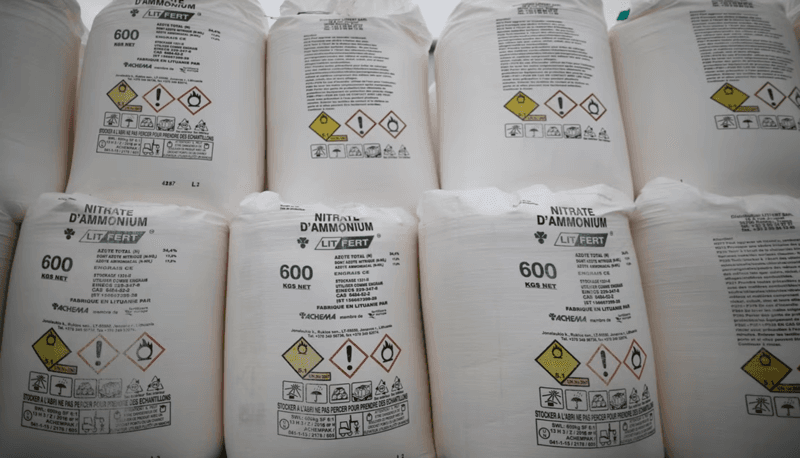
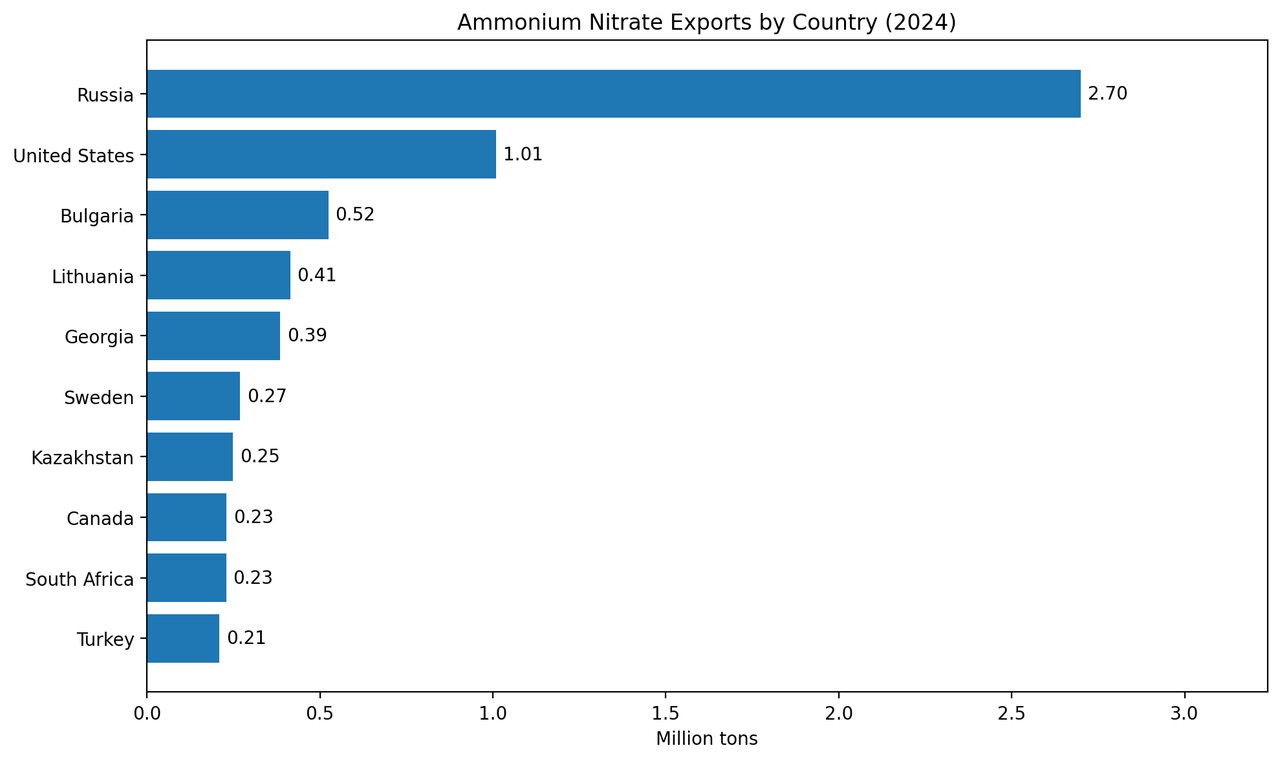

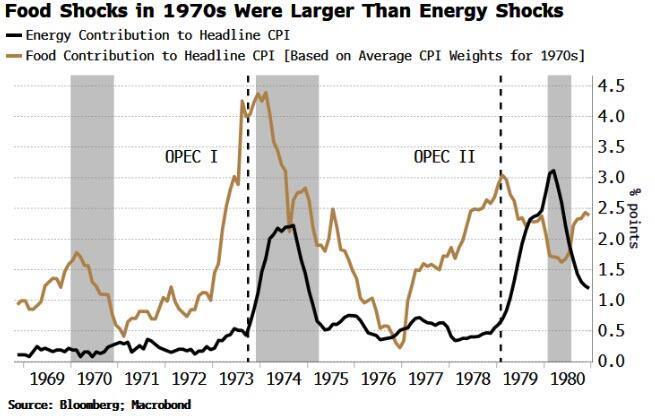
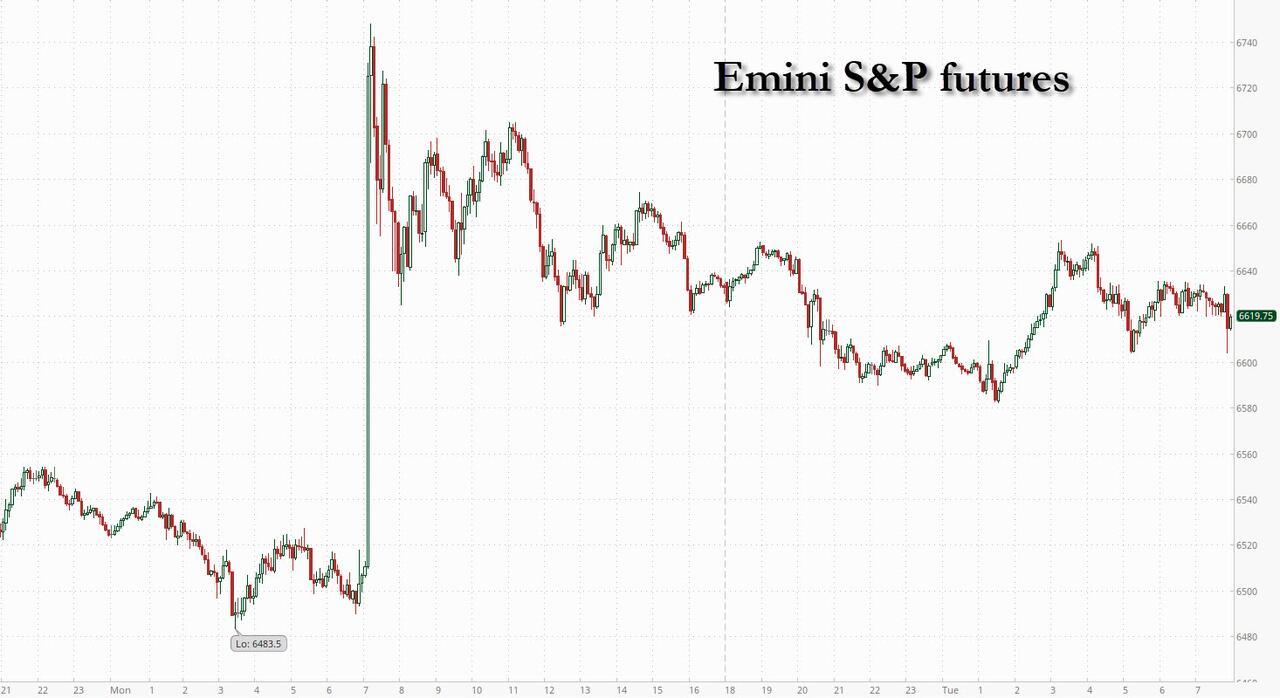
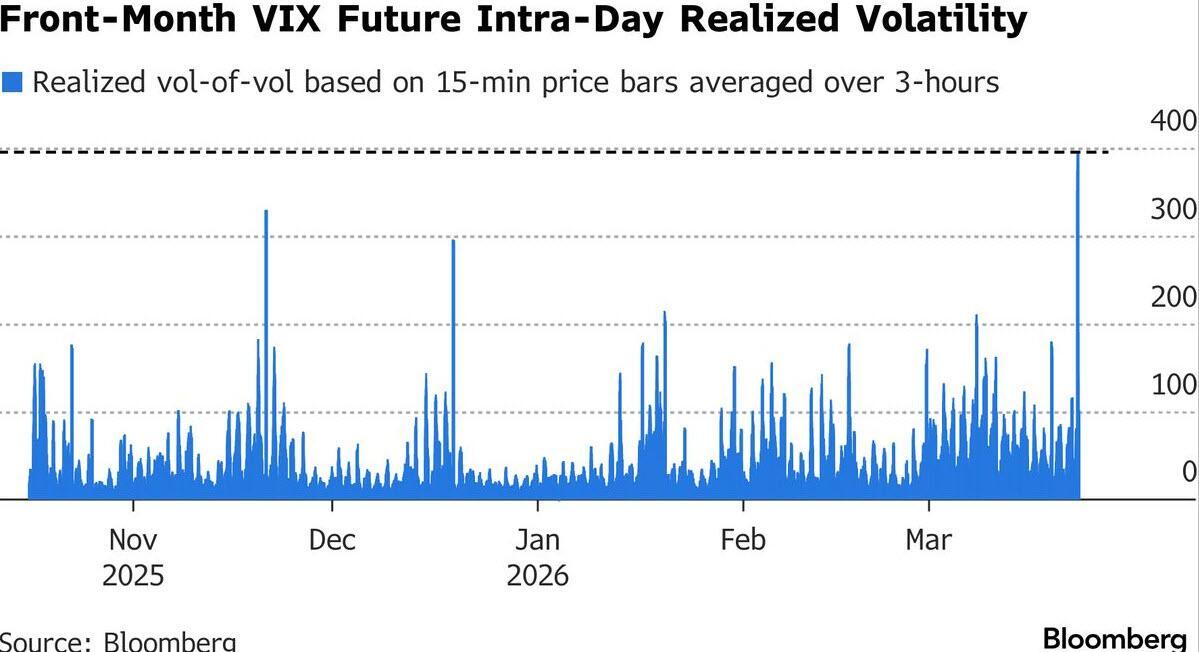

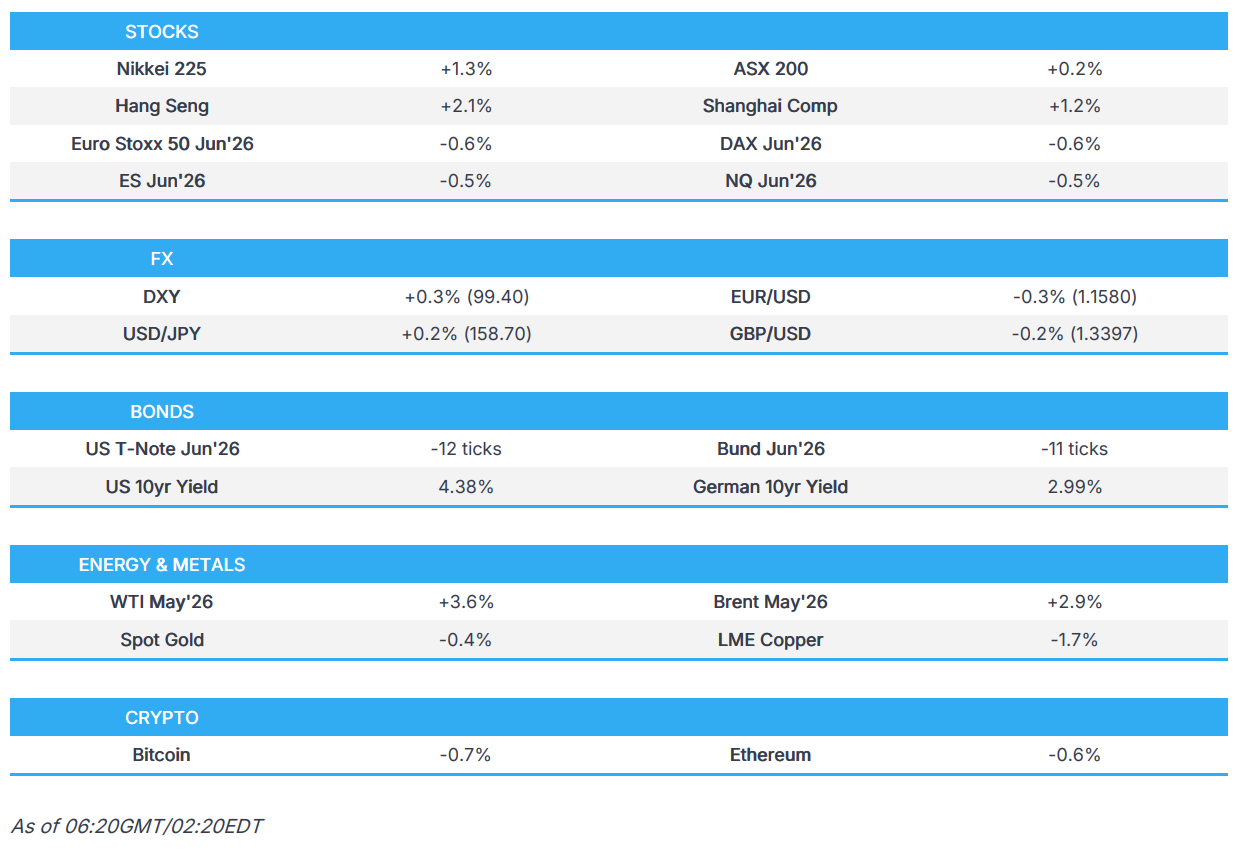

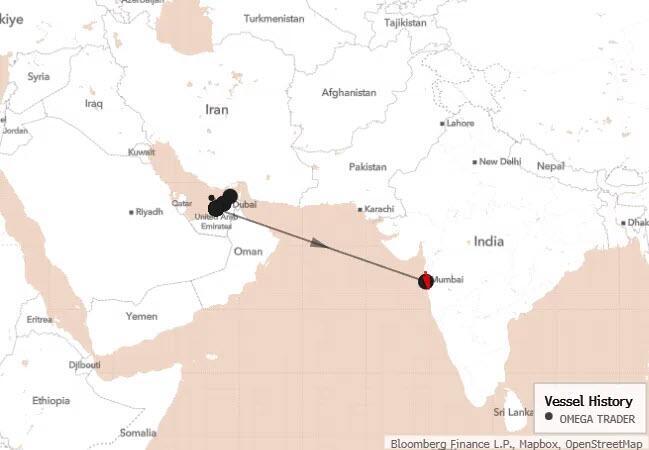
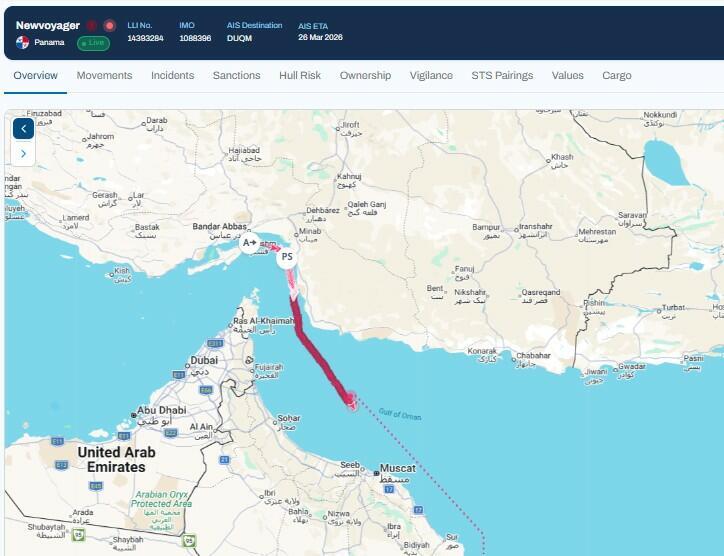



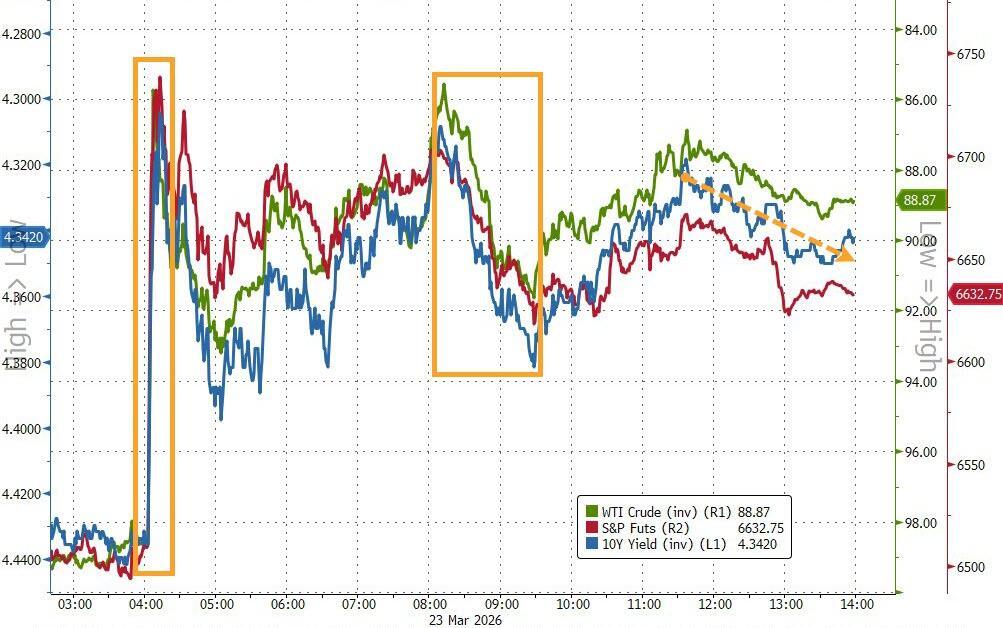
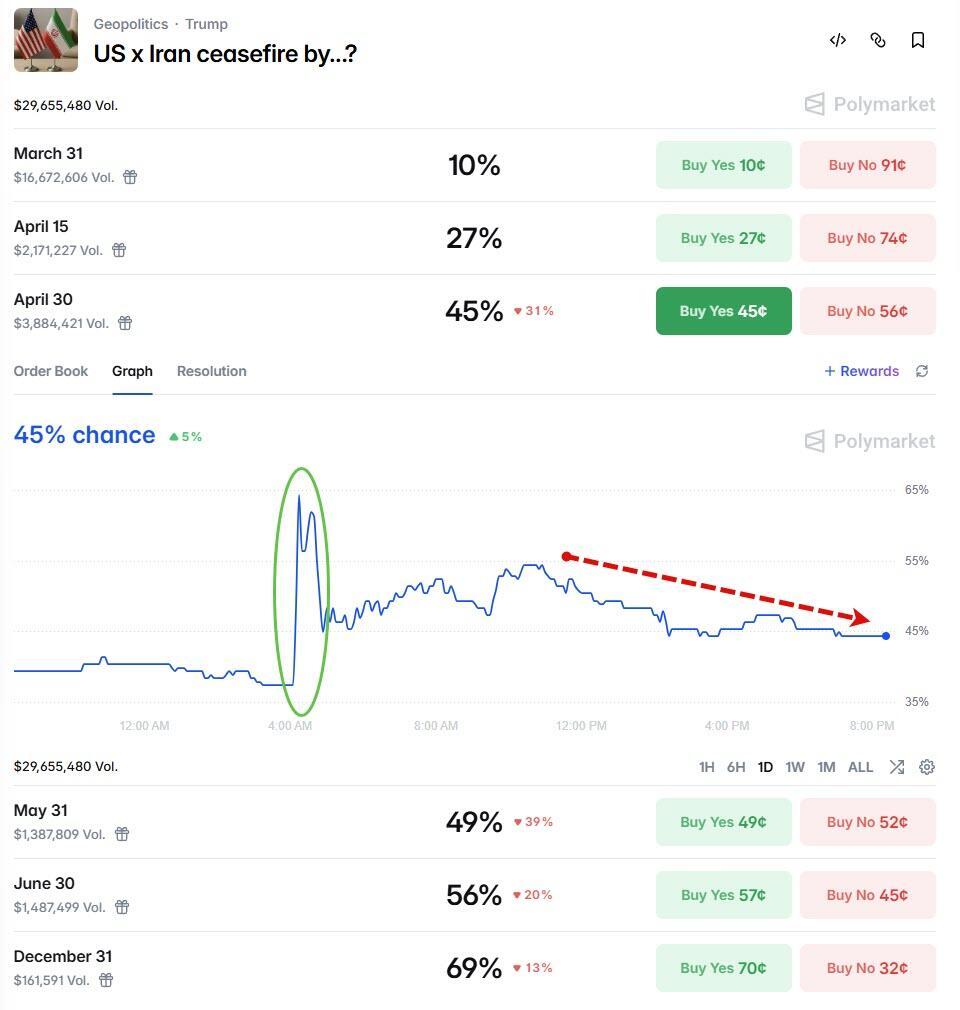
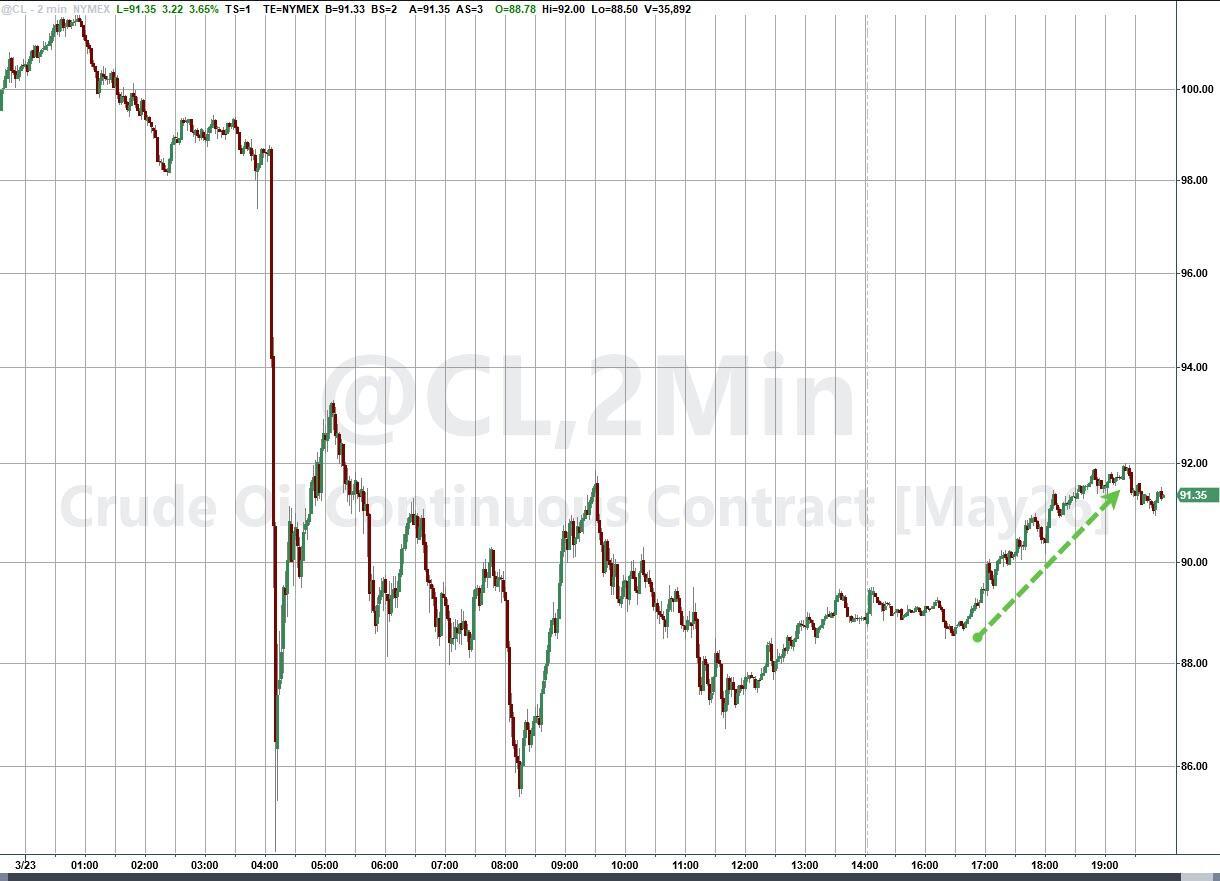
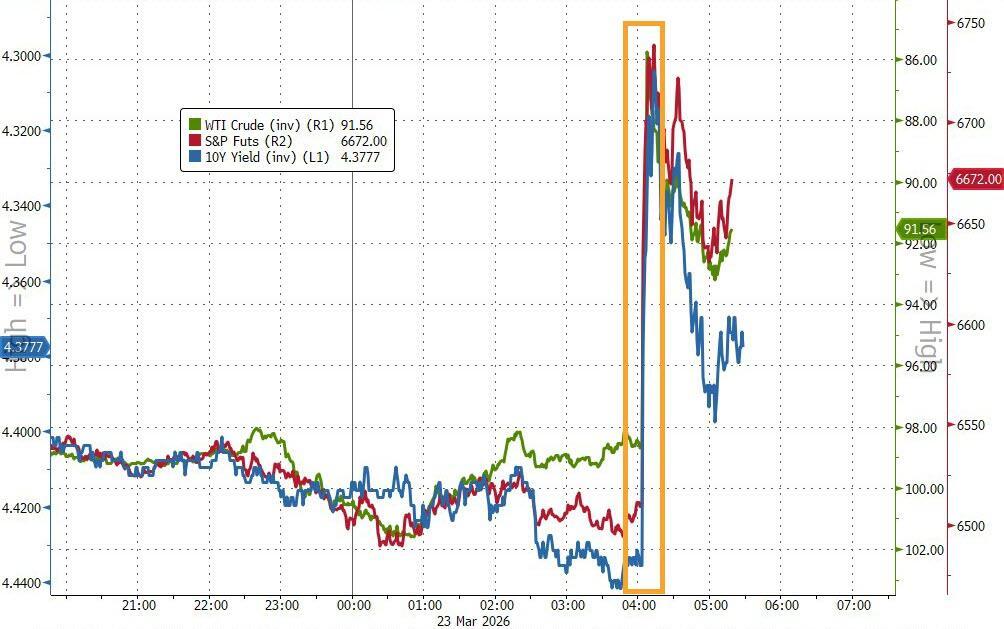
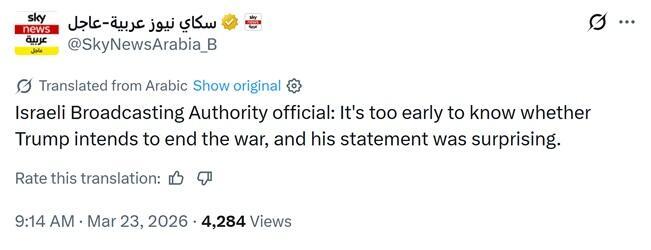

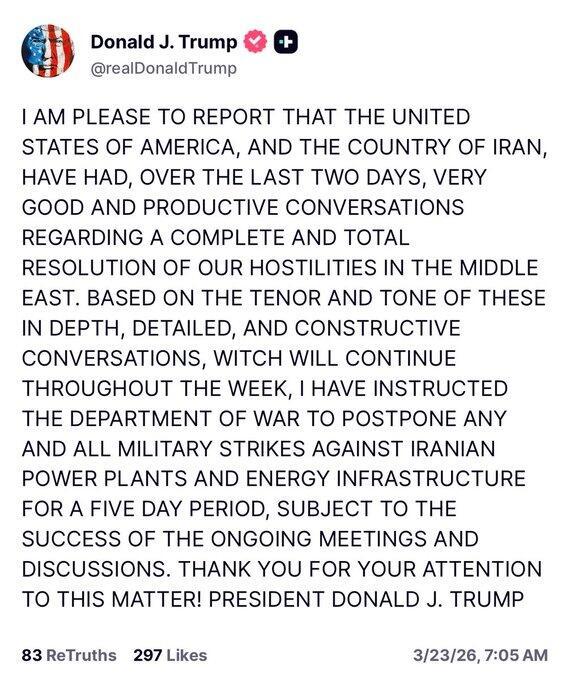
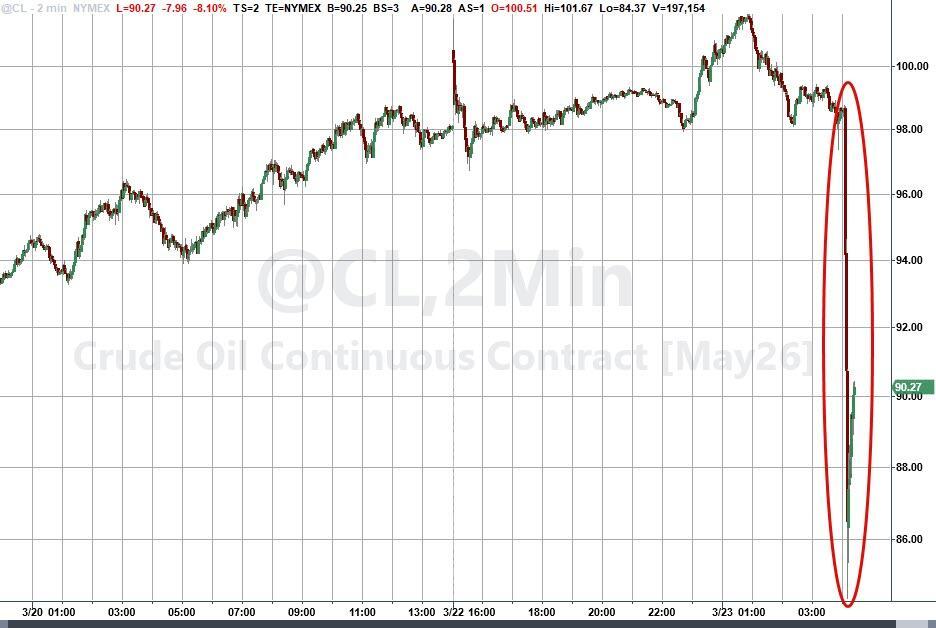
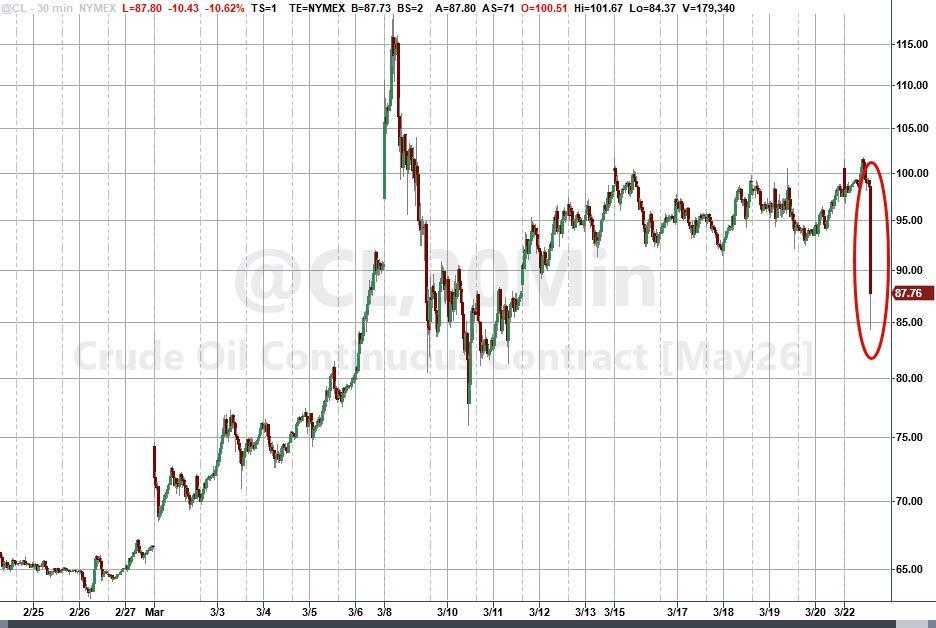
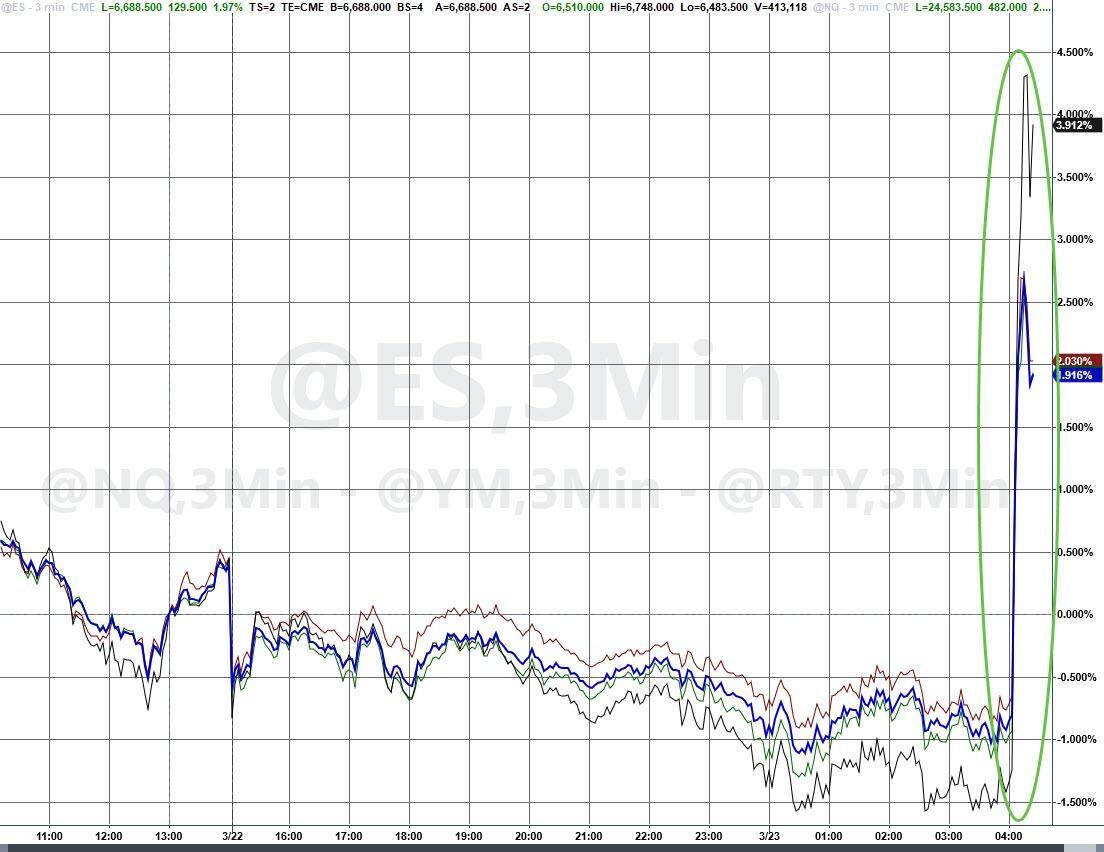
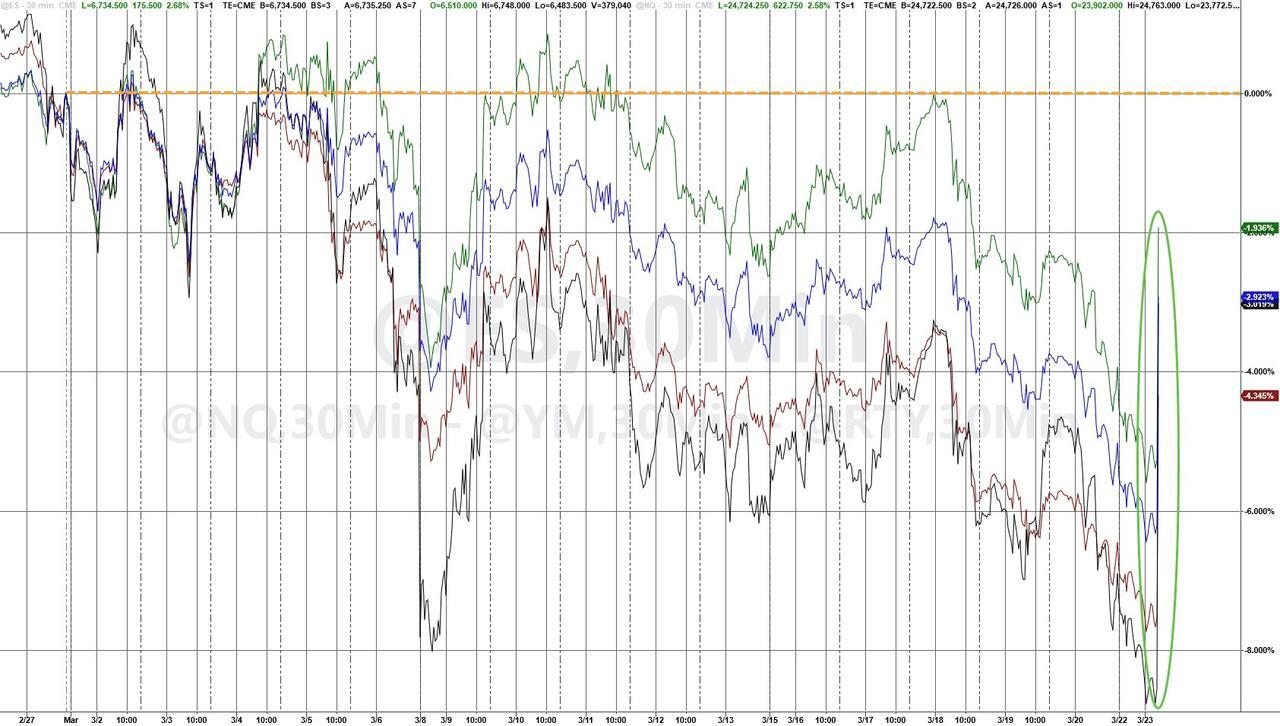

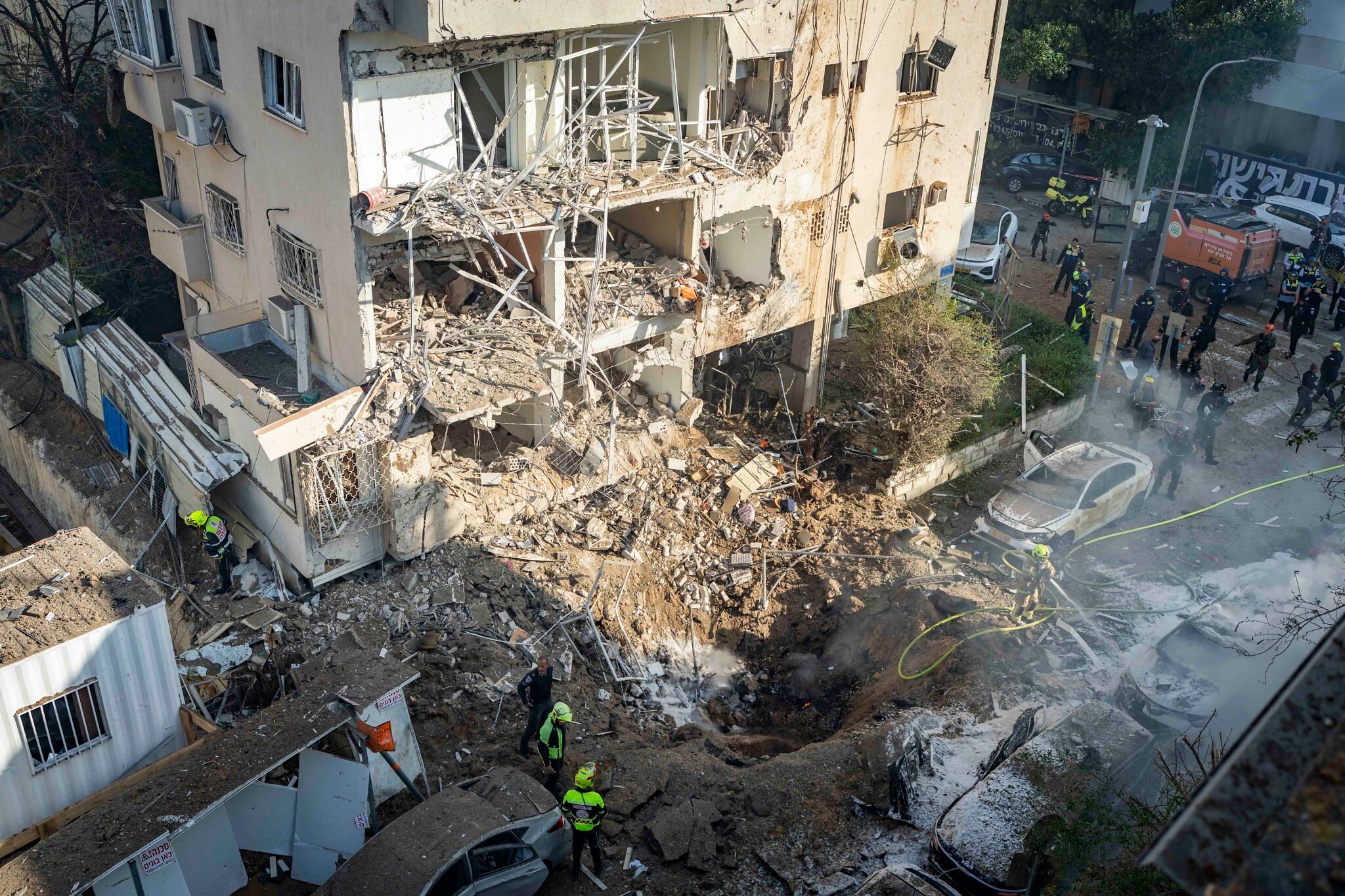
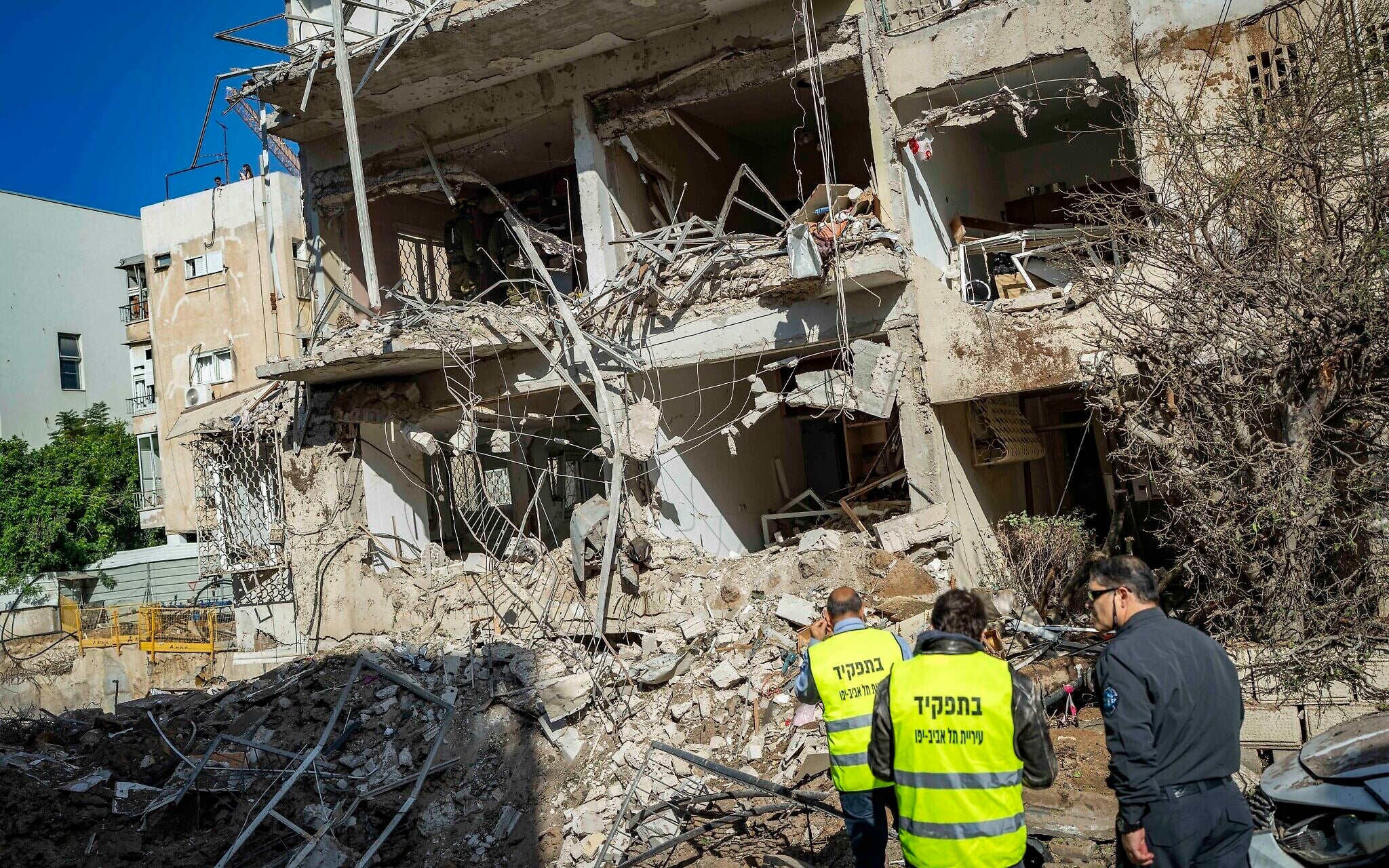




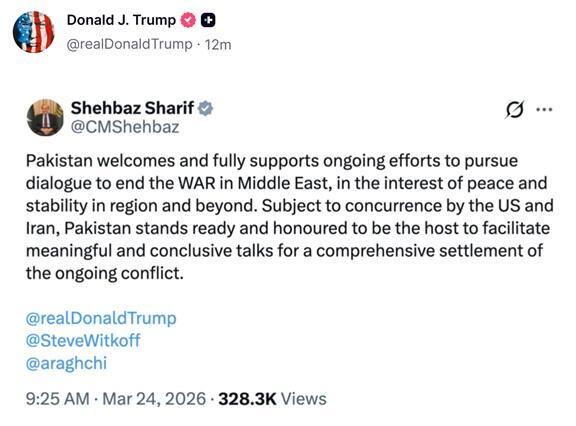


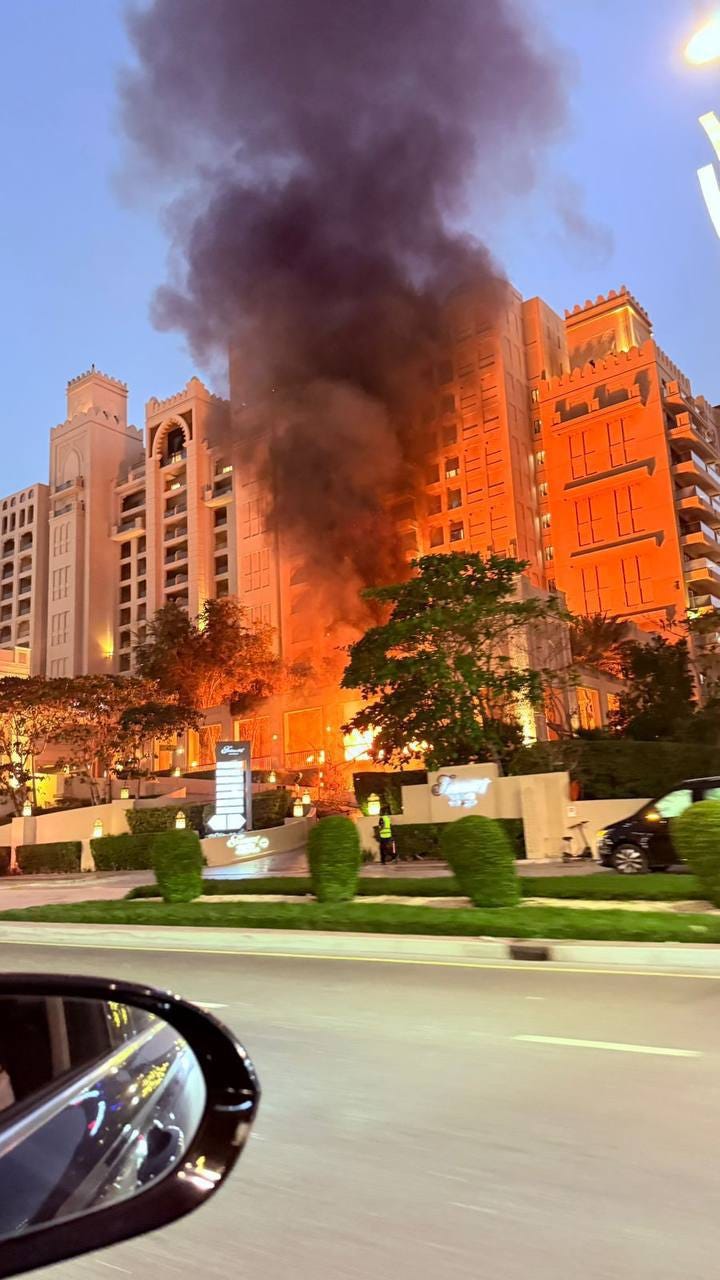
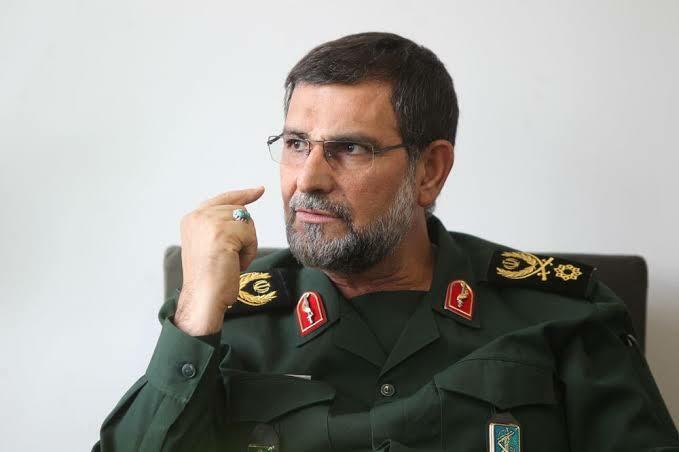

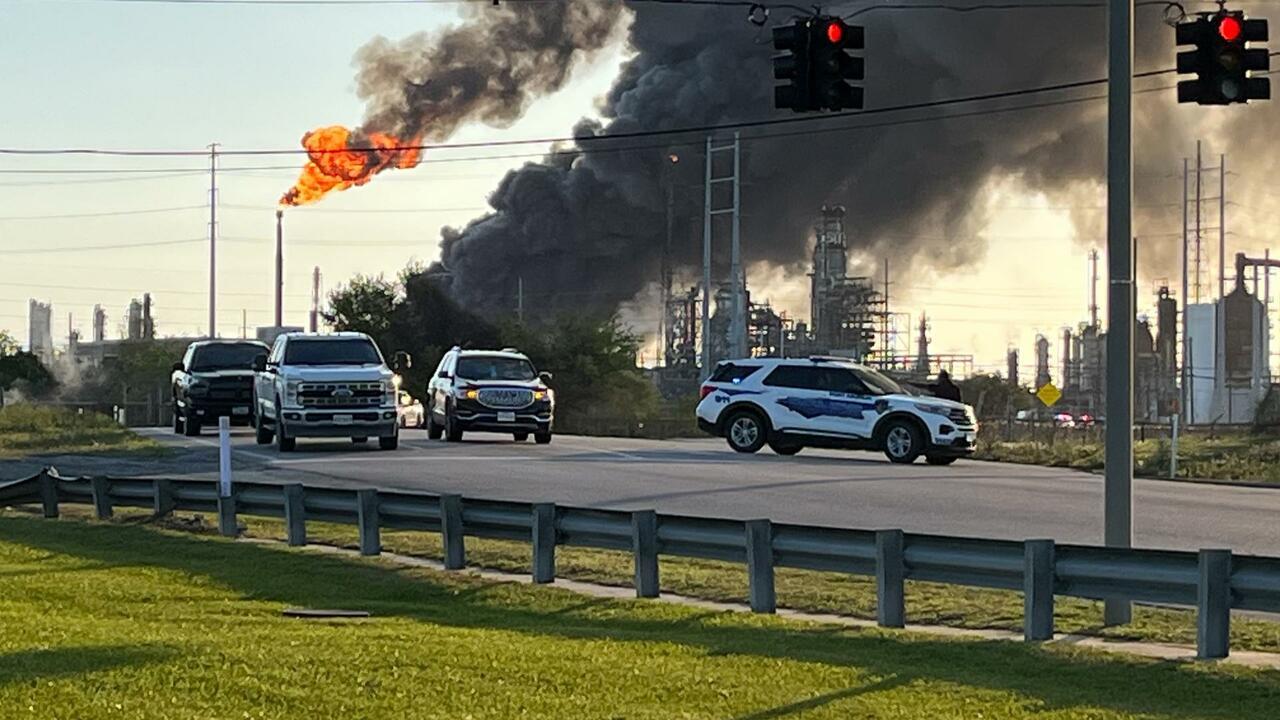
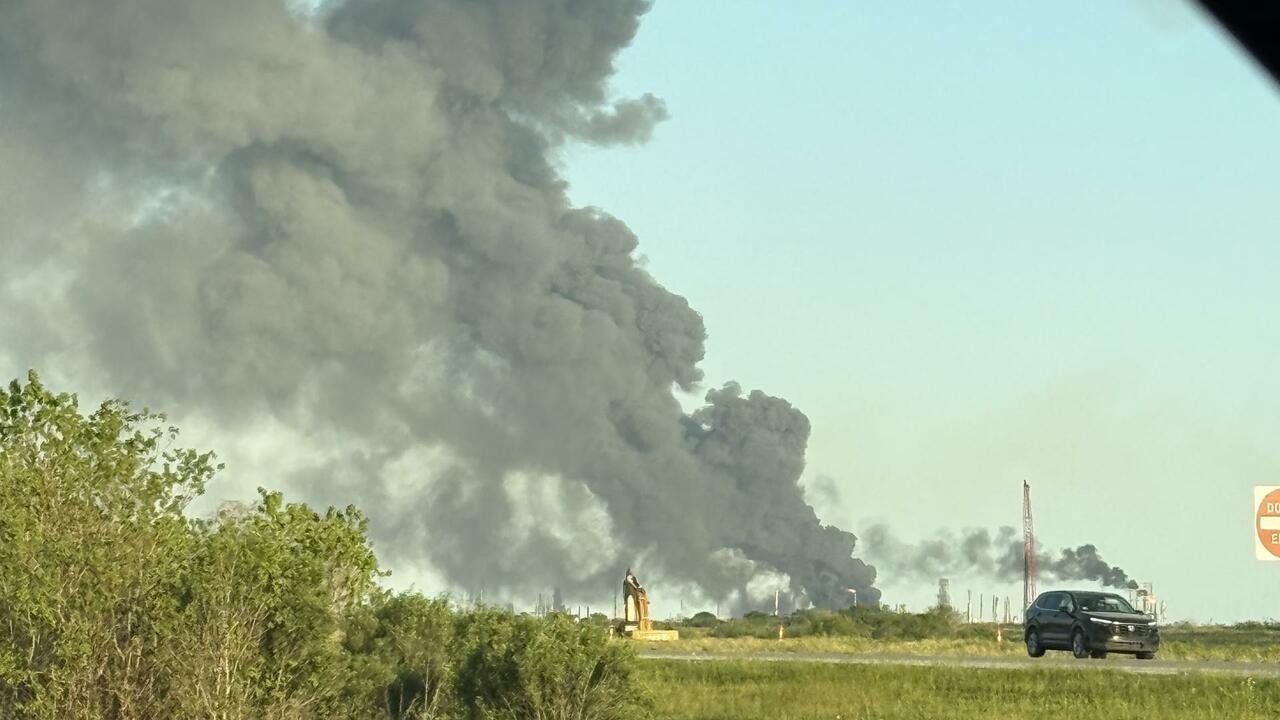
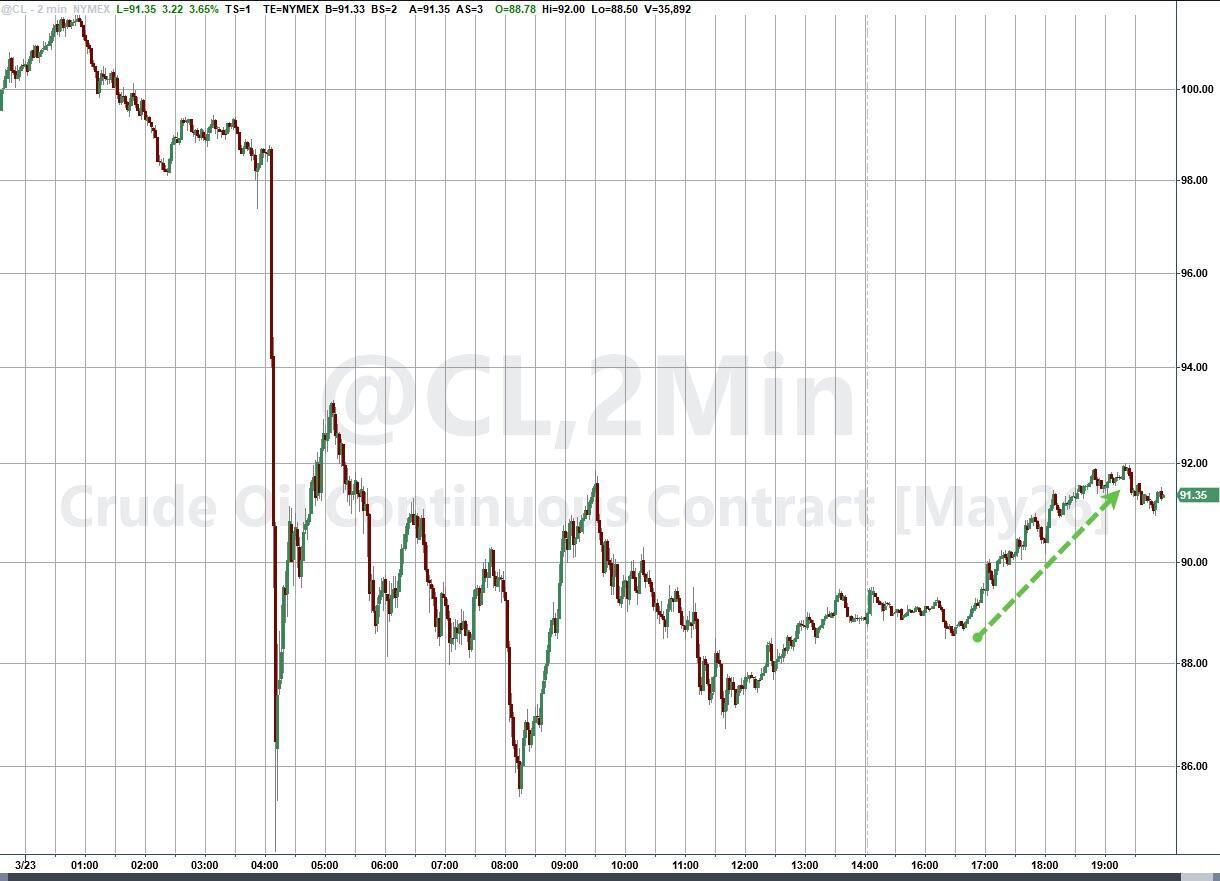
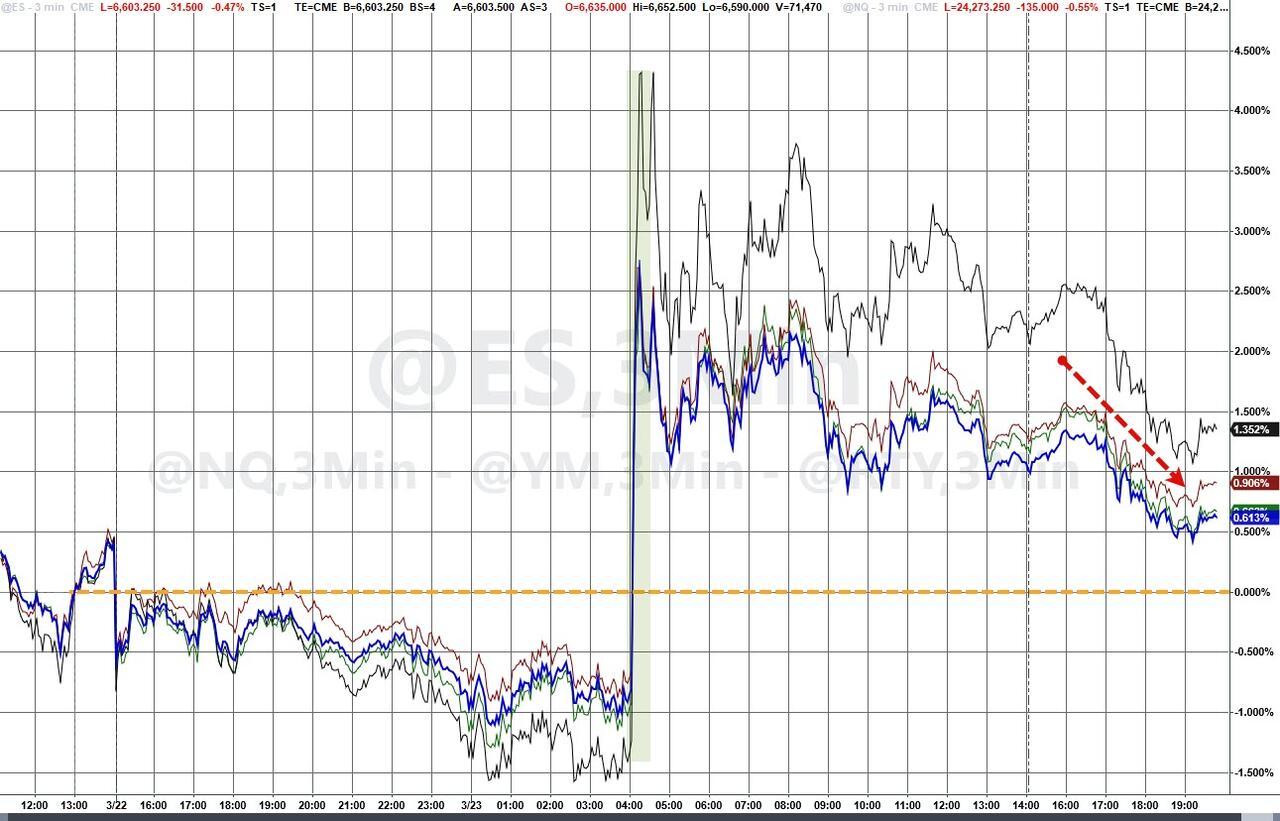
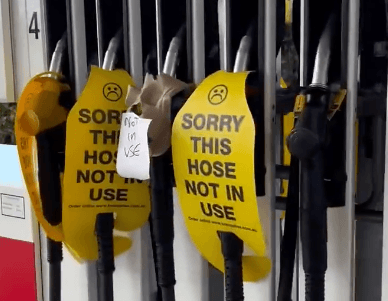
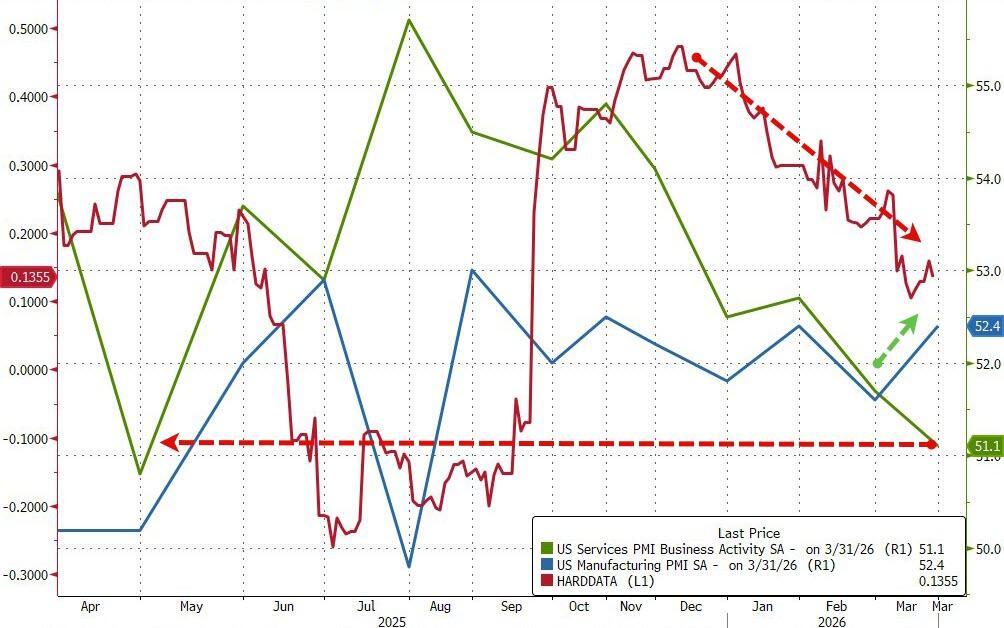
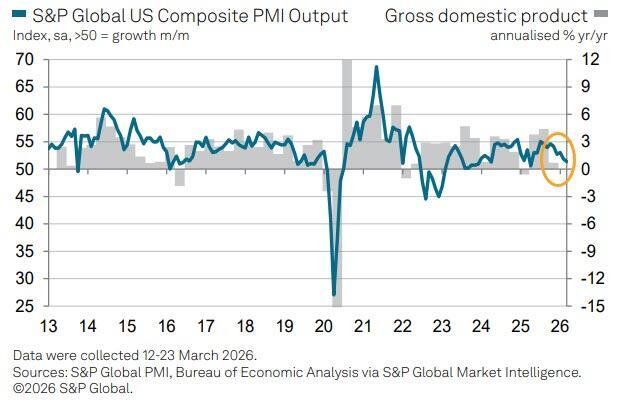
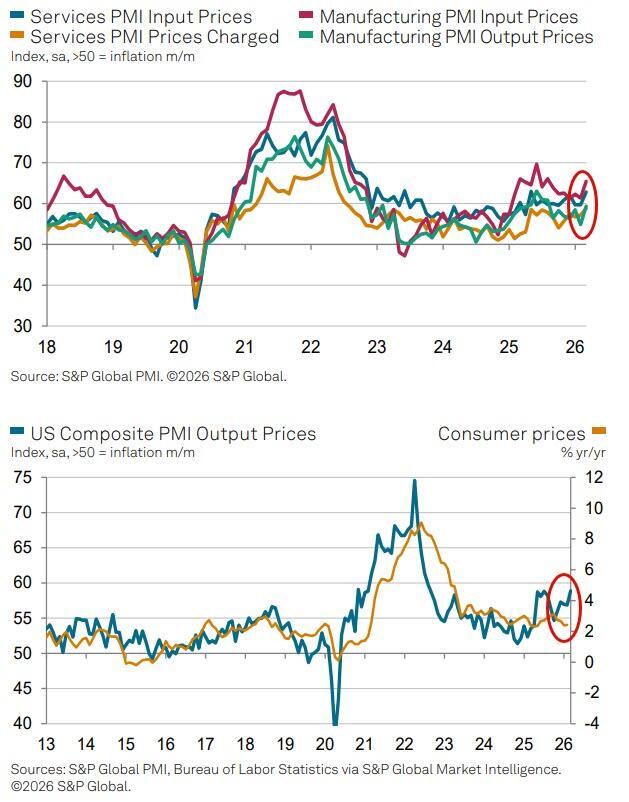
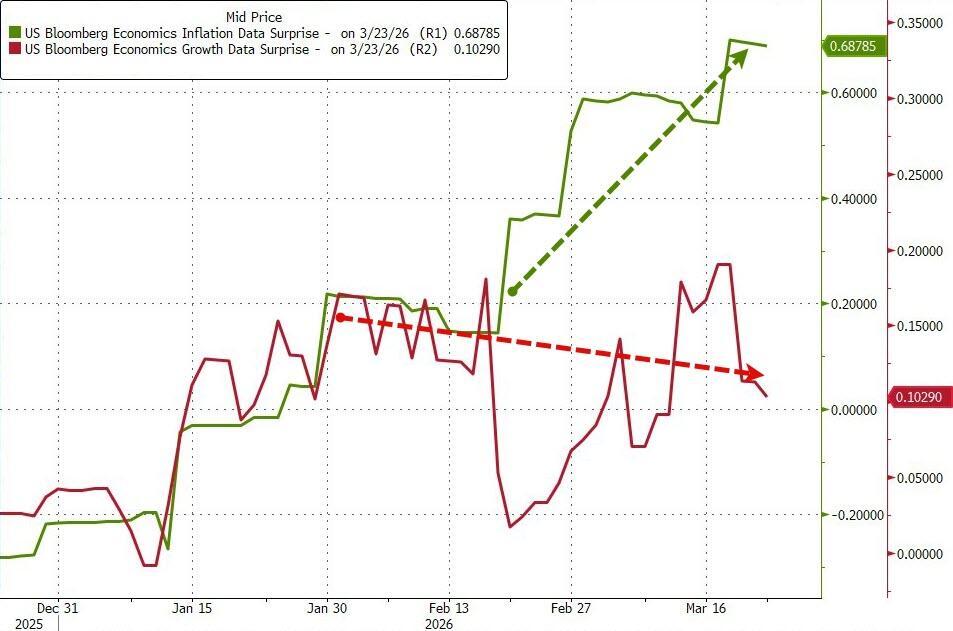


 harveyorganblog.com


