
Good evening Ladies and Gentlemen:
Here are the following closes for gold and silver today:
Gold: $1144.70 down $4.30 (comex closing time)
Silver $15.76 down 33 cents.
In the access market 5:15 pm
Gold $1139.50
Silver: $15.70
First, here is an outline of what will be discussed tonight:
At the gold comex today, we had a very poor delivery day, registering 0 notices for nil ounces Silver saw 0 notices for 10,000 oz.
Several months ago the comex had 303 tonnes of total gold. Today, the total inventory rests at 207.73 tonnes for a loss of 95 tonnes over that period.
In silver, the open interest fell by a tiny 484 contracts despite the fact that silver was up 11 cents on yesterday. We thus must have had some sort of an attempt at short covering by the bankers but it failed and thus the reason for the raid in silver this morning. The total silver OI now rests at 155,742 contracts In ounces, the OI is still represented by .778 billion oz or 111% of annual global silver production (ex Russia ex China).
In silver we had 0 notices served upon for nil oz.
In gold, the total comex gold OI rose to 431,298 for a gain of 1070 contracts. We had 0 notices filed for nil oz today.
We had no changes in tonnage at the GLD / thus the inventory rests tonight at 687.20 tonnes. The appetite for gold coming from China is depleting not only gold from the LBMA and GLD but also the comex is bleeding gold. It sure looks like 670 tonnes will be the rock bottom inventory in GLD gold. It looks to me that China has taken the last amounts of physical gold from the GLD. I guess the only place left for China to receive physical gold will be the FRBNY and the comex. In silver, we had no changes in silver inventory at the SLV / Inventory rests at 315.152 million oz.
We have a few important stories to bring to your attention today…
1. Today, we had the open interest in silver fall by a tiny 484 contracts down to 155,742 despite the fact that silver was up nicely in price to the tune of 11 cents with respect to yesterday’s trading as silver tried to break through the 16.00 dollar barrier. The total OI for gold rose by 1070 contracts to 431,298 contracts, as gold was down $2.20 yesterday.
(report Harvey)
2.Gold trading overnight, Goldcore
(/Mark OByrne)
Asian affairs:
3. China opens trading after a 7 day holiday, rising much weaker than expected. The yuan was strengthened/Poor results out of Japan
(zero hedge)
3b/ USA escalates war by sending ships around the man made Chinese islands
(zero hedge)
European affairs:
4a) Last night we brought you news of Deutsche bank’s big loss. Today we learn that 14 billion dollars worth of Chinese bank shares have been liquidated and many more to come
(Bloomberg)
4b) Now Switzerland’s Credit Suisse must raise cash in the form of new equity shares.
(zero hedge)
4c) The ECB is going to do another increase in bond purchases in the autumn instead of lower demand for bond issuance in the winter. It seems that the boys are having a tougher time trying to find enough bonds to monetize
(zero hedge)
4d) Dave Kranzler discusses the two major problems inside Germany:
Deutsche bank and Volkswagen.
(Dave Kranzler/IRD)
Russia + USA affairs/Middle eastern affairs
4. a) After bombing ISIS on continual raids, and firing missiles from the sea, Russia is ready to send in the Iranians to mop out. Do not be surprised if Russia continues to attack in Iraq and Afghanistan
(zero hedge)
Global affairs:
5a)Wolf Richter discusses the dagger in the heart of the dollar: how countries are selling their USA treasuries
(Wolf Richter/WolfStreet)
5b) The TPP must be stopped as their new proposals censor the internet
(Mike Krieger/LibertyBlizkrieg)
EMERGING MARKETS
6a)Brazil is set to impeach Roussef/this will cause much panic with traders
(zero hedge)
6b) Venezuela the most expensive country in the world
(Simon Black)
Oil related stories
7a) Gartman vs Goldman as to which way oil will go
(zero hedge)
7b) Oil rises on positive demand statements from OPEC
(zero hedge)
7c) Saudi Arabia puts a moratorium on spending
(zero hedge)
8 USA stories/Trading of equities NY
a) Trading today on the NY bourses 2 commentaries
(zero hedge)
b) Phony jobless numbers out today
(BLS)
c) Ben Bernanke’s big lie
(zero hedge)
d) McCarthy drops out of the Speaker’s nomination setting the stage for chaos in the House.
(zero hedge)
e) Kocherlokota signals negative interest rates
(zero hedge)
f) FOMC meeting results in detail
(zero hedge)
g) Alcoa disappoints the street with lousy earnings
(zero hedge)
h) Small time HFT trader with annual income of 500,000 gets busted for spoofing.
(zero hedge)
9. Physical stories
i. Koos Jansen discusses official gold reserves of Belgium. (Koos Jansen)
ii. The Bundesbank announcement on gold bar lists does not help Germany’s cause one bit
(GATA/Peter Boeringher)
iii) Silver’s plunge in price this morning
(zero hedge)
iv) GATA mentioned in their opposition to rigged markets
(GATA)
Let us head over to the comex:
October contract month:
Initial standings
Oct 8.2015
| Gold |
Ounces
|
| Withdrawals from Dealers Inventory in oz | nil |
| Withdrawals from Customer Inventory in oz nil | 162,261.05 oz
Delaware, Brinks JPMorgan
|
| Deposits to the Dealer Inventory in oz | nil |
| Deposits to the Customer Inventory, in oz | nil
|
| No of oz served (contracts) today | 0 contracts
nil oz |
| No of oz to be served (notices) | 1546 contracts
154,600 oz |
| Total monthly oz gold served (contracts) so far this month | 126 contracts
(12,600 oz) |
| Total accumulative withdrawals of gold from the Dealers inventory this month | nil |
| Total accumulative withdrawal of gold from the Customer inventory this month | 174,979.7 oz |
Total customer deposit: 776.64 oz
***extremely unusual to have no incoming gold on a continual basis especially with 5.27 tonnes of gold standing for delivery.
October silver Initial standings
Oct 8/2015:
| Silver |
Ounces
|
| Withdrawals from Dealers Inventory | nil |
| Withdrawals from Customer Inventory | 51,806.15 oz
Brinks |
| Deposits to the Dealer Inventory | nil |
| Deposits to the Customer Inventory | 131,926.699 oz
CNT,Delaware |
| No of oz served (contracts) | 0 contracts (nil oz) |
| No of oz to be served (notices) | 41 contracts (205,000 oz) |
| Total monthly oz silver served (contracts) | 29 contracts (145,000 oz) |
| Total accumulative withdrawal of silver from the Dealers inventory this month | nil oz |
| Total accumulative withdrawal of silver from the Customer inventory this month | 5,180,651.9 oz |
Today, we had 0 deposit into the dealer account:
total dealer deposit; nil oz
total customer deposits: 131,926.699 oz
total withdrawals from customer: 51,806.15 oz
And now SLV:
Oct 8.2015/no changes in the silver ETF SLV/Inventory rests tonight at 315.152 million oz
Oct 7/a huge withdrawal of 3.243 million oz from the SLV/Inventory rests tonight at 315.152 million oz
Oct 6/no change in silver inventory/inventory rests at 318.395 million oz
oCT 5/we had a small withdrawal of inventory at the SLV of 134,000 oz/and this is also to pay for fees/inventory rests at 318.395 million oz
Oct 2.2015: no change in silver inventory at the SLV/inventory rests at 318.529 million oz
Oct 1.2015:another addition of 1,145,000 oz of silver inventory added to the SLV inventory./inventory rests at 318.529 million oz
Sept 30/no change in silver inventory at the SLV/Inventory rests at 317.384 million oz
sept 29.2015: we had another withdrawal of 859,000 oz from the SLV/Inventory rests at 317.384 million oz
sept 28./no change in silver inventory/rests tonight at 318.243 million oz/
Sept 25./we had another 954,000 oz of silver withdrawn from the SLV/Inventory rests this weekend at 318.243 million oz
Sept 24.2015: no change in silver inventory tonight/inventory rests at 319.197 million oz
Sept 23.2015: we had a huge withdrawal of 1.718 million oz at the SLV/Inventory rests at 319.197 million oz
Press Release OCT 6.2015
Sprott Increases Offer for Central GoldTrust and Silver Bullion Trust
Offering an Additional Premium of US$0.10 per GTU Unit payable in Sprott Physical Gold Trust Units
and US$0.025 per SBT Unit payable in Sprott Physical Silver Trust Units
When Announced on April 23, 2015, Offers Represented a Premium of US$3.06 per GTU Unit and US$0.91 per SBT Unit for Unitholders Based on Trading Value and the NAV to NAV Exchange Ratio
Premiums as of October 5, 2015 (including the Increased Consideration) are US$1.14 per GTU Unit and US$0.61 per SBT Unit
Notice of Extension and Variation to be Filed Shortly
Offers Will Now Expire on October 30, 2015 –Unitholders Urged to Tender Now
TORONTO, Oct. 6, 2015 (GLOBE NEWSWIRE) — Sprott Asset Management LP (“Sprott” or “Sprott Asset Management”), together with Sprott Physical Gold Trust (NYSE:PHYS) (TSX:PHY.U) and Sprott Physical Silver Trust (NYSE:PSLV) (TSX:PHS.U) (together the “Sprott Physical Trusts”), today announced that it has increased the consideration payable to unitholders in connection with its offers to acquire all of the outstanding units of Central GoldTrust (“GTU”) (TSX:GTU.UN) (TSX:GTU.U) (NYSEMKT:GTU) and Silver Bullion Trust (“SBT”) (TSX:SBT.UN) (TSX:SBT.U) (the “Sprott offers”).
Unitholders will now receive an additional premium of US$0.10 per GTU unit payable in Sprott Physical Gold Trust units and US$0.025 per SBT unit payable in Sprott Physical Silver Trust units (the “Premium Consideration”), in addition to the units of Sprott Physical Gold Trust and units of Sprott Physical Silver Trust, respectively, being offered on a net asset value (NAV) to NAV exchange basis. Based on trading values and the NAV to NAV Exchange Ratio (as such term is defined in the Sprott offers) at the time Sprott announced its intention to make the Sprott offers on April 23, 2015, the offers reflected a premium of US$3.06 per GTU unit and US$0.91 per SBT unit. The premium as of October 5, 2015, based on trading values, the NAV to NAV Exchange Ratio and the Premium Consideration, represents US$1.14 per GTU unit and US$0.61 per SBT unit, respectively. In connection with this increase in consideration, the expiry time for each Sprott offer is extended to 5:00 p.m. (Toronto time) on October 30, 2015.
“Central GoldTrust and Silver Bullion Trust unitholders have been burdened for too long by a group of trustees committed to protecting the interests of the Spicer family. It is only through the public spotlight that the variety of undisclosed fees paid to supposedly independent trustees has forced public disclosures and hollow justifications. Sprott’s offers to unitholders are compelling and momentum is building as we continue to show the clear advantages of the offers. The response of the GTU and SBT trustees has been to penalize unitholders with the burden of paying for costly lawsuits and expensive advisors to protect the Spicer family and the fees they receive. We are accordingly increasing our offer to compensate unitholders for this abuse of trust, and encourage them to take advantage of this opportunity to exchange their units for an immediate premium, and trade a management committed to entrenchment to one committed to their best interests,” said John Wilson, Chief Executive Officer of Sprott Asset Management.
Added Wilson, “We have provided extensions to the offers so that no unitholders are left without this opportunity to exit an underperforming investment and enter into a high quality security that functions as intended, reflecting the value of the bullion held in the trust. Sprott appreciates the support of GTU and SBT unitholders to date and currently anticipates these extensions will be the final extensions to the Sprott offers.”
As of 5:00 p.m. (Toronto time) on October 5, 2015, there were 8,194,265 GTU units (42.46% of all outstanding GTU units) and 2,055,574 SBT units (37.60% of all outstanding SBT units) tendered into the respective Sprott offers. Total units tendered as of October 5, 2015, do not include pending units which are typically received on the date of expiration.
GTU and SBT unitholders who have questions regarding the Sprott offers, are encouraged to contact Sprott Unitholders’ Service Agent, Kingsdale Shareholder Services, at 1-888-518-6805 (toll free in North America) or at 1-416-867-2272 (outside of North America) or by e-mail at contactus@kingsdaleshareholder.com.
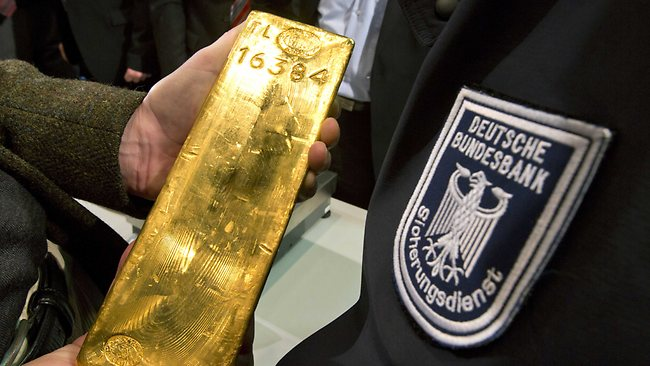
Bundesbank “Reassures” Re. Gold Bullion Reserves as Deutsche Bank Shocks With €6 Billion Loss Warning
The German Bundesbank released an inventory of its gold reserves yesterday in order to quell ongoing public concerns about the true amount of actual unencumbered reserves and the location of the reserves stored in vaults in Frankfurt, London, Paris and particularly in the New York Federal Reserve.
(Photo: Reuters)
The central bank said its gold reserves amount to 3,384 tonnes of gold worth just €107 billion at today’s prices.
The move is the latest by the central bank, which is in the process of trying to move its gold reserves back to Germany after the eurozone sovereign debt crisis broke out in 2012 and led to public concerns and questions about the safety of Germany’s gold reserves.
Germany’s gold reserves are the second biggest in the world after those of the U.S. but Germany has been struggling to repatriate its gold reserves from the U.S. Federal Reserve in recent years. This has created wider concerns about the U.S. own gold reserves.

See Bundesbank Announces Repatriation of 120 Tonnes of Gold from Paris and New York Federal Reserve
The Bundesbank also helpfully provided a massive 2,302 page report, presumably in an attempt to create further transparency and understanding of the issue which remains an important one to large sections of the German political and financial class and the public who are concerned about a new Eurozone debt crisis and the ongoing debasement of the euro.
During the Cold War the West German Bundesbank was happy to keep its gold in the U.S. in case of nuclear war or an invasion from East Germany and the Soviet Union. Today there are public concerns about the Federal Reserve’s gold reserves and the indeed the precarious U.S. fiscal situation.
Hence, the desire to have clarity re the exact nature of the amount and legal ownership of the gold (possible gold lending, swaps etc) and having the gold reserves on German soil again in case of another U.S, Eurozone and global financial crisis or indeed a likely global monetary crisis.
Deutsche Bank Shocks With €6 Billion Loss Warning
Coincidentally, on the same day Deutsche Bank has warned it will lose a whopping €6.2 billion ($7 billion) in the third quarter, its biggest quarterly loss in at least a decade and potentially ever.
Many of those voicing concerns about the gold reserves are also concerned about the still unreformed, out of control and very fragile banking system.
In a peculiar late night announcement that shocked analysts globally, Germany’s biggest bank blamed huge “impairment charges” of €5.8 billion for the unexpected losses. Forecasts had been for profits of around €1 billion.
The charges are related to “higher capital requirements” for Deutsche’s investment bank and the reduced value of its Postbank division, which is up for sale.
On top of this, the bank is setting aside €1.2 billion to cover litigation costs. Like other banks, Deutsche has been caught up in the Libor-rigging scandal and faces another investigation in Switzerland for suspected price-fixing in the precious metal market.
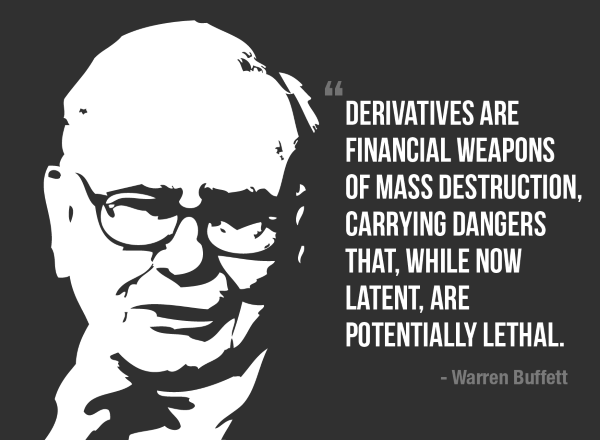
Gillian Tett, ourselves and many others have warned that Deutsche and its massive derivative book has the potential to be a ”European Lehman Brothers”. Is Deutsche Bank, the largest holder of Warren Buffett’s “financial weapons of mass destruction” derivatives in trouble?
DAILY PRICES
Today’s Gold Prices: USD 1143.30, EUR 1011.59 and GBP 745.31 per ounce.
Yesterday’s Gold Prices: USD 1147.90, EUR 1021.45 and GBP 750.43 per ounce.
(LBMA AM)

Gold in Euro – 1 Year
Gold was flat yesterday and finished just $1.20 lower, closing at $1145.80. Silver closed at $16.02, up another $0.22 for the day, a 1.4% gain. Euro gold rose to about €1019, platinum gained $11 to $943.

Download 7 Key Allocated Storage Must Haves

Bundesbank’s gold bar list isn’t all that it’s made out to be
Submitted by cpowell on Thu, 2015-10-08 00:40. Section: Daily Dispatches
8:40p ET Wednesday, October 7, 2015
Dear Friend of GATA and Gold:
Lots of publicity today about the German Bundesbank’s publication of a list of the bars in Germany’s gold reserves in an effort to dispel suspicions that the metal is impaired in some way.
The definitive report is, not surprisingly, that of gold researcher and GATA consultant Koos Jansen, who details the history of the German gold controversy and notes that the Bundesbank’s list omits crucial information and so really doesn’t settle the issue at all:
https://www.bullionstar.com/blogs/koos-jansen/german-central-bank-publis..
Bloomberg News and The Wall Street Journal, predictably enough, sound notes of central bank triumphalism, as if they have a dog in the fight themselves. At least Bloomberg’s report quotes the leader of Germany’s gold repatriation campaign, GATA’s friend Peter Boehringer:
http://www.bloomberg.com/news/articles/2015-10-07/bundesbank-to-doubters…
The Wall Street Journal’s brief entry is the most pathetic cheerleading, written by a reporter who seems to have learned to spell “gold” only this morning:
http://blogs.wsj.com/moneybeat/2015/10/07/germany-found-its-gold/
The Financial Times tries slightly to approach journalism. It lets Boehringer make the critical distinctions:
http://www.ft.com/intl/cms/s/0/f2c48dde-6cf6-11e5-8171-ba1968cf791a.html
“But Peter Boehringer, an activist who has been calling for all the country’s gold to be repatriated, said the data released did not include the names of the producers of the gold bars and the numbers printed on the bars when they were made.
“‘This is important as we are somewhat concerned that not all material that is numbered physically exists,’ Boehringer said. ‘Some bars might exist on different balance sheets of different central banks.'”
Reuters —
http://www.reuters.com/article/2015/10/07/germany-bundesbank-gold-idUSL8…
— doesn’t let Boehringer say anything in detail, but does let him make a criticism:
“‘Trust in the Bundesbank has suffered,’ said Peter Boehringer, author of a book entitled ‘Bring Our Gold Home.’ ‘The Bundesbank must prove that the gold is there.'”
On the whole a good day. The news organizations not only were compelled to acknowledge suspicions about gold; they also spelled Boehringer’s name right. Even your secretary/treasurer has trouble with that sometimes.
CHRIS POWELL, Secretary/Treasurer
Gold Anti-Trust Action Committee Inc.
CPowell@GATA.org
end
The Real Reason Belgium Sold 1,098 Tonnes Of Gold
Belgium sold 1,098 tonnes of its official gold reserves since 1978.
For our global investigation how much physical gold central banks have stored at what location and how much is leased out, I decided to submit the local equivalent of a Freedom Of Information Act (FOIA) request at the central bank of Belgium, de Nationale Bank van België (NBB), to obtain information about the amount of Belgian official gold reserves, the exact location of all gold bars, the type of gold accounts NBB holds at the Bank Of England (BOE) and how much is leased out and to whom. The outcome of this research was not what I had expected.
History Of The Official Gold Reserves Of Belgium
Some of the questions I directed at the NBB I used a stepping stone, as this information is publicly available in part. At the end of August 2015 NBB was holding 227.4 tonnes of gold, down 0.04 tonnes from 227.44 tonnes in July, according to data from the Bundesbank that publishes the gold holdings of 19 European central banks and the ECB in compliance with the IMF’s most recent version of the Balance of Payments and International Investment Position Manual (BPM6). The Bundesbank (BuBa) publishes the fine troy ounces of the official gold reserves in ‘Gold bullion’ and ‘Unallocated gold accounts’. If we add up both categories the outcome for all countries equals the reserves disclosed by the World Gold Council.
From BuBa:
The balance of payments statistics will … be consistent with the framework set out in the sixth edition of the Balance of Payments and International Investment Position Manual (BPM6). The application of the sixth edition of the Balance of Payments and International Investment Position Manual (BPM6) is binding for EU member states by virtue of a regulation adopted by the European Commission.
Back in 1965 NBB was holding over 1,300 tonnes of gold. Since 1978 it has sold a whopping 1,098 tonnes, or 83 %.

Belgium was one of the eight participating countries in the London Gold Pool, together with the US, Germany, the UK, France, Italy, the Netherlands and Switzerland, that operated from 1961 until 1968 to stabilize the gold price at $35 an ounce by selling/buying gold in the London bullion market. Eventually the pool collapsed in 1968 because the US had printed too many dollars and France was not willing to sell any more gold to defend the gold price at $35. Remarkably, Belgian official gold reserves dropped significantly after the Pool collapsed, from 1978 until 1999. Likely, NBB was partially seeking to diversify its reserves into higher yielding assets or to lower the national debt, in addition it could have sold metal to lower the price or to “equalize its holdings relative to other gold holding nations”. Let me explain that last quote. Belgium was not the only European country that has sold vast amounts of gold in the nineties and before. When the Dutch Minister Of Finance in 2011, J.C. De Jager, was questioned about the gold sales of the central bank of the Netherlands in the nineties he answered:
Question 6: Can you confirm that since 1991 DNB [central bank of the Netherlands] has sold 1,100 tonnes of the 1,700 tonnes it owned…
Answer 6: Since 1991 DNB sold 1,100 tonnes. At the time DNB determined that from an international perspective it owned a lot of gold proportionally. It decided to equalize its gold holdings relative to other important gold holding nations.
So, the independent central bank of the Netherlands (DNB) had decided to sell gold because “from an international perspective it owned a lot of gold proportionally”. Clearly DNB was considering the amount of gold reserves of other central banks and weighed these against its own holdings before it decided to make a downward adjustment. Was this a unilateral decision for the sake of balanced gold reserves among central banks? I don’t think so.
In 1999 the Central Bank Gold Agreement (CBGA, also called the Washington Agreement On Gold) was signed by 14 European central banks, inter alia NBB, to jointly manage gold sales. This demonstrates central banks are not unfamiliar with managing their gold reserves in concert. First there was the London Gold Pool, then the Dutch sold gold to equalize their holdings relative to other central banks and then CBGA was signed.
Maybe NBB has sold part of its reserves prior to 1999 for the same reason De Jager mentioned; to equalize the chips. Allegedly this was the idea behind the euro. GoldCore wrote on 28 May 2013:
Belgium announced another sale of 203 tons of gold on March 27, 1996, stating that the sale had reduced the share of gold in total reserves to a level which would facilitate the participation of the National Bank of Belgium [NBB] in the process of European unification and which, corresponded to the proportion of gold in the total reserves of the Member States of the European Union.
More information about the Belgian gold reserves that was perviously known: most of it is stored at the BOE in London, the heart of the global gold lease market, hence my question at the NBB regarding the type of gold accounts it has with the BOE. From searching the internet and the website of NBB I could read Belgium had leased out 84 tonnes of its gold reserves in 2011, this decreased to 37 tonnes in 2012 (lent to 5 commercial banks) and 25 tonnes in 2013 (lent to 5 commercial banks).
Data from the Bundesbank shows Belgium has a steady 17 tonnes of ‘unallocated gold’ since January 2013 and 210 tonnes of ‘gold bullion’. Apparently reserves qualified as ‘gold bullion’ (allocated gold) can be leased out, as in 2013 NBB had leased out more than was unallocated (25 tonnes versus 17 tonnes). This makes me wonder why Belgium still has any unallocated gold. (It also makes me wonder how much of the allocated gold held by other central banks is leased out.)

The Verdict
In response to my FOIA, the NBB notified me it is exempt from any such requests regarding its gold reserves – click hereto read the reply from NBB in Dutch. This response was similar to that of a FOIA request I submitted to DNB in 2013 in order to obtain the list of bar numbers of the Dutch official gold reserves, which bounced as well.
NBB wrote me that aside from the rules they aim to be as transparent as possible by disclosing all information to the public about their official gold reserves that is not sensitive. NBB wrote me (my translation):
– Total NBB gold reserves amount to 227.4 tonnes (7,311,955.9 fine ounces).
– The majority of this stock is stored at the Bank or England [BOE]. The remainder is at the Bank of Canada and the Bank for International Settlements. A very tiny amount is stored at the NBB.
– The storage and safekeeping abroad happens according to standards and practices that are common among central banks.
– Against a guarantee covering 101.5 % of the credit NBB had an average of 15.7 tons of gold leased out in 2014. The counterparties are commercial banks with high creditworthiness. The NBB will not enter into any new gold leases and leave the existing book until it’s fully unwound in February 2018.
Because I sensed to be in touch with an employee from NBB that knew all about the Belgian gold, I asked why they had sold 1,098 tonnes of gold since 1978? Was it to diversify reserve assets, reduce the national debt or to be accepted to the Eurosystem. NBB replied (my translation):
The sales in question took place in the context of a more balanced composition of the reserves of NBB with regard to its integration into the European System of Central Banks, although it was not the result of a legal obligation.
Next I asked what the reason was to sell the gold if there was no legal obligation, was there a verbal agreement among central banks? NBB replied (my translation):
The aspects of the management of the foreign reserves that have not been communicated by the NBB through its annual reports and press releases constitute confidential information that can not be disclosed on the grounds of professional secrecy laid down in Article 35 of the law of 22 February 1998 establishing the Statute of the NBB.
So indeed there was a secret agreement among central banks to sell gold and balance reserves, but NBB is not required to disclose this information based on “Article 35 of the law of 22 February 1998 establishing the Statute of the NBB” – a law that was passed right before CBGA was signed and the euro was launched. Actually, the details of the agreement are secondary because NBB’s statement “the sales in question took place in the context of a more balanced composition of the reserves of NBB with regard to its integration into the European System of Central Banks”, is very clear to me. Especially when we add De Jager’s statement from 2011, “DNB determined that from an international perspective it owned a lot of gold proportionally. It decided to equalize its gold holdings relative to other important gold holding nations.”
I can’t be a coincidence both central banks sold gold prior to 1999 for “more balanced reserves” while the sales would not have been executed in conjunction of each other. My conclusion is that the gold sales of European central banks prior to CBGA have been jointly managed in secret.
Here you can read the full email exchange between me and NBB in Dutch.
Koos Jansen
E-mail Koos Jansen on: koos.jansen@bullionstar.com
end
The silver plunge this morning
(courtesy zero hedge)
Silver Loses Key Technical Support After ‘Weak’ China Open Plunge
Having closed yesterday above the 200-day moving average for the first time since May, the weaker-than-expected Chinese equity market open sent the precious metal tumbling and it is extending losses in the early US session.

Charts: Bloomberg
Market analyst in India cites GATA in criticism of RBI governor
Submitted by cpowell on Thu, 2015-10-08 01:23. Section: Daily Dispatches
9:22p ET Wednesday, October 7, 2015
Dear Friend of GATA and Gold:
Writing for the Indian Internet news site FirstPost, Shanmuganathan Nagasundaram, founding director of Benchmark Advisory Services in Mumbai, criticizes the governor of the Reserve Bank of India, Raghuram Rajan, for failing to recognize the debt bubble destroying world currencies, and, in doing so, Nagasundaram quotes your secretary/treasurer’s remark from years ago about rigged markets. Nagasundaram’s commentary is headlined “Why Raghuram Rajan Is Now a Party to Inflating the Asset Price Bubble” and it’s posted at FirstPost here:
http://www.firstpost.com/business/why-raghuram-rajan-is-now-a-party-to-i…
CHRIS POWELL, Secretary/Treasurer
Gold Anti-Trust Action Committee Inc.
CPowell@GATA.org
end
1 Chinese yuan vs USA dollar/yuan rises a bit in value, this time at 6.3483/Shanghai bourse: up 2.97%, hang sang: red
2 Nikkei closed down 181.81 or .99%
3. Europe stocks all in the green /USA dollar index down to 95.24/Euro up to 1.1293
3b Japan 10 year bond yield: rises slightly to .333% !!!!(Japan buying 100% of bond issuance)/Japanese yen vs usa cross now at 119.83
3c Nikkei now just above 18,000
3d USA/Yen rate now below the important 120 barrier this morning
3e WTI: 47.89 and Brent: 51.36
3f Gold down /Yen up
3gJapan is to buy the equivalent of 108 billion uSA dollars worth of bond per month or $1.3 trillion. Japan’s GDP equals 5 trillion usa.
Japan to buy 100% of all new Japanese debt and by 2018 they will have 25% of all Japanese debt. Fifty percent of Japanese budget financed with debt.
3h Oil up for WTI and up for Brent this morning
3i European bond buying continues to push yields lower on all fronts in the EMU. German 10 yr bund falls to .576 per cent. German bunds in negative yields from 5 years out
Greece sees its 2 year rate falls to 8.96%/: still expect continual bank runs on Greek banks
3j Greek 10 year bond yield falls to : 7.75%
3k Gold at $1145.05 /silver $15.66 (8 am est)
3l USA vs Russian rouble; (Russian rouble up 46/100 in roubles/dollar) 62.32
3m oil into the 49 dollar handle for WTI and 51 handle for Brent/ China purchases huge supplies from Saudi Arabia
3n Higher foreign deposits out of China sees huge risk of outflows and a currency depreciation (already upon us). This can spell financial disaster for the rest of the world/China forced to do QE!! as it lowers its yuan value to the dollar.
30 SNB (Swiss National Bank) still intervening again in the markets driving down the SF. It is not working: USA/SF this morning .9682 as the Swiss Franc is still rising against most currencies. Euro vs SF is 1.0930 well above the floor set by the Swiss Finance Minister. Thomas Jordan, chief of the Swiss National Bank continues to purchase euros trying to lower value of the Swiss Franc.
3p Britain’s serious fraud squad investigating the Bank of England on criminal charges/
3r the 5 year German bund now in negative territory with the 10 year moving closer negativity to +.576%/German 5 year rate negative%!!!
3s The ELA lowers to 87.9 billion euros, a reduction of 1.0 billion euros for Greece. The bank withdrawals were causing massive hardship to the Greek bank. the Greek referendum voted overwhelming “NO”. Next step for Greece will be the recapitalization of the banks and that will be difficult.
4. USA 10 year treasury bond at 2.04% early this morning. Thirty year rate below 3% at 2.87% / yield curve flatten/foreshadowing recession.
5. Details Ransquawk, Bloomberg, Deutsche bank/Jim Reid.
(courtesy Jim Reid/Bloomberg/Deutsche bank/zero hedge)
Futures Slump On Lack Of Chinese Euphoria Despite More Terrible Economic Data
It was supposed to be the day China’s triumphantly returned to the markets from its Golden Holiday week off, and with global stocks soaring over 5% in the past 7 days, hopes were that the Shanghai Composite would close at least that much higher and then some, especially with the “National Team” cheerleading on the side and arresting any sellers. Sure enough, in early trading Chinese futures did seem willing to go with the script, and then everything fell apart when a weak Shanghai Composite open tried to stage a feeble rebound into mid-session, and then closed near the day lows even as the PBOC injected another CNY120 bn via reverse repo earlier.
Not even very weak Chinese economic coincident indicators (because we are back to bad is good) could dent the negative sentiment:
This was unexpected, and with the USDJPY trying to soar after an absolutely terrible Japan machine orders which crashed -5.7% in August, the third consecutive monthly decline coupled with a drop in Japan’s trade surplus, which was about to unleash more imminent QE levitation, suddenly risk was caught offside and both USDJPY, and thus Nikkei (-1%) as well as US equity futures slumping early and pushing the USDJPY to just above 119.6 (which by now everyone knows is the driver of S&P futures).
Then it was Europe’s turn, and specifically Germany, which lately has gone from a model of economic virtue to a place where everything that can go wrong has gone wrong: first Volkswagen, then last night Deutsche Bank which preannounced a gargantuan $7 billion loss in a preannouncement that Goldman said was “not a kitchen sinking, but a sign of the magnitude of the challenge” yet one which the markets magically spun as a positive and after crashing yesterday the stock recently turned green…

… and then finally a few hours ago, we got the latest indication that when China sneezes Germany catches lung cancer when we learned that German exports in August plunged by a whopping -5.2%, far below the -0.9% expected, and a far cry from July’s 2.2%. This, coupled with a comparable plunge in imports from 2.3% to -3.1% suggests that as long as China is openly fighting its various numerous demons, world growth isn’t going anywhere, at least nowhere higher.
Then, while not directly a part of overnight events, one of the more respected bond strategists, HSBC’s Steven Major, made a dramatic downward revision to his bond yield forecasts, and now sees the benchmark Bund yield as low as 0.2 percent in 2016 with the equivalent U.S. Treasury yield at 1.5 percent, down from his previous forecasts of 0.95% and 2.5% respectively.
The reason: “We have reduced our U.S. and European bond yield forecasts for end-2016 substantially, as a conventional tightening cycle has become increasingly unlikely… Our lower yield views are part of an international story, one that sees the ECB stuck in dovish mode well beyond the end-2016 forecast horizon.”
In other words, kiss any global growth goodbye for the next several years as secular stagnation is here to stay, and what’s worse the only “solution” to economic slowdown is what pushed it there in the first place: more easy central banks around the globe.
Back to markets, first it was Asian stocks that traded mixed following the return of mainland China from the Golden Week holiday. Shanghai Comp. (+3.0%) played catch up – but couldn’t quite get there – to the gains seen in its global counterparts which has seen the S&P 500 rally by more than 5%. Furthermore, money market rates fell the most in a month after the PBoC injected CNY 120BN into the interbank system. Hang Seng (-0.7%) traded lower amid profit taking following yesterday’s outperformance, while the Nikkei 225 (-1.0%) underperformed after Japanese machine orders (-5.70% vs. Exp. 2.30%) missed expectations prompting the government to lower its assessments. Finally, 10yr JGBs traded lower after the better than prior 30yr auction stoked demand in the super long end. PBoC injected CNY 120BN via 7-day reverse repos for a net weekly injection of CNY 40BN vs. CNY 10BN drain last week.
In Europe equities (Euro Stoxx: -0.5%) initially opened lower ahead of key risk events and in reaction to reports of Deutsche Bank warning of Q3 loss €6.2BN and €5.8BN of impairments. However, this move saw a gradual paring as market participants focused on positive implications resulting from the latest announcement by the bank. In particular, analysts noted that the move by the bank would allow the German heavyweight to continue to repair its damaged reputation with new management now able to start with a ‘blank canvas’ even though Goldman flatly said this was not the case. As a result, heading into the North American open Deutsche Bank (+0.5%) is trading in the green.
Of note, despite the recovery in equities, the upside was driven by the more defensive health care sector. Additionally, European auto names outperform and are on track for their biggest weekly gain since 2011 with no specific new fundamental catalyst behind the move, although Fiat managed to avoid strike action in the US. In terms of US equities, earning season unofficially kicks off today with Alcoa set to report after the closing bell.
In FX land, JPY remained firmer, which in turn weighed on the USD and supported EUR/USD, as well as GBP/USD in early trade, with a general flight to quality seen in FX with CHF and JPY gaining. Furthermore, Citi noted banks and leverage names on the bid in EUR which did also help bolster EUR/USD.
The commodity complex sees WTI and Brent crude futures trade in modest positive territory, back above the lows seen yesterday on the back of the larger than expected build to DoE inventories and an increase in US output. Elsewhere gold saw subdued trade overnight alongside weakness seen across the commodities complex, while silver prices experienced a bout of selling at the open of Shanghai metals trading for the 1st time in a week, with participants booking profits after a 4 days of consecutive gains. Some analysts suggest weakness in silver is a result of China coming back to market and seeing strength in the metal, but not to the extent seen globally over the past week. Elsewhere, copper prices were marginally weaker, while iron ore bucked the trend and gained over 2.5% as China and its steel mills returned to the market.
On deck in the US, along with the FOMC minutes which could be somewhat stale, datawise we’ll get the latest initial jobless claims print. Away from that, it’s a busy day for Fedspeak with Bullard (due 2.30pm BST), Kocherlakota (due 6.00pm BST) and Williams (due 8.30pm BST) all due.
Overnight Media Digest from RanSquawk and Bloomberg
- Treasuries gain amid declines in EM stocks and U.S. index futures after German exports slumped the most since 2009, underscoring growth concerns raised by IMF.
- Week’s auctions conclude with $13b 30Y bonds, WI 2.885% vs 2.98% in September
- German exports slid 5.2% in August, steepest decline since Jan. 2009, est. -0.9%; trade surplus shrank to EU15.3b from EU25b in July
- Japan core machine orders fell 5.7% in Aug., third consecutive monthly decline; cabinet office cuts assessment of overall machine orders to “standing still”
- HSBC lowered year-end UST 10Y forecast to 2.10% from 2.40%, year-end 2016 to 1.50% from 2.80%, cites expectations for further ECB monetary easing
- A year that started with almost everyone calling for the Fed to raise rates is drawing to a close with Morgan Stanley saying there’s increasing chatter about the need for additional stimulus
- Deutsche Bank may eliminate a dividend that’s stood since postwar reconstruction as it writes down the value of its two largest divisions and boosts reserves for legal costs which will probably lead to 3Q loss of EU6.2b
- CEO John Cryan indicated writedowns may hurt bonuses, a potential further blow to morale as the lender weighs cutting thousands of jobs
- Volkswagen AG reported death and injury claims at the lowest rate of any major automaker in the U.S. over the last decade, numbers so good that some industry experts wonder if they add up
- A global asset rout that squeezed bond trading and kept the Fed from raising rates drove down total revenue at the six biggest banks by 2.4% in 3Q, according to analysts’ estimates compiled by Bloomberg
- Norway is looking into whether to boost its wealth fund’s stock allocation to beyond 60% as it struggles with record low bond yields
- China has started a payment system for cross-border yuan transactions, part of the nation’s plan to bolster the currency’s global usage and win reserve status from the IMF
- Turkey’s Erdogan said Putin’s military buildup in the region was unacceptable and warned Russia to consider its trade ties as its warships fire cruise missiles at Syria
- Indonesia is considering using drones and submarines to strengthen its grip over the gas-rich waters around the Natuna Islands in response to China’s growing military presence in the South China Sea.
- Sovereign 10Y bond yields lower. Asian and European stocks mixed, U.S. equity-index futures decline. Crude oil higher, copper falls, gold little changed
Deutsche’s Jim Reid completes the overnight event wrap
The market continues to feed on hopes of a more positive Q4 at the moment. Tuesday’s biotech-led selloff swiftly reversed course leading Wall Street to decent gains once again. The S&P 500 closed +0.80%, taking the index to the highest closing level since August 20th. In truth there’s not a whole lot of new news at the moment but with Q3 earnings season around the corner and Alcoa due to unofficially kick off proceedings after market today followed by the banks next week, there will be plenty for markets to dig their teeth into. Much of the chatter is for Q3 profits to show deterioration, with Dollar strength set to be another overriding factor for corporates while the energy sector is set to lead most of the earnings weakness. As it stands and based on Bloomberg estimates, Q3 earnings for the S&P 500 are expected to fall 6.9% yoy, although stripping out the energy sector then growth is expected to be more or less flat. Revenue numbers will also be closely watched so signs of global economic weakness.
Ahead of this, today sees the release of the FOMC minutes from the September 16th/17th meeting. Usually this would be the primary focus for markets on any given day, but it’s fair to say that these minutes are pretty stale now given the latest jobs report, the drop in market expectations for a Fed hike this year and the recent trade data numbers and the implications of those for US GDP growth. Despite that, it’s actually a pretty busy day ahead for Central Banks as we get the BoE rate decision and ECB minutes from the last monetary policy meeting.
Before we get there though, looking at the latest in Asia this morning there’s some decent divergence across equity bourses in the region. Playing catch up having reopened following a week-long break, Chinese stocks have rallied with the Shanghai Comp (+3.80%), CSI 300 (+4.09%) and Shenzhen (+4.53%) also seeing decent gains. However after being off for a week that has seen a big rally elsewhere, there is some disappointment that China has not climbed more. Elsewhere, the ASX (+0.28%) is also up while the Kospi (-0.16%) is little moved. On the other side, the Hang Seng (-0.69%) is trading with a softer tone along with markets in Japan where the Nikkei is -0.83% following some disappointing machine orders data. Credit markets are a tad softer this morning with markets in Asia and Australia 2bps wider.
Staying in Asia, late last night our China Chief Economist Zhiwei Zhang published a note suggesting that the fiscal slide which has severely affected Chinese growth this year, is coming to an end. Zhiwei believes that much of the slowdown in China’s economy so far in 2015 was to a large extent driven by a collapse of land sales and the ensuing sharp drop in government revenue growth (H1’15 -3.6%). This ‘fiscal slide’ which dragged down investment growth is now coming to its end, led by the recovery of land sales. Zhiwei notes that land sales accounted for 22% of general government revenues in 2014. The growth of land sales value, at -33% in Q1 and -23% in Q2 this year turned to +30% in Q3. As a result, Zhiwei forecasts general government revenues to grow by 1.1% and 7.7% in Q3 and Q4 respectively, improving from -6.2% in Q1 and -1.3% in Q2. This should lead to a cyclical rebound in investment, while the recovery of land sales and the upturn of the property market also indicates a likely pickup of property investment in the near future.
Given this, Zhiwei is reiterating his view that growth may rebound in Q4 to 7.2% from 7.0% in Q3. He also expects headline activity indicators to rebound and the official manufacturing PMI to rise above 50. However, while Zhiwei expects the momentum to carry over into Q1 of 2016, he notes that growth beyond that is uncertain. He expects 2016 GDP growth to drop to 6.7% next year from 7.0% this year with the underlying assumption being that the government will be willing to tolerate the slowdown and refrain from further fiscal and monetary stimulus once growth rebounds in Q4. The Communist Party Plenum this month and Central Economic Working Conference in December should shed some more light on policy stance in 2016.
Earlier this morning we published our latest HY monthly where we look at the impact of broad market volatility indicators on credit spreads. Specifically we show a model of credit spreads against three different asset classes implied volatility (European rates, European equities and FX). The correlations are generally strong with adjusted R-squared readings of above 70% across both EUR HY and IG. We show the results of the analysis in the pdf. The left hand charts plot actual spreads against the volatility implied spread levels while the charts on the right show the difference between the series. If we are above 0 then actual spreads are wider than the volatility implied levels and if we are below 0 then the opposite is true.
Whilst we still don’t believe we are quite on the cusp of the next default cycle we do recognise that the turn in sentiment and increased volatility across financial assets has contributed to recent weak credit performance, particularly as our analysis shows that spreads were comfortably tighter than what broader market volatility implied as recently as a month ago. With parts of the EUR HY and IG market now fully pricing in current levels of volatility even if volatility remains at elevated levels EUR credit should provide a decent carry opportunity. Indeed if we are correct about the need for central banks to remain accommodative and in some cases provide further stimulus we may see a decline in volatility into year end and with it a turn in fortunes for credit markets with spreads tighter by the end of the year.
Back to markets yesterday. European equities continued their decent run of gains with the Stoxx 600 in particular finishing up +0.14%. The index actually closed near its lows after falling over a percent in the last hour of trading as oil markets dropped following the latest inventory data. Having traded with a generally positive tone for most of the session, Brent closed -1.14% and WTI finished -1.48% following a higher than expected buildup of stockpiles from the latest EIA report, muddying the supply outlook picture. Mirroring the equity moves, European credit markets pared earlier strong gains but still closed tighter with Main -2bps on the day. Much of the outperformance was in US credit however where CDX IG closed over 4bps tighter, while the primary market saw decent issuance with over $10bn pricing.
Yesterday’s dataflow was largely centered in Europe and made for something of a mixed bag. The early release was a disappointing August German industrial production reading (-1.2% mom vs. +0.2% expected). That reversed most of the previous month’s decent upward revision. Away from this, in the UK we saw both manufacturing (+0.5% mom vs. +0.3% expected) and industrial (+1.0% mom vs. +0.3% expected) production print above market for August, the latter in particular benefiting from a decent jump in oil and gas production.
In other news, the IMF fired some further warnings signs for global markets yesterday. As per the FT, the Fund warned that ‘shocks may originate in advanced or emerging markets and, combined with unaddressed system vulnerabilities, could lead to a global asset market disruption and a sudden drying up of market liquidity in many asset classes’ in the face of a policy mistake or another shock to confidence.
Looking ahead to today’s calendar, datawise in Europe this morning we’ve got German trade data for August and the September reading for French business sentiment due. As mentioned the UK BoE decision is due (no change expected) and latest ECB minutes expected – with the latter possibly showing how close a QE extension is. Over in the US, along with the FOMC minutes which as we noted above could be somewhat stale, datawise we’ll get the latest initial jobless claims print. Away from that, it’s a busy day for Fedspeak with Bullard (due 2.30pm BST), Kocherlakota (due 6.00pm BST) and Williams (due 8.30pm BST) all due. As well as this, the IMF’s Lagarde, BoE’s Carney and Brazil Finance Minister Levy are all due to speak on the global economy at an event in Peru this evening.
end
ASIAN AFFAIRS
China Opens Weaker Than Expected After Goldman Downgrade And “Mirage Of A New Dawn” Warnings
after a “no change” statement from The BoJ, today’s dismal Japanese data was terrible enough to be great news in the new normal as August machine orders drop the most in at least a decade and stocks, USDJPY dipped and ripped. However, it was the China open that investors waited for (after China shares rising 10% in US trading, and CNH strengthening on lower than expected reported outflows) as Goldman slashed its 12m target for Chinese stocks, and Bocom’s chief strategist (who called the boom and the bust) says “rally is mirage of new dawn, volume is dying, sell the rallies.” PBOC fixed the Yuan at its strongest in 2 months and while Chinese stocks opened up notably it was less than US ADRs suggested (CSI +4% vs ASHR +9.5%).
Global stocks are up 7 days in a row (since Chinese markets shut) – the longest win streak since April… the biggest 7-day rip since Dec 2011…

But we start with Japan…. After a “no change” statement from The BoJ, today’s dismal Japanese data is terrible enough to be great news as Machine Orders collapse 3.5% YoY (against expectations of a 3.5% rise) dropping for the 3rd month in a row. This is the biggest MoM drop (-5.7%) for August in at least a decade…

In addition Japanese investors sold the most foreign bonds in 4 months and bought a near-record amount of foreign stocks…
- *JAPAN PORTFOLIO INVESTMENTS IN INDONESIA RISE TO RECORD IN AUG.

This – notably – sparked weakness in USDJPY and Nikkei 225… but Kuroda and his merry men quickly stepped in to fix that…

* * *
But global investors were waiting with baited breath for the China open(after being told “don’t worry” earlier by The PBOC)…
Before it opened, we noted that Offshore Yuan and US equities had decoupled…

And if last year was anything to go by, it could get ugly…

As China returns from a week-long holiday to the following news:
- Factory PMIs, both official and Caixin, came in slightly above forecast for Sept.
- Govt eased down-payment rules for first-time homebuyers to support housing;
- FX reserves fell less than est., easing fears about extreme selling pressure on yuan
Chinese stocks in U.S. rose almost 10% during the break… but while Chinese Stocks open higher (but less than US ADRs suggested)…
- *FTSE CHINA A50 STOCK-INDEX FUTURES RISE 7.7% AT OPEN
And then weakened more…
- *CHINA’S CSI 300 STOCK-INDEX FUTURES RISE 4% TO 3,251.2
- *CHINA SHANGHAI COMPOSITE SET TO OPEN UP 3.4% TO 3,156.07
- *CHINA’S CSI 300 INDEX SET TO OPEN UP 3.8% TO 3,324.98
- *HANG SENG CHINA ENTERPRISES INDEX EXTENDS DROP TO 1.1%

So The PBOC strengthened the Yuan fix to its highest in 2 months...

And injects more liquidity…
- *PBOC TO INJECT 120B YUAN WITH 7-DAY REVERSE REPOS: TRADER
And this…
- *PBOC SAYS CIPS OFFERS YUAN CLEARING, SETTLEMENT SERVICE
- *PBOC SAYS 19 BANKS PARTICIPANT CIPS
* * *
Goldman has downgraded China...
- *CSI300 INDEX 12-MO. TARGET CUT TO 4,000 VS 5,000 AT GOLDMAN
‘Reform’ and ‘liquidity’ continue to buttress our constructive strategic market view. Our refreshed 12m CSI300 target is 4,000 (from 5,000), 25% upside, comprising 10% EPS accrual and a liquidity-based target P/E of 12.7X (-0.4 s.d.), but a harsher growth backdrop could see another 8% downside from current levels.Implementation of SOE and other structural reforms, and the 13th Five Year Plan (FYP) are the key issues to watch.

But added…
- “Harsher” growth backdrop could see another 8% downside from current level
- Govt may need to buy another 200b to 300b yuan worth of equities to keep SHCOMP at 3,100
However, on the other hand, the man who called China’s boom and bust warns to sell rallies…
“I still think it’s better to sell into highs rather than buying dips,” Hong, the chief China strategist at Bocom in Hong Kong, said in an e-mail interview. “The government has succeeded in curbing market volatility. But volume is dying, too.”
“The government won’t intervene actively as long as the Shanghai Composite is at or above current level, i.e. around 3,000,” said So, who has a year-end target of 3,200 for the index.“There is limited room to re-leverage. Demand for margin lending would be low anyway, as it takes time to mend investors’ broken hearts.”
“There will be oversold technical reprieves,” Hong said. Such rallies “can give people a mirage of a new dawn — until they give up hopes of bottom fishing.”
* * *
Finally there is this…
- *VIETNAM TO ALLOW SHORT SELLING TO BOOST TRADING OF STOCKS: NEWS
Just do not tell China.
Charts: Bloomberg
end
Oh this is great!!
In Major Escalation, US To Sail Warships Around China’s Man-Made Islands In South Pacific
For those who may have missed it, China’s land reclamation efforts in the Spratlys have become one of the most important geopolitical stories of the year.
In an effort to project the country’s growing military prowess, the PLA navy has used a collection of dredgers to build a series of islands atop reefs in the South China Sea, and although that actually isn’t unprecedented (some of China’s neighbors have embarked on similar projects), the scope of it is, as Beijing has so far constructed some 3,000 acres of new sovereign territory.
Of course these aren’t exactly inconsequential waters. On the contrary, these are shipping lanes through which trillions in global trade run and Washington’s regional allies aren’t particularly enamored with China’s “sand castles,” which some view as an attempt to build illegal military outposts.
This all comes as the PLA has taken on a more assertive role, expanding its patrols and even showing up unexpectedly in Yemen earlier this year to evacuate civilians trapped in the country’s war-torn port city of Aden.
Well, don’t look now, but the US is set to direct its own ships to sail around Beijing’s South China Sea islands simply to prove that Washington hasn’t lost all military credibility. Here’s FT:
The US is poised to sail warships close to China’s artificial islands in the South China Sea as a signal to Beijing that Washington does not recognise Chinese territorial claims over the area.
A senior US official told the Financial Times that the ships would sail inside the 12-nautical mile zones that China claims as territory around some of the islands it has constructed in the Spratly chain. The official, who did not want to be named, said the manoeuvres were expected to start in the next two weeks.
The move, which is likely to raise tensions between the powers, comes amid disagreement over several issues, including US allegations that China is engaging in commercial cyber espionage.
Ashton Carter, US defence secretary, has been seeking permission to take more assertive maritime actions for months. The White House had resisted because of concerns that such actions would escalate the situation in the contested waters of the South China Sea. But it finally agreed after officials failed to make headway on the issue during Chinese President Xi Jinping’s recent visit to Washington.
In his press conference with Mr Xi last month, President Barack Obama said he had expressed “significant concerns over land reclamation, construction and the militarisation of disputed areas”, and stressed that the US would “continue to sail, fly and operate anywhere that international law allows”.
While the US has routinely sailed ships through international waters in the South China Sea, it has refrained from sending them inside the 12-nautical mile zone of the artificial features since 2012, which was before China ramped up its construction activities around the Spratlys.
The new tack is intended to reinforce the US stance that China’s claims are not consistent with international law, including the United Nations Law of the Sea (Unclos).


So essentially, the US is doing this just to see if it still can without getting shot at. Of course Washington got a hint of how determined China is to enforce what amounts to a no-fly zone over these islands earlier this year when the PLA essentially threatened to shoot down a PA-8 Poseidon spy plane with a CNN crew on board over Fiery Cross.
All of the above is also interesting for what it says about international diplomacy. Just last week Chinese President Xi Jinping made the PR rounds in the US and dined at the White House and apparently, America’s Nobel Peace Prize winning commander in chief was unable to come to some kind of understanding that de-escalates the island issue.
As is the case with countering Russia in Syria, the US needs to decide what to do quickly lest Washington should effectively be left with no options at all other than to just fold. Here’s FT again:
Rory Medcalf, an Asia expert at Australian National University, said there were “no easy or risk-free options for challenging China’s passive-aggressive strategy of manufacturing and militarising islands” in the region. “If the US is serious about ensuring that China does not dominate these waters, then the longer it waits, the riskier its freedom-of-navigation activities will become.”
And speaking of Syira, if rumors of the PLA’s presence at Latakia are true, this could all escalate very, very quickly.
* * *
Here, as a reminder, are the satellite images which demonstrate the extent to which Beijing is “changing the landscape”, so to speak, in the South China Sea.
Subi:


Fiery Cross:


Mischief:


Gaven:


Hughes:
end
DEUTSCHE BANK AND EUROPEAN AFFAIRS
This is big news: Deutsche bank will join other banks as 14 billion USA dollars worth of Chinese bank states will be sold off.
Why? simple: the total amount of non performing Chinese bank loans total around 3 trillion (or equal to the number of USA backed assets of the Chinese). The developed nation banks are getting out of “Dodge” as fast as their feet can carry them!!
(courtesy Bloomberg)
Deutsche Bank May Swell $14 Billion Selloff in China Bank Stakes
-
Foreign lenders cut their holdings to free up capital
-
China banks trade below book value as profit growth cools
Deutsche Bank AG’s signal that it may sell a $3.5 billion stake in Huaxia Bank Co. shows the fading appetite among global lenders for tie-ups with their Chinese counterparts.
That’s a turnaround from before the global financial crisis, when Deutsche Bank, Goldman Sachs Group Inc. and Bank of America Corp. were among those buying in, often ahead of firms’ listings.
Global banks’ sales of the stakes are being driven by their need to free up capital and the Chinese banks’ diminished prospects for earnings growth. China’s caps on foreign ownership are another concern, since they limit the potential for a shareholder to increase its sway.
“Global banks are cutting their non-essential holdings or those in which they don’t have much control to focus limited resources on their core businesses,” said Richard Cao, a Shenzhen-based analyst at Guotai Junan Securities Co. “It’s not a bad move to sell because they’ve reaped the best years of China banks.”
Deutsche Bank announced Wednesday it will take charges on the carrying value of a 20 percent holding in Huaxia Bank as it “no longer considers this stake to be strategic.” Speculation that a sale was imminent led to questions from analysts as early as April.
Global lenders including Bank of America and Goldman Sachs Group have raised at least $14 billion divesting shares in Chinese lenders since the start of 2012, data compiled by Bloomberg show. Hang Seng Bank Ltd., controlled by HSBC Holdings Plc, is getting out of Industrial Bank Co., while Spain’s Banco Bilbao Vizcaya Argentaria SA is exiting from China Citic Bank Corp.
Earnings Slowdown
The diminished prospects for earnings come from a slowing economy and rising bad loans. In the most recent quarterly results, some of the nation’s biggest lenders reported zero profit growth. Chinese banks are trading at 0.89 times estimated book value for 2015, compared with an average 1.3 times for global banks, based on comparisons among those with a market value of more than $10 billion.
China currently limits foreign ownership in a Chinese bank at 25 percent, with a single foreign investor to hold no more than 20 percent. Rules that have required lenders to hold extra capital against such investments have added to global banks’ burdens.
Deutsche Bank and an affiliate bought 14 percent of Beijing-based Huaxia Bank, one of the smallest listed national lenders, in 2005 for 272 million euros ($329 million at the time). It boosted the holding in later years and at Thursday’s market price it was worth about $3.5 billion.
Sticking Around
Not every foreign bank is getting out.
HSBC has a strategic stake in a major listed Chinese lender, a holding of about 19 percent of Bank of Communications Co. That tie-up is unusual because of the depth of cooperation and seems to be “unbreakable,” said Ma Kunpeng, a Shanghai-based analyst at Sinolink Securities Co. No comment was immediately available from HSBC.
Bank of Communications plans to let HSBC name a vice chairman to its board as the Chinese lender restructures its ownership to give private capital a bigger role, people with knowledge of the matter said in August.
In addition, Citigroup Inc. owns about 20 percent of the unlisted Guangfa Bank Co.
UBS Group AG is seeking to invest about $2.5 billion in Postal Savings Bank of China Co., ahead of a planned initial public offering, people familiar with the matter said last month. UBS may syndicate a significant portion of that stock to other investors, the people said.
Day After Deutsche Bank Admits Not All Is Well, Swiss Giant Credit Suisse Also Admits It Needs More Cash
Not everything is “fine” in the land of European banks, in fact quite the opposite.
One day after Deutsche Bank warned of a massive $7 billion loss and the potential elimination of the bank’s dividend which had been a German staple since reunification, a move which many said was a “kitchen sinking” of the bank’s problems (but not Goldman, which said it was “not a kitchen sinking, but a sign of the magnitude of the challenge” adding that “this development confirms our view that the task facing new management is very demanding. Litigation issues do not end with this mark down – we expect them to persist for a multi-year period. We do not see this as a “clean up” but rather an indication of what the “fixing” of Deutsche Bank will entail over the 2015-18 period), it was the turn of Switzerland’s second biggest bank after UBS, Credit Suisse, to admit it too needs more cash when moments ago the FT reportedthat the bank is “preparing to launch a substantial capital raising” when the new CEO Thiam unveils his strategic plan for the bank in two weeks’ time.
FT adds that “while not specifying an amount, they pointed to a poll published last week by analysts at Goldman Sachs concluding that 91 per cent of investors expect the Swiss bank to raise more than SFr5bn in new equity.”
The stock price did not like it, although just like with DB, we expect the “story” to quickly become that the Swiss bank is putting all its dirty laundry to rest, so an equity dilution is actually quite positive. Incidentally, with DB stock green on the day following a dividend cut, perhaps it would go limit up if Deutsche Bank had announced a negative dividend?

The official narrative is well-known: the bank does not need the funds, it is simply a precaution ahead of new, more stringent capital requirements:
The capital is likely to be used to absorb losses triggered by a faster restructuring of the Swiss group, the people said. But Credit Suisse will also need higher capital ratios to comply with toughening demands from regulators.
The Swiss authorities are expected to announce an increase of minimum capital ratios over the coming months, which could prove more challenging for the bank than its better capitalised local rival, UBS. Credit Suisse’s common equity tier one capital ratio of 10.3 per cent compares with UBS’s 13.5 per cent
The real reason, of course, has nothing to do with this, and everything to do with the collapse of manipulation cartels involving Liebor, FX, commodities, bonds, equities, gold, and so on, because when banks can no longer collude with each other to push markets in any given direction, that’s when they start losing money. That and, of course, the fact that central bank intervention in capital markets has made it virtually impossible to trade any more. Or as they call it, “miss capital ratios.”
Expect many more such announcements in the coming weeks.
Something Blew Up In The Global Financial System
Earlier this week I suggested, based on the sudden big spike up in Fed reverse repos in mid-September that there was some kind of derivatives accident that required the Fed to flood the global financial system with Treasury collateral, which is used to satisfy derivatives margin calls.
This was likely connected to everything that has cratered in value since June 2014, when the price of oil crashed: high yield bonds, industrial commodities, emerging market currencies, biotech stocks, Glencore, Volkswagen and now Deutsche Bank.
Glencore was originally said to have $30 billion of debt. However, that number did not include the $50 billion in bank credit lines outstanding plus an undetermined amount of unsecured trade finance deals. The total exposure to Glencore debt by banks and investors is now estimated to be as high as $100 billion – LINK.
To put this in perspective, Enron had $13 billion in debt at the time of its collapse. Moody’s continued to assign a triple-A debt rating to Enron until shortly before it filed for bankruptcy. I mention this to illustrate the unreliability of “expert” hear-say analysis.
With Glencore the hidden OTC derivatives skeletons are likely much more lethal to the financial system than has been estimated. Just ask AIG and Goldman Sachs about that.

I would suggest that the record spike up in reverse repos and the plunge in Glencore stock, after it had previously lost 56% of its value since the beginning of May, was not coincidental.
On that list of asset sectors that have imploded in price, Glencore has exposure to industrial commodities, oil and EM currencies. It also is exposed to the price of silver and gold. Ironically, its precious metals assets seem to be getting by far the most attention from potential buyers (royalty stream investors) as a source of cash.
But Glencore is only part of the story. Today Deutsche Bank announced a $7 billion quarterly loss from impaired asset write-downs litigation reserves. Some reporters have suggested this was “kitchen sink” event in which Deutsche Bank piles all of its potential losses from bad investments and business lines into one quarter in order to make its results going forward look better.
But there’s no way a “kitchen sink” maneuver will come even remotely close to covering DB’s exposure to toxic assets. For starters, the bank has heavy exposure to Glencore. It also is the largest lender to Volkswagon and Volkswagons suppliers. It also has rather large exposure to emerging market currencies and related derivatives.
Deutsche Bank, at $75 trillion in holdings, is the largest derivatives player in the world now. This amount of derivatives is 20x greater than the GDP of Germany. And that’s DB’s “net” exposure. As counterparties default, that $75 trillion blossoms at a geometric rate. Deutsche Bank is too big for the German Government to bail-out without implementing Weimar-era money printing. It’s balance sheet is a nuclear cesspool of toxic assets.
The $7 billion charge to earnings this quarter is unequivocally not “kitchen sink” accounting gamesmanship. It was either wishful thinking by upper management – not likely – or it was the result of a concerted effort by the bank to put out a shock-value number that reflected the expectation by analysts and investors that DB would have to admit to a large loss this quarter given the nature of its assets. I would suggest that it a mere fraction of the true mark to market losses sitting on and off DB’s balance sheet. For me it’s a number so unrealistic that it’s silly.
As of its June 30 “interim” financial report, DB had $1.51 trillion in assets supported by a razor thin $67 billion of book value. That’s 22x leverage. This number does not reflect a realistic assessment of the value of its derivatives. At 22x leverage, DB’s balance sheet in and of itself is massive OTC derivative.
DB is not only now the lethal sovereign risk of Germany, it is the sovereign risk of the entire EU. Whereas Bear Stearns the Lehman triggered the Great Financial Collapse in the U.S., Deutsche Bank could potentially trigger the collapse of the globalfinancial system.
The graph above is evidence that a massive monetization operation was implemented by the Fed in mid-September in an effort to contain the damage from something big that has blown up behind the facade of fraud that has been erected over several years by western Central Banks and their Too Big To Fail appendages.
All Ponzi schemes eventually fail. The global financial Ponzi scheme, of which the U.S. financial system is the largest contributor, will end in some sort of financial Apocalypse…
end
ECB Will Again “Frontload” Bond Purchases Ahead Of The Winter, No Advance Leak To Hedge Funds This Time
The last time the ECB announced an unexpected twist to its bond buying program was on May 19, 2015 when it informed the public that “the central bank would moderately front-load its purchases in its quantitative easing program because of the seasonal lack of market liquidity in the summer.”
As a reminder, this ended up becoming the latest ECB scandal, because as was revealed, the real announcement took place 10 hours earlier by ECB’s council member Benoit Couere in private to a select group of hedge funds who were aware of the bank’s plans half a day ahead of the general public, and as a result proceed to short the EUR on the news making millions in profit on what was effectively an ECB leak. Specifically, in his closed-door speech to a handful of billionaire money managers, Coeuré said that “The Eurosystem is taking this into account in the implementation of its expanded asset purchase program by moderately front loading its purchase activity in May and June.”
We covered this in detail, and the asset reaction – most notable in the EURUSD – was as follows:

Then moments ago, as part of its quite stale and otherwise irrelevant minutes of its September 2-3 governing council meeting, the ECB did precisely the same, announcing that as part of its ongoing open-ended QE program (which the ECB expects will be implemented fully by September 2016 “or beyond”) it would frontload purchases between September and November because, you guessed it, volatility once again declines in December. From the minutes:
Turning to the execution of the public sector purchase programme (PSPP), lower liquidity had become more apparent in some market segments, for example for supranational bonds or in smaller jurisdictionsas well as at the very long end of the curve. With regard to the pace of purchases under the APP, the ECB had undertaken – as would be published on Monday, 7 September 2015 – purchases of €51.6 billion in August. Given the modest frontloading of purchases in previous months, the Eurosystem had now bought assets amounting to, on average, around €60 billion per month over the first six months of the APP. Purchases under the third covered bond purchase programme (CBPP3) had amounted to €7.5 billion in August, with the book value of CBPP3 holdings having stood at around €111.5 billion at the end of that month, and with primary market purchases amounting to a share of 17.9%. With regard to purchases of asset-backed securities (ABS), the Eurosystem had bought €1.3 billion of such securities in August, bringing the book value of holdings under the ABS purchase programme to €11.1 billion at the end of that month, with 27.2% purchased in the primary market.
From September to November 2015, purchases under the APP would again be somewhat frontloaded to prepare for the expected decline in market liquidity in December.
In other words, as previewed before, both Japan and Europe which the market widely expects to boost their QE in the coming months, are running out of sellers of securities, which in turn is manifesting in “lower liquidity” especially “at the very long end of the curve.” Which means that as part of the QE expansion by the Japanese and European central banks, the two may have no choice but to once again expand the universe of securities they will monetize.
More amusingly, just like the Fed will never hike in December ahead of GDP-crushing winters, we now know that the ECB will likewise never boost QE ahead of either the summer or the winter: after all, one has to consider European vacation timetables.
Finally, while today’s announcement was a surprise, looking at the reaction in the EURUSD…

… it was a mere fraction of the 100+ pip tumble in the EURUSD the first time the ECB announced a comparable frontloading in May. Almost as if the market no longer cares what central banks are doing…
OH boy!! this is getting nasty. NATO is now threatening to send in troops after Russia allows the Iranian ground battalion in Syria:
(courtesy zero hedge)
NATO Threatens To Send In Troops After Russia Stations Ground “Battalion” In Syria
As the propaganda “war” between East and West intensifies ahead of what might ultimately transform into an actual war in the skies above Syria, the world is transfixed with the scope of Russia’s week-old military campaign in support of the Assad regime.
Thanks to the fact that the West selected Islamic militants as its anti-Assad weapon of choice, Putin gets to pitch the entire effort as a “war on terror” which means The Kremlin effectively has a license to brag and sure enough, slickly-produced ISIS videos of beheadings have now been definitively replaced by slickly-produced videos of Russian warships launching cruise missiles at terrorist targets.
In short, Moscow is on a roll both militarily (of course that’s not difficult when you’re a superpower playing against a couple of JV militias) and perceptually, which makes it possible to continually ratchet up the pressure on anti-regime forces as the global applause only seems to grow with each incremental escalation much to chagrin of both the Pentagon and Washington’s Mid-East allies and as we said earlier this week, “a very likely course of events is that despite Russia’s denials, the Pentagon will use the gambit of a Russian ground campaign, credible or not, to get permission from Congress to send a ‘small’, at first, then bigger ground force of US troops in Syria to, you guessed it, ‘fight ISIS’, but really to do everything to prevent Russian troops from taking over key strategic positions.”
On Thursday we get the latest set of headlines from Syria, starting with NATO asserting that Russia has a ground battalion at the ready supported by tanks. Here’s Reuters:
Russia’s military build-up in Syria includes a “considerable and growing” naval presence, long-range rockets and a battalion of ground troops backed by Moscow’s most modern tanks, the U.S. ambassador to NATO said on Wednesday.
Speaking on the eve of a NATO defense ministers meeting to be dominated by Russia’s intervention in Syria’s civil war, U.S. Ambassador to NATO Douglas Lute said Moscow had managed a “quite impressive” military deployment over the past week to its Syria naval base in Tartous and its army base in Latakia.
“There is a considerable and growing Russia naval presence in the eastern Mediterranean, more than 10 ships now, which is a bit out of the ordinary,” he told a news briefing.
“The recent Russian reinforcements over the last week or so feature a battalion-size ground force … There is artillery, there are long-range rocket capabilities, there are air defense capabilities,” Lute said.
A battalion is typically around 1,000 soldiers.
Western officials say that in strategic terms, Russia’s new air strike campaign in Syria appears designed to help reverse rebel gains increasingly endangering Syrian President Bashar al-Assad, protect Russian military assets in the country including its sole Mediterranean port, and reassert Moscow’s place as a big international power competing with the United States.
“The force that they have deployed down there is actually quite impressive for a rapid deployment of a week or so,” Lute said. “(It is) all arms, combined arms, attack aircraft, it is the attack helicopters and artillery, rocket artillery.”
And that means NATO needs to indicate that it too is willing to deploy troops via Turkey, where Ankara will simply acquiesce to anything the West wants to do as long as Washington turns a blind eye to Erdogan’s “war” with the PKK which is far more important domestically than any conflict with ISIS or Russia because Erdogan is effectively fighting to secure the “right” to change the country’s constitution and thereby consolidate his power. Here’s Reuters again:
NATO said it was prepared to send troops to Turkey to defend its ally after violations of Turkish airspace by Russian jets bombing Syria and Britain scolded Moscow for escalating a civil war that has already killed 250,000 people.
Officials at the U.S.-led alliance are still smarting from Russia’s weekend incursions into Turkey’s airspace near northern Syria and NATO defense ministers are meeting in Brussels with the agenda likely to be dominated by the Syria crisis.
“NATO is ready and able to defend all allies, including Turkey against any threats,” NATO’s Secretary-General Jens Stoltenberg told reporters as he arrived for the meeting.
“NATO has already responded by increasing our capacity, our ability, our preparedness to deploy forces including to the south, including in Turkey,” he said, noting that Russia’s air and cruise missile strikes were “reasons for concern”.
As Russian and U.S. planes fly combat missions over the same country for the first time since World War Two, NATO is eager to avoid any international escalation of the Syrian conflict that has unexpectedly turned the alliance’s attention away from Ukraine following Russia’s annexation of Crimea last year.
The incursions of two Russian fighters in Turkish airspace on Saturday and Sunday has brought the Syria conflict right up to NATO’s borders, testing the alliance’s ability to deter a newly assertive Russia without seeking direct confrontation.
This, of course, is nothing more than an attempt to create an excuse to counter the Russians. The Russian warplanes that allegedly crossed into Turkey’s airspace obviously were not intending to bomb Ankara, so the only reason the West continues to focus on the story is to build a narrative that justifies sending ground troops in via Turkey.
Meanwhile, the Iran-sponsored ground cleanup crew is apparently on the move and advancing quickly:
Syrian troops and allied militia backed by Russian air strikes and cruise missiles fired from warships attacked rebels forces on Thursday as the government extended a major offensive to recapture territory in the west of the country.
Rebel advances in western Syria earlier this year had threatened the coastal region vital to President Bashar al-Assad’s control of the area and prompted Russia’s intervention on his side last week.
In a further show of force, the Russian defense ministry said missiles fired from its ships in the Caspian Sea hit weapons factories, arms dumps, command centers and training camps supporting Islamic State forces.
Ground forces loyal to the government targeted insurgents in the Ghab Plain area of western Syria, with heavy barrages of surface-to-surface missiles as Russian warplanes bombed from above, according to the British-based Syrian Observatory for Human Rights and a rebel fighting there.
It said rebels had shot down a helicopter in Hama province in western Syria. It was unclear if it was Syrian or Russian.
Syria said a major military operation was under way.
Yes, “ground forces loyal to the government” or, stripping away the facade, “Shiite ground forces loyal to Tehran” who, once the campaign in Syria is over, will cross right back into Iraq and continue the fight against Sunni extremists only now they’ll be backed not only by the IRGC, but by the Russian army, and on that note, we close with the following from AFP:
Russian President Vladimir Putin’s bullish entry into the Syrian conflict has worked wonders for his popularity in neighbouring Iraq, where some await “Hajji Putin” like a saviour.
Sitting at his easel in his central Baghdad workshop, painter Mohammed Karim Nihaya touches up a portrait of Putin he copied from the Internet.
“I have been waiting for Russia to get involved in the fight against Daesh,” he says, referring to the Islamic State group that last year declared a “caliphate” straddling Iraq and Syria.
“They get results. The United States and its allies on the other hand have been bombing for a year and achieved nothing,” the bespectacled artist says.

Brazilian Nightmare Continues As Rousseff Suffers Major Setback, Impeachment Looms
One of the most important things to understand about the global EM rout is that while the laundry list of well-known issues (e.g. slumping commodity prices, slowing Chinese growth, the threat to export competitiveness from Beijing’s deval, and the possibility that the Fed will at some point raise rates) have unquestionably catalyzed the downturn, there are a number of country-specific, idiosyncratic political factors that have served to make things worse in Turkey, Malaysia, and perhaps most importantly, Brazil.
President Dilma Rousseff “enjoys” an approval rating that might as well be zero and the threat of her impeachment as well as the threat that finance minister Joaquim Levy may ultimately quit out of sheer frustration have created an enormous amount of uncertainty in an environment that was already extraordinarily volatile. The result: immense pressure on the BRL as the currency shoulders the burden of a dramatic “adjustment” in both the fiscal and current accounts.
Now, just when it looked like things were set to turn around thanks to Congress’s move to uphold most of Rousseff’s spending vetoes, paving the way for at least some semblance of a turnaround for the country’s budget deficit, things took a turn for the worst. Here’s Bloomberg:
Brazil’s audit court recommended that Congress reject government accounting practices for the first time since 1937, in a decision that could be used as legal justification to impeach President Dilma Rousseff.
All members of the court, known as the TCU, voted Wednesday to reject the president’s 2014 accounts. The government used fiscal maneuvers last year that broke Brazil’s fiscal law in order to hide a budget deficit, Augusto Nardes, the auditor responsible for examining the accounts, said. Rousseff’s legal team denies the charges.
“This situation is even worse than simply a widespread and consistent violation of the fiscal-responsibility law,” Nardes said. “This shows the executive branch’s lack of respect for the national Congress.”
Congress will make a final decision on the accounts. There’s no time limit for lawmakers to review the court’s recommendation, which eventually will be brought to a vote. The TCU’s decision revives threats of impeachment, raising questions about Rousseff’s survival amid the deepest recession in more than two decades and a wave of corruption probes into some of her allies.
Lower house President Eduardo Cunha, a critic of Rousseff, said last week a rejection by the TCU could “supercharge” the creation of new impeachment requests.
“Congress has and will have the last word — always,” Cunha said Wednesday.
The real, the worst performing emerging market currency in 2015, fell as much as 0.55 percent Thursday morning on the TCU decision before gaining 0.9 percent to 3.8511 per U.S. dollar at 9:22 a.m. local time.
“The real will continue to be under pressure,” said Bernd Berg, a London-based emerging-markets strategist at Societe Generale SA. “I think it will be a continuous and arduous political struggle from here and some will try to bring the impeachment proposal forward.”
And here’s the full breakdown of what’s been a particularly bad week for the government (again, via Bloomberg):
- Yday, Congress again delayed voting on vetoes, Supreme Court and TCU court denied request to suspend TCU auditor responsible for ruling on legality of govt’s 2014 budget, and TCU unanimously recommended that Congress reject govt accounting practices
- “This is Dilma’s week of Waterloo,” said David Fleischer, a political science professor at the University of Brasilia
- TCU report will be sent to committee formed by Congress members and ultimately sent to either senate or lower house
- Senator Rose de Freitas, president of the committee, said there is a 40-day deadline to issue preliminary report on govt’s accounts
- Committee will likely vote on accounts this year, she said
- Govt counting on Senate President Renan Calheiros to help avoid Congress rejection of accounts, which would push impeachment possibility forward: Folha de S.Paulo
- Lower house President Eduardo Cunha said yday that ruling refers to Rousseff’s first term, and doesn’t necessarily taint second term
- Govt said decision is only a preliminary result and criticizes ruling
- Govt will appeal to Supreme Court against TCU decision: Estado
- Opposition already discussing accelerating impeachment hearings: Folha
- Decision by TSE court to investigate Rousseff’s campaign financing will push PMDB towards impeachment, according to party heads: Folha
- Waiting could threaten Vice President Michel Temer, who would also be removed from office in TSE probe
- PMDB is Rousseff’s largest allied party
- Impeachment risk rises “significantly”: Estado de S.Paulo
The political turmoil outlined above triggered a quick reversal in the BRL’s fortunes…

… and going forward, any strength is likely to be transient and due largely to technical factors:
- BRL +0.5% at 3.8666/USD, trimming yday’s losses despite a series of govt setbacks yday that increased political uncertainty; outperformance may be flow-related as mkt liquidity thin, Bloomberg strategist Davison Santana writes.
- BM&F 1st future market depth shows reduced size of orders amid very wide spread; lack of liquidity increases volatility
- BRL move counterintuitive, which suggests a flow-related move on spot, future or PTAX fixing, local trader says
- DI curve widens 2-18 bps on steepening move, better reflecting increased risk perception than FX mkt today
So watch closely because this trainwreck may be about to get immeasurably worse. Although the people clearly want Rousseff out, the market hates uncertainty and Rousseff’s exit would most assuredly serve to weigh on traders’ already frayed nerves, at least in the near-term…

Venezuela Is Now The Most Expensive Country In The World
Submitted by Simon Black via SovereignMan.com,
Forget Norway. Japan. Iceland. Switzerland. Or any of the other places around the world that are notorious for being painful on the wallet.
Venezuela is now the most expensive country in the world, hands down.
To give you an idea, the cost of a 15-minute taxi ride to the beach yesterday afternoon totaled an eye-popping $158.
(I paid less than that to rent a helicopter in Colombia last week.)
With all of its vast mineral resources, Venezuela should be the most prosperous country in Latin America by far. And it once was.
But years of corruption, incompetence, and central planning have taken their toll.
Normally, when huge companies like Exxon Mobil extract oil out of the ground, they reinvest a portion of their profits back into improving their operations.
They spend money on more infrastructure, technology, and exploration. In short, they invest in the future.
But in Venezuela, guys like Hugo Chavez and his successor Nicolas Maduro spent years funneling oil revenues into idiotic social programs designed to keep themselves in power.
Venezuela did not invest in the future. Now its oil infrastructure is rotting. Production is in serial decline. And the oil price has collapsed to boot.
This is bad news for a government that generates a huge proportion of its revenue from oil exports.
And just like how the United States and most of the West can’t balance their budgets without going even further into debt, Venezuela’s government also spends far more than it generates in revenue.
Especially now. With the government’s budget deficit at 14% of GDP, they’re barely able to make their debt payments this month without defaulting.
In fact, Venezuela is so screwed up that the government doesn’t have a hope of balancing its budget unless the oil price is between $100 and $120 per barrel.
Thus, they’ve had to resort to even more destructive ways of making ends meet.
Like most governments, that means printing money.
The problem is: the Venezuelan bolivar isn’t used as a reserve currency around the world like the US dollar or euro.
That is what has enabled the US to get away with its relentless printing so far, as much of the resulting inflation is simply exported abroad.
Instead, here when they print bolivars, Venezuelans are stuck with all of it. Zimbabwe style.
Inflation in Venezuela has been among the highest in the world, with some private estimates as high as 800%.
Once that became a problem, their solution was to introduce price controls, which failed miserably. Venezuela infamously tried fixing prices in the grocery stores and ended up with crippling shortages of everything from beef to toilet paper.
Then they decided to try capital controls by forcing a completely absurd ‘official’ exchange rate to the local currency.
And that’s what makes this country so expensive.
The official rate of the bolivar is 6.3 per US dollar. But the black market rate is over 60x higher.
Last night I met up with a local guy who had sacks of cash hidden all around his house, and I changed $50 for 20,000 bolivares. That’s a rate of 400 per US dollar.
It’s an unbelievable difference. 6.3 under the official rate. 400 in the black market.
My taxi ride yesterday really cost me 1,000 bolivares. Using the black market rate, that’s a pittance at just $2.50. But using the official rate, it’s $158.
So depending on which exchange rate you use, Venezuela can either be one of the cheapest countries in the world, or the most expensive.
But as you can imagine, exchanging currency in the black market carries SEVERE penalties.
And that’s not all they’re doing to prevent people from protecting themselves against a rapidly depreciating bolivar.
They’ve even tried blocking access to Bitcoin-exchange websites to prevent people from purchasing crypto-currency.
(Though these efforts are easily defeated by using a VPN.)
Desperate to make ends meet in an environment where they see their savings and standards of living deteriorate by the day, many people have been driven to crime.
Caracas used to be a paradise; now it’s one of the most dangerous cities in the world.
It’s a damn shame too, because this is a really wonderful country. And were it not for the crime, Venezuela would be a top retirement destination, attracting many an expat looking to live like royalty on $1,000 per month.
But that’s not the case. Instead, Venezuela is sinking to rock bottom, and people here are suffering immeasurably.
All of this was brought on by yet another experiment in ‘central planning for the greater good’ gone dreadfully wrong.
Too much spending created too much debt and too much money printing, which in turn created too much inflation.
Inflation then led to price controls. Capital controls. Media controls. Destroying people’s standards of living. Appalling levels of violent crime.
They say the road to hell is paved with good intentions. Venezuela is a case in point, and shows just how short that road can actually be.
Westerners always think that these sorts of consequences can’t happen where they live, as if the laws of the financial universe only apply south of the border.
It’s not to say that the West will become Venezuela.
But if your government is already making its way down this path, taking on $60+ trillion in debt and printing limitless quantities of money, it’s seriously foolish to assume that that it will not end up somewhere similar.
end
China, Russia, Norway, Brazil, Taiwan Dump US Treasuries
by Wolf Richter • October 8, 2015
Five large purchasers of US Treasuries – China, Russia, Norway, Brazil, and Taiwan – have changed their minds. They’re dumping Treasuries, each for their own reasons that are now coinciding. And at the fastest rate on record.
For the 12-month period ended July, sales of Treasuries by central banks around the world reached a net of $123 billion, “the biggest decline since data started to be collected in 1978,” the Wall Street Journal reported.
China, the largest foreign owner of Treasuries – its hoard peaking at $1.317 trillion in November 2013 – has been unloading with particular passion. By July, the latest data available from the US Treasury Department, China’s pile was down to $1.241 trillion. But in August, the real selling started when the yuan suddenly spiraled down further after its devaluation. Panicked, and fearful of losing control over their currency, officials at the People’s Bank of China sold Treasuries and bought yuan to stabilize the currency.
That month, China’s foreign exchange reserves, which include a variety of currencies, dropped by a record $93.9 billion. And in September, they dropped another $43.3 billion, to $3.51 trillion. It was the fifth month in a row of declines. The Journal:
Internal estimates at the PBOC show that it spent between $120 billion and $130 billion in August alone in bolstering the yuan’s value, according to people close to the central bank.
Russia unloaded $32.8 billion in Treasuries in the 12-month period ended in July; Norway, which like Russia was hit by the oil price rout, sold $18.3 billion, and Taiwan $6.8 billion.
Not all central banks were sellers. India added $36.6 billion to its stash over the 12-month period. And the Fed, which after five years of QE is sitting on more Treasuries than any other central bank, is hanging on to its pile of $2.45 trillion, diligently rolling over any maturing debt.
This is what that staggering reversal of flows looks like; note how foreign central banks started curtailing their purchases already in 2013, when the end of the Fed’s QE moved into sight:
But for every sale there must be a buyer. And there were plenty of them, companies, funds, and individuals around the world. And if push comes to shove, and Treasuries begin to spiral out of control under toxic selling pressure, the Fed, which stops before nothing, would jump in and buy whatever China is selling. Or at least, everyone assumes that it would. And so yields have stayed low. In fact, the government was able to auction off thee-month T-bills at a yield of zero for the first time in history, just when central banks are dumping Treasuries, and despite a multi-day rally in stocks. Read… Something’s Up: Panic Buying of Super-Liquid Treasuries
end
How The TPP Could Lead To Worldwide Internet Censorship
Submitted by Mike Krieger via Liberty Blitzkrieg blog,
On Monday, we learned that global “leaders” had come to an agreement on the infamous Trans Pacific Partnership, or TPP. While discouraging, this doesn’t mean the game is over – far from it.
Although politicians have come to a secret agreement, this democracy killing, corporate monstrosity still has to pass the U.S. Congress. So it’s now up to all of us to create an insurmountable degree of opposition and make sure this thing is dead on arrival.
The more I learn about the TPP, the more horrified I become. In case you need to get up to speed, check out the following:
U.S. State Department Upgrades Serial Human Rights Abuser Malaysia to Include it in the TPP
Julian Assange on the TPP – “Deal Isn’t About Trade, It’s About Corporate Control”
As the Senate Prepares to Vote on “Fast Track,” Here’s a Quick Primer on the Dangers of the TPP
If that wasn’t enough to concern you, here’s the latest revelation.
From Common Dreams:
The “disastrous” pro-corporate trade deal finalized Monday could kill the Internet as we know it, campaigners are warning, as they vow to keep up the fight against the Trans Pacific Partnership (TPP) agreement between the U.S. and 11 Pacific Rim nations.
“Internet users around the world should be very concerned about this ultra-secret pact,” said OpenMedia’s digital rights specialist Meghan Sali. “What we’re talking about here is global Internet censorship. It will criminalize our online activities, censor the Web, and cost everyday users money. This deal would never pass with the whole world watching – that’s why they’ve negotiated it in total secrecy.”
If that part isn’t obvious by now, I don’t know what is.
TPP opponents have claimed that under the agreement, “Internet Service Providers could be required to ‘police’ user activity (i.e. police YOU), take down Internet content, and cut people off from Internet access for common user-generated content.”
Electronic Frontier Foundation’s (EFF) Maira Sutton wrote on Monday, “We have no reason to believe that the TPP has improved much at all from the last leaked version released in August, and we won’t know until the U.S. Trade Representative releases the text. So as long as it contains a retroactive 20-year copyright term extension, bans on circumventing DRM, massively disproportionate punishments for copyright infringement, and rules that criminalize investigative journalists and whistleblowers, we have to do everything we can to stop this agreement from getting signed, ratified, and put into force.”
Furthermore, “The fact that close to 800 million Internet users’ rights to free expression, privacy, and access to knowledge online hinged upon the outcome of squabbles over trade rules on cars and milk is precisely why digital policy consideration[s] do not belong in trade agreements,” Sutton added, referring to the auto and dairy tariff provisions that reportedly held up the talks.
“Successive leaks of the TPP have demonstrated that unless you are a big business sector, the [U.S. Trade Representative, or USTR] simply doesn’t care what you have to say,” wrote EFF’s Jeremy Malcolm.
“If you like your freedom of speech, you can keep your freedom of speech.”
Brace yourselves for Obamatrade.
Gartman vs Goldman: “Oil Rally To Fade” Warns Blankfein’s Bank
Just a day after no lesser world-renowned newsletter writer than Dennis Gartman went full bull-tard of crude oil (in $29.95 terms), Goldman Sachs has come out with a “lower for longer” warning about the crude complex noting that the gains have been exacerbated by still large short positioning and the break of key technical levels. Despite the magnitude of this rally, Goldman does not believe that data releases over the past week suggest a change in oil fundamentals. In fact, high frequency data continue to point to an oversupplied market despite a gradual decline in US production.
As Goldman Sachs details,
Oil prices have rallied sharply since last Friday (October 2), reaching their highest level since August on Wednesday, October 7, before receding to close at $47.8/bbl. While this rally has occurred alongside a broader re-risking across assets after last week’s US non-farm payrolls release, the oil move has been larger, exacerbated by still large short positioning and the break of key technical levels.
Despite the magnitude of this rally, we do not believe that data releases over the past week suggest a change in oil fundamentals. In fact, high frequency stocks continue to point to anoversupplied market despite a gradual decline in US production. Further, while a Fed on hold could offer some reprieve to the EM rebalancing, this decision would ultimately be driven by weaker underlying activity, leaving risks to oil demand and our forecast as skewed to the downside. Net, we expect this rally to reverse and reiterate our forecast for lower prices for longer.
Oil bounce correlated with move across assets post NFP and fueled by oil positioning and technicals
Oil prices have rebounded sharply since Friday, from a WTI pre-NFP low of $44.0/bbl to an intraday high of $49.7/bbl on October 7 before closing at $47.8/bbl. The rally started after the disappointing US September employment report and a lower probability of a Fed rate hike in 2015. As a result the 7.1% rebound in oil prices has coincided with a cross-asset recovery in EM-exposed assets such as EM commodity producer FX (BRL +4.3%) and equities (MSCI EEM +7.4%).
This rally is reminiscent of the late August surge, and was likely again exacerbated by both positioning and technicals. While net speculative length on Brent and WTI has increased since late August, it remains low with Brent short positions only slightly off their peak. The rally further took prices through (1) their resistance level of $48.0/bbl which had held since early September and (2) WTI’s 55-day moving average.
Oil fundamentals unchanged over the past week
Importantly, we view the oil data releases that have occurred since Friday as still consistent with our fundamental forecast of a still oversupplied global market. As we laid out in our September 11 “Lower for even Longer” oil forecast update: (1) the global oil market is currently well oversupplied, (2) this oversupply is driven by strong production growth outside of the US with Lower 48 production already declining and gradually tightening light US crude balances, (3) low prices are required in 2016 to finally bring supply and demand into balance by year-end and sustain a US production decline of 585 kb/d next year, and (4) although demand growth has surprised to the upside this year at 1.6 million b/d growth, risks are clearly to weaker demand growth in 2016. We view the data released over the past week as consistent with this framework:
1. The Baker Hughes US weekly rig count last Friday pointed to the largest decline in rig count since May 1, down 26. This suggests that our forecast of $40-45/bbl WTI prices is likely appropriate to achieve a 2016 decline in US production. However, it needs to remain in place to achieve our forecast 2016 decline of 585kb/d, as the current rig count only implies US production declining in 2H15 by 250 kb/d and remaining sequentially flat in 2016. It is noteworthy in that respect that the EIA Short Term Energy Outlook published Tuesday (October 6) featured a more modest 2016 US Lower 48 production decline than last month (at an unchanged oil price) as spending shifts from exploration to production in the Exploitation phase of the oil supply cycle. Further, funding markets have not yet shut, with borrowing base redeterminations appearing so far accommodative and US E&Ps able to raise $1.5 bn in the last three weeks.
2. The EIA weekly statistics released on October 7 showed that despite lower production and lower crude imports, the US remains in surplus with a large crude and gasoline stock build last week. On aggregate for the month of September, the US stock build was 7.3 million barrels larger than seasonal for crude and main products, in particular gasoline. Similarly, high frequency stocks in Europe, Singapore and Japan also point to larger than seasonal stock builds last month.
3. Outside of the US, the Baker Hughes September international rig count released on October 7 was up, driven by higher activity in the Middle East (with core OPEC including Saudi Arabia up 5 rigs) and Latin America (with Argentina and Venezuela at 1-year highs). Further, September oil production data in Russia and Brazil (released since early October) featured sequentially higher production to new record highs for both countries (by 180 kb/d).
4. Estimates of September OPEC production have started to come in and point to production near their August highs, with growth in Iraq/KRG helping offset the expected seasonal decline in Saudi production. This strength in Middle East flows is consistent with the recent increase in freight rates as well. Finally, Saudi Aramco released its November Official Selling Prices on Friday. The pricing into Asia was weaker than required by competing grades such as Cabinda, which does not point to strong Asian demand with Singapore complex margins off their recent highs as well.
5. There have been several headlines of geopolitical tensions in the Middle East in recent days as well but the activities remain far from producing regions with production disruptions in the region already high and, as a result, risks skewed to more supply (Libya, Yemen, Iran, Neutral Zone).
Still lower for longer
Net, we view the recent rise in oil prices as mostly positioning and macro driven, with little fundamental underlying support. We continue to view the oil market as oversupplied and with low prices required to achieve the sufficient rebalancing in 2016. And if the Fed’s potential dovish shift has been one of the catalysts for the rebound in prices, we view this in fact as a bearish development as weaker activity in the US and in EM economies leaves risk to our demand forecast skewed to the downside.
Saudi Arabia Declares Spending Moratorium As Oil Rout Bankrupts Kingdom
As we’ve documented extensively for the better part of a year, the Saudis’ move to “Plaxico” themselves by artificially suppressing crude prices in an attempt to preserve market share by bankrupting the largely uneconomic US shale space has far-reaching implications for global liquidity.
When the supply of exported petrodollar capital turned negative for the first time in decades last year, it effectively ushered in a new era wherein the “great accumulation” (to quote Deutsche Bank) of USD-denominated assets by the world’s reserve managers came to an abrupt end removing a decades-old, perpetual bid for DM debt.
But that’s the bigger picture. At a more granular level, the Saudis bankrupted themselves, as slumping crude killed the current account and simultaneously created a budget deficit that amounts to 20% of GDP.

This has led directly to Riyadh’s return to the debt market and the entire debacle will only be exacerbated by the escalation of the proxy wars in Yemen and Syria (as it turns out, bombing Yemeni weddings is expensive).
Last month, when King Salman arrived in Washington to a fleet of Mercedes S-Classes, we asked if perhaps cutting back on spending was in order and indeed, in the wake of the country’s move to tap debt markets, rumors have been circulating for months that the Saudis have enlisted the help of “advisers” to help rein in the ballooning deficit.

Now, as Bloomberg reports, Riyadh has effectively declared a spending moratorium in the wake of self-inflicted crude carnage:
Saudi Arabia is ordering a series of cost-cutting measures as the slide in oil prices weighs on the kingdom’s budget, according to two people familiar with the matter.
The finance ministry told government departments not to contract any new projects and to freeze appointments and promotions in the fourth quarter, the people said, asking not to be identified because the information isn’t public. It also banned buying vehicles or furniture, or agreeing any new property rentals and told officials to speed up the collection of revenue, they said.
With income from oil accounting for about 90 percent of revenue in the Arab world’s largest economy, a drop of more than 40 percent in crude prices in the past 12 months has put pressure on the nation’s finances. While Saudi Arabia’s public debt is one of the lowest in the world, with a gross debt-to-GDP ratio of less than 2 percent in 2014, the kingdom’s net foreign assets fell for a seventh month to the lowest level in more than two years in August.
And so, as the kingdom continues to draw down its petrodollar stash in a desperate attempt to shore up its finances while defending both the riyal peg from a skeptical market and the Mid-East from the spread of Iranian, Shiite influence, the budget cuts are coming, and that leads directly to the following question: if the lifestyles of everyday Saudis ends up being threatened by the government’s inability to sustain the status quo, what happens to social stability and what are the implications for the future of the ruling family?
WTI Crude Surges Back Above $49 After OPEC Comments
WTI Crude has recovered the losses following yesterday’s DOE-reported inventory and production rise as it appears comments from OPEC Secretary-General Al-Badri told The IMF that demand will climb more this year than previously projected(coming on the heels of EIA’s comments that oil companies worldwide will cut investments in oil exploration and production by a record 20 percent this year.) USD weakness is also helping drive algos to run stops in crude.

Charts: Bloomberg
Global oil demand will increase by 1.5 million barrels a day this year, El-Badri said in the statement to the IMF’s International Monetary and Financial Committee. There is a supply overhang of about 200 million barrels in the market, El-Badri said at a conference in London on Oct. 6.
Euro/USA 1.1293 up .0054
USA/JAPAN YEN 119.83 down .093
GBP/USA 1.5320 up .0096
USA/CAN 1.3038 down .0026
Early this Thursday morning in Europe, the Euro rose by 54 basis points, trading now just above the 1.12 level falling to 1.1293; Europe is still reacting to deflation, announcements of massive stimulation, a proxy middle east war, and the ramifications of a default at the Austrian Hypo bank, an imminent default of Greece, Glencore, and the Ukraine,along with rising peripheral bond yields, and the continue ramping of the USA/yen cross above the 120 yen/dollar mark failed today, causing most bourses to fall. Last night the Chinese yuan remained rose in value . The USA/CNY rate at closing last night: 6.3483 down .0037 (yuan higher)
In Japan Abe went all in with Abenomics with another round of QE purchasing 80 trillion yen from 70 trillion on Oct 31. The yen now trades in a slight northbound trajectory as settled slightly up again in Japan by 9 basis points and trading now just below the all important 120 level to 119.83 yen to the dollar.(and thus the necessary ramp for all bourses failed last night)
The pound was up this morning by 6 basis points as it now trades just above the 1.53 level at 1.5320.
The Canadian dollar reversed course by rising 26 basis points to 1.3038 to the dollar. (Harper called an election for Oct 19)
We are seeing that the 3 major global carry trades are being unwound. The BIGGY is the first one;
1. the total dollar global short is 9 trillion USA and as such we are now witnessing a sea of red blood on the streets as derivatives blow up with the massive rise in the rise in the dollar against all paper currencies and especially with the fall of the yuan carry trade. The emerging market which house close to 50% of the 9 trillion dollar short is feeling the massive pain as their debt is quite unmanageable.
2, the Nikkei average vs gold carry trade (blowing up)
3. Short Swiss franc/long assets (European housing/Nikkei etc. This has partly blown up (see Hypo bank failure).(blew up)
These massive carry trades are terribly offside as they are being unwound. It is causing global deflation ( we are at debt saturation already) as the world reacts to lack of demand and a scarcity of debt collateral. Bourses around the globe are reacting in kind to these events as well as the potential for a GREXIT>
The NIKKEI: this Thursday morning: closed down 181.81 or 0.99%
Trading from Europe and Asia:
1. Europe stocks mostly in the red
2/ Asian bourses mostly in the red … Chinese bourses: Hang Sang red (massive bubble forming) ,Shanghai green (massive bubble ready to burst), Australia in the green: /Nikkei (Japan)red/India’s Sensex in the red/
Gold very early morning trading: $1144.50
silver:$15.66
Early Thursday morning USA 10 year bond yield: 2.04% !!! down 2 in basis points from Wednesday night and it is trading well below resistance at 2.27-2.32%. The 30 yr bond yield rises to 2.87 down 3 in basis points.
USA dollar index early Thursday morning: 95.28 down 29 cents from Wednesday’s close. (Resistance will be at a DXY of 100)
USA/Chinese Yuan: 6.3529 up .0009 (Chinese yuan down)
“Market-Watching” Fed Watches Market Surge After Fearing Market Purge
Having admitted that markets’ drop played a key role in their decision-making process, the reflexivity of Central Bankers be like…
And to the outside world…
This will help to explain the stock market…
Welcome to The Farce… Dow +1050 Points off payrolls lows…

Stocks are the most overbought since the epic Bullard ramp from October 2014…

As The S&P pushes back to unchanged post-QE3…

* * *
This is what happened after the dovish FOMC Minutes…

Futures were weak overnight as China opened notably below expectations…
TS FUTS
Leaving stocks all higher for the day (note early decoupling between Nasdaq and rest)…

The epic ramp continues to extend off the payrolls lows… just look at Small Caps!!

VIX fat-fingered in its usual “Signalling” way after FOMC Minutes…

The S&P broke above its 50-day moving average (and the figure 2000) as the post-FOMC Minutes buying frenmzy took hold… (and Dow tops 17k)

The S&P 500 is now above Goldman, BofA year-end revised price targets of 2000. Time to revise them higher again…
Since The September FOMC Statement, bonds & bullion remain the winners but stocks jerked up to near them today…

Treasury yields surged once again today (after an initial rally/drop in yields after FOMC Minutes)…

The USD slipped most of the day (led by AUD strength), then dumped and pumped on the FOMC Minutes…

Commodities were very volatile today with crude and silver trading somewhat chaotically…

Crude ramped back to yesterday’s highs on OPEC comments about demand

And silver was dumped and dumped and pumped and dumped…

Charts: Bloomberg
Bonus Chart: We now know what happened to the record short-interest…

Rate-Hike Odds Tumble Post-Minutes; Stocks Soar
UPDATE: Well that didn’t last long…

Stocks are now soaring after we noted the initial reaction…
A decidedly dovish FOMC Minutes, warning that the economy is not ready for rate-hikes, has driven rate-hike odds to their lows once again. December and January odds are now below 50% and markets are reacting with bond, crude, and bullion buying, dollar selling and stocks uncertainty.
Rate hike odds drop…

With bonds & bullion outperforming…

And WTI crude tops $50…

Despite Surging Job Cuts, Initial Jobless Claims Tumble Back Near 42 Year Lows
Job cuts have already surpassed last year’s total,according to Challenger, Gray & Christmas with the highest annual total since 2009, when nearly 1.3 million layoffs were announced at the tail-end of the recession… so how does the government explain the fact that initial jobless claims have once again re-tumbled back to close to 42-year lows…
Initial claims dropped 13k this week to 263k – just shy of the lowest levels sicne 1973…

As Job cuts soar…

One of these is lying…

The third quarter ended with a surge in job cuts, as U.S.-based employers announced plans to shed 58,877 in September, a 43 percent increase from the previous month, according to a report released Thursday by global outplacement consultancy Challenger, Gray & Christmas, Inc.The September total was third largest of the year behind July (105,696) and April (61,582). It was 93 percent higher than the 30,477 planned layoffs announced the same month a year ago.In all, 205,759 job cuts were announced in the third quarter, making it the largest job-cut quarter since the third quarter of 2009, when planned layoffs totaled 240,233.
Something changed when QE3 ended…

Charts: Bloomberg
According To Bernanke, This Was The “Biggest Impact Of QE”
Are you ready for this… are you sitting down… you better be sitting down. Here it comes
- BERNANKE SAYS BIGGEST IMPACT OF QE WAS TO ‘CREATE JOBS’
just :0
From “hope” to “nope”…

GOP Chaos: Boehner’s Chosen Successor Kevin McCarthy Pulls Out Of Speaker Race
Just two weeks after House speaker John Boehner dramatically announced his premature resignation without cause from his position seemingly in an attempt to difuse the tension within the GOP, there has been another just as dramatic development when moments ago we learned that Boehner’s chosen successor Kevin McCarthy has withdrawn his candidacy for the speaker position.
- MCCARTHY TELLS HOUSE REPUBLICANS NOT RIGHT MAN FOR SPEAKER JOB
- MCCARTHY SAYS HOUSE REPUBLICANS NEED TO UNITE BEHIND ONE PERSON
The result is a delay in the speaker vote…
- HOUSE REPUBLICANS POSTPONE ELECTION FOR SPEAKER; MCCARTHY OUT
… which puts in jeopardy not only any future negotiations over US government funding when the continuing resolution expires in mid-December but more importantly puts into question what happens with the US debt ceiling when the US government runs out of emergency measures some time in early November as Jack Lew has warned is the deadline for getting a deal struck.
* * *
This is what happened moments ago:
Followed by this:
In a stunning move, Majority Leader Kevin McCarthy has withdrawn his candidacy for House Speaker.
GOP lawmakers said McCarthy told colleagues at the start of the conference Thursday that he was not the right person for the job. He recommended that the election be postponed and Speaker John Boehner delayed it.
“His supporters appeared stunned too”: Huelskamp
Rep. Kevin McCarthy (R-Calif.) has abandoned his bid for House speaker Thursday afternoon, just minutes before the election was about to begin.
Speaker John Boehner (R-Ohio), who resigned the post last month, announced in the meeting that elections were being postponed.
The House Republican Conference, which has lurched from one legislative disaster to another, is now in a serious crisis. McCarthy was one of the only lawmakers in the chamber who was seen as able to garner the 218 requisite votes to become speaker.
Now, Republicans will likely have to look for another candidate — and quickly. Boehner is planning to step down at the end of October.
Rep. Paul Ryan (R-Wis.) repeated after the announcement that he won’t run for speaker. “While I am grateful for the encouragement I’ve received, I will not be a candidate.
Perhaps McCarthy’s exit is not all too surprising considering the announcement late last night that the Freedom Caucus would support the relatively unknown California Rep. Daniel Webster. Politico had more:
The move, so far, affects McCarthy only during an internal Republican Conference vote on Thursday — as members of the group could still end up voting for McCarthy in a few weeks when the entire House votes to elect a new speaker.
But it’s a strong signal that conservatives aren’t happy with McCarthy’s campaign to this point, and they’re going to try and move him closer to the far-right flank of the party — the same group that rebelled against GOP leadership and helped force Speaker John Boehner’s retirement.
“We’ve been clear — we want rules, policy and process. Regular order was the big word from the last couple of weeks. We want that on paper ahead of time,” said Rep. David Brat of Virginia. “We just go day by day by day.”
Interviews with more than a half-dozen members of the Freedom Caucus point to a deep skepticism of McCarthy’s promises to reform how the House operates. They want McCarthy to put out a written statement on his plans to empower committees and do away with punishments for lawmakers who vote against leadership.
And conservatives are refusing to back him until they see results.
* * *
Here are some guidelines on the current status of US debt ceiling courtesy of Stone McCarthy:
Our latest projections show Treasury with less than $2.0 billion left in its toolkit in the week that starts November 2. Given the uncertainty surrounding these projections — particularly regarding debt issuance to trust funds — we think that’s tantamount to the extraordinary measures being exhausted. Treasury Secretary Lew in his letter said Treasury expects to use up its extraordinary measures “on or about” November 5.
* * *
Earlier today, outgoing House Speaker Boehner said that discussions were under way to deal with the debt limit, but that “there is no agreement on how to do this.”
We think that a best-case scenario is one where Boehner pushes through a clean debt-limit increase with the help of Democrats before he steps down at the end of the month. However, given the internal turmoil in the GOP as it debates naming new leaders, we don’t know how likely that is. To put it mildly, the 40 or so more right-wing Republican House members who make up the House Freedom Caucus (HFC) would not be pleased if that happened. While Boehner wouldn’t care, what would be the repercussions for his preferred successor, Majority Leader McCarthy? (A group called the Tea Party Patriots is handing out “McBoehner” T-shirts to make the point that McCarthy is Boehner’s “clone.”)
McCarthy, meanwhile, isn’t a shoe-in for the Speaker’s job. The House GOP is supposed to nominate a speaker in a meeting later this week, and McCarthy is expected to get the support of a majority of the 247 GOP House members. What’s more uncertain is how McCarthy would fare when the full House elects the next Speaker on October 29. No Democrats are expected to support him, and it’s not clear how many members of the HFC might not back him. It’s conceivable that McCarthy might not get the 218 votes needed relying on Republicans alone. We’re not sure what might happen next. Would another Republican get 218 votes? That seems unlikely based on the other candidates who have thrown their hat into the ring so far. Would McCarthy court Democrats for support? That would certainly weaken his standing with the HFC members of his party.
If McCarthy does become Speaker at the end of the month, and has to engineer an increase in the debt limit, it will be a major challenge for the first few days of his tenure. The HFC types won’t want a debt limit increase without something in return, a nonstarter with Democrats and the President. If he ignores the HFC members to avoid a default, he’ll be in the cross hairs like Boehner was pretty quickly.

Now that McCarthy is out, the future of the debt ceiling raise is suddenly in limbo.
The Stock Market reacted modestly…

The FOMC meeting results in detail:
In a nutshell, it was not even close!!
(courtesy zero hedge)
FOMC Minutes Confirm Economy Not Ready For Rate-Hike This Year, Worried About Inflation, “Global Risk”
Given the tumble and stock save since September’s infamous “chickening out” FOMC Meeting, investors hope today’s minutes will provide some color on just how close Janet and her merry men were to pulling the trigger:
- *FED OFFICIALS SAID `PRUDENT’ TO WAIT FOR CLARITY ON OUTLOOK
- *FOMC MINUTES: MOST PARTICIPANTS SEE LIFTOFF CONDITIONS MET THIS YR
- *FOMC MINUTES: ALL BUT ONE MEMBER SAID COND DIDN’T WARRANT HIKE
With all the blame pinned on global turmoil (which has now “calmed” apparently) the S&P 500 has roundtripped to unchanged post-FOMC and given these minutes which suggest this was not a close-call at all. However, this was before the Sept payrolls data.
Pre-FOMC Minutes: S&P Futs 1988.25, 10Y 2.095%, Gold $1145, EUR 1.1285
* * *
More headlines:
- *SOME OFFICIALS SAID STOCK-PRICE DROP REFLECTED HIGH VALUATIONS
- **FOMC MINUTES: MANY MEMBERS SEE LIFTOFF CONDTNS MET THIS YEAR
- *SOME OFFICIALS SAID PREMATURE RATE RISE WOULD HURT CREDIBILITY
* * *
Pre-FOMC Minutes, Fed Funds Futures implied the following odds of a rate hike…

Gold and the Long Bond have notably outperformed since the FOMC Statement as the S&P has rallied all the way back to unchanged… (Silver & Crude are both up 5% since the FOMC Statement).

Charts: Bloomberg
Here are the key sections from the minutes:
The summary assessment:
After assessing the outlook for economic activity, the labor market, and inflation and weighing the uncertainties associated with the outlook, all but one member concluded that, although the U.S. economy had strengthened and labor underutilization had diminished, economic conditions did not warrant an increase in the target range for the federal funds rate at this meeting. They agreed that developments over the intermeeting period had not materially altered the Committee’s economic outlook. Nevertheless, in part because of the risks to the outlook for economic activity and inflation, the Committee decided that it was prudent to wait for additional information confirming that the economic outlook had not deteriorated and bolstering members’ confidence that inflation would gradually move up toward 2 percent over the medium term. One member, however, preferred to raise the target range for the federal funds rate at this meeting, indicating that the current low level of real interest rates was not appropriate in the context of current economic conditions.
Blame China:
- … recent indicators for some other countries, most notably China, were subdued….
- … Although U.S. economic data releases generally met market expectations, domestic financial conditions tightened modestly as concerns about prospects for global economic growth, centered onChina, prompted an increase in financial market volatility and a deterioration in risk sentiment during the intermeeting period….
- … A material slowdown in economic growth inChina and potential adverse spillovers to other economies were likely to depress U.S. net exports to some extent….
- … In addition, concerns associated with developments in China and other emerging market economies had contributed to a further appreciation of the dollar and declines in prices of oil and other commodities, which were likely to hold down U.S. consumer price inflation in the near term…
- … Members noted that recent global and financial market developments might restrain economic activity somewhat as a result of the higher level of the dollar and possible effects of slower economic growth in China and in a number of emerging market and commodityproducing economies….
… Coupled with concerns about credibility:
Some participants were concerned that the downside risks to inflation could be realized if the target range for the federal funds rate was increased before it was clear that economic growth would remain at an above-trend pace and downward pressures on inflation had abated. They also worried that such a premature tightening might erode the credibility of the Committee’s inflation objective if inflation stayed at a rate below 2 percent for a prolonged period.
The biggest lie:
During their discussion of economic conditions and monetary policy, participants indicated that they did not see the changes in asset prices during the intermeeting period as bearing significantly on their policy choice except insofar as they affected the outlook for achieving the Committee’s macroeconomic objectives and the risks associated with that outlook.
And finally this is why the minutes are no longer relevant:
Members agreed that labor market conditions had improved considerably since earlier in the year, with ongoing solid gains in payroll employment and the unemployment rate falling to a level quite close to their estimates of its longer-run normal rate
This will hardly be the case after the lousy September payrolls.
Full FOMC Minutes below.
Do You See What Happens, Alcoa, When Your “Restructuring” Non-GAAP Addbacks Tumble
Moments ago, the company that traditionally kicks off earnings season did just that, and sent the ball into a throw in. The reason: just like all the other companies that have reported and pre-reported so far in the third quarter, its results were a huge miss: AA reported non-GAAP EPS of $0.07 missing expectations of $0.13, on revenues of $5.57 billion, a 10% drop Y/Y, also missing top-line estimates of $5.75.
And while the company did have some justifications for the collapse, blaming what else but China…
In China, Alcoa lowered its estimate for 2015 automotive production growth to up 1 to 2 percent, from up 5 to 8 percent; reduced its projection for 2015 heavy duty truck and trailer production growth to down 22 to 24 percent, from down 14 to 16 percent; reduced its 2015 commercial building and construction sales growth to up 4 to 6 percent from up 6 to 8 percent; and kept its 2015 packaging estimate unchanged at up 8 to 12 percent.
… the real culprit is none of that. Because, as regular readers know very well, with Alcoa it is all about the Non-GAAP addbacks…. and the problem here is that while in previous quarters Alcoa’s “restructuring” charges were vast, usually eclipsing the actual GAAP earnings number, in Q3 they tumbled to “only” $66 million – the lowest since March 2013.
They are shown as follows:

Because that $0.07 EPS, that was non-GAAP. On a GAAP basis, Alcoa generated a paltry $44 million in Net Income, down 70% from a year ago, which translates into 2 cents per share.
And just to show what Alcoa’s true EPS picture looks like, now that its restructuring charge “addbacks” are finally grinding to a halt, in the past year, GAAP Net Income was just $538 million. What about non-GAAP net income: more than double that or $1.154 billion. And that’s why, as Alcoa’s Non-GAAP myth is about to collapse into the company’s GAAP reality, its P/E is about to double… just as the company’s topline is tumbling.

Spoofer Complains About Spoofing, Is Ignored, Starts Spoofing, Gets Busted
In light of Blackrock’s Hillary Clinton’s sudden interest in taming high frequency trading and imposing a fee on order cancellations, something we have said is imperative ever since 2009 and now is far too late to make a difference, it is worth highlighting that just today the SEC cracked down on yet another spoofing mastermind, no not Citadel, but another “basement” trader, Eric Oscher, 47, a former NYSE specialist and his firm Briargate Trading (an anagram of Arbitrage), who were busted earlier today for making the gargantuan profit of $525,000.
While the argumentation in the complaint is by now familiar to most – someone spoofs a given stock or index, then quickl takes the other side, and cancels the spoofing order – there are three very notable items in this latest crackdown on said spoofing “mastermind.”
The first explains why in a market in which volumes are contracting at a record pace, and where liquidity is so scarce flash crashes have become a virtually daily event, exchanges continue to proliferate like weeds. The reason is because spoofers like Oscher use one exchange in which they “telegraph” their spoof orders, they use another exchange in which to take the opposite side of the trade thus leaving no readily available trail of evidence exposing their conduct.
This is how the SEC explains it:
- The Imbalance Messages Begin: At 8:30 a.m., the NYSE sent the first Imbalance Message for stocks expected to open with an imbalance (buy or sell). The NYSE continued to send Imbalance Messages with increasing frequency until the open of each stock; by 9:20 a.m., Imbalance Messages
were sent every 15 seconds. - The Entry of the Non-Bona Fide Orders: Between 8:30 a.m. and the NYSE open, Oscher typically placed non-bona fide orders on the NYSE in securities that the Imbalance Messages identified as having large order imbalances. Oscher’s non-bona fide orders were reflected in the next Imbalance Message for that stock. Oscher’s non-bona fide orders often impacted the price of the stock on other exchanges. For example, for a NYSE-listed stock with a sell imbalance, Oscher’s non-bona fide buy orders reduced the sell imbalance and increased the price of that stock on other exchanges.
- Briargate Obtains Positions on Other Exchanges: After Oscher placed spoof orders for a stock on the NYSE (but before cancelling them); Briargate also traded the same stock on the opposite side of the market on other exchanges. For example, if Oscher placed a non-bona fide buy order, Briargate generally sold the same stock shorton other exchanges. Doing so often allowed Briargate and Oscher to take advantage of any price change on other exchanges following Oscher’s non-bona fide orders on the NYSE.
- The Cancellation of the Non-Bona Fide Orders: Next, Oscher cancelled the non-bona fide orders on the NYSE prior to the open. This had the effect of changing the imbalance minutes before the stock opened on the NYSE and typically reversed the effect the non-bona fide orders had on the stock’s price.
- Briargate Unwinds its Position on Other Exchanges: To complete the spoofing scheme, Briargate’s last step was to liquidate its position in that same stock on other exchanges. Briargate was typically flat by the end of the stock’s opening auction on the NYSE.
The key phrase here is “on other exchanges” which explains precisely why HFTs are in love with the idea of an infinite number of lit exchanges, as well as dark ATS, which they can latency arbitrage to generate the highest profits. None of this has anything to do with providing liquidity – it has everything to do with maximizing collocation efficiency which exchanges gladly sell to HFTs for a hefty fee, a fee which the HFTs then more than promptly make up in perfectly legal frontrunning of slower orders courtesy of Reg NMS.
* * *
As an aside, here is how the SEC explains why spoofing is illegal:
During the Relevant Period, Oscher placed and cancelled non-bona fide orders in 242instances with an average aggregate size of approximately 200,000 shares. These orders impacted the Imbalance Message that other traders received through their NYSE data feeds. Unlike other traders that viewed the Imbalance Message, Respondents knew that the changes in the Imbalance Message resulting from their non-bona fide orders were artificial. In nearly every instance that Oscher placed non-bona fide orders in the NYSE pre-market, Respondents placed profitable trades in the same stocks, but on the opposite side of the market, from their non-bona fide orders. In total, Respondents derived approximately $525,000 in profits from trading stocks in which they placed non-bona fide orders during the Relevant Period.
Respondents benefited from non-bona fide orders that brought about an artificial change in the NYSE Imbalance Messages, and in the prices of the same securities on other exchanges. Respondents profited from this manipulative trading by sending orders on the opposite side of the market, which were executed on the other exchanges or the NYSE. Respondents traded in these stocks across multiple Briargate accounts.
Oscher did not intend to execute the non-bona fide orders he placed during the NYSE pre-market trading. Respondents had no legitimate economic purpose to engage in trading involving non-bona fide orders.
Respondents knew that these orders affected the Imbalance Message and impacted the same stock’s best bid and best offer on other exchanges. Despite this knowledge, Respondents took advantage of the artificial change in the Imbalance Message to trade the same securities at artificial prices on the opposite side of the market on other exchanges and on the NYSE.
The violation in question:
Briargate and Oscher violated Section 9(a)(2) of the Exchange Act, which makes it unlawful “to effect, alone or with one or more other persons, a series of transactions in any security . . . creating actual or apparent active trading in such security, or raising or depressing the price of such security, for the purpose of inducing the purchase or sale of such security by others.”
Clearly this Section has an exemption when the “respondent” is Chicago hedge fund Citadel acting under advisement of the New York Federal Reserve when the mandate is a very simple one: spoof the S&P higher, without ever taking the other side of the trade.
* * *
But the second, and far more entertaining part of the complaint against Oscher is the following:
Briargate’s inter-market arbitrage trading strategy depended in part on its ability to predict the opening price of a security on the NYSE. Beginning in 2009, Briargate believed there were instances where other market participants placed what Briargate believed were non-bona fide orders that were then canceled during pre-market trading. As a result, Briargate began to doubt the integrity of the information in the Imbalance Message.
After identifying these concerns about other market participants’ conduct, Briargate complained to the NYSE that other market participants were engaging in manipulative conduct involving large cancelled orders. For example, in the spring of 2011, Briargate complained to the NYSE that the data feeds provided by the NYSE were “susceptible to manipulation where parties look to gain advantage by entering non bona fide orders to entice others to trade.”
He got not reply so starting in 2011 “Oscher used his Briargate account to place large, non-bona fide orders.” Or, as they say, if you can’t beat them, join them… which is precisely what Oscher did.
So to summarize: a veteran NYSE specialist noticed manipulation in the NYSE market open Imbalance, loudly complained to the NYSE, was ignored, then decided to profit from said manipulation himself… and got busted.
Come to think of it, that almost exactly what happened to Nav Sarao.
* * *
But the third, and surely funniest, part of this whole story is that the name Eric Oscher is not new to this website, but one has to dig far back to track him down… all the way back to our September 2010 post explaining “Why Nobody Trades During Regular Hours Any More (And How Prop Funds Just Stop Trading When Volatility Spikes).” This is what we said over 5 years ago:
Why Nobody Trades During Regular Hours Any More
For those who follow our periodic updates on intraday stock volume, today’s article by the Wall Street Journal which focuses on the dramatic decline in activity during regular working hours will come as no surprise. In a piece looking at prop trading shop Briargate (oh so witty anagram of arbitrage), founded by several former NYSE specialists, we learn that at least one firm (and likely many more) now no longer does any trading during the hours of 11 to 2. As this creates a feedback loop of inactivity, pretty soon the core of daily stock market activity will merely be the half an hour of action at the open, and the dark pool-ETF-open exchange rebalance at the very close, with everything inbetween deemed obsolete. Of course, what this will do, is create even more volatility in trading, force an even greater decline in stock trading volumes (and pain for Wall Street firms), and a further divergence between stocks and fundamentals, as momentum trading gains an even more prominent role in determine “price discovery.”
From the WSJ:
On the day the “flash crash” bludgeoned the stock market and chaos swept over the floor of the New York Stock Exchange, the founders of Briargate Trading were at the movies.
Rick Oscher and Steven Rubinstein weren’t playing hooky. Briargate, a proprietary-trading firm that the two former NYSE floor “specialist” traders started in 2008, is mostly active at the stock market’s open and close.
In between, when market activity typically drops, the Wall Street veterans play tennis in Central Park, take leisurely lunches, visit their children’s schools and work out at the gym. Dress shoes have been replaced with flip-flops, slacks with cargo shorts. Once during market hours, they walked about five miles and crossed the Brooklyn Bridge to try Grimaldi’s pizza.
“We actually planned on working a full day,” says Mr. Oscher, wearing a white polo shirt and blue-plaid shorts. “But from 11 to 2, the markets are pretty quiet—what’s the point? As a specialist, you have to stand in your spot all day and we did that for 20 years.”
Briargate—an anagram of “arbitrage”—isn’t the only firm taking an extended recess during the 6½-hour U.S. trading day. Trading has become increasingly concentrated in the first and last hours of the session.
Those two hours now make up more than half of the entire day’s trading volume, according to an analysis of data provided by Thomson Reuters. In August, the first and last hour generated nearly 58% of New York Stock Exchange primary volume, up from 45% in August 2005, the analysis shows. The rise of high-frequency trading, where algorithms are used to exploit small discrepancies in high-volume situations, amplifies the concentration of trading at the beginning and end of the day, analysts say.
Heavy trading in the first hour is largely due to the accumulation of orders placed by individual investors and their brokers after the previous day’s close, mutual-fund activity and new strategies deployed by institutional investors based on the latest research and overseas trading, says Adam Sussman, director of research at Tabb Group, a financial-markets research firm. Meanwhile, funds that track stock indexes often wait until the final hour to execute trades to better reflect the benchmark measures’ last prices.
Focusing trading on those times could limit gains, but Messrs. Oscher and Rubinstein are at peace with that. “Would you rather play tennis or make an extra $80? It’s a lifestyle question,” says Mr. Rubinstein, who sometimes works remotely from Florida. “I can go play 18 holes of golf and then come back and trade and that’s a workday.”
As for how this strategy of avoiding “noise” trading is working out, the answer is – apparently not too bad. Which can only mean that many more lazy copycats will soon emerge.
While the firm declined to disclose their returns, Messrs. Rubinstein and Oscher say they make more than they did in their later, leaner years as specialists, though not as much as they did in the late 1990s before the industry started to consolidate.
Oh and remember that selective “HFT Off” switch pulled during the flash crash? The same that many HFTs said is what helped them avoid massive losses (and which makes all their statements of providing liquidity moot)? It shows up again, this time helping Briargate avoid losses. We are confident all retail investors and readers will be able to stop trading at precisely the right moment as well (in addition to selling all their holdings at the very top of the bear market rally).
Mr. Oscher said the firm, which trades only its own money, hedges its risks “so there isn’t any scenario that would move our profit and loss beyond boundaries of comfort.” Briargate says it didn’t sustain losses during the May 6 flash crash because it closes its books when the market tends to be volatile.“We actually had a pretty good day,” Mr. Oscher says.
Indeed, with everyone not only not trading between 11 and 2, but completely shutting down when vol passes a threshold, someone please remind us what the Chicago School of Fraud case for an efficient stock market was again?
That was a useful flashback because it explains not only why Messrs. Rubinstein and Oscher “made more than they did in their years as specialists”, but also why “Briargate didn’t sustain losses during the May 6 flash crash” and had a pretty good day.
The good news for Mr. Oscher, now that his whole life has gone done the toilet, will be able to play 18 holes of golf all day after day.And just like that, one more spoofing “mastermind” is gone. As for the real spoofing “manipulators of scale”, the Citadels of the world, don’t worry: they are untouchable until the market suffers its final crash. At that point the HFTs, from the favorite technology of the pro-cyclical status quo, will become the culprit on which everything will be blamed.


 harveyorganblog.com
[…] OCT 8/MASSIVE GOLD WITHDRAWAL (JPMORGAN) AT THE GOLD COMEX AS WE WITNESS A ‘BANK RUN’/DE… […]
LikeLike
[…] by Harvey Organ Harvey Organ’s Blog […]
LikeLike
Harvey Organ,
I have issue ? What is possible relevancy of Comex market according to china with Bank of Indonesia and USA can change hole Equity and Stock market of the world . because i have see more time Stock Market moves According to bank of Indonesia and USA. I am Trading With The help of Equity Profit Singapore(www.equityprofit.com).
i have touch within some months …..
They Are Provide Good advice.
LikeLike