
Gold $1286.40 up $14.90
Silver 18.39 UP 63 cents
In the access market 5:15 pm
Gold: 1288.40
Silver: 18.36
THE DAILY GOLD FIX REPORT FROM SHANGHAI AND LONDON
.
The Shanghai fix is at 10:15 pm est and 2:15 am est
The fix for London is at 5:30 am est (first fix) and 10 am est (second fix)
Thus Shanghai’s second fix corresponds to 195 minutes before London’s first fix.
And now the fix recordings:
Shanghai morning fix Nov 1 (10:15 pm est last night): $ 1280.84
NY ACCESS PRICE: $1276.75 (AT THE EXACT SAME TIME)
Shanghai afternoon fix: 2: 15 am est (second fix/early morning):$ 1283.95
NY ACCESS PRICE: 1279.75 (AT THE EXACT SAME TIME)
HUGE SPREAD TODAY!! 4 dollars
XXXXXXXXXXXXXXXXXXXXXXXXXXXXXXXXXXXXXXXX
London Fix: Nov 1: 5:30 am est: $1284.40 (NY: same time: $1282.10: 5:30AM)
London Second fix Nov 1: 10 am est: $1288.45 (NY same time: $1289.00 , 10 AM)
Shanghai premium in silver over NY: 57 cents.
It seems that Shanghai pricing is higher than the other two , (NY and London). The spread has been occurring on a regular basis and thus I expect to see arbitrage happening as investors buy the lower priced NY gold and sell to China at the higher price. This should drain the comex.
Also why would mining companies hand in their gold to the comex and receive constantly lower prices. They would be open to lawsuits if they knowingly continue to supply the comex despite the fact that they could be receiving higher prices in Shanghai.
end
.
For comex gold:
NOTICES FILINGS FOR NOVEMBER CONTRACT MONTH: 13 NOTICES FOR 1300 OZ TONES
For silver:
NOTICES FOR NOVEMBER CONTRACT MONTH FOR SILVER: 0 NOTICES OR NIL OZ
xxxxxxxxxxxxxxxxxxxxxxxxxxxxxxxxxxxxxxxxxxxxxxxxxxxxxxxxxxxxxxxxxxxxxxxxxxxxxxxxxxxxxxxxxx
Let us have a look at the data for today
.
xxxxxxxxxxxxxxxxxxxxxxxxxxxxxxxxxxxxxxxxxxxxxxxxxxxxxxxxxxxxxxxxxxxxxxxxxxxxxxx
In silver, the total open interest FELL by 1244 contracts DOWN to 192,731. The open interest FELL AS the silver price was UP 8 cents in yesterday’s trading (SHORT COVERING BY THE CROOKS???).In ounces, the OI is still represented by just less THAN 1 BILLION oz i.e. .964 BILLION TO BE EXACT or 137% of annual global silver production (ex Russia &ex China).
In November, in silver, 0 notice filings: FOR NIL OZ
I
In gold, the total comex gold FELL by 1484 contracts WITH THE FALL in price of gold ($1.00 YESTERDAY) . The total gold OI stands at 508,586 contracts.
In gold for November: we had 13 notices filed for 1300 oz
xxxxxxxxxxxxxxxxxxxxxxxxxxxxxxxxxxxxxxxxxxxxxxxxxxxxxxxxxxxx
With respect to our two criminal funds, the GLD and the SLV:
GLD
TODAY WE HAD NO CHANGES AT THE GLD OUT OF THE GLD
Total gold inventory rests tonight at: 942.59 tonnes of gold
SLV
we had NO CHANGES at the SLV/
THE SLV Inventory rests at: 360.673 million oz
.
First, here is an outline of what will be discussed tonight:
1. Today, we had the open interest in silver FELL by 1244 contracts DOWN to 192,731 as the price of silver rose by 8 cents with yesterday’s trading.The gold open interest FELL by 1484 contracts DOWN to 508,586 as the price of gold FELL $1.00 IN YESTERDAY’S TRADING.
(report Harvey).
2.a) The Shanghai and London gold fix report
(Harvey)
2 b) Gold/silver trading overnight Europe, Goldcore
(Mark O’Byrne/zerohedge
and in NY: Bloomberg
3c FRBNY gold movement report
(Harvey)
3. ASIAN AFFAIRS
i)Late MONDAY night/TUESDAY morning: Shanghai closed UP 21.94 POINTS OR 0.71%/ /Hang Sang closed UP 212.53 OR 0.93%. The Nikkei closed UP 17.38 POINTS OR 0.10% Australia’s all ordinaires CLOSED DOWN 0.50% /Chinese yuan (ONSHORE) closed UP at 6.7716/Oil FELL to 46.80 dollars per barrel for WTI and 48.83 for Brent. Stocks in Europe: ALL IN THE GREEN Offshore yuan trades 6.7806 yuan to the dollar vs 6.7716 for onshore yuan.THE SPREAD BETWEEN ONSHORE AND OFFSHORE NARROWS A LITTLE BIT AS MORE USA DOLLARS ATTEMPT TO LEAVE CHINA’S SHORES / CHINA SENDS A MESSAGE TO THE USA TO NOT RAISE RATES IN DECEMBER.
REPORT ON JAPAN SOUTH KOREA NORTH KOREA AND CHINA
3a)THAILAND/SOUTH KOREA
b) REPORT ON JAPAN
As expected the Bank of Japan leaves policy unchanged. They are extremely worried on growth and inflation outlook continues to fall:
(courtesy zero hedge)
c) REPORT ON CHINA
see the above data on Chinese pMI from early morning commentary
(zero hedge)
4 EUROPEAN AFFAIRS
Huge problems are facing Italy
- the referendum on Dec 4 has the no’s clearly in the lead
- Italian yields are rising and now well above Spain
- A no vote will probably indicate Italians wants to leave the Euro
- a failed rescue attempt at Monte di Paschi
- the earthquake
all have done considerable damage to Italy.
( zero hedge)
5. RUSSIAN AND MIDDLE EASTERN AFFAIRS
Iraq threatens Turkey as Erdogan deploys tanks on the Iraqi border:
( ZERO HEDGE)
6.GLOBAL ISSUES
i)As Trump takes the lead in the National Poll, the Mexican Peso plummets. This is a good indicator as to how Trump is really performing
( zero hedge)
ii)Global bonds are collapsing in price (rising yields). Has the bubble burst?
( Graham Summers/Phoenix Research Capital)
7.OIL ISSUES
i)Goldman Sachs warns that oil is heading into the low $40;s on the low probability of an OPEC deal:
( GoldmanSachs/zero hedge)
ii)The global glut continues as they report a huge inventory build/down goes oil
8.EMERGING MARKETS
Venezuelans are now resorting to weighing their cash as hyperinflation in this nation advances:
( zero hedge)
9.PHYSICAL STORIES
i)Today 3 of the Fed’s own primary dealers see the rate hikes will now be on hold until 2017:
( Bloomberg/GATA)
ii)Silver trading today:
(courtesy zero hedge)
10.USA STORIES WHICH MAY INFLUENCE THE PRICE OF GOLD/SILVER
i)The democrats are not going to like this: there is no link between Trump and Russia.
( zero hedge)
ii)Trump takes the lead in an ABC Washington Post poll:
( zero hedge)
iii)A good Bellwether for economic conditions inside the USA: US trucking companies are slashing their fleets as demand contracts
iv)Markit’s PMI goes completely against the grain vs the Chicago PMI as it records a 53.4, the highest since Oct 2015. Markit has been always higher than the Chicago print. However they note escalating costs and the highest rise in factory prices for over 5 years. Inflation is soaring according to Markit(courtesy Markit/PMI/zero hedge)
v)USA Construction spending contracts year over year confirming the poor Chicago PMI and negating the above Markit PMI
( USA Construction Index/zero hedge)
vi)Valeant Ex CEO and CFO’s are both the focus of a criminal probe
The stock plummets
(courtesy zero hedge)
vii)Strange! the FBI releases documents related to the 2001 probe of the Clinton Foundation and the pardon of Marc Rich. Is there a mutiny at the FBI and/or is Comey getting even with Clinton who blasted him yesterday..
two commentaries
( zero hedge)
Let us head over to the comex:
The total gold comex open interest FELL BY 1484 CONTRACTS to an OI level of 508,585 as the price of gold FELL $1.00 with YESTERDAY’S trading.In the front month of November we had 475 notices standing for a loss of 899 contracts. We had 875 notices served upon yesterday so we lost 24 contracts or 2400 oz will not stand for delivery. The next contract month and the biggest of the year is December and here this month showed a decrease of 3885 contracts down to 360,658.
And now for the wild silver comex results. Total silver OI FELL by 1244 contracts from 193,975 DOWN to 192,731 as the price of silver ROSE to the tune of 8 cents on yesterday. We are moving further from the all time record high for silver open interest set on Wednesday August 3: (224,540). The front month of November had an OI of 9 and thus a loss of 337 contracts. We had 338 notices filed upon yesterday so we gained 1 contract or an additional 5,000 oz will stand for delivery. The next major delivery month is December and here it FELL BY 2,680 contracts down to 139,710.
In silver had 0 notices filed for nil oz
VOLUMES: for the gold comex
Today the estimated volume was 190,220 contracts which is fair.
Yesterday’s confirmed volume was 132,185 which is poor
today we had 20 notices filed for 2000 oz of gold:
| Gold | Ounces |
| Withdrawals from Dealers Inventory in oz | NIL |
| Withdrawals from Customer Inventory in oz nil |
NIL oz
|
| Deposits to the Dealer Inventory in oz | 36,169.875 oz
Malca |
| Deposits to the Customer Inventory, in oz |
nil oz
|
| No of oz served (contracts) today |
13 notices
1,300 oz
|
| No of oz to be served (notices) |
462 contracts
46,200
oz
|
| Total monthly oz gold served (contracts) so far this month |
888 contracts
88,800 oz
2.7620 tonnes
|
| Total accumulative withdrawals of gold from the Dealers inventory this month | nil oz |
| Total accumulative withdrawal of gold from the Customer inventory this month | 192.91 oz |
Today, 0 notices were issued from JPMorgan dealer account and 0 notices were issued from their client or customer account. The total of all issuance by all participants equates to 13 contract of which 0 notices were stopped (received) by jPMorgan dealer and 0 notice(s) was (were) stopped/ Received) by jPMorgan customer account.
March 2015: 2.311 tonnes (March is a non delivery month)
| Silver | Ounces |
| Withdrawals from Dealers Inventory | NIL |
| Withdrawals from Customer Inventory |
350,238.900 oz
brinks
|
| Deposits to the Dealer Inventory |
nil OZ
|
| Deposits to the Customer Inventory |
484,461.300 oz
JPM
|
| No of oz served today (contracts) |
0 CONTRACT(S)
(nil OZ)
|
| No of oz to be served (notices) |
9 contracts
(45,000 oz)
|
| Total monthly oz silver served (contracts) | 338 contracts (1,6900,000 oz) |
| Total accumulative withdrawal of silver from the Dealers inventory this month | NIL oz |
| Total accumulative withdrawal of silver from the Customer inventory this month | 974,984.2 oz |
end
NPV for Sprott and Central Fund of Canada
end
FEDERAL RESERVE BANK OF NEW YORK: EAR MARKED GOLD MOVEMENTS
LAST MONTH: 7,849 MILLION DOLLARS WORTH OF GOLD VALUED AT $42.22
THIS MONTH: 7,841 MILLION DOLLARS WORTH OF GOLD VALUED AT $42.22
THUS 8 MILLION DOLLARS WORTH OF GOLD AT 42.22 LEFT NEW YORK
OR 189,483.65 OZ (5.8937 TONNES)
Since Germany is the only official nation asking for repatriation of their gold, we can safely assume that this gold is heading for Frankfurt.
end.
And now your overnight trading in gold,TUESDAY MORNING and also physical stories that may interest you:
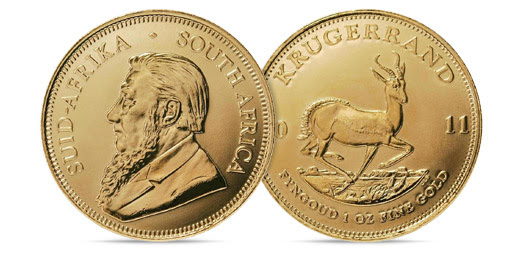
Silver Krugerrands By South African Mint Coming Soon – Massive Clearance Sale on Gold Krugerrands
Silver Krugerrands Produced By South African Mint – New Source Of Demand For Silver Coins
As interest in silver investment expands throughout the world, the South African Mint will produce its first Silver Krugerrand (1 oz ) which will be released this November.

Silver Krugerrands (1 oz) 2017 (Source: SRSrocco)
As reported by Steve St. Angelo on Silver Seek:
“This is quite remarkable as the South African Mint has been producing Gold Krugerrands since 1967.
Matter-a-fact, the South African Mint has produced over 50 million oz of Gold Krugerrands over the past 49 years. It is the largest Official Gold coin producer in the world. The U.S. Mint’s Gold Eagle comes in second with over 22 million oz produced since the program started in 1987.
With the 50 year anniversary of the minting of the Gold Krugerrand in 2017, the South African Government will also release a new 1 oz Platinum Krugerrand along with its new silver coin. They also plan on adding some addition sizes of the Gold Krugerrand, such as a 1/20th, 1/50th oz variants as well as a 5 oz coin.
However, the big deal for the silver investor will be the new 1 oz Silver Krugerrand. The South African Mint plans on releasing 500,000 of the 1 oz 2017 Silver Krugerrand next year, along with 15,000 proofs.”
Read full article by Steve St. Angelo on Silver Seek here
|
|||||||||||
Gold and Silver Bullion – News and Commentary
Gold prices up in Asia as China PMIs lift demand views (Investing.com)
Gold steady; investors await cues from Fed (MoneyControl.com)
Gold sheds 3% for October but still underpinned by election jitters (MarketWatch.com)
Gold sits above 200-DMA despite strong China data (FXStreet.com)
Largest U.S. Fuel Pipeline Shuts After Work Blast – Gasoline Surges 12% (Bloomberg.com)

US elections will push gold to hit $1,500: Technical analyst (CNBC.com)
Why Most Analysts’ Gold And Silver Price Forecasts Are Wrong (GoldSeek.com)
Net long gold COMEX positions up 10%, first increase in four weeks (Platts.com)
World to face stress test as dollar Libor spikes and bond rout deepens (Telegraph.co.uk)
Venezuelans give up on counting piles of cash and start weighing them (Bloomberg.com)
Gold Prices (LBMA AM)
01 Nov: USD 1,284.40, GBP 1,048.58 & EUR 1,167.52 per ounce
31 Oct: USD 1,274.20, GBP 1,046.25 & EUR 1,163.22 per ounce
28 Oct: USD 1,265.90, GBP 1,042.47 & EUR 1,160.96 per ounce
27 Oct: USD 1,269.30, GBP 1,038.29 & EUR 1,162.93 per ounce
26 Oct: USD 1,273.90, GBP 1,043.45 & EUR 1,166.13 per ounce
25 Oct: USD 1,269.30, GBP 1,037.53 & EUR 1,165.85 per ounce
24 Oct: USD 1,267.00, GBP 1,034.89 & EUR 1,163.61 per ounce
Silver Prices (LBMA)
01 Nov: USD 18.24, GBP 14.91 & EUR 16.54 per ounce
31 Oct: USD 17.76, GBP 14.59 & EUR 16.22 per ounce
28 Oct: USD 17.61, GBP 14.51 & EUR 16.13 per ounce
27 Oct: USD 17.66, GBP 14.41 & EUR 16.16 per ounce
26 Oct: USD 17.66, GBP 14.46 & EUR 16.17 per ounce
25 Oct: USD 17.73, GBP 14.49 & EUR 16.30 per ounce
24 Oct: USD 17.64, GBP 14.41 & EUR 16.19 per ounce
Recent Market Updates
– Trump “Will Probably Win” and Gold “May Rise $100” Overnight – Rickards
– World Is Out of Weapons
– Gold Is The “Kardashian of Commodities” – Herbert & Keiser Interview Skoyles
– Value of Gold – Unlike Paper Currency Gold Maintained Value Throughout Ages
– Fed Risks Lehman Crisis As US Recession Storm Gathers
– Silver Eagle Demand ‘Returned with a Vengeance’
– Cashless Society – War On Cash to Benefit Gold?
– “Higher Gold Prices” On Global Trade Slowdown – HSBC
– Euro “Will Collapse” As Is “House of Cards” Warns Architect of Euro
– Property Bubble In Ireland Developing Again
– “Gold Is A Great Hedge Against Politicians” – Goldman
– Sell Gold Now – Time To Liquidate Gold ETF, Pooled and Digital Gold
– Gold In GBP Up 43% YTD – “Massive Twin Deficits” To Impact UK Assets

END
Today 3 of the Fed’s own primary dealers see the rate hikes will now be on hold until 2017:
(courtesy Bloomberg/GATA)
Three of Fed’s own primary dealers see rate hikes on hold until 2017
Submitted by cpowell on Tue, 2016-11-01 01:29. Section: Daily Dispatches
By Yun Li
Bloomberg News
Monday, October 31, 2016
Three of the Federal Reserve’s own primary dealers are warning bond traders that a growing consensus the central bank will raise interest rates by year-end is misguided.
While none of the 23 banks that trade with the Fed expect a hike at the conclusion of Wednesday’s meeting, HSBC Holdings, Royal Bank of Canada, and Royal Bank of Scotland Group remain steadfast that policy makers will choose to hold off on raising rates at the Fed’s Dec. 14 meeting as well.
History would seem to be on the trio’s side. …
… For the remainder of the report:
http://www.bloomberg.com/news/articles/2016-10-31/three-of-fed-s-own-pri…
END
Silver trading today:
(courtesy zero hedge)
Silver Spikes To Key Resistance At One-Month Highs As Dollar Dumps
Silver (and gold) pries are surging today as the dollar index tumbles by the most in 2 months. Silver futures have spiked almost 4% to their highest in a month to the 100-day moving-average.
The USD Index is tumbling – by all appearances – on Trump gains…
end
Your early TUESDAY morning currency, Asian stock market results, important USA/Asian currency crosses, gold/silver pricing overnight along with the price of oil Major stories overnight
:
1 Chinese yuan vs USA dollar/yuan DOWN to 6.7716( REVALUATION NORTHBOUND /CHINA UNHAPPY TODAY CONCERNING USA DOLLAR RISE/MORE $ USA DOLLARS LEAVE CHINA/OFFSHORE YUAN NARROWS TO 6.7806 / Shanghai bourse CLOSED UP 21.94 POINTS OR 0.71% / HANG SANG CLOSED UP 212.53 OR 0.93%
2 Nikkei closed UP 17.38 OR 0.10% /USA: YEN RISES TO 104.92
3. Europe stocks opened ALL IN THE GREEN ( /USA dollar index DOWN to 98.15/Euro UP to 1.1007
3b Japan 10 year bond yield: FALLS TO -.046%/ !!!!(Japan buying 100% of bond issuance)/Japanese yen vs usa cross now at 105.00/ THIS IS TROUBLESOME AS BANK OF JAPAN IS RUNNING OUT OF BONDS TO BUY.
3c Nikkei now JUST BELOW 17,000
3d USA/Yen rate now well below the important 120 barrier this morning
3e WTI:: 46.80 and Brent:48.83
3f Gold UP /Yen DOWN
3g Japan is to buy the equivalent of 108 billion uSA dollars worth of bond per month or $1.3 trillion. Japan’s GDP equals 5 trillion usa./“HELICOPTER MONEY” OFF THE TABLE FOR NOW /REVERSE OPERATION TWIST ON THE BONDS: PURCHASE OF LONG BONDS AND SELLING THE SHORT END
Japan to buy 100% of all new Japanese debt and by 2018 they will have 25% of all Japanese debt. Fifty percent of Japanese budget financed with debt.
3h Oil DOWN for WTI and DOWN for Brent this morning
3i European bond buying continues to push yields lower on all fronts in the EMU. German 10 yr bund RISES A BIT to +.173%
3j Greek 10 year bond yield FALLS to : 8.24%
3k Gold at $1286.20/silver $18.24(7:45 am est) SILVER FINAL RESISTANCE AT $18.50 WILL BE DEFENDED
3l USA vs Russian rouble; (Russian rouble UP 21/100 in roubles/dollar) 63.18-
3m oil into the 46 dollar handle for WTI and 48 handle for Brent/
3n Higher foreign deposits out of China sees huge risk of outflows and a currency depreciation (already upon us). This can spell financial disaster for the rest of the world/China forced to do QE!! as it lowers its yuan value to the dollar/GOT a REVALUATION UPWARD from POBC.
JAPAN ON JAN 29.2016 INITIATES NIRP. THIS MORNING THEY SIGNAL THEY MAY END NIRP. TODAY THE USA/YEN TRADES TO 104.92 DESTROYING WHATEVER IS LEFT OF OUR YEN CARRY TRADERS
30 SNB (Swiss National Bank) still intervening again in the markets driving down the SF. It is not working: USA/SF this morning .9842 as the Swiss Franc is still rising against most currencies. Euro vs SF is 1.0834 well above the floor set by the Swiss Finance Minister. Thomas Jordan, chief of the Swiss National Bank continues to purchase euros trying to lower value of the Swiss Franc.
3p BRITAIN VOTES AFFIRMATIVE BREXIT
3r the 10 Year German bund now POSITIVE territory with the 10 year RISES to +.173%
/German 9+ year rate BASICALLY negative%!!!
3s The Greece ELA NOW at 71.4 billion euros,AND NOW THE ECB WILL ACCEPT GREEK BONDS (WHAT A DISASTER)
The bank withdrawals were causing massive hardship to the Greek bank. the Greek referendum voted overwhelming “NO”. Next step for Greece will be the recapitalization of the banks and that will be difficult.
4. USA 10 year treasury bond at 1.847% early this morning. Thirty year rate at 2.596% /POLICY ERROR)
5. Details Ransquawk, Bloomberg, Deutsche bank/Jim Reid.
(courtesy Jim Reid/Bloomberg/Deutsche bank/zero hedge)
Global Bond Selloff Resumes; Stocks Rise Following Strong Chinese Data
With October, the worst month for stocks since January, now in the history books S&P futures are eager to telegraph that the streak of five consecutive declines – the longest since August 2015 – will end, with a modest gain of 0.3% in overnight trading after U.S. equities ended Monday little changed to cap a third straight monthly decline, coupled with mixed global markets as Asian stocks rose while Europe was pressured again on the back of poor Standard Chartered results which saw the bank miss earnings on a drop in revenue, as the global bond selloff returned after strong Chinese economic data prompted concerns about rising global inflation. Oil failed to rebound after a sharp drop in recent days as hopes of an OPEC deal unwind.
The recent selloff in global bonds resumed amid speculation that major central banks may be moving closer to scaling back their extraordinary stimulus measures as well as strong Chinese PMI reports overnight. Prospects for a pickup in inflation pushed the yield on 10-year Treasury notes to the highest since May relative to those on two-year securities.

Gasoline in New York jumped the most in almost eight years after an explosion and fire in Alabama shut the largest fuel pipeline in the U.S. The Stoxx Europe 600 Index of equities pared gains after banks slid. Australia’s currency strengthened after the central bank refrained from cutting interest rates.
In Overnight news we say both the BOJ and the RBA keep rates unchanged at -0.1% and 1.5% respectively, as expected. The BoJ also held off on expanding stimulus on Tuesday but once again pushed back the timing for hitting its inflation target. The dollar hovered around 104.80 yen. Traders focused on whether the Japanese central bank would keep its November purchases of bonds due in over 10 years at the same level to determine if Kuroda would signal an implicit taper. He did not when earlier today the BOJ announced plans to buy 110b yen of debt due in more than 25 years, and 190b yen for bonds with maturities of 10-to-25 years for its first operation in November, roughly the same as its last market operation in October, when it bought 110.7b yen of debt with more than 25-year maturity, and 191.4b yen for those in the 10-to-25-year bucket.
The Fed begins its two-day meeting today, however, markets see only a small chance that the U.S. Federal Reserve will raise rates when it concludes its meeting on Wednesday, but traders will be scouring its statement for clues on the timing of its next rate hike. Chances of a rate hike in December are around 78%.
The key economic update was China’s October PMI data, which smashed expectations as China’s official factory gauge rose to the highest since July 2014, led by new orders, suggesting the economy’s stabilization continued into the fourth quarter as robust consumption underpins demand driven largely by an unprecedented credit injection which has seen China unleash more than $4.5 trillion in debt in the past year .
- Chinese Manufacturing PMI (Oct) M/M 51.2 vs. Exp. 50.3 (Prey. 50.4); 2-year high.
- Chinese Non-Manufacturing PMI (Oct) M/M 54.0 (Prey. 53.7). 10-month high
- Chinese Caixin Manufacturing PMI (Oct) M/M 51.2 vs. Exp. 50.1 (Prey. 50.1). 2-year high.

Goldman’s break down of the data:
China’s NBS October manufacturing PMI came in at 51.2, the highest level since August 2014. Most of the sub-indexes improved, with the new order sub-index showing a visible uptick to 52.8, from 50.9 in September. The production index was also higher at 53.3, vs 52.8 in September. Inventory indicators went up: Raw material inventory was up to 48.1 from 47.4 in September, and finished goods inventory increased to 46.9 from 46.4 in September. The employment index was higher at 48.8 vs 48.6 in September. The upward trend in inflation indicator continued in October: The input prices index increased to 62.6, the highest level since early 2011. Trade indicators were weaker on the other hand: The export orders index fell to 49.2 from 50.1 in September, and the import index declined to 49.9 from 50.4 previously. The suppliers’ delivery times were up to 50.2 vs. 49.9 in September.
The official non-manufacturing PMI (which covers the construction and service sectors) increased to 54.0 in October from 53.7 in September, supported by a strong service PMI. The service sector PMI improved to 52.6 from 52.3 in September. Construction PMI edged down to 61.8 from 61.9 in September.
The Caixin manufacturing PMI release showed a similar improvement as the official NBS one – the headline index increased to 51.2 in October from 50.1 in September, and both the production and new orders index rebounded strongly.
Economists cheered China’s manufacturing survey data, although some expressed caution that this is as good as it gets as the strong PMI’s will likely make the government more comfortable tightening monetary and property sector policies in Q4.
- “We expect economic activity to pick up further in October thanks to the booming real estate sector and infrastructure projects,” Shen Jianguang, chief Asia economist at Mizuho Securities Asia Ltd. in Hong Kong, wrote in a note. “As the government has announced cooling measures to tame the overheated housing market, in addition to the return of inflationary pressure, we expect monetary policy tightening may slowly take place.”
- “The unexpected rise in the manufacturing PMI and continued strength in the non-manufacturing PMI tell us that the Chinese economy is doing OK at the start of the December quarter,” said Shane Oliver, head of investment strategy at AMP Capital Investors in Sydney. “It means less pressure for further policy stimulus for now.”
- “It’s a very strong reading,” Ding Shuang, head of Greater China economic research at Standard Chartered and a former economist at the International Monetary Fund, said in a Bloomberg Television interview. “Both current and forward-looking economic indicators bode well for growth in the fourth quarter.”
- “The manufacturing reading is robust and is a bit of a surprise to us,” said Iris Pang, senior economist for Greater China at Natixis SA in Hong Kong. “Materials prices jumped a lot, which has contributed to the surge. Since PMI and PPI are co-related, the PPI will very likely be in positive territory.”
The UK economy continued to defy naysayers with October manufacturing PMI printing at 54.3, in line with expectations of 54.5, but still the second highest in the past 27 months and refusing to indicate that the post-Brexit economy has fallen off a cliff, supported by ongoing weakness in sterling, and as Markit said, “boding well for Q4 GDP.”
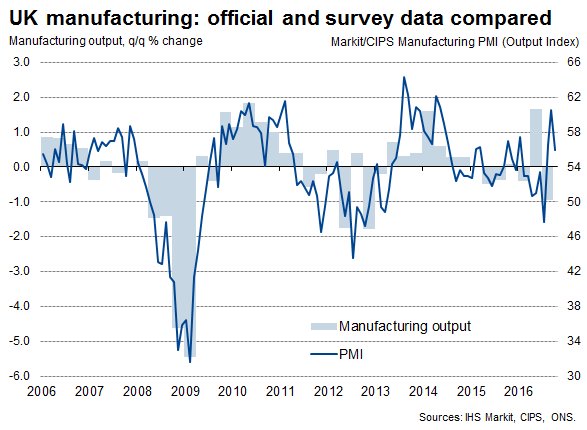
UK #manufacturing PMI fell in Oct but still 2nd highest in past 27 months, boding well for Q4 GDP http://bit.ly/2fzKivB

European shares were poised to fall for a seventh straight session while the dollar edged lower with investors largely holding back as the contentious U.S. presidential campaign entered its final week. Stronger-than-expected manufacturing data from China underpinned gains in Asian stocks and further stoked inflation expectations that drove a selloff in bonds in recent weeks.
Forecast-beating results from oil major Royal Dutch Shell initially provided a boost to Europe’s STOXX 600 index but those gains proved short-lived with weakness in banks, driven by poor Standard Chartered results, dragging the index 0.1 percent lower. The dollar was slightly weaker against a basket of currencies with the dollar index .DXY down 0.2 percent.
“We’re in limbo, unfortunately, ahead of the U.S. election,” said Bart Wakabayashi, head of Hong Kong FX sales at State Street Global Markets.
A global slump in government bonds resumed after the abovementioned PMI report showed an unexpected pickup in manufacturing in China, which fueled optimism about the outlook for the global economy and a rise in global inflation.
Treasury 10-year notes slid before the Federal Reserve’s latest interest-rate decision on Wednesday, with futures trading showing 71 percent odds of an increase before the year is out. Banks were among decliners in European stocks, reversing an earlier gain in the Stoxx Europe 600 Index. Australia’s currency strengthened after the central bank refrained from cutting interest rates. Italy’s borrowing costs hit fresh two-year highs on Tuesday with investors wary of political risks and banking sector reforms continuing to run into hurdles. Other euro zone bond yields also rose between 3-4 basis points on the day, with Ireland’s 10-year bond yields hitting its highest level since June, rising 4 bps to 0.69 percent. Treasury 10-year yields increased three basis points to 1.86 percent as of 9:11 a.m. London time, while those on German bunds with a similar due date increased four basis points to 0.20 percent.
The ramp-up in yields has been a central theme across markets over the past month, spurring turbulence in debt markets and sending global investors out of bonds and into cash on fears that a multi-decade bond bull run was coming to an end.
In commodity markets, oil prices rose from one-month lows after OPEC agreed on a long-term strategy that was seen as an indication the cartel was reaching a consensus on managing production. Emerging-market stocks rallied and Aluminum and copper both gained.
Investors will look Tuesday to data, including readings on manufacturing, for further indications of the health of the world’s biggest economy before this week’s Fed announcement.
* * *
Bulletin headline summary from RanSquawk
- European equities enter the North American crossover lower as opening gains are trimmed by a downbeat update from Standard Chartered which has hampered the financial sector
- The USD has seen a modest pullback from recent gains while the RBA and BoJ both kept policy unchanged overnight as expected
- Looking ahead, highlights include Manufacturing PMIs from across the globe, API crude oil inventories and earnings from BP, Standard Chartered and Pfizer
Market Snapshot
- S&P 500 futures up 0.2% to 2125
- Stoxx 600 down 0.2% to 338
- FTSE 100 down 0.2% to 6943
- DAX down 0.1% to 10651
- German 10Yr yield up 3bps to 0.2%
- Italian 10Yr yield up 6bps to 1.72%
- Spanish 10Yr yield up 7bps to 1.27%
- S&P GSCI Index up 0.9% to 364.9
- MSCI Asia Pacific up 0.3% to 139
- Nikkei 225 up less than 0.1% to 17442
- Hang Seng up 0.9% to 23147
- Shanghai Composite up 0.7% to 3122
- S&P/ASX 200 down 0.5% to 5290
- US 10-yr yield up 3bps to 1.86%
- Dollar Index down 0.21% to 98.24
- WTI Crude futuresunchanged at 46.86
- Brent Futures up 0.5% to $48.87
- Gold spot up 0.3% to $1,281
- Silver spot up 0.7% to $18.03
Top Headline Stories
- Three of Fed’s Primary Dealers Warn Hikes on Hold Until 2017: HSBC, RBC, RBS say policy makers will choose to hold off
- Shell Beats Estimates as BG Acquisition Drives Up Oil Output: Capital expenditure seen at lower end of guidance next year
- BP Profit Slides on Weaker Refining, Oil-Production Loss: 49% decline in 3Q earnings as crude fell, refining margins shrank
- Standard Chartered Profit Misses Estimates on Revenue Decline: reported third-quarter profit that fell short of analyst estimates as revenue fell at all four of its division
- Sony Profit Falls Short of Estimates on Sale of Battery Unit: Impact from Kumamoto earthquake starting to recede
- Whole Foods Facing Investor Skepticism That 365 Can Rescue Compa: Organic-food giant stuck in worst slump since at least 2009
- Ienova Hits 17-Month High Following $1.5 Billion Equity Offering: Sempra’s Mexico unit issued additional shares Oct. 13
- Goldman Sachs Said Outsourcing Dark Pool Operation to Nasdaq: Has been in talks with banks, brokers for service
- Carney to Stay at BOE Until June 2019 to Help Address Brexit
- Russian Manufacturing Unexpectedly Jumps to Four-Year High: Markit PMI index rose to 52.4, the highest reading since 2012
Looking at regional markets, we start in Asia where stocks traded mixed amid a slew of key risk events including BoJ and RBA policy decisions, while China outperformed on strong PMI data. Yesterday’s sell off in oil resulted to underperformance in the commodity heavy ASX 200 (-0.5%), while the Nikkei 225 (+0.1%) was indecisive following BoJ inaction and amid poor earnings with reports noting that net income of listed companies in the Q3 16 period in Japan decreased 25% Y/Y. Shanghai Comp. (+0.7%) and Hang Seng (+1.2%) were the outperformers as the they benefitted from the Caixin and Official Manufacturing PMI’s which both beat expectations and printed at 2-year highs. 10yr JGBs traded flat as an uneventful BoJ policy decision kept price action muted, while Australian bonds were pressured with yields higher across the curve on an unwinding of dovish bets post-RBA.
Top Asian News
- BOJ stands pat even as it delays timing of inflation goal: CPI forecast for next fiscal year reduced to 1.5% from 1.7%
- Yuan heads for first back-to-back gain in 6 weeks after data: Official manufacturing gauge jumps to highest since July 2014
- China’s Oct. money demand sinks as PBOC seen curbing leverage: Repurchase contract turnover slips for second month in row
- Park scandal investigators sought files from 8 Korean banks: President’s associate Choi Soon-sil detained for questioning
- A-list bankers ensnared by one of their own in Hong Kong fiasco: Citi, Morgan Stanley bankers burned by cash-advance firm
In Europe, equities opened higher across the board this morning only to be thwarted by a poor trading update from Standard Chartered . This led STAN shares to trade lower by as much as 5.2%, dragging financial names lower with the broader move in equities possibly also exacerbated by thin volumes as a result of the All Saints Day Holiday. Elsewhere, in energy names Shell (RDSA LN) posted a beat on expectations to push the energy sector higher. Despite this BP group (BP/ LN) are amongst the worst performers in the FTSE 100 (-0.2%) after Co. lowered its Capital Expenditure forecast for this year. In European Fixed income markets supply is thin today with only the UK coming to market with a 2022 treasury gilt. Nonetheless, fixed income markets have failed to recover from their opening losses despite the recent downtick seen in equities with traders keeping an eye on upcoming risk events — notably the Fed and BoE rate decisions. Also of note, we have seen the US 2/10yr spread widen this morning, moving above 100bps which is the highest seen since May.
Top European News
- Brexit Led $17 Billion Manager to Drop U.K. Assets Before Vote: Sold out stocks and bonds in financial, consumer industies
- World’s Biggest Shipping Company Wants More Mergers After Japan: Maersk Line says mergers may help more than vessel sharing
- U.K. Must Identify Best Ways of Taxing Wealthiest, Auditor Says: Probe pursuing as much as 1.9 billion pounds in unpaid tax
- Japan Demands Talks With U.K. Government Over Brexit Strategy: Ambassador to London says his country is ‘major stakeholder’
In FX markets, commodities currencies have received a boost after Chinese PMI data came in ahead of expectations The Aussie strengthened 0.8 percent versus the greenback. Twenty-two of 28 economists surveyed by Bloomberg forecast the Reserve Bank of Australia would keep its benchmark interest rate at a record-low 1.5 percent, while the other six forecast a quarter-point reduction. Governor Philip Lowe expressed concern about rising property prices and said the economy is expanding at close to its potential rate with inflation seen picking up gradually over the next two years. “We think the RBA is likely on hold for the foreseeable future,” said David Forrester, a foreign-exchange strategist at Credit Agricole SA’s corporate and investment-banking unit in Hong Kong. “We don’t think they’ll cut in 2017.” The yen weakened 0.1 percent after the BOJ kept its monetary policy stance unchanged, as forecast by the vast majority of economists in a Bloomberg survey, and pushed back the projected timing for reaching its 2 percent inflation goal to the fiscal year starting April 2018. The central bank re-set its monetary program in September to target yields on Japanese government bonds following a comprehensive policy review. “It looks as though the least anticipated BOJ meeting of the year will quite rightly produce the least market impact,” said Sean Callow, a senior strategist at Westpac Banking Corp. in Sydney. “Six weeks after taking the big step to target JGB yields is not the time to make yet another change, but extending the likely time to reach 2 percent inflation is at least admitting reality.”
In commodities, the Bloomberg Commodity Index rose 0.5 percent, after ending the last session at its lowest level since Sept. 27. Copper headed for the highest close in almost three months in London, while aluminum held near its best close since June 2015 following the upbeat manufacturing figures for China, the world’s biggest user of industrial metals. Zinc was near a fresh five-year high as steel gained in Shanghai. Gasoline in New York jumped as much as 15 percent to the highest level since June after Colonial Pipeline Co., which carries oil products to New York Harbor from the U.S. refining center in Houston, shut mainlines on the pipe for the second time in two months. Crude oil fell 0.3 percent to $46.71 a barrel in New York, after tumbling 3.8 percent on Monday. The Organization of Petroleum Exporting Countries ended two days of talks on Saturday without any commitments being made to limit oil output by its members or major producers from outside of the group. Goldman Sachs Group Inc. said it looks increasingly unlikely that a deal will be agreed at an OPEC meeting this month, adding that failure would warrant crude prices in the low-$40s.
Looking at the day ahead, the highlight is the ISM manufacturing print for this month which is expected to show little change at 51.7. The final manufacturing PMI revision will also be made while construction spending, the IBD/TIPP economic optimism reading and finally October vehicle sales data are released this evening to round out the data. With no central bank speak to highlight the other focus will of course be earnings with 41 S&P 500 companies scheduled to release their latest quarterlies. The highlights include Pfizer and Kellogg both prior to the open. BP and Royal Dutch Shell headline releases in Europe.
* * *
US Event Calendar
- 8:55am: Redbook weekly sales
- 9:45am: Markit U.S. Manufacturing PMI, Oct. F, est. 53.2 (prior 53.2)
- 10am: Construction Spending m/m, Sept., est. 0.5% (prior -0.7%)
- 10am: ISM Manufacturing, Oct., est. 51.7 (prior 51.5)
- 4:30pm: API weekly oil inventories
DB’s Jim Reid concludes the overnight wrap
Welcome to November. Indeed where has this year gone? It’s a cliché to say that time speeds up as you get older but as the first seeds of a mid life crisis permeate I’ve read a bit about this topic and apparently in scientific tests when a 20 and 70 year old count in their heads without a time piece, the 70 year old counts quicker. So time is perceived to be going quicker for the latter. Some have even suggested that the perception of time between the ages of 5-10 is the same as that between 40-80. Anyway at the end today we’ll go back in time a little and compile our usual monthly and annual performance review. Spoiler alert. It’s not a pretty sight for Sterling asset holders.
Before we get there though we’re jumping straight to the overnight news in Asia where it’s been a busy session with central bank meetings and more data out of China. Starting with the former, the BoJ has left its current policy unchanged as widely expected, however more notably has slightly tinkered with the inflation outlook. Acknowledging that momentum towards the price stability target is now ‘somewhat weaker than the previous outlook’, the BoJ has revised down its core CPI forecast for fiscal 2017 to 1.5% from 1.7% and also pushed back the 2% inflation target to ‘around fiscal 2018’. That hasn’t come as much of a surprise to the market though which was already sceptical about the BoJ’s timing for its price target. The Yen is little changed around the 104.80 area while Japanese equity markets have recovered slightly from earlier losses to trade flat as we go to print. All eyes on Kuroda now who is due to speak at 6.30am GMT and after we publish.
Meanwhile, in Australia the RBA has also left current policy unchanged which was also widely expected by the market. Our economists note that there wasn’t too much new in the statement although the RBA did acknowledge that house prices are rising ‘briskly’ in some markets. The Aussie Dollar is up about half a percent with the news while bond yields in the antipodeans are up a few basis points. The ASX is currently -0.70%.
Finally, in China the October PMI’s were generally supportive. The manufacturing PMI has increased 0.8pts to 51.2 (vs. 50.3 expected) and the non-manufacturing PMI is up to 54.0 from 53.7. That manufacturing print is in fact the highest level in 26 months with the details revealing that new orders, employment and raw materials were all higher. That data was also backed up by the private Caixin survey reading where the manufacturing print also came in at 51.2 (from 50.1 in September). Our China economists believe that the strong PMI’s will likely make the government more comfortable tightening monetary and property sector policies in Q4. The Shanghai Comp is +0.33% following the data while the Hang Seng is also up +1.14%
So while it’s fairly mixed across bourses in Asia this morning there’s still a constant theme and that’s the underperformance for energy names following the latest plummet for Oil. Following the disappointment of the lack of any material progress from the OPEC and non-OPEC meetings over the weekend, yesterday WTI plunged -3.78% and closed below $47/bbl for the first time since September 27th. After touching an intraday high of $51.93/bbl back on the 19th of October, WTI has now tumbled nearly -10% with the market questioning whether the cartel will actually be able to fill out the finer quota level details needed to follow through on a production curb. WTI is trading marginally firmer (+0.13%) this morning. As a reminder, OPEC are due to meet at the end of this month.
Unsurprisingly then it was energy names which suffered yesterday. European equities were in the red from the off and the Stoxx 600 eventually finished down -0.54% with the latest batch of earnings releases not really adding much momentum. Across the pond US equities actually kicked off with a relatively positive tone and put to rest any fears that the FBI/Clinton related headlines might have a further dampening effect. However a late dip into the close meant that the S&P 500 (-0.01%) finished marginally in the red for the fifth session in a row. That’s only the 3rd time this year that the index has fallen for five consecutive days however as we noted yesterday, the cumulative decline in that time is only -1.17% so it’s hardly been a big selloff. US credit indices did however underperform given the greater energy exposure. CDX IG ended 1bp wider and CDX HY was 3bps wider.
The other notable news yesterday was over at the BoE. After much speculation Mark Carney last night surprised everyone by announcing that he would step down in June 2019. Over the last few days press speculation had suggested that he may resign within days, next year, serve his 5 year term to 2018 or alternatively take up the option of an extension until 2021. With the announcement also meaning that Carney will guide the UK through the early stages of the departure from the EU, Sterling got a rare boost to close up +0.47% at $1.2242 although it was up as much as +0.90% from the early intraday lows at one stage. It’s -0.06% this morning. The news came after the London close so we didn’t get to see any impact on Gilts (10y yield 1.5bps lower at 1.241%) or the FTSE 100 (-0.60%).
Meanwhile, over at the ECB the latest weekly CSPP data was released yesterday. As at the 28th of October the ECB reported total holdings of €37.815bn. That implies that total net purchases settled last week were €1.929bn or an average daily run rate of €386m. That’s marginally ahead of the €378m run rate since the program and so suggestive of another steady week of purchases. It’ll be interesting to see if we see any slowdown in purchases as we start to approach the latter end of this month and into the holiday period.
Away from central banks, with the ISM manufacturing print looming this afternoon in the US, yesterday’s regional manufacturing surveys were seen as a bit disappointing leading into the data . The Chicago PMI declined 3.6pts this month to 50.6 (vs. 54.0 expected) which is the lowest reading since May. The Dallas Fed’s manufacturing survey followed that and while the index did improve 2.2pts to -1.5, it still trailed market expectations for a bounce back into positive territory at +2.0. Treasuries weren’t hugely moved by the data with the benchmark 10y yield ending the day 2.1bps lower at 1.826%. European Banks (-1.07%) moved lower in tow.
That wasn’t the only data out in the US however with the latest personal income and spending reports also released. September personal income was reported as rising a little less than expected at +0.3% mom (vs. +0.4% expected) although that was somewhat offset by a slightly bigger than expected increase in personal spending (+0.5% mom vs. +0.4% expected). That was in fact the strongest monthly gain for spending since June. Elsewhere the PCE deflator rose +0.2% mom in September which helped the YoY rate to nudge up to +1.2% from +1.0%. The PCE core rose +0.1% mom as expected and so keeping the YoY rate steady at +1.7%.
There was important data in Europe too. Despite some suggestion of upside risks to the data, Q3 GDP for the Euro area ended up printing in line at +0.3% qoq and so had the effect of keeping the YoY rate on hold at +1.6%. The latest inflation data was already released in the region with the October headline estimate coming in at +0.5% and also on line. Meanwhile, the highlight of the UK data was mortgage approvals data for September. Approvals were reported as increasing to 62.9k (vs. 61.5k expected) from 61.0k in the month prior. That’s the highest level since the referendum vote.
Staying in Europe, the latest referendum poll was released in Italy yesterday. According to the Demopolis Poll, 49.5% of voters would vote “Yes” in the constitutional referendum next month and 50.5% would reject the reforms. The poll didn’t take into the account the large undecided proportion which is said to stand at 27%. The last Demopolis Poll came in at 51% to 49% in favour of “Yes” so this suggests a small swing the other way. Still, voting is incredibly close and the proportion of undecided voters still remains very significant.
Looking at the day ahead it’s a fairly quiet morning as far as data is concerned in the European session with the only release scheduled being the UK manufacturing PMI for October (expected to fall to 54.5 from 55.4). In the US this afternoon the highlight is the ISM manufacturing print for this month which is expected to show little change at 51.7. The final manufacturing PMI revision will also be made while construction spending, the IBD/TIPP economic optimism reading and finally October vehicle sales data are released this evening to round out the data. With no central bank speak to highlight the other focus will of course be earnings with 41 S&P 500 companies scheduled to release their latest quarterlies. The highlights include Pfizer and Kellogg both prior to the open. BP and Royal Dutch Shell headline releases in Europe.
3.REPORT ON JAPAN SOUTH KOREA NORTH KOREA AND CHINA
i)Late MONDAY night/TUESDAY morning: Shanghai closed UP 21.94 POINTS OR 0.71%/ /Hang Sang closed UP 212.53 OR 0.93%. The Nikkei closed UP 17.38 POINTS OR 0.10% Australia’s all ordinaires CLOSED DOWN 0.50% /Chinese yuan (ONSHORE) closed UP at 6.7716/Oil FELL to 46.80 dollars per barrel for WTI and 48.83 for Brent. Stocks in Europe: ALL IN THE GREEN Offshore yuan trades 6.7806 yuan to the dollar vs 6.7716 for onshore yuan.THE SPREAD BETWEEN ONSHORE AND OFFSHORE NARROWS A LITTLE BIT AS MORE USA DOLLARS ATTEMPT TO LEAVE CHINA’S SHORES / CHINA SENDS A MESSAGE TO THE USA TO NOT RAISE RATES IN DECEMBER.
3a)THAILAND/SOUTH KOREA/:
none today
b) REPORT ON JAPAN
As expected the Bank of Japan leaves policy unchanged. They are extremely worried on growth and inflation outlook continues to fall:
(courtesy zero hedge)
Bank Of Japan Leaves Policy Unchanged; Warns Growth, Inflation Outlook Skewed To Downside
Expectations for the BoJ meeting tonight were for no change (and perhaps lowering its inflation and growth outlooks) and markets were braced for a whole lot of nothing with overnight USDJPY vol at its lowest of the year (for a BoJ meeting). Sure enough that is what they got. “No change” across anything policy but cuts to inflation expectations (as well as warnings of a downside skew for growth) left the yen slightly higher.
- Bank of Japan Keeps 10-Year JGB Yield Target About 0%
- BOJ Maintains Policy Balance Rate at -0.1%
- BOJ Board Votes 7-2 to on Neg Rate
- BOJ FY2017 Core CPI Forecast Is 1.5%; Prev. Forecast 1.7%
- “With regard to the risk balance, risks to both economic activity and prices are skewed to the downside.”
- BOJ isn’t seeing any near term turnaround for exports. Says sluggishness is expected to remain “for some time.”
There was some chaos in Nikkei Futures ahead of The BoJ…

Since The BoJ unleashed its curve-management plan, things have been oddly stable…
While Yen has weakened around 4 handles…

Banks have gone nowehere…

As the yield curve has remained relatively flat…

And managing 10Y yields appears to be holding for now…

But while levels/prices may look stable, as Goldman notes,JGB market functionality has already deteriorated and we expect it to continue to deteriorate under the yield curve control, as long as the BOJ continues with the current monetary policy.
Bond market functionality has been deteriorating even prior to the introduction of yield curve control in late September. In the BOJ’s bond market survey, the DI for bond market functionality deteriorated to -46 in August 2016, as compared to -25 in February 2015, when the survey first started (see Exhibit 3). Deterioration in the DI was particularly noticeable after the adoption of the negative rate policy.
Exhibit 3: DI on Bond market functionality

Source: BOJ
With the addition of 10-year JGB yield control on top of the negative interest rate policy, we expect long-term rates to become more “fixed” and market functionality to decline even further. Already, on October 19, an entire day went by with no transactions made in newly issued 10-year JGBs (according to the Japan Bond Trading Co.). This is the first time in 13 months, since September 24, 2015, that no transactions have been made for an entire day.
We believe that the BOJ is also concerned about impairment of JGB market functionality, in that it may potentially cause large stress in the market when the BOJ decides to raise its policy rates in the future. We see little way to get around this issue, however, as long as the BOJ maintains current monetary policy.
c) Report on CHINA
see data on China’s PMI’s in morning report
4 EUROPEAN AFFAIRS
Huge problems are facing Italy
- the referendum on Dec 4 has the no’s clearly in the lead
- Italian yields are rising and now well above Spain
- A no vote will probably indicate Italians wants to leave the Euro
- a failed rescue attempt at Monte di Paschi
- the earthquake
all have done considerable damage to Italy.
(courtesy zero hedge)
Italy Seen More Likely To Exit Eurozone Than Greece; Italian Bond Yields Surge
In an unexpected reversal of (mis)fortune, this morning Sentix writes that the Eurocrisis creeps back into the heads of the investors in a new way: it is no longer Greece, but Italy which is now the country that is most likely to leave the Eurozone within the year from the perspective of the more than 1,000 investors surveyed. “This development underscores the importance of the referendum to the Constitution in Italy on December, 4th.”
Sentix adds that while it looked as if a “castle peace” had been concluded a few months ago, the euro concerns are gradually rising again among investors. But this time it is not Greece that dominates the agenda. Although for example the pension funds in Hellas are collapsing, the euro exit probability has fallen to 8.48% – the lowest level since 2014.
Italy is now the focus country number 1 in the Eurocrisis! The precarious situation of the Italian banks, the political questions surrounding the Constitutional Treaty at the beginning of December, and the economic turmoil of the past have placed the country south of the Alps at the center of investor interest.

The above graph shows the historical dimension that is inherent in this signal. And it shows that this is not a one-off event, due to an up-to-date message, as we observed in the Netherlands, for example, after the Brexit decision.
Besides Italy, Sentix also measure a disadvantageous trend in Portugal. While the exit probability is not very high here, the EBI value worsens in small but steady steps. Thus, the risk of contagion as measured in the “Contagion Risk Index” also come back to the agenda.

And with the Italian referendum coming up fast, scheduled for December 4, the market is starting to noticed. Earlier today, Italy’s borrowing costs hit eight-month highs with investors focused on political risks and stuttering banking sector reforms there as anxiety about other lower-rated euro zone nations has eased, Reuters writes. The formation at the weekend of a minority Spanish government after a 10-month political stalemate has prompted markets to throw the spotlight east to Italy instead for what could be a nervy year-end.

The gap between Italian and Spanish 10-year borrowing costs – viewed as a key indicator of political risk – rose on Monday to 41.4 basis points, its highest since 2012. It hovered close to that level at 39.5 bps in early trade on Tuesday.
Concern about Italy centres on a referendum on Dec. 4 in which voters will decide whether to approve Prime Minister Matteo Renzi’s programme of constitutional reforms to reduce the role of the Senate and the powers of regional governments. Polls suggest Renzi may lose the referendum, “and that would be very bad news,” said DZ Bank strategist Daniel Lenz. “Since Portugal passed the DBRS ratings test and Spain now has a minority government, Italy is where the risks lie,” he said.
Last month, Portugal came through a DBRS sovereign credit review with its sole investment grade rating intact. Losing that would have made it illegible for the European Central Bank’s bond-buying programme.
Meanwhile back in Italy all but one of 26 opinion polls published this month have put the “no” camp ahead, with a lead ranging from one to nine percentage points. Renzi earlier this year said he would step down in the event of a “no”. While he has stopped making that promise in recent months, he would come under huge pressure should he lose the vote.
With the outcome of next week’s U.S. presidential election uncertain, the direction of the next ECB policy move on Dec. 8 unclear and a U.S. interest rate rise likely on Dec. 14, the timing of the Italian referendum alone could magnify market volatility.
In addition, and adding to the pressure facing Italian banks, Reuters also reported today that Veteran Italian banker and former industry minister Corrado Passera withdrew his rescue plan for the insolvent Banca Monte dei Paschi di Siena on Tuesday, accusing the bank of obstruction and ignoring the interests of its own shareholders. Passera’s withdrawal leaves Monte dei Paschi, the country’s weakest major lender, tied to a plan drawn up and backed by investment bank JP Morgan to sell some 28 billion euros ($31 billion) in bad loans and raise 5 billion euros in new capital.
Monte dei Paschi, which failed the European stress test over the summer, is desperate to complete the 5 billion euro cash call by the end of December, an ambitious target given that Italians are to vote on Dec. 4 in a constitutional referendum which could unseat the government and sour market sentiment. The attempted turnaround of Monte dei Paschi is the first big test of a state-backed campaign to steady Italy’s banking sector and clean up 360 billion euros in problem loans.
“Ours was a serious proposal to turn around and relaunch the bank that would have given a key role to current shareholders,” Passera said in a letter to the bank which was released to media. “We were denied the minimum conditions for proceeding.”
Passera said in his letter that he had assembled investors willing to invest around 2 billion euros in the bank. He did not name the investors, saying he had been prepared to identify them if Monte dei Paschi signed a confidentiality pact.
But a spokesman for Passera said the bank had asked for so many restrictions to be included in the pact they had not got round to signing it.
Finally, as reported before, and adding to the country’s troubles, another powerful earthquake struck over the weekend in the same central regions that have been rocked by repeated tremors over the past two months. The government recently cited earthquakes and the influx of migrants as reasons for submitting a budget plan to the European Union that would increase Italy’s structural deficit.
end
5. RUSSIAN AND MIDDLE EASTERN AFFAIRS
Iraq threatens Turkey as Erdogan deploys tanks on the Iraqi border:
(COURTESY ZERO HEDGE)
Iraq Threatens Turkey With War After Erdogan Deploys Tanks To Iraqi Border
In the latest provocation between Turkey and Iraq, the Turkish military begun deploying tanks and other armored vehicles to the town of Silopi near the Iraqi border, in a move the defense minister said on Tuesday was related to the fight against terrorism and developments across the border.
As a reminder, Iraq had previously slammed the presence of Turkish troops on its territory, when on October 5 Baghdad warned of “regional war” if Turkey does not withdraw its force.
That threat, however, was lost on the Turkish defense minister, Fikri Isik who said Turkey had “no obligation” to wait behind its borders and would do what was necessary if Kurdistan Workers Party (PKK) militants took a foothold in northwest Iraq’s Sinjar region, around 115 km (71 miles) south of Silopi. “We will not allow the threat to Turkey to increase,” he told broadcaster A Haber in an interview.

More: Turkey likely deployed forces to block the advance of the Popular Mobilization Forces near Tal Afar, Iraq. http://social.stratfor.com/4K9N305JUW5

The army deployment, disclosed by military sources, came after President Tayyip Erdogan said on Saturday that Turkey was aiming to reinforce its troops in Silopi.
Photos from the sources showed a long column of vehicles, including tanks, tank rescue vehicles and construction vehicles in single file on a dual carriageway.


As Reuters reports, the deployment coincides with an Iraqi operation to drive Islamic State from the northern Iraqi city of Mosul and after Iraqi Shi’ite militias launched a related offensive to push the jihadists out of the town of Tal Afar further west. Erdogan said on Saturday Ankara would have a “different response” for Shi’ite militias if they “cause terror” in Tal Afar, home to a sizeable ethnic Turkmen population with historic and cultural ties to Turkey.
Sinjar, where Ankara believes the PKK is developing a presence, is situated some 50 km west of Tal Afar. Additionally, Sirnak province, where Silopi is located, is also one of the main areas of conflict between Turkey’s army and the PKK, whose main bases are in the mountains of northeast Iraq.
Iraq’s response, as expected, came fast, and in a tweet by the official Twitter account of the Iraqi Popular Mobilization Units fighting ISIS in Iraq, the PMU said that “Any Turkish invasion of Ezidi Sinjar will face the full force of the Iraqi PMU to defend our lands from Turkey”, effectively threatening Turkey with war should Turkey’s tanks cross the border.




In July, the Iraqi government officially incorporated the Iranian-supported Popular Mobilization Front (PMF) as an “independent military formation” in Iraq’s security forces. The move, which was approved by Iraq’s prime minister in February, is disturbing as it establishes the PMF as a parallel security organization akin to Iran’s Islamic Revolutionary Guards Corps (IRGC). Influential PMF commanders have openly expressed their affinity for Iran’s supreme leader and the head of IRGC’s Qods Force.
The establishment of the Popular Mobilization Front, or Hashid al Shaabi, as a permanent and separate security entity was codified by Prime Minister Haidar al Abadi on Feb. 22, 2016, according to an official government document published by Al Arabiya.
In other words, should Erdogan proceed with another “preemptive” land invasion in Iraq, not only will the Iraq army retaliate, but he may also bring Iran into the conflict.
end
6. GLOBAL ISSUES
As Trump takes the lead in the National Poll, the Mexican Peso plummets. This is a good indicator as to how Trump is really performing
(courtesy zero hedge)
Peso Pounded As Trump Takes Lead In National Poll
Within seconds of the release of this morning’s ABC/WaPo poll showing Trump taking the lead in the national polls, the Mexican Peso has been dumped back near 19.00 against the dollar…

The peso is now seemingly the most sensitive election tracker but for now 19.00 remains a line in the sand that Democrats will be defending aggressively.
end
Global bonds are collapsing in price (rising yields). Has the bubble burst?
(courtesy Graham Summers/Phoenix Research Capital)
Did the $100 TRILLION Global Bond Bubble Just Burst?

Globally bonds are collapsing.
Germany’s 10-Year Bund has seen yields spike out of their downtrend.

As have Japan’s 10-Year Government Bonds.

Long-Term US Treasuries have taken out their trendline.

As have Junk Bonds.

Folks, the bond markets are flashing DANGER DANGER.
Globally the bond bubble is now well over $100 Trillion. And to top it off, ther’s another $555 TRILLION in derivatives trading based on bond prices!
Another Crisis is brewing… the time to prepare is now.
Smart investors, however, are preparing for what’s to come.
On that note, we are already preparing our clients for this with a 21-page investment report titled the Stock Market Crash Survival Guide.
In it, we outline the coming crash will unfold…which investments will perform best… and how to take out “crash” insurance trades that will pay out huge returns during a market collapse.
We are giving away just 1,000 copies of this report for FREE to the public.
To pick up yours, swing by:
https://www.phoenixcapitalmarketing.com/stockmarketcrash.html
Best Regards
Graham Summers
Chief Market Strategist
Phoenix Capital Research
7. OIL ISSUES
Goldman Sachs warns that oil is heading into the low $40;s on the low probability of an OPEC deal:
(courtesy GoldmanSachs/zero hedge)
Goldman Warns Oil Headed To Low $40 On “Declining Probability Of OPEC Deal”
With oil finally sliding on the realization that an OPEC production cut (or even freeze) deal looks increasingly improbable (albeit having allowed Saudi Arabia to raise $17.5 billion in a record international bond deal as WTI briefly probed the mid-$50 range), one bank has been warning about the downside risks to the commodity over the past month: back in September, Goldman Sachs explicitly warned that “Not Even An OPEC Deal Will Stop Oil Going Lower, Goldman Warns.”
Overnight, Goldman’s Damien Courvalin released another note that will make oil bulls nervous, in which he reiterated his base case that “growing discord between OPEC producers suggests a declining probability of reaching a deal on November 30” and predicted that a “weakening oil fundamentals warrant oil prices in the low US$40s/bbl in our view if OPEC is unable to deliver a convincing agreement.”
That said, when Goldman tells its clients to sell, it usually means its “flow” traders are accumulating a position so buyer, or rather seller, beware.
Here is Goldman’s full note.
Lower probability of a cut, even lower odds of success
The OPEC consultation in Vienna last weekend was only a technical meeting, but the lack of progress on implementing production quotas and the growing discord between OPEC producers suggests a declining probability of reaching a deal on November 30. A unilateral cut from GCC producers would be unacceptable to them and the lack of an agreement so far has pushed oil prices sharply lower, with weakening oil fundamentals warranting oil prices in the low US$40s/bbl in our view if OPEC is unable to deliver a convincing agreement.
Even if the fear of such low prices leads OPEC to deliver an agreement on November 30, we reiterate our view that the odds of it succeeding are low. Further, we believe that rising OPEC production in October, from both disrupted and GCC producers, and a faster ramp up of new non-OPEC projects into year-end have further reduced the odds that an OPEC agreement translates into a decent draw in inventories in 1H17. Net, both the probability of a cut being announced and the odds of it successfully reducing inventories have declined over the past week, in our view.
OPEC roundup: (1) Saudi Arabia and its Gulf OPEC allies (Kuwait, UAE, Qatar) proposed last week to cut 4.0% from their peak output levels vs. a 1.4% seasonal decline between 3Q and 4Q-1Q over the past four years and our 2.0% decline forecast (given the preliminary October production increase, our forecast implies a 2.6% sequential cut in Nov-Mar). (2) Recent comments from Russia, Brazil, Kazakhstan suggest these countries are not yet willing to freeze output at current production levels. And (3) Iraq and Iran remain committed on being exempt from a production quota (with their production under-counted in their view in the secondary data used to measure compliance).
- At face value, these latest comments imply GCC output down 4% from September and the remaining OPEC members at our existing 2017 forecasts[2]: Total 2017 OPEC production of 33.2 mb/d and a combined Russian and OPEC output of 44.4 mb/d (if frozen at estimate October output of 11.2 mb/d). This compares to our pre-Algeria announcement production forecasts of 33.8 mb/d and 45.2 mb/d, respectively.
- However, average October OPEC output is already up to 34.2 mb/d. As a result, a 4% cut from October output levels for the GCC producers and current Libya/Nigeria production (we estimate Nigeria production at 1.7 mb/d and Libya’s NOC puts production at 0.6 mb/d, 0.5 mb/d mom and 0.3 mb/d above our 2017 forecasts) would bring OPEC production to 33.6 mb/d. Given our base-case forecast for a rise in 2017 Russia production of 0.17 mb/d vs. October, this would bring combined OPEC and Russia production to 45.0 mb/d in 2017, just shy of our pre-Algiers forecasts.
- Finally, Libya/Nigeria/Iran/Iraq are targeting another 0.6 mb/d increase from current production[3]. Further, Russia is ramping up production faster than we had expected, with our Russia oil equity analyst forecasting output of 11.7 mb/d in 2017 vs. our base case of 11.4 mb/d. As a result, at a 4% cut from October production level for core 4 Gulf producers, the targeted production from the “disrupted 4” and at our analysts’ higher Russia forecast, aggregate OPEC and Russia would reach 45.9 mb/d, 0.7 mb/d above our 2017 base case.
Crude, Gasoline Tumble After Biggest Inventory Build In 8 Months
Following last week’s inventory draws across the entire energy complex, API was expected to report a seasonally ‘normal’ 1.54mm barrel build but instead printed a massive 9.3mm build – the biggest since March. Distillates saw a 6th straight week of draws but Cushing saw the biggest build in 3 months. Gasoline saw the biggest draw in 2 months (-3.5mm) but RBOB prices are sinking along with WTI.
API
- Crude +9.3mm (+1.54mm avg. exp)
- Cushing +1mm (-250k exp)
- Gasoline -3.5mm (-1mm exp)
- Distillates -3.1mm
As a reminder, crude stockpiles are still 29% above seasonal norms and perhaps today’s surprise build reminded a few of the seasonal tendencies from here….

Crude (one-month lows) and RBOB has slid most of the afternoon into the API print but the surprise build sent both to the lows of the day…

As Phil Streible, senior market strategist at RJO Futures in Chicago, said. “The global glut continues to march on”
end
8. EMERGING MARKETS
Venezuelans are now resorting to weighing their cash as hyperinflation in this nation advances:
(courtesy zero hedge)
“I Feel Like Pablo Escobar” – Venezuelans Resort To Weighing Cash As Hyperinflation Builds
Having thrown in the towel on hyperinflation by printing banknotes with 200-times-higher denominations, Bloomberg reports that things in Venezuela have continued to get worse with the currency now so devalued (with even simple purchases requiring so many bills) that instead of counting bills, they are weighing them.
Once one of the world’s strongest currencies, the bolivar has been reduced to a nuisance. Basic purchases require hundreds of bills.Shoppers shove piles of them into gym bags before venturing into crime-plagued streets and shopkeepers stash thousands in boxes and overflowing drawers. In the absence of official data, economists are left to guess what the inflation rate is. Estimates for this year range from 200 percent to 1,500 percent.
At a delicatessen counter in eastern Caracas, Humberto Gonzalez removes slices of salty white cheese from his scale and replaces them with a stack of bolivar notes handed over by his customer.
“It’s sad,” Gonzalez says. “At this point, I think the cheese is worth more.”

It’s also one of the clearest signs yet that hyperinflation could be taking hold in a country that refuses to publish consumer-price data on a regular basis. Cash-weighing isn’t seen everywhere but is increasing, echoing scenes from some of the past century’s most-chaotic hyperinflation episodes: Post-World War I Germany, Yugoslavia in the 1990s and Zimbabwe a decade ago.
“When they start weighing cash, it’s a sign of runaway inflation,” said Jesus Casique, financial director of Capital Market Finance, a consulting firm. “But Venezuelans don’t know just how bad it is because the government refuses to publish figures.”
Meanwhile, as we concluded previously, the central bank remains stuck in denial and hasn’t published price statistics for almost two years. Instead, Mr. Maduro has blamed the skyrocketing prices on the “economic war” waged against his government by shopkeepers and financiers. This has forced people to brave one of the world’s highest crime rates by shopping with backpacks full of cash and spend hours lining up outside ATMs, which give out less than $10 per withdrawal. Many provincial banks have reduced daily withdrawals to 30,000 bolivars, which would buy a Venezuelan couple a lunch at a mid-scale restaurant.
Amusingly, as we reported last year, the high demand for nearly worthless currency notes has also presented a financial burden for the cash-strapped government, which also lacks raw materials to print its own money. Since last year, Venezuela has had to pay hundreds of millions of dollars to printing companies to feed its economy with bolivar currency. The shipments arrived to Venezuela from private printing presses around the world on several dozen windowless Boeing 747 jets. Given the crime risks, the air shipments arrive at the Caracas airport at night before the notes are loaded onto armored trucks and transported to the central bank vaults in Caracas, protected on the 18-mile route by soldiers.
Indicatively, a fully stocked ATM is emptied in just three and a half hours on average now, according to the Venezuelan Banking Association.
The good news for the insolvent nation is that all local denominated debts are now just as worthless as the currency, which incidentally is what the BOJ’s Kuroda would call: mission accomplished.
Sadly, Venezuela is the canary in the coalmine for what will happen to all currencies in a world where there is now simply too much debt.

END
Your early morning currency/gold and silver pricing/Asian and European bourse movements/ and interest rate settings TUESDAY morning 7:00 am
Euro/USA 1.1007 UP .0037/REACTING TO NO DECISION IN JAPAN AND USA + huge Deutsche bank problems
USA/JAPAN YEN 104.82 UP .095(Abe’s new negative interest rate (NIRP), a total DISASTER/SIGNALS U TURN WITH INCREASED NEGATIVITY IN NIRP/JAPAN OUT OF WEAPONS TO FIGHT ECONOMIC DISASTER/KURODA: HELICOPTER MONEY ON THE TABLE AND DECISION ON SEPT 21 DISAPPOINTS WITH STIMULUS/OPERATION REVERSE TWIST
GBP/USA 1.2248 UP.0013 (Brexit by March 201/pound clobbered)
USA/CAN 1.3389 DOWN .0029
Early THIS TUESDAY morning in Europe, the Euro ROSE by 37 basis points, trading now JUST above the important 1.08 level RISING to 1.1007; Europe is still reacting to Gr Britain BREXIT,deflation, announcements of massive stimulation (QE), a proxy middle east war, and the ramifications of a default at the Austrian Hypo bank, an imminent default of Greece, Glencore, Nysmark and the Ukraine, along with rising peripheral bond yield further stimulation as the EU is moving more into NIRP, THE USA’S NON tightening by FAILING TO RAISE THEIR INTEREST RATE AND NOW THE HUGE PROBLEMS FACING TOO BIG TO FAIL DEUTSCHE BANK / Last night the Shanghai composite CLOSED UP 21.94 OR 0.71% / Hang Sang CLOSED UP 212.53 OR 0.93% /AUSTRALIA IS LOWER BY 0.50% / EUROPEAN BOURSES ALL IN THE GREEN
We are seeing that the 3 major global carry trades are being unwound. The BIGGY is the first one;
1. the total dollar global short is 9 trillion USA and as such we are now witnessing a sea of red blood on the streets as derivatives blow up with the massive rise in the rise in the dollar against all paper currencies and especially with the fall of the yuan carry trade. The emerging market which house close to 50% of the 9 trillion dollar short is feeling the massive pain as their debt is quite unmanageable.
2, the Nikkei average vs gold carry trade ( NIKKEI blowing up and the yen carry trade HAS BLOWN up/and now NIRP)
3. Short Swiss franc/long assets blew up ( Eastern European housing/Nikkei etc.
These massive carry trades are terribly offside as they are being unwound. It is causing global deflation ( we are at debt saturation already) as the world reacts to lack of demand and a scarcity of debt collateral. Bourses around the globe are reacting in kind to these events as well as the potential for a GREXIT>
The NIKKEI: this TUESDAY morning CLOSED UP 17.38 POINTS OR 0.10%
Trading from Europe and Asia:
1. Europe stocks ALL IN THE GREEN
2/ CHINESE BOURSES / : Hang Sang CLOSED UP 212.53 OR 0.93% ,Shanghai CLOSED UP 21.94 POINTS OR 0.71% / Australia BOURSE IN THE RED /Nikkei (Japan)CLOSED IN THE GREEN/ INDIA’S SENSEX IN THE GREEN
Gold very early morning trading: $1285.90
silver:$18.19
Early TUESDAY morning USA 10 year bond yield: 1.847% !!! PAR in basis points from MONDAY night in basis points and it is trading WELL BELOW resistance at 2.27-2.32%.
The 30 yr bond yield 2.596, UP 2 IN BASIS POINTS from MONDAY night.
USA dollar index early TUESDAY morning: 98.15 DOWN 20 CENTS from MONDAY’s close.
This ends early morning numbers TUESDAY MORNING
END
xxxxxxxxxxxxxxxxxxxxxxxxxxxxxxxxxxxxxxxxxxxxxxxxxxxxxxxxxxxxxxxxxxxxxxxxxxxxxxxxxxxxxxxxxxxxxxxxxxxxxxxxxxxxxxx
And now your closing TUESDAY NUMBERS
Portuguese 10 year bond yield: 3.37% UP 5 in basis point yield from MONDAY (does not buy the rally)
JAPANESE BOND YIELD: -.046% DOWN 1/5 in basis point yield from MONDAY
SPANISH 10 YR BOND YIELD:1.31% UP 11 IN basis point yield from MONDAY (this is totally nuts!!/
ITALIAN 10 YR BOND YIELD: 1.76 UP 10 in basis point yield from MONDAY
the Italian 10 yr bond yield is trading 45 points HIGHER than Spain.
GERMAN 10 YR BOND YIELD: +.177% UP 2 IN BASIS POINTS ON THE DAY
END
xxxxxxxxxxxxxxxxxxxxxxxxxxxxxxxxxxxxxxxxxxxxxxxxxxxxxxxxxxxxxxxxxxxxxxxxxxxxxxxxxxxxxxxxxxxxxxxxxxxxxxxxxxxxxxxxxxxxxxxxxxxxxxxxxxxxx
IMPORTANT CURRENCY CLOSES FOR TUESDAY
Closing currency crosses for TUESDAY night/USA DOLLAR INDEX/USA 10 YR BOND YIELD/3.00 PM
Euro/USA 1.1061 UP .0091 (Euro UP 91 basis points/ represents to DRAGHI A COMPLETE POLICY FAILURE/
USA/Japan: 104.11 DOWN: 0.716(Yen UP 72 basis points/POLICY ERROR ON BANK OF JAPAN/
Great Britain/USA 1.2239 UP 0.0006( POUND UP 6 basis points
USA/Canada 1.3381 down 0.0038(Canadian dollar UP 38 basis points AS OIL FELL TO $46.45
xxxxxxxxxxxxxxxxxxxxxxxxxxxxxxxxxxxxxxxxxxxxxxxxxxxxxxxxxxxxxxxxxxxxxxxxxxxxxxxxx
This afternoon, the Euro was UP by 91 basis points to trade at 1.1061
The Yen ROSE to 104.11 for a GAIN of 72 basis points as NIRP is STILL a big failure for the Japanese central bank/HELICOPTER MONEY IS NOW DELAYED/BANK OF JAPAN NOW WORRIED AS AS THEY ARE RUNNING OUT OF BONDS TO BUY AS BOND YIELDS RISE /OPERATION REVERSE TWIST ANNOUNCED SEPT 21.2016
The POUND ROSE 6 basis points, trading at 1.2239/
The Canadian dollar ROSE by 38 basis points to 1.3381, AS WTI OIL FELL TO : $46.45
the 10 yr Japanese bond yield closed at -.046% DOWN 1/5 POINTS IN BASIS POINTS / yield/ AND THIS IS BECOMING BOTHERSOME TO THE BANK OF JAPAN
Your closing 10 yr USA bond yield UP 2 IN basis points from MONDAY at 1.840% //trading well below the resistance level of 2.27-2.32%) very problematic USA 30 yr bond yield: 2.59 UP 1 in basis points on the day /
BANKS NEED THE LONGER BOND HIGHER IN YIELD: INSTEAD THE SPREAD LESSENS.
Your closing USA dollar index, 97.75 DOWN 61 CENTS ON THE DAY/2;30 PM
Your closing bourses for Europe and the Dow along with the USA dollar index closing and interest rates for TUESDAY: 2:30 PM EST
London: CLOSED DOWN 37.08 POINTS OR 0.53%
German Dax :CLOSED DOWN 138.85 OR 1.30%
Paris Cac CLOSED DOWN 38.98 OR 0.96%
Spain IBEX CLOSED DOWN 102.60 OR 1.12%
Italian MIB: CLOSED DOWN 226.77 POINTS OR 1.32%
The Dow was DOWN 105.32 points or 0.58% 4 PM EST
NASDAQ DOWN 35.56 points or 0.69% 4 PM EST
WTI Oil price; 46.45 at 3:00 pm;
Brent Oil: 47.94 3:00 EST
USA DOLLAR VS RUSSIAN ROUBLE CROSS: 63.33(ROUBLE up 6/100 ROUBLES PER DOLLAR FROM THURSDAY) 2:30 EST
TODAY THE GERMAN YIELD RISES TO +0.177% FOR THE 10 YR BOND 2:30 EST
END
This ends the stock indices, oil price, currency crosses and interest rate closes for today
Closing Price for Oil, 5 pm/and 10 year USA interest rate:
WTI CRUDE OIL PRICE 5 PM:$46.33
BRENT: $47.90
USA 10 YR BOND YIELD: 1.827%
USA DOLLAR INDEX: 97.76 DOWN 60 cents
The British pound at 5 pm: Great Britain Pound/USA: 1.2240 up .0008 or 8 basis pts.
German 10 yr bond yield at 5 pm: +.179%
END
And now your more important USA stories which will influence the price of gold/silver
TRADING IN GRAPH FORM
Stocks Slammed To Longest Losing Streak Since Aug 2015 Crash
OJ Futures closed at an all-time record high price…

So this seemed appropriate…
And “Sell, Mortimer, Sell” seemed more than appropriate for today’s stock market…
S&P 500 stocks are down 6 days in a row to 4-month lows – the first time since Aug 24th when stocks crashed on ripples from the China devaluation…

And breadth signals more to come…

The Dow lost 18,000 intraday (and S&P lost 2100) leaving The Dow unchanged since Dec 5th 2014…

Post-Comey, Stocks and Oil are weak, gold is best and bonds flat…

On the day, all majors were red with Small Caps leading the drop…

VIX topped 20 intraday before staging a comeback in the afternoon (well it is The Fed tomorrow)

HY Bond prices are collapsing (following a record outflow last week) – down 6 days in a row…breaking below its 100-DMA…biggest 6-day drop in 9 months…

With HY Spreads at 4 month wides…

AAPL down 5 days in a row, breaking below its 50-DMA…

The USD Index slid from China’s close to 2 week lows… (twice it broke 99.00 and failed to hold)

With Swissy strongest (and EUR)…

But of course the Peso was the biggest mover, dumping on Trump’s lead in the polls…

Back to pre-debate 2 levels…

With Peso protection costs soaring to 5 year highs…

Treasury yields tumbled intraday after some early bond selling…

Crude was clubbed back to a $46 handle (breaking its 200-DMA) as silver surged above $18.5 (50-DMA) and gold above its 200-DMA above $1290…

end
The democrats are not going to like this: there is no link between Trump and Russia.
(courtesy zero hedge)
FBI Finds No Links Between Trump And Russia, Probing Manafort Instead
With the FBI accused of pushing the Clinton campaign, which as recently as a week ago was seen as invincible as it stormed toward the November 8 presidential election, over the proverbial cliff, it was perhaps inevitable that in order to preserve the appearance of impartiality the Bureau would proceed with a probe of Trump’s own campaign. And, according to NBC which cited law enforcement and intelligence sources, it has done so by focusing on Trump’s former campaign manager Paul Manafort, and specifically his foreign business connections.
The news of the inquiry, which has not blossomed into a full-blown criminal investigation, emerges just days after FBI Director James Comey’s disclosure that his agency is examining a new batch of emails connected to an aide to Hillary Clinton. It also comes a day after Senate Majority Leader Harry Reid criticized Comey’s revelation and asserted that Comey possesses “explosive information about close ties and coordination between Donald Trump, his top advisors, and the Russian government.”
As a reminder, Manafort, who resigned as Donald Trump’s campaign manager in August, was previously an international political consultant. He became a liability for the Trump campaign amid reports of his involvement with a pro-Russian political party in Ukraine. One damaging New York Times story earlier this year alleged the party had earmarked more than $12 million in under-the-table cash payments, raising questions about whether Manafort had run afoul of U.S. lobbying laws that would he require he register as “foreign agent” with the Justice Department.

Manafort’s name in an alleged payment ledger
What received far less focus at the time of Manafort resignation, is that as part of the probe, the FBI was also looking into the PR firm of John Podesta’s brother, the Podesta Group founded by prominent democrat Tony Podesta.
But back to Manafort, and the NBC story, which in retrospect is merely a regurgitation of a CNN report from August 19, which reported the exact same thing over two months ago: the FBI did not comment. Manafort told NBC News “none of it is true … There’s no investigation going on by the FBI that I’m aware of.” He said he had never had ties to Russian president Vladimir Putin, or had dealings with Putin and his government. He said any suggestion of such ties was “Democratic propaganda.”
“This is all political propaganda, meant to deflect,” he said.
Furthermore, it appears that the latest news is actually a step down from the origianl CNN report: sources told NBC that the FBI review is not a full-blown criminal investigation, but rather an initial inquiry.
NBC News reported in August that Manafort was a key player in multi-million-dollar business propositions with Russian and Ukrainian oligarchs — one of them a close Putin ally with alleged ties to organized crime — which foreign policy experts said raised questions about the pro-Russian bent of the Trump candidacy. A few days later, amid other reporting on Manafort’s Ukraine ties, Manafort was ousted from the campaign.
Rep. Adam Schiff of California, the ranking Democrat on the House Intelligence Committee, regularly receives sensitive briefings. Schiff said he could not discuss Reid’s assertions, but he said, “Americans have every right to be concerned about what they see in terms of Trump advisors and their closeness with the Kremlin, Trump’s policies vis-a-vis Russia, Trump’s potential financial interest, all of those things ought to be of deep concern to voters.”
He added, “Whether an investigation is appropriate depends on whether there’s evidence of criminal connections. Of course the intelligence community wants to know what foreign influence Russia may be looking to exert in the United States.”
Manafort was paid millions of dollars — $12.7 million in cash, according to The New York Times—representing a pro-Russian politician in the Ukraine.
Meanwhile, Democrats have used this renewed opportunity of ties between a former Trump staffer and Russia, or rather Ukraine, to pitch the worn out propaganda line that Trump is nothing more than a KGB plant.
Trump has taken a series of pro-Russian positions that experts from both parties say are far outside the mainstream, and inexplicable from a political viewpoint. He continues to cast doubt on Russian involvement in election hacking, for example, despite the intelligence community’s public assessment.
“The relationships that Trump’s advisors have had with pro-Russian forces are deeply disturbing,” David Kramer, a former senior State Department official in the George W. Bush administration and a former adviser to Marco Rubio’s presidential campaign, told NBC News in August. “Trump’s attitude on Russia is not in line with most Republican foreign-policy thinking. Trump has staked out views that are really on the fringe.”
Yes, heaven forbid someone step out of line with most Republican foreign-policy thinking, which incidentally, is a carbon copy of most Democrat foreign-policy thinking these days: shoot first, bomb second, and only ask questions if you are subpoenaed by Congress.
* * *
Meanwhile, not content with letting the Russian “angle” drop, on Monday evening, the master of propaganda, John Podesta himself, whose brother would be in the same trouble as Manafort if not more if the FBI were truly probing pro-Russian/Ukrainian lobbying connections, tweeted that “Donald Trump has a secret email server set up to communicate privately with the Russian Alfa Bank.”
Donald Trump has a secret email server set up to communicate privately with the Russian Alfa Bank. https://t.co/7b3E8VbT6c
— John Podesta (@johnpodesta) October 31, 2016
Which is wonderful (granted he may be borrowing a little too heavily from the Hillary Clinton script), the only problem is that at almost exactly the same time, the NYT reported that U.S. Officials Doubt Donald Trump Has Direct Link to Russia.
For much of the summer, the F.B.I. pursued a widening investigation into a Russian role in the American presidential campaign. Agents scrutinized advisers close to Donald J. Trump, looked for financial connections with Russian financial figures, searched for those involved in hacking the computers of Democrats, and even chased a lead — which they ultimately came to doubt — about a possible secret channel of email communication from the Trump Organization to a Russian bank.
Law enforcement officials say that none of the investigations so far have found any link between Mr. Trump and the Russian government. And even the hacking into Democratic emails, F.B.I. and intelligence officials now believe, was aimed at disrupting the presidential election rather than electing Mr. Trump.
In other words, the FBI itself is telling the Democrat establishment to move on and find a different attack on Putin because the “Putin agent” is getting old. Alas, that means either more tax stories or more allegations of rape, both of which the public appears to no longer care as much about.
END
Trump takes the lead in an ABC Washington Post poll:
(courtesy zero hedge)
Trump Takes Lead In ABC/WaPo Poll That Gave Hillary 13 Point Advantage Just One Week Earlier
The first fully post-FBI shocker ABC/WaPo poll is out and it is a shocker: in a poll that saw Hillary lead by a dominating 13 points as recently as one week ago, moments ago ABC/WaPo/Langer Research announced that Trump has not only taken the lead from Hillary, but this is the first time he has done so since May.
As a reminder, this is the same poll that as we reported over the weekend, effectively confirmed to “poll tampering” which saw Hillary’s lead collapse from 12 points to just 2 several days ago.
While vote preferences have held essentially steady, Hillary is now a slim point behind Donald Trump, a first since May, in the latest ABC News/Washington Post tracking poll. Forty-six percent of likely voters support Trump in the latest results, with 45 percent for Clinton. Taking it to the decimal for illustrative purposes, a mere .7 of a percentage point divides them. Third-party candidate Gary Johnson has 3 percent, a new low; Jill Stein, 2 percent. The reason: according to ABC, “strong enthusiasm for Hillary Clinton has ebbed since the renewal of the FBI’s email investigation.”

What is most stunning is that the Democrat oversampling in the poll has now grown to a whopping 10 points!
According to the poll, self-identified Democrats outnumber Republicans among likely voters by 10 points, 38 to 28 percent. There are three reasons why the race is so close despite the major overrepresentation of democrats:
- One, this narrows to a 5-point gap, 48-43 percent, including independents who lean toward one party or the other.
- The second is Trump’s advantage among pure independents, as noted –- even though they account for just 7 percent of all likely voters.
- And the third is the fact that Trump wins 9 percent of Democrats and Democratic leaners, while Clinton is supported by 6 percent of Republicans and those who lean toward the GOP –- another slight difference, and not statistically significant.
But in contests this close, small differences add up. Vote preference results are essentially identical in 23 likely voter models produced for diagnostic purposes, with turnout estimates ranging from 43 to 81 percent of the voting-age population. Seventeen of the individual models produce a 45-46 percent Clinton-Trump race, as does the average of all 23.
As a result, Trump now leads Clinton by 8 points in the share of voters who are very enthusiastic about their choice as of Friday. But, compared to past elections it’s low for both of them –- 53 percent for Trump, 45 percent for Clinton.
Strong enthusiasm for Clinton has lost 7 points since the start of tracking, especially Friday through Sunday. This is possibly an after-effect of the renewed controversy over her use of a private email server while secretary of state. Trump’s strong enthusiasm has held steady in tracking, which started Oct. 20.

To be sure, the 1-point Clinton-Trump race overall is well within the survey’s margin of sampling error, and the notoriously goalseeked poll may have been merely constructed in a way to wake Democrats from their slumber and get them to vote in a race that was all but decided as recently as last week. Combining the last seven nights, across which results have been very stable, the results flip to 46-45 percent, Clinton-Trump, with .4 percentage point gap. Again, it is not a significant difference.
Either way, the results are exceedingly close. Trump’s +1 is a noteworthy result; he’s led Clinton numerically just once before, +2 in late May (among registered voters in a two-way test), after he clinched the GOP nomination while Clinton was still in a duel with Bernie Sanders in the Democratic race. Although the election is close at this point, vote preference results a week out are not necessarily predictive of the final result. Mitt Romney was +1 vs. Barack Obama in comparable tracking poll results in 2012, for example, and John Kerry was +1 vs. George Bush a week out in 2004.

Some more observations from ABC:
Clinton’s support rests in part on early voting: A fifth of those identified as likely voters (21 percent) say they’ve in fact already voted. While the sample isn’t large (thus an error margin of +/-7 percentage points), they divide by 55-39 percent, Clinton-Trump. That said, early voting estimates can change given state-level rules, turnout and sampling variability. Early voting estimates in the 2012 ABC/Post tracking poll ranged from +17 for Obama to +4 for Romney in four-night averages, settling at +3 for Obama.
The latest results, while steady for seven nights, reflect a sharp turnaround from a large Clinton lead in the first four nights of tracking, which were a particularly difficult news cycle for Trump.
Among other factors, there’s been consolidation for Trump among Republicans and GOP-leaning independents (86 percent now back him, up from 80 percent). He has also seen improvement among pure independents (i.e., those who don’t lean toward either party), up from an even split to a large Trump advantage, 25 percent Clinton to 54 percent Trump, across the past seven nights (combined for a larger samples size). Seventeen percent of pure independents pick someone else.
Among Democrats and Democratic leaners, meanwhile, Trump’s support has gone from 5 to 9 percent — a slight change, but a statistically significant one. Clinton’s support has been essentially steady.
* * *
Expect Trump to seize on this latest poll in all public announcements today as indication of a dramatic turnaround, while the Clinton Campaign will do everything it can to urge Democrats “to go out and vote”, and salvage an election that had been virtually assured for Hillary as recently as the last week of October.
END
Strange! the FBI releases documents related to the 2001 probe of the Clinton Foundation and the pardon of Marc Rich. Is there a mutiny at the FBI and/or is Comey getting even with Clinton who blasted him yesterday..
two commentaries
(courtesy zero hedge)
FBI Unexpectedly Releases Documents Related To 2001 Probe Into Clinton Foundation
Update: According to NBC’s Tom Winter, the FBI Vault twitter account “released all files pertaining to Donald Trump’s father, Fred Trump, a few weeks ago. That was response to FOIA” and adds that “the release of WJC FBI files was sent by the FOIA office under normal guidelines. A proper requested was made -Pete Williams rpts…. The account, @FBIRecordsVault started tweeting several days ago after not tweeting for a year. The first tweet…. about Fred Trump’s files.” And now, it is tweeting about the Clinton Foundation.
NBC News: The release of WJC FBI files was sent by the FOIA office under normal guidelines. A proper requested was made -Pete Williams rpts.

And then, the following choice piece: “the young federal prosecutor who ultimately decided not to charge Clinton or anyone else in “pardongate”… James Comey.”
Is it time for Comey to come clean?
And the young federal prosecutor who ultimately decided not to charge Clinton or anyone else in “pardongate”… James Comey. https://twitter.com/Tom_Winter/status/793512021815877633 …
* * *
In what appears to be an unexpected, and very surprising, disclosure, moments ago the FBI released 129 pages of heavily redacted records from its 15-year-old investigation into the Clinton Foundation and Bill Clinton’s 11th hour pardon of financier Marc Rich (less than a week before the election).
William J. Clinton Foundation: This initial release consists of material from the FBI’s files related to the Will… https://vault.fbi.gov/william-j.-clinton-foundation …

According to the FBI, “this initial release consists of material from the FBI’s files related to the William J. Clinton Foundation, a non-profit 501(c)(3) organization. The bulk of these records come from a 2001 FBI investigation into the pardon of Marc Rich (1934-2013), aka Marcell David Reich, by President Clinton in 2001; it was closed in 2005. The material is heavily redacted due to personal privacy protections and grand jury secrecy rules.”
The commentariat is, in a word, shocked by what this symbolic, and impromptu release means, with some wondering if it is payback for Clinton’s blasting of the FBI.
A day after #HillaryClinton blasted the @FBI, the bureau releases 129 documents from it’s 2001 probe into #BillClinton‘s Marc Rich pardon https://twitter.com/FBIRecordsVault/status/793482749025792000 …

A cookie for anyone who can offer a cogent defense of the timing here. https://twitter.com/FBIRecordsVault/status/793482749025792000 …

Some are even calling it the first November surprise:

As the Washington Examiner notes, it was not immediately clear what prompted the FBI to publish the files Tuesday. However, the bureau posted the documents on the section of its website dedicated to records released through the Freedom of Information Act.
Is this the FBI engaging in a covert mutiny against the Clintons and the political affiliated Department of Justice? We hope to find out soon.
The full document is shown below: SEE ZERO HEDGE
END
Clinton Campaign Questions Release Of FBI’s Marc Rich Pardon Records
As reported moments ago, in what appears to have been a surprise release, the FBI’s Vault twitter account released 129 pages of files related to the FBI’s 2001 prove into Bill Clinton’s 2001 pardon of Marc Rich. And while NBC reported that the files were releases as part of a normal subpoena, the increasingly paranoid (not without reason) Clinton campaign immediately had questions. According to Politico, “Hillary Clinton’s presidential campaign raised questions about the timing of the FBI’s release Tuesday of records on a 15-year-old investigation into President Bill Clinton’s pardon to fugitive financier Marc Rich.”
The FBI posted the 129 pages of records in its online Freedom of Information Act reading room in apparent response to a FOIA request seeking information on FBI inquiries into the Clinton Foundation. On the website, the release was dated Monday, but an FBI Twitter account flagged the new posting at noon on Tuesday.
As Politico adds, the Clinton campaign, which is already at odds with FBI Director James Comey over his disclosure of new evidence in the Clinton email probe, immediately questioned why Clinton-related records were being released just a week before the election.
“Absent a FOIA litigation deadline, this is odd. Will FBI be posting docs on Trump’s housing discrimination in ’70s?” Clinton press secretary Brian Fallon asked on Twitter.
Absent a FOIA litigation deadline, this is odd.
Will FBI be posting docs on Trump’s housing discrimination in ’70s?https://twitter.com/PeterWStevenson/status/793505168759386112 …

When reached by Politico, spokespeople for the FBI and the Justice Department did not immediately respond to questions about whether there were any lawsuits seeking the newly posted material or whether a judge had set a deadline for its disclosure.
Despite the lack of major revelations in the documents, which constitute only a part of the FBI’s files on the inquiry, the atmospherics in the records are unhelpful to the Clinton campaign. The records repeatedly refer to the probe being handled by the “Public Corruption Unit” and make clear that the FBI was examining claims that Denise Rich’s Democratic Party “donations may have been intended to influence the fugitive’s pardon.”
“It appears that the required pardon standards and procedures were not followed,” the internal FBI memos said.
Indeed, the request for a pardon for Marc Rich and his business partner, Pincus Green, did not go through normal channels at the Justice Department but was sent directly to the White House. However, presidents are free to grant executive clemency outside the Justice Department channel and many presidents have done so.
The investigation was eventually handed off to Comey, who was White’s successor as U.S. attorney. Comey elected not to seek any charges in the case.
So purely a coincidence? Or an internal message sent from FBI staffers, and if so addressed to whom: Clinton or Comey?
end
U.S. Trucking Companies Slash Fleets Amid “Tepid Shipping Demand”
For months now we have been writing about the collapse of class 8 truck orders. For the month of September, net class 8 orders were down 16% YoY while LTM orders were down a staggering 41%. In fact, the level of trailing 12-month net orders is the lowest since January 2011 with YoY changes now in negative territory for 19 consecutive months.

Therefore, it should come as little surprise that large trucking companies in the U.S. are being forced to slash fleets amid slumping demand and slack capacity. According to the Wall Street Journal, several U.S. trucking companies, including Swift, Werner and Covenant, have all been forced to cut 1,000s of trucks from their fleets as “overcapacity has driven down pricing.” Of course, all this means that class 8 truck manufactures are unlikely to see an uptick in new orders anytime in the near future with Werner promising it won’t add trucks “until they see meaningful improvement in the freight and rate markets.”
“We haven’t seen any difficulty in finding trucks,” said Ken Forster, chief executive of logistics company Sunteck Transport Group, a broker based in Jacksonville, Fla., that finds and books trucks for freight shippers. “It’s clear that overcapacity has driven down pricing.”
In quarterly earnings reports this month, Swift Transportation Co., Werner Enterprises Inc. and Covenant Transportation Group Inc. said they have pulled a combined hundreds of trucks from service since the second quarter.
Idling trucks is a way large fleets can quickly reduce capacity to match demand, which has stagnated this year amid uneven retail imports and sluggish growth for manufacturers.
Swift, the country’s largest truckload carrier, counted 581 fewer trucks in the third quarter than it did this time last year, and plans to cut an additional 200 trucks in the fourth quarter. The company’s fleet tops 19,000 big rigs.
Werner, the fifth-largest U.S. truckload carrier, according to SJ Consulting Group, said it cut its fleet by 240 trucks in the quarter ended Sept. 30 from a year earlier. The company posted a 41% drop in third-quarter net profit, to $18.9 million, and said in its earnings statement that it won’t add trucks “until we see meaningful improvement in the freight and rate markets.”
That said, we wouldn’t hold our breath waiting for demand and pricing to rebound. As Barclays points out, consumer goods imports have continued to remain very weak in 2016 which they think could “presage a slowdown in household demand.” Moreover, Barclays points out that amongst durable goods orders only autos have held up over the past several months amid overall declines for the larger basket though even autos have seemingly “reached a plateau.”
Weakness in durable goods orders and shipments add to our unease over our manufacturing outlook and poses a downside risk to our forecast. Core capital goods orders fell 1.2% in September, a much greater than expected decline and one that erased much of the nascent strength we had begun to perceive in the series over the past few months. Looking beyond the month-to-month fluctuations in shipments and orders, neither series has shown any tendency to recover, following their steep declines in 2014 and 2015 (Figure 4). Amongst key categories of durable goods orders, only motor vehicles orders have shown consistent strength over the past few years and even these orders have moved largely sideways over the past year, as the industry seems to have reached a plateau.
A variety of indicators continue to point to strength in consumption growth, including a solid housing market and the 2.1% growth in this morning’s GDP release. Despite these signs, weak consumer goods imports (Figure 3) pose a risk to our outlook. Most consumer goods are imported, and therefore, the consistently negative y/y growth rates of consumer goods imports this year could presage a slowdown in household demand.

While orders of core capital goods have also fallen.

Of course, the real question is exactly how the Russians were able to manipulate so much financial data in an obvious attempt to disrupt the U.S. presidential election?
end
Markit’s PMI goes completely against the grain vs the Chicago PMI as it records a 53.4, the highest since Oct 2015. Markit has been always higher than the Chicago print. However they note escalating costs and the highest rise in factory prices for over 5 years. Inflation is soaring according to Markit
(courtesy Markit/PMI/zero hedge)
“Widespread Reticence To Take On Extra Staff” Despite US Manufacturing PMI At 1 Year High As Inflation Soars
Despite a final October print for PMI at 53.4 (highest since Oct 2015), US manufacturers remain skeptical and, as Markit notes, “hiring is also being subdued partly by worries about escalating costs, with the October survey recording the largest monthly rise in factory prices for five years.” Following disappointments from regional Fed surveys (Dallas and Chicago notably), ISM Manufacturing rose to 51.9 (with prices paid rising and new orders tumbling).
Both ISM and Markit surveys of US manufacturing improved in October…

ISM Breakdown shows prices rising and orders falling (and a drop in inventories is not helpful for Q4 GDP). Overall, four components declined, among which New Orders, while 6 rebounded, including Prices, suggesting to potential stagflation should growth not follow:
- New orders fell to 52.1 vs 55.1
- Employment rose to 52.9 vs 49.7
- Supplier deliveries rose to 52.2 vs 50.3
- Inventories fell to 47.5 vs 49.5
- Customer inventories fell to 49.5 vs 53.0
- Prices paid rose to 54.5 vs 53.0
- Backlog of orders fell to 45.5 vs 49.5
- New export orders rose to 52.5 vs 52.0
- Imports rose to 52.0 vs 49.0

Asal, New Orders fail to show a sustained rebound.

Meanwhile Inflation fears soar:
Amid reports of rising commodity prices, average input costs increased for the seventh month in a row. The rate of inflation was also the greatest recorded by the survey for two years, and encouraged companies to pass on these higher costs to clients in the form of increased output charges. The net result was a solid pace of charge inflation that was the strongest seen since November 2011.
And the rising costs of inflationary inputs is weighing on employment…

The ISM respondents were very cheerful, as usual:
- Domestic business steady. Export business trending higher.” (Chemical Products)
- “Very favorable outlook in the market.” (Computer & Electronic Products)
- “We are looking at a considerable slowdown for October and November. Production is down 20 percent.” (Primary Metals)
- “Business is much better.” (Fabricated Metal Products)
- “Strong economy driving steady sales.” (Food, Beverage & Tobacco Products)
- “Due to the hurricane and other storms, our business is up significantly.” (Machinery)
- “Ongoing strength seen in 2016 — it’s a good year.” (Miscellaneous Manufacturing)
- “Customers continue to press price reductions.” (Transportation Equipment)
- “Our business remains strong.” (Plastics & Rubber Products)
- “Hard to predict oil price dynamics, but there seems to be a consensus that the market is stabilizing, at least above USD 50 bbl this month.” (Petroleum & Coal Products)
Commenting on the final PMI data, Chris Williamson, Chief Business Economist at IHS Markit said:
“October saw manufacturing enjoy its best performance for a year. Factories benefitted from rising domestic and export sales, driving output higher to mark an encouragingly strong start to the fourth quarter.
“The survey also picked up signs of manufacturers and their customers rebuilding their inventories, often filling warehouses in anticipation of stronger demand in coming months.
“However, a widespread reticence to take on extra staff highlights lingering caution with respect to investing in capacity, at least until after the presidential election.
“Hiring is also being subdued partly by worries about escalating costs, with the October survey recording the largest monthly rise in factory prices for five years.
“While output growth is accelerating, so too are inflationary pressures, which will further fuel speculation that the Fed will hike interest rates again in December.”
end
USA Construction spending contracts year over year confirming the poor Chicago PMI and negating the above Markit PMI
(courtesy USA Construction Index/zero hedge)
US Construction Spending Contracts YoY For First Time Since 2011
For the first time since Dec 2012, US Construction spending declined for two consecutive months (sliding 0.4% in October versus an expectation of a 0.5% rise). But, perhaps rather shockingly for many, US Construction Spending declined 0.2% year-over-year for the first time since 2011, with public construction outlays at ther lowest since March 2014.
Not a good sign (but time to raise rates?)

Chart: Bloomberg
The last time US construction spending decline on an annual basis, the economy entered recession…

Chart: Bloomberg
Both private and pubic construction spending declined (-0.2% and -0.9% respectively) with US public construction outlays at their lowest since March 2014.
Time to raise rates, borrow loads of debt (at higher rates), hike taxes, and spend it on bridges and tunnels?
end
Valeant Ex CEO and CFO’s are both the focus of a criminal probe
The stock plummets
(courtesy zero hedge)
Valeant Ex-CEO, Ex-CFO Are a Focus of U.S. Criminal Probe
U.S. prosecutors are focusing on Valeant Pharmaceuticals International Inc.’s former CEO and CFO as they build a fraud case against the company that could yield charges within weeks, according to people familiar with the matter.
Authorities are looking into potential accounting fraud charges related to the company’s hidden ties to Philidor Rx Services LLC, a specialty pharmacy company that Valeant secretly controlled, the people said. Federal prosecutors in Manhattan and agents at the Federal Bureau of Investigation in New York have been investigating the company for at least a year.
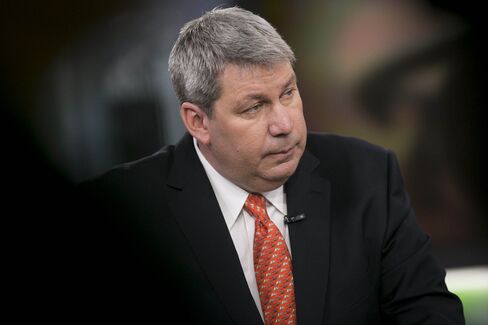
Prosecutors are examining the actions of J. Michael Pearson, Valeant’s former chief executive officer, and Howard Schiller, the ex-chief financial officer who became interim CEO during a medical leave by Pearson, according to the people, who discussed the confidential proceedings on the condition of anonymity. Prosecution of individual executives could go beyond just those two, one person said, adding that Philidor executives could also be charged.
“We are in frequent contact and continue to cooperate” with U.S. authorities, Valeant said in a written statement. “We do not comment on rumors about investigations, and cannot comment on or speculate about the possible course of any ongoing investigation. Valeant takes these matters seriously and intends to uphold the highest standards of ethical conduct.”
A Pearson lawyer, Bruce Yannett, declined to comment. Dan K. Webb, a lawyer for Schiller, didn’t immediately comment. Spokesmen for the FBI and Preet Bharara, the U.S. attorney in Manhattan, declined to comment. Jonathan Rosen, a lawyer for Philidor, didn’t respond to requests for comment.
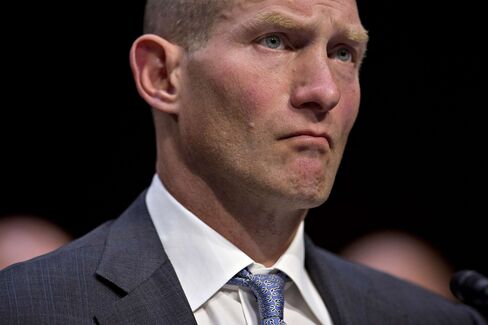
No charging decisions have been made and the case remains fluid, the people said. Among the possibilities, the U.S. Justice Department could settle with the company and later take action against individuals, one person said.
Valeant shares dropped more than 12 percent to $17.84 in New York, the lowest closing pricing since June 2010. The company’s most actively traded debt, $3.25 billion of 6.125 percent notes due in 2025, dropped 2 cents to 77 cents at 4:09 p.m. in New York according to Trace, the bond price reporting system of the Financial Industry Regulatory Authority.
For a Bloomberg Intelligence primer on Valeant Pharmaceuticals, click here.
Prosecution of top corporate executives over accounting fraud allegations is a rare step, and the complexity of such cases can make them hard to bring. In the early and mid-2000s, the U.S. won a series of accounting-related convictions against chief executives at companies including Enron Corp., Cendant Corp. and WorldCom Inc.
More recently, enforcement efforts shifted toward Wall Street in the wake of the financial crisis. Top officials at the U.S. Securities and Exchange Commission, where many accounting fraud investigations begin, have called for a renewed focus on corporate accounting improprieties over the past few years, but so far few cases involving companies as large as Valeant have emerged.
Scrutiny of Valeant
Laval, Quebec-based Valeant, once a darling of Wall Street, has drawn scrutiny in recent years for its practice of acquiring drugs and dramatically increasing their prices. While the precise contours of the government’s case against Valeant aren’t clear, allegations of questionable company practices have emerged in the last year as lawsuits and government investigations mounted.
Pearson, the former CEO, was a key architect of Valeant’s growth over the years. He stepped down from his role last spring and continues to work as a consultant to the company from a Valeant office near his home, according to the people familiar with the matter. A person close to the company said that Pearson no longer makes business decisions on behalf of Valeant.
Schiller was blamed by Valeant for “improper conduct” that led the company to restate its earnings for 2014 and 2015, an assertion disputed by Schiller. He stepped down as CFO in 2015 and left the company board this year.
U.S. prosecutors in Boston and Philadelphia are also said to be conducting separate inquiries of Valeant. Boston’s investigation, according to a person familiar with the matter, focuses on Valeant’s payments to charities that then helped patients make co-payments for the soaring cost of Valeant drugs, some of the most expensive on the market. The Philadelphia case is examining Valeant’s billing of government health care programs for the company’s drugs, another person said.
The U.S. attorney’s office in Boston didn’t respond to a request for comment. Michele Mucellin, a spokeswoman for the U.S. attorney in Philadelphia, declined to comment.
Valeant said in October 2015 that federal prosecutors in New York had issued subpoenas seeking information on the company’s drug distribution and pricing decisions. It later disclosed an investigation by the SEC. Judy Burns, an SEC spokeswoman, declined to comment.
Sales Incentives
Short-sellers first raised questions about Valeant’s accounting practices and relationship with Philidor a year ago. As it turned out, Valeant had offered Philidor executives tens of millions of dollars in incentives to sell its products at a time when the relationship between the companies was still secret, according to hundreds of pages of evidence released by U.S. Senate investigators this year.
Though they were nominally separate companies, Valeant was Philidor’s only client, a class-action lawsuit in New Jersey alleges. Valeant ultimately acknowledged its financial control of Philidor. In February, Valeant restated its results for 2014 and 2015, disclosing it recorded $58 million in revenue from Philidor earlier than it should have.
Valeant’s restatement dealt with its booking of revenue at the time its products were delivered to Philidor, even though the products had not yet been sold — a practice known as channel stuffing. The restatement acknowledged that because Valeant was in the process of taking control of Philidor, the movement of product amounted to shifting inventory from one arm of the company to another and therefore wasn’t revenue.
Philidor, founded in 2013, used tactics to increase insurance reimbursements for Valeant medicines, including submitting claims using other pharmacies’ identification numbers and altering codes on some doctors’ prescriptions, Bloomberg News reported last fall.
Philidor Deal
In late 2014 Valeant paid $100 million for an option to acquire Philidor, in a transaction that required no further payments to take control of the company. After the relationship between the two became known, Valeant acknowledged that it had incorrectly recorded shipments to Philidor as revenue. Valeant said last year that it would shutter Philidor after benefits managers questioned its practices and refused to continue doing business with it.The ties between the companies were particularly close. Valeant executives worked at Philidor, the asset manager T. Rowe Price Group Inc. alleges in a lawsuit against the company filed in August. Also, senior Valeant management and board members — including the entire audit committee on one occasion — went on site visits to Philidor, the suit alleges. E-mails and transcripts of conference calls show that senior company management and board members knew of the accounting treatment of Valeant’s relationship with Philidor, according to the suit. Valeant hasn’t filed a response in the case.
end
Then it rises on reports that it may sell Salix for 10 billion USA. It is the biggest cash cow for Valeant.
(courtesy zero hedge)
Valeant Soars On Report It May Sell Salix For $10 Billion
Yesterday, near the close of trading, Valeant plunged on a report a criminal accounting probe was focusing on the company’s former CEO and CFO. Today, near the close of trading, VRX soared after a WSJ report that the company is in talks to sell its Salix stomach-drug business to Takeda for about $10 billion, and added that another bidder is also “circling.”
More as we get it, but one look at the VRX stock price over the past 24 hours, and it is obvious that the next drug Valeant should develop is one for daytrading nausea.

All other securities are trading alongside the stock, with bonds ripping and CDS suddenly tumbling as a $10 billion liquidity injection would make the risk of a near-term bankruptcy virtually non-existent, even if it means that one of the biggest Valeant cash cows is about to go away in what is now a reverse-rollup.
END
Well that about does it for tonight
I will see you tomorrow night
H


 harveyorganblog.com
[…] NOV 1/ITALY CLOSER TO A NO VOTE ON THE REFERENDUM AND ALSO MAY BE THE FIRST TO LEAVE THE EURO/TRUMP … […]
LikeLike
[…] by Harvey Organ Harvey Organ’s Blog […]
LikeLike