
GOLD: $1256.20 UP $7.60
Silver: $16.63 up 8 cent(s)
Closing access prices:
Gold $1256.75
silver: $16.72
SHANGHAI GOLD FIX: FIRST FIX 10 15 PM EST (2:15 SHANGHAI LOCAL TIME)
SECOND FIX: 2:15 AM EST (6:15 SHANGHAI LOCAL TIME)
SHANGHAI FIRST GOLD FIX: $1262.38 DOLLARS PER OZ
NY PRICE OF GOLD AT EXACT SAME TIME: $1251.35
PREMIUM FIRST FIX: $11.03
xxxxxxxxxxxxxxxxxxxxxxxxxxxxxxxxxxxxxxxxxxxxxx
SECOND SHANGHAI GOLD FIX: $1263.21
NY GOLD PRICE AT THE EXACT SAME TIME: $1253.50
Premium of Shanghai 2nd fix/NY:$9.71
xxxxxxxxxxxxxxxxxxxxxxxxxxxxxxxxxxxxxxxxxxxxxxxxxxx
LONDON FIRST GOLD FIX: 5:30 am est $1256.30
NY PRICING AT THE EXACT SAME TIME: $1256.50
LONDON SECOND GOLD FIX 10 AM: $1255.70
NY PRICING AT THE EXACT SAME TIME. $1256.50 ??
For comex gold:
JUNE/
NOTICES FILINGS TODAY FOR APRIL CONTRACT MONTH: 42 NOTICE(S) FOR 4200 OZ.
TOTAL NOTICES SO FAR: 2670 FOR 267,000 OZ (8.304 TONNES)
For silver:
JUNE
3 NOTICES FILED TODAY FOR
15,000 OZ/
Total number of notices filed so far this month: 991 for 4,905,000 oz
XXXXXXXXXXXXXXXXXXXXXXXXXXXXXX
END
Over at the comex, the amount standing for the silver metal again rose in similar fashion to what we witnessed last month and also in April. It is up for the 17th consecutive trading day. We certainly have a determined entity trying to get its hands on whatever silver is available.
We have now officially entered options expiry week:
comex options expiry: Tuesday June 27
London options expiry: Friday June 30
first day notice Friday June 30
expect continual whacking by the crooked banks UNTIL NEXT FRIDAY MORNING.
end
Let us have a look at the data for today
xxxxxxxxxxxxxxxxxxxxxxxxxxxxxxxxxxxxxxxxxxxxxxxxxxxxxxxxxxxxxxxxxxxxxxxxxx
This is where we are heading: (JB Slear/Jim Sinclair)
According to JB Slear, this is what the future holds. Why should I write words. Get into the cellar as fast as you can!
Jim

In silver, the total open interest ROSE BY A LARGE 4688 contract(s)UP to 205,870 WITH THE RISE IN PRICE OF SILVER THAT TOOK PLACE WITH YESTERDAY’S TRADING (UP 18 CENT(S). In ounces, the OI is still represented by just OVER 1 BILLION oz i.e. 1.0290 BILLION TO BE EXACT or 147% of annual global silver production (ex Russia & ex China).
FOR THE NEW FRONT MAY MONTH/ THEY FILED: 3 NOTICE(S) FOR 15,000 OZ OF SILVER
In gold, the total comex gold ROSE BY A CONSIDERABLE 4887 CONTRACTS WITH THE RISE IN PRICE OF GOLD ($5.10 with YESTERDAY’S TRADING). The total gold OI stands at 451,590 contracts.
we had 42 notice(s) filed upon for 4200 oz of gold.
xxxxxxxxxxxxxxxxxxxxxxxxxxxxxxxxxxxxxxxxxxxxxxxxxxxxxxxxxxx
With respect to our two criminal funds, the GLD and the SLV:
GLD:
We had no changes in tonnes of gold at the GLD:
Inventory rests tonight: 853.68 tonnes
.
SLV
Today: no change in silver inventory at the SLV:
THE SLV Inventory rests at: 339.888 million oz
end
.
First, here is an outline of what will be discussed tonight:
1. Today, we had the open interest in silver ROSE BY 4688 contracts UP TO 205,870 (AND now A LITTLE CLOSER FROM THE NEW COMEX RECORD SET ON FRIDAY/APRIL 21/2017 AT 234,787), DESPITE THE RISE IN PRICE FOR SILVER WITH YESTERDAY’S TRADING (UP 18 CENTS).We LOST NOBODY AS EVERYBODY remains firm and determined.
(report Harvey)
.
2.a) The Shanghai and London gold fix report
(Harvey)
2 b) Gold/silver trading overnight Europe, Goldcore
(Mark O’Byrne/zerohedge
and in NY: Bloomberg
3. ASIAN AFFAIRS
i)Late THURSDAY night/FRIDAY morning: Shanghai closed UP 10.42 POINTS OR 0.33% / /Hang Sang CLOSED DOWN 4.48 POINTS OR 0.02% The Nikkei closed UP 22.16 POINTS OR 0.11%/Australia’s all ordinaires CLOSED UP 0.21%/Chinese yuan (ONSHORE) closed DOWN at 6.83830/Oil UP to 42.82 dollars per barrel for WTI and 45.29 for Brent. Stocks in Europe OPENED ALL IN THE RED,, ..Offshore yuan trades 6.8388 yuan to the dollar vs 6.8383 for onshore yuan. NOW THE OFFSHORE IS WEAKER TO THE ONSHORE YUAN/ ONSHORE YUAN WEAKER (TO THE DOLLAR) AND THE OFFSHORE YUAN IS A LITTLE WEAKER TO THE DOLLAR AND THIS IS COUPLED WITH THE WEAKER DOLLAR. CHINA IS RELATIVELY HAPPY TODAY
3a)THAILAND/SOUTH KOREA/NORTH KOREA
i)NORTH KOREA
Strange! North Korea blames the Obama Administration for not asking for the return of Warmbier:( zero hedge)
b) REPORT ON JAPAN
c) REPORT ON CHINA
4. EUROPEAN AFFAIRS
5. RUSSIAN AND MIDDLE EASTERN AFFAIRS
Quite an ultimatum. These terms will certainly not be met. Will the Gulf states cause a regime change? Oust el Thani?
grab your popcorn on this one
( zero hedge)
6 .GLOBAL ISSUES
7. OIL ISSUES
i)Northeast Colonial Pipeline, the largest USS fuel pipeline system has stated that gasoline demand is crashing
( zero hedge)
ii)Rig counts rise again for the 23rd straight week. Production has also increased but the higher acreage costs in the Permian basin has driven out some investors
8. EMERGING MARKET
9. PHYSICAL MARKETS
i)The one problem with cryptocurrencies: you can have a flash crash
( Karpal/CNBC)
ii)The question: Is Bitcoin money? I would say almost. You still need to touch it or hold it but it is close to money. The ultimate would be a bitcoin backed by gold/silver. This platform after many months of formulation has become a reality with Andrew Maguire’s ABX platform of using blockchain and his “bitcoin” is called “Bullion coin” backed by gold and silver.
( Valentin Schmid/EpochTimes)
iii)Such a shame!! Peter Hambro ousted from the gold mine operation he founded:
( Yeomans/London Telegraph)
iv) A welcome change from Neumeyer. He discusses the manipulation of the precious metals and his disdain of criminal activity by the bankers
( KeithNeumeyer/First Majestic/SilverDoctors)
v)Chris Powell of Ledbetter’s analysis of investors who covet gold
( Chris Powell/GATA/Ledbetter)
vi)I brought this to your attention yesterday but it is worth repeating
( Ted Butler/GATA)
vii) Bill Murphy discusses cryptos vs monetary metals
( GATA)
viii)As I promised you, India would be a large importer of gold once their currency mess has been sorted out. India imported 68 tonnes of gold last month. Switzerland has generally been the favourite route for India but not for all of their gold needs
( Platts/London)
10. USA Stories
i)Moody’s has come out with a great report on pensions suggesting that a slight downfall (5% in one yr) could cause a surge of 3 Trillion in additional pension liabilities
( zero hedge)
ii)Cheerleader Bank of American has finally thrown in the towel on 2017 and 2018. It’s forecast for all of 2017: just 2.1%
( zero hedge)
iv)If there is one fellow to always follow it is David Stockman who never misses as to what is going on inside Washington the following is a must see/read..
( David Stockman/Craig Wilson/Daily Reckoning)
( zero hedge)
vi)What took them so long! Senate Judiciary Committee opens a probe into Loretta Lynch
( zero hedge)
Let us head over to the comex:
The total gold comex open interest ROSE BY 4,688 CONTRACTS UP to an OI level of 451,590 WITH THE RISE IN THE PRICE OF GOLD ($5.10 with YESTERDAY’S trading). An open interest of around 390,000 to 400,000 is core and nothing will move these guys from their contracts.
We are now in the contract month of JUNE and it is one of the BETTER delivery months of the year. In this JUNE delivery month we had A LOSS OF 54 contract(s)FALLING TO 518. We had 7 notices filed yesterday so we LOST 47 contract(s) or an additional 4700 oz will NOT stand for delivery in this very active delivery month of June AND 47 CONTRACT(S) RECEIVED AN EFP CONTRACT WHICH ENTITLES THEM TO A FIAT BONUS PLUS A FUTURE GOLD CONTRACT/OR A LONG CALL OR MOST LIKELY A LONDON BASED FORWARD GOLD CONTRACT. THESE EFP’S ARE PRIVATE OFF COMEX TRANSACTIONS. THE STUBBORN LONGS WHO ARE REMAINING STOIC AT THE COMEX ARE SO FAR REFUSING THAT FIAT BONUS (JUST UNDER 10 TONNES STANDING)
The non active July contract LOST 193 contracts to stand at 1196 contracts. The next big active month is August and here the OI LOST 1355 contracts DOWN to 305,897, as the bankers trying to keep this month down to manageable size.
We had 42 notice(s) filed upon today for 4200 oz
The next big active month will be July and here the OI LOST 8042 contracts DOWN to 58,849 as we start to wind down before first day notice Friday, June 30. July will be interesting to watch in silver as we witness fewer players pitching for EFP contracts than with gold. We have 5 trading days left before first day notice
The month of August, a non active month picked up 24 contracts to stand at 149. The next big active delivery month for silver will be September and here the OI already jumped by another 12,716 contracts up to 104,798.
I will give you a snapshot as to what happened last year at the exact number of days before first day notice:
June 23.2016: 57,465 contracts were still outstanding vs 58,849 contracts June 23.2017
At the conclusion of June, the final standing for physical silver was 3,080,000 oz and we have already surpassed that number this year (4,595,000 oz).
The line in the sand is $18.50 for silver and again it has been defended by the criminal bankers. Once this level is pierced, the monstrous billion oz of silver shorts will blow up. The bankers are defending the Alamo with their last stand at the $18.50 mark. THE NEW RECORD HIGH IN OPEN INTEREST WAS SET FRIDAY APRIL 21/2017 AT: 234,787.
As for the July contracts:
Initial amount that stood for silver for the July 2016 contract: 14.785 million oz
Final standing: 12.370 million with the difference being EFP’s taking delivery in London.
We had 3 notice(s) filed for 15,000 oz for the June 2017 contract
VOLUMES: for the gold comex
Today the estimated volume was 154,441 contracts which is FAIR
Yesterday’s confirmed volume was 203,227 contracts which is fair
volumes on gold are STILL HIGHER THAN NORMAL!
| Gold | Ounces |
| Withdrawals from Dealers Inventory in oz | nil |
| Withdrawals from Customer Inventory in oz |
nil
|
| Deposits to the Dealer Inventory in oz | 1697.32 oz |
| Deposits to the Customer Inventory, in oz |
nil oz
|
| No of oz served (contracts) today |
42 notice(s)
4200 OZ
|
| No of oz to be served (notices) |
476 contracts
47,600 oz
|
| Total monthly oz gold served (contracts) so far this month |
2670 notices
267,000 oz
8.304 tonnes
|
| Total accumulative withdrawals of gold from the Dealers inventory this month | NIL oz |
| Total accumulative withdrawal of gold from the Customer inventory this month | 326,769.0 oz |
Today, 0 notice(s) were issued from JPMorgan dealer account and 0 notices were issued from their client or customer account. The total of all issuance by all participants equates to 42 contract(s) of which 0 notices were stopped (received) by j.P. Morgan dealer and 22 notice(s) was (were) stopped/ Received) by j.P.Morgan customer account.
| Silver | Ounces |
| Withdrawals from Dealers Inventory | nil |
| Withdrawals from Customer Inventory |
9,996.300 oz
Brinks
|
| Deposits to the Dealer Inventory |
nil oz
|
| Deposits to the Customer Inventory |
1,202,191.463 oz
CNT
HSBC
|
| No of oz served today (contracts) |
3 CONTRACT(S)
(15,000 OZ)
|
| No of oz to be served (notices) |
3 contracts
( 15,000 oz)
|
| Total monthly oz silver served (contracts) | 981 contracts (4,905,000 oz) |
| Total accumulative withdrawal of silver from the Dealers inventory this month | NIL oz |
| Total accumulative withdrawal of silver from the Customer inventory this month | 5,994,370.4 oz |
NPV for Sprott and Central Fund of Canada
Sprott’s hostile 3.1 billion bid to take over Central Fund of Canada
(courtesy Sprott/GATA)
Sprott makes hostile $3.1 billion bid for Central Fund of Canada
Submitted by cpowell on Thu, 2017-03-09 01:19. Section: Daily Dispatches
From the Canadian Press
via Canadian Broadcasting Corp. News, Toronto
Wednesday, March 8, 2017
http://www.cbc.ca/news/canada/calgary/sprott-takeover-bid-central-fund-c…
Toronto-based Sprott Inc. said Wednesday it’s making an all-share hostile takeover bid worth $3.1 billion US for rival bullion holder Central Fund of Canada Ltd.
The money-management firm has filed an application with the Court of Queen’s Bench of Alberta seeking to allow shareholders of Calgary-based Central Fund to swap their shares for ones in a newly-formed trust that would be substantially similar to Sprott’s existing precious metal holding entities.
The company is going through the courts after its efforts to strike a friendly deal were rebuffed by the Spicer family that controls Central Fund, said Sprott spokesman Glen Williams.
“They weren’t interested in having those discussions,” Williams said.
Sprott is using the courts to try to give holders of the 252 million non-voting class A shares a say in takeover bids, which Central Fund explicitly states they have no right to participate in. That voting right is reserved for the 40,000 common shares outstanding, which the family of J.C. Stefan Spicer, chairman and CEO of Central Fund, control.
If successful through the courts, Sprott would then need the support of two-thirds of shareholder votes to close the takeover deal, but there’s no guarantee they will make it that far.
“It is unusual to go this route,” said Williams. “There’s no specific precedent where this has worked.”
Sprott did have success last year in taking over Central GoldTrust, a similar fund that was controlled by the Spicer family, after securing support from more than 96 percent of shareholder votes cast.
The firm says Central Fund’s shares are trading at a discount to net asset value and a takeover by Sprott could unlock US$304 million in shareholder value.
Central Fund did not have any immediate comment on the unsolicited offer. Williams said Sprott had not yet heard from Central Fund on the proposal but that some shareholders had already contacted them to voice their support.
Sprott’s existing precious metal holding companies are designed to allow investors to own gold and other metals without having to worry about taking care of the physical bullion.
end
And now the Gold inventory at the GLD
June 23/no change in gold inventory at the GLD/Inventory rests at 853.68 tonnes
June 22/no change in gold inventory at the GLD/Inventory rests at 853.68 tonnes
June 21/no change in gold inventory at the GLD/Inventory rests at 853.68 tonnes
June 20/no change in gold inventory at the GLD//Inventory rests at 853.68 tonnes
June 19/NO CHANGE IN GOLD INVENTORY AT THE GLD/INVENTORY RESTS AT 853.68 TONNES
June 16/no changes in gold inventory at the GLD/Inventory rests at 853.68 tonnes
June 15/ a monstrous “paper” withdrawal of 13.32 tonnes/Inventory rests at 853.68 tonnes
June 14./NO CHANGE IN GOLD INVENTORY AT THE GLD/INVENTORY RESTS AT 867.00 TONNES
June 13. No change in gold inventory at the GLD/Inventory rests at 867.00 tonnes
June 12/No change in gold inventory at the GLD/Inventory rests at 867.00 tonnes
June 9/no change in inventory at the GLD/Inventory rests at 867.00 tonnes
June 8/AN ADDITION OF 3.07 TONNES OF GOLD ADDED TO THE GLD/INVENTORY RESTS AT 867.00 TONNES
June 7 a huge change in inventory/a deposit of 13.93 tonnes/inventory rests at 864.93 tonnes
June 6/ no changes in inventory at the GLD/Inventory remains at 851.00 tonnes
June 5.2017/no changes at the GLD/Inventory remain at 851.00 tonnes
June 2/2017/a huge deposit of 3.55 tonnes of gold into the GLD/Inventory rests at 851.00 tonnes
June 1/NO CHANGE IN GOLD INVENTORY AT THE GLD/INVENTORY RESTS AT 847.45 TONNES
May 31./ no change in gold inventory at the GLD/Inventory rests at 847.45 tonnes
May 30/no change in gold inventory at the GLD/Inventory rests at 847.45 tonnes
May 26./no change in inventory at the GLD/Inventory rests at 847.45 tonnes
May 25./no change in inventory at the GLD/Inventory rests at 847.45 tonnes
May 24/no change in inventory at the GLD/inventory rests at 847.45 tonnes
May 23/a paper withdrawal of 5.03 tonnes of gold from the GLD/Inventory rests at 847.45 tonnes
May 22/A DEPOSIT OF 1.77 TONNES IN GOLD INVENTORY AT THE GLD/INVENTORY RESTS AT 852.48 TONNES
May 19/NO CHANGE IN GOLD INVENTORY AT THE GLD/INVENTORY RESTS AT 850.71 TONNES
May 18/a withdrawal of 1.18 tonnes of gold from the GLD/Inventory rests at 850.71
May 17/no change in the GLD inventory/inventory rests at 851.89 tonnes
end
Now the SLV Inventory
June 23/no change in silver inventory at the SLV/Inventory rests at 339.888 million oz
June 22/ a big change; a huge deposit of 2.175 million oz into the SLV/Inventory rests at 339.888 million oz
June 21/no change in silver inventory at the SLV/inventory rests at 337.713 million oz
June 20/a deposit of 1.513 million oz/inventory rests at 337.713 million oz/.
June 19/NO CHANGE IN SILVER INVENTORY AT THE SLV/INVENTORY RESTS AT 336.200 MILLION OZ
June 16/no changes in inventory at the SLV/inventory rests at 336.200 million oz
June 15/ a massive “paper withdrawal” of 3.405 million oz of silver/Inventory rests at 336.200 million oz/
June 14/NO CHANGE IN SILVER INVENTORY AT THE SLV/INVENTORY RESTS AT 339.605 MILLION OZ/
June 13/no change in silver inventory at the SLV/Inventory rests at 339.605 million oz
June 12/no change in silver inventory at the SLV/Inventory rests at 339.605 million oz/
June 9/no change in silver inventory at the SLV/Inventory rests at 339.605 million oz/
June 8/NO CHANGE IN SILVER INVENTORY AT THE SLV/INVENTORY RESTS AT 339.605 MILLION OZ/
June 7/no change in inventory at the SLV/inventory rests at 339.605 million oz/
June 6/no change in inventory at the SLV/Inventory rests at 339.605 million oz.
June 5/a huge change at the SLV/a withdrawal of 1.371 million oz /inventory rests at 339.605 million oz/
June 2/no change in silver inventory at the SLV/Inventory rests at 340.976 million oz/
June 1/NO CHANGE IN INVENTORY AT THE SLV/INVENTORY RESTS AT 340.976 MILLION OZ
May 31./ no change in silver inventory at the SLV/inventory rests at 340.976 million oz/
May 30/no change in silver inventory at the SLV/inventory rests at 340.976 million oz
May 26/another paper withdrawal of 946,000 oz of silver from the SLV with silver rising/inventory rests at 340.976 million oz
May 25/no change in silver inventory at the SLV/Inventory rests at 341.922 million oz
May 24./a “paper” withdrawal of 1.893 million oz from the SLV/inventory rests tonight at 341.922 million oz
May 23/no change in silver inventory at the SLV/inventory rests at 343.815 million oz
May 19/no change in silver inventory at the SLV/Inventory rests at 343.815 million oz.
may 18/2017/another big deposit of 1.42 million oz added to the SLV/inventory rests at 343.815 million oz.
may 17/no change in silver inventory at the SLV/Inventory rests at 342.395 million oz/
| Gold COT Report – Futures | ||||||
| Large Speculators | Commercial | Total | ||||
| Long | Short | Spreading | Long | Short | Long | Short |
| 252,620 | 101,945 | 39,733 | 110,287 | 275,303 | 402,640 | 416,981 |
| Change from Prior Reporting Period | ||||||
| -44,558 | -4,959 | 11,156 | 5,094 | -33,501 | -28,308 | -27,304 |
| Traders | ||||||
| 168 | 94 | 79 | 50 | 55 | 250 | 201 |
| Small Speculators | ||||||
| Long | Short | Open Interest | ||||
| 43,201 | 28,860 | 445,841 | ||||
| 3,015 | 2,011 | -25,293 | ||||
| non reportable positions | Change from the previous reporting period | |||||
| COT Gold Report – Positions as of | Tuesday, June 20, 2017 | |||||
OUR LARGE SPECULATORS
I just about seen everything!!
Those large specs that have been long in gold liquidated 44,558 contracts from their long side
those large specs that have been short in gold added 4959 contracts to their short side
OUR COMMERCIALS
those commercials that have been long in gold added 5094 contracts to their long side
those commercials that have been short in gold covered 33,501 contracts from their short side
OUR SMALL SPECS
those small specs that have been long in gold added 3015 contracts to their long side
those small specs that have been short in gold added 2011 contracts to their short side
Conclusions:
none..
AND NOW FOR OUR SILVER COT
| Silver COT Report: Futures | |||||
| Large Speculators | Commercial | ||||
| Long | Short | Spreading | Long | Short | |
| 96,000 | 49,319 | 21,467 | 56,301 | 115,135 | |
| -6,702 | 7,275 | -493 | 4,684 | -8,395 | |
| Traders | |||||
| 96 | 50 | 57 | 40 | 37 | |
| Small Speculators | Open Interest | Total | |||
| Long | Short | 199,929 | Long | Short | |
| 26,161 | 14,008 | 173,768 | 185,921 | ||
| 1,226 | 328 | -1,285 | -2,511 | -1,613 | |
| non reportable positions | Positions as of: | 160 | 127 | ||
| Tuesday, June 20, 2017 | |||||
OUR LARGE SPECULATORS
those large speculators who have been long in silver pitched 6702 contracts from their long side
those large speculators who have been short in silver added 7275 contracts to their short side??
OUR COMMERCIALS
those commercials who have been long in silver added 4684 contracts to their long side
those commercials who have been short in silver covered 8395 contracts from their short side
OUR SMALL SPECS
those small specs who have been long in silver added 1226 contracts to their long side
those small specs who have been short in silver added 328 contracts to their long side
Conclusions;
please note the difference between gold and silver. In gold EFP’s were issued to specs/in silver none and just look at the make up of the COT
end
The actual figures can be found on our home page https://monetary-metals.com/
with this box in the left side
GOFO
6 month: 1.19% (yesterday 1.19%)
12 month: 1.41% (yesterday 1.41%)
| BRON SUCHECKI | VP Operations |
 |
| Unlocking the Productivity of Gold |
| MONETARY METALS & CO |
| M: +61 4 1210 1912 | bron@monetary-metals.com |
| Skype: bron.suchecki |
| Twitter: @bronsuchecki |
| Website: monetary-metals.com |
| Use this link to encrypt and safely send confidential documents to Monetary Metals® |
| https://cloud.sookasa.com/upload_page/f840a3c3-54e5-42b0-85b4-15c9e94ea5e |
end
Major gold/silver trading/commentaries for FRIDAY
GOLDCORE/BLOG/MARK O’BYRNE.
GOLD/SILVER
Go for Gold – Win a beautiful Gold Sovereign coin
Go for Gold – Win a beautiful Gold Sovereign coin
The Irish Times has teamed up with GoldCore, Ireland’s first and leading gold broker, to offer you the chance to win a beautiful, freshly minted Gold Sovereign coin (2017) which contains nearly one quarter of an ounce of gold and is ‘investment grade’ 22 carat pure gold.

Gold Sovereigns can be bought for insured delivery or in ultra secure vaults and remain one of the safest ways for investors and savers to diversify into gold. They are tax free (no VAT) highly liquid stores of value in these uncertain times. They are capital gains tax (CGT) free in the UK. Gold Sovereigns also make great gifts and are a good way to pass on wealth to the next generation.
To be in with a chance to win this fantastic prize, answer a simple question here:
News and Commentary
Gold tallies back-to-back gains, and claws out from 5-week low (Marketwatch)
Gold Rises a Second Day as Declining Yields Boost Haven Appeal (Bloomberg)
U.S. Stocks End Mixed, Bonds Gain as Oil Advances: Markets Wrap (Bloomberg)
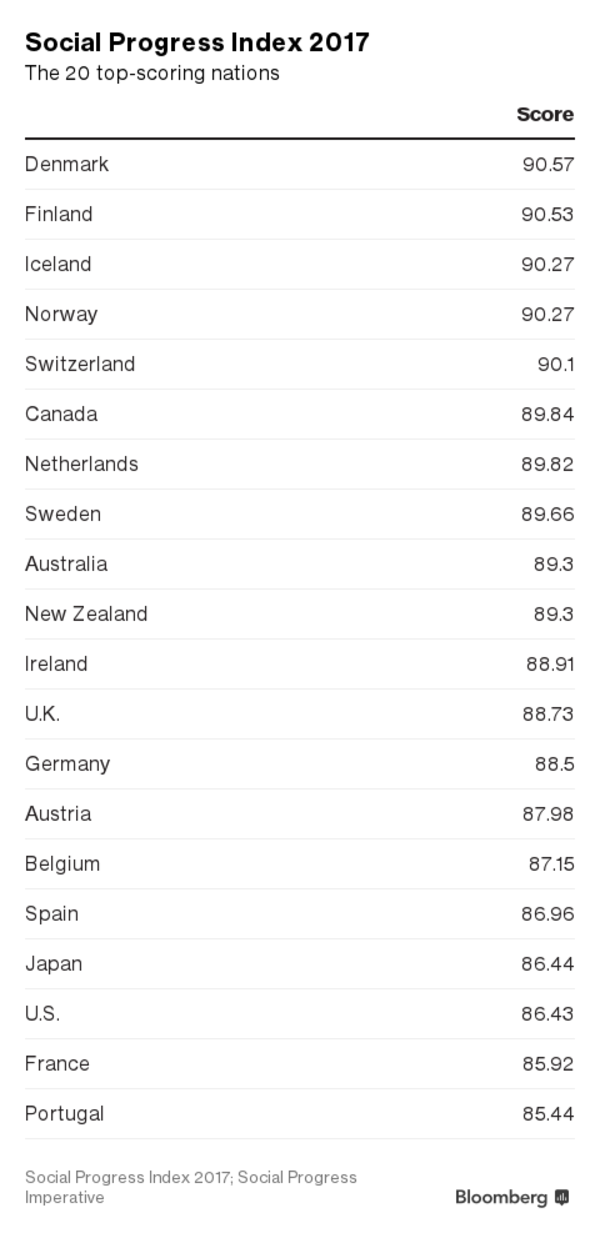
America Is Now a ‘Second Tier’ Country (Bloomberg)
Recession Could Be Closer Than Most Realize (Daily Reckoning)
When the System Thwarts Sincere, Hard-Working People, the System Has Failed (Charles Hugh Smith)
Doomsday Prep for the Super-Rich (New Yorker)
Stockman Warns “A Great Big Coup Is On The Way” (Daily Reckoning)
Gold Prices (LBMA AM)
23 Jun: USD 1,256.30, GBP 987.70 & EUR 1,125.27 per ounce
22 Jun: USD 1,251.40, GBP 988.36 & EUR 1,120.13 per ounce
21 Jun: USD 1,247.05, GBP 989.04 & EUR 1,118.98 per ounce
20 Jun: USD 1,246.50, GBP 981.99 & EUR 1,117.24 per ounce
19 Jun: USD 1,251.10, GBP 976.86 & EUR 1,117.73 per ounce
16 Jun: USD 1,256.60, GBP 984.04 & EUR 1,124.03 per ounce
15 Jun: USD 1,260.25, GBP 992.57 & EUR 1,127.67 per ounce
Silver Prices (LBMA)
23 Jun: USD 16.71, GBP 13.12 & EUR 14.97 per ounce
22 Jun: USD 16.58, GBP 13.09 & EUR 14.85 per ounce
21 Jun: USD 16.51, GBP 13.03 & EUR 14.81 per ounce
20 Jun: USD 16.59, GBP 13.10 & EUR 14.88 per ounce
19 Jun: USD 16.67, GBP 13.02 & EUR 14.87 per ounce
16 Jun: USD 16.76, GBP 13.11 & EUR 14.99 per ounce
15 Jun: USD 16.86, GBP 13.19 & EUR 15.10 per ounce
Recent Market Updates
– Your Future Depends on What You Decide to Keep and Invest in Now
– Inflation is no longer in stealth mode
– James Rickards: Gold Will Start Heading Higher On “Dwindling” Supply
– Billionaires Invest In Gold
– Brexit and UK election impact UK housing
– In Gold we Trust: Must See Gold Charts and Research
– Pension Funds, Sovereign Wealth Funds, Central Banks “Stock Up” on Gold “Amid Uncertainty”
– 4 Charts Show Gold May Be Heading Much Higher
– Gold in Pounds Surges 1.5% To £1,001/oz – UK Political Turmoil Likely
– Gold Prices Steady On UK Election Risk; ECB Meeting and Geopolitical Risk
– Gold Breaks 6-Year Downtrend On Safe Haven and 50% Surge In Chinese Demand
– Deposit Bail In Risk as Spanish Bank’s Stocks Crash
– Terrorist attacks see Gold Stay Firm
end
As I promised you, India would be a large importer of gold once their currency mess has been sorted out. India imported 68 tonnes of gold last month. Switzerland has generally been the favourite route for India but not for all of their gold needs
(courtesy Platts/London)
Swiss gold exports jump 39% to 170 mt in May on Indian demand, a five-month high
London (Platts)–23 Jun 2017 839 am EDT/1239 GMT
Gold exports from Switzerland totaled 170 mt in May, up 39% from 122 mt in April, Swiss federal customs data showed Thursday.
The total is largely unchanged from a year earlier, down 2% from 174 mt in May 2016, but is the highest volume of the year so far.
India was the largest destination for Switzerland’s gold for the fifth straight month, with 68 mt exported in May, up from 18.5 mt in May 2016.
The volume is up 40% from April and is the largest export volume to the country for 18 months.
Exports are believed to have climbed in anticipation of widespread tax reforms to India’s economy, which include a new 3% goods and service tax on gold, to be levied from July 1.
Year to date, volumes to India totaled 236 mt, up 105% from the same period a year earlier and the highest for at least three years.
Exports to China totaled 28 mt in May, up 47% from 19 mt a year earlier, but down 30% from 40 mt in April.
Flows to Hong Kong totaled 23 mt, up 71% from 14 mt in April and its highest volume since December, but down 3% from 24 mt a year earlier.
Combined, total exports to China and Hong Kong for the first five months of the year totaled 221 mt, up 1.3% from 219 mt in 2016.
Exports to Singapore totaled 10 mt in May, up from just 3 mt in April and 4 mt a year earlier.
Flows west remain low, with exports to the UK below 1 mt for the second month, compared with 66 mt a year earlier.
The UK was the largest destination for Switzerland’s gold last year due to a surge in investor demand, especially via gold-backed ETFs, but has fallen away significantly this year.
Exports to the US were up slightly at just under 1 mt, having been below 0.5 mt all year.
Gold prices averaged $1,245/oz in May, according to London Bullion Market Association data, down from $1,265.60/oz in April.
Spot gold was priced at $1,250/oz Thursday at 1430 GMT, up around $2 day on day.
–END-
The one problem with cryptocurrencies: you can have a flash crash
(courtesy Karpal/CNBC)
At least the gold coins under your mattress won’t do this while you sleep
Submitted by cpowell on Thu, 2017-06-22 17:15. Section: Daily Dispatches
Ethereum Briefly Crashed from $319 to 10 Cents in Seconds on One Exchange After ‘Mmultimillion-Dollar’ Trade
By Arjun Kharpal
CNBC, New York
Thursday, June 22, 2017
The price of ethereum crashed as low as 10 cents from around $319 in about a second on the GDAX cryptocurrency exchange on Wednesday, a move that is being blamed on a “multimillion dollar market sell” order.
Ethereum is an alternative digital currency to bitcoin and had been trading as high as $352 on Wednesday. It has since rebounded from its flash-crash lows to trade to about $325 on the GDAX exchange. According to industry and price tracking website Coinmarketcap, which takes into account the price on several exchanges, ethereum was trading around $338.
Adam White, the vice president of GDAX which is run by U.S. firm Coinbase, posted on the exchange’s blog, outlining what took place at around 12:30 p.m. PT on Wednesday. According to White, the multimillion dollar market sell order resulted in a number of orders being filled from $317.81 to $224.48.
As the price continued to fall, another 800 stop loss orders and margin funding liquidations caused ethereum to trade as low as 10 cents.
… For the remainder of the report:
http://www.cnbc.com/2017/06/22/ethereum-price-crash-10-cents-gdax-exchan…
END
The question: Is Bitcoin money? I would say almost. You still need to touch it or hold it but it is close to money. The ultimate would be a bitcoin backed by gold/silver. This platform after many months of formulation has become a reality with Andrew Maguire’s ABX platform of using blockchain and his “bitcoin” is called “Bullion coin” backed by gold and silver.
(courtesy Valentin Schmid/EpochTimes)
Is Bitcoin Money?
Authored by Valentin Schmid via The Epoch Times,
Up 158 percent against the U.S. dollar this year, bitcoin is now the best-performing currency. Many are confused as to how this mathematical protocol can be worth more than $2,600, and why it keeps going up. The short answer: Bitcoin is money, just a little better and cheaper than the alternatives.
If you don’t understand money, you cannot understand bitcoin. For most of us, money is the U.S. dollar, the fiat currency of the United States issued by the Federal Reserve and maintained by the commercial banking system.
But even this system is confusing. Most people don’t hold Federal Reserve notes anymore; they hold money in checking accounts or use their credit cards to buy things. This is electronic fiat money, stored on the servers of banks like JPMorgan Chase and Bank of America.
This type of money is a great medium of exchange. Because the state mandates the acceptance of fiat money by all commercial actors, you can pay everywhere with dollars and, as a bonus, the prices of consumer goods seldom change more than a few percent per year.
Other attributes that make the dollar useful as a medium of exchange are its divisibility, recognizability, and indestructability—at least in electronic form—and the ease with which it can be exchanged.

However, there is a problem with the dollar as a medium of exchange over time. Since the creation of the Federal Reserve in 1913, the dollar has lost about 95 percent of its purchasing power. This devaluation is hardly visible over the course of days, months, and even years, but it is painfully felt over the span of decades.
So it’s hard, if not impossible, to exchange the same value over time with the U.S. dollar, and investors need to expose themselves to other assets to protect purchasing power. This is a general problem of fiat currencies and bank money, which are both prone to mismanagement by the state and banks, mostly because they can be reproduced at will. More dollars chasing the same amount of goods leads to rising prices.
Value Over Time
This is the reason why people have traditionally resorted to gold to protect themselves from monetary inflation. Gold is also easily recognizable, divisible, durable, and concentrates a lot of value in little space. One troy ounce now costs about $1,250.
However, its uses as legal tender have been limited since the demise of the true gold standard at the beginning of the 20th century, and it is not easily transferred in physical form like the electronic dollar. Furthermore, its price is relatively volatile when measured in dollars in the short term, and the IRS collects tax on gains in dollars, making gold even less exchangeable.
But gold cannot be replicated at will and therefore is a better way of exchanging value over time. One dollar bought almost 20 bottles of Coca-Cola in the 1930s. It now buys less than one. One ounce of gold bought 700 bottles of Coke in the 1930s; it now buys almost 800.
Decentralized Electronic Money
Once one understands that money needs to be able to exchange value in time and space, it is easier to see why bitcoin is so attractive.
Although it cannot handle as many transactions as the banking system, it is relatively easy and cheap to transfer. Hundreds of thousands of businesses and individuals voluntarily accept bitcoin as payment. Its mathematical properties are recognizable, infinitely divisible, and indestructible.
As a medium of exchange, mainly because of legal tender laws, bitcoin is not as widely accepted as the dollar or other fiat currencies, but it is easier to transfer than gold and it is also subject to taxation.

In the long term, bitcoin has similar properties to gold because it cannot be replicated at will and the number of coins is limited to 21 million. This means that bitcoin is better than the dollar for transferring purchasing power through time. It is similar to gold, although gold has a far longer track record.
Its decentralized management is another factor making it attractive for people who distrust fiat currency and the banks.
Cheap Alternative
Given that bitcoin is better than gold in the short term and much better than the dollar in the long term across the dimensions we have described, it’s not surprising that people chose to diversify their money holdings into this independent currency due to frustration with the mismanagement of fiat money and manipulation of gold prices.
There is another reason why bitcoin is attractive as a currency. Despite its record high in dollar terms, it is still cheap in aggregate. All Bitcoins are only worth $43 billion. All gold ever mined is worth around $7.5 to $10 trillion, although estimates vary. As for the U.S. dollar, just the M2 measure of bank money, including checking accounts, puts its worth at $13.5 trillion.
If bitcoin were to establish itself as an alternative currency and store of value alongside gold and the dollar, a total valuation of $1 trillion would not be inconceivable. That’s $47,600 per coin.
end
Such a shame!! Peter Hambro ousted from the gold mine operation he founded:
(courtesy Yeomans/London Telegraph)
Hambro ousted from gold miner Petropavlovsk after battle with Russian investors
Submitted by cpowell on Thu, 2017-06-22 17:21. Section: Daily Dispatches
By Jon Yeomans
The Telegraph, London
Thursday, June 22, 2017
Peter Hambro has lost his bid to stop a major Russian investor from filleting the board of Petropavlovsk, the gold mining company he co-founded more than 20 years ago.
Shareholders at the London-listed miner’s annual general meeting voted in favour of a resolution by Renova to oppose the reappointment of Mr. Hambro and three independent non-executive directors.
Renova’s attempt to appoint two new directors to the board also succeeded, as did an effort by fellow investors M&G — part of Prudential — and Sothic to have two of their nominees appointed.
The result means that Mr Hambro is no longer a director of Petropavlovsk, and his choice to replace him as chairman, Andrew Vickerman, has also been ousted. …
… For the remainder of the report:
http://www.telegraph.co.uk/business/2017/06/22/peter-hambro-ousted-gold-.
END
Chris Powell of Ledbetter’s analysis of investors who covet gold
(courtesy Chris Powell/GATA/Ledbetter)
The fog around gold really isn’t so obsolete at all
Submitted by cpowell on Thu, 2017-06-22 18:12. Section: Daily Dispatches
2:15p ET Thursday, June 22, 2017
Dear Friend of GATA and Gold:
“One Nation Under Gold” author James Ledbetter writes in the Los Angeles Times today that the wealthier people are, the less likely they are to own gold, and that gold is best regarded as an investment by people who can’t afford it. Ledbetter observes that Americans still own a lot of gold even as nobody is sure how much.
Indeed, his essay is most interesting for acknowledging the fog that continues to surround gold.
Ledbetter writes: “While we may think that we live in a more accountable era, our lack of knowledge about gold ownership suggests otherwise. Back when all major currencies were tied to gold, there were economic (and, arguably, national security) reasons to be vague about how much metal resided where. Yet even after a half-century of a floating currency in this country, a legacy of secrecy still surrounds the metal.
“One price of this information void is conspiratorial thinking. Some of the conservative and libertarian figures who demand that the Federal Reserve be audited, for example, grumble that there may be a lot less gold — maybe none! — in Fort Knox than official numbers allow. Perhaps that lacuna does only minimal damage to the body politic, but it’s hard to think of any good purpose that is served by perpetuating our ignorance about gold.”
Ledbetter doesn’t realize that the “information void” with gold is maintained precisely because all major currencies really still are tied to gold, or at least to gold price suppression by governments and central banks, because, since gold remains money, the gold price is always the reciprocal of the price of government currencies. Thus gold remains a “national security” issue for any country that values government power over free markets.
Ledbetter could write a book on that subject as well, starting with the documentation GATA has summarized here:
http://www.gata.org/node/14839
His essay in the L.A. Times is headlined “How Much Gold Do Americans Own?” and it’s posted here:
http://www.latimes.com/opinion/op-ed/la-oe-ledbetter-gold-count-20170622…
CHRIS POWELL, Secretary/Treasurer
Gold Anti-Trust Action Committee Inc.
CPowell@GATA.org
END
I brought this to your attention yesterday but it is worth repeating
(courtesy Ted Butler/GATA)
Ted Butler: JPMorganChase keeps winning a rigged game in silver
Submitted by cpowell on Thu, 2017-06-22 18:33. Section: Daily Dispatches
2:35p ET Thursday, June 22, 2017
Dear Friend of GATA and Gold:
Silver market analyst Ted Butler today examines JPMorganChase’s seemingly perfect record trading silver year after year without a loss. His commentary is headlined “A Rigged Game” and it’s posted at GoldSeek’s companion site, SilverSeek, here —
http://silverseek.com/commentary/rigged-game-16689
— and at 24hGold here:
http://www.24hgold.com/english/news-gold-silver-a-rigged-game.aspx?contr…
CHRIS POWELL, Secretary/Treasurer
Gold Anti-Trust Action Committee Inc.
CPowell@GATA.org
end
A welcome change from Neumeyer. He discusses the manipulation of the precious metals and his disdain of criminal activity by the bankers
(courtesy KeithNeumeyer/First Majestic/SilverDoctors)
First Majestic’s Keith Neumeyer discusses monetary metals market manipulation
Submitted by cpowell on Fri, 2017-06-23 01:18. Section: Daily Dispatches
9:20p ET Thursday, June 22, 2017
Dear Friend of GATA and Gold:
First Majestic Silver CEO Keith Neumeyer, interviewed by Elijah Johnson for Silver Doctors, discusses manipulation of the monetary metals markets, his agitation against it, what metals investors can do to oppose it, and the prospects for silver and his company in particular. The interview is 23 minutes long and can be heard at Silver Doctors here:
http://www.silverdoctors.com/silver/silver-news/mining-ceo-predicts-130-…
CHRIS POWELL, Secretary/Treasurer
Gold Anti-Trust Action Committee Inc.
CPowell@GATA.org
end
Bill Murphy discusses cryptos vs monetary metals
(courtesy GATA)
GATA chairman contrasts performance of cryptos and monetary metals
Submitted by cpowell on Fri, 2017-06-23 01:32. Section: Daily Dispatches
9:35p ET Thursday, June 22, 2017
Dear Friend of GATA and Gold:
GATA Chairman Bill Murphy, interviewed by Elijah Johnson for Silver Doctors, contrasts the performance of cryptocurrencies with the suppression of gold and silver prices and argues that the potential for the monetary metals is great. The interview is 13 minutes long and can be heard at You Tube here:
https://www.youtube.com/watch?v=q3cz1AbQsfU&feature=youtu.be
CHRIS POWELL, Secretary/Treasurer
Gold Anti-Trust Action Committee Inc.
CPowell@GATA.org
end
Your early FRIDAY morning currency, Asian stock market results, important USA/Asian currency crosses, gold/silver pricing overnight along with the price of oil Major stories overnight
1 Chinese yuan vs USA dollar/yuan WEAKER 6.83830(DEVALUATION SOUTHBOUND /OFFSHORE YUAN MOVES A LITTLE WEAKER TO ONSHORE AT 6.8388/ Shanghai bourse CLOSED UP 10.42 POINTS OR 0.33% / HANG SANG CLOSED DOWN 4.48 POINTS OR 0.02%
2. Nikkei closed UP 22.16 POINTS OR 0.11% /USA: YEN FALLS TO 111.22
3. Europe stocks OPENED ALL IN THE RED ( /USA dollar index FALLS TO 97.42/Euro UP to 1.1166
3b Japan 10 year bond yield: FALLS TO +.057%/ !!!!(Japan buying 100% of bond issuance)/Japanese yen vs usa cross now at 110.06/ THIS IS TROUBLESOME AS BANK OF JAPAN IS RUNNING OUT OF BONDS TO BUY./JAPAN 10 YR YIELD FINALLY IN THE POSITIVE/BANK OF JAPAN LOSING CONTROL OF THEIR YIELD CURVE AS THEY PURCHASE ALL BONDS TO GET TO ZERO RATE!!
3c Nikkei now JUST BELOW 17,000
3d USA/Yen rate now well below the important 120 barrier this morning
3e WTI:: 42.82 and Brent: 45.29
3f Gold UP/Yen UP
3g Japan is to buy the equivalent of 108 billion uSA dollars worth of bond per month or $1.3 trillion. Japan’s GDP equals 5 trillion usa./“HELICOPTER MONEY” OFF THE TABLE FOR NOW /REVERSE OPERATION TWIST ON THE BONDS: PURCHASE OF LONG BONDS AND SELLING THE SHORT END
Japan to buy 100% of all new Japanese debt and by 2018 they will have 25% of all Japanese debt. Fifty percent of Japanese budget financed with debt.
3h Oil UP for WTI and UP for Brent this morning
3i European bond buying continues to push yields lower on all fronts in the EMU. German 10yr bund FALLS TO +.255%/Italian 10 yr bond yield UP to 1.915%
3j Greek 10 year bond yield FALLS to : 5.53???
3k Gold at $1257.40 silver at:16.76 (8:15 am est) SILVER BELOW RESISTANCE AT $18.50
3l USA vs Russian rouble; (Russian rouble UP 34/100 in roubles/dollar) 59.65-
3m oil into the 42 dollar handle for WTI and 45 handle for Brent/
3n Higher foreign deposits out of China sees huge risk of outflows and a currency depreciation (already upon us). This can spell financial disaster for the rest of the world/China forced to do QE!! as it lowers its yuan value to the dollar/GOT A SMALL SIZED DEVALUATION SOUTHBOUND
JAPAN ON JAN 29.2016 INITIATES NIRP. THIS MORNING THEY SIGNAL THEY MAY END NIRP. TODAY THE USA/YEN TRADES TO 111.22 DESTROYING JAPANESE CITIZENS WITH HIGHER FOOD INFLATION
30 SNB (Swiss National Bank) still intervening again in the markets driving down the SF. It is not working: USA/SF this morning 0.9713 as the Swiss Franc is still rising against most currencies. Euro vs SF is 1.0846 well above the floor set by the Swiss Finance Minister. Thomas Jordan, chief of the Swiss National Bank continues to purchase euros trying to lower value of the Swiss Franc.
3p BRITAIN VOTES AFFIRMATIVE BREXIT/LOWER PARLIAMENT APPROVES BREXIT COMMENCEMENT/ARTICLE 50 COMMENCES MARCH 29/2017
3r the 10 Year German bund now POSITIVE territory with the 10 year FALLING to +0.255%
The bank withdrawals were causing massive hardship to the Greek bank. the Greek referendum voted overwhelming “NO”. Next step for Greece will be the recapitalization of the banks and that will be difficult.
4. USA 10 year treasury bond at 2.158% early this morning. Thirty year rate at 2.729% /POLICY ERROR)GETTING DANGEROUSLY HIGH
5. Details Ransquawk, Bloomberg, Deutsche bank/Jim Reid.
(courtesy Jim Reid/Bloomberg/Deutsche bank/zero hedge)
Prepare For A Surge In Volume: Russell Rebalance Day Is Here
Welcome to the one year anniversary of the Brexit vote. Welcome also to the annual Russell rebalance, traditionally one of the busiest trading days of the year: according to Bloomberg, last year’s rebalance helped propel a near record turnover of over 15 billion shares, as a result of the $8.5 trillion in stocks linked to the various Russell indices, many of which will be forced to find new owners after today’s index recomposition. In fact, in four of the last five years, reconstitution day ranked in the 10 busiest trading sessions.

Yet despite the traditional annual surge in volume, the rebal rarely leads to spikes in volatility or major market moves: since 2008, the S&P 500 has moved more than 0.5% on the day of rebalancing only twice, in 2011 and 2016. According to Jefferies’ Steven DeSanctis, the reason why the transition at the end of the day on June 23 rarely leads to turmoil is because investors are prepared for the changes, . For the broader Russell 3000 index, DeSanctis sees 196 additions this year compared with 183 in 2016.
“Russell rebalancing gives the small-cap market a bit more liquidity and trading volume, and managers could take advantage of the better volume,” DeSanctis said. “We could also see some swings in performance from a handful of individual names, and that too can help active managers.”
A boost in volume is what this somnolent market urgently needs, with little of note taking place in the overnight trading session as European stocks drop -0.3%, set to end the week lower. While Asian stocks rose, U.S. futures slide fractionally into the red moments ago after Retuers quoted a souce saying that the “scarcity of Bunds makes extending Qe difficult for the ECB and will be a factor for consideration when deciding whether to taper or extend existing program.”
And as another central bank hints that the Fed is not alone in its tapering intentions, a reminder that global stocks have never been higher. The two are probably linked, as Bank of America and many others have hinted recently.

Looking at regional markets, there was little of note in the Asian session which saw the MSCI Asia Pacific Index rise 0.2%. ASX 200 (+0.1%) and Nikkei 225 (+0.1%) traded relatively flat, with the former restricted by weakness in its largest-weighted financial sector. Shanghai Comp (-0.7%) and Hang Seng (+0.1 %) fared no better amid increased regulatory scrutiny with the CBRC probing loans to the large deal-making firms and after the PBoC refrained from open market operations due to current high liquidity levels. PBOC weakened the daily CNY fixing for fourth straight day; skipping open market operations and draining another 50 billion yuan in
liquidity after the PBOC said liquidity levels are sufficient. Bank of Japan keeps bond purchases unchanged; Nikkei and yen little changed.
European equities slipped, extending the longest run of weekly losses in a year as U.K.-listed stocks struggled on the anniversary of Britain’s vote to leave the European Union. The Stoxx Europe 600 index dropped for a third week, with food and beverage companies leading declines after Stifel Financial Corp. downgraded brewer Heineken NV’s stock. Shares in the U.K. were were set for a fourth day of losses, while the pound pared its weekly decline with Brexit negotiations under way. The FTSE 100 Index was down 0.3 percent on Friday, heading for a 0.6 percent weekly decline.
The dollar is a tad softer and many benchmark sovereign yields are not far from seven-month lows after Bullard became on Thursday the fifth Fed speaker this week to urge rate hike patience; The pound rose 0.4 percent to $1.2734, paring drop this week to 0.4 percent. The euro rose 0.2 percent to $1.1169. The yen rose less than 0.1 percent to 111.27 per dollar.
Futures on the S&P 500 Index fell less than 0.1 percent. The underlying gauge fell less than 0.1 percent on Thursday.
In politics, UK PM May unveiled proposals for EU citizens at Brussels summit including a proposal that would allow 3 million EU citizens to stay in the UK Permanently. There were later comments German Chancellor Merkel who stated that UK PM May’s offer on EU citizens’ rights was a good start but many issues still need to be resolved, while Austrian Chancellor Kern stated UK PM May’s offer leaves a long, long way for negotiations, with many citizens’ concerns not covered.
WTI crude nears $43 after halting a three-day losing streak although it is poised for a fifth weekly decline after sinking into a bear market. In China, Dalian iron ore modestly firmer. Gold rose 0.5 percent to $1,256.77 an ounce, for a third day of gains.
In rates, the yield on 10-year Treasuries rose one basis point to 2.16 percent. U.K. 10-year gilt yields rose two basis points to 1.04 percent, led by losses in shorter-dated securities as U.K. money markets push odds of a rate hike by the end of 2017 over sixty percent.
Economic data today includes new home sales and the Markit U.S. Services PMI.
Market Snapshot
- S&P 500 futures down less than 0.1% to 2,431.00
- STOXX Europe 600 down 0.4% to 387.01
- MXAP up 0.2% to 155.17
- MXAPJ up 0.2% to 504.96
- Nikkei up 0.1% to 20,132.67
- Topix up 0.06% to 1,611.34
- Hang Seng Index down 0.02% to 25,670.05
- Shanghai Composite up 0.3% to 3,157.87
- Sensex down 0.2% to 31,221.04
- Australia S&P/ASX 200 up 0.2% to 5,715.88
- Kospi up 0.4% to 2,378.60
- German 10Y yield rose 1.1 bps to 0.263%
- Euro up 0.3% to 1.1182 per US$
- Italian 10Y yield unchanged at 1.617%
- Spanish 10Y yield fell 0.2 bps to 1.384%
- Brent Futures up 0.6% to $45.51/bbl
- Gold spot up 0.5% to $1,256.56
- U.S. Dollar Index down 0.3% to 97.31
Top Overnight News
- Bullard says Fed’s current rate hike path unnecessarily aggressive: WSJ
- Fed’s stress test shows all 34 banks exceed minimum requirement
- Fed Tests Show Better Real Estate Credit Quality, Cards Stress
- Theresa May says 3 million EU citizens in the U.K. can stay after Brexit
- BOE Forbes: Lift-off of U.K. rates should not be delayed any longer
- China is willing to coordinate with U.S. on North Korean issue: Xinhua
- PBOC says Chinese banks confident about ample end-June liquidity
- Mexico rate pause could last through another Fed hike, Carstens says
- Senate Holdouts Seek Upper Hand in Perilous Health Bill Talks
- Obamacare Taxes Torched in Senate Bill, Drawing Democratic Ire
- Bed Bath & Beyond Falls After Comps Miss, Dragging Peers Lower
- Tokyo Exchange to Demote Toshiba to Second Section From Aug. 1
Looking at Asian equity markets, there was little activity amid quiet newsflow and after a subdued Wall St. close in which stocks posted a 3rd consecutive day of losses. ASX 200 (+0.1%) and Nikkei 225 (+0.1%) traded relatively flat, with the former restricted by weakness in its largest-weighted financial sector. Shanghai Comp (-0.7%) and Hang Seng (+0.1 %) fared no better amid increased regulatory scrutiny with the CBRC probing loans to the large deal-making firms and after the PBoC refrained from open market operations due to current high liquidity levels. 10yr JGBs edged gains in late trade, although
upside has only been minimal despite an indecisive risk tone and the BoJ in the market for JPY 880b1n in JGBs. PBoC refrained from open market operations for a net weekly drain of CNY 60bIn vs. CNY 410bIn injection last week.
Top Asian News
- Noble Group Lures Goldilocks as Major Holder as Bears Prowl
- China Webcasting Crackdown Seen Dragging on Weibo Stock: Roundup
- $100 Billion Chinese City in the Sea Is Hit by Capital Controls
- China Steel Scrap Exports Surge Amid Illegal Furnace Crackdown
- China Fines Russian Speed Trader $101 Million, Issues Jail Terms
- Saudi- Led Bloc Presents 13 Demands to End Qatar Crisis, AP Says
- Hong Kong Needs Close China Ties to Prosper, Next Leader Says
- Carlyle Co-CEO: Asia Valuations About 20% Lower Than U.S.
- ACCC Says Won’t Allow Tobacco Companies to Act Together
- China Says Trump Open to Cooperating on Silk Road Projects
In Europe, In equities, major EU bourses trade lower, albeit modestly so with the Eurostoxx 50 lower by just 0.3%. Sector performance downside is somewhat broad-based with some slight underperformance in energy names in what has been a tough week for oil prices. In terms of stock specifics, major moves are on the light side with IN (+2.1%) top of the FTSE 100 after a broker upgrade at Morgan Stanley.
In fixed income markets, it’s been a quiet end to the week with Bunds modestly lower and Gilts underperforming after gapping lower at the open as participants continue to try and gauge the future path of BoE policy and what kind of a deal PM May will walk away with from Brussels. Peripheral yields trade lower with yields softer by circa 1-2bps with Bonos leading the way.
Top European News
- Euro-Area Momentum Eases as Best Quarter in Over Six Years Ends
- Juncker Calls May’s Citizens-Rights Proposal ‘Not Sufficient’
- Ireland Raises 3 Billion Euros in Allied Irish Banks Sale
- Bank Risk Is in Demand as $113 Billion Fund Strikes ‘Big’ Deals
- ECB Demands Power Over Clearing as Brexit Talks Start: Chart
- Gilts Dip as BOE Hike Pricing Rises; Citigroup Recommend Fading
- ‘Everything Appears Bad’ for ITV, But Valuation Attractive: MS
- Lagardere, Solocal, SFR, Les Echos in Online Ad. Alliance
In currencies, The early FX flow was dominated by GBP buying as the market reacted to news that PM May was to unveil proposals that will allow 3 million EU citizens to remain in the UK. Such concessions augur well for the EU talks ahead, but a mixed response so far from leading figures, but a softer approach from the UK will benefit the Pound. Cable has rallied, but stalled into the 1.2740-60 zone. EUR/GBP remains offered neared the session lows, but this is down to EUR/USD pulling back again from the daily highs just in front of 1.1190, but modestly so as yet. EU PMIs are lower in the composite on weakness in the services component, but manufacturing exceeded expectations. The US PMIs due later today, and may have some impact on the USD which continues to range against the EUR, JPY and CHF as US Treasury yields meander inside near term ranges. USD/JPY support ahead of 111.00, having met with demand after the brief dip under here yesterday.
In commodities, widespread gains across the commodity spectrum today, and with focus on the Oil price rout, the near-term stabilisation in WTI circa USD43.00 may add some relief to the energy sector. Amid the volatility, the WTI/Brent spread widen briefly to around USD3.00, but this has since narrowed back to the uniform USD2.50 level as specs take a breather on Light Texas. There is still little prospect of a significant recovery as the sell-off is based largely on US production, and this shows no signs of slowing. Metals have had a healthy second half to the week as Copper has pushed higher with a little more verve through the USD2.60 mark. The gains today have been matched by Zinc and Nickel, the former up 8% from the early Jun lows. Gold is now edging higher to settle into a near term range circa USD1250-65, having based off the low USD1240’s and reacting to recent, but modest USD weakness.
Looking at the day ahead, we’ll also receive the flash PMIs along with new home sales for June. Away from the data a busy week for Fedspeak continues with Bullard (11.15am), Mester (12.40pm) and Powell (7.15pm 2;15) all scheduled to speak. It’s worth noting that Dudley will also speak this Sunday.
US event calendar
- 9:45am: Markit US Manufacturing PMI, est. 53, prior 52.7
- Markit US Services PMI, est. 53.5, prior 53.6
- Markit US Composite PMI, prior 53.6
- 10am: New Home Sales, est. 590,000, prior 569,000; New Home Sales MoM, est. 3.69%, prior -11.4%
- 11:15am: Fed’s Bullard Speaks about Monetary Policy in Nashville
- 12:40pm: Fed’s Mester Speaks in Cleveland
- 2:15pm: Fed’s Powell Speaks in Chicago on Central Clearing
* * *
DB’s Jim Reid concludes the overnight wrap
Today is a bit of a landmark day. Indeed it is exactly one year since the UK held the historic referendum vote on EU membership. Whether you think that has passed quickly or not probably depends on if you’re a Sterling FX trader, in which case it’s more than likely been a long year. It’s been an impressive rally for risk despite an outcome which has seen political Europe enter unknown territory. On that any hopes that the UK political situation would be resolved or at least stabilise essentially came to an end following the snap election earlier this month. The possibility of another election in the future hasn’t necessarily gone away either while the Conservatives and DUP parties are still to come to an agreement. What that means for Brexit talks is also still a bit of an unknown which is why there is a fair bit of focus on the two-day EU summit which kicked off yesterday. This is the first summit since the election for Theresa May and also coincides with Brexit negotiations having kicked off on Monday. Yesterday May proposed a “fair and serious” offer to guarantee the rights of EU citizens living in Britain, telling leaders of the EU that no EU citizens living in Britain lawfully at the time in which Britain leaves the EU would be asked to leave. The Austrian Chancellor was noted after the meeting saying that many of the details are still however left open so negotiations still have a long long way to go. Germany’s Merkel also reiterated this point. It’s worth noting that May is due to make a statement to Parliament on Monday afternoon.
The summit continues for a second day today so it’s worth keeping an eye on any further headlines which emerge from that. Also of note today are the global flash PMIs for June. These should provide an early indication of how the global economy has tracked into the end of Q2. The market consensus is for a very modest decline in the manufacturing reading for the Euro area (-0.2pts to 56.8) while the US is expected to show a slight improvement (+0.3pts to 53.0). This morning in Japan the manufacturing reading was revealed as declining 1.1pts in June to 52.0 and to the lowest since November last year.
Over in markets yesterday it had looked like US equities would finally snap back following two consecutive days of declines but markets seemingly ran out of steam in the final hour of trading with the S&P 500 (-0.05%) and Dow (-0.06%) both slipping to small losses. A decent rally for Biotech stocks (Nasdaq Biotech +1.30% and the highest in 18 months) helped after the long awaited US healthcare proposal for replacing Obamacare was issued and indicated an additional $50bn in spending over four years to stabilize insurance exchanges. However four Republican senators also immediately opposed the bill which threatens to derail the passage to clearing the Senate with Republicans only able to afford to lose two GOP votes.
In other markets yesterday Oil prices finally stabilized (WTI +0.49%) although still remain well down over the week. European equities were also little changed (Stoxx 600 +0.01%) after recovering into the close while sovereign bond markets were quiet with 10y Treasury and Bund yields finishing 1.6bps and 1.3bps lower, respectively. This morning in Asia markets have been fairly directionless. With Oil stabilizing for a second day (WTI just below $43/bbl) the Hang Seng (+0.28%), Kospi (+0.07%) and ASX (+0.03%) are a touch firmer and the Nikkei and Shanghai flat to very slightly lower. Elsewhere US equity index futures are +0.10% after the Fed Bank Stress Test results last night revealed that all 34 of the largest banks in the US had passed.
Moving on. Following a quiet week there was a reasonable amount of data out yesterday although none of which particularly moved the dial. In the US the Kansas City Fed’s manufacturing index in June jumped 3pts and more than expected to +11. The conference board’s leading indicator rose +0.3% mom which lifted the six-month annualised growth rate to a new high. Initial jobless claims were confirmed as edging up a modest 3k to 241k last week and finally the FHFA house price index rose +0.7% mom in April. Meanwhile in Europe the European Commission’s flash consumer confidence index for June rose 2pts to -1.3 and in doing so hit a fresh 16-year high. Confidence indicators in France also tracked higher while in the UK the CBI Industrial Trends survey revealed that total orders rose to 16 in June (from 9) and in fact hit their highest since 1988. The export gauge is also now at the highest reading in 22 years. Before we wrap up, there was a bit of Fedspeak to note yesterday too. Governor Powell spoke on bank regulation in front of the Banking Senate Committee and said “we should assess whether we can adjust regulation in common-sense ways that will simplify rules and reduce unnecessary regulatory burden without compromising safety and soundness”. Meanwhile the Fed’s Bullard (a non-voter) argued that the projected path of tightening is aggressive and also that the softness in inflation is more widespread than expected.
Looking at the day ahead now. This morning in Europe we’ll be kicking off with the aforementioned flash PMIs for June where the consensus is for a very modest decline in the composite PMI of the Euro area to 56.6. Away from that we’ll also get the final Q1 GDP revisions in France this morning. This afternoon in the US we’ll also receive the flash PMIs along with new home sales for June. Away from the data a busy week for Fedspeak continues with Bullard (4.15pm BST), Mester (5.40pm BST) and Powell (7.15pm BST) all scheduled to speak. It’s worth noting that Dudley will also speak this Sunday.
3. ASIAN AFFAIRS
i)Late THURSDAY night/FRIDAY morning: Shanghai closed UP 10.42 POINTS OR 0.33% / /Hang Sang CLOSED DOWN 4.48 POINTS OR 0.02% The Nikkei closed UP 22.16 POINTS OR 0.11%/Australia’s all ordinaires CLOSED UP 0.21%/Chinese yuan (ONSHORE) closed DOWN at 6.83830/Oil UP to 42.82 dollars per barrel for WTI and 45.29 for Brent. Stocks in Europe OPENED ALL IN THE RED,, ..Offshore yuan trades 6.8388 yuan to the dollar vs 6.8383 for onshore yuan. NOW THE OFFSHORE IS WEAKER TO THE ONSHORE YUAN/ ONSHORE YUAN WEAKER (TO THE DOLLAR) AND THE OFFSHORE YUAN IS A LITTLE WEAKER TO THE DOLLAR AND THIS IS COUPLED WITH THE WEAKER DOLLAR. CHINA IS RELATIVELY HAPPY TODAY
3a)THAILAND/SOUTH KOREA/NORTH KOREA
NORTH KOREA
Strange! North Korea blames the Obama Administration for not asking for the return of Warmbier:
(courtesy zero hedge)
North Korea Blames Obama Administration For Warmbier’s Death
A day after US student Otto Warmbier was laid to rest at a funeral service in his home town of Cincinnati on Thursday, the North Korean foreign ministry released a statement to local state-controlled television saying his death was a mystery and dismissing accusations that he had died because he was tortured and beaten during his captivity, according to Reuters.
Instead, the North’s foreign ministry blamed the Obama administration for Warmbier’s death, which never formally requested Warmbier’s release, claiming Warmbier was “a victim of the policy of strategic patience.”
“The fact that Warmbier died suddenly in less than a week just after his return to the U.S. in his normal state of health indicators is a mystery to us as well,” the foreign ministry was quoted by KCNA as saying.

Warmbier, 22, was arrested in the reclusive country while visiting as a tourist. He was sentenced to 15 years of hard labor for trying to steal an item bearing a propaganda slogan from his hotel, North Korea state media said. He was brought back to the United States last week with brain damage, in what doctors described as state of “unresponsive wakefulness”, and died on Monday. US doctors who had traveled to the North last week to evacuate him had recognized that the former student had been provided with medical treatment, according to a ministry official.
“Although Warmbier was a criminal who committed a hostile act against the DPRK, we accepted the repeated requests of the present US administration and, in consideration of his bad health, sent him back home on humanitarian grounds,” the spokesman said.
The exact cause of Warmbier’s death remains unclear. Officials at the University of Cincinnati Medical Center, where he was treated after his return from the North, declined to provide details, and his family asked the Hamilton County Coroner on Tuesday not to perform an autopsy.
In a written statement, the foreign ministry claimed the US was spreading lies about North Korea’s role in Warmbier’s death.
“The smear campaign against DPRK staged in the US compels us to make firm determination that humanitarianism and benevolence for the enemy are a taboo and we should further sharpen the blade of law.”
“The US should ponder over the consequences to be entailed from its reckless and rash act.”
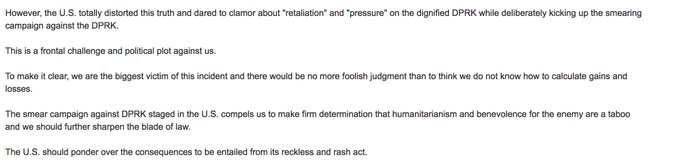
#DPRK foreign ministry says Otto Warmbier was a criminal and it’s America’s fault he died.

end
b) REPORT ON JAPAN
c) REPORT ON CHINA
4. EUROPEAN AFFAIRS
5. RUSSIAN AND MIDDLE EASTERN AFFAIRS
Quite an ultimatum. These terms will certainly not be met. Will the Gulf states cause a regime change? Oust el Thani?
grab your popcorn on this one
(courtesy zero hedge)
Arab States Issue 13-Point Ultimatum To Qatar: Cut Ties With Iran, Close Al-Jazeera, Shutter Turkish Base
By ZeroPointNow, originally published at iBankCoin
Two days after a confused US State Department formally inquired about what is going on between Arab States and Qatar, the countries of Egypt, Saudi Arabia, Baahrain, and the UAE sent a list of 13 demands to the tiny Gulf nation to be met within 10 days in order to lift their total blockade of the country.
Among them – reducing diplomatic relations with Iran, shutting down broadcaster Al Jazeera (and affiliates), and immediately cease working to open a Turkish military base announced in May of 2016 and halt military co-operation with Ankara. Also interesting is the demand that Qatar give up their intel on terrorist groups they have supported and “provide all databases related to oppositionists…” (Scroll down for full list of demands)
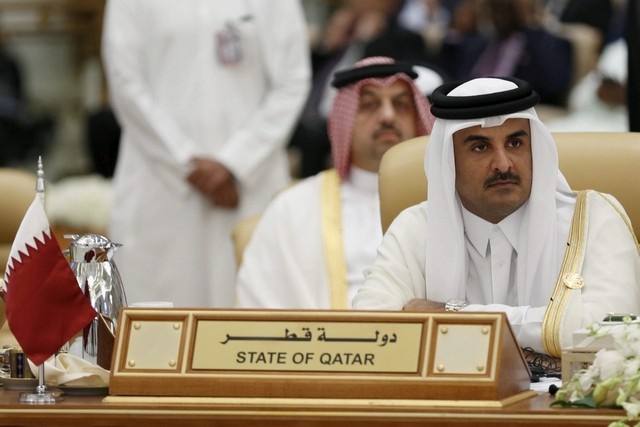
This formal list comes on the heels of a June 6th rumor that Arab States issued a list of 10 demands to be fulfilled within 24 hours, however Qatar said they never received them according to Al Jazeera journalists who are now dusting off their resumes.
The list of demands encompasses other accusations that have already been denied by Qatari officials, raising the prospect of deadlock in the worst crisis to hit the Gulf in decades. Qatar’s foreign minister previously said any demand to close Al Jazeera would be rejected, describing the channel as an “internal affair” linked to Qatar’s sovereignty that should not be the subject of external interference. Arab states have long complained that Al Jazeera’s Arabic language channel is a propaganda tool that stokes tensions in the region. Al Jazeera insists it has editorial independence
The list specifies that Doha sever ties to radical jihadist groups such as Isis, al-Qaeda and its branch in Syria, as well as Lebanon’s Shia group Hizbollah. Qatar, the world’s top exporter of liquefied natural gas, admits that it supports Islamist groups, but denies backing or financing terrorism.
“These requirements must be met within 10 days from the date of delivery or they will be considered void,” the Arab states said in their list of demands. Their document added that compliance would be heavily monitored — once a month for the first year, every three months the second year and once a year for 10 years after that.
Embargo
On June 5th, news broke that Bahrain, the UAE, Saudi Arabia, and Egypt had cut off diplomatic ties with Qatar over accusations of ‘spreading chaos’ by ‘funding terrorism and supporting Iran’ – shutting down all land, sea, and air crossings with the tiny energy-rich nation that has the highest per capita income in the world. Qatari visitors and residents were given two weeks to leave – while diplomats had just 48 hours.
While Qatar has been friendly with Iran for years, the prelude to the embargo began after a broadcast which showed Qatari Emir Tamim bin Hamad Al Thani speaking with no audio – and scrolling text at the bottom of the screen which stated his support for Iran and terrorist groups. Qatar claims the broadcast was ‘hacked.’
After the broadcast, Saudi Arabia and the UAE blocked Qatari news organization Al-Jazeera.
Amid Qatar’s denials, Saudi-owned satellite television networks immediately began airing repeated stories about the disputed comments. By early Wednesday morning, those living in the UAE and subscribers to local cable providers couldn’t access the channels of Al-Jazeera, the pan-Arab satellite broadcaster based in the Qatari capital, Doha.
Attempts to reach its websites brought up a warning from the UAE’s Telecommunications Regulatory Authority saying the site “contains content that is prohibited.”
In Saudi Arabia, internet users also found Al-Jazeera websites blocked with a warning from the kingdom’s Culture and Information Ministry.
–WaPo
Full List of demands (translated by @hxhassan)
- Qatar must reduce diplomatic representation with Iran
- Qatar must immediately shut down the Turkish military base that is being established
- Qatar must announce severance of ties with terrorist, ideological & sectarian orgs: MB, ISIS, AQ, HTS, Hizbollah
- Qatar must cease any funding activities to extremist and terrorist individuals
- Qatar must hand over all designated terrorists
- Qatar must shut down Al Jazeera and all affiliated channels
- Qatar must stop interference in these countries’ domestic and foreign affairs; stop naturalisation of their citizens; extradite such citizens
- Qatar must provide reparations to these countries for any opportunity costs incurred over the past few years because of Qatari policies. (How do they even begin to comply with this in 10 days?)
- Qatar must become in sync with its Gulf and Arab neighbourhood on all levels, and to activate Riyadh Agreement 2013/2014
- Qatar must provide all databases related to oppositionists that it provided support to & clarify what help was provided.
- Qatar must all media outlets backed by it directly or indirectly, like Arabi21, Rasd, New Arab, Middle East Eye, Mkamlin, Sharq etc
- These demands must be agreed within 10 days, otherwise they would be invalidated.
- Agreement will involve clear goals and mechanism, monthly reports in the first year, every three months the next & annually for 10 years
If these demands are not met, and they likely won’t be – it may only be a matter of time before Qatar catches a case of regime change now that the Saudi alliance will have a “pretext” demonstrating Qatari non-compliance with a “goodwill” offer.
end
6 .GLOBAL ISSUES
7. OIL ISSUES
Northeast Colonial Pipeline, the largest USS fuel pipeline system has stated that gasoline demand is crashing
(courtesy zero hedge)
Largest East Coast Pipeline Reveals Demand For Gasoline Is Crashing
There’s a reason this week’s EIA survey showing gasoline and oil supplies declining has failed to stop RBOB prices from collapsing to 7-month lows: The start of the summer has done nothing to revive sluggish demand. That’s because despite what the EIA survey said, little has been done to reduce record fuel inventories.
The squeeze has gotten so bad, Northeast Colonial Pipeline Co., the operator of the biggest US fuel pipeline system, said that demand to transport gasoline to the country’s populous northeast is the weakest in six years, the latest symptom of a global oil market grappling with oversupply. It’s notable that this peak has arrived despite the advent of the summer driving season, which has seen gasoline demand pull back from last year’s record highs, according to Reuters.
Because of the oversupply in the northeast, “line space”… the cost of renting “space” on the pipeline to assure one’s ability to get supplies of gasoline when necessary… has gone negative, according to Reuters. What can be more exemplary of excess inventories and of reduced demand for gasoline than this?
Refiners are in part to blame for the problem – they have continued to pump motor fuel at record levels for the second year in a row, worsening the oversupply problem, for fear of losing access to pipeline capacity.

More broadly, attempts by large producers to reduce global supplies have failed to meaningfully raise the price of oil. And with good reason: Traders have been skeptical of an agreement between OPEC and non-OPEC producers, including Russia, to extend last year’s supply cut, and already they’re concerns are being validated: Iraq has said it plans to increase production later this year despite the agreement.
The existence of negative capacity is a reversal of the typical dynamic, where refiners are forced to supplement their deliveries with tanker shipments or imports.
“The only reason [the pipelines] wouldn’t be full is clearly that inventory levels are high enough that there is no incentive to move product to New York,” said Sandy Fielder, director of oil and products research, Morningstar in Austin, Texas.
“The situation is quite unusual,” he said.
Even when high inventories make it unprofitable to do so, refiners typically keep pumping full volumes just to ensure they keep their rights to the line space, said Fielden.

But it appears as if refiners have finally reached the point where the financial pain outweighs the necessity of keepig their lease on some pipeline space – after all, Colonial has capacity to spare right now.
“It’s purely economic – why ship into a negative arb(itrage) for that long,” one trader said.
Colonial connects Gulf Coast refineries with markets across the southern and eastern United States through more than 5,500 miles (8,850 km) of pipelines, delivering gasoline, diesel, jet fuel and other refined products. Colonial indicated it did not expect demand to exceed capacity for the next five-day cycle through the line, and informed shippers it would therefore not follow the typical process for rationing space.

Oil traders who insist on staying long can hold out hope that production shutdowns related to Tropical Storm Cindy could lift the price of oil for a short period. It’s also worth noting that Dennis Gartman, who recently said oil wouldn’t rise above $44 a barrel again in his lifetime, just turned bullish folllowing a wave of downgrades from energy analyst. That could be good news…or maybe not.
While the cause of the supply is obvious, whatever has caused demand to fall off is less clear. Barclays has suggested that President Donald Trump’s immigrant crackdown has made millions of illegal immigrants living in the US afraid to get behind the wheel for fear of being detained and deported. If this is true, that means Trump is to thank for gasoline prices falling to their lowest levels since February, despite the start of the summer driving season?
END
US Oil Rig Count Rises For 23rd Straight Week But High Costs Drive Investors Out Of The Permian
The number of oil rigs in America has now risen for 23 straight weeks (and 50 of the last 52 weeks), up 11 to 758 in the last week – the highest since April 2015.
“It’s becoming bearish mania,” said Phil Flynn, senior market analyst at Price Futures Group Inc. in Chicago. “If we keep going down, we’re not going to be adding rigs in a few months, we’re not going to be adding production”
And we suspect, given the lagged reaction to prices, that inflection point in rig counts is close…

And the last chance for the week for the bulls just left…

US crude production (in the Lower 48) has been on a tear (with one brief interruption) tracking the lagged rise in rig counts almost perfectly…

And the rising rig count has been driven mainly by The Permian…

But as Oil & Gas 360 notes, high acreage costs beginning to affect economics in the Delaware, driving investors away from The Permian.
The Permian has enjoyed a rush of capital since oil prices began to recover from a low of $26.21 in February of last year.
The play is home to some of the best economics in the country, making it a prime target for E&P companies looking to maximize profit in a lower price environment. But the surge in land costs is leaving little room for new investors to profit.
The Delaware basin, the Permian’s hottest zone, is beginning to become a victim of its own success. EnerCom Analytics’ well economic models indicate that the internal rates of return (IRRs) in the Delaware are now lower than those seen in the Midland due to the high cost of land.
At $45 WTI, EnerCom’s well economics models show IRRs in the Midland of 22.8 percent compared to 21.5 percent in the Delaware when acreage costs are included in the equation. The cost per-acre in the Delaware is 65 percent higher than in the Midland at an average of $33,000 per acre.

(Click to enlarge)
Economics in every basin are expected to see pressure as oil prices remain in the low- to mid-$40 range and oilfield service providers, who are in high demand for well completions and drilling, look to increase their prices. Combined with the high premiums in the Permian, this barrage of pressuring factors is making it more difficult for new investors to enter the play, and those with exposure are beginning to pull back.
Service costs are expected to increase between 10 percent and 15 percent, according to EnerCom Analytics, with some E&P companies saying they could increase as much as 20 percent. In EnerCom’s March Energy Industry Data & Trends, the firm found that most basins could absorb even the high-end of those estimates at $50 per barrel WTI, but with prices floating around $45 per barrel, it will be much more difficult for E&Ps to continue generating 20 percent IRRs or better.

(Click to enlarge)
Based on EnerCom’s models, only the Midland could handle more than a 10 percent increase in service costs at $45 per barrel with the high per-acreage cost of the Delaware pushing the play’s IRRs beneath the 20 percent IRR threshold.
Eight hedge funds have reduced the size of their positions in ten shale firms with exposure to the Permian by over $400 million, according to information from Reuters. The value of these funds’ positions in the 10 Permian companies declined by 14 percent, to $2.66 billion in the first quarter 2017 from $3.08 billion in the fourth quarter of 2016.
Less room to run
Investors continue to give Permian players a premium multiple compared to companies in other parts of the country, but some firms are beginning to worry operations in the region do not merit the higher valuations.
Concern about inflated land costs and weakness in oil prices has some firms worried Permian players may not fly much higher. The 10 companies examined by Reuters were down 18 percent already this year compared to a 13 percent decrease in the S&P 500 energy sector.
EnerCom’s analysis of a peer group of Permian pure-play companies found the companies were struggling more than the Reuters information indicated. Looking at the performance of seven Permian players compared to the XOI index, companies with operations in the region were underperforming the wider energy index in all cases.
The XOI is down 12 percent YTD while the seven Permian companies averaged a loss of 34 percent so far in 2017. WTI is down 15 percent over the same time period.
8. EMERGING MARKET
end
Your early morning currency/gold and silver pricing/Asian and European bourse movements/ and interest rate settings FRIDAY morning 7:00 am
Euro/USA 1.1166 UP .0017/REACTING TO + huge Deutsche bank problems + USA election:/TRUMP HEALTH CARE DEFEAT//ITALIAN REFERENDUM DEFEAT/AND NOW ECB TAPERING BOND PURCHASES/ /USA RAISING INTEREST RATES AGAIN/EUROPE BOURSES ALL IN THE RED
USA/JAPAN YEN 111.22 DOWN 0.077(Abe’s new negative interest rate (NIRP), a total DISASTER/SIGNALS U TURN WITH INCREASED NEGATIVITY IN NIRP/JAPAN OUT OF WEAPONS TO FIGHT ECONOMIC DISASTER/KURODA: HELICOPTER MONEY ON THE TABLE AND DECISION ON SEPT 21 DISAPPOINTS WITH STIMULUS/OPERATION REVERSE TWIST
GBP/USA 1.2734 UP .0058 (Brexit March 29/ 2017/ARTICLE 50 SIGNED
THERESA MAY FORMS A NEW GOVERNMENT/STARTS BREXIT TALKS
USA/CAN 1.3234 UP .0003 (CANADA WORRIED ABOUT TRADE WITH THE USA WITH TRUMP ELECTION/ITALIAN EXIT AND GREXIT FROM EU/TRUMP INITIATES LUMBER TARIFFS ON CANADA)
Early THIS FRIDAY morning in Europe, the Euro FELL by 4 basis points, trading now ABOVE the important 1.08 level FALLING to 1.1163; Europe is still reacting to Gr Britain HARD BREXIT,deflation, announcements of massive stimulation (QE), a proxy middle east war, and the ramifications of a default at the Austrian Hypo bank, an imminent default of Greece, Glencore, Nysmark and the Ukraine, along with rising peripheral bond yield further stimulation as the EU is moving more into NIRP, and now the Italian referendum defeat AND NOW THE ECB TAPERING OF ITS PURCHASES/ THE USA’S NON tightening by FAILING TO RAISE THEIR INTEREST RATE AND NOW THE HUGE PROBLEMS FACING TOO BIG TO FAIL DEUTSCHE BANK + THE ELECTION OF TRUMP IN THE USA+ TRUMP HEALTH CARE BILL DEFEAT AND MONTE DEI PASCHI NATIONALIZATION / Last night the Shanghai composite CLOSED UP 10.42 POINTS OR 0.33% / Hang Sang CLOSED DOWN 4.48 POINTS OR 0.02% /AUSTRALIA CLOSED UP 0.21% / EUROPEAN BOURSES OPENED ALL IN THE RED
We are seeing that the 3 major global carry trades are being unwound. The BIGGY is the first one;
1. the total dollar global short is 9 trillion USA and as such we are now witnessing a sea of red blood on the streets as derivatives blow up with the massive rise in the rise in the dollar against all paper currencies and especially with the fall of the yuan carry trade. The emerging market which house close to 50% of the 9 trillion dollar short is feeling the massive pain as their debt is quite unmanageable.
2, the Nikkei average vs gold carry trade ( NIKKEI blowing up and the yen carry trade HAS BLOWN up/and now NIRP)
3. Short Swiss franc/long assets blew up ( Eastern European housing/Nikkei etc.
These massive carry trades are terribly offside as they are being unwound. It is causing global deflation ( we are at debt saturation already) as the world reacts to lack of demand and a scarcity of debt collateral. Bourses around the globe are reacting in kind to these events as well as the potential for a GREXIT>
The NIKKEI: this FRIDAY morning CLOSED UP 22.16 POINTS OR 0.11%
Trading from Europe and Asia:
1. Europe stocks OPENED ALL IN THE RED
2/ CHINESE BOURSES / : Hang Sang CLOSED DOWN 4,48 POINTS OR 0.02% / SHANGHAI CLOSED UP 10.42 POINTS OR 0.33% /Australia BOURSE CLOSED UP 0.21% /Nikkei (Japan)CLOSED UP 22.16 POINTS OR 0.11% / INDIA’S SENSEX IN THE RED
Gold very early morning trading: 1256.90
silver:$16.74
Early FRIDAY morning USA 10 year bond yield: 2.158% !!! UP 1 IN POINTS from THURSDAY night in basis points and it is trading JUST BELOW resistance at 2.27-2.32%.
The 30 yr bond yield 2.729, UP 1 IN BASIS POINTS from THURSDAY night.
USA dollar index early FRIDAY morning: 97.42 DOWN 18 CENT(S) from THURSDAY’s close.
This ends early morning numbers FRIDAY MORNING
xxxxxxxxxxxxxxxxxxxxxxxxxxxxxxxxxxxxxxxxxxxxxxxxxxxxxxxxxxxxxxxxxxxxxxxxxxxxxxxxxxxxxxxxxxxxxxxxxxxxxxxxxxxxxxx
And now your closing FRIDAY NUMBERS
Portuguese 10 year bond yield: 2.924% DOWN 3 in basis point(s) yield from THURSDAY
JAPANESE BOND YIELD: +.057% DOWN 1/10 in basis point yield from THURSDAY/JAPAN losing control of its yield curve
SPANISH 10 YR BOND YIELD: 1.381% DOWN 1/ 2 IN basis point yield from THURSDAY (this is totally nuts!!/
ITALIAN 10 YR BOND YIELD: 1.916 UP 1 POINTS in basis point yield from THURSDAY
the Italian 10 yr bond yield is trading 54 points HIGHER than Spain.
GERMAN 10 YR BOND YIELD: +.255% UP 3/10 IN BASIS POINTS ON THE DAY
END
xxxxxxxxxxxxxxxxxxxxxxxxxxxxxxxxxxxxxxxxxxxxxxxxxxxxxxxxxxxxxxxxxxxxxxxxxxxxxxxxxxxxxxxxxxxxxxxxxxxxxxxxxxxxxxxxxxxxxxxxxxxxxxxxxxxxx
IMPORTANT CURRENCY CLOSES FOR FRIDAY
Closing currency crosses for FRIDAY night/USA DOLLAR INDEX/USA 10 YR BOND YIELD/1:00 PM
Euro/USA 1.1196 UP .0047 (Euro UP 47 Basis points/ represents to DRAGHI A COMPLETE POLICY FAILURE/
USA/Japan: 111.25 DOWN 0.044 (Yen UP 5 basis points/
Great Britain/USA 1.2728 UP 0.0050( POUND DOWN 50 basis points)
USA/Canada 1.3268 UP .0037 (Canadian dollar DOWN 37 basis points AS OIL ROSE TO $43.04
xxxxxxxxxxxxxxxxxxxxxxxxxxxxxxxxxxxxxxxxxxxxxxxxxxxxxxxxxxxxxxxxxxxxxxxxxxxxxxxx
This afternoon, the Euro was UP by 47 basis points to trade at 1.1196
The Yen FELL to 111.25 for a GAIN of 5 Basis points as NIRP is STILL a big failure for the Japanese central bank/HELICOPTER MONEY IS NOW DELAYED/BANK OF JAPAN NOW WORRIED AS AS THEY ARE RUNNING OUT OF BONDS TO BUY AS BOND YIELDS RISE /OPERATION REVERSE TWIST ANNOUNCED SEPT 21.2016
The POUND ROSE BY 50 basis points, trading at 1.2728/
The Canadian dollar FELL by 37 basis points to 1.3225, WITH WTI OIL RISING TO : $43.04
Your closing 10 yr USA bond yield DOWN 1/2 IN basis points from THURSDAY at 2.151% //trading well ABOVE the resistance level of 2.27-2.32%) very problematic USA 30 yr bond yield: 2.721 DOWN 7/10 in basis points on the day /
Your closing USA dollar index, 97.25 DOWN 35 CENT(S) ON THE DAY/1.00 PM
Your closing bourses for Europe and the Dow along with the USA dollar index closing and interest rates for FRIDAY: 1:00 PM EST
London: CLOSED DOWN 15.16 POINTS OR 0.20%
German Dax :CLOSED DOWN 60.59 POINTS OR 0.47%
Paris Cac CLOSED DOWN 15.81 POINTS OR 0.30%
Spain IBEX CLOSED DOWN 79.10 POINTS OR 0.74%
Italian MIB: CLOSED DOWN 96.38 POINTS/OR 0.46%
The Dow closed DOWN 2.53 OR 0.01%
NASDAQ WAS closed UP 28.57 POINTS OR 0.46% 4.00 PM EST
WTI Oil price; 43.04 at 1:00 pm;
Brent Oil: 45.55 1:00 EST
USA /RUSSIAN ROUBLE CROSS: 59.37 UP 62/100 ROUBLES/DOLLAR
TODAY THE GERMAN YIELD FALLS TO +0.255% FOR THE 10 YR BOND 4.PM EST EST
END
This ends the stock indices, oil price, currency crosses and interest rate closes for today
Closing Price for Oil, 5 pm/and 10 year USA interest rate:
WTI CRUDE OIL PRICE 5:00 PM:$43.10
BRENT: $45.65
USA 10 YR BOND YIELD: 2.142% (ANYTHING HIGHER THAN 2.70% BLOWS UP THE GLOBE)
USA 30 YR BOND YIELD: 2.715%
EURO/USA DOLLAR CROSS: 1.1195 UP .0047
USA/JAPANESE YEN:111.28 DOWN 0.010
USA DOLLAR INDEX: 97.27 DOWN 32 cent(s) ( HUGE resistance at 101.80 broken TO THE DOWNSIDE)
The British pound at 5 pm: Great Britain Pound/USA: 1.2720 : UP 43 POINTS FROM last NIGHT
Canadian dollar: 1.3267 DOWN 36 BASIS pts
German 10 yr bond yield at 5 pm: +0.255%
END
And now your more important USA stories which will influence the price of gold/silver
TRADING IN GRAPH FORM FOR THE DAY
Banks Battered, Biotechs Best As Yield Curve Crashes To 10-Year Lows
Tech investors the last 2 days…
Lots of chatter again this week about shrinking The Fed’s balance sheet… it’s gonna happen no matter what and it is looming…

so The fed will be shrinking at $20-50bn a month going forward, will The ECB or BOJ step up and increase their buying to keep the ignorant dream alive?

For now, it appears not – this week saw G-3 Central Bank Balance Sheets drop the most in 2017…

Which perhaps explains why the dip-buyers were absent in the banks – the Big 4 Banks all suffered post-CCAR and all but JPM had a tough week… (Financials had their worst week in the last 10)

On the week, investors panicced back into Tech stocks (Nasdaq’s 3rd best week of the year)… Trannies ended the week red, Dow down 4 days in a row (to end the week unchanged), S&P managed to close green today to break its losing streak

Driven by a collapse back to a 9 handle in VIX, S&P was pumped green for the day/week… (despite a small rise into the close, VIX remains below last Friday Quad-Witch close)

Dow down 4 days in a row as they just could not rescue it all the way today…

But we note that Nasdaq remains well below the FANG Crash levels…

Healthcare (Biotechs) and Tech (FANGs) were the only sectors green this week as Energy lagged (and financials flondered)…

Today saw a surge back into FANG stocks (retracing 75% of the Tech-Wreck drop) but the slightly broaders FANTASIA (FB, AMZN, NFLX, TSLA, GOOGL, CRM, INTL, AAPL) started to rol over after tagging the Fib 61.8% retracement of the tech wreck

This was the biggest 2-day short squeeze in over 4 months…

And “Growth” dramatically outperformed “Value” this week…

Biotech stocks dropped very modestly today but spiked 9% on the week to 17 month highs – the best week since the election…

As Biotechs ripped, bank stocks slipped on a collapsing yield curve and loss of hope after CCAR…

30Y Yields dropped notably this week – (to 2.70% – the lowest since Nov 9th) as the short-end rose modestly…

The US Treasury yield curve slumps for the 6th straight week (longest streak since March 2016) to its lowest weekly close since 2007…

The Dollar Index ended the week modestly higher but closed down for the last 3 days…

Gold managed to eke out a small gain on the week, rallying for the last 3 days back above its 100- and 200-day moving averages…

Gold and Silver danced around each other to end with the same small gains…

Of course, the week was also headlined by the bloodbath in black gold… This is the 5th weekly drop in a row (the longest losing streak since Aug 2015); RBOB also fell for the 5th week in a row to lowest close since Nov 2016

A quiet week for macro data but both soft and hard data hit new cycle lows…

NASDAQ rallied on fun-durr-mentals…

Bonus Chart: Nothing bad happens anymore.. since BAML’s Global Financial Stress Index has collapsed to 3-year lows… however, judging by China’s leading credit impulse, things are about to get exciting…

end
Moody’s has come out with a great report suggesting that a slight downfall (5% in one yr) could cause a surge of 3 Trillion in additional pension liabilities
(courtesy zero hedge)
Moody’s: Modest Downside Could Spark $3 Trillion Surge In Pension Liabilities
Some very simplistic math from Moody’s helps to shed some light on just how inevitable a public pension crisis is in the United States. Analyzing a basket of 56 public plans with net liabilities of $778 billion, Moody’s found that just a modest downside return scenario over the next three years (2017: +7.2%, 2018: -5.0%, 2019: 0%) would result in a 59% surge in new unfunded liabilities. Moreover, given that total unfunded public pension liabilities are roughly $5 trillion in aggregate, this implies that a simple 5% drop in assets in 2018 could trigger a devastating ~$3 trillion increase in net liabilities.
Meanwhile, Moody’s found that even if the funds return 19% over the next three years then net liabilities would still increase by 15%. Per Pensions & Investments:
In its report, Moody’s ran a sample of 56 plans with $778 billion in aggregate reported net pension liabilities through three different investment return scenarios. Due to reporting lags, most 2019 pension results appear in governments’ 2020 financial reporting, Moody’s noted. The plans had $1.977 trillion in trillion assets.
Under the first scenario with a cumulative investment return of 25% for 2017-’19, aggregate net pension liabilities for the 56 plans fell by just 1%. Under the second scenario with a cumulative investment return of 19% for 2017-2019, net pension liabilities rose by 15%. Under the third scenario with a 7.2% return in 2017, -5% return in 2018 and zero return in 2019, net pension liabilities rose by 59%.
In 2016, the 56 plans returned roughly 1% on average and would have needed collective returns of 10.7% to prevent reported net pension liabilities from growing.
Of course, as we pointed out before, the problem is that the pending doom surrounding these massive public pension obligations often get clouded over by complicated actuarial math with a plan’s funded status heavily influenced by discount rates applied to future liability streams. Translation, they can “kick the can down the road” for a very long time before having to actually admit there’s a problem.
Take Chicago’s largest pension fund, the Municipal Employees Annuity and Benefit Fund of Chicago (MEABF), as an example. Most people focus on a funds ‘net funded status’, which for the MEABF is a paltry 20.3%. But the problem with focusing on ‘funded status’ is that it can be easily manipulated by pension administrators who get to simply pick the rate at which they discount future liabilities out of thin air.

So, rather than lend any credence to some made up pension math, we prefer to focus on actual pension cash flows which can’t be manipulated quite so easily.
And a quick look at MEABF’s cash flows quickly reveals the ponzi-ish nature of the fund. In both 2015 and 2014, the fund didn’t even come close to generating enough cash flow from investment returns and contributions to cover it’s $800mm in annual benefit payments…which basically means they’re slowing liquidating assets to pay out liabilities.

Of course, like all ponzi schemes, liquidating assets to pay current claims can only go on for so long before you simply run out of assets.
So we decided, as Moody’s did above, to take a look at the impact of a couple of return scenarios. But, rather than looking at “funding status” which can be maniupulated to say pretty much whatever pension administrators want, we focused on calculating when Chicago’s largest pension fund would actually run out of money.
On the expense side, annual benefit payments are currently just over $800 million and are growing at a fairly consistent pace due to an increasing number of retirees and inflation adjustments guaranteed to workers. Assuming payouts continue to grow at the same pace observed over the past 15 years, the fund will be making annual cash payments to retirees of around $1.3 billion by 2023.

Investment returns, on the other hand, are much more volatile but have averaged 5.5% over the past 15 years. That said, the fund took big hits in 2002 (-9.3%) and 2008 (-27.1%) following the dotcom and housing bubble crashes.
And while we hate to be pessimistic, lets just take a look at what happens if, by some small chance, today’s market gets exposed as a massive bubble and we have another big correction in 2018.
Such a correction would force the fund to liquidate over $1.5 billion in assets in 2018 alone….

….and the system would run out of cash completely within 4 years.

The risk associated with America’s pension ponzi schemes have largely been overlooked by investors to date because so long as they can meet annual benefit payments then plan administrators can just continue to ‘kick the can down the road’ and pretend that nothing is wrong.
Of course, that strategy ceases to work when the pensions actually run out of cash…which could happen sooner than you think…and when it does, America’s retirees will suddenly find themselves about $5-8 trillion poorer than they thought they were.
end
Cheerleader Bank of American has finally thrown in the towel on 2017 and 2018. It’s forecast for all of 2017: just 2.1%
(courtesy zero hedge)
“The Hope Trade” Is Over: BofA Slashes Its 2017 GDP Forecast To Just 2.1%
First they came for the Trump Trade… then they came for the hope. And, as a result, BofA has thrown in the towel on its economic rebound for this year.
As BofA’s Michelle Meyer writes, “Hopes for a big fiscal stimulus have faded, prompting us to revise our 2018 GDP growth forecast to 2.1%, down from 2.5%. While growth will be slower, it is important to remember that the economy does not “need” stimulus to expand.” Unless it does of course, because as Citi showed recently, all central bank liquidity injections are fungible, and prop up not only stocks but also economies.
In any case, here is BofA’s explanation why it, like the rest of Wall Street not to mention the Fed, were all wrong.
Revising 2018
Back in November when we released our Year Ahead piece, we argued that growth would be a trend-like 2% this year but would rise to 2.5% next year amid fiscal stimulus. We feel generally comfortable with our forecast for this year but now believe growth will end up being slower next year. We are therefore revising our forecast to 2.1% for 2018, implying that the economy will continue to grow modestly above trend .

The hope trade
There are three main reasons for our downward revision to growth next year:
- The prospects of tax reform have dimmed. While it is still possible that legislation is passed, it seems that it would be later and smaller than previously speculated.
- Policy uncertainty is high and threatens to remain elevated into next year given tensions in Washington and controversies in the Trump administration. This has contributed to a “wait and see” mode among businesses and consumers.
- The auto sector is shifting from a tailwind to a headwind next year. This means that auto output should go from adding a few tenths to annual GDP growth to slicing a tenth or two.
Keep in mind that our downward revision in growth next year simply returns our forecast to the post-recession average of 2.1%. The US does not need fiscal easing to enjoy slightly above-trend growth. There are plenty of reasons to feel confident that the expansion will persist into 2018 without stimulus. The labor market is still adding workers in excess of what is necessary to keep up with population growth. The housing recovery is slow but steady. Financial conditions are supportive with low rates, recent softening in the dollar and appreciating equity markets. Household balance sheets appear robust with strong gains in net worth and low leverage.
Factor 1: where is the fiscal stimulus?
After the US presidential election expectations were high that President Trump and the Republican-controlled Congress would enact fiscal stimulus involving tax reform and, possibly, infrastructure spending. We therefore penciled into our forecasts tax reform (akin to the Better Way proposal (Ryan plan)) and some small amount of infrastructure spending. We estimated that this would add roughly 0.5pp to annualized GDP growth.
The path ahead for tax reform is challenging. We are halfway through the year and there has been little tangible progress made on tax reform. As Joe Song writes in Fiscal foibles, Congress is tied up with healthcare reform, negotiations around the debt ceiling and the budget. The likelihood of progress this year appears to be declining, especially for comprehensive reform of the tax system. As such, we think that we either see no legislation passed or a much simpler and smaller plan.
Factor 2: Waiting and seeing
While business and consumer confidence climbed higher after the election, it was accompanied by greater policy uncertainty. This seems like a natural contradiction – how can you be more confident about the outlook when you are also more uncertain? The result is to delay investments or spending until there is clarity on potential changes. Recent surveys suggest this is the case. The Duke CFO Business Outlook Survey from June 9th revealed that almost 40% of CFOs indicated that uncertainty is higher than normal and of those, 60% said that this uncertainty has caused them to delay new projects and investments. In other words – 1 out of every 4 companies are delaying or canceling investments.
We have recently seen a rationalization of these measures with sentiment slipping lower, particularly among consumers (Chart 2). The most recent University of Michigan consumer sentiment report was particularly notable, highlighting how developments in Washington can influence confidence.
Factor 3: Auto sector pumping the breaks
Auto sales have been on a weak trend since the beginning of the year, leading John Murphy and team to revise down forecasts for sales and production. They now believe that auto sales and production peaked last year and will be on a downward trajectory over the next several years. As John notes, the concern rests in the “looming tsunami” of off-lease vehicle volumes that will flood supply in the used car market and provide competition for new vehicles. Moreover, the credit environment has become more challenging with auto delinquencies on the rise and the demand for auto loans declining while lenders tighten lending standards.
As we wrote back in April, trouble in the auto sector threatens to weigh on economic growth and inflation. While auto output has been a shrinking share of the economy, it is still an important sector with strong linkages to other parts of the economy. As a simple rule of thumb, we estimate that a slowdown of one million in the annual pace of auto sales slices 0.2pp from annualized GDP growth (Table 1). Since 2010, auto output has added an average 0.2pp to annual GDP growth. We think we could see a modest drag from the sector this year and perhaps a more severe hit next year.
The economy doesn’t “need” stimulus
While the economy would have received a jolt from fiscal stimulus, we do not believe that fiscal easing is a necessary condition for the recovery to persist. Rather, a large degree of fiscal stimulus at this stage of the business cycle would risk overheating the economy. The stock market is at a record high while the unemployment rate is hovering near record lows – stimulus could create undue pressure for both. This would put the Fed in a difficult position having to fight inflation at the risk of pushing the economy into recession.
The role of the Fed
The Fed has been savvy in its approach to handling the uncertainty around fiscal policy that followed the election. The majority of Fed officials did not alter forecasts to account for potential changes in fiscal policy. As such, the median expectation for GDP growth next year is 2.1% which has been the forecast (give or take a tenth) since the 2018 forecasts were first released in September 2015. The prospects of fiscal policy changed how Fed officials considered the balance of risks around the forecast, but it did not affect the modal forecast.
Our new forecast for 2018 is consistent with the Fed’s expectation. As such, even with our change in the outlook, we are holding to our view of a hike in December and three hikes next year. That said, we think the risks are clearly skewed toward a slower cycle, particularly next year. This has less to do with weaker growth and more to do with weaker inflation. As Alex Lin explains in his latest inflation write up, inflation has been weaker than expected and transitory shocks are only part of the disappointment, with risks skewed to the downside for inflation going forward. Moreover, there is a wide error band in forecasting Fed policy next year given the potential for a change in leadership. The bond market is pricing in less than 1 hike next year while the Fed dots imply 3 hikes. The truth will likely lie somewhere in between.
US PMIs Tumble To 9-Month Lows, Catching Down To Collapse In ‘Hard’ Data
Following disappointment from China last week, and Europe this morning, US PMIs (both manufacturing and services) dropped and disappointed as it appears the lagged impact of China’s slumping credit impulse are finally hitting the world’s economies.
With ‘hard’ data collapsing to 13 month lows, it is not surprising that ‘soft’ survey data is finally catching down with Manufacturing at 9-month lows.

Who could have seen this tumble in ‘soft’ data coming?
Commenting on the flash PMI data, Chris Williamson, Chief Business Economist at IHS Markit said:
“The economy ended the second quarter on a softer note. The June PMI surveys showed some pay-back after a strong May, indicating the second weakest expansion of business activity since last September.
“The average expansion seen in the second quarter is down on that seen in the first three months of the year, indicating a slowing in the underlying pace of economic growth. While official GDP data are expected to turn higher in the second quarter after an especially weak start to the year (our recent GDP tracker based on various official and survey data points to 3.0% growth), the relatively subdued PMI readings suggest there are some downside risks to the extent to which GDP will rebound.
“There are signs, however, that growth could pick up again: new orders showed the largest monthly rise since January, business optimism about the year ahead perked up and hiring remained encouragingly resilient. The survey is indicative of non-farm payroll growth of approximately 170,000.
“Average prices charged for goods and services meanwhile showed one of the largest rises in the past two years, pointing to improved pricing power amid healthy demand.”
So rising prices and tumbling growth – Stagflation looms once again.
Historical comparisons of the PMI against GDP indicates that the PMI is running at a level broadly consistent with the economy growing at a 0.4% quarterly rate (1.5% annualized) in the second quarter, or just over 2% once allowance is made for residual seasonality in the official GDP data.

Not exactly the “shockingly good numbers” that President Trump said we would see in Q2?
END
If there is one fellow to always follow it is David Stockman who never misses as to what is going on inside Washington
the following is a must see/read..
(courtesy David Stockman/Craig Wilson/Daily Reckoning)
Stockman Warns Of “Huge Air Pocket Between Wall Street Fantasy & Economic Reality”
Authord by Craig Wilson via The Daily Reckoning,
David Stockman joined Boom Bust to discuss the massive storm that is building and about to slam into Wall Street. During the discussion Stockman reveals what he believes is ahead for the stocks in the market and the economy.
The interview began with the Boom Bust host asking the acclaimed author about his concern surrounding a government shutdown. David Stockman began “we’re in the midst of the biggest political train wreck in modern history… There will be no governance in Washington. There will be no tax bill, stimulus or infrastructure.”
“We’re heading for an expiration of the debt ceiling and running out of cash that will create an enormous crisis by August or September. They’re not going to be able to cope with it.”
“I think the odds by the day are increasing that we’re going to have a government shutdown. Expect the mother of all debt ceiling crisis. The market is utterly unprepared and it really is the orange swan that is about ready to take Wall Street by surprise.”
When prompted about the potential shocks to the S&P 500 and the threats stocks face in a severe decline Stockman continued to offer his sobering analysis. The former Reagan cabinet member noted, “The market today is trading at 25 times S&P 500 earnings which were $100 a share in the period ending in March. That represents a tiny growth from $85 a share back in June 2007 – ten years ago. We’re about 1.2% over the last decade.”
“Why would you pay 25 times earnings for one percent growth after a tepid expansion of 100 months that’s near the end of its “sell by date?”
“We’re going to have a recession, likely sooner than later, and the market is dramatically overpriced. I would say sixteen times earnings given all the headwinds in the world and chaos in Washington.”
“The Fed is now finally going to begin to shrink its balance sheet and not just a little bit but by $2 trillion over the next two or three years. With all of that staring us in the face, the market is barely worth 1,600… There is a huge air pocket between the huge fantasy that prevails on Wall Street and the reality of the economic world.”
Deep State and the Stocks on Wall Street
When asked whether he still felt nothing would pass in Washington before 2018 Stockman stood firm. “I am sure they would like to pass something. They don’t have the votes. They don’t have the consensus.”

“Here we are and June is almost over. They haven’t even passed in the Senate yet a bill to repeal and replace Obamacare. If they do, it is totally incompatible with the House. They can’t get a Conference report before Labor Day, if ever.”
Speaking on the budgetary concerns awakening the halls of Washington, Stockman leveled, “They haven’t even started on the budget resolution for 2018. Without a budget resolution, there’s no tax bill because you need reconciliation to pass any tax bill at all.”
“The reason I saw a government shutdown is because the debt ceiling is now frozen at $19.8 trillion. They have $150 billion in cash. It is draining away by $2-$3 billion a day. They will be out of cash and there is no majority in the House or the Senate, for that matter, to pass a clean debt ceiling bill.”
Stockman left with a final warning for stocks noting that, “Without a clean bill, you’re having an enormous fight over what’s that quid-pro-quo to raise the debt ceiling. That will not end easily. It is likely to end in a complete breakdown like we saw in 2011.”
end
This is going to be great for the job market as 2,500 human cashiers are being replaced with digital kiosks
(courtesy zero hedge)
McDonalds Is Replacing 2,500 Human Cashiers With Digital Kiosks: Here Is Its Math
The stock market is luvin’ McDonalds stock, which has continued its recent relentless rise to all time highs, up 26% YTD, oblivious to the carnage among the broader restaurant and fast-food sector. There is a reason for Wall Street’s euphoria: the same one we discussed in January in “Dear Bernie, Meet the “Big Mac ATM” That Will Replace All Of Your $15 Per Hour Fast Food Workers.”

In a report released this week by Cowen’s Andrew Charles, the analyst calculates the jump in sales as a result of the company’s new Experience of the Future strategy which anticipates that digital ordering kiosks (shown above) will replace cashiers in at least 2,500 restaurants by the end of 2017 and another 3,000 over 2018. Cowen also cited plans for the restaurant chain to roll out mobile ordering across 14,000 U.S. locations by the end of 2017 (we did not show that particular math, but the logic was similarly compelling).
Here is a snapshot of the math that Cowen, likely in conjunction with management, used to come up with the cost-savings as McDonalds increasingly lays off more and more minimum wage workers and replaces them with “Big Mac ATMs”
MCD is cultivating a digital platform through mobile ordering and Experience of the Future (EOTF), an in-store technological overhaul most conspicuous through kiosk ordering and table delivery. Our analysis suggests efforts should bear fruit in 2018 with a combined 130 bps contribution to U.S. comps. We believe mobile ordering better supplements the drive-thru business where 70%+ of U.S. sales are transacted. In our view, MCD’s differentiation lies in the operational enhancements of mobile ordering that includes curbside pick-up of orders in order to not disrupt the drive-thru.
Below we show Cowen’s full math laying out why the restaurant chain’s client-facing fast food workers are now obsolete:
We are most excited for mobile ordering, Experience of the Future and the launch of fresh beef to help drive U.S. same store sales in 2018. We provide analysis for the latter three, which cumulatively we expect to contribute roughly 150 bps to U.S. same store sales in 2018, respectively. This gives us confidence to raise our 2018 U.S. same store sales forecast from 2% to 3%, in excess of Consensus Metrix’s 2.5%.
Experience of the Future Features Lower ROI Than Mobile Order, But Offers Greater Potential Longer Term
We are constructive on the use of guest facing technology for the restaurant industry. MCD’s longer-term U.S. story revolves around Experience of the Future (EOTF), a holistic operational and technological overhaul to the store base. MCD’s March 2017 investor meeting centered around the initiative with interactive displays. Perhaps the most conspicuous piece of Experience of the Future lies in digital kiosk ordering, which have seen success in International Lead Markets. Additionally, food ordered via the kiosk is delivered to the customer’s table. We believe EOTF better enhances the instore experience, which represents roughly 30% of domestic sales compared to mobile ordering, which allows customers to avoid leaving their cars.
Our ROI math suggests EOTF leads to a 9% cash/cash return in Year 1 in the 55% of domestic stores that do not require a store remodel, and 5% in the 45% of stores that require a remodel, which is a predecessor to implementing EOTF. Our math is premised on total costs of $150,000 for the Experience of the Future enhancement, and $700,000 of all-in costs when including EOTF as well as a store remodel. MCD has offered to pay 55% of the cost for Experience of the Future, in excess of the 40% the company contributed to the store remodel initiative beginning in 2010, for restaurants that commit to the program by the end of 2017.
McDonald’s targets a high-teens return on incrementally invested capital (ROIIC, or McSpeak for evaluating ROI), improving to the mid-20% range beginning in 2019. We believe EOTF’s ROI is captured over time as the sales lift does not dissolve as in the case of a traditional restaurant remodel. Rather, the lift should sustain as we expect consumers to increasingly embrace technological change. This is evidenced across concepts, such as Panera’s experience with 2.0, as well as McDonald’s own experience in Canada, where kiosks saw 12-13% sales mix in Year 1 and 27% in Year 2. We also note kiosk ordering will also likely lead to labor savings over time which should help boost ROIIC, but is unlikely for the foreseeable future.
In 2017, MCD expects to end the year with EOTF offered in 2,500 domestic locations from 500 at 2016-end. MCD targets the majority of domestic locations to feature EOTF by 2020, but has not given intermediary targets. The amount of stores adding EOTF depends on franchise reception to the initiative but we see positive indicators given our checks as well as the company’s disclosure that 90% of franchisees approved of the initiative after taking the same interactive tour that was given at the March 2017 investor day.
We estimate 3,000 locations to add EOTF in 2018, which should lead to a 70 bps contribution to U.S. same store sales assuming an even cadence of restaurants adding the initiative over the course of the year. Further we assume the mix of stores adding EOTF in 2018 reflects the mix of overall stores needed to add EOTF, or 55% of stores that already have a remodel while 45% require a store remodel. McDonald’s has previously announced plans to remodel 650 restaurants in 2017, which we expect will also add EOTF.


Summarizing all of the above: the workers you see in the photo below are now an endangered species.

end
What took them so long! Senate Judiciary Committee opens a probe into Loretta Lynch
(courtesy zero hedge)
Senate Judiciary Committee Opens Probe Into Loretta Lynch
As more Democrats have started to question why former Attorney General Loretta Lynch was never investigated for obstruction following a suspicious meeting with former President Bill Clinton, it appears the Senate Judiciary Committee has finally decided to act.
The Washington Times reported Friday that the committee has launched a formal investigation into Lynch’s attempts to shape the FBI’s probe into Hillary Clinton, and whether she mishandled classified information on her private email server.

According to the Times, the investigation has bipartisan support.
“Sen. Charles E. Grassley, chairman of the committee, said the investigation is bipartisan. The letter to Ms. Lynch is signed by ranking Democratic Sen. Dianne Feinstein and also by Sens. Lindsey Graham and Sheldon Whitehouse, the chairman and ranking member of the key investigative subcommittee.”
“Letters also went to Clinton campaign staffer Amanda Renteria and Leonard Benardo and Gail Scovell at the Open Society Foundations. Mr. Benardo was reportedly on an email chain from the then-head of the Democratic National Committee suggesting Ms. Lynch had given assurances to Ms. Renteria, the campaign staffer, that the Clinton probe wouldn’t “go too far.”
During testimony before the Senate Intelligence Committee, former FBI Director James Comey said his suspicions about Lynch’s cozy relationship with the Clintons prompted him to unilaterally announce the close of the Clinton investigation last summer. According to Comey, Lynch leaned on him to soften his language when discussing the investigation, asking him to refer to the probe as a “matter,” mirror language used by the campaign, instead of as “an investigation.”

Comey also said the suspicious meeting between Clinton and Lynch raised questions about her objectivity that could’ve compromised the bureau’s integrity.
LANKFORD: Then you made a comment earlier a the attorney general, the previous attorney general asking you about the investigation on the Clinton e-mails saying you were asked to not call it an investigation anymore. But call it a matter. You said that confused you. You can give us additional details on that?
COMEY: Well, it concerned me because we were at the point where we refused to confirm the existence as we typically do of an investigation for months. And was getting to a place where that looked silly because the campaigns we’re talking about interacting with the FBI in the course of our work. The Clinton campaign at the time was using all kinds of euphemisms, security matters, things like that for what was going on.
We were getting to a place where the attorney general and I were both going to testify and talk publicly about it I wanted to know was she going to authorize us to confirm we have an investigation. She said yes, don’t call it that, call it a matter. I said why would I do that? She said, just call it a matter. You look back in hindsight, if I looked back and said this isn’t a hill worth dying on so I just said the press is going to completely ignore it. That’s what happened when I said we opened a matter.
They all reported the FBI has an investigation open. So that concerned me because that language tracked the way the campaign was talking about the FBI’s work and that’s concerning.
LANKFORD: You gave impression that the campaign was somehow using the language as the FBI because you were handed the campaign language?
COMEY: I don’t know whether it was intentional or not but it gave the impression that the attorney general was looking to align the way we talked about our work with the way it was describing that. It was inaccurate. We had an investigation open for the federal bureau of investigation, we had an investigation open at the time. That gave me a queasy feeling.
So who was obstructing or trying to interfere there?
Comey said that this troubled him greatly and convinced him, “I have to step away from the department if we’re too close this case credibly.”
As former Speaker Newt Gingrich noted earlier this week, even California Sen. Dianne Feinstein – the ranking Democrat on the Judiciary Committee – had begun to wonder aloud why Lynch was being investigated. Gingrich said the absence of an investigation is a sign of Republican weakness.
“What’s amazingto me about the Republican passivity here is that Senator Dianne Feinstein, the ranking Democrat on the intelligence committee, said last week after Comey’s testimony ‘you know we really have to look into exactly what’s going on with Loretta lynch and with president Obama.’ Now I was waiting for one of the intel chairmen in the House and Senate to get up and say they’re opening a new investigation into exactly what Loretta lynch said to Comey.”
Now we wait to see if the house and, more importantly, the DOJ follow suit.
Let’s wrap up with week with this offering courtesy of the Greg hunter of USAWatchdog
(courtesy Greg Hunter/USAWatchdog)
Middle East Dog Fight, Economic Update Not Good, 6 Million Vote Illegally
on: 06/23/2017 by Greg Hunter

The Middle East had near dogfight aerial combat in the skies over Syria. The U.S. shot down a Syrian fighter jet and an Iranian drone. Russia immediately halted cooperation with the U.S. in Syria, and warned it would “intercept” any aircraft in areas it controlled. Russia also charged the U.S. that America was “supporting terrorists.” One former Obama Administration insider says, “The risk of a big war is rising.”
If you want to measure how well the economy is doing, you should take a look at the hard data and the soft data. The soft data shows the so-called “Trump Bump” has decidedly turned negative, and the hard data of the real economy has also taken a plunge. In the real world, the State of Illinois has joined the ranks of Puerto Rico for major money problems. The Illinois Comptroller says “The state can no longer function.” Illinois has no money to pay its bills or interest payments and for all intents and purposes is insolvent. Powerball has cut off Illinois from selling its lottery tickets because the state is dead broke. Many other states are going to be in the same shape as Illinois in the not-so-distant future.
Donald Trump had it right when he said if were not for the three to five million illegal votes, he would have won the popular vote in 2016. According to a new study by the nonpartisan group “Just Facts,” 5.7 million noncitizens “may have cast illegal votes.” Keep in mind, this does not take into account massive voter and election fraud in places like Detroit, where there were as many as 6 times more votes than registered voters.
Join Greg Hunter as he looks back at the week’s top stories in the Weekly News Wrap-Up.
Video Link
http://usawatchdog.com/middle-east-dog-fight- economic-update-not-good-6-million-vote-illegally/
end
We will see you MONDAY night
Have a wonderful weekend
Harvey.


 harveyorganblog.com
[…] JUNE 23/GOLD UP $7.60/SILVER UP 8 CENTS/ AMOUNT OF SILVER STANDING INCREASES (OR STANDS PAT) FOR 17 … […]
LikeLike