
GOLD: $1249.85 DOWN $2.55
Silver: $16.46 DOWN 9 cent(s)
Closing access prices:
Gold $1260.75
silver: $16.67
SHANGHAI GOLD FIX: FIRST FIX 10 15 PM EST (2:15 SHANGHAI LOCAL TIME)
SECOND FIX: 2:15 AM EST (6:15 SHANGHAI LOCAL TIME)
SHANGHAI FIRST GOLD FIX: $1254.41 DOLLARS PER OZ
NY PRICE OF GOLD AT EXACT SAME TIME: $1248.40
PREMIUM FIRST FIX: $6.01
xxxxxxxxxxxxxxxxxxxxxxxxxxxxxxxxxxxxxxxxxxxxxx
SECOND SHANGHAI GOLD FIX: $1252.10
NY GOLD PRICE AT THE EXACT SAME TIME: $1245.65
Premium of Shanghai 2nd fix/NY:$6.45
xxxxxxxxxxxxxxxxxxxxxxxxxxxxxxxxxxxxxxxxxxxxxxxxxxx
LONDON FIRST GOLD FIX: 5:30 am est $1245.40
NY PRICING AT THE EXACT SAME TIME: $1246.50 ???
LONDON SECOND GOLD FIX 10 AM: $1248.10
NY PRICING AT THE EXACT SAME TIME. $1248.15
For comex gold:
JULY/
NOTICES FILINGS TODAY FOR APRIL CONTRACT MONTH: 14 NOTICE(S) FOR 1400 OZ.
TOTAL NOTICES SO FAR: 171 FOR 17100 OZ (.5318 TONNES)
For silver:
JULY
21 NOTICES FILED TODAY FOR
105,000 OZ/
Total number of notices filed so far this month: 3170 for 15,850,000 oz
XXXXXXXXXXXXXXXXXXXXXXXXXXXXXX
WE HAVE NOW ENTERED OPTIONS EXPIRY WEEK:
COMEX OPTIONS EXPIRY: TONIGHT JULY 26.2017
LONDON BASED OPTIONS EXPIRY: JULY 31.2017 AT 11AM OR SO.
(OTC/LBMA CONTRACTS)
end
Let us have a look at the data for today
xxxxxxxxxxxxxxxxxxxxxxxxxxxxxxxxxxxxxxxxxxxxxxxxxxxxxxxxxxxxxxxxxxxxxxxxxx
In silver, the total open interest ROSE BY ONLY 279 contract(s) UP to 206,347 WITH THE RISE IN PRICE THAT SILVER TOOK WITH YESTERDAY’S TRADING (UP 10 CENT(S). YESTERDAY THE COMMERCIALS TRIED IN VAIN TO COVER BUT TO NO AVAIL. THE SPEC SHORTS ARE HEARING RUMOURS OF TROUBLE WITH DELIVERIES IN LONDON SO THEY TOO ARE TRYING TO GET OUT OF THEIR SHORTS. THE LONGS CONTINUE TO REMAIN STOIC AND ADD GENTLY TO THEIR LONG SIDE.
In ounces, the OI is still represented by just OVER 1 BILLION oz i.e. 1.03 BILLION TO BE EXACT or 148% of annual global silver production (ex Russia & ex China).
FOR THE NEW FRONT MAY MONTH/ THEY FILED: 21 NOTICE(S) FOR 105,000 OZ OF SILVER
In gold, the total comex gold SURPRISINGLY ROSE BY 4859 CONTRACTS DESPITE THE FALL IN THE PRICE OF GOLD ($2.10 with YESTERDAY’S TRADING). The total gold OI stands at 463,827 contracts. Surprisingly the liquidation in the front month has stopped as spec longs decided to foolishly take on the bankers on comex expiration week. The bankers mercilessly supplied all the necessary paper. The spec shorts continued to pile into the short side and thus the OI rise.
we had 14 notice(s) filed upon for 1400 oz of gold.
xxxxxxxxxxxxxxxxxxxxxxxxxxxxxxxxxxxxxxxxxxxxxxxxxxxxxxxxxxx
With respect to our two criminal funds, the GLD and the SLV:
GLD:
Today no changes in gold inventory/
Inventory rests tonight: 800.45 tonnes
IN THE LAST 9 DAYS: GLD SHEDS 37.05 TONNES YET GOLD IS HIGHER BY $31.55 . GO FIGURE!! GLD IS A MASSIVE FRAUD
SLV
Today: : WE HAD NO CHANGES IN SILVER INVENTORY TONIGHT DESPITE SILVER BEING DOWN 9 CENTS.
INVENTORY RESTS AT 343.812 MILLION OZ
end
.
First, here is an outline of what will be discussed tonight:
1. Today, we had the open interest in silver ROSE BY 279 contracts UP TO 206,347 (AND now A LITTLE CLOSER TO THE NEW COMEX RECORD SET ON FRIDAY/APRIL 21/2017 AT 234,787). THE RISE IN OPEN INTEREST WAS ACCOMPANIED BY THE RISE IN SILVER PRICE WITH RESPECT TO YESTERDAY’S TRADING (UP 10 CENTS ). NO DOUBT WE WITNESSED MORE SPEC LONGS ENTER THE ARENA WITH THE REMAINDER OF THE SPEC LONGS BASICALLY REMAINING STOIC. THE SPEC LONGS SEEM TO BE TAKING ON THE BANKERS. THE NEWBIE SPEC SHORTS AND BANKER SHORTS (AS WE WITNESSED IN THE COT REPORT LAST FRIDAY) ARE LOATHE TO SUPPLY NEW PAPER AS THEY ARE TRAPPED IN THEIR OWN JUICES AS THEY CANNOT EXIT THEIR MESS.
(report Harvey)
.
2.a) The Shanghai and London gold fix report
(Harvey)
2 b) Gold/silver trading overnight Europe, Goldcore
(Mark O’Byrne/zerohedge
and in NY: Bloomberg
3. ASIAN AFFAIRS
i)Late TUESDAY night/WEDNESDAY morning: Shanghai closed UP 3.98 POINTS OR 0.12% / /Hang Sang CLOSED UP 88.97 POINTS OR 0.33% The Nikkei closed UP 94.96 POINTS OR .48%/Australia’s all ordinaires CLOSED UP 0.83%/Chinese yuan (ONSHORE) closed DOWN at 6.7533/Oil UP to 48.21 dollars per barrel for WTI and 50.45 for Brent. Stocks in Europe OPENED IN THE GREEN,, Offshore yuan trades 6.7540 yuan to the dollar vs 6.7533 for onshore yuan. NOW THE OFFSHORE IS WEAKER TO THE ONSHORE YUAN/ ONSHORE YUAN WEAKER (TO THE DOLLAR) AND THE OFFSHORE YUAN IS WEAKER TO THE DOLLAR AND THIS IS COUPLED WITH THE STRONGER DOLLAR. CHINA IS VERY HAPPY TODAY
3a)THAILAND/SOUTH KOREA/NORTH KOREA
i)NORTH KOREA
Just what the world needs: North Korea set to launch another ICBM ..maybe by tonight
(courtesy zero hedge)
b) REPORT ON JAPAN
c) REPORT ON CHINA
4. EUROPEAN AFFAIRS
i)BANK OF ENGLAND/UK
The Bank of England warns of soaring consumer debt including auto leases to consumers of bad credit. The banks are extremely worried that this could come crashing down
( zero hedge)
ii)GREECE
This morning Bill Blain discusses Greece and their return to the bond market and what it means
( Bill Blain/Mint Partners)
iii)POLAND /EU
We have another diplomatic spat between Poland and the EU. Poland wants to retire female judges at the age of 60 while male judges at 65. The EU states that that is discriminatory. There are also other issues. The EU has given Poland a one month ultimatum or else they are threatened with “Article 7” which is basically a formal warning. There has never been a formal warning issued
( zero hedge)
5. RUSSIAN AND MIDDLE EASTERN AFFAIRS
RUSSIA/EU/USA
This did not take long: Moscow warns of a painful response to the newly passed USA sanctions. The EU will be ready to retaliate in a matter of days
( zero hedge)
6 .GLOBAL ISSUES
7. OIL ISSUES
WTI initially surges and then falls on news a huge production surge to two yr highs
( zero hedge)
8. EMERGING MARKET
9. PHYSICAL MARKETS
i)A great commentary from Mish Shedlock as he debunks the claim that “the gold standard did not really tame inflation” .
the claim is nonsense.
Here is a question for you: In the two hundred year period that we had a complete gold standard,from the year 1700 until 1900 what was the total inflation compounded:
i.e. a loaf of bread in the year 1900 grew in percentage points to what level?
answer: inflation over the 200 yr period was zero!
ii)Craig Hemke looks at the COT report and thinks that the bullion banks are ready to let gold and silver rally( TFMetals/Craig Hemke)
iii)No fat finger: just manipulation. However it is not only the criminal banks but also government is behind the manipulation
( Chris Powell/GATA/Lanci)
iv)This should be interesting: the London Metal exchange will publish its reference prices for gold and silver twice daily and this will be in competition to the LBMA ICE benchmarks from which I report to you on a daily basis
( Reuters/GATA)
10. USA Stories
We now await the European response and of course Russia’s response:
( zero hedge)
ii) a. The Senate votes against “repeal and replace”. There is only one Republican plan left that can be voted on and that is the “skinny” repeal ie. they remove from Obamacare all the bad elements such as the individual and employer mandates.
( zero hedge)
ii b.Late this afternoon: the Senate rejects a repeal only Healthcare plan
( zerohedge)
( zero hedge)
v)The more important of the home sales, is the report on new home sales as it details how the construction industry is behaving.
New home sales disappoint
( zerohedge)
vi)Then late in the afternoon, we hear that Jeff Sessions is to announce investigations into all the leaks from various staff members. Obviously the Trump outbursts has caused Sessions to act
( zerohedge)
( Stone McCarthy/zero hedge)
Let us head over to the comex:
The total gold comex open interest ROSE BY A SURPRISING 4859 CONTRACTS UP to an OI level of 463,827 DESPITE THE FALL IN THE PRICE OF GOLD ($2.10 with YESTERDAY’S trading). The liquidation in the total gold comex stopped. The spec longs despite option’s expiry week decided to attack our bankers as they dove head first into the comex gold contracts from which the bankers were all to happy to respond in kind by supplying the necessary paper. The spec shorts joined their comrades in arms (the bankers) in going more net short. Thus the rise in open interest
We are now in the contract month of JULY and it is one of the POORER delivery months of the year. .
The non active July contract LOST 0 contract(s) to stand at 19 contracts. We had only 6 notices filed YESTERDAY morning, so we GAINED 6 contracts or an additional 600 oz will stand in this non active month of July. Thus 0 EFP notice(s) were given for July which gives the long holder a fiat bonus plus a futures contract for delivery and most likely these are London based forwards. The contracts are private so we do not get to see all the particulars. The next big active month is August and here the OI LOST 9,968 contracts DOWN to 108,669, as this month winds down prior to first day notice, Monday July 31. The next non active contract month is September and here they GAINED 132 contract to stand at 932. The next active delivery month is October and here we gained 1472 contracts up to 30,319. October is the poorest of the active gold delivery months as most players move right to December.
We had 14 notice(s) filed upon today for 1400 oz
For those keeping score: in the upcoming front delivery month of August:
On July 26.2017: open interest for the front month: 108,669 contracts compared to July 26.2016: 148,497.
THERE ARE 4 MORE READING DAYS BEFORE FIRST DAY NOTICE, MONDAY JULY 310.2017
We are now in the next big active month will be July and here the OI LOST 115 contracts FALLING TO 73. We had 122 notices served yesterday so we gained 7 CONTRACTS or an additional 35,000 oz will stand at the comex, and 0 EFP contracts were issued which entitles them to receive a fiat bonus and a future delivery contract (which no doubt is a London based forward).
The month of August, a non active month LOST 11 contracts to stand at 487. The next big active delivery month for silver will be September and here the OI LOST ANOTHER 1943 contracts DOWN to 146,757.
The line in the sand is $18.50 for silver and again it has been defended by the criminal bankers. Once this level is pierced, the monstrous billion oz of silver shorts will blow up. The bankers are defending the Alamo with their last stand at the $18.50 mark. THE NEW RECORD HIGH IN OPEN INTEREST WAS SET FRIDAY APRIL 21/2017 AT: 234,787.
As for the July contracts:
Initial amount that stood for silver for the July 2016 contract: 14.785 million oz
Final standing JULY 2016: 12.370 million with the difference being EFP’s taking delivery in London. Thus we have an increasing amount of silver standing in comparison to what happened a year ago
amt standing tonight: 16.110 million oz.
We had 21 notice(s) filed for 105,000 oz for the June 2017 contract
VOLUMES: for the gold comex
Today the estimated volume was 149,506 contracts which is fair/
Yesterday’s confirmed volume was 302,268 contracts which is excellent
volumes on gold are STILL HIGHER THAN NORMAL!
July 26/2017.
| Gold | Ounces |
| Withdrawals from Dealers Inventory in oz | nil |
| Withdrawals from Customer Inventory in oz |
nil oz
|
| Deposits to the Dealer Inventory in oz | NIL oz |
| Deposits to the Customer Inventory, in oz |
65,106.067 oz
Delaware
Scotia
|
| No of oz served (contracts) today |
14 notice(s)
1400 OZ
|
| No of oz to be served (notices) |
5 contracts
500 oz
|
| Total monthly oz gold served (contracts) so far this month |
171 notices
17100 oz
.5318 tonnes
|
| Total accumulative withdrawals of gold from the Dealers inventory this month | NIL oz |
| Total accumulative withdrawal of gold from the Customer inventory this month | 137,167.5 oz |
Today, 0 notice(s) were issued from JPMorgan dealer account and 0 notices were issued from their client or customer account. The total of all issuance by all participants equates to 14 contract(s) of which 0 notices were stopped (received) by j.P. Morgan dealer and 0 notice(s) was (were) stopped/ Received) by j.P.Morgan customer account.
| Silver | Ounces |
| Withdrawals from Dealers Inventory | nil |
| Withdrawals from Customer Inventory |
670,516.120 oz
JPMorgan
Scotia
|
| Deposits to the Dealer Inventory |
nil oz
|
| Deposits to the Customer Inventory |
556,547.130 oz
JPM
HSBC
Delaware
|
| No of oz served today (contracts) |
21 CONTRACT(S)
(105,000 OZ)
|
| No of oz to be served (notices) |
52 contracts
( 260,000 oz)
|
| Total monthly oz silver served (contracts) | 3170 contracts (15,850,000 oz) |
| Total accumulative withdrawal of silver from the Dealers inventory this month | NIL oz |
| Total accumulative withdrawal of silver from the Customer inventory this month | 2,568,831.0 oz |
NPV for Sprott and Central Fund of Canada
Sprott’s hostile 3.1 billion bid to take over Central Fund of Canada
(courtesy Sprott/GATA)
Sprott makes hostile $3.1 billion bid for Central Fund of Canada
Submitted by cpowell on Thu, 2017-03-09 01:19. Section: Daily Dispatches
From the Canadian Press
via Canadian Broadcasting Corp. News, Toronto
Wednesday, March 8, 2017
http://www.cbc.ca/news/canada/calgary/sprott-takeover-bid-central-fund-c…
Toronto-based Sprott Inc. said Wednesday it’s making an all-share hostile takeover bid worth $3.1 billion US for rival bullion holder Central Fund of Canada Ltd.
The money-management firm has filed an application with the Court of Queen’s Bench of Alberta seeking to allow shareholders of Calgary-based Central Fund to swap their shares for ones in a newly-formed trust that would be substantially similar to Sprott’s existing precious metal holding entities.
The company is going through the courts after its efforts to strike a friendly deal were rebuffed by the Spicer family that controls Central Fund, said Sprott spokesman Glen Williams.
“They weren’t interested in having those discussions,” Williams said.
Sprott is using the courts to try to give holders of the 252 million non-voting class A shares a say in takeover bids, which Central Fund explicitly states they have no right to participate in. That voting right is reserved for the 40,000 common shares outstanding, which the family of J.C. Stefan Spicer, chairman and CEO of Central Fund, control.
If successful through the courts, Sprott would then need the support of two-thirds of shareholder votes to close the takeover deal, but there’s no guarantee they will make it that far.
“It is unusual to go this route,” said Williams. “There’s no specific precedent where this has worked.”
Sprott did have success last year in taking over Central GoldTrust, a similar fund that was controlled by the Spicer family, after securing support from more than 96 percent of shareholder votes cast.
The firm says Central Fund’s shares are trading at a discount to net asset value and a takeover by Sprott could unlock US$304 million in shareholder value.
Central Fund did not have any immediate comment on the unsolicited offer. Williams said Sprott had not yet heard from Central Fund on the proposal but that some shareholders had already contacted them to voice their support.
Sprott’s existing precious metal holding companies are designed to allow investors to own gold and other metals without having to worry about taking care of the physical bullion.
end
And now the Gold inventory at the GLD
July 26/NO CHANGE IN GLD INVENTORY WITH GOLD DOWN $2.55/INVENTORY RESTS AT 800.45 TONNES
July 25/A MASSIVE 9.17 TONNES OF GOLD WITHDRAWN FROM THE GLD/INVENTORY RESTS AT 800.45 TONNES
July 24/A massive 9.62 tonnes withdrawal and yet the price remains constant (down only 25 cents)..inventory drops to 809.62 tonnes
July 21/with gold up $8.75 again, we had no changes in gold inventory at the GLD/inventory rests at 816.13 tonnes
July 20/WITH GOLD UP AGAIN TODAY ($3.50) WE HAD NO CHANGES IN GOLD INVENTORY AT THE GLD/INVENTORY RESTS AT 816.13 TONNES
jULY 19/STRANGE!! AGAIN WITH GOLD UP $0.50 WE HAD ANOTHER HUGE 5.32 TONNES WITHDRAWAL FROM THE GLD/INVENTORY RESTS AT 816.13 TONNES THIS GOLD IS HEADING TO SHANGHAI
July 18/STRANGE AGAIN/WITH GOLD UP $7.50 WE HAD ANOTHER HUGE 5.62 TONNES WITHDRAWAL FROM THE GLD/INVENTORY RESTS AT 821.45 TONNES
July 17/strange again! with gold up $4.20 we had another huge withdrawal of 1.77 tonnes/inventory rests at 827.07 tonnes
July 14/strange@!!with gold up $12.00 today, we had a huge withdrawal of 3.55 tonnes/inventory rests at 828.84 tonnes
July 13/no change in gold inventory at the GLD/inventory rests at 832.39 tonnes
JULY 12/no change in gold inventory at the GLD/inventory rests at 832.39 tonnes
July 11/strange!@! we had a big withdrawal of 2.96 tonnes despite gold’s advance today/inventory rests tonight at 832.39 tonnes
July 10/no changes in gold inventory at the GLD/inventory rests at 835.35 tonnes
July 7/a massive withdrawal of 5.32 tonnes of paper gold were removed and this was used in the attack today/inventory rests at 835.35 tonnes
July 6/no changes in tonnage at the GLD/Inventory rests at 840.67 tonnes
July 5/A MASSIVE 5.62 TONNES OF GOLD LEFT THE GLD AND NO DOUBT WAS USED IN THE RAID THIS MORNING/INVENTORY REST
July 3/ A MASSIVE 7.37 TONNES OF GOLD LEAVE THE GLD/INVENTORY RESTS AT 846.29 TONNES
June 30/no change in gold inventory at the GLD/Inventory rests at 853.66 tonnes
June 29/no change in inventory at the GLD/inventory rests at 853.66 tonnes
June 28/no change in inventory at the GLD/Inventory rests at 853.66 tonnes
June 27.2017/a deposit of 2.64 tonnes into the GLD/inventory rests at 853.66 tonnes
June 26/a withdrawal of 2.66 tonnes from the GLD and this gold no doubt was part of the raid/Inventory rests at 851.02
June 23/no change in gold inventory at the GLD/Inventory rests at 853.68 tonnes
June 22/no change in gold inventory at the GLD/Inventory rests at 853.68 tonnes
June 21/no change in gold inventory at the GLD/Inventory rests at 853.68 tonnes
June 20/no change in gold inventory at the GLD//Inventory rests at 853.68 tonnes
June 19/NO CHANGE IN GOLD INVENTORY AT THE GLD/INVENTORY RESTS AT 853.68 TONNES
June 16/no changes in gold inventory at the GLD/Inventory rests at 853.68 tonnes
June 15/ a monstrous “paper” withdrawal of 13.32 tonnes/Inventory rests at 853.68 tonnes
end
Now the SLV Inventory
July 26/NO CHANGE IN SILVER INVENTORY/INVENTORY RESTS AT 343.812 MILLION OZ
July 25/A MASSIVE 3.309 MILLION OZ OF INVENTORY WITHDRAWN FROM THE SLV DESPITE SILVER’S 10 CENT RISE TODAY.
July 24/no change in silver inventory despite its 4 cent drop/inventory remains at 347.121 million oz
July 21/STRANGE! WITH SILVER UP AGAIN TODAY (11 CENTS), NO CHANGE IN SILVER INVENTORY AT THE SLV/inventory 347.121 million oz/
July 20/STRANGE! WITH SILVER UP AGAIN TODAY, THE SLV INVENTORY LOWERS BY 945,000 OZ/INVENTORY RESTS AT 347.121 MILLION OZ/
July 19/NO CHANGE IN SILVER INVENTORY AT THE SLV/INVENTORY RESTS AT 348.066 MILLION OZ
July 18/a huge 946,000 oz withdrawal from the SLV despite silver’s 16 cent gain!
Inventory rests at 348.066 million oz
July 17/no change in silver inventory at the SLV/Inventory rests at 349.012 million oz
July 14/no change in silver inventory/inventory rests at 349.012 million oz/
July 13/no change in silver inventory/inventory at the SLV rests at 349.012 million oz/
JULY 12/another massive 1.986 million oz of silver added into the SLV/inventory rests at 349.012 million oz/the last 3 days saw 7.281 million oz added into the SV
July 11/ANOTHER MASSIVE INCREASE OF 2.364 MILLION OZ into the SLV inventory/inventory rests at 347.026 million oz
July 10/ A HUGE INCREASE OF 2.931 MILLION OZ OF SILVER DESPITE THE EARLY HIT ON SILVER THIS MORNING/INVENTORY RESTS AT 344.662 MILLION OZ.
July 7/Strange: no change in inventory (compare that with gold) Inventory rests at 341.731 million oz
July 6/ANOTHER MASSIVE DEPOSIT OF 2.126 MILLION OZ INTO THE SLV INVENTORY/INVENTORY RESTS AT 341.731 MILLION OZ.
July 5/STRANGE! NO CHANGE IN SILVER INVENTORY AT THE SLV/INVENTORY RESTS AT 339.605 MILLION OZ
July 3/strange! with the huge whacking of silver we got an increase of 379,000 oz into inventory.
June 30/no change in silver inventory at the SLV/Inventory rests at 339.226 million oz
June 29/no change in silver inventory at the SLV/Inventory rests at 339.226 million oz/
June 28/ a small withdrawal of 662,000 oz form the SLV/Inventory rests at 339.226 million oz/
June 27/no change in the silver inventory at the SLV/Inventory rests at 339.888 million oz/
June 26/no change in the silver inventory at the SLV/Inventory rests at 339.888 million oz/
June 23/no change in silver inventory at the SLV/Inventory rests at 339.888 million oz
June 22/ a big change; a huge deposit of 2.175 million oz into the SLV/Inventory rests at 339.888 million oz
June 21/no change in silver inventory at the SLV/inventory rests at 337.713 million oz
June 20/a deposit of 1.513 million oz/inventory rests at 337.713 million oz/.
June 19/NO CHANGE IN SILVER INVENTORY AT THE SLV/INVENTORY RESTS AT 336.200 MILLION OZ
June 16/no changes in inventory at the SLV/inventory rests at 336.200 million oz
June 15/ a massive “paper withdrawal” of 3.405 million oz of silver/Inventory rests at 336.200 million oz/
-
 Indicative gold forward offer rate for a 6 month duration+ 1.24%
 -
+ 1.43%

end
END
Major gold/silver trading/commentaries for WEDNESDAY
GOLDCORE/BLOG/MARK O’BYRNE.
GOLD/SILVER
Why Surging UK Household Debt Will Cause The Next Crisis
– Easy credit offered by UK banks is endangering “everyone else in the economy”
– UK banks are “dicing with the spiral of complacency” again
– Bank of England official believes household debt is good in moderation
– Household debt now equals 135% of household income
– Now costs half of average income to raise a child
– Real incomes not keeping up with real inflation
– 41% of those in debt are in full-time work
– £1.537 trillion owed by the end of May 2017

Editor: Mark O’Byrne
Why UK household debt will cause the next crisis
“Household debt is good in moderation,” Alex Brazier, executive director of financial stability at the Bank of England (BoE), told financial risk specialists earlier this week. But, it “can be dangerous in excess.”
The problem with ‘in moderation’ is that no-one knows what a moderate measure of something is until they have had too much of it. Sub prime borrowers in the U.S. and property buyers in Ireland and the UK did not know they would contribute to a global debt crisis. Central bankers in Germany in the early 1920s and more recently in Zimbabwe never thought they were doing something that would be as detrimental as it ultimately was.
The same may go for levels of debt in western countries today and indeed the QE schemes and modern monetary experiments of western central banks. And, a moderate measure of something can be too much or too little from one person (or economy) to the next.
For example, four glasses of wine for me are too much, for my Glaswegian cousin it is merely an aperitif.
We only discover what is too much when ‘oh just one more’ happens time and time again. Another example, two credit cards are too much for me to manage, for my mother (a demon in money-management) it is fine.
What about when it is two credit cards and a car loan and a mortgage? Is that too much debt for one household? Who knows, it depends on the household.
Brazier believes that we are now on the brink of household debt being in excess and therefore dangerous.
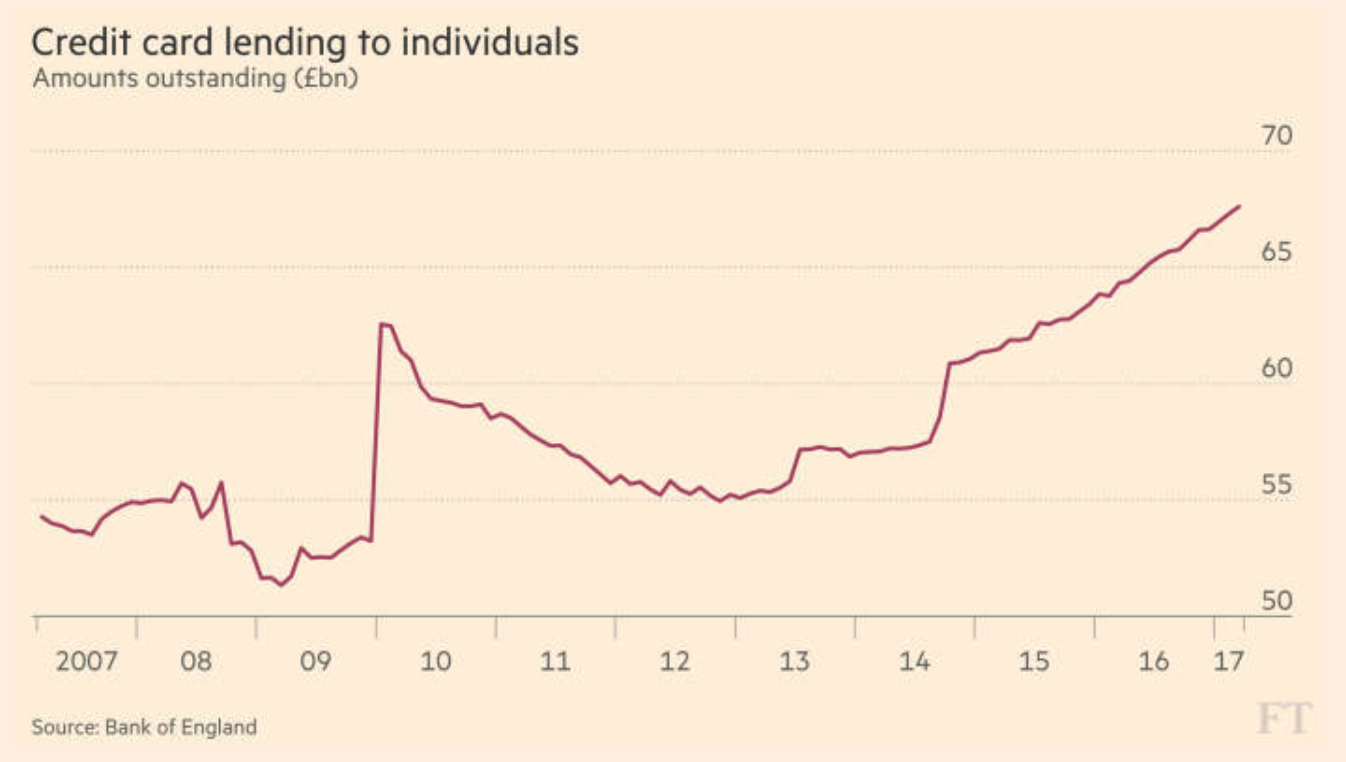
Why? Because we are seeing a 10% yoy increase in car loans, credit card balances and personal loans. This is due to a “spiral of complacency” from lenders who are offering cheap, easily available credit to households which have only seen their incomes rise by 1.5% over the same time period.
This is something we have talked about previously. Brazier’s comments made headlines and rightly so.
Personal debt in the UK is almost certainly already in excess and may well be the catalyst to the next financial crisis. As Brazier himself acknowledged, household debt can be dangerous ‘to borrowers, lenders and, most importantly from our perspective, everyone else in the economy.’
Yet again, something that was supposed to be in moderation has tipped the scales of balance towards obesity thanks to a nation that has gorged itself on cheap credit, all fed to them by the feeder banks and lenders.
The Spiral of Complacency
There are three main areas of concern for the Bank of England:
- Relaxed terms and conditions on some credit cards and personal loans
- Increased growth of share of high loan-to-income mortgages
- Rapid growth of credit used to buy cars means lenders may be exposed to prices in the used car market
Understandably household debt can have a significant impact on the economy. Those with high loan-to-income mortgages will cut spending should interest rats rise or incomes fail to. Personal loans and high levels of consumer credit make banks vulnerable during downturn, should borrowers default.
What has lead to this ‘spiral of complacency’ from lenders and banks?
Brazier expressed concern that the recent period of growth combined with low interest rates may have caused banks to relax their lending rules:
“The spiral continues, and borrowers rack up more and more debt. Lending standards can go from responsible to reckless very quickly.”
Low interest rates are certainly one of the key issues. Debt charities believe one of the leading drivers of rising personal debt levels is that lenders have been forced to fight for business during a time record-low interest rates, so competition has become increasingly fierce.
Many lenders now offer ‘zero-rate’ periods where no interest is due on balance transfers. We have all seen deals for credit cards that offer up to 43 months of interest-free balance transfers, or up to 31 months of interest-free spending. This, says debt charities, encourage borrowers to live beyond their means.
In May 2017 net lending to individuals by UK banks and building societies rose by £173 million a day. In that one month net mortgage lending rose by £3.5 billion and consumer credit by £1.7 billion.
No-one really knows what will happen when rates are increased (which they will be) and borrowers can no longer manage their debt.
Of course lenders have been profiting from rising debt levels as borrowers take so long to pay off their debt that they pay a lot of interest. But, borrowers aren’t making much of a dent in the principal amount they have borrowed.
When the next recession hits lenders will face losses of billions of pounds due to those borrowers who cannot afford to pay back their debts.

How bad is the personal debt crisis in the UK?
Pretty bad. To look at the data one might feel as though much of British society is drowning in a sea of personal debt. The sea is filled with credit cards, overdrafts, hire purchase and other high-cost credit.
The UK Cards Association states that there are about 64m credit cards currently in use. These hold about £68 billion of debt, according to the BoE. Of these 64m, there are 3.3m (according to the FCA) who are struggling with 3.3m “persistent” credit card debts, defined as people who pay more in interest and charges than they do repaying their borrowings over an 18-month period.
Interest on loans is a serious and expensive problem. The Money Charity estimates that the UK’s total interest repayments on personal debt over the last twelve months would have been £50bn, or £187m per day, or £1,845 per household each year just on servicing the debt.
Credit card debt is just one element of the UK’s debt problems. According to the Money Charity, as of July 2017 there was £199.7bn of unsecured debt in the UK. In total, £1.537 trillion was owed at the end of May 2017, that’s an extra £949.96 per adult since May 2016.
Car loans, one of Brazier’s principle concerns, now fund almost four in five new car purchases – up from one in five in 2006.
In terms of households, the overall level of household debt grows every month. The Money Charity estimates that in May 2016 the average total household debt (including mortgages) was £56,731, and increase of nearly £200 from the previous month. Per adult, state the charity, this means that there is an average debt of £29,698 or 135% of average earnings.
This is likely to get worse.
StepChange, the country’s leading debt advice charity, saw a further 600,000 people seek financial help in 2016. The body has offered stark warnings about Britains indebted families estimating that 8.8m people have turned to credit to pay for everyday household expenses over the past year. £3,858 is the level of consumer credit borrowing on average, per individual.
The Office for Budget Responsibility estimates that household debt will reach £2,322 trillion by Q1 2022. Assuming the number of households remains the same, average debt per household will be £86,001 by 2022.
Of the 8.8m who have turned to credit, more than half were employed and 41% in full-time work. This brings us to the point that debt levels are growing not because of unemployment but because the majority of Britons literally cannot earn enough to survive in this inflationary environment with a sharp rise in costs for renters and home buyers and a stealth shrinkflation and a creeping inflation.
Should households continue to just make minimum repayments then it will take nearly 26 years for credit card debts to be cleared – should average rates remain the same.
Do the Authorities Even Care?
Recently we told you about demands from the PRA to banks (see link below) that they increase their countercyclical capital buffers (capital held to increase resilience to risks). They have asked for evidence that banks are doing so, so concerned are the regulators that their concerns over household lending are not being addressed.
Earlier this year the FCA launched an investigation into credit card lending. The outcome was a host of proposed rules to help those struggling with credit card debt, one of which was the idea to order companies to help customers “by reducing, waiving or cancelling any interest or charges” for borrowers struggling to repay their debts.
In Q1 of this year £530 million (of which £394 million) in credit card debt was written off, a daily write off of £7 million by UK banks and building societies. How sustainable is this?
The regulators aren’t the only ones looking for solutions.
Clearly the borrowers themselves are concerned about their levels of personal debt. Every day 248 people are declared insolvent or bankrupt. This is something which politicians are trying to use as political leverage.
During the recent general election both Labour and Conservative manifestos pledged to adopt ‘breathing space’ policies which would see payments for distressed borrowers frozen and replaced by a “statutory payment plan”. The idea is to help serious debtors get out of the red in a manageable way.
These are all very nice for the borrower but what about the banks and lenders who will be impacted by this?
Personal debt hugely affects the housing market, not just directly by the mortgage holder but also in the rental market.
How do landlords survive if their tenants cannot afford to cover the rent?
It will soon be even harder for them to take serious measures if the Conservatives follow through with their plan to improve consumer protections for tenants. Good for the tenants, tougher for landlords trying to cover mortgage repayments with no income.
Conclusion – Too little, Too late
Whilst the point remains the same – households are borrowing at a faster rate than incomes are increasing – the truth is that despite Brazier’s claims household incomes in real terms have not increased.
Real inflation rates are much higher than official measures and households continue to be shafted by shrinkflation, low interest rates and increased living costs.
On average it costs £30.31 to raise a child, this is nearly half the average daily income. There is hardly any more (or incentive) for households to save for tougher times.
The result? Households are living beyond their means.
Prior to the financial crisis the media liked to point fingers at irresponsible borrowers. In truth, the situation remains no different to what life was really like before the crisis, households living beyond their means thanks to an inflationary environment and lenders preying on the weak for maximum profit.
The numbers speak for themselves, there is little let-up on the side of the lenders when it comes to encouraging loans. The households have little means to survive without cheap credit when the cost of living remains high.
So, when Brazier is issuing a warning to the banks, along with the regulators and politicians, we wonder if it is too little too late.
Banks and lenders have been here before and they continue as though this is all new. As Brazier himself said, back in 2007:
“Banks – and their regulators – were blind to the basic fact that more debt meant greater risk of loss”.
Who on earth is running a bank (or anything that involves basic accounting) and is ‘blind’ to this scenario?
Most bank managers it seems, but they need to wake up asap, says Brazier:
“[In 2007] complacency gave way to crisis. Companies and households were unable to refinance their debts. The result was economic disaster.”
Savers and prudent spenders can do very little about the current mess of things. All we can do is protect our own finances. Even if there are financial institutions who are heeding such warning signs it is unlikely to make much difference. The level of debt in the financial system in the UK and most western countries is completely unsustainable.
For the majority of savers this means personal finances and savings held in deposit accounts are at risk from bank bail-ins. Bank bail-ins and negative rates seem increasingly inevitable.
Make sure your savings are not exposed to these risks by diversifying into counterparty risk free gold and silver coins and bars for insured delivery and secure storage.
Related Content
Shrinkflation – Real Inflation Much Higher Than Reported – Read here
Bank Of England Warns “Bigger Systemic Risk” Now Than 2008 – Read here
News and Commentary
Gold drifts lower as dollar firms ahead of Fed (Reuters.com)
Gold suffers a second session of losses as investors await Fed update (MarketWatch.com)
Gold loses luster, falls from 1-month high as Fed meets (Reuters.com)
SEC concludes initial coin offerings (ICOs) are securities (MarketWatch.com)
London Metal Exchange to publish gold, silver reference prices within weeks (Reuters.com)
UniCredit Says 400,000 Accounts Were Hacked, Exposing Data (Bloomberg.com)
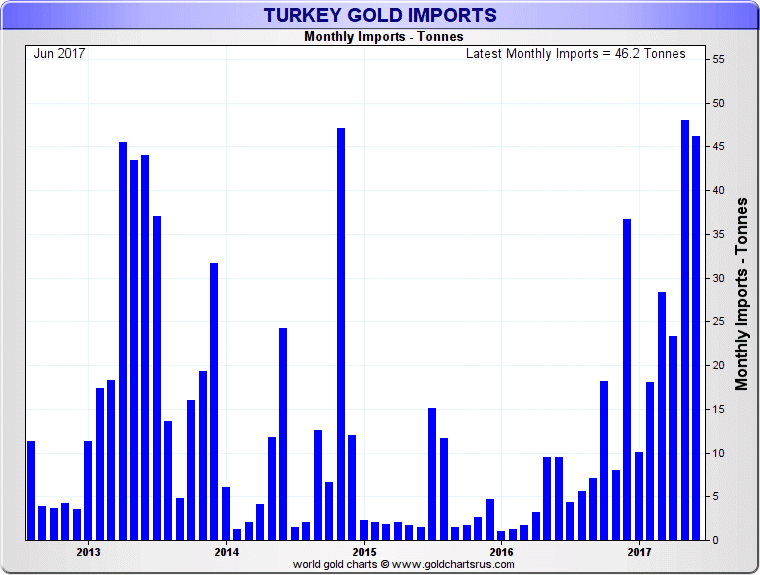
Turkey June gold imports were 46.2 tonnes. Source: GoldChartsRUs
Turkey Is Buying Gold Like There’s No Tomorrow (SecularInvestor.com)
Gold silver prices commitment on traders perspective (TFMetalsReport.com)
GOLD AND THE SWISS FRANC (PopescuGold.com)
SWOT Analysis: Silver In the Spotlight (SilverSeek.com)
China H1 2017 Silver imports climb to highest level in nearly seven years (ScrapRegister.com)
Gold Prices (LBMA AM)
26 Jul: USD 1,245.40, GBP 956.72 & EUR 1,071.29 per ounce
25 Jul: USD 1,252.00, GBP 960.78 & EUR 1,074.59 per ounce
24 Jul: USD 1,255.85, GBP 962.99 & EUR 1,077.64 per ounce
21 Jul: USD 1,247.25, GBP 958.89 & EUR 1,071.39 per ounce
20 Jul: USD 1,236.55, GBP 953.63 & EUR 1,075.06 per ounce
19 Jul: USD 1,239.85, GBP 950.84 & EUR 1,074.83 per ounce
18 Jul: USD 1,237.10, GBP 949.47 & EUR 1,071.82 per ounce
Silver Prices (LBMA)
26 Jul: USD 16.37, GBP 12.54 & EUR 14.06 per ounce
25 Jul: USD 16.31, GBP 12.52 & EUR 14.00 per ounce
24 Jul: USD 16.50, GBP 12.66 & EUR 14.17 per ounce
21 Jul: USD 16.43, GBP 12.63 & EUR 14.11 per ounce
20 Jul: USD 16.18, GBP 12.50 & EUR 14.07 per ounce
19 Jul: USD 16.23, GBP 12.44 & EUR 14.08 per ounce
18 Jul: USD 16.17, GBP 12.41 & EUR 13.99 per ounce
Recent Market Updates
– Gold Seasonal Sweet Spot – August and September – Coming
– Commercial Property Market In Dublin Is Inflated and May Burst Again
– Gold Hedges Against Currency Devaluation and Cost Of Fuel, Food, Beer and Housing
– Millennials Can Punt On Bitcoin, Own Gold and Silver For Long Term
– “Time To Position In Gold Is Right Now” says Jim Rickards
– Bloomberg Silver Price Survey – Median 12 Month Forecast Of $20
– “Bigger Systemic Risk” Now Than 2008 – Bank of England
– “Financial Crisis” Coming By End Of 2018 – Prepare Urgently
– Video – “Gold Should Probably Be $5000” – CME Chairman
– India Gold Imports Surge To 5 Year High – 220 Tons In May Alone
– “Silver’s Plunge Is Nearing Completion”
– China, Russia Alliance Deepens Against American Overstretch
– Silver Prices Bounce Higher After Futures Manipulated 7% Lower In Minute
A great commentary from Mish Shedlock as he debunks the claim that “the gold standard did not really tame inflation” .
the claim is nonsense.
Here is a question for you: In the two hundred year period that we had a complete gold standard,from the year 1700 until 1900 what was the total inflation compounded:
i.e. a loaf of bread in the year 1900 grew in percentage points to what level?
answer: inflation over the 200 yr period was zero!
Bogus Fed Research Claim: “Gold Standard Didn’t Really Tame Inflation”
Authored by Mike Shedlock via MishTalk.com,
The Wall Street Journal reports Gold Standard Didn’t Really Tame Inflation, New Research Says.
The research was by St. Louis Fed economist Fernando Martin. Curiously, his study precisely shows that the gold standard did indeed tame inflation.
Let’s investigate Martin’s bogus claim and his peculiar logic in making it.

In his email to the WSJ, Martin stated: “Most of the price increase in the period starting with World War II is due to two specific episodes.”
WWII was the first episode and the “1970s inflation episode was unambiguously the result of Fed policy blunders.” Supposedly, “the lessons learned from the experience helped central bankers start a multi-decadelong effort to lower inflation to historically low levels.”
I cannot tell if the second set of quotes is the WSJ view or Martin’s.
Martin’s Peculiar Logic
Here is Martin’s peculiar logic in explaining why the gold standard does not work: “You can still have high inflation with a metallic standard” because history shows governments regularly go off such regimes.
Got that? The gold standard won’t tame inflation because … the government won’t stick with it!
This is what constitutes critical research and absurd posting of said research by the Wall Street Journal.
CPI Since US Founding

Policy Error by the Fed
The article cited a “policy error” by the Fed as the cause of the stagflation period.
Actually, the policy error was Nixon closing the gold window on August 15, 1971, ending convertibility of gold for dollars. Our balance of trade soon went haywire, as did the explosion of credit and debt.
Balance of Trade

Total Credit

Median Home Prices

The preceding three slides from my June 24, Venture Alliance group presentation.
Not Properly Counting Inflation
The Fed does not count asset bubbles including housing in its absurd measure of inflation.
Moreover, Martin conveniently overlooks the Great Recession and all of the damage it did while the Fed was allegedly providing “stable inflation”.
Economic Challenge to Keynesians
Of all the widely believed but patently false economic beliefs is the absurd notion that falling consumer prices are bad for the economy and something must be done about them.
I have commented on this many times and have been vindicated not only by sound economic theory but also by actual historical examples.
- My article Deflation Bonanza! (And the Fool’s Mission to Stop It) has a good synopsis.
- My Challenge to Keynesians “Prove Rising Prices Provide an Overall Economic Benefit” has gone unanswered.
There is no answer because history and logic both show that concerns over consumer price deflation are seriously misplaced.
BIS Deflation Study
The BIS did a historical study and found routine deflation was not any problem at all.
“Deflation may actually boost output. Lower prices increase real incomes and wealth. And they may also make export goods more competitive,” stated the study.
It’s asset bubble deflation that is damaging. When asset bubbles burst, debt deflation results.
Central banks’ seriously misguided attempts to defeat routine consumer price deflation is what fuels the destructive asset bubbles that eventually collapse.
For a discussion of the BIS study, please see Historical Perspective on CPI Deflations: How Damaging are They?
Meanwhile, economically illiterate writers bemoan deflation, as do most economists and central banks. The final irony in this ridiculous mix is central bank policies stimulate massive wealth inequality fueled by soaring stock prices.
Deflation on Deck?
Is deflation on deck? Yes, asset deflation, a very destructive kind of deflation. When it happens, please thank the Fed for low inflation and volatility suppression.
Full Presentation
Click here to view my entire Venture Alliance Presentation, 38 slides in all.
Also, please consider Secular Disinflationary Trend Hits New Highs: Deflation on Deck? What’s That Mean for Gold?
END
Craig Hemke looks at the COT report and thinks that the bullion banks are ready to let gold and silver rally
(courtesy TFMetals/Craig Hemke)
‘
TF Metals Report: Bullion banks are prepared for rallies in gold and silver
Submitted by cpowell on Tue, 2017-07-25 13:20. Section: Daily Dispatches
9:25a Tuesday, July 25, 2017
Dear Friend of GATA and Gold:
Trader positioning data for the New York gold and silver markets suggests that the bullion banks are prepared for rallies in both the monetary metals, the TF Metals Report says. The analysis is headlined “More Commitment of Traders Perspective” and it’s posted here:
https://www.tfmetalsreport.com/blog/8463/more-cot-perspective
CHRIS POWELL, Secretary/Treasurer
Gold Anti-Trust Action Committee Inc.
CPowell@GATA.org
END
No fat finger: just manipulation. However it is not only the criminal banks but also government is behind the manipulation
(courtesy Chris Powell/GATA/Lanci)
Trader Lanci says there’s no ‘fat finger’ but plenty of market manipulation
Submitted by cpowell on Tue, 2017-07-25 19:00. Section: Daily Dispatches
3:19p ET Tuesday, July 25, 2017
Dear Friend of GATA and Gold:
Interviewed today by Daniella Cambone of Kitco News, veteran trader Vince Lanci of Echobay Partners in Stamford, Connecticut, says “flash crashes” in gold and silver are caused largely by computer trading algorithms probing for stops in the futures markets. Lanci says he considers this to be market manipulation and notes that manipulation of the gold and silver markets already has been admitted in the pending anti-trust lawsuit against Deutsche Bank and other investment banks.
Cambone asks whether governments might be behind the “flash crashes” but Lanci does not address that detail. Could governments and central banks be operating those pesky algorithms too?
Surely there are many specific questions that could be put to governments and central banks about surreptitious intervention in markets, questions drawn from documents compiled here:
http://www.gata.org/node/14839
After all, for example, the director of market operations for the Banque de France says his central bank is surreptitiously trading gold for its own account and the accounts of other central banks “nearly on a daily basis.” Is that trading just for fun or does it have some policy purpose, like the longstanding Western central bank policy of driving gold out of the world financial system, a policy documented extensively in government archives, as it is documented here?:
http://www.gata.org/node/13310
Filings with the U.S. Securities and Exchange Commission by CME Group, operator of the major futures exchanges in the United States, show that the company’s clients include governments and central banks and that CME Group offers them volume discounts for their surreptitious trading:
http://www.gata.org/node/14385
http://www.gata.org/node/14411
Is this trading just for fun or does it have some policy purpose too?
But if they are to be posed by mainstream financial journalists and fund managers, such questions apparently will have to wait for another day — or month, year, decade, century, or millennium.
Kitco’s interview with Lanci is headlined “There’s No ‘Fat Finger’ But Gold Manipulation Is Happening: Vince Lanci,” runs for eight minutes, and can be viewed here:
http://www.kitco.com/news/video/show/Kitco-News/1653/2017-07-25/Theres-N…
CHRIS POWELL, Secretary/Treasurer
Gold Anti-Trust Action Committee Inc.
CPowell@GATA.org
end
This should be interesting: the London Metal exchange will publish its reference prices for gold and silver twice daily and this will be in competition to the LBMA ICE benchmarks from which I report to you on a daily basis
(courtesy Reuters/GATA)
London Metal Exchange to publish gold, silver prices soon, Reuters says
Submitted by cpowell on Wed, 2017-07-26 00:46. Section: Daily Dispatches
By Peter Hobson
Reuters
Tuesday, July 25, 2017
LONDON — The London Metal Exchange will start publishing gold and silver reference prices, the exchange told Reuters today, potentially challenging the dominance of benchmarks administered by Intercontinental Exchange.
Precious metals producers and consumers around the world use benchmarks owned by the London Bullion Market Association to price contracts.
Intercontinental Exchange sets the LBMA Gold Price twice a day via an electronic auction and was selected this month to administer the LBMA Silver Price, defeating a rival bid by the LME.
The LME will publish alternative prices based on trading of its gold and silver futures, launched earlier this month. …
… For the remainder of the report:
https://www.reuters.com/article/us-lme-precious-benchmark-exclusive-idUS…
end
As many of you know, I have been a follower of Agnico Eagle since 1996
Today despite the constant torment of the bankers, Agnico Eagle came in with a huge 2nd quarter performance of 24 cents USA wit strong performances from all of their mines
here is their release:
Agnico Eagle Reports Second Quarter 2017 Results; Strong Operational Performance Continues; Full Year Production Guidance Increased; Nunavut Projects Advancing on Schedule and Budget; Positive Exploration Results at Multiple Projects
Stock Symbol: AEM (NYSE and TSX)
(All amounts expressed in U.S. dollars unless otherwise noted)
TORONTO, July 26, 2017 /PRNewswire/ – Agnico Eagle Mines Limited (NYSE:AEM, TSX:AEM) (“Agnico Eagle” or the “Company”) today reported quarterly net income of $61.9 million, or $0.27 per share, for the second quarter of 2017. This result includes non-cash foreign currency translation gains on deferred tax liabilities of $12.1 million ($0.05 per share), various mark-to-market and other adjustment losses of $10.3 million ($0.04 per share), unrealized gains on financial instruments of $7.9 million ($0.03 per share) and non-cash foreign currency translation losses of $2.7 million ($0.01 per share). Excluding these items would result in adjusted net income1 of $54.9 million or $0.24 per share for the second quarter of 2017. In the second quarter of 2016, the Company reported net income of $19.0 million or $0.09 per share.
Not included in the second quarter of 2017 adjusted net income above is non-cash stock option expense of $3.8 million ($0.02 per share).
For the first six months of 2017, the Company reported net income of $137.8 million, or $0.60 per share. This compares with the first six months of 2016 when net income was $46.8 million, or $0.21 per share. Financial results in the 2017 period were positively affected by higher gold sales volumes and realized prices (approximately 6% and 1% higher, respectively) and lower depreciation expense.
In the second quarter of 2017, cash provided by operating activities decreased to $184.0 million ($197.2 million before changes in non-cash components of working capital) compared with cash provided by operating activities of $229.5 million in the second quarter of 2016 ($192.7 million before changes in non-cash components of working capital). The cash provided by operating activities before changes in working capital during the current period were essentially the same.
|
________________________ |
|
1 Adjusted net income is a non-GAAP measure. For a discussion regarding the Company’s use of non-GAAP measures, please see “Note Regarding Certain Measures of Performance”. |
For the first six months of 2017, cash provided by operating activities was $406.6 million($421.2 million before changes in non-cash components of working capital), as compared with the first six months of 2016 when cash provided by operating activities was $375.2 million ($360.2 million before changes in non-cash components of working capital). The increase in cash provided by operating activities before changes in working capital during the first six months of 2017 was mainly due to a combination of higher gold and by-product metals production and higher realized gold prices.
“As a result of continued strong production and cost performance at all of our mines, we have increased our gold production guidance to 1.62 million ounces from 1.57 million ounces and reduced our total cash cost guidance from $610 per ounce to $595 per ounce”, said Sean Boyd, Agnico Eagle’s Chief Executive Officer. “In addition to strong operating and financial results, we continue to make very good progress on the exploration and development front. Our Nunavut projects are advancing on schedule and budget, and we are also generating positive exploration results at many of our minesites, which should support future growth initiatives”, added Mr. Boyd.
Second Quarter 2017 highlights include:
- Operations continue to deliver strong performance – Payable gold production2 in the second quarter of 2017 was 427,743 ounces of gold at production costs per ounce of $634, total cash costs3 per ounce of $556 and all-in sustaining costs per ounce4 (“AISC”) of $785
- Full year production guidance increased and unit cost forecasts reduced – Given the strong first half operational performance, 2017 production is now expected to be 1.62 million ounces compared to previous guidance of 1.57 million ounces. Total cash costs per ounce are now expected to be $580 to $610 (previously $595 to $625) and AISC are expected to be $830 to $880 per ounce (previously $850 to $900)
- Meliadine project continues to progress on schedule and budget – Underground development is ahead of plan and engineering was 80% complete at the end of June 2017. Construction activities are progressing well with cranes and structural steel for the erection of surface buildings being moved to site from the Rankin Inlet laydown facility. The first delivery of the shipping season arrived in Rankin Inlet on June 30, 2017. Since then, three deliveries of construction materials have been received at Rankin Inlet. Four additional deliveries of construction materials are expected over the next two months
- Amaruq exploration program continues to yield positive results – At Amaruq, infill drilling has been completed on the Whale Tail and V Zone deposits, and other target areas are now being explored. Significant results include: 6.9 grams per tonne (“g/t”) over 6 metres on the western extension of the planned Whale Tail pit and 20.4 g/t gold over 10.4 metres at the V Zone at 225 metres depth, beneath the planned pit outline
- Infill and exploration drilling expected to result in mineral resource additions and conversions at multiple properties – Significant results include: 7.1 g/t gold over 33.5 metres at the Rimpi deposit at Kittila, 23.7 g/t gold over 10.9 metres at LaRonde 3 and 1.6 g/t gold over 18.2 metres near surface at the Bravo deposit at Creston Mascota
- A quarterly dividend of $0.10 per share was declared
Second Quarter Financial and Production Highlights – Higher Gold Production, Lower Production Costs – 2017 Cost Forecasts Decrease
In the second quarter of 2017, strong operational performance continued at the Company’s mines. Payable gold production was 427,743 ounces, compared to 408,932 ounces in the second quarter of 2016. The higher level of production in the 2017 period was primarily due to higher grades mined at Meadowbank and Canadian Malartic. A detailed description of the production of each of the Company’s mines is set out below.
In the first six months of 2017, payable gold production was 845,959 ounces, compared to 820,268 ounces in the 2016 period. The higher level of production in the 2017 period was primarily due to higher grades mined at Meadowbank.
Production costs per ounce for the second quarter of 2017 were $634, which was essentially the same as the $625 in the 2016 period. Total cash costs per ounce for the second quarter of 2017 were $556 which was 6% lower compared to $592 per ounce for the second quarter 2016. Total cash costs per ounce in the second quarter of 2017 were positively affected by higher production of gold at Meadowbank and Canadian Malartic. A detailed description of the cost performance of each of the Company’s mines is set out below.
Production costs per ounce for the first six months of 2017 were $606, which was slightly lower than the $609 in the 2016 period. Production costs per ounce were positively affected by higher grades mined at Meadowbank and Canadian Malartic. Total cash costs per ounce for the first six months of 2017 were $548 compared with $582 in the prior-year period. Total cash costs per ounce in the first six months of 2017 were positively affected by higher production of gold at Meadowbank and Canadian Malartic. The Company now forecasts a decrease in total cash costs per ounce for 2017 to $580 to $610 per ounce, which is down from previous guidance of $595 to $625 per ounce.
AISC for the second quarter of 2017 were 7% lower at $785 per ounce compared to $848in the second quarter of 2016. The lower AISC is primarily due to lower total cash costs per ounce and lower sustaining capital expenditures compared to the second quarter of 2016. AISC in 2017 are now forecast to be $830 to $880 per ounce, lower than previous guidance of $850 to $900 per ounce.
AISC for the first six months of 2017 was $764 per ounce compared to $822 in the prior-year period. The lower AISC is primarily due to lower total cash costs per ounce and lower sustaining capital expenditures compared to the prior-year period.
Cash Position Remains Strong
Cash and cash equivalents and short term investments increased to $952.4 million at June 30 2017, from the March 31, 2017 balance of $804.3 million.
On April 7, 2017, the Company repaid the first series of maturing guaranteed senior unsecured notes totalling $115 million. On June 29, 2017, the Company issued, on a private placement basis, an aggregate of $300 million of guaranteed senior unsecured notes due 2025, 2027, 2029 and 2032 (the “Notes”) with a weighted average maturity of 10.9 years and weighted average coupon of 4.67%. Net proceeds from the sale of the Notes were used for general corporate purposes. During the quarter, the Company’s investment grade credit rating was re-confirmed by DBRS with a stable trend.
The outstanding balance on the Company’s credit facility remained nil at June 30, 2017. This results in available credit lines of approximately $1.2 billion, not including the uncommitted $300 million accordion feature.
Approximately 35% of the Company’s remaining 2017 Canadian dollar exposure is hedged at a floor price of 1.30 US$/C$. For remaining 2017 Euro exposure, approximately 11% is hedged at a floor price of 1.10 EURO$/US$ and for remaining 2017 Mexican Peso exposure, approximately 34% is hedged at 18.60 US$/MXP.
Capital Expenditures
Additional expenditures in 2017 for preliminary work on the road deviation at the Canadian Malartic extension project are expected to be between $16 to $22 million, reflecting the Company’s 50% interest. These additional expenditures are expected to be offset by reduced capital expenditures at other projects such as Goldex and LaRonde Zone 5. The forecast for 2017 capital expenditures remains unchanged at $859 million. The following table sets out capital expenditures (including sustaining capital) in the second quarter and first six months of 2017.
end
Your early WEDNESDAY morning currency, Asian stock market results, important USA/Asian currency crosses, gold/silver pricing overnight along with the price of oil Major stories overnight
1 Chinese yuan vs USA dollar/yuan WEAKER 6.7533(DEVALUATION SOUTHBOUND /OFFSHORE YUAN MOVES WEAKER TO ONSHORE AT 6.7540/ Shanghai bourse CLOSED UP 3.98 POINTS OR 0.12% / HANG SANG CLOSED UP 88.97 POINTS OR 0.33%
2. Nikkei closed UP 94.96 POINTS OR .48% /USA: YEN FALLS TO 111.77
3. Europe stocks OPENED IN THE GREEN ( /USA dollar index RISES TO 94.08/Euro DOWN to 1.1641
3b Japan 10 year bond yield: RISES TO +.079%/ GOVERNMENT INTERVENTION !!!!(Japan buying 100% of bond issuance)/Japanese yen vs usa cross now at 114.34/ THIS IS TROUBLESOME AS BANK OF JAPAN IS RUNNING OUT OF BONDS TO BUY./JAPAN 10 YR YIELD FINALLY IN THE POSITIVE/BANK OF JAPAN LOSING CONTROL OF THEIR YIELD CURVE AS THEY PURCHASE ALL BONDS TO GET TO ZERO RATE!!
3c Nikkei now JUST BELOW 17,000
3d USA/Yen rate now well below the important 120 barrier this morning
3e WTI:: 48.21 and Brent: 50.45
3f Gold DOWN/Yen UP
3g Japan is to buy the equivalent of 108 billion uSA dollars worth of bond per month or $1.3 trillion. Japan’s GDP equals 5 trillion usa./“HELICOPTER MONEY” OFF THE TABLE FOR NOW /REVERSE OPERATION TWIST ON THE BONDS: PURCHASE OF LONG BONDS AND SELLING THE SHORT END
Japan to buy 100% of all new Japanese debt and by 2018 they will have 25% of all Japanese debt. Fifty percent of Japanese budget financed with debt.
3h Oil UP for WTI and UP for Brent this morning
3i European bond buying continues to push yields lower on all fronts in the EMU. German 10yr bund RISES TO +.550%/Italian 10 yr bond yield UP to 2.118%
3j Greek 10 year bond yield RISES to : 5.287???
3k Gold at $1247.75 silver at:16.44 (8:15 am est) SILVER BELOW RESISTANCE AT $18.50
3l USA vs Russian rouble; (Russian rouble DOWN 4/100 in roubles/dollar) 59.95-
3m oil into the 48 dollar handle for WTI and 50 handle for Brent/
3n Higher foreign deposits out of China sees huge risk of outflows and a currency depreciation (already upon us). This can spell financial disaster for the rest of the world/China forced to do QE!! as it lowers its yuan value to the dollar/GOT A SMALL SIZED DEVALUATION SOUTHBOUND
JAPAN ON JAN 29.2016 INITIATES NIRP. THIS MORNING THEY SIGNAL THEY MAY END NIRP. TODAY THE USA/YEN TRADES TO 111.77 DESTROYING JAPANESE CITIZENS WITH HIGHER FOOD INFLATION
30 SNB (Swiss National Bank) still intervening again in the markets driving down the SF. It is not working: USA/SF this morning 0.9580 as the Swiss Franc is still rising against most currencies. Euro vs SF is 1.1154 well above the floor set by the Swiss Finance Minister. Thomas Jordan, chief of the Swiss National Bank continues to purchase euros trying to lower value of the Swiss Franc.
3p BRITAIN VOTES AFFIRMATIVE BREXIT/LOWER PARLIAMENT APPROVES BREXIT COMMENCEMENT/ARTICLE 50 COMMENCES MARCH 29/2017
3r the 10 Year German bund now POSITIVE territory with the 10 year RISING to +0.550%
The bank withdrawals were causing massive hardship to the Greek bank. the Greek referendum voted overwhelming “NO”. Next step for Greece will be the recapitalization of the banks and that will be difficult.
4. USA 10 year treasury bond at 2.316% early this morning. Thirty year rate at 2.901% /POLICY ERROR)GETTING DANGEROUSLY HIGH
5. Details Ransquawk, Bloomberg, Deutsche bank/Jim Reid.
(courtesy Jim Reid/Bloomberg/Deutsche bank/zero hedge)
Global Stocks Jump, Crude Booms As Yellen Looms
S&P futures were fractionally higher (+0.1% to 2,476) with all eyes on the Fed’s rate decision as investors await another earnings deluge from companies including Facebook, Coca-Cola and Boeing. Asian and European shares were also higher, prompted by momentum from the latest US record high; the Dollar rebound continued while oil rose above $48 as copper hit a two year high.
Risk appetite improved yesterday as oil prices kept climbing following Saudi Arabia’s commitment to export cuts. Safe-haven assets sold off, the VIX reached a new historic low, equities were up across the board, and the USD outperformed after a consumer confidence measure was higher than expected. Asian markets were mixed at midday local time. WTI advanced 0.8% to $48.26 a barrel, extending gains from the highest close in seven weeks. Crude inventories slumped by a whopping 10.2 million barrels last week according to the latest API data. Copper gained 0.6 percent in its fifth consecutive advance, hitting the highest in two years, lifting shares of producers including Glencore on expectations that demand in China will fuel a global shortage, with plans in the country to curb metal-rich waste imports reinforcing a bullish outlook.
In the overnight session, sovereign bonds opened lower in Asia following yesterday’s sharp Treasuries sell off where several selling blocks slammed futures; the Australian 10-year yield rose as much as seven basis points before easing well off the highs on an unexpected miss in headline inflation (Q2 CPI 0.2%, Exp. 0.4%) followed by a dovish speech by the RBA’s Lowe; Yield were softer at 2.32% after Senate healthcare debate gets off to a difficult start.
Stocks gained in Sydney and Tokyo, fall in Shanghai and Seoul. Japan’s Topix index rose 0.2 percent and Australia’s S&P/ASX 200 Index added 0.9 percent. South Korea’s Kospi index fell 0.2 percent, while the Hang Seng Index in Hong Kong gained 0.3 percent. The Shanghai Composite Index added 0.1 percent. The Aussie fell 0.4 percent to 79.09 U.S. cents after as noted above Australia’s Q2 headline inflation rose less than expected. 10-year Australian government notes saw yields climb four basis points to 2.73 percent. WTI crude slips below $48.50 after surging the most since November on Tuesday; Dalian iron ore futures flat.
A broad rally in commodities from oil to copper boosted European stock momentum with the Stoxx 600 index jumping 0.6%, its biggest gain in a week, as positive results from energy firms such as Subsea 7 and Tullow Oil continued to feed into markets. Energy stocks joined the broad-based global rally as oil rose above $48 a barrel for the first time since early June. The U.K.’s FTSE 100 Index increased 0.6 percent. Germany’s DAX Index increased 0.5 percent, the biggest climb in two weeks.
“The indications are more positive on the outlook for energy stocks. While there was a lot of kitchen sinking from firms in Q2 numbers, they have reset the expectations over the valuations now, they have cleaned up balance sheets,” said Angelo Meda, head of equities at Banor SIM in Milan. “The outlook is not so bad (…) We are still missing one component which is the commentary from big oil firms Total, BP, Royal Dutch Shell.”
Copper reached a two-year high on expectations of increasing demand from China. Treasuries and European government bonds rose following Tuesday’s selloff, while boosting the dollar.
While there are some nerves ahead of today’s Fed statement, Yellen is not expected to “rock the boat” in what many anticipate will be a non-event announcement. Meanwhile, earnings continue to be a source of optimism, as more than 80% of reporting S&P 500 companies beaten earnings forecasts so far this reporting period, helping to support optimism in the global economy and pushing volatility to record lows. As Bloomberg notes, “Investors are looking for guidance from the Fed on how it plans to unwind its bond portfolio, with policy makers seen keeping interest rates on hold as the U.S. central bank meeting concludes on Wednesday.”
“Top of our mind is whether there will be more clarity on efforts to unwind the US$4.5 trillion portfolio of Treasuries and mortgage-backed securities,” Isaah Mhlanga, an economist at Rand Merchant Bank in Johannesburg, said in a client note. “We think the bank will give more clarity on its intention to do so but without the specifics of timing. When the Fed eventually introduces Taper 2.0, that will be the return of volatility.”

In previewing today’s FOMC announcement, DB’s Jim Reid writes that given its late July and given the Fed will likely announce an end to balance sheet reinvestment in September (starting from October), this could be a relatively dull meeting. DB believes the Fed is unlikely to take any action in a policy firming direction at the meeting this week, partly because inflation has continued to surprise to the downside as of late. The bank expects the statement to focus on how the Fed will handle the dichotomy between a resumption of moderate growth and continuing improvement in the labour market on one hand and ongoing softness in inflation on the other. On the topic of the timing of the initial taper of balance sheet reinvestment DB writes that it will be a September announcement and October commencement remains most likely (in line with consensus), and the Committee can get by without giving any more specific guidance on timing even within this week’s statement given these relatively strongly held market expectations.
In FX, the dollar rose against most major peers ahead of the Federal Reserve’s policy decision, though options show traders are betting the euro will see more upside. The euro dropped as much as 0.3 percent to $1.1613, the lowest in nearly a week before rebounding back to 1.65 as the Bloomberg Dollar Spot Index rose for a third day. And yet, as discussed on Monday, three-month 25-delta risk-reversal for Euro options – insurance against a sharp drop in the USD – was at the highest since 2009
“There is a bit of temptation to get caught up in the current wave of euro optimism by revising our baseline forecasts higher,” ING’s Viraj Patel wrote. The strategists prefer to view the $1.16-$1.17 range as “a near-term overshoot.”
On the political front, on Tuesday the US Senate received sufficient votes to proceed on GOP healthcare legislation motion debate, although the plan to repeal and replace Obamacare later failed to get enough votes for approval (43-57). More votes are expected.
Elsewhere, the euro declined 0.2 percent to $1.1626. The British pound decreased 0.1 percent to $1.3018 after data showed the U.K. economy expanded 0.3 percent in the second quarter, matching estimates. The yen was little changed at 111.84 per dollar after declining 0.7 percent on Tuesday.
In commodities, as noted above West Texas Intermediate crude advanced 0.8% to $48.26 a barrel, the highest in seven weeks. Crude inventories declined by 10.2 million barrels last week according to the latest weekly API data. Copper gained 0.6 percent in its fifth consecutive advance. The Bloomberg Commodity Index climbed 0.1 percent while gold dipped 0.3 percent to $1,246.32 an ounce.
In rates, 10Y TSY yields dipped two basis points to 2.31 percent, after surging eight basis points in the previous session. Germany’s 10-year yield decreased one basis point to 0.56 percent. Britain’s 10-year yield declined three basis points to 1.231 percent.
Bulletin Headline Summary from RanSquawk
- European equities enter the North American crossover in positive territory in what is set to be a busy day for earnings across the Atlantic
- UK GDP printed in-line with Exp. with all eyes now on today’s FOMC announcement
- Looking ahead, highlights include DoE’s and the FOMC rate decision
Market Snpashot
- S&P 500 futures up 0.1% to 2,476.25
- STOXX Europe 600 up 0.6% to 382.95
- MXAP up 0.01% to 159.06
- MXAPJ down 0.02% to 526.28
- Nikkei up 0.5% to 20,050.16
- Topix up 0.2% to 1,620.88
- Hang Seng Index up 0.3% to 26,941.02
- Shanghai Composite up 0.1% to 3,247.68
- Sensex up 0.4% to 32,358.18
- Australia S&P/ASX 200 up 0.9% to 5,776.63
- Kospi down 0.2% to 2,434.51
- German 10Y yield fell 1.7 bps to 0.549%
- Euro down 0.3% to 1.1617 per US$
- Brent Futures up 0.7% to $50.56/bbl
- Italian 10Y yield rose 9.0 bps to 1.853%
- Spanish 10Y yield fell 2.7 bps to 1.525%
- Brent Futures up 0.7% to $50.56/bbl
- Gold spot down 0.4% to $1,245.36
- U.S. Dollar Index up 0.2% to 94.27
Top Overnight News from BBG
- Senate Republicans have embarked on an unpredictable and potentially chaotic floor debate aimed at repealing Obamacare amid significant doubts that they can muster 50 votes to pass any kind of health bill
- Oil extended gains from the highest close in seven weeks as industry data showed U.S. crude stockpiles plunged, easing a glut
- Copper surged to the highest level in more than two years, lifting shares of producers including Glencore Plc, on expectations that demand in China will fuel a global shortage, with plans in the country to curb metal-rich waste imports reinforcing a bullish outlook.
- Viacom has informed Scripps Networks Interactive that it is willing to pay all cash to buy the network operator, Reuters reports
- HNA Group Co.’s proposed $416 million investment in an in- flight entertainment and Internet-services provider collapsed after the two companies failed to get regulatory approval from the U.S.
- The U.K. economy’s lackluster performance extended into the second quarter, with growth only modestly picking up in the period
- The U.K. became the latest European country to mark the end of the line for diesel and gasoline fueled cars as automakers such as Volvo race to build electric vehicles or face the consequences of getting left behind
- ECB’s Nowotny sees no need to set timetable to end bond buying; BOJ’s Nakaso pledges to ’persistently continue’ powerful easing
- RBA’s Lowe says some coverage of neutral rate misinterpreted intention; doesn’t need to move in lockstep with other central banks; global tightening has no automatic implications for RBA
- Australia 2Q CPI 0.2% vs 0.4% est; trimmed mean 0.5% vs 0.5% est
- RBNZ’s McDermott says inflation pressures ’relatively moderate’; neutral interest rate estimated to be 3.5%
- API inventories according to people familiar w/data: Crude -10.2m; Cushing -2.6m; Gasoline +1.9m; Distillates -0.1m
- Russia Says New U.S. Sanctions Killing Chances for Improved Ties
- Russian Senator Suggests ‘Sanitary Sanctions’ Against McDonald’s
- SoftBank Is Said to Take Stake in Roomba Maker in Tech Buildout
- Luxury Brands Can Block Online Retailers: EU Court Aide
- Lawmakers Negotiating Self-Driving Car Bills Ahead of Markup
- Apple Judgment Increased to $506 Mln in Wisconsin Patent Case
- Ford Says to Challenge ACCC Allegation on Transmissions Issue
- Transwestern Has Force Majeure in N.M. After Mechanical Failure
- KKR’s Rockecharlie Sees Energy Asset-Sales Mkt Reaching $90B
- UniCredit Says 400,000 Clients Affected by Security Breach
Asia equity markets were mostly higher following a record setting day on Wall St. where the S&P 500 and NASDAQ posted fresh all-time highs as earnings buoyed sentiment, with gains led by strength in financials and energy sectors. ASX 200 (+0.6%) outperformed in Asia as the commodity sector shined with copper at 26-month highs and after oil gained over 2% amid a larger than expected drawdown in API crude inventories. Nikkei 225 (+0.5%) was bolstered by a softer JPY, while Shanghai Comp. (-0.1%) and Hang Seng (+0.35%) both initially conformed to the advances after the IMF’s recent upgrade on China growth forecasts and alongside the PBoC’s continued liquidity efforts with a CNY 130b1n injection today. However, mainland stocks then pulled back on regulatory concerns. Finally, 10yr JGBs tracked the softness in T-notes with demand also dampened as participants shifted positions into riskier Japanese assets, while today’s Rinban announcement was for a relatively modest JPY 400bn. PBoC injected CNY 80bln in 7-day reverse repos and CNY 50bln in 28-day reverse repos.
- Australian CPI (Q2) Q/Q 0.2% vs. Exp. 0.4% (Prey. 0.5%). (Newswires)
- Australian CPI (Q2) Y/Y 1.9% vs. Exp. 2.2% (Prey. 2.1%)
Top Asian News
- Bankers Ditch Fat Salaries to Chase Digital Currency Riches
- Vietnam 7-Month Disbursed FDI Seen at $9.05B, up 5.8% Y/Y
- China Plans to Begin Trial of Spot Power Trading, Daily Says
- Investors ’Cautiously Opportunistic’ on Asia Hedge Funds: DB
European bourses have followed their US counterparts (Eurostoxx 50 +0.3%) and have begun their Q2 earnings season on the front foot. EU major equity markets all trade in the green; with sector support coming from Energy, as the oil heavyweights have seen a bid following the unexpected 10m1n draw in last night’s API report. European auto names have seen mixed performance with Peugeot (+5.3%) and Daimler (-0.2%); post-earnings. European fixed income future markets followed the risk tone overnight and ground lower throughout trade. However, a marginal bid has been seen through the European morning, following the slight gap up seen in German and UK paper. In the periphery, Spanish front-end bonds have seen modest selling pressure with some attributing this to speculation over selling this week from international real money accounts, according to IFR.
Top European News
- EU to Update Poland Sanctions Stance After Court-Revamp Veto
- Italy Confidence Gauges Rise, While Jobless Worries Keep Growing
- U.K. FCA Extends Senior Managers Regime to All Financial Firms
- ITV Gains as Stable Outlook Soothes Brexit Advertising Concerns
- Swedish Government Faces No Confidence Votes After IT Scandal
- ASMI Slides on ASM Pacific Unit 3Q Bookings Outlook
In currencies, all eyes for GBP were placed on domestic UK GDP figures ahead of next week’s ‘Super Thursday’ at the BoE. However, markets were left relatively unfazed after in-line readings for both the Y/Y and Q/Q. In terms of components of the release, construction and manufacturing were the largest downward pulls on quarterly GDP growth, following 2 consecutive quarters of growth. CAD buying looks to have petered out given the relatively unfazed reaction to the huge 10mln drawdown in US crude oil inventories, as shown by last night’s API’s. 1.25 support in USD/CAD remaining firm with 1.2461 (2016 low) another level to the downside offering near term support. USD-index a touch higher heading into FOMC meeting having consolidated above 94.00.
In commodities, crude oil was the noticeable mover following the US closing bell yesterday in the wake of the 10.2mln bpd draw seen during last night’s API release which saw WTI futures break through USD 48.00/bbl. The long-term 2017 range continues, as the 42.00/bbl level acted as support, if a firm break through the 49 handle can be seen, markets could eye a test of 52/bbl. Gold and other precious metals have seen marginal selling pressure over the week, as gold failed to test 1260/oz. The risk on sentiment has also weighed on the market, largely trading in tandem with treasury markets, as many await tonight’s FOMC.
The API Crude Oil Inventory Report saw a huge drawdown of -10,200K (Prey. 1628K). Will it be confirmed by today’s DOE report?
Turning to today’s data releases, the focus will turn to the US with the July FOMC rate decision due.
US Event Calendar
- 7am: MBA Mortgage Applications, prior 6.3%
- 10am: New Home Sales, est. 615,000, prior 610,000; MoM, est. 0.82%, prior 2.9%
- 2pm: FOMC Rate Decision
DB’s Jim Reid concludes the overnight wrap
Welcome to another FOMC decision day, although given its late July and given the Fed will likely announce an end to balance sheet reinvestment in September (starting from October), this could be a relatively dull meeting. Famous last words. We’ll provide a slightly more detailed preview in the day ahead at the end. Before this excitement ahead, global equity markets picked up steam yesterday with both US (S&P +0.3%) and European (STOXX 600 +0.4%) equities posting gains. Decent earnings, a strong German IFO and the promise of Saudi oil production cuts underpinned risk markets and led to a notable sell-off in bonds.
The uptick in the US drove the S&P 500 to a new all-time high, with the Energy (+1.3%) and Financials (+1.3%) sectors the biggest gainers in the US. At one stage the VIX hit what would have been an all-time closing low of 9.04 before retracing into the close to be unchanged at 9.43 and the 9th successive close below 10 – the longest ever streak, comfortably beating the 4 days it spent below 10 in December 1993.
Over in Europe the STOXX 600 index was led by large gains in Basic Resources (+2.6%) and Banks (+1.6%). European equity performance was consistently strong across regions as well, with the DAX (+0.5%), FTSE (+0.8%), CAC (+0.7%) and FTSE MIB (+0.6%) all rising on the day. As touched on above, the commodity complex was helped as oil prices jumped by 3.3% – first on news that Saudi Arabia is planning deep crude export cuts next month and then climbed another 1.5% immediately after the US close on news that API was reporting Crude inventories falling 10.2m barrels last week. It has retracted around half a percent this morning.
Over in government bond markets, yields rose across all maturities for both German Bunds (2Y: unch; 10Y: +6bps) and US Treasuries (2Y: +3bps; 10Y: +8bps). Both curves saw a general steepening which likely helped drive the strong bank equity performance yesterday. Gilts (2Y: +3bps; 10Y: +7bps), OATs (2Y +2bps; 10Y +7bps) and BTPs (2Y: +2bps; 10Y: +9bps) also exhibited similar moves. Turning to currency markets, the US dollar index was up a touch (0.1%) yesterday while the Euro (vs USD) was flat at 1.1646 having climbed to a high of 1.171 intraday. Sterling was flat on the day following larger intra-day gains of around 0.5%. A tweet from Donald Trump suggesting that the US was working on a trade deal with the UK seemed to help for a while. Precious metals were lower on the day (Gold -0.4%; Silver -0.1%) while industrial metals were mixed (Copper +0.4%; Aluminium -0.2%). Agricultural commodities were broadly lower on the day.
Away from the data, Trump’s efforts to repeal Obamacare took a small step forward yesterday, securing enough votes (51 to 50) to allow senators to start debating on the healthcare legislation. The narrow win was sealed with the help of Vice President Pence and the ailing Senator McCain flying in to help. Trump has called the win a “giant step”, but this morning, the senate has rejected Senator’s McConnell’s replacement plan by a vote of 43-57. More attempts will be made today to find a proposal that will pass.
Elsewhere, in an interview with the WSJ, Trump said he may reappoint Yellen for a second term (expires in Feb) and noted that “I like her” and “I like to see rates stay low…she’s historically been a low rate person…” Gary Cohn was also touted as a potential contender. Mr Trump also said in the interview that his next priority is overhauling the tax code.
This morning in Asia, markets have been a little more mixed after yesterday’s US/European strength, with the Nikkei (+0.4%), Kospi (-0.3%), Hang Seng (unch) and the 3 Chinese bourses down -0.4 to 0.8%. Treasuries have given up -1.5bps of their climb yesterday. Also, AU’s headline 2Q CPI missed expectations (1.9% yoy, vs 2.2% expected; 2.1% previous), with the miss mainly in the food group. However, the more important weighted median inflation came in at 1.8% yoy (vs 1.7% expected; 1.7% previous). DB’s Adam Boyton believes the data will be largely viewed as ‘in line with RBA’s expectations’. The AUDUSD fell 0.3%.
Taking a look at yesterday’s calendar, data out of Europe was broadly positive. In Germany we saw the IFO business climate reading unexpectedly tick up (116 vs. 114.9 expected; 115.1 previous) to hit its highest levels since the German reunification. This increase was driven by unexpected positive surprises in both the expectations index (107.3 vs. 106.5 expected; 106.8 previous) and current assessment index (125.4 vs. 123.8 expected; 124.1 previous), the latter of which was also at its historical high. We also saw the latest set of confidence indicators out of France, with the both the business (108 vs. 106 expected) and manufacturing (109 vs. 108 expected) confidence indicators for July beating expectations. Over in the US we saw some soft housing market data for May with the FHFA House Price Index (+0.4% mom vs. +0.5% expected) and the S&P 20- City House Price index (+0.10% mom vs. +0.30% expected) both disappointing. On a more positive note we also got the July readings for the conference board consumer confidence indicator which unexpectedly surprised on the upside (121.1 vs.116.5 expected; 118.9 previous), as the present conditions measure rose to a 16-year high of 147.8 (146.3 previous) and consumer expectations for the next six months rose to 103.3 (100.6 previous). The Richmond Fed Manufacturing Index (14 vs. 7 expected) also rose against expectations of holding steady in July.
Before we look at the day ahead, yesterday saw the DB House View team publish their latest report yesterday highlighting their key views on global macro and markets. They note that the global economy is in better shape than it has been in several years and this has allowed global central banks to follow the Fed and gradually start to normalise monetary policy. While inflation is still below target, the House View team expects that labour market tightness will soon feed into wages, driving core inflation higher over the medium-term in the US and Europe and thus supporting further monetary tightening and a normalisation of yield curves. On this note they expect that the Fed will likely announce a taper of balance sheet reinvestment in September and will hike rates again in December. As for the ECB, they note that rate hikes are still far off and expect the announcement of another QE extension and tapering in October. Away from central banks, the team notes that their global macro outlook is little changed for this year as they expect growth to rebound from post-crisis lows seen in 2016. With regard to markets they remain constructive on risk assets expecting material upside to US equities and positive but more balanced performance in EM. In FX they note that there are signs the dollar has peaked, but do not expect a material devaluation yet. They are more positive on the euro, seeing upside versus the dollar and sterling. In rates they expect yield curves to normalise gradually, but there is risk of a more sudden upward shift, depending on the path of core inflation. A link to the full report is https://goo.gl/e5SKDP
Turning to today’s data releases, Europe will see the consumer confidence reading out of France (108 expected; 108 previous) followed by UK Q2 GDP (1.7% YoY expected). Thereafter the focus will turn to the US with the July FOMC rate decision due. We recap the views of US economists (as highlighted in Monday’s EMR) who expect that the Fed is unlikely to take any action in a policy firming direction at the meeting this week, partly because inflation has continued to surprise to the downside as of late. They do expect the statement to focus on how the Fed will handle the dichotomy between a resumption of moderate growth and continuing improvement in the labour market on one hand and ongoing softness in inflation on the other. On the topic of the timing of the initial taper of balance sheet reinvestment the team believes that a September announcement and October commencement remains most likely (in line with consensus), and the Committee can get by without giving any more specific guidance on timing even within this week’s statement given these relatively strongly held market expectations.
Away from data, Minneapolis Fed President Kashkari will be the first speaker following the FOMC decision. On the earnings front Coca-Cola, Ford, Boeing and Facebook are due to report today
3. ASIAN AFFAIRS
i)Late TUESDAY night/WEDNESDAY morning: Shanghai closed UP 3.98 POINTS OR 0.12% / /Hang Sang CLOSED UP 88.97 POINTS OR 0.33% The Nikkei closed UP 94.96 POINTS OR .48%/Australia’s all ordinaires CLOSED UP 0.83%/Chinese yuan (ONSHORE) closed DOWN at 6.7533/Oil UP to 48.21 dollars per barrel for WTI and 50.45 for Brent. Stocks in Europe OPENED IN THE GREEN,, Offshore yuan trades 6.7540 yuan to the dollar vs 6.7533 for onshore yuan. NOW THE OFFSHORE IS WEAKER TO THE ONSHORE YUAN/ ONSHORE YUAN WEAKER (TO THE DOLLAR) AND THE OFFSHORE YUAN IS WEAKER TO THE DOLLAR AND THIS IS COUPLED WITH THE STRONGER DOLLAR. CHINA IS VERY HAPPY TODAY
3a)THAILAND/SOUTH KOREA/NORTH KOREA
NORTH KOREA/
Just what the world needs: North Korea set to launch another ICBM ..maybe by tonight
(courtesy zero hedge)
North Korea ICBM Launch Expected “As Soon As Tonight”
According to Fox News, another North Korean ICBM launch is expected as soon as tonight. Each additional test highlights that Trump’s current strategy of containing Kim appears to not be working, as the North Korean continues to defy the US and China’s demands to stop.
- NORTH KOREA ICBM LAUNCH EXPECTED AS SOON AS WEDNESDAY NIGHT – U.S. OFFICIALS: FOX NEWS
According to Citi, the news “may well affect risk sentiment – perhaps depending upon the success of the test, the estimated range of the missile.” The bank adds to expect headlines from Trump, China and North and South Korea. In terms of markets, keep an eye on USDJPY, USDKRW, AsiaFX generally and perhaps even gold (plus local equity markets).
The ICBM test is set to take place just days before the U.S. is set to conduct another missile interception test this weekend, with the latest exercise based on a remote Alaskan island and coming amid the growing ballistic missile threat from North Korea.
According to Fox News, a notice put out by the U.S. Coast Guard last week warns of “hazardous operations,” saying “The Alaska Aerospace Corporation is conducting a rocket launch from the Kodiak Narrow Cape Launch Facility, located on Kodiak Island, Alaska.” They are warning vessels to steer clear of several areas between Alaska and Hawaii during the launch which is scheduled for July 29.
The U.S. military is set to conduct a test of the Terminal High Altitude Area Defense (THAAD) missile shield at the Pacific Spaceport Complex-Alaska “soon,” Pentagon spokesman Capt. Jeff Davis told Fox News on Monday.
Department of Defense spokesman Lt. Col. Chris Logan declined to comment on the plan or its connection to the ongoing threat from North Korea. The U.S. has conducted a spate of successful missile intercept tests in recent months as Pyongyang has executed offensive missile testing.
So far, Citi’s assessment of the latest ICBM test having a “negative impact” on risk is proving false.
b) REPORT ON JAPAN
end
c) REPORT ON CHINA
4. EUROPEAN AFFAIRS
BANK OF ENGLAND/UK
The Bank of England warns of soaring consumer debt including auto leases to consumers of bad credit. The banks are extremely worried that this could come crashing down
(courtesy zero hedge)
Bank Of England Warns Of “Spiral Of Complacency” Over Soaring Consumer Debt
A few weeks ago, we wrote a note about how European auto lenders are becoming just about as ridiculously undisciplined as their counterparts in the United States. Apparently an ever-growing reliance of European millennials on lease financing has auto ABS investors worried about a potential crash in used car prices at some point in the not so distant future…that sound familiar to anyone? (See: It’s Not Just Americans, Europe’s New Obsession With Auto Leases Is “Catastrophic For Used Car Prices”)
Then came an undercover investigation by the Daily Mail exposing just how “undisciplined” the auto lending market has become in England. Their undercover reporters visited a total of 22 dealerships and were repeatedly offered cars of various values with no money down and despite reporters admitting that they had no job and no source of income.
Reporters visited 22 dealerships in England and Scotland, saying they were in their early twenties and either unemployed, on low incomes or trying to buy a car despite having poor credit ratings. Half of the dealerships – including ones selling Audis, Mazdas, Suzukis, Fords, Vauxhalls and Seats – told them they could have a brand new car without paying a penny up front.
In each case they were offered Personal Contract Purchase (PCP) deals – a type of car loan that now makes up nine out of ten car sales bought on finance in Britain.
These deals offer smaller monthly payments than traditional car loans.
A reporter who said he was working part-time on the minimum wage was offered a £15,000 Seat Ibiza without a deposit at a Seat dealership in Manchester. Another reporter suggested that he had bad credit, but he was offered an £8,600 Vauxhall Corsa in Birmingham.
Kevin Barker, 71, found himself £3,500 in debt when he suffered a heart attack six months into a PCP deal. He said a ‘pushy’ Toyota salesman ‘pressured’ him into taking out a 36-month agreement in November 2014 and he was not told of the repercussions if he fell ill or lost his job.

And while offering $20,000 auto loans to unemployed teenagers may not seem like that big a deal to U.S. consumers, in Britain it apparently has a lot of bankers worried. As Alex Brazier of the Bank of England put it in a recent Liverpool speech, lenders are “dicing with a spiral of complacency.” Per The Guardian:
“Ten years ago, an unsafe financial system caused financial crisis and economic disaster”, he said. “The western banking system had expanded rapidly. Banks – and their regulators – had been blind to the basic fact that more debt meant greater risk of loss.
“Complacency gave way to crisis. Companies and households were unable to refinance their debts. The result was economic disaster. In this country alone, close to a million jobs were lost and more than 100,000 businesses failed. Too much debt made the financial system, and the economy, unsafe. Too many people paid the price when those risks materialised.”
“Lenders have not entered, but they may be dicing with the spiral of complacency,” Brazier said, noting that as credit became cheaper it was taken up more widely and was serviced more easily.
“The spiral continues, and borrowers rack up more and more debt. Lending standards can go from responsible to reckless very quickly. The sorry fact is that as lenders think the risks they face are falling, the risks they – and the wider economy – face are actually growing,” Brazier said.
“By September we will have assessed whether the rapid growth has created any gap in the line. If it has, we’ll plug it,” Brazier said.
Of course, when lending standards enter their “spiral of complacency” phase, it’s not just a single asset class that’s impacted. As The Guardian notes, loan terms for everything from credit cards to personal loans to mortgages have all participated in the consumer credit mania…
He added that terms and conditions on credit cards and personal loans had become easier. The average advertised length of 0% credit card balance transfers had doubled to close to 30 months, while advertised interest rates on £10,000 personal loans had fallen from 8% to around 3.8%, even though official interest rates had barely changed.
He added that developments in mortgage debt had been much less striking than those in consumer debt and car finance, with lending for home loans up by just 3% over the past year. “But even here there are some tentative signs of boundaries being pushed,” he said.
Strong competition for business was resulting in more lending at higher loan-to-income (LTI) multiples, with the share at an LTI above 4 increasing from 19% to 26% over the past two years.
…all of which has resulted in a stern warning from the BoE that failure to unilaterally reign in reckless lending standards would inevitably result in a new regulations.
The Bank of England has told banks, credit card companies and car loan providers that they risk fresh action against reckless lending as it warned of a looming “spiral of complacency” about mounting consumer debt.
In its toughest warning yet about the possibility of a rerun of the financial crisis that devastated the economy 10 years ago, Threadneedle Street admitted it was alarmed about the increase in the amount of money being borrowed on easy terms over the past year.
“Household debt – like most things that are good in moderation – can be dangerous in excess”, Alex Brazier, the Bank director for financial stability, said in a speech in Liverpool. “Dangerous to borrowers, lenders and, most importantly from our perspective, everyone else in the economy.”
“Lenders have been the lucky beneficiaries of the benign way the economy has evolved. In expanding the supply of credit, they may be placing undue weight on the recent performance of credit cards and loans in benign conditions,” Brazier said.
Of course, if new regulations fail to materialize then British banks can always do what American banks do…simply package up their toxic consumers loans into a nice securitized product and sell it to taxpayer backed pension funds…it’s a much cleaner way to socialize poor lending standards as opposed to waiting around for more overt ‘bailouts’ later on down the road…
end
GREECE
This morning Bill Blain discusses Greece and their return to the bond market and what it means
(courtesy Bill Blain/Mint Partners)
Bill Blain: “Dovish Fed And Positive Earnings: Buy Stocks… The Crash Is Still 2 Months Away”
Submitted by Bill Blain of Mint Partners
Blain’s Morning Porridge, July 26.
“Bankruptocracy is as much a European predicament as it is an American invention.”
Apologies for lack of comment y’day, but my computer decided to auto-destruct just as I about to send it out. Despite many reports saying markets are now in full holiday season, there’s still plenty of serious stuff still going on, and some subtle shifts in direction to figure out.
- Stuff to watch today: US earnings season (it’s a massive week) as stocks hit new highs, and what the Fed will say tonight (still watching and waiting).
- Stuff the think about: The implications and consequences of the return of Greece to the bond market. Tech stocks – Google (Alphabet) in the spotlight. What are central banks really telling us and what do they actually know?
GREECE
Starting with the Greek bond: The new €3 bln five year Greek bond deal was a predictable success the authorities are crowing about: oversubscribed by a factor of 2 and a tight-ish coupon of 4.375%. The plan to reduce the funding load in 2019 (by buying back more expensive 2019 bonds) didn’t get as much uptake as expected. The upside is it establishes a 2-5 year curve for Greece – something the Government can build on ahead of exiting the EU/IMF bailout in 2019. They’re already talking about the next deal…
Does this mean we can forget about future Greek crisis? Does this one bond issue a glorious summer foretell?
Nope. Whitewash.
After talking to accounts, we reckon the deal has fallen into something of a no-mans-land on the investment landscape. The distressed/high-yield/ultraEM players were not particularly active – they see the Greek story as done (for now) and therefore little further upside of the magnitude they typically look for. (If/when we get another Greek wobble, then they will be back.) It’s not a name that fits Sovereign Bond investors – still far too much “whoosh” associated with Greek risks for them.
That then leaves a narrower band of credit players looking at the yield dynamics and where to fit it into portfolios. And the Greek domestic banks were the big holders of the 19 bonds. A good number of investors just weren’t interested – Greece is not, and will not be, on their investment horizons.
I wonder if there is sufficient market capacity for the market to replace the EU and IMF as the prime funders of Greece’s €315bln of debt? (That number includes the €225 bln of bailout funding.) For the next 10-years, the debt repayment burden is comparatively modest (after the 2012 settlement) at around €8 bln per annum – which doesn’t address the bailout monies.
I suspect Greece remains wedded to ongoing EU support into infinity – meaning Greece will remain a festering pustule on the otherwise unblemished face of Europa for many years to come.. (US readers – mild sarcasm alert.)
For Greece to exit its never ending crisis depends on many factors. Can the economy finance sufficient growth? Unlikely. Austerity remains on the cards. Following massive recession and contraction the shrunken Greek economy has survived the crisis, but will require significant reinvestment to restructure and rebuild. Where will it come from? Greece is not a sovereign borrower in its own right – it’s a Eurozone credit, unable to run the printing presses, and likely to remain entirely dependent on EU largesse.
Another issue is the blithe assumption that Europe, as a whole, is fixed – as witnessed by the current economic recovery. What economic recovery? Sure, the numbers are slightly better, confidence is higher (spectacular German IFO numbers y’day) and unemployment is dropping. But Europe remains deeply troubled – and youth underemployment is a scandal. Should the current strength of the Euro, (and the relative weakness of the dollar), cause wobbles in current European outlook of an economic “miracle” (US readers – sarcasm alert), then the next tick in Europe is down – with magnified effects on Greece.
We’re also likely to face further Greek political ructions – parties trying to show they run an independent country, when in fact, they are tied closely to what Brussels/Frankfurt allows. That’s not a recipe for success. A number of commentators say yesterday’s bond issue will reduce the pressure on the current government, and allow Greece and the EU to declare victory – but we know that’s utterly hollow. The next Greek radicals are around the corner.. Below the surface, the pressure on Greece continues to build.
Even after stripping out the €225 bln of bailout funds, and Greece has a horrendous repayment schedule to meet, plus raising cash to keep the nation afloat. The past 8 years of crisis has not resulted in a reformed country fit and ready for the hurly burly of global competition. Nope.
All the various angles of the Greek crisis are going to come back together again – sooner rather than later.
And someone, somewhere, is going to figure out the downright blinking obvious: that Greece’s major problem is the Euro. Troubled EM nations using the wrong currency rarely works well. Ask Argentina.. hangon.. there’s an idea.. Anyone for a Greek Century Bond?
I predict we’ll still be worrying about Greece in 10 years time…
Elsewhere.. no point worrying about the Fed today. Lower for longer. And US stocks remain robust – the earnings season is positive and if it wasn’t for the Trump distractions we’d all be massively positive. Dovish Fed and positive earnings – buy stocks methinks.. the crash is still 2 months away.
I must get round to writing something about central banks tomorrow.
END
POLAND /EU
We have another diplomatic spat between Poland and the EU. Poland wants to retire female judges at the age of 60 while male judges at 65. The EU states that that is discriminatory. There are also other issues. The EU has given Poland a one month ultimatum or else they are threatened with “Article 7” which is basically a formal warning. There has never been a formal warning issued
(courtesy zero hedge)
EU Gives Poland One Month Ultimatum, Threatens With “Article 7 Procedure”
The Vice-President of the European Commission, Frans Timmermans, escalated the diplomatic row between Brussels and Warsaw on Wednesday when he said that the EU was launching legal infringement proceedings and giving Warsaw a one month ultimatum over one of the recently passed reforms to Poland’s court system, even as earlier in the week Poland’s president Andrzej Duda vetoed two of the four controversial reforms to the judiciary.
The EU has taken issue with one particular legislation because it introduces different retirement ages for male and female judges, which the Commission claims is a breach of EU anti-discrimination law. The law would see female judges retire at 60 and males at 65. As a result, Timmermans gave Warsaw a one month ultimatum to alleviate its concerns over the rule of law before deciding on whether it would “escalate proceedings.” Timmermans also said the approval of the remaining measures still undermined the independence of the country’s judges in defiance of EU law.
Brussels also sent a set of recommendations to Poland threatening that the country’s voting rights could be suspended – under Article 7 of the EU treaty – if certain changes are implemented. Specifically, Polish authorities are warned not to take any measure to dismiss or force the retirement of Supreme Court judges.
“In this past week some things have changed in Poland and some have not”, said Mr Timmermans. Any move from Poland’s ruling Law And Justice Party (PiS) to force the resignation of the country’s judges would have the EU stand “immediately ready to trigger the Article 7 procedure”, added the commissioner. Invocation of Article 7 of the EU’s treaties would result in a formal warning to Warsaw – an unprecedented move that has yet to be taken against a member state government.
President Duda’s decision to block a portion of the reform bill followed mass public protests against the government’s attempt to take control of the judiciary. Of the two bills that have passed, one will hand power to Poland’s justice minister, who is also the prosecutor-general, to fire heads of the country’s lower courts. This bill has yet to be formally enacted, meaning the commission cannot start proceedings to challenge it in court. But Brussels can “pre-authorise” a challenge in the event that any of the bills is formally enacted during the commission’s summer break.
“The Commission’s hand is still extended to the Polish authorities, in the hope of a constructive dialogue”, added Mr Timmermans.
A quick overview of the EU’s Article 7 procedure:
Article 7.1 of the Treaty on European Union provides for the Council, acting by a majority of four fifths of its members, to determine that there is a clear risk of a serious breach by a Member State of the common values referred to in Article 2 of the Treaty (see Annex II). The Commission can trigger this process by a reasoned proposal.
Annex II – Article 7 Treaty on European Union
1. On a reasoned proposal by one third of the Member States, by the European Parliament or by the European Commission, the Council, acting by a majority of four fifths of its members after obtaining the consent of the European Parliament, may determine that there is a clear risk of a serious breach by a Member State of the values referred to in Article 2. Before making such a determination, the Council shall hear the Member State in question and may address recommendations to it, acting in accordance with the same procedure.
The Council shall regularly verify that the grounds on which such a determination was made continue to apply.
2. The European Council, acting by unanimity on a proposal by one third of the Member States or by the Commission and after obtaining the consent of the European Parliament, may determine the existence of a serious and persistent breach by a Member State of the values referred to in Article 2, after inviting the Member State in question to submit its observations.
3. Where a determination under paragraph 2 has been made, the Council, acting by a qualified majority, may decide to suspend certain of the rights deriving from the application of the Treaties to the Member State in question, including the voting rights of the representative of the government of that Member State in the Council. In doing so, the Council shall take into account the possible consequences of such a suspension on the rights and obligations of natural and legal persons.
The obligations of the Member State in question under the Treaties shall in any case continue to be binding on that State.
4. The Council, acting by a qualified majority, may decide subsequently to vary or revoke measures taken under paragraph 3 in response to changes in the situation which led to their being imposed.
5. The voting arrangements applying to the European Parliament, the European Council and the Council for the purposes of this Article are laid down in Article 354 of the Treaty on the Functioning of the European Union.

* * *
The full European Commission press release “European Commission acts to preserve the rule of law in Poland” can be found here.
end
5. RUSSIA AND MIDDLE EASTERN AFFAIRS
RUSSIA/EU/USA
This did not take long: Moscow warns of a painful response to the newly passed USA sanctions. The EU will be ready to retaliate in a matter of days
(courtesy zero hedge)
Moscow Warns Of “Painful Response” To US Sanctions; EU Ready To Retaliate In “A Matter Of Days”
Following yesterday’s almost unanimous House vote to pass new sanctions against Russia, on Wednesday Moscow threatened to retaliate, saying that – as expected – the action has made it all but impossible to achieve the Trump administration’s goal of improved relations, and vowed to retaliate to the latest sanctions which Russia views as senseless and destructive according to its deputy foreign minister said.
As described yesterday, the bill passed by a vote of 419-3 on Tuesday , boosted sanctions against Russia just 3 weeks after Trump and Putin held their first official meeting. The legislation, which now goes to the Senate, requires Trump to seek congressional approval before easing sanctions imposed under the Obama administration for “Russian meddling” in the 2016 presidential elections and its support for separatists in Ukraine. So far Trump has not definitively stated if he will support the bill with the White House sending mixed signals whether Trump will sign it.
The bill seeks to impose new economic sanctions against North Korea, Iran, and Russia, and received overwhelming support from US legislators. Moscow is being targeted for alleged interference in the 2016 presidential election, an allegation that Russia denies and which has not been backed by convincing public evidence. Russia’s foreign ministry expects the bill to become law, which would inevitably prompt Moscow to retaliate, Ryabkov warned.
“What is happening defies common sense. The authors and sponsors of this bill are taking a very serious step towards destroying any potential for normalizing relations with Russia,” Sergey Ryabkov told the media on Wednesday, referring to an act adopted earlier by the US House of Representatives.
“We told them dozens of times that such actions would not be left without a response. I believe the signal went through even though present-day Washington tends to listen to and hear from no one but itself,” Ryabkov added.
Russian senator Frants Klintsevich, who chairs the Defense and Security Committee, echoed Ryabkov’s sentiment. He said that Washington’s stance is dragging the world into a new Cold War, and compared the looming new sanctions to the notorious 1974 Jackson–Vanik amendment which targeted the Soviet Union with economic sanctions for obstructing the repatriation of its Jewish citizens to Israel, but survived even after the discriminative policy was canceled. The legislation has been is viewed by many in Russia as an example of unfair economic competition by the US under a pretext of protecting human rights.
Klintsevich said the US move “will make very difficult, if possible at all, any Russian-American cooperation on solving important international issues, including fighting against terrorism.”
Konstantin Kosachyov, chairman of the international affairs committee in Russia’s upper house of parliament, said on Facebook that hope “is dying” for improved relations because the scale of “the anti-Russian consensus in Congress makes dialogue impossible and for a long time,” adding that Russia should prepare a response to the sanctions that’s “painful for the Americans.”
Trump will sign the law because “he’s a prisoner of Congress and anti-Russian hysteria,” Alexei Pushkov, Russian upper house of parliament senator said on Twitter. The sanctions are “a new stage of confrontation,” he said. McDonald’s restaurants in Russia aren’t “a sacred cow” and should face “sanitary sanctions,” Pushkov said in a separate tweet. The fast food chain’s press office in Russia declined to comment immediately. As Bloomberg notes, the largest McDonald’s in Russia was shuttered for three months in 2014 amid about 250 safety probes of the company’s restaurants by officials after the U.S. imposed sanctions over Russia’s annexation of Crimea.
Russia has prepared “economic and political measures that will be adopted if the Senate and Trump support the bill,” said Vladimir Dzhabarov, deputy chairman of the international affairs committee in the upper house, the RIA Novosti news service reported. Relations with the U.S. “are at such a low level that we have nothing to lose” by retaliating, he said.
It wasn’t just Russia: the US bill also sparked concern in Europe. European governments and business leaders fear the sanctions would hurt crucial joint energy projects with Russia and may be motivated by Washington’s desire to take over the European natural gas market from Russia in favor of American liquefied natural gas.
In a statement on Wednesday morning, EU Commission head Jean-Claude Juncker said that “the US bill could have unintended unilateral effects that impact the EU’s energy security interests. This is why the Commission concluded today that if our concerns are not taken into account sufficiently we stand ready to act appropriately with a matter of days”
“America first can not mean that Europe’s interests come last”
Finally, the German foreign ministry also chimed in when with its spokesman saying that the “US does not have the right to tell German companies how they should act with foreign business partners.”
And so, as we explained a month ago when the various conflicting tensions first emerged, Trump is trapped: unable to veto the bill, as he would be seen as promoting a pro-Russian agenda in a rather “sensitive” time, signing the bill will promptly lead to a deterioration of relations with Europe, whose own relations with Russia appear to have been far more important than the continent let on.
END
6 .GLOBAL ISSUES
7. OIL ISSUES
WTI initially surges and then falls on news a huge production surge to two yr highs
(courtesy zero hedge)
WTI Pops As Inventory Draws Trump Production Surge To 2 Year Highs
WTI prices kneejerked higher after last night’s yuge crude inventory draw reported by API but prices have leaked lower into the DOE print. Expectations were for a 4th straight weekly draw in crude (thanks to robust refining activity) were confirmed with a 7.2mm inventory drop (less than API’s 10.2mm), and Gasoline also saw a major draw (as opposed to API’s build). However, exuberance ion WTI is not evident as Lower 48 production surge above 9mm barrels for the first time since July 2015.
API
- Crude -10.2mm (-3mm exp) – biggest draw since Sept 2016
- Cushing -2.568mm (-1mm exp)
- Gasoline +1.9mm (-1.8mm exp)
- Distillates -111k
DOE
- Crude -7.2mm (-3mm exp)
- Cushing -1.699mm (-1mm exp)
- Gasoline -4.445mm (-1.8mm exp)
- Distillates -1.185mm
While everyone was exuberant about API’s crude draw the gasoline was notable, but DOE data dismissed that with draws across the entire complex…Refiners kept up at a seasonal record pace, using 17.6 milion barrels of crude and feedstocks. That’s way above previous years. The peak season should last another month or so, before plants start to shut units for maintenance.

Bloomberg’s David Marino notes that for a second week, no oil came out of the Strategic Petroleum Reserve, according to the Energy Department, after about 16 million barrels hit the market since early March. Without that buffer, U.S. commercial stockpiles would likely have drawn down even quicker.
The glut is shrinking: Total petroleum inventories (excluding the SPR) are down about 37 million barrels in the past month to the lowest since early 2016.
But net imports continue to trend lower (unseasonally)

For the bulls, Bloomberg’s Javier Blas notes that the good news is that oil inventories decreased across the board; the bad news is that shipments from Saudi Arabia rebounded considerably last week. Riyadh shipped 932,000 barrels a day to the U.S., up from a 7-year low of 524,000 barrels a day two weeks ago. Shipments from Iraq were also very strong, although Kuwait sent far less crude into the U.S.

Production has trended higher with rig counts for months. Crude production slipped a bit last week, but that’s due to a drop in Alaska output, as Lower 48 output topped 9mm barrels last week for the first time since July 2015…

Crude has surged to 2-month highs on the back of the recent trend of inventory draws but are “faced with very strong pivotal resistance” in the middle of notable support/resistance at the 50DMA (46.52), 100DMA (48.22) and 200DMA (49.43)…

end
We have been highlighting problems with the shale boys for quite some time: in essence peak shale has been reach a while ago. This was highlighted by Horseman’s CEO Russell Clark. Yesterday Anadarko announced they were cutting CAP EX. Today it is the large operator Whiting
(courtesy zerohedge)
First Anadarko, Now Whiting: Second Shale Company Slashes CapEx Budget
On Monday we reported that Anadarko, which previously had been lamenting the egregious amount of liquidity in the energy sector, became the first company to slash its full year capex budget by $300 million from a previous range of $4.5-$4.7 billion. As noted in our discussion, this was a material event not only for APC but the entire sector as “the Anadarko news is clearly negative for its shale peers, most of whom are set to announce similar capex declines.”
Moments ago, this was confirmed when Whiting Petroleum, the largest oil producer in North Dakota’s Bakken region, became the second shale driller in the current cycle to slash its full year capital spending budget by 14% to $950 million from a prior estimate of $1.1 billion. .
Whiting CEO James J. Volker explained it as follows: “One of our priorities is to maintain a strong balance sheet while delivering high returns and sustainable growth to investors. We plan to reduce capital spending to $950 million while achieving 14% production growth from first quarter to fourth quarter 2017. This is a testament to the high quality of our asset base, which is also evident in the strong 23% growth in proved reserves from year-end 2016 levels. A large component of this growth was driven by the effect of enhanced completions in the Williston Basin.”
The recent collapse in WLL’s capex as a result of the drop in oil prices is shown below, and at the current budget it appears that there will be little if any incremental capex growth from here.

In addition to being the latest confirmation of Horseman’s bearish shale thesis, Whiting also posted its eighth consecutive quarterly loss, as production slipped, sending its shares lower by 4% to $5 in after-hours trading. The company’s stock has fallen 60% YTD.
As we said on Monday, the launch of a new round of CapEx cuts “will likely end up being positive for oil prices as much of the “swing” crude production courtesy of the US shale basin is about to be reduced substantially, in a clear victory for OPEC which has been waiting long for just this day.”
That said, future pain may be deferred courtesy of WLL’s aggressive hedging. In the press release, the company announced that it was more than 64% hedged for the remainder of 2017 as a percentage of June 2017 production, with price hedges going as low as $35 for Q3 and Q4 and $38.57 all of 2018.

8. EMERGING MARKET
Your early morning currency/gold and silver pricing/Asian and European bourse movements/ and interest rate settings WEDNESDAY morning 7:00 am
Euro/USA 1.1641 DOWN .0003/REACTING TO + huge Deutsche bank problems + USA election:/TRUMP HEALTH CARE DEFEAT//ITALIAN REFERENDUM DEFEAT/AND NOW ECB TAPERING BOND PURCHASES/ /USA RISING INTEREST RATES AGAIN/EUROPE BOURSES ALL IN THE GREEN
USA/JAPAN YEN 111.77 DOWN 0.237(Abe’s new negative interest rate (NIRP), a total DISASTER/SIGNALS U TURN WITH INCREASED NEGATIVITY IN NIRP/JAPAN OUT OF WEAPONS TO FIGHT ECONOMIC DISASTER/KURODA: HELICOPTER MONEY ON THE TABLE AND DECISION ON SEPT 21 DISAPPOINTS WITH STIMULUS/OPERATION REVERSE TWIST/LABOUR PARTY LOSES IN LOCAL ELECTIONS
GBP/USA 1.3051 UP .0025 (Brexit March 29/ 2017/ARTICLE 50 SIGNED
THERESA MAY FORMS A NEW GOVERNMENT/STARTS BREXIT TALKS
USA/CAN 1.2502 DOWN .0006 (CANADA WORRIED ABOUT TRADE WITH THE USA WITH TRUMP ELECTION/ITALIAN EXIT AND GREXIT FROM EU/TRUMP INITIATES LUMBER TARIFFS ON CANADA)
Early THIS TUESDAY morning in Europe, the Euro FELL by 3 basis points, trading now ABOVE the important 1.08 level FALLING to 1.1641; Europe is still reacting to Gr Britain HARD BREXIT,deflation, announcements of massive stimulation (QE), a proxy middle east war, and the ramifications of a default at the Austrian Hypo bank, an imminent default of Greece, Glencore, Nysmark and the Ukraine, along with rising peripheral bond yield further stimulation as the EU is moving more into NIRP, and now the Italian referendum defeat AND NOW THE ECB TAPERING OF ITS PURCHASES/ THE USA’S NON tightening by FAILING TO RAISE THEIR INTEREST RATE AND NOW THE HUGE PROBLEMS FACING TOO BIG TO FAIL DEUTSCHE BANK + THE ELECTION OF TRUMP IN THE USA+ TRUMP HEALTH CARE BILL DEFEAT AND MONTE DEI PASCHI NATIONALIZATION / Last night the Shanghai composite CLOSED UP 3.98 POINTS OR 0.12% / Hang Sang CLOSED UP 88.97 POINTS OR 0.33% /AUSTRALIA CLOSED UP 0.83% / EUROPEAN BOURSES OPENED IN THE GREEN
We are seeing that the 3 major global carry trades are being unwound. The BIGGY is the first one;
1. the total dollar global short is 9 trillion USA and as such we are now witnessing a sea of red blood on the streets as derivatives blow up with the massive rise in the rise in the dollar against all paper currencies and especially with the fall of the yuan carry trade. The emerging market which house close to 50% of the 9 trillion dollar short is feeling the massive pain as their debt is quite unmanageable.
2, the Nikkei average vs gold carry trade ( NIKKEI blowing up and the yen carry trade HAS BLOWN up/and now NIRP)
3. Short Swiss franc/long assets blew up ( Eastern European housing/Nikkei etc.
These massive carry trades are terribly offside as they are being unwound. It is causing global deflation ( we are at debt saturation already) as the world reacts to lack of demand and a scarcity of debt collateral. Bourses around the globe are reacting in kind to these events as well as the potential for a GREXIT>
The NIKKEI: this WEDNESDAY morning CLOSED UP 94.96 POINTS OR .48%
Trading from Europe and Asia:
1. Europe stocks OPENED ALL IN THE GREEN
2/ CHINESE BOURSES / : Hang Sang CLOSED UP 88.97 POINTS OR 0.33% / SHANGHAI CLOSED UP 3.98 POINTS OR 0.12% /Australia BOURSE CLOSED UP 0.83% /Nikkei (Japan)CLOSED UP 94.96 POINTS OR .48% / INDIA’S SENSEX IN THE GREEN
Gold very early morning trading: 1247.10
silver:$16.39
Early WEDNESDAY morning USA 10 year bond yield: 2.316% !!! DOWN 2 IN POINTS from TUESDAY night in basis points and it is trading JUST BELOW resistance at 2.27-2.32%.
The 30 yr bond yield 2.901, DOWN 1 IN BASIS POINTS from TUESDAY night.
USA dollar index early WEDNESDAY morning: 94.08 UP 4 CENT(S) from TUESDAY’s close.
This ends early morning numbers WEDNESDAY MORNING
xxxxxxxxxxxxxxxxxxxxxxxxxxxxxxxxxxxxxxxxxxxxxxxxxxxxxxxxxxxxxxxxxxxxxxxxxxxxxxxxxxxxxxxxxxxxxxxxxxxxxxxxxxxxxxx
And now your closing WEDNESDAY NUMBERS
Portuguese 10 year bond yield: 2.968% UP 7 in basis point(s) yield from TUESDAY
JAPANESE BOND YIELD: +.079% UP 7/10 in basis point yield from TUESDAY/JAPAN losing control of its yield curve
SPANISH 10 YR BOND YIELD: 1.547% UP 7 IN basis point yield from TUESDAY
ITALIAN 10 YR BOND YIELD: 2.129 UP 7 POINTS in basis point yield from TUESDAY
the Italian 10 yr bond yield is trading 57 points HIGHER than Spain.
GERMAN 10 YR BOND YIELD: +.561% UP 6 IN BASIS POINTS ON THE DAY
END
xxxxxxxxxxxxxxxxxxxxxxxxxxxxxxxxxxxxxxxxxxxxxxxxxxxxxxxxxxxxxxxxxxxxxxxxxxxxxxxxxxxxxxxxxxxxxxxxxxxxxxxxxxxxxxxxxxxxxxxxxxxxxxxxxxxxx
IMPORTANT CURRENCY CLOSES FOR WEDNESDAY
Closing currency crosses for WEDNESDAY night/USA DOLLAR INDEX/USA 10 YR BOND YIELD/1:00 PM
Euro/USA 1.1629 DOWN .0014 (Euro DOWN 14 Basis points/ represents to DRAGHI A COMPLETE POLICY FAILURE/
USA/Japan: 112.16 UP 0.151(Yen DOWN 15 basis points/
Great Britain/USA 1.3049 UP 0.0019( POUND UP 19
basis points)
USA/Canada 1.2510 DOWN .0002 (Canadian dollar UP 2 basis points AS OIL ROSE TO $48.76
xxxxxxxxxxxxxxxxxxxxxxxxxxxxxxxxxxxxxxxxxxxxxxxxxxxxxxxxxxxxxxxxxxxxxxxxxxxxxxxx
This afternoon, the Euro was DOWN by 14 basis points to trade at 1.1629
The Yen FELL to 112.16 for a LOSS of 15 Basis points as NIRP is STILL a big failure for the Japanese central bank/HELICOPTER MONEY IS NOW DELAYED/BANK OF JAPAN NOW WORRIED AS AS THEY ARE RUNNING OUT OF BONDS TO BUY AS BOND YIELDS RISE /OPERATION REVERSE TWIST ANNOUNCED SEPT 21.2016
The POUND ROSE BY 19 basis points, trading at 1.3049/
The Canadian dollar ROSE by 2 basis points to 1.2510, WITH WTI OIL RISING TO : $48.76
Your closing 10 yr USA bond yield UP 9 IN basis points from TUESDAY at 2.334% //trading well ABOVE the resistance level of 2.27-2.32%) very problematic USA 30 yr bond yield: 2.9311 UP 11 in basis points on the day /
Your closing USA dollar index, 94.22 UP 17 CENT(S) ON THE DAY/1.00 PM
Your closing bourses for Europe and the Dow along with the USA dollar index closing and interest rates for WEDNESDAY: 1:00 PM EST
London: CLOSED UP 17.50 POINTS OR 0.24%
German Dax :CLOSED UP 40.80 POINTS OR 0.33%
Paris Cac CLOSED UP 29.09 POINTS OR 0.56%
Spain IBEX CLOSED UP 52.00 POINTS OR 0.49%
Italian MIB: CLOSED UP 120.11 POINTS/OR 0.56%
The Dow closed UP 97.58 OR 0.45%
NASDAQ WAS closed UP 10.57 POINTS OR 0.16% 4.00 PM EST
WTI Oil price; 48.76 at 1:00 pm;
Brent Oil: 50.78 1:00 EST
USA /RUSSIAN ROUBLE CROSS: 59.67 down 23/100 ROUBLES/DOLLAR (ROUBLE HIGHER BY 23 BASIS PTS)
TODAY THE GERMAN YIELD RISES TO +0.561% FOR THE 10 YR BOND 4.PM EST EST
END
This ends the stock indices, oil price, currency crosses and interest rate closes for today
Closing Price for Oil, 5 pm/and 10 year USA interest rate:
WTI CRUDE OIL PRICE 5:00 PM:$48.67
BRENT: $50.89
USA 10 YR BOND YIELD: 2.289% (ANYTHING HIGHER THAN 2.70% BLOWS UP THE GLOBE)
USA 30 YR BOND YIELD: 2.8938%
EURO/USA DOLLAR CROSS: 1.1724 UP .0080
USA/JAPANESE YEN:111.24 DOWN 0.764
USA DOLLAR INDEX: 93.53 DOWN 52 cent(s)
The British pound at 5 pm: Great Britain Pound/USA: 1.3105 : UP 78 POINTS FROM LAST NIGHT
Canadian dollar: 1.2452 up 56 BASIS pts
German 10 yr bond yield at 5 pm: +0.561%
END
And now your more important USA stories which will influence the price of gold/silver
TRADING IN GRAPH FORM FOR THE DAY
VIX Crashes To Record Lows As Fed/ECB Double-Whammy Smashes Dollar
Well that escalated quickly…
“Hawkish” comments from ECB’s Nowotny combined with “dovish”-sounding inflation comments from The Fed...

Sent the USD index plunging to its lowest close since May 2015…

The machines read the FOMC Statement, saw nothing scary and insta-dumped protection… crashing VIX to a new all-time record low of 8.84…

This was kind of odd though… Russell 2000 ‘VIX’ crashed at 1059… a minute before the statement…

Post-Fed, gold is the best-performer…

On the day, The Dow was the best performer as Small Caps lagged (especially after The Fed)…

NOTE: Boeing’s massive 9.2% spike today (biggest day for Boeing since 10/28/08) was responsible for 132 Dow points
Futures show the reaction in Dow Futs…

Bonds were aggressively bid with the belly notably outperforming…

As we noted above the dollar was clubbed like a baby seal with EUR rallying the most on the day

As the dollar nosedived, gold spiked back above $1260, breaking through all major technical support, back to June Fed rate hike levels…

WTI pumped and Dumped on the DOE data (big draw but big production surge) but the dollar weakness helped lift it into the close…

Finally, there’s this…

end
FOMC announcement:
‘Dovish’ Fed Admits Inflation Weaker, Says Balance Sheet Unwind To Start “Relatively Soon”
With ‘zero’ expectations for a rate-hike today, all eyes are focused on any shifts in The Fed’s balance sheet normalization timeline (“balance sheet unwind to start relatively soon”) and its most-recently-dovish inflation outlook (following the weak June CPI print, The Fed now says “inflation seen rising to 2%” but is weaker”).
Key takeaways from FOMC:
- Balance sheet reinvesting to continue “for the time being,” normalization plan to begin “relatively soon” which most sellside desks means a September announcement, leaving December for the next rate hike.
- Headline and core inflation “have declined,” and the word “recently” after this phrase from the June statement is omitted today. This has been taken as confirmation that the Fed admits the recent dip in inflation may extend longer than the Fed expected and is the reason for the sharp drop in the USD.
- Inflation running below 2%, the descriptor tweaked from the “somewhat below” in the June statement
- No dissenters
Additional headlines
- Fed holds rates unchanged, repeats inflation seen rising to 2%
- Fed: labor mkt strengthened, activity rising moderately
- Fed: job gains have been solid, unemployment has declined
- Fed: household spending, fixed investment continued to expand
- Fed: overall and core inflation declined, are running below 2%
- Fed repeats mkt-based inflation compensation gauges remain low
- Fed repeats survey-based inflation measures little changed
- Fed repeats inflation to stay ‘somewhat below’ 2% in near term
- Fed repeats risks to outlook appear ‘roughly balanced’
Here is a snap reaction from Citi:
Judging from the USD’s inability to rally, one might conclude that the market sees this as similar enough to June, while minding a slight dovish tweak when it comes to prices. In quick summary:
- Inflation language – small dovish downgrade from inflation is running “slightly below” 2.0% to now “running below.” However, note that there is no change to balance of risks.
- Employment language – slight hawkish upgrade. From “gains have moderated but have been solid” in June to simply “gains have been solid” in the July statement.
- No changes to rates guidance
- Insert of “for the time being” in direction regarding the balance sheet. Also insert of “relatively soon” for balance sheet normalization. Largely expected by the market as we noted.
Expectations were The Fed will reveal the timing of its balance sheet unwind in September and wait to hike interest rates again until December.
Intriguingly, The ECB decided to shake up the market just minutes before The Fed’s statement...
- *NOWOTNY: EURO-AREA GROWTH HAS IMPROVED BUT INFLATION LAGGING
- *NOWOTNY: ECB MUST RECONSIDER POLICY WITH DEFLATION RISK GONE
- *ECB’S NOWOTNY SEES RISK OF DISTORTIONS WITH NEGATIVE RATES
- *ECB’S NOWOTNY SAYS AGREES WITH WEIDMANN WHO SAID THIS IS TIME TO SLOWLY GO OFF GAS
- *ECB’S NOWOTNY SEES NEED TO DISCUSS TECHNICAL ASPECTS OF QE END
Which sent the USD lower…

* * *
Rate-hike odds for July have been zero for almost two months…

Notably the Fed Balance sheet really starts to shed assets in August (double July’s) then accelerates again in November bigly…

Since The Fed hiked rates, ‘hard’ data has continued to weaken (even relative to marked-down expectations) as ‘soft’ data has bounced hard…

Since the June rate-hike (and The Fed’s warning about stretched valuations), the S&P is higher and bonds and bullion are down (equally)…

But the dollar has done nothing but freefall…

Will we get a full card?

* * *
end
trading after FOMC announcement:
VIX Crashes To Record Low, Gold Spikes, Dollar Nosedives After ECB/Fed Comments
Ignoring the “relatively soon” balance sheet unwind, the dollar index is careening lower (at 14-month lows) on inflation-weaker signals from The Fed.

And gold spiked back above its 200DMA ($1251)…

However, stocks limped higher as VIX crashed to a record low 8.84...

end
As we have been telling you over the past several weeks: there will be no more hikes and this is because the debt ceiling which I believe will be in the 3rd week of September will cause considerable pain for the uSA economy
(courtesy Stone McCarthy/zero hedge)
Stone McCarthy: No More Hikes This Year, Debt Ceiling Can Derail Fed’s Balance Sheet Plans
While most other sellside reports have toed the line that the Fed will announce a September balance sheet reduction, coupled with a rate hike in December, Stone McCarthy has turned more bearish on the US economy, and in a note released moments ago by Terry Sheehan, writes that “we continue to expect that the FOMC will announce the change in reinvestment policy at the September 19-20 meeting to start in October” but cautions that “this could be delayed if it looks like an increase to the debt limit is not immediately forthcoming, and with it the risks of the US default on its sovereign debt” and, more importantly, does not see any more rate hikes in 2017.
His note below, courtesy of Stone McCarthy:
- Due to the disappointing inflation numbers, we do not look for another rate hike in 2017, and for only two in 2018.
- As expected, FOMC maintained the fed funds rate target range at 1.00%-1.25%. Forward guidance still for “gradual increases” in rates, depending on data.
- Balance sheet normalization to begin “relatively soon”, but specific timing not announced. The wording would suggest a September announcement is on the table.
- Little change in content of FOMC statement on jobs, inflation expectations. Language on inflation suggested slightly greater concern that lower readings will linger.
- Labor market “continued to strengthen”, activity moderate “so far this year”.
- Inflation measures “have declined” and “running below” the 2% objective, a small change the reflects more concern about a sustained inflation undershoot from the “running somewhat below” in the June 14 statement.
- Inflation expected to “remain somewhat below” objective “in the near term, but to stabilize” over the medium term.
- Near term risks “roughly balanced”, “monitoring inflation developments closely”.
- At this writing we continue to expect that the FOMC will announce the change in reinvestment policy at the September 19-20 meeting to start in October. However, this could be delayed if it looks like an increase to the debt limit is not immediately forthcoming, and with it the risks of the US default on its sovereign debt.
- Due to the disappointing inflation numbers, we do not look for another rate hike in 2017, and for only two in 2018.
end
We now await the European response and of course Russia’s response:
(courtesy zero hedge)
House Overwhelmingly Passes Veto-Proof Russia Sanctions Deal
Setting up a showdown not between the US and Russia as some hope, but between Washington and the EU which has emerged as the most vocal opponent of ongoing, unilateral anti-Russian escalation by the US vowing swift retaliation, moments ago the U.S. House passed bipartisan legislation codifying and imposing further sanctions on Russia, Iran and North Korea, and preventing the president from acting unilaterally to remove certain sanctions on Russia. Just three Republicans – Reps. Justin Amash (Mich.), Jimmy Duncan (Tenn.) and Thomas Massie (Ky.) – voted against the bill, which passed 419-3.
More importantly, the measure also bars U.S. companies from investing in energy projects in which Russian companies have at least a 33% stake, and may penalize European companies that collaborate with Russian companies on energy projects, the source of Europe’s recent fury.
Here are the main details of the draft legislation:
- Codifies existing US sanctions on Russia and requires Congressional review before they are lifted.
- Reduces from 30 days to 14 days the maximum allowed maturity for new debt and new extensions of credit to the state controlled financial institutions targeted under the sectoral sanctions.
- Reduces from 90 days to 60 days the maximum allowed maturity for new debt and new extensions of credit to sectoral sanctions targets in the energy sector, although this largely only brings US sanctions in line with existing EU sanctions, which already impose a 30-day maximum for most energy companies.
- Expands the existing Executive Order authorising sectoral sanctions to include additional sectors of the Russian economy: railways and metals and mining.
- Requires sanctions on any person found to have invested $10 million or more, or facilitated such an investment, in the privatisation of Russian state-owned assets if they have “actual knowledge” that the privatisation “unjustly benefits” Russian government officials or their close associates or family members.
- Authorises (but does not require) sanctions “in coordination with allies” on any person found to have knowingly made an investment of $1 million or more (or $5 million or more in any 12-month period), or knowingly provided goods or services of the same value, for construction, modernisation, or repair of Russia’s energy export pipelines.
- Orders the treasury, in consultation with the Director of National Intelligence and the Secretary of State, to prepare detailed reports within the next 180 days:
- on Russia’s oligarchs and parastatal companies including individual oligarchs’ closeness to the Russian state, their involvement in corrupt activities and the potential impact of expanding sanctions with respect to Russian oligarchs, Russian state-owned enterprises, and Russian parastatal entities, including impacts on the entities themselves and on the economy of the Russian Federation, as well as the exposure of key US economic sectors to these entities.
- on the impact of debt- and equity-related sanctions being extended to include sovereign debt and the full range of derivative products.
According to Goldman, the most important impact would be that the bill codifies existing sanctions. Both the Obama administration and the Trump administration have argued that this restricts the President’s ability to negotiate a settlement of the Ukrainian conflict, as lifting codified sanctions has proven very difficult in the past. The bill also asks the treasury to prepare a report in the next six months on the potential impact of expanding debt-related sanctions to include sovereign debt, as well as the potential impact of expanding sanctions to some oligarchs found to be close to the state and parastatal companies. This could be interpreted to suggest that sovereign debt will be added to the sanctions framework once the report has been prepared.
The potentially most controversial and impactful part of the sanctions bill concerns the potential inclusion of Russia’s gas and gas pipeline sector. However, at this stage the text only provides for sanctions imposed in consultation with US allies. As we have described in recent days, there is no appetite across most of Europe to contemplate such an extension.
But more than anything, however, Tuesday’s vote amounted to a rebuke of President Trump, whose administration had pushed to water down the bill’s provisions giving Congress the power to veto the lifting of sanctions.
“This strong oversight is necessary. It is appropriate. After all, it is Congress that the Constitution empowers to regulate commerce with foreign nations,” House Foreign Affairs Committee Chairman Ed Royce (R-Calif.) said, quoted by The Hill.
Ironically, with The House scheduled to depart Washington for the August recess at the end of this week, the latest anti-Russia sanctions package will likely be its biggest legislative accomplishment to date. The GOP-controlled Congress has not been able to send bills fulfilling any of Trump’s campaign pledges, such as repealing the healthcare law and reforming the tax code to Trump’s desk thus far. However, when it comes to Russia, the laughing stock that is a Republican-controlled Congress has always managed “to come out on top.” As such, its biggest victory heading into the summer recess is the measure constraining the president amid investigations into whether the Trump campaign colluded with the Russian government to sway the 2016 election.
Making matters even more complicated for the Trump administration, which urged lawmakers to ensure the president have flexibility to adjust sanctions policy, the House passed the bill with a veto-proof majority meaning Trump has no choice but to accept it.
In recent days, White House press secretary Sarah Huckabee Sanders offered mixed messages in recent days. On Sunday, Sanders told ABC’s “This Week” that the administration supports the bill. But on Monday, she told reporters on Air Force One that Trump is “going to study that legislation” before making a final decision.
In addition to binding Trump, the bill establishes new sanctions on Iran and North Korea, in addition to Russia. White House had lobbied against the Senate-passed measure, arguing it needed flexibility to adjust economic sanctions against Moscow.
Under the House bill, existing sanctions on Russia for its aggression in Ukraine and interference in the 2016 election would be codified into law. New sanctions would go into effect against Iran for its ballistic missile development, while North Korea’s shipping industry and people who use slave labor would be targeted amid the isolated nation’s efforts to launch an intercontinental ballistic missile (ICBM).
The sanctions legislation has been stalled in the House since the Senate passed the legislation by a 98-2 vote last month. The first snag came from House lawmakers who noted that the Senate bill violated the constitutional requirement that all revenue-raising measures originate in the lower chamber. After the Senate approved changes to address the constitutional issue, House Democrats then objected to a provision requested by GOP leaders that prevented them from forcing votes to block Trump from lifting sanctions.
A compromise reached over the weekend by House Minority Whip Steny Hoyer (D-Md.) and House Majority Leader Kevin McCarthy (R-Calif.) ensures that any House member can force a vote on a resolution of disapproval to block sanctions relief that has already passed in the Senate.
It also allows either the House majority or minority leaders to introduce a resolution of disapproval.
Meanwhile, the complaints emerged, and not just from Europe: oil and gas companies raised concerns about provisions limiting the extent to which American and Russian energy companies could interact. Those companies warned that provisions banning American investments supporting the maintenance or construction of Russian pipelines could inadvertently prevent U.S. development near Russian sites.
In an effort to address those concerns, the latest version of the bill clarifies that only Russian energy export pipelines can be sanctioned, something which will not help as Brussels contemplates how to retaliate. It also establishes that the ban on U.S. investments in deepwater, shale or Arctic offshore projects applies only if there are Russian entities with an ownership interest of at least 33 percent.
“In the process of making Russia pay an economic cost for their bad behavior, we must ensure we are not harming U.S. interests at home and abroad,” warned House Homeland Security Committee Chairman Michael McCaul (R-Texas).
Rep. Eliot Engel (D-N.Y.), the top Democrat on the House Foreign Affairs Committee is supportive of the sanctions package, but expressed concern that it might not have a smooth path to passage in the Senate.
“It seems we may be on the floor before we ironed out all our differences with the other body,” Engel said, citing the late addition of North Korea sanctions. “I hope we don’t face further delays when this bill gets back to the other house.”
And now we wait to see how Europe, which over the weekend vowed to “retaliate within days” should the legislation pass, will respond. And, of course, how long until Russia expels some 30 US diplomats now that it is abundantly clear the US won’t return the seized Russian diplomatic compounds as Putin has been demanding in recent weeks.
end
The Senate votes against “repeal and replace”. There is only one Republican plan left that can be voted on and that is the “skinny” repeal ie. they remove from Obamacare all the bad elements such as the individual and employer mandates.
(courtesy zero hedge)
Senate Chaos Returns: Six Hours After Major GOP Victory, “Repeal And Replace” Is Voted Down
If this is what passes for a legislative victory in the Trump administration, the president may be in trouble.
Less than a day after the Senate GOP leadership mustered the minimum number of Republican votes necessary to begin debate on a bill to repeal Obamacare (and even then thanks only to a tiebreaking vote by Vice President Mike Pence), the Republican campaign to kill the legislation remains in chaos.
Just six hours after the successful vote to proceed, the Senate overwhelmingly rejected a plan to repeal and replace Obamacare, voting 43-57 against with 9 Republicans joining Democrats in the process. That plan requires 60 votes to pass because of its impact on the budget deficit, and without support from Democrats, that bill has a 0% chance of survival. The failed vote has dashed Republican hopes of replacing Obamacare with another plan.

Although Trump celebrated the motion to proceed at a rally in Youngstown, where he proclaimed that the US is now “one step closer to liberating our citizens from this Obamacare nightmare”, the president’s hopeful remarks ignore that Senate Republicans are still in chaos, especially after John McCain’s fiesty speech in the Senate on Tuesday. As Reuters and a handful of other media outlets have reported, despite the success of the vote, the Senate GOP doesn’t have enough support to pass any of its plans to repeal, or repeal and replace, Obamacare, as many moderates remain wary of cuts to Medicaid in the GOP plan that could curtail coverage for millions of poor Americans, as Reuters explains.
“The outcome was a huge relief for President Donald Trump, who had pushed his fellow Republicans hard in recent days to live up to the party’s campaign promises to repeal the 2010 Affordable Care Act, commonly known as Obamacare. Minutes after the vote, Trump called it “a big step.”
But the narrow victory on a simple procedural matter raised questions about whether Republicans can muster the votes necessary to pass any of the various approaches to repeal.
Moderates are worried repeal will cost millions of low-income Americans their insurance and conservatives are angry the proposed bills do not go far enough to gut Obamacare, which they consider government overreach.”
Conservatives continue to oppose the GOP Obamacare alternative, despite the leadership’s attempt to woo them by adding an amendment that would allow insurers to offer lower-cost plans.
“Nine Republicans, ranging from moderates such as Susan Collins of Maine to conservatives such as Rand Paul of Kentucky, voted against the bill, which would have made deep cuts to Medicaid, the health insurance program for the poor, and reduced Obamacare subsidies to lower-income people to help them defray the cost of health insurance.”
Regardless of which Republican plan makes it out of the Senate – and it’s likely none of them will, at least not any time soon – the Senate and House would then need to draft a compromise bill, which would require another round of votes in each chamber. As we explained yesterday, the only Republican option that has some hope of passing is the leadership’s “skinny” repeal plan, which hasn’t been brought to vote yet.
If passed, the bill would eliminate only the most controversial elements of Obamacare: the individual and employer mandates, and the medical device tax. We’ll likely know more about the skinny budget soon, as Republicans are expected to hold many more votes in the coming days.
end
Late this afternoon: the Senate rejects a repeal only Healthcare plan
(courtesy zerohedge)
Senate GOP Rejects Rand Paul’s “Repeal-Only” Healthcare Plan
Just hours after rejecting some version of ‘repeal-and-replace’ overnight, Senate Republicans have, as expected, failed to get enough votes for a key proposal from Rand Paul that would have repealed much of Obamacare.

Under pressure from conservatives such as Rand Paul…
“Republicans promised to repeal Obamacare, and as we move forward in this process, I urge them to join me in supporting a clean repeal of as much of this disastrous law as possible,”
FreedomWorks, a conservative outside group, blasted out a “key vote” notice hours ahead of Wednesday’s vote, arguing President Trump would sign a repeal-only bill.
“For more than seven years, Republicans successfully campaigned on ObamaCare repeal. …Grassroots conservative activists are not going to accept excuses if Republicans fail to pass a bill that they have passed once before,” the group said in a notice to members.
But, as The Hill reports, Senators voted 55-45 against his amendment that would repeal the Affordable Care Act and give lawmakers two years to come up with a replacement.
GOP Sens. Lamar Alexander (Tenn.) Shelley Moore Capito (W.Va.), Susan Collins (Maine), Dean Heller (Nev.), John McCain (Ariz.), Lisa Murkowski (Alaska) and Rob Portman (Ohio) joined all Democrats in voting no.
A vote on the amendment, which was widely expected to fail, was originally scheduled for late Wednesday morning but was delayed as senators tried to get clarity on a provision tied to abortion.
Senate Majority Leader Mitch McConnell added on Wednesday that the effort to get either an ObamaCare repeal, or an ObamaCare repeal and replace bill, through the Senate “certainly won’t be easy.
end
(courtesy zero hedge)
Wasserman-Schultz IT Aide Arrested While Attempting To Flee Country, Charged With Bank Fraud
Just a day after reports emerged that the FBI had seized a number of “smashed hard drives” and other computer equipment from the residence Imran Awan, the IT aide of Debbie Wasserman-Schultz, we learn that Awan has been captured at the Dulles airport while attempted to flee the country. According to Fox News, Awan has been charged with bank fraud.
Feds/USCP bust Hse IT staffer Imran Awan & charge him with multiple counts of bank fraud as part of Hse IT procurement scandal

Feds/USCP picked up Imran Awan at Dulles Aiport last night as he was “trying to leave the country.” Has been arraigned. Surrendered passport
Inexplicably, or perhaps not, Awan has been kept on the payroll of former DNC Chair Debbie Wasserman-Schultz despite a rapidly escalating scandal that potentially involves multiple federal crimes.
Group of Hse Dems fired other Hse IT staffers probed by USCP. But Wasserman Schultz kept Awan on payroll. He was barred from Hse servers
Fox is told that Hse IT staffer Imran Awan is still on Hse payroll for moment under Wasserman Schultz.
Meanwhile, here is a list of the 30 other Democrats that had the Awans on their taxpayer-funded payrolls.
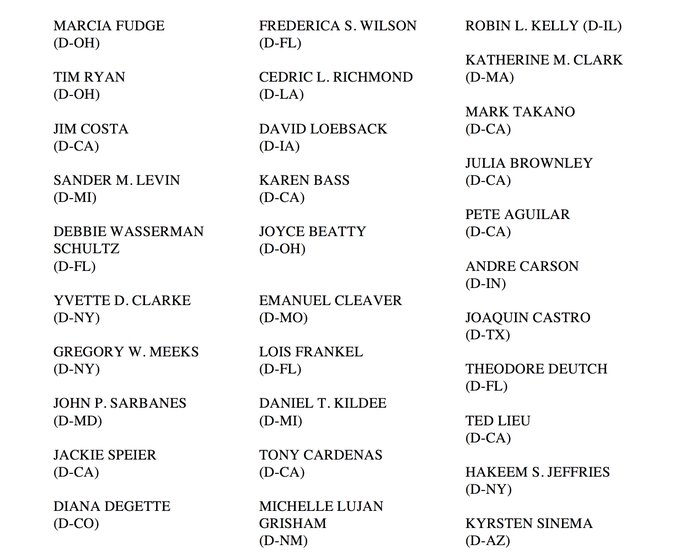
Some of the #Democrats who had Pakistani IT workers (currently under investigation) on their payroll. #AwanBrothershttp://dailycaller.com/2017/03/01/pakistani-suspects-in-house-it-probe-received-4-million-from-dem-reps/#ixzz4aChUeg00?print=1 …


For those who have managed to avoid this story, which wouldn’t be difficult given that the mainstream media has made every attempt to ignore it, the Pakistani-born brothers Abid, Imran, and Jamal Awan are at the center of a criminal investigation by U.S. Capital Hill Police and the FBI. Up until now, allegations of wrong doing have varied from overcharging taxpayers for congressional IT equipment to blackmailing members of Congress with secrets captured from the emails of their Democrat employers.
Just yesterday we learned that FBI agents reportedly seized a number of “smashed hard drives” and other computer equipment from the Awan’s former residence in Virginia.
FBI agents seized smashed computer hard drives from the home of Florida Democratic Rep. Debbie Wasserman Schultz’s information technology (IT) administrator, according to an individual who was interviewed by Bureau investigators in the case and a high level congressional source.
Pakistani-born Imran Awan, long-time right-hand IT aide to the former Democratic National Committee (DNC) Chairwoman, has since desperately tried to get the hard drives back, the individual told The Daily Caller News Foundation’s Investigative Group.
The congressional source, speaking on condition of anonymity because of the sensitivity of the probe, confirmed that the FBI has joined what Politico previously described as a Capitol Police criminal probe into “serious, potentially illegal, violations on the House IT network” by Imran and three of his relatives, who had access to the emails and files of the more than two dozen House Democrats who employed them on a part-time basis.
Capitol Police have also seized computer equipment tied to the Florida lawmaker.

As background, Imran was first employed in 2004 by former Democrat Rep. Robert Wexler (FL) as an “information technology director”, before he began working in Rep. Debbie Wasserman Schultz’s office in 2005.
The family was paid extremely well, with Imran Awan being paid nearly $2 million working as an IT support staffer for House Democrats since 2004.Abid Awan and his wife, Hina Alvi, were each paid more than $1 million working for House Democrats. In total, since 2003, the family has collected nearly $5 million.
The staffer’s services were so important to congressional members, that on March 22, 2016, eight democrat members of the House Permanent Select Committee on Intelligence issued a letter, requesting that their staffers be granted access to Top Secret Sensitive Compartmented Information (TS/SCI). Of those that signed the letter were representatives Jackie Speier (CA) and Andre Carson (IN), the second Muslim in Congress, both of whom employed the Awan brothers.
The brothers were also employed by members of the House Permanent Select Committee on Intelligence and the House Committee on Foreign Affairs, such as: Jackie Speier (D-CA), Andre Carson (D-IN), Joaquín Castro (D-TX), Lois Frankel (D-FL), Robin Kelly (D-IL), and Ted Lieu (D-CA). Lieu has since openly called for leaks by members of President Trump’s administration despite the fact that he may until recently have been under surveillance by a foreign entity.
One bombshell that has been all but ignored by the main stream media is that Imran Awan had access to Debbie Wasserman Schultz’s iPad password, meaning that the brothers also had direct access to the notorious DNC emails.
The brothers are accused of removing hundreds of thousands of dollars of equipment from congressional offices, including computers and servers, while also running a procurement scheme in which they bought equipment, then overcharged the House administrative office that assigns such contractors to members.
Some congressional technology aides believe that the Awan’s are blackmailing representatives based on the contents of their emails and files, due to the fact that these representatives have displayed unwavering and intense loyalty towards the former aides.
Meanwhile, back in March the Daily Caller reported that the Awan brothers were essentially holding their stepmother in “captivity” in order to extort her for money she had stashed away in Pakistan.
Congressional staffers allegedly held their stepmother in “captivity” with violent threats in a plan to use her to access money stashed away in the Middle East. The staffers are suspected of using their positions to enrich themselves.
Days before U.S. Capitol Police told House members three Pakistani brothers who ran their computer networks may have stolen congressional data, their stepmother called Fairfax County, Virginia police to say the Democratic staffers were keeping her from her husband’s deathbed.
A relative described the woman’s life as being completely controlled by the brothers for months while they schemed to take their father’s life insurance.
The brothers — who as IT professionals for Congress could read House members’ emails — allegedly used wiretapping devices on their own stepmother and threatened to abduct loved ones in Pakistan if she didn’t give them access to money stowed away in that country.
Of course, if Republicans and/or members of the Trump administration hired foreign-born IT specialists who were suspected of committing a laundry list of federal crimes and then smashed a bunch of hard drives just before skipping town…we’re sure the media would still gloss right over it in much the same way they’re doing for the the Democrats in this instance.
end
Then from the website Duran:
(remember a few months ago we told you that the brothers were the likely leakers of DNC emails)
these guys may have been the ones who leaked all the DNC emails
Debbie Wasserman-Schultz’s IT specialist, accused of hacking congressional computers, busted trying to flee US

In late May, The Duran reported on how House Democrats are being blackmailed by IT staffers, who have collected dirt on politicians.
Imran Awan and three relatives involved in the IT business, with suspiciously “unbreakable” ties to the DNC, Debbie Wasserman-Schultz and many Democrats in Congress, were under investigation by Capitol Police for accessing congressional computers without permission…i.e. hacking the DNC. Sound familiar.
Five Capitol Hill technology aides told The Daily Caller that members of Congress have displayed an inexplicable and intense loyalty towards the suspects who police say victimized them.
This has left many IT companies working on Capitol Hill left to wonder if the Awan IT team are blackmailing representatives based on the contents of their emails and files, to which they had full access.
Fast forward to present day, and The Daily Caller is now reporting that Wasserman-Schultz’s IT golden boy, Imran Awan, has been arrested while attempting to flee the United States, after being charged with bank fraud.
As Zerohedge reports, just a day after reports emerged that the FBI had seized a number of “smashed hard drives” and other computer equipment from the residence Imran Awan, the IT aide of Debbie Wasserman-Schultz, we learn that Awan has been captured at the Dulles airport while attempted to flee the country. According to Fox News, Awan has been charged with bank fraud.
Feds/USCP bust Hse IT staffer Imran Awan & charge him with multiple counts of bank fraud as part of Hse IT procurement scandal
Feds/USCP picked up Imran Awan at Dulles Aiport last night as he was “trying to leave the country.” Has been arraigned. Surrendered passport
Despite scandal and suspicion of illegal activity, Awan has been kept on the payroll of former DNC Chair Debbie Wasserman-Schultz…
Group of Hse Dems fired other Hse IT staffers probed by USCP. But Wasserman Schultz kept Awan on payroll. He was barred from Hse servers
Fox is told that Hse IT staffer Imran Awan is still on Hse payroll for moment under Wasserman Schultz.
Wasserman-Schultz was not the only Democrat benefiting from Awan’s “IT services”. Here is a list of 30 Democrats that had Awan’s IT outfit on their payrolls.
Some of the #Democrats who had Pakistani IT workers (currently under investigation) on their payroll. #AwanBrothershttp://dailycaller.com/2017/03/01/pakistani-suspects-in-house-it-probe-received-4-million-from-dem-reps/#ixzz4aChUeg00?print=1 …
For those who have managed to avoid this story, which wouldn’t be difficult given that the mainstream media has made every attempt to ignore it, the Pakistani-born brothers Abid, Imran, and Jamal Awan are at the center of a criminal investigation by U.S. Capital Hill Police and the FBI. Up until now, allegations of wrong doing have varied from overcharging taxpayers for congressional IT equipment to blackmailing members of Congress with secrets captured from the emails of their Democrat employers.
Just yesterday we learned that FBI agents reportedly seized a number of “smashed hard drives” and other computer equipment from the Awan’s former residence in Virginia.
FBI agents seized smashed computer hard drives from the home of Florida Democratic Rep. Debbie Wasserman Schultz’s information technology (IT) administrator, according to an individual who was interviewed by Bureau investigators in the case and a high level congressional source.
Pakistani-born Imran Awan, long-time right-hand IT aide to the former Democratic National Committee (DNC) Chairwoman, has since desperately tried to get the hard drives back, the individual told The Daily Caller News Foundation’s Investigative Group.
The congressional source, speaking on condition of anonymity because of the sensitivity of the probe, confirmed that the FBI has joined what Politico previously described as a Capitol Police criminal probe into “serious, potentially illegal, violations on the House IT network” by Imran and three of his relatives, who had access to the emails and files of the more than two dozen House Democrats who employed them on a part-time basis.
Capitol Police have also seized computer equipment tied to the Florida lawmaker.
FBI agents seized smashed computer hard drives from the home of Florida Democratic Rep. Debbie Wasserman Schultz’s information technology (IT) administrator, according to an individual who was interviewed by Bureau investigators in the case and a high level congressional source.
Pakistani-born Imran Awan, long-time right-hand IT aide to the former Democratic National Committee (DNC) Chairwoman, has since desperately tried to get the hard drives back, the individual told The Daily Caller News Foundation’s Investigative Group.
The congressional source, speaking on condition of anonymity because of the sensitivity of the probe, confirmed that the FBI has joined what Politico previously described as a Capitol Police criminal probe into “serious, potentially illegal, violations on the House IT network” by Imran and three of his relatives, who had access to the emails and files of the more than two dozen House Democrats who employed them on a part-time basis.
Capitol Police have also seized computer equipment tied to the Florida lawmaker.
Meanwhile, back in March the Daily Caller reported that the Awan brothers were essentially holding their stepmother in “captivity” in order to extort her for money she had stashed away in Pakistan.
Congressional staffers allegedly held their stepmother in “captivity” with violent threats in a plan to use her to access money stashed away in the Middle East. The staffers are suspected of using their positions to enrich themselves.
Days before U.S. Capitol Police told House members three Pakistani brothers who ran their computer networks may have stolen congressional data, their stepmother called Fairfax County, Virginia police to say the Democratic staffers were keeping her from her husband’s deathbed.
A relative described the woman’s life as being completely controlled by the brothers for months while they schemed to take their father’s life insurance.
The brothers — who as IT professionals for Congress could read House members’ emails — allegedly used wiretapping devices on their own stepmother and threatened to abduct loved ones in Pakistan if she didn’t give them access to money stowed away in that country.
Of course, if Republicans and/or members of the Trump administration hired foreign-born IT specialists who were suspected of committing a laundry list of federal crimes and then smashed a bunch of hard drives just before skipping town…we’re sure the media would still gloss right over it in much the same way they’re doing for the the Democrats in this instance.
end
Relentless tweets from Trump towards Attorney General Sessions for not replacing acting FBI director McCabe
and he is right:
(courtesy zero hedge)
Trump Relentlessly Blasts Attorney General Sessions Yet Again In Fiery Tweet Storm
Trump seems to be ignoring calls from almost everyone, from both sides of the aisle, in Congress to tone down the attacks on his own Attorney General.
In his latest tweet storm, Trump blasts Sessions for not replacing Acting FBI Director Andrew McCabe who was inexplicably allowed by Comey to oversee the Clinton email investigation despite the fact that his wife received substantial funding from Hillary Clinton ally Terry McAuliffe to fund her Senate campaign.
“Why didn’t A.G. Sessions replace Acting FBI Director Andrew McCabe, a Comey friend who was in charge of Clinton investigation but got big dollars ($700,000) for his wife’s political run from Hillary Clinton and her representatives. Drain the Swamp!”
Why didn’t A.G. Sessions replace Acting FBI Director Andrew McCabe, a Comey friend who was in charge of Clinton investigation but got….

…big dollars ($700,000) for his wife’s political run from Hillary Clinton and her representatives. Drain the Swamp!
We wrote about the rather curious campaign funding revelations last October (see: Prominent Democrat Connected To Clintons Donated $675,000 To Campaign Of Deputy FBI Director’s Wife).
The latest allegation of potential impropriety and conflict of interest involving the Democratic Party and the FBI, which over the summer famously cleared Hillary Clinton of any criminal wrongdoing as relates to her personal email server, comes not from a Podesta email or a Wikileaks disclosure, but the WSJ which overnight reported that the political organization of Virginia Govenor Terry McAuliffe, an influential Democrat with longstanding ties to Bill and Hillary Clinton, gave nearly $500,000 to the election campaign of the wife of an official at the Federal Bureau of Investigation who later helped oversee the investigation into Mrs. Clinton’s email use.
Campaign finance records show Mr. McAuliffe’s political-action committee donated $467,500 to the 2015 state Senate campaign of Dr. Jill McCabe, who is married to Andrew McCabe, now the deputy director of the FBI.
The WSJ adds that the Virginia Democratic Party, over which Mr. McAuliffe exerts considerable control, donated an additional $207,788 worth of support to Dr. McCabe’s campaign in the form of mailers, according to the records. That adds up to slightly more than $675,000 to her candidacy from entities either directly under Mr. McAuliffe’s control or strongly influenced by him. The figure represents more than a third of all the campaign funds Dr. McCabe raised in the effort.
Seems that Sessions isn’t off the hook just yet.
end
Then late in the afternoon, we hear that Jeff Sessions is to announce investigations into all the leaks from various staff members. Obviously the Trump outbursts has caused Sessions to act
(courtesy zerohedge)
Sessions To Announce Leak Investigations Following Several Trump Outbursts
After a week of being publicly blasted by President Trump, Attorney General Jeff Sessions is reportedly preparing to launch a series of investigations into leaks that have emanated from various intelligence agencies since Trump’s election last November.
The first word of the leak investigations was leaked, as ironic as that is, to The Washington Post yesterday after a couple of anonymous “U.S. officials” said that Sessions and the Justice Department were preparing to announce more criminal investigations into leaks of sensitive intelligence that have appeared in media reports.
Meanwhile, Trump’s new Communications Director, Anthony Scaramucci, appeared on Fox & Friends earlier this morning to confirm the same.
“I think he [Sessions] has a plan that he’s put together, and at some point, I don’t know if it will be today or tomorrow or next week, he’ll announce that plan.”
“We have to crack down on leaks on a number of different fronts. There seems to be a number of holdovers from the Obama administration that are not helping.”
Of course, the Sessions investigation announcement will come only after the Attorney General suffered through days of very public outbursts from the President…outbursts which the mainstream media will undoubtedly continue to portray as an attempt by the White House to coerce the DOJ into launching a ‘witch hunt’ to track down their anonymous sources and conceal all that “Russian collusion” evidence that has so far evaded them.
Speaking at a press conference in the Rose Garden just yesterday, Trump said the following…
“I want the attorney general to be much tougher on the leaks from intelligence agencies which are leaking like rarely have they ever leaked before at a very important level. These are intelligence agencies, we can not have that happen.”
…and went on to imply that Sessions’ job may hinge on his ability to crack down on the persistent leaks…
“I’m very disappointed with the Attorney General. But we will see what happens. Time will tell. Time will tell.”
Meanwhile, the A.G. has also been blasted in series of recent tweet storms from the President for everything from recusing himself from the ‘Russian Investigation’ to failing to pursue Hillary’s past transgressions.
Why didn’t A.G. Sessions replace Acting FBI Director Andrew McCabe, a Comey friend who was in charge of Clinton investigation but got….
…big dollars ($700,000) for his wife’s political run from Hillary Clinton and her representatives. Drain the Swamp!
Attorney General Jeff Sessions has taken a VERY weak position on Hillary Clinton crimes (where are E-mails & DNC server) & Intel leakers!
Problem is that the acting head of the FBI & the person in charge of the Hillary investigation, Andrew McCabe, got $700,000 from H for wife!
Of course, with 1,000’s of people employed by our various intelligence agencies, people who are highly skilled at covering their tracks, we, for some reason, suspect that Sessions will find it difficult to meaningfully slow the pace of anonymously-sourced stories hitting the New York Times and Washington Post.
END
The more important of the home sales, is the report on new home sales as it details how the construction industry is behaving.
New home sales disappoint
(courtesy zerohedge)
New Home Sales Disappoint As Median Price Drops Year-Over-Year
After disappointing existing home sales (following a notable drop in homebuilder confidence), new home sales modestly disappointed in June (610k vs 615k exp) with a small downward revision to May…

(the 3rd downward revision in the last 4 months).

Perhaps more notable is the 3% drop in median home prices YoY following a big downward revision in May (from record $345,800 to $324,300).

Of course, homebuilders remain blissfuly ignorant of the actual state of the housing ‘recovery’ – with the biggest gap between hope and home sales ever…

And as the real estate market’s data collapses, optimism remains…

We will see you THURSDAY night
Harvey.


 harveyorganblog.com
[…] JULY 26/DOVISH FED WITH ‘LACK OF INFLATION’ SENDS GOLD AND SILVER SOARING AFTER COMEX CL… […]
LikeLike