
March 9, 2022 · by harveyorgan · in Uncategorized · Leave a comment·Edit
MARCH 9
GOLD; $1984.15.00 DOWN $53.85
SILVER: $25.54 DOWN $0.88
ACCESS MARKET: GOLD $1991.55
SILVER: $25.77
Bitcoin morning price: $42,006 UP 3317
Bitcoin: afternoon price: $41,951 UP 3262
Platinum price: closing DOWN $79.10 to $1076.55
Palladium price; closing DOWN $249.30 at $2922.20
END
end
DONATE
Click here if you wish to send a donation. I sincerely appreciate it as this site takes a lot of preparation
comex notices/
March: JPMorgan stopped/total issued 297/1205
EXCHANGE: COMEX
CONTRACT: MARCH 2022 COMEX 100 GOLD FUTURES
SETTLEMENT: 2,040.100000000 USD
INTENT DATE: 03/08/2022 DELIVERY DATE: 03/10/2022
FIRM ORG FIRM NAME ISSUED STOPPED
072 C GOLDMAN 42
104 C MIZUHO 79
118 C MACQUARIE FUT 85
363 H WELLS FARGO SEC 131
435 H SCOTIA CAPITAL 88
624 H BOFA SECURITIES 354
657 C MORGAN STANLEY 38
657 H MORGAN STANLEY 90
661 C JP MORGAN 297
661 H JP MORGAN 1022
685 C RJ OBRIEN 1
690 C ABN AMRO 8
737 C ADVANTAGE 2 30
800 C MAREX SPEC 36 34
905 C ADM 21 52
TOTAL: 1,205 1,205
MONTH TO DATE: 7,968
NUMBER OF NOTICES FILED TODAY FOR Mar. CONTRACT:1205 NOTICE(S) FOR 120,500 OZ (3.7480 TONNES)
total notices so far: 7968 contracts for 796,800 oz (24.783 tonnes)
SILVER NOTICES:
980 NOTICE(S) FILED TODAY FOR 4,900,000 OZ/
total number of notices filed so far this month 9186 : for 45,930.000 oz
END
Russia is a major supplier of silver to London while Mexico supplies the COMEX
With the sanctions, London has no way to obtain silver other than compete with NY.
END
GLD
WITH GOLD DOWN $53.85
WITH RESPECT TO GLD WITHDRAWALS: (OVER THE PAST FEW MONTHS):
GOLD IS “RETURNED” TO THE BANK OF ENGLAND WHEN CALLING IN THEIR LEASES: THE GOLD NEVER LEAVES THE BANK OF ENGLAND IN THE FIRST PLACE. THE BANK IS PROTECTING ITSELF IN CASE OF COMMERCIAL FAILURE
ALSO INVESTORS SWITCHING TO SPROTT PHYSICAL (phys) INSTEAD OF THE FRAUDULENT GLD//
STRANGE!! A HUGE CHANGE IN GLD INVENTORY
INVENTORY RESTS AT 1067.34 TONNES
Silver//SLV
WITH NO SILVER AROUND AND SILVER DOWN $0.88
AT THE SLV//
INVESTORS ARE SWITCHING SLV TO SPROTT’S PSLV
A HUGE CHANGE IN SILVER INVENTORY AT THE SLV//A WITHDRAWAL OF 5.174 MILLION OZ FROM THE SLV//
FROM THE SLV.
CLOSING INVENTORY: 542.897 MILLION OZ
Let us have a look at the data for today
SILVER//OUTLINE
SILVER COMEX OI ROSE BY A STRONG 1263 CONTRACTS TO 168,283 AND CLOSER TO THE NEW RECORD OF 244,710, SET FEB 25/2020 AND WITH THIS HUGE GAIN IN OI, IT WAS ACCOMPANIED WITH OUR STRONG $0.88 GAIN IN SILVER PRICING AT THE COMEX ON TUESDAY. OUR BANKERS WERE UNSUCCESSFUL IN KNOCKING THE PRICE OF SILVER DOWN (IT ROSE BY $0.88) AND WERE UNSUCCESSFUL IN KNOCKING OUT ANY SILVER LONGS AS WE HAD A MONSTER GAIN OF 6492 CONTRACTS ON OUR TWO EXCHANGES
WE MUST HAVE HAD:
I) HUGE BANKER SHORT COVERING AS THEY ARE VERY ANXIOUS TO GET OUT OF DODGE!!/. II)WE ALSO HAD SOME REDDIT RAPTOR BUYING//. iii) A GIGANTIC ISSUANCE OF EXCHANGE FOR PHYSICALS iiii) A HUGE INITIAL SILVER STANDING FOR COMEX SILVER MEASURING AT 42.860 MILLION OZ FOLLOWED BY TODAY’S QUEUE JUMP OF 6,320,000 OZ //NEW STANDING 48.290 MILLION OZ // V) VERY STRONG SIZED COMEX OI GAIN/
I AM NOW RECORDING THE DIFFERENTIAL IN OI FROM PRELIMINARY TO FINAL:
THE DIFFERENTIAL FROM PRELIMINARY OI TO FINAL OI SILVER TODAY: CONTRACTS : —723
HISTORICAL ACCUMULATION OF EXCHANGE FOR PHYSICALS MAR. ACCUMULATION FOR EFP’S SILVER/JPMORGAN’S HOUSE OF BRIBES/STARTING FROM FIRST DAY/MONTH OF MAR:
TOTAL CONTACTS for 7 days, total contracts: : 20,568 contracts or 102.840 million oz OR 14.691 MILLION OZ PER DAY. (2938 CONTRACTS PER DAY)
TOTAL NO OF OZ UNDERGOING EFP TO LONDON 20,568 CONTRACTS X 5,000 PER CONTRACT:
EQUATES TO: 102,84 MILLION OZ
.
LAST 11 MONTHS TOTAL EFP CONTRACTS ISSUED IN MILLIONS OF OZ:
MAY 137.83 MILLION
JUNE 149.91 MILLION OZ
JULY 129.445 MILLION OZ
AUGUST: MILLION OZ 140.120
SEPT. 28.230 MILLION OZ//
OCT: 94.595 MILLION OZ
NOV: 131.925 MILLION OZ
DEC: 100.615 MILLION OZ
JAN 2022// 90.460 MILLION OZ
FEB 2022: 72.39 MILLION OZ//
MARCH: 102.84 MILLION OZ//THIS IS GOING TO BE A HUGE EFP ISSUANCE MONTH AND MOST LIKELY WILL SET A RECORD FOR ANY MONTH
RESULT: WE HAD A STRONG SIZED INCREASE IN COMEX OI SILVER COMEX CONTRACTS OF 1263 WITH OUR STRONG $0.88 GAIN SILVER PRICING AT THE COMEX// TUESDAY THE CME NOTIFIED US THAT WE HAD A GIGANTIC SIZED EFP ISSUANCE OF 4506 CONTRACTS( 4506 CONTRACTS ISSUED FOR MAR AND 0 CONTRACTS ISSUED FOR ALL OTHER MONTHS) WHICH EXITED OUT OF THE SILVER COMEX TO LONDON AS FORWARDS THE DOMINANT FEATURE TODAY: /HUGE BANKER SHORT COVERING AS THEY GET OUT OF DODGE//// WE HAVE A HUGE INITIAL SILVER OZ STANDING FOR MAR. OF 42.860 MILLION OZ FOLLOWED BY TODAY’S 6,290,000 OZ QUEUE JUMP /// .. WE HAD A VERY STRONG SIZED GAIN OF 5769 OI CONTRACTS ON THE TWO EXCHANGES FOR 28.845 MILLION OZ
WE HAD 980 NOTICES FILED TODAY FOR 4,900,,000 OZ
GOLD//OUTLINE
IN GOLD, THE COMEX OPEN INTEREST FELL BY A STRONG SIZED 7209 CONTRACTS TO 640,612 AND FURTHER FROM OUR NEW RECORD (SET JAN 24/2020) AT 799,541 AND PREVIOUS TO THAT: (SET JAN 6/2020) AT 797,110.
THE DIFFERENTIAL FROM PRELIMINARY OI TO FINAL OI IN GOLD TODAY: –2110 CONTRACTS.
THE BIS HAS ABANDONED THE GOLD COMEX TRADING!!!
.
THE STRONG SIZED DECREASE IN COMEX OI CAME DESPITE OUR HUGE GAIN IN PRICE OF $46.10//COMEX GOLD TRADING/TUESDAY/.AS IN SILVER WE MUST HAD HUGE BANKER/ALGO SHORT COVERING ACCOMPANYING OUR HUGE SIZED EXCHANGE FOR PHYSICAL ISSUANCE. WE HAD ZERO LONG LIQUIDATION AS THE TOTAL GAIN ON OUR TWO EXCHANGES TOTALED A GOOD 4121 CONTRACTS…
WE ALSO HAD A HUGE INITIAL STANDING IN GOLD TONNAGE FOR MARCH AT 14.818 TONNES FOLLOWED BY TODAY’S QUEUE JUMP OF 151,300 OZ//NEW STANDING 29.390 TONNES
YET ALL OF..THIS HAPPENED WITH OUR GAIN IN PRICE OF $46.10 WITH RESPECT TO MONDAY’S TRADING
WE HAD AN GOOD SIZED GAIN OF 4121 OI CONTRACTS (12.818 PAPER TONNES) ON OUR TWO EXCHANGES
E.F.P. ISSUANCE
THE CME RELEASED THE DATA FOR EFP ISSUANCE AND IT TOTALED A GIGANTIC SIZED 13,330 CONTRACTS:
The NEW COMEX OI FOR THE GOLD COMPLEX RESTS AT 638,502.
IN ESSENCE WE HAVE A GOOD SIZED INCREASE IN TOTAL CONTRACTS ON THE TWO EXCHANGES OF 4121, WITH 5099 CONTRACTS DECREASED AT THE COMEX AND 13,330 EFP OI CONTRACTS WHICH NAVIGATED OVER TO LONDON. THUS TOTAL OI GAIN ON THE TWO EXCHANGES OF 4121 CONTRACTS OR 12,818 TONNES.
CALCULATIONS ON GAIN/LOSS ON OUR TWO EXCHANGES
WE HAD A STRONG SIZED ISSUANCE IN EXCHANGE FOR PHYSICALS (11330) ACCOMPANYING THE GOOD SIZED LOSS IN COMEX OI (7209,): TOTAL GAIN IN THE TWO EXCHANGES 4121 CONTRACTS. WE NO DOUBT HAD 1) HUGE BANKER SHORT COVERING ,2.) HUGE INITIAL STANDING AT THE GOLD COMEX FOR MARCH. AT 14.818 TONNES FOLLOWED BY TODAY’S MAMMOTH QUEUE JUMP OF 151,300 OZ//NEW STANDING 29.390 TONNES /// 3) ZERO LONG LIQUIDATION/. ,4) STRONG SIZED COMEX OI. LOSS 5) GIGANTIC ISSUANCE OF EXCHANGE FOR PHYSICAL/
HISTORICAL ACCUMULATION OF EXCHANGE FOR PHYSICALS IN 2022 INCLUDING TODAY
MARCH
ACCUMULATION OF EFP’S GOLD AT J.P. MORGAN’S HOUSE OF BRIBES: (EXCHANGE FOR PHYSICAL) FOR THE MONTH OF MAR :
45,453 CONTRACTS OR 4,545,300 OR 141.37 TONNES 7 TRADING DAY(S) AND THUS AVERAGING: 649 EFP CONTRACTS PER TRADING DAY
TO GIVE YOU AN IDEA AS TO THE SIZE OF THESE EFP TRANSFERS : THIS MONTH IN 7 TRADING DAY(S) IN TONNES: 141.37TONNES
TOTAL ANNUAL GOLD PRODUCTION, 2020, THROUGHOUT THE WORLD EX CHINA EX RUSSIA: 3555 TONNES
THUS EFP TRANSFERS REPRESENTS 141,37/3550 x 100% TONNES 3.97% OF GLOBAL ANNUAL PRODUCTION
ACCUMULATION OF GOLD EFP’S YEAR 2021 TO 2022
JANUARY/2021: 265.26 TONNES (RAPIDLY INCREASING AGAIN)
FEB : 171.24 TONNES ( DEFINITELY SLOWING DOWN AGAIN)..
MARCH:. 276.50 TONNES (STRONG AGAIN/
APRIL: 189..44 TONNES ( DRAMATICALLY SLOWING DOWN AGAIN//GOLD IN BACKWARDATION)
MAY: 250.15 TONNES (NOW DRAMATICALLY INCREASING AGAIN)
JUNE: 247.54 TONNES (FINAL)
JULY: 188.73 TONNES FINAL
AUGUST: 217.89 TONNES FINAL ISSUANCE.
SEPT 142.12 TONNES FINAL ISSUANCE ( LOW ISSUANCE)_
OCT: 141.13 TONNES FINAL ISSUANCE (LOW ISSUANCE)
NOV: 312.46 TONNES FINAL ISSUANCE//NEW RECORD!! (INCREASING DRAMATICALLY)//SIGN OF REAL STRESS//SURPASSING THE MARCH 2021 RECORD OF 276.50 TONNES OF EFP
DEC. 145.12 TONNES//FINAL ISSUANCE//
JAN:2022 247.25 TONNES //FINAL
FEB: 196.04 TONNES//FINAL
MARCH: 141.37 TONNES INITIAL( THIS WILL PROBABLY BE A RECORD EFP ISSUANCE MONTH)
SPREADING OPERATIONS
(/NOW SWITCHING TO GOLD) FOR NEWCOMERS, HERE ARE THE DETAILS
SPREADING LIQUIDATION HAS NOW COMMENCED AS WE HEAD TOWARDS THE NEW ACTIVE FRONT MONTH OF APRIL.WE ARE NOW INTO THE SPREADING OPERATION OF GOLD
HERE IS A BRIEF SYNOPSIS OF HOW THE CROOKS FLEECE UNSUSPECTING LONGS IN THE SPREADING ENDEAVOUR ;MODUS OPERANDI OF THE CORRUPT BANKERS AS TO HOW THEY HANDLE THEIR SPREAD OPEN INTERESTS:HERE IS HOW THE CROOKS USED SPREADING AS WE ARE NOW INTO THE NON ACTIVE DELIVERY MONTH OF MARCH HEADING TOWARDS THE ACTIVE DELIVERY MONTH OF APRIL, FOR GOLD:
YOU WILL ALSO NOTICE THAT THE COMEX OPEN INTEREST STARTS TO RISE BUT SO IS THE OPEN INTEREST OF SPREADERS. THE OPEN INTEREST IN WILL CONTINUE TO RISE UNTIL ONE WEEK BEFORE FIRST DAY NOTICE OF AN UPCOMING ACTIVE DELIVERY MONTH (MAR), AND THAT IS WHEN THE CROOKS SELL THEIR SPREAD POSITIONS BUT NOT AT THE SAME TIME OF THE DAY. THEY WILL USE THE SELL SIDE OF THE EQUATION TO CREATE THE CASCADE (ALONG WITH THEIR COLLUSIVE FRIENDS) AND THEN COVER ON THE BUY SIDE OF THE SPREAD SITUATION AT THE END OF THE DAY. THEY DO THIS TO AVOID POSITION LIMIT DETECTION. THE LIQUIDATION OF THE SPREADING FORMATION CONTINUES FOR EXACTLY ONE WEEK AND ENDS ON FIRST DAY NOTICE.”
WHAT IS ALARMING TO ME, ACCORDING TO OUR LONDON EXPERT ANDREW MAGUIRE IS THAT THESE EFP’S ARE BEING TRANSFERRED TO WHAT ARE CALLED SERIAL FORWARD CONTRACT OBLIGATIONS AND THESE CONTRACTS ARE LESS THAN 14 DAYS. ANYTHING GREATER THAN 14 DAYS, THESE MUST BE RECORDED AND SENT TO THE COMPTROLLER, GREAT BRITAIN TO MONITOR RISK TO THE BANKING SYSTEM. IF THIS IS INDEED TRUE, THEN THIS IS A MASSIVE CONSPIRACY TO DEFRAUD AS WE NOW WITNESS A MONSTROUS TOTAL EFP’S ISSUANCE AS IT HEADS INTO THE STRATOSPHERE.
First, here is an outline of what will be discussed tonight:
1.Today, we had the open interest at the comex, in SILVER, ROSE BY A STRONG SIZED 1263 CONTRACTS TO 168,283 AND CLOSER TO OUR COMEX RECORD //244,710(SET FEB 25/2020). THE LAST RECORDS WERE SET IN AUG.2018 AT 244,196 WITH A SILVER PRICE OF $14.78/(AUGUST 22/2018)..THE PREVIOUS RECORD TO THAT WAS SET ON APRIL 9/2018 AT 243,411 OPEN INTEREST CONTRACTS WITH THE SILVER PRICE AT THAT DAY: $16.53). AND PREVIOUS TO THAT, THE RECORD WAS ESTABLISHED AT: 234,787 CONTRACTS, SET ON APRIL 21.2017 OVER 4 1/2 YEARS AGO.
EFP ISSUANCE 4506 CONTRACTS
OUR CUSTOMARY MIGRATION OF COMEX LONGS CONTINUE TO MORPH INTO LONDON FORWARDS AS OUR BANKERS USED THEIR EMERGENCY PROCEDURE TO ISSUE:
MAR 4506 ALL OTHER MONTHS: ZERO. TOTAL EFP ISSUANCE: 4506 CONTRACTS. EFP’S GIVE OUR COMEX LONGS A FIAT BONUS PLUS A DELIVERABLE PRODUCT OVER IN LONDON. IF WE TAKE THE COMEX OI GAIN OF 1986 CONTRACTS AND ADD TO THE 4506 OI TRANSFERRED TO LONDON THROUGH EFP’S,
WE OBTAIN A VERY STRONG SIZED GAIN OF 5769 OPEN INTEREST CONTRACT FROM OUR TWO EXCHANGES.
THUS IN OUNCES, THE GAIN ON THE TWO EXCHANGES 28.845 MILLION OZ,
OCCURRED WITH OUR $0.88 GAIN IN PRICE.
OUTLINE FOR TODAY’S COMMENTARY
1/COMEX GOLD AND SILVER REPORT
(report Harvey)
2 ) Gold/silver trading overnight Europe,
(Peter Schiff,
3. Egon von Greyerz///Matthew Piepenburg via GoldSwitzerland.com,
4. Chris Powell of GATA provides to us very important physical commentaries
5. Other gold commentaries
6. Commodity commentaries/cryptocurrencies
3. ASIAN AFFAIRS
i)WEDNESDAY MORNING// TUESDAY NIGHT
SHANGHAI CLOSED DOWN 37.14 PTS OR 1.13% //Hang Sang CLOSED DOWN 138.16 PTS OR 0.67 % /The Nikkei closed DOWN 73,42 PTS or 0.30% //Australia’s all ordinaires CLOSED UP 1.09% /Chinese yuan (ONSHORE) closed UP 6.3178 /Oil DOWN TO 119.38 dollars per barrel for WTI and DOWN TO 124.58 for Brent. Stocks in Europe OPENED ALL GREEN // ONSHORE YUAN CLOSED UP AGAINST THE DOLLAR AT 6.3178. OFFSHORE YUAN CLOSED UP ON THE DOLLAR AT 6.3238: /ONSHORE YUAN TRADING ABOVE LEVEL OF OFFSHORE YUAN/ONSHORE YUAN TRADING STRONGER AGAINST USA DOLLAR/OFF SHORE STRONGER//
A)NORTH KOREA/
b) REPORT ON JAPAN
OUTLINE
3 C CHINA
OUTLINE
4/EUROPEAN AFFAIRS
OUTLINE
5. RUSSIAN AND MIDDLE EASTERN AFFAIRS
OUTLINE
6.Global Issues
OUTLINE
7. OIL ISSUES
OUTLINE
8 EMERGING MARKET ISSUES
COMEX DATA//AMOUNTS STANDING//VOLUME OF TRADING/INVENTORY MOVEMENTS
GOLD
LET US BEGIN:
THE TOTAL COMEX GOLD OPEN INTEREST FELL BY A STRONG SIZED 7209 CONTRACTS AND FURTHER FROM THE RECORD THAT WAS SET IN JANUARY/2020: {799,541 OI(SET JAN 16/2020)} AND PREVIOUS TO THAT: 797,110 (SET JAN 7/2020). AND THIS COMEX INCREASE OCCURRED WITH OUR STRONG GAIN OF $46.10 IN GOLD PRICING MONDAY’S COMEX TRADING. WE ALSO HAD A GOODSIZED EFP (4900 CONTRACTS). . THEY WERE PAID HANDSOMELY NOT TO TAKE DELIVERY AT THE COMEX AND SETTLE FOR CASH.
WE NORMALLY HAVE WITNESSED EXCHANGE FOR PHYSICALS ISSUED BEING SMALL AS IT JUST TOO COSTLY FOR THEM TO CONTINUE SERVICING THE COSTS OF SERIAL FORWARDS CIRCULATING IN LONDON. HOWEVER, MUCH TO THE ANNOYANCE OF OUR BANKERS, THE COMEX IS THE SCENE OF AN ASSAULT ON GOLD AS LONDONERS, NOT BEING ABLE TO FIND ANY PHYSICAL ON THAT SIDE OF THE POND, EXERCISE THESE CIRCULATING EXCHANGE FOR PHYSICALS IN LONDON AND FORCING DELIVERY OF REAL METAL OVER HERE AS THE OBLIGATION STILL RESTS WITH NEW YORK BANKERS. IT SEEMS THAT ARE BANKERS FRIENDS ARE EXERCISING EFP’S FROM LONDON AND NOW THEY ARE LOATHE TO ISSUE NEW ONES.
EXCHANGE FOR PHYSICAL ISSUANCE
WE ARE NOW MOVING TO THE NON ACTIVE DELIVERY MONTH OF MAR.. THE CME REPORTS THAT THE BANKERS ISSUED A GIGANTIC SIZED TRANSFER THROUGH THE EFP ROUTE AS THESE LONGS RECEIVED A DELIVERABLE LONDON FORWARD TOGETHER WITH A FIAT BONUS.,
THAT IS 11,330 EFP CONTRACTS WERE ISSUED: ;: , & FEB. 0 APRIL:11330 & ZERO FOR ALL OTHER MONTHS:
TOTAL EFP ISSUANCE: 11,330 CONTRACTS
WHEN WE HAVE BACKWARDATION, EFP ISSUANCE IS VERY COSTLY BUT THE REAL PROBLEM IS THE SCARCITY OF METAL AND IT IS FAR BETTER FOR OUR BANKERS TO PAY OFF INDIVIDUALS THAN RISK INVESTORS ESPECIALLY FROM LONDON STANDING FOR DELIVERY. THE LOWER PRICES IN THE FUTURES MARKET IS A MAGNET FOR OUR LONDONERS SEEKING PHYSICAL METAL. BACKWARDATION ALWAYS EQUAL SCARCITY OF METAL!
ON A NET BASIS IN OPEN INTEREST WE GAINED THE FOLLOWING TODAY ON OUR TWO EXCHANGES: A GOOD SIZED TOTAL OF 4121 CONTRACTS IN THAT 11,330 LONGS WERE TRANSFERRED AS FORWARDS TO LONDON AND WE HAD A STRONG SIZED COMEX OI LOSS OF 7209 CONTRACTS..
// WE HAVE A STRONG AMOUNT OF GOLD TONNAGE STANDING FOR MAR (29.390),
HERE ARE THE AMOUNTS THAT STOOD FOR DELIVERY IN THE PRECEDING 12 MONTHS OF 2021:
DEC 2021: 112.217 TONNES
NOV. 8.074 TONNES
OCT. 57.707 TONNES
SEPT: 11.9160 TONNES
AUGUST: 80.489 TONNES
JULY: 7.2814 TONNES
JUNE: 72.289 TONNES
MAY 5.77 TONNES
APRIL 95.331 TONNES
MARCH 30.205 TONNES
FEB ’21. 113.424 TONNES
JAN ’21: 6.500 TONNES.
TOTAL SO FAR THIS YEAR (JAN- DEC): 601.213 TONNES
FEB 2022: 59.023 TONNES
MARCH: 29.390 TONNES
THE BANKERS WERE UNSUCCESSFUL IN LOWERING GOLD’S PRICE //// (IT ROSE $46.10) AND THEY WERE UNSUCCESSFUL IN FLEECING ANY LONGS AS WE HAVE REGISTERED A GOOD SIZED GAIN OF 12.818 TONNES ON TOTAL OI FROM OUR TWO EXCHANGES, ACCOMPANYING OUR HUGE GOLD TONNAGE STANDING FOR MAR (29.390 TONNES)…
WE HAD –2110 CONTRACTS REMOVED FROM COMEX TRADES. THESE WERE REMOVED AFTER TRADING ENDED LAST NIGHT
NET GAIN ON THE TWO EXCHANGES 4121 CONTRACTS OR 412100 OZ OR 12.818 TONNES
Estimated gold volume today: 398,281 ///STRONG
Confirmed volume yesterday: 531,223 contracts huge/criminal
INITIAL STANDINGS FOR MAR ’22 COMEX GOLD //MARCH 9
| Gold | Ounces |
| Withdrawals from Dealers Inventory in oz | nil oz |
| Withdrawals from Customer Inventory in oz | 128.60 oz Brinks 4 kilobars |
| Deposit to the Dealer Inventory in oz | nil OZ |
| Deposits to the Customer Inventory, in oz | 3973.377 oz Delaware |
| No of oz served (contracts) today | 1205 notice(s) 120,500 OZ 3.7480 TONNES |
| No of oz to be served (notices) | 1481 contracts 148,100 oz 4.6065 TONNES |
| Total monthly oz gold served (contracts) so far this month | 7968 notices 796,800 OZ 24.783 TONNES |
| Total accumulative withdrawals of gold from the Dealers inventory this month | NIL oz |
| Total accumulative withdrawal of gold from the Customer inventory this month | xxx oz |
For today:
0 dealer deposit
total dealer deposit nil oz
No dealer withdrawal 0
1 customer deposit
i) Into Delaware: 3973.377 oz
total deposit: 3973.377 oz
1 customer withdrawal
i) Out of Brinks: 128.60 oz (4 kilobars)
total withdrawals: 128.60 oz
ADJUSTMENTS: 1//dealer to customer//
i) out of JPMorgan: 18,126.220 oz
CALCULATIONS FOR THE AMOUNT OF GOLD STANDING FOR MARCH.
For the front month of MARCH we have an oi of 2686 contracts having lost 1149
We had 2662 notices filed yesterday so strangely again on day 8 we gained another whopper of a queue jump i.e. 1513 contracts or an additional 151300 oz will stand for delivery and these guys refused again to be EFP’d over to London. They must
be after large amounts of gold on this side of the pond after Russia cannot//will not supply any precious metals to London. The 151300 oz is represented by 4.706 tonnes,
April saw a loss of 31,476 contracts down to 408,107.
May saw a gain of 1085 contracts to stand at 3514
June saw a GAIN of 22,379 contracts up to 161,057 contracts
We had 1205 notice(s) filed today for 120,500 oz FOR THE MAR 2022 CONTRACT MONTH.
Today, 0 notice(s) were issued from J.P.Morgan dealer account and 1022 notices were issued from their client or customer account. The total of all issuance by all participants equates to 1205 contract(s) of which 0 notices were stopped (received) by j.P. Morgan dealer and 297 notice(s) was (were) stopped/ Received) by J.P.Morgan//customer account and 0 notice(s) received (stopped) by the squid (Goldman Sachs)
To calculate the INITIAL total number of gold ounces standing for the MAR /2021. contract month,
we take the total number of notices filed so far for the month (7968) x 100 oz , to which we add the difference between the open interest for the front month of (MAR: 2686 CONTRACTS ) minus the number of notices served upon today 1205 x 100 oz per contract equals 944,900 OZ OR 29.390 TONNES the number of TONNES standing in this active month of mar.
thus the INITIAL standings for gold for the MAR contract month:
No of notices filed so far (7968) x 100 oz+ (2686) OI for the front month minus the number of notices served upon today (1205} x 100 oz} which equals 792600 oz standing OR 29.390 TONNES in this NON active delivery month of MAR.
TOTAL COMEX GOLD STANDING: 29.390 TONNES (A WHOPPER FOR A MAR (NON ACTIVE) DELIVERY MONTH)
XXXXXXXXXXXXXXXXXXXXXXXXXXXXXXXXXXXXXXXXXXXXXXXXXXXXXXXXXXXXX
COMEX GOLD INVENTORIES/CLASSIFICATION
NEW PLEDGED GOLD:
191,133,764.7, oz NOW PLEDGED /HSBC 5.94 TONNES
123,963.792 PLEDGED MANFRA 3.86 TONNES
54,339.114oz PLEDGED JPMorgan no 1 1.690 tonnes
243,923.704, oz JPM No 2 7.58 TONNES
898,821.330 oz pledged Brinks/27,96 TONNES
12,249,333 oz International Delaware: 0..3810 tonnes
Loomis: 18,615.429 oz
total pledged gold: 1,543,044.471 oz 47.99 tonnes
TOTAL REGISTERED AND ELIG GOLD AT THE COMEX: 32,654,093.825 OZ (1015.67 TONNES)
TOTAL ELIGIBLE GOLD: 15,312,912.985 OZ (476.29 tonnes)
TOTAL OF ALL REGISTERED GOLD: 17,341,180.840 OZ (539.38 tonnes)
REGISTERED GOLD THAT CAN BE SERVED UPON: 15,798,136.0 OZ (REG GOLD- PLEDGED GOLD) 491.38 tonnes
END
MAR 2022 CONTRACT MONTH//SILVER//MARCH 9
| Silver | Ounces |
| Withdrawals from Dealers Inventory | NIL oz |
| Withdrawals from Customer Inventory | 600,087.590 oz Brinks |
| Deposits to the Dealer Inventory | nilOZ |
| Deposits to the Customer Inventory | 348,791.350 oz Delaware |
| No of oz served today (contracts) | 980CONTRACT(S) 4,900,000 OZ) |
| No of oz to be served (notices) | 472 contracts (2,360,000 oz) |
| Total monthly oz silver served (contracts) | 9186 contracts (45,930,000 oz) |
| Total accumulative withdrawal of silver from the Dealers inventory this month | NIL oz |
| Total accumulative withdrawal of silver from the Customer inventory this month |
And now for the wild silver comex results
we had 0 deposits into the dealer
total dealer deposits: nil oz
i) We had 0 dealer withdrawal
total dealer withdrawals: nil oz
We have 1 deposits into the customer account
i) Into Delaware: 348,791.350 oz
total deposit: 348,791.350 oz
JPMorgan has a total silver weight: 182.328 million oz/345.1390 million =52.82% of comex
ii) Comex withdrawals: 1
a)Out ofBrinks 600,087.590 oz
total withdrawal 600,087.590 oz
we had 1 adjustments// customer to dealer
a) JPMorgan 4,984,382.07 oz
we had one adjustment: dealer to customer
i) Int. Delaware: 43,753.808 oz
the silver comex is in stress!
TOTAL REGISTERED SILVER: 90.773 MILLION OZ
TOTAL REG + ELIG. 345.139 MILLION OZ
CALCULATION OF SILVER OZ STANDING FOR MARCH
silver open interest data:
FRONT MONTH OF MARCH OI: 1452, HAVING GAINED 701 CONTRACTS FROM TUESDAY.
WE HAD 563 NOTICES SERVED UPON YESTERDAY, SO WE GAINED A HUGE 1264 CONTRACTS OR AN ADDITIONAL 6,320,000 OZ WILL STAND
FOR DELIVERY OVER HERE AS THESE GUYS REFUSED TO BE EFP’D TO LONDON.
APRIL HAD A 68 CONTRACT GAIN// CONTRACTS RISING TO 638
MAY HAD A LOSS OF 125 CONTRACTS UP TO 132,283 contracts
.
TOTAL NUMBER OF NOTICES FILED FOR TODAY: 980 for 4,900,000 oz
Comex volumes: 87,503// est. volume today//very strong/
Comex volume: confirmed yesterday: 139,644 contracts (strong/criminal )
To calculate the number of silver ounces that will stand for delivery in MAR. we take the total number of notices filed for the month so far at 9186 x 5,000 oz = 45,930,000 oz
to which we add the difference between the open interest for the front month of MAR (1452) and the number of notices served upon today 980 x (5000 oz) equals the number of ounces standing.
Thus the standings for silver for the MAR./2021 contract month: 9186 (notices served so far) x 5000 oz + OI for front month of MAR (1452) – number of notices served upon today (980) x 5000 oz of silver standing for the MAR contract month equates 48,290,000 oz. .
the record level of silver open interest is 234,787 contracts set on April 21./2017 with the price on that day at $18.42. The previous record was 224,540 contracts with the price at that time of $20.44
END
GLD AND SLV INVENTORY LEVELS:
MARCH 9/WITH GOLD DOWN $53.85//A HUGE CHANGE IN GOLD INVENTORY AT THE GLD: A DEPOSIT OF 4.64 TONNES INTO THE GLD//INVENTORY RESTS AT 1067.34 TONNES
MARCH 8/WITH GOLD UP $46.10: A HUGE CHANGE IN GOLD INVENTORY AT THE GLD: A DEPOSIT OF 8.42 TONNES INTO THE GLD///INVENTORY RESTS AT 1062.70 TONNES
MARCH 7/WITH GOLD UP $28.40 A HUGE CHANGES IN GOLD INVENTORY AT THE GLD: A DEPOSIT OF 4.06 TONNES INTO THE GLD..//INVENTORY RESTS AT 1054.28 TONNES
MARCH 4/WITH GOLD UP $28.40//NO CHANGES IN GOLD INVENTORY AT THE GLD//INVENTORY RESTS AT 1050.22 TONNES
MARCH 3/WITH GOLD UP $13.95: A HUGE CHANGE IN GOLD INVENTORY AT THE GLD: A DEPOSIT OF 7.84 TONNES//INVENTORY RESTS AT 1050.22 TONNES
MARCH 2/WITH GOLD DOWN $20.80//A MONSTER CHANGES IN GOLD INVENTORY AT THE GLD: A DEPOSIT OF 13.36 TONNES OF GOLD INTO THE GLD////INVENTORY RESTS AT 1042.38 TONNES
MARCH 1/WITH GOLD UP $42.60: NO CHANGES IN GOLD INVENTORY AT THE GLD: //INVENTORY RESTS AT 1029.32 TONNES
FEB 28/WITH GOLD UP $12.95: NO CHANGES IN GOLD INVENTORY AT THE GLD//INVENTORY RESTS AT 1029.32 TONNES
FEB 25/WITH GOLD DOWN $38.95: NO CHANGES IN GOLD INVENTORY AT THE GLD//INVENTORY RESTS AT 1029.32 TONNES
FEB 24/WITH GOLD UP $17.35//A HUGE CHANGE AT THE GLD: 5.23 TONNES INTO THE GLD// IN GOLD INVENTORY AT THE GLD/INVENTORY REST AT 1029.32 TONNES
FEB 23/WITH GOLD UP $2.00 : NO CHANGES IN GOLD INVENTORY AT THE GLD//INVENTORY RESTS AT 1024.09 TONNES
FEB 22/WITH GOLD UP $6.20: A HUGE CHANGE IN GOLD INVENTORY AT THE GLD: A DEPOSIT OF 4.65 TONNES OF GOLD INTO THE GLD////INVENTORY RESTS AT 1024.09 TONNES
FEB 18/WITH GOLD DOWN $1.80: NO CHANGES IN GOLD INVENTORY AT THE GLD//INVENTORY RESTS AT 1019.44 TONNES
FEB 17/WITH GOLD UP $29.50: NO CHANGES IN GOLD INVENTORY AT THE GLD//INVENTORY RESTS AT 1019.44 TONNES
FEB 16/WITH GOLD UP 414.60 NO CHANGES IN GOLD INVENTORY AT THE GLD//INVENTORY RESTS AT 1019.44 TONNES
FEB 15/WITH GOLD DOWN $12.70 NO CHANGES IN GOLD INVENTORY AT THE GLD//INVENTORY RESTS AT 1019.44 TONNES
FEB 14/WITH GOLD UP $27.20 NO CHANGES IN GOLD INVENTORY AT THE GLD//INVENTORY RESTS AT 1019.44 TONNES
FEB 11/WITH GOLD UP $4.50 A HUGE CHANGE IN GOLD IVNETORY AT THE GLD// A DEPOSIT OF 3.48 TONNES INTO THE GLD//INVENTORY RESTS AT 1019.44 TONES
FEB 10/WITH GOLD UP $1.00: NO CHANGES IN GOLD INVENTORY AT THE GLD///INVENTORY RESTS AT 1015.96 TONNES
FEB 9/WITH GOLD UP $8.05//NO CHANGES IN GOLD INVENTORY AT THE GLD//INVENTORY RESTS AT 1015.96 TONNES
FEB 8/WITH GOLD UP $5.95 TODAY: A HUGE CHANGES IN GOLD INVENTORY AT THE GLD: A DEPOSIT OF 4.36 TONNES INTO THE GLD//INVENTORY RESTS AT 1015.96 TONNES
FEB 7/WITH GOLD UP $14.00 TODAY: A HUGE CHANGE IN GOLD INVENTORY AT THE GLD: A WITHDRAWAL OF 3.24 TONNES FROM THE GLD/////INVENTORY RESTS AT 1011.60 TONNES//
FEB 4/WITH GOLD UP $3.40 TODAY: A HUGE CHANGE IN GOLD INVENTORY AT THE GLD: A WITHDRAWAL OF 1.75 TONNES FROM THE GLD////INVENTORY RESTS AT 1014.84 TONNES
FEB 3/WITH GOLD DOWN $5.55: HUGE CHANGES IN GOLD INVENTORY AT THE GLD: A WITHDRAWAL OF 1.45 TONNES FROM THE GLD////INVENTORY RESTS AT 1016.59 TONNES
FEB 2/WITH GOLD UP $7.95//A HUGE CHANGES IN GOLD INVENTORY AT THE GLD: A DEPOSIT OF 3.78 TONES OF GOLD INTO THE GLD////INVENTORY RESTS AT 1018.04 TONNES
FEB 1/WITH GOLD UP $5.40: NO CHANGES IN GOLD INVENTORY AT THE GLD//INVENTORY RESTS AT 1014.26 TONNES
CLOSING INVENTORY FOR THE GLD//1067.34 TONNES
Now the SLV Inventory/( vehicle is a fraud as there is no physical metal behind them
MARCH 9/WITH SILVER DOWN 88 CENTS TODAY: A HUGE CHANGE IN SILVER INVENTORY AT THE SLV: A WITHDRAWAL OF 5.174 MILLION OZ OF FAKE SILVER.//INVENTORY RESTS AT 542.897 MILLION OZ//
MARCH 8/WITH SILVER UP 88 CENTS TODAY; HUGE CHANGES IN SILVER INVENTORY AT THE SLV: A DEPOSIT OF 2.217 MILLION OZ INTO THE SLV////INVENTORY RESTS A 548.071 MILLION OZ//
MARCH 7/WITH SILVER UP 40 CENTS TODAY: NO CHANGES IN SILVER INVENTORY AT THE SLV//INVENTORY RESTS AT 545.854 MILLION OZ//
MARCH 4/WITH SILVER UP 50 CENTS TODAY: NO CHANGES IN SILVER INVENTORY AT THE SLV//INVENTORY RESTS AT 545.854 MILLION OZ/
MARCH 3/WITH SILVER UP 2 CENTS TODAY: NO CHANGES IN SILVER INVENTORY AT THE SLV//INVENTORY RESTS AT 545.854 MILLION OZ//
MARCH 2/WITH SILVER DOWN $.32 TODAY: A SMALL CHANGES IN SILVER INVENTORY AT THE SLV: A WITHDRAWAL OF 198,000 OZ FROM THE SLV//INVENTORY RESTS AT 545.854 MILLION OZ//
MARCH 1/WITH SILVER UP $1.13 TODAY: NO CHANGES IN SILVER INVENTORY AT THE SLV//INVENTORY RESTS AT 546.052 MILLION OZ//
FEB 28/WITH SILVER UP 31 CENTS TODAY: NO CHANGES IN SILVER INVENTORY AT THE SLV//INVENTORY REST AT 546.052 MILLION OZ//
FEB 25/WITH SILVER DOWN 64 CENTS TODAY: A HUGE CHANGE IN SILVER INVENTORY AT THE SLV: A WITHDRAWAL OF 5.510 MILLION OZ FROM THE SLV///INVENTORY RESTS AT 546.052 MILLION OZ/
FEB 24/WITH SILVER UP 15 CENTS TODAY: NO CHANGES IN SILVER INVENTORY AT THE SLV//INVENTORY RESTS AT 551.597 MILLION OZ
FEB 23/WITH SILVER UP 22 CENTS TODAY; NO CHANGES IN SILVER INVENTORY AT THE SLV//INVENTORY RESTS AT 551.597 MILLION OZ//
FEB 22/WITH SILVER UP 30 CENTS TODAY: A SMALL CHANGE IN SILVER INVENTORY AT THE SLV: A DEPOSIT OF 350,000 OZ INTO THE SLV///INVENTORY RESTS AT 551.597 MILLION OZ//
FEB 18/WITH SILVER UP 7 CENTS TODAY: A HUGE CHANGE IN SILVER INVENTORY AT THE SLV: A DEPOSIT OF 1.017 MILLION OZ INTO THE SLV//INVENTORY RESTS AT 551.227 MILLION OZ
FEB 17/WITH SILVER UP 31 CENTS TODAY: A HUGE CHANGE IN SILVER INVENTORY AT THE SLV: A DEPOSIT OF 2.402 MILLION OZ//INVENTORY RESTS AT 550.210 MILLION OZ/
FEB 16/WITH SILVER UP 21 CENTS TODAY: NO CHANGES IN SILVER INVENTORY AT THE SLV//INVENTORY RESTS AT 547.808 MILLIONOZ
FEB 15/WITH SILVER DOWN 46 CENTS TODAY : NO CHANGES IN SILVER INVENTORY AT THE SLV//INVENTORY RESTS AT 547.808 MILLION OZ//
FEB 14/WITH SILVER UP 49 CENTS TODAY; A HUGE CHANGES IN SILVER INVENTORY AT THE SLV: A DEPOSIT OF 3.235 MILLION OZ INTO THES LV////INVENTORY RESTS AT 547.808 MILLION OZ
FEB 11/WITH SILVER DOWN 18 CENTS TODAY:NO CHANGES IN SILVER INVENTORY AT THE SLV//INVENTORY RESTS AT 544.573 MILLION OZ///
SLV/FEB 10/WITH SILVER UP 19 CENTS TODAY: NO CHANGES IN SILVER INVENTORY AT THE SLV//INVENTORY RESTS AT 544.573 MILLION OZ//
FEB 9/WITH SILVER UP 14 CENTS TODAY; NO CHANGES IN SILVER INVENTORY AT THE SLV//INVENTORY RESTS AT 544.573 MILLION OZ//
FEB 8/WITH SILVER UP 15 CENTS TODAY: A HUGE CHANGE IN SILVER INVENTORY AT THE SLV: A DEPOSIT OF 3.143 MILLION OZ INTO THE SLV////INVENTORY RESTS AT 544.573 MILLION OZ//
FEB 7/WITH SILVER UP 52 CENTS TODAY: A BIG CHANGE IN SILVER INVENTORY AT THE SLV: A DEPOSIT OF 2.218 MILLION OZ INTO THE SLV///INVENTORY RESTS AT 541.430 MILLION OZ/
FEB 4/WITH SILVER UP 16 CENTS TODAY: NO CHANGES IN SILVER INVENTORY AT THE SLV//INVENTORY RESTS AT 539.212 MILION OZ
FEB 3/WITH SILVER DOWN 35 CENTS: NO CHANGES IN SILVER INVENTORY AT THE SLV//INVENTORY RESTS AT539.212 MILLION OZ//
FEB 2/WITH SILVER UP 15 CENTS TODAY: A HUGE CHANGE IN SILVER INVENTORY AT THE SLV: A DEPOSIT OF 5.411 MILLION OZ INTO THE SLV.//INVENTORY RESTS AT 539.212 MILLION OZ/
FEB 1/WITH SILVER UP 18 CENTS TODAY: NO CHANGES IN SILVER INVENTORY AT THE SLV//INVENTORY RESTS AT 533.801 MILLION OZ
SLV FINAL INVENTORY FOR TODAY: 542.897 MILLION OZ//
PHYSICAL GOLD/SILVER STORIES
1.PETER SCHIFF
Schiff is correct on the trade deficit. It shows how weak the uSA economy really is
(Peter Schiff/SchiffGold)
Who Cares About The (Record) Trade Deficit? We All Should…
WEDNESDAY, MAR 09, 2022 – 08:24 AM
Via SchiffGold.com,
The trade deficit shattered records in 2021. Things didn’t slow down any as we rolled into 2022. The January trade deficit hit another all-time record high.

But nobody really seems to care.
We should.
As Peter Schiff said last fall, we can’t just ignore these trade deficits forever.
People have been lulled into a false sense of security that it doesn’t matter anymore. Well, the reality is it matters more than ever. It’s precisely because the markets have decided, based on Fed intervention, that trade deficits don’t matter, that they now matter more than ever because they’re larger than ever.”
Antonius Aquinas reiterated the concern, calling these massive trade deficits “a millstone” tied to the US economy.

The following article was originally published at AntoniusAquinas.com. The opinions expressed are the author’s and don’t necessarily reflect those of Peter Schiff or SchiffGold.
Another milestone (or more accurately millstone) was recently passed by the U.S. economy as the January trade deficit surged to an all-time record high of $107.6 billion, up some $26 billion from December’s $80.7 billion imbalance.

Like the gigantic federal budget deficit, the trade imbalance is no longer talked about by the financial press. There has been little criticism of President Biden on either matter nor are administration officials questioned about how things can be reversed. In fact, some commentators bizarrely contend that trade deficits show how robust an economy actually is!
The trade deficit was supposed to be alleviated by former President Trump, who vowed throughout the 2016 campaign that he would rectify the situation and repeatedly ridiculed U.S. trade negotiators for their lack of financial acumen. He touted that his “friendship” with world leaders, most notably Chinese President Xi Jinping, would result in favorable trade deals for the country.
Trade hawks got on board with Trump’s economic nationalism believing that he would not only fix imbalances but create an American industrial renaissance. Optimism ran high after his unexpected win in 2016.
After a couple of contentious years of on-again, off-again negotiations the first phase of an agreement with China was signed in early 2018. During the negotiations, Trump boasted:
When a country (USA) is losing many billions of dollars on trade with virtually every country it does business with, trade wars are good and easy to win.”
In actuality, China and Trump agreed on nothing significant despite the Trump Administration bragging that it was the first phase of a more comprehensive deal to come. Despite all of the hoopla, the trade imbalance continued to grow and no deal was ever finalized.
Besides the initial agreement with China, the next biggest trade policy act was the scrapping of NAFTA and its replacement with a new treaty, “The U.S.-Mexico-Canada Agreement” (USMCA). The new agreement wasn’t much different than the original treaty.
Thus, by the time he left office in 2020, the U.S.’s trade gap ($68.2 billion) was greater than during his predecessor, Barrack Obama’s term, whom Trump lambasted for his ruinous trade policy.
Trump wisely spoke little about trade during his unsuccessful 2020 re-election bid and, surprisingly, his opponents, despite the president’s miserable failure, steered clear of the issue. Of course, the Democrats were limited in what they could do with an obvious feeble, senile, and vile candidate at the top of their ticket.
Like the Democrats, Trump’s trade-hawk cheerleaders have remained reticent about the escalating trade numbers and like the former president they too, are now discredited when it comes to trade. If America could not overcome its trade gap with an economic nationalist as president for four years, then there must be a problem with their thinking.
The reason why Trump failed – as will Biden – is that he, his negotiators, and the trade hawks who supported him are ignorant of basic economics.

The burgeoning trade deficits are not the result of bad trade deals or ineffective tariff policies. They are the result of a deteriorating U.S. economy which is no longer one of production, but of consumption and debt. A growing economy creates trade surpluses not deficits; it produces more than it consumes.
Because of decades of anti-capitalistic economic legislation – confiscatory taxation, regulatory burdens, inflationary monetary policy, “crowding out” budget deficits, unemployment subsidies, minimum wage laws, and an overemphasis by the establishment on higher education – the U.S. is no longer an industrial power and not a conducive environment for economic growth.
Because it possesses the world’s reserve currency, the U.S. has been able to offset its trade imbalances by importing goods in exchange for dollars. Even with this advantage, however, trade deficits have continued to grow. It appears that even its status as the possessor of the world’s reserve currency may be coming to an end as the dollar’s preeminence will fall with the surge in price inflation. This will have a devastating effect not only on the domestic economy but its foreign trade as well, as the country will not be able to export dollars for goods in the future.
The burgeoning trade deficit is a far more accurate indicator of the health of an economy than GDP, unemployment figures, or the government’s “official” rate of price inflation. All these statistics are so manipulated that they do not come close to showing what is actually happening in the real world. The trade deficit is a more reflective gauge of an economy’s productive capacity.
That Trump posted the largest trade deficit in history also explodes his claim that under his watch, the U.S. had the greatest economy ever! How he calculated and supported such nonsense (which was not challenged by the financial press) is hard to maintain with trade deficits in the stratosphere.
When America’s economy was at its zenith, it was a creditor nation with trade surpluses and producing goods that were sold the world over. It had a high savings rate, a low inflationary environment, little public debt, and respect for private property, particularly the right for entrepreneurs to hire and fire whom they pleased. All socio-economic groups prospered from the free market and free trade, not just the 1%.
The trade deficit can be turned around, but not through bureaucratic state-orchestrated deals which favor big business and multi-national corporations at the expense of American consumers. The proper trade policy is no policy at all, except the freeing of the economy from government intervention.
end
Schiff: The Road To Debt Monetization Is Paved With Good Intentions
WEDNESDAY, MAR 09, 2022 – 01:40 PM
Jerome Powell testified on Capitol Hill last week. He said the central bank plans to hold the course on rate hikes and monetary tightening despite the global chaos caused by the Russian invasion of Ukraine. He also continued to dodge any responsibility for rampant inflation. In fact, he repeated a lie Ben Bernanke told in 2008 and insisted the Fed isn’t monetizing federal government debt because it doesn’t intend to hold those Treasuries forever. But as Peter Schiff said in his podcast, it doesn’t matter what the Fed intends to do. All that matters is what it actually does.

As the war in Ukraine rages, the dollar has enjoyed a strong rally. Peter said to enjoy it while it lasts.
Everything that’s happening is going to put the dollar’s reserve currency status into jeopardy.”
Think about it from China’s perspective. They’re watching the US use the dollar and its status as the global reserve currency as a weapon. The US has locked some Russian banks out of the SWIFT system and seized dollar reserves.
The idea that we might do something similar clearly is not going to sit well with the Chinese, who have trillions of US dollars invested in US Treasuries or other assets that we might just decide to seize or default on if we don’t agree with something the Chinese are doing. And it doesn’t necessarily have to be invading another country. We could flex this muscle whenever we want. I don’t think China enjoys basically putting a noose around its neck and throwing the other end to the United States.”
Peter said he thinks the Chinese will step up selling US dollars and US Treasuries in the coming months to reduce that risk. This would create a big problem for the US government since the Fed is still saying that it plans to shrink its balance sheet. That means the US central bank will no longer have its thumb on the Treasury market, creating artificial demand for dollars.
It’s going to be very difficult for the US government to unload these Treasuries in that environment because we’re still running these record deficits.”
Meanwhile, food and energy prices are soaring. Oil touched $130 a barrel over the weekend. A lot of people call this inflationary, but it isn’t. As people spend more on food and energy, they spend less on other goods and services causing those prices to go down. So, there is no net overall increase in prices.
What makes the prices go up is when the central bank responds to rising energy prices or rising food prices by printing more money, which is what they are going to do. Because as consumers have to tighten their belts because food is so expensive, because home heating oil and gasoline are so expensive, and they cut back spending on everything else, that causes a recession. And that results in the Fed printing more money, and that’s what’s inflationary.”
Recession signs are already flashing a warning. Last week, the Atlanta Fed lowered its Q1 GDP growth estimate to zero.
During his testimony, Jerome Powell said the central bank plans to move forward with a 25-basis point rate hike at the March meeting. Rate hikes were going to be a problem for the US markets and the broader economy before things blew up in Ukraine. All of the turmoil will make the hikes even worse.
So, the problems that the US market had before Russia invaded Ukraine, those problems exist now only now we have another problem on top of that.”
During the State of the Union, President Biden blamed inflation on greedy corporations. This was also a common theme among Democrats during Powell’s testimony.
The Democrats want to use high inflation as an excuse for even more government and even more regulation when it’s government that’s actually responsible for inflation. Which is the whole ridiculous part of the testimony where you have the chairman of the Federal Reserve that’s printing all the money fielding questions from the congressmen who are spending all the money the Federal Reserve is printing. So, these are the two partners in crime that are 100 percent responsible for inflation, and they spend the entire hearing talking about how bad inflation is, what a horrible problem it is, and trying to point fingers at who might be to blame, without anybody accepting responsibility that inflation is not here by accident and inflation is not here because some businesses got greedy. Inflation is here for one reason and one reason only. The government isn’t spending money that it collects in taxes. It’s spending money that the Federal Reserve prints.”
The only way to slay the inflation monster is to cut government spending so the Fed can stop monetizing the debt. That’s not going to happen. So, inflation will continue to get worse.
During his testimony, Powell was directly asked about the Fed monetizing government debt. Powell repeated a Ben Bernanke lie. He claimed the Fed wasn’t monetizing the debt because the central bank has no intention of holding on to it. This is exactly what Bernanke said when he launched quantitative easing in 2008. He told Congress the Fed was not monetizing the debt and that QE was an emergency measure. Once the crisis was over, Bernanke said the bonds would be sold. The balance sheet would shrink back to normal.
So, shall we review history?
The Fed pumped the balance sheet to $4.5 trillion after the financial crisis. When the Fed finally got around the shrinking the balance sheet in 2018, the markets threw a fit and the central bank went right back to QE. It got the balance sheet down to $3.8 trillion and gave up. Most of the Treasuries the Fed bought in the first rounds of QE remain on the balance sheet today — plus trillions more.
As Peter put it, the road to hell is paved with good intentions.
Who cares about what you intend to do? What matters is what you actually do. And clearly, the road to debt monetization is paved with good intentions because that’s what the Fed is doing. It doesn’t matter if they intend to shrink the balance sheet. What matters is it’s not shrinking. It continues to grow. And even if they start shrinking it like they did when it was four-and-a-half trillion and they shrunk it down to about three-and-a-half trillion, what difference does that make if now we’re at nine trillion? If you only shrink it a little bit and then you expand it even more, you are monetizing the debt.”
Then Powell went on to claim debt monetization doesn’t cause inflation anyway. Powell said inflation is caused by strong demand and supply shortages. But where is all of this demand coming from? It’s coming from money creation. It’s coming from debt monetization. That’s the entire point of this monetary policy – to pump up the economy by pumping up demand.
In this podcast, Peter also talked more about Biden’s State of the Union speech, the jobs report, and some of the other answers Powell gave during his testimony.
END
2.LAWRIE WILLIAM//,//Egon von Greyerz///Matthew Piepenburg via GoldSwitzerland.com, James RICKARDS/
PAM AND RUSS MARTENS:
We have a derivative problem as the Deutsche bank is no doubt off side of many of these trades
(Pam and Russ Martens)
Deutsche Bank Has Lost 38 Percent of Its Market Value in a Month; That’s a Big Problem for Wall Street and the Fed
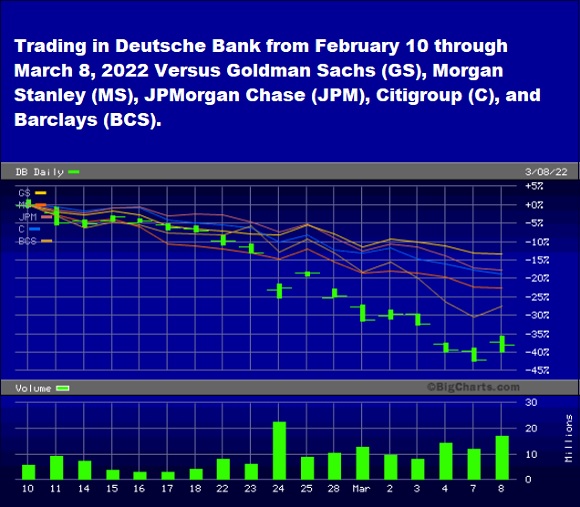
By Pam Martens and Russ Martens: March 9, 2022 ~
Deutsche Bank (symbol DB on the above chart) closed at $16.50 on the New York Stock Exchange on February 10 of this year. It closed at $10.23 yesterday – a decline of 38 percent in a month’s time. That’s a big problem because Deutsche Bank is heavily interconnected to Wall Street banks via derivatives. According to Deutsche Bank’s most recent annual report, as of December 31, 2020, it held $35.4 trillion in notional derivatives. (Notional means face amount. See the table on page 147 of the 2020 Deutsche Bank Annual Report here.)
Deutsche Bank, a large German bank, was among the global banks bailed out by the Fed during the financial crash of 2008 as well as during the (still unexplained) liquidity crash that saw the Fed pump trillions of dollars in cumulative loans into global banks from September 17, 2019 through July 2, 2020.
In June 2016, The International Monetary Fund (IMF) released a report with a finding that Deutsche Bank posed the greatest threat to global financial stability than any other bank because of its interconnections to Wall Street mega banks and large banks in Europe. (See graph below.) The largest bank in the United States, JPMorgan Chase, was shown as one of the banks with the largest amount of exposure.
Despite that finding by the IMF in 2016, Deutsche Bank has been allowed by regulators in Europe and the U.S. to continue engaging in high-risk Over-the-Counter derivatives. It also has an uncomfortable history of suicides and rogue behavior. See a sampling of its history since 2014 below.
Yes, President Joe Biden’s administration has a lot on its plate. But if it doesn’t get serious about reforming Wall Street and its derivative weapons of mass destruction, it will have a lot more to deal with eventually.
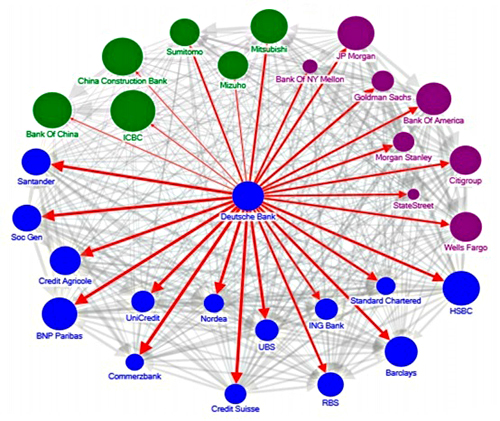
Systemic Risk Among Deutsche Bank and Global Systemically Important Banks (Source: IMF — “The blue, purple and green nodes denote European, US and Asian banks, respectively. The thickness of the arrows capture total linkages (both inward and outward), and the arrow captures the direction of net spillover. The size of the nodes reflects asset size.”)
~~~
January 26, 2014: William Broeksmit, 58, was found hanged in his London home. Police ruled the death “non-suspicious.” Broeksmit was a senior executive at Deutsche Bank involved in assessing risk on the bank’s balance sheet. (See Documents Emerge in Senate Hearing from William Broeksmit, Deutsche Exec Alleged to Have Hanged Himself in January.)
October 20, 2014: The body of Calogero Gambino, 41, was found by his wife hanging from a stairway banister in their Manhattan home. Gambino was a lawyer for Deutsche Bank who had been cooperating with U.S. regulators on Deutsche Bank’s involvement in the rigging of the interest rate benchmark, Libor.
April 23, 2015: Deutsche Bank pleads guilty to the U.S. Department of Justice for its role in rigging the benchmark interest rate known as Libor. It pays fines of $2.519 billion to various regulators.
January 17, 2017: Deutsche Bank reaches a settlement with the U.S. Department of Justice in which it agrees to pay $7.2 billion in fines and restitution for its improper “packaging, securitization, marketing, sale and issuance of residential mortgage-backed securities (RMBS) between 2006 and 2007.”
January 30, 2017: Deutsche Bank is fined a total of $630 million by U.S. and U.K. regulators over claims it laundered upwards of $10 billion on behalf of Russian investors.
January 29, 2018: Deutsche Bank is ordered to pay $30 million by the Commodity Futures Trading Commission for manipulating trading in the precious metals market.
November 29, 2018: Deutsche Bank’s headquarters in Germany are raided by 170 members of law enforcement. Prosecutors said at the time that “Deutsche Bank helped customers found offshore organizations in tax havens by transferring illegally acquired money without alerting authorities to suspected money laundering.”
May 19, 2019: The New York Times’ David Enrich writes the bombshell report describing how a Deutsche Bank whistleblower, Tammy McFadden, and four of her colleagues, had their efforts blocked by the bank when they tried to file suspicious activity reports on bank accounts affiliated with Donald Trump and his son-in-law/advisor Jared Kushner. The suspicious activity reports (SARs) should have been filed with the Federal agency known as FinCEN (Financial Crimes Enforcement Network) but were quashed by a unit of the bank that manages money for the super wealthy.
July 7, 2019: Deutsche Bank confirms plans to fire 18,000 workers and reorganize into a good bank/bad bank. The bad bank will hold assets it plans to sell.
September 24, 2019: German police raid Deutsche Bank headquarters for the second time in less than a year.
November 8, 2019: Nomura and Deutsche Bank, along with numerous employees, were convicted in a trial in Italy for helping the Tuscan bank, Monte dei Paschi di Siena, commit fraud in derivatives deals to help it hide losses.
January 18, 2020: The Commodity Futures Trading Commission fines Deutsche Bank $10 million to settle two cases: one involving failure to properly report swap transactions and the other for spoofing.
July 7, 2020: The New York State Department of Financial Services settles a state civil matter with Deutsche Bank for $150 million over its involvement with child sex trafficker Jeffrey Epstein.
January 8, 2021: The Justice Department and Securities and Exchange Commission settle charges against Deutsche Bank for $120 million for violating the Foreign Corrupt Practices Act. The charges related to paying bribes to foreign officials to obtain business
-END-
LAWRIE WILLIAMS:
09 Mar 2022
Huge demand for gold from China in 2021 at 1745 tonnes
(courtesy Lawrie Williams)
LAWRIE WILLIAMS: China gold demand holding up but perhaps not growing
While Chinese gold demand as defined by gold withdrawals from the Shanghai Gold Exchange (SGE) was only marginally higher than a year ago in the holiday week affected month of February, the cumulative total remains well in advance of the figures for the previous two years. In both 2021 and 2022 the Chinese New Year holiday week fell wholly within February, although was earlier in the month this year. But in the coronavirus affected 2020, the holiday week occurred partially in January as the Lunar New Year occurred that year on January 25th.

Because the February withdrawal figures were so close this year in February to those for 2021, it is probably too early to tell how demand over the full year will hold up, but the initial trend looks to be positive. A full year return to the 2,000 tonne demand level, as we were suggesting a month ago, though, remains a little more uncertain, so we will be monitoring the SGE gold withdrawal figures in future months closely to check for signs as to whether Chinese gold demand this year is continuing to recover or not.
There is a suspicion that Chinese gold imports this year will still increase given that this may be one of the few markets fully open to Russian gold deliveries as a result of economic sanctions imposed over the Russian invasion of Ukraine. China is not a participant in the sanctions imposition and so far has shown no signs of condemning the Russian action. However whether this will show up in overall demand figures may be more difficult to ascertain. Some Russian gold could flow directly into government holdings about which China tends to be extremely secretive and may thus not show up in normal demand statistics..
2020 Chinese gold demand figures were severely affected by the measures taken to keep the virus pandemic spread under control, which certainly seem to have been highly effective, but this shows up strongly in gold consumption figures for that year The Chinese economy has returned to growth since, but it remains an export-driven economy and inflation may be taking a toll on export market spending habits, which could reduce demand for Chinese goods, in which case domestic consumer demand for gold could be adversely affected through the rest of the year.
It is early days yet so it is extremely difficult to adjudge what the impact will be on global gold demand. If the downturn in the country’s domestic gold production continues, the market may still improve as far as gold imports are concerned to counterbalance any production shortfall. China thus remains perhaps the most significant market for gold going forwards, but possibly not as strong as had been thought previously.
09 Mar 2022 |
-END-
3. Chris Powell of GATA provides to us very important physical commentaries
We brought this story to you yesterday but it is worth repeating: London bullion market LBMA bars Russian gold refineries
from supplying gold into London. Old bars are still allowed
(Reuters//GATA)
London bullion market bars Russian gold refineries
Submitted by admin on Tue, 2022-03-08 09:25Section: Daily Dispatches
By Peter Hobson
Reuters
Tuesday, March 8, 2022
LONDON — The London Bullion Market Association said Monday it had suspended its accreditation of six Russian precious metals refiners, meaning they will no longer be able to sell gold and silver in the London market, the world’s largest.
The LBMA did not give a reason for the suspension but the association last week told Reuters it had asked the refiners if they have commercial links with sanctioned Russian entities. …
... For the remainder of the report:
https://www.reuters.com/world/europe/london-bullion-market-bars-russian-gold-refineries-2022-03-07/
END
Craig Hemke comments that the metal tading suspension of Nickel may explode the whole futures racket
a good read.
(Craig Hemke/Sprott/GATA)
Craig Hemke at Sprott Money: Metal trading suspension may explode the whole futures racket
Submitted by admin on Tue, 2022-03-08 20:31Section: Daily Dispatches
8:30p ET Tuesday, March 8, 2022
Dear Friend of GATA and Gold:
The London Metals Exchange’s decision today to suspend trading in nickel to puncture a short squeeze may explode the entire racket of commodity futures markets, including gold and silver price suppression, the TF Metals Report’s Craig Hemke writes tonight at Sprott Money.
Hemke writes: “Once the global investment community figures out that it’s all a scam — that there are as many as 100 digital/pretend ounces for every physical ounce backing the pricing scheme — confidence will rapidly collapse. There will be a run on physical precious metal, and only those who hold it nearby will be determined to be the actual owner.”
Hemke’s analysis is headlined “History in the Making” and it’s posted at Sprott Money here:
https://www.sprottmoney.com/blog/History-in-the-Making-Craig-Hemke-March-08-2022
CHRIS POWELL, Secretary/Treasurer
Gold Anti-Trust Action Committee Inc.
CPowell@GATA.org
in full:
History in the Making
March 09, 2022
Craig Hemke – TF Metals Report
To paraphrase Lenin, decades will go by with not much happening and then a decade’s worth of change will happen in a matter of weeks. Well, here we are.
It was just last week that we wrote about COMEX precious metal prices breaking out. But this is more than that. We now stand at the precipice of an epochal change in the pricing structure. The recent action in nickel and other base metals have exposed the fraudulent cracks inherent to the digital derivative and fractional reserve pricing scheme, and the world is taking notice.
For the past several years, we’ve asked you to monitor palladium as it potentially held the key to breaking the London/New York pricing cartel. Could a breakout and short squeeze in this metal lead the investment world to question the fractional reserve and just-in-time delivery methods of the derivative-based pricing scheme employed in all of the metals? With over 40% of global palladium production coming from Russia, this is still a very real possibility, so here are just two links for you to review:
•The Magic Palladium Bullet in 2020
But the focus today is nickel. By now you’ve heard of the extreme price move and short squeeze that has occurred over the past few days. If not, here’s a chart that will catch your eye:
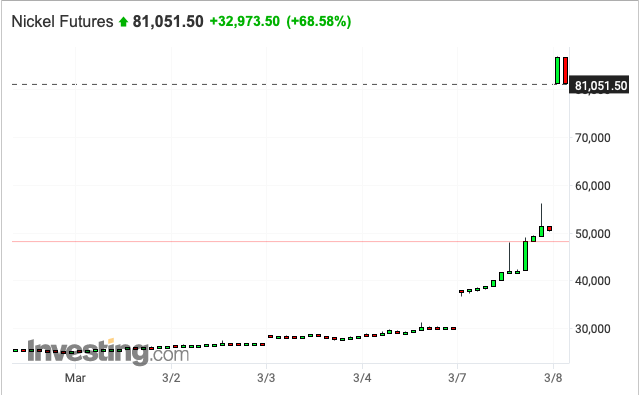
And you should be sure to note that, as I type this on Tuesday morning, the price is locked limit up and nickel is currently not trading at all.
But here’s the thing, the London Metals Exchange (LME) is where the price is currently locked. This exchange has been openly in backwardation (demonstrating short supply) in six base metals— including nickel—for the past few weeks, and now they are attempting to change the trading rules in order to forestall a complete collapse of their pricing scheme.
Earlier today, the LME announced that all trading was being halted in nickel and that even some legally-processed trades were being cancelled. Cancelled! The exchange is also “giving consideration to a possible multi-day closure”. See the official notice below:
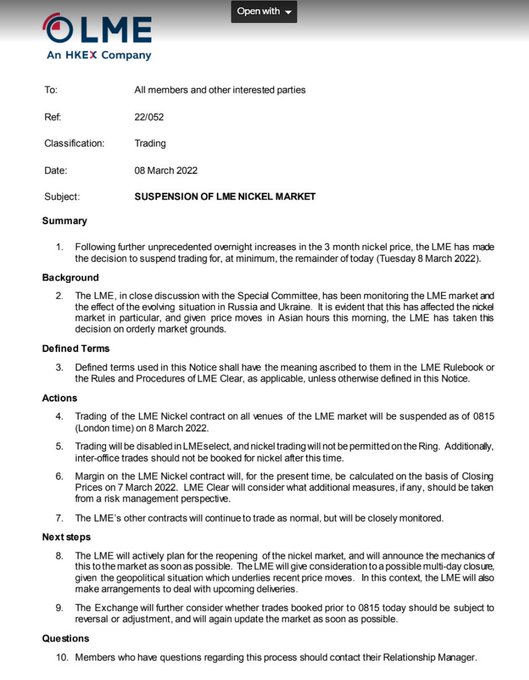
If this doesn’t work to calm things, and if the other base metals soon trade into a similar situation, the LME will face an extinction-level event. While this will be catastrophic to anyone short and any party needing short-term delivery of the physical metal, this event—should it play out—also has the potential to FINALLY break the Bullion Bank fractional reserve and digital delivery pricing scheme in gold and silver, too.
Why?
Because as we may already be seeing, once the global investment community figures out that it’s all a scam—that there are as many as 100 digital/pretend ounces for every physical ounce backing the pricing scheme—confidence will rapidly collapse. There will be a run on physical precious metal, and only those who hold it nearby will be determined to be the actual owner.
Those with ETFs, unallocated accounts, futures contracts, and the like will all be left holding the bag. Don’t let that be you!
These are truly unprecedented times, and as Lenin said, decades of history are taking place in a matter of weeks. The U.S. and EU are working to isolate Russia by excluding them from the SWIFT international payments system. Russia will soon turn to China and others to market their resources and then establish new monetary platforms for the trade. Western fiat currency values will accelerate their decline, and the removal of Russia’s base and precious metal supply from the current pricing scheme will likely bring its collapse.
We’ve warned about these eventualities for over a decade, but NOW is the time to finally prepare fully for these events
end
(COURTESY RUSSELL CLARK)
An LME Member Has Defaulted On Billions In Margin Calls, But The LME Doesn’t Want To Declare Default
WEDNESDAY, MAR 09, 2022 – 02:23 PM
By Russell Clark (formerly of Horseman Global), originally published on Capital Flows and Asset Markets

Like many commodities, nickel price has surged from the Covid lows. However this week is has spiked, effectively doubling, and briefly reached highs earlier this week of USD 100,000.
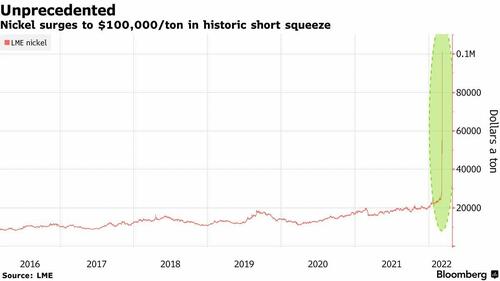
In response to this move, the LME has closed the market for nickel, and cancelled trades.
Why have they done this? Essentially this was to give time (and by cancelling trades, reduce the amount) for a major (Chinese) member to make a margin call. But in reality this was default by a member, and LME choosing not to place that member in default.
If we look at the default by Einer Aas in 2018, we can see why this is a default in all but name. When Einer Aas could not make a marign call he was bankrupted. His default waterfall is shown below. His initial margin was taken, then his default fund contribution. Value unknown, but I would estimate around €30MM. The clearinghouse then chipped in €7MM, and then there as a €107MM from the commodity service default fund. This commodity service default fund is paid by “surviving” members of clearinghouse. As every clearinghouse trade is matched, typically “surviving” members are the winners, or traders that have been on the right side of the trade.
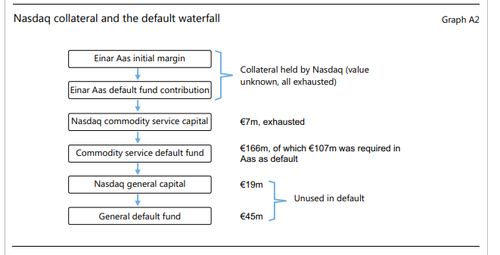
The loss on the LME Nickel trade has been estimated at up to USD 12bn. The LME default fund (4.2 on its IOSCO CPMI disclosure) is given at USD 1bn. I don’t know if that number is entirely accurate, of if all of it can be applied to the nickel market, or is segregated by product. Clearly, there was a counterparty who could not make margin call, and if the rules had been followed, they should have been declared bankrupt, and the position sold, and any losses would be paid by LME, and then surviving members.
However, LME has cancelled trades, to reduce the price from USD 100,000 to USD 50,000, closed the market until Friday, and will limit price movements to 10% a day.
What does this mean? We know that one major counterparty should have gone bust, and is now getting a stealth bailout from the clearinghouse. Rather than asking surviving members to recapitalize, it has artificially adjusted prices to reduce their winnings. All of this has been done without consulting all members, and to the benefit of as far as we know one well connected member. As mentioned before, in 2019 large clearinghouse members recommended reforming the default waterfall.
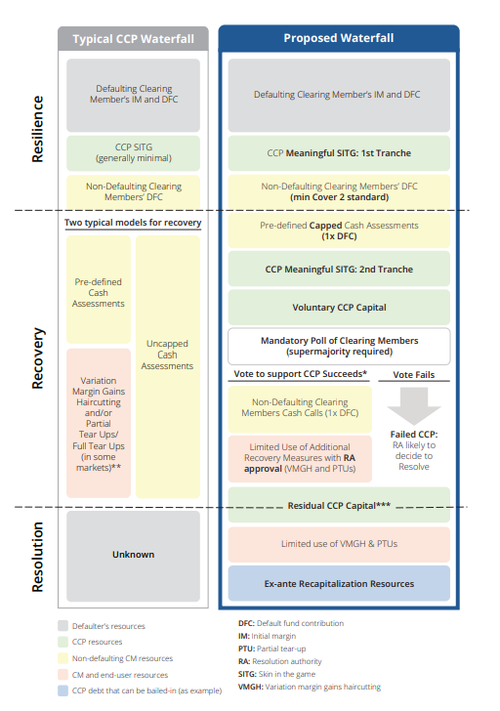
In this new model, clearinghouses would have to put up more capital, and clearinghouse members would choose whether a bailout would occur or not. Sadly, reform has not happened, and the surviving members of the LME will pay the price.
4.OTHER GOLD/SILVER COMMENTARIES
END
5.OTHER COMMODITIES/ NICKEL
Nickel:
WisdomTree terminates its triple leverage nickel product after an investor wipeout in this category
(zerohedge)
WisdomTree Terminates Triple Leveraged Nickel Product After Investor Wipeout
TUESDAY, MAR 08, 2022 – 06:40 PM
A leveraged nickel exchange-traded commodity (ETC) product is dead. WisdomTree Investments announced on Wednesday the Nickel 3x Daily Short exchange-traded commodity (ticker 3NIS) has been wiped out due to the metal’s historic short squeeze in the last 48 hours.
“The Redemption Amount of the WisdomTree Nickel 3x Daily Short securities has been calculated as zero so investors should not expect to get paid for the securities they hold,” a notice on WisdomTree’s website read.
3NIS had a little more than $7 million in assets last week ago. The 250% surge in nickel prices on the London Metal Exchange to over $100k per ton has blown up the ETC’s commodity investments which were likely in future contracts.
On Monday, WisdomTree declared a “restrike event” for 3NIS to limit declines in the leveraged product by effectively resetting it before moves in the underlying security could destroy all value.

Here’s the full statement from WisdomTree about 3NIS’s demise:
WisdomTree Commodity Securities Limited today announced that WisdomTree Nickel 3x Daily Short (3NIS) will be compulsorily redeemed.
Further to the restrike announcement on 7 March 2022 where the 25% restrike threshold was triggered, the extreme and continual movements in nickel prices on the 7 March 2022, led to the product moving more than 33% from the previous close price before the restrike process was able to be concluded. As a result of this price move the Calculation Agent determined the value of the product had dropped by 100% and was less than zero (3 x 33.3334%), causing the commodity contracts to be terminated in accordance with the conditions set out in prospectus.
Application has been made to the London Stock Exchange and Borsa Italiana where the WisdomTree Nickel 3x Daily Short securities are listed to request that they are to be suspended with immediate effect and delisted. The Redemption Amount of the WisdomTree Nickel 3x Daily Short securities has been calculated as zero so investors should not expect to get paid for the securities they hold.
Leveraged products are prone to blowing up. In 2018, readers may recall that VelocityShares Daily Inverse VIX Short Term ETN (XIV) was terminated after the most popular way of shorting volatility for retail investors blew up.
end
Chinese Nickel giant, Tsingshan, the centre of the short squeeze has secured bank lifelines in order to secure itself
(Bloomberg)
Chinese Nickel Giant Secures Bank Lifelines After Epic Squeeze
- Banks, company still in talks on additional collateral
- Xiang tell bankers that he’s reviewing hedging strategy
Bloomberg News
March 9, 2022, 3:26 AM EST
The Chinese nickel company at the center of a historic short squeeze has secured a package of loans from local and international banks to help it meet a wave of margin calls, according to people familiar with the matter.
Tsingshan Holding Group Co., which faces billions of dollars in potential losses on short positions in nickel futures, won credit promises from banks including JPMorgan Chase & Co. and China Construction Bank Corp. in meetings that ran into the pre-dawn hours of Wednesday morning, the people said, asking not to be named since the matter is private. Some of the terms, such as how much extra collateral Tsingshan needs to pledge, are still under discussion, the people said.
Chinese authorities directed Tsingshan’s domestic banks to offer more credit lines to the company, two of the people said. A majority of these new loans will be used for margin calls on its existing positions on the London Metal Exchange, the people said.
China Construction Bank and Tsingshan, the world’s largest nickel producer, didn’t immediately respond to requests for comment. JPMorgan couldn’t immediately comment.
The bank loans are expected to help Tsingshan address its immediate liquidity squeeze. With large nickel production facilities in Indonesia and China, coupled with surging prices and strong demand, the firm’s owner, Xiang Guangda, told bankers at the meetings that he’s confident his company can meet its obligations, according to the people. He’s also reviewing his hedging strategy and is considering exiting the bets against nickel, one of the people said.
Chinese Tycoon Behind Big Nickel Short Faces Billions in Losses
The deals come after the price of nickel, the metal used to produce stainless steel and electric batteries, rocketed to above $100,000 a ton on Tuesday before the LME suspended the market and canceled all trades that took place during Asian hours. Nickel has been rising for weeks on fears of disruptions to supplies from Russia, the largest exporter of refined nickel. The rally intensified this week, with prices surging as much as 250% in little more than 24 hours, as traders with short positions rushed to cover their bets.
Xiang and his firm hold a position of about 100,000 tons of nickel on the LME, people familiar with the matter said. It could be larger when bets through intermediaries are taken into account. His mark-to-market losses would be in the billions of dollars even at $48,063 a ton, which is where the price now stands after it was halted and trades were canceled.
On Monday, CCBI Global Markets, one of Tsingshan’s brokers, failed to pay hundreds of millions of dollars in margin calls on its nickel positions. The LME refrained from putting it into default, giving it more time to pay. The broker was able to settle the margin calls on Tuesday after several clients, including Tsingshan, got loans to cover their positions, one of the people said.
Traders must deposit cash, known as margin, with their brokers on a regular basis to cover potential losses. Brokers in turn must hold margin at the clearinghouse, LME Clear. If the market moves against those positions, they receive a margin call for further funds — and if they fail to pay, they can be forced to close their position.
LME Halts Nickel Trading After Unprecedented 250% Spike
END
JPMorgan Bails Out Chinese Nickel Giant Facing Billions In Losses From Record Margin Call
WEDNESDAY, MAR 09, 2022 – 03:30 PM
Two days ago we reported that while “plain vanilla” commodity producers such as coal giant Peabody had no choice but to pay up on their commodity margin calls (which they funded with an expensive, 11%, Goldman credit facility), others such as Chinese giants were magically exempt from mandatory payments in the billions.
Extending on our observation earlier this week that the record surge in commodities, such as nickel, would – ironically – cripple producers who despite being long physical commodities in the spot market are also short in the futures market as a hedge, and it is these hedges that are causing unprecedented waterfalls of cascading short squeezes at this moment as producers scramble to find the cash to satisfy variation margins…
… earlier this week we learned that Chinese nickel titan Tsingshan Holding Group, the world’s largest producer of the metal, controlled by Xiang Guangda – known as “Big Shot”, or is that “Big Short” – faced billions of dollars in trading losses after Russia’s war in Ukraine set off an unprecedented rise in the price of nickel, and which soared by a record 250% in two days.

As further detailed yesterday, the paper loss stood at $8 billion on Monday – the result of holdings of about 100,000 tons of nickel on the LME – before a violent rush higher in nickel prices led the London Metal Exchange to suspend trading in the metal on Tuesday after it hit a record $101,365 per metric ton up from $20,175 in January. The exchange has since said it anticipates trading won’t resume before Friday (for more see “An LME Member Has Defaulted On Billions In Margin Calls, But The LME Doesn’t Want To Declare Default“)
According to the WSJ, Tsingshan’s founder, Xiang Guangda, told a Chinese media outlet that “there have been some moves by foreigners,” and that it is in active negotiations with relevant parties, without specifying who they were and what was being negotiated.
Xiang was also quoted saying that “relevant government departments and leaders are all very supportive of Tsingshan. Tsingshan is a solid Chinese enterprise and our positions and operations do not have problems,” according to the report in Yicai, a financial-news outlet.
Needless to say, the fact that the LME is now owned by Hong Kong Exchanges and Clearing, whose biggest shareholder is the Hong Kong government which for the past two years has been a puppet of China, did not hurt Xiang, whose empire would have been bankrupted had the LME forced him to make payment on his margin call. None other than outgoing LME chief executive Matt Chamberlain admitted as much.
Long story short: if you are a small nobody and your margin call will wipe out just you, nobody will think twice to margin you out; on the other hand if you are a Chinese tycoon whose default will ruin not just him but lead to massive losses for all LME members and also drag down more than one broker in the process (as Russell Clark explained earlier), well then… the rules can certainly be bent.
And sure enough, on Wednesday morning, two days after Xiang was supposed to be in default buried by billions in margin calls, Bloomberg reports that he has successfully secured “a package of loans from local and international banks to help it meet a wave of margin calls.”
According to the report, Tsingshan Holding has won credit promises from – drumroll – none other than JPMorgan Chase, and one of China’s largest banks, China Construction Bank, in meetings that ran into the pre-dawn hours of Wednesday morning. Some of the terms, such as how much extra collateral Tsingshan needs to pledge, are still under discussion, Bloomberg’s sources said.
Since JPMorgan’s assistance alone was not enough, Chinese authorities also directed Tsingshan’s domestic banks to offer more credit lines to the company, with the bulk of the new capital going toward satisfying the margin calls on its existing positions on the London Metal Exchange.
So what do the banks get in exchange for their generous bailout loans?
Well, with large nickel production facilities in Indonesia and China, coupled with surging prices and strong demand, the firm’s owner, Xiang Guangda, told bankers at the meetings that he’s confident his company can meet its obligations. He’s also reviewing his hedging strategy and is considering exiting the bets against nickel, which in light of the catastrophic outcome is probably not a bad idea.
As reported previously, on Monday CCBI Global Markets, one of Tsingshan’s brokers, failed to pay hundreds of millions of dollars in margin calls on its nickel positions. The LME refrained from putting it into default, giving it more time to pay. The broker was able to settle the margin calls on Tuesday after several clients, including Tsingshan, got loans to cover their positions.
As for Tsingshan itself, we now wait until Friday when the LME restarts nickel trading to see if Jamie Dimon’s generosity prevented the collapse of one of the pillars of China’s commodity empire. If so, expect the price to collapse. If not, all bets may be off and Pozsar’s “worst case scenario” will be in play.
end
URANIUM
Uranium Stocks Soar After US Said To Weigh Sanctions On Russian Nuclear Giant Rosatom
WEDNESDAY, MAR 09, 2022 – 03:50 PM
Earlier today we asked if Putin would voluntarily put Russian enriched uranium exports on the list of banned Russian exports, in the process sending the stocks of uranium producers sharply higher (as Russia is currently 40%-45% of the world’s enriched Uranium supply). Well, moments ago Joe Biden may have made that decision for him.
According to Bloomberg, the Biden administration is considering imposing sanctions on Russia’s state-owned atomic energy company, Rosatom – a major supplier of fuel and technology to power plants around the world – although no final decision has been made and the White House is consulting with the nuclear power industry about the potential impact.
Rosatom is described as “delicate target” because the company and its subsidiaries account for about 35% of global uranium enrichment and has agreements to ship the nuclear fuel to countries across Europe, which means any sanctions risk plunging Europe in darkness. Thus, any punishment would also have to exempt the work Rosatom does with Iran under the terms of the deal limiting the country’s nuclear program, which Biden is seeking to revive. In other words, if Rosatom is sanctioned, it likely means that the Iran nuclear deal – which is mediated by Russians – is dead, and oil prices will soar even higher.
It’s also unclear what the sanctions would mean for U.S. nuclear plants and importers of fuel. Russia accounted for 16.5% of the uranium imported into the U.S. in 2020 and 23% of the enriched uranium needed to power the fleet of U.S. commercial nuclear reactors; notably uranium was not included when the Biden administration announced on Tuesday it was banning Russian imports of crude, coal, and other energy products because – you know – Hillary… The reactors typically need to refuel every 18 to 24 months, and utilities typically buy fuel years in advance and maintain significant inventories. It’s also why we said earlier that companies that would benefit from an escalation in uranium sanctions would be the Sprott Physical Uranium Trust, as well as our old favorite Cameco, which we have urged readers to buy since 2020.
Needless to say, any such ban would send the price of uranium soaring and have a big impact on nuclear operators such as Southern and Exelon while a possible boon for domestic miners such as Energy Fuels Inc. and Ur-Energy Inc, as well as Cameco. In fact the entire uranium sector is soaring
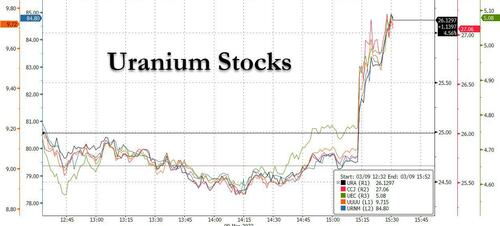
“We can’t afford not to have Russian uranium and enrichment,” said Chris Gadomski, a nuclear industry analyst with Bloomberg NEF. “Russian uranium is cheaper and the U.S doesn’t produce any uranium.”
Which is precisely why the brilliant minds who control Biden’s puppet strings will likely pass these sanctions.
As for how the US finds itself in this predicament where its nuclear power is dependent on Russia
6.CRYPTOCURRENCIES
New executive order trying to curtail the use of cryptos by Russians. It was a nothing burger.
(zerohedge)
Bitcoin Surges As White House Unveils Crypto Executive Order
WEDNESDAY, MAR 09, 2022 – 07:25 AM
Finally, after months of pressure from entrepreneurs and venture capitalists, the White House is taking a leading role in developing US crypto regulation. Optimism surrounding the actual statement – which was released this morning – was parked last night when Treasury Secretary Janet Yellen appeared to accidentally praise the new executive order… before it was released (then hastily deleted her statement).
The lack of anything existentially challenging in her statement helped send bitcoin prices north of $42K, levels it hasn’t seen since March 2, and since The White House’s statement, prices have remained high.

The order will be signed by President Biden later on Wednesday mandating government agencies to take a closer look at issues related to digital currencies and also related to combating illicit uses of cryptocurrencies.
In a fact sheet, the goal is to take advantage of the potential benefits of digital assets while also addressing the risks, the White House said in a fact sheet. Agencies will have from 60 to 180 days to complete their reports, a senior administration official said late Tuesday, after which the administration plans to move quickly to carry out the recommendations.
Specifically, the Executive Order calls for measures to:
- Protect U.S. Consumers, Investors, and Businesses by directing the Department of the Treasury and other agency partners to assess and develop policy recommendations to address the implications of the growing digital asset sector and changes in financial markets for consumers, investors, businesses, and equitable economic growth. The Order also encourages regulators to ensure sufficient oversight and safeguard against any systemic financial risks posed by digital assets.
- Protect U.S. and Global Financial Stability and Mitigate Systemic Risk by encouraging the Financial Stability Oversight Council to identify and mitigate economy-wide (i.e., systemic) financial risks posed by digital assets and to develop appropriate policy recommendations to address any regulatory gaps.
- Mitigate the Illicit Finance and National Security Risks Posed by the Illicit Use of Digital Assets by directing an unprecedented focus of coordinated action across all relevant U.S. Government agencies to mitigate these risks. It also directs agencies to work with our allies and partners to ensure international frameworks, capabilities, and partnerships are aligned and responsive to risks.
- Promote U.S. Leadership in Technology and Economic Competitiveness to Reinforce U.S. Leadership in the Global Financial System by directing the Department of Commerce to work across the U.S. Government in establishing a framework to drive U.S. competitiveness and leadership in, and leveraging of digital asset technologies. This framework will serve as a foundation for agencies and integrate this as a priority into their policy, research and development, and operational approaches to digital assets.
- Promote Equitable Access to Safe and Affordable Financial Services by affirming the critical need for safe, affordable, and accessible financial services as a U.S. national interest that must inform our approach to digital asset innovation, including disparate impact risk. Such safe access is especially important for communities that have long had insufficient access to financial services. The Secretary of the Treasury, working with all relevant agencies, will produce a report on the future of money and payment systems, to include implications for economic growth, financial growth and inclusion, national security, and the extent to which technological innovation may influence that future.
- Support Technological Advances and Ensure Responsible Development and Use of Digital Assets by directing the U.S. Government to take concrete steps to study and support technological advances in the responsible development, design, and implementation of digital asset systems while prioritizing privacy, security, combating illicit exploitation, and reducing negative climate impacts.
- Explore a U.S. Central Bank Digital Currency (CBDC) by placing urgency on research and development of a potential United States CBDC, should issuance be deemed in the national interest. The Order directs the U.S. Government to assess the technological infrastructure and capacity needs for a potential U.S. CBDC in a manner that protects Americans’ interests. The Order also encourages the Federal Reserve to continue its research, development, and assessment efforts for a U.S. CBDC, including development of a plan for broader U.S. Government action in support of their work. This effort prioritizes U.S. participation in multi-country experimentation, and ensures U.S. leadership internationally to promote CBDC development that is consistent with U.S. priorities and democratic values.
According to the Treasury, crypto is a larger than $3 trillion market, which some 40M Americans have already invested in.
Among other aspects of the new EO, the Administration is prepared to look at how crypto is used to get around western sanctions. It also comes as a growing number of central banks are already issuing their own “digital” currencies.
Treasury Secretary Janet Yellen (pre-emptively) praised Biden’s efforts in a statement:
As we take on this important work, we’ll be guided by consumer and investor protection groups, market participants, and other leading experts,” Yellen said.
“Treasury will work to promote a fairer, more inclusive, and more efficient financial system, while building on our ongoing work to counter illicit finance, and prevent risks to financial stability and national security.”
The new policy will place the White House right at the center of crypto policymaking. Additionally, the Treasury will partner with other agencies to compile a report on the future of money and payment systems, and will also convene the Financial Stability Oversight Council to examine potential risks to financial stability and assess whether necessary safeguards are in place. It will also work with international partners “to promote robust standards and a level playing field.”
Of course, this won’t be the first report on crypto commissioned by a US government agencies.
However, the order claims that it will attempt to preserve the benefits of bitcoin while also addressing concerns surrounding KYC and money laundering.
Cointelegraph notes that there has been a mixed reaction so far from prominent members of the crypto community. Founder of Week In Ethereum Evan Van Ness called the statement a “nothingburger of a statement.”
But Altered State Machine (ASM) founder Aaron McDonald shared somewhat more grave feelings about the statement. He tweeted that Yellen’s sentiments show she is looking for a way to “Make sure we maintain the most powerful weapon in our military. USD as global settlement.”
deVere Group’s Nigel Green summarized the EO in an optimistic light, suggesting there are three key takeaways.
“First, digital currencies are an inevitability in the ever more digital world that we live in. When tech is driving the way we live, work, do business and much more besides, it makes sense to have money that runs on tech too.
“Also, it must be remembered that millennials – who are set to be the beneficiaries of the largest ever generational transfer of wealth [according to some estimates US$60 trillion] – have been raised on technology, they’re digital natives. As such, the future of money is also, without doubt, going to be digital.
“For this reason, around 90% of governments around the world, representing 90% of global GDP, are actively pursuing their own central bank digital currencies (CBDCs).”
He goes on to add:
“China might have been the first large, industrialized nation to launch a CBDC with the digital yuan, but it will not be the last. Far from it.
“Indeed, the U.S. now appears to be playing ‘catch up’.”
Green continues:
“Second, the U.S. government will not be moving to ban cryptocurrencies in the world’s largest economy.
“In fact, the executive order is calling for a ‘coordinated and comprehensive approach to digital asset policy,’ and in leaked documents it seems to already being championed by Janet Yellen, the U.S. Treasury Secretary.
“And third, a digital dollar would underscore why the world will still want cryptocurrencies, such as Bitcoin.
“The Federal Reserve’s potential new currency would have many advantages, including convenience and speed of payments, but what it would not have is privacy. Indeed, a digital dollar would serve to give U.S. authorities even greater oversight of citizens’ transactions.
“The government would be able to trace all transactions. Washington would have even more powers to track and control.”
Bitcoin and cryptocurrencies – still digital money – are fundamentally different as they run on an open, immutable blockchain, or distributed ledger. This, says Nigel Green, would give them the upper hand.
“Not only are they a store of value and medium of exchange but they have other inherent core values, namely being a viable decentralized, tamper-proof, unconfiscatable monetary system. And this has intrinsic value for investors around the world.”
He concludes:
“History will judge Biden signing this executive order to instruct departments across Washington to study digital currencies as a landmark moment.”
Finally, many have noted Yellen’s apparent shift away from crypto-hater with her statement saying that the executive order could “result in substantial benefits for the nation, consumers, and businesses.”
end
7. GOLD/ TRADING TODAY
Your early currency/gold and silver pricing/Asian and European bourse movements/ and interest rate settings WEDNESDAY morning 7:30 AM
ONSHORE YUAN: CLOSED UP 6.3178
OFFSHORE YUAN: 6.3238
HANG SANG CLOSED DOWN 138.16 PTS OR 0.67%
2. Nikkei closed DOWN 138.16 PTS 0.67%
3. Europe stocks ALL GREEN
USA dollar INDEX DOWN TO 98.51/Euro RISES TO 1.0983-
3b Japan 10 YR bond yield: RISES TO. +.167/ !!!!(Japan buying 100% of bond issuance)/Japanese yen vs usa cross now at 115.84/ THIS IS TROUBLESOME AS BANK OF JAPAN IS RUNNING OUT OF BONDS TO BUY./JAPAN 10 YR YIELD IS NOW TARGETED AT .11%/JAPAN LOSING CONTROL OF THEIR BOND MARKET//
3c Nikkei now ABOVE 17,000
3d USA/Yen rate now well below the important 120 barrier this morning
3e WTI:: 119.38 and Brent: 124.58–
3f Gold DOWN /JAPANESE Yen DOWN CHINESE YUAN: ON -SHORE CLOSED UP// OFF- SHORE UP
3g Japan is to buy the equivalent of 108 billion uSA dollars worth of bond per month or $1.3 trillion. Japan’s GDP equals 5 trillion usa./“HELICOPTER MONEY” OFF THE TABLE FOR NOW /REVERSE OPERATION TWIST ON THE BONDS: PURCHASE OF LONG BONDS AND SELLING THE SHORT END
Japan to buy 100% of all new Japanese debt and by 2018 they will have 25% of all Japanese debt. Fifty percent of Japanese budget financed with debt.
3h Oil DOWN for WTI and DOWN FOR Brent this morning
3i European bond buying continues to push yields lower on all fronts in the EMU. German 10yr bund RISES TO +.0.167%/Italian 10 Yr bond yield RISES to 1.63% /SPAIN 10 YR BOND YIELD RISES TO 1.09%…ITALIAN 10 YR BOND YIELD/GERMAN BUND: 1.47: DANGEROUS FOR THE ITALIAN BANKING SYSTEM
3j Greek 10 year bond yield RISES TO : 2.34
3k Gold at $2004.90 silver at: 26.06 7 am est) SILVER NEXT RESISTANCE LEVEL AT $30.00
3l USA vs Russian rouble;// Russian rouble UP 10.5/100 in roubles/dollar; ROUBLE AT 117.50
3m oil into the 119 dollar handle for WTI and 124 handle for Brent/
3n Higher foreign deposits out of China sees huge risk of outflows and a currency depreciation. This can spell financial disaster for the rest of the world/
JAPAN ON JAN 29.2016 INITIATES NIRP. THIS MORNING THEY SIGNAL THEY MAY END NIRP. TODAY THE USA/YEN TRADES TO 115.84 DESTROYING JAPANESE CITIZENS WITH HIGHER FOOD INFLATION
30 SNB (Swiss National Bank) still intervening again in the markets driving down the FRANC. It is not working: USA/SF this morning .9278– as the Swiss Franc is still rising against most currencies. Euro vs SF 1.0196 well above the floor set by the Swiss Finance Minister. Thomas Jordan, chief of the Swiss National Bank continues to purchase euros trying to lower value of the Swiss Franc.
USA 10 YR BOND YIELD: 1.907 UP 6 BASIS PTS
USA 30 YR BOND YIELD: 2.262 UP 4 BASIS PTS
USA DOLLAR VS TURKISH LIRA: 14.68
Futures Surge After 4 Day Rout On Ukraine War Optimism; Cryptos Soar
WEDNESDAY, MAR 09, 2022 – 08:08 AM
After two days of sheer market insanity, including Monday’s furious plunge and Tuesday’s rollercoaster session, U.S. equity futures jumped after 4 straight days of losses, following European equities higher, as Ukraine optimism won, at least initially, over fears about high inflation and global stagflation as a result of soaring commodity prices, sparking a furious Delta squeeze (as we will show shortly in a subsequent post).
At 730am ET, Nasdaq 100 contracts were up 2.1% while S&P 500 futures gained 1.6%. The underlying benchmark fell for a fourth straight session on Tuesday to close at its lowest since June 2021. Dow futures rose 1.5%. A bond selloff extended as investor focus turned to upcoming central-bank rate decisions, while oil prices reversed a rally driven by President Joe Biden’s ban on fossil-fuel imports from Russia. . The dollar weakened for the first time in five days, as haven demand waned. Bitcoin soared more than 10% over $42,000 spurred by optimism about an impending U.S. overhaul of crypto oversight that Treasury Secretary Janet Yellen called “historic.”

Investors are bracing for a global stagflationary shock from a commodity-price rally fueled by Russia’s isolation even as supply disruptions threaten to usher in a period of slower global growth. The next few days will give them clues on how central banks plan to address the problem: The European Central Bank will announce its rate decision on Thursday, followed by the Federal Reserve and the Bank of England next week.
“Stock markets are highly volatile as uncertainties loom,” Ipek Ozkardeskaya, a senior analyst at Swissquote, wrote in a note. “Rallies are mostly driven by intra-day trades, whereas longer-term investors are leaving the market.
Commodity costs underscore the inflation challenge for the Fed, which is expected to hike interest rates next week by 25bps. In Australia, central bank Governor Philip Lowe said a rate increase later this year is “plausible” as Russia’s invasion creates a new supply shock.
“The duration of this incursion is really going to weigh on the economics of both Europe and the U.S.,” Victoria Fernandez, Crossmark Global Investments chief market strategist, said on Bloomberg Television. She added the firm is cautious but has been in the market trying to be “opportunistic.”
With oil easing back slightly from 14 year highs but still above $120 a barrel, strategists warned of more volatility ahead of the Federal Reserve’s policy meeting next week, where the central bank is expected to signal a quarter-point rate hike.
“We don’t believe this to be a good time to buy more equities,” Joost van Leenders, senior investment strategist at Kempen Capital Management, wrote in a note, adding that he prefers European and so-called value stocks due to the higher risk from inflation in the U.S. “But we continue to be positive about equities for fundamental reasons. Global economic growth has the potential to pick up further and corporate results to improve slightly,” he said.
And yet someone is furiously buying today – as Nomura notes in its morning wrap, risk assets are rallying sharply overnight on more perceived optimism ov Ukraine / Russia, while critically oil (and USD for that matter) finally pulls back as the UST curve bear-flattens further, as the risk-rally then sees implied Fed hikes being added-back in STIRs. As yesterday, much of the rally was driven by an AFP news report which noted that Russia says ‘some progress’ being made in talks with Ukraine:
- *KREMLIN SAYS RUSSIA INTERESTED IN CONTINUING UKRAINE TALKS
- *RUSSIAN FOREIGN MINISTRY SAYS IT WOULD BE BETTER IF OUR GOALS IN UKRAINE ARE ACHIEVED THROUGH TALKS
- *RUSSIAN FOREIGN MINISTRY SAYS OPERATION’S AIMS DO NOT INCLUDE OVERTHROWING UKRAINE’S GOVT
Around the globe, stocks ripped higher in beaten-down Europe (DAX +4.6%, eStoxx 50 +4.6%, lifting Spooz +1.5% & NQ +1.9%, while the Chinese “national team” intervention too lifted CSI 300 +3.9% off the lows to close down only -0.9% after being hammered earlier), while Bitcoin also saw a monster relief rally as well (+9.7% following a released statement from the US Treasury Department last night and more this morning, regarding what looks to be the “much ado about nothing” Executive Order from the White House–seemingly a non-event after much build-up).
Here are some of the other, less cheerful Russia/Ukraine headlines:
- Russian forces intensified their bombardment of Ukraine’s capital Kyiv, the U.S. said.
- The Russian stock market’s trading halt is being extended in an effort to keep prices from tumbling in the wake of vast international sanctions.
- Russian Foreign Minister Lavrov will travel to Turkey today to meet with the Ukrainian Foreign Minister, according to Ria citing the Russian Foreign Ministry.
- Russian Foreign Ministry says aims of its operation do not include the overthrowing of the Ukraine government.
- Russia says “some progress” has been made in discussions with Ukraine, according to AFP.
- Russia’s Kremlin says Russia has made no decision on nationalising foreign assets; interested in continuing talks with Ukraine. On possible compromise with Ukraine: Crimea is Russian region, must be recognised as such and Donetsk/Luhansk are sovereign republics, must be recognised as such.
- Ukraine Foreign Minister Kuleba says he has limited expectations from discussions with Russian Foreign Minister Lavrov.
- US President Biden tweeted that “This much is already clear: Ukraine will never be a victory for Putin. Putin may be able to take a city — but he will never be able to hold the country”.
- UK Transport Secretary Shapps tweeted they have made it a ‘criminal offence’ for any Russian aircraft to enter UK airspace.
As Nomura’s Charlie McElligott notes, “why such a violent Eq squeeze on such “meh” Ukraine / Russia headlines? ” The reason is that stocks are so deeply-immersed in Negative Gamma and critically, extreme “Short Delta” location for Options Dealers from all that downside hedging (after yday’s session, $Delta for SPX / SPY 0.2%ile, 0.0%ile for QQQ, 0.4%ile for HYG, 4.1%ile for IWM that this would mean violent rallies which have to be “bot into” as Dealers cover shorts in futures, and that’s precisely what we are seeing.
Going back to US stocks, tech heavyweights Apple, Meta, Microsoft and Tesla were among notable gainers in premarket trading, while cryptocurrency-exposed stocks tracked a rally in bitcoin alongside global risk assets as investors go bargain hunting. Marathon Digital (MARA US) +9.4%, Microstrategy (MSTR US) +8.4%. Bumble jumped 22% after the dating app owner gave a better-than-expected forecast. The dating app maker posted 4Q revenue in-line with expectations, while the FY22 top-line guidance was above Street expectations, analysts said. Here are some of the other notable premarket movers today:
- Stitch Fix (SFIX US) shares declined 19% in extended trading on Tuesday, after the personal-styling company reported its second-quarter results and gave a third-quarter forecast that was weaker than the consensus view.
- Oscar Health shares fell 6% in postmarket trading after disclosing that Chief Operating Officer Meghan Joyce is leaving the company effective April 10.
- Yext Inc. (YEXT US) tumbled 21% in postmarket trading after its revenue forecast for the first quarter fell short of analyst expectations. It also announced a leadership transition wherein Michael Walrath will become CEO and chairman.
- XPO Logistics (XPO US) shares jumped 10% in postmarket trading after the company said it intended to separate its tech-enabled brokered transportation services from its less-than-truckload business in North America; also plans to divest the European business and North American intermodal operations.
- MongoDB (MDB US) shares gained 10% in extended trading on Tuesday, after the database software company reported fourth-quarter results that beat expectations and gave a first-quarter revenue forecast that is above the analyst consensus view.
In Europe, the Stoxx 600 rebounded 3% with automakers and travel and leisure stocks outperforming. “From worst to first” is the nature of EU’s bottom-feeding today: Autos, Travel and absolutely throttled EU Banks (SX7E +7.1%) are leading the charge on the dead-cat bounce, while those banks most negatively impacted by proximity to Russia sanctions are seeing double-digit rallies today (Raffeisen, Erste, SG, BNP and Unicredit all +9 to +20%). Here are some of the biggest European movers today:
- European bank stocks are among the biggest gainers on the Stoxx 600 amid a broad market rebound and as BNP Paribas joins peers in detailing its exposure to Russia and Ukraine. BNP rises as much as 9.6%, Raiffeisen climbs as much as 22%.
- Automotive stocks gain too, as companies in several sectors with exposure to Russia outpace the wider market: Nokian Renkaat gains as much as 13% and Renault as much as 12%
- Polymetal and Evraz surge after the London-listed Russian miners posted reassuring updates on their businesses against a backdrop of a rebounding market. Polymetal rises as much as 58%, Evraz as much as 28%.
- Adidas gains as much as 11% after the German sports-apparel maker gave guidance that reassured investors despite a 4Q earnings miss.
- Accor climbs as much as 11% after Berenberg upgrades the French hotelier to buy, citing limited exposure to Russia or Ukraine in terms of rooms or guests, and efficiency savings.
- Stagecoach surges as much as 38% after its board backed a cash bid from a fund managed by DWS Infrastructure that topped an agreed deal with rival transport firm National Express.
- Ericsson rises as much as 5.5% after UBS upgraded the stock to neutral, saying the market has already priced in about $10 billion of negative impact from the U.S. DOJ’s Iraq investigation.
- Deutsche Post climbs as much as 9.3% after results, with Citi highlighting the logistics firm’s cash return and strong free cash flow generation.
- D’Ieteren falls as much as 16% in Brussels as profit margins at its vehicle-glass business Belron declined sequentially and implied margin guidance fell short of analyst projections.
- Commodity-linked stocks underperform the Stoxx Europe 600 after rallying over the past few days as energy and resources prices stabilize: Vestas falls as much as 7.2%,
Earlier in the session, Asian stocks swung in and out of losses as traders assessed the impact of a ban on Russian oil by the U.S. and the U.K., which could further stoke already-high inflation and hurt corporate earnings. The MSCI Asia Pacific Index fluctuated between a loss of 0.6% and gain of as much as 0.9% following a three-day slide of more than 6%. The index was weighed down by both China and Hong Kong, where a move by the world’s largest sovereign wealth fund to snub an apparel firm stirred investor angst. Healthcare and utility sectors were the worst performers on the gauge, while energy and communication services firms advanced. The regional benchmark plunged into a technical bear market earlier this week, falling more than 20% from its February 2021 peak amid a surge in crude prices and concerns over the impact of sanctions on Russia. The 14-day relative strength index is below the key 30 level, which some traders interpret as a sign that the market is due for a rebound. “Overall sentiments remain fragile, as the U.S. announced a ban on Russian fossil fuels imports, including oil, which marks another clear step towards the ‘isolation’ of Russia’s economy,” said Jun Rong Yeap, market strategist at IG Asia Pte. This could prompt “Russia to cut off commodities exports to the West as retaliation,” increasing inflationary pressure and risks for firms’ margins and consumer spending, he said. Benchmarks in China and Hong Kong were the worst performers on Wednesday, as traders cited selling by a Norway fund to higher-than-expected producer prices as reasons for their pessimism. The CSI 300 and the Hang Seng Index both tumbled by more than 3% before paring losses sharply as the National Team stepped in.

Singapore and Taiwan outperformed. South Korean markets were closed for a presidential election. “If there is even a little sign of a ceasefire in Ukraine, the market situation will change,” said Masahiro Ichikawa, chief market strategist at Sumitomo Mitsui DS Asset Management in Tokyo. “But we’ll have to wait for that to happen.”
Japan’s Topix index and the Nikkei 225 Stock Average reversed earlier gains to finish the day lower, with power utility and marine transportation sectors leading declines. The Topix fell 0.1% to close at 1,758.89, while the Nikkei 225 declined 0.3% to 24,717.53. Earlier in the day, both gauges were up more than 1%. Recruit Holdings Co. contributed the most to the Topix’s decline, decreasing 4.5%. Out of 2,176 shares in the index, 884 rose and 1,209 fell, while 83 were unchanged. “Ukraine and Russia are dominating investors’ minds at the moment,” says Serdar Armutcu, head of electronic trading at Mita Securities in Tokyo. “It’s a risk-off environment right now.”
Indian stocks outperformed their Asian peers for a second day as investors bought beaten-down sectors, with markets adjusting to worries over the geopolitical situation in Ukraine. The S&P BSE Sensex rose 2.3% to 54,647.33 in Mumbai on Wednesday, clocking its biggest two-day advance in almost a year. The NSE Nifty 50 Index advanced 2.1% to trim its losses so far this year to 5.8%. All but three of the 19 sector sub-indexes compiled by BSE Ltd. gained, led by a gauge of energy companies. Reliance Industries provided the biggest thrust to the equity gauges, rising 5.3% — its biggest single-day rally since Nov. 25. The company, which operates the world’s biggest refinery complex, is said to be stepping up crude processing to take advantage of surging demand for diesel. Despite sharp selling of Indian stocks by foreign investors, inflows from local funds have remained resilient, mainly helped by monthly flows from retail investors through the mutual funds route. In February, equity mutual funds’ inflows grew 32% over the preceding month to 197.1 billion rupees ($2.5 billion), data from industry body AMFI showed on Wednesday. Investors will also be watching the results of elections in five Indian states, vote counting for which is scheduled to commence Thursday morning.
In FX, the Bloomberg dollar spot index falls 0.5% as the greenback traded weaker against all of its Group-of-10 peers apart from the yen, which fell to an almost one-month low. JPY and CHF are the weakest performers in G-10 FX, SEK and AUD outperform. Implied volatility in the Group-of-10 space is in retreat mode following the sharpest repricing since the pandemic rattled markets in March 2020. Still, it remains elevated versus recent averages as tail risks haven’t vanished altogether. Sweden’s krona led a G-10 advance as it recovered a second day after dropping to its lowest level since April 2020 on Monday. The Australian dollar also rose and the nation’s bonds fell, tracking Treasury losses on concern over rising inflation. RBA Governor Philip Lowe said an interest-rate increase in Australia is “plausible” this year. The euro advanced a second day to near $1.10 and the pound strengthened for the first time in five days as traders are back to pricing in at least one unconventional 50 basis- point hike from the Bank of England by June on speculation that the central bank will stick to its plan to tighten policy. Russia’s ruble slid as much as 8.2% versus the dollar as local traders got their first chance this week to react to a raft of negative developments for the country including curbs on oil exports, the nation’s key earner.
In rates, Treasuries extended this week’s major losing streak led by the belly of the curve as S&P 500 futures rally, following steep rebound in European stocks. US yields are cheaper by more than 7bp in belly of the curve, flattening 5s30s spread by more than 4bp on the day; 10-year yields around 1.90% with bunds trading ~1bp cheaper and gilts slightly outperforming. A drop in Treasuries was led by the front-end as traders solidified monetary tightening bets before a report due Thursday which may show U.S. inflation accelerated to a fresh four-decade high in February. Focal points for U.S. session include 10-year Treasury auction, which follows a weak reception for Tuesday’s 3-year, which tailed by more than 1bp. The $34BN 10-year reopening at 1pm ET trades at a WI yield of about ~1.905%, slightly above February’s, which stop through by 2.2bp; cycle concludes with $20b 30-year reopening Thursday. Also, jumbo corporate bond offering by Magallanes is expected sometime this week. Three-month dollar Libor +4.20bp at 0.74500%.
In credit, the IG dollar issuance slate is empty so far; three names priced $1.9BN Tuesday as 5-6 issuers decided against announcing transactions; AT&T mandated banks for a bond sale by spin-off entity Magallanes that could come Wednesday or Thursday and raise in the neighborhood of $30BN.
In commodities, crude futures decline as oil is yet-again looking like “the straw that stirs the drink,” clearly acting as the chief “War inflation overshoot” proxy which triggers “stagflation”- and thus, “hawkish policy error”- fears in traders according to Nomura (hence, the very short-term (3d) yet “extreme” -89% correlation btwn ES1 and CL1). WTI finds support near $120, rebounding to trade back above $122. Most base metals trade in the red. Bitcoin rallies over 9%, back above $42k. Spot gold falls roughly $35 to trade near $2,015/oz. Anecdotally, Nomura’s Charlie McElligott writes that he kept repeating to clients that “imminently, we’re going to walk-in to see Crude limit-down (say on a profit-taking avalanche), at which point, we could expect to see Spooz +3.5% or more in sympathy; well, we are nowhere close to that large of a drawdown in Crude, but the Equities response has us “halfway there” already.”
Bitcoin jumped above $42,000 amid a sharp rally in digital tokens, spurred by optimism about a sweeping U.S. overhaul of crypto oversight that Treasury Secretary Janet Yellen called “historic.” A Biden administration cryptocurrency executive order strikes the right balance between encouraging responsible innovation and addressing potential risks to consumers and the broader financial system, Yellen said in a statement posted to The Treasury Department’s website Tuesday night.

Looking at the day ahead now, and data releases include the US JOLTS job openings for January, as well as Italy’s industrial production for January. Earnings releases include Deutsche Post, Prudential and Adidas.
Market Snapshot
- S&P 500 futures up 1.6% to 4,233.50
- STOXX Europe 600 up 3.3% to 428.55
- MXAP up 0.3% to 170.69
- MXAPJ up 0.6% to 560.69
- Nikkei down 0.3% to 24,717.53
- Topix little changed at 1,758.89
- Hang Seng Index down 0.7% to 20,627.71
- Shanghai Composite down 1.1% to 3,256.39
- Sensex up 2.2% to 54,625.66
- Australia S&P/ASX 200 up 1.0% to 7,053.03
- Kospi down 1.1% to 2,622.40
- Brent Futures down 0.3% to $127.62/bbl
- Gold spot down 1.2% to $2,026.57
- U.S. Dollar Index down 0.46% to 98.60
- German 10Y yield little changed at 0.16%
- Euro up 0.7% to $1.0972
Top Overnight News from Bloomberg
- Bitcoin jumped above $42,000 amid a sharp rally in digital tokens, spurred by optimism about a sweeping U.S. overhaul of crypto oversight that Treasury Secretary Janet Yellen called “historic.” A Biden administration cryptocurrency executive order strikes the right balance between encouraging responsible innovation and addressing potential risks to consumers and the broader financial system, Yellen said in a statement posted to The Treasury Department’s website Tuesday night
- Russia was downgraded to the second lowest level by Fitch Ratings, which said a bond default is “imminent” as a result of measures ushered in since the war in Ukraine
- Russia agreed to open humanitarian corridors in parts of Ukraine for 12 hours to allow civilians to escape from several cities, Ukrainian Deputy Prime Minister Iryna Vereshchuk said, even as the U.S. warned that Russian forces were intensifying their bombardment of Kyiv
- The U.K. ratcheted up its sanctions against Vladimir Putin’s administration by banning all Russian aircraft from landing and overflying Britain, and prohibiting aviation and space-related exports
- Surging oil prices have battered market sentiment toward major energy importer India, pushing the rupee down to a record low and dragging stocks and bonds. With few signs the commodity boom will end soon, investors are bracing for more possible losses
A more detailed look at global markets courtesy of Newsquawk
Asia-Pac stocks were mostly mixed with the region finding some respite from recent selling despite the weak lead from the US, where the major indices were choppy after the US and UK moved to ban imports of Russian oil. ASX 200 gained with the gains across sectors led by tech, consumer discretionary and financials. Nikkei 225 briefly reclaimed 25k, but with initial upside reversed after downward revisions to the final Q4 GDP data. Hang Seng and Shanghai Comp. bucked the trend with Chinese sports brands underperforming in Hong Kong as Norway’s sovereign wealth fund is to offload its stake in Li Ning over suspicions of forced labour, while Goldman Sachs sees China on course to miss its growth target this year by 1ppt due to the oil shock and COVID
Top Asian News
- Wild Ride in China Stocks Triggers Memories of 2018 Meltdown
- Hong Kong Indefinitely Postpones Mass Testing Plan: Virus Update
- Shimao Faces $2.5 Billion in Bond Obligations: Evergrande Update
- Singapore Minister Says Omicron Wave Looks to Have Peaked:
European bourses are firmer across the board as risk-sentiment recovers, Euro Stoxx 50 +5.0%; albeit, Energy /Basic Resources names are lagging amid an unwinding in geopolitical-premia. US futures are firmer across the board, though the magnitude of action is less pronounced when compared to European peers, ES +1.7%.
Top European News
- Russia’s Ruble Drops as Onshore Trading Resumes in Moscow
- Russia- Exposed European Stocks Lead Rebound in Shadow of War
- Traders Price in BOE Bumper Hike by June as Inflation Fears Rise
- Hungarian Inflation Surges Before Currency, Oil Shock
In fixed income, bonds continue their losing streak as yields reach or approach psychological levels amidst a marked improvement in risk sentiment. US Treasuries also face 10 year issuance, but the deeper concession may help after a weak 3-year note sale. BTPs hold up better than Eurozone peers on the eve of the ECB, perhaps hoping for some support.
In FX, safe havens shunned as sentiment flips firmly to risk back on mode. Dollar, Yen and Gold out of favour with the DXY hovering around 98.5000, USD/JPY eyeing 116 and spot bullion hovering just above Usd 2k/oz. Aussie outperforms after RBA Governor Lowe says tightening in 2022 might be plausible; AUD/USD regains 0.7300+ status and AUD/NZD probes 1.0700 even though the Kiwi is bouncing vs its US rival to test 0.6850. Euro claws back more of its hefty declines, but Rouble remains pressured ahead of talks between Russian and Ukrainian Foreign Ministers in Turkey tomorrow EUR/USD fades just shy of 1.1100 vs recent low close to 1.0800, USD/RUB still near record highs in contrast.
In commodities, WTI and Brent continue to pullback as geopolitical-premia lessens as updates are, seemingly, more constructive; currently, WTI Apr and Brent Mar are around USD 121.50/bbl and USD 125.50/bbl respectively vs highs of USD 126.84 and USD 131.64 respectively. US Private Energy Inventory Data (bbls): Crude +2.8mln (exp. -0.7mln), Cushing -0.4mln, Gasoline -2.0mln (exp. -2.1mln), Distillate -5.5mln (exp. -1.9mln) US Crude Output to gain 850k BPD to 12.03mln BPD in 2022 (prev. saw a rise of 770k BPD M/M) and is to rise 960k BPD to 12.99mln BPD in 2023 (prev. saw a 630k BPD rise M/M), according to EIA. OPEC Secretary-General Barkindo said there is no physical shortage of oil. Barkindo also said they are in unchartered territory and that uncertainties keep mounting, according to Energy Intel. Nigerian Minister of State for Petroleum and Resources expects the country to raise output to meet OPEC quota by year-end. Libya’s NOC Chairman Sanalla said state production is currently 1.3mln bpd which will reach 1.5mln bpd by year-end and 2.1mln bpd in 2-3 years. Beijing tells China state refiners to pause diesel and gasoline exports in April, according to Reuters sources. Venezuela released two American prisoners following discussions with the US and the US is said to pin any easing of Venezuela oil sanctions on direct oil supply to the US, according to Reuters sources. Greek PM Mitsotakis is calling for “targeted and temporary market intervention” within the electricity and gas markets, such intervention is justified by the high level of price volatility; calling for a price and profit cap, alongside an emergency price setting. (Politico) Measures are to be discussed by EU leaders on Thursday Shanghai Futures Exchange suspends some nickel futures contract trading for one day. Spot Gold/Silver are pressured, moving in-line with action in safe havens; a move that has seen spot gold, for instance, approach a re-test of the USD 2000/oz mark to the downside.
In crypto, US Treasury will create a report on the future of money and payments and evaluate crypto security risks. Subsequently, US President Biden is to sign an executive order on assessing pros and cons of digital assets; core policy objective remains to maintain centrality of USD in global markets.
US Event Calendar
- 7am: March MBA Mortgage Applications, prior -0.7%
- 10am: Jan. JOLTs Job Openings, est. 11m, prior 10.9m
DB’s Jim Reid concludes the overnight wrap
In keeping with the trends of recent days, the most important market developments have been further gains in oil and gas prices over the last 24 hours after the US moved to ban the import of Russian oil and gas. To some extent these moves had already been priced in given building pressure from Congress, but energy prices have taken another leg higher, with Brent Crude closing up +3.87% at $127.98/bbl even if that was well off the session highs of $133.15/bbl. This morning it’s then followed that up with a further +1.91% gain to $130.42/bbl. That would be its highest closing level since 2008, and leaves prices up by over +67% on a YTD basis, and a world away from its levels beneath $20/bbl less than two years ago after the pandemic initially hit.
The growing prospect of stagflation has seen the major equity markets trading in negative territory this morning in Asia, mirroring the overnight losses on Wall Street earlier. The Hang Seng (-2.39%) is leading the regional declines, whilst the Shanghai Composite (-1.07%) and CSI (-1.27%) are also lagging. That comes as China’s own inflation data remained strong in February, with PPI falling but by less than expected to +8.8% year-on-year, whilst CPI remained at a much weaker +0.9%. Markets in South Korea are closed today due to the country’s presidential election, but the Nikkei (+0.45%) has been an outperformer, pointing higher alongside US and European equity futures, with those on the S&P 500 up +0.51%.
This move by the US on Russian energy imports reflected the growing pressure on Western governments to sanction energy, which up to now has been relatively unscathed by the assortment of measures. Indeed, the UK also followed yesterday by announcing that the country would phase out Russian oil imports by the end of the year. This didn’t cover natural gas, but Business Secretary Kwarteng said that he was “exploring options to end this altogether” as well. We’re yet to see other European nations follow for the time being, but given how quickly the US and the UK have moved on sanctioning energy relative to where they were immediately after the invasion, it begs the question of whether the EU might soon follow. Leaders will be meeting tomorrow at Versailles for a summit, so it’ll be interesting to see if they announce any further measures on that front.
The fascinating running theme is how quickly the world is moving towards alienating Russia. 10 days ago when the west imposed the huge sanctions, it felt like they’d moved towards the maximum end of what people expected. However now it feels like European public opinion is building towards completely cutting off the Russian energy supply. There are still big differences of opinion here amongst countries so this won’t be easy but pressure is building. Don’t be surprised if Russia moves first though if the direction of travel looks inevitable. More broadly, we’re also seeing corporates move independently of governments, and over the last 24 hours McDonald’s announced it would temporarily be closing its restaurants in Russia, whilst Coca-Cola and Starbucks said they would also be suspending their business in Russia. In addition, there was a further downgrade of Russia’s debt by Fitch overnight, who cut them to C, and said a sovereign default was “imminent”.
Alongside those developments, markets were also reacting to news on the EU fiscal side after Bloomberg reported that the EU is considering joint bond issuance for energy and defence spending. There is no doubt that the pandemic and the Russian crisis has sharpened the focus of the EU and has potentially made it a more cohesive force. Whilst such news doesn’t much help with the short-term problems Europe is facing, we shouldn’t underestimate the greater significance. Europe spent the 2010 decade doing everything it could to limit fiscal spending and relied on monetary policy. In a post financial crisis deleveraging world this was a recipe for stagnation and disinflation. However yesterday’s news continues to suggest that the policy mix this decade will be different. With more fiscal, monetary policy can normalise to some degree assuming the ECB ensure that fragmentation risk is managed by more targeted bond buying if needed. So some big structural forces operating in the background.
Relative to a very weak Asian session, this Bloomberg story led to a big risk-on move that sent the Italian-German 10yr spread down by –12.5bps on the day, although there was a small reversal after Commission Vice President Frans Timmermans was asked about the report and said that there were no plans in the Commission, although he didn’t know if there were some in the member states. Bloomberg’s report said that the proposal may be presented after the Versailles summit tomorrow. So another event on a day that includes the ECB meeting and the latest US CPI. Overall on the day, 10yr bund yields rose +12.8bps, putting them back in positive territory at 0.11%.
As well as the gains for energy, yesterday was another firm day for commodities more broadly even though the index closed off the highs. Bloomberg’s Commodity Spot Index (+1.27%) advanced for the 11th time in the last 12 sessions, and gold (+2.63%) was a particular beneficiary given the flight to haven assets, surpassing $2,000/oz for the first time since August 2020 before closing at $2,050/oz, which is just shy of its all-time closing high at $2,064 in nominal terms back in June 2020. Elsewhere natural gas in Europe fell back slightly, shedding -5.57% to hit €215/MWh even though it opened much higher again. Industrial metals also soared to new heights, with nickel trading being suspended on the London Metal Exchange early on Tuesday after surpassing $100,000/ton at one point meaning a 250% increase in two days. See the chart of the day here for how extraordinary Monday’s move was, let alone yesterday’s abbreviated trading session.
Unsurprisingly, the latest round of commodity price gains led to further rises in inflation expectations, with the US 10yr breakeven up another +7.9bps to 2.9255%, their highest level in data going all the way back to 1998. Nominal 10yr yields were up +7.2bps but off the highs of the session. German 10yr breakevens also hit a record in data back to 2009, rising +5.9bps to 2.63%, and their Italian counterparts hit 2.46%, the highest since 2008.
Bond moves were pretty uncorrelated with equities and a risk-off tone continued yesterday in the latter as worries about stagflation gathered pace, and global equities hit fresh recent lows as a result. The S&P 500 fell -0.72% (after being up over +1.75% at one point) to reach levels not seen since last June, whilst the STOXX 600 (-0.51%) hit a fresh one-year low. Volatility remained elevated with the VIX staying around 35pts, whilst Bloomberg’s index of US financial conditions fell to its least accommodative level since June 2020.
We’re now just a week away from the Federal Reserve’s decision next week, but an interesting theme over recent days is that investors have become increasingly confident that the conflict won’t derail a potential tightening cycle this year. Indeed, for the first time in over a week, Fed funds futures yesterday were pricing in more than 150bps worth of hikes by the December meeting, including over 100bps worth by the July meeting, implying at least back-to-back hikes of 25bps until then. Overnight index swaps are also implying a further 6 hikes this year from the BoE (on top off the one they did in February), and are even pricing in 27bps from the ECB, which is up from a low of just 6bps of hikes for the year at the start of the month just over a week ago. Separately, we also heard overnight from RBA Governor Lowe, who said in a speech that an increase in the cash rate in late 2022 was “plausible”.
Finally, there wasn’t much on the data front yesterday as investors look forward to tomorrow’s CPI release in the US. However, we did get German industrial production for January, which grew by a stronger-than-expected +2.7% (vs. +0.5% expected).
To the day ahead now, and data releases include the US JOLTS job openings for January, as well as Italy’s industrial production for January. Earnings releases include Deutsche Post, Prudential and Adidas.
END
3. ASIAN AFFAIRS
i)WEDNESDAY MORNING// TUESDAY NIGHT
SHANGHAI CLOSED DOWN 37.14 PTS OR 1.13% //Hang Sang CLOSED DOWN 138.16 PTS OR 0.67 % /The Nikkei closed DOWN 73,42 PTS or 0.30% //Australia’s all ordinaires CLOSED UP 1.09% /Chinese yuan (ONSHORE) closed UP 6.3178 /Oil DOWN TO 119.38 dollars per barrel for WTI and DOWN TO 124.58 for Brent. Stocks in Europe OPENED ALL GREEN // ONSHORE YUAN CLOSED UP AGAINST THE DOLLAR AT 6.3178. OFFSHORE YUAN CLOSED UP ON THE DOLLAR AT 6.3238: /ONSHORE YUAN TRADING ABOVE LEVEL OF OFFSHORE YUAN/ONSHORE YUAN TRADING STRONGER AGAINST USA DOLLAR/OFF SHORE STRONGER//
3 a./NORTH KOREA/ SOUTH KOREA
///NORTH KOREA
3B JAPAN
3c CHINA
CHINA
end
4/EUROPEAN AFFAIRS//UK AFFFAIRS
HUNGARY/NATO
Orban, the Hungarian Prime Minister changes course somewhat in allowing deployment of NATO troops into Western Hungary far from its border with Ukraine.
Forces cannot enter Ukraine directly from Hungary but it can use its airspace
(DeCamp/Atinwar.com)
Orban Signs Decree Allowing NATO Troops In Western Hungary
WEDNESDAY, MAR 09, 2022 – 05:45 AM
Authored by Dave DeCamp via AntiWar.com,
On Monday, Hungarian Prime Minister Viktor Orban signed a decree allowing the deployment of NATO troops to western Hungary.
The decree allows the NATO Response Force to be stationed in Hungarian territory west of the Danube River, which is far from the country’s border with Ukraine. The order allows NATO to use Hungary’s airspace, but the NATO forces cannot enter Ukraine directly from Hungary.Prime Minister Viktor Orbán, AFP via Getty Images
The decree also allows weapons to transit through Hungary’s territory to other NATO member states, but it will not allow weapons to enter Ukraine from Hungary.
Hungary had previously avoided involving itself in the fight between Russia and Ukraine and in the NATO military buildup in the region. Orban had vowed to “stay out” of the war.
Last month, before the Russian invasion, Hungarian Foreign Minister Peter Szijjarto said the country would not agree to allow more NATO troops on its soil.
“We will not agree because we have already NATO’s troops on the territory of the country, which is the Hungarian army and the Hungarian armed forces,” he said.
However, as heading a NATO country but also over many years cultivating a positive relationship with Putin, it appears Orban has now sought to walk a fine line:
The government, which has been in a close relationship with Moscow over the past 10 years, has condemned the Russian invasion of Ukraine and agreed to the European Union’s sanctions on Russia.
Hungary still hasn’t joined its NATO allies in sending weapons into Ukraine. Last week, Szijjarto said Hungary would not send weapons or allow arms to be delivered to Ukraine through its territory because the shipments could “become targets of hostile military action.”
end
5. RUSSIAN AND MIDDLE EASTERN AFFAIRS
RUSSIA
Locals are mainly buying gold as the Russian central bank bans sales of foreign currency for 6 months
(zerohedge)
Russia Central Bank Bans Sales Of Foreign Currency For 6 Months
TUESDAY, MAR 08, 2022 – 07:20 PM
Russians who want to convert their rapidly devaluing rubles, as Joe Biden was quick to point out today…
… into dollars or any foreign currency, are stuck for at least the next six months
In a statement on Tuesday, the Bank of Russia banned banks from selling cash currency to citizens who do not already have FX accounts for period of 6 months starting March 9, effectively ending ruble convertibility until September 9. It’s unclear if the ban means there effectively won’t be a RUB FX market until September, but it may also be a hint that the current crisis will be over by then, one way or another.
The central bank also said that Russians who currently have accounts in FX can withdraw up to $10,000 in cash, and can withdraw additional amounts in rubles at market rate on day of issue. The bank was quick to point out that 90% of accounts in foreign currency do not hold over $10,000 and so will be unaffected, central bank says.
When FX withdrawals do happen, they will be paid in U.S. dollars, regardless of original foreign currency of account; and conversion to dollars will be at market rate, which is probably not a great option with the ruble seen trading anywhere between 120 and 170 to the dollar in the past day.
The bank also said that it may take “several days” for the banks to supply the necessary amount of foreign currency to the actual office, it added.
Meanwhile, for citizens who open new accounts in FX, withdrawals will be in rubles during this period. And of course, citizens will still be able to sell FX to banks, although we very much doubt it that there will be much demand to convert hard currency – whether FX or gold – into rubles during this crisis period.
It wasn’t immediately clear how the Bank of Russia would treat conversions in or out of gold or crypto, although if the recent shift in political sentiment is any indication…
- RUSSIA’S DEPUTY GORELKIN CALLED ON THE AUTHORITIES TO SUPPORT THE CREATION OF RUSSIAN CRYPTOCURRENCY EXCHANGE
… Russia may soon join El Salvador as one of the most active adopters of digital currencies. For now, however, it appears locals are mostly buying gold.

The ruble hit an all-time low against Western currencies on Monday after Russia was hit by unprecedented Western sanctions targeting the central bank and major financial institutions. On Tuesday, the Russian economy was dealt another blow when US President Joe Biden imposed an embargo on US imports of Russian oil and gas.
end
RUSSIA/UKRAINE
Interesting: “Dangerous Nuland” warns that Russia may seize Ukraine biolabs and could sstage false flags using bioweapons from those labs
(zerohedge)
Nuland Warns Russia May Seize Ukraine Biolabs, Could Stage False Flag Using Bioweapons
TUESDAY, MAR 08, 2022 – 05:20 PM
On Tuesday morning, Bloomberg reported that China had accused the US military of operating “dangerous” biolabs in Ukraine – which “echoed a Russian conspiracy theory that Western officials warned could be part of an effort to retroactively justify President Vladimir Putin’s invasion.”Members of Ukraine’s Territorial Defense stand guard in Independence Square in Kyiv, on March 3.Photographer: Erin Trieb/Bloomberg
“U.S. biolabs in Ukraine have indeed attracted much attention recently,” said Chinese Foreign Ministry spokesman Zhao Lijian in response to a question from a local reporter – adding that “all dangerous pathogens in Ukraine must be stored in these labs and all research activities are led by the U.S. side.”
Zhao called on “relevant sides to ensure the safety of these labs” and said that “the U.S., as the party that knows the labs the best, should disclose specific information as soon as possible, including which viruses are stored and what research has been conducted.”
According to the report, these claims ‘mirror the diversion tactics China’s diplomats used last year when questioned about the origins of Covid-19’.
Meanwhile, Britain’s Defense Ministry tweeted on Tuesday that it had noticed an uptick in allegations by Russia that Ukraine has, or is working on, biological or nuclear weapons.
“These narratives are long standing but are currently likely being amplified as part of a retrospective justification for Russia’s invasion of Ukraine,” it added.
The labs exist
Hours later, US Undersecretary of State Victoria Nuland told Sen. Marco Rubio during a hearing that the labs do indeed exist, and must be protected from Russia – which, as Rubio suggested – may stage a biological or chemical false flag attack that they blame on Ukraine.
“Ukraine has biological research facilities, which, in fact, we are now quite concerned Russian troops, Russian forces may be seeking to gain control of. So we are working with the Ukrainians on how they can prevent any of those research materials from falling into the hands of Russian forces should they approach.”
Rubio responded – “I’m sure you’re aware that the Russian propaganda groups are already putting out there all kinds of information about how they’ve uncovered a plot by the Ukrainians to release biological weapons in the country and with NATO’s coordination. If there’s a biological or chemical weapon incident or attack inside of Ukraine, is there any doubt in your mind that 100% it would be the Russians that would be behind it?“
To which Nuland replied: “There is no doubt in my mind Senator, and it is classic Russian technique to blame on the other guy what they’re planning to do themselves.”
END
RUSSIA/
Russia now proposes nationalizing foreign owned factories that had shut operations
(zerohedge)
Russia Proposes Nationalizing Foreign-Owned Factories That Shut Operations
TUESDAY, MAR 08, 2022 – 07:00 PM
Dozens of Western companies have fled Russia in recent days, abandoning inventory, property and investments worth billions and now sitting idle. Russia has a solution for how to deal with that: a senior member of Russia’s ruling party has proposed nationalizing foreign-owned factories that shut down operations in the country over what the Ukraine invasion.
Toyota, Nike and IKEA are among the companies that have announced shutdowns of stores and factories in Russia in order to put pressure on the Kremlin to stop its invasion of neighboring Ukraine. In a statement published on Monday evening on the United Russia website, the secretary of the ruling party’s general council Andrei Turchak said that shutting operations was a “war” against the citizens of Russia.
The statement mentioned Finnish privately-owned food companies Fazer, Valio and Paulig as the latest to announce closures in Russia.
“United Russia proposes nationalizing production plants of the companies that announce their exit and the closure of production in Russia during the special operation in Ukraine,” Turchak said.Secretary of the United Russia Party’s General Council Andrey Turchak
“This is an extreme measure, but we will not tolerate being stabbed in the back, and we will protect our people. This is a real war, not against Russia as a whole, but against our citizens,” he said. “We will take tough retaliatory measures, acting in accordance with the laws of war.”
Paulig Chief Executive told Reuters in an email that this would not change its plans to withdraw from Russia.
Fazer, which makes chocolate, bread and pastries, has three bakeries in St Petersburg and one in Moscow, employing around 2,300 people. Valio has one cheese factory and employs 400 people in Russia, and Paulig has a coffee roastery and employs 200 people in the country.
END
RUSSIA/UKRAINE UPDATE
Here Are All The Latest News And Developments From The Ukraine War: March 9
WEDNESDAY, MAR 09, 2022 – 08:30 AM
Here is a summary of the relentless firehose of all Ukraine war news to hit in the past few hours, courtesy of Newsquawk.
Discussions/Negotitations:
- Russian Foreign Minister Lavrov will travel to Turkey today to meet with the Ukrainian Foreign Minister, according to Ria citing the Russian Foreign Ministry.
- Russian Foreign Ministry says aims of its operation do not include the overthrowing of the Ukraine government.
- Russia says “some progress” has been made in discussions with Ukraine, according to AFP.
- Russia’s Kremlin says Russia has made no decision on nationalizing foreign assets; interested in continuing talks with Ukraine. On possible compromise with Ukraine: Crimea is Russian region, must be recognised as such and Donetsk/ Luhansk are sovereign republics, must be recognised as such.
- Ukraine Foreign Minister Kuleba says he has limited expectations from discussions with Russian Foreign
Minister Lavrov.
Energy/Economic Updates
- US House is planning to vote on the Russian oil ban today, according to Bloomberg’s Wasson.
- President Vladimir Putin signed an order restricting trade in unspecified goods and raw materials.
- US State Department Envoy Hochstein said about 3mln bbls of oil is now stranded because there is such outrage in Europe regarding what is happening in Ukraine, while Hochstein added the US is in a dramatically different place than Europe as it imports less oil from Russia.
- Saudi and Emirati leaders declined calls with US President Biden during the Ukraine crisis, according to WSJ.
- British Energy Minister Hands said Russian sanctions are beginning to bite and that they are ready to work internationally on reducing dependence on Russian gas, while he added the country is in a good position on natgas supply but vulnerable on the price side.
- Russia’s ruble was quoted lower versus the dollar in the offshore market before foreign-exchange trading resumes in Moscow after an extended break.
- EU Commission President von der Leyen says they have purchases so much LNG that it will be independent of Russian gas until end-winter.
- Dutch PM Rutte, when asked about a potential joint EU fund to respond to the war, says the existing instruments should be used to the max first.
- Russian Foreign Ministry says their reaction to Western sanctions will be sensitive and precise, working on measures in all directions, via Reuters citing Ria.
- Ukraine state power grid operator says Russian forces have disconnected Chernobyl nuclear power plants from grid; Ukrainian Energy Minister says we do not know what is happening at Chernobyl nuclear plant, via Reuters.
- CBR said clients with foreign currency accounts can withdraw a maximum of USD 10k and withdrawals above this must be taken in RUB with the rule will stay in place until September 9th.
- Fitch downgraded Russia from B to C due to its view that a sovereign default is imminent.
- MSCI announced to discontinue MSCI Russia IMI Select GDR Index.
- Wheat futures slumped by almost 5% as traders assessed the global supply outlook with war ravaging one of the world’s top grain-growing regions.
Third Party Remarks
- US President Biden tweeted that “This much is already clear: Ukraine will never be a victory for Putin. Putin may be able to take a city — but he will never be able to hold the country”.
- UK Transport Secretary Shapps tweeted they have made it a ‘criminal offence’ for any Russian aircraft to enter UK airspace.
- A source close to the Iranian negotiating team in Vienna told Iran’s state media on Wednesday that a “good” deal was on the table, but that the delay in the political decision making in Washington is hindering the process, according to Rudaw News.
Defense/Military
- Russian forces intensified their bombardment of Ukraine’s capital Kyiv, the U.S. said. That’s even as Moscow announced a pause in fighting for Wednesday to open humanitarian corridors from cities including Kyiv, Chernihiv, Kharkiv, Sumy and Mariupol, according to Interfax.
Other
- Iranian Chief Nuclear Negotiator/Deputy Foreign Minister Kani has arrived in Vienna, according to journalist
Aslani.
RUSSIA/UKRAINE/CHERNOBYL
This could be very dangerous
(zerohedge)
Ukraine Informs IAEA That Chornobyl Nuclear Power Plant Lost Power
WEDNESDAY, MAR 09, 2022 – 08:50 AM
Ukraine informed the International Atomic Energy Agency (IAEA) Wednesday of “power loss” at the Russian-occupied Chernobyl Nuclear Power Plant.
The atomic agency said, “the heat load of the spent fuel storage pool and volume of cooling water at Chornobyl Nuclear Power Plant sufficient for effective heat removal without the need for electrical supply.”
IAEA Director General Rafael Mariano Gross said the “development violates key safety pillar on ensuring uninterrupted power supply.”
Spare diesel generators will power the Chornobyl nuclear power plant and its facilities for 48 hours.

Then, the cooling system of the spent nuclear fuel storage will be shut down, which will threaten the leakage of radiation,” the Verkhovna Rada of Ukraine tweeted.
The State Service of Special Communication and Information Protection (SSSCIP) tweeted that a “high-voltage line is currently disconnected due to the damage caused by the occupiers.”
“As a result, the Chernobyl station and all nuclear facilities in the Exclusion Zone are without electricity,” SSSCIP added.
Kadri Simson, the EU’s commissioner for energy, said Ukraine has told her about the ongoing situation, and “backup systems have been deployed.” She also said, “We are in constant contact with IAEA to help ensure nuclear safety in Ukraine.”
The defunct plant resides within an exclusion zone that houses decommissioned reactors and warehouses of radioactive waste. About 2,000 staff work at the site to prevent another nuclear disaster.
NPP has been under the Russian military force’s control since the first week of the Ukrainian invasion beginning on Feb. 24.
*developing
END
RUSSIA UK
Now, no Russian planes, commercial or private can enter UK airspace
(zerohedge)
UK Says It’s A Criminal Offense For Any Russian Plane To Enter Airspace As Private Jets Get Seized
WEDNESDAY, MAR 09, 2022 – 09:50 AM
UK Transport Secretary Grant Shapps warned in a new social media message that Britain has made it a “criminal offence” for any Russian aircraft to enter its airspace.
“I have made it a criminal offence for ANY Russian aircraft to enter UK airspace and now HMG (Her Majesty’s Government) can detain these jets,” Shapps said in a Tuesday night tweet. “We will suffocate Putin’s cronies’ ability to continue living as normal while thousands of innocent people die,” he added.
This follows the initial February 25 ban on all scheduled Russian airline flights, among them Aeroflot, from operating in UK airspace or airports.
But this new law means that any Russian aircraft or even a private plane chartered by a Russian is banned.
The new legal document that went into effect upon the order lays out the scope. It says that should air traffic control or UK airports suspect that a Russian aircraft is inbound, they are not to provide access to the UK. The new decree applies to the following, according to the UK Transport Secretary document:
- an aircraft registered in Russia
- an aircraft owned, operated or chartered by an individual designated in respect of the aviation sanctions under the legislation
- an aircraft owned, operated or chartered by persons connected with Russia
Mr Shapps cited that the order falls in line “other sectors within the sanctions regime” which London has applied to Russia since the Feb.24 invasion of Ukraine.Shutterstock
Already, it appears there’s been some enforcement action targeting at least one Russian oligarch, as the BBC details Wednesday, “A private jet has been impounded at Farnborough Airport in Hampshire as authorities investigate its connection with a billionaire Russian oligarch.”
“The jet flew into the country last Thursday and UK officials believe oil tycoon Eugene Shvidler was on board,” BBC continues. “They are now investigating whether the plane is permanently leased to Mr Shvidler and falls under UK sanctions.”
END
Patriot Missile Batteries Dispatched To Poland Amid Fears Of “Stray” Russian Missiles
WEDNESDAY, MAR 09, 2022 – 01:20 PM
Amid yesterday’s confused back-and-forth between Poland and the United States triggered by a Warsaw government declaration that it would transfer MiG fighter jets to a US base in Germany for use in Ukraine – which the Pentagon quickly rejected as “untenable” after the White House said it was “surprised” by the premature move – US defense officials did confirm that something is in motion regarding East European defense.
The US military says it has initiated the “repositioning” of two Patriot missile defense batteries to Poland “to confront any potential threats” against NATO territory. It follows Joe Biden recently vowing to defend “every inch” of NATO territory at a moment Russia is continuing offensive operations in Ukraine.
A Pentagon statement said: “At the direction of the Secretary of Defense and at the invitation of our Polish allies, General Wolters, Commander of US European Command, has directed US Army Europe and Africa to reposition two Patriot Batteries to Poland,” according to United States European Command (EUCOM) spokesman Capt. Adam Miller.
“This defensive deployment is being conducted proactively to counter any potential threat to US and Allied forces and NATO territory,” it added, saying the missiles “will in no way support any offensive operations.”
“This is a prudent force protection measure that underpins our commitment to Article Five and will in no way support any offensive operations,” the statement said. “Every step we take is intended to deter aggression and reassure our allies,” it emphasized.
The Army Times describes that US officials have tallied at least 600 missiles fired into Ukraine by Russia:
The Patriot systems, which will remain in Poland, can track and intercept ballistic missiles launched at U.S. forces in the event of an attack. Russia has fired more than 600 missiles into Ukraine, and the Patriot system could also guard against a stray shot if the war creeps closer to Polish borders.
Lately Baltic and East European nations have raised the alarm that they could see Russian aggression next, particularly Moldova.
This latest move follows the Biden administration sending an additional 4,700 82nd Airborne Division soldiers last month as a ‘deterrence’ against the Russian forces build-up.
end
Updates on what is going on inside Ukraine now:
Reality on the ground
Inbox

| Robert Hryniak | 4:59 PM (4 minutes ago) |  | |
| to |
What most people fail to realize is that the fight in the Ukraine is very much a civil war with brother fighting brother. Villages divided and families socially torn as the fight continues. And quite to the contrary Russian forces while taking more casualties than desired are trying to avoid needless civilian casualties. And by no means has the forces massed been used. If needed reserves of a minimum of 150,000 are in position. In back of this is over a million contract military on standby and trained. People forget that Syria has been used as a training ground for actual combat experience and Russia has rotated extensive forces to receive first hand experience.
So as we read about slow advance or exhausted troops one might suggest this is not so. And the reality is the ground war is in latent stages with pockets of resistance as opposed to any organized cohesive military force. These pockets of resistance will either choose to surrender or will be destroyed. War of an economic battlefield has begun in earnest and we await to see the calculated Russian response. Both sides have a way’s to go on this front that has been opened. And thus making this a fight, that everyone around the globe will feel and experience in one form or another.
As for the hula-boo about the donated Polish jets being used from Ramstein to support the Ukraine; such a move would mean direct US involvement and the forth coming response has already been stated. Poland is too smart to become a killing field of its’ own without a NATO involvement, despite the encouragement to become singular cannon fodder. Poland will not sacrifice itself for the delusional crowd in DC and elsewhere.
We can only pray that common sense finds its’ way into the escalations that are occurring before some batshit crazy zombie makes a wrong move and causes nukes to fly.
Watch the video to see how the Azov crowd uses human shields …. These buildings have people forced to stay there by them to encourage civilian losses.
https://youtu.be/Lvfoj7AahaM
Ukrainian losses as of today
During the special military operation, classified documents (https://function.mil.ru/files/morf/dokumentynua.pdf)of the command of the National Guard of Ukraine ended up in the hands of the Russian servicemen. These documents confirm the covert preparation by the Kiev regime of an offensive operation in the Donbass in March 2022.
The only question is how involved was the West in the charade.
Here’s a map that is up to date as of last night. Solid red area is actual Russian and Donbas troop control, while the red lines represent projected fire control. Thus far it seems they are in control of 1/3 of all of Ukraine which is a-privately 200,000 square miles.
IRAN/EU/ISRAEL/GLOBE
Supposedly a deal is close at hand
(Ditz/Antiwar.com)
Iran Nuclear Deal Awaits Final Decision As Negotiators Return To Their Capitals
WEDNESDAY, MAR 09, 2022 – 11:40 AM
Authored by Jason Ditz via AntiWar.com,
Diplomats familiar with the situation say that the Vienna talks on the Iranian nuclear deal are effectively over, and that the top Iranian negotiator has returned to Tehran for consultations, which are effectively the final decision on making the deal or not. Iran downplayed the consultations, but EU officials say that over the next few days, the real focus is on political decisions. It was a long time getting here, but a deal is within reach, finally.
Exact terms aren’t clear, but its been said to be close, minus a few specifics. Details resolving concerns from Russia were one of the last issues, and it’s not clear what they did about it.

US officials warn there is little time left to make a deal, while French officials say everyone needs to make a deal while they still can, and that delays could risk the position they found themselves in.
Any number of things can come up and derail the talks, with things like the Ukraine War suddenly becoming an issue just because Russia is involved in the talks. There are high hopes in the US that an Iran deal could ease oil prices, something needed as they surge to medium-term highs.
Everything out of the EU nations suggest they’re satisfied, and assuming nothing prevents Russia sanctions getting in the way, they and China should similarly be comfortable. That leaves the decision to Iran, which stands to benefit most from sanctions relief.
Meanwhile Israel is working hard to derail the likely imminent deal. Israeli officials have at times tried to present themselves as neutral to the ongoing Iran nuclear talks, but they also regularly step up to angrily condemn diplomacy and issue calls to action.
Monday was Defense Minister Benny Gantz’s turn, as he called for the world to mobilize against Iran, and said Israeli actions against Iran, including military action, would happen whether or not a nuclear deal was reached. Israeli officials have been saying that for awhile, but it may not be so easy. If Israel indeed attacks Iran unilaterally after a functioning nuclear deal is reached with the P5+1, they’d face a substantial backlash.
Israel has spent decades lobbying against deals with Iran, and agitating for military action. The US has suggested they are on the eve of a deal, and while the Biden Administration has warned Israel against being too hostile to the deal, no one could be surprised at the response so far.
6// GLOBAL COVID ISSUES/VACCINE MANDATE ISSUES/
// COVID TREATMENTS//USA/FLORIDA
Florida to allow for the first time off label drugs for early treatment of COVID 19
Lee/EpochTimes
Florida To Allow Doctors To Use Off-Label Drugs For Early Treatment Of COVID-19
WEDNESDAY, MAR 09, 2022 – 09:30 AM
Authored by Meiling Lee via The Epoch Times (emphasis ours),
Repurposed drugs that have been shown to prevent or treat COVID-19 may be prescribed by physicians, the Florida Department of Health said in its new COVID-19 guidance for health care practitioners.Florida Gov. Ron DeSantis speaks at a news conference at the Broward Health Medical Center in Fort Lauderdale, Fla., on Sept. 16, 2021. (Wilfredo Lee/AP Photo)
The guidance, published on Feb. 24, says that health care practitioners are encouraged to provide early treatment for COVID-19 patients with federally approved generic drugs that they find will work. That’s in addition to the outpatient treatments granted emergency authorization usage (EUA) for people at risk of developing a serious illness.
“When recommending COVID-19 treatment options for patients’ individualized health care needs, physicians should exercise their individual clinical judgment and expertise based on their patient’s needs and preferences,” the guidance states. “These options may include emerging treatments backed by quality evidence, with appropriate patient informed consent, including off-label use or as part of a clinical trial.”
The new guidance is an effort by Republican Gov. Ron DeSantis to offer health care practitioners protection from lawsuits. He said that it’s important for doctors to be able to have access to these drugs.
“We want people to be able to have a right to access these medications, especially if they’re in a situation where nothing else has worked,” DeSantis said in a video announcing the new changes to the COVID-19 guidance.
The guidance also states that doctors can make a report to the Agency for Health Care Administration if their hospital prevents them from treating their patients who wish to try certain medications not recommended by the federal health agencies.Gov. Ron DeSantis (L) announced Florida’s new surgeon general Dr. Joseph Ladapo on Sept. 21, 2021. (Courtesy of Governor’s Press Office)
“So now doctors who practice medicine in the way that they think is most appropriate for their patients, when they receive pushback from hospitals, we have an avenue for them to file a complaint with our Agency for Health Care Administration,” said Florida Surgeon General Dr. Joseph Ladapo.
Florida is the first and only state to go against the Centers for Disease and Prevention’s (CDC) recommendation of staying home and only going to the emergency department when symptoms become severe unless the individual is at high risk, then they may be eligible for treatment with an authorized antiviral or monoclonal antibody.
The CDC did not reply to a request by The Epoch Times for comment.
Dr. Pierre Kory, president and co-chief medical chief officer of the Front Line COVID-19 Critical Care (FLCCC) Alliance, claims that many people have died unnecessarily during the pandemic, as COVID-19 is a treatable disease. He also said that it didn’t make sense that the government continues to focus only on pushing the vaccines.
“We know there have been hundreds of thousands of deaths in the U.S. and all for a treatable disease,” Kory said at a panel discussion on COVID-19.
“We have identified effective treatments, for now two years, and those effective treatments that are widely available generic repurposed [drugs], they continue to increase. And yet, we are still trying to vaccinate people with a 2-year-old vaccine against an Omicron variant, which is absolutely absurd,” he added.
As early as March 2020, doctors at FLCCC Alliance developed a COVID-19 treatment protocol for hospitalized patients, later adding the I-MASK+ protocol, using ivermectin as a core medication for the prevention and early treatment of COVID-19 in October 2020.
Kory also alleged that the EUA antiviral drugs for early treatment of COVID-19 are toxic.
“We’re still perpetuating these toxic novel pharmaceutical company concoctions like Paxlovid and molnupiravir. Molnupiravir does not work and Paxlovid is poisonous,” Kory said.Paxlovid, a Pfizer’s coronavirus disease (COVID-19) pill, is seen manufactured in Ascoli, Italy, in this undated handout photo obtained by Reuters on Nov. 16, 2021. (Pfizer/Handout via Reuters)
Paxlovid can be fatal when taken with common medications such as blood thinners, statins, and some antidepressants. One component of Paxlovid prevents the breakdown of other drugs leading to an increased level of these drugs causing toxic effects.
There are also concerns that COVID-19 may develop resistance to the antiviral drugs because each only attacks one part of the virus instead of multiple fronts like its inexpensive federally approved competitor, ivermectin.
For an antiviral to successfully eliminate Covid-19 it must target “two key pieces of a virus’s biological machinery, a polymerase and a protease, both of which are essential for viral replication,” according to an article in Nature.
Molnupiravir, developed by Merck and Ridgeback Biotherapeutics, targets only the RNA polymerase, while Pfizer’s Paxlovid just inhibits the virus’s main protease.
For a 5-day treatment course consisting of two pills per day, molnupiravir costs the United States government $530 and $700 for Paxlovid. Whereas ivermectin costs as low as $29.72 and as high as $93.77 for 20 tablets, according to GoodRx.
In a report (pdf) examining the outpatient treatments for COVID-19 from the Institute for Clinical and Economic Review (ICER), a drug-pricing research organization, the authors raised concerns about the effectiveness and safety of the drugs due to lack of long-term data.
“While the clinical trials of all four agents [Paxlovid, molunupiravir, the monoclonal antibody treatment sotrovimab, and fluvoxamine that is waiting for a EUA] demonstrate statistically significant benefits of treatment, there remains substantial uncertainty regarding the comparative effectiveness of each drug in the current U.S. landscape,” the authors wrote. “Some of this uncertainty is due to the preliminary nature of the evidence base, which for several drugs include only data that has not yet progressed through peer review.
They added, “As of January 2022, the Phase III RCT [randomized control trial] evidence for sotrovimab is only available as a pre-print (i.e., without peer review) and the evidence for Paxlovid is based on the manufacturer’s press release and the EUA factsheet for health care providers. This lack of data makes it difficult to fully evaluate these drugs.
“Such issues are compounded by each treatment being supported by only one Phase III RCT.”
The Food and Drug Administration (FDA) issued emergency authorization usage for both molnupiravir and Paxlovid in December 2021 and recommends against ivermectin for COVID-19. The drug regulator says the “most effective ways to limit the spread of COVID-19 include getting a COVID-19 vaccine” and “following current CDC guidance.”
Pfizer and Merck did not reply to a request for comment by the time of publishing.
END
10 things you should know about the new Pfizer documents
Inbox
| Robert Hryniak | 10:14 AM (11 minutes ago) |  | |
| to |
It is only a matter of time that these guys get sued out of existence. But the trail of damage in society will linger a long time.
https://stevekirsch.substack.com/p/10-things-you-should-know-about-the
END
GLOBAL ISSUES//FREIGHT//FOOD INFLATION
UKRAINE/GLOBE
Ukraine bans wheat and grain exports vital to the global food supply
(zerohedge)
Ukraine Bans Wheat & Grain Exports Vital To Global Food Supply, Citing Citizens Under Siege
WEDNESDAY, MAR 09, 2022 – 12:40 PM
Ukraine, known as the “breadbasket of Europe” given it’s long been among the world’s top ten wheat exporters and supplied over $6 billion in agricultural products to the European Union in 2020, has issued an emergency order Wednesday banning the export of grains and other products.
The ban includes the export of wheat, oats, millet, buckwheat, sugar, live cattle, meat, and other products considered vital to the global economy. But amid wartime, and with Ukraine’s government saying many of its citizens are now starving under Russian siege, Ukraine’s minister of agrarian and food policy Roman Leshchenko said the drastic action was taken to avert a “humanitarian crisis in Ukraine,” stabilize the market and “meet the needs of the population in critical food products,” according to the AP.
With food prices already soaring, it’s expected the move could hit already struggling populations from Lebanon to Syria to Africa the hardest.
“Russia and Ukraine together supply nearly a third of the world’s wheat and barley exports, which have soared in price since the invasion,” the AP underscores. “The products they send are made into bread, noodles and animal feed around the world…”
The United Nations Food and Agriculture Organization has listed Russia as the globe’s top wheat exporter in 2020, while Ukraine was the fifth largest. China and India rival Russia’s production, but both countries consume most of what they produce domestically.
Chart: Goldman Sachs Global Investment Research

Source: Goldman Sachs
Ukraine is also a major global supplier of corn and sunflower oil, vital for cooking oil. Here’s more the potential impact of the war, via Yahoo Finance:
As for Ukraine, the market has adjusted to the probability that wheat harvested and stored last season won’t be shipped, Gilbertie said. What’s now in question is what happens to the wheat currently in the ground. It’s mostly winter wheat, he said; it’s planted in autumn, then sprouts, grows and is harvested in spring.
“What the market’s trying to do is price in the potential of there not being a harvest season for wheat, and not being able to get the wheat out of the fields and/or shipped out of Ukraine,” he said.
Crops like sunflower and corn are planted in spring, so it’s unclear whether farmers will be able to plant at all, between the Ukrainian war draft, the invasion itself, and supply shortages of fuel and fertilizer.
The same expert, Sal Gilbertie, CEO of Teucrium, said of the potential long-term effect that both the war and international sanctions on Russia could have: “It is a biblical event when you run low on wheat stocks. You won’t see a global food shortage. Unfortunately, what you’re going to see globally is that billions of people might not be able to afford to buy the food.”
And Fox Business summarized that combined, “Russia and Ukraine account for around 29% of global wheat exports, 19% of global corn supplies, and 80% of the world’s sunflower oil exports.”
end
VACCINE INJURIES/
VACCINE MANDATES
VACCINE IMPACT
Crypto Currency WARNING! Coinbase Cuts Off 25K Russian Wallets!
March 8, 2022 2:46 pm

I have a digital wallet and have explored digital currencies in the past. But I have never felt comfortable putting major resources into cryptocurrencies for several reasons, the most obvious one being that it is dependent upon “the system,” which requires, among other things, electricity and a working Internet. That alone is cause for red flags, but today the whole world can now know that cryptocurrencies are NOT a safe haven, as Coinbase, the largest US crypto exchange service, announced that they have cut off 25,000 Russian wallets. Apparently Binance will be doing the same thing. This follows news yesterday that Bitcoin and other cryptocurrencies lost value after reports “that President Joe Biden is set to sign a long-awaited executive order this week that will outline the U.S. government’s strategy for cryptocurrencies.”
Michael Every
on the major topics of the day
Michael Every…
a must read…
Rabobank: A New “Berlin Wall” Is Going Up And The Shock Of This Decoupling Is Only Just Beginning To Be Felt
WEDNESDAY, MAR 09, 2022 – 10:13 AM
By Michael Every of Rabobank
When I lived in Russia in 1994, the only two places that sold affordable food to go in the entire metropolis were McDonalds and a sandwich chain called ‘Combis’. I learned to say “a BigMac and fries, please” in Russian just as fast as I learned to understand “Attention, the doors are closing” on the long metro journey from the burbs where I lived so get some hot food. McDonalds had opened in Moscow on 31 January 1990, before the USSR was dissolved, and the enormous crowds it drew were taken as emblematic of the power of Western capitalism and the dawning of a new age of its global supremacy.
Yesterday, McDonalds stopped operations in Russia, joining other major Western firms in doing so – and the symbolism is again telling.
Ignore the stupid Thomas Friedman “world is flat” meme that no two countries with branches of the golden arches have ever fought a war: this particular microwaved Norman Angell argument has been proved hubristic for many years already. What matters far more is that the closure is a symbol of a rapid global decoupling based around geopolitics, logistics, and physical commodities – and food is again caught in the middle. Every day brings fresh escalation, and just the last 24 hours have seen:
- The US ban all Russian energy (except uranium), which the White House had kept resisting until the last minute
- The EU announce it will diversify from Russian energy as soon as possible, which will apparently take around a year, and will involve rejuggling global energy supply chains
- The EU plan the launch of a massive new Eurobond to pay for both its new energy security and its new defence spending – which crosses a fiscal Rubicon in that defence spending is going to be a multi-decade commitment, not a one-off package. The EU is also flagging potential outright price interventions in energy markets.
- Italy considering possible energy rationing – indeed, the serious discussion of the inevitability of some form of Western rationing other than just by price underway in serious circles
- China announce it is considering buying into the Russian energy and commodity sector, with firms like Gazprom and Rusal likely targets, which will infuriate the West
- Shell say it will no longer deal in any Russian energy at all
- The US Commerce Secretary say Chinese companies that defy sanctions against Russia may be “essentially shut”, e.g. China’s semiconductor sector
- K-Street lobbyists finally learn to reject some sources of money – in this case Russia, but who next?
- Russia announce it will restrict some raw material exports, with the details of to whom and of what to be made clear in two days – but we can already guess it will be those sanctioning it.
- Russia suspended access to FX for its citizens until 9 September, further underlining the squeeze in a market where RUB closed at 130 after having hit 175 briefly on Monday
- Wild trading on the Hong Kong-owned LME ‘undone’ by the 145-year old exchange: after Nickel soared 250% Tuesday, it ‘cancelled’ trading, allowing the Chinese players caught in a short squeeze to close out huge loss-making positions at the prevailing end-of-Monday price.
- Global commodities trading houses suddenly raising debt
Meanwhile in the war, military observers see Russia is slowly resolving the enormous problems in its military supply-chains and is grinding on through sheer force of numbers – exactly as it has done many times historically: Kyiv is still in its sights. Poland made a formal offer to Ukraine of its MiG-29 jets – which the Pentagon immediately struck down. However, the White House seems to lag, not leads on war responses, so don’t rule out some planes arriving at some point. The US is also to send Patriot missiles to Poland as a defensive measure. In short, escalation is certain, and then so is an escalated Western –and eastern– economic response.
At this point, one must surely notice that a new ‘Berlin Wall’ is going up. (I wish I had not lost the piece I chiselled out of the old one.) The issue is that this time the economies on the other side of it have vast amounts of both physical commodities that we need, and the manufacturing supply chains we also need. The shock and pain of this decoupling, which both sides are driving, is therefore only just beginning to be felt. As regular readers will know, this is hardly new territory for us. Indeed, we have done a lot of past work looking at who wins and loses in these kinds of scenarios.
One much newer view doing the rounds this week has been that ‘China is a big winner because it will sell its holdings of US Treasuries, forcing US yields higher, and then buy Russia commodities, setting itself up as an alternative to the US dollar globally’. Really? No. There are the usual, sound arguments of a closed capital account, no rule of law, and no trusted, deep pool of financial assets. But that overlooks more fundamental problems for China.
Let’s imagine Beijing sells all its Treasuries. That makes sense now. Russia shows that if China misbehaves geopolitically then its FX reserves can be ‘turned off’. But China will sell its Treasuries to whom, and at what price, and what cost to itself? Maybe the PBOC takes the hit and monetizes the loss. But in these hyper-political times, the Fed would notice this happening and step in to buy the US debt with QE, keeping US yields low. China would then get (more) printed money for all the goods it has sold the US rather than (low) interest-yielding US debt. So, China would still have US dollars. It would have to use those dollars to buy the Russian commodities that will apparently back CNY. Except Russia doesn’t want dollars because it can’t use them. So China would have to sell them to someone else for RUB – which is not possible either because of the scale involved and the risk of sanctions.
Let’s assume China buys Russian commodities somehow: how does this ‘back CNY’? China is massively SHORT all commodities due to its geography and demography. Its backing for CNY, which *is* strong, comes from manufactured goods, not commodities. Is it going to put $1 trillion of grain, which rots, or oil or nickel or palladium, which it needs to use daily, into a vault as an anchor for the currency, like a gold standard? If so, consider gold standards need tight monetary and fiscal policy while China has expanded its debt and broad money supply to war-economy dimensions already: the IMF says it ran an augmented fiscal deficit of -19.9% of GDP in 2020. How is this dynamic stable? Only with the capital controls to stop that debt/money flooding out that mean CNY cannot be a true global reserve currency like the US dollar.
If China takes a big stake in Russian commodity exporters, the latter will want to be paid in RUB unless Russia is prepared to become a de facto empire of resources for it to extract. (Trust me, Russians know this – and the move risks Western secondary sanctions, as we have flagged.)
If Russia accepts CNY, China still faces the problem of what it does with the exports it builds with them – because it sells those goods to the rest of the world for US dollars or Euros! The only way not to do that is to sell less to the US and Europe – which may now happen more quickly than some expect, if not imminently, if the West sees China as supporting Russia. In other words, Russia switches from Western to Chinse technology supply chains – and the West decouples from Chin as a result. That would undermine the Chinese trade surplus which also keeps its currency stable.
That is, unless China can find a new set of major importers willing to buy in CNY and run vast trade deficits with it: that used to be called an empire. Or China could consume more locally so it doesn’t need to export so much to others. Yet that involves changing its entire political economy towards more private sector and private consumption, and less state sector and mercantilism. Regrettably, it seems far easier for China to try to change the global economy than to do that, because it also undermines the Chinese trade surplus and political control of the key levers of the economy.
The simple message then is this: yes, this is a metacrisis, as we flagged before it started. Yes, a new ‘Berlin Wall’ is going back up. Yes, this time lots of things the West needs are stuck on the other side of it: commodities are one – including both energy and the agri goods needed by nearly a billion people; a multiplicity of Chinese manufactured goods are another. Yes, working out how to restructure into a new model/pattern will shake the world, as we already see it is shaking commodity markets, debt markets, equity markets, and some FX markets – with far more to come if/when the ‘China’ shoe drops. So, there is no ‘easy win’ for anyone here – and certainly no launchpad for a plug ‘n’ play ‘new global financial hegemon’ backed by commodities to simply replace the US as the US replaced the UK.
And now back to the mundane world of central bank speak and data: the RBA governor now says a rate hike this year is “plausible”. After all, he too has Ukraine as an excuse for having been wrong on inflation. Chinese inflation data today saw CPI 0.9% y/y, in line with expectations, and PPI down to 8.8% vs. 8.6% consensus. Can this downtrend last with global commodity prices heading into the stratosphere? How much subsidy can China afford? One asks as the EU itself moves towards energy subsidies and potential price controls. But having such things in common actually makes decoupling all the easier.
end
7. OIL ISSUES
Saudis and the uAE refuse to take Biden’s calls. They talk to Putin instead.
(zerohedge)
Saudis, UAE Refuse To Take Biden’s Calls To Discuss Ukraine Situation, Talk To Putin Instead
TUESDAY, MAR 08, 2022 – 09:30 PM
First, Brazilian President Jair Bolsonaro declined to condemn the Russian invasion of Ukraine. Then, India followed suit – as the Modi government attempted to balance its historic ties with Moscow and its strategic partnership with Washington.Biden with Indian PM Narendra Modi
Now, Saudi and UAE leaders are refusing to take Biden’s calls as the US president tries to contain surging oil prices, according to the Wall Street Journal, which adds that the Persian Gulf monarchies have signaled “they won’t help ease surging oil prices unless Washington supports them in Yemen, elsewhere.”
“There was some expectation of a phone call, but it didn’t happen,” said one US official of a planned discussion between Biden and the Saudi Crown Prince Mohammed bin Salman. “It was part of turning on the spigot [of Saudi oil].”Saudi Arabia’s Crown Prince Mohammed bin Salman
The U.A.E.’s Sheikh Mohammed bin Zayed al Nahyan also ghosted Biden in recent weeks according to Middle East and US officials.
Yet, both Prince Mohammed and Sheikh Mohammed took phone calls from Russian President Vladimir Putin after declining to speak with Biden, according to the WSJ. They also spoke with Ukraine president Volodymyr Zelensky.
Biden was able to get through to Prince Mohammed’s 86-year-old father on Feb. 9, however the U.A.E.’s Ministry of Foreign Affairs said the call between Mr. Biden and Sheikh Mohammed would need to be rescheduled, according to the report.
What do they get out of it?
As the Journal notes, “The Saudis have signaled that their relationship with Washington has deteriorated under the Biden administration, and they want more support for their intervention in Yemen’s civil war, help with their own civilian nuclear program as Iran’s moves ahead, and legal immunity for Prince Mohammed in the U.S., Saudi officials said. The crown prince faces multiple lawsuits in the U.S., including over the killing of journalist Jamal Khashoggi in 2018.”
There’s the ask.
Meanwhile, the Emiratis share Saudi concerns about the less-than-adequate level of engagement by the US regarding recent missile strikes by Iran-backed Houthi militants in Yemen against both the UAE and Saudi Arabia. The two kingdoms are also concerned about the revival of the Iran nuclear deal – which is in its ‘final stages of negotiations,’ yet does zero to address their security concerns.
So for those keeping track, while the west has continued to insist that Russia is isolated – and make no mistake, these sanctions will be immediately crippling – if one considers the population and resources which originate in China, India, Brazil and the Middle East kingdoms – basically half the world’s population and those who control most of the world’s commodities aren’t on board with punishing Putin or easing the situation to the west’s benefit.
And as the Journal points out, “Saudi Arabia and the U.A.E. are the only two major oil producers that can pump millions of more barrels of more oil—a capacity that, if used, could help calm the crude market at a time when American gasoline prices are at high levels.”
Too little, too late?
Late last month, Brett McGurk, the National Security Council’s Middle East coordinator, and Amos Hochstein, the State Department’s energy envoy, flew to Riydah to try and smooth relations – while McGurk also met with Sheikh Mohammed in Abu Dhabi to hear out their frustrations with America’s response to Houthi attacks.
Obviously, diplomacy didn’t go well.
To date, the Saudis and Emiratis have declined to increase oil production – and are instead holding to the previously agreed OPEC production roadmap. What’s more, their energy alliance with Russia, another top oil producer, has boosted OPECs global reach while bringing the Kingdoms closer to Moscow.
Saudi Arabia and the U.A.E. forged deep ties with former President Donald Trump, who sided with them in a regional dispute with Qatar, pulled the U.S. out of the Iran nuclear deal that they had opposed, made his first trip abroad to Riyadh in 2017 and stood by Prince Mohammed after the killing of Mr. Khashoggi. But Mr. Trump’s decision not to respond to an Iranian drone and missile attack on major Saudi oil sites in 2019 rattled Gulf partners who have relied for decades on the promise of U.S. security protection. Iran denied involvement in the oil facility attacks.
The rift between Mr. Biden and Saudi Arabia’s crown prince stretches back to the 2020 presidential election, when the Democratic candidate vowed to treat the kingdom as a “pariah” state after a Saudi hit team killed Mr. Khashoggi in 2018 in Istanbul. -WSJ
Biden also released an intelligence report shortly after taking office which concluded that the 2018 Istanbul murder of WaPo journalist Jamal Khashoggi was approved by Prince Mohammed – who has denied knowledge of the plot despite close associates having been convicted in Saudi court over the the journalist’s death.
The US president also slammed Saudi Arabia over its long war in Yemen, and cut off weapons that the Saudis were using to target Houthis. Biden also removed Houthis from a list of global terrorist groups, after former President Trump added them.
And on Monday (after Biden was ghosted), White House spox Jen Psaki confirmed that Biden stood by his view that the Saudis should be treated like a “pariah,” and that their leadership has ‘little redeeming social value.’
In an interview with the Atlantic magazine published last week, Prince Mohammed said when asked if Biden misunderstood him: “Simply, I do not care,” adding that the US president shouldn’t have alienated Saudi leaders. “It’s up to him to think about the interests of America,” he said, adding “Go for it.”
So, perhaps don’t call the country that could bail you out of an oil crunch a “pariah” if you might require their assistance.
END
Gas production on federal lands greatly underperform vs non Federal lands. So when Psaki states that permits for Federal lands have not been taken up is the reason for lack of production.
The real reason is they underperform. The industry is asking to approve permits on non Federal lands which contain healthy gas/oil deposits
(zerohedge)
“Approve Our Permits”: US Oil Industry Responds After Biden Cuts Imports From Russia
WEDNESDAY, MAR 09, 2022 – 07:52 AM
By Nathan Worcester of the Epoch Times
On March 8, while President Joe Biden announced a ban on Russian oil and gas imports, regular gasoline at one BP gas station on Chicago’s South Side was nearly $5 a gallon.
“$25 is only giving you half a tank,” Dacia, a customer who was buying a few dollars of fuel, told The Epoch Times. “I probably have to go to Indiana to find somewhere else cheaper. People don’t really have that much money.”White House press secretary Jen Psaki
On March 7, average national gas prices had shattered the record set in 2008, reaching a new high of $4.104, according to GasBuddy. That number surged even higher on March 8, reaching $4.173, according to AAA.
“Gas is now officially more expensive than the movie ‘I Am Legend’ imagined it would be during the apocalypse,” PragerU’s Taylor Trandahl wrote on Twitter.

Patrick De Haan, GasBuddy’s head of petroleum analysis, said, “It’s a dire situation and won’t improve any time soon. GasBuddy now expects the yearly national average to rise to its highest ever recorded.”
The Energy Information Administration’s (EIA’s) latest Short-Term Energy Outlook (STEO) also reflects the costly new normal.
While EIA’s February STEO projected Brent crude, a key international benchmark, would average $83 per barrel in 2022 before falling to $68 per barrel in 2023, its March 8 STEO revised those estimates upward to $105.22 in 2022 and $88.98 in 2023.
Brent crude hit $139 per barrel on March 7. Some traders are betting that oil will reach $200 per barrel during March.
The most recent uptick in prices has to do with the Russia–Ukraine war, according to De Haan and other experts. Yet experts who spoke with The Epoch Times said prices had been increasing long before that conflict began.
“Russia’s war against Ukraine has added a premium to the price of crude on the global market of $15 to $20 per barrel, and promises to add more if the conflict is extended. But the oil price was $37 per barrel when Biden was elected and had already risen by $60 before Russia’s invasion due to supply and demand factors,” David Blackmon, editor of SHALE Magazine and co-host of the radio show In The Oil Patch, told The Epoch Times in an email.
“The fact is the market has been under-supplied for months now, and Biden has contributed to that greatly by his efforts to hamstring the U.S. oil industry. That’s the truth.”
Shubham Garg, founder and CEO of White Tundra Investments, told The Epoch Times, “The geopolitical risk and fear in the market does play a role. However, I think the bigger problem is a fundamental problem—we were already in an undersupplied market with a very low inventory.
“American domestic production and Canadian production have been unfairly targeted.”
Karr Ingham, a petroleum economist with the Texas Alliance of Energy Producers (TAEP), told The Epoch Times that a slow recovery from the COVID-19 production downturn partly accounted for the long-range rise in prices—a conclusion similar to that of EIA Administrator Steve Nalley, who testified before the Senate in November 2021 that rising oil prices are driven by global petroleum consumption outpacing production.
“The question is, why weren’t we growing production on the heels of that much faster than we were?” Ingham asked. “I think it’s quite safe to say that the political, legislative, and regulatory environment is openly hostile, or has been, to growing or re-establishing U.S. domestic crude oil production.
“It’s quite disingenuous to simply blame our current price levels on what Russia did, because we had a $90 base of crude oil pricing in place before this happened.”
Yet when the Biden administration has been pressed on rising gasoline prices, which have trended upward since November 2020, it has blamed Russia and exempted its own policies from fault.
At a March 4 press conference, White House press secretary Jen Psaki told reporters, “The reason why the price of gas is going up is not because of steps the president has taken. They are President [Vladimir] Putin is invading Ukraine, and that is creating a great deal of instability in the global marketplace.”
At a March 7 press conference, Psaki doubled down. Asked whether post-pandemic supply chain factors were already a driver of increased gas prices before the invasion, she said, “The anticipated continued increase … is a direct result of the invasion of Ukraine.”
“Federal policies are not limiting the supplies of oil and gas,” she later said at the same press conference.
In his Tuesday press conference announcing the Russian energy restrictions, Biden said, “It’s simply not true that my administration or policies are holding back domestic energy production.”
He cited the fact that almost 90 percent of onshore oil production doesn’t occur on federal land, as well as the fact that oil and gas firms have more than 9,000 unused permits.
In a Fact Check released on March 7, the Institute for Energy Research (IER) pointed out that oil exploration on federal lands rapidly declined under the Obama administration.
“The reality is that federal lands vastly underperform on oil and gas production versus state and private lands because the federal government owns the majority of the mineral estate,” the IER wrote.
“You can hold a lease without deciding to develop or produce it based on the economics of that lease. Companies have always made decisions based on lease economics,” Ingham said of TAEP. “To suggest they’re not going to offer more leases until companies drill what they have now—that’s making decisions on behalf of companies that the administration is neither qualified nor authorized to make.”
Tim Stewart, president of the U.S. Oil and Gas Association, had a straightforward response to Biden’s March 8 comments.
“Cut the crap and approve our permits.”
Biden administration officials are making overtures to Venezuela, Iran, and Saudi Arabia in the hopes that those countries will boost production and reduce oil prices.
“Venezuela has probably some of the dirtiest oil in the world,” Garg said. “Even if they remove the sanctions, that industry is in such a collapsed state that it’s going to require hundreds of billions of dollars and expertise from America.”
“Higher oil and gas prices make electric vehicles and renewable energy more price competitive,” Blackmon said. “This is illustrated by the fact that officials like Pete Buttigieg continue to double down on that agenda as the ‘solution’ to our high gasoline price issue. That’s why you see him, Biden, and Kamala Harris advocate for more oil from Venezuela and Iran, but not from our own domestic industry.”
end
8 EMERGING MARKET& AUSTRALIA ISSUES
Australia//// NEW ZEALAND/ SOUTH AFRICA/BRAZIL//COVID/VACCINES/LOCKDOWNS
NEW ZEALAND
END
Your early currency/gold and silver pricing/Asian and European bourse movements/ and interest rate settings WEDNESDAY morning 7:30 AM
Euro/USA 1.0983 UP .0085 /EUROPE BOURSES //ALL GREEN
USA/ YEN 115.84 UP + .120 /NOW TARGETS INTEREST RATE AT .11% AS IT WILL BUY UNLIMITED BONDS TO GETS TO THAT LEVEL…
GBP/USA 1.3152 UP 0.0053
Last night Shanghai COMPOSITE CLOSED DOWN 37.14 PTS OR 1.13%
Hang Sang CLOSED DOWN 138.16 PTS OR 0.67%
AUSTRALIA CLOSED UP1.09% // EUROPEAN BOURSES OPENED ALL GREEN
Trading from Europe and ASIA
I) EUROPEAN BOURSES ALL GREEN
2/ CHINESE BOURSES / :Hang SANG CLOSED DOWN 138.16 PTS OR 0.67%
/SHANGHAI CLOSED DOWN 37.14 PTS OR 1.13%
Australia BOURSE CLOSED UP 1.09%
(Nikkei (Japan) CLOSED DOWN 73.42 PTS OR 0.30%
INDIA’S SENSEX IN THE GREEN
Gold very early morning trading: 2015.40
silver:$26.23-
USA dollar index early WEDNESDAY morning: 98.51 DOWN 56 CENT(S) from TUESDAY’s close.
THIS ENDS WEDNESDAY MORNING NUMBERS
xxxxxxxxxxxxxxxxxxxxxxxxxxxxxxxxxxxxxxxxxxxxxxxxxxxxxxxxxxxxxxxxxxxxxxxxxxxxxxxxxxxxxxxxxxxxxxxxxxxxxxxxxxxxxx
And now your closing WEDNESDAY NUMBERS 1: 00 PM
Portuguese 10 year bond yield: 0.98% UP 6 in basis point(s) yield from YESTERDAY/
JAPANESE BOND YIELD: +0.167% UP 1 AND 2/10 BASIS POINTS from YESTERDAY/JAPAN losing control of its yield curve/
SPANISH 10 YR BOND YIELD: 1.15%// UP 2 in basis points yield from yesterday.
ITALIAN 10 YR BOND YIELD 1.66 UP 7 points in basis points yield from yesterday./
the Italian 10 yr bond yield is trading 51 points higher than Spain.
GERMAN 10 YR BOND YIELD: RISES TO +0.191% IN BASIS POINTS ON THE DAY//
THE IMPORTANT SPREAD BETWEEN ITALIAN 10 YR BOND AND GERMAN 10 YEAR BOND IS 1.47% AND NOW ABOVE THE 3.00% LEVEL WHICH WILL IMPLODE THE ENTIRE ITALIAN BANKING SYSTEM. AT 4% SPREAD THERE WILL BE A HUGE BANK RUN…
END
IMPORTANT CURRENCY CLOSES FOR WEDNESDAY
Closing currency crosses for WEDNESDAY /USA DOLLAR INDEX/USA 10 YR BOND YIELD/1:00 PM
Euro/USA 1.1076 UP .01813 or 181 basis points
USA/Japan: 115.72 DOWN 0.003 OR YEN UP 3 basis points/
Great Britain/USA 1.3179 UP 80 BASIS POINTS
Canadian dollar UP 76 BASIS pts to 1.2813
xxxxxxxxxxxxxxxxxxxxxxxxxxxxxxxxxxxxxxxxxxxxxxxxxxxxxxxxxxxxxxxxxxxxxxxxxxxxxxxx
The USA/Yuan, CNY: closed ON SHORE (CLOSED )..UP 6.3177
THE USA/YUAN OFFSHORE: (YUAN CLOSED (UP)..6.3243
TURKISH LIRA: 14.67 EXTREMELY DANGEROUS LEVEL/DEATH WISH/HYPERINFLATION TO BEGIN.
the 10 yr Japanese bond yield at +0.167
Your closing 10 yr US bond yield UP 7 IN basis points from TUESDAY at 1.918% //trading well ABOVE the resistance level of 2.27-2.32%) very problematic
USA 30 yr bond yield: 2.273 UP 5 in basis points
Your closing USA dollar index, 98.01 DOWN 105 CENT(S) ON THE DAY/1.00 PM/
Your closing bourses for Europe and the Dow along with the USA dollar index closing and interest rates for WEDNESDAY: 12:00 PM
London: CLOSED UP 194.12 PTS OR 2.79%
German Dax : CLOSED UP 912.32 points or 7.11%
Paris CAC CLOSED UP 391.95.PTS OR 6.57%
Spain IBEX CLOSED UP 346.20PTS OR 4.45%
Italian MIB: CLOSED UP 1406.12 PTS OR 6.29%
WTI Oil price 119.41 12: EST
Brent Oil: 122.51 12:00 EST
USA /RUSSIAN /// RUBLE RISES TO: 120.04 UP 7.46 RUBLES/DOLLAR (RUBLE UP BY 7.5 BASIS PTS )
GERMAN 10 YR BOND YIELD; +.191
CLOSING NUMBERS: 4 PM
Euro vs USA: 1.1076 UP .01790 OR UP 179 BASIS POINTS
British Pound: 1.3187 UP .0089 or UP 89 basis pts
USA dollar vs Japanese Yen: 115.82 UP .094
USA dollar vs Canadian dollar: 1.2808 DOWN .0083 (CDN dollar UP 83 basis pts)
West Texas intermediate oil: 109.77
Brent OIL: 112.70
USA 10 yr bond yield: 1.867 UP 10 points
USA 30 yr bond yield: 2.233 UP 4 pts
USA DOLLAR VS TURKISH LIRA: 14.50
USA DOLLAR VS RUSSIA ROUBLE: 127.75 DOWN 15.25ROUBLES (ROUBLE UP 15.25 )//
DOW JONES INDUSTRIAL AVERAGE: UP 638.28 PTS OR 1.96%
NASDAQ 100 UP 474.59 PTS OR 3.58%
VOLATILITY INDEX: 32.36 DOWN 2.77 PTS OR 7.88%
GLD: 185.88 DOWN 5.63 PTS OR 2.94%
SLV/ 23.80 DOWN .65 PTS OR 2.66%
end)
USA trading day in Graph Form
Bonds, Bullion, & Black Gold Dumped As ‘Hope-Hammered-Hedges’ Squeeze Stocks Higher
WEDNESDAY, MAR 09, 2022 – 04:00 PM
Another day, another hedge unwind-driven, negative-delta inspired meltup in stocks, triggered this time by optimistic headlines (that were really just ‘meh’ of the same sentiment) on the Ukraine situation.
Stocks soared the most since April 2020 today (2 days after the 2nd biggest daily drop since Oct 2020). Nasdaq soared almost 4% today while The Dow ‘lagged’ with a mere gain of 2.5% before some last minute selling pressure spoiled the big day (taking The Dow back below yesterday’s roller-coaster highs)…
As a reminder, until yesterday this was the second worst start to a year for stocks since 1900 (with 2009 just worse)…
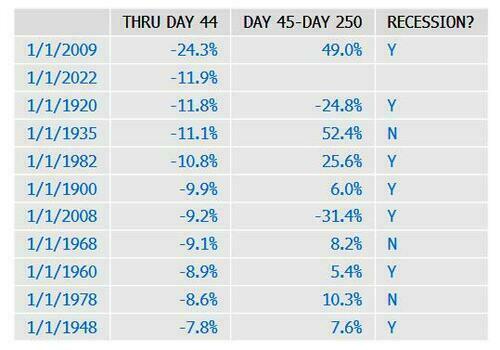
VIX term structure remains inverted but today saw a lot of that short-term fear/hedge-panic removed…
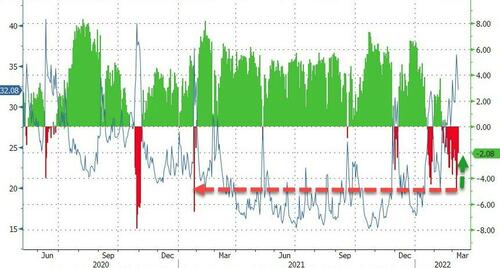
Source: Bloomberg
Which likely wiped out a lot of this negative delta and sets the stage for another drop next…
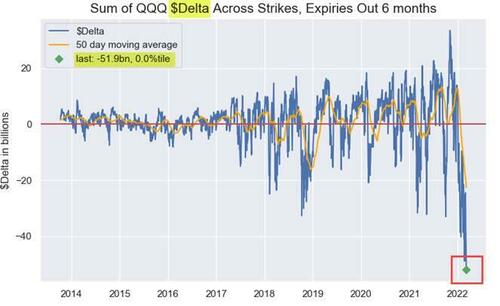
Source: Nomura
Total chaos in the energy complex today with oil crashing, bouncing, flash-crashing, bouncing, and then crashing some more… driven by a cavalcade of headlines of hopes for peace breaking out in Ukraine, and UAE talking to OPEC about raising production (later denied), mixed with an across the board draw in US inventories…
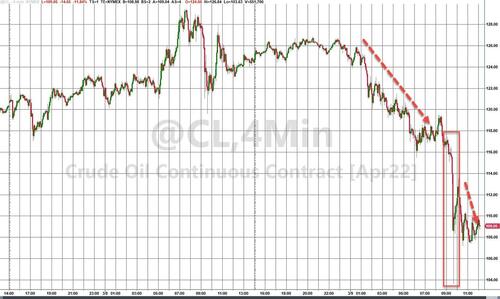
Wholesale Gasoline (RBOB) prices collapsed also, erasing half of the post-invasion spike…
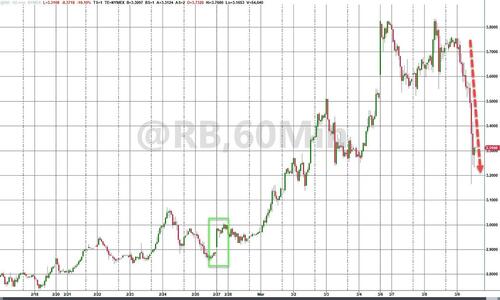
European diesel futures went berserk as the front-month (March) contract exploded by about $300/ton between 4 and 430 (London time) only to crash back to new day lows for the day, swinging from over $1650 to below $1100…
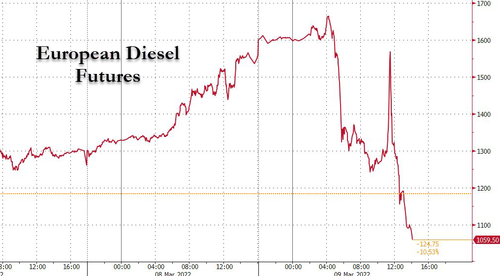
Source: Bloomberg
Some potentially good news for Biden (and all of us who still drive a climate-murdering ICE vehicle), today’s plunge in crude and wholesales gasoline suggests the recent surge in gas prices at the pump could well be peaking… (until the next surge)…
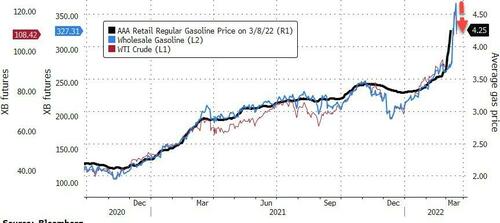
Source: Bloomberg
If not, do not worry America, this is the lady in charge of finding a ‘solution’…
The Euro soared today on the same hope (biggest daily jump since March 2020)…
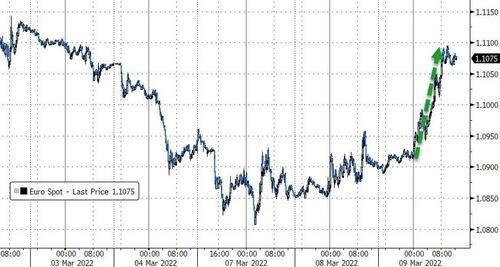
Source: Bloomberg
Crypto screamed higher overnight and held gains as The White House issued its crypto-related EO and it was a nothingburger… for now…
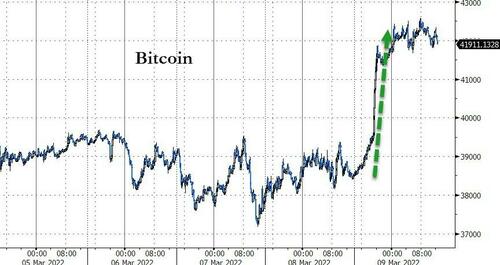
Source: Bloomberg
Bonds were puked higher in yield as safe-havens were for losers (the entire curve surged around 7-9bps higher with the belly underperforming)…
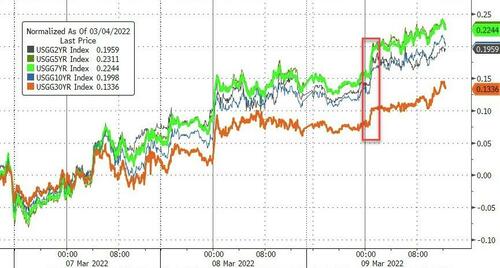
Source: Bloomberg
Rate-hike odds rose today, especially longer-dated with a modest 8% chance now of a 50bps hike next week but a 45% chance of 7 hikes this year now priced in…
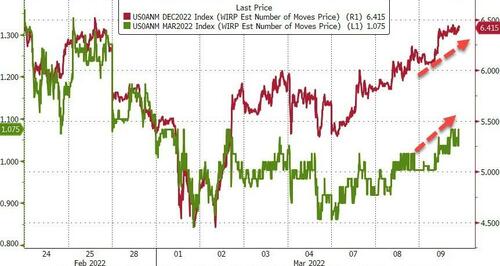
Source: Bloomberg
Gold neared $1270 overnight but was clubbed like a baby seal back below $2000 by the end of the US trading session…
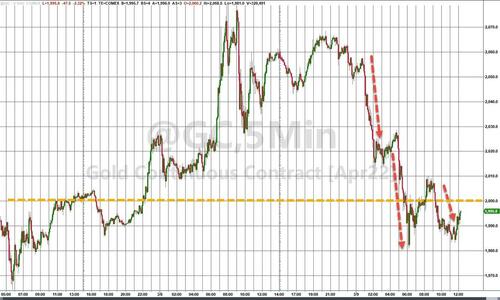
Finally, as Bloomberg points out, the cost of hedging against further declines in Russia’s ruble rose to the highest on record this week. And it’s not just short-term declines that have traders worried: the premium of options to sell the ruble over those to buy it over the next three, six and 12 months, known as the 25 Delta risk reversal, surpassed levels reached during the 2008 financial crisis and the annexation of Crimea in 2014.
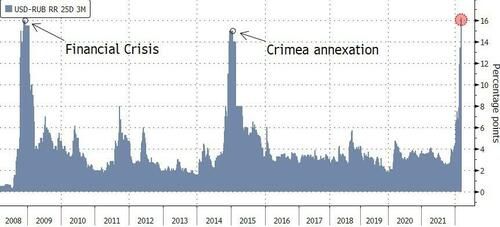
Source: Bloomberg
The ruble has slumped more than 40% since Russian forces invaded Ukraine on Feb. 24 (when it has been allowed to trade)…
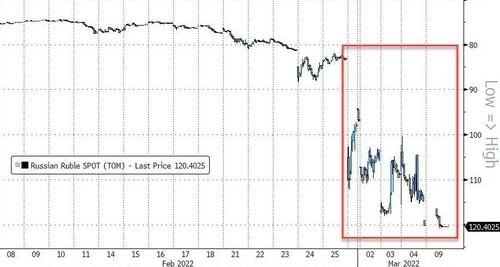
Source: Bloomberg
But who knows what happens next with the world and their pet rabbit hedged and wedged for more downside?
I) LAST NIGHT
I) /MORNING TRADING
Stocks Surge, Crude & Gold Dumped After Zelensky Aide’s Comments
WEDNESDAY, MAR 09, 2022 – 09:14 AM
US equity futures are surging ahead of the open following comments from Ukrainian President Zelensky’s Deputy Chief of Staff Ihor Zhovka that he is “ready for a diplomatic solution.”
Zhovka said that the country is ready to discuss neutrality, needs a security guarantee, but confirmed that Ukraine “won’t trade a single inch of territories,” and is insisting on a clear response to its EU application.
Notably stocks surged to yesterday’s highs, but did not extend gains further (for now)…

Crude is getting clobbered as geopolitical risk premia are discounted…

And safe havens are being dumped with gold briefly back below $2000…

JPMorgan noted that while Ukraine is no longer insisting on NATO membership, EU membership would give similar protections.
Of course this is the start of negotiations so no matter how distasteful it is to Putin, there may still be a way forward.
end
END
AFTERNOON
END
II) USA DATA
Job Openings At Record High, 4.8 Million More Than Unemployed Workers
WEDNESDAY, MAR 09, 2022 – 10:29 AM
Last month, the BLS reported that the US job market was plagued by a near record 10.925 million job openings. Then moments ago, the BLS published its latest, January JOLTS report according to which job openings had hit a new record high11.263 million, but not really, because just as all other labor data else was adjusted sharply higher for 2022 (presumably to account for broken seasonal factors due to covid), the December job openings were revised by 523 thousand higher to 11.448 million, a number which is now the highest on record, and which means that what would otherwise be a record print of 11.263MM- compared to December unrevised 10.925MM – is actually a decline of 185K job openings compared to the revised 11.448MM.
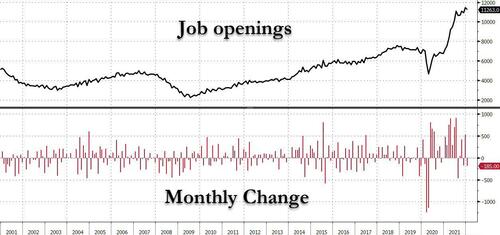
Splitting hairs aside, whether it was in December or January, doesn’t matter because as of this moment there is a record number of job openings in the US job market, a phenomenon which Jeff Gundlach yesterday attributed to the surging “crime-force participation rate”, claiming that lack of prosecution has made millions of potential workers into hardened shoplifting criminals.
Looking at the details, job openings decreased in several industries, with the largest decreases in accommodation and food services (-288,000); transportation, warehousing, and utilities (-132,000); and federal government (-60,000). Job openings increased in other services (+136,000) and in durable goods manufacturing (+85,000).
What we find far more remarkable, however, is that amid the continued tightening in the labor market, the bump in job openings meant that there was a new record, or 4.8 million (ignoring last month’s upward revision), more vacant jobs than unemployed workers in January, confirming that the US labor market remains woefully, perhaps irreparably cracked.
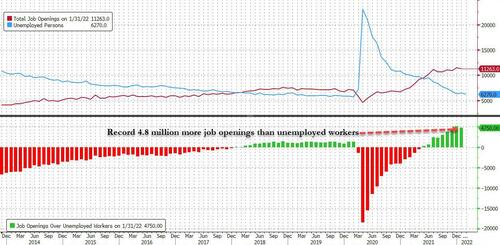
And with far more job openings than unemployed workers, this meant that in December there were again less than 1 unemployed workers – a record low 0.5783 to be exact – for every job opening.
And while the number of job openings may have declined sequentially if one uses the adjusted data, this was offset by a modest increase in the number of hires, which rose from 6.450MM to 6.457MM in January.
One last observation comes from the January quits rate: after the number of Americans quitting their job hit an all time high 4.510 million in November, it has dropped modestly for two months in a row, and in January reached 4.252 million, which while still one of the highest on record, suggests that at least some workers are starting to stay put instead of bouncing around in hopes of getting a better paycheck elsewhere.
The quits rate was 2.8%. Quits decreased in retail trade (-69,000) and in information (-20,000) but increased in finance and insurance (+30,000). The number of quits decreased in the Midwest region.
IIb) USA COVID/VACCINE MANDATE STORIES
(courtesy Sharyl Atkinson)
Why Is CDC’s Walensky Refusing To Answer this Senator’s Questions?
WEDNESDAY, MAR 09, 2022 – 01:00 PM
Authored by Sharyl Attkisson via The Brownstone Institute,
Sen. Ron Johnson (R-Wisconsin) has taken a lead throughout the Covid-19 pandemic to hold public health officials and agencies accountable if they’ve failed to provide accurate and timely information to the public for whom they work.

From masks, vaccines, and school shutdowns, to the origination of Covid-19, Johnson has been asking critical questions. However, he says he has received very few answers.
According to Johnson, Centers for Disease Control (CDC) Director Rochelle Walensky is one of the public health officials who has been non-compliant with his requests.
To date, Johnson says he has made eight specific requests, directly of Walensky, that have gone unanswered.
In his most recent attempt to get data, he writes:
“In the midst of a pandemic, it is unacceptable that CDC would withhold relevant data on Covid-19 that could inform the public and potentially save lives. Moreover, it is grossly arrogant that your agency has repeatedly ignored Congressional requests.”
* * *
Read Senator Johnson’s latest letter to Director Walensky below:
March 1, 2022
Rochelle P. Walensky, M.D., MPH Director
Centers for Disease Control and Prevention
Dear Director Walensky:
Over the last year, the Centers for Disease Control and Prevention (CDC) has failed to be transparent to the American people and their elected representatives. Specifically, CDC has not responded to my multiple requests for information about COVID-19. In addition, CDC has reportedly “withheld information” about COVID-19 from the public that “could help state and local health officials better target their efforts to bring the virus under control.”1 In the midst of a pandemic, it is unacceptable that CDC would withhold relevant data on COVID-19 that could inform the public and potentially save lives. Moreover, it is grossly arrogant that your agency has repeatedly ignored Congressional requests.
To date, I have sent you numerous letters requesting information about COVID-19 including records and data on the virus, school guidance, and the vaccines. For the letters listed below, you have either failed to respond or your response was significantly incomplete:
- May 19, 2021 – Requesting records relating to teachers’ unions and CDC guidance.
- June 28, 2021 – Requesting information about COVID-19 vaccine adverse events.
- July 13, 2021 – Requesting information on vaccine safety monitoring.
- July 30, 2021 – Requesting data CDC used to create a slide deck on COVID-19 vaccine effectiveness.
- August 22, 2021 – Regarding the Vaccines and Related Biological Products Advisory Committee meeting.
- September 15, 2021 – Requesting information on the effectiveness of natural immunity as protection from COVID-19.
- October 5, 2021 – Requesting information on early treatments for COVID-19.
- December 29, 2021 – Requesting information about vaccine lot variation data.1 Apoorva Mandavilli, The C.D.C. isn’t publishing large portions of the Covid data it collects, NY Times, Feb. 21, 2022.
CDC’s failure to respond to Congress appears to be one piece of the agency’s larger problem with public transparency. According to the New York Times, during the “[t]wo full years into the pandemic, the [CDC] has published only a tiny fraction of the data it has collected.”2 The CDC’s apparent indifference toward transparency during a pandemic is disturbing and shameful.
Throughout the pandemic, CDC and other health agencies have promoted inconsistent policies and recommendations regarding COVID-19. Many Americans who voiced concerns about these shifting policies have been subjected to ridicule, vilification, and censorship from the press. Rather than provide the public with complete access to relevant data to justify its COVID- 19 policies, the Biden Administration has apparently favored censorship over transparency.
In my continued effort to ensure that the American people have access to complete and accurate data about COVID-19, I renew my previous requests and call on you to immediately respond to all of my outstanding letters. Additionally, I would like you to brief my staff on whether CDC is withholding data from the public as reported by the New York Times and provide the names and titles of CDC officials who may have withheld the relevant information. I ask that this briefing occur no later than March 15, 2022. Thank you for your attention to this matter.
cc: The Honorable Xavier Becerra Secretary
Department of Health and Human Services
The Honorable Christi Grimm
Inspector General
Department of Health and Human Services
Sincerely,
Ron Johnson
United States Senator
end
iii) USA inflation//SHIPPING commentaries//LOG JAMS//
iii) USA economic stories
Not good: USA is falling behind both Russia and China in combat ready hypersonic missiles
(zerohedge)
America Falls Behind Russia And China In Combat-Ready Hypersonic Missiles, Report Says
WEDNESDAY, MAR 09, 2022 – 04:00 AM
The US has fallen behind the hypersonic weapons race. Russia and China are quickly developing and fielding hypersonic missiles while the US suffers testing setbacks.
Bloomberg reports defense manufacturer Lockheed-Martin’s ARRW (Air-Launched Rapid Response Weapon) planned for use by the US Air Force has suffered three consecutive failed tests, while both Russia (see: here) and China (see: here) have completed successful tests.
The three failures so far have occurred during limited exercises focused on demonstrating the performance of the missile’s booster motor after separating from the bomber but without the hardened glide-body warhead of an operational missile. -Bloomberg
ARRW’s latest hurdle will be two upcoming ground-based tests of its booster motor by June 30. If successful, a fully operational hypersonic missile could be approved for initial production by Sept. 30. Before production, the service must complete a review of Lockheed-Martin’s ability to manufacture and deliver the new weapons.

The Air Force has yet to release costs related to the ARRW program, but figures suggest the development phase could be around $1.4 billion. Fielding of these weapons that travel multiple times faster than the sound of speed and have unpredictable flight paths makes them harder to shoot down, are being rushed as turmoil in Ukraine flares up.
ARRW is to be air-launched from the wing of a Boeing B-52 Stratofortress bomber and propelled by a booster motor before the solid glide body, or warhead, flies at hypersonic speeds to its target.

A spokesperson for Heidi Shyu, the Defense Department’s undersecretary for research and engineering, said she’s “supportive of the Air Force’s aggressive efforts to accelerate development,” but “the Sept. 30 operational capability date is a very aggressive schedule.”
Kelley Sayler, an analyst in advanced technology, said the combat-ready date by the end of September “leaves little to no room for test delays or additional flight failures, and so it will likely be challenging.”
Cristina Vite, a spokesman for Lockheed, said with each missile test, there “continues to gain significant technical maturity while accomplishing many first-time milestones.”
While there are still technical and engineering challenges surrounding ARRW’s development ahead of being combat-ready, the US is lagging behind its international competitors in the procurement of hypersonic weapons.
iv)swamp stories
KING REPORT/SWAMP STORIES
The EU: Joint European action for more affordable, secure and sustainable energy
REPowerEU will seek to diversify gas supplies, speed up the roll-out of renewable gases and replace gas in heating and power generation… The Commission intends to present by April a legislative proposal requiring underground gas storage across the EU to be filled up to at least 90% of its capacity by 1 October each year… Diversifying gas supplies, via higher Liquefied Natural Gas (LNG) and pipeline imports from non-Russian suppliers, and larger volumes of biomethane and renewable hydrogen production and imports; and, reducing faster the use of fossil fuels in our homes, buildings, industry, and power system, by boosting energy efficiency, increasing renewables and electrification, and addressing infrastructure bottlenecks… https://ec.europa.eu/commission/presscorner/detail/en/ip_22_1511?s=02
EU to Consider Massive Joint Bond Sales to Fund Energy, Defense
- Plan could be unveiled this week but details still in flux
- EU’s Timmermans says commission has no plans for common bonds
The European Union is discussing a plan to jointly issue bonds on a potentially massive scale to finance energy and defense spending as the bloc copes with the fallout from Russia’s invasion of Ukraine.
The proposal may be presented after the EU’s leaders hold an informal summit in Versailles, France, that starts Thursday… A senior EU official said Tuesday afternoon that there was no formal plan from the European Commission, the bloc’s executive arm. “We have no such plans in the commission,” commission Vice President Frans Timmermans said in a news conference when asked about the Bloomberg report. “I don’t know if there might be in some member states.”…
The EU has also had to rethink its defense strategy, as it has typically relied on the protection of the U.S. through its commitments in the NATO alliance…
https://www.bloomberg.com/news/articles/2022-03-08/eu-to-consider-massive-joint-bond-sales-to-fund-energy-defense
China’s Xi conveys to France, Germany opposition to Russia sanctions
Xi also told French President Emmanuel Macron and German Chancellor Olaf Scholz that China is willing to “play an active role” in settling the ongoing crisis “…
The Western sanctions “will deal a blow to the stability of global finance, energy, transportation and supply chain, dragging down the world economy amid the pandemic,” Xi was quoted as telling Macron and Scholz by the official China Central Television…
https://english.kyodonews.net/news/2022/03/5ba3b86e97ce-urgent-chinas-xi-conveys-to-france-germany-opposition-to-russia-sanctions.html
The Big Guy announced a ban on Russian energy products, and they blatantly lied that he is not restricting US energy production. “It’s simply not true that my administration or policies are holding back domestic energy production.” Joey Baby blamed Putin for gasoline prices and said he would not tolerate energy company “profiteering or price gouging”.
Biden announces ban on Russian oil imports, other energy products
“To the oil and gas companies and to the finance firms that back them, we understand Putin’s war against the people of Ukraine is causing prices to rise. We get that. That’s self-evident,” he said. “But, it’s no excuse to exercise excessive price increases or padding profits or any kind of effort to exploit the situation or — American consumers, exploit them. Russia’s aggression is costing us all. And it’s no time for profiteering or price gouging. I want to be clear about what we’ll not tolerate.”…
https://www.msn.com/en-us/money/markets/biden-announces-ban-on-russian-oil-imports-other-energy-products/ar-AAUMofe
United States Bans Imports of Russian Oil, Liquefied Natural Gas, and Coal – The White House
Today’s Executive Order bans: The importation into the United States of Russian crude oil and certain petroleum products, liquefied natural gas, and coal…
New U.S. investment in Russia’s energy sector…
Americans will also be prohibited from financing or enabling foreign companies that are making investment to produce energy in Russia… https://www.whitehouse.gov/briefing-room/statements-releases/2022/03/08/fact-sheet-united-states-bans-imports-of-russian-oil-liquefied-natural-gas-and-coal/
Biden suspends oil leases in Alaska’s Arctic refuge June 1, 2021
https://apnews.com/article/alaska-arctic-wildlife-refuge-oil-gas-drilling-biden-b9f20088957d42e99b791ff94169198f
Biden halts oil, gas leases amid legal fight on climate cost February 22, 2022 (Only 2 weeks ago!!)
https://apnews.com/article/climate-business-environment-and-nature-91f740cbd9f5f872fcdee911ff5f8026
@townhallcom: During his insane press conference, Biden: Called for energy independence…through green energy; Lied about domestic energy production; Blamed rising gas prices on Putin; Blamed future price increases on “exploitation” & “price gouging”; Took zero questions
Fox’s Harris Faulkner and David Asman slam Biden for lying about US oil production being at a record when it is 1.5m bbl/day lower: https://twitter.com/bennyjohnson/status/1501271790068412417
Chinese Nickel Giant Tsingshan Faces $8 Billion Trading Loss as Ukraine War Upends Market
Nickel prices soared, prompting the London Metal Exchange to suspend trading in the metal
https://www.wsj.com/articles/chinese-nickel-giant-tsingshan-faces-8-billion-trading-loss-as-ukraine-war-upends-market-11646765353
Russia Set to Ban Commodity Exports Following Western Sanctions – Putin’s decree didn’t specify which commodities and countries would be subjected to the export ban
https://www.wsj.com/articles/russia-set-to-ban-commodity-exports-following-western-sanctions-11646768260
@RNCResearch: REPORTER: What can you do about skyrocketing gas prices? BIDEN: “Can’t do much right now. Russia’s responsible.” https://twitter.com/RNCResearch/status/1501303236472541187
@toddstarnes: Actual quote from WH Pool reporter: “Here’s what we’ve determined POTUS said to the best of our ability after listening to a recording multiple times…”
PMorgan’s Rohrbaugh Says Clients Under ‘Extreme Stress’
- Firm’s markets revenue down 10% this quarter through Friday
- ‘The markets are extremely treacherous,’ Rohrbaugh says
“The markets are extremely treacherous at the moment — there’s a lot of uncertainty,” Rohrbaugh said. “The full ramifications of the current conditions are still uncertain.”…
https://www.bloomberg.com/news/articles/2022-03-08/jpmorgan-s-rohrbaugh-says-lots-of-clients-under-extreme-stress
One-way, one-decision roaring bull markets, punctuated with a few transitory declines and only 2 notable drops over 13 years, are so much easier! ‘Don’t confuse brains with an historic 13-year bull market!’
McDonald’s to temporarily close 850 stores in Russia
https://apnews.com/article/russia-ukraine-business-europe-lifestyle-restaurants-1cb12b1112a4542dde48c962762be3cc
Coca-Cola suspended operations in Russia. Pepsi halted cola sales but will continue food product sales.
In nod to Russia, Ukraine says no longer insisting on NATO membership
Zelensky said he is open to “compromise” on the status of two breakaway pro-Russian territories that President Vladimir Putin recognized as independent just before unleashing the invasion on February 24… https://insiderpaper.com/in-nod-to-russia-ukraine-says-no-longer-insisting-on-nato-membership/
@AFP: Russia suspends sale of foreign currencies until September 9, central bank says
WSJ: Saudi, Emirati Leaders Decline Calls with Biden During Ukraine Crisis (A bid dis for Joe!)
Persian Gulf monarchies have signaled they won’t help ease surging oil prices unless Washington supports them in Yemen, elsewhere
The White House unsuccessfully tried to arrange calls between President Biden and the de facto leaders of Saudi Arabia and the UAE…
The Saudis have signaled that their relationship with Washington has deteriorated under the Biden administration, and they want more support for their intervention in Yemen’s civil war, help with their own civilian nuclear program as Iran’s moves ahead and legal immunity for Prince Mohammed in the U.S… https://www.wsj.com/articles/saudi-emirati-leaders-decline-calls-with-biden-during-ukraine-crisis-11646779430
Russian default on its national debts ‘imminent’: Fitch ratings agency https://trib.al/0jLsFNP
The Russian government has $117 million in bond debts due March 16, and analysts fear a payment in rubles could trigger a credit default swap. An additional $65 million is due the next week.
Russian official proposes nationalizing factories shut down amid invasion
https://finance.yahoo.com/news/russian-official-proposes-nationalizing-factories-183217607.html
@MZHemingway: People are not talking enough about how the hysteria arising from the media/political regime and its failed foreign policy views is wreaking economic devastation on our own country.
Today – Rumors and headlines will again impact trading. The big risk for stocks now is capitulation selling. Upward manipulation can appear at any moment; however, the trend for stocks is clearly down. There can be no meaningful rally until the equity market is purged via capitulation liquidation.
The most important market now is probably bonds. The bond tumble on Tuesday suggests that Mr. Bond is starting to be more concerned about inflation than economic ebbing. This is evinced by gold’s trek to a record high (2075.47 on 8/7/20).
At a minimum, gold is proclaiming that central bankers have lost control of the financial markets. It might also be signaling that Global Establishment’s New World Order is ending, and more ominously, a global economic war has commenced.
@ggreenwald: Ukraine has “biological research facilities,” says Undersecretary of State Victoria Nuland, when asked by Sen Rubio if Ukraine has biological or chemical weapons, and says she’s worried Russia may get them. But she says she’s 100% sure if there’s a biological attack, it’s Russia.
https://twitter.com/ggreenwald/status/1501313109520175104
@shehzadyounis: US is working with Ukraine to prevent biological research facilities from falling into the hands of Russians — Nuland [MSM mocked this as a ‘conspiracy theory’ 2 days ago]
https://twitter.com/shehzadyounis/status/1501300844649615362
China demands answers from US for ‘26 biolabs in Ukraine’ (US involved in Wuhan biolab)
Beijing says military bio-labs must carry ‘all dangerous viruses in Ukraine’
https://www.aa.com.tr/en/americas/china-demands-answers-from-us-for-26-biolabs-in-ukraine-/2528207
@JackPosobiec: Nuland sounds like she’s getting in front of something (a Wuhan-like lab?)
@MonicaCrowley: Did Fauci and other government agents offshore gain-of-function and other dangerous research not just to Wuhan but to other undisclosed locations?
Ukraine On Fire – Oliver Stone documentary (2016).mp4 https://vimeo.com/685245201
US Under Secretary of State Victoria Nuland claims Poland did not “pre-consult” with the US about its decision to put Poland’s MIG-29 jets under US control at Ramstein Air Base in Germany. Poland has put Secretary of State Blinken on the spot after he said the US has authorized NATO to send jets to Ukraine.
Slovakia Considering Similar MiG-29 Handover Arrangement as Poland, Slovak Official: WSJ
Fox’s @JacquiHeinrich: Pentagon nixes Polish plan to give MiG’s to Ukraine via Ramstein: “departing from a U.S./NATO base in Germany to fly into airspace that is contested with Russia over Ukraine raises serious concerns for the entire NATO alliance…simply not clear there is substantive rationale.”
https://twitter.com/JacquiHeinrich/status/1501333459972800527 (Secretary of State Blinken was full of Schiff! His big mouth and empty rhetoric could start WWIII! Replace him ASAP, Joey Baby!)
U.S. intelligence shows Iran threats on U.S. soil, but Blinken and Schiff say this shouldn’t derail new nuclear deal https://www.cbsnews.com/news/iran-threats-pompeo-nuclear-deal/
Kamala Harris, Pete Buttigieg slammed for ‘tone deaf’ e-vehicle push as gas skyrockets https://trib.al/HhdEXrx
Stephen Colbert roasted for saying he’d pay $15 for gas because he drives a Tesla https://trib.al/eU6ihdm
California officials raided preschool, interviewed 2-year-olds over mask policies
School says parents ‘furious’ over ‘unnecessary and inappropriate child interviews’
https://www.foxnews.com/politics/california-officials-raided-preschool-mask-policies
END Let us close with this offering courtesy of Greg Hunter interviewing xxxx |
Well that is all for today. I will see you THURSDAY night


 harveyorganblog.com


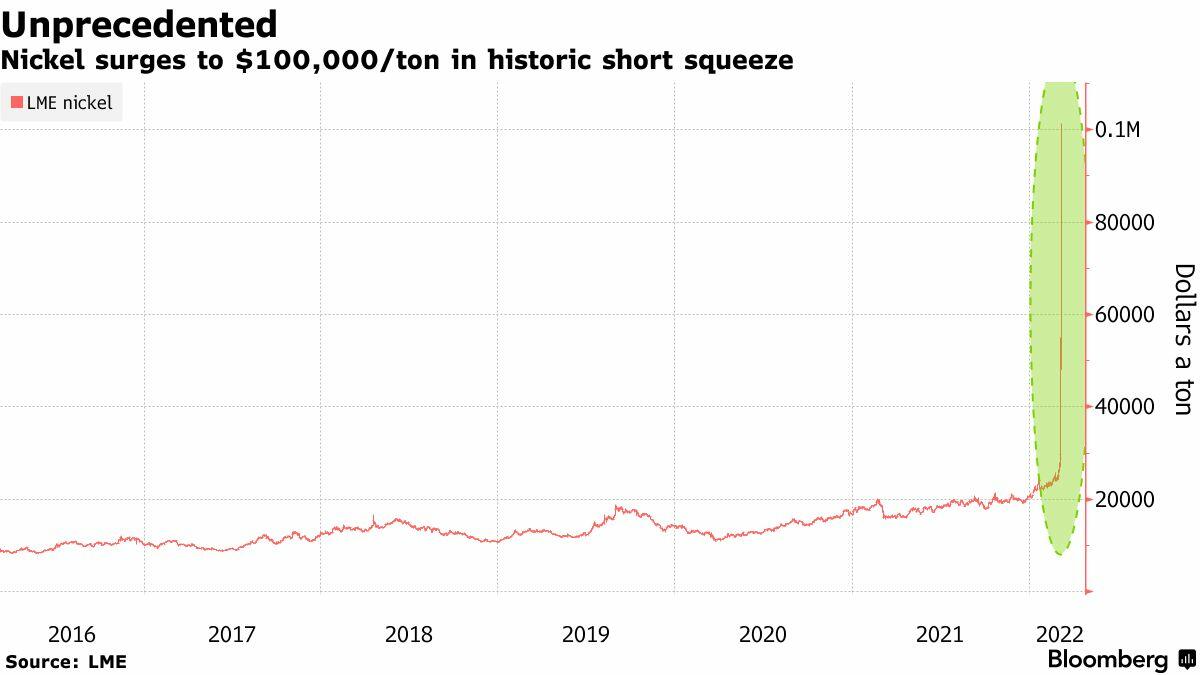
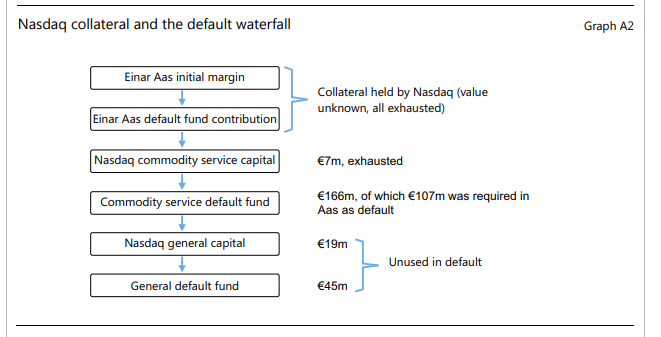
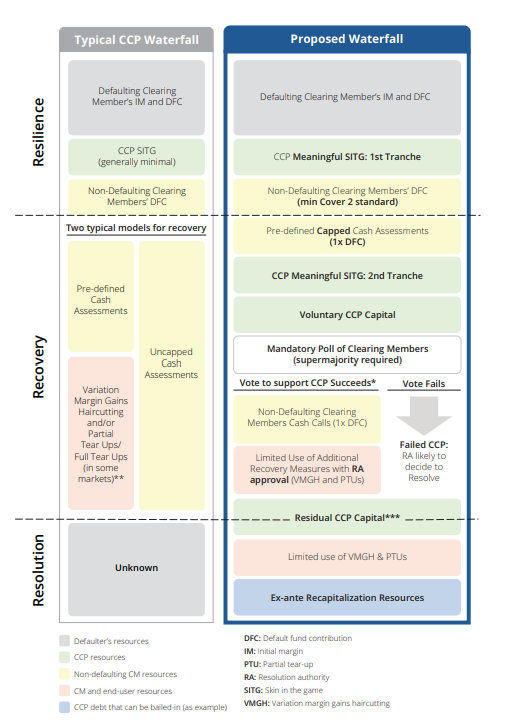
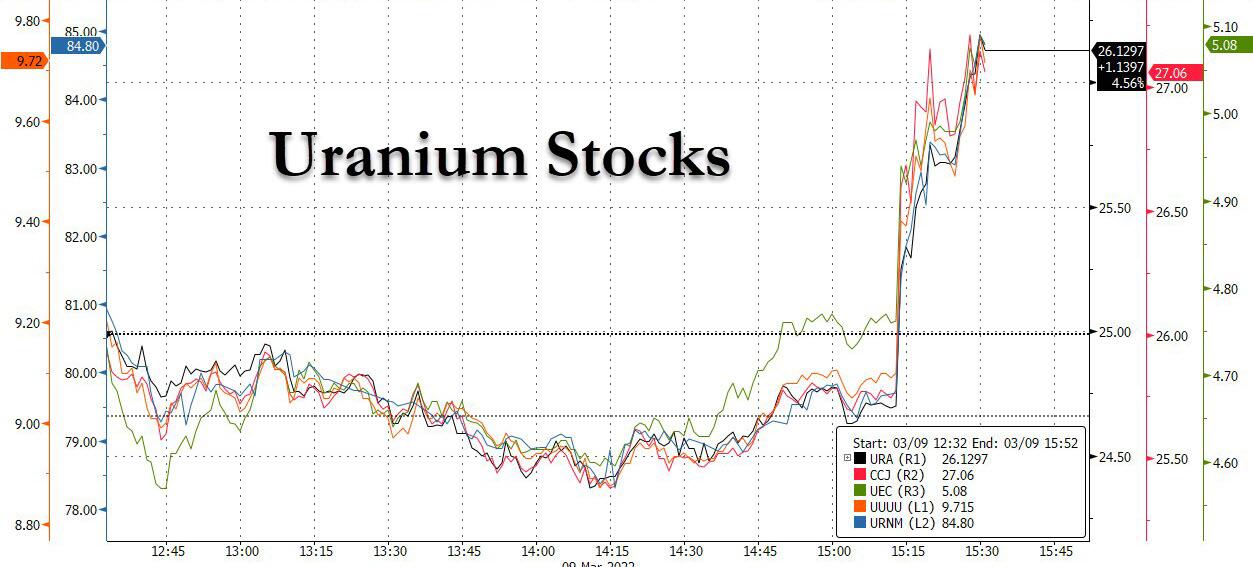

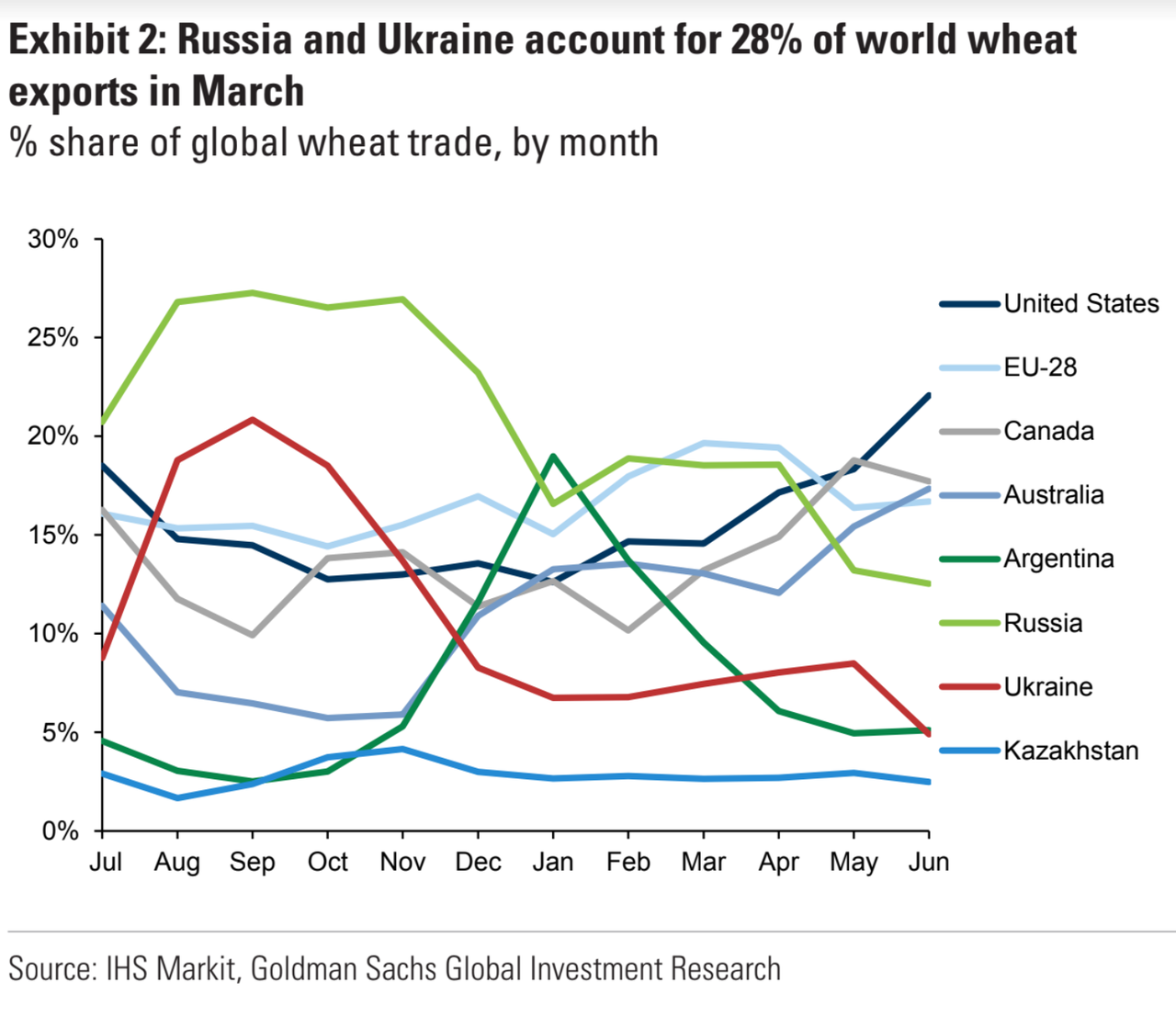


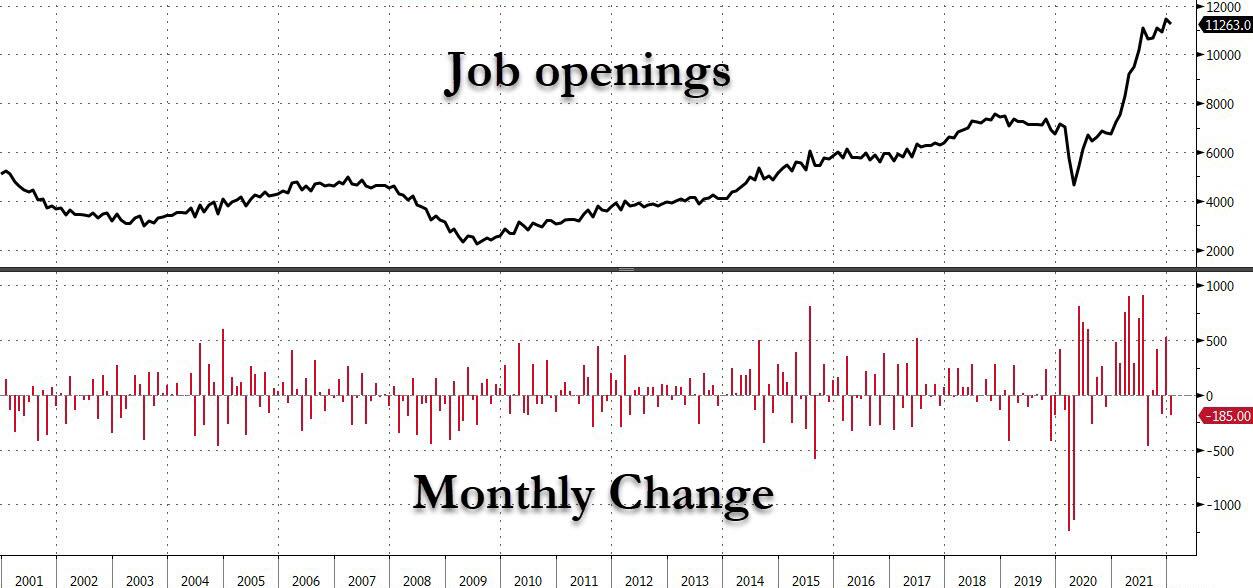
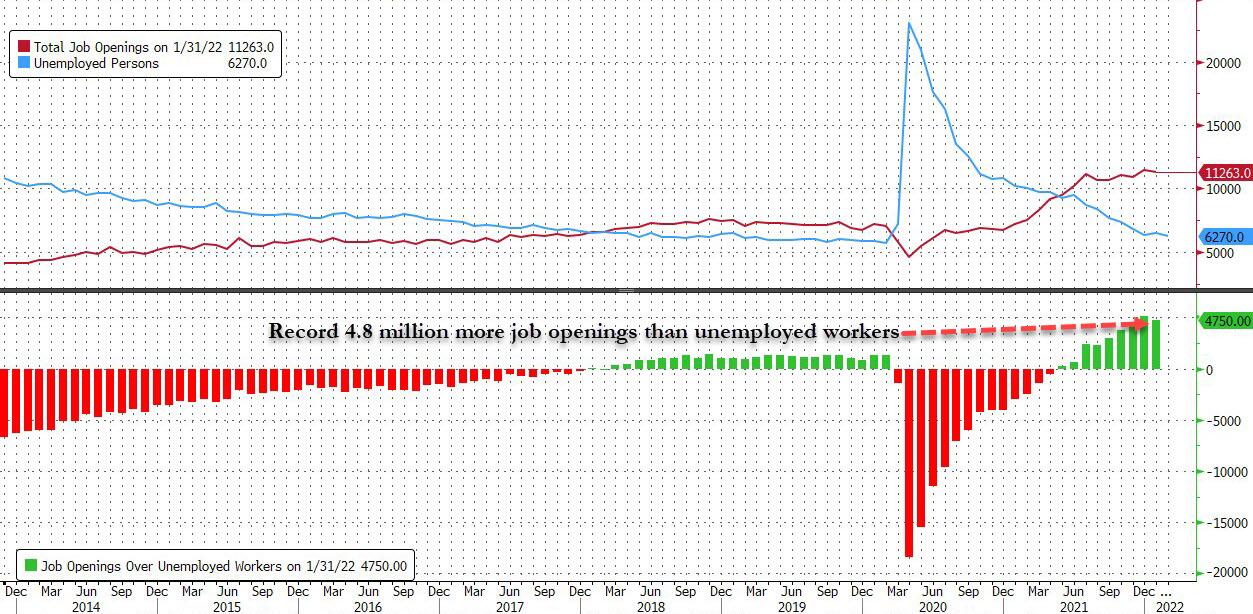
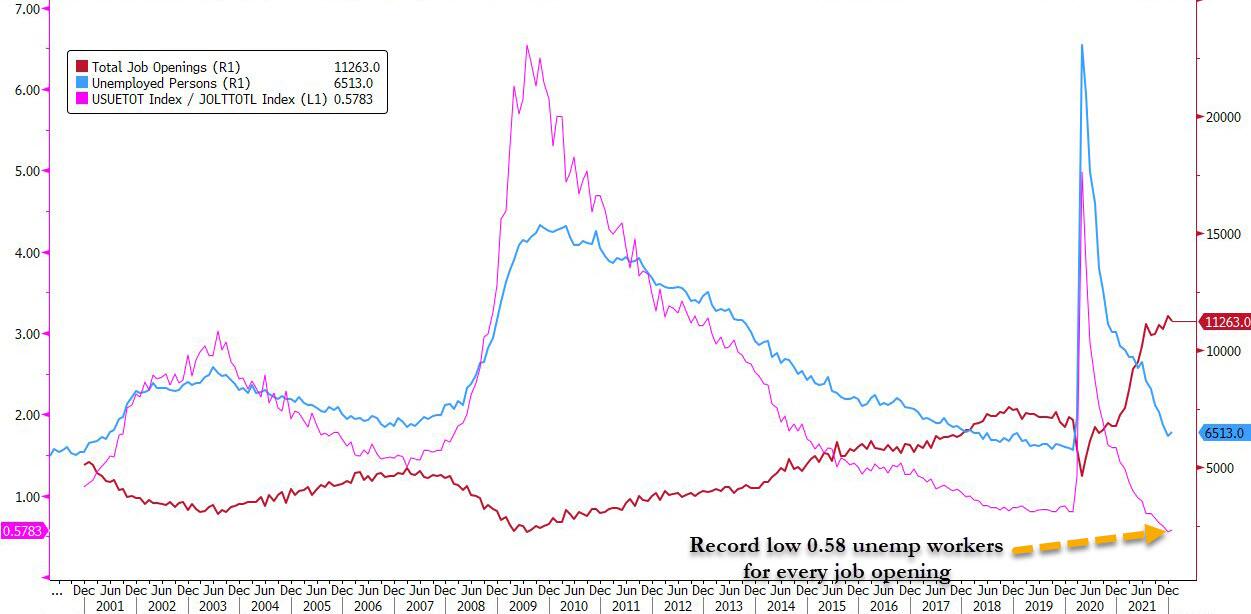

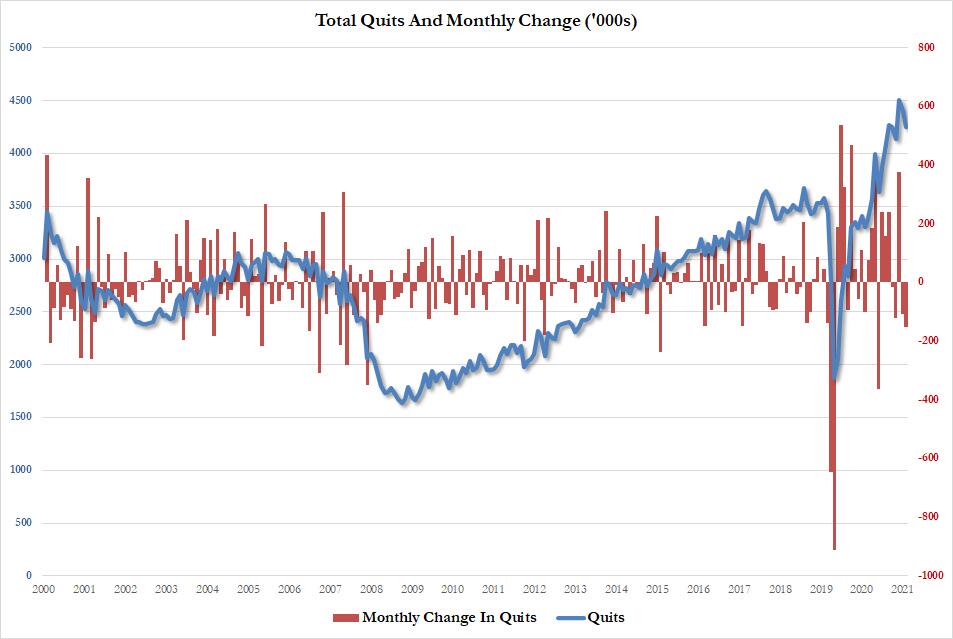

[…] by Harvey Organ, Harvey Organ Blog: […]
LikeLike
[…] by Harvey Organ, Harvey Organ Blog: […]
LikeLike