JAN 30//GOLD CLOSED DOWN $6.00 TO $1923.15//SILVER CLOSED UP 12 CENTS TO $23.50// PLATINUM CLOSED UP $1.05 TO $1015.65//PALLADIUM CLOSED UP $26.60 TO $1646.20//ANDREW MAGUIRE IN THE VAULT/KINESIS VIDEO IS A MUST VIEW//RUSSIA VS UKRAINE WAR: DOUGLAS MACGREGOR A MUST READ!!/SUSPECTED ISRAEL DRONE ATTACK ON IRANIAN MILITARY POSITIONS//COVID UPDATES//VACCINE IMPACT/DR PAUL ALEXANDER//DR PANDA//SLAY NEWS//PFIZER TRIES TO DEFEND ITSELF FROM THE VERITAS FIASCO//USA REPORTS: MANY AMERICANS CANNOT AFFORD CAR LOAN PAYMENTS//FOOD STAMP PAYMENTS WILL BE REDUCED IN MARCH 2023//SWAMP STORIES FOR YOU TONIGHT//
Click here if you wish to send a donation. I sincerely appreciate it as this site takes a lot of preparation.
GOLD: NUMBER OF NOTICES FILED FOR JAN/2023. CONTRACT: 4 NOTICES FOR 400 OZ or 0.01244 TONNES
total notices so far: 6610 contracts for 661,000 oz (20.559 tonnes)
SILVER NOTICES: 2 NOTICE(S) FILED FOR 10,000 OZ/
total number of notices filed so far this month : 1022 for 5110,000 oz
END
GLD
WITH GOLD DOWN $6.00
INVESTORS SWITCHING TO SPROTT PHYSICAL (PHYS) INSTEAD OF THE FRAUDULENT GLD
//SMALL CHANGES IN GOLD INVENTORY AT THE GLD: A WITHDRAWAL OF .87 TONNES OF GOLD FROM THE GLD
INVENTORY RESTS AT 918.50 TONNES
Silver//SLV
WITH NO SILVER AROUND AND SILVER UP 12 CENTS
AT THE SLV// :/NO CHANGES IN SILVER INVENTORY AT THE SLV:
INVESTORS ARE SWITCHING SLV TO SPROTT’S PSLV
CLOSING INVENTORY: 521.9 MILLION OZ (THIS IS ALSO A CRIME SCENE@!!!!
Let us have a look at the data for today
SILVER//OUTLINE
SILVER COMEX OI ROSE BY A TINY SIZED 10 CONTRACTS TO 136,380 AND CLOSER TO THE RECORD HIGH OI OF 244,710, SET FEB 25/2020 AND THE SMALL GAIN IN COMEX OI WAS ACCOMPLISHED DESPITE OUR STRONG $0.42 LOSS SILVER PRICING AT THE COMEX ON FRIDAY. FOR THE PAST MONTH, OUR BANKERS HAVE RETURNED TO BEING NET SHORT AND THUS WERE SUCCESSFUL IN KNOCKING THE PRICE OF SILVER DOWN (IT FELL BY $0.42. BUT WERE UNSUCCESSFUL IN KNOCKING ANY SPEC LONGS, AS WE HAD A SMALL SIZED GAIN ON OUR TWO EXCHANGES OF 186 CONTRACTS. AS WELL, WE HAD 0 NOTICES FOR EXCHANGE FOR RISK TRANSFER (0 OZ. ) AS THE TOTAL ISSUED IN THIS CATEGORY SO FAR THIS MONTH TOTAL 7.25 MILLION OZ. WE HAVE FINISHED WITH OUR SPECS BEING SHORT AS THEY COVERED WITH THE RISE IN PRICE . WE HAVE NOW RETURNED TO OUR USUAL AND CUSTOMARY SCENARIO: BANKERS SHORT AND SPECS LONG.
WE MUST HAVE HAD: A SMALL ISSUANCE OF EXCHANGE FOR PHYSICALS( 55 CONTRACTS) iiii) AN INITIAL SILVER STANDING FOR COMEX SILVER MEASURING AT 4,055. MILLION OZ FOLLOWED BY TODAY’S QUEUE. JUMP OF 10,000 OZ//NEW STANDING 5.11 MILLION OZ + 7.25 MILLION OF EXCHANGE FOR RISK//TOTAL STANDING 12.360 MILLION OZ//// V) TINY SIZED COMEX OI GAIN/ STRONG EFP ISSUANCE/
I AM NOW RECORDING THE DIFFERENTIAL IN OI FROM PRELIMINARY TO FINAL –131
HISTORICAL ACCUMULATION OF EXCHANGE FOR PHYSICALS JAN. ACCUMULATION FOR EFP’S SILVER/JPMORGAN’S HOUSE OF BRIBES/STARTING FROM FIRST DAY/MONTH OF JAN:
TOTAL CONTRACTS for 20 days, total 10,564 contracts: OR 52.820 MILLION OZ PER DAY. (528 CONTRACTS PER DAY)
TOTAL EFP’S FOR THE MONTH SO FAR: 52.820 MILLION OZ
.
LAST 17 MONTHS TOTAL EFP CONTRACTS ISSUED IN MILLIONS OF OZ:
MAY 137.83 MILLION
JUNE 149.91 MILLION OZ
JULY 129.445 MILLION OZ
AUGUST: MILLION OZ 140.120
SEPT. 28.230 MILLION OZ//
OCT: 94.595 MILLION OZ
NOV: 131.925 MILLION OZ
DEC: 100.615 MILLION OZ
JAN 2022// 90.460 MILLION OZ
FEB 2022: 72.39 MILLION OZ//
MARCH: 207.430 MILLION OZ//A NEW RECORD FOR EFP ISSUANCE
APRIL: 114.52 MILLION OZ FINAL//LOW ISSUANCE
MAY: 105.635 MILLION OZ//
JUNE: 94.470 MILLION OZ
JULY : 87.110 MILLION OZ
AUGUST: 65.025 MILLION OZ
SEPT. 74.025 MILLION OZ///FINAL
OCT. 29.017 MILLION OZ FINAL
NOV: 134.290 MILLION OZ//FINAL
DEC, 61.395 MILLION OZ FINAL
JAN 2023/// 52.820 MILLION OZ
RESULT: WE HAD A TINY SIZED INCREASE IN COMEX OI SILVER COMEX CONTRACTS OF 10 DESPITE OUR STRONG $0.42 LOSS IN SILVER PRICING AT THE COMEX// FRIDAY.,. THE CME NOTIFIED US THAT WE HAD A SMALL SIZED EFP ISSUANCE CONTRACTS: 55 CONTRACTS ISSUED FOR MAR AND 0 CONTRACTS ISSUED FOR ALL OTHER MONTHS) WHICH EXITED OUT OF THE SILVER COMEX TO LONDON AS FORWARDS./ WE HAVE A GOOD INITIAL SILVER OZ STANDING FOR JAN OF 4.055 MILLION OZ FOLLOWED BY TODAY’S 10,000 OZ. JUMP / //NEW STANDING RISES TO 5.110 MILLION OZ + EFR 7.25 MILLION = 12.36 MILLION OZ. .. WE HAVE A SMALL SIZED GAIN OF 65OI CONTRACTS ON THE TWO EXCHANGES
WE HAD 2 NOTICE(S) FILED TODAY FOR 10,000 OZ
THE SILVER COMEX IS NOW BEING ATTACKED FOR METAL BY LONDONERS ET AL.
GOLD//OUTLINE
IN GOLD, THE COMEX OPEN INTEREST FELL BY A STRONG SIZED 12,452 CONTRACTS TO 479,646 AND FURTHER FROM THE RECORD (SET JAN 24/2020) AT 799,541 AND PREVIOUS TO THAT: (SET JAN 6/2020) AT 797,110.
THE DIFFERENTIAL FROM PRELIMINARY OI TO FINAL OI IN GOLD TODAY: REMOVED -1095 CONTRACTS.
.
WE HAD A GIGANTIC SIZED DECREASE IN COMEX OI ( 11.387 CONTRACTS) DESPITE OUR TINY $0.85 LOSS IN PRICE. WE ALSO HAD A SMALL INITIAL STANDING IN GOLD TONNAGE FOR JAN. AT 2.1710 TONNES ON FIRST DAY NOTICE FOLLOWED BY TODAY’S QUEUE JUMP OF 4 CONTRACTS OR 400 OZ //(QUEUE JUMPING = EXERCISING LONDON BASED EFP’S ) (EFP is the transfer of contracts immediately to London for potential gold deliveries originating from London). NEW STANDING 20.559 TONNES
YET ALL OF..THIS HAPPENED WITH OUR $0.85 LOSS IN PRICEWITH RESPECT TO FRIDAY’S TRADING
WE HAD A VERY STRONG SIZED LOSS OF 10,947 OI CONTRACTS (34.049 PAPER TONNES) ON OUR TWO EXCHANGES WITH THE MAJORITY OF THE LOSS DUE TO CONTINUATION OF SPREADER LIQUIDATION…..
E.F.P. ISSUANCE
THE CME RELEASED THE DATA FOR EFP ISSUANCE AND IT TOTALED A FAIR SIZED 1505 CONTRACTS:
The NEW COMEX OI FOR THE GOLD COMPLEX RESTS AT 479,646
IN ESSENCE WE HAVE A VERY STRONG SIZED DECREASE IN TOTAL CONTRACTS ON THE TWO EXCHANGES OF 10,947 CONTRACTS WITH 12,452CONTRACTS DECREASED AT THE COMEX AND 1505 EFP OI CONTRACTS WHICH NAVIGATED OVER TO LONDON. THUS TOTAL OI LOSS ON THE TWO EXCHANGES OF 10,947 CONTRACTS OR 34.049 TONNES.
CALCULATIONS ON GAIN/LOSS ON OUR TWO EXCHANGES
WE HAD A FAIR SIZED ISSUANCE IN EXCHANGE FOR PHYSICALS (1505 CONTRACTS) ACCOMPANYING THE HUGE SIZED LOSS IN COMEX OI (12,452) TOTAL LOSS IN THE TWO EXCHANGES 10,947 CONTRACTS. WE HAVE ( 1) NOW RETURNED TO OUR NORMAL FORMAT OF BANKERS GOING SHORT AND SPECULATORS GOING LONG ,2.) SMALL INITIAL STANDING AT THE GOLD COMEX FOR JAN. AT 2.1710 TONNES FOLLOWED BY TODAY’S QUEUE JUMP OF 400 OZ /NEW STANDING 20.559 TONNES///3) ZERO LONG LIQUIDATION //4) HUGE SIZED COMEX OPEN INTEREST LOSS WITH THE MAJORITY OF THAT LOSS DUE TO CONTINUATION OF SPREADER LIQUIDATION// 5) FAIR ISSUANCE OF EXCHANGE FOR PHYSICAL PAPER/
HISTORICAL ACCUMULATION OF EXCHANGE FOR PHYSICALS IN 2023 INCLUDING TODAY
JAN
ACCUMULATION OF EFP’S GOLD AT J.P. MORGAN’S HOUSE OF BRIBES: (EXCHANGE FOR PHYSICAL) FOR THE MONTH OF JAN :
71,992 CONTRACTS OR 7,199,200 OZ OR 223.92 TONNES 20 TRADING DAY(S) AND THUS AVERAGING: 3599 EFP CONTRACTS PER TRADING DAY
TO GIVE YOU AN IDEA AS TO THE SIZE OF THESE EFP TRANSFERS : THIS MONTH IN 20 TRADING DAY(S) IN TONNES:223.92 TONNES
TOTAL ANNUAL GOLD PRODUCTION, 2022, THROUGHOUT THE WORLD EX CHINA EX RUSSIA: 3555 TONNES
THUS EFP TRANSFERS REPRESENTS 223.92/3550 x 100% TONNES 6.30% OF GLOBAL ANNUAL PRODUCTION
SEPT 142.12 TONNES FINAL ISSUANCE ( LOW ISSUANCE)_
OCT: 141.13 TONNES FINAL ISSUANCE (LOW ISSUANCE)
NOV: 312.46 TONNES FINAL ISSUANCE//NEW RECORD!! (INCREASING DRAMATICALLY)//SIGN OF REAL STRESS//SURPASSING THE MARCH 2021 RECORD OF 276.50 TONNES OF EFP
DEC. 175.62 TONNES//FINAL ISSUANCE//
JAN:2022 247.25 TONNES //FINAL
FEB: 196.04 TONNES//FINAL
MARCH: 409.30 TONNES INITIAL( THIS IS NOW A RECORD EFP ISSUANCE FOR MARCH AND FOR ANY MONTH.
APRIL: 169.55 TONNES (FINAL VERY LOW ISSUANCE MONTH)
MAY: 247,44 TONNES FINAL//
JUNE: 238.13 TONNES FINAL
JULY: 378.43 TONNES FINAL
AUGUST: 180.81 TONNES FINAL
SEPT. 193.16 TONNES FINAL
OCT: 177.57 TONNES FINAL ( MUCH SMALLER THAN LAST MONTH)
NOV. 223.98 TONNES//FINAL ( MUCH LARGER THAN PREVIOUS MONTHS//comex running out of physical)
DEC: 185.59 tonnes // FINAL
JAN 2023: 223.92 TONNES INITIAL//HUGE AMOUNT OF EFP’S ISSUED THIS MONTH!!
SPREADING OPERATIONS
(/NOW SWITCHING TO GOLD) FOR NEWCOMERS, HERE ARE THE DETAILS
SPREADING LIQUIDATION HAS NOW COMMENCED AS WE HEAD TOWARDS THE NEW ACTIVE FRONT MONTH OF FEB. WE ARE NOW INTO THE SPREADING OPERATION OF BOTH GOLD (
HERE IS A BRIEF SYNOPSIS OF HOW THE CROOKS FLEECE UNSUSPECTING LONGS IN THE SPREADING ENDEAVOUR ;MODUS OPERANDI OF THE CORRUPT BANKERS AS TO HOW THEY HANDLE THEIR SPREAD OPEN INTERESTS:HERE IS HOW THE CROOKS USED SPREADING AS WE ARE NOW INTO THE NON ACTIVE DELIVERY MONTH OF OCT HEADING TOWARDS THE ACTIVE DELIVERY MONTH OF FEB., FOR BOTH GOLD:
YOU WILL ALSO NOTICE THAT THE COMEX OPEN INTEREST STARTS TO RISE BUT SO IS THE OPEN INTEREST OF SPREADERS. THE OPEN INTEREST IN WILL CONTINUE TO RISE UNTIL ONE WEEK BEFORE FIRST DAY NOTICE OF AN UPCOMING ACTIVE DELIVERY MONTH (NOV), AND THAT IS WHEN THE CROOKS SELL THEIR SPREAD POSITIONS BUT NOT AT THE SAME TIME OF THE DAY. THEY WILL USE THE SELL SIDE OF THE EQUATION TO CREATE THE CASCADE (ALONG WITH THEIR COLLUSIVE FRIENDS) AND THEN COVER ON THE BUY SIDE OF THE SPREAD SITUATION AT THE END OF THE DAY. THEY DO THIS TO AVOID POSITION LIMIT DETECTION. THE LIQUIDATION OF THE SPREADING FORMATION CONTINUES FOR EXACTLY ONE WEEK AND ENDS ON FIRST DAY NOTICE.”
WHAT IS ALARMING TO ME, ACCORDING TO OUR LONDON EXPERT ANDREW MAGUIRE IS THAT THESE EFP’S ARE BEING TRANSFERRED TO WHAT ARE CALLED SERIAL FORWARD CONTRACT OBLIGATIONS AND THESE CONTRACTS ARE LESS THAN 14 DAYS. ANYTHING GREATER THAN 14 DAYS, THESE MUST BE RECORDED AND SENT TO THE COMPTROLLER, GREAT BRITAIN TO MONITOR RISK TO THE BANKING SYSTEM. IF THIS IS INDEED TRUE, THEN THIS IS A MASSIVE CONSPIRACY TO DEFRAUD AS WE NOW WITNESS A MONSTROUS TOTAL EFP’S ISSUANCE AS IT HEADS INTO THE STRATOSPHERE.
First, here is an outline of what will be discussed tonight:
1.Today, we had the open interest at the comex, in SILVER ROSE BY A TINY SIZED 10 CONTRACTS OI TO 136,380 AND CLOSER TO OUR COMEX HIGH RECORD //244,710(SET FEB 25/2020). THE LAST RECORDS WERE SET IN AUG.2018 AT 244,196 WITH A SILVER PRICE OF $14.78/(AUGUST 22/2018)..THE PREVIOUS RECORD TO THAT WAS SET ON APRIL 9/2018 AT 243,411 OPEN INTEREST CONTRACTS WITH THE SILVER PRICE AT THAT DAY: $16.53). AND PREVIOUS TO THAT, THE RECORD WAS ESTABLISHED AT: 234,787 CONTRACTS, SET ON APRIL 21.2017 OVER 5 YEARS AGO.
EFP ISSUANCE 55 CONTRACTS
OUR CUSTOMARY MIGRATION OF COMEX LONGS CONTINUE TO MORPH INTO LONDON FORWARDS AS OUR BANKERS USED THEIR EMERGENCY PROCEDURE TO ISSUE:
MAR 55 and ALL OTHER MONTHS: ZERO. TOTAL EFP ISSUANCE: 55 CONTRACTS. EFP’S GIVE OUR COMEX LONGS A FIAT BONUS PLUS A DELIVERABLE PRODUCT OVER IN LONDON. IF WE TAKE THE COMEX OI GAIN OF 10 CONTRACTS AND ADD TO THE 55 OI TRANSFERRED TO LONDON THROUGH EFP’S,
WE OBTAIN A SMALL SIZED GAIN OF 65 OPEN INTEREST CONTRACTS FROM OUR TWO EXCHANGES.
THUS IN OUNCES, THE GAIN ON THE TWO EXCHANGES 0.25 MILLION OZ//
OCCURRED DESPITE OUR 42 CENT LOSS IN PRICE ….. OUR SPEC SHORTS HAVE NOWHERE TO HIDE!
4. Chris Powell of GATA provides to us very important physical commentaries
end
5. Other gold/silver commentaries
6. Commodity commentaries//CORN
7/CRYPTOCURRENCIES/BITCOIN ETC
3. ASIAN AFFAIRS
i)MONDAY MORNING//SUNDAY NIGHT
SHANGHAI CLOSED UP 4.50 PTS OR .14% //Hang Seng CLOSED DOWN 619.17 PTS OR 2.73% /The Nikkei closed UP 50.84 PTS OR 0.19% //Australia’s all ordinaries CLOSED DOWN .12% /Chinese yuan (ONSHORE) closed UP 6.7511 //OFFSHORE CHINESE YUAN UP TO 6.7506// /Oil DOWN TO 79.61 dollars per barrel for WTI and BRENT AT 86.26 / Stocks in Europe OPENED MOSTLY RED// ONSHORE YUAN TRADING BELOW LEVEL OF OFFSHORE YUAN/ONSHORE YUAN TRADING STRONGER AGAINST US DOLLAR/OFFSHORE STRONGER
a)NORTH KOREA/SOUTH KOREA
outline
b) REPORT ON JAPAN/
OUTLINE
3 C CHINA
OUTLINE
4/EUROPEAN AFFAIRS
OUTLINE
5. RUSSIAN AND MIDDLE EASTERN AFFAIRS
OUTLINE
6.Global Issues//COVID ISSUES/VACCINE ISSUES
OUTLINE
7. OIL ISSUES
OUTLINE
8 EMERGING MARKET ISSUES
COMEX DATA//AMOUNTS STANDING//VOLUME OF TRADING/INVENTORY MOVEMENTS
GOLD
LET US BEGIN:
THE TOTAL COMEX GOLD OPEN INTEREST FELL BY A GIGANTIC SIZED 12,452 CONTRACTS DOWN TO 479,646 WITH OUR LOSS IN PRICE OF $0.85
EXCHANGE FOR PHYSICAL ISSUANCE
WE ARE NOW IN THE NON-ACTIVE DELIVERY MONTH OF JAN… THE CME REPORTS THAT THE BANKERS ISSUED A FAIR SIZED TRANSFER THROUGH THE EFP ROUTE AS THESE LONGS RECEIVED A DELIVERABLE LONDON FORWARD TOGETHER WITH A FIAT BONUS.,
THAT IS 1505 EFP CONTRACTS WERE ISSUED: : APRIL 1505 & ZERO FOR ALL OTHER MONTHS:
TOTAL EFP ISSUANCE: 1505 CONTRACTS
WHEN WE HAVE BACKWARDATION, EFP ISSUANCE IS VERY COSTLY BUT THE REAL PROBLEM IS THE SCARCITY OF METAL AND IT IS FAR BETTER FOR OUR BANKERS TO PAY OFF INDIVIDUALS THAN RISK INVESTORS ESPECIALLY FROM LONDON STANDING FOR DELIVERY. THE LOWER PRICES IN THE FUTURES MARKET IS A MAGNET FOR OUR LONDONERS SEEKING PHYSICAL METAL. BACKWARDATION ALWAYS EQUAL SCARCITY OF METAL!
ON A NET BASIS IN OPEN INTEREST WE LOST THE FOLLOWING TODAY ON OUR TWO EXCHANGES: A VERY STRONG SIZED TOTAL OF 10,947 CONTRACTS IN THAT 1505LONGS WERE TRANSFERRED AS FORWARDS TO LONDON AND WE HAD A HUGE SIZED COMEX OI LOSS OF 12,452 CONTRACTS..AND THIS VERY STRONG SIZED LOSS ON OUR TWO EXCHANGES HAPPENED DESPITE OUR TINY LOSS IN PRICE OF $0.85. WE ARE NOW WITNESSING THE BANKERS GOING NET SHORT AND THE SPECS GOING NET LONG. TODAY ALL OF THE COMEX LOSS WAS DUE TO THE CONTINUATION OF SPREADER LIQUIDATION (A CRIMINAL EVENT BUT WHO IS WATCHING) .
// WE HAVE A STRONG AMOUNT OF GOLD TONNAGE STANDING Jan (20.559)
TONNES),
HERE ARE THE AMOUNTS THAT STOOD FOR DELIVERY IN THE PRECEDING 12 MONTHS OF 2021-2022:
DEC 2021: 112.217 TONNES
NOV. 8.074 TONNES
OCT. 57.707 TONNES
SEPT: 11.9160 TONNES
AUGUST: 80.489 TONNES
JULY: 7.2814 TONNES
JUNE: 72.289 TONNES
MAY 5.77 TONNES
APRIL 95.331 TONNES
MARCH 30.205 TONNES
FEB ’21. 113.424 TONNES
JAN ’21: 6.500 TONNES.
TOTAL YEAR 2021 (JAN- DEC): 601.213 TONNES
YEAR 2022:
JANUARY 2022 17.79 TONNES
FEB 2022: 59.023 TONNES
MARCH: 36.678 TONNES
APRIL: 85.340 TONNES FINAL.
MAY: 20.11 TONNES FINAL
JUNE: 74.933 TONNES FINAL
JULY 29.987 TONNES FINAL
AUGUST:104.979 TONNES//FINAL
SEPT. 38.1158 TONNES
OCT: 77.390 TONNES/ FINAL
NOV 27.110 TONNES/FINAL
Dec. 64.541 tonnes(TOTAL THIS YEAR 656.076 TONNES
JAN/2023: 20.559 tonnes
THE SPECS/HFT WERE SUCCESSFUL IN LOWERING GOLD’S PRICE( IT fell $0.85) //// AND WERE SOMEWHAT SUCCESSFUL IN KNOCKING SOME SPECULATOR LONGS AS WE HAD A VERY STRONG LOSS OF 10,947 CONTRACTS ON OUR TWO EXCHANGES // WE HAVE LOST A TOTAL OI OF 30.64 PAPER TONNES OF TOTAL OI FROM OUR TWO EXCHANGES, ACCOMPANYING OUR INITIAL GOLD TONNAGE STANDING FOR JAN. (2.1710 TONNES) FOLLOWED BY TODAY’S QUEUE JUMP OF 0 oz OR 0.0 TONNES… ALL OF THIS WAS ACCOMPLISHED WITH OUR FALL IN PRICE TO THE TUNE OF $0.85.
WE HAD – 1095 CONTRACTS COMEX TRADES REMOVED FROM OPEN INTEREST AFTER TRADING ENDED LAST NIGHT
NET LOSS ON THE TWO EXCHANGES 10,947 CONTRACTS OR 1,094,700 OZ OR 34.049 TONNES
Estimated gold comex today 158,478//poor//
final gold volumes/yesterday 303,142/// strong
FINAL STANDINGS FOR JAN 2023 COMEX GOLD //JAN 30//
78,802,101. oz 2481 KILOBARS BRINKS 714 KILOBARS MANFRA: 1737 KILOBARS
.
Deposit to the Dealer Inventory in oz
32.151 oz ONE KILOBAR BRINKS
Deposits to the Customer Inventory, in oz
192.906 oz Brinks 6 kilobars
No of oz served (contracts) today
4 notice(s) 400 OZ 0.01244 TONNES
No of oz to be served (notices)
0 contracts 0 oz NIL TONNES
Total monthly oz gold served (contracts) so far this month
6610 notices 661000 20.559 TONNES* *new record for a January
Total accumulative withdrawals of gold from the Dealers inventory this month
NIL oz
Total accumulative withdrawal of gold from the Customer inventory this month
xxx oz
i)Dealer deposits: 0
total dealer deposit: nil oz
No dealer withdrawals
Customer deposits: 1
I) Into Brinks: 32.151 oz
one kilobar
total deposits: 32.151 oz
customer withdrawals: 2
i) Out of Brinks 22,955.814 oz (714kilobars
ii) Out of Manfra: 55,846.287 oz (1737 kilobars
Total withdrawals: 78,902.101 oz
total in tonnes: 2.45 tonnes
Adjustments:0
CALCULATIONS FOR THE AMOUNT OF GOLD STANDING FOR JANUARY.
For the front month of JANUARY we have an oi of 4 contracts having lost 274 contracts
We had 278 notices served on Friday, so we gained 4 contracts or an additional nil oz(0.01344 tonnes) will stand for delivery in this
very non active delivery month of January. (queue jump)
February lost a massive 41,317 contacts to 29,100 (looks like Feb. is going to have around 70 tonnes of gold to be delivered upon//we have one more reading day before FDN)
March gained 281 contracts to stand at 1864.
April gained 28,289 contracts up to 380,184
We had 4 notice(s) filed today for 400 oz
Today, 0 notice(s) were issued from J.P.Morgan dealer account and 0 notices were issued from their client or customer account. The total of all issuance by all participants equate to 4 contract(s) of which 0 notices were stopped (received) by j.P. Morgan dealer and 4 notice(s) was (were) stopped/ Received) by J.P.Morgan//customer account and 0 notice(s) received (stopped) by the squid (Goldman Sachs)
To calculate the INITIAL total number of gold ounces standing for the JAN. /2023. contract month,
we take the total number of notices filed so far for the month (6610 x 100 oz , to which we add the difference between the open interest for the front month of (JANUARY 4 CONTRACTS) minus the number of notices served upon today 4 x 100 oz per contract equals 661,000 OZ OR 20.559 TONNES the number of TONNES standing in this non active month of January. This is a new record for gold standing in the month of January.
thus the INITIAL standings for gold for the JAN contract month:
No of notices filed so far (6610 x 100 oz+ (4 OI for the front month minus the number of notices served upon today (4)x 100 oz} which equals 660,600 oz standing OR 20.559 TONNES in this NON active delivery month of JAN..
TOTAL COMEX GOLD STANDING: 20.559 TONNES (A HUGE STANDING FOR METAL AND A NEW RECORD FOR ANY JANUARY MONTH )//COMEX RUNNING OUT OF PHYSICAL TO SERVE UPON OUR LONGS.
TOTAL OF ALL GOLD ELIGIBLE AND REGISTERED: 22,234,481.325 OZ
TOTAL REGISTERED GOLD: 11,020,384.584 OZ (342.78 tonnes)..dropping fast
TOTAL OF ALL ELIGIBLE GOLD: 11,214,096.741 OZ
REGISTERED GOLD THAT CAN BE SERVED UPON: 9,160,569 OZ (REG GOLD- PLEDGED GOLD) 284.93 tonnes//rapidly declining
END
SILVER/COMEX
JAN 30/2023//FINAL JAN. SILVER CONTRACT
Silver
Ounces
Withdrawals from Dealers Inventory
NIL oz
Withdrawals from Customer Inventory
342,475.941 oz Brinks CNT Delaware
Deposits to the Dealer Inventory
nil OZ
Deposits to the Customer Inventory
431,453.945 oz HSBC
No of oz served today (contracts)
2 CONTRACT(S) (10,000 OZ)
No of oz to be served (notices)
0 contracts (nil oz)
Total monthly oz silver served (contracts)
1022 contracts (5,110,000 oz)
Total accumulative withdrawal of silver from the Dealers inventory this month
NIL oz
Total accumulative withdrawal of silver from the Customer inventory this month
i) 0 dealer deposit
total dealer deposits: nil oz
i) We had 0 dealer withdrawal
total dealer withdrawals: oz
We have 1 deposits into the customer account
i) Into HSBC: 431,453.945 oz
Total deposits: 431,453.945 oz
JPMorgan has a total silver weight: 149.735 million oz/292.855 million =51.15% of comex .//dropping fast
Comex withdrawals: 3
i) Out of Brinks 310,593.420 oz
ii) Out of CNT: 20,039.420 oz
iii) Out of Delaware: 11,843.100 oz
Total withdrawals; 142,475.941 oz
adjustments: 3all dealer to customer
i) 264,578.200 JPMorgan
ii) 265,440.500 oz Brinks
the silver comex is in stress!
TOTAL REGISTERED SILVER: 32.389 MILLION OZ (declining rapidly).TOTAL REG + ELIG. 292,.855 MILLION OZ
CALCULATION OF SILVER OZ STANDING FOR JAN
silver open interest data:
FRONT MONTH OF JAN/2023 OI: 2 CONTRACTS HAVING LOST 6 CONTRACT(S.). WE HAD 8 NOTICES
FILED ON FRIDAY SO WE GAINED 2 CONTRACT(S) OR AN ADDITIONAL 10,000 OZ WILL STAND OVER HERE
FEB> LOST 2 CONTRACTS TO 131 CONTRACTS
March LOST 955 CONTRACTS DOWN TO 107,431 contracts
TOTAL NUMBER OF NOTICES FILED FOR TODAY:2 for 10,000 oz
Comex volumes// est. volume today 64,787//fair
Comex volume: confirmed yesterday: 90,260 contracts ( very strong)
To calculate the number of silver ounces that will stand for delivery in JANUARY. we take the total number of notices filed for the month so far at 1022 x 5,000 oz = 5,110,000 oz
to which we add the difference between the open interest for the front month of JAN(2) and the number of notices served upon today 2 x (5000 oz) equals the number of ounces standing.
Thus the standings for silver for the JAN./2023 contract month: 1022 (notices served so far) x 5000 oz + OI for the front month of JAN (2 – number of notices served upon today (2) x 500 oz of silver standing for the JAN. contract month equates 5.110 million oz + 7.25 MILLION OZ ( EXCHANGE FOR RISK) = 12.360MILLION OZ//(TOTAL OZ OF SILVER STANDING).
the record level of silver open interest is 234,787 contracts set on April 21./2017 with the price on that day at $18.42. The previous record was 224,540 contracts with the price at that time of $20.44
JAN 30/WITH GOLD DOWN $6.00 TODAY: SMALL CHANGES IN GOLD INVENTORY AT THE GLD: A WITHDRAWAL OF .87 TONNES OF GOLD FROM THE GLD.//INVENTORY RESTS AT 918.50 TONNES
JAN 27/WITH GOLD DOWN $0.85 TODAY: NO CHANGES IN GOLD INVENTORY AT THE GLD/INVENTORY RESTS AT 919.37 TONNES
JAN 26/WITH GOLD DOWN $11.55 TODAY; HUGE CHANGES IN GOLD INVENTORY AT THE GLD: A DEPOSIT OF 2.03 TONNES OF GOLD INTO THE GLD////INVENTORY RESTS AT 919.37 TONNES
JAN 25/WITH GOLD UP $7.55 TODAY: SMALL CHANGES IN GOLD INVENTORY AT THE GLD: A DEPOSIT OF .28 TONNES OF GOLD INTO THE GLD/INVENTORY RESTS AT 917.34 TONNES
JAN 24/WITH GOLD UP $7.35 TODAY: NO CHANGES IN GOLD INVENTORY AT THE GLD//INVENTORY RESTS AT 917.06 TONNES
JAN 23/WITH GOLD UP $0.25 TODAY: HUGE CHANGES IN GOLD INVENTORY AT THE GLD: A DEPOSIT OF 4.63 TONNES OF GOLD INTO THE GLD////INVENTORY RESTS AT 917.06 TONNES
JAN 20/WITH GOLD UP $4.75 TODAY;BIG CHANGES IN GOLD INVENTORY AT THE GLD: A DEPOSIT OF 1.45 TONNES OF GOLD INTO THE GLD////INVENTORY RESTS AT 912.43 TONNES
JAN 19/WITH GOLD UP $16.95 TODAY; HUGE CHANGES IN GOLD INVENTORY AT THE GLD: A DEPOSIT OF 1.74 TONNES INTO THE GLD///INVENTORY RESTS AT 910.98TONNES
JAN 18/WITH GOLD DOWN $1.95 TODAY; HUGE CHANGES IN GOLD INVENTORY AT THE GLD: A WITHDRAWAL OF 2.9 TONNES FROM THE GLD////INVENTORY RESTS AT 909.24 TONNES
JAN 17/WITH GOLD DOWN $11.45 TODAY; NO CHANGES IN GOLD INVENTORY AT THE GLD//INVENTORY RESTS AT 912.14 TONNES
JAN 13/WITH GOLD UP $22.90 TODAY: SMALL CHANGES IN GOLD INVENTORY AT THE GLD: A WITHDRAWAL OF .29 TONNES FROM THE GLD///INVENTORY RESTS AT 912.14 TONNES
JAN 12/WITH GOLD UP $20.55 TODAY: BIG CHANGES IN GOLD INVENTORY AT THE GLD: A WITHDRAWAL OF 1.74 TONNES FROM THE GLD///INVENTORY RESTS AT 912.43 TONNES
JAN 11/WITH GOLD UP $1.20 TODAY: NO CHANGES IN GOLD INVENTORY AT THE GLD//INVENTORY RESTS AT 914.17 TONNES
JAN 10/WITH GOLD UP $1.00 TODAY: NO CHANGES IN GOLD INVENTORY AT THE GLD///INVENTORY RESTS AT 915.33 TONNES
JAN 9/WITH GOLD UP $ 8.60 TODAY: BIG CHANGES IN GOLD INVENTORY AT THE GLD: A WITHDRAWAL OF 1.44 TONNES FROM THE GLD//.//INVENTORY RESTS AT 915.33 TONNES
JAN 6/WITH GOLD UP $28.80 TODAY: NO CHANGES IN GOLD INVENTORY AT THE GLD//INVENTORY RESTS AT 916.77 TONNES
JAN 5/WITH GOLD DOWN $17.05 TODAY: BIG CHANGES IN GOLD INVENTORY AT THE GLD: A WITHDRAWAL OF .87 TONNES FORM THE GLD////INVENTORY RESTS AT 916.77 TONNES
JANUARY 4/WITH GOLD UP $32.40 TODAY: NO CHANGES IN GOLD INVENTORY AT THE GLD//INVENTORY RESTS AT 917.64 TONNES
JAN 3/WITH GOLD UP $20.00 TODAY: SMALL CHANGES IN GOLD INVENTORY AT THE GLD:STRANGE: A WITHDRAWAL OF .87 TONNES FORM THE GLD////INVENTORY RESTS AT 917.64 TONNES
DEC 30/WITH GOLD UP $.80 TODAY; NO CHANGES IN GOLD INVENTORY AT THE GLD//INVENTORY RESTS AT 918.51 TONNES
DEC 29//WITH GOLD UP $8.35 TODAY:; NO CHANGES IN GOLD INVENTORY AT THE GLD//INVENTORY RESTS AT 918.51 TONNES
DEC 28/WITH GOLD DOWN $6.80 TODAY: HUGE CHANGES IN GOLD INVENTORY AT THE GLD: A MASSIVE DEPOSIT OF 5.50 TONNES INTO THE GLD..//INVENTORY REST S AT 918.51 TONNES
DEC 27/WITH GOLD UP $18.15 TODAY: SMALL CHANGES IN GOLD INVENTORY AT THE GLD: A WITHDRAWAL OF .87 TONNES OF GOLD FROM THE GLD////INVENTORY RESTS AT 913.01 TONNES
DEC 23/WITH GOLD UP $19,15 TODAY: NO CHANGE IN GOLD INVENTORY AT THE GLD//INVENTORY RESTS AT 913.88 TONNES/
DEC 22/WITH GOLD DOWN $29.35 TODAY: NO CHANGE IN GOLD INVENTORY AT THE GLD//INVENTORY RESTS AT 913.88 TONNES
DEC 21/WITH GOLD FLAT TODAY: HUGE CHANGES IN GOLD INVENTORY AT THE GLD: A DEPOSIT OF 1.74 TONNES OF GOLD INTO THE GLD////INVENTORY RESTS AT 913.88 TONNES
DEC 20/WITH GOLD UP $27.05: HUGE CHANGES IN GOLD INVENTORY AT THE GLD: A DEPOSIT OF 1.73 TONNES INTO THE GLD////INVENTORY RESTS AT 912.14 TONNES
DEC 19/WITH GOLD DOWN $2.10: HUGE CHANGES IN GOLD INVENTORY AT THE GLD> A BIG WITHDRAWAL OF 3.47 TONNES FROM THE GLD//INVENTORY RESTS AT 910.41 TONNES
DEC 16/WITH GOLD UP $12.45: HUGE CHANGES IN GOLD INVENTORY AT THE GLD: A DEPOSIT OF 2.32 TONNES INTO THE GLD//INVENTORY RESTS AT 913.88 TONNES
DEC 15//WITH GOLD DOWN $31.00: HUGE CHANGES IN GOLD INVENTORY AT THE GLD: A WITHDRAWAL OF 1.16 TONNES OF GOLD FROM THE GLD////INVENTORY RESTS AT 911.56 TONNES
DEC 14/WITH GOLD DOWN $6.20: BIG CHANGES IN GOLD INVENTORY AT THE GLD: A DEPOSIT OF 2.32 TONNES OF GOLD INTO THE GLD//INVENTORY RESTS AT 912.72 TONNES
DEC 13/WITH GOLD UP $32.75: HUGE CHANGES IN GOLD INVENTORY AT THE GLD: A DEPOSIT OF 2.32 TONNES INTO THE GLD///INVENTORY RESTS AT 910.41
DEC 12/WITH GOLD DOWN $17.60: NO CHANGES IN GOLD INVENTORY AT THE GLD//INVENTORY RESTS AT 908.09 TONNES
DEC 9/WITH GOLD UP $8.90//NO CHANGES IN GOLD INVENTORY AT THE GLD//INVENTORY RESTS AT 908.09 TONNES
Dec 8/WITH GOLD UP $4.05, OVER THE PAST 3 WEEKS WE LOST 2.04 TONNES//INVENTORY RESTS AT 908.09 TONNES
GLD INVENTORY: 918.50 TONNES
Now the SLV Inventory/( vehicle is a fraud as there is no physical metal behind them
JAN 30/WITH SILVER UP 12 CENTS TODAY: NO CHANGES IN SILVER INVENTORY AT THE SLV//INVENTORY RESTS AT 521.900 MILLION OZ.
JAN 27/WITH SILVER DOWN 42 CENTS TODAY: NO CHANGES IN SILVER INVENTORY AT THE SLV//INVENTORY RESTS AT 521.900 MILLION OZ//
JAN 26/WITH SILVER UP 8 CENTS TODAY: BIG CHANGES IN SILVER INVENTORY AT THE SLV: A DEPOSIT OF 900,000 OZ OF SILVER INTO THE SLV////INVENTORY RESTS AT 521.900 MILLION OZ//
JAN 25/WITH SILVER UP 19 CENTS TO TODAY: HUGE CHANGES IN SILVER INVENTORY AT THE SLV: A DEPOSIT OF 2.3 MILLION OZ OF SILVER INTO THE SLV////INVENTORY RESTS AT 521.000 MILLION OZ
JAN 24/WITH SILVER UP 21 CENTS TODAY: WHAT!! A MASSIVE CHANGES IN SILVER INVENTORY AT THE SLV: A DEPOSIT OF 20 MILLION OZ INTO THE SLV/( OCCURRED (LATE LAST NIGHT)//INVENTORY RESTS AT 518.70 MILLION OZ//
JAN 23/WITH SILVER DOWN 40 CENTS TODAY: HUGE CHANGES IN SILVER INVENTORY AT THE SLV: A DEPOSIT OF 1.4 MILLION OZ OF SILVER INTO THE SLV////INVENTORY RESTS AT 498.7 MILLION OZ//
JAN 20.WITH SILVER UP 9 CENTS TODAY; SMALL CHANGES IN SILVER INVENTORY AT THE SLV: A WITHDRAWAL OF 750,000 OZ OF SILVER FROM THE SLV////INVENTORY RESTS AT 497.300 MILLION OZ
JAN 19/WITH SILVER UP 24 CENTS TODAY:NO CHANGES IN SILVER INVENTORY AT THE SLV//INVENTORY RESTS AT 498.05 MILLION OZ
JAN 18/WITH SILVER DOWN 41 CENTS TODAY; HUGE CHANGES IN SILVER INVENTORY AT THE SLV: A WITHDRAWAL OF 8.15 MILLION OZ FROM THE SLV////INVENTORY RESTS AT 498.05 MILLION OZ///
JAN 17/WITH SILVER DOWN 35 CENTS TODAY: NO CHANGES IN SILVER INVENTORY AT THE SLV//INVENTORY RESTS AT 506.200 MILLION OZ//
JAN 13/WITH SILVER UP 46 CENTS TODAY:HUGE CHANGES IN SILVER INVENTORY AT THE SLV: A WITHDRAWAL OF 2.5 MILLION OZ FROM THE SLV..//INVENTORY RESTS AT 506.200 MILLION OZ//
JAN 12/WITH SILVER UP 44 CENTS TODAY: NO CHANGES IN SILVER INVENTORY AT THE SLV/INVENTORY RESTS AT 508.700 MILLION OZ/
JAN 11/WITH SILVER DOWN 17 CENTS TODAY: NO CHANGES IN SILVER INVENTORY AT THE SLV//INVENTORY RESTS AT 508.700MILLION OZ
JAN 10/WITH SILVER DOWN 21 CENTS TODAY: NO CHANGES IN SILVER INVENTORY AT THE SLV//INVENTORY RESTS AT 509.65 MILLION OZ
JAN 9/WITH SILVER DOWN 9 CENTS TODAY; NO CHANGES IN SILVER INVENTORY AT THE SLV//INVENTORY RESTS AT 509.65 MILLION OZ//
JAN 6/WITH SILVER UP 54 CENTS TODAY;BIG CHANGES IN SILVER INVENTORY AT THE SLV: A DEPOSIT OF 4.20 MILLION OZ INTO THE SLV////INVENTORY RESTS AT 509.65 MILLION OZ//
JAN 5/WITH SILVER DOWN 50 CENTS TODAY: BIG CHANGES IN SILVER INVENTORY AT THE SLV: A WITHDRAWAL OF 1.10 MILLION OZ FROM THE SLV///INVENTORY RESTS AT 505.45 MILLION OZ//
JAN 4/WITH SILVER DOWN 26 CENTS TODAY; HUGE CHANGES IN SILVER INVENTORY AT THE SLV: A WITHDRAWAL OF 1.3 MILLION OZ FROM THE SLV//INVENTORY RESTS AT 506.55 MILLION OZ/
JAN 3/WITH SILVER UP 24 CENTS TODAY: BIG CHANGES IN SILVER INVENTORY AT THE SLV: STRANGE: A WITHDRAWAL OF 1.2 MILLION OZ FROM THE SLV//////INVENTORY RESTS AT 507.85 MILLION OZ/
DEC 30/WITH SILVER DOWN 21 CENTS TODAY; NO CHANGES IN SILVER INVENTORY AT THE SLV//INVENTORY RESTS AT 509.050 MILLION OZ
DEC 29/ WITH SILVER UP $0.63 TODAY; NO CHANGES IN SILVER INVENTORY AT THE SLV//INVENTORY RESTS AT 509.050 MILLION OZ
DEC 28//WITH SILVER DOWN 46 CENTS TODAY: HUGE CHANGES IN SILVER INVENTORY AT THE SLV: A DEPOSIT OF 1.715 MILLION OZ INTO THE SLV///..INVENTORY RESTS AT 509.050 MILLION OZ
DEC 27/WITH SILVER UP 34 CENTS TODAY; SMALL CHANGES IN SILVER INVENTORY AT THE SLV/A WITHDRAWAL OF 550,000 OZ OF SILVER FROM THE SLV////INVENTORY RESTS AT 507.350 MILLION OZ//
DEC 23/WITH SILVER UP 29 CENTS TODAY; NO CHANGES IN SILVER INVENTORY AT THE SLV//INVENTORY REST AT507.900 MILLION O//
DEC 22/WITH SILVER DOWN 53 CENTS TODAY;NO CHANGES IN SILVER INVENTORY AT THE SLV//INVENTORY RESTS AT 507.90 MILLION OZ//
DEC 21/WITH SILVER DOWN 9 CENTS TODAY: HUGE CHANGES IN SILVER INVENTORY AT THE SLV: A WITHDRAWAL OF 2.0 MILLION OZ FROM THE SLV////INVENTORY RESTS AT 507.90 MILLION OZ//
DEC 20/WITH SILVER UP 105 CENTS TODAY: SMALL CHANGES IN SILVER INVENTORY AT THE SLV:: A DEPOSIT OF 700,000 OZ INTO THE SLV///INVENTORY RESTS AT 509.90 MILLION OZ//
DEC 19/WITH SILVER DOWN 13 CENTS: BIG CHANGES IN SILVER INVENTORY AT THE SLV: A DEPOSIT OF 1.05 MILLION OZ INTO THE SLV////INVENTORY RESTS AT 509.20 MILLION OZ//
DEC 16/WITH SILVER UP 2 CENTS; HUGE CHANGES IN SILVER INVENTORY AT THE SLV: A WITHDRAWAL OF 1.85 MILLION OZ FROM THE SLV////INVENTORY RESTS AT 508.15 MILLION OZ//
DEC 15/WITH SILVER DOWN 78 CENTS: HUGE CHANGES IN SILVER INVENTORY AT THE SLV: A WITHDRAWAL OF EXACTLY 2.00 MILLION OZ FROM THE SLV////INVENTORY RESTS AT 510.000 MILLION OZ
DEC 14/WITH SILVER UP 7 CENTS: HUGE CHANGES IN SILVER INVENTORY AT THE SLV: A WITHDRAWAL OF 1.7 MILLION OZ FROM THE SLV////INVENTORY RESTS AT 512.000 MILLION OZ//
DEC 13/WITH SILVER UP 59 CENTS: SMALL CHANGES IN SILVER INVENTORY AT THE SLV: A WITHDRAWAL OF 600,000 OZ FROM THE SLV////INVENTORY RESTS AT 513.900 MILLION OZ//
DEC 12/WITH SILVER DOWN 33 CENTS TODAY; NO CHANGES IN SILVER INVENTORY AT THE SLV//INVENTORY RESTS AT 514.500 MILLION OZ//
DEC 9/WITH SILVER RISING 77 CENTS TODAY: HUGE CHANGES IN SILVER INVENTORY AT THE SLV: A WITHDRAWAL OF 2.2 MILLION OZ FROM THE SLV////INVENTORY RESTS AT 514.500 MILLION OZ.
DEC 8/WITH SILVER RISING 34 CENTS TODAY: OVER THE PAST 3 WEEKS, WE HAVE GAINED A STRONG: 44.777 MILLION OZ/INVENTORY RESTS AT 516.700 MILION OZ.
CLOSING INVENTORY 521.900 MILLION OZ//
PHYSICAL GOLD/SILVER STORIES
1:Peter Schiff
end
2 Lawrie Williams//Pam and Russ Martens/Jim Rickards/Mathew Piepenburg/Von Greyerz//Rickards:
That’s a serious question and deserves serious consideration by investors. A wave of analysts and commentators have warned that the war in Ukraine could spin out of control and escalate into World War III.
One variation on that theme is that the war could escalate into a nuclear war with tactical nuclear weapons deployed. Most point a finger at Russia as the party that will launch a nuclear strike out of desperation at a failing campaign in Ukraine.
Actually, the opposite is true.
The Russian campaign is not failing (it has been on hold for several months awaiting the right conditions to launch a winter offensive). You just don’t hear about it in the mainstream media, which is essentially a propaganda outlet for Ukraine.
And the party most likely to use nuclear weapons first is the U.S. in order to save face and destabilize Russia once Ukraine is on the brink of collapse.
Reality Check
Many people have a hard time believing that. They’ve been told that Putin is the devil incarnate and would probably like to destroy the world. We like to think that in modern times we’re sophisticated and above falling prey to propaganda. Unfortunately, it isn’t true.
The fact is the U.S. did wage the only nuclear war in history from Aug. 6–9, 1945 and had a successful outcome. I’m not getting into the morality of it here, one way or the other. I’m just being objective.
Either way, another nuclear war could not be contained and it would be tantamount to World War III. It amounts to the same thing.
But my point is different. It’s not that we may be headed to World War III; it’s that we’re already there. The issue of when wars in general and world wars in particular begin and end is not as clear cut as many believe. There are many examples.
When Does a War Officially Begin? It’s Complicated
When did World War I begin? There were many precursors including the Agadir Crisis in Morocco (1911), the Italian-Turkish War (1911–12) and the Balkan Wars (1912–1913).
Clearly, the First World War was in a countdown phase as early as 1911.
More specifically, did World War I begin with the assassination of the Archduke Franz Ferdinand on June 28, 1914? The Austria-Hungary declaration of war on Serbia on July 28, 1914? Germany’s declaration of war on Russia on Aug. 1, 1914?
The fact is the beginning of World War I (then called the Great War) was a series of blunders. There were many other mistakes in addition to those just mentioned. Of course, the U.S. did not enter World War I until April 6, 1917.
The end of World War I was also a muddle. Most students recite Nov. 11, 1918, as the day the war ended. That’s not quite right. That is the day an armistice was signed and the shooting stopped. But an armistice is a ceasefire, not a peace treaty. The actual Versailles Treaty that ended the war was signed on June 28, 1919.
There’s nothing new about blurry lines on when wars begin and end. The Korean War stopped with an armistice signed on July 27, 1953, but it’s still technically not over; there has never been a peace treaty.
The most interesting case (and the one most pertinent to the war in Ukraine) is the beginning of World War II.
When Did World War II Really Begin?
Most Americans reflexively date this from Dec. 7, 1941, when Japan attacked Pearl Harbor. That’s the right date for U.S. entry, but of course, the war began on Sept. 1, 1939, when Germany invaded Poland. The U.K. and France declared war on Germany on Sept. 3.
Yet did World War II actually begin much earlier?
Japan invaded Manchuria on Sept. 18, 1931. They established a puppet regime there called Manchukuo led by Emperor Puyi (the infamous “Last Emperor” of China, and a descendant of the Qing Dynasty). This was followed by a full-scale invasion of China by Japan in 1937 and the horrific Rape of Nanjing in December 1937.
Of course, the European and Pacific theaters of World War II were different and geographically separated, but it is at least arguable that World War II began in China in 1931 or 1937 at the latest. I lean to that view personally.
And let’s not ignore the Spanish Civil War (1936–1939) in which Germany bombed Guernica, Russia financed the Popular Front and mercenaries formed the International Brigades, including the American Abraham Lincoln Brigade. The spectacle of the U.S. and Russia fighting Germany on Spanish soil was a neat preview of World War II.
The influx of foreign fighters to the war in Ukraine offers a modern parallel.
The Case for the Start of World War III
So the case for fuzzy beginnings and endings of wars is clear. What’s the case for saying World War III has already begun based on the situation in Ukraine?
The first point is the number of nations directly involved. It’s nonsense to say that NATO members are cheering on Ukraine from the sidelines. Those countries are directly involved in supplying weapons, intelligence, money, ammunition and boots on the ground.
Polish troops are operating as mercenaries in Ukrainian uniforms. U.S. and U.K. special operators are inside Ukraine supplying intelligence, weapons training and help with logistics. (These special operators are often hired as contractors by the CIA and MI6 to disguise their connections to U.S. and U.K. intelligence.)
Poland and Lithuania are supplying sophisticated Leopard tanks to Ukraine. The U.K. is preparing to supply their most sophisticated tank — the Challenger II, as well. The U.S. is providing Bradley Fighting Vehicles and Stryker armored vehicles.
The U.S. is also supplying HIMARS (long-distance guided missile artillery) and Patriot anti-missile batteries. The West is providing Ukraine with ammunition, cash, drones, satellite imaging, signals intelligence (SIGINT) and human intelligence (HUMINT).
Russia has been no slouch when it comes to enlisting allies and mercenaries. The Wagner Group, a privately owned mercenary army, has been on the front lines near Soledar and Bakhmut.
Russia is getting drones from Turkey and Iran. Fighters are arriving from Syria. China is providing financial support and offering technology that helps Russia to build its weapons and continue its missile attacks.
Up the Escalation Ladder
Physical warfighting has occurred in Poland (a misguided Ukrainian missile), Belarus (also a misguided Ukrainian missile), Russia (drone attacks on airbases inside Russia with nuclear weapons nearby) and Germany (the sabotage of the Nord Stream pipelines). There have also been naval battles on the Black Sea.
Of course, a long list of countries is providing support for Ukraine by participating in U.S.- and EU-led financial and economic sanctions.
The countries now directly involved in the war in Ukraine with weapons, money, intelligence, mercenaries or financial sanctions include the U.S., the U.K., Germany, France, Poland, Lithuania, Canada, Australia, Ukraine, Russia, China, Syria, Iran, Turkey, Japan, Romania, Belarus and Moldova. These countries span four continents. The economic ramifications are global. If this is not a world war, it’s not clear what is.
The Third World War is here. It may be at the 1937 stage rather than the 1941 stage. Let’s hope that status prevails. It likely will not.
Importantly for investors, this war is not close to a conclusion. It is far more likely to expand in terms of affected nations, financial sanctions and kinetic warfare.
The danger of escalation to a nuclear exchange is real and growing. Will anyone stop it before it’s too late?
While Goldman Sachs and Morgan Stanley topped the total number of hedge fund clients (with 5,150 and 4,964, respectively) JPMorgan Chase ranked number one in terms of hedge fund Assets Under Advisement (AUA). (See Convergence Inc. study linked above.)
There’s a big problem here that federal bank regulators are choosing to ignore at the peril of the U.S. financial system.
JPMorgan Chase, unlike Goldman Sachs and Morgan Stanley, is the largest federally insured, taxpayer backstopped, depository bank in the United States with more than $2.47 trillion in deposits as of June 30, 2022. Unfortunately, as a result of the repeal of the Glass-Steagall Act in 1999, this mom and pop depository bank with more than 5,000 Chase bank branches spread across the United States, is also allowed to make wild trading gambles. Those trading gambles have resulted in felony charges by the U.S. Department of Justice for rigging the foreign exchange markets, the U.S. Treasury market and the precious metals markets.
Even without the dramatic growth of its risky hedge fund business, JPMorgan Chase already ranked as the riskiest bank in the U.S. The data comes from the National Information Center, a repository of bank data collected by the Federal Reserve. The National Information Center is part of the Federal Financial Institutions Examination Council (FFIEC), which was created under federal legislation and imposes uniformity in how U.S. financial institutions are examined by federal banking regulators.
The National Information Center creates an annual profile of banks, measured by 12 systemic risk indicators. The data used to create these graphics come from the “Systemic Risk Report” or form FR Y-15 that banks are required to file with the Federal Reserve. To measure the systemic risk that a particular bank poses to the stability of the U.S. financial system, the data is broken down into five categories of system risk: size, interconnectedness, substitutability, complexity, and cross-jurisdictional activity. Those measurements consist of 12 pieces of financial information that banks are required to provide on their Y-15 forms.
The data for the period ending December 31, 2020 showed that in 8 out of 12 measurements – or two-thirds of all systemic risk measurements – JPMorgan Chase ranked at the top for having the riskiest footprint among its peer banks.
One of the 12 financial metrics is based on the Intra-Financial System Liabilities of each bank. This shows how much money a particular bank has at risk at other banks by using inputs such as how much of its funds it has on deposit with, or has been lent to, other financial institutions; the unused portion of any credit lines it has committed to other financial institutions; and its holdings of debt, equity, commercial paper, etc. of other financial institutions. The idea is to understand the interconnectivity of systemically-risky megabanks and whether one distressed megabank could cause a daisy-chain of contagion with other megabanks — such as the contagion caused by Citigroup and Lehman Brothers during and after the financial crisis of 2008.
JPMorgan Chase’s footprint for Intra-Financial System Liabilities is very large. The 2020 data show that JPMorgan Chase has $577 billion exposure in that category. That’s an increase of $182 billion over what it showed in that category in 2019 – an increase of 46 percent in one year.
The Chairman and CEO of JPMorgan Chase, Jamie Dimon, likes to perpetually brag about the bank’s “fortress balance sheet.” Unfortunately, that bragging isn’t supported by the bank’s felony history or the fact that the bank lost $6.2 billion gambling in exotic derivatives in London during the leadership tenure of Dimon: the so-called “London Whale” scandal.
Then there is also the fact that the Federal Reserve has yet to explain why a unit of JPMorgan Chase (J.P. Morgan Securities) needed to secretly borrow a cumulative $2.59 trillion in emergency repo loans from the Fed in the last quarter of 2019 – long before the first case of COVID-19 appeared in the U.S. (See chart below.)
Perhaps it’s time for the Senate Banking Committee to take a long, hard look at what’s really under the hood of this banking behemoth.
Related Article:
3. Chris Powell of GATA provides to us very important physical commentaries//
Just in case you missed this on Friday, I am repeating this must view
(Andrew Maguire/GATA)
Silver will be priced in gold grams in Russia, Maguire tells ‘Live from the Vault’
Submitted by admin on Fri, 2023-01-27 21:04Section: Daily Dispatches
9p ET Friday, January 27, 2023
Dear Friend of GATA and Gold:
Silver and other commodities, London metals trader Andrew Maguire tells this week’s “Live from the Vault” program at Kinesis Money, increasingly will be priced in gold grams in Russia as that country and China weaponize the monetary metal to offset the weaponization of the U.S. dollar.
The program is 43 minutes long and can be viewed at YouTube here:
CHRIS POWELL, Secretary/Treasurer Gold Anti-Trust Action Committee Inc. CPowell@GATA.org
end
5.IMPORTANT COMMENTARIES ON COMMODITIES:RICE
Now rice prices have escalated in price. We now have a global food crisis
(zerohedge)
.
Thai Rice Prices Jump As Global Food Crisis Reignites
FRIDAY, JAN 27, 2023 – 10:45 PM
Soaring rice prices is the latest example of persistent food inflation. The grain is responsible for feeding billions of people, and prices were relatively stable last year while wheat soared until now.
Since November, Thailand’s white rice prices jumped to two-year highs, up 23% to $523 per ton.
“Strong demand lies at the heart of the rally, with some importers buying more of the grain to replace wheat after the war in Ukraine disrupted supplies. Some consumers have also been stocking up ahead of festivals, while a strengthening Thai currency has helped push up dollar-denominated prices,” Bloomberg explained.
Thailand, the world’s second-largest rice exporter, has seen increasing demand from Indonesia and Iraq, said Chookiat Ophaswongse, honorary president of the Thai Rice Exporters Association.
“Iraq has been diligently buying our rice every month,” said Ophaswongse, adding the Middle Eastern country was the largest buyer last year.
However, as Thai rice gets more expensive, buyers in China and Malaysia are swapping for inexpensive alternatives.
Expensive rice will pressure many of the world’s households that rely on the grain. The problem with rice is that it’s a staple, and rising prices could fuel discontent or, worse, food riots.
What’s more alarming is that the Food and Agriculture Organization’s food price index, which tracks international prices of the top traded food commodities worldwide, remains at levels associated with triggering the Arab Spring, a series of anti-government protests across the Middle East in the early 2010s.
The good news is that upside momentum in food commodity prices has dramatically slowed, if not reversed, in some cases, though the rise in rice prices is a concern because billions of people rely on the grain for survival.
… and China is shifting into a net food importer that might put upward pressure on food prices this year.
end
EGGS
My goodness!! another fire destroys commercial egg farm belonging to a top USA supplier
(zerohedge)
Massive Fire Destroys Commercial Egg Farm Belonging To Top US Supplier
SUNDAY, JAN 29, 2023 – 03:00 PM
Dozens of food processing plants were destroyed and/or damaged last year by “accidental fires.” After several months of a lull in mysterious fires rippling through the food industry, the first major one of the new year was reported by NBC Connecticut on Saturday.
More than 100 firefighters battled a massive fire at a commercial egg farm in Bozrah, Connecticut, on Saturday afternoon.
According to Epoch Times, firefighters spent hours extinguishing a 150-foot-by-400-foot chicken coop at Hillandale Farms, which contained about 100,000 chickens.
A Salvation Army canteen truck was on the scene, providing food. According to the Salvation Army, about 100,000 chickens may have died in the fire. It also said that no injuries had been reported.
Here’s the video of the fire:
Hillandale Farms is one of the largest suppliers of chicken eggs in the US.
Their eggs are found in major supermarkets.
It’s unclear what the fire-damaged Bozrah location will mean for Hallandale Farms’ national egg supply chain. The fire comes at a time when the US suffers from a severe shortage of eggs due to bird flu wiping out tens of millions of egg-laying hens.
Prices of a dozen Grade A eggs at the supermarket have jumped to astronomical levels.
This could be the start of another string of suspicious fires at food plants. Citing Bloomberg data, news stories for “food plant fire” jumped the most in a decade last year. Odd right?
Some have speculated ‘food processing plants don’t just “accidentally”‘ catch on fire at the rate seen last year. Others are asking: Is the US food supply chain under attack?
end
GLOBAL COMMODITIES ISSUES/FOOD IN GENERAL
Food prices continue to rise and this is causing Eurasian nations to ban food exports to us;
(zerohedge)
Soaring Food Prices Prompt Eurasian Nations To Ban Food Exports
The harshest winter since 2008 is contributing to shortages of staple vegetables across Central Asia and sending prices north in a region still suffering from COVID-induced food inflation.
In Uzbekistan, record frosts have highlighted the shortcomings of the national energy system as even residents of the capital spent days on end without power. But the cold has also hammered the agriculture sector in the region’s most populous country.
On January 20, the Uzbek agriculture minister announced a four-month ban on exports of onions after prices doubled in three weeks.
The title of the ministry’s press release – “there are reserves of onions in Uzbekistan” – hints at panic.
Once among the cheapest onions produced by former Soviet countries, Uzbek onions are now as expensive as onions from countries like Georgia and Moldova, the ministry said, reaching 6,000-8,000 sum (53-71 cents) per kilo.
While the frosts have ruined part of the onion stock in storage, that is not the only source of pressure on prices. Vast energy deficits have strained logistics, with gas stations shut down and roads covered in ice, the ministry said.
In comments to private news website Gazeta.uz, one resident of Bukhara region gave an account of this perfect storm: “Due to the closure of gas stations, there are problems with public transport. On Tuesday we went to the market and did not see a single bus. The only thing left is taxis. Food prices have gone up. They say that goods are not being brought from Tashkent. There are no sellers at the Kholkhozni bazaar because vegetables and fruits have frozen.”
Potatoes have also jumped in price since the start of the year – by 14 percent, reported specialist agriculture news site East Fruit last week.
Price shifts elsewhere in Central Asia have been less severe, but experts say the true impact of the deep freeze will become apparent in the coming weeks and months.
A consultant for the UN’s Food and Agriculture Organization in Tajikistan, Bakhtiyor Abduvokhidov, told East Fruit that carrots could become scarce soon, noting that Tajik farmers tended to store harvested carrots in the ground due to a lack of warmer storage space.
“It is still impossible to say how they [the carrots] endured the frosts – we need to wait for the soil to thaw and the first batches to be dug out to assess the damage,” Abduvokhidov said. “However, since the temperature in the regions where carrots remained in the ground for several days in a row dropped to -15 Celsius at night, it can be assumed that they are damaged.”
Kazakhstan last week followed Uzbekistan’s lead in banning exports of root vegetables.
The Ministry of Trade and Integration on January 22 said that prices for Kazakh onions had risen more than 5 percent in the space of a week.
Minister Serik Zhumangarin told journalists two days later that there are around 150,000 tons of onions in the country – enough for around five months, but less than authorities had previously thought. The reason for onions disappearing, Zhumangarin argued, was surging demand in Uzbekistan and Russia, as well as Pakistan, a major producer that suffered floods last summer and now has a deficit of the vegetable. (In the months before the cold snap, East Fruit reported that Uzbekistan was ramping up onion exports to the South Asian nation.)
Zhumangarin said his ministry is working with officials at the border to prevent smuggling.
Kazakhstan posted Central Asia’s highest figure for food inflation last year, at over 25 percent, partly powered by fallout from Russia’s war in Ukraine.
After deadly unrest last January, authorities are especially anxious about this trend. In one measure to avert price spikes, the trade ministry said it had ordered Kazakhstan’s regions to buy from producers in the agriculture-rich southern Turkestan region.
But there, too, the frosts have wreaked havoc, with Turkestan’s greenhouses – more than two thirds of Kazakhstan’s total – witnessing large scale harvest failures.
Turkestan farmers interviewed by local outlet Otyrar.kz blamed poor-quality coal for the season’s losses, saying the fuel had failed to warm heating pipes inside the structures. One tomato grower told Otyrar that his operation had planned to harvest over 1,200 tons but managed just 250 tons, with the rest of the produce going to waste.
Another initiative that the trade ministry believes will stabilize the local onion market is an agreement to purchase 6,000 tons from Tajikistan.
Authorities in Tajikistan’s Khatlon’s region say they have reached export agreements with Kazakhstan’s ambassador and a delegation of Kazakh businessmen and sounded positive notes on the potential for ramping up agricultural exports to Kazakhstan.
Dushanbe seems ambivalent to the effect that this might have on domestic prices.
According to a report by independent news outlet Asia-Plus, Tajik onion prices have tripled year-on-year to reach around 73 cents per kilogram, measured against the official exchange rate. An agriculture expert quoted by the website said that the most recent onion harvest in Tajikistan had been successful, with only “minor losses.”
end
6.CRYPTOCURRENCY COMMENTARIES/
Bitcoin rises, then plummet on the day
“HODLers Held The Line” – Bitcoin Tops $24k As “Capitulation Has Clearly Unfolded”
SUNDAY, JAN 29, 2023 – 03:30 PM
Bitcoin is up 55% from its November cycle lows, trading up near $24,000…
…its highest since mid-August, erasing all the FUD from FTX…
Ethereum is also soaring but has notably underperformed Bitcoin in the last few weeks, with the ratio of ETH to BTC now back to significant support levels…
Bitcoin bulls have everything to play for as the weekly and monthly closes decide what could be Bitcoin’s best January in ten years.
As CoinTelegraph reports, as of Jan. 27, resistance was stacked at $23,200, $24,500 and $25,000, with the latter nonetheless still on traders’ radar as a potential next target.
“$25,000 target in sight,” a confident Crypto Tony told Twitter followers in comments on the day.
Additionally, Dylan LeClair writes at Bitcoin Magazine that across bitcoin’s short history, many on-chain cyclical indicators are currently pointing to what looks to be a classic bottom in bitcoin price. Market extremes — potential tops and bottoms — are where these indicators have proven to be the most useful.
On-chain indicators overlaid with previous bitcoin price bottoms.
However, these indicators need to be considered alongside many other macroeconomic factors and readers should consider the possibility that this could be another bear market rally — as we still sit below the 200-week moving average price of around $24,600. That being said, if price can sustain above $20,000 in the short-term, the bullish metrics paint a compelling sign for more long-term accumulation here.
A major tail risk is a possible market-wide selloff in risk assets that are currently pricing a “soft landing” style scenario along with the potentially incorrect expectations of a Federal Reserve policy pivot in the second half of this year. Many economic indicators and data still point to the likelihood that we’re in the midst of a bear market similar to 2000-2002 or 2007-2008 and the worst has yet to unfold. This secular bear market is what’s different about this bitcoin cycle compared to any other in the past and what makes it that much harder to use historical bitcoin cycles after 2012 as perfect analogues for today.
All that being said, from a bitcoin-native perspective, the story is clear: Capitulation has clearly unfolded, and HODLers held the line.
Given the transparent nature of bitcoin ownership, we can view various cohorts of bitcoin holders with extreme clarity. In this case, we are viewing the realized price for the average bitcoin holder as well as the same metric for both long-term holders (LTH) and short-term holders (STH).
The realized price, STH realized price and LTH realized price can give us an understanding of where various cohorts of the market are in profit or underwater.
A look at realized price for short- and long-term holders.
On a monthly basis, realized losses have flipped to realized profits for the first time since last April.
Capitulation and loss taking has flipped to profit realization across the network, which is a very healthy sign of thorough capitulation.
There is a strong case to be made that given the current elasticity of bitcoin’s supply — as evidenced by the historically small number of short-term holders or rather the large number of long-term holders — it will be challenging to shake out current market participants. Especially considering the gauntlet endured over the previous 12 months.
Statistically, long-term bitcoin holders are usually unfazed in the face of bitcoin price volatility. The data shows a healthy amount of accumulation throughout 2022, despite a massive risk-off event in both the bitcoin and legacy market.
While liquidity dynamics in legacy markets should be noted, the supply-side dynamics for bitcoin look to be as strong as ever. All it will take for a significant price appreciation will be a small influx of newfound demand.
END
.
1. YOUR EARLY CURRENCY/GOLD AND SILVER PRICING/ASIAN AND EUROPEAN BOURSE MOVEMENTS/AND INTEREST RATE SETTINGS//MONDAY MORNING.7:30 AM
ONSHORE YUAN: CLOSED UP TO 6.7511
OFFSHORE YUAN: 6.7506
SHANGHAI CLOSED UP 4.50 PTS OR .14%
HANG SENG CLOSED DOWN 619.17 PTS OR 2.73%
2. Nikkei closed UP 50.84 PTS OR 0197%
3. Europe stocks SO FAR: MOSTLY RED
USA dollar INDEX DOWN TO 101.57 Euro RISES TO 1.0905 UP 42 BASIS PTS
3b Japan 10 YR bond yield: RISES TO. +.478!!(Japan buying 100% of bond issuance)/Japanese yen vs usa cross now at 130.04/JAPANESE YEN RISING AS WELL AS LONG TERM 10 YR. YIELDS RISING //EVENTUALLY THIS WILL BREAK THE JAPANESE CENTRAL BANK.
3c Nikkei now ABOVE 17,000
3d USA/Yen rate now well ABOVE the important 120 barrier this morning
3e Gold DOWN /JAPANESE Yen DOWN CHINESE YUAN: UP-// OFF- SHORE: UP
3f Japan is to buy INFINITE TRILLION YEN’S worth of BONDS. Japan’s GDP equals 5 trillion usa
Japan to buy 100% of all new Japanese debt and NOW they will have OVER 50% of all Japanese debt.
3g Oil DOWN for WTI and DOWN FOR Brent this morning
3h European bond buying continues to push yields lower on all fronts in the EMU. German 10yr bund UP TO +2.302%***/Italian 10 Yr bond yield RISES to 4.285%*** /SPAIN 10 YR BOND YIELD RISES TO 3.326…** DANGEROUS//
3i Greek 10 year bond yield RISES TO 4.284//
3j Gold at $1926.85//silver at: 23.68 7 am est) SILVER NEXT RESISTANCE LEVEL AT $30.00
3k USA vs Russian rouble;// Russian rouble DOWN 0 AND 69/100 roubles/dollar; ROUBLE AT 70.15//
3m oil into the 79 dollar handle for WTI and 86 handle for Brent/
3n Higher foreign deposits out of China sees huge risk of outflows and a currency depreciation. This can spell financial disaster for the rest of the world/
JAPAN ON JAN 29.2016 CONTINUES NIRP. THIS MORNING RAISES AMOUNT OF BONDS THAT THEY WILL PURCHASE UP TO .5% ON THE 10 YR BOND///YEN TRADES TO 130.04/10 YEAR YIELD AFTER BREAKING .54% FALLS TO .478% ON CENTRAL BANK (JAPAN) INTERVENTION
30 SNB (Swiss National Bank) still intervening again in the markets driving down the FRANC. It is not working: USA/SF this 0.9211–as the Swiss Franc is still rising against most currencies. Euro vs SF 1.0024 well above the floor set by the Swiss Finance Minister. Thomas Jordan, chief of the Swiss National Bank continues to purchase euros trying to lower value of the Swiss Franc.
USA 10 YR BOND YIELD: 3.549% UP 3 BASIS PTS…GETTING DANGEROUS
USA 30 YR BOND YIELD: 3.659 UP 3 BASIS PTS//
USA DOLLAR VS TURKISH LIRA: 18,81…
GREAT BRITAIN/10 YEAR YIELD: 3.377 % UP 5 BASIS PTS
end
i.b Overnight: Newsquawk and Zero hedge:
FIRST, ZEROHEDGE (PRE USA OPENING// MORNING
Futures Slide Ahead Of Central Bank, Earnings Juggernaut
MONDAY, JAN 30, 2023 – 08:12 AM
US equity index futures dipped, with megatech underperforming after a month of blowout gains. MegaCap Tech are lower ahead of key earnings this week: AAPL -1.3%, AMZN -1.8%, GOOGL -1.3% (all three will report on Thur, post-mkt) and META -1.8% (will report on Weds, post-mkt). Investors are also bracing for a barrage of central bank announcements including the Fed’s 25bps rate hike on Wednesday, and looked ahead to the busiest week in earnings season with 107 S&P companies reporting, representing a whopping 35% of earnings by sector. Commodities are mixed with lower energy; the dollar and Treasuries were both weaker. The question – as we hear from the Fed, ECB and BOE – is will stocks sustain last week’s rally?
S&P 500 futures slipped 0.9% at 7:30 a.m. ET, dropping to 4,406 after briefly printing above 4,100 on Friday and closed 2.5% higher last week. Nasdaq 100 futures declined 1.2% after the tech-heavy index soared 4.7%, its fourth straight week of gains. Despite today’s drop, the index is set for the best January since 1999.
In premarket trading, Tesla shares retreated in US premarket trading after surging 33% over the past week, seeing declines along with electric-vehicle peers. Affordability and demand concerns are higher for auto makers in 2023, Berenberg said, downgrading General Motors and BMW to hold, while upgrading Tesla to buy from hold. Here are some other notable premarket movers:
Cryptocurrency-exposed stocks fell as Bitcoin takes a breather from a recent rally that has put the digital token on course for its best month since the end of 2020.
US- listed Chinese stocks fell across the board in premarket trading, a retreat from their recent rallies, after volume picks up following the Lunar New Year holidays.
Amazon’s price target was raised to $171 from $142 by Credit Suisse, which said that the e-commerce giant should see a moderation in shipping cost inefficiencies this year.
Colgate-Palmolive gained 1.4% after Morgan Stanley upgraded the stock to overweight from equal-weight, which flagging a “good entry point” and saying company’s robust long-term organic sales growth is not fully reflected in discounted valuation against peers.
BioMarin Pharmaceutical was initiated by BMO Capital Markets at market perform, with the broker saying the biotech’s business is “strong and will continue to grow.”.
Edwards Lifesciences shares slipped as Piper Sandler cut the stock to neutral from overweight on signs of weakening end markets.
Stellar Bancorp was upgraded to overweight from neutral at Piper Sandler after the bank’s shares plunged nearly 10% on Friday following earnings, with the broker saying that earnings call commentary and underlying trends were positive.
Lulu’s Fashion Lounge was downgraded to sector weight from overweight at KeyBanc, with the broker saying it expects the e-commerce and apparel retail industry more broadly to continue to face headwinds in 2023.
The Fed is expected to raise rates by a quarter percentage point on Wednesday, dialing back the size of the increase for a second-straight meeting, effectively pausing rate hikes. The move would follow a slew of recent data suggesting the Fed’s aggressive campaign to slow inflation is working. Stocks have been rallying ahead of the Fed meeting, in part due to expectations of a pivot to less hawkish policy.
“Everything hinges on what happens this week at the central bank meetings, not what they will do as we have a good sense of that, but more about their commentary,” said Fahad Kamal, chief investment officer at SG Kleinwort Hambros Bank Ltd. “We are seeing some profit-taking in anticipation of what could be some pretty hawkish commentary and after a spectacular January.”
As described last night, exuberance in US markets appears to be driven by a slew of technical factors – including a massive short squeeze, CTA buying, and the return of stock buybacks – as well as optimism that a recession can be avoided and that “the Federal Reserve will not only signal another step down in its rate hiking cycle to 25 basis points, but will also signal a pause,” said Michael Hewson, chief market analyst at CMC Markets UK.
As BofA’s Ralf Preusser notes, this week is one for the record book. We have not seen these three major central bank decisions (Fed, BoE, ECB); and key data releases (US ISM, payrolls, and the employment cost index, as well as Euro Area inflation, GDP, and confidence data) in the same week before. Not to mention in combination with month-end flow, which given the incidence of supply in Europe should be sizeable in both EUR and GBP. Additionally, investors are looking ahead to earnings this week from Apple, Amazon.com and Meta Platforms for signs of whether Wall Street’s projections are too optimistic as the US economy cools. The stock market has been rewarding companies that exceed expectations and dialing back the punishment for those that fall short. That’s a signal that a lot of bad news has already been priced in.
Still, Morgan Stanley’s Michael Wilson said that optimism has run too far. “While there have been several positive developments, we think the good news is now priced, and reality is likely to return with month-end and the Fed’s resolve to tame inflation,” he wrote in a note on Monday.
“For the next step of the rally I think we need more and that will really be to prove not only that we are not having a profound earnings recession, but also that companies can remain robust through this challenging period,” said Marcus Morris-Eyton, portfolio manager at Allianz Global Investors, on Bloomberg TV. “I would urge investors to be selective, but generally we are relatively bullish on where we are currently.”
In Europe, the Stoxx 600 dropped 0.5%, taking some of the luster off what was shaping to be the biggest January gain on record, after data showed a surprise contraction of the German economy in the fourth quarter. Technology stocks led the decline as Prosus NV slumped more than 5% after a rout in Hong Kong’s tech sector. Real estate and travel stocks were also among the worst-performing sectors while consumer staples gain. European bonds slid and the euro flipped a 0.1% loss for a 0.3% rise against the dollar after data showed Spanish CPI advanced by a hotter than expected 5.8% y/y in January vs previous month’s 5.5% increase. German two-year bonds swung to losses and traders boosted bets on how high the the ECB will raise interest rates Here are some of the biggest European movers on Monday:
Philips rises as much as 8.4% after the Dutch medtech’s 4Q came in above expectations, including a wide beat on adjusted Ebitda, as well as above-forecast figures for organic growth
Unilever gains as much as 1% after the multinational consumer-goods company announced Hein Schumacher as chief executive officer
Hennes & Mauritz jumps as much as 3.1% after Deutsche Bank upgraded the clothing retailer to buy, saying the “worst may be over” for the company after a difficult few years
Cellnex rises as much as 2.3%, best-performing stock on the IBEX 35, after an Okdiario report that shareholders would accept an offer price of between €40 and €45 in the event of a takeover
888 Holdings falls as much as 29% after the online gambling operator suspended VIP customer accounts in the Middle East after a failure in compliance protocols and CEO Itai Pazner left office
Renault drops as much as 4.1% after the carmaker agreed to reduce its stake in Nissan to address a longstanding source of friction in their two-decade alliance
Balder slides as much as 6.5% after credit-rating firm Moody’s said the Swedish real estate firm is still at risk of having its credit rating cut to junk
SGS declines as much as 3.1% after Morgan Stanley downgraded the Swiss industrial inspection company’s stock to underweight from equal-weight, saying either a small uplift in costs or a slowdown in volumes could “derail” margin expectations
Legal & General falls as much as 3.3% after news that Chief Executive Officer Nigel Wilson plans to retire. Citi (neutral) says he’ll be “a tough act to follow”
Earlier in the session, Asian stocks edged lower as traders braced for volatility in a potentially pivotal week packed with central bank decisions, while Chinese shares fell short of entering a bull market after reopening from a week-long holiday. The MSCI Asia Pacific Index fell as much as 0.6%, set to halt a six-day winning streak. Equity markets in South Korea and Hong Kong were among the biggest losers in the region. Taiwan outperformed as the benchmark jumped into bull territory.
“Markets will be obsessing over the ‘clash of the central banks’ this week,” said Vishnu Varathan, Asia head of economics and strategy at Mizuho Bank Ltd. China’s CSI 300 Index pared a bulk of its gains to end just 0.5% higher even after a stream of positive consumption data during the Lunar New Year holidays, indicating that traders are waiting on new catalysts after a three-month rally. The purchasing managers’ index due Tuesday will offer a clearer picture on the state of the nation’s economy. Despite the modest post-holiday gains, China’s recovery has some Wall Street banks and investors turning bullish on Asia’s emerging-market stocks, which underperformed last year. The MSCI Asian stock gauge has rallied about 9% this year, beating the S&P 500
Japanese equities ended mixed as investors await interest-rate decisions from key central banks, and as US inflation data eased concerns of further aggressive policy tightening by the Federal Reserve. The Topix Index was virtually unchanged at 1,982.40 at the market close in Tokyo, while the Nikkei advanced 0.2% to 27,433.40. Among the 2,161 stocks in the Topix, those that rose slightly outnumbered those that fell. “This week we have the FOMC and ECB meeting as well as earnings announcements in full swing in Japan, so their is a wait-and-see mood,” said Hitoshi Asaoka, strategist at Asset Management One
In FX, the Bloomberg Dollar Spot Index posted a narrow loss and the greenback traded mixed against its Group-of-10 peers.
The Swiss franc pared losses after Swiss KOF leading indicator rose to 97.2 in January, versus estimated 93.4
The pound edged higher versus the US dollar, while slipping against the euro, ahead of a busy week of central-bank meetings including the Bank of England. A 50-basis-point interest-rate increase is the consensus expectation. Growing hopes of a brighter economic outlook and cooling price pressures boosted business confidence to a six-month high in January, according Lloyds Banking Group Plc’s monthly business barometer
Sweden’s krona fell to the lowest in nearly two weeks after the Nordic nation’s economy unexpectedly contracted in the fourth quarter
Japan’s yen temporarily reversed early weakness after a panel of experts that includes a potential deputy governor candidate recommended that the nation’s government and the central bank should revise their joint policy statement to make an inflation target a long- term goal. Governor Haruhiko Kuroda said that the Bank of Japan will maintain its 2% inflation target and continue monetary easing
In rates, treasuries pressured lower by wider losses for bunds during European morning after Spanish inflation unexpectedly quickened in January, prompting increase in rate-hike premium in swaps tied to ECB policy meetings. US yields cheaper by 4bp to 6bp across the curve with front-end marginally outperforming belly and long-end, steepening 2s10s spread by 1.6bp on the day; 10-year yields around 3.55%, cheaper by ~5bp vs Friday’s close with bunds lagging by additional 2.5bp in the sector. An aggregate measure of net-short non-commercial positions across all Treasuries maturities has hit 2.4 million contracts, according to the latest data from the Commodity Futures Trading Commission as of Jan. 24.
In Europe, Italian bonds lead losses, trading at almost 5bp cheaper vs Treasuries as money markets added to ECB rate-hike premium after Spanish inflation accelerated in January. Spanish and German 10-year yields are both higher by 6bps; gains may have been tempered somewhat by slightly softer German GDP data.
Oil fell as traders parsed signals on demand from China while tracking an uptick in tensions in the Middle East after Israel was reported to have carried out a drone strike against a target in Iran. WTI dropped 0.4% to trade near $79.40. Spot gold is little changed around $1,925.
Looking at today’s calendar, there are few scheduled events, with just the Dallas Fed on deck, though rest of week is packed with major economic releases and Wednesday’s Fed rate decision.
Market Snapshot
S&P 500 futures down 0.8% to 4,052.25
STOXX Europe 600 down 0.5% to 452.90
MXAP down 0.4% to 169.82
MXAPJ down 0.6% to 556.41
Nikkei up 0.2% to 27,433.40
Topix little changed at 1,982.40
Hang Seng Index down 2.7% to 22,069.73
Shanghai Composite up 0.1% to 3,269.32
Sensex up 0.4% to 59,556.84
Australia S&P/ASX 200 down 0.2% to 7,481.65
Kospi down 1.4% to 2,450.47
German 10Y yield little changed at 2.30%
Euro up 0.2% to $1.0894
Brent Futures little changed at $86.61/bbl
Brent Futures little changed at $86.61/bbl
Gold spot down 0.2% to $1,924.63
U.S. Dollar Index down 0.10% to 101.82
Top 10 Overnight News
1) China travel and tourism spending rebounded strongly during the New Year holiday, with trips taken rising 23% to 308MM, reaching 88.6% of the pre-COVID level 2019. SCMP
2) China’s cabinet said on Saturday it would promote a consumption recovery as the major driver of the economy and boost imports, state broadcaster CCTV reported, at a time of cooling global demand as major economies teeter on the brink of recession. RTRS
3) China reported a sharp drop in new Covid-related deaths during the Lunar New Year holiday, even as a spike in travel increased the likelihood of more infections across the country. BBG
4) BOJ’s Kuroda reiterated the importance of sustaining extreme accommodation as a panel of academics and business executives called for policy to become more flexible as the current stance is unsustainable. RTRS
5) Spain’s Jan CPI comes in far above expectations at +5.8% for Jan (vs. the St consensus of +4.8% and up from +5.5% in Dec) while the core number spiked to +7.5% (up from +7% in Dec). BBG
6) Israel carried out a drone strike against an Iranian defense facility as the country works w/the US on ways to contain Tehran’s military and nuclear ambitions. WSJ
7) Pentagon slowly moving toward allowing F16 shipments to Ukraine as Washington looks to bolster the country’s air defenses against Russia. Politico
8) Central banks globally may be forced to abandon their 2% inflation targets going forward as the global price landscape shifts and monetary officials come under growing political pressure to bolster growth. RTRS
9) Adani’s plunge deepened after a 413-page rebuttal to fraud allegations fell flat. Shares slumped — extending the market value rout to $68 billion in three sessions — and a key dollar bond fell to a fresh low. Hindenburg said Asia’s top tycoon failed to answer most of the questions raised in its report. Bill Ackman threw cold water on banks’ involvement in the group’s $2.5 billion equity sale, saying they face too much liability exposure to close without due diligence. BBG
10) Outside of 2011, debt limit episodes have usually had a limited impact on financial markets. The S&P 500 has experienced a median peak-to-trough drawdown of just 4% in the last five debt limit episodes, with no episode besides 2011 sparking a drawdown of even 5%…(GIR)
11) White House spokesperson said US President Biden will host House Speaker McCarthy at the White House on Wednesday to discuss a range of issues. Biden will ask McCarthy if he intends to meet his constitutional obligation to prevent a default and what his plan is to bring the deficit down and grow the economy, according to Reuters.
12) US House Speaker McCarthy said he will discuss with US President Biden a reasonable and responsible way to control spending and raise the debt ceiling, while he added that the GOP will not allow the US to default on its debt and that he wants to strengthen social security and medicare but will take those off the table in any debt ceiling negotiations, according to Reuters and CBS.
13)WSJ’s Timiraos wrote that the Fed debates whether wage or low employment will drive inflation and that officials voiced unease that prices could reaccelerate due to the tightness of labour markets.
A more detailed look at global markets courtesy of Newsquawk
APAC stocks were mixed with some of the regional bourses cautious heading into this week’s plethora of risk events including Chinese PMI and US jobs data, as well as the rate decisions from the Fed, BoE and ECB. ASX 200 was restricted by weakness in the consumer sectors and with mining-related industries also pressured following several weaker quarterly activity updates. Nikkei 225 pared initial gains with the index capped beneath the 27,500 level as participants digested earnings. Hang Seng and Shanghai Comp. were mixed with early outperformance in the mainland on return from holiday, while the PBoC extended three structural monetary policy tools and the State Council pledged to consolidate and expand the momentum of the economic rebound, accelerate consumption recovery and stabilise foreign trade and investment.
Top Asian News
PBoC will extend three structural monetary policy tools which include the carbon reduction credit facility which will be extended to end-2024 and the special relending facility for the transport and logistics sector will be extended to June this year, while it will continue to increase support for inclusive finance, green development, infrastructure construction, scientific and structural innovation, as well as other key areas, according to Xinhua.
PBoC injected CNY 222bln via 7-day reverse repos with the rate kept at 2.00% for a CNY 476bln net daily drain on Saturday and injected CNY 128bln via 7-day reverse repos at a rate of 2.00% for a CNY 128bln net injection on Sunday and a net weekly drain of CNY 348bln, while it injected CNY 173bln via 7-day reverse repos with the rate kept at 2.00% for a CNY 99bln net injection on Monday, according to Reuters.
China’s State Council said it will consolidate and expand the momentum of the economic rebound, accelerate consumption recovery and stabilise foreign trade and investment.
China is to push for a steady economic recovery early this year, according to CCTV.
China CDC said there was no significant COVID rebound in China during the Lunar New year and that the current round of infections in China is nearing an end, while it added the number of severe COVID cases and deaths is on a downtrend, according to Reuters.
China approved two COVID-19 oral medicines for patients with mild symptoms, according to Reuters.
China’s top nuclear weapons research institute bought sophisticated US chips at least a dozen times in the past two and half years, despite being on a US export blacklist since 1997, according to WSJ.
China’s Ministry of Finance vows to undertake targeted tax reductions to assist the economy in 2023. China 2022 fiscal revenue +9.1% YY, ex-VAT credit rebate impact; fiscal expenditures 6.1% YY.
Japan is considering relaxing export controls to South Korea as South Korean President Yoon seeks improved bilateral relations, while Japan will decide on export controls after reviewing Seoul’s plan to solve the wartime forced labour dispute, according to Sankei.
European bourses are in the red, Euro Stoxx 50 -1.0%, as a mixed APAC handover was superseded by a broad-based hawkish reaction to hot Spanish inflation. Stateside, futures are similarly pressured with the NQ -1.2% lagging though it remains above 12k following Spain’s Flash CPI release. European sectors are predominantly in the red with Tech the standout laggard amid pressure in chip names, following the US, Netherlands, and Japan reaching an agreement on chipmaking export controls. Goldman Sachs (GS) has restructured its assets in Russia, according to Russian newspaper RBC; could mean the bank is moving closer to a full exit from the country.
Top European News
UK PM Sunak fired Conservative Party Chair Zahawi from the government and said it is clear that there was a serious breach of the ministerial code regarding the tax issue.
EU’s Gentiloni called on Germany to back the plan for new EU debt, while he commented that EU economies face energy price and competition pressures, according to FAZ.
Fitch raised Greece from BB to BB+; Outlook Stable and affirmed Denmark at AAA; Outlook Stable.
FX
The DXY was already capped by 102.00 but following Spanish inflation has slipped to a 101.66 trough as EUR/USD lifts comfortably above 1.09 from a 1.0853 base in the ensuing hawkish reaction.
At the other end of the spectrum, AUD, CAD and JPY are the incremental laggards though are relatively rangebound overall and holding around 0.71, 1.33 and 130.00 respectively.
Though, it is worth highlighting the relatively pronounced overnight JPY action in wake of Okina’s and Kuroda’s remarks regarding the inflation target (see below), resulting in the session’s 129.21-130.29 parameters for USD/JPY.
Elsewhere, GBP is little changed overall though the EUR-driven USD move has lifted Cable above 1.24 with attention entirely on Thursday’s BoE.
Japan think tank head and potential BoJ Deputy Governor candidate Okina says BoJ’s monetary policy must be revamped and that monetary policy can become more flexible by making the 2% target a long-term goal. Subsequently, BoJ’s Kuroda says they must continue easy policy and maintain the 2% inflation target.
Fixed Income
EGBs are under pressure with Bunds down to a 136.51 base in the wake of Spain’s Flash inflation ahead of the German/French metrics and Wednesday’s EZ-wide figure pre-ECB.
Action which is similarly evident in the periphery, though the Greek 10yr yield is somewhat more contained vs Italy’s, for instance, after Friday’s upgrade to Greece by Fitch.
Amidst this, Gilts have been pushed down to a 104.04 trough, though UK action is less pronounced pre-BoE with attention also on potential month-end demand.
As such, USTs are lower and yields are higher across the curve ahead of a limited US-specific docket before Tuesday’s key data and Wednesday’s FOMC.
Commodities
WTI and Brent March contracts are softer, with the complex fading initial upside that was partly attributed to China’s return from Lunar New Year.
WTI resides under USD 80/bbl after falling from a USD 80.49/bbl high to a USD 78.73/bbl intraday low, while Brent resides around USD 86.50/bbl in a USD 85.74-87.48/bbl daily parameter.
QatarEnergy entered an agreement with Lebanon, TotalEnergies (TTE FP) and ENI (ENI IM) to take a 30% stake in two exploration blocks offshore of Lebanon, according to a statement cited by Reuters.
ENI (ENI IM) CEO announced a 25-year deal valued at USD 8bln for energy production in Libya.
Turkish Energy Minister says they will host a Nat Gas summit on February 14th-15th, bringing together gas producing and buyer countries.
MMG (1208 HK) said it was forced to commence a progressive slow-down of its Las Bambas operation in Peru due to a shortage of critical supplies and if the situation remains unchanged, the Las Bambas mine will be unable to continue copper production from February 1st.
The yellow metal found an interim floor around USD 1920/oz amid the morning’s USD action, while base metals are mostly lower given the cautious tone.
Geopolitics
Ukrainian President Zelensky said the situation is very tough in Donetsk and that they need extraordinary resilience, while he added that Russia wants the war to drag on and that Ukraine needs faster weapons supplies and new types of weapons. Furthermore, Zelensky criticised attempts by the IOC to allow Russia back into the Olympic Games which he said would show that terror is acceptable.
Ukrainian presidential adviser Podolyak said Ukraine is engaged in expedited talks with western allies regarding the possibility of equipping Ukraine with long-range missiles and military jets, according to Reuters. However, there were comments from German Chancellor Scholz who said sending fighter jets to Ukraine is not an option.
Russian Deputy Foreign Minister said with the US supplying tanks to Ukraine, there is no sense to talk to Kyiv or its ‘puppet masters’, according to RIA.
Senior Chinese Diplomat Wang Yi is reportedly to visit Moscow, Russia on February 20th, via Vedomosti Daily citing sources.
An explosion was reported at a military plant in Isfahan, central Iran which Iranian officials said was due to an unsuccessful drone attack, while a US official later commented that Israel appeared to be behind the attack, according to Reuters.
Twitter sources noted unverified reports of airstrikes on the Iraq-Syria border that were carried out against a “meeting of Iranian commanders.
US Secretary of State Blinken said all options are on the table to prevent Iran from acquiring a nuclear weapon and said that Iran has rejected the current proposal to return to the nuclear agreement, according to Al Arabiya.
EU is to consider listing Iran’s Revolutionary Guards as terrorists, according to FT.
Turkish President Erdogan suggested that they may respond differently to Finland’s NATO bid which may shock Sweden, according to Anadolu Agency.
US Treasury senior official Nelson will visit Oman, UAE and Turkey from January 29th to February 3rd and will warn countries and companies of the risk of losing US market access by doing business with US-sanctioned entities, while he will also warn banks and businesses to avoid transactions using dual-use technology transfers, according to Reuters.
US Event Calendar
10:30: Jan. Dallas Fed Manf. Activity, est. -15.0, prior -18.8
DB’s Jim Reid concludes the overnight wrap
Doing a daily, sometimes you have to scramble to make it interesting as there is not much going on. However, that’s not the case this morning as this is set to be an action packed week for scheduled activity. So hopefully today’s EMR writes itself without any need for chat GPT.
The main highlight is of course the FOMC conclusion (Wednesday), but the ECB and the BoE (both Thursday) will also likely hike. However, there’s plenty of other events on the macro calendar, including the US jobs report on Friday, the flash CPI release from France and Germany (tomorrow), the Euro Area aggregate (Wednesday), regional and Euro Area Q4 GDP (tomorrow), global manufacturing (Wednesday) and services (Friday) PMIs/ISMs, China’s equivalents (tomorrow and Wednesday), US JOLTS (Wednesday), and US ECI (tomorrow). If that’s not enough, 12% of the S&P 500 by market cap report within a few moments of each other on Thursday night after the bell with Apple, Alphabet and Amazon the highlights in a busy week for earnings.
Let’s go through these main highlights in more detail now. With a downshift to a 25bps Fed hike already priced in for Wednesday, the meeting will be all about what the Fed tone implies for further meetings. DB still think they’ll be two more 25bps hikes after this one partly as the Fed won’t want to see financial conditions ease too much as a result of being too dovish.
The last big and very important data point for the Fed before their meeting will be tomorrow’s Q4 ECI release (consensus 1.1%, DB at +0.9% forecast vs. +1.2% previously). Chair Powell is very focused on the relationship between core services ex-shelter inflation and wage pressures, with ECI near the top of their dashboard. JOLTS (Wednesday) is similarly important and may get a reference in the press conference.
Staying with labour markets, although Friday’s employment report will come after the FOMC, it will as ever be a lightening rod for the market. For the headline, consensus is at +185k (DB at +175k vs. +223K last month) and 3.6% for unemployment (DB also at 3.6%, vs. 3.5% last month). All eyes also on average hourly earnings and importantly the work week length which was soft last month hinting at a small crack in the labour market.
With regards to the ECB (Thursday), our European economists (full preview here) expect another +50bps hike that would take the deposit rate to 2.50%. They also emphasise the importance of communicating expectations for the March meeting since core and underlying inflation remain sticky. The team sees further +50bps and +25bps hikes in March and May, respectively, and a terminal rate of 3.25%.
For the BoE decision that same day, our economists also see another +50bps hike that will take the Bank Rate to 4%. That will potentially be the last ‘forceful’ hike in this tightening cycle (full preview here). Although their view is that services and wages data warrant such a move, the risks are tilted to the downside. They continue to call for a 4.5% terminal rate as inflation pressures remain resilient.
European markets have lots of data to run through ahead of those decisions, with Eurozone Q4 GDP, inflation and labour market data all released early this week. Most of the key data will be out tomorrow, including Q4 GDP data for Germany, France, Italy and the Eurozone as well as CPI reports for Germany and France. Eurozone aggregates for the CPI and unemployment rate are released on Wednesday. Our European economists overview the latest inflation print and provide forecasts in their latest inflation chartbook here and expect Eurozone HICP to decline to 8.4% in January (vs 9.2% yoy in December) and continue falling to c.3.5% in Q4 this year. Core inflation is seen staying in a 5.0-5.5% range throughout first half of this year. When it comes to growth, the team recently removed a 2023 recession from their forecasts (see more here) following an array of positive data for the region and now expect 2023 Eurozone growth to be +0.5% (+1pp).
The full day-by-day week ahead will be at the end as usual with other data, key earnings releases and central bank speakers.
Asian equity markets are mostly trading lower at the start of the week, struggling to maintain momentum from last week’s rally. Across the region, the Hang Seng (-1.62%) is leading losses followed by the KOSPI (-1.24%) and the Nikkei (-0.11%). Elsewhere, Chinese equities are catching back up with the Shanghai Composite (+0.72%) and the CSI (+1.15%) both climbing after the exchanges resumed trading following the Lunar New Year holidays. Outside of Asia, US stock futures are indicating a slightly negative start with those on the S&P 500 -0.21%. Meanwhile, yields on 10yr USTs are pretty flat at 3.5%.
Looking back on last week now and risk assets once again took a mid-week pause before then finishing the week up strongly. This strong end-week performance continued following Friday’s release of the US PCE inflation data for December, the Fed’s preferred measure. The overall gauge rose 0.1% (vs 0.0% expected) month-on-month, and 5% year-on-year as expected. This is the slowest pace since late 2021, although still firmly above the Fed’s goal of 2%. The core PCE index met expectations, rising 0.3% month-on-month and 4.4% year-on-year in December. Near-term policy expectations priced in by markets were little changed by the prints on Friday, with the Fed now firmly in its blackout period.
US equities continued their strong start to 2023, with the S&P 500 up +2.47% over the week (+0.25% on Friday), and on track for its second-best January since 2000. Tech stocks underpinned the rally on Friday with the NASDAQ also exhibiting a strong week up +4.32% (+0.95% on Friday), bringing it to its highest level since mid-September. The risk-on rally was slightly more subdued in Europe, after a great run, with the Stoxx 600 closing up +0.67% (+0.26% on Friday).
US Fixed income seems to be range trading for now with 10yr Treasury yields +2.5bps for the week (+0.9bps on Friday). Europe saw a bigger sell-off with 10yr Bund yields +6.2bps on the week (+2.3bps on Friday). Elsewhere in Europe there was a similar sell-off, 10yr OATs yields were up +7.5bps for the week (vs +2.4bps on Friday) and 10yr BTPs were up +10.4bps over the week (vs. +6.2bps on Friday).
In commodity markets, the gains from the previous week were largely erased on Friday. WTI crude was down -1.65% on Friday, and -2.00% for the week, falling below $80/bbl to $79.68/bbl. Brent crude similarly fell on Friday by -0.93%, whilst falling -1.11% for the week. This sentiment also hit copper which fell -0.68% over last week (-1.05% on Friday).
AND NOW NEWSQUAWK (EUROPE/REPORT)
Broad based hawkish reaction seen following hot Spanish CPI – Newsquawk US Market Open
MONDAY, JAN 30, 2023 – 06:31 AM
European bourses are in the red, Euro Stoxx 50 -1.0%, as a mixed APAC handover was superseded by a broad-based hawkish reaction to hot Spanish inflation.
Stateside, futures are similarly pressured with the NQ -1.2% lagging though it remains above 12k.
The DXY was already capped by 102.00 but following Spanish inflation has slipped to a 101.66 trough as EUR/USD lifts comfortably above 1.09 from a 1.0853 base in the ensuing hawkish reaction.
EGBs are under pressure with Bunds down to a 136.51 base, As such, USTs are lower and yields are higher across the curve ahead of a limited US-specific docket before Tuesday’s key data and Wednesday’s FOMC.
WTI and Brent March contracts are flat, with the complex fading initial upside that was partly attributed to China’s return from Lunar New Year.
Looking ahead, Japanese Retail Sales, Earnings from Whirlpool & NXP Semi.
Or why not try Newsquawk’s squawk box free for 7 days?
EUROPEAN TRADE
EQUITIES
European bourses are in the red, Euro Stoxx 50 -1.0%, as a mixed APAC handover was superseded by a broad-based hawkish reaction to hot Spanish inflation.
Stateside, futures are similarly pressured with the NQ -1.2% lagging though it remains above 12k following Spain’s Flash CPI release.
European sectors are predominantly in the red with Tech the standout laggard amid pressure in chip names, following the US, Netherlands, and Japan reaching an agreement on chipmaking export controls
Goldman Sachs (GS) has restructured its assets in Russia, according to Russian newspaper RBC; could mean the bank is moving closer to a full exit from the country.
The DXY was already capped by 102.00 but following Spanish inflation has slipped to a 101.66 trough as EUR/USD lifts comfortably above 1.09 from a 1.0853 base in the ensuing hawkish reaction.
At the other end of the spectrum, AUD, CAD and JPY are the incremental laggards though are relatively rangebound overall and holding around 0.71, 1.33 and 130.00 respectively.
Though, it is worth highlighting the relatively pronounced overnight JPY action in wake of Okina’s and Kuroda’s remarks regarding the inflation target (see below), resulting in the session’s 129.21-130.29 parameters for USD/JPY.
Elsewhere, GBP is little changed overall though the EUR-driven USD move has lifted Cable above 1.24 with attention entirely on Thursday’s BoE.
Japan think tank head and potential BoJ Deputy Governor candidate Okina says BoJ’s monetary policy must be revamped and that monetary policy can become more flexible by making the 2% target a long-term goal. Subsequently, BoJ’s Kuroda says they must continue easy policy and maintain the 2% inflation target.
PBoC set USD/CNY mid-point at 6.7626 vs exp. 6.7660 (prev. 6.7702)
EGBs are under pressure with Bunds down to a 136.51 base in the wake of Spain’s Flash inflation ahead of the German/French metrics and Wednesday’s EZ-wide figure pre-ECB.
Action which is similarly evident in the periphery, though the Greek 10yr yield is somewhat more contained vs Italy’s, for instance, after Friday’s upgrade to Greece by Fitch.
Amidst this, Gilts have been pushed down to a 104.04 trough, though UK action is less pronounced pre-BoE with attention also on potential month-end demand.
As such, USTs are lower and yields are higher across the curve ahead of a limited US-specific docket before Tuesday’s key data and Wednesday’s FOMC.
WTI and Brent March contracts are softer, with the complex fading initial upside that was partly attributed to China’s return from Lunar New Year.
WTI resides under USD 80/bbl after falling from a USD 80.49/bbl high to a USD 78.73/bbl intraday low, while Brent resides around USD 86.50/bbl in a USD 85.74-87.48/bbl daily parameter.
QatarEnergy entered an agreement with Lebanon, TotalEnergies (TTE FP) and ENI (ENI IM) to take a 30% stake in two exploration blocks offshore of Lebanon, according to a statement cited by Reuters.
ENI (ENI IM) CEO announced a 25-year deal valued at USD 8bln for energy production in Libya.
Turkish Energy Minister says they will host a Nat Gas summit on February 14th-15th, bringing together gas producing and buyer countries.
MMG (1208 HK) said it was forced to commence a progressive slow-down of its Las Bambas operation in Peru due to a shortage of critical supplies and if the situation remains unchanged, the Las Bambas mine will be unable to continue copper production from February 1st.
The yellow metal found an interim floor around USD 1920/oz amid the morning’s USD action, while base metals are mostly lower given the cautious tone.
UK PM Sunak fired Conservative Party Chair Zahawi from the government and said it is clear that there was a serious breach of the ministerial code regarding the tax issue.
EU’s Gentiloni called on Germany to back the plan for new EU debt, while he commented that EU economies face energy price and competition pressures, according to FAZ.
Fitch raised Greece from BB to BB+; Outlook Stable and affirmed Denmark at AAA; Outlook Stable.
NOTABLE DATA
Spanish HICP Flash YY (Jan) 5.8% vs. Exp. 4.7% (Prev. 5.5%); MM -0.5% (prev. 0.00%)
German GDP Flash QQ SA (Q4) -0.2% (Prev. 0.4%, Rev. 0.5%); YY SA (Q4): 1.1% vs Exp. 1.3% (prev. 1.3%)
EU Consumer Confidence Final (Jan) -20.9 vs. Exp. -20.9 (Prev. -20.9, Rev. -22.1); Selling Price Exp. (Jan) 31.9 (Prev. 38.4, Rev. 37.8); Inflation Exp. (Jan) 17.7 (Prev. 23.7, Rev. 23.2)
White House spokesperson said US President Biden will host House Speaker McCarthy at the White House on Wednesday to discuss a range of issues. Biden will ask McCarthy if he intends to meet his constitutional obligation to prevent a default and what his plan is to bring the deficit down and grow the economy, according to Reuters.
US House Speaker McCarthy said he will discuss with US President Biden a reasonable and responsible way to control spending and raise the debt ceiling, while he added that the GOP will not allow the US to default on its debt and that he wants to strengthen social security and medicare but will take those off the table in any debt ceiling negotiations, according to Reuters and CBS.
WSJ’s Timiraos wrote that the Fed debates whether wage or low employment will drive inflation and that officials voiced unease that prices could reaccelerate due to the tightness of labour markets.
Ukrainian President Zelensky said the situation is very tough in Donetsk and that they need extraordinary resilience, while he added that Russia wants the war to drag on and that Ukraine needs faster weapons supplies and new types of weapons. Furthermore, Zelensky criticised attempts by the IOC to allow Russia back into the Olympic Games which he said would show that terror is acceptable.
Ukrainian presidential adviser Podolyak said Ukraine is engaged in expedited talks with western allies regarding the possibility of equipping Ukraine with long-range missiles and military jets, according to Reuters. However, there were comments from German Chancellor Scholz who said sending fighter jets to Ukraine is not an option.
Russian Deputy Foreign Minister said with the US supplying tanks to Ukraine, there is no sense to talk to Kyiv or its ‘puppet masters’, according to RIA.
Senior Chinese Diplomat Wang Yi is reportedly to visit Moscow, Russia on February 20th, via Vedomosti Daily citing sources.
An explosion was reported at a military plant in Isfahan, central Iran which Iranian officials said was due to an unsuccessful drone attack, while a US official later commented that Israel appeared to be behind the attack, according to Reuters.
Twitter sources noted unverified reports of airstrikes on the Iraq-Syria border that were carried out against a “meeting of Iranian commanders.
US Secretary of State Blinken said all options are on the table to prevent Iran from acquiring a nuclear weapon and said that Iran has rejected the current proposal to return to the nuclear agreement, according to Al Arabiya.
EU is to consider listing Iran’s Revolutionary Guards as terrorists, according to FT.
Turkish President Erdogan suggested that they may respond differently to Finland’s NATO bid which may shock Sweden, according to Anadolu Agency.
US Treasury senior official Nelson will visit Oman, UAE and Turkey from January 29th to February 3rd and will warn countries and companies of the risk of losing US market access by doing business with US-sanctioned entities, while he will also warn banks and businesses to avoid transactions using dual-use technology transfers, according to Reuters.
CRYPTO
Bitcoin is firmer overall, though resides towards the lower end of the day’s USD 23.955-23.113k parameters and as such firmly within recent ranges.
APAC TRADE
APAC stocks were mixed with some of the regional bourses cautious heading into this week’s plethora of risk events including Chinese PMI and US jobs data, as well as the rate decisions from the Fed, BoE and ECB.
ASX 200 was restricted by weakness in the consumer sectors and with mining-related industries also pressured following several weaker quarterly activity updates.
Nikkei 225 pared initial gains with the index capped beneath the 27,500 level as participants digested earnings.
Hang Seng and Shanghai Comp. were mixed with early outperformance in the mainland on return from holiday, while the PBoC extended three structural monetary policy tools and the State Council pledged to consolidate and expand the momentum of the economic rebound, accelerate consumption recovery and stabilise foreign trade and investment.
NOTABLE ASIA-PAC HEADLINES
PBoC will extend three structural monetary policy tools which include the carbon reduction credit facility which will be extended to end-2024 and the special relending facility for the transport and logistics sector will be extended to June this year, while it will continue to increase support for inclusive finance, green development, infrastructure construction, scientific and structural innovation, as well as other key areas, according to Xinhua.
PBoC injected CNY 222bln via 7-day reverse repos with the rate kept at 2.00% for a CNY 476bln net daily drain on Saturday and injected CNY 128bln via 7-day reverse repos at a rate of 2.00% for a CNY 128bln net injection on Sunday and a net weekly drain of CNY 348bln, while it injected CNY 173bln via 7-day reverse repos with the rate kept at 2.00% for a CNY 99bln net injection on Monday, according to Reuters.
China’s State Council said it will consolidate and expand the momentum of the economic rebound, accelerate consumption recovery and stabilise foreign trade and investment.
China is to push for a steady economic recovery early this year, according to CCTV.
China CDC said there was no significant COVID rebound in China during the Lunar New year and that the current round of infections in China is nearing an end, while it added the number of severe COVID cases and deaths is on a downtrend, according to Reuters.
China approved two COVID-19 oral medicines for patients with mild symptoms, according to Reuters.
China’s top nuclear weapons research institute bought sophisticated US chips at least a dozen times in the past two and half years, despite being on a US export blacklist since 1997, according to WSJ.
China’s Ministry of Finance vows to undertake targeted tax reductions to assist the economy in 2023. China 2022 fiscal revenue +9.1% YY, ex-VAT credit rebate impact; fiscal expenditures 6.1% YY.
Japan is considering relaxing export controls to South Korea as South Korean President Yoon seeks improved bilateral relations, while Japan will decide on export controls after reviewing Seoul’s plan to solve the wartime forced labour dispute, according to Sankei.
SHANGHAI CLOSED UP 4.50 PTS OR .14% //Hang Seng CLOSED DOWN 619.17 PTS OR 2.73% /The Nikkei closed UP 50.84 PTS OR 0.19% //Australia’s all ordinaries CLOSED DOWN .12% /Chinese yuan (ONSHORE) closed UP 6.7511 //OFFSHORE CHINESE YUAN UP TO 6.7506// /Oil DOWN TO 79.61 dollars per barrel for WTI and BRENT AT 86.26 / Stocks in Europe OPENED MOSTLY RED// ONSHORE YUAN TRADING BELOW LEVEL OF OFFSHORE YUAN/ONSHORE YUAN TRADING STRONGER AGAINST US DOLLAR/OFFSHORE STRONGER
2 a./NORTH KOREA/ SOUTH KOREA/
///NORTH KOREA/SOUTH KOREA
2B JAPAN
3c CHINA /
CHINA
end
4/EUROPEAN AFFAIRS/UK AFFAIRS//
GERMANY/
end
EUROPE/
END
5.UKRAINE RUSSIA//MIDDLE EASTERN AFFAIRS
RUSSIA/UKRAINE//USA
Moscow upset as Ukraine targeted a hospital and killed 14 civilians. Russia is ready to taking Bakhmut
(zerohedge)
Moscow Says 14 Killed In “Deliberate” Ukraine Strikes On Hospital; Russia On Verge Of Taking Bakhmut
SATURDAY, JAN 28, 2023 – 02:00 PM
Throughout the eleven months of conflict in Ukraine, Kiev authorities have on multiple occasions charged that Russian airstrikes have targeted hospitals, clinics, apartment blocks, and other civilian sites. But on Saturday Russia’s Defense Ministry said that hospitals in Russian-controlled regions are being targeted by Ukraine’s military. What’s more is that the Russians say a deadly attack against civilians was carried out using US weaponry.
It further indicated the hospital had been providing “necessary medical assistance to the local population and military personnel for many months” – while calling the crime “deliberate”.
“A deliberate missile strike on a known active civilian medical facility is, without doubt, a grave war crime by the Kiev regime,” the ministry said, according to the AFP. The statement further noted that “All the victims are being provided with professional medical aid.”
Defense officials are now using language that echoes the Ukrainian side and Western side, vowing that the ‘war crime’ would be investigated and that everyone that planned and implemented the strikes would be “brought to justice.” If Ukraine acknowledges the attack, it will likely focus on calling the hospital a ‘military target’ – given the location also treated Russian soldiers.
Meanwhile, on the other side, EU efforts toestablish a special Russian war crimes tribunal moved forward this week. “The European Union’s assembly called on the member states on Thursday to back the creation of a special court to judge any war crime of aggression by Russia in Ukraine,” AP reported.
“The nonbinding resolution was approved by a 472-19 vote with 33 abstentions in the European Parliament, and underscored the EU’s willingness to make sure Moscow should be brought to justice for Russia’s invasion of Ukraine,” AP detailed.
Currently, Russia is escalating attacks in an around the strategic Donetsk region city of Bakhmut, with international and Western reports acknowledging that Russian forces have the battlefield momentum and upper hand at this point.
The Wall Street Journalreports Saturday that “Inside Bakhmut, gunshots echoed from the east side of the river that bisects the city. Waves of Russian troops were pushing in from the east, and two pontoon bridges across the river hit this week were passable only by foot, Ukrainian soldiers said.”
“Ukrainians said they were fighting for each block, but were outnumbered and outgunned, and the Russians were slowly taking territory in the city,” the report adds. Some war monitors have said the Russians have the city almost encircled at this critical juncture.
END
RUSSIA/UKRAINE/USA
This is nuts! The USA refuses to say if Ukraine will get toxic depleted uranium ammo. This Uranium is U 234 and is 60% radioactive
(zerohedge)
White House Refuses To Say If Ukraine Will Get Toxic Depleted Uranium Ammo
MONDAY, JAN 30, 2023 – 05:00 AM
The White House refused to say if it will provide Ukraine with Bradley Fighting Vehicles equipped with radioactive depleted uranium rounds, ammunition that is linked to cancer and birth defects.
Depleted uranium is typically created as a byproduct of producing enriched uranium and is extremely dense, making it an effective material to pierce the armor of tanks. Bradleys can be equipped with depleted uranium ammunition, which is why they are known as “tank killers.”Armour-piercing sabot rounds used in the 1990-91 Gulf War, Getty Images
When asked on Wednesday if the Bradleys the US is sending to Ukraine will be equipped with depleted uranium, a senior Biden administration official said, “I’m not going to get into the technical specifics.”
The official also declined to answer if the M1 Abrams tanks the US is providing Kyiv will be equipped with a depleted uranium cage.
Konstantin Gavrilov, the head of Russia’s delegation in Vienna on arms control, has warned Moscow would view the use of depleted uranium weapons in Ukraine as the use of a “dirty bomb.” Gavrilov claimed that Germany’s Leopard 2 tanks could also be equipped with depleted uranium rounds.
“In case such munitions for NATO-made heavy weapons are supplied to Kiev, we will consider that as the use of dirty nuclear bombs against Russia with all the consequences that come with it,” he said, according to the Russian news agency TASS.
Until it decided to confront Moscow with an existential military threat in Ukraine, Washington confined the use of American military power to conflicts that Americans could afford to lose, wars with weak opponents in the developing world from Saigon to Baghdad that did not present an existential threat to U.S. forces or American territory.
This time – a proxy war with Russia – is different.
Contrary to early Beltway hopes and expectations, Russia neither collapsed internally nor capitulated to the collective West’s demands for regime change in Moscow.Washington underestimated Russia’s societal cohesion, its latent military potential, and its relative immunity to Western economic sanctions.
As a result, Washington’s proxy war against Russia is failing. U.S. Defense Secretary Lloyd Austin was unusually candid about the situation in Ukraine when he told the allies in Germany at Ramstein Air Base on January 20, “We have a window of opportunity here, between now and the spring,” admitting, “That’s not a long time.”
Alexei Arestovich, President Zelensky’s recently fired advisor and unofficial “Spinmeister,” was more direct. He expressed his own doubts that Ukraine can win its war with Russia and he now questions whether Ukraine will even survive the war. Ukrainian losses—at least 150,000 dead including 35,000 missing in action and presumed dead—have fatally weakened Ukrainian forces resulting in a fragile Ukrainian defensive posture that will likely shatter under the crushing weight of attacking Russian forces in the next few weeks.
Predictably, Washington’s frustration with the collective West’s failure to stem the tide of Ukrainian defeat is growing. In fact, the frustration is rapidly giving way to desperation.
Michael Rubin, a former Bush appointee and avid supporter of America’s permanent conflicts in the Middle East and Afghanistan, vented his frustration in a 1945article asserting that, “if the world allows Russia to remain a unitary state, and if it allows Putinism to survive Putin, then, Ukraine should be allowed to maintain its own nuclear deterrence, whether it joins NATO or not.” On its face, the suggestion is reckless, but the statement does accurately reflect the anxiety in Washington circles that Ukrainian defeat is inevitable.
NATO’s members were never strongly united behind Washington’s crusade to fatally weaken Russia. The governments of Hungary and Croatia are simply acknowledging the wider European public’s opposition to war with Russia and lack of support for Washington’s desire to postpone Ukraine’s foreseeable defeat.
Though sympathetic to the Ukrainian people, Berlin did not support all-out war with Russia on Ukraine’s behalf. Now, Germans are also uneasy with the catastrophic condition of the German armed forces.
Retired German Air Force General (four-star equivalent) Harald Kujat, former chairman of the NATO Military Committee, severely criticized Berlin for allowing Washington to railroad Germany into conflict with Russia, noting that several decades of German political leaders actively disarmed Germany and thus deprived Berlin of authority or credibility in Europe. Though actively suppressed by the German government and media, his comments are resonating strongly with the German electorate.
The blunt fact is that in its efforts to secure victory in its proxy war with Russia, Washington ignores historical reality. From the 13th century onward, Ukraine was a region dominated by larger, more powerful national powers, whether Lithuanian, Polish, Swedish, Austrian, or Russian.
In the aftermath of the First World War, abortive Polish designs for an independent Ukrainian State were conceived to weaken Bolshevik Russia. Today, Russia is not communist, nor does Moscow seek the destruction of the Polish State as Trotsky, Lenin, Stalin, and their followers did in 1920.
So where is Washington headed with its proxy war against Russia? The question deserves an answer.
On Sunday December 7, 1941, U.S. Ambassador Averell Harriman was with Prime Minister Sir Winston Churchill having dinner at Churchill’s home when the BBC broadcast the news that the Japanese had attacked the U.S. Naval Base at Pearl Harbor. Harriman was visibly shocked. He simply repeated the words, “The Japanese have raided Pearl Harbor.”
Harriman need not have been surprised. The Roosevelt administration had practically done everything in its power to goad Tokyo into attacking U.S. forces in the Pacific with a series of hostile policy decisions culminating in Washington’s oil embargo during the summer of 1941.
In the Second World War, Washington was lucky with timing and allies. This time it’s different. Washington and its NATO allies are advocating a full-blown war against Russia, the devastation and breakup of the Russian Federation, as well as the destruction of millions of lives in Russia and Ukraine.
Washington emotes. Washington does not think, and it is also overtly hostile to empiricism and truth. Neither we nor our allies are prepared to fight all-out war with Russia, regionally or globally. The point is, if war breaks out between Russia and the United States, Americans should not be surprised. The Biden administration and its bipartisan supporters in Washington are doing all they possibly can to make it happen.
end
Escobar: The ‘Doomsday Clock’ Is Speeding Up
SUNDAY, JAN 29, 2023 – 11:30 PM
Authored by Pepe Escobar via PressTV,
The Doomsday Clock, set by the US-based magazine Bulletin of the Atomic Scientists, has been moved to 90 seconds to midnight…
That’s the closest ever to total nuclear doom, the global catastrophe.
The Clock had been set at 100 seconds since 2020. The Bulletin’s Science and Security Board and a group of sponsors – which includes 10 Nobel laureates – have focused on “Russia’s war on Ukraine” (their terminology) as the main reason.
Yet they did not bother to explain non-stop American rhetoric (the US is the only nation that adopts “first strike” in a nuclear confrontation) and the fact that this is a US proxy war against Russia with Ukraine used as cannon fodder.
The Bulletin also attributes malignant designs to China, Iran and North Korea, while mentioning, only in passing, that “the last remaining nuclear weapons treaty between Russia and the United States, New START, stands in jeopardy”.
“Unless the two parties resume negotiations and find a basis for further reductions, the treaty will expire in February 2026.”
As it stands, the prospects of a US-Russia negotiation on New START are less than zero.
Now cue to Russian Foreign Minister Sergei Lavrov making it very clear that war against Russia is not hybrid anymore, it’s “almost” real.
“Almost” in fact means “90 seconds.”
So why is this all happening?
The Mother of All Intel Failures
Former British diplomat Alastair Crooke has concisely explained how Russian resilience – much in the spirit of Iranian resilience past four decades – completely smashed the assumptions of Anglo-American intelligence.
Talk about the Mother of All Intel Failures – in fact even more astonishing than the non-existent Iraqi WMDs (in the run-up to Shock and Awe in 2003, anyone with a brain knew Baghdad had discontinued its weapons program already in the 1990s.)
Now the collective West “committed the entire weight of its financial resources to crushing Russia (…) in every conceivable way – via financial, cultural and psychological war, and with real military war as the follow-through.”
And yet Russia held its ground. And now reality-based developments prevail over fiction. The Global South “is peeling away into a separate economic model, no longer dependent on the dollar for its trading needs.”
And the accelerated collapse of the US dollar increasingly plunges the Empire into a real existential crisis.
All that hangs over a South Vietnam scenario evolving in Ukraine after a rash government-led political and military purge. The coke comedian – whose only role is to beg non-stop for bags of cash and loads of weapons – is being progressively sidelined by the Americans (beware of traveling CIA directors).
The game in Kiev, according to Russian sources, seems to be that the Americans are taking over the Brits as handlers of the whole operation.
The coke comedian remains – for now – as a sock puppet while military control over what is left of Ukraine is entirely NATO’s.
Well, it already was – but now, formally, Ukraine is the world’s first de facto NATO member without being an actual member, enjoying less than zero national sovereignty, and complete with NATO-Nazi Storm troopers weaponized with American and German tanks in the name of “democracy”.
The meeting last week of the Ukraine Defense Contact Group – totally controlled by the US – at the US Air Force base in Ramstein solidified a sort of tawdry remix of Operation Barbarossa.
Here we go again, with German Panzers sent to Ukraine to fight Russia.
Yet the tank coalition seems to have tanked even before it starts. Germany will send 14, Portugal 2, Belgium 0 (sorry, don’t have them). Then there’s Lithuania, whose Defense Minister observed, “Yes, we don’t have tanks, but we have an opinion about tanks.”
No one ever accused German Foreign Minister Annalena Baerbock of being brighter than a light bulb. She finally gave the game away, at the Council of Europe in Strasbourg:
“The crucial part is that we do it together and that we do not do the blame game in Europe because we are fighting a war against Russia.”
So Baerbock agrees with Lavrov. Just don’t ask her what Doomsday Clock means. Or what happened after Operation Barbarossa failed.
The NATO-EU “garden”
The EU-NATO combo takes matters to a whole new level. The EU essentially has been reduced to the status of P.R. arm of NATO.
The NATO-EU joint mission consists in using all economic, political and military means to make sure the “jungle” always behaves according to the “rules-based international order” and accepts to be plundered ad infinitum by the “blooming garden”.
Looking at The Big Picture, absolutely nothing changed in the US military/intel apparatus since 9/11: it’s a bipartisan thing, and it means Full Spectrum Dominance of both the US and NATO. No dissent whatsoever is allowed. And no thinking outside the box.
Plan A is subdivided into two sections.
1. Military intervention in a hollowed-out proxy state shell (see Afghanistan and Ukraine).
2. Inevitable, humiliating military defeat (see Afghanistan and soon Ukraine). Variations include building a wasteland and calling it “peace” (Libya) and extended proxy war leading to future humiliating expulsion (Syria).
There’s no Plan B.
Or is there? 90 seconds to midnight?
Obsessed by Mackinder, the Empire fought for control of the Eurasian landmass in World War I and World War II because that represented control of the world.
Later, Zbigniew “Grand Chessboard” Brzezinski had warned: “Potentially the most dangerous scenario would be a grand coalition between Russia, China and Iran.”
Jump cut to the Raging Twenties when the US forced the end of Russian natural gas exports to Germany (and the EU) via Nord Stream 1 and 2.
Once again, Mackinderian opposition to a grand alliance on the Eurasian landmass consisting of Germany, Russia and China.
The Straussian neo-con and neoliberal-con psychos in charge of US foreign policy could even absorb a strategic alliance between Russia and China – as painful as it may be. But never Russia, China and Germany.
With the collapse of the JCPOA, Iran is now being re-targeted with maximum hostility. Yet were Tehran to play hardball, the US Navy or military could never keep the Strait of Hormuz open – by the admission of the US Joint Chiefs of Staff.
Oil price in this case would rise to possibly thousands of dollars a barrel according to Goldman Sachs oil derivative experts – and that would crash the entire world economy.
This is arguably the foremost NATO Achilles Heel. Almost without firing a shot a Russia-Iran alliance could smash NATO to bits and bring down assorted EU governments as socio-economic chaos runs rampant across the collective West.
Meanwhile, to quote Dylan, darkness keeps dawning at the break of noon. Straussian neo-con and neoliberal-con psychos will keep pushing the Doomsday Clock closer and closer to midnight.
end
ISRAEL/IRAN
Israeli drone attack rocks Iran military sites:
(zerohedge)
Suspected Israeli Drone Attack Rocks Iranian Military Site
SUNDAY, JAN 29, 2023 – 11:00 AM
Iran’s military is on high alert after it says an inbound drone attack was foiled on the country’s central city of Isfahan late Saturday night. The target was reportedly a military factory there, and immediate suspicion has fallen on Israel as being behind the operation.
The ministry said at least three drones were involved, with one being intercepted by anti-air systems; however, the extent of damage is unconfirmed, and no casualties were reported. But widely circulating social media footage suggests large, powerful explosions in more than one location in the country, and one instance of an oil refinery on fire.There are reports that an oil refinery and industrial site in Tabriz was also hit, via Iran International.
Iran’s foreign minister, Hossein Amir-Abdollahian, slammed the “cowardly” incident as part of broader efforts to destabilize the country and emphasized it would not change Iran’s “determination and intention regarding the peaceful nuclear progress”.
The military called the attempted attack unsuccessful: “One of [the drones] was hit by the … air defense and the other two were caught in defense traps and blew up,” as quoted in state-run IRNA. “Fortunately, this unsuccessful attack did not cause any loss of life and caused minor damage to the workshop’s roof,” it added.
Purported footage of a drone strike on an Isfahan military plant:
️Reportadly drone attack on a munitions plant in Isfahani, Iran.
According to Al Jazeera, “News agencies published a video showing a flash of light at the plant, said to be an ammunitions factory, and footage of emergency vehicles and fire trucks outside the plant.”
Israeli media is pointing the finger at a Mossad operation, calling it ‘successful’ – despite Tehran’s claims to the contrary. The Jerusalem Postwrites:
Despite Iranian claims, the drone attack on Iran at Isfahan was a tremendous success, according to a mix of Western intelligence sources and foreign sources, The Jerusalem Post has learned.
There were four explosions at the site, which can even be witnessed on social media, against a facility developing advanced weapons, and the damage goes far beyond the “minor roof damage” that the Islamic Republic is claiming and which it has falsely claimed before also in other incidents in recent years.
#Israel launches special military operation inside #Iran – #AlArabiya -A center for production of ammunition, UAVs is on fire, 5 locations. -An oil refinery is on fire. -A weapons manufacturing plant is on fire. -Explosions at a military base in Hamadan & Kereja.#iranunderattackpic.twitter.com/yIWLzMoLCK— MidnightVisions (@MidnightVision5) January 29, 2023
The JPost writes further, “Israel is playing the incident mum, but most Western intelligence and Iranian sources have credited the Mossad with similarly successful attacks against Iran’s Natanz nuclear facility in July 2020, a different Natanz nuclear facility in April 2021, another nuclear facility at Karaj in June 2021 and with destroying around 120 or more Iranian drones in February 2022.”
Interestingly, a number of Ukrainian officials are hailing the attack, calling it ‘revenge’ against Iran’s drone program, given the Russian military has been heavily reliant on Iran-made drones for attacks on Ukrainian energy infrastructure.
end
IRAN/UKRAINE/CHINA/RUSSIA/ISRAEL
A good explanation on implications on the Iranian attacks!
(Wolf Schmidt)
Iranian Explosions: Implications And Impact On Oil
Overnight, the sky over Iran was lit up by at least two explosions targeting military production facilities: one in Isfahan and one in Tabriz. Whether the two explosions are connected remains unclear as the Isfahan target appears to have been an “ammunitions” factory and the explosion in Tabriz occurred at a motor oil factory. Some sources (here) suggest the list of targets hit might be larger and include the Headquarters of the IRGC and some other military targets.
While no party has claimed direct responsibility for the explosions, Senior Ukrainian spokesperson Mykhailo Podolyak tweeted“War logic is inexorable & murderous. It bills the authors & accomplices strictly. Explosive night in Iran – drone & missile production, oil refineries. Did warn you.”
While drones can be launched from any platform without much infrastructure, it is worth noting that the most common Iranian suicide drones have a range of roughly 2500km and the distance between Kherson, Ukraine, and Isfahan, Iran, is approximately 2600km — so barely in tentative range.
The regime in Teheran is, somewhat predictably, down-playing the impact of the explosions, noting of the Isfahan attack that one drone was shot down “and the other two were caught in defense traps and blew up. [The attack] caused only minor damage to the roof of a workshop building. There were no casualties.”
At the start of the Asian open, oil markets might be primed to price higher risks to oil supplies out of concern that: (i) Ukraine war might be spilling over into Middle East, (ii) Iran might seek retaliation in the region, or (iii) general unrest in oil producing countries is bad news for supply.
As Iran seems to be downplaying the attacks and no clear culprit has been identified (despite Ukraine’s early response), any spike in oil prices could be driven initially by algorithmic trades immediately at the open and thus likely to fade as more information becomes available.
To reiterate:
1/ it doesn’t seem oil production facilities were the target;
2/ even past attacks on Saudi oil infrastructure such as by Yemeni militants (with Iranian backing) in 2019 had a limited impact on oil prices beyond the very short term. 3/ Iran is a marginal producer (though admittedly the market is petty tight)
Will Oil Prices Spike as Markets Price Increased Destabilization?
Previous episodes of violence and explosions involving oil producing countries has led markets to price supply concerns. In somewhat comparable situations, such as Yemen’s missile strikes against Saudi Arabia for instance in March 2022, the oil price reaction function seemed driven in large part out of concern for escalation.
In the current circumstances, three risk avenues could drive market concern:
(i) Ukraine War Spill Over to Middle East
As we do not have a clear sense of responsibility for the explosions in Iran, it’s too early to assume Iran is being targeted as a function of the War in Ukraine; other possible agents include domestic groups behind recent protests and, of course, Israel — though the type of relatively unsophisticated and ineffectual strike makes direct Israeli involvement less likely.
Spill-over risks from the war in Ukraine are real, with the risk-vector Iran stepping up its overt support for Russia, adding its military and industrial capabilities (such as they are) to that of Russia in the production of drones and missiles.
Considering Iran is already suspected of providing material aid to Russia and the seeming determination by Teheran to minimize the explosions this morning, the risks of spill-over seem contained.
(ii) Iranian Retaliation in the Region
While the risk of direct involvement by Iran in the War in Ukraine does not present a central case scenario, elevated risks are present for Iran to seek to lash out regionally to emphasize its continued ability to project force (in the face of being hit domestically).
Of concern to markets could be the increased risk of Iranian attempts to sabotage or derail the energy supply to Europe. Considering Saudi Arabia’s non-confrontational attitude toward Russia lately, an Iranian threat in retaliation against the Kingdom is not likely at this time. Energy transits however could be targeted if the regime feels particularly vulnerable due to this morning’s explosions.
(iii) Elevated General Unrest in Oil Producing Countries
Markets generally respond poorly to upheaval in oil producing countries, especially when global demand is expected to respond to China’s reopening post Zero-Covid. These nebulous concerns are often short-lived though and price reactions fade.
Implications: Pushing Iran Further into Russia’s Camp? JCPOA?
The longer term implications of heightened “homeland” insecurity in Iran might well be a drive in Teheran to consolidate its alliances with Russia and China. The more Iran depends on Russia and China, the fewer diplomatic stepping stones are available to the West to present Iran with credible incentives not to develop a nuclear capability.
As US NSC official Admiral Kirby noted in December: “Russia is offering Iran an unprecedented level of military and technical support that is transforming their relationship.” Such support could include expertise in crowed control measures, but might also involve the delivery of fighter planes (Su-35), air-defense capabilities and potentially helicopters.
Russian support for Iran in nuclear matters is likely more fraught, with Moscow remaining wary of providing Iran with obvious pathways to a nuclear break-out moment. Its disastrous invasion of Ukraine could however marginally reshape Russia’s strategic calculus, making an alliance with Iran more palatable.
Last week, the US, UK and EU imposed fresh sanctions on dozens of Iranian officials and are actively considering designating the Islamic Revolutionary Guard Corps a terrorist organization. With relations between the West and Iran at a low point, the future of the JCPOA remains unclear and in “the deep freeze,” with all blocks satisfied that the nuclear status quo is acceptable (for now).
end
TURKEY/SWEDEN
/Turkey visibly upset the Quran burning
(zerohedge)
Turkey Issues ‘Terror Alert’ To Its Citizens Traveling In West After Quran-Burnings
SUNDAY, JAN 29, 2023 – 12:00 PM
Turkey issued an alert to its citizens traveling abroad in the West on Saturday, describing “possible Islamophobic, xenophobic and racist attacks” in the United States and Europe due to increases in “anti-Islam and racist'” acts.
Turkey’s foreign ministry over the weekend issued no less than two separate travel advisories, coming in the wake of Quran-burning incidents in Sweden – which have set tensions between Ankara and Stockholm to boiling point. Via Reuters
The Turkish government alert instructed its citizens in the United States and European countries to “act calmly in the face of possible xenophobic and racist harassment and attacks” and to “stay away from areas where demonstrations may intensify.”
Within the last week there’s been two Quran-burning demonstrations in Sweden, the first one provocatively carried out in front of the Turkish embassy in Stockholm, which Turkey’s President Erdogan and his top officials angrily condemned.
Erdogan went so far as to say Sweden should no longer expect to join NATO. What especially enraged Turkey was that the far-right activist who conducted the public burning of the Islamic ‘holy book’ had police protection in the face of counter demonstrations. Al Jazeera detailed the scene of the first burning as follows:
The Quran burning was carried out by Rasmus Paludan, leader of Danish far-right political party Hard Line. In April last year, Paludan’s announcement of a Quran burning “tour” during the Muslim holy month of Ramadan sparked riots across Sweden.
Surrounded by police, Paludan set fire to the holy book with a lighter following a long diatribe of almost an hour, in which he attacked Islam and immigration in Sweden. About 100 people gathered nearby for a peaceful counterdemonstration.
“If you don’t think there should be freedom of expression, you have to live somewhere else,” he said.
And days ago the same man did it again – this time under even heavier police protection:
According to Reuters, there’s been a spate of other Quran burnings in northern Europe: “Similar Koran-burning acts in the Netherlands and Denmark also drew strong condemnation from Ankara.” There have since been multiple large demonstrations reacting to the burnings in major cities in Turkey, and in other parts of the Middle East and north Africa.
Ankara has taken firm action, indefinitely suspending high level talks with Swedish officials which were geared toward overcoming obstacles to NATO membership. Swedish leaders themselves condemned the Quran-burnings, yet acknowledged according to Swedish laws such acts are protected free speech.
Turkish media has lately claimed that Swedish authorities shutdown an attempt to burn the Torah, setting off accusations of a double standard:
Meanwhile, Politico has absurdly suggested the Quran-burning incidents were all part of a Kremlin plot to sabotage Sweden and Finland’s NATO accession. “Unfortunately, various activists in Sweden, some Kremlin linked, then decided to exploit this highly fraught situation, and by aggravating Erdoğan and Turkey, they’ve now helped turn the country’s NATO accession from virtually guaranteed to one that’s now in serious jeopardy — and other countries should learn from this mess,” a Saturday report reads.
end
A must read!! A. Cooke
The Most Egregious Mistake
Russia/Ukraine/USA
Alasdair Crooke outlines the uSA big mistake
(Alasdair Crooke)
FRIDAY, JAN 27, 2023 – 09:05 PM
Authored by Alastair Crooke,
The U.S. government is hostage to its financial hegemony in a way that is rarely fully understood…
It is the miscalculation of this era – one that may begin the collapse of dollar primacy, and therefore, global compliance with U.S. political demands, too. But its most grievous content is that it corners the U.S. into promoting dangerous Ukrainian escalation against Russia directly (i.e. Crimea).
Washington dares not – indeed cannot – yield on dollar primacy, the ultimate signifier for ‘American decline’. And so the U.S. government is hostage to its financial hegemony in a way that is rarely fully understood.
The Biden Team cannot withdraw its fantastical narrative of Russia’s imminent humiliation; they have bet the House on it.
Yet it has become an existential issue for the U.S. precisely because of this egregious initial miscalculation that has been subsequently levered-up into a preposterous narrative of a floundering, at any moment ‘collapsing’ Russia.
What then is this ‘Great Surprise’ – the almost completely unforeseen event of recent geo-politics that has so shaken U.S. expectations, and which takes the world to the precipice?
It is, in a word, Resilience.
The Resilience displayed by the Russian economy after the West had committed the entire weight of its financial resources to crushing Russia. The West bore down on Russia in every conceivable way – via financial, cultural and psychological war – and with real military war as the follow-through.
Yet, Russia has survived, and survived relatively handsomely. It is doing ‘okay’ – maybe better, even, than many Russia insiders were expecting. The ‘Anglo’ Intelligence services however, had assured EU leaders not to worry; it’s ‘slam dunk’; Putin cannot possibly survive. Rapid financial and political collapse, they promised, was certain under the tsunami of western sanctions.
Their analysis represents an Intelligence failure on a par with the non-existent Iraqi weapons of mass destruction. But instead of critical re-examination, as events failed to provide confirmation, they doubled down. But two such failures are just ‘too much’ to bear.
So why does this ‘failed expectation’ constitute such a world-shaking moment for our era? It is because the West fears that its miscalculation might well lead to the collapse of its dollar hegemony. But the fear extends well beyond that too – (bad as ‘that’ would be from the U.S. perspective).
Robert Kagan has outlined how external forward motion and the U.S.’ ‘global mission’ is the lifeblood of American internal polity – more than any equivocating nationalism, Professor Paul suggests. From the founding of the country, the U.S. has been an expansionary republican empire; without this forward motion, civic bonds of domestic unity come into question. If Americans are not united for expansionary republican greatness, by what purpose Professor Paul asks, are all these fissiparous races, creeds, and cultures in America, bound together? (Woke culture has proved no solution, being divisive rather than any pole around which unity can be built).
The point here is that Russian Resilience, at a single stroke, shattered the plate-glass floor to western convictions about its ability to ‘manage the world’. After the several western debacles centred on regime-change by military shock-and-awe, even hardened neo-cons – by 2006 – had conceded that a weaponised financial system was the only means to ‘secure the Empire’.
But this conviction has now been upended – and states around the world have taken notice.
This shock of miscalculation is all the greater because the West disdainfully had taken Russia to be a backward economy, with a GDP on a par to that of Spain. In an interview with Le Figaro last week, Professor Emmanuel Todd noted that Russia and Belarus, taken together, constitute only 3.3% of global GDP. The French historian questioned therefore, ‘how then is it possible that these states could have shown such resilience – in the face of the full force of the financial onslaught’?
Well, firstly, as Professor Todd underlined, ‘GDP’ as a measure of economic resilience is wholly “fictional”. Contrary to its name, GDP measures only aggregate expenditures. And that much of what is recorded as ‘production’, such the over-inflated billing for medical treatment in the U.S.’ and (said, tongue in cheek) services such as the hundreds of economists’ and bank analysts’ highly-paid analysis, are not production, per se, but “water vapour”.
Russia’s resilience, Todd attests, is due to the fact that it has a real economy of production. “War is the ultimate test of a political economy”, he notes. “It is the Great Revealer”.
And what is it that has been revealed? It has revealed another quite unexpected and shocking outcome – one that sends western commentators reeling – that Russia has not run out of missiles. ‘An economy the size of Spain, the western media ask, how can such a tiny economy sustain a prolonged war of attrition by NATO without running out of munitions?’.
But, as Todd outlines, Russia has been able to sustain its weapons-supply because it has a real economy of production that has the capacity to maintain a war – and the West no longer does. The West fixated on its misleading metric of GDP – and with its normalcy bias – is shocked that Russia has the capacity to outpace NATO’s arms inventories. Russia was billed by western analysts as a ‘paper tiger’ – a label that now seems more likely to apply to NATO.
The import of the ‘Great Surprise’ – of Russian Resilience – resulting from its real economy of production vis á vis the evident weakness of the hyper-financialised western model scrabbling for sources of munitions has not been lost on the rest of the world.
There is old history here. In the lead-up to WW1, the British Establishment was concerned that they might lose the coming war with Germany: British banks tended to lend short-term, in a ‘pump and dump’ approach, whereas German banks invested directly in long-term real-economy industrial projects – and therefore were thought to be able to better sustain war materiel supply.
Even then, the Anglo élite had a quiet appreciation of the inherent frailty to a heavily financialised system for which they compensated by simply expropriating the resources of a huge Empire to finance preparation for the coming Great War.
The backdrop then, is that the U.S. inherited the Anglo financialising approach which it subsequently turbo-charged when the U.S. was forced off the gold standard by ballooning budget deficits. The U.S. needed to attract the world’s ‘savings’ into the U.S., by which to finance its Vietnam war deficits.
The rest of Europe from the 19th century outset had been wary of Adam Smith’s ‘Anglo-model’. Friedreich List complained that the Anglos assumed that the ultimate measure of a society is always its level of consumption (expenditure – and hence the GDP metric). In the long run, List argued, a society’s well-being and its overall wealth were determined not by what the society can buy, but by what it can make (i.e. value coming from the real, self-sufficient economy).
The German school argued that emphasizing consumption would eventually be self-defeating. It would bias the system away from wealth creation, and ultimately make it impossible to consume as much, or to employ so many. Hindsight suggests List was correct in his analysis.
‘War – is the ultimate test – and Great Revealer’ (per Todd). The roots to an alternative economic view had lingered on in both Germany and Russia (with Sergei Witte), despite the recent preponderance of the hyper-financialised Anglo-model.
And now with the ‘Great Reveal’, the focus on the real economy is seen as a key insight underpinning the New Global Order, differentiating it sharply in terms both of economic systems and philosophy from the western sphere.
The new order is separating from the old, not just in terms of economic system and philosophy, but through a reconfiguring of the neurons through which trade and culture travels. Old trade routes are being bypassed and left to wither – to be replaced by waterways, pipelines and corridors that avoid all the choke points by which the West can physically control commerce.
The north-east Arctic passage, for example, has opened an inter-Asian trade. The untapped oil and gas fields of the Arctic eventually will fill the gaps in supplies resulting from an ideology that seeks to end investment by western oil and gas majors in fossil fuels. The North-South corridor (now open) links St Petersburg to Bombay. Another component links waterways from northern Russia to the Black Sea, the Caspian and from thence to the south. Yet another component is expected to pipe Caspian gas from the Caspian pipeline network south to a Persian Gulf gas ‘hub’.
Look at it in this way, it is as if the neural connectors in the real economic matrix are, as it were, being lifted up from the west, and are being set down in a new location to the East. If Suez was the waterway of the European era, and the Panama Canal represented that of the American Century, then the north-east Arctic waterway, the North-South corridors and the African railway nexus will be that of the Eurasian era.
In essence, the New Order is preparing to sustain a long economic conflict with the West.
Here, we return to the ‘Egregious Miscalculation’. This evolving New Order existentially threatens dollar hegemony – the U.S. created its hegemony through demanding that oil (and other commodities) be priced in dollars, and by facilitating a frenetic financialisation of asset markets in the U.S. It is this demand for dollars which alone has allowed the U.S. to fund its government deficit (and its defence budget) for nothing.
In this respect, this highly financialised dollar paradigm possesses qualities reminiscent of a sophisticated Ponzi scheme: It pulls in ‘new investors’, attracted by zero-cost credit leverage and the promise of ‘assured’ returns (assets pumped ever upwards by Fed liquidity). But the lure of ‘assured returns’ is tacitly underwritten by the inflation of one asset ‘bubble’ after another, in a regular sequence of bubbles – inflated at zero cost – before being finally ‘dumped’. The process then, is ‘rinsed and repeated’ ad seriatim.
Here is the point: Like a true Ponzi, this system relies on constant, and ever more, ‘new’ money coming into the scheme, to offset ‘payments out’ (financing U.S. government expenditure). Which is to say, U.S. hegemony now depends on constant overseas dollar expansion.
And, as with any pure Ponzi, once ‘money in’ falters, or redemptions spike, the scheme collapses.
It was to prevent the world quitting the dollar scheme for a new global trading order that the signal was ordered to be promulgated, via the onslaught on Russia, to warn that to quit the scheme would bring U.S. Treasury sanctions upon you, and to crash you.
But then came TWO game-changing shocks, in close succession: Inflation and interest rates spiralled, devaluing the value of fiat currencies such as the dollar and undermining the promise of ‘assured returns’; and secondly, Russia DID NOT COLLAPSE under financial Armageddon.
The ‘dollar Ponzi’ falls; U.S. markets fall; the dollar falls in value (vis á vis commodities).
This scheme might be felled by Russian Resilience – and by much of the planet peeling away into a separate economic model, no longer dependent on the dollar for its trading needs. (i.e., new ‘money in’ to the dollar ‘Ponzi’ turns negative, just as ‘money out’ explodes, with the U.S. having to finance ever bigger deficits (now domestically)).
Washington clearly made a stratospherically bad error in thinking that sanctions – and the assumed collapse of Russia – would be a ‘slam dunk’ outcome; one so self-evident that it required no rigorous ‘thinking through’.
Team Biden thus has painted the U.S. into a tight Ukraine ‘corner’. But at this stage – realistically – what can the White House do? It cannot withdraw the narrative of Russia’s ‘coming humiliation’ and defeat. They cannot let the narrative go because it has become an existential component to save what it can of the ‘Ponzi’. To admit that Russia ‘has won’ would be akin to saying that the ‘Ponzi’ will have to ‘close the fund’ to further withdrawals (just as Nixon did in 1971, when he shut withdrawals from the Gold window).
Commentator Yves Smith has provocatively argued, ‘What if Russia decisively wins – yet the western press is directed to not notice?’ Presumably, in such a situation, the economic confrontation between the West and New Global Order states must escalate into a wider, longer war.
END
6. GLOBAL ISSUES//COVID ISSUES/VACCINE ISSUES
Vaccine//Covid issues: Injuries
Looks to me like Pfizer is in deep trouble: they seem to not know the definition of “gain of function”
(zerohedge)
Pfizer Responds After Director Says Company Is Developing Ways To Mutate COVID-19
Pfizer late Jan. 28 responded to comments from a director at the company about exploring ways to mutate COVID-19 as a method to “preemptively develop new vaccines.”
Pfizer did say that it has conducted research “where the original SARS-CoV-2 virus has been used to express the spike protein from new variants of concern.”
“This work is undertaken once a new variant of concern has been identified by public health authorities. This research provides a way for us to rapidly assess the ability of an existing vaccine to induce antibodies that neutralize a newly identified variant of concern. We then make this data available through peer reviewed scientific journals and use it as one of the steps to determine whether a vaccine update is required,” the company added.
Pfizer did say it has conducted experiments in a level 3 laboratory.
Pfizer said, in its work developing a treatment for COVID-19, it has “engineered” the COVID-19 virus “to enable the assessment of antiviral activity in cells.”
“In addition, in vitro resistance selection experiments are undertaken in cells incubated with SARS-CoV-2 and nirmatrelvir in our secure Biosafety level 3 (BSL3) laboratory to assess whether the main protease can mutate to yield resistant strains of the virus,” Pfizer said. “It is important to note that these studies are required by U.S. and global regulators for all antiviral products and are carried out by many companies and academic institutions in the U.S. and around the world.”
Pfizer produces a COVID-19 treatment called Paxlovid, or nirmatrelvir that is authorized in the United States and some other countries.
In its statement, Pfizer did not dispute that Dr. Jordon Walker, who told a Project Veritas journalist that Pfizer is exploring how to “mutate” the COVID-19 virus, was or is a Pfizer employee.
Professional profiles for Walker, which have since been taken down, listed him as a director of messenger RNA research at the company. Pfizer’s COVID-19 vaccine utilizes messenger RNA. The profiles also listed a Pfizer email address, and an email sent to that address did not bounce back. A receptionist at Pfizer on Thursday also told The Epoch Times that Walker had an internal company profile, but a different receptionist on Friday said there was no listing for the doctor, indicating he might have been terminated after the comments were made public.
Malone
Dr. Robert Malone, who helped develop the messenger RNA technology, said that the experiments Pfizer described met the definition of “gain of function.”
“Pfizer is basically acknowledging that they are doing the same type of gain of function research that Boston University was caught doing, but they are denying that it is gain of function or directed evolution,” Malone wrote on Twitter.
Malone pointed to Pfizer’s comment about taking the original SARS-CoV-2 virus and using it “to express the spike protein from new variants of concern.”
Gain of function generally describes experiments that aim to increase functions of a virus such as transmissibility and virulence. Walker had said in his comments that the work he was describing was not gain of function, but “directed evolution.”
Researchers with Boston University revealed in 2022 that they had developed a strain of COVID-19 that killed 80 percent of mice infected with it.
The U.S. National Institutes of Health (NIH) is supposed to oversee risky research conducted in or funded by the United States but has faced criticism for only reviewing a handful of projects—none since 2019—under the oversight system.
The NIH funded gain of function experiments at the Wuhan laboratory situated near where the first COVID-19 cases were identified, and officials have promised to keep funding research in China.
Sen. Marco Rubio (R-Fla.) had written a letter to Pfizer CEO Albert Bourla referring to Walker’s remarks and questioning whether the company has or is planning to mutate the COVID-19 virus.
Walker’s comments “are alarming,” Rubio wrote in the Jan. 26 missive.
YouTube Takes Down Video
In a notice sent to Project Veritas, YouTube cited its medical misinformation policy, which bars “claims about COVID-19 vaccination that contradict expert consensus from local health authorities or the World Health Organization (WHO).”
It wasn’t clear which authorities specifically YouTube was relying upon to rebut the video.
YouTube, which is owned by Google, did not respond to a request for comment.
O’Keefe noted that the claims in the video were made by a Pfizer director.
Project Veritas was given a “strike,” which prevents the organization from taking actions like uploading new videos for one week. A second strike would block such actions for two weeks and a third strike in a 90-day period would result in a permanent removal of the group’s account, YouTube warned.
Pfizer was supposed to complete a study on the occurrence of subclinical myocarditis, or heart inflammation, after receipt of its COVID-19 vaccine. The completion date was listed by the FDA in 2021 as June 20, 2022. Pfizer was also supposed to submit the results of the study to the FDA by the end of 2022 as part of a list of requirements the FDA imposed as a condition of approving Pfizer’s jab.
But after the deadline passed, the FDA quietly changed the date.
Under a list of postmarketing requirements for the Pfizer-BioNTech vaccine, the FDA now says the same study has an “original projected completion date” of June 30, 2023.
The current status of the study is listed as “pending.”
The FDA and Pfizer did not respond to requests for comment.
Jessica Adams, a former regulatory review officer at the FDA, said the wording amounts to misinformation.
“By definition, ‘original’ dates can’t change,” she wrote on Twitter, tagging the agency. “Please correct this ‘misinformation.’”
Dr. Vinay Prasad, who has increasingly criticized the FDA over its decisions during the pandemic, said the new timeline “is so slow it will be entirely moot.”
“Another FDA failure,” he said on Twitter.
Study
The study is one of nine Pfizer was to complete to examine post-vaccination adverse events.
The study is designed to “prospectively assess the incidence of subclinical myocarditis” after receipt of a third dose, or a booster, in people aged 16 to 30.
Pfizer submitted a timetable to the FDA stating the company would submit a final protocol by Nov. 30, 2021, and complete the study by June 30, 2022, according to the FDA’s approval letter for the company’s vaccine. The final report was due to the FDA by the end of 2022.
The study was one of several examining myocarditis and pericarditis, a related condition. Both are caused by the Pfizer and Moderna vaccines, according to U.S. officials and other experts.
Some of the vaccine-caused myocarditis cases have led to death.
FDA officials expressed concern about the post-vaccination heart inflammation when considering whether to approve Pfizer’s vaccine.
Signal for Myocarditis After New Booster
The bivalent Pfizer vaccine triggered a safety signal for adults aged 18 to 35, Richard Forshee, an FDA official, told the agency’s vaccine advisory committee on Jan. 26.
Regulators cleared that bivalent and one from Moderna in the fall of 2022 despite there being no clinical data for either shot.
The adverse event happened at a concerning rate after a Pfizer bivalent in recent months, according to analyses of data from the FDA’s Biologics Effectiveness and Safety initiative, which pulls from systems such as one managed by CVS Health.
“The only signal we have detected so far is for myocarditis/pericarditis following the Pfizer bivalent vaccine among adults 18 to 35 years old,” Forshee told the panel.
Safety signals indicate a vaccine may cause events but don’t establish causality. But officials have stressed that the bivalents are similar to the original vaccines in defending the authorization without clinical data, and have acknowledged a causal link between the original messenger RNA vaccines and the heart inflammation.
Officials said that the stroke has happened in many people who received a flu vaccine on the same day as a COVID-19 vaccine. They’re studying whether there’s a connection, though they noted there was no signal for the stroke after a flu shot alone.
Dr. Nicola Klein, a Kaiser Permanente researcher who helps the CDC monitor vaccine safety, said that the signal for stroke wasn’t as strong as that for myocarditis.
“This is a cluster but … it doesn’t stand out as extremely striking, unlike some other signals which we have seen,” Klein said. “For example, myocarditis, it’s an extremely strong signal that you can see without doing statistics.”
Panel Notified of CDC Analyses
During the public comment portion of the meeting, any panel members watching were notified that the CDC’s analyses of reports to a different surveillance system concluded hundreds of adverse events met the safety signal threshold, including approximately 500 with a signal larger than that for myocarditis.
Renowned MIT Professor and Drug Safety Analytics Specialist Calls for Immediate Suspension of all mRNA COVID Vaccines
The number of health professionals and experts calling for the immediate suspension of COVID mRNA vaccines is growing, and yet governments still turn a blind eye to one of the most atrocious crimes against humanity.
Late Sunday night, Prof. Retsef Levi from the Massachusetts Institute of Technology (MIT) warned about the risks associated with experimental mRNA COVID vaccines.
Prof. Levi has been a faculty member at MIT in Cambridge, Massachusetts since 2006. MIT is one of the top private universities in Cambridge, United States. It is ranked #1 in QS World University Rankings 2023.
“I have more than 30 years of experience as a practitioner and an academic in using data and analytics to assess and manage risk, particularly in the context of health systems health policies, as well as the management of safety and quality of manufacturing of biologic drugs,” said Levi.
Levi claims that neither governments nor big pharmaceutical companies have been able to deliver on their efficacy claims.
It can be recalled that Pfizer’s President of International Developed Markets, Janine Small, admitted that the vaccine had never been tested on its ability to prevent transmission, contrary to what was previously advertised.
Levi added that the risks outweigh the benefits.
“I’m filming this video to share my strong conviction that at this point in time, all COVID mRNA vaccination programs should stop immediately,” he said.
“They should stop because they completely failed to fulfill any of their advertised promise regarding efficacy. And more importantly, they should stop because of the mounting and indisputable evidence that they cause unprecedented level of harm, including the death of young people and children,” he continued.
Levi presented some damning information from a variety of studies showing that the vaccine is both unsafe and ineffective.
“I believe that the cumulative evidence is conclusive and confirms our concern that the mRNA vaccines indeed cause sudden cardiac arrest as a sequel of vaccine-induced myocarditis. And this is potentially only one mechanism by which they cause harm,” he said.
“Data from the UK, Scotland, and Australia replicate the data from Israel. Additional data from Israel indicates that in 2021, the EMS in Israel conducted more than 3,000 more resuscitations compared to 2019, which amounts for an increase of 27%. Two prospective studies from Thailand and Switzerland in which vaccines were tested before and after they received a vaccine indicate that the rates of heart damage are likely to be significantly higher than the rates detected by clinical diagnosis. This is exactly the same finding that the US. military found in 2015 when it conducted a similar study on the smallpox vaccine.”
He continued, “Another study from the Harvard Medical School detected in the blood of children with vaccine-induced myocarditis, an entire spike, which is another indication of the underlying mechanism of harm, but in fact has even broader implications about the safety of the vaccine given the repeated evidence that we have that the mRNA and the lipids are actually penetrating the blood system.”
“And finally, autopsies of people that died closely after they received the vaccine indicate that in a large number of cases, there is strong evidence that the death was caused by vaccine-induced myocarditis. So presented with all of this evidence, I think there is no other ethical or scientific choice but to pull out of the market these medical products and stop all the mRNA vaccination programs. This is clearly the most failing medical product in the history of medical products, both in terms of efficacy and safety,” he said.
Watch the video below:
The evidence is mounting and indisputable that MRNA vaccines cause serious harm including death, especially among young people. We have to stop giving them immediately! pic.twitter.com/chFLvqlDqu
Like many countries in Western Europe and North America, France faces a major demographic problem in that its population is aging and demanding ever larger amounts of public pension funds.
Meanwhile, the younger working-age population is shrinking as birth rates continue to fall. So, the French state is looking for ways to stay relatively solvent.
For Americans who follow our own old-age social benefits systems, this problem will seem quite familiar. Although the US regime is not in as dire fiscal straits as the French one, the US’s federal government nonetheless faces huge and growing obligations to current and future pensioners. This will only grow more urgent as the population continues to age and as the numbers of prime-age workers stagnates.
Indeed, the Social Security scheme is an excellent example of how government programs, once established, gradually become far more costly—in real per capita terms, not just aggregate terms—as time goes by. Many recipients now spend decades collecting benefits on a program that had been sold as a program only for people who were too old, exhausted, and injured to work at all. Meanwhile, fewer and fewer workers are called upon to foot the inflated bill.
At the center of this mission creep for Social Security is the fact that Social Security benefits originally began at age 65. Yet, at that same time, the life expectancy at birth was below 65. (It’s much higher now.) Many people lived well past 60 back then, of course, but not nearly as many as do today. In other words, a far smaller fraction of the work force collected Social Security, and for a shorter period. Today, however, more workers live long enough to collect Social Security, and they now receive payments for longer. That’s a sure way to inflate the cost to taxpayers of old-age benefits. (It’s also a sure way to encourage able-bodied workers to leave the workforce, thus tilting the economy more toward consumption rather than production.)
Even if we ignore the moral problems presented by transferring huge amounts of income from current workers to pensioners, the realities of demographics in the twenty-first century mean the minimum “retirement age” should really be at least 75. Too long has a shrinking pool of workers been forced to fund pensioners who start collecting government benefits in their 60s and can now expect to be on the dole for 20 years or more. Moreover, this phenomenon is growing. Social Security increasingly forces today’s workers to shoulder an ever-greater burden on their ability to earn a living and support their families. The days of subsidized extended vacations for able-bodied 65-year olds must come to an end, but until that day comes, the damage can at least be limited by raising the age of eligibility.
The Original Justification for Social Security
When it was being sold to the public in 1935, those promoting Social Security took advantage of sentiments that people over age 65 were essentially too old to work, and thus would soon fall into poverty. This certainly would have seemed plausible at the time. Most jobs in 1935 involved significant amounts of physical labor whether we’re talking about cleaning laundry, waiting tables, farming, mining coal, or building houses. Work was also more dangerous—as historical work injury data makes clear—and workers were more likely to sustain injuries that would render one unable to work. For example, a 65-year-old simply could not safely perform much of the work required at a steel mill. (As shown in this 1944 video on the steel industry.)
Especially important to efforts at presenting Social Security as fiscally prudent was the fact that with a minimum age of 65, the number of Social Security beneficiaries would also be limited by the realities of life expectancy. In 1940, for example—the first year that pensioners could receive benefits—life expectancy at birth was only 61 for men and 65 for women. Indeed, even if we eliminate the toll of childhood diseases on life expectancy, the numbers do not change dramatically. In 1940, total life expectancy for persons over 15 years of age was 68. Moreover, in 1940 the percentage of the population surviving from age 21 to 65 was only 54 percent for males and 61 percent for females. But what about those who actually made it to age 65? In 1940, a male at age 65 would, on average live another 13 years. A female would live another 15 years. So, when looking at the work force in 1940, we can eliminate nearly half of the men and about 40 percent of the women as likely future Social Security recipients. About half of those who actually made it to 65 would then collect benefits for no more than 15 years.
Now let’s contrast that with life expectancy realities in our own time.
Life expectancy at birth today is 78 years, and for those who reach age 15, it is 80. for both men and women, more than 75 percent of the population reaching 21 will survive to age 65. That’s an increase of 50 percent for men, and around 30 percent for women. For those reaching age 65 in 2022, males will live another 18 years on average, while females will live another 20 years.
Now let’s look at this in dollar terms. Per prime-age worker, inflation-adjusted dollars spent on SS amounted to $9,590 in 2022. That’s up from $4,814 in 1980, or an increase of 99 percent over the period. During the same period, inflation-adjusted weekly earnings for workers increased 16 percent. Part of this discrepancy is due to the fact SS payments are consistently—as mandated by law—bumped up by cost-of-living adjustments to account for price inflation. Wage workers enjoy no such guarantees.
Social Security benefits are rapidly outpacing both population growth and earnings growth. In the aggregate, the program is more generous (toward pensioners) than ever.
To stanch some of the bleeding from today’s workers who get an increasingly raw deal on this, the time has come to stop the ever-upward creep in how much Social Security recipients collect.
As noted above, we see that, on average, men and women collect Social Security for a period that has grown by five years since 1940—an increase of 38 percent for men, and 33 percent for women. To even put a dent in this, the minimum age for SS needs to rise to 70. Yet, even this is much too low given how turning 65 in 2022 is nothing like what it was in 1940. Ever since it was first put forward, Social Security has assumed that reaching the age of 65 is also closely associated with disability. That may have been a good assumption in 1935 when work was more often dangerous, likely to produce disability, and medical care was much less adept at addressing these disabilities.
In 2022, however, the word “disabled” hardly describes the majority of Americans in the 65-74 age range. Indeed, only one quarter of this population reports having any disability at all. The share of Americans from 65-74 who report poor health has been declining, as has the proportion of workers in physically demanding jobs. It’s unclear why 100% of these workers would require government income subsidies. In any case, workers who are actually disabled would qualify for disability benefits even if the age is raised. Moreover, a male worker today who reaches age 75 can still expect to live another 11 years. A female can expect to live even longer. Raising the age to 75 still wouldn’t eliminate a taxpayer-subsidized “official” retirement, but the change certainly would reduce the length of time today’s workers toil in a state of indentured servitude to today’s pensioners.
One thing raising the age has going for it is that it’s been done before.A 1983 change very gradually increased the full-benefits age from 65 to 67. That’s much too little, and even an increase to age 75 would be a mild reform. Other reforms, up to and including abolition, should include means-testing pensions and totally defederalizing and decentralizing the program. But it’s also easy to imagine the tidal wave of opposition from activists who vehemently oppose even a very mild reduction in Social Security payouts. Raising the age won’t make Social Security just, prudent, or wise. But cutting federal spending is always the right thing to do.
While searching the vaccine injury database for evidence of a potential link between Pfizer’s COVID-19 vaccine and ischemic strokes, the FDA found another safety concern with the vaccine.
Receiving both a Pfizer bivalent booster and a flu shot on the same day may increase the likelihood of experiencing a stroke, according to the analysis done by the FDA.
However, the investigators ran small analysis that indicated seniors who received both the Pfizer omicron booster and a high-dose or adjuvanted flu vaccine on the same day may have a higher risk of stroke, though the data is preliminary.
Of course, you were literally told by health officials to get both at the same time!
The White House COVID response coordinator Ashish Jha pushed people to get both vaccines at the same time. Even saying God gave us two arms – one for the flu shot and one for the COVID shot.
Why people are still listing to these “health officials” is beyond me. If your doctor constantly gave you bad advice and told you things that turned out to be false, would you still go to that doctor? Hopefully not! But that’s not what’s going on here. People keep listening to them! When they turn out to be wrong, they blame “the science at the time.” That’s just not true. Since the very beginning, there has been evidence that contracted the narrative. People were speaking out but were silenced. Studies and research was buried.
If anyone knows one thing that turned out true, please let me know.
In a functional CDC, they would stop recommending both the COVID-19 vaccine and the flu shot simultaneously, at least pending their investigation. It would be the bare minimum they could do. Right? Nope. It’s still recommended.
It’s extremely upsetting when considering that a significant number of individuals followed the CDC’s recommendations to receive both vaccines simultaneously and experienced negative effects as a result.
If the mRNA is going to be housed within lipid-nano particles (LPN), then between mRNA and LNP this can be devastating; can someone with 10% of a brain explain to me what they are thinking?
I would like to see them get ethics approval given how devastating the mRNA gene injection has acted thus far. Would it be ethical to give an investigational shot to such a vital organ? Is the thinking that these people have had heart attacks, and are at high risk of death, so even an experimental intervention would be welcomed. Yet is this ethical given it can kill them and these people without this, could and often live normal full lives. To me, this is only about distracting us from the COVID failures and making money. They have a massive PR firm and office daily seeking ways to befuddle us.
The question is why, what is the thinking of the FAA to do this and silently? The FAA should explain this and especially to US cardiologists etc. who are now learning of this via my substack etc. What is the motivation behind this? Is it to hide post-vaccination damage? It may have nothing to do with vaccine yet it could actually be due to the COVID vac…
Huge praise for him & shame on the CDC & US government for continuing this absurd non-sensical illogical unscientific farce; he does not need no vaccine to enter the US, the vaccine is failed, deadly
He was correct then and still correct now. Yes, shove your COVID gene injection up your corrupted criminal arses at CDC and FDA and NIH and Pfizer. Shove it!
they see crisis know when to act; I applaud them; I was also part of the Canadian trucker convoy and US convoy and it was the women time and again, on the front line being pepper sprayed and beaten
Virus is mild, not killing elderly & does not kill young persons, but young persons are dying now; why? Is it the COVID gene injection mRNA-DNA vaccine?
‘According to data from the Office for National Statistics, 17,381 deaths were registered in England and Wales during the seven days ending Jan 13, which is 2,837 more deaths than the average for this time of year. That marked the highest number of excess deaths since the week ending Feb 12, 2021, when the U.K. was in the midst of its second wave of COVI…
Federal Judge Issues Preliminary Injunction Blocking California COVID ‘Misinformation’ Law
January 27, 2023 12:32 pm
A federal judge issued a preliminary injunction on Wednesday against a controversial law in California that allows the state’s medical boards to discipline physicians who “disseminate” information regarding COVID-19 that departs from the “contemporary scientific consensus.” In his ruling, Senior Judge William B. Shubb of the U.S. District Court for the Eastern District of California found Plaintiffs had standing to challenge the law and that “contemporary scientific consensus” lacks an established meaning within the medical community. Because the term ‘scientific consensus’ is so “ill-defined and vague,” the plaintiffs in the lawsuit are “unable to determine if their intended conduct contradicts the scientific consensus, and accordingly what is prohibited by the law,” the judge wrote. The law, known as Assembly Bill 2098, took effect on Jan. 1, 2023, and applies to information regarding the nature and risks of the virus, its prevention and treatment, and the development, safety, and effectiveness of COVID-19 vaccines. A group of five California physicians filed a lawsuit in November against California Gov. Gavin Newsom’s administration, saying the law violates their First Amendment rights and constitutional right to due process. Plaintiffs are represented by the New Civil Liberties Alliance (NCLA).
Mexico Becomes First Nation To Admit Harms Of Geoengineering, Halts Future Experiments
January 27, 2023 1:32 pm
The Mexican government has announced a moratorium on solar geoengineering experiments following an unauthorized small scale experiment by a U.S. startup. How will the decision impact the plans of globalists who aim to use geoengineering as a gateway to world governance? Only weeks ago, Luke Iseman, the CEO of Make Sunsets, the company behind the experiment, announced to the world that he had released two weather balloons filled with reflective sulfur particles as part of publicity stunt meant to spark conversation around the science of geoengineering.
The Technocrats Exposed: Almost 70,000 Layoffs in Big Tech so far in 2023 as Techno-Prophecies Fail
January 29, 2023 5:48 pm
The massive bleeding of jobs in the technology sector is rapidly increasing here in the first month of 2023. According to Layoffs.fyi, while 1040 Tech Companies laid off 159,684 employees in 2022, here in the first month of 2023, 229 Tech Companies have already laid off 68,502 employees. And we haven’t even finished the first month of the year yet! One of the dirty little secrets of Big Tech and their science fiction is that behind all the glitz of their technology and false claims is a mammoth workforce sourced overseas with cheap labor from countries like India and the Philippines that is necessary to keep all this technology running. There are millions of these “ghost workers” employed by Big Tech overseas to keep their technology running. The free ride the technocrats have been enjoying for the past 2 decades since the dot-com bust is coming to an end, as the money dries up and investors stop investing in things which cannot accomplish what the techno-prophecies claimed it could do, but is only seen on TV in science fiction movies and programs. There is another word in the English language that is a synonym for the word “artificial,” and it is “fake.” If you want to start acknowledging that you are not going to fall for the technocrats false techno-prophecies, stop referring to “AI” as “artificial intelligence” and start referring to it as “FI”, “fake intelligence,” because that is a much truer expression to use based on reality.
Ancient Technology: Mystery Ingredient Helped Roman Architectural Gems to Weather Time, Study Shows
January 29, 2023 8:25 pm
Majestic Roman structures, from the Pantheon to the iconic Colosseum, unfailingly capture our imagination, whether we behold them “in the flesh” or they gaze at us from picture postcards. But how often do we stop to ponder the engineering ingenuity behind their creation? There is a mysterious “ingredient” that explains why Roman buildings have survived so long, a new study claims. The intriguing durability of ancient Roman concrete, which has survived millennia, is what a team of scientists from the United States, Italy, and Switzerland decided to probe, publishing their findings in the journal Science Advances. It has been thousands of years, yet traces of the Roman Empire have survived to our day and age, inspiring generations that followed. Ancient Romans built to last, whether it was temples, houses, or aqueducts. Lasting reminders of the once flamboyant Roman Empire, awe-inspiring architectural marvels such as the famous amphitheater, the Colosseum, the well-preserved Pantheon, and the architectural gem of Maison Carrée temple in Nimes.
COVID + Flu Shots Injected Together: A Deadly Combo with 147 Already Dead and Over 6000 InjuredJanuary 28, 2023 5:31 pmAfter the Biden Administration White House told all Americans to go out and get the COVID-19 shots and flu shots together, despite there being ZERO studies done on the side effects from taking both toxic shots at the same time, there have now been over 6000 injuries reported to the Government VAERS (Vaccine Adverse Events Reporting System) database, along with 147 deaths, from those who took both shots together. Less than 1% of all vaccine side effects are ever reported to VAERS. One of those deaths was a 2-year-old girl from New Hampshire who was injected with the Moderna COVID-19 shot along with the GlaxoSmithKline Flulaval Quadrivalent Flu shot on December 15, 2022, and then died the next day.Read More…
Following along several other bills winding their way along the Road to Serfdom…
Bill C-11 regulates the internet under the CRTC and paves the way toward institutionalized content moderation, the requirement for licenses to publish online, and regulation of user generated content (in Senate)
Bill C-36 the Online Harms Bill sought to designate political dissent as “hate speech” and invoked penalties for criticizing politicians (not sure where this one is at the moment).
Bill C-18 throws a funding lifeline to Canada’s flailing agitprop industry (a.k.a the mainsteam media), in that it will require tech platforms to pay licensing fees for content the media outlets post there (passed third reading in November). This bill will reward big media conglomerates like Bell, while freezing out small and independent organizations.
It’s been largely flying under everybody’s radar so far. The Canadian Civil Liberties Association has been actively raising awareness and Michael Geist had Brenda McPhail, their Director of the Privacy, Technology and Surveillance Program on his podcast last October.
We mentioned C-26 in AxisOfEasy #273 citing Gowling WLG’s coverage of it by Brent Arnold (Brent Arnold sits on the Internet Society Canada Chapter board, as do I, but I am writing this post from my role as easyDNS CEO, and not ISCC.)
The Government Hereby Grants Itself The Following Powers:
The new bill is ostensibly a cyber-security and critical infrastructure bill, but it is riddled with nebulous, open-ended terms, Kafka-esque secrecy provisions, onerous penalties and conspicuously absent of any semblance due process:
It effectively subjects Canada’s telecom and internet sectors to the whim of unelected bureaucrats and political functionaries.
Am I being bombastic? You tell me: given that the legislation that grants them the power to order a telecommunications service provider “to do or stop doing anything“.
“Part 1 amends the Telecommunications Act to add the promotion of the security of the Canadian telecommunications system as an objective of the Canadian telecommunications policy and to authorize the Governor in Council and the Minister of Industry to direct telecommunications service providers to do anything, or refrain from doing anything, that is necessary to secure the Canadian telecommunications system. It also establishes an administrative monetary penalty scheme to promote compliance with orders and regulations made by the Governor in Council and the Minister of Industry to secure the Canadian telecommunications system as well as rules for judicial review of those orders and regulations.”
I guess it all comes down to what you mean by “anything”.
Speaking of anything, the government can deem “any” service or system a vital service or system – which then makes that entity subject to requirements, that…
(a) authorizes the Governor in Council to designate any service or system as a vital service or vital system;
(b) authorizes the Governor in Council to establish classes of operators in respect of a vital service or vital system;
(c) requires designated operators to, among other things, establish and implement cyber security programs, mitigate supply-chain and third-party risks, report cyber security incidents and comply with cyber security directions;
(d) provides for the exchange of information between relevant parties; and
(e) authorizes the enforcement of the obligations under the Act and imposes consequences for non-compliance.
Each one of these bullet points opens a can of worms unto itself, combined they have the potential to effectively nationalize Canada’s information infrastructure.
The penalties for non-compliance are onerous: $1 million per day for individuals and $15 million /day for any other entity.
But wait, there’s more:
Under C-26, orders are filed in secret, telecommunications service providers (TSPs) can be ordered to cut off any user (including another TSP) while being barred from even informing the entity that it’s happening, let alone why.
The contents of said orders are secret and not even divulged to the target. I recommend listening to the Michael Geist / Brenda McPhail podcast above to understand the threat to Canadians’ privacy.
Me, sitting here with my easyDNS hat on, running an internet service provider, I’m dialled in on the due process aspects.
More accurately, the complete absence of due process. We’ve got twenty-five years experience of being told by various governments and their agencies to forgo due process and do things that would otherwise disrupt businesses, individual rights and even the network itself if we listened to them.
Being told to do or stop doing “anything” seems overly broad.
It gets worse:
Similar to previous legislation, there are provisions for warrantless entry into places of business, or private homes, to search, copy or remove anything they deem relevant – including documents or telecommunications equipment.
C-26 also permits the government to share data with foreign entities. Again, this is all done without any of the privacy safeguards most citizens think they have as a constitutional right, because this bill, and this government, mostly ignores that those rights exist.
Non-Hypothetical Example
Last year, around this time, the same government that is introducing this bill arbitrarily enacted bank account seizures, not only against protestors, but also targeting crowdfunded contributions to their fundraisers.
This was done under the aegis of the Emergencies Act, however the seizures started before the EA was even ratified in Parliament, and the list of fundraising contributors was largely sourced from a third-party spreadsheet that was hacked from a foreign crowdfunding platform.
Nevermind that the entire thing went away within a week – rationalized as “mission accomplished” (the reality was the measure sparked a run on banks and nearly blew up the Canadian financial system),
Not much mention of this in the MSM, oddly…
The 2022 invocation of the Emergencies Act made it clear that our government is perfectly willing to act unilaterally, without due process, in contravention of basic human rights to unbank people at whim.
Bill C-26 will give them a veneer of Soviet-era legislation to unperson you in the online realm.
What Can You Do?
While I said I’m not speaking with my ISCC hat on today, the Internet Society Canada Chapter is one of the civil society bodies that does its level best to bring informed, rational commentary and input to the policy making process. Membership includes a couple ex-CRTC commissioners and even a recent appointee to the Order of Canada.
You can also make your views known to your MP. They don’t care if they get your vote or not, so don’t even bother telling them you won’t vote for them. You have speak their language, e.g
“I know you don’t care about my vote – but I feel strongly enough about this issue to make the maximum allowable personal contribution to your opponent, and fund raise for them wherever I can”.
In my case they at least started replying to my emails after that.
END
INDIA
India uses a massive amount of coal to produce electricity. Now these supplies are running low and
India’s power generators have struggled to rebuild coal stocks so far this winter because consumption is rising faster than the rail network can deliver more fuel from the mines.
Fuel stocks are only slightly higher than this time last year, when inadequate coal supplies coupled with higher than normal temperatures in March and April contributed to widespread blackouts.
Stocks at power producers are equivalent to less than 12 days of consumption, up from 9 days this time last year but much leaner than 18 days in 2021 and 19 days in 2020.
Inventories normally accumulate from October to March, when air-conditioning and refrigeration demand is lower, and deplete from April to September, when cooling demand is high and mine output is disrupted by monsoon rains.
But stocks have increased by only 2.3 days since September 2022, leaving generators poorly positioned to meet higher demand when temperatures climb from March and April onwards.
Thermal generation, mostly from coal, rose by 19 billion kilowatt hours or 7.3% between October and December 2022 compared with the same period in 2021.
Mine output was up by around 18 million tonnes or 9% over the same period.
But the coal actually despatched to power producers by the railways increased by just 1 million tonnes or less than 1%.
The number of coal trains (rakes) despatched to power producers averaged 258 per day between October and December 2022, insignificantly higher than 256 per day in the same period in 2021.
The number of trains despatched in October was particularly low and the system proved unable to recover lost deliveries in November and December.
“Although coal supply has increased during the fourth quarter, it is not adequate to meet the unprecedented increase in the demand for electricity,” the Ministry of Power said in a memorandum dated Jan. 9.
Similarly, efforts have been made to address logistics constraints on the rail network, but it will take some time to resolve them fully, the ministry said.
As a result, the amount of coal consumed by power generators has exceeded the amount arriving from domestic mines by between 100,000 and 300,000 tonnes per day.
Resolving railway bottlenecks and accelerating imports will be critical to ensuring there is enough fuel in the pre-monsoon (March-May) and post-monsoon (September-October) periods when power supplies are most stretched.
end
YOUR EARLY CURRENCY/GOLD AND SILVER PRICING/ASIAN AND EUROPEAN BOURSE MOVEMENTS/AND INTEREST RATE SETTINGS/MONDAY MORNING 7;30AM
EURO VS USA DOLLAR:1.0905 UP .0042
USA/ YEN 130.04 UP 0.296/NOW TARGETS INTEREST RATE AT .50% AS IT WILL BUY UNLIMITED BONDS TO GETS TO THAT LEVEL…//YEN STILL FALLS//
GBP/USA 1.2395 UP 0.0043
Last night Shanghai COMPOSITE CLOSED UP 4.50 PTS OR .14%
Hang Sang CLOSED DOWN 619.17 PTS OR 2.73%
AUSTRALIA CLOSED DOWN 0.12% // EUROPEAN BOURSE: MOSTLY RED
Trading from Europe and ASIA
I) EUROPEAN BOURSES MOSTLY RED
2/ CHINESE BOURSES / :Hang SANG CLOSED DOWN 619.17 PPTS OR 2.43%
/SHANGHAI CLOSED UP 4.50 PTS OR .14%
AUSTRALIA BOURSE CLOSED DOWN .12%
(Nikkei (Japan) CLOSED UP 50.84 PTS OR 0.19%
INDIA’S SENSEX IN THE GREEN
Gold very early morning trading: 1925/75
silver:$23.48
USA dollar index early MONDAY morning: 101.57 DOWN 15 BASIS POINTS from FRIDAY’s close.
The USA/Yuan, CNY: closed ON SHORE (CLOSED UP ..(6.7489) AT LUNAR HOLIDAY
THE USA/YUAN OFFSHORE: (YUAN CLOSED (UP)…. 6.7513
TURKISH LIRA: 18.81 EXTREMELY DANGEROUS LEVEL/DEATH WISH/HYPERINFLATION TO BEGIN.
the 10 yr Japanese bond yield at +0.479…VERY DANGEREOUS
Your closing 10 yr US bond yield UP 4 IN basis points from FRIDAY at 3.553% //trading well ABOVE the resistance level of 2.27-2.32%) very problematic
USA 30 yr bond yield 3.657 UP 2 in basis points
Your closing USA dollar index, 101.88 UP 16 BASIS PTS ON THE DAY/1.00 PM/
Your closing bourses for Europe and the Dow along with the USA dollar index closing and interest rates MONDAY: 12:00 PM
London: CLOSED UP 22.70 PTS OR 0.29%
German Dax : CLOSED DOWN 18.30POINTS OR 0.12%
Paris CAC CLOSED DOWN 7.13 PTS OR 0.10%
Spain IBEX DOWN 3.80 POINTS OR 0.04%
Italian MIB: CLOSED DOWN 82.34 PTS OR 0.31%
WTI Oil price 79.11 12: EST
Brent Oil: 85/73 12:00 EST
USA /RUSSIAN /// DOWN TO: 70.41/ ROUBLE DOWN 0 AND 65/100 RUBLES/DOLLAR
GERMAN 10 YR BOND YIELD; +2.313
UK 10 YR YIELD: 3.3614 up 4 BASIS PTS.
CLOSING NUMBERS: 4 PM
Euro vs USA: 1.0847 DOWN .0014 OR 14 BASIS POINTS
British Pound: 1.2349 DOWN .0003 or 3 basis pts
BRITISH 10 YR GILT BOND YIELD: 3.369% UP 3 BASIS PTS
USA dollar vs Japanese Yen: 13./46 UP 0.709////YEN DOWN 71 BASIS PTS//
USA dollar vs Canadian dollar: 1.3384 UP .0083 (CDN dollar, DOWN 83 basis pts)
West Texas intermediate oil: 77.82
Brent OIL: 84.88
USA 10 yr bond yield UP 3 BASIS pts to 3.548%
USA 30 yr bond yield UP 3 BASIS PTS to 3.661%
USA dollar index:102.07 UP 35 BASIS POINTS
USA DOLLAR VS TURKISH LIRA: 18.81
USA DOLLAR VS RUSSIA//// ROUBLE: 70.41 DOWN 0 AND 95/100 roubles
DOW JONES INDUSTRIAL AVERAGE: DOWN 260.99 PTS OR 0.77%
NASDAQ 100 DOWN 254.21 PTS OR 2.06%
VOLATILITY INDEX: 19.94 UP 1.43 PTS (7.73)%
GLD: $178.76 DOWN 0.46 OR 0.26%
SLV/ $21.66 DOWN .02 OR 0.09%
end)
USA TRADING TODAY IN GRAPH FORM
Hawkish Shift In Fed Expectations Sparks Selling In Bonds, Big-Tech, & Black Gold
MONDAY, JAN 30, 2023 – 04:01 PM
As The Fed gets ready to drop its headline bomb on the market’s head, we note a significantly hawkish drift in the market’s expectations for the Terminal rate (still below 5.00% though) and more so in rate-cut hopes (now 15bps less than a week ago)…
Source: Bloomberg
Chinese markets reopened after being closed for the Lunar New Year and from their gap higher, were sold pretty much non-stop…
Source: Bloomberg
US Stocks ended lower on the day After drifting down overnight, we saw the ubiquitous panic-bid at the cash-open, which quickly gave way (after The Dow broke into the green) back to the lows of the day, bounced into the European close and then selling continued…and accelerated in the last few minutes. The Dow was the prettiest horse in today’s glue factory (-0.8%) and the Nasdaq was clubbed like a baby seal (down over 2%)…
Today’s weakness erased all of the gains from Friday’s cash-open melt-up and then some…
There was very little positive in today’s TICk data…
Source: Bloomberg
Nasdaq remains on pace for its best start to a year since 2001…
Source: Bloomberg
The Nasdaq closed back below its 200DMA…
After Friday’s melt-up short-squeeze, today looked like a re-laod of the shorts…
Source: Bloomberg
It has been quite the squeeze YTD for shorts…
Source: Bloomberg
Before we leave equity land, we thought it was worth looking at ARKK (which fell today) as it remains on pace for best month ever (up 25%)… if that doesn’t sum up this market fever we don’t know what does…
Source: Bloomberg
Treasuries were sold across the curve with the long-end outperforming, belly underperforming (30Y +3bps, 5Y +6bps). NOTE bonds were dumped at the European open…
Source: Bloomberg
The dollar rallied back to the upper end of its recent very narrow range…
Source: Bloomberg
Bitcoin was hit twice in the last few hours after falling just short of tagging $24k on Sunday evening…
Source: Bloomberg
Oil tanked on the day, despite concerns over stability in the Middle East following a drone attack on an Iranian weapons factory, with WTI back to a $77 handle (its lowest close in almost 3 weeks)…
Gold drifted modestly lower…
Finally, bear in mind that January has been nothing less than a massive ‘dash for trash’…
Is that really what The Fed wants?
END
EARLY MORNING TRADING/
EARLY AFTERNOON TRADING//
ii) USA DATA
Recession is on its way: Dallas Fed shows factory activity down for the 9th straight month
(zerohedge)
“Recession Is On Its Way” – Dallas Fed Shows Factory Activity Slumps For 9th Straight Month
MONDAY, JAN 30, 2023 – 11:20 AM
While the headline Dallas Fed Manufacturing Activity Index printed better than expected (-8.4 vs -15.0), it remains in contraction (less than zero) for the 9th straight month (the longest streak since 2016)…
Source: Bloomberg
III) USA ECONOMIC STORIES
This is getting quite serious: most Americans cannot afford their car payments due to high inflation etc
(zerohedge)
“It’s The Perfect Storm”: More Americans Can’t Afford Their Car Payments Than During The Peak Of Financial Crisis
MONDAY, JAN 30, 2023 – 06:22 AM
For over a year, we have been dutifully tracking several key datasets within the auto sector to find the critical inflection point in this perhaps most leading of economic indicators which will presage not only a crushing auto loan crisis, but also signal the arrival of a full-blown recession, one which even the NBER won’t be able to ignore, as the US consumers are once again tapped out. A month ago we said that in our view “that moment has now arrived”; the latest data from Fitch confirms as much.
But first, for those readers who are unfamiliar with the space, we urge you to read some of our recent articles on the topic of car prices – which alongside housing, has been the biggest driver of inflation in the past 18 months – and more specifically how these are funded by the US middle class, i.e., car loans, and last but not least, the interest rate paid for said loans. Here are a few places to start:
So while the big picture is clear – Americans are using ever more debt to fund record new car prices – fast-forwarding to today, we have observed two ominous new developments: the latest consumer credit report from the Fed revealed a dramatic spike in the amount of new car loans, which increased by more than $2,000 in one quarter, from just over $38,000 (a record), to $40,155 (a new record).
Now this shouldn’t come as a shock: a simple reason why new car loans have hit record highs is simply because new car prices have also soared to all time highs, as the next chart shows.
Here we will ignore for the time being cause and effect, or “chicken or egg” questions – i.e., whether record new car prices are the result of easy record credit, or whether record new car loans are simply tracking the explosive surge in car prices, and instead focus on something even more ominous: the explosion in the average interest rate on a new 60 month auto loans: according to Bankrate, as of Jan 27, the number is just over 6.67%, almost doubling since the start of 2022, and the highest in 12 years.
It is this surge in nominal auto debt as well as the unprecedented spike in new auto loan rates, that we believe has finally pushed the US car sector to the infamous Wile Coyote point of no return.
But first lets back up a bit. Recall, on Friday American Express reported blowout earnings, and forecast that revenue and earnings for 2023 will surge well above what analysts estimated after the company saw customer spending on its cards soar to a record in the final three months of the year, a time when the US economy was rapidly sliding into contraction.
This is hardly a shock: targeting mostly the wealthiest tier of U.S. society, the future is bright for AmEx and its customers who – let’s face it – are not seeing a huge hit to their standard of living as a result of soaring prices and interest rates. It is everyone else that is getting hit hard, and it is everyone else that is using cards like Capital One and Discover (which target FICO score about 40-60 lower than AmEx). And readers will recall that it was Discover which two weeks reported that its projected charge off rate for 2023 would more than double from its current 1.82% to as much as 3.90%!
The news hit the stock like a lead balloon, and sparked renewed fears that the bottom and middle-classes are already in recession.
Then again, for those keeping a tab on the latest development in the US car market – where the bulk of consumers use Discover, not AmEx – that’s not exactly a shock.
Consider the following: as we first reported a month ago, a soaring number of consumers are falling behind on their car payments – a trend which will only accelerate – in a sign of the strain soaring car prices and prolonged inflation are having on household budgets.
Citing a NBC report, we reported that whereas repossessions tumbled at the start of the pandemic when Americans got a boost from stimulus checks and lenders were more willing to accommodate those behind on their payments, in recent months, the number of people behind on their car payments has been approaching prepandemic levels, and for the lowest-income consumers, the rate of loan defaults is now exceeding where it was in 2019, according to a recent report from Fitch.
Fast forward to today, when a newer report from Fitch has laid out an even more startling milestone: more Americans are falling behind on their car payments than during the financial crisis. As Bloomberg first observed after skimming the Fitch note, in December the percentage of subprime auto borrowers who were at least 60 days late on their bills rose to 5.67%, up from a seven-year low of 2.58% in April 2021. That compares to 5.04% in January 2009, the peak during the Great Recession, and just a few weeks before the Fed was about to start QE1.
The result, Bloomberg reports extending on our observation from December, is that the number of car repossessions is soaring. Take the case of 21-year-old Kobe Hatch, who walked outside his Chicago home in December and couldn’t find his 2013 Dodge Journey; he immediately knew it had been repossessed for a simple reason: he hadn’t made the car payment months.
Without a car, Kobe couldn’t do his job as a delivery driver for Amazon and got fired. Now, he’s struggling to make his rent payments and can’t afford groceries, even with food stamps.
“It’s been very stressful for the past few months,” he said. “Inflation has really taken a toll on people.” And it certainly has, although that doesn’t explain why Kobe didn’t make his car payments in the first place. Maybe he should have bought a care he could – gasp – afford even in a worst-case scenario. He didn’t, but instead of blaming himself it is of course easier to blame inflation.
Hatch is part of a growing cohort of Americans facing auto repossessions, an ominous sign for the US economy. As we first explained in December, during the pandemic, a surge in used car prices forced buyers to take out bigger loans for their vehicles. The monthly payments seemed doable in an era of stimulus checks, a tight labor market and surging stocks, but that’s changed for many people as inflation eats into their budgets and the job market cools.
While few bothered to budget how they would pay for that new car purchased just one year ago at all time high prices, even fewer anticipated a world where spiking rates would make payment on the monthly auto payment virtually impossible. The average new auto loan rate was 8.02% in December, up from 5.15% a year earlier, according to Cox Automotive. The rate is usually much higher for subprime borrowers.
For Hatch, who is subprime, the total monthly bill for his car reached about $1,000, including the cost of insurance, thanks to a whopping 26% interest rate. Even if he can manage to save up enough to get the car back – about $1,100 for the repossession fee – there’s a strong chance he won’t be able to make the payments in subsequent months, especially now that he’s unemployed. Again, maybe Hatch should have bought a used clunker he could afford at the time and make a one time payment instead of diluting his future cash flow stream. Then again, there were iPhones to be bought and countless trinkets that were urgently in need of purchase by Hatch, who looked at that stimmy gravy train and assumed it would never end… well, oops. And in any case this is not an article about personal responsibility which in the US no longer exists but, well, economics 101.
And speaking of economics, the good news is that while the number of vehicle repossessions is still below pre-pandemic levels – at Manheim, the auto auction company, the number of repossessed cars increased 11% in 2022 compared to the prior year, which was still down 26% from 2019 – it is soaring fast and unless something major changes, it will soon overtake most recessionary benchmarks.
When exactly a lender can repossess a car varies by state, but it can happen in many cases as soon as a borrower is in default — often when a payment is not made on time, according to the Federal Trade Commission. Usually, though, it takes two or three consecutive missed payments for a repossession to happen. Once the vehicle is seized, the repossession can affect the borrower’s credit score for as long as it stays on the credit report, usually about seven years, according to Experian.
One such borrower is Josef Fields of Forth Worth, Texas: he, too, fell behind on his car payments and now faces a hit to his credit score. With his monthly bill at $556 for his 2021 Subaru WRX, the 25-year-old was having a hard time figuring out which costs to prioritize. He wouldn’t have such a hard time if instead of buying a car which according to carmax costs around $35K now, and cost even more new, had instead purchased, say, a 1998 Hyundai. But, again, this is sadly not an article about personal responsibility and Americans’ inability to budget for a downside case. So instead of settling for a cheaper car, Josef is now trying to apply for a hardship program through his bank, but it is too late: he too woke up to an empty driveway a week before Christmas.
Now, the repossession and tow fee will cost him $1,600 — about the total sum he owes in back payments as well. He’s trying to save up for another car but it will likely take a while (just a guess here, but his next car won’t be a 1998 Hyundai either, and it won’t be too long before it too is repossessed). One positive is that he can walk to his job at the local post office. But whenever he needs to go to the grocery store, he has to ask a friend or take an expensive Uber. We can only assume his net worth will have to get deeply negative before he discovers mass transport.
Fields is worried about how this will affect his financial future, especially his dream to buy a house one day (judging by his track record, any house Josef buys will be greatly overvalued and he will default shortly after). He estimates that the repossession shaved about 40 points off his credit score.
“When it comes to people my age and younger our credit is still new, so it’s more difficult, and then when stuff like this happens, it screws us over for the long run,” he said. Of course, it is always easier to blame “credit” or anything else for that matter, than looking in the mirror and taking responsibility your own sequence of poor choices and decisions, which will have a far more adverse impact “for the long run.” But maybe if the lessons is harsh enough there is hope…
For some, however, the only lesson is to try and outsmart the repo man: hardly the best long-term strategy. Take San Antonio native Zhea Zarecor who is currently trying to negotiate with her lender so her 2013 Honda Fit won’t get repossessed. In the meantime, she’s hiding it.
The 53-year-old, who is currently in school for her bachelor’s in information technology (and raking up massive student loans for an education she should have had some 35 years ago) splits the monthly bill for the car — about $178 — with her roommate. But then the roommate lost his job, and with prices for groceries and everyday items increasing, there just wasn’t enough for the car payments.
Zarecor is trying to make extra money with odd jobs like contract secretarial work and participation in medical studies, but it often feels hopeless, she said. “Our money doesn’t go as far as it used to,” she said. “I don’t see prices going down, so the only relief I see is when I get my degree.”
* * *
So what happens next? Well, some, like Cox Automotive, remain optimistic: their analysts (who just may be a little conflicted) forecast that while loan defaults and repossessions will increase from their pandemic lows, long-term through 2025 they predict overall defaults and repossessions will remain at or below historic norms.
Still, the financial squeeze has been particularly difficult for lower-income consumers looking for budget vehicles, which have been particularly hard to find. While in the past, those car buyers would have purchased a used car for $7,000 to $15,000 they are now having to spend $20,000 to $25,000 for the same type of vehicle. Among dealers that cater to subprime and deep subprime consumers, the average listing price on their cars has almost doubled since the beginning of the pandemic, according to the CFPB.
“That near prime and subprime group of consumers, they’re getting hit very, very hard by inflation. That group of people did not have much disposable income. They had to finance a more expensive car and then they got hit with prices going up overall. There’s just a lot of stress,” said Kelly.
Ally Financial, which has a significant share of loans to subprime borrowers, said in its October earnings report that it expects delinquencies to increase to as much as 3.8% compared with 3.1% in 2019. One month ago we said that estimate will prove to be overly optimistic, and today we are getting further confirmation of our skepticism.
As twitter’s CarDealershipGuy – who claims to be an anonymous auto-industry CEO and whose analysis has been featured in places like the NY Post and who frequently Tweets about the state of the auto market – laid out a recent blog post, Capital One released its Q4’22 earnings on Tuesday. The company missed revenue targets ($9.04 billion instead of $9.07 billion) and reported a net income of $1.2 billion, which is half of what it was a year ago. Adjusted per-share earnings are at $2.82, which is significantly below analysts’ expectation of $3.87.
Along with other banks that are anticipating a downturn in the economy, Capital One has been bulking up their reserves for losses. Banks set aside these funds when credit quality begins to deteriorate, which occurs when past-due accounts or charge-offs start increasing. Capital One’s provision for credit losses increased $747 million to $2.4 billion, which is up $1.4 billion year over year.
One look at the auto lending section of the report, should answer why.
The trends I talked about in my previous newsletters (here and here), credit tightening and rising defaults are all evident. The net charge-off rate for auto loans was 1.7%, up from 0.6% last year. Auto loan originations were at $6.6 billion, down 20% year over year.
From what I see on my dealership floor, I believe that Capital One has taken the most drastic turn in tightening the credit, compared to Ally, Santander, and others.
Our volume with Capital One is down 50% quarter over quarter. To put it simply, we are not putting any business through Capital One because its offerings are not competitive anymore. It feels like the bank intentionally turned off the spigot with originations. Either it is preparing to face significant losses, or the company is just being extra cautious.
The anonymous auto dealer dug deeper and here is what he found out after speaking with a few insiders:
There’s a lot of internal turmoil happening inside the bank. In the words of the person familiar with the situation, never has there been so many high performers moved between divisions. Not just any divisions! Turns out that many leaders are moved from the dealer technology and products division to the “help me catch up” division. This division’s purpose is to work with delinquent customers.
This department has been largely neglected in the past, so why would Capital One suddenly decide to stifle innovation and reshuffle its workforce?
I see it as another affirmation of what to expect from the market in the coming year. Significantly propping the services division by the top automotive lender tells me that delinquencies are rising as consumers are struggling to manage their auto loan payments.
Cox Automotive’s data also supports my thinking: auto loan performance in December deteriorated with loans delinquent by more than 60 days increased by 5.3% and were up 26.7% from a year ago.
Finally, while the existing loan pipeline is bracing for soaring delinquencies and default and catastrophic writedowns, new loan originations have collapsed not only because of higher loan standards but because most Americans suddenly realize they can’t afford monthly payments at these rates. “I dare think what happens to people who are signing up for new loans today,” said Ivan Drury, director of insights at car buying website Edmunds. “It’s not going to be better when we see these payments so high.”
As for the repo men, now that is one industry that will be booming all throughout the coming recession. “These repossessions are occurring on people who could afford that $500 or $600 a month payment two years ago, but now everything else in their life is more expensive,” said Drury, “That’s where we’re starting to see the repossessions happen because it’s just everything else starting to pin you down.”
Indeed, for those in the repossession business, it’s been almost impossible to keep up with the surge in, well, “new business.” Jeremy Cross, the president of International Recovery Systems in Pennsylvania, said he can’t find enough repo men to meet the demand or space to hold all the cars his company has been tasked with repossessing. With the holidays approaching, he’s been particularly busy as people prioritize spending elsewhere, and he’s expecting business to keep up throughout next year and 2024.Repo man Todd O’Connor raises a car for towing in Oneida, N.Y., on Oct. 12
“Right now, it’s really the perfect storm,” said Cross. “Over the last two years, vehicle prices were inflated because there was no new car supply, people were still buying like crazy because they had a lot of stay-at-home cash, they had inflated credit scores, so it was like a recipe for disaster.”
end
Now millions of USA citizens will see their food stamp payment decrease after February by $95.00. The extra payments was due to COVID.
(zerohedge)
Millions To See Food Stamp Payment Decrease After February, Federal Agency Says
Millions of Americans who are in the Supplemental Nutrition Assistance Program (SNAP) will see decreases in payments after February, a federal agency said.
The decreases in payments are driven by two main factors, Food and Nutrition Service (FNS) said in an update in early January.
FNS is an agency under the U.S. Department of Agriculture (USDA).
Firstly, the temporary increase to SNAP benefits during the COVID-19 pandemic – also known as emergency allotments – will end after the February 2023 payment.
The emergency allotments gave most SNAP households approximately $95 in extra payment, the agency said.
“All SNAP households have or will see a decrease to the SNAP benefits they receive when emergency allotments end. Some SNAP households already experienced that change; others will in February or March 2023,” FNS said in the announcement.
The extra payments have ended in 17 states including Alaska, Arizona, Arkansas, Florida, Georgia, Idaho, Indiana, Iowa, Kentucky, Mississippi, Missouri, Montana, Nebraska, North Dakota, South Dakota, Tennessee, and Wyoming.
SNAP households in South Carolina will see emergency allotments end after the January payment.
For the remaining 32 states, the District of Columbia, Guam, and the U.S. Virgin Islands, the SNAP benefits amount will return to the pre-pandemic level.
Another factor that could cause SNAP benefits to go down is increases in Social Security benefits.
The social security payments have increased since Jan. 1 because of substantial increases in costs of living adjustment (COLA).
“Households that receive SNAP and Social Security benefits will see a decrease in their SNAP benefits as early as January 2023 because of a significant increase to their Social Security benefits to reflect the cost of living,” FNS said.
However, the SNAP households will still see a net gain because the decrease in SNAP payments is smaller than the increase in Social Security benefits.
According to governmental data (pdf), almost 42 million persons or 22 million households have registered in the SNAP as of October 2022.
SNAP Costs Reach Record $119 Billion
The cost of the SNAP increased to a record $119.5 billion in 2022, according to data released by USDA.
SNAP costs increased from $60.3 billion in 2019, the last year before the pandemic, to a record-setting $119.5 billion in 2022. The number of participants had increased from 35.7 million in 2019 to almost 42 million in 2022.
The increased costs can be attributed partly to a higher monthly benefit during the pandemic. States offered additional money throughout the pandemic.
According to USDA data, the average monthly per-person benefit was $129.83 in 2019. It increased by 78 percent to $230.88 in 2022.
The Center on Budget and Policy Priorities reported the 2018 farm bill also increased the maximum SNAP benefits by 21 percent effective October 2021. That increase was to “accurately reflect the cost of a healthy diet,” the Center on Budget and Policy Priorities stated.
END
This is a terrific article on how the Inflation reduction act is stealing your money
(Reagan/Birch Gold Group)
5 Ways The “Inflation Reduction Act” Is Stealing Your Money
Much like the Patriot Act had little to do with making life safer in the U.S., the Biden administration’s “Inflation Reduction Act” has very little to do with reducing inflation.
Thanks to this “Inflation Reduction Act,” our lives are about to get even more expensive for just about everyone. If you’re saving money for retirement, heating your home or driving a car, well, get ready to start paying higher prices.
That’s because of several new taxes that were tucked away in the 274 pages of the Inflation Reduction Act. Those new taxes have become law as of January 1st, 2023.
I’d argue this is a clear contradiction of Biden’s campaign promise that he wouldn’t tax Americans who have annual incomes under $400,000. This is open to debate, however – because the new taxes we’re discussing today don’t target the average American household directly. Rather, everyday hard-working families are collateral damage of the Biden administration’s battle against “greedy corporations, evil energy companies” and the like.
So let’s go through five new taxes aimed at the “greedy” and “evil” that will ultimately punish everyone.
What’s wrong with taxing the greedy and the evil?
If we view taxes as punishment (rather than as a method to finance public services), then we can understand why any administration would want to raise taxes on the “greedy” and the “evil.” Honestly, if a company or industry is actually evil, you’d think law enforcement rather than the IRS would get involved? Regardless, it’s easy to feel good about out-of-favor businesses and industries being punished.
There’s just one small problem: the punishment doesn’t stop with the corporation paying higher taxes.
Simon Black summarized a very useful way to think about tax increases, regardless of who signs them into law and whatever their stated purpose. Taxes that seem to focus on “big businesses” and “unpopular industries” don’t stop there:
That’s because taxes, like sh*t, always roll downhill. Think about it – a ‘corporation’ can’t actually absorb the cost of taxes. A corporation is nothing but pieces of paper. It’s not real.
The burden of additional taxation falls onto the owners of the business… and onto the consumers who buy its products.
Remember when President Biden threatened to tax oil companies for making “excessive profits” a few months back? I concluded that the President either doesn’t understand basic economics, or is willing to pretend not to for political purposes.
Because Black is right! Corporations don’t just absorb higher costs – they pass them on to customers.
So anytime taxes go up on an industry or a company, who ultimately pays the bill?
You do. I do. The American taxpayer does.
Here are the new bills we’ll be paying this year…
These five new taxes will raise our cost of living
A report by Americans for Tax Reform explained how one of the five tax increases will raise your cost of living.
The first is a regressive tax on American oil and gas development. The tax will drive up the cost of household energy bills. The Congressional Budget Office estimates the natural gas tax will increase taxes by $6.5 billion.
A letter to Congress from the American Gas Association warned that the methane tax would amount to a 17% increase on an average family’s natural gas bill. Democrats have included a tax in the bill despite retail prices for energy surpassing multi-year highs in the United States.
(Note: calling a tax “regressive” means that it affects everyone, regardless of their ability to pay. The opposite of a “regressive” tax is a “progressive” tax, which is levied proportionally to income.)
Higher prices on natural gas are a big deal! About 40% of our consumption is used to produce electricity, and another 30% for residential heating and cooking.
So, by penalizing American energy development, this tax will (indirectly) raise electricity and heating bills for many families.
Second:
a 16.4 cents-per-barrel tax on crude oil and imported petroleum products that will be passed on to consumers in the form of higher gas prices.
Now, remember, this same bill has already penalized oil and gas development here in the U.S. At the same time, the “Inflation Reduction Act” is raising prices on energy imports, too!
There’s a pretty clear purpose here: by charging higher taxes on both domestic and imported energy sources, the end result is higher energy prices – guaranteed.
But we’re not done yet…
Third:
the tax rate on coal from subsurface mining would increase from $0.50 per ton to $1.10 per ton while the tax rate on coal from surface mining would increase from $0.25 per ton to $0.55 per ton. JCT estimates that this will raise $1.2 billion in taxes that will be passed on to consumers in the form of higher electricity bills.
Listen: I’m not particularly a fan of coal as an energy source. But more than doubling the tax on coal while raising taxes on oil and gas development and importing all at the same time? That’s a deliberate declaration of war on the entire energy industry.
What’s the purpose? It doesn’t matter, because regardless of whether or not these three taxes achieve their intended purpose, they will absolutely raise energy prices for everyone.
Well, now that we’ve devastated the U.S. energy industry, let’s turn to the more general war on investors concealed in the “Inflation Reduction Act.” These are a little more subtle, and might be a bit harder to understand, but bear with me – it’s worth it.
Fourth:
a new federal excise tax [on investing income] which will reduce the value of household nest eggs. Raising taxes and restricting stock buybacks harms the retirement savings of any individual with a 401(k), IRA or pension plan.
This tax specifically makes it more expensive for corporations to buy back their own stock. Corporate buy-backs have become a popular alternative to dividends. When a company issues a dividend, investors pay up to 20% tax on that dividend income. Companies figured out that they could buy their own shares from investors on the open market – which reduces the number of shares in circulation, and subsequently raises the share price.
Investors who own shares of the company benefit from the higher share price without paying taxes on the increase (at least, not until they sell the shares – possibly never if they own those shares in a Roth-type retirement account).
Are share buybacks a good idea? I don’t know. Are they more tax efficient for investors than dividends? Yes. Now, everyone who invests in stocks will pay this indirect tax.
Finally, a more direct tax on corporations:
a 15 percent corporate alternative minimum tax on the financial statement income of American businesses reporting $1 billion in profits for the past three years. The cost of this tax increase will be borne by working families in the form of higher prices, fewer jobs, and lower wages.
Once again: raising producer prices doesn’t just punish producers – it punishes everyone who buys their products.
To be clear: the “Inflation Reduction Act” won’t lower inflation. (After all, as Dr. Ron Paul reminded us, all inflation comes from just one place. The only way to lower inflation is to stop printing money to finance massive government deficit spending.)
The “Inflation Reduction Act” won’t lower prices, either – quite the contrary! As we’ve seen, prices are extremely likely to rise across the board – and virtually guaranteed to rise for gasoline, electricity and natural gas.
Our cost of living will go up this year. On top of prices continuing to surge thanks to actual inflation from the massive increases in money supply. In the face of a recession (either already underway or imminent, according to virtually every economist).
Rough economic times are ahead. I think it’s a good time to consider ways we can add stability to our financial futures.
Creating your own economic stability
For now, only two things are absolutely certain (as Ben Franklin famously said): “Death and taxes.”
As we’ve seen, it’s virtually guaranteed that we’ll be paying higher prices, thanks to inflation and these misguided tax hikes, for the rest of this year at least.
One of the major challenges we face when considering the future, especially our personal financial futures, is uncertainty. That’s really what the Ben Franklin quote is about. In the absence of certainty, we have to guess what we should be doing today that will turn out, in hindsight, to have been a smart move years or decades down the road.
Gold keeps its value. But more than that, it symbolizes what it means to keep our values, as people, as societies, and as nations. They are physical objects but more than that, they embody a philosophy of living.
Think about this. One day your children or grandchildren will be rifling through your stuff and they might come across your collection of gold and silver… In a world of fleeting values and ceaseless and often pointless change, here we have something that we can both believe in and own. It’s real wealth, wealth for the ages, stuff we can carry in our pockets.
Here’s the thing: Presidents come and go. Tax laws are revised, refined and amended constantly. The IRS itself might change dramatically over the next decade or two.
But you could make a move today that could provide long-term benefits: learn more about physical precious metals and what it means to own “real wealth for the ages.” Would such an option help you and your family navigate the uncertain times ahead? For tens of thousands of people just like you, the answer is yes.
With global tensions spiking, thousands of Americans are moving their IRA or 401(k) into an IRA backed by physical gold. Now, thanks to a little-known IRS Tax Law, you can too. Learn how with a free info kit on gold from Birch Gold Group. It reveals how physical precious metals can protect your savings, and how to open a Gold IRA. Click here to get your free Info Kit on Gold.
“One Lie After The Next”: CNN Ratings Hit 9-Year Lows After Reputational Suicide
MONDAY, JAN 30, 2023 – 04:40 PM
Establishment mouthpiece CNN – an integral part of both the Russiagate hoax and the Hunter Biden laptop coverup, has dropped to just 444,000 average primetime viewers between January 16 and January 22, according to Nielsen.
Of those, just 93,000 were in the all-important 25-54 news demographic.
This is the first time since May of 2014 that the network has failed to reach 450,000 viewers, The Wrap reports.
By comparison, during the same period Fox News drew 1.4 million viewers and 176,000 in the demo while MSNBC notched 629,000 total viewers and 69,000 in the demo. In primetime, Fox News had 2 million viewers, 256,000 in the demo and MSNBC had 943,000 viewers and 91,000 in the demo.
Some especially troublesome news out of this week’s Nielsen numbers is that Licht’s primary programming move, “CNN This Morning,” also suffered the lowest week since its launch just three months ago. It averaged just 331,000 viewers while “Fox & Friends” had nearly 1 million and “Morning Joe” drew 760,000. -The Wrap
As Glenn Greenwald notes, CNN’s downfall is “so well-deserved and good for the country.”
According to CNN insiders, hosts of the network’s rebooted morning show, Don Lemon, Poppy Harlow and Kaitlan Collins, “seem to be growing frustrated” over the direction of the network.
“The show can’t decide strategically what exactly it is, so it’s trying to be everything which can create whiplash for a viewer when segments seem off-brand in tonality,” said one insider. “The audience for morning news on network TV is different than the cable news audience and since we’re not gaining new viewers we definitely need to retain our legacy ones.”
More on the network’s reputational suicide from Greenwald:
The King Report January 30 2023 Issue 6037Independent View of the News ESHs traded moderately lower when Asian opened on Friday due to Intel’s grim Q1 guidance and huge Q4 earnings miss. They then flatlined until a modest rally developed near 6 ET. The rally ended at 7:18 ET. ESHs then declined 11 handles. After a spike higher two minutes before US economic data was released at 8:30 ET, ESHs sank back to the bottom of its range.
Ten minutes before the NYSE open, a rally commenced that drove ESHs to a high of 4083.75 at 10:09 ET. ESHs and stocks then dropped, with ESHs sinking to 4063.00 at 10:55 ET. Then, the rally for the European close commenced. ESHs hit a daily high of 4095.00 at 11:41 ET.
After a 12-handle retreat, the Friday afternoon rallied commenced at 13:16 ET. ESHs hit 4109.25 at 15:07 ET. Traders then tried to book profits ahead of the weekend. Alas, there are few institutional buy orders in the market. So, ESHs sank to 4082.50 by 15:59 ET.
Friday’s King Report: So, it will again be a traders’ playground. This implies the same pattern of an opening rally, a decline, and an afternoon surge is likely to occur. Astute traders also know that the proclivity to rally on Friday afternoons will buttress enthusiasm for stocks.
Tesla soared double digits for the second straight session, which fomented buying in other trading sardines. The NY Fang+ Index closed +2.97%. Tesla jumped 33.32% for the week! Tesla is up 78% in 3 weeks – January 6 low of 101.81 to its high of 180.68 on Friday! Is this pivot worthy?
@LizYoungStrat: Financial conditions have eased significantly over the last three months. In the last 20 years, the only two periods of time where conditions loosened further were toward the end of the 2008-09 recession & mid-2020. https://twitter.com/LizYoungStrat/status/1619012198013214720
The Bloomberg Financial Conditions Index hit its highest level since February 15, 2022. The upper limit of Fed Funds at the time was 0.25%. 425bps of rate hikes, right down the drain! Just like in the ‘70s pre-Volcker, the Fed is making the error of targeting interest rates to arrest inflation and asset speculation (hard assets in ‘70s), instead of removing excess reserves/liquidity from the system.
@JeffSnider_AIP: Chicago Fed’s NAI (National Activity Index) sank to around -.50 even though three of the four categories of indications were basically at zero. Employment #s, consumption and housing somehow, and inventories all at zero. But production & income look very much like recession. https://twitter.com/JeffSnider_AIP/status/1618831648287760385
@Convertbond: This is some “bear market” — S&P value index on all-time highs. Two Years: SVX Value: +26% MGK Growth: -7% Positive aspects of previous session Another big equity rally after an ugly morning in the USA Fangs soared, led by Tesla Commodities declined smartly
Negative aspects of previous session USHs declined 10/32 ESHs tumbled during the final hour of trading
Ambiguous aspects of previous session If stocks soar into the Feb 1 FOMC, what will the Fed do?
First Hour/Last Hour Action [S&P 500 Index]: 1st Hour from NYSE open: Up; Last Hour: Down
Pivot Point for S&P 500 Index [above/below indicates daily trend to traders]: 4071.13 Previous session High/Low: 4094.21; 4048.70
@TuckerCarlson: Project Veritas just released an undercover video of a Pfizer executive bragging about how his company conducts Frankenstein science, manipulating COVID viruses for profit, and does it in secret, possibly in violation of federal law. https://twitter.com/TuckerCarlson/status/1619000631074635776 We reached out to Pfizer today and asked if Pfizer is conducting experiments to mutate new coronaviruses for profit, or whether they’re contemplating it. But despite their famously well-funded PR department, they refused used to answer.
@NewsBecker: Tucker on Project Veritas exposing Pfizer: “How powerful exactly are the big pharmaceutical companies in this country? Drug companies spend more on lobbying the Congress than any other industry. So the government uses your tax dollars to buy billions worth of their products.”https://t.co/E8iem7vIau
@ColumbiaBugle: Tucker Carlson Reacts to… Pfizer Exec Bragging About Exploring Manipulating Covid For Profit “There is on television & in most places online, a near total media blackout of this story. How powerful is Big Pharma? That powerful.”https://t.co/ujgVbkc1mT
GOP Sen. Rubio demands Pfizer explain alleged gain-of-function research https://t.co/41HtWni54w
GOP @SenRonJohnson: Federal health agencies have been captured by Big Pharma and grossly derelict in their duties throughout the pandemic. It’s time for Congress to thoroughly investigate vaccine manufacturers and the entire COVID vaccine approval process.
GOP @RepThomasMassie:Pfizer has admitted they are still engineering new versions of the SARS-CoV2 virus and encouraging more resistant strains of SARS-CoV2 to evolve in living cells. Their justification: “Government makes us do this.”
mRNA vaccine inventor Robert W Malone, MD @RWMaloneMD: 1) Pfizer lawyers did not throw their Director of R&D Operations and Scientific Planning under the bus. 2) there is no denial of what he said. 3) No denial that he is Pfizer staff. 4) Swapping new spike sequences into original Wuhan-1 is technically gain of function research… For those that want to ensure the Pfizer document describing their Gain-of-function research (which they claim is not G-O-F) is real, read for yourself on their website. This document was released at 8:00 PM last night in response to the Veritas video. https://www.pfizer.com/news/announcements/pfizer-responds-research-claims “In a limited number of cases when a full virus does not contain any known gain of function mutations, such virus may be engineered to enable the assessment of antiviral activity in cells. ” = “we plead guilty as charged, your honor”… Pfizer is basically acknowledging that they are doing the same type of gain of function research that Boston University was caught doing, but they are denying that it is gain of function or directed evolution… We are officially in regulatory free fall now. No floor visible
Dr. Malone: Dr. Walker Exposes Pfizer’s Nefarious Research Pfizer executive Dr. Jordon Walker… This dude is in trouble. Pfizer is in trouble. They know it. We know it. They know we know it.The stock market knows it… Of course, state-sponsored mainstream media has not covered any of this, with the exception of Tucker Carlson, who had me on as a guest last night. And yes, I can verify that Tucker’s staff independently verified that Jordan Walker is a real human being who works at Pfizer… Dr. Jordon Walker knows how dangerous Pfizer and the government is. They know what he has done. The only question is, what will Pfizer and its allies do next?… https://rwmalonemd.substack.com/p/friday-funnies-dr-walker-exposes?sd=pf
@TheChiefNerd: FDA Director Jerry Weir Says It Is ‘Unknown’ How the COVID Vaccines are Affecting T-Cell Memory – “I don’t even think we know whether the T-Cell response is a CD4 T-cell response, a CD8 response… I’m just saying there’s a lot that’s unknown.” https://twitter.com/TheChiefNerd/status/1618758423193214977 @DowdEdward: Two plus years into the Covid vaccine clinical trials, yes y’all have been part of an experiment that no one consented to, they just don’t know…oopsie daisy guys!
Ex-GOP Rep. @RonPaul: If government lies about Covid and the vaccines, lies about the reasons for wars and how the wars are going, do you think it tells the truth about inflation?
Hunter Biden converted Delaware home with classified documents into second office – even claiming he owned the three-bed, four-and-a-half-bath lakefront property on a July 2018 background check form as part of a rental application. The home is also listed as his billing address for a personal credit card and Apple account in 2018 and 2019… https://t.co/aSzfax4H4V
Fact-checkers target Biden over ‘false and misleading’ statements about the economyhttps://t.co/uD1rFOll7J
President Biden @POTUS: My word as a Biden: I’ve never been more optimistic about America’s future than I am today. (How can this dolt not know that he mocks himself with ‘my word as a Biden’?)
Biden slammed after giving his ‘word as a Biden’ that America’s future looks great: ‘We’re screwed’ – ‘For stupid people: It means your word is meaningless,’… https://t.co/RNzjDXcjwe
@JackPosobiec: Last year Biden said the US sending tanks to Ukraine would be World War 3. This year, he’s sending tanks to Ukrainehttps://t.co/wMWR4bwWgn
In Ukraine, which accuses Iran of supplying hundreds of drones to Russia to attack civilian targets in Ukrainian cities far from the front, a senior aide to President Volodymyr Zelenskiy linked the incident directly to the war there. “Explosive night in Iran,” Mykhailo Podolyak tweeted. “Did warn you.” Iran has acknowledged sending drones to Russia but says they were sent before Moscow’s invasion of Ukraine last year… https://www.reuters.com/world/middle-east/blast-heard-military-plant-irans-central-city-isfahan-state-media-2023-01-28/
@Danale”: The list of objects in Iran on which missile strikes were carried out has become known: Headquarters of the IRGC, IRGC Special Forces Base “Quds”, Ammunition and UAV Production Center Refinery, Weapons factory, Military bases in Hamadan and Keredzh
WSJ’s @NickTimiraos: Stubbornly high inflation is finally easing as supply chain disruptions fade and interest rates at 15-year highs put the brakes on demand.But Fed officials have voiced unease that any disinflation might be short-lived because labor markets are so tight… https://t.co/Niaawe7pKj
Today – Traders are incontinently bullish due to: Fed Week, January performance gaming, and a bunch of looming Fang results. Meta reports on Wednesday. Apple, Google, and Amazon report on Thursday. Astute traders know that some type of peak should appear on Wednesday or Thursday if the Fed is dovish. When will pros liquidate their equity holdings, before, during, or after Fed Day?
ESHs opened -10.25 on Fed Whisperer Nickie T’s warning that Fed officials are concerned that inflation could reignite. Perhaps, they are cognizant of the recent big rallies in copper and gasoline. But traders are extremely bullish; so, they bought the dip; ESHs hit +1.75. ESHs are -8.00 at 20:30 ET.
Expected economic data: Jan Dallas Fed Mfg Activity 15.5
FBI seized Biden notebooks that may reference classified material in Delaware home search While the notebooks themselves did not have classified markings, according to the report, some of Biden’s handwritten notes inside them may reference sensitive material… https://t.co/lJPavDiXSm
Biden Clenches His Teeth and Screams During Another On-Stage Meltdown “Talk about being deprived of your pride!,” Biden shouted, clenching his teeth and shaking his fist. “LOOK AT YOUR CHILD. CHILD! You know needs it! And you can’t afford it!”, Biden exclaimed, making zero sense whatsoever… At another point in the speech, Biden told the audience that he will Veto any bill that Republicans send to his desk. “Not on my watch, I will veto everything they send us,” he said… https://trendingpoliticsnews.com/watch-biden-clenches-his-teeth-and-screams-during-another-on-stage-meltdown/
A Surprising Number of Antifa Members Are White Children of Privilegehttps://t.co/YFWXz1vovH (Similar to the radicals of the ‘60s!)
@JunkScience: Steve Jobs’ widow @laurenepowell owns a $66 million Gulfstream jet that burns 500 gallons of jet fuel per hour and sails on a $120 million yacht.But she’s funding activists to make sure you can’t own as gas stove.The Billionaires Behind the Gas Bans https://robertbryce.substack.com/p/the-billionaires-behind-the-gas-bans
Why were the cops so casual in answering the emergency call? There seemed to be no urgency. Why didn’t Paul drop the drink he held in his left hand while wrestling for the hammer?
@JonathanTurley: … Pelosi is trying to convey who he is by referencing the Capitol Police and his wife. The operator at one point says that he should call back if there is a problem. Pelosi quickly tries to keep her on the line… It is astonishing that the references to Nancy Pelosi and the Capitol Police was not sufficient, but it was clearly not being picked up by the operator…One would hope that the home of a protected person would not only be monitored by the Capitol Police but the local police…
@emeriticus: Ronna Romney wins re-election as RNC chair. She can thank Trump and his camp for pushing her over the line. There will be a whirlwind of spin to distance Trump from Ronna’s win, but you can follow the money from her to him and look at what his top lieutenants said on record.
Despite had three consecutive poor election results (2018, 2020, and 2022), thanks to Trump’s endorsement Ronna Romney is still GOP Party Chair. The GOPe/Swamp with Trump’s aid still prevails!
@bonchieredstate: The GOP wasted perhaps the best electoral environment in two decades, losing ground in the Senate and barely taking the House, and not a single GOP leader was ousted. Not one.
@LauraLoomer: 90% of GOP voters said they wanted new leadership at the RNC and opposed Ronna Romney. 111 of the 168 voting RNC members just proved to all of us the GOP doesn’t give a $#it about any of us, or what we think.
Harmeet Dhillon says Republicans ignore grassroots base at their ‘peril’ https://t.co/aIeiWq3nMQ
@mtaibbi 1.THREAD: Twitter Files #15 MOVE OVER, JAYSON BLAIR: TWITTER FILES EXPOSE NEXT GREAT MEDIA FRAUD 4.“Virtually any conclusion drawn from it will take conversations in conservative circles on Twitter and accuse them of being Russian.” 5. These are quotes by Twitter executives about Hamilton 68, a digital “dashboard” that claimed to track Russian influence and was the source of hundreds if not thousands of mainstream print and TV news stories in the Trump years. 6. The “dashboard” was headed by former FBI counterintelligence official (and current MSNBC contributor) Clint Watts, and funded by a neoliberal think tank, the Alliance for Securing Democracy (ASD). 7. The ASD advisory council includes neoconservative writer Bill Kristol, former Ambassador to Russia Michael McFaul, ex-Hillary for America chief John Podesta, and former heads or deputy heads of the CIA, NSA, and the Department of Homeland Security. 8. News outlets for years cited Watts and Hamilton 68 when claiming Russian bots were “amplifying” an endless parade of social media causes – against strikes in Syria, in support of Fox host Laura Ingraham, the campaigns of both Donald Trump and Bernie Sanders… 12. Twitter executives were in a unique position to recreate Hamilton’s list, reverse-engineering it from the site’s requests for Twitter data. Concerned about the deluge of Hamilton-based news stories, they did so – and what they found shocked them. 13.“These accounts,” they concluded, “are neither strongly Russian nor strongly bots.” “No evidence to support the statement that the dashboard is a finger on the pulse of Russian information ops.” “Hardly illuminating a massive influence operation.”… 15. It was a scam. Instead of tracking how “Russia” influenced American attitudes, Hamilton 68 simply collected a handful of mostly real, mostly American accounts, and described their organic conversations as Russian scheming… 28. What makes this an important story is the sheer scale of the news footprint left by Hamilton 68’s digital McCarthyism. The quantity of headlines and TV segments dwarfs the impact of individual fabulists like Jayson Blair or Stephen Glass. 29. Hamilton 68 was used as a source to assert Russian influence in an astonishing array of news stories: support for Brett Kavanaugh or the Devin Nunes memo, the Parkland shooting, manipulation of black voters, “attacks” on the Mueller investigation… 33. Twitter didn’t have the guts to out Hamilton 68 publicly but did try to speak to reporters off the record. “Reporters are chafing,” said Horne. “It’s like shouting into a void.”… 35.Again, even Roth, like most Twitter execs an ardent Democratic partisan, saw that the Hamilton scheme would lead people “to assert that any right-leaning content is propagated by Russian bots.”… 38. This was an academic scandal as well, as Harvard, Princeton, Temple, NYU, GWU, and other universities promoted Hamilton 68 as a source… 39. Perhaps most embarrassingly, elected officials promoted the site, and invited Hamilton “experts” to testify. Dianne Feinstein, James Lankford, Richard Blumenthal, Adam Schiff, and Mark Warner were among the offenders… 42. For more on this story, read the detailed new story at http://racket.news https://twitter.com/mtaibbi/status/1619029782980890624
@mtaibbi: Hamilton 68’s blue-red founding team of Jamie Fly and Laura Rosenberger, told Politico they couldn’t reveal the “dashboard” accounts because “the Russians will simply shut them down.” The real reason? It was bull$#it:https://twitter.com/mtaibbi/status/1619058695114989568 I’m trying to assemble a list of news stories and TV segments pegged to Hamilton 68 and will publish it once done, hopefully this weekend. I think people will be shocked by the scale of this. It was once potentially career-ending for a journalist to fall for a scam like Hamilton 68, and news orgs that got outed publishing one fake story would hire law firms to do outside audits, etc. @MotherJones did over a dozen Hamilton 68 stories and I bet they won’t even comment.
Hamilton 68: Addendum – Comparing their response Friday to the site’s original mission statement Hamilton 68 responded to a #TwitterFiles thread Friday with a series of claims, including that their site was always intended to be understood as “nuanced,” that they always maintained that “witting or unwitting” accounts could be on their list, and that “some accounts we track are automated bots, some are trolls, and some are real users.”… Thank heaven for the Wayback Machine. Here’s what was written on the original Hamilton page: “These accounts were selected for their relationship to Russian-sponsored influence and disinformation campaigns, and not because of any domestic political content. We have monitored these datasets for months in order to verify their relevance to Russian disinformation programs targeting the United States…” https://www.racket.news/p/hamilton-68-brief-addendum
@elonmusk: An American group made false claims about Russian election interference to interfere with American elections.
@ggreenwald: The Hamilton 68 scam @MTaibbi exposed was not only the first instance of Dems and the US Security State attempting to disguise their political censorship with a fake “disinformation” expertise, but the first real proof that they, along with neocons, had formed a new alliance.
GO @SenJohnKennedy: The press asked the White House if Pres. Biden “sticks by his nominee who couldn’t answer” my “simple legal questions” about America’s founding document. “Proudly,” the WH replied. When this happened under the last admin, they withdrew the nomination. https://t.co/E99rzgzfLr
Donald Trump brands 2024 ‘rival’ Ron DeSantis ‘very disloyal’ as he slams Florida governor for keeping his state closed for months during COVID – “Ron would not have been the governor if it wasn’t for me… So then when I hear he might run [for president], you know, I consider that very disloyal.”… https://www.dailymail.co.uk/news/article-11688677/Trump-brands-2024-rival-DeSantis-disloyal.html
Donors slow as the realization hits that Trump can’t beat feeble Joe Bidenhttps://t.co/o2y7jEzqvr
Memphis cops charged in Tyre Nichols murder hired after PD relaxed job requirements “They’re desperate. They want police officers,” Alcazar said… Last year, the department lowered its standards again for new recruits, nixing the timed physical ability test and cutting college education requirements from 54 credit hours to just 24… The department also revealed that was even offering waivers for people who have been convicted on felony charges… https://nypost.com/2023/01/28/memphis-cops-in-tyre-nichols-murder-hired-after-pd-relaxed-job-standards/
Social media teems with allegations that the Memphis PD has some gang members on the force and Nichols’ death might have been an ordered retribution.
Tyre Nichols death: Liberals blame racism for Memphis man’s brutal beating despite officers being Blackhttps://t.co/kVCyJIRcnu
Jane Fonda blames ‘climate crisis’ on racism: ‘Everything’s connected’https://t.co/7Ak52uo6rM
This is what happens when there are no consequences for espousing stupid, false, and incendiary schiff.
@WillHild: I don’t know if I’ve ever seen a picture that better encapsulates woke “activism”: A wealthy progressive (US Treasury Secretary Janet Yellen) standing in-front of a hut in an African village telling local farmers they should be focused on climate change. https://t.co/pdnsRdGkTO
AP is mocked on Twitter after telling journalists to avoid using ‘dehumanizing’ phrase ‘the French’ AP on Thursday took to Twitter issuing guidance to avoid using generic ‘the’ labels… (But they referred to their organization as ‘The Associated Press’!) https://t.co/SU7xOJE5YQ
@MaryMargOlohan: Far-left protestors are back at Amy Coney Barrett’s home demonstrating in violation of 18 U.S. code 1507https://t.co/5r0D2cpryd


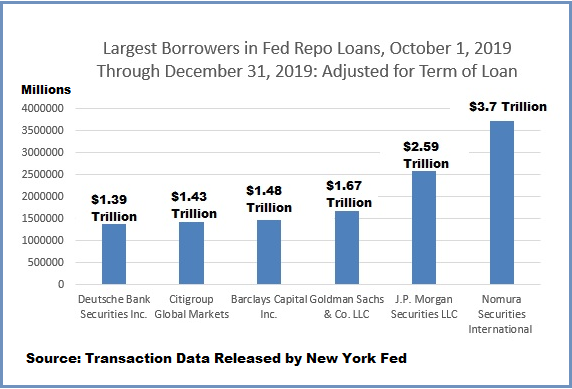





️Reportadly drone attack on a munitions plant in Isfahani, Iran.






 After the Biden Administration White House told all Americans to go out and get the COVID-19 shots and flu shots together, despite there being ZERO studies done on the side effects from taking both toxic shots at the same time, there have now been over 6000 injuries reported to the Government VAERS (Vaccine Adverse Events Reporting System) database, along with 147 deaths, from those who took both shots together. Less than 1% of all vaccine side effects are ever reported to VAERS. One of those deaths was a 2-year-old girl from New Hampshire who was injected with the Moderna COVID-19 shot along with the GlaxoSmithKline Flulaval Quadrivalent Flu shot on December 15, 2022, and then died the next day.Read More…


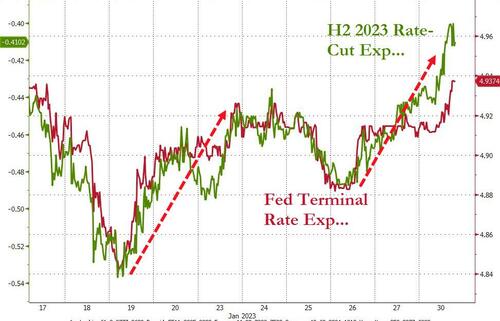
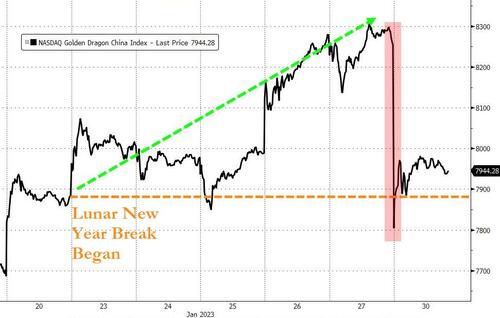
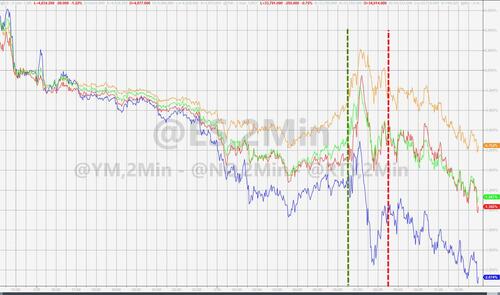
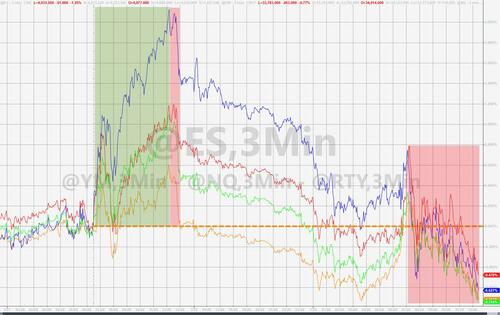
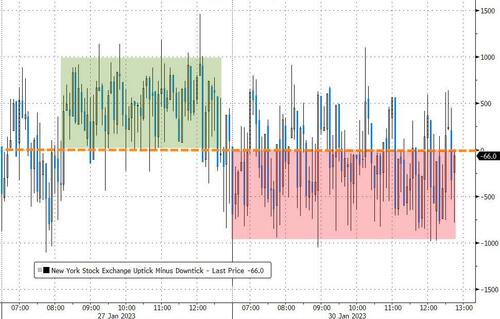
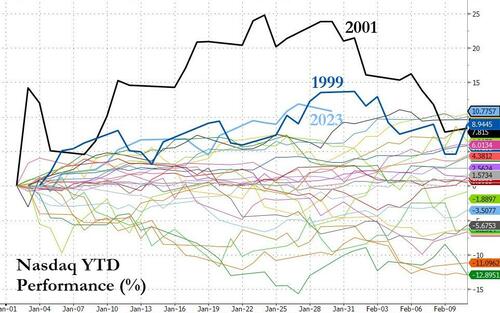
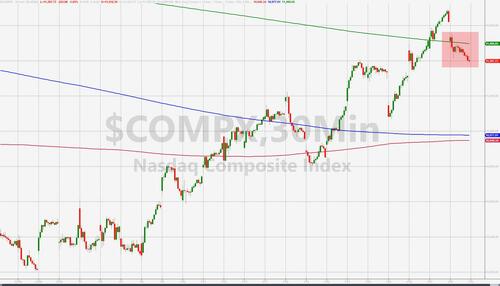

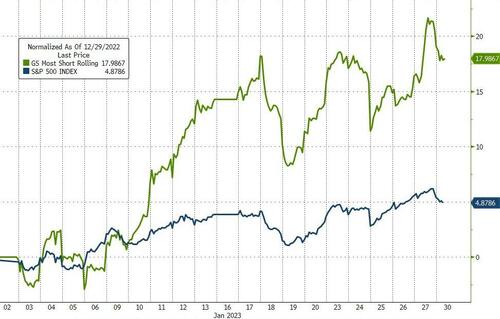
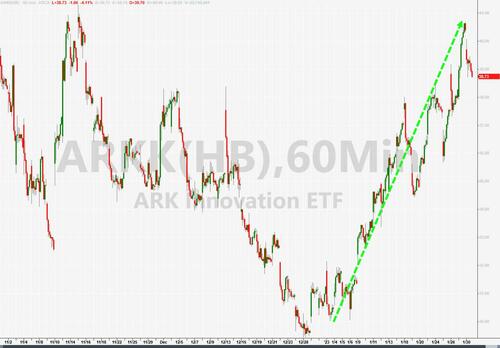
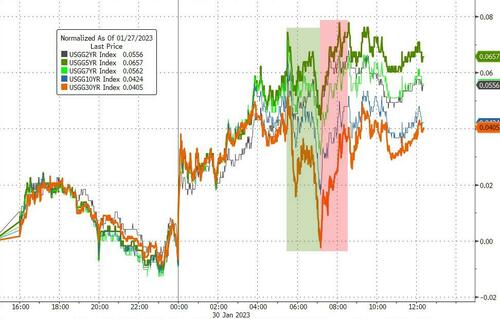
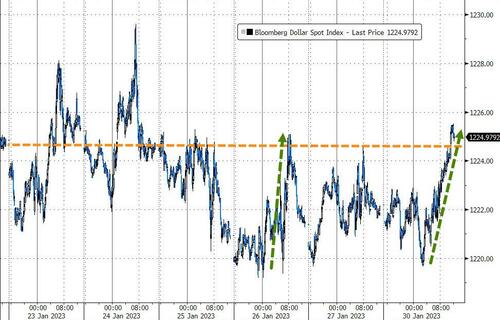
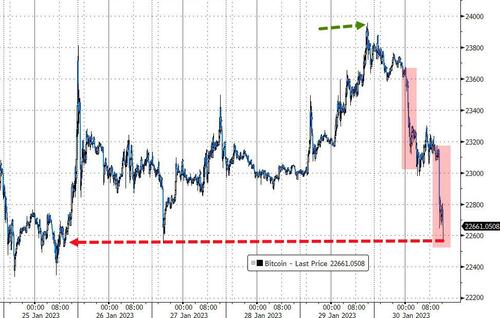
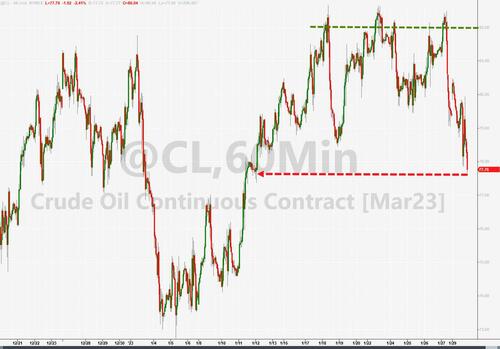
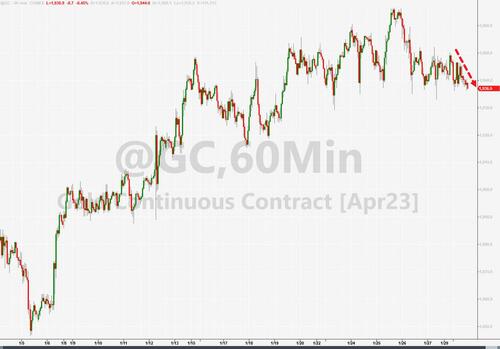
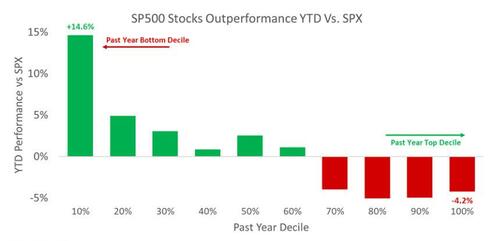






 harveyorganblog.com

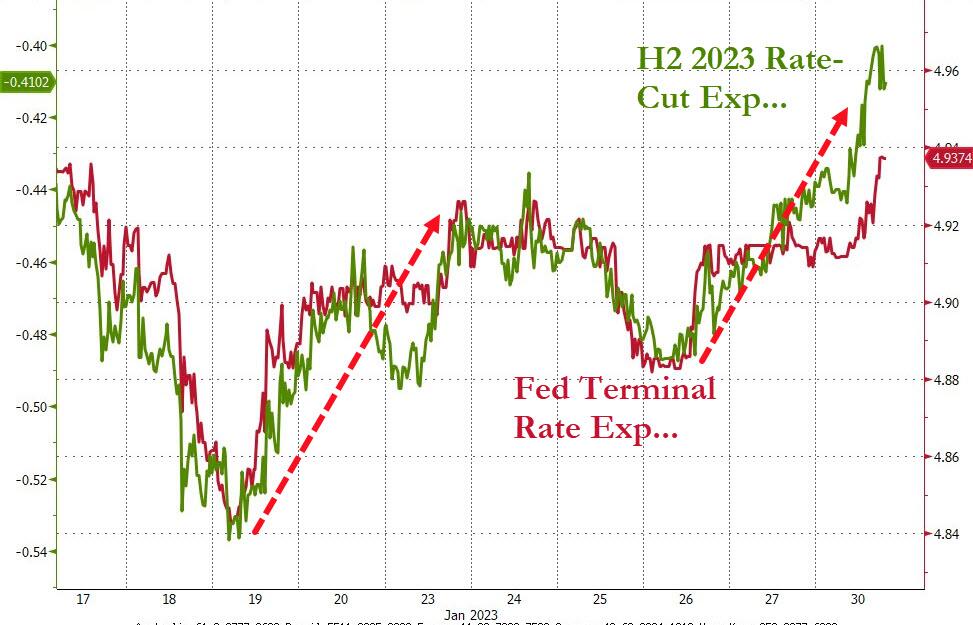
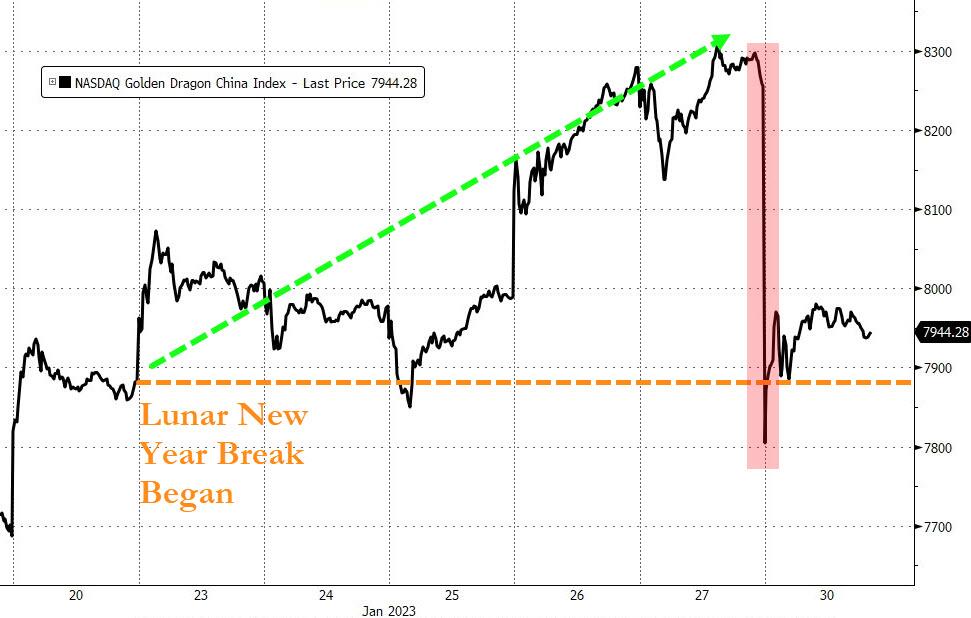
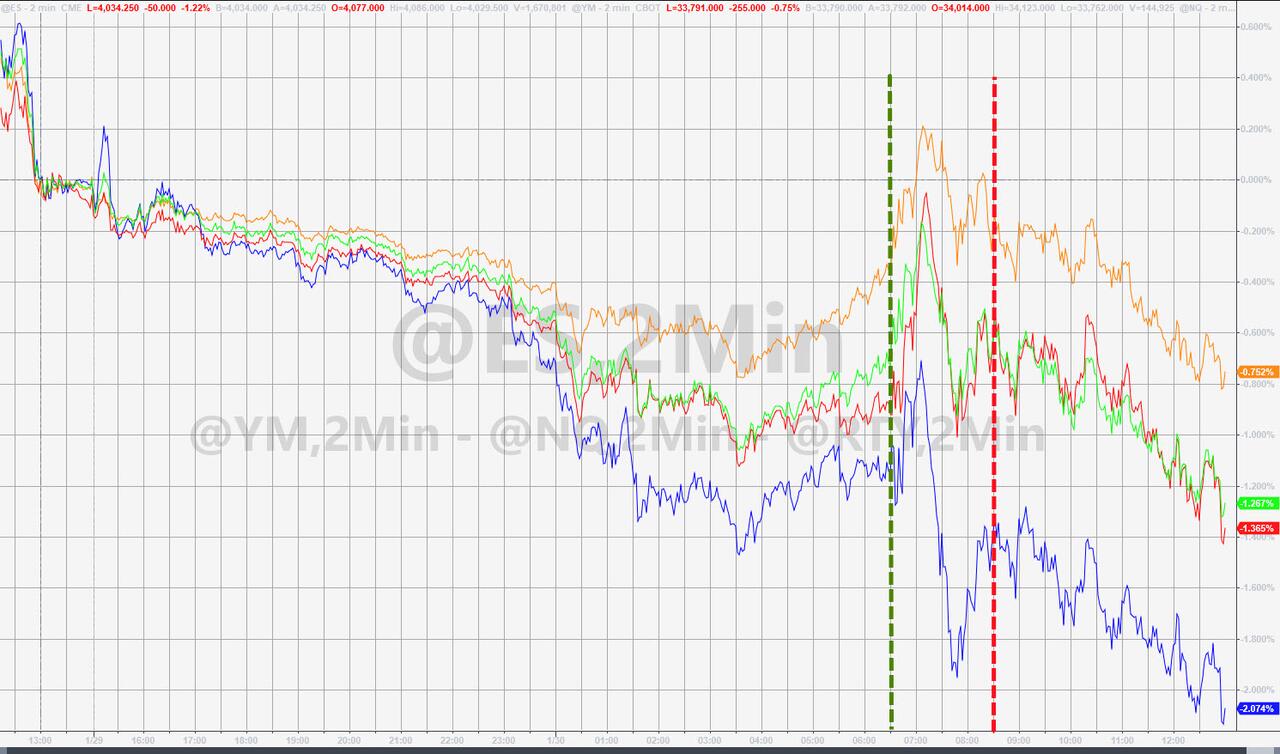
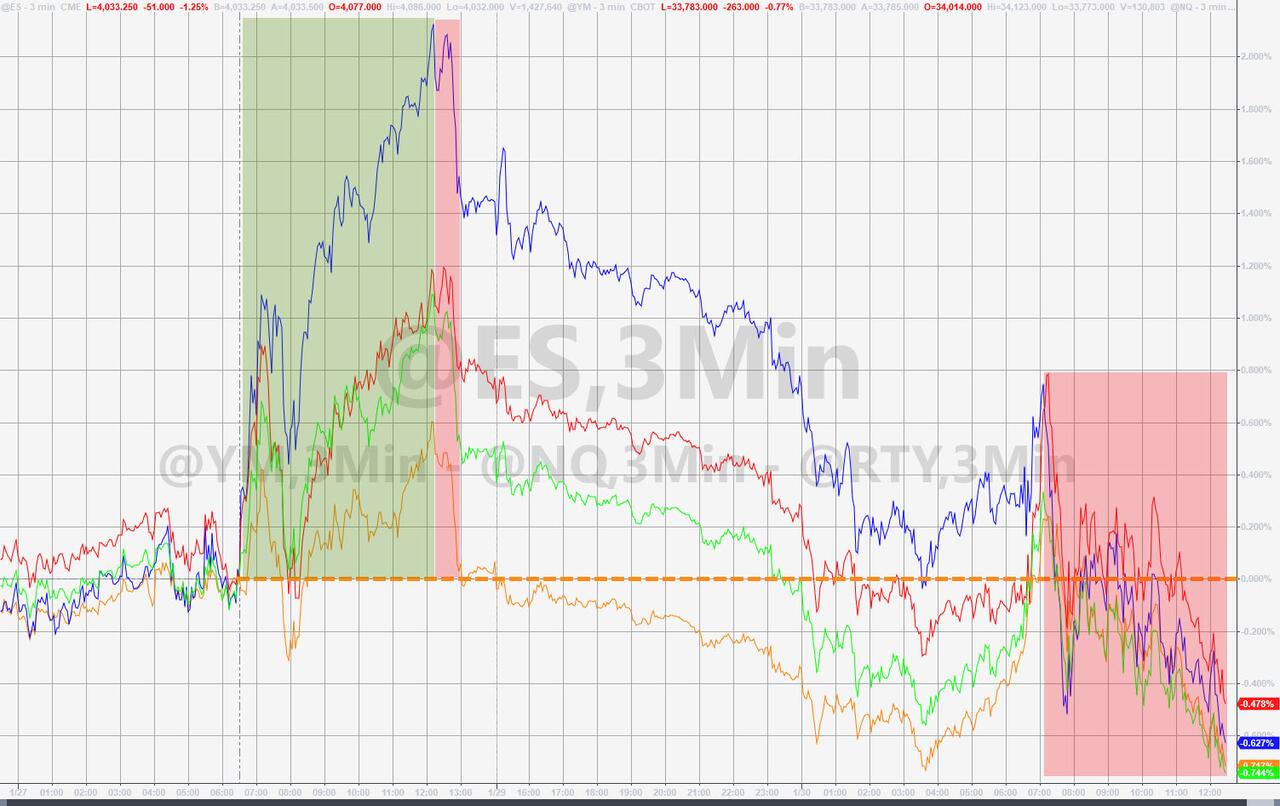
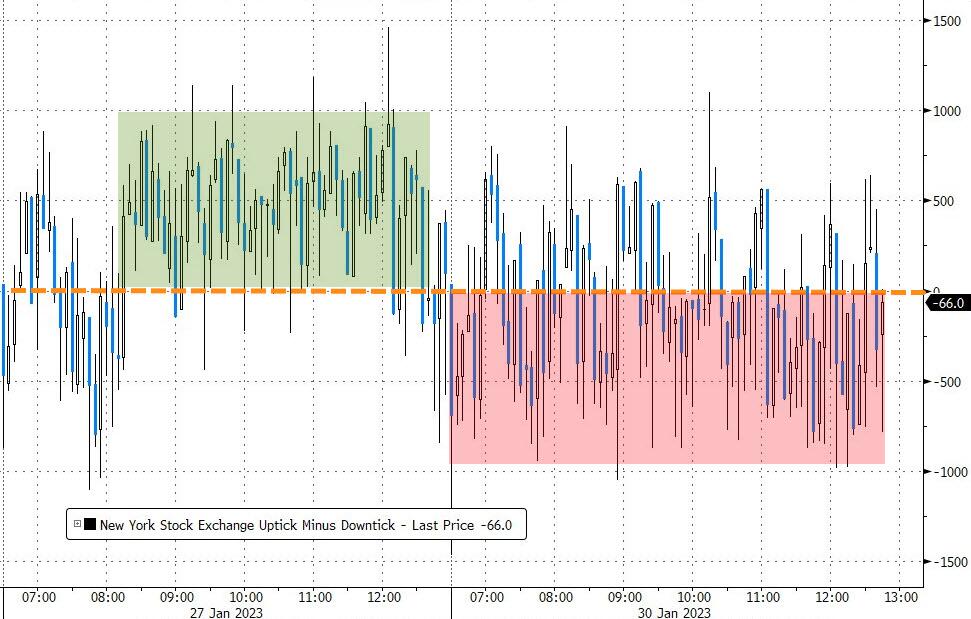
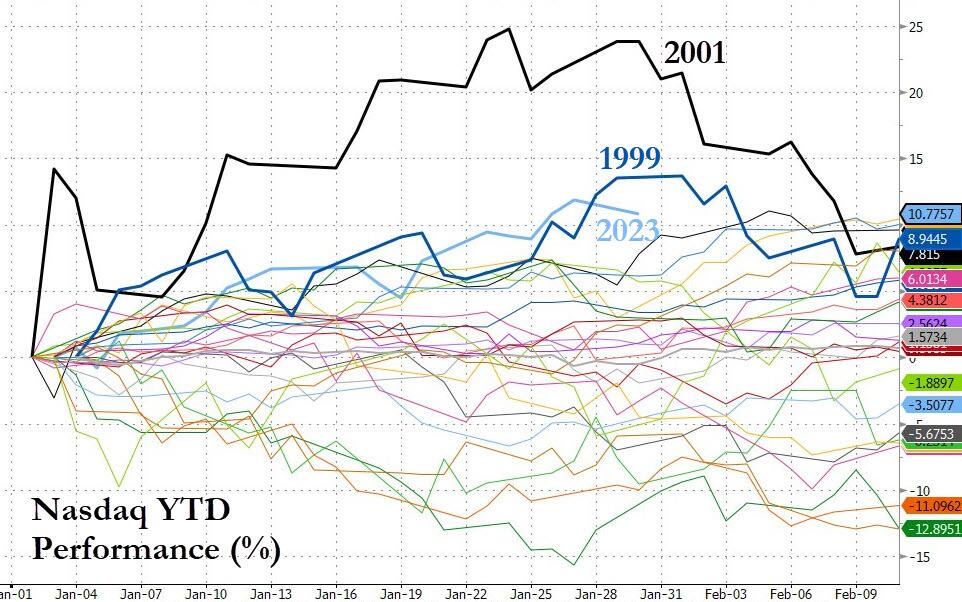

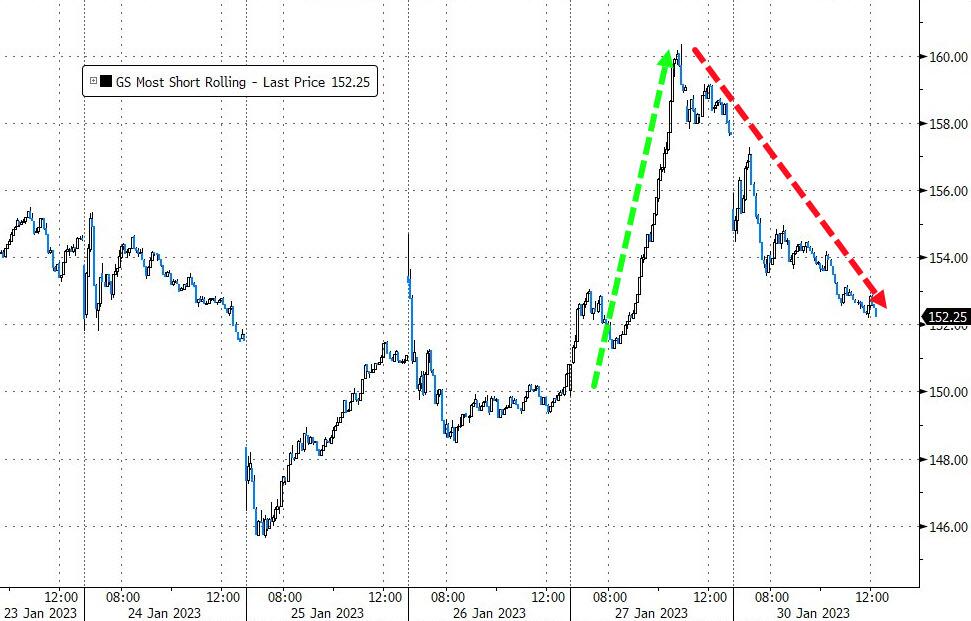
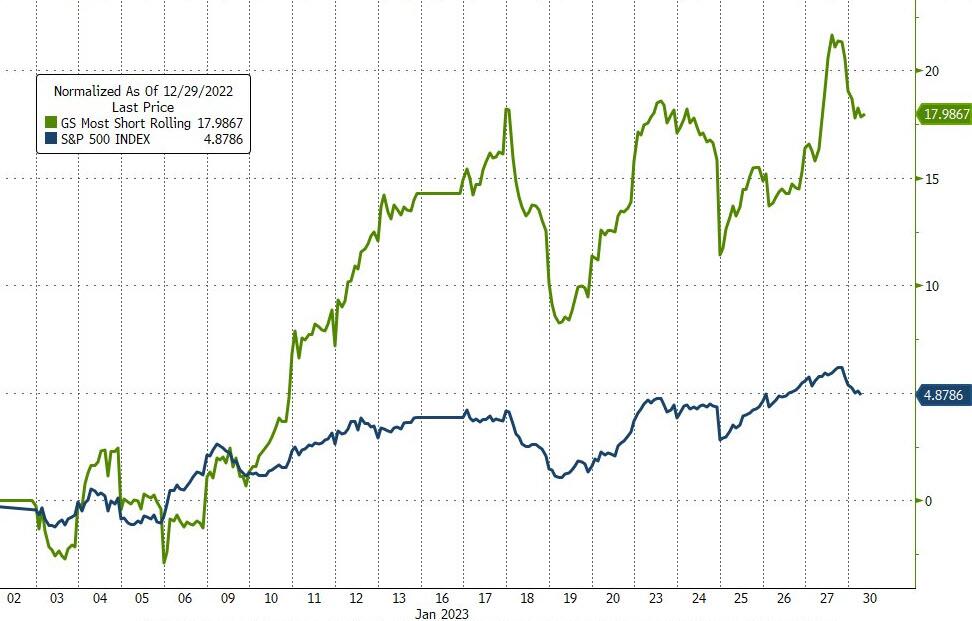
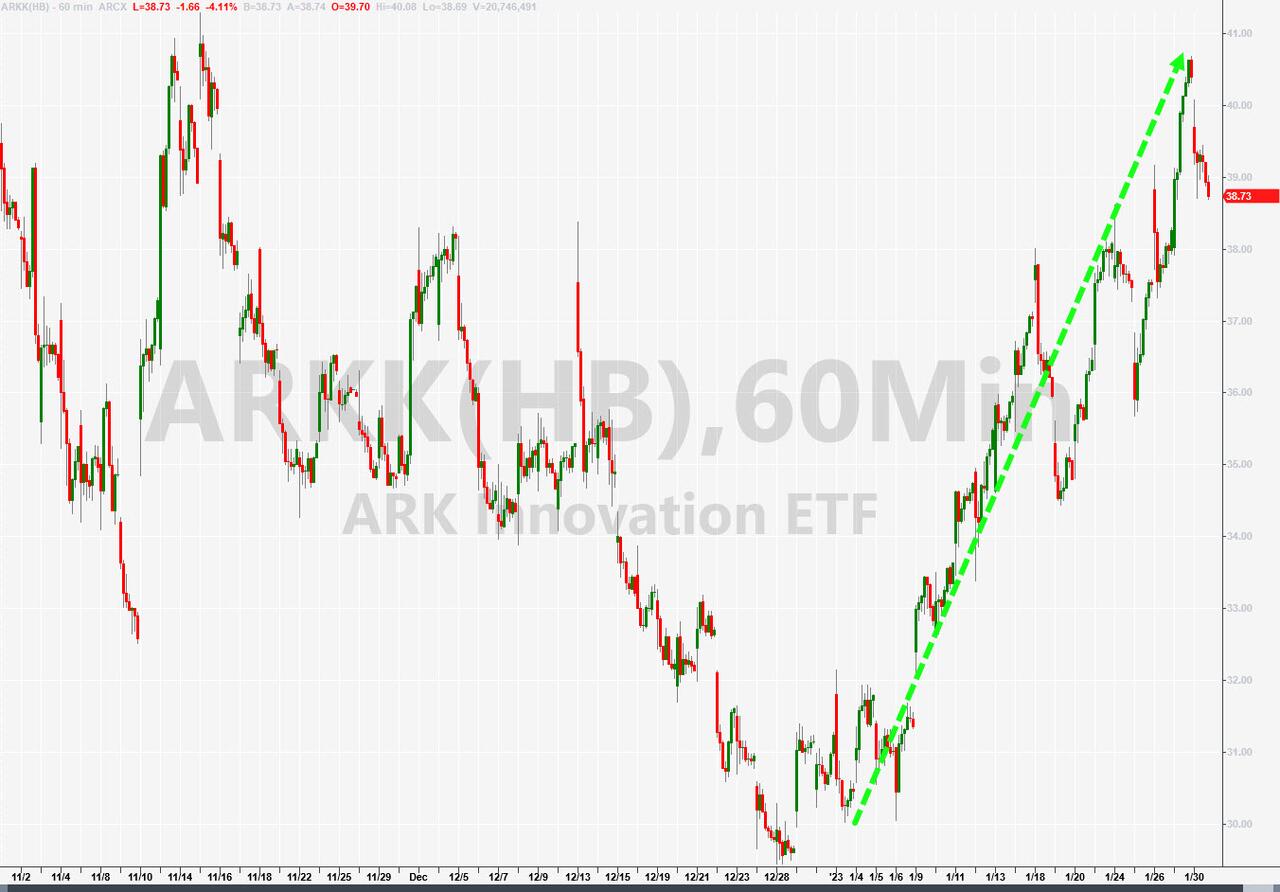
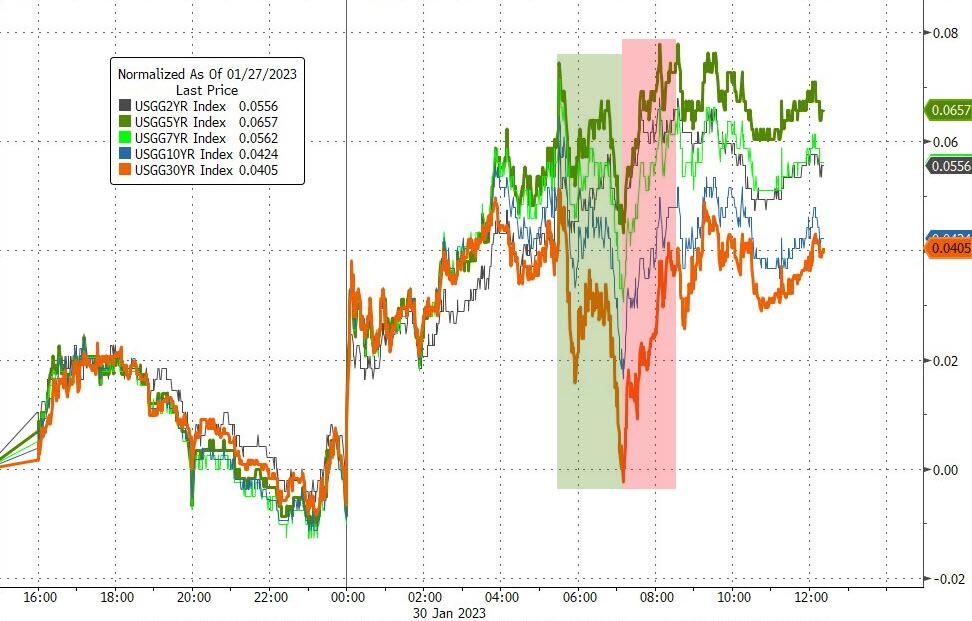
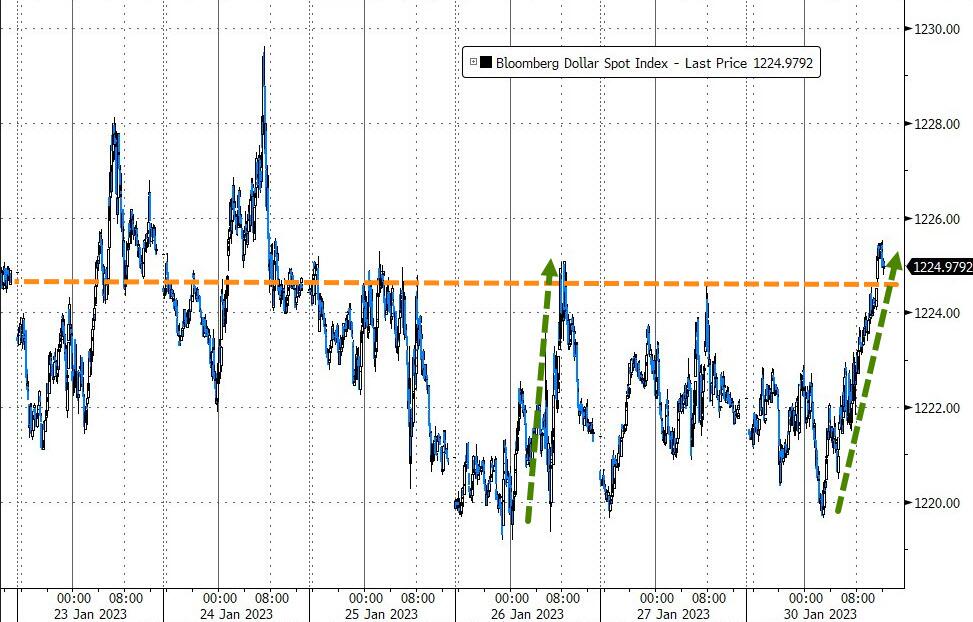
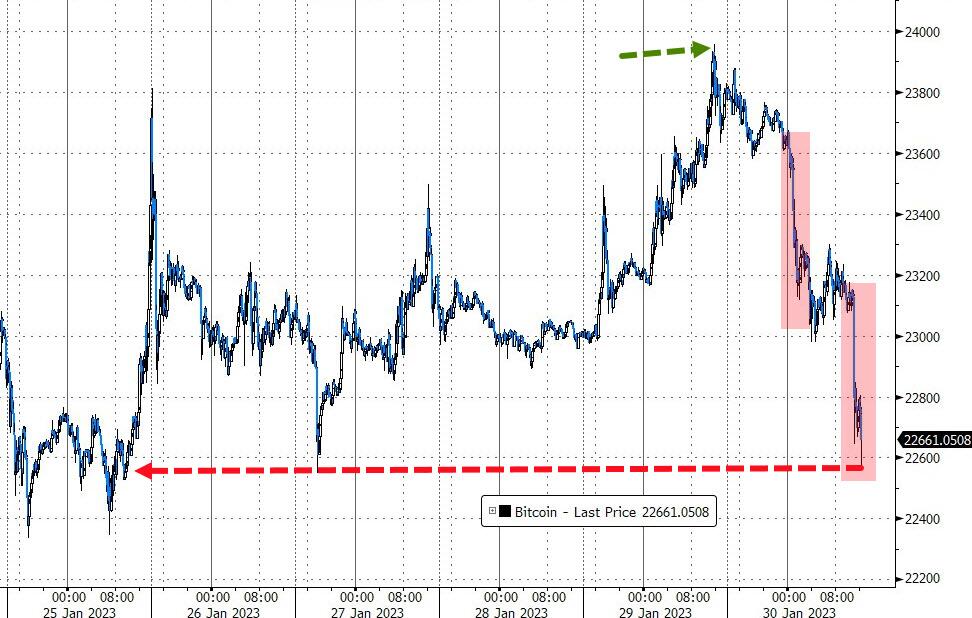
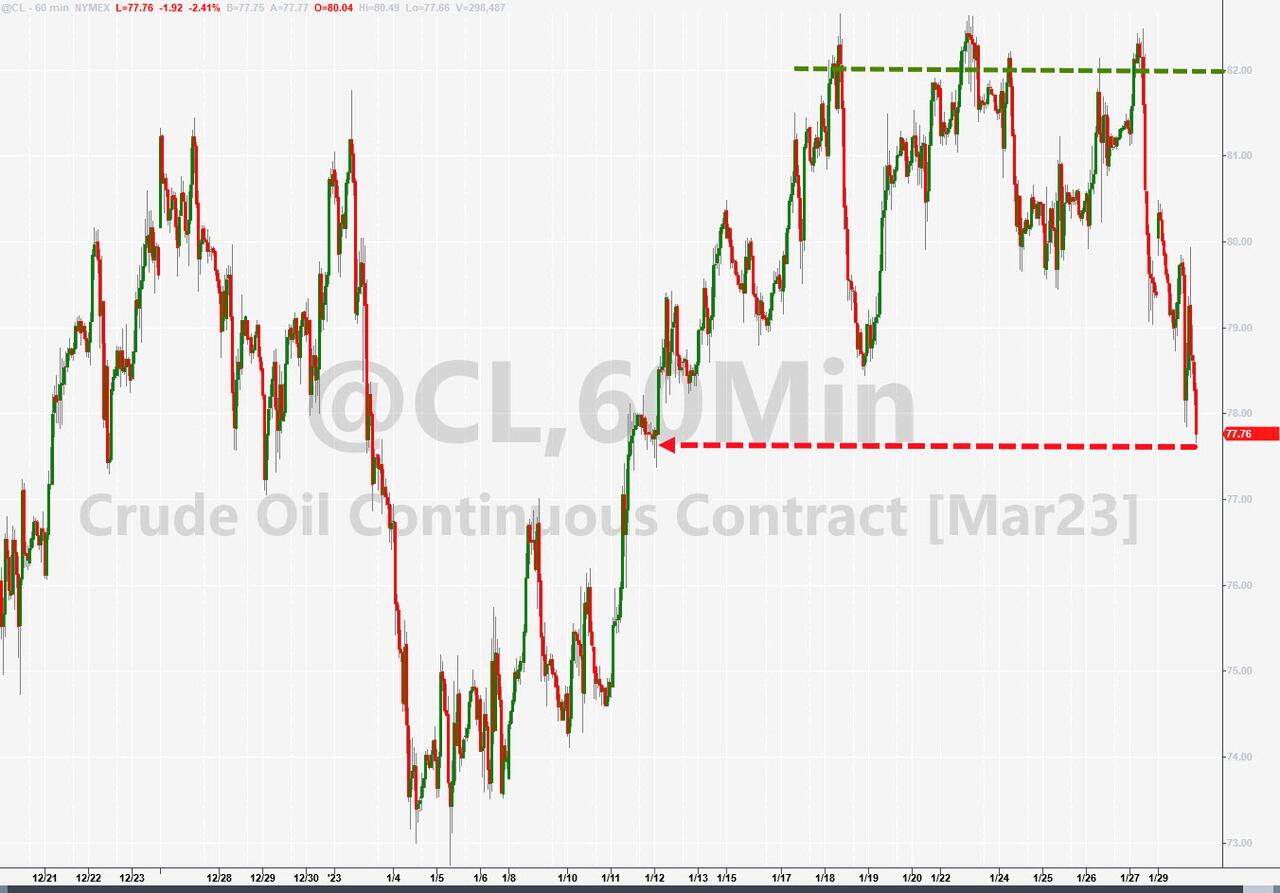

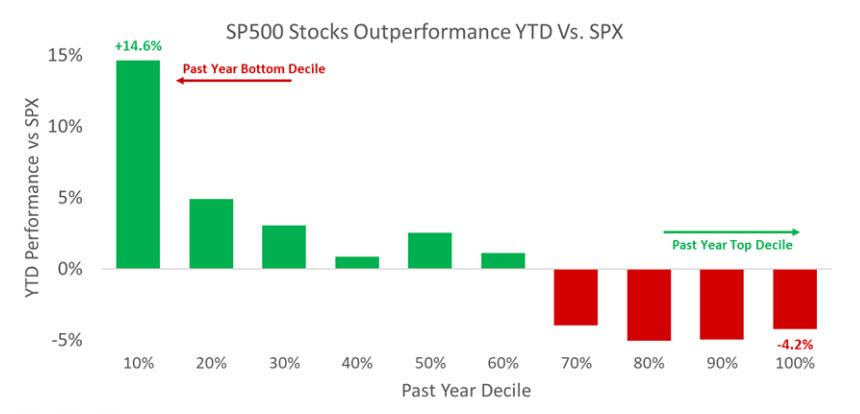


[…] FEB 1, 2023 · by harveyorgan · in Uncategorized · Leave a comment·Edit […]
LikeLike