JUNE 14/GOLD CLOSED UP $10.30 TO $1955.50// SILVER ROSE BY 29 CENTS TO $24,03//PLATINUM WAS DOWN $2.00 TO $978.80 WHILE PALLADIUM WAS UP A STRONG $37.30//FOMC : THE FED CONVENED AND DECIDED TO PAUSE AS THE ECONOMY IS NOT DOING SO GOOD BUT THEY ALSO BECAME HAWKISH WITH THE THREAT OF MORE HIKES WHICH SENT THE DOW AND GOLD/DOWN//GERMAN DEINDUSTRALIZATION WILL HAVE A NEGATIVE EFFECT ON THE ENTIRE EU// RUSSIA VS UKRAINE UPDATES//COVID UPDATES/VACCINE IMPACT//DR PAUL ALEXANDER/SLAY NEWS/EVOL NEWS//SWAMP STORIES FOR YOU TONIGHT///
132 C SG AMERICAS 1 190 H BMO CAPITAL 25 323 C HSBC 45 323 H HSBC 17 363 H WELLS FARGO SEC 6 435 H SCOTIA CAPITAL 3 661 C JP MORGAN 43 661 H JP MORGAN 3 690 C ABN AMRO 1 880 H CITIGROUP 16 905 C ADM 20
TOTAL: 90 90 MONTH TO DATE: 18,152
JPMorgan stopped 43/90 contracts
FOR JUNE:
GOLD: NUMBER OF NOTICES FILED FOR JUNE/2023. CONTRACT: 90 NOTICES FOR 9,000 OZ or 0.2799 TONNES
total notices so far: 18,152 contracts for 1,815,200 oz (56.4603 tonnes)
FOR JUNE:
SILVER NOTICES: 0 NOTICE(S) FILED FOR NIL OZ/
total number of notices filed so far this month : 423 for 2,115,000 oz
XXXXXXXXXXXXXXXXXXXXXXXX
Click here if you wish to send a donation. I sincerely appreciate it as this site takes a lot of preparation
END
GLD
WITH GOLD UP $10.30
INVESTORS SWITCHING TO SPROTT PHYSICAL (PHYS) INSTEAD OF THE FRAUDULENT GLD//
/NO CHANGES IN GOLD INVENTORY AT THE GLD:////
INVENTORY RESTS AT 931.44 TONNES
Silver//
WITH NO SILVER AROUND AND SILVER UP 29 CENTS AT THE SLV//
HUGE CHANGES IN SILVER INVENTORY AT THE SLV: A WITHDRAWAL OF 0.735 MILLION OZ FROM THE SLV//
INVESTORS ARE SWITCHING SLV TO SPROTT’S PSLV.
CLOSING INVENTORY: 465.019 MILLION OZ
Let us have a look at the data for today
SILVER//OUTLINE
SILVER COMEX OI ROSE BY AN ATMOSPHERIC SIZED 4382 CONTRACTS TO 153,853 AND CLOSER TO THE RECORD HIGH OI OF 244,710, SET FEB 25/2020 AND THIS HUMONGOUS SIZED GAIN IN COMEX OI WAS ACCOMPLISHED DESPITE OUR $0.25 LOSS IN SILVER PRICING AT THE COMEX ON TUESDAY. TAS ISSUANCE WAS AN ULTRA- HUMONGOUS SIZED 3417 CONTRACTS. THESE WILL BE USED FOR MANIPULATION LATER THIS MONTH . CRAIG HEMKE HAS POINTED OUT THAT THE CROOKS USE THE MID MONTH FOR MANIPULATION AS THEY SELL THEIR BUY SIDE OF THE CALENDAR SPREAD FIRST AND THEN KEEP THE SELL SIDE TO LIQUIDATE AT A LATER DATE. THUS WE HAVE TWO VEHICLES THE CROOKS USE FOR MANIPULATION AND BOTH ARE SPREADERS: 1) AT MONTH’S END/SPREADERS COMEX AND 2/ TAS SPREADERS, MID MONTH. TOTAL TAS ISSUED ON TUESDAY NIGHT: A MONSTER SIZED 3417 CONTRACTS. DESPITE MANY COMPLAINTS THAT THE CROOKS HAVE VIOLATED POSITION LIMITS DUE TO THE FACT THAT THE TAS ISSUED HAVE A VALUE OF ZERO (AS TO POSITION LIMITS FOR OUR CROOKED BANKERS). THE PROBLEM OF COURSE IS THAT THE CROOKS DO NOT LIQUIDATE THE TAS TOGETHER BUT SELL THE BUY SIDE FIRST AND THEN LIQUIDATE THE SELL SIDE TWO MONTHS HENCE. IT IS OBVIOUS MANIPULATION TO THE HIGHEST DEGREE BUT IT NATURALLY FELL ON DEAF EARS WITH OUR REGULATORS (OCC) WHEN THEY RECEIVED OUR COMPLAINTS. IT THUS LOOKS LIKE THE FED (GOV’T) IS BEHIND ALL OF THESE TRADES.
WE HAVE THIS YEAR SET ANOTHER RECORD LOW AT 117,395 CONTRACTS ///MARCH 29.2023. OUR BANKERS WERE SUCCESSFUL IN KNOCKING THE PRICE OF SILVER DOWN (IT FELL BY $0.25). BUT WERE UNSUCCESSFUL IN KNOCKING ANY SPEC LONGS AS WE HAD A HUMONGOUS GAIN ON OUR TWO EXCHANGES OF 4883 CONTRACTS. WE HAD 0 CRIMINAL NOTICES FILED IN THE CATEGORY OF EXCHANGE FOR RISK TRANSFER FOR 0 MILLION OZ// ( THE TOTAL ISSUED IN THIS CATEGORY SO FAR THIS MONTH TOTAL 7.5MILLION OZ.). WE HAVE NOW RETURNED TO OUR USUAL AND CUSTOMARY SCENARIO: BANKERS SHORT AND SPECS LONG WITH MANIPULATION NOW MID MONTH AND BEYOND, DUE TO (TAS) MANIPULATION.
WE MUST HAVE HAD:
A FAIR SIZED ISSUANCE OF EXCHANGE FOR PHYSICALS( 501 CONTRACTS) iiii) AN INITIAL SILVER STANDING FOR COMEX SILVER MEASURING AT 3.935 MILLION OZ(FIRST DAY NOTICE) FOLLOWED BY TODAY’S 0 OZ QUEUE JUMP + 0 MILLION OZ EXCHANGE FOR RISK(ISSUED TODAY: TOTAL ISSUED SO FAR: 7.5 MILLION OZ)// TOTAL STANDING FOR THE MONTH 4.270 MILLION OZ + 7.5 MILLION EXCHANGE FOR RISK = 11.77 MILLION OZ// ) // HUMONGOUS SIZED COMEX OI GAIN/ FAIR SIZED EFP ISSUANCE/VI) UBER =HUMONGOUS NUMBER OF T.A.S. CONTRACT ISSUANCE (3417CONTRACTS)//CONSIDERABLE T.A.S LIQUIDATION THROUGHOUT THE COMEX SESSION //TUESDAY //
I AM NOW RECORDING THE DIFFERENTIAL IN OI FROM PRELIMINARY TO FINAL –366 CONTRACTS
HISTORICAL ACCUMULATION OF EXCHANGE FOR PHYSICALS JUNE. ACCUMULATION FOR EFP’S SILVER/JPMORGAN’S HOUSE OF BRIBES/STARTING FROM FIRST DAY/MONTH OF JUNE:
TOTAL CONTRACTS for 9 days, total 4484 contracts: OR 22.420 MILLION OZ (498 CONTRACTS PER DAY)
TOTAL EFP’S FOR THE MONTH SO FAR: 22.420 MILLION OZ
LAST 23 MONTHS TOTAL EFP CONTRACTS ISSUED IN MILLIONS OF OZ:
MAY 137.83 MILLION
JUNE 149.91 MILLION OZ
JULY 129.445 MILLION OZ
AUGUST: MILLION OZ 140.120
SEPT. 28.230 MILLION OZ//
OCT: 94.595 MILLION OZ
NOV: 131.925 MILLION OZ
DEC: 100.615 MILLION OZ
YEAR 2022:
JAN 2022-DEC 2022
JAN 2022// 90.460 MILLION OZ
FEB 2022: 72.39 MILLION OZ//
MARCH: 207.430 MILLION OZ//A NEW RECORD FOR EFP ISSUANCE
APRIL: 114.52 MILLION OZ FINAL//LOW ISSUANCE
MAY: 105.635 MILLION OZ//
JUNE: 94.470 MILLION OZ
JULY : 87.110 MILLION OZ
AUGUST: 65.025 MILLION OZ
SEPT. 74.025 MILLION OZ///FINAL
OCT. 29.017 MILLION OZ FINAL
NOV: 134.290 MILLION OZ//FINAL
DEC, 61.395 MILLION OZ FINAL
TOTALS YR 2022: 1135.767 MILLION OZ (1.1356 BILLION OZ)
JAN 2023/// 53.070 MILLION OZ //FINAL
FEB: 2023: 100.105 MILLION OZ/FINAL//MUCH STRONGER ISSUANCE VS THE LATTER TWO MONTHS.
MARCH 2023: 112.58MILLION OZ//FINAL//STRONG ISSUANCE
APRIL 118.035 MILLION OZ(SLIGHTLY GREATER THAN THAN LAST MONTH)
MAY 66.120 MILLION OZ/INITIAL (MUCH SMALLER THIS MONTH)
JUNE: 22.42 MILLION OZ//
RESULT: WE HAD A HUMONGOUS SIZED INCREASE IN COMEX OI SILVER COMEX CONTRACTS OF 4382 CONTRACTS DESPITE OUR FALL IN PRICE OF $0.25 IN SILVER PRICING AT THE COMEX//TUESDAY.,. THE CME NOTIFIED US THAT WE HAD A FAIR SIZED EFP ISSUANCE CONTRACTS: 501 ISSUED FOR JULY AND 0 CONTRACTS ISSUED FOR ALL OTHER MONTHS) WHICH EXITED OUT OF THE SILVER COMEX TO LONDON AS FORWARDS./ WE HAVE A GOOD INITIAL SILVER OZ STANDING FOR JUNE OF 3.935 MILLION OZ FOLLOWED BY TODAY’S 0 OZ QUEUE JUMP+ 0 MILLION EXCHANGE FOR RISK TODAY + 7.5 MILLION EXCHANGE FOR RISK(PRIOR)//NEW TOTAL STANDING: 11.77 MILLION OZ////// .. WE HAVE A GIGANTIC SIZED GAIN OF4382 OI CONTRACTS ON THE TWO EXCHANGES. THE TOTAL OF TAS INITIATED CONTRACTS TODAY: AN EXTRA -TERRESTRIAL HUMONGOUS 3417//CONSIDERABLE FRONT END OF THE TAS CONTRACTS WERE LIQUIDATED DURING THE TUESDAY SESSION. THE NEW TAS ISSUANCE TODAY (3417) WILL BE PUT INTO “THE BANK” TO BE COLLUSIVELY USED AT A LATER DATE.
WE HAD 0 NOTICE(S) FILED TODAY FOR NIL OZ
THE SILVER COMEX IS NOW BEING ATTACKED FOR METAL BY LONDONERS ET AL.
GOLD//OUTLINE
IN GOLD, THE COMEX OPEN INTEREST FELL BY A TINY SIZED 14 CONTRACTS TO 432,898 AND FURTHER FROM THE RECORD (SET JAN 24/2020) AT 799,541 AND PREVIOUS TO THAT: (SET JAN 6/2020) AT 797,110.
THE DIFFERENTIAL FROM PRELIMINARY OI TO FINAL OI IN GOLD TODAY: REMOVED – 439 CONTRACTS
WE HAD A FAIR SIZED INCREASE IN COMEX OI ( 2018 CONTRACTS) DESPITE OUR $10.70 LOSS IN PRICE. WE ALSO HAD A STRONG INITIAL STANDING IN GOLD TONNAGE FOR JUNE. AT 70.79 TONNES ON FIRST DAY NOTICE FOLLOWED BY TODAY’S 0.9984 TONNE QUEUE JUMP: NEW TOTAL 63.841 TONNES STANDING SO FAR // + /A HUMONGOUS ISSUANCE OF 2150 T.A.S. CONTRACTS/HUGE FRONT END OF TAS LIQUIDATION TUESDAY ////YET ALL OF..THIS HAPPENED WITH A $10.70 LOSS IN PRICEWITH RESPECT TO TUESDAY’S TRADING.WE HAD A FAIR SIZED GAIN OF 1585 OI CONTRACTS (4.9300 PAPER TONNES) ON OUR TWO EXCHANGES.
E.F.P. ISSUANCE
THE CME RELEASED THE DATA FOR EFP ISSUANCE AND IT TOTALED A FAIR SIZED 1599 CONTRACTS:
The NEW COMEX OI FOR THE GOLD COMPLEX RESTS AT 432,898
IN ESSENCE WE HAVE A FAIR SIZED INCREASE IN TOTAL CONTRACTS ON THE TWO EXCHANGES OF 1585 CONTRACTS WITH 14 CONTRACTS DECREASED AT THE COMEX//TAS CONTRACTS INITIATED (ISSUED): A HUGE 2150 CONTRACTS) AND 1599 EFP OI CONTRACTS WHICH NAVIGATED OVER TO LONDON. THUS TOTAL OI GAIN ON THE TWO EXCHANGES OF 1585CONTRACTS OR 4.9300 TONNES.
CALCULATIONS ON GAIN/LOSS ON OUR TWO EXCHANGES
WE HAD A FAIR SIZED ISSUANCE IN EXCHANGE FOR PHYSICALS (1599 CONTRACTS) ACCOMPANYING THE SMALL SIZED LOSS IN COMEX OI (14) //TOTAL GAIN FOR OUR THE TWO EXCHANGES: 1585 CONTRACTS. WE HAVE ( 1) NOW RETURNED TO OUR NORMAL FORMAT OF BANKERS GOING SHORT AND SPECULATORS GOING LONG ,2.) GOOD INITIAL STANDING AT THE GOLD COMEX FOR JUNE AT 70.79 TONNES FOLLOWED BY TODAY’S 32,100 OZ QUEUE JUMP //// NEW STANDING FALLS TO 63.841 TONNES// /3) ZERO LONG LIQUIDATION//4) SMALL SIZED COMEX OPEN INTEREST GAIN/ 5) FAIR ISSUANCE OF EXCHANGE FOR PHYSICAL PAPER///6: HUMONGOUS T.A.S. ISSUANCE: 2150 CONTRACTS
HISTORICAL ACCUMULATION OF EXCHANGE FOR PHYSICALS IN 2023 INCLUDING TODAY
JUNE
ACCUMULATION OF EFP’S GOLD AT J.P. MORGAN’S HOUSE OF BRIBES: (EXCHANGE FOR PHYSICAL) FOR THE MONTH OF JUNE :
TOTAL EFP CONTRACTS ISSUED: 18,891 CONTRACTS OR 1,889,100 OZ OR 58.759 TONNES IN 9 TRADING DAY(S) AND THUS AVERAGING: 2099 EFP CONTRACTS PER TRADING DAY
TO GIVE YOU AN IDEA AS TO THE SIZE OF THESE EFP TRANSFERS : THIS MONTH IN 9 TRADING DAY(S) IN TONNES 58.759 TONNES
TOTAL ANNUAL GOLD PRODUCTION, 2022, THROUGHOUT THE WORLD EX CHINA EX RUSSIA: 3555 TONNES
THUS EFP TRANSFERS REPRESENTS 58.759/3550 x 100% TONNES 1.666% OF GLOBAL ANNUAL PRODUCTION
SEPT 142.12 TONNES FINAL ISSUANCE ( LOW ISSUANCE)_
OCT: 141.13 TONNES FINAL ISSUANCE (LOW ISSUANCE)
NOV: 312.46 TONNES FINAL ISSUANCE//NEW RECORD!! (INCREASING DRAMATICALLY)//SIGN OF REAL STRESS//SURPASSING THE MARCH 2021 RECORD OF 276.50 TONNES OF EFP
DEC. 175.62 TONNES//FINAL ISSUANCE//
TOTALS: 2,578.08 TONNES/2021
JAN:2022 247.25 TONNES //FINAL
FEB: 196.04 TONNES//FINAL
MARCH: 409.30 TONNES INITIAL( THIS IS NOW A RECORD EFP ISSUANCE FOR MARCH AND FOR ANY MONTH.
APRIL: 169.55 TONNES (FINAL VERY LOW ISSUANCE MONTH)
MAY: 247.44 TONNES FINAL//
JUNE: 238.13 TONNES FINAL
JULY: 378.43 TONNES FINAL
AUGUST: 180.81 TONNES FINAL
SEPT. 193.16 TONNES FINAL
OCT: 177.57 TONNES FINAL ( MUCH SMALLER THAN LAST MONTH)
NOV. 223.98 TONNES//FINAL ( MUCH LARGER THAN PREVIOUS MONTHS//comex running out of physical)
DEC: 185.59 tonnes // FINAL
TOTAL: 2,847,25 TONNES/2022
JAN 2023: 228.49 TONNES FINAL//HUGE AMOUNT OF EFP’S ISSUED THIS MONTH!!
FEB: 151.61 TONNES/FINAL
MARCH: 280.09 TONNES/INITIAL (ANOTHER STRONG MONTH FOR EFP ISSUANCE)
APRIL: 197.42 TONNES
MAY: 236.67 TONNES (A VERY STRONG ISSUANCE FOR THIS MONTH)
JUNE: 58.759 TONNES
SPREADING OPERATIONS
(/NOW SWITCHING TO GOLD) FOR NEWCOMERS, HERE ARE THE DETAILS
SPREADING LIQUIDATION HAS NOW COMMENCED AS WE HEAD TOWARDS THE NEW ACTIVE FRONT MONTH OF JUNE. WE ARE NOW INTO THE SPREADING OPERATION OF GOLD
HERE IS A BRIEF SYNOPSIS OF HOW THE CROOKS FLEECE UNSUSPECTING LONGS IN THE SPREADING ENDEAVOUR ;MODUS OPERANDI OF THE CORRUPT BANKERS AS TO HOW THEY HANDLE THEIR SPREAD OPEN INTERESTS:HERE IS HOW THE CROOKS USED SPREADING AS WE ARE NOW INTO THE NON ACTIVE DELIVERY MONTH OF MAY HEADING TOWARDS THE ACTIVE DELIVERY MONTH OF JUNE., FOR BOTH GOLD:
YOU WILL ALSO NOTICE THAT THE COMEX OPEN INTEREST STARTS TO RISE BUT SO IS THE OPEN INTEREST OF SPREADERS. THE OPEN INTEREST IN WILL CONTINUE TO RISE UNTIL ONE WEEK BEFORE FIRST DAY NOTICE OF AN UPCOMING ACTIVE DELIVERY MONTH (JUNE), AND THAT IS WHEN THE CROOKS SELL THEIR SPREAD POSITIONS BUT NOT AT THE SAME TIME OF THE DAY. THEY WILL USE THE SELL SIDE OF THE EQUATION TO CREATE THE CASCADE (ALONG WITH THEIR COLLUSIVE FRIENDS) AND THEN COVER ON THE BUY SIDE OF THE SPREAD SITUATION AT THE END OF THE DAY. THEY DO THIS TO AVOID POSITION LIMIT DETECTION. THE LIQUIDATION OF THE SPREADING FORMATION CONTINUES FOR EXACTLY ONE WEEK AND ENDS ON FIRST DAY NOTICE.”
WHAT IS ALARMING TO ME, ACCORDING TO OUR LONDON EXPERT ANDREW MAGUIRE IS THAT THESE EFP’S ARE BEING TRANSFERRED TO WHAT ARE CALLED SERIAL FORWARD CONTRACT OBLIGATIONS AND THESE CONTRACTS ARE LESS THAN 14 DAYS. ANYTHING GREATER THAN 14 DAYS, THESE MUST BE RECORDED AND SENT TO THE COMPTROLLER, GREAT BRITAIN TO MONITOR RISK TO THE BANKING SYSTEM. IF THIS IS INDEED TRUE, THEN THIS IS A MASSIVE CONSPIRACY TO DEFRAUD AS WE NOW WITNESS A MONSTROUS TOTAL EFP’S ISSUANCE AS IT HEADS INTO THE STRATOSPHERE.
The crooks also use the spread in the TAS account (trade at settlement). They buy the spot TAS (e.g. June) and sell the future TAS two months out (e.g. August). Then they unload the front month (i.e. unload the buy side first so the price of gold/silver falls. This occurs in the middle of the front delivery month cycle. They unload the sell side of the equation, two months down the road. The crooks violate position limits as the OCC refuse to hear our complaints.
First, here is an outline of what will be discussed tonight:
1.Today, we had the open interest at the comex, in SILVER ROSE BY A HUMONGOUS SIZED 4382 CONTRACTS OI TO 153,853 AND CLOSER TO OUR COMEX HIGH RECORD //244,710(SET FEB 25/2020). THE LAST RECORDS WERE SET IN AUG.2018 AT 244,196 WITH A SILVER PRICE OF $14.78/(AUGUST 22/2018)..THE PREVIOUS RECORD TO THAT WAS SET ON APRIL 9/2018 AT 243,411 OPEN INTEREST CONTRACTS WITH THE SILVER PRICE AT THAT DAY: $16.53). AND PREVIOUS TO THAT, THE RECORD WAS ESTABLISHED AT: 234,787 CONTRACTS, SET ON APRIL 21.2017 OVER 5 YEARS AGO. HOWEVER WE HAVE SET A NEW RECORD LOW OF 117,395 CONTRACTS MARCH 27/2022
EFP ISSUANCE 501 CONTRACTS
OUR CUSTOMARY MIGRATION OF COMEX LONGS CONTINUE TO MORPH INTO LONDON FORWARDS AS OUR BANKERS USED THEIR EMERGENCY PROCEDURE TO ISSUE:
JULY 501and ALL OTHER MONTHS: ZERO. TOTAL EFP ISSUANCE: 501 CONTRACTS. EFP’S GIVE OUR COMEX LONGS A FIAT BONUS PLUS A DELIVERABLE PRODUCT OVER IN LONDON. IF WE TAKE THE COMEX OI GAIN OF 4382 CONTRACTS AND ADD TO THE 501OI TRANSFERRED TO LONDON THROUGH EFP’S,
WE OBTAIN AN ATMOSPHERIC SIZED GAIN OF OPEN INTEREST CONTRACTS FROM OUR TWO EXCHANGES OF 4883 CONTRACTS
THUS IN OUNCES, THE GAIN ON THE TWO EXCHANGES TOTAL 24.42 MILLION OZ
ii a) Chris Powell of GATA provides to us very important physical commentaries
b. Other gold/silver commentaries
c. Commodity commentaries//
d)/CRYPTOCURRENCIES/BITCOIN ETC
2.ASIAN AFFAIRS//
WEDNESDAY MORNING//TUESDAY NIGHT
SHANGHAI CLOSED DOWN 4.68 PTS OR 0.14% //Hang Seng CLOSED DOWN 113.00 PTS OR 0.58% /The Nikkei closed UP 483.77 OR 1.47% //Australia’s all ordinaries CLOSED UP 0.34 % /Chinese yuan (ONSHORE) closed DOWN 7.1581 /OFFSHORE CHINESE YUAN DOWN TO 7.1679 /Oil UP TO 70.31 dollars per barrel for WTI and BRENT DOWN AT 75.25 / Stocks in Europe OPENED ALL GREEN// ONSHORE YUAN TRADING ABOVE LEVEL OF OFFSHORE YUAN/ONSHORE YUAN TRADING WEAKER AGAINST US DOLLAR/OFFSHORE WEAKER
1. COMEX DATA//AMOUNTS STANDING//VOLUME OF TRADING/INVENTORY MOVEMENTS
GOLD
LET US BEGIN:
THE TOTAL COMEX GOLD OPEN INTEREST FELL BY A TINY SIZED 14 CONTRACTS DOWN TO 432,898 DESPITE OUR STRONG LOSS IN PRICE OF $10.70 ON TUESDAY,
EXCHANGE FOR PHYSICAL ISSUANCE
WE ARE NOW IN THE ACTIVE DELIVERY MONTH OF JUNE… THE CME REPORTS THAT THE BANKERS ISSUED A FAIR SIZED TRANSFER THROUGH THE EFP ROUTE AS THESE LONGS RECEIVED A DELIVERABLE LONDON FORWARD TOGETHER WITH A FIAT BONUS.,
THAT IS 1599 EFP CONTRACTS WERE ISSUED: : AUGUST 1599 & ZERO FOR ALL OTHER MONTHS:
TOTAL EFP ISSUANCE: 1599 CONTRACTS
ON A NET BASIS IN OPEN INTEREST WE GAINED THE FOLLOWING TODAY ON OUR TWO EXCHANGES: A FAIR SIZED TOTAL OF 1585 CONTRACTS IN THAT 1599LONGS WERE TRANSFERRED AS FORWARDS TO LONDON AND WE HAD A SMALL SIZED LOSS OF 14 COMEX CONTRACTS..AND THIS FAIR SIZED GAIN ON OUR TWO EXCHANGES HAPPENED DESPITE OUR LOSS IN PRICE OF $10.70. AS PER OUR NEWBIE TRADE AT SETTLEMENT (TAS) MANIPULATION OPERATION (WHICH CRAIG HEMKE HAS POINTED OUT HAPPENS DURING MID MONTH IN THE DELIVERY CYCLE), THE CME REPORTS THAT THE TOTAL T.A.S. ISSUANCE FOR TUESDAY NIGHT WAS A HUGE 2150 CONTRACTS. THROUGHOUT LAST WEEK, THE BANKERS SOLD OFF THE LONG SIDE OF THE SPREAD WHICH OF COURSE CONTINUES TO MANIPULATE THE PRICE OF GOLD SOUTHBOUND. (THEY KEEP THE SHORT SIDE OF THE CALENDAR SPREAD WHICH WILL BE LIQUIDATED TWO MONTHS HENCE)//THIS SPELLS TROUBLE AHEAD CONSTANT RAIDS WILL SURELY BE UPON US!
// WE HAVE A STRONG AMOUNT OF GOLD TONNAGE STANDING: JUNE (62.843) ( NON ACTIVE MONTH)
TONNES),
HERE ARE THE AMOUNTS THAT STOOD FOR DELIVERY IN THE PRECEDING 12 MONTHS OF 2021-2022:
DEC 2021: 112.217 TONNES
NOV. 8.074 TONNES
OCT. 57.707 TONNES
SEPT: 11.9160 TONNES
AUGUST: 80.489 TONNES
JULY: 7.2814 TONNES
JUNE: 72.289 TONNES
MAY 5.77 TONNES
APRIL 95.331 TONNES
MARCH 30.205 TONNES
FEB ’21. 113.424 TONNES
JAN ’21: 6.500 TONNES.
TOTAL YEAR 2021 (JAN- DEC): 601.213 TONNES
YEAR 2022:
JANUARY 2022 17.79 TONNES
FEB 2022: 59.023 TONNES
MARCH: 36.678 TONNES
APRIL: 85.340 TONNES FINAL.
MAY: 20.11 TONNES FINAL
JUNE: 74.933 TONNES FINAL
JULY 29.987 TONNES FINAL
AUGUST:104.979 TONNES//FINAL
SEPT. 38.1158 TONNES
OCT: 77.390 TONNES/ FINAL
NOV 27.110 TONNES/FINAL
Dec. 64.541 tonnes
(TOTAL YEAR 656.076 TONNES)
2003:
JAN/2023: 20.559 tonnes
FEB 2023: 47.744 tonnes
MAR: 19.0637 TONNES
APRIL: 75.676 tonnes
MAY: 19.094 TONNES + 1.244 tonnes of exchange for risk = 20.338
JUNE: 62.843 TONNES
THE SPECS/HFT WERE SUCCESSFUL IN LOWERING GOLD’S PRICE( IT FELL $10.70) //// BUT WERE UNSUCCESSFUL IN KNOCKING A FEW SPECULATOR LONGS AS WE HAD OUR FAIR SIZED GAIN OF 2018 CONTRACTS ON OUR TWO EXCHANGES. WE HAD CONSIDERABLE TAS LIQUIDATION THROUGHOUT THE COMEX SESSION ON TUESDAY . THE TAS ISSUED TUESDAY NIGHT, WILL BE “PUT INTO THE BANK” TO BE USED AT A LATER DATE AT THE COLLUSIVE CHOOSING OF OUR BANKERS.
WE HAVE GAINED A TOTAL OI OF 4.9300PAPER TONNES OF TOTAL OI FROM OUR TWO EXCHANGES, ACCOMPANYING OUR INITIAL GOLD TONNAGE STANDING FOR JUNE. (70.709 TONNES) FOLLOWED BY TODAY’S 32,100 OZ QUEUE JUMP..NEW STANDING REMAINS AT 63.841 TONNES // ALL OF THIS WAS ACCOMPLISHED WITH OUR LOSS IN PRICE TO THE TUNE OF $10.70
WE HAD – REMOVED 439 CONTRACTS TO THE COMEX TRADES TO OPEN INTEREST AFTER TRADING ENDED LAST NIGHT
NET GAIN ON THE TWO EXCHANGES 1585 CONTRACTS OR 158,500 OZ OR 4.93 TONNES.
Total monthly oz gold served (contracts) so far this month
18,152 notices 1,815,200 OZ 56.4603 TONNES
Total accumulative withdrawals of gold from the Dealers inventory this month
NIL oz
Total accumulative withdrawal of gold from the Customer inventory this month
x
No dealer withdrawals
Customer deposits: 1
i) Into Ashai: 47,896.750 oz
total deposits: 47,896.750 oz
Withdrawals: 1
i) Out of Brinks: 161,538.770 oz
Adjustments;0
CALCULATIONS FOR THE AMOUNT OF GOLD STANDING FOR JUNE.
For the front month of JUNE we have an oi of 2463 contracts having GAINED 281 contracts. We had 40 contracts served on Tuesday so we gained 321 contracts or an additional 32,100 oz will stand for gold at the comex.
The next front month after June is the non active delivery month of July. Here, July gained 43 contracts to stand at 2905 contracts.
AUGUST lost 2206 contracts down to 365,574 contracts
We had 90 contracts filed for today representing 9000 oz
Today, 0 notice(s) were issued from J.P.Morgan dealer account and 0 notices were issued from their client or customer account. The total of all issuance by all participants equate to 90 contract(s) of which 0 notices were stopped (received) by j.P. Morgan dealer and 43 notice(s) was (were) stopped received by J.P.Morgan//customer account and 0 notice(s) received (stopped) by the squid (Goldman Sachs)
To calculate the INITIAL total number of gold ounces standing for the JUNE /2023. contract month,
we take the total number of notices filed so far for the month (18,152 x 100 oz ), to which we add the difference between the open interest for the front month of JUNE (2463 CONTRACT) minus the number of notices served upon today 90 x 100 oz per contract equals 2,052,500 OZ OR 63.841 TONNES the number of TONNES standing in this active month of June.
thus the INITIAL standings for gold for the JUNEcontract month: No of notices filed so far (18,152) x 100 oz + 2463) [OI for the front month minus the number of notices served upon today (90)x 100 oz} which equals 2,052,500 oz standing OR 63.841 TONNES
TOTAL COMEX GOLD STANDING: 63.841 TONNES WHICH IS HUGE FOR AN ACTIVE DELIVERY MONTH.
TOTAL OF ALL GOLD ELIGIBLE AND REGISTERED: 22,798,871.044 OZ
TOTAL REGISTERED GOLD: 11,654,123.196 (362.49 tonnes)..
TOTAL OF ALL ELIGIBLE GOLD: 11,258,409.968 O Z
REGISTERED GOLD THAT CAN BE SERVED UPON: 9,598,877 OZ (REG GOLD- PLEDGED GOLD) 298.565 tonnes//
END
SILVER/COMEX
JUNE 14//2023// THE JUNE 2023 SILVER CONTRACT
Silver
Ounces
Withdrawals from Dealers Inventory
NIL oz
Withdrawals from Customer Inventory
1,764,618.583 oz CNT Delaware JPMorgan Loomis
.
Deposits to the Dealer Inventory
nil oz
Deposits to the Customer Inventory
786,891.220 oz Brinks JPMorgan
No of oz served today (contracts)
0 CONTRACT(S) (NIL OZ)
No of oz to be served (notices)
431 contracts (2,155,000 oz)
Total monthly oz silver served (contracts)
423 Contracts (2,115,000 oz)
Total accumulative withdrawal of silver from the Dealers inventory this month
NIL oz
Total accumulative withdrawal of silver from the Customer inventory this month
i) 0 dealer deposits
total dealer deposit: nil oz
total dealer deposits: 0
i) We had 0 dealer withdrawal
total dealer withdrawals: oz
We had 2 deposits customer account:
i) Into Brinks 299,784.720 oz
iii) Into JPMorgan: 487,106.500 oz
total customer deposits: 786,891.220 oz
JPMorgan has a total silver weight: 142,366 million oz/272.375 million =52.14% of comex .//dropping fast
Comex withdrawals 4
i) Out of Delaware: 476,723,893 oz
ii) Out of CNT: 100,005.320 oz
iii) out of JPMorgan: 587,587.100 oz
iv) Out of Loomis; 600,302.271 oz
total withdrawals: 1,764,618.583 oz
adjustments: none
TOTAL REGISTERED SILVER: 27.117 MILLION OZ (declining rapidly).TOTAL REG + ELIGIBLE. 272.375 million oz
DEALER SILVER DROPPING FAST. (moves into the 27 million oz column)
CALCULATIONS FOR THE NEW STANDING FOR SILVER FOR JUNE:
silver open interest data:
FRONT MONTH OF JUNE /2023 OI: 431 CONTRACTS HAVING LOST 0 CONTRACT(S).
WE HAD 0 NOTICES FILED ON MONDAY SO WE LOST 0 CONTRACTS OR AN ADDITIONAL NIL OZ WILL STAND FOR DELIVERY IN THIS NON ACTIVE DELIVERY MONTH OF JUNE
JULY HAD A 3167 CONTRACT LOSS TO 78,244 CONTRACTS
AUGUST GAINED 2 CONTRACTS TO STAND AT 30
SEPT HAS A GAIN OF 7296 CONTRACTS UP TO 63,787
TOTAL NUMBER OF NOTICES FILED FOR TODAY: 0 for NIL oz
Comex volumes// est. volume today 62,255 good /
Comex volume: confirmed yesterday:90,921 strong
To calculate the number of silver ounces that will stand for delivery in JUNE. we take the total number of notices filed for the month so far at 423 x 5,000 oz = 2,115,000 oz
to which we add the difference between the open interest for the front month of JUNE(431) and the number of notices served upon today 0 x (5000 oz) equals the number of ounces standing.
Thus the standings for silver for the JUNE/2023 contract month: 423 (notices served so far) x 5000 oz + OI for the front month of JUNE (431) – number of notices served upon today (0 )x 500 oz of silver standing for the JUNE contract month equates to 4.270 million oz +7.5MILLION OZ EXCHANGE FOR RISK//NEW TOTAL: 11.77 MILLION OZ STANDING
the record level of silver open interest is 234,787 contracts set on April 21./2017 with the price on that day at $18.42. The previous record was 224,540 contracts with the price at that time of $20.44
END
GLD AND SLV INVENTORY LEVELS
JUNE 14/WITH GOLD UP $10.30 TODAY: NO CHANGES IN GOLD INVENTORY AT THE GLD//INVENTORY RESTS AT 931.44 TONNES
JUNE 13/WITH GOLD DOWN $10.30 TODAY:HUGE CHANGES IN GOLD INVENTORY AT THE GLD: A WITHDRAWAL OF 3.01 TONNES FORM THE GLD///INVENTORY RESTS AT 931.44
JUNE 12/WITH GOLD DOWN $7.10 TODAY: NO CHANGES IN GOLD INVENTORY AT THE GLD/INVENTORY RESTS AT 934.65 TONNES
JUNE 9/WITH GOLD DOWN $1.00: NO CHANGES IN GOLD INVENTORY AT THE GLD//INVENTORY RESTS AT 934.65 TONNES
JUNE 8/WITH GOLD UP $20.45 TODAY; HUGE CHANGES IN GOLD INVENTORY AT THE GLD: A WITHDRAWAL OF 3.46 TONNES FROM THE GLD///INVENTORY RESTS AT 934.65 TONNES
JUNE 7 WITH GOLD DOWN $22.15 TODAY: HUGE CHANGES IN GOLD INVENTORY AT THE GLD: A WITHDRAWAL OF 1.45 TONNES OF GOLD FROM THE GLD////INVENTORY RESTS AT 938.11 TONNES
JUNE 6/WITH GOLD UP $6.90 TODAY; HUGE CHANGES IN GOLD INVENTORY AT THE GLD: A DEPOSIT OF 1.45 TONNES OF GOLD INTO THE GLD////INVENTORY RESTS AT 939.56 TONNES
JUNE 5/WITH GOLD UP $5.00 TODAY : NO CHANGES IN GOLD INVENTORY AT THE GLD//INVENTORY RESTS AT 938.11 TONNES
JUNE 2/WITH GOLD DOWN $24.40 TODAY: HUGE CHANGES IN GOLD INVENTORY AT THE GLD: A WITHDRAWAL OF 1.45 TONNES FROM THE GLD///INVENTORY RESTS AT 938.11 TONNES
JUNE 1/WITH GOLD UP $14.10 TODAY: NO CHANGES IN GOLD INVENTORY AT THE GLD//INVENTORY RESTS AT 939.56 TONNES
MAY 31/WITH GOLD UP $5.70 TODAY: HUGE CHANGES IN GOLD INVENTORY AT THE GLD: A WITHDRAWAL OF 1.73 TONNES OF GOLD FROM THE GLD///INVENTORY RESTS AT 939.56 TONNES
MAY 30/WITH GOLD UP $14.55 TODAY: NO CHANGES IN GOLD INVENTORY AT THE GLD//INVENTORY RESTS AT 941.29 TONNES
MAY 26/WITH GOLD UP $.90 TODAY: NO CHANGES IN GOLD INVENTORY AT THE GLD//INVENTORY REST AT 941.29 TONNES
MAY 25/WITH GOLD DOWN $19.70 TODAY: NO CHANGES IN GOLD INVENTORY AT THE GLD//INVENTORY RESTS AT 941.29 TONNES
MAY 24/WITH GOLD DOWN $9.50 TODAY:HUGE CHANGES IN GOLD INVENTORY AT THE GLD: A WITHDRAWAL OF 1.45 TONNES OF GOLD FROM THE GLD////INVENTORY RESTS AT 941.29 TONNES
MAY 23/WITH GOLD $2.25 TODAY: NO CHANGES IN GOLD INVENTORY AT THE GLD//INVENTORY RESTS AT 942.74 TONNES
MAY 22/WITH GOLD DOWN $4.70 TODAY: HUGE CHANGES IN GOLD INVENTORY AT THE GLD: A DEPOSIT OF 5.83 TONES OF GOLD INTO THE GLD DESPITE THE L0SS IN PRICE//INVENTORY RESTS AT 942.74 TONNES
MAY 19/WITH GOLD UP $22.20 TODAY: NO CHANGES IN GOLD INVENTORY AT THE GLD//INVENTORY RESTS AT 936.96 TONNES
MAY 18/WITH GOLD DOWN $23.80 TODAY: HUGE CHANGES IN GOLD INVENTORY AT THE GLD: A DEPOSIT OF 2.02 TONNES OF GOLD INTO THE GLD////INVENTORY RESTS AT 936.96 TONNES
MAY 17/WITH GOLD DOWN $8.25 TODAY: HUGE CHANGES IN GOLD INVENTORY AT THE GLD: A DEPOSIT OF .87 TONNES OF GOLD INTO THE GLD///INVENTORY RESTS AT 934.94 TONNES
MAY 16/WITH GOLD DOWN 28.05 TODAY: HUGE CHANGES IN GOLD INVENTORY AT THE GLD: A WITHDRAWAL OF 3.57 TONNES OF GOLD FROM THE GLD///INVENTORY RESTS AT 934,07
MAY 15/WITH GOLD UP $2.85 TODAY: NO CHANGES IN GOLD INVENTORY AT THE GLD//INVENTORY RESTS AT 937.64 TONNES
MAY 12/WITH GOLD DOWN $.40 TODAY: HUGE CHANGES IN GOLD INVENTORY AT THE GLD: A DEPOSIT OF 2.89 TONNES OF GOLD INTO THE GLD////INVENTORY RESTS AT 937.84 TONNES
MAY 11/WITH GOLD DOWN $15.15 TODAY: NO CHANGES IN GOLD INVENTORY AT THE GLD//INVENTORY RESTS AT 934.95 TONNES
MAY 10/WITH GOLD DOWN $5.00 TODAY: HUGE CHANGES IN GOLD INVENTORY AT THE GLD: A WITHDRAWAL OF 2.70 TONNES OF GOLD FROM THE GLD////INVENTORY RESTS AT 934.95 TONNES
GLD INVENTORY: 931.44 TONNES
Now the SLV Inventory/( vehicle is a fraud as there is no physical metal behind them
JUNE 14/WITH SILVER UP 29 CENTS TODAY: HUGE CHANGES IN SILVER INVENTORY AT THE SLV: A WITHDRAWAL OF 735,000 OZ FROM THE SLV///INVENTORY RESTS AT 465.019 MILLION OZ//
JUNE 13/WITH SILVER DOWN 25 CENTS TODAY; HUGE CHANGES IN SILVER INVENTORY AT THE SLV: A WITHDRAWAL OF 1.515 MILLION OZ OF SILVER FROM THE SLV///INVENTORY RESTS AT 465.754 MILLION OZ//
JUNE 12/WITH SILVER DOWN 26 CENTS TODAY: NO CHANGES IN SILVER INVENTORY AT THE SLV//INVENTORY RESTS AT 467.269 MILLION OZ//
JUNE 9/WITH SILVER UP 7 CENTS TODAY: SMALL CHANGES IN SILVER INVENTORY AT THE SLV: A WITHDRAWAL OF SILVER TO THE TUNE OF 550,000 OZ//INVENTORY RESTS AT 467.269 MILLION OZ
JUNE 8/WITH SILVER UP $0.63 TODAY: NO CHANGES IN SILVER INVENTORY AT THE SLV/INVENTORY RESTS AT 467.819 MILLION OZ/
JUNE 7/WITH SILVER DOWN 17 CENTS TODAY:HUGE CHANGES IN SILVER INVENTORY AT THE SLV: A DEPOSIT OF 1.01 MILLION OZ INTO THE SLV////INVENTORY RESTS AT 467.819 MILLION OZ/
JUNE 6/WITH SILVER UP 7 CENTS TODAY: NO CHANGES IN SILVER INVENTORY AT THE SLV/INVENTORY RESTS AT 466.809 MILLION OZ//
JUNE 5/WITH SILVER DOWN $.13 TODAY: SMALL CHANGES IN SILVER INVENTORY AT THE SLV: A WITHDRAWAL OF 266,000 OZ FROM THE SLV////INVENTORY RESTS AT 466.809 MILLION OZ/
JUNE 2/WITH SILVER DOWN 23 CENTS TODAY: SMALL CHANGES IN SILVER INVENTORY AT THE SLV: A WITHDRAWAL OF 918,000 OZ FROM THE SLV./INVENTORY RESTS AT 467.015 MILLION OZ/
JUNE 1/WITH SILVER UP 49 CENTS TODAY; NO CHANGES IN SILVER INVENTORY AT THE SLV//INVENTORY RESTS AT 467.933 MILLION OZ
MAY 31/WITH SILVER UP 37 CENTS TODAY:SMALL CHANGES IN SILVER INVENTORY AT THE SLV: A WITHDRAWAL OF 367,000 OZ FROM THE SLV////INVENTORY RESTS AT 467.933 MILLION OZ//
MAY 30/WITH SILVER DOWN 9 CENTS TODAY: NO CHANGES IN SILVER INVENTORY AT THE SLV//INVENTORY RESTS AT 468.300 MILLION OZ//
MAY 26/WITH SILVER UP $0.44 TODAY: HUGE CHANGES IN SILVER INVENTORY AT THE SLV: A WITHDRAWAL OF 3.306 MILLION OZ FROM THE SLV//INVENTORY RESTS AT 468.300 MILLION OZ//
MAY 25.WITH SILVER DOWN $0.32 TODAY; SMALL CHANGES IN SILVER INVENTORY AT THE SLV: A DEPOSIT OF 276,000 OZ INTO THE SLV////INVENTORY RESTS AT 471.606 MILLION OZ//
MAY 24/WITH SILVER DOWN $.35 TODAY; NO CHANGES IN SILVER INVENTORY AT THE SLV//INVENTORY RESTS AT 471.330 MILLION OZ//
MAY 23/WITH SILVER DOWN 22 CENTS TODAY: HUGE CHANGES IN SILVER INVENTORY AT THE SLV: A DEPOSIT OF 2.801 MILLION OZ INTO THE SLV///INVENTORY RESTS AT 471.330 MILLION OZ//
MAY 22/WITH SILVER DOWN 19 CENTS TODAY: NO CHANGES IN SILVER INVENTORY AT THE SLV//INVENTORY RESTS AT 468.529 MILLION OZ//
MAY 19/WITH SILVER UP 38 CENTS TODAY; NO CHANGES IN SILVER INVENTORY AT THE SLV//INVENTORY RESTS AT 468.529 MILLION OZ
MAY 18/WITH SILVER DOWN 23 CENTS TODAY: HUGE CHANGES IN SILVER INVENTORY AT THE SLV: A WITHDRAWAL OF 919,000 OZ FROM THE SLV////INVENTORY RESTS AT 468.529 MILLION OZ/
MAY 17/WITH SILVER DOWN 2 CENTS TODAY; NO CHANGES IN SILVER INVENTORY AT THE SLV//INVENTORY RESTS AT 469.448 MILLION OZ//
MAY 16/WITH SILVER DOWN 34 CENTS TODAY: SMALL CHANGES IN SILVER INVENTORY AT THE SLV: A WITHDRAWAL OF .643 MILLION OZ FROM THE SLV////INVENTORY RESTS AT 469.448 MILLION OZ.
MAY 15/WITH SILVER UP 13 CENTS TODAY; NO CHANGES IN SILVER INVENTORY AT THE SLV//INVENTORY RESTS AT 470.091 MILLION OZ/
MAY 12/WITH SILVER DOWN $.26 TODAY: SMALL CHANGES IN SILVER INVENTORY AT THE SLV A DEPOSIT OF 3,123 MILLION OZ INTO THE SLV////INVENTORY RESTS AT 470.091 MILLION OZ./
MAY 11/WITH SILVER DOWN $1.18 TODAY: NO CHANGES IN SILVER INVENTORY AT THE SLV//INVENTORY RESTS AT 466.968 MILLION OZ
MAY 10/WITH SILVER DOWN 23 CENTS TODAY; HUGE CHANGES IN SILVER INVENTORY AT THE SLV: A DEPOSIT OF 1.286 MILLION OZ INTO THE SLV////INVENTORY RESTS AT 466.968 MILLION OZ//
3,Chris Powell of GATA provides to us very important physical commentaries
This state is using common sense as they want state savings to be held as gold bullion
(NCNewline.com/GATA)
North Carolina House Republicans want state savings held as gold bullion
Submitted by admin on Tue, 2023-06-13 20:33Section: Daily Dispatches
By Lynn Bonner NCNewsline.com, Raleigh, North Carolina Tuesday, June 13, 2023
North Carolina House Republicans want the state to use some of its savings to buy gold bullion and bury it in Texas.
A group of House Republicans filed a bill in mid-April that would have the state use $2 billion from its savings reserve to buy gold bullion. The bill sat idle in the House Appropriations Committee until Thursday, when it was sent to the Committee on State Government. It’s set for a committee hearing tomorrow.
Rep. Mark Brody, the bill’s lead sponsor, said in an email last week that the value of the gold proposed for purchase will be lowered to $400 million to $500 million in a revised bill. House Bill 721 proposes to store North Carolina’s gold in a bullion depository the state of Texas created in 2015. Deposits were stored in Austin until a new facility opened outside the city in 2020.
Dissatisfaction with the Federal Reserve is at the heart of the North Carolina bill.
“The reason — the federal government is consistently and increasingly devaluing our currency,” Brody said in his email. “To begin to set aside an amount of physical gold over a number of years will put North Carolina in a better financial position should the devaluing process turn into hyperinflation.”
Under the bill, North Carolina’s gold would be stored in Texas while the state treasurer studies the cost and benefits of establishing a North Carolina-administered bullion depository. The gold would be moved from Texas if North Carolina establishes its own vault or if it needs to be sold to help North Carolina pay its bills. …
5 a. IMPORTANT COMMENTARIES ON COMMODITIES: CHOCOLATE
Huge shortage of cocoa beans means soaring crises for chocolate and I am a chocoholic and thus
I mourn!
(zerohedge)
Global Cocoa Shortage Sends Prices Soaring As “Consumers Should Brace” For ‘Chocolateflation’
WEDNESDAY, JUN 14, 2023 – 04:15 AM
Cocoa prices have soared 44% over the last nine months to seven-year highs as the global cocoa bean deficit worsens for the second consecutive year.
“The cocoa market has experienced a remarkable surge in prices … This season marks the second consecutive deficit, with cocoa ending stocks expected to dwindle to unusually low levels,” S&P Global Commodity Insights’ Principal Research Analyst Sergey Chetvertakov told CNBC via email.
Cocoa prices in New York surged more than 3% to $3,253 per metric ton — the highest since May 2016. The commodity last traded at $3,182 in the late US cash session on Tuesday.
Chetvertakov said the El Nino weather phenomenon might worsen the global supply shortage because less rain is expected across West Africa, where cocoa is primarily grown. About 60% of the world’s cocoa production is based in Côte d’Ivoire and Ghana. He warned prices could reach as high as $3,600 later this year.
He warned, “Consumers should brace themselves for the likelihood of higher chocolate prices,” adding chocolate producers are raising prices due to all-around higher costs.
Nick Gentile, a partner at NickJen Capital Management, told Bloomberg that chocolate producers usually have 11 months of physical cover on New York and London markets, though the future ratio only covers about five months.
Gentile said the price increases are a combination of some fund buying and some manufacturers just throwing a towel in and doing some buying. He added, “The cocoa market knows that the manufacturers are underbought and need to buy.”
With cocoa consumption at record highs in some Western countries, a worsening global bean deficit will only support higher prices.
1.YOUR EARLY CURRENCY VALUES/GOLD AND SILVER PRICING/ASIAN AND EUROPEAN BOURSE MOVEMENTS/AND INTEREST RATE SETTINGS/WEDNESDAY MORNING.7:30 AM
ONSHORE YUAN: CLOSED DOWN AT 7.1581
OFFSHORE YUAN: 7.1679
SHANGHAI CLOSED DOWN 4.68 PTS OR 0.14%
HANG SENG CLOSED DOWN 113.00 PTS OR 0.58%
2. Nikkei closed UP 483.77 PTS OR 1.47%
3. Europe stocks SO FAR: ALL GREEN
USA dollar INDEX DOWN TO 102.72 EURO RISES TO 1.0806 UP 17 BASIS PTS
3b Japan 10 YR bond yield: RISES TO. +.428 Japan buying 100% of bond issuance)/Japanese YEN vs USA cross now at 139.99/JAPANESE YEN FALLING AS WELL AS LONG TERM 10 YR. YIELDS RISING //EVENTUALLY THIS WILL BREAK THE JAPANESE CENTRAL BANK
3c Nikkei now ABOVE 17,000
3d USA/Yen rate now well ABOVE the important 120 barrier this morning
3e Gold UP /JAPANESE Yen UP CHINESE YUAN: DOWN// OFF- SHORE:DOWN
3f Japan is to buy INFINITE TRILLION YEN’S worth of BONDS. Japan’s GDP equals 5 trillion USA
Japan to buy 100% of all new Japanese debt and NOW they will have OVER 50% of all Japanese debt.
3g Oil UP for WTI and UP FOR Brent this morning
3h European bond buying continues to push yields lower on all fronts in the EMU. German 10yr bund UP TO +2.4645***/Italian 10 Yr bond yield RISES to 4.096*** /SPAIN 10 YR BOND YIELD RISES TO 3.412…** DANGEROUS//
3i Greek 10 year bond yield RISES TO 3.724
3j Gold at $1946.60 silver at: 23.81 1 am est) SILVER NEXT RESISTANCE LEVEL AT $30.00
3k USA vs Russian rouble;// Russian rouble UP 1 AND 14 /100 roubles/dollar; ROUBLE AT 84.16//
3m oil into the 70 dollar handle for WTI and 75 handle for Brent/
3n Higher foreign deposits out of China sees huge risk of outflows and a currency depreciation. This can spell financial disaster for the rest of the world/
JAPAN ON JAN 29.2016 CONTINUES NIRP. THIS MORNING RAISES AMOUNT OF BONDS THAT THEY WILL PURCHASE UP TO .5% ON THE 10 YR BOND///YEN TRADES TO 139.99 10 YEAR YIELD AFTER BREAKING .54%, RISES TO .428% STILL ON CENTRAL BANK (JAPAN) INTERVENTION
30 SNB (Swiss National Bank) still intervening again in the markets driving down the FRANC. It is not working: USA/SF this 0.9025 as the Swiss Franc is still rising against most currencies. Euro vs SF 0.9752 well above the floor set by the Swiss Finance Minister. Thomas Jordan, chief of the Swiss National Bank continues to purchase euros trying to lower value of the Swiss Franc.
USA 10 YR BOND YIELD: 3.832 DOWN 1 BASIS PTS…
USA 30 YR BOND YIELD: 3.943 DOWN 1 BASIS PTS/
USA 2 YR BOND YIELD: 4.676 DOWN 3 BASIS PTS
USA DOLLAR VS TURKISH LIRA: 23.53…(TURKEY SET TO BLOW UP FINANCIALLY)
GREAT BRITAIN/10 YEAR YIELD: UP 2 BASIS PTS AT 4.475 UP 4 BASIS PTS (RATES RISING RAPIDLY)
end
2. Overnight: Newsquawk and Zero hedge:
Futures Extend Gains Into Fed’s Pause Announcement
WEDNESDAY, JUN 14, 2023 – 08:19 AM
US equity futures are higher – again – with markets positioned for Jerome Powell to announce a hawkish, yet bullish pause, in the Fed’s rate hiking campaign at 2pm today. S&P futures rose 0.15% as of 7:45am ET following the S&P 500’s fourth consecutive increase — the longest winning stretch since early April – which approached the 4,400 mark, the highest level in over a year. Small caps/Russell outperformed (in line with what we said last night) as bond yields reverse an earlier drop into Fed Day, while the USD is again weaker pre-mkt. Commodities are rallying led by Energy and Metals, WTI oil rises back over $70 and base metals are up 4% – 7% MTD on hopes of Chinese stimulus. In Europe, a rally in miners helped push the Stoxx 600 benchmark to the highest in three weeks.
In premarket trading, Google parent Alphabet slipped as the European Union accused the unit of abusing its dominance over advertising technology. Advanced Micro Devices shares gained 1.6% in premarket trading after the chipmaker showed off its planned line of artificial intelligence processors. The shares had drifted lower during the presentation in San Francisco, closing down 3.6%, but analysts responded positively to the event. Meanwhile, Tesla was set to extend gains for a record 14th consecutive session, after already adding $240 billion during its winning streak, as the world’s most valuable automaker shows no sign of stopping. Here are some other notable premarket movers:
Nikola leads fellow electric- vehicle stocks higher in premarket trading as the cohort looks set to extend Tuesday’s gains.
NextDecade rose as much as 17% in US premarket trading after TotalEnergies agreed to buy a 17.5% stake in the company, which is developing a terminal to export liquefied natural gas in Texas.
RadNet dropped 8% in postmarket trading Tuesday after the network of outpatient imaging centers offered $175 million shares via Jefferies and Raymond James.
MicroVision shares slumped 14% postmarket after the company filed a shelf registration for potential sale of common and preferred shares and warrants.
Iteris shares dropped 14% in extended trading, after the engineering services company reported adjusted fourth quarter Ebitda below expectations. It also gave a full-year revenue forecast.
Global investors rejoiced at Tuesday’s CPI data which showed the 11th consecutive month of slowing inflation as confirmation that the FOMC will hold rates in the 5%-5.25% range. Swap traders put the odds of an increase at only 10%, while still seeing the potential for a July move, given that inflation is still more than twice the central bank’s goal.
Indeed, as noted earlier, the Fed is poised to pause the hiking cycle for the first time in 15 months, in a rate decision that will land at 2:00 p.m. (see our full FOMC preview post is here).
Fed Chair Jerome Powell has signaled that he’d prefer to wait to evaluate the impact of past hikes on the economy, as well as the recent banking turmoil. The Fed’s likely to keep options open to hike again. Meanwhile, Ken Griffin’s hedge fund Citadel is bracing for a US recession by ramping up high yield credit trades. He expects the Fed to raise interest rates one more time this year and then pause for an extended period.
“A hawkish skip is the most likely scenario for today’s FOMC,” said Evelyne Gomez-Liechti and Helen Rodriguez, strategists at Mizuho International. “We expect Powell will follow up with a relatively hawkish tone in the press conference in order to prevent a dovish market reaction, stressing that inflation is still too high and the Fed will be resolute in returning inflation to target.”
Meanwhile, CNBC is reporting that CFOs have told regional Fed presidents to halt the hiking cycle and not just skipping a meeting or two. Expectations of a pause have pushed the VIX back below 15, against an average of 23 for the past year, underscoring support for risk assets. In another sign of the calm prevailing in equity markets, it’s now almost 80 trading days since the S&P 500 declined by 2% or more.
European stocks gained as miners rallied for a second day, while investors awaited the Federal Reserve’s policy decision for clues on the path of interest-rate hikes. The Stoxx Europe 600 Index was up 0.6% and on course to rise for a third straight session with miners gaining 1.8% as optimism around stimulus in China kept iron ore prices near a two-month high. Barclays strategists upgraded their rating on the sector to overweight, saying bets on the stimulus would boost cyclical sectors in the second half. Autos and real estate stocks also rose, while tech and travel & leisure underperformed. Shell shares recovered early declines as the energy giant said it would increase its dividend by 15% and boost natural gas production. Casino Guichard-Perrachon SA jumped after billionaire Xavier Niel and two partners approached the grocer with a €1.1 billion-euro ($1.2 billion) rescue plan. Logitech International SA dropped after it said Chief Executive Officer Bracken Darrell would leave the company. Here are the most notable European movers:
Grifols shares surge as much as 12%. The Spanish pharmaceutical firm expects to get $1.5b upon “satisfactory closing” of Shanghai RAAS deal, according to regulatory filing
Shell shares turned positive after falling as much as 0.5%, with brokers highlighting the oil major’s capex reduction plan as positive, tempering the effect of a smaller-than-expected dividend increase
Colruyt shares jump as much as 11% after the Belgian retailer reported better-than-expected full-year results. The outlook suggests “significant” upgrades to consensus earnings estimates, MS says
Games Workshop shares advance as much as 6.2% after the maker of the Warhammer series of games showed an “impressive” improvement in revenue growth in 2H, Jefferies says
DoValue gains as much as 8.6% after the loan management servicer said Fortress and Bain Capital signed a shareholders’ agreement related to corporate governance. Equita said the move is positive
Entain shares fall as much as 11% after the gambling operator raised about £600m through a stock offering to fund the acquisition of Poland sports-betting operator STS
Boliden shares fall as much as 9.1%, the most since October, after the Swedish mining firm cut its guidance following a large fire at the Ronnskar copper smelter in northern Sweden
Victrex shares drop as much as 11% to the lowest since June 2016 after the UK-based chemicals company gave a full-year earnings outlook that missed analyst estimates
Robert Walters shares drop as much as 20% and drag down other recruitment stocks in the UK and Europe after the firm said its FY profit is set to be “significantly” below expectations
CompuGroup Medical drops as much as 6.5% as Morgan Stanley cuts to underweight, giving the stock its only negative analyst rating. The broker sees better risk/reward elsewhere within its coverage
Earlier in the session, APAC stocks were mixed with the region’s bourses tentative ahead of the FOMC policy announcement.
Hang Seng and Shanghai Comp. were kept afloat after the PBoC cut rates for its Standing Lending Facility by 10bps and the NDRC issued a notice on lowering costs this year with VAT to be exempted and reduced for small businesses until year-end. China was also said to be weighing broad stimulus with property support and rate cuts, although the gains in Chinese stocks were limited amid ongoing growth concerns and following softer-than-expected loans and financing data.
ASX 200 was led by strength in the commodity-related sectors after China’s support pledges and PBoC cuts.
Nikkei 225 extended its advances as automakers and other exporters benefitted from recent currency moves and amid broad consensus for the BoJ to maintain its ultra-easy policy later this week
Indian stock markets rose for a third session, supported by gains in metal and commodities firms. The S&P BSE Sensex rose 0.1% to 63,228.51 in Mumbai, while the NSE Nifty 50 Index advanced 0.2%. Reliance Industries contributed the most to the Sensex’s gain, increasing 1.2%. Key stock gauges in India traded near their all-time highs, after gaining more than 9% since March, helped by the strength of India’s domestic economy and purchases by foreigners. “India’s growth cycle is here to stay,” Morgan Stanley equity strategist Ridham Desai said in an interview with Bloomberg Television. “A lot of factors have combined together, like political, social, and economic, and it does seem like a sweet spot.”
In FX, the Bloomberg dollar index held near a one-month low, dropping another 0.1% on Wednesday on speculation the Federal Reserve will skip an interest-rate hike at a policy meeting ending Wednesday. “Although US bond yields are now back up near late-May highs, that hasn’t helped the US dollar,” Australia & New Zealand Banking Group Ltd. analysts Miles Workman and David Croy wrote in a research note. While US CPI data has cemented bets on a Fed pause, “it also suggests we’ll see more tightening later, and that’ll ultimately slow the US economy,” they said.
Kiwi underpinned around 0.6150 vs Greenback and 1.1000 against Aussie after better than expected NZ current account data, AUD/USD relatively bid near 0.6800 with support via strength in iron ore.
Sterling retains 1.2600+ status vs Dollar as UK GDP matches consensus and Euro probes 1.0800 where mega option expiry interest resides.
Yen takes advantage of softer US Treasury yields to rebound through 140.00.
Lira regains poise as Turkish President gives new Finance Minister and CBRT Governor go ahead to revert to orthodox policies ahead of next week’s CBRT.
In rates, Treasuries are marginally cheaper across the curve after Tuesday’s sharp post-CPI drop, led by German bonds, where 10s trade cheaper by around 4bp vs Treasuries. Treasuries bull steepened slightly in muted price action ahead of the FOMC rate decision when policymakers are expected to pause tightening for the first time this cycle. Money markets assign 15% odds on a quarter-point increase later and maintain an 80% probability of such a hike at next month’s outcome. Yields are cheaper by around 1bp across the Treasuries curve with 10-year around 3.81% and spreads within 1bp of Tuesday session close.
In commodities, crude futures advance with WTI rising 0.9% to trade near $70.00. Spot gold adds 0.4% to around $1,951. Bitcoin gains 0.3%
Looking the day ahead now, and the main highlight will be the Federal Reserve policy decision, along with Chair Powell’s press conference. Data releases will include the US PPI reading for May, as well as UK GDP and Euro Area industrial production for April.
Market Snapshot
S&P 500 futures up 0.2% to 4,381.25
MXAP up 0.4% to 168.02
MXAPJ down 0.2% to 526.61
Nikkei up 1.5% to 33,502.42
Topix up 1.3% to 2,294.53
Hang Seng Index down 0.6% to 19,408.42
Shanghai Composite down 0.1% to 3,228.99
Sensex up 0.2% to 63,253.81
Australia S&P/ASX 200 up 0.3% to 7,161.75
Kospi down 0.7% to 2,619.08
STOXX Europe 600 up 0.3% to 464.84
German 10Y yield little changed at 2.43%
Euro little changed at $1.0797
Brent Futures up 1.3% to $75.23/bbl
Gold spot up 0.4% to $1,950.56
U.S. Dollar Index down 0.13% to 103.21
Top Overnight News
China’s foreign minister tells Blinken in a phone call that the US should “show respect” to Beijing and stop undermining the country’s sovereignty, security, and development (Blinken is supposed to visit China this weekend, although the trip hasn’t been confirmed). SCMP
Senior Chinese officials are holding urgent meetings with economists and business leaders on how to supercharge the economy, people familiar said. In response, execs are calling on the government to adopt a more market-oriented, rather than planning-led approach, to growth. BBG
Citadel’s Ken Griffin expresses optimism about the growth outlook in China (“They’re very clearly putting economic growth back at the top of their priority list”). FT
India’s wholesale price index for May sinks to -3.48% Y/Y, down from -0.92% in April and below the Street’s -2.5% forecast. RTRS
Generative AI could boost the global economy by up to $4.4T annually by enhancing worker productivity according to a new McKinsey report. NYT
Biden coming under growing pressure to support an accelerated timeline for bringing Ukraine into NATO. NYT
The FOMC is likely to pause today and let the haze clear before it considers another rate hike. The Fed leadership has signaled that it sees pausing as the prudent course because uncertainty about both the lagged effects of the rate hikes it has already delivered and the impact of tighter bank credit increases the risk of accidentally overtightening. We expect the median dot to show one additional hike to a new peak of 5.25-5.5%, in line with our own forecast. GIR
Global oil demand is nearing its peak and will slow sharply in the next few years as high prices and Russia’s war in Ukraine speed the transition from fossil fuels, the IEA said. In the near term, oil markets may tighten “significantly” as China’s consumption rebounds from the pandemic. In the US, crude and fuel inventories rose last week. BBG
Money-market funds are already scooping up the Treasury’s growing bill issuance now that the government has suspended the debt ceiling until 2025 and the Federal Reserve is nearing the end of its rate-hiking cycle. BBG
A more detailed look at global markets courtesy of Newsquawk
APAC stocks were somewhat mixed with the region’s bourses mostly tentative ahead of the FOMC policy announcement. ASX 200 was led by strength in the commodity-related sectors after China’s support pledges and PBoC cuts. Nikkei 225 extended its advances as automakers and other exporters benefitted from recent currency moves and amid broad consensus for the BoJ to maintain its ultra-easy policy later this week. Hang Seng and Shanghai Comp. were kept afloat after the PBoC cut rates for its Standing Lending Facility by 10bps and the NDRC issued a notice on lowering costs this year with VAT to be exempted and reduced for small businesses until year-end. China was also said to be weighing broad stimulus with property support and rate cuts, although the gains in Chinese stocks were limited amid ongoing growth concerns and following softer-than-expected loans and financing data.
Top Asian News
Chinese Foreign Minister Qin Gang held a call with US Secretary of State Blinken and said the US should stop interfering with China’s internal affairs and should respect China’s concerns such as the Taiwan issue, while he added the US should stop hurting China under the excuse of competition and hopes the US will meet China halfway, effectively manage differences and promote communication and cooperation, according to state media.
Japanese PM Kishida is reportedly considering dissolving the Lower House of Parliament on the same day if the opposition submits a no-confidence vote on Friday, according to Fuji TV.
European bourses are firmer across the board, Euro Stoxx 50 +0.7%, having shrugged off the tepid open after a busy stock-specific pre-market though fresh macro drivers remain light. Sectors are similarly supported with Real Estate leading after marked UK-related pressure on Tuesday while Autos and Banks benefit from a Barclays note and yields/BBVA’s ATI sale respectively. Travel & Leisure bucks the trend after a downbeat update from Entain. Stateside, futures are edging higher and moving in tandem with the above as the ES attains a firmer hold above 4400 pre-FOMC; newsquawk preview available here. EU Antitrust Chief Vestager to hold a news conference at 11:45BST/06:45ET, expected to be on Alphabet’s (GOOGL) Google. Shell (SHEL LN) announces a 15% dividend/shr increase from Q2 2023; Capital Spending reduced to USD 22-25bln/year for 2024 & 2025; Buybacks of at least USD 5.5bln for H2 2023. Airbus (AIR FP) raises 20 year delivery forecast to 40.85k (prev. 39.45k); sees 17.1k aircraft replacements in the next 20 years (prev. 15.4k).
Top European News
Turkish President Erdogan says he has accepted steps that the CBRT and Finance Minister Simsek will take.
French Finance Minister Le Maire vowed to put France’s finances back on track with spending cuts, according to FT.
Downing Street has ordered banks to protect struggling homeowners from increasing mortgage costs as markets speculate over the possibility of the Bank Rate rising to as high as 6%, according to The Telegraph.
German Economy Ministry says economic data points to moderate recovery over further course of the year; “economic recession” in sense of more sustained downturn is not currently expected
FX
Buck on the backfoot approaching Fed, with DXY heavy on the 103.000 handle awaiting guidance after a widely expected FOMC pause.
Kiwi underpinned around 0.6150 vs Greenback and 1.1000 against Aussie after better than expected NZ current account data, AUD/USD relatively bid near 0.6800 with support via strength in iron ore.
Sterling retains 1.2600+ status vs Dollar as UK GDP matches consensus and Euro probes 1.0800 where mega option expiry interest resides.
Yen takes advantage of softer US Treasury yields to rebound through 140.00.
Lira regains poise as Turkish President gives new Finance Minister and CBRT Governor go ahead to revert to orthodox policies ahead of next week’s CBRT.
PBoC set USD/CNY mid-point at 7.1566 vs exp. 7.1550 (prev. 7.1498)
Fixed Income
US Treasuries retain bid ahead of PPI data and FOMC as T-note hovers closer to top of tight 113-00/112-24 range.
Bunds remain heavy between 133.71-33 parameters after less than rousing finale for German 2033 benchmark.
Gilts claw back post-UK labour data losses within 94.65-21 bounds as monthly GDP metrics match consensus.
Commodities
Crude continues to consolidate with WTI Jul’23 and Brent Aug’23 inching above the USD 70.00/bbl and USD 75.00/bbl handles, specific drivers light.
Spot gold is incrementally firmer and at the top-end of the sessions range which is yet to see it gain any real traction above the USD 1950/oz mark as the broader risk tone remains robust and serves to offset any USD-driven upside.
Base metals are somewhat mixed, though this is seemingly more a function of yesterday’s pronounced gains for the complex earlier in the week.
US Energy Inventory Data (bbls): Crude +1.0mln (exp. -0.5mln), Gasoline +2.1mln (exp. +0.3mln), Distillate +1.4mln (exp. +1.2mln), Cushing +1.5mln.
IEA Monthly Oil Market Report: oil demand is set to increase by 2.4mln BPD in 2023 to a record of 102.3mln BPD (vs. May view of 102mln BPD). Click here for more.
Geopolitics
Russia urged for a transparent investigation into the Nord Stream blasts after reports that the US warned Ukraine not to attack Nord Stream, according to Reuters.
White House said US President Biden met with the NATO chief and they underscored their shared desire to welcome Sweden to the alliance ASAP, while they also discussed the need for allies to build on the 2014 Wales summit defence investment pledge.
German National Security Strategy Document says China remains a partner without which cannot solve the many global challenges; China is increasingly pressuring regional stability and disrespecting human rights. Germany aims to spend 2% of GDP on defence on average over several years.
UN Nuclear Chief to visit Zaporizhzhia nuclear power plant on Thursday, one day later than planned, according to IFAX citing an official.
Turkish President Erdogan says constitutional amendments in Sweden are not enough to address Turkey’s concerns, the police should not allow such protests; adds, Sweden should not expect “anything different” from Turkey at the Nato summit.
Crypto
Binance and SEC are reportedly not far apart on a deal to avoid a full asset freeze, according to Bloomberg.
Binance CEO Zhao denies rumours of selling Bitcoin to bolster BNB, according to Cointelegraph.
US Event Calendar
07:00: June MBA Mortgage Applications 7.2%, prior -1.4%
08:30: May PPI Final Demand MoM, est. -0.1%, prior 0.2%
08:30: May PPI Final Demand YoY, est. 1.5%, prior 2.3%
08:30: May PPI Ex Food and Energy MoM, est. 0.2%, prior 0.2%
08:30: May PPI Ex Food and Energy YoY, est. 2.9%, prior 3.2%
14:00: June FOMC Rate Decision
DB’s Jim Reid concludes the overnight wrap
Investor risk appetite has remained pretty strong over the last 24 hours, with the S&P 500 (+0.69%) hitting a fresh one-year high and posting a 4th consecutive advance. That follows the US CPI print for May, which was broadly in line with consensus and means that the Fed are now widely expected to keep rates on hold today after 10 consecutive increases. This optimism was evident across multiple asset classes, with oil prices rising and credit spreads tightening as well. But the flip side of all this positivity has been growing scepticism that central banks will cut rates at all this year, which led to a sovereign bond selloff as investors priced in higher rates for longer. At the extreme end of this was the UK with 2yr notes soaring +26bps, comfortably past the Liz Truss related mini peak in October last year and to the highest since summer 2008. 2yr US yields rose +8.9bps and closed near the top of a +21bps range yesterday with a big lurch lower to c.4.49% after CPI but then trading above 4.70% late in the session before closing at 4.666%, a post-SVB high.
This focus on the front end makes tonight’s dot plot from the Fed one of the most important events today, since it’ll provide a big steer on how far the FOMC want to keep pushing rates. Market pricing is currently pointing towards just one more rate hike in July, so any indication there’ll be more (or less) than that could lead to a big reaction.
When it comes to the Fed today, the overwhelming consensus is that they’ll stay on hold, keeping the target range for the fed funds rate between 5% to 5.25%. In fact, futures are now pricing just a 12.6% chance of a hike at this meeting, so by this point anything other than a hold would be a big surprise. There had been some sense that a bad CPI print yesterday might lead to a further hike, but in reality, monthly headline CPI came in at just +0.1% as expected. In turn, that took the year-on-year rate down to just +4.0% (vs. +4.1% expected), which is the slowest inflation has been in 26 months.
The main problem for the Fed is that core CPI has still been stubbornly persistent, with yesterday seeing another +0.4% monthly rise (0.44% unrounded so a strong +0.4%). That’s the 6th consecutive month where core CPI has been at least +0.4%, and it meant that the year-on-year rate only fell back to +5.3% (vs. +5.2% expected). So whether you look at a 1m, 3m, 6m or even 12m horizon, core CPI has still been running at an annualised pace of more than 5%. That persistence means that investors still think that today will only mark a “skip” on rate hikes rather than a pause, with futures pointing to a 72% chance of a hike by next month’s meeting in July. If you were looking for hope, rents should ease in the months ahead if the models the likes of which we mentioned in CoTD here yesterday prove correct.
This rates sell-off was driven by real rates, with the 2yr real TIPS yield (+8.7bps) hitting a post-GFC high of 2.527%. 10yr nominal yields saw a similar strong move higher to the front end, with a +7.8bps rise to 3.813%. This morning in Asia, we’ve edged back down to 3.80% as we go to press.
With all this in mind, our US economists think that the Fed’s statement will see a hawkish adjustment, and will note the potential for more tightening at “coming meetings”. They also think the dot plot will show a further hike pencilled in for this year. And at the press conference, they think there’s little downside from Chair Powell delivering a hawkish message, considering the resilient data recently, easing financial conditions, and a desire to prevent near-term rate cuts being priced. See there full preview here for more details.
Whilst attention will be on the Fed today, there were some interesting headlines out of the UK yesterday as we mentioned at the top, where investors priced another full 25bp rate hike from the BoE after the latest employment data showed a very tight labour market. In particular, wage growth excluding bonuses was up by +7.2% (vs. +6.9% expected), whilst the unemployment rate fell back to 3.8% over the three months to April (vs. +4.0% expected). And with that data in hand, markets are now pricing in more than five 25bp hikes by the December meeting, which if realised would take the Bank Rate up to 5.75% from its current 4.5%. Indeed, it’s worth noting that investors are even placing some weight on the prospect they might go as far as 6%. As someone with a 1.4% 5-year fixed mortgage that rolls off in January 2025, I’m going from fairly relaxed to starting to take some serious refinancing risk notice!!
Those numbers led to a massive selloff in gilts, with the 2yr yield (+26.1bps) hitting a post-2008 high of 4.90%, and the 10yr yield (+9.6bps) reaching its highest level since Liz Truss was PM back in October. Another effect was it left the 2s10s yield curve at its most inverted since 2007, although to be fair, the UK 2s10s has been a less reliable recession indicator than its US counterpart. We heard some brief comments from BoE Governor Bailey as well yesterday, who acknowledged that inflation was “taking a lot longer than expected” to come down. Their next meeting is a week tomorrow, and whilst a 25bp hike is fully priced, investors are still placing a 13% chance that it might be a larger 50bp move.
When it came to equities, there was no sign of any let-up in the latest rally, and the S&P 500 (+0.69%) continued to power forward. In fact, as it stands the index is on track for its 5th consecutive weekly advance, which is the first time that’s happened since late-2021. The big tech stocks again rose, with the FANG+ index gain (+0.89%) taking its YTD rally up to a massive +72.07%. That said, the equity rally was broader as small-cap stocks outperformed, with the Russell 2000 index up +1.23%, while the rate-sensitive utilities (-0.06%) and Telecom (-0.55%) stocks dragged on the broad equity rally.
Back in Europe, the picture was similarly buoyant, and the STOXX 600 posted a +0.55% advance. Growing risk appetite also meant there was a continued tightening in sovereign bond spreads, with the gap between Italian and German 10yr yields falling to another one-year low of 163bps. However, yields themselves mostly rose across the continent, with those on 10yr bunds (+3.5bps), OATs (+3.1bps) moving higher, while BTPs (-0.2bps) were virtually unchanged.
Asian equity markets are mostly trading higher this morning with the Nikkei (+0.87%) leading gains across the region and continuing to extend its three-decade highs. Meanwhile Chinese equities are also in the green with the CSI (+0.40%), the Shanghai Composite (+0.23%) and the Hang Seng (+0.10%) holding on to their gains. Elsewhere, the KOSPI (-0.47%) is the only major index trading in the red. US stock futures are little changed with those on the S&P 500 (-0.04%) and NASDAQ 100 (-0.02%) trading almost flat. Early morning data showed that the unemployment rate in South Korea unexpectedly dropped to 2.5% in May, a level last seen in August 2022 (v/s 2.7% expected) from 2.6% in April.
Although the data focus was on the CPI print yesterday, there were some interesting findings in the NFIB’s small business optimism index from the US. One notable warning was that the percentage of firms reporting an easing in credit conditions fell back to a net -10%, which is the lowest that’s been since 2012. Otherwise, the overall small business optimism index did rise to 89.4 (vs. 88.5 expected), but that’s still the second-worst reading of the last decade, having only seen a slight improvement on the previous month. Meanwhile in Germany, the ZEW survey showed a rebound in the expectations component to -8.5 (vs. -13.5 expected), ending three consecutive months of declines. However, the current situation fell back to a 5-month low of -56.5 (vs. -40.2 expected).
To the day ahead now, and the main highlight will be the Federal Reserve policy decision, along with Chair Powell’s press conference. Data releases will include the US PPI reading for May, as well as UK GDP and Euro Area industrial production for April.
end
2 b) NOW NEWSQUAWK (EUROPE/REPORT)/ASIA REPORT
Generally constructive risk tone in pre-FOMC trade – Newsquawk US Market Open
WEDNESDAY, JUN 14, 2023 – 06:28 AM
Equity bourses are firmer with the general risk tone constructive pre-FOMC
USD continues to wane and nears 103.00 to the modest benefit of peers, Antipodeans lead G10s
GBP is firmer post-GDP while EUR/USD is drawn to hefty 1.08 expiries
USTs bid before the Fed, Bunds slip after soft issuance and Gilts attempt to recoup from recent pressure
Crude consolidation continues, metals are mixed with fresh drivers limited
Looking ahead, highlights include US PPI. FOMC Policy Announcement & Fed Chair Powell’s Press Conference.
2. Listen to this report in the market open podcast (available on Apple and Spotify)
3. Trial Newsquawk’s premium real-time audio news squawk box for 7 days
EUROPEAN TRADE
EQUITIES
European bourses are firmer across the board, Euro Stoxx 50 +0.7%, having shrugged off the tepid open after a busy stock-specific pre-market though fresh macro drivers remain light.
Sectors are similarly supported with Real Estate leading after marked UK-related pressure on Tuesday while Autos and Banks benefit from a Barclays note and yields/BBVA’s ATI sale respectively.
Travel & Leisure bucks the trend after a downbeat update from Entain.
Stateside, futures are edging higher and moving in tandem with the above as the ES attains a firmer hold above 4400 pre-FOMC; newsquawk preview available here.
EU Antitrust Chief Vestager to hold a news conference at 11:45BST/06:45ET, expected to be on Alphabet’s (GOOGL) Google.
Shell (SHEL LN) announces a 15% dividend/shr increase from Q2 2023; Capital Spending reduced to USD 22-25bln/year for 2024 & 2025; Buybacks of at least USD 5.5bln for H2 2023.
Airbus (AIR FP) raises 20 year delivery forecast to 40.85k (prev. 39.45k); sees 17.1k aircraft replacements in the next 20 years (prev. 15.4k).
Click here and here for a recap of the main European updates.
Buck on the backfoot approaching Fed, with DXY heavy on the 103.000 handle awaiting guidance after a widely expected FOMC pause.
Kiwi underpinned around 0.6150 vs Greenback and 1.1000 against Aussie after better than expected NZ current account data, AUD/USD relatively bid near 0.6800 with support via strength in iron ore.
Sterling retains 1.2600+ status vs Dollar as UK GDP matches consensus and Euro probes 1.0800 where mega option expiry interest resides.
Yen takes advantage of softer US Treasury yields to rebound through 140.00.
Lira regains poise as Turkish President gives new Finance Minister and CBRT Governor go ahead to revert to orthodox policies ahead of next week’s CBRT.
PBoC set USD/CNY mid-point at 7.1566 vs exp. 7.1550 (prev. 7.1498)
Crude continues to consolidate with WTI Jul’23 and Brent Aug’23 inching above the USD 70.00/bbl and USD 75.00/bbl handles, specific drivers light.
Spot gold is incrementally firmer and at the top-end of the sessions range which is yet to see it gain any real traction above the USD 1950/oz mark as the broader risk tone remains robust and serves to offset any USD-driven upside.
Base metals are somewhat mixed, though this is seemingly more a function of yesterday’s pronounced gains for the complex earlier in the week.
US Energy Inventory Data (bbls): Crude +1.0mln (exp. -0.5mln), Gasoline +2.1mln (exp. +0.3mln), Distillate +1.4mln (exp. +1.2mln), Cushing +1.5mln.
IEA Monthly Oil Market Report: oil demand is set to increase by 2.4mln BPD in 2023 to a record of 102.3mln BPD (vs. May view of 102mln BPD). Click here for more.
Binance and SEC are reportedly not far apart on a deal to avoid a full asset freeze, according to Bloomberg.
Binance CEO Zhao denies rumours of selling Bitcoin to bolster BNB, according to Cointelegraph.
NOTABLE EUROPEAN HEADLINES
Turkish President Erdogan says he has accepted steps that the CBRT and Finance Minister Simsek will take. Click here for more detail & newsquawk analysis/reaction.
French Finance Minister Le Maire vowed to put France’s finances back on track with spending cuts, according to FT.
Downing Street has ordered banks to protect struggling homeowners from increasing mortgage costs as markets speculate over the possibility of the Bank Rate rising to as high as 6%, according to The Telegraph.
German Economy Ministry says economic data points to moderate recovery over further course of the year; “economic recession” in sense of more sustained downturn is not currently expected
NOTABLE EUROPEAN DATA
UK GDP Estimate MM (Apr) 0.2% vs. Exp. 0.20% (Prev. -0.30%); YY (Apr) 0.5% vs. Exp. 0.50% (Prev. 0.30%)
UK Services YY (Apr) 0.7% vs. Exp. 0.60% (Prev. 0.40%); MM (Apr) 0.3% vs. Exp. 0.30% (Prev. -0.50%)
UK Goods Trade Balance GBP* (Apr) -14.996B GB vs Exp. -16.5bln (Prev. -16.356B GB, Rev. -16.356B GB)
Swedish CPIF Ex Energy YY (May) 8.2% vs. Exp. 7.80% (Prev. 8.40%); MM (May) 0.7% vs. Exp. 0.40% (Prev. 0.40%)
GEOPOLITICS
Russia urged for a transparent investigation into the Nord Stream blasts after reports that the US warned Ukraine not to attack Nord Stream, according to Reuters.
White House said US President Biden met with the NATO chief and they underscored their shared desire to welcome Sweden to the alliance ASAP, while they also discussed the need for allies to build on the 2014 Wales summit defence investment pledge.
German National Security Strategy Document says China remains a partner without which cannot solve the many global challenges; China is increasingly pressuring regional stability and disrespecting human rights. Germany aims to spend 2% of GDP on defence on average over several years.
UN Nuclear Chief to visit Zaporizhzhia nuclear power plant on Thursday, one day later than planned, according to IFAX citing an official.
Turkish President Erdogan says constitutional amendments in Sweden are not enough to address Turkey’s concerns, the police should not allow such protests; adds, Sweden should not expect “anything different” from Turkey at the Nato summit.
APAC TRADE
APAC stocks were somewhat mixed with the region’s bourses mostly tentative ahead of the FOMC policy announcement.
ASX 200 was led by strength in the commodity-related sectors after China’s support pledges and PBoC cuts.
Nikkei 225 extended its advances as automakers and other exporters benefitted from recent currency moves and amid broad consensus for the BoJ to maintain its ultra-easy policy later this week
Hang Seng and Shanghai Comp. were kept afloat after the PBoC cut rates for its Standing Lending Facility by 10bps and the NDRC issued a notice on lowering costs this year with VAT to be exempted and reduced for small businesses until year-end. China was also said to be weighing broad stimulus with property support and rate cuts, although the gains in Chinese stocks were limited amid ongoing growth concerns and following softer-than-expected loans and financing data.
NOTABLE ASIA-PAC HEADLINES
Chinese Foreign Minister Qin Gang held a call with US Secretary of State Blinken and said the US should stop interfering with China’s internal affairs and should respect China’s concerns such as the Taiwan issue, while he added the US should stop hurting China under the excuse of competition and hopes the US will meet China halfway, effectively manage differences and promote communication and cooperation, according to state media.
Japanese PM Kishida is reportedly considering dissolving the Lower House of Parliament on the same day if the opposition submits a no-confidence vote on Friday, according to Fuji TV.
DATA RECAP
New Zealand Current Account (Q1) -5.2B vs. Exp. -6.8B (Prev. -9.5B); Current Account/GDP (Q1) -8.5% vs. Exp. -9.0% (Prev. -8.9%)
2 c. ASIAN AFFAIRS
ASIAN AND AUSTRALIAN CLOSINGS//EUROPE OPENING TRADING:
WEDNESDAY MORNING/TUESDAY NIGHT
SHANGHAI CLOSED DOWN 4.68 PTS OR 0.14% //Hang Seng CLOSED DOWN 113.00 PTS OR 0.58% /The Nikkei closed UP 483.77 OR 1.47% //Australia’s all ordinaries CLOSED UP 0.34 % /Chinese yuan (ONSHORE) closed DOWN 7.1581 /OFFSHORE CHINESE YUAN DOWN TO 7.1679 /Oil UP TO 70.31 dollars per barrel for WTI and BRENT DOWN AT 75.25 / Stocks in Europe OPENED ALL GREEN// ONSHORE YUAN TRADING ABOVE LEVEL OF OFFSHORE YUAN/ONSHORE YUAN TRADING WEAKER AGAINST US DOLLAR/OFFSHORE WEAKER
2 d./NORTH KOREA/ SOUTH KOREA/
///NORTH KOREA/SOUTH KOREA/
2e) JAPAN
JAPAN
END
3 CHINA /
CHINA/
A must read
Pepe Escobar on the BRI initiative:
Escobar: China’s BRI Has Fundamentally Transformed Global Geopolitics
In less than a decade, China’s BRI has fundamentally transformed global geopolitics. It is already far too late for the west to compete…
It is important to recognize that the US/NATO proxy war against Russia in Ukraine is simultaneously a war designed to interrupt the progress of China’s Belt and Road Initiative (BRI).
As we approach the 10th anniversary of the BRI, to be marked by the third Belt and Road Forum later this year in Beijing, it is clear the original Silk Road Economic Belt – announced by President Xi Jinping in Astana, Kazakhstan, in September 2013 – has traveled a long way.
By January this year, 151 nations had already signed up to the BRI: No less than 75 percent of the world’s population that represents more than half of the global GDP. Even an Atlanticist outfit such as the London-based Center for Economic and Business Research admits that the BRI may increase global GDP by a whopping $7.1 trillion a year by 2040, dispensing “widespread” benefits.
Included in the Chinese Constitution since 2018, BRI constitutes the de facto overarching Chinese foreign policy framework all the way to 2049, marking the centenary of the People’s Republic of China.
The BRI advances along several overland connectivity corridors – from the Trans-Siberian to the “middle corridor” along Iran and Turkiye and the China-Pakistan Economic Corridor (CPEC) all the way to the Arabian Sea. Meanwhile, on the waterways front, the Maritime Silk Road offers a parallel network from southeast China to the Persian Gulf, the Red Sea, the Swahili Coast, and the Mediterranean Sea.
All that is mirrored by the Russian-driven Northern Sea Route, connecting the eastern and western sides of the Arctic, and reducing to and fro sailing time from Europe to Asia from one month to less than two weeks.
Such a massive Make Trade Not War project, centered on connectivity, infrastructure building, sustainable development, and diplomatic acumen – focusing on the Global South – could not but be interpreted by western elites as a supreme geopolitical and geoeconomic threat.
And that’s why every geopolitical turbulence across the chessboard is directly or indirectly linked to BRI. Including Ukraine.
“A brand new choice”
At the Lanting Forum in Shanghai last month, Chinese Foreign Minister Qin Gang was at ease presenting to a select foreign audience the key outlines of “modernization, the Chinese way” and how it can be applied across the Global South.
For their part, Global South experts had a chance to dwell on the motives underneath the collective west’s constant “threat” paranoia. The bottom line is that for the US and its vassal allies, it is anathema that Beijing – based on its own success – is offering an alternative development model compared to the sole product on the market since 1945.
Former Brazilian President Dilma Rousseff, currently the new president of the Shanghai-based New Development Bank (NDB) – the BRICS bank – explained to the forum how neoliberalism was forced onto Latin America as a false path towards economic success. The Chinese model, on the other hand, as she stressed, now offers a “brand new choice,” which respects national peculiarities.
Zhou Qiangwu, the Chinese vice president of NDB, expects that this will push the IMF and the World Bank to give the Global South more say in their decision-making as part of new “governance solutions.”
Yet that’s unlikely to happen because the US and its vassals are not mentally prepared to get rid of their baggage of centuries-old prejudice and sit down at the same table with Global South representatives and accept them as equals as well as qualified stakeholders.
The Global South though, waits for no one. Round tables are already following each other at dizzying speed. A key case was the May 18-19 China-Central Asia summit in the former imperial capital, Xi’an, when President Xi met with the presidents of Kazakhstan, Kyrgyzstan, Tajikistan, Turkmenistan, and Uzbekistan – the five former USSR republics in the Heartland.
That followed Russian President Vladimir Putin meeting the same five “stans” in Moscow on the extremely significant 9 May, Victory Day.
Diplomatically, that suggests an already evolving 5+2 axis uniting Russia, China, and the five stans operating via their own secretariat in a slightly different manner from BRI, the Shanghai Cooperation Organization (SCO), and the Eurasia Economic Union (EAEU).
And why is that? Because of a problem that will be afflicting all of these new multilateral Global South-led organizations: Internal frictions.
And that brings us to the presence of India inside the SCO, an organization that privileges consensus in every decision.
That’s a huge issue when in contrast with the intractable India-Pakistan conflict, and even more sensitive when it comes to New Delhi’s wobbling stance regarding Quad and AUKUS. At least the Indians have not totally submitted to NATO in its hybrid war against Russia-China and its dream of dictating terms in the Indo-Pacific.
“A large-scale Eurasian partnership”
Xi and Putin have fully understood the strategic energy stakes: Increased shipments of Russian oil and gas to China equal way more transit across the Heartland. So a fully integrated strategy is a must. And it will have to be integrated at the level of BRI and EAEU interaction, even if there may be a “gap” inside the SCO.
Practical examples include accelerating the construction of the ultra-strategic Xinjiang-Kyrgyzstan-Uzbekistan railway, which has been delayed for years: That will boost further connectivity with Afghanistan, Pakistan, and Iran.
In parallel, CPEC will be extended to Afghanistan: That was finally decided on during an AfPak-China ministerial meeting in Islamabad on 5 May. Although a very thorny dossier still remains: How to deal with, cajole, and satisfy the Taliban leadership in Kabul.
Xi and the Heartland leaders in Xi’an forcefully committed to preventing “foreign interference” and proverbial color revolution attempts. These are all engineered to disturb BRI.
Now compare it with the G7 meeting in Hiroshima – which was yet another thinly disguised exercise about “containing” China. The Hiroshima communiqué, issued on May 20, a day after Xi and Central Asia in Xi’an, was heavy on “de-risking” – the new Western mantra that replaces “decoupling.”
The EU had already telegraphed the move via notorious European Commission President Ursula von der Leyen: Deception rules, because the concept that really matters, “economic coercion,” persists. Yet no serious Global South player thinks he’s being “coerced” to join BRI.
Comic relief was offered via the G7 committing to raise a whopping $600 billion in funding to build “quality infrastructure” via a so-called Global Infrastructure Investment Partnership: Call it the white man’s burden answer to BRI.
The fact remains that no one – from the western-monikered “Indo-Pacific” to ASEAN and the Pacific Islands Forum (PIF) – is demonstrating any sign of being “coerced” by China, not to mention showing any interest in ditching or antagonizing a wealth of trade and connectivity prospects.
At the EAEU summit in Moscow in late May, it was up to Putin to cut to the chase by emphasizing Russia’s active cooperation with BRICS, SCO, ASEAN, GCC, and multilateral organizations in Africa and Latin America.
Putin explicitly referred to “building new sustainable logistics chains” and developing the key connection between the EAEU and the International North-South Transportation Corridor (INTSC).
It gets better. He also emphasized working with China to “link the integration processes” of the EAEU and BRI, thus “implementing the large-scale idea of building a large-scale Eurasian partnership.”
It’s all here: Everything that makes Atlanticist elites howl in desperation. Old fox Belarusian President Alexander Lukashenko, who has seen it all since his USSR days, summed it up thus: Combining integration efforts – EAEU, SCO, BRICS – “will contribute to the creation of the largest coalition of states.”
And he came up with the money quote that will surely reverberate all across the Global South: “If we lose time – we will never make up for it. The one who runs faster now will be in the vanguard for a couple of decades.”
The jade tiger pounces
All that brings us to Shangri-La, East Asia’s premier dialogue platform in Singapore, this past weekend.
The real highlight was State Councilor and Defense Minister General Li Shangfu explaining China’s “New Security Initiative” in detail.
Li stressed the concept of “common, comprehensive, cooperative and sustainable security.” Remember: That’s exactly what Moscow was proposing to Washington in December 2021, which was met with a non-response response.
He noted that China is “ready to work with all parties” to strengthen the awareness of an “Asia-Pacific community with a shared future” (Note: Asia-Pacific is the denomination everyone in the region understands, not “Indo-Pacific”).
And then he got to the nitty-gritty: Taiwan is China’s Taiwan. And how to solve the Taiwan question is the Chinese people’s business. The message could not be more straightforward:
“If anyone dares to split Taiwan from China, the Chinese military will resolutely safeguard China’s national sovereignty and territorial integrity without any hesitation, at all cost, and not fearing any opponent.”
The Chinese delegation at the Shangri-La totally dismissed the “so-called ‘Indo-Pacific strategy’” as a tawdry Hegemon rant.
What Shangri-La unveiled was, in fact, Beijing’s clear, concise response to all those dismissals of BRI, all that carping about “debt trap” and “economic coercion,” all that “de-risking” rhetoric, and all those mounting intimations of false flags in Taiwan leading to the “real” war that the neocons in charge of US foreign policy dream about.
Obviously, intellectually shallow Beltway types won’t get the message. Especially because Li Shangfu was as polished as a jade tiger – elegantly pouncing over an avalanche of lies. You wanna mess with us? We’re ready. The barbarians predictably will keep rattling at the gate. The jade tiger awaits.
end
4.EUROPEAN AFFAIRS//UK /SCANDAVIAN AFFAIRS
GERMANY
Critical reading; the deindustrialization of Germany will without a doubt cripple the EU for a long time
(Mish Shedlock)
The Deindustrialization Of Germany Will Cripple The EU For A Long Time
Germany has two major problems, an aging workforce and deindustrialization. Both will impact the EU for a long time…
Germany outlook from IMF via Bloomberg discussion below.
Adam Taggart, Founder & CEO, Wealthion, interviewed me this morning on a wide variety of topics. I will post the interview as soon as it’s available.
One of Adam’s final questions was “What is the bull case for the Us stock market?”
My answer was along the lines of “The US isn’t Germany.”
The US Isn’t Germany
The EU lags the US in AI, and in technology in general. The EU is fearful of AI and wants to rein it in.
What does Germany have other than aging infrastructure, SAP software, and diesel technology it is desperate to protect.
I’ve talked this before, but Microsoft, Google, Amazon. and Facebook could not exist in the EU because the EU would bust the corporations up in the name of increasing competition before the companies ever got big in the first place.
That is a gift article but it’s only valid for a week. Here are some key excerpts, subtitles in bold are mine.
Energy
Decades of flawed energy policy, the demise of combustion-engine cars and a sluggish transition to new technologies are converging to pose the most fundamental threat to the nation’s prosperity since reunification. But unlike in 1990, the political class lacks the leadership to tackle structural issues gnawing at the heart of the country’s competitiveness.
The most pressing issue for Germany is getting its energy transition on track. Affordable power is a key precondition for industrial competitiveness, and even before the end of Russian gas supplies, Germany had some of the highest electricity costs in Europe. Failure to stabilize the situation could transform a trickle of manufacturers heading elsewhere into a stampede.
The bitter reality is that resources for generating that much clean power are limited in Germany by its relatively small coastline and lack of sun. In response, the country is looking to build a vast infrastructure to import hydrogen from the likes of Australia, Canada and Saudi Arabia — banking on technology that hasn’t been tested at this scale.
Autos
Nowhere is Germany’s disappearing technological edge more obvious than in the auto sector. While brands like Porsche and BMW defined the combustion-engine era, Germany’s electric cars have struggled. BYD Co. overtook VW to become the best-selling car brand in China last quarter. Key to its push was an electric model that costs around a third of VW’s ID3, but offers greater range and connectivity with third-party applications.
Banking
Germany’s two biggest listed banks — Deutsche Bank AG and Commerzbank AG — have been mired in controversy for years, and while they’re on the mend, they’re still undersized compared to Wall Street peers. Their combined market capitalization is less than a tenth of JPMorgan Chase & Co.’s.
Digital Technology
In technology, Germany’s biggest player is SAP SE, which dates from the 1970s and makes complex software that helps companies manage their operations. Germany’s lack of investment is particularly acute in digital technology. Despite infrastructure that had it ranked 51st in the world for fixed-line Internet speeds, it had the fourth-lowest spending among OECD countries relative to the economy’s size.
Aging Population
Fragmentation risks intensifying as the population ages, pitting comfortable pensioners against young people worried about their futures. The tensions have sparked disruptive protests, and authorities this week searched 15 properties across Germany in connection with an investigation against a group of climate activists.
Germany’s industrial base is already feeling the pinch of its demographic shift. Recent surveys have found 50% of firms cut output due to staffing problems, costing the economy as much as $85 billion per year.
In a recent report, the OECD put the scale of the challenges in stark terms: “No major industrialized economy has ever had the very basis of its competitiveness and resilience so systematically challenged by changing social, environmental and regulatory pressures.”
Germany’s Population
There’s much more in the Bloomberg report. Inquiring minds will want to give that free link a closer look.
Of note, Germany is dependent on China for German car exports. That pressure is about to reverse although Germany has a huge trade deficit with China already.
Not Pretty Anywhere
It’s not pretty anywhere, as I mentioned to Adam.
Compared to Germany, the US has far more bright spots. From a stock market perspective, however, those assets are hugely overpriced.
Importantly, the US will not decouple from the global economy in 2023 anymore than China did in 2008 or 2020.
Inflation pressures from Biden’s energy policies, deglobalization, and decarbonization will prevent the Fed from stepping on the gas when the next US recession starts.
Recession When?
The EU defines recession differently than the EU. The EU goes by the adage of two consecutive quarters of declining GDP.
The eurozone slipped into recession in the first three months of the year, after official figures were revised to show the bloc’s economy shrank as the rising cost of living weighed on consumer spending.
Figures from Eurostat, the EU’s statistical agency, showed gross domestic product (GDP) fell by 0.1% in the first quarter of 2023 and the final three months of 2022 after revisions to earlier estimates. A technical recession is generally defined as two consecutive quarters of negative growth.
I don’t think much of that recession definition, and it misses the 2020 Covid recession that was only 2 months long.
Gross Domestic Income GDI Suggests the US Is in Recession Right Now
There are conflicting signals in the US. GDP and GDI are supposed to measure the same thing but in two different ways.
Very important: Putin declares Ukraine’s counteroffensive failing with huge causalities and huge loss of equipment. Putin is considering exiting form the grain deal
In rare, detailed remarks on the state of how the war is going in neighboring Ukraine, Russian President Vladimir Putin said Tuesday that Ukraine’s counteroffensive is failing, stating that Kiev has at this point lost a total of 25 to 30 percent of the military vehicles which had been supplied by the West, including tanks.
Putin further affirmed that the counteroffensive began on June 4 and has “not been successful in any area” – and claimed that casualties on the Ukrainian side are ten times greater than Russia’s.Image: AFP
The comments came the same day the Russian Defense Ministry released video showing damaged and abandoned NATO-supplied armored vehicles, including a German Leopard 2 tank and American Bradley infantry vehicles.
Ukraine claimed small advances on Monday in its counteroffensive in the southeast of the country, hunting for a place to drive a wedge through Russian defenses, a key to its hopes for recapturing wide swaths of territory lost to the Russian invasion last year.
After a week of fierce combat with infantry, artillery and tanks, across a mostly agricultural landscape, Ukrainian forces, newly armed and trained by Western allies, have retaken seven small villages and settlements, Hannah Malyar, a deputy defense minister, wrote on the messaging platform Telegram, including one that the military said it had captured on Monday.
The deepest advance was about 4 miles, and “the area of territory taken under control is 90 square kilometers,” about 35 square miles, she wrote.
Progress is measured in yards, or at most a mile or so, the Ukrainian gains have involved tiny farming villages, and there has been no sign so far of a significant break in the Russian occupiers’ dense network of defenses.
Horrific scenes of close-up combat, including trench warfare reminiscent of WWI, continue to emerge:
And tellingly:
Ukraine has not disclosed losses, but its attacks against Russian trenches, bunkers, minefields and gun emplacements are likely to be taking a heavy toll on its forces, analysts say, and there have been some confirmed losses of both troops and advanced weaponry newly donated by allies.
Thus in this rarest of moments, in seems that Putin and the NY Times agree on something.
Putin additionally commented on the UN-backed grain deal on Tuesday, saying Russia is seriously considering withdrawing from the agreement. He stressed Moscow has been “cheated” regarding its own exports.
“Probably, for the guys who are fighting, it’s not clear why we are letting the grain through. I understand,” Putin told journalists, while explaining that the deal asymmetrically benefits Ukraine and its ability to keep selling primarily to Europe. “We do it not for Ukraine, but for the friendly countries in Africa and Latin America. Because grain should go first and foremost to the poorest countries in the world.”
That’s when he confirmed: “We are now thinking about whether to leave the grain deal,” also given the persistent Kremlin accusation that Ukraine is using the grain corridor “to launch maritime drones” against Russian naval assets.
end
ISRAEL/IRAN/USA
Israel states that it will not be bound by a stupid potential Iran-USA nuclear deal
(the cradle)
Israel ‘Not Bound’ By Potential Iran-US Nuclear Deal: Netanyahu
Speaking at a meeting of the Knesset Foreign Affairs and Defense Committee on Tuesday, Israeli Prime Minister Benjamin Netanyahu said that Israel “will not be bound” by any nuclear deal the US may potentially reach with Iran.
Iran has replaced Arab nations as the leading threat to Israel, and is now trying to “wipe out” the Arabs, the prime minister said, according to TheTimes of Israel.Image source: Ynet
“More than 90 percent of our security issues stem from Iran and her [proxies]. Our position is clear: Israel will not be bound by any deal with Iran and will continue to defend itself,” Netanyahu added.
The prime minister’s comments come as recent reports have suggested that Tehran and Washington are working to reach an ‘interim deal’ regarding the Iranian nuclear program, which would see Iran be granted some sanctions relief in exchange for it limiting its uranium enriching activities.
Both Iran and the US have officially denied that an interim agreement is on the table. However, Washington held indirect ‘proximity’ nuclear talks with Iran in Oman, anonymous sources told Axios recently, with Omani officials going between the two sides and passing messages.
According to the sources, the aim of the talks was to deescalate tensions as a basis for future talks on a new nuclear agreement between the parties.
Just two days ago, Iran’s Supreme Leader Ali Khamenei said that a nuclear deal with the west is welcomed as long as the Islamic Republic’s nuclear infrastructure remains untouched.
“You may want to reach agreements in some fields. Nothing is wrong with [reaching] agreements, but the infrastructure must remain intact. It must not be harmed. These are the fruit of others’ endeavors,” Khamenei said following a visit to an exhibition showcasing Iran’s progress in various nuclear-related sectors. However, the Iranian leader added that government officials must “understand” where to place their trust.
In August 2022, Tehran and Washington got closer to reaching a deal than ever before after talks resumed following an EU-drafted proposal to revive the 2015 nuclear deal under the Joint Comprehensive Plan of Action (JCPOA), which former US president Donald Trump withdrew from in 2018.
Not long after, efforts stalled once again as the result of a coordinated Israeli pressure campaign aimed at preventing Washington from going through with an agreement. The revival of the deal ultimately failed, as western-sponsored civil unrest began to unfold on the streets of the Islamic Republic.
The International Atomic Energy Agency (IAEA) recently closed a number of cases against Iran, ruling that traces of near-weapons grade uranium found in the country were only residual and not intended for use in making a nuclear bomb. Nonetheless, Israel has continued to threaten war against the Islamic Republic under the pretext of defending itself and ensuring peace.
Meanwhile, Israel has continued to ‘neither confirm nor deny’ the presence of its own nuclear arsenal. “We are working to stop Iran, and, on the other hand, we are making great efforts to expand the circle of peace. These things present us with great challenges, but also possibilities,” Netanyahu said during the meeting.
END
BELARUS, RUSSIA/UKRAINE/USA
Not good! Lukashenko responds on nuclear threats the same day that the uSA signals the use of depleted uranium shells approved for Kiev
(zerohedge)
Lukashenko’s Latest Nuclear Bluster Comes Same Day US Signals Depleted Uranium Approved For Kiev
WEDNESDAY, JUN 14, 2023 – 02:45 AM
President Alexander Lukashenko said Tuesday he won’t hesitate to use Russian tactical nuclear weapons which are soon to be stationed on Belarusian soil if his country faces “an aggression”.
“God forbid I have to make a decision to use those weapons today, but there would be no hesitation if we face an aggression,” he said.EPA-EFE
Just last week, Russia’s President Putin told his Belarusian counterpart at a meeting Sochi that tactical nuclear weapons will be deployed in Belarus after hosting facilities are ready on July 7-8. Putin had unveiled plans to send nukes there in March. The weapons will be under Russian military control but hosted at Belarusian bases.
While Lukashenko is known for this kind of maximalist and jingoistic rhetoric, often in reaction to developments out of NATO concerning new weapons systems to Ukraine, the timing of these new willingness to “make a decision” remarks is notable.
The threat comes the same day The Wall Street Journal reported the White House is set to transfer depleted uranium shells to Ukraine for the first time since the Russian invasion began.
Internal administration debate over the controversial munitions has been ongoing for several months, but an admin official quoted in WSJ says at this point there are “no major obstacles” to sending it, which will be used to equip M1 Abrams tanks provided by Washington.
As we recounted earlier, when the UK previously announced its authorization for depleted uranium for Challenger 2 main battle tanks, that’s when President Putin first said he would station tactical nuclear weapons in Belarus.
Putin had justified the move toward nuclear escalation very specifically in response to London’s decision at the time. But Washington has of course downplayed and rejected the association of depleted uranium shells with ‘nuclear weapons’.
Regardless, as Lukashenko’s comments show, rhetoric regarding potential nuclear escalation continues to soar, at a very dangerous moment the world is already 90 seconds to midnight.
end
6.Global Issues//COVID ISSUES/VACCINE ISSUES/
GLOBAL ISSUES//MEDICAL ISSUES
This is correct: Fauci and Pfizer lied to Trump about the COVID 19 vaccine
(EpochTimes)
Fauci And Pfizer Lied To Trump About COVID-19 Vaccine, Claims Navarro
Fauci and Pfizer “didn’t disclose the side effects of that [vaccine]” to Trump, Navarro said in a May 4 podcast by Patrick Bet-David on YouTube. “And they weren’t clear with him. They made him think that it was a true vaccine when it’s not. It’s mRNA technology.” Traditional vaccines work by introducing a harmless piece of bacteria or virus into the human body to trigger an immune response, with most of these vaccines containing only a weakened or dead microbe.
However, mRNA vaccines do not use any part of the actual bacteria. Instead, they use a molecule called messenger RNA that corresponds to a viral protein, typically a piece of protein that is found in the outer membrane of the virus.
Navarro blamed Fauci for making the COVID-19 pandemic in the United States as bad as it was. Fauci “knew for a fact that that virus came from the Wuhan lab. He knew that because he had funded the gain of function research in that lab and he had already begun to design a cover-up,” he said.
“And we know that from the emails he sent to a group of researchers and academics, trying to get their support to push that ‘come from nature’ theory.”
“If he had simply owned up to the fact that that thing came from the lab, we could have pressured the Chinese to give us the genome sequence which would have allowed us to design an effective vaccine rather than the crap we wound up getting.”
Travel Ban On China
Back in 2006, Navarro wrote a book called “The Coming China Wars” in which he proposed that Beijing will likely create a virus that will kill millions. After news of the COVID-19 outbreak broke out, Navarro took part in a meeting at the White House’s Situation Room on Jan. 28, 2020. This was the first time he met Fauci.
During the meeting, Trump asked for imposing a travel ban on China, Navarro said in the podcast. But the officials in the Situation Room were against making such a decision.
In addition to Fauci, other officials in the room included Robert Redfield, who was the director of the U.S. Centers for Disease Control and Prevention (CDC) as well as Mick Mulvaney, who was the acting White House Chief of Staff.
According to Navarro, he fought with Fauci and Mulvaney regarding the travel ban on China. While leaving the meeting, Mulvaney tried to say that the discussion has come to a consensus against the travel ban. However, Navarro rejected the claim and insisted that “there are no consensus in this room.”
“What I do that night as I go home and I write a memo that I’m going to plaster to the entire task force … that says that if we don’t do this [travel ban], this virus is capable of killing half a million Americans and costing us trillions of dollars. That’s the best memo I’ve probably ever written because it was spot on,” he said on the podcast.
“That day, January 28, was a very significant one overlooked in the history of the pandemic and in American history because Fauci was there, he opposed the president’s travel ban, he lied to the American people.”
“Even if he didn’t know that [the virus] came from the lab, he should have told us it might have come from the lab. And because he didn’t do that, we didn’t get the genome, we didn’t get a thing.”
Suppressing Lab Leak Theory
For almost two years after the pandemic broke out, the lab leak theory of COVID-19 origin was widely dismissed in the mainstream narrative. Facebook censored content discussing the lab leak, only reversing the policy in June 2021.
As I described to you early in 2020, the first people sickened by COVID 19 were Chinese scientists. Actually I commented that patient 0 was a female technician named Li who has been disappeared by the Chinese authorities
(zerohedge)
First People Sickened By COVID-19 Were Chinese Scientists At Wuhan Institute Of Virology, Say US Government Sources
After years of official pronouncements to the contrary, significant new evidence has emerged that strengthens the case that the SARS-CoV-2 virus accidentally escaped from the Wuhan Institute of Virology (WIV).
According to multiple U.S. government officials interviewed as part of a lengthy investigation by Public and Racket, the first people infected by the virus, “patients zero,” included Ben Hu, a researcher who led the WIV’s “gain-of-function” research on SARS-like coronaviruses, which increases the infectiousness of viruses.
More than three years after the pandemic’s outbreak, many around the world had given up on learning the origin of SARS-CoV-2, the highly infectious respiratory virus that has killed millions, and the response to which shut down businesses and schools, upended societies, and caused enormous collateral damage.
Public officials in the U.S. and other countries have repeatedly suggested that uncovering the pandemic’s origin may not be possible. “We may never know,” said Anthony Fauci, the former director of the National Institute of Allergy and Infectious Diseases, who oversaw pandemic response for two administrations.
Now, answers increasingly look within reach. Sources within the US government say that three of the earliest people to become infected with SARS-CoV-2 were Ben Hu, Yu Ping, and Yan Zhu. All were members of the Wuhan lab suspected to have leaked the pandemic virus.
As such, not only do we know there were WIV scientists who had developed COVID-19-like illnesses in November 2019, but also that they were working with the closest relatives of SARS-CoV-2, and inserting gain-of-function features unique to it.
When a source was asked how certain they were that these were the identities of the three WIV scientists who developed symptoms consistent with COVID-19 in the fall of 2019, we were told, “100%”
“Ben Hu is essentially the next Shi Zhengli,” said Alina Chan, a molecular biologist at the Broad Institute of MIT and Harvard, and coauthor with Matt Ridley of Viral: The Search for the Origin of Covid19. Shi is known as “the bat woman of China,” and led the gain-of-function research at the WIV. “He was her star pupil. He had been making chimeric SARS-like viruses and testing these in humanized mice. If I had to guess who would be doing this risky virus research and most at risk of getting accidentally infected, it would be him.”
Hu and Yu researched the novel lineage of SARS-like viruses from which SARS-CoV-2 hails, and in 2019 coauthored a paper with Shi Zhengli that described SARS-like lineages they had studied over the years.
Jamie Metzl, a former member of the World Health Organization expert advisory committee on human genome editing who raised questions starting in early 2020 about a possible research-related pandemic origin, said, “It’s a game changer if it can be proven that Hu got sick with COVID-19 before anyone else. That would be the ‘smoking gun.’ Hu was the lead hands-on researcher in Shi’s lab.”
Sources tell Public and Racket that other news organizations are chasing aspects of this story. On Saturday, The Times of London quoted an anonymous U.S. State Department investigator saying, “It has become increasingly clear that the Wuhan Institute of Virology was involved in the creation, promulgation, and cover-up of the Covid-19 pandemic.”
Public and Racket are the first publications to reveal the names of the three sick WIV workers and place them directly in the lab that collected and experimented with SARS-like viruses poised for human emergence.
Next week, the Directorate of National Intelligence is expected to release previously classified material, which may include the names of the three WIV scientists who were the likely among the first to be sickened by SARS-CoV-2.
A bill signed by President Biden earlier this year specifically called for the release of the names and roles of the sick researchers at the WIV, their symptoms and date of symptom onset, and whether these researchers had been involved with or exposed to coronavirus research.
On Dec. 29, 2017, two years before the pandemic began, Chinese state-run television aired a video that includes a scene of Ben Hu watching a lab worker handle specimens. Neither are wearing protective gear. The same video shows WIV scientists hunting for bat viruses with little protective gear. “If they were worried about being infected in the field, they would need full body suits with no gaps” to be safe, said Chan. “That’s the only way.”
The WIV research with live SARS-like viruses was performed at too low of a safety level, “BSL-2,” explains Chan, “When we now know that the pandemic virus is even capable of escaping from a BSL-3 lab and infecting fully vaccinated young lab workers.”
While scientists justify such research as necessary for developing vaccines, President Barack Obama banned federal funding for gain-of-function research of concern in 2014, because experts had come to the consensus that it was too dangerous. However, the National Institute of Health and NIAID headed by Francis Collins and Fauci, and a major U.S. government grantee, EcoHealth Alliance, deemed their work on SARS-like viruses as not falling under the gain-of-function research of concern definitions and funded this project in China and Southeast Asia.
In March 2018, the WIV, the EcoHealth Alliance, and the University of North Carolina applied for a $14 million grant from the U.S. Defense Advanced Research Project Agency DARPA to engineer “furin cleavage sites” into SARS-like coronaviruses to study how this affected their ability to grow and cause disease.
Scientists say the key piece of the COVID-19 virus, which made it so transmissible compared to its closest relatives, was its unique furin cleavage site.
DARPA rejected the grant, but it now appears the WIV went forward with the research anyway. The Times of London reported that US collaborators of the WIV had come forward and said the Wuhan scientists had put furin cleavage sites into SARS-like viruses in 2019.
Hu co-authored multiple papers on coronavirus research, including a 2017 paper on chimeric bat coronaviruses with Peter Daszak, the head of EcoHealth Alliance, which was funded in part by the NIH and the USAID Emerging Pandemic Threats PREDICT Program. Data privately shared with the NIH revealed that these chimeric SARS-like viruses grew far more quickly and caused more severe disease in humanized mice in the lab.
When the WIV put out their first paper about the pandemic virus, they failed to point out the novel furin cleavage site despite having had plans to and allegedly putting such gain-of-function features into SARS-like viruses in their lab. “It’s as if these scientists proposed putting horns on horses, but when a unicorn shows up in their city a year later they write a paper describing every part of it except its horn,” said Chan.
Public sent emails and made phone calls to the NIH, WIV, EcoHealth Alliance, Daszak, Hu, and Shi over the last several days and did not hear back.
It is unclear who in the U.S. government had access to the intelligence about the sick WIV workers, how long they had it, and why it was not shared with the public. “You would expect the country of origin to be defensive,” said Chan, “but you wouldn’t expect a country receiving the virus to be withholding key evidence.”
On January 15, 2021, five days before President Joe Biden took office, the U.S. State Department published a fact sheet that pointed to the likelihood of a lab leak as the cause of a pandemic.
Already, the State Department in 2021 suspected that the WIV had lied to the public. “The U.S. government has reason to believe that several researchers inside the WIV became sick in autumn 2019, before the first identified case of the outbreak, with symptoms consistent with both COVID-19 and common seasonal illnesses. That raises questions about the credibility of WIV senior researcher Shi Zhengli’s public claim that there was ‘zero infection’ among the WIV’s staff and students by SARS-CoV-2 or SARS-related viruses.”
In February of this year, the Director of the FBI, Christopher Wray, told a reporter that “the FBI has for quite some time now assessed that the origins of the pandemic are most likely a potential lab incident in Wuhan.”
The Times of London reported that State Department investigators “found evidence that researchers working on these experiments were taken to hospital with Covid-like symptoms in November 2019.” As previously reported in Vanity Fair,some of the information State Department investigators found in 2021 was “sitting in the U.S. intelligence community’s own files, unanalyzed.”
“Ever since I put out my [May 2020] preprint [research paper] saying that an accidental lab origin was possible, I was criticized as a conspiracy theorist,” said Chan. “If this info had been made public in May of 2020, I doubt that many in the scientific community and the media would have spent the last three years raving about a raccoon dog or pangolin in a wet market.”
Identifying the first COVID-19 case as a Wuhan Institute scientist overseeing gain-of-function research has significant ramifications for investigators in search of a motive for a cover-up.
Politicians, scientists, journalists, and amateur researchers for years now have zeroed in on the possibility that Covid-19 may have resulted from U.S.-funded gain-of-function research conducted in China.
Publications ranging from the Washington Post to the Intercept to the Wall Street Journal have uncovered suggestive details, including the fact that the NIH awarded funding for at least 18 gain-of-function research projects between 2012 and 2020, and NIH scientists in 2016 expressing concern about supposedly paused hybrid “chimera” virus research.
Had the information come out earlier, governments may have responded to the pandemic differently. After Public shared the information with Chan, she said, “I feel vindicated, but I’m frustrated. If you knew that this was likely a lab-enhanced pathogen, there are so many things you could have done differently. This whole pandemic could have been reshaped.”
Said Metzl, “Had US government officials including Dr. Fauci stated from day one that a COVID-19 research-related origin was a very real possibility, and made clear that we had little idea what viruses were being held at the Wuhan Institute of Virology, what work was being done there, and who was doing that work, our national and global conversations would have been dramatically different. The time has come for a full accounting.”
end
GLOBAL ISSUES//GENERAL
An excellent read from Victor Davis Hanson
(Victor Davis Hanson)
The Pandemic of Nuclear Trash Talk: Victor Davis Hanson
After the world escaped a nuclear exchange during the Cuban missile crisis of October 1962, it has been generally understood that nuclear-armed nations did not publicly threaten their rivals and enemies with thermonuclear weapons.
Of course, there were occasional lunatic exceptions to the rule. Since 2006, when the unhinged North Korean regime acquired nuclear weapons, the world has periodically dismissed the zany threats from the Kim dynasty. Kim Jong Un has sporadically warned he might strike Japan, South Korea, and the United States—usually in an outrageous and outlandish fashion.
Kim finally was warned of the consequences of his brinkmanship rhetoric, most famously by Donald Trump in 2018. He reminded Kim that the American nuclear button was bigger than North Korea’s—an eerie counter-warning that for a time led to the cooling of North Korean rhetoric.
Pakistan went nuclear in 1998. From time to time, its prime ministers have warned India that in any confrontation, what Pakistan lacked in numbers and arms would be made up by the preemptive use of nuclear weapons. But again, Pakistan’s threats, like those of Kim Jong Un’s, were dismissed as the rantings of the insecure and blustering, who were otherwise deterred by much larger nuclear arsenals.
But the February 2022 Russian invasion of Ukraine opened a new chapter in nuclear trash-talking. The Ukrainian war has proved dangerously unique in a variety of ways. True, there have been prior large land wars involving nuclear powers. The first Gulf War of 1991 saw Britain, France, and the United States combine to help crush Iraq without mention of nuclear arms. The Soviet Union invaded Afghanistan in 1979 without such threats. Neither did China mention a nuclear option in 1979, despite a less-than-successful short invasion of Vietnam. Nor did Great Britain, in its 1982 retaking of the Falkland Islands, talk of the bomb, although recently declassified documents revealed that the Royal Navy carried 31 nuclear weapons on its expeditionary fleet—presumably depth charges, bombs, and missiles—to the chagrin of the current Argentine government.
Yet the Ukrainian war is the first large conventional war on the very doorstep of a nuclear superpower. And additionally, it has become a proxy war between the nuclear-armed NATO alliance and nuclear Russia.
There are other dangers as well. The old maxim that democratic governments do not pose existential threats to the same degree as their autocratic counterparts suggests that the Putin regime is a bit different, a bit more unfettered than its NATO enemies.
Another challenge is the fact that the saga of Russian and Ukrainian borders is complex, with long messy histories analogous to the volatility of the Balkans, and especially accentuated with the collapse of the borders of the old Soviet Union.
Much of western Ukraine was Polish until 1939, when it was gobbled up and never surrendered by Stalin in 1945, who had switched alliances in 1941 to the Allied side. Crimea had been Russian since 1783, when it was annexed from the Islamic Khanate. Much of Ukraine itself was part of Russia from the 18th century until the collapse of the Soviet Union. In sum, autocracy, irredentism, and nuclear war make for a volatile combination.
But far more dangerous is the notion that Russia was a superpower and in some ways still is one, given its huge land mass, its rich natural resources of natural gas and oil, and its nearly 6,000 nuclear weapons—still the largest such stockpile in the world.
But most importantly, Putin’s blatant aggression is now checked and stalemated, and thousands of Russians have died. Ukraine is on the offensive, and there have been prior attacks on the Russian Black Sea fleet, strikes inside Russia itself, and apparent drone missions against Moscow suburbs. No one knows who blew up the Nord Stream pipeline, but assurances that it was not Russia’s enemies seem increasingly unconvincing, as new narratives emerge of Ukrainian responsibility, with likely Western support and perhaps foreknowledge.
Ukraine’s stated war aims are not just to push Moscow back to the 2022 prewar border, but to cleanse Ukraine of all Russian troops and restore the 2014 Ukrainian nation, including all of Crimea and the disputed borderlands. That, of course, is a legitimate aim, given Russia’s cruel invasion and targeting of civilian targets. But the expansive agenda poses additional paradoxes and dangers—and what is a militarily sound and necessary strategy can often go out the window when nuclear weapons come into play.
Putin first invaded Ukraine during the appeasing years of the Obama-Biden Administration. His sudden rashness likely was in response to the 2011 American Libyan misadventure, the empty Obama “redline” rhetoric in Syria, John Kerry’s request for Russia’s reentry into Middle East affairs, and Obama’s eerie “Tell Vladimir” quid pro quo “deal” of “space” for ending missile defense, all caught on a hot mic in Seoul in March 2012.
In any case, no major Western leader, and especially not Barack Obama, ever had talked of supporting a counteroffensive between 2014 and 2022 to reclaim what had been lost in 2014. That current Western-sanctioned aim apparently emerged in 2023 in response to Russian setbacks and deeper Western supply intervention. Of course, new agendas always arise as a legitimate part of war, and hinge on the pulse of the battlefield. But again, there was no Obama-Biden post-2014 initiative to rally the West then to reclaim what it aims to now.
A final wrinkle is the massive U.S. and NATO military aid to Kyiv, which in direct shipments, intelligence, and training might already have exceeded $100 billion. If so, Ukraine, in the most recent 12-month period, would have enjoyed the third-largest military budget in the world, behind only the United States and China—and nearly double the annual defense expenditures of Russia itself.
Stranger still, Ukraine and its Western allies claim that such a staggering sum is insufficient, given that Ukraine needs far more offensive weapons to cut off the Russian supply chain, originating, of course, from inside Russia. That offensive agenda apparently is now to include F-15 and F-16 fighters, the most sophisticated German, British, and American armored vehicles, billion-dollar anti-missile batteries, and the most lethal artillery and missile weapons in the world.
Add it all up, and what we are witnessing is a once haughty and aggressive dictatorial Russia so far increasing bleeding and humiliated in Ukraine—in large part thanks to the largest shipments of Western military support to any single country since the Anglo-American Lend-Lease supply of Soviet Russia in World War II.
These weapons, necessary to the defense of an invaded Ukraine, largely explain Russia’s enormous losses, which may have reached or exceeded 200,000 or more dead, wounded, captured, and missing.
Once-loose talk of incorporating Ukraine into NATO is now de rigeur. Next followed the admission into the alliance of Finland, with its 800-mile-long Russian border, and soon likely Sweden, which likewise possesses an extremely capable military and is a neighbor as well of Russia.
What does all this mean to a humiliated Russia?
The Putin dictatorship, which asked for such comeuppance, is flailing. The Russian military has suffered global disgrace. Moscow blames Western powers for ensuring the collapse of its offensive in its own backyard. Western leaders, including the U.S. defense secretary, have boasted that the Ukraine war is a needed proxy conflict in which the West will further weaken Russia and curb its aggression.
Now Ukraine is targeting sites inside Russia—as traditional military doctrine would advise if its aim is to expel all Russians from its pre-2014 borders. But again, that was not the policy of the West from 2014 to 2021. Many of today’s loudest hawks were strangely silent when the Obama Administration appeasement led to the 2014 Russian invasion, that then was shrugged off as a permanent fait accompli throughout the Obama years.
Russia is facing internal chaos and war resistance. An ailing Vladimir Putin is reeling. And the result is the largest epidemic of nuclear trash talk since the dawn of the nuclear age, almost all of it blithely dismissed as empty saber-rattling by an ailing thug who got his just deserts.
Perhaps. But consider that the epidemic of nuclear bluster has exceeded the usual “one-bomb state” nuclear nonsense from theocratic Iran.
For example, in summer 2022, Putin repeatedly suggested that Russia reserved the right to use nuclear weapons if threatened with destruction. A few prominent Russians openly envisioned thermonuclear war. Alexei Zhuravlev, a member of the Russian parliament, boasted on Russian state television, “I will tell you absolutely competently that to destroy the entire East Coast of the United States, two Sarmat missiles are needed. And the same goes for the West Coast. Four missiles, and there will be nothing left.”
In September 2022, as Russian fortunes in Ukraine became even more problematic, the threats increased. Former Russian lawmaker Sergei Markov warned of such intercontinental strikes with nuclear weapons, publicly warning London: “In Russia, there’s partial mobilization, and for your British listeners, Vladimir Putin told you that he would be ready to use nuclear weapons against Western countries, including nuclear weapons against Great Britain. Your cities will be targeted.”
In March, the International Court at the Hague indicted Putin as a “war criminal” for the savageries unleashed in the Russian invasion of Ukraine. In response, a number of prominent Russians once again threatened a nuclear response. The former president of the Russian Federation and current deputy chairman of Russia’s Security Council, Dmitry Medvedev, warned the justices, “It’s quite possible to imagine a surgical application of a hypersonic Onyx from a Russian ship in the North Sea to The Hague courthouse. So, judges, look carefully to the sky.”
Margarita Simonyan, of the Kremlin-funded broadcaster Russia Today, likewise threatened, “I’d like to see a country that would arrest Putin under the ruling of The Hague. In about eight minutes, or whatever the [missile] flight time to its capital.”
When a mysterious unidentified drone hit the Kremlin in early May, there was a chorus of renewed calls for nuclear action: “After today’s terrorist act, no variant remains other than the physical elimination of Zelenskyy and his clique,” once more thundered the megaphone Medvedev. And the chairman of the lower house of parliament, Vyacheslav Volodin, warned the Ukrainian nation that he would demand “the use of weapons capable of destroying it.”
Russia’s former space chief Dmitry Rogozin likewise tried to lower the threshold of nuclear weapons use: “According to our [nuclear] doctrine we have the right to use tactical nuclear weapons because that’s what they exist for . . . a great equalizer for the moments when there is a clear discrepancy in the enemy’s favor.” When still more likely Ukrainian drone bombers hit an upscale district of Moscow in late May last year, Medvedev again issued more of his nuclear bombast: “The West does not fully realize the threat of nuclear war . . . There are irreversible laws of war. If it comes to nuclear weapons, there will have to be a preemptive strike.”
Accordingly, the threshold on nuclear trash-talking and preemptive war in general have been lowered elsewhere. In December 2022, Turkey’s president, Recep Tayyip Erdoğan, explicitly warned Greece that newly acquired Turkish missiles could strike Athens itself—unless “you stay calm.” As Erdoğan more unabashedly defined his threats: “When you say ‘Tayfun,’ [“typhoon”] the Greek gets scared and says, ‘It will hit Athens.’ Well, of course, it will . . . We can come down suddenly one night when the time comes.”
In December 2022, Iran was again talking of strikes against the Israeli’s nuclear reactor with threats to “raze Tel Aviv.” Tehran released a video showing simulated nuclear missile attacks destroying Israel. China is now in on the act, bragging about the virtual end of a defiant Taiwan, and has issued nuclear threats against both Japan and Taiwan, should they alter Taiwan’s status.
All this rhetoric again is treated with nonchalance in the West—and occasionally with near glee as welcome symptomology of Russia’s crackup and the impending implosion of the Putin regime.
Maybe, maybe not.
Yet with billion-dollar critical pipelines and dams blowing up, we are entering a new phase of the war, in which casual reference to hitting targets inside Russia, of nonstop bragging about the superiority of lethal Western weapons over their inferior Russian counterparts, of schadenfreude over the flailing Russians, and reports of horrendous losses to both Ukraine and Russia are all earning eerie nuclear backtalk that we have not heard in 60 years.
Is it all just saber rattling, buffoonery, the last braggadocious mutterings of a failed regime? Cheap efforts to obtain deterrence that Russian arms have lost? Perhaps. And then again, perhaps not.
The key to remember, however, is that there must be a near certainty that nuclear trash-talking is all cheap rhetoric, since the slight chance that it forewarns something deadly serious is . . . quite deadly, indeed.
END
VACCINE/COVID ISSUES
DR PANDA:
BAD MEDICINE: UK gov’t confirms 92% of COVID-19 deaths in 2022 were among the VAXXED – NaturalNews.com
Robert Hryniak
9:52 AM (1 hour ago)
to
So why would one line up for more shots? Taking on the virus is better odds
(Natural News) The British Office for National Statistics (ONS) confirmed that 92 percent of Wuhan coronavirus (COVID-19) deaths were among those injected with at least one dose of the COVID-19 injection.The ONS report released on Feb. 21, 2023 disclosed that fully vaccinated Britons accounted for about nine in every 10 COVID-19 deaths in England over the past two years. Of the 28,041 COVID-19 deaths in the country between Jan. 1 and Dec. 31, 2022, those injected with at least one dose totaled 25,758. The remaining 2,283 individuals who died in that period did not receive the COVID-19 vaccine.Similarly, 38,884 deaths out of the 45,191 total COVID-19 fatalities between April 1, 2021 and Dec. 31, 2022 were among the fully vaccinated. In contrast, only 6,307 were unvaccinated. A detailed analysis of the ONS report found that most COVID-19 deaths happened among those who had been boosted – injected with three or more doses of the COVID-19 vaccine.The Daily Expose pointed out in a June 5 article about the ONS report: “The data indicate a concerning trend where COVID-19 deaths among the unvaccinated population have become almost negligible, while deaths among the vaccinated have increased over time.”“These numbers raise alarming questions about the effectiveness of the booster campaign conducted in the winter of 2021. Despite the mass administration of booster shots, the data suggests that the campaign did not alleviate the significant number of deaths among the vaccinated population. In fact, the booster campaign may have exacerbated the situation.” (Related: ONS confirms 92% of 2022 COVID deaths are among fully vaccinated population.)To illustrate the point, the Expose said that in May 2021, COVID-19 deaths among the vaccinated numbered 205 while those among the unvaccinated numbered only 84. But a year later in May 2022, there was a 450 percent increase in COVID-19 deaths. The vaccinated accounted for 1,494 deaths while the unvaccinated only had 96 deaths in that month.ONS figures CLEARLY DISPROVE claim that “vaccines are effective”According to the U.K.’s National Health Service (NHS), the country has approved four COVID-19 vaccines for use. It currently uses the mRNA vaccines from Moderna and Pfizer, the Novavax shot and the new vaccine candidate jointly developed by Sanofi and GSK.“A first dose should give some protection from three to four weeks after having it, [but] a second dose gives stronger and longer-lasting protection,” the NHS said. It added that a booster dose “helps boost antibodies and give good protection” from serious illness or hospitalization.The Expose nevertheless continued: “This raises an important question: Are the COVID-19 injections really up to 95 percent effective at preventing death? The figures suggest otherwise. It’s clear from these figures that something is not working, and it should have been addressed over a year ago.”Despite this, the independent news outlet remarked that it was “concerning to see that news like this is being swept under the rug by the mainstream media. What else are we not being told?”“It’s time for us to take responsibility for our own health and make informed decisions about our bodies,” the Expose concluded. “We must not blindly follow the recommendations of authorities without looking at the data and questioning what we’re being told.”
transferred and harm baby? Yes! I argue (& Vanden Bossche) that vaccinating mother with COVID vaccine & spike is similar to vaccinating baby in utero & same harmful adult effects expand to baby
hundreds of millions, at our expense. Everyone can see the new Democrat motto is, “If you can’t beat ‘em, jail ‘em.” Obama has millions of pages of classified documents in his Obama Presidential Libra
‘I’m a street-smart, common-sense SOB (son of a butcher). I’ll always think like my blue-collar father, the butcher. Common sense average Americans know B.S. when they see it. This whole case is B.S.
me, and wish to live to be 200…note I do think bad elements in our own government, direct or indirect, can kill us and would; I say this openly, those of us fighting the COVID fraud knew this risk
This is and was always bigger than COVID…COVID was a player in this to topple Trump but he breathes so he is a threat…so they are trying to take him out with jail. Silence him.
You need to know, this is a death fight we are in. Many of us will not see the outcome or live to see the fruits but its a fight that must be waged to save humanity.
Mark Zuckerberg Admits Facebook ‘Fact-Checkers’ Censor True InformationREAD MORE…
LATEST NEWS:
JUST IN: Oversight Committee Subpoenas Hunter Biden’s Former Business Partner Devon ArcherRead more…2023 NBA Finals: Denver Nuggets win first championship in franchise history, defeating Miami Heat in Game 5Read more…‘Hair’ and ‘Evermore’ actor Treat Williams dead at 71Read more…New Video Shows LGBTQ Influencers Taking Off Clothes at White HouseRead more…One MLB Team Refuses to Have Pride NightRead more…‘We’re Going On Offense’: Bannon Sounds Off After Latest Biden Bribery Scandal BombshellRead more…‘Woke’ Church Destroyed after Act of God – Not Even Fact-Checkers Can Deny This OneRead more…‘WE LOVE TRUMP’: Trump Supporters Welcome 45 Back To Florida Ahead Of Court AppearanceRead more…
VACCINE IMPACT//
Mexico’s Proposed Ban on GM Corn Angers the U.S. and Canada
June 13, 2023 3:32 pm
Certain states in Mexico have banned the planting and cultivation of genetically modified corn from the U.S. in recent years, in order to preserve heirloom varieties of corn (maize) that have existed in Mexico for thousands of years. In 2022, Mexico proposed a ban on imports of GM corn as a country, and now the U.S. and Canada are teaming up to protest and to try and force Mexico to keep importing GM corn. The AP reported last week that Canada had joined the US in their trade dispute against Mexico’s proposed ban on GM corn. Canada’s Ministry of Agriculture and Agri-Food said in a statement: “Canada shares the concerns of the U.S. that Mexico’s measures are not scientifically supported and have the potential to unnecessarily disrupt trade in the North American market.” For U.S. and Canadian politicians to state that the claims that GM corn are hazardous to one’s health “are not scientifically supported” is similar to saying that “the science is settled” when it comes to the alleged “safety” of vaccines. It is a total lie. The science showing how dangerous genetically modified food is, including the use of glyphosate herbicides sprayed on GM crops, is ABUNDANT. But similar to studies showing the toxicity and harms of vaccines, these studies are almost always censored, or if they get published, are usually later retracted due to the pressure of Big Ag interests.
Amazon and Starbucks Sued for Collecting, Retaining, Storing, Converting, Using, Sharing, and Profiting from Palm Scans
June 13, 2023 8:13 pm
Amazon and coffee retailer Starbucks are being sued in U.S. federal district court for misusing customers’ biometric identifiers. Biometric authentication as a method of payment at Amazon’s Go stores was introduced in New York City in 2019. One scanners have since been added to other stores owned by Amazon. It is also alleged that Amazon uses a person’s size and shape to identify them in the stores. Each plaintiff alleges that Amazon is violating a 2021 city law by scanning palms without first posting required notices. That year, Starbucks went into business with Amazon in the first of multiple Starbucks-Go stores. Plaintiff court documents charge that Starbucks “sells, trades and shares customers’ biometric identifier information with Amazon in exchange for various things of value, and otherwise profits” from the deal. Specifically, the defendants are charged with “collecting, retaining, storing, converting, using, sharing and profiting” from hand geometries in violation of New York City’s Biometric Identifier Information Law (BII Law). The defendants were obligated by the law to post caution signs on entry doors, but reportedly failed to do so.
For the moment, it is not entirely clear why Godwin Emefiele has been removed from his post and detained by Nigeria’s secret police, but there are a whole slew of possible reasons.
Something rather out of the ordinary occurred in Nigeria, Africa’s most populous nation and largest economy, this past weekend: the (now former) Governor of the Central Bank of Nigeria (CBN), Godwin Emefiele, was suspended from office by the country’s newly elected President Bola Tinubuand. Hours later, Emefiele — who had been at the helm of the CBN for nine years, during which time the Nigerian currency lost 65% of its value and inflation almost tripled — was taken into custody by Nigeria’s secret police, the State Security Service (SSS).
Governors of central banks, which are generally independent authorities, are rarely suspended from their posts, and they are hardly ever arrested. For the moment, it is not entirely clear why Emefiele has been detained but there are a whole slew of possible reasons. The arrest follows a months-long investigation into his office by the SSS, which tried unsuccessfully to arrest him in December on allegations of “financing terrorism, fraudulent activities, and economic crimes of national security dimension.”
All-Out War on Cash
Those “economic crimes of national security dimension” presumably now include waging an all-out war on cash, with dire consequences for Nigeria’s already embattled economy. Between January and February, the CBN withdraw all high-denomination notes from circulation and failed to replace them with the newly designed notes it had promised, triggering a cash crunch. The central bank also placed stringent limits on the daily cash withdrawals of anyone who could access cash. As with India’s brush with demonetisation in 2016, the result was unmitigated chaos and economic pain — in a country where 63% of the population was already poor and 33% unemployed.
In March, the central bank finally paused the cash swap program until the end of the year, but only at the dogged insistence of Nigeria’s Supreme Court. By then, the lives, jobs and businesses of untold numbers of people had been upended. Inflation soared to an almost 18-year high. Preliminary data showed that economic growth for the first quarter of 2023 came in more than one percentage point lower than in the previous quarter, which Nigeria’s National Bureau of Statistics attributed to the “adverse effects of the cash crunch.”
What’s more, irreparable damage was done to public trust in the country’s central bank and banking system, which is ironic given that lack of trust is one of the biggest obstacles to public adoption of the country’s floundering central bank digital currency (CBDC), the e-Naira. The online newspaper Premium Timescalled for the arrest and prosecution of Emefiele, arguing that the cash withdrawal limits the CBN had imposed were an infringement on people’s basic rights:
“[M]ost have had to live with a frightening range of infringements since the banknotes swap policy came into effect. These have ranged from the economic (loss of earnings platforms across the economy’s informal sector), through the emotional (having to beg for cash from friends, family, neighbours and strangers to meet basic needs) to the conceptual (just struggling to make sense of the policy’s design, implementation and expected outcomes).”
According to the central bank and Buhari government, these infringements were a price well worth paying in order to achieve the policy’s ostensible aims (bringing more cash into the formal economy, curbing money laundering and terrorism financing, preventing vote buying in the upcoming general election, increasing tax revenues, and advancing the country’s floundering CBDC). Emefiele hailed the cash swap as a success. For Nigeria’s Finance Minister Zainab Ahmed, the “only sore point [wa]s the pain it has caused to citizens.”
Among its laundry list of reasons for pursuing demonetisation, published in October, the CBN said the redesign of the currency would “help deepen our drive to entrench a cashless economy as it will be complemented by increased minting of our eNaira.” Yet most Nigerians had no chance of using the eNaira since they do not own a smart phone or have access to the Internet. Of Nigeria’s approximate population of 220 million, between 25 million and 40 million people actually have a smart phone. More than half of the population is unbanked.
In other words, the overwhelming majority of Nigerians had no possible means of using digital payment methods even if they had wanted to. As more than half of the cash was drained from the economy, they had no means of transacting. Many of them took to the streets to protest. Banks were vandalised; some were even burnt to the ground. At the height of the protests, in mid-February, a coalition of civil society groups demanded that the CBN issue the new notes and end the suffering of millions of Nigerians — a demand that was rejected by the central bank and the Buhari government.
IMF: “Disappointingly Low” Public Adoption of eNaira
Most of the people who have been able to download the eNaira app and have chosen to do so, have not bothered to use it. In a recent working paper, the International Monetary Fund (IMF) — which played a key role in the CBDC’s development and roll-out — described the Nigerian public’s adoption of the CBDC as “disapppointingly low,” with fewer than 2% of the downloaded eNaira wallets actually being used:
The average number of eNaira transactions since its inception amounts to about 14,000 per week—only 1.5 percent of the number of wallets out there. This means that 98.5 percent of wallets, for any given week, have not been used even once. The average value of eNaira transaction[s] has been 923 million naira per week—0.0018 percent of the average amount of M3 during this period. The average value per one transaction has been 60,000 naira.
There are also political reasons for Emefiele’s removal from office and subsequent arrest. The (now-former) central banker tried to transition into party politics last year by running for the presidential ticket of the ruling All Progressive Congress. He had some powerful backers. As NC reader Negrodamus noted in a comment to a previous article of mine, when that bid failed, Emefiele used the country’s printing presses to try to prevent the primary victor, Tinubu, from winning the election:
[The] CBN announced the deadline for the currency swap 14 days [before] a national election? Odd timing. Why?
The CBN governor contested & lost in the primary that produced the eventual winner-Tinubu. It was thought that Tinubu’s entire machinery was based on money. So the governor in cahoots with a cabal in the office of the presidency decided to turn off the tap in a bid to deny him the Presidency by withdrawing currency from the economy (you simply cannot make this up). Take note, the policy was announced after the primaries and before the general elections.
Unfortunately this did not work for the CBN governor & co and now the courts have forced him to backtrack as there is a new president-elect and due to huge public outcry. The current presidency cabal seeing the plot has failed has abandoned Emeifele, the CBN governor.
To what extent CBN’s disastrous cash swap program was driven by Emefiele’s political ambitions is impossible to discern. Clearly those ambitions played an important role — and now that his political rival, Tibunu, is in power, he could be about to pay a very high price.
A Wall of Public Resistance
But it is also true that Nigeria’s e-Naira predated the CBN’s demonetisation program by well over a year. And the fact that it is the world’s first CBDC to be launched by a largish economy makes its success (or otherwise) symbolically important. By this time last year, it was clear that the eNaira was floundering and in desperate need of a jolt. And what better way than by hobbling the country’s most important payment method, cash?
Indeed, the CBN has been disarmingly candid about its desire to do away with cash. In October, when the demonetisation program was first unveiled, Emefiele himself said: “The destination, as far as I am concerned, is to achieve a 100 percent cashless economy in Nigeria”.
That hasn’t happened. Cash is still King in Nigeria. Even after all that has happened, most Nigerians cannot or do not want to use the eNaira. CBDCs may be all the rage among central bankers, but as long as they offer little in the way of public benefit while posing huge risks to privacy, anonymity and other basic freedoms, they are unlikely to gain traction in Africa or elsewhere. And that should perhaps offer us all a slither of hope. As the Financial Times noted in March, central banks’ digital currency plans are facing a wall of public resistance. And that wall is gradually growing higher.
That doesn’t mean that the eNaira can be declared DOA just yet. The CBN’s cash-less policy predated Emefiele’s appointment as governor, and it is yet to be seen what the new management will do with Nigeria’s half-born CBDC. The CBDC may have been a total flop so far but the IMF still sees room for potential, especially now that the CBN is moving to the second phase of the eNaira’s incremental roll-out: expanding its coverage to (1) people without bank accounts (but with mobile phones) and (2) those without internet access, largely by offering eNaira to the country’s legions of poor through social cash transfer programs.
But the mere fact that the eNaira has had such an underwhelming impact in its first year and a half of existence while its main architect, Godwin Emefiele, is now under arrest, might give other central banks in Africa pause before launching their own CBDCs. Just over a week ago, the central bank of East Africa’s largest economy, Kenya, which is widely viewed as a pioneer in the “mobile money” space, announced that it did not consider launching a CBDC a “compelling priority” after conducting a public consultation on the matter. It also mentioned the “challenges” that have hampered other central banks’ efforts to implement CBDCs. From Reuters:
“On the global stage, the allure of CBDCs is fading,” the bank said in a statement. “Implementation of a CBDC in Kenya may not be a compelling priority in the short to medium term.”
Central banks that had rushed to issue the currencies were now facing challenges that are hampering implementation, it said, adding that other problems have also arisen.
Given the role Africa has long played as a testing ground for biometric ID technologies, mobile money initiatives and now CBDCs, this is a welcome development.
END
YOUR EARLY CURRENCY/GOLD AND SILVER PRICING/ASIAN CLOSING MARKETS AND EUROPEAN BOURSE OPENING AND CLOSING/ INTEREST RATE SETTINGS WEDNESDAY MORNING 7;30AM//OPENING AND CLOSINGS
EURO VS USA DOLLAR:1.0806 UP 0.0017
USA/ YEN 139.99 DOWN 0.155 NOW TARGETS INTEREST RATE AT .50% AS IT WILL BUY UNLIMITED BONDS TO GETS TO THAT LEVEL…//YEN STILL FALLS//
GBP/USA 1.2648 UP 0.0041
USA/CAN DOLLAR: 1.3296 DOWN .0019 (CDN DOLLAR UP 19 BASIS PTS)
Last night Shanghai COMPOSITE CLOSED DOWN 4.68 PTS OR 0.14%
Hang Seng CLOSED DOWN 113.00 PTS OR 0.58%
AUSTRALIA CLOSED UP 0.34% // EUROPEAN BOURSE: ALL GREEN
Trading from Europe and ASIA
I) EUROPEAN BOURSES ALL GREEN
2/ CHINESE BOURSES / :Hang SENG CLOSED DOWN 113.00 PTS OR 0.58%
/SHANGHAI CLOSED DOWN 4.68 PTS OR 0.14%
AUSTRALIA BOURSE CLOSED UP 0.34%
(Nikkei (Japan) CLOSED UP 483.77 PTS OR 1.47%
INDIA’S SENSEX IN THE GREEN
Gold very early morning trading: 1946.10
silver:$23.82
USA dollar index early WEDNESDAY morning: 102.72 DOWN 20 BASIS POINTS FROM TUESDAY’s close.
The USA/Yuan, CNY: closed ON SHORE (CLOSED UP (7.1489)
THE USA/YUAN OFFSHORE: (YUAN CLOSED (UP)…. (7.1529)
TURKISH LIRA: 23.57 EXTREMELY DANGEROUS LEVEL/DEATH WATCH/HYPERINFLATION TO BEGIN.//ON DEATH WATCH
the 10 yr Japanese bond yield at +0.426…VERY DANGEROUS
Your closing 10 yr US bond yield DOWN 6 in basis points from TUESDAY at 3.785% //trading well ABOVE the resistance level of 2.27-2.32%) very problematic
USA 30 yr bond yield 3.895 DOWN 5 in basis points ON THE DAY/12.00 PM
Your 12:00 AM bourses for Europe and the Dow along with the USA dollar index closing and interest rates WEDNESDAY: 12:00 PM
London: CLOSED UP 7.96 points or 0.19%
German Dax : CLOSED UP 80.11 PTS OR 0.49%
Paris CAC CLOSED UP 37.33 PTS OR 0.57%
Spain IBEX DOWN 112.30 PTS OR 1.20%
Italian MIB: CLOSED UP 243.06 PTS OR 0.28%
WTI Oil price 68.92 12: EST
Brent Oil: 73.63 12:00 EST
USA /RUSSIAN /// AT: 84.08 ROUBLE UP 0 AND 22//100 RUBLES/DOLLAR
GERMAN 10 YR BOND YIELD; +2.4470 UP 6 BASIS PTS
UK 10 YR YIELD: 4.4205 DOWN 2 BASIS PTS
CLOSING NUMBERS: 4 PM
Euro vs USA: 1.0792 UP 0.0029 OR 29 BASIS POINTS
British Pound: 1.2609 UP .0094 or 94 basis pts
BRITISH 10 YR GILT BOND YIELD: 4.4715% UP 9 BASIS PTS//RISING FAST
USA dollar vs Japanese Yen: 140.24 UP .779 //YEN DOWN 78 BASIS PTS//
USA dollar vs Canadian dollar: 1.3312 DOWN .0052 CDN dollar, UP 52 basis pts)
West Texas intermediate oil: 69.14
Brent OIL: 74.14
USA 10 yr bond yield UP 6 BASIS pts to 3.853%
USA 30 yr bond yield UP 5 BASIS PTS to 3.934%
USA 2 YR BOND: UP 12 PTS AT 4.681%
USA dollar index: 102.86 DOWN 36 BASIS POINTS
USA DOLLAR VS TURKISH LIRA: 23.64 (GETTING QUITE CLOSE TO BLOWING UP/
USA DOLLAR VS RUSSIA//// ROUBLE: 84.30 DOWN 1 AND 66/100 roubles
DOW JONES INDUSTRIAL AVERAGE: DOWN 231.00 PTS OR 0.68%
NASDAQ 100 UP 104,84 PTS OR 0.70%
VOLATILITY INDEX: 14.10 DOWN 0.51 PTS (3.49)%
GLD: $180.64 UP 0.10 OR 0.075%
SLV/ $21.97 UP .23 OR 1.06%
end
USA AFFAIRS
TODAY’S TRADING IN GRAPH FORM
“Don’t Call It A Skip” – Fed ‘Pause’ Prompts Wild Swings Across All Assets
Powell emphasized that the inflation fight is still a priority: “Without price stability, the economy doesn’t work for anyone.”
“There’s just not a lot of progress in core inflation.”
“We want to see it moving down decisively.”
But:
“Risks for inflation are still to the upside.”
Powell says the process of getting inflation back to the 2% target “has a long way to go,” but don’t call this ‘pause’ a skip…
“The skip — I shouldn’t call it a skip.”
And finally, to ensure the doves are clear:
“It will be appropriate to cut rates at such time as inflation is coming down really significantly. And we’re talking about a couple of years out.“
“I think, as anyone can see, not a single person on the committee wrote down a rate cut this year — nor do I think it is at all likely to be appropriate if you think about it.”
“Inflation has not really moved down. It has not reacted much to our existing rate hikes. We’re going to have to keep at it.”
The result of all that was a fair amount of chaos.
First things first, rate-change expectations rose (hawkishly) with all rate-cuts for 2023 now priced-out and the odds of a hike by September significantly higher…
Source: Bloomberg
Stocks were even more wild, dumping on the statement/SEP, rallying at the start of Powell’s presser, only to reverse back as he noted ‘no rate cuts forecast by anyone’ and failed to actually offer a dovish bone to the market. The Nasdaq managed gains on the day while Small Caps and the Dow were hit hard (the latter hurt by UNH also) and late-day weakness dragged the S&P red but managed to pull back to unch at the close…
Nasdaq pushed ahead of Small Caps once again, reversing more of last week’s reversal in favor of Small Caps…
With a big OpEx right ahead of us, optionsland is a little chaotic also but today’s 0-DTE traders faded any gains off the PPI aggressively and were right…
Banks were dumped but investors rushed to the new safe-haven – AI stocks…
Utter chaos in bond-land with PPI taking yields gradually lower early on. The FOMC statement sent yields vertical – especially at the short-end – leaving the long-end actually lower on the day…
Source: Bloomberg
The yield curve (2s30s) plummeted to its most inverted since right around the SVB collapse…
Source: Bloomberg
The dollar ended lower – tumbling on the soft PPI, spiking on the FOMC statement, then fading back during the presser…
Source: Bloomberg
Gold ended unchanged but had a violent day, rallying on PPI, dumping on FOMC then bouncing then fading…
Oil ended lower on the day with WTI testing down near a $67 handle intraday, hit by Iran headlines, strong inventory builds and the hawkish Fed…
Perhaps most shockingly, crypto was the least volatile asset-class of the day…
Source: Bloomberg
Finally, did we just make the blow-off top on this AI cycle?
Source: Bloomberg
Maybe The Fed didn’t like the decoupling from tighter financial conditions after all?
Source: Bloomberg
Now we need to hear the follow-up FedSpeak to set the narrative.
b) THIS AFTERNOON TRADING/FOMC
AS PER NO RECESSION: BALONEY!
Fed ‘Pauses’ After 10 Hikes; Signals Very Hawkish Outlook, No Recession
WEDNESDAY, JUN 14, 2023 – 02:05 PM
Since the last FOMC statement on May 3rd, where Powell hiked rates 25bps but offered some dovish-speak during the presser, stocks have soared (well to be more accurate, mega-cap tech stocks have exploded higher) while bitcoin has been dumped. The dollar is modestly higher with gold and bonds slightly lower…
Source: Bloomberg
Nasdaq has been euphoric (dotcom-esque) while The Dow is barely green since the last FOMC…
Source: Bloomberg
The market’s expectations for Fed rate changes have swung wildly, plunging dovishly on the FOMC and then soaring hawkishly back with December expectations swinging from 100bps of cuts to 2.5bps of hikes…
Source: Bloomberg
Notably, stocks have recently completely ignored the tightening of financial conditions…
Source: Bloomberg
That can’t be something The Fed wants to see?
Finally, we also get a new SEP today, which is likely to be key as a signaling tool for the pause/skip/no-cuts narrative. Going into the meeting, the market has converged hawkishly to The Fed’s 2023 year-end expectations, remains more dovish in 2024 (expecting more rate-cuts), but then considerably more hawkish in 2025 (rate-cuts re-igniting inflation?)
Source: Bloomberg
Going in to the FOMC statement, the odds of a July hike were 57%, we’ll see how Powell does.
So what did The Fed do?
They ‘paused’ as expected:
*FED HOLDS BENCHMARK RATE IN 5%-5.25% TARGET RANGE
But are data-dependent (as always):
*FED SAYS `EXTENT OF ADDITIONAL’ FIRMING TO HINGE ON ECONOMY
*FED SAYS HOLDING RATES ALLOWS FOMC TO ASSESS ADDITIONAL DATA
The new line added is:
“Holding the target range steady at this meeting allows the Committee to assess additional information and its implications for monetary policy.”
Here’s where the statement makes clear the Fed will still hike rates if they need to:
“The Committee would be prepared to adjust the stance of monetary policy as appropriate if risks emerge that could impede the attainment of the Committee’s goals.”
New projections show policymakers favor 50bps of additional increases this year, which would push borrowing costs to about 5.6% – higher than most economists and investors have been expecting…
So a very hawkish pause with the terminal rate rising once again…
Of the 18 FOMC participants, nine are penciling in two more hikes, and three have written down even more hikes than that.
That is a very strong consensus for at least two more hikes.
Finally, we note the delusional forecasts for economic growth and core inflation rose for 2023, while unemployment projections fell.
There are now no Fed members expecting a recession in 2023…
The hawkish pause – signaled by the dot-plot – prompted a kneejerk surge in rate-change expectations with July now pricing in a 70% chance of a hike and September a 95% chance of a hike as December and January have now priced out any rate-cuts…
Source: Bloomberg
Stocks immediately tumbled, led by Small Caps…
Gold was also dumped on the hawkish signal…
The dollar spiked back to almost unchanged on the day after tumbling on the weak PPI…
Source: Bloomberg
The question is, will Powell reverse all this?
end
END
i c Morning/
end
II) USA DATA/
PPI plunges more than expected indicating lack of inflation input costs. It also indicates that the economy is crumbing
(zerohedge)|
PPI Plunges More Than Expected – Lowest Since Dec 2020
WEDNESDAY, JUN 14, 2023 – 08:36 AM
After a mixed picture from CPI data yesterday (headline down big, core still sticky, supercore rising), PPI was expected to continue to decline in data this morning for May, and it did bigly… Headline PPI fell 0.3% MoM in May (way more than the 0.1% drop expected), which dragged the YoY PPI to just 1.1%. That is the lowest since Dec 2020…
Source: Bloomberg
Under the hood, Goods PPI tumbled 1.6% while Services rose just 0.2%…
Sixty percent of the May decline in the index for final demand goods can be traced to a 13.8-percent drop in prices for gasoline.
The indexes for diesel fuel, chicken eggs, jet fuel, fresh and dry vegetables, and iron and steel scrap also fell. Conversely, prices for tobacco products advanced 1.7 percent. The indexes for electric power and for beverages and beverage materials also increased.
Over 40 percent of the May increase in prices for final demand services can be attributed to margins for automobiles and automobile parts retailing, which rose 4.2 percent.
The indexes for fuels and lubricants retailing; apparel, footwear, and accessories retailing; securities brokerage, dealing, investment advice, and related services; machinery and vehicle wholesaling; and food wholesaling also advanced. Conversely, prices for truck transportation of freight fell 2.1 percent. The indexes for portfolio management and for health, beauty, and optical goods retailing also decreased.
Core PPI was unchanged MoM, dragging the YoY change to +2.8% – the lowest since Feb 2021…
Source: Bloomberg
The pipeline for PPI is also increasingly deflationary as prices for intermediate demand goods plunge…
Source: Bloomberg
Finally, M2 suggests this re-acceleration of the deflationary impulse in PPI is set to continue aggressively…
Source: Bloomberg
The question is – does The Fed care about PPI? Or just its latest SuperCore CPI as an inflation ‘signal’?
end
III) USA ECONOMIC STORIES
USA consumers are facing a crushing debt servicing problem
(zerohedge)
US Consumers Are Facing A Crushing Debt Servicing Problem
WEDNESDAY, JUN 14, 2023 – 07:45 AM
US econowatchers have been stumped by a bizarre divergence in the US economy in recent months. On one hand, the aftermath of the March bank crisis which destroyed two of the largest California banks, led to a crippling tightening in credit standards at least according to the SLOOS survey. On the other hand, after a brief airpocket three months ago when credit card debt saw its lowest increase in over two years, revolving consumer credit has exploded higher and the last two months have seen a near-record increase…
… even as the interest rate on credit cards has jumped to the highest on record.
How is it possible that despite the surge in total credit card debt, and the surge in interest rate on credit card debt, that consumers would continue to spend with the same reckless abandon they exhibited in the aftermath of the covid crash when trillions in new stimmies were flooding bank accounts and rates were at zero? This is a question even veteran Goldman traders are struggling with, to wit:
I continue to scratch my head as one hand all rational information points to harder days ahead as cost of capital debt increases which in turn means cost of living increases and we go through a period of muted growth, rising unemployment and possible stagflation. Yet…..hotels remain full, all restaurants booked out, flights are expensive and it feels like the music plays on.
Maybe the answer is that despite all the gloom and doom, consumer credit is not (yet) a problem, as banks a re clearly willing to supply it, while demand to spend money (on credit) is clearly there. So what is the problem?
According to TS Lombard’s Steven Blitz, it’s not so much the credit as its servicing that is rapidly becoming the biggest household problem.
As Blitz notes, while nominal revolving and non-revolving credit (w/o student debt) increased 8.1% M/M SAAR in April, it rose “only” 3% when debt is deflated by CPI ex-shelter; furthermore, when looked at on a three-month moving average basis, much of the borrowing growth since 2020 has reflected prices not a real expansion of credit growth relative to the pre-Covid pace, its about the same. As for the acceleration in real credit growth in late 2022, that according to Blitz reflects a drop in energy prices, which is included because people buy gas with credit cards, most of the time.
Another way of looking at the debt stock data reveals that revolving credit as a percent of retail sales ex autos peaked at 3% in May last year and is now down to 1.9% – which of course is still higher than it has been since before the 08-09 recession.
So while it is debatable whether nominal credit usage is a major risk on a stock-to-income basis, one thing that is undisputable is that since interest rates are a lot higher than they have been, interest payments on said debt have soared — both relative to interest earned and as percent of total wages; in fact, they are now the highest since before 08-09 recession. This, according to Blitz, “will limit growth, just as the Fed planned when it started hiking rates.”
Looking beyond the current cycle, the TS Lombard strategist says that a key question for the economy is whether the appetite for leverage returns after a decade of deleveraging. Based on one demographic measure, the answer is yes
In summary, while it is debatable whether what is already a record credit card debt load had led to consumer overleverage, interest payments on credit cards have exploded higher and this, according to Blitz, is “how consumers experience their debt burden first. The borrowing that has underpinned retail spending will reverse quickly once there are sustained signs of labor market weakening.”
The Collapse Just Won’t Stop: 10 Weeks Later, “Tranheuser Busch” Sales Still Cratering, Down 27%
TUESDAY, JUN 13, 2023 – 03:45 PM
The historic, unprecedented self-sabotage at Tranheuser-Busch at the hands of woke, underqualified, virtue-signaling idiot, just refuses stop.
Ten weeks after the attention-starved Dylan Mulvaney posted an April 1 video on his Instagram account to promote Bud LIght, which was promptly led to a boycott by tens of millions of warm-blooded Americans (and foreigners) who have had it up to here with the tranny lobby shoving itself down everyone’s throat – both literally and metaphorically – (Tr)anheuser-Busch InBev’s Bud Light brand continued to see steepening volume declines, Citi reports, citing the latest weekly US Nielsen data through June 3.
According to Citi Analyst Simon Hales, the latest weekly US Nielsen data through to 3rd Jun shows that Bud Light volume declines accelerated last week to -29.9% vs -26.1% in the week ending 27th May, and sales worsened to -27.0% from -23.3%.
On a relative share basis, volume share was down -342bps vs -316bps in the previous week and value share was down -280bps vs -263bps implying an acceleration in share losses vs recent weeks.
Moreover, there continues to be contagion to the wider ABInBev brand portfolio, with Budweiser, Busch and Michelob all weaker again. According to Citi, Busch volumes are down by -13.8% vs -12.2% and Stella Artois volumes down -9.9% vs -10.1%
Meanwhile, Coors Light saw its recent market share gains accelerate over the last two weeks.
The latest data shows little sign that consumers are moving on from the Bud Light controversy and Citi concludes that “aAs such, we expect the Bud Light controversy is likely to continue to dominate news flow and weigh on short-term investor sentiment.”
More in the full Cit report available to pro subs.
END
USA// COVID
SWAMP STORIES
Tucker Carlson Pinpoints The Exact Moment That ‘Permanent Washington’ Decided To Send Trump To Prison
TUESDAY, JUN 13, 2023 – 06:44 PM
Tucker has delivered an epic tour de force condemning the Deep State, which over the past 6 years has been focused solely on one goal: to put away the one person who stands in its way, and in the way of countless neocons and war profiteers from attaining their trillions in deadly spoils: Donald Trump.
Reflecting on the day’s events in Miami, Carlson noted that “cable news carried every moment of it… but they weren’t shocked… anybody who’s been paying attention knew this was coming…”
But, as he continues, “what just happened was always going to happen, it has been inevitable since February 16, 2016… that’s the day that Donald Trump may a blood enemy of the largest and most powerful organization in human history – the US federal government.”
How did he make that force an enemy? It wasn’t rapists from Mexico or trade with China – the stories that dominated the news at the time…
“…what matters to ‘permanent Washington’ then and now is foreign policy – the invasions, the occupations, and proxy wars… the policies that come with trillion-dollar price tags”
At 2:56, Carlson shows the exact moment that “permanent Washington” decided to send Donald Trump to prison – its from the Republican Candidates’ Debate …
“we should have never been in Iraq, we have destabilized The Middle East… “
But it was this line that doomed Trump to today’s arrest…
“...they lied…they said there were weapons of mass destruction, there was none.. and they knew there were none.“
That sealed his fate because:
“That was the one thing you were not allowed to say because it implicated too many people on both sides…”
He accuses politicians from both parties, including Hillary Clinton, Paul Ryan, Mike Pence, Nikki Haley, and Mike Pompeo, of betraying Trump’s agenda and working against him from within.
“…they were all guilty of it… they all knew and they all lied and to a person they hated Donald Trump for exposing them.”
Carlson notes that Trump’s prosecution is seen as both political and ideological, aimed at disqualifying those who criticize wars, criticizing the Washington establishment for prioritizing global interventions and military actions over domestic concerns, and highlighting the disparity between the vast amount of government spending and the deteriorating state of public infrastructure across the country.
Carlson crescendos with the following…
“Trump is the only one who dissents from Washington’s long-standing pointless war agenda… and for that, that one fact, they are trying to take Trump out before you can vote for him…
…and that should upset you more than anything that has happened in American politics in your lifetime...
…Yes, Donald Trump is a flawed man; but his sins are minor compared to those of his persecutors.”
The spectacle of Trump’s prosecution reveals the powerlessness of voters in America, and as Carlson concludes by urging people to preserve democracy: “America’s principles are at stake.”
A federal judge on Tuesday approved a request from E. Jean Carroll to amend the first of her two defamation lawsuits against former President Donald Trump to include comments Trump made about her at a recent televised CNN town hall event.
Carroll, a former magazine columnist, in late May asked to amend the pending defamation lawsuit, filed in November 2019, so she could seek further punitive damages against Trump. The suit is now seeking $10 million in compensatory damages.
“We look forward to moving ahead expeditiously on E. Jean Carroll’s remaining claims,” Roberta Kaplan, Carroll’s attorney, said in a statement after the amendment was approved.
Carroll had won $5 million on May 9 in her second defamation lawsuit—about $3 million for a defamation charge and about $2 million for a civil battery charge. The defamation charge was related to a statement Trump made on Truth Social in October 2022. In the civil battery charge, jurors determined that Trump, now 76, had sexually abused, but did not rape, Carroll, 79.
Trump appeared at a town hall event on CNN on May 10—just a day after the verdict—where he called Carroll a “whack job” and said her claims against him were fake. Carroll in 2019 had accused Trump of having raped her in a dressing room at the Bergdorf Goodman department store in Manhattan in 1995 or 1996.
Up until Carroll’s request to amend her complaint, her first lawsuit had been put on hold as an appeals court was deciding whether Trump was immune from being sued for remarks he made in 2019 when he was president.
Trump Lawyers’ Opposition to Carroll’s Motion to Amend
Lawyers for Carroll in the motion to amend had accused Trump of having “doubled down” on derogatory remarks about her.
“Trump’s defamatory statements post-verdict show the depth of his malice toward Carroll since it is hard to imagine defamatory conduct that could possibly be more motivated by hatred, ill will, or spite,” the lawyers wrote in the complaint, filed on May 22 (pdf).
“This conduct supports a very substantial punitive damages award in Carroll’s favor both to punish Trump, to deter him from engaging in further defamation, and to deter others from doing the same.”
Writer E. Jean Carroll leaves a Manhattan court house after a jury found former President Donald Trump liable for sexually abusing her in a Manhattan department store in the 1990s on May 09, 2023, in New York City. (Spencer Platt/Getty Images)
In response, lawyers for Trump on June 5 contended in a memorandum of law (pdf) that Carroll’s motion was “futile” since his comments made at the CNN town hall were “safeguarded by the fair reporting privilege, which consequently prevents them from being used as a foundation to enhance the punitive damages sought by [Carroll] in this case.”
The lawyers were referring to the absolute privilege under Section 74 of the New York Civil Rights Law. It states: “a civil action cannot be maintained against any person, firm or corporation, for the publication of a fair and true report of any judicial proceeding, legislative proceeding or other official proceeding, or for any heading of the report which is a fair and true headnote of the statement published.”
The lawyers said that Trump was addressing a specific question about the jury’s decision on May 9 in Carroll’s second defamation case against him.
“[Trump] neither denied nor misrepresented the jury’s verdict but merely voiced his disagreement with the finding and restated his position—which he had asserted throughout the duration of the proceedings—that the claimed event never happened,” Trump’s legal team wrote.
“The average listener would have had no difficulty ascertaining that the comments were made in response to, and in connection with [Carroll’s second defamation case].”
Former President Donald Trump arrives to deliver remarks to the Georgia state GOP convention at the Columbus Convention and Trade Center in Columbus, Ga., on June 10, 2023. (Anna Moneymaker/Getty Images)
Trump Pleads Not Guilty in Separate Historic Federal Case
The federal judge’s decision Tuesday comes as Trump pleaded not guilty in a federal court in Miami in a separate, historic federal case brought by Justice Department special counsel Jack Smith.
Trump, the 2024 Republican presidential frontrunner, faces 37 felony charges related to his handling of classified government documents at his Mar-a-Lago resort in Florida after he left office.
Trump and his supporters have slammed the charges as politically motivated.
Later on Tuesday, in a speech delivered in Bedminster, New Jersey, Trump shared the legal defense his team is likely to take against the indictment he’s facing.
END
Watch: Hawley, Cruz Hammer FBI Deputy Director’s Refusal To Comment On Biden Bribery Boondoggle
Republican Senator Ted Cruz took the FBI Deputy Director Paul Abbate to the woodshed Tuesday after he refused to comment on whether there is evidence of a “bribery scandal” involving Joe Biden.
Details of the scandal were discussed earlier this week by Senator Chuck Grassley, who noted that a Burisma executive who allegedly paid Hunter Biden $5 billion and had recorded multiple conversations with both Bidens back when Joe Biden was Vice President.
Cruz stated “Last month, a whistleblower brought to light the existence in the FBI of a report, an FD-1023, in which the informant alleges that President Biden and his family members engaged in a $5 million bribery scheme during his time as vice president,”
The Senator then asked “Deputy Director Abbate, is it true that the FBI has a report making those allegations?”
“I’m not going to comment on that, Senator,” Abbate responded.
“You don’t owe the American people an obligation to be candid about evidence of corruption by the President of the United States?” Cruz fired back.
Cruz attempted several more times to get Abbate to comment, but the FBI Deputy Director stated “this is an area that I’m not going to get into with you, senator.”
Cruz then accused Abbate of “stonewalling and covering up serious allegations of evidence of corruption from the president.”
“Yesterday, Senator Chuck Grassley stood on the Senate floor and alleged that there are 17 recordings of this informant from Burisma, Ukrainian natural gas company,” Cruz said, adding “15 of them are recordings, voice recordings, of him talking to Hunter Biden, two of them are voice recordings of him talking to Joe Biden. Deputy Director Abbate, does the FBI have 17 voice recordings laying out evidence of a bribery scheme?”
Again Abbate refused to comment.
“This is why you are damaging the institution,” Cruz urged, adding “The American people have a right to know whether there is serious, credible evidence that the president of the United States took a $5 million bribe.”
“The FBI has right now unlimited hubris,” Cruz charged, adding “you believe you are unaccountable. You won’t believe you are accountable to the U.S. Congress or the American people. And you are doing damage.”
Meanwhile, Sen. Josh Hawley also eviscerated Abbate – asking: “Why don’t you just release it? Is it classified?”
To which Abbate replied: “The document is not classified.”
“ill you commit to releasing this unclassified document that alleges that the President Of the United States has taken $5 million in bribes from a foreign nation?” Hawley shot back.
To which Abbate replied: “The document contains sensitive information.”
Elsewhere during the hearing, Abbate told Senator Blackburn that “I have no idea if there are voice recordings or not.”
Abbate also tellingly added “What I will tell you with respect to the document, the document was redacted to protect the source, as everyone knows, and this is a question of life and death, potentially.”
Although the indictment against Donald Trump doesn’t cite the Presidential Records Act, the charges are predicated on the law. The indictment came about only because the government thought Mr. Trump took records that didn’t belong to him, and the government raided his house to find any such records.
This should never have happened.
The Presidential Records Act allows the president to decide what records to return and what records to keep at the end of his presidency. And the National Archives and Records Administration can’t do anything about it.
I know because I’m the lawyer who lost the “Clinton sock drawer” case.
In 2009, historian Taylor Branch published “The Clinton Tapes: Wrestling History With the President.” The book is based on recordings of Mr. Branch’s 79 meetings with Bill Clinton between Jan. 20, 1993, and Jan. 20, 2001. According to Mr. Branch, the audiotapes preserved not only Mr. Clinton’s thoughts on issues he faced while president, but also some actual events, such as phone conversations. Among them:
Mr. Clinton calling several U.S. senators and trying to persuade them to vote against an amendment by Sen. John McCain requiring the immediate withdrawal of troops from Somalia
Mr. Clinton’s side of a phone call with Rep. William Natcher (D., Ky.) in which the president explained that his reasoning for joining the North American Free Trade Agreement was based on technical forecasts in his presidential briefings.
Mr. Clinton’s side of a phone conversation with Secretary of State Warren Christopher about a diplomatic impasse over Bosnia.
Mr. Clinton seeking advice from Mr. Branch on pending foreign-policy decisions such as military involvement in Haiti and possibly easing the embargo of Cuba.
The White House made the audiotapes. Nancy Hernreich, then director of Oval Office operations, set up the meetings between Messrs. Clinton and Branch and was involved in the logistics of the recordings. Did that make them presidential records?
The National Archives and Records Administration was never given the recordings. As Mr. Branch tells it, Mr. Clinton hid them in his sock drawer to keep them away from the public and took them with him when he left office.
My organization, Judicial Watch, sent a Freedom of Information Act request to NARA for the audiotapes. The agency responded that the tapes were Mr. Clinton’s personal records and therefore not subject to the Presidential Records Act or the Freedom of Information Act.
We sued in federal court and asked the judge to declare the audiotapes to be presidential records and, because they weren’t currently in NARA’s possession, compel the government to get them.
In defending NARA, the Justice Department argued that NARA doesn’t have “a duty to engage in a never-ending search for potential presidential records” that weren’t provided to NARA by the president at the end of his term. Nor, the department asserted, does the Presidential Records Act require NARA to appropriate potential presidential records forcibly. The government’s position was that Congress had decided that the president and the president alone decides what is a presidential record and what isn’t. He may take with him whatever records he chooses at the end of his term.
Judge Amy Berman Jackson agreed:
“Since the President is completely entrusted with the management and even the disposal of Presidential records during his time in office,” she held, “it would be difficult for this Court to conclude that Congress intended that he would have less authority to do what he pleases with what he considers to be his personal records.”
Judge Jackson added that “the PRA contains no provision obligating or even permitting the Archivist to assume control over records that the President ‘categorized’ and ‘filed separately’ as personal records. At the conclusion of the President’s term, the Archivist only ‘assumes responsibility for the Presidential records.’ . . . PRA does not confer any mandatory or even discretionary authority on the Archivist to classify records. Under the statute, this responsibility is left solely to the President.”
I lost because Judge Jackson concluded the government’s hands were tied.
Mr. Clinton took the tapes, and no one could do anything about it.
The same is true with Mr. Trump. Although he didn’t keep records in his sock drawer, he gathered newspapers, press clippings, letters, notes, cards, photographs, documents and other materials in cardboard boxes. Then Mr. Trump, like Mr. Clinton, took those boxes with him when he left office. As of noon on Jan. 20, 2021, whatever remained at the White House was presidential records. Whatever was taken by Mr. Trump wasn’t. That was the position of the Justice Department in 2010 and the ruling by Judge Jackson in 2012.
A decade later, the government should never have gone searching for potential presidential records. Nor should it have forcibly taken records from Mr. Trump. The government should lose U.S. v. Trump. If the courts decide otherwise, I want those Clinton tapes.
Mr. Bekesha is a senior attorney at Judicial Watch.
THE KING REPORT
The King Report June 14, 2023 Issue 7011
Independent View of the News
PBOC Reduces The 7-Day Reverse REPO Rate to 1.9% from 2% – BBG 21:21 ET (Monday)
The US May CPI Report was largely in line with expectations. CPI and Core CPI were the expected 0.1% m/m and 0.4% m/m. The y/y were mixed: CPI 4.0% y/y, 4.1% expected; Core 5.3%, 5.2% exp. Most of the decline in CPI is due to the tumble in energy prices.
@ecommerceshares: CPI now down to 4%, driven by collapsing fuel oil (-37%) and gasoline (-19.7%) prices. Food still high at 6.7%. Core (excl energy & food) at 5.3% with shelter (+8%) and transportation (+10.2%) standing out. (Table at link) https://twitter.com/ecommerceshares/status/1668600038904197124/photo/1
Because, as we have noted repeatedly over the past few weeks, the bulk of traders are bullish and want to buy stuff, they poured into ESUs and stocks on the innocuous report. Once upon a time, girls & boys, the best & the brightest on Wall Street would routinely proclaim that Core CPI is the better gauge of inflation because of month-to-month volatility in food and energy prices.
ESU and USUs tumbled two-minutes before the official release of the May CPI Report because for the past several months, someone has been getting the report early. Within seconds, traders juiced ESUs and USUs. ESUs soared from 4381.75 to 4407.00 within a minute. USUs went from 127 2/32 to the daily high of 128 13/32 within a minute.
USUs, because Mr. Bond is far smarter than equity traders, quickly reversed to the downside. USUs hit a daily low of 16 19/32 at 10:09 ET.
After a brief respite following the explosion higher on the CPI release, ESUs jumped to 4415.50 at 9:10 ET. The usual suspects incontinently bought ESUs in anticipation of patsies’ aggressive buying on and after the NYSE opening. Alas, ESUs sank to 4400.00 by the NYSE opening. But there are an inordinate number of patsies in the equity market now. So, ESUs spiked to a new daily high of 4421.75 by 9:41 ET.
Alas, traders tried to feed the patsies; but there were not enough patsies to absorb traders’ liquidation. ESUs fell to 4396.00 at 10:16 ET. However, it is expiry week and Fed Week, plus stocks have broken out to the upside from a long sideways pattern. So, traders aggressively bought again.
ESUs soared to a new daily high of 4423.00 at 11:23 ET. European traders were a factor in jamming ESUs and stocks higher for the 11:30 ET European close. After a 15-handle ESU retreat, ESUs and stocks commenced a Noon Balloon. ESUs made a margin new high at 4423.25 near 13:07 ET.
ESUs and stocks then retreated until 13:12 ET. After a modest rebound, ESUs and stocks rolled over and then declined. ESUs hit 4403.00 at 14:34 ET. The cause of the decline: USUs sank to -29/32 for the day, a 2 6/32 tumble from the daily high. USUs and ESUs then went inert until ESUs began the rally for the expected last-hour manipulation near 14:50 ET. USUs fell to a new low, -1.00 at 15:12 ET. The rally peaked at 14:24 ET. ESUs traded sideways until a modest spike higher appeared at the close.
The FT: US junk loan defaults surge as higher interest rates start to bite – Total this year exceeds 2021 and 2022 combined in a market that is a critical source of financing for many companies… https://www.ft.com/content/84c7f8a2-9e93-4f42-a8b8-bf5d225d8ca8
@EricBalchunas: ETFs took in $56b last month, huge haul… accts for 33% of total YTD number… most of it was into equity ETFs, which have closed the gap with fixed income. The leaderboard (below) shows both trading crowd and the Vanguardians both buying… https://t.co/YjUuSqTZOA
Disney Updates Film Release Schedule, Includes Major Delays – BBG 11:37 ET Disney Delays ‘Avengers,’ ‘Star Wars,’ and ‘Avatar’ Films – BBG 11:37 ET
The US bond market is telling us that either there is no recession on the horizon, or the Fed is again behind the inflation curve (or both) – and a pause is a wrong policy decision.
Positive aspects of previous session ESMs and stocks rallied robustly on pattern buying for expiration and Fed Day
Negative aspects of previous session After soaring on the May CPI Report, bonds declined sharply and finished The surging stock market could force the Fed to hike rates tomorrow. The biggest political scandal in the history of the USA is percolating. Industrial commodities, particularly gasoline, rallied sharply on Fed pause hype.
Ambiguous aspects of previous session With stocks breaking out to the upside, can the Fed afford to pause?
First Hour/Last Hour Action [S&P 500 Index]: 1st Hour from NYSE Open: Up; Last Hour: Up
Pivot Point for S&P 500 Index [above/below indicates daily trend to traders]: 4364.58 Previous session High/Low: 4375.37; 4329.31
WaPo: Target stores in at least five states were evacuated this weekend after receiving bomb threats. All stores are “currently open and operating regular hours,” Target said in a statement.https://wapo.st/3Clz1HX @ChristinaPushaw: How Media Misleads & Manipulates You: The headline doesn’t specify who made the bomb threats. They want you to assume it was right-wing anti-LGBT activists. But if you read the entire article, though it’s paywalled, they buried the truth: the threats came from the alphabet mafia.
Biden administration intends to provide Ukraine with depleted-uranium tank rounds – WSJ
CIA warned Ukraine not to attack the Nord Stream gas pipelines last summer after it obtained detailed information about a Ukrainian plot to destroy a main energy connection between Russia & Europe – WSJ
@spomboy: How is this not the ONLY thing people are talking about today? The trend in weekly same store sales (Johnson Redbook)is F-ugly! And remember, this is NOMINAL. (The picture is even f-uglier in the context of soaring credit card borrowing).https://twitter.com/spomboy/status/1668663824763826182
Babylon Bee: Biden Says the Economy Is as Vibrant and Healthy as He Is
@RNCResearch: Biden smirks and stares — and takes no questions — as staffers aggressively herd the press out of the room. (“The man with the foolish grin is perfectly still.”) https://twitter.com/RNCResearch/status/1668680869907922945
Todayis Fed Day and Weird Wednesday. Both events tend to generate peaks in speculative activity. Ergo, the odds of a short-term peak (at the least) appearing today are high. If the Fed pauses and/or Powell is dovish, the probable ensuing rally along with the peak intensity of the expiry manipulation that tends to occur on Weird Wednesday could induce a climatic surge.
Our best guess is that if the Fed pauses, Powell will be more hawkish than expected, largely because stocks are bubbling up – and the Fed cannot afford another equity bubble.
Expected economic data: May PPI -0.1% m/m & 1.5% y/y; Core PPI 0.2% m/m & 2.9% y/y; FOMC Communique 14:00 ET, Powell Press Conference 14:30 ET; ESMs are -3.00 at 20:15 ET.
S&P 500 Index 50-day MA: 4164; 100-day MA: 4092; 150-day MA: 4037; 200-day MA: 3979 DJIA 50-day MA: 33,550; 100-day MA: 33,341; 150-day MA: 33,418; 200-day MA: 32,776 (Green is positive slope; Red is negative slope)
@TuckerCarlson: Ep. 3 – America’s principles are at stake The Biden administration arrested Donald Trump this afternoon… Anybody who’s been paying attention knew this (DJT indictments) was coming… what just happened was always going to happen, it has been inevitable since February 16, 2016… that’s the day that Donald Trump made a blood enemy of the largest and most powerful organization in human history, which would be the federal government… Politics doesn’t matter much to permanent Washington. What matters to permanent Washington then and now is foreign policy – the invasions, the occupations, and proxy wars… the policies that come with trillion-dollar price tags… The precise moment permanent Washington decided to send Trump to prison… From the Republican’s candidate debate in 2016: “We should have never been in Iraq.We have destabilized The Middle East”, Trump said… The next line doomed Trump: “They lied; there were no weapons of mass destruction in Iraq and they knew there were none.”… By saying that he sealed his fate; that was the one thing you were not allowed to say because it implicated too many people on both sides… Most of permanent Washington decided that thwarting Trump was the single most important mission in their lives… In order to subvert Trump from the inside… some sucked up to Trump because they knew he is susceptible to flattery… (Mike Pence, Nikki Haley, Mike Pompeo, Lindsey Graham, etc.) You vote for a president on the belief that his appointees will implement his policies… Trump’s prosecution isn’t only political, it’s ideological… You cannot have different views than permanent DC… Voters are learning they have no power at all… Trump opposes Washington’s permanent war agenda; this is the single biggest factor in his persecution… https://twitter.com/TuckerCarlson/status/1668747661028081664
Alleged Biden Briber Is Reportedly a Russian Intel Asset “Burisma Holdings founder Mykola Zlochevsky, who allegedly paid a total of $10 million in bribes to Joe and Hunter Biden in 2015 and 2016 in exchange for then-Vice President Joe Biden’s assistance in getting Ukrainian prosecutor Viktor Shokin fired, is believed to be an asset of Russia’s Foreign Intelligence Service (SVR) by the United States intelligence community, according to a national security source speaking to RedState on condition of anonymity.”… https://townhall.com/tipsheet/spencerbrown/2023/06/13/alleged-biden-briber-is-reportedly-a-russian-intel-asset-n2624421
GOP Rep. @laurenboebert: Now do you see why Biden was so desperate to indict Trump last week? Those 17 phone calls are the death of his political career.
@paulsperry_: #LowTRepublicans keep complaining Wray won’t make the FBI’s FD-1023 of Burisma-Biden bribes public. But they’re the bozos who agreed to Wray’s ridiculous condition that they had to view an UNCLASSIFIED document in a SCIF, where they’re prohibited from bringing in their cameras!
@ggreenwald: Of all the classified leaks from top-level officials (never punished with prison) to low-level employees (who are), by far the worst leaker was Obama’s CIA Director David Petraeus. The docs he gave to his mistress included names of covert agents. He never spent a day in prison.
Federal prosecutor in Trump probe reprimanded in earlier case for secretly recording defense lawyer: Karen Gilbert, who has been identified as a U.S. Attorney’s Office’s lawyer in the 2009 case In addition, Gilbert didn’t inform her bosses that the duo had launched the investigation in violation of policy. When asked later about the matter in the sanctions hearing, she testified under oath that “she thought she had.” The judge determined Gilbert was “grossly negligent in her treatment” of the “significant and unique witness tampering investigation against defense counsel” and said there was no basis to have even started the probe… https://justthenews.com/politics-policy/all-things-trump/prosecutor-trump-indictment-was-once-reprimanded-secretly
Has Anyone Seen This Man? Biden Special Counsel Robert Hur Appears to Have Vanished Hur’s investigation of classified documents allegedly found to be improperly in Biden’s possession appears to have all but disappeared… The concern in many minds is that, once again, there may be a stark difference in how the Justice Department pursues Trump versus his opponents… https://themessenger.com/opinion/has-anyone-seen-this-man-biden-special-counsel-robert-hur-appears-to-have-vanished
@MattRJBrodsky: Trump struggles to fill out his legal defense team? Kids, there’s a lesson here for you: When you treat everyone who’s ever worked with you like toilet paper, it’s hard to make friends. Imagine the bottom of the barrel he’ll have to scrape as president.
The DeSantis Plan to Wage War on ‘Weaponized’ DOJ The governor has privately told advisors that he will hire and fire plenty of federal personnel, reorganize entire agencies, and execute a “disciplined” and “relentless” strategy to restore the Justice Department to a mission more in line with what the “Founding Fathers envisioned.”… He wants to physically remove large swathes of the DOJ from the District of Columbia, including FBI headquarters… “We’re not going to let all this power accumulate in Washington, we’re going to break up these agencies,” DeSantis said during a private strategy session over the weekend… He vowed in that call to order “some of the problematic components of the DOJ” be uprooted, reorganized, and then promptly “shipped to other parts of the country.”… https://www.realclearpolitics.com/articles/2023/06/13/exclusive_the_desantis_plan_to_wage_war_on_weaponized_doj.html
Biden Faces Backlash After Trans Activist Goes Topless at White House Pride Event: ‘A Disgrace to Our Country’ (The outrage was so severe that the WH eventually responded) http://dlvr.it/Sqbw1Z
@JoeBiden: We need to restore honor and decency to the White House. September 6, 2020 Dr. Jill Biden @DrBiden: Decency is on the ballot. October 27, 2020
White House bans ‘disrespectful’ topless trans influencer Rose Montoyahttps://trib.al/FTZ2Vp4
Xi knows that the window to take Taiwan could close in January 2025. Will he seize the opportunity?
London Mayor Sadiq Khan’s staff banned from calling people ‘male and female’ https://trib.al/whHjsb1
(Chicago) Bank robber got $8,000, lost it when someone stole his getaway car: FBI A Minnesota man traveled to Chicago twice last year to rob banks, but he lost the money when someone stole his car with the cash inside, according to a federal criminal complaint… https://cwbchicago.com/2023/06/bank-robbers-car-stolen-with-cash-inside.html
Babylon Bee: Dad Who Refused Any Involvement in Purchase of Cat Now Full-Time Cat Butler
@EvaVlaar: On average, two Churches get targeted/destroyed EVERY WEEK in France. “One mosque is erected every 15 days in France, while one Christian building is destroyed at the same pace”, said the president of the Observatory of Religious Heritage. Again: It’s war.
Dr. Paul Craig Roberts (PCR), former Assistant Treasury Secretary and international award-winning journalist, is worried about freedom and liberty. PCR says with the latest arrest and prosecution of President Trump, freedom and liberty is dead in America. PCR explains, “What they do makes it clear they have no claim that they are representatives of justice holding lawbreakers responsible. They are the lawbreakers — they themselves. You go to trial and it’s the criminals who are trying you, and that’s what’s happened in the United States. This is happening to President Trump. This is exactly what is happening to him. The Department of Justice, which is a gang of criminals, is trying Trump, and they are getting away with it. I can’t predict, but we are going to find out by the next presidential election . . . whether we are a country or not. What’s going to happen? Are people going to wake up and stop this? If this coup stays in place, the United States no longer exists.”
PCR says, “What is being done is a lesson is being taught to all future political candidates. If you try to represent the people instead of the elite, we are going to destroy you – period. So, if they succeed in destroying Trump, and if the people permit that and don’t rise up and prevent it, then what you have from now on in the United States is tyranny. If democracy cannot put into office someone who stands for the people who elected that person, then there is no democracy and there is no rule of law. If you have no rule of law, you have the rule of whoever is in power. In other words, it is the total end of any claim there is any freedom, any civil liberty or any accountability. This is extremely serious. This is an all-out assault. The elite are attempting to completely destroy any accountability that would ever get in the way of their agendas. So, this is only to be the agendas of the elite, and never ever any agenda of the people.”
PCR also warns, “The United States is the Constitution. If the Constitution is destroyed, the United States is destroyed. So, if they destroy it, they have destroyed us.”
PCR, who was an Assistant Treasury Secretary in the Reagan Administration, also talks about the coming collapse of the U.S dollar and extreme inflation that is not a matter of if but when. It could be sooner than you think.








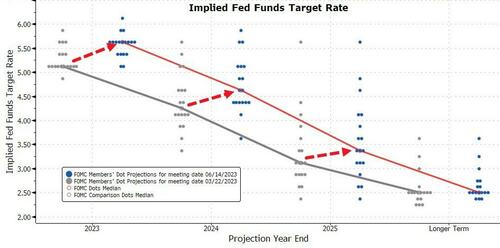

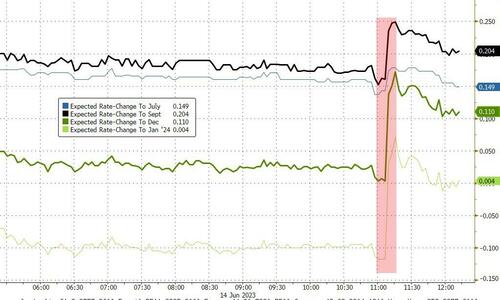
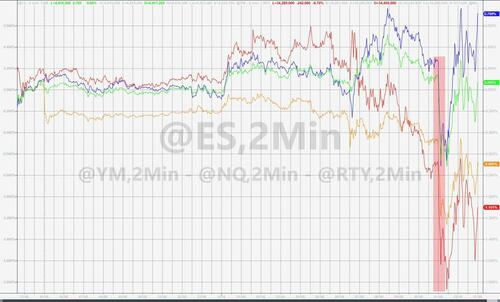
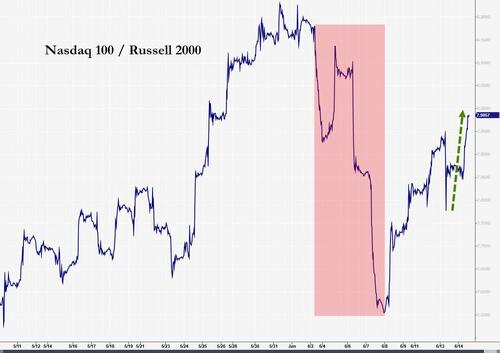
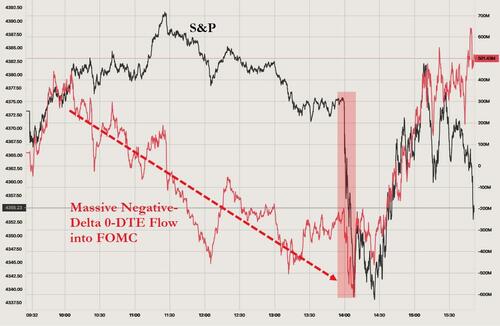
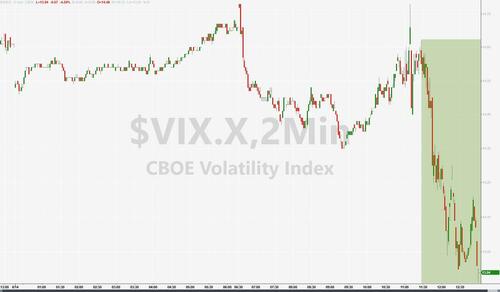
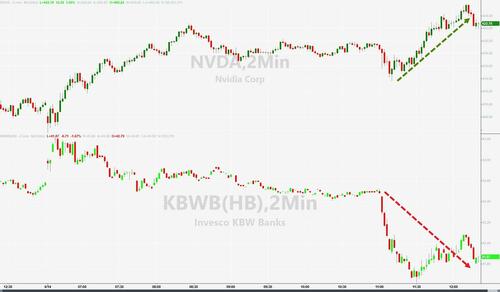
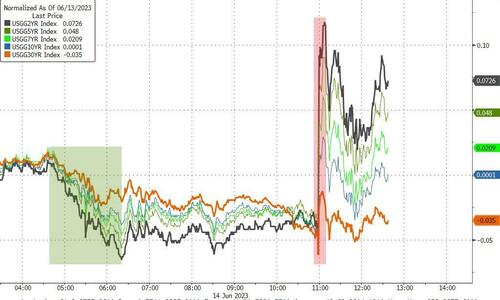
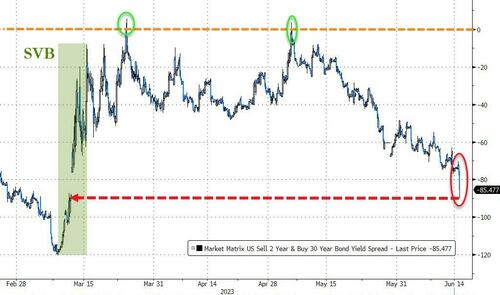
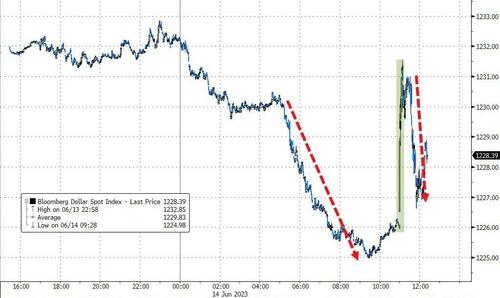
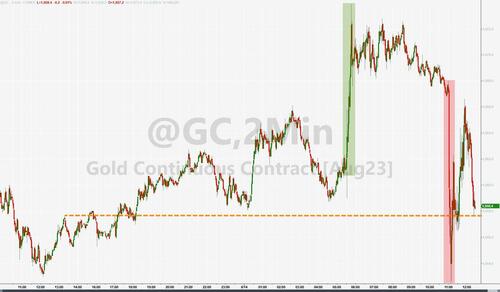
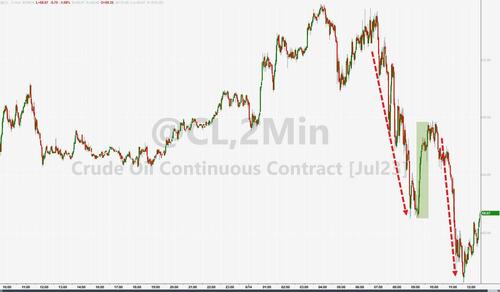
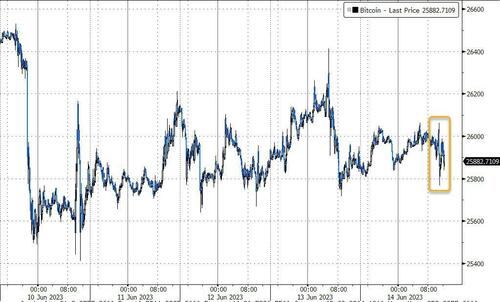
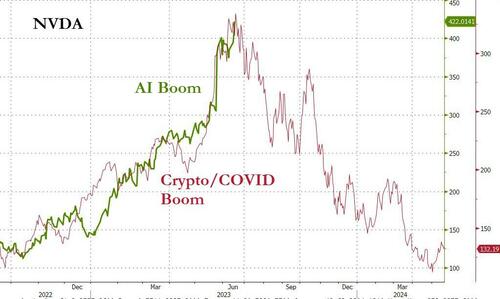
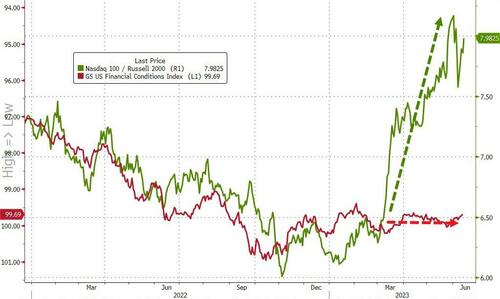
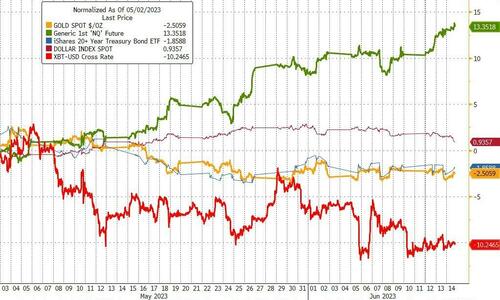
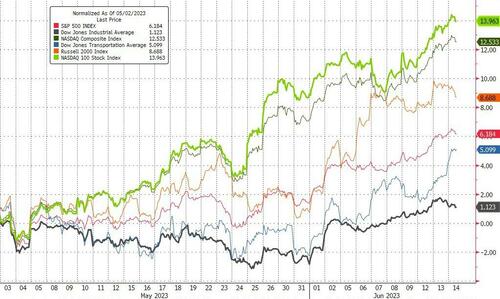

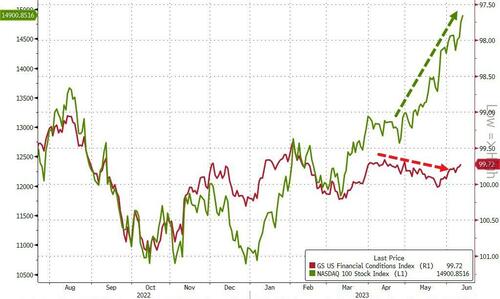
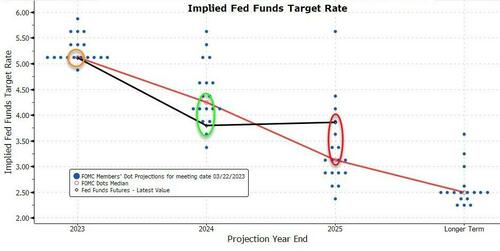
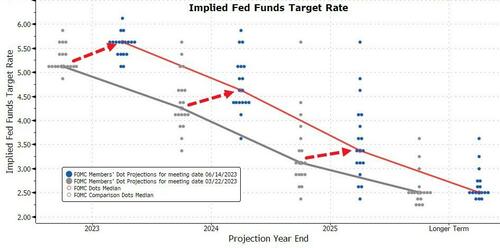
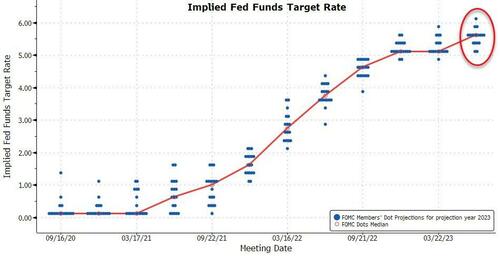
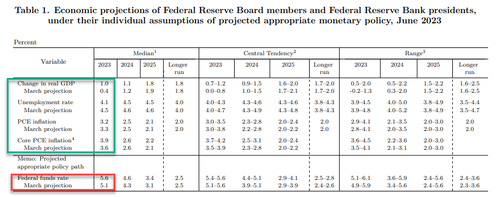
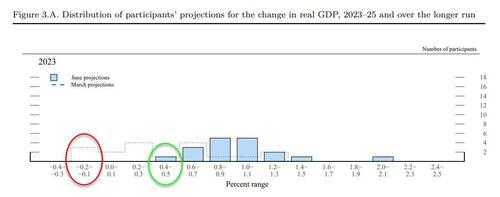
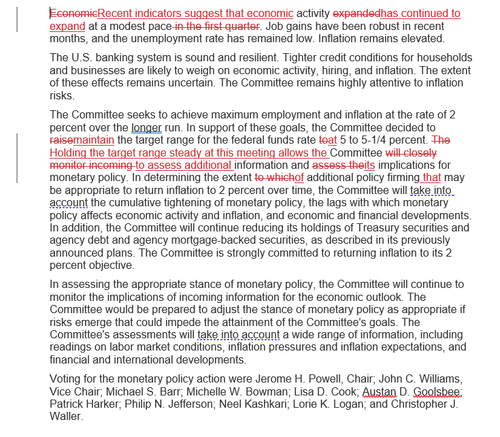
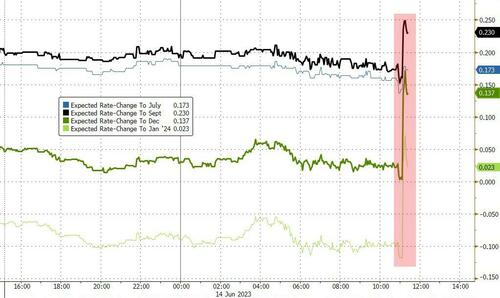
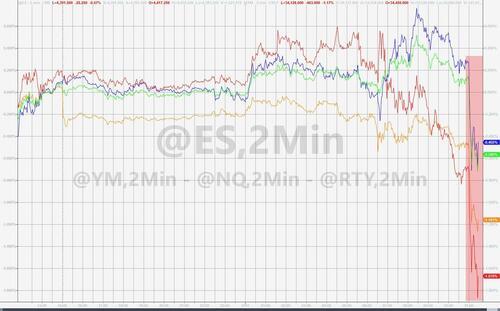
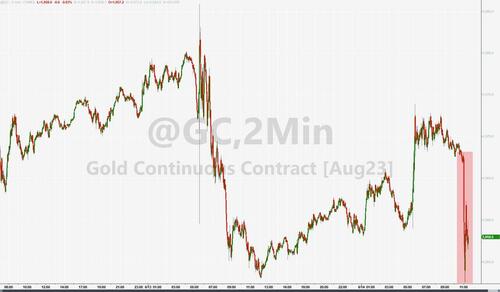
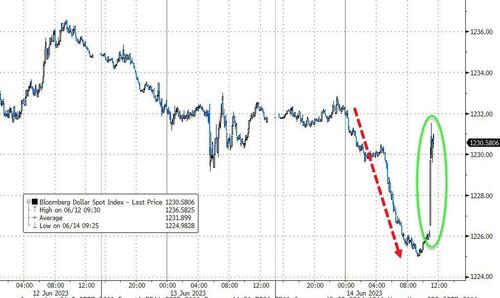





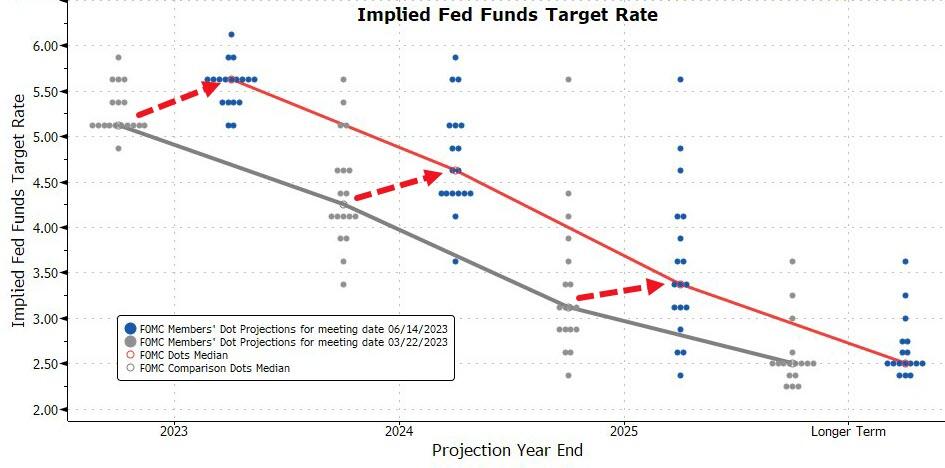

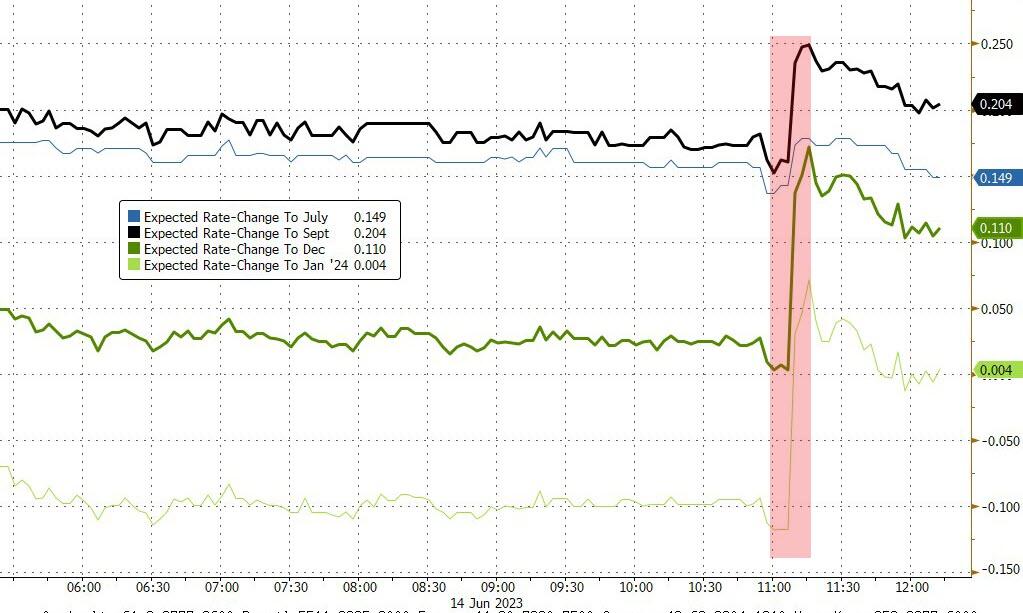
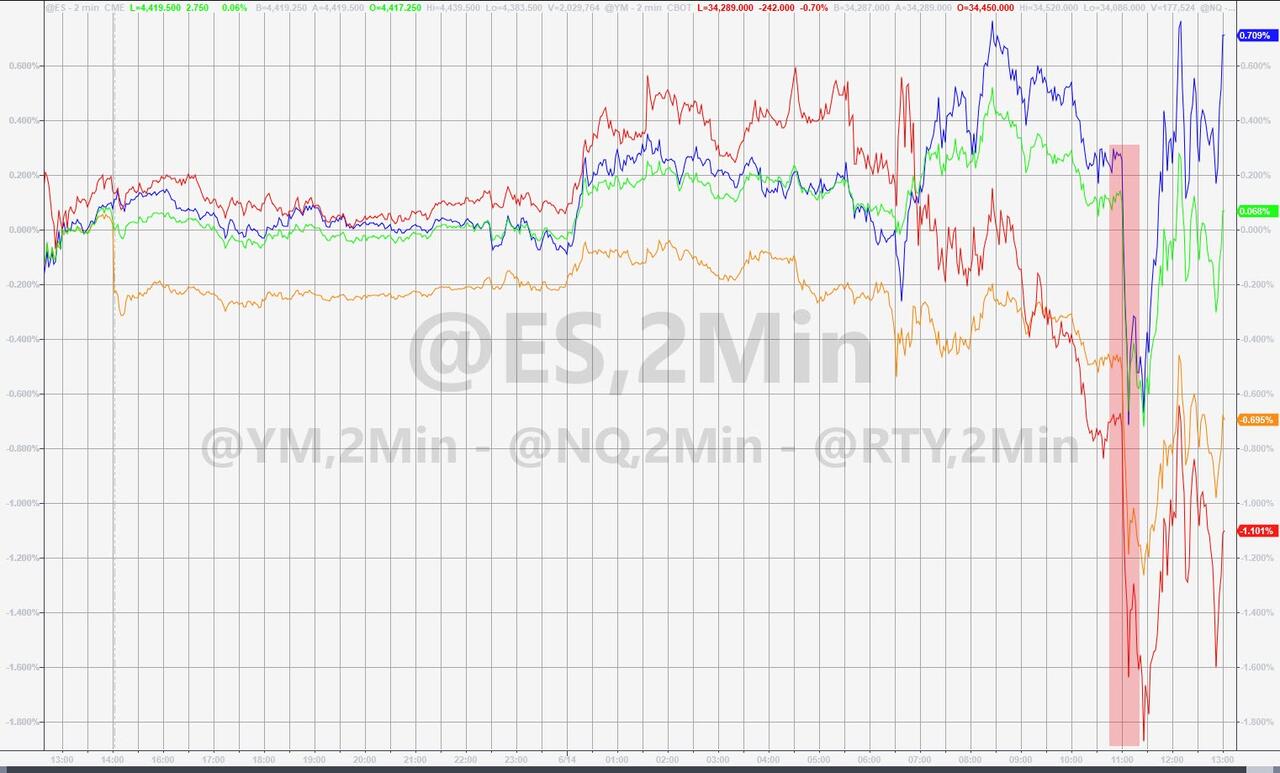
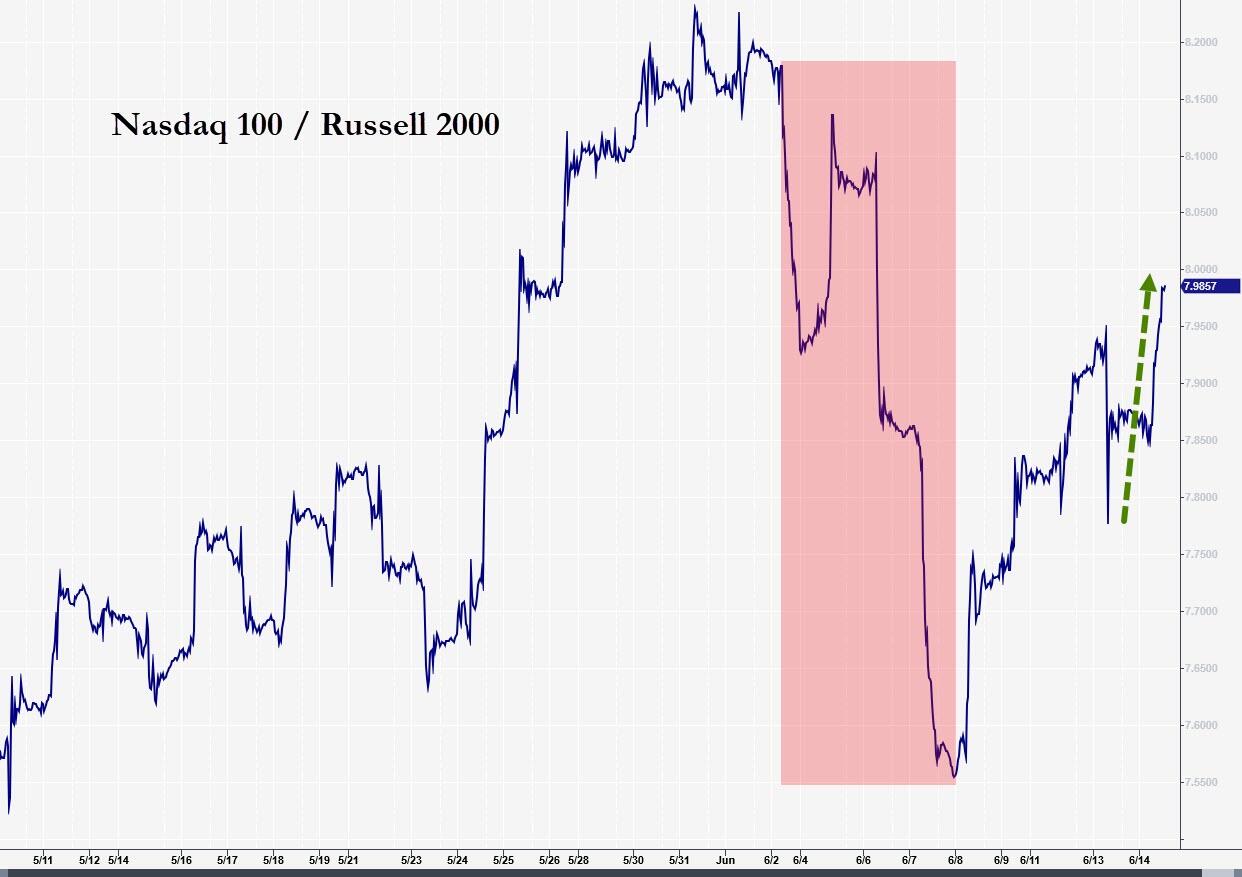
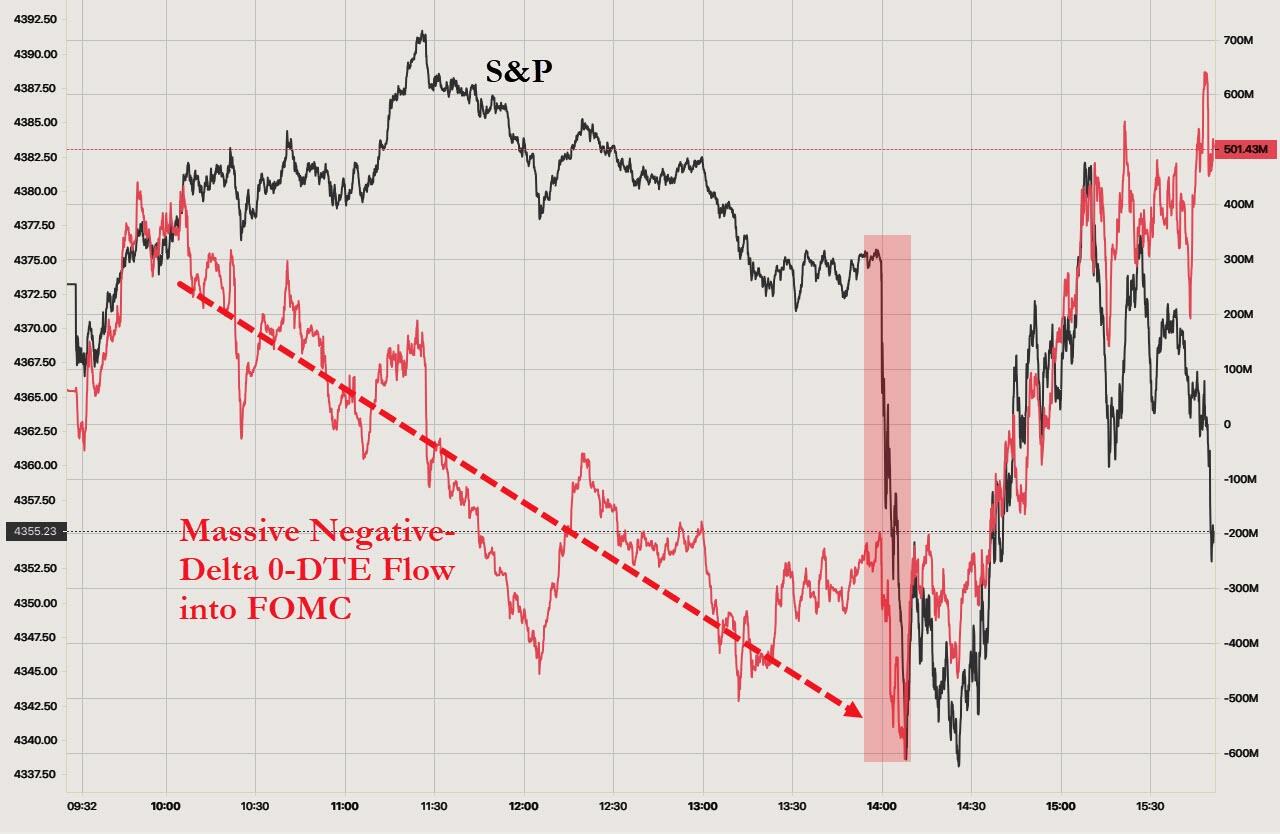
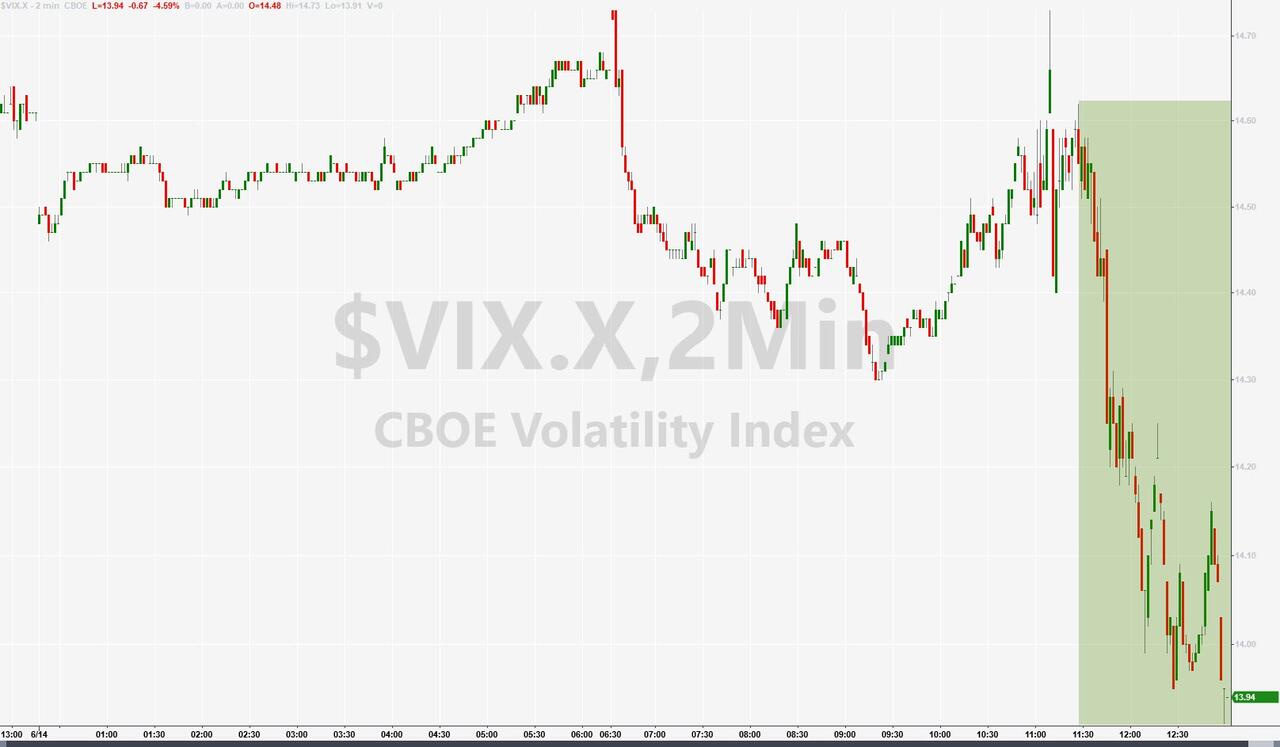
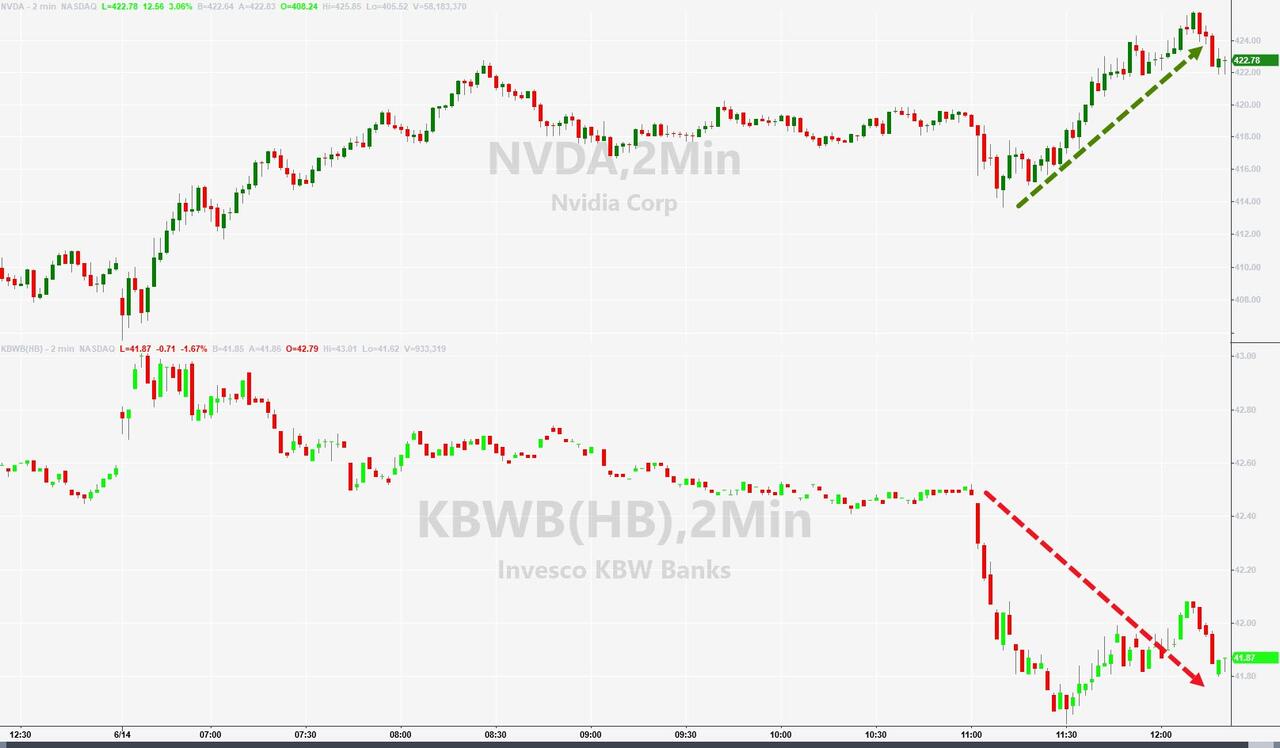
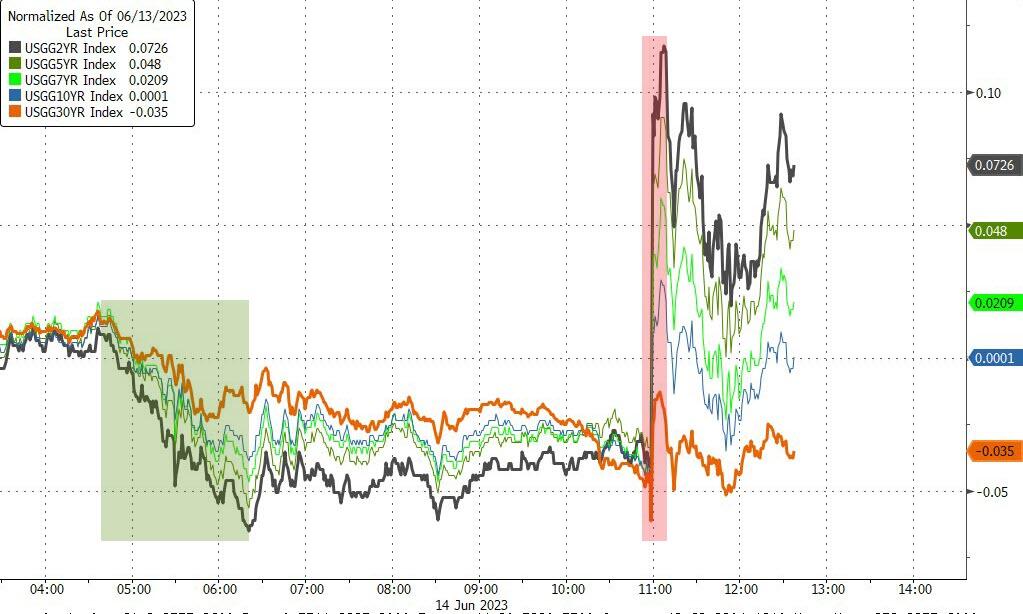
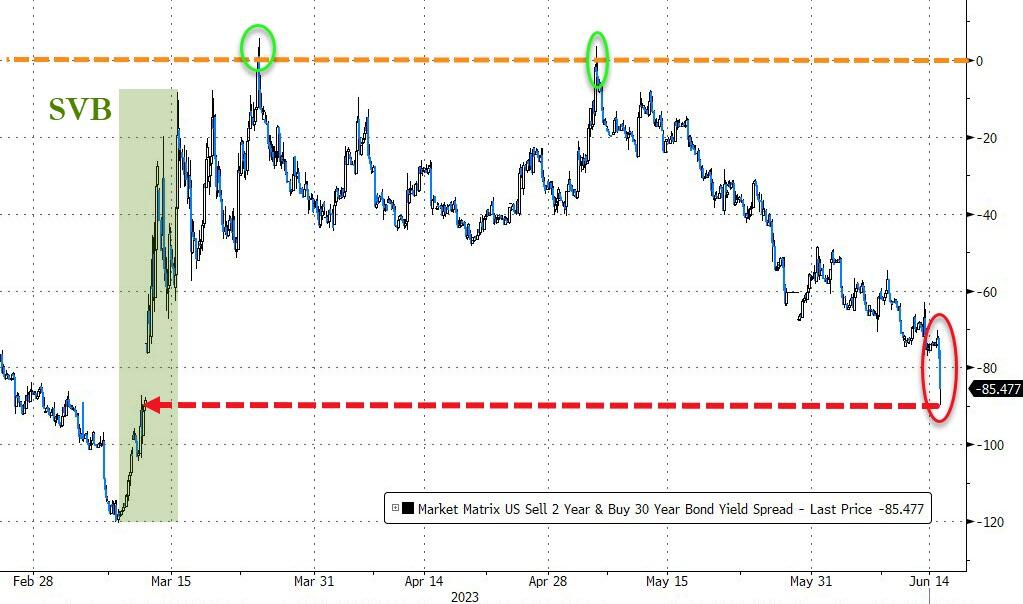
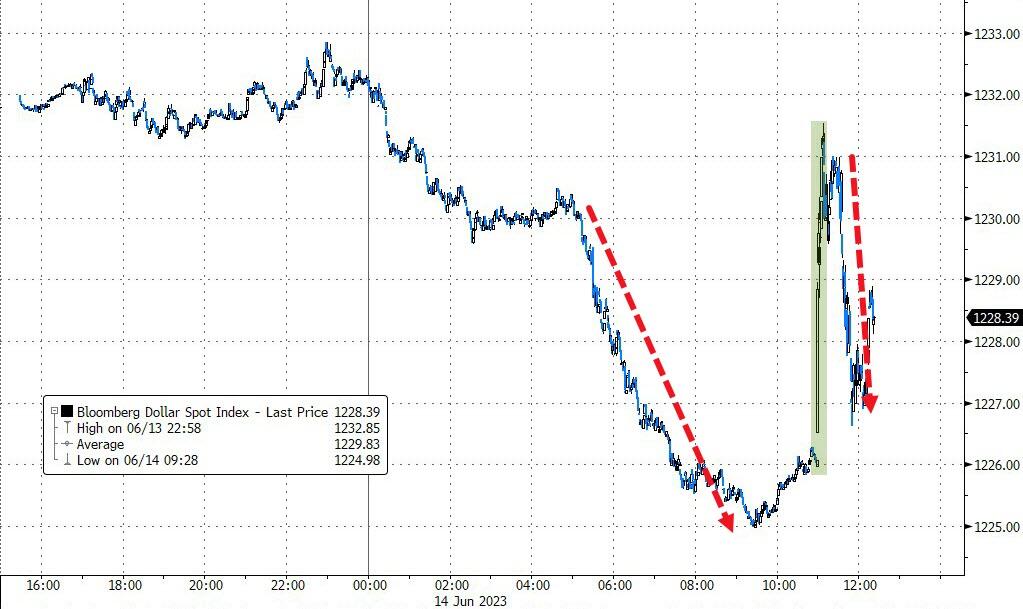
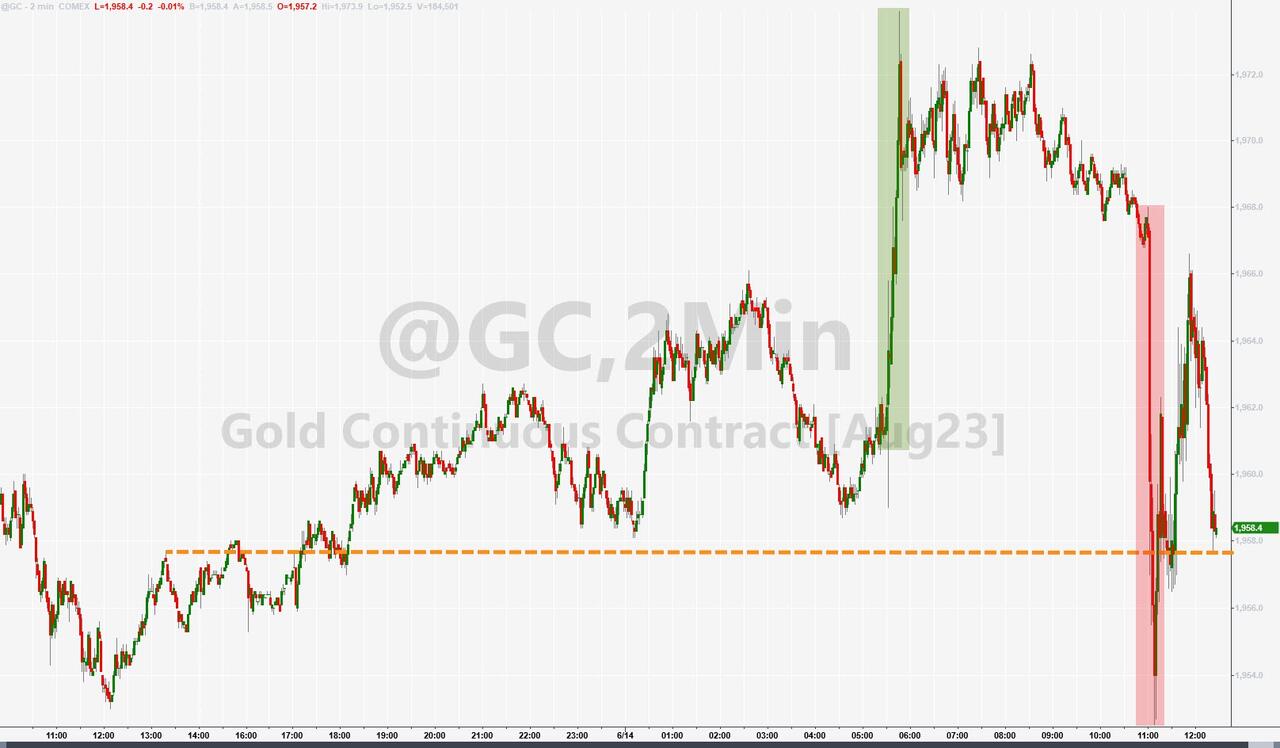
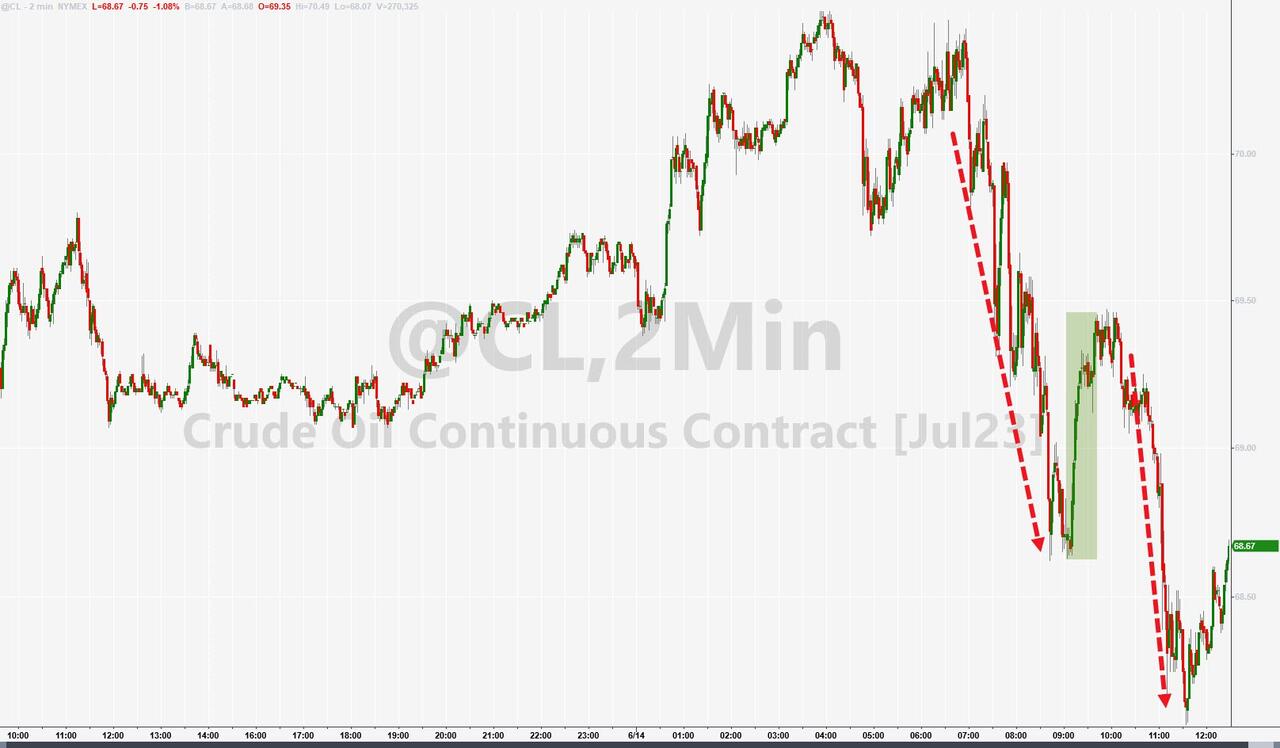
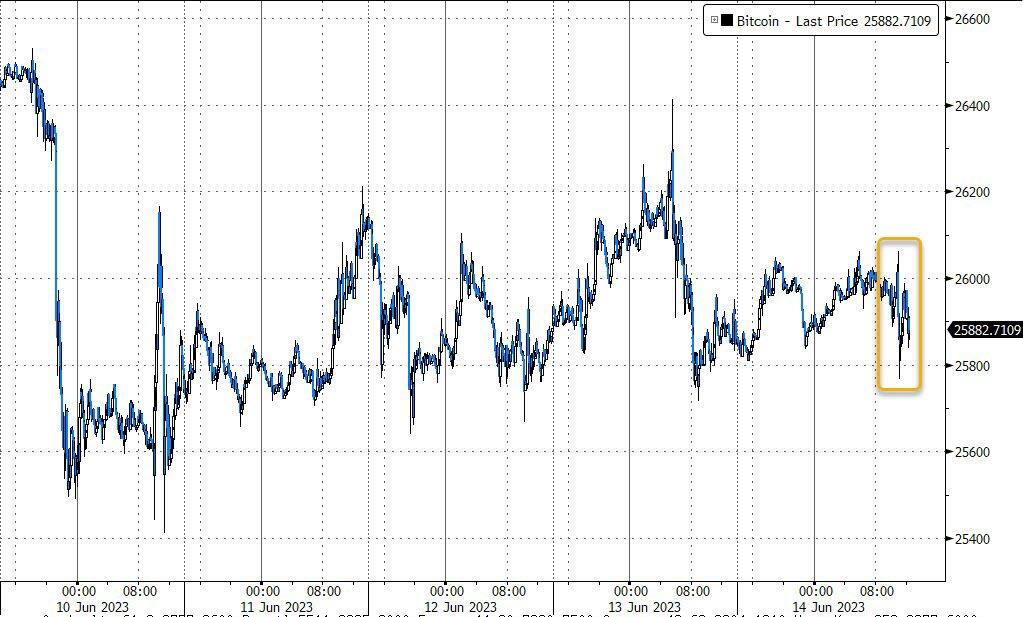
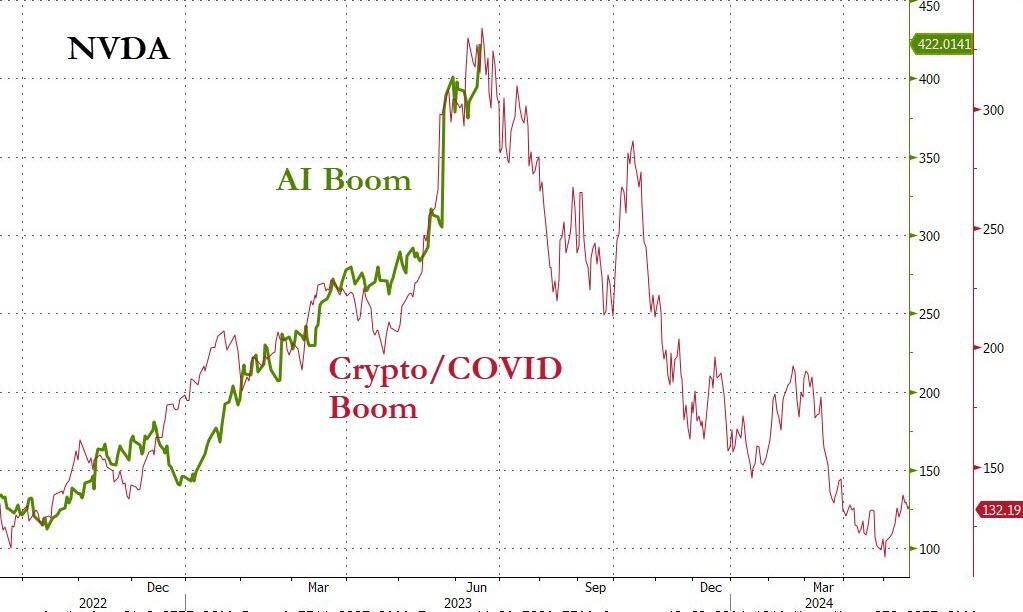
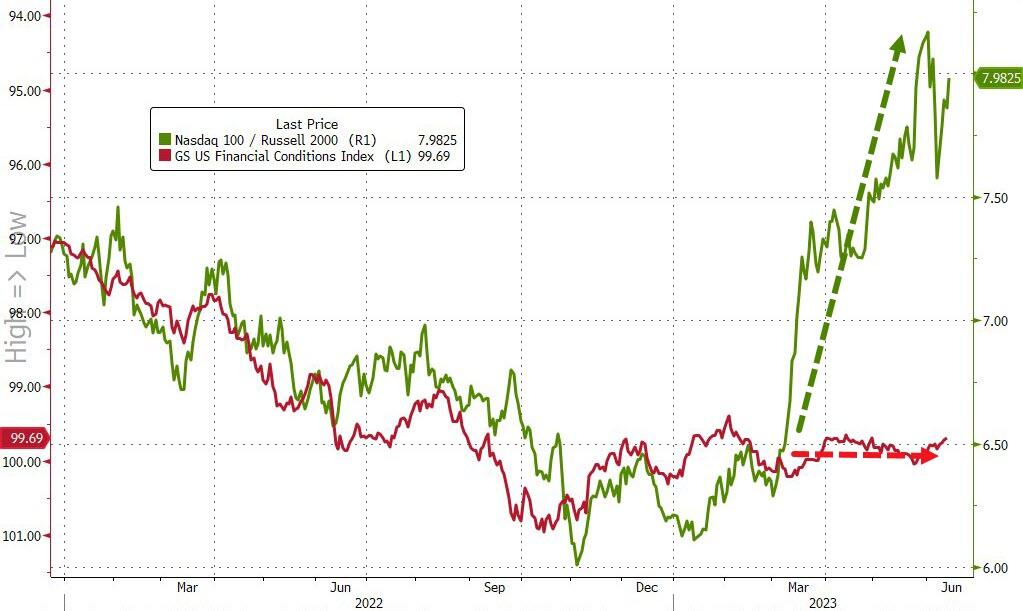
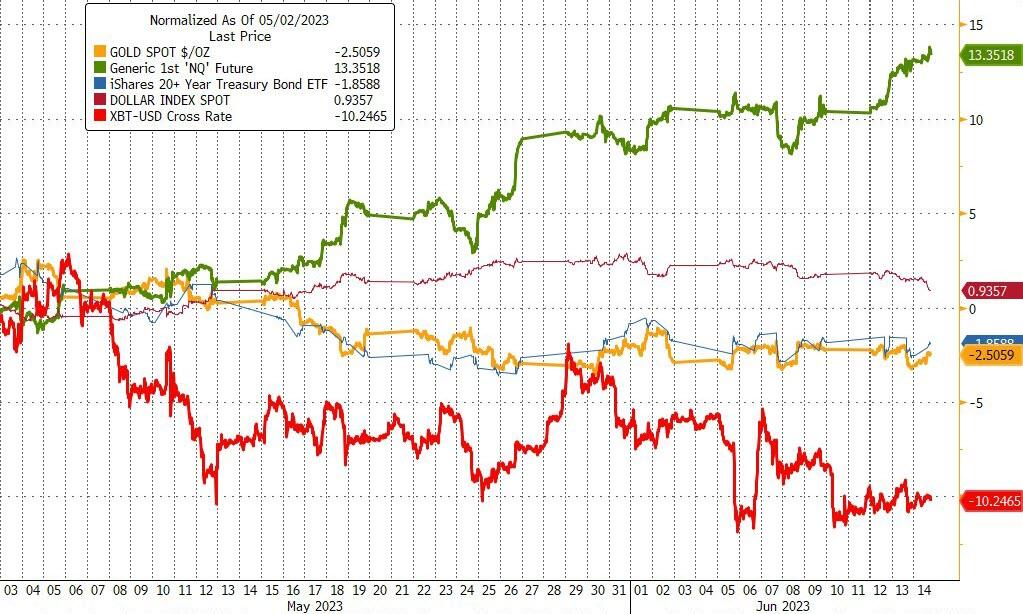
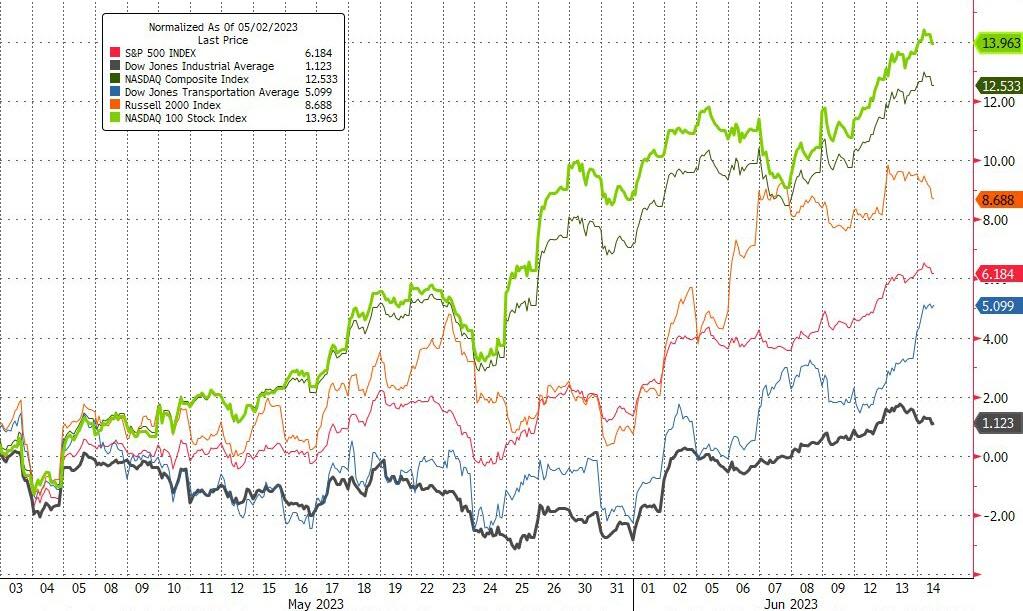
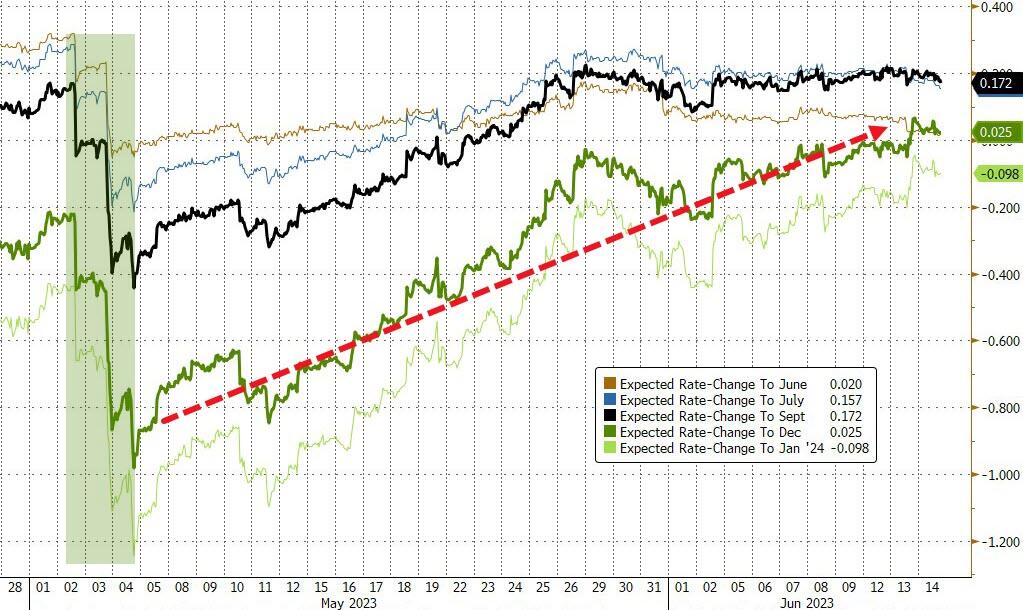
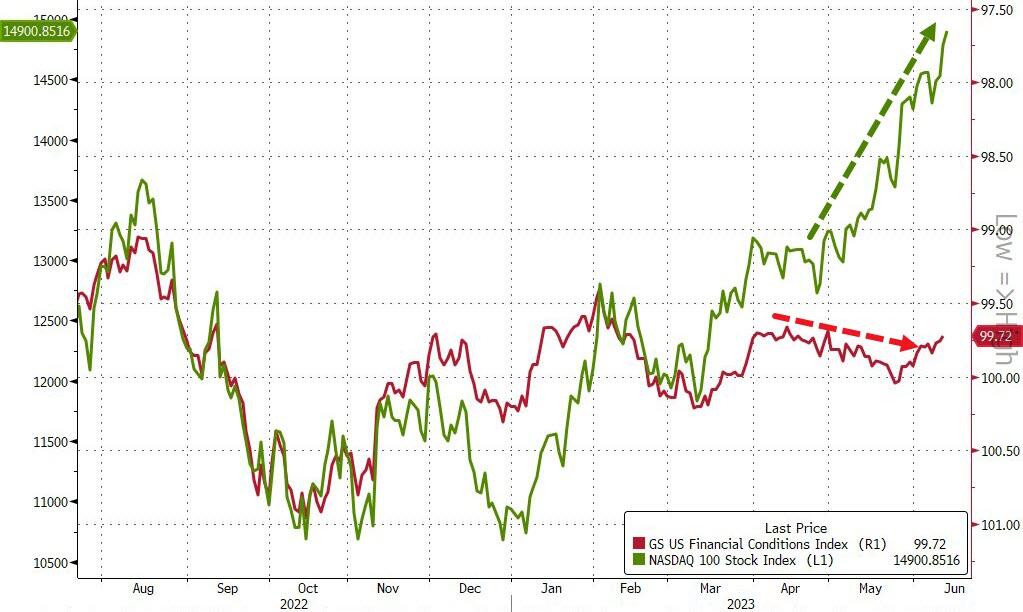
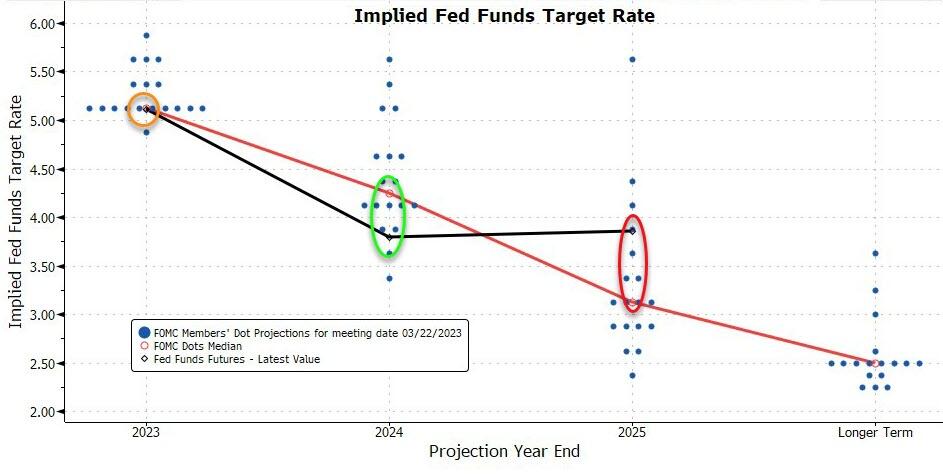
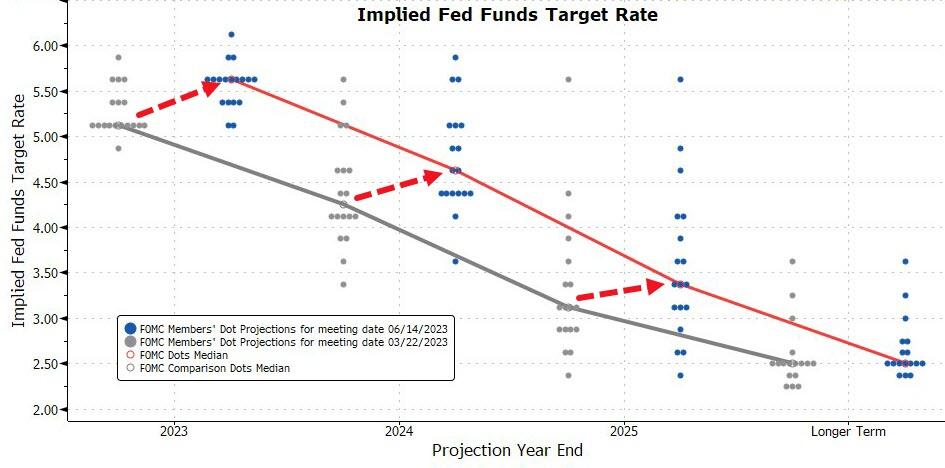
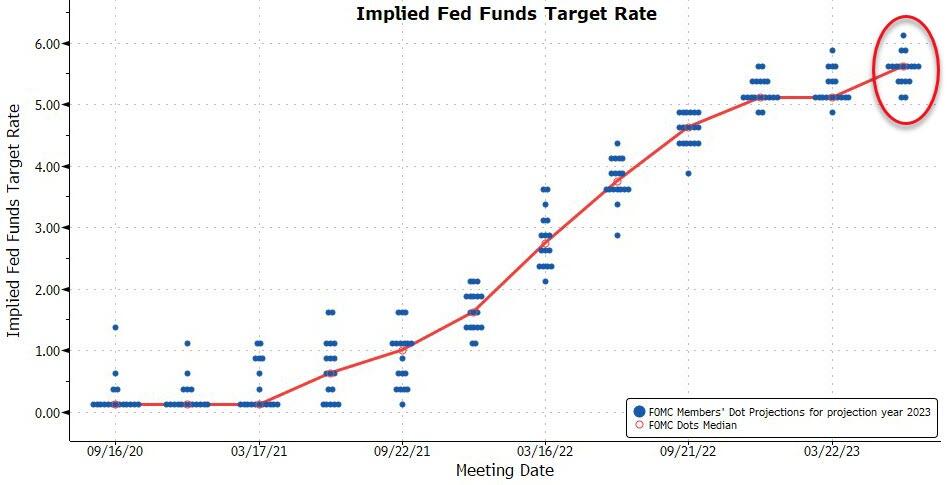
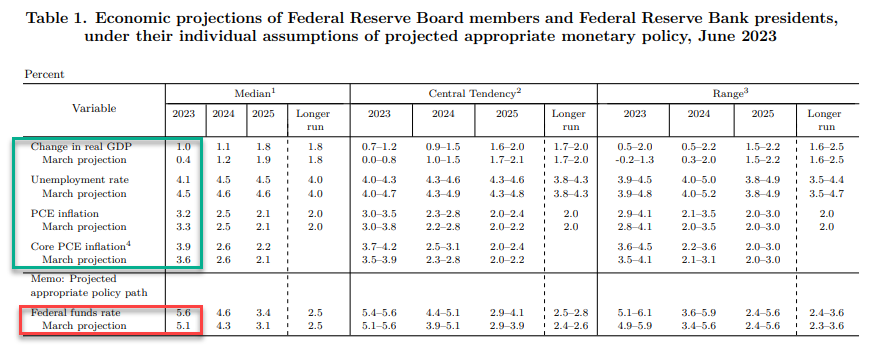
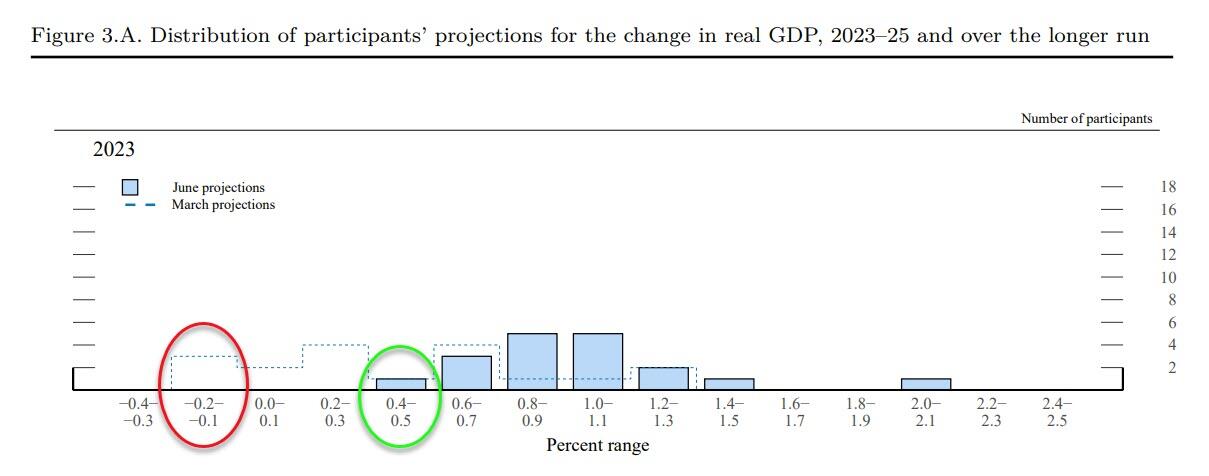
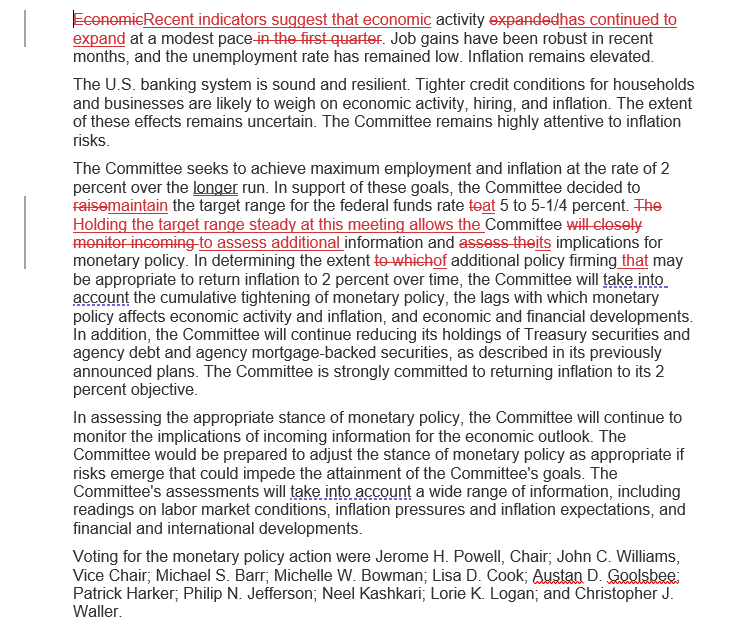



[…] by Harvey Organ, Harvey Organ Blog: […]
LikeLike