
Gold at (1:30 am est) $1237.60 UP $3.40
silver at $17.68: DOWN 5 cents
Access market prices:
Gold: $1242.00
Silver: $17.78
THE DAILY GOLD FIX REPORT FROM SHANGHAI AND LONDON
.
The Shanghai fix is at 10:15 pm est last night and 2:15 am est early this morning
The fix for London is at 5:30 am est (first fix) and 10 am est (second fix)
Thus Shanghai’s second fix corresponds to 195 minutes before London’s first fix.
And now the fix recordings:
Shanghai FIRST morning fix Feb 8/17 (10:15 pm est last night): $ 1243.34
NY ACCESS PRICE: $1235.30 (AT THE EXACT SAME TIME)/premium $8.04
XXXXXXXXXXXXXXXXXXXXXXXXXXXXXXXXXX
Shanghai SECOND afternoon fix: 2: 15 am est (second fix/early morning):$ 1251.53
NY ACCESS PRICE: $1230.85 (AT THE EXACT SAME TIME/2:15 am)
SPREAD/ 2ND FIX TODAY!!: $20.68
China rejects NY pricing of gold as a fraud/arbitrage will now commence fully
XXXXXXXXXXXXXXXXXXXXXXXXXXXXXXXXXXXXXXXX
London FIRST Fix: Feb8/2017: 5:30 am est: $1235.60 (NY: same time: $1235.60 (5:30AM)
XXXXXXXXXXXXXXXXXXXXXXXXXXXXXXXXXXXXXXXX
London Second fix Feb 8.2017: 10 am est: $1242.10 (NY same time: $1242.00 (10 AM)
It seems that Shanghai pricing is higher than the other two , (NY and London). The spread has been occurring on a regular basis and thus I expect to see arbitrage happening as investors buy the lower priced NY gold and sell to China at the higher price. This should drain the comex.
Also why would mining companies hand in their gold to the comex and receive constantly lower prices. They would be open to lawsuits if they knowingly continue to supply the comex despite the fact that they could be receiving higher prices in Shanghai.
end
For comex gold:
FEBRUARY/
NOTICES FILINGS FOR FEBRUARY CONTRACT MONTH: 3 NOTICE(S) FOR 300 OZ. TOTAL NOTICES SO FAR: 5119 FOR 511,900 OZ (15.922 TONNES)
For silver:
For silver: FEBRUARY
1 NOTICES FILED FOR 5,000 OZ/
TOTAL NO OF NOTICES FILED: 147 FOR 735,000 OZ
Let us have a look at the data for today
.
xxxxxxxxxxxxxxxxxxxxxxxxxxxxxxxxxxxxxxxxxxxxxxxxxxxxxxxxxxxxxxxxxxxxxxxxxx
In silver, the total open interest ROSE by 600 contracts UP to 193,936 with respect to YESTERDAY’S TRADING. In ounces, the OI is still represented by just less THAN 1 BILLION oz i.e. .970 BILLION TO BE EXACT or 139% of annual global silver production (ex Russia & ex China).
FOR THE NEW FRONT FEBRUARY MONTH: 1 NOTICE(S) FOR 5,000 OZ
In gold, the total comex gold ROSE BY 4,268 contracts WITH THE RISE IN THE PRICE GOLD ($4.20 with YESTERDAY’S trading ).The total gold OI stands at 417,595 contracts
we had 3 notice(s) filed upon for 300 oz of gold.
xxxxxxxxxxxxxxxxxxxxxxxxxxxxxxxxxxxxxxxxxxxxxxxxxxxxxxxxxxxx
With respect to our two criminal funds, the GLD and the SLV:
GLD:
We had a huge change in tonnes of gold at the GLD/a deposit of 5.63 tonnes
Inventory rests tonight: 832.58 tonnes
.
SLV
we had no changes in silver into the SLV
THE SLV Inventory rests at: 334.713 million oz
end
.
First, here is an outline of what will be discussed tonight:
1. Today, we had the open interest in silver RISE by 600 contracts UP to 193,936 AS SILVER WAS UP 6 CENTS with YESTERDAY’S trading. The gold open interest ROSE by 4,268 contracts UP to 415,543 WITH THE RISE IN THE PRICE OF GOLD OF $4.20 (YESTERDAY’S TRADING)
(report Harvey
.
2.a) The Shanghai and London gold fix report
(Harvey)
2 b) Gold/silver trading overnight Europe, Goldcore
(Mark O’Byrne/zerohedge
and in NY: Bloomberg
)
3. ASIAN AFFAIRS
i)Late TUESDAY night/WEDNESDAY morning: Shanghai closed UP 13.89 POINTS OR .44%/ /Hang Sang CLOSED UP 153.56 POINTS OR .66% . The Nikkei closed UP 96.82 POINTS OR 0.51% /Australia’s all ordinaires CLOSED UP 0.54%/Chinese yuan (ONSHORE) closed UP at 6.872540/Oil FELL to 51.81 dollars per barrel for WTI and 54.77 for Brent. Stocks in Europe MOSTLY IN THE GREEN. Offshore yuan trades 6.8509 yuan to the dollar vs 6.8725 for onshore yuan.THE SPREAD BETWEEN ONSHORE AND OFFSHORE WIDENS QUITE A BIT AS DOLLARS ARE ATTEMPTING TO LEAVE CHINA’S SHORES. ONSHORE YUAN STRONGER BUT OFFSHORE WEAKER COUPLED WITH THE STRONGER DOLLAR
REPORT ON JAPAN SOUTH KOREA NORTH KOREA AND CHINA
3a)THAILAND/SOUTH KOREA
b) REPORT ON JAPAN
c) REPORT ON CHINA
Bitcoin slides with announcement that the POBC is holding a ‘closed door” meeting with the virtual exchanges.
( zero hedge)
4. EUROPEAN AFFAIRS
i)GREECE
An excellent commentary from Mish Shedlock as he lays out the probability of a GREXIT if Greece does not get its way. If Greece does its way then it will have enough money to continue
( Mish Shedlock/Mishtalk)
ii)Keep talking Greece.com comments that it looks like the Greek government is testing the waters for a complete Grexit and a return to the drachma
(courtesy zerohedge)
iiiGERMANY/DEUTSCHE BANK/USA D.O.J./)
The Dept of Justice are now ready to grind their teeth into the individuals involved in the mortgage scandal.
( zero hedge)
iv)Schaeuble repeats his mantra that in order for the EU to cut the Greek debt, Greece would have to exit the currency. The problem for its citizens then would be that a huge devaluation of the drachma would wipe out there savings
(courtesy zero hedge)
Brexit passes the lower house and now the Upper Chamber (House of lords) gets its crack at amendments to England finally leaving the EU
5. RUSSIAN AND MIDDLE EASTERN AFFAIRS
Russia
This is cause a flight into gold: Russia mobilizes S 400 missile systems near Moscow are they are testing readiness against a possible attack
( zero hedge)
6.GLOBAL ISSUES
i)INDIA
The following jolted the markets; they were expecting more easing which was not to be. The markets are reacting because this will probably signal the end of global easing.
( zero hedge)
ii)NEW ZEALAND
We now have another country, whose central bank wishes to devalue their currency
(courtesy zero hedge)
7. OIL ISSUES
i)Goldman Sachs cannot believe the huge buildup of inventories of gasoline coupled with the drop in demand. The basic comments; the USA is in a recession:
(courtesy zerohedge)
ii)West Texas intermediate oil continues with losses after another huge inventory build. Production is at record highys
( zero hedge)
iii)This should weaken the price of oil: USA to sell 10 million barrels of oil from its SPR
( zero hedge)
8. EMERGING MARKETS
9. PHYSICAL MARKETS
i)John Embry discusses the phony jobs report and the huge short position at the comex by the banking sector totaling almost 1 billion oz.
( John Embry/Kingworldnews)
ii)The Bundesbank correctly states that the USA government should blame itself for the high dollar.
(/German Bundesbank/Reuters)
iii)Funny! the market senses that there is a problem with the new gold futures contract in London. Nobody is trading them
( Ronan Manly/Bullionstar)
iv)The following is very big: Druckenmiller has changed his mind and is now buying gold
(courtesy zero hedge)
10.USA STORIES
i) Trading from NY early morning:
First: bond yields plummeting!
(zero hedge)
ii)Second: bank stocks are falling!
( zero hedge)
iii)There is no doubt that the price of gold is tethered to the value of the yen. The lower the yen, the lower the price of gold.
Today, we had a poor SA treasury auction. The dollar then rose which caused the yen to weaken and thus gold tagged along
( zero hedge)
Let us head over to the comex:
The total gold comex open interest ROSE BY 4,268 CONTRACTS UP to an OI level of 415,543 WITH THE RISE IN THE PRICE OF GOLD ( $4.20 with YESTERDAY’S trading). We are now in the contract month of FEBRUARY and it is one of the better delivery months of the year. In this next big active delivery month of February we had a LOSS of 324 contracts DOWN to 1449. We had 111 notices served upon yesterday and therefore we LOST 213 contracts or an additional 21,300 oz will NOT stand for delivery and these were cash settled for a fiat bonus. The next non active contract month of March saw it’s OI fall by 74 contracts DOWN to 2128.The next big active month is April and here the OI ROSE by 144 contracts UP to 282,816.
We had 3 notice(s) filed upon today for 300 oz
And now for the wild silver comex results. Total silver OI rose by 600 contracts FROM 193,336 up to 193,936 as the price of silver ROSE IN PRICE TO THE TUNE OF 6 CENTS with respect to YESTERDAY’S trading. We are moving further from the all time record high for silver open interest set on Wednesday August 3/2016: (224,540).
The active month of February saw the OI RISE by 5 contract(s) UP TO 166. We had 1 notice(s) served upon yesterday so we GAINED 6 CONTRACTS or an additional 30,000 oz will stand.
The next big active delivery month is March and here the OI decrease by 4,797 contracts down to 120,447 contracts. For comparison purposes last year on the same date only 101,229 contracts were standing.
We had 1 notice(s) filed for 5,000 oz for the FEBRUARY contract.
VOLUMES: for the gold comex
Today the estimated volume was 214,016 contracts which is good.
Yesterday’s confirmed volume was 218,863 contracts which is good
volumes on gold are getting higher!
| Gold | Ounces |
| Withdrawals from Dealers Inventory in oz | nil |
| Withdrawals from Customer Inventory in oz |
8222.40 OZ
incl
250 kilobars
Brinks
Scotia
|
| Deposits to the Dealer Inventory in oz | 94.65 oz
brinks |
| Deposits to the Customer Inventory, in oz |
7386.310 oz
Scotia
|
| No of oz served (contracts) today |
3 notice(s)
300 oz
|
| No of oz to be served (notices) |
1446 contracts
144,600 oz
|
| Total monthly oz gold served (contracts) so far this month |
5119 notices
511,900 oz
15.922 tonnes
|
| Total accumulative withdrawals of gold from the Dealers inventory this month | NIL oz |
| Total accumulative withdrawal of gold from the Customer inventory this month | 121,212.2 oz |
Today, 0 notice(s) were issued from JPMorgan dealer account and 0 notices were issued from their client or customer account. The total of all issuance by all participants equates to 3 contract(s) of which 0 notices were stopped (received) by jPMorgan dealer and 0 notice(s) was (were) stopped/ Received) by jPMorgan customer account.
March 2016: 2.311 tonnes (March is a non delivery month)
| Silver | Ounces |
| Withdrawals from Dealers Inventory | nil |
| Withdrawals from Customer Inventory |
1961.500 0z
Delaware
|
| Deposits to the Dealer Inventory |
nil oz
|
| Deposits to the Customer Inventory |
621,550.890 oz
HSBC
|
| No of oz served today (contracts) |
1 CONTRACT(S)
(5,000 OZ)
|
| No of oz to be served (notices) |
165 contracts
(825,000 oz)
|
| Total monthly oz silver served (contracts) | 147 contracts (735,000 oz) |
| Total accumulative withdrawal of silver from the Dealers inventory this month | NIL oz |
| Total accumulative withdrawal of silver from the Customer inventory this month | 4,852,502.9 oz |
end
And now the Gold inventory at the GLD
Feb 8/another “deposit” of 5.63 tonnes of gold into the GLD/The addition is a paper addition/total inventory: 832.58 tonnes
Feb 7/another huge fake deposit of 8.30 tonnes of gold into the GLD/the addition is a paper addition and no doubt not physical/ total inventory: 826.95 tonnes
FEB 6/a huge deposit of 7.43 tonnes of gold into the GLD/Inventory rests at 818.65 tonnes
FEB 3/no change in gold inventory at the GLD/Inventory rests at 811.22 tonnes
Feb 2/another huge deposit of 1.48 tonnes/inventory rests at 811.22 tonnes
Feb 1/a huge “deposit” of 10.67 tonnes of gold into the GLD/Inventory rests at 809.74 tonnes. this should stop GLD from sending gold to Shanghai.
JAN 31/no change in gold inventory at the GLD/Inventory rests at 799.07 tonnes
jan 30/no change in gold inventory at the GLD/Inventory rests at 799.07 tonnes
Jan 27/no changes at the GLD/Inventory rests at 799.07 tonnes
Jan 26/no changes at the GLD/Inventory rests at 799.07 tonnes/
jan 25/another exactly the same withdrawal as yesterday: 50.4 tonnes and again this was used in the whacking of gold today/inventory rests at 799.07 tonnes
jan 24/a huge withdrawal of 5.04 tonnes and probably this was used today in the whacking of gold/inventory rests at 804.11 tonnes
Jan 23/a big change/this time a deposit of 1.19 tonnes of gold into the GLD/inventory rests at 809.15 tonnes. The drainage of gold from the GLD to Shanghai has now stopped!
Jan 20/no changes in gold inventory a the GLD/Inventory rests at 807.96 tonnes
Jan 19/no changes in gold inventory at the GLD/Inventory rests at 807.96 tonnes
Jan 18/no changes in gold inventory at the GLD/Inventory rests at 807.96 tonnes
Jan 17/17/a deposit of 2.96 tonnes of gold/inventory at the GLD rests at 807.96 tonnes. I guess there is no more gold inventory to sent to C+Shanghai
Jan 13/17/there were no changes in gold inventory at the GLD/Inventory rests at 805.00 tonnes
Jan 12/2017/no change in gold inventory at the GLD/Inventory rests at 805.00 tonnes
Jan 11/no change in gold inventory at the GLD/Inventory rests at 805.00 tonnes
JAN 10/no changes in gold inventory at the GLD/Inventory rests at 805.00 tonnes
JAN 9/A WITHDRAWAL OF 8.87 TONNES OF GOLD FROM THE GLD/INVENTORY RESTS AT 805.00 TONNES
end
NPV for Sprott and Central Fund of Canada
end
Major gold/silver trading/commentaries for WEDNESDAY
GOLDCORE/BLOG/MARK O’BYRNE
Gold Buying Russia To Intensify Diversification On Trump ‘Unpredictability’?
Gold Buying Russia To Increase Diversification On Trump ‘Unpredictability’?
Russia’s massive and increasing gold bullion reserves are kept in tightly-guarded locations across Russia due to the fear of sanctions and the ‘unpredictability’ of Donald Trump according to The Sun and Russia Beyond The Headlines.
 Russia increased their gold reserves by a very large 199.1 tonnes in 2016. This was the eight consecutive year of gold diversification due to concerns about the dollar and currency wars
From The Sun:
Russia is hedging its bets with a stockpile of gold due to Donald Trump’s “unpredictable” nature.
The hoard, which is stashed around Moscow, St Petersburg and Yekaterinburg, has seen Russia become one of the world’s leading gold buyers – a stance that it hopes will protect it from any drastic changes that the new US President might have on the world economy.
Almost two-thirds of the nation’s gold is kept in Moscow, in a Central Bank repository.
The location of the gold, mainly in bullions weighing from 100grams to 14kgs, is a highly-guarded secret.
But the country’s leader, Vladimir Putin, has inspected one of the storage sites, with Prime Minister Dmitry Medvedev also having carrying out visits.
Russia’s central bank has previously declared that gold was a “100 per cent guarantee from legal and political risks”, making it worth the risk of a swinging price, GoldCore reported.
Russia’s gold reserves now rank sixth in the world. Putin has been photographed a number of times visiting gold reserves
From Russia Beyond The Headlines:
The topic of gold reserves is increasingly discussed in the international media. Donald Trump, for example, suggested an audit of America’s gold reserves to ascertain just how much the country truly has. The question of Germany’s gold reserves, kept in the U.S. for decades, has begun to worry the German public, which begins to think it’s necessary to return those reserves home. So, it’s no surprise that many Russians also wonder what’s up with their country’s gold reserves and where they’re hidden.
Russia ranks sixth in the world in gold reserves, and the Russian Central Bank said they total 1,614.27 tons, which is 15 percent more than last year.
The Russian Central Bank is one of the world’s leading gold buyers, and in February 2016 it purchased more than 10 tons of gold.
“When prices are low governments increase gold reserves, and this often owes to traditions and historical reasons,” said Anton Tabakh, an economist and professor at the Higher School of Economics. “In the reliability-liquidity-profitability triad, gold is marketable but prices greatly vary.”
Experts positively view Russia’s determination to increase gold reserves during global economic uncertainty. Konstantin Sakharovsky, who worked many years as director of innovations at a large Russian jewelry retail company, believes that a Trump presidency means gold will have more significance.
“Increasing the share of gold reserves is a very good decision in today’s economic and political climate,” said Sakharovsky, who links the increase demand for gold to the political risks tied to the election of the new U.S. president.
“Trump is unpredictable,” said Sakharovsky. “There could suddenly be a new wave of sanctions and a freezing of assets. Gold will help Russia maintain its assets …”
Russia has been diversifying into gold since before the global financial crisis and views it as a safe haven asset and a hedge against a devaluation of the dollar and indeed the beleaguered euro. This is something we wrote about as long ago as 2007 – see here. Thus, Russia was buying gold long before Trump’s election.
Given relations between Trump and Putin are quite good, the question now is whether Russia continues to diversify its reserves into gold.
We think it will. If relations between the U.S. and Russia remain good, it may continue buying at a slightly lower rate. However, if relations were to deteriorate as seems quite possible given tensions over Crimea, Syria, Iran etc, then Russia and indeed China will likely accelerate their gold reserve diversification program to protect against currency wars and actual wars.
Gold will help all investors, savers, family offices, companies, institutions and indeed nations protect, grow and “maintain” their assets as currency wars intensify in the coming months and years.
Excerpts above from the The Sun and Russia Beyond The Headlines
END
John Embry discusses the phony jobs report and the huge short position at the comex by the banking sector totaling almost 1 billion oz.
(courtesy John Embry/Kingworldnews)
Short selling of silver astounds Sprott’s Embry in KWN interview
Submitted by cpowell on Tue, 2017-02-07 19:12. Section: Daily Dispatches
2:13p ET Tuesday, February 7, 2017
Dear Friend of GATA and Gold:
Sprott Asset Management’s John Embry, interviewed today by King World News, explains why he is astounded at the short-selling of silver, which he considers the most undervalued asset in the world. The interview is excerpted at KWN here:
http://kingworldnews.com/embry-criminal-banks-commercials-now-short-mind…
CHRIS POWELL, Secretary/Treasurer
Gold Anti-Trust Action Committee Inc.
CPowell@GATA.org
END
The Bundesbank correctly states that the USA government should blame itself for the high dollar.
(courtesy/German Bundesbank/Reuters)
U.S. government has only itself to blame for dollar strength, Bundesbank chief says
Submitted by cpowell on Tue, 2017-02-07 20:38. Section: Daily Dispatches
By Andreas Framke and Frank Siebelt
Reuters
Tuesday, February 7, 2017
MAINZ, Germany — The U.S. administration should blame itself rather than Germany for a recent strengthening of the dollar against the euro, the head of Germany’s Bundesbank said on Tuesday.
Jens Weidmann said comments by a top trade adviser of U.S. President Donald Trump that Germany was exploiting the United States and its European partners with an overly weak euro were “more than absurd.”
“The thesis that foreign currency manipulations are to blame for the current strong U.S. dollar is not borne out by facts,” he told a gathering in this western German city.
“The most recent rise in the dollar is likely to be homemade, triggered by the political announcements of the new government,” he said.
Separately, in an interview with Redaktionsnetzwerk Deutschland media group, Weidmann said there was no point in starting a currency war.
“If politicians erect trade barriers or start a currency depreciation race, there are only losers in the end,” he told RND, in comments due to be published Wednesday. …
… For the remainder of the report:
http://www.reuters.com/article/us-usa-trump-bundesbank-idUSKBN15M21Y
END
Funny! the market senses that there is a problem with the new gold futures contract in London. Nobody is trading them
(courtesy Ronan Manly/Bullionstar)
Ronan Manly: New gold futures contracts in London are open but no one trades them
Submitted by cpowell on Wed, 2017-02-08 01:28. Section: Daily Dispatches
8:30p ET Tuesday, February 7, 2017
Dear Friend of GATA and Gold:
Gold researcher Ronan Manly reports tonight that two new gold futures contracts that recently opened for business in London and were announced with great fanfare — one created by the London Metal Exchange, the other by the Intercontinental Exchance — have yet to trade even a single contract. With British understatement Manley’s report is headlined “Lukewarm Start for New London Gold Futures Contracts” and it’s posted at Bullion Star here:
https://www.bullionstar.com/blogs/ronan-manly/lukewarm-start-for-new-lon…
CHRIS POWELL, Secretary/Treasurer
Gold Anti-Trust Action Committee Inc.
CPowell@GATA.org
END
The following is very big: Druckenmiller has changed his mind and is now buying gold
(courtesy zero hedge)
Druckenmiller Reverses: Is Buying Gold Again
One day after Trump unexpectedly won the presidential election, a no less surprising announcement came from hedge fund legend and central bank skeptic, Stanley Druckenmiller, who on November 10, told CNBC “I sold all my gold on the night of the election.” Why? Because “all the reasons I owned it for the last couple of years seem to be ending”, first and foremost his expectations that inflation is now set to spike, forcing money out of safe assets – like gold and Treasuries – and into the US Dollar. Druckenmiller also said he was optimistic that President Donald Trump’s administration would bring deregulation and “serious” tax reform that spurs growth. Those benefits, he said, were expected to outweigh concerns about more protectionist trade policies. “All the reasons I owned it for the last couple of years seem to be ending,” he said at the time, adding he now has a “large bet on economic growth. I’m short bonds, Bunds, Italian bonds, U.S. bonds.”
Almost exactly three months later, Drucknemiller has changed his mind, and overnight the billionaire investor with one of the best long-term track records in money management, said he bought gold in late December and January, reversing the sale he made after the U.S. presidential election. “I wanted to own some currency and no country wants its currency to strengthen,” Druckenmiller said Tuesday in an interview. “Gold was down a lot, so I bought it.”
And while Druckenmiller did nail the initial part of the Trumflation rally, as Trump’s victory sent U.S. equities to a record high and left gold tumbling, in December, both U.S. Federal Reserve Chair Janet Yellen and European Central Bank President Mario Draghi warned that economic growth could be derailed, comments that spurred Druckenmiller to make his purchase.
Uncertainty over whether Trump will back the House Republican tax plan is another reason Druckenmiller bought gold, he said. The Republican leadership has proposed a 20 percent border-adjustment tax on imports as a way to encourage more manufacturing in the U.S. If instituted, that plan could lead to as much as a 25 percent gain for the dollar, according to various analysts, which would – in theory – lead to a crash in the price of gold. Needless to say, Druckenmiller is therefore not a believer that the BAT is coming any time soon.
As Bloomberg notes, so far Drucknemiller’s reversal has paid off, as confusion over Trump’s policies helped rekindle haven demand for the precious metal. Gold is also benefiting from speculation that the Fed may be more cautious in raising U.S. interest rates amid concerns that the new administration’s policies could stifle growth. At about $1,238 an ounce, the highest since the election, the spot price for gold was up almost 10 percent from its December low.
END
Your early WEDNESDAY morning currency, Asian stock market results, important USA/Asian currency crosses, gold/silver pricing overnight along with the price of oil Major stories overnight
1 Chinese yuan vs USA dollar/yuan STRONGER AT 6.8725(SMALL REVALUATION NORTHBOUND /OFFSHORE YUAN WIDENS TO 6.8509 / Shanghai bourse UP 13.89 POINTS OR .44% / HANG SANG CLOSED UP 153.56 POINTS OR .61%
2. Nikkei closed UP 96.82 POINTS OR 0.51% /USA: YEN FALLS TO 112.16
3. Europe stocks opened MOSTLY IN THE GREEN ( /USA dollar index RISES TO 100.58/Euro DOWN to 1.0655
3b Japan 10 year bond yield: FALLS TO +.098%/ !!!!(Japan buying 100% of bond issuance)/Japanese yen vs usa cross now at 112.12/ THIS IS TROUBLESOME AS BANK OF JAPAN IS RUNNING OUT OF BONDS TO BUY./JAPAN 10 YR YIELD FINALLY IN THE POSITIVE/BANK OF JAPAN LOSING CONTROL OF THEIR YIELD CURVE AS THEY PURCHASE ALL BONDS TO GET TO ZERO RATE!!
3c Nikkei now JUST BELOW 17,000
3d USA/Yen rate now well below the important 120 barrier this morning
3e WTI:: 51.81 and Brent: 54.77
3f Gold UP/Yen UP
3g Japan is to buy the equivalent of 108 billion uSA dollars worth of bond per month or $1.3 trillion. Japan’s GDP equals 5 trillion usa./“HELICOPTER MONEY” OFF THE TABLE FOR NOW /REVERSE OPERATION TWIST ON THE BONDS: PURCHASE OF LONG BONDS AND SELLING THE SHORT END
Japan to buy 100% of all new Japanese debt and by 2018 they will have 25% of all Japanese debt. Fifty percent of Japanese budget financed with debt.
3h Oil DOWN for WTI and DOWN for Brent this morning
3i European bond buying continues to push yields lower on all fronts in the EMU. German 10yr bund FALLS TO +.301%/Italian 10 yr bond yield DOWN to 2.306%
3j Greek 10 year bond yield RISES to : 7.74%
3k Gold at $1239.20/silver $17.76(8:15 am est) SILVER BELOW RESISTANCE AT $18.50
3l USA vs Russian rouble; (Russian rouble UP 15/100 in roubles/dollar) 59.34-
3m oil into the 51 dollar handle for WTI and 54 handle for Brent/
3n Higher foreign deposits out of China sees huge risk of outflows and a currency depreciation (already upon us). This can spell financial disaster for the rest of the world/China forced to do QE!! as it lowers its yuan value to the dollar/GOT SMALL REVALUATION NORTHBOUND from POBC.
JAPAN ON JAN 29.2016 INITIATES NIRP. THIS MORNING THEY SIGNAL THEY MAY END NIRP. TODAY THE USA/YEN TRADES TO 112.16 DESTROYING JAPANESE CITIZENS WITH HIGHER FOOD INFLATION
30 SNB (Swiss National Bank) still intervening again in the markets driving down the SF. It is not working: USA/SF this morning 0.9988 as the Swiss Franc is still rising against most currencies. Euro vs SF is 1.0663 well above the floor set by the Swiss Finance Minister. Thomas Jordan, chief of the Swiss National Bank continues to purchase euros trying to lower value of the Swiss Franc.
3p BRITAIN VOTES AFFIRMATIVE BREXIT
3r the 10 Year German bund now POSITIVE territory with the 10 year FALLS to +.301%
3s The Greece ELA NOW at 71.4 billion euros,AND NOW THE ECB WILL ACCEPT GREEK BONDS (WHAT A DISASTER)
The bank withdrawals were causing massive hardship to the Greek bank. the Greek referendum voted overwhelming “NO”. Next step for Greece will be the recapitalization of the banks and that will be difficult.
4. USA 10 year treasury bond at 2.377% early this morning. Thirty year rate at 2.999% /POLICY ERROR)GETTING DANGEROUSLY HIGH
5. Details Ransquawk, Bloomberg, Deutsche bank/Jim Reid.
(courtesy Jim Reid/Bloomberg/Deutsche bank/zero hedge)
Political Worries Keep Europe On Edge As Earnings Push Stocks Higher; US Futures Unchanged
In a mostly quiet Wednesday session, Asian stocks rose overnight along with European bourses, which were led higher by miners after Rio Tinto posted higher profits for the first time in three years and a bigger-than-expected dividend, while India’s Sensex extended declines after the central bank unexpectedly left rates unchanged. US futures were little changed as oil continued to fall after API reported a huge inventory build in the last week.
Trading around the globe continues to be directionless, with moves in financial markets punctuated by midday reversals, underscoring a lack of conviction as investors continue to look for more details from the Trump administration on promised spending increases and tax cuts at the same time that data continue to paint a mixed picture on the pace of inflation in developed markets. Corporate earnings have provided some relief for investors, with companies including Tata Steel Ltd. and Rio Tinto showing strong results.
Continued political uncertainty ahead of European elections prompted investors to sell the euro and kept lower-rated euro zone debt under pressure on Wednesday while the price of safe-haven gold hit three-month highs. Three months before the final round of France’s presidential election, investors are concerned about the strong showing of far-right candidate Marine Le Pen, who has promised to take France out of the euro zone and to hold a referendum on European Union membership. Several other front runners are in disarray.
“The French political noise has brought the euro down and that has given the dollar a reprieve,” said Gavin Friend, a strategist with National Australia Bank in London.
French 10-year government bond yields dipped 1bp to 1.1% but held close to 17-month highs touched on Monday. Low-risk German equivalents fell 2.3 bps to 0.34 percent. This pushed the gap between the two yields to more than 78 bps, its widest since November 2012.
“With 2 1/2 months to go until the first round of voting, which means there is plenty of time for things to change, it is hard to see spread volatility subsiding for the time being,” UniCredit fixed income analysts wrote in a note. The same dynamic was relevant in Italian bonds where the premium investors demand to hold low-rated Italian 10-year bonds rather than German Bunds hit its highest since 2014.
To hedge political risk, investors also bought gold: the yellow metal hit a three-month high of $1,237.90 an ounce. The euro currency weakened a further 0.2 percent to $1.0653 after a sharp fall on Tuesday. According to Reuters, options markets show the biggest bias for euro weakness against the dollar since late June. As Bloomberg adds, implied volatility on the euro climbed on Wednesday amid growing political worries about the continent.

As noted above, the dollar, whose predicted path higher has been interrupted lately by uncertainty over U.S. President Donald Trump’s economic policies, rose 0.2 percent against a basket of other major currencies. Investors are still waiting to see whether Trump makes good on his campaign pledges to cut taxes and boost spending. “Markets know that if Trump was to come out and start talking about tax reform and infrastructure spending, the dollar would go up. The dollar rose a long way at the end of last year, it has come back, now we are sitting around waiting for the next steer.”
In stock markets, the European STOXX 600 index rose 0.6% while Britain’s FTSE 100 fell 0.2%. The STOXX basic resources sector rose nearly 2% driven by Rio Tinto which gained 2.1% after it announced it will pay a much higher dividend than expected and buy back $500 million of shares after higher iron ore prices boosted profits, while fellow miner Anglo American added 2.3% . MSCI’s broadest index of Asia-Pacific shares outside Japan was up 0.2% in late trade, after spending most of the session in negative territory. Japan’s Nikkei rose 0.5 percent. U.S. stock futures were up less than 0.1%, pointing to a flat start on Wall Street.
Oil prices fell after American Petroleum Institute data on Tuesday showed a larger-than-expected rise in U.S. crude inventories and after signs of slowing demand growth in China. “The API delivered a Goliath crude inventory number … The second highest on record. The reaction was predictable as the herd, already nervous from the previous day’s price action, turned en masse and ran off the cliff,” said Jeffrey Halley of futures brokerage OANDA in Singapore. Copper prices rose 1.7 percent to just shy of $5,900 a tonne after the world’s biggest mines said they planned to cut output due to strikes and other issues. BHP Billiton said it would halt output at Chile’s Escondida mines, the world’s biggest, and Freeport-McMoRan warned it would scale back activities at its Indonesian mine.
In major rates markets, yields on 10Y TSYs held below 2.40 percent, after crossing that threshold for the first time in two weeks on Tuesday. Portugal’s 10-year debt yield fell 12 basis points while French benchmark yields dropped three basis points and Italy’s fell six basis points. Indian bonds tumbled after the central bank unexpectedly left rates unchanged, defying market expectations for a cut to counter slowing inflation. Yields on Greece’s two-year notes advanced for a fourth day, climbing eight basis points to 9.80 percent.
Allergan, Time Warner, Whole Foods, Cognizant among companies expected to report earnings today.
Bulletin Headline Symmary from RanSquawk
- On a particularly subdued Wednesday morning, European equities trade flat across the board with earnings dictating play
- FX markets remain quiet this morning within the G7 amid a lack of fundamental catalysts
- Looking ahead, highlights include RBNZ interest rate decision and DoEs
Market Snapshot
- S&P 500 futures little changed at 2,288.90
- STOXX Europe 600 up 0.6% to 364.84
- German 10Y yield fell 0.9 bps to 0.341%
- Euro down 0.3% to 1.0649 per US$
- Brent Futures down 0.7% to $54.66/bbl
- Italian 10Y yield fell 0.9 bps to 2.367%
- Spanish 10Y yield fell 3.5 bps to 1.736%
- Brent Futures down 0.7% to $54.66/bbl
- MXAP up 0.3% to 142.94
- MXAPJ up 0.2% to 456.91
- Nikkei up 0.5% to 19,007.60
- Topix up 0.5% to 1,524.15
- Hang Seng Index up 0.7% to 23,485.13
- Shanghai Composite up 0.4% to 3,166.98
- Sensex down 0.2% to 28,289.92
- Gold spot up 0.2% to $1,235.67
- U.S. Dollar Index up 0.3% to 100.58
Top Overnight News
- Gilead Sciences Inc.’s massive hepatitis C franchise is fading, projecting that sales this year could be just two- thirds of what investors had been expecting
- Energy Transfer Partners LP is set to win the final go-ahead for completion of the Dakota Access Pipeline after President Donald Trump asked for a speedy approval
- India’s central bank unexpectedly left borrowing costs unchanged for a second straight meeting and signaled that its interest-rate easing cycle is coming to an end
- Stan Druckenmiller said he bought gold in late December and January, reversing the sale he made after the U.S. presidential election.
- Walt Disney Co. Chief Executive Officer Bob Iger said he’d remain with the company beyond his scheduled June 2018 retirement if it’s good for the company
- Singapore-based Spark Systems will start a live trial of its currency platform in March, hoping to lure traders with lower fees than existing offerings in the city
Asia equity markets traded choppy after a lukewarm trading session in the US, where the NASDAQ Comp printed fresh record highs, but upside in the other majors were limited by weakness in oil. ASX 200 (+0.5%) outperformed its Asia counterparts amid rising iron ore prices, with earnings in focus as CIMIC shares rallied following better than expected FY16 results and Genworth shares slumped on lower net profit and guidance. Nikkei 225 (+0.5%) was indecisive alongside similar price action in JPY, while Shanghai Comp. (+0.5%) and Hang Seng (+0.6%) were initially dampened after the PBoC refrained from liquidity injections for the 4th consecutive day, before paring losses on late short-covering. 10yr JGBs were initially higher on the back of early safe-haven flows and after the BoJ included 5yr-10yr purchases in today’s Rinban operations. However, JGBs then shed its gains in 2nd half of trade as yields resumed their upward trend with 30yr and 40yr yields climbing to their highest in a year.
The BOJ Summary of Opinions from the January 30th-31st meeting stated that Japan’s economy has continued its moderate recovery trend and will likely continue at a pace above its potential. The BoJ stated it should be prudent regarding abruptly changing policy and that it observed more positive developments in the real economy including pick-up in exports, an upturn in private consumption and an increase in business fixed investment.
Top Asian News
- India Signals End to Easing Cycle, Unexpectedly Holds Rates
- SoftBank’s Stable Japan Business Makes Up for Losses at Sprint
- Banks Fleeing Risk Whet Kazakhstan’s Appetite for Higher Returns
- Philippines Lobs Miners Lifeline as Closures Can Be Disputed
- Bonds Plunge as India Unexpectedly Signals End to Easing Cycle
- RBI’s Change to Neutral Stance Surprising, Policy Hawkish: Trust
- China Developer Stocks Priced for Disaster are Bargain
European equities traded modestly in the green with earnings dictating play in terms of stock specific news. ABB and Maersk reside near the bottom of their respective indices after their pre-market reports, while Rio Tinto outperform in the FTSE after today’s earnings only to go reconfirm that the commodity slump seen over the past 18 months appears to have ended. A lack of macro newsflow has done little to alter the direction of fixed income markets, with Bunds drifting higher through the session, while the GE/FR 10Y spread continues to widen further as we get closer to the election in France and little in the news gives the impression of a change in momentum for Le Pen. The periphery is also seeing a widening of the spread against the German benchmark, with particular focus on the likes of IT and SP.
Top European News
- Rio Tinto Posts First Profit Increase Since 2013 on Iron Rebound
- Sanofi Profit May Fall in 2017 as Drugmaker Seeks New Drivers
- Oil Falls to Two-Week Low After Data Shows U.S. Stockpile Gains
- Maersk Slumps as It Unveils Second Loss Since World War II
- Greece Fights Back Against IMF Criticism on Bailout Targets
- BOE Sees Inflation Pressures, Expects Consumer Spending to Cool
- Dunelm Slumps as U.K. Retailer Warns of ‘Transitional Year’
In currencies, the Bloomberg Dollar Spot Index rose 0.2 percent, adding to a two-day gain of 0.6 percent. The currency is still down 3 percent from a Jan. 3 peak. The euro slipped 0.3 percent to $1.0647 and the British pound was little changed at $1.2493. FX markets remain quiet this morning within the G7 amid a lack of fundamental catalysts, although early on in the session USD strengthened against its major counterparts as flows move away from Europe as political woes grip the region. This led the EUR to fall across the board but most notably against the JPY with the cross trading lower by half a percent, in regards to support on the way down the 117.80 level could stem the losses. Later on in the session NZD will be in focus with the RBNZ set to keep rates unchanged, traders and analysts alike will be looking for the accompanying statement and comments from Wheeler, where comments about growth and inflation set to be in focus.
In commodities, oil slid 1 percent to $51.63 a barrel in New York, heading for a third-straight drop amid speculation that rising supply from U.S. shale producers is offsetting cuts by OPEC. Copper three-month forwards jumped 1.5 percent in London. Gold continues its recent rally to trade at the highest levels since November last year. The psychological USD 1250/oz seems to be in focus and could be the next major level of resistance. Copper has been on the rise after the world’s largest mine has stopped production after talks between unions and the mines owner broke down once again. The markets looks to see if these recent issues can push prices up the recent highs of 2.736 and in sympathy all base metals trade higher this morning alongside stellar earnings from Rio Tinto. WTI and Brent crude futures trade lower this morning as market reports suggest that stalling demand from China and inventory levels are rising in the US with the latest API figures reaching 14227k W/W.
Looking at the day ahead, this morning in Europe the sole release comes from France where the Bank of France business sentiment reading for January is due. There’s no data due in the US while the only central bank speak scheduled for today is the BoE deputy governor Jon Cunliffe this afternoon. Earnings wise we’ve got 16 S&P 500 companies due to report with the highlight being Time Warner while in Europe GlaxoSmithKline headlines the releases.
US Event Calendar
- 7am: MBA Mortgage Applications, prior -3.2%
- 10:30am: DOE Energy Inventories
DB’s Jim Reid concludes the overnight wrap
I was going to say that European government bonds are in danger of being the tail that wags the dog at the moment. However this assumes they are a small market threatening to cause wider problems. The reality is that it’s a huge market and the recent moves deserve continued scrutiny. Indeed it’s one of the great ironies at the moment that just as European data surprises have recently been running at multi-years highs so Euro Government spreads have in several cases been running at or close to multi-year wides versus Germany. At the same time Euro Stoxx volatility is close to two and a half year lows. These divergent signals are something we’ve been discussing over the last few days with markets trying to work out how much of it is political risk versus how much is the prospect of less QE buying from the ECB going forward.
Our view in our 2017 outlook was that Europe would probably muddle through politically in 2017 but with volatility spikes around the key political events, especially the French election and especially up to and around the first round which we’ve long felt Le Pen would win. With government bonds behaving as they have it feels like the year is going to plan. However had you told me at the end of 2016 that 10y OATs would hit four and a bit year highs in spread terms versus Bunds in early February I would have expected equity vol to be higher and credit spreads a bit wider. The fact that equity and credit are being relatively well behaved for now perhaps indicates that either government bonds are a pretty cheap tail risk hedge (and not necessarily too concerning a signal at the moment) or that a lot of the price action may be as much to do with the increasing risk of a full ECB taper as we get closer to 2018.
Although yesterday saw a slight reversal of recent sovereign spread widening, French, Italian, Portuguese and Spanish yields hover around 51, 36, 12 and 8 month wides relative to Bunds. Meanwhile Greek 2y yields rose 73bps to 9.463% yesterday after the IMF warned that Greece would fail to hit the budget surplus targets set under the bailout terms by its creditors following its annual assessment. The IMF also warned of a possible “rekindling” of Grexit risk and that “even if the authorities’ policy program stays on tracks, high risks to the baseline remain”.
The findings of the review appeared to spark a bit of war of words. Greek Finance Minister Euclid Tsakalotos said that the IMF’s assessment of Greece’s economy is not representative of the actual effort exerted by the Greek government during the ESM program. Tsakalotos also said that the IMF’s view is “outdated” and based on “overly pessimistic assumptions”. Dutch finance minister Jerome Dijsselbloem added that he would like to have the IMF “on board” for full participation in the Greek bailout programme but that “they must be honest”, saying that “Greece has already had four quarters of economic growth and has had a pretty good recovery at the moment”. A familiar stand-off feeling then and should things continue to remain in a bit of a stalemate through February then it’s possible that things go on hold until after the Dutch election in March.
So while we saw a slight reversal in European sovereign bonds yesterday, it was a much more mixed session for European equity markets. Both the Stoxx 600 (+0.32%) and DAX (+0.34%) edged a bit higher but the CAC (-0.49%) – where the banking sector struggled following softer than expected results for BNP – and FTSE MIB (-0.17%) continued their soft start to the week. Across the pond the S&P 500 (+0.02%) finished a smidgen higher on fairly light newsflow with energy shares dragging after WTI Oil fell back below $52/bbl and to the lower end of the recent range as the focus continues to remain on the prospect of more US shale production. Amazingly the S&P has now also closed with a move up or down of less than 0.10% for the sixth time in the last nine sessions. Low vol at its best.
Meanwhile the notable mover in FX over the last 24 hours has been Sterling which has traded in a near 1.6% range, and is currently settled around $1.250 this morning. Yesterday hawkish comments from BoE policy maker Kristin Forbes (who in fairness is a known hawk) helped the Pound bounce back from early lows after she said that she was growing uncomfortable with the recent growth and inflation trade off and that “if the real economy remains solid and the pickup in the nominal data continues, this could suggest an increase in the bank rate”. Meanwhile on the Brexit front the latest update is the confirmation that PM Theresa May has offered a take it or leave it vote to Parliament on the final draft of an exit agreement with the EU. This comes after May won a vote in Parliament yesterday (by 326 votes to 293) which would have forced her to give more power to lawmakers. Brexit Minister David Davies confirmed that the vote will be a “choice between leaving the EU with a negotiated deal, or not”.
This morning in Asia it’s been a pretty quiet start for the most part. While there’s been gains for the Nikkei (+0.08%) and ASX (+0.50%), the Hang Seng (-0.11%), Shanghai Comp (-0.32%) and Kospi (-0.55%) are in the red. The Yen (+0.30%) has been a notable gainer in FX on nothing more than safe haven buying while markets in Asia are also awaiting central bank decisions in Thailand (no change expected) and India (expected to cut 25bps) this morning and New Zealand (no change expected) later this evening. The main focus has been on the court case hearing between Trump’s administration and the judiciary which has seen sharp exchanges between the judges and lawyers. According to the WSJ a ruling is likely later this week.
Moving on. Yesterday the latest House View, “Politics and policy driving markets”, was published. The global macro outlook remains largely unchanged, with global growth picking up only gradually this year as the spillover from better US growth prospects is limited before 2018. The report includes a couple of good pages on the border tax adjustment and its implications, as well as a mark-to-market of Trump’s policies vs. expectations. The team also provide a positioning update on Trump trades as well as a recap of our equity derivatives non-consensus lower vol regime view for 2017.
Before we wrap up, in terms of yesterday’s data, in the US the December trade balance reading revealed a slightly narrower than expected deficit ($44.3bn vs. $45.0bn expected) with exports rising +2.7% mom. The BLS JOLTS report revealed a small 0.1% decline in both the job openings and quits rates in December to 3.6% and 2.0% respectively. Meanwhile later on in the evening the December consumer credit reading showed a smaller than expected increase in credit of $14.2bn (vs. $20.0bn expected). Prior to this in Europe the main highlight of the data was in Germany where industrial production fell sharply in December (-3.0% mom vs. +0.3% expected). Our economists in Germany note that this poses downside risks to Q4 GDP growth (due on 14th February) and therefore potentially results in a weaker starting base for 2017 growth. They do however expect at least a temporary pick-up in production growth in the next months based on recently improved sentiment and already released January car production. Importantly though, yesterday’s release highlights that the surging PMI’s are over predicting hard data.
Looking at the day ahead, this morning in Europe the sole release comes from France where the Bank of France business sentiment reading for January is due. There’s no data due in the US this afternoon while the only central bank speak scheduled for today is the BoE deputy governor Jon Cunliffe this afternoon. Earnings wise we’ve got 16 S&P 500 companies due to report with the highlight being Time Warner while in Europe GlaxoSmithKline headlines the releases.
end
i)Late TUESDAY night/WEDNESDAY morning: Shanghai closed UP 13.89 POINTS OR .44%/ /Hang Sang CLOSED UP 153.56 POINTS OR .66% . The Nikkei closed UP 96.82 POINTS OR 0.51% /Australia’s all ordinaires CLOSED UP 0.54%/Chinese yuan (ONSHORE) closed UP at 6.872540/Oil FELL to 51.81 dollars per barrel for WTI and 54.77 for Brent. Stocks in Europe MOSTLY IN THE GREEN. Offshore yuan trades 6.8509 yuan to the dollar vs 6.8725 for onshore yuan.THE SPREAD BETWEEN ONSHORE AND OFFSHORE WIDENS QUITE A BIT AS DOLLARS ARE ATTEMPTING TO LEAVE CHINA’S SHORES. ONSHORE YUAN STRONGER BUT OFFSHORE WEAKER COUPLED WITH THE STRONGER DOLLAR
3a)THAILAND/SOUTH KOREA/:
END
b) REPORT ON JAPAN
c) REPORT ON CHINA
Bitcoin slides with announcement that the POBC is holding a ‘closed door” meeting with the virtual exchanges.
(courtesy zero hedge)
Bitcoin Slides After China’s Central Bank Holds “Closed-Door” Meeting With Exchanges
The Chinese were bust over the Golden Week holiday… buying Bitcoin (up from 6350 to 7550 in Yuan). But now that the vacation is over, China’s central bank is back to its crackdown and following reports of “closed-door” meetings with various Bitcoin exchanges, the virtual currency was sent tumbling this morning.

As Bloomberg reports, officials from the People’s Bank of China are meeting Wednesday afternoon with representatives from a number of the nation’s trading venues, the people said, asking not to be named because the meeting is private. Money laundering is among the topics on the agenda, said one person without elaborating.
The cryptocurrency has reacted sharply to reports in the past that China may tighten rules on the digital currency to curb capital outflows. The Wednesday pow-wow follows a regulatory inspection of exchanges including OkCoin, Huobi and BTCC in January. Bitcoin had risen by 120 percent over the past year as investors made purchases to hedge against yuan depreciation. The central bank didn’t respond to a faxed request for comment.
“There are a lot of people shorting bitcoin now, one because of the regulatory environment, another because the price is relatively high,” said Tian Jia, a Beijing-based trader of bitcoin. “The fact that PBOC continues to look into this issue might make people think that the whole thing isn’t over, and based on past trends, whenever the central bank holds meetings with exchanges the price will drop.”
China has taken a central role in the bitcoin market in recent years as its citizens have become leading traders and miners of the cryptocurrency. Their interest has been fueled by the hunt for alternative assets, zero exchange fees and the low cost of electricity to run the computers needed to mine the currency. But any increased scrutiny from government authorities may dampen purchases of bitcoin in China.
The last time PBOC ‘probed’ the exchanges the reaction was dramatic (but as is evident, the effect was to kill volumes and control that capital outflow)

end
4. EUROPEAN AFFAIRS
GREECE
An excellent commentary from Mish Shedlock as he lays out the probability of a GREXIT if Greece does not get its way. If Greece does its way then it will have enough money to continue
(continue Mish Shedlock/Mishtalk)
Dear IMF, Please Put Greece Out Of Its Misery
For the umpteenth time, the IMF has warned that Greece cannot meet fiscal targets set by its creditors. And once again, the IMF insists that it will not be a part of the “Troika” unless the goals on Greece are realistic.
History suggests the IMF will cave in to Germany and agree to some half-baked plan (make that 1/8th baked plan) that will supposedly put Greece back on track. Such nonsense has been going on for years.
Mercy, Please!
[It’s worse than the Great Depression…]

h/t @MehreenKhn
Here we go again: IMF warns Greece Won’t Meet Fiscal Surplus Targets Set By Europe.
Greece’s primary budget surplus will rise to 1.5 percent over the long run from about 1 percent last year, amid a modest recovery, the IMF said Monday after executive directors met to discuss the fund’s annual assessment of the nation’s economy. Still, the projected surplus falls short of the 3.1 percent forecast by the country’s European creditors.
The fund reiterated its view that Greece’s debt is unsustainable. Most of the executive directors don’t believe the economy needs more fiscal consolidation, the IMF said.
The IMF has said it would consider giving Greece a new loan to supplement the 86 billion euros ($92 billion) it’s receiving from euro-area countries, but only if the nation’s debt-reduction plans are credible. [Mish comment: How many times have we heard that?]
Greece’s government debt will reach 275 percent of its gross domestic product by 2060, when its financing needs will represent 62 percent of GDP. Public debt will reach 181 percent of GDP this year, the IMF projected Monday.
Time for Greece to Break the Deal
The Failed Revolution notes Yanis Varoufakis, the former finance minister of prime minister Tsipras, calls on Tsipras to Break the Destructive Agreements.
The following as translated and explained by the Failed Revolution, from http://www.efsyn.gr/arthro/rixi-me-tis-pseydaisthiseis.
Varoufakis wrote among other things:
The night of the Greek referendum, I tried hard to explain to the Greek PM that the submission of Greece to the third memorandum was Schäuble’s real plan (not Grexit).
In reality, there was no hope that the 3rd toxic “program” for Greece would be rationalized progressively through the support of the European Commission to Athens. Meaning, there was no hope that IMF’s austerity and anti-social measures could be soften. The fact that Moscovici, Juncker, Sapin and others gave such promises, is no excuse because the Greek government knew since May 2015 that these people know how to tell lies, or, they are unable to keep their promises when they don’t lie.
Suddenly, the Schäuble-IMF-ECB attacked on Greece, demanding exhausting measures, while Merkel-Hollande-Commission didn’t do anything. Tsipras then retreated for one more time in order to “save” Greece. This was Schäuble’s plan.
Tsipras promises, one more time, that he will not retreat (this time!) by legislating new austerity even after 2018. If he means it, I remind him what we had agreed that is necessary and which – even today – is the only thing that may prevent the worst things to come.
Prepare for unilateral restructuring of Greek bonds held by the ECB, which must be repaid in July (and after).
Prepare the electronic system of transactions through Taxisnet which I had designed, I had started building it and even announced it to the new Minister of Finance, Euclid Tsakalotos, when I delivered the Ministry.
Therefore, if indeed the Greek PM means it this time that he will not retreat, he should prepare for breaking the deal with the creditors, so that to prevent it. The design of a parallel system for payments is ready since 2014, as he knows.
No Reason to Act Now
I offer one significant improvement to the plan: Stall for 3 months.
Wait for the IMF to do what they say. If the IMF acts first and backs out of the deal, it will put extreme pressure on Germany to provide relief.
Schäuble has stated Greece will not provide any more credit relief. So why act now?
Instead of acting in advance, Greece can blame Germany and the IMF unless there is significant relief. And as a side bonus, Merkel will take the hit for having a country exit the Eurozone on her watch.
Won’t that be fun?
Another Greek WTF Showdown Moment Explained
I wrote about much of this a few days ago in Another Greek WTF Showdown Moment Explained.
The IMF has once again threatened to pull out of the Troika following a warning that Eurogroup Loan Measures Not Enough for Greek Debt.
Perpetual Nonsense
The IMF argues correctly that Greek debt is unsustainable. Previously the IMF correctly argued Greece could not maintain a primary account surplus of 3.5 percent.
Yet the IMF now demands Greece automatically implement rules forcing it to have a primary account surplus of 3.5 percent of GDP as far as the eye can see.
Last week Eurointelligence reported that Greek officials were elated the much-despised IMF might exit the program. Although Greece hates the IMF, the IMF has at least been partially on Greece’s side, arguing for debt reductions.
Were the IMF to actually pull out to happen, Schaeuble wants Greece out of the Eurozone.
Meanwhile, Eurozone officials pretend the program is working when they know full well its not.
WTF Moments
This is one of those WTF moments where statements from Greece, from the IMF, and also the Eurozone make no apparent sense.
Yet, despite the obviously apparent nonsense, it’s possible to piece together what’s happening.
- Neither Germany nor the Netherlands is willing to throw Greece the smallest of bones for fear of election consequences. It’s far easier for Eurozone nannycrats to pretend things are running smoothly.
- Schaeuble has long wanted Greece out of the Eurozone. But Germany does not want to take the blame. Instead, Schaeuble wants the IMF or Greece to take the blame.
- The IMF does not want the blame either, so it takes a preposterous stance that the debt is not sustainable but a 3.5% primary account surplus for as far as the eye can see is sustainable. The IMF takes this view despite having argued many times that 3.5% is not sustainable.
- By pretending to now be in favor of 3.5% perpetually, the IMF can argue it is not one-sided to Greece.
- Despite the fact the IMF is more on Greece’s side than Germany or the Eurozone nannycrats, Greece hates the IMF so much that its position of not wanting the IMF involved overrides common sense.
- As an alternative to point 5, consider the possibility that Greece wants outs of the Eurozone, but none of the politicians want to take the blame. Instead, the politicians want to blame the IMF or Germany and are just itching for the IMF to get the hell out so they could do what they wanted to years ago (exit the eurozone). In this possibility, Greece looks to place the blame elsewhere and is waiting for the right moment.
Troika Blame Game Theory
Points 1-4 are certain. Points 5-6 are pick one. Despite the apparent absurdity of conflicting views and the IMF’s changing stance, blame game theory explains all you need to know. Here is a shorter synopsis.
- Greece wants to blame the IMF and Germany
- Germany wants to blame Greece and the IMF
- The IMF wants to blame Greece and Germany
Make the IMF and Germany Commit First
Greece has four reasons to stall, making the IMF and Germany act first.
- If the IMF does not insist on debt relief, Greece can blame the IMF and Germany.
- If the IMF does insist on debt relief and Germany will not go along, then Greece can blame Germany.
- If the IMF and Germany do not provide enough debt relief, then Greece can blame both of them.
- If the IMF and Germany provide enough debt relief, then Greece wins as well.
Greece is in a no-lose setup if it stalls long enough to get the IMF and Germany to play their cards first.
Expect Trump to Pressure IMF
Greece should get out of the euro & go back to their own currency–they are just wasting time.

Trump has stated Greece should abandon the Euro, and Germany is a currency manipulator.
Thus, it is reasonable to believe Trump may threaten to pull funds from the IMF unless they cooperate.
Cooperation in this case means backing out of the Troika deal.
Related Articles
- Trump Drives a Wedge in the EU
- Trump Accuses Germany of “Currency Exploitation”: Merkel vs. Trump, Is Either Side Telling the Truth?
END
Keep talking Greece.com comments that it looks like the Greek government is testing the waters for a complete Grexit and a return to the drachma
(courtesy zerohedge)
Is The Greek Government Testing The Waters For Drachma-tization?
The deep rift between Greece’s European lenders and the International Monetary Fund leads to nothing else than to a delay in the conclusion of the second review. For one more time, the rift has triggered fears that another Greece debt crisis is looming and that even a default was at risk. While media report that the Greek government is seeking a compromise with both the European lenders and the IMF, some government lawmakers see return to drachma as the only possible scenario. Are the lawmakers expressing their own personal views or is the Greek government testing the waters for return to national currency, the Drachma, and Grexit?
Kostas Katsikis, MP of SYRIZA junior coalition partner Independent Greeks (ANEL) told a radio in Thessaloniki on Wednesday, that delay in the conclusion of the second review could coincide with the time Greece would have to meet its financial obligations. He was referring to scenarios that the second review would conclude in July, when Greece will have to make payments to interests and bonds.
“If a solution is not found by February or March, then a popular verdict is the only way out,” Katsikis told radio North 98fm bringing back the scenario of elections or even a referendum as formulated last week by a SYRIZA lawmaker.
“If the second review does not conclude, if the negotiations extend and coincide with the time where outstanding financial obligations like interest and bonds payments have to be met. If there is no solution in February or by March, then the popular verdict is a one way street, I personally see nothing else.”
Katsikis is not the only one concerned about the delay of the second review. Investors fear the delay as well as the three-way quarrel between Greece, the EU and the International Monetary Fund, has triggered a fall in prices that suggests that logic might be flawed.

According to Reuters, the main concern for investors is that if a review of Greece’s bailout programme is not concluded by early July, Athens will not receive the money it needs to repay around 8 billion euros of debt mainly due to the European Central Bank but also around 2 billion euros owed to them that month.
Lutz Roehmeyer, a portfolio manager at LBB-INVEST in Germany who owns around 3 million euros of the bond, told Reuters there was a “little bit of doubt” that Greece could pay its debts and that “an accident” could happen. Overall, though, he was still expecting to be paid. “If it is coming to a default by accident then the ECB would suffer and from my point of view you want to avoid losses at the ECB level,” Roehmeyer said.
Expressing hope that reason prevails in Europe, ANEL MP Katsikis said that in case of delay in review conclusion “we would have to manage the situation with what has been left, we should look at our economic situation.”
Describing the European lenders’ promises for debt extension and debt relief as “fairy tales,” Katsikis stressed that Greece has not seen any of these promises to materialize and added:
“Therefore return to national currency is a scenario that cannot be excluded, because I see nothing else.”
Katsikis is the second government lawmaker that openly speaks about the possibility to return to Drachma. SYRIZA lawmaker and former Alternate Minister of Culture, Nikos Xydakis, said that a debate about exiting the eurozone and return to Drachma should not be a taboo. Xydakis’ statement triggered an outcry among the opposition parties that urged the government to clarify whether it was planning a withdrawal form the eurozone. Later Xydakis partly corrected his statement saying he was not a Drachma supporter, however he insisted that all options should be discussed.
A day earlier, another SYRIZA MP, Christos Simorelis, had revealed that the government was preparing a referendum on the additional austerity measures demanded by the IMF.
The rift between European lenders and the IMF reached a new level with Eurogroup head Jeroen Dijsselbloem slamming the report of the IMF’s board of directors as “outdated.” Greece was in much better condition than the IMF report claimed, Dijsselboem said among others on Tuesday.
Reuters notes the price of the bond fell to 95 cents in the euro on Tuesday, unusual for a bond so close to maturity that should trade slightly above par. Traders said that reflected around a 6 percent chance of default on that bond.
The cost of insuring against a Greek default has also spiked. Those contracts imply nearly a 50 percent probability of default over the next five years.
Fears of default could rise further in coming weeks.
Meanwhile in Athens, some media report that Greek Finance Minister Euclid Tsakalotos is preparing a compromise proposal to meet at least one of the IMF’s preconditions to join the Greek program. “Greece would accept broadening the tax base at annual income of 7,000-7,500 euros,” Proto Thema reported.
The worst scenario claimed the IMF wanted the tax-free allowance to fall down to 4,000 euros.
Either… or… signs are up that Greece and its lenders will not reach a compromise soon and conclude the second review since the IMF wants much more than this and is at severe odds with the European lenders about the sustainability of the Greek debt.
One aspect that should be considered in the Greek government intentions is also the possibility that the coalition government lawmakers try to put pressure on lenders and especially the Eurozone with Grexit threats.
Merkel and Schaeuble would not want to see a eurozone member drifting apart before elections in Germany are over.
The Brexit might not have serious impact on the European Union, but a Grexit would harm the euro and its credibility.
On the other hand, Germany will be the sole winner from a weak euro…
* * *
As a reminder, Greece’s situation is worse than the Great Depression…
h/t @Mehree
END
Schaeuble repeats his mantra that in order for the EU to cut the Greek debt, Greece would have to exit the currency. The problem for its citizens then would be that a huge devaluation of the drachma would wipe out there savings
(courtesy zero hedge)
Germany Rules Out Greek Debt Cut: “For That It Would Have To Exit The Currency Area”
With the IMF and Germany again at each other’s throats over the neverending drama that is Greece, German Finance Minister Wolfgang Schaeuble repeated the same line he has used since the third Greek bailout from the summer of 2015, and in response to the IMF’s demands for a reduction in Greek debt and fiscal surplus, the German ruled out a debt cut for Athens “as a violation of European rules”, adding that “the country would have to leave the euro area to do so.“
“We can’t undertake a debt haircut for a member of the European single currency, it’s ruled out by the Lisbon Treaty,” Schaeuble told German broadcaster ARD. “For that, Greece would have to exit the currency area.”

The German minister added that Greece will be able to complete the current bailout program if the country meets the conditions set by creditors, who must keep up the pressure on the government in Athens. Greece’s main problem isn’t debt, but rather competitiveness, he said, which of course would mean that the Greek currency would need to devalue… if only said currency wasn’t the euro, from whose clutches it can only escape if Greek citizens are willing to lose all their savings as the fireworks of 2015 showed.
“The pressure on Greece to undertake reforms must be maintained so that it becomes competitive, otherwise they can’t remain in the currency area,” Schaeuble told the German people. And since external competitiveness, i.e. devaluation, is impossible, Greece will have to achieve it by other means, namely even lower wages.
And speaking of the euro, Schauble reiterated his statement from the weekend, in which he agreed with Trump and again said that the “euro exchange rate is too low for Germany.”
So while Germany and Trump may loathe each other, and disagree on virtually everything else, at least they both can agree that Mario Draghi is a major source of their trade-linked “problems.”
But back to Greece, whose travails we have been following for the past week, and which as the WSJ reported overnight, may well be forced comply with Schauble’s demand to “exit the currency” after the IMF said that Greece “once again risks a eurozone exit amid stalled bailout talks, sending the clearest signal yet the emergency lender isn’t likely to soon rejoin Europe’s failed efforts to fix the debt-weary nation.”
Fund officials said Athens and its European creditors must agree to much deeper economic overhauls and substantial debt relief before the fund considers contributing another cent.
Two fund documents made public Tuesday reveal deep-seated skepticism that Europe’s latest financing program can fix the broken economy. Both the IMF’s annual review of Greece’s economy and a scathing assessment of its own second bailout to the deeply ailing economy underscore a third fund package is unlikely soon.
Which, arguably, means that all those “fake news” reports mocking the IMF’s forecasts and tactics on how to “fix” Greece, of which we posted countless numbers, were actually right on the money, or lack thereof in Greece’s case. Ironically, even the IMF said as much:
In a separate document reviewing the fund’s handling of the second bailout, IMF staff detailed numerous lessons they said should guide future lending to Greece and other countries. Two top priorities are limiting the scale of the overhauls needed so as to make sure they are politically feasible, and securing stronger commitments from other creditors before joining in bailouts.
“Upfront commitments of debt relief which delivers debt sustainability based on a realistic target for the medium-term primary fiscal surplus are a prerequisite for program success in the circumstances faced by Greece,” IMF economists said in the second report. “The program’s chances of success could have been greater if the degree of ambition in its targets and the optimism in the macro framework had been tempered,” they said.
Unfortunately – due to the hubris of IMF and European economists – they weren’t, and the result is a Greek outcome that is now far worse than the US Great Depression.
But at least Greece still has the euro, although if Schauble is to be believed, not for much longer as the combination of a joint currency and an “explosive” debt load (per the IMF) simply can not continue to coexist.
In short: it is shaping up as yet another “summer of Grexit”, especially with just over €6 billion in Greek debt maturities set to hit in July.

The only difference from 2015 – when this whole scenario was played out most recently – is that this time nobody will care.

END
The Dept of Justice are now ready to grind their teeth into the individuals involved in the mortgage scandal.
(courtesy zero hedge)
GERMANY/DEUTSCHE BANK/USA D.O.J./
DOJ Launches Probe Of Individuals Who Worked In Deutsche Bank’s Mortgage Unit
Deutsche Bank employees who were engaged in the actual trades that ended up costing the bank a $7.2 billion settlement at the end of 2016, and who were hoping to quietly get away without criminal or civil charges, are set for disappointment because as IFR reports the DOJ is probing for potential fraud by individuals who worked in Deutsche Bank’s mortgage unit in the run-up to the financial crisis.
The investigation of former Deutsche staffers is a push to hold individuals accountable for their role in the housing crisis, IFR’s sources said. The probe follows Deutsche’s multi-billion settlement in December with the DOJ over the sale of toxic residential mortgage securities between 2006 and 2007. Observers were surprised when no individuals who worked at Deutsche were named in the settlement, leaving shareholders to foot the bill.
Now, the DOJ’s fresh probe leaves open the possibility of pursuing individuals who had worked at Deutsche. Confirming that there has been no individuals have been exempt from personal liability, in the January 17 press release outlining the facts, finalization and terms of the settlement, the DOJ said that the settlement with Deutsche does not release any individuals from potential criminal or civil liability.
Speaking of which, has anyone seen Greg Lippman these days?
* * *
Separately, and presaging what will soon take place in Deutsche Bank, Reuters writes that the DOJ in December named two former Barclays RMBS staffers in a civil suit it filed against Barclays and some of its US affiliates. The complaint against Barclays alleged that the bank and its staffers fraudulently sold tens of billions of dollars of RMBS, and repeatedly misled investors about the quality of the mortgages backing those deals. The individuals named in the Barclays complaint, Paul Menefee and John Carroll, have obtained their own legal counsel, a Barclays spokesperson said. Menefee was Barclays’ head banker on its subprime RMBS securitizations, and Carroll was Barclays’ head trader for subprime loan acquisitions.
“It is surprising and extremely disappointing that the government decided to file this highly unusual lawsuit. John Carroll intends to challenge these ill-conceived and baseless allegations, and expects to be fully vindicated,” Crowell & Moring partner Glen McGorty, who is representing Carroll, said in an emailed statement to IFR. A response to the complaint against Carroll has not yet been filed, McGorty said.
Lawyers for Menefee did not immediately respond to requests for comment. No filing has been made on behalf of Menefee, according to a search of the federal court docket. Barclays previously said it rejects the claims made in the complaint.
“Barclays considers that the claims made in the complaint are disconnected from the facts. We have an obligation to our shareholders, customers, clients, and employees to defend ourselves against unreasonable allegations and demands. Barclays will vigorously defend the complaint and seek its dismissal at the earliest opportunity,” the bank said in a statement.
Brexit passes the lower house and now the Upper Chamber (House of lords) gets its crack at amendments to England finally leaving the EU
Nigel Farage Delighted After UK Parliament Overwhelmingly Votes To Trigger Brexit
In a victory for Prime Minister Theresa May, the UK Parliament’s House of Commons voted overwhelmingly to trigger Britain’s exit from the European Union, defeating attempts by pro-EU lawmakers to attach extra conditions to her plan to start divorce talks by March 31. 494 to 122 lawmakers voted in favor of a law giving EU nationals the automatic right to remain in the UK as the first piece of legislation to authorise Brexit made its way through the Commons, ending days of intense debate which have tested May’s slim parliamentary majority.
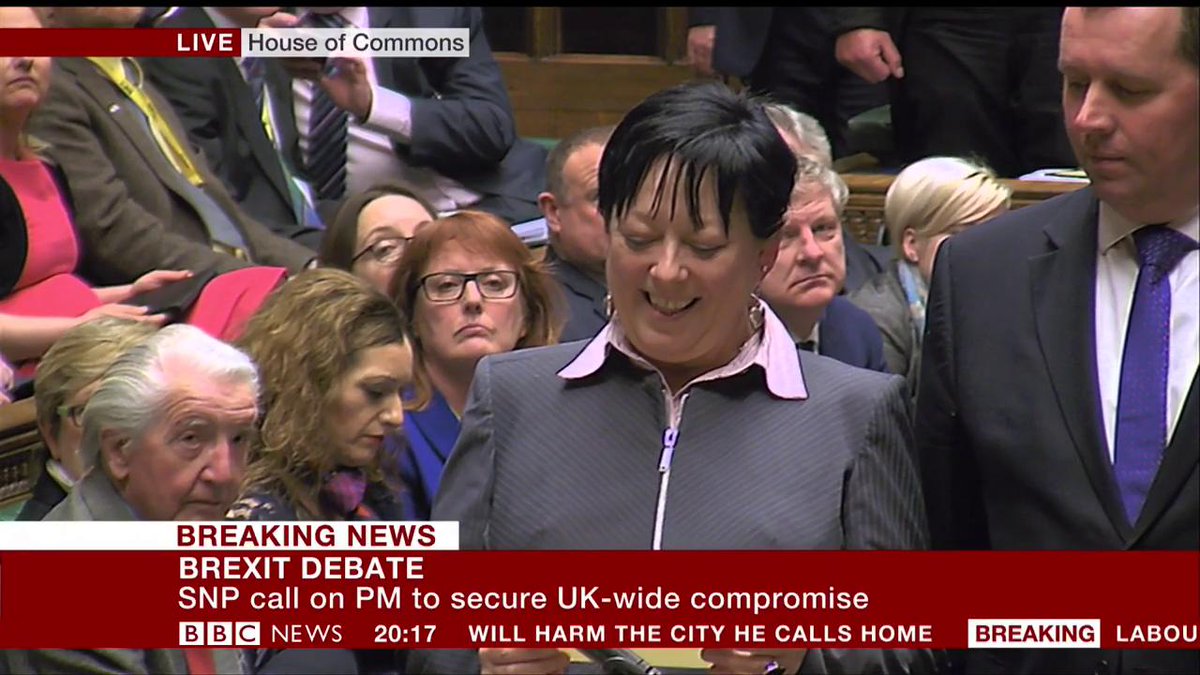
UK politicians back government’s bill to trigger Article 50 and start the Brexit process by 494 to 122 http://bbc.in/2ksCTzz

The vote prompted a delighted Nigel Farage to tweet “I never thought I’d see the day where the House of Commons overwhelmingly voted for Britain to Leave the European Union.”
I never thought I’d see the day where the House of Commons overwhelmingly voted for Britain to Leave the European Union.

The bill must now be approved by the upper chamber, in which May does not have a majority, before it becomes law. As the FT adds, MPs voted on eight clauses and amendments during the course of Wednesday evening. They included “clause 57”, tabled by Labour, requiring the government to guarantee the rights of EU migrants before Article 50 is triggered.
Ed Vaizey, a former Conservative minister, said he would not vote against his own government but called for assurances as soon as possible for EU workers, who were “devastated” after having been “plunged into uncertainty”. Another controversial amendment, tabled by the Lib Dems, called for a second EU referendum before Britain leaves the EU.
The legislation is set to move to the Lords this month for further scrutiny, where there could be fresh amendments.
May had earlier on Tuesday closed down a Conservative rebellion over Brexit by promising MPs a vote on the final draft of any EU exit agreement. That pledge was initially hailed by Labour as a “huge” concession; the euphoria subsided as ministers made it clear that if parliament opposed the deal, Britain would simply leave the EU with no deal at all.
Nonetheless, the promise of a “meaningful” vote on the terms of Brexit helped to appease pro-EU Tories, who wanted parliament to have in effect a veto on the terms of Britain’s exit.
Judging by the market’s non-existant reaction, the outcome of the vote was largely priced in.
5. RUSSIAN AND MIDDLE EASTERN AFFAIRS
Russia
This is cause a flight into gold: Russia mobilizes S 400 missile systems near Moscow are they are testing readiness against a possible attack
(courtesy zero hedge)
Russia Mobilizes S-400 Missiles Systems Near Moscow To “Test Readiness Against A Possible Attack”
One month ago we reported that Russia had deployed S-400 air defense missile systems in proximity to Moscow, which were then put on combat duty. “The SAM combat squads of the Moscow Region aerospace forces have put the new S-400 Triumph air defense missile system into service, and have gone on combat duty for the air defense of Moscow and the central industrial region of Russia,” the Defense Ministry’s Department of Information and Mass Communication told Interfax in early January.

While the ministry did not explicitly state why the rollout was taking place, it added that “the main task of the anti-aircraft missile troops of the Russian Aerospace Forces is air defense and protecting vital state, military, industry and energy facilities, as well as the Armed Forces troops and transport communications, from aerospace attacks.”
Fast forward one month, when overnight the missile systems in proximity to Moscow got their first real test, when air defense systems around Moscow were put on high alert Wednesday as part of a surprise nationwide combat readiness drill for the Russian Air Force which was meant to “test how prepared Russia is to repel a possible attack.“
“Units of the air defense force responsible for defending Moscow and the central industrial region have been put on highest combat alert,” the Russian Defense Ministry said in a statement. “The air defense mission involves fully-manned combat crews.”
A part of the test, the ministry added, involved the redeployment of batteries of S-300, S-400 and Pantsir-S air defense systems to backup positions in a simulation of area contamination. The guards of the batteries also conducted anti-saboteur maneuvers and trained to operate in hard terrain.
Russia Deputy Defense Minister Aleksandr Fomin said that the drill is part of the surprise Russian Air Force training ordered by President Vladimir Putin on Tuesday. It involves 45,000 troops and 1,700 pieces of military equipment, including 150 aircraft and 200 surface-to-air missile launchers. Fomin met foreign military attaches on Wednesday to brief them on the situation.
“This is a surprise exercise and thus not subject to control under the Vienna document or the OSCE documents. No formal notification was required, but we do inform you as a gesture of goodwill,” he said. The snap exercise will last until Thursday, Fomin added. The Russian official said it is meant to test how prepared Russia is to repel a possible attack.“
“During the test we pay special attention to the deployment of air defense and the readiness of aviation groups to respond to an aggression,” he said, before detailing how exactly Russia was moving its troops during the exercise.
As RT adds, the briefing came amid alarmed reports in some Western media outlets which claimed that the exercise was meant to telegraph Russian preparations for war.
6.GLOBAL ISSUES
INDIA
The following jolted the markets; they were expecting more easing which was not to be. The markets are reacting because this will probably signal the end of global easing.
(courtesy zero hedge)
India Jolts Markets By Keeping Rates Unchanged, Signaling End To Easing Cycle
In an unexpected announcement, India’s central bank left borrowing costs unchanged for a second straight meeting, shifting its policy stance to neutral from accommodative, effectively signaling an end to easing cycle. The RBI left the benchmark repurchase rate at a six-year low of 6.25 percent, on expectations of a 25 bps cut. Central bank authorities left rates unchanged at the last, December 7 meeting, while saying that the policy stance remains accommodative.
“The committee decided to change the stance from accommodative to neutral while keeping the policy rate on hold to assess how the transitory effects of demonetization on inflation and the output gap play out,” the RBI said. Governor Urjit Patel said the shift to neutral gives the central bank policy flexibility. “The non-food part of the consumer price index has been sticky at 4.8 to 4.9 percent,” Patel said at a press conference, adding that had it not been for a destruction of vegetables and other perishables due to the cash ban, consumer price inflation would have been 140 basis points higher than the 3.4 percent seen in December.
According to Bloomberg, the unchanged move was predicted by just five of 39 economists in its in house survey, while the rest saw a cut to 6 percent. The central bank forecast a sharp recovery in growth during the year through March 2018, helped by a rebound in consumption that has been hurt by Prime Minister Narendra Modi’s unprecedented cash ban.
Sovereign bonds plunged as several analysts were counting on lower borrowing costs to revive an economy hit by Modi’s withdrawal of some high-denomination currency notes last year. The Nifty 50 index dropped 0.5 percent to 8,723 while the Sensex fell over 160 points to 28,173. The Nifty Bank Index extended decline to over 1 percent post the RBI’s policy status quo. All 12 members of the index declined. The yield on government notes due Sept. 2026 surged 26 basis points to 6.69 percent as of 4:05 p.m. in Mumbai, according to prices from the RBI’s trading system.

Key points from the statement courtesy of Bloomberg:
- Six members voted in favor of the monetary policy decision
- Inflation is projected in the range of 4 percent to 4.5 percent in the first half of the financial year starting April 1 and in the range of 4.5 percent to 5 percent in the second half with risks evenly balanced around this projected path
- Growth in gross value added — a key input for gross domestic product — for 2016-17 is projected at 6.9 percent with risks evenly balanced around it. GVA growth for 2017-18 is projected at 7.4 percent, with risks evenly balanced
India joins Russia’s central bank, which this month also held rates as the prospect of more tightening from the U.S. Federal Reserve limits space for global peers to ease.
“The RBI has become very hawkish at a time when the country faces an acute slowdown caused by the cash ban,” said Rupa Rege Nitsure, group chief economist at L&T Finance Holdings Ltd. in Mumbai. “Even inflation readings have been benign. So it’s disappointing, their change in stance to neutral.”
The RBI’s decision risks frustrating Modi, who faces five state elections over February and March. Growth in gross domestic product may slow to 6.5 percent in the year through March from 7.9 percent the previous year as the cash clampdown hurts demand. The government’s pledge to keep narrowing Asia’s widest budget deficit had spurred hopes for monetary easing as had inflation, which is below the 4 percent midpoint of the RBI’s target range.
However, a surge in deposits following the cash ban offers commercial lenders room to lower their rates, Governor Patel said. Economists including Sonal Varma at Nomura Holdings Inc. predict a sharp economic recovery June-December as cash in the system increases.
A surprised sellside responded to the move as follows:
Nomura Holdings (Vivek Rajpal, rates strategist)
- Don’t think market was positioned for change in stance to neutral
- Bonds will trade in higher range, probably 6.45% to 6.75% will be new range 10-year yield
Standard Chartered (Nagaraj Kulkarni, senior rates strategist)
- Price action suggests rates market is unwinding all of its rate-cut expectations
- Expect “bear steepening of the rates curve” to persist in near term
- Says shift in RBI’s stance and resulting change in Standard Chartered’s policy rate view has implications for its yield forecasts, which now under review
Dai-ichi Life (Toru Nishihama, EM economist)
- Decision to keep policy rate unchanged is quite a “big surprise,” and bond yields are jumping because market had priced in a rate cut
- Inflation remains low and that would mean room for a future rate cut probably still remains
Credit Suisse (Deepali Bhargava, economist)
- “Bottom-line is that we are at the bottom of the cycle”
- RBI may still cut once more if inflation remains below 4% till March
Macquarie (Nizam Idris, head of FX and FI strategy)
- RBI seems to think that there’s sufficient liquidity and sufficient easing which may be better transmitted now after demonetization
- Central bank showing preference to be on cautious side side rather than supporting growth
- INR may take guidance from stocks in short term
Capital Economics (Shilan Shah, economist)
- While the economy has taken a hit from demonitization, it hasn’t been catastrophic
- Continue to think that rate hikes will come onto the agenda much sooner than is generally anticipated
- RBI may begin hiking rates over next 12-18 months as its medium-term inflation target comes under pressure
Source: BBG
NEW ZEALAND
We now have another country, whose central bank wishes to devalue their currency
(courtesy zero hedge)
Kiwi Slides After Central Bank Says It Wants “A Decline In The Exchange Rate”
Add another country to the list of Trump twitter targets who want to devalue their currency.
Moments ago, the Reserve Bank of New Zealand held its key rate at record-low 1.75%, as expected, however what unleashed a violent selling reaction is what Governor Greame Wheeler said in the statement, in which he made it clear, yet again, that the Kiwi is overvalued and that the “exchange rate remains higher than is sustainable for balanced growth and, together with low global inflation, continues to generate negative inflation in the tradables sector. A decline in the exchange rate is needed.”
Which was about as clear a statement of intent as one needs, and the NZDUSD reacted appropriately.

Wheeler noted that “headline inflation has returned to the target band as past declines in oil prices dropped out of the annual calculation. Inflation is expected to return to the midpoint of the target band gradually, reflecting the strength of the domestic economy and despite persistent negative tradables inflation. Longer-term inflation expectations remain well-anchored at around 2 percent.”
However, his conclusion suggested that no rate hikes are coming any time soon: “Monetary policy will remain accommodative for a considerable period. Numerous uncertainties remain, particularly in respect of the international outlook, and policy may need to adjust accordingly.”
end
7. OIL ISSUES
Goldman Sachs cannot believe the huge buildup of inventories of gasoline coupled with the drop in demand. The basic comments; the USA is in a recession:
(courtesy zerohedge)
Goldman Stunned By Collapse In Gasoline Demand: “This Would Require A US Recession”
While energy traders remain focused on weekly changes in crude supply and demand, manifesting in shifts in inventory of which today’s API data, which showed the second biggest inventory build in history, was a breathtaking example of how OPEC’s “production cut” is clearly not working, a much more troubling datapoint was revealed by the Energy Information Administration last week when it reported implied gasoline demand.
To be sure, surging gasoline supply and inventories are hardly surprising or new: they remain a byproduct of the unprecedented global crude inventories leftover from two years of failed OPEC policy which resulted in a historic glut. Last January, overall crude runs were up 500,000 bpd as refiners shifted away from diesel and other products to gasoline to chase more attractive margins amid a mild winter and sluggish diesel demand. The move led to an overbuild of gasoline stocks that lingered into the summer, punishing margins when they should have been at their strongest. This January, crude runs are at historic levels, up by roughly 300,000 bpd over last year.
So yes, both gasoline stocks and supply remains at extremely high levels, but what set off alarm bells is not supply, but demand: the EIA last week reported that the 4-week average of gasoline supplied – or implied gasoline demand – in the United States was 8.2 million barrels per day, the lowest since February 2012. And, as Reuters adds, U.S. refiners are now facing the prospects of weakening gasoline demand for the first time in five years.

Unlike excess supply, which may have numerous factors, when it comes to a plunge in end product demand the implication can be
only one: the US consumer is very ill, especially when considering that gasoline use has grown every year since 2012, despite fears that demand has topped out amid the growth of fuel efficient cars, urbanization and a graying population.
Upon learning the data, the industry’s immediate concern was about refiners and what it means for already sagging margins: U.S. gasoline demand is closely watched by traders since it accounts for roughly 10 percent of global consumption. U.S. refiners amassed large inventories that punished margins last year, but record gasoline demand and robust exports helped provided a firewall against further slippage. Now the industry faces the prospects of higher crude prices following global production cuts and fresh federal data that suggests their gasoline demand safety net may be eroding.
“It’s tough to base conclusions solely on the weekly data, which can be off significantly,” said Mark Broadbent, a refinery analyst with Wood Mackenzie. “If the demand is low as it the data shows, then it’s a going to be real problem for refiners.”
But it could be a far bigger problem in what it means for the broader economy.
* * *
Enter Goldman which cuts right to the point: “A 6% fall in US demand would require a US recession”
As Goldman analyst Damien Courvalin notes, “implied demand data points to US gasoline demand in January declining 460 kb/d or 5.2% year-on-year. In the absence of a base effect, such a decline has only occurred in four periods since 1960 during which time PCE contracted.”

Goldman then adds that “to achieve the 5.9% decline suggested by the weekly data, our model requires PCE to contract 6%, in other words, a recession.”

So is the gasoline demand data accurate, and is a recession quietly gripping over the US, even as most other indicators are calmly flashing green?
Here Goldman refuses to believe the official data, instead reverting to its own model, which “adjusts” the data, to goalseek the decline to appear more manageable.
Given that the December PCE printed 2.8% growth, in line with its
performance throughout 2016, we find such a sudden collapse unlikely… our revised model for gasoline demand, which regresses year-on-year change in demand on analogous growth in PCE, pump prices, efficiency, number of public holidays and base effect, points to a 30 kb/d or 0.3% decline. Alternatively, given our economists’ forecast for PCE to grow 2.6% in 1Q17, such a decline would require a yoy efficiency gain of almost 20% vs. the maximum historical gain of 8%. Finally, the potential reduction in demand on account of the Presidential Inauguration on 20 January is offset by one less weekend day vs. the same period in January 2016.
Goldman then calculates what it believes is the accurate collapse in implied gasoline demand, instead of the 460k b/d reported by the EIA:
Our analysis identifies weekly yield and exports as systematically deviating from their final values and such biases suggest that demand could be revised higher by 190 kb/d. The EIA’s real-time export data still includes estimates and we see potential for the recent shifts in the Mexican gasoline market to exacerbate the overstatement of US exports by an additional 185 kb/d given (1) lower PEMEX refinery turnarounds, and seasonally lower demand exacerbated by the January 16% hike in prices. Adjusting for these lower exports points to US gasoline demand declining only 85 kb/d yoy in January, in line with our macro model.
Next, Goldman pulls the oldest trick in the book and suggests that it is not implied demand that is plunging, but supply that is soaring and is simply not being captured by the government:
we view the larger than seasonal ytd builds in US gasoline stocks as driven by transient supply factors rather than persistent demand issues. In the case of Mexico, we expect that at current set prices, gasoline demand will decline by 25 kb/d yoy in 2017, with demand falling by 75 kb/d if prices gradually reached global prices this year.
In conclusion, Goldman chooses to ignore the data, and to base its conclusion on its own fudged data:
Looking forward, we reiterate our outlook for strong global demand growth in 2017 and view the recent US gasoline builds as reflective of transient regional shifts in gasoline supply instead. Given our outlook for strong consumer spending in 2017, we believe that US gasoline demand growth will remain resilient this year at 60 kb/d, albeit below last year’s 150 kb/d growth because of higher prices. From a global perspective, these declines remain modest, especially compared to the 510 kb/d 2016 demand growth from the 40 countries we track.
So is Goldman right implying the EIA gasoline demand data is wrong, or is Goldman once again incorrect – as it has so frequently been over the past year – which would mean that, as the bank itself admits, the US consumer, and economy, are in the throes of a deep recession? We hope to get a partial answer tomorrow, when the DOE reports the latest weekly inventory data.
end
West Texas intermediate oil continues with losses after another huge inventory build. Production is at record highys
(courtesy zero hedge)
WTI Holds Losses After 2nd Biggest Inventory Build In History, Production At New Cycle Highs
Following last night’s shockingly massive crude build reported by API, DOE data confirmed the ugliness with a 13.83mm build (over 5 times larger than the expected 2.5mm build). Cushing also saw a major unexpected build but Gasoline and Distillates saw lower than expected builds (Gasoline draw). Production rose to a new cycle high.
API
- Crude +14.27mm (+2.5mm exp)
- Cushing +624k
- Gasoline +2.903mm (+1.5mm exp)
- Distillates +1.373mm
DOE
- Crude +13.83mm (+2.5mm exp)
- Cushing +1.143mm (-500k exp)
- Gasoline -869k (+1.5mm exp)
- Distillates +29k (+500k exp)
The 2nd biggest build in US history for crude stocks but Gasoline unexpectedly saw a drawdown…

At 9.4 million barrels a day, Bloomberg reports U.S. crude imports were the highest since September 2012.
Total crude inventories are near record highs once again…

For some more context, Saxo’s Ole Hanson shows the seasonal averages…

Notably, Goldman is gravely concerned at the plunge in gasoline demand, but gasoline demand did pick up modestly this week.
As rig counts continue to surge (and IEA forecasts major US shale output increases) so the general trend continues… This is the highest level fo crude production since April.

WTI and RBOB prices had plunged back to the lowest levels since November overnight after the API data. After the DOE data, RBOB rallied on the Gasoline draw but WTI is steady…

end
Crude Algos Go Wild Again Despite 2nd Biggest Inventory Build In History, Production At New Cycle Highs
It’s like deja vu all over again. Despite the ugliest of ugly data, WTI is spiking…

Just like it did last week…

And the week before…

* * *
Following last night’s shockingly massive crude build reported by API, DOE data confirmed the ugliness with a 13.83mm build (over 5 times larger than the expected 2.5mm build). Cushing also saw a major unexpected build but Gasoline and Distillates saw lower than expected builds (Gasoline draw). Production rose to a new cycle high.
API
- Crude +14.27mm (+2.5mm exp)
- Cushing +624k
- Gasoline +2.903mm (+1.5mm exp)
- Distillates +1.373mm
DOE
- Crude +13.83mm (+2.5mm exp)
- Cushing +1.143mm (-500k exp)
- Gasoline -869k (+1.5mm exp)
- Distillates +29k (+500k exp)
The 2nd biggest build in US history for crude stocks but Gasoline unexpectedly saw a drawdown…
At 9.4 million barrels a day, Bloomberg reports U.S. crude imports were the highest since September 2012.
Total crude inventories are near record highs once again…
US Crude Imports surged at an extraordinary 9.37mmbps pace last week, the highest since September 2014.

For some more context, Saxo’s Ole Hanson shows the seasonal averages.
Notably, Goldman is gravely concerned at the plunge in gasoline demand, but gasoline demand did pick up modestly this week.
As rig counts continue to surge (and IEA forecasts major US shale output increases) so the general trend continues… This is the highest level fo crude production since April.
WTI and RBOB prices had plunged back to the lowest levels since November overnight after the API data. After the DOE data, RBOB rallied on the Gasoline draw but WTI is steady…
end
This should weaken the price of oil: USA to sell 10 million barrels of oil from its SPR
(courtesy zero hedge)
US To Sell 10 Million Barrels Of Oil From Strategic Petroleum Reserve In February
Following a January announcement according to which the DOE planned to sell 8 million barrels of oil from the Strategic Petroleum Reserve, and which some speculated was the reason for the big buildup in crude inventories in the past several weeks, today the U.S. Energy Department said it will sell 10 million barrels of oil from the government’s emergency crude reserve in late February.
This represents the second sale of oil from the emergency stash this year: according to Reuters, last month Shell bought 6.2 million barrels from the reserve and Phillips 66 bought 200,000 barrels, which was below the 8 million projected for sale. As explained below, that sale was partially held to fund a modernization of the SPR itself. More sales are expected be held in coming years to fund up to $2 billion for the revamp.
According to the notice of sale, the entire 10 million barrels will be sour crude drawn from three sites—Bryan Mound and Big Hill in Texas, and West Hackberry in Louisiana. Revenues from the sale will be deposited in the general fund of the U.S. Treasury to carry out the National Institutes of Health innovation projects as designated in the 21st Century Cures Act.
The sale from the SPR is required by a law passed last December to help raise funds for medical research. The law has mandated sales of 25 million barrels from the SPR over three years, starting with the sale of 10 million barrels this year.
The US oil reserve is held in a series of heavily guarded underground salt caverns along the coast in Texas and Louisiana and currently holds about 690 million barrels of mostly sour oil, a type containing high sulfur that many U.S. refineries can process. Part of the motivation to sell crude is to finance upkeep for the SPR itself. The reserves are held in salt caverns in Louisiana and Texas, setup decades ago in the aftermath of the Arab Oil Embargo in 1973. The SPR system can hold more than 700 million barrels of oil, the largest strategic stockpile in the world. The idea is that the SPR holds 90 days’ worth of oil supplies, which could be released in the event of a global outage.

A release has only occurred a handful of times, such as the Persian Gulf War, Hurricane Katrina and the Arab Spring.

Some of the storage systems are rusting and corroding after decades of use. In September, the DOE issued a report to Congress, which came to a dire conclusion about the condition of the reserve. “This equipment today is near, at, or beyond the end of its design life,” the report said. The sale “will allow the Department to take necessary steps to increase the integrity and extend the life” of the reserve, a DOE spokesperson said in December after the budget resolution was passed.
the SPR has been viewed as a cornerstone of US energy security policy. As long as the U.S. had 3 months’ worth of supply, it could weather unexpected disruptions. The International Energy Agency was setup in the 1970s as well, and participating members – in addition to the U.S., the group includes Europe, Japan, Korea, Australia and New Zealand – also have pledged to hold a 90-day supply. However, U.S. policymakers no longer view the SPR is all that important. Even the more hawkish members of Congress have been lulled into a sense of security from the surge in U.S. oil production and the resulting crash in oil prices. The world is awash in oil, so why does the U.S. need to stockpile such a massive volume of oil at great expense? The ostensible reason of selling off oil from the SPR is to finance its maintenance to ensure its existence over the long-term, but if the Congress still truly believed in the importance of the SPR, they would have found funding elsewhere instead of reducing the stockpile
8. EMERGING MARKETS
And The Oscar Goes To… Chuck Schumer
It appears President Trump was correct… “fake tears”? You decide…

Necessary… Or Evil?
We wonder if Schumer will be the star of the next Heineken commercial?
END
Your early morning currency/gold and silver pricing/Asian and European bourse movements/ and interest rate settings TUESDAY morning 7:00 am
Euro/USA 1.0655 DOWN .0023/REACTING TO + huge Deutsche bank problems + USA election:/TRUMP WINS THE ELECTION/USA READY TO GO ON A SPENDING BINGE WITH THE TRUMP VICTORY/ITALIAN REFERENDUM DEFEAT/AND NOW ECB TAPERING BOND PURCHASES/USA RISING RATE/EUROPE BOURSES MOST LY IN THE GREEN
USA/JAPAN YEN 112.16 DOWN 0.218(Abe’s new negative interest rate (NIRP), a total DISASTER/SIGNALS U TURN WITH INCREASED NEGATIVITY IN NIRP/JAPAN OUT OF WEAPONS TO FIGHT ECONOMIC DISASTER/KURODA: HELICOPTER MONEY ON THE TABLE AND DECISION ON SEPT 21 DISAPPOINTS WITH STIMULUS/OPERATION REVERSE TWIST
GBP/USA 1.2483 DOWN .0012 (Brexit by March 201/UK government loses case/parliament must vote/PRIME MINISTER MAY DECIDES ON A HARD BREXIT)
USA/CAN 1.3148 DOWN .0043 (CANADA WORRIED ABOUT TRADE WITH THE USA WITH TRUMP ELECTION/ITALIAN EXIT FROM EU)
Early THIS WEDNESDAY morning in Europe, the Euro FELL by 23 basis points, trading now WELL ABOVE the important 1.08 level FALLING to 1.0655; Europe is still reacting to Gr Britain HARD BREXIT,deflation, announcements of massive stimulation (QE), a proxy middle east war, and the ramifications of a default at the Austrian Hypo bank, an imminent default of Greece, Glencore, Nysmark and the Ukraine, along with rising peripheral bond yield further stimulation as the EU is moving more into NIRP, and now the Italian referendum defeat AND NOW THE ECB TAPERING OF ITS PURCHASES/ THE USA’S NON tightening by FAILING TO RAISE THEIR INTEREST RATE AND NOW THE HUGE PROBLEMS FACING TOO BIG TO FAIL DEUTSCHE BANK + THE ELECTION OF TRUMP IN THE USA+ AND MONTE DEI PASCHI NATIONALIZATION / Last night the Shanghai composite CLOSED UP 13.89 POINTS OR 0.44% / Hang Sang CLOSED UP 153.56 POINTS OR .66% /AUSTRALIA CLOSED UP 0.54% / EUROPEAN BOURSES MOSTLY THE GREEN (EXCEPT LONDON)
We are seeing that the 3 major global carry trades are being unwound. The BIGGY is the first one;
1. the total dollar global short is 9 trillion USA and as such we are now witnessing a sea of red blood on the streets as derivatives blow up with the massive rise in the rise in the dollar against all paper currencies and especially with the fall of the yuan carry trade. The emerging market which house close to 50% of the 9 trillion dollar short is feeling the massive pain as their debt is quite unmanageable.
2, the Nikkei average vs gold carry trade ( NIKKEI blowing up and the yen carry trade HAS BLOWN up/and now NIRP)
3. Short Swiss franc/long assets blew up ( Eastern European housing/Nikkei etc.
These massive carry trades are terribly offside as they are being unwound. It is causing global deflation ( we are at debt saturation already) as the world reacts to lack of demand and a scarcity of debt collateral. Bourses around the globe are reacting in kind to these events as well as the potential for a GREXIT>
The NIKKEI: this WEDNESDAY morning CLOSED UP 96.82 POINTS OR 0.51%
Trading from Europe and Asia:
1. Europe stocks MOSTLY IN THE GREEN
2/ CHINESE BOURSES / : Hang Sang CLOSED UP 153.56 POINTS OR .66% / Australia BOURSE CLOSED UP 0.54% /Nikkei (Japan)CLOSED UP 96.82 POINTS OR 0.51% / INDIA’S SENSEX IN THE GREEN
Gold very early morning trading: $1238.70
silver:$17.77
Early WEDNESDAY morning USA 10 year bond yield: 2.377% !!! DOWN 2 IN POINTS from TUESDAY night in basis points and it is trading JUST BELOW resistance at 2.27-2.32%. THE RISE IN YIELD WITH THIS SPEED IS FRIGHTENING
The 30 yr bond yield 2.999, DOWN 3 IN BASIS POINTS from TUESDAY night.
USA dollar index early WEDNESDAY morning: 100.58 UP 18 CENT(S) from TUESDAY’s close.
This ends early morning numbers WEDNESDAY MORNING
xxxxxxxxxxxxxxxxxxxxxxxxxxxxxxxxxxxxxxxxxxxxxxxxxxxxxxxxxxxxxxxxxxxxxxxxxxxxxxxxxxxxxxxxxxxxxxxxxxxxxxxxxxxxxxx
And now your closing WEDNESDAY NUMBERS
Portuguese 10 year bond yield: 4.115% DOWN 13 in basis point yield from TUESDAY
JAPANESE BOND YIELD: +.098% DOWN 1 in basis point yield from TUESDAY/JAPAN losing control of its yield curve
SPANISH 10 YR BOND YIELD:1.698% DOWN 8 IN basis point yield from TUESDAY (this is totally nuts!!/
ITALIAN 10 YR BOND YIELD: 2.246 DOWN 12 POINTS in basis point yield from TUESDAY
the Italian 10 yr bond yield is trading 55 points HIGHER than Spain.
GERMAN 10 YR BOND YIELD: +.296% DOWN 6 IN BASIS POINTS ON THE DAY
END
xxxxxxxxxxxxxxxxxxxxxxxxxxxxxxxxxxxxxxxxxxxxxxxxxxxxxxxxxxxxxxxxxxxxxxxxxxxxxxxxxxxxxxxxxxxxxxxxxxxxxxxxxxxxxxxxxxxxxxxxxxxxxxxxxxxxx
IMPORTANT CURRENCY CLOSES FOR WEDNESDAY
Closing currency crosses for WEDNESDAY night/USA DOLLAR INDEX/USA 10 YR BOND YIELD/1:00 PM
Euro/USA 1.0701 UP .0023 (Euro UP 23 basis points/ represents to DRAGHI A COMPLETE POLICY FAILURE/
USA/Japan: 111.73 DOWN: 0.644(Yen UP 64 basis points/
Great Britain/USA 1.2529 UP 0.0025( POUND UP 34 basis points)
USA/Canada 1.3152 DOWN 0.0039(Canadian dollar UP 39 basis points AS OIL ROSE TO $52.32
xxxxxxxxxxxxxxxxxxxxxxxxxxxxxxxxxxxxxxxxxxxxxxxxxxxxxxxxxxxxxxxxxxxxxxxxxxxxxxxxx
This afternoon, the Euro was UP by 33 basis points to trade at 1.0701
The Yen FELL to 111.73 for a GAIN of 64 Basis points as NIRP is STILL a big failure for the Japanese central bank/HELICOPTER MONEY IS NOW DELAYED/BANK OF JAPAN NOW WORRIED AS AS THEY ARE RUNNING OUT OF BONDS TO BUY AS BOND YIELDS RISE /OPERATION REVERSE TWIST ANNOUNCED SEPT 21.2016
The POUND ROSE 34 basis points, trading at 1.2529/
The Canadian dollar ROSE by 39 basis points to 1.3152, WITH WTI OIL RISING TO : $52.32
Your closing 10 yr USA bond yield DOWN 7 IN basis points from TUESDAY at 2.329% //trading well ABOVE the resistance level of 2.27-2.32%) very problematic USA 30 yr bond yield: 2.95 DOWN 6 in basis points on the day /
Your closing USA dollar index, 100.14 DOWN 26 CENT(S) ON THE DAY/1.00 PM
Your closing bourses for Europe and the Dow along with the USA dollar index closing and interest rates for WEDNESDAY: 1:00 PM EST
London: CLOSED UP 2.60 OR 0.04%
German Dax :CLOSED DOWN 6.06 POINTS OR 0.05%
Paris Cac CLOSED UP 12.13 OR 0.26%
Spain IBEX CLOSED DOWN 1.80 POINTS OR 0.02%
Italian MIB: CLOSED UP 109.17 POINTS OR 0.58%
The Dow closed DOWN 35.95 OR 0.18%
NASDAQ WAS closed UP 8.24 POINTS OR 0.15% 4.00 PM EST
WTI Oil price; 51.95 at 1:00 pm;
Brent Oil: 54.81 1:00 EST
USA /RUSSIAN ROUBLE CROSS: 59.32 DOWN 39/100 ROUBLES/DOLLAR
TODAY THE GERMAN YIELD FALLS TO +0.296% FOR THE 10 YR BOND 1:30 EST
END
This ends the stock indices, oil price, currency crosses and interest rate closes for today
Closing Price for Oil, 5 pm/and 10 year USA interest rate:
WTI CRUDE OIL PRICE 5 PM:$52.40
BRENT: $55.15
USA 10 YR BOND YIELD: 2.340% (ANYTHING HIGHER THAN 2.70% BLOWS UP THE GLOBE)
USA 30 YR BOND YIELD: 2.949%
EURO/USA DOLLAR CROSS: 1.0696 up .0018
USA/JAPANESE YEN:111.95 down 0.427
USA DOLLAR INDEX: 100.20 down 20 cents ( HUGE resistance at 101.80)
The British pound at 5 pm: Great Britain Pound/USA: 1.2539 : up 44 BASIS POINTS.
German 10 yr bond yield at 5 pm: +.296%
END
And now your more important USA stories which will influence the price of gold/silver
TRADING IN GRAPH FORM
Banks Bruised As Bond Yields Crash To 2017 Lows; Dollar Drops, Gold Pops
One of those days…
Once again European concerns are front and center and EURUSD vol is starting to spike…

A Record 37th day in a row without a 1% intraday move… and 81 days in a row without a 1% drop.

A 53 point intraday range in The Dow today!!

S&P closed almost unch, Dow and Small Caps red on the day… Nasdaq record high

But banks were the worst performers… (down 3 days in a row)

NOTE: bank stocks are holding in at the 50-day moving-average…

As it appears suddenly investors are waking up to the fact that NO – THE YIELD CURVE NEVER STEEPENED!!!

Real Yields have entirely erased Trumpflation hopes…

Treasury yields continues to plunge post-Payrolls…

With the entire yield curve now lower on the year…(yields have dropped since The Fed)

Slamming 5Y yields to the lowest since November…

With near-record short positions, we wonder if the squeeze is just beginning…

The USD Index dropped today (but remains up on the week)…

Kiwi kneejerked lower after RBNZ said it wants the currency lower…

WTI and RBOB ripped higher – after initially tumbling on terrible inventory and production data…

The weak 10Y auction saw USDJPY and Gold mirror each other perfectly (tagging 112.00 and $1240 respectively)…

end
Early Trading today in New York:
First: bond yields plummeting!
(zero hedge)
Bond Yields Are Plunging As Short-Squeeze Begins
It appears the ugly reality under the polished turd of payrolls headlines is leaking out into the market as Treasury yields are accelerating their decline this morning…

Slamming 5Y yields to the lowest since November…
With near-record short positions, we wonder if the squeeze is just beginning…
end
Second: bank stocks are falling!
(courtesy zero hedge)
Bank Stocks Are Sliding… Testing Key Technical Support
With bond yields tumbling, and loan markets suggesting banks are not taking advantage of rising rates to earn more NIM (willingness to lend tumbling), financial stocks are tumbling for the second day in a row to a key technical support level…
the green line (50-day moving average) has held for 3 weeks…

Close up – its clear the 50-day moving-average has been key support…

Makes you wonder what credit markets know?

is that $50 differential really pricing in Dodd-Frank easing? And if so, why isn’t credit more excited about the drop in ‘business’ risk?
end
Late this afternoon: gold and the yen no doubt are coupled. A weak USA auction sends the dollar higher and yen lower and takes gold with it:
(courtesy zero hedge)
Gold & Yen Tumble After Ugly Treasury Auction
It appears the machines were primed (or someone had coordinated) as the weak 10Y Treasury auction has sparked a notable surge in USDJPY (Yen selling) and Gold weakness as the world’s biggest pairs trade continues…

end
There is no doubt that the price of gold is tethered to the value of the yen. The lower the yen, the lower the price of gold.
Today, we had a poor SA treasury auction. The dollar then rose which caused the yen to weaken and thus gold tagged along
(courtesy zero hedge)
Gold & Yen Tumble After Ugly Treasury Auction
It appears the machines were primed (or someone had coordinated) as the weak 10Y Treasury auction has sparked a notable surge in USDJPY (Yen selling) and Gold weakness as the world’s biggest pairs trade continues…
end
That that about does it for tonight
I will see you tomorrow night
Harvey


[…] from Harvey Organ: […]
LikeLike