
Gold: $1271.30 UP $20.00
Silver: $18.23 UP 34 cents
Closing access prices:
Gold $1274.50
silver: $18.33!!!
XXXXXXXXXXXXXXXXXXXXXXXXXXXXXXXXXXXXXXXXXXXXXXXXXXXXXXXXXXXX
SHANGHAI GOLD FIX: FIRST FIX 10 15 PM EST (2:15 SHANGHAI LOCAL TIME)
SECOND FIX: 2:15 AM EST (6:15 SHANGHAI LOCAL TIME)
SHANGHAI FIRST GOLD FIX: $1266.82 DOLLARS PER OZ
NY PRICE OF GOLD AT EXACT SAME TIME: 1254.85
PREMIUM FIRST FIX: $11.97
xxxxxxxxxxxxxxxxxxxxxxxxxxxxxxxxxxxxxxxxxxxxxx
SECOND SHANGHAI GOLD FIX: $1268.89
NY GOLD PRICE AT THE EXACT SAME TIME: 1256.90
Premium of Shanghai 2nd fix/NY:$11.99
xxxxxxxxxxxxxxxxxxxxxxxxxxxxxxxxxxxxxxxxxxxxxxxxxxx
LONDON FIRST GOLD FIX: 5:30 am est 1255.30
NY PRICING AT THE EXACT SAME TIME: 1256.35
LONDON SECOND GOLD FIX 10 AM: 1265.90
NY PRICING AT THE EXACT SAME TIME. 1265.10
For comex gold:
APRIL/
NOTICES FILINGS TODAY FOR APRIL CONTRACT MONTH: 13 NOTICE(S) FOR 1300 OZ.
TOTAL NOTICES SO FAR: 621 FOR 62,100 OZ (1.9315 TONNES)
For silver:
For silver: APRIL
103 NOTICES FILED TODAY FOR 515000 OZ/
Total number of notices filed so far this month: 744 for 3,720,000 oz
XXXXXXXXXXXXXXXXXXXXXXXXXXXXXX
END
The open interest in silver continues to advance with today’s reading just under 220,000 contracts or about 4,000 contracts below the record set last year. The price of silver is a good $2.31 below the price when the record OI was set. I wrote the following yesterday:
“Today (Monday) we saw a big drop in the price of silver. Late tonight, I will retrieve the preliminary OI figures and I would suspect that the open interest for gold and the open interest for silver will skyrocket. If not, then the price rise was due to a massive short covering…let us see what tomorrow brings.
Let us have a look at the data for today
.
xxxxxxxxxxxxxxxxxxxxxxxxxxxxxxxxxxxxxxxxxxxxxxxxxxxxxxxxxxxxxxxxxxxxxxxxxx
In silver, the total open interest FELL BY ONLY 2,191 contracts DOWN to 219,676 DESPITE THE PRICE HUGE FALL ( 24 CENTS) WITH RESPECT TO YESTERDAY’S TRADING. THE HEDGE FUNDS (MANAGED MONEY) CONTINUES TO REMAIN STEADFAST WITH THEIR POSITIONS IN SILVER AS THE BANKERS ARE DESPERATELY TRYING TO COVER THEIR EVER BURGEONING SHORTS (OVER 555 MILLION OZ) BUT TO NO AVAIL. In ounces, the OI is still represented by just OVER 1 BILLION oz i.e. 1.098 BILLION TO BE EXACT or 157% of annual global silver production (ex Russia & ex China).
FOR THE NEW FRONT MARCH MONTH/ THEY FILED: 103 NOTICE(S) FOR 515,000 OZ OF SILVER
In gold, the total comex gold FELL BY 2191 contracts WITH THE FALL IN THE PRICE OF GOLD ($3.20 with YESTERDAY’S TRADING). The total gold OI stands at 436,161 contracts.
we had 13 notice(s) filed upon for 1300 oz of gold.
xxxxxxxxxxxxxxxxxxxxxxxxxxxxxxxxxxxxxxxxxxxxxxxxxxxxxxxxxxxx
With respect to our two criminal funds, the GLD and the SLV:
GLD:
We had a huge change in tonnes of gold at the GLD: a deposit of 4.12 tonnes
Inventory rests tonight: 842.41 tonnes
.
SLV
We had a huge change in inventory at the SLV/a massive deposit of 11.131 million oz of silver from the SLV. There had to be a error in recording yesterday as 11.2 million oz was recorded as a withdrawal and today 11.13 million comes back. It kind of shows that these guys are fooling around with paper entries.
THE SLV Inventory rests at: 328.201 million oz
end
.
First, here is an outline of what will be discussed tonight:
1. Today, we had the open interest in silver FELL BY ONLY 2,191 contracts DOWN TO 219,876 DESPITE THE SHELLACKING THAT SILVER TOOK ON YESTERDAY TO THE TUNE OF 24 CENTS. We no doubt had some attempted short covering but the longs keep piling on making it difficult for them to cover. Our managed money sector (the hedge funds) continue to remain steadfast in the conviction not to play (give up their longs) when the bankers decide to raid. This time gold also decided to join silver as their open interest fell by only 1,411 contracts DOWN to 433,389 DESPITE THE FALL IN THE PRICE OF GOLD TO THE TUNE OF $3.20 (YESTERDAY’S TRADING).
(report Harvey
.
2.a) The Shanghai and London gold fix report
(Harvey)
2 b) Gold/silver trading overnight Europe, Goldcore
(Mark O’Byrne/zerohedge
and in NY: Bloomberg
3. ASIAN AFFAIRS
i)Late MONDAY night/TUESDAY morning: Shanghai closed UP 19.57 POINTS OR 0.60%/ /Hang Sang CLOSED DOWN 173.72 POINTS OR .72% . The Nikkei closed DOWN 50.01 OR 0.27% /Australia’s all ordinaires CLOSED UP 0.26%/Chinese yuan (ONSHORE) closed UP at 6.9021/Oil UP to 53.03 dollars per barrel for WTI and 55.84 for Brent. Stocks in Europe MOSTLY IN THE GREEN ..Offshore yuan trades 6.9040 yuan to the dollar vs 6.9021 for onshore yuan.FOR THE FIRST TIME IN OTHER TWO MONTHS THE OFFSHORE IS WEAKER TO THE ONSHORE YUAN/ ONSHORE YUAN SLIGHTLY STRONGER AND THE OFFSHORE YUAN ALSO A LITTLE STRONGER AND THIS IS COUPLED WITH THE WEAKER DOLLAR.
3a)THAILAND/SOUTH KOREA/NORTH KOREA
i) NORTH KOREA
Trump warns North Korea as he threatens to solve the problem without China’s help
(courtesy zerohedge)
ii North Korea responds as usual with a threat of a nuclear attack at any sign of a pre emptive strike
getting quite dangerous..
( zerohedge)
iii)NORTH KOREA/CHINA
Now China threatens to bomb North Korea if it crosses its bottom line (testing nuclear missiles). China also warns the USA that it wants a buffer zone if North Kore is decapitated
(courtesy zerohedge)
iv)China tells North Korean coal ships to return home which is another sign that China is fed up with North Korea
(courtesy HuffingtonPost)
b) REPORT ON JAPAN
c) REPORT ON CHINA
The following is very important. China’s shadow banking sector or Wealth Management Products (WMP) is now approaching 9 trillion uSA or 100% of GDP. If any of these fail and most likely they have already done so, will esult in unknown adverse consequences for China’s broader financial markets
( zero hedge)
4. EUROPEAN AFFAIRS
i FRANCE
Investors are exiting French bonds with both feet as risk soars. The rise in communist candidate Melenchon is throwing a huge monkey wrench as election day approaches:
( zerohedge)
ii The G7 correctly fail to agree on new Russian sanctions as the American push is rejected by Europe:
( zerohedge)
5. RUSSIAN AND MIDDLE EASTERN AFFAIRS
Russia’s Putin has learned from intelligence that there are going to be more “false flag” chemical attacked in the Damascus region. He will officially ask the Hague to investigate the chemical bombings.
( zero hedge)
6 .GLOBAL ISSUES
SWEDEN
Sweden is becoming a basket case. Now the postal service has suspended service in “no go zones” due to safety concerns
( zero hedge)
7. OIL ISSUES
i)Citgo is owned 100% by Venezuela’s state owned oil company PDVSA. The Russian state owned oil company Rosneft lent money to PDVSA who put up its 49% interest in CITGO. No doubt Rosneft will purchase a few more bonds and then they will be able to control CITGO once PDVSA defaults. The uSA is not very happy with this situation as CITGO owns 800 gas stations throughout the USA
( CNN) special thanks to Robert H for sending this to us:
ii)Another joke as oil rises on a reportedly push for another OPEC production cut:
( zerohedge)
8. EMERGING MARKETS
Can Venezuela participate in the next round of production cuts?
( Urban/OilPrice.com)
9. PHYSICAL MARKETS
i)James Turk explains that the bankers painted the tape on Friday in an obvious shorting exercise. As I described to you on Friday this would no doubt be fruitless.
( zero hedge)
ii)James Turk explains that the bankers painted the tape on Friday in an obvious shorting exercise. As I described to you on Friday this would no doubt be fruitless.
( zero hedge)
iii)A terrific commentary from Steve St Angelo today. Strangely all of the USA exports of gold went to Hong Kong and not Switzerland. I do not know why. However what is intriguing is that 55 tonnes of gold was exported from the USA. It mines around 19 tonnes and imports around 18 tonnes so dishording by central authorities was prevalent
( Steve St Angelo/SRSRocco report)
iv) Gold trading early this morning
(zero hedge)
10. USA stories
i)Early NY trading this morning: two commentaries
First:
( zero hedge)
ii)Another indicator that the USA economy is not performing well! Another of Janet’s favourite indicators (JOLTS) is faltering
( zerohedge)
iii David Stockman correctly states that the chemical attack on the last rebel held area in Iraq was a false flag or an American or Russian hit on a chemical warehouse
(courtesy David Stockman/Daily Reckoning)
iii)Corporate Pension funds have huge portfolios of equities and these represent around 31% of their entire 3.3 trillion in assets. Right now these corporate pension funds have 82% funding up from 75%. Generally when they get over 80% they cash out and move into bonds. Could this be the catalyst that brings down Janet’s massive bubble in the equity field?
(courtesy zerohedge)
iv)Pentagon hold a press briefing due to escalating geopolitical tensions
(courtesy zero hedge)
Let us head over to the comex:
The total gold comex open interest FELL BY 2,191 CONTRACTS DOWN to an OI level of 433,389 WITH THE FALL IN THE PRICE OF GOLD ( $3.20 with YESTERDAY’S trading). We are now in the contract month of APRIL and it is one of the BETTER delivery months of the year. In this APRIL delivery month we had AN ANOTHER LOSS OF 63 contract(s) FALLING TO 1,749. We had 21 notices served yesterday so we lost another 42 contracts or 4200 oz will not stand for delivery in the active delivery month of April and these were cash settled via the PRIVATE EFP route highlighted by James Turk and myself on April 4/2017. OUR HEDGE FUNDS MUST BE RECEIVING HUGE CASH BONUSES SUCH THAT THEY ROLL TO A FUTURE MONTH AND NOT TAKE DELIVERY OF PHYSICAL METAL
At the end of April/2016 only 12.3917 tonnes stood for physical delivery, although 21.306 tonnes stood initially at the beginning of April 2016.
The non active May contract month LOST 49 contract(s) and thus its OI is 2363 contracts. The next big active month is June and here the OI FELL by 3,416 contracts DOWN to 308,181.
We had 13 notice(s) filed upon today for 1300 oz
We are in the NON active delivery month is APRIL Here the open interest GAINED 8 contracts. We had 0 notices filed yesterday so we GAINED 8 contracts or an additional 40,000 oz will stand for delivery.
The next active contract month is May and here the open interest LOST 5,990 contracts DOWN to 142,917 contracts which is astonishingly high. It is this front month that the crooked bankers are targeting as they must be frightened to see such a mammoth amount of contracts still standing for metal. The non active June contract GAINED 3 contracts to stand at 183. The next big active month will be July and here the OI gained 3980 contracts up to 48,439.
FOR COMPARISON SAKE, ON MONDAY APRIL 11/2016 WE HAD 97,201 CONTRACTS STANDING FOR DELIVERY. SO YOU CAN VISUALIZE FOR YOURSELF THE HUGE DIFFERENCE BETWEEN 2016 AND THIS YEAR.
For those keeping score, the initial amount of silver oz that stood for delivery for the May 2016 contract month: 28.01 million oz. By conclusion of the month only 13.58 million oz stood and the rest was cash settled.(EFP ROUTE)
.
We had 103 notice(s) filed for 515,000 oz for the APRIL 2017 contract
VOLUMES: for the gold comex
Today the estimated volume was 263,418 contracts which is very good.
Yesterday’s confirmed volume was 189,442 contracts which is fair to good.
volumes on gold are STILL HIGHER THAN NORMAL!
| Gold | Ounces |
| Withdrawals from Dealers Inventory in oz | nil |
| Withdrawals from Customer Inventory in oz |
2,057.6 oz
SCOTIA
BRINKS
64 KILOBARS
|
| Deposits to the Dealer Inventory in oz | nil oz |
| Deposits to the Customer Inventory, in oz |
771.6 OZ
JPM
24 kilobars
|
| No of oz served (contracts) today |
13 notice(s)
1300 OZ
|
| No of oz to be served (notices) |
1736 contracts
173,600 oz
|
| Total monthly oz gold served (contracts) so far this month |
621 notices
62,100 oz
1.8911 tonnes
|
| Total accumulative withdrawals of gold from the Dealers inventory this month | NIL oz |
| Total accumulative withdrawal of gold from the Customer inventory this month | 431,437.8 oz |
Today, 0 notice(s) were issued from JPMorgan dealer account and 0 notices were issued from their client or customer account. The total of all issuance by all participants equates to 13 contract(s) of which 0 notices were stopped (received) by jPMorgan dealer and 6 notice(s) was (were) stopped/ Received) by jPMorgan customer account.
March 2016: 2.311 tonnes (March is a non delivery month)
| Silver | Ounces |
| Withdrawals from Dealers Inventory | nil |
| Withdrawals from Customer Inventory |
878,791.220 oz
BRINKS
CNT
|
| Deposits to the Dealer Inventory |
591,444.380 oz
Brinks
|
| Deposits to the Customer Inventory |
1,813,594.095 oz
JPMorgan
CNT
|
| No of oz served today (contracts) |
103 CONTRACT(S)
(505,000 OZ)
|
| No of oz to be served (notices) |
58 contracts
(290,000 oz)
|
| Total monthly oz silver served (contracts) | 744 contracts (3,720,000 oz) |
| Total accumulative withdrawal of silver from the Dealers inventory this month | NIL oz |
| Total accumulative withdrawal of silver from the Customer inventory this month | 5,256,771.0 oz |
FOR COMPARISON
Initially for the April 2016 contract, 1,180,000 oz stood for delivery. At the end of April 2016: 6,775,000 oz stood as bankers needed much silver to fill major holes elsewhere.
NPV for Sprott and Central Fund of Canada
will update later tonight the central fund of Canada figures
Sprott’s hostile 3.1 billion bid to take over Central Fund of Canada
(courtesy Sprott/GATA)
Sprott makes hostile $3.1 billion bid for Central Fund of Canada
Submitted by cpowell on Thu, 2017-03-09 01:19. Section: Daily Dispatches
From the Canadian Press
via Canadian Broadcasting Corp. News, Toronto
Wednesday, March 8, 2017
http://www.cbc.ca/news/canada/calgary/sprott-takeover-bid-central-fund-c…
Toronto-based Sprott Inc. said Wednesday it’s making an all-share hostile takeover bid worth $3.1 billion US for rival bullion holder Central Fund of Canada Ltd.
The money-management firm has filed an application with the Court of Queen’s Bench of Alberta seeking to allow shareholders of Calgary-based Central Fund to swap their shares for ones in a newly-formed trust that would be substantially similar to Sprott’s existing precious metal holding entities.
The company is going through the courts after its efforts to strike a friendly deal were rebuffed by the Spicer family that controls Central Fund, said Sprott spokesman Glen Williams.
“They weren’t interested in having those discussions,” Williams said.
Sprott is using the courts to try to give holders of the 252 million non-voting class A shares a say in takeover bids, which Central Fund explicitly states they have no right to participate in. That voting right is reserved for the 40,000 common shares outstanding, which the family of J.C. Stefan Spicer, chairman and CEO of Central Fund, control.
If successful through the courts, Sprott would then need the support of two-thirds of shareholder votes to close the takeover deal, but there’s no guarantee they will make it that far.
“It is unusual to go this route,” said Williams. “There’s no specific precedent where this has worked.”
Sprott did have success last year in taking over Central GoldTrust, a similar fund that was controlled by the Spicer family, after securing support from more than 96 percent of shareholder votes cast.
The firm says Central Fund’s shares are trading at a discount to net asset value and a takeover by Sprott could unlock US$304 million in shareholder value.
Central Fund did not have any immediate comment on the unsolicited offer. Williams said Sprott had not yet heard from Central Fund on the proposal but that some shareholders had already contacted them to voice their support.
Sprott’s existing precious metal holding companies are designed to allow investors to own gold and other metals without having to worry about taking care of the physical bullion.
end
And now the Gold inventory at the GLD
April 11/a huge deposit of 4.12 tonnes into inventory/Inventory rests at 842.41 tonnes
this would no doubt be a paper gold entry. It would be difficult to find that amount of physical gold.
April 10/1.77 tonnes added into inventory at the GLD/inventory rests at 838.29 tonnes
April 7/a small withdrawal of .28 tonnes from the GLD/Inventory rests at 836.49 tonnes
April 6/no change in gold tonnage at the GLD/Inventory rests at 836.77 tonnes
April 5/no change in gold tonnage at the GLD/Inventory rests at 836.77 tonnes
April 4/no change in gold tonnage at the GLD/Inventory rests at 836.77 tonnes
April 3.2017: a huge deposit of 4.45 tonnes of gold into the GLD/Inventory rests at 836.77 tonnnes
March 31/another withdrawal of 1.19 tonnes of gold inventory fro the GLD/this inventory would no doubt be heading for Shanghai/GLD inventory: 822.32 tonnes
March 30/no changes in gold inventory at the GLD/Inventory rests at 833.51 tonnes
March 29/a withdrawal of 1.78 tonnes of gold out of the GLD/Inventory rests tongith at 833.51 tonnes
March 28/this is good!! A deposit of 2.67 tonnes of gold into the GLD/Inventory rests at 835.29 tonnes.
March 27/no changes in gold inventory at the GLD/Inventory rests at 832.62 tonnes
March 24/another withdrawal of 1.78 tonnes from the GLD/Inventory rests at 832.62 tonnes
March 23/no change in gold inventory at the GLD/Inventory rests at 834.40 tonnes
March 22/no changes in gold inventory at the GLD/Inventory rests at 834.40 tonnes
March 21/a deposit of 4.15 tonnes of gold into the GLD/Inventory rests at 834.40 tonnes
March 20/WE HAD A MASSIVE 6.81 TONNE WITHDRAWAL FROM THE GLD/INVENTORY RESTS AT 830.25 TONNES/THIS GOLD MUST BE ON ITS WAY TO SHANGHAI. WITH GOLD RISING THESE PAST FEW DAYS, IT MAYS NO SENSE WHATSOEVER ON GOLD LIQUIDATION.
March 17/a huge withdrawal of 2.37 tonnes from the GLD/Inventory rests at 837.06 tonnes
March 16/no changes in gold inventory at the GLD/Inventory rests at 839.43 tonnes
March 15/ANOTHER HUGE DEPOSIT OF 4.44 TONNES/inventory rests at 839.43 tonnes
March 14/strange they whack gold and yet the GLD adds 2.93 tonnes of gold./inventory rests at 834.99 tonnes
March 13/a deposit of 6.78 tonnes of gold into the GLD/Inventory rests at 832.03 tonnes
March 10/ a withdrawal of 4.886 tonnes from the GLD/Inventory rests at 830.25
this tonnage no doubt is off to Shanghai
March 9/a withdrawal of 2.67 tonnes from the GLD/Inventory rests at 834.10
March 8/no change in gold inventory at the GLD/inventory rests at 836.77 tones
end
Now the SLV Inventory
April 11/a paper deposit of 11.131 million oz into the SLV/no doubt yesterday’s entry of a withdrawal of 11.231 million oz was in error
April 10/ a paper withdrawal of 11.231 million oz of silver from the SLV and this silver was used in the raid today. Inventory rests at 317.231 million oz
April 7./ a withdrawal of 947,000 oz of silver from the SLV/Inventory rests at 328.201 million oz.
April 6/a tiny withdrawal of 136,000 oz of silver from the SLV/Inventory rests at 329.148 million oz
April 5/ a withdrawal of 1.042 million oz from the SLV/Inventory rests at 329.284 million oz
April 4/no change in inventory at the SLV/Inventory rests at 330.326 million oz/
April 3.2017; a withdrawal of 568,000 oz from the SLV/Inventory rests at 330.326
million oz/
Major gold/silver trading/commentaries for TUESDAY
GOLDCORE/BLOG/MARK O’BYRNE.
Bank of England Rigging LIBOR – Gold Market Too?
– Bank of England implicated in LIBOR scandal by BBC
– “We’ve had some very serious pressure from the UK government and the Bank of England about pushing our Libors lower.”
– “This goes much much higher than me” -UBS’ Tom Hayes
– Libor distraction as all markets are manipulated today
– Central bank’s “rigging” bond markets and likely gold
– Risks of bank ‘holidays’, capital controls and of course bail-ins remains
 Bank of England, Royal Exchange and GoldCore London HQ in No 1 Cornhill
The LIBOR scandal reemerged yesterday as the BBC’s Panorama uncovered a secret recording implicating the Bank of England in the interest rate manipulation saga.
According to the BBC the central bank pressured commercial banks during the 2008 financial crisis to lower their settings for LIBOR.
In a telephone recording, aired last night in the UK, a senior Barclays manager, Mark Dearlove, can be heard instructing Libor submitter Peter Johnson, to lower his rates.
Mr Johnson: “So I’ll push them below a realistic level of where I think I can get money?”
Mr Dearlove: “The fact of the matter is we’ve got the Bank of England, all sorts of people involved in the whole thing… I am as reluctant as you are… these guys have just turned around and said just do it.”
The Barclays submitter, Peter Johnson, who is featured in the phone call was jailed in 2016 after pleading guilty to accepting requests to manipulate LIBOR.
Previous assurances from the Bank of England that they were not involved in LIBOR fixing have now come under question again.
It has long been rumoured that the LIBOR fixing went higher than the banks and individuals that were originally implicated.
In 2012, a 2008 telephone note came to light which recorded a phone call between Paul Tucker, executive at the Bank of England at the time and Barclays’ boss Bob Diamond.
The note refers to what is apparently LIBOR not needing to be ‘so high’ as instructed.
The telephone note was taken on the same day that the Panorama aired phone call between Johnson and Dearlove, took place.
Despite the published telephone note, Bob Diamond told the Treasury Select Committee in 2012 that he had only recently became aware of the manipulations.
Chickens coming home to roost
Last week there were also new revelations in a newly published book by David Enrich, ‘The Spider Network’ in which Tom Hayes of UBS tells Enrich “This goes much much higher than me and a lot of what I know…”
Tom Hayes’ bosses were happy to accept his LIBOR fixing in exchange for higher commissions until the CFTC investigation came along. They promptly threw him under a bus and he rightly ended up in prison. However there was little implication for seniors at UBS and of course, the Bank of England.
It is amazing how many times junior employees seem to take the rap by themselves – as if there has been no instruction or oversight from their managers. In the banking world, the lone ‘rogue trader’ is a very common little beast indeed.
Hayes has repeatedly claimed that the real culprits are not the executors of the rigging but those higher up the chain who had instructions to do so.
As a result very little was done at the BOE following the fallout to LIBOR. Some staff quietly left their jobs but there were no charges brought against BOE employees.
By manipulating LIBOR, bankers (and seemingly central bankers) pushed up the cost of borrowing for ordinary people. LIBOR was not regulated in either the UK, US or anywhere else. This appears to be an almost line of defence for the Bank of England who only have to provide information on a voluntary basis to the Serious Fraud Office, as part of a new investigation.
Conclusion: Is LIBOR just a distraction?
Whoever was responsible for LIBOR, no-one is debating the fact that what went on was highly illegal and yet another example of financial institutions manipulating a market at the expense of investors and the public.
LIBOR should not have come as the surprise that it did. It took place in an environment that almost encouraged such behaviour. As we wrote back in 2012 ( LIBOR Manipulation Leads To Questions Regarding Gold Manipulation )
“A lack of transparency, a lack of enforcement of law and a compliant media which failed to ask the hard questions and do basic investigative journalism led to the price fixing continuing and the manipulation continuing unchecked on such a wide scale for so long.”
However, more scandals continue today. Not only have we had LIBOR but we see gold and silver manipulation, foreign exchange rate rigging, the London Whale scandal and money laundering assistance from big banks. Just to name a few.
There are others that are carried out in full public view and with the complete sanction of the press, regulators and the uninformed general public.
Today we have record low interest-rates (of which some are actually negative) as instructed by the Bank of England and other banks and governments around the world. This, combined with quantitative easing and other money creation policies, has prompted major stock market inflation.
In countries such as the UK we see the full-effect of low-interest rates and high levels of real inflation trickle down to the public in the form of house prices which are beyond affordable for the average earner, pushing them into further debt and a lifetime of mortgage repayments.
There are also property bubble in many major cities around the world and global debt levels continue to surge to astronomical levels sowing the seeds of the next financial crisis.
Central bank’s actual policies are to attempt to “rig” bond markets in order to keep bond prices high and interest rates low. This is seen in QE and how record low interest rates is supporting and arguably “rigging” or at least artificially boosting the stock market and the even more interest rate sensitive property market.
Given this policy to intervene in markets such as LIBOR and interest rate markets, is it not very likely that central banks may have been attempting to rig the gold market in recent years as alleged by the Gold Anti-Trust Action Committee (GATA)?
Banks have already been found guilty of rigging gold and silver and there is much evidence. However, the question is whether the central banks are using banks as proxies to push gold and silver prices lower.

The quotation from Eddie George of the BOE above strongly suggests this was the case and likely remains the case.
Artificially suppressing the prices of markets can work in the short term but in the long term it rarely works as the powerful forces of global supply and demand tend to overcome even the most determined interventions of central planners.
What does all this mean for those of us who are just trying to protect our wealth and own the financial insurance of gold and silver?
It underlines the continuing fragility and risks in the banking and the financial system where there is little transparency and little accountability.
It underlines the importance of fading out short term noise in markets in the form of frequent inexplicable concentrated selling of gold and silver futures prices. Market interventions that push prices lower in the short term despite no negative market news or deteriorating fundamentals.
It underlines the importance of not having all your wealth in the banking system where it may be subject to negative interest rates, bank ‘holidays’, capital controls and of course bail-ins.
END
Gold trading early today:
Gold Spikes To $1275, Above Key Technical Level – Highest Since Election
With Trump threatening North Korea, Putin on the tape over Syria, China threatening ‘red lines’, and French poll data sparking panic across the pond, it seems safe-haven buying is suddenly de rigeur as Gold tops $1275 for the first time since the election, breaking above its 200-day moving average…

With Gold now up 10% YTD…

It seems bullion (and bonds) beat banks again.
end
A terrific commentary from Steve St Angelo today. Strangely all of the USA exports of gold went to Hong Kong and not Switzerland. I do not know why. However what is intriguing is that 55 tonnes of gold was exported from the USA. It mines around 19 tonnes and imports around 18 tonnes so dishording by central authorities was prevalent
(courtesy Steve St Angelo/SRSRocco report)
U.S. Gold Bullion Exports To Hong Kong Surge, 82% Of Total Shipments
POSTED BY SRSROCCO ON APRIL 10, 2017
U.S. gold bullion exports to Asia started off with a bang in 2017, as the majority of the total shipped in January went to Hong Kong. Not only did the U.S. export most of its gold bullion to Hong Kong, it was the highest monthly amount in quite some time.
Looking back at the data for the past two years, Hong Kong’s highest monthly amount of gold bullion imported from the United States was less than half of what was shipped in January. According to the USGS, the U.S. exported 31.6 metric tons (mt) of gold bullion to Hong Kong, 82% of the total 38.1 mt shipped in January TO ALL SOURCES:

The four other countries that received the remaining lion’s share was, China (2 mt), India (1.6 mt), Singapore (1 mt) and Switzerland (1 mt). If we assume that most of the gold bullion exported to Hong Kong made its way into China, then if we add the other 2 mt that China received, the total gold bullion shipped to China was more like 33.6 mt.
Either way, the overwhelming majority of U.S. gold bullion exports in January went to Asian countries and India (35.2 mt). Switzerland only received 1 mt of gold bullion from the United States. However, Switzerland also received 14.3 mt of gold dore bars and precipitates from the U.S.. The majority of this amount likely came from domestic U.S. gold producers.
Regardless, to see Hong Kong receive 82% of the United States finished gold bullion bars in January, is quite impressive to say the least. If we convert that from metric tons, it comes out to be a little more than a million oz. This is a great deal of gold because the United States domestic gold miners only produced 18.7 mt of gold (601,000 oz).
Furthermore, the U.S. total gold imports in January (bullion, dore bar & precipitates) were 18.9 mt. Thus, total domestic mine supply plus imports equaled 37.6 mt. The U.S exported 84% of their total gold mine and import supply to Hong Kong. If we include the total amount of gold that the U.S. exported in January of 55.4 mt (bullion, dore bars & precipitates), the U.S. exported nearly 18 mt more gold than they produced and imported.
Of course, the majority of U.S. gold continues to head EAST. This is a bad sign as the Federal Reserve and U.S. Govt continue to prop the domestic economy and financial system with Debt and Derivatives. Sure, China is also added a lot of debt, but they are also acquiring one hell of a lot of gold. When the overdue financial crash happens, and the dust settles, China and Russia will be holding onto a lot of physical gold while the WEST will be holding onto a lot of worthless paper.
I tried to do research on why Hong Kong imported so much gold from the U.S. in January, but nothing really stuck out. It wasn’t due to lower prices as the gold price actually increased from $1,160 to $1,220 in January. So, the Chinese were not taking advantage of lower prices.
It will be interesting to see how much more gold flows to the EAST this year as the U.S. economy and financial system begin to disintegrate. While the Dow Jones Index could continue to move higher on more HYPE and HOT AIR, its valuations are extremely over valued… so is the S & P 500.
Please stay tuned for U.S. gold export updates as the USGS releases them.
https://srsroccoreport.com/u-s-gold-bullion-exports-to- hong-kong-surge-82-of-total-shipments/
-END-
A very important conversation with John Embry and Kingworldnews. He explains why the powers to be still insist on shorting the most undervalued asset on earth…silver
(courtesy John Embry/Kingworldnews)
Silver shorting’s only purpose is price suppression, Embry tells KWN
Submitted by cpowell on Mon, 2017-04-10 16:34. Section: Daily Dispatches
12:30p ET Monday, April 10, 2017
Dear Friend of GATA and Gold:
Sprott Asset Management’s John Embry tells King World News today that the only purpose of the fantastically huge short position in silver is price suppression in support of gold price suppression, both of which are needed to defend the fiat currency system. An excerpt from the interview is posted at KWN here:
http://kingworldnews.com/john-embry-a-catastrophic-endgame-is-rapidly-ap…
CHRIS POWELL, Secretary/Treasurer
Gold Anti-Trust Action Committee Inc.
CPowell@GATA.org
END
James Turk explains that the bankers painted the tape on Friday in an obvious shorting exercise. As I described to you on Friday this would no doubt be fruitless.
(courtesy zero hedge)
Ignore the ‘tape painting’ in gold and silver, Turk tells KWN
Submitted by cpowell on Mon, 2017-04-10 20:39. Section: Daily Dispatches
4:38p ET Monday, April 10, 2017
Dear Friend of GATA and Gold:
GoldMoney founder and GATA consultant James Turk today describes to King World News how the monetary metals markets fell victim to “tape painting” on Friday before bouncing back quickly today. Turk says such “tape painting” can be ignored now that the monetary metals are back in bull markets. An excerpt from Turk’s remarks is posted at KWN here:
http://kingworldnews.com/james-turk-forget-the-pullback-in-gold-silver-b…
CHRIS POWELL, Secretary/Treasurer
Gold Anti-Trust Action Committee Inc.
CPowell@GATA.org
END
Your early TUESDAY morning currency, Asian stock market results, important USA/Asian currency crosses, gold/silver pricing overnight along with the price of oil Major stories overnight
1 Chinese yuan vs USA dollar/yuan STRONGER 6.9021( REVALUATION NORTHBOUND /OFFSHORE YUAN MOVES STRONGER TO ONSHORE AT 6.9040/ Shanghai bourse UP 19.57 POINTS OR 0.60% / HANG SANG DOWN 173.72 POINTS OR .72%
2. Nikkei closed DOWN 50.01 POINTS OR 0.271% /USA: YEN RISES TO 110.59
3. Europe stocks opened MOSTLY IN THE GREEN ( /USA dollar index FALLS TO 100.84/Euro UP to 1.0614
3b Japan 10 year bond yield: FALLS TO +.037%/ !!!!(Japan buying 100% of bond issuance)/Japanese yen vs usa cross now at 110.59/ THIS IS TROUBLESOME AS BANK OF JAPAN IS RUNNING OUT OF BONDS TO BUY./JAPAN 10 YR YIELD FINALLY IN THE POSITIVE/BANK OF JAPAN LOSING CONTROL OF THEIR YIELD CURVE AS THEY PURCHASE ALL BONDS TO GET TO ZERO RATE!!
3c Nikkei now JUST BELOW 17,000
3d USA/Yen rate now well below the important 120 barrier this morning
3e WTI:: 53.03 and Brent: 55.84
3f Gold UP/Yen UP
3g Japan is to buy the equivalent of 108 billion uSA dollars worth of bond per month or $1.3 trillion. Japan’s GDP equals 5 trillion usa./“HELICOPTER MONEY” OFF THE TABLE FOR NOW /REVERSE OPERATION TWIST ON THE BONDS: PURCHASE OF LONG BONDS AND SELLING THE SHORT END
Japan to buy 100% of all new Japanese debt and by 2018 they will have 25% of all Japanese debt. Fifty percent of Japanese budget financed with debt.
3h Oil UP for WTI and UP for Brent this morning
3i European bond buying continues to push yields lower on all fronts in the EMU. German 10yr bund RISES TO +.226%/Italian 10 yr bond yield UP to 2.276%
3j Greek 10 year bond yield RISES to : 6.758%
3k Gold at $1258.60/silver $17.94 (8:15 am est) SILVER RESISTANCE AT $18.50
3l USA vs Russian rouble; (Russian rouble UP 25/100 in roubles/dollar) 56.91-
3m oil into the 53 dollar handle for WTI and 55 handle for Brent/
3n Higher foreign deposits out of China sees huge risk of outflows and a currency depreciation (already upon us). This can spell financial disaster for the rest of the world/China forced to do QE!! as it lowers its yuan value to the dollar/GOT SMALL REVALUATION NORTHBOUND
JAPAN ON JAN 29.2016 INITIATES NIRP. THIS MORNING THEY SIGNAL THEY MAY END NIRP. TODAY THE USA/YEN TRADES TO 110.59 DESTROYING JAPANESE CITIZENS WITH HIGHER FOOD INFLATION
30 SNB (Swiss National Bank) still intervening again in the markets driving down the SF. It is not working: USA/SF this morning 1.0073 as the Swiss Franc is still rising against most currencies. Euro vs SF is 1.0690 well above the floor set by the Swiss Finance Minister. Thomas Jordan, chief of the Swiss National Bank continues to purchase euros trying to lower value of the Swiss Franc.
3p BRITAIN VOTES AFFIRMATIVE BREXIT/LOWER PARLIAMENT APPROVES BREXIT COMMENCEMENT/ARTICLE 50 COMMENCES MARCH 29/2017 (TODAY)
3r the 10 Year German bund now POSITIVE territory with the 10 year RISES to +.226%
The bank withdrawals were causing massive hardship to the Greek bank. the Greek referendum voted overwhelming “NO”. Next step for Greece will be the recapitalization of the banks and that will be difficult.
4. USA 10 year treasury bond at 2.346% early this morning. Thirty year rate at 2.978% /POLICY ERROR)GETTING DANGEROUSLY HIGH
5. Details Ransquawk, Bloomberg, Deutsche bank/Jim Reid.
(courtesy Jim Reid/Bloomberg/Deutsche bank/zero hedge)
Safe Havens Rise As Jittery Investors Eye Rising Geopolitical Concerns
With volume starting to fade ahead of Friday’s holiday, and geopolitical concerns growing as a US aircraft carrier approaches North Korean, S&P futures pointed to a slightly lower open, in line with stock markets in Europe and Asia. Safe havens such as gold and treasuries strengthened along with Japanese yen, which erased all of yesterday’s losses and neared its 110 support on investor caution about global security risks and the future of U.S. interest rates after Yellen’s Monday speech failed to provide clarity.
“I think we have a healthy economy now,” Yellen said at an event at the University of Michigan’s Ford School of Public Policy in Ann Arbor and confirmed that the “appropriate stance of policy is now closer to, let me call it neutral” and that “we want to be ahead of the curve and not behind it”.
“Whereas before we had our foot pressed down on the gas pedal trying to give the economy all the oomph we possibly could, now allowing the economy to kind of coast and remain on an even keel — to give it some gas but not so much that we are pressing down hard on the accelerator — that’s a better stance of monetary policy,” she said.
Yellen also suggested that inflation is still below 2% in her estimation. Yellen also voiced some concern about the Fed’s independence being under threat, referring specifically to two bills put forth in Congress and legislation that would require the Fed to follow a simple mathematical rule in setting interest rates and any deviation from it would result in calling in the General Accounting Office to conduct audits.
Crude oil ended this year’s best run, and was modestly lower in early trading.
Haven assets were bid after Sean Spicer issued a warning to Syria not to use barrell bombs while tensions over North Korea rumbled on, while in Europe the recent surge in far-left candidate Melenchon has changed the French presidential election calculus materially in recent days, sending the spread between French and German 10Y blowing out again, helped by yesterday’s Goldman downgrade of French OATs.

Bond yields fell after Federal Reserve Chair Janet Yellen confirmed the central bank has shifted gears from post-crisis healing to sustaining economic gains according to Bloomberg. Oil dropped after five days of gains although that may reverse should API and EIA data due over the next two days show a decline in stockpiles from record highs. Gold hit its highest since November.
“It’s a relatively modest reaction but there is a lot of geopolitical risk in global markets at the moment,” said TD Securities European head of currency strategy Ned Rumpeltin.
A quick recap of the latest geopolitical news:
- China has deployed 150K troops in order to deal with the possible North Korean refugees over fears that Trump may strike Kim Jong-un following the missile attack on Syria.
- North Korea vowed to take toughest counteraction against US after the US deployed the USS Carl Vinson to the Korean peninsula.
- China and South Korea have agreed to place “strong” new sanctions on North Korea if it conducts further nuclear or long-range missile tests, according to a South Korean official.
- U.S. Secretary of State Rex Tillerson will visit Moscow this week in an effort to persuade Russia that its alliance with Assad is no longer in its strategic interest.
- The G-7 foreign ministers hold a news conference after a two-day meeting in Lucca, Italy.
As Richard Breslow commented earlier, confused traders not only have to cope with monetary tightening in the world’s biggest economy and the prospect of an unwinding central bank balance sheet, they’re also weighing President Donald Trump’s unpredictable foreign policy.
“Flight to safety drives the global markets, as geopolitical concerns occupy the global headlines with North Korea’s missile tests and growing threat against the U.S., the U.S.’s strike on Syria and Jean-Luc Mélenchon gaining support in the French election,” Ipek Ozkardeskaya, a market analyst at London Capital Group Ltd., wrote in a note.
Looking at global markets, the MSCI All-Country World Index was little changed. Volumes in markets are down in a week that’s shortened in many countries by Easter holidays. Chinese equities traded in Hong Kong fell to a one-month low while Japan’s Topix slipped as the yen gained. Shares in Seoul extended the longest losing streak since June as tensions over both Syria and North Korea remain in focus. S&P 500 futures were unchanged at 6:30am ET. The index climbed less than 0.1% on Monday, even as the VIX, rose to the highest level this year.
The Stoxx Europe 600 Index dropped less than 0.1 percent, after a four-day rally to the highest since December 2015. European stocks were also subdued and looked to be heading for a second day in the red as an early attempt at a move higher quickly fizzled. Tech stocks were the biggest sectoral losers as broker downgrades sent chipmaker Dialog Semiconductor and AMS (AMS.S) tumbling 18% and 7.5%. Banking stocks also dropped with Spain’s Banco Popular (POP.MC) down over 5 percent after the bank said that it was considering another capital hike and would consider a merger.
German Bunds yields dipped below 0.20% for the first time in more than five weeks while French yields rose to a one-week high of 0.96% leaving the spread between to two at its biggest in six weeks.
“After Britain’s Brexit referendum and the U.S. presidential election surprised markets in 2016, could this event do the same?,” Mark Burgess, global head of equities at Columbia Threadneedle in London, wrote in a note.
Gold was the main beneficiary of the cautious mood, with the precious metal up at its highest since November at $1,256 an ounce and advancing for the sixth day in the last eight. Oil retreated from five-week highs hit earlier in the session meanwhile, as concerns about rising U.S. shale production offset a shutdown at Libya’s largest oilfield over the weekend and the U.S. strikes against Syria that had supported prices. Brent fell 10 cents to $55.89, breaking a six-session winning streak, while U.S. crude pulled back 14 cents to $52.95 a barrel, after rising for the previous five sessions.
Market Snapshot
- S&P 500 futures down 0.1% to 2,349.70
- STOXX Europe 600 down 0.06% to 381.03
- MXAP down 0.09% to 146.47
- MXAPJ down 0.2% to 478.02
- Nikkei down 0.3% to 18,747.87
- Topix down 0.3% to 1,495.10
- Hang Seng Index down 0.7% to 24,088.46
- Shanghai Composite up 0.6% to 3,288.97
- Sensex up 0.6% to 29,752.46
- Australia S&P/ASX 200 up 0.3% to 5,929.27
- Kospi down 0.4% to 2,123.85
- German 10Y yield unchanged at 0.208%
- Euro up 0.05% to 1.0601 per US$
- Italian 10Y yield rose 2.1 bps to 1.947%
- Spanish 10Y yield fell 0.7 bps to 1.606%
- Brent Futures down 0.3% to $55.83/bbl
- Gold spot up 0.2% to $1,257.23
- U.S. Dollar Index down 0.1% to 100.92
Top Overnight News from Bloomberg
- U.S., Allies Show Unity on Syria Before Tillerson Moscow Visit
- Toshiba Warns of Its Ability to Continue as Going Concern
- Dialog Semiconductor Shares Tumble After Analyst’s Apple Warning
- Le Pen Faces Trump’s KKK Quandary With Extremist Supporters
- MTS Probe Finds Misconduct in China Unit; 2017 EPS View Trails
- Circassia Says FTC Approves AstraZeneca Deal
- Bristol’s Cancer Drug Opdivo Is Too Expensive: U.K.’s NICE
- Seadrill’s North Atlantic Gets Conoco Rig Contracts for $1.4b
- BHP Billiton Said to Work With Goldman Sachs on Elliott Defense
- Billionaire Eurnekian Said to Hire Lazard to Help Itau Sell TGN
- PPG Offer for Akzo Nobel Is ‘Unacceptable’, FD Cites Akzo CEO
- LG Display Says No Details Decided on Google OLED Investment
- Ford to Add Five All-New SUVs to North American Lineup by 2020
- Uber Must Give Waymo Documents Levandowski Wants Sealed: Judge
Asia equity markets traded with a muted tone as geopolitical news continued to be in focus following reports that the US hold open the possibility for future action in Syria and with North Korea vowing to take the toughest counteraction against the US following its carrier deployment to the Korean peninsula, while China had amassed 150K troops on the North Korean border which was later reported to be to a deal with possible North Korean refugees. Fears were evident as safe-haven flow was apparent with the stronger JPY weighing on the Nikkei 225 (-0.3%), while sentiment in China was mixed with the Shanghai Comp. (+0.6%) higher and Hang Seng (-0.9%) negative after the PBoC continued to refrain from liquidity injections. ASX 200 (+0.3%) took the spotlight in the day’s session, as the index extended on gains above 5,900 to approach close to a 9-year high with the materials driven index buoyed by Rio Tinto, which is up over 2% on the day, while gains across the energy sector also underpinned the index. Finally, JGBs was mildly supported as the flight to safety has been the theme, with the Japanese lOy yield pressured as a result to below 0.05% and print its lowest since January 2017. PBoC refrained from conducting open market operations today for a daily net drain of CNY 20bIn.
Top Asian News
- China March Retail Auto Sales Rise 1.6% on Year, PCA Says
- China H Shares Slide to One-Month Low Amid Regulation Worries
- Fed Rate Hikes Raise Risks for Asian Nations Swimming in Debt
- China Seen Allowing Bigger Yuan Declines as Trade Tensions Ease
- Top Korea Presidential Candidate Open to Talks With Kim Jong Un
- Singapore Revokes One Asia Investment’s Capital Markets Permit
- World Bank Says Philippines to Remain Top Performer in East Asia
European indices trade broadly lower this morning (Eurostoxx 50 down as much as -0.4%) as risk off sentiment filters through to Europe from Asian trade amid increased global tension. As well as the global tension, markets are also being weighed on due to concerns over the upcoming earnings season, light volumes ahead of Easter and a touted delay to the delivery of any tax reform in the US. There has also been volatility on a stock specific basis with German listed Dialog shedding over 20% of their share price after a note from Bankhaus Lampe suggested Apple may drop the chip maker and instead produce their own; elsewhere luxury name LVMH are among the best performers today after a stellar revenue update. The risk off sentiment has also filtered through to fixed income markets, where Bund yields reside at their lowest levels in five weeks, while concerns over the rise of Melenchon potentially blowing the election race wide open has seen yields rise.
Top European News
- U.K. Inflation Pickup Takes Easter Break as Rate Stays at 2.3%
- BT’s EE to Recruit 800 Customer-Service Staff in U.K., Ireland
- Putin Said to Plan to Meet Tillerson Tomorrow, RBC Reports
- EU Banks Profitability in U.S. Is Higher Than Disclosed: HSBC
- Romanian Opposition May Pick New Central Bank Deputy Governor
In currencies, the yen gained 0.2 percent to 110.67 per dollar at 9:53 a.m. in London, strengthening for a second day. The Bloomberg Dollar Spot Index edged lower by 0.1 percent, while the euro pared losses to trade little changed. The British pound added less than 0.1 percent to $1.2422; data showed U.K. inflation’s upward trajectory paused in March. The main movers this morning have been the JPY and later in Europe GBP. The former has gained on the rise in tensions between the US and North Korea, as the later has responded to the incursion into the Korean peninsula. USD/JPY has tested down into the mid 110.00’s again, and again found support, but subsequent upside traction will be limited under the circumstances, as we get to see further pressure through the cross rates. EUR/JPY has been an obvious draw with the French elections ahead keeping the single unit well capped in the interim. The lead spot rate continues to run into sellers above 1.0600, while cross rate supply saw the 117.00 handle briefly relinquished. Earlier this morning we saw weakness in the EU industrial production numbers, but the ZEW sentiment surveys for both Germany and the EU as a whole show improvement. EUR/GBP pressure has also been apparent in the early exchanges, but demand ahead of 0.8500 also noteworthy. Ahead of the EU numbers, we saw headline CPI in the UK rising a little more than the consensus figure, but after a kneejerk move higher in GBP, strength sellers noting higher input prices took advantage. Cable is back around pre announcement levels, and remains on the heavy side, though we can see a period of consolidation ahead as longer term demand awaits lower down.
In commodities, West Texas Intermediate oil fell 0.3 percent to $52.91 after jumping 1.6 percent on Monday. Gold rose for a third day, adding 0.2 percent to $1,257.03 an ounce. Iron ore futures climbed as much as 1.4 percent in China after dropping 7.1 percent in the previous two sessions, but pared most gains. Zinc extended its decline, dropping 1.3 percent amid signs that output is increasing. The London Metal Exchange index of six metals contracts closed Monday at the lowest in a month. Oil prices are coming off better levels in recent trade, but despite the fact that events in Syria have been the primary driver of recent gains, WTI has made good in-roads back into the USD 50-55 range. Brent has tipped USD56.00 also, but from here, we are back to watching the inventory — API tonight. Precious metals also stay bid from the risk perspective, but with the USD tailing off again today, Gold has retested USD1260. Silver still struggling ahead of USD18.00 though. In base metals, Zinc has underperformed notably over the last 24 hours. Supply issues/stockpiles continue to determine price at the present time, with ‘steady’ demand-side factors hit on recent bearish forecasts by key analysts. Copper gravitating circa USD2.60 for now.
Looking at the day ahead, we get the February industrial production report for the Euro area which disappointed, rising only 1.2% vs Exp. 2.0%, and the April ZEW survey in Germany which beat at 19.5, vs Exp. 14.0 (up from 12.8). Over in the US this afternoon the data includes February JOLTS job openings and the March NFIB small business optimism reading. Away from the data the Fed’s Kashkari is due to speak at 6.45pm BST while the ECB’s Visco is also scheduled to speak this afternoon.
US Event Calendar
- 6am: NFIB Small Business Optimism, est. 104.7, prior 105.3
- 10am: JOLTS Job Openings, est. 5,650, prior 5,626
- 1:45pm: Fed’s Kashkari Participates in Q&A in Minneapolis
DB’s Jim Reid concludes the overnight wrap
It wasn’t a particularly exciting day in markets yesterday at the start of two holiday shortened weeks. The S&P 500 rose a modest +0.07%, meaning the index has now closed up or down by less than 0.10% three times in the last week. In Europe the Stoxx 600 recovered from a mid-session wobble to finish unchanged by the closing bell. Sovereign bond markets were stronger at the margin although again moves were very modest. 10y Bund yields finished 2.1bps lower at 0.202% and are starting to approach the February lows on the current on the run contract again (when they touched 0.179%). Similar maturity Treasury yields were also 1.6bps lower at 2.367%. Meanwhile in commodities WTI Oil (+1.61%) continues to march higher and closed above $53/bbl for the first time since March 7th with yesterday’s move in part supported by the news of a production outage at Libya’s largest oil field.
A little less boring was the fact that we did see equity vol climb a bit yesterday. The VIX closed above 14 (+9.17%) for the first time since December 2016 while the VSTOXX in Europe climbed over 13% to close at 22.09 and the highest level since December 2nd. Geopolitical concerns have clearly been on the rise over the last week or so with Syria and North Korea never far from the front pages while it’s worth noting that we are all of a sudden now just 12 days away from the first round presidential election in France. Yesterday we noted the climb in the polls for Melenchon over the last few weeks and an Ifop-Fiducial poll released yesterday confirmed the trend. The poll showed both Le Pen (24%) and Macron (23%) as holding on to first and second place still, with Fillon (18.5%) and Melenchon (18%) barely separated in third and fourth place. That percentage for far-left candidate Melenchon is up from 11.5% using the same pollster in a poll run back on 18-21st March. In that time support for Hamon has fallen 3.5% but it’s worth noting that the poll back in March also had support for Le Pen and Macron at 26% and 25.5% respectively. So the gap between the top 4 has certainly shrunk in recent weeks. Our economists in France noted yesterday that in 2012 Melenchon also witnessed a similar surge in the polls at the same point in the campaign. Ultimately that surge in support did not materialise in the first round vote and he was not close to qualifying for the second round. They do however highlight that this time may be different because Melenchon appears closer to the top two candidates in first round polls. But, this also means that his radical program might ultimately push moderate voters back towards mainstream candidates. While the most likely outcome remains a second round between Macron and Le Pen, the race to qualify for the second round has tightened in the last week, so it’s one to keep an eye on over the next couple of weeks.
This morning in Asia bourses have kicked off Tuesday largely on the back foot. A stronger Yen (+0.23%) is weighing on the Nikkei (-0.71%) while the Hang Seng (-0.80%) and Shanghai Comp (-0.46%) are also weaker. In Korea both the Kospi (-0.59%) and Korean Won (-0.52%) have extended losses with the North Korea situation still a focus. US equity index futures are also a bit weaker overnight while Treasuries and bond yields in Asia are generally lower.
Moving on. Following the close yesterday Fed Chair Yellen spoke at an event in Michigan. Yellen confirmed that the “appropriate stance of policy is now closer to, let me call it neutral” and that “we want to be ahead of the curve and not behind it”. Yellen also suggested that inflation is still below 2% in her estimation. Perhaps more interestingly, Yellen did voice some concern about the Fed’s independence being under threat, referring specifically to two bills put forth in Congress and legislation that would require the Fed to follow a simple mathematical rule in setting interest rates and any deviation from it would result in calling in the General Accounting Office to conduct audits.
Elsewhere, and before we look at today’s calendar, quickly wrapping up yesterday’s dataflow. In Europe the most notable release was the Sentix investor confidence for April which rose 3.2pts during the month to 23.9 (vs. 21.0 expected) and to the highest since August 2007. In France the Bank of France business sentiment reading was down 1pt in March to 103. Over in the US the lone release was the Fed’s labour market conditions index which rose a fairly modest 0.4pts in March, but in doing so confirmed a 10th consecutive monthly rise for the index.
Looking at the day ahead, this morning in Europe the early focus will be on the UK where we get the CPI/RPI/PPI data dump for March. The consensus is for a +0.3% mom increase in headline consumer prices while PPI output prices are expected to have risen a more modest +0.1% mom. Following that we then get the February industrial production report for the Euro area (+0.1% mom expected) and the April ZEW survey in Germany. Over in the US this afternoon the data includes February JOLTS job openings and the March NFIB small business optimism reading. Away from the data the Fed’s Kashkari is due to speak at 6.45pm BST while the ECB’s Visco is also scheduled to speak this afternoon.
Well done for getting to this point and staying awake.
3. ASIAN AFFAIRS
i)Late MONDAY night/TUESDAY morning: Shanghai closed UP 19.57 POINTS OR 0.60%/ /Hang Sang CLOSED DOWN 173.72 POINTS OR .72% . The Nikkei closed DOWN 50.01 OR 0.27% /Australia’s all ordinaires CLOSED UP 0.26%/Chinese yuan (ONSHORE) closed UP at 6.9021/Oil UP to 53.03 dollars per barrel for WTI and 55.84 for Brent. Stocks in Europe MOSTLY IN THE GREEN ..Offshore yuan trades 6.9040 yuan to the dollar vs 6.9021 for onshore yuan.FOR THE FIRST TIME IN OTHER TWO MONTHS THE OFFSHORE IS WEAKER TO THE ONSHORE YUAN/ ONSHORE YUAN SLIGHTLY STRONGER AND THE OFFSHORE YUAN ALSO A LITTLE STRONGER AND THIS IS COUPLED WITH THE WEAKER DOLLAR.
3a)THAILAND/SOUTH KOREA/NORTH KOREA
NORTH KOREA
Trump warns North Korea as he threatens to solve the problem without China’s help
(courtesy zerohedge)
Trump Warns North Korea Is “Looking For Trouble”, Threatens To “Solve Problem Without China”
After reports of 150,000 Chinese troops being deployed to the Korean border, President Trump has stepped up his own rhetoric…
I explained to the President of China that a trade deal with the U.S. will be far better for them if they solve the North Korean problem!

North Korea is looking for trouble. If China decides to help, that would be great. If not, we will solve the problem without them! U.S.A.
Seems like the Trump-Xi meetings last week did nothing to improve relations, and Trump’s newly-found neocon allies must be relishing the warmonger.
END
North Korea responds as usual with a threat of a nuclear attack at any sign of a pre emptive strike
getting quite dangerous..
(courtesy zerohedge)
North Korea Threatens U.S. With Nuclear Attack At Any Sign Of Pre-Emptive Strike
With the USS Carl Vinson carrier group steaming toward the Korean peninsula for what some speculate may be to launch a “decapitation” strike on the Kim Jong-Un regime, on Tuesday North Korean state media threatened the US with a nuclear attack at any sign of a U.S. pre-emptive strike, and warned it is ready for “war” as Washington tightened the screws on the nuclear-armed state.

USS Carl Vinson carrier group
North Korea’s official Rodong Sinmun newspaper said the country was prepared to respond to any aggression by the United States. “Our revolutionary strong army is keenly watching every move by enemy elements with our nuclear sight focused on the U.S. invasionary bases not only in South Korea and the Pacific operation theatre but also in the U.S. mainland,” it said.
The North’s foreign ministry, in a statement carried by its KCNA news agency, said the U.S. navy strike group’s approach showed America’s “reckless moves for invading had reached a serious phase”.
“We never beg for peace but we will take the toughest counteraction against the provocateurs in order to defend ourselves by powerful force of arms and keep to the road chosen by ourselves,” an unidentified ministry spokesman said.
Tensions escalated sharply over the past week on the Korean peninsula with talk of imminent military action by the United States gaining traction following its strikes last week against Syria and amid concerns the reclusive North may soon conduct a sixth nuclear test.
The North also convened a Supreme People’s Assembly session on Tuesday, one of its twice-yearly sessions in which major appointments are announced and national policy goals are formally approved. Delegates from around the North have been arriving in Pyongyang ahead of the assembly session. They visited statues of previous leaders Kim Il Sung and his son, Kim Jong Il, state media reported.
Saturday is the 105th anniversary of the birth of Kim Il Sung, the country’s founding father and grandfather of current ruler, Kim Jong Un. A military parade is expected in the North’s capital, Pyongyang, to mark the day. North Korea often also marks important anniversaries with tests of its nuclear or missile capabilities in breach of U.N. Security Council resolutions.

Thousands of troops and top military officials gathered in Pyongyang on Monday to pledge loyalty to leader Kim Jong-Un ahead of his grandfather’s birth anniversary, state media said.
State TV showed thousands of goose-stepping soldiers marching in unison, carrying giant portraits of the regime’s founder Kim Il-Sung and his son, Kim Jong-Il, in front of the Kumsusan mausoleum where their embalmed bodies are on display.
“If they (the US and the South) try to ignite the spark of war, we will wipe out all of the invaders without a trace with… our strong pre-emptive nuclear strike,” Hwang Pyong-So, director of the political bureau at the North’s army, said in a speech.
According to Reuters, Syrian President Bashar al-Assad sent a message of congratulations to mark the event, lambasting “big powers” for their “expansionist” policy.
“The friendly two countries are celebrating this anniversary and, at the same time, conducting a war against big powers’ wild ambition to subject all countries to their expansionist and dominationist policy and deprive them of their rights to self-determination,” Russian news agency Tass quote the message as saying.
North Korea and the rich, democratic South are technically still at war because their 1950-53 conflict ended in a truce, not a peace treaty. The North regularly threatens to destroy the South and its main ally, the United States.
Meanwhile, a few hundred kilometers to the south, South Korean acting President Hwang Kyo-ahn warned of “greater provocations” by North Korea and ordered the military to intensify monitoring and to ensure close communication with the United States. “It is possible the North may wage greater provocations such as a nuclear test timed with various anniversaries including the Suprme People’s Assembly,” said Hwang, acting leader since former president Park Geun-hye was removed amid a graft scandal.
South Korean officials also took pains to quell talk in social media of an impending security crisis or outbreak of war. “We’d like to ask precaution so as not to get blinded by exaggerated assessment about the security situation on the Korean peninsula,” Defence Ministry spokesman Moon Sang-kyun said.
The South’s prime minister and acting president warned of a “grave provocation” by the North to coincide with other anniversaries, including the army’s founding day on April 25. “There is a possibility that the North launches more grave provocations such as another nuclear test to mark a number of anniversaries,” Hwang Kyo-Ahn said in a cabinet meeting.
On Monday, the Chosun South Korean newspaper reported that 150,000 Chinese troops had been deployed to the Chinese border to “prepare for unforeseen circumstances” such as the prospect of “military options.”
* * *
Alongside Syria, North Korea has emerged as one of the most pressing foreign policy problems facing the administration of U.S. President Donald Trump. It has conducted five nuclear tests, two of them last year, and is working to develop nuclear-tipped missiles that can reach the United States. The Trump administration is reviewing its policy towards North Korea and has said all options are on the table, including military strikes, but U.S. officials said non-military action appears to be at the top of the list if any action were to be taken.
Speaking on the topic of US policy vis-a-vis NK, Russia’s foreign ministry, in a statement ahead of a visit by U.S. Secretary of State Rex Tillerson, said it was concerned about many aspects of U.S. foreign policy, and particularly concerned about North Korea.
“We are really worried about what Washington has in mind for North Korea after it hinted at the possibility of a unilateral military scenario,” a statement said. “It’s important to understand how that would tally with collective obligations on de-nuclearising the Korean peninsula, something that is underpinned in U.N. Security Council resolutions.”
As a reminder, last week the U.S. Navy strike group Carl Vinson was diverted from planned port calls to Australia and would move towards the western Pacific Ocean near the Korean peninsula as a show of force. That said, those expecting an imminent strikes by the US on North Korea may have to wait: U.S. officials said it would still take the strike group more than a week to arrive near the Korean peninsula.
And then there is China.
According to Reuters, China and South Korea agreed on Monday to impose tougher sanctions on North Korea if it carried out nuclear or long-range missile tests, a senior official in Seoul said. On Tuesday, a fleet of North Korean cargo ships was heading home to the port of Nampo, the majority of it fully laden, after China ordered its trading companies to return coal from the isolated state to curb coal traffic, sources with direct knowledge of the trade said.

The order was given on April 7, just as Trump and Xi were set for the summit where the two agreed the North Korean nuclear advances had reached a “very serious stage”, Tillerson said. As we reported at the end of February, China joined western nations in further isolating the Kim regime when banned all imports of North Korean coal on Feb. 26, cutting off the country’s most important export product.
As well as the anniversary of Kim Il Sung’s birth, there are several other North Korean anniversaries in April that could be opportunities for weapon tests, South Korean officials have said.
As reported two weeks ago, satellite imagery from 38 North has shown that North Korea is seen ready to conduct its sixth nuclear test at any time, with movements detected by satellite at its Punggye-ri nuclear test site. Should Kim do that as the US carrier is in proximity, it will likely be the last thing he ever does.
END
Now China threatens to bomb North Korea if it crosses its bottom line (testing nuclear missiles). China also warns the USA that it wants a buffer zone if North Kore is decapitated
(courtesy zerohedge)
China Threatens To Bomb North Korea’s Nuclear Facilities If It Crosses Beijing’s “Bottom Line”
With everyone putting down new and/or revised “red lines“, be it on Syria or North Korea, it was now China’s turn to reveal its “red” or rather “bottom line”, and in a harshly worded editorial titled “The United States Must Not Choose a Wrong Direction to Break the DPRK Nuclear Deadlock on Wednesday” Beijing warned it would attack North Korea’s facilities producing nuclear bombs, effectively engaging in an act of war, if North Korea crosses China’s “bottom line.”
The editorial in the military-focused Global Times tabloid, owned and operated by the Communist Party’s People’s Daily newspaper, said that North Korea’s nuclear activities must not jeopardize northeastern China, and that if the North impacts China with its illicit nuclear tests through either “nuclear leakage or pollution”, then China will respond with force.
“China has a bottom line that it will protect at all costs, that is, the security and stability of northeast China… If the bottom line is touched, China will employ all means available including the military means to strike back. By that time, it is not an issue of discussion whether China acquiesces in the US’ blows, but the Chinese People’s Liberation Army (PLA) will launch attacks to DPRK nuclear facilities on its own.”
This, as the editorial puts it, is the “bottom line” for China; should it be crossed China will employ all means available including the military means to strike back,” warned the editorial.

It is worth noting is that shortly after publication, the article seems to have been retracted without explanation, the URL now returning a “404” error. However not before the original article was cached on a webpage owned by China Military, courtesy of google.
In the editorial, the author also declared that the “People’s Liberation Army (PLA) will launch attacks to DPRK nuclear facilities on its own. A strike to nuclear facilities of the DPRK is the best military means in the opinion of the outside world.” The northeastern Chinese provinces of Liaoning and Jilin share borders with North Korea. These two provinces and Heilongjiang are part of the Shenyang Military Region, one of seven military regions of the People’s Liberation Army.
The editorial also explained the advantages to the world of a Chinese attack on North Korea’s nuclear facilities.
It noted China and the world know the locations of North Korea’s nuclear facilities. Once the PLA attacks these nuclear sites, North Korea will permanently suspend its nuclear weapons programs.
North Korea “has limited resources of nuclear materials and is strictly blockaded in the outside world, erasing the possibility for DPRK to get the materials again.”
China also noted that “nuclear weapons is DPRK’s trump card for its defiance of China and the United States. Once this card is lost, it will become obedient immediately.”
The author then speculated rhetorically that if North Korea’s “nuclear facilities are destroyed, they will not even fight back, but probably block the news to fool its domestic people. The DPRK will freak out if its nuclear facilities are destroyed.” And yes, a Chinese author said “freak out.”
The report also said that “the DPRK must not fall into the turmoil to send a large number of refugees, it is not allowed to have a government that is hostile against China on the other side of the Yalu River, and the US military must not push forward its forces to the Yalu River.” It notes that “this sentence is meant for the United States, because the premise of it is that the US military has launched attacks to the DPRK.”
But what may be the most notable part of the oped is the mention in the Global Times editorial that North Korea will not be “not allowed to have a government that is hostile against China on the other side of the Yalu River.” This implies that if and when the US initiate strikes on NK, the Chinese PLA will likely send out troops “to lay the foundation” for a favorable post-war situation.
In other words, China may be just waiting for Trump to “decapitate” the North Korean regime, to pounce and immediately fill the power vacuum.
end
China tells North Korean coal ships to return home which is another sign that China is fed up with North Korea
(courtesy HuffingtonPost)
and special thanks to Robert H for sending this to us.
China Tells North Korean Coal Ships To Go Home
The move may be a sign Beijing is fed up with its nuclear neighbor.

China ordered ships laden with North Korean coal, the isolated nation’s most important export, to return home full this month after promising in February to suspend imports of the fuel for the rest of the year.
On Monday evening, Reuters reported a fleet of cargo ships from the country was returned to the North Korean city of Nampo after Chinese customs officials told trading companies to send coal shipments back. A map that the agency published shows nearly a dozen vessels leaving China in the direction of the port.
China suspended all imports of coal from North Korea on Feb. 26 to abide with a United Nations Security Council resolution meant to punish the country and its authoritarian leader, Kim Jong Un, for testing nuclear weapons and launching ballistic missiles. The resolution, passed in December, prohibits member states from importing more than $400 million of North Korean coal in 2017, an amount set so as to not have “adverse humanitarian consequences for the country’s civilian population.”
Coal is North Korea’s biggest export and China is, by far, the product’s biggest buyer. The fossil fuel accounts for 34-40 percent of the country’s exports and remains a financial lifeline for the isolated dictatorship, The New York Times reports. Shortly after the suspension was announced, Pyongyang fired back at its most powerful ally.
“This country, styling itself a big power, is dancing to the tune of the US while defending its mean behavior,” the North’s state-run news agency said.
Chinese officials rejected that notion, saying the country was ending imports because it had nearly reached the level set by UN restrictions.
“According to our statistics, China has already approached the upper limits of coal imports from North Korea,” Chinese Foreign Ministry spokesman Geng Shuang said during a news briefing in February. “So because of this, we have stopped imports of coal from North Korea with a responsible attitude.”
However, analysts have cast doubt on that sentiment, saying it’s unlikely China was able to import enough coal by the end of February to reach the $400 million threshold.
“Unless China has other sources of coal imports from North Korea that were not accounted for in the customs data, China unilaterally adopted punitive measures on North Korea that were not required by the UN Security Council Resolution,” wrote Yun Sun, a fellow at the think tank The Stimson Center, on 38 North.
The move may signal China’s annoyance with the North’s continued weapons development, and rifts have grown in recent months between the two countries, particularly over the assassination of Kim Jong Un’s half brother in Malaysia this year.
While China’s action was met with ire from the North, the country has flouted its own promises before. In 2016, the Chinese government said it would abide by UN sanctions made that March, only to import record amounts of coal from the country the following August, citing “people’s well-being.”
The country has been unwilling to destabilize its neighbor, which provides a vital buffer zone between China and South Korea, a long-time U.S. ally and host to American military bases.
But the North has continued to draw international condemnation over an ongoing string of missile launches. Earlier this month, the country launched a ballistic missile days before President Donald Trump was set to meet China’s Xi Jinping. The move sparked a terse rebuke from the U.S.
“The United States has spoken enough about North Korea,” Secretary of State Rex Tillerson said. “We have no further comment.”
China, still hungry for coal, has rapidly increased imports from the United States after several years of inactivity, Reuters reports.
CORRECTION: An earlier version of this story incorrectly referred to North Korea as China’s southern neighbor.
ALSO ON HUFFPOST
b) REPORT ON JAPAN
c) REPORT ON CHINA
The following is very important. China’s shadow banking sector or Wealth Management Products (WMP) is now approaching 9 trillion uSA or 100% of GDP. If any of these fail and most likely they have already done so, will esult in unknown adverse consequences for China’s broader financial markets
(courtesy zero hedge)
How China Is Keeping Its Financial System From Collapsing, In One Chart
Overnight, Bloomberg has posted the latest article in a long-running series of warnings about the dangers of China’s, now $9 trillion – and fast approaching 100% of GDP – shadow banking system, which it says is playing a “game of chicken with investors”, and which boils down to the following: if there is a high profile failure of any one of the countless wealth management product, or WMPs, which comprise the vast majority of China’s shadow banking system, and if the government does not bail it out – as it has threatened on several occasions to do – there may be a mass “run on the shadow bank”, resulting in unknown adverse consequences for China’s broader financial markets.
Indicatively, WMPs comprise the biggest category of AMPs, with assets of around 29.1 trillion yuan ($4.2 trillion) at the end of December, according to the CBRC. They’re also the products most widely viewed as risk free by Chinese savers.
That said, the stresses facing China’s “risk free” shadow banks are nothing new – we first profiled their plight back in 2014 – and over the past few years, the PBOC has been actively involved in providing the much needed liquidity support to not only China’s “shadow” financing vehicles, but its entire financial system.
This is what DB wrote in a April 7 report: “as we wrote in our January report “PBOC liquidity facilities: Doing whatever it takes” we believe if necessary the PBOC will provide as much liquidity is required to meet the goals of the Chinese leadership, even if this involves a degree of “Moral hazard”.
And visually, this is how China’s central bank has quietly engaged in the biggest bank bailout of the past two years, with virtually no discussion in the mainstream press.

Is it time to panic, then? On one hand, no. As DB writes, “the rapid expansion of the PBOC domestic balance sheet that we have seen over the past 12-18 month is we think of particular note. We continue to believe that the chance of an uncontrollable domestic liquidity event remains remote unless we see a major policy mistake.”
However, in a subsequent post we will lay out the DB case for why while not imminent, the time to be increasingly worried about China’s market is fast approaching.
4. EUROPEAN AFFAIRS
FRANCE
Investors are exiting French bonds with both feet as risk soars. The rise in communist candidate Melenchon is throwing a huge monkey wrench as election day approaches:
(courtesy zerohedge)
French Sovereign Risk Soars To 5 Year Highs As Election Looms
With the rise of communist candidate Melenchon throwing the French election results into disarray for the status quo supporters, it appears traders are rushing headlong for the safety of core-core Europe and rapidly exiting anything to do with France.

As reported in our overnight wrap, the recent surge in far-left candidate Melenchon has changed the French presidential election calculus materially in recent days, sending the spread between French and German 10Y blowing out again, helped by yesterday’s Goldman downgrade of French OATs.
Looking elsewhere on the curve, as the Trump election hit, France and Germany were equal in terms of 2Y bond yields; since then, the risk premium for owning French bonds over German has exploded to over 55bps – the highest since May 2012.

This is practically the highest level of differentiation between the core European nations’ bond markets since the very peak of the European crisis.
It’s not just France however, as 1-month, 25 delta EURUSD risk reversals hit levels not seen since the depths of the Eurozone crisis, suggesting the market views Le Pen’s odds of winning as far higher than the daily polls would suggest.

END
The G7 correctly fail to agree on new Russian sanctions as the American push is rejected by Europe:
(courtesy zerohedge)
G7 Fails To Agree On New Russian Sanctions: US, UK Push Rejected By Europe
While eager to show a united front against Russia and Syria, G7 foreign ministers meeting in Italy again failed to reach an agreement over new sanctions against the two nations as a British plan to impose targeted sanctions on military personnel in Russia and Syria, supported by the US, was rejected by European allies.

“There is no consensus on additional new sanctions,” Italian Foreign Minister Angelino Alfano said.
Foreign Secretary Boris Johnson spearheaded the drive at the G7 for punitive measures against Moscow, but could not win the full-throated backing he wanted from Germany, Italy or the wider European Union. Officials tried to play down the failure to win more vocal support for sanctions, saying gaining backing from the Germans and Italians was always likely to prove difficult.
According to the Independent, British officials insisted that targeted sanctions are still on the table, but that moving forward with them would have to wait for a full investigation into the attack which killed scores in the rebel-held village of Khan Sheikhoun.
Ahead of Rex Tillerson’s trip to Russia to try to persuade Putin to abandon his Syrian ally Assad, foreign ministers were seeking a common position on the Syrian conflict. And while the nations agreed there was no solution to the Syria crisis with President Assad in power, BBC reported that a UK proposal to target sanctions at senior military leaders were sidelined.
Italian foreign minister Angelino Alfano – hosting the G7 talks – said ministers wanted to engage with Russia to put pressure on President Assad, adding that “we must not push Russia into a corner”. “We think the Russians have the leverage that is needed to put pressure on Assad and to get him to observe the commitments with regard to the ceasefire,” he added.
Speaking after the meeting, Tillerson denounced Russia’s “failure” to ensure the elimination of chemical weapons in Syria and said it had not made enough progress in peace talks.
Tillerson said that Russia had failed to uphold commitments it made in 2013 to guarantee the Syrian regime got rid of chemical weapons.
“These agreements stipulated Russia, as the guarantor of a Syria free of chemical weapons, would locate, secure, and destroy all such armaments in Syria. Stockpiles and continued use, demonstrate that Russia has failed in its responsibility to deliver on its 2013 commitment,” he said. “It is unclear whether Russia failed to take this obligation seriously or Russia has been simply incompetent in its ability to deliver on its end of that agreement.”
Tillerson also laid down an ultimatum for Russia, according to CNN, saying that Moscow must think about whether to remain an ally with the Assad regime, the Iranians and Hezbollah.
“Is that a long term alliance that serves Russia’s interests? Or would Russia prefer to realign with the United States, with other Western countries and Middle East countries that are seeking to resolve the Syrian crisis?”
He also said that Russian-brokered talks in Astana had “not produced much progress,” adding that he had hope that a process underway in Geneva over Syria’s political future would be fruitful. “And our hope is Bashar al-Assad will not be part of that future,” he said, without explicitly calling for Assad’s removal.
“In terms of the future of Bashar al-Assad, it is important to us that we undertake a political process that leads to the final conclusion of how Syria will be governed. It is our policy for a unified Syria that is governed by the people of Syria. I think it is clear to all of us that the reign of the Assad family is coming to an end,” he said.
* * *
After the meeting, Tillerson will head to Moscow for talks on Syria later on Tuesday, hoping to persuade the Russians that they have an unreliable ally in President Assad; he won’t succeed.
Still, the fact that Rex Tillerson’s visit to Moscow is happening at all is telling. Russia reacted angrily to last week’s US missile strike on Syria, condemning it as an “act of aggression”. Yet Moscow is happy to host the US secretary of state. He’ll meet his Russian counterpart Sergei Lavrov and a meeting with President Putin cannot be ruled out.
That said, history shows that Moscow does not take well to threats or ultimatums, so if Tillerson thinks he can weaken Moscow’s support for President Assad, he may need to re-think. The Syrian president is Russia’s key military ally in the Middle East, and has been for generations. Russia has invested heavily – militarily, politically and financially – to keep him in power.
Not helping the lack of a “united front”, there have been mixed messages from the US on its priorities in Syria. Tillerson said on Sunday that there had been “no change to our military posture” in Syria following the US airbase strike and that Washington’s “first priority” was to defeat so-called Islamic State (IS). Those comments came a day after the US’s ambassador to the United Nations, Nikki Haley spoke about the removal of President Assad, saying: “In no way do we see peace in that area with Assad as the head of the Syrian government.”
There was further confusion on Monday when Tillerson spoke in public about an interventionist approach, saying: “We rededicate ourselves to holding to account any and all who commit crimes against the innocents anywhere in the world.”
Hours later, White House press secretary Sean Spicer suggested Mr Trump would act against Syria not just if it used chemical munitions. “If you gas a baby, if you put a barrel bomb into innocent people, I think you will see a response from this president,” Mr Spicer said in his daily briefing. The White House later said Mr Spicer had meant to refer to barrel bombs containing “industrial chemicals.”
end
5. RUSSIAN AND MIDDLE EASTERN AFFAIRS
Russia’s Putin has learned from intelligence that there are going to be more “false flag” chemical attacked in the Damascus region. He will officially ask the Hague to investigate the chemical bombings.
(courtesy zero hedge)
Putin: Russia Has Learned More “False Flag” Chemical Attacks Are Being Prepared On The Damascus Region
With Rex Tillerson on his way to Russia, moments ago Russian president Vladimir Putin shocked reporters when he said that Russia has received intelligence from “trusted sources” that more attacks using chemical weapons are being prepared on the Damascus region, meant to pin the blame on the Assad government.
“We have information from various sources that such provocations — and I cannot call them anything else — are being prepared in other regions of Syria, including in the southern suburbs of Damascus, where they intend to plant some substance and blame the official Syrian authorities for its use,” Putin told a briefing.
Russian President Putin announced that Russia will officially turn to the UN in the Hague for an investigation of the chemical weapons’ use in Idlib. Moscow has dismissed suggestions that the Syrian government that it backs could be behind the attack in Idlib province.
“All incidents reminiscent of the ‘chemical attacks’ that took place in Idlib must be thoroughly investigated,” Putin said.
The Russian president also slammed the Idlib attack, officially denouncing it as a “false flag” attack.
Putin also said that there is no meeting with Tillerson currently on his schedule.
Following Putin’s presser, Russian General Staff released a statement announcing that it has information of militants bringing poisonous substances to areas of Khan Shaykhun, West of Aleppo and Eastern Guta in Syria.
Chief of the Russian General Staff Main Operational Directorate Col. Gen. Sergei Rudskoy said that the militants are trying to provoke new accusations targeted at Syrian government for alleged use of chemical weapons. The militants aim to incite the US to conduct new strikes, Rudskoy warned, adding that such measures are impermissible. He said that according to the Russian general staff new US airstrikes in Syria are unacceptable and that the Syrian forces posses no chemical weapons.
end
6 .GLOBAL ISSUES
SWEDEN
Sweden is becoming a basket case. Now the postal service has suspended service in “no go zones” due to safety concerns
(courtesy zero hedge)
Postal Service Suspended In Swedish “No-Go” Zone Because It’s “Not Safe”
Last night we noted that, rather than help police arresting a suspect in Friday’s horrendous terrorist attack in Stockholm, migrant residents of the suburb of Rinkeby apparently decided instead to pelt the arresting officers with rocks. Of course, the incident was just one more example of the unintended consequences of Sweden’s ‘open border’ policies and a direct contradiction of arguments from senior Swedish officials that would suggest that the influx of migrants hasn’t made towns like Rinkeby any less safe.
That said, less than 24 hours later, the Swedish postal service has been forced to suspend service to Rinkeby after declaring the area “unsafe” for workers. So if the no-go zones in Sweden are simply ‘fake news’, as the mainstream media would suggest, perhaps they should give the ‘all clear’ to Rinkeby’s postal workers who are refusing to even go outside.
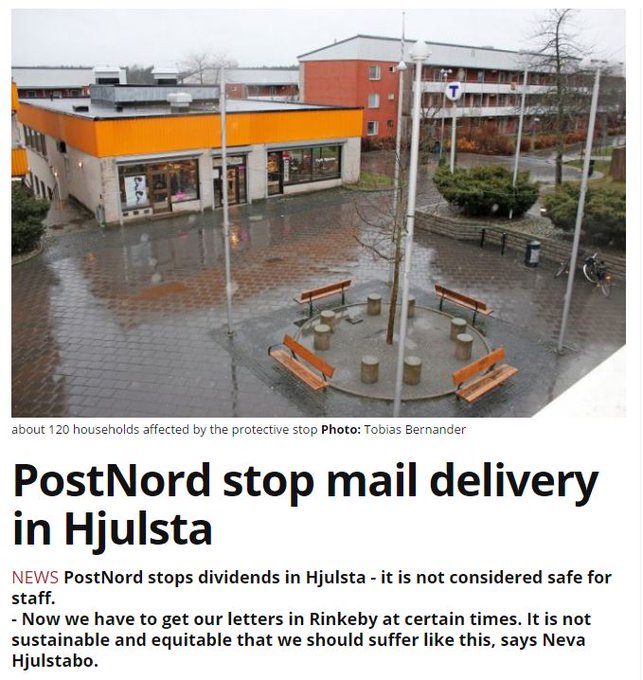
PostNord to stop delivery of mail in Swedish migrant suburb of Rinkeby because it’s “not safe”.
Remind me again how safe Rinkeby is?

Here is more on the situation from MITTI:
The reason is that it is not considered safe for postal staff to deliver the mail at some locations in the area.
It’s been messy in the area and therefore a protective stop to ensure the safety of our staff, says Maria Ibsen, press officer at PostNord.
She says that they currently do not know how long the protective stop will continue. But the dialogue with several parties and hope to be able to solve.
Björn Schenholm, property manager at Einar Mattsson, who manage the properties in Hjulsta, estimates that about 120 households affected by the stoppage.
Of course, we don’t suspect you’ll read about this service interruption from any MSM outlets as they’re too busy fulfilling their obligations to suppress ‘inconvenient’ facts that may hinder their pro-globalist agendas.

Not a single mainstream media reported the death of Ebba Åkerlund, 11 years old, killed in the Stockholm terror attack. CC @IvankaTrump

That said, Swedish Prime Minister Stefan Lofven did tell a Swedish news agency that he was “frustrated” by the news that last week’s terrorist attack was carried out by a migrant who wasn’t even supposed to be in the country. It’s a small admission but the first step is admitting you have a problem.
7. OIL ISSUES
Citgo is owned 100% by Venezuela’s state owned oil company PDVSA. The Russian state owned oil company Rosneft lent money to PDVSA who put up its 49% interest in CITGO. No doubt Rosneft will purchase a few more bonds and then they will be able to control CITGO once PDVSA defaults. The uSA is not very happy with this situation as CITGO owns 800 gas stations throughout the USA
(courtesy CNN) special thanks to Robert H for sending this to us:
Russia could soon control a U.S. oil company

Russia is on the verge of taking control of a US oil company.
In a crazy twist of international events, Russia’s state-owned oil company Rosneft might end up owning Citgo, a US energy company based in Houston, Texas.
This isn’t a direct takeover. Instead, it hinges on the ability of Venezuela’s state-run oil company to pay back its Russian loan. The Venezuelan company owns Citgo, which was used as collateral for the loan.
Both Republican and Democratic lawmakers are highly alarmed. In hotly worded letters to the Trump Administration in recent days, members of Congress and senators warned that it could be a big problem for US national security if Russia gets a hold of Citgo.
“We are extremely concerned that Rosneft’s control of a major US energy supplier could pose a grave threat to American energy security, impact the flow and price of gasoline for American consumers, and expose critical US infrastructure to national security threats,” a bipartisan group of senators led by Republican Marco Rubio of Florida and Democrat Bob Menendez of New Jersey wrote Monday in a letter to US Treasury Secretary Steve Mnuchin.
All of this comes as tension is high between US and Russia over the conflict in Syria, cyber crime and Russia meddling in US elections, among other disputes. Rosneft is also currently on the US sanctions list for “violating international law and fueling conflict in Ukraine.”
How Russia’s Rosneft got to this point
This entire situation stems from the fact that Venezuela has been desperate for cash lately. Venezuela’s state-run oil company, Petroleos de Venezuela (PDVSA), has owned Citgo since the 1980s. In exchange for a loan from Rosneft in December, Venezuela’s oil company put up a large stake (49.9%) in Citgo as collateral.
If PDVSA can’t pay its bills on time, Rosneft will almost certainly get control of Citgo. All Rosneft would need to do is buy a few more of PDVSA’s bonds to get over the 50% ownership threshold.
“The Russians have a lot to gain through the PDVSA-Rosneft-Citgo asset transfer to the detriment of US interests,” wrote Republican Congressman Jeff Duncan and Democratic Congressman Albio Sires in a letter to Mnuchin on Thursday. “We urge your immediate attention and review of this matter.”
Mnuchin is chair of the Committee on Foreign Investment in the United States, which determines whether foreign ownership of US companies or assets is a good idea.
While Venezuela or PDVSA won’t run out of money immediately, there is a reasonable chance they will by the end of 2017. That could mean PDVSA won’t be unable to pay back the Russian loan.
It won’t happen this week, says Francisco Monaldi, a fellow in Latin American Energy Policy at Rice University’s Baker Institute. “But they may default with their next big payment in October or November.”
Related: Massive oil discovery in Alaska is biggest onshore find in 30 years
Russia has a history of playing politics with its oil and gas supplies. It has cut off natural gas to Ukraine several times when it’s unhappy with what’s going on there. It’s one of the key reasons Europe has been trying to wean itself off Russian gas because of national security concerns.
However, even if Rosneft does get control over Citgo, it’s unlikely Russia would be able to do much to hurt US oil and gas prices.
“The Russians can’t hold the US hostage,” says John LaForge, an energy expert and head of Real Assets strategy at Wells Fargo. He says Citgo handles about 800,000 barrels of oil a day.
While it’s not miniscule, that’s just a small fraction of the nearly 20 million barrels of petroleum the US consumes daily. If Rosneft stopped refining oil at Citgo’s three US refineries, LaForge says, “Other refineries would love to pick up the slack.”
Citgo and the US Treasury did not return CNNMoney’s request for comment.
–CNN’s Kristina Sgueglia contributed to this story.
end
Another joke as oil rises on a reportedly push for another OPEC production cut:
(courtesy zerohedge)
Oil Spikes As Saudis Reportedly Push For OPEC Production Cut Extension
Ahead of tonight’s API inventory data, WTI Crude prices wer fading after 5 straight days higher. That was until WSJ reports Saudi Arabia wants OPEC to extend production cuts, sending oil prices spiking higher…
Reuters additionally reports that OPEC states cut oil output in March by more than they pledged under supply curbs, according to figures the exporter group uses to monitor its supply, extending a record of higher-than-expected adherence to its first production cut in eight years. The Organization of the Petroleum Exporting Countries agreed to cut output by about 1.2 million barrels per day (bpd) for six months from Jan. 1 to prop up prices and reduce a glut. Russia and 10 other non-OPEC states agreed to cut half as much. Production from the 11 OPEC members with output targets under the deal has averaged 29.757 million bpd in March, according to average assessments of secondary sources OPEC uses to monitor its output. The figures were seen by Reuters.
“OPEC’s compliance has been more than anticipated,” an OPEC delegate said. “For non-OPEC, it is satisfactory and getting better.”
And crude spikes…

This was not the catalyst for stocks’ move though as they broke higher earlier./..

The question is how long will this ‘jawbone’ last?
end
Oil continues to advance on huge drawdown
(courtesy zero hedge)
WTI/RBOB Extend Gains After Biggest Crude Inventory Draw Of 2017
WTI/RBOB prices jumped intraday on the heels of anonymous and ambiguous headlines about Saudi and OPEC production cut extensions and extended gains on API inventory data. After last week’s surprise builds in crude (and at Cushing), API showed a 1.3mm draw in crude inventories – the biggest since Dec 2016. Gasoline and Distilates contonued their season drawdowns also.
API
- Crude -1.3mm (-1.5mm exp)
- Cushing (+800k exp)
- Gasoline -3.7mm (-1mm exp)
- Distillates -1.6mm (-1mm exp)
Bigest crude draw of the year as the seasonal draws in gasoline and distillates continues…

And the reaction – after WTI has risen for 6 straight days – was further gains for both oil and gasoline futures…

end
8. EMERGING MARKETS
Can Venezuela participate in the next round of production cuts?
(courtesy Urban/OilPrice.com)
Venezuela Is The Wild Card In The OPEC Deal Extension
Authored by Jacob Urban via OilPrice.com,
News coming out of Venezuela over the past two years has reeked of corruption and failed political leadership: a long list of shortages, rampant poverty, incrimination of the opposition, and a recent move that puts the regime of Nicolas Maduro one step closer to a dictatorship. And these are only the developments that are recorded, with a recent LA Times Op-Ed suggesting that a Venezuelan homicide epidemic rages “unreported” due to the country’s scrapping of crime statistics reporting over a decade ago.

Despite all of this, the Organization of Petroleum Exporting Countries (OPEC) expects Venezuela, endowed with the world’s largest oil reserves (depending on who you ask), to play a major role in the cartel’s plan to curb global supply. In OPEC’s November agreement, Venezuela accounted for almost 10 percent of the net supply cut from member nations (calculated as cuts minus allotted increases).

(Click to enlarge)
Now, as OPEC begins to discuss extending the cut, in part to combat a flood of U.S. supply, Venezuela’s role in the world oil market amplifies. Convincing a financially weak quasi-dictatorship to slow down the production of its country’s primary economic asset is a tough sell. And yet, this is likely what members of the Organization of Petroleum Exporting Countries will have to do with Venezuela in order to meaningfully curb global oil supply.
Oil prices will be particularly sensitive to Venezuela’s role in the next few months, with one of two extreme outcomes likely to occur, both of which will miss OPEC’s target forecasts for Venezuela. In the first scenario, as Venezuela continues to prioritize debt servicing above all else, Venezuelan President Nicolas Maduro may find ways to marginally boost production, eroding the 8 percent of OPEC’s planned production cuts the country accounts for. The second scenario would see an escalation of Venezuela’s current crisis, preventing the country from importing the necessary light crude it needs to blend with its heavy oil. This would see Venezuela production falling below OPEC’s predictions, providing a needed and unexpected boost to global oil supply cut efforts. These scenarios would carry vastly different consequences, both of which need to be considered in any analysis of the evolving OPEC supply management saga.
Scenario 1: Drill, Baby, Drill!
With creditors tightening their grip on Venezuela’s gasping financial throat, Maduro is stuck in a chess game where pressing the proverbial “drill, baby, drill” button may be the only option, given his complete dismissal of the option of default. Venezuela’s state-owned PDVSA recently announced it will indeed make its slated $2.1 billion bond payment on April 12, easing recent default concerns.
In addition to the servicing of upcoming scheduled payments, Venezuela’s production is shackled by an oil-for-loan agreement with China that Venezuela already owes a significant backlog on, according to Reuters. Over a quarter of Venezuela’s daily oil production could already be committed to this agreement, if the requirements match those analyzed by a November Harvard research paper by Igor Hernandez and Francisco Monaldi. Once the grace period China allotted expires, they write, “the government’s debt agreements with China involve a significant and increasing amount of production.”
Debt service is not the only aggressor inflicting wounds upon the idea of cutting production. Social programs and other fiscal expenditures in Venezuela are heavily dependent on the revenues from crude oil, because oil generates 40-70 percent of government income in Venezuela, with the range depending on the price of oil. Continued low oil prices pose two risks to government spending: first, the obvious cut that comes from decreased oil prices; and secondly, the high breakeven costs in the Orinoco Oil Belt may eventually force Maduro to exercise the option of lowering royalties in the field to encourage new projects.
What this means for Venezuela’s oil production is simple: if the country is to continue to service its debt – something Maduro swears by – and maintain its current fiscal spending levels, the country is without any option aside from maintaining or expanding production. What’s more is the move towards one-man rule could boost Venezuela’s oil production, as the recently overruled legislature was standing in the way of Maduro’s plan to add joint-ventures in his plan to generate quick cash.
This poses a challenge for oil bulls and decreases the odds that OPEC can count on Venezuela to deliver a further production cut should the cartel move forward with an extended cut agreement. If it does not originate in Venezuela, the 8 percent cut expected from Venezuela must come from some other country, a fact that could create damaging tensions in OPEC negotiations.
Scenario 2: Not So Fast, Maduro!
The answer to Venezuela’s financial problems is not as simple as just drilling for more oil; in fact, operational and systematic challenges limit the amount of crude Venezuela can produce in almost the same way that debt servicing requirements and government demands limit the amount of production Venezuela can afford to cut.
These operational challenges and financial difficulties could generate a larger than expected cut from Venezuela. Over the past decade, missed payments and the downward political spiral drove many risk-averse foreign operators out of the country. Why invest in a country where receiving payment is akin to betting on a game of roulette? Better yet, a rigged game of roulette.
Due to this unfavorable investment environment “the number of active rigs [in Venezuela] has declined from 70 in December of 2015 to 51 in September of 2016.” Thus, the drilling situation itself is a function of the uncertainty that cements Venezuela’s position as a mysterious wild card in forecasts of world oil supplies. Venezuela’s oil production was already hurting from low prices and low investment, with total production declining 253,000 barrels per day between 2010 and the end of 2015; the persistence of an unfavorable investment environment in the country only exacerbates the issue, discouraging foreign operators from investing in Venezuela.
Venezuela’s reserves, which consist mostly of heavy crude, are particularly sensitive to the current low oil price environment. Not only do these reserves become uniquely unattractive to developers relative to other potential investments in a low oil price environment, but they also require substantial spending on imports of lighter crudes. These imports, which are required in order to make a marketable product, recently slipped a trend that will further complicate supply issues.
Certain Uncertainty
In the near-term, Venezuela is set to surprise oil markets and potentially rock OPEC’s plans, regardless of whether its production slips or Maduro finds a way to encourage developers to crank up drilling to generate quick cash. The drama unfolding in Venezuela is sure to come to a head as its next debt payments come due, and oil markets will be watching its production closely.
History has shown time and time again that regimes that neglect the welfare of the people eventually collapse upon themselves. It may take months, years, or even decades, but eventually, they all come falling down. But until this collapse happens, the political turmoil will continue to complicate pending OPEC conversations and add an additional layer of uncertainty to the oil markets. There may be a degree of certainty in the long-term trajectory of the Maduro regime, but predicting the fate of Venezuela’s forecasted supply cuts in the short-term is a near impossible task.
END
Your early morning currency/gold and silver pricing/Asian and European bourse movements/ and interest rate settings TUESDAY morning 7:00 am
Euro/USA 1.0614 UP .0016/REACTING TO + huge Deutsche bank problems + USA election:/TRUMP HEALTH CARE DEFEAT//ITALIAN REFERENDUM DEFEAT/AND NOW ECB TAPERING BOND PURCHASES/USA RAISING INTEREST RATES/EUROPE BOURSES MOSTLY IN THE GREEN
USA/JAPAN YEN 110.59 DOWN 0.093(Abe’s new negative interest rate (NIRP), a total DISASTER/SIGNALS U TURN WITH INCREASED NEGATIVITY IN NIRP/JAPAN OUT OF WEAPONS TO FIGHT ECONOMIC DISASTER/KURODA: HELICOPTER MONEY ON THE TABLE AND DECISION ON SEPT 21 DISAPPOINTS WITH STIMULUS/OPERATION REVERSE TWIST
GBP/USA 1.2429 UP .0007 (Brexit March 29/ 2017/ARTICLE 50 SIGNED
USA/CAN 1.3318 DOWN .0004 (CANADA WORRIED ABOUT TRADE WITH THE USA WITH TRUMP ELECTION/ITALIAN EXIT AND GREXIT FROM EU)
Early THIS TUESDAY morning in Europe, the Euro ROSE by 16 basis points, trading now BELOW the important 1.08 level RISING to 1.0614; Europe is still reacting to Gr Britain HARD BREXIT,deflation, announcements of massive stimulation (QE), a proxy middle east war, and the ramifications of a default at the Austrian Hypo bank, an imminent default of Greece, Glencore, Nysmark and the Ukraine, along with rising peripheral bond yield further stimulation as the EU is moving more into NIRP, and now the Italian referendum defeat AND NOW THE ECB TAPERING OF ITS PURCHASES/ THE USA’S NON tightening by FAILING TO RAISE THEIR INTEREST RATE AND NOW THE HUGE PROBLEMS FACING TOO BIG TO FAIL DEUTSCHE BANK + THE ELECTION OF TRUMP IN THE USA+ TRUMP HEALTH CARE BILL DEFEAT AND MONTE DEI PASCHI NATIONALIZATION / Last night the Shanghai composite CLOSED UP 19.57 POINTS OR 0.60% / Hang Sang CLOSED DOWN 173.72 POINTS OR .72%/AUSTRALIA CLOSED UP 0.26% / EUROPEAN BOURSES : MOSTLY IN THE GREEN
We are seeing that the 3 major global carry trades are being unwound. The BIGGY is the first one;
1. the total dollar global short is 9 trillion USA and as such we are now witnessing a sea of red blood on the streets as derivatives blow up with the massive rise in the rise in the dollar against all paper currencies and especially with the fall of the yuan carry trade. The emerging market which house close to 50% of the 9 trillion dollar short is feeling the massive pain as their debt is quite unmanageable.
2, the Nikkei average vs gold carry trade ( NIKKEI blowing up and the yen carry trade HAS BLOWN up/and now NIRP)
3. Short Swiss franc/long assets blew up ( Eastern European housing/Nikkei etc.
These massive carry trades are terribly offside as they are being unwound. It is causing global deflation ( we are at debt saturation already) as the world reacts to lack of demand and a scarcity of debt collateral. Bourses around the globe are reacting in kind to these events as well as the potential for a GREXIT>
The NIKKEI: this TUESDAY morning CLOSED DOWN 50.01 POINTS OR 0.27%
Trading from Europe and Asia:
1. Europe stocks MOSTLY IN THE GREEN
2/ CHINESE BOURSES / : Hang Sang CLOSED DOWN 173.72 POINTS OR .72% / SHANGHAI CLOSED UP 19.57 POINTS OR 0.60%/Australia BOURSE CLOSED UP 0.26%/Nikkei (Japan)CLOSED DOWN 50.01 OR 0.27% / INDIA’S SENSEX IN THE GREEN
Gold very early morning trading: $1257.55
silver:$17.92
Early TUESDAY morning USA 10 year bond yield: 2.346% !!! PAR IN POINTS from MONDAY night in basis points and it is trading JUST BELOW resistance at 2.27-2.32%. THE RISE IN YIELD WITH THIS SPEED IS FRIGHTENING
The 30 yr bond yield 2.978, PAR IN BASIS POINTS from MONDAY night.
USA dollar index early TUESDAY morning: 100.84 DOWN 18 CENT(S) from MONDAY’s close.
This ends early morning numbers TUESDAY MORNING
xxxxxxxxxxxxxxxxxxxxxxxxxxxxxxxxxxxxxxxxxxxxxxxxxxxxxxxxxxxxxxxxxxxxxxxxxxxxxxxxxxxxxxxxxxxxxxxxxxxxxxxxxxxxxxx
And now your closing TUESDAY NUMBERS
Portuguese 10 year bond yield: 3.854% UP 3 AND 1/2 in basis point(s) yield from MONDAY
JAPANESE BOND YIELD: +.037% DOWN 2 in basis point yield from MONDAY/JAPAN losing control of its yield curve
SPANISH 10 YR BOND YIELD: 1.644% up 3 IN basis point yield from MONDAY (this is totally nuts!!/
ITALIAN 10 YR BOND YIELD: 2.281 UP 4 POINTS in basis point yield from MONDAY
the Italian 10 yr bond yield is trading 64 points HIGHER than Spain.
GERMAN 10 YR BOND YIELD: +.204% DOWN 1/3 IN BASIS POINTS ON THE DAY
END
xxxxxxxxxxxxxxxxxxxxxxxxxxxxxxxxxxxxxxxxxxxxxxxxxxxxxxxxxxxxxxxxxxxxxxxxxxxxxxxxxxxxxxxxxxxxxxxxxxxxxxxxxxxxxxxxxxxxxxxxxxxxxxxxxxxxx
IMPORTANT CURRENCY CLOSES FOR TUESDAY
Closing currency crosses for TUESDAY night/USA DOLLAR INDEX/USA 10 YR BOND YIELD/1:00 PM
Euro/USA 1.06103 UP .0015 (Euro UP 14 basis points/ represents to DRAGHI A COMPLETE POLICY FAILURE/
USA/Japan: 109.82 DOWN: 0.861 (Yen UP 86 basis points/
Great Britain/USA 1.2470 UP 0.0057( POUND UP 57 basis points)
USA/Canada 1.3320 DOWN 0.0002(Canadian dollar UP 2 basis points AS OIL ROSE TO $52.99
xxxxxxxxxxxxxxxxxxxxxxxxxxxxxxxxxxxxxxxxxxxxxxxxxxxxxxxxxxxxxxxxxxxxxxxxxxxxxxxx
This afternoon, the Euro was UP by 16 basis points to trade at 1.06103
The Yen ROSE to 109.82 for a GAIN of 86 Basis points as NIRP is STILL a big failure for the Japanese central bank/HELICOPTER MONEY IS NOW DELAYED/BANK OF JAPAN NOW WORRIED AS AS THEY ARE RUNNING OUT OF BONDS TO BUY AS BOND YIELDS RISE /OPERATION REVERSE TWIST ANNOUNCED SEPT 21.2016
The POUND ROSE BY 57 basis points, trading at 1.2470/
The Canadian dollar ROSE by 2 basis points to 1.3320, WITH WTI OIL RISING TO : $52.98
Your closing 10 yr USA bond yield DOWN 4 IN basis points from MONDAY at 2.312% //trading well ABOVE the resistance level of 2.27-2.32%) very problematic USA 30 yr bond yield: 2.942 down 3 in basis points on the day /
Your closing USA dollar index, 100.71 DOWN 31 CENT(S) ON THE DAY/1.00 PM
Your closing bourses for Europe and the Dow along with the USA dollar index closing and interest rates for TUESDAY: 1:00 PM EST
London: CLOSED UP 16.56 OR 0.23%
German Dax :CLOSED DOWN 61.17 POINTS OR 0.50%
Paris Cac CLOSED DOWN 5.59 OR 0.11%
Spain IBEX CLOSED DOWN 21.4 POINTS OR 0.21%
Italian MIB: CLOSED DOWN 92.99 POINTS OR 0.46%
The Dow closed DOWN 6.72 OR 0.03%
NASDAQ WAS closed DOWN 14.15 POINTS OR 0.24% 4.00 PM EST
WTI Oil price; 52.98 at 1:00 pm;
Brent Oil: 55.97 1:00 EST
USA /RUSSIAN ROUBLE CROSS: 57.07 up 9/100 ROUBLES/DOLLAR
TODAY THE GERMAN YIELD FALLS TO +0.204% FOR THE 10 YR BOND 4.PM EST EST
END
This ends the stock indices, oil price, currency crosses and interest rate closes for today
Closing Price for Oil, 5 pm/and 10 year USA interest rate:
WTI CRUDE OIL PRICE 5 PM:$53.40
BRENT: $56.25
USA 10 YR BOND YIELD: 2.298% (ANYTHING HIGHER THAN 2.70% BLOWS UP THE GLOBE)
USA 30 YR BOND YIELD: 2.93%
EURO/USA DOLLAR CROSS: 1.0606 UP .0009
USA/JAPANESE YEN:109.63 DOWN 1.059
USA DOLLAR INDEX: 100.71 DOWN 31 cents ( HUGE resistance at 101.80 broken TO THE DOWNSIDE)
The British pound at 5 pm: Great Britain Pound/USA: 1.2493 : UP .0070 OR 70 BASIS POINTS.
Canadian dollar: 1.3323 up .0002 (CAN DOLLAR DOWN 2 BASIS PTS)
German 10 yr bond yield at 5 pm: +.204%
END
And now your more important USA stories which will influence the price of gold/silver
TRADING IN GRAPH FORM FOR THE DAY
Bullion Jumps To Post-Election Highs As Banks Give Up 2017 Gains
Gold leads in 2017 as geopolitical risk finally begins to get priced in…
In no particular order:
- US threatens North Korea
- Everyone on the same side of the boat (long stocks, short vol, short bonds, short Eurodollars)
- US threatens Russia
- Fed intent on tightening no matter what
- China warns of red lines
- Russia calls ‘false flag’, builds alliance
- US threatens Syria
- Increased frequency of terror attacks in Europe
- oh, and finally, Frexit looms as election in Europe are highly uncertain

But apart from that, US Hard Data at one year lows, Soft Data at record highs predicated on Trump tax/stimulus plan – looks increasingly uncertain

Stock valuations are at or near record highs…

And earnings and economic expectations are tumbling…

And US Government shutdown looms

* * *
Ok so having got that off our chest – here’s what today looked like across asset classes… Bonds and Bullion were the safe havens as the dollar was dumped, crude spiked on Saudi/OPEC headlines but could not follow through…

Trannies and Small Caps up on the week, and despite the late minute ETF rebalance panic bid, The Dow, S&P, and Nasdaq ended red on the week…

VIX spiked to post-election highs…

VIX almost reached 16 in traday…

The Dow clung to its 50DMA after breaking below it…

Tech stocks are down 8 days in a row, the longest losing streak since before the election…

Bank stocks have been a one-way no brainer trade since the spike after trump’s speech to congress…

USDJPY was clubbed like a baby seal…

Treasuries erased all post-payrolls, post-Dudley losses with yield tumbling and the curve flattening….

Oil’s spike supported stocks in the afternoon until NYMEX close…

But the day belonged to gold – bursting above $1275 and its 200-day moving average at its highest since the election…


end
Early NY trading this morning: two commentaries
First:
(courtesy zero hedge)
Dow Tumbles Below Key Technical Level As VIX Spikes Over 15/Gold and silver rise!
VIX has spiked to 15.45 this morning as global war rhetoric combined with French elections are finaly shocking some investoirs out of their complacency.

This is the highest level for VIX since the election

…and The Dow just broke down below its crucial 50-day moving average…

What happens next?
Gold is 2017’s big winner and Financials have nearly erased all the year’s gains…

end
Second:
Bank Stocks Slammed As Treasury Curve Crumbles To 6-Month Lows
US financial stocks – the “no brainer” trade of so many TV talking heads – appear to have finally realized that the yield curve is not steepening and even deregulation may be further away than hoped.
Bank stocks are almost unchanged on the year – erasing gains of almost 10% after Trump’s speech to Congress…
As the Treasury yield curve has collapsed to its flattest levels since October…

And remember, the stocks of the banks have totally decoupled from their credit market perception of risk…

end
Another indicator that the USA economy is not performing well! Another of Janet’s favourite indicators (JOLTS) is faltering
(courtesy zerohedge)
Labor Market JOLTed: Rate Of Hiring Suffers Biggest Drop In 4 Years
While too backward looking to be actionable (reflecting the labor situation with a 2 month delay) especially in a time when everyone is focused on the future – or lack thereof – of Trump’s fiscal policies today’s JOLTs report failed to capture the sharp slowdown in the March jobs report, instead corroborating the last of the “good” payroll prints, that of February.
So what did “Janet Yellen’s favorite labor market indicator” show?
First the good news: after flatlining for the previous six months, job openings had the biggest monthly increase since September, rising by 118K to 5.743 million, from 5.625m in January, and higher than expected. As a result, the job opening rate (job openings as a % of total employment plus openings) rose modestly to 3.8% from 3.7% prior month.

And while America’s millions of job openings remain unfilled (the highest number was in educational and health services, followed by professional and business services), a more troubling trend could be observed in the one chart that actually matters from a so-called job “flow” perspective, hiring.
The BLS reported that in February, the number of Americans hired dropped to 5.314 million, sliding by 110K or the biggest monthly drop since April.

Putting the above chart in a more troubling light was the Y/Y % rate of change: as shown in the chart below, not only did the rate of hiring not rise over the past year, but in February it declined by 3.6% relative to last year. This was the biggest decline in the annual rate of hiring in over four years, going back to March 2013.

Which leads to our favorite chart: hiring vs payrolls. Has the long overdue inflection point finally arrived, and will the slowdown in hiring finally pull down the number of actual net jobs added?

Last but not least was that other key indicator, the “quits” rate, or the “take this job and shove” it metric according to Convergex’ Nick Colas. As a reminder, Americans only quit their jobs when they are confident they can find a better paying job elsewhere, and last month we saw the number of quits rising to the highest level in 16 years. Well, in February not only was the January number revised lower, but the February quits number also dropped by some 102,000, undoing the January gains, and the biggest monthly drop in the quits rate since January 2016, suggesting that suddenly Americans are notably less confident about better job prospects out there.

If all this took place during February, when the payroll report was seen as extremely positive, we can only imagine what the March JOLTs report will look like next month.
Source: JOLTS
end
Corporate Pension funds have huge portfolios of equities and these represent around 31% of their entire 3.3 trillion in assets. Right now these corporate pension funds have 82% funding up from 75%. Generally when they get over 80% they cash out and move into bonds. Could this be the catalyst that brings down Janet’s massive bubble in the equity field?
(courtesy zerohedge)
Are Corporate Pensions About To Start Dumping Their $1 Trillion In Equity Holdings
Several large public pensions around the country are in serious trouble and, after several years of paying out more in distributions than they take in (which is the textbook definition of a ponzi scheme, btw), many are just one more equity market crash away from completely running out of cash. In fact, we recently wrote about how Chicago’s largest pension fund could run out of cash within 4 years if such a scenario played out (see “How Chicago’s Largest Pension May Run Out Of Cash In As Little As 4 Years“).
And while we hate to be pessimistic, lets just take a look at what happens if, by some small chance, today’s market gets exposed as a massive bubble and we have another big correction in 2018.
Such a correction would force the fund to liquidate over $1.5 billion in assets in 2018 alone….
….and the system would run out of cash completely within 4 years.


And while public pensions may be forced to continue swinging for the fences by allocating more and more capital to equity markets, corporate pension funds, according to Bloomberg and Morgan Stanley, are growing a little weary of Yellen’s equity bubble and may be looking to rotate capital into corporate bonds instead.
Company pensions are nearing a tipping point that’s poised to send them on a buying spree in the U.S. corporate bond market.
The retirement plans, helped by gains in stocks, are edging closer to digging themselves out of a hole they’ve been in for more than a decade, a shift that is cutting their demand for risky assets like equities and stoking their interest in more stable investments like company debt.
Companies on average have about 82 percent of the funding they expect to require for retirees’ pensions, compared with around 75 percent in the middle of last year, according to strategists at Morgan Stanley. Once pensions are around 80 percent funded, they tend to increase their bond holdings and cut their stock investments to lock in gains, Morgan Stanley analysts led by Adam Richmond wrote in a report on Friday. They funnel much of that money toward high-grade corporate debt, especially longer-dated bonds, to help fund their decades-long obligations.
That trend is already happening and could now intensify, according to Morgan Stanley analysts. U.S. company pension funds own more than $1.8 trillion of assets, and even small changes to their allocations can lift already-high prices for bonds, and weigh on stocks.

In all, non-public pension funds held just over $1 trillion in equities at the end of 2016, or roughly 31% of their $3.3 trillion in assets. Obviously, reducing that equity allocation target by just 10% would therefore put about $330 billion worth of selling pressure on equities…and that’s assuming public pensions don’t follow along.

Of course, by choosing to do the right thing and derisk their portfolios, these massive pension funds could very well become the catalyst that brings Yellen’s massive asset bubbles crashing down…so if you’re going to get out…probably best to be a first mover in what will become a race to the bottom.
end
Pentagon hold a press briefing due to escalating geopolitical tensions
(courtesy zero hedge)
Watch Live: Pentagon Holds Press Briefing Amid Escalating Geopolitical Tensions
Update: In his opening statement, Secretary of Defense Mattis said there is “no doubt” the Syrian government was responsible for the recent gas attack which prompted the Trump administration’s bombing of an airfield in Syria and warned that Assad should “think long and hard” before considering similar attacks in the future. Mattis went on say that the recent U.S. activities in Syria should not be interpreted as a “strategy change” in the region but rather solely as a reaction to Assad’s alleged chemical weapon attack.
- MATTIS: `OUR PRIORITY REMAINS THE DEFEAT’ OF ISLAMIC STATE
- MATTIS: ATTACK WAS `SINGULAR’ RESPONSE ON CHEMICAL WEAPONS
- MATTIS: SYRIA STRIKE WASN’T `HARBINGER’ OF STRATEGY CHANGE
- MATTIS: IT’S VERY CLEAR THE ASSAD REGIME PLANNED IT, ORCHESTRATED IT AND EXECUTED IT
* * *
As tensions around the globe continue to mount over the Trump administration’s official policies related to Syria and North Korea, Secretary of Defense James Mattis will take the podium momentarily to offer his first press briefing.
Watch live below:
David Stockman correctly states that the chemical attack on the last rebel held area in Iraq was a false flag or an American or Russian hit on a chemical warehouse
(courtesy David Stockman/DailyReckoning)
Donald J. Trump: The Empire’s Spanker-In-Chief
The Donald’s missile “attack” on Syria’s al-Shairat air base is surely the most impetuous, thoughtless, reckless and stupid act from the Oval Office I can remember — and that covers 50 years at least.
And I put “attack” in quotes because it’s now evident that virtually every one of those $1.4 million per copy Tomahawks amounted to a big fat nothing-burger.
36 of the 59 missile were apparent duds and landed somewhere other than the al-Shairat air base, including a nearby village where apparently a number of civilians were killed.
The 23 that did hit the base actually missed the main runway, which, by the way, was back in operation launching Syrian air force sorties within 24 hours. None of Assad’s operational warplanes were hit, either — just a handful of antique MIGs that have apparently long been languishing in the base’s “repair” boneyard.
Yes, the Donald’s sharpshooters did annihilate several glorified Butler buildings, otherwise referred to as “hangars”, and a few fuel tanks — the better for some post-attack fireworks to be posted to the War Channels (CNN, MSNBC and Fox).
But what the Tomahawks surely did not hit was the chemical weapons storage facilities alleged by the Pentagon to be at the base. With Washington’s satellites monitoring al-Shairat like a cloud of bumble bees, there was not a whit of evidence of Syrian personal running around with gas masks after the missiles hit.
Had there been, the War Channels would have been playing it in an endless loop all weekend. Naturally, the Pentagon says these apparently non-existent stores weren’t even targeted owing to humanitarian (?) reasons.
Right!
Worse, launching this feckless attack in the midst of Trump’s meeting with the leader of China was surely an amateur ploy right out of the pages of The Apprentice. That’s because within 24 hours of Xi Jinping’s departure from what will now be known as War-A-Lago, the Syrian air force had not only resumed launches from the base, but was actually bombing the very site of the original offense at Khan Sheikhoun!
That gets, of course, to the purpose of attacking any sovereign government that has not attacked or threatened America; and, most especially, one waging a determined fight against the one threat to America’s peace of mind, if not actual physical security, on the planet today.
That is, the radical jihadist head-choppers of ISIS, and particularly the al-Nusra terrorists desperately holed up in their last redoubt in Idlib province. Even if Assad had used chemical weapons — and there is zero proof he did — what possible purpose was there in a pinprick attack on Assad’s military capability that was hailed by jihadists all over Syria and the greater Middle East?
Does the Donald really wish to attack both sides in the most tangled, bloody, sectarian and convoluted civil war in modern history — a course of action he has long, and rightly, criticized?
Did he really reverse in a mere two days, the anti- “regime change” line he had held for years? And one he had wielded to great effect with a “don’t do it” tweet storm in August 2013 in the wake of what now is clear had been a false flag chemical attack staged by radical jihadists in Syria designed to lure Obama into attacking the regime?
The weekend talk show huffing and puffing by Secretary Tillerson and the ignorant little nincompoop he appointed as U.N. Ambassador, Nikki Haley, would leave you to guess, but not really.
At the time of the attack Thursday evening, Administration spokesmen made it clear that the attack was “punishment” for Assad’s violation of international norms about the fair way to kill civilians when waging urban warfare.
And according to the self-appointed tribunes of the moral high ground at the editorial pages of the New York Times, Assad’s alleged attack was so heinous that it cried out for punishment.
So then and there, Donald J. Trump appointed himself the Empire’s Spanker-in-Chief, and thereby destroyed what remained of his stillborn Presidency. Indeed, it will be all downhill from here because the Deep Steep now most assuredly has the Donald by his stubby.
The worst part of the Donald’s spanking campaign, of course, is that the White House has not offered one iota of proof that Assad did it.
Nor has it even attempted to refute the exceedingly plausible Russian-Syrian claim that the regime’s bombing raid in the heart of Nusra Front’s last remaining occupied territory hit a weapons depot where the jihadists were storing not only conventional ammo, but possibly manufacturing projectiles stuffed with chemical agents too.
Do ya think that the Donald could have held off for at least a few days so that an impartial international inspection team could have examined the site and the victims?
Better still, why not an Adlai Stevenson moment? That’s when President Kennedy’s U.N. Ambassador stood before the entire world and showed dramatic reconnaissance photos proving the Soviets had indeed placed intermediate range missile batteries in Cuba.
By contrast, the Deep State octopus of secrecy today hides behind the pathetic excuse that it must protect its “sources and methods” at all hazards. Therefore it can only “assess” and “judge” out loud that the bad guys actually did it, while the Congress, the American public and the rest of the world should take their word that the intelligence community (IC) has the hard evidence.
For crying out loud, the entire world — and most especially the Russians, Assad regime and assorted other purported malefactors — knows that the skies of the planet are swarming with U.S. intelligence satellites. And that NSA has penetrated every backdoor of the entire global communications grid.
So exactly nothing is being protected by Washington refusal to stump up the SIGINT (signals intelligence) proof if they’ve got it.
That’s exactly what didn’t happen, of course, back in August 2013 when the jihadists pulled a similar false flag to lure Obama into a similar attack. At the time, the White House released a four-page, evidence-free paper pinning the blame squarely on Assad in what it called a “government assessment” because even the IC would not vouch for it.
Needless to say, not a shred of SIGINT was ever released to prove the White House contentions — save for an obvious leak a few days after the event to the ever complaint New York Times which claimed an assessment of the chemical rocket’s trajectory found at the site proved they were fired from deep in government controlled territory more than 12 kilometers away.
As it happened, an international arms control expert and leading MIT scientist in the field, teamed up shortly thereafter to prove from the primitive rockets examined by international inspectors after the attack that they could have had a trajectory of no more than 2 kilometers.
That is, they were fired from the heart of jihadist controlled territory in the villages where the horrific Ghouta attack occurred.
As Philippe Lemonoine summarized in a recent post, the evidence implicated the rebels, not the Assad regime:
Back in 2013, Carla Del Ponte, a member of the Independent International Commission of Inquiry on the Syrian Arab Republic (IICISAR) and the former Chief Prosecutor for the International Criminal Tribunal for the former Yugoslavia and the International Criminal Tribunal for Rwanda, told the BBC that “what appears to our investigations [is] that [chemical weapons were] used by the opponents, by the rebels and we have no indication at all that … the authorities of the Syrian government have used chemical weapons”…
But far be in from the mainstream media to remember back that far.
Needless to say, the Donald will never shake himself loose of this tar-bay. He has the U.S. now in harm’s way in the thick of an inferno crawling with Assad’s allies including the Russians and the Iranians.
I have no brief for Bashar al-Assad. He and his family have ruled Syria for 40 years harshly and more often than not by the sword.
But by inadvertently assisting his jihadist enemies, the Donald may have actually helped revive what amounts to a Taliban in the Levant in the name of protecting Syria’s women and children.
Regards,
end
Well that is all for today
I will see you tomorrow night
Harvey


 harveyorganblog.com
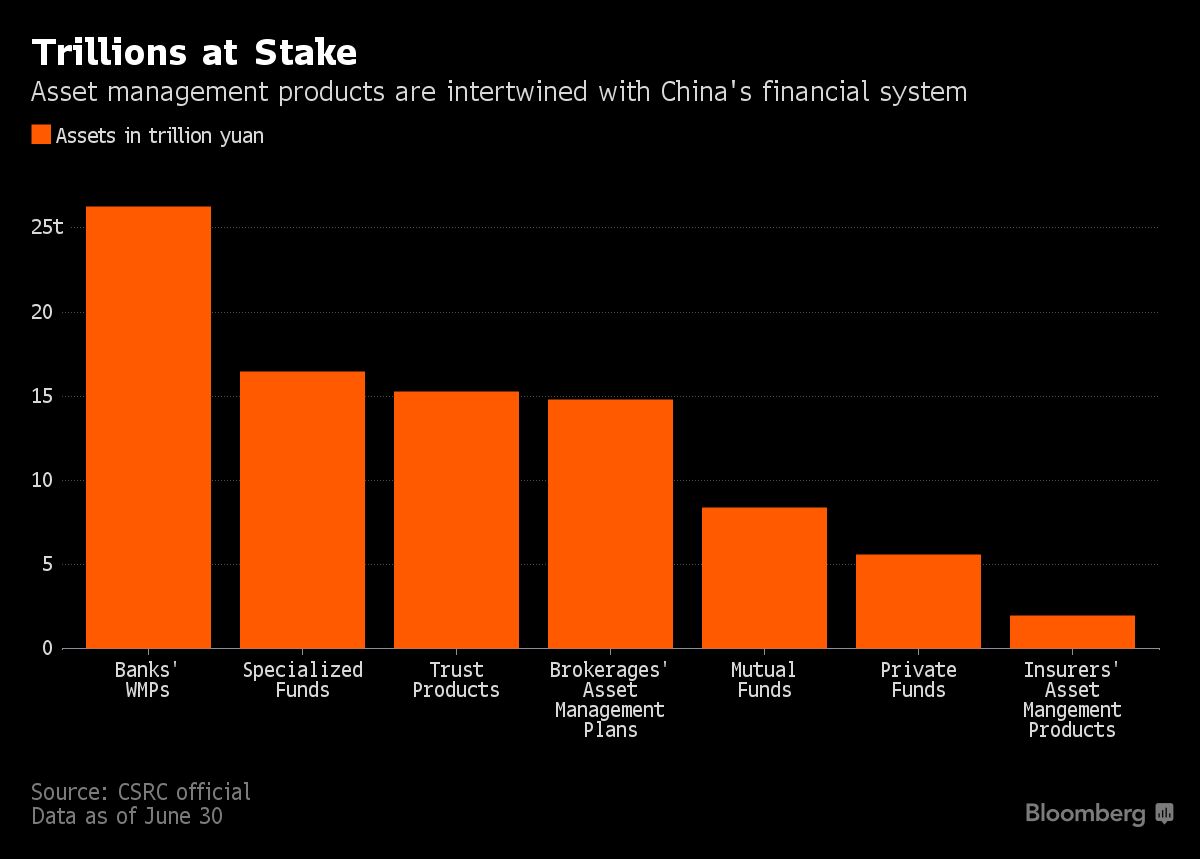
[…] READ MORE […]
LikeLike
[…] APRIL 11/GOLD AND SILVER ADVANCE SMARTLY: GOLD UP $20.00 AND SILVER UP 34 CENTS/SILVER OPEN INTEREST… […]
LikeLike
[…] by Harvey Organ Harvey Organ’s Blog […]
LikeLike