
GOLD: $1338.95 UP $2.20
Silver: $17.17 DOWN 3 cents
Closing access prices:
Gold $1327.00
silver: $17.00
SHANGHAI GOLD FIX: FIRST FIX 10 15 PM EST (2:15 SHANGHAI LOCAL TIME)
SECOND FIX: 2:15 AM EST (6:15 SHANGHAI LOCAL TIME)
SHANGHAI FIRST GOLD FIX: $1346.38 DOLLARS PER OZ
NY PRICE OF GOLD AT EXACT SAME TIME: $1338.80
PREMIUM FIRST FIX: $7.58
xxxxxxxxxxxxxxxxxxxxxxxxxxxxxxxxxxxxxxxxxxxxxx
SECOND SHANGHAI GOLD FIX: $1342.50
NY GOLD PRICE AT THE EXACT SAME TIME: $1333.25
Premium of Shanghai 2nd fix/NY:$9.25
SHANGHAI REJECTS NY /LONDON PRICING OF GOLD
xxxxxxxxxxxxxxxxxxxxxxxxxxxxxxxxxxxxxxxxxxxxxxxxxxx
LONDON FIRST GOLD FIX: 5:30 am est $1337.35
NY PRICING AT THE EXACT SAME TIME: $1336.65
LONDON SECOND GOLD FIX 10 AM: $1335.65
NY PRICING AT THE EXACT SAME TIME. $1335.00
For comex gold:
JANUARY/
NUMBER OF NOTICES FILED TODAY FOR JANUARY CONTRACT: 0 NOTICE(S) FOR NIL OZ.
TOTAL NOTICES SO FAR: 449 FOR 44900 OZ (1.3965 TONNES),
For silver:
jANUARY
52 NOTICE(S) FILED TODAY FOR
260,000 OZ/
Total number of notices filed so far this month: 625 for 3,125,000 oz
XXXXXXXXXXXXXXXXXXXXXXXXXXXXXX
Bitcoin: BID $10,088/OFFER $10,193 DOWN $1255 (morning)
Bitcoin: BID 11,186/OFFER $11,294 DOWN $160(CLOSING)
end
Let us have a look at the data for today
xxxxxxxxxxxxxxxxxxxxxxxxxxxxxxxxxxxxxxxxxxxxxxxxxxxxxxxxxxxxxxxxxxxxxxxxxx
In silver, the total open interest FELL BY A RATHER LARGE 3912 contracts from 200,423 FALLING TO 196,511 DESPITE YESTERDAY’S 5 CENT RISE IN SILVER PRICING. WE HAD CONSIDERABLE COMEX LIQUIDATION BUT WITHOUT A DOUBT WE WITNESSED ANOTHER FAILED MAJOR BANK SHORT- COVERING OPERATION YESTERDAY AS SPECS CONTINUE TO POUR IT ON. NOT ONLY THAT , WE WERE AGAIN NOTIFIED THAT WE HAD ANOTHER GIGANTIC SIZED NUMBER OF COMEX LONGS TRANSFERRING THEIR CONTRACTS TO LONDON THROUGH THE EFP ROUTE: 7310 EFP’S FOR MARCH AND ZERO FOR OTHER MONTHS AND THUS TOTAL ISSUANCE OF 7310 CONTRACTS. HOWEVER THE MOVEMENT ACROSS TO LONDON IS NOT AS SEVERE AS IN GOLD AS THERE SEEMS TO BE MAJOR PLAYERS WILLING TO TAKE ON THE BANKS AT THE COMEX. STILL, WITH THE TRANSFER OF 7310 CONTRACTS, WHAT THE CME IS STATING IS THAT THERE IS NO SILVER (OR GOLD) TO BE DELIVERED UPON AT THE COMEX AS THEY MUST EXPORT THEIR OBLIGATION TO LONDON. ALSO KEEP IN MIND THAT THERE CAN BE A DELAY OF 24 HRS IN THE ISSUING OF EFP’S.
ACCUMULATION FOR EFP’S/SILVER/ STARTING FROM FIRST DAY NOTICE/FOR MONTH OF JANUARY:
31,554 CONTRACTS (FOR 12 TRADING DAYS TOTAL 31,554 CONTRACTS OR 157.770 MILLION OZ: AVERAGE PER DAY: 2629 CONTRACTS OR 13.147 MILLION OZ/DAY)
TO GIVE YOU AN IDEA AS TO THE HUGE SUPPLY THIS MONTH IN SILVER: SO FAR THIS MONTH: 157.77 MILLION PAPER OZ HAVE MORPHED OVER TO LONDON. THIS REPRESENTS AROUND 22.5% OF ANNUAL GLOBAL PRODUCTION
RESULT: A LARGE SIZED LOSS IN OI COMEX DESPITE THE GOOD 5 CENT RISE IN SILVER PRICE WHICH USUALLY INDICATES ANOTHER FAILED BANKER SHORT-COVERING. WE ALSO HAD A HUGE SIZED EFP ISSUANCE OF 7310 CONTRACTS WHICH EXITED OUT OF THE SILVER COMEX AND TRANSFERRED THEIR OI TO LONDON AS FORWARDS. SPECULATORS CONTINUED THEIR INTEREST IN ATTACKING THE SILVER COMEX . FROM THE CME DATA 7310 EFP’S WERE ISSUED FOR TODAY FOR A DELIVERABLE FORWARD CONTRACT OVER IN LONDON WITH A FIAT BONUS. WE REALLY GAINED 3398 OI CONTRACTS i.e. 7310 open interest contracts headed for London (EFP’s) TOGETHER WITH A DECREASE OF 3912 OI COMEX CONTRACTS. AND ALL OF THIS HAPPENED WITH THE RISE IN PRICE OF SILVER OF 5 CENTS AND A CLOSING PRICE OF $17.20 WITH RESPECT TO YESTERDAY’S TRADING. YET WE STILL HAVE A GOOD AMOUNT OF SILVER STANDING AT THE COMEX.
In ounces AT THE COMEX, the OI is still represented by just UNDER 1 BILLION oz i.e. 0.9860 BILLION TO BE EXACT or 141% of annual global silver production (ex Russia & ex China).
FOR THE NEW FRONT JANUARY MONTH/ THEY FILED: 52 NOTICE(S) FOR 260,000 OZ OF SILVER
In gold, the open interest ROSE BY A CONSIDERABLE 7341 CONTRACTS UP TO 582,333 WITH THE SOLID RISE IN PRICE OF GOLD WITH YESTERDAY’S TRADING ($2.30). IN ANOTHER HUGE DEVELOPMENT, WE RECEIVED THE TOTAL NUMBER OF GOLD EFP’S ISSUED TUESDAY FOR WEDNESDAY AND IT TOTALED A GIGANTIC SIZED 23,183 CONTRACTS OF WHICH THE MONTH OF FEBRUARY SAW 23,183 CONTRACTS AND APRIL SAW THE ISSUANCE OF 0 CONTRACTS The new OI for the gold complex rests at 582,333. DEMAND FOR GOLD INTENSIFIES GREATLY AS WE CONTINUE TO WITNESS A HUGE NUMBER OF EFP TRANSFERS TOGETHER WITH THE MASSIVE INCREASE IN GOLD COMEX OI TOGETHER WITH THE TOTAL AMOUNT OF GOLD OUNCES STANDING FOR JANUARY COMEX. EVEN THOUGH THE BANKERS ISSUED THESE MONSTROUS EFPS, THE OBLIGATION STILL RESTS WITH THE BANKERS TO SUPPLY METAL BUT IT TRANSFERS THE RISK TO A LONDON BANKER OBLIGATION AND NOT A NEW YORK COMEX OBLIGATION. LONGS RECEIVE A FIAT BONUS TOGETHER WITH A LONG LONDON FORWARD. THUS, BY THESE ACTIONS, THE BANKERS AT THE COMEX HAVE JUST STATED THAT THEY HAVE NO APPRECIABLE METAL!! THIS IS A MASSIVE FRAUD: THEY CANNOT SUPPLY ANY METAL TO OUR COMEX LONGS BUT THEY ARE QUITE WILLING TO SUPPLY MASSIVE NON BACKED GOLD (AND SILVER) PAPER KNOWING THAT THEY HAVE NO METAL TO SATISFY OUR LONGS. LONDON IS NOW SEVERELY BACKWARD IN BOTH GOLD AND SILVER (BIG RISE IN BOTH GOFO AND SIFO) AND WE ARE WITNESSING DELAYS IN ACTUAL DELIVERIES. IN ESSENCE WE HAVE ANOTHER MONSTROUS GAIN OF 30,530 OI CONTRACTS: 7341 OI CONTRACTS INCREASED AT THE COMEX AND AN ATMOSPHERIC SIZED 23,183 OI CONTRACTS WHICH NAVIGATED OVER TO LONDON.
YESTERDAY, WE HAD 7163 EFP’S ISSUED.
ACCUMULATION OF EFP’S/ GOLD(EXCHANGE FOR PHYSICAL) FOR THE MONTH OF JANUARY STARTING WITH FIRST DAY NOTICE: 121,948 CONTRACTS OR 12,194 MILLION OZ OR 379.31 TONNES (12 TRADING DAYS AND THUS AVERAGING: 10,162 EFP CONTRACTS PER TRADING DAY OR 1,016,200 OZ/DAY)
TO GIVE YOU AN IDEA AS TO THE HUGE SIZE OF THESE EFP TRANSFERS : SO FAR THIS MONTH IN 12 TRADING DAYS: IN TONNES: 379 TONNES
TOTAL ANNUAL GOLD PRODUCTION, 2017, THROUGHOUT THE WORLD EX CHINA EX RUSSIA: 2200 TONNES
THUS EFP TRANSFERS REPRESENTS 379/2200 TONNES = 17.22% OF GLOBAL ANNUAL PRODUCTION SO FAR IN JANUARY ALONE.
Result: A HUGE SIZED INCREASE IN OI AT THE COMEX WITH THE SMALL RISE IN PRICE IN GOLD TRADING ON YESTERDAY ($2.30). WE HAD ANOTHER ATMOSPHERIC SIZED NUMBER OF COMEX LONG TRANSFERRING TO LONDON THROUGH THE EFP ROUTE: 23,183. THERE OBVIOUSLY DOES NOT SEEM TO BE MUCH PHYSICAL GOLD AT THE COMEX AND YET WE ALSO OBSERVED A HUGE DELIVERY MONTH FOR THE MONTH OF DECEMBER. I GUESS IT EXPLAINS THE HUGE ISSUANCE OF EFP’S…THERE IS HARDLY ANY GOLD PRESENT AT THE GOLD COMEX FOR DELIVERY PURPOSES. IF YOU TAKE INTO ACCOUNT THE 23,183 EFP CONTRACTS ISSUED, WE HAD A NET GAIN IN OPEN INTEREST OF 30,530 contracts ON THE TWO EXCHANGES:
23.183 CONTRACTS MOVE TO LONDON AND 7341 CONTRACTS INCREASED AT THE COMEX. (in tonnes, the gain in total oi equates to 100.40 TONNES)
we had: 0 notice(s) filed upon for NIL oz of gold.
xxxxxxxxxxxxxxxxxxxxxxxxxxxxxxxxxxxxxxxxxxxxxxxxxxxxxxxxxxx
With respect to our two criminal funds, the GLD and the SLV:
GLD
With gold up again today, we had no changes in inventory from the GLD:
Inventory rests tonight: 828.96 tonnes.
SLV/
NO CHANGES IN SILVER INVENTORY AT THE SLV/
INVENTORY RESTS AT 316.348 MILLION OZ/
end
First, here is an outline of what will be discussed tonight:
1. Today, we had the open interest in silver FELL BY A CONSIDERABLE 3912 contracts from 200,423 DOWN TO 196,511 (AND now A LITTLE FURTHER FROM THE NEW COMEX RECORD SET ON FRIDAY/APRIL 21/2017 AT 234,787) DESPITE THE FAIR SIZED RISE IN PRICE OF SILVER TO THE TUNE OF 5 CENTS WITH RESPECT TO YESTERDAY’S TRADING. WE HAD WITHOUT A DOUBT ANOTHER FAILED SHORT COVERING FROM OUR BANKERS AS THEY HAVE CAPITULATED. NOT ONLY THAT BUT OUR BANKERS USED THEIR EMERGENCY PROCEDURE TO ISSUE ANOTHER GIGANTIC 7310 PRIVATE EFP’S FOR MARCH (WE DO NOT GET A LOOK AT THESE CONTRACTS AS IT IS PRIVATE BUT THE CFTC DOES AUDIT THEM) AND 0 EFP’S FOR ALL OTHER MONTHS . EFP’S GIVE OUR COMEX LONGS A FIAT BONUS PLUS A DELIVERABLE PRODUCT OVER IN LONDON. WE HAD SOME COMEX SILVER COMEX LIQUIDATION. IF WE TAKE THE OI LOSS AT THE COMEX OF 3912 CONTRACTS TO THE 7310 OI TRANSFERRED TO LONDON THROUGH EFP’S WE OBTAIN A GAIN OF 3398 OPEN INTEREST CONTRACTS IN CONJUNCTION WITH ANOTHER FAILED BANKER SHORT COVERING. WE STILL HAVE A GOOD AMOUNT OF SILVER OUNCES THAT ARE STANDING FOR METAL IN JANUARY (SEE BELOW). THE NET GAIN TODAY IN OZ ON THE TWO EXCHANGES: 16.99 MILLION OZ!!!
RESULT: A STRONG SIZED DECREASE IN SILVER OI AT THE COMEX WITH THE SMALL RISE OF 5 CENTS IN PRICE (WITH RESPECT TO YESTERDAY’S TRADING). BUT WE ALSO HAD ANOTHER 7310 EFP’S ISSUED TRANSFERRING COMEX LONGS OVER TO LONDON. TOGETHER WITH THE GOOD SIZED AMOUNT OF SILVER OUNCES STANDING FOR JANUARY, DEMAND FOR PHYSICAL SILVER INTENSIFIES AS WE WITNESS MAJOR BANK SHORT COVERING ACCOMPANIED BY INCREASES IN GOFO AND SIFO RATES INDICATING SCARCITY.
(report Harvey)
.
2.a) The Shanghai and London gold fix report
(Harvey)
2 b) Gold/silver trading overnight Europe, Goldcore
(Mark O’Byrne/zerohedge
and in NY: Bloomberg
3. ASIAN AFFAIRS
i)Late TUESDAY night/WEDNESDAY morning: Shanghai closed UP 8.07 points or 0.24% /Hang Sang CLOSED UP 78.66 pts or 0.25% / The Nikkei closed DOWN 83.47 POINTS OR 0.35%/Australia’s all ordinaires CLOSED DOWN 0.51%/Chinese yuan (ONSHORE) closed WELL UP at 6.4348/Oil UP to 63.48 dollars per barrel for WTI and 68.74 for Brent. Stocks in Europe OPENED ALL RED. ONSHORE YUAN CLOSED UP AGAINST THE DOLLAR AT 6.4348. OFFSHORE YUAN CLOSED DOWN AGAINST THE ONSHORE YUAN AT 6.4364 //ONSHORE YUAN MUCH STRONGER AGAINST THE DOLLAR/OFF SHORE SLIGHTLY WEAKER TO THE DOLLAR/. THE DOLLAR (INDEX) IS MUCH STRONGER AGAINST ALL MAJOR CURRENCIES. CHINA IS VERY HAPPY TODAY.(GOOD MARKETS )
3a)THAILAND/SOUTH KOREA/NORTH KOREA
i)/South Korea/North Korea/USA
Trump: it is very possible that the crisis with North Korea cannot be resolved peacefully
( zerohedge)
b) REPORT ON JAPAN
3 c CHINA
i)China’s version of the Nasdaq, CHINEXT tumbles to 6 month lows as crypto related stocks crash
( zerohedge)
ii)With the trade deficit with China rising with the lower dollar, you can expect that Trump may initiate a trade war
iii)In the latest TIC report, China does liquidate some of its USA treasuries and right now, it’s level is at the July 2017 level
( zerohedge)
4. EUROPEAN AFFAIRS
i)Europe/Euro
Euro speculators are loading the boat on the long side as they are gearing up for the end of ECB QE which will end in September
( zerohedge)
ii) This is quite a hit: USA banks over $1 billion on the big European Steinhoff collapse
5. RUSSIAN AND MIDDLE EASTERN AFFAIRS
( Turd Ferguson/TFMetalsReport)
6 .GLOBAL ISSUES
i)CANADA
Even though the Bank of Canada raised their interest rate by 25 basis points, the dollar fell due to warnings of NAFTA uncertainty
( zerohedge)
ii)YEMEN/SAUDI ARABIA
This looks ominous: Yemen’s Houthi rebels claim a successful ballistic missile attack on a Saudi Military base
( zerohedge)
7. OIL ISSUES
Both oil and gasoline gain after a larger than expected draw
( zerohedge)
8. EMERGING MARKET
9. PHYSICAL MARKETS
i)Another Bitcoin exchange closes after regulatory crackdowns
( zerohedge)
ii)A good summary of why silver will always be money
iii)Monetary metals holding up quite well despite price suppression
10. USA stories which will influence the price of gold/silver
i)Initial trading Wednesday morning: Deja Vu all over again
( zerohedge)
ii)The outlook for Ford is not too good as they miss estimates
( zerohedge)
iii)Goldman Sachs like other major banks reports its worst revenue in 2 years due to bond trading crashing by 50%
( zerohedge)
iv)Hard data industrial production surged .9% month/month
( zerohedge)
v)SWAMP STORIES
a)CNN’s Jim Acosta gets thrown out of the Oval office over the “shitgate” questions
( zerohedge)
b)According to this former CIA officer Kevin Shipp, Trump has declared war on the so called Deep State and shadow government of the uSA, This is why the Deep state wants Trump gone and thus the constant media bombardment on negative stories on the President.
( KevinShipp/Greg Hunter/USAWatchdog)
c)FBI agents hand deliver a Mueller subpoena to Steve Bannon’s home
( zerohedge)
d)It looks like the Republicans will not be able to strike a deal with the Democrats on spending and thus a shutdown looms:
( zerohedge)
e)Bannon’s one slip up and that may cause some grief to Trump’
( zerohedge)
f)The Inspector General of the uSA has concluded that the Awans used unathorized access to transfer congress data to a stolen server
( zerohedge)
Let us head over to the comex:
The total gold comex open interest ROSE BY A CONSIDERABLE 7341 CONTRACTS UP to an OI level of 582,333 WITH THE GOOD RISE IN THE PRICE OF GOLD ($2.30 GAIN WITH RESPECT TO YESTERDAY’S TRADING). WE HAD ZERO COMEX GOLD LIQUIDATION AND NO DOUBT WE WITNESSED SOME GOLD SHORT COVERING AT THE COMEX. WE ALSO WITNESSED ANOTHER STRONG COMEX TRANSFER THROUGH THE EFP ROUTE. THESE LONGS RECEIVED A DELIVERABLE LONDON FORWARD TOGETHER WITH A FIAT BONUS. THE CME REPORTS THAT A MONSTROUS 23,183 EFP’S WERE ISSUED FOR FEBRUARY , 0 EFP’s FOR APRIL, AND 0 FOR DECEMBER: TOTAL 23,183 CONTRACTS. THE OBLIGATION STILL RESTS WITH THE BANKERS ON THESE TRANSFERS. THE COMEX IS NOW AN ABSOLUTE FRAUD!!
ON A NET BASIS IN OPEN INTEREST WE GAINED TODAY: 30,530 OI CONTRACTS IN THAT 23,183 LONGS WERE TRANSFERRED AS FORWARDS TO LONDON AND WE GAINED 7341 COMEX CONTRACTS. NET GAIN ON THE TWO EXCHANGES: 30,530 contracts OR 3.0530 MILLION OZ OR 94.96 TONNES
Result: A CONSIDERABLE INCREASE IN COMEX OPEN INTEREST WITH THE RISE IN THE PRICE YESTERDAY’S GOLD TRADING ($2.30.) WE HAD NO GOLD LIQUIDATION AT THE COMEX. HOWEVER WE, NO DOUBT WE HAD ANOTHER FAILED BANKER SHORT COVERING .. TOTAL OPEN INTEREST GAIN ON THE TWO EXCHANGES: 30,530 OI CONTRACTS…
We have now entered the active contract month of JANUARY. The open interest for the front month of JANUARY saw it’s open interest FALL by 0 contracts REMAINING AT 40. We had 12 notices served upon yesterday so we gained 12 contracts or an additional 1200 oz of gold will stand AT THE COMEX in this non active month of January AND QUEUE JUMPING INTENSIFIES.
FEBRUARY saw a LOSS of 5069 contacts DOWN to 319,889. March saw a loss of 7 contracts down to 485. April saw a GAIN of 10,533 contracts UP to 150,606.
We had 0 notice(s) filed upon today for NIL oz
PRELIMINARY VOLUME TODAY ESTIMATED; 374,337
FINAL NUMBERS CONFIRMED FOR YESTERDAY: 555,977
comex gold volumes are RISING AGAIN
xxxxxxxxxxxxxxxxxxxxxxxxxxxxxxxxxxxxxxxxxxxxxxxxxxxxxxxxxxxxxxxxxxxx
And now for the wild silver comex results.
Total silver OI FELL BY A CONSIDERABLE 3,912 CONTRACTS FROM 200,423 DOWN TO 196,511 WITH YESTERDAY’S GOOD 5 CENT GAIN. AGAIN WE HAD CONTINUED FAILED BANKER SHORT COVERING. NOT ONLY THAT, WE HAD ANOTHER HUGE SIZED 7310 EMERGENCY EFP’S FOR MARCH ISSUED BY OUR BANKERS (AND ZERO FOR ALL OTHER MONTHS) TO COMEX LONGS WHO RECEIVED A FIAT BONUS PLUS A DELIVERABLE PRODUCT OVER IN LONDON: THE TOTAL EFP’S ISSUED: 7310. IT SURE LOOKS LIKE THE SILVER BOYS HAVE STARTED TO MIGRATE TO LONDON FROM THE START OF DELIVERY MONTH AND CONTINUING RIGHT THROUGH UNTIL FIRST DAY NOTICE JUST LIKE WE ARE WITNESSING TODAY. USUALLY WE NOTED THAT CONTRACTION IN OI OCCURRED ONLY DURING THE LAST WEEK OF AN UPCOMING ACTIVE DELIVERY MONTH. THIS PROCESS HAS JUST BEGUN IN EARNEST IN SILVER STARTING IN SEPTEMBER. HOWEVER, IN GOLD, WE HAVE BEEN WITNESSING THIS FOR THE PAST 2 YEARS. WE HAD SOME LONG COMEX SILVER LIQUIDATION BUT A RISE IN TOTAL SILVER OI. WE ARE ALSO WITNESSING A FAIR AMOUNT OF SILVER OUNCES STANDING FOR COMEX METAL IN THIS NON ACTIVE JANUARY AS WELL AS THAT CONTINUAL MIGRATION OF EFPS OVER TO LONDON. ON A PERCENTAGE BASIS THERE ARE MORE EFP’S ISSUED FOR GOLD THAN SILVER. ON A NET BASIS WE GAINED 3398 OPEN INTEREST CONTRACTS:
3912 CONTRACT LOSS AT THE COMEX COMBINING WITH THE ADDITION OF 7310 OI CONTRACTS NAVIGATING OVER TO LONDON.
NET GAIN TWO EXCHANGES: 3398 CONTRACTS
We are now in the poor non active delivery month of January and here the OI LOST 47 contracts FALLING TO 63. We had 31 notices served upon yesterday, so we lost 16 contracts or an additional 80,000 oz will not stand for delivery AT THE COMEX BUT THESE GUYS JOINED THEIR BRETHREN IN MORPHING INTO LONDON BASED FORWARDS.
February saw a LOSS OF 196 OI contracts FALLING TO 383. The March contract LOST 4402 contracts DOWN to 140,169.
We had 52 notice(s) filed for NIL 260,000 for the January 2018 contract for silver
INITIAL standings for JANUARY
Jan 17/2018.
| Gold | Ounces |
| Withdrawals from Dealers Inventory in oz | nil oz |
| Withdrawals from Customer Inventory in oz |
172,332.235 oz
HSBC
Manfra
Scotia
|
| Deposits to the Dealer Inventory in oz | nil oz |
| Deposits to the Customer Inventory, in oz |
96,095.253 oz
HSBC
|
| No of oz served (contracts) today |
0 notice(s)
NIL OZ
|
| No of oz to be served (notices) |
40 contracts
(4000 oz)
|
| Total monthly oz gold served (contracts) so far this month |
449 notices
44900 oz
1.3965 tonnes
|
| Total accumulative withdrawals of gold from the Dealers inventory this month | NIL oz |
| Total accumulative withdrawal of gold from the Customer inventory this month | xxx oz |
For JANUARY:
Today, 0 notice(s) were issued from JPMorgan dealer account and 0 notices were issued from their client or customer account. The total of all issuance by all participants equates to 0 contract(s) of which 0 notices were stopped (received) by j.P. Morgan dealer and 0 notice(s) was (were) stopped/ Received) by j.P.Morgan customer account.
xxxxxxxxxxxxxxxxxxxxxxxxxxxxxxxxxxxxxxxxxxxxxxxxxxxxxxxxxxxxxxxxxxxxxxxxxx
To calculate the INITIAL total number of gold ounces standing for the JANUARY. contract month, we take the total number of notices filed so far for the month (449) x 100 oz or 44900 oz, to which we add the difference between the open interest for the front month of JAN. (40 contracts) minus the number of notices served upon today (0 x 100 oz per contract) equals 48,900 oz, the number of ounces standing in this active month of JANUARY
Thus the INITIAL standings for gold for the JANUARY contract month:
No of notices served (449 x 100 oz or ounces + {(40)OI for the front month minus the number of notices served upon today (0 x 100 oz which equals 48,900 oz standing in this active delivery month of JANUARY (1.5109 tonnes). THERE IS 18.245 TONNES OF REGISTERED GOLD AVAILABLE FOR DELIVERY SO FAR.
WE GAINED 12 CONTRACTS OR AN ADDITIONAL 1200 OZ WILL STAND IN THIS NON ACTIVE DELIVERY MONTH OF JANUARY
xxxxxxxxxxxxxxxxxxxxxxxxxxxxxxxxxxxxxxxxxxxxxxxxxxxxxxxxxxxxxxxxxxxxxxx
ON FIRST DAY NOTICE FOR JANUARY 2017, THE INITIAL GOLD STANDING: 3.904 TONNES STANDING
BY THE END OF THE MONTH: FINAL: 3.555 TONNES STOOD FOR COMEX DELIVERY AS THE REMAINDER HAD TRANSFERRED OVER TO LONDON FORWARDS.
XXXXXXXXXXXXXXXXXXXXXXXXXXXXXXXXXXXXXXXXXXXXXXXX
I have a sneaky feeling that these withdrawals of gold in kilobars are being used in the hypothecating process and are being used in the raiding of gold!
The gold comex is an absolute fraud. The use of kilobars and exact weights makes the data totally absurd and fraudulent! To me, the only thing that makes sense is the fact that “kilobars: are entries of hypothecated gold sent to other jurisdictions so that they will not be short with their underwritten derivatives in that jurisdiction. This would be similar to the rehypothecated gold used by Jon Corzine at MF Global.
IN THE LAST 14 MONTHS 70 NET TONNES HAS LEFT THE COMEX.
end
And now for silver
AND NOW THE DECEMBER DELIVERY MONTH
DECEMBER FINAL standings
| Silver | Ounces |
| Withdrawals from Dealers Inventory | nil oz |
| Withdrawals from Customer Inventory |
132,745.01 oz
Brinks
CNT
Scotia
|
| Deposits to the Dealer Inventory |
nil
oz
|
| Deposits to the Customer Inventory |
nil oz
|
| No of oz served today (contracts) |
52
CONTRACT(S)
(260,000 OZ)
|
| No of oz to be served (notices) |
11 contracts
(55,000 oz)
|
| Total monthly oz silver served (contracts) | 625 contracts
(3,125,000 oz) |
| Total accumulative withdrawal of silver from the Dealers inventory this month | NIL oz |
| Total accumulative withdrawal of silver from the Customer inventory this month |
we had no inventory movement at the dealer side of things
total inventory movement dealer: nil oz
we had 0 inventory deposits into the customer account
total inventory deposits: nil oz
we had 3 withdrawals from the customer account;
i) out of Brinks; 4131.15 oz
ii) Out of CNT: 28,086.980 oz
iii) Out of Scotia: 100,526.88 oz
total withdrawals; 132,745.01 oz
we had 0 adjustments
total dealer silver: 45.456 million
total dealer + customer silver: 246.352 million oz
The total number of notices filed today for the JANUARY. contract month is represented by 52 contract(s) FOR 260,000 oz. To calculate the number of silver ounces that will stand for delivery in JANUARY., we take the total number of notices filed for the month so far at 625 x 5,000 oz = 3,125,000 oz to which we add the difference between the open interest for the front month of JAN. (63) and the number of notices served upon today (52 x 5000 oz) equals the number of ounces standing.
.
Thus the INITIAL standings for silver for the JANUARY contract month: 625(notices served so far)x 5000 oz + OI for front month of JANUARY(63) -number of notices served upon today (52)x 5000 oz equals 3,180,000 oz of silver standing for the JANUARY contract month. This is VERY GOOD for this NONACTIVE delivery month of JANUARY. WE LOST 16 CONTRACTS OR AN ADDITIONAL 80,000 OZ WILL NOT STAND FOR DELIVERY IN THIS NON ACTIVE DELIVERY MONTH OF JANUARY BUT THESE GUYS JOINED THEIR BRETHREN IN OBTAINING A LONDON BASED FORWARD.
ON FIRST DAY NOTICE FOR THE JANUARY 2017 CONTRACT WE HAD 3,790 MILLION OZ STAND.
THE FINAL STANDING: 3,730 MILLION OZ
xxxxxxxxxxxxxxxxxxxxxxxxxxxxxxxxxxxxxxxxxxxxxxxxxxxxxxxxxxx
ESTIMATED VOLUME FOR TODAY: 185,446
CONFIRMED VOLUME FOR FRIDAY: 129,233 CONTRACTS
YESTERDAY’S CONFIRMED VOLUME OF 129,233 CONTRACTS EQUATES TO 646.5 MILLION OZ OR 92.5% OF ANNUAL GLOBAL PRODUCTION OF SILVER
COMMODITY LAW SUGGESTS THAT OPEN INTEREST SHOULD NOT BE MORE THAN 3% OF ANNUAL GLOBAL PRODUCTION. THE CROOKS ARE SUPPLYING MASSIVE PAPER TRYING TO KEEP SILVER IN CHECK.
The record level of silver open interest is 234,787 contracts set on April 21./2017 with the price at that day at $18.42
The previous record was 224,540 contracts with the price at that time of $20.44
end
NPV for Sprott
1. Sprott silver fund (PSLV): NAV RISES TO -0.84% (Jan 17/2018)
2. Sprott gold fund (PHYS): premium to NAV RISES TO -0.65% to NAV (Jan 17/2018 )
Note: Sprott silver trust back into NEGATIVE territory at -0.84%-/Sprott physical gold trust is back into NEGATIVE/ territory at -0.65%/Central fund of Canada’s is still in jail but being rescued by Sprott.
Sprott WINS hostile 3.1 billion bid to take over Central Fund of Canada
(courtesy Sprott/GATA)
END
And now the Gold inventory at the GLD
Jan 17/no changes in gold inventory at the GLD/inventory rests at 828.96 tonnes
Jan 16/NO CHANGES IN GOLD INVENTORY AT THE GLD/INVENTORY RESTS AT 828.96 TONNES
Jan 12/no changes in inventory at the GLD despite the rise in gold price/inventory rests at 828.96 tonnes
Jan 11/ANOTHER IDENTICAL WITHDRAWAL OF 2.95 TONNES FROM THE GLD INVENTORY/INVENTORY RESTS AT 828.96 TONNES
Jan 10/with gold up today, a strange withdrawal of 2.95 tonnes/inventory rests at 831.91 tonnes
Jan 9/no changes in gold inventory at the GLD/Inventory rests at 834.88 tonnes
Jan 8/with gold falling by a tiny $1.40 and this being after 12 consecutive gains, today they announce another 1.44 tonnes of gold withdrawal from the GLD/
Jan 5/NO CHANGE IN GOLD INVENTORY AT THE GLD/INVENTORY RESTS AT 836.32 TONNES
Jan 4/2018/no change in gold inventory at the GLD/Inventory rests at 836.32 tonnes
Jan 3/a huge withdrawal of 1.18 tonnes of gold from the GLD/Inventory rests at 836.32 tonnes
Jan 2/2018/no changes in gold inventory at the GLD/inventory rests at 837.50 tonnes
Dec 29/NO CHANGES IN GOLD INVENTORY AT THE GLD/INVENTORY RESTS AT 837.50 TONNES
Dec 28/NO CHANGES IN GOLD INVENTORY AT THE GLD/INVENTORY RESTS AT 837.50 TONNES
Dec 27/NO CHANGES IN GOLD INVENTORY AT THE GLD/ INVENTORY RESTS AT 837.50 TONNES
Dec 26/no change in gold inventory at the GLD
Dec 22/ A DEPOSIT OF 1.48 TONNES OF GOLD INTO GLD INVENTORY/INVENTORY RESTS AT 837.50 TONNES
Dec 21′ NO CHANGE IN GOLD INVENTORY AT THE GLD/INVENTORY RESTS AT 836.02 TONNES
Dec 20/DESPITE THE GOOD ADVANCE IN PRICE TODAY/THE CROOKS RAIDED THE COOKIE JAR TO THE TUNE OF 1.18 TONNES/INVENTORY RESTS AT 836.02 TONNES
Dec 19/NO CHANGE IN GOLD INVENTORY AT THE GLD/INVENTORY RESTS AT 837.20 TONNES
Dec 18 SHOCKINGLY AFTER TWO GOOD GOLD TRADING DAYS, THE CROOKS RAID THE COOKIE JAR BY THE SUM OF 7.09 TONNES/INVENTORY RESTS AT 837.20 TONNES
Dec 15/NO CHANGES IN GOLD INVENTORY/RESTS AT 844.29 TONNES.
Dec 14/a good sized gain of 1.48 tonnes of gold into the GLD/inventory rests at 844.29 tones
Dec 13/no changes in gold inventory at the GLD/inventory rests at 842.81 tonnes
Dec 12/SURPRISINGLY NO CHANGES IN GOLD INVENTORY AT THE GLD/INVENTORY RESTS AT 842.81 TONNES
Dec 11/SURPRISINGLY NO CHANGES IN GOLD INVENTORY AT THE GLD DESPITE THE CONSTANT RAIDS ON GOLD/INVENTORY RESTS AT 842.81 TONNES
Dec 8/NO CHANGES IN GOLD INVENTORY AT THE GLD/INVENTORY RESTS AT 842.81 TONNES
Dec 7/A BIG WITHDRAWAL OF 2.66 TONNES FROM THE GLD/INVENTORY RESTS AT 842.81 TONNES
Dec 6/No changes in GOLD inventory at the GLD/Inventory rests at 845.47 tonnes
xxxxxxxxxxxxxxxxxxxxxxxxxxxxxxxxxx
Jan 17/2018/ Inventory rests tonight at 828.96 tonnes
*IN LAST 310 TRADING DAYS: 111.99 NET TONNES HAVE BEEN REMOVED FROM THE GLD
*LAST 245 TRADING DAYS: A NET 45.32 TONNES HAVE NOW BEEN ADDED INTO GLD INVENTORY.
end
Now the SLV Inventory
Jan 17/no changes in silver inventory at the SLV/inventory rests at 316.348 million oz/
Jan 16/NO CHANGES IN SILVER INVENTORY AT THE SLV/INVENTORY RESTS AT 316.348 MILLION OZ
Jan 12/no changes in silver inventory at the SLV/inventory rests at 316.348 million oz/
Jan 11/NO CHANGE IN SILVER INVENTORY AT THE SLV/INVENTORY RESTS AT 316.348 MILLION OZ/
Jan 10/with silver up again, we had a huge withdrawal of 1.227 million oz from the SLV/inventory rests at 316.348 million oz
Jan 9/a withdrawal of 848,000 oz from the SLV/Inventory rests at 317.575 million oz/
jan 8/no change in silver inventory at the SLV/Inventory rests at 318.423 million oz/
Jan 5/DESPITE NO CHANGE IN SILVER PRICING, WE HAD A HUGE WITHDRAWAL OF 2.026 MILLION OZ/INVENTORY RESTS AT 318.423 MILLION OZ.
Jan 4.2018/a slight withdrawal of 180,000 oz and this would be to pay for fees/inventory rests at 320.449 million oz/
Jan 3/NO CHANGE IN SILVER INVENTORY AT THE SLV/INVENTORY RESTS AT 320.629 MILLION OZ.
Jan 2/WITH SILVER UP DRAMATICALLY THESE PAST 4 TRADING DAYS, THE FOLLOWING MAKES NO SENSE: WE HAD A WITHDRAWAL OF 2.83 MILLION OZ FROM THE SLV
INVENTORY RESTS AT 320.629 MILLION OZ/
Dec 29/no changes in silver inventory at the SLV/inventory rests at 323.459 million oz/
Dec 28/DESPITE THE RISE IN SILVER AGAIN BY 13 CENTS, WE LOST ANOTHER 1,251,000 OZ OF SILVER FROM THE SILVER.
Dec 27/WITH SILVER UP AGAIN BY 17 CENTS, WE LOST ANOTHER 802,000 OZ OF SILVER INVENTORY/WHAT CROOKS/INVENTORY RESTS AT 324.780 MILLION OZ/
Dec 26/no change in silver inventory at the SLV./Inventory rests at 325.582
Dec 21/NO CHANGE IN SILVER INVENTORY AT THE SLV/INVENTORY RESTS AT 326.227 MILLION OZ/
Dec 20/INVENTORY REMAINS CONSTANT AT 326.337 MILLION OZ (COMPARE WITH GLD)
Dec 19/SILVER INVENTORY REMAINS CONSTANT AT 326.337 MILLION OZ
Dec 18.2017//SILVER INVENTORY CONTINUES TO REMAIN PAT./INVENTORY REMAINS AT 326.337 MILLION OZ/
INVENTORY RESTS AT 326.337 TONNES
Dec 15/NO CHANGE IN SILVER INVENTORY AT THE SLV/INVENTORY RESTS AT 326.337 MILLION OZ/
Dec 14/a small withdrawal of 377,000 oz and that usually means to pay for fees./inventory rests at 326.337 million oz/
Dec 13/no change in silver inventory at the SLV/Inventory rests at 326.714 million oz/
Dec 12/WOW!ANOTHER STRANGE ONE: SILVER HAS BEEN DOWN FOR 10 CONSECUTIVE DAYS, YET THE SLV ADDS ANOTHER 1.415 MILLION OZ TO ITS INVENTORY. IN THAT 10 DAY PERIOD, SLV ADDS 9.584 MILLION OZ/
INVENTORY RESTS AT 326.714 MILLION OZ
Dec 11/WOW!! ANOTHER STRANGE ONE: SILVER DESPITE BEING DOWN FOR 9 CONSECUTIVE TRADING DAYS ADDS ANOTHER 944,000 OZ TO ITS INVENTORY. FROM NOV 30 UNTIL TODAY SILVER HAS BEEN DOWN EVERY DAY. HOWEVER THE INVENTORY OF SILVER HAS RISEN 8.169 MILLION OZ.
Dec 8/A HUGE DEPOSIT OF 2.642 MILLION OZ/INVENTORY RESTS AT 324.355 MILLION OZ/
Dec 7/strange!! with the continual whacking of silver, no change in silver inventory at the SLV/Inventory rests at 321.713
Dec 6/no change in silver inventory at the SLV/Inventory remains at 21.713 million oz.
Jan 17/2017:
Inventory 316.348 million oz
end
6 Month MM GOFO
Indicative gold forward offer rate for a 6 month duration
+ 1.74%
12 Month MM GOFO
+ 2.06%
30 day trend
end
Major gold/silver trading /commentaries for WEDNESDAY
GOLDCORE/BLOG/MARK O’BYRNE.
GOLD/SILVER
Gold and Silver Are Only “Safe Investments Left” – Stockman
Gold and Silver Bullion Are Only “Safe Investments Left” – Stockman
– Gold is the “ultimate and only real money” – Former Reagan White House Budget Director David Stockman
– Trump tax cuts will lead to a ‘fiscal calamity of biblical proportions’
– China downgrades U.S. over political ‘deficiencies’
– Expect a ‘huge reset in the bond market’ and a ‘massive drop in household wealth’
– ‘People will flee the stock and bond markets in favour of gold and silver
– Time to buy (gold and silver bullion) is ideal
– “Only safe asset left is gold”
Editor: Mark O’Byrne
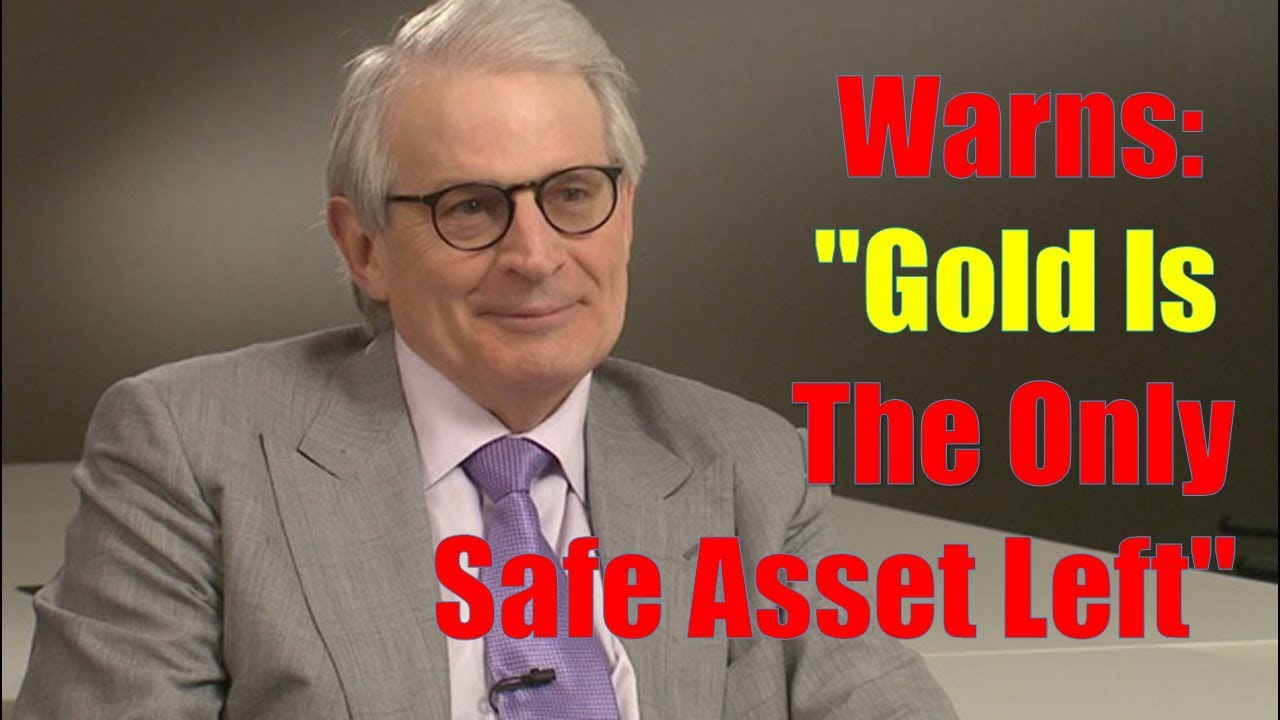
‘There is nowhere to go from here’ are the words that ring in your ears after listening to a recent interview on USA Watchdog with former Reagan White House Budget Director David Stockman.
This might seem a depressing perspective to take but what Stockman is referring to is the fiscal and financial crisis that is on its way. The final straw of which is Trump’s massive tax cuts and the huge costs therein. It will contribute to a ‘thundering collision’ in the ‘bond market’ and the impending collapse of the third financial bubble in the last 17 years- arguably the largest bubble in world history.
For investors there is still somewhere to go, believes Stockman, and that is into gold and silver bullion:
‘If you have $10,000 to put in a safe place, put it into gold and silver not in the Wall St. stock and bond market,’ advises Stockman.
“Fiscal calamity of biblical proportions”
These quotes are taken from an interview Stockman gave at the end of December, on the very day the US Senate approved drastic changes to the US tax code.
Whilst Stockman has believed for some time that the gig is up when it comes to the current state of play, he expresses his concerns that the decision to implement major tax cuts will be the icing on the cake.
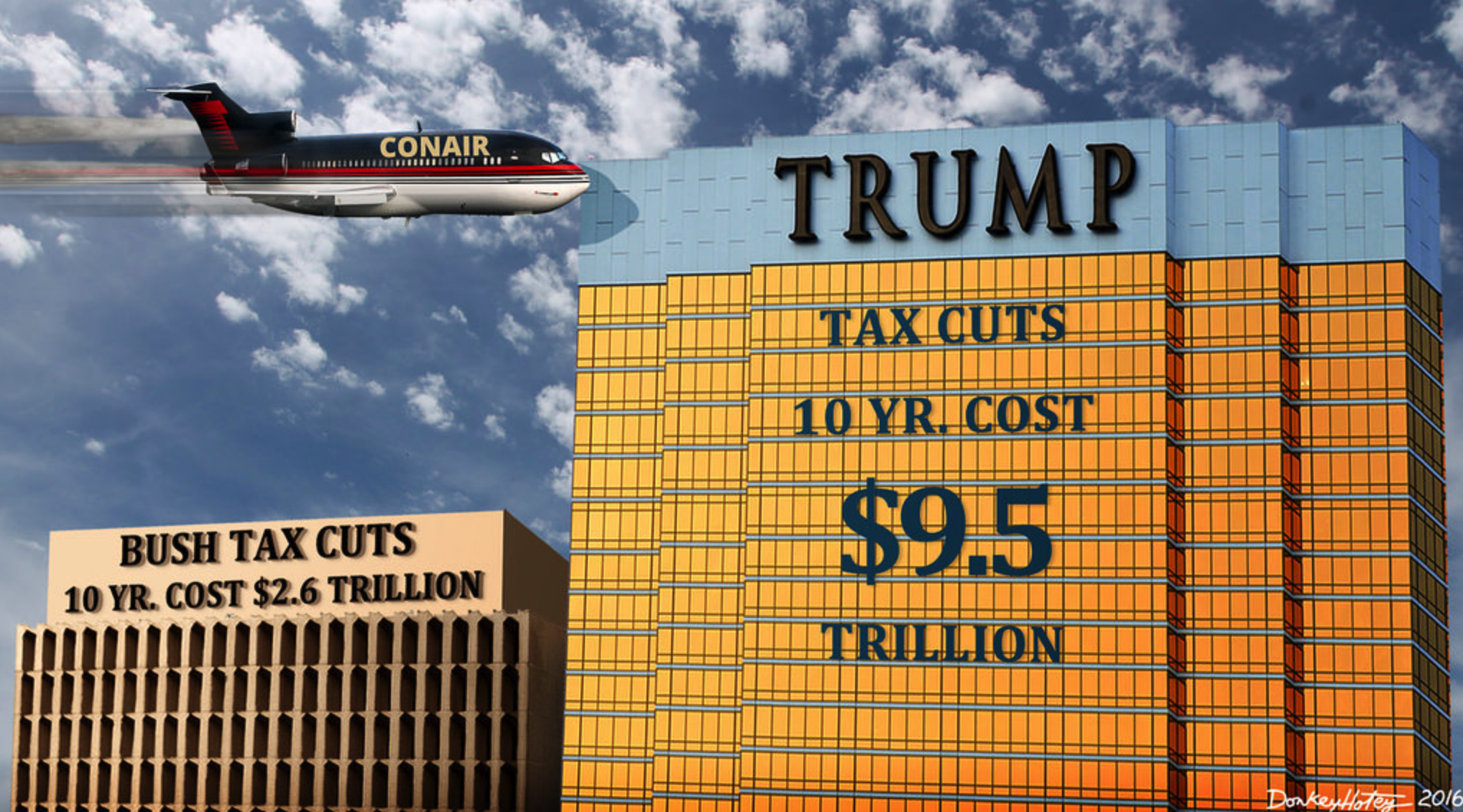
For bipartisan Stockman, the US government has not earnt the right or created enough value in the economy in order to make such reductions in the tax system. He is not against tax cuts per se, but feels strongly that this government has not done enough to go there and needs to cut costs.
The changes are made worse by the fact that they are ‘front loaded’, with a $280 billion tax cut expected to come to the fore in just nine months time
“…this bill will add $2.5 trillion to the public debt which, and this is a key point, is already going to rise by $10 trillion over the next decade based on the current law and taxes that is still in.”
Previously, Stockman has done a brilliant breakdown of what the US tax changes mean in numerical terms which you can read here. His summary will paint the picture for you:
“…what you have is a sharply downward sloping taper of tax cuts and revenue losses, which makes the bill a classic Keynesian deficit stimulus through the tax code, not a supply side incentive driver; and one so tangled up in the nation’s fiscal strait-jacket that it ends up in political la la land.”
China downgrades U.S. over political ‘deficiencies’
The disaster that is the GOP’s tax plan has not gone unnoticed by those who are just waiting for the US to trip up.
Dagong Global Credit Rating Co., one of China’s largest credit rating agencies, chose to downgrade the United States’s credit rating from A- to BBB+ yesterday, citing increased U.S. reliance on debt. It also chose to award the US sovereign ratings a negative outlook, specifically citing the GOP’s recently-passed tax-reform plan as justification for doing so.
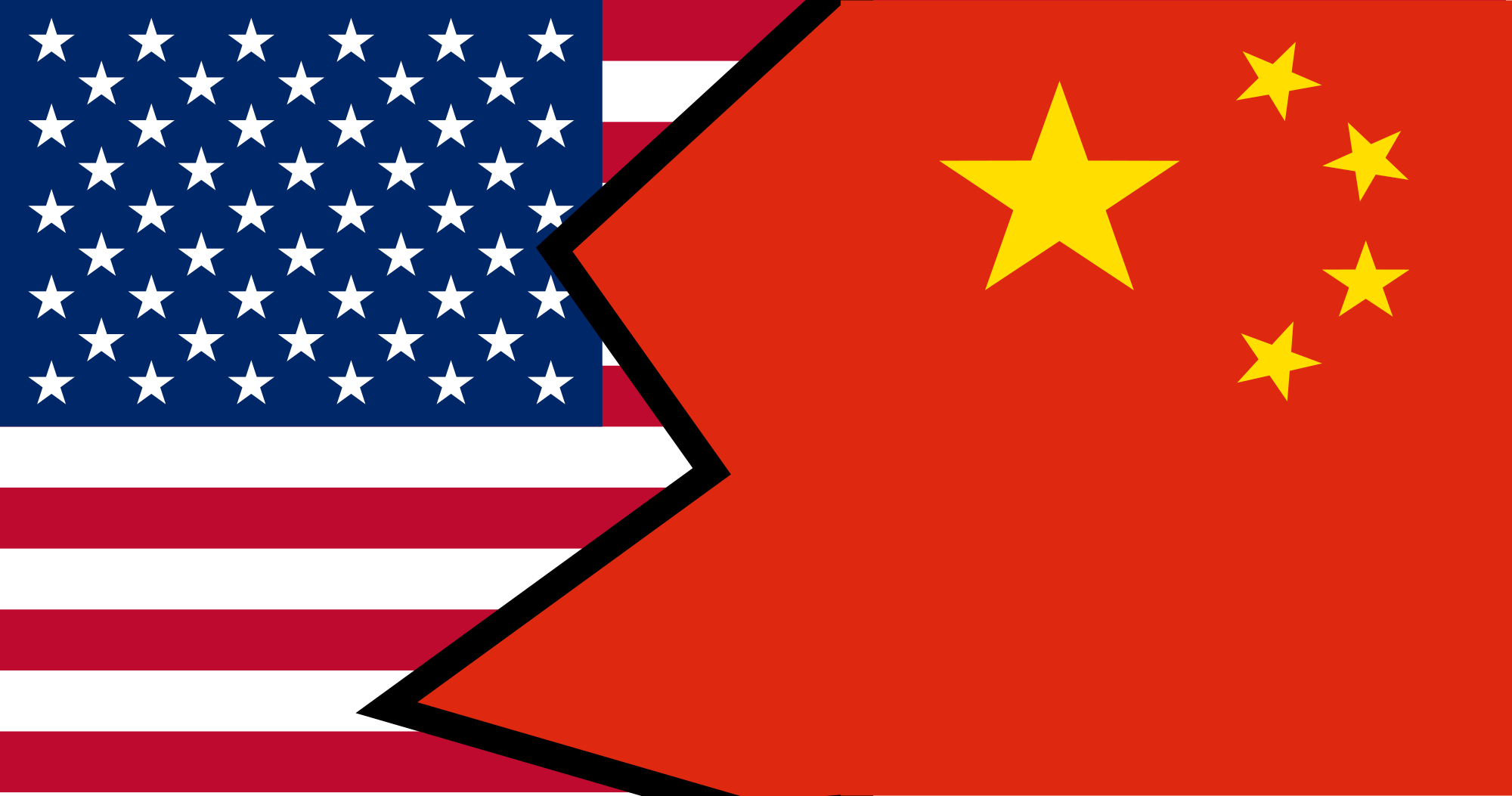
“The perennial negative impact of the superstructure on the economic base has continued to deteriorate the debt repayment sources of the federal government, and this trend will be further exacerbated by the government’s massive tax cuts…The government did not discover from the financial crises that it is the debt-driven mode of economic development that has hindered the country from making ends meet…Deficiencies in the current U.S. political ecology make it difficult for the efficient administration of the federal government, so the national economic development derails from the right track.”
The Chinese foresee exactly what Stockman is warning of – ‘A financial collision waiting to happen’. With what will these tax cuts be colliding with? Well, the fallout from the massive bond buying and QE that has completely distorted markets in the last decade and even before.
Bonds no longer keeping the bubble going
The fallout from central banks realising their money printing is unsustainable is more dangerous than the damage we will see from the US tax changes, argues Stockman. But together they create a perfect storm:
“The central banks realize they cannot keep printing money at these crazy rates, and by that I mean the bond buying. Now, they are going to begin to normalize and shrink their balance sheet. . . . By the fall (of 2018), they (the Federal Reserve) will be shrinking their balance sheet by $600 billion a year. What that means in plain simple English is that they (the Fed) are dumping $600 billion a year of existing bonds into the market just as Uncle Sam will be attempting to borrow $1.25 trillion more. Now, if you don’t think that is a financial collision waiting to happen, then I am not sure what would be.
We are heading for a thundering collision in the bond market that will drive yields upward far more than the market is expecting. The stock market operates on the illusion of permanently low interest rates. When interest rates start to rise, everything is going to come apart because cheap debt has been priced in forever, and we are heading for far more expensive debt. . . . Bond prices are going to collapse when yields begin to rise. . . . Stock prices are going to collapse big-time when the underlying predicate of cheap debt, massive stock buy backs and M&A deals and everything else supporting the market today finally reverses. So, we are going to have deflation in the canyons of Wall Street, and that will not be a happy day.”
No liquidity crisis here
The above will not necessarily lead to a liquidity crisis. After all, the money (read: liquidity) that the Fed created is still out there. Stockman believes this will be a ‘value reset’. Values have been pumped up massively and soon the air will be let out.
For those who think we haven’t experienced inflation as a result of the printing-spree central banks have been on, then you have been looking in the wrong place. It hasn’t been showing up in the all the places standard inflation calculators look at. Instead, it has been rearing its head in financial asset prices.
One just needs to look at the performance of the S&500 and the individual stock prices of FAANG in order to spot inflation. Or, says Stockman look at net household wealth. At the start of the last crash (in 2009) net US household wealth was $55 trillion, at the last 2017 measure it was $97 trillion. Where does this come from? ‘Huge amounts of bottled air’ says Stockman.
When interest rates start to rise it is here that we will see a massive drop in values. The reset will have begun.
How will the man on the street survive?
Stockman believes standard retail investors, savers and pensioners have ‘been punished pretty badly’ and seen their ‘savings savaged’ thanks to central banks’ quantitative easing policies.
On the upside, the inevitable increase in interest rates will do some good for those who have been prudent in recent years. However, how safe will it be to even put your money into the system given the impending ‘collision’? You understandably want to have some diversification.
For Stockman, this is the safe investments that are gold and silver bullion.
“I think the time to buy (gold and silver) is ideal. Gold is the ultimate and only real money. Gold is the only safe asset when push comes to shove.
They tell you to buy the government bond, that’s a safe asset. It’s not a safe asset at its current price. I am not saying the federal government is going to default in the next two or three years. I am saying the yield on a 10-year bond of 2.4% is way below of where it’s going to end up. So, the only safe asset left is gold.
This crazy Bitcoin mania has drained off what would otherwise be a demand for gold. . . . When Bitcoin collapses, spectacularly, which it will because it’s sheer mania in the markets right now. When it collapses, I think a lot of that demand will come back into gold, as well as people fleeing the standard stock and bond markets for the first time in 9 or 10 years…Put $10,000 in gold or silver not in the Wall St stock or bond market‘
We would take Stockman’s advice further and specify that you invest in physical gold and silver bullion that is both allocated and segregated. By avoiding digital gold platforms and paper and electronic gold, you are ensuring that you are owning your safe haven investments and financial insurance in the safest way possible.
Related reading
Mutual Funds, ETFs at Risk of a Run – David Stockman
$100 Trillion Global Bond Bubble Poses “Systemic Risk” To Financial System – FT
Buy Gold As Bonds Are ‘Biggest Bubble In World’ – Warns Billionaire Singer
News and Commentary
Gold prices inch up as dollar hits 3-yr lows (Reuters.com)
Dollar stoops to three-year low, euro shakes off Merkel coalition concerns (Reuters.com)
Gold rebounds and rises to $1340 as USD slides (FXStreet.com)
Bitcoin falls more than 7 percent as regulation worries mount (Reuters.com)
Up to 95 Percent of Cryptocurrencies ‘Will Drop to Zero’ – Analyst (SputnikNews.com)

Source: Sputnik
Video: BlackRock’s Hambro Sees Commodities Bull Run in 2018 (Bloomberg.com)
After The Carillion Collapse: Who Is To Blame? (ZeroHedge.com)
Monetary Metals Holding Up Well Despite Suppression – GATA (CrushTheStreet.com)
SWOT Analysis: Will Higher Inflation Cause Gold Prices to Rise? (GoldSeek.com)
Gold Prices (LBMA AM)
17 Jan: USD 1,337.35, GBP 969.45 & EUR 1,092.48 per ounce
16 Jan: USD 1,334.95, GBP 970.38 & EUR 1,091.32 per ounce
15 Jan: USD 1,343.00, GBP 971.93 & EUR 1,092.93 per ounce
12 Jan: USD 1,332.90, GBP 978.75 & EUR 1,099.78 per ounce
11 Jan: USD 1,319.85, GBP 978.14 & EUR 1,104.45 per ounce
10 Jan: USD 1,321.65, GBP 976.96 & EUR 1,103.31 per ounce
09 Jan: USD 1,314.95, GBP 972.01 & EUR 1,102.19 per ounce
Silver Prices (LBMA)
17 Jan: USD 17.21, GBP 12.49 & EUR 14.10 per ounce
16 Jan: USD 17.10, GBP 12.43 & EUR 13.99 per ounce
15 Jan: USD 17.12, GBP 12.58 & EUR 14.14 per ounce
12 Jan: USD 17.12, GBP 12.56 & EUR 14.12 per ounce
11 Jan: USD 17.01, GBP 12.64 & EUR 14.24 per ounce
10 Jan: USD 17.13, GBP 12.64 & EUR 14.27 per ounce
09 Jan: USD 17.05, GBP 12.60 & EUR 14.30 per ounce
Recent Market Updates
– Silver Prices To Surge – JP Morgan Has Acquired A “Massive Quantity of Physical Silver”
– London Property Crash Looms As Prices Drop To 2 1/2 Year Low
– Gold Bullion Up 1% In Week, Heads For 5th Weekly Gain As Bonds Sell Off
– Gold Prices Rise To $1,326/oz as China U.S. Treasury Buying Report Creates Volatility
– Gold Hits All-Time Highs Priced In Emerging Market Currencies
– World is $233 Trillion In Debt: UK Personal Debt At New Record
– 10 Reasons Why You Should Add To Your Gold Holdings
– Spectre, Meltdown Highlight Online Banking and Digital Gold Risks
– Palladium Prices Surge To New Record High Over $1,100 On Supply Crunch Concerns
– Gold Has Best Year Since 2010 With Near 14% Gain In 2017
– Happy 2nd Birthday Bail-in Tool! We Suggest Gold As The Perfect Gift
– 98,750,067,000,000 Reasons to Buy Gold in 2018
– Gold, Bitcoin and the Blockchain Replaces the Banks – Realists Guide To The Future

END
Another Bitcoin exchange closes after regulatory crackdowns
(courtesy zerohedge)
BitConnect Closes Exchange After State Crackdown Over Unregulated Sales
Following various red flags, including allegations by none other than the founder of Ethereum and Litecoin that it was running a Ponzi scheme, Bitcoin investment platform BitConnect announced it was closing the company’s cryptocurrency exchange and lending operation after receiving two cease-and-desist letters from state authorities for the unauthorized sale of securities and suffering from denial-of-service attacks.
In addition to offering cryptocurrency exchange services, BitConnect offered to let people receive interest on their digital coin balance by lending or investing their capital.
In a blog post – titled “Changes coming for the Bitconnect [sic] system – Halt of lending and exchange platform” posted on its website, the company said that is “closing the Bitconnect [sic] lending and exchange platform.”
It concluded that “This is not the end of this community, but we are closing some of the services on the website platform and we will continue offering other cyptocurrency [sic] services in the future.”

Both the Texas State Securities Board and North Carolina Secretary of State Securities Division warned that the firm isn’t registered to sell securities in those states, the company said on its website Tuesday. BitConnect offered to let people receive interest on their digital coin balance by lending or investing their capital.
According to the statement, the company will “continue offering other cryptocurrency services in the future.” The questionnable BitConnect X ICO – which was explicitly named in a cease and desist letter served by the Texas Securities Board – will remain “functional.” As Bloomberg notes, BitConnect’s token, BCC, was among the world’s top-20 most successful tokens until its price plunged 65 percent since Jan. 3, as the states announced the actions.
Launched a year ago, the coin still has a market cap of over $200 million, after taking a massive dip to $33, ot -87%, as per CoinMarketCap. By comparison, its value fluctuated around the $425 mark less than 10 days ago.
In addition to its legal trouble and inability to protect itself from continuous DDoS attacks, the company blamed the closing of its lending and exchange services on “bad press.” That is despite the fact that most of this bad press circulated around the severity of their legal troubles.
According to the Next Web, prior to the closure, “the shady Bitcoin investment scheme was mired in a litany of legal troubles, including cease and desist orders from the UK in November, as well as two more from from the US this month – one from the Texas Securities Board and one from the North Carolina Securities Division.”
Leading up to the announcement, BitConnect promoters suddenly began distancing themselves from the project. Coincidentally, the website was struggling with a series of server downtime – all of which began shortly after the cease and desist orders rolled in.
* * *
News of BitConnect’s closure, which were specific to what many had deemed a “shady business” hit on Tuesday afternoon and were widely anticipated by many in the business, and hit around the time the wave of cryptocurrency selling accelerated, briefly dragging bitcoin below $10,000.
It is unclear how much of the broader selloff was catalyzed by the news of BitConnect’s woes , but judging by the sharp rebound in bitcoin and its digital currency peers in the past hour, the market appears to be re-normalizing slowly, realizing that the crackdown against BitConnect is not a broader attack on the cryptocurrency space but merely removal of some of the better known “bad actors.”
Crypto-Carnage Concludes? Bitcoin Soars Back Above $11k As Futures Expire
Update 1715ET: As January Bitcoin Futures approached expiration…

So cryptocurrencies were suddenly bid…

As it seems the 9500 Bitcoin net speculative short position sparked a squeeze that ramped from below $9500 to over $11,500..

* * *
Update 1200ET: Bitcoin has rebounded over $1000 off its lows, breaking back above $10,000…

* * *
Having rebounded after the BitConnect headlines sent prices plunging, cryptocurrencies are more sedately limping lower this morning with Bitcoin dropping back below $10,000. The question on everyone’s mind, did the bubble just burst or do you BTFD?
It’s been an ugly week for cryptos…

With the heatmap a sea of red…

… And Bitcoin back below $10,000:

… down 50% from its all time highs.

Bitcoin broke its 100DMA – which has acted a broad support in the last year…

And Bitcoin Futures at the lowest since inception on heavy volume (note that Bitcoin spot topped as CBOE unleashed its futures contract)…
Notably – today is the expiration of the first CBOE Bitcoin futures contract. CFTC reports a 1907 contract net short position (around 9500 Bitcoin short) and one wonders what impact that is having on the market today)

Bitcoin is now flirting with the key 9,978 support level, which Goldman yesterday noted is critical for the future level of bitcoin. As Goldman’s chief technician wrote, “Watch for signs of a base ahead of 9,978. Setup weakens through 9,836. Turn neutral/cautious through 7,882.”

Which means buyers materialize or it’s all downhill from here.
* * *
Piling on, during his earnings call this morning, Bank of America customers are welcome to buy Bitcoin and other cryptocurrencies, just not through the lender’s Merrill Lynch unit, Chief Executive Officer Brian Moynihan said.
“We have limited our relationships and I think the thing speaks for itself,” Moynihan said Wednesday on a call with reporters after reporting fourth-quarter results.
“We’ve basically told people that they could buy it in other accounts, but not at Merrill Lynch. And so it’s just our view that customers should be careful here.”
Merrill Lynch told employees last month not to offer clients Grayscale’s Bitcoin Investment Trust, one of the few financial instruments directly holding the digital coin. Moynihan said Wednesday the bank is concerned with not being able to identify who’s buying and selling.
Which led Bloomberg to ask the question: Will the cryptocurrency go down as one of history’s most infamous bubbles, alongside tulipmania and the dot-com craze?
In a follow-up to our post from a month ago, Bloomberg looks at where we are now relative to ‘the big bubbles’…
As the chart shows, the cryptocurrency’s nearly 60-fold increase during the past three years was truly extraordinary.

The magnitude of Bitcoin’s boom (before it lost as much as 48 percent from its Dec. 18 high) suggests investors have reason to be worried.
However, Bulls say that Bitcoin’s boom is far from over, and that there’s more to analyzing a market than just measuring price gains. While the recent tumble has alarmed some investors, the cryptocurrency has bounced back from several previous swoons exceeding 50 percent. If Bitcoin did become a widely-accepted form of digital gold, as predicted by Cameron Winklevoss of Facebook fame, it could have a lot further to surge.
There’s also more than one way to slice a rally. On an annualized basis, Bitcoin’s three-year rise has been slower than the gains seen during several of history’s biggest manias — most notably the Mississippi and South Sea bubbles.
Still, skeptics abound.
Howard Wang of New York-based Convoy Investments LLC and Jeremy Grantham of GMO LLC have analyzed Bitcoin’s advance relative to past frenzies and concluded that it’s unsustainable. Grantham, who helps oversee about $74 billion as GMO’s chief investment strategist, summed up his concerns in a Jan. 3 letter to investors:
“Having no clear fundamental value and largely unregulated markets, coupled with a storyline conducive to delusions of grandeur, makes this more than anything we can find in the history books the very essence of a bubble,” he wrote.
However, as CoinTelegraph notes, although it’s not hard to find plentiful online resources asserting there’s no doubt Bitcoin is a huge bubble soon to burst, some people provide alternative views. One of them is Ben Davies, co-founder of another cryptocurrency called Glint. He thinks people are not looking at the bigger picture of Bitcoin, and that’s causing them to incorrectly see it as a bubble.
Davies also thinks the way people often compare Bitcoin to the bubble associated with tulip bulbs doesn’t hold water. He notes that although the prices of tulips soared then experienced a sharp downturn, that historic event is a “poor comparison.” He asserts the price increases associated with tulips were not similar to the cryptocurrency phenomenon.
However, even Davies admits Bitcoin “has all the hallmarks and antecedents that are the precursor to a bubble.”
Silver: Once And Future Money
Authored by James Rickards via The Daily Reckoning,
The Roman Republic and the later Roman Empire had gold coins called the aureus and solidus, but they also minted a popular silver coin called the denarius. One denarius was the daily wage for unskilled labor and Roman soldiers.
Of course, in the late Empire, the aureus, solidus and denarius were all debased by mixing the gold and silver with base metals. The decline of the Roman Empire went hand in hand with the decline of sound money.
In the early ninth century AD, Charlemagne greatly expanded silver coinage to compensate for a shortage of gold. This was successful in stimulating the economy of the predecessor of the Holy Roman Empire. In a sense, Charlemagne was the inventor of quantitative easing over 1,000 years ago. Silver was his preferred form of money.
Under the U.S. Coinage Act of 1792, both gold and silver coins were legal tender in the U.S. From 1794 to 1935, the U.S. Mint issued “silver dollars” in various designs. These were widely circulated and used as money by everyday Americans. The American dollar was legally defined as one ounce of silver.
The American silver dollar of the late eighteenth century was a copy of the earlier Spanish Real de a ocho minted by the Spanish Empire beginning in the late sixteenth century. The English name for the Spanish coin was the “piece of eight,” (ocho is the Spanish world for “eight”) because the coin could easily be divided into one-eighth pieces.
Until 2001 stock prices on the New York Stock Exchange were quoted in eighths and sixteenths based on the original Spanish silver coin and its one-eight sections.
Until 1935 U.S. silver coins were 90% pure silver with 10% copper alloy added for durability. After the U.S. Coinage Act of 1965, the silver content of half-dollars, quarters and dimes was reduced from 90% to 40% due to rising price of silver and hoarding by citizens who prized the valuable silver content of the older coins.
The new law signed by President Johnson in 1965 marked the end of true silver coinage by the U.S. Other legislation in 1968 ended the redeemability of old “silver certificates” (paper Treasury notes) for silver bullion.
Thereafter, U.S. coinage consisted of base metals and paper money that was not convertible into silver; (gold convertibility had already ended in 1933).
Let’s hope that the U.S. is not following in the footsteps of the Roman Empire in terms of a political decline coinciding with the substitution of base metals for true gold and silver coinage.

In 1986, the U.S. reintroduced silver coinage with a .999 pure silver one-ounce coin called the American Silver Eagle. However, this is not legal tender although it does carry a “one dollar” face value. The silver eagle is a bullion coin prized by investors and collectors for its silver content. But it is not money.
Who in their right mind would pay a full ounce of silver for goods or services worth only a buck?
In short, silver is as much a monetary metal as gold, and has just as good a pedigree when it comes to use in coinage. Silver has supported the economies of empires, kingdoms and nation states throughout history.
It should come as no surprise that percentage increases and decreases in silver and gold prices denominated in dollars are closely correlated.
Silver is more volatile than gold and is more difficult to analyze because it has far more industrial applications than gold. Silver is useful in engines, electronics and coatings.
Interestingly, gold is used very little other than as money in bullion form. Gold has some highly specialized uses for coating and ultra-thin wires, but these are a very small part of the gold market.
Both gold and silver are used extensively in jewelry. I consider jewelry to be “wearable wealth” and akin to bullion rather than a separate market segment.
Because silver has more industrial uses than gold, the price can rise or fall based on the business cycle independent of monetary considerations. However, over long periods of time, monetary and bullion aspects tend to dominate industrial uses and silver closely tracks its close cousin gold in dollar terms.
While gold and silver prices have a high correlation, the correlation is not perfect. There are times where gold outperforms silver and vice versa. Right now we are in a sweet spot for silver.
Gold is performing well, and silver is performing even better!

The latest data is telling me that silver prices are set to rally. This conclusion is based in part on a bull market thesis for gold.
Gold staged an historic rally from 1999 to 2011, from about $250 per ounce to $1,900 per ounce, a gain of about 900% in that twelve-year span. Since then, gold prices fell in a 50% retracement (using the 1999 base) and bottomed at around $1,050 per ounce in December 2015.
Secular bull and bear market tops and bottoms are difficult to see in real time, but they become apparent with hindsight. Gold gained over 23% in 2016-2017. From the perspective of early 2018, it is clear than the gold bear market ended over two years ago and a new multi-year secular bull market has begun.
Silver is not only along for the ride, it is showing even better performance than gold, albeit with greater volatility. Both the gold and silver rallies are based on a combination of supply/demand fundamentals, geopolitical pressures creating safe haven demand, and increasing inflation expectations as confidence in central banking and fiat money erodes.
In addition, silver has an excellent technical set-up right now. Precious metals analyst Samson Li writing in Thomson Reuters on January 2, 2018 offers this insight in the current technical trading position for silver:
Technically, silver is ripe for a major breakout to the upside in 2018. The CFTC figures Managed Money positions show that COMEX silver has been in a net short for three straight weeks since 12th December. This is not unheard of but is relatively rare for silver; the last time COMEX silver was net short was between the end of June and the first week of August 2015.
As investment sentiment can swing from one extreme to another, and given silver’s innate volatility, this net short position should point to the possibility of a sharp short-covering rally. Looking back at the corresponding period in 2015, silver price was trading at $15.61/oz on the 7th July, and it was the third consecutive week recording a net short position. Approximately a year later, silver was trading over $20/oz in July 2016…
[T]he current poor sentiment does suggest that silver could be one of the better performing precious metals in 2018, barring any crisis that could trump most of the commodities but gold.
The good news is that this secular rally in silver is in its early days. Recent gains will be sustained and amplified in the months and years to come.
Silver will outperform gold in the short-run, and shares in well-managed silver mining companies will do even better than silver.
Monetary metals holding up well despite suppression, GATA chairman says
Submitted by cpowell on Wed, 2018-01-17 00:22. Section: Daily Dispatches
7:23p ET Tuesday, January 16, 2018
Dear Friend of GATA and Gold:
GATA Chairman Bill Murphy, interviewed by Ken Ameduri for Crush The Street, says the monetary metals are holding up well against the intensifying campaign to keep them down, but he admits that the rise of cryptocurrencies has been taking some interest away from the metals. The interview is 13 minutes long and can be heard at Crush The Street here:
https://crushthestreet.com/videos/live-interviews/precious-metals-suppre…
CHRIS POWELL, Secretary/Treasurer
Gold Anti-Trust Action Committee Inc.
CPowell@GATA.org
END
Your early WEDNESDAY morning currency, Asian stock market results, important USA/Asian currency crosses, gold/silver pricing overnight along with the price of oil Major stories overnight/9 AM EST
i) Chinese yuan vs USA dollar/CLOSED UP AT 6.4348 /shanghai bourse CLOSED UP AT 8.07 POINTS 0.24% / HANG SANG CLOSED UP 78.66 POINTS OR 0.25%
2. Nikkei closed DOWN 83.47 POINTS OR 0.35% /USA: YEN FALLS TO 110.73
3. Europe stocks OPENED RED /USA dollar index RISES TO 90.72/Euro FALLS TO 1.2217
3b Japan 10 year bond yield: RISES TO . +.090/ GOVERNMENT INTERVENTION !!!!(Japan buying 100% of bond issuance)/Japanese yen vs usa cross now at 110.73/ THIS IS TROUBLESOME AS BANK OF JAPAN IS RUNNING OUT OF BONDS TO BUY./JAPAN 10 YR YIELD FINALLY IN THE POSITIVE/BANK OF JAPAN LOSING CONTROL OF THEIR YIELD CURVE AS THEY PURCHASE ALL BONDS TO GET TO ZERO RATE!!
3c Nikkei now JUST BELOW 17,000
3d USA/Yen rate now well below the important 120 barrier this morning
3e WTI:: 63.48 and Brent: 68.74
3f Gold UP/Yen DOWN
3g Japan is to buy the equivalent of 108 billion uSA dollars worth of bond per month or $1.3 trillion. Japan’s GDP equals 5 trillion usa./“HELICOPTER MONEY” OFF THE TABLE FOR NOW /REVERSE OPERATION TWIST ON THE BONDS: PURCHASE OF LONG BONDS AND SELLING THE SHORT END
Japan to buy 100% of all new Japanese debt and by 2018 they will have 25% of all Japanese debt. Fifty percent of Japanese budget financed with debt.
3h Oil DOWN for WTI and DOWN FOR Brent this morning
3i European bond buying continues to push yields lower on all fronts in the EMU. German 10yr bund FALLS TO +.552%/Italian 10 yr bond yield UP to 1.989% /SPAIN 10 YR BOND YIELD UP TO 1.498%
3j Greek 10 year bond yield FALLS TO : 3.763?????????????????
3k Gold at $1336.00 silver at:17.19: 6 am est) SILVER NEXT RESISTANCE LEVEL AT $18.50
3l USA vs Russian rouble; (Russian rouble DOWN 10/100 in roubles/dollar) 56.64
3m oil into the 63 dollar handle for WTI and 68 handle for Brent/
3n Higher foreign deposits out of China sees huge risk of outflows and a currency depreciation. This can spell financial disaster for the rest of the world/China forced to do QE!! as it lowers its yuan value to the dollar/
JAPAN ON JAN 29.2016 INITIATES NIRP. THIS MORNING THEY SIGNAL THEY MAY END NIRP. TODAY THE USA/YEN TRADES TO 110.73 DESTROYING JAPANESE CITIZENS WITH HIGHER FOOD INFLATION
30 SNB (Swiss National Bank) still intervening again in the markets driving down the SF. It is not working: USA/SF this morning 0.9645 as the Swiss Franc is still rising against most currencies. Euro vs SF is 1.1774 well above the floor set by the Swiss Finance Minister. Thomas Jordan, chief of the Swiss National Bank continues to purchase euros trying to lower value of the Swiss Franc.
3p BRITAIN VOTES AFFIRMATIVE BREXIT/LOWER PARLIAMENT APPROVES BREXIT COMMENCEMENT/ARTICLE 50 COMMENCES MARCH 29/2017
3r the 10 Year German bund now POSITIVE territory with the 10 year FALLING to +0.552%
The bank withdrawals were causing massive hardship to the Greek bank. the Greek referendum voted overwhelming “NO”. Next step for Greece will be the recapitalization of the banks and that will be difficult.
4. USA 10 year treasury bond at 2.559% early this morning. Thirty year rate at 2.8350% /
5. Details Ransquawk, Bloomberg, Deutsche bank/Jim Reid.
(courtesy Jim Reid/Bloomberg/Deutsche bank/zero hedge)
What Selloff: US Futures Rebound Sharply, Dow 26,000 Back On Deck
While global shares pulled back in early trading from record highs on Wednesday, U.S. equity index futures are staging another comeback and point to a higher open on Wednesday following a volatile day of trading Tuesday which saw the S&P 500 have its worst reversal in two years. Whether yesterday sharp drop in the S&P was due to fears of a government shutdown, which now appears less likely as another short-term spending bill appears imminent, or due to fears over what Steve Bannon may tell Mueller, it is now largely forgotten, and the S&P was up by 9 points, rising 0.3% from the Tuesday close and retracing much of the day’s selloff, once again approaching 2,800 in the cash index.
Having retreated at the start of European trading, following declines in a number of Asian markets, Europe’s Stoxx 600 index erased its earlier drop and traded little changed, as U.S. futures pointed to stronger open – Dow Jones futures up 0.5% and the 26,000 is once again in sight, with European insurance and tech sectors leading the rebound, while media, banking and telecom sectors retreat. Also out of Europe, we got some final CPI prints:
- EU Inflation Final MM (Dec) 0.4% vs. Exp. 0.4% (Prev. 0.1%)
- EU Inflation, Final YY (Dec) 1.4% vs. Exp. 1.4% (Prev. 1.4%)
Asian equities stepped back from a record high as the region’s resource shares were knocked by falling oil and commodity prices, however, Chinese shares bucked the trend, climbing to a fresh record in Hong Kong. Australia’s ASX 200 (-0.5%) and Japan’s Nikkei 225 (-0.3%) were negative as losses in miners continued to weigh on Australia, while risk appetite in Japan remained sapped by the recent JPY strength. Elsewhere, Hang Seng (-0.4%) pulled back from yesterday’s record close and the Shanghai Comp. (+0.6%) bucked the trend after another firm liquidity effort by the PBoC, although a slump in Shenzhen stocks provided some mainland jitters as the ChiNext board for small cap and tech firms fell to its lowest since July after blockchain-related stocks tumbled in the wake of the crypto-chaos.

Finally, 10yr JGBs were subdued as prices failed to benefit from a broad risk-averse tone, while today’s Rinban announcement was also uneventful in which the BoJ maintained its purchase amounts in the belly to short-end.
The dollar DXY index rebounded from close to a three-year low, bounding away from 90.00 level for third successive day while Treasury yields rose as investors braced for Congressional talks to avert a government shutdown Friday. The loonie weakened a second day before a BOC rate decision due later Wednesday, while EM currencies traded in the red.
The euro slipped from a fresh cycle high, yet held comfortably above $1.22 even as ECB officials urged caution over the common currency’s strength. Overnight, a chorus of ECB speakers warned on the euro’s growing strength, with Constancio and Nowotny added to Villeroy’s comments yesterday, totaling three ECB speakers warning on EUR moves. Specifically, Nowotny said Euro exchange rate must be observed, while Constancio said he is worried EUR moves don’t reflect fundamentals; says changes to ECB’s forward guidance won’t be immediate.
Overall dollar weakness and growing optimism about the outlook of the European economy in 2018 has lent fresh legs to the euro’s rally after it gained more than 10 percent last year.
But the speed of the rise in the opening days of 2018 — up more than 3 percent in the last two weeks — has invited some comments from ECB officials this week, highlighting some growing concerns, according to analysts.
“The ECB is playing the good cop and the bad cop in terms of their comments over the euro but there is no doubt the currency’s rally has sowed the seeds of uncertainty in the ids of ECB policymakers,” said Viraj Patel, an FX strategist at ING in London.
The Canadian dollar traded at C$1.2452 per dollar off its three-month high of C$1.2355 hit on Jan 5. The Bank of Canada is seen as likely to raise its benchmark interest rate by 25 basis points to 1.25 percent later in the day, with analysts expecting three hikes this year.
Bitcoin extended its sharp tumble of the past 24 hours, skidding more than seven percent on Wednesday as investors were spooked by fears regulators might clamp down on the digital currency. The price of the world’s biggest and best known cryptocurrency fell to as low as $10,567 on the Luxembourg-based Bitstamp exchange.
In US Treasuries, the belly and long end of UST curve resume flattening with UST futures close to overnight lows after a large Aussie bond syndication. The UST/Bund spread widened 2.5bps, while a large number of BTP futures blocks sees Italy underperform versus rest of Europe. Crude futures push lower after Brent fails to hold above $70/bbl again, metals steady and the Bitcoin selloff continues if so far supported by the key $10k level.
Earnings are expected from Bank of America, Goldman Sachs and Alcoa. Federal Reserve is set to release its Beige Book, and macro data includes industrial production and manufacturing production
Market Snapshot
- S&P 500 futures up 0.37% to 2,793.00
- STOXX Europe 600 unchanged to 398.29
- VIX
- MSCI Asia Pacific down 0.09% to 182.66
- MSCI Asia Pacific ex Japan down 0.02% to 594.11
- Nikkei down 0.4% to 23,868.34
- Topix down 0.2% to 1,890.82
- Hang Seng Index up 0.3% to 31,983.41
- Shanghai Composite up 0.2% to 3,444.67
- Sensex up 0.8% to 35,060.64
- Australia S&P/ASX 200 down 0.5% to 6,015.81
- Kospi down 0.3% to 2,515.43
- German 10Y yield fell 1.0 bps to 0.552%
- Euro down 0.2% to $1.2238
- Italian 10Y yield fell 3.1 bps to 1.703%
- Spanish 10Y yield fell 0.6 bps to 1.496%
- Brent Futures down 0.3% to $68.96/bbl
- Gold spot down 0.2% to $1,335.53
- U.S. Dollar Index up 0.3% to 90.63
Top Overnight News from Bloomberg
- U.S. House Freedom Caucus’s Meadows: House doesn’t appear to have enough votes to pass current stopgap funding measure without Democratic support
- Fed’s Kaplan (non-voter): base case is for 3 hikes this year; may need to be more aggressive to keep economy from overheating
- ECB’s Nowotny: EUR appreciation is not helping; ECB has no exchange rate goal so we must only watch it in terms of economic developments
- ECB’s Constancio: worried about sudden EUR moves that do not reflect fundamentals; changes to forward guidance will not be immediate
- Robert Bogucki, who is the former head of New York foreign- exchange trading at Barclays Plc’s investment bank was charged for his alleged role in defrauding a client with a front-running scheme, the U.S. Justice Department said
- Recent euro appreciation “is not helping,” ECB Governing Council member Ewald Nowotny tells reporters
- Dallas Fed President Kaplan said he expects three rate increases this year, according to interview with WSJ
- Euro zone Dec. F CPI unrevised y/y at 1.4%; Core CPI unrevised 0.9%
Asia’s major stock markets traded mostly negative following a weak performance in the US, where the main indices reversed from record levels on political concerns including the looming government shutdown deadline and reports that former Trump strategist Steve Bannon was subpoenaed by Special Counsel Mueller. Furthermore, some also suggested profit taking in overbought conditions after both the S&P 500 and DJIA notched historical feats at the open in which they briefly rose above the 2800 and 26000 levels respectively for the 1st time ever. ASX 200 (-0.5%) and Nikkei 225 (-0.3%) were negative as losses in miners continued to weigh on Australia, while risk appetite in Japan remained sapped by the recent JPY strength. Elsewhere, Hang Seng (-0.4%) pulled back from yesterday’s record close and the Shanghai Comp. (+0.6%) bucked the trend after another firm liquidity effort by the PBoC, although a slump in Shenzhen stocks provided some mainland jitters as the ChiNext board for small cap and tech firms fell to its lowest since July after blockchain-related stocks tumbled in the wake of the crypto-chaos. Finally, 10yr JGBs were subdued as prices failed to benefit from a broad risk-averse tone, while today’s Rinban announcement was also uneventful in which the BoJ maintained its purchase amounts in the belly to short-end.
Top Asian News
- The Ex-Goldman Banker Who Quit to Take Over a Myanmar Empire
- India Cuts Planned Extra Borrowing to $3.1 Billion; Bonds Climb
- Philippines’ BPI to Raise up to 50B Pesos in Rights Offer
- BOJ Could Cut Stimulus Without Sparking Rate Surge, Moody’s Says
- India Is Said to Mull Selling HPCL at Not More Than 9% Premium
- Third HNA Unit Halted From Trading, Pending ’Major Matter’
European equity markets are lower, echoing the tone seen in Asia and the US, with Informa (-8.6%) shares propping up the FTSE 100 after reports that the company is in talks to merge with UBM, whose shares are up 12.5%. Burberry (-8.1%) shares are also lower after a disappointing trading update although tech shares outperform, lifted by ASML (+4.6%) after the chipmaker reported better than expected profit.
Top European News
- Juncker: Even if U.K. Leaves, We’d Facilitate Re- Accession
- Heathrow Plans Sloping Runway to Cut Costs by $3.4 Billion
- Melrose Makes Firm $10.2 Billion Offer to Acquire GKN
In FX, the ECB have continued to sound the alarm over the strengthening currency with Vice-President Constancio and Austrian Central Bank Governor Nowotny both echoing comments made yesterday by France’s Villeroy. Constancio said he is concerned about sudden movements that do not reflect fundamentals while Nowotny said the strengthening Euro is not helpful. The comments helped EUR/USD to session lows before finding support ahead of 1.2200 before today’s inflation data. Elsewhere, the USD has shown some signs of a recovery with USD/JPY approaching 111.00 and USD/CAD above 1.2450 ahead of the Bank of Canada decision
In commodities, WTI and Brent crude futures are both marginally lower in early European trade as markets look ahead to the weekly API inventory data (delayed to today following the MLK holiday). Gold and silver prices have generally tracked movements in the USD. Kuwait oil minister says compliance with production cuts stood at 125% in December; until now there is no plan or intention to exit the supply cut agreement. Niger Delta Avengers state that oil attacks are imminent.
Looking at the day ahead, there is the final revisions to the December inflation figures for the Euro area. The ECB’s Nowotny will speak at a conference in Vienna and BOE’s Saunders will also speak in London. In the US, the most significant release of note is the December IP print, while the January NAHB housing market index is also due. Late in the evening we’ll get the Fed’s Beige Book, while the Fed’s Evans and Mester are scheduled to speak shortly after. Bank of America and Goldman Sachs are due to report Q4 earnings.
US Event Calendar
- 7am: U.S. MBA Mortgage Applications, Jan. 12, no est., prior 8.3%
- 9:15am: U.S. Industrial Production MoM, Dec., est. 0.5%, prior 0.2%; Capacity Utilization, Dec., est. 77.4%, prior 77.1%
- 9:15am: U.S. Manufacturing (SIC) Production, Dec., est. 0.3%, prior 0.2%
- 10am: U.S. NAHB Housing Market Index, Jan., est. 72, prior 74
- 4pm: U.S. Total Net TIC Flows, Nov., no est., prior 151b; Net Long-term TIC Flows, Nov., no est., prior 23.2b
Central Banks
- 10am: Bank of Canada Rate Decision, Jan. 17, est. 1.25%, prior 1%
- 2pm: U.S. Federal Reserve Releases Beige Book
- 3pm: U.S. Fed’s Evans and Kaplan Speak on Economy and Monetary Policy
- 4:30pm: U.S. Fed’s Mester Discusses Monetary Policy Communication
DB’s Jim Reid concludes the overnight wrap
Talking of US equities, the melt up in the short-term continued at the open yesterday with the main indices cracking through 2,800, 26,000 and 7,300 for the first time and up around 1% at the very early session highs, partly supported by positive corporate results. However the rest of the day was spent reversing the moves and we closed -0.35%, -0.04% and -0.51% lower for the S&P 500, Dow and Nasdaq. The S&P’s intraday move of 1.41% was the largest seen since early December and the fifth highest change since December 2016. Within the S&P, losses were led by energy and materials stocks, in part as Brent crude oil retreated 1.58% yesterday, after rallying c40% from its recent lows in August. Further, GE’s shares also weakened -2.93% after announcing a $6.2bn charge related to its old portfolio of long term care insurance.
Elsewhere, the VIX jumped 14.76% higher to 11.66 – the fourth highest close since mid-September, while Bitcoin dropped c23% yesterday, weighed down by concerns of potential regulatory crackdowns. The crypto currency is partly recovering this morning, but is still down c41% since its recent high of $18,675 back in mid-December.
Turning to government bonds, core European 10y bond yields were 2-3bp lower (Gilts -2bp; Bunds -2.5bp), in part following a slightly dovish Reuters report where three unnamed sources noted the “ECB is unlikely to ditch a pledge to keep buying bonds at its meeting next week”. Although Reuters also noted that “any fundamental change to guidance was likely to come later, with the March meeting, when policymakers get updated forecasts….seen as a more likely option”. From where we were a week ago this is still more hawkish. Elsewhere, the UST 10y yields fell 1bp.
Staying on the topic of QE, the ECB’s Villeroy noted “we are predictable as to the direction of our policy and the sequencing, but we’re not pre-committed in terms of precise timing”, with the final outcome contingent on the progress on inflation. Further, he added “we did not say anything about what will happen after September, and our monetary policy is not driven by market expectations”. Elsewhere, he noted the recent change in the Euro is a “source of uncertainty which requires monitoring with regard to its possible downward effects on imported prices”.
Following on, the Bundesbank’s Weidmann noted the markets expectation that ECB interest rates won’t rise before the middle of 2019 “seems to be grosso modo in line with the current forward guidance of the government council”. On QE, he seems to have softened his stance a little, noting “if the positive development continues, it would be logical not to make substantial purchases beyond those already decided upon”.
This morning in Asia, markets have followed the US lead and are trading modestly lower. The Nikkei (-0.27%), Kospi (-0.40%) and Hang Seng (-0.37%) are all lower, with the latter weighed down by energy and discretionary consumer stocks. Turning to other markets performance from yesterday, European bourses were mixed but little changed with the Stoxx (+0.13%) and DAX (+0.35%) up modestly, while the FTSE fell 0.17% weighed down by energy and mining stocks. In contrast to the VIX, the Vstoxx was up only 2.5% to 11.35.
However the US only dipped into negative territory after Europe went home. Turning to currencies, the Euro initially weakened on news of a setback to Germany’s coalition talks but strengthened c0.6% post Weidmann’s comments to close broadly flat, along with Sterling. In commodities, precious metals softened slightly (Gold -0.12%; Silver -0.93%) while other base metals were broadly lower (Zinc -0.1%; Copper -1.3%; Aluminium -1.64%).
Away from markets, our team in China have published a summary of the 16th dbAccess China Conference which featured 27 speakers presenting their views on China’s economy from different perspectives. Some of the key takeaways include: i) China’s economic growth will slow in 2018 as policymakers shift focus to growth quality, ii) but GDP will likely be revised up in 2019 as a result of the economic census. This could provide room for lower growth in the next few years while maintaining the goal to double GDP by 2020, iii) monetary policy will remain tight and fiscal policy will tighten. Local governments will face tight constraints on its financing platforms and PPP projects, iv) real estate market will cool down and smaller real estate developers will face tight financing pressures and v) supply-side reform will continue its momentum in 2018, while SOE reform may gradually gain speed. For more details, please refer to their report.
In Germany, there was a setback to its efforts to form the next coalition government. Yesterday, the Berlin branch of the SPD voted against (21-8) the preliminary accord between Ms Merkel’s bloc and the SPD. As a reminder, votes at the SPD’s regional branches are non-binding and the larger branch of North Rhine-Westphalia which accounts for c25% of the votes remains undecided.
Nonetheless, it does partly illustrate the division within the party ahead of the crucial vote this Sunday where c600 SPD delegates will be attending. Elsewhere, the caucus chief of Ms Merkel’s CDU party Volker Kauder noted formal coalition talks between the two sides after SPD’s approval can be done fairly quickly, he said “there doesn’t have to be so much to be negotiated that we can’t achieve in two weeks”.
In the US, efforts to avoid a partial government shutdown from this Friday are still evolving, with Republican leaders weighing a move to extend the deadline until 16 February with the proposed measure not expected to include the DACA program. The main points of contention include lifting automatic budget caps on government spending, resolving the status of deferred action protections for undocumented immigrants who arrived in the US as children (the DACA program), and funding of the Children’s Health Insurance Program (CHIP).
Further, there is also the issue of securing enough votes in the Senate where the Republican may need 9 votes from the Democrats to pass a spending bill. Finally onto Brexit, the BOE’s deputy governor Sam Woods noted that the inclusion of UK based financial services firms in free trade deals with the EU post Brexit “is entirely technically feasible”, with a potential agreement “within a three year period from now”. Elsewhere, the EU side may still be hoping for a reversal of Brexit, with the EU Council President Tusk noting “if the UK government sticks to its decision to leave, Brexit will become a reality…unless there is a change of heart among our British friends” and “….our hearts are still open (to Britain)”, while the EC Chief Juncker said “our door still remains open”.
Before we take a look at today’s calendar, we wrap up with other data releases from yesterday. In the US, the January empire manufacturing index was below expectations at 17.7 (vs. 19), with the decline mainly due to an increase in inventories. Notably, the prior reading was upwardly revised by 1.6 and the sixmonth- ahead indices for general business conditions, capex and employment all strengthened this month.
In the UK, the December headline CPI was in line at 0.4% mom, but the core CPI was lower than expected at 2.5% yoy (vs. 2.6%) – the first monthly decline since June. Elsewhere, both the December core PPI and RPI was above market expectations, at 2.5% yoy (vs. 2.3%) and 4.1% yoy (vs. 3.9%) respectively. In Germany and Italy, the final readings for the December inflation were both unrevised at 1.6% yoy and 1% yoy respectively.
Looking at the day ahead, there is the final revisions to the December inflation figures for the Euro area. The ECB’s Nowotny will speak at a conference in Vienna and BOE’s Saunders will also speak in London. In the US, the most significant release of note is the December IP print, while the January NAHB housing market index is also due. Late in the evening we’ll get the Fed’s Beige Book, while the Fed’s Evans and Mester are scheduled to speak shortly after. Bank of America and Goldman Sachs are due to report Q4 earnings.
3. ASIAN AFFAIRS
i)Late TUESDAY night/WEDNESDAY morning: Shanghai closed UP 8.07 points or 0.24% /Hang Sang CLOSED UP 78.66 pts or 0.25% / The Nikkei closed DOWN 83.47 POINTS OR 0.35%/Australia’s all ordinaires CLOSED DOWN 0.51%/Chinese yuan (ONSHORE) closed WELL UP at 6.4348/Oil UP to 63.48 dollars per barrel for WTI and 68.74 for Brent. Stocks in Europe OPENED ALL RED. ONSHORE YUAN CLOSED UP AGAINST THE DOLLAR AT 6.4348. OFFSHORE YUAN CLOSED DOWN AGAINST THE ONSHORE YUAN AT 6.4364 //ONSHORE YUAN MUCH STRONGER AGAINST THE DOLLAR/OFF SHORE SLIGHTLY WEAKER TO THE DOLLAR/. THE DOLLAR (INDEX) IS MUCH STRONGER AGAINST ALL MAJOR CURRENCIES. CHINA IS VERY HAPPY TODAY.(GOOD MARKETS )
3 a NORTH KOREA/USA
NORTH KOREA/SOUTH KOREA/USA
Trump: it is very possible that the crisis with North Korea cannot be resolved peacefully
(courtesy zerohedge)
Trump: “Very Possible” Crisis With North Korea Can’t Be Resolved Peacefully
In an exclusive interview with Reuters, President Trump said on Wednesday that Russia is helping North Korea get supplies in violation of international sanctions and that Pyongyang is getting “closer every day” to being able to deliver a long-range missile to the United States. As a result, Trump said he hoped the standoff with Pyongyang could be resolved “in a peaceful way, but it’s very possible that it can’t.”
Having learned his lesson from his recent WSJ interview, Trump declined to comment when asked whether he had engaged in any communications at all with Kim, with whom he has exchanged public insults and threats, heightening tensions in the region. He did, however, blame Moscow:
“Russia is not helping us at all with North Korea,” Trump said during the Oval Office interview. “What China is helping us with, Russia is denting. In other words, Russia is making up for some of what China is doing.”
Which is ironic because it was a Chinese, not Russian ship, that was recently observed illegally selling oil to North Korea. It’s even more ironic that in the interview, Trump praised China for its efforts to restrict oil and coal supplies to North Korea but said Beijing could do much more to help constrain Pyongyang.
In any case, with North Korea still the major global challenge facing Trump this year, the president cast doubt during the 53-minute interview whether talks with North Korean leader Kim Jong Un would be useful. In the past he has not ruled out direct talks with Kim.
“I’d sit down, but I‘m not sure that sitting down will solve the problem,” he said, noting that past negotiations with the North Koreans by his predecessors had failed to rein in North Korea’s nuclear and missile programs.
“They’ve talked for 25 years and they’ve taken advantage of our presidents, of our previous presidents,” he said.
The remarks come after Trump’s statement earlier in January, in which he said he is “absolutely” willing to talk on the phone to North Korean leader Kim Jong-un if certain conditions are met.
* * *
In addition to slamming Russia, Trump said Pyongyang is steadily advancing in its ability to deliver a missile to the United States. “They’re not there yet, but they’re close. And they get closer every day,” said Trump.
Trump also said he welcomed talks between North and South Korea over the Winter Olympics to be held in the South next month and said this could be an initial phase in helping defuse the crisis.
He would not say whether the United States has been considering a limited, pre-emptive attack to show the North that the United States means business.
“We’re playing a very, very hard game of poker and you don’t want to reveal your hand,” he said.
U.S. officials had spoken of Trump’s willingness to weigh a pre-emptive strike despite the risk of touching off a war. But in recent days Trump has appeared to signal more of an openness toward diplomacy.
end
3 b JAPAN AFFAIRS
c) REPORT ON CHINA
China’s version of the Nasdaq, CHINEXT tumbles to 6 month lows as crypto related stocks crash
(courtesy zerohedge)
China’s ‘Nasdaq’ Tumbles To 6-Month Lows As Crypto-Related Stocks Crash
CHINEXT – China’s index of small cap and tech stocks – has tumbled in the last few days (while the major Chinese indices have risen), as blockchain-related stocks across Asia have crashed along with the cryptocurrency carnage.
As Bloomberg notes, stocks with exposure to digital currencies decline in Asia after Bitcoin and rival cryptocurrencies slumped Tuesday amid fears of regulatory crackdowns. Bitcoin pares some of loss with 5.6% gain as of 10:03am in Hong Kong.
- Japan: Ceres Inc. -9.8%, GMO Internet Inc. -7.2%, Infoteria Corp. -5.1%, SBI Holdings Inc. -5%, Fisco Ltd. -5.4%, Remixpoint Co. -4.4%, Metaps Inc. -4.6%
- Korea: Vidente Co. -18%, Omnitel Inc. -13%, Kakao Corp. -3.2%
- China: Ygsoft Inc., Brilliance Technology Co. and Shenzhen Forms Syntron Information Co. all tumble by 10% daily limit

While The Shanghai Composite and Shenzhen CSI-300 Index are pushing to new highs, tech-heavy Shenzhen Composite and CHINEXT are tumbling…
This the 4th down day in a row – the longest streak since November – to the lowest since July…

Notably the SHCOMP and CHINEXT are drastically diverging – now at their widest divergence in 3 years…

US And China Brace For Trade War That Could Rattle Global Economy
As we reported last week, the US non-petroleum trade deficit with China and Mexico – two of its largest trading partners – climbed to its highest level for a 12-month period in December, an embarrassing development for the Trump administration, which has repeatedly promised to protect US industry by raising trade barriers.
However, the rising deficit, bolstered by a weakening US dollar, could ratchet up the political urgency of the Trump administration’s trade agenda. And as the Wall Street Journal points out, the White House is preparing a mix of tariffs and quotas to confront the growing economic threat from China. Though this confrontation could be potentially disruptive for the global system of free trade, even potentially leading to the collapse of the World Trade Organization, a group the Trump administration believes China should never have been allowed to join.
In his column, the WSJ’s Andrew Browne points out that the last time the US became embroiled in a trade war, Ronald Reagan was president. And its adversary was a close US ally: Japan.

At the time, Japan’s economy was much smaller than the US economy. Today, the Chinese economy has by some measures eclipsed the US. Such an unprecedented trade showdown between the US and China could have far reaching ramifications.
A trade war isn’t a certainty, but if it comes, it will look nothing like the battles that raged in the 1980s over Japanese semiconductors, cars and TV sets.
The forces are more evenly matched this time: America has never faced off in a trade skirmish with an opponent like China in terms of economic size, industrial capabilities and global ambitions.
Japan was a U.S. ally, China increasingly a rival. That raises the risk of tit-for-tat escalation, especially since support for Beijing is crumbling across the U.S. political spectrum as well as in the U.S. business community, traditionally a strong advocate for China trade.
Anti-trade rhetoric has been embraced by both sides, with President Donald Trump’s “America First” proclamations and President Xi Jinping’s “Chinese Dream” scenario.
In this brewing battle fueled by protectionists in both camps (Mr. Trump’s “America First“ finds its nationalist counterpoint in President Xi Jinping’s “China Dream”), each side has an exaggerated sense of its own advantages.
“A trade war is coming because of ideological zealotry and absolutely contradictory estimates of who has more leverage,” says Scott Kennedy, an expert on Chinese industrial policy at the Center for Strategic and International Studies, a Washington-based think tank.
Global markets are wildly unprepared for a full-blown China-US trade war, WSJ reports. Earlier this month, the Eurasia Group highlighted “protectionism” as one of the biggest geopolitical risks of 2018. One of the reasons, Eurasia Group argues, is because industrialized economies are embracing a wider tool chest of pro-trade measures, including indirect subsidies and bailouts.
Governments aren’t just trying to protect comparative advantages in traditional sectors such as agriculture, metals, chemicals, and machinery out of concern for lost jobs or domestic economic interests. They’re also intervening in the digital economy and innovation-intensive industries as protecting intellectual property becomes an increasingly important priority.
But instead of traditional measures such as import tariffs and quotas, today’s tools of choice include “behind-the-border” measures such as bailouts, subsidies, and “buy local” requirements designed to bolster domestic companies and industries. These measures don’t necessarily circumvent WTO commitments; they rely on a collective inability to update and strengthen existing global trade rules.
WSJ agrees: Once under way, the repercussions of a trade war would be felt well beyond the combatants themselves. US friends and allies along Asian supply chains would be early collateral damage. China is still to a large extent the final assembly point for imported high-tech components from Japan, South Korea and Taiwan. Navigating increasingly complex global supply chains in a constant state of disruption would be hugely problematic for businesses across industries.
Furthermore, if it escalated far enough, a trade war could take down the entire global trading architecture. That could be Trump’s goal. Many in his administration, including trade representative Robert Lightizer, believe the biggest mistake the US ever made was to usher China into the World Trade Organization in 2001. Aides say Trump regularly threatens to pull out of the rules-setting body.
Trump has in the past suggested that Chinese help on North Korea could head off US trade action. In a phone call with the US president on Tuesday, Xi suggested that trade issues should be resolved by “making the cake of cooperation bigger.”
Meanwhile, Trump expressed disappointment that the US trade deficit with China has continued to grow” and made clear that “the situation is not sustainable.”
In private, however, senior Chinese officials believe Beijing has many tactical advantages: Some are cultural – the Chinese people, one says, are more prepared to endure economic hardship.

Perceptions of US bullying would rally the population around the Communist Party, whereas US opinion would fracture among constituencies for and against trade hostilities.
US manufacturing giants like Boeing in General Motors would probably throw a fit and withdraw their support for Trump and his agenda. Both companies see China’s economy, which is fairly open relative to Japan’s in the 1980s, as a crucial growth market. If US initiates a trade war – something that Trump has already threatened with his investigation into Chinese IP practices – China has a detailed game plan to respond, and the total flexibility to carry it out. For example, the Chinese government would abandon Boeing in favor of European Airbus. Diversifying soybean supplies – possibly relying more on Brazil – would be another option.
Browne says the US should count on Chinese retaliatory actions being highly targeted – state by state, congressional district by congressional district – to inflict the maximum US job losses, and single out those politicians most gung-ho about trade action.
Many US trade experts don’t mince words: They believe China would prevail in a trade war with the US, and that the US economy would suffer lasting damage.
Nicholas Lardy, a senior fellow at the Peterson Institute for International Economics, thinks China would win. Among his reasons: China’s ability to concentrate pain, and the outcry from affected businesses in America’s more open political system. He argues that “the political costs to the Trump administration of maintaining new protectionist measures will be much higher than the costs of retaliation to the Xi regime.”
Derek Scissors, a trade expert at the American Enterprise Institute argues that the major US advantage is that China is far more dependent on trade for its financial health.
“A shorter, smaller-scale trade conflict favors China due to its comparative agility,” he says. “The more serious it gets, the worse China would fare because it’s badly outmatched monetarily.”
In the 1980s, Japan had to back down, agreeing to voluntary export restraints and moving large parts of its auto manufacturing base to the US to create jobs and defuse tensions. China won’t be pushed around in the same way.
Still, China has other leverage: Rumblings about China ditching Treasurys – reports that have been denied by Chinese authorities but still managed to rattle markets – show the PBOC might be willing to use its balance sheet as leverage against the US.
And as central banks across Europe flock to the yuan, the US could be increasingly vulnerable to rising interest rates as its share of global reserves dwindles.
END
In the latest TIC report, China does liquidate some of its USA treasuries and right now, it’s level is at the July 2017 level
(courtesy zerohedge)
Chinese Treasury Holdings Slide To Lowest Since July
In the aftermath of Bloomberg’s report from last week that China may slow down or reverse its Treasury purchases should the US trigger trade war with Beijing, pundits were closely watching today’s TIC report from the Treasury to see what China did November. And according to the just released Treasury International Capital data data for the month of November, Chinese Treasury holdings dropped from $1,189.2BN in October to $1,176.6BN in December, the lowest since July’s $1,166BN.

China wasn’t the only seller in November: the total value of foreign investors Treasury coupon holdings fell $18.825 billion in November on top of a $22.264 billion decline in October, but foreign holdings of corporate debt surged $28.699 billion in November, following a $10.447 increase in October. There was also a net increase in the value of GSE/MBS holdings of $12.267 billion in November after the $9.971 billion increase in October. These totals do not include adjustments for non-marketable Treasuries, ABS repayments and stock swaps.

On an LTM basis, foreign central banks sold $127.3 billion in TSY, a liquidation which peaked in November 2016 and was driven by China. This was modestly below the $121.5 billion in October.

Some other notable foreign holders of US paper:
- Japan holds $1.08t, a decrease of $9.9b from last month
- Belgium holds $115.3b of U.S. Treasuries, a decrease of $0.7b from prior month
- Russia holds $105.7b of U.S. Treasuries, an increase of $0.7b from prior month
- Cayman Islands hold $269.4b, a decrease of $0.5b from last month
- Saudi Arabia holds $149.0b, an increase of $3.8b from last month
4. EUROPEAN AFFAIRS
Europe/Euro
Euro speculators are loading the boat on the long side as they are gearing up for the end of ECB QE which will end in September
(courtesy zerohedge)
Euro Speculators Amass The Greatest Long Positioning Ever
The last week saw speculators in the EURUSD FX futures market added dramatically to their long positions. In fact, as Bloomberg reports, hedge funds and other speculative investors have amassed the heaviest long positions on the euro ever, according to the latest CFTC data.

The G-10’s best currency in 2017 is getting fresh momentum from the prospect of a September end to European Central Bank stimulus and an upswing in growth.
However, the rates market is not reflecting that optimism…

US Banks Lose Over $1 Billion On Steinhoff Collapse
It’s not just the ECB that was humiliated for holding Steinhoff bonds: so were all major US banks.
As we have documented this earnings season, one after another major US bank, from JPM, to Citi, to Bank of America and Goldman reported that they have suffered direct losses in the hundreds of millions on their exposure to the scandal-plagued company.
According to a Bloomberg summary, the 4 of the biggest US banks have revealed more than $1 billion in mark-to-market losses and charge-offs on margin loans and other debt tied to the embattled South African retailer in their Q4 results. Citigroup was at the top, with $370 million in losses, followed by Bank of America Corp.’s $292 million, JPMorgan with $273 million and Goldman with $130 million.

“Once in a while, something doesn’t turn out the way we want because that’s what the definition of taking risk is,” Bank of America CEO Brian Moynihan told reporters Wednesday, saying the incident wouldn’t change the lender’s risk appetite.
To an extent the losses and charge-offs were expected: one month ago we reported that global banks were on the hook for some $21 billion as part of the Steinhoff implosion. What is surprising, however, is seeing just how substantial the losses are when flowing through the P&L, and also how profound the artificial sense of security created among the banking community, in this case thanks to the ECB also being on the hook for losses due to its purchases.
The bigger question is what happens if and when other fallen angels suffer the same fate as Steinhoff, are downgraded from Investment Grade to junk, and are kicked out of the ECB’s balance sheet, forcing US banks to take losses as they did with Steinhoff.
How much of a problem will this be for Draghi, and US commercial banks? As we showed last month, Using S&P’s historical rating transition matrices, BofA estimates that €7bn of corporate bonds that the ECB own will end up as Fallen Angels prior to maturity (by bonds impacted, this is equivalent to €38bn of total outstanding debt). The chart below shows that over the last decade, the price drop severity of Fallen Angels has been declining. But if the ECB become a motivated seller of downgraded credits, we feel this dynamic could reverse.

In conclusion, and in Bank of America recently warned, credit investors should anticipate more pronounced price drops in names that migrate from IG to HY next year.
“After all, there may now be a big buyer (ECB) behind some of these credits that chooses to become a seller upon downgrade.”
The silver lining – if only for deep junk investors – is that Falling Knives, and further bank losses, may soon produce a source of technically cheap BBs for yield-starved investors to mull over. Then again, if for whatever reason the rug is pulled out from under the junk bond market, suddenly everything else will be surprisingly cheap too.
5. RUSSIAN AND MIDDLE EASTERN AFFAIRS
A good look at the Ukrainian/Russia and USA situation with respect to the Crimea and Donbass that may trigger a cold war
(courtesy Turd Ferguson/TFMetalsReport)
The New Cold War In 2018
Authored by Turd Ferguson via TFMetalsReport.com
As mentioned at the beginning of this podcast, we are all indebted to John and Steve for their regular, weekly discussions.
Their podcasts offer the only fair and balanced coverage of The New Cold War that you will find anywhere in the western media. Rather than a simple regurgitation of the War Party line, John and Steve consider the conflict from the historical perspective of each side. Thus, in listening to them over the past four years, I almost feel as if I have participated in a graduate-level Russian Studies class.
Download Podcast (Right Click + ‘Save As’)
To be certain that this discussion is as widely-heard as possible, I’ve taken the additional step of transcribing portions of the audio.
We begin with Professor Cohen providing some historical background regarding Ukraine, Russia and the run-up of this New Cold War.
I’ve been working in print and broadcast about the onset of a new Cold War since late 1990s because I saw the Clinton administration’s intrusive policies and then Yeltsin’s Russia as generating a backlash that would lead the two countries to a replication or continuation of the 45-year cold war that Reagan and Gorbachev and then the first President Bush said they had ended in 1989-1990 and that has unfolded more or less in the worst ways that I worried about. I don’t think anybody would deny that they we’re in a new Cold War. I think they’re slow in acknowledging that it’s even more dangerous in various ways and reasons than was the 45-year cold war. But one reason is this was not the case during the old Cold War is that we are militarily eyeball-to-eyeball with Russia and on three new cold war fronts.
One, of course, is Ukraine which in a way is the epicenter but because of NATO’s I think reckless military buildup on Russia’s western borders particularly in the Baltic regions region but also to a certain extent in Syria where the situation is very fluid and still dangerous. The cold war could erupt into an actual hot war very easily. And I guess though the danger seemed maybe a year ago would be first and foremost in Syria because Ukraine since 1914 seemed rather frozen. Now it’s shifted back to Ukraine. We’ve got to stop and think what that means. Ukraine as a nation and then as a state following the end of the Soviet Union in 1991 was always fraught with historical religious, ethnic, economic, and political divisions. Simply holding Ukraine together as a unitary state was going to be a problem but everyone managed. It wasn’t pretty but they managed until the events of 2014 when we all remember the Maidan protest and let’s remember what they were about…the legally-constitutionally elected president of Ukraine, Viktor Yanukovych, declined to sign a so-called European Union partnership agreement.
It was just said to be civilizational and economic and it was said that that would bring Ukraine into European civilization and of course away from Russia. Now Ukraine and Russia had been bound at the hip. People don’t mention this often but there are tens of millions of intermarriages. It’s hard not to go to Moscow and spend some time and not find someone who’s got a Ukrainian and Russian parent or grandparent. But this happened and it also needs to be removed reminded that Yanukovych did not refuse to sign that agreement. He simply asked for more time. But that set off protests driven by all sorts of people. Some benign democratic seeking Liberals, fine people in Ukraine, but also by people who were by any definition ultra-nationalists and even quasi-fascist neo-nazis. And that led of course to the confrontation where Yanukovych was driven illegally off.
A new, illegal government was formed backed by the United States and Europe. Russia for various reasons that I think were legitimate feared that the unrest would spread to the historical Russian peninsula of Crimea which for most of its history for centuries had been part of Russia. But because of a kind of fluke, was now territorially part of Ukraine. The Russians therefore welcomed and encouraged a referendum in Crimea. By all standards including Gallup polls that were taken later, more than 80 percent voted to join Russia. And so Russia legally annexed in 2014…they don’t call it annex, they call it reunited with Crimea.
Meanwhile, the mostly Russian provinces of Donbass, part of Crimea objected to the coup in Kiev that had overthrown the president. They had voted for Yanukovych. His electorate was not only in southeastern Ukraine but it was primarily there. So they believed that their president had been overthrown and a rebellion began backed by Russia of course. And the war has gone on now nearly four years. The official number of dead is 10,000 but it’s surely many more and perhaps 2 million people who lived in southeastern Ukraine have been displaced most of them gone to Russia. Incidentally, Russia gets no credit for the very humanitarian way they have handled all these people, refugees who fled to Russia. Now of course it was easier because they were Russian speakers. But a great many of them have rebuilt their lives. Vocationally and in terms of their family in Russia. And whether they’ll ever go back to Ukraine is not clear. So that’s where the situation was kind of frozen.
There was this agreement as you know called the Minsk 2 agreement that all the European powers agreed to there. The president of Ukraine, Poroshenko, agreed to it and that Putin agreed too for resolution of the crisis. And it called for two things…a cessation along a designated line of the fighting and Kiev’s agreement that Donbass would be given home rule. To remain within what would essentially be a federated Ukrainian state. No one has ever suggested a better or alternative solution to that. During the years since Minsk was formalized in 2015, by all evidence it seems both sides have violated the agreement. But Kiev has refused to grant any home rule to the rebel provinces and that we know from history whether it’s from the Irish civil war or other diverse countries is the only way to save a state is to make it a federation.
But the opposition to it in Ukraine among ultra-right is enormous. President Poroshenko is weak both as a person and as a leader and in terms of his public support at home. The United States has done nothing to encourage the real implication of Minsk. And so it remains this hot front. And one could imagine all sorts of bad outcomes because it’s now a proxy war in Donbass that is the rebels were backed by Russia. Kiev is backed by the United States and that proxy war could become a direct war. And a final point and this has been long winded but when is that ever since Obama was trying to figure out what to do about Ukraine. The idea of the United States sending more and higher quality weapons to Kiev. To presumably suppress the rebellion in Donbass though formally it said to ward off a new Russian attack of which there is no evidence or intention. Obama refused to do it (send heavy weapons). He was under enormous pressure especially from the liberal wing of the Democratic Party which has become very hawkish and he refused to do that.
It seemed clear from Donald Trump’s campaign that he would never do it because he wanted to cooperate with Russia. And yet he has been compelled I think to agree to send weapons to Kiev when and what they’ll send isn’t yet clear but he can only make matters worse really matters worse. And that’s where we are today.
The discussion then turns to the present day.
The narrative in the west is that Russia seized Crimea as some sort of post-Soviet expansion, where Putin must be stopped as he is desperately trying to recreate the borders of the old Soviet Union. At TFMR, we have always felt that this was bogus and that it failed to acknowledge any context from the Russian point of view.
Professor Cohen resumes:
The situation from the Russian point of view was even worse. I mean Crimea…and for to understand this you have to know Russian history, know Russians and know Crimea…Crimea historically, culturally was such a part of Russia for so many centuries right through the Soviet period that it would be….this is a bit of a stretch as if to say that Texas because it once belonged to Mexico…was not authentically, indigenously a native part of America. But even more because the cultural romance of Crimea. The site, I mean the home of Chekov’s dacha was in Yalta. It’s iconic in Russian history, Russian culture and Russian sentiment.
It wasn’t just the naval base at Sebastopol which was vitally important, although the Russians which had been leasing the naval base and by the way what happened at Maidan called into question whether Kiev would honor that long term lease any longer. You’re absolutely right about that. Russia was building in the far north an alternative naval base. I mean technically it could have replicated Crimea strategically it could have done this but it could never have replicated Crimea in the hearts and minds of Russians. And, as poll after poll and the referendum showed in the hearts and minds of some 80 percent of the Crimean people. Now Crimea also has Tartar Crimeans and Ukrainians who don’t share this view. But the overwhelming majority of Crimeans who were born there or moved there or lived there for decades, that was their sentiment.
Now here’s the political background. Nonetheless in all the years I’ve followed post Soviet Russia, beginning in 1991, I never saw any Kremlin leadership give any indication that it was going to take Crimea back. Let me repeat that. You could not find, certainly not in the public record…who knows what…dreams…you know these kinds of people have in the Pentagon and elsewhere secretly in the dark of the night. But neither Yeltsin nor Putin ever gave any public support to the idea which you could find in Moscow and some intellectual circles that you know, Crimea is ours.
In fact, at one point they needed to draw new maps because Crimea was now no longer in Russia after 1991. AndPutin wrote to the president of Crimea…I don’t recall which one it was saying “hey our map people want to get on with the new maps could you get your map people to work with them because there’s a number of borders that aren’t clear and we’ve got to clarify them”. And he got no response. In other words, the notion that Crimea might be taken or even negotiated back into Russia simply was not on the political agenda for the Kremlin under Putin until 2014.
The final segment of the discussion deals with the future. +

More specifically, what if anything can be done by you and I…regular everyday people…to effect change and divert the War Partyfrom this path of destruction?
Professor Cohen had some thoughts there, too.
I’m not a Trump supporter and I didn’t vote for him. However, we can actually support Donald Trump’s campaign promise which I think he’s tried to act on since he’s been president that it’s necessary to cooperate with Russia.
This is what was called detente in the 20th century.
I don’t know why Trump doesn’t make this point. I don’t think he has very good advisors in regard to Russia either in terms of what’s going on in Russia or in terms of his own policy making but Trump might say in his own defense because they’re indicting him for simply saying I want to cooperate with Russia and with Putin in particular.
He could say look, every Republican president of consequence in the 20th century pursued detente with Russia. First Eisenhower, the first detente the spirit of Camp David with Khrushchev, then the Nixon Kissinger attempt at a grand detente with Brezhnev and finally above all Ronald Reagan a detente with Gorbachev the last Soviet leader Soviet Russian leader so great that Reagan and Gorbachev ended the cold war.
Trump could put himself in that tradition and say “I’m the traditional Republican. This is what Eisenhower, Nixon and Reagan did. They did it wisely. They avoided nuclear war with Russia. We’re in a new Cold War. The dangers are grave. It’s not only my duty as the American president to pursue cooperation to ward off a catastrophe but I commend the honorable tradition of the Republican Party”.
He doesn’t say that. I don’t know why as I say it because he doesn’t know what or because he wants to be the one and only I have no idea what he needs to say.
And if he said it it would compel a conversation in Washington that we’re not having. What’s happened to detente and what’s happened is we have if we ignore his own idiom and put it in again I speak as a story in the historical language of 20th century diplomacy.
We have a pro-detente President who for the first time in history is not permitted to at least try because every time he has a sensible conversation with Putin, no matter whether it’s face to face or on the telephone, he’s accused not only by the traditionally crazies in American politics but by the New York Times of treason.
So what we could do and it will be hard for a lot of people because of the loathing for Trump. Is so pervasive just and I didn’t vote for Trump is the fifth amendment I didn’t vote for Trump and I didn’t support President Trump.
But about this he is not only right. He’s our only hope at the moment.
So one possibility is simply to say no matter all else we support Donald Trump’s attempt to cooperate with Russia because it’s existential. Now would enough of us do that would a few newspapers do that? Would a few of these cable TV panelists? Would they ever have panelist on who would do that? We might affect a little civic courage in Congress where a few people there would do so also. But at the moment you have a complete blackout on this perspective in the American political media arena and you have an utter lack of civic courage among political figures and editors who know better but have been frightened by this rush to do business unfortunately and that’s a pretty good summation.
Obviously, at 49 minutes, there’s A LOT more information here than what I’ve transcribed. Therefore I beg you, please take the time this weekend to listen to this full podcast. Then, when you’re finished, please forward the audio to someone you know.
Only through some sort grassroots dialogue will we be able to prevail against The War Party and their march toward confrontation with Russia.
As Professor Cohen states, we face a very real and existential threat from this New Cold War. We must do all we can do to stop it before it becomes an out-of-control, hot war.
6. GLOBAL ISSUES
Even though the Bank of Canada raised their interest rate by 25 basis points, the dollar fell due to warnings of NAFTA uncertainty
(courtesy zerohedge)
Loonie Tumbles After Dovish Bank of Canada Hikes By 25bps, Warns Of NAFTA Uncertainty
As expected by a broad majority of economists, the Bank of Canada just hiked its overnight rate by 25bps to 1.25%, the first hike by a G-7 central bank in 2018.
In raising the rate, the BoC said that “recent data have been strong, inflation is close to target, and the economy is operating roughly at capacity” however in a dovish twist the BOC added that “as uncertainty about the future of NAFTA is weighing increasingly on the outlook, the Bank has incorporated into its projection additional negative judgement on business investment and trade.
From the bank’s forecasts:
In Canada, real GDP growth is expected to slow to 2.2 per cent in 2018 and 1.6 per cent in 2019, following an estimated 3.0 per cent in 2017. Growth is expected to remain above potential through the first quarter of 2018 and then slow to a rate close to potential for the rest of the projection horizon.
The central bank also sees the following key indicators:
CPI Inflation Y/Y:
- 2017 Q2:1.3%, last 1.3%
- 2017 Q3:1.4%, last 1.4%
- 2017 Q4:1.8%, last 1.4%
- 2018 Q1:1.7%
Real GDP Y/Y:
- 2017 Q2:3.6%, last 3.7%
- 2017 Q3:3.0%, last 3.1%
- 2017 Q4:3.0%, last 3.1%
- 2018 Q1:2.7%
However, what appears to have spooked traders is the general dovish context of the statement:
Looking forward, consumption and residential investment are expected to contribute less to growth, given higher interest rates and new mortgage guidelines, while business investment and exports are expected to contribute more. The Bank’s outlook takes into account a small benefit to Canada’s economy from stronger US demand arising from recent tax changes. However, as uncertainty about the future of NAFTA is weighing increasingly on the outlook, the Bank has incorporated into its projection additional negative judgement on business investment and trade.
As a result of the unexpected dovish addition, while the loonie initially kneejerked higher, it has since given up all gains and is now near the lows of the day.

The BOC also noted that “while the economic outlook is expected to warrant higher interest rates over time, some continued monetary policy accommodation will likely be needed to keep the economy operating close to potential and inflation on target.”
In conclusion, the “Governing Council will remain cautious in considering future policy adjustments, guided by incoming data in assessing the economy’s sensitivity to interest rates, the evolution of economic capacity, and the dynamics of both wage growth and inflation.”
And as Citi’s FX desk notes, in nine mentions of NAFTA in the MPR, “this one sounded particularly cautious: However, the uncertainty associated with the NAFTA renegotiations has increased, weighing further on the outlook for investment and exports.”
The result: a dovish hike.
That said, before traders chase the move, remember that there is a press conference coming up at 11:15 EDT and Poloz’s second appearance at 16:00 EDT in an interview with BNN. It is also worth remembering that there are not a lot of topside levels that could push USDCAD higher here: the 100d MA and January 11 high is the first level of resistance of note – and that is not until 1.2588-90.
end
This looks ominous: Yemen’s Houthi rebels claim a successful ballistic missile attack on a Saudi Military base
(courtesy zerohedge)
Yemen’s Houthi Rebels Claim Successful Ballistic Missile Attack On Saudi Millitary Base
Yemeni Houthi rebels claim to have struck targets inside Saudi Arabia after launching two ballistic missiles on Tuesday, according to Houthi military media. Some pro-Houthi sources also reported the destruction of a Saudi military base in Najran, which lies in southwest Saudi Arabia near the border with Yemen.
Meanwhile, Saudi Arabia disputes that the missiles hit their targets, with Saudi state TV Ekhbariya reporting that Saudi missile defense has intercepted one near Jizan Regional Airport, a busy transport hub in southern Saudi Arabia, though it is unclear what happened to the reported second missile.

An image from a video released by Yemeni military media shows the Qaher M-2 ballistic missile.
According to Middle East based Al Masdar News:
First, a short-range ballistic missile was launched at the Jizan Regional Airport, an important transport hub in southern Saudi Arabia. Following this, Yemeni Missile Forces have fired a Qaher M-2 missile, a modern and domestically produced Yemeni surface-to-surface missile based on the Soviet S-75 Dvina design, on a military command center in the Najran province of Saudi Arabia.
According to the Yemeni Armed Forces, both targets hit their intended targets with high precision and to full effect. Saudi state media however, denies that the Jizan airport was hit, and claims the missile was intercepted.
Though at this time it is unclear which version of events are true, Saudi authorities have in the past been caught lying about missile intercept effectiveness, especially the November 4th ballistic missile attack on Riyadh’s international airport. A New York Times investigation published in early December suggested that Saudi Arabia’s state of the art US-supplied defense system failed to intercept the ballistic missile fired by Yemen’s Houthi rebels. The report contradicted the official claims of the Saudi and American governments, which both announced immediately after the incident that the US-supplied Patriot missile defense system had successfully intercepted the Houthi fired Scud.
The analysis, which utilized open-source material in the form of available video and social media photos of the aftermath of the attack, was conducted by a team of missile experts, and shook confidence in the US system. Thus current claims of a successful Houthi missile strike inside Saudi Arabia are indeed plausible.
Saudi Foreign Minister Adel al-Jubeir has consistently blamed Iran for such attacks, referring to the Shia dominated Islamic Republic as the biggest source of danger in the region due to its destabilizing role in Lebanon, Yemen and Syria. Both Saudi and American officials have claimed Iran as the source of the sophisticated missile systems launched from Yemen.
“Iran supplied the Houthis with missiles that have targeted Saudi Arabia,” the Saudi FM told reporters, according to Al Arabiya. “The nuclear deal with Iran needs improvement to prevent Tehran from enriching uranium.”
7. OIL ISSUES
Both oil and gasoline gain after a larger than expected draw
(courtesy zerohedge)
WTI/RBOB Extend Gains After Bigger Than Expected Crude Draw
Crude edged higher as OPEC showed increased determination to curb production and tighten markets ahead of inventory data tonight, but extended gains after API reported a bigger than expected crude draw (9th in a row).
API
- Crude -5.121mm (-3.15mm exp)
- Cushing -3.936mm (2.5mm exp)
- Gasoline +1.782mm
- Distillates +609k
This is the 9th straight week of crude draws and gasoline builds…

There could be some weather-impact in this data as Bloomberg notes that at least two Gulf Coast refineries aren’t producing product because of issues related to sub-freezing temperatures sweeping across the South while multiple other sites are having cold-related upsets.
“The market continues to take support from signs that OPEC and Russia’s compliance with their production cuts is really high and it doesn’t seem that there are any worries that there is cheating going on yet,” Gene McGillian, a market research manager at Tradition Energy in Stamford, Connecticut, said by telephone.
Prices were higher on the day but limped into the API data as the Dollar spiked but resumed climbing after the bigger than expected crude draw.

“WTI is continuing to outperform Brent as the reductions at Cushing have been really pronounced,” Thomas Finlon, director of Energy Analytics Group LLC in Wellington, Florida, said by telephone.
8. EMERGING MARKET
Your early morning currency/gold and silver pricing/Asian and European bourse movements/ and interest rate settings WEDNESDAY morning 7:00 am
Euro/USA 1.2217 DOWN .0052/ REACTING TO MERKEL’S FAILED COALITION/ SPAIN VS CATALONIA/REACTING TO +GERMAN ELECTION WHERE ALT RIGHT PARTY ENTERS THE BUNDESTAG/ huge Deutsche bank problems + USA election:/TRUMP HEALTH CARE DEFEAT//ITALIAN REFERENDUM DEFEAT/AND NOW ECB TAPERING BOND PURCHASES/JAPAN TAPERING BOND PURCHASES /USA FALLING INTEREST RATES AGAIN/HOUSTON FLOODING/EUROPE BOURSES MOSTLY RED
USA/JAPAN YEN 110.73 UP 0.336 (Abe’s new negative interest rate (NIRP), a total DISASTER/SIGNALS U TURN WITH INCREASED NEGATIVITY IN NIRP/JAPAN OUT OF WEAPONS TO FIGHT ECONOMIC DISASTER/
GBP/USA 1.3796 DOWN .0001 (Brexit March 29/ 2017/ARTICLE 50 SIGNED
THERESA MAY FORMS A NEW GOVERNMENT/STARTS BREXIT TALKS/MAY IN TROUBLE WITH HER OWN PARTY/
USA/CAN 1.2436 UP .0011 (CANADA WORRIED ABOUT TRADE WITH THE USA WITH TRUMP ELECTION/ITALIAN EXIT AND GREXIT FROM EU/(TRUMP INITIATES LUMBER TARIFFS ON CANADA)
Early THIS WEDNESDAY morning in Europe, the Euro FELL by 52 basis points, trading now ABOVE the important 1.08 level FALLING to 1.2217; / Last night the Shanghai composite CLOSED UP 8.07 POINTS OR 0.24% / Hang Sang CLOSED UP 78.66 POINTS OR 0.25% /AUSTRALIA CLOSED DOWN 0.51% / EUROPEAN BOURSES ALL RED
The NIKKEI: this WEDNESDAY morning CLOSED DOWN 83.47 POINTS OR 0.35%
Trading from Europe and Asia:
1. Europe stocks OPENED RED
2/ CHINESE BOURSES / : Hang Sang CLOSED UP 78.66 POINTS OR 0.25% / SHANGHAI CLOSED UP 8.07 POINTS OR 0.24% /Australia BOURSE CLOSED DOWN 0.51`% /
Nikkei (Japan)CLOSED DOWN 83.47 POINTS OR 0.35%
INDIA’S SENSEX IN THE GREEN
Gold very early morning trading: 1338.00
silver:$17.22
Early WEDNESDAY morning USA 10 year bond yield: 2.559% !!! UP 2 IN POINTS from TUESDAY night in basis points and it is trading JUST BELOW resistance at 2.27-2.32%. (POLICY FED ERROR)
The 30 yr bond yield 2.835 FLAT IN BASIS POINTS from FRIDAY night. (POLICY FED ERROR)
USA dollar index early WEDNESDAY morning: 90.72 UP 32. 8 CENT(S) from YESTERDAY’s close.
This ends early morning numbers WEDNESDAY MORNING
xxxxxxxxxxxxxxxxxxxxxxxxxxxxxxxxxxxxxxxxxxxxxxxxxxxxxxxxxxxxxxxxxxxxxxxxxxxxxxxxxxxxxxxxxxxxxxxxxxxxxxxxxxxxxxx
And now your closing WEDNESDAY NUMBERS \1 PM
Portuguese 10 year bond yield: 2.034% UP 20 in basis point(s) yield from TUESDAY/
JAPANESE BOND YIELD: +.090% UP 7/10 in basis points yield from TUESDAY/JAPAN losing control of its yield curve/
SPANISH 10 YR BOND YIELD: 1.502% DOWN 0 IN basis point yield from TUESDAY/
ITALIAN 10 YR BOND YIELD: 2.000 UP 3 POINTS in basis point yield from TUESDAY/
the Italian 10 yr bond yield is trading 50 points HIGHER than Spain.
GERMAN 10 YR BOND YIELD: +.562% DOWN 0 IN BASIS POINTS ON THE DAY
END
xxxxxxxxxxxxxxxxxxxxxxxxxxxxxxxxxxxxxxxxxxxxxxxxxxxxxxxxxxxxxxxxxxxxxxxxxxxxxxxxxxxxxxxxxxxxxxxxxxxxxxxxxxxxxxxxxxxxxxxxxxxxxxxxxxxxx
IMPORTANT CURRENCY CLOSES FOR WEDNESDAY
Closing currency crosses for WEDNESDAY night/USA DOLLAR INDEX/USA 10 YR BOND YIELD/1:00 PM
Euro/USA 1.2231 DOWN.0038 (Euro DOWN 38 Basis points/ represents to DRAGHI A COMPLETE POLICY FAILURE/
USA/Japan: 110.80 UP 0.411 Yen DOWN 41 basis points/
Great Britain/USA 1.3837 UP .0030( POUND UP 30 BASIS POINTS)
USA/Canada 1.2428 UP .0000 Canadian dollar DOWN 0 Basis points AS OIL ROSE TO $64.09
xxxxxxxxxxxxxxxxxxxxxxxxxxxxxxxxxxxxxxxxxxxxxxxxxxxxxxxxxxxxxxxxxxxxxxxxxxxxxxxx
This afternoon, the Euro was DOWN 38 to trade at 1.2231
The Yen FELL to 110.80 for a LOSS of 41 Basis points as NIRP is STILL a big failure for the Japanese central bank/HELICOPTER MONEY IS NOW DELAYED/BANK OF JAPAN NOW WORRIED AS AS THEY ARE RUNNING OUT OF BONDS TO BUY AS BOND YIELDS RISE
The POUND ROSE BY 30 basis points, trading at 1.3827/
The Canadian dollar FELL by 0 basis points to 1.2428/ WITH WTI OIL RISING TO : $64.09
The USA/Yuan closed AT 6.4343
the 10 yr Japanese bond yield closed at +.090% UP 7/10 BASIS POINTS / yield/
Your closing 10 yr USA bond yield UP 1/4 IN basis points from TUESDAY at 2.5610% //trading well ABOVE the resistance level of 2.27-2.32%) very problematic USA 30 yr bond yield: 2.8532 DOWN 2 in basis points on the day /
Your closing USA dollar index, 90.61 UP 22 CENT(S) ON THE DAY/1.00 PM/
Your closing bourses for Europe and the Dow along with the USA dollar index closing and interest rates for WEDNESDAY: 1:00 PM EST
London: CLOSED DOWN 30.50 POINTS OR 0.39%
German Dax :CLOSED DOWN 62.37 POINTS OR 0.47%
Paris Cac CLOSED DOWN 19.83 POINTS OR 0.36%
Spain IBEX CLOSED DOWN 45.80 POINTS OR 0.44%
Italian MIB: CLOSED UP 19.39 POINTS OR 0.08%
The Dow closed UP 322.79 POINTS OR 1.25%
NASDAQ WAS UP 74.60 Points OR 1.03% 4.00 PM EST
WTI Oil price; 64.09 1:00 pm;
Brent Oil: 69.32 1:00 EST
USA /RUSSIAN ROUBLE CROSS: 56.70 UP 16/100 ROUBLES/DOLLAR (ROUBLE LOWER BY 16 BASIS PTS)
TODAY THE GERMAN YIELD RISES TO +.562% FOR THE 10 YR BOND 1.00 PM EST EST
END
This ends the stock indices, oil price, currency crosses and interest rate closes for today 4:30 PM
Closing Price for Oil, 4:30 pm/and 10 year USA interest rate:
WTI CRUDE OIL PRICE 4:30 PM:$63.91
BRENT: $69.22
USA 10 YR BOND YIELD: 2.577% THE RAPID ASSENT IN YIELD IS VERY DANGEROUS/ANYTHING OVER 2.70% AND THE ENTIRE DERIVATIVES BLOW UP
USA 30 YR BOND YIELD: 2.847%
EURO/USA DOLLAR CROSS: 1.2209 DOWN.0061 OR 61 BASIS POINTS
USA/JAPANESE YEN:111.26 down 0.877/ YEN down 88 BASIS POINTS
USA DOLLAR INDEX: 90.74 up 35 cent(s)/
The British pound at 5 pm: Great Britain Pound/USA: 1.3846 : UP 48 POINTS FROM LAST NIGHT
Canadian dollar: 1.2428 UP 15 BASIS pts
German 10 yr bond yield at 5 pm: +0.562%
END
And now your more important USA stories which will influence the price of gold/silver
TRADING IN GRAPH FORM FOR THE DAY
“Yesterday Never Happened” – Stocks Stage Furious Melt-Up , Crypto-Crash Stalls
“Here, hold my beer…”
Today was The Dow’s biggest point gain since the election – to a new record high above 26,100 (NOTE again that VIX ended the day higher – more call-buying?)

After the biggest reversal in 2 years, stocks exploded higher today (even with an opening dip)… (just look at the linear nature of the ramp higher… does that look human to anyone? Smells like automated buybacks being spread)

Trannies and Small Caps remain red on the week.
Futures show the chaotic trading this week, another overnight ramp, opening dump…

AAPL ran weekly stops on its headlines, then dropped, then ripped vertically to the highs of the day…

Facebook briefly went red for 2018 today…

Semiconductor stocks exploded most since the election today with SOX breaking to a new record high…

GS and BAC started the day off ugly but dip-buyers ran them higher by the close…

Treasury yields were higher today with the belly underperforming (2Y and 30Y +2bps, 5-10Y +4bps) – 30Y still lower on the week

The yield curve flattened once again (2s30s -1bp on the day to 79bps – new cycle lows)…

The Dollar Index was miraculously bid (off the lowest levels since Dec 2014) around 1400ET (AAPL repatriation headlines), everything got excited with a spike in the dollar…

That sent USDJPY higher, slammed gold, and hit Treasury prices…

The Dollar’s kneejerk higher sent commodities lower with all now in the red on the week…

Having collapsed earlier in the day, Cryptocurrencies rebounded back to unchanged and beyond…

Bitcoin rebounded off plunge lows at $9200, surging back above $10,500…

As a reminder, Bitcoin tends to have a seasonal tendency to drop into the lunar new year and rally out of it…

END
Initial trading Wednesday morning: Deja Vu all over again
(courtesy zerohedge)
US Equities Deja-Dump All Over Again As VIX Tops 12
Dow up 150 points overnight… and stocks dump at the cash open – it’s deja vu all over again.

Dow remains below 26k…

And is the only major index green on the week…

And unlike recent times, VIX is not instantly reverting lower, but extending its spike back above 12…

end
Afternoon trading; the dollar plummets;
Dollar Plunges To Weakest Since 2014 – Cable, Euro, Gold Surge
Another day, another drop for the dollar index…

The Bloomberg Dollar Index is down for 6 days straight…

To its lowest level since Dec 2014…

The dollar weakness has sent EURUSD to its highest since Dec 2014…

And cable strongest since Brexit…

Bloomberg’s Cameron Crise asks, when will the dollar bounce?
Even trending markets sustain corrections, and it’s starting to feel like dollar weakness is getting a bit tabloid. While the Bloomberg dollar index is trying hard to rebound at the time of writing, that could change in the blink of an eye. Next week’s ECB meeting is an obvious catalyst for a proper reversal if Draghi pushes back on euro strength and the market responds to him. Neither of these is certain, however.
For now, gold is winning…

end
The outlook for Ford is not too good as they miss estimates
(courtesy zerohedge)
Ford Profit, Outlook Miss Estimates Amid Dramatic Transformation Plan
Having admitted last March that “used car prices will drop for years” amid near record inventories, having reached a so-called ‘plateau’ in car sales, amid rising auto-loan losses, and less than a year after it fired 10% of its global workforce, on Tuesday afternoon Ford disappointed once again, reporting preliminary financial results for 2017 and guidance that fell short of investor expectations, in a downbeat forecast that contrasted with a more positive outlook from rival automaker General Motors.

The 2019 Ford Ranger
In 2017 Ford said it would miss consensus estimates of $1.83, and will report adjusted earnings of $1.78 per share. For 2018, Ford expects adjusted earnings of $1.45 to $1.70 per share, below consensus of $1.62. Ford blamed exchange rates (which is odd since the dollar has been tumbling in recent months) and rising prices for the commodities used in its vehicles for the projected decline in 2018 adjusted earnings.
Over the past year, Ford shares are up only about 4%, significantly trailing the 18% return of its arch-rival GM. Last May, Ford’s board ousted CEO Mark Fields and named Jim Hackett, who was known as a turnaround expert and had been leading Ford’s unit developing self-driving vehicles, to replace him. As Reuters reports, Hackett has promised to slash Ford’s product development costs by $14 billion and has launched reviews of the vehicle lineup.
Ford’s disappointing forecast reinforces Hackett’s warning to investors from last fall that the cost-cutting and product strategy changes could take time.
Ford CFO Bob Shanks told analysts at a Detroit investor conference organized by Deutsche Bank that higher costs for steel, aluminum and other metals, as well as currency volatility, would cost the company $1.6 billion in 2018, and while cost-cutting actions are under way, they will have the biggest impact “in 2020 and later,” Shanks said quoted by Reuters.
“We are not satisfied by our performance,” Shanks said.
* * *
But the most surprising announcement of the day came from EVP and president of global markets Jim Farley who said that Ford is pivoting away from being a full-line automaker, and will shift to low volume, high margin cars, a substantial metamorphosis for America’s premier auto brand.
According to Farley, the company’s business structure was “out of sync with our revenue,” and vowed to cut costs by sharply reducing the variants of high-volume Ford models and slashing marketing costs by $200 million a year. Farley also hinted at possible significant changes in the structure of Ford’s money-losing South American business.
Farley said that that Lincoln brand will orient toward SUVs, and that Ford will have 25 new model launches by end of 2019. He also cautioned that Ford profit would drop as electric car catch-up would be costly.
”We are exploring every option you can imagine,” Farley told analysts on the sidelines of the Detroit auto show.
To boost revenue, Farley said Ford would decrease its passenger-car models and develop more trucks and sport utility vehicles aiming at profitable niches such as rugged off-road models. In all, Ford expects cars to drop below one-third of its total sales mix.
And while the business transformation will take even longer than expected, the company decided to immediately reward its shareholders, and said it would pay shareholders an extra dividend of $500 million, or 13 cents a share, for the first quarter. Oh, and just to seal the deal, Ford said its employees would not be given pay increases or bonuses as a result of tax reform.
end
Goldman Sachs like other major banks reports its worst revenue in 2 years due to bond trading crashing by 50%
(courtesy zerohedge)
Goldman Reports Worst Revenue In 2 Years As Bond Trading Crashes 50%
Just like all other banks before it, Goldman took a charge as a result of Tax Reform, amounting to $4.4 billion or less than the $5 billion expected, which hit net income, resulting in a net loss of $1.93 billion or a GAAP EPS loss of $5.51. Excluding the tax-related charge, Goldman’s EPS was $5.68 in Q4, above consensus estimate of $4.91.
However, while Q4 earnings at the banks were largely a wash due to tax reform, it was the top line that was troubling: here Goldman reported $7.834 billion in Q4 revenue, which while modestly better than the $7.61 billion expected, was the lowest quarterly print since the first quarter of 2016.
And while the bank’s Investment Banking division was a surprising outlier to the upside, generating $2.14BN in Q4 revenue, far above the $1.64BN expected, and saved the bank’s quarter, the rest of the income statement was a disaster, with Goldman’s FICC, i.e. bond, FX and commodity revenue, printing just $1.00 billion, well below the $1.28BN est., and a shocking 50% plunge from the $2.00Bn reported a year earlier. And as a result of the plunge in bond revenues, total institutional client services tumbled 34% Y/Y.
Putting this number in context, the last time Goldman printed a $1 billion quarterly figure for the business, the world was in the throes of the financial crisis.
Equity trading was as bad, with $1.37BN in revenue missing estimates of $1.51BN, and down 14.1% from a year ago.
Total Q4 trading revenue of $2.37BN was below the $2.76BN expected, and the worst since the financial crisis.
Finally, Goldman’s prop lending group, Investing and Lending, helped modestly, reporting $1.658BN in revenue, an increase of 12% Y/Y, but a drop of 12% from last quarter.

In the context of other banks, Goldman’s FICC drop of 50% was by far the worst.

Commenting on the results, “Last year, we delivered higher revenue and stronger pre-tax margins despite a challenging environment for our market-making businesses,” said Lloyd C. Blankfein, Chairman and Chief Executive Officer. “With the global economy poised to accelerate, new U.S. tax legislation providing tailwinds and a leading franchise across our businesses, we are well positioned to serve our clients and make significant progress on the growth plan we outlined in September.
Perhaps not surprising, as a result of the poor top-line results, Goldman’s compensation benefit accrual for Q4 was only $2.157BN, the lowest in two years even as Goldman added another 800 full time employees, bringing the total to 36,600. This means that the average Goldman employee comp for the trailing 12 months dropped from $339K to $324K, the lowest in one year.
end
Hard data industrial production surged .9% month/month
(courtesy zerohedge)
US Industrial Production Surges In December To Record High
Industrial Production surged 0.9% MoM in December (almost double the 0.5% rise expected) and pushed the overall level above its Nov 2014 peak to a new record high.

The December beat was helped by a notable downward revision for Nov (from +0.2% to -0.1% MoM)

And the biggest driver was a huge surge in Utilities… (so blame the weather!)

One thing to suck the jam out of the market’s donut is that Manufacturing Output actually missed expectations – rising just 0.1% MoM (vs +0.3% MoM exp).
But worries about over-heating are starting to rise as Capacity Utilization hits a 3-year high.

Since the previous peak in US Industrial Production on November 2014, The Dow is up 46% and Industrial production is unchanged…

SWAMP STORIES
CNN’s Jim Acosta gets thrown out of the Oval office over the “shitgate” questions
(courtesy zerohedge)
“Out”: Trump Expels CNN’s Jim Acosta From Oval Office Over Shiteholegate Questions
President Trump ordered CNN’s star reporter Jim Acosta “out” of the Oval Office Tuesday after the Senior White House Correspondent peppered the president with charged questions about immigration, following an alleged comment made by Trump last week in which he is said to have referred to Haiti and several other impoverished nations as “shitholes.”
After interjecting several times with increasingly insulting lines of questioning, Trump pointed at Acosta and said “Out!” – which finally rendered Acosta speechless.

“Mr. President,” Acosta shouted three times, finally getting Trump’s attention, “Did you say that you want more people to come in from Norway? Did you say that you wanted more people from Norway? Is that true Mr. President?” Acosta barked at Trump.
“I want them to come in from everywhere… everywhere. Thank you very much everybody,” Trump replied while Acosta continued to interject.
“Just Caucasian or white countries, sir? Or do you want people to come in from other parts of the world… people of color,” Acosta asked – effectively calling Trump racist, to which Trump looked Acosta directly in the eye and simply said:
“Out!”
Watch here:

Trump tells CNN’s Jim @Acosta to get out after his repeated melodramatic antics.


Different angle:

President Trump orders CNN’s Jim Acosta to get OUT of Oval Office after latest outburst.


Acosta spoke about the incident with Wolf Blitzer afterwards and said it was clear the president was ordering him out of the room. Acosta said he tried to ask his questions again when Trump and Nazarbayev gave a joint statement later on, but Deputy Press Secretary Hogan Gidley “got right up in my face” and started shouting at him to block out any questions.
“It was that kind of a display,” Acosta recalled. “It reminded me of something you might see in less democratic countries when people at the White House or officials of a foreign government attempt to get in the way of the press in doing their jobs.”
Acosta and CNN were infamously humiliated after Trump called them “fake news” during a January, 2017 press conference in which Acosta attempted to shoehorn a question in front of another reporter:
Meanwhile, Acosta was shut down in December by White House Press Secretary Sarah Sanders after he tried to grandstand during a press briefing over being called “Fake News,” telling her that sometimes reporters make “honest mistakes.”
Sanders shot back; “When journalists make honest mistakes, they should own up to them. Sometimes, and a lot of times, you don’t,” only to be temporarily cut off by Acosta.
“I’m sorry, I’m not finished,” Sanders fired back, adding “There is a very big difference between making honest mistakes and purposefully misleading the American people… you cannot say it’s an honest mistake when you’re purposely putting out information you know is false.”
Meanwhile…
CNN said ‘s**thole’ 195 times on Friday
One thing they didn’t say: “Trump is responsible for the highest stock market in history”

END
According to this former CIA officer Kevin Shipp, Trump has declared war on the so called Deep State and shadow government of the uSA, This is why the Deep state wants Trump gone and thus the constant media bombardment on negative stories on the President.
(courtesy KevinShipp/Greg Hunter/USAWatchdog)
Former CIA Officer Warns: Deep State Is “Terrified” Of Trump, “Want Him Taken Out”
Via Greg Hunter’s USAWatchdog.com,
Former “high-level” CIA officer Kevin Shipp says President Trump has “declared war” on the so-called Deep State and the shadow government.

Shipp explains, “I differentiate between the ‘Deep State’ and the shadow government.
The shadow government are the secret intelligence agencies that have such power and secrecy that they act even without the knowledge of Congress. There are many things that they do with impunity.
Then there is the ‘Deep State,’ which is the military industrial complex, all of the industrial corporations and their lobbyists, and they have all the money, power and greed that give all the money to the Senators and Congressmen.
So, they are connected, but they are really two different entities.
It is the shadow government . . . specifically, the CIA, that is going after Donald Trump. It is terrified that some of its dealings are going to be exposed. If they are, it could jeopardize the entire organization.”
President Trump’s December Executive Order on “Serious Human Rights Abuse or Corruption” is a major way Trump is turning the tables on the people trying to take him down.
Shipp says, “Donald Trump, very wisely, starts out calling it a ‘threat to U.S. national security.’ That one term brings in the U.S. military, the U.S. intelligence agencies, domestic law enforcement and the whole U.S. law enforcement into enforcing these laws. The amazing thing about the Executive Order is now it extends to foreign persons, foreign organizations and even foreign government officials. So, this is a national security threat, which means it includes anyone inside the United States or outside the United States.”
The very people that have been attacking Donald Trump are now feeling the Trump counter attack.
Shipp says,
“They are terrified, they are terrified right now. They did not expect Trump to do what he is doing now. The reason they tried to get him even before he was elected is they knew he was uncontrollable, and they knew if he got in there, they would not be able to manipulate him, and that is exactly what’s happening.
There are some people, and there is no doubt about it, that are running scared right now…
Donald Trump is questioning the Deep State and the shadow government. He’s rocking that place left and right. The news media is terrified of that. Their editors are telling them to attack him just like they are attacking him from the inside. It’s just dirty pool because they want him taken out.”
In closing, Shipp says, “Trump’s making tremendous progress despite tremendous resistance. They have already done a character assassination on him, and I think they could go further than that… Trump is making progress, and he has them running scared.”
Full interview below:
end
FBI agents hand deliver a Mueller subpoena to Steve Bannon’s home
(courtesy zerohedge)
FBI Agents Hand-Delivered Mueller Subpoena To Steve Bannon’s Home
Tuesday was a difficult day for former White House Strategist Steve Bannon, who has seen his political influence and reputation as a “kingmaker” evaporate since the first excerpts of Michael Wolff’s book “Fire and Fury” were published earlier this year.
Bannon endured 10 hours of testimony before the House Intelligence Committee on Tuesday while refusing to answer any questions about his time in the White House or the transition, per the White House’s orders. The New York Timesalso reported that he had been served with a subpoena last week to testify before the grand jury in special counsel Robert Mueller’s probe into Russian collusion after refusing the offer of an informal interview.
Today, NBC News has reported some new details about Bannon’s legal situation that underscore the difficult situation the former Breitbart executive, who was ousted by the Mercer family as his political allies chafed at some of his more self-aggrandizing comments.
Bannon’s subpoena, as it turns out, was hand-delivered by FBI agents who showed up at his home last week to deliver the subpoena and discuss the Russia probe with Bannon. However, the agents were unaware that Bannon had retained counsel just hours before their visit, and subsequently redirected the subpoena to Bannon’s lawyer…
FBI agents showed up at Steve Bannon’s Washington home last week intent on serving him with a subpoena to appear before a grand jury investigating possible ties between President Donald Trump’s campaign and Russia, according to a source familiar with the proceedings.
The agents were unaware at the time that Bannon had retained Washington lawyer William Burck just hours earlier, according to two people familiar with the events that took place on Jan. 9. Once redirected, the agents sent the order to Burck, who is also representing two other witnesses in the probe being led by special counsel Robert Mueller, a former director of the FBI.
Bannon, who served as President Donald Trump’s chief strategist until he departed the White House in August, could end up being interviewed by Mueller’s team before the end of the month,according to one source who agreed to discuss the matter on the condition of anonymity.
Bannon is expected to be more forthcoming with Mueller’s team. “He’ll answer any questions” Mueller wants, one source close to Bannon told NBC News.

Rep. Mike Conway, R-Texas, who leads the House Intelligence Committee, said the committee’s subpoena remains in effect and described the interview as in “recess.” It was not clear whether Bannon would appear again before the committee, though Rep. Eric Swalwall, D-Calif., indicated late Tuesday that he was hopeful Bannon would return Thursday.
It’s believed the Mueller subpoenaed Bannon to thwart any attempt by the White House to silence him. Bannon reportedly told Wolff that Trump probably did meet Russian lawyer Natalia Veselnitskaya when she visited the White House in June 2016 for a meeting with Donald Trump Jr., Paul Manafort and Jared Kushner. Trump has previously denied knowing anything about the meeting.
The subpoena compels Bannon to testify before a grand jury, skipping the voluntary interview with Mueller’s team that many in Trump’s orbit have elected to take. But Mueller may still leave open the option for an interview in lieu of grand jury testimony. Bannon is likely to accept such an option if it is made available, according to a source close to Bannon.
Three people familiar with the special counsel’s investigation suggested Mueller moved to subpoena Bannon, rather than ask him to voluntarily appear for questioning, in order to thwart any potential attempt by the White House to pressure Bannon into refusing to cooperate.
Bannon revealed he’d been subpoenaed by the grand jury when he met with lawmakers Tuesday behind closed doors on Capitol Hill, where he was questioned for more than 10 hours.
William Burck, Bannon’s lawyer, is also representing White House Counsel Don McGahn and Trump’s former chief of staff, Reince Priebus, both of who have met with Mueller late last year.
While the White House has dismissed much of Wolff’s book as a fiction, and journalists and observers have pointed out many inconsistencies, Trump’s reaction to Bannon’s reported comments – he’s currently suing his former employee – has fueled speculation that at least the president believes that some of the reported remarks are true.
Now, the question is what will Bannon tell the Grand Jury? Could he possibly provide the long-sought “smoking gun” that will definitively prove that Trump campaign officials actively worked with the Russian government to sway the election?
After more than a year of fruitless searching, that scenario seems unlikely.
end
Bannon’s one slip up and that may cause some grief to Trump’
(courtesy zerohedge)
“He Slipped Up”: The One Thing Bannon Told Congress Yesterday That Could Haunt Trump
As discussed earlier, one of the major concerns about Steve Bannon’s closed-door testimony before the House Intelligence Committee on Tuesday, is that he refused to discuss any of the things that were of biggest interest to his interrogators.
As we reported, Bannon invoked executive privilege during his meeting to avoid sharing details about his time in the Trump administration, where he served as chief strategist, or during the presidential transition. In fact, Bannon reportedly stopped answering questions once his lawyers had alerted the White House that the scope of the House panel’s questions would be expanded to include his time in the White House.
However, as Axios reports, Bannon made one conspicuous slip up: he admitted that he’d had conversations with Reince Priebus, Sean Spicer and legal spokesman Mark Corallo about Don Junior’s meeting with the Russians in Trump Tower in June 2016. As a reminder, this is the meeting that Bannon allegedly told Michael Wolff was “treasonous”, and led to the violent fallout in relations between Trump and Bannon.
This matters because the meeting — and the subsequent drafting of an allegedly misleading statement on Air Force One — has become one of the most important focal points of the Russia investigations, both on Capitol Hill and within Robert Mueller’s team, as it provides the closest thing that exists to evidence that the Trump campaign was willing to entertain collusion with Russians, according to Axios’ Jonathan Swan.
Bannon immediately realized he’d slipped up and disclosed conversations he wasn’t supposed to discuss, because they happened while he was chief strategist in the White House. Throughout the rest of the session, committee members — in particular Republican Trey Gowdy and Democrat Adam Schiff — hammered Bannon over the fact that he’d mentioned those conversations but refused to discuss anything else about his time in the White House.
This is also why the pressure on Bannon to disclose all he knows will only grow, and also why Mueller will be especially interested in what he has to say.
Aside from this once incident, Axios reports the following “insider-the-room” moments:
- After the hearing started, the New York Times dropped its story about the grand jury subpoena of Bannon. Nobody in the room had their phones — it’s the protocol in closed-door intelligence hearings — but an official walked in to inform the committee and Bannon’s team of the story.
- At that point, the committee paused its proceedings and there was a scramble to figure out how to proceed, and how to ensure they did everything properly insofar as the Mueller probe went. (The committee informed Mueller’s team several days earlier that it was calling Bannon in as a witness, and they didn’t hear back from Mueller’s team so viewed that as a green light.)
- Trey Gowdy, who led the Republican questioning, pressed Bannon hard on his description of Don Junior’s Trump Tower meeting as “treasonous.” Gowdy asked Bannon whether he would consider it treason for somebody close to him to approach Wikileaks’ Julian Assange to get opposition research on Hillary Clinton. Bannon replied that such a scenario would be bad judgment. Then Gowdy produced emails from a Cambridge Analytica employee — the Trump campaign data firm closely affiliated with Bannon — boasting of just such contacts with Assange. Bannon claimed this was the first time he’d seen these emails (though they’ve been in the news.)
- Bannon attacked the Republicans running these congressional committees for choosing to investigate the Trump campaign and Russia. He said it was part of an “establishment” plan to try to “nullify” the election result. Gowdy challenged him on that, asking Bannon who is this establishment you refer to who is trying to nullify Trump’s victory? Bannon answered: Paul Ryan and Mitch McConnell. Gowdy countered that Bannon couldn’t have it both ways. Was he also referring to Trump confidant Kevin McCarthy — the leader of the Republican House conference — who is surely part of the same Ryan-McConnell “establishment?”
- Another pointed question to Bannon: When he told author Michael Wolff there was a “zero” percent chance that Don Junior didn’t bring the Russians up to see his father after their meeting, how did he know that happened? I’m told Bannon all but conceded he was purely speculating.
- Throughout the hearing, Bannon kept telling the committee members: “I really want to answer this question,” and “I really wish I could answer these questions.” That became a sore point with members. They kept asking him why he felt liberated to abandon executive privilege and leak prolifically about the White House to journalists and author Wolff, but wouldn’t talk to Congress.
- Bannon, at one point, praised the committee members for the professionalism and preparedness. (But a source familiar with Bannon’s thinking told me he made the compliment “tongue-in-cheek.”)
end
The Inspector General of the uSA has concluded that the Awans used unathorized access to transfer congress data to a stolen server
(courtesy zerohedge)
Inspector General: Awans Used “Unauthorized Access” To Transfer Congress’ Data To Stolen Server
- An internal House probe concluded that Pakistani IT aides Imran Awan along with four other individuals inappropriately accessed House servers and moved data
- They impersonated at least 15 U.S. House members they did not work for and the Democratic Caucus, using their credentials to gain access to the system – a federal offense.
- Data was migrated from several servers onto a single server, which disappeared while being monitored by police
- The Awans engaged in a “pattern of login activity” which suggest steps were taken to conceal their activity
- House Democrats in turn misrepresented the issue to their own members as solely a matter of theft
- No criminal charges have been filed related to the data breaches or a number of other violations

Imran Awan
In what must surely warrant a Special Counsel by now, an internal House investigation concluded that Pakistani IT aides Imran Awan and wife Hina Alvi, along with Imran’s brothers Abid and Jamal and a friend, impersonated at least 15 U.S. House members for whom they did not work – using their credentials to log into Congressional servers, before migrating data to a single server, which was stolen during the investigation, all while covering their tracks – reports Luke Rosiak of the Daily Caller.
This, and much more is detailed in a presentation assembled the House’s internal watchdog – the Office of the Inspector General, after a four-month internal probe.
The presentation, written by the House’s Office of the Inspector General, reported under the bold heading “UNAUTHORIZED ACCESS” that “5 shared employee system administrators have collectively logged into 15 member offices and the Democratic Caucus although they were not employed by the offices they accessed.” –DC
One systems administrator “logged into a member’s office two months after he was terminated from that office,” reads the investigative summary.
There are strong indications that many of the 44 members’ data — including personal information of constituents seeking help — was entirely out of those members’ possession, and instead was stored on the House Democratic Caucus server. The aggregation of multiple members’ data would mean all that data was absconded with, because authorities said that entire server physically disappeared while it was being monitored by police. –DC
The OIG also concluded that the Awans’ behavior appeared to be a “classic method for insiders to exfiltrate data from an organization,” as well as indications that a House server was “being used for nefarious purposes and elevated the risk that individuals could be reading and/or removing information,” and “could be used to store documents taken from other offices,” the Caller reports.
A House committee staffer close to the probe told The Daily Caller that “the data was always out of [the members’] possession. It was a breach. They were using the House Democratic Caucus as their central service warehouse.”
“All 5 of the shared employee system administrators collectively logged onto the Caucus system 5,735 times, an average of 27 times per day… This is considered unusual since computers in other offices managed by these shared employees were accessed in total less than 60 times,” the presentation reads.
The internal document also shoots down any notion that the access was for some legitimate purpose – indicating “This pattern of login activity suggests steps are being taken to conceal their activity.”
A second presentation shows that shortly before the election, their alleged behavior got even worse. “During September 2016, shared employee continued to use Democratic Caucus computers in anomalous ways:
- Logged onto laptop as system administrator
- Changed identity and logged onto Democratic Caucus server using 17 other user account credentials
- Some credentials belonged to Members
- The shared employee did not work for 9 of the 17 offices to which these user accounts belonged.”
The second presentation found “possible storage of sensitive House information outside of the House … Dropbox is installed on two Caucus computers used by the shared employees. Two user accounts had thousands of files in their Dropbox folder on each computer,” which is strictly against House rules due to fact that Dropbox is offsite.
Without delving into espionage, let’s look at the statutes on computer crimes from the Department of Justice;
Under the Computer Fraud and Abuse Act (CFAA), simply accessing a computer and obtaining information carries a sentence of up to 10 years for more than one conviction of the same abuse. Trespassing on a government computer also carries a 10 year sentence. You can see the rest of the CFAA penalties below, many of which appear to fit the Awan case:

While each violation above carries its own penalties, let’s look at the first one; National Security violations Under the CFAA, a felony:

Whoever— (1) having knowingly accessed a computer without authorization or exceeding authorized access, and by means of such conduct having obtained information that has been determined by the United States Government pursuant to an Executive order or statute to require protection against unauthorized disclosure for reasons of national defense or foreign relations, or any restricted data, as defined in paragraph y. of section 11 of the Atomic Energy Act of 1954, with reason to believe that such information so obtained could be used to the injury of the United States, or to the advantage of any foreign nation willfully communicates, delivers, transmits, or causes to be communicated, delivered, or transmitted, or attempts to communicate, deliver, transmit or cause to be communicated, delivered, or transmitted the same to any person not entitled to receive it, or willfully retains the same and fails to deliver it to the officer or employee of the United States entitled to receive it . . . shall be punished as provided in subsection (c) of this section.
The punishment under 18 U.S. Code § 1030 is up to 20 years in prison for each violation.
Meanwhile, House Democratic leadership has been downplaying the alleged breach by pointing to recent bank fraud charges the Awans were slapped with after Imran Awan was arrested at Dulles International Airport attempting to flee the country.
Rep. Ted Lieu of California, who employed Abid Awan and is a member of the foreign affairs committee, said as far as he was concerned it was a simple issue of bank fraud.
“The staffer that I used, there was no allegation,” he told a TV station. “If you look at the charge of the brother, he was charged with bank fraud… that has nothing to do with national security.” –DC
The only Democrat who appears to have attempted to intervene with the Awans’ access is Rep. Xavier Becerra who ran the House Democratic Caucus server, knew about the unauthorized access, and tried to stop them according to the OIG report – however “the suspect defied him.” That said, Bacerra does not appear to have warned other offices that might have been affected.
“The Caucus Chief of Staff requested one of the shared employees to not provide IT services or access their computers,” the OIG report reads, adding “This shared employee continued.” Unfortunately, while police were keeping tabs on the server as a primary piece of evidence in their ongoing investigation, they discovered in January that it was taken from under their noses and replaced with a different computer”
It looks like the Republicans will not be able to strike a deal with the Democrats on spending and thus a shutdown looms:
(courtesy zerohedge)
Republicans Struggle To Strike Spending Deal With Shutdown Looming
After a tentative deal struck by a bipartisan group of senators unraveled last week amid reports that President Donald Trump had referred to El Salvador, Haiti and a host of African countries as “shitholes”, odds of a government shutdown climbed dramatically as many observers now believe the Republican majority won’t be able to cobble together a compromise in time for the Friday at midnight deadline.
On Wednesday morning, both Republicans and Democrats were polling their caucuses after Republican leaders presented a one-month spending “stopgap” bill hoping to extend government spending until Feb. 16, thereby kicking the can yet again.

According to the Washington Post, the bill would extend existing spending levels through Feb. 16 and include an extension of a popular children’s health insurance program – aimed at winning Democratic votes – while delaying several taxes included in the Affordable Care Act. Few lawmakers were enthusiastic about the legislation, but several described it as “a necessary evil” to avoid the first government shutdown since 2013. Though according to Politico Republicans likely wouldn’t be able to secure passage in the House without Democratic support.
Democratic and Republican party leaders had aimed to strike a long-term spending deal – what would be the first for the Trump administration – on Friday before the deadline at midnight. But Democrats have resisted striking a deal to raise spending caps unless Republicans agree to enshrine protections for young undocumented immigrants brought to the US as minors.
While lawsuits challenging President Trump’s decision to cancel an Obama-era executive order that created DACA have yet to be resolved, protections for the 690,000 so-called Dreamers are set to expire in March unless Congress codifies the program into law, have been described as a nonnegotiable Democratic priority.
* * *
Assuming this week’s stopgap bills passes, it would be the fourth since September. Short-term funding resolutions aren’t ideal because they make it difficult for agencies to plan their budgets, and keep government hostage to backdoor negotiations.
Among the hurdles faced by Speaker Paul Ryan is that he would need to marshal 218 Republican votes to overcome united Democratic opposition.
Rep. Mark Amodei of Nevada said Republican leaders urged lawmakers to get behind the bill and make sure it could garner the votes needed without having to appeal to Democrats. “Keep the power of 218 going so you don’t weaken the majority position by having to get votes from the minority,” he said.
“We are where we are, and I think it’s important to fund the government and do these other things,” said Rep. Tom MacArthur of New Jersey. MacArthur accused Democrats of “the height of stubbornness” if they vote against the bill because it doesn’t include a solution for “dreamers,” hundreds of thousands of immigrants brought to the country illegally as children.
Ideally, Republican leaders are hoping to bring the bill to a vote on Thursday, as it is doubtful it’d be ready before then.
However, Rep. Mark Meadows of North Carolina, who chairs the conservative Freedom Caucus, said that the legislation doesn’t yet have the votes needed to pass and he hasn’t decided how to vote. He dismissed the health-care tax delays as “window dressing.”
The Freedom Caucus huddled late Tuesday to discuss the legislation, and Meadows emerged dour about its prospects: “At this point with the undecided votes and no votes in the conference there are not enough votes to pass a [continuing resolution] with Republicans only,” he said.
Assuming it passes the House, the bill would then head to the Senate.
In the wake of “shithole-gate”, Democrats are coming under increasing pressure from the progressive, anti-Trump wing of the party to force the government into a shutdown if Republicans don’t concede on DACA and border-wall funding.
Democrats have leverage in the spending fight because their votes are needed to keep the government open – definitely in the Senate but possibly also in the House unless Republicans can unify behind the short-term proposal.
At this rate, a shutdown is looking increasingly likely, unless a deal comes together within the next few hours. The final legislation would still need to be drafted, distributed and debated, with little more than 48 hours left until the deadline arrives.
end
Another great interview of Dr Dave Janda and Greg Hunter
a must view
Reset Rule of Law – Dr. Dave Janda
By Greg Hunter On January 17, 2018 In Political Analysis

By Greg Hunter’s USAWatchdog.com
Dr. Dave Janda is a radio host and a patriot who is a Washington outsider with insider contacts. Janda says a new Inspector General’s report will be the beginning of the reset of the rule of law. Janda explains, “Comey, Lynch and Clinton are now in the crosshairs, and I believe that’s accurate. Many people believe that the Inspector General’s report was not going to happen and was not going to be turned in. 1.2 million pages were delivered to Congress. . . . The reason why this report is important is, I believe, it will reset the rule of law in this country. The rule of law in this country has been abandoned. It has been massacred by the globalists. That was not by accident–it was by intent. The rule of law was used to persecute people that were freedom fighters and against the globalist system . . . they were shoved to the side, and the globalists, such as the Clintons, the Bushes or the Obamas, or their puppets like Soros, and all these other puppets of the globalists, could act out the globalist game plan. What this Inspector General’s report, I believe and many people believe, will lead to is a significant escalation of what the rule of law should be.”
Janda goes on to say, “The Inspector General’s report is going to unearth collusion in the Justice Department and the FBI about the possible re-engineering of the election results in 2016. It will show the illegal surveillance, not just of Trump, but of millions of Americans whose 4th amendment rights were violated. It’s going to reopen the Clinton Foundation and their pay-to- play program. Uranium is just a part of that and, remember, 20% of the uranium production in the United States was delivered to Russia. . . . The Inspector General’s report will also open Hillary’s emails.”
So, are there going to be mass arrests and prosecutions? Janda says, “I believe that it’s going to happen, and I know people are saying that it’s pure fantasy and that it’s just not going to happen. . . . One of most effect control mechanisms is the human trafficking pedophile situation. The media won’t report on this because they are part of it . . . . Look at the CIA’s Operation Mocking Bird where they have infiltrated every aspect of the media to deliver the globalist message. They are complicit in it.”
There are big changes coming to Washington, and Janda says Americans cannot remain quiet. Janda says, “People cannot be bench players any longer. Everyone listening needs to be calling Congress, Senators, their Governors, and all they have to say is this: We’re watching you, and we want you to finally do what is right for every person in this country.”
Join Greg Hunter as he goes One-on-One with Dr. Dave Janda, host and creator of the popular radio show “Operation Freedom.”
Video Link
https://usawatchdog.com/reset-rule-of- law-dr-dave-janda/
-END-
I will see you THURSDAY night
HARVEY


 harveyorganblog.com