
GOLD: $1329.95 UP $0.90
Silver: $16.63 UP 15 cents
Closing access prices:
Gold $1324.50
silver: $16.50
SHANGHAI GOLD FIX: FIRST FIX 10 15 PM EST (2:15 SHANGHAI LOCAL TIME)
SECOND FIX: 2:15 AM EST (6:15 SHANGHAI LOCAL TIME)
SHANGHAI FIRST GOLD FIX: $XXXX DOLLARS PER OZ
NY PRICE OF GOLD AT EXACT SAME TIME: $XXXX
PREMIUM FIRST FIX: $xxx
xxxxxxxxxxxxxxxxxxxxxxxxxxxxxxxxxxxxxxxxxxxxxx
SECOND SHANGHAI GOLD FIX: $XXXX
NY GOLD PRICE AT THE EXACT SAME TIME: $xxx
discount of Shanghai 2nd fix/NY:$
xxxxxxxxxxxxxxxxxxxxxxxxxxxxxxxxxxxxxxxxxxxxxxxxxxx
LONDON FIRST GOLD FIX: 5:30 am est $1328.60
NY PRICING AT THE EXACT SAME TIME: $1328.75
LONDON SECOND GOLD FIX 10 AM: $1339.85
NY PRICING AT THE EXACT SAME TIME. $1340.30
For comex gold:
FEBRUARY/
NUMBER OF NOTICES FILED TODAY FOR FEBRUARY CONTRACT: 0 NOTICE(S) FOR nil OZ.
TOTAL NOTICES SO FAR:1784 FOR 178400 OZ (5.5489 TONNES),
For silver:
FEBRUARY
76 NOTICE(S) FILED TODAY FOR
380,000 OZ/
Total number of notices filed so far this month: 386 for 1,930,000 oz
XXXXXXXXXXXXXXXXXXXXXXXXXXXXXX
Bitcoin: BID $10,971/OFFER $11,050: DOWN $203(morning)
Bitcoin: BID/ $10,379/offer $10,499: DOWN $811 (CLOSING/5 PM)
end
Let us have a look at the data for today\
xxxxxxxxxxxxxxxxxxxxxxxxxxxxxxxxxxxxxxxxxxxxxxxxxxxxxxxxxxxxxxxxxxxxxxxxxx
In silver, the total open interest ROSE BY A HUGE SIZED 3777 contracts from 199,852 RISING TO 203,629 DESPITE YESTERDAY’S 29 CENT LOSS IN SILVER PRICING. SHOCKINGLY WE HAD ZERO COMEX LIQUIDATION. HOWEVER, WE WERE AGAIN NOTIFIED THAT WE HAD ANOTHER FAIR SIZED NUMBER OF COMEX LONGS TRANSFERRING THEIR CONTRACTS TO LONDON THROUGH THE EFP ROUTE: 1293 EFP’S FOR MARCH AND AND 28 EFP’S FOR MAY AND ZERO FOR ALL OTHER MONTHS AND THUS TOTAL ISSUANCE OF 1321 CONTRACTS. WITH THE TRANSFER OF 1321 CONTRACTS, WHAT THE CME IS STATING IS THAT THERE IS NO SILVER (OR GOLD) TO BE DELIVERED UPON AT THE COMEX AS THEY MUST EXPORT THEIR OBLIGATION TO LONDON. ALSO KEEP IN MIND THAT THERE CAN BE A DELAY OF 24 HRS IN THE ISSUING OF EFP’S. THE 1321 CONTRACTS TRANSLATES INTO 6.605 MILLION OZ DESPITE WITH THE CONTINUAL DROP IN OPEN INTEREST IN SILVER AT THE COMEX.
ACCUMULATION FOR EFP’S/SILVER/J.P.MORGAN’S HOUSE OF BRIBES, / STARTING FROM FIRST DAY NOTICE/FOR MONTH OF FEBRUARY:
40,269 CONTRACTS (FOR 15 TRADING DAYS TOTAL 40,269 CONTRACTS OR 201.345 MILLION OZ: AVERAGE PER DAY: 2685 CONTRACTS OR 13.423 MILLION OZ/DAY)
TO GIVE YOU AN IDEA AS TO THE HUGE SUPPLY THIS MONTH IN SILVER: SO FAR THIS MONTH: 201.345 MILLION PAPER OZ HAVE MORPHED OVER TO LONDON. THIS REPRESENTS AROUND 28.77% OF ANNUAL GLOBAL PRODUCTION
ACCUMULATION IN YEAR 2018 TO DATE SILVER EFP’S: 449.88 MILLION OZ.
ACCUMULATION FOR JAN 2018: 236.879 MILLION OZ
RESULT: A HUGE SIZED GAIN IN OI SILVER COMEX DESPITE THE 29 CENT GAIN IN SILVER PRICE. WE ALSO HAD A GOOD SIZED EFP ISSUANCE OF 1321 CONTRACTS WHICH EXITED OUT OF THE SILVER COMEX AND TRANSFERRED THEIR OI TO LONDON AS FORWARDS. SPECULATORS CONTINUED THEIR INTEREST IN ATTACKING THE SILVER COMEX FOR PHYSICAL SILVER . FROM THE CME DATA 1321 EFP’S FOR MONTHS MARCH AND MAY WERE ISSUED FOR TODAY FOR A DELIVERABLE FORWARD CONTRACT OVER IN LONDON WITH A FIAT BONUS. WE GAINED 5098 OI CONTRACTS i.e. 1321 open interest contracts headed for London (EFP’s) TOGETHER WITH A INCREASE OF 3777 OI COMEX CONTRACTS. AND ALL OF THIS HAPPENED WITH THE FALL IN PRICE OF SILVER OF 29 CENTS AND A CLOSING PRICE OF $16.48 WITH RESPECT TO YESTERDAY’S TRADING. YET WE STILL HAVE A FAIR AMOUNT OF SILVER STANDING AT THE COMEX.
In ounces AT THE COMEX, the OI is still represented by just OVER 1 BILLION oz i.e. 1.0195 BILLION TO BE EXACT or 146% of annual global silver production (ex Russia & ex China).
FOR THE NEW FRONT FEBRUARY MONTH/ THEY FILED: 386 NOTICE(S) FOR 380,000 OZ OF SILVER
In gold, the open interest FELL BY AN SURPRISINGLY SMALL 7921 CONTRACTS DOWN TO 528,154 DESPITE THE HUGE FALL IN PRICE OF GOLD WITH YESTERDAY’S TRADING ($24.15). HOWEVER, IN ANOTHER DEVELOPMENT, WE RECEIVED THE TOTAL NUMBER OF GOLD EFP’S ISSUED FOR WEDNESDAY AND IT TOTALED AN HUGE SIZED 13,134 CONTRACTS OF WHICH APRIL SAW THE ISSUANCE OF 13,134 CONTRACTS AND JUNE SAW THE ISSUANCE OF 0 CONTRACTS AND THEN ALL OTHER MONTHS ZERO. The new OI for the gold complex rests at 530,573. ALSO REMEMBER THAT THERE WILL BE A DELAY IN THE ISSUANCE OF EFP’S. THE BANKERS REMOVE LONG POSITIONS OF COMEX GOLD IMMEDIATELY. THEN THEY ORCHESTRATE THEIR PRIVATE EFP DEAL WITH THE LONGS AND THAT COULD TAKE AN ADDITIONAL 48 HRS SO WE GENERALLY DO NOT GET A MATCH WITH RESPECT TO DEPARTING COMEX LONGS AND NEW EFP LONG TRANSFERS. DEMAND FOR GOLD INTENSIFIES GREATLY AS WE CONTINUE TO WITNESS A HUGE NUMBER OF EFP TRANSFERS TOGETHER WITH THE MASSIVE INCREASE IN GOLD COMEX OI TOGETHER WITH THE TOTAL AMOUNT OF GOLD OUNCES STANDING FOR FEBRUARY COMEX. EVEN THOUGH THE BANKERS ISSUED THESE MONSTROUS EFPS, THE OBLIGATION STILL RESTS WITH THE BANKERS TO SUPPLY METAL BUT IT TRANSFERS THE RISK TO A LONDON BANKER OBLIGATION AND NOT A NEW YORK COMEX OBLIGATION. LONGS RECEIVE A FIAT BONUS TOGETHER WITH A LONG LONDON FORWARD. THUS, BY THESE ACTIONS, THE BANKERS AT THE COMEX HAVE JUST STATED THAT THEY HAVE NO APPRECIABLE METAL!! THIS IS A MASSIVE FRAUD: THEY CANNOT SUPPLY ANY METAL TO OUR COMEX LONGS BUT THEY ARE QUITE WILLING TO SUPPLY MASSIVE NON BACKED GOLD (AND SILVER) PAPER KNOWING THAT THEY HAVE NO METAL TO SATISFY OUR LONGS. LONDON IS NOW SEVERELY BACKWARD IN BOTH GOLD AND SILVER (BIG RISE IN BOTH GOFO AND SIFO) AND WE ARE WITNESSING DELAYS IN ACTUAL DELIVERIES. IN ESSENCE TODAY DESPITE YESTERDAY’S TRADING IN GOLD, WE HAVE A GAIN OF 5213 CONTRACTS: 7921 OI CONTRACTS DECREASED AT THE COMEX AND A HUGE SIZED 13,134 OI CONTRACTS WHICH NAVIGATED OVER TO LONDON.(5131 oi gain in CONTRACTS EQUATES TO 15.95 TONNES) AND ALL OF THIS GAIN HAPPENED WITH A MONSTROUS RAID AND A FALL IN PRICE OF $24.15
YESTERDAY, WE HAD 6434 EFP’S ISSUED.
ACCUMULATION OF EFP’S GOLD AT J.P. MORGAN’S HOUSE OF BRIBES: (EXCHANGE FOR PHYSICAL) FOR THE MONTH OF FEBRUARY STARTING WITH FIRST DAY NOTICE: 172,222 CONTRACTS OR 17,222,000 OZ OR 535.67 TONNES (15 TRADING DAYS AND THUS AVERAGING: 11,481 EFP CONTRACTS PER TRADING DAY OR 1,148,100 OZ/ TRADING DAY)
TO GIVE YOU AN IDEA AS TO THE HUGE SIZE OF THESE EFP TRANSFERS : SO FAR THIS MONTH IN 15 TRADING DAYS: IN TONNES: 535.67 TONNES
TOTAL ANNUAL GOLD PRODUCTION, 2017, THROUGHOUT THE WORLD EX CHINA EX RUSSIA: 2200 TONNES
THUS EFP TRANSFERS REPRESENTS 535.67/2200 x 100% TONNES = 24.34% OF GLOBAL ANNUAL PRODUCTION SO FAR IN FEBRUARY ALONE.
ACCUMULATION OF GOLD EFP’S YEAR 2018 TO DATE: 1169.08 TONNES
ACCUMULATION OF GOLD EFP’S FOR JANUARY 2018: 653.22 TONNES
Result: A GOOD SIZED DECREASE IN OI AT THE COMEX WITH THE HUGE FALL IN PRICE IN GOLD TRADING YESTERDAY ($24.15). HOWEVER, WE HAD ANOTHER GOOD SIZED NUMBER OF COMEX LONG TRANSFERRING TO LONDON THROUGH THE EFP ROUTE: 13,134 CONTRACTS AS THESE HAVE ALREADY BEEN NEGOTIATED AND CONFIRMED. THERE OBVIOUSLY DOES NOT SEEM TO BE MUCH PHYSICAL GOLD AT THE COMEX AND YET WE ALSO OBSERVED A HUGE DELIVERY MONTH FOR THE MONTH OF DECEMBER. I GUESS IT EXPLAINS THE HUGE ISSUANCE OF EFP’S…THERE IS HARDLY ANY GOLD PRESENT AT THE GOLD COMEX FOR DELIVERY PURPOSES. IF YOU TAKE INTO ACCOUNT THE 13,134 EFP CONTRACTS ISSUED, WE HAD A NET GAIN IN OPEN INTEREST OF 5213 contracts ON THE TWO EXCHANGES:
13134 CONTRACTS MOVE TO LONDON AND 7921 CONTRACTS DECREASED AT THE COMEX. (in tonnes, the GAIN in total oi equates to 16.21 TONNES).
we had: 0 notice(s) filed upon for NIL oz of gold.
xxxxxxxxxxxxxxxxxxxxxxxxxxxxxxxxxxxxxxxxxxxxxxxxxxxxxxxxxxx
With respect to our two criminal funds, the GLD and the SLV:
GLD
WITH GOLD UP $0.90 /NO CHANGE IN GOLD INVENTORY AT THE GLD/
Inventory rests tonight: 827.79 tonnes.
SLV/
WITH SILVER UP 15 CENTS TODAY:
A BIG CHANGE IN SILVER INVENTORY AT THE SLV/A DEPOSIT OF:1.226 MILLION OZ OF SILVER
/INVENTORY RESTS AT 315.271 MILLION OZ/
end
First, here is an outline of what will be discussed tonight:
1. Today, we had the open interest in silver ROSE BY A HUGE 3777 contracts from 199,730 UP TO 203,629 (AND now A LITTLE CLOSER TO THE NEW COMEX RECORD SET ON FRIDAY/APRIL 21/2017 AT 234,787) DESPITE THE HUGE SIZED FALL IN PRICE OF SILVER (29 CENTS WITH RESPECT TO YESTERDAY’S TRADING). OUR BANKERS USED THEIR EMERGENCY PROCEDURE TO ISSUE ANOTHER GOOD 1293 PRIVATE EFP’S FOR MARCH AND 28 EFP CONTRACTS OR MAY (WE DO NOT GET A LOOK AT THESE CONTRACTS AS IT IS PRIVATE BUT THE CFTC DOES AUDIT THEM) AND 0 EFP’S FOR ALL OTHER MONTHS . EFP’S GIVE OUR COMEX LONGS A FIAT BONUS PLUS A DELIVERABLE PRODUCT OVER IN LONDON. WE HAD SOME COMEX SILVER COMEX LIQUIDATION. IF WE TAKE THE OI GAIN AT THE COMEX OF 4092 CONTRACTS TO THE 1321 OI TRANSFERRED TO LONDON THROUGH EFP’S, WE OBTAIN A GAIN OF 5098 OPEN INTEREST CONTRACTS . WE STILL HAVE A GOOD AMOUNT OF SILVER OUNCES THAT ARE STANDING FOR METAL IN JANUARY (SEE BELOW). THE NET GAIN TODAY IN OZ ON THE TWO EXCHANGES: 25.49 MILLION OZ!!!
RESULT: A STRONG SIZED INCREASE IN SILVER OI AT THE COMEX DESPITE THE HUGE SIZED FALL OF 29 CENTS IN PRICE (WITH RESPECT TO YESTERDAY’S TRADING ). BUT WE ALSO HAD ANOTHER GOOD 1321 EFP’S ISSUED TRANSFERRING COMEX LONGS OVER TO LONDON. TOGETHER WITH THE GOOD SIZED AMOUNT OF SILVER OUNCES STANDING FOR FEBRUARY, DEMAND FOR PHYSICAL SILVER INTENSIFIES AS WE WITNESS MAJOR BANK SHORT COVERING ACCOMPANIED BY INCREASES IN GOFO AND SIFO RATES INDICATING SCARCITY.
(report Harvey)
.
2.a) The Shanghai and London gold fix report
(Harvey)
2 b) Gold/silver trading overnight Europe, Goldcore
(Mark O’Byrne/zerohedge
and in NY: Bloomberg
3. ASIAN AFFAIRS
i)Late TUESDAY night/WEDNESDAY morning: Shanghai closed /Hang Sang CLOSED UP 558.26 POINTS OR 1.81% / The Nikkei closed UP 45.71 POINTS OR 0.21%/Australia’s all ordinaires CLOSED UP 0.03%/Chinese yuan (ONSHORE) closed UP at 6.3415/Oil DOWN to 61.48 dollars per barrel for WTI and 65.14 for Brent. Stocks in Europe OPENED DEEPLY IN THE RED . ONSHORE YUAN CLOSED XXX AGAINST THE DOLLAR AT XXX. OFFSHORE YUAN CLOSED XXX AGAINST THE ONSHORE YUAN AT XXX//ONSHORE YUAN /OFFSHORE YUAN NOT TRADIN
3a)THAILAND/SOUTH KOREA/NORTH KOREA
i)North Korea
b) REPORT ON JAPAN
3 c CHINA
4. EUROPEAN AFFAIRS
i)Italy
In Italy, Tax evasion is considered a sport. Now the Italian government has introduced a new automated tax snitch program trying to get at tax cheats. Originally they had a program which highlighted if you spent too much one expenses that you had evaded taxes. Now a new program: if you do not access your bank account often enough, or save too much, you are targeted
a good one…
( Simon Black/SovereignMan)
5. RUSSIAN AND MIDDLE EASTERN AFFAIRS
6 .GLOBAL ISSUES
Interesting: Sweden is the world’s biggest nation to go cashless. Now they are worried that the cashless part is going too fast
( zerohedge)
7. OIL ISSUES
i)There is a huge shortage of Frac sand which is in integral part of the shale production. It is hard and made up of round particles and is very porous..ideal for fracing
so we now have two fold problems
1. shortage of rail cars to transport shale
2. shortage of frac sand.
( Nick Cunningham/OilPrice.com)
ii)THIS HAS NO CHANCE OF SURVIVING: Maduro launches his oil backed crypto currency
( zerohedge)
(courtesy zerohedge)
8. EMERGING MARKET
9. PHYSICAL MARKETS
( Harris/Bloomberg/GATA)
ii)Russia adds a considerable 19.7 tonnes to its official reserves which now stand at 1857. tonnes.
( Lawrie Williams/Sharp’s Pixley)
10. USA stories which will influence the price of gold/silver
i)Early trading this morning;
VIX crushed and that propelled the Dow northbound:
( zerohedge)
ii)Even though European PMI’s slump, soft data USA manufacturing and service pMI signals USA growth at 3%
( zerohedge)
iii)However this did not help the narrative: existing home sales extend their plunge from last month. It is the biggest annual drop since 2014:
iv)Mortgage applications plunge the most since 2015 as interest rates on the long end soar( zerohedge)
v)More volcanic activity underneath Yellowstone. They have experienced 200 earthquakes in the past 10 days as the ring of fire awakens
( zero hedge)
vi)Brandon Smith is another smart cookie. The following is a very important read as he states that the Fed Chairman wants to trigger a historic stock market crash as he unloads his $4.5 trillion of bonds on its balance sheet
( Brandon Smith/Alt-Market.com)
a)In an unexpected twist, the Judge in the Flynn case has demanded Mueller turn over ‘exculpatory evidence’ which would exonerate Flynn. It seems that the Judge has caught onto the fact that the FBI changed many 302’s which are interview notes. It looks like the Judge has enough evidence that McCabe altered 302’s enough to state that Flynn lied.
( zerohedge)
b)Tom Fitton is President of Judicial Watch and he has been tenacious in getting documents via Freedom of Information. He has penned an op-ed: what is the FBI hiding in its war to protect James Comey
a must read..
( Tom Fitton)
c)Trump’s 3 logical questions for Jeff Sessions
( zerohedge)
PRELIMINARY COMEX VOLUME FOR TODAY: 193,506 contracts
CONFIRMED COMEX VOL. FOR YESTERDAY: 400,031 CONTRACTS
comex gold volumes are RISING AGAIN
Here is a summary of the latest gold trading volumes at the Comex per year
certainly the introduction of EFP’s has certainly had an effect:
Trading Volumes on the COMEX
Meanwhile, gold-trading volumes on the COMEX have never been higher:

end
xxxxxxxxxxxxxxxxxxxxxxxxxxxxxxxxxxxxxxxxxxxxxxxxxxxxxxxxxxxxxxxxxxxx
And now for the wild silver comex results.
Total silver OI ROSE BY A HUGE SIZED 3777 CONTRACTS FROM 199,752 UP TO 203,629 DESPITE YESTERDAY’S HUGE SIZED 29 CENT FALL IN TRADING). HOWEVER,WE WERE ALSO INFORMED THAT WE HAD ANOTHER GOOD SIZED 1293 EMERGENCY EFP’S FOR MARCH ISSUED BY OUR BANKERS (WITH 28 EFP CONTRACTS FOR MAY AND ZERO FOR ALL OTHER MONTHS) TO COMEX LONGS WHO RECEIVED A FIAT BONUS PLUS A DELIVERABLE PRODUCT OVER IN LONDON: THE TOTAL EFP’S ISSUED: 1321. THE SILVER BOYS HAVE STARTED TO MIGRATE TO LONDON FROM THE START OF DELIVERY MONTH AND CONTINUING RIGHT THROUGH UNTIL FIRST DAY NOTICE JUST LIKE WE ARE WITNESSING TODAY. USUALLY WE NOTED THAT CONTRACTION IN OI OCCURRED ONLY DURING THE LAST WEEK OF AN UPCOMING ACTIVE DELIVERY MONTH AS WE HAVE JUST SEEN IN GOLD TODAY. THIS PROCESS HAS JUST BEGUN IN EARNEST IN SILVER STARTING IN SEPTEMBER 2017. HOWEVER, IN GOLD, WE HAVE BEEN WITNESSING THIS FOR THE PAST 2 YEARS. NICK LAIRD WAS KIND ENOUGH TO SUPPLY US THE TOTAL FOR 2017 GOLD EFP’S AND IT WAS 6600 TONNES FOR THE ENTIRE YEAR. WE OBVIOUSLY HAD NO LONG COMEX SILVER LIQUIDATION BUT A HUGE SIZED GAIN IN TOTAL SILVER OI. WE ARE ALSO WITNESSING A FAIR AMOUNT OF SILVER OUNCES STANDING FOR COMEX METAL IN THIS NON ACTIVE JANUARY AS WELL AS THAT CONTINUAL MIGRATION OF EFPS OVER TO LONDON. ON A PERCENTAGE BASIS THERE ARE MORE EFP’S ISSUED FOR GOLD THAN SILVER. ON A NET BASIS WE GAINED 5098 SILVER OPEN INTEREST CONTRACTS:
3777 CONTRACT GAIN AT THE COMEX COMBINING WITH THE ADDITION OF 1321 OI CONTRACTS NAVIGATING OVER TO LONDON.
NET GAIN TWO EXCHANGES: 5098 CONTRACTS
We are now in the poor non active delivery month of FEBRUARY and here the front month LOST 1 contracts LOWERING TO 76 contracts. We had 1 notices filed upon yesterday so we GAINED 0 contract or NIL ADDITIONAL oz will stand for delivery at the comex
The March contract lost 8769 contracts DOWN to 63,249
April GAINED 15 contracts UP to 165 .
.
We had 76 notice(s) filed for 380,000 OZ for the FEBRUARY 2018 contract for silver
INITIAL standings for FEBRUARY
Feb 21/2018.
| Gold | Ounces |
| Withdrawals from Dealers Inventory in oz | nil oz |
| Withdrawals from Customer Inventory in oz |
321.50 oz
10 kilobars
Scotia
|
| Deposits to the Dealer Inventory in oz | nil oz |
| Deposits to the Customer Inventory, in oz | 32,150.000 oz
1000 kilobars Scotia |
| No of oz served (contracts) today |
0 notice(s)
NIL OZ
|
| No of oz to be served (notices) |
1131 contracts
(113,100 oz)
|
| Total monthly oz gold served (contracts) so far this month |
1784 notices
178400 oz
5.5489 tonnes
|
| Total accumulative withdrawals of gold from the Dealers inventory this month | NIL oz |
| Total accumulative withdrawal of gold from the Customer inventory this month | xxx oz |
1000 kilobars
For FEBRUARY:
Today, 0 notice(s) were issued from JPMorgan dealer account and 0 notices were issued from their client or customer account. The total of all issuance by all participants equates to 0 contract(s) of which 0 notices were stopped (received) by j.P. Morgan dealer and 0 notice(s) was (were) stopped/ Received) by j.P.Morgan customer account.
xxxxxxxxxxxxxxxxxxxxxxxxxxxxxxxxxxxxxxxxxxxxxxxxxxxxxxxxxxxxxxxxxxxxxxxxxx
To calculate the INITIAL total number of gold ounces standing for the FEBRUARY. contract month, we take the total number of notices filed so far for the month (1784) x 100 oz or 178,300 oz, to which we add the difference between the open interest for the front month of FEB. (1131 contracts) minus the number of notices served upon today (0 x 100 oz per contract) equals 291,500 oz, the number of ounces standing in this active month of FEBRUARY
Thus the INITIAL standings for gold for the FEBRUARY contract month:
No of notices served (1784 x 100 oz or ounces + {(1157)OI for the front month minus the number of notices served upon today (0 x 100 oz )which equals 291,500 oz standing in this active delivery month of February (9.066 tonnes). THERE IS 12.52 TONNES OF REGISTERED GOLD AVAILABLE FOR DELIVERY SO FAR.
WE LOST 26 CONTRACTS OR AN ADDITIONAL 2600 OZ WILL NOT STAND IN THIS ACTIVE DELIVERY MONTH OF FEBRUARY.
THE COMEX IS NOW UNDER STRESS AS THE REGISTERED GOLD FALLS BELOW 13 TONNES AS WELL AS HUGE NUMBER OF TONNES LEAVING THE CUSTOMER ACCOUNT
xxxxxxxxxxxxxxxxxxxxxxxxxxxxxxxxxxxxxxxxxxxxxxxxxxxxxxxxxxxxxxxxxxxxxxx
XXXXXXXXXXXXXXXXXXXXXXXXXXXXXXXXXXXXXXXXXXXXXXXX
IN THE LAST 17 MONTHS 70 NET TONNES HAS LEFT THE COMEX.
end
And now for silver
AND NOW THE DECEMBER DELIVERY MONTH
FEBRUARY FINAL standings
| Silver | Ounces |
| Withdrawals from Dealers Inventory | nil oz |
| Withdrawals from Customer Inventory |
1,414,916.610 oz
Brinks
HSBC
|
| Deposits to the Dealer Inventory |
505,458.01
oz
Brinks
|
| Deposits to the Customer Inventory |
410,685.140 oz
JPM
Delaware
|
| No of oz served today (contracts) |
76
CONTRACT(S
(380,000 OZ)
|
| No of oz to be served (notices) |
0 contracts
(385,000 oz)
|
| Total monthly oz silver served (contracts) | 386 contracts
(1,930,000 oz) |
| Total accumulative withdrawal of silver from the Dealers inventory this month | NIL oz |
| Total accumulative withdrawal of silver from the Customer inventory this month |
we had one inventory movement at the dealer side of things
i) Into dealer Brinks: 505,458.01 oz
total inventory movement dealer: 505,458.01 oz
we had 2 inventory deposits into the customer account
i) into J.P.MORGAN:409,630.740 oz ***
ii) Into Delaware: 1054.400 oz
total inventory deposits: 410,685.140 oz
*** JPMorgan is continually adding to its inventory almost every single day.
JPMorgan now has 136 million oz of total silver inventory or 55% of all official comex silver.
we had 2 withdrawals from the customer account;
iii) Out of Brinks:: 75,670.470 oz
ii) Out of CNT:: 81,142.525 oz
total withdrawals; 290,227.110 oz
we had 1 adjustment
i) Out of Scotia: 996,251.200 was removed from the customer account and this lands into the dealer account of Scotia
total dealer silver: 45.329 million
total dealer + customer silver: 246.872 million oz
The total number of notices filed today for the FEBRUARY. contract month is represented by 76 contract(s) FOR 380,000 oz. To calculate the number of silver ounces that will stand for delivery in FEBRUARY., we take the total number of notices filed for the month so far at 386 x 5,000 oz = 1,930,000 oz to which we add the difference between the open interest for the front month of FEB. (76) and the number of notices served upon today (76 x 5000 oz) equals the number of ounces standing.
.
Thus the INITIAL standings for silver for the FEB contract month: 386(notices served so far)x 5000 oz + OI for front month of FEBRUARY(76) -number of notices served upon today (76)x 5000 oz equals 1,930,000 oz of silver standing for the FEBRUARY contract month.
WE GAINED 0 CONTRACT OR AN ADDITIONAL NIL OZ WILL STAND AT THE COMEX
xxxxxxxxxxxxxxxxxxxxxxxxxxxxxxxxxxxxxxxxxxxxxxxxxxxxxxxxxxx
ESTIMATED VOLUME FOR TODAY: 110,101 CONTRACTS
CONFIRMED VOLUME FOR YESTERDAY: 152,370 CONTRACTS
YESTERDAY’S CONFIRMED VOLUME OF 152,370 CONTRACTS EQUATES TO 761 MILLION OZ OR 108% OF ANNUAL GLOBAL PRODUCTION OF SILVER
COMMODITY LAW SUGGESTS THAT OPEN INTEREST SHOULD NOT BE MORE THAN 3% OF ANNUAL GLOBAL PRODUCTION. THE CROOKS ARE SUPPLYING MASSIVE PAPER TRYING TO KEEP SILVER IN CHECK.
The record level of silver open interest is 234,787 contracts set on April 21./2017 with the price at that day at $18.42
The previous record was 224,540 contracts with the price at that time of $20.44
end
NPV for Sprott
1. Sprott silver fund (PSLV): NAV FALLS TO -2.35% (FEB 21/2018)
2. Sprott gold fund (PHYS): premium to NAV FALLS TO -0.64% to NAV (FEB 20/2018 )
Note: Sprott silver trust back into NEGATIVE territory at -2.35%-/Sprott physical gold trust is back into NEGATIVE/ territory at -0.64%/Central fund of Canada’s is still in jail but being rescued by Sprott.
Sprott WINS hostile 3.1 billion bid to take over Central Fund of Canada
(courtesy Sprott/GATA)
3.SPROTT CEF.A FUND (FORMERLY CENTRAL FUND OF CANADA): NAV FALLS TO -3.00%: NAV 13.68/TRADING 13.24//DISCOUNT 3.00.
END
And now the Gold inventory at the GLD/
FEB 21/ WITH THE 90 CENT GAIN WE HAD ANOTHER DEPOSIT OF 3.15 TONNES OF GOLD INTO THE GLD INVENTORY/INVENTORY RESTS TONIGHT AT 827.79 TONNES
Feb 20/WITH GOLD DOWN BY $24.25, THE CROOKS DECIDED THAT THEY HAD BETTER RETURN (DEPOSIT) 3.34 TONNES OF GOLD INTO THE GLD/INVENTORY RESTS TONIGHT AT 824,64 TONNES
Feb 16/WITH GOLD UP BY 25 CENTS, THE CROOKS DECIDED AGAIN TO RAID THE COOKIE JAR BY WITHDRAWING 2.36 TONNES OF GOLD FROM THE GLD/INVENTORY RESTS AT 821.30 TONNES
Feb 15/NO CHANGE IN GOLD INVENTORY AT THE GLD/INVENTORY RESTS AT 823.66 TONNES
Feb 14/AN ADDITIONAL OF 2.95 TONNES OF GOLD INTO GLD WITH THE HUGE GAIN OF 27.40 IN PRICE/INVENTORY RESTS AT 823.66 TONNES
Feb 13/WITH GOLD UP $3.40 WE HAD NO CHANGE IN GOLD INVENTORY AT THE GLD/INVENTORY REMAINS AT 820.71 TONNES
Feb 12/STRANGE!!WITH GOLD RISING BY 12.00 DOLLARS, THE CROOKS DECIDED AGAIN TO WITHDRAW 5.6 TONNES OF GOLD FOR EMERGENCY USE ELSEWHERE/INVENTORY RESTS AT 820.71 TONNES
Feb 9/AGAIN WITH HUGE TURMOIL ON THE MARKETS, THE CROOKS WITHDREW 2 TONNES OF GOLD FROM THE GLD INVENTORY/INVENTORY RESTS AT 826.31 TONNES
Feb 8/DESPITE THE GOOD GAIN IN PRICE FOR GOLD TODAY/THE CROOKS REMOVED .96 TONNES FROM THE GLD INVENTORY/INVENTORY RESTS AT 828.31 TONNES
FEB 7/AN UNBELIEVABLE 12.08 TONNES WAS REMOVED BY THE CROOKED BANKERS AND THIS GOLD WAS USED IN THE ASSAULT THESE PAST FEW DAYS/INVENTORY RESTS AT 829.27 TONNES
Feb 6/AGAIN VERY STRANGE: WITH TODAY’S TURMOIL, THE CROOKS DID NOT ADD ANY GOLD INVENTORY INTO THE GLD/INVENTORY REMAINS AT 841.35 TONNES
Feb 5 Strange,with all of today’s turmoil, the crooks at the GLD decided to add zero ounces into GLD inventory/inventory rests at 841.35 tonnes
Feb 2/no change in gold inventory at the GLD/Inventory rests at 841.35 tonnes
Feb 1/with gold up by $8.00/the crooks decided not to add any new physical gold metal into the GLD./inventory rests at 841.35 tonnes
Jan 31/with gold up $3.15 today, GLD shed another 5.32 tonnes of gold from its inventory/inventory rests at 841.35 tonnes
jan 30/with gold down by $4.85/GLD shed another 1.47 tonnes of gold from its inventory/inventory rests at 846.67 tonnes
JAN 29/with gold down $11.25, the GLD shed 1.18 tonnes of gold/inventory rests at 848.14 tonnes
jan 26/2018/no changes in gold inventory at the GLD/inventory rests at 849.32 tonnes
jan 25/no changes in gold inventory at the GLD/inventory rests at 849.32 tonnes
Jan 24/A HUGE DEPOSIT OF 2.65 TONNES OF GOLD INTO GLD/INVENTORY RESTS AT 849.32 TONNES
Jan 23/NO CHANGE IN GOLD INVENTORY DESPITE GOLD’S RISE/INVENTORY RESTS AT 846.67 TONNES
Jan 22/a huge deposit of 5.71 tonnes of gold despite a drop in price/inventory rests at 846.67 tonnes. In 3 trading days, the GLD has added 17.71 tonnes/the bankers are now in trouble!!
Jan 19/no change in gold inventory at the GLD/Inventory rests at 840.76 tonnes
Jan 18/SHOCKINGLY A HUGE DEPOSIT OF 11.80 TONNES WITH GOLD DOWN ALMOST $12.00/INVENTORY RESTS AT 840.76
Jan 17/no changes in gold inventory at the GLD/inventory rests at 828.96 tonnes
Jan 16/NO CHANGES IN GOLD INVENTORY AT THE GLD/INVENTORY RESTS AT 828.96 TONNES
Jan 12/no changes in inventory at the GLD despite the rise in gold price/inventory rests at 828.96 tonnes
Jan 11/ANOTHER IDENTICAL WITHDRAWAL OF 2.95 TONNES FROM THE GLD INVENTORY/INVENTORY RESTS AT 828.96 TONNES
xxxxxxxxxxxxxxxxxxxxxxxxxxxxxxxxxx
Feb 21/2018/ Inventory rests tonight at 827,79 tonnes
*IN LAST 328 TRADING DAYS: 113.36 NET TONNES HAVE BEEN REMOVED FROM THE GLD
*LAST 258 TRADING DAYS: A NET 43.95 TONNES HAVE NOW BEEN ADDED INTO GLD INVENTORY.
end
Now the SLV Inventory
FEB 21/WITH SILVER UP 15 CENTS TODAY, WE HAD A GOOD SIZED INVENTORY ADDITION OF 1.226 MILLION OZ/INVENTORY RESTS AT 215.271 MILLION OZ/
Feb 20/NO CHANGES IN SILVER INVENTORY AT THE SLV/INVENTORY RESTS AT 314.045 MILLION OZ
Feb 16/NO CHANGE IN SILVER INVENTORY AT THE SLV/INVENTORY RESTS AT 314.045 MILLION OZ/
Feb 15/NO CHANGE IN SILVER INVENTORY AT THE SLV/INVENTORY RESTS AT 314.045 MILLION OZ/
Feb 14./NO CHANGE IN SILVER INVENTORY DESPITE THE HUGE RISE IN PRICE/INVENTORY RESTS AT 314.045 MILLION OZ
Feb 13./NO CHANGE IN SILVER INVENTORY TODAY/INVENTORY RESTS AT 314.045 MILLION OZ/
Feb 12/AGAIN, WITH TODAY’S HUGE RISE IN SILVER PRICE, IN TOTAL CONTRAST TO GOLD: NO CHANGE IN SILVER INVENTORY/INVENTORY RESTS AT 314.045 MILLION OZ/
Feb 9/AGAIN WITH TURMOIL ON THE MARKETS, STRANGELY IN TOTAL CONTRAST TO GOLD: NO CHANGE IN SILVER INVENTORY/INVENTORY RESTS AT 314.045 MILLION OZ/
Feb 8/DESPITE THE TURMOIL TODAY AND A PRICE RISE: NO CHANGE IN SILVER INVENTORY AT THE SLV/INVENTORY RESTS AT 314.045 MILLION OZ/
FEB 7/no change in silver inventory at the SLV/Inventory rests at 314.045 million oz/
Feb 6/WITH ALL OF TODAY’S TURMOIL/NO CHANGE IN SILVER INVENTORY AT THE SLV/INVENTORY RESTS AT 314.045 MILLION OZ/
Feb 5/ we had HUGE change in silver inventory at the SLV/ A DEPOSIT OF 1.131 MILLION OZ INTO THE SLV/Inventory rests at 314.045 million oz/
Feb 2/we lost 982,000 oz from the SLV inventory /inventory rests at 312.914 million oz/
Feb 1/no change in silver inventory at the SLV/Inventory rests at 313.896 million oz/
Jan 31/ no change in inventory at the slv in total contrast to gold/inventory rests at 313.896 million oz/
Jan 30/no change in inventory/SLV inventory rests at 313.896 million oz/
Jan 29/no change in inventory/SLV inventory rests at 313.896 million oz/
Jan 26.2018/inventory rests at 313.896 million oz
Jan 25/with silver up today and yesterday, the SLV could only muster a gain of 848,000 oz
Inventory rests at 313.896 oz
jan 24/NO CHANGE IN SILVER INVENTORY DESPITE THE GOOD ADVANCE IN PRICE/INVENTORY RESTS AT 313.048 MILLION OZ/
Jan 23/ANOTHER HUGE WITHDRAWAL OF 1.131 MILLION OZ OF SILVER DESPITE THE TINY LOSS/THE CROOKS ARE USING THE INVENTORY TO RAID ON SILVER.
JAN 22.2018/with silver down by 5 cents/ the crooks at the SLV liquidate 1.321 million oz of silver/inventory rests at 314.179 million oz/
Jan 19/ no changes in silver inventory at the SLV/inventory rests at 315.500 million oz/
jan 18/A WITHDRAWAL OF 848,000 OZ OF SILVER FROM THE SLV/INVENTORY RESTS AT 315.500 MILLION OZ/
Jan 17/no changes in silver inventory at the SLV/inventory rests at 316.348 million oz/
Jan 16/NO CHANGES IN SILVER INVENTORY AT THE SLV/INVENTORY RESTS AT 316.348 MILLION OZ
Jan 12/no changes in silver inventory at the SLV/inventory rests at 316.348 million oz/
Feb 14/2017:
Inventory 315.271 million oz
end
HUGE SCARCITY OF GOLD IN LONDON AS THE GOLD LENDING RATE SURPASSES 2.23%
6 Month MM GOFO
Indicative gold forward offer rate for a 6 month duration
+ 1.86%
12 Month MM GOLD LENDING RATE
+ 2.23%
GOFO = LIBOR – GOLD LENDING RATE
GOFO = 2.408 – 2.23 = .178
GOLD IS SCARCE.
end
Major gold/silver trading /commentaries for WEDNESDAY
GOLDCORE/BLOG/MARK O’BYRNE.
GOLD/SILVER
GoldCore
Bitcoin or British Pound ‘Pretty Much Failed’ As Currency?
– Bitcoin has ‘pretty much failed’ as a currency says Bank of England Carney
– Bitcoin is neither a store of value nor a useful way to buy things – BOE’s Carney
– Project fear against crypto-currencies or an out of control investing bubble?
– Bitcoin will likely recover in value but is speculative and not for widows and orphans
– British pound has been a terrible store of value – unlike gold
– Pound collapsed 30% in 2016 and down 11.5% per annum versus gold in last 15 years
– Fiat currency experiment may fail and dollar set to lose reserve currency status
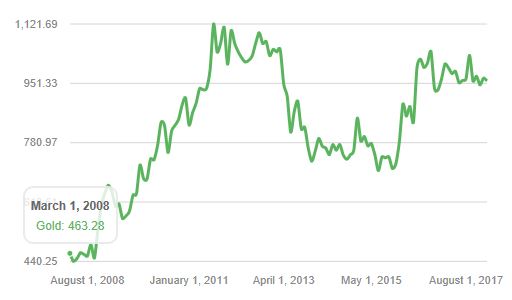
Gold in GBP 10 Years
Sputniknews.com interview GoldCore
Sputnik: After a significant fall in the currency during December and January, Bitcoin is showing signs of a recovery in value. Could we see the coin regain value pre-2018 levels?
Mark: Yes, it’s quite possible, given the state of markets these days with the amount of liquidity that’s sloshing around the financial system due to QE and ultra loose monetary policies.
So the short answer is yes we could. But nobody has a crystal ball and nobody knows for definite. I think it’s quite interesting from a speculation point of view and I think that’s how some of the smart money around the world is seeing it — as an interesting speculation. However, it is very high risk, people need to be aware of that and it’s not for ‘widows and orphans’.
Given the degree of volatility we’ve seen in recent weeks and the massive 60% collapse we saw and also the huge risks we see with the various crypto exchanges around the world. The risk is Bitcoin’s volatility itself but also the intermediate risk and the counterpart risk behind how you own that bitcoin with exchanges having been hacked and subject to fraud.
Sputnik: Are these recent comments from Carney another attempt of asserting elements of ‘project fear’ against potential crypto-investors or a stark statement of an out of control investing bubble?
Mark: I think it’s a bit of both. I think there is a bit of an element of project fear and a lot of the central banks seem to feel threatened by Bitcoin but at the same time I think the wider cryptocurrency marketplace has been showing signs of an out of control bubble.
The cryptocurrencies – most of them, and there’s hundreds of them, were surging in value going up ten, fifty, a hundred times in value … some of them. Bitcoin, Ethereum and one or two others have real world applications, but who’s to know which cryptos will survive?

Mark Carney, Governor of the Bank of England, said they have not been a medium exchange and that’s true for a period of time now. And that’s the real vision of Satoshi Nakamoto, the Founder of Bitcoin, so it’s not a medium exchange now and it’s not showing the characteristics of storing value in recent weeks, but who’s to know? History will tell us in time whether Bitcoin does become a store for value … and it possibly could. It’s hard to know – at this stage as there is a degree of volatility that suggests that it won’t be but who knows … there are so many variables and this may change over time.
Sputnik: Back in January, we were seeing a lot people who invested in Bitcoin and other crypto-currencies actually sell and re-invest in fiat depressed currencies like Gold and Silver. Are we seeing a return of traditional assets?
Mark: There definitely was a move and we saw that ourselves, I think the smarter people in the cryptocurrency space realized the gains we were seeing were oversized and we were therefore due a sharp correction. Some of those guys were diversifying into Gold and Silver, the two primary precious metals which have a proven store of value over time with a huge amount of research behind them, showing that they are hedges and a store of value.
I think this trend will continue due to the degree of volatility we’re seeing in markets and also the big risks that are out there in terms of things like Brexit and the Trump presidency. There is a lot of political and economic uncertainty out there which will lead to an increased demand for gold.
Ultimately, Gold is a reliable store of value as fiat currencies haven’t been a store of value for some time.
Mark Carney is now presiding over The Bank of England and sterling itself has been a terrible store of value. Sterling fell 30.2% in 2016 alone after the Brexit vote and that’s a massive fall in the value of sterling in one year. Over the last 15 years sterling was down 11.4% per annum against gold (see table above).
Gold has clearly shown its characteristics as a way to protect yourself as a true store of value against devaluation of fiat currencies. Fiat currencies lose their value over time.
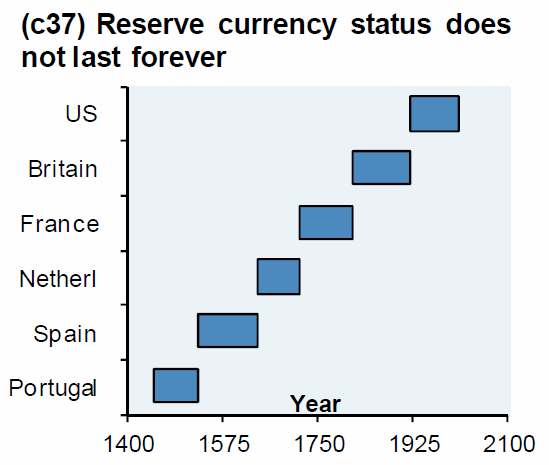
There have been many reserve currencies throughout history. If you go back to 1450, it was the Portuguese who had the reserve currency of the world. It was then the Spanish, then the Dutch, then the French, then England during the British Empire and finally, more recently we have the American Dollar as the reserve currency of the world.
The dollar and the degree of debt that Trump is running up is out of control. Trump is running up a 1 trillion-dollar plus deficits now so I think there is a real risk that the dollar and other fiat currencies are going to be further debased in the coming years.
It’s for this reason that so many techies and investors believe in Bitcoin, because they think it will act as a hedge against this risk in the same way that gold does. I think that this has yet to be seen. It may well do, but there is no guarantee because there are so many variables.
Sputnik.com interview transcript here
News and Commentary
Gold prices inch down as dollar strengthens (Reuters.com)
Asia Stocks Track U.S. Futures Down; Dollar Steady (Bloomberg.com)
Zimbabwe Plans Gold, Tobacco Diaspora Bonds as Bank Rules Change (Bloomberg.com)
Congress sets sights on federal cryptocurrency rules (Reuters.com)
Morgan Stanley Says Stock Slide Was Appetizer for Real Deal (Bloomberg.com)

Source: MarketWatch
London’s Housing Boom Is Over, Rightmove Says (Bloomberg.com)
How One of the Most Profitable Trades of the Last Few Years Blew Up in a Single Day (Bloomberg.com)
World Embraces Debt At Exactly The Wrong Time (DollarCollapse)
Gold: Another Month, Another Test Of Key Resistance – But This Time With A Difference (GoldSeek.com)
Gold Prices (LBMA AM)
20 Feb: USD 1,337.40, GBP 955.97 & EUR 1,083.83 per ounce
19 Feb: USD 1,347.40, GBP 961.10 & EUR 1,085.47 per ounce
16 Feb: USD 1,358.60, GBP 964.61 & EUR 1,086.47 per ounce
15 Feb: USD 1,353.70, GBP 962.21 & EUR 1,084.45 per ounce
14 Feb: USD 1,330.75, GBP 959.74 & EUR 1,077.77 per ounce
13 Feb: USD 1,329.40, GBP 955.04 & EUR 1,077.61 per ounce
12 Feb: USD 1,321.70, GBP 955.19 & EUR 1,077.45 per ounce
Silver Prices (LBMA)
20 Feb: USD 16.57, GBP 11.85 & EUR 13.42 per ounce
19 Feb: USD 16.72, GBP 11.92 & EUR 13.46 per ounce
16 Feb: USD 16.84, GBP 11.97 & EUR 13.49 per ounce
15 Feb: USD 16.83, GBP 11.98 & EUR 13.49 per ounce
14 Feb: USD 16.58, GBP 11.97 & EUR 13.43 per ounce
13 Feb: USD 16.61, GBP 11.94 & EUR 13.46 per ounce
12 Feb: USD 16.43, GBP 11.86 & EUR 13.39 per ounce
Recent Market Updates
– Bank Bail-In Risk In European Countries Seen In 5 Key Charts
– US-China Trade War Escalates As Further Measures Are Taken
– Gold Up 3.8% In Week – If Closes Above $1,360/oz Will Be Biggest Weekly Gain In Nearly 2 Years
– Is The Gold Price Heading Higher? IG TV Interview GoldCore
– Global Debt Crisis II Cometh
– Sovereign Wealth Funds Investing In Gold For “Long Term Returns” – PwC
– Bitcoin and Crypto Prices Being Manipulated Like Precious Metals?
– “This Is Where They Completely Lost Their Minds” – Hussman
– Brexit Risks Increase – London Property Market and Pound Vulnerable
– Peak Gold: Global Gold Supply Flat In 2017 As China Output Falls By 9%
– Crypto Currency Backlash Sees Flight From Cryptos and Bitcoin
– Gold Rises As Global Stocks Plunge and Bitcoin Crashes 70%
– Shrinkflation Intensifies – Stealth Inflation As Thousands of Food Products Shrink In Size, Not Price

END
The reason gold had to be smashed yesterday: the USA (as I indicated to you yesterday) sold a massive 179 billion dollars worth of treasuries
(courtesy Harris/Bloomberg/GATA)
No wonder gold had to be smashed today
Submitted by cpowell on Wed, 2018-02-21 00:17. Section: Daily Dispatches
U.S. Floods the Market with $179 Billion of Debt in Just One Day
By Alex Harris
Bloomberg News
Tuesday, February 20, 2018
The U.S. Treasury on Tuesday sold $179 billion of securities as it works to rebuild its cash balance, with yields at its auctions of three- and six-month debt rising to levels unseen since 2008.
The government began at 11:30 a.m. New York time by auctioning $51 billion of three-month bills at a yield of 1.64 percent, 6 basis points more than similar-tenor debt sold on Feb. 12, and $45 billion of six-month bills at 1.82 percent.
Its $55 billion sale of four-week notes at 1 p.m. had a yield of 1.38 percent, with a gauge of demand known as the bid-to-cover ratio falling to 2.48, the lowest level since 2008. The first coupon offering of the week, a $28 billion auction of two-year notes, yielded 2.255 percent, the highest in almost a decade. …
The $258 billion slate of U.S. auctions set for this week is helping to push up the rates investors demand. Concerns about the U.S. borrowing cap had forced the Treasury to trim the total amount of bills it had outstanding, but with the latest debt-ceiling drama over, the government is now busy ramping up issuance. …
… For the remainder of the report:
https://www.bloomberg.com/news/articles/2018-02-20/u-s-sells-bills-at-hi…
end
LAWRIE WILLIAMS: Russia now World no. 5 national gold holder – but is it?
Russia adds a considerable 19.7 tonnes to its official reserves which now stand at 1857. tonnes.
(courtesy Lawrie Williams/Sharp’s Pixley)
The day has come. Russia, which added 19.7 tonnes of gold to its forex reserves in January is now officially the world’s fifth largest national holder of gold as reported to the IMF. This latest figure moves it ahead of China, which has not reported any increases in its gold reserves since October 2016, in terms of reported official gold holdings.
The Russian reported total is now 1,857 tonnes as against China’s 1,842.6 tonnes, still well short of the U.S., German, Italian and French totals, but closing the gap as neither the USA, or big European gold holders have changed their reported holdings for a number of years now. It should be recognised that none of these are audited figures and the IMF relies on the levels of gold holdings as reported to it as being genuine. We have often stated that we do not believe the Chinese figures as reported, but then, in reality, one should perhaps also cast doubts on the veracity of other reported figures too – especially in relation to available gold given that, under the IMF’s reporting rules, gold which has been leased, or swapped, is allowed to remain in the official holding figure. It is known that some central banks have participated in gold leasing, or gold swap arrangements, but do not tend to report the amounts involved. The sizes of individual countries’ gold holdings have an overtly political agenda.
Regardless, we suspect the real Chinese gold reserve is considerably larger than stated and thus Russia’s position as the World No. 5 national holder of gold is perhaps unlikely with China, in reality, actually still in 5th place – or possibly even higher up the table!
Table: World Top 10 National Gold Holders*
| Rank | Country | Tonnes |
|
1 |
United States |
8,133.5 |
|
2 |
Germany |
3,373.6 |
|
3 |
Italy |
2,451.8 |
|
4 |
France |
2,436.0 |
|
5 |
Russia |
1,857.0 |
|
6 |
China |
1,838.8 |
|
7 |
Switzerland |
1,040.0 |
|
8 |
Japan |
765.2 |
|
9 |
Netherlands |
612.5 |
|
10 |
Turkey |
564.8 |
Source: IMF, Lawrieongold.com
*As reported to IMF. Russian figure as reported by central bank
As can be seen from the above table, Russia still has a long way to go before catching France and Italy in the size of its gold reserve, but at the current rate of reserve growth could be there in a little over 2 years. Given the growth in its domestic gold production, from which it is believed to source most of its reserve gold, that is not an unrealistic target.
But the enigma is China. Apart from a 15-month period leading up to the yuan’s (renminbi’s) acceptance as a constituent of the IMF’s Special Drawing Right basket of currencies, China resolutely insisted on non-reporting of monthly increases in its gold reserve figure. Instead it would announce big increases in its holdings at five or six year intervals. It very much looks as if it is returning to this policy having not announced any increase in its gold reserve for 15 straight months – yet is understood to be a firm believer in the size and value of its gold holdings in any future global economic re- alignment, as is Russia.
In both China’s and Russia’s cases, building gold reserves as an integral, and growing, part of their forex reserves may also be in order to reduce their reliance on the U.S. dollar and dollar related financial instruments in their reserves. There certainly seems to be a degree of growing U.S. economic hostility towards both nations and should this lead to a cutting off of some key financial dollar-related elements – such as access to the SWIFT global interbank system, controlled by the U.S. and its allies – then this diversification of reserves makes a lot of sense. Both Russia and China have been setting up an alternative to SWIFT which is just about ready to go live if needed.
https://www.sharpspixley.com/articles/lawrie-williams- russia-now-world-no-5-national-gold-holder-but-is- it_277004.html
-END-
Your early WEDNESDAY morning currency, Asian stock market results, important USA/Asian currency crosses, gold/silver pricing overnight along with the price of oil Major stories overnight/9 AM EST
i) Chinese yuan vs USA dollar/CLOSED /shanghai bourse CLOSED / HANG SANG CLOSED UP 558.26 POINTS OR 1.81%
2. Nikkei closed UP 45.71 POINTS OR 0.21% /USA: YEN RISES TO 107.48/ STILL DEADLY AS YEN CARRY TRADERS DISINTEGRATE
3. Europe stocks OPENED DEEPLY IN THE RED /USA dollar index RISES TO 89.64/Euro FALLS TO 1.2340
3b Japan 10 year bond yield: FALLS TO . +.056/ !!!!(Japan buying 100% of bond issuance)/Japanese yen vs usa cross now at 107.48/ THIS IS TROUBLESOME AS BANK OF JAPAN IS RUNNING OUT OF BONDS TO BUY./JAPAN 10 YR YIELD FINALLY IN THE POSITIVE/BANK OF JAPAN LOSING CONTROL OF THEIR YIELD CURVE AS THEY PURCHASE ALL BONDS TO GET TO ZERO RATE!!
3c Nikkei now JUST BELOW 17,000
3d USA/Yen rate now well below the important 120 barrier this morning
3e WTI:: 61.48 and Brent: 65.14
3f Gold DOWN/Yen DOWN
3g Japan is to buy the equivalent of 108 billion uSA dollars worth of bond per month or $1.3 trillion. Japan’s GDP equals 5 trillion usa./“HELICOPTER MONEY” OFF THE TABLE FOR NOW /REVERSE OPERATION TWIST ON THE BONDS: PURCHASE OF LONG BONDS AND SELLING THE SHORT END
Japan to buy 100% of all new Japanese debt and by 2018 they will have 25% of all Japanese debt. Fifty percent of Japanese budget financed with debt.
3h Oil DOWN for WTI and DOWN FOR Brent this morning
3i European bond buying continues to push yields lower on all fronts in the EMU. German 10yr bund FALLS TO +.706%/Italian 10 yr bond yield UP to 2.056% /SPAIN 10 YR BOND YIELD UP TO 1.511%
3j Greek 10 year bond yield RISES TO : 4.481?????????????????
3k Gold at $1328.05 silver at:16.43 7 am est) SILVER NEXT RESISTANCE LEVEL AT $18.50
3l USA vs Russian rouble; (Russian rouble DOWN 8/100 in roubles/dollar) 56.64
3m oil into the 61 dollar handle for WTI and 64 handle for Brent/
3n Higher foreign deposits out of China sees huge risk of outflows and a currency depreciation. This can spell financial disaster for the rest of the world/
JAPAN ON JAN 29.2016 INITIATES NIRP. THIS MORNING THEY SIGNAL THEY MAY END NIRP. TODAY THE USA/YEN TRADES TO 107.48 DESTROYING JAPANESE CITIZENS WITH HIGHER FOOD INFLATION
30 SNB (Swiss National Bank) still intervening again in the markets driving down the SF. It is not working: USA/SF this morning 0.9385 as the Swiss Franc is still rising against most currencies. Euro vs SF is 1.1546 well above the floor set by the Swiss Finance Minister. Thomas Jordan, chief of the Swiss National Bank continues to purchase euros trying to lower value of the Swiss Franc.
3p BRITAIN VOTES AFFIRMATIVE BREXIT/LOWER PARLIAMENT APPROVES BREXIT COMMENCEMENT/ARTICLE 50 COMMENCES MARCH 29/2017
3r the 10 Year German bund now POSITIVE territory with the 10 year FALLING to +0.706%
The bank withdrawals were causing massive hardship to the Greek bank. the Greek referendum voted overwhelming “NO”. Next step for Greece will be the recapitalization of the banks and that will be difficult.
4. USA 10 year treasury bond at 2.893% early this morning (THIS IS DEADLY TO ALL MARKETS). Thirty year rate at 3.155% /BOTH VERY DEADLY
5. Details Ransquawk, Bloomberg, Deutsche bank/Jim Reid.
(courtesy Jim Reid/Bloomberg/Deutsche bank/zero hedge)
Futures, European Stocks Slide After Poor PMIs; Dollar Gains Ahead Of Fed Minutes
The dollar rose to its highest level in a week against its G10 peers on Wednesday, rising for the 4th day against the yen and most pairs as investor focus shifted to the minutes of the Federal Reserve’s last policy meeting.
The dollar hasn’t had it this good this year, bouncing 1% so far this week after slumping 1.5% last week to the lowest level in 3 years, as traders unwound short positions ahead of today’s January FOMC minutes (where the most likely surprise would be the Fed‘s endorsement of 4 rate hikes in 2018), with investors looking for clues on just what policy makers had in mind when they added “further” twice to their guidance on interest rates.

After yesterday’s bond supply deluge, Treasury yields in the belly were steady ahead of the continued glut of supply this week, and the 10Y traded virtually unchanged and just shy of 2.89%. The Treasury’s $258 billion of auctions slated for this week comes amid a rapid jump in rates that gave impetus to one of the steepest equity sell-offs in years two weeks ago. And while investors seem to have adjusted to 10-year yields at a four-year high for now, the deluge of supply could push them even higher, above 3%, weakening the case for owning stocks at elevated valuations.
Meanwhile, US futures and world stocks looked set to fall for a third straight day: MSCI’s world stock index down 0.1%, declining for the 3rd day, as a down day in Europe offset earlier gains in Asia.

Investor attention will be on the minutes of the Fed’s last policy meeting in late January. The last readings of U.S. wages and inflation came in higher than expected, with some blaming the numbers for prompting a violent selloff in stocks earlier this month.
“Markets are particularly sensitive to inflation, and we think the odds that the minutes reinforce the narrative of firming inflation are high,” said Elsa Lignos, RBC’s global head of FX strategy. “We think there is a high probability that the Fed moves the dots to four hikes in 2018 (from three) near-term and that the minutes could be another step in that direction.”
* * *
In Europe, almost every sector of the Stoxx 600 Index fell, with the gauge tracking losses in the U.S. on Tuesday rather than a more positive mood in Asia after Markit data showed a fading outlook for manufacturing and services in the region, prompting some to ask if the recovery momentum has now peaked. The risk-off tone permeating European trading came as PMI data missed estimates across the board, first in France, then Germany and finally for the whole EU:
- Euroarea PMI Manufacturing 58.5 vs. Exp. 59.2 (Prev. 59.6)
- Euro-area PMI Services 56.7 vs. Exp. 57.6 (Prev. 58.0)
- Euro-area PMI Composite 57.5 vs. Exp. 58.5 (Prev. 58.8)

European equities led lower by technology, while FTSE 100 outperforms slightly after earnings from Lloyds and Glencore. In terms of sector specifics, telecoms outperform their peers amid strong earnings from Orange (+2%), to the downside, energy names lag their peers amid price action seen across the commodities complex. Other individual movers include Glencore (+4.1%), Lloyds (+1.6%) and who sit near the top of the FTSE 100 following their respective earnings. Elsewhere, other notable movers include Accor (+2.4%), Atos (-3.7%) and Iberdrola (-3.4%) post-earnings, whilst AA (-22.1%) lag the Stoxx 600 after a disappointing strategy update.


Lower than expected readings of purchasing manager surveys in France, Germany and the euro zone all came in lower than expected, stabilizing euro zone bond markets. Bunds rallied from the open across the curve; UST/bund 10-year spread widens toward key 220bps level, which was last seen in January 2017.
* * *
Earlier during the Asian session, MSCI’s index of Asia-Pacific shares outside Japan rose 0.7 percent after slipping earlier in the session following the U.S. market losses, which snapped a six-session winning streak. Stocks climbed in Hong Kong ahead of China’s return from the week-long Lunar new year holiday on Thursday, cementing a rebound from one of the worst sell-offs in years at the start of the month. As the Asian session progressed a combination of the fall in US equity futures and 1% declines in crude prices, the Nikkei had briefly dipped into negative territory. Elsewhere, the ASX 200 (+0.1%) had opened lower in response to the falls on Wall Street but has recovered into positive territory. Mining names the largest drag on the index with BHP and Fortescue both losing ground following soft earnings. Hang Seng (+1.8%) traded higher amid HSBC shares recovering from yesterday’s declines.
In FX, after soft U.K. domestic employment report, GBP/USD extends losses through yesterday’s low while gilt futures hit two-week high. The euro traded in a narrow range that was yawn-inducing for traders even though euro-area PMI missed estimates, while the pound was buffeted by weak jobs data out of the U.K. EUR/USD edges lower to approach 1.2300 as USD continues strength seen from last three sessions. However, not even the weaker Euro could push European stocks higher.
Asia’s emerging currencies were mostly lower amid a rising dollar and elevated Treasury yields. The Taiwan dollar the main exception as it reopened after the Lunar New Year holidays. Sovereign bonds advanced and Taiwan led regional stock gains. A deluge of new supply is pushing down Treasuries and spurring speculation the U.S. 10-year yield could breach the watershed 3 percent level as early as this week, which would reduce the attractiveness of developing-nation assets. The Federal Reserve will release minutes of its latest meeting later on Wednesday.
“The ongoing USD rebound alongside higher UST yields is likely to pressure Asian currencies,” said Mizuho’s FX strategist, Ken Cheung. “With a light calendar, the USD movement will remain the main driver for the Asian FX. The CNY fixing after the long holiday will be the focus,” with recent developments suggesting no big changes, he said.
In the neverending drama surrounding Brexit, a UK Official said they are in a broad alignment with the EU on the transition period. Meanwhile, PM May is facing pressure after 62 Tory hardliners demand clean Brexit, with lawmakers challenging May to take a harder approach on how far UK rules should move away from the EU after Brexit and the nature of the transition period.
The stronger dollar weighed on commodities, with Brent crude futures losing 1 percent to $64.61 per barrel and U.S. crude oil futures also slipping 1 percent to $61.16. U.S. crude hit a near two-week high the previous day on news of inventory declines at a key storage hub and from expectations that top OPEC producers could extend cooperation beyond 2018. Spot gold touched a one-week low of $1,329.42 an ounce due to the resurgent dollar, having declined 1.4 percent so far this week.
On today’s economic data calendar, we have Markit PMI data and home sales. Scheduled earnings include Dish and The Southern Company.
Bulletin headline Summary from RanSquawk
- European equities (Eurostoxx 50 -0.7%) trade lower across the board amid lacklustre Eurozone PMIs and a dip in US equity futures
- USDJPY has built on gains above the 2017 low (107.32), but stalled just before 108.00 amidst another bout of global stock market weakness
- Looking ahead, highlights include Eurozone and US PMIs, US existing home sales, FOMC minutes and a slew of speakers
Market Snapshot
- S&P 500 futures down 0.07% to 2,712.00
- STOXX Europe 600 down 0.5% to 378.62
- MSCI Asia Pacific up 0.3% to 177.20
- MSCI Asia Pacific ex Japan up 0.9% to 581.18
- Nikkei up 0.2% to 21,970.81
- Topix down 0.05% to 1,761.61
- Hang Seng Index up 1.8% to 31,431.89
- Shanghai Composite up 0.5% to 3,199.16
- Sensex up 0.4% to 33,821.09
- Australia S&P/ASX 200 up 0.05% to 5,943.72
- Kospi up 0.6% to 2,429.65
- German 10Y yield fell 3.0 bps to 0.705%
- Euro down 0.1% to $1.2321
- Brent Futures down 0.9% to $64.67/bbl
- Gold spot unchanged at $1,329.24
- U.S. Dollar Index up 0.2% to 89.86
- Italian 10Y yield rose 2.6 bps to 1.8%
- Spanish 10Y yield fell 0.6 bps to 1.525%
Top Overnight News from Bloomberg
- Lloyds to Invest $4.2 Billion in Technology, Plans Share Buyback
- Glencore M&A Firepower Undiminished After $2.9 Billion Dividend
- Prime Minister Theresa May is facing a potentially dangerous outcry from 62 members of her own party who are demanding a quick, clean break from the European Union, just as she tries to finalize her Brexit plans
- Japanese Lifers: Meiji Yasuda Life (AUM $353b): increasing holdings of unhedged U.S. debt; investing mostly in Ginnie Mae, some in credit and Treasuries
- ECB’s Vasiliauskas: we have not seen an unwarranted tightening in conditions; appropriate to rephrase guidance to focus on all instruments, not just QE: Reuters
- U.K. Dec. Unemployment Rate: 4.4% vs 4.3% est; Avg. Weekly Earnings 2.5% vs 2.5% est.
- Apple Is Said to Negotiate Buying Cobalt Direct From Miners
- Democrats Counter GOP Tax-Cut Pitch by Warning of Long-Term Pain
- Unibail Says Malls Will Evolve to Counter the Threat of Amazon
- Gibson Creditors Are Said to Want New CEO Before Rescue Deal
- Brexit Secretary David Davis will set out U.K.’s official response to EU’s transition proposals before the U.K. parliament in a written statement on Wednesday, Politico reports; Davis to demand mechanism to protect U.K. from any “harm” caused by new EU rules and regulations introduced during transition period
- Merck to Purchase Viralytics in Deal Valued at A$502m
- Takeover Target Fidessa Gains as Activist Elliott Reveals Stake
- AA Shares Plunge Most Since Debut After Predicting Profit Drop
- Output of Faulty Airbus Engine to Double, Suggesting Likely Fix
- A preliminary composite purchasing managers’ index for the euro-zone retreated in February to 57.5, from 58.8, and missing the median estimate of 58.4
Asian equities are trading with modest gains this morning, in what has been a relatively quiet session. Nikkei 225 (+0.2%) had been up as much as 1.2% with the JPY continuing to weaken across the board in which USD/JPY hovering around 1.08. Although, as the session progressed a combination of the fall in US equity futures and 1% declines in crude prices, the Nikkei had briefly dipped into negative territory. Elsewhere, the ASX 200 (+0.1%) had opened lower in response to the falls on Wall Street but has recovered into positive territory. Mining names the largest drag on the index with BHP and Fortescue both losing ground following soft earnings. Hang Seng (+1.8%) traded higher amid HSBC shares recovering from yesterday’s declines. In credit markets, the US Treasury curve is modestly flatter in the Asia-Pacific session, with the 10-Year yield last 0.4bp higher at 2.89%. JGBs trading in a tight range, with the 10yr up by 3 ticks.
Top Asian News
- Yen Surge Ends $353 Billion Insurer’s Wait to Buy U.S. Bonds
- Hong Kong Shares Soar Ahead of China’s Return From Holiday
- At Last, a Woman Takes Center Stage for India’s Tech Industry
- How a $1.8 Billion Indian Bank Fraud Lasted Seven Years
- Hong Kong Traders Return to Recent Listings as Razer Surges 24%
European equities (Eurostoxx 50 -0.7%) trade lower across the board amid lacklustre Eurozone PMIs and a dip in US equity futures overnight. In terms of sector specifics, telecoms outperform their peers amid strong earnings from Orange (+2%), to the downside, energy names lag their peers amid price action seen across the commodities complex. Other individual movers include Glencore (+4.1%), Lloyds (+1.6%) and who sit near the top of the FTSE 100 following their respective earnings. Elsewhere, other notable movers include Accor (+2.4%), Atos (-3.7%) and Iberdrola (-3.4%) post-earnings, whilst AA (-22.1%) lag the Stoxx 600 after a disappointing strategy update.
Top European News
- U.K. Wages Pick Up as Fewer Foreign Workers Take Jobs
- Berlusconi Poaching Among Five Star Ranks: Italy Campaign Trail
- Euro Area Hits Speed Bump on Road to Faster Economic Growth
- German Economy on Track for Fastest Quarterly Growth Since 2011
- Black Sea Gas to Flood Nation That Can’t Decide on a Use for It
In currencies, Asian contacts are said to have attributed the latest Dollar leg-up to a further ‘technical correction’, and for the DXY 90.000 will be next on the radar given its psychological significance, but chart-wise nearest resistance resides between 90.500-600 as the index trades within a 89.935-700 range. Looking at basket components, Usd/Jpy has built on gains above the 2017 low (107.32), but stalled just before 108.00 amidst another bout of global stock market weakness. However, Jpy puts at the big figure have reportedly been in demand as the headline pair hovers around 107.50, with bids seen at 107.20. Eur/Usd is testing key Fib support at 1.2319 and buying interest into 1.2300 in wake of French, German and pan-EZ flash PMIs that missed consensus across the board. A downside break of 1.2300 exposes recent lows circa 1.2275 and stops below, but on the upside 1 bn option expiries run-off today between 1.2300-20. GBP initially faced selling pressure in the wake of the latest UK jobs figures despite the firmer than expected earnings ex-bonus release (prev. revised lower), with the report met by an unexpected uptick in the UK unemployment rate, slowdown in employment growth and the earnings release perhaps not enough to change the narrative at the BoE and nail on a May hike. However losses were then pared as it appears that the UK are now in a broad agreement with the EU on a transition period. Aud/Usd another notable mover, and retreating some distance from 0.7900 towards 0.7842 interim support despite former than forecast Aussie wages overnight as the breakdown was not as encouraging as the headline numbers appeared.
In the commodities complex, WTI and Brent crude futures are seen lower alongside the firmer USD after taking a tumble during Asia-Pac trade. In terms of energy specific newsflow, things remain light ahead of tonight’s rescheduled API release with traders wary over any further climbs in US production. In metals markets, spot gold has recovered from modest overnight losses to trade relatively unchanged as markets await today’s FOMC minutes release. Elsewhere, price action across the rest of the complex remains light as Chinese participants away are still away from market.
Looking at the day ahead, the flash February PMIs on manufacturing, services and composite are due in the US. Other data due includes January existing home sales data in the US. Away from this, the FOMC minutes from the January meeting are due late in the evening, while the Fed’s Harker is scheduled to speak on the economic outlook in the afternoon.
US Event Calendar:
- 7am: MBA Mortgage Applications, prior -4.1%
- 9:45am: Markit US Manufacturing PMI, est. 55.5, prior 55.5; Services PMI, est. 53.7, prior 53.3; Composite PMI, prior 53.8
- 10am: Existing Home Sales, est. 5.6m, prior 5.57m; MoM, est. 0.54%, prior -3.6%
- 2pm: FOMC Meeting Minutes
Central Bank Speakers
- 9am: Fed’s Harker Speaks on the Economic Outlook
- 10am: Kashkari speaks in Minneapolis on Bloomberg Television
- 2pm: FOMC Meeting Minutes
- 8:20pm: Kashkari speaks at Bloomberg event in Minneapolis
DB’s Jim Reid concludes the overnight wrap
Today is the biggest day in a quiet week for data. The highlight will be the flash February PMIs with manufacturing, services and composite readings due in Europe and the US. As a reminder, the January manufacturing reading for the Euro area came in at an impressive 59.6, albeit slightly down from the highs above 60 in December and November last year. The consensus is for another small pullback to 59.2, while the composite is expected to edge down to a still solid 58.4 from 58.8. Outside of this, we also see the monthly UK employment release with eyes on wages as the BoE gets closer to their next hike. UK data and/or BoE hawkishness has caused global yields to sell off sharply a couple of times in recent months so the release will be important. Finally FOMC minutes from the January meeting (Yellen’s last) will be out tonight but it will be outdated news given it occurred before the higher AHE’s and CPI/ PPI prints and before the market sell-off.
Staying with yields, the big focus over the last 24 hours has been this week’s large Treasury supply. Overnight the US treasury has sold US$179bn of debt securities with yields at its auctions of three / six month bills and two year notes
($28bn at 2.255%) reaching the highest in c10 years. Notably, demand for the securities were reasonably sound with bid-to-cover ratio of 2.74x, 3.11x and 2.72x (vs. 3.22x previous) respectively. Looking ahead, auctions for 5 and 7 year notes will occur in the next two days. Elsewhere, core 10y bonds yields were little changed, with the UST 10y up 1.5bp to 2.89% while Bunds were flat and Gilts fell 1.7bp. The UST 2y was up 2.9bp to 2.221% and is higher again this morning.
In US equities, the S&P fell for the first time in seven days (-0.58%) with all sectors but tech stocks modestly up. The index was weighted down by the consumer staples sector, in particular Walmart as it fell the most in c30 years (-10.2% vs. -10.3% in Jan. 1988) after guiding to a lower than expected earnings outlook and a slower push into online sales. The Dow (-1.01%) and Nasdaq (-0.07%) also retreated. Conversely, European bourses were broadly higher as the Euro weakened and largely reversed Monday’s decline. Across the region, the Stoxx (+0.60%) and DAX (+0.83%) both rebounded while the FTSE was marginally lower. Elsewhere, the VIX is up for the second straight day and now back up above 20 (+5.9% to 20.60).
This morning in Asia, markets are modestly higher, with the Nikkei (+0.05%), Hang Seng (+0.98%) and Kospi (+0.47%) all up as we type. Elsewhere, the February Nikkei manufacturing PMI eased mom to 54 (vs. 54.8 previous). Recapping other markets performance from yesterday, in FX, the US dollar index jumped 0.69% while the Euro and Sterling fell 0.56% and 0.03% respectively. In commodities, WTI oil rose for the fourth consecutive day (+0.39%). Precious metals weakened c1.3% (Gold -1.28%; Silver -1.34%) and other LME base metals also retreated modestly (Copper -0.39%; Zinc -0.14%; Aluminium -1.31%).
Away from markets, the Handelsblatt reported that given Germany’s strong support for Spain’s Economy Minister Luis de Guindos to be the next Vice President of the ECB, unnamed German officials now hope this would set the stage for Bundesbank’s Weidmann to be first ECB President from Germany after Mr Draghi’s terms ends in October 2019. According to these officials, the swing factor may depend on the relative support of French President Macron. Staying in Europe, the EC spokesman Ms Schinas said the EU is “deeply concerned” by any US trade sanctions impacting EU businesses. She added “we would be taking appropriate measures to defend EU industry, and we stand ready to react swiftly….in case our exports are affected by restrictive trade measures from the US”.
Now onto some of the Brexit headlines. When asked if the UK will withhold the divorce Brexit payment to achieve the trade deal that it wants with the EU, the Brexit Secretary Davis said the “withdrawal agreement and the future relationship (between the UK and EU) are intertwined….and not separate issues”. He also noted trade must be as open and “frictionless” as possible between the two sides and that the UK and the EU will continue to work together as partners on regulations, where the UK is determined “to lead a race to the top in global standards”. Elsewhere, Foreign Secretary Johnson has said “there is no reason” why the UK and EU can’t have frictionless trade if Britain leaves both the customer union and single market. Conversely, the opposition leader Mr Corbyn has confirmed the Labour Party will support Britain remaining inside a customs union. He noted “we have to have a customs union that makes sure we can continue to trade, particularly between Northern Ireland and the Republic of Ireland…” Looking ahead, we should have more clarity next week when PM May is expected to set out her vision for the post Brexit trade deal after extensive cabinet discussions this week. Her task has been made more difficult by an open letter from 62 Eurosceptic Tory MPs insisting on elements of a hard Brexit just as hope was emerging that she could find a united cabinet position.
Finally onto some central bankers commentaries. The Riksbank Deputy Governor Floden said “we have to be cautious moving forward not to surprise markets too much (on rates) and generate negative market reactions….for example…too rapid appreciation of the Krona”. He added, “most likely” we will raise repo rates in 2HCY18 and then “roughly 50bp per year under the forecast horizon”.
Before we take a look at today’s calendar, we wrap up with other data releases from yesterday. In Germany, the January PPI was above market at 0.5% mom (vs. 0.3%) and 2.1% yoy (vs 1.8% expected). The February ZEW survey on the current situation was lower than expected at 92.3 (vs. 93.9) with the expectations index beating at 17.8 (vs. 16 expected). For the Euro area, the February ZEW survey on expectations eased to 29.3 (vs. 31.8 previous) while consumer confidence was also below expectations at 0.1 (vs. 1.0) following a fresh 17 year high back in January. Finally, in the UK, the February CBI trend total orders were a tad softer at 10 (vs. 11 expected).
Looking at the day ahead, the flash February PMIs on manufacturing, services and composite are due in Germany, France and the Euro area. Later on we’ll then get the same data in the US. Other data due includes December and January employment indicators in the UK, and January existing home sales data in the US. Away from this, the FOMC minutes from the January meeting are due late in the evening, while the Fed’s Harker is scheduled to speak on the economic outlook in the afternoon. The BoE’s Carney, Broadbent, Haldane and Tenreyro are also due to testify to Parliament’s Treasury Committee on the Inflation Report.
3. ASIAN AFFAIRS
i)Late TUESDAY night/WEDNESDAY morning: Shanghai closed /Hang Sang CLOSED UP 558.26 POINTS OR 1.81% / The Nikkei closed UP 45.71 POINTS OR 0.21%/Australia’s all ordinaires CLOSED UP 0.03%/Chinese yuan (ONSHORE) closed UP at 6.3415/Oil DOWN to 61.48 dollars per barrel for WTI and 65.14 for Brent. Stocks in Europe OPENED DEEPLY IN THE RED . ONSHORE YUAN CLOSED XXX AGAINST THE DOLLAR AT XXX. OFFSHORE YUAN CLOSED XXX AGAINST THE ONSHORE YUAN AT XXX//ONSHORE YUAN /OFFSHORE YUAN NOT TRADING
3 a NORTH KOREA/USA
/NORTH KOREA
3 b JAPAN AFFAIRS
c) REPORT ON CHINA
end
4. EUROPEAN AFFAIRS
Italy
In Italy, Tax evasion is considered a sport. Now the Italian government has introduced a new automated tax snitch program trying to get at tax cheats. Originally they had a program which highlighted if you spent too much one expenses that you had evaded taxes. Now a new program: if you do not access your bank account often enough, or save too much, you are targeted
a good one…
(courtesy Simon Black/SovereignMan)
Meet The Italian Government’s Orwellian New Automated Tax Snitch
Authored by Simon Black via SovereignMan.com,
By the end of the 3rd century AD, the finances of ancient Rome were in terminal crisis.
Years and years of debasing the currency had resulted in severe hyperinflation– a period of Roman history known as the Crisis of the Third Century (from AD 235 through AD 284).
During the time of Julius Caesar, for example, the Roman silver denarius coin was nearly 98% pure silver.
Two centuries later in the mid-100s AD, the silver content had fallen to 83.5%.
And by the late 200s AD, the silver content in the denarius was just 5%.
As the money continued to be devalued, prices across the Empire skyrocketed.
Wheat, for example, rose in price by over 4,000% during the first three decades of the third century.
Rome was on the brink of collapse. And when Emperor Diocletian came to power at the end of the third century, he tried to stabilize the economy with his ill-fated Edict on Wages and Prices.
Diocletian’s infamous decree fixed the price of everything in the Empire. Food. Lumber. Salaries. Everything.
And anyone caught violating the prices set forth in his edict would be put to death.
Another one of Diocletian’s major policies was reforming the Roman tax system.
He mandated widespread census reports to determine precisely how much wealth and property each citizen had.
They counted every parcel of land, every piece of livestock, every bushel of wheat, and demanded from the population increasing amounts of tribute.
And anyone found violating this debilitating tax policy was punished with– you guessed it– the death penalty.
Needless to say, Diocletian’s reforms didn’t work.
Every high school economics student knows that wage and price controls don’t work… and that excessive taxation bankrupts the population.
But that doesn’t stop governments from trying the same tactics over and over again.
Fast forward about seventeen centuries and Italy is once again in the same boat.
The Italian government is one of the most bankrupt in the world; its debt level is an unbelievable 132% of GDP– and rising.
In other words, the Italian government’s debt is substantially larger than the value of the entire Italian economy.
It’s almost as bad as Greece, and it grows worse each year as the national government routinely runs budget deficits.
Their only solution, of course, is hiking taxes and increasing regulation… exactly the opposite of what they should be doing.

And, just like the ancient Romans, the government is on a witch hunt for anyone they think (in their sole discretion) might be dodging taxes.
They already have a system in place called the redditometro, an automated tool for the tax authorities to comb through income and expense records of Italian residents.
The algorithm finds anyone whose expenses were higher than his/her income and presumes that s/he has been evading taxes.
The irony here is pretty profound given that the Italian government itself has expenses that are higher than its income.
After all, that’s how it ended up with such a prodigious debt level.
Earlier this month, however, the Italian tax authorities rolled out a brand new tool called risparmiometro. And this one is really insidious.
Risparmiometro goes through ALL financial records – credit card transactions, bank accounts, investment accounts, etc. to determine whether or not someone has too much savings relative to his/her occupation.
Think of the implication.
Under the redditometro system, if you spend too much money, they think you’re evading taxes.
But under the risparmiometro system, if you save too much money, they think you’re evading taxes.
Unbelievable.
But it gets better.
Risparmiometro (the new tool) also looks at bank activity to see how frequently you’re using the account.
And if you’re not using the account frequently enough, the government assumes that it’s because you’re dealing in cash… and evading taxes.
I have no doubt that there’s a substantial amount of tax evasion in Italy.
I spend several weeks in the country every summer, and I see how much people and businesses are suffering.
And they’re definitely coming up with creative ways to survive.
But rather than take the necessary steps to liberate the economy, the government continues to double down on more taxes and more regulation… and then invest their remaining energy to develop new tools to spy on their citizens.
Two key points here:
1) Nearly ALL bankrupt governments invariably resort to this tactic at some point.
2) It’s also a great way to engineer a banking crisis.
Think about it– Italy’s banks are already teetering on collapse. Some have already failed, others are almost there.
If Italians know that the government is spying on every transaction they make (or don’t make), who in his/her right mind would want to keep money in an Italian bank?
Anyone with half a brain will be moving funds to Switzerland or Austria.
Italy’s banks are so fragile, though, that they won’t be able to survive if even a small percentage of their depositors flee.
So as the Italian government rolls out this new tool in the latest campaign of its tax jihad, they’re all but guaranteeing widespread bank failure.
It’s genius.
To continue learning how to legitimately reduce your taxes, I encourage you to download our free Perfect Plan B Guide.
Merkel Is Forming A Coalition With The Wrong Party
The last time I looked at the miasma of German coalition talks the big takeaway was the mood turning against the Social Democrats (SPD).
Today the latest polling confirms that the more Merkel tries to form a coalition with Martin Schultz and the SPD the more support the coalition loses.
There have been two polls recently, one which grabbed headlines showing that anti-immigration, Eurosceptic Alternative for Germany (AfD) is now ahead of the SPD nationally, 16% to 15.5%. Another has AfD rising two points to 14%, though still four points behind the SPD.
The takeaway from these polls is not whether AfD is or is not more popular than the SPD at this point. Coupling those results with the surprising rise of Angela Merkel’s Union party by two points in both polls a clear message from the German electorate emerges.
They want a government formed because they are unaccustomed to being without one, but they don’t want another grand collation between Merkel and the SPD.
That is the kind of formless, opinion-allergic government the German people are sick of. They had that for the past four years and all it got them was more subservience to both Brussels and Washington D.C.
No, since Merkel has staunched the flow of immigrants into Germany – to help her re-election campaign – her leadership is, for now, acceptable to get things done. But, what the German people are telling everyone is that they want her to shift farther ‘right’ rather than left in order to appease the SPD.
And that means a coalition with AfD, which, of course, is not possible with the current political leadership in Germany. And that’s why AfD continues to take a larger bite out of the electoral pie.
Don’t Believe the Numbers
A new article over at the American Conservative by Doug Bandow goes into some great detail on the dynamics at play here. He rightly points out that Germans are unhappy with the current status quo.
While no one doubts Merkel’s leadership, it is in service of a goal that is orthogonal to the desires of Germans. German rejection of the openly Brussels-First Schultz is prima facia evidence of this. Having Schultz gain significant concessions from Merkel in coalition talks may be good for SPD politicians in the short run.
They will get to distribute billions in new programs to buy votes with. But, it will come at the expense of ceding greater control over Germany’s future to Brussels, since Schultz is resolutely in favor of the United States of Europe model for the European Union.
But, at the same time, I feel that Bandow makes the mistake of taking the current polling at its word. As I said, part Merkel’s support comes from her willingness to form some majority government.
So, if that fails because the SPD rank and file vote against the coalition agreement then don’t expect the 30-32% support for the Union party to hold. Other polls have shown more than two-thirds of Germans want Mrs. Merkel to step aside as Chancellor.
Bandow’s argument is that Germans won’t get what they want in an new election because the polls indicate similar results to what we’re currently seeing. I disagree.
Because I don’t feel like the powers behind the scenes in Europe will allow Merkel to step aside. They will continue to ply false choices to German voters in the hopes that they can create an acceptable outcome.
This was the strategy in 2017, using the already hated Schultz as Merkel’s stalking horse and help her cross the finish line with just enough support to continue as Chancellor. It nearly worked. The problem was that AfD and the other minor parties took the SPD’s losses, not the Union.
And that trend is still in place today.
So, the more likely outcome is that support for AfD will surge a minimum of three to four points (if not more) as Union support collapses. This will be a minimum. If Merkel doesn’t step aside the shift will be bigger, with AfD moving solidly above the 20% mark, taking points from the Union.
The Union Divide
At that point CSU leader and Bavarian Governor, Horst Seehofer, will have a major decision on his hands. He could split the CDU/CSU at that point and a grand rearrangement of the board could take place.
We’re headed for an iceberg in Italy’s elections, which have tremendous bearing on the German political dynamic. Germans do not want to bail out Italy or anyone else. And a result in Italy in two weeks could easily bring a coalition to power hell bent on confrontation with Germany over Italy’s debt situation, which is unsustainable.
As I said a month ago:
So, unless there is the political will to consolidate all of Europe’s debt under one roof, this problem lands squarely at the feet of the ECB, the Bundesbank and the farce that is German politics.
This puts the decision on the Troika – The ECB, The IMF and the European Commission — to bail them out directly or kick Italy out of the euro. And that’s smart politics. Make Brussels the bad guy. And [Lega Nord Leader Matteo] Salvini is already playing that tune perfectly.
If they were all smart, they would have the Lira ready to deploy if things go south.
So, a second round of elections that strengthens the hand of German nationalists is exactly what Merkel and Schultz are trying to avoid with this grand coalition farce. And the German people are beginning to see things clearly.
end
5. RUSSIAN AND MIDDLE EASTERN AFFAIRS
6 .GLOBAL ISSUES
Sweden
Interesting: Sweden is the world’s biggest nation to go cashless. Now they are worried that the cashless part is going too fast
(courtesy zerohedge)
Swedish Authorities Fear “Negative Spiral” As Society Goes Cashless ‘Too Fast’
In 1660, Sweden’s Riksbank was the first central bank in the world to issue paper currency.
In 2016, Sweden began to accelerate its transition from cash to digital currency.
At the time, Deputy Riksbank Governor Cecilia Skingsley warned:
“We need to do the homework because it’s not an option for the public sector to stay on the sidelines and see the private sector cut off access to central bank money for individuals.”
A year later, in 2017, cash in circulation was plummeting and establishment economists celebrated the battle in the war on cash.
Additionally, Riksbank was actively looking toward cryptocurrencies as potential government-backed money.
But now, in 2018, Swedish officials are worried that too much (or too little in this case) is a bad thing warning:
“If this development with cash disappearing happens too fast, it can be difficult to maintain the infrastructure” for handling cash.
As Bloomberg reports, Sweden is widely regarded as the most cashless society on the planet. Most of the country’s bank branches have stopped handling cash; many shops, museums and restaurants now only accept plastic or mobile payments.
But there’s a downside, since many people, in particular the elderly, don’t have access to the digital society.

“No cash accepted” signs are becoming an increasingly common sight in shops and eateries across Sweden as payments go digital and mobile.
Last year, the amount of cash in circulation in Sweden dropped to the lowest level since 1990 and is more than 40 percent below its 2007 peak. The declines in 2016 and 2017 were the biggest on record.

But the pace at which cash is vanishing has authorities worried.
“One may get into a negative spiral which can threaten the cash infrastructure,” Mats Dillen, the head of the parliamentary review, said.
“It’s those types of issues we are looking more closely at.”
Riksbank Governor Stefan Ingves has said Sweden should consider forcing banks to provide cash to customers. In its annual report on Monday, the Riksbank said the question is what role it should play in a future with even fewer cash payments.
“The Riksbank is carefully analyzing this development,” Ingves said.
“Overall, I think we are facing structural changes in areas that have previously been stable. This is a development which will affect all the Riksbank’s departments and we will need to make strategic decisions regarding the way forward.”
If you have any misguided notion that a cashless society is not coming, just keep telling yourself that every time you use a debit card, credit card or your phone for your next purchase. With the elimination of cash we effectively hand over our individual human sovereignty to the banks and the government.
* * *
Finally we leave you with Harvard’s latest study on which nations would ‘benefit’ the most from going cashless…

7. OIL ISSUES
There is a huge shortage of Frac sand which is in integral part of the shale production. It is hard and made up of round particles and is very porous..ideal for fracing
so we now have two fold problems
1. shortage of rail cars to transport shale
2. shortage of frac sand.
(courtesy Nick Cunningham/OilPrice.com)
Frac Sand Shortage Threatens Shale Boom
Authored by Nick Cunningham via OilPrice.com,
Higher drilling costs could threaten the recent surge in United States shale production.

Halliburton said last week that its earnings could be negatively impacted because of bottlenecks related to the supply of frac sand used in shale drilling. The Wall Street Journal reported that Halliburton’s shares were briefly halted on February 15 after Halliburton’s CFO Chris Weber told an audience at the Credit Suisse Energy Summit that the company’s first quarter earnings could take a hit by a whopping 10 cents per share.
The reason, he said, was because of delays by Canadian rail companies that would slow the delivery of frac sand. Halliburton saw its shares drop by more than 2 percent on a day that saw broader gains to the S&P 500.
Frac sand is integral to growing shale production, increasingly so these days with more and more sand pumped down into a well. Shale drillers have credited the heavy doses of sand with squeezing out more oil and gas from the average well. Demand for frac sand surged from 34 million tons in 2012 to 61.5 million tons in 2014. Consumption fell in the ensuing years as drilling dried up when oil prices collapsed, but frac sand consumption surpassed previous highs in 2017 as drilling resoundingly came back.
In 2018, frac sand demand is expected to top 100 million tons, according to Rystad Energy. “Right now, the market is really stretched thin,” says Thomas Jacob, a senior analyst at IHS Markit, told the FT in December. “Everyone is running at full capacity.”
Much of the frac sand has come from places like Wisconsin, which produces “northern white sand” that is hard and round, helping to create porous fractures in shale wells. It is high quality, but expensive, particularly because it has to be shipped by rail to Texas shale fields. The FT reported that frac sand could cost $120 per short ton on at the Texas well head in 2017, essentially triple what it costs at the mine in the northern U.S.
That led to new investment in frac sand mining in Texas, where “brown sand” could be produced. The quality was not as good, with finer grains, but Texas brown sand could cost a third less than its northern cousin, and it is located much closer to drilling operations.
But as the mines in Texas are still in the process of coming online, the U.S. shale industry’s dependence on far away suppliers continues. And because drilling is ramping up, and the average shale driller is using more proppant than ever before, sand supplies are feeling the strain.
“During the fourth quarter, we also saw cost inflation in sand and trucking. The price of sand escalated over the last few months of 2017,” Jeff Miller, Halliburton’s President and CEO, told investors on an earnings call in January. “[B]ut I believe that increasing sand capacity, particularly from localized mines combined with our supply chain strategy will reduce the cost throughout 2018.”
He went on to try to reassure investors. “Now, these headwinds were anticipated, are transitory, and are not a surprise at this point in the cycle,” Miller said.
The effects could wear off as new mines startup close to the action in the Permian. “We’re using local sand with a few customers in the Permian and I believe this will become an increasing trend as additional capacity is activated. Therefore, sand cost should go down in 2018 as regional sand mines come on line and capacity is increased,” Halliburton’s CEO Jeff Miller said last month. “This will not happen overnight, but we are working with our customers and suppliers to ensure that we can provide desired profit at a reasonable cost.”
In the meantime, drilling operations could face some obstacles. The WSJ reported that Evercore ISI warned in a research note that “customer frustration is rampant given the impact to production. Most other pressure pumpers will likely see similar headwinds, further hampered by the cold weather Texas experienced in January.” Canadian National Railway Co. said that it halted all new frac-sand shipments for a week in Minnesota and Wisconsin during some brutally cold winter weather
It will be a while before the impact on oil production, if any, becomes clear. But Halliburton’s warnings indicate some near-term problems for shale drillers.
END
Both oil and gasoline rebound after a surprise drawdown
(courtesy zerohedge)
WTI/RBOB Rebound After Surprise Crude Draw
Dollar strength today did not help the energy complex as WTI/RBOB slipped lower into tonight’s API data, but a surprise crude draw sparked a rebound in oil prices after hours.
API
- Crude -907k (+2.9mm exp)
- Cushing -2.644mm
- Gasoline +1.644mm
- Distillates -3.563mm
After 3 weeks of builds, API reports a crude draw this week and notable draw in Distillates inventories also…

OPEC has “taken a lot of production off the table, but it’s just being replaced by U.S. production to a large degree,” Bob Yawger, director of the futures division at Mizuho Securities USA Inc. in New York told Bloomberg.Cartel members recently sought to reassure investors about their resolve but “the market’s not buying it.”
But prices kneejerked higher after tonight’s API data showed a surprise (small) crude draw…
 end
endTHIS HAS NO CHANCE OF SURVIVING: Maduro launches his oil backed crypto currency
(courtesy zerohedge)
“The Petro Is Born Today” – Maduro Launches Oil-Backed Crypto “For The Welfare Of Venezuela”
More than two months after Venezuelan President Nicolas Maduro announced his intention to launch the world’s first state-sponsored cryptocurrency to try and help Venezuela raise some badly needed foreign capital, the Petro – backed by 5 billion barrels of oil that are still waiting to be pumped out of a local oilfield – is now a reality.
Venezuela first tipped its hand at its intentions over the summer, when it appointed what we believe to be the world’s first “superintendent of cryptocurrency.”

The Venezuelan government has been saying for months that the Petro would be available for sale beginning Feb. 20. According to Bloomberg, it’ll be a few weeks – if not months – before we know anything about the cryptocurrency.
Developed in secret, the project was spearheaded by a 27-year-old blockchain engineer who, according to Bloomberg, earnestly believes in the power of crypto to rescue one of the world’s most repressive regimes from one of the worst economic disasters unfolding anywhere…
However, it turns out that the sale is the culmination of months of work, much of it done quietly by top bureaucrats loyal to Maduro. Working alongside them has been a 27-year-old Venezuelan technology entrepreneur named Gabriel Jimenez, who says he’s spent months helping develop the concept of the Petro and remains certain of its power to fix what ails Venezuela. “This is a lot more ambitious than just a cryptocurrency. It’s a project which I, along with a national and international team, have worked arduously to benefit this country,” says Jimenez. He says he hasn’t been paid for his work and will be compensated only in Petros if the token succeeds.
For the past seven months, Jimenez has been part of a government team working in secret in Caracas to study how cryptocurrencies could alleviate some of Venezuela’s deepest problems, including its recent lack of bank notes. Despite importing billions of banknotes, Venezuela’s worthless currency has struggled to keep up with quadruple-figure inflation that values the highest-denominated bill (100,000 bolivars) at just 50 cents. As a result, ATMs are empty across Caracas, and local banks limit customers to withdrawals equivalent to just a few cents a day.
Rather than build their own system from scratch, the Petro is built atop the ethereum blockchain. Venezuela’s petro team reportedly paid a visit to China, where People’s Bank of China is supervising crypto trials of its own.

Maduro’s near-daily updates about the status of the Petro were reportedly a headache for the team of engineers, who had to talk him out of setting the initial price close to the present value of a barrel of oil.
Maduro’s spontaneous, running commentary on the Petro during his near-daily television appearances has caused headaches for the Petro team, which must constantly change the currency’s parameters or speed up work to fit the president’s latest ideas, according to two people with the project. For example, in December, when Maduro announced that virtual exchange houses were in a trial stage, they were just being programmed, two people familiar with the work said.
During a speech in early January, Maduro mentioned a $60 price per Petro, roughly the current value of a barrel of oil. Some on the team disagreed, saying it was too high and warning that early volatility in the currency could bring huge losses to initial buyers. In the end, a series of decreasing discounts was set in place that mean only 24 million Petros (of a total of 100 million) will cost the full price. Under this system, earlier buyers will be rewarded with a better price.
Venezuela also hosted a cryptocurrency forum last year and invited several high-profile cryptocurrency experts. However, all three of the invitees later refused to endorse the government’s “technical specs” for the Petro.
At the event, Evercoin exchange founder Miko Matsumura, digital-currency attorney Carol Van Cleef, and Bitcoin Center NYC founder Nick Spanos praised the idea of an open currency and a transparent marketplace, according to people familiar with the event.
…
Yet afterward, all three stopped short of signing onto the government’s technical specs for the Petro, enshrined in a white paper that has circulated among the top levels of Maduro’s government and has, over time, become more and more a political document infused with socialist doctrine.
To fuel demand, the government guarantees that it will accept the Petro as payment for taxes and fees. It has also said it will seek to promote the Petro abroad.
President Maduro was quoted as saying in a launch announcement:
“Petro is born and we are going to have a total success for the welfare of Venezuela… The largest and most important companies and blockchain in the world are with Venezuela, we are going to sign agreements.”
And it appears the Maduro government was successful in securing buyers. After trip to Dubai, Maduro announced Tuesday that 40 million Petros (out of an offering size of 100 million) had already been placed with institutional investors, leaving the administration wide latitude to offer discounts and other enticements (no word yet on whether Goldman Sachs has already signed on). Members of the public won’t be able to buy their Petros for another month.

While it’s unconventional, after the US adopted a ban on trading in Venezuelan debt in August, the country has been effectively shut out of global debt markets. Some see the Petro as a potentially illegal way to circumvent these restrictions.
Already, US politicians are trying to subject the Petro to the same sanctions affecting other Venezuelan assets. Last month, US Senators Marco Rubio and Bob Menendez urged US Treasury Department Secretary Steven Mnuchin “to outline the department’s enforcement mechanisms and efforts to combat the Maduro regime’s plans to use cryptocurrencies to evade U.S. sanctions.”
“Maduro has proven that he will use every tool at his disposal to perpetuate his authoritarian objectives, including financial lifelines from Russia and China. As such, we are concerned that a cryptocurrency could provide Maduro a mechanism by which to make payments to foreign lenders and bondholders in the United States, actions that would clearly thwart the intent of U.S.-imposed sanctions,” the Senators wrote.
According to Reuters, the Petro has already attracted investments from Turkey, Qatar, Europe and even the US, according to the country’s cryptocurrency regulator (obviously not the most reliable source when it comes to this).
Tsvetana Paraskova, an analyst at oilprice.com, said few expect the Petro to bring real benefits either to Venezuela’s ravaged economy or its people, who are still suffering from a shortage of basic necessities, as the IMF expects inflation to rise 13,000% this year.
END
8. EMERGING MARKET
.
end
Your early morning currency/gold and silver pricing/Asian and European bourse movements/ and interest rate settings WEDNESDAY morning 7:00 am
Euro/USA 1.2311 DOWN .0025/ REACTING TO MERKEL’S FAILED COALITION/ SPAIN VS CATALONIA/REACTING TO +GERMAN ELECTION WHERE ALT RIGHT PARTY ENTERS THE BUNDESTAG/ huge Deutsche bank problems + USA election:/TRUMP HEALTH CARE DEFEAT//ITALIAN REFERENDUM DEFEAT/AND NOW ECB TAPERING BOND PURCHASES/JAPAN TAPERING BOND PURCHASES /USA FALLING INTEREST RATES AGAIN/HOUSTON FLOODING/EUROPE BOURSES DEEPLY IN THE GREEN
USA/JAPAN YEN 107.48 UP 0.086 (Abe’s new negative interest rate (NIRP), a total DISASTER/SIGNALS U TURN WITH INCREASED NEGATIVITY IN NIRP/JAPAN OUT OF WEAPONS TO FIGHT ECONOMIC DISASTER/DEADLY UNWINDING OF YEN CARRY TRADE
GBP/USA 1.3927 DOWN .0069(Brexit March 29/ 2017/ARTICLE 50 SIGNED
THERESA MAY FORMS A NEW GOVERNMENT/STARTS BREXIT TALKS/MAY IN TROUBLE WITH HER OWN PARTY/
USA/CAN 1.2660 UP .0012 (CANADA WORRIED ABOUT TRADE WITH THE USA WITH TRUMP ELECTION/ITALIAN EXIT AND GREXIT FROM EU/(TRUMP INITIATES LUMBER TARIFFS ON CANADA)
Early THIS WEDNESDAY morning in Europe, the Euro FELL by 25 basis points, trading now ABOVE the important 1.08 level RISING to 1.2340; / Last night Shanghai composite CLOSED / Hang Sang CLOSED UP 559.26 POINTS OR 1.81% /AUSTRALIA CLOSED UP 0.03% / EUROPEAN BOURSES DEEPLY IN THE RED
The NIKKEI: this WEDNESDAY morning CLOSED UP 45.71 POINTS OR 0.21%
Trading from Europe and Asia:
1. Europe stocks OPENED DEEPLY IN THE GREEN
2/ CHINESE BOURSES / : Hang Sang CLOSED UP 558.26 POINTS OR 1.81% / SHANGHAI CLOSED /
Australia BOURSE CLOSED UP 0.03% /
Nikkei (Japan)CLOSED UP 45.71 POINTS OR 0.21%
INDIA’S SENSEX IN THE GREEN
Gold very early morning trading: 1328.45
silver:$16.43
Early WEDNESDAY morning USA 10 year bond yield: 2.893% !!! UP 1 IN POINTS from TUESDAY night in basis points and it is trading WELL ABOVE resistance at 2.27-2.32%. (POLICY FED ERROR)/ VERY DEADLY
The 30 yr bond yield 3.155 UP 0 IN BASIS POINTS from TUESDAY night. (POLICY FED ERROR)/DEADLY
USA dollar index early WEDNESDAY morning: 89.88 UP 8 CENT(S) from TUESDAY’s close.
This ends early morning numbers WEDNESDAY MORNING
xxxxxxxxxxxxxxxxxxxxxxxxxxxxxxxxxxxxxxxxxxxxxxxxxxxxxxxxxxxxxxxxxxxxxxxxxxxxxxxxxxxxxxxxxxxxxxxxxxxxxxxxxxxxxxx
And now your closing WEDNESDAY NUMBERS \1 PM
Portuguese 10 year bond yield: 1.996% DOWN 5 in basis point(s) yield from TUESDAY/
JAPANESE BOND YIELD: +.0.056% DOWN 1 in basis points yield from TUESDAY/JAPAN losing control of its yield curve/
SPANISH 10 YR BOND YIELD: 1.513% DOWN 2 IN basis point yield from TUESDAY/
ITALIAN 10 YR BOND YIELD: 2.049 DOWN 2 POINTS in basis point yield from TUESDAY/
the Italian 10 yr bond yield is trading 54 points HIGHER than Spain.
GERMAN 10 YR BOND YIELD: +.721% DOWN 1 IN BASIS POINTS ON THE DAY
END
xxxxxxxxxxxxxxxxxxxxxxxxxxxxxxxxxxxxxxxxxxxxxxxxxxxxxxxxxxxxxxxxxxxxxxxxxxxxxxxxxxxxxxxxxxxxxxxxxxxxxxxxxxxxxxxxxxxxxxxxxxxxxxxxxxxxx
IMPORTANT CURRENCY CLOSES FOR WEDNESDAY
Closing currency crosses for WEDNESDAY night/USA DOLLAR INDEX/USA 10 YR BOND YIELD/1:00 PM
Euro/USA 1.2313 DOWN.0022 (Euro DOWN 22 Basis points/ represents to DRAGHI A COMPLETE POLICY FAILURE/
USA/Japan: 107.63 UP 0.244 Yen DOWN 24 basis points/
Great Britain/USA 1.3946 DOWN .0050( POUND DOWN 50 BASIS POINTS)
USA/Canada 1.2674 UP .0026 Canadian dollar DOWN 26 Basis points AS OIL FELL TO $61.56
xxxxxxxxxxxxxxxxxxxxxxxxxxxxxxxxxxxxxxxxxxxxxxxxxxxxxxxxxxxxxxxxxxxxxxxxxxxxxxxx
This afternoon, the Euro was DOWN 22 to trade at 1.2313
The Yen FELL to 107.63 for a LOSS of 24 Basis points as NIRP is STILL a big failure for the Japanese central bank/HELICOPTER MONEY IS NOW DELAYED/BANK OF JAPAN NOW WORRIED AS AS THEY ARE RUNNING OUT OF BONDS TO BUY AS BOND YIELDS RISE
The POUND FELL BY 50 basis points, trading at 1.3946/
The Canadian dollar FELL by 26 basis points to 1.2674/ WITH WTI OIL FALLING TO : $61.56
The USA/Yuan closed AT 6.3415
the 10 yr Japanese bond yield closed at +.056% DOWN 1 BASIS POINTS / yield/
Your closing 10 yr USA bond yield UP 1 IN basis points from TUESDAY at 2.898% //trading well ABOVE the resistance level of 2.27-2.32%) very problematic USA 30 yr bond yield: 3.1753 UP 1 in basis points on the day /
THE RISE IN BOTH THE 10 YR AND THE 30 YR ARE VERY PROBLEMATIC FOR VALUATIONS
Your closing USA dollar index, 89.92 UP 20 CENT(S) ON THE DAY/1.00 PM/
Your closing bourses for Europe and the Dow along with the USA dollar index closing and interest rates for WEDNESDAY: 1:00 PM EST
London: CLOSED UP 34.80 POINTS OR 0.48%
German Dax :CLOSED DOWN 17.41 POINTS OR 0.14%
Paris Cac CLOSED UP 12.31 POINTS OR 0.23%
Spain IBEX CLOSED DOWN 72.00 POINTS OR 0.73%
Italian MIB: CLOSED DOWN 20.55 POINTS OR 0.09%
The Dow closed DOWN 166.97 POINTS OR 0.67%
NASDAQ WAS DOWN 16.08 Points OR 0.22% 4.00 PM EST
WTI Oil price; 61.59 1:00 pm;
Brent Oil: 65.28 1:00 EST
USA /RUSSIAN ROUBLE CROSS: 56.68 DOWN 14/100 ROUBLES/DOLLAR (ROUBLE HIGHER BY 14 BASIS PTS)
TODAY THE GERMAN YIELD FALLS TO +.721% FOR THE 10 YR BOND 1.00 PM EST EST
END
This ends the stock indices, oil price, currency crosses and interest rate closes for today 4:30 PM
Closing Price for Oil, 4:30 pm/and 10 year USA interest rate:
WTI CRUDE OIL PRICE 4:30 PM:$61.90
BRENT: $64.94
USA 10 YR BOND YIELD: 2.945% THIS RAPID ASSENT IN YIELD IS VERY DANGEROUS/DERIVATIVES START TO BLOW UP/ dangerous/stays extremely high in yield/
USA 30 YR BOND YIELD: 3.224%/BROKE GUNDLACH’S KEY 3.00% AGAIN WHERE ALL VALUATIONS ON STOCKS BLOW UP/ VERY DEADLY
EURO/USA DOLLAR CROSS: 1.2287 DOWN.0048 (DOWN 48 BASIS POINTS)
USA/JAPANESE YEN:107.69 UP 0.302/ YEN DOWN 30 BASIS POINTS/ very dangerous as yen carry traders are getting killed/yen continues to rise despite the NYSE rising.
USA DOLLAR INDEX: 90.04 UP 33 cent(s)/dangerous as the lower the dollar the higher the inflation.
The British pound at 5 pm: Great Britain Pound/USA: 1.3921 : DOWN 0.0075 (FROM YESTERDAY NIGHT DOWN 75 POINTS)
Canadian dollar: 1.2690 UP 42 BASIS pts
German 10 yr bond yield at 5 pm: +0.721%
VOLATILITY INDEX: 20.67 CLOSED UP 1.21
END
And now your more important USA stories which will influence the price of gold/silver
TRADING IN GRAPH FORM FOR THE DAY
“Goldilocks” Is Dead: Stocks, Bonds, Bitcoin Dump As Hawkish Fed Spoils Recovery Party
As @Yogi_Chan exclaimed (correctly) amid today’s chaos: “This stupid fucking market reaction to the Fed is making it incredibly hard to write market wraps.”

RE: the market reaction….

Lots of desperate hand-waving on CNBC…
As the apparently “goldilocks” Fed Minutes were really anything but…Total flip-flop in opinion…

An exciting higher open and ramp post-Fed Minutes evaporated as stocks dropped back into the red from Friday

The machines lifted The Dow as the FOMC Minutes hit, tagging Friday’s close stops and then plunging back 300-plus points as bond yields spiked… Perhaps more worrisome is The Dow broke back below ist 50% retracement level…

The S&P could not sustain its 50DMA again…

After crashing at the cash open, VIX ripped back up to 20 as stocks slumped…

Treasury yields spiked notably after the Minutes… (long-end dramatically underperforming)

The yield curve steepened significantly…


We do note that while 10Y snapped above 2.95%, it seemed to find resistance in the stops above the CPI spike...

Quite a wild day in FX markets as the dollar dumped then jumped after the FOMC Minutes…

The sudden dollar strength monkey-hammered commodities which all tanked (after kneejerking higher immediately after the Minutes)…

Cryptos gave up their recent gains overnight, shifting back into the red on the week… Bitcoin is clinging to gains

It appears Bitcoin wanted to play catchdown to Nasdaq…

Second day in a row of losses for “bond and stock” holders…

Finally, we note that if bonds are right, Copper needs to reaccelerate in its excited inflationary impulse way relative to gold again…


end
Early trading this morning;
VIX crushed and that propelled the Dow northbound:
(courtesy zerohedge)
Stocks Panic-Bid At US Open, VIX Suddenly Crushed Under 20
Well that escalated quickly…


Who knew the US cash market open was such a ‘no brainer’ bullish event!!
end
Early morning:
Even though European PMI’s slump, soft data USA manufacturing and service pMI signals USA growth at 3%
(courtesy zerohedge)
As Europe Slumps, US PMIs Signal GDP Growth Above 3.00%
Following across the board disappointments in Europe, February (flash) US PMIs surprised to the upside with the composite data at its highest since Nov 2015.
Manufacturing PMI printed 55.9 (above 55.5 expectations and the highest in 40 months)
Services PMI rebounded notably to 55.9 (well above 53.7 expectations and at its highest in 6 months)

February saw the eurozone’s growth spurt lose momentum, just as US composite growth soars to its highest since Nov 2015…

Commenting on the flash PMI data, Chris Williamson, Chief Business Economist at IHS Markit said:
“Business activity growth accelerated markedly in February, suggesting the economy is growing at its fastest pace for over two years.
“Even faster growth is signalled for coming months. February saw the largest influx of new orders for almost three years, while business expectations about the year ahead jumped to the highest since May 2015.
“Such optimism encouraged firms to step up their hiring, with payroll growth reaching a two-and-a-half year high, underscoring the broad-based bullish mood across the business sector.
“On the downside, price pressures have intensified further. Costs are rising at the steepest rate for fourand-a-half years in the service sector with a five-year high seen in manufacturing. Inflation therefore looks set to accelerate alongside the upturn in the economy, as higher costs are passed on to consumers.”
The upbeat February PMI surveys are indicative of GDP rising at an annualised rate of 3.0%.

Existing Home Sales Extend Plunge, Biggest Annual Drop Since 2014
After new- and existing-home sales tumbled in December, expectations were for a modest 0.5% rebound in January (despite plunging mortgage applications and soaring rates). But that did not happen as existing home sales tumbled 3.2% MoM to its lowest level since Aug 2016.
Existing Home Sales are unchanged since June 2015…

(NOTE – this data is based on signed contracts from Nov/DEC, which means the recent spike in rates is not even hitting this yet)
Existing home sales are down 4.8% YoY – the biggest drop since August 2014.

The West (-5.0%) and Midwest (-6.0%) saw the biggest drop in sales and while the blame (see below) was put on inventories, data shows a 4.1% increase in “available for sale” homes?
Of course NAR is careful to blame inventories – and not soaring rates affecting affordability: Lawrence Yun, NAR chief economist, says January’s retreat in closings highlights the housing market’s glaring inventory shortage to start 2018.
“The utter lack of sufficient housing supply and its influence on higher home prices muted overall sales activity in much of the U.S. last month,” he said.
“While the good news is that Realtors® in most areas are saying buyer traffic is even strongerthan the beginning of last year, sales failed to follow course and far lagged last January’s pace.
“It’s very clear that too many markets right now are becoming less affordable and desperately need more new listings to calm the speedy price growth.”
The median existing-home price in January was $240,500, up 5.8% from January 2017.
First-time buyers were 29 percent of sales in January, which is down from 32 percent in December 2017 and 33 percent a year ago.
“The gradual uptick in wages over the last few months is a promising development for the housing market, but there’s risk these income gains could be offset by the recent jump in mortgage rates,” said Yun.
“That is why the pace of added new and existing supply in the months ahead is worth monitoring. If inventory conditions can improve enough to cool the swift price growth in several markets, most prospective buyers should be able to absorb the higher borrowing costs.”
So, will higher rates break housing market momentum?
The following chart suggest ‘yes’ – that surge in rates will have a direct impact on home sales (or prices will be forced to adjust lower) as affordability collapses…
Mortgage applications plunge the most since 2015 as interest rates on the long end soar
(courtesy zerohedge)
Mortgage Applications Plunge Most Since 2015 As Rates Soar
A week ago we highlighted the tumble in US mortgage applications, and things just got worser-er. As mortgage rates extend 4-year highs, home purchase applications plunged 15% in the last few weeks – the biggest drop since Feb 2015.

In fact, mortgage applications to purchase a home are now unchanged since Nov 2015. It seems the affordability barrier just reached its upper limit…

Will higher rates break housing market momentum?
The following chart suggest ‘yes’ – that surge in rates will have a direct impact on home sales (or prices will be forced to adjust lower) as affordability collapses…

Stocks, Bonds, Gold, Dollar Swing Dovish After Hawkish Fed Minutes
Stocks, gold, and bonds are bid and the dollar is dumping as the market’s dovish reaction signals the Fed’s Minutes were not as hawkish as traders expected.
The Dollar is the biggest mover for now…

With Gold jumping…


The long-end of the bond curve is modestly bid…


And stocks are up…


As market-implied expectations for the number of rate-hikes in 2018 slipped very modestly after the Minutes.
and here is the report:
Fed’s Goldilocks Minutes: Hawkish On Growth And Inflation But Not Enough For 4 Hikes
Market-implied expectations for the number of rate-hikes in 2018 surge to new cycle highs (2.82 hikes) ahead of the minutes (and the dollar had crept higher with them).

Since The Jan 31st Fed meeting, everything is lower (gold least, stocks most)…

And The Minutes did not disappoint with regard to a hawkish tilt…
- *FED MAJORITY: STRONGER GROWTH LIFTS LIKELIHOOD OF FURTHER HIKES
- *SOME FED OFFICIALS SAW APPRECIABLE RISK INFLATION TO LAG TARGET
Definitely has the sound of a Fed with several members that are worried about being ‘behind the curve’, but there was a goldilocks-like expectation among some that growth will rise but there’s no need for more rate hikes.
To be sure, the Fed is confident that the economy is gaining momentum, as a number of participants said they had marked up their growth forecasts since the previous month, encouraged by firm global growth, supportive financial markets and the potential for US tax cuts to boost the economy more than expected. Still, others said the “upside risks” to growth may have increased, according to minutes of the gathering.
Meanwhile, the Fed still has no idea why wages aren’t rising faster as the following excerpt reveals:
During their discussion of labor market conditions, participants expressed a range of views about recent wage developments. While some participants heard more reports of wage pressures from their business contacts over the intermeeting period, participants generally noted few signs of a broad-based pickup in wage growth in available data. With regard to how firms might use part of their tax savings to boost compensation, a few participants suggested that such a boost could be in the form of onetime bonuses or variable pay rather than a permanent increase in wage structures. It was noted that the pace of wage gains might not increase appreciably if productivity growth remains low. That said, a number of participants judged that the continued tightening in labor markets was likely to translate into faster wage increases at some point.
And since wage growth, a dovish Goldilocks is set to continue, the market was happy enough and risk has blasted off.
Some more dovishness: the Fed largely continues to ignore the flattening yield curve, although the minutes did note that “a few” noted the “strong association between past yield curve inversions and recessions.” Here is how the Fed saw the recent move in the yield curve:
One participant reported that financial market contacts did not see the relatively flat slope of the yield curve as signaling an increased risk of recession. A few others judged that it would be important to continue to monitor the effects of policy firming on the slope of the yield curve, noting the strong association between past yield curve inversions and recessions.
* * *
Bloomberg highlights the key takeaways from Fed minutes lockup:
One of the money quotes:
“A majority of participants noted that a stronger outlook for economic growth raised the likelihood that further gradual policy firming would be appropriate”
FOMC voters agreed to add word “further” in front of gradual increases because of the stronger economic outlook
Some doves – put Kashkari here – countered back, namely that the Fed may once again fail to hit its inflation target:
“Some participants saw an appreciable risk that inflation would continue to fall short of the committee’s objective” and judged the FOMC “could afford to be patient”
Speaking of inflation, goldilocks returned with price pressures neither too hard, nor too soft:
“Participants anticipated that inflation would continue to gradually rise as resource utilization tightened further and as wage pressures became more apparent”
Here the doves countered again, warning that corporate tax cuts could lead to lower wages:
A few participants posited that the recently enacted corporate tax cuts might lead firms to cut prices in order to remain competitive or to gain market share, which could result in a transitory drag on inflation.”
Still everyone agreed that the Fed’s arbitrary 2% inflation target would be hit… eventually… maybe:
“Almost all participants continued to anticipate that inflation would move up to the Committee’s 2 percent objective over the medium term as economic growth remained above trend and the labor market stayed strong”
Going back to the core question, 3 or 4 hikes, Bloomberg’s chief US economist, Carl Ricadonna, makes that case for the former, by making the distinction between “further” and “faster“:
“Further” does not equal “faster” in the FOMC minutes… at least not in 2018. Policy makers appear willing to maintain their projected pace of three rate hikes this year, but perhaps to extend this pace further into the future in light of stronger growth prospects due to fiscal policy.
A number of FOMC participants indicated that they had marked up their forecasts for economic growth in the near term vs their December estimates;
economic impact from recent tax cuts “might be somewhat larger in the near term than previously thought”
“Participants general noted few signs of a broad-based pickup in wage growth in available data”
Meanwhile, the traditional warning that asset valuations remain elevated will be summarily ignored:
“Amid elevated asset valuations and an increased use of debt by nonfinancial corporations, several participants cautioned that imbalances in financial markets may begin to emerge as the economy continued to operate above potential.”
So the Minutes which are less dovish on inflation, hawkish on growth, manage to push the dollar lower? Here are the key lines which according to Citi explain the USD kneejerk lower:
- Participants generally viewed the economic effects of the decline in the dollar and the rise in equity prices as more than offsetting the effects of the increase in nominal Treasury yields.
- majority of participants noted that a stronger outlook for economic growth raised the likelihood that further gradual policy firming would be appropriate.
- Members agreed that the strengthening in the near-term economic outlook increased the likelihood that a gradual upward trajectory of the federal funds rate would be appropriate. They therefore agreed to update the characterization of their expectation for the evolution of the federal funds rate in the postmeeting statement to point to “further gradual increases” while maintaining the target range at the current meeting.
Full Minutes (link):
More volcanic activity underneath Yellowstone. They have experienced 200 earthquakes in the past 10 days as the ring of fire awakens
(courtesy zero hedge)
Yellowstone Alert: 200 Earthquakes In 10 Days As Ring Of Fire Awakens
Just 10 days after warning of signs of “strain” at Yellowstone’s magma chamber, SHTFplan.com’s Mac Slavo reports that scientists in Yellowstone have detected over 200 earthquakes at the supervolcano. With reports coming in that the Ring of Fire could be awakening as well, many are preparing for the worst.

Although scientists are still telling the public there’s no need to be alarmed, reports of immense pressure in the magma chamber under Yellowstone, coupled with this new report claiming 200 earthquakes have been recorded in the last ten days are reigniting fears of a potential supervolcano eruption. According to The Daily Mail, this latest earthquake swarm began on February 8.


Experts with the US Geological Survey say that this latest swarm began in a region roughly eight miles northeast of West Yellowstone, Montana and, it’s increased dramatically in the days since. While the earthquakes are likely caused by a combination of processes beneath the surface, the current activity is said to be “relatively weak,” and the alert level at the supervolcano remains at “normal.” The USGS says the new swarm is occurring in about the same location as the Maple Creek swarm last summer, which brought roughly 2,400 earthquakes in a four-month span.

Experts also say there are likely many more earthquakes in the Yellowstone region that have gone undetected. “The present swarm started on February 8, with a few events occurring per day,” according to USGS. “On February 15, seismicity rates and magnitudes increased markedly. As of the night of February 18, the largest earthquake in the swarm is M2.9, and none of the events have been felt. All are occurring about 8 km (5 mi) beneath the surface.”
“Swarms reflect changes in stress along small faults beneath the surface, and generally are caused by two processes: large-scale tectonic forces, and pressure changes beneath the surface due to accumulation and/or withdrawal of fluids (magma, water, and/or gas),” USGS explains. “The area of the current swarm is subject to both processes.”
“While it may seem worrisome, the current seismicity is relatively weak and actually represents an opportunity to learn more about Yellowstone,” USGS says. “It is during periods of change when scientists can develop, test, and refine their models of how the Yellowstone volcanic system works.” However, the experts did lace a warning into their statement.
“The earthquakes, too, serve as a reminder of an underappreciated hazard at Yellowstone – that of strong earthquakes, which are the most likely event to cause damage in the region on the timescales of human lives.”

This USGS graphic shows how a ‘super eruption’ of the molten lava under Yellowstone National Park would spread ash across the United States
end
Brandon Smith is another smart cookie. The following is a very important read as he states that the Fed Chairman wants to trigger a historic stock market crash as he unloads his $4.5 trillion of bonds on its balance sheet
(courtesy Brandon Smith/Alt-Market.com)
Brandon Smith: New Fed Chairman Will Trigger A Historic Stock Market Crash In 2018
Authored by Brandon Smith via Alt-Market.com,
Ever since the credit and equities crash of 2008, Americans have been bombarded relentlessly with the narrative that our economy is “in recovery”. For some people, simply hearing this ad nauseam is enough to stave off any concerns they may have for the economy. For some of us, however, it’s just not satisfactory. We need concrete data that actually supports the notion, and for years, we have seen none.
In fact, we have heard from officials at the Federal Reserve that the exact opposite is true. They have admitted that the so-called recovery has been fiat driven, and that there is a danger that when the Fed finally stops artificially propping up the economy with constant stimulus and near zero interest rates, the whole farce might come tumbling down.
For example, Richard Fisher, former head of the Dallas Federal Reserve, admitted a few years ago that the U.S. central bank has made its business the manipulation of the stock market to the upside:
What the Fed did — and I was part of that group — is we front-loaded a tremendous market rally, starting in 2009.It’s sort of what I call the “reverse Whimpy factor” — give me two hamburgers today for one tomorrow.
I’m not surprised that almost every index you can look at … was down significantly.
Fisher went on to hint at the impending danger (though his predicted drop is overly conservative in my view), saying: “I was warning my colleagues, don’t go wobbly if we have a 10-20% correction at some point…. Everybody you talk to … has been warning that these markets are heavily priced.”
One might claim that this is simply one Fed member’s point of view. But it was recently revealed that in 2012, Jerome Powell made the same point in a Fed meeting, the minutes of which have only just now been released:
“I have concerns about more purchases. As others have pointed out, the dealer community is now assuming close to a $4 trillion balance sheet and purchases through the first quarter of 2014. I admit that is a much stronger reaction than I anticipated, and I am uncomfortable with it for a couple of reasons.
First, the question, why stop at $4 trillion? The market in most cases will cheer us for doing more. It will never be enough for the market. Our models will always tell us that we are helping the economy, and I will probably always feel that those benefits are overestimated. And we will be able to tell ourselves that market function is not impaired and that inflation expectations are under control. What is to stop us, other than much faster economic growth, which it is probably not in our power to produce?
When it is time for us to sell, or even to stop buying, the response could be quite strong; there is every reason to expect a strong response. So there are a couple of ways to look at it. It is about $1.2 trillion in sales; you take 60 months, you get about $20 billion a month. That is a very doable thing, it sounds like, in a market where the norm by the middle of next year is $80 billion a month. Another way to look at it, though, is that it’s not so much the sale, the duration; it’s also unloading our short volatility position.”
Keep in mind, that Jerome Powell is now the CHAIRMAN of the Federal Reserve. In 2012, he was well aware of the exact effects that the removal of stimulus (which includes low interest rates) would have on the false recovery in stock markets. He continues…
“My third concern — and others have touched on it as well — is the problems of exiting from a near $4 trillion balance sheet. We’ve got a set of principles from June 2011 and have done some work since then, but it just seems to me that we seem to be way too confident that exit can be managed smoothly. Markets can be much more dynamic than we appear to think.
When you turn and say to the market, “I’ve got $1.2 trillion of these things,” it’s not just $20 billion a month — it’s the sight of the whole thing coming. And I think there is a pretty good chance that you could have quite a dynamic response in the market.
I think we are actually at a point of encouraging risk-taking, and that should give us pause.
Investors really do understand now that we will be there to prevent serious losses. It is not that it is easy for them to make money but that they have every incentive to take more risk, and they are doing so. Meanwhile, we look like we are blowing a fixed-income duration bubble right across the credit spectrum that will result in big losses when rates come up down the road. You can almost say that that is our strategy.”
If Powell was fully conscious in 2012 of what would happen in markets due to the Fed’s balance sheet reductions, the question is, will he be honest about it now? My suspicion is that he will not, given that his very first interaction with the American public after becoming head of the Fed was to regurgitate the same nonsensical talking points that we heard from Janet Yellen for years.

The mainstream media is desperately attempting to suggest that Powell may “surprise investors” with a change in rate hike policies and the reduction of the balance sheet, but so far the markets are not buying this.
Powell’s first day as Chairman was greeted with the sharpest drop in U.S. equities in years. Yellen’s parting gift to investors in January was an $18 billion reduction in the Fed balance sheet, $6 billion more than the Fed originally claimed would occur. It is clear to me that just as stocks climbed in direct correlation to the Fed balance sheet, so too will they fall in direct correlation to the Fed balance sheet. Only a week after the balance sheet was cut more than expected, stocks fell by nearly 10%.
So, the question now is, will Powell continue this trend of rate hikes and balance sheet reductions, being that he is recorded as knowing what the results will be? I believe that this is exactly what he will do. Why? Because the Fed’s goal is the deliberate controlled demolition not only of U.S. markets but also U.S. debt instruments and the dollar.
If I am wrong, then Powell, knowing the threat, will reverse rate hike policies and stop dumping the balance sheet in an effort to prop up the system. If I am right, then we will see Powell continue these policies over the course of 2018 and allow the system to implode.
How will this influence the price of gold? Well, in the near term we could see a measured decline or a stagnant metals market as we have seen so far this month. That said, when the real equities crisis kicks in, expect metals to skyrocket as investors rush to safety. The psychology of the markets will come into play far more than fundamentals for a time. One must account for willful ignorance and how long it can be maintained before facts take over.
There are a few major issues that come into play in terms of interest rate hikes and the balance sheet, including the fact that corporate debt is now at levels far beyond that held just before the crash of 2008. We are also witnessing the highest consumer debt levels in history, while personal savings have plunged.
Treasury yields are also spiking to 10 year highs, decoupling from stocks and suggesting that balance sheet reductions might be contributing to a flight from equities.
Stock buybacks, fueled by low interest rates, have helped pump up stocks for years. However, most companies are prohibited from buybacks right before they report their earnings. Not to mention, the amount of debt companies have accumulated is reducing their ability to purchase stocks. Without buybacks, we have seen what happens – complete market mayhem. If this is what takes place in a month of reduced buybacks, what will happen when interest rates are raised high enough to make borrowing capital from the Fed prohibitive (ie, too expensive)?
What does all this translate into?The reality that there is NO MECHANISM within our economy that is buoyant enough to keep markets afloat when the Fed backs away. Nearly everyone is in massive debt, there is no one left to buy at the level needed except the Fed.
We are only standing at the beginning of this apparent new trend in equities, but it will be interesting to see what the reaction will be within the system as the Fed continues hiking rates and reducing the balance sheet. Will the beginning of every month in 2018 be met with a brand new storm of selling and panic? It’s hard to say. However, the math certainly does not support a bull market through the rest of this year.
In the meantime, it is likely that blind faith in positive returns will spark intermittent buying events in the short term, and unaware investors (and algorithms) will see this as vindication that buying will always be the answer.But, these buying events so far seem to be met with even more severe downturns. It will not take very many Fed meetings to discern whether or not the central bank will continue to back up stocks. To me, it appears that the decision to pull the plug has already been made.
end
SWAMP STORIES
In an unexpected twist, the Judge in the Flynn case has demanded Mueller turn over ‘exculpatory evidence’ which would exonerate Flynn. It seems that the Judge has caught onto the fact that the FBI changed many 302’s which are interview notes. It looks like the Judge has enough evidence that McCabe altered 302’s enough to state that Flynn lied.
(courtesy zerohedge)
In Unexpected Twist, Judge In Flynn Case Asks Mueller For “Exculpatory Evidence”
The federal judge assigned to the criminal case against Trump’s former National Security Adviser Michael Flynn has ordered Special Counsel Robert Mueller to turn over any “exculpatory evidence” to Flynn’s defense team.
Oddly, however, Flynn’s legal team did not make this request. Instead, Judge Emmet G. Sullivan issued the order “sua sponte,” or at his discretion, invoking the “Brady Rule” – which requires prosecutors to turn over previously unfiled evidence that might have a material impact on a defendant’s case. Interestingly, two days before the order Mueller filed a motion for an agreed-upon protective order regarding the use of evidence in the case, including “sensitive materials,” provided to Flynn’s lawyers by the office of the Special Counsel.


As The Hill notes, Sullivan dinged federal prosecutors in the trial of former Sen. Ted Stevens (R-AK) for misconduct in failing to turn over exculpatory evidence.
The development has generated a significant buzz in conservative circles, with the implication being that perhaps Flynn might not have pleaded guilty in light of certain evidence.
Judge Andrew Napolitano addressed Sullivan’s decision on Tuesday, saying The judge on his own, not in response to any application from General Flynns lawyers says, “By the way, I want all exculpatory evidence, evidence that could help Flynn or hurt the government turned over to Flynns lawyers.”
Why would he we want that after General Flynn has already pleaded guilty? That is unheard of. He must suspect a defect in the guilty plea. Meaning, he must have reason to believe that General Flynn pleaded guilty for some reason other than guilt.
Adding to the odd turn of events in the Flynn matter is a February 1 report that Special Counsel Robert Mueller’s team has postponed Flynn’s sentencing due to the “status” of the investigation.
Some have speculated that Mueller’s request indicates Flynn is cooperating with his investigation. Others, such as former federal prosecutor Joe diGenova, think that “It may very well be that the guilty plea cannot stand” after D.C. Judge Rudolph Contreras – who also sits on the FISA court and may have personally signed off on surveillance warrant(s) which ultimately included Flynn- recused himself days after he was assigned Flynn’s case.


Others have speculated that the FBI conducted an illegal interview of Flynn by not announcing that he was actually under investigation, and did not have an attorney present.
And in a leaked account of former FBI Director James Comey’s March 2017 closed door briefing to Congressional investigators, Comey told lawmakers that the FBI agents who interviewed Flynn did not believe he had lied to them, and as a result, “some of those in attendance came away with the impression that Flynn would not be charged with a crime.”
Meanwhile, if we’re to entertain rumors and speculation, Judge Sullivan’s decision on the exculpatory evidence may have something to do with Andrew McCabe’s firing and rumors of changed “302” forms – which is the paperwork an FBI agent fills out discussing the content of an interview.
6) The 302 reveals the content of interview as well as identify ALL PARTICIPANTS. The 1023 outlines who met who, where, when, and why.

Journalist Sara Carter – known of late for her access to leaks by “white hat” actors in the intelligence community, sat down with Sean Hannity in late January where she discussed McCabe’s firing and suggested “there’s indicators right now that McCabe may have asked FBI agents to actually change their 302’s”
Carter: What we know tonight is that FBI Director Christopher Wray went Sunday and reviewed the four-page FISA memo. The very next day, Andrew McCabe was asked to resign. Remember Sean, he was planning on resigning in March – that already came out in December. This time they asked him to go right away. You’re not coming into the office. I’ve heard rep[orts he didn’t even come in for the morning meeting – that he didn’t show up.
Hannity: A source of mine told me tonight that when Wray read this, it shocked him to his core.
Sara Carter: Shocked him to his core, and not only that, the Inspector General’s report – I have been told tonight by a number of sources, there’s indicators right now that McCabe may have asked FBI agents to actually change their 302’s – those are their interviews with witnesses. So basically every time an FBI agent interviews a witness, they have to go back and file a report.
Hannity: Changes? So that would be obstruction of justice?
Carter: Exactly. This is something the Inspector General is investigating. If this is true and not alleged, McCabe will be fired. I heard they are considering firing him within the next few days if this turns out to be true.
Was McCabe fired because the 302’s filed in the Flynn interview were altered as some have suggested?
Flynn, who has been cooperating with Mueller’s investigation, was forced to resign as Trump’s National Security Advisor last February after leaks from U.S. intelligence revealed he lied to Vice President Mike Pence about perfectly legal and to-be-expected conversations he had with Russian ambassador Sergey Kislyak during the transition.
END
Tom Fitton is President of Judicial Watch and he has been tenacious in getting documents via Freedom of Information. He has penned an op-ed: what is the FBI hiding in its war to protect James Comey
a must read..
(courtesy Tom Fitton)
Judicial Watch Asks “What Is The FBI Hiding In Its War To Protect Comey?
Authored by Tom Fitton, op-ed via TheHill.com,
As the James Comey saga continues to unfold, the James Comey legend continues to unravel. The more we learn about his involvement in the deep state’s illicit targeting of President Trump, the more reason the American people have to question both his motives and his management as director of the FBI, the now-disgraced agency he headed before Trump fired him on May 16, 2017. Comey has left a trail of suspicious activities in his wake.
Comey now looms large over a burgeoning constitutional crisis that could soon overshadow Watergate at its worst. To deepen the crisis even further, it now appears some of Comey’s former FBI and Justice Department colleagues continue to protect him from accountability.

Three suspicious activities stand out, all intertwined: The so-called Comey Memos, Comey’s controversial testimony before the Senate Intelligence Committee and Comey’s book deal.
After Comey was fired by President Trump on May 9, 2017, he arranged to give the New York Times a Feb. 14, 2017 memorandum he had written about a one-on-one conversation with Trump regarding former National Security Advisor Michael Flynn. The New York Times published a report about the memo on May 16, 2017. Special Counsel Robert Mueller was appointed the following day.
On June 8, 2017, Comey testified under oath before the U.S. Senate Select Committee on Intelligence, where he stated he authored as many as nine such memos. Regarding the Flynn memo, Comey admitted: “I asked a friend of mine to share the content of the memo with a reporter [for The New York Times]. I didn’t do it myself for a variety of reasons, but I asked him to because I thought that might prompt the appointment of a special counsel.”
Comey also testified about President Trump’s firing of him, and he detailed multiple conversations with President Trump, during which Comey confirmed he told President Trump three times that he was not a target of investigation. Judicial Watch is pursuing numerous FOIA lawsuits relating to Comey’s memoranda and FBI exit records as well a lawsuit for Justice Department communications about Comey’s Senate testimony. The American people deserve to know what, if any, complicity his former colleagues had in drafting that testimony and/or in engineering the appointment of Robert Mueller.
The day before Comey’s testimony, Fox News reported: “A source close to James Comey tells Fox News the former FBI director’s Senate testimony has been ‘closely coordinated’ with Robert Mueller…”. Comey may have violated the law in leaking his official FBI memos to the media, and it would be a scandal if Comey coordinated his Senate testimony with Mr. Mueller’s special counsel office.
That we have had to sue in federal court to discover the truth speaks volumes. The FBI has built a protective stonewall around Comey by refusing to release the Comey Memos and refusing to disclose records of communications between the FBI and Comey prior to and regarding Comey’s testimony before the Senate Intel Committee.
Since his forced departure from the FBI, Comey signed a book deal in August 2017, set for publication in April 2018, for which he reportedly received an advance in excess of $2 million. Given the fact that the FBI appears to be letting Comey get away with stealing and leaking official government documents and colluding with the special counsel to get Trump, even a trusting person must be suspicions about his book deal.
The FBI has fanned those suspicions by, you guessed it, adding a new layer to the protective stonewall around Comey.Again, Judicial Watch has been forced to sue a recalcitrant FBI for records, including but not limited to forms Comey was required to complete relating to prepublication review of the book by the FBI. Did Comey’s cronies give the fired FBI director a pass on this long-standing requirement? Is that why they are stonewalling the Judicial Watch FOIA?
Based upon Comey’s performance to date, this book likely will be an elaborate exercise in self-apotheosis. That’s why the American public deserves to know if Comey’s former colleagues — many of whom we now know aided in his exoneration of Hillary Clinton and have participated in the contrived investigation of Donald Trump – scrutinized his literary claims or simply green-lighted his every word.
There is no doubt that the deep state is in deep cover-up mode. The FBI, Justice Department and the special counsel all are stonewalling our requests for Comey documents. The more they stonewall, the deeper the suspicions grow about Comey’s complicity in the entire attempt to use the bogus Trump dossier to prevent the election of Donald Trump, and then use it to undermine his presidency once he was elected to office. In my experience in Washington, when people refuse to come clean, it is usually because they are hiding dirty laundry.
(courtesy zerohedge)
President Trump Has 3 Questions For Jeff Session(s)
President Trump is not letting up in his efforts to see ‘justice’ with regard years of ‘Russian meddling’ accusations and Deep State intervention.

In a relatively calmly-worded tweet this morning, Trump pressured Attorney General Jeff Session (sic.) to open an investigation into the Obama administration over Russian meddling in the 2016 election.
“Question: If all of the Russian meddling took place during the Obama Administration, right up to January 20th, why aren’t they the subject of the investigation?”
“Why didn’t Obama do something about the meddling? Why aren’t Dem crimes under investigation?
Ask Jeff Session!”
Question: If all of the Russian meddling took place during the Obama Administration, right up to January 20th, why aren’t they the subject of the investigation? Why didn’t Obama do something about the meddling? Why aren’t Dem crimes under investigation? Ask Jeff Session!
— Donald J. Trump (@realDonaldTrump) February 21, 2018
As a reminder, CNBC notes that Trump has used his Twitter account to attack Sessions before, particularly since Sessions recused himself from investigating matters relating to the 2016 presidential campaign after he failed in multiple testimonies to disclose meetings with a Russian ambassador.
The recusal kept Sessions from overseeing special counsel Robert Mueller’s investigation into possible Russian involvement with the Trump campaign, ceding responsibility to Deputy Attorney General Rod Rosenstein.
Rising Rates Forecast Insolvency – Michael Pento
By Greg Hunter On February 21, 2018 In Market Analysis

By Greg Hunter’s USAWatchdog.com
Money manager Michael Pento says recently rising interest rates are signaling big trouble for the economy. Pento contends, “There are so many things that can go wrong with rising interest rates. First of all, you have to understand that the permabulls that you hear on CNBC will tell you there is nothing wrong with rising interest rates. It is a symbol of growth. If you look at industrial production and retail sales for January, they were negative. So, rising rates are occurring, not because of growth, they are caused by insolvency concerns. That is the key metric here, and they are credit risks and insolvency concerns.”
Who is insolvent? Pento says, “Europe is insolvent. The United States is insolvent. . . . We have $21 trillion in debt. That’s seven times our revenue. So, we are technically insolvent. You haven’t seen anything yet because as interest rates rise, debt service expenses rise. . . . Certainly, beyond a shadow of doubt, the Bank of Japan is insolvent.”
Pento says 10-year Treasury rates could easily go to “7%,” which is a massive move from a little less than 3% today. This would not be some wild swing, but a “return to long term averages.” What are central bankers going to do then? Pento says, “I think the end game is central bankers are going to come back in and buy everything. They are going to buy every fixed income sovereign debt instrument that they can find because interest rates are going to spiral out of control. . . . You are going to have a panic out of Treasuries, a panic out of high yield, a panic out of leveraged loans and a panic out of bond funds.”
Pento also predicts, “For the first time in 40 years, you are going to have bond prices and equity prices in free-fall. That happened in the 1970’s, but it’s going to be worse because in the 1970’s, you didn’t have an insolvency concern. . . The chaos coming to markets is here. It’s not going away, and it’s not going to be brushed under the rug. It’s not going to stay on the sidelines for another few years. The years from 2007 to 2017 were the years central banks were buying everything. There was no volatility, and stocks just went up. Those days have ended, and the volatility is only going to become much more profound.”
Join Greg Hunter as he goes One-on-One with financial expert Michael Pento, founder of Pento Portfolio Strategies.
Video Link
https://usawatchdog.com/rising-rates-forecast- insolvency-michael-pento/
-END-
HARVEY


 harveyorganblog.com
SO EFP TRANSFERS CONTINUE UNABATED AND WHERE DO THEY GO???? THE SAME PLACE AS THE DODO BIRD?? HARVEY YOUR ANALYSIS IS ABSOLUTLY USELESS..just give it a rest and retire already…your figures and numbers and reports MEAN FUCKING NOTHING to what happens ..the market is manipulated whatever way they want and your DAILY REPORT IS A COMPLETE WASTE OF TIME…..i doubt many people even read it
LikeLike