
March 7, 2022 · by harveyorgan · in Uncategorized · Leave a comment·Edit
MARCH 7
GOLD; $1991.90 UP $28.40
SILVER: $25.54 UP $0.40
ACCESS MARKET: GOLD $1998.20
SILVER: $25.66
Bitcoin morning price: $38,653 DOWN $680
Bitcoin: afternoon price: $37,620 DOWN 1713
Platinum price: closing UP $8.10 to $1116.75
Palladium price; closing UP $13.35 at $2985.40
END
end
DONATE
Click here if you wish to send a donation. I sincerely appreciate it as this site takes a lot of preparation
comex notices/
March: JPMorgan stopped/total issued 48/420
EXCHANGE: COMEX
CONTRACT: MARCH 2022 COMEX 100 GOLD FUTURES
SETTLEMENT: 1,965.100000000 USD
INTENT DATE: 03/04/2022 DELIVERY DATE: 03/08/2022
FIRM ORG FIRM NAME ISSUED STOPPED
118 C MACQUARIE FUT 53
363 H WELLS FARGO SEC 12
365 H ED&F MAN CAPITA 1
435 H SCOTIA CAPITAL 30
624 H BOFA SECURITIES 228
657 C MORGAN STANLEY 9
661 C JP MORGAN 48
709 C BARCLAYS 420
737 C ADVANTAGE 9
800 C MAREX SPEC 6
905 C ADM 24
TOTAL: 420 420
MONTH TO DATE: 4,101
NUMBER OF NOTICES FILED TODAY FOR Mar. CONTRACT:420 NOTICE(S) FOR 42000 OZ (1.3992 TONNES)
total notices so far: 4101 contracts for 410,100 oz (12.756 tonnes)
SILVER NOTICES:
563 NOTICE(S) FILED TODAY FOR 2,815,000 OZ/
total number of notices filed so far this month 8081 : for 40,405,000 oz
END
Russia is a major supplier of silver to London while Mexico supplies the COMEX
With the sanctions, London has no way to obtain silver other than compete with NY.
END
GLD
WITH GOLD UP $28.40
WITH RESPECT TO GLD WITHDRAWALS: (OVER THE PAST FEW MONTHS):
GOLD IS “RETURNED” TO THE BANK OF ENGLAND WHEN CALLING IN THEIR LEASES: THE GOLD NEVER LEAVES THE BANK OF ENGLAND IN THE FIRST PLACE. THE BANK IS PROTECTING ITSELF IN CASE OF COMMERCIAL FAILURE
ALSO INVESTORS SWITCHING TO SPROTT PHYSICAL (phys) INSTEAD OF THE FRAUDULENT GLD//
A HUGE CHANGES IN GLD INVENTORY//A DEPOSIT OF 4.06 TONNES INTO THE GLD/
INVENTORY RESTS AT 1054.28 TONNES
Silver//SLV
WITH NO SILVER AROUND AND SILVER UP $0.40
AT THE SLV//
INVESTORS ARE SWITCHING SLV TO SPROTT’S PSLV
NO CHANGES IN SILVER INVENTORY AT THE SLV/
FROM THE SLV.
CLOSING INVENTORY: 545.854 MILLION OZ
Let us have a look at the data for today
SILVER//OUTLINE
SILVER COMEX OI ROSE BY A GIGANTIC 4259 CONTRACTS TO 165,431 AND CLOSER TO THE NEW RECORD OF 244,710, SET FEB 25/2020 AND WITH THIS HUGE GAIN IN OI, IT WAS ACCOMPANIED WITH OUR STRONG $0.50 GAIN IN SILVER PRICING AT THE COMEX ON FRIDAY. OUR BANKERS WERE UNSUCCESSFUL IN KNOCKING THE PRICE OF SILVER DOWN (IT ROSE BY $0.50) AND WERE UNSUCCESSFUL IN KNOCKING OUT ANY SILVER LONGS AS WE HAD A MONSTER GAIN OF 8490 CONTRACTS ON OUR TWO EXCHANGES
WE MUST HAVE HAD:
I) HUGE BANKER SHORT COVERING AS THEY ARE VERY ANXIOUS TO GET OUT OF DODGE!!/. II)WE ALSO HAD SOME REDDIT RAPTOR BUYING//. iii) A STRONG ISSUANCE OF EXCHANGE FOR PHYSICALS iiii) A HUGE INITIAL SILVER STANDING FOR COMEX SILVER MEASURING AT 42.860 MILLION OZ FOLLOWED BY TODAY’S QUEUE JUMP OF 2,285,000 OZ //NEW STANDING 43.130 MILLION OZ // V) GIGANTIC SIZED COMEX OI GAIN/
I AM NOW RECORDING THE DIFFERENTIAL IN OI FROM PRELIMINARY TO FINAL:
THE DIFFERENTIAL FROM PRELIMINARY OI TO FINAL OI SILVER TODAY: CONTRACTS : —501
HISTORICAL ACCUMULATION OF EXCHANGE FOR PHYSICALS MAR. ACCUMULATION FOR EFP’S SILVER/JPMORGAN’S HOUSE OF BRIBES/STARTING FROM FIRST DAY/MONTH OF MAR:
TOTAL CONTACTS for 5 days, total contracts: : 12,204 contracts or 61.020 million oz OR 12.204 MILLION OZ PER DAY. (2440 CONTRACTS PER DAY)
TOTAL NO OF OZ UNDERGOING EFP TO LONDON 12,204 CONTRACTS X 5,000 PER CONTRACT:
EQUATES TO: 61.010 MILLION OZ
.
LAST 11 MONTHS TOTAL EFP CONTRACTS ISSUED IN MILLIONS OF OZ:
MAY 137.83 MILLION
JUNE 149.91 MILLION OZ
JULY 129.445 MILLION OZ
AUGUST: MILLION OZ 140.120
SEPT. 28.230 MILLION OZ//
OCT: 94.595 MILLION OZ
NOV: 131.925 MILLION OZ
DEC: 100.615 MILLION OZ
JAN 2022// 90.460 MILLION OZ
FEB 2022: 72.39 MILLION OZ//
MARCH: 61.020 MILLION OZ//
RESULT: WE HAD A POWERFUL SIZED INCREASE IN COMEX OI SILVER COMEX CONTRACTS OF 4259 WITH OUR STRONG $0.50 GAIN SILVER PRICING AT THE COMEX// FRIDAY THE CME NOTIFIED US THAT WE HAD A GIGANTIC SIZED EFP ISSUANCE OF 3730 CONTRACTS( 3730 CONTRACTS ISSUED FOR MAR AND 0 CONTRACTS ISSUED FOR ALL OTHER MONTHS) WHICH EXITED OUT OF THE SILVER COMEX TO LONDON AS FORWARDS THE DOMINANT FEATURE TODAY: /HUGE BANKER SHORT COVERING AS THEY GET OUT OF DODGE//// WE HAVE A HUGE INITIAL SILVER OZ STANDING FOR MAR. OF 42.860 MILLION OZ FOLLOWED BY TODAY’S 2,285,000 OZ QUEUE JUMP /// .. WE HAD AN ATMOSPHERIC SIZED GAIN OF 7989 OI CONTRACTS ON THE TWO EXCHANGES FOR 39.95MILLION OZ
WE HAD 563 NOTICES FILED TODAY FOR 2,815,000 OZ
GOLD//OUTLINE
IN GOLD, THE COMEX OPEN INTEREST ROSE BY A GIGANTIC SIZED 16,644 CONTRACTS TO 633,697 AND CLOSER TO OUR NEW RECORD (SET JAN 24/2020) AT 799,541 AND PREVIOUS TO THAT: (SET JAN 6/2020) AT 797,110.
THE DIFFERENTIAL FROM PRELIMINARY OI TO FINAL OI IN GOLD TODAY: –707 CONTRACTS.
THE BIS HAS ABANDONED THE GOLD COMEX TRADING!!!
.
THE POWERFUL SIZED INCREASE IN COMEX OI CAME WITH OUR STRONG GAIN IN PRICE OF $28.40//COMEX GOLD TRADING/FRIDAY/.AS IN SILVER WE MUST HAD HUGE BANKER/ALGO SHORT COVERING ACCOMPANYING OUR STRONG SIZED EXCHANGE FOR PHYSICAL ISSUANCE. WE HAD ZERO LONG LIQUIDATION AS THE TOTAL GAIN ON OUR TWO EXCHANGES TOTALED A VERY STRONG 10,030 CONTRACTS…
WE ALSO HAD A HUGE INITIAL STANDING IN GOLD TONNAGE FOR MARCH AT 14.818 TONNES FOLLOWED BY TODAY’S QUEUE JUMP OF 1700 OZ//NEW STANDING 17.4712 TONNES
YET ALL OF..THIS HAPPENED WITH OUR GAIN IN PRICE OF $28.40 WITH RESPECT TO FRIDAY’S TRADING
WE HAD AN ATMOSPHERIC SIZED GAIN OF 25,840 OI CONTRACTS (82.57 PAPER TONNES) ON OUR TWO EXCHANGES
E.F.P. ISSUANCE
THE CME RELEASED THE DATA FOR EFP ISSUANCE AND IT TOTALED A STRONG SIZED 9196 CONTRACTS:
The NEW COMEX OI FOR THE GOLD COMPLEX RESTS AT 633.697.
IN ESSENCE WE HAVE AN ATMOPSHERIC SIZED INCREASE IN TOTAL CONTRACTS ON THE TWO EXCHANGES OF 25.840, WITH 16,644 CONTRACTS INCREASED AT THE COMEX AND 9196 EFP OI CONTRACTS WHICH NAVIGATED OVER TO LONDON. THUS TOTAL OI GAIN ON THE TWO EXCHANGES OF 25,840 CONTRACTS OR 82.57TONNES.
CALCULATIONS ON GAIN/LOSS ON OUR TWO EXCHANGES
WE HAD A STRONG SIZED ISSUANCE IN EXCHANGE FOR PHYSICALS (9196) ACCOMPANYING THE POWERFUL SIZED GAIN IN COMEX OI (16.644,): TOTAL GAIN IN THE TWO EXCHANGES 25,840 CONTRACTS. WE NO DOUBT HAD 1) HUGE BANKER SHORT COVERING ,2.) HUGE INITIAL STANDING AT THE GOLD COMEX FOR MARCH. AT 14.818 TONNES FOLLOWED BY TODAY’S QUEUE JUMP OF 1700 OZ//NEW STANDING 17.4712 TONNES /// 3) ZERO LONG LIQUIDATION/. ,4) GIGANTIC SIZED COMEX OI. GAIN 5) GIGANTIC ISSUANCE OF EXCHANGE FOR PHYSICAL/
HISTORICAL ACCUMULATION OF EXCHANGE FOR PHYSICALS IN 2022 INCLUDING TODAY
MARCH
ACCUMULATION OF EFP’S GOLD AT J.P. MORGAN’S HOUSE OF BRIBES: (EXCHANGE FOR PHYSICAL) FOR THE MONTH OF MAR :
29,223 CONTRACTS OR 2,922,300 OR 90.89 TONNES 5 TRADING DAY(S) AND THUS AVERAGING: 5845 EFP CONTRACTS PER TRADING DAY
TO GIVE YOU AN IDEA AS TO THE SIZE OF THESE EFP TRANSFERS : THIS MONTH IN 5 TRADING DAY(S) IN TONNES: 90.89TONNES
TOTAL ANNUAL GOLD PRODUCTION, 2020, THROUGHOUT THE WORLD EX CHINA EX RUSSIA: 3555 TONNES
THUS EFP TRANSFERS REPRESENTS 90.89/3550 x 100% TONNES 2.56% OF GLOBAL ANNUAL PRODUCTION
ACCUMULATION OF GOLD EFP’S YEAR 2021 TO 2022
JANUARY/2021: 265.26 TONNES (RAPIDLY INCREASING AGAIN)
FEB : 171.24 TONNES ( DEFINITELY SLOWING DOWN AGAIN)..
MARCH:. 276.50 TONNES (STRONG AGAIN/
APRIL: 189..44 TONNES ( DRAMATICALLY SLOWING DOWN AGAIN//GOLD IN BACKWARDATION)
MAY: 250.15 TONNES (NOW DRAMATICALLY INCREASING AGAIN)
JUNE: 247.54 TONNES (FINAL)
JULY: 188.73 TONNES FINAL
AUGUST: 217.89 TONNES FINAL ISSUANCE.
SEPT 142.12 TONNES FINAL ISSUANCE ( LOW ISSUANCE)_
OCT: 141.13 TONNES FINAL ISSUANCE (LOW ISSUANCE)
NOV: 312.46 TONNES FINAL ISSUANCE//NEW RECORD!! (INCREASING DRAMATICALLY)//SIGN OF REAL STRESS//SURPASSING THE MARCH 2021 RECORD OF 276.50 TONNES OF EFP
DEC. 145.12 TONNES//FINAL ISSUANCE//
JAN:2022 247.25 TONNES //FINAL
FEB: 196.04 TONNES//FINAL
MARCH: 90.89 TONNES INITIAL
SPREADING OPERATIONS
(/NOW SWITCHING TO GOLD) FOR NEWCOMERS, HERE ARE THE DETAILS
SPREADING LIQUIDATION HAS NOW COMMENCED AS WE HEAD TOWARDS THE NEW ACTIVE FRONT MONTH OF APRIL.WE ARE NOW INTO THE SPREADING OPERATION OF GOLD
HERE IS A BRIEF SYNOPSIS OF HOW THE CROOKS FLEECE UNSUSPECTING LONGS IN THE SPREADING ENDEAVOUR ;MODUS OPERANDI OF THE CORRUPT BANKERS AS TO HOW THEY HANDLE THEIR SPREAD OPEN INTERESTS:HERE IS HOW THE CROOKS USED SPREADING AS WE ARE NOW INTO THE NON ACTIVE DELIVERY MONTH OF MARCH HEADING TOWARDS THE ACTIVE DELIVERY MONTH OF APRIL, FOR GOLD:
YOU WILL ALSO NOTICE THAT THE COMEX OPEN INTEREST STARTS TO RISE BUT SO IS THE OPEN INTEREST OF SPREADERS. THE OPEN INTEREST IN WILL CONTINUE TO RISE UNTIL ONE WEEK BEFORE FIRST DAY NOTICE OF AN UPCOMING ACTIVE DELIVERY MONTH (MAR), AND THAT IS WHEN THE CROOKS SELL THEIR SPREAD POSITIONS BUT NOT AT THE SAME TIME OF THE DAY. THEY WILL USE THE SELL SIDE OF THE EQUATION TO CREATE THE CASCADE (ALONG WITH THEIR COLLUSIVE FRIENDS) AND THEN COVER ON THE BUY SIDE OF THE SPREAD SITUATION AT THE END OF THE DAY. THEY DO THIS TO AVOID POSITION LIMIT DETECTION. THE LIQUIDATION OF THE SPREADING FORMATION CONTINUES FOR EXACTLY ONE WEEK AND ENDS ON FIRST DAY NOTICE.”
WHAT IS ALARMING TO ME, ACCORDING TO OUR LONDON EXPERT ANDREW MAGUIRE IS THAT THESE EFP’S ARE BEING TRANSFERRED TO WHAT ARE CALLED SERIAL FORWARD CONTRACT OBLIGATIONS AND THESE CONTRACTS ARE LESS THAN 14 DAYS. ANYTHING GREATER THAN 14 DAYS, THESE MUST BE RECORDED AND SENT TO THE COMPTROLLER, GREAT BRITAIN TO MONITOR RISK TO THE BANKING SYSTEM. IF THIS IS INDEED TRUE, THEN THIS IS A MASSIVE CONSPIRACY TO DEFRAUD AS WE NOW WITNESS A MONSTROUS TOTAL EFP’S ISSUANCE AS IT HEADS INTO THE STRATOSPHERE.
First, here is an outline of what will be discussed tonight:
1.Today, we had the open interest at the comex, in SILVER, ROSE BY A HUGE SIZED 4259 CONTRACTS TO 165,435 AND CLOSER TO OUR COMEX RECORD //244,710(SET FEB 25/2020). THE LAST RECORDS WERE SET IN AUG.2018 AT 244,196 WITH A SILVER PRICE OF $14.78/(AUGUST 22/2018)..THE PREVIOUS RECORD TO THAT WAS SET ON APRIL 9/2018 AT 243,411 OPEN INTEREST CONTRACTS WITH THE SILVER PRICE AT THAT DAY: $16.53). AND PREVIOUS TO THAT, THE RECORD WAS ESTABLISHED AT: 234,787 CONTRACTS, SET ON APRIL 21.2017 OVER 4 1/2 YEARS AGO.
EFP ISSUANCE 3730 CONTRACTS
OUR CUSTOMARY MIGRATION OF COMEX LONGS CONTINUE TO MORPH INTO LONDON FORWARDS AS OUR BANKERS USED THEIR EMERGENCY PROCEDURE TO ISSUE:
MAR 3730 ALL OTHER MONTHS: ZERO. TOTAL EFP ISSUANCE: 3730 CONTRACTS. EFP’S GIVE OUR COMEX LONGS A FIAT BONUS PLUS A DELIVERABLE PRODUCT OVER IN LONDON. IF WE TAKE THE COMEX OI GAIN OF 4760 CONTRACTS AND ADD TO THE 3730 OI TRANSFERRED TO LONDON THROUGH EFP’S,
WE OBTAIN AN ATMOSPHERIC SIZED GAIN OF 7989 OPEN INTEREST CONTRACT FROM OUR TWO EXCHANGES.
THUS IN OUNCES, THE GAIN ON THE TWO EXCHANGES 39.95 MILLION OZ,
OCCURRED WITH OUR $0.50 GAIN IN PRICE.
OUTLINE FOR TODAY’S COMMENTARY
1/COMEX GOLD AND SILVER REPORT
(report Harvey)
2 ) Gold/silver trading overnight Europe,
(Peter Schiff,
3. Egon von Greyerz///Matthew Piepenburg via GoldSwitzerland.com,
4. Chris Powell of GATA provides to us very important physical commentaries
5. Other gold commentaries
6. Commodity commentaries/cryptocurrencies
3. ASIAN AFFAIRS
i)MONDAY MORNING// SUNDAY NIGHT
SHANGHAI CLOSED DOWN 74.79 PTS OR 2.17% //Hang Sang CLOSED DOWN 847.66 PTS OR 4.43% /The Nikkei closed DOWN 764.06 PTS or 2.99% //Australia’s all ordinaires CLOSED DOWN 1.00% /Chinese yuan (ONSHORE) closed DOWN 6.3192 /Oil UP TO 121.34 dollars per barrel for WTI and UP TO 12366 for Brent. Stocks in Europe OPENED ALL RED // ONSHORE YUAN CLOSED DOWN AGAINST THE DOLLAR AT 6.3192. OFFSHORE YUAN CLOSED DOWN ON THE DOLLAR AT 6.3230: /ONSHORE YUAN TRADING ABOVE LEVEL OF OFFSHORE YUAN/ONSHORE YUAN TRADING WEAKER AGAINST USA DOLLAR/OFF SHORE WEAKER
A)NORTH KOREA/
b) REPORT ON JAPAN
OUTLINE
3 C CHINA
OUTLINE
4/EUROPEAN AFFAIRS
OUTLINE
5. RUSSIAN AND MIDDLE EASTERN AFFAIRS
OUTLINE
6.Global Issues
OUTLINE
7. OIL ISSUES
OUTLINE
8 EMERGING MARKET ISSUES
COMEX DATA//AMOUNTS STANDING//VOLUME OF TRADING/INVENTORY MOVEMENTS
GOLD
LET US BEGIN:
THE TOTAL COMEX GOLD OPEN INTEREST ROSE BY A GIGANTIC SIZED 16,644 CONTRACTS AND CLOSER TO THE RECORD THAT WAS SET IN JANUARY/2020: {799,541 OI(SET JAN 16/2020)} AND PREVIOUS TO THAT: 797,110 (SET JAN 7/2020). AND THIS COMEX INCREASE OCCURRED WITH OUR STRONG GAIN OF $28.40 IN GOLD PRICING FRIDAY’S COMEX TRADING. WE ALSO HAD A STRONG SIZED EFP (9196 CONTRACTS). . THEY WERE PAID HANDSOMELY NOT TO TAKE DELIVERY AT THE COMEX AND SETTLE FOR CASH.
WE NORMALLY HAVE WITNESSED EXCHANGE FOR PHYSICALS ISSUED BEING SMALL AS IT JUST TOO COSTLY FOR THEM TO CONTINUE SERVICING THE COSTS OF SERIAL FORWARDS CIRCULATING IN LONDON. HOWEVER, MUCH TO THE ANNOYANCE OF OUR BANKERS, THE COMEX IS THE SCENE OF AN ASSAULT ON GOLD AS LONDONERS, NOT BEING ABLE TO FIND ANY PHYSICAL ON THAT SIDE OF THE POND, EXERCISE THESE CIRCULATING EXCHANGE FOR PHYSICALS IN LONDON AND FORCING DELIVERY OF REAL METAL OVER HERE AS THE OBLIGATION STILL RESTS WITH NEW YORK BANKERS. IT SEEMS THAT ARE BANKERS FRIENDS ARE EXERCISING EFP’S FROM LONDON AND NOW THEY ARE LOATHE TO ISSUE NEW ONES.
EXCHANGE FOR PHYSICAL ISSUANCE
WE ARE NOW MOVING TO THE NON ACTIVE DELIVERY MONTH OF MAR.. THE CME REPORTS THAT THE BANKERS ISSUED A STRONG SIZED TRANSFER THROUGH THE EFP ROUTE AS THESE LONGS RECEIVED A DELIVERABLE LONDON FORWARD TOGETHER WITH A FIAT BONUS.,
THAT IS 9196 EFP CONTRACTS WERE ISSUED: ;: , & FEB. 0 APRIL:9196 & ZERO FOR ALL OTHER MONTHS:
TOTAL EFP ISSUANCE: 9196 CONTRACTS
WHEN WE HAVE BACKWARDATION, EFP ISSUANCE IS VERY COSTLY BUT THE REAL PROBLEM IS THE SCARCITY OF METAL AND IT IS FAR BETTER FOR OUR BANKERS TO PAY OFF INDIVIDUALS THAN RISK INVESTORS ESPECIALLY FROM LONDON STANDING FOR DELIVERY. THE LOWER PRICES IN THE FUTURES MARKET IS A MAGNET FOR OUR LONDONERS SEEKING PHYSICAL METAL. BACKWARDATION ALWAYS EQUAL SCARCITY OF METAL!
ON A NET BASIS IN OPEN INTEREST WE GAINED THE FOLLOWING TODAY ON OUR TWO EXCHANGES: AN ATMOSPHERIC SIZED TOTAL OF 25,840 CONTRACTS IN THAT 9196 LONGS WERE TRANSFERRED AS FORWARDS TO LONDON AND WE HAD A GIGANTIC SIZED COMEX OI GAIN OF 16,644 CONTRACTS..
// WE HAVE A STRONG AMOUNT OF GOLD TONNAGE STANDING FOR MAR (17.4712),
HERE ARE THE AMOUNTS THAT STOOD FOR DELIVERY IN THE PRECEDING 12 MONTHS OF 2021:
DEC 2021: 112.217 TONNES
NOV. 8.074 TONNES
OCT. 57.707 TONNES
SEPT: 11.9160 TONNES
AUGUST: 80.489 TONNES
JULY: 7.2814 TONNES
JUNE: 72.289 TONNES
MAY 5.77 TONNES
APRIL 95.331 TONNES
MARCH 30.205 TONNES
FEB ’21. 113.424 TONNES
JAN ’21: 6.500 TONNES.
TOTAL SO FAR THIS YEAR (JAN- DEC): 601.213 TONNES
FEB 2022: 59.023 TONNES
MARCH: 17.4712 TONNES
THE BANKERS WERE UNSUCCESSFUL IN LOWERING GOLD’S PRICE //// (IT ROSE $28.40) AND THEY WERE UNSUCCESSFUL IN FLEECING ANY LONGS AS WE HAVE REGISTERED A HUMONGOUS SIZED GAIN OF 80.37 TONNES ON TOTAL OI FROM OUR TWO EXCHANGES, ACCOMPANYING OUR HUGE GOLD TONNAGE STANDING FOR MAR (17.4712 TONNES)…
WE HAD –707 CONTRACTS REMOVED FROM COMEX TRADES. THESE WERE REMOVED AFTER TRADING ENDED LAST NIGHT
NET GAIN ON THE TWO EXCHANGES 25,840 CONTRACTS OR 2,58,4000 OZ OR 80.37 TONNES
Estimated gold volume today: 429,919 ///STRONG
Confirmed volume yesterday: 256,899 contracts fair
INITIAL STANDINGS FOR MAR ’22 COMEX GOLD //MARCH 7
GOLD DATA ON INVENTORY MOVEMENT NOT AVAILABLE TONIGHT//THE CROOKS ARE TOO BUSY!
ONLY SILVER
| Gold | Ounces |
| Withdrawals from Dealers Inventory in oz | nil oz |
| Withdrawals from Customer Inventory in oz | 321.50 oz INT.DELAWARE 10 kilobars |
| Deposit to the Dealer Inventory in oz | nil OZ |
| Deposits to the Customer Inventory, in oz | 13,305.224 OZ BRINKS |
| No of oz served (contracts) today | 420 notice(s) 42,000 OZ 1.3996 TONNES |
| No of oz to be served (notices) | 1516 contracts 151,600 oz 4.715 TONNES |
| Total monthly oz gold served (contracts) so far this month | 4101 notices 410,100 OZ 12.756 tonnes |
| Total accumulative withdrawals of gold from the Dealers inventory this month | NIL oz |
| Total accumulative withdrawal of gold from the Customer inventory this month | xxx oz |
For today:
0 dealer deposit
total dealer deposit nil oz
No dealer withdrawal 0
1 customer deposit
i) Into Brinks: 13,305.224 oz
total deposit: 13,305.224 oz
1 customer withdrawal
i) Int. Delaware: 321.51 oz (10 kilobars)
total withdrawals: 321.51 oz
ADJUSTMENTS: 4//dealer to customer//
i) out of Manfra: 9716.17 oz
ii) out of Brinks 25,648.004 oz
iii)Out of HSBC 289.929 oz
iv) Int. Delaware: 7716.24 oz (240 kilobars)
CALCULATIONS FOR THE AMOUNT OF GOLD STANDING FOR MARCH.
For the front month of MARCH we have an oi of 1936 contracts having gained 17
We had 0 notices filed yesterday so strangely on day 6 we gained another 17 contracts or an additional 1700 oz will stand for delivery and these guys refused again to be EFP’d over to London. They must
be after large amounts of gold on this side of the pond after Russia cannot//will not supply any precious metals to London.
April saw a GAIN of 10,272 contracts up to 462,033.
May saw a gain of 429 contracts to stand at 1517
June saw a GAIN of 5652 contracts up to 108,963contracts
We had 420 notice(s) filed today for 42000 oz FOR THE MAR 2022 CONTRACT MONTH.
Today, 0 notice(s) were issued from J.P.Morgan dealer account and 0 notices were issued from their client or customer account. The total of all issuance by all participants equates to 420 contract(s) of which 0 notices were stopped (received) by j.P. Morgan dealer and 48 notice(s) was (were) stopped/ Received) by J.P.Morgan//customer account and 0 notice(s) received (stopped) by the squid (Goldman Sachs)
To calculate the INITIAL total number of gold ounces standing for the MAR /2021. contract month,
we take the total number of notices filed so far for the month (4101) x 100 oz , to which we add the difference between the open interest for the front month of (MAR: 1936 CONTRACTS ) minus the number of notices served upon today 420 x 100 oz per contract equals 561,700 OZ OR 17.4712 TONNES the number of TONNES standing in this active month of mar.
thus the INITIAL standings for gold for the MAR contract month:
No of notices filed so far (4101) x 100 oz+ (1936) OI for the front month minus the number of notices served upon today (420} x 100 oz} which equals 561,700 oz standing OR 17.4712 TONNES in this NON active delivery month of MAR.
TOTAL COMEX GOLD STANDING: 17.4712 TONNES (A WHOPPER FOR A MAR (NON ACTIVE) DELIVERY MONTH)
XXXXXXXXXXXXXXXXXXXXXXXXXXXXXXXXXXXXXXXXXXXXXXXXXXXXXXXXXXXXX
COMEX GOLD INVENTORIES/CLASSIFICATION
NEW PLEDGED GOLD:
191,133,764.7, oz NOW PLEDGED /HSBC 5.94 TONNES
123,963.792 PLEDGED MANFRA 3.86 TONNES
54,339.114oz PLEDGED JPMorgan no 1 1.690 tonnes
262,049.904, oz JPM No 2 8.15 TONNES
898,821.330 oz pledged Brinks/27,96 TONNES
12,249,333 oz International Delaware: 0..3810 tonnes
Loomis: 18,615.429 oz
total pledged gold: 1,561,172.671 oz 48.55 tonnes
TOTAL REGISTERED AND ELIG GOLD AT THE COMEX: 32,606,008.275 OZ (1014.18 TONNES)
TOTAL ELIGIBLE GOLD: 15,256,635.894 OZ (474.54 tonnes)
TOTAL OF ALL REGISTERED GOLD: 17,349,372.381 OZ (539.63 tonnes)
REGISTERED GOLD THAT CAN BE SERVED UPON: 15,788,200.0 OZ (REG GOLD- PLEDGED GOLD) 491.07 tonnes
END
MAR 2022 CONTRACT MONTH//SILVER//MARCH 7
| Silver | Ounces |
| Withdrawals from Dealers Inventory | NIL oz |
| Withdrawals from Customer Inventory | 1,581,126.30 oz Brinks CNT Manfra |
| Deposits to the Dealer Inventory | nil OZ |
| Deposits to the Customer Inventory | nil oz |
| No of oz served today (contracts) | 563CONTRACT(S) 2,815,000 OZ) |
| No of oz to be served (notices) | 565 contracts (2,825,000 oz) |
| Total monthly oz silver served (contracts) | 8081 contracts 40,405,000 oz) |
| Total accumulative withdrawal of silver from the Dealers inventory this month | NIL oz |
| Total accumulative withdrawal of silver from the Customer inventory this month |
And now for the wild silver comex results
we had 0 deposits into the dealer
total dealer deposits: nil oz
i) We had 0 dealer withdrawal
total dealer withdrawals: nil oz
We have 0 deposits into the customer account
JPMorgan has a total silver weight: 182.455 million oz/345.271 million =52.75% of comex
ii) Comex withdrawals: 3
a)Out of CNT 55,272.010 oz
b) Out of Brinks 79,242,580oz
C) Out of Manfra: 564,400.740 oz
total withdrawal1,581,126.3 oz
we had 3 adjustments// customer to dealer
a) CNT: 10,144.6700 oz
Next 2: dealer to customer
a) Int Delaware; 1,902,063.844
b) Out of JPMorgan; 2,986,726.400 oz
the silver comex is in stress!
TOTAL REGISTERED SILVER: 85.000 MILLION OZ
TOTAL REG + ELIG. 345.971 MILLION OZ
CALCULATION OF SILVER OZ STANDING FOR MARCH
silver open interest data:
FRONT MONTH OF MARCH OI: 1108, HAVING LOST 2605 CONTRACTS FROM FRIDAY.
WE HAD 3062 NOTICES SERVED UPON YESTERDAY, SO WE GAINED A HUGE 457 CONTRACTS OR AN ADDITIONAL 2,285,000 OZ WILL STAND
FOR DELIVERY OVER HERE AS THESE GUYS REFUSED TO BE EFP’D TO LONDON.
APRIL HAD A 6 CONTRACT GAIN// CONTRACTS RISING TO 53
MAY HAD A GAIN OF 2013 CONTRACTS UP TO 132,588 contracts
.
TOTAL NUMBER OF NOTICES FILED FOR TODAY: 563 for 2,815,000 oz
Comex volumes: 73,421// est. volume today//fair to good/
Comex volume: confirmed yesterday: 61,812 contracts (fair )
To calculate the number of silver ounces that will stand for delivery in MAR. we take the total number of notices filed for the month so far at 8081 x 5,000 oz =. 40,405,000 oz
to which we add the difference between the open interest for the front month of MAR (1108) and the number of notices served upon today 563 x (5000 oz) equals the number of ounces standing.
Thus the standings for silver for the MAR./2021 contract month: 8081 (notices served so far) x 5000 oz + OI for front month of MAR (1108) – number of notices served upon today (563) x 5000 oz of silver standing for the MAR contract month equates 43,130,000 oz. .
the record level of silver open interest is 234,787 contracts set on April 21./2017 with the price on that day at $18.42. The previous record was 224,540 contracts with the price at that time of $20.44
END
GLD AND SLV INVENTORY LEVELS:
MARCH 7/WITH GOLD UP $28.40 A HUGE CHANGES IN GOLD INVENTORY AT THE GLD: A DEPOSIT OF 4.06 TONNES INTO THE GLD..//INVENTORY RESTS AT 1054.28 TONNES
MARCH 4/WITH GOLD UP $28.40//NO CHANGES IN GOLD INVENTORY AT THE GLD//INVENTORY RESTS AT 1050.22 TONNES
MARCH 3/WITH GOLD UP $13.95: A HUGE CHANGE IN GOLD INVENTORY AT THE GLD: A DEPOSIT OF 7.84 TONNES//INVENTORY RESTS AT 1050.22 TONNES
MARCH 2/WITH GOLD DOWN $20.80//A MONSTER CHANGES IN GOLD INVENTORY AT THE GLD: A DEPOSIT OF 13.36 TONNES OF GOLD INTO THE GLD////INVENTORY RESTS AT 1042.38 TONNES
MARCH 1/WITH GOLD UP $42.60: NO CHANGES IN GOLD INVENTORY AT THE GLD: //INVENTORY RESTS AT 1029.32 TONNES
FEB 28/WITH GOLD UP $12.95: NO CHANGES IN GOLD INVENTORY AT THE GLD//INVENTORY RESTS AT 1029.32 TONNES
FEB 25/WITH GOLD DOWN $38.95: NO CHANGES IN GOLD INVENTORY AT THE GLD//INVENTORY RESTS AT 1029.32 TONNES
FEB 24/WITH GOLD UP $17.35//A HUGE CHANGE AT THE GLD: 5.23 TONNES INTO THE GLD// IN GOLD INVENTORY AT THE GLD/INVENTORY REST AT 1029.32 TONNES
FEB 23/WITH GOLD UP $2.00 : NO CHANGES IN GOLD INVENTORY AT THE GLD//INVENTORY RESTS AT 1024.09 TONNES
FEB 22/WITH GOLD UP $6.20: A HUGE CHANGE IN GOLD INVENTORY AT THE GLD: A DEPOSIT OF 4.65 TONNES OF GOLD INTO THE GLD////INVENTORY RESTS AT 1024.09 TONNES
FEB 18/WITH GOLD DOWN $1.80: NO CHANGES IN GOLD INVENTORY AT THE GLD//INVENTORY RESTS AT 1019.44 TONNES
FEB 17/WITH GOLD UP $29.50: NO CHANGES IN GOLD INVENTORY AT THE GLD//INVENTORY RESTS AT 1019.44 TONNES
FEB 16/WITH GOLD UP 414.60 NO CHANGES IN GOLD INVENTORY AT THE GLD//INVENTORY RESTS AT 1019.44 TONNES
FEB 15/WITH GOLD DOWN $12.70 NO CHANGES IN GOLD INVENTORY AT THE GLD//INVENTORY RESTS AT 1019.44 TONNES
FEB 14/WITH GOLD UP $27.20 NO CHANGES IN GOLD INVENTORY AT THE GLD//INVENTORY RESTS AT 1019.44 TONNES
FEB 11/WITH GOLD UP $4.50 A HUGE CHANGE IN GOLD IVNETORY AT THE GLD// A DEPOSIT OF 3.48 TONNES INTO THE GLD//INVENTORY RESTS AT 1019.44 TONES
FEB 10/WITH GOLD UP $1.00: NO CHANGES IN GOLD INVENTORY AT THE GLD///INVENTORY RESTS AT 1015.96 TONNES
FEB 9/WITH GOLD UP $8.05//NO CHANGES IN GOLD INVENTORY AT THE GLD//INVENTORY RESTS AT 1015.96 TONNES
FEB 8/WITH GOLD UP $5.95 TODAY: A HUGE CHANGES IN GOLD INVENTORY AT THE GLD: A DEPOSIT OF 4.36 TONNES INTO THE GLD//INVENTORY RESTS AT 1015.96 TONNES
FEB 7/WITH GOLD UP $14.00 TODAY: A HUGE CHANGE IN GOLD INVENTORY AT THE GLD: A WITHDRAWAL OF 3.24 TONNES FROM THE GLD/////INVENTORY RESTS AT 1011.60 TONNES//
FEB 4/WITH GOLD UP $3.40 TODAY: A HUGE CHANGE IN GOLD INVENTORY AT THE GLD: A WITHDRAWAL OF 1.75 TONNES FROM THE GLD////INVENTORY RESTS AT 1014.84 TONNES
FEB 3/WITH GOLD DOWN $5.55: HUGE CHANGES IN GOLD INVENTORY AT THE GLD: A WITHDRAWAL OF 1.45 TONNES FROM THE GLD////INVENTORY RESTS AT 1016.59 TONNES
FEB 2/WITH GOLD UP $7.95//A HUGE CHANGES IN GOLD INVENTORY AT THE GLD: A DEPOSIT OF 3.78 TONES OF GOLD INTO THE GLD////INVENTORY RESTS AT 1018.04 TONNES
FEB 1/WITH GOLD UP $5.40: NO CHANGES IN GOLD INVENTORY AT THE GLD//INVENTORY RESTS AT 1014.26 TONNES
CLOSING INVENTORY FOR THE GLD//1054.28 TONNES
Now the SLV Inventory/( vehicle is a fraud as there is no physical metal behind them
MARCH 7/WITH SILVER UP 40 CENTS TODAY: NO CHANGES IN SILVER INVENTORY AT THE SLV//INVENTORY RESTS AT 545.854 MILLION OZ//
MARCH 4/WITH SILVER UP 50 CENTS TODAY: NO CHANGES IN SILVER INVENTORY AT THE SLV//INVENTORY RESTS AT 545.854 MILLION OZ/
MARCH 3/WITH SILVER UP 2 CENTS TODAY: NO CHANGES IN SILVER INVENTORY AT THE SLV//INVENTORY RESTS AT 545.854 MILLION OZ//
MARCH 2/WITH SILVER DOWN $.32 TODAY: A SMALL CHANGES IN SILVER INVENTORY AT THE SLV: A WITHDRAWAL OF 198,000 OZ FROM THE SLV//INVENTORY RESTS AT 545.854 MILLION OZ//
MARCH 1/WITH SILVER UP $1.13 TODAY: NO CHANGES IN SILVER INVENTORY AT THE SLV//INVENTORY RESTS AT 546.052 MILLION OZ//
FEB 28/WITH SILVER UP 31 CENTS TODAY: NO CHANGES IN SILVER INVENTORY AT THE SLV//INVENTORY REST AT 546.052 MILLION OZ//
FEB 25/WITH SILVER DOWN 64 CENTS TODAY: A HUGE CHANGE IN SILVER INVENTORY AT THE SLV: A WITHDRAWAL OF 5.510 MILLION OZ FROM THE SLV///INVENTORY RESTS AT 546.052 MILLION OZ/
FEB 24/WITH SILVER UP 15 CENTS TODAY: NO CHANGES IN SILVER INVENTORY AT THE SLV//INVENTORY RESTS AT 551.597 MILLION OZ
FEB 23/WITH SILVER UP 22 CENTS TODAY; NO CHANGES IN SILVER INVENTORY AT THE SLV//INVENTORY RESTS AT 551.597 MILLION OZ//
FEB 22/WITH SILVER UP 30 CENTS TODAY: A SMALL CHANGE IN SILVER INVENTORY AT THE SLV: A DEPOSIT OF 350,000 OZ INTO THE SLV///INVENTORY RESTS AT 551.597 MILLION OZ//
FEB 18/WITH SILVER UP 7 CENTS TODAY: A HUGE CHANGE IN SILVER INVENTORY AT THE SLV: A DEPOSIT OF 1.017 MILLION OZ INTO THE SLV//INVENTORY RESTS AT 551.227 MILLION OZ
FEB 17/WITH SILVER UP 31 CENTS TODAY: A HUGE CHANGE IN SILVER INVENTORY AT THE SLV: A DEPOSIT OF 2.402 MILLION OZ//INVENTORY RESTS AT 550.210 MILLION OZ/
FEB 16/WITH SILVER UP 21 CENTS TODAY: NO CHANGES IN SILVER INVENTORY AT THE SLV//INVENTORY RESTS AT 547.808 MILLIONOZ
FEB 15/WITH SILVER DOWN 46 CENTS TODAY : NO CHANGES IN SILVER INVENTORY AT THE SLV//INVENTORY RESTS AT 547.808 MILLION OZ//
FEB 14/WITH SILVER UP 49 CENTS TODAY; A HUGE CHANGES IN SILVER INVENTORY AT THE SLV: A DEPOSIT OF 3.235 MILLION OZ INTO THES LV////INVENTORY RESTS AT 547.808 MILLION OZ
FEB 11/WITH SILVER DOWN 18 CENTS TODAY:NO CHANGES IN SILVER INVENTORY AT THE SLV//INVENTORY RESTS AT 544.573 MILLION OZ///
SLV/FEB 10/WITH SILVER UP 19 CENTS TODAY: NO CHANGES IN SILVER INVENTORY AT THE SLV//INVENTORY RESTS AT 544.573 MILLION OZ//
FEB 9/WITH SILVER UP 14 CENTS TODAY; NO CHANGES IN SILVER INVENTORY AT THE SLV//INVENTORY RESTS AT 544.573 MILLION OZ//
FEB 8/WITH SILVER UP 15 CENTS TODAY: A HUGE CHANGE IN SILVER INVENTORY AT THE SLV: A DEPOSIT OF 3.143 MILLION OZ INTO THE SLV////INVENTORY RESTS AT 544.573 MILLION OZ//
FEB 7/WITH SILVER UP 52 CENTS TODAY: A BIG CHANGE IN SILVER INVENTORY AT THE SLV: A DEPOSIT OF 2.218 MILLION OZ INTO THE SLV///INVENTORY RESTS AT 541.430 MILLION OZ/
FEB 4/WITH SILVER UP 16 CENTS TODAY: NO CHANGES IN SILVER INVENTORY AT THE SLV//INVENTORY RESTS AT 539.212 MILION OZ
FEB 3/WITH SILVER DOWN 35 CENTS: NO CHANGES IN SILVER INVENTORY AT THE SLV//INVENTORY RESTS AT539.212 MILLION OZ//
FEB 2/WITH SILVER UP 15 CENTS TODAY: A HUGE CHANGE IN SILVER INVENTORY AT THE SLV: A DEPOSIT OF 5.411 MILLION OZ INTO THE SLV.//INVENTORY RESTS AT 539.212 MILLION OZ/
FEB 1/WITH SILVER UP 18 CENTS TODAY: NO CHANGES IN SILVER INVENTORY AT THE SLV//INVENTORY RESTS AT 533.801 MILLION OZ
SLV FINAL INVENTORY FOR TODAY: 545.854 MILLION OZ//
PHYSICAL GOLD/SILVER STORIES
1.PETER SCHIFF
end
2.LAWRIE WILLIAM//,//Egon von Greyerz///Matthew Piepenburg via GoldSwitzerland.com, James RICKARDS
-END-
LAWRIE WILLIAMS:
3. Chris Powell of GATA provides to us very important physical commentaries
A MUST READ
Ambrose Evans Pritchard on the commodity crunch. He emphasizes that the energy shock in price is broadening into a world class world food crisis
(Ambrose Evans Pritchard/London Telegraph)
Ambrose Evans-Pritchard: Putin’s energy shock is broadening into a world food crisis
Submitted by admin on Fri, 2022-03-04 22:53Section: Daily Dispatches
By Ambrose Evans-Pritchard
The Telegraph, London
Friday, March 4, 2022
The world was facing a grain supply crunch even before Putin’s invasion of Ukraine.
The United Nations food price index was already higher in real terms than at the height of the global hunger crisis a decade ago, when Tunisian bread protests set off the Arab Spring.
The tight global market for grains, vegetable oil, and fertilisers was probably one of the many reasons that Putin chose this moment to strike, calculating — wrongly it may prove — that the West would not dare to squeeze him too hard.
The world faces what amounts to a commodity “black swan” across the gamut of primary resources. Oil, gas, coal, and the “ags” are all spiraling higher together, with metals catching up fast. It is a systemic stagflation shock, an intractable problem for central bankers. It acts like a war reparations tax on the economies of importing nations and is ultimately contractionary.
Natasha Kaneva from JPMorgan said inventories of tradable commodities are critically low and the world is running out of safety buffers. This is a recipe for “nonlinear price increases,” she said.
Unlike the West, China is prepared. It has been stocking up for months and currently holds 84% of the world’s copper reserve, 70% of its corn, and 51% of its wheat. …
… For the remainder of the report:
END
4.OTHER GOLD/SILVER COMMENTARIES
To be expected…
This is very good for gold as new Russian gold is barred from the LBMA
Russian Gold Barred From World’s Largest Gold Market
MONDAY, MAR 07, 2022 – 12:33 PM
Over the past week, we first noted that amid broad economic sanctions, there were numerous Russian gold refiners on the LBMA’s “Good Delivery” list, and subsequently we said that this “begged the question as to what would the LBMA do about the large number of Russian gold refineries on the LBMA Good Delivery Lists, refiners which are embedded with the Russian banks in the Russian gold market.”
The question was answered today, when the LBMA – London’s gold market – suspended all Russian refineries from its accredited list, meaning their newly minted bars can no longer trade in one of the world’s most important bullion centers.
The London Bullion Market Association said on Monday that it suspended all six Russian gold and silver refineries from its Good Delivery List following sanctions imposed by the U.S., European Union and U.K. on the country. Existing bars produced by the refiners before their suspension will still be accepted. From the statement:
In light of UK/EU/US sanctions and to ensure an orderly market, LBMA has suspended the following gold and silver refiners with immediate effect:
- JSC Krastsvetmet (gold and silver)
- JSC Novosibirsk Refinery (gold and silver)
- JSC Uralelectromed (gold and silver)
- Moscow Special Alloys Processing Plant (gold)
- Prioksky Plant of Non-Ferrous Metals (gold and silver)
- Shyolkovsky Factory of Secondary Precious Metals, SOE (gold and silver)
These six refiners will no longer be accepted as Good Delivery by the London Bullion market until further notice.
Existing Material Remains Good Delivery
Following a suspension or a transfer to the Former List, the bars that the Refiner produced while on the List will still be considered Good Delivery. Please see Section 1.4 of the Good Delivery Rules for full details.
As Bloomberg explains, “the decision amounts to a de facto ban on new Russian gold bars entering London’s market, where trillions of dollars of precious metals trade each year.” The LBMA’s Good Delivery list is widely seen as the international standard for financial gold trading, as most bullion banks will only handle metal produced by accredited refineries.
Last month, Russia’s central bank said it would begin purchasing domestically produced bullion again, resuming a long-running buying spree after a two-year pause. The move may prove a lifeline for the countries miners, who will now struggle to find other ways to sell their gold.
It is unclear how gold leasing operations will be impact, and whether the removal of billions in good collateral will lead to another repo linkage break – as Zoltan Pozsar warned overnight – or how that will impact the price of gold.
The status of palladium and platinum refineries remains unchanged, as they are managed by the London Platinum and Palladium Market. Russia is the top producer of palladium, accounting for about 40% freshly mined supply.
END
5.OTHER COMMODITIES/ COAL
COAL titan Peabody receives a margin call exactly what Poszar said would happen
Coal Titan Peabody Hit With Margin Calls
MONDAY, MAR 07, 2022 – 11:10 AM
On Sunday, we published the latest note from Credit Suisse funding guru Zoltan Pozsar in which he explained why “toxic” commodities originating in Russia and used as collateral in various funding chains (which he likened to a downgrade of a CDO tranche from AAA to junk overnight, as buyers suddenly balk at any Russian exports), could set the stage for a “Classic liquidity crisis.”
Among the many topics covered in the expansive note, Pozsar touched on the threat of margin calls facing producers (who are long physical commodities in the spot market, and short futures to hedge exposure), and mused “Does going from AAA to junk trigger margin calls? You bet!”
This is what we said last night:
Pozsar points to Glencore’s iconic – if criminal – founder, whose Marc Rich’s legacy in the annals of global finance was to introduce the concept of leverage and borrowed money into commodity trading. It’s simple: a bank lends you the money to lease ships and buy commodities to deliver them sometime and someplace in the future at a locked-in price (via short futures).
The pattern should ring a bell.
Consider your typical, highly levered bond RV fund, such as Millennium and Citadel, is long the bond, short the future, and funds the package in the repo market. It was this bond basis trade that was behind the repo market crash of 2019 and then blew up just a few months later in March 2020; it’s also why hedge funds with regulatory leverage as high as 8x were begging for a Fed bailout when their RV trades blew up, similar to what happened to LTCM in 1998.
That analogy, Pozsar argues, is the same as a commodity trader moving stuff around. But if collateral spoils, funding is impossible to come by and spot price spikes are triggering margin calls, or as he puts it “March 2020 all over again?” While it probably is not the same size, the repo guru advises readers to “be mindful of the parallels and the funding and collateral linkages.”
“But who is getting the margin calls?” Pozsar asked, and answered: market participants that are long commodities either in the ground or in transit and want to lock in a price by shorting futures: “these include every commodity producer in the world including Russia, and every major commodity trading house, respectively.”
He was right once again, because just a few hours later, none other than the largest private sector coal company in the world (which emerged from a 2016 bankruptcy in 2017) announced that it has entered into a financing arrangement with Goldman Sachs providing for a $150 million unsecured credit facility (paying 10% interest) “support the company’s potential near-term liquidity requirements” in response to what appears to have been a substantial margin call.
The is what the company said:
Peabody (NYSE: BTU) today announced that it has entered into a financing arrangement with Goldman Sachs providing for a $150 million unsecured multiple draw credit facility. The new arrangement will support the company’s potential near-term liquidity requirements related to the company’s previously disclosed economic coal hedge positions.
At March 4, 2022, the company held coal derivative contracts in aggregate of 2.3 million metric tons. The majority of these contracts were entered into in the first half of 2021 and relate to 1.9 million metric tons of production at the Wambo underground mine in the company’s seaborne thermal segment, which are expected to be mined and settled at a rate of 1.2 million metric tons in 2022 and 0.7 million metric tons in 2023. These hedge contracts were put in place to support the profitability of the mine, securing anticipated average prices of $84 per metric ton through mid-2023…. As market values of the derivatives used as part of Peabody’s hedging program fluctuate, the company generally posts or receives variation margin with its clearing broker.
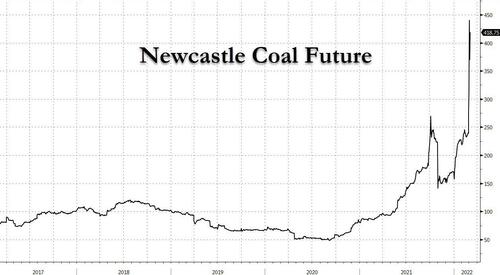
I.e., BTU was just slapped with a margin call which considering Newscastle coal prices recently hit $420 is not a surprise.
There’s more:
The new credit facility, along with available cash, will support the company’s near-term liquidity requirements in the event of additional increases in the underlying market coal price. Under the company’s derivative contracts, cash collateral is returned to the company upon reductions in the underlying market coal price or as the company delivers seaborne thermal coal into the market at spot prices. Additionally, the company anticipates it will generate significant operating cash flows from unpriced volumes based on its current operating plans, if the current market dynamics persist.
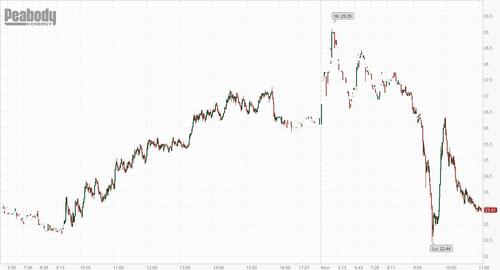
But while investors may be concerned that the margin call, and hedges, may limit the company’s upside – and is why the stock is down 10% today, the company is quick to explain that its hedges cover only a modest portion of its output: “With the exception of the 1.9 million metric tons at Wambo priced at $84 per metric ton, export sales from Peabody’s seaborne thermal segment are largely unpriced and will benefit if the current pricing environment persists.” In context, last year Peabody’s seaborne thermal segment exported 8.7 million metric tons and generated revenue of approximately $762 million at an average realized price of $87.51 per metric ton.
High demand and tight supply for coal globally has resulted in a substantial rise in seaborne thermal coal prices, which has been amplified by the Russian-Ukrainian conflict resulting in unprecedented upward volatility in Newcastle coal pricing since late February. The Newcastle financial price for March closed at $419.50 on March 4, 2022, which is 248% above the closing index price of $169.17 on December 31, 2021. As a result, the company has posted an additional $534 million to satisfy the margin requirements for its derivative contracts since December 31, 2021. With the exception of the 1.9 million metric tons at Wambo priced at $84 per metric ton, export sales from Peabody’s seaborne thermal segment are largely unpriced and will benefit if the current pricing environment persists. In 2021, Peabody’s seaborne thermal segment exported 8.7 million metric tons and generated revenue of approximately $762 million at an average realized price of $87.51 per metric ton.
That said, the terms of the facility are rather onerous, and in addition it demands that any equity sales under “at-the-market” issuance will be applied to paydown outstanding debt.
The credit facility will be a senior, unsecured obligation of Peabody, will mature on April 1, 2025, and will accrue interest payable at 10.0% per annum on drawn amounts. Any net cash proceeds received by the company from the issuance and sale of any equity securities under its “at-the-market” equity issuance program are required to be applied to paydown any outstanding borrowings under the new credit facility.
News of the margin call sent BTU stock tumbling 10%, after hitting a three-year high earlier in the session.
end
6.CRYPTOCURRENCIES
Your early currency/gold and silver pricing/Asian and European bourse movements/ and interest rate settings MONDAY morning 7:30 AM
ONSHORE YUAN: CLOSED DOWN 6.3192
OFFSHORE YUAN: 6.3230
HANG SANG CLOSED DOWN 847.66 PTS OR 4.43%
2. Nikkei closed DOWN 764.06 PTS 2.94%
3. Europe stocks ALL RED
USA dollar INDEX UP TO 98.94/Euro FALLS TO 1.0885-
3b Japan 10 YR bond yield: FALLS TO. +.147/ !!!!(Japan buying 100% of bond issuance)/Japanese yen vs usa cross now at 115.28/ THIS IS TROUBLESOME AS BANK OF JAPAN IS RUNNING OUT OF BONDS TO BUY./JAPAN 10 YR YIELD IS NOW TARGETED AT .11%/JAPAN LOSING CONTROL OF THEIR BOND MARKET//
3c Nikkei now ABOVE 17,000
3d USA/Yen rate now well below the important 120 barrier this morning
3e WTI:: 121.18 and Brent: 123/66–
3f Gold UP /JAPANESE Yen UP CHINESE YUAN: ON -SHORE CLOSED DOWN// OFF- SHORE DOWN
3g Japan is to buy the equivalent of 108 billion uSA dollars worth of bond per month or $1.3 trillion. Japan’s GDP equals 5 trillion usa./“HELICOPTER MONEY” OFF THE TABLE FOR NOW /REVERSE OPERATION TWIST ON THE BONDS: PURCHASE OF LONG BONDS AND SELLING THE SHORT END
Japan to buy 100% of all new Japanese debt and by 2018 they will have 25% of all Japanese debt. Fifty percent of Japanese budget financed with debt.
3h Oil UP for WTI and UP FOR Brent this morning
3i European bond buying continues to push yields lower on all fronts in the EMU. German 10yr bund FALLS TO -.0.027%/Italian 10 Yr bond yield FALLS to 1.57% /SPAIN 10 YR BOND YIELD FALLS TO 0.99%…ITALIAN 10 YR BOND YIELD/GERMAN BUND: 1.60: DANGEROUS FOR THE ITALIAN BANKING SYSTEM
3j Greek 10 year bond yield RISES TO : 2.38
3k Gold at $1983.00 silver at: 25.71 7 am est) SILVER NEXT RESISTANCE LEVEL AT $30.00
3l USA vs Russian rouble;// Russian rouble DOWN 2950/100 in roubles/dollar; ROUBLE AT 136.00.40
3m oil into the 121 dollar handle for WTI and 123 handle for Brent/
3n Higher foreign deposits out of China sees huge risk of outflows and a currency depreciation. This can spell financial disaster for the rest of the world/
JAPAN ON JAN 29.2016 INITIATES NIRP. THIS MORNING THEY SIGNAL THEY MAY END NIRP. TODAY THE USA/YEN TRADES TO 115.28 DESTROYING JAPANESE CITIZENS WITH HIGHER FOOD INFLATION
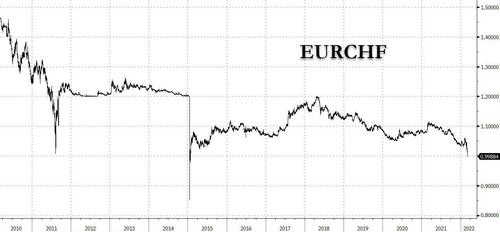
30 SNB (Swiss National Bank) still intervening again in the markets driving down the FRANC. It is not working: USA/SF this morning .9248– as the Swiss Franc is still rising against most currencies. Euro vs SF 1.0068 well above the floor set by the Swiss Finance Minister. Thomas Jordan, chief of the Swiss National Bank continues to purchase euros trying to lower value of the Swiss Franc.
USA 10 YR BOND YIELD: 1.770 UP 4 BASIS PTS
USA 30 YR BOND YIELD: 2.188 UP 3 BASIS PTS
USA DOLLAR VS TURKISH LIRA: 14.35
Futures Tumble, Europe In Bear Market As Oil, Gold Soar
MONDAY, MAR 07, 2022 – 07:38 AM
Not much has changed since our market update last night which saw all risk assets collapse and in many cases set to open in bear markets, amid a soaring panic that the US will impose a unilateral oil embargo on Russia leading to an energy supply shock and global stagflation, while safe havens such as gold, treasuries, and the dollar are exploding higher not to mention crude which was last trading at $125 after briefly rising above $139 at the start of the session. Commodities from grains, metals have also surged on concerns of chaos in raw-material flows due to the invasion and sanctions on Russia that are turning the resources powerhouse into a global pariah. Commodity-linked currencies strengthened.
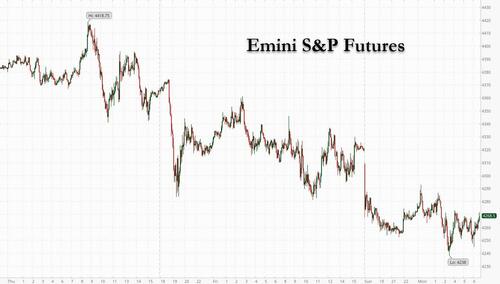
S&P 500 e-mini futures were down as much as 2.1% earlier before trading 1% lower 7am in New York after a faint glimmer of hope of de-escalation when the following headlines hit Reuters:
- KREMLIN SPOKESMAN SAYS UKRAINE MUST AMEND CONSTITUTION AND REJECT CLAIMS TO ENTER ANY BLOC
- UKRAINE MUST RECOGNISE CRIMEA AS RUSSIAN, AND DONETSK AND LUGANSK AS INDEPENDENT STATES
- IF THESE CONDITIONS ARE MET, THEN RUSSIAN MILITARY ACTION WILL ‘STOP IN A MOMENT’ – SPOKESMAN
And now we wait for the latest Ukranian refusal of these conditions. Meanwhile Nasdaq futures retreated 1.7%. Brent oil was up as much as 18% today, trading around $125 a barrel as the Biden administration is considering whether to prohibit Russian oil imports into the U.S. without participation of allies in Europe, at least initially, according to a Bloomberg report.
“For the U.S. economy, we now see stagflation, with persistently higher inflation and less economic growth than expected before the war,” Ed Yardeni, president of Yardeni Research, wrote in a note. “For stock investors, we think 2022 will continue to be one of this bull market’s toughest years.”
Travel stocks were down in premarket trading, with airlines dropping as a surge in oil prices stokes worries over higher jet fuel costs. American Airlines Group (AAL US) -3.2%, Delta Air Lines (DAL US) -3%. On the other end, U.S. energy shares soared as crude oil prices soar after the U.S. said it was considering curbs on imports of Russian oil. Exxon (XOM US), Chevron (CVX US), Marathon Oil (MRO US) are all up about 3% as WTI crude futures gain 6.4% to $123.02 a barrel. Cryptocurrency-exposed stocks could be active on Monday as digital currencies including Bitcoin slide alongside risk assets such as stocks. Watch Coinbase (COIN US), Riot Blockchain (RIOT US), Marathon Digital (MARA US). Banks stocks slumped in premarket trading, pushing their recent rout to a third day. In corporate news, banking and credit card technology unicorn Zeta Services has raised $30 million from investors including Mastercard. Meanwhile, American Express says it is suspending its operations in Russia and Belarus. Bed Bath & Beyond (BBBY US) shares exploded as much as 75% after RC Ventures, an investment firm started by GameStop Chairman Ryan Cohen, disclosed a large stake in the retailer, while pushing it to explore a sale of the company.
“While the Russian aggression in Ukraine continues the risk of a further escalation keeps investors unsettled. Soaring energy prices are at the heart of economic vulnerabilities,” said Thomas Hempell, head of macro and market research at Generali Investments. “Price pressures are compounded by mounting risk of supply chain disruptions as Russian firms are cut off financially and cargo traffic is curtailed.”
Late on Sunday Bloomberg reported that the Biden administration is considering whether to ban the import of Russian oil and energy products unilaterally, a move that could add to economic pressure as more companies pull out of the country in response to Moscow’s invasion of Ukraine. High energy prices threaten to stall global growth, a risk that is sending tremors across markets.
The commodity supply shock comes as the global economy was already struggling with high inflation due to the pandemic. The Federal Reserve and other key central banks now face the tricky task of tightening monetary policy to contain the cost of living without upending economic expansion or roiling risky assets.
Meanwhile, traders piled into options that oil could surge even further after rising to the highest since 2008, with many adding to calls that Brent futures will rise above $200 before the end of March. For those who missed the key developments over the weekend and overnight, here is a recap of the latest Russian energy/economic updates, courtesy of Newsquawk
- US Secretary of State Blinken said the US and allies are in active discussions regarding a Russian oil import ban and reports later stated the US is weighing acting without allies on a ban of Russian oil imports, although the timing and scope of any ban is still fluid, according to Bloomberg.
- US House Speaker Pelosi said the House is exploring legislation to ban the import of Russian oil.
- Japan is in talks with the US and Europe regarding a Russian oil embargo, according to Kyodo.
- Russian Kremlin spokesman Peskov said there will be a reaction to the economic banditry they are seeing and that a ban on Russian oil risks the most serious market impact, while Peskov added that NATO is aware it cannot get directly involved in Ukraine. Kremlin also stated that companies will return to Russia and invest one day.
- Russia said it is to service and pay Russian bonds fully on time but stated that payments on debts to foreign residents will depend on limits imposed by foreign states.
- American Express (AXP) suspends operations in Russia and Belarus which is due to the Russian attack on the people of Ukraine. Visa (V) and Mastercard (MA) are also to suspend operations in Russia in which Visa noted that all transactions initiated with Visa cards issued in Russia will no longer work outside the country and Mastercard said cards issued by Russian banks will no longer be supported by its network. However, Russia’ s largest lender Sberbank noted that the Visa and Mastercards it issued will continue to work in Russia, according to Tass.
- Banks in Russia are rapidly trying to move to the Chinese UnionPay’s system and its own Mir network after Visa and Mastercard suspended operations in Russia
- VTB Bank is preparing to pull out of Europe, according to FT.
- PwC is to separate its Russian firm from the rest of its global network which affects 3,700 partners and staff in the country.
- TikTok limited services in Russia due to the ‘Fake News’ law and Netflix (NFLX) also decided to suspend its service in Russia.
- Moody’s downgraded Russia’s sovereign ratings from B3 to CA; Outlook Negative, while it cut Ukraine’s sovereign rating two notches from B3 to Caa2.
- Ukraine introduced export licences for key agricultural commodities including wheat, corn and sunflower oil.
And here is the latest in the ongoing discussions and negotiations:
- Russia-Ukraine discussions to commence at 12:00GMT/07:00EST on Monday, according to Russian State TV citing Belta; Russian delegation has arrived for the discussions; subsequently, Ukraine Presidential Adviser says new talks with Russia will start at 14:00GMT/09:00EST.
- Russian & Ukraine Foreign Ministers are to meet in Antalya, Turkey, according to the Turkish Foreign Minister; meeting will occur on Thursday.
- Ukrainian Foreign Minister Kuleba said he doesn’t see progress in peace talks with Russia but have to continue talking, while he talked to US Secretary of State Blinken about providing more weapons to Ukrainian fighters and implementing more sanctions against Russia. Furthermore, US Secretary of State Blinken said unprecedented pressure on Russia will increase until the war with Ukraine is brought to an end, according to Reuters.
- Russian President Putin warned that they would consider any third-party declaration of a no-fly zone over Ukraine as participation in the armed conflict and said western sanctions are akin to a declaration of war, while he added there is no reason to declare martial law in Russia.
- Russian President Putin held a call with Turkish President Erdogan in which Putin said Russia is ready for dialogue with Ukraine and foreign partners, while he added that the military operation in Ukraine is going according to plan and any attempt to draw out the negotiation process will fail.
- Russian President Putin and French President Macron held a call on Sunday in which Putin told Macron that he agreed to talks between the IAEA, Ukraine and Russia to ensure security at nuclear sites.
- Russian Defence Ministry said the use of airfields of other countries by Ukraine airforce may be considered as participation of those countries in the conflict, according to Interfax.
- Russian Foreign Ministry said Britain has chosen to move towards open confrontation with Russia and that Russia will respond which will undoubtedly undermine British interests in Russia.
European equities were hit hard at the open with focus turning to the inflationary impact of elevated energy and the subsequent dent to global trade. Cash indexes are deep in the red, Euro Stoxx 50 down as much as 4.75%, DAX and CAC drop 5%; FTSE MIB lags, cratering as much as 6.25%. As BBG’s Heather Burke notes, the Euro Stoxx 50 has slid more than 20% from its November high, poised for a technical bear market at the close, with similar moves seen in major European regional benchmarks. Banks, retail, autos and travel are the biggest decliners as investors worry about Russia exposure and the prospects of higher inflation and slower growth. Energy and miners are in the green as commodities soar. Over 90% of Stoxx 600 members are down. U.S. futures’ declines are also picking up. Energy and banks had benefited from gains in value stocks; through mid-February they were the two best Stoxx 600 performers.
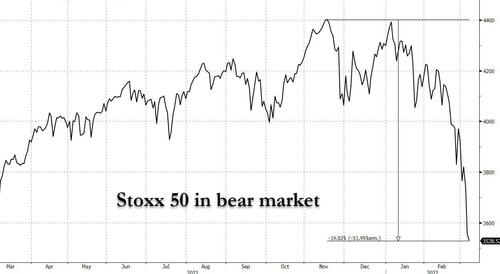
Banks, autos and retail names are the hardest hit; energy and mining stocks hold in positive territory with the commodities well bid. European banks declined 8% to lowest level since February 2021 amid a global sell-off spurred by concerns that surging oil prices will slow global growth. The Stoxx 600 Banks Index was the worst-performing sector in Europe, with all 39 members declining. Russia exposed banks were all down double digits: UniCredit -12%, Commerzbank -12%, Societe Generale -11%, Deutsche Bank -10%, while Raiffeisen fell as much as 13% down, to lowest level since June 2016. Energy and miners are now the only two sectors in the green ytd as oil trades near $130 and metals spike. Banks, on the other hand, have been pressured by Russia exposure, falling bond yields and economic uncertainty and how that will affect monetary policy. The ratio between European energy and banks has risen to the highest since April 2020 and can easily surpass the March 2020 pandemic peak.
Here are some of the biggest European movers today:
- European energy and basic resources stocks surged in the face of a broader equity-market rout as commodity prices extended gains amid concerns that the war in Ukraine may spur a supply shock, with Lundin Energy, Shell, Equinor and Galp Energia all up 6% or more.
- European defense companies, including BAE Systems and Thales, are also among Monday’s gainers, as Russian President Vladimir Putin reiterated over the weekend that the war will continue.
- Clarkson shares jump as much as 8.8% after Liberum said the shipping services provider made the most of strong markets in its broking and financial segments.
- Pearson is the only member of the Stoxx 600 media index, as UBS upgrades to neutral from sell, saying the stock could advance by more than 50% if the company can deliver 2025 targets.
- The Automobiles & Parts subindex is the worst-performing subindex on the Stoxx 600, dropping 5%. Finland’s Nokian Renkaat, which is heavily exposed to Russia, leads losses.
- European bank stocks declined to their lowest level since February 2021, led by losses for banks with exposure to eastern Europe, such as Erste Group Bank and PKO Bank, both dropping more than 11%.
- Luxury stocks slumped as store closures in Russia dented earnings prospects for the group while the oil price surge also added to pessimism over the economic outlook.
- Airline stocks also took a beating from Brent oil’s climb, signaling a further increase in costs for the aviation sector, with Wizz Air -11% and International Consolidated Air -7.9% leading losses.
- Inditex shares dropped as Credit Suisse said the clothes retailer may struggle to deliver medium-term growth, cutting its PT for the Spanish retailer to a new street low.
- Jupiter Fund Management shares hit their lowest since April 2020. Stock is cut to hold from add at Peel Hunt, which now expects net outflows to continue into FY22 for the asset manager.
- Oxford Instruments shares drop as much as 24
Earlier in the session, APAC stocks declined as geopolitical concerns lingered ahead of the third round of Ukraine-Russia talks and after evacuation attempts over the weekend in Mariupol were halted amid a ceasefire breach, while the US and allies are engaged in a “very active discussion” regarding a Russian oil embargo. ASX 200 weakened as tech led the declines across most industries aside from the commodity-related sectors which were boosted by a spike in oil and supply squeeze concerns across the metals complex. Nikkei 225 suffered a near-1000 point intraday loss with notable weakness in autos and airlines stocks. Hang Seng and Shanghai Comp. conformed to the risk aversion after China set its lowest growth target in 30 years at ‘around 5.5%’ and with mixed Chinese trade data also failing to inspire a turnaround.
In rates, treasuries have erased their opening gains, when futures gapped higher when Asia session began. Short-dated yields lead the move, higher by nearly ~5bp. Yields were higher across the curve, 10-year by 4.3bp at 1.77%; during Asia session it declined as much as 6.5bp to 1.666%, lowest since Jan. 5 and just above its 100-DMA, which has held since end of last year. TIPS yields little changed, outperforming after oil’s surge to 2008 levels above $130. In Europe, curves were mixed as Germany bull flattens with the short end ~3bps richer. Peripheral spreads widened, short end Spain and Italy snap ~8bps wider. Core European bonds advanced in the front end while peripherals slumped; Germany’s 10-year breakeven rate jumped to a record high. Euro 5y5y inflation swaps ramp up ~14bps near 2.24%, German 10y breakevens print a record high near 2.4%.
In FX, the Bloomberg Dollar Spot Index rallied 0.6% back above 1,200 as a selloff of European currencies continued; Treasuries were a tad lower. Australian, New Zealand and Canadian dollars rose as they benefited from rallying commodity prices, while Poland’s zloty and Hungary’s forint tumbled to all-time lows against the euro and Sweden’s krona fell below 10 per dollar for the first time since April 2020. The euro slid to 1.0822, its weakest level in almost two years against the greenback and three-month 25 delta risk reversals on EUR/USD showed the biggest bias to puts since the European debt crisis. The common currency slipped below parity with the Swiss franc for the first time since January 2015. It erased the losses on speculation that the SNB was intervening.
The pound slumped to the lowest since December and Gilt yields rose by up to 7bps, led by the front end. Australian and New Zealand dollars gained as much as 1% each, before paring, amid the spike in oil and as iron ore jumped on Chinese stimulus hopes. The yen dropped for the first time in three days on concern higher energy prices will weigh on Japan’s trade balance.
In commodities, Brent and WTI hold roughly half of their gains; Brent trades near $125 having surged on to a $139-handle in early Asia triggered by reports that the U.S. was discussing a ban on Russian crude imports. Base metals skyrocket: LME nickel surges ~30%, palladium hits an all-time high. Spot gold trades near $2,000/oz.
The Indian rupee fell to a record low as crude oil prices surged to the highest since 2008, stoking fears about inflation and finances for the net-energy importer. Bonds also declined. USD/INR rose 1% on Monday to 76.9662 after climbing to 76.9812 earlier.
Bitcoin remains subdued and sub-USD 40k after losing the handle towards the tail-end of last week.
Market Snapshot
- S&P 500 futures down 1.6% to 4,259.25
- STOXX Europe 600 down 3.0% to 409.12
- MXAP down 2.8% to 173.52
- MXAPJ down 2.7% to 567.72
- Nikkei down 2.9% to 25,221.41
- Topix down 2.8% to 1,794.03
- Hang Seng Index down 3.9% to 21,057.63
- Shanghai Composite down 2.2% to 3,372.86
- Sensex down 2.9% to 52,756.70
- Australia S&P/ASX 200 down 1.0% to 7,038.59
- Kospi down 2.3% to 2,651.31
- German 10Y yield little changed at -0.06%
- Euro down 0.6% to $1.0865
- Brent Futures up 6.4% to $125.64/bbl
- Gold spot up 1.3% to $1,995.63
- U.S. Dollar Index up 0.39% to 99.03
Top Overnight News from Bloomberg
- President Vladimir Putin said again on Sunday the war will continue until Ukraine accepts his demands and halts resistance, dimming hopes for a negotiated settlement. Putin says Ukraine must “demilitarize” and he has made clear his goal is to remove the current government
- Major stock markets from Europe to Asia are heading for bear markets — falling more than 20% from highs — amid fears of an inflation shock as crude oil soared on the prospect of a ban on Russian supplies
- The SNB’s foreign-exchange holdings slipped as a surging franc weighed on its stockpile. Foreign-currency reserves declined by 8.4 billion francs ($8.7 billion) to 938.3 billion francs in February, according to data published Monday. The central bank said “the franc continues to be highly valued. The SNB takes the overall currency situation into consideration, individual currency pairs don’t play a special role. The central bank is still ready to intervene in the foreign exchange market if necessary.”
- German factory orders increased for a third month, driven by foreign demand, even as the pandemic probably tipped Europe’s largest economy into another recession. Orders rose 1.8% from the previous month in January after advancing 2.8% in December — more than the median estimate in a Bloomberg survey
- With soaring consumer prices showing little signs so far of feeding a pay spiral in the euro zone, the region’s labor market faces an even bigger cost-of- living increase as energy prices soar after Russia’s invasion of Ukraine
- China declared ties with Russia to be “rock solid” despite President Vladimir Putin’s invasion of Ukraine, while repeating earlier an accusation that the U.S. is trying to build a Pacific version of NATO
- China’s export growth moderated in the first two months of the year, pointing to more stable global demand as multiple risks cloud the outlook
A more detailed look at global markets from Newsquawk
Asia-Pac stocks declined as geopolitical concerns lingered ahead of the third round of Ukraine-Russia talks and after evacuation attempts over the weekend in Mariupol were halted amid a ceasefire breach, while the US and allies are engaged in a “very active discussion” regarding a Russian oil embargo. ASX 200 weakened as tech led the declines across most industries aside from the commodity-related sectors which were boosted by a spike in oil and supply squeeze concerns across the metals complex. Nikkei 225 suffered a near-1000 point intraday loss with notable weakness in autos and airlines stocks. Hang Seng and Shanghai Comp. conformed to the risk aversion after China set its lowest growth target in 30 years at ‘around 5.5%’ and with mixed Chinese trade data also failing to inspire a turnaround
Top Asian News
- Xi Warns Missteps on Ethnic Issues Would ‘Destabilize’ China
- LSE Reviewing Trades Executed in Polymetal After Brief Spike
- SMBC Nikko Strips 2 Arrested Employees of Executive Titles
- China Builder Logan Downgraded Deeper into Junk by Moody’s
European bourses are hampered across the board, Euro Stoxx 50 -2.3%, as geopolitics continue to dominate. US futures are also pressured, ES -1.7%, but faring marginally better than European peers as participants remain cognisant of US CPI this week and the Fed next week. In Europe, the likes of the FTSE 100 are the relative outperformers given exposure to crude names as the associated Oil & Gas sector cheers benchmark pricing while Basis Resources are firmer.
Top European News
- JPM Strategists Stay Positive for Europe Stocks on Fundamentals
- Danske Bank Senior ESG Analyst Leaves for Risk Management at DNB
- Vopak Plummets; Jefferies Cuts on ‘Looming’ Overcapacity
- Jupiter Sinks as Peel Hunt Cuts Rating on Difficult Outlook
In FX, the dollar remains king, but not quite all conquering as commodity currencies outperform and Gold scales in around the 2k per ounce mark; DXY approaching 99.500 after clearer round number breach. Aussie hovers on 0.7400 handle as iron ore and copper soar. Euro slammed but off worst levels vs Franc after verbal SNB intervention; EUR/CHF back over parity, but EUR /USD dangling above 1.0800. Rouble slides to new record lows ahead of third attempt to strike ceasefire agreement between Russia and Ukraine – Usd/Rub over 135.00 at one stage. Norwegian Crown elevated as Brent remains bid alongside WTI on possible Russian export embargo; EUR /NOK sub-9.8000 vs EUR/SEK around 10.8800 for comparison. SNB says the CHF continues to be “Highly Valued”, remains prepared to intervene in FX markets if needed. CHF appreciation reflects the inflation differentials between Switzerland and other nations, inflation abroad is significantly higher than in Switzerland. BoJ could lower its economic assessment at its policy meeting next week, according to Reuters sources.
In commodities, WTI and Brent surge amid multiple bullish-factors re. US possibly banning Russian oil, Iran-nuclear delays and China growth ambitions; thus, benchmarks reached highs of USD 130.50/bbl and USD 139.13/bbl respectively. US officials held meetings in Venezuela amid a search for alternative oil supplies, according to FT. It was later reported that US and Venezuela discussed possible easing of oil sanctions although made little progress towards an agreement, according to sources cited by Reuters. US President Biden’s advisers are mulling a Saudi Arabia trip to convince the kingdom to pump more oil, according to Axios. Canada’s Alberta Province has some spare pipeline and rail capacity to export additional oil to the US, according to Alberta’s Energy Minister. Libya NOC announced an armed group closed pump valves at the Sharara and el-Feel oil fields which reduced its daily production by 330k bbls. Goldman Sachs says a sustained USD 20/bbl increase in oil prices would reduce US GDP by 0.3% and Euroarea by 0.6%. Spot gold/silver are bid though the yellow metal is yet to embark on a substantial move above the USD 2000/oz mark. Copper strengthened to above USD 5/lb for the first time in history amid the broad upside across the commodities complex that saw LME nickel futures gain around 19%.
US Event Calendar
- 3pm: Jan. Consumer Credit, est. $24.5b, prior $18.9b
DB’s Jim Reid concludes the overnight wrap
In normal times this Thursday’s US CPI and ECB meeting would be the blockbuster couple of hours of the week. It will still be important but clearly won’t be the main event given the Ukrainian situation.
Indeed the week is set to start in somewhat of a fraught manner after a remarkable surge in oil overnight with Brent futures up +9.7% to $129.59/bbl and WTI futures +8.1% to $125.07/bbl, as I type – the highest since 2008. Indeed Brent actually opened nearer $139 in a stunning early move.
This comes following US Secretary of State, Antony Blinken stating that Washington and its allies were in talks about banning Russian oil and natural gas imports to tighten economic sanctions on Russia. Blinken added that the US administration will make sure that there is sufficient oil in the global market, if such measures were imposed. Additionally, Speaker Nancy Pelosi said in a letter to Democratic colleagues that the chamber is exploring strong legislation to ban the imports of Russian oil – a move which would “further isolate Russia from the global economy”.
Equity markets are set to open sharply lower as a result with contracts on the S&P 500 (-1.27%), Nasdaq (-1.72%), Dow Jones (-1.0%) and DAX (-3.11%) all weak. Meanwhile, 10-year US Treasury yields moved -2.9bps lower at 1.70%. Elsewhere, the Nikkei (-3.48%), Hang Seng (-3.41%), Shanghai Composite (-1.48%), CSI (-2.38%) and Kospi (-2.02%) are also weak.
There hasn’t been much new news over the weekend that progresses the narrative on the conflict and it’s looking more likely that this will be an attritional battle absent a major development. For economies and markets, especially in Europe it then depends on whether the gas (and to a lesser extent oil) continues to flow from Russia to the continent. At the moment it seems the European governments are keen for the gas flow to continue (assuming Russia does) but I suppose a risk to this scenario is that public opinion becomes increasingly against that scenario and politicians have to respond. The news out of the US over the weekend shows the momentum is building for fiercer sanctions on Russia.
The oil move this morning comes after there was some hope on Saturday that Iran have moved closer to a position where sanctions could be reduced and thus allowing their oil to flow onto the global market place as early as the third quarter. However yesterday it seemed that Tehran’s links to Russia were increasingly seen as a big stumbling block. So we’ll see how this story develops.
Another interesting story over the weekend was the Chinese government’s 5.5% 2022 growth target announced at the National People’s Congress. Most analysts believed it would be around 5% or just above and our economists wrote last week that if the target was 5.5% it would imply direct additional government support for the economy. They added that this could come at the expense of long-term growth and financial stability. Our economists’ update yesterday on how the target might be achieved here.
Previewing the main scheduled events of the week now. For US CPI our economists expect year-on-year inflation to rise to +7.8% in February, the fastest in 40 years. This is the last reading before next Wednesday’s FOMC conclusion with the committee now in a blackout period. Perhaps the drama of both these events has been reduced by a quite explicit reference last week by Powell that he favours a 25bps hike next week. Having said that a strong CPI will certainly keep a 50bps move in subsequent meetings firmly on the radar so it’s still clearly important to try to assess where we are in the inflation cycle.
As for the ECB on Thursday, their meeting comes after the Euro Area flash CPI print for February last week came in at +5.8% (vs. +5.6% expected), which is the highest level in the single currency’s history. A preview of the meeting from our European economists can be found here. They expect the Ukraine crisis to prevent the central bank from announcing APP tapering at this point. Also, in their view, the ECB’s message will reinforce its commitment to price stability and addressing fragmentation. Our FX strategists have made a strong case for how the ECB need to intervene soon to ensure that a falling Euro doesn’t magnify the soaring energy costs. See here for more
Elsewhere Wednesday is an interesting day as we have US JOLTS which is a good gauge of labour market tightness, and PPI in both China and Japan. The rest of the day by day week ahead is at the end as usual.
Looking back now, it was a difficult and volatile week for markets with commodities the highlight. Brent crude oil futures increased +20.55% over the week (+6.93% Friday) reaching $118/bbl, the highest level since 2013, and the largest weekly increase in absolute dollar terms in Bloomberg’s data dating back to 1988. European natural gas, however, stole the show, increasing +116.20% (+19.73% Friday) to an all-time high of €204.14. Unsurprisingly it marked the largest weekly increase in percentage and euro terms on record. Clearly a very worrying situation on this side of the continent.
The price pressures extend beyond energy, as agricultural prices also saw marked increases. Russia and Ukraine collectively export just under a third of the world’s wheat, leading wheat futures to increase +40.62% (+6.61% Friday). Metals were not spared, with aluminium, copper, and palladium increasing +14.39% (+3.57% Friday), +9.65% (+3.30% Friday), and +27.14% (+8.19% Friday), respectively. The Bloomberg commodity spot index therefore increased +13.02% (+3.34%) over the week, the highest level and largest weekly gain on record.
Central banks were obviously in focus given the inflationary pressures and change to the growth outlook. STIR markets are pricing +24.1bps of ECB tightening through this year, down from +34.3bps of tightening at the end of the week before. Meanwhile, Chair Powell signalled his preference to lift rates by 25 basis points at the March FOMC meeting. He sounded a hawkish tone on the risks from inflation. He paid heed to the uncertain impacts stemming from the war but downplayed the direct economic impacts to the US. Markets are pricing +141.3bps of tightening from the Fed this year, down slightly from +155.6bps at the end of the week before. Not a big destruction in pricing given the war and sanctions escalation.
Longer term interest rates fell on the flight to quality flows, with 10yr treasury, bund, OAT, and gilt yields tumbling -23.1bps (-11.0bps Friday), -30.0bps (-8.9bps Friday), -27.2bps (-6.1bps Friday), and -24.9bps (-9.1bs Friday), respectively. Notably, 10yr bund yields ended the week back in negative territory at -0.07%. The move was driven by real yields, as breakevens widened in line with increases in commodity prices, with 10yr US, German, French, and UK breakevens increasing +14.1bps (+0.8bps Friday), +34.5bps (+9.6bps Friday), +27.4bps (+5.0bps Friday), and +12.8bps (-1.3bps Friday), respectively.
The continued pricing of central bank tightening combined with global risk off drove the 2s10s treasury yield curve -13.9bps (-5.8bps Friday) flatter, finishing the week at +24.9bps, another low that is only matched by March 2020 levels.
The final piece is global equity indices, which were red across the board but with US stocks holding up impressively well. The S&P 500, STOXX 600, DAX, and CAC fell -1.27% (-0.79% Friday), -7.00% (-3.56% Friday), -10.11% (-4.41% Friday), -10.23% (-4.97% Friday), respectively. European stocks underperformed given the proximity to the conflict and sanctions, with the DAX and CAC entering a -10% correction on the week alone, while the STOXX 600 is now down -13.53% YTD. Financials on both sides of the Atlantic were notable underperformers, with the S&P 500 banks and STOXX banks indices down -8.51% (-3.35% Friday) and -18.69% (-7.92% Friday), respectively.
Finally, the US jobs numbers were one bit of optimistic news in an otherwise dismal week. The economy added +678k jobs in February, sending the unemployment rate down to +3.8%, both better than consensus estimates. Labor force participation ticked up to +62.3% while average hourly earnings were actually flat MoM and below expectations easing some inflationary fears. However there looked like there may have been some compositional issues. So we will have to wait for next month’s report to see.
END
3. ASIAN AFFAIRS
i)MONDAY MORNING// SUNDAY NIGHT
SHANGHAI CLOSED DOWN 74.79 PTS OR 2.17% //Hang Sang CLOSED DOWN 847.66 PTS OR 4.43% /The Nikkei closed DOWN 764.06 PTS or 2.99% //Australia’s all ordinaires CLOSED DOWN 1.00% /Chinese yuan (ONSHORE) closed DOWN 6.3192 /Oil UP TO 121.34 dollars per barrel for WTI and UP TO 12366 for Brent. Stocks in Europe OPENED ALL RED // ONSHORE YUAN CLOSED DOWN AGAINST THE DOLLAR AT 6.3192. OFFSHORE YUAN CLOSED DOWN ON THE DOLLAR AT 6.3230: /ONSHORE YUAN TRADING ABOVE LEVEL OF OFFSHORE YUAN/ONSHORE YUAN TRADING WEAKER AGAINST USA DOLLAR/OFF SHORE WEAKER//
3 a./NORTH KOREA/ SOUTH KOREA
///NORTH KOREA
3B JAPAN
3c CHINA
CHINA/SHENZEN
China’s mandate COVID zero policy is causing Shenzhen people desperate for food
(Hao/EpochTimes)
China Mandates COVID-Zero Policy, Shenzhen People Desperate For Food
MONDAY, MAR 07, 2022 – 04:00 AM
By Nichole Hao of Epoch Times

The Chinese regime continues to mandate its COVID-zero policy that quarantines all potential infections and locks down cities.
Residents in Shenzhen, a city with multiple districts reporting outbreaks of COVID-19, complained that they were surrounded by “trash mountains” and in desperate need of food due to the lockdown.
“On the evening of Feb. 28, a neighbor tried to jump off the building from his apartment. Other neighbors told me that he has depression and hadn’t eaten for two days. He lost all hope and tried to commit suicide,” Lin Dai (pseudonym), a resident of Shangshadong village in the city of Shenzhen, told the Chinese-language Epoch Times on March 2.
“After we were locked down at home, we couldn’t go out to buy food. I tried to order online, but it was very difficult to find food that can be delivered to us,” Lin said.
“I know a young woman who lives in my building. She only has rice and pickles at home. She tries to eat as little as possible, and has eaten only one or two bowls of congee with pickles every day in the past days.”
“We continually called the authorities for help and were told they don’t have enough manpower to take care of the residents who are under lockdown,” Lin said. “Finally, the regime sent us milk and apples this morning and some fast food and vegetables at noon.”
Chen Dong (pseudonym) is a new Shenzhen resident who drives a taxi in the city. On Feb. 22, Chen was locked down at his apartment in Shangshadong village. Since then, he hasn’t been able to work and can’t earn any money.
“The regime said that their staff members would send food to our doors, but the majority of the volunteers who bring the food don’t dare to come here. They are afraid of being infected,” Chen said. “In the first days, we could go downstairs to pick up the food from the building’s front door.”
The lives of Chen and his neighbors became worse on Feb 26, when the regime suddenly wouldn’t allow them to leave their apartments.
“They locked our building, didn’t send us anything, and didn’t remove the trash. Now, the trash is everywhere and piled like mountains,” Chen said. “Nobody takes care of us, and many people shouted from their windows that they were hungry and needed food.”
On March 1, Chen and his neighbors received the first batch of food, which Chen didn’t think was sufficient for a family.
“We have no other solution. If a family hasn’t stocked up food, and there are children, they will die of hunger. We went upstairs and downstairs to check on our neighbors. We are helping each other,” Chen said.

Li Fei (pseudonym), a regime clerk at Shatou community in Shenzhen, told the Chinese-language Epoch Times on March 2 that the regime sealed the residential buildings and compounds where new infections were reported using barbed wire. “We don’t allow any resident to escape from the sealed area.”
Li said that about 60,000 to 70,000 people live at Shangsha village in the community and all are locked in their homes.
Mass Testing
Like other Chinese cities, the Shenzhen authorities mandated that all residents in the city must have a COVID-19 test every three days. On March 2, the regime announced that people aren’t allowed to take the metro if they don’t have a negative COVID-19 test result within 48 hours.
Inside residential compounds, speakers continually broadcast: “Your health code will turn to yellow if you haven’t been tested in the past 72 hours” and “You can’t go to work tomorrow if you don’t take a test today.”
A resident surnamed Chen who lives at Shekou community in Nanshan district in Shenzhen said in a phone interview that she and the majority of Shenzhen residents work to earn money. “The rule that people can’t work without a test, strangles our throats. It’ll be horrible if a Shenzhen resident can’t go to work,” Ms. Chen said.
The Chinese regime doesn’t allow people to move without a cell phone app-generated health code. A green code means the owner can pass the checkpoints for public transportation, enter a building, or even go back home. A yellow code means the owner has to stay at home. A red code means the owner must be quarantined at a quarantine center.
The nucleic acid tests in China are linked to each resident’s health code app. If the app hasn’t received a required test result, the code will show yellow. The system forces Chinese people to take the test.
However, the mass testing was believed to be a breeding ground for COVID-19.
“On Feb. 22, the community clerks ordered us to take the nucleic acid test for COVID-19. We were crowded together and had to wait for over four hours,” Chen Dong said. “We are required to be tested even now.”

On March 3, the Shenzhen city regime announced at the daily press conference that new infections were reported in Futian, Luohu, Nanshan, Bao’an, and Yantian districts.
On Thursday, China’s national health commission announced new domestic infections were reported in Guangdong, Inner Mongolia, Hubei, Jilin, Shanghai, Guangxi, Tianjin, Hebei, Shanxi, Heilongjiang, Jiangsu, Sichuan, and Yunnan provinces.
end
CHINA/TAIWAN/USA
Beijing Accuses Washington Of Creating “Pacific NATO” To Protect Taiwan
MONDAY, MAR 07, 2022 – 10:10 AM
In what was by all accounts an extremely forboding briefing, Chinese Foreign Minister Wang Yi warned Monday during an annual press conference that the US shouldn’t consider building a “Pacific version of NATO to protect Taiwan, because the situations in Ukraine and Taiwan were completely different.
Wang accused the US of plotting to create an Indo-Pacific strategy designed to prevent Beijing from ever reasserting control over Taipei, Bloomberg reports.
Foreign Minister Wang Yi told his annual news briefing Monday that the “real goal” of the U.S.’s Indo-Pacific strategy was to form Asia’s answer to the North Atlantic Treaty Organization. China has often accused the U.S. of trying to form blocs to suppress its growth, a complaint that’s likely to attract greater attention after President Vladimir Putin cited similar grievances before his invasion of Ukraine.
This isn’t the first time Beijing has accused Washington of trying to form “military blocks” to suppress China’s military aspirations in the Pacific. Though, according to Bloomberg, this complaint is “likely to attract greater attention after President Vladimir Putin cited similar grievances before his invasion of Ukraine.”
Any such activity would be contrary to maintaining peace in the region, and would be “doomed to fail,” Wang sad.
“The perverse actions run counter to the common aspiration of the region for peace, development, cooperation and win-win outcomes,” Wang added. “They are doomed to fail.”
Wang’s nearly two-hour briefing – held on the sidelines of the National People’s Congress in Beijing – was peppered with complaints about the US.
Complaints about U.S. efforts to strengthen its alliance network in Asia were among several points of contention raised by Wang in the almost two-hour briefing on the sidelines of the National People’s Congress in Beijing. The senior diplomat repeatedly alluded to the U.S. as the source of problems with countries around the globe and issued some of China’s most pointed warnings yet against calls to expand U.S. ties with Taiwan.
Wang added that Taiwan will inevitably “return to the embrace of the motherland” and that any interference or meddling by the US would provoke “woeful” consequences. he also accused Americans of conflating the situation in Ukraine and the situation in Taiwan, claiming it is a “”double standard”.
“Some, while being vocal about the principle of sovereignty on the Ukrainian issue, have kept undermining China’s sovereignty and territorial integrity on the Taiwan question,” Wang says. “This is a blatant double standard.”
“This would not only push Taiwan into a precarious situation, but will also bring unbearable consequences for the U.S. side,” Wang said on the sidelines of the National People’s Congress in Beijing, later adding: “Taiwan will eventually return to the embrace of the motherland.”
China has developed an increasingly aggressive stance in the region over the past decade, perhaps in response to territorial disputes with certain other regional powers.
Several Asian nations — like their counterparts on Russia’s European frontier – have sought closer security ties with the U.S. to keep from being dominated by the region’s biggest player. China has active border disputes with neighbors including Japan, India and Vietnam and has stepped up military, diplomatic and economic pressure on Taiwan, sending warplanes on some 960 forays through the island’s air defense identification zone last year.
All of this, of course, is ultimately aimed at “the Quad” – officially the Quadrilateral Security Dialogue – the relatively novel US-led military alliance that includes some of the region’s most militarily powerful democracies: India, Australia and Japan. Cooperation among the four members began after the India Ocean tsunami in 2004, but has since expanded to include military, economic and other security-related issues, according to the Council on Foreign Relations.
“As of 2021, leaders in all four countries have become more aligned in their shared concerns about China’s increasingly assertive behavior in the region and are more willing to define a constructive agenda of cooperation.”
Is this the ‘Pacific NATO’ that Wang is talking about? While it has only four members, there’s always the possibility of expansion, as China’s neighbors become increasingly concerned about its growing military largess.
END
This will hurt China as their winter crop of wheat is the worst in history. They will be forced to import wheat, that which is in scarce suppply
(zerohedge)
Food Crisis About To Get Worse After China Says Winter Wheat Condition Could Be Worst In History
MONDAY, MAR 07, 2022 – 10:13 AM
The condition of China’s winter wheat crop could be the “worst in history,” the agriculture minister said on Saturday according to Reuters, raising concerns about grain supplies in the world’s biggest wheat consumer. Speaking to reporters on the sidelines of the Chinese regime’s annual political meetings, Minister of Agriculture and Rural Affairs Tang Renjian said that heavy rainfall last year delayed the planting of about one-third of the normal wheat acreage.
A survey of the winter wheat crop taken before the start of winter found that the amount of first- and second-grade crop was down by more than 20 percentage points, Tang said.

“Not long ago we went to the grassroots to do a survey and many farming experts and technicians told us that crop conditions this year could be the worst in history,” he said. “This year’s grain production indeed faces huge difficulties.”
As the Epoch Times notes, the minister’s comments underscore concerns about China’s grain supply at the same time as the war between Russia and Ukraine, which together account for about 29% of global wheat exports, has disrupted supplies causing wheat prices to surge to 14-year highs.
However, Tang is confident China can ensure a bumper harvest of summer grain thanks to strong policy and technical support and the improving crop condition for the grain.
Fuelled by the Ukraine crisis, wheat prices in China soared to a record this week on existing domestic supply worries.
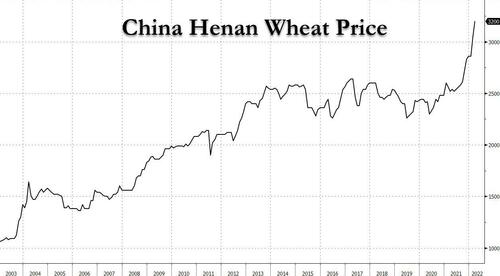
Tang’s comments also come as Beijing has refocused on food security, a long-standing priority for the central leadership that has become increasingly prominent in policy since the COVID-19 pandemic began in early 2020.
China’s state planner said in its own report at the parliament meeting that grain supply remains tight, despite consecutive good harvests in recent years. To address the issue, the National Development and Reform Commission’s (NDRC) report said China will ensure that grain acreage for the year stays above 117.33 million hectares (289.93 million acres).
China will also increase the production of soybeans and other oilseed crops, the NDRC said, reiterating top policy priorities in the farm sector. The country will also build up momentum to increase corn output, it said.
China’s corn imports surged to a record last year, amid soaring domestic prices and low inventories.
China will guarantee the supply-demand balance of grain, edible oil, cotton, sugar and fertilisers through the effective use of reserves and imports, the NDRC said.
China will allocate 41.639 billion yuan ($6.59 billion) in subsidies in 2022 for agricultural insurance premiums, up 30.8% from a year earlier, the finance ministry said in another report.
At the start of the parliament meeting, Premier Li Keqiang said China will ensure key agricultural product supplies this year, including grains.
Everyone must work together to ensure that the country’s “rice bag” and “vegetable basket” are well-filled, and that we have a secure food supply for the people, Li said.
China will stop any attempts to use cropland for any purpose other than agriculture and specifically grain production, to safeguard the area of farmland, and revitalise the seed industry at a faster pace, Li said in the government work report.
Li also said China will see that hog production is better regulated and ensure the production and supply of livestock, poultry and aquatic products and vegetables.
China’s massive pig herd was decimated by the deadly African swine fever disease, sending pork prices to record highs and increasing consumer prices.
China quickly rebuilt its pig herd to normal levels since then, according to official data, but stabilizing production and prices has become a major focus for the government.
4/EUROPEAN AFFAIRS//UK AFFFAIRS
ITALY/RUSSIA/ASSETS CONFISCATED
Italy Seizes Villas And Yachts Worth $150 Million From Russian Oligarchs
SUNDAY, MAR 06, 2022 – 07:30 AM
After initially seizing a $70 million yacht belonging to one of Russia’s richest men (billionaire Alexey Alexandrovits Mordaschov), the Italian authorities have struck again, seizing even more assets belonging to Russian businessmen and others affected by EU sanctions.
The latest seizures, including villas in Sardinia and Lake Como, allegedly belong to Russian billionaire businessman and President of the International Fencing Federation Alisher Usmanov, and a popular Russian TV host named Vladimir Soloviev. Both men are on the EU sanctions list, according to Reuters.
Here’s Reuters with more:
Italian police have seized villas and yachts worth at least 140 million euros ($153 million) from four high-profile Russians who were placed on an EU sanctions list following Moscow’s attack on Ukraine, sources said on Saturday.
A police source told Reuters that the properties were owned by Usmanov on the Mediterranean island of Sardinia, and a villa on Lake Como owned by state TV host Vladimir Soloviev, had both been seized. Soloviev spoke out against the EU for the seizure of his home, mocking the Continent’s supposedly “sacred” tradition of property rights.
There were also rumors that a yacht owned by Usmanov had been seized in Germany, however, they also turned out to be incorrect, the latest in a flurry of seizure hoaxes.
In addition to the yacht seized yesterday, another yacht – this one allegedly belonging to Gennady Timchenko, the Volga Group founder and close ally of Russian President Vladimir Putin – has also reportedly been seized. His boat, the Lena, was worth some €50 million euros.
While authorities have said they will continue to hunt for properties owned by those on the sanctions list, even the financial intelligence unit of Italy’s central bank likely won’t be able to find all of the properties owned by Russian oligarchs, given the famously opaque corporate structures that they are fond of using to mask the true ownership.
Russian oligarchs are believed to have bought numerous villas in choice Italian locations over the past 20 years and sources said more assets were expected to be seized in coming days as Western states implement massive sanctions to try to force Russia to withdraw from Ukraine.
Italian banks were instructed by the Bank of Italy’s financial intelligence division on Friday to urgently let it know of all measures taken to freeze the assets of people and entities placed on the EU list.
We’ve written more about the difficulty of linking assets to oligarchs on the sanctions list (and even assets secretly controlled by Putin). Across Italy, Usmanov is known for owning many properties in Sardinia, many in choice locations. As we have previously reported, Italy and Russia have strong economic ties – perhaps among the strongest in Europe, as part of a tradition that dates back to the early 20th Century.
END
UK/RUSSIA//
UK works are refusing to unload Russian ships over its invasion of Ukraine.
(zerohedge)
UK Dock Workers Refuse To Unload Russian Ships Over Invasion Of Ukraine
MONDAY, MAR 07, 2022 – 09:00 AM
Here we go again: dockworkers in Britain are getting a little bit uppity after watching from afar as their peers across Europe have either seized property (mostly yachts and luxury homes) or simply acted to sink it (as that one Spanish dockworker did).
Just yesterday, a Ukrainian worker manning an oligarch-owned yacht deliberately scuttled it. He almost entirely sank the vessel acting totally on its own, although it was able to be salvaged according to ship records.
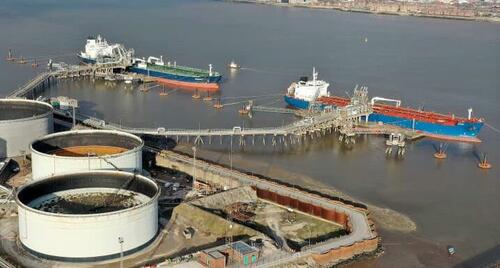
Now, in the UK, dock workers are uniting in solidarity to try and stop Russian oil and LNG from being unloaded at British ports.
According to CNBC, one transit group said it was “proud” of its workers for taking matters into their own hands?
Essar Group, which runs the Stanlow refinery in northwest England, said a German-flagged vessel had been given approval to berth at the nearby Tranmere Oil Terminal on the River Mersey. However, Sharon Graham, the general secretary of U.K. union Unite, said that her members will “under no circumstances unload any Russian oil regardless of the nationality of the vessel which delivers it.”
“I am very proud of @unitetheunion’s members taking a principled stand to prevent Russian oil coming to our ports,” she added via a tweet early on Sunday.
“But it is appalling that they have been put in this position by the @GOVUK, which is still dragging its feet on sanctions.”
The sailor ultimately attempted to sink the 157-foot-long Lady Anastasia (owned by Russian businessman Alexander Mikheev) in Mallorca, Spain because of his boss’s involvement with selling Russian made weapons like thermobaric missiles. The yacht hand was identified as Taras Ostapchuk; he was arrested Saturday before being freed (and leaving the country).
“They were attacking innocents,” Ostapchuk told local media before adding that he would attempt to sink the yacht again if given anotherchance. Mikheev, 61, is the head of Rosoboronexport, a company that specializes in exporting weapons, such as tanks, ships, weapons and ammunition.
Ostapchuk reportedly said he tried to sink the ship after seeing footage of a helicopter attacking a building in Kyiv, the capital of Ukraine, after Russia launched a war in the country last week.
Italian authorities have already seized more than $150 million worth of ships and villas from Russian oligarchs. But for the most part, properties owned by wealthy Russians remained in their place
end
GERMANY/RUSSIA
Naturally, Germany would oppose block on Russian oil and gas imports. Their import needs approximate 50% from Russia
(zerohedge)
Oil Slides After Germany Opposes Push To Block Russian Oil, Gas Imports
MONDAY, MAR 07, 2022 – 08:40 AM
One day after we reported that Germany had warned against a ban on energy imports from Russia, quoting Germany’s Economy Minister Robert Habeck who said “I would not advocate an embargo on Russian imports of fossil fuels. I would even oppose it,” adding that “we need these energy supplies to maintain the price stability and energy security in Germany,” and warning that “a shortage in supply could threaten social cohesion in Germany”, moments ago Bloomberg reported that Germany now openly opposes the push to stop Russian oil, gas imports.
“I’m not ruling out anything for the further development of this year,” German Finance Minister Christian Lindner tells reporters in Berlin when asked about the next steps against Russia. “At the current time, however, there is no new decision to be made.”
“The government insists that we do not take the initiative to end our imports of oil, gas and coal to Germany”
“This option is of course on the table, but at the moment it doesn’t seems advisable to take this step ourselves in order to ensure the sustainability of the sanctions against Vladimir Putin” and that “we don’t hand long-term strategic advantages to Mr. Putin. We must recognize that accepting negative economic effects is also our contribution to solidarity with Ukraine”
Germany’s Chancellor Scholz echoed the view, saying that Europe has deliberately exempted energy supplies from Russia sanctions as, at the moment, Europe’s supply of energy cannot be secured in any other way.
The German position may explain why late on Sunday Bloomberg reported that the Biden administration is now considering whether to prohibit Russian oil imports into the U.S. without the participation of allies in Europe, which is likely aimed at isolating Germany’s blocking position.
And while the administration has yet to decide on a U.S. import ban “with the timing and scope of any move still fluid” buyer of Russian oil are already largely boycotting Russian energy, having self-imposed restrictions on purchases of Russian seaborne Brent which failed to find any buyers until it was offered at a $28.50 discount to dated Brent, when Shell emerged as a buyer only to issue a statement on Saturday explaining why it did so following global condemnation and vowing to donate all profits.
Meanwhile, the news that Germany is blocking a comprehensive Western embargo – coupled with some favorable news out of Libya which said that it was resuming oil production at tits biggest oil field, Sharara, to the tune of 270-300bkpd – have helped push oil sharply lower from its overnight session highs of $139, and WTI was last trading at “only” $117.71, up less than $3 on the session, after being $15 higher earlier.
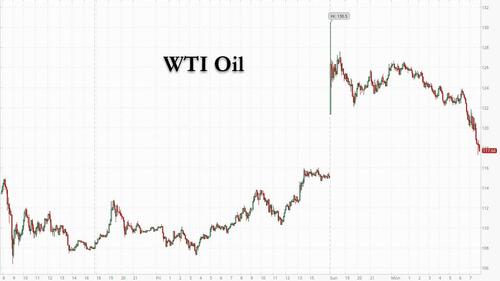
end
5. RUSSIAN AND MIDDLE EASTERN AFFAIRS
END
Latest developments…
Here Are All The Latest News And Developments From The Ukraine War
MONDAY, MAR 07, 2022 – 09:02 AM
With newsflow out of Ukraine having become a firehose, with market moving headlines firing every minute, traders can be forgiven if they have just given up following the narrative. To help out, here is a snapshot of all the latest market-moving news out of Ukraine over the weekend and overnight, courtesy of Newsquawk:
Energy/Economic Updates:
- US Secretary of State Blinken said the US and allies are in active discussions regarding a Russian oil import ban and reports later stated the US is weighing acting without allies on a ban of Russian oil imports, although the timing and scope of any ban is still fluid, according to Bloomberg.
- US House Speaker Pelosi said the House is exploring legislation to ban the import of Russian oil.
- Japan is in talks with the US and Europe regarding a Russian oil embargo, according to Kyodo.
- Russian Kremlin spokesman Peskov said there will be a reaction to the economic banditry they are seeing and that a ban on Russian oil risks the most serious market impact, while Peskov added that NATO is aware it cannot get directly involved in Ukraine. Kremlin also stated that companies will return to Russia and invest one day.
- Russia said it is to service and pay Russian bonds fully on time but stated that payments on debts to foreign residents will depend on limits imposed by foreign states.
- American Express (AXP) suspends operations in Russia and Belarus which is due to the Russian attack on the people of Ukraine. Visa (V) and Mastercard (MA) are also to suspend operations in Russia in which Visa noted that all transactions initiated with Visa cards issued in Russia will no longer work outside the country and Mastercard said cards issued by Russian banks will no longer be supported by its network. However, Russia’ s largest lender Sberbank noted that the Visa and Mastercards it issued will continue to work in Russia, according to Tass.
- Banks in Russia are rapidly trying to move to the Chinese UnionPay’s system and its own Mir network after Visa and Mastercard suspended operations in Russia
- VTB Bank is preparing to pull out of Europe, according to FT.
- PwC is to separate its Russian firm from the rest of its global network which affects 3,700 partners and staff in the country.
- TikTok limited services in Russia due to the ‘Fake News’ law and Netflix (NFLX) also decided to suspend its service in Russia.
- Moody’s downgraded Russia’s sovereign ratings from B3 to CA; Outlook Negative, while it cut Ukraine’s sovereign rating two notches from B3 to Caa2.
- Ukraine introduced export licences for key agricultural commodities including wheat, corn and sunflower oil.
Discussions/Negotiations:
- Russia will stop invasion if Ukraine agrees to the following demand: constitutional amendment ruling out membership of any blocs (NATO); Ukraine must recognize Crimea as Russian, and Donetsk and Lugansk as indepenent states.
- Russia-Ukraine discussions to commence at 12:00GMT/07:00EST on Monday, according to Russian State TV citing Belta; Russian delegation has arrived for the discussions; subsequently, Ukraine Presidential Adviser says new talks with Russia will start at 14:00GMT/09:00EST.
- Russian & Ukraine Foreign Ministers are to meet in Antalya, Turkey, according to the Turkish Foreign Minister; meeting will occur on Thursday.
- Ukrainian Foreign Minister Kuleba said he doesn’t see progress in peace talks with Russia but have to continue talking, while he talked to US Secretary of State Blinken about providing more weapons to Ukrainian fighters and implementing more sanctions against Russia. Furthermore, US Secretary of State Blinken said unprecedented pressure on Russia will increase until the war with Ukraine is brought to an end, according to Reuters.
- Russian President Putin warned that they would consider any third-party declaration of a no-fly zone over Ukraine as participation in the armed conflict and said western sanctions are akin to a declaration of war, while he added there is no reason to declare martial law in Russia.
- Russian President Putin held a call with Turkish President Erdogan in which Putin said Russia is ready for dialogue with Ukraine and foreign partners, while he added that the military operation in Ukraine is going according to plan and any attempt to draw out the negotiation process will fail.
- Russian President Putin and French President Macron held a call on Sunday in which Putin told Macron that he agreed to talks between the IAEA, Ukraine and Russia to ensure security at nuclear sites.
- Russian Defence Ministry said the use of airfields of other countries by Ukraine airforce may be considered as participation of those countries in the conflict, according to Interfax.
- Russian Foreign Ministry said Britain has chosen to move towards open confrontation with Russia and that Russia will respond which will undoubtedly undermine British interests in Russia.
Third Party remarks
- UK Deputy PM Raab said sanctions are not a war crime and that talk of Russia using nuclear weapons is rhetoric and brinkmanship, while he added that China and India have to step up.
- UK parliament is to vote on sanction measures after the government put forward a series of amendments to the economic crime bill to crack down on corrupt elites and further ramp up pressure on Russian President Putin’s regime, according to Reuters
- UK Chief of Defense Staff Admiral Radakin said Russian lead forces have been decimated and it is not inevitable that it will succeed in taking over Ukraine, according to the Times.
- New Zealand announced sanctions on Russian oligarchs and published a travel ban list of 100 people. PM Ardern said they will stop superyachts, ships and aircraft from entering New Zealand territory, while sanctions will prevent Russian people and companies from moving money and assets to New Zealand to avoid other sanctions.
- Russian ambassador to the IAEA says Russia is favourable to the suggestion from IAEA Chief Grossi of a threeway meeting on Ukraine.
DEFENSE/MILITARY RESPONSE
- Ukrainian President Zelensky said Russian forces are preparing to bombard Odessa city and that it will be a war crime; subsequently, Ukrainian staff suggest that Russian ships have struck Ukrainian troops’ position in the Odessa region, according to Al Jazeera News.
- Russian military is to hold fire and open humanitarian corridors in several Ukrainian cities at 10:00 local time (07:00GMT/02:00EST) on Monday, while corridors from Kyiv, Mariupol, Kharkiv and Sumy will be opened at French President Macron’s request, according to IFAX.
- Subsequently, the Ukraine Deputy PM says humanitarian corridors are still yet to open and they rejected the proposed corridors to Belarus.
- Russian Ministry of Defence said the Security Service of Ukraine and Azov neo-nazi militants are preparing a provocation with possible radioactive contamination of the area near the city of Kharkiv, according to Sputnik.
- IAEA said it was informed by Ukraine that the Zaporizhzhya nuclear plant management is under orders from the commander of Russian forces that took control of the site last week, while it stated that some mobile networks and internet was switched off by Russian forces at the site so that reliable information cannot be obtained through the normal channels.
- US is talking to Poland about a deal to send Soviet-era aircraft to Ukraine in return for American F16 jets.
- US officials said Russia is recruiting Syrians for urban combat in Ukraine, according to WSJ.
- UK PM Johnson spoke with Ukrainian President Zelensky and told him he would work with partners to provide further defensive equipment.
Other
- IAEA and Iran issued a joint statement regarding resolving outstanding questions raised by the IAEA regarding three nuclear sites in which Iran will provide written explanations including related supporting documents to questions raised by IAEA that have not been addressed by Iran on the three locations by March 20th. IAEA will then submit any questions regarding the information provided by Iran within two weeks after that and the sides will then meet within a week in Tehran following the IAEA’s submission of any questions on such information.
- IAEA chief Grossi said the exchange with Iran was very fruitful and noted that they have several important matters they need to resolve together, while he added that it would be very difficult to imagine the 2015 nuclear deal would be revived if safeguard issues are not resolved. Furthermore, Iran’s nuclear chief said they are very optimistic about resolving nuclear issues with the IAEA and that the remaining issues will be resolved in 3-4 months.
- Iran’s government said Russia’s new demands for guarantees from the US are not constructive for nuclear deal talks after Russia recently placed new demands on the table for written guarantees from the US that sanctions on Moscow would not damage its cooperation with Iran.
- North Korea fired at least one projectile into the East Sea that was suspected to be a ballistic missile, while North Korea later confirmed that it tested a recon satellite on Saturday.
- IAEA Chief Grossi says, at N. Korea’s Yongbyon site, they are observing the construction of an annex to the reported enrichment facility, purpose of this yet to be determined end
end
Kiev blasts Russia’s non humanitarian corridors as immorap and a PR stunt as they undergo 3rd round of ceasefire talks
Zelensky rejects the Russia demands for Crimea being Russian territory and the two provinces of the Donbass being independent.
If agreed, Russia will stop shelling
(zerohedge)
Kiev Blasts Russia’s ‘Humanitarian Corridors’ As “Immoral” PR Stunt With 3rd Round Ceasefire Talks Underway
MONDAY, MAR 07, 2022 – 10:31 AM
With the third round of Russia-Ukraine talks now in progress Monday morning, things already look like they’re off to a bad start, given President President Volodymyr Zelensky’s office has ripped the Kremlin’s latest announcement of new humanitarian corridors as an “immoral” stunt.
Earlier in the day Russia said it had established four new temporary ceasefires to allow Ukrainian civilians to exit cities under siege. These were named as Kiev, Kharkov, Sumy and Mariupol – and interestingly cited the specific request of French President Emmanuel Macron communicated to Vladimir Putin.
Kiev had accused Russian forces of prematurely violating some initial Saturday ceasefires and evacuation corridors by resuming shelling. Mariupol, for example, has been scene of heavy fighting and at the same time some 200,000 civilians are believed still in the city.
According to Reuters on Monday:
A spokesperson for Ukrainian President Volodymyr Zelenskiy called the move “completely immoral” saying Russia was trying to “use people’s suffering to create a television picture.”
“They are citizens of Ukraine, they should have the right to evacuate to the territory of Ukraine,” the spokesperson told Reuters.
Some Ukrainian officials have also claimed that national forces have “stalled” the Russian armed forces’ advance throughout the country.
At the same time, the UK has issued fresh statements saying its intelligence shows Russia is still “targeting Ukraine’s communications infrastructure in order to reduce Ukrainian citizens’ access to reliable news and information.”
The UK Defense Ministry said in a statement “Ukrainian internet access is also highly likely being disrupted as a result of collateral damage from Russian strikes on infrastructure,” and further that “Over the past week, internet outages have been reported in Mariupol, Sumy, Kyiv and Kharkiv.”
With Ukraine now accusing Moscow have offering ‘humanitarian evacuation’ corridors in bad faith as a mere PR and propaganda move, it will be interesting to see in Monday talks take up Russia’s bigger, pressing conditions.
Kremlin spokesman Peskov laid out the conditions Monday within hours ahead of the talks. He said Kive “should make amendments to their constitution according to which Ukraine would reject any aims to enter any bloc.”
“We have also spoken about how they should recognize that Crimea is Russian territory and that they need to recognize that Donetsk and Lugansk are independent states. And that’s it. It will stop in a moment,” he added.
Meanwhile it what will no doubt complicate Ukraine-Russia efforts to find an off-ramp through negotiations, outside mercenaries continue to join the conflict, after both Kiev and some Western officials offered an invitation…
end
Russia set for a Venezuela style default
(zerohedge)
Russian CDS Hit Record 2,757bps After Morgan Stanley Says Russia Set For Venezuela-Style Default
MONDAY, MAR 07, 2022 – 11:52 AM
Amid widespread concerns of cascading Russian defaults, Gazprom creditors breathed a sigh of relief this morning on the news that the Russian energy giant had made a coupon payment on bonds due today. According to Bloomberg, some holders of a $1.3 billion Gazprom PJSC bond due Monday said they received payment in dollars, even after Russian President Vladimir Putin gave issuers the option of repaying foreign-currency debt in rubles.
Bondholders said they received cash to pay off the bonds Monday, according to the people with knowledge of the payments, who declined to be identified because they aren’t authorized to speak publicly about the matter.
News of the coupon payment sent the price of the bond sharply higher after crashing to 50% of par last week and was repaid at par today.
However, the hopeful mood was promptly dashed following a report from Morgan Stanley’s Simon Waever who wrote that the odds of Russia making its foreign debt payments is diminishing as bond prices fall, recession in the nation looms and various payment restrictions pile up after the invasion of Ukraine.
“We see a default as the most likely scenario,” Simon Waever, the firm’s global co-head of emerging-market sovereign credit strategy, wrote in a Monday note. “In case of default, it is unlikely to be like a normal one, with Venezuela instead perhaps the most relevant comparison.”
Waever believes that the default may come as soon as April 15, which will mark the end of a 30-day grace period on coupon payments the Russian government owes on dollar bonds due in 2023 and 2043.
According to Bloomberg, Russian bonds due 2023 are trading at around 29 cents on the U.S. dollar, though there appears to have been no trades at those levels. In the days before Russia invaded Ukraine last month, both bonds were trading above par.
While it is rare for sovereign debt to tumble to the single digits, Morgan Stanley said Russia’s bonds “could get close.” Lebanon and Venezuela are the only recent examples of a country’s debt slipping so low.
“The potential for significant further selling will put additional downside pressure on prices,” Waever wrote. “We see very little incentive for any investor to step into Russian sovereign bonds at this point.”
As discussed yesterday, a default could be tied to Russia’s unwillingness to pay foreign creditors because of sanctions imposed by the U.S. and its allies. There is some uncertainty surrounding whether U.S. banks will be allowed to accept coupon payments from Russia’s Ministry of Finance, according to Morgan Stanley. Payments to foreign investors will depend on sanctions introduced against Russia and “exemptions established by the relevant licenses and permits,” according to the Finance Ministry in Moscow.
Growing speculation that a Russian default is coming has propelled Russian CDS to a record 2,757 bps, up from 2,619bps earlier in the day according to IHS Markit.
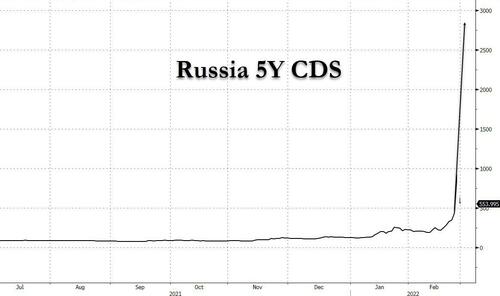
Global hackers are handing together to disrupt Russian military, banking and communications networks. Telegraph is supplying information to Russian citizens as it is not blocked yet
(zerohedge)
Hundreds Of Thousands Of Global Hackers Are Banding Together To Disrupt Russian Military, Banking And Communication Networks
MONDAY, MAR 07, 2022 – 06:00 AM
There are reportedly more than 400,000 “volunteer hackers” helping Ukraine fight its cyberwar against Russia.
Victor Zhora, deputy chief of Ukraine’s information protection service, told Bloomberg last week that Ukraine was putting up a “cyber resistance” against its invasion that would work to try and weaken Russia.
Zhora said: “Our friends, Ukrainians all over globe, [are] united to defend our country in cyberspace. [Ukraine is working to do] everything possible to protect our land in cyberspace, our networks, and to make the aggressor feel uncomfortable with their actions.”
He also said that volunteers were helping Ukraine obtain intelligence in order to fight back at Russian military systems.
They are also trying to get the message out to Russian citizens, who have been Fed a starkly different narrative from their government than the rest of the world has seen play out. Volunteers are working to “address Russian people directly by phone calls, by emails, by messages” and “by putting texts on their services and showing real pictures of war.”

Bloomberg noted that a Telegram channel called “IT Army”, supporting Ukraine, has attracted more than 283,000 people.
In addition to military targets, Telegram has been used “to coordinate attacks against Russian banks and telecommunication companies,” Bloomberg reported.
“In my opinion, we showed Ukraine has enough capacity to resist in cyber aggression,” Zhora said.
Moscow, meanwhile, maintains that it is not committing any acts of cyber warfare against Ukraine.
That hasn’t stopped hacker groups like Anonymous and the Belarusian Cyber Partisans, who have also lent help in breaching Russia targets.
Zhora concluded: “We do not welcome any illegal activity in cyberspace, we believe that every party should be responsible with their actions. But the world order changed on 24th of February. We have martial law here in Ukraine. And I don’t think appealing to moral principles works since our enemy doesn’t have any principles.”
end
RUSSIA/UKRAINE
More than 40% of Ukraine territory captures//and 75% of military destroyed
thanks to Robert H for providing this to us:
Hal Turner Radio Show – LEAKED GOV’T DOCUMENT: “MORE THAN 40% UKRAINE TERRITORY CAPTURED BY RUSSIAN ARMY; 75% OF UKRAINE MILITARY DESTROYED”
Inbox

| Robert Hryniak | 7:46 AM (20 minutes ago) |  | |
| to |
end
end
RUSSIA/UK
IRAN/USA/GLOBE
For sure: An Iranian nuclear deal with spark an even greater geopolitical crisis
(zerohedge)
“A Total Disaster”: Why The Iran Nuclear Deal Will Spark An Even Greater Geopolitical Crisis
FRIDAY, MAR 04, 2022 – 06:40 PM
There was a glimmer of hope for Joe Biden today, who is increasingly cornered by soaring inflation in general and the relentless surge in oil prices in particular, when Russia’s chief negotiator in talks to revive a 2015 nuclear deal between world powers and Iran said on Friday that he thought a deal was possible in the middle of next week.
“As far as I know, the Iranians are not ready for direct talks (with the United States),” Mikhail Ulyanov told reporters, cited by Reuters. “We will have a deal maybe in the middle of next week. We are talking about the last efforts before crossing the finish line.”
But, as Rabobank’s resident geopolitical strategist Michael Every writes in his daily note, think about this in the full context.
The deal’s terms, according to former Iran offical at the State Dept, Gabriel Noronha, who quit in disgust seeing it hatched out, is driven by Russia, which, along with China, is helping Iran evade sanctions.
It will allegedly include:
- removing sanctions on human rights abusers and designated terror groups such as the Iranian Revolutionary Guards Council (IRGC);
- allow Iran to buy tens of billions of dollars of Russian weaponry;
- to develop ballistic missiles; and
- offers no tougher controls on nuclear development;
Noronha’s full explanation can be found here.
So, in 2031 – if not sooner given it reportedly already has 60% of the processed uranium needed for a bomb – Every warns that Iran will be a nuclear break-out state able to get one when it wants.
Every next says to look at the reaction from US-friendly UAE, under attack from Iranian proxies, at the UN Security Council; from US-friendly Saudi Arabia, under attack from Iranian proxies, via an interview with its de facto ruler Prince MBS in The Atlantic where he threatens to stop investment in the US and do more in China (Does Joe Biden misunderstand something about him? “Simply, I do not care,” MBS replied. “It’s up to him to think about the interests of America.” He gave a shrug. “Go for it.”); and from US ally Israel, under attack from Iranian proxies, which states it will ignore any deal and act as needed.
The risks are that rather than lowering oil prices and *preventing* war – against an Iran whose economy has been flattened by sanctions the US is now imposing on Russia: so do they work or not? – a new nuclear deal is more likely to *lead* to war and see oil soar to new record highs.
Every concludes that the deal also suggests the risk of the US losing critical allies at a time when sides are being taken. On which, Russia is to hold the first “International Anti-Fascist Congress” in August this year, inviting the Saudis, China, Uzbekistan, Pakistan, Iran and other “stalwart defenders of democracy and human rights”, as a mirror image of the recent US Summit of Democracies.
India has been invited to both; and while the US and India collaborate on the Quad against China, yesterday saw US diplomats suggest D.C. may sanction New Delhi for buying Russian weapons; and we got this 2-minute clip on Indian TV summarizing the passions and confusion.
END
This makes no sense: why would the uSA use Russia as the lead negotiator in the Iran deal where the Russians are already sanctions
What nonsense
(zerohedge)
Iran Nuke Deal On The Verge (OF GOING DOWN) After Russia Makes Unexpected Last-Minute Demands
SATURDAY, MAR 05, 2022 – 09:00 PM
The Ukraine war is threatening to throw a monkey wrench into the weekend optimism which started building especially on Friday reports that a revived Iran nuclear deal is mere “steps away” and “very close”. It appears Russia is ready to play hard-ball following for the past week the US and EU ratcheting up unprecedented sanctions targeting Moscow’s banking sector and top officials, including sanctions against Putin himself, which the Russian president on Saturday stressed is “tantamount to an act of war”.
Moscow is now pointing to the fresh Ukraine-related sanctions as directly detrimental to its ability to trade with Iran if the JCPOA nuclear deal is restored. Russian Foreign Minister Sergei Lavrov on Saturday for the first time demanded written guarantees that the new anti-Russia sanctions won’t get in the way.
“We have asked for a written guarantee…that the current process triggered by the United States does not in any way damage our right to free and full trade, economic and investment cooperation and military-technical cooperation with the Islamic Republic,” Lavrov said.

Following the Lavrov statement, Russia’s chief negotiator in Vienna stated there were still issues to be hammered out “to ensure smooth civil nuclear cooperation with Iran.”
The irony is that Washington desperately needs this deal to go through given it would open up badly needed global oil supply, at a moment it’s been scrambling to find Europe alternatives in the scenario of Putin weaponizing his significant energy leverage if he chooses to. The White House has also come under significant domestic and media pressure for not targeting Russian oil exports as punishment for the Ukraine invasion. Here’s what’s at stake on that front, based on analysis in Asia Times:
News reports noted Iran could possibly ramp up shipments beyond 1 million barrels a day within months of a revived accord, offering potential relief as the Ukraine conflict pushed oil above $100 a barrel.
The Chinese representative, Wang Qun, has also said that the talks are at a “last stage,” telling reporters last week that interlocutors are “only a small step away from the final agreement.”
And chief British negotiator Stephanie Al-Qaq said Friday of the Vienna talks, “We are very close to an agreement,” and that “Now we have to take a few final steps.” There are reports the Biden’s State Department and Western officials broadly have been itching to see a deal finalized “this week”.
According to commentary in The Wall Street Journal:
It was always understood by Western officials that Russia’s specific role within the 2015 nuclear deal would need to be protected from sanctions. That includes receiving enriched uranium from Iran and exchanging it for yellowcake, Russia’s work to turn Iran’s Fordow nuclear facility into a research center and other nuclear-specific deliveries to Tehran’s facilities.
However, Mr. Lavrov appeared to demand far more sweeping guarantees that could introduce major loopholes in the tight financial, economic and energy sanctions the West has imposed in recent days because of Russia’s invasion of Ukraine.
Thus it’s clear that the Western powers negotiating in Vienna knew that for all parties to sign on to a revived deal they couldn’t target any signatory nation’s ability to trade with Tehran. But indeed the unprecedented avalanche of fresh sanctions on Moscow have muddied this past week’s building optimism on reaching a final deal.
One unnamed Western diplomat cited by WSJ said there are suspicions Russia could now hold the Iran deal hostage at a politically sensitive moment for Biden, who is struggling to assure the domestic public that sanctions measures on Russia will not blow back to harshly on Americans at the gas pump.
“But if Lavrov is using this as a play to try to carve a huge hole out of the overall Ukraine sanctions, that’s a different story,” the diplomat was quoted as saying.
END
Visa, Mastercard and Now Amex suspend all Russian operations
(zerohedge)
Visa, Mastercard Suspend All Russia Operations
SATURDAY, MAR 05, 2022 – 06:13 PM
Just hours after Ukraine president Zelensky asked Congress to, among other things, turn off Visa and Mastercard in Russia to which Rep Brad Sherman responded that “the Financial Services committee needs to look at this next week”…
… the two payment processors decided unilaterally and without any prodding from Congress, to suspend Russia operations and all transactions initiated with its cards issued in the country will no longer work abroad. In a statement Saturday, Visa said that any cards issued by financial institutions outside of Russia will also no longer work within the country.
“We are compelled to act following Russia’s unprovoked invasion of Ukraine, and the unacceptable events that we have witnessed,” said Al Kelly, chairman and chief executive officer.
“We regret the impact this will have on our valued colleagues, and on the clients, partners, merchants and cardholders we serve in Russia. This war and the ongoing threat to peace and stability demand we respond in line with our values.”
Moments later Mastercard followed, saying that it too would suspend network services in Russia, a decision which “flows from our recent action to block multiple financial institutions from the Mastercard payment network, as required by regulators globally.”
“With this action, cards issued by Russian banks will no longer be supported by the Mastercard network. And, any Mastercard issued outside of the country will not work at Russian merchants or ATMs” the company said.
With this latest escalation in Russia’s comprehensive expulsion from the western financial system, expect a surge in usage for China’s UnionPay credit card system as millions of former Visa/MC users in Russia look east.
Or Russians may just focus on domestic alternatives: in response to previous sanctions, Russia has developed its own national payment system. The Mir payment system was introduced in 2015 after clients of several Russian banks were temporarily unable to use Visa and Mastercard due to US sanctions. Russia has issued 37 million Mir cards as of June 2018. That said, as IIF chief economist Elina Ribakova notes, “It will be an uphill battle to have MIR (ironically translates as either “world” or “peace”) from 24% to 100% of domestic card volume. In addition to SWIFT will make domestic banking very challenging.”
END
Russian banks switch to their own China’s Union Pay card system after Amex joins Visa and Mastercard in suspending Russian operations
(zerohedge)
Russian Banks Switch To Chinese Card System As AmEx Joins Visa & MasterCard In Suspending Russian Operations
SUNDAY, MAR 06, 2022 – 02:50 PM
Yesterday, when reporting that both Visa and MasterCard had suspended operations in Russia just hours after Ukrainian President Volodymyr Zelenskiy called on the companies to halt all business in Russia during a video call with U.S. lawmakers, we said that “with this latest escalation in Russia’s comprehensive expulsion from the western financial system, expect a surge in usage for China’s UnionPay credit card system as millions of former Visa/MC users in Russia look east.”
One day later, Reuters has confirmed this development, writing that “several Russian banks said on Sunday they would soon start issuing cards using the Chinese UnionPay card operator’s system coupled with Russia’s own Mir network, after Visa and MasterCard said they were suspending operations in Russia.” State-owned UnionPay is the provider of most card payments in China.
Announcements regarding the switch to UnionPay came on Sunday from Sberbank, Russia’s biggest lender, as well as Alfa Bank and Tinkoff.
As Bloomberg adds, the move could allow Russians to make some payments overseas, with UnionPay operating in 180 countries and regions. Visa and Mastercard said that any transactions initiated with their cards issued in Russia will no longer work outside the country from March 10.
The Bank of Russia is also temporarily reducing the amount of information commercial banks are required to publish in an effort to limit the risks from international sanctions. Starting with statements for February, banks will no longer have to release accounts prepared to national standards or make any additional disclosures on their websites, the central bank said in a statement.
The central bank of Russia advised its citizens to use cash abroad. It said Mir cards could also be used in Turkey, Vietnam, Armenia, Belarus, Kazakhstan, Kyrgyzstan, Tajikistan and the breakaway territories of South Ossetia and Abkhazia.
Meanwhile, on Sunday afternoon American Express said it also was is suspending its operations in Russia and Belarus, becoming the latest credit card giant to respond with measures denouncing Russian President Vladimir Putin’s decision to invade Ukraine.
Globally issued American Express cards will no longer work at merchants or ATMs in Russia, while cards issued locally by Russian banks will no longer work outside of the country on the American Express global network, the company said in a statement Sunday.
The moves are “in addition to the previous steps we have taken, which include halting our relationships with banks in Russia impacted by the U.S. and international government sanctions,” American Express said.
On Saturday Visa said that customers in Russia who have a card issued there can still pay for goods and services in the country, but the company won’t process the transactions. Processing will be left to Russia’s National Payment Card System, or NSPK, according to Bloomberg.
Visa and Mastercard products issued by Russian banks will continue to work until they expire, according to the Russian central bank.
On Saturday, PayPal also announced it has shut down all its services in Russia due to “the current circumstances”. The announcement was made in a letter PayPal CEO Dan Schulman sent to Ukraine’s Deputy Prime Minister Mykhailo Fedorov expressing solidarity with the Ukrainian people.
The global payment processors are the latest companies to join a growing list of US tech and internet sector giants who are boycotting Russia over the Putin-ordered invasion, currently in the middle of its second week.
end
Saudi prince snubs Biden(zerohedge)
Saudi Crown Prince Gives Biden The Cold Shoulder: “I Do Not Care” What He Thinks
MONDAY, MAR 07, 2022 – 07:00 AM
Last week, geopolitical pundits were struck after three middle-eastern power brokers – among them one of the closest US allies in the Gulf region, Saudi Arabia which not too long ago rejected US appeals to pump more oil, signed onto an Arab League statement that did not condemn Russia and instead called for diplomacy, an avoidance of escalation and consideration of the humanitarian situation. We now know why.
In a recent interview in The Atlantic, Saudi Crown Prince Mohammed Bin Salman (MbS) was asked some tough questions concerning the Biden administration’s taking a harder line on the kingdom and MbS personally compared to when Trump was in office.
In particular the murder and dismemberment of Saudi journalist and Washington Post columnist Jamal Khashoggi has brought MbS under continued international scrutiny, albeit for the most part global elites started cozying up to Riyadh again by a mere year out from the October 2018 gruesome killing at the consulate in Istanbul. Biden himself had previously said he would make the crown prince “a pariah” in global opinion.
MbS responded to The Atlantic on this point by saying, “I feel that human rights law wasn’t applied to me,” he said. “Article XI of the Universal Declaration of Human Rights states that any person is innocent until proven guilty.” Thus he once again implied his own innocence in the killing.

And perhaps even more interesting was his response when asked about the deteriorated relationship with the Biden White House, and whether he thinks Biden “understands” him. “Simply, I do not care,” the crown prince said, and explained that it is up to Biden “to think about the interests of America.”
“We don’t have the right to lecture you in America,” he said. “The same goes the other way.”
He also warned Washington not to “interfere” in the kingdom’s internal affairs, which also comes after years ago a high level CIA investigation named bin Salman as the top Saudi government figure that likely ordered the Khashoggi assassination:
The de facto ruler of the world’s top oil exporter, known as MbS, also warned the United States not to interfere in the internal affairs of the absolute monarchy.
He said that assuming this doesn’t happen, he’s devoted to pursuing Saudi Arabia’s “long, historical” relationship with the United States.
It’s likely that MbS feels perfectly comfortable responding to Biden with tough words of “I don’t care” about his personal relationship with the Democratic president given the weapons relationship has continued unabated.
Biden had actually campaigned on ending US involvement in the Saudi-UAE war on Yemen – but this hasn’t happened. Instead the Pentagon has stayed the course in terms of providing targeting intelligence and the steady flow of advanced weaponry – alongside the usual defense contractors of course. So in many ways it’s business as usual on this front.
But now with the Russia-Ukraine war raging, there’s something Biden needs. Starting last month the US began urging Saudi Arabia to boost oil production amid rising energy prices and attempts to find additional supplies for Europe. This was part of what Biden at the time described as his “taking active steps to alleviate the pressure on our own energy markets.”
That request was quickly rejected by the Saudis, as Middle East Eye reviewed at the time: “At an energy forum in Riyadh on Wednesday, Saudi Energy Minister Prince Abdulaziz bin Salman rejected calls to pump more oil and said renegotiating quotas among Opec members risked stoking more volatility in oil markets…”
Opinion
Inbox
| Robert Hryniak | Sun, Mar 6, 8:24 PM (11 hours ago) | | |
| to |
Konashenkov stated:
Translation: “Practically all combat-ready aviation of the Kiev regime has been destroyed. At the same time, we know for certain about Ukrainian combat aircraft that had previously flown to Romania and other border countries. Please note that the use of the airfield network of these countries for basing Ukrainian military aviation with subsequent use against the Russian armed forces can be regarded as the involvement of these states in an armed conflict.”
Blinken must be drinking as heavily as Zelensky.
Blinkin is ready to throw under the bus all of NATO’s Eastern European “allies”, because he thinks that he is so smart that his “plans” are so difficult to decipher…. somebody explain to him about the ranges of 3M14 Kalibr, Kinzhal and Iskanders. Does Poland want to make a call?
I sure hope not!
And you wonder why things will worsen?
NATO Intervention In Ukraine Could Spark Nuclear War. Here’s How
Inbox
| Robert Hryniak | Sat, Mar 5, 8:09 PM (15 hours ago) | | |
| to |
How about the NATO crowd sit this one out? Ukraine is not part of NATO nor should it be in the shape it is in. No one has clean hands and the people have suffered enough.
Let Russia cleanse the Ukrainian soil of filth the West has allowed including like of Biden who has a lot to answer for to the Ukrainian people as does Obama etc. Someone’s blood must flow for a cleansing and Russia has chosen to bleed.
Why cannot Ukraine be a neutral country demilitarized in Europe? Is this not a better road for Ukrainians and for Europe and Russia?
Or do nukes need to fly to render common sense to delusional thinking with millions of innocent souls evaporated?
The drums are beating louder and the cry of delusion and war grow ever louder as holocaust and doom haunts the shadowed halls of Europe,
end
Filling vacuums
Inbox
| Robert Hryniak | 4:25 PM (48 minutes ago) | | |
| to |
Decisions taken in times of conflict or stress require careful study before actions are taken to avoid unconsidered events or loss, no matter the justification. War is often a catalyst for change at the expense of people who are never asked for consent or proven of their guilt as personal existence is often enough. This is not much different than Stalin’s enforcer Beria who said “show me the man and I will show you the crime”. And really no different than what was done in WWII by German SS. The weak and infirm were useless to the state and killed and then it was Jews, Slavs etc. all guilty of simply being themselves and vilified, killed or sent to work camps with possessions seized.
Sometimes, the world presents opportunities not by design or intent but by a lack of understanding of the consequences of actions justified or not, that are taken.
The recent escalation of U.S. sanctions blocking Europe, Asia and other countries from trade and investment with Russia, Iran and China has imposed enormous opportunity costs – the cost of lost opportunities – on U.S. allies and the US itself. And the recent confiscation of the gold and foreign reserves of Venezuela, Afghanistan and now Russia, along with the targeted grabbing of bank accounts of wealthy foreigners (hoping to win their hearts and minds, enticed by the hope for the return of their sequestered accounts), has ended the idea that dollar holdings – or now assets in sterling and euro NATO satellites of the dollar – are a safe investment haven when world economic conditions or country actions become shaky or dodgy. Or when political expediency trumps ownership of private property. As even physical property in these locals has demonstrated no consideration for such holdings when government desires confiscation without legal precedents. Today, it maybe a vilified Russian and tomorrow which country’s citizens will serve as the target of such actions? Is this not a red flag of caution to invest in such countries in the future for folks in emerging or developing nations creating new wealth? Short term bravado can well be long term remorse.
Leading one to be amazed as we watch the speed at which the U.S.-centered financialized system has de-dollarized over the span of just a year under the management of the delusional bunch. I will not touch on the obvious like oil prices or food disruptions that is well canvassed as are the metals markets. Let’s ponder some of the not so obvious and the consequences.
The other week Mastercard and Visa and then on Friday American Express announced their departure from Russia. The intent was punishment of the Russian people by denying them access to settlement of their credit card purchases. Result? All credit cards in Russia have been switched over to Union Pay, a Chinese company based in Shanghai. WIN China, loss USA. Why? You can not just have credit but convert currency and do Swift transfers using the card and it is widely accepted by merchants all over the world. Why does anyone think this business will ever go back to Visa, Mastercard or American Express? What loss have these companies experienced or will have when the credit card debts cannot be paid properly? Win goes to Russians and a loss to the income statement. And what do citizens in countries like Brazil or Egypt etc. think about this? People are likely to want a UnionPay card in their wallet next to Visa or Mastercard or American Express.
Not to be left out IKEA decided to close their stores in Russia. Do they not recognize that much of what they sell nowadays comes from China? How long before the shelves are filled by the same suppliers for new owners using the same space IKEA created? Likely a wealth creation for new owners. Or what about Magna who decided to shutter half a dozen factories? Did no one think about the equipment in those plants making low cost parts for European car manufacturers ? Who will now make such parts with what equipment because that equipment will not be leaving Russia . Russia is creating legislation to nationalize all such assets of companies who left. I note Magna stock was down 5% last time i checked. Win goes to the new owner of these plants. Loss goes to Magna and whatever companies were recipients of these parts. Thus, causing supply chain ripples and no doubt production delays.
One could go on. However the vacuums created by actions taken are now the near term opportunities that will be had by parties and unintended consequences of poorly thought actions. And we have yet to see the real pain in commodities and their pricing which will be a huge damper on economic activity in all western countries.
6// GLOBAL COVID ISSUES/VACCINE MANDATE ISSUES/
GLOBAL VACCINE MANDATES
END
GLOBAL ISSUES//FREIGHT//FOOD INFLATION
Global food prices jump to record highs
(zerohedge)
‘Arab Spring’ Risks Flourish As Global Food Prices Jump To Record High
SUNDAY, MAR 06, 2022 – 08:15 AM
Global food prices soared to a new record high in February, led by a massive jump in vegetable oil and dairy prices as well as higher costs for grains, according to the UN Food and Agriculture Organization (FAO). The move higher in food prices comes as the Russian invasion of Ukraine sent commodity markets into disarray, which indicates prices could continue to surge and may trigger another ‘Arab Spring’.
The FAO Food Price Index (FFPI), a measure of the monthly change in international prices of a basket of food commodities, averaged 140.7 points in February, up 3.9% from January, +24.1% compared with the same month last year, and 3.1% higher than the record in February 2011.
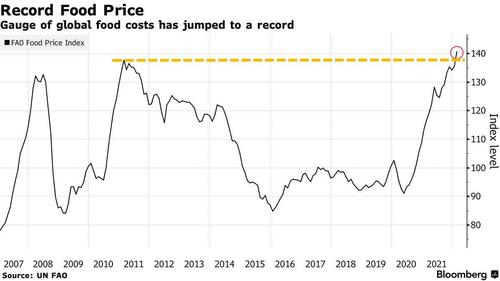
The largest mover in the index was FAO Vegetable Oils Price Index, up 8.5% over the previous month to a new record high, driven by palm, soy, and sunflower oils. The second-largest was the FAO Dairy Price Index, up 6.4% over the prior month. The FAO Cereal Price Index was +3%.
FAO economist Upali Galketi Aratchilage said crop condition concerns and congested supply chains only tell one part of the story of why food prices are soaring.
“A much bigger push for food price inflation comes from outside food production, particularly the energy, fertilizer and feed sectors.
“All these factors tend to squeeze profit margins of food producers, discouraging them from investing and expanding production,” Aratchilage said.
The February report was likely compiled before the Russian invasion of Ukraine. Since then, commodities markets have been skyrocketing. This week alone, the Bloomberg Commodity Index recorded its largest weekly gain since the stagflationary period of the mid-1970s over the turmoil.
We noted how the invasion has choked off more than a quarter of the global wheat trade, about a fifth of corn, and 12% of all calories traded globally.
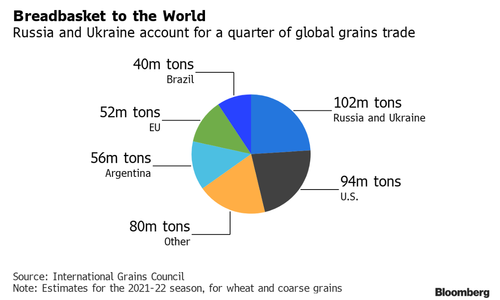
The conflict has sent wheat futures to an all-time high.
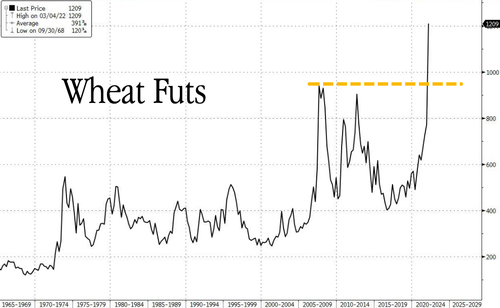
Shortage fears have sent the Bloomberg Agriculture Spot Index to new record highs
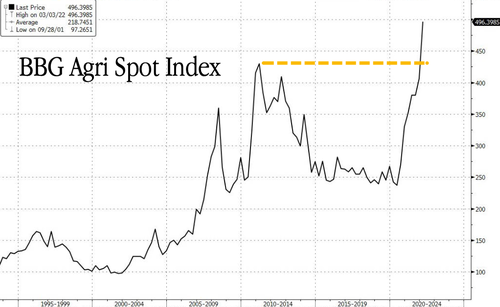
Goldman’s chief commodity strategist Jeffrey Currie recently warned he’s never seen commodity markets pricing in the shortages they are now.
Upending global food markets will likely mean the inflation story is far from over as prices could track higher. This has been a cause for concern by the president of the World Bank, David Malpass, warning about the damaging impacts of the conflict on global food supplies, prices, and further tangled supply chains.
Malpass said the invasion has pushed up food prices, which is a “real consideration” for those living in emerging market economies because more of their household budgets are dedicated to purchasing food.
He added: “There’s no way to adjust quickly enough to the loss of supply from Ukraine and from Russia, and so that adds to prices.”
Everyone’s favorite permabear, SocGen’s Albert Edwards, opined two years ago about future agricultural price shocks and how they could cause another Arab Spring of early 2011.
With a food crisis imminent, Edward’s prediction of another round of social unrest due to soaring commodity prices could be nearing as food prices are now above 2011 levels
end
VACCINE INJURIES/
(´Vax´ Injuries) 1,000 PEER REVIEWED Medical Papers – AWAKENING CHANNEL
Inbox
| Robert Hryniak | 4:55 PM (19 minutes ago) | | |
| to |
I am afraid that we are at the tip of understanding of what really has happened. Let alone what the longer term impact will be
VACCINE MANDATES
VACCINE IMPACT
65,615 Deaths Now Reported in Europe and the USA Following COVID-19 Vaccines – Corporate Media Refuses to Publish this DataMarch 5, 2022 3:07 pm Here at the beginning of March, 2022, official government health statistics in Europe and the United States are reporting that 65,615 people have now died following COVID-19 injections. These are “passive” reporting systems, so the true lives lost is much higher. One study estimates that the unreported factor for COVID-19 vaccine injuries and deaths is 41X, which would put these totals at closer to 2.8 MILLION deaths, and that is just in the U.S. and certain countries in Europe. Earlier this week, Blaze Media published an exclusive report stating that the U.S. federal government paid millions of dollars to hundreds of media companies to advertise the COVID-19 vaccines while those same outlets provided positive coverage of the vaccines.Read More… Here at the beginning of March, 2022, official government health statistics in Europe and the United States are reporting that 65,615 people have now died following COVID-19 injections. These are “passive” reporting systems, so the true lives lost is much higher. One study estimates that the unreported factor for COVID-19 vaccine injuries and deaths is 41X, which would put these totals at closer to 2.8 MILLION deaths, and that is just in the U.S. and certain countries in Europe. Earlier this week, Blaze Media published an exclusive report stating that the U.S. federal government paid millions of dollars to hundreds of media companies to advertise the COVID-19 vaccines while those same outlets provided positive coverage of the vaccines.Read More… |
Michael Every
on the major topics of the day
Michael Every…
Rabobank: Escalation Upon Escalation
MONDAY, MAR 07, 2022 – 09:24 AM
By Michael Every of Rabobank
Wars can escalate fast. Look where we are today and were we were 14 days ago. Where will we be 14 days from now?
Russia continues to press on into Ukraine. However, it is suffering huge losses, allegedly now 11,000 men, and does not appear able to hold the vast new territory it ‘controls’. So, Russian artillery are making parts of Ukraine look like Grozny in 1999: but what good is this economically to Russia once it holds it? Putin also now states “Today’s (Ukrainian) leadership needs to understand that if they keep doing what they are doing… they will put into question Ukraine’s future as a country.” How is a flattened, embittered land of 44 million to sit in Russia’s belly? Or is there an even darker meaning? Sadly, logic still points towards even greater escalation.
Russia is showing no sign of backing off under Western pressure to date. The Kremlin, via its propaganda, is seemingly rallying much of the country behind its campaign, and we have a new sinister symbol “Z” (for “za”, meaning ‘for’ as well as “zapad”, meaning ‘West’) to publicly show support for the war. On top, Moscow is reportedly looking to hire mercenaries from Syria, matching the apparent 16,000 foreign volunteers who have signed up to fight for Ukraine. Worse, Friday’s shooting at a Ukrainian nuclear power plant was arguably no accident. It didn’t risk repeating Chernobyl, but the message was clear: back off, or we play in this arena. The Russian claim to have now “found plans for a Ukrainian ‘dirty’ bomb”, and that the US has sent plutonium to Kyiv to help build it, are blatant examples of the same. According to some credible voices, these are warnings that if Western arms continue to pour in, and Russia to flail, then the Russian response may be to use a low-yield tactical nuclear weapon against Ukraine.
Some even suspect Putin is looking for a conflict with NATO. Ominously, the Kremlin is demanding the three EU Baltic states guarantee they will allow the safe operation of Russian embassies there, and Putin told landlocked Belarus he believes it should have Baltic access – which means the Baltic states and Poland are in the way. Further, the Russian-backed breakaway Transnistria has declared independence after Moldova applied to join the EU, suggesting another Black Sea front for Russia to attack Ukraine and Moldova from, and dragging in Romania.
Logically, the only way Putin can now achieve anything lasting is via further brinksmanship. Only at the edge of the global cliff might Russia see the West blink and give him his new empire. At least one piece of “Street” research now openly gives armageddon a 10% chance of occurring. Then again, they make the point that if so there is no point in selling risk assets anyway.
Escalation is also inevitable in the economic war. Firm after firm is exiting Russia, now including Visa and MasterCard. Russian stocks have been marked to zero by MSCI, with losses of near $500bn. The Russian stock market remains closed. Most global ocean carriers won’t touch Russian cargo or ports. Even Aeroflot has stopped flying. And Russia is responding: its foreign creditors will now be repaid in roubles, not FX. Bloomberg and other Western media have had to leave Russia for their own safety. And Russia, like China, is talking of cutting off key fertilizer exports.
Putin says Western sanctions are “akin to a declaration of war.” Economic historian Adam Tooze raises an invaluable point in this regard: if so, why is Russia running its economy like an IMF golden child, with tight fiscal and monetary policy? Logically, it should turn to a war economy. That means using MMT to soften the blow from sanctions and build military equipment. Why not run a fiscal deficit of 10% of GDP if GDP is to otherwise shrink 10%? And at least one knowledgeable Russia watcher also insists the country is soon going to fully mobilise its population, supplementing a lack of ethnic Russia youth with those of central Asia, which will make the use of on-ground violence in Ukraine easier given their greater cultural distance.
Notably, Russia meets the prerequisites for MMT –running a trade surplus even if also running a large fiscal deficit– and is prepared for capital controls. But the next step would then have to be one away from European/Western technological supply chains to Chinese ones. The economic adjustment would be brutal –Russian billionaire Oleg Deripaska says: “This is going to be like 1998 crisis, but three times worse and will last 3 years.” –but there is no sign of the Kremlin backing off.
Geostrategic logic says the West will need to escalate as follows, if so:
1) Spend even more. The 2% of GDP NATO defence spending target was for peacetime, not wartime: Poland is to now allocate 3%; the UK is to boost its defence spending by 25% immediately; and Germany and the rest of the EU would have to do even more – Berlin is already considering a debate on reintroducing conscription. Europe would probably also need to subsidise households and business against soaring commodity prices. Altogether this could mean perhaps 5% of GDP in extra spending ahead. The fiscal/debt implications are enormous – unless this is monetised, which is an even more enormous decision.
2) Undermine Russia’s trade surplus, so MMT would push it into a destabilising inflationary spiral. To do so means to stop buying Russian commodities. Last week saw Shell admit to buying Russian crude at a $28.50 discount – and then give a public apology and announce profits from the deal would be donated to war charities. That does not sound like Western firms are prepared to start buying again. Rather, today we see fresh market fears about the US blocking Russian energy after the White House said this is now being discussed: this morning Brent surged to over $136 a barrel on exactly that concern. (And can you see why markets are self-sanctioning Russian goods? Last week this was not on the official cards, when the war’s logic always said it had to be.)
3) Impose secondary sanctions to stop others buying Russian commodities. The US is already warning China not to deal with Russia, as a senior Chinese official stated Friday that it will continue to do. We see questions being asked about why Chinese commodity imports from Russia were shifted from CIF –meaning all the ownership and risk is on the exporter until it reaches China– to FOB –meaning China owns the cargo/risk from the point of origin– three months ago, which is unusual enough a decision to perhaps support US allegations that China knew war was coming. (Although, to be fair, the US was already saying this in public at the time.)
Of course, escalating war and economic war mean deeper hits to economies and markets. After all, the above 1, 2, 3 are what we warned of in ‘Scenario C’ of our (pre-war) Ukraine war report and our “Multipolar world’ reports in 2020 and 2021 – rapid global economic bifurcation. Consider that Russian energy is now taboo – so Brent is $136 and rising, even with a US nuclear deal with Russian-ally Iran perhaps done; and the White House openly talking to fellow Russian ally Venezuela about possibly lowering oil sanctions on it in order to secure supplies(!); and the US considering sending representatives to Saudi Arabia to ask for more oil output. (Who are not pleased with the Iran deal, or the removal of Iran-backed Houthis from US terrorist lists, and White House personal snubs. In short, US energy policy is a total mess, geopolitically.)
Other Russian commodities, even agri, where there may be links to sanctioned oligarchs, are increasingly ‘untouchable’ too. Key Ukrainian exports have collapsed, and its crops may not even be planted this year. As such, almost all major commodities continue to hit new highs, and we are going to find out how industrial supply chains deal without key inputs such as neon and palladium. We are also going to see much more food inflation, when prices were already up 20.7% y/y in February according to the FAO. Energy surging and no Russian (and Belarussian) fertilizer exports are hammer blows, and bad weather is not helping either, as China just warned of their worst winter wheat crop in history. As such, food protectionism is emerging. Hungary, the world’s 12th largest grain exporter, just banned all crop exports. Expect escalating global hunger.
Indeed, with the US dollar soaring alongside commodity prices, markets may even start to revert to state-to-state barter for key agri commodities, and on a geopolitical rather than a neutral price basis – which we already see in US actions re: oil; and/or we may see the imposition of price controls and rationing. China had already spoken of a new national board buying all its iron ore imports. Expect much more of that talk for a far broader range of commodities. Indeed, China also just announced it is aiming for greater self-reliance in technology, supply chains, and *food*. “China can’t rely on international markets to ensure food security,” according to Xi Jinping, and, “should focus on its domestic food markets, while making sure it has an appropriate level of import capacity, “ stressing “farmland protection and technology-led development of the seed industry to help solve food security issues.”
China has additionally declared its GDP growth target for 2022: 5.5%, the lowest for three decades, where the most notable thing other than self-reliance is that defence spending rises 7.1%. All the 5.5% GDP figure really means is that sustainable underlying Chinese trend growth of X will be supplemented with extra unneeded infrastructure spending of Y, to no long-run productive benefit. That is MMT of another sort, as one might say: yet it goes without saying that if this props up commodity demand, it will mean even higher prices – and so more political impetus towards import boards, rationing, or quasi- central planning.
In more traditional financial markets we see EUR/CHF back to parity, which is as risk-off as it gets; the broad DXY dollar index at 98.9, up 3.6% in a month; and US 10-year yields at just 1.70%, down 36bp from their recent peak, despite the fact that we are about to enter a Fed tightening cycle. Bloomberg is mentioning the Hong Kong dollar peg as a potential risk again if the US turns against China. It also says: “Hong Kong feels like it’s on the edge of a nervous breakdown, and it’s tempting to ask how much more people can take.”
You will notice that so far I didn’t mention Friday’s US payrolls report. As the old Jewish joke goes, “Hello, Friday’s US payrolls report.” If you think that datapoint matters much against this backdrop then you must/should work in a central bank, where the food, energy, and military you need magically appears when required. But seriously, the large headline jobs gain will allow the Fed to escalate matters in its own way, with tighter monetary policy… against what could not be a more problematic global backdrop.
7. OIL ISSUES
FRIDAY NIGHT//
USA gas prices jump the most overnight
Oil Crisis 2.0: US Gas Prices Jump Most Overnight Since Iraq War, Record Highs Imminent
FRIDAY, MAR 04, 2022 – 08:00 PM
Gas prices at the pump were soaring long before Russia invaded Ukraine. The conflict has produced the prospect of a shortage of commodities, especially energy products, and sent Brent and WTI well over the $110 mark in recent days. Russia is one of the world’s largest crude oil suppliers. The spillover effects of the Biden administration sanctioning the country into oblivion have resulted in one of the most significant daily jumps of gasoline on record.
According to new AAA fuel data, the current national average gas price is $3.837, up almost 11 cents overnight, the second biggest move on record since the early days of the Iraq war in 2005. At this rate, gas prices could exceed the record in days, which is only 27 cents away.

On Thursday, for the first time ever, a U.S. city breached the $5/gal per gallon average – this is San Francisco, De Haan tweeted yesterday.
Since last Thursday, the start of Putin’s war in Ukraine, the following ten states have seen the largest increases in their averages, according to AAA: Michigan (+39 cents), Indiana (+36 cents), Illinois (+31 cents), Ohio (+30 cents), Tennessee (+26 cents), Kentucky (+24 cents), South Carolina (+20 cents), Georgia (+21 cents), Delaware (+19 cents), and Alabama (+18 cents).
WTI futures surpassed the $110 mark, and wholesale gasoline prices are following suit down the supply chain, both providing a leading indicator of where gas prices are headed next. We find below that prices at the pump could rise well beyond $4 with upper-end targets of even $4.50 if geopolitical turmoil in Ukraine worsens or supplies globally tighten.
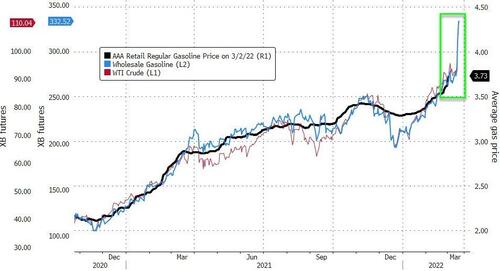
Gas prices at the pump have never been this high for this time of year.
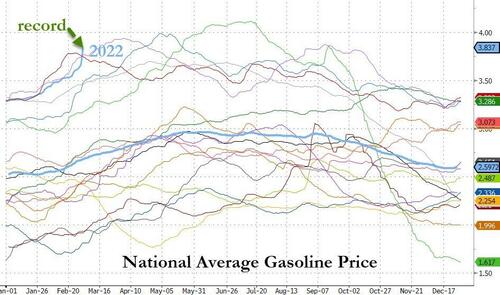
The transition to a summer grade versus winter fuel grade will also increase prices.

A sharp rise in gas prices is causing a drag on consumer sentiment and will likely impact President Biden’s polling data with another drop.

The shock to energy prices is sparking staglfation fears as it stokes inflation while suppressing economic growth. Commodities this week posted their largest weekly gain since 1974 (a time when inflation was rampant). Jim Bianco of Bianco Research points out:
Inflation is widespread as consumers are plagued with some of the highest food prices in a decade. The combo of high gas and food prices will impact household spending patterns and dent sentiment ahead of the midterms, but just this morning, the Biden administration stated – with absolutely no ‘scientific’ support – that it’s uniquely well-positioned to deal with inflation. We shall see..
end
Following Global Outrage, Shell Says It Only Bought Russian Oil After “Intense Talks With Governments”
SATURDAY, MAR 05, 2022 – 02:51 PM
Yesterday, we reported that after a week of “no bid” markets for Russian seaborne oil where the discount for Urals widened more and more from spot with each passing day (while in the process making the market for non-Russian oil almost offerless and helping Brent close near $120), finally on Friday one company stepped up, and with the Russian crude discount hitting a record $28.50 below dated Brent…

… Shell purchased the Russian black gold from oil merchant Trafigura Group, which had originally bought the cargo originally from Russia (the cargo was bought on a delivered basis, meaning Shell won’t need to sort out transportation).
Discussing the transaction, we said yesterday that the deal not only underscores the deep discount Russia is going to have to sell its oil at – which amounts to roughly 25% below spot – but more importantly, it is also the first clear reminder that there is a clearing price for everything, and that Russia will still find willing buyers in companies that are reliant on Urals crude if the discount is low enough.
We also said that “now that Shell has shown the rest of the world world it can be done, we expect most if not all western companies to scramble and bid for Russian oil, especially when considering that regular spot Brent is trading around $115 on its way to $200, and with that the Russian discount to spot will slowly but surely drift back to zero.”
What we didn’t say is that Shell would get a flood of pushback and outrage for its decision by Western moralizers, who still refuse to grasp that without Russian oil in the market, the clearing price of crude could soon hit $200 (as many banks have warned) leading to a historic global recession, with outcomes not that different from what happened after oil hit $140 in the summer of 2008 (as discussed first here two months ago).
So on Saturday, about a day after the details of the Shell purchase first emerged, and following the anticipated barrage of criticism for buying Russian oil, Europe’s largest oil company pushed back, saying in a tweet that “without an uninterrupted supply of crude oil to refineries, the energy industry cannot assure continued provision of essential products to people across Europe over the weeks ahead” – which of course, is precisely the core pillar behind Putin’s gambit – and, more importantly, adding that Shell has been “in intense talks with governments and continue to follow their guidance around the issue of security of supply” even as it is “acutely aware we have to navigate this dilemma with the utmost care.”
“We will continue to choose alternatives to Russian oil wherever possible, but this cannot happen overnight because of how significant Russia is to global supply,” Shell added in the statement.
The London-based Shell didn’t specify which governments it had been speaking to, and as Bloomberg notes, a U.K. government official didn’t immediately comment.
As we said yesterday, and as Bloomberg today confirms, “Shell’s purchase is a signal that major buyers will likely continue to make purchases of Russia’s energy products despite its increasingly deadly war against Ukraine.”
The deal also underlined the stark situation facing European and world energy buyers. They need to work out how to deal with the potential loss of one of the market’s top suppliers, as a raft self-sanctioning effectively removes Russian product as an option.
Shell’s purchase sparked a barrage of global criticism; Ukraine’s Minister for Foreign Affairs Dmytro Kuleba took to Twitter to ask the company whether Russian oil smelt like “Ukrainian blood for you?” and called on all “conscious [sic] people around the globe to demand multinational companies to cut all business ties with Russia.”
He has also pressed his twitter followers and Western nations to “stop buying Russian oil” however as even Shell writes, such an action would be tantamount to economic suicide by Western nations.
In hopes of quieting its critics, Shell, which last weekend also announced it would divest its stake in the Sakhalin-2 LNG project, also said it will donate profits from its Russian business to humanitarian aid agencies.
END
SUNDAY NIGHT/THE BIG NEWS
Biden states that the uSA is in active discussion on banning Russian oil important
(zerohedge)
Crude Set To Extend Record Surge After Blinken Says US In “Active Discussion” On Banning Russian Oil Imports
SUNDAY, MAR 06, 2022 – 01:32 PM
In what could be either a major “shot across the bow” development, or just more verbal attempts at allaying domestic pressure and ‘outrage’ from the press pool, the White House now says it’s actively considering the banning of Russian oil imports.
Secretary of State Antony Blinken told NBC’s Meet the Press and other Sunday talk shows that the administration is currently in “active discussion” over whether or not to ban Russian oil imports.
“When it comes to oil, Russian oil, I was on the phone yesterday with president and other members of the Cabinet on exactly the subject. And we are now talking to our European partners and allies to look in a coordinated way at the prospect of banning the import of Russian oil, while making sure that there is still an appropriate supply of oil on world markets,” Blinken told CNN’s “State of the Union.”
“That’s a very active discussion as we speak,” he added. Of course, blowback on Europe as well as Americans at the pump is the central question.
That said, Jen Psaki on Friday seemed to distance the Biden White House from the prospect, asserting, “We don’t have a strategic interest in reducing the global supply of energy and that would raise prices at the gas pump for the American people around the world because it would reduce the supply available.”
During that same CNN interview on Sunday, Blinken appeared to link further punitive actions the US could take with allegations of Russian war crimes in Ukraine.
“We’ve seen very credible reports of deliberate attacks on civilians, which would constitute a war crime. We’ve seen very credible reports about the use of certain weapons,” he said.
“And what we’re doing right now is documenting all this, putting it all together, looking at it and making sure that as people and the appropriate organizations and institutions investigate whether war crimes have been or are being committed, that we can support whatever they’re doing. So right now, we’re looking at these reports. They’re very credible and we’re documents everything,” the secretary added.
But the likelihood is that these measures, even the ‘nuclear option’ of going directly after Russia’s oil, will do little to dissuade the Kremlin from its military onslaught in Ukraine. Instead an economic war targeting energy will only likely continue to hurt ordinary people – in Russia, Europe, and even in the US…
For those wondering what a full-blown US ban on Russian imports would do to oil prices, Vitol Group, the world’s biggest independent crude trader, said the oil market could tighten further with disruptions to Russian flows and as producers such as Libya experience supply problems.
Oil futures in New York rose by more than $24 last week, the highest weekly dollar increase on record. Brent traded in its biggest range since the launch of the futures contract in 1988 — eclipsing the wild swings in the financial crisis of 2008 and when demand plunged in the coronavirus pandemic. Prices could push higher still after exceeding $118 a barrel on Friday.
“I don’t think we’ve priced everything in yet,” Mike Muller, Vitol’s head of Asia, said Sunday on a podcast produced by Dubai-based consultant and publisher Gulf Intelligence. “We have plenty of twists and turns to come.”
As we reported last week, JPMorgan said global benchmark Brent crude could end the year at $185 a barrel if Russian supply continues to be disrupted, and some hedge funds are eyeing $200. Goldman Sachs Group Inc. said that without Russian barrels on the market, oil could reach $150 in the next three months.
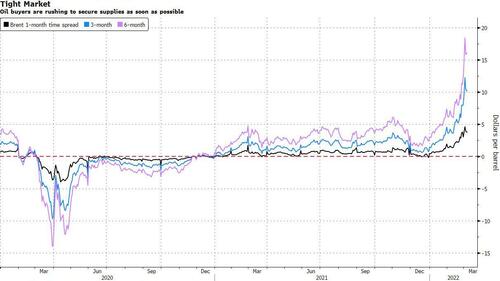
For another glimpse into the coming Russian oil-free dystopia, read Friday’s FT interview of Pioneer Resources CEO Scott Sheffield, who said oil would “easily” go to $150-$200 a barrel if the Western world bans Russian oil and gas.
“The only way to stop Putin is to ban oil and gas exports,” the CEO of the largest US shale company told the Financial Times in an interview on Friday. “[But] if the western world announced that we’re going to ban Russian oil and gas, oil is going to go to $200 a barrel, probably — $150 to $200 easy.” This confirms what we said yesterday in “Two Oil Price Scenarios: One Bad, And One Catastrophic.“
Sheffield also said that the US would be unable to replace crude supplies from Russia this year, even as he backed calls for a global embargo on its energy exports.
“I’m talking about a two- to three-year plan. Because US shale, even if somebody adds a [drilling] rig . . . it takes six to eight months to get first production. There’s labor shortages, there’s frack fleet shortages, there’s rig shortages, there’s sand shortages.”
Russia exported about 5mn barrels a day of crude oil before it invaded Ukraine last month. While China might still absorb some of that volume in the case of a western embargo, there would still be a significant supply shortfall.
“We need to add probably two, two and a half million barrels a day,” Sheffield said. But he warned that an accelerated drilling campaign would require investors’ blessing. “We’d have to go to our shareholder base and ask what their thoughts are,” he said, hinting strongly that it is Biden’s own “green deal” lunacy that is the reason why the US lost its hard won energy independence that was perhaps the high point of the Trump administration.
Adding insult to injury, Libya’s oil production has dropped as a political crisis derails the OPEC member’s industry. Output in the country, which has Africa’s biggest crude reserves, fell to 920,000 barrels per day, Oil Minister Mohamed Oun said in a response to a query from Bloomberg News. It stood at roughly 1.2 million barrels on Wednesday.
Markets are also closely watching negotiations between Iran and the International Atomic Energy Agency, which took a tentative step forward over the weekend. While that could eventually pave the way for the return of the country’s oil to global markets by the third quarter this year, a final deal has yet to be secured.
Meanwhile, the OPEC+ cartel has so far resisted calls from importers including the U.S. for faster production increases. The 23-nation group, led by Saudi Arabia and Russia, is raising output only gradually after historic cuts at the start of the pandemic. That could change if prices continue climbing, according to Vitol.
“At some price they will say: ‘OK, I think our Covid response from 2020 is history now and let’s get to focusing on the fundamentals of today’s market,’” Vitol’s Muller said.
Of course, if oil does hit $200, we are looking at a global depression, similar to the global financial crisis of 2008 when oil hit $140 just before it crashed to $30 as the inflationary tsunami became a deflationary shockwave almost overnight.
end
8 EMERGING MARKET& AUSTRALIA ISSUES
Australia//// NEW ZEALAND/ SOUTH AFRICA/BRAZIL//COVID/VACCINES/LOCKDOWNS
NEW ZEALAND
END
Your early currency/gold and silver pricing/Asian and European bourse movements/ and interest rate settings MONDAY morning 7:30 AM
Euro/USA 1.0885 DOWN .0916 /EUROPE BOURSES //ALL RED
USA/ YEN 115.28 UP + 676 /NOW TARGETS INTEREST RATE AT .11% AS IT WILL BUY UNLIMITED BONDS TO GETS TO THAT LEVEL…
GBP/USA 1.3186 DOWN 0.0017
Last night Shanghai COMPOSITE CLOSED DOWN 74.79 PTS OR 2.17%
Hang Sang CLOSED DOWN 847.66 PTS OR 4.43%
AUSTRALIA CLOSED DOWN 0.69% // EUROPEAN BOURSES OPENED ALL RED
Trading from Europe and ASIA
I) EUROPEAN BOURSES ALL RED
2/ CHINESE BOURSES / :Hang SANG CLOSED DOWN 847.66 PTS OR 4.43%
/SHANGHAI CLOSED DOWN 74.79 PTS OR 2.17%
Australia BOURSE CLOSED DOWN 1.00%
(Nikkei (Japan) CLOSED DOWN 764.06 PTS OR 2.84%
INDIA’S SENSEX IN THE RED
Gold very early morning trading: 1984.00
silver:$25.77-
USA dollar index early MONDAY morning: 98.93 UP 29 CENT(S) from FRIDAY’s close.
THIS ENDS MONDAY MORNING NUMBERS
xxxxxxxxxxxxxxxxxxxxxxxxxxxxxxxxxxxxxxxxxxxxxxxxxxxxxxxxxxxxxxxxxxxxxxxxxxxxxxxxxxxxxxxxxxxxxxxxxxxxxxxxxxxxxx
And now your closing MONDAY NUMBERS 1: 00 PM
Portuguese 10 year bond yield: 0.88% UP 4 in basis point(s) yield from YESTERDAY/
JAPANESE BOND YIELD: +0.147% DOWN 0 AND 5/10 BASIS POINTS from YESTERDAY/JAPAN losing control of its yield curve/
SPANISH 10 YR BOND YIELD: 1.00%// UP 5 in basis points yield from yesterday.
ITALIAN 10 YR BOND YIELD 1.61 UP 9 points in basis points yield from yesterday./
the Italian 10 yr bond yield is trading 61 points higher than Spain.
GERMAN 10 YR BOND YIELD: RISES TO -0.0110% IN BASIS POINTS ON THE DAY//
THE IMPORTANT SPREAD BETWEEN ITALIAN 10 YR BOND AND GERMAN 10 YEAR BOND IS 1.63% AND NOW ABOVE THE 3.00% LEVEL WHICH WILL IMPLODE THE ENTIRE ITALIAN BANKING SYSTEM. AT 4% SPREAD THERE WILL BE A HUGE BANK RUN…
END
IMPORTANT CURRENCY CLOSES FOR MONDAY
Closing currency crosses for MONDAY /USA DOLLAR INDEX/USA 10 YR BOND YIELD/1:00 PM
Euro/USA 1.0060 DOWN .0042 or 42 basis points
USA/Japan: 115.45 UP 0.846 OR YEN DOWN 85 basis points/
Great Britain/USA 1.3114 DOWN 90 BASIS POINTS
Canadian dollar DOWN 62 BASIS pts to 1.2771
xxxxxxxxxxxxxxxxxxxxxxxxxxxxxxxxxxxxxxxxxxxxxxxxxxxxxxxxxxxxxxxxxxxxxxxxxxxxxxxx
The USA/Yuan, CNY: closed ON SHORE (CLOSED )..DOWN 6.32108
THE USA/YUAN OFFSHORE: (YUAN CLOSED (DOWN)..6.3284
TURKISH LIRA: 14.80 EXTREMELY DANGEROUS LEVEL/DEATH WISH/HYPERINFLATION TO BEGIN.
the 10 yr Japanese bond yield at +0.147
Your closing 10 yr US bond yield UP 4 IN basis points from MONDAY at 1.771% //trading well ABOVE the resistance level of 2.27-2.32%) very problematic
USA 30 yr bond yield: 2.179 UP 2 in basis points
Your closing USA dollar index, 99.17 UP 53 CENT(S) ON THE DAY/1.00 PM/
Your closing bourses for Europe and the Dow along with the USA dollar index closing and interest rates for MONDAY: 12:00 PM
London: CLOSED DOWN 6.45 PTS OR 0.09%
German Dax : CLOSED DOWN 207.12 points or 1.58%
Paris CAC CLOSED DOWN 53.89PTS OR 9.89%
Spain IBEX CLOSED DOWN 41.90PTS OR 0.54%
Italian MIB: CLOSED DOWN 187.59 PTS OR 0.834%
WTI Oil price 119.61 12: EST
Brent Oil: 124.24 12:00 EST
USA /RUSSIAN / RUBLE FALLS TO: 153.50 DOWN 47.00 RUBLES/DOLLAR (RUBLE DOWN BY 4700 BASIS PTS)
GERMAN 10 YR BOND YIELD; -.0110
CLOSING NUMBERS: 4 PM
Euro vs USA: 1.0860 DOWN .0042 OR DOWN 42 BASIS POINTS
British Pound: 1.3106 DOWN .0096 or down 96 basis pts
USA dollar vs Japanese Yen: 115.30 UP .692
USA dollar vs Canadian dollar: 1.2802 UP .0092 (CDN dollar DOWN 92 basis pts)
West Texas intermediate oil: 119.76
Brent: 123/61
USA 10 yr bond yield: 1.778 UP 5 points
USA 30 yr bond yield: 2.199 UP 4 pts
USA DOLLAR VS TURKISH LIRA: 14.38
USA DOLLAR VS RUSSIA ROUBLE: 139,00 UP 32.50ROUBLES (ROUBLE DOWN 32.50 )//
DOW JONES INDUSTRIAL AVERAGE: DOWN 633.15 PTS OR 3.75%
NASDAQ 100 DOWN518.45 PTS OR 1.41%
VOLATILITY INDEX: 36.55 UP 4.57 PTS OR 14.54%
GLD: 186.41 UP 2.73 PTS OR 1.49%
SLV/ 23.70 UP .06 PTS OR 0.25%
end)
USA trading day in Graph Form
Carnage Everywhere As Market “Begins To Break”
MONDAY, MAR 07, 2022 – 04:04 PM
There is no other way to describe today’s market carnage than a market in turmoil where things are rapidly breaking as the sudden disappearance of Russia’s “toxic” commodity collateral is suddenly sparking contagion and widespread liquidations.
With S&P futures a one way elevator lower after a modest rip higher on Ukraine ceasefire optimism early in the session, sending spoos more than 120 points down from session highs and closing down 2.9%, below 4,200, its worst close since October 2020…
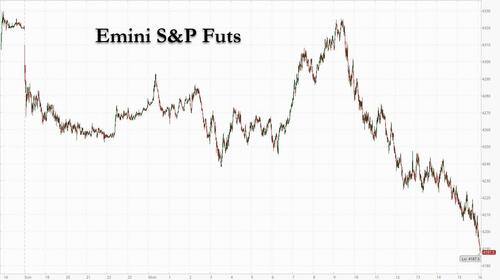
… and the Dow tumbling more than 800 points, everything was in the red, with the exception of the defensive utility sector and of course energy which is basking in the glow of a historic surge in the commodity space.
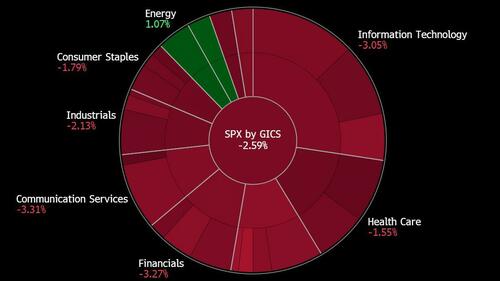
The Nasdaq tumbled 3.6% with the help of Facebook and Moderna both of which have wiped out more than 50% of their value from all time highs, and is now down more than 20% from its all time high, closing in a bear market, where it joins the Russell, which is now also down more than 20% from ATH.
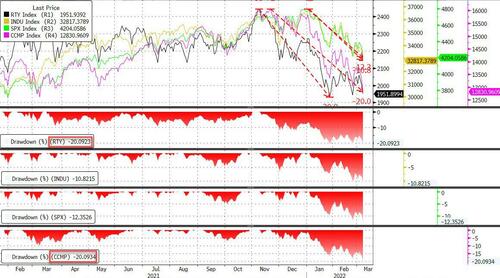
Consumer discretionary stocks, with a decline of more than 3%, led the S&P 500 to a fresh session low. Companies with outsize exposure to Europe – Calvin Klein owner PVH and Ralph Lauren – were among SPX stocks with the biggest drops, while Amazon and Apple are among top decliners on a points basis. Higher energy costs and soaring food prices may crimp consumer spending in other areas, with oil posing a particular challenge. Consumer discretionary stocks are the worst performers among SPX sectors this year, shedding ~19% while the broader index falls ~11%.
While energy was the best – and only outperforming – sector, a testament to today’s dismal risk off mood is that the small-cap Russell actually outperformed both the S&P and the Nasdaq, with the latter tumbling more than 3%.
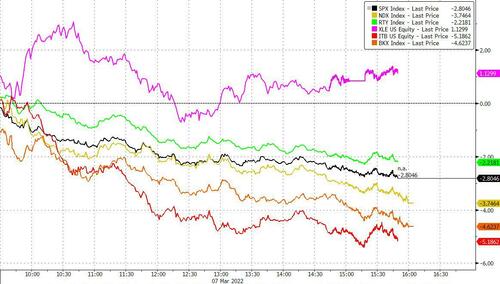
Europe was even worse, with Germany’s DAX closing down 2% – at the lowest level since November 2020 – and bringing total declines since its January record high to bear-market inducing 21%, while the broader Euro Stoxx 50 also ended 1.2% lower, and also closing more than 20% lower in a bear market.
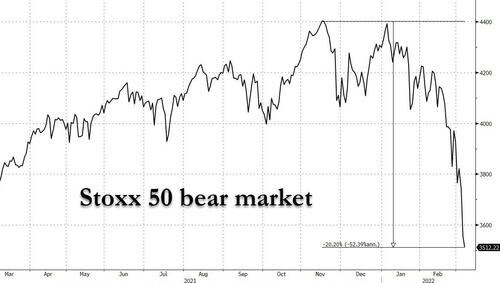
Believe it or not, those were some of the more timid moves observed today. As Nomura noted earlier, there have been some truly historic swings across all assets, especially Energy where oil had its biggest daily swing ever, with Brent surging to near $140 before tumbling $20 after Germany said it has no plans to halt Russian energy imports, only to reverse higher again…
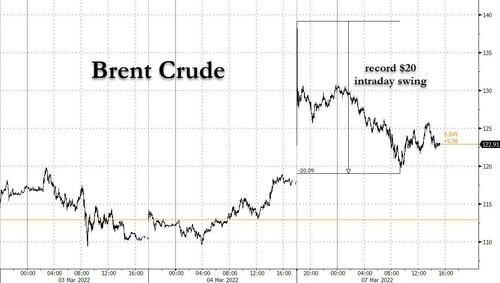
… to gas, with the European nat gas benchmark trading > 79% to an all-time high, before also reversing gains…
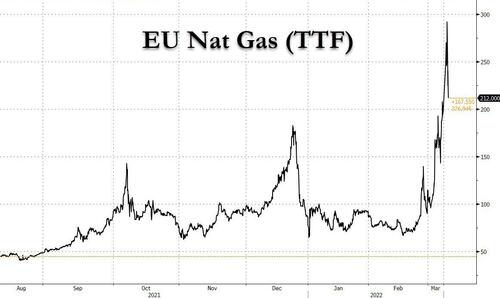
… to Industrial Metals, where Nickel exploded 82% in one day amid a wave of short squeeze in the largest dollar gain in 35 yr history of LME contract…
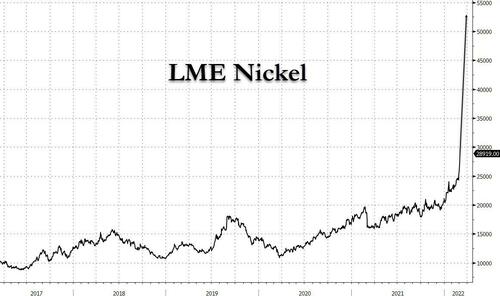
… and even FX, with the Swiss trading through parity with the Euro earlier, the first time since the SNB peg break in ’15…
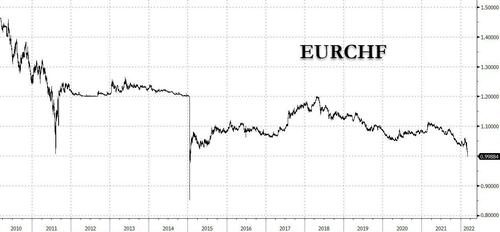
… to Inflation, where even’s Europe’s 5y5y inflation swap soared to 8+ yr highs…
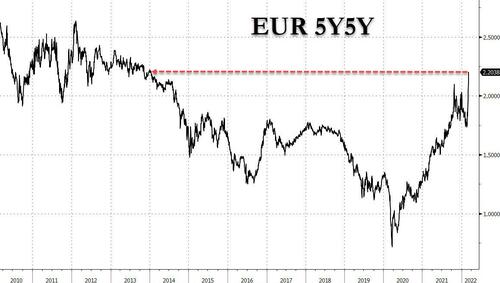
… to EU Financials, with Europe’s banks (SX7E) tumbling -34% in less than a month amid panic over Russian exposure.
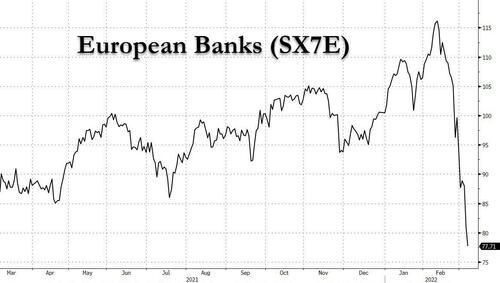
Among other commodities, the type that actually matter when considering social unrest and revolutions, wheat futures closed limit up again at a record $1,425 translating into an all time high $12.94 per bushel on fear Ukraine and Russian output will be cut off.
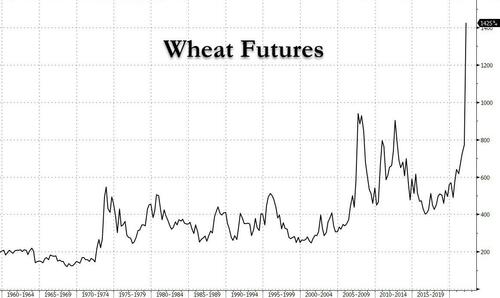
While those keeping track of market dislocations did not find anything abnormal in today’s move in the FRA-OIS, which was roughly unchanged from Friday’s close after blowing out late last week…
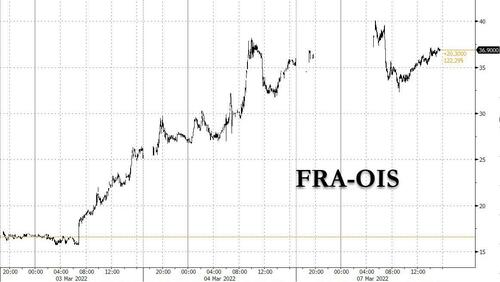
… a look at the continued decline in the balance of the Fed’s Overnight Reverse Repo suggests that banks are starting to stockpile liquidity.
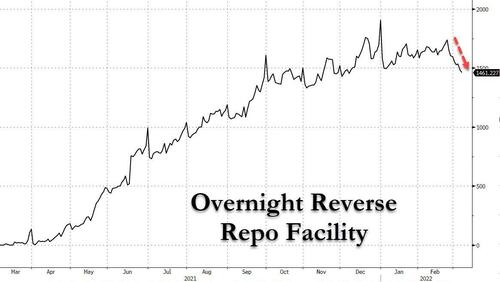
Even formerly invincible junk bonds cracked, and took out YTD lows, sliding to levels last seen in the aftermath of the covid crisis.
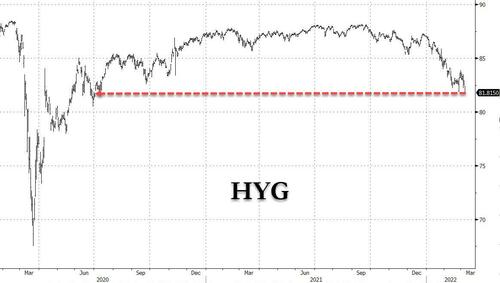
So as oil and commodities decouple from everything in the clearest signal yet that the summer of 2008 is in play (something we discussed 2 months ago in “Shades Of 2008 As Oil Decouples From Everything“) is the market finally pricing in the coming stagflationary recession? Not yet, but with the 2s10s just 24 bps now, the lowest since the covid crash, and a few days trade away from 0, we are almost there.
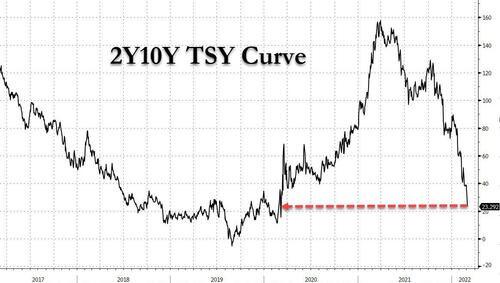
10Y Real rates plunged to -1.13%, a level which just a few weeks ago would have sent tech stocks soaring, only not this time because the entire move is driven by an explosion higher in 10Y breakevens, which soared 16bps today alone to 2.86%, the highest level on record as markets freak out about inflation over the next decade.
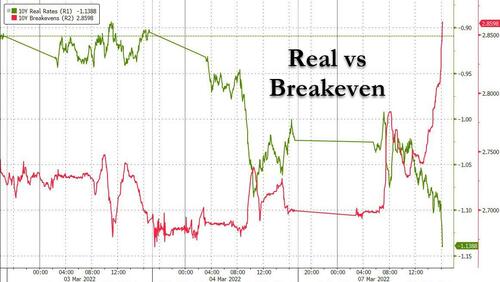
And yet, despite the beating drums of imminent recession, the Fed remains paralyzed as not only does it have to somehow contain inflation driven by a historic supply shock, over which it has no control, but it can’t cut rates as it is already at zero. As a result, the market continue to price in just under 1 rate hike in March and almost 6 rate hikes for the full year!
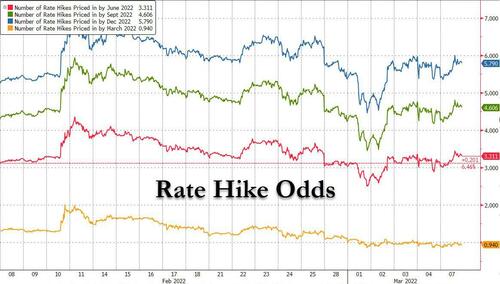
Finally, the VIX has continued its steady climb amid record put purchases, and hit a level of 36, the highest in over a year. This is a level where traders traditionally expect it to signal a market bottom. If that fails to happen, a quick trip to 50 is almost guaranteed.
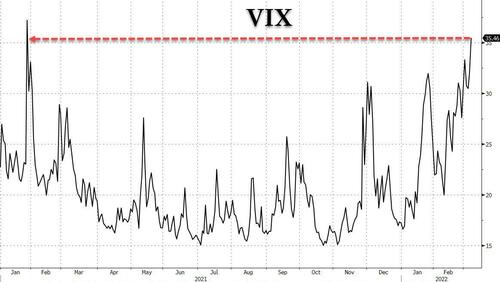
Looking at the so-called digital gold, bitcoin tumbled along with the broader crypto sector, as the decoupling observed last week with high beta stocks has now been long forgotten, and the correlation algos continue to trade cryptos as just your garden variety tech stock.
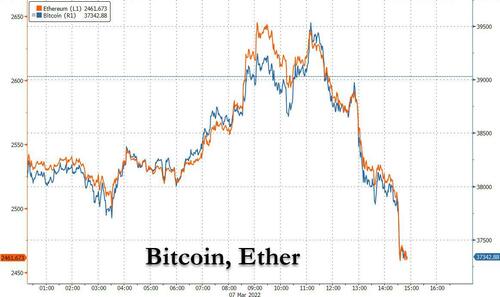
Meanwhile, the original “old-school” gold, continues to creep ever higher in what many view as a harbinger of the next episode of monetary debasement, and after earlier rising briefly above $2,000 then sliding, gold has stabilized just below the $2k mark.
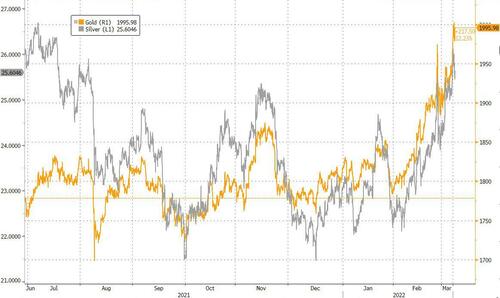
So is there any hope, even fleeting for a modest bounce? We doubt: after all, even the White House admits what is coming:
- WHITE HOUSE SAYS U.S. NEEDS TO BE PREPARED FOR LONG, DIFFICULT ROAD AHEAD
It appears the market is getting the message:
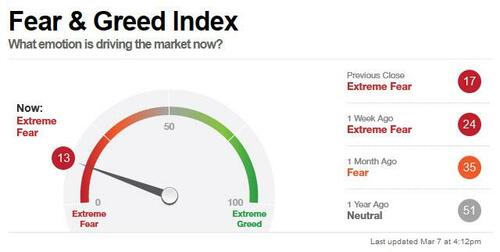
I) LAST NIGHT
All Hell Breaks Loose On Russian Oil Embargo Fears: Futures, Stocks Plunge As Oil Soars To $139, Gold Hits $2,000
SUNDAY, MAR 06, 2022 – 10:10 PM
All hell is breaking loose in the Sunday evening session where S&P equity futures and Asian markets tumbled, while havens such as sovereign bonds and gold soared amid fears of an inflation shock in the world economy as oil soared on the prospect of a ban on Russian crude supplies.
Emini futures were down 1.6% as of 9:00pm ET, while Nasdaq 100 futures plunged 2% and European futures were down 3%.
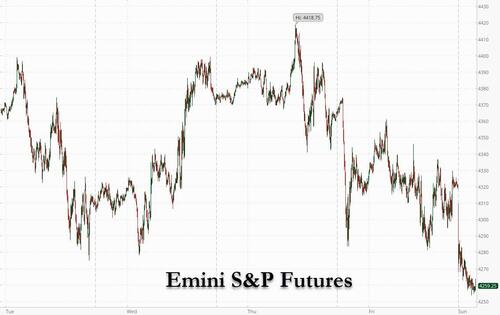
Meanwhile, the stock MSCI Asia-Pac index was on course for a bear market — a drop of more than 20% from a February 2021 peak, while Hong Kong’s Hang Seng index plunged more than 5%, and below the March 2020 low…

… as Brent oil briefly hit $139 a barrel at the open when stops were hit, and West Texas Intermediate $130 a barrel, before trimming some of the rally…
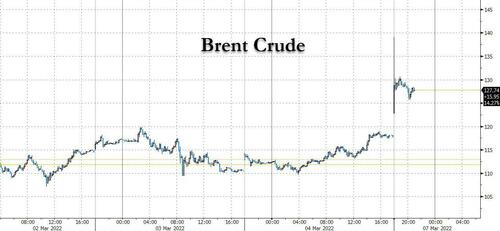
… even as Jen Psaki earlier tweeted a humorous tweetstorm about how the US plans to achieve energy security in 9 “specific” steps:
The catalyst for the sharp move higher in oil was the earlier commentary from Secretary of State Antony Blinken who said the U.S. and its allies are looking at a coordinated embargo following Russia’s invasion of Ukraine, while ensuring appropriate global supply.
It is the latest spike in energy prices, which are now dangerously close to levels last seen in 2008 just before everything collapsed, that threaten to spark a global recession, something we have been warning about for months, and is a risk that is sending tremors across markets.
The risk carnage sent funds flowing into safe havens: in one of the clearest signs of risk-off markets, the swiss franc just broke below parity with the euro for the first time since the SNB depegged back in January 2015, even though a governing board member of the Swiss National Bank said it’s ready to intervene to tackle rapid strengthening.
..
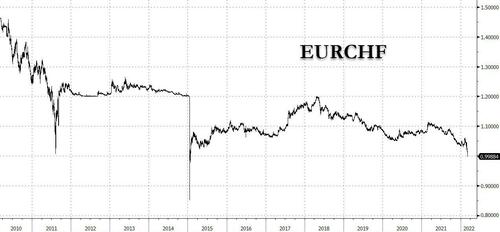
… while 10Y yields have tumbled back below 1.70%.

… sending odds of a March rate hike down to just 0.86%.
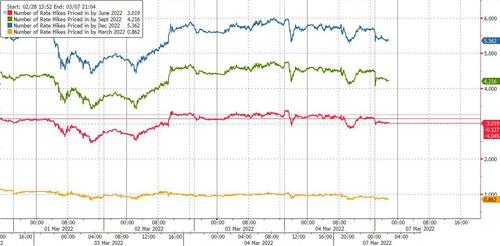
Having ignored it for long – despite our repeated warnings to the contrary – traders are finally realizing that stagflation is here: “for the U.S. economy, we now see stagflation, with persistently higher inflation and less economic growth than expected before the war,” Ed Yardeni, president of Yardeni Research, wrote in a note. “For stock investors, we think 2022 will continue to be one of this bull market’s toughest years.”
Making matters worse, there is absolutely nothing central banks can do to offset the commodity supply shock which as Zoltan Pozsar explained earlier today, threatens to spill overs into a “classic liquidity crisis.”
“Central banks are facing an exogenous stagflationary shock they cannot do much about,” Silvia Dall’Angelo, senior economist at Federated Hermes, wrote in a note.
And if comparisons to 2008 were not enough, markets now also have to freak out about the possibility of another Russian default which led to the 1998 collapse of LTCM.
As we discussed earlier, Russian president Vladimir Putin signed a decree allowing the government and companies to pay foreign creditors in rubles, seeking to stave off defaults while capital controls remain in place. Sanctions will determine if international investors are able to collect payments, the Finance Ministry said.
Meanwhile, as Bloomberg notes, fears about the war overshadowed China’s signal that more stimulus is on the cards after officials set an economic growth target that topped forecasts. Premier Li Keqiang vowed at the opening of the National People’s Congress to take bold steps to protect the economy as risks mount.
Finally, those wondering what happens next, may want to reread our Friday post “”A World At War” – Global Recession Next, And Then QE5“
I) /MORNING TRADING
Futures Bounce Hard After Russia Offers Conditions To Immediately End Military Operation
MONDAY, MAR 07, 2022 – 07:50 AM
Belarusian state TV has said the Russian delegation has arrived at the location where on Monday at about 14:00GMT/09:00EST the third round of talks with the Ukrainian side are set to begin. So far the ongoing talks have been focused on establishing and maintaining humanitarian corridors for the safe evacuation of civilians still trapped in cities under siege by Russian forces. But these have been erected and collapsed in various locations with limited effectiveness, given Kiev has accused Russia of breaking the temporary ceasefire pauses through the resumption of shelling, something which Russia’s military has rejected.
Just ahead of the meeting, the Kremlin issued a list of demands to be accomplished if Ukraine wants the Russian invasion to be halted immediately. These includes, according to the Kremlin spokesman, the recognition of Crimea as part of sovereign Russian territory, as well as Donetsk and Lugansk as independent states.
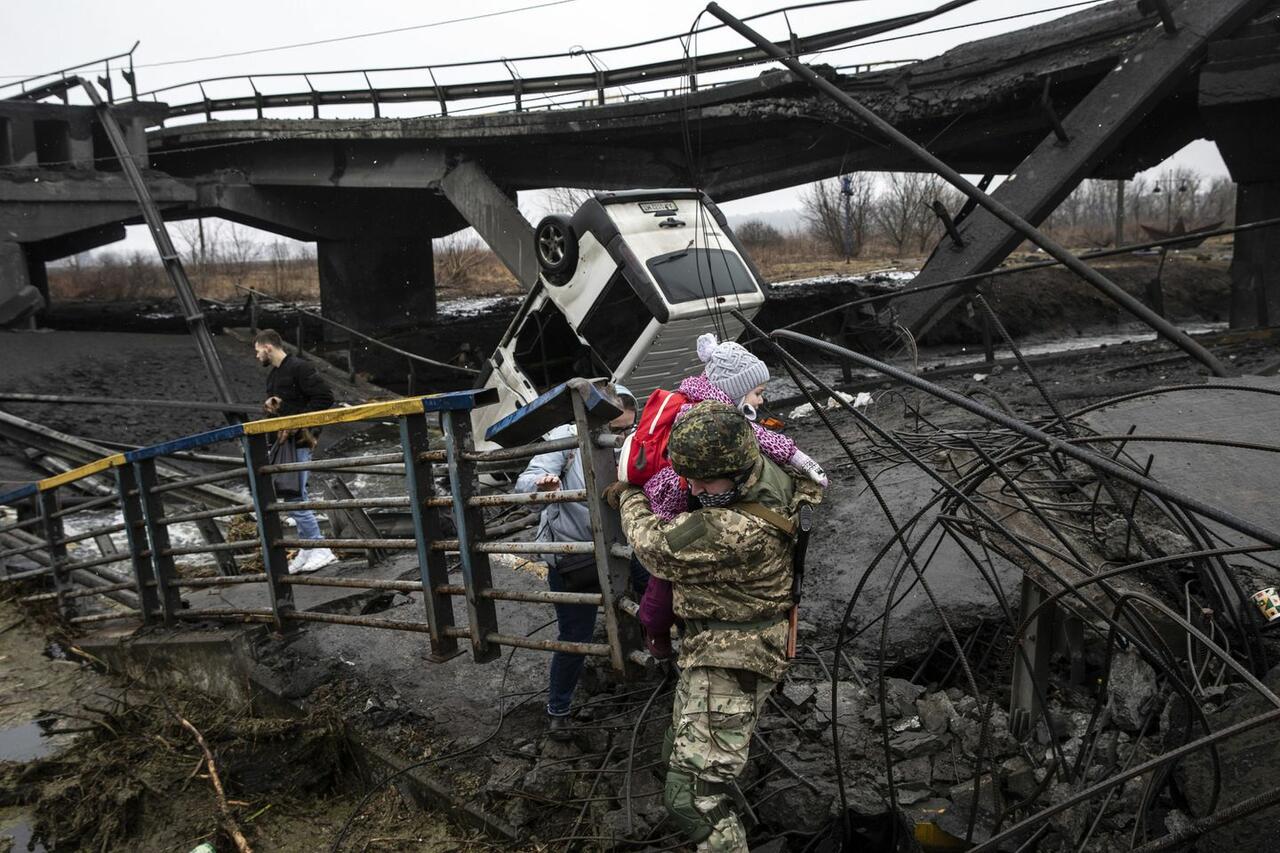
The spokesman said that if these conditions are met, then Russian military action will “stop in a moment”. And crucially the statement said Ukraine must amend its constitution to definitively reject any claims or aspirations to enter any bloc – which is a condition obviously focused on the NATO military alliance.
Also on Monday, Russia’s defense ministry declared four new humanitarian ceasefires locally in Ukraine in order to facilitate a civilian evacuation window…
“The Russian Armed Forces announce a ceasefire from 10 o’clock in the morning and are opening humanitarian corridors from Kiev, Kharkov, Sumy and Mariupol, Russia’s Inter-Agency Humanitarian Response Coordination Center reported on Monday,” it announced according to TASS.
After trading near session lows at the start of the US session amid a sea of red that sent many European bourses into a red market, futures bounced hard after Russia floated the above-listed conditions to “immediately” end the war in Ukraine.
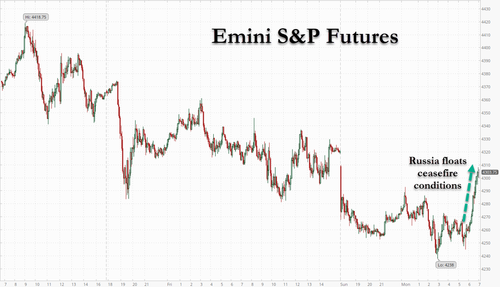
The MoD statement said further, “Considering the catastrophic humanitarian situation and its dramatic deterioration in the cities of Kiev, Kharkov, Sumy and Mariupol, and also at the personal request by President of the French Republic Emmanuel Macron to President of the Russian Federation Vladimir Vladimirovich Putin, the Armed Forces of Russia announce a ceasefire from 10:00 on March 7, 2022 for humane purposes and are opening humanitarian corridors.”
However, President Volodymyr Zelensky has issued fresh rejections that Russia honored its limited cease-fire agreements. “We will punish everyone who committed atrocities in this war,” he said Monday. “There will be no quiet place on this earth for you. Except for the grave.”
developing…
END
AFTERNOON
END
II) USA DATA
IIb) USA COVID/VACCINE MANDATE STORIES
The House will likely vote this down much to the anger of its cizitens
(Stieber/EpochTimes)
US Senate Passes Bill To End COVID-19 National Emergency
SUNDAY, MAR 06, 2022 – 03:30 PM
Authored by Zachary Steiber via The Epoch Times (emphasis ours),
The U.S. Senate on March 3 approved a measure that would end the national emergency over COVID-19.
The resolution passed 48–47 on a party-line vote.
All Republicans voted for S.J.Res. 38, which would end the national emergency declared by President Donald Trump on March 13, 2020. All Democrats voted against the declaration, which has been extended twice by President Joe Biden.
Five senators missed the vote, including three Democrats.
“After nearly two years of living under this state of emergency, the American people are worn out and yearning to breathe free; they long for their God-given freedoms, and for leaders to take their side. There is no doubt, it’s time for our nation to learn to live with COVID,” Sen. Roger Marshall (R-Kan.), who introduced the measure, said in a statement after the vote.
“I am proud my colleagues came together to repeal this emergency declaration and delivered a symbolic victory to our citizens that normalcy is around the corner and that limited government and our constitutional rights still reign supreme. It’s high time to stop talking about restrictions and the unknown. We must chart a new course to victory today that respects the virus and our freedoms.”
Before voting began, Senate Majority Leader Chuck Schumer (D-N.Y.) urged senators to vote no. He argued that it isn’t the right time to end the emergency declaration, which enables the president to take certain actions, because new variants of the virus that causes COVID-19 may emerge.
The proposal “would precisely handicap the Biden administration’s ability to fight the pandemic and heighten the danger that all our progress is suddenly unraveled in the future,” he said, claiming the declaration “has been one of the most powerful and best tools for mobilizing the federal government to combat the pandemic.”
Sen. Mike Braun (R-Ind.) disagreed, telling the body that the number of people who have been vaccinated combined with those who enjoy natural immunity means “a large majority of the nation are already protected” and that the virus has become endemic.
“When this emergency was first declared two years ago this week, it was needed,” he said, but “it’s past time for the president and governors across the country to give up the extra powers granted to them under the COVID emergency declarations.
“If we’re going to live with this virus and move forward as a country, we must end the national emergency authorization and then other governors across the country should follow suit.”
The measure now heads to the House of Representatives, which is controlled by Democrats, who have generally been more in favor of restrictions during the pandemic than the GOP. Even if the House were to approve the measure, the White House said on March 3 that Biden would veto it.
A spokeswoman for House Speaker Nancy Pelosi (D-Calif.) didn’t respond by press time to a request by The Epoch Times for comment.
end
iii) USA inflation//SHIPPING commentaries//LOG JAMS//
Inflation Is “Imposing Real Hardships” On Everyday Americans; $10 Toothpaste & $4 Gas
SATURDAY, MAR 05, 2022 – 08:45 AM
Consumer goods companies are raising prices of ‘essential everyday’ items on Americans as inflation soars to multi-decade highs. The latest to do so is Colgate-Palmolive, an American multinational consumer products company, announced a new expensive line of toothpaste, according to Reuters.
Last week, Colgate-Palmolive CEO Noel Wallace told an industry conference that its new Optic White Pro Series toothpaste would be “vital” to its ability to raise prices. The new 3-ounce tube of premium toothpaste will cost a whopping $10.

For some context, Statista notes the average price of leading toothpaste brands in the U.S. in 2019 averaged between $4 and $6., and camelcamelcamel.com shows the same with a 2-pack costing around $10-12 for the last year…

Last year, consumer goods companies increased prices due to rising raw material costs, labor shortages, and freight rates. Soaring prices have dented consumer sentiment, which remains at an eleven-year low. Some consumers are unphased by inflation though lawmakers and consumer advocate groups are probing consumer goods companies for excessively raising prices to fuel profits and return money to shareholders.
“We’re seeing significant price hikes on virtually every item consumers purchase,” said U.S. Representative David Cicilline, who is working on proposed antitrust legislation aimed at bringing down prices. “
“They’re imposing real hardships. People are taking things out of their grocery carts because it’s too expensive,” Cicilline said.
It’s not just consumer goods companies raising prices. Big box retailers such as Walmart and Target are doing the same.
The Federal Trade Commission is investigating Procter & Gamble, Kraft Heinz Co, Kroger Co, and Walmart for fueling higher prices.
Cicilline told Reuters that Colgate is a “company touting price hikes, making basic items too costly, and paying out more to investors.” Colgate expects better margins this year and increased share buybacks last year by almost 50%.
Colgate’s Wallace said price hikes are a “key capability” to drive profit and growth.
The White House has taken an active role in investigating companies for excessive price increases ahead of midterms. Inflation is so troublesome for the administration that President Biden’s State of the Union Tuesday addressed the troubling issue.
“Too many families are struggling to keep up with the bills,” Biden said. “Inflation is robbing them of the gains they might otherwise feel. I get it. That’s why my top priority is getting prices under control.”
…and if $10 toothpaste sounds terrible. Turmoil in Ukraine is disrupting global commodity markets that have sent WTI futures above $110 a barrel, which suggests the US national average for gasoline at the pump could soon be $4.
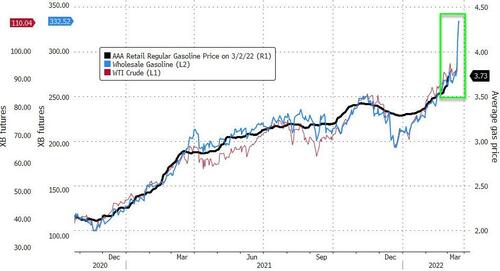
Democratic leaders are in panic mode as they’re failing to tame inflation ahead of midterms. Are price controls next?
iii) USA economic stories
Brought the initial story to you last week and it is gaining more strength: the FRA=OIS data point which is a measure of dollar liquidity is spiralingly out of control
a must read…
(Posnar/zerohedge)
Pozsar: “We Could Be Looking At The Early Stages Of A Classic Liquidity Crisis”
MONDAY, MAR 07, 2022 – 05:53 AM
Last week, some on Wall Street were quietly gloating when the “Lehman Weekend” consequences predicted by repo guru Zoltan Pozsar failed to materialize and central banks did not flood global markets with a torrent of liquidity, in a repeat of what happened in September 2008.
In his latest not published late on Friday, the Credit Suisse strategist admits that “Yes, we got central banks’ need to step in to calm funding market pressures this week wrong (still no need yet)” but he counters that “we got the direction of spreads right – on February 24th we warned about an imminent sentiment shift in funding markets. There was no premium last week but there is some funding premium now, and it feels that things can get worse still.” So net-net, he concludes, “our call was absolutely right.”
But how was he “absolutely right” if the funding squeeze he predicted did not materialize? Well, as Zoltan explains in the bulk of his note, what is happening right now is something that nobody really understands, and what is yet to happen may be a combination of the worst parts of the 2008, 2018 and 2020 crises, as a result of one thing: the collapse of commodity-based collateral (something China understands very well after it learned – on more than one occasion – that its thousands of tons of its commodity stockpile, especially copper and aluminum, had been rehypothecated, i.e., used as collateral repeatedly).
As the Hungarian writes, his point with the Lehman analogy last Sunday “was to underscore the point that just as the market didn’t realize the complexity and interconnectedness of the financial system then, it may not realize the same today. Again, we are not saying that we are about to have another Lehman moment, only that things can get much worse than you realize.”
Underscoring the unknown unknowns of a global sanctions blockade against Russia launched not by central bankers but by politicians, Zoltan writes that “when you rip $500 billion of FX reserves from the system, sanction and de-SWIFT banks (which goes live March 12th), and force Western banks and commodity traders to self-police and not trade commodities from the single-largest commodity producer of the world (Russia), unforeseen things can happen and do happen.“
He then writes something that all those pushing for an escalating conflict with Russia will hardly want to hear:
If you believe that the West can craft sanctions that maximize pain for Russia, while minimizing financial stability risks in the West, you could also believe in unicorns.
At this point the former NY Fed monetary plumbing expert pivots to what he failed to realize last weekend, and whose consequences will be more profound over the longer-term than a simple short-term plumbing block: “Yes we were also wrong on Sunday about the trigger of funding pressures – it’s not the Bank of Russia’s inability to roll FX swaps or de-SWIFTing that caused funding pressures to date, but rather the market’s self-imposed unwillingness to buy, move, or finance Russian commodities that’s driving the current massive bid for cash.”
This translated into what Bloomberg called a “historic” commodities rally, manifesting itself in the biggest weekly increase in commodity prices on record…
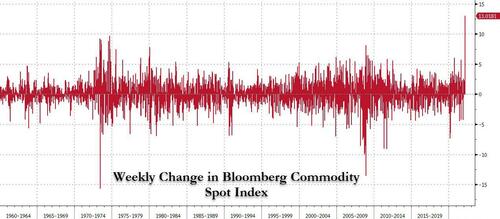
… and so the margin calls must be historic too, according to Pozsar.
But who is getting the margin calls, the Credit Suisse strategist asks rhetorically, besides all those metals traders who got a barrage of “erroneous” margin calls last Wednesday and Thursday from the LME?
According to Pozsar, the answer is market participants that are long commodities either in the ground or in transit and want to lock in a price by shorting futures: “these include every commodity producer in the world including Russia, and every major commodity trading house, respectively.”
While it is unknown (for now) if that is indeed the case, Pozsar suggest that it’s reasonable to wonder “if Russian commodity producers are experiencing margin calls now, and if they have the resources to pay – could they choose not to pay because their sovereign’s FX reserves were seized?” This is one risk the Credit Suisse strategist says the market needs to carefully consider.
“As for the commodity traders, which are suffering a correlated surge in commodity prices (Russia and Ukraine export pretty much everything imaginable), margin calls can be funded by drawing on credit lines from banks, issuing CP, or swapping FX”, something that may already be happening as suggested by the sharp spike in the FRA-OIS funding stress indicator.
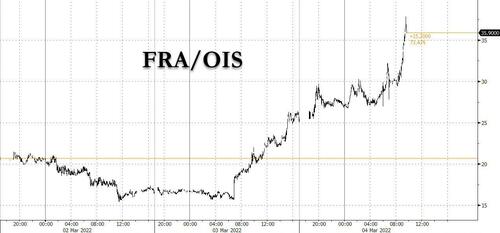
Here, instead of taking readers back to September 2008, Pozsar draws on one of the main lessons from the March 2020 liquidity crisis, which is that corporate credit lines (which have a low drawdown assumption according to Basel III) can be drawn across all industries and across all geographies at the same time in a pandemic, “and the lesson about the present crisis is that you can have a rally in all sorts of commodities from oil to gas, fertilizers, wheat, palladium, and neon during war, especially if the G7 force the world to self-police and boycott Russian stuff.”
Which takes us to the crux of today’s note: the role of commodities as collateral, which is critical because as Pozsar puts it, “every crisis occurs at the intersection of funding and collateral markets.”
Take Urals spot, which Zoltan writes “is trading at a discount to WTI is like subprime CDOs going from AAA to junk” and prompts him to ask if “all commodities sourced from Russia trade at a significant discount?” We put it somewhat differently last week, when we said that while Russian oil is trading bidless, non-Russian oil feels like it will soon go offerless.
Taking the analogy to CDOs further, Pozsar asks if it is possible that the Western boycott of Russian commodities is turning AAA commodities to junk (or bidless): “Does going from AAA to junk trigger margin calls? You bet!”
Besides collateral, the repo guru also reminds us that leverage and liquidity are also important, and takes us on a brief walk down the not too distant memory lane:
- In 1998, we had Russian bonds and a leveraged LTCM.
- In 2008, we had mortgages and leveraged banks and shadow banks.
- In March 2020, we had leveraged bond basis trades.
The pattern Pozsar points to is the following: “Collateral, leverage, funding” – in 1998 and 2008, collateral went bad and a funding crisis hit as a consequence. In 2020, corporations drew on credit lines, which sucked funding away from leveraged bond RV trades, which then triggered a forced sale of good collateral. As he summarizes it, “crises happen either because collateral goes bad or funding is pulled away – that’s been the central lesson in every crisis since 1998.”
Now on to today.
Pozsar points to Glencore’s iconic – if criminal – founder, whose Marc Rich’s legacy in the annals of global finance was to introduce the concept of leverage and borrowed money into commodity trading. It’s simple: a bank lends you the money to lease ships and buy commodities to deliver them sometime and someplace in the future at a locked-in price (via short futures).
The pattern should ring a bell.
Consider your typical, highly levered bond RV fund, such as Millennium and Citadel, is long the bond, short the future, and funds the package in the repo market. It was this bond basis trade that was behind the repo market crash of 2019 and then blew up just a few months later in March 2020; it’s also why hedge funds with regulatory leverage as high as 8x were begging for a Fed bailout when their RV trades blew up, similar to what happened to LTCM in 1998.
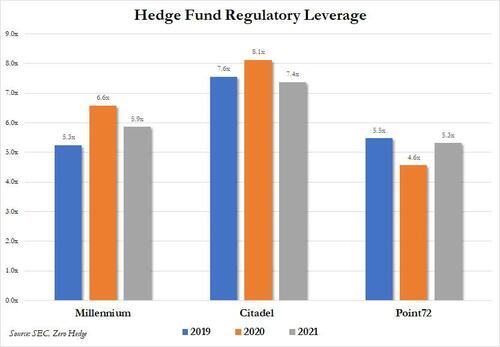
That analogy, Pozsar argues, is the same as a commodity trader moving stuff around. But if collateral spoils, funding is impossible to come by and spot price spikes are triggering margin calls, or as he puts it “March 2020 all over again?” While it probably is not the same size, the repo guru advises readers to “be mindful of the parallels and the funding and collateral linkages.”
Which brings us to the punchline of Pozsar’s note:
We could be looking at the early stages of a classic liquidity crisis that has elements of both collateral and liquidity problems (1998 and 2008), where some players – commodity traders – are not regulated and have no HQLA, and some players – state-linked commodity producers – are not liquid enough because their backstop – the Bank of Russia’s FX reserves – has been seized.
The Hungarian then goes on a historical tangent looking at sudden stops in the financial system, or as we call them, repo breaks.
In 1997, we broke some FX pegs because FX reserves we thought were there weren’t, and capital stopped flowing in.
In the present context, we clearly are not worried about funding because “o/n RRP is at $1.5 trillion and banks have reserves coming out of their ears”.
We will note that it is rewarding to see that one of the biggest minds in finance agrees with what we have pointed out previously, namely that the blowout in the FRA-OIS when there is still $1.5 trillion in the overnight repo, is quite a remarkable achievement and suggests that not everything is as smooth as so many self-proclaimed Polyannish financial experts would lead you to believe. Furthermore, as Zoltan notes, “you should worry about a sudden stop of commodity flows for three potential reasons.”
- First, gas gets turned off “at the top”.
- Second, there is an accident – lots of pipes run through Ukraine and it’s a war.
- Third, sabotage in Ukraine to kick-start Nordstream 2.
Reverting again to his analogy on RV pair trades, Pozsar asks “what happens to the gas bit of the commodity derivatives market when there is a sudden stop of physical commodity flows, and what does that do to dealers’ matched books? There is the potential for some exposure there Will it happen? We don’t know, but again, the question itself is worth a spread.”
* * *
Summarizing his latest, mostly stream of consciousness note, Pozsar says that “we have bases creeping in and commodities, like collateral in 2008, are becoming bifurcated.” Meanwhile, spot prices are staging a historic and correlated surge that is driving demand for cash at a time of excessive leverage in the system both overt and covert – think “commodity RV trades” (as an analogue to bond RV trades) – and a lack of FX liquidity because of seized FX reserves.
Pozsar then gives one more thing to think about: “Is the reason why we’ve cocooned energy and other commodity flows and related payments and institutions from sanctions to protect the consumer at the pump, or to protect the commodity derivatives ecosystem? Clearly, the West does not want to turn off the flow of energy, but there are growing risks – more sanctions, more self-policing, and the Russian leadership can act as well.”
Having found himself in his prime, where he is connecting dots and observing causal linkages between his favorite financial topics and seemingly disparate corners of the financial system – in this case the commodity collateral sector – Pozsar is only just warming up, and next writes that “there are links between all this and headline inflation and interest rate hikes, and links between the seizure of Russia’s FX reserves and the dollar and demand for long-term Treasuries”, and asks readers to consider a quote from George Soros carved into the wall of the CEU (Central European University)…
“Thinking can never quite catch up with reality; reality is always richer than our comprehension. Reality has the power to surprise thinking, and thinking has the power to create reality. But we must remember the unintended consequences – the outcome always differs from expectations”.
… and to think about that both in the present context, and in the context of ABN Amro freezing redemptions from its funds in August of 2007 – a year before Lehman: did markets think it would get that bad back then?
Putting it all together, Pozsar writes that while this time systematically important banks won’t fail, some other traders might fold, and losses, even if not lethal, can curb balance sheet provision (see Archegos) for all other stuff that the buy side needs – repo, FX, and equity derivatives.
Pozsar concludes with another quote, this time from Larry Summers (from a speech he delivered in Toronto at an INET event about the lessons learned during the 2008 crisis):
“crises are not about estimating their economic impact and estimating to the decimal point the GDP impact of a shock. Crises are about fear and greed…”
Going back to the spark behind Pozsar’s latest stream of consciousness, commodity collateral, he writes that Russia and Ukraine are the single-largest commodity exporters in the world. And while Russia accounts for just 5% of the world’s GDP, it is financially deeply interlinked – it used to have $500 billion of FX reserves, and owes about as much in debt to the rest of the world, not to mention “off balance sheet” debt that it owes to the world through derivatives when spot commodity prices rally, like they do now.
His parting words are a warning to all those who think that it will be easy to sever all financial ties to Russia:
It’s a bit more complex to de-SWIFT Russia than it was to de-SWIFT Iran… To be clear – your correspondent is a funding expert, not a commodity expert, but I see a link between the two markets at the present, and parallels to 2008. I wasn’t an expert in CDOs in 2007 either, but started to dig the day after Paul McCulley coined the term “shadow banking” at Jackson Hole and I wrote this. My interest was piqued by the legendary Paul McCulley, and current events piqued my interest in the opaque world of the commodity derivatives complex.
The books about 1997, 1998, and 2008 have FX pegs, default and leverage, and collateral and leverage as their central themes, respectively. The books about today’s market events will have commodities as collateral as the central theme.
It’s this “commodity as collateral” theme that Pozsar believes will spark the next liquidity crisis.
Pozsar’s full note is available to pro subs in the usual place.
end
Shop lifting a huge problem in New York.
(zerohedge)
“We’re Getting Creamed” – NYC Small Business Owners Struggle To Confront Surge In Shoplifting
FRIDAY, MAR 04, 2022 – 10:00 PM
New York City’s struggling small businesses are dealing with one of the worst spikes in retail theft rates in recent memory. And owners aren’t sure whether Mayor Eric Adams’ decision to roll back certain COVID restrictions will improve the situation, or make it worse.

The owner of a couple of downtown boutiques said she has never felt “more exhausted” trying to protect her businesses from emboldened shoplifters and criminal crews working small retail businesses.
Someone shattered the front door overnight and ripped out the cash drawer. The new security gates cost $2,300. The streets became quieter after four neighboring businesses closed permanently during the pandemic, emboldening shoplifters. Two security guards quit.
For Deborah Koenigsberger, who has worked in retail for three decades, keeping her two clothing stores open in Manhattan’s Flatiron neighborhood has never felt so exhausting.
“As small businesses, we are getting creamed right now in so many ways,” Ms. Koenigsberger said. “I might as well leave my store door open and say, ‘Help yourselves.”
According to data from the NYT, shoplifting complaints are up 16% over the past year, while arrests have fallen.
The debate over the underlying causes has also focused on New York’s bail laws, on a police force distracted by a spike in shootings and on online marketplaces where organized retail crews can easily sell stolen goods.
As the city emerges from the public health crisis, officials say a sense of safety is critical to its economic recovery.
Last year, complaints of retail theft were about 16 percent higher than in 2019, according to the New York Police Department. But arrest rates have dropped, with about 28 percent of the complaints resulting in arrests last year, compared with 48.5 percent in 2019.
An index of major crimes, including murders and felony assaults, was up 7.5 percent in the same period, but still lower last year than in 2015.
NYC Mayor Eric Adams is starting to reconsider bail laws.
The city’s new mayor, Eric Adams, is lobbying to toughen the state’s bail laws, which were amended in 2019, allowing more people who had been arrested to remain free while their cases were pending. Law enforcement officials blame the changes for making it harder to keep certain defendants, like serial shoplifters, detained after an arrest.
“We can’t have a city where our drugstores and bodegas and restaurants are leaving because people are walking into the stores, taking whatever they want on the shelves and walking out,” Mr. Adams told the State Legislature recently.
In Manhattan, the heart of the city, the worst-hit neighborhoods are also those that previously relied on commuters, or which harbor the largest number of drug-treatment centers.
In Manhattan, home to the largest share of the city’s jobs, neighborhoods struggling the most include those that relied on commuters before the pandemic and those that have a large concentration of drug treatment centers, according to interviews with small business workers.
One reason for the drop in arrests is that there are now more crews targeting small stores with little or no security. The lack of security personnel causes the odds of arrest to decline.
The Police Department said one reason the arrest rate had dropped for retail thefts was because there was more stealing at stores without security guards who were willing to detain shoplifters.
During the pandemic, organized crews nationwide also increasingly targeted retailers, stealing large quantities of merchandise to resell online.
One veteran NYC store owner said he is seeing more patrons who appear to be on drugs, or who seem “unstable”. Ultimately, the fear of being harmed keeps employees from interfering when they see criminals stealing.
Shoplifting, a longstanding issue for small businesses, took on a more unpredictable form in the last year, according to Joseph Lorenzo, the owner of Macson Shoes, a store that has been in Washington Heights for 45 years. He said more people have walked into his shop who appear to be on drugs or mentally unstable.
“The fear and unpredictability of these guys turning violent is what scares us the most,” Mr. Lorenzo said.
The owner of a Harlem coffee shop shared one particularly jarring horror story with the NYT.
Last summer, a man walked into the Monkey Cup, a Venezuelan cafe in Harlem, demanding free coffee, according to Laura Leonardi, a co-owner. After receiving one, he began arguing with Ms. Leonardi’s husband and punched him in the face, video footage showed. The man then punched Ms. Leonardi after she leapt from the counter. He fled before the police arrived.
In November, a different man walked in naked while a child was in the shop, refusing to leave. He came back two months later and smashed a stool to pieces.
Two weeks ago, the man walked in again repeatedly, until a barista pointed him out to a police officer who happened to be in the cafe. The man was arrested, a scene that Ms. Leonardi described as “horrible in every way.”
Of course, there are still plenty of Democratic politicians in the city who are willing to deny that the city has a crime problem. One state senator from the Bronx, Gustavo Rivera, said the following: “Communities are safer when they have more resources, not when they’re overpoliced.”
But even Alvin Bragg, the new Manhattan DA who has been widely criticized for his easy-on-crime policies, has decided to backtrack when it comes to shoplifting and theft, forming a task force to “tackle” the issue.
end
iv)swamp stories
KING REPORT/SWAMP STORIES
Radiation level unchanged at Zaporizhzhia nuclear power plant – RIA
Separately, RIA quoted Ukraine’s emergency service as saying that the fire was outside the station perimeter… https://www.reuters.com/article/ukraine-crisis-nuclear-plant-radiation/radiation-level-unchanged-at-zaporizhzhia-nuclear-power-plant-ria-idINL2N2V704S
U.S. official says no evidence Russians attacked nuclear reactors in Ukraine – MSNBC
@JackPosobiec: They lied about Zaporizhzhya because they want to pull the US into the war. The lies will become bigger. It’s going to get worse.
Unfathomably, GOP Sen. and major neocon, permanent warmonger Lindsay Graham called for the assassination of Putin. Reportedly, Graham beseeched Capitol Police to shoot protestors that entered the Capitol on January 6, 2021. Can you say ‘chickenhawk’?
GOP Sen. @LindseyGrahamSC on Thursday night: Is there a Brutus in Russia? Is there a more successful Colonel Stauffenberg in the Russian military? The only way this ends is for somebody in Russia to take this guy out. You would be doing your country – and the world – a great service.
Lindsey Graham doubles down on call for Vladimir Putin’s assassination https://trib.al/gGAOC3c
@JackPosobiec: Neocons can order assassinations on Twitter but Trump can’t tweet… There’s no bigger chicken hawk than Lindsey Graham. Nothing but big talk that the families of the American people should go and fight in endless wars that he will never lift a finger to fight himself.
@MrsT106: Lindsey Graham & John McCain in Ukraine in December 2016 preparing for a proxy war with Russia all the way back then. Then, Trump came in and stopped it all from happening.
https://twitter.com/MrsT106/status/1499724607431102470
Col. (Ret) @bobham88: We may be approaching the point where we need to calculate the risk of escalation if NATO intervenes in Ukraine, against the risk of letting this war continue on the course it’s on. I’m not yet advocating intervention, but I’m saying this war is on an increasingly dangerous path.
Many of the arguments against intervention suffer from the slippery slope fallacy: even the most limited intervention is seen as eventually ending in global nuclear war. I have some experience dealing with the Russian military over Syria; it is a rational, calculating organization that understands clearly stated interests and red lines. It will probe Western resolve but when it finds the limit, it will stop. Caveat: under no circumstances should any Western government advocate regime change in Russia. That is an entirely separate issue.
On Friday, WTI Oil hit 113.85 at 9:48 ET while US bonds were +2½ points. Gasoline was +4.7%; copper was + 2.4%. The dollar was sharply higher; yet gold rallied 1%. US stocks were down sharply, led by techs and Fangs. It was Russia, Russia, Russia – and some indications of recession anxiety!
The 2-10 yield spread sank to a low of 22.934 on Friday morning, a sign of recession angst.

US 2-year yield vs. US 10-year yield spread
@spomboy: 2-10yr curve chart. the last 6 times we were at current levels presaged major economic and/or financial crises. during that time we have NEVER seen a simultaneous increase in oil this fast without recession. i rest my case. https://twitter.com/spomboy/status/1499474673783955468
U.S. funding stress metric rises again
The gap between the U.S three-month forward rate agreement and the three-month overnight index swap rate, a funding stress indicator, rose to around 25.5 basis points… That was its highest level since May 2020… A higher spread reflects rising interbank lending risk or banks hoarding up U.S. dollars. The FRA-OIS spread measures the difference between the three-month Libor or the inter-bank lending rate and the overnight index rate, or the effective fed funds rate — the risk-free rate set by the U.S. Federal Reserve. https://kfgo.com/2022/03/04/u-s-funding-stress-metric-rises-again/

FRA-OIS 3-month spread, weekly
@biancoresearch: I believe the best way to measure bank funding mkt stress is the speed of the change (bottom). So, the funding markets have only been stressed this much two other times: * The worst of the March 2020 pandemic lockdowns* The week Lehman filed for bankruptcy. And it is not over.
https://twitter.com/biancoresearch/status/1499787379728691207
The best recession indicator, 10-year minus 3-month T-Bill spread, fell as much as 15.36 on Friday to a low of 132.642. It was 173.149 on January 18, 2022. NY Fed research on the spread: https://www.newyorkfed.org/research/capital_markets/ycfaq.html#/interactive
Soaring energy and food prices historically have generated recessions. With wage growth at zero for February and the cost of the necessities of life inflating at record amounts, recession is very likely. And don’t forget, the stupid Fed is now at the zero bound! Any further Fed largesse will exacerbate the politically charged inflation and squeeze on US consumers.
The February Employment Report was largely ignored. NFP jumped 678k; 415k was expected. But wages were unchanged; +0.5% m/m was consensus. https://www.bls.gov/news.release/empsit.b.htm
Household Survey Highlights
548k employed; unemployed -243k; not in labor force -183k; labor force participation rate +0.1 to 62.3% in February; The employment-population ratio +0.2 to 59.9%; Unemployment Rate -0.2 to 3.8%; civilian labor force +304k https://www.bls.gov/news.release/empsit.a.htm
Establishment Survey Highlights
Leisure & hospitality +179k with food services and drinking places +124k; Professional and business services +95k; temporary help services +36k; health care +64k; “Employment in health care is down by 306,000, or 1.9 percent, from its level in February 2020.” Construction +60k… retail +37k
https://www.bls.gov/news.release/empsit.nr0.htm
The BLS’s Birth/Death Model added 156k jobs. It added 131k jobs in February 2021.
https://www.bls.gov/web/empsit/cesbd.htm
ESHs hit a bottom at 11:13 ET on buying for the expected rally into the European close. Bonds were +3 points; the NY Fang+ Index was -2.8%; gold was +30.00; the dollar was very strong; Bitcoin was -3.7%.
The midday rally on Friday was aided and abetted by a sharp decline in oil on reports that an Iran nuclear deal was nigh. Similar reports circulated at midday on Thursday. Also, Ukraine-Russia peace talks were scheduled for the weekend.
WaPo’s @John_Hudson: In an hour long phone call, Putin told German Chancellor Scholz that a third round of talks with Ukraine is scheduled for this weekend. Putin said Ukraine must recognize the sovereignty of Donetsk and Luhansk and admit that Crimea is Russian territory. https://www.washingtonpost.com/world/2022/03/04/russia-ukraine-war-putin-news/#link-5YG6YDOKUNE47I2PA5ORQ6B3KI
The rally peaked at 13:09 ET; Biden was scheduled to speak near that time. He started reading from his Teleprompter at 13:32 ET. Joe hailed the February Employment Report and claimed that lowering inflation was a “top priority”. He highlighted his new ‘Buy America Plan’, a reiteration of what Trump promoted. Joe said his plan requires 75% of content to be made in the USA.
About 7 minutes after The Big Guy started reading, ESHs tumbled. When Joe finished reading, he bolted and took no questions. It was time to jet to Delaware for his weekly R&R and whatever.
After falling 39 handles from the high, ESHs formed a bottom at the VIX Fix (14:15 ET). It was time for the Friday afternoon upward manipulation! The rally was short lived because oil and gasoline soared to new highs: WTI Oil hit 115.96, +7.3%; and gasoline jumped to 355.04. +26.6 cents, +62 cents weekly. These price hikes should hit the pumps this week. April Gold hit a new high of 1973.10. Wheat went limit up; and is +62% from its February low.
The afternoon decline ended at 14:59 ET. It was time for a last hour upward manipulation! A 16-handle ESH rally ended in 7 minutes. Another rally thrust commenced at 15:24 ET; it ended 4 minutes later. ESHs then vacillated feverishly until ESHs jumped higher with 6 minutes remaining. Numerous traders desperately needed to force stuff high to salvage ‘the marks’ for the week. ESHs jumped 24 handles in 6 minutes. Any chance that the SEC will investigate this blatant manipulation?
Biggest weekly increase in commodity prices on record https://twitter.com/zerohedge/status/1500143236094078985
The Euro Stoxx 50 tumbled 4.96% on Friday and is -17.27 for 2022; -20.6% currency adjust for 2022. The CAC sank 4.97%; the DAX fell 4.41% (-10.1% for the week); and the MIB tumbled 6.24
Russian President Vladimir Putin formally signed a law that would impose a jail term of up to 15 years for people who intentionally spread “fake” information about Russia’s armed forces – TASS
@AFP: Russian President Vladimir Putin said Saturday that any country that sought to impose a no-fly zone over Ukraine would be considered by Moscow to have entered the conflict
Anti-aircraft missiles Germany offered Ukraine don’t work
https://www.telegraph.co.uk/world-news/2022/03/04/anti-aircraft-missiles-germany-offered-ukraine-dont-work/
@BernardGoldberg: Coca Cola couldn’t wait to weigh in on Georgia’s election law … but now won’t talk about their business in Russia… Coke’s bottler in Russia announced no change in its roughly 7,000-employee operations. So, Coke, spare us your woke outrage here in the US.
China cut its annual economic growth target to its lowest level in decades.
Chinese Premier Li Keqiang said the country’s external environment is becoming “volatile, grave and uncertain.”… China will aim for growth of “around 5.5%” this year…
Last year, China aimed for economic growth of 8.1%… As a way to stimulate growth, the Chinese government has promised tax cuts for entrepreneurs and told banks to increase lending.
The government is also injecting money into the economy by increasing spending on public works…
https://www.dw.com/en/china-lowers-economic-growth-goal/a-61024081
China aims to boost big-bank loans to small businesses over 40% in 2022
China aims to boost lending to small businesses from large commercial banks by over 40% this year, Chinese Premier Li Keqiang told the annual meeting of Parliament on Saturday (March 5).
The government will urge financial institutions to cut lending rates further, reduce fees and promote mid- and long-term lending to the manufacturing sector, Li said, reading his work report…
https://www.theedgemarkets.com/article/china-aims-boost-bigbank-loans-small-businesses-over-40-2022
China Shuns Energy Use Target to Focus on Securing Fuel Supply
Flexibility sought amid unprecedented tumult in commodities
Energy intensity goal will be assessed on five-year basis
https://www.bloomberg.com/news/articles/2022-03-05/china-avoids-2022-energy-intensity-target-amid-commodity-tumult
The condition of China’s winter wheat crop could be the “worst in history,” the agriculture minister said on Saturday, raising concerns about grain supplies in the world’s biggest wheat consumer. https://t.co/DcEOdRMEdA
@vtchakarova: Food prices soar as Black Sea ports, among the most significant global food choke points, are at virtual standstill amid Russia’s war. Russia and Ukraine supply almost a third of the world’s wheat exports. Food crisis is looming as a result. https://t.co/6PvziURngz
Xi Says China Can’t Rely on World Markets for Food Security
Xi also stressed farmland protection and technology-led development of the seed industry to help solve food security issues… particularly after some crop prices rocketed in the wake of Russia’s invasion of Ukraine… https://www.bloombergquint.com/china/xi-says-china-can-t-rely-on-world-markets-for-food-security
@Halsrethink: Global food supply disruptions set in motion by Russia-Ukraine conflict threaten China also. XI Jinping must give much greater attention to food supply chains as a national security priority far greater than Taiwan. (How do you like your boy, Putin, now?)
Russia says West’s sanctions create a ‘problem’ for Iran nuclear deal
Russia said on Saturday that Western sanctions imposed over the conflict in Ukraine had become a stumbling block for the Iran nuclear deal, warning that West that Russian national interests would have to be taken into account… https://news.yahoo.com/russia-says-wests-sanctions-create-123231834.html
Russia clearly indicates that Team Biden/Obama has been appeasing Russia for an Iran nuclear deal; and sanctions on Russia will be tied to an Iran nuclear deal. Trump got impeached for far less.
As Ukraine burns, RUSSIA is manipulating Biden into accepting a weak new Iran nuclear deal. But haven’t we learned that appeasement doesn’t work, asks former deputy National Security Advisor VICTORIA COATES https://www.dailymail.co.uk/news/article-10578541/RUSSIA-manipulating-Biden-accepting-weak-new-Iran-nuclear-deal-VICTORIA-COATES.html
@Doranimated: Meet Mikhail Ulyanov, the Russian rep to the Iran nuclear talks in Vienna. He served as the mediator between Rob Malley, the US rep, and the Iranians. He’s bragging about how Russia and China teamed up with Malley to deliver huge wins for Iran. Amazing.
https://twitter.com/Doranimated/status/1500489732555526151
@RNCResearch: ABC’s Jonathan Karl on Biden’s refusal to sanction Russia’s oil and gas industry: “It’s extraordinary…to sanction everything but the thing that drives their economy”
https://twitter.com/RNCResearch/status/1500501766282043401
Russia’s foreign ministry has vowed to impose tough measures against British interests in Russia in retaliation to what it labelled London’s “sanctions hysteria” after Moscow’s invasion of Ukraine, Reuters reports. It said that Britain had clearly chosen to move towards an open confrontation with Russia, leaving Moscow with no choice but to take measures in response, which “will undoubtedly undermine British interests in Russia”. The measures have not yet been specified…
https://www.theguardian.com/world/live/2022/mar/05/russia-ukraine-war-latest-news-nato-gives-green-light-to-bombing-with-lack-of-no-fly-zone-says-zelenskiy
@JudiciaryGOP: Why is Joe Biden more interested in getting oil from Russia, Iran, and Venezuela than the United States? (The Big Guy asked Venezuela to produce more oil to garner relaxed sanctions.)
Putin says Western sanctions are akin to declaration of war http://reut.rs/3sIOYDO
Any country offering its airfields to Ukraine for attacks on Russia may be considered as having entered the conflict: Russian defense ministry – Reuters
Russian banks may issue cards with China’s UnionPay as Visa, Mastercard cut links https://t.co/VGqizJB33t
Reuters: Russian President Vladimir Putin signed a law allowing funds to be seized from the bank accounts of officials if the sum of the deposits exceeded their declared incomes over three years and was shown to be illegal, state television said on Sunday.
Putin Aims to Avert Defaults with Ruble Payment to Creditors
- Debtors can set up accounts in Russia to pay foreign investors
- Rosneft, Gazprom, government have dollar payments due soon
Separately, clearing houses Clearstream and Euroclear stopped accepting the ruble as settlement currency and have excluded all securities issued by Russian entities from all Triparty transactions, barring a traditional channel used to make payments to bondholders…
Russia has $117 million worth of coupons on dollar bonds coming due on March 16 that don’t have the option to be paid in rubles, the JPM strategists said…
https://www.bloomberg.com/news/articles/2022-03-05/putin-seeks-to-avert-defaults-with-ruble-payments-to-creditors
Russia warns sovereign bond holders that payments depend on sanctions https://t.co/hTTTgoPKNo
@WSJ: Secretary of State Antony Blinken said preliminary reports indicate that Russia is deliberately targeting civilians as part of its invasion of Ukraine—allegations that if true would amount to war crimes under international law
Sec of State Blinken says the US will permit NATO to provide Ukraine with fighter jets, a big escalation.
Blinken says Poland sending fighter jets to Ukraine gets a ‘green light’ from US
https://thehill.com/homenews/administration/597056-sending-polish-fighter-jets-to-ukraine-gets-a-green-light-says
Chancellery of the Prime Minister of Poland @PremierRP: Poland won’t send its fighter jets to Ukraine as well as allow to use its airports. We significantly help in many other areas. (Blinken fibbed!)
@IuliiaMendel: The Russian Defense Ministry stated that “as part of the demilitarization of Ukraine, the Russian Armed Forces will target Ukrainian defense industry enterprises with high-precision weapons. I was warned that shelling of Lviv was possible at 5 a.m.
Ukraine and Russia will hold the third round of peace talks today. There were no talks on the weekend.
Ukraine open to discussing ‘non-NATO models’, negotiator tells Fox News http://reut.rs/3sMhW5T
WaPo’s @DanLamothe: A senior U.S. defense official just released an updated assessment of the war in Ukraine as of early Sunday evening in Washington: “We’ve observed limited changes on the ground over the past day. Russian forces continued efforts to advance and isolate Kyiv, Kharkhiv and Chernihiv across the north and east are being met with strong Ukrainian resistance.”… “The convoy continues to be stalled.”… the airspace over Ukraine is contested… approximately 600 Russian missile launches have occurred since the invasion began,”… https://twitter.com/DanLamothe/status/1500600523497799681
AP: Ukraine official: Russian forces step up nighttime shelling of cities in the center, north and south of the country.
@PavelLatushka: According to @nau_belarus sources from the Belarusian ministry, Belarusian soldiers are massively refusing to fight against Ukraine. This is the main reason why dictator Lukashenka does not send the Belarusian military to take part in the aggression.
WSJ: Russia Recruiting Syrians for Urban Combat in Ukraine, U.S. Officials Say
https://www.wsj.com/articles/russia-recruiting-syrians-for-urban-combat-in-ukraine-u-s-officials-say-11646606234
Apple is holding its first event of 2022 on Tuesday. https://t.co/1XplRF3Hnu
“The stock market is like a casino. The only real difference is a casino is well regulated and they kick out cheaters.” — Jon Stewart, comedian
Today – On Thursday and Friday, oil rallies were halted by reports that a nuclear deal with Iran could occur in 24 hours. The declines in oil on Thursday and Friday generated equity rallies. The deal is now on thin ice due to Putin tying sanctions to the deal and reports that Russia has been negotiating with Iran on behalf of the US. The opprobrium over Team Obama-Biden appeasing Putin to get a dubious and unnecessary Iran nuclear deal forced Blinken on Sunday to claim that an Iran nuclear deal is not tied to Russian sanctions. Only the Obama-Biden Kool-Aid drinkers believe this.
With the US greenlighting NATO aircraft for Ukraine, the Russian’s vowed to amp up their attack on Ukraine and population centers that host weapon manufacturing plants. The war has greatly escalated.
Will traders and manipulators be responsive to war escalation rhetoric, or the possibility of a peace deal being configured today given that Ukraine is ‘open to non-NATO models’? Today will be a very treacherous day. Rumors, headlines, and events can change the course of mighty rivers at any moment!
Apple usually rallies into Apple events and then reverses during or after the event (tomorrow).
May Brent Crude hit $139.13; and April WTI Oil hit 130.50 at 18:00 ET. ESHs are -64.00 at 20 ET.
Expected economic data: Jan Consumer Credit $24.0B; Fed in blackout period, thank God!
S&P 500 Index 50-day MA: 4530; 100-day MA: 4572; 150-day MA: 4527; 200-day MA: 4466
DJIA 50-day MA: 35,113; 100-day MA: 35,341; 150-day MA: 35,193; 200-day MA 35,022
S&P 500 Index – Trender trading model and MACD for key time frames
Monthly: Trender is positive; MACD is negative – a close below 4153.02 triggers a sell signal
Hourly: Trender and MACD are negative – a close above 4598.21 triggers a buy signal
Daily: Trender and MACD negative – a close above 4466.67 triggers a buy signal
Hourly: Trender and MACD are negative – a close above 4369.90 triggers a buy signal
A consensus of experts believe the Russian invasion of Ukraine has gone so poorly that Putin is more determined than ever to attain his long-held goal to revanche lost Soviet nations. They surmise that it will take a Russian removal of Putin or a pointed intervention from his new buddy Xi to stop the carnage.
Kamala Harris ripped for woke tweet while Russia bombards Ukraine
Kamala Harris slammed for focus on Equality Act amid Russian invasion: ‘This is what they care about’
https://www.foxnews.com/media/kamala-harris-slammed-focus-equality-act-war-europe
@martyrmade: This 2017 paper from Rand Corp lays out strategy for “unbalancing & overextending” and “stressing” Russia and its government…Rand called for threatening Russia to increase their fear, but without backing them into a corner… Putin saw what was happening, and acted while he still could. This is a disaster for Ukraine, which has been used as a proxy against Russia by the US ever since we helped overthrow their government in 2014, and now it is Ukrainians who will pay the price.
Overextending and Unbalancing Russia https://www.rand.org/pubs/research_briefs/RB10014.html
@GrayConnolly: The current CIA Director, William Burns [left], and a former CIA Director (and US Defense secretary), Robert Gates [right], both warned years ago, in the clearest terms, of the inevitable Russian response to any attempt to expand NATO to include Ukraine. Are these two Putinists?
https://twitter.com/GrayConnolly/status/1500041729113993218
The Two Blunders That Caused the Ukraine War
Robert Service, a leading historian of Russia, says Moscow will win the war but will lose the peace and fail to subjugate Ukraine. How Putin could be deposed.
The first came on Nov. 10, when the U.S. and Ukraine signed a Charter on Strategic Partnership, which asserted America’s support for Kyiv’s right to pursue membership in the North Atlantic Treaty Organization. The pact made it likelier than ever that Ukraine would eventually join NATO—an intolerable prospect for Vladimir Putin. “It was the last straw,” Mr. Service says. Preparations immediately began for Russia’s so-called special military operation in Ukraine…
“Nothing was done to prepare the Ukrainians for the kind of negative response that they would get.”… The West has known that since at least 2007, when the Russian ruler made a speech at the Munich Conference on Security Policy that was… “a rage against Ukraine ever joining NATO.”…
The second strategic error was Mr. Putin’s underestimation of his rivals. “He despises the West and what he sees as Western decadence…He had come to believe that the West was a shambles, both politically and culturally.”…“Putin despises democracy… Mr. Putin “sees himself messianically,”…
https://www.wsj.com/articles/cause-ukraine-war-robert-service-moscow-putin-lenin-stalin-history-communism-invasion-kgb-fsb-11646413200
Igor Sushko (@igorsushko): My translation of the analysis of the current situation in Russia by an active FSB (KGB heir) analyst. Buckle up for a long thread and definitely please share far & wide. The full text is over 2000 words. This is a highly insightful look behind the curtain – covers many subjects.
https://twitter.com/igorsushko/status/1500301348780199937?t=-E8GBs-XTBdTyf41IeSi2Q&s=03
Trump suggests the US invent a WAR between Beijing and Moscow by putting China’s flags on American fighter jets (Just. Shut. Up!) https://t.co/9MCgV7G2l8
@realLizUSA: A Democrat operative paid by Zuckerberg decided which ballots would be counted in Wisconsin and counted 47 boxes of ballots that arrived after 8 p.m. on Election Day, in violation of the law https://twitter.com/realLizUSA/status/1499828844081164298
“The closer the collapse of the Empire, the crazier its laws are.” — Marcus Tullius Cicero
Let us conclude tonight with this offering from Greg Hunter INTERVIEWING MARTIN ARMSTRONG
Harvey Insane Globalists Collapsing World Economy – Martin Armstrong
Inbox

| Greg Hunter via aweber.com | Sat, Mar 5, 10:59 PM (13 hours ago) | | |
| to Harvey |
Insane Globalists Collapsing World Economy – Martin Armstrong | Greg Hunter’s USAWatchdog
Insane Globalists Collapsing World Economy – Martin Armstrong
By Greg Hunter On March 5, 2022 In Political Analysis120 Comments
By Greg Hunter’s USAWatchdog.com (Saturday Night Post)
In his USAWatchdog.com interview just two weeks ago, legendary financial and geopolitical cycle analyst Martin Armstrong said, The New World Order’s so-called ‘Great Reset’ plan for humanity is ‘falling apart,’ and pointed out, “They are basically desperate at this stage. I don’t think they anticipated the amount of resistance they are getting.”
The Russian invasion of Ukraine is enormous resistance to the New World Order plans. Armstrong, who has new data from his Socrates computer analysis, is out with a fresh critical update. Armstrong explains, “It’s just total insanity. They are, really at this stage, completely collapsing the world economy. You have Apple and all these companies; there are over 300 American companies in Russia. Their assets are going to be seized. They are all now in a panic mode to get out, and you are going to see the same situation with China. This is insane. It really is insane, and you just don’t do this. I can’t believe these governments have listened to this sort of advice. It’s really, really disastrous. What creates world peace is not nuclear weapons. It’s economic, basically. As long as everybody benefits, then you are not going to bite the hand that feeds you. When you start cutting off trade on both sides, you are wiping out the global economy. That is what has provided world peace since WWII. . . . By 2023, I don’t see this backing off. Once you have undermined the global financial economy, you have removed the benefits and then it does turn to war.”
Armstrong sees a “serious problem with a war cycle in early 2023” but hopes it does not go full nuclear. The financial war has already gone nuclear.
Before the end of this year, Armstrong’s “Socrates” computer program sees a “panic cycle” for the 2022 mid-term elections, mainly for the Democrats. Armstrong explains more about this in the interview.
Armstrong says inflation is here to stay, and it’s going to be huge in some areas. Armstrong sees gasoline rising to $8 to $10 per gallon sometime in 2023. Armstrong says buy everything you think you will need because it will never be cheaper, and it may not even be there in the future at any price. Food is high on Armstrong’s list, and he says have good old fashion cash on hand because of cyber-attacks and power outages that he sees coming in some areas. Armstrong also sees an average of 25% inflation by 2024. This, again, is according to his “Socrates” computer program. Armstrong says “the commodity cycle will take off in 2024.” Armstrong sees everything going up in price, and that includes gold and silver. Interest rates will also be headed up, and the stock market is not going to do well in a trend that sees interest rates rising.
Armstrong says communism is what the New World Order really wants. Armstrong says, “The globalists want communism, but the problem with communism is it does not work—period.”
Armstrong blames the western world leaders for the mess the world is in today. Armstrong says, “It’s their fault. . . .This is the worst crop of world leaders I have ever seen, and I have been consulting governments for 40 years. . . . The level of stupidity on the world stage is stunning.”
Armstrong is also predicting the “civil unrest will not only continue, but “it will get much worse.”
Join Greg Hunter of USAWatchdog.com as he goes One-on-One with Martin Armstrong, author of “Manipulating the World Economy,” which has 70 fresh new pages in the 5th edition of this very popular book. (3.5.22) (There is much more in the 1 hour and 12-minute in-depth interview.)
(To Donate to USAWatchdog.com Click Here)
After the Interview:
There is some free information, analysis and articles on ArmstrongEconomics.com.
To get a copy of Armstrong’s 5th edition of “Manipulating the World Economy” recently updated with 70 fresh pages of data and analysis on CV19 and the vaccines, click here.
To get a copy of “The Cycle of War and the Coronavirus: The New Threat to World Peace & Battle of the Billionaires,” click here.
There are hard cover and Kindle editions for both books.
Keep checking ArmstrongEconomics.com to see when the paperback of both books becomes available.
Also, keep checking for tickets and dates to Armstrong’s fall conference in Florida.
Finally, be on the lookout for the publication of Armstrong’s new untitled book on the coming “war cycle” the world is facing now. Armstrong says the book will be published and for sale soon.
https://usawatchdog.com/insane-globalists-collapsing-world-economy-martin-armstrong/
end
Well that is all for today. I will see you TUESDAY night


 harveyorganblog.com
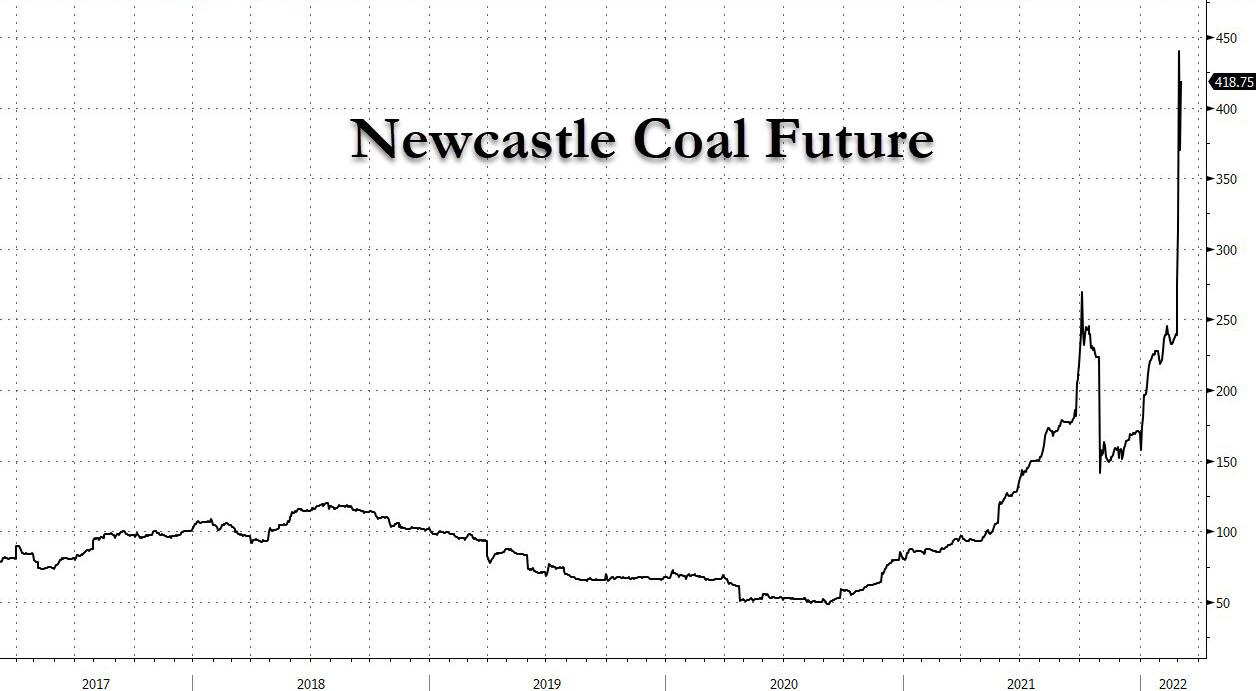
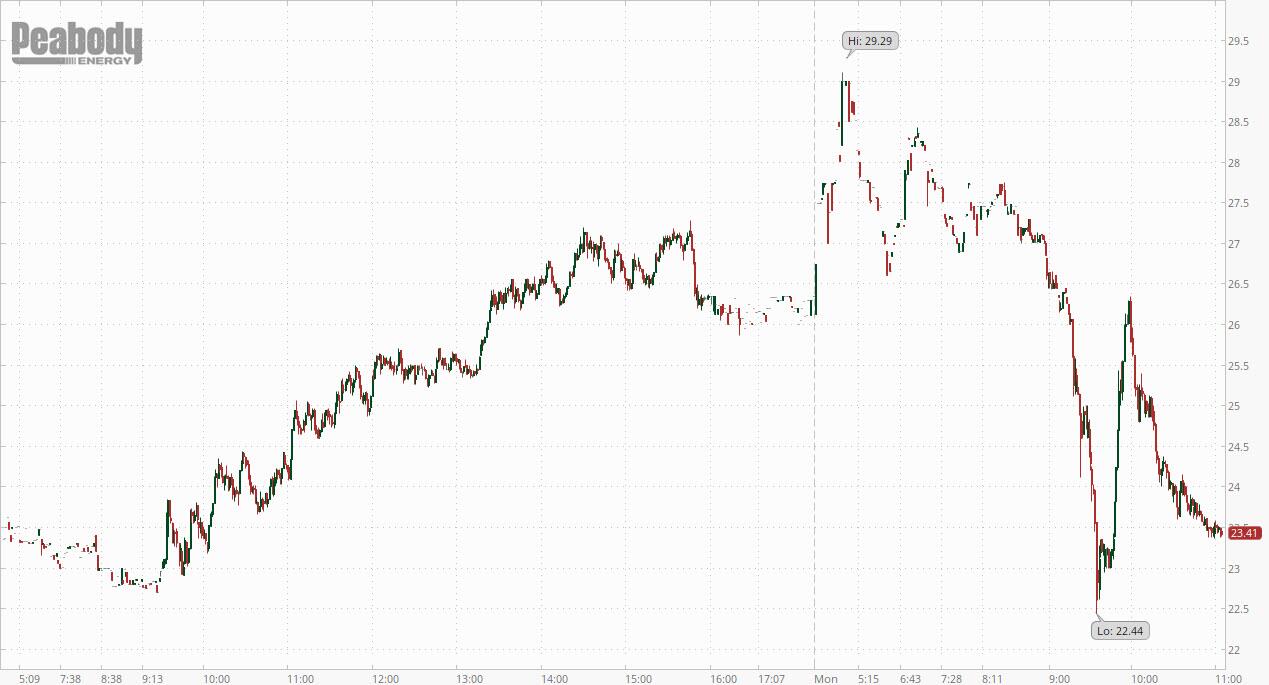
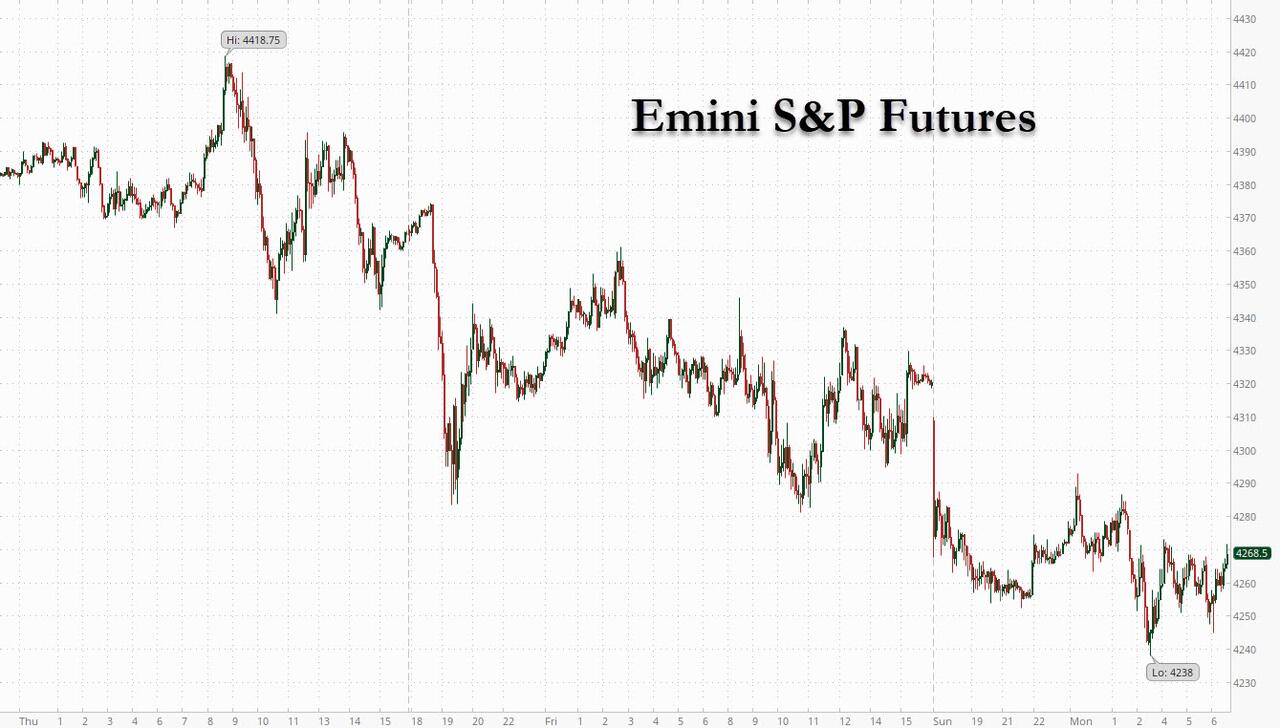
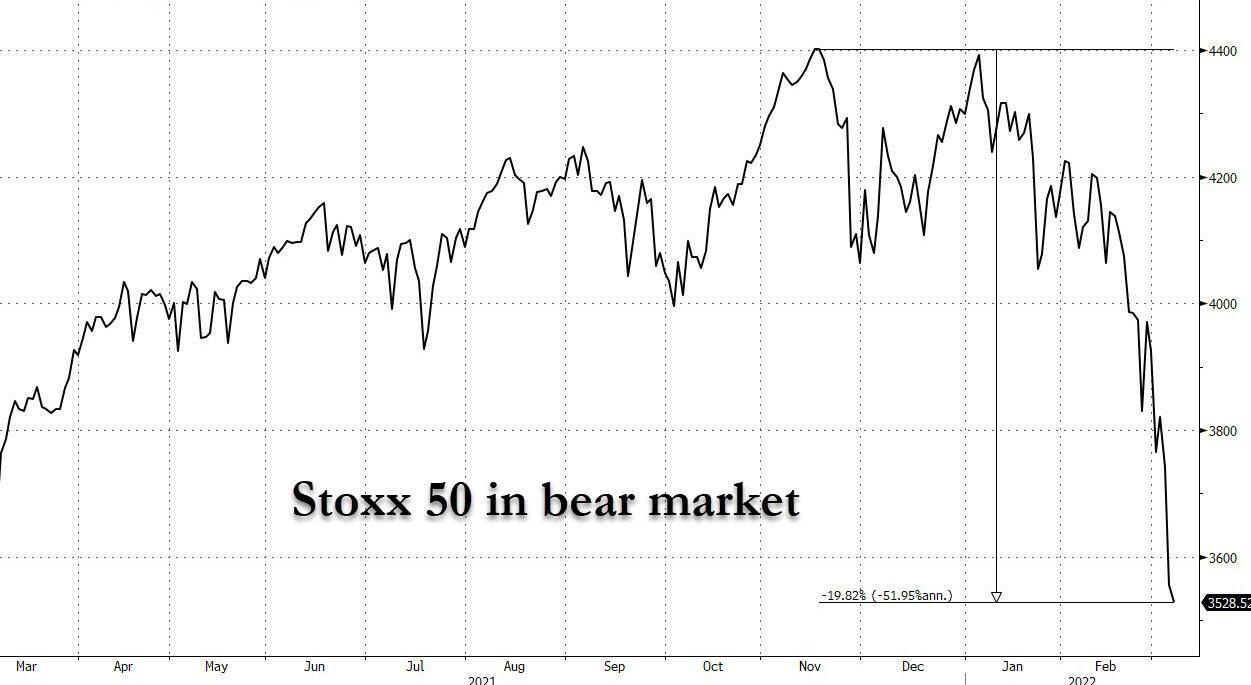
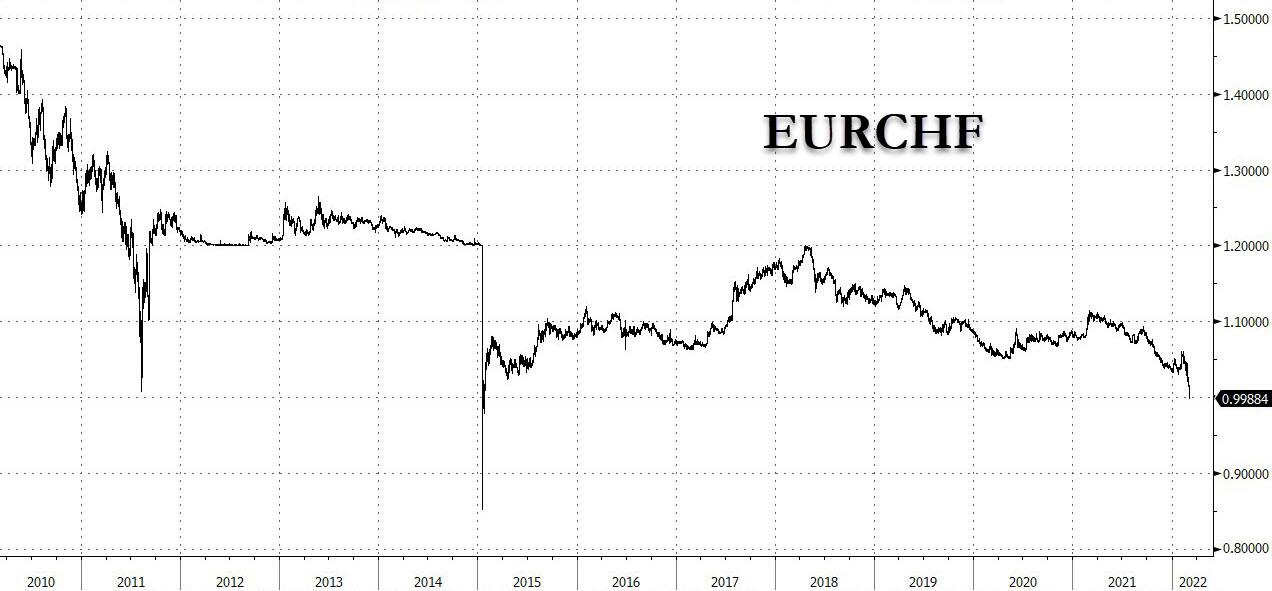

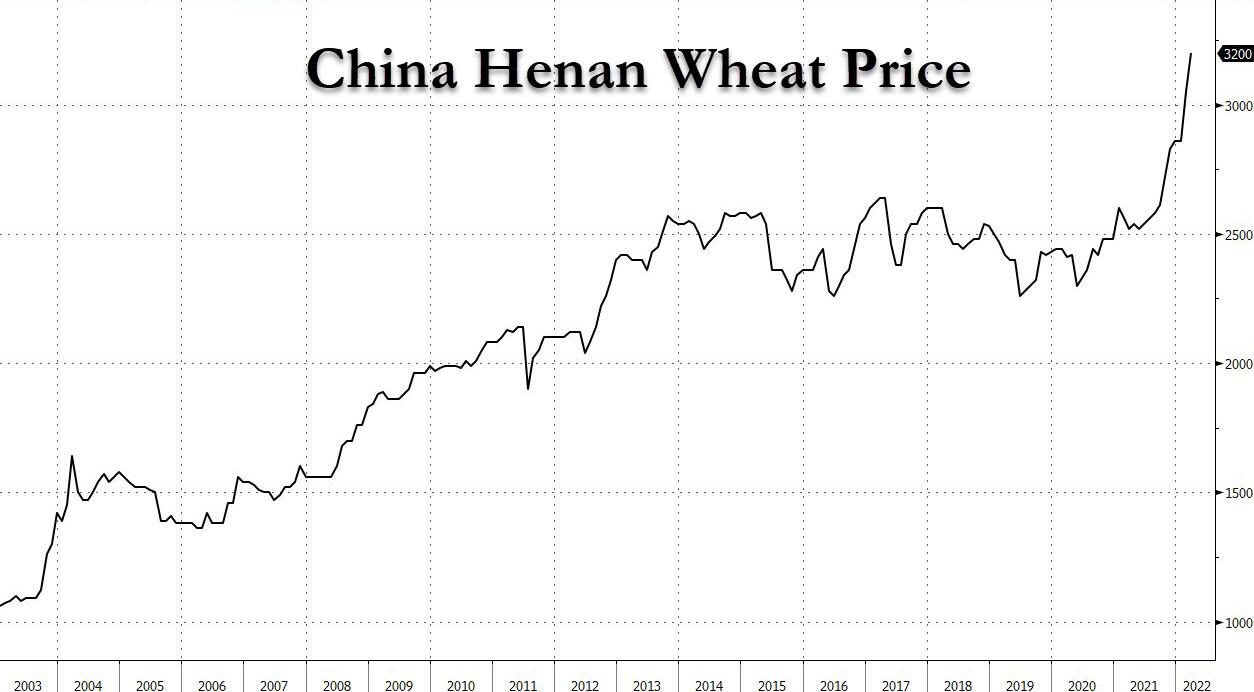
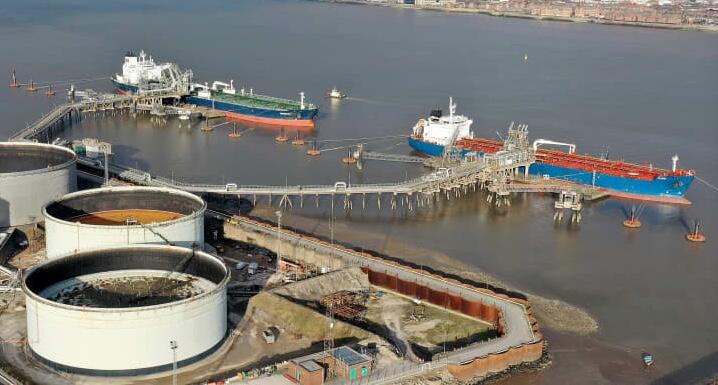

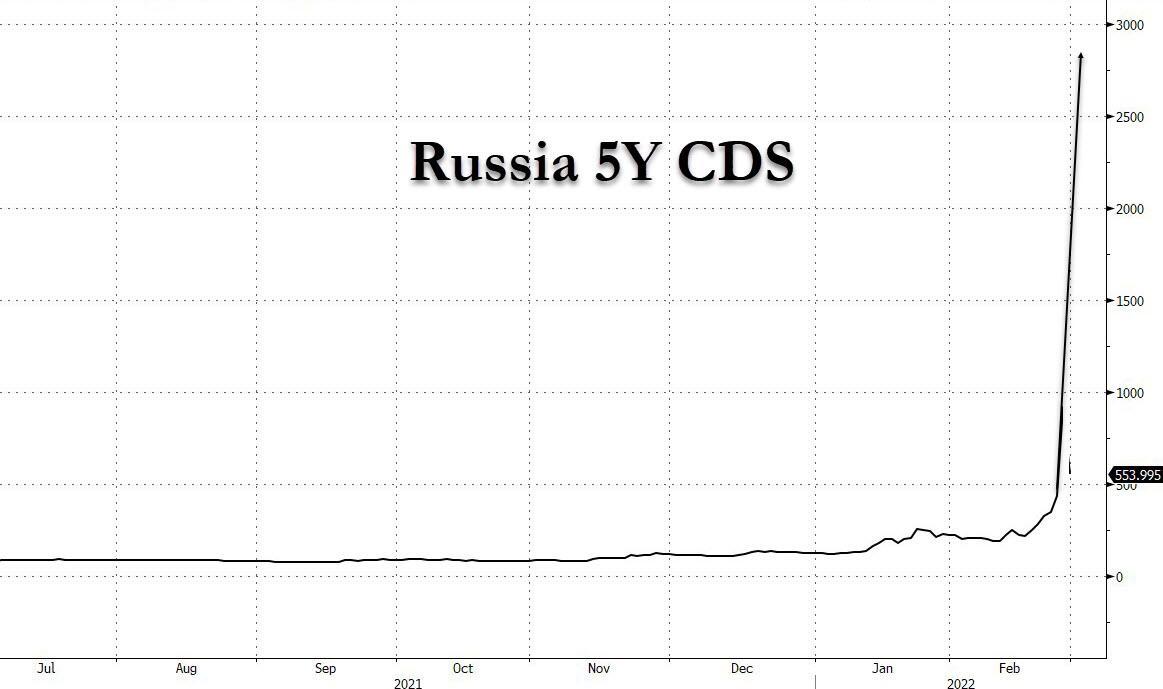


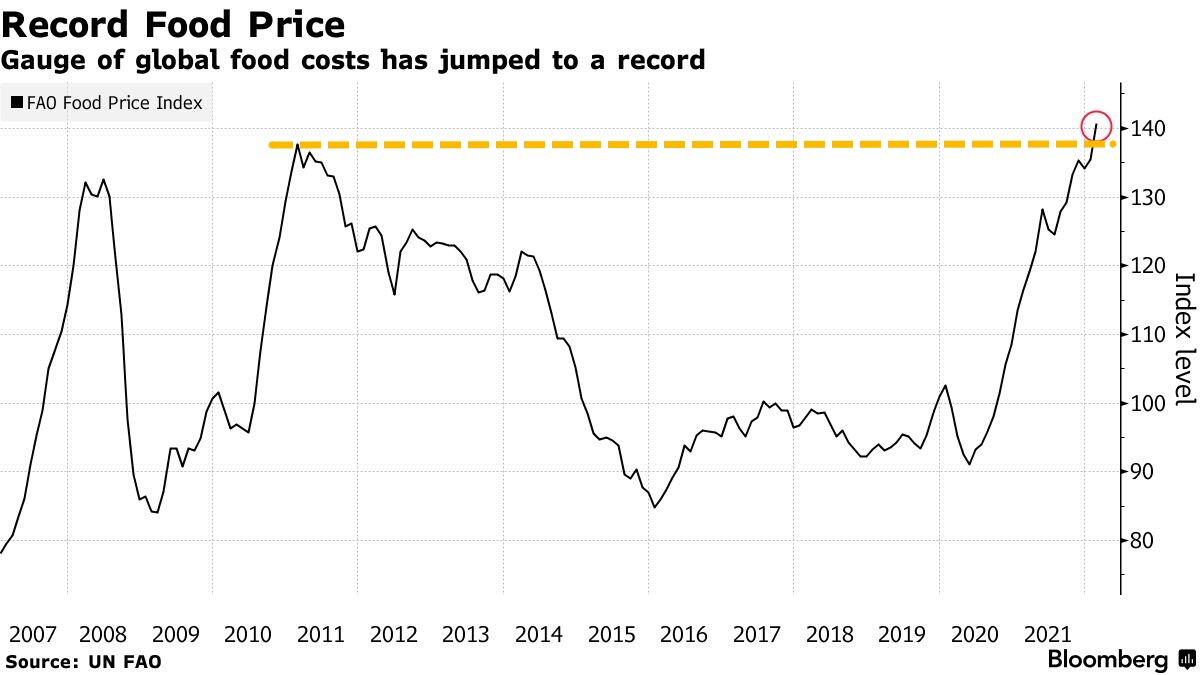
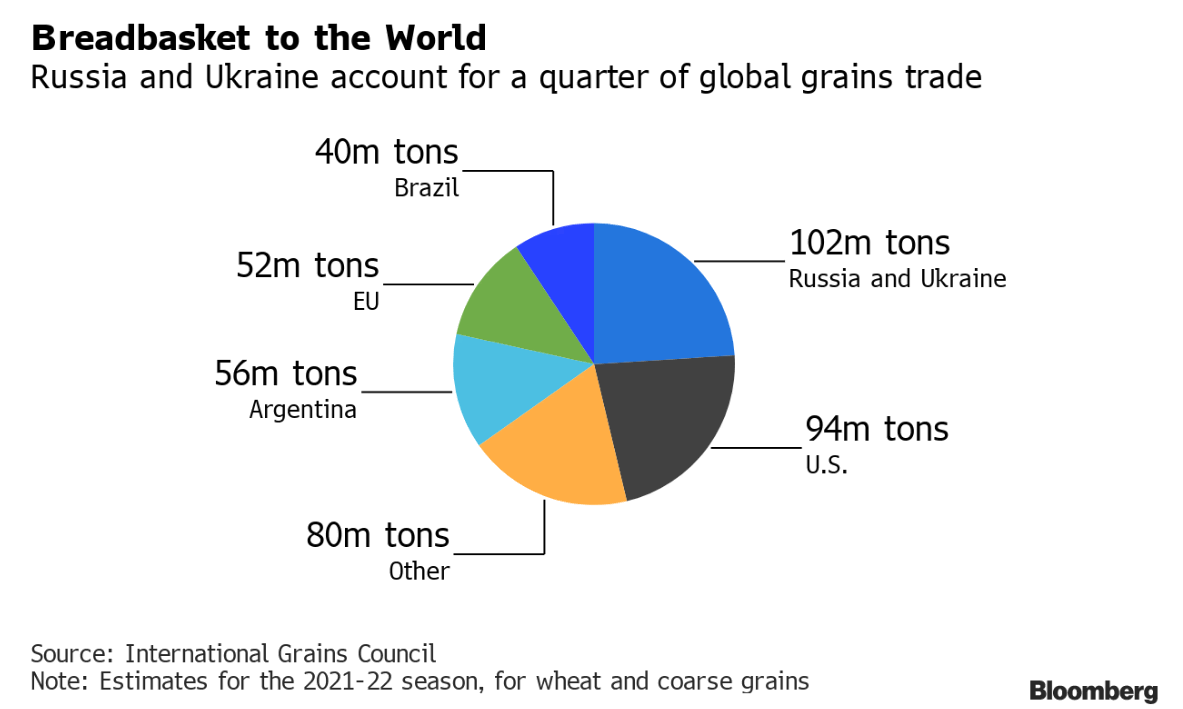
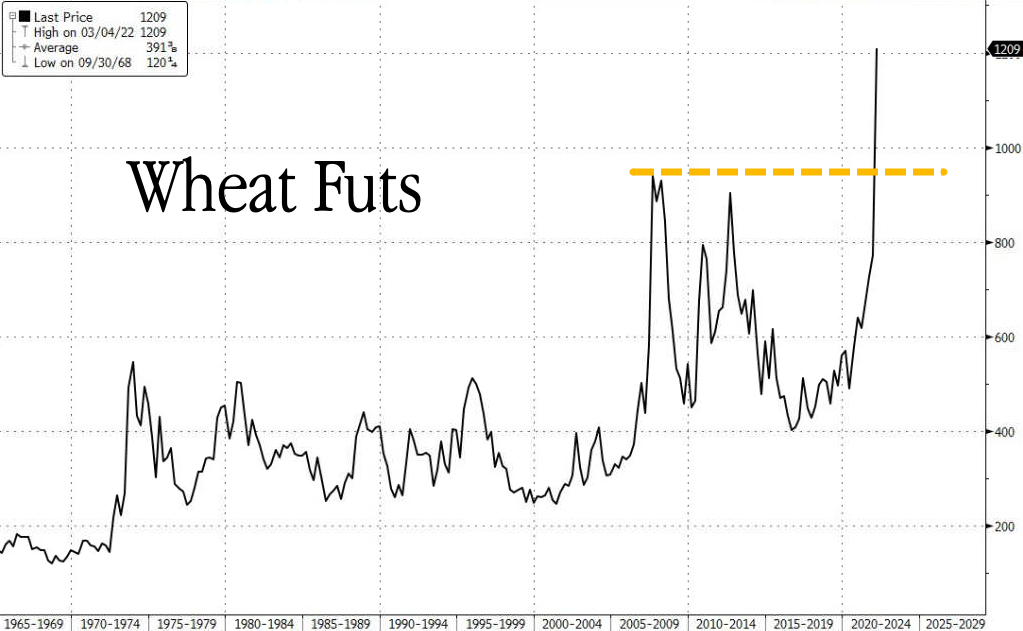
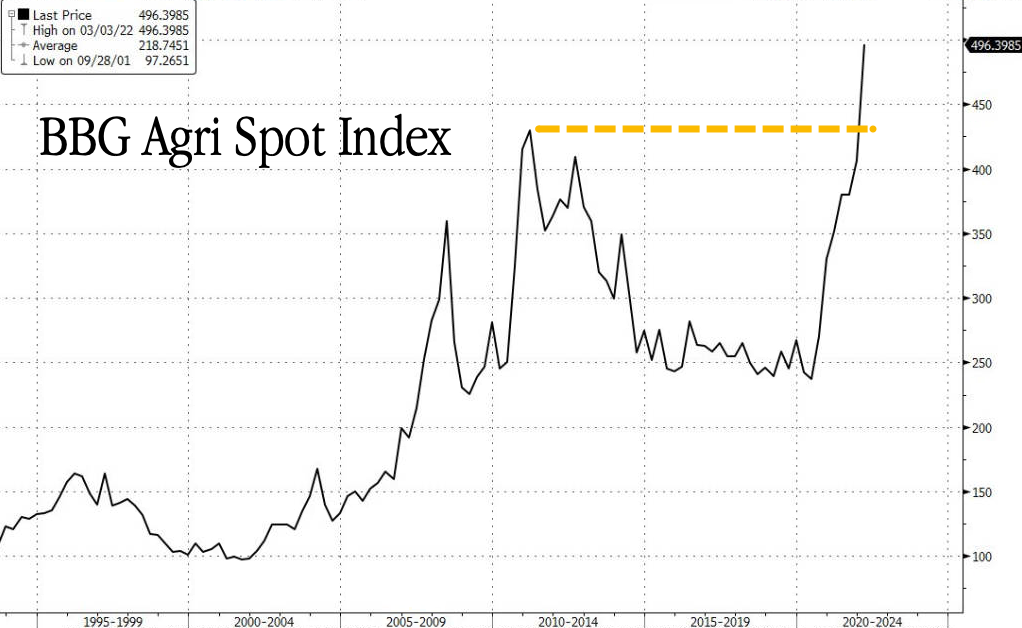
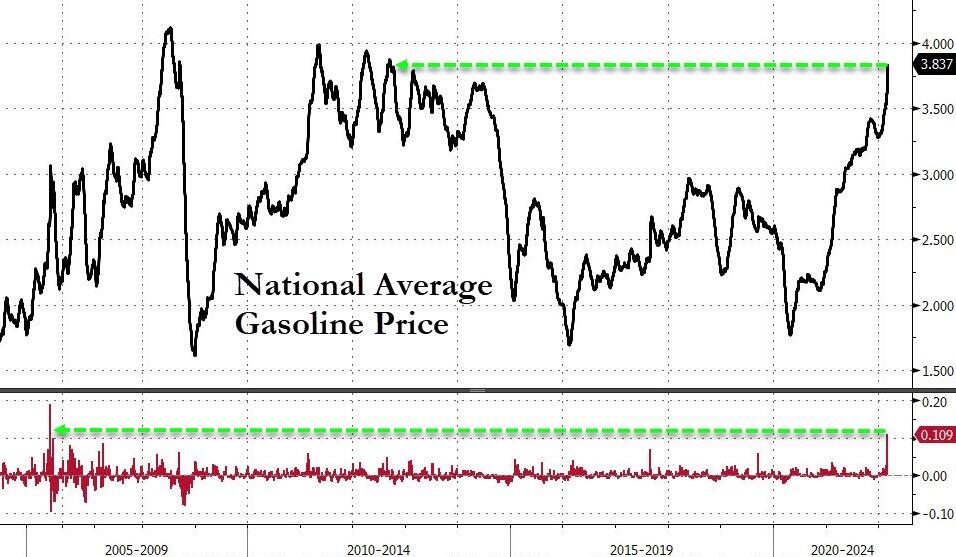
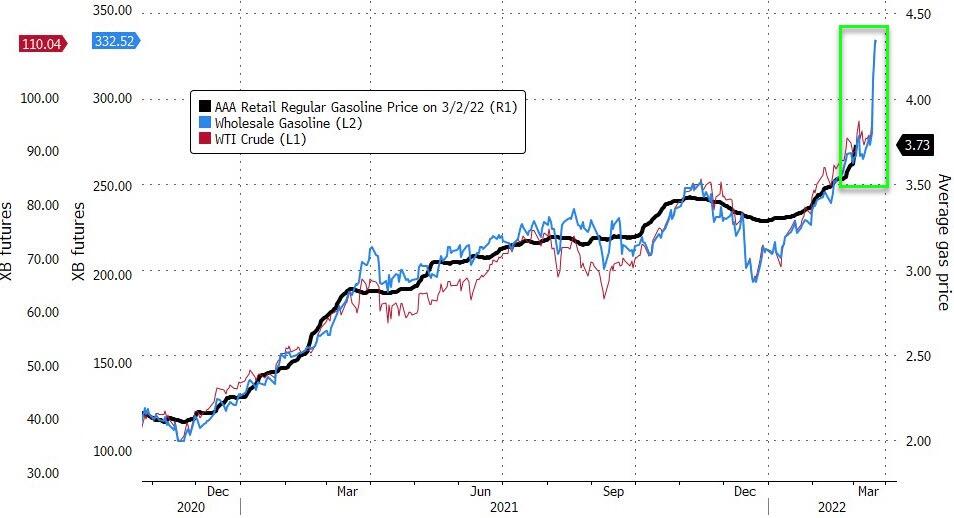


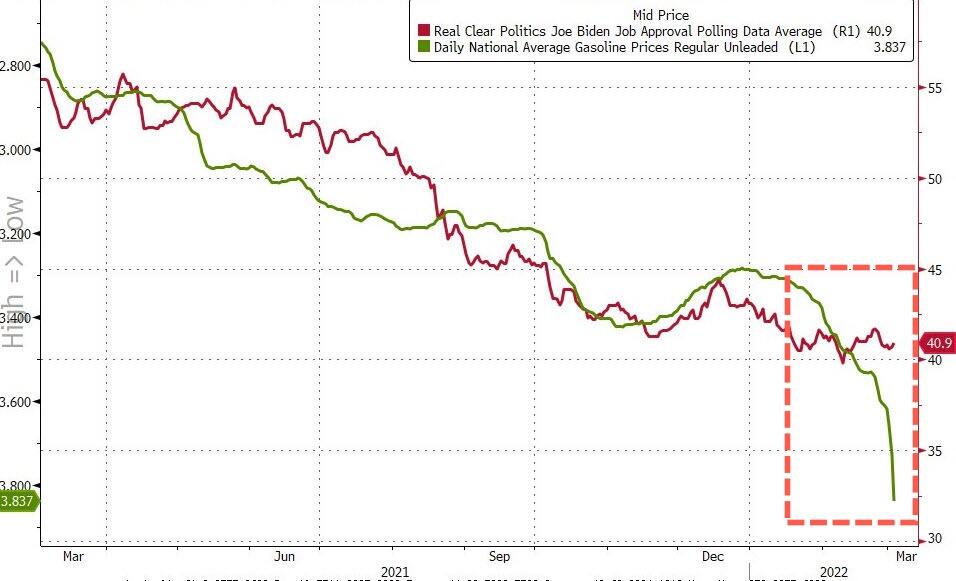
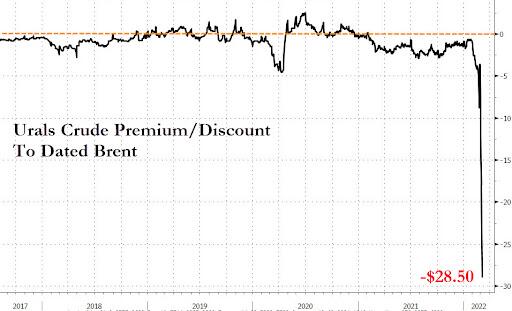
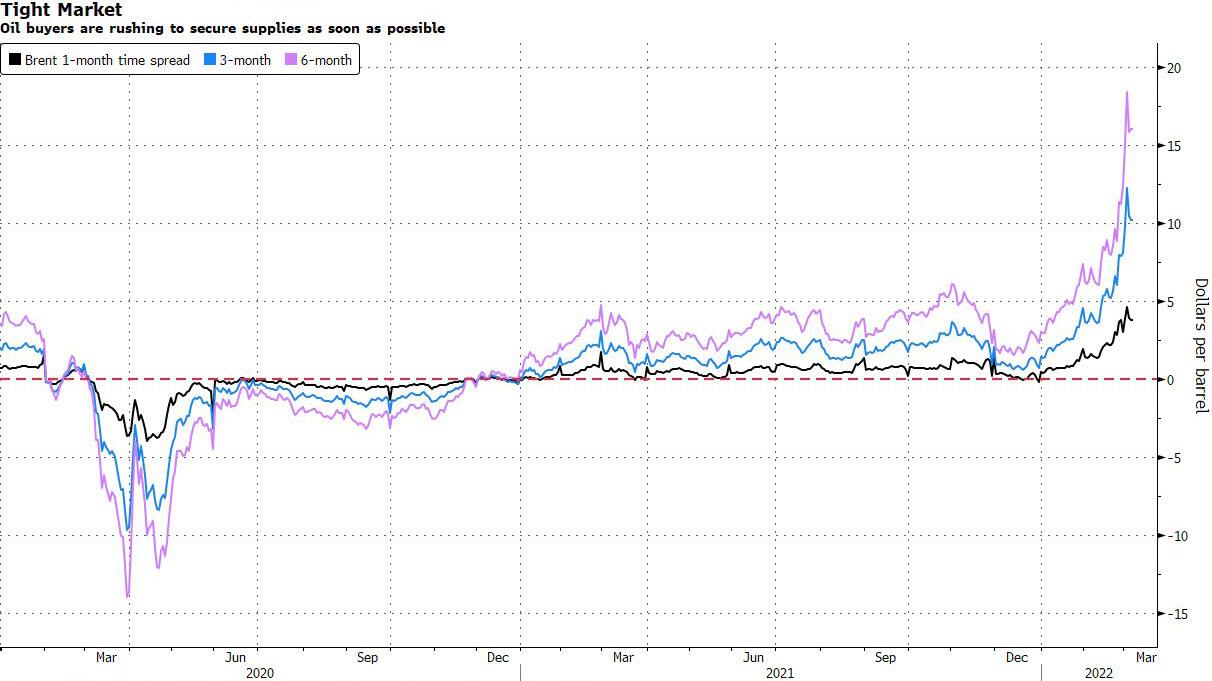
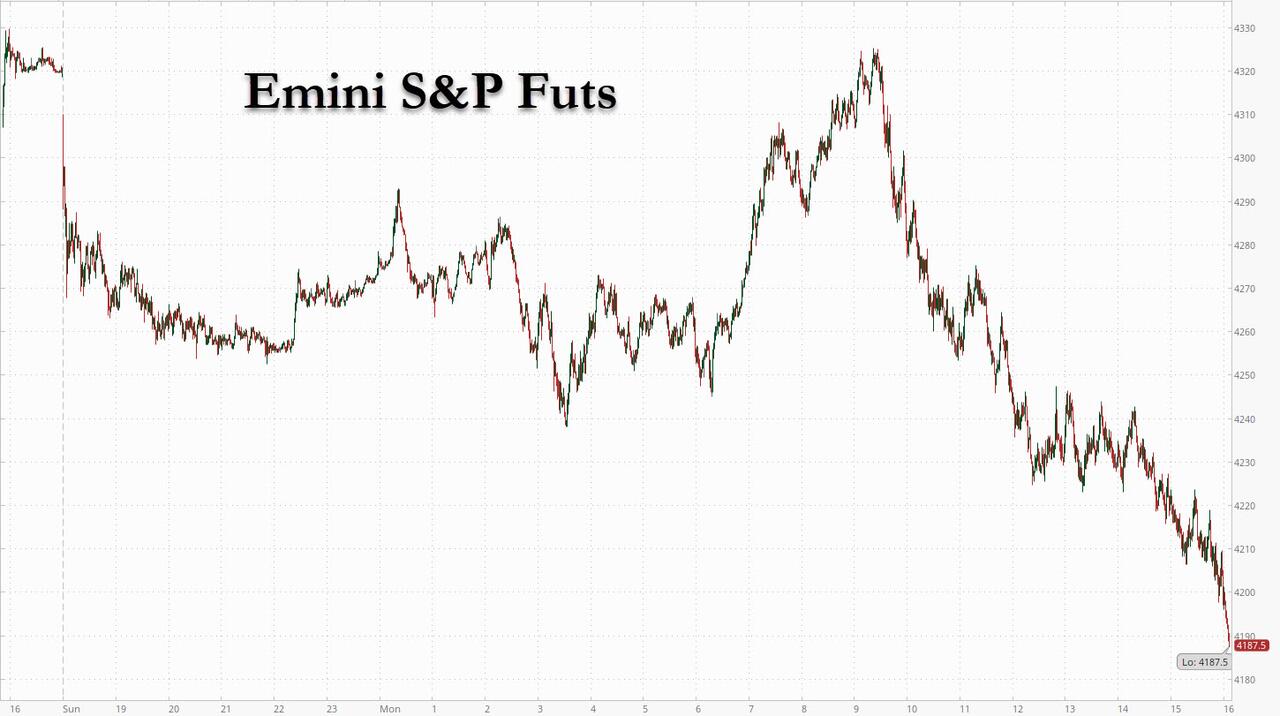
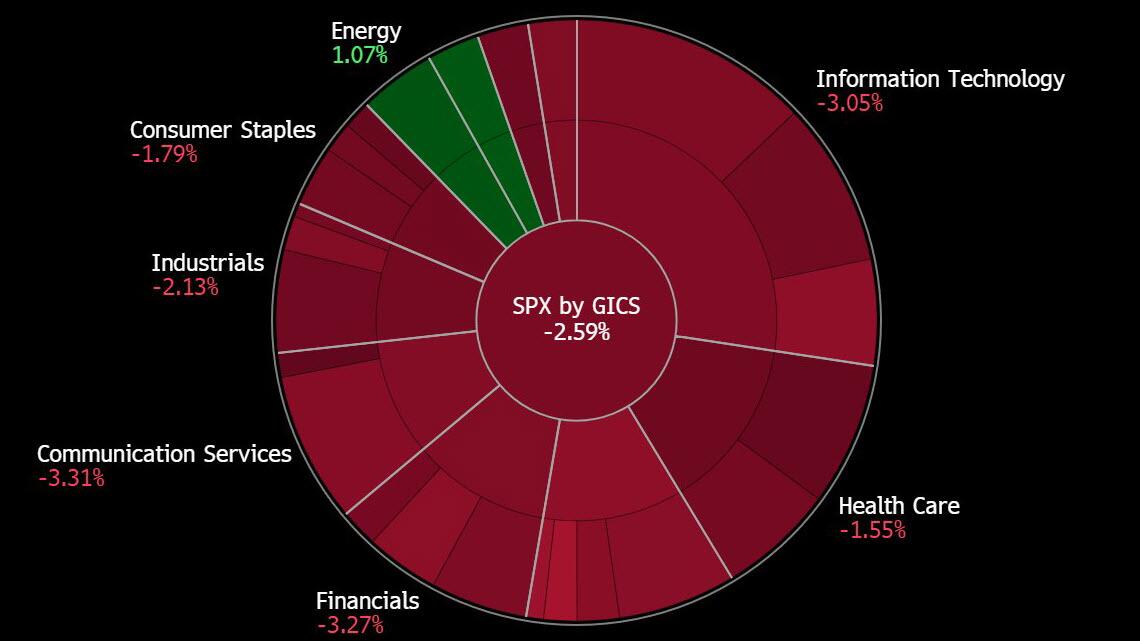
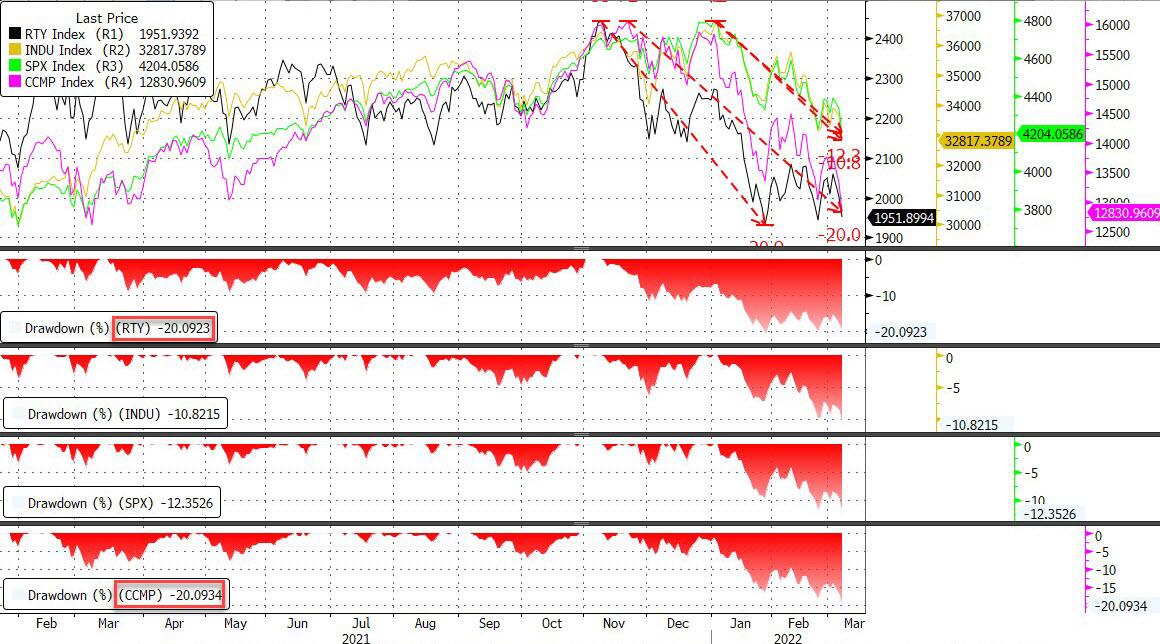

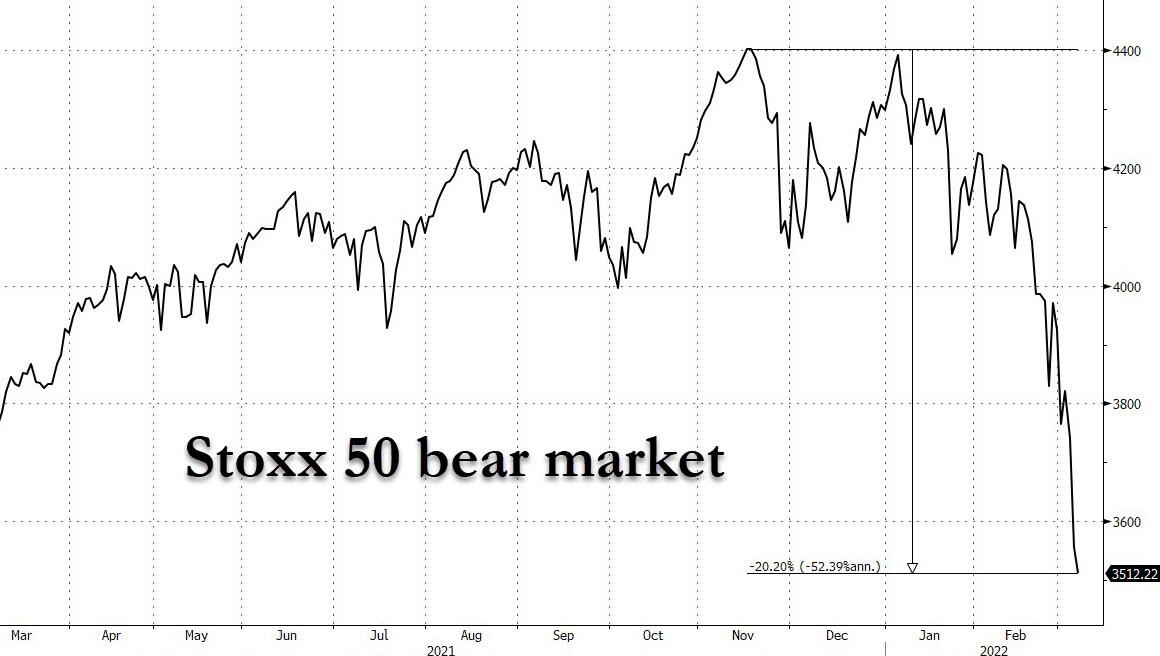
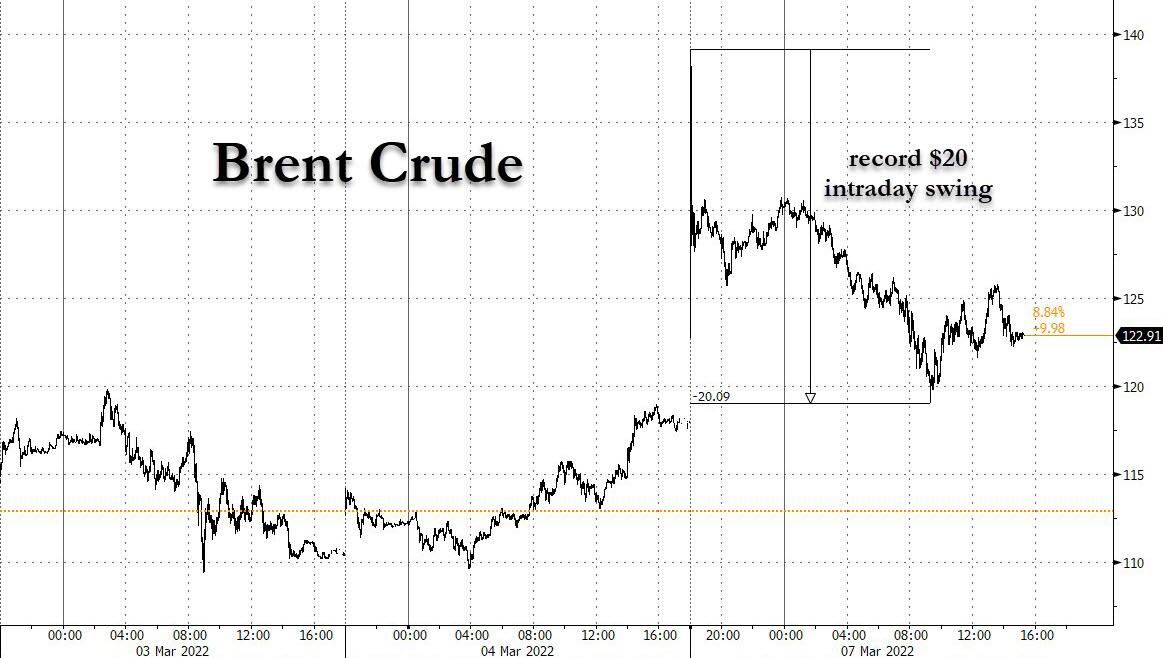
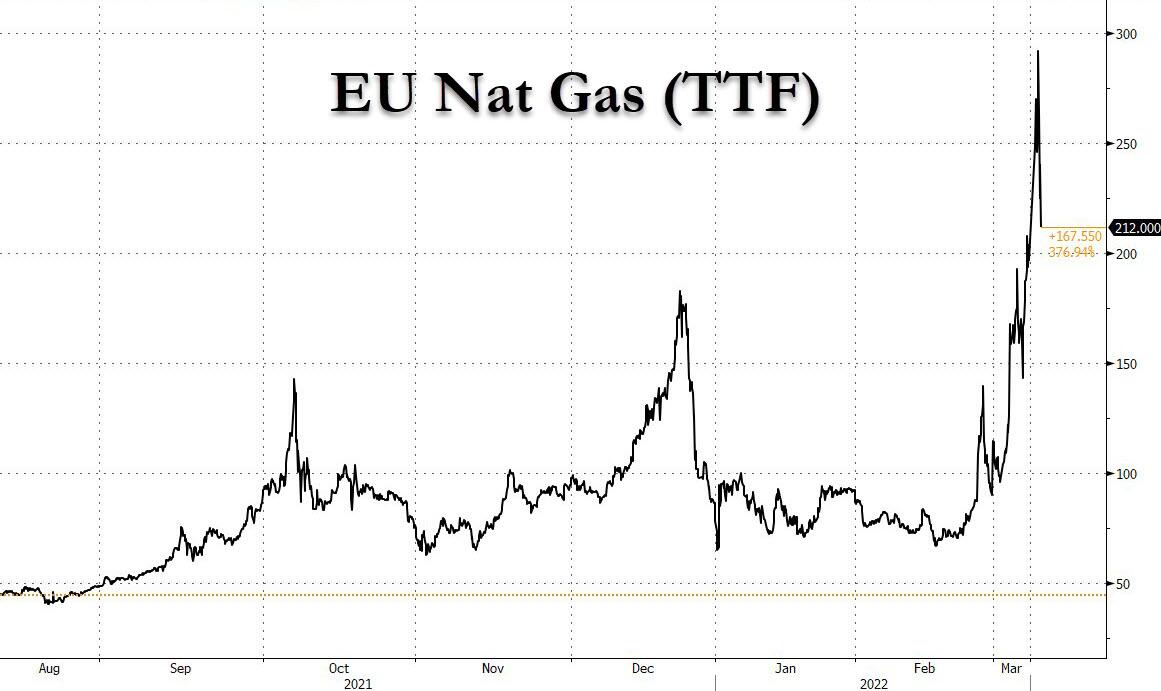
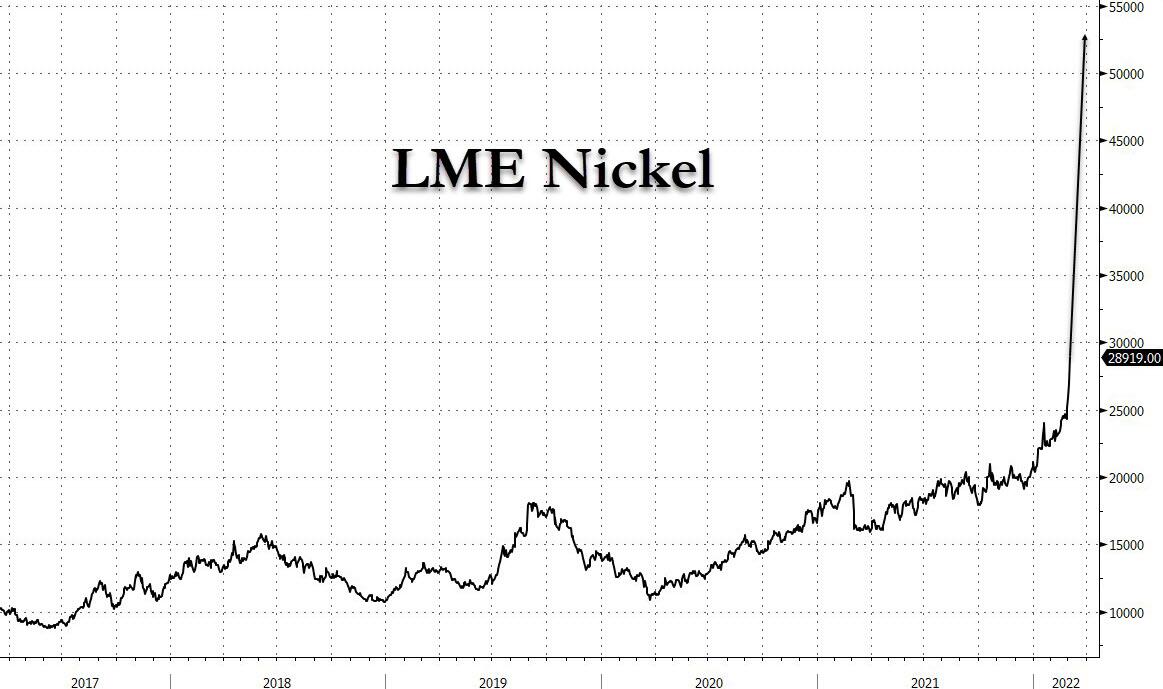
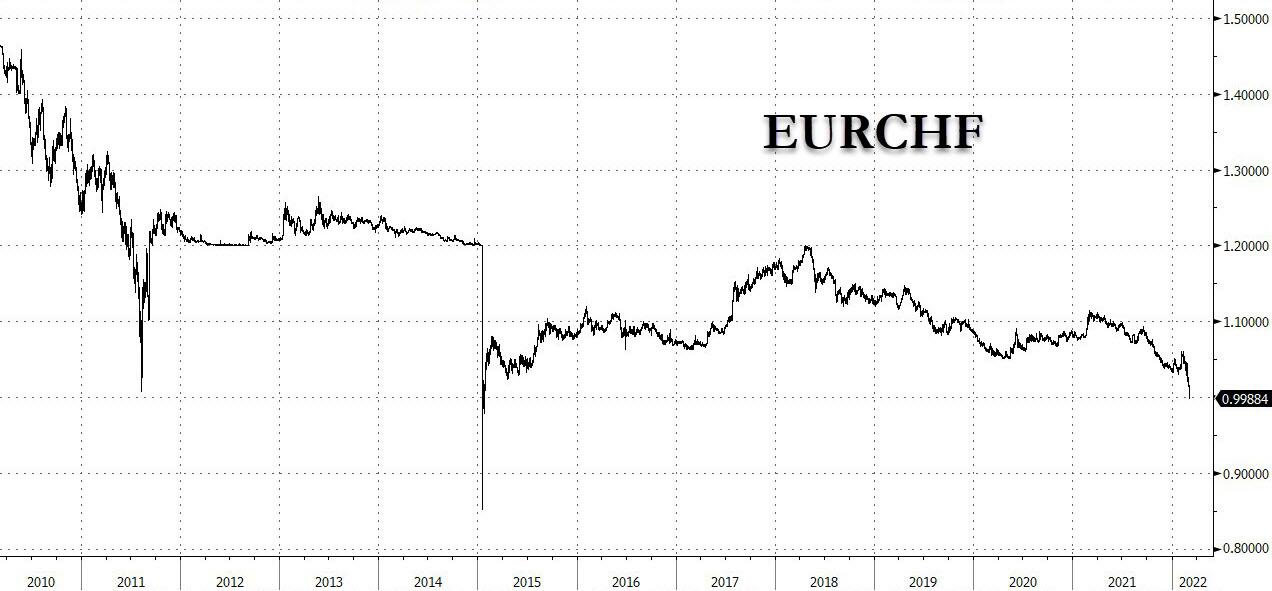
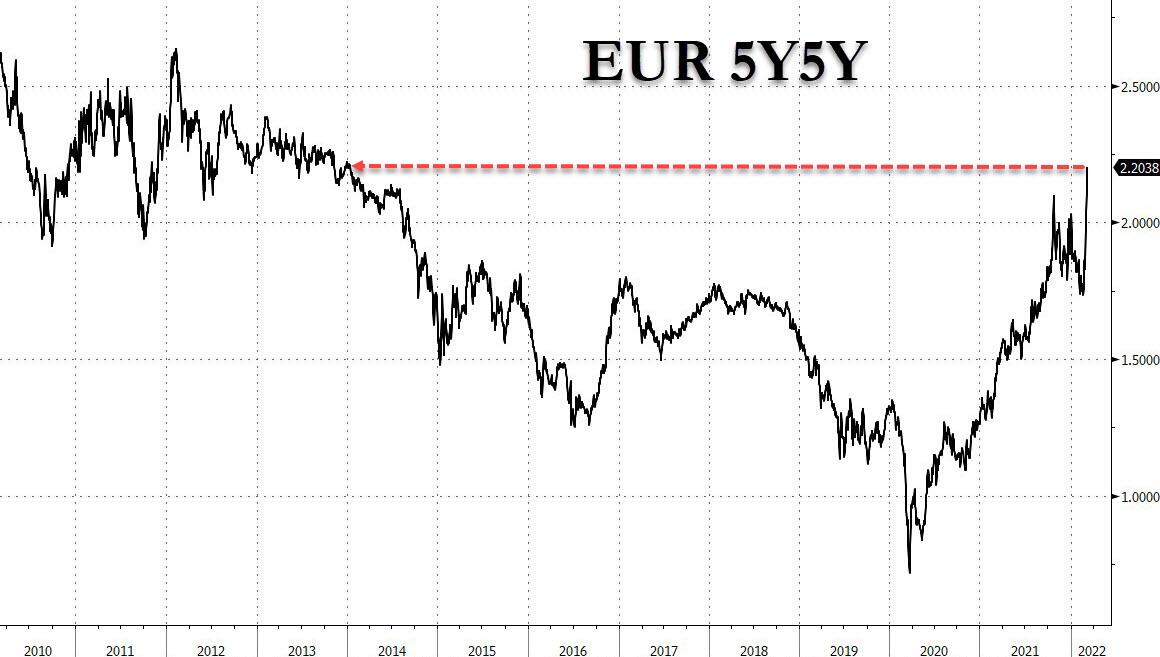
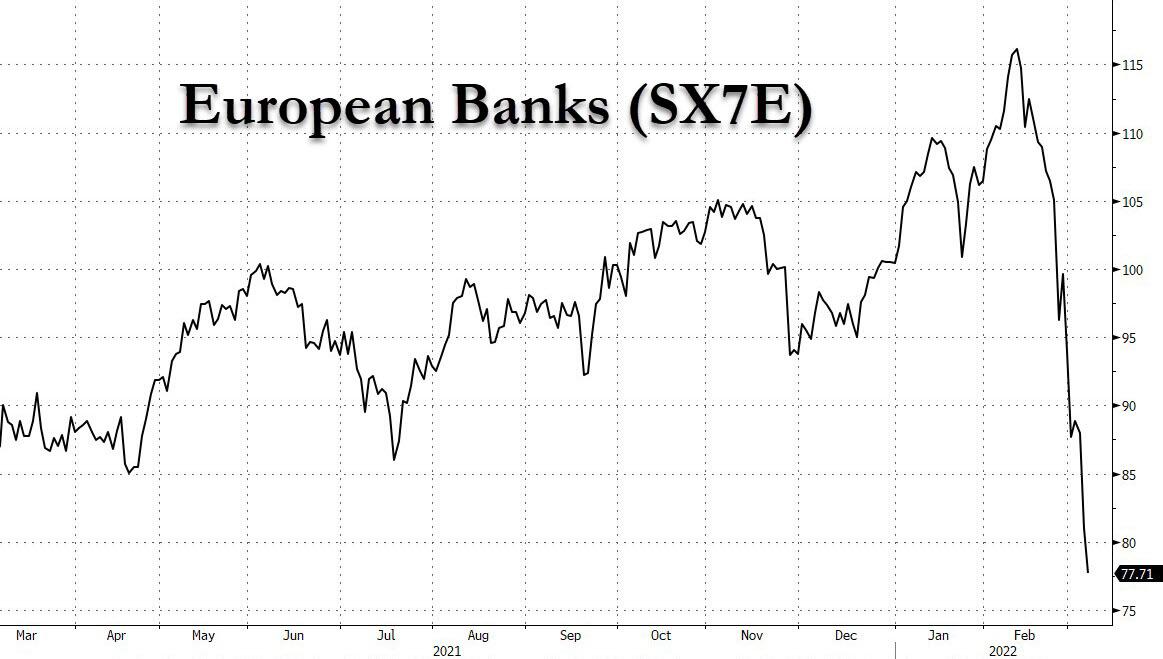
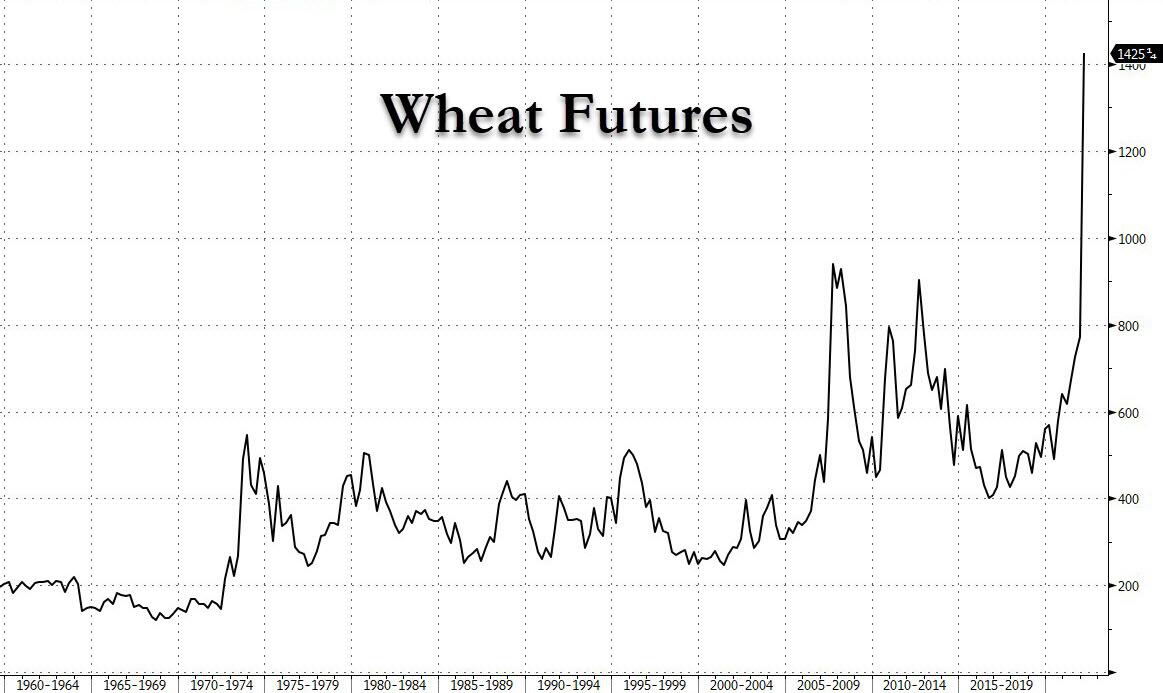


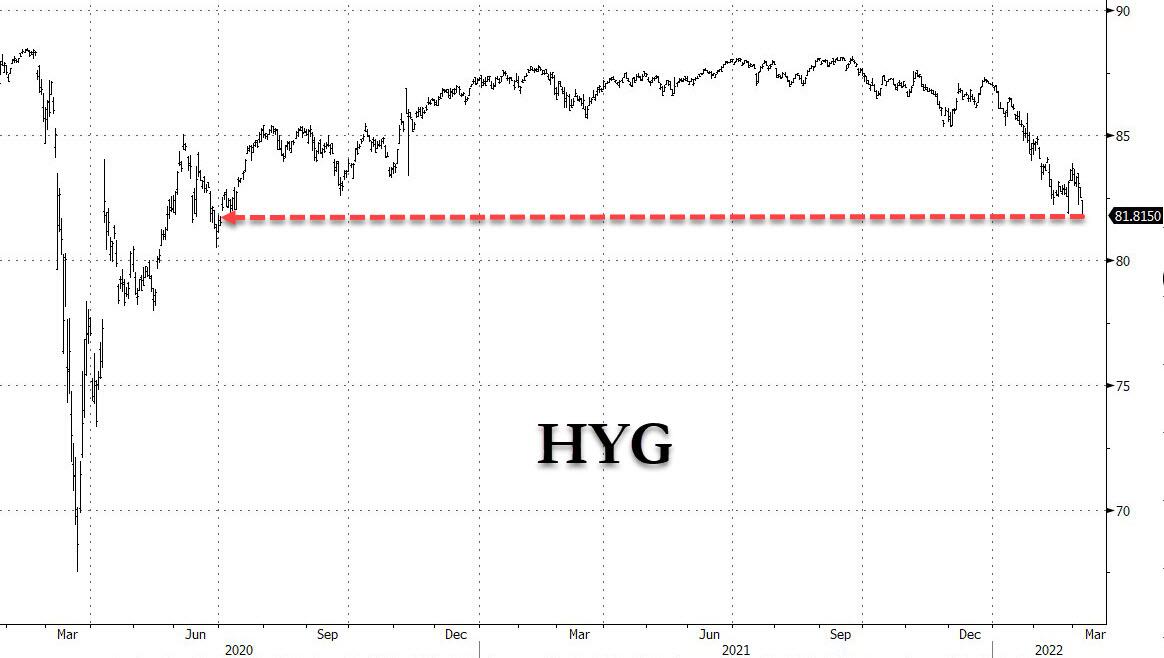
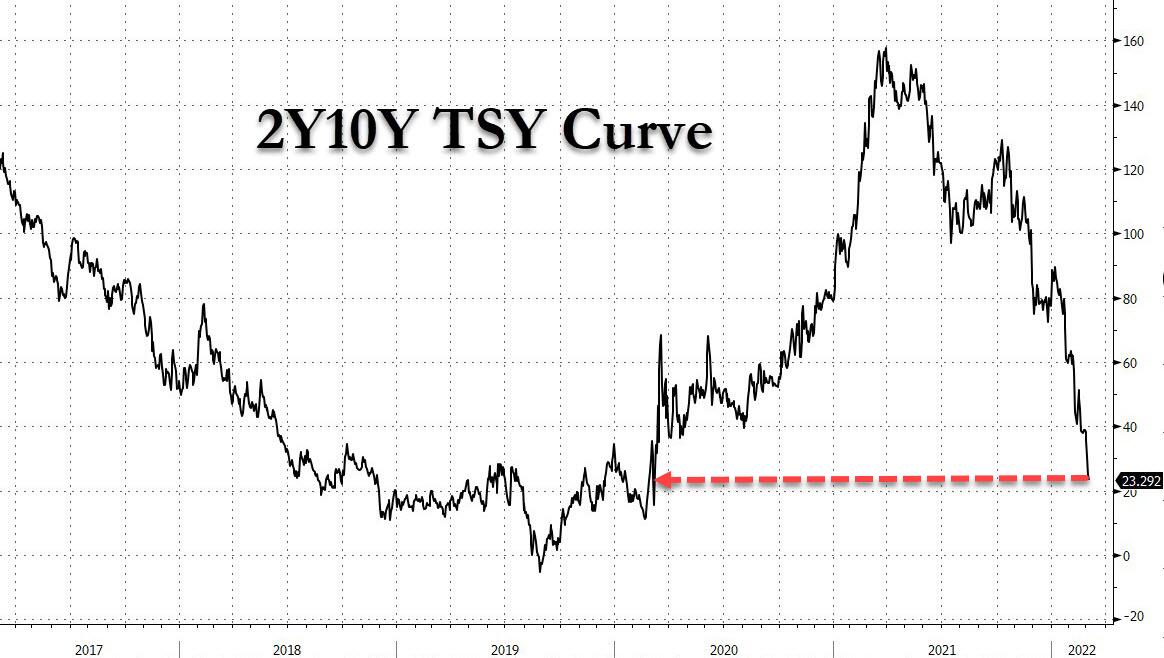

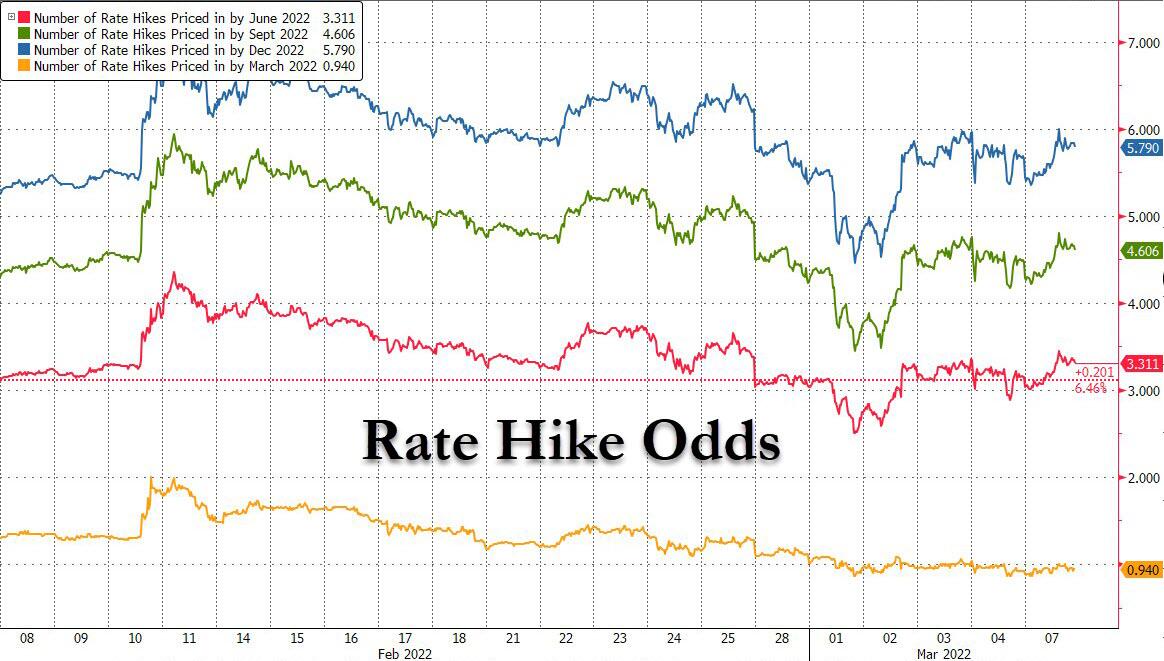

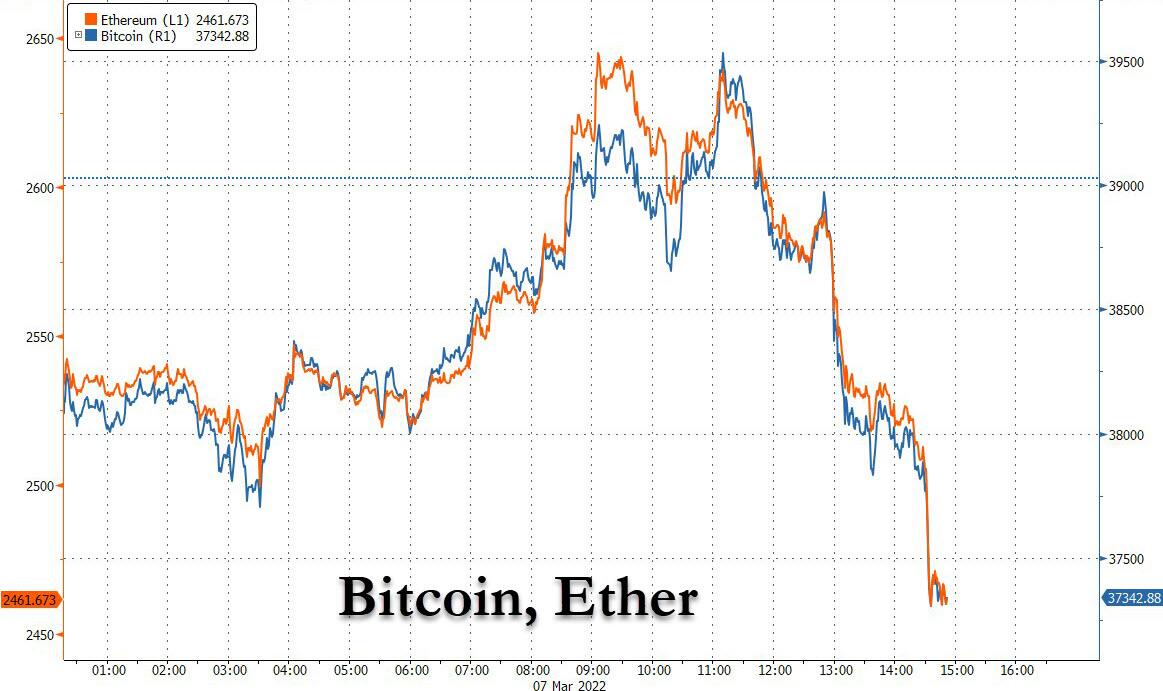
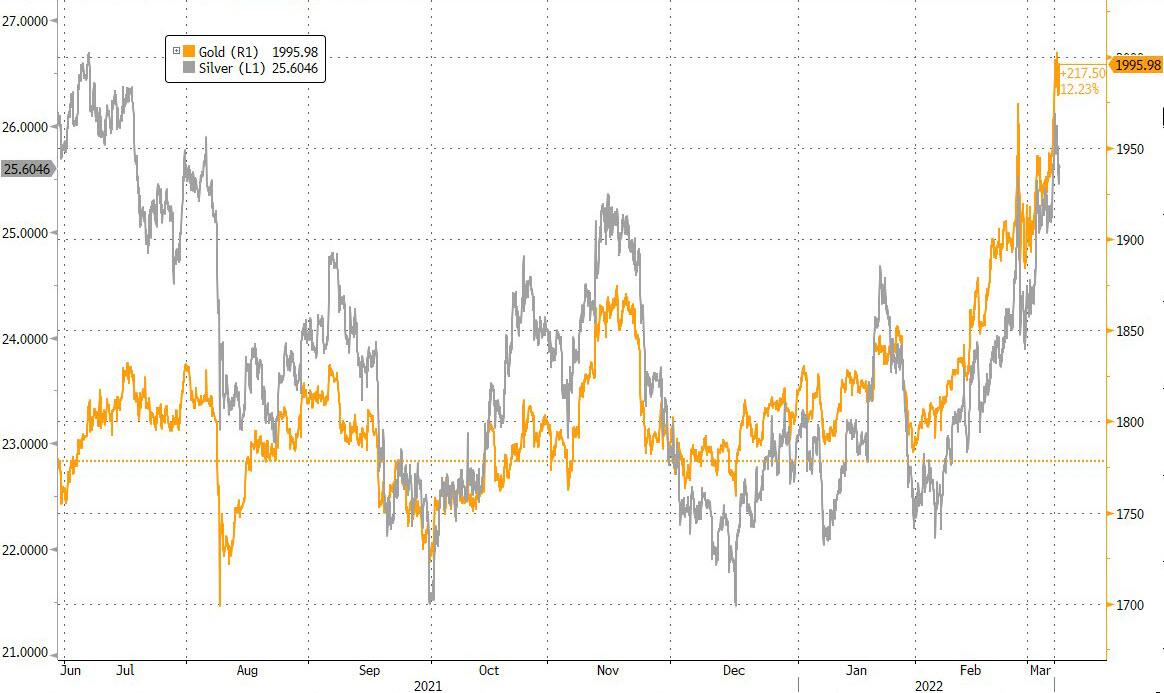
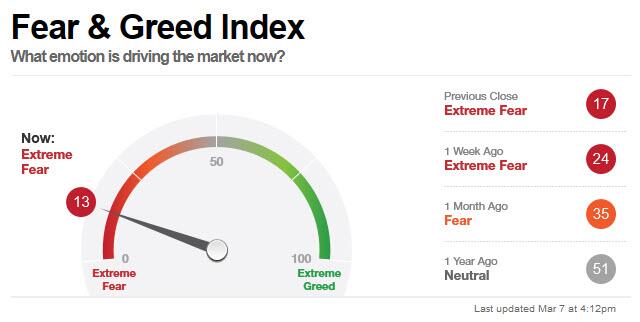
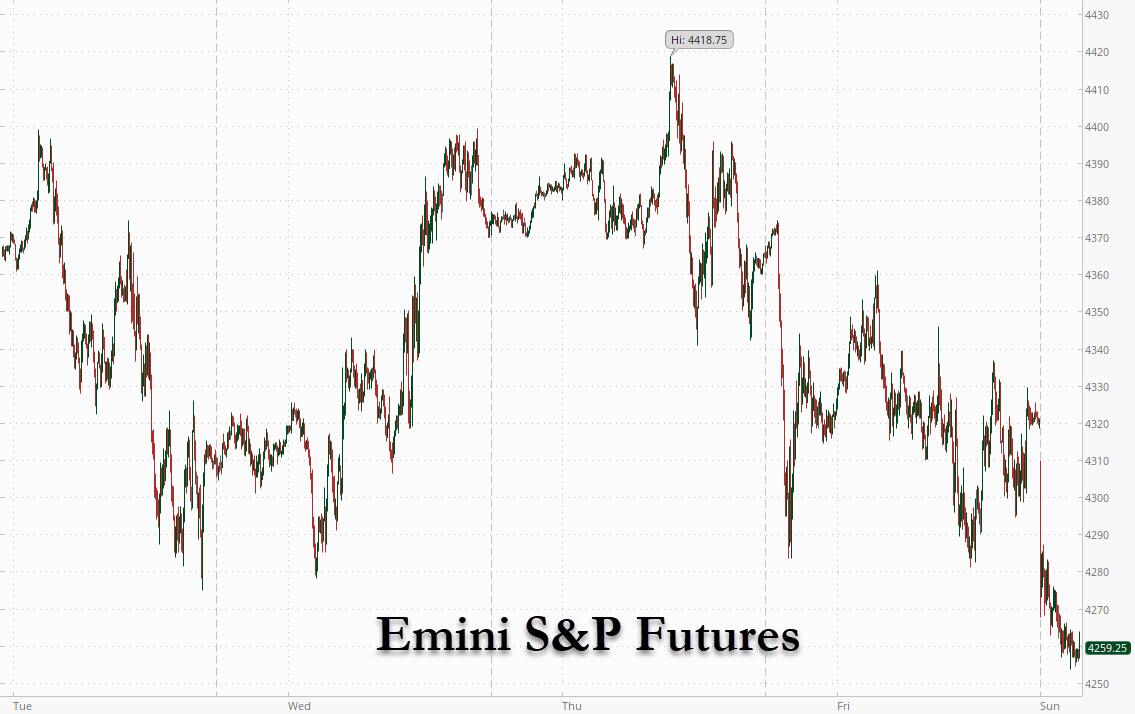
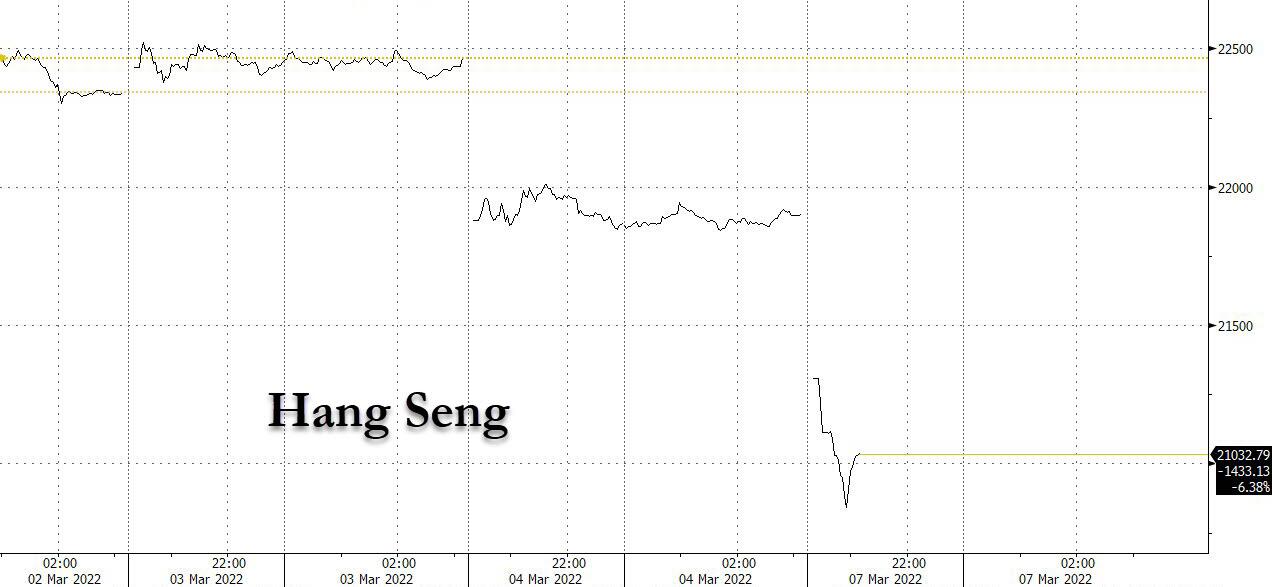
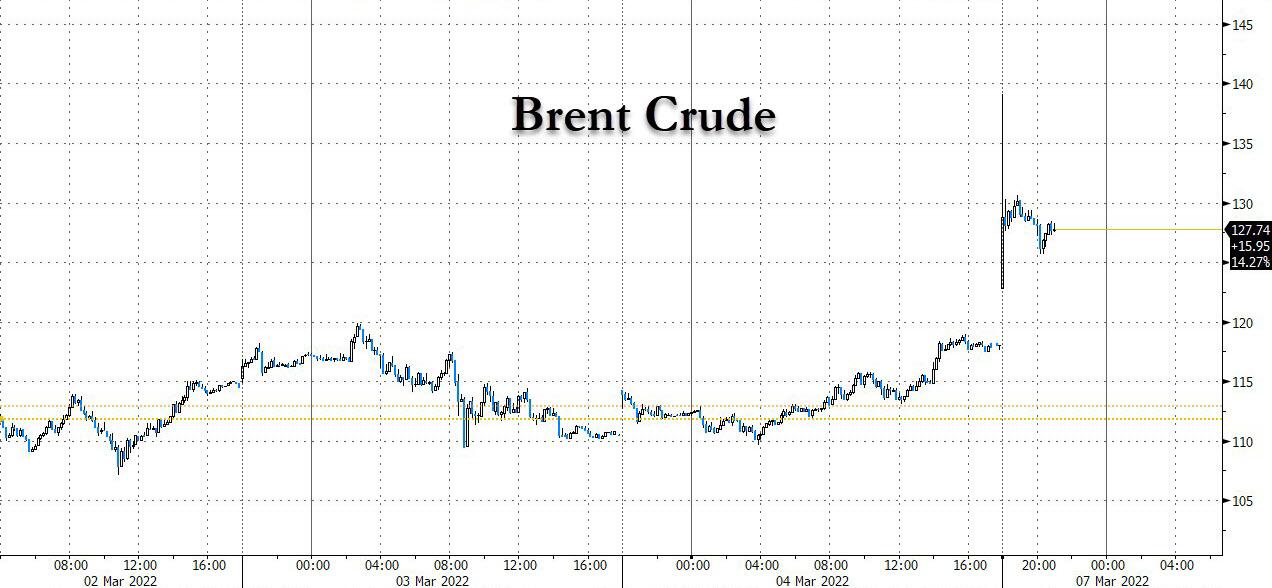
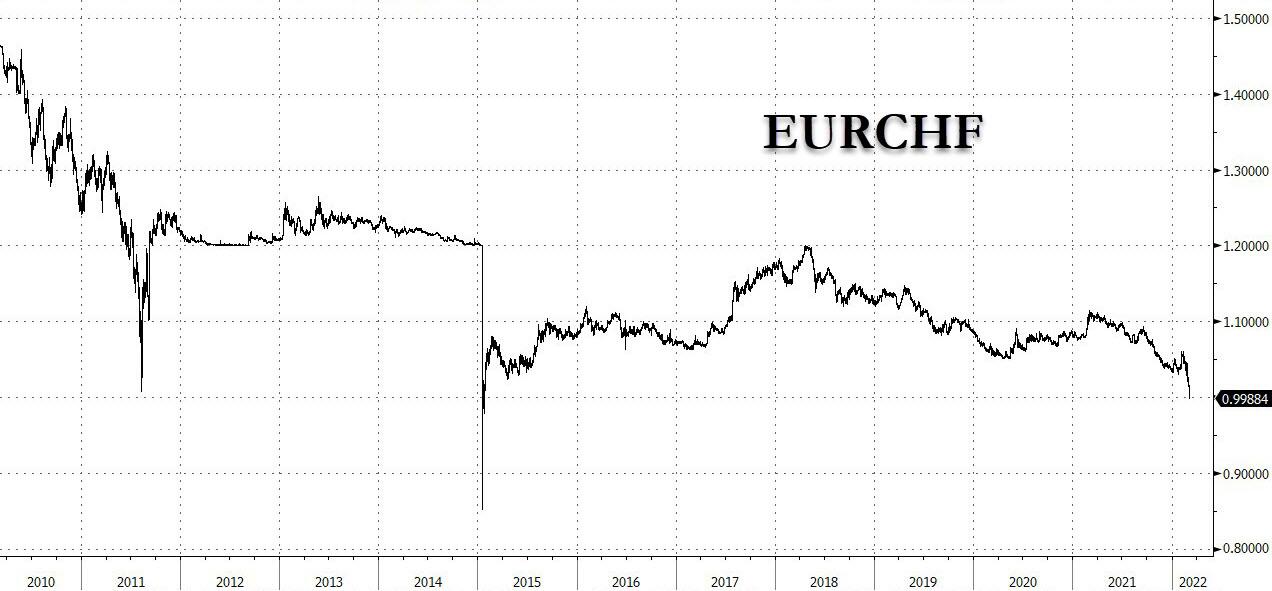
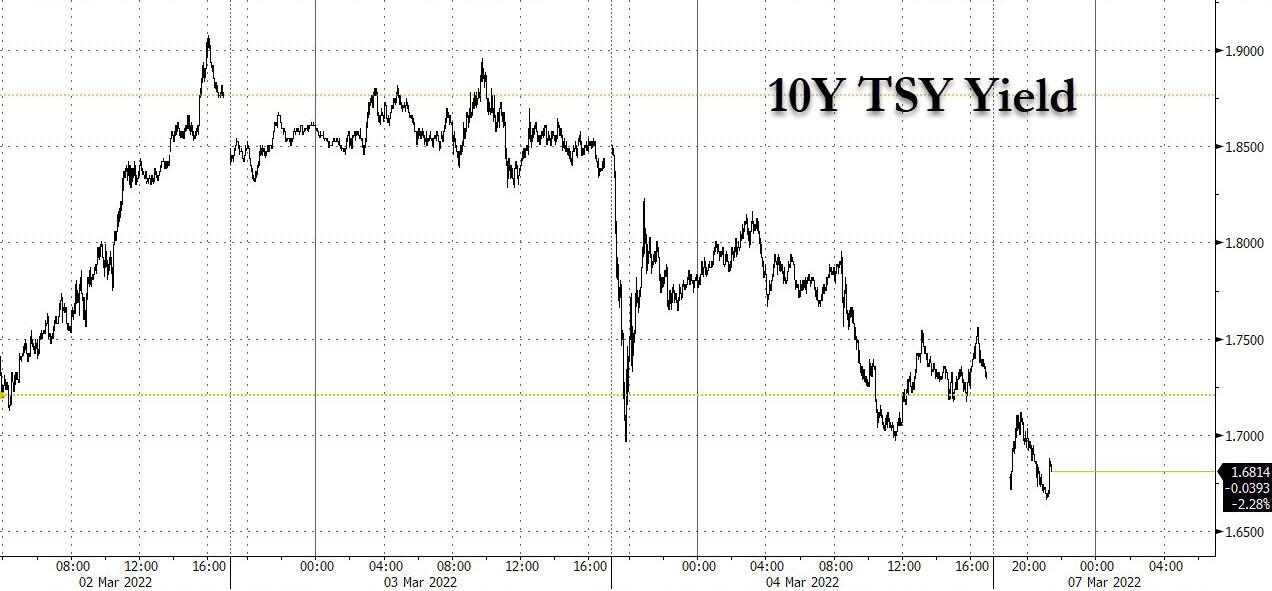
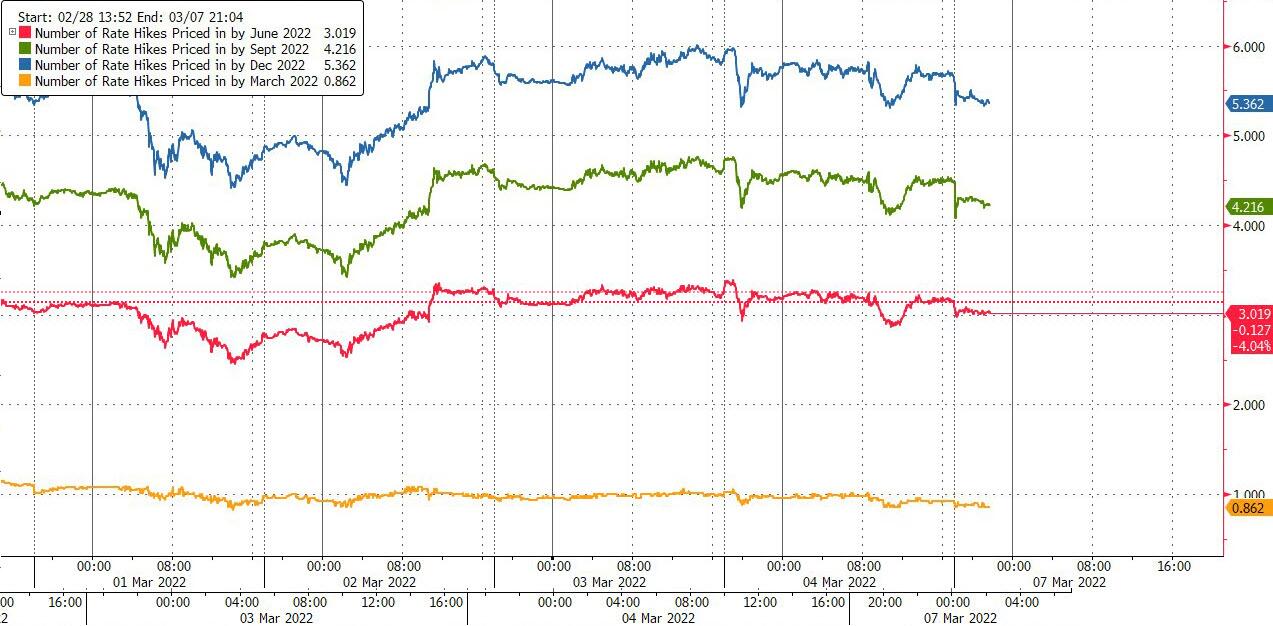
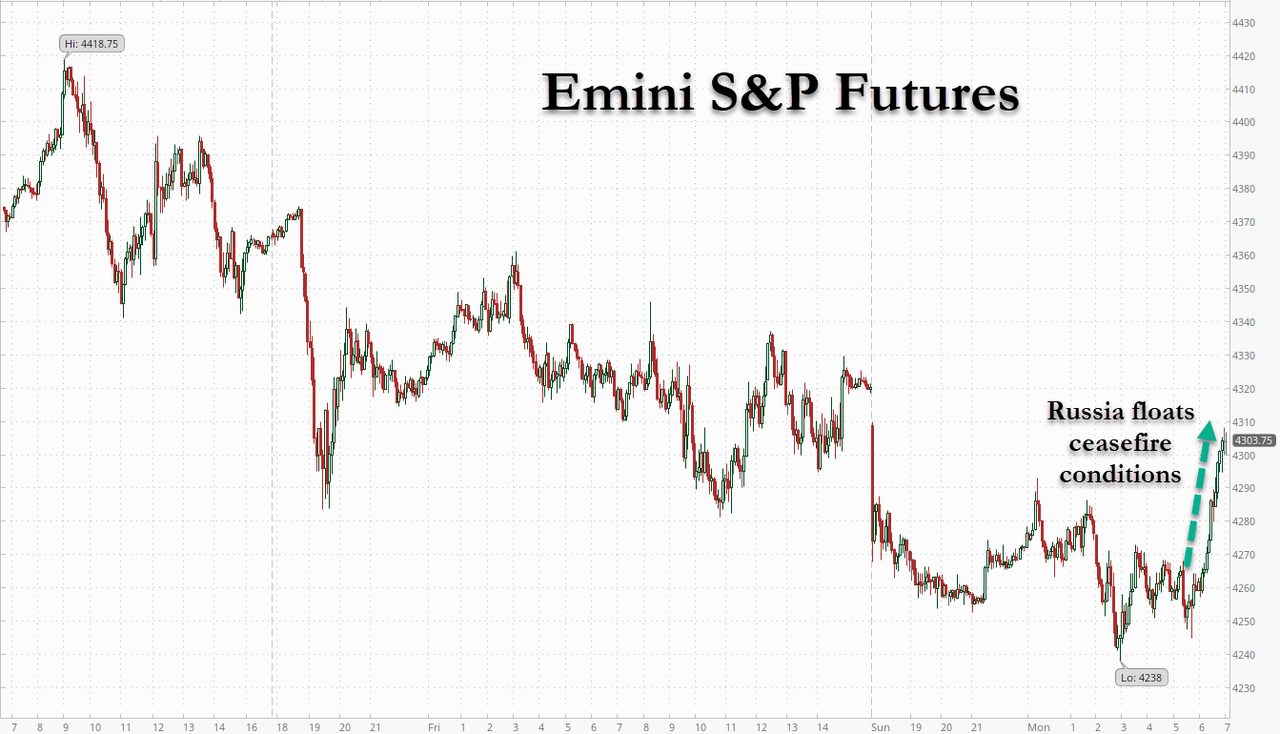


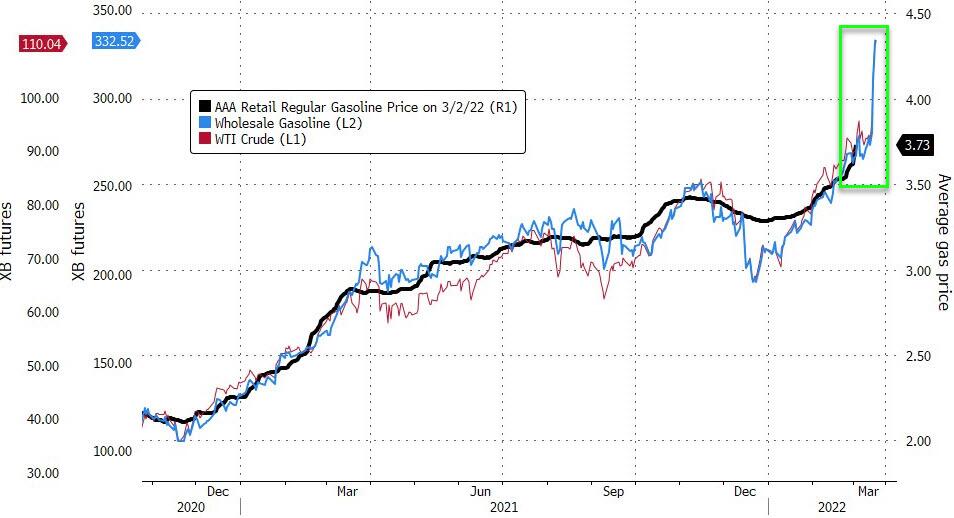
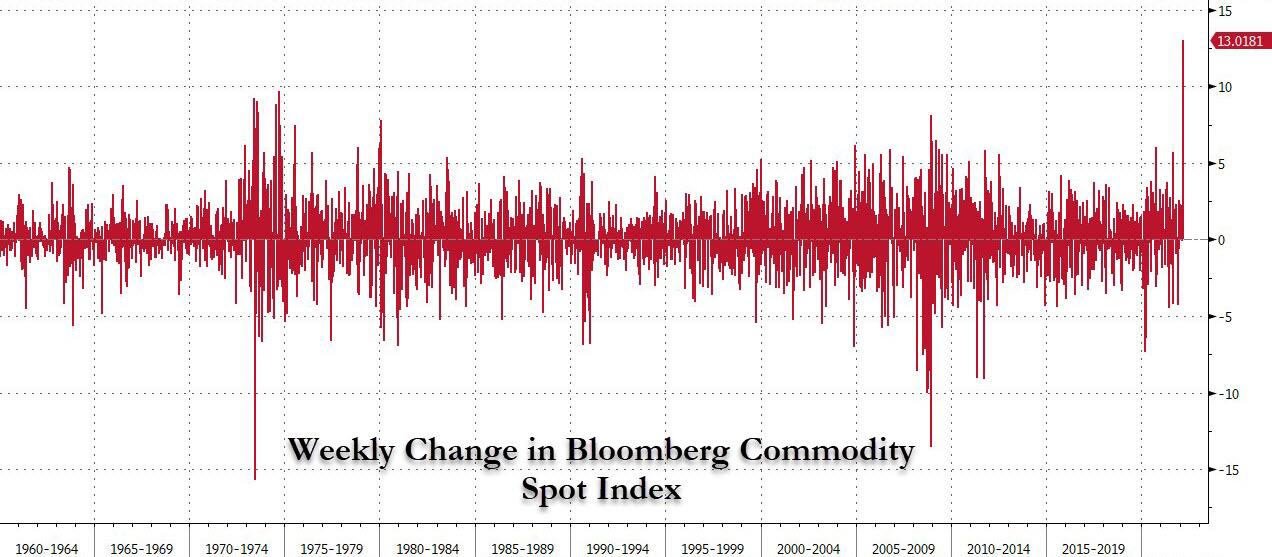
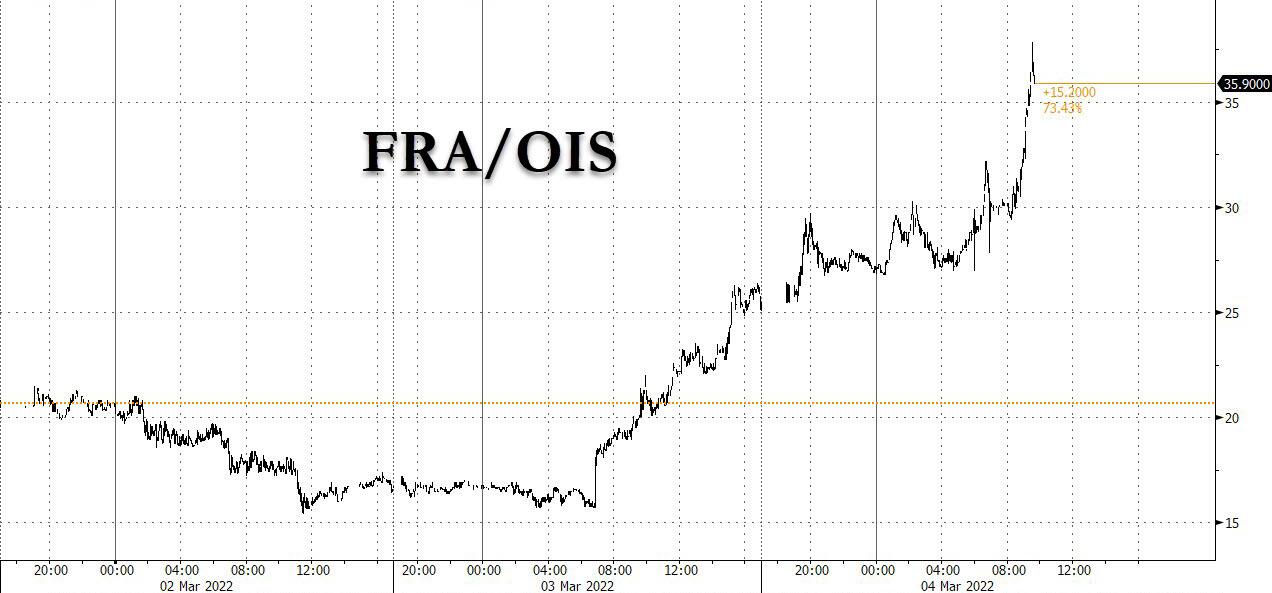
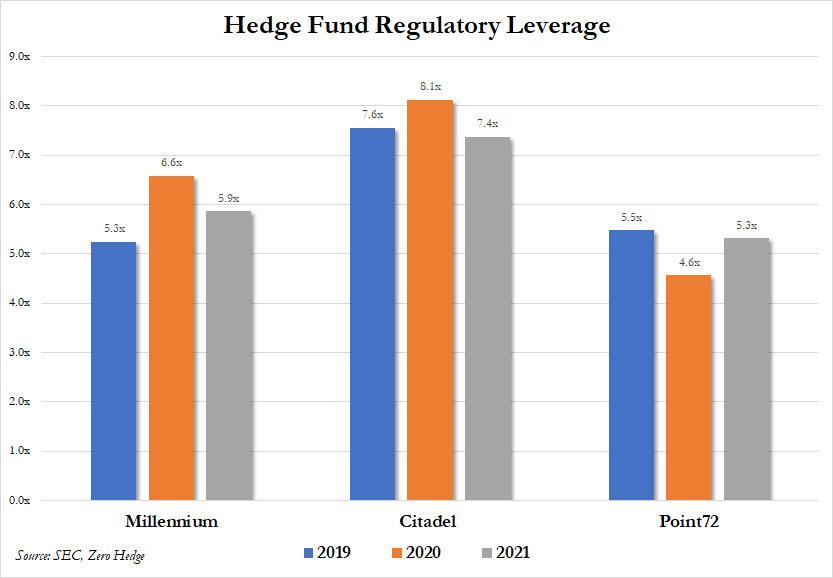

[…] by Harvey Organ, Harvey Organ Blog: […]
LikeLike
[…] by Harvey Organ of Harvey Organ Blog […]
LikeLike
[…] by Harvey Organ of Harvey Organ Blog […]
LikeLike
[…] by Harvey Organ of Harvey Organ Blog […]
LikeLike
[…] by Harvey Organ of Harvey Organ Blog […]
LikeLike
[…] by Harvey Organ of Harvey Organ Weblog […]
LikeLike
[…] by Harvey Organ of Harvey Organ Blog […]
LikeLike
[…] by Harvey Organ of Harvey Organ Blog […]
LikeLike
[…] by Harvey Organ of Harvey Organ Blog […]
LikeLike