
March 21, 2022 · by harveyorgan · in Uncategorized · Leave a comment·Edit
MARCH21
GOLD; $1929.15 UP $0.25
SILVER: $25.11 UP $0.16
ACCESS MARKET: GOLD $1935.60
SILVER: $25.19
Bitcoin morning price: $41,253 DOWN 545
Bitcoin: afternoon price: $41,041 DOWN 757
Platinum price: closing UP $10.45 to $1041.50
Palladium price; closing UP $64.75 at $2567.00
END
end
DONATE
Click here if you wish to send a donation. I sincerely appreciate it as this site takes a lot of preparation
comex notices/
March: JPMorgan stopped/total issued 3/5
EXCHANGE: COMEXCONTRACT: MARCH 2022 COMEX 100 GOLD FUTURES
SETTLEMENT: 1,928.200000000 USD
INTENT DATE: 03/18/2022 DELIVERY DATE: 03/22/2022
FIRM ORG FIRM NAME ISSUED STOPPED
435 H SCOTIA CAPITAL 1
661 C JP MORGAN 3
737 C ADVANTAGE 5
905 C ADM 1TOTAL: 5 5
MONTH TO DATE: 11,489
NUMBER OF NOTICES FILED TODAY FOR Mar. CONTRACT 5 NOTICE(S) FOR 500 OZ (0.01555 TONNES)
total notices so far: 11,489 contracts for 1,148,900 oz (35.734 tonnes)
SILVER NOTICES:
0 NOTICE(S) FILED TODAY FOR nil OZ/
total number of notices filed so far this month 10,458 : for 52,290,000 oz
END
Russia is a major supplier of silver to London while Mexico supplies the COMEX
With the sanctions, London has no way to obtain silver other than compete with NY.
END
GLD
WITH GOLD UP $0.25
WITH RESPECT TO GLD WITHDRAWALS: (OVER THE PAST FEW MONTHS):
GOLD IS “RETURNED” TO THE BANK OF ENGLAND WHEN CALLING IN THEIR LEASES: THE GOLD NEVER LEAVES THE BANK OF ENGLAND IN THE FIRST PLACE. THE BANK IS PROTECTING ITSELF IN CASE OF COMMERCIAL FAILURE
ALSO INVESTORS SWITCHING TO SPROTT PHYSICAL (phys) INSTEAD OF THE FRAUDULENT GLD//
A HUGE CHANGES IN GOLD INVENTORY AT THE GLD//A DEPOSIT OF 9.00 TONNES INTO THE GLD//
INVENTORY RESTS AT 1082.44 TONNES
Silver//SLV
WITH NO SILVER AROUND AND SILVER UP $0.16
AT THE SLV//
INVESTORS ARE SWITCHING SLV TO SPROTT’S PSLV
A HUGE CHANGE IN SILVER INVENTORY AT THE SLV//A DEPOSIT OF 2.217 MILLION OZ
INTO THE SLV.
CLOSING INVENTORY: 550.288 MILLION OZ
Let us have a look at the data for today
SILVER//OUTLINE
SILVER COMEX OI FELL BY A STRONG SIZED 1024 CONTRACTS TO 157,342 AND FURTHER FROM THE NEW RECORD OF 244,710, SET FEB 25/2020 AND THE STRONG LOSS IN OI WAS ACCOMPLISHED WITH OUR STRONG $0.37 LOSS IN SILVER PRICING AT THE COMEX ON FRIDAY. OUR BANKERS WERE SUCCESSFUL IN KNOCKING THE PRICE OF SILVER DOWN (IT FELL BY $0.37) BUT WERE UNSUCCESSFUL IN KNOCKING OUT SOME SILVER LONGS AS WE HAD A SMALL GAIN OF 123 CONTRACTS ON OUR TWO EXCHANGES
WE MUST HAVE HAD:
I) HUGE BANKER SHORT COVERING AS THEY ARE VERY ANXIOUS TO GET OUT OF DODGE!!/. II)WE ALSO HAD SOME REDDIT RAPTOR BUYING//. iii) A STRONG ISSUANCE OF EXCHANGE FOR PHYSICALS iiii) A HUGE INITIAL SILVER STANDING FOR COMEX SILVER MEASURING AT 42.860 MILLION OZ FOLLOWED BY TODAY’S QUEUE JUMP OF 20,000 OZ //NEW STANDING 52.560 MILLION OZ // V) STRONG SIZED COMEX OI LOSS/
I AM NOW RECORDING THE DIFFERENTIAL IN OI FROM PRELIMINARY TO FINAL:
THE DIFFERENTIAL FROM PRELIMINARY OI TO FINAL OI SILVER TODAY: CONTRACTS : +3
HISTORICAL ACCUMULATION OF EXCHANGE FOR PHYSICALS MAR. ACCUMULATION FOR EFP’S SILVER/JPMORGAN’S HOUSE OF BRIBES/STARTING FROM FIRST DAY/MONTH OF MAR:
TOTAL CONTACTS for 15 days, total contracts: : 29,520 contracts or 147.6 million oz OR 9.84 MILLION OZ PER DAY. (1968 CONTRACTS PER DAY)
TOTAL NO OF OZ UNDERGOING EFP TO LONDON 29,520 CONTRACTS X 5,000 PER CONTRACT:
EQUATES TO: 147.6 MILLION OZ
.
LAST 11 MONTHS TOTAL EFP CONTRACTS ISSUED IN MILLIONS OF OZ:
MAY 137.83 MILLION
JUNE 149.91 MILLION OZ
JULY 129.445 MILLION OZ
AUGUST: MILLION OZ 140.120
SEPT. 28.230 MILLION OZ//
OCT: 94.595 MILLION OZ
NOV: 131.925 MILLION OZ
DEC: 100.615 MILLION OZ
JAN 2022// 90.460 MILLION OZ
FEB 2022: 72.39 MILLION OZ//
MARCH: 147.6 MILLION OZ//THIS IS GOING TO BE A HUGE EFP ISSUANCE MONTH AND MOST LIKELY WILL SET A RECORD FOR ANY MONTH
RESULT: WE HAD A STRONG SIZED DECREASE IN COMEX OI SILVER COMEX CONTRACTS OF 1024 WITH OUR $0.37 LOSS SILVER PRICING AT THE COMEX// FRIDAY THE CME NOTIFIED US THAT WE HAD A HUGE SIZED EFP ISSUANCE OF 1150 CONTRACTS( 1150 CONTRACTS ISSUED FOR MAR AND 0 CONTRACTS ISSUED FOR ALL OTHER MONTHS) WHICH EXITED OUT OF THE SILVER COMEX TO LONDON AS FORWARDS THE DOMINANT FEATURE TODAY: /HUGE BANKER SHORT COVERING AS THEY GET OUT OF DODGE//// WE HAVE A HUGE INITIAL SILVER OZ STANDING FOR MAR. OF 42.860 MILLION OZ FOLLOWED BY TODAY’S 20,000 OZ QUEUE JUMP//NEW STANDING 52.560 MILLION OZ// /// .. WE HAD A SMALL SIZED GAIN OF 126 OI CONTRACTS ON THE TWO EXCHANGES FOR 0.630 MILLION OZ WITH THE STRONG LOSS IN PRICE.
WE HAD 0 NOTICES FILED TODAY FOR nil OZ
THE SILVER COMEX IS NOW BEING ATTACKED FOR METAL BY LONDONERS ET AL.
GOLD//OUTLINE
IN GOLD, THE COMEX OPEN INTEREST FELL BY A FAIR SIZED 2665 CONTRACTS TO 610,101 AND FURTHER FROM OUR NEW RECORD (SET JAN 24/2020) AT 799,541 AND PREVIOUS TO THAT: (SET JAN 6/2020) AT 797,110.
THE DIFFERENTIAL FROM PRELIMINARY OI TO FINAL OI IN GOLD TODAY: –583 CONTRACTS.
THE BIS HAS ABANDONED THE GOLD COMEX TRADING!!!
.
THE SMALL SIZED DECREASE IN COMEX OI CAME DESPITE OUR STRONG LOSS IN PRICE OF $13.55//COMEX GOLD TRADING/FRIDAY/.AS IN SILVER WE MUST HAD HUGE BANKER/ALGO SHORT COVERING ACCOMPANYING OUR HUMONGOUS SIZED EXCHANGE FOR PHYSICAL ISSUANCE. WE HAD ZERO LONG LIQUIDATION
WE ALSO HAD A HUGE INITIAL STANDING IN GOLD TONNAGE FOR MARCH AT 14.818 TONNES FOLLOWED BY TODAY’S QUEUE JUMP OF 2400 OZ//NEW STANDING 36.243 TONNES
YET ALL OF..THIS HAPPENED WITH OUR LOSS IN PRICE OF $13.55 WITH RESPECT TO FRIDAY’S TRADING
WE HAD AN SMALL GAIN OF 580 OI CONTRACTS (1.804 PAPER TONNES) ON OUR TWO EXCHANGES
E.F.P. ISSUANCE
THE CME RELEASED THE DATA FOR EFP ISSUANCE AND IT TOTALED A FAIR SIZED 3245 CONTRACTS:
The NEW COMEX OI FOR THE GOLD COMPLEX RESTS AT 610,101.
IN ESSENCE WE HAVE AN SMALL SIZED INCREASE IN TOTAL CONTRACTS ON THE TWO EXCHANGES OF 580, WITH 2665 CONTRACTS DECREASED AT THE COMEX AND 3245 EFP OI CONTRACTS WHICH NAVIGATED OVER TO LONDON. THUS TOTAL OI GAIN ON THE TWO EXCHANGES OF 580 CONTRACTS OR 1.804 TONNES.
CALCULATIONS ON GAIN/LOSS ON OUR TWO EXCHANGES
WE HAD A FAIR SIZED ISSUANCE IN EXCHANGE FOR PHYSICALS (3245) ACCOMPANYING THE SMALL SIZED LOSS IN COMEX OI (2665,): TOTAL GAIN IN THE TWO EXCHANGES 580 CONTRACTS. WE NO DOUBT HAD 1) HUGE BANKER SHORT COVERING ,2.) HUGE INITIAL STANDING AT THE GOLD COMEX FOR MARCH. AT 14.818 TONNES FOLLOWED BY TODAY’S QUEUE JUMP OF 2400 OZ//NEW STANDING 36.243 TONNES /// 3) ZERO LONG LIQUIDATION ///. ,4) FAIR SIZED COMEX OI LOSS 5) FAIR ISSUANCE OF EXCHANGE FOR PHYSICAL/
HISTORICAL ACCUMULATION OF EXCHANGE FOR PHYSICALS IN 2022 INCLUDING TODAY
MARCH
ACCUMULATION OF EFP’S GOLD AT J.P. MORGAN’S HOUSE OF BRIBES: (EXCHANGE FOR PHYSICAL) FOR THE MONTH OF MAR :
97,921 CONTRACTS OR 9,782,100 OR 304.57 TONNES 15 TRADING DAY(S) AND THUS AVERAGING: 652 EFP CONTRACTS PER TRADING DAY
TO GIVE YOU AN IDEA AS TO THE SIZE OF THESE EFP TRANSFERS : THIS MONTH IN 15 TRADING DAY(S) IN TONNES: 304.57TONNES
TOTAL ANNUAL GOLD PRODUCTION, 2020, THROUGHOUT THE WORLD EX CHINA EX RUSSIA: 3555 TONNES
THUS EFP TRANSFERS REPRESENTS 304.57/3550 x 100% TONNES 8.57% OF GLOBAL ANNUAL PRODUCTION
ACCUMULATION OF GOLD EFP’S YEAR 2021 TO 2022
JANUARY/2021: 265.26 TONNES (RAPIDLY INCREASING AGAIN)
FEB : 171.24 TONNES ( DEFINITELY SLOWING DOWN AGAIN)..
MARCH:. 276.50 TONNES (STRONG AGAIN/
APRIL: 189..44 TONNES ( DRAMATICALLY SLOWING DOWN AGAIN//GOLD IN BACKWARDATION)
MAY: 250.15 TONNES (NOW DRAMATICALLY INCREASING AGAIN)
JUNE: 247.54 TONNES (FINAL)
JULY: 188.73 TONNES FINAL
AUGUST: 217.89 TONNES FINAL ISSUANCE.
SEPT 142.12 TONNES FINAL ISSUANCE ( LOW ISSUANCE)_
OCT: 141.13 TONNES FINAL ISSUANCE (LOW ISSUANCE)
NOV: 312.46 TONNES FINAL ISSUANCE//NEW RECORD!! (INCREASING DRAMATICALLY)//SIGN OF REAL STRESS//SURPASSING THE MARCH 2021 RECORD OF 276.50 TONNES OF EFP
DEC. 175.62 TONNES//FINAL ISSUANCE//
JAN:2022 247.25 TONNES //FINAL
FEB: 196.04 TONNES//FINAL
MARCH: 304.57 TONNES INITIAL( THIS WILL PROBABLY BE A RECORD EFP ISSUANCE MONTH. LATER THIS MONTH WE WILL SURPASS NOV 21, THE ALL TIME RECORD MONTH)
SPREADING OPERATIONS
(/NOW SWITCHING TO GOLD) FOR NEWCOMERS, HERE ARE THE DETAILS
SPREADING LIQUIDATION HAS NOW COMMENCED AS WE HEAD TOWARDS THE NEW ACTIVE FRONT MONTH OF APRIL.WE ARE NOW INTO THE SPREADING OPERATION OF GOLD
HERE IS A BRIEF SYNOPSIS OF HOW THE CROOKS FLEECE UNSUSPECTING LONGS IN THE SPREADING ENDEAVOUR ;MODUS OPERANDI OF THE CORRUPT BANKERS AS TO HOW THEY HANDLE THEIR SPREAD OPEN INTERESTS:HERE IS HOW THE CROOKS USED SPREADING AS WE ARE NOW INTO THE NON ACTIVE DELIVERY MONTH OF MARCH HEADING TOWARDS THE ACTIVE DELIVERY MONTH OF APRIL, FOR GOLD:
YOU WILL ALSO NOTICE THAT THE COMEX OPEN INTEREST STARTS TO RISE BUT SO IS THE OPEN INTEREST OF SPREADERS. THE OPEN INTEREST IN WILL CONTINUE TO RISE UNTIL ONE WEEK BEFORE FIRST DAY NOTICE OF AN UPCOMING ACTIVE DELIVERY MONTH (MAR), AND THAT IS WHEN THE CROOKS SELL THEIR SPREAD POSITIONS BUT NOT AT THE SAME TIME OF THE DAY. THEY WILL USE THE SELL SIDE OF THE EQUATION TO CREATE THE CASCADE (ALONG WITH THEIR COLLUSIVE FRIENDS) AND THEN COVER ON THE BUY SIDE OF THE SPREAD SITUATION AT THE END OF THE DAY. THEY DO THIS TO AVOID POSITION LIMIT DETECTION. THE LIQUIDATION OF THE SPREADING FORMATION CONTINUES FOR EXACTLY ONE WEEK AND ENDS ON FIRST DAY NOTICE.”
WHAT IS ALARMING TO ME, ACCORDING TO OUR LONDON EXPERT ANDREW MAGUIRE IS THAT THESE EFP’S ARE BEING TRANSFERRED TO WHAT ARE CALLED SERIAL FORWARD CONTRACT OBLIGATIONS AND THESE CONTRACTS ARE LESS THAN 14 DAYS. ANYTHING GREATER THAN 14 DAYS, THESE MUST BE RECORDED AND SENT TO THE COMPTROLLER, GREAT BRITAIN TO MONITOR RISK TO THE BANKING SYSTEM. IF THIS IS INDEED TRUE, THEN THIS IS A MASSIVE CONSPIRACY TO DEFRAUD AS WE NOW WITNESS A MONSTROUS TOTAL EFP’S ISSUANCE AS IT HEADS INTO THE STRATOSPHERE.
First, here is an outline of what will be discussed tonight:
1.Today, we had the open interest at the comex, in SILVER, FELL BY A STRONG SIZED 1024 CONTRACTS TO 158,342 AND FURTHER FROM OUR COMEX RECORD //244,710(SET FEB 25/2020). THE LAST RECORDS WERE SET IN AUG.2018 AT 244,196 WITH A SILVER PRICE OF $14.78/(AUGUST 22/2018)..THE PREVIOUS RECORD TO THAT WAS SET ON APRIL 9/2018 AT 243,411 OPEN INTEREST CONTRACTS WITH THE SILVER PRICE AT THAT DAY: $16.53). AND PREVIOUS TO THAT, THE RECORD WAS ESTABLISHED AT: 234,787 CONTRACTS, SET ON APRIL 21.2017 OVER 4 1/2 YEARS AGO.
EFP ISSUANCE 1150 CONTRACTS
OUR CUSTOMARY MIGRATION OF COMEX LONGS CONTINUE TO MORPH INTO LONDON FORWARDS AS OUR BANKERS USED THEIR EMERGENCY PROCEDURE TO ISSUE:
MAR 1150 ALL OTHER MONTHS: ZERO. TOTAL EFP ISSUANCE: 1150 CONTRACTS. EFP’S GIVE OUR COMEX LONGS A FIAT BONUS PLUS A DELIVERABLE PRODUCT OVER IN LONDON. IF WE TAKE THE COMEX OI LOSS OF 1027 CONTRACTS AND ADD TO THE 1150 OI TRANSFERRED TO LONDON THROUGH EFP’S,
WE OBTAIN A SMALL SIZED GAIN OF 126 OPEN INTEREST CONTRACT FROM OUR TWO EXCHANGES.
THUS IN OUNCES, THE GAIN ON THE TWO EXCHANGES 0.630 MILLION OZ,
OCCURRED DESPITE OUR STRONG $0.37 LOSS IN PRICE.
OUTLINE FOR TODAY’S COMMENTARY
1/COMEX GOLD AND SILVER REPORT
(report Harvey)
2 ) Gold/silver trading overnight Europe,
(Peter Schiff,
3. Egon von Greyerz///Matthew Piepenburg via GoldSwitzerland.com,
4. Chris Powell of GATA provides to us very important physical commentaries
5. Other gold commentaries
6. Commodity commentaries/cryptocurrencies
3. ASIAN AFFAIRS
i)MONDAY MORNING// SUNDAY NIGHT
SHANGHAI CLOSED UP 2.61 PTS OR 0.08% //Hang Sang CLOSED DOWN 191.06 PTS OR 0.89 % /The Nikkei closed //Australia’s all ordinaires CLOSED DOWN 0.16% /Chinese yuan (ONSHORE) closed UP 6.3558 /Oil UP TO 108.95 dollars per barrel for WTI and UP TO 112.65 for Brent. Stocks in Europe OPENED ALL GREEN // ONSHORE YUAN CLOSED UP AGAINST THE DOLLAR AT 6.3558. OFFSHORE YUAN CLOSED UP ON THE DOLLAR AT 6.3671: /ONSHORE YUAN TRADING ABOVE LEVEL OF OFFSHORE YUAN/ONSHORE YUAN TRADING STRONGER AGAINST US DOLLAR/OFFSHORE STRONGER
A)NORTH KOREA/
b) REPORT ON JAPAN
OUTLINE
3 C CHINA
OUTLINE
4/EUROPEAN AFFAIRS
OUTLINE
5. RUSSIAN AND MIDDLE EASTERN AFFAIRS
OUTLINE
6.Global Issues
OUTLINE
7. OIL ISSUES
OUTLINE
8 EMERGING MARKET ISSUES
COMEX DATA//AMOUNTS STANDING//VOLUME OF TRADING/INVENTORY MOVEMENTS
GOLD
LET US BEGIN:
THE TOTAL COMEX GOLD OPEN INTEREST FELL BY A FAIR SIZED 2665 CONTRACTS TO 610,101 AND FURTHER FROM THE RECORD THAT WAS SET IN JANUARY/2020: {799,541 OI(SET JAN 16/2020)} AND PREVIOUS TO THAT: 797,110 (SET JAN 7/2020). AND THIS COMEX DECREASE OCCURRED DESPITE OUR LOSS OF $13.55 IN GOLD PRICING FRIDAY’S COMEX TRADING. WE ALSO HAD A SMALL SIZED EFP (1364 CONTRACTS). . THEY WERE PAID HANDSOMELY NOT TO TAKE DELIVERY AT THE COMEX AND SETTLE FOR CASH.
WE NORMALLY HAVE WITNESSED EXCHANGE FOR PHYSICALS ISSUED BEING SMALL AS IT JUST TOO COSTLY FOR THEM TO CONTINUE SERVICING THE COSTS OF SERIAL FORWARDS CIRCULATING IN LONDON. HOWEVER, MUCH TO THE ANNOYANCE OF OUR BANKERS, THE COMEX IS THE SCENE OF AN ASSAULT ON GOLD AS LONDONERS, NOT BEING ABLE TO FIND ANY PHYSICAL ON THAT SIDE OF THE POND, EXERCISE THESE CIRCULATING EXCHANGE FOR PHYSICALS IN LONDON AND FORCING DELIVERY OF REAL METAL OVER HERE AS THE OBLIGATION STILL RESTS WITH NEW YORK BANKERS. IT SEEMS THAT ARE BANKERS FRIENDS ARE EXERCISING EFP’S FROM LONDON AND NOW THEY ARE LOATHE TO ISSUE NEW ONES.
EXCHANGE FOR PHYSICAL ISSUANCE
WE ARE NOW MOVING TO THE NON ACTIVE DELIVERY MONTH OF MAR.. THE CME REPORTS THAT THE BANKERS ISSUED A FAIR SIZED TRANSFER THROUGH THE EFP ROUTE AS THESE LONGS RECEIVED A DELIVERABLE LONDON FORWARD TOGETHER WITH A FIAT BONUS.,
THAT IS 3245 EFP CONTRACTS WERE ISSUED: ;: , & FEB. 0 APRIL:3245 & ZERO FOR ALL OTHER MONTHS:
TOTAL EFP ISSUANCE: 3245 CONTRACTS
WHEN WE HAVE BACKWARDATION, EFP ISSUANCE IS VERY COSTLY BUT THE REAL PROBLEM IS THE SCARCITY OF METAL AND IT IS FAR BETTER FOR OUR BANKERS TO PAY OFF INDIVIDUALS THAN RISK INVESTORS ESPECIALLY FROM LONDON STANDING FOR DELIVERY. THE LOWER PRICES IN THE FUTURES MARKET IS A MAGNET FOR OUR LONDONERS SEEKING PHYSICAL METAL. BACKWARDATION ALWAYS EQUAL SCARCITY OF METAL!
ON A NET BASIS IN OPEN INTEREST WE GAINED THE FOLLOWING TODAY ON OUR TWO EXCHANGES: A SMALL SIZED TOTAL OF 580- CONTRACTS IN THAT 3245 LONGS WERE TRANSFERRED AS FORWARDS TO LONDON AND WE HAD A FAIR SIZED COMEX OI LOSS OF 2665 CONTRACTS..AND THIS SMALL GAIN OCCURRED DESPITE THE LOSS IN PRICE OF $13.55.
// WE HAVE A STRONG AMOUNT OF GOLD TONNAGE STANDING FOR MAR (36.243),
HERE ARE THE AMOUNTS THAT STOOD FOR DELIVERY IN THE PRECEDING 12 MONTHS OF 2021:
DEC 2021: 112.217 TONNES
NOV. 8.074 TONNES
OCT. 57.707 TONNES
SEPT: 11.9160 TONNES
AUGUST: 80.489 TONNES
JULY: 7.2814 TONNES
JUNE: 72.289 TONNES
MAY 5.77 TONNES
APRIL 95.331 TONNES
MARCH 30.205 TONNES
FEB ’21. 113.424 TONNES
JAN ’21: 6.500 TONNES.
TOTAL SO FAR THIS YEAR (JAN- DEC): 601.213 TONNES
YEAR 2022:
JANUARY 2022 17.79 TONNES
FEB 2022: 59.023 TONNES
MARCH: 36.243 TONNES
THE BANKERS WERE SUCCESSFUL IN LOWERING GOLD’S PRICE //// (IT FELL $13.55) BUT THEY WERE UNSUCCESSFUL IN FLEECING ANY LONGS AS WE HAVE REGISTERED A SMALL SIZED GAIN OF 1.804 TONNES ON TOTAL OI FROM OUR TWO EXCHANGES, ACCOMPANYING OUR HUGE GOLD TONNAGE STANDING FOR MAR (36.243 TONNES)…
WE HAD –583 CONTRACTS REMOVED FROM COMEX TRADES. THESE WERE REMOVED AFTER TRADING ENDED LAST NIGHT
NET GAIN ON THE TWO EXCHANGES 583 CONTRACTS OR 58,300 OZ OR 1.804 TONNES
Estimated gold volume today: 173,042 ///poor
Confirmed volume yesterday: 195,696 contracts poor
INITIAL STANDINGS FOR MAR ’22 COMEX GOLD //MARCH 21
| Gold | Ounces |
| Withdrawals from Dealers Inventory in oz | nil oz |
| Withdrawals from Customer Inventory in oz | 32.151 oz Brinks 1 kilobar |
| Deposit to the Dealer Inventory in oz | 64,334.151OZ 2001 kilobars |
| Deposits to the Customer Inventory, in oz | 186,254.821 oz JPMorgan Loomis includes 171 kilobars Loomis |
| No of oz served (contracts) today | 5 notice(s)500 OZ 0.01555 TONNES |
| No of oz to be served (notices) | 163 contracts 16,300 oz 0.5069TONNES |
| Total monthly oz gold served (contracts) so far this month | 11,489 notices 1,148,900 OZ 35.734 TONNES |
| Total accumulative withdrawals of gold from the Dealers inventory this month | NIL oz |
| Total accumulative withdrawal of gold from the Customer inventory this month | xxx oz |
For today:
dealer deposits 1
i) Into Brinks: 64,334.151 oz (2001 kilobars)
total dealer deposit 64,334.151 oz
No dealer withdrawal 0
2 customer deposits
i) Into JPMORGAN: 180,757.000 oz ??? not kilobars
ii) Into Loomis customer account: 5497.821 oz (171 kilobars)
total customer deposit: 186,254.821 oz
total gold deposits in tonnage: 7.794 tonnes
2 customer withdrawal
i) Out of Brinks 32.151 oz (1 kilobars)
total withdrawals: 32.151 oz
ADJUSTMENTS: 1
manfra..//dealer to customer//56,784.097 oz
CALCULATIONS FOR THE AMOUNT OF GOLD STANDING FOR MARCH.
For the front month of MARCH we have an oi of 168 contracts having LOST 803
We had 827 notices filed yesterday so we finally gained 24 contracts or 2400 oz will stand at the comex as these guys refused to be EFP’d over to London.
Our banker friends have run out of gold metal everywhere.
April saw a loss of 15,481 contracts down to 226,646.
May saw a LOSS of 9 contracts to stand at 4323
June saw a GAIN of 11,810 contracts up to 309,603 contracts
We had 5 notice(s) filed today for 500 oz FOR THE MAR 2022 CONTRACT MONTH.
Today, 0 notice(s) were issued from J.P.Morgan dealer account and 0 notices were issued from their client or customer account. The total of all issuance by all participants equates to 5 contract(s) of which 0 notices were stopped (received) by j.P. Morgan dealer and 3 notice(s) was (were) stopped/ Received) by J.P.Morgan//customer account and 0 notice(s) received (stopped) by the squid (Goldman Sachs)
To calculate the INITIAL total number of gold ounces standing for the MAR /2021. contract month,
we take the total number of notices filed so far for the month (11,489) x 100 oz , to which we add the difference between the open interest for the front month of (MAR: 168 CONTRACTS ) minus the number of notices served upon today 5 x 100 oz per contract equals 1,165,200 OZ OR 36.243 TONNES the number of TONNES standing in this active month of mar.
thus the INITIAL standings for gold for the MAR contract month:
No of notices filed so far (11,489) x 100 oz+ (168) OI for the front month minus the number of notices served upon today (5} x 100 oz} which equals 1,165,800 oz standing OR 36.243 TONNES in this NON active delivery month of MAR.
TOTAL COMEX GOLD STANDING: 36.243 TONNES (A WHOPPER FOR A MAR (NON ACTIVE) DELIVERY MONTH)
XXXXXXXXXXXXXXXXXXXXXXXXXXXXXXXXXXXXXXXXXXXXXXXXXXXXXXXXXXXXX
COMEX GOLD INVENTORIES/CLASSIFICATION
NEW PLEDGED GOLD:
191,133,764.7, oz NOW PLEDGED /HSBC 5.94 TONNES
123,963.792 PLEDGED MANFRA 3.86 TONNES
54,339.114oz PLEDGED JPMorgan no 1 1.690 tonnes
243,923.704, oz JPM No 2 7.58 TONNES
898,821.330 oz pledged Brinks/27,96 TONNES
12,249,333 oz International Delaware: 0..3810 tonnes
Loomis: 18,615.429 oz
total pledged gold: 1,543,044.471 oz 47.99 tonnes
TOTAL REGISTERED AND ELIG GOLD AT THE COMEX: 34,435,536.572 OZ (1071.08TONNES)
TOTAL ELIGIBLE GOLD: 16,743,842.793 OZ (520.78 tonnes)
TOTAL OF ALL REGISTERED GOLD: 17,691,693.779 OZ (550.28 tonnes)
REGISTERED GOLD THAT CAN BE SERVED UPON: 16,148,649.0 OZ (REG GOLD- PLEDGED GOLD) 502.29 tonnes
END
MAR 2022 CONTRACT MONTH//SILVER//MARCH 21
| Silver | Ounces |
| Withdrawals from Dealers Inventory | NIL oz |
| Withdrawals from Customer Inventory | 117,195.310 oz CNT |
| Deposits to the Dealer Inventory | nil OZ |
| Deposits to the Customer Inventory | nil oz |
| No of oz served today (contracts) | 0 CONTRACT(S) 0 OZ |
| No of oz to be served (notices) | 54 contracts (270,000 oz) |
| Total monthly oz silver served (contracts) | 10,458 contracts 52,290,000 oz) |
| Total accumulative withdrawal of silver from the Dealers inventory this month | NIL oz |
| Total accumulative withdrawal of silver from the Customer inventory this month |
And now for the wild silver comex results
we had 0 deposits into the dealer
total dealer deposits: nil oz
i) We had 0 dealer withdrawal
total dealer withdrawals: nil oz
We have 0 deposits into the customer account
total deposit: nil oz
JPMorgan has a total silver weight: 180.228 million oz/342.758 million =52.60% of comex
ii) Comex withdrawals: 1
A) Out of CNT: 117,195.310
total withdrawal 117,195.310 oz
the silver comex is in stress!
TOTAL REGISTERED SILVER: 93.049 MILLION OZ
TOTAL REG + ELIG. 342.758 MILLION OZ
CALCULATION OF SILVER OZ STANDING FOR MARCH
silver open interest data:
FRONT MONTH OF MARCH OI: 54, HAVING LOST 17 CONTRACTS FROM THURSDAY.
WE HAD 21 NOTICES SERVED UPON YESTERDAY, SO WE GAINED 4 CONTRACTS OR AN ADDITIONAL 20,000 OZ WILL STAND
FOR DELIVERY OVER HERE AS THESE GUYS REFUSED TO BE EFP’D TO LONDON.
APRIL HAD A 0 CONTRACT LOSS// CONTRACTS REMAINS AT 610
MAY HAD A GAIN OF 1403 CONTRACTS DOWN TO 119,004 contracts
.
TOTAL NUMBER OF NOTICES FILED FOR TODAY: 0 for nil oz
Comex volumes: 32,929// est. volume today//weak/
Comex volume: confirmed yesterday: 40,123 contracts (poor )
To calculate the number of silver ounces that will stand for delivery in MAR. we take the total number of notices filed for the month so far at 10,458 x 5,000 oz = 52,290,000 oz
to which we add the difference between the open interest for the front month of MAR (54) and the number of notices served upon today 0 x (5000 oz) equals the number of ounces standing.
Thus the standings for silver for the MAR./2021 contract month: 10,459 (notices served so far) x 5000 oz + OI for front month of MAR (54) – number of notices served upon today (0) x 5000 oz of silver standing for the MAR contract month equates 52,560,000 oz. .
the record level of silver open interest is 234,787 contracts set on April 21./2017 with the price on that day at $18.42. The previous record was 224,540 contracts with the price at that time of $20.44
END
GLD AND SLV INVENTORY LEVELS:
MARCH 21WITH GOLD UP $.25 : A HUGE CHANGE IN GOLD INVENTORY AT THE GLD: A DEPOSIT OF 9.00 TONNES INTO THE GLD////INVENTORY RESTS AT 1082.44 TONES
MARCH 18/WITH GOLD DOWN $13.55 NO CHANGES IN GOLD INVENTORY AT THE GLD//INVENTORY RESTS AT 1073.44 TONES
MARCH 17/WITH GOLD UP $33.50: A HUGE CHANGE IN GOLD INVENTORY AT THE GLD: A DEPOSIT OF 11.61 TONNES INTO THE GLD//INVENTORY RESTS AT 1073.44 TONNES
MARCH 16/WITH GOLD DOWN $18.50//A HUGE CHANGE IN GOLD INVENTORY AT THE GLD: A WITHDRAWAL OF 2.33 TONNES FROM THE GLD///INVENTORY RESTS AT 1061.83 TONNES
MARCH 15/WITH GOLD DOWN $30.80 TODAY: NO CHANGES IN GOLD INVENTORY AT THE GLD//INVENTORY RESTS AT 1064.16 TONNES
MARCH 14//WITH GOLD DOWN $22.75, HUGE CHANGES IN GOLD INVENTORY AT THE GLD//STRANGE: A DEPOSIT OF 2.62 TONNES INTO THE GLD.//INVENTORY RESTS AT 1064.16 TONNES
MARCH 11/WITH GOLD DOWN $14.60: A BIG CHANGE IN GOLD INVENTORY AT THE GLD A WITHDRAWAL OF 1.74 TONNES FROM THE GLD////INVENTORY RESTS AT 1061.54 TONNES
MARCH 10//WITH GOLD UP $11.55: A HUGE CHANGES IN GOLD INVENTORY AT THE GLD: A WITHDRAWAL OF 4.06 TONNES FORM THE GLD///INVENTORY RESTS AT 1063.28 TONNES
MARCH 9/WITH GOLD DOWN $53.85//A HUGE CHANGE IN GOLD INVENTORY AT THE GLD: A DEPOSIT OF 4.64 TONNES INTO THE GLD//INVENTORY RESTS AT 1067.34 TONNES
MARCH 8/WITH GOLD UP $46.10: A HUGE CHANGE IN GOLD INVENTORY AT THE GLD: A DEPOSIT OF 8.42 TONNES INTO THE GLD///INVENTORY RESTS AT 1062.70 TONNES
MARCH 7/WITH GOLD UP $28.40 A HUGE CHANGES IN GOLD INVENTORY AT THE GLD: A DEPOSIT OF 4.06 TONNES INTO THE GLD..//INVENTORY RESTS AT 1054.28 TONNES
MARCH 4/WITH GOLD UP $28.40//NO CHANGES IN GOLD INVENTORY AT THE GLD//INVENTORY RESTS AT 1050.22 TONNES
MARCH 3/WITH GOLD UP $13.95: A HUGE CHANGE IN GOLD INVENTORY AT THE GLD: A DEPOSIT OF 7.84 TONNES//INVENTORY RESTS AT 1050.22 TONNES
MARCH 2/WITH GOLD DOWN $20.80//A MONSTER CHANGES IN GOLD INVENTORY AT THE GLD: A DEPOSIT OF 13.36 TONNES OF GOLD INTO THE GLD////INVENTORY RESTS AT 1042.38 TONNES
MARCH 1/WITH GOLD UP $42.60: NO CHANGES IN GOLD INVENTORY AT THE GLD: //INVENTORY RESTS AT 1029.32 TONNES
FEB 28/WITH GOLD UP $12.95: NO CHANGES IN GOLD INVENTORY AT THE GLD//INVENTORY RESTS AT 1029.32 TONNES
FEB 25/WITH GOLD DOWN $38.95: NO CHANGES IN GOLD INVENTORY AT THE GLD//INVENTORY RESTS AT 1029.32 TONNES
FEB 24/WITH GOLD UP $17.35//A HUGE CHANGE AT THE GLD: 5.23 TONNES INTO THE GLD// IN GOLD INVENTORY AT THE GLD/INVENTORY REST AT 1029.32 TONNES
FEB 23/WITH GOLD UP $2.00 : NO CHANGES IN GOLD INVENTORY AT THE GLD//INVENTORY RESTS AT 1024.09 TONNES
FEB 22/WITH GOLD UP $6.20: A HUGE CHANGE IN GOLD INVENTORY AT THE GLD: A DEPOSIT OF 4.65 TONNES OF GOLD INTO THE GLD////INVENTORY RESTS AT 1024.09 TONNES
FEB 18/WITH GOLD DOWN $1.80: NO CHANGES IN GOLD INVENTORY AT THE GLD//INVENTORY RESTS AT 1019.44 TONNES
FEB 17/WITH GOLD UP $29.50: NO CHANGES IN GOLD INVENTORY AT THE GLD//INVENTORY RESTS AT 1019.44 TONNES
FEB 16/WITH GOLD UP 414.60 NO CHANGES IN GOLD INVENTORY AT THE GLD//INVENTORY RESTS AT 1019.44 TONNES
FEB 15/WITH GOLD DOWN $12.70 NO CHANGES IN GOLD INVENTORY AT THE GLD//INVENTORY RESTS AT 1019.44 TONNES
FEB 14/WITH GOLD UP $27.20 NO CHANGES IN GOLD INVENTORY AT THE GLD//INVENTORY RESTS AT 1019.44 TONNES
FEB 11/WITH GOLD UP $4.50 A HUGE CHANGE IN GOLD IVNETORY AT THE GLD// A DEPOSIT OF 3.48 TONNES INTO THE GLD//INVENTORY RESTS AT 1019.44 TONES
CLOSING INVENTORY FOR THE GLD//1083.44 TONNES
Now the SLV Inventory/( vehicle is a fraud as there is no physical metal behind them
MARCH 21/WITH SILVER UP 16 CENTS TODAY: NO CHANGES IN SILVER INVENTORY AT THE SLVINVENTORY RESTS AT 550.288 MILLION OZ//
MARCH 18/WITH SILVER DOWN 37 CENTS TODAY: A HUGE CHANGES IN SILVER INVENTORY AT THE SLV: A DEPOSIT OF 2.217 MILLION OZ INTO THE SLV//INVENTORY RESTS AT 550.288 MILLION OZ//
MARCH 17/ WITH SILVER UP 72 CENTS TODAY: A HUGE CHANGE IN SILVER INVENTORY AT THE SLV: A DEPOSIT OF 3.049 MILLION OZ INTO THE SLVV//INVENTORY RESTS AT 548.071 MILLION OZ
MARCH 16/WITH SILVER DOWN 56 CENTS TODAY: A SMALL CHANGE IN SILVER INVENTORY AT THE SLV: A WITHDRAWAL OF 462,000 OZ FROM THE SLV//INVENTORY RESTS AT 544.560 MLLION O
MARCH 15/WITH SILVER DOWN 18 CENTS TODAY: NO CHANGES IN SILVER INVENTORY AT THE SLV//INVENTORY RESTS AT 545.022 MILLION OZ
MARCH 14/WITH SILVER DOWN 64 CENTS TODAY; STRANGE A HUGE CHANGE IN SILVER INVENTORY AT THE SLV: A DEPOSIT OF 2.125 MILLION OZ/INVENTORY RESTS AT 545.022 MILLIONOZ
MARCH 11/WITH SILVER DOWN 13 CENTS TODAY: NO CHANGES IN SILVER INVENTORY AT THE SLV//INVENTORY RESTS AT 542.897 MILLION OZ
MARCH 10/WITH SILVER UP 39 CENTS TODAY: NO CHANGES IN SILVER INVENTORY AT THE SLV//INVENTORY RESTS AT 542.897 MILLION OZ/
MARCH 9/WITH SILVER DOWN 88 CENTS TODAY: A HUGE CHANGE IN SILVER INVENTORY AT THE SLV: A WITHDRAWAL OF 5.174 MILLION OZ OF FAKE SILVER.//INVENTORY RESTS AT 542.897 MILLION OZ//
MARCH 8/WITH SILVER UP 88 CENTS TODAY; HUGE CHANGES IN SILVER INVENTORY AT THE SLV: A DEPOSIT OF 2.217 MILLION OZ INTO THE SLV////INVENTORY RESTS A 548.071 MILLION OZ//
MARCH 7/WITH SILVER UP 40 CENTS TODAY: NO CHANGES IN SILVER INVENTORY AT THE SLV//INVENTORY RESTS AT 545.854 MILLION OZ//
MARCH 4/WITH SILVER UP 50 CENTS TODAY: NO CHANGES IN SILVER INVENTORY AT THE SLV//INVENTORY RESTS AT 545.854 MILLION OZ/
MARCH 3/WITH SILVER UP 2 CENTS TODAY: NO CHANGES IN SILVER INVENTORY AT THE SLV//INVENTORY RESTS AT 545.854 MILLION OZ//
MARCH 2/WITH SILVER DOWN $.32 TODAY: A SMALL CHANGES IN SILVER INVENTORY AT THE SLV: A WITHDRAWAL OF 198,000 OZ FROM THE SLV//INVENTORY RESTS AT 545.854 MILLION OZ//
MARCH 1/WITH SILVER UP $1.13 TODAY: NO CHANGES IN SILVER INVENTORY AT THE SLV//INVENTORY RESTS AT 546.052 MILLION OZ//
FEB 28/WITH SILVER UP 31 CENTS TODAY: NO CHANGES IN SILVER INVENTORY AT THE SLV//INVENTORY REST AT 546.052 MILLION OZ//
FEB 25/WITH SILVER DOWN 64 CENTS TODAY: A HUGE CHANGE IN SILVER INVENTORY AT THE SLV: A WITHDRAWAL OF 5.510 MILLION OZ FROM THE SLV///INVENTORY RESTS AT 546.052 MILLION OZ/
FEB 24/WITH SILVER UP 15 CENTS TODAY: NO CHANGES IN SILVER INVENTORY AT THE SLV//INVENTORY RESTS AT 551.597 MILLION OZ
FEB 23/WITH SILVER UP 22 CENTS TODAY; NO CHANGES IN SILVER INVENTORY AT THE SLV//INVENTORY RESTS AT 551.597 MILLION OZ//
FEB 22/WITH SILVER UP 30 CENTS TODAY: A SMALL CHANGE IN SILVER INVENTORY AT THE SLV: A DEPOSIT OF 350,000 OZ INTO THE SLV///INVENTORY RESTS AT 551.597 MILLION OZ//
FEB 18/WITH SILVER UP 7 CENTS TODAY: A HUGE CHANGE IN SILVER INVENTORY AT THE SLV: A DEPOSIT OF 1.017 MILLION OZ INTO THE SLV//INVENTORY RESTS AT 551.227 MILLION OZ
FEB 17/WITH SILVER UP 31 CENTS TODAY: A HUGE CHANGE IN SILVER INVENTORY AT THE SLV: A DEPOSIT OF 2.402 MILLION OZ//INVENTORY RESTS AT 550.210 MILLION OZ/
FEB 16/WITH SILVER UP 21 CENTS TODAY: NO CHANGES IN SILVER INVENTORY AT THE SLV//INVENTORY RESTS AT 547.808 MILLIONOZ
FEB 15/WITH SILVER DOWN 46 CENTS TODAY : NO CHANGES IN SILVER INVENTORY AT THE SLV//INVENTORY RESTS AT 547.808 MILLION OZ//
FEB 14/WITH SILVER UP 49 CENTS TODAY; A HUGE CHANGES IN SILVER INVENTORY AT THE SLV: A DEPOSIT OF 3.235 MILLION OZ INTO THES LV////INVENTORY RESTS AT 547.808 MILLION OZ
FEB 11/WITH SILVER DOWN 18 CENTS TODAY:NO CHANGES IN SILVER INVENTORY AT THE SLV//INVENTORY RESTS AT 544.573 MILLION OZ///
SLV FINAL INVENTORY FOR TODAY: 550.288 MILLION OZ//
PHYSICAL GOLD/SILVER STORIES
1.PETER SCHIFF
END
2.LAWRIE WILLIAM//,//Egon von Greyerz///Matthew Piepenburg via GoldSwitzerland.com, James RICKARDS/
A MUST READ…
Rickards: The Last Straw
SATURDAY, MAR 19, 2022 – 02:30 PM
Authored by James Rickards via DailyReckoning.com,
The U.S. and its allies in the EU and others around the world have imposed the harshest economic sanctions on Russia that have ever been used. In the past, even nations directly at war with each other would continue to pay the debts they owed each other.
Since this war is in Ukraine, let’s look at another war that took place in present Ukraine from 1854–56, during the Crimean War.
Britain (and France) was at war with Russia. Yet throughout the war, the Russian government kept paying interest to British holders of its debt. The British government also kept paying its debts to the Russian government.
One British minister said that civilized nations should pay their debts, even to an enemy during wartime.
But that was then and this is now. The U.S. and its European allies outside of Ukraine aren’t even directly at war with Russia (not yet anyway), but they’ve still imposed the most punitive economic sanctions in history.
To a great extent, the Russian economy has been cut out of the global economy.
The Effects Will Last for Decades
Russia has been kicked out of the SWIFT global financial telecommunications system. A long list of Russian banks, oligarchs and major companies have been listed among those who cannot transact with Western parties. These include Gazprom (the major Russian natural gas company), among others.
Biden has also prohibited exports of semiconductors, high-tech equipment and other technology to Russia. When you add it all up, we should expect a decline on the order of 25% in Russian GDP in the first half of 2022. That’s massive.
Even when the kinetic war is over, probably in a month or so, the economic war will continue and the effects on the global economy (not just Russia) will last for decades. Still, Russia is not a punching bag that takes hits without hitting back.
They’ll fight the sanctions both with retaliatory measures of their own and with inventive workarounds designed to defeat the sanctions.
For example, Russia will be teaming up with China to roll out the Chinese credit card system (UnionPay) for Russian consumers. This comes after Visa and Mastercard ended all business with Russia. Their efforts won’t end there.
Good Luck Sanctioning Russian Gold
Russia is working with banks in China and India to reestablish hard currency payment channels.
There’s now proposed legislation in the U.S. Senate to freeze gold reserves held by the Central Bank of Russia.
Well, here’s the problem: The gold is physical, about 2,300 metric tonnes worth about $150 billion, and is stored inside Russia. It can’t actually be frozen or seized at all.
The legislation would impose secondary boycott sanctions on any party that assists Russia in transporting or transacting in gold. But this presumed sanction would be easy to evade.
For example, if Russia puts 100 metric tonnes of gold on a plane and flies it to Beijing in exchange for manufactured goods, they’re not exactly going to issue a press release about it. That’s the kind of transaction that will go undetected by U.S. intelligence.
Gold is an element, atomic number 79, and is easily melted down and re-refined into new gold bars with Chinese markings that are untraceable. The Central Bank of Russia can buy more gold from Russian miners for rubles to make up for the shipment.
Again, that gold is untraceable (Russia and China both have numerous gold refineries). If this is the best the U.S. can do then Putin is not only on his way to winning the shooting war, but he may win the financial war as well.
Unintended Consequences
Russia has also implemented capital controls that will shift the pain of sanctions from Russian borrowers to Western lenders who will now suffer defaults on the Russian bonds they own. And Russia has announced that it will cut off exports of important chemicals, metals and processed gasses to any nation that has sanctioned Russia.
These exports are indispensable to manufacturing processes including semiconductors, automobiles and agriculture. In the end, most of the economic pain will fall on Western manufacturing and farming.
This is where the law of unintended consequences comes into play. Over 65% of the processed neon gas used to power lasers that make semiconductors comes from Ukraine. Between 35% and 50% of strategic metals, such as titanium and aluminum, used in aircraft manufacture by Boeing and Airbus come from Russia. Much of the grain that feeds the Middle East and Africa comes either from Ukraine or Russia.
Russia also exports metals used in battery production for EVs including lithium, cobalt and nickel. The list goes on topped by oil, natural gas and coal, where Russia is the leading supplier to Europe.
If Russia follows through, we could be looking at a shutdown of major industries around the world from semiconductors (essential for automobiles, appliances, electronics, etc.) to heavy equipment and transportation.
The Biden administration will find out the hard way that in a globalized, densely connected world, what happens in Russia doesn’t stay in Russia. Russia may be the first victim of U.S. sanctions. But the entire world will pay the final price.
So will the dollar…
My Vision Is Coming to Pass
In 2009, I facilitated and participated in the first-ever financial war game hosted by the Pentagon. This war game was conducted at the top-secret Warfare Analysis Laboratory of the United States (code name: WALRUS) located in the Applied Physics Laboratory, about halfway between Washington, D.C., and Baltimore.
I wrote about this in 2011 in Chapters 1 and 2 of my book Currency Wars. The scenario I presented at the time was that Russia and China would accumulate large gold reserves, pool their gold and launch a new digital currency backed by gold in place of the U.S. dollar.
Russia and China would then insist that any purchases of Russian energy or Chinese manufactured goods be paid for in the new currency. It would be a clear-cut effort to get out from under U.S. dollar hegemony and to protect themselves from U.S. dollar-based economic sanctions.
Of course, that’s exactly what’s playing out today.
The Last Straw for Russia and the World
It took the U.S. dollar 33 years (1914–1944) to achieve its status as the leading global reserve currency. The dollar lost its gold link in 1971 but remained the leading reserve currency due in part to the petrodollar deal that was worked out by Nixon and Kissinger in 1974.
The world was flooded with dollars through a combination of Fed money printing and U.S. trade deficits.
The difficulties began in the 1990s and early 2000s when the U.S. used financial sanctions to punish enemies such as Iran, North Korea, Venezuela and, to a limited extent, Russia. The U.S. kept going back to sanctions over and over.
Now that the U.S. has frozen the reserves of the Central Bank of Russia, this is the last straw for Russia and the world.

After all, if dollar reserves are no longer a safe haven, then who needs dollar reserves? The world will demand something more dependable that can’t be frozen on U.S. whims.
The U.S. is destroying the value of the dollar by abusing sanctions. In the future, the dollar will not be that important. It won’t happen overnight, but the unprecedented sanctions against Russia will only accelerate the process.
Investors can prepare for the coming collapse of the dollar by increasing their allocations to physical gold. That’s the one form of money you cannot freeze or seize.
-END-
PEPE ESCOBAR
this is also a very important read..the end of the petrodollar scheme
(P. Escobar)
Escobar: The ‘Rules-Based International Order’ Is Unraveling Much Faster Than Expected
SUNDAY, MAR 20, 2022 – 06:30 PM
Authored by Pepe Escobar,
The “rules-based international order” – as in “our way or the highway” – is unraveling much faster than anyone could have predicted.
The Eurasia Economic Union (EAEU) and China are starting to design a new monetary and financial system bypassing the U.S. dollar, supervised by Sergei Glazyev and intended to compete with the Bretton Woods system.
Saudi Arabia – perpetrator of bombing, famine and genocide in Yemen, weaponized by U.S., UK and EU – is advancing the coming of the petroyuan.
India – third largest importer of oil in the world – is about to sign a mega-contract to buy oil from Russia with a huge discount and using a ruble-rupee mechanism.
Riyadh’s oil exports amount to roughly $170 billion a year. China buys 17% of it, compared to 21% for Japan, 15% for the U.S., 12% for India and roughly 10% for the EU. The U.S. and its vassals – Japan, South Korea, EU – will remain within the petrodollar sphere. India, just like China, may not.
Sanction blowback is on the offense. Even a market/casino capitalism darling such as uber-nerd Credit Suisse strategist Zoltan Pozsar, formerly with the NY Fed, IMF and Treasury Dept., has been forced to admit, in an analytical note:
“If you think that the West can develop sanctions that will maximize the pain for Russia by minimizing the risks of financial stability and price stability for the West, then you can also trust unicorns.”
Unicorns are a trademark of the massive NATOstan psyops apparatus, lavishly illustrated by the staged, completely fake “summit” in Kiev between Comedian Ze and the Prime Ministers of Poland, Slovenia and the Czech Republic, thoroughly debunked by John Helmer and Polish sources.
Pozsar, a realist, hinted in fact at the ritual burial of the financial chapter of the “rules-based international order” in place since the early Cold War years: “After the end of this war [in Ukraine], ‘money’ will never be the same.” Especially when the Hegemon demonstrates its “rules” by encroaching on other people’s money.
And that configures the central tenet of 21st century martial geopolitics as monetary/ideological. The world, especially the Global South, will have to decide whether “money” is represented by the virtual, turbo-charged casino privileged by the Americans or by real, tangible assets such as energy sources. A bipolar financial world – U.S. dollar vs. yuan – is at hand.
There’s no surefire evidence – yet. But the Kremlin may have certainly gamed that by using Russia’s foreign reserves as bait, likely to be frozen by sanctions, the end result could be the smashing of the petrodollar. After all the overwhelming majority of the Global South by now has fully understood that the backed-by-nothing U.S. dollar as “money” – according to Poznar – is absolutely untrustworthy.
If that’s the case, talk about a Putin ippon from hell.
It’s gold robbery time
As I outlined the emergence of the new paradigm, from the new monetary system to be designed by a cooperation between the EAEU and China to the advent of the petroyuan, a serious informed discussion erupted about a crucial part of the puzzle: the fate of the Russian gold reserves.
Doubts swirled around the Russian Central Bank’s arguably suicidal policy of keeping assets in foreign securities or in banks vulnerable to Western sanctions.
Of course there’s always the possibility Moscow calculated that nations holding Russian reserves – such as Germany and France – have assets in Russia that can be easily nationalized. And that the total debt of the state plus Russian companies even exceeds the amount of frozen reserves.
But what about the gold?
As of February 1, three weeks before the start of Operation Z, the Russian Central Bank held $630.2 billion in reserves. Almost half –
$311.2 billion – were placed in foreign securities, and a quarter – $151.9 billion – on deposits with foreign commercial and Central Banks. Not exactly a brilliant strategy. As of June last year, strategic partner China held 13.8% of Russia’s reserves, in gold and foreign currency.
As for the physical gold, $132.2 billion – 21% of total reserves – remains in vaults in Moscow (two-thirds) and St. Petersburg (one-third).
So no Russian gold has been frozen? Well, it’s complicated.
The key problem is that more than 75% of Russian Central Bank reserves are in foreign currency. Half of these are securities, like government bonds: they never leave the nation that issued them. Roughly 25% of the reserves are linked to foreign banks, mostly private, as well as the BIS and the IMF.
Once again it’s essential to remember Sergei Glazyev in his groundbreaking essay Sanctions and Sovereignty:
“It is necessary to complete the de-dollarization of our foreign exchange reserves, replacing the dollar, euro and pound with gold. In the current conditions of the expected explosive growth in the price of gold, its mass export abroad is akin to treason and it is high time for the regulator to stop it.”
This is a powerful indictment of the Russian Central Bank – which was borrowing against gold and exporting it. For all practical purposes, the Central Bank could be accused of perpetrating an inside job. And subsequently they were caught flat-footed by the devastating American sanctions.
As a Moscow analyst puts it, the Central Bank “had delivered some volumes of gold to London in 2020-2021. This decision was motivated by a high price of gold at that time (near $2000 per ounce) and could hardly be initiated by Putin. If so, this decision can be qualified as very stupid, or even part of a diversionist tactic (…) Most of the gold delivered to London was not stored but sold and transferred into foreign currency reserves (in euro or pounds) which were frozen later.”
No wonder a lot of people in Russia are livid. A quick flashback is in order. In June last year, Putin signed a law canceling requirements for the repatriation of foreign exchange earnings from gold exports. Five months later, Russia’s gold miners were exporting like crazy. A month later, the Duma wanted to know why the Central Bank had stopped buying gold. No wonder Russia media erupted with accusations of “an unprecedented [gold] robbery”.
Now it’s way more dramatic: RIA Novosti described the American-dictated freeze as – what else – a “robbery” and duly predicted global economic chaos. As for the Central Bank, it’s back on the gold buying business.
None of the above though explains some “missing” gold that de facto is not under the possession of the Russian Central Bank. And that’s where a somewhat shady character such as Herman Gref comes in.
Let’s check this out with State Duma deputy Mikhail Delyagin, who had a few things to say about the gold-exported-to-London bonanza:
“This process has been going on for the past year. Exported, according to some estimates, 600 tons. [Head of Russian Central Bank] Nabiullina said – whoever wants to sell gold to get cash, or if you mine gold and trade it, keep in mind that the state, in my person, will not buy gold from you at a market price. We will take it at a big discount. If you want to get honest money for it, please export it. The world center of gold trading is London. Accordingly, everyone began to export and sell gold there. Including Mr. [Herman] Gref. The head of the formally state-owned Sberbank sold a huge part of his gold reserves.”
Look here for fascinating details about Sberbank’s Gref shenanigans.
Watch for the gold-backed ruble
It may be a case of too little too late, but at least the Kremlin has now established a committee – with authority over the Central Bank nerds – to handle the serious stuff.
It boggles the mind that the Russian Central Bank does not answer to the Russian constitution as well as to the judicial system, but in fact is subordinated to the IMF. A case can be made that this cartel-designed financial system – implying zero sovereignty – simply cannot be tackled head on by any nation on the planet, and Putin has been trying to undermine it step by step. That includes, of course, keeping Elvira Nabiullina on the job even as she duly follows the Washington consensus to the letter.
And that brings us back to the ultra high stakes possibility that the Kremlin may have wanted from the start to go no holds barred, forcing the Atlanticists to reveal their true hand, and exposing their system in a “The King is Naked” spectacular for a worldwide audience.
And that’s where the EAEU/China new monetary/financial system comes in, under Glazyev supervision. We can certainly envision Russia, China and vast swathes of Eurasia progressively divorcing from casino capitalism; the ruble reconverted to a gold-backed currency; and Russia focused on self-sufficiency, productive domestic investment and trade connectivity with most of the Global South.
Way beyond its confiscated foreign reserves and tons of gold sold in London, what matters is that Russia remains the ultimate natural resource powerhouse. Shortages? A little austerity for a little while will take care of it: nothing as dramatic as the national impoverishment under the neoliberal 1990s. And extra boost would come from exporting natural resources at premium discount prices to other BRICS and most of Eurasia and the Global South.
The collective West has just fabricated a new, tawdry East-West divide. Russia is turning it upside down, to its own profit: after all the multipolar world is rising in the East.
The Empire of Lies won’t back down, because it does not have a Plan B. Plan A is to “cancel” Russia across the – Western – spectrum. So what? Russophobia, racism, 24/7 psyops, propaganda overdrive, cancel culture online mobs, that don’t mean a thing.
Facts matter: the Bear has enough nuclear/hypersonic hardware to shatter NATO in a few minutes before breakfast and teach a lesson to the collective West before pre-dinner cocktails. There will come a time when some exceptionalist with a decent IQ will finally understand the meaning of “indivisibility of security”.
-END-
LAWRIE WILLIAMS
LAWRIE WILLIAMS: Australia gold production nearly No. 1 globally
According to Melbourne-based specialist gold consultancy, Surbiton Associates, Australia is the world’s second biggest gold producer and at one time in the past year had looked as if it might displace China as the world No.1. However this was not to be as a number of Covid pandemic-related issues caused the country’s gold output to fall back a little as the year progressed and it ended up coming in in second place again among the global gold producing nations.
It should be noted here that Surbiton’s assertion that Australia is the world’s No.2 gold producer is slightly contentious as independent London-based precious metals consultancy, Metals Focus, puts Russian output marginally higher than that of Australia – or at least it did in 2020 – but the 2021 assessment has not yet been published. Russia will have suffered similar Covid-related production issues last year, and U.S. sanctions – which have led to Kinross witrhdrawing from the big Kupol gold mining operation will almost certainly have affected that nation’s current gold output levels.
According to Surbiton, which as being Australia-based is probably in a better position to assess the country’s gold mine output, Australian gold production in 2021 totalled 315 tonnes, or 10.1 million ounces. This was therefore a little lower than the peak production levels recorded in 2019 and 2020.The consultancy put local gold output for the first half of the 2021 year slightly ahead of China but this was not sustained later in the year, so according to Surbiton’s figures, Australia remains in second place globally.
“Compared with 2020, Australian gold production in 2021 declined by 12 tonnes or four per cent,” said Dr Sandra Close, a director of Surbiton Associates. “There are a number of factors which have contributed to the fall, many of which are a result of the pandemic.”
Western Australia, which produces around three-quarters of Australian gold, closed its borders in mid-March 2020 to restrict the spread of COVID-19. Its border was not finally reopened until 3 March, 2022, just three days ago.
“Although the gold producers continued to operate extraordinarily well under the circumstances, the restrictions imposed due to the pandemic have had an increasing impact,” Dr Close said. “Personnel shortages and burn-out have been taking a toll and during 2021 production has been negatively affected.”
The availability of fly-in-fly-out workers from other states – an important element in gold mining in remoter areas of the country – has been particularly limited. There has also been a shortage of haul truck drivers, plus shortages of some supplies and disruption to interstate haulage. Assay laboratories, for example, are just one of the many service industries also affected, with a substantial increase in the turn-around time for sample analysis.
“A consequence of the shortage of haul truck drivers, is that there has been a restricted supply of higher-grade ore at some processing plants,” Dr Close said. “This has placed a greater reliance on the treatment of lower grade stockpiled material.” Dr Close noted that this appears to have been a contributing factor to the lower overall gold production for the 2021 year.
The gold price in 2021 has been supportive – particularly in Australian dollar terms. Dr Close noted. “The 315 tonnes of gold produced in 2021 was worth around A$25.5 billion at the average price for the year, which was a substantial contribution to Australia’s exports.”
The gold price has since received a further boost following the Russian invasion of Ukraine. “The gold market thrives on uncertainty,” Dr Close said. “It is not really surprising to see buoyant gold prices at present, given the huge concerns regarding the situation in Ukraine, as well as rising inflation in the US and elsewhere.”
Given that in the final quarter of 2021, Australian gold mine production, according to Surbiton, rose by four percent to 81 tonnes this bodes well for the overall gold production total in the current year. With Chinese gold output seemingly continuing to fall back year on year one suspects that there is a good chance of Australian gold ouput getting close to matching that of China this year.
On significant specific mines basis, Newmont’s operations at Tanami and Boddington both increased production by around one tonne, or approximately 32,000 ounces each, in the December quarter. Also, Northern Star’s Super Pit production was up 22,500 ounces and Gold Fields’ St Ives output increased by 16,500 ounces. But by comparison, production at Kirkland Lake’s Fosterville operation in Victoria was down around 26,600 ounces for the December quarter, mostly due to lower throughput.
“Despite the Covid problems, exploration activity for gold, lithium minerals, rare earths and base metals, continues apace,” Dr Close said. “Activity in the mining and resources industry is the strongest I’ve seen for years. A steady stream of announcements continues to flow into the Australian Securities Exchange, including reports on new discoveries, drilling results, capital raisings and initial public offerings.”
Some of this activity will have been further stimulated by fears over Russian ongoing exports for many metals and minerals for which it is a leading global producer. This will have been due to the imposition of enhanced Western sanctions on Russia over the latter’s Ukraine invasion, although these may be interpreted rather differently among some nations which rely heavily on imports of Russian commodities.
For the record, Australia’s largest gold producers for the 2021 calendar year were as follows:
Operation Ounces Owner
Boddington 696,000 Newmont
Cadia East 598,670 Newcrest
Fosterville 509,600 Kirkland Lake
Super Pit 490,112 Northern Star
Tanami 485,000 Newmont
3. Chris Powell of GATA provides to us very important physical commentaries
the nickel fiasco
(Jack Farchy/Bloomberg)
LME boss says banks are partly to blame for nickel short squeeze
Submitted by admin on Fri, 2022-03-18 19:46Section: Daily Dispatches
But he admits the exchange gave into them, so who is really to blame?
* * *
Jack Farchy and Mark Burton
Bloomberg News
via Yahoo Finance, Sunnyvale, California
Friday, March 18, 2022
The embattled boss of the London Metal Exchange says the banking industry bears some responsibility for the conditions that led to a massive short squeeze that broke the nickel market.
Banks last year lobbied against efforts to increase transparency in metals markets, LME Chief Executive Officer Matthew Chamberlain said in an interview. The proposed changes would have allowed the LME to crack down on the large short position held by Tsingshan Holding Group Co. before it caused an unprecedented 250% price spike last week, he said.
Xiang Guangda, the Chinese nickel tycoon behind Tsingshan, has a short position of over 150,000 tons, Bloomberg has reported, but only 30,000 tons of it is held directly on the exchange. The remainder is held via bilateral, “over-the-counter” deals with banks led by JPMorgan Chase & Co. and including BNP Paribas SA, Standard Chartered Plc, and United Overseas Bank Ltd.
“The OTC position has caused significant problems for the exchange,” Chamberlain said today. After the LME made a proposal last year to allow the exchange greater visibility of positions held on the OTC market, “it was rebuffed by a number of banks,” he said. “I don’t think we will allow it to be rebuffed again.” …
… For the remainder of the report:
https://finance.yahoo.com/news/lme-boss-says-banks-partly-205108204.html
end
4.OTHER GOLD/SILVER COMMENTARIES
END
5.OTHER COMMODITIES/EGGS
The huge influx of bird flu and the culling of birds has caused egg prices to soar
(zerohedge)
Egg Prices Soar As Highly Pathogenic Bird Flu Spreads Ahead Of Easter
FRIDAY, MAR 18, 2022 – 07:20 PM
Add eggs to the growing list of food prices rising at grocery stores. The reason is a highly pathogenic avian influenza (HPAI) spreading across the US.
Bloomberg reports HPAI has been detected in commercial poultry operations, backyard farms, and wild flocks up and down the East Coast and across the Midwest since Jan. 26.

The United States Department of Agriculture’s (USDA) Animal and Plant Health Inspection Service (APHIS) has monitored the spread rippling through the US. Standard procedures for farms where HPAI has been detected are cull infected flocks. Last week, APHIS said 2.8 million chickens and turkeys died in one month from the virus. At least one million birds were recently culled at a poultry farm in Iowa.
Karyn Rispoli, a poultry market analyst at commodity researcher Urner Barry, warns egg prices are beginning to rise due to lost production. She said peak demand for eggs is underway as Easter fast approaches, pushing prices even higher.
HPAI spreading to more farms, thus triggering more cullings, risks future supply disruptions. As wholesale prices increase, consumers are expected to notice rising egg prices, just as inflation soars to four-decade highs.
Urner Barry data shows wholesale eggs jumped 10 cents to $1.60 a dozen Wednesday, the most significant daily gain since the early days of the virus pandemic. The five-year average for wholesale eggs is around $1.44.
John Brunnquell, CEO of producer Egg Innovations, said prices would continue rising in the coming weeks, and consumers will notice.
“Bidding remains very strong among different egg companies, and so you’re going to see significantly higher” prices at grocery stores, Brunnquell said.
Since the HPAI spread is recent, there’s no telling if it will abate anytime soon. The last outbreak, in 2015, resulted in the culling of 50 million laying hens across 15 states, pushing retail Grade A Egg prices to nearly $3 a dozen. Prices are currently at $2.

Retail prices are at the highest in five years for this time of year.

The largest concern is the spread of HPAI as wild flocks migrate across the country. Even before the emergence of the virus, the 2015 culling has resulted in declines in egg-laying chickens.
“When you layer that on top of that what’s going on with avian influenza, and the precedent of 2015, the impact on the market could be material,” Stephens analyst Ben Bienvenu warned.
END
Death Toll Rises To Over 12 Million Chickens And Turkeys In 2nd Month Of America’s Horrific Bird Flu Pandemic
MONDAY, MAR 21, 2022 – 01:32 PM
Authored by Michael Snyder via TheMostImportantNews.com,
Everyone needs to start paying attention to this crisis, because America’s rapidly growing bird flu pandemic is going to deeply affect all of us at the grocery store. This pandemic began on February 8th when a confirmed case of HPAI was confirmed in a domestic flock, and on March 9th I published an article that discussed the fact that nearly 2.8 million birds (mostly chickens and turkeys) had already died. If the pandemic had fizzled out after that first month, it wouldn’t have ultimately been a major deal. But instead, this pandemic has escalated dramatically here in the second month. If cases continue to spread like wildfire, we will soon be facing a nightmare of absolutely epic proportions.

On Friday, I was stunned to learn that an outbreak of bird flu at an egg-laying farm in Iowa is going to result in the culling of over 5 million chickens…
The confirmation of bird flu at another Iowa egg-laying farm will force the killing of more than 5 million chickens, state officials said Friday.
It’s the second confirmed case of avian influenza in Buena Vista County, about 160 miles (257 kilometers) northwest of Des Moines, but the latest outbreak is at an operation with 5.3 million chickens. The earlier case was at a farm with about 50,000 turkeys.
Just think about that.
Five millions chickens suddenly gone.
What do you think that is going to do to the price of eggs?
This pandemic originally erupted in states on the east coast, but now it is really raging in the middle of the nation.
For example, HPAI just spread to two more counties in Kansas…
State officials say a strain of bird flu has shown up in two more Kansas counties.
The Kansas Dept. of Agriculture announced Friday that samples show cases of highly pathogenic avian influenza (HPAI) in two non-commercial backyard mixed-species flocks (poultry), one in Dickinson Co. and the other in rural Sedgwick Co.
And HPAI has just been confirmed at more facilities in South Dakota…
Officials in South Dakota said on Saturday that 85,000 birds in two state facilities were euthanized amid the state’s first avian flu outbreak since 2015.
The outbreaks took place on two farms in Charles Minx county, located in the southeastern part of the state, where the flu was first detected in turkeys, according to South Dakota Public Broadcasting (SDPB). Other birds in close contact with the turkeys were euthanized as well.
Make sure that you are sitting down for what I am going to share with you next.
After the first month, the death toll from this pandemic was sitting at approximately 2.8 million.
According to Fox Business, the total death toll here in the second month of the pandemic has now reached nearly 12.6 million…
The latest case confirmed by the state Department of Agriculture means nearly 12.6 million chicken and turkeys in at least eight states have been killed or will be destroyed soon.
The second month of this pandemic began on March 8th, and so that means that the death toll has risen by close to 10 million in less than two weeks.
Let that sink in for a moment.
If this pandemic continues to rise on such a trajectory, what is our food supply going to look like a few months down the road?
According to Zero Hedge, the price of wholesale eggs reached $1.60 on Wednesday…
Urner Barry data shows wholesale eggs jumped 10 cents to $1.60 a dozen Wednesday, the most significant daily gain since the early days of the virus pandemic.
If HPAI continues to spread in a manner that is completely out of control, the wholesale price of eggs is going to go far, far higher than that.
Of course chicken and turkey were both becoming more expensive as meat prices soared even before this pandemic came along.
Now we are potentially facing very real shortages of both chicken and turkey in the months ahead, and prices could easily go to levels that we have never been before.
And this comes at a time when global food supplies are getting tighter and tighter with each passing day. If you have any doubt about this, please check out this article.
The war in Ukraine has created an enormous “supply shock”, and bizarre global weather patterns are certainly not helping matters.
Global hunger was already rapidly rising even before 2022 started, and now we have a real nightmare on our hands.
As far as bird flu is concerned, we better hope that a strain doesn’t mutate that can spread easily among humans.
Because bird flu typically has an extremely high death rate in people. The following comes from the official CDC website…
More than 700 human infections with Asian HPAI H5N1 viruses have been reported to WHO from primarily 15 countries in Asia, Africa, the Pacific, Europe and the Near East since November 2003. Indonesia, Vietnam and Egypt have reported the highest number of human HPAI Asian H5N1 cases to date.
The first report of a human infection with Asian H5N1 in the Americas was in Canada on January 8, 2014 and occurred in a traveler recently returning from China. Although human infections with this virus are rare, approximately 60% of the cases have died.
Over the past two years, a pandemic with an extremely low death rate has caused unprecedented panic all over the globe.
Can you imagine what would happen if a pandemic with a 60 percent death rate were to suddenly break out?
Words like “catastrophic” and “apocalyptic” would not be sufficient to describe the horror that we would be facing.
But even if HPAI doesn’t jump to humans and cause a historic “pestilence”, the truth is that we are still going to have to deal with a crisis of enormous proportions in the months ahead.
Millions of chickens and turkeys have already died, and millions more will soon die in this country.
That means that there will be a lot less eggs than usual.
And that also means that there will be a lot less chicken meat and turkey meat than usual.
This is all happening in the context of the sort of major global food crisis that we have all been warned about, and that global food crisis looks like it is going to escalate dramatically in the months ahead.
If you have not been paying much attention up until now, you need to wake up.
This is the real deal.
Let us hope that this bird flu pandemic can be brought under control somehow, because if it isn’t we will soon be seeing headlines that once would have been unthinkable.
* * *
It is finally here! Michael’s new book entitled “7 Year Apocalypse” is now available in paperback and for the Kindle on Amazon.
END
NICKEL UPDATE
Goldman Sachs quietly makes a market for Nickel in London but it is Shanghai is the place for price discovery
(zerohedge)
With Nickel Trading Broken, Goldman Quietly Makes A Market $25K by $37K As LME’s Chief Throws Banks Under The Bus
SATURDAY, MAR 19, 2022 – 02:00 PM
A consortium of banks led by JPMorgan may have succeeded in bailing out Chinese commodity giant, Tsingshan Holding Group, which two weeks ago was facing a potentially terminal margin call of $8 billion forcing the Hong Kong (read China)-owned London Metals Exchange to halt trading and undo billions in trades to avoid putting China’s “big shot” nickel tycoon Xiang Guangda out of business, but that doesn’t mean that nickel trading on the LME is back to normal. Far from it: indeed: nickel has traded chaotically on the LME since it kinda, sorta reopened on March 16 after a 9 day trading halt, only to immediately halt again limit down, and then again and again, on three consecutive sessions…
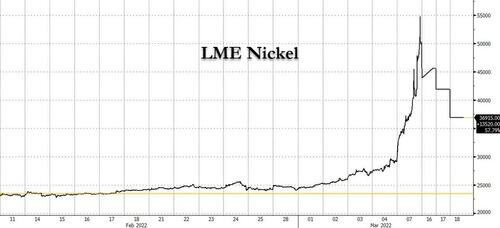
… forcing the LME to expand its daily halt limit, first at 8%, then to 12% and finally to 15%.
However, Nickel still has a ways to drop now that any pressure on Tsingshan to cover its massive short is gone (courtesy of liquidity guarantees from JPMorgan and others), and thus any attempts to force a squeeze are over, and as the LME price seeks to catch down to the nickel price in Shanghai – currently around $30K per ton – where trading was not suspended and where no traders received preferential treatment as they diligently paid their massive margin calls. All of which means that nickel, which on Friday closed limit-down at $36,915 a ton on the LME, has another 20% to drop to catch down to the Chinese nickel price.

The LME’s shocking inability to do its one main duty – which is to allow price discovery, not to bail out preferential clients – has meant that nickel traders, from commodity producers, to rabid speculators, to fabricators of downstream products such as stainless steel, have been frozen out of a market where there has been a price vacuum for nearly two weeks.
It’s also why enterprising banks such as Goldman Sachs have quietly taken advantage of this opportunity to step into the broken market and offer to trade nickel away from the London Metal Exchange, Bloomberg reports: the bank has been offering to trade contracts in commodity index products, such as the S&P GSCI, whose constituents include nickel.
Of course, Goldman stepping in to provide liquidity when the entire market is shut won’t come cheap, and Goldman’s traders are bidding Nickel at $25,000 a ton, and offering it at $37,000 a ton, roughly $5K on either side of the SHFE Nickel price which closed just under $30K/ton on Friday. It also means that Goldman can make as much as $12K per ton with just one trade, an truly historic commission. The mid-point of Goldman’s bid and offer, $31,000 a ton, is roughly where some traders expect the market to unfreeze, Bloomberg reported earlier.
Meanwhile, with his exchange’s reputation below rock bottom, the embattled boss of the London Metal Exchange decided to throw others under the bus too – not just Putin – and said the banking industry bears “some responsibility” for the conditions that led to a massive short squeeze that broke the nickel market.
According to LME outgoing CEO Matthew Chamberlain, banks last year lobbied against efforts to increase transparency in metals markets; the proposed changes would have allowed the LME to crack down on the large short position held by Tsingshan Holding Group Co. before it caused an unprecedented 250% price spike last week, he said.
He may have a point: while Tsinhshan boss Xiang Guangda has a short position of over 150,000 tons, only 30,000 tons of it is held directly on the exchange. The remainder is held via bilateral, “over-the-counter” deals with banks led by JPMorgan Chase, and including BNP Paribas SA, Standard Chartered Plc and United Overseas Bank, Bloomberg reported.
“The OTC position has caused significant problems for the exchange,” Chamberlain said on Friday in a Bloomberg interview. After the LME made a proposal last year to allow the exchange greater visibility of positions held on the OTC market, “it was rebuffed by a number of banks,” he said. “I don’t think we will allow it to be rebuffed again.”
Chamberlain has called for greater regulation of the over-the-counter commodity markets, comparable to measures taken elsewhere in the wake of the global financial crisis in 2008.
“There will now need to be a mature discussion about how the impact of the OTC market on the exchange can be more properly controlled,” he said. “It’s probably a similar discussion to what we’ve seen post-financial crisis in other asset classes. That really hasn’t been applied to commodities. Maybe that needs to be done”
Of course, Chamberlain doesn’t really care if traders abandon the LME after the nickel fiasco (and after the humiliation his exchange experienced, that wouldn’t be a shock) – in January he announced he is leaving the LME to take on a new role at a blockchain startup. In the interview, he refused to say if he would still leave the LME at the end of April as planned.
The LME, which since 2012 has been owned by Hong Kong Exchange & Clearing Ltd., is the ultimate decision maker on changes to its rules. But it must consult with market participants, and generally strives to keep its core members, which include many big banks, happy. The proposal for greater transparency for over-the-counter positions last year came at the same time as the LME was facing an outcry from users over a proposal to close its open-outcry trading floor, “the Ring,” from which it later backed down.

Chamberlain has faced furious criticism from users for the exchange’s decisions over the past two weeks, after it allowed nickel prices to skyrocket to more than $100,000 a ton, then suspended trading and retroactively canceled $3.9 billion of trades. The restart of nickel trading since Wednesday has also been hit by a series of glitches in the electronic market.
Chamberlain was quick to find guilty parties there too: he blamed the misfiring electronic market on “a bug in the underlying third-party software,” and said that if the LME had waited for all such issues to be ironed out it would have further delayed the market’s reopening.
Still, he acknowledged that the exchange would have “a huge amount of work” to do to regain the trust of investors. “I don’t in any way want to understate the understandable anger. I fully understand why people feel that way.”
END
URANIUM UPDATE
This should be deadly: Russia is considering a ban on all uranium exports
(zerohedge)
Uranium Stocks Soar After Russia Says Considering Ban On Uranium Exports
MONDAY, MAR 21, 2022 – 10:26 AM
Several weeks ago, when Biden instituted a wholesale ban on Russian energy exports, he explicitly carved out Russian uranium suppliers for the simple reason that the US is very much reliant on Russia for its nuclear power plant needs – after all, Russia is the third-largest source of U.S. uranium, accounting for about 16% of total U.S. imports. It’s what prompted us to ask back on March 9 whether Putin would place enriched uranium on the list of banned Russian exports, and why Uranium stocks soared late last week after U.S. Energy Department signaled more aid for current and future nuclear reactors.
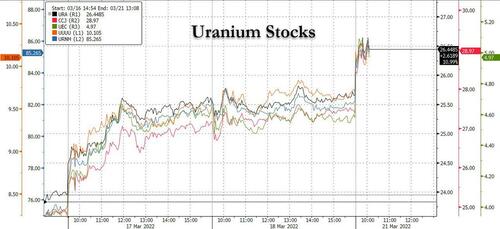
Well, moments ago the very thorny issue of Russian uranium came to a head moments ago when Russia news agency TASS, cited deputy prime minister Novak, who said that Russia is considering a ban on Uranium exports!
- RUSSIA CONSIDERING BAN ON URANIUM EXPORTS: TASS CITES NOVAK
The news sent a basket of Uranium stocks and ETFs to fresh 2022 highs…
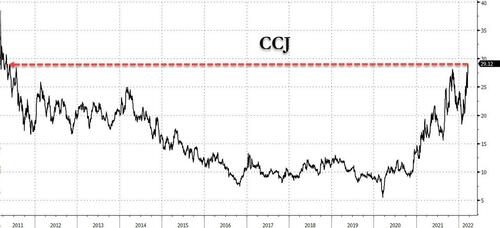
… and pushed our preferred uranium miner, Canada’s Cameco Corp – which we have been recommending since it was about $10/share back in Dec 2020, briefly above $30, the highest price since 2011.
END
POTASH/FERTILIZER
This is deadly to Canada’s and the world’s food supply
(zerohedge)
3,000 Canadian Pacific Rail Workers Strike As Fertilizer Shipments Grind To Halt
MONDAY, MAR 21, 2022 – 04:43 PM
The North American agricultural sector could be in for a major shock if Canadian Pacific Railway Ltd’s (CP Rail) work stoppage is not resolved in a timely manner because it could spark a shortage of fertilizer and other shipments critical for the spring growing season, according to AP News.
AP News reports more than 3,000 CP Rail conductors, engineers, train, and yard workers represented by the Teamsters Canada Rail Conference stepped off the job Sunday as the union and CP Rail couldn’t strike a deal.

CP Rail is the leading carrier of potash, a potassium-rich salt mined from underground deposits formed from evaporated sea beds millions of years ago, used to support crop development. In prior investor documents, the rail company said it hauls 70% of the potash produced in North America, all from mines in Canada. The railroad also carries fertilizers, including phosphate, urea, ammonium sulfate, ammonium nitrate, and anhydrous ammonia.
A disruption of fertilizer shipments could significantly impact US farmers on the cusp of planting season. The work stoppage may exacerbate existing supply chain bottlenecks in North America stemming from COVID. The agricultural sector can’t afford any more disruptions as Western economic sanctions on Russia and Belarus, two major fertilizer producers, have unleashed higher prices globally and shortage fears. Here’s how much fertilizer Russia exports to North America.

The union said they tried to continue bargaining, but CP Rail “chose to put the Canadian supply chain and tens of thousands of jobs at risk.”
“As Canadians grapple with a never-ending pandemic, exploding commodity prices and the war in Ukraine, the rail carrier is adding an unnecessary layer of insecurity, especially for those who depend on the rail network,” the union said.
Canadian potash spot prices per ton in USD are nearing record-high levels.
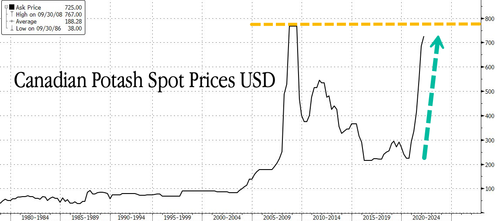
CP Rail extends throughout the Midwest; Its rail services cover Dakotas, Minnesota, Iowa, Illinois, Wisconsin, Missouri, other regions, including parts of the Northeast.
Federal negotiators are moderating the discussions between CP Rail and the union. However, there’s no timeline on when an agreement will be reached.
Mike Steenhoek, the Iowa-based executive director of the Soy Transportation Coalition, was quoted by Reuters as saying, “the current war in Ukraine is placing additional pressure on delivering U.S. agricultural production and inputs, particularly fertilizer.”
“A shut down in operations at Canadian Pacific will certainly compound that stress,” Steenhoek said.
Canada is about a month away from seeding, and parts of the US could be imminently ready to plant. If farmers don’t have enough fertilizer on hand, it could have severe implications for declining yields for this year’s harvest.
For the sake of the North American food supply, let’s hope a resolution is found shortly. Otherwise, anyone who didn’t prepare for food shortages will be eating lentils and insects.
6.CRYPTOCURRENCIES
7. GOLD/ TRADING TODAY
Your early currency/gold and silver pricing/Asian and European bourse movements/ and interest rate settings MONDAY morning 7:30 AM
ONSHORE YUAN: CLOSED UP 6.3558
OFFSHORE YUAN: 6.3671
HANG SANG CLOSED DOWN 191.06 PTS OR 0.89%
2. Nikkei closed
3. Europe stocks ALL GREEN
USA dollar INDEX UP TO 98.36/Euro RISES TO 1.1037
3b Japan 10 YR bond yield: RISES TO. +.208/ !!!!(Japan buying 100% of bond issuance)/Japanese yen vs usa cross now at 119.16/ THIS IS TROUBLESOME AS BANK OF JAPAN IS RUNNING OUT OF BONDS TO BUY./JAPAN 10 YR YIELD IS NOW TARGETED AT .11%/JAPAN LOSING CONTROL OF THEIR BOND MARKET//
3c Nikkei now ABOVE 17,000
3d USA/Yen rate now well below the important 120 barrier this morning
3e WTI:: 108.95 and Brent: 112.45
3f Gold UP /JAPANESE Yen DOWN CHINESE YUAN: DOWN -SHORE CLOSED UP// OFF- SHORE UP
3g Japan is to buy the equivalent of 108 billion uSA dollars worth of bond per month or $1.3 trillion. Japan’s GDP equals 5 trillion usa./“HELICOPTER MONEY” OFF THE TABLE FOR NOW /REVERSE OPERATION TWIST ON THE BONDS: PURCHASE OF LONG BONDS AND SELLING THE SHORT END
Japan to buy 100% of all new Japanese debt and by 2018 they will have 25% of all Japanese debt. Fifty percent of Japanese budget financed with debt.
3h Oil UP for WTI and UP FOR Brent this morning
3i European bond buying continues to push yields lower on all fronts in the EMU. German 10yr bund RISES TO +.0.410%/Italian 10 Yr bond yield RISES to 1.95% /SPAIN 10 YR BOND YIELD RISES TO 1.35%…ITALIAN 10 YR BOND YIELD/GERMAN BUND: 1.61: DANGEROUS FOR THE ITALIAN BANKING SYSTEM
3j Greek 10 year bond yield RISES TO : 2.64
3k Gold at $1925.45 silver at: 25.02 7 am est) SILVER NEXT RESISTANCE LEVEL AT $30.00
3l USA vs Russian rouble;// Russian rouble UP 2.25/100 in roubles/dollar; ROUBLE AT 104.24
3m oil into the 108 dollar handle for WTI and 112 handle for Brent/
3n Higher foreign deposits out of China sees huge risk of outflows and a currency depreciation. This can spell financial disaster for the rest of the world/
JAPAN ON JAN 29.2016 INITIATES NIRP. THIS MORNING THEY SIGNAL THEY MAY END NIRP. TODAY THE USA/YEN TRADES TO 119.16 DESTROYING JAPANESE CITIZENS WITH HIGHER FOOD INFLATION
30 SNB (Swiss National Bank) still intervening again in the markets driving down the FRANC. It is not working: USA/SF this morning .9308– as the Swiss Franc is still rising against most currencies. Euro vs SF 1.0274 well above the floor set by the Swiss Finance Minister. Thomas Jordan, chief of the Swiss National Bank continues to purchase euros trying to lower value of the Swiss Franc.
USA 10 YR BOND YIELD: 2.195 UP 6 BASIS PTS
USA 30 YR BOND YIELD: 2.446 UP 2 BASIS PTS
USA DOLLAR VS TURKISH LIRA: 14.83
US Equity Futures Reverse Overnight Decline, Turn Positive As Oil Surges
MONDAY, MAR 21, 2022 – 07:52 AM
U.S. equity futures and European bourses stocks reversed modest overnight losses and turned higher as US traders got to their desks on Monday as crude oil extended a climb and investors monitored diplomatic efforts to bring an end to Russia’s almost month-old war in Ukraine. S&P futures rose 0.07% or 3 points after earlier sliding almost 30 points; Nasdaq futures were flat.
Focus on Monday will be on a speech by Fed Chair Jerome Powell after the central bank kicked off a rate-hiking cycle last week. Powell is set to speak at the annual meeting of the National Association for Business Economics at 12pm ET; text release and Q&A are expected.
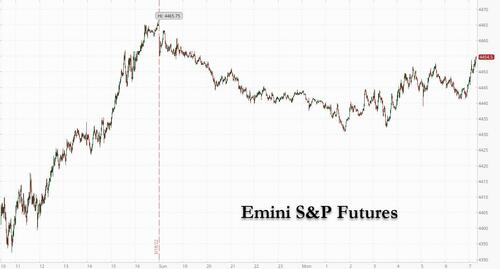
In addition to concerns about Russian crude supply, which Russia’s deputy prime minister Novak said could surge to $300/bbl if Russian oil is shunned, also jumped after Saudi Arabia announced a “temporary reduction” in oil output at an Aramco facility after Yemen’s Houthi rebels launched multiple cross-border attacks on Sunday .A drone assault on the YASREF refinery, in the Yanbu Industrial City on the Red Sea, has “led to a temporary reduction in the refinery’s production, which will be compensated for from the inventory,” the energy ministry said in a statement. WTI rose as high as $108, surging $15 from prices hit last Tuesday, with Brent trading around $113.
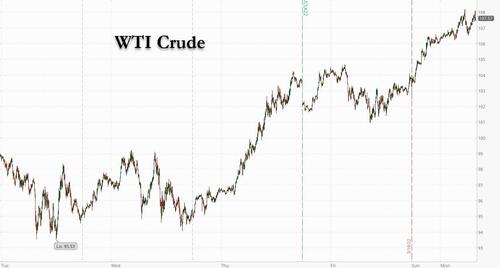
The S&P 500 last week had its biggest gain since November 2020 and European equities recouped all of their losses triggered by Russia’s invasion of Ukraine nearly a month ago as peace negotiations and the lure of cheap valuations drew investors back. But that optimism may not be justified, given the “increasingly brutal measures that Russian forces are taking,” according to Michael Hewson, chief analyst at CMC Markets in London. “There appears to be a growing disconnect between what markets are doing and what is happening on the ground in Ukraine,” he said in a report. “Commodity markets continue to chop wildly” and “concerns about inflation are still posing awkward questions for central banks,” Hewson wrote.
A key question is whether last week’s stock rebound and drop in volatility are durable. European equities have recouped all of their losses triggered by Russia’s invasion of Ukraine nearly a month ago as optimism around peace negotiations and the lure of cheapened valuations draw investors back. But a historic spike in commodity prices on supply concerns shows little sign of easing, keeping traders on high alert over inflation and shaking their faith in the Federal Reserve to douse price pressures while keeping the economic recovery on track.
“The Fed comes out last week and basically tells you they have to do more — into higher inflation but slowing growth,” Brian Weinstein, head of global fixed income at Morgan Stanley Investment Management, said in an interview with Bloomberg TV. “It certainly looks like the market is afraid of a traditional Fed goes too much, slows the economy down, and we don’t get the much-anticipated soft landing.”
In premarket trading, Boeing stock tumbled 6.6% after a China Eastern Airlines Boeing 737-800NG (yes, THE 737 MAX) plane carrying 132 people crashed in southwestern China.
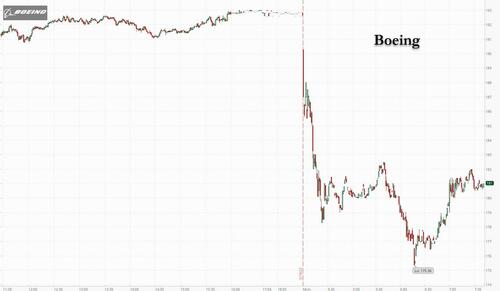
Additionally, US-listed Chinese stocks slumped in premarket trading Monday, following their Asian peers lower, as investors were disappointed after Chinese banks left the loan prime rate unchanged despite expectations of some easing. Large-cap technology stocks are leading the decline including Alibaba -5.6%, JD.com -6%, NetEase -5.7%, Pinduoduo -5.6% and Baidu -3.4%. Among other China stocks listed in the U.S. that are lower this morning: Nio -2%, Li Auto -4.2%, XPeng -4.3%, Didi -5.9%, KE Holdings -6.4%, Lufax -3.2%, Trip.com -6.2%, Bilibili -7.6% and Tencent Music -7.5%. Other notable premarket movers:
- Anaplan (PLAN US) shares jump 27% in U.S. premarket after Thoma Bravo agreed to acquire U.S. enterprise software company in a deal valued at $10.7 billion, adding to a string of deals this year by cash-rich private equity firms.
- Nielsen Holdings (NLSN US) shares decline in U.S. premarket after it rejected an acquisition proposal from a private equity consortium, valuing the company at $25.40/share, a price that doesn’t “adequately compensate shareholders for Nielsen’s growth prospects.”
- Uber (UBER US) shares are slightly lower in U.S. premarket trading after price target is lowered at RBC Capital Markets, with broker less positive on the ride-hailing giant versus peer Lyft following proprietary driver supply analysis.
- Alleghany Corp. (Y US) shares could be active as Berkshire Hathaway Inc. is buying it for $11.6 billion in cash.
In the latest developments, Ukraine rejected a Russian demand that its forces lay down their arms Monday and leave the besieged southern port of Mariupol, which has been under intense Russian bombardment. Morgan Stanley’s chief U.S. equity strategist Michael Wilson said the recent rebound in U.S. stocks is an opportunity to sell and position more defensively. Meanwhile, U.S. President Joe Biden will speak with European leaders ahead of his trip to the continent this week. Senior U.S. officials will also meet with executives of Exxon Mobil Corp., JPMorgan Chase & Co. and other firms about the impact of the invasion and sanctions.
European equities had a subdued start to the week with most indexes opening flat. Euro Stoxx 50 and DAX rise slightly, while the FTSE MIB outperformed gaining 0.7%. Energy and mining stocks lead gains, tech and travel are in the red. Commodity-linked stocks are the biggest gainers on the Stoxx Europe 600 as prices rally with the war in Ukraine nearing the end of its first month with no conclusion in sight. The basic resources sub-index rises 1.8% as the energy sub-index gains 1.5%. Rio Tinto, Glencore and Anglo American are among the miners rising while Shell, BP and Equinor lead gains among energy stocks. Meanwhile, Europe’s formerly “unstoppable” luxury stocks are facing a swath of new challenges, from rising rates, war in Ukraine and China risks, leaving investors and analysts divided on whether valuations have fallen far enough yet. The MSCI Europe Textiles Apparel & Luxury Goods Index is down 14% this year, following three years of outsized gains. Hermes, the maker of $10,000 Birkin bags, is among top decliners, down 21% after a whopping 75% jump last year. Louis Vuitton owner LVMH, meanwhile, recently lost its crown as Europe’s biggest company to food giant Nestle. Investors were already dumping pricey luxury stocks in favor of cheaper shares amid concerns about rate hikes, while the war in Ukraine added further uncertainty. Valuation-wise, the group now trades at about a 60% premium to the broader market, near pre-pandemic levels and below its 5-year average.
Asia stocks fell after China’s lenders kept borrowing costs unchanged. The MSCI Asia Pacific Index was down 0.5% as of 3:13 p.m. in Singapore, erasing an earlier gain of 0.4%, weighed by declines in financials and communication services. The regional benchmark’s bumpy day followed its best week since February 2021. “Some may have clung to expectations for an LPR cut today, which I think will come later when they assess the growth drag from the outbreak,” said Wai Ho Leong, strategist at Modular Asset Management. “Peace talks and the Xi-Biden call also did not deliver substantive outcomes.” Stocks climbed last week as China pledged to stabilize its markets, and some traders had expected some help from banks’ loan prime rate announcement Monday. Talks between Xi Jinping and Joe Biden held Friday also failed to excite investors, although China’s top envoy to Washington pledged his country “will do everything” to de-escalate the war in Ukraine. Hong Kong Lifts Overseas Flight Ban; Cuts Hotel Quarantine Shares slid in China and Hong Kong, erasing earlier gains. Stocks in South Korea and Malaysia led declines in the region. Japanese markets were closed for a holiday.
India’s stocks took a breather on Monday after a sharp rally last week, as a drop in financial and consumer goods companies weighed on the indexes. The S&P BSE Sensex fell 1% to 57,292.49 in Mumbai, while the NSE Nifty 50 Index dropped by an equal measure. The gauges posted their biggest single-day drop since March 15. All but three of the 19 sector sub-indexes compiled by BSE Ltd fell, led by a gauge of utility companies. “Slowing rural sector is a risk even as urban consumption is showing signs of relatively better performance,” according to JM Financial analyst Dhananjay Sinha. Lower than expected growth and higher inflation are a key risk to Indian companies’ profitability, he added. Metal stocks were among gainers as Vedanta, Hindalco Industries and Coal India rose on the back of rising prices and worsening demand-supply scenario. ICICI Bank contributed the most to Sensex’s decline, decreasing 1.3%. Out of 30 shares in the Sensex, 25 fell, while 5 declined.
In FX, most FX majors are range-bound, as the DXY hovers on 98.000 handle awaiting speeches from Fed’s Bostic and chair Powell. Loonie underpinned by strong oil prices -Usd/Cad straddling 1.2600. Franc firm ahead of SNB policy assessment as Swiss sight deposits suggest less intervention; USD/CHF near 0.9300 and EUR/CHF sub-1.0300. Euro straddles 1.1050 with hawkish ECB commentary supportive, but hefty option expiries capping the upside (almost 2.8bln at 1.1100) Aussie unwinding recent gains on technical grounds and in wake of defeat for PM Morrison’s liberal party in local election – Aud/Usd back below 0.7400. Sterling still smarting after last week’s dovish BoE hike – Cable around 1.3150 and Eur/Gbp probing 100 DMA at 0.8415.
In rates, Treasuries followed wider losses across gilts while front-end leads the move lower, flattening the curve. 2Y-5Y yields cheaper by ~4bp, flattening 5s30s spread by ~3bp; 10-year yields around 2.18%, higher by ~2bp vs ~4bp for U.K. 10- year. Bunds and gilts bear steepen, cheapening roughly 3bps across the back end. Cash USTs open bear flatter with short dated yields up close to 5bps. Peripheral spreads are slightly wider to core.
In commodities, crude futures extend Asia’s gains; WTI adds ~4% to trade just shy of a 109-handle. Spot gold trades a narrow range in small positive territory near $1,924/oz. Base metals are mixed; LME nickel trades limit down for the fourth straight session. LME aluminum gains 3.8%, trading just off the late-Asia highs after Australia, the world’s biggest exporter of alumina, announced a ban on shipments to Russia.
Bitcoin is modestly pressured but contained within last week’s parameters overall, holding above USD 41k.
Today’s calendar is relatively quiet, with just the Chicago Fed National Activity Index on dex (exp 0.5, down from 0.69). Powell speaks at NABE at 12pm although it is unlikely he will make any monetary policy comments.
Market Snapshot
- S&P 500 futures up 0.1% to 4,448.75
- STOXX Europe 600 little changed at 455.00
- MXAP down 0.5% to 177.54
- MXAPJ down 0.7% to 579.14
- Nikkei up 0.7% to 26,827.43
- Topix up 0.5% to 1,909.27
- Hang Seng Index down 0.9% to 21,221.34
- Shanghai Composite little changed at 3,253.69
- Sensex down 0.8% to 57,428.60
- Australia S&P/ASX 200 down 0.2% to 7,278.55
- Kospi down 0.8% to 2,686.05
- Brent Futures up 3.8% to $112.03/bbl
- Gold spot up 0.2% to $1,924.77
- U.S. Dollar Index little changed at 98.27
- German 10Y yield little changed at 0.39%
- Euro little changed at $1.1048
- Brent Futures up 3.8% to $112.03/bbl
Top Overnight News from Bloomberg
- Ukraine rejected a Russian demand to surrender of the embattled southern port city of Mariupol, and an aide to President Volodymyr Zelenskiy said Russian forces are using “more destructive artillery.” More talks on ending the war are expected on Monday after Turkey said the two sides had made progress on key points
- Chinese banks left borrowing costs unchanged in line with expectations as the focus shifts to other possible easing measures from the central bank after top leaders pledged to boost the economy
- European Central Bank Vice President Luis de Guindos has yet to see any indication that soaring inflation rates are leading to higher wage demands, according to an interview with Handelsblatt
- Oil rose for a third day as the war in Ukraine neared the end of its first month with no end in sight, and Iranian-backed rebels attacked energy facilities in key exporter Saudi Arabia
- Hong Kong will lift a ban on flights from nine countries including the U.S. as of April 1, and cut the time incoming travelers need to spend in hotel quarantine in half provided they test negative, Chief Executive Carrie Lam said
- China and Russia’s trade relationship has become more complicated since the war started more than three weeks ago, raising questions about the future flow of energy, metals and crops between the two powerhouses
A more detailed look at global markets courtesy of Newsquawk
Asia-Pac stocks were choppy with sentiment clouded amid the uncertain geopolitical climate and higher oil prices. ASX 200 was indecisive as outperformance in tech was offset by losses in financials and with PM Morrison’s Liberal Party defeated in South Australia’s state election, raising concerns for the government ahead of the federal election in two months Nikkei 225 was closed for the Vernal Equinox holiday. Hang Seng and Shanghai Comp. swung between gains and losses with an early surge in Hong Kong tech stocks ahead of a widely speculated relaxation to COVID restrictions after the city’s daily cases fell to a threeweek low and with China’s tech hub of Shenzhen resuming normal work output. However, the gains were wiped out with the mainland hampered as Shanghai tussles with a COVID-19 outbreak, while the PBoC also kept its Loan Prime Rates unchanged, as expected.
Top Asian News
- Indonesia Ends Quarantine Requirement for Overseas Travelers
- Asia Stocks Edge Down as Concerns Linger on China Policy Support
- Russia’s War Lifts Default Risk for Distressed Economies
- China Confirms Ambassador Met With Russian Defense Official
European bourses are contained and haven’t differed too far from the unchanged mark overall, Euro Stoxx 50 +0.1%, as we await updates on Russia-Ukraine. Developments throughout the morning have been limited, and commentary from the Kremlin is predominantly infitting with last-week’s/weekend updates. US futures are pressured, ES -0.2%, awaiting geopolitical catalysts with Fed speak, including Chair Powell, ahead. China Eastern airlines passenger jet flying from Kunming to Guangzhou on Monday experienced an accident in Guangxi, via State Media; unknown injuries/deaths from the accident. Craft was a Boeing (BA) 737 . Subsequently, China’s Aviation Regulator confirms the crash of the China Eastern airlines passenger jet carrying 132 people. Boeing -8.3% in the pre-market Berkshire Hathaway (BRK/B) is to purchase Alleghany Corp (Y) for USD 848.02/shr (vs. close USD 676.75 /shr) in a USD 11.6bln transaction.
Top European News
- ECB’s Lagarde Says She’s Not Seeing Elements of Stagflation Now
- LSE Group to Sell BETA+ to Motive Partners, Clearlake: Sky
- S&T CEO’s Grosso Tech to Offer EU15.30/Shr for ~5.5m S&T Shares
- Julius Baer Says Sanctioned Clients in ‘Low Single Digits’
In FX, DXY hovers on 98.000 handle awaiting speeches from Fed’s Bostic and chair Powell. Loonie underpinned by strong oil prices -Usd/Cad straddling 1.2600. Franc firm ahead of SNB policy assessment as Swiss sight deposits suggest less intervention; USD/CHF near 0.9300 and EUR/CHF sub-1.0300. Euro straddles 1.1050 with hawkish ECB commentary supportive, but hefty option expiries capping the upside (almost 2.8bln at 1.1100) Aussie unwinding recent gains on technical grounds and in wake of defeat for PM Morrison’s liberal party in local election – Aud/Usd back below 0.7400. Sterling still smarting after last week’s dovish BoE hike – Cable around 1.3150 and Eur/Gbp probing 100 DMA at 0.8415.
In commodities, WTI and Brent have been dipping from best-levels, but remain underpinned on the session amid weekend geopolitical premia.; albeit, the European morning’s developments have been more limited. WTI May resides around USD 107/bbl (vs high ~108.20/bbl) while its Brent counterpart trades just under USD 112 /bbl (vs high ~112.75/bbl). Saudi-led coalition reported that Yemen Houthis targeted a gas station in Khamis Mushait on Saturday which resulted in material damage to civilian cars and homes but no casualties, according to the state news agency. Saudi-led coalition also said it destroyed an explosive-laden boat to thwart an attack on shipping in the Red Sea, while it was also reported that Aramco’s petroleum products distribution plant in Jeddah was attacked and production at a Saudi oil refinery in Yanbu declined momentarily after an attack by Houthis. Saudi Aramco reported FY net income USD 110.0bln vs prev. USD 49.0bln Y/Y, while the CEO expects oil demand to return to pre-pandemic levels by year-end and said they are seeing healthy demand especially in Asia. Saudi Aramco’s CEO also noted that there is limited spare capacity which is declining every month with global spare capacity around 2mln bpd and that the market is very tight in terms of available barrels.
US Event Calendar and Central Bank speakers
- 8am: Fed’s Bostic Gives Speech at NABE Conference
- 8:30am: Feb. Chicago Fed Nat Activity Index, est. 0.50, prior 0.69
- 12pm: Fed Chair Powell speaks at NABE
DB’s Jim Reid concludes the overnight wrap
After a few weekends with some dramatic news of late, this weekend was relatively sparse in terms of new incremental news flow. The conflict and negotiations continue but without any major developments. Last week was the best for US and European equities since November 2020’s US election week; so markets are coming to terms with the current state of the conflict.
Over the weekend, Ukrainian officials rejected an offer given by the Russian military for its forces and civilians to surrender the city of Mariupol as shelling continued in Kyiv. Separately, the White House announced that President Joe Biden will travel to Poland in his upcoming trip to Europe for urgent talks with NATO and European allies. Mr. Biden is also hosting a call with his counterparts in the UK, Germany and Italy today at 11am UK time.
Overnight, Turkey’s Foreign Minister Mevlut Cavusoglu indicated that Ukraine and Russia are close to an agreement following progress in peace talks and is hopeful for a ceasefire if both the sides do not backtrack from their current positions. However there is no other developments on the current state of negotiations.
Asian equity markets have started the week on a weaker footing with the Hang Seng (-0.69%), reversing its early morning gains after it rose more than 1%. Mainland Chinese stocks are also dipping as I type with the CSI (-0.66%) and Shanghai Composite (-0.10%) lower after the PBOC kept the one-year loan prime rate unchanged at 3.7%. Elsewhere, markets in Japan are closed for a holiday. Moving on, stock futures in the DMs are also falling, as contracts on the S&P 500 (-0.42%), Nasdaq (-0.60%) and DAX (-0.58%) are all down.
Oil prices are up this morning with Brent futures advancing +3.08% to $111.25/bbl while WTI futures are up +3.23% at $108.08/bbl, as I type. Elsewhere, today’s holiday in Japan means no USTs trading in Asia.
One of the key events this week will be Thursday’s March flash PMIs from around the world where we’ll see the first impact of the Russia/Ukraine conflict on activity, especially in Europe.
Outside of that, UK CPI data on Wednesday is going to be very interesting after the BoE warned on both growth and inflation last week in their surprisingly dovish hike. See our UK economist’s review here. There is also the Spring UK (Budget) Statement on Wednesday (preview here) where all things fiscal will be in focus.
Wednesday’s new home sales, Friday’s pending home sales and Thursday’s durable goods are the main economic releases in the US.
There’s plenty of Fed speak to sharpen up the message from last week’s FOMC but don’t expect a chorus line singing from the same song sheet. The dot plot showed the range of YE ’22 Fed funds rates, as forecast by the committee, was a historically wide 1.4% to 3.1%. Boston (non-voter hawk) and Chair Powell himself are up today with the latter also on the docket on Wednesday. Williams (dove) will be on a panel tomorrow but also gives a speech on Friday. Daly (non-voter / dove) speaks tomorrow, Wednesday and Friday. Mester (voter / hawk) speaks tomorrow. Bullard (voter / hawk) is up on Wednesday and remember he was the lone 50bps dissenter last week. Kashkari (non-voter / dove), Governor Waller (hawk) and Chicago President Evans (non-voter / dove) speak on Thursday. Barkin (non-voter / hawk) concludes the Fed’s business for the week on Friday.
Looking back at last week now and the conflict raged on but peace negotiations between Ukraine and Russia continued, with the headlines presenting a staccato back and forth about Ukrainian and Russian leaders’ current perceptions of the negotiation outlook. Markets seemed to look through this back-and-forth and took solace that negotiations were even happening, which was a material step up from where we were but a short time ago. In particular, both sides reported common ground on Ukraine’s neutral status and lack of NATO membership as a positive.
Another positive came on Friday after Presidents Biden and Xi Jinping spoke. China’s support for Russia remained a key unknown, but following the call both sides expressed aspirations for a peaceful resolution to the conflict, and for tensions to not escalate any further. Ahead of the meeting, US diplomatic officials warned that the US would impose costs on China were it to support the Russian invasion.
Russian sovereign bond payments made their way to creditors via custodians, despite some uncertainty, avoiding a default. Nevertheless, S&P cut the rating on Russian sovereign debt another notch, considering it at high risk of default. However, Russia’s remaining interest repayments this month will keep investors anxious as a $447 million payment is due on March 31, followed by a $2 billion payment as a bond comes due on April 4.
Dragging on sentiment were American intelligence reports that President Putin was prepared to re-engage in nuclear sabre rattling should the conflict drag on. That drove futures lower at the time of release but was not enough to drag risk negative on the week.
That said it was a good week for risk with the S&P 500 and STOXX 600 gaining +6.16% (+1.17% Friday) and +5.43% (+0.91% Friday) over the week, respectively. That marked the best weekly performance for both indices since the week of the US Presidential election in November 2020. Financials and mega cap tech stocks performed even better. The S&P and STOXX bank indices gained +6.60% (-0.15% Friday) and +8.72% (+0.22% Friday), respectively, while the FANG+ gained +13.61% (+3.37%). That was the best weekly performance ever for the FANG+, which also put in its best daily performance ever on Wednesday following the Fed meeting, and more positive Chinese state support news (the index contains Baidu and Alibaba), gaining +10.19%.
Speaking of the Fed, after two years at the zero lower bound, the FOMC raised policy rates by 25 basis points, with the dots projecting an additional 150 basis points of tightening this year, in line with DB expectations. Further, the Fed’s projections put policy into an explicitly restrictive stance by 2023. Despite the tightening, Chair Powell did not place particularly high risks on a recession occurring in the next year, which was apparently enough to help equities, with the S&P gaining +2.24% the day of the meeting in addition to the gangbusters day for the FANG+ index.
The Fed also announced plans to start reducing their bond holdings at a coming meeting. Chair Powell noted the asset holding reductions would roughly equate to an additional 25 basis points of tightening this year and could commence as early as the FOMC’s next meeting in May.
Money markets ended the week pricing around 167 basis points of additional policy rate tightening, suggesting some probability of a 50 basis point hike this year, which the Chair did not rule out. 10yr Treasury yields gained +15.8bps (-2.1bps Friday) on the week, driven entirely by real yields, which increased +22.7bps (+1.5bps Friday). The 2s10s yield curve continued its flattening, as 2yr yields gained +18.8bps (+2.2bps Friday), bringing the level to 20.5bps, the lowest since early March 2020.
The Bank of England also hiked rates, raising the Bank Rate by 25 basis points in an 8-1 decision. The lone dissenter preferred to keep policy rates on hold, in contrast to the four dissenters in the February meeting which voted for a 50 basis point increase.
Forward guidance added to the dovish tone, as it emphasised two-sided risks around the outlook, with downside impacts to growth featuring as prominent as upside risks to inflation, in contrast with recent advanced economy central bank communications. In line, 10yr gilt yields lagged other DM yields, gaining +0.6bps (-6.8bps Friday), as 10yr bunds increased +12.4bps (-1.2bps Friday). 2yr gilt yields priced out hikes, falling -10.9bps (-8.9bps Friday). Markets are pricing the Bank Rate to end the year at 1.87%, as opposed to 2.0% a week ago.
Meanwhile, the Bank of Japan left policy unchanged, and warned of downside risks to growth stemming from the invasion of Ukraine, picking up the BoE’s dovish mantle.
In line with the improvement in risk sentiment, crude oil prices fell a modest -3.97% over the week (+1.21% Friday), but still put in some large intraday swings. Prices also eased following reports that progress on the Iran nuclear deal would not be handcuffed by sanctions on Russia. European natural gas also fell -23.42% (-0.65% Friday). Given the volatility in energy markets, French President Macron warned the state may need to seize control of some energy firms.
Elsewhere, sentiment was boosted by reports that China would actively introduce policies that benefit markets and take steps to avoid the most spartan lockdown measures.
END
3. ASIAN AFFAIRS
i)MONDAY MORNING// SUNDAY NIGHT
SHANGHAI CLOSED UP 2.61 PTS OR 0.08% //Hang Sang CLOSED DOWN 191.06 PTS OR 0.89 % /The Nikkei closed //Australia’s all ordinaires CLOSED DOWN 0.16% /Chinese yuan (ONSHORE) closed UP 6.3558 /Oil UP TO 108.95 dollars per barrel for WTI and UP TO 112.65 for Brent. Stocks in Europe OPENED ALL GREEN // ONSHORE YUAN CLOSED UP AGAINST THE DOLLAR AT 6.3558. OFFSHORE YUAN CLOSED UP ON THE DOLLAR AT 6.3671: /ONSHORE YUAN TRADING ABOVE LEVEL OF OFFSHORE YUAN/ONSHORE YUAN TRADING STRONGER AGAINST US DOLLAR/OFFSHORE STRONGER//
3 a./NORTH KOREA/ SOUTH KOREA
///NORTH KOREA
END
3B JAPAN
3c CHINA
CHINA//SHENZHEN
Shenzhen, one of the largest ports in China and for that matter, the rest of the world is scrambling to ease lockdowns..port congestion still persists
(zerohedge)
Shenzhen Scrambles To Ease Lockdown As Port Congestion Persists
SUNDAY, MAR 20, 2022 – 06:00 PM
The CCP continued to ease lockdown restrictions on Shenzhen over the weekend as the municipal government claimed that the spread of COVID in the city is “overall controllable.”
Shenzhen’s municipal government said it would resume normal operations and production, according to a notice posted to its WeChat account on Friday.
As factories reopen, citywide bus and subway services will also resume, according to the notice, which said the reopening would be effective starting March 21 through March 27.
The city’s COVID situation is still grim, but it’s overall controllable, according to the notice. The move follows a partial lift of restrictions for five districts of Shenzhen on Friday, as President Xi Jinping said.
The reopening comes as China seeks to minimize the economic and social disruption to the economy from its COVID zero policy.
But the city’s reopening hasn’t been quick enough to prevent a backlog at Shenzhen’s critical ports. Cargo ships are accumulating at one of the busiest ports in the country after another COVID outbreak shut down factories and warehouses, raising the prospect of a new round of bottlenecks that could push up freight rates and slow deliveries.
There are more than 35 ships waiting to dock in Shenzhen and another 30 farther north in Qingdao, according to shipping brokers. The Port of Shenzhen, which serves a major manufacturing and export hub, includes the Yantian terminal, which handles about 25% of all US-bound Chinese exports. Manufacturing plants and warehouses in the city were ordered to close this past week, while another container load is falling fast as fewer trucks are arriving.
“I’ve got a load of bicycles, but stuck 16 kilometers on the highway coming into the port for almost two days,” said Wei Wu, a truck driver moving boxes for a European container and logistics operator. “Very little moves in Shenzhen. You need to test repeatedly, and I don’t know if the ship will be allowed to come in.”
The lockdown in Shenzhen was partially lifted Friday after President Xi Jinping told a Politburo meeting that while sticking to its COVID-zero policy, the government should “minimize the impact” of the pandemic on the country’s economy.
According to WSJ, the Danish boxship company AP Moller-Maersk said that although terminals in Shenzhen are operational, the shipping giant had come up with contingency plans that could divert ships if the COVID restrictions there remain.
end
CHINA/USA
END
CHINA/SHIPPING
.
4/EUROPEAN AFFAIRS//UK AFFFAIRS
//AUSTRIA/COVID
Austrian authorities are totally nuts and do not get it. The sub variant is more transmissible but less toxic. It would be better for younger ones to get the virus and then get natural immunit
(Watson/SummitNews)
Austria To Reintroduce COVID Mask Rules Just Two Weeks After They Were Abolished
SATURDAY, MAR 19, 2022 – 10:30 AM
Authored by Paul Joseph Watson via Summit News,
After a surge in COVID cases caused by the BA.2 Omicron sub-variant, Austria is set to re-impose mask mandates that were dropped just two weeks ago.

And there you were thinking the technocrats had finally let it go.
Mask mandates in every area of the country apart from the capital Vienna were lifted as part of the general continent-wide trend of finally learning to “live with COVID.”
That included ending the requirement for Austrians to show proof of vaccination or a negative test to enter most premises.
However, despite the BA.2 variant proving even less dangerous than the original Omicron variant in terms of hospitalisations and deaths, restrictions are being brought back.
“Austria to reintroduce mandatory mask mandates in most indoor settings starting next week, just two weeks after the requirement was abolished,” reports Disclose.tv.
Vienna Mayor Michael Ludwig has also announced that new restrictions will be imposed on hospitals, which will allow only one patient to visit at a time.
Ludwig has also refused to follow the national government’s decision to drop mask mandates, which will remain in place.
Members of Austria’s national COVID crisis coordination team (GECKO) may also be forced to resign due to apparent “anger” at the national government’s decision to end all restrictions earlier this month.
“Some people are feeling high levels of resentment at Gecko,” said molecular biologist Andreas Bergthaler.
Maybe someone should explain to them that there is absolutely zero correlation between the lifting of lockdown rules and a spike in COVID cases or any real world evidence that masks work to reduce infection levels.
As we highlighted earlier, Dr. Anthony Fauci is also refusing to rule out new lockdown measures in the US despite admitting the new sub-variant’s mortality rate is even lower than the original strain.
END
SPAIN/COVID MANDATE// UKRAINE-RUSSIA WAR//TRUCKING STRIKE
the war in Ukraine as well as the COVID lockdowns has caused fuel prices to skyrocket and that have caused a massive nationwide trucker’s strike
(Nick Cobrishley/Naked Capitalism)
Parts Of Spanish Economy Grind To A Halt After Five-Day Nationwide Truckers’ Strike
SATURDAY, MAR 19, 2022 – 09:20 AM
Authored by Nick Cobrishley via NakedCapitalism.com,
Like the Trudeau government, Pedro Sánchez’s ruling coalition blames the truckers’ strike on far-right elements while blaming Putin for record-high gas prices and decades-high inflation in Spain.
Spain’s already struggling economy is in a bind after an indefinite strike by truck drivers has brought a number of key industries to a halt. Called by the Platform for the Defense of Road Transport of Merchandise, the strike began on Monday and is being followed by an estimated 85% of smaller truck companies and self-employed truckers. They are protesting surging fuel prices, unfair competition by larger companies and poor working conditions.

Growing Shortages
Large logistics hubs such as Mercamadrid have been operating at half capacity for the past three days, with a drop of as much as 60% in the arrival of products such as fruit, vegetables, fish and shellfish. In Catalonia, where I’m writing this from, the problems seem to be less pronounced. Barcelona’s wholesale market Mercabarna has been receiving 11% less fish and 33% less vegetables, in particular eggplant, zucchini and peppers. As one might expect, panic buying has also exacerbated the shortages.
The main flashpoints are in southern and northern parts of the country, in regions such as Galicia and Andalusia. Some Cantabrian fishing fleets announced on Tuesday that they would halt their activity altogether as there was no way of guaranteeing that their haul would make it to market. The same is happening with fruit growers in the south of Spain. On Wednesday afternoon, the dairy industry confirmed that it will stop working as of Thursday because it cannot supply itself or distribute its products.
Some factories have also been forced to close due to a shortage of components. They include a sugar refinery belonging to Azucarera in Jerez de la Frontera and two steel manufacturing plants, one belonging to Arcelor Mittal in Asturias and the other to Acerinox in Los Barrios (Cádiz). An Opel factory in Zaragoza has also stopped its Line 1, where the Citroën C3 Aircross and the Opel Crossland are assembled, due to supply problems.
Ports have also been hit hard, as wsws reports:
Throughout Spain, major ports are not fully functioning. The port of Bilbao, one of the main entry points in northern Spain, is paralysed. “By road, no commodity is leaving the port of Bilbao, no one works in Santurtzi, the port is stopped 100 percent. No truck is loading,” a spokesperson for the Association of Self-Employed Carriers of the port of Bilbao told news agency EFE.
In Algeciras port, one of the world’s busiest transshipment hubs, the Algeciras Bay Container Transport Association, with a fleet of 1,000 trucks, is supporting the strike.
Pickets have taken place outside key logistics hubs, preventing non-striking truckers from reaching their pickup point. In some places violence has erupted. According to El Mundo, 1,700 trucks had already been vandalized by Thursday afternoon. At a picket line in the industrial zone in San Fernando de Henares, Madrid, two strikers were reportedly injured, one seriously, after an undercover policeman opened fire when one of them resisted arrest. The striker, aged 33, was rushed to hospital in serious condition with a gunshot wound to his abdomen.
The Sánchez government has responded to the crisis by bolstering security at logistics centers across Spain and reinforcing police units on the country’s road network to guarantee the supply of essential goods and the right to work of carriers who do not support the strike. In total, the Government has deployed 24,000 additional police officers.
It is also following the by now dog-eared script of painting all the protestors as far-right agitators. It is the same playbook used by the Trudeau government in Canada against the so-called freedom truckers, as well as the governments of France, Germany, Austria and Italy against the anti-vaccine passport movements in their respective countries.
Sánchez has referred to the members of the Platform for the Defense of Road Transport of Merchandise as “ultras who are replacing the spoken word with sticks, nails and stones.” According to the Minister of Transport, Mobility and Urban Agenda, Raquel Sánchez, the strike is not having much impact while “it is quite clear” that Spain’s resurgent far-right political party VOX is behind the movement.
The organizers behind the platform deny the allegations. But Spain’s far-right party VOX is lending its support to the movement. Whether this is out of pure political opportunism on the part of VOX or something more sinister is at work is hard to ascertain. Support for VOX, which has already participated in a number of coalition governments at the city and regional level, is on the rise while support for the PSOE’s junior partner in government, PODEMOS, is on the decline. As economic conditions deteriorate in Spain, the chances of a right-wing coalition including VOX winning the next elections, in 2023, will grow.
One thing that is clear is that the strikers have plenty of justifiable grievances, the most notable of which are record-high petrol prices and decades-high inflation. The trucker industry is exceptionally vulnerable to sharp rises in fuel prices. At many gas stations gasoline prices have already crossed the 2 euros a liter threshold. In February, the consumer price index in Spain clocked in at 7.6%, the highest level in 33 years and higher than just about any other Western European country with the exception of Belgium.
Blaming Putin for Everything
Sánchez recently took a leaf out of Joe Biden and Nancy Pelosi’s book by trying to pin all the blame for surging energy prices on Russia’s invasion of Ukraine. “We have to tell the truth and not confuse citizens. Inflation and rising energy prices are the sole responsibility of Vladimir Putin and his illegal war in Ukraine,” he told parliament.
It is a desperate, intelligence-insulting ruse and as far as I can tell most people are not buying it. As the graph below (courtesy of Trading Economics) shows, Spain’s consumer price index CPI has been rising steadily since early 2021, a full year before Russia’s invasion of Ukraine:

The PSOE-Podemos government is also escalating the use of violence against striking truckers, just months after deploying armored cars and rubber bullet-firing police squads against striking metalworkers in Cadiz.
The truckers are not just riled about rising fuel prices. As one trucker told me, freelance drivers just can’t compete with the larger companies, which can stockpile fuel and get big discounts on spare parts. Meanwhile the freelancers and smaller companies pay full whack. This allows larger companies to offer lower rates, pricing smaller companies out of the market. Here’s a brief selection of some of the truckers’ other demands:
- A blanket prohibition of the contracting of good transport services (by road) at below operating costs. This is to try to prevent larger companies from pricing smaller operators out of the market.
- Limit the subcontracting of the transportation contracts to a single contractor. Establish direct liability to the main shipper in case of non-payment of services to the carrier, giving arbitration boards the legal capacity to exercise direct action against the main shipper.
- Maximum payment term of 30 days for transportation services, by law.
- Prohibition by law of the loading and unloading by truck owner operators and freelancers who drive their vehicles.
- A new law requiring and limiting the loading and unloading of trucks to a maximum time of 1 hour from arrival, or from the agreed time.
- Legislation prohibiting large road haulage companies from hiring bogus self employed workers (i.e. workers who only work for one company but are treated as freelancers) to drive their trucks.
- Construction of new rest areas that cater to the current flow of vehicles throughout the road network. It is inadmissible that sanctions are being imposed for exceeding driving times, when the reason for said excess is motivated by the lack of safe places to take breaks.
Small businesses and self-employed workers, not just in Spain but across advanced economies, have been at the sharp end of the economic impact of the lockdowns and their myriad knock-on effects. Now, their margins are being squeezed ever tighter by rising inflation while procuring many basic goods is becoming more and more difficult. The story differs from country to country, depending on the extent to which the government in place has supported small businesses and the self-employed through the lockdowns.
In Spain, the support was minimal and largely consisted of emergency loans. According to a recent report by the Bank of Spain, more than a third of self-employed workers lost 46% of their earnings during the first year of the pandemic and had only managed to recoup 17% of those earnings by November 2021. Earnings for small businesses, many of them in the tourism and hospitality sector, slumped by €60 billion in 2020 due to the pandemic.
Many small businesses have had to take on new debt just to weather the lockdowns and now face an uphill climb trying to pay it all back. It’s a similar story in the UK, where a third of small businesses are now classed as highly indebted, more than twice the number before the COVID-19 pandemic, according to the Bank of England.
To compound matters, many governments are beginning to hike taxes or social security on small businesses and self-employed workers. In Spain, any self-employed worker earning more than €1,100 a month will soon have to pay a lot more in social security contributions.
This is the crux: as prices of energy and basic goods surge into the stratosphere, cash-starved governments are increasing taxes and/or social security contributions for many self employed workers and small businesses. For many, it could be the final straw.
end
5. RUSSIAN AND MIDDLE EASTERN AFFAIRS
RUSSIA/EXPORTS/COMMODITIES//THE GLOBE
An excellent commentary as these charts show how Russia’s invasion of Ukraine is choking of the world for natural resources
(zerohedge)
These Charts Show Russia’s Invasion Choking World Of Natural Resources
SATURDAY, MAR 19, 2022 – 09:55 AM
For weeks, we’ve detailed how Russia’s invasion of Ukraine has sparked one of the most significant commodity shocks the world has ever experienced. It even supersedes changes to commodity markets in the 1970s and involves every commodity from grain to fertilizer to crude to metals.
In a series of charts (provided by Bloomberg), we will show just how the Ukrainian conflict and Western sanctions on Russia are choking the world’s supply of natural resources, driving up prices.

Russia is a top exporter of many commodities.
Here is the share of Russian exports for each region of the world. The U.S. and allies implementing bans on Russian crude and other commodity exports have disrupted global trade and unleashed supply constraint fears (here’s why banning Russian crude imports is risky).

Anyone who has filled up their fossil fuel vehicle has noticed prices at the pump have soared since the invasion. That’s because Russia is the second-largest crude exporter globally, behind Saudi Arabia. The U.S., U.K., and Canada have banned imports of Russian imports, sending energy markets into turmoil.

China, Germany, Poland, and the Netherlands are some of the top regions that receive Russian crude. Any loss of oil will impact refineries and their ability to produce crude products.

Russia is the second-largest exporter of gasoline and diesel, right behind the U.S. Their largest export market is Europe.

France, Germany, Turkey, and the U.K. guzzle the most Russian gasoline and diesel per day by volume. A supply shock has already caused soaring prices and shortages as European countries shun purchases from Russia.

Russia also happens to be the largest exporter of natural gas. Most of it ends up in Europe. Moscow has already threatened to cut supply as European leaders search for suppliers elsewhere.

Germany is the largest receiving country of Russian natgas through pipelines.

Russia is third in the world for thermal coal exports used in power plants. Europe is the largest buyer of Russian coal.

Here are the largest buyers of Russian thermal coal.

When it comes to agricultural exports, Russian wheat is exported worldwide. Russia and Ukraine have halted wheat exports that will impact global food supplies. The outcome could be an imminent starvation crisis. One could also be brewing in the US.

As for edible oils, Russia is the second-biggest shipper of sunflower oil.

Russia is also a top supplier of fertilizer. Moscow has reduced or halted nutrient exports.

A decline in fertilizer exports will make it harder for farmers in Europe, South America, and Asia to have robust harvests this year that could strain the global food supply even more.
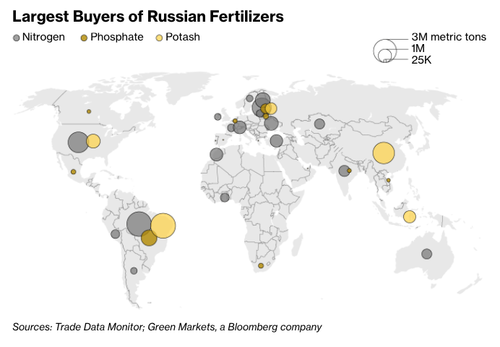
Russia is a key supplier of industrial and precious metals. It’s among the top players in exporting nickel, a critical metal for electric car batteries. China, Europe, and the U.S. are the largest buyers of Russian nickel. Tesla has raised car prices twice in the last few weeks because of soaring nickel prices.

Most of the world relies on Russian aluminum.

Russia is the second largest exporter of palladium and platinum in the world.

The US, UK, Japan, and Hong Kong are the top importers of Russian palladium, used primarily in catalytic converters for automobiles.

Russia is also the world’s third-largest steel exporter.

The West trying to isolate Russia from the global economy with devastating sanctions and restrict its trade worldwide produces unimaginable inflation that could send the world into a stagflationary hellhole (the US bond market is warning about impending doom). Shortages of commodities could develop as prices skyrocket.
Could all of these disruptions suggest the next world war has begun? Billionaire Bill Ackman thinks so.
end
UKRAINE/RUSSIA//THE GLOBE
Food supply chains are now falling apart. We are now at risk for imminent famine
(zerohedge)
Food Supply Chains “Falling Apart” In Ukraine As “Imminent Famine” Risks Plague The World
FRIDAY, MAR 18, 2022 – 09:20 PM
On Friday, Jakob Kern, an emergency coordinator at the United Nations (UN) World Food Programme (WFP), warned Ukraine’s food supply chains were collapsing as Russia bombed key infrastructures such as roads, bridges, and trains.
“The country’s food supply chain is falling apart. Movements of goods have slowed down due to insecurity and the reluctance of drivers,” Kern told a Geneva during a video conference from Krakow, Poland.
“Inside Ukraine our job is in effect, to replace the broken commercial food supply chains,” he added, describing the rebuilding task as a “mammoth” one.
Ukraine’s top agricultural export products are corn and wheat. Before the invasion, Ukraine was the second-largest supplier of grains for the European Union and one of the largest suppliers for emerging markets in Asia and Africa. Breaking down the numbers, Ukraine produced 49.6% of global sunflower oil, 10% of global wheat, 12.6% of global barley, and 15.3% of global maize.
Estimates via Black Sea research firm SovEcon show Ukraine’s 2022 corn harvest could plunge as much as 35% from 41.9 million tons last year to 27.7 million tons this year because of all the disruptions. Farmers are already reporting diesel and fertilizer shortages. Wheat harvests are also expected to decline. Some have even pointed total crop output in the country could be halved.
“With global food prices at an all-time high, WFP is also concerned about the impact of the Ukraine crisis on food security globally, especially hunger hot spots,” he said, warning of “collateral hunger” in other places like Egypt, Indonesia, Bangladesh, Pakistan, and Turkey that rely heavily on Ukraine imports.
All of this has fueled the UN’s Food and Agriculture Organization to warn global food prices could rise another 8-20% from current levels due to the deteriorating situation in Ukraine.

The UN Special Rapporteur on the right to food, Michael Fakhri, also warned today, Russia’s invasion of Ukraine may cause a global surge in malnutrition and famine.
“For the last three years, global rates of hunger and famine have been on the rise. With the Russian invasion, we are now facing the risk of imminent famine and starvation in more places around the world,” Fakhri said in a statement.
There’s even a spillover risk for the US (read: “Media Isn’t Warning You” That US Careening Towards Food Crisis).
END
Saturday night: Mariupol about to fall
(zerohedge)
Mariupol About To Fall As Fighting Enters City Streets
SATURDAY, MAR 19, 2022 – 12:00 PM
Russia’s assault on Ukraine has entered its fourth week, and Russian forces have now sent ground troops into the major southeastern city of Mariupol – which has been under heavy bombardment since the start of the conflict – and is now poised to fall to the military advance. Fighting has reportedly reached the center of the city of some half-million people.
“The fighting is already in the city itself,” a city official in the mayor’s office told The Wall Street Journal on Saturday. “But Mariupol remains a Ukrainian city.”
Multiple international reports have confirmed the city has been totally cut off, and has long been under siege by Russian forces, with WSJ detailing that the capital of Kiev has “tried to send military reinforcements to Mariupol, but so far this has proved impossible. “Prior image of Russian tank on outskirts of Mariupol, via AP
“Oleksiy Arestovych, an adviser to Ukraine’s president, said there was no way for Ukrainian forces to break Russia’s siege, addressing criticism the government is not doing enough,” the report said.
War correspondents have cited scenes of people cooking in the streets, after electricity, gas and water have been cut off for many days running at this point, also amid freezing temperatures. Most of the civilians still there are huddled in bomb shelters, and some have risked their lives trying to make it out of the city, despite multiple short-lived attempts at establishing ‘humanitarian corridors’ to allow civilians to safely flee.
There is also the grim reality of in some instances bodies lying in the streets, with many sectors being too unsafe for anyone to go and retrieve them, also amid reports of mass graves.
One account reads:
“People sheltering in Mariupol from some of the most intense fighting anywhere in Ukraine are risking their lives each time they step foot outside their underground bunkers, a Ukrainian army commander stationed in the city has told CNN.”
Awkwardly for mainstream media reporting, a prime Ukrainian military faction guarding the city is the neo-Nazi Azov Battalion. Despite mainstream pundits for many years prior to the invasion admitting the faction is a neo-Nazi group, CNN and others are now opting for watered down language like “ultra-nationalist militia” or “far-right”.
“The Azov Battalion is an ultra-nationalist militia that has since been integrated into the Ukrainian armed forces,” CNN writes in its latest reporting.
Here’s the BBC all the way back in 2014…
Mariupol is seen as key for Russian forces’ general advance across the south, with the WSJ calling the operation to take the city “a strategic move for Moscow, which considers the southern port city a gateway that would open a land corridor between Russia and its annexed region of Crimea.”
Russian forces could soon have central regions of the east fully encircled…

9:47 AM · Mar 19, 2022·Twitter Web App
end
Turkey says Ukraine and Russia are “close to an agreement” as Moscow delivers an ultimatum to surrender Mariupol
(zerohedge)
Turkey Says Ukraine, Russia “Close To An Agreement” As Moscow Delivers Ultimatum To Surrender Mariupol
SUNDAY, MAR 20, 2022 – 07:00 PM
Another day, another glimmer of hope there we may soon see a ceasefire in the Ukraine war: on Sunday, Turkey said that Russia and Ukraine had made progress on their negotiations (ostensibly the same negotiations which, if they fail, could lead to World War 3 according to Zelensky) to halt the invasion and that the two warring sides were close to an agreement.
“It’s not easy to negotiate while the war is ongoing, or to agree when civilians are dying. But I want to say that there is momentum,” Turkey Foreign Minister Mevlut Cavusoglu said from the southern Turkish province of Antalya, AFP reported. “We see that the parties are close to an agreement.”
Cavusoglu this week visited Russia and Ukraine as Turkey, which has strong bonds with the two sides, has tried to position itself as a mediator. The foreign minister, who hosted his peers from Russia and Ukraine this week, said Turkey was in contact with the negotiating teams from the two countries but he refused to divulge the details of the talks as “we play an honest mediator and facilitator role.”
In an interview with daily Turkish newspaper Hurriyet, presidential spokesman Ibrahim Kalin said the sides were negotiating six points: Ukraine’s neutrality; disarmament and security guarantees; the so-called “de-Nazification”; removal of obstacles on the use of the Russian language in Ukraine; the status of the breakaway Donbas region; and the status of Crimea, annexed by Russia in 2014.
Turkey’s pro-government Hurriyet newspaper reported that the two countries were edging towards agreement on Kyiv declaring neutrality and abandoning its drive for Nato membership, “demilitarizing” Ukraine in exchange for collective security guarantees, what Russia calls “denazification” and lifting restrictions on the use of Russian in Ukraine.
Two people familiar with the discussions said it was likely a compromise would involve token concessions from Kyiv on what Russia calls “denazification”. But Linda Thomas-Greenfield, US ambassador to the UN, accused Moscow of failing to fully participate in the talks. “The negotiations seem to be one-sided,” she said. “The Russians have not leaned into any possibility for a negotiated and diplomatic solution.”
Hopes that an agreement is close were dashed, however, after the Russian military delivered an ultimatum for the surrender of Mariupol, the besieged city in southern Ukraine and the scene of some of the heaviest fighting since Russia launched its invasion of Ukraine more than three weeks ago, according to the National Defense Control Center of the Russian Federation as cited by Tass.
Colonel-General Mikhail Mizintsev said all armed units of Ukraine must leave Mariupol from 9 a.m. to 11 a.m. local time on Monday, according to Tass, after which any fighters remaining would “face a military tribunal.” It said humanitarian convoys would deliver food, medicine and other essentials to the city. The Russian statement demanded a written response from Ukraine’s government by 4 a.m. Kyiv time.
The eastern port city has been devastated by relentless shelling, with whole neighborhoods reduced to piles of smouldering rubble. Electricity, gas and water have been cut off and trapped residents are without food.
Ukraine’s armed forces said the situation in Mariupol which located in mostly Russia controlled territory around Donetsk, was “difficult: there is famine in the city, street fights, people are trying to leave”. Local authorities in Mariupol said “civilians are still under the rubble” after the school bombing.
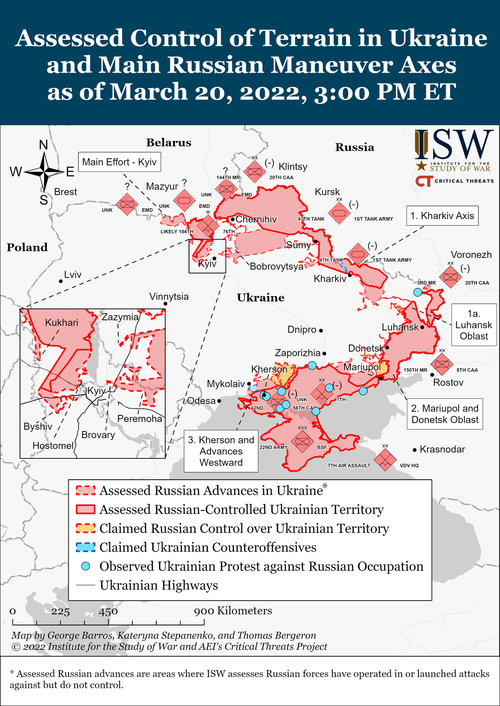
Russia’s advance in Mariupol came after Kyiv said it had been cut off from the strategically important Sea of Azov, a conduit to the Black Sea. Capturing Mariupol would give the Russians control of a swath of Ukraine’s southern coast.
Kyiv also accused Moscow of using its new hypersonic missiles against civilian areas elsewhere in Ukraine, in the first confirmation that the Kremlin had deployed the weapons in the conflict. Moscow said it used the Kinzhal, which it claims can travel at 10 times the speed of sound, twice in the past three days: to destroy a fuel depot in southern Ukraine and to target a munitions storage facility in the country’s west.
Russia said Andrei Paliy, deputy commander of its Black Sea fleet, had died during the battle for Mariupol. Paliy’s death makes him the seventh high-ranking Russian officer Ukraine claims to have killed during the war.
Kyiv and its western allies fear Russian president Vladimir Putin could be buying time in peace talks to replenish Moscow’s forces and launch a broader offensive.
Meanwhile, as the FT notes, Mariupol’s status is a sticking point in the ongoing Turkey-mediated peace talks because it is part of the Ukrainian-held territory claimed by Moscow-backed separatists, according to two people briefed on the peace efforts.
Ukrainian president Volodymyr Zelensky said the talks were worth pursuing even if they had a “1 per cent chance of success” and warned a failure of negotiations would risk “a third world war.” “We have demonstrated the dignity of our people and our army . . . But unfortunately our dignity is not going to preserve lives. So I think we have to use any format, any chance, in order to have the possibility of negotiating,” he told CNN. Zelensky said western leaders had told him Ukraine would not be allowed to join Nato or the EU although “publicly, the doors will remain open”.
US president Joe Biden will visit Europe this week to attend Thursday’s Nato summit in Brussels, but will not travel to Ukraine, the White House said on Sunday.
END
Kiev tells all cities under siege including Mariupol not to surrender
(zerohedge)
Kiev Tells All Cities Under Siege, Including Mariupol: “There Can Be No Talk Of Any Surrender”
MONDAY, MAR 21, 2022 – 07:23 AM
“There can be no talk of any surrenders, laying down of arms. We have already informed the Russian side about this,” Ukraine’s deputy prime minister Iryna Vereshchuk said after the Russian deadline for surrender came and went Monday morning. “Instead of wasting time on eight pages of letters, just open a [humanitarian] corridor,” she added, speaking of the proposed terms of surrender.
Intense bombardment has resumed in Mariupol, with a number of reports noting that Monday saw the heaviest attacks since the start of the Russian invasion nearly a month ago. As of Sunday night, Russia’s military was repeating, “A terrible humanitarian catastrophe has developed. All who lay down their arms are guaranteed safe passage out of Mariupol.” The Ukraine national government’s firm rejection of “talk of any surrenders” appears a clear message aimed more broadly at other cities and areas under Russian siege as well, in a sign of what’s to come.
The Russian military further said it would allow for safe passage of civilians eastward and westward out of Mariupol via designated humanitarian corridors starting at 10am Moscow time on Monday. Mariupol Mayor Piotr Andryushchenko had almost immediately rejected the Sunday terms of surrender offered by Moscow.
The Associated Press cites a rising civilian death toll in what was before the invasion a city of 400,000:
Multiple attempts to evacuate residents from Mariupol and other Ukrainian cities have failed or only partly succeeded, with bombardments continuing as civilians tried to flee. City officials said at least 2,300 people have died in the siege, with some buried in mass graves.
Tearful evacuees from devastated Mariupol have described how “battles took place over every street.”
The city has been under siege since nearly the start of the Feb.24 Russian offensive into Ukraine, and has for weeks been without foot, water, or heat amid frigid temperatures.
Meanwhile, there were several new cruise missile strikes reported at various locations across Ukraine, with Russia’s military command confirming the launches.
“Russian forces fired air-launched cruise missiles early Monday at what Maj. Gen. Igor Konashenkov, Russian Ministry of Defense spokesman, described as a Ukrainian military training center in Nova Lyubomyrka, in Ukraine’s northwestern Rivne oblast,” CNN writes.
There were widespread reports and social media video purporting to show a strike on a large shopping center in Kiev…
“In a statement, Konashenkov claimed the strike inflicted dozens of casualties,” according to the report. “Separately, Konashenkov said cruise missiles also destroyed an ammunition depot and the headquarters of a mechanized brigade near the western village of Selets, without providing additional details.”
end
This is an important commentary. Follow what Craig Roberts states:
Ukrainian Update # 8
March 21, 2022| Categories: Articles & Columns| Tags: |Print This Article
Support your website
Ukrainian Update # 8
Paul Craig Roberts
It seems the Kremlin still has delusions that there is morality in the West. The Kremlin has appealed to “international structures to make Ukrainian radicals release civilians.” What is the point of such a useless appeal? Why is the Kremlin attributing morality to the enemy that is trying to destroy Russia? Does the Kremlin think it is making a point by putting the West on the spot?
By choosing a police action over a war, the Kremlin delivered the civilians into the hands of the Ukrainian neo-Nazis. Indeed, by refusing action for 8 years, the Kremlin allowed the neo-Nazis to take hold of large parts of Donbass while continuing to shell the areas of Donbass not under their control. If the Kremlin had accepted the Donbass vote 8 years ago to be reunited with Russia like Crimea, the entire problem would have been avoided. Apparently, the Kremlin was dissuaded from the obviously correct decision by the pro-West Atlanticist Integrationists among the intellectual and ruling class, who convinced the Kremlin that it would confirm US propaganda that Putin is intent on restoring the Soviet Empire for so much of an artificial Ukraine created by the Soviets to be reunited with Russia. The entire Ukrainian problem is due to the Atlanticist Integrationists. Why the Kremlin tolerates these agents of the West, and even appoints one of them head of the Russian central bank where she can maximize the effect of sanctions on Russia, is a mystery.
The Russians are also warning that sanctions against Russian oil exports will destabilize markets, drive up oil price, and harm the world economy. It makes no sense for Russia to complain about a higher oil price that would benefit them and seriously harm their enemies. Russia acts against her best interests because Russia has been brainwashed by American neoliberal economists that Russia needs foreign exchange in order to develop the economy. The Russian central bank chief, recently nominated for reappointment by Putin, is the chief Russian expositor of this blatant nonsense. She is the equivalent of 100 NATO divisions arrayed against Russia. It is Russia’s lack of economic sophistication that will destroy her. Because of central bank opposition, Russia won’t nationalize Russian assets of sanctioning countries, but sanctioning countries are now nationalizing Russian assets. The UK announces nationalization of Russia’s Gazprom retail unit. https://www.rt.com/business/552410-uk-nationalizes-gazprom/
As for Russia’s go-slow war, here is an example of the Ukrainians whose lives the Kremlin is so anxious to save: https://www.rt.com/russia/552367-ukraine-doctor-castrate-prisoners/
In the intervention in Ukraine, the Kremlin chose humanitarian concerns, for which the Kremlin received zero credit, over the opportunity to bring all provocations of Russia to an end. If Russia had destroyed Ukraine, leaving it as a wasteland, the way the US and NATO did to Iraq, Libya, and Afghanistan and tried to do to Syria, it would have served as a warning to the Empire of Lies of what awaits the next provocation. Instead, the Kremlin’s humanitarian gesture backfired and gave the West, which controls the narrative, ample time to conduct a psyops campaign that has succeeded in turning the West into a mob full of hatred for Russians. Such hatred foretells more provocations which will eventually end in nuclear war.
Despite the Kremlin’s failure on every other front, Russia, despite its pulled punches, is winning in Ukraine. The US-supported neo-Nazi militia is about driven out of Donbass. In Kiev, Russian paratroopers routed the neo-Nazis and drove them out of the city’s suburbs, capturing their weapons and ammunition. Military bases in Yavoriv in Western Ukraine on the Polish border where US and British personnel were training Ukrainians and where weapons were stored, and nearby Delyatyn, a NATO weapon and fuel storage center, were annihilated by Russian hypersonic missiles. US and British military and intelligence personnel were blown to bits along with the Ukrainians being trained in the use of the US/NATO weapons. The Kremlin made good on its warning that all who interfere in its intervention will be destroyed. Western military incompetence was so total that there was no warning, or ability to intercept, the attack.
Looking at the map, Russian forces have completely cut Ukraine off from the Black Sea. Much, and perhaps all, of the territory can be considered part of Donbass. Unless the Kremlin in another fruitless show of good will gives the territory back to Ukraine, Ukraine is eliminated as a military threat. The reconquest of Donbass has restored the land bridge to Crimea.
Washington continues to rely on its allies among the Atlanticist Integrationists to cancel Russia’s victory in negotiations at war’s end in order to make a good impression and restore relations with the West, a fruitless hope on the part of the Russians. Until Russia deals with its internal traitors, its military victories might mean little. Provocations of Russia will continue and end in nuclear war.
end
(Zelenzky bans 11 prop Russian opposition parties
KyleAnzalone/Atniwar.com)
Zelensky Bans 11 Opposition Parties Labeled “Pro-Russian”, Seizes Media
MONDAY, MAR 21, 2022 – 08:05 AM
Authored by Kyle Anzalone via AntiWar.com,
Ukrainian President Volodymyr Zelensky over the weekend banned 11 opposition political parties and nationalized media. Any activities supporting the parties labeled “pro-Russian” are now illegal.
Axios reports the list of parties now banned include: Platform For Life, Shariy Party, Nashi, Opposition Bloc, Left Opposition, Union of Left Forces, State, Progressive Socialist Party of Ukraine, Socialist Party of Ukraine, Socialists Party, and Volodymyr Saldo Bloc.

“Any activity of politicians aimed at splitting or collaborating will not succeed,” Zelensky had announced Sunday. “Given the full-scale war waged by the Russian Federation and the ties of some political structures with this state, any activity of a number of political parties during the martial law is suspended.”
Platform for Life is Ukraine’s largest opposition party and currently holds 44 seats in parliament. Last year, The party’s leader, Viktor Medvedchuk, was accused of treason and placed under house arrest.
Another targeted party, Nashi, is led by Yevhen Murayev. The UK previously accused Murayev of working with Moscow to overthrow the Ukrainian government. However, Murayev was sanctioned by Russia in 2018.
Ukraine’s Russian minority has faced increased discrimination since the 2014 coup. The opposition parties largely represent the 17% of the Ukrainian people who are ethnic Russians. Language and cultural laws have targeted Russian movies, including one starring Zelensky.
The new presidential order is a part of Zelensky’s effort to create a unified political narrative in Ukraine. He has announced an information policy that combines “all national TV channels…[into] a single information platform of strategic communication.”
end
Kremlin Rejects Proposed Zelensky-Putin Meeting, Citing “No Significant Progress” In Ceasefire Talks
MONDAY, MAR 21, 2022 – 01:11 PM
At a moment Russian forces are believed to be on the cusp of taking the major southeast city of Mariupol, after the Ukrainians rejected the Kremlin’s terms of surrender for the city, a fresh statement from the Russian side has yet again cited “no significant progress” in ceasefire talks, while stating Moscow is not ready for a proposed meeting with Zelensky.
The invasion which kicked off on Feb.24 and shocked the world will reach a full month by close of this week. Starting last week reports emerged that Turkey was working hard to get Presidents Putin and Zelensky at the negotiating table in face to face talks. Given Russia’s overwhelming manpower and military superiority, despite reports of serious losses, it’s not expected that the Russian leader would agree to any top level negotiations like this anytime soon.
“For us to speak of a meeting between the two presidents, homework has to be done. Talks have to be held and their results agreed upon,” Putin spokesperson Dimitry Peskov said Monday, according to Reuters. “There has been no significant progress so far.”
Last week Peskov had said that “when there’s progress, we’ll tell you” – in reference to the continuing negotiations taking place between lower level delegations toward reaching a battlefield ceasefire, or at least longer lasting local ceasefires.
As for the Ukrainians, according to comments given to CNN on Sunday, Zelensky told Fareed Zakaria he’s “ready to talk to Putin at any time.” But Zelensky is simultaneously urging Europe to ban Russian energy and ratchet up sanctions measures even more, pleas which have without doubt angered the Kremlin.
CNN detailed of the interview, “His offer came more than three weeks into a war that appears to be entering a new, more deadlocked stage on the battlefield. And while that counts as an extraordinary military success for outgunned Ukraine, it will also leave its cities and people even more vulnerable to brutal Russian bombardments.” And more via CNN:
“It’s a stalemate. But we should note it’s a bloody stalemate,” ex-CIA Director David Petraeus, a retired general who served in Iraq and Afghanistan, said on CNN’s “State of the Union” on Sunday. “Also, arguably, it’s a battle of attrition.”
For now each side is blaming the other for failure to significant progress through five rounds of talks:
Peskov on Monday also suggested that Russia was more willing to engage in talks than Ukraine.
“Those [countries] who can should use their influence over Kyiv to make it more accommodating and construction at these talks,” Peskov said, according to Reuters.
However, there are still periodic glimmers of a hoped-for breakthrough based on the ‘neutrality’ question in regards to the NATO alliance:
Russia’s top negotiator at talks with Ukraine said Friday that Moscow and Kyiv had brought their positions “as close as possible” on a proposal for Ukraine to become a neutral state.
The Kremlin on Wednesday said that a neutral Ukraine along the lines of Sweden or Austria was being discussed at talks with Kyiv to end three weeks of a Russian military operation there.
In addition to Turkey, Israel is also said to be working diplomatically behind the scenes to bring to county’s two leaders for direct talks leading to a halt to the fighting.
end
UPDATE ON THE UKRAINE-RUSSIA WAR THIS AFTERNOON
Biden’s Remarks About Putin Put “Ties On Verge Of Being Severed” – US Ambassador Warned By Kremlin
MONDAY, MAR 21, 2022 – 10:23 AM
Update(10:23ET): The past days have witnessed Russian officials lash out at Joe Biden over his most recent scathing comments directed at Vladimir Putin personally. This included a St. Patrick’s Day address last Thursday wherein the US president blasted Putin and a “murderous dictator”. He had stated global nations, especially in the West were “standing together against a murderous dictator, a pure thug who is waging an immoral war against the people of Ukraine.” Prior to that, Biden had told a reporter that Putin is a “war criminal”.
On Monday Russia’s foreign ministry summoned the US ambassador to issue a note of protest over Biden’s latest comments, handing over a letter condemning the “unacceptable” remarks about Putin. Further US ambassador John J. Sullivan was informed that US-Russia ties are “on the verge of being severed” according to Reuters. Obviously they are already strained following both the invasion and US-led retaliatory sanctions and measures to severely isolate Russia, but a total severing of relations would likely see embassies shuttered and diplomats expelled.
Russian state media is also confirming it was in reaction to the prior “war criminal” and other statements about Putin: “The Russian Foreign Ministry handed a note of protest to the US ambassador on Monday over Joe Biden’s comments about Vladimir Putin – remarks that, according to Moscow, put the relations between the Kremlin and the White House on the verge of being severed,” according to Russian sources.
Meanwhile, after an alleged two instances where Russian forces said they launched a hypersonic missile into Ukraine…
U.S. CANNOT REFUTE OR INDEPENDENTLY CONFIRM RUSSIAN CLAIM THAT IT LAUNCHED A HYPERSONIC MISSILE AT UKRAINIAN TARGET – SENIOR U.S. DEFENSE OFFICIAL
* * *
With newsflow out of Ukraine nothing less than a firehose (of often fake news), with market moving headlines firing every minute, traders can be forgiven if they have just given up following the narrative. To help out, here is a snapshot of all the latest market-moving news out of Ukraine from the last few hours courtesy of Newsquawk:
Discussions/Negotiations
- Ukrainian President Zelensky said he is ready to negotiate with Russian President Putin and warned that if peace talks with Russian President Putin fail, it would mean the start of a third global war, according to an interview with CNN. However, a Turkish official said that Russian President Putin is not ready for talks with Ukrainian President Zelensky.
- Turkish Foreign Minister said Russia and Ukraine “have almost reached agreement” on four critical points of a potential peace agreement, as fierce fighting continued to devastate the key port city of Mariupol, according to FT.
- Russia’s Kremlin says the progress of peace talks with Ukraine is not as big as it should be; there is no basis for possible Putin-Zelensky meeting, significant progress needs to be made first, there will be no ceasefire during the talks.
- Russian Defence Ministry called on ‘nationalists’ in Ukraine’s Mariupol to lay down arms and offered humanitarian corridors to both the east and west for this Monday, while it stated that Ukraine has until the early hours on Monday to give its answer on surrendering Mariupol.
- Ukrainian Deputy PM Vereschuk said there is no question of surrendering Mariupol.
- Ukraine says eight humanitarian corridors have been agreed on Monday, but the city of Mariupol is not included in that list.
Energy/Economic Updates
- US threatens to expand sanctions on Russia and said they are nowhere near lifting restrictions, according to Sputnik.
- Russian Central Bank Governor Nabiullina said they will start purchasing Russian government bonds and will sell them after the market stabilises.
- EU Foreign Representative Borrell says Russia is guilty of “massive” war crimes, the EU is ready to talk about energy sanctions.
Defence/Military
- Ukrainian President Zelensky appealed to Israel and said that they know Israel’s air defence is the greatest in the world and could protect Ukraine, while he said the Kremlin is discussing the final solution to the Ukrainian issue in the same way the Nazi’s discussed the European question.
- Ukrainian Deputy PM said they plan to send nearly 50 buses on Monday to evacuate people from the Mariupol region, while she added that 7,295 people were evacuated from cities on Saturday as four humanitarian corridors worked and that 3,985 people were evacuated from Mariupol to Zaporizhzhia on Sunday.
- Kyiv Mayor said there were several blasts in the city’s Podil district with residential houses and the shopping district hit.
- China’s ambassador to the US said China will work to de-escalate the Ukrainian conflict and said there is misinformation regarding China providing military assistance to Russia.
- UK Ministry of Defence said Russian forces advancing from Crimea are still attempting to circumvent Mykolaiv as they look to drive west towards Odessa and that these forces made little progress during the past week, while it added that Russian naval forces continue to blockade the Ukrainian coast and to launch missile strikes on targets across Ukraine.
- US officials see signals the Kremlin is shifting to a new strategy to secure key territorial objectives, according to WSJ.
- Luhansk separatists say they have recorded an increase in the intensity of Ukrainian shelling on their areas, especially the Pervomaysk region, according to Al Jazeera
- Kyiv Mayor Klitschko announced a curfew from 18:00GMT today until 05:00GMT on Wednesday 23rd.
Other
- Israeli defence sources noted several intel warnings that suggest Iranian intention to carry out attacks via air, sea and on land, according to Israel Radar citing Walla News.
- US and Turkey are said to be in talks over a deal for Turkey to send its Russian-made S-400 missile defense systems to Ukraine in exchange for the scrapping of sanctions imposed by Washington, according to Reuters citing sources. The report suggested Turkey is unlikely to agree to such a deal
Russia Exploits Ukraine’s Western Flank
Inbox

| Robert Hryniak | Sun, Mar 20, 7:44 PM (11 hours ago) |  | |
| to |
Good insight that is accurate.
It is mostly likely the real casualties are in excess 500 foreign soldiers with the balance maimed or wounded and removed from combat. This was the first of 2 such strikes with similar effect.
Whether this message tempers Polish aspirations is not not known but on Thursday they will pitch the idea of a safe keeping force in Ukraine, lead by Poland to NATO. Should that happen such forces will be destroyed by long range stand off missiles.
Hopefully this will not happen.
Mauripol seems to be entering a more stable period as tens of thousands of civilians have been evacuated to safety.
end
RUSSIA/NORWAY
An unsanctioned Russian superyacht is stranded in Norway because no one is willing to sell it fuel
(zerohedge)
Unsanctioned Russian Superyacht Stranded In Norway Because No One Will Sell It Fuel
SATURDAY, MAR 19, 2022 – 07:35 AM
Norway’s parliament outlawed discrimination, but some Norwegians are finding an exception by restricting fuel to an unsanctioned superyacht owned by Russian oligarch Vladimir Strzhalkovsky, a former KGB agent and linked to Russian President Vladimir Putin
Ragnar, a beautiful 68-meter (223-foot) commercial vessel turned luxury superyacht, is stranded in the Port of Narvik because Norwegian fuel suppliers reject all requests to refill it. The suppliers say they don’t want to help entities associated with Russia, according to local news NRK.

“Why should we help them?” Holmlund Oil Service’s general manager Sven Holmlund told NRK. “They can row home. Or use a sail,” he added.
Ragnar’s captain, Robert Lankester, said the entire crew is non-Russian and “have nothing to do with the boat’s owner.”

“We find the discrimination against us, extremely unjust,” Lankester said. He noted that Strzhalkovsky nor the vessel is on Europe’s sanction list.
“I understand that Russian fishing vessels account for 20% of the economy in northern Norway. It is to Norway’s advantage that they get to operate here,” he added.
Lankester pointed out that the vessel is a commercial charter yacht that came to Narvik for the winter tourism season. Here’s the captain’s letter of how Norwegians have discriminated against his western crew.

Meanwhile, other Russian oligarchs who have been sanctioned have either fled Europe to places such as Dubai and the Maldives or had their vessels seized by European officials in countries like Italy and France.
Even though discrimination is prohibited in Norway, it appears not to apply to Russian-owned or linked entities (even unsanctioned ones).
end
A lot to answer for!
RUSSIA//UKRAINE//CHINA/USA
BIOLABS
Russia Challenges US: If Biolab Documents are Fake Then Ask Head of the DTRA Office at the US Embassy in Kiev Joanna Wintrol Why She Signed Off on Them?

The Russian Defense Department presented documents allegedly from the US Defense Threat Reduction Office in Kyiv
On Friday, March 18, the Russian Permanent Representative at to the United States Security Council Vassily Nebenzia presented what the Russian government claims is proof of a US bioweapon program in Ukraine and Georiga (Gateway Pundit reported). Nebenzia claims that the program has been running since 2005, and that “American colleagues were not assisting the Ministry of Health as they claimed, but rather the Ministry of Defense of Ukraine.”
According to Nebenzia, the US Department of Defense “delegated broad authorities to its affiliated contractor Black & Veatch in cooperation with Ukrainian state authorities.” The experiments on deadly pathogens in Ukraine were not conducted by Ukrainians, but by Pentagon personnel and foreign researchers, Nebenzia claims.
“The Defense Threat Reduction Agency (DTRA) competitively awarded Black & Veatch Special Projects Corp. (Black & Veatch) one of its Biological Threat Reduction Integrating Contracts (BTRIC) in 2008 (in Ukraine). The 5-year IDIQ contract (with a 5-year option) has a collective ceiling of $4B among the five selected contractors”, the Black & Veatch website acknowledges.
“Simply speaking, Ukrainian authorities gave Pentagon a carte blanche and let them carry out dangerous biological experiments on the territory of Ukraine. Thereby, the American contractor was exempt from any taxes under Ukrainian legislation”, Nebenzia said. He called the programs “a cynical use of Ukraine’s territory and population for dangerous research that Washington does not want to have at home so that to not put its own population at risk.”
As to claims the Russian charges were merely “disinfomation”, Nebenzia pointed out the Russian government published documents “signed by real US officials. Many of them were signed by head of the DTRA office at the US Embassy in Kiev Joanna Wintrol,” whom he called “well-known in non-proliferation circles.” Prior to Ukraine, Wintrol addressed elimination of chemical weapons in Libya, Nebenzia stated. “If journalists have doubts as to the authenticity of documents that we shared, I suggest they ask her directly whether this is really her signature on them.”
Wintrol left Kiev in August 2020, according to Russia Today: “In her parting interview, she insisted no US scientists worked in Ukrainian biolabs and accused Russia of spreading “false information” about the program. “
On Thursday, March 17, the head of Russian Radiation, Chemical and Biological Protection Igor Kirillov presented the documents in Moscow that were allegedly seized during Russia’s special operation in Ukraine, purportedly of Ukrainian and US origin. According to the documents, the US had been “carrying out experiments in Ukraine with viruses within the framework of projects P-382, P-444 and P-568 and one of the supervisors of this research was the head of the Defense Threat Reduction Agency (DTRA) office at the US embassy in Kyiv, Joanna Wintrol”, Turkish news agency AA reports. “During the experiments, six families of viruses were chosen, including coronaviruses and three kinds of pathogenic bacteria — pathogens of plague, brucellosis and leptospirosis,” said Kirillov, citing the documents.
Ukrainian Defense Ministry laboratories in Kiev, Odessa, Lvov and Kharkov received $32 million funding from the US, Kirillov claimed: “I draw your attention to the fact that the agreement on joint biological activity was signed between the US military ministry and the Health Ministry of Ukraine. However, the true recipients of the funds were laboratories of Ukrainian Ministry of Defense located in Kiev, Odessa, Lvov and Kharkov. The total funding amount was $32 million,” he said. According to Kirillov, these laboratories were selected by US Defense Threat Reduction Agency (DTRA) and its contractor Black & Veatch for the implementation of Project UP-8, aimed at studying the Crimean-Congo hemorrhagic fever (CCHF), leptospirosis and hantaviruses, TASS reported.
“The United Nations is not aware of any biological weapons programmes” in Ukraine, the UN High Representative of Disarmament Affairs Izumi Nakamitsu told the Security Council. “There are no Ukrainian biological weapons laboratories supported by the United States — not near Russia’s border or anywhere”, stated U.S. Representative to the United Nations Linda Thomas-Greenfield.
Since it has been largely ignored by the media, Gateway Pundit again documents the entire speech by Vassily Nebenzia to the United States Security Council:
Mr. President, Colleagues,
As we said earlier, during the special military operation in Ukraine we discovered facts that Ukrainian authorities, supported and directly sponsored by the US Department of Defense, were implementing dangerous projects in the framework of a military biological program. This activity was carried out on the Ukrainian territory, in the middle of Eastern Europe and close to Russia’s western borders, which posed a real threat to biological security of our country and the region.
A week ago upon our request UNSC held its first meeting on this issue, where we asked some questions to our Western colleagues, but did not receive any answers.
US officials claim that there are no US-controlled biolabs in Ukraine, however the Permanent Representative of the United States could not explain how these statements reconcile with the fact that there are documents proving this sort of “cooperation” between Kiev and Washington. I am referring to 2005 Agreement between the US Department of Defense and Ukrainian Health Ministry which stipulates Pentagon’s support for “cooperative biological research” with regard to “dangerous pathogens located at the facilities in Ukraine”.
Though the American delegation is not able or willing to answer our questions, the answers come to light as our Defense Ministry studies the materials received from personnel of Ukrainian biolabs that address US and NATO military biological programs in Ukraine.
Over the past week, we have discovered new details indicating that components of biological weapons were being developed in Ukraine.
The 2005 US-Ukraine Agreement that I mentioned and that we still expect the US representative to comment on was up and running all those years. As we take it from the documents, American colleagues were not assisting the Ministry of Health as they claimed, but rather the Ministry of Defense of Ukraine. This morning we circulated as UNSC document a set of materials, where you can find “Plan of technical assistance to certain recipients of the Ministry of Defense of Ukraine”. I suggest that you should study it carefully. It confirms that Pentagon’s Defense Threat Reduction Agency (DTRA) directly funded and supervised military biological projects in Ukraine. The total funding amounted to 32 million USD, and the recipients of those funds were the following labs of the Defense Ministry of Ukraine:
– In Kiev – 10th regional sanitation and epidemiological branch of the Central Sanitation and Epidemiological Department of the Ministry of Defense of Ukraine.
– in Odessa – 27th regional sanitation and epidemiological branch of the Central Sanitation and Epidemiological Department of the Ministry of Defense of Ukraine.
– in Lvov – 28th regional sanitation and epidemiological branch of the Central Sanitation and Epidemiological Department of the Ministry of Defense of Ukraine.
– in Kharkov – 108th regional sanitation and epidemiological branch of the Central Sanitation and Epidemiological Department of the Ministry of Defense of Ukraine.
Let me flag another critical aspect. Representatives of the US Department of State still get confused when asked about it and assure that the United States allegedly takes no part in running any biolabs in Ukraine. Facts, however, speak of the opposite.
Under the technical assistance plan that I mentioned, the “donor” (US Department of Defense) set out goals, determined the scope of Ukraine-based projects, endorsed lists of equipment required, and delegated broad authorities to its affiliated contractor “Black & Veatch” in cooperation with Ukrainian state authorities. The recipient of American assistance (Defense Ministry of Ukraine) had to grant “timely access of personnel” of the Pentagon and its contractor to the labs on the territory of Ukraine “for the purpose of conducting works” as part of the projects. Apart from the Pentagon personnel, they also had to grant access to the facilities to some “foreign researchers”. The projects were not supposed to be implemented by, but rather “with participation of” Ukrainian researchers.
Simply speaking, Ukrainian authorities gave Pentagon a carte blanche and let them carry out dangerous biological experiments on the territory of Ukraine. Thereby, the American contractor was exempt from any taxes under Ukrainian legislation.
What did Ukrainian scientists and people of the country get in return? Free travel to international conferences “based on the tariffs for meals and lodging endorsed for official travel of US governmental officials”. A nice “compensation” for having most hazardous research conducted right on their doorstep.
This is not the “noble” assistance to Ukraine that American representatives are ranting about. This is cynical use of Ukraine’s territory and population for dangerous research that Washington does not want to have at home so that to not put its own population at risk.
We would not be surprised should similar facts come to light regarding the activity of US-sponsored labs in other parts of the globe. We call on states who provide their areas to Pentagon for such experiments to read carefully contract documents regarding their cooperation with the United States in the biological area. We fully support China’s demand to the United States to disclose information about activities of 360 US-controlled labs in the world.
Back to Ukraine. It is no coincidence that the US Defense Threat Reduction Agency chose the biolabs in Kiev, Odessa, Lvov, and Kharkov. They were the executors of the UP-8 project aimed at studying the pathogens of the Congo-Crimean hemorrhagic fever, leptospirosis and hantaviruses. From our point of view, the interest of US military biologists in these pathogens is related to the fact that they have natural foci both on the territory of Ukraine and in Russia, and their use can be disguised as natural outbreaks of diseases.
The Kharkov laboratory was also home to project P-781 on the study of ways of transmitting diseases to humans through bats. This work was done jointly with the infamous R. Lugar Center in Tbilisi.
In this context, we should make a special mention of the company “Black & Veatch” that the Pentagon chose as a contractor for Ukraine. This is not an ordinary business. For over 100 years, it has been working for the US armed forces, building military bases and facilities, including the labs in Los Alamos, where nuclear weapons were developed.
Research in the area of transmitting diseases to humans through bats is systematic and has been conducted in Ukrainian labs since at least 2009 under the direct supervision of specialists from the United States. During the implementation of these projects, six families of viruses (including coronaviruses) and three types of pathogenic bacteria (pathogens of plague, brucellosis and leptospirosis) were identified. Those pathogens are most favorable for the purposes of infection, as they are characterized by resistance to drugs and rapid speed of spread from animals to humans.
Within the framework of the FLU-FLYWAY project, the Kharkov Institute of Veterinary Medicine studied wild birds as vectors for the spread of avian influenza. At the same time, the conditions under which spread processes can become unmanageable, cause economic damage and pose risks to food security were assessed. Documents were discovered that confirm the involvement of the Kharkov Institute in the collection of avian influenza virus strains with high epidemic potential and capable of overcoming the interspecific barrier.
Defense Ministry of Russia keeps receiving more documents that prove the fact of transfer of blood serum samples of Ukrainian citizens to third countries, including Great Britain, Georgia, Germany. Having analyzed that data, we can say that Ukrainian experts were not aware of potential risks of transferring biological samples. They had to act blindly and did not realize the real goals of research conducted. This does not seem surprising if we recall that under the contract documents that I mentioned, they had a secondary role to play.
Information continues to be received about attempts to destroy biomaterials and documentation in laboratories in Ukraine in order to “cover up the tracks” of a military biological program.
We know that during the liquidation measures in the laboratory of veterinary medicine in Khlebodarskoye, the employees (citizens of Ukraine) were not even allowed into the building. This laboratory cooperates with Anti-Plague Research Institute named after Mechnikov in Odessa, which conducts research with pathogens of plague, anthrax, cholera, tularemia.
In an attempt to cover the tracks, biological waste from the laboratory in Khlebodarskoye was taken 120 km away towards the western border of Ukraine to the area of Tarutino and Berezino settlements. Defense Ministry of Russia keeps record of all these facts in order to have them legally assessed at a later stage.
We also must mention the emergency destruction of documents in Kherson biological laboratory. One of the reasons for such a rush may be the need to conceal from Russian experts the information about an outbreak of dirofilariasis, a disease transmitted by mosquitoes, that occurred in Kherson in 2019. Four cases of infection were detected in February, which is unusual for the life cycle of these insects, even taking into account the incubation period of the disease. We are also aware that in April 2018, representatives of the Pentagon visited local healthcare institutions, where they got acquainted with the results of the epidemiological investigation and copied medical documentation.
Western media, who readily perceive any fakes presented by Ukrainian authorities with the support of their Western sponsors, doubt the authenticity of the materials published by our Ministry of Defense. In this regard, let me draw your attention to the following fact. All documents we published had been signed by real US officials. Many of them were signed by head of the DTRA office at the US Embassy in Kiev Joanna Wintrall. This representative of the Pentagon is well known in the non-proliferation circles. Prior to Ukraine, she addressed elimination of chemical weapons in Libya. If journalists have doubts as to the authenticity of documents that we shared, I suggest they ask her directly whether this is really her signature on them.
I repeat that it is not just about Ukraine and the United States violating the BTWC. It is about evidence of high-risk military biological activity that has been underway in the middle of Eastern Europe until recently. Its implications could have “spilled” beyond the borders of Ukraine and even the entire region at any point. It is hard to imagine what toll it would have taken, i.a. on the European states. Perhaps it would have outmatched even the COVID-19 pandemic.
We already see alarming signs of such threat. For example, a sharp increase in cases of tuberculosis caused by new multi-resistant strains was detected among citizens living in Lugansk and Donetsk People’s Republics in 2018. During a mass outbreak recorded in the area of Peski settlement, more than 70 cases of the disease were detected, which ended in a rapid fatal outcome. This does not look like a coincidence.
In conclusion, let me comment on the words of UN Secretariat representatives who claim to have no proofs of military-purpose biological programs being carried out in Ukraine.
Under the BTWC, member states submit to the United Nations data regarding biological facilities and related activity. I mean confidence-building measures that are published for the purposes of monitoring the implementation of the Convention. Since 2016, the moment Ukraine embarked on the mentioned projects, including UP-4, UP-8, and Р-781, both the United States and Ukraine have knowingly omitted those projects from their reviews, even despite their clear military biological orientation.
That is why Russia for many years has been calling to strengthen the BTWC regime, adopt a legally binding protocol to the Convention that would allow to create an effective verification mechanism and bind member states to report on their military biological activity abroad. The United States has been opposed to this work for almost 20 years now and refused to provide such data. By the way, this is yet another question that US representatives evade answering.
The facts that we shared today and on 11 March are only the tip of the iceberg. Our Defense Ministry continues to receive and analyze new materials. We will keep the global community updated on the issue of Pentagon’s illegal activity in Ukraine.
Thank you.
Right of reply:
Mr. President,
Propaganda, disinformation, amateurism, baseless allegations, false flag operation – that’s what we heard today. Some statements repeated what was said on 11 March almost word-by-word. If you found nothing new in our today’s statement, you either were not listening or did not hear what we were saying. What we presented were not the conspiracy theories that we pried out of the deep abyss of the Internet. Those were new materials and documents that we had circulated among UNSC members. These documents elaborate on biological cooperation between Ukraine and the United States. I ask you to read those materials. If you can refute them, please do it. But do it by answering our questions rather than by spouting baseless allegations about Russian propaganda. You refuse to do this because you have nothing to say. Instead, you try accusing us of plans to use biological and chemical weapons in Ukraine. This is the height of cynicism. We already warned you that we had information that Ukrainian nationalists had delivered toxic chemical agents to some areas of Ukraine in order to carry out a provocation and blame Russia. This is what you call a false flag operation.
As I said, you, in particular the United States, did not listen carefully to us. We did not say (as the US representative would interpret it) that Ukraine had a military biological program of its own. We said the United States had such program, where Ukraine was used blindly. We cited facts about the growing incidence of dangerous diseases in Ukraine that could not be explained by simpler factors, but could be related to this sort of activity.
We heard again that the best argument you have to prove that no military biological activity was carried out in Ukraine is the opinion of the UN Secretariat. But as mentioned already, the United Nations cannot be aware of secret military biological programs. Those who implement them do not report it to the UN or whoever.
We do not lift this issue from the agenda. More facts will surely arrive soon, and we will keep the Security Council and the global community posted.
Thank you.
end
6// GLOBAL COVID ISSUES/VACCINE MANDATE
US SENATORS MET WITH TRUCKERS
Inbox

| Milan Sabioncello | 7:45 AM (18 minutes ago) | | |
| to me |
ISSUES/GLOBAL ISSUES
COVID// VACCINE//GLOBAL//CANADA
9 out of 10
Inbox
| Milan Sabioncello | Sat, Mar 19, 8:38 PM (10 hours ago) | | |
| to me |
GLOBAL ISSUES
end
VACCINE MANDATES/
CANADA
Tam says the federal government is ‘examining’ all vaccine mandates | CBC News
Inbox
| Milan Sabioncello | 12:20 AM (7 hours ago) | | |
| to me |
Tam says the federal government is ‘examining’ all vaccine mandates | CBC News
https://www.cbc.ca/news/politics/tam-federal-vaccine-mandates-under-review-1.6389844Canada terrifying data
Inbox
| Milan Sabioncello | Sun, Mar 20, 9:34 PM (10 hours ago) | | |
| to me |
END
VACCINE INJURIES
SPECIAL THANKS TO CHRIS POWELL FOR SENDING THIS TO US:
Fatality from AstraZeneca vaccine
Inbox

| Chris Powell | 11:06 AM (7 minutes ago) | | |
| to me |
Woman Died of Rare Brain Bleed After Getting COVID-19 Vaccine: Coroner
By Jack Phillips
The Epoch Times
Sunday, March 20, 2022
A coroner in the United Kingdom has determined that a woman died from a side effect caused by the AstraZeneca COVID-19 vaccine.
The woman was identified as 34-year-old Kim Lockwood, who had complained of a headache eight days after taking the shot in March of 2021, South Yorkshire Coroner Nicola Mundy told the BBC in a statement on March 16.
The coroner said her condition quickly deteriorated, and she was pronounced dead 17 hours after being admitted to the hospital, eight days after getting the shot.
Mundy said Lockwood was “extremely unlucky” in developing a “sudden and catastrophic” bleed on her brain. Her death was recorded at the Doncaster Coroner’s court as Vaccine-Induced Thrombotic Thrombocytopenia (VITT), officials told the broadcaster.
An article published by the U.S. National Center for Biotechnology Information says VITT is “defined as a clinical syndrome” that entails the “development of thrombosis at uncommon sites” that include cerebral venous sinus thrombosis or splanchnic venous thrombosis. Thrombosis occurs when blood clots block veins or arteries.
The American Society of Hematology in January 2022 stated that VITT is marked by low platelet count, known as thrombocytopenia, and blood clots that usually occur in the splanchnic veins located in the abdomen and stomach or the cerebral veins located in the brain.
Lockwood’s husband, Damian, told news outlets that his wife, a mother of two, had complained that “her head felt like it was going to explode,” while her father, Wayne Merrill, recalled her last words, which he said were that her headache was “actually killing her.”
“Kim’s pain wasn’t appropriately managed, and the family should have been listened to,” Mundy said.
The UK government says there have been 438 reported cases of thromboembolic events (blood clotting) and 79 deaths to date after receiving the AstraZeneca vaccine.
Last year, officials in Edmonton, Canada, said a woman in her 50s died of VITT after receiving the AstraZeneca vaccine, which entails two doses and uses adenovirus technology. AstraZeneca’s vaccine, while common across Europe, hasn’t been approved by the U.S. Food and Drug Administration for usage.
“I am sad to report … that we have confirmed Alberta’s first death from VITT following vaccination from the AstraZeneca [COVID-19] vaccine,” Chief Medical Officer of Health Dr. Deena Hinshaw wrote on Twitter on May 4, 2021. “My sincere condolences go out to those grieving this loss.”
U.S. and UK government officials have repeatedly said that the benefits of the vaccine outweigh the risks for most people.
COVID-19 is the illness caused by the CCP (Chinese Communist Party) virus.
AstraZeneca officials didn’t respond by press time to a request by The Epoch Times for commen
special thanks to Milan S for sending this to us:
It’s now time to arrest the guilty doctors who gave the covid-19 jabs | Dr Vernon Coleman
Inbox
| Milan Sabioncello | 12:09 AM (7 hours ago) | | |
| to me |
It’s now time to arrest the guilty doctors who gave the covid-19 jabs | Dr Vernon Coleman
https://vernoncoleman.org/articles/its-now-time-arrest-guilty-doctors-who-gave-covid-19-jabs
END
44 Studies on Vaccine Efficacy That Raise Doubts on Vaccine Mandates
Inbox
| Robert Hryniak | Sun, Mar 20, 8:21 PM (11 hours ago) | | |
| to Harvey |
Cheers
Robert
Canada terrifying data
Inbox
| Milan Sabioncello | Sun, Mar 20, 9:34 PM (10 hours ago) | | |
| to me |
VACCINE IMPACT
Trump Warp Speed Official Brags About Vaccine Success But Blames Pharma for Not Producing Enough as Biden’s FDA Set to Approve More Booster ShotsMarch 18, 2022 3:11 pm While both the corporate media and the alternative media like to portray Trump and Biden as representing opposites in their political views, there is one thing that unites both men: Their support for COVID-19 vaccines. President Biden even admitted this publicly, last December, stating that he and President Trump agree on COVID-19 booster shots, as both of them had received their COVID-19 booster vaccines. Fierce Pharma published an article today about a new book written by one of President Trump’s Operation Warp Speed leaders, Paul Mango, who was the deputy chief of staff at HHS in the Trump administration. Even with the evidence now in VAERS showing record number of people dead or disabled after the shots, with more people dying following a COVID-19 vaccine than people dying from all other vaccines ever produced for the past 31 years, Mango is proud of Trump’s accomplishments in Operation Warp Speed, and criticized Big Pharma for not producing more vaccines under Trump. Meanwhile, the FDA is set to authorize a second COVID-19 vaccine booster for both Pfizer and Moderna. So now we know why Fauci is back in the media again, promoting his fear porn about a fake new deadly variant of COVID that is coming: Pfizer and Moderna want to sell more vaccines, and since people don’t buy their vaccines, only the U.S. Government does, they want Congress to give them $BILLIONS more to make these. While both the corporate media and the alternative media like to portray Trump and Biden as representing opposites in their political views, there is one thing that unites both men: Their support for COVID-19 vaccines. President Biden even admitted this publicly, last December, stating that he and President Trump agree on COVID-19 booster shots, as both of them had received their COVID-19 booster vaccines. Fierce Pharma published an article today about a new book written by one of President Trump’s Operation Warp Speed leaders, Paul Mango, who was the deputy chief of staff at HHS in the Trump administration. Even with the evidence now in VAERS showing record number of people dead or disabled after the shots, with more people dying following a COVID-19 vaccine than people dying from all other vaccines ever produced for the past 31 years, Mango is proud of Trump’s accomplishments in Operation Warp Speed, and criticized Big Pharma for not producing more vaccines under Trump. Meanwhile, the FDA is set to authorize a second COVID-19 vaccine booster for both Pfizer and Moderna. So now we know why Fauci is back in the media again, promoting his fear porn about a fake new deadly variant of COVID that is coming: Pfizer and Moderna want to sell more vaccines, and since people don’t buy their vaccines, only the U.S. Government does, they want Congress to give them $BILLIONS more to make these.Read More..I Canada Commits $75M to COVID Vaccine Injury Compensation as U.S. Passes $1.5 TRILLION Spending Bill with ZERO Funds for Vaccine Dead and InjuredMarch 19, 2022 2:59 pm  News sources in Canada this week reported that the Canadian Government has allocated $75 Million to their Vaccine Injury Support Program to compensate victims who have died or suffered injuries after taking a COVID-19 vaccine. In the United States this week, Congress and President Biden passed a 2700+ page spending bill with $1.5 TRILLION allocated, but not a single dollar is earmarked for COVID-19 vaccine injuries or deaths. Citizens outside of the United States are much more likely to benefit from this $1.5 TRILLION bill, as $13.6 BILLION will go to Ukraine, and at least $8 BILLION will go to Israel. And because all of the COVID-19 vaccines were authorized for “emergency use” during a “pandemic,” before the FDA even approved them, any injuries or deaths suffered as a result are NOT eligible for compensation in the National Vaccine Injury Compensation Program. Instead, one has to file a claim with the Countermeasures Injury Compensation Program (CICP). According to the CDC and FDA’s Vaccine Adverse Events Reporting System (VAERS), there have now been 1,183,495 cases of deaths and injuries reported following COVID-19 vaccines. As of March 1, 2022, 4099 claims have been filed with the CICP for COVID-19 vaccine injuries and deaths. And out of those 4099 claims, how many have been compensated by the U.S. Government so far? That would be ZERO! In the past 12 years, the CICP has only paid out 135 claims, and none of those are for COVID-19 vaccine injuries or deaths since December of 2020. So while the past two administrations (Trump and Biden) have given the pharmaceutical companies $TRILLIONS to manufacture and distribute the COVID-19 vaccines that were rushed to market by Trump’s Operation Warp Speed, not a single dollar has been spent on the millions of people who have been harmed or killed by these experimental injections News sources in Canada this week reported that the Canadian Government has allocated $75 Million to their Vaccine Injury Support Program to compensate victims who have died or suffered injuries after taking a COVID-19 vaccine. In the United States this week, Congress and President Biden passed a 2700+ page spending bill with $1.5 TRILLION allocated, but not a single dollar is earmarked for COVID-19 vaccine injuries or deaths. Citizens outside of the United States are much more likely to benefit from this $1.5 TRILLION bill, as $13.6 BILLION will go to Ukraine, and at least $8 BILLION will go to Israel. And because all of the COVID-19 vaccines were authorized for “emergency use” during a “pandemic,” before the FDA even approved them, any injuries or deaths suffered as a result are NOT eligible for compensation in the National Vaccine Injury Compensation Program. Instead, one has to file a claim with the Countermeasures Injury Compensation Program (CICP). According to the CDC and FDA’s Vaccine Adverse Events Reporting System (VAERS), there have now been 1,183,495 cases of deaths and injuries reported following COVID-19 vaccines. As of March 1, 2022, 4099 claims have been filed with the CICP for COVID-19 vaccine injuries and deaths. And out of those 4099 claims, how many have been compensated by the U.S. Government so far? That would be ZERO! In the past 12 years, the CICP has only paid out 135 claims, and none of those are for COVID-19 vaccine injuries or deaths since December of 2020. So while the past two administrations (Trump and Biden) have given the pharmaceutical companies $TRILLIONS to manufacture and distribute the COVID-19 vaccines that were rushed to market by Trump’s Operation Warp Speed, not a single dollar has been spent on the millions of people who have been harmed or killed by these experimental injections.Read More… Baby Cyrus Back Home! Grandfather Announces Rally for Idaho Parents Who Lost Children to CPSMarch 20, 2022 3:56 pm  If you did not see our update on Friday, Baby Cyrus is now back home with his parents and family, although still under State Custody. Diego Rodriguez, the baby’s grandfather, is organizing a rally next Saturday (March 26th) and is inviting other parents living in Idaho who have had their children kidnapped by the State, many of whom never got their children back, to attend the rally and tell their story, so that the public can learn just how prevalent this horrible problem of state-sponsored child trafficking is in the U.S. If you did not see our update on Friday, Baby Cyrus is now back home with his parents and family, although still under State Custody. Diego Rodriguez, the baby’s grandfather, is organizing a rally next Saturday (March 26th) and is inviting other parents living in Idaho who have had their children kidnapped by the State, many of whom never got their children back, to attend the rally and tell their story, so that the public can learn just how prevalent this horrible problem of state-sponsored child trafficking is in the U.S.Read More… Biolabs in Ukraine: Who are Metabiota’s investors?March 20, 2022 4:27 pm  Metabiota, the US company funded by US Department of Defence’s Threat Reduction Agency (“DTRA”) to operate biolabs in Ukraine, was founded by Nathan Wolfe who is linked to the Global Virome Project, EcoHealth, World Economic Forum and Jeffrey Epstein. Wolfe, directly and/or through Metabiota and its sister non-profit Global Viral, is not only been funded by various branches of US Department of Defence but, is also funded by Hunter Biden’s Rosemont Seneca and CIA venture capital company In-Q-Tel. And this is merely scratching the surface of those backing the biolabs in Ukraine. Metabiota, the US company funded by US Department of Defence’s Threat Reduction Agency (“DTRA”) to operate biolabs in Ukraine, was founded by Nathan Wolfe who is linked to the Global Virome Project, EcoHealth, World Economic Forum and Jeffrey Epstein. Wolfe, directly and/or through Metabiota and its sister non-profit Global Viral, is not only been funded by various branches of US Department of Defence but, is also funded by Hunter Biden’s Rosemont Seneca and CIA venture capital company In-Q-Tel. And this is merely scratching the surface of those backing the biolabs in Ukraine.Read More… |
Michael Every
Michael Every on the day’s major topics
Rabobank: The World, And World Markets, Will Pivot On This Question
MONDAY, MAR 21, 2022 – 10:44 AM
Bad call calls
Friday saw a big “Z” rally in Moscow “against Nazism”, where a crowd were paid and/or bused in to hear songs about Russia, Ukraine, Belarus, and Moldova all ‘being my country’ (“I was baaawn in the USSR!”) from a patriotic singer a Russian friend tells me just applied for an Israeli passport, but was rejected. Putin declared that only through thunder and storms does Russia find glory: and coincidentally(?), Russia fired aircraft-based Kinzhal missiles capable of being nuclear-armed. We also have unconfirmed reports of risks of starvation in Mariupol – and globally, if things don’t change; of captured Ukrainians taken to work-camps in Russia; and, improbably, that “Ukraine’s military intelligence claims Russia’s elites are plotting to OVERTHROW Putin to restore economic ties with Western countries. Aleksandr Bortnikov, head of FSB security agency, is allegedly being considered as Putin’s successor.” I am sure if that were about to occur, The Kyiv Independent would *not* be the first to know.
Yet these are truly historic times. A now-rearming Germany striking a long-term energy deal with Qatar, and pushing for an US-EU trade deal due to “shared values”, refers to them as zeitenwende. Niall Ferguson talks about historical turning points – if we have the stamina and leadership. Russian expert Ivan Krastev tells Der Spiegel: “Our world has changed. We used to be in a post-war world, now we are in a pre-war world… A friend of mine works at one of the biggest business schools. I told him: Everything you are teaching is useless. Just as useless as teaching socialism studies was in 1990. The world of globalization and free trade, in which the economy was only interested in bottom lines and not in politics, will be over.” Even The Economist has a picture of a shipping container merged with a tank, arguing the West needs to find a new combination of free trade and security. (Which is….?)
Yet not everyone agrees. A former World Bank Group chief economist and editor-in-chief of the American Economic Review argues “One of the strongest arguments for free trade is that it promotes peace between participating countries“, even as what free trade we still have with Russia pays for it to bomb Ukraine; and that prompted US economic commentator Matt Stoller to retweet the comment while adding: “I still think my best reform proposal is to throw all economists into the sea.” As the joke about doing that with all the lawyers goes, ‘it’s a start.’
But next up must surely be many in markets. On Friday, I argued if the Biden-Xi call went well, markets would take it as positive; if it went badly, markets would take it as a huge negative; and yet what we were told happened on the call might not be the whole story. Markets saw the bullet points released by the Chinese side *before the call was even over*, which had key words like “peace” and the need for good US-China relations,…. and fell for it hook, line, and stinker even though the US readout was short and brusque.
That’s a very bad call call. It’s as bad as Eurasia Group’s Ian Bremmer calling for President Biden to visit Kyiv, when if a bomb hits him it’s WW3; or one on Twitter from an Asian hedge fund player (although in truth I find it hard to tell if they are a parody account or not) which says: “Seems initial reaction to Xi – Biden call was positive, as expected, but let’s see how Western media ‘interprets’ it. US and China= BFFs?” And, when someone pushes back, the response being: “…not everyone’s view counts equally. The view of those participating in the capital markets matters disproportionately more, this is why the US runs the world.” Which is ironically what this is all about, while still being completely wrong.
Geopolitical analysts, including ones who cover markets too, note that underneath the algo-triggering headlines the reality was that Beijing:
- Blamed the US for the crisis by expanding NATO, rather than Russia expanding Russia;
- Stated the US would have to resolve it using a Chinese idiom;
- That this includes addressing Russian security needs too, and linking this all back to Taiwan;
- Saying China would help if the US backs off on trade war, tech war, AUKUS, the Quad, etc.
Here is a list of better call calls from geostrategic thinkers from both sides of the divide:
- Theresa Fallon, Director of the Centre for Russia Europe Asia Studies, tweets: “Strap yourselves in folks and get ready for #XiPutisan”
- Velina Tchakarova, Director of @aies_austria, talks of the #DragonBear
- UK PM Johnson calls on China ‘not to take the side of evil’, as his own economy sees strikes related to Dubai-owned P&O ferry firings of all its staff, underlining how ‘In Deep Ship’ any economy is if it lets others own its supply chains and logistics.
- The Economist argues ‘The war in Ukraine will determine how China sees the world – and how threatening it will become’. Its Beijing Bureau Chief @DSORennie tweets: “For China it is always, always about China. Ukraine and NATO and Russia are only a proxy for China’s resentment at Western “meddling” over Taiwan and Xinjiang and HK.”
- The New York Times’ @ewong tweets: ”Here’s our story on the high-wire diplomacy between Biden & Xi. Biden confronted Xi and warned him against giving material aid to Russia in the Ukraine war. Xi stands by Putin while his officials blame US & spread conspiracy theories”. He adds: ”Speech of China Vice FM Le Yucheng after Biden-Xi talk makes clear China’s siding w/ Russia on Ukraine war. Of 4 points he makes on the crisis, 3 blame NATO. The 4th denounces US & EU sanctions. There’s not even a hint of Russia as invader.”
- The former editor of the Global Times, on Weibo, argued: “Some Chinese demand China to follow the West and condemn Russian invasion of Ukraine. This is naïve. Let me be candid today and explain the strategic importance of Russia to China… America’s focus now is on Russia, but as Mike Pence said, give it some time they will refocus on China. And when that day comes, we will thank Russia for being our ally, or at least being neutral…Two powers resisting US hegemony is better than one. A no-limit partnership with Russia will have strong deterrence effect on US policy, making it harder for US to move for final showdown with China, with Russia’s supply of energy, food and other raw materials. If war breaks out in Taiwan Strait or South China Sea, China’s conventional capability can already surpass US. With Russia’s hostile nuclear force, it will be difficult for US to leverage its nuclear deterrence against China… If US can drive a wedge btw Russia and China, Putin will face certain defeat, and China will be next.
- International Professor of Tsinghua Wudaokou School @HAOHONG_CFA, whose Twitter bio is ‘No.1 China Strategist/No.1 economist by Asia Money. “The man who called China’s boom and bust” – Bloomberg’, says: “Biden and Xi fail to bridge differences over Ukraine war. The accounts from US and Chinese media cannot be further apart.”
- US Law professor @julianku says: “This oldie from 1989 reminds us that China’s Ministry of Foreign Affairs will not hesitate to condemn a use of force, especially if it is by the US. Its refusal to condemn Russia in Ukraine is a real break from its past practice. This suggests the love affair with Russia is real.”
- The PLA Daily blames the US for starting the war in Ukraine, including a “Jun Sheng voice of military” commentator article titled “The despicable role played by the US in the international arena from the Ukrainian crisis”.
- The Chinese ambassador refused to condemn the Russian invasion in a ‘Face the Nation’ US TV interview, calling it naïve, while urging peace talks (on terms sympathetic to Russia).
Let me hammer this point home. Several commentators point out that if China’s logic is now that US NATO expansion justifies Russia invading a non-NATO member, it could also justify Beijing invading another Asian country if the US is seen as expanding NATO to Asia – which is exactly what Beijing says *is* happening.
I am sure many will want to ignore all of this and prefer to go with the risk-on headline ‘analysis’; in the same way Bloomberg today has a headline “WORDS AND ACTIONS”, quoting Ukrainian President Zelenskiy saying he is “ready to talk to Putin”… while underplaying that Zelenskiy added if Putin doesn’t, it will mean WW3. There are words for you. And actions. So, by all means be optimistic; go risk on; and, reflexively, drive markets higher to claim market voices matter more. But don’t believe financial fiction and real life are the same. Especially not when politicians and generals are getting more media time than economists.
Indeed, let’s go back to that bad call call from the ex- World Bank economist by contrasting his failed Norman Angell approach with a Global Times interview with Chinese intellectual Zheng Yongyian, who argues:
“For China, this war is a huge lesson. The biggest difference between China and the Soviet Union and Russia is that Russia is only a military power without strong economic strength, while China has both sufficient military strength to protect itself and close economic ties with the West. This explains why US elites believe China poses a far greater challenge to the US than Russia does. This explains why the US has been greatly uneasy about China’s Military-Civil Fusion (MCF) development strategy over the years. The US is the most successful country in MCF in the world. Naturally, it does not want China to become such a country too.
Economic openness and interdependence cannot prevent a war, but they can slow it down. We can regard the Russia-Ukraine conflict as a “preview” of the US’ possible acts in Asia: Once fierce conflicts happen between China and the US, will the US kick China out of the SWIFT system as it did with Russia? My opinion is: 100% YES.
However, if the US and Europe’s economic sanctions on Russia backfire by 50%, the figure will come to 100% if they sanction China, a country with an open and strong economy. In this way, such sanctions will be difficult to sustain. At that time, China will not need to use the threat of nuclear weapons to defend its own interests like Russia, as China’s economy, deeply embedded in the West, will already make the West feel real pain. Therefore, China must stride toward greater opening-up, and Chinese enterprises must overcome all difficulties and keep going global.”
In other words, a Chinese strategy of economic engagement with the world, and with Europe in particular, is driven by a desire to so link others to its supply chains that it would be impossible for them to do to them what they are now doing to Russia.
Is this neoliberal peace in our time, as some sell it, or a realpolitik inability to prevent war or coercion from happening? The world, and world markets, will pivot on that question. Make sure *you* get the call right.
(As, at a far less consequential level, Evergrande’s shares were just suspended from trading again.)
7. OIL ISSUES
Europe Can Survive Throughout Summer Without Russian Gas
MONDAY, MAR 21, 2022 – 02:00 AM
Authored by Tsvetana Paraskova via OilPrice.com,
- WoodMackenzie: European gas storage levels will likely be within the five-year range by the end of this winter.
- If Russian flows continue, the European Union (EU) and the UK will end this winter’s heating season with 27 billion cubic meters (bcm) of gas in storage.
- Increasing imports from Norway, Algeria and LNG may help to compensate lower gas flows from Russia.
If Russian gas flows to Europe were interrupted now, Europe would have enough gas to last it through the end of this winter and the following summer without having to curtail demand, energy consultancy Wood Mackenzie said on Friday.

European gas storage levels will likely be within the five-year range by the end of this winter, thanks to mild weather, more arrivals of liquefied natural gas (LNG) and sustained imports from Norway, according to WoodMac.
If Russian flows continue, the European Union (EU) and the UK will end this winter’s heating season with 27 billion cubic meters (bcm) of gas in storage, which is a level within the five-year range.
Although energy exports are not part of the sanctions against Russia currently, there is a risk that Moscow could stop flows as a countermeasure to intensifying sanctions over the Russian invasion of Ukraine.
“If Russian flows stop in the middle of March, gas in store would be sufficient for the rest of this winter and summer, without demand curtailment,” said Kateryna Filippenko, principal analyst on Wood Mackenzie’s Europe gas and LNG team.
While this winter and the summer could be easier for Europe without Russian gas, some demand curtailments in the 2022-2023 winter will be inevitable, according to WoodMac’s Filippenko.
Higher natural gas imports from Norway and Algeria, more LNG, slowing the phase-out of coal, and delaying maintenance shutdowns on nuclear power plants could also free up some gas for the power generation sector, perhaps as much as 13 bcm until the end of October 2022, according to Wood Mackenzie.
The EU is overhauling its energy strategy following the Russian invasion of Ukraine, and the European Commission unveiled last week a plan to make Europe independent from Russian fossil fuels well before 2030, starting with gas. The EU will seek to diversify gas supplies, speed up the roll-out of renewable gases, and replace gas in heating and power generation—all this can reduce EU demand for Russian gas by two-thirds before the end of the year, the Commission says. In addition, the Commission will propose that by October 1, gas storage in the EU has to be filled up to at least 90%.
END
India buys Russian oil at a steep $30 discount.
India Ignores Western Pressure, Buys ‘Cheap’ Russian Crude
MONDAY, MAR 21, 2022 – 11:45 AM
With China refusing to bend the knee to Washington’s “denounce Putin” demands, it appears the Biden administration’s narrative that the world is united against Russia is creaking at the seams as Bloomberg reports that cheap Russian Urals crude is finding willing buyers in India.
And why wouldn’t they… With Urals Crude trading at a stunning $30 discount to Brent, who can blame India for snapping it up.
“Russia is offering oil and other commodities at a heavy discount. We will be happy to take that,” one of the Indian government officials said.
The official added that such trade required preparatory work including transportation, insurance cover and getting the right blend of crude, but once that was done India would take Russia up on its offer.
Hindustan Petroleum Corp. recently bought 2 million barrels of the grade for delivery in June, and other processors are also seeking cargoes, according to people familiar with the matter. Mangalore Refinery and Petrochemicals Ltd. and Bharat Petroleum Corp. are looking to buy Urals crude for delivery in May and June, the people familiar with the plans said.
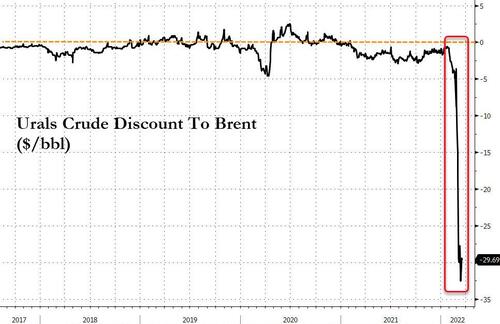
Oil Minister Hardeep Singh Puri told lawmakers on Monday that Indian buyers have contracted the equivalent of about three days’ worth of the nation’s oil needs from Russia, which will be supplied over the next three to four months. That works out at about 15 million barrels of Russian oil, given India’s daily oil requirement of five million barrels.
“Even if we were to scale this up considerably, it would still be literally a drop in a larger bucket,” the minister said in India’s parliament.
Bloomberg does note that, as many western and Asian banks have stopped issuing letters of credit for Russian shipments, it remains to be seen just how much Urals – which mostly loads at Baltic Sea ports – will flow to Asia.
The India (and China) buying comes as Russian Deputy Prime Minister Alexander Novak reiterated his warning that if Europe bans Russian oil, prices could jump to between $300 and $500 per barrel. His comments echo what he said last week:
“It is absolutely clear that a rejection of Russian oil would lead to catastrophic consequences for the global market,” adding that “the surge in prices would be unpredictable. It would be $300 per barrel if not more.”
Additionally, as we detailed previously, India is considering workarounds including rupee payments benchmarked to the U.S. dollar for buying the crude, government officials said recently.
While U.S. officials have said in recent weeks they would like India to distance itself from Russia as much as possible, they recognize its heavy reliance on Moscow for everything from arms and ammunitions to missiles and fighter jets. In other words, India quietly gets a carte blanche to continue trading with Russia in violation of western sanctions.
In other words, all sanctions are created equal, but some are more equal – and can ignore the sanctions – than others.
India is not only the biggest arms importer in the world, but, as Statista’s Katharina Buchholz details below, it is also the biggest customer to the Russian defense industry, data from the Stockholm International Peace Research Institute shows.

You will find more infographics at Statista
India’s dependence on Russian defense technology has been identified as one of the main reasons why the country did not speak out against Russia after the country invaded Ukraine at the end of last month and instead has attempted to remain neutral.
As a reminder, ‘Chindia’ represents 2.7 billion humans – not a small segment of the global population that appears comfortable dealing with one of the the world’s major producers of energy, food, and arms.
8 EMERGING MARKET& AUSTRALIA ISSUES
Australia//// NEW ZEALAND/ SOUTH AFRICA/BRAZIL/ARGENTINA/COVID/VACCINES/LOCKDOWNS
AUSTRALIA/ALUMINUM
Australia is a very large producer of aluminum oxide and Russia is a major importer of Aussi Al2O3. Rusal refines all of its alumina to make aluminum. This will cause a spike in the price of Aluminum
Australia Slaps Russia With Alumina Export Ban, Catapults Aluminum Prices Higher
MONDAY, MAR 21, 2022 – 11:06 AM
Fragile supply chains are crumbling worldwide after Russia invaded Ukraine. The latest disruption comes from Australia, as the world’s top alumina exporter has shunned shipments to Russia, sending aluminum spot prices higher.
Bloomberg reports Australia’s top alumina refineries choked off flows of alumina to Russia’s United Co. Rusal International PJSC, the world’s second-largest aluminum company by production output. Rusal has a 20% stake in Rio Tinto Group’s Queensland Alumina Ltd refinery. Rio is working out options regarding its partnership with Rusal.

Australia accounts for 20% of Russia’s alumina supply, also called aluminum oxide, which is derived from bauxite ore and sent to refiners and turned into alumina. Bulk carriers then ship the alumina to smelters in Russia, where it’s then transformed into aluminum.
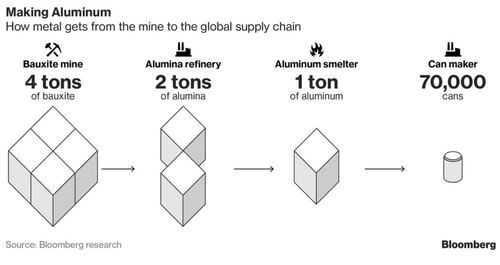
The Australian government said Sunday alumina and aluminum ores exports to Russia had been banned immediately.
“There was a ship that was due to dock in Australia this week to collect a load of alumina bound for Russia,” Prime Minister Scott Morrison said. “That boat is not going to Russia with our alumina.”
Even though aluminum was not on the targeted sanction list imposed by Western countries after Russia invaded Ukraine, large corporations are isolating Russia and or disinvesting in the country. Australia is throttling supplies that could severely impact the Russian output of aluminum.
We detailed how much of the world relies on Russian aluminum in a weekend commodity note.
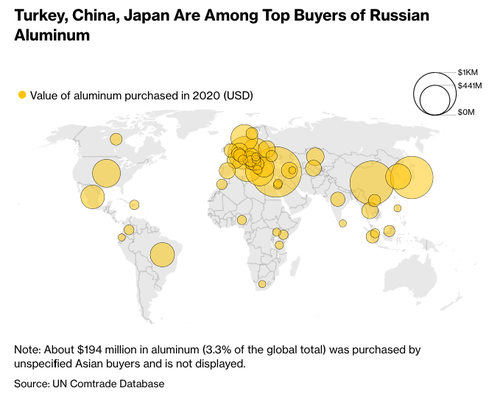
Since Australia has banned exports of critical ingredients to produce aluminum in Russia, one should expect possible supply disruptions or at least declining supplies of the metal.
Aluminum prices jumped as much as 5.1% to $3,554 a ton. Bloomberg notes today’s news “reinforces the case for LME prices to find a foothold above $4,000/ton.”
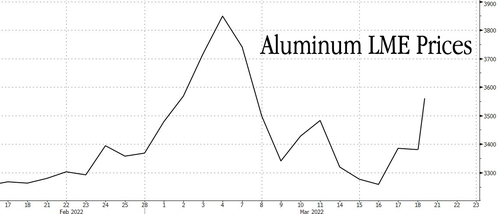
So how does this impact, everyday people? Well, aluminum is used in anything from beer cans to beer kegs, kitchen utensils, window and door frames, consumer electronics, household appliances, aircraft, and spacecraft components.
END
Your early currency/gold and silver pricing/Asian and European bourse movements/ and interest rate settings MONDAY morning 7:30 AM
Euro/USA 1.1037 DOWN .0010 /EUROPE BOURSES //ALL GREEN
USA/ YEN 119.16 UP .226 /NOW TARGETS INTEREST RATE AT .11% AS IT WILL BUY UNLIMITED BONDS TO GETS TO THAT LEVEL…
GBP/USA 1.3138 DOWN 0.0037
Last night Shanghai COMPOSITE CLOSED UP 2.61 PTS OR 0.08%
Hang Sang CLOSED DOWN 191.06PTS OR 0.89%
AUSTRALIA CLOSED DOWN 0.16% // EUROPEAN BOURSES OPENED ALL GREEN
Trading from Europe and ASIA
I) EUROPEAN BOURSES ALL RED
2/ CHINESE BOURSES / :Hang SANG CLOSED DOWN 191.06 PTS OR 0.89%
/SHANGHAI CLOSED UP 2.61 PTS OR 0.08%
Australia BOURSE CLOSED DOWN 0.16%
(Nikkei (Japan) CLOSED HOLIDAY
INDIA’S SENSEX IN THE RED
Gold very early morning trading: 1925.75
silver:$25.04-
USA dollar index early MONDAY morning: 98.36 UP 13 CENT(S) from FRIDAY’s close.
THIS ENDS MONDAY MORNING NUMBERS
xxxxxxxxxxxxxxxxxxxxxxxxxxxxxxxxxxxxxxxxxxxxxxxxxxxxxxxxxxxxxxxxxxxxxxxxxxxxxxxxxxxxxxxxxxxxxxxxxxxxxxxxxxxxxx
And now your closing MONDAY NUMBERS 1: 00 PM
Portuguese 10 year bond yield: 1.24% UP 7 in basis point(s) yield from YESTERDAY/
JAPANESE BOND YIELD: +0.208% UP 0 AND 0/10 BASIS POINTS from YESTERDAY/JAPAN losing control of its yield curve/
SPANISH 10 YR BOND YIELD: 1.39%// UP 8 in basis points yield from yesterday.
ITALIAN 10 YR BOND YIELD 1.97 UP 9 points in basis points yield from yesterday./
the Italian 10 yr bond yield is trading 58 points higher than Spain.
GERMAN 10 YR BOND YIELD: FALLS TO +04440% IN BASIS POINTS ON THE DAY//
THE IMPORTANT SPREAD BETWEEN ITALIAN 10 YR BOND AND GERMAN 10 YEAR BOND IS 1.53% AND NOW ABOVE THE 3.00% LEVEL WHICH WILL IMPLODE THE ENTIRE ITALIAN BANKING SYSTEM. AT 4% SPREAD THERE WILL BE A HUGE BANK RUN…
END
IMPORTANT CURRENCY CLOSES FOR MONDAY
Closing currency crosses for FRIDAY /USA DOLLAR INDEX/USA 10 YR BOND YIELD/1:00 PM
Euro/USA 1.1047 UP .0004 or 4 basis points
USA/Japan: 119.14 UP 0.189 OR YEN DOWN 19 basis points/
Great Britain/USA 1.3203 UP 29 BASIS POINTS
Canadian dollar UP 8 BASIS pts to 1.2588
xxxxxxxxxxxxxxxxxxxxxxxxxxxxxxxxxxxxxxxxxxxxxxxxxxxxxxxxxxxxxxxxxxxxxxxxxxxxxxxx
The USA/Yuan, CNY: closed ON SHORE (CLOSED ..UP 6.3560
THE USA/YUAN OFFSHORE: (YUAN CLOSED (UP)..6.3666
TURKISH LIRA: 14.82 EXTREMELY DANGEROUS LEVEL/DEATH WISH/HYPERINFLATION TO BEGIN.
the 10 yr Japanese bond yield at +0.208
Your closing 10 yr US bond yield UP 9 IN basis points from FRIDAY at 2.245% //trading well ABOVE the resistance level of 2.27-2.32%) very problematic
USA 30 yr bond yield: 2.494 UP 7in basis points
Your closing USA dollar index, 98.23 DOWN 2 CENT(S) ON THE DAY/1.00 PM/
Your closing bourses for Europe and the Dow along with the USA dollar index closing and interest rates for MONDAY: 12:00 PM
London: CLOSED UP 237.74PTS OR 0.03%
German Dax : CLOSED DOWN 59.06 POINTS OR 0.51%
Paris CAC CLOSED DOWN 20.34PTS OR 0.31%
Spain IBEX CLOSED DOWN 4.10PTS OR 0.04%
Italian MIB: CLOSED DOWN UP 176.38 PTS OR 0.73%
WTI Oil price 109.58 12: EST
Brent Oil: 113.75 12:00 EST
USA /RUSSIAN /// RUBLE FALLS TO: 107.65 DOWN 1.25 RUBLES/DOLLAR
GERMAN 10 YR BOND YIELD; +.444
CLOSING NUMBERS: 4 PM
Euro vs USA: 1.1015 DOWN .0032 OR DOWN 32 BASIS POINTS
British Pound: 1.3168 DOWN .0009 or DOWN 9 basis pts
USA dollar vs Japanese Yen: 119.48 UP 0.534
USA dollar vs Canadian dollar: 1.2587 DOWN .0008 (CDN dollar UP 8 basis pts)
West Texas intermediate oil: 112.31
Brent OIL: 116,58
USA 10 yr bond yield: 2.308 UP 16 points
USA 30 yr bond yield: 2.532 UP 11 pts
USA DOLLAR VS TURKISH LIRA: 14.83
USA DOLLAR VS RUSSIA///USA/ ROUBLE: 106.65 UP 1/8ROUBLES (ROUBLE DOWN 41/8 ROUBLES/USA )//
DOW JONES INDUSTRIAL AVERAGE: DOWN 201.94 PTS OR 0.58%
NASDAQ 100 DOWN 43.99 PTS OR 0.31%
VOLATILITY INDEX: 24.46 UP 0.59 PTS OR 2.4%
GLD: 180.67 UP 1.37 PTS OR 0.76%
SLV/ 23.28 UP .26 PTS OR 1.13%
end)
USA trading day in Graph Form
Bonds Battered, Stocks Slide As Powell Channels Volcker; Crude Surges
MONDAY, MAR 21, 2022 – 04:01 PM
FedSpeak dominated the market action today in stocks and bonds with a very hawkish and tone consistently narrated by first Raphael Bostic, then Tom Barkin…
- *BOSTIC SAYS HE’S NOT WEDDED TO ONLY MOVE RATES IN 25 BPS STEPS
- *BOSTIC SAYS FED SHOULD GET MOVING `QUICKLY’ ON BALANCE SHEET
- *BARKIN: CAN MOVE AT 50 BP CLIP AGAIN TO TAME INFLATION
- *BARKIN: WE COULD MOVE FASTER, BUT ALREADY IMPACTING BOND MARKET
Then the Chair ‘dropped the mic’… Powell’s prepared remarks and Q&A confirmed he was open to 50bps hikes (“we may well conclude that we need to move more quickly”) and that The Fed is a long way from an equilibrium balance sheet (suggesting more aggressive QT). This did remind us of his comments in Oct 2018 (“we are a long way from neutral”) that sparked the plunge that forced Powell back into uber-dovish ‘rescue the world’ mode. Of course, the ubiquitous buying-panic in the last few minutes polished the turd on the day. The S&P magically made it back to unch…
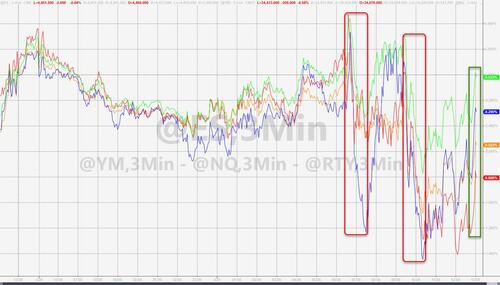
The yield curve inverted at numerous points, screaming that The Fed will not make it to their target and thus will commit an error…

Source: Bloomberg
As the more The Fed hikes in the short-term, the more immediate rate-cuts are being priced in soon after…

Source: Bloomberg
Treasuries were unceremoniously dumped across the curve with the short-end underperforming dramatically (2Y, 5Y up almost 20bps on the day)…
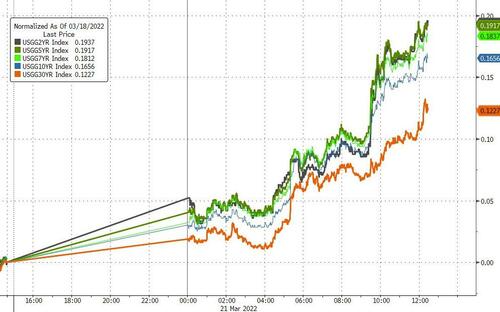
Source: Bloomberg
2Y Yields soared back above 2.00% to their highest since May 2019. Today was the second biggest yield jump for 2Y yields since June 2009…
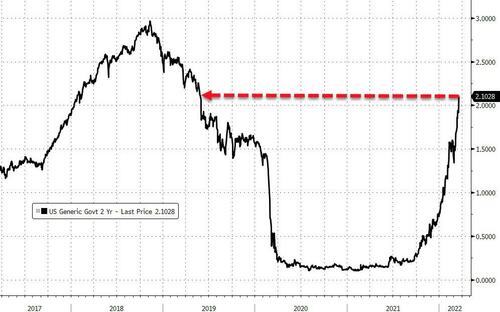
Source: Bloomberg
DoubleLine’s Jeff Gundlach puts the move in context: “The 2 Year US Treasury Yield is up 86 basis points over the past three weeks alone. If that pace were to continue (which of course is pretty darn unlikely) the 2 Year would top 17% by March 1, 2023.”
Bond traders barely walked away…
S&P rallied up to its 200DMA and fell back. The Dow fell back below its 50DMA as did Nasdaq while Small Caps managed to hold above the 50DMA…
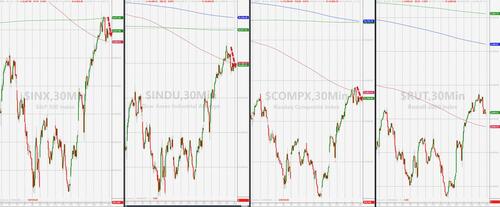
Oil prices soared today, with (May) WTI back above $110, on fears of EU sanctions on Russian oil (as India buys more) and anxiety caused by Saudis raising threat of escalating Houthi attacks on energy infrastructure…
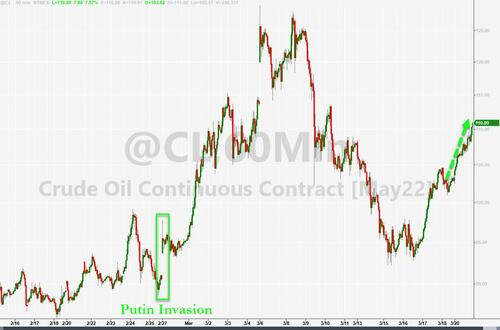
Crypto was lower with Bitcoin fading back from its Friday spike above $42,000…
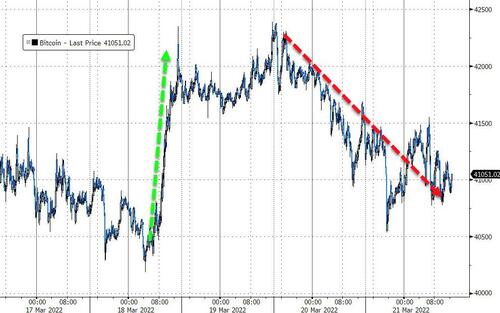
Source: Bloomberg
The dollar inched higher on the day…
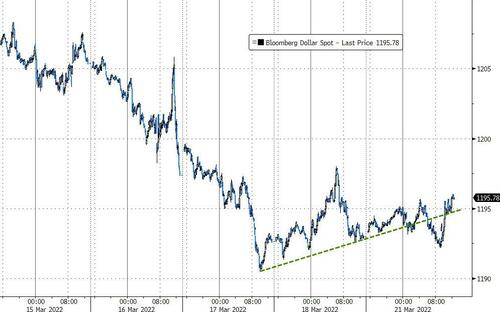
Source: Bloomberg
And it’s not just Russia that’s in trouble, the cost of insuring against default in emerging-market nations to the highest since the pandemic turmoil of 2020…
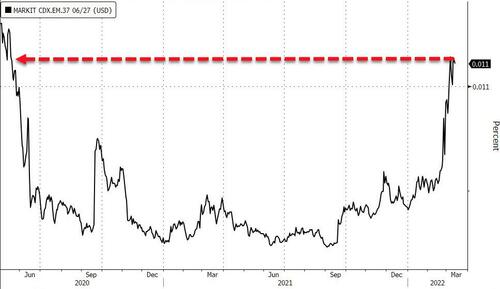
Source: Bloomberg
Gold managed gains today after a kneejerk punch lower at the US equity cash open…

Finally, as we recently noted, the current market’s analog with 2018 is still loosely holding and we suspect that path lower is where we end up as investors realize that until further downside is reached, Powell will keep pushing the hawkishness to ’11’…
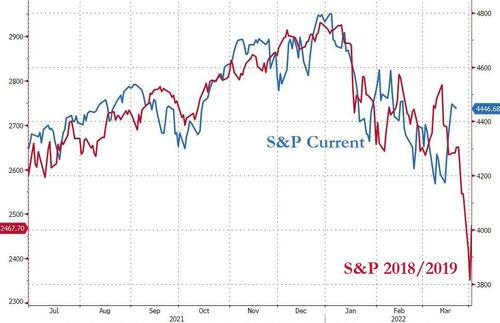
Source: Bloomberg
And as we noted above – the longer he pushes that angle, the quicker the recession, and the sooner after that rate-cuts arrive. The problem for investors is simple – all the time you are ‘looking thru’ the imminent recession to the rate-cuts (and not selling), you are delaying the inevitable rate-cuts as why would Powell fold on his 50bps-at-a-time trajectory is the market is soaking it all up hopefully (in the face of a real world recession).
END
I) /MORNING TRADING
US Stocks Slide After Bostic Comments; Oil & Gold Spike
MONDAY, MAR 21, 2022 – 10:04 AM
Atlanta Fed President Raphael Bostic stirred the hawkish pot hard this morning with some more aggressive comments on QT (and rate-hikes).
“I penciled in six rate hikes for 2022 and two more for 2023,” Bostic said in a speech Monday to a National Association for Business Economics conference in Washington.
“I recognize that I am toward the bottom of the distribution relative to my colleagues, but the elevated levels of uncertainty are front forward in my mind and have tempered my confidence that an extremely aggressive rate path is appropriate today.”
Bostic may be hoping for that but the market sees 7 more hikes this year and 2 RATE CUTS in 2023/2024.
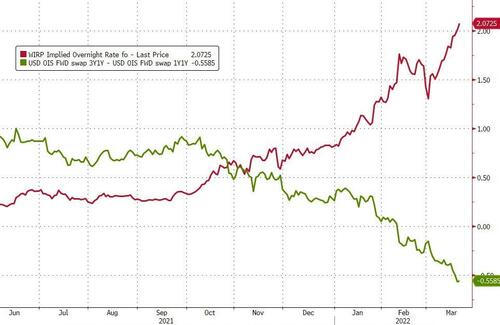
Bostic said he considered inflation as the top concern for policy makers this year and described the U.S. labor market as tight.
He later told reporters that he’d be prepared to raise rates above neutral but “that is just not my baseline today.”
“I am comfortable with more aggressive movements if that is what the data and the evidence suggests is what is appropriate,” he said.
“So I’m not wedded to moving only 25 basis points. I’m not wedded to moving every other meeting. I am going to be very, very open in terms of my approach.”
And finally, while Fed officials have said they expect to start allowing their balance sheet to begin shrinking at a coming meeting and Powell last week said that process could start as soon as May, Bostic said he favored it happening “quickly” and that asset roll off could be done at a faster pace than the last time the Fed conducted this exercise.
This sparked immediate selling in US stocks, pushing all the majors into the red
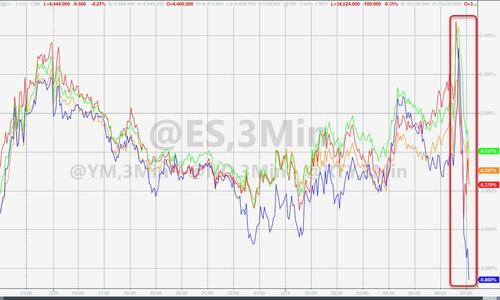
Oil extended gains (with WTI back above $109)…
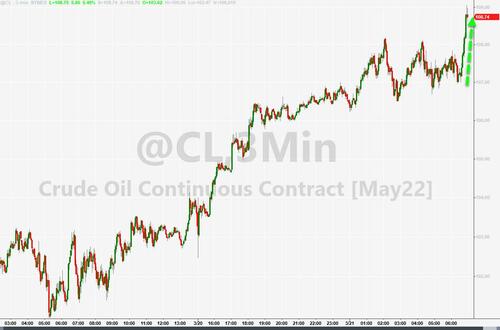
And Gold spiked…
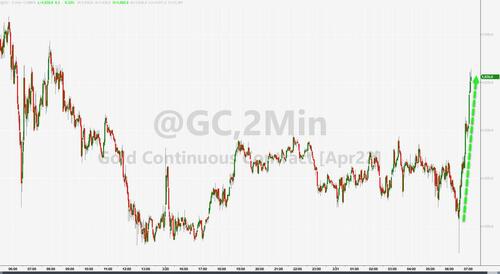
…and next we have Fed Chair Powell’s NABE address.
END
AFTERNOON
END
II)USA data
Yield curve inverts and stocks sink after more hawkish Powell statements
(zerohedge)
Yield Curve Inverts, Stocks Sink After ‘Hawkish’ Powell Comments
MONDAY, MAR 21, 2022 – 12:27 PM
Update (1240ET): Powell’s prepared remarks reinforced his remarks last week, noting that if necessary, the Fed would be open to raising rates by a more aggressive half-point at multiple meetings and to push rates into “restrictive” territory that would limit growth. The Fed hasn’t increased its benchmark rate by a half-point since May 2000.
“We will take the necessary steps to ensure a return to price stability,” he said in the speech (full remarks below)
“In particular, if we conclude that it is appropriate to move more aggressively by raising the federal funds rate by more than (a quarter-point) at a meeting or meetings, we will do so.”
In the Q&A, Powell confirmed the possibility of 50bps hikes…
“If we conclude that it is appropriate to move more aggressively by raising the federal funds rate by more than 25 basis points at a meeting or meetings, we will do so,”
And also noted that The Fed is a long way from an equilibrium balance sheet (suggesting more aggressive QT). This did remind us of his comments in Oct 2018 (“we are a long way from neutral”) that sparked the plunge that forced Powell back into uber-dovish ‘rescue the world’ mode.
Perhaps even more worryingly, Powell admitted that “we are not expecting near-term progress on inflation,” suggesting an even more aggressive tightening stance may on its way as Powell goes full Volcker.
And that sent stocks lower…
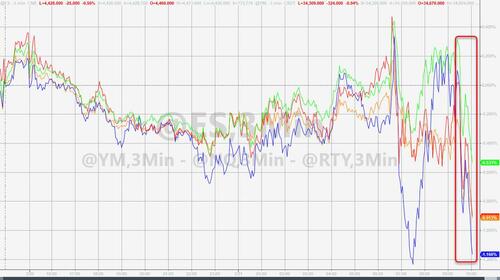
And short-end bond yields higher (2Y +17bps!)…
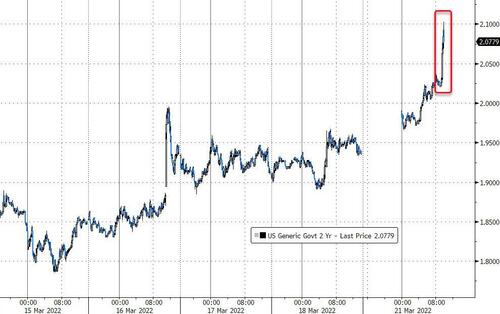
The short-end rip has inverted the curve further in 3s10s and 5s10s…
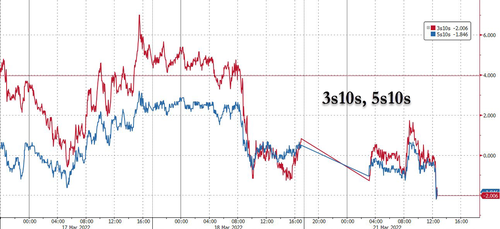
2s10s is below 18bps (and 5s30s dropped below 20bps – its flattest since 2007)…
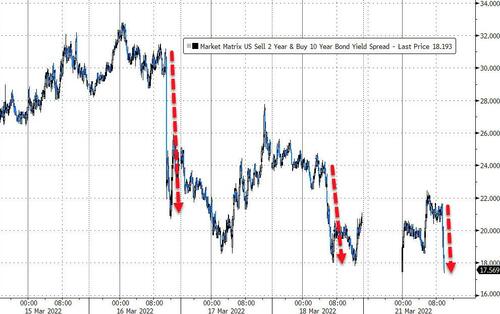
As the chart below shows, the more The Fed hikes, the more it will be forced to cut very shortly.
* * *
Fed Chair Jerome Powell is slated to speak shortly at the National Association for Business Economics annual conference in Washington, D.C.

Prepared remarks and a moderated Q&A are expected, as Powell follows Bostic and Barkin who both signaled very hawkish biases.
- *BOSTIC SAYS HE’S NOT WEDDED TO ONLY MOVE RATES IN 25 BPS STEPS
- *BOSTIC SAYS FED SHOULD GET MOVING `QUICKLY’ ON BALANCE SHEET
- *BARKIN: CAN MOVE AT 50 BP CLIP AGAIN TO TAME INFLATION
- *BARKIN: WE COULD MOVE FASTER, BUT ALREADY IMPACTING BOND MARKET
Goldman says following last week’s FOMC meeting, Chair Powell reinforced the Committee’s hawkish tone by stressing that hiking by 50bp was “certainly a possibility,” that the FOMC will be “attentive to the risks of further upward pressure on inflation and inflation expectations,” and that he sees the risk of recession as “not particularly elevated.”
Goldman continues to expect the Fed to hike seven times in 2022. Chair Powell also said that the FOMC could finalize and implement its plan for balance-sheet reduction “as soon as our next meeting in May.”
Goldman sees this as a strong hint and now expect the FOMC to announce the start of balance sheet reduction in May (vs. June previously).
Bear in mind the market is now pricing in 2 rate-cuts from the end of 2022 to the end of 2024…
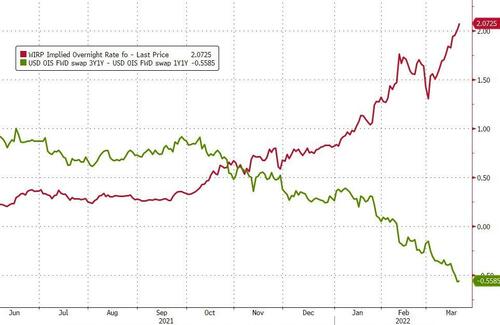
Watch live here (due to start at a delayed 1230ET):
Full Prepared Remarks below:
Thank you for the opportunity to speak with you today.
Let me first pause to recognize the millions who are suffering the tragic consequences of Russia’s invasion of Ukraine.
At the Federal Reserve, our monetary policy is guided by the dual mandate to promote maximum employment and stable prices. From that standpoint, the current picture is plain to see: The labor market is very strong, and inflation is much too high. My colleagues and I are acutely aware that high inflation imposes significant hardship, especially on those least able to meet the higher costs of essentials like food, housing, and transportation. There is an obvious need to move expeditiously to return the stance of monetary policy to a more neutral level, and then to move to more restrictive levels if that is what is required to restore price stability. We are committed to restoring price stability while preserving a strong labor market.
At our meeting that concluded last week, we took several steps in pursuit of these goals: We raised our policy interest rate for the first time since the start of the pandemic and said that we anticipate that ongoing rate increases will be appropriate to reach our objectives. We also said that we expect to begin reducing the size of our balance sheet at a coming meeting. In my press conference, I noted that action could come as soon as our next meeting in May, though that is not a decision that we have made. These actions, along with the adjustments we have made since last fall, represent a substantial firming in the stance of policy with the intention of restoring price stability. In my comments today, I will first discuss the economic conditions that warrant these actions and then address the path ahead for monetary policy.
The Labor Market Is Very Strong and Extremely Tight
To begin with employment, in the last few years of the historically long expansion that ended with the arrival of the pandemic, we saw the remarkable benefits of an extended period of strong labor market conditions. We seek to foster another long expansion in order to realize those benefits again.
The labor market has substantial momentum. Employment growth powered through the difficult Omicron wave, adding 1.75 million jobs over the past three months. The unemployment rate has fallen to 3.8 percent, near historical lows, and has reached this level much faster than anticipated by most forecasters (figure 1). While disparities in employment remain, job growth has been widespread across racial, ethnic, and demographic groups.
By many measures, the labor market is extremely tight, significantly tighter than the very strong job market just before the pandemic. There are far more job openings going unfilled today than before the pandemic, despite today’s unemployment rate being higher. Indeed, there are a record 1.7 posted job openings for each person who is looking for work. Record numbers of people are quitting jobs each month, typically to take another job with higher pay. And nominal wages are rising at the fastest pace in decades, with the gains strongest for those at the lower end of the wage distribution and among production and nonsupervisory workers (figure 2).
It is worth considering why the labor market is so tight, given that the unemployment rate is actually higher than it was before the pandemic. One explanation is that the natural rate of unemployment may be temporarily elevated, so wage pressure is greater for any given level of unemployment. The sheer volume of hiring may have taxed the capacity of the market to bring workers and jobs together. The Delta and Omicron variants complicated hiring, and the strong financial position of households may have allowed some to be more selective in their job search. Over time, we might expect these factors to fade, reducing pressure in the job market.
A second source of labor market tightness is that the labor force participation rate dropped sharply in the pandemic and has only partly recovered. As a result, the labor force remains below its pre-pandemic trend (figure 3). Total demand for labor, measured by total employment plus posted job openings, has substantially recovered and far exceeds the size of the workforce.
About half of the shortfall in labor force participation is attributable to retirements during the pandemic.1 History suggests that most of those retirees are unlikely to reenter the workforce. But some nonparticipation is due to factors that may fade with time, such as caregiving needs and fear of contracting COVID-19. With prime-aged participation still well below its pre-pandemic level, there is room for further progress. A more complete rebound is, however, likely to take some time. Increases in labor force participation often substantially lag declines in unemployment.
Overall, the labor market is strong but showing a clear imbalance of supply and demand. Our monetary policy tools cannot help with labor supply in the near term, but in a long expansion, the factors holding back supply will likely ease. In the meantime, we aim to use our tools to moderate demand growth, thereby facilitating continued, sustainable increases in employment and wages.
The Inflation Outlook Has Deteriorated Significantly
Turning to price stability, the inflation outlook had deteriorated significantly this year even before Russia’s invasion of Ukraine.
The rise in inflation has been much greater and more persistent than forecasters generally expected. For example, at the time of our June 2021 meeting, every Federal Open Market Committee (FOMC) participant and all but one of 35 submissions in the Survey of Professional Forecasters predicted that 2021 inflation would be below 4 percent. Inflation came in at 5.5 percent.2
For a time, moderate inflation forecasts looked plausible—the one-month headline and core inflation rates declined steadily from April through September. But inflation moved up sharply in the fall, and, just since our December meeting, the median FOMC projection for year-end 2022 jumped from 2.6 percent to 4.3 percent.
Why have forecasts been so far off? In my view, an important part of the explanation is that forecasters widely underestimated the severity and persistence of supply-side frictions, which, when combined with strong demand, especially for durable goods, produced surprisingly high inflation.
The pandemic and the associated shutdown and reopening of the economy caused a serious upheaval in many parts of the economy, snarling supply chains, constraining labor supply, and creating a major boom in demand for goods and a bust in services demand. The combination of the surge in goods demand with supply chain bottlenecks led to sharply rising goods prices (figure 4). The most notable example here is motor vehicles. Prices soared across the vehicles sector as booming demand was met by a sharp decline in global production during the summer of 2021, owing to shortages of computer chips. Production remains below pre-pandemic levels, and an expected sharp decline in prices has been repeatedly postponed.
Many forecasters, including FOMC participants, had been expecting inflation to cool in the second half of last year, as the economy started going back to normal after vaccines became widely available.3 Expectations were that the supply-side damage would begin to heal. Schools would reopen—freeing parents to return to work—and labor supply would begin bouncing back, kinks in supply chains would begin resolving, and consumption would start rotating back to services, all of which could reduce price pressures. While schools are open, none of the other expectations has been fully met. Part of the reason may be that, contrary to expectations, COVID has not gone away with the arrival of vaccines. In fact, we are now headed once again into more COVID-related supply disruptions from China. It continues to seem likely that hoped-for supply-side healing will come over time as the world ultimately settles into some new normal, but the timing and scope of that relief are highly uncertain. In the meantime, as we set policy, we will be looking to actual progress on these issues and not assuming significant near-term supply-side relief.
The Policy Response
As the magnitude and persistence of the increase in inflation became increasingly clear over the second half of last year, and as the job market recovery accelerated beyond expectations, the FOMC pivoted to progressively less accommodative monetary policy. In June, the median FOMC participant projected that the federal funds rate would remain at its effective lower bound through the end of 2022, and as the news came in, the projected policy paths shifted higher (figure 5). The median projection that accompanied last week’s 25 basis point rate increase shows the federal funds rate at 1.9 percent by the end of this year and rising above its estimated longer-run normal value in 2023. The latest FOMC statement also indicates that the Committee expects to begin reducing the size of our balance sheet at a coming meeting. I believe that these policy actions and those to come will help bring inflation down near 2 percent over the next 3 years.
As always, our policy projections are not a Committee decision or fixed plan. Instead, they are a summary of what the FOMC participants see as the most likely case going forward. The events of the past four weeks remind us that, in tumultuous times, what seems like the most likely scenario may change quite quickly: Each Summary of Economic Projections reflects a point in time and can become outdated quickly at times like these, when events are developing rapidly.
Thus, my main message today is that, as the outlook evolves, we will adjust policy as needed in order to ensure a return to price stability with a strong job market. Let me now turn to three questions about the likely evolution of policy.
How will fallout from the invasion of Ukraine affect the economy and monetary policy? Russia’s invasion of Ukraine may have significant effects on the world economy and the U.S. economy. The magnitude and persistence of these effects remain highly uncertain and depend on events yet to come.
Russia is one of the world’s largest producers of commodities, and Ukraine is a key producer of several commodities as well, including wheat and neon, which is used in the production of computer chips. There is no recent experience with significant market disruption across such a broad range of commodities. In addition to the direct effects from higher global oil and commodity prices, the invasion and related events are likely to restrain economic activity abroad and further disrupt supply chains, which would create spillovers to the U.S. economy.
We might look to the historical experience with oil price shocks in the 1970s—not a happy story. Fortunately, the United States is now much better situated to weather oil price shocks.4 We are now the world’s largest producer of oil, and our economy is significantly less oil intensive than in the 1970s. Today a rise in oil prices has mixed effects on the economy, lowering real household incomes and thus demand, but raising investment in drilling over time and benefiting oil-producing areas more generally. On net, oil shocks tend to weigh on output in the U.S. economy, but by far less than in the 1970s.
Second, how likely is it that monetary policy can lower inflation without causing a recession? Our goal is to restore price stability while fostering another long expansion and sustaining a strong labor market. In the FOMC participant projections I just described, the economy achieves a soft landing, with inflation coming down and unemployment holding steady. Growth slows as the very fast growth from the early stages of reopening fades, the effects of fiscal support wane, and monetary policy accommodation is removed.
Some have argued that history stacks the odds against achieving a soft landing, and point to the 1994 episode as the only successful soft landing in the postwar period. I believe that the historical record provides some grounds for optimism: Soft, or at least soft-ish, landings have been relatively common in U.S. monetary history.5 In three episodes—in 1965, 1984, and 1994—the Fed raised the federal funds rate significantly in response to perceived overheating without precipitating a recession (figure 6).6 In other cases, recessions chronologically followed the conclusion of a tightening cycle, but the recessions were not apparently due to excessive tightening of monetary policy. For example, the tightening from 2015 to 2019 was followed by the pandemic-induced recession.7
I hasten to add that no one expects that bringing about a soft landing will be straightforward in the current context—very little is straightforward in the current context. And monetary policy is often said to be a blunt instrument, not capable of surgical precision. My colleagues and I will do our very best to succeed in this challenging task. It is worth noting that today the economy is very strong and is well positioned to handle tighter monetary policy.
Finally, what will it take to restore price stability? The ultimate responsibility for price stability rests with the Federal Reserve. Price stability is essential if we are going to have another sustained period of strong labor market conditions. I believe that the policy approach that I have laid out is well suited to achieving this outcome. We will take the necessary steps to ensure a return to price stability. In particular, if we conclude that it is appropriate to move more aggressively by raising the federal funds rate by more than 25 basis points at a meeting or meetings, we will do so. And if we determine that we need to tighten beyond common measures of neutral and into a more restrictive stance, we will do that as well.
Our monetary policy framework, as embodied in our Statement on Longer-Run Goals and Monetary Policy Strategy, emphasizes that having longer-term inflation expectations anchored at our longer-run objective of 2 percent helps us achieve both our dual-mandate objectives. While we cannot measure longer-term expectations directly, we monitor a variety of survey- and market-based indicators. In the recent period, short-term inflation expectations have, of course, risen with inflation, but longer-run expectations remain well anchored in their historical ranges (figure 7).
The added near-term upward pressure from the invasion of Ukraine on inflation from energy, food, and other commodities comes at a time of already too high inflation. In normal times, when employment and inflation are close to our objectives, monetary policy would look through a brief burst of inflation associated with commodity price shocks. However, the risk is rising that an extended period of high inflation could push longer-term expectations uncomfortably higher, which underscores the need for the Committee to move expeditiously as I have described.
Conclusion
The past two years have been extraordinarily challenging for many Americans. Two years ago, more than 20 million people were losing their jobs, millions were falling ill, and lives were being disrupted. We have made enormous strides since then. Today, as I have discussed, the labor market is very strong. But, to end where I began, inflation is much too high. We have the necessary tools, and we will use them to restore price stability.
END
end
IIB) USA COVID/VACCINE MANDATES
After Concerted Effort to Bury Ivermectin, New Bill Would Put This Medicine in the Hands of the American People
Inbox
| Robert Hryniak | Sat, Mar 19, 10:17 PM (8 hours ago) |  | |
| to Harvey |
iiia) USA inflation//SHIPPING commentaries//LOG JAMS//
USA AGRICULTURE
Severe Drought & “Dust Bowl Conditions” Threaten Disastrous Winter Wheat Harvest In The US
MONDAY, MAR 21, 2022 – 04:22 PM
Authored by Michael Snyder via TheMostImportantNews.com,
Food prices in the U.S. have already been soaring, and now we are on track for an absolutely horrible winter wheat harvest. Of course this comes at a time when the war on the other side of the globe is going to greatly reduce wheat exports from Russia and Ukraine. Over the last 12 months, the price of wheat has already risen 69 percent, and now this crisis threatens to go to an entirely new level. In all my years of writing, I have never seen anything like this, and I am deeply concerned about what the months ahead will bring.
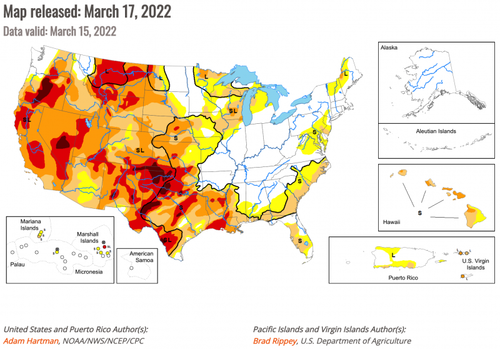
Due to extreme drought, winter wheat is in very bad shape in states such as Kansas, Oklahoma and Texas. The following comes from one of the most prominent agricultural websites in the entire country…
Some farmers in southwestern Kansas, the top U.S. wheat producing state, have not received much measurable rain or snow since October. Winter wheat is planted in autumn, lays dormant in winter and begins sending up green shoots in spring. Proper soil moisture is critical at this stage for the crop to thrive.
More than half of Kansas was classified as under severe drought or worse as of March 8, the driest conditions since 2018, according to the National Drought Mitigation Center. Severe drought is also covering three-quarters of Oklahoma and more than two-thirds of Texas, both of which also are large wheat producers.
If that sounds really bad, that is because it is really bad.
Farmers are praying for rain, because they desperately need it.
That same article also discussed the fact that winter wheat was severely damaged by a wind storm “that brought ‘Dust Bowl’ conditions to Kansas”…
The coming weeks will be critical for the southern Plains wheat crop, said Lucas Haag, extension agronomist at Kansas State University. Many farmers apply fertilizer to maximize crop potential, but moisture is needed to carry nutrients to plant roots, he said.
Wheat plants damaged by the December wind storm that brought “Dust Bowl” conditions to Kansas face additional drought problems because plants have been weakened either by the sand-blast effect of blowing dust and dirt or by soil nutrient loss from the 100 mph (161 kph) winds.
How many years have I been warning that “Dust Bowl conditions” would return to the middle of the country?
Now it has happened.
And forecasters are telling us that “abnormally dry” conditions will likely continue across much of the nation for the foreseeable future…
Abnormally dry to exceptional drought conditions are expected to persist across 60% of the continental U.S. as spring in the Northern Hemisphere begins. Forecasters expect little to no rain for certain parts of the western U.S. through June.
From April to June, above-average temperatures are expected from Southwest to the East Coast and north through the Midwest, according to a new outlook published by the National Oceanic and Atmospheric Administration (NOAA).
NOAA’s map shows a greater than 50% chance of drought persistence for nearly 60% of the continental U.S.
We have been witnessing very strange weather patterns all over the globe in recent months, and that is one of the reasons why major agricultural commodity prices have been spiking dramatically…
Over the past year, wheat prices are up 69 percent. Among other major food exports of Russia and Ukraine, corn prices are up 36 percent and barley 82 percent.
Now war in Ukraine has created an immense “supply shock”, and this is going to have ripple effects that are felt all across the planet.
Ukraine is normally one of the key “breadbaskets” of the world, but now the invasion has changed everything…
Ukraine’s top agricultural export products are corn and wheat. Before the invasion, Ukraine was the second-largest supplier of grains for the European Union and one of the largest suppliers for emerging markets in Asia and Africa. Breaking down the numbers, Ukraine produced 49.6% of global sunflower oil, 10% of global wheat, 12.6% of global barley, and 15.3% of global maize.
Collectively, Russia and Ukraine typically account for a very large chunk of all global agricultural exports…
For the global food market, there are few worse countries to be in conflict than Russia and Ukraine. Over the past five years, they have together accounted for nearly 30 percent of the exports of the world’s wheat, 17 percent of corn, 32 percent of barley, a crucial source of animal feed, and 75 percent of sunflower seed oil, an important cooking oil in some parts of the world.
So what are we going to do now?
I haven’t found a single person that has a reasonable solution to that question.
When it comes to wheat, there are a whole bunch of countries that usually get most of their wheat from Russia and Ukraine…
Armenia, Mongolia, Kazakhstan and Eritrea have imported virtually all of their wheat from Russia and Ukraine and must find new sources. But they are competing against much larger buyers, including Turkey, Egypt, Bangladesh and Iran, which have obtained more than 60 percent of their wheat from the two warring countries.
What are they supposed to do?
Due to an unprecedented spike in the price of fertilizer, the outlook for global agricultural production was already extremely grim before the war erupted, and now we truly are staring into an abyss.
Those that have been following my articles on a regular basis already know that global hunger has been escalating rapidly over the past few years, and one UN official just admitted that this crisis is now reaching a crescendo…
“For the last three years, global rates of hunger and famine have been on the rise. With the Russian invasion, we are now facing the risk of imminent famine and starvation in more places around the world,” Fakhri said in a statement.
Read that part about “imminent famine and starvation” again.
In other words, there isn’t going to be nearly enough food for everyone.
This is exactly what we have been warned about, and we will soon see the global price of food reach heights that would have once been unimaginable.
In light of these developments, I am encouraging all of my readers to take action.
Stock up while food prices are still relatively stable, because it looks like things are about to start getting really crazy.
end
iiib) USA economic stories
What Can The Fed Do About The Price Of Food, Medicine, Gasoline, Or Rent?
MONDAY, MAR 21, 2022 – 12:05 PM
Authored by Mike Shedlock via MishTalk.com,
The answer is nothing or next to nothing. Rates hikes will not impact inelastic items…
CPI Weights from BLS chart by Mish
Chart Notes
- The above chart shows percentage weights in the CPI according to the latest CPI Report, Table 1, relative weights.
- I believe the BLS has a subtotal error in the table. Specifically, the Shelter Less Energy Services subtotals do not add up to 57.395 (32.802+6.971+5.597=45.37). I believe the BLS is missing Education, Recreation, and other services. I plucked those from Table 2.
- Items in blue are inelastic, that is demand for them will not change regardless of what the Fed does.
- Items in green are elastic items. The Fed can reduce demand for them by hiking rates.
What the Fed Can and Cannot Do
- The Fed cannot directly influence the price of anything because it cannot produce either goods or services.
- The Fed can reduce or increase demand where demand is elastic by raising or lowering the cost of money.
Demand Destruction
I have often spoken of demand destruction by Fed rate hikes. Curiously, the primary demand destruction is not even in the tables.
Home prices are not in the CPI. Yet by hiking rates, the Fed will certainly cool the demand for housing.
With decreased demand for housing comes decreased demand for things like furniture, landscaping, carpet, etc.
By hiking rates, the Fed also reduces the demand to hold stocks. The price of equities drops. That also reduces the demand for housing, new cars, eating out, and travel.
Elastic vs Inelastic Demand
- Elastic items total only 19.59%.
- Inelastic items total a whopping 80.41%.
This is why inflation Expectations theory the Fed abides by is total nonsense.
People will not rent two homes if they perceive prices will rise. Nor will people stop paying rent and wait for declines in they believe prices will fall.
The same applies to buying food, gas etc.
Stupidity Well Anchored: Absurdity of Inflation Expectations in Graphic Form
I discussed the silliness of inflations expectations theory in Stupidity Well Anchored: Absurdity of Inflation Expectations in Graphic Form
CPI Percentage Weights
The idea behind inflation expectations is that if consumers think prices will go down, they will hold off purchases and the economy will collapse. The corollary is that is consumers think inflation will rise, they will rush out and buy things causing the economy to overheat.
With that backdrop, let’s have a Q&A. I believe the answers are obvious in all cases.
Inflation Expectations Q&A
- Q: If consumers think the price of food will drop, will they stop eating out?
- Q: If consumers think the price of food will drop, will they stop eating at home?
- Q: If consumers think the price of natural gas will drop, will they stop heating their homes and stop cooking to wait for the event.
- Q: If consumers think the price of gas will drop, will they stop driving or not fill up their car if it is running on empty?
- Q: If consumers think the price of gas will rise, can they do anything about it other than fill up their tank more frequently?
- Q: If consumers think the price of rent will drop, will they hold off renting until that happens?
- Q: If consumers think the price of rent will rise, will they rent two apartments to take advantage?
Asset Irony
People will rush to buy stocks in a bubble if they think prices will rise. They will hold off buying stocks if they expect prices will go down.
People will buy houses to rent or fix up if they think home prices will rise. They will hold off housing speculation if they expect prices will drop.
The very things where expectations do matter are the very things the Fed ignores.
Demand destruction will occur in the small subset of elastic items plus housing and stocks.
Except as related to recreation and eating out, rate hikes will not impact food, energy, or shelter, the overwhelming majority of the CPI.
Finally, please note A Fed Economist Concludes the Widely Believed Inflations Expectations Theory is Nonsense
end
A sign of the times…
Manhattan’s Third-Largest Hotel To Sell At Staggering Loss
MONDAY, MAR 21, 2022 – 05:00 PM
By Ciara Long of BisNow.com,
One of the largest hotels in New York City will trade at a massive loss, an ominous sign for the owners of Manhattan’s big hospitality properties.

Host Hotels & Resorts has agreed to sell its Sheraton New York Times Square hotel for $365M, Real Estate Alert reported, less than half the $738M it paid for the 1,780-room property in 2006.
Host, the largest U.S. hotel real estate investment trust, is under contract to sell the property to MCR Hotels, one of the most active buyers of New York City hotel properties since the onset of the pandemic. The sale is the city’s largest hospitality trade in over two years. The 51-story hotel is New York City’s third-largest by room count.
Host was struggling to sell the property at the price it purchased the hotel for long before the pandemic, asking for $550M in 2018, according to REA. In 2020, Host admitted that the Times Square Sheraton’s value had sunk even lower, to $495M.
The Times Square Sheraton sale adds Host to the list of several NYC hotel owners to sell their properties at a discount. Hotels in the city have yet to return to their pre-coronavirus occupancy rates, and the omicron wave in December and January suppressed tourism’s nascent return to NYC.
The hotel’s new owner, MCR, is the fourth-largest hotel owner-operator in the U.S. and has been making aggressive purchases in major cities over the past year, including Marriott, Hilton and Hampton Inn hotel branches across the country. Several of its 2021 purchases were concentrated in Texas, where it bought 11 properties: three in Dallas, three in Houston and five in Fort Worth, according to releases from the company.
But MCR also made two notable NYC purchases in 2021, The Real Deal reports. It joined with Island Capital and Three Wall Capital to acquire the Lexington Hotel at 511 Lexington Ave. for $185M, and it bought the Royalton Hotel at 60 West 37th St. for $42M. Both sales were below the price paid by previous owners.
MCR is also the owner of the Ink 48 Hotel and the High Line Hotel, which were ranked among NYC’s top 20 hotel choices by Condé Nast Traveler’s Readers Choice Awards last year.
| The Foreign Policy Ramifications of Hunter’s EmailsInboxRobert HryniakSat, Mar 19, 8:23 PM (10 hours ago)toFYI .. will this sink this ship ? https://www.theepochtimes.com/the-foreign-policy-ramifications-from-hunters-emails_4347646.html?utm_source=opinionnoe&utm_campaign=opinion-2022-03-19&utm_medium=email&est=cCz1oLGy6SD69p6VRKJvjFaEXSByik5E%2BXapt1pGUaQqD5u2uza0b3f9The Foreign Policy Ramifications of Hunter’s Emails  CommentaryOn April 12, 2019, Hunter Biden took his damaged laptop to a computer repair shop in Wilmington, Delaware. It was the beginning of a series of fateful events that would culminate in the New York Times finally admitting on March 17, 2022, that Biden’s laptop and its contents were real.Previous reporting by the New York Post detailed emails that were found on Hunter Biden’s laptop that showed that then-presidential candidate Joe Biden, his brother James, and son Hunter Biden were all deeply entangled in various overseas business ventures, including Qatar, Ukraine, Russia, and China.The emails also showed that Hunter Biden was directed by the head of a Ukrainian energy company’s board to find a way to stop the investigation into the company. While the authenticity of his laptop had been confirmed earlier, it unfortunately took verification by The New York Times to allow the story to enter the mainstream.The intentionally delayed admission from the corporate media that Biden’s laptop is real raises many material questions, including those surrounding President Joe Biden’s fitness for office and his ability to direct our foreign policy, particularly in relation to the Ukraine-Russia conflict.The existence of Hunter Biden’s laptop was first publicly disclosed on Oct. 14, 2020, when the New York Post ran a front page story detailing how emails found on the laptop tied his father to his Ukrainian business partners.When the story first broke, a broad coalition comprising corporate media, intelligence officials, and Big Tech companies interfered in the 2020 election by censoring and suppressing the story, claiming that it was a Russian plot. Twitter first issued warnings regarding the Post’s story, and then suspended the account of the Post for running the story‚ along with those of reporters who were looking into the allegations. Facebook announced that it would be limiting distribution of the story on its platform while it supposedly fact-checked the story. That fact-check never came.CNN political director David Chalian issued internal orders that CNN reporters not cover the story, telling his staff, “Obviously, we’re not going with the New York Post story right now on Hunter Biden. We’ll just continue to report out this is the very stuff that the president was impeached over … that Senate committees looked at and found nothing wrong in Joe Biden’s interactions with Ukrainians.”PBS wrote on Twitter, “We don’t want to waste our time on stories that are not really stories, and we don’t want to waste our listeners’ and readers’ time on stories that are just pure distractions.”Notably, the Biden administration, in direct violation of the First Amendment, has repeatedly admitted that it has been working directly with Big Tech companies to censor or eliminate what it deems to be disinformation.Throughout the 2020 campaign, Joe Biden repeatedly denied any knowledge of Hunter Biden’s overseas business, stating, “I have never spoken to my son about his overseas business dealings.” During the second presidential debate, Biden went further, claiming that stories about his son’s laptop were “a Russian plant.”Biden was reciting a statement from a group of more than 50 former intelligence officials, including former CIA Director John Brennan and James Clapper, the former Director of National Intelligence, who all falsely claimed that the Hunter Biden laptop story was Russian disinformation. The intelligence officials issued their statement directly in front of the 2020 presidential election through a public letter on October 19, 2020, which stated that the Post’s story “has all the classic earmarks of a Russian information operation.”The claim of a Russian plot was preposterous. Many of the emails on the laptop had already been verified by the Biden family’s one-time business partner, Tony Bobulinksi, who had matching copies of many of the same emails and text messages. Of greater importance, the FBI had taken possession of the laptop in Dec. 2019. Moreover, the FBI had opened an investigation into Hunter Biden for multiple offenses—including money laundering and possible violations of the Foreign Agents Registration Act. But the corporate media ignored—or worse still, hid—these facts, choosing instead to push the Russian disinformation claim.In the end, the media’s suppression tactics worked, and many Biden voters never found out about his son’s laptop or the fact that the Biden family was under FBI investigation. The impact from the media blackout on the Biden story had material ramifications for the outcome of the presidential election. A late 2020 poll showed that 45 percent of the Biden voters were completely unaware of the many allegations against Hunter and Joe Biden. That same poll also suggested that public knowledge of this information would have changed the outcome of the election.The failure of the Department of Justice (DOJ) to alert the public of a crucial national security issue not only impacted the 2020 presidential election, but also changed the course of the January 2020 impeachment against Trump—only the third impeachment in the 244 years of our nation’s history—when the FBI and DOJ failed to disclose the existence of crucial and exculpatory evidence from Hunter’s laptop.Then-Attorney General Bill Barr, who ultimately oversaw the investigation into Hunter Biden, has never adequately explained why that information was concealed. Had Barr disclosed the information he was sitting on, the case against Trump–which was premised on Trump’s intention to investigate the Biden family’s corruption in Ukraine–would have fallen apart.It was only after the conclusion of the 2020 presidential election that Hunter Biden himself suddenly acknowledged through a statement that he was indeed under federal investigation. Notably, the actual federal investigation was even broader than Biden’s statement had indicated, as it was later disclosed that investigators were also “probing potential money laundering and Hunter Biden’s foreign ties.”That investigation continues to this day and appears to be heating up. Indeed, it may be likely that The NY Times’s belated admission is an attempt to get ahead of the story, particularly as reports have now begun to circulate that Biden is currently the “subject/target” of a grand jury investigation.Perhaps the most damning email on the laptop was the one that Biden received on Nov. 2, 2015, from the head of Burisma’s board, Vadym Pozharskyi. That email tasked Biden with producing “deliverables,” stating that the “ultimate purpose” was to “close down any cases or pursuits” against Burisma owner Mykola Zlochevsky in Ukraine. Earlier in 2015, Pozharskyi had “spent some time” with Joe Biden in Washington.Pozharskyi’s target appeared to be Ukraine’s Prosecutor General Viktor Shokin, who had reopened an investigation into Zlochevsky that had been shut down by his predecessor in late 2014 after Burisma had allegedly paid a $7 million bribe to the Ukrainian prosecutor’s office. The allegations of the bribe were made public through the release of a 2016 State Department email.Less than three weeks after Hunter Biden received Pozharskyi’s email, Joe Biden issued his first demand that Shokin be removed. After Ukrainian president Petro Poroshenko failed to comply with the demands, Biden leveraged $1 billion in U.S. taxpayer loan guarantees to force Shokin’s removal. Shokin was finally removed by Poroshenko in March 2016. In the ensuing months, his successor, Yuriy Lutsenko, approved by Biden, wound down his office’s Burisma investigations.By the time Biden left office in January 2017, all investigations into Burisma had been closed.Shokin, who has been portrayed in the media as a corrupt prosecutor, was praised in the months leading up to his dismissal by some notable state department officials for his honesty.Victoria Nuland, Biden’s current undersecretary of state for political affairs, personally wrote Shokin in June 2015, telling him that “we have been impressed with the ambitious reform and anti-corruption agenda of your government.” That letter was hand-delivered to Shokin by then-U.S. ambassador to Ukraine Geoffrey Pyatt on Nuland’s orders.Nuland also said ongoing reforms from Shokin demonstrated his ability to “investigate and prosecute corruption and other crimes in an effective, fair, and transparent manner.”Shokin’s credibility was highlighted again in a September 2015 speech by Pyatt, when he stated that “we want to work with Prosecutor General Shokin” because Shokin was “leading the fight against corruption” in Ukraine.The media has also repeatedly reported that Shokin had closed his investigation of Burisma before Biden pushed for his firing. Former attorney general Barr has made the same false statement in his new book. In truth, as evidenced in a contemporaneous news report, Shokin had successfully sought an order from Ukrainian courts to seize Zlochevsky’s assets. Those assets were eventually seized on Feb. 2, 2016—just a month before Shokin’s firing by Poroshenko in March 2016.There are many other damaging emails on Hunter Biden’s laptop. In the space of just one year, now-defunct Chinese conglomerate CEFC China Energy paid him nearly $6 million for consulting and legal fees. The company was owned by Chinese billionaire Ye Jianming, who mysteriously disappeared in March 2018. After the company folded, a woman called Bao Jiaqi, who appears to have served as a company secretary, emailed Biden to say that he should take any remaining money from an offshoot company, Hudson West IV, run by Ye associate Gongwen Dong. Bao told Biden, “Nobody will care whereabouts of nobody’s money.”Biden’s financial transactions were subsequently flagged as suspicious activities by the corporate compliance team at Wells Fargo who sent Biden a list of questions, including several that related to transfers being made to Joe Biden’s brother James. It is not known if the Wells Fargo inquiries were resolved.CEFC China Energy also paid Hunter Biden $1 million to find a U.S.-based attorney for Patrick Ho, another Ye associate whom Biden later called “the [expletive] spy chief of China.”Additionally, Biden’s company received a $3.5 million wire transfer from Elena Baturina, the widow of Russian oligarch Yury Luzhkov, the former mayor of Moscow. The circumstances of those payments remain unclear to this day.We are currently enmeshed in a tense geopolitical situation with the Ukraine-Russia conflict—a conflict that was entirely preventable. As recently as December 2021, Joe Biden held out NATO membership to Ukraine, as did his secretary of state, Antony Blinken. Defense Secretary Lloyd Austin went even further, saying the door was open to Ukraine for NATO membership during an October 2021 trip to Ukraine.Those false promises, sure to provoke Russia, lay in stark contrast to early warnings from Biden’s own CIA director, who had previously stated that NATO membership for Ukraine was the “brightest of all red lines” for Russia.To make matters worse, in November 2021, the Biden administration offered Ukraine a charter on strategic partnership. The charter, replete with anti-Russian rhetoric and various promises to Ukraine, was sure to enrage Russian leadership further. Notably, the Biden administration chose to use the provocative term “charter,” which implies the granting of rights, as opposed to the more neutral term “agreement.” In reality, Biden’s use of the term charter was effectively a means of creating an unofficial treaty without having to go through Senate approval, as is normally required.Now, in the midst of a conflict with no easy resolution, NATO, Ukrainian President Volodymyr Zelensky, and even the Biden administration have all admitted that NATO membership was never a viable possibility.While the Biden administration’s motivations for repeatedly agitating Russia remain unknown, the Biden family’s questionable business dealings in China and Ukraine have raised the very real possibility that Joe Biden leveraged U.S. government policy and position for personal gain while he was President Barack Obama’s vice president.Now that the Washington establishment’s denial of the authenticity of Hunter Biden’s emails has been removed, the implications resulting from those emails demand serious answers regarding questions that Joe Biden has been compromised by his past dealings. Biden’s public lies about his knowledge of his family’s entanglements only serve to heighten the urgency of these questions.After the appointment of a special counsel and the forced recusal of Trump’s attorney general for a scandal fabricated by the Clinton campaign, how is it that no special counsel has been appointed in relation to the ongoing investigation into the Biden family? And why is Biden’s own hand-picked attorney general the one overseeing the investigation of alleged Biden family corruption?Crucially, in light of the many implications from the validation of Hunter Biden’s emails and Joe Biden’s now-proven entanglements with Ukraine, how can he, as president of the United States, be entrusted to make foreign policy decisions regarding the Ukraine-Russia conflict?And how can the corporate media, which has demonstrated their willingness to lie for political partisan gain, be entrusted to provide us with accurate coverage of the Biden investigation or the ongoing conflict in Ukraine?Perhaps most importantly, how can our intelligence community—who interfered in both the 2016 and the 2020 elections by legitimizing the Clinton campaign’s fabricated claims of Russia collusion and blaming Biden’s laptop problems on a Russian plot—be trusted on their claims about Ukraine, our foreign policy, and our domestic affairs in general?Jeff Carlson is a co-host of Truth Over News on Epoch TV. Twitter: @themarketswork.Hans Mahncke is a co-host of Truth Over News on Epoch TV. Twitter: @hansmahnckeSent from my iPad CommentaryOn April 12, 2019, Hunter Biden took his damaged laptop to a computer repair shop in Wilmington, Delaware. It was the beginning of a series of fateful events that would culminate in the New York Times finally admitting on March 17, 2022, that Biden’s laptop and its contents were real.Previous reporting by the New York Post detailed emails that were found on Hunter Biden’s laptop that showed that then-presidential candidate Joe Biden, his brother James, and son Hunter Biden were all deeply entangled in various overseas business ventures, including Qatar, Ukraine, Russia, and China.The emails also showed that Hunter Biden was directed by the head of a Ukrainian energy company’s board to find a way to stop the investigation into the company. While the authenticity of his laptop had been confirmed earlier, it unfortunately took verification by The New York Times to allow the story to enter the mainstream.The intentionally delayed admission from the corporate media that Biden’s laptop is real raises many material questions, including those surrounding President Joe Biden’s fitness for office and his ability to direct our foreign policy, particularly in relation to the Ukraine-Russia conflict.The existence of Hunter Biden’s laptop was first publicly disclosed on Oct. 14, 2020, when the New York Post ran a front page story detailing how emails found on the laptop tied his father to his Ukrainian business partners.When the story first broke, a broad coalition comprising corporate media, intelligence officials, and Big Tech companies interfered in the 2020 election by censoring and suppressing the story, claiming that it was a Russian plot. Twitter first issued warnings regarding the Post’s story, and then suspended the account of the Post for running the story‚ along with those of reporters who were looking into the allegations. Facebook announced that it would be limiting distribution of the story on its platform while it supposedly fact-checked the story. That fact-check never came.CNN political director David Chalian issued internal orders that CNN reporters not cover the story, telling his staff, “Obviously, we’re not going with the New York Post story right now on Hunter Biden. We’ll just continue to report out this is the very stuff that the president was impeached over … that Senate committees looked at and found nothing wrong in Joe Biden’s interactions with Ukrainians.”PBS wrote on Twitter, “We don’t want to waste our time on stories that are not really stories, and we don’t want to waste our listeners’ and readers’ time on stories that are just pure distractions.”Notably, the Biden administration, in direct violation of the First Amendment, has repeatedly admitted that it has been working directly with Big Tech companies to censor or eliminate what it deems to be disinformation.Throughout the 2020 campaign, Joe Biden repeatedly denied any knowledge of Hunter Biden’s overseas business, stating, “I have never spoken to my son about his overseas business dealings.” During the second presidential debate, Biden went further, claiming that stories about his son’s laptop were “a Russian plant.”Biden was reciting a statement from a group of more than 50 former intelligence officials, including former CIA Director John Brennan and James Clapper, the former Director of National Intelligence, who all falsely claimed that the Hunter Biden laptop story was Russian disinformation. The intelligence officials issued their statement directly in front of the 2020 presidential election through a public letter on October 19, 2020, which stated that the Post’s story “has all the classic earmarks of a Russian information operation.”The claim of a Russian plot was preposterous. Many of the emails on the laptop had already been verified by the Biden family’s one-time business partner, Tony Bobulinksi, who had matching copies of many of the same emails and text messages. Of greater importance, the FBI had taken possession of the laptop in Dec. 2019. Moreover, the FBI had opened an investigation into Hunter Biden for multiple offenses—including money laundering and possible violations of the Foreign Agents Registration Act. But the corporate media ignored—or worse still, hid—these facts, choosing instead to push the Russian disinformation claim.In the end, the media’s suppression tactics worked, and many Biden voters never found out about his son’s laptop or the fact that the Biden family was under FBI investigation. The impact from the media blackout on the Biden story had material ramifications for the outcome of the presidential election. A late 2020 poll showed that 45 percent of the Biden voters were completely unaware of the many allegations against Hunter and Joe Biden. That same poll also suggested that public knowledge of this information would have changed the outcome of the election.The failure of the Department of Justice (DOJ) to alert the public of a crucial national security issue not only impacted the 2020 presidential election, but also changed the course of the January 2020 impeachment against Trump—only the third impeachment in the 244 years of our nation’s history—when the FBI and DOJ failed to disclose the existence of crucial and exculpatory evidence from Hunter’s laptop.Then-Attorney General Bill Barr, who ultimately oversaw the investigation into Hunter Biden, has never adequately explained why that information was concealed. Had Barr disclosed the information he was sitting on, the case against Trump–which was premised on Trump’s intention to investigate the Biden family’s corruption in Ukraine–would have fallen apart.It was only after the conclusion of the 2020 presidential election that Hunter Biden himself suddenly acknowledged through a statement that he was indeed under federal investigation. Notably, the actual federal investigation was even broader than Biden’s statement had indicated, as it was later disclosed that investigators were also “probing potential money laundering and Hunter Biden’s foreign ties.”That investigation continues to this day and appears to be heating up. Indeed, it may be likely that The NY Times’s belated admission is an attempt to get ahead of the story, particularly as reports have now begun to circulate that Biden is currently the “subject/target” of a grand jury investigation.Perhaps the most damning email on the laptop was the one that Biden received on Nov. 2, 2015, from the head of Burisma’s board, Vadym Pozharskyi. That email tasked Biden with producing “deliverables,” stating that the “ultimate purpose” was to “close down any cases or pursuits” against Burisma owner Mykola Zlochevsky in Ukraine. Earlier in 2015, Pozharskyi had “spent some time” with Joe Biden in Washington.Pozharskyi’s target appeared to be Ukraine’s Prosecutor General Viktor Shokin, who had reopened an investigation into Zlochevsky that had been shut down by his predecessor in late 2014 after Burisma had allegedly paid a $7 million bribe to the Ukrainian prosecutor’s office. The allegations of the bribe were made public through the release of a 2016 State Department email.Less than three weeks after Hunter Biden received Pozharskyi’s email, Joe Biden issued his first demand that Shokin be removed. After Ukrainian president Petro Poroshenko failed to comply with the demands, Biden leveraged $1 billion in U.S. taxpayer loan guarantees to force Shokin’s removal. Shokin was finally removed by Poroshenko in March 2016. In the ensuing months, his successor, Yuriy Lutsenko, approved by Biden, wound down his office’s Burisma investigations.By the time Biden left office in January 2017, all investigations into Burisma had been closed.Shokin, who has been portrayed in the media as a corrupt prosecutor, was praised in the months leading up to his dismissal by some notable state department officials for his honesty.Victoria Nuland, Biden’s current undersecretary of state for political affairs, personally wrote Shokin in June 2015, telling him that “we have been impressed with the ambitious reform and anti-corruption agenda of your government.” That letter was hand-delivered to Shokin by then-U.S. ambassador to Ukraine Geoffrey Pyatt on Nuland’s orders.Nuland also said ongoing reforms from Shokin demonstrated his ability to “investigate and prosecute corruption and other crimes in an effective, fair, and transparent manner.”Shokin’s credibility was highlighted again in a September 2015 speech by Pyatt, when he stated that “we want to work with Prosecutor General Shokin” because Shokin was “leading the fight against corruption” in Ukraine.The media has also repeatedly reported that Shokin had closed his investigation of Burisma before Biden pushed for his firing. Former attorney general Barr has made the same false statement in his new book. In truth, as evidenced in a contemporaneous news report, Shokin had successfully sought an order from Ukrainian courts to seize Zlochevsky’s assets. Those assets were eventually seized on Feb. 2, 2016—just a month before Shokin’s firing by Poroshenko in March 2016.There are many other damaging emails on Hunter Biden’s laptop. In the space of just one year, now-defunct Chinese conglomerate CEFC China Energy paid him nearly $6 million for consulting and legal fees. The company was owned by Chinese billionaire Ye Jianming, who mysteriously disappeared in March 2018. After the company folded, a woman called Bao Jiaqi, who appears to have served as a company secretary, emailed Biden to say that he should take any remaining money from an offshoot company, Hudson West IV, run by Ye associate Gongwen Dong. Bao told Biden, “Nobody will care whereabouts of nobody’s money.”Biden’s financial transactions were subsequently flagged as suspicious activities by the corporate compliance team at Wells Fargo who sent Biden a list of questions, including several that related to transfers being made to Joe Biden’s brother James. It is not known if the Wells Fargo inquiries were resolved.CEFC China Energy also paid Hunter Biden $1 million to find a U.S.-based attorney for Patrick Ho, another Ye associate whom Biden later called “the [expletive] spy chief of China.”Additionally, Biden’s company received a $3.5 million wire transfer from Elena Baturina, the widow of Russian oligarch Yury Luzhkov, the former mayor of Moscow. The circumstances of those payments remain unclear to this day.We are currently enmeshed in a tense geopolitical situation with the Ukraine-Russia conflict—a conflict that was entirely preventable. As recently as December 2021, Joe Biden held out NATO membership to Ukraine, as did his secretary of state, Antony Blinken. Defense Secretary Lloyd Austin went even further, saying the door was open to Ukraine for NATO membership during an October 2021 trip to Ukraine.Those false promises, sure to provoke Russia, lay in stark contrast to early warnings from Biden’s own CIA director, who had previously stated that NATO membership for Ukraine was the “brightest of all red lines” for Russia.To make matters worse, in November 2021, the Biden administration offered Ukraine a charter on strategic partnership. The charter, replete with anti-Russian rhetoric and various promises to Ukraine, was sure to enrage Russian leadership further. Notably, the Biden administration chose to use the provocative term “charter,” which implies the granting of rights, as opposed to the more neutral term “agreement.” In reality, Biden’s use of the term charter was effectively a means of creating an unofficial treaty without having to go through Senate approval, as is normally required.Now, in the midst of a conflict with no easy resolution, NATO, Ukrainian President Volodymyr Zelensky, and even the Biden administration have all admitted that NATO membership was never a viable possibility.While the Biden administration’s motivations for repeatedly agitating Russia remain unknown, the Biden family’s questionable business dealings in China and Ukraine have raised the very real possibility that Joe Biden leveraged U.S. government policy and position for personal gain while he was President Barack Obama’s vice president.Now that the Washington establishment’s denial of the authenticity of Hunter Biden’s emails has been removed, the implications resulting from those emails demand serious answers regarding questions that Joe Biden has been compromised by his past dealings. Biden’s public lies about his knowledge of his family’s entanglements only serve to heighten the urgency of these questions.After the appointment of a special counsel and the forced recusal of Trump’s attorney general for a scandal fabricated by the Clinton campaign, how is it that no special counsel has been appointed in relation to the ongoing investigation into the Biden family? And why is Biden’s own hand-picked attorney general the one overseeing the investigation of alleged Biden family corruption?Crucially, in light of the many implications from the validation of Hunter Biden’s emails and Joe Biden’s now-proven entanglements with Ukraine, how can he, as president of the United States, be entrusted to make foreign policy decisions regarding the Ukraine-Russia conflict?And how can the corporate media, which has demonstrated their willingness to lie for political partisan gain, be entrusted to provide us with accurate coverage of the Biden investigation or the ongoing conflict in Ukraine?Perhaps most importantly, how can our intelligence community—who interfered in both the 2016 and the 2020 elections by legitimizing the Clinton campaign’s fabricated claims of Russia collusion and blaming Biden’s laptop problems on a Russian plot—be trusted on their claims about Ukraine, our foreign policy, and our domestic affairs in general?Jeff Carlson is a co-host of Truth Over News on Epoch TV. Twitter: @themarketswork.Hans Mahncke is a co-host of Truth Over News on Epoch TV. Twitter: @hansmahnckeSent from my iPad ReplyForward ReplyForward |
end
iv)swamp stories
KING REPORT/SWAMP STORIES
Kremlin calls Biden irritable and forgetful, says he insulted Putin
“We hear and see statements that are actually personal insults to President Putin,” Kremlin spokesperson Dmitry Peskov told reporters. “Given such irritability from Mr Biden, his fatigue and sometimes forgetfulness…fatigue that leads to aggressive statements, we will not make harsh assessments, so as not to cause more aggression.”… https://news.yahoo.com/kremlin-accuses-ukraine-trying-drag-094340538-114806554.html
Russian state TV cuts away from Putin during speech at packed stadium (Aping Hitler?)
Russian state television suddenly cut away from President Vladimir Putin speaking at Moscow’s packed Luzhniki stadium to mark the eighth anniversary of Crimea’s annexation on Friday, showing patriotic songs being played at the event instead… https://www.jpost.com/breaking-news/article-701695
Reuters: The Kremlin said on Friday a technical glitch was behind the interrupted transmission of Russian President Vladimir Putin’s speech to a packed Moscow stadium to mark the eighth anniversary of Crimea’s annexation.
Chinese carrier sails through Taiwan Strait hours before Biden-Xi call
A Chinese aircraft carrier sailed through the sensitive Taiwan Strait on Friday, Taiwan’s Defence Ministry said, just hours before the Chinese and U.S. presidents were due to talk…the carrier Shandong sailed close to the Taiwan-controlled island of Kinmen, which sits directly opposite the Chinese city of Xiamen…The sailing happened about 12 hours before U.S. President Joe Biden is due to speak to his Chinese counterpart, Xi Jinping.
The source described the timing of the Shandong’s movement so close to that call as “provocative” and that it was unusual it sailed during daylight hours, with previous missions happening at night…
https://www.msn.com/en-gb/news/world/exclusive-china-sails-carrier-through-taiwan-strait-hours-before-biden-xi-call-source/ar-AAVdpk2
China Planned Taiwan Invasion in Fall, Alleged Russian Intel Leak Claims
In the fourth letter to Osechkin, dated March 9, the author describes the difficult position in which Moscow has put Beijing because of Putin’s decision to invade Ukraine, a move that united the West and turned Russia into such a pariah that China would find it hard to offer support…Now, after the events in Ukraine, this window of opportunity has shut, which gives the United States the opportunity to both blackmail Xi and negotiate with his [political] rivals on favorable terms.”…
https://www.newsweek.com/china-planned-taiwan-invasion-fall-alleged-russian-intel-leak-claims-1688449
St. Louis Fed’s Bullard says the central bank should raise rates above 3% this year
“The burden of excessive inflation is particularly heavy for people with modest incomes and wealth and for those with limited ability to adjust to a rising cost of living,” he said… “the Committee’s policy rate is currently far too low to prudently manage the U.S. macroeconomic situation.”…
https://www.cnbc.com/2022/03/18/st-louis-feds-bullard-says-the-central-bank-should-raise-rates-above-3percent-this-year.html
Fed’s Waller Favors Considering Half-Point Hikes at Coming Meetings
Says data ‘screaming’ for Fed to raise rates 50 basis points
Sees U.S economy growing at healthy pace despite Ukraine war
Waller, speaking Friday.. said he would like to “front-load” interest-rate hikes…
https://www.bnnbloomberg.ca/fed-s-waller-favors-considering-half-point-hikes-at-coming-meetings-1.1739621
Early on Friday, bonds and the dollar rallied sharply due to the above stories. WTI oil rallied 1.3%. It was not the booming expiry open that the buyers or manipulators during late Thursday trading envisioned. The dollar hit its highest level since February 2016. The pushed gold 12.00 lower. The US 2-spread got within 20 bps of inverting. The smell of recession was in the air.
Russia is facing a depression of unknown depth and duration. Ukraine is facing abject destruction. Europe is being overwhelmed with immigrants with recession beckoning. The odds of a US recession are escalating, despite Jerome “Capt. Wrongway” Powell’s assertion that the risks of the Big R are low.
@MichaelGoodwell: 3s10s, 5s10s, 3s5s all inverted (or v close to). 2s10s only 20bps from inversion. Based on that, should the S&P be just 8% below ATHs?
Biden Urges China to Prod Russia as Xi Cautions Against Conflict 11:07 ET
- Xi tells Biden that China didn’t want to see Ukraine war
U.S. President Joe Biden and Chinese leader Xi Jinping concluded a closely watched video conference on Friday after nearly two hours, their first since Russia’s invasion of Ukraine last month…
https://www.bloomberg.com/news/articles/2022-03-18/biden-and-xi-begin-first-call-since-russia-s-invasion-of-ukraine
@CGTNEurope China state-affiliated media: President Xi Jinping has told the U.S. the conflict in Ukraine is something ‘we don’t want to see.’ In a video call with U.S. President Joe Biden, China’s President said that peace and security are the cherished treasures of the international community.
President Xi told Biden, ‘conflict and confrontation are not in the interests of anyone.’ As the world’s largest economies and members of the UN Security Council, Xi said, ‘we must shoulder our due international responsibilities and make efforts for world peace and tranquility.’…
The events again show that countries should not come to the point of meeting on the battlefield. Conflict and confrontation are not in anyone’s interest, and peace and security are what the international community should treasure the most… we must not only guide the China-U.S. relations forward along the right track but also shoulder our share of international responsibilities and work for world peace and tranquility. (10:16 ET to 10:31 ET)
ESMs and stocks made modest new highs for the day on this: Russian Negotiator Medinsky Says Russia, Ukraine Are Discussing Nuances Linked to Security Guarantees for Ukraine Should It Refuse to Join NATO – IFX
Moscow and Kyix Are “Halfway There” on Issue of Ukraine’s Demilitarization – Medinsky
Russian Negotiator Medinsky: The Topics Where Russia and Ukraine’s Views Are Most Closely Aligned Are the Country’s Neutral Status and Its Refusal to Join NATO – Interfax
China’s Xi Says U.S. Side Misjudged China’s Strategic Intentions – Xinhua
China’s Xi, U.S. President Biden to Urge Actions to Get Ties on Steady Track – Xinhua
China’s Xi to Biden: The Top Priorities Now Are to Continue Discussion and Negotiation, Reduce Civilian Casualties, Avert Humanitarian Crisis, and End the ‘War’ as Quickly as Possible
Xi Hopes U.S. Will Pay Enough Attention to Taiwan Issues – Xinhua
Xi: Mishandling of Taiwan Can Have ‘Subversive’ Effect on Ties
| @ZekeJMiller: It took the White House four hours to craft this readout of Biden’s call w/ Xi (while Xi’s side has been out there for hours) https://twitter.com/ZekeJMiller/status/1504894300768854025 The crux of the shockingly brief WH statement: [Biden] “He described the implications and consequences if China provides material support to Russia as it conducts brutal attacks against Ukrainian cities and civilians…The President reiterated that U.S. policy on Taiwan has not changed, and emphasized that the United States continues to oppose any unilateral changes to the status quo…” Why no transcript of the 110-minute Xi-Biden phone call? White House holds its cards close about Biden’s call with Xi The Biden administration provided few details about President Biden’s nearly two-hour video call with Chinese President Xi Jinping on Friday following the talks, leaving more questions than answers about where things stand between the two nations amid rising tensions over China’s cozy relationship with Russia… https://www.foxbusiness.com/politics/biden-xi-call @vtchakarova: Following Xi-Biden call, Russian Deputy Minister of Defense Fomin met with the Chinese Ambassador in Russia upon request from China, RBK (Moscow) reports. @Igor_Denisov: According to the MOD press release, Russian Deputy Defense Minister Alexander Fomin and Chinese Ambassador to Moscow Zhang Hanhui held talks on Friday. “The talks were organized at the request of the Chinese side. During the meeting, they discussed current issues of mutual interest,” the Russian Defense Ministry said in a brief statement…The issues mentioned are not within the ambassador’s responsibility. I think this is an attempt to get information about what is happening on the ground. Anyway, that’s my guess. GOP Sen. @marcorubio: I don’t think, I KNOW Xi is lying. China is helping Russia in major ways with the criminal invasion of Ukraine. Why is it so hard for the west to understand that these people in Moscow, Tehran & Beijing lie all the time about everything? (Like the US MSM?) Trapped in Russia, Europe’s Banks Weigh the Cost of Breaking Out Selling assets not easy, winding down balance sheet slow (There’s a cost for dancing with the devil.) https://www.bloomberg.com/news/articles/2022-03-18/trapped-in-russia-europe-s-banks-weigh-the-cost-of-breaking-out Clandestine Finance System Helped Iran Withstand Sanctions Crush, Documents Show System set up outside Iran’s borders conducted tens of billions in banned trade, according to documents, intelligence officials… enabling Tehran to endure the economic siege and giving it leverage in multilateral nuclear talks, according to Western diplomats, intelligence officials and documents… (If the US knew, why was this allowed?) https://www.wsj.com/articles/clandestine-finance-system-helped-iran-withstand-sanctions-crush-documents-show-11647609741 The King of Block Trades Is Entangled in a U.S. Probe of Morgan Stanley Frank Fu, whose firm achieved a 76% return its first year, wields billions to help banks unload stock. The U.S. is examining those symbiotic relationships. https://www.bloomberg.com/news/articles/2022-03-18/the-5b-hedge-fund-star-entangled-in-u-s-s-morgan-stanley-probe @bennyjohnson: British reporters ROAST unstable Pelosi LIVE on air— the world is LITERALLY laughing at us https://twitter.com/bennyjohnson/status/1504506974494498816 Positive aspects of previous session Blatant manipulation to profit from the expiration of $3.5 TRILLION of derivatives Nasdaq 100 closed +2.14% and +8.41% for the week, the best weekly gain since Nov 2020 Negative aspects of previous session The US yield curve has inverted at several key durations Ambiguous aspects of previous session With the world ablaze, The Big Guy again retreat to Delaware for what must be a needed ….. First Hour/Last Hour Action [S&P 500 Index]: 1st Hour from NYSE open: Up; Last Hour: Up Pivot Point for S&P 500 Index [above/below indicates daily trend to traders]: 4439.70 Previous session High/Low: 4465.40; 4390.57 @anders_aslund: Russia’s war in Ukraine illustrates how warfare has changed. Tanks & armored personnel carriers have become obsolete. They are too expensive & are easily destroyed with manifold light anti-tank weapons or drones. Airplanes and helicopters are too expensive and too vulnerable to modern weapons, so they are not much used, but much destroyed. The obvious winners are the Turkish killer drones… Cruise missiles remain effective, but they are expensive. Special forces remain vital, but they must have high moral and be disciplined. The Ukrainians are, while the Kadyrovtsy have been revealed as cruel and trigger-happy but pretty useless. The Putin army has been revealed as an obsolete Potemkin army. I should add that the Ukrainian spring mud has made it impossible for Russian military vehicles to leave the roads, so they are sitting ducks on the roads, as long as the Ukrainians have enough of potent anti-tank weapons. The overall picture suggests that Putin, Shoigu & Putin’s KGB Dresden friend, Rostec CEO Sergei Chemezov, have concentrated on stealing money from the war budget. Then it is not surprising that nothing works and that the military moral is missing in action. Russia Says It Used Hypersonic Missile in Ukraine for First Time https://www.newsmax.com/us/hypersonic-missile-munitions-invasion/2022/03/19/id/1061956/ @RALee85: The Kinzhal seems to be a modified version of the Iskander-M 9M723 quasi-ballistic missile. Its use is notable, but, imo, not that significant. It has the range to hit targets in western Ukraine, and Russia is likely running low on cruise missiles for those targets. WSJ: The Clinton Foundation, State and Kremlin Connections (Hillary’s hypersonic missiles!) Why did Hillary’s State Department urge U.S. investors to fund Russian research for military uses? Dozens of U.S. tech firms, including top Clinton Foundation donors like Google, Intel and Cisco, made major financial contributions to Skolkovo, with Cisco committing a cool $1 billion…Russians tied to Skolkovo also flowed funds to the Clinton Foundation… the state-of-the-art technological research coming out of Skolkovo raised alarms among U.S. military experts and federal law-enforcement officials… technological innovations include Russian hypersonic cruise-missile engines, radar surveillance equipment, and vehicles capable of delivering airborne Russian troops… July 31, 2016 https://www.wsj.com/articles/the-clinton-foundation-state-and-kremlin-connections-1469997195 @TheStudyofWar: Ukrainian forces have defeated the initial Russian campaign of this war. Its culmination is creating conditions of stalemate throughout most of Ukraine. Read the latest Russian offensive campaign assessment from @TheStudyofWar and @criticalthreats: https://t.co/EtMCrMbAjO @ragipsoylu: Putin’s four demands for a ceasefire with Ukraine: • Ukraine to be neutral, no NATO membership • Disarmament • De-Nazification • Zelensky agreeing negotiations on Donbas with Putin Per Erdogan, Putin phone call, retold by senior Turkish official Kalin to BBC The West Misjudged Russia. It Shouldn’t Repeat That Mistake with China. Op-ed in BBG Its policies toward both superpowers have been based on the same illusions and flawed assumptions. The U.S. and its allies did so because their policy rested on three naive assumptions: that integration into the global economy would eventually lead to westernization; that the Putin regime is a mere deviation on the road to liberal democracy, Russia’s long tradition of autocracy be damned; and that cultural nationalism counts for little against the charms of western cosmopolitanism… Policymakers in the United States are belatedly recognizing China’s real nature. But Europeans remain much more naïve, or at least they did before Putin’s wake-up call… The West’s embrace of China was based on the idea that China would reciprocate by embracing the West’s economic norms and cultural values. The Chinese leadership would abandon Marxism-Leninism in favor of market capitalism while simultaneously accommodating itself to the rules and rituals of the Western-led economic order rather like a grateful nouveau riche accommodating himself to the rules and rituals of the Knickerbocker Club. And economic liberalization would give rise to political liberalization as the new middle class demanded democratic rights along with their freedom to choose 15 different types of lattes. In fact, the opposite has happened… “China today is more repressive than at any time since the 1989 Tiananmen Square massacre,” says Friedberg, “and arguably since the Cultural Revolution in the 1960s.”… Xi’s China is a far more significant foe than Putin’s Russia… https://www.bloomberg.com/opinion/articles/2022-03-13/vladimir-putin-s-russia-gives-the-west-a-wake-up-call-on-xi-jinping-s-china The list of the biggest benefactors and fortifiers of China and Russia begins with the Bushes, the Clintons, the US Congress, the big banks, and globalists. US admiral says China fully militarized isles – “I think over the past 20 years we’ve witnessed the largest military buildup since World War II by the PRC,” Aquilino told AP, using the initials of China’s formal name. “That buildup of weaponization is destabilizing to the region.”… https://t.co/8BTMFcwHko CDC reports fewer (24%!!!) COVID-19 pediatric deaths after data correction (Trust the science!) Its algorithm was accidentally counting deaths that were not COVID-19-related…. The adjustment resulted in removal of 72,277 deaths previously reported across 26 states, including 416 pediatric deaths, CDC said. The reduction cut the CDC’s estimate of deaths in children by 24% to 1,341 as of March 18… https://www.reuters.com/business/healthcare-pharmaceuticals/cdc-reports-fewer-covid-19-pediatric-deaths-after-data-correction-2022-03-18/ @DonaldJTrumpJr: Serious question… Is anyone actually dumb enough to believe that this was a coding error instead of something used to drive the narrative that they wanted? @JesseKellyDC: “Whoops, we counted too many deaths as COVID deaths.” “Whoops, the vaccine doesn’t stop the spread.” “Whoops, it also wears off in about 15 minutes.” “Whoops, other treatments might actually work.” None of this was an accident. Don’t buy any of this “whoops” crap. @WSJ: The attempt by Biden to assign blame for the acceleration of prices that began just over a year ago to a war that began just under three weeks ago is remarkable for its cynicism, its dishonesty and its desperation, writes @gerardtbaker https://t.co/uJvaC9zfrR @MetreSteven: 3-5s, 5-7s, 3-10s, 7-10s, & 20-30s are inverted. 5-10s at parity. This is going to be ugly! Russia Delivers Ultimatum to Surrender Mariupol (Ukraine rejected the surrender ultimatum.) Turkey said Moscow and Kyiv are close to an agreement on key points, even as a top Ukrainian aide said Russia has turned to “more destructive artillery” and Russia demanded the surrender of embattled Mariupol. Ukraine expects to get its next batch of U.S. weaponry, including Javelins and Stingers, in the coming days… Colonel-General Mikhail Mizintsev said all armed units of Ukraine must leave Mariupol from 9 a.m. to 11 a.m. local time on Monday… after which any fighters remaining would face a military tribunal… https://financialpost.com/pmn/business-pmn/ukraine-update-russia-delivers-ultimatum-to-surrender-mariupol Today – Now that one of the biggest manipulations for one of the largest ($3.5 trillion) expirations in history is over, what will drive the US equity market? The Ukraine situation is now at its most murky and dangerous point. While reports suggest a peace deal is nigh, the Russian military has been embarrassed globally. ‘Lil Vlad’s prestige has been debased. So, the evil one is now employing bloody siege tactics. There is no telling if peace or WWIII is the next ‘big thing’. ESMs are -7.75; oil is +2.23 at 20:25 ET. Expected economic data: Powell speaks at National Assoc. For Business Economics 12:00 ET S&P 500 Index 50-day MA: 4433; 100-day MA: 4512; 150-day MA: 4517; 200-day MA: 4471 DJIA 50-day MA: 34,538; 100-day MA: 35,165; 150-day MA: 35,078; 200-day MA 34,975 S&P 500 Index – Trender trading model and MACD for key time frames Monthly: Trender is positive; MACD is negative – a close below 4153.02 triggers a sell signal Hourly: Trender and MACD are negative – a close above 4547.45 triggers a buy signal Daily: Trender and MACD are positive – a close below 4229.95 triggers a sell signal Hourly: Trender and MACD are positive – a close below 4408.99 triggers a sell signal @Cernovich: Now the Hunter Biden laptop is confirmed, imagine what Ukraine has on the regime. Kompromat galore. Now we see what’s at stake. The survival and political power of the most corrupt Americans in history. Some pundits believe the NYT’s report that validates Hunter’s laptop is due to leaks from the FBI or DoJ about what is on the laptop and probable coming indictments. Others believe the Deep State has decided it’s time to commence the steps to remove The Big Guy. Ex-DNI @RichardGrenell: Hunter Biden’s laptop would have sunk Joe Biden’s election. The DC newsrooms knew it. They covered it up. This is a total crisis for the US media. NY Post front page on Friday: All the news that’s fit to print…once Biden is elected – New York Times admits Hunter’s laptop is real – 17 months after the Post was banned for it https://twitter.com/Rep_Clyde/status/1504818675173543938 NY Post Editorial Board: Now that Joe Biden’s president, the Times finally admits: Hunter’s laptop is real – Hunter’s business partner Tony Bobulinski came forward immediately after The Post’s reports and confirmed that the emails bearing his name were legitimate. The Bidens didn’t even deny it was true! They just deflected, with the media’s help… Mostly, the press just ignored it… Now… Biden’s safely in the White House, and the Times finally decides to report on the news rather than carry the Biden campaign’s water… https://nypost.com/2022/03/17/the-times-finally-admits-hunter-bidens-laptop-is-real/ NY Post front page on Saturday: Spies Who Lie – The intelligence ‘experts’ that falsely discredited Hunter Biden’s laptop – and still won’t say sorry https://nypost.com/cover/march-19-2022/ NY Post Editorial Board: Spies who lie: 51 ‘intelligence’ experts refuse to apologize for discrediting true Hunter Biden story – The officials, including CNN pundit and professional fabricator James Clapper… signed a letter saying that the laptop “has the classic earmarks of a Russian information operation.” What proof did they have? By their own admission, none. “We do not know if the emails . . . are genuine or not,” the letter said. They’re just “suspicious.” Why? Because they hurt Biden’s campaign, that’s evidence enough. Keep in mind this was written Oct. 19, 2020, five days after The Post published its first story… Big Tech, former government officials, and the media conspired together to bury a story… they peddled online disinformation to sway an election…There have been no consequences… https://nypost.com/2022/03/18/intelligence-experts-refuse-to-apologize-for-smearing-hunter-biden-story/ Ex-DNI @RichardGrenell: “10% for the Big Guy” – Hunter Biden. @AriFleischer: This is the issue the MSM has failed to demand answers to. Did Joe Biden profit from Hunter’s business dealings? Joe says he was not aware of Hunter’s activities. Hunter’s emails say he was. Because Joe is a D, and because he ran against Trump, the media suppressed the news. @themarketswork: 1) One of the more damning emails from Hunter’s laptop was a Nov 2, 2015 email from Vadym Pozharskyi, head of Burisma’s board. Pozharskyi directed Hunter to “close down” “any cases or pursuits” against Burisma owner Zlochevsky in Ukraine. 2) Three weeks later, on Nov. 22, Joe Biden demanded the removal of Ukraine prosecutor Shokin…13) The media, intelligence community and DNC all lied in order to alter the outcome of an election… https://mediaactionnetwork.com/wp-content/upl https://twitter.com/themarketswork/status/1505566110044762113 McCarthy: Schiff ‘lied’ about Hunter Biden’s emails, won’t be on Intel committee in GOP House McCarthy also cited what he considers Schiff’s failure to warn U.S. about Afghanistan, then Ukraine https://justthenews.com/government/congress/mccarthy-schiff-was-wrong-about-hunter-bidens-laptop-wont-be-intel-committee @YossiGestetner: 1/12 The point isn’t that Romney was right in 2012 that Russia was a problem or that Obama did not call Benghazi a terror attack (remember CNN’s Candy Crowley at the debate?) or that collusion 2016 was a hoax or that laptop 2020 was real. 2/12 The point is that time and again the public is being deceived by an industry that is supposedly the referee for truth in government/elections — the national political press. They repeatedly act as Super PACs for the Democrats on whatever is the topic at the time… 7/12 Obviously, the media as a political hack institution… But most Republicans and conservatives playing along with those lies will also not change as you see it’s happening again and again… 12/12 … Had they been true brawlers, they would be Democrats. Ex-intel officer @MPPregent: Interesting how it takes a year or so for the media to come around to a truth they denounced as a conspiracy theory. I wonder what is next in the 2020 queue? “Tolerance will reach such a level that intelligent people will be banned from thinking so as not to offend the imbeciles.” — |
END Let us close with this offering courtesy of Greg Hunter interviewing Pierre Korry https://usawatchdog.com/800000-lives-could-have-been-saved-with-ivermectin-and-hcq-dr-pierre-kory/ 800,000 Lives Could Have Been Saved with Ivermectin and HCQ – Dr. Pierre KoryBy Greg Hunter On March 19, 2022 In Political Analysis48 Comments By Greg Hunter’s USAWatchdog.com (Saturday Night Post) In October, Dr. Pierre Kory, a world renowned pulmonary and critical care Covid expert, warned, “The suppression of early treatment in this country is one of the most historically calamitous actions, and history will not be kind here.” Sadly, Dr. Kory was right and explains, “If you look at us now, we are over 900,000 deaths, and a huge proportion could have been saved. If you look at Dr. Peter McCullough’s protocol, it was published in August of 2020. He argued for combination therapy protocols . . . a combination of Ivermectin (IVR) and Hydroxychloroquine (HCQ). We know the vast majority, 85% to 90% of the hospitalizations and deaths, would have been prevented. You apply that to, let’s say, 800,000 excess deaths, and you are talking about a massive humanitarian crisis that resulted from the suppression of early effective repurposed drug treatments.” (IVR & HCQ)Dr. Kory goes on to say, “We are in a war of information. They call us ‘misinformation-ists.’ They are ‘disinformation-ists.’ They are actually employing disinformation. They want everyone to be convinced that Ivermectin is a horse dewormer, and only uncredible people would take it for a viral syndrome. They have never shown it is an anti-viral, and it’s been shown for 10 years to work on a number of viruses. . . . So much of the medical establishment and doctors have been propagandized to have bizarre behaviors. They are still pushing vaccines because they have been told lies. They are still attacking Ivermectin based on lies and wrong information. It’s the same thing with Hydroxychloroquine.”When it comes to the so-called vaccines, Dr. Kory says it all should have come to a grinding halt with all the deaths from the inoculations very early on. Dr. Kory explains, “The stopping point for an experimental intervention, therapy or vaccine, that stopping point was exceeded within weeks of the rollout. The scale of what we are talking about now is almost indescribable. The traditional stopping point with deaths associated, that was exceeded in January of 2021, and the agencies (FDA & CDC) ignored it. The VAERS (Vaccine Adverse Event Reporting System) data just kept climbing and climbing and climbing. I can’t even keep up. Last I checked, there were over 24,000 death reports in VAERS.”Dr. Kory goes on to talk about the unvaxed and vaxed patients he is treating. Dr. Kory talks about the deaths and injuries from the vaccines and thinks they will keep climbing as he predicted at the beginning of 2022. Dr. Kory will also tell you how you can help yourself no matter if you are vaxed or unvaxed.Dr. Kory tells people to go to the FLCCC Alliance website and get information for treating Covid19 and vax injuries for free.Join Greg Hunter as he goes One-on-One with Dr. Pierre Kory, one of the top Pulmonary and Critical Care experts on the planet, who is co-founder of the Front Line Covid-19 Critical Care Alliance. (There is much more in the 1 hour & 15 min. interview.)(To Donate to USAWatchdog.com Click Here)After the Interview:All the information is free on the Front Line Covid-19 Critical Care Alliance website.If you want to follow Dr. Kory on his Substack, click here.Dr. Kory has a new book coming out in June about his battle to save people from CV19 in this age of medical disinformation. The book is called “The War on Ivermectin.” Ivermectin won a Nobel Prize in medicine in 2015, and yet it was villainized and discredited by the medical community when used for treating Covid.If you want to donate to the FLCCC Alliance click here. The Front Line Covid-19 Critical Care Alliance (FLCCC Alliance) is a 501c3 non-profit organization.https:// usawatchdog.com/800000-lives-could-have-been-saved-with-ivermectin-and-hcq-dr-pierre-kory/ |
Well that is all for today. I will see you TUESDAY night


 harveyorganblog.com




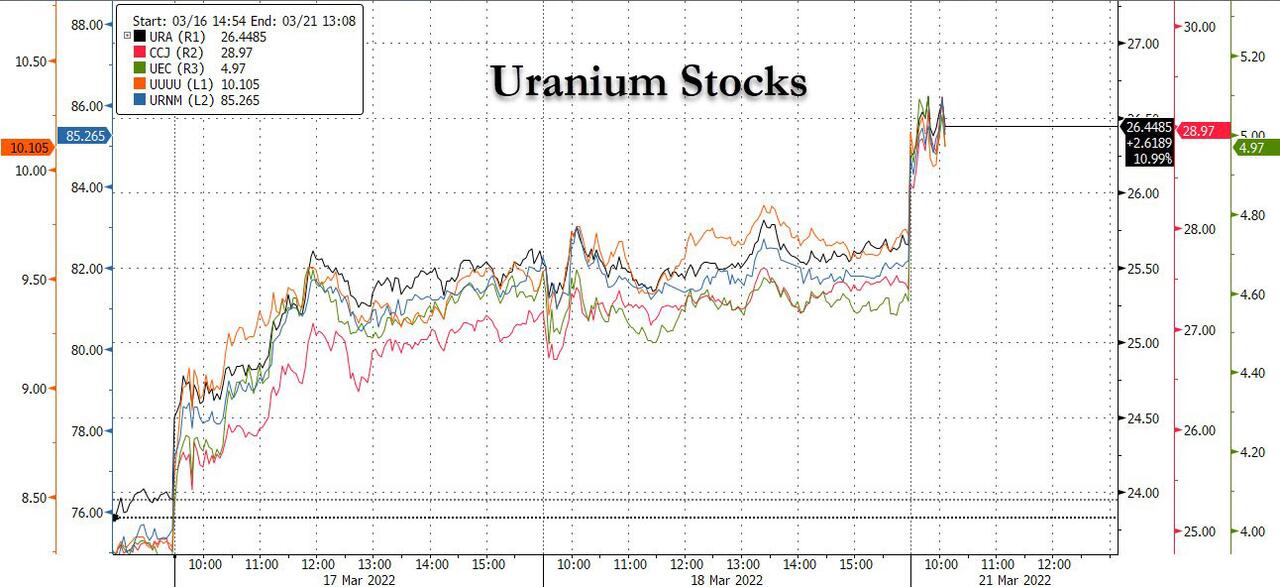
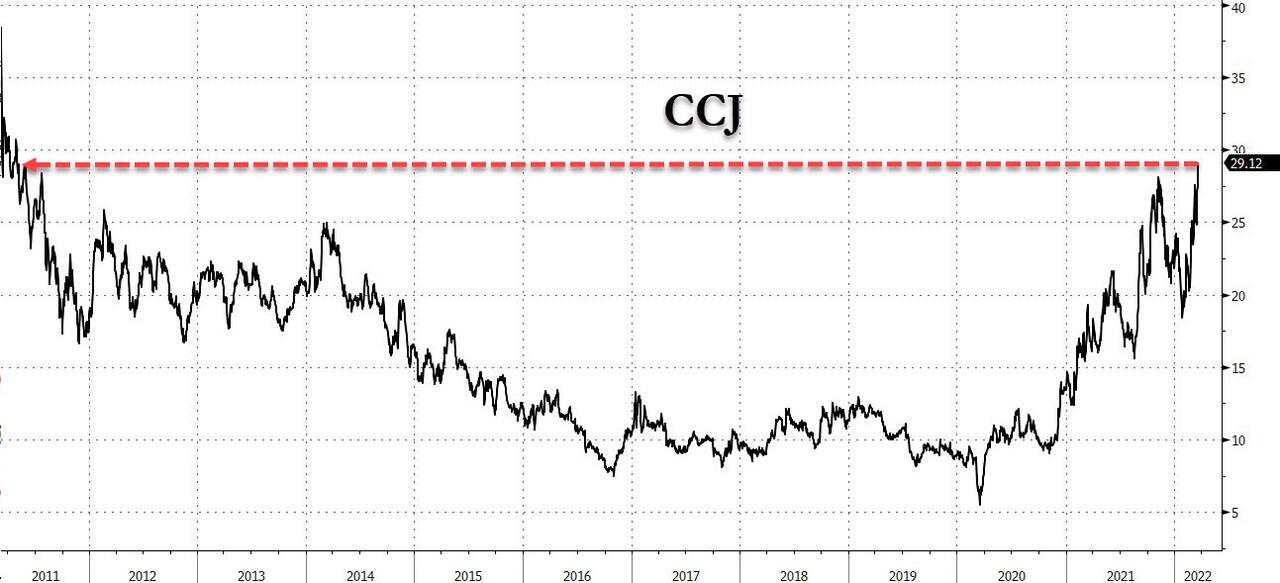

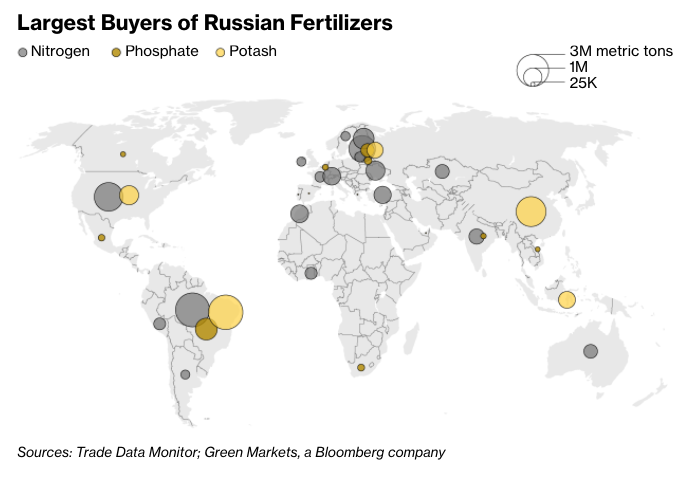


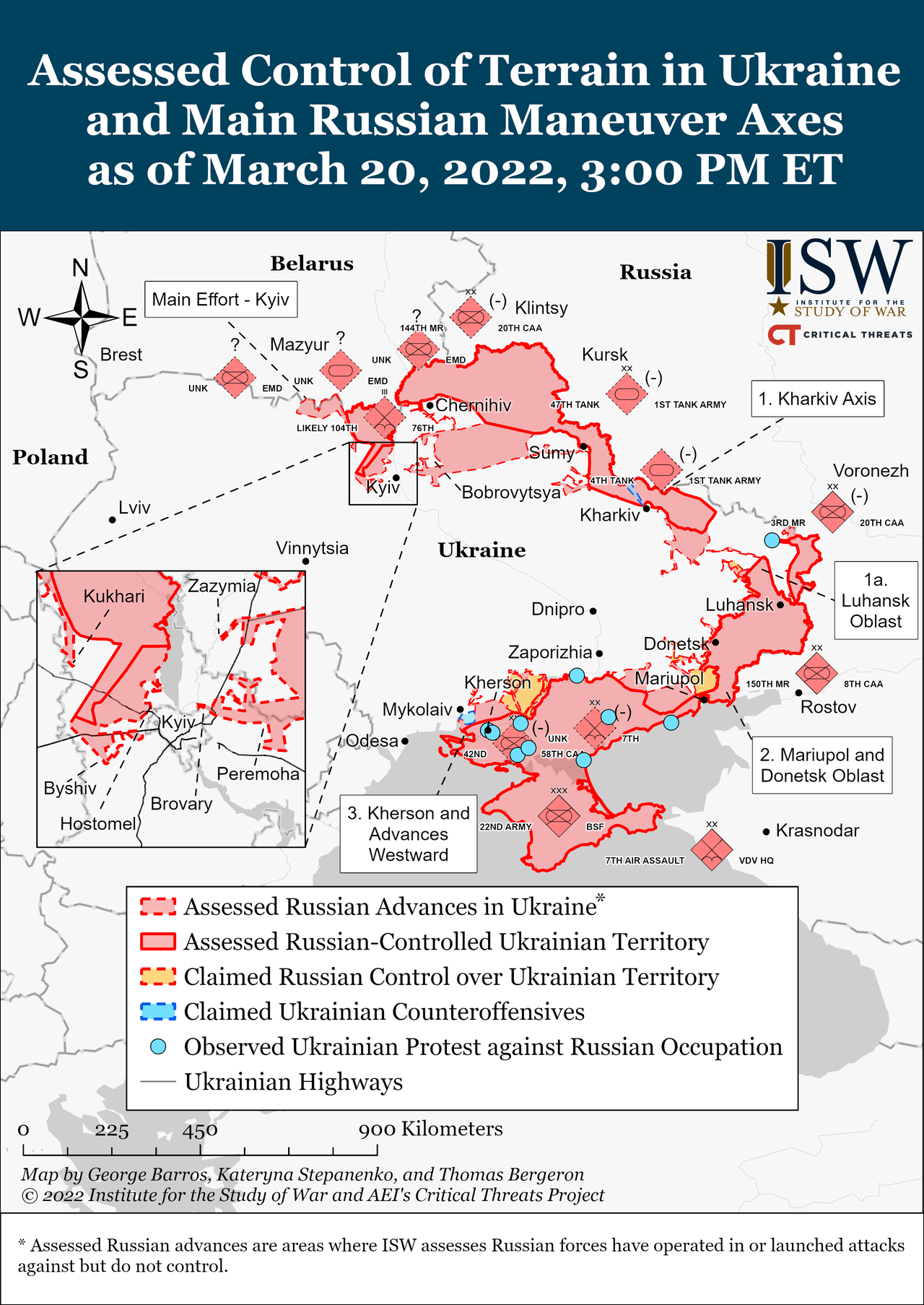





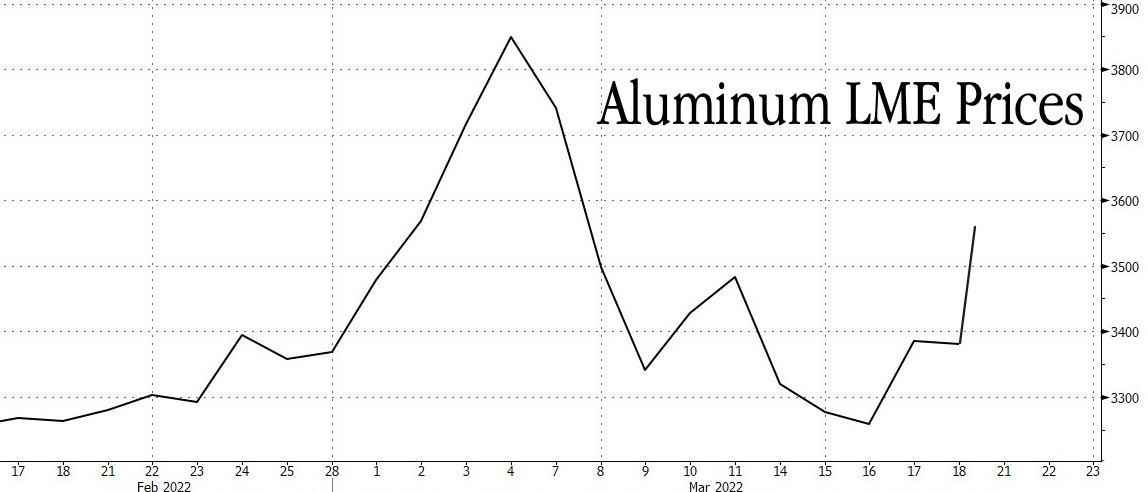


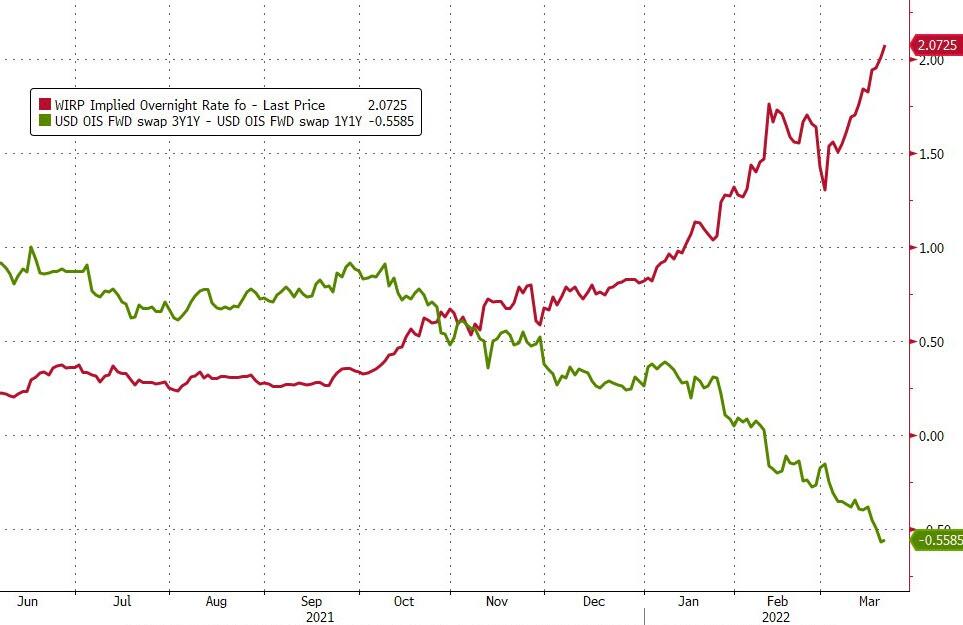
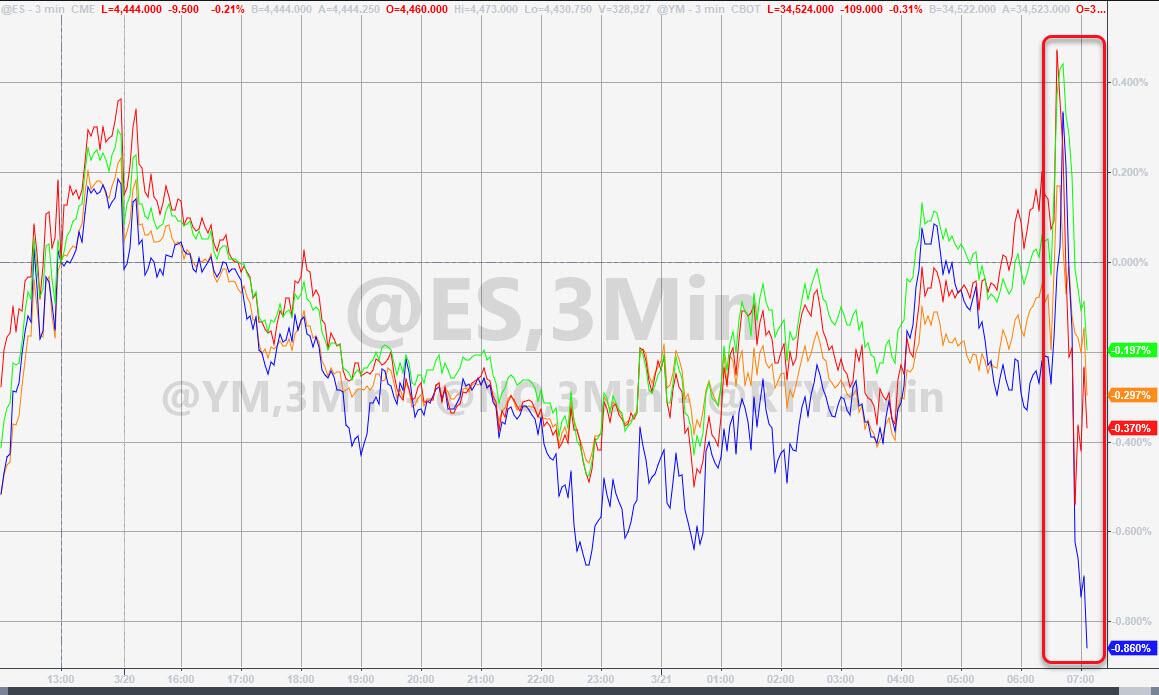
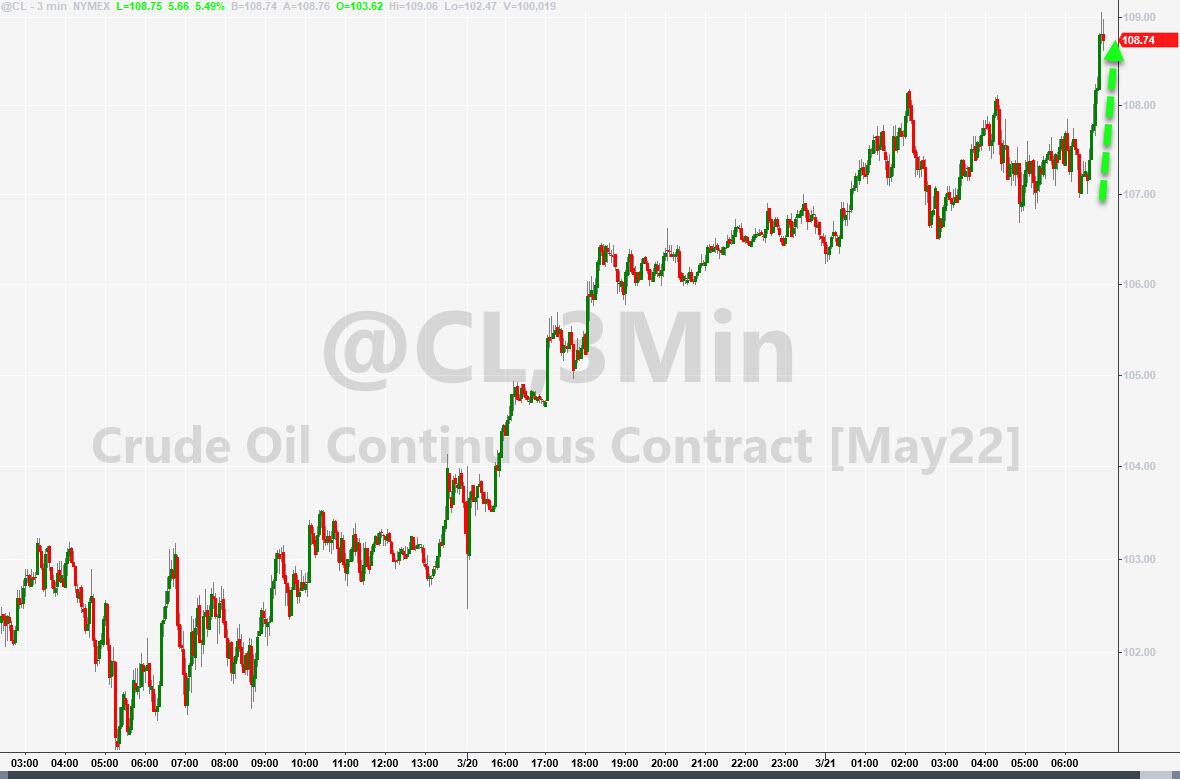
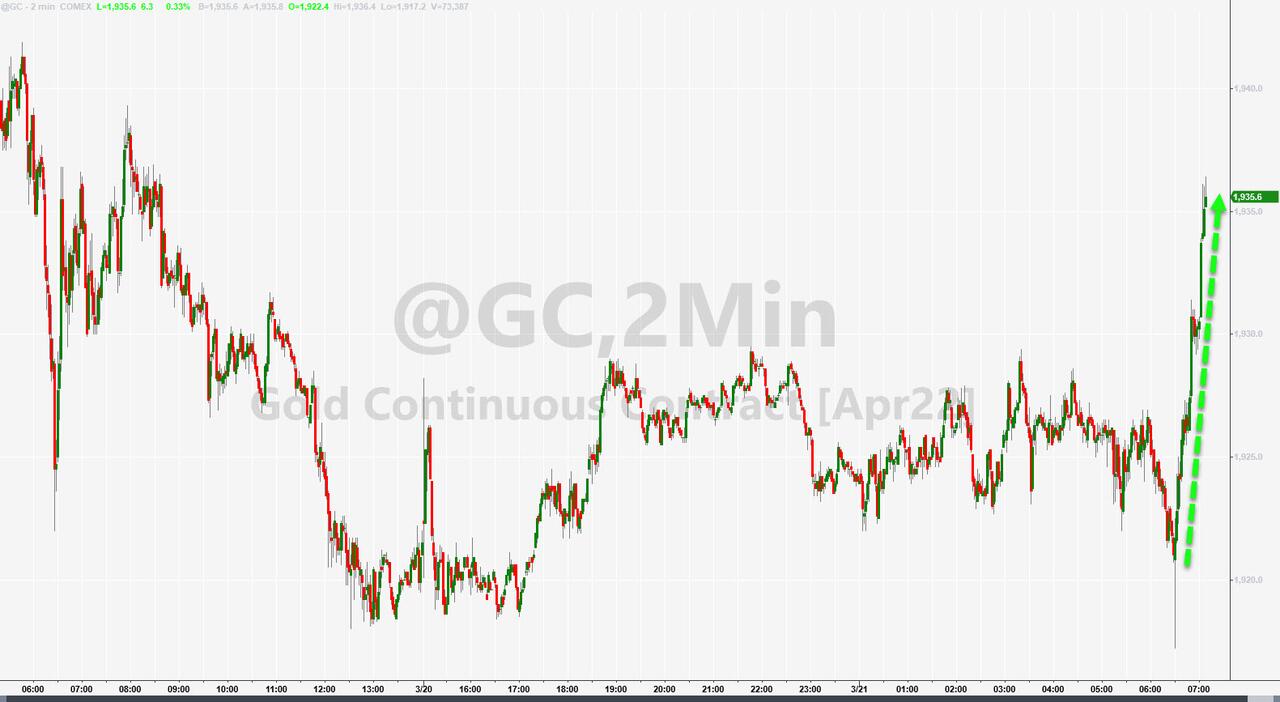

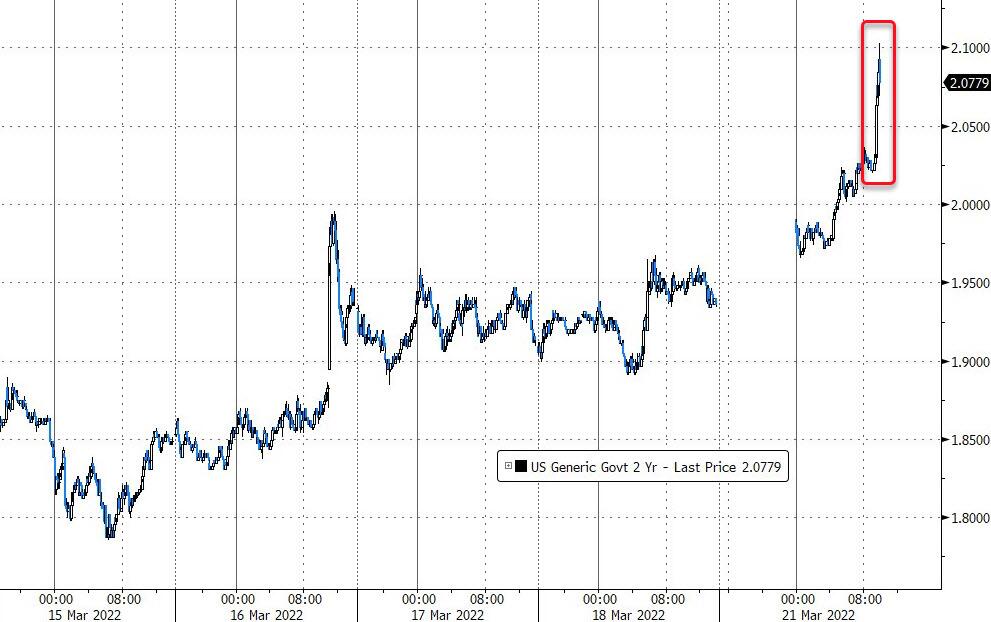
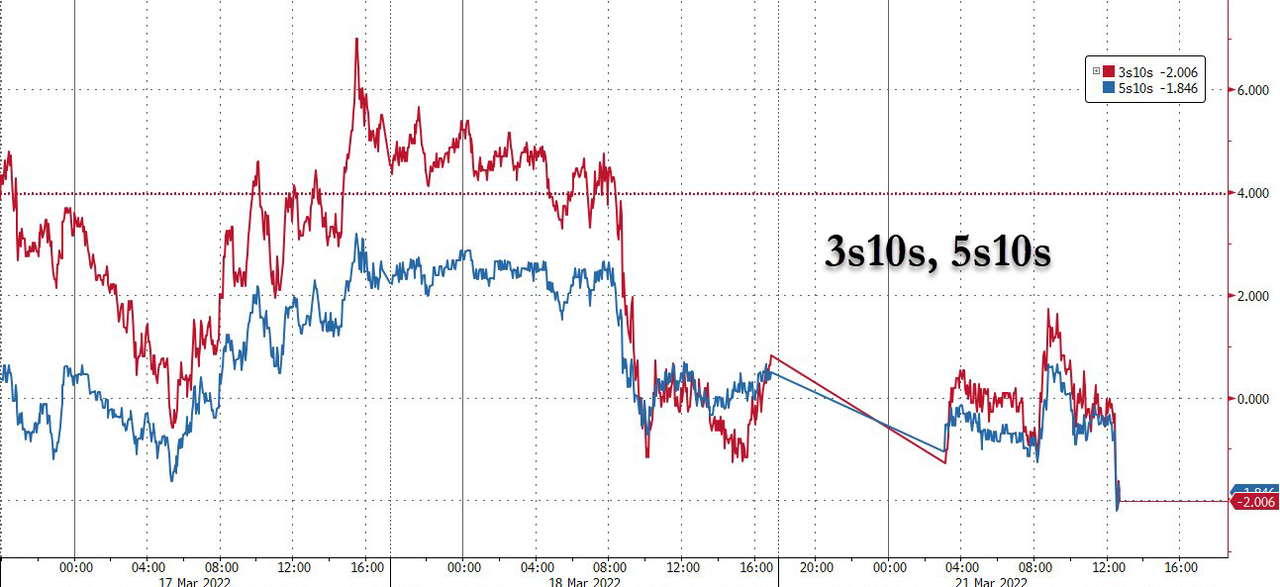
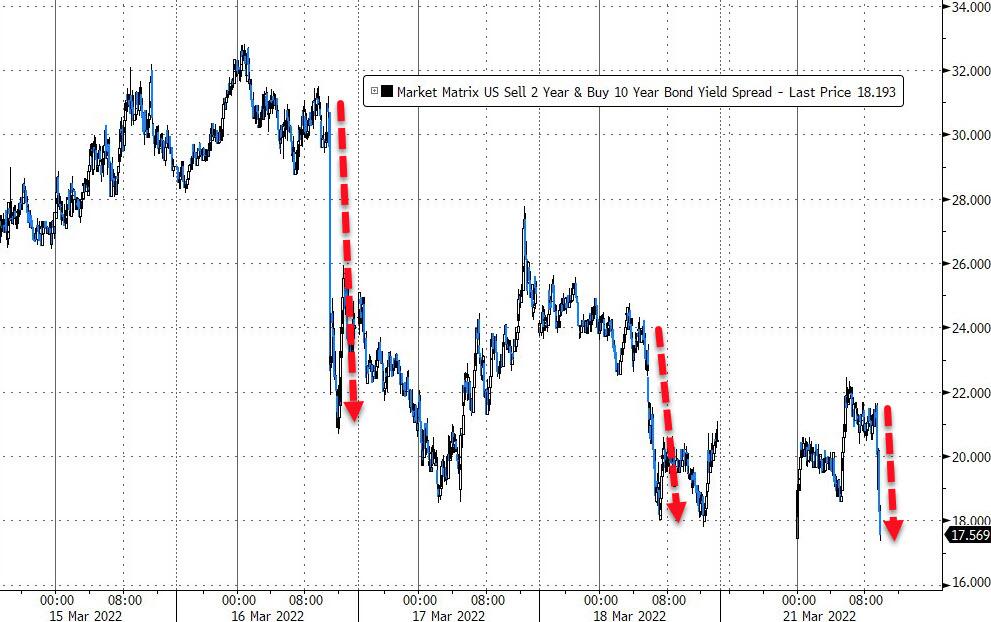

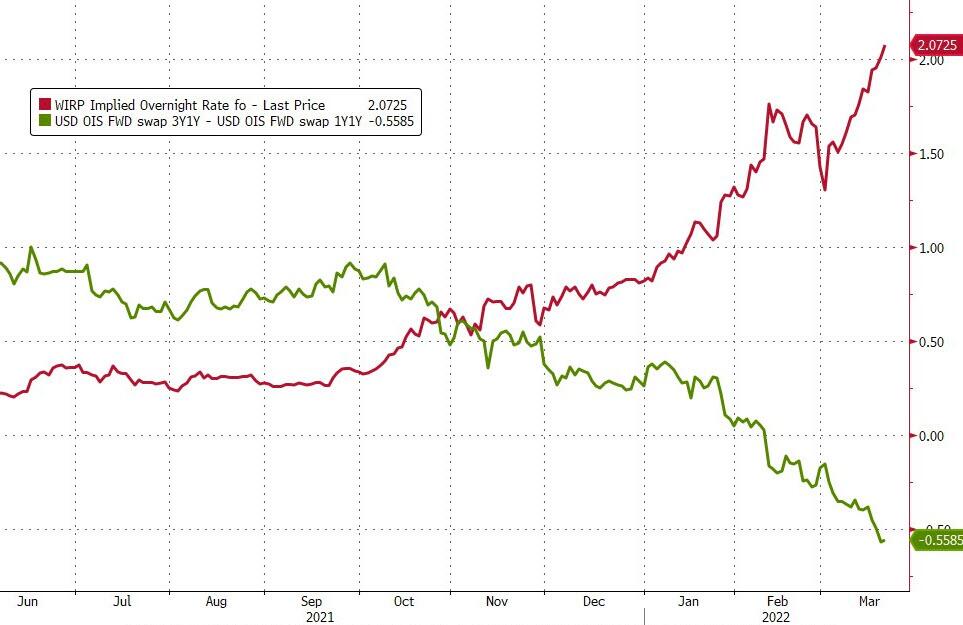
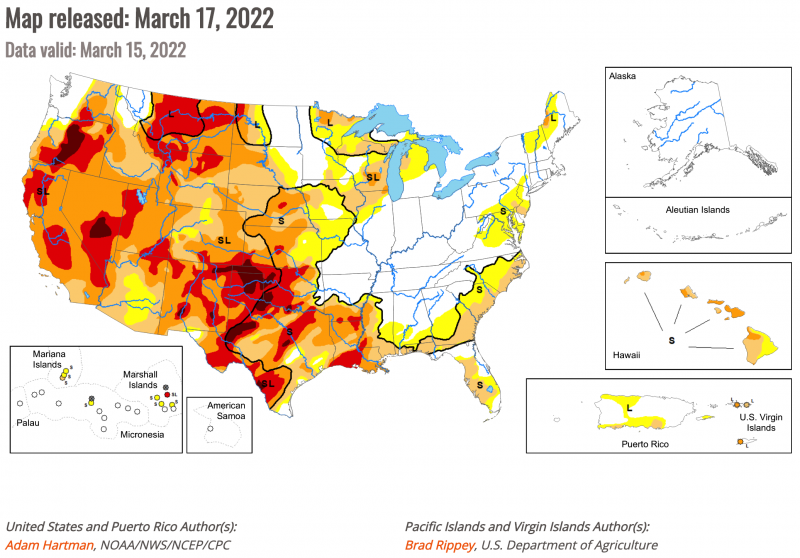

[…] by Harvey Organ, Harvey Organ Blog: […]
LikeLike
[…] by Harvey Organ, Harvey Organ Blog: […]
LikeLike