
by harveyorgan · in Uncategorized · Leave a comment·Edit
GOLD; $1806.95 DOWN $9.20
SILVER: $20.35 DOWN 41 CENTS
ACCESS MARKET: GOLD $1807.40
SILVER: $20.28
Bitcoin morning price: $19,093 DOWN 1224
Bitcoin: afternoon price: $18,926 DOWN 1391
Platinum price: closing DOWN $8.85 to $904.60
Palladium price; closing UP $46.75 at $1930.20
END
DONATE
Click here if you wish to send a donation. I sincerely appreciate it as this site takes a lot of preparation
EXCHANGE: COMEX EXCHANGE:EXCHANGE:
EXCHANGE: COMEX
CONTRACT: JULY 2022 COMEX 100 GOLD FUTURES
SETTLEMENT: 1,813.700000000 USD
INTENT DATE: 06/29/2022 DELIVERY DATE: 07/01/2022
FIRM ORG FIRM NAME ISSUED STOPPED
357 C WEDBUSH 8
365 H ED&F MAN CAPITA 3
435 H SCOTIA CAPITAL 14
657 C MORGAN STANLEY 1
657 H MORGAN STANLEY 332
661 C JP MORGAN 205
685 C RJ OBRIEN 5
690 C ABN AMRO 67
737 C ADVANTAGE 10 23
800 C MAREX SPEC 7
905 C ADM 11
TOTAL: 343 343
MONTH TO DATE: 343
no. of contracts issued by JPMorgan: 205/343
_____________________________________________________________________________________
NUMBER OF NOTICES FILED TODAY FOR JULY CONTRACT 343 NOTICE(S) FOR 34,300 Oz//1.0668 TONNES)
total notices so far: 343 contracts for 34300 oz (1.0668 tonnes)
SILVER NOTICES:
1497 NOTICE(S) FILED 7,485,000 OZ/
total number of notices filed so far this month 1497 : for 7,485,000 oz
END
Russia is a major supplier of silver to London while Mexico supplies the COMEX
With the sanctions, London has no way to obtain silver other than compete with NY.
GLD
WITH GOLD DOWN $9.20
WITH RESPECT TO GLD WITHDRAWALS: (OVER THE PAST FEW MONTHS):
GOLD IS “RETURNED” TO THE BANK OF ENGLAND WHEN CALLING IN THEIR LEASES: THE GOLD NEVER LEAVES THE BANK OF ENGLAND IN THE FIRST PLACE. THE BANK IS PROTECTING ITSELF IN CASE OF COMMERCIAL FAILURE
ALSO INVESTORS SWITCHING TO SPROTT PHYSICAL (phys) INSTEAD OF THE FRAUDULENT GLD//
BIG CHANGES IN GOLD INVENTORY AT THE GLD: A WITHDRAWAL OF 1.74 TONNES FROM THE GLD//
INVENTORY RESTS AT 1052.63 TONNES
Silver//SLV
WITH NO SILVER AROUND AND SILVER DOWN 41 CENTS
AT THE SLV// ://SMALL CHANGES IN SILVER INVENTORY AT THE SLV// A WITHDRAWAL OF 738,000 OZ FROM THE SLV/
INVESTORS ARE SWITCHING SLV TO SPROTT’S PSLV
CLOSING INVENTORY: 541.262 MILLION OZ
Let us have a look at the data for today
SILVER//OUTLINE
SILVER COMEX OI ROSE BY A HUGE SIZED 2534 CONTRACTS TO 138,309 AND CLOSER TO THE NEW RECORD OF 244,710, SET FEB 25/2020 AND THE STRONG GAIN IN OI WAS ACCOMPLISHED DESPITE OUR $0.11 LOSS IN SILVER PRICING AT THE COMEX ON WEDNESDAY. OUR BANKERS WERE SUCCESSFUL IN KNOCKING THE PRICE OF SILVER DOWN (IT FELL BY $0.11) BUT WERE UNSUCCESSFUL IN KNOCKING OFF SOME SILVER LONGS//BUT MAINLY WE HAD ADDITIONAL SPECULATOR ADDITIONS.
WE MUST HAVE HAD:
I) HUGE SPECULATOR SHORT ADDITIONS /. II) WE ALSO HAD SOME REDDIT RAPTOR BUYING//. iii) A STRONG ISSUANCE OF EXCHANGE FOR PHYSICALS iiii) A POOR INITIAL SILVER STANDING FOR COMEX SILVER MEASURING AT 15.220 MILLION OZ / // V) STRONG SIZED COMEX OI GAIN
I AM NOW RECORDING THE DIFFERENTIAL IN OI FROM PRELIMINARY TO FINAL:
THE DIFFERENTIAL FROM PRELIMINARY OI TO FINAL OI SILVER TODAY: CONTRACTS : +199
HISTORICAL ACCUMULATION OF EXCHANGE FOR PHYSICALS JUNE. ACCUMULATION FOR EFP’S SILVER/JPMORGAN’S HOUSE OF BRIBES/STARTING FROM FIRST DAY/MONTH OF JULY:
TOTAL CONTACTS for 21 days, total 18,894, contracts: 94.470 million oz OR 4.500MILLION OZ PER DAY. (899 CONTRACTS PER DAY)
TOTAL EFP’S FOR THE MONTH SO FAR: 94.470 MILLION OZ
.
LAST 11 MONTHS TOTAL EFP CONTRACTS ISSUED IN MILLIONS OF OZ:
MAY 137.83 MILLION
JUNE 149.91 MILLION OZ
JULY 129.445 MILLION OZ
AUGUST: MILLION OZ 140.120
SEPT. 28.230 MILLION OZ//
OCT: 94.595 MILLION OZ
NOV: 131.925 MILLION OZ
DEC: 100.615 MILLION OZ
JAN 2022// 90.460 MILLION OZ
FEB 2022: 72.39 MILLION OZ//
MARCH: 207.430 MILLION OZ//A NEW RECORD FOR EFP ISSUANCE AND WE ARE STILL GOING STRONG THIS MONTH.
APRIL: 114.52 MILLION OZ FINAL//LOW ISSUANCE
MAY: 105.635 MILLION OZ//
JUNE: 94.470 MILLION OZ
RESULT: WE HAD A HUGE SIZED INCREASE IN COMEX OI SILVER COMEX CONTRACTS OF 2534 DESPITE OUR $0.11 LOSS IN SILVER PRICING AT THE COMEX// WEDNESDAY.,. THE CME NOTIFIED US THAT WE HAD A STRONG SIZED EFP ISSUANCE CONTRACTS: 2725 CONTRACTS ISSUED FOR JULY AND 0 CONTRACTS ISSUED FOR ALL OTHER MONTHS) WHICH EXITED OUT OF THE SILVER COMEX TO LONDON AS FORWARDS THE DOMINANT FEATURE TODAY: /HUGE BANKER SHORT COVERING AS THEY GET OUT OF DODGE//// WE HAVE A HUGE INITIAL SILVER OZ STANDING FOR JUNE. OF 7.635 MILLION OZ // .. WE HAD A VERY STRONG SIZED GAIN OF5259 OI CONTRACTS ON THE TWO EXCHANGES FOR 26.295 MILLION OZ DESPITE THE LOSS IN PRICE..
WE HAD 1497 NOTICES FILED TODAY FOR 7485,000 OZ
THE SILVER COMEX IS NOW BEING ATTACKED FOR METAL BY LONDONERS ET AL.
GOLD//OUTLINE
IN GOLD, THE COMEX OPEN INTEREST ROSE BY A SMALL SIZED 1294 CONTRACTS TO 498,299 AND CLOSER TO THE RECORD (SET JAN 24/2020) AT 799,541 AND PREVIOUS TO THAT: (SET JAN 6/2020) AT 797,110.
THE DIFFERENTIAL FROM PRELIMINARY OI TO FINAL OI IN GOLD TODAY: —896 CONTRACTS.
.
THE SMALL INCREASE IN COMEX OI CAME DESPITE OUR FALL IN PRICE OF $4.25//COMEX GOLD TRADING/WEDNESDAY / WE MUST HAVE HAD SOME SPECULATOR SHORT COVERING ACCOMPANYING OUR GOOD SIZED EXCHANGE FOR PHYSICAL ISSUANCE. WE HAD ZERO LONG LIQUIDATION //AND SOME SPECULATOR SHORT COVERING
WE ALSO HAD A HUGE INITIAL STANDING IN GOLD TONNAGE FOR JULY AT 2.914 TONNES ON FIRST DAY NOTICE
YET ALL OF..THIS HAPPENED WITH OUR LOSS IN PRICE OF $4.25 WITH RESPECT TO WEDNESDAY’S TRADING
WE HAD A STRONG SIZED GAIN OF 5031 OI CONTRACTS 15.64 PAPER TONNES) ON OUR TWO EXCHANGES..
E.F.P. ISSUANCE
THE CME RELEASED THE DATA FOR EFP ISSUANCE AND IT TOTALED A GOOD SIZED 3737 CONTRACTS:
The NEW COMEX OI FOR THE GOLD COMPLEX RESTS AT 498,299
IN ESSENCE WE HAVE A STRONG SIZED INCREASE IN TOTAL CONTRACTS ON THE TWO EXCHANGES OF 5031, WITH 1294 CONTRACTS INCREASED AT THE COMEX AND 3737 EFP OI CONTRACTS WHICH NAVIGATED OVER TO LONDON. THUS TOTAL OI GAIN ON THE TWO EXCHANGES OF 5031 CONTRACTS OR 15.64TONNES.
CALCULATIONS ON GAIN/LOSS ON OUR TWO EXCHANGES
WE HAD A GOOD SIZED ISSUANCE IN EXCHANGE FOR PHYSICALS (3737) ACCOMPANYING THE SMALL SIZED GAIN IN COMEX OI (1294,): TOTAL GAIN IN THE TWO EXCHANGES 5031 CONTRACTS. WE NO DOUBT HAD 1) SOME SPECULATOR SHORT COVERING AND SOME ADDITION TO SPECULATOR SHORTS ,2.) STRONG INITIAL STANDING AT THE GOLD COMEX FOR JULY. AT 2.914 TONNES 3) ZERO LONG LIQUIDATION//SOME SPECULATOR SHORT COVERING//SOME SPECULATOR SHORT ADDITIONS //.,4) SMALL SIZED COMEX OI GAIN 5) GOOD ISSUANCE OF EXCHANGE FOR PHYSICAL/
HISTORICAL ACCUMULATION OF EXCHANGE FOR PHYSICALS IN 2022 INCLUDING TODAY
JUNE
ACCUMULATION OF EFP’S GOLD AT J.P. MORGAN’S HOUSE OF BRIBES: (EXCHANGE FOR PHYSICAL) FOR THE MONTH OF JUNE :
76,560 CONTRACTS OR 7,656,000 OZ OR 238.13 TONNES 20 TRADING DAY(S) AND THUS AVERAGING: 3645 EFP CONTRACTS PER TRADING DAY
TO GIVE YOU AN IDEA AS TO THE SIZE OF THESE EFP TRANSFERS : THIS MONTH IN 21 TRADING DAY(S) IN TONNES: 238.13 TONNES
TOTAL ANNUAL GOLD PRODUCTION, 2021, THROUGHOUT THE WORLD EX CHINA EX RUSSIA: 3555 TONNES
THUS EFP TRANSFERS REPRESENTS 238.13/3550 x 100% TONNES 6.70% OF GLOBAL ANNUAL PRODUCTION
ACCUMULATION OF GOLD EFP’S YEAR 2021 TO 2022
JANUARY/2021: 265.26 TONNES (RAPIDLY INCREASING AGAIN)
FEB : 171.24 TONNES ( DEFINITELY SLOWING DOWN AGAIN)..
MARCH:. 276.50 TONNES (STRONG AGAIN/
APRIL: 189..44 TONNES ( DRAMATICALLY SLOWING DOWN AGAIN//GOLD IN BACKWARDATION)
MAY: 250.15 TONNES (NOW DRAMATICALLY INCREASING AGAIN)
JUNE: 247.54 TONNES (FINAL)
JULY: 188.73 TONNES FINAL
AUGUST: 217.89 TONNES FINAL ISSUANCE.
SEPT 142.12 TONNES FINAL ISSUANCE ( LOW ISSUANCE)_
OCT: 141.13 TONNES FINAL ISSUANCE (LOW ISSUANCE)
NOV: 312.46 TONNES FINAL ISSUANCE//NEW RECORD!! (INCREASING DRAMATICALLY)//SIGN OF REAL STRESS//SURPASSING THE MARCH 2021 RECORD OF 276.50 TONNES OF EFP
DEC. 175.62 TONNES//FINAL ISSUANCE//
JAN:2022 247.25 TONNES //FINAL
FEB: 196.04 TONNES//FINAL
MARCH: 409.30 TONNES INITIAL( THIS IS NOW A RECORD EFP ISSUANCE FOR MARCH AND FOR ANY MONTH.
APRIL: 169.55 TONNES (FINAL VERY LOW ISSUANCE MONTH)
MAY: 247,44 TONNES FINAL//
JUNE: 2238.13 TONNES
SPREADING OPERATIONS
(/NOW SWITCHING TO GOLD) FOR NEWCOMERS, HERE ARE THE DETAILS
SPREADING LIQUIDATION HAS NOW COMMENCED AS WE HEAD TOWARDS THE NEW ACTIVE FRONT MONTH OF JUNE. WE ARE NOW INTO THE SPREADING OPERATION OF SILVER
HERE IS A BRIEF SYNOPSIS OF HOW THE CROOKS FLEECE UNSUSPECTING LONGS IN THE SPREADING ENDEAVOUR ;MODUS OPERANDI OF THE CORRUPT BANKERS AS TO HOW THEY HANDLE THEIR SPREAD OPEN INTERESTS:HERE IS HOW THE CROOKS USED SPREADING AS WE ARE NOW INTO THE NON ACTIVE DELIVERY MONTH OF JUNE HEADING TOWARDS THE ACTIVE DELIVERY MONTH OF JULY, FOR SILVER:
YOU WILL ALSO NOTICE THAT THE COMEX OPEN INTEREST STARTS TO RISE BUT SO IS THE OPEN INTEREST OF SPREADERS. THE OPEN INTEREST IN WILL CONTINUE TO RISE UNTIL ONE WEEK BEFORE FIRST DAY NOTICE OF AN UPCOMING ACTIVE DELIVERY MONTH (JULY), AND THAT IS WHEN THE CROOKS SELL THEIR SPREAD POSITIONS BUT NOT AT THE SAME TIME OF THE DAY. THEY WILL USE THE SELL SIDE OF THE EQUATION TO CREATE THE CASCADE (ALONG WITH THEIR COLLUSIVE FRIENDS) AND THEN COVER ON THE BUY SIDE OF THE SPREAD SITUATION AT THE END OF THE DAY. THEY DO THIS TO AVOID POSITION LIMIT DETECTION. THE LIQUIDATION OF THE SPREADING FORMATION CONTINUES FOR EXACTLY ONE WEEK AND ENDS ON FIRST DAY NOTICE.”
WHAT IS ALARMING TO ME, ACCORDING TO OUR LONDON EXPERT ANDREW MAGUIRE IS THAT THESE EFP’S ARE BEING TRANSFERRED TO WHAT ARE CALLED SERIAL FORWARD CONTRACT OBLIGATIONS AND THESE CONTRACTS ARE LESS THAN 14 DAYS. ANYTHING GREATER THAN 14 DAYS, THESE MUST BE RECORDED AND SENT TO THE COMPTROLLER, GREAT BRITAIN TO MONITOR RISK TO THE BANKING SYSTEM. IF THIS IS INDEED TRUE, THEN THIS IS A MASSIVE CONSPIRACY TO DEFRAUD AS WE NOW WITNESS A MONSTROUS TOTAL EFP’S ISSUANCE AS IT HEADS INTO THE STRATOSPHERE.
First, here is an outline of what will be discussed tonight:
1.Today, we had the open interest at the comex, in SILVER, ROSE BY A HUGE SIZED 2534 CONTRACT OI TO 138,309 AND CLOSER TO OUR COMEX RECORD //244,710(SET FEB 25/2020). THE LAST RECORDS WERE SET IN AUG.2018 AT 244,196 WITH A SILVER PRICE OF $14.78/(AUGUST 22/2018)..THE PREVIOUS RECORD TO THAT WAS SET ON APRIL 9/2018 AT 243,411 OPEN INTEREST CONTRACTS WITH THE SILVER PRICE AT THAT DAY: $16.53). AND PREVIOUS TO THAT, THE RECORD WAS ESTABLISHED AT: 234,787 CONTRACTS, SET ON APRIL 21.2017 OVER 5 YEARS AGO.
EFP ISSUANCE 2725 CONTRACTS
OUR CUSTOMARY MIGRATION OF COMEX LONGS CONTINUE TO MORPH INTO LONDON FORWARDS AS OUR BANKERS USED THEIR EMERGENCY PROCEDURE TO ISSUE:
SEPT 2725 ALL OTHER MONTHS: ZERO. TOTAL EFP ISSUANCE: 0 CONTRACTS. EFP’S GIVE OUR COMEX LONGS A FIAT BONUS PLUS A DELIVERABLE PRODUCT OVER IN LONDON. IF WE TAKE THE COMEX OI GAIN OF 2534 CONTRACTS AND ADD TO THE 2725 OI TRANSFERRED TO LONDON THROUGH EFP’S,
WE OBTAIN A GIGANTIC SIZED GAIN OF 5259 OPEN INTEREST CONTRACTS FROM OUR TWO EXCHANGES.
THUS IN OUNCES, THE GAIN ON THE TWO EXCHANGES 26.295 MILLION OZ
OCCURRED WITH OUR FALL IN PRICE OF $0.11 .
OUTLINE FOR TODAY’S COMMENTARY
1/COMEX GOLD AND SILVER REPORT
(report Harvey)
2 ) Gold/silver trading overnight Europe,
(Peter Schiff,
end
3. Egon von Greyerz///Matthew Piepenburg via GoldSwitzerland.com,
4. Chris Powell of GATA provides to us very important physical commentaries
end
5. Other gold commentaries
6. Commodity commentaries//
3. ASIAN AFFAIRS
i)THURSDAY MORNING// WEDNESDAY NIGHT
SHANGHAI CLOSED UP 37.10 PTS OR 1.10% //Hang Sang CLOSED DOWN 137.10 PTS OR 0.62% /The Nikkei closed DOWN 411.56 OR 1.54% //Australia’s all ordinaires CLOSED DOWN 1.97 /Chinese yuan (ONSHORE) closed DOWN 6.7002 /Oil DOWN TO 108.28 dollars per barrel for WTI and DOWN TO 111.98 for Brent. Stocks in Europe OPENED ALL RED // ONSHORE YUAN CLOSED DOWN AGAINST THE DOLLAR AT 6.7002 OFFSHORE YUAN CLOSED DOWN ON THE DOLLAR AT 6.7073: /ONSHORE YUAN TRADING ABOVE LEVEL OF OFFSHORE YUAN/ONSHORE YUAN TRADING WEAKER AGAINST US DOLLAR/OFFSHORE WEAKER
a)NORTH KOREA/SOUTH KOREA
outline
b) REPORT ON JAPAN/
OUTLINE
3 C CHINA
OUTLINE
4/EUROPEAN AFFAIRS
OUTLINE
5. RUSSIAN AND MIDDLE EASTERN AFFAIRS
OUTLINE
6.Global Issues
OUTLINE
7. OIL ISSUES
OUTLINE
8 EMERGING MARKET ISSUES
COMEX DATA//AMOUNTS STANDING//VOLUME OF TRADING/INVENTORY MOVEMENTS
GOLD
LET US BEGIN:
THE TOTAL COMEX GOLD OPEN INTEREST ROSE BY A SMALL SIZED 1294 CONTRACTS TO 498,299 AND CLOSER TO THE RECORD THAT WAS SET IN JANUARY/2020: {799,541 OI(SET JAN 16/2020)} AND PREVIOUS TO THAT: 797,110 (SET JAN 7/2020). AND THIS COMEX INCREASE OCCURRED DESPITE OUR LOSS OF $4.25 IN GOLD PRICING WEDNESDAY’S COMEX TRADING. WE ALSO HAD A GOOD SIZED EFP (3737 CONTRACTS). . THEY WERE PAID HANDSOMELY NOT TO TAKE DELIVERY AT THE COMEX AND SETTLE FOR CASH. IT NOW SEEMS THAT THE COMMERCIALS HAVE GOADED THE SPECS TO GO SHORT BIG TIME AND THEY ADDED TO THEIR SHORT POSITIONS
WE NORMALLY HAVE WITNESSED EXCHANGE FOR PHYSICALS ISSUED BEING SMALL AS IT JUST TOO COSTLY FOR THEM TO CONTINUE SERVICING THE COSTS OF SERIAL FORWARDS CIRCULATING IN LONDON. HOWEVER, MUCH TO THE ANNOYANCE OF OUR BANKERS, THE COMEX IS THE SCENE OF AN ASSAULT ON GOLD AS LONDONERS, NOT BEING ABLE TO FIND ANY PHYSICAL ON THAT SIDE OF THE POND, EXERCISE THESE CIRCULATING EXCHANGE FOR PHYSICALS IN LONDON AND FORCING DELIVERY OF REAL METAL OVER HERE AS THE OBLIGATION STILL RESTS WITH NEW YORK BANKERS. IT SEEMS THAT ARE BANKERS FRIENDS ARE EXERCISING EFP’S FROM LONDON AND NOW THEY ARE LOATHE TO ISSUE NEW ONES.
EXCHANGE FOR PHYSICAL ISSUANCE
WE ARE NOW IN THE NON ACTIVE DELIVERY MONTH OF JULY.. THE CME REPORTS THAT THE BANKERS ISSUED A GOOD SIZED TRANSFER THROUGH THE EFP ROUTE AS THESE LONGS RECEIVED A DELIVERABLE LONDON FORWARD TOGETHER WITH A FIAT BONUS.,
THAT IS 3737 EFP CONTRACTS WERE ISSUED: ;: , . 0 AUG :3737 & ZERO FOR ALL OTHER MONTHS:
TOTAL EFP ISSUANCE: 3737 CONTRACTS
WHEN WE HAVE BACKWARDATION, EFP ISSUANCE IS VERY COSTLY BUT THE REAL PROBLEM IS THE SCARCITY OF METAL AND IT IS FAR BETTER FOR OUR BANKERS TO PAY OFF INDIVIDUALS THAN RISK INVESTORS ESPECIALLY FROM LONDON STANDING FOR DELIVERY. THE LOWER PRICES IN THE FUTURES MARKET IS A MAGNET FOR OUR LONDONERS SEEKING PHYSICAL METAL. BACKWARDATION ALWAYS EQUAL SCARCITY OF METAL!
ON A NET BASIS IN OPEN INTEREST WE GAINED THE FOLLOWING TODAY ON OUR TWO EXCHANGES: A STRONG SIZED TOTAL OF 5031 CONTRACTS IN THAT 3737 LONGS WERE TRANSFERRED AS FORWARDS TO LONDON AND WE HAD A SMALL SIZED COMEX OI GAIN OF 1294 CONTRACTS..AND THIS GAIN ON OUR TWO EXCHANGES HAPPENED DESPITE OUR FALL IN PRICE OF GOLD $4.25.
// WE HAVE A STRONG AMOUNT OF GOLD TONNAGE STANDING JULY (2.914),
HERE ARE THE AMOUNTS THAT STOOD FOR DELIVERY IN THE PRECEDING 12 MONTHS OF 2021-2022:
DEC 2021: 112.217 TONNES
NOV. 8.074 TONNES
OCT. 57.707 TONNES
SEPT: 11.9160 TONNES
AUGUST: 80.489 TONNES
JULY: 7.2814 TONNES
JUNE: 72.289 TONNES
MAY 5.77 TONNES
APRIL 95.331 TONNES
MARCH 30.205 TONNES
FEB ’21. 113.424 TONNES
JAN ’21: 6.500 TONNES.
TOTAL SO FAR THIS YEAR (JAN- DEC): 601.213 TONNES
YEAR 2022:
JANUARY 2022 17.79 TONNES
FEB 2022: 59.023 TONNES
MARCH: 36.678 TONNES
APRIL: 85.340 TONNES FINAL.
MAY: 20.11 TONNES FINAL
JUNE: 74.933 TONNES FINAL
JULY 2.914 TONNES
THE BANKERS WERE SUCCESSFUL IN LOWERING GOLD’S PRICE //// (IT FELL $4.25) BUT WERE UNSUCCESSFUL IN KNOCKING OFF SPECULATOR LONGS/COMMERCIAL LONGS BUT SPECULATOR SHORTS CONTINUED TO ADD TO THEIR POSITIONS//// WE HAVE REGISTERED A STRONG SIZED GAIN OF 18.416 TONNES ON TOTAL OI FROM OUR TWO EXCHANGES, ACCOMPANYING OUR GOOD GOLD TONNAGE STANDING FOR JULY (2.914 TONNES)…
WE HAD -896 CONTRACTS REMOVED FROM COMEX TRADES. THESE WERE REMOVED AFTER TRADING ENDED LAST NIGHT
NET GAIN ON THE TWO EXCHANGES 5031 CONTRACTS OR 503,100 OZ OR 15.64 TONNES
Estimated gold volume 213,823/// poor/
final gold volumes/yesterday 167,295 /poor
INITIAL STANDINGS FOR JULY ’22 COMEX GOLD //JUNE 30
| Gold | Ounces |
| Withdrawals from Dealers Inventory in oz | nil oz |
| Withdrawals from Customer Inventory in oz | 115,244.695 oz Manfra Brinks Loomis 2004 kilobars (Loomis) |
| Deposit to the Dealer Inventory in oz | nil OZ |
| Deposits to the Customer Inventory, in oz | nil |
| No of oz served (contracts) today | 343 notice(s)34300 OZ 1.0668 TONNES |
| No of oz to be served (notices) | 594 contracts 59,400 oz 1.847 TONNES |
| Total monthly oz gold served (contracts) so far this month | 343 notices34300 OZ 1.0668 TONNES |
| Total accumulative withdrawals of gold from the Dealers inventory this month | NIL oz |
| Total accumulative withdrawal of gold from the Customer inventory this month | xxx oz |
total dealer deposit 0
No dealer withdrawals
0 customer deposit
total deposits: 0 oz
3 customer withdrawals:
i) Brinks: 39,352.830 oz
ii) Loomis: 64,430.604 oz (2004 kilobars)
iii) Manfra: 11,461.264 oz
total withdrawal: 115,244.698 oz
ADJUSTMENTS:0
CALCULATIONS FOR THE AMOUNT OF GOLD STANDING FOR JULY.
For the front month of JULY we have an oi of 937 contracts losing 74 contracts from yesterday.
Thus by definition, the initial amount of gold standing in this non active month of July is as follows:
937 contracts x 100 oz per contract = 93700 oz or 2.914 tonnes
August has a LOSS of 1450 contracts DOWN to 401,466 contracts
We had 343 notice(s) filed today for 34300 oz FOR THE July 2022 CONTRACT MONTH.
Today, 0 notice(s) were issued from J.P.Morgan dealer account and 0 notices were issued from their client or customer account. The total of all issuance by all participants equate to 343 contract(s) of which 205 notices were stopped (received) by j.P. Morgan dealer and 0 notice(s) was (were) stopped/ Received) by J.P.Morgan//customer account and 0 notice(s) received (stopped) by the squid (Goldman Sachs)
To calculate the INITIAL total number of gold ounces standing for the JULY /2022. contract month,
we take the total number of notices filed so far for the month (343) x 100 oz , to which we add the difference between the open interest for the front month of (JULY 937 CONTRACTS ) minus the number of notices served upon today 343 x 100 oz per contract equals 93,700 OZ OR 2.914 TONNES the number of TONNES standing in this active month of JUly.
thus the INITIAL standings for gold for the JULY contract month:
No of notices filed so far (343) x 100 oz+ (937) OI for the front month minus the number of notices served upon today (343} x 100 oz} which equals 93,700 oz standing OR 2.914 TONNES in this active delivery month of JULY.
TOTAL COMEX GOLD STANDING: 2.914 TONNES (A FAIR STANDING FOR A JULY ( NON ACTIVE) DELIVERY MONTH)
XXXXXXXXXXXXXXXXXXXXXXXXXXXXXXXXXXXXXXXXXXXXXXXXXXXXXXXXXXXXX
COMEX GOLD INVENTORIES/CLASSIFICATION
NEW PLEDGED GOLD:
241,794.285 oz NOW PLEDGED /HSBC 5.94 TONNES
204,937.290 PLEDGED MANFRA 3.08 TONNES
83,657.582 PLEDGED JPMorgan no 1 1.690 tonnes
265,999.054, oz JPM No 2
1,152,376.639 oz pledged Brinks/
Manfra: 33,758.550 oz
Delaware: 193.721 oz
International Delaware:: 11,188.542 o
total pledged gold: 2,419,784.828 oz 75.26 tonnes
TOTAL OF ALL GOLD ELIGIBLE AND REGISTERED: 33,062,586.396 OZ
TOTAL ELIGIBLE GOLD: 15,883,167.581 OZ
TOTAL OF ALL REGISTERED GOLD: 17,179,418.215 OZ
REGISTERED GOLD THAT CAN BE SERVED UPON: 14,792,235.0 OZ (REG GOLD- PLEDGED GOLD)
END
SILVER/COMEX/JUNE 30
| Silver | Ounces |
| Withdrawals from Dealers Inventory | NIL oz |
| Withdrawals from Customer Inventory | 1919.581 oz CNT |
| Deposits to the Dealer Inventory | nilOZ |
| Deposits to the Customer Inventory | 1,411,397.582 oz CNT Delaware |
| No of oz served today (contracts) | 1497CONTRACT(S) 7,485,000 OZ) |
| No of oz to be served (notices) | 1547 contracts (7,735,000 oz) |
| Total monthly oz silver served (contracts) | 1497 contracts 7,485,000 oz) |
| Total accumulative withdrawal of silver from the Dealers inventory this month | NIL oz |
| Total accumulative withdrawal of silver from the Customer inventory this month |
And now for the wild silver comex results
i) 0 dealer deposit
total dealer deposits: 0 oz
i) We had 0 dealer withdrawal
total dealer withdrawals: 0 oz
We have 1 deposit into the customer account
i) Into CNT: 1919.881 oz
total deposit: 1919/881 oz oz
JPMorgan has a total silver weight: 170.800 million oz/336.885 million =50.77% of comex
Comex withdrawals: 1
i) Out of CNT: 1919.881 oz
total withdrawal 1919/881 oz
adjustments: 3
i. customer to dealer: Brinks//19,909.630 oz
ii) dealer to customer: JPMorgan: 178,991.900 oz
iii) dealer to customer: Manfra: 258,939.201 oz
the silver comex is in stress!
TOTAL REGISTERED SILVER: 69.331 MILLION OZ
TOTAL REG + ELIG. 336.855 MILLION OZ
CALCULATION OF SILVER OZ STANDING FOR JUNE
silver open interest data:
FRONT MONTH OF JULY OI: 3044 CONTRACTS
THUS BY DEFINITION THE INITIAL AMOUNT OF SILVER STANDING IN JULY IS AS FOLLOWS:
3044 CONTRACTS X 5,000 OZ PER CONTRACT = 15,220 MILLION OZ
AUGUST GAINED 64 CONTRACTS TO STAND AT 1440
SEPTEMBER HAD A GAIN OF 4819 CONTRACTS UP TO 114,215 CONTRACTS.
.
TOTAL NUMBER OF NOTICES FILED FOR TODAY: 1497 for 7,489,000 oz
Comex volumes:61,022// est. volume today// FAIR
Comex volume: confirmed yesterday: 62,045 contracts ( fair )
To calculate the number of silver ounces that will stand for delivery in JULY we take the total number of notices filed for the month so far at 1497 x 5,000 oz = 7,485000 oz
to which we add the difference between the open interest for the front month of JULY(3044) and the number of notices served upon today 1497 x (5000 oz) equals the number of ounces standing.
Thus the standings for silver for the JULY./2022 contract month: 1497 (notices served so far) x 5000 oz + OI for front month of JULY (3044) – number of notices served upon today (1497) x 5000 oz of silver standing for the JULY contract month equates 15,220,000 oz. .
the record level of silver open interest is 234,787 contracts set on April 21./2017 with the price on that day at $18.42. The previous record was 224,540 contracts with the price at that time of $20.44
END
GLD AND SLV INVENTORY LEVELS:
JUNE 30/WITH GOLD DOWN $9.20: big CHANGES IN GOLD INVENTORY AT THE GLD: A WITHDRAWAL OF 1.74 TONNES FROM THE GLD///INVENTORY RESTS AT 1052.63 TONNES//
JUNE 28/WITH GOLD DOWN $3.05//BIG CHANGES IN GOLD INVENTORY AT THE GLD: A WITHDRAWAL OF 4.64 TONNES FROM THE GLD///INVENTORY RESTS AT 1056.40 TONNES
JUNE 27/WITH GOLD DOWN $4.90 CENTS TODAY: BIG CHANGES IN GOLD INVENTORY AT THE GLD: A WITHDRAWAL OF 2.03 TONNES FROM THE GLD///INVENTORY RESTS AT 1061.04 TONNES
JUNE 24/WITH GOLD UP 45 CENTS TODAY: HUGE CHANGES IN GOLD INVENTORY AT THE GLD: A WITHDRAWAL OF 8.70 TONNES FROM THE GLD//INVENTORY RESTS AT 1063.07 TONNES
JUNE 23/WITH GOLD DOWN $8.60:HUGE CHANGES IN GOLD INVENTORY AT THE GLD: A WITHDRAWAL OF 2.03 TONNES FROM THE GLD//INVENTORY RESTS AT 1071.77 TONNES
JUNE 22/WITH GOLD UP 15 CENTS:BIG CHANGES IN GOLD INVENTORY AT THE GLD: A WITHDRAWAL OF 1.74 TONNES FROM THE GLD////INVENTORY RESTS AT 1073.80 TONNES
JUNE 21/WITH GOLD DOWN $2.00: NO CHANGES IN GOLD INVENTORY AT THE GLD/INVENTORY RESTS AT 1075.54 TONES
JUNE 17/WITH GOLD DOWN $11.25: HUGE CHANGES IN GOLD INVENTORY AT THE GLD: A DEPOSIT OF 11.60 TONNES INTO THE GLD.///INVENTORY RESTS AT 1075.54 TONNES
JUNE 16/WITH GOLD UP $28.95: NO CHANGES IN GOLD INVENTORY AT THE GLD//INVENTORY RESTS AT 1063.74 TONNES
JUNE 15/WITH GOLD UP $6.50/BIG CHANGES IN GOLD INVENTORY AT THE GLD: A WITHDRAWAL OF 1.65 TONNES FROM THE GLD////INVENTORY RESTS AT 1063.74 TONNES
JUNE 14/WITH GOLD DOWN $18.80/NO CHANGES IN GOLD INVENTORY AT THE GLD//INVENTORY RESTS AT 1065.39 TONNES
JUNE 13/WITH GOLD DOWN $41.55: NO CHANGES IN GOLD INVENTORY AT THE GLD//INVENTORY RESTS AT 1065.39 TONNES
JUNE 10/WITH GOLD UP $21.40: NO CHANGES IN GOLD INVENTORY AT THE GLD//INVENTORY RESTS AT 1065.39 TONNES
JUNE 9/WITH GOLD DOWN $3.50: HUGE CHANGES IN GOLD INVENTORY AT THE GLD: A DEPOSIT OF 2.32 TONNES OF GOLD INTO THE GLD////INVENTORY RESTS AT 1065.39 TONNES
JUNE 8/WITH GOLD UP $4.75: NO CHANGES IN GOLD INVENTORY AT THE GLD//INVENTORY RESTS AT 1063.07 TONNES
JUNE 7/WITH GOLD UP $7.45: NO CHANGES IN GOLD INVENTORY AT THE GLD//INVENTORY RESTS AT 1063.07 TONNES
JUNE 6/WITH GOLD DOWN $5.85: NO CHANGES IN GOLD INVENTORY AT THE GLD//INVENTORY RESTS AT 1066.04 TONNES
JUNE 3/WITH GOLD DOWN $19.75//A BIG CHANGE IN GOLD INVENTORY AT THE GLD: A WITHDRAWAL OF 1.16 TONNES FROM THE GLD//INVENTORY RESTS AT 1066.04 TONNES
JUNE 2/WITH GOLD UP $22.50: HUGE CHANGES IN GOLD INVENTORY AT THE GLD: A WITHDRAWAL OF 1.64 TONNES FROM THE GLD//INVENTORY RESTS AT 1067.20 TONNES
JUNE 1/WITH GOLD UP $1$ HUGE CHANGES IN GOLD INVENTORY AT THE GLD: AWITHDRAWAL OF 1.45 TONNES FROM THE GLD///INVENTORY RESTS AT 1068.36 TONNES
MAY 31/WITH GOLD DOWN $15.10: NO CHANGES IN GOLD INVENTORY AT THE GLD//INVENTORY RESTS AT 1069.81 TONNES
MAY 27/WITH GOLD UP $4.95//NO CHANGES IN GOLD INVENTORY AT THE GLD//INVENTORY RESTS AT 1069.81 TONNES
May 26/WITH GOLD UP $2.10/A HUGE CHANGE IN GOLD INVENTORY AT THE GLD: A DEPOSIT OF 1.74 TONNES OF GOLD INTO THE GLD//INVENTORY RESTS AT 1069.81 TONNES
MAY 25/WITH GOLD UP @$2.70: A HUGE CHANGES IN GOLD INVENTORY AT THE GLD: A DEPOSIT OF 11.89./INVENTORY RESTS AT 1068.07 TONNES
MAY 20/WITH GOLD UP $7.75: HUGE CHANGES IN GOLD INVENTORY AT THE GLD: A DEPOSIT OF 6.97 TONNES INTO THE GLD/INVENTORY RESTS AT 1056.18 TONNES
MAY 19/WITH GOLD UP $24.20; NO CHANGES IN GOLD INVENTORY AT THE GLD//INVENTORY RESTS AT 1049.21 TONNES//
GLD INVENTORY: 1052.63 TONNES
Now the SLV Inventory/( vehicle is a fraud as there is no physical metal behind them
JUNE 30/WITH SILVER DOWN 41 CENTS : SMALL CHANGES IN SILVER INVENTORY AT THE SLV: A WITHDRAWAL OF 738,000 OZ FROM THE SLV//INVENTORY RESTS AT 541.262 MILLION OZ//
JUNE 28/WITH SILVER DOWN 26 CENTS TODAY: NO CHANGES IN SILVER INVENTORY AT THE SLV//INVENTORY RESTS AT 542.00 MILLION OZ..
JUNE 27/WITH SILVER DOWN 4 CENTS TODAY: NO CHANGES IN SILVER INVENTORY AT THE SLV//INVENTORY RESTS AT 542.000 MILLION OZ
JUNE 24/WITH SILVER UP 10 CENTS TODAY: HUGE CHANGES IN SILVER INVENTORY AT THE SLV: A WITHDRAWAL OF 3.137 MILLION OZ FROM THE SLV////INVENTORY RESTS AT 542.000 MILLION OZ
JUNE 23/WITH SILVER DOWN 41 CENTS TODAY; HUGE CHANGES IN SILVER INVENTORY AT THE SL: A WITHDRAWAL OF 2.029 MILLION OZ FROM THE SLV//INVENTORY RESTS AT 545.137 MILLION OZ//
JUNE 22/WITH SILVER DOWN 14 CENTS TODAY: NO CHANGES IN SILVER INVENTORY AT THE SLV//INVENTORY RESTS AT 547.166 MILLION OZ.
JUNE 21/WITH SILVER UP 9 CENTS TODAY: HUGE CHANGES IN SILVER INVENTORY AT THE SLV: A DEPOSIT OF 3.506 MILLION OZ INTO THE SLV///INVENTORY RESTS AT 547.166 MILLION OZ//
JUNE 17/WITH SILVER DOWN 15 CENTS TODAY: SMALL CHANGES IN SILVER INVENTORY AT THE SLV/: A WITHDRAWAL OF 739,000 OZ FROM THE SLV./:INVENTORY RESTS AT 543.660 MILLION OZ/
JUNE 16/WITH SILVER UP 46 CENTS TODAY: NO CHANGES IN SILVER INVENTORY AT THE SLV//INVENTORY RESTS AT 544.399 MILLION OZ
JUNE 15/WITH SILVER UP 44 CENTS TODAY: NO CHANGES IN SILVER INVENTORY AT THE SLV//INVENTORY RESTS AT 544.399 MILLION OZ
JUNE 14/WITH SILVER DOWN 32 CENTS TODAY: NO CHANGES IN SILVER INVENTORY AT THE SLV//INVENTORY RESTS AT 544.399 MILLION OZ//
JUNE 13/WITH SILVER DOWN 62 CENTS TODAY: NO CHANGES IN SILVER INVENTORY AT THE SLV//INVENTORY RESTS AT 544.399 MILLION OZ//
JUNE 10.WITH SILVER UP 13 CENTS TODAY: HUGE CHANGES IN SILVER INVENTORY AT THE SLV: A WITHDRAWAL OF 830,000 Z FROM THE SLV//INVENTORY RESTS AT 544.399 MILLION OZ//
JUNE 9/WITH SILVER DOWN 27 CENTS TODAY:HUGE CHANGES IN SILVER INVENTORY AT THE SLV: A DEPOSIT OF 923,000 OZ INTO THE SLV////INVENTORY RESTS AT 545.229 MILLION OZ
JUNE 8/WITH SILVER DOWN 8 CENTS TODAY: NO CHANGES IN SILVER INVENTORY AT THE SLV/INVENTORY RESTS AT 544.306 MILLION OZ//
JUNE 7/WITH SILVER UP 6 CENTS TODAY: NO CHANGES IN SILVER INVENTORY AT THE SLV//INVENTORY RESTS AT 544.306 MILLION OZ/
JUNE 6/WITH SILVER UP 20 CENTS TODAY: A HUGE CHANGE IN SILVER INVENTORY AT THE SLV: A WITHDRAWAL OF 6.459 MILLION OZ FROM THE SLV///INVENTORY RESTS AT 547.167 MILLION OZ//
JUNE 3/WITH SILVER DOWN $.34: A SMALL CHANGES IN SILVER INVENTORY AT THE SLV: A WITTHDRAWAL OF 246,000 OZ FORM THE SLV//INVENTORY RESTS AT 553.626 MILLION OZ..
JUNE 2/WITH SILVER UP 57 CENTS TODAY: HUGE CHANGES IN SILVER INVENTORY AT THE SLV: A WITHDRAWAL OF 2.261 MILLION OZ FORM THE SLV.//INVENTORY RESTS T 553.872 MILLION OZ
JUNE 1/WITH SILVER UP 19 CENTS TODAY: HUGE CHANGES IN SILVER INVENTORY AT THE SLV//: A WITHDRAWAL OF 2.538 MILLION OZ FROM THE SLV//INVENTORY RESTS AT 556.133 MILLION OZ//
MAY 31/WITH SILVER DOWN $.41 TODAY; NO CHANGES IN SILVER INVENTORY AT THE SLV//INVENTORY REST S AT 558.071 MILLION OZ//
MAY 27/WITH SILVER UP 10 CENTS TODAY; NO CHANGES IN SILVER INVENTORY AT THE SLV//INVENTORY RESTS AT 558.071 MILLION OZ///
MAY 26/WITH SILVER UP 8 CENTS TODAY; HUGE CHANGES IN SILVER INVENTORY AT THE SLV: A WITHDRAWAL OF 3.515 MILLION OZ FROM THE SLV////INVENTORY RESTS AT 558.071 MILLION OZ
MAY 25/WITH SILVER UP 20 CENTS TODAY; A HUGE CHANGE IN SILVER INVENTORY AT THE SLV: A WITHDRAWAL OF .922 MILLION OZ FROM THE SLV/ //INVENTORY RESTS AT 561.486 MILLION OZ//
MAY 20.WITH SILVER DOWN 20 CENTS TODAY: HUGE CHANGES IN SILVER INVENTORY AT THE SLV: A WIHDRAWAL OF .785 MILLION OZ FROM THE SLV//INVENTORY RESTS AT 565.085 MILLION OZ//
MAY 19/WITH SILVER UP 34 CENTS: NO CHANGES IN SILVER INVENTORY AT THE SLV//INVENTORY REST AT 565.085 MILLION OZ//
CLOSING INVENTORY 541.262 MILLION OZ//
PHYSICAL GOLD/SILVER STORIES
1.PETER SCHIFF
Zimbabwe Central Bank To Offer Gold Coins As Inflation Ravages The Country (Again)
THURSDAY, JUN 30, 2022 – 01:45 PM
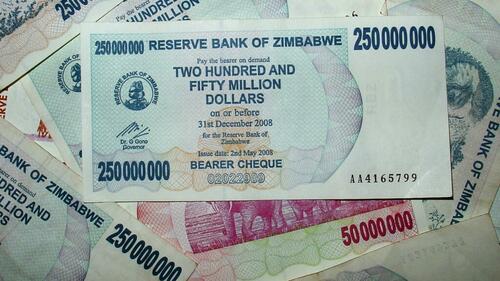
The Reserve Bank of Zimbabwe plans to issue gold coins as a way for investors in the country to store value as inflation runs rampant in the economy.
The United States isn’t the only country battling rapidly rising prices. The inflation rate in Zimbabwe spiked from 132% in May to 191.6% in June, and the Zimbabwean currency is quickly devaluing against other global currencies, particularly the US dollar.
Enter gold.
On Monday, Reserve Bank of Zimbabwe, John Mangudya, announced the new gold coins would be minted by Fidelity Gold Refineries (Private) Limited and available to the public through normal banking institutions.
The Reserve Bank of Zimbabwe’s Monetary Policy Committee (MPC) resolved to introduce gold coins into the market as an instrument that will enable investors to store value.”
The central bank owns Fidelity Gold Refineries (Private) Limited. It operates as the only gold-buying and refining entity in the southern African country.
The RBZ has not announced a timeline for the introduction of the coins.
Batanai Matsika heads research for Morgan & Co., a Zimbabwean brokerage firm. In an interview with Al Jazeera, he called the introduction of the gold coins a “welcome development” in a market starved of options to hedge against inflation.
For a long time, the market did not have many investment options and this is a new asset class. The thinking was inspired by the need to come up with an instrument that addresses the inflation problems in the economy where purchasing power has been eroded. From what we are gathering, this is going to be a store value.”
Matsika went on to say the fundamentals of gold help it hedge against inflation and geopolitical risk, and that the gold coins would open the gold market to “ordinary investors.”
Typical of central bankers, the RBZ is trying to solve a problem it created. The country has labored under an inflationary monetary policy for decades. According to Al Jazeera, the central bank worsened the problem by printing even more new money, reversing gains made in the past two years. Inflation decreased from a peak of 800% in 2020 to 60% in January this year.
Ironically, Zimbabwean investors have turned to the US dollar as a store of value. The dollar has its own inflationary problem, but as the world reserve currency, the greenback is the cleanest dirty shirt in the laundry. One US dollar sells on the Zimbabwean black market for 650 Zimbabwean dollars.
The availability of gold coins will likely ease pressure on the US dollar in the country. After all, gold is a better long-term store of value than another fiat currency. It has no counter-party risk and it cannot be created out of thin air by central banks.
Economist Tatenda Mabhande said the central bank could use the gold coins to ease inflation if it sold them for Zimbabwean dollars. This would mop some of the excess currency out of the economy. But the coins will more likely be indexed in US dollars. It will basically work as a fundraising scheme for the Zimbabwean central bank, pulling in USD from the market.
Mabhande said the gold coins would likely flow out of the country.
Bad money will drive good money out of the market. We are likely to see the coins disappearing as well.”
END
2. Lawrie Williams//Pam and Russ Martens/Jim Rickards/Mathew Piepenburg
END
3. Chris Powell of GATA provides to us very important physical commentaries
JPMorgan and Citibank hold 90% of all gold and other precious metals derivatives held by USA banks. How on earth do they allow a convicted felon like JPMorgan hold such a huge amount of these derivatives
(Pam and Russ Martens/GATA)
Pam and Russ Martens: JPMorgan, Citibank hold 90% of all gold and other precious metals derivatives held by U.S. banks
Submitted by admin on Wed, 2022-06-29 11:39Section: Daily Dispatches
By Pam and Russ Martens
Wall Street on Parade
Wednesday, June 29, 2022
Last Tuesday the U.S. Office of the Comptroller of the Currency released its quarterly report on derivatives held at the megabanks on Wall Street. As we browsed through the standard graphs that are included in the quarterly report, one graph jumped out at us. It showed a measured growth in precious metals derivatives at insured U.S. commercial banks and savings associations over the past two decades and then an explosion in growth between the last quarter of 2021 and the end of the first quarter of this year.
In just one quarter, precious metals derivatives had soared from $79.28 billion to $491.87 billion. That’s a 520% increase in a span of three months.
Having studied these quarterly reports since the 2008 financial crash, we knew where to head next. We went to the graphs in the OCC report showing the breakdown of different categories of derivatives at specific banks. Table 21 showed that precious metals contracts at JPMorgan Chase had spiked to $330.123 billion as of March 31, 2022. The same table showed that Citigroup’s insured commercial bank, Citibank, held $114.148 billion in precious metals derivatives. …
JPMorgan Chase is the last bank in the U.S. that should have a $330 billion involvement in precious metals. On September 29, 2020, the U.S. Department of Justice charged JPMorgan Chase with rigging the precious metals market and charged it with a criminal felony count, to which it admitted. According to the Justice Department, the rigging occurred for more than eight years, from March of 2008 to August of 2016, and involved “tens of thousands” of incidents. …
… For the remainder of the analysis:
END
Bill Murphy interviewed by Chris Marcus
(GATA)
Because of GATA, Russia long has known about gold manipulation, Murphy says
Submitted by admin on Wed, 2022-06-29 14:54Section: Daily Dispatches
2:50p ET Wednesday, June 29, 2022
Dear Friend of GATA and Gold:
Interviewed by Chris Marcus of Arcadia Economics, GATA Chairman Bill Murphy notes that the Russia government has known about gold and silver market manipulation for many years, in part because of GATA’s work.
The interview is 18 minutes long and can be viewed at YouTube here:
CHRIS POWELL, Secretary/Treasurer
Gold Anti-Trust Action Committee Inc.
CPowell@GATA.org
END
4. OTHER GOLD STORIES
5.OTHER COMMODITIES
END
COMMODITIES IN GENERAL/
END
6.CRYPTOCURRENCIES
Bitcoin Breaks Below $19k, SEC Rejects Spot ETF, FTX Buys BlockFi, JPM Says ‘Deleveraging Well Advanced’
THURSDAY, JUN 30, 2022 – 01:25 PM
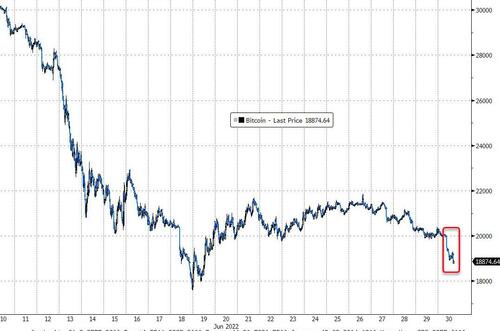
Bitcoin broke back below $19,000 this morning to end its worst first-half of a year ever (and worst quarter since Q3 2011…
The (mostly negative) headlines keep mounting as JPMorgan’s Nikolaos Panigirtzoglou warns that deleveraging continues to reverberate throughout the crypto ecosystem.
Multiple failures among crypto companies should not be a surprise in the current backdrop of deleveraging, given the crypto market lost 70% of its capitalization cumulatively since last November. The entities that employed higher leverage in the past are now the most vulnerable. Whether it is miners having borrowed to expand operations using their bitcoins as collateral, or corporates such as MicroStrategy having borrowed in the past to invest even more heavily into bitcoin, or hedge funds using futures to lever their positions, or retail investors borrowing via margin accounts to invest into various cryptocurrencies. Three Arrows Capital’s failure is a manifestation of this deleveraging process, a process that appears well advanced, making the bottom formation process in crypto markets more volatile.
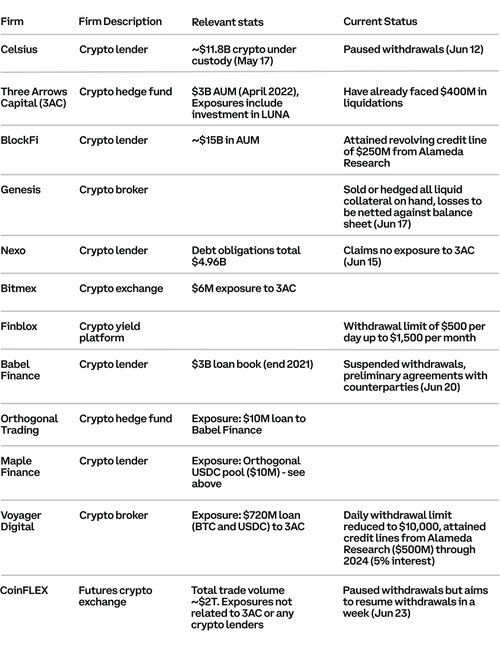
In the current phase of deleveraging, the weakest crypto entities, i.e. those with high leverage and low capital appear to be most challenged, while the ones with the strongest balance sheets seem most likely to survive and emerge stronger once the current deleveraging phase is over. How much more deleveraging needs to still happen is hard to assess.
But indicators like our Net Leverage metric suggest that deleveraging is already well advanced.
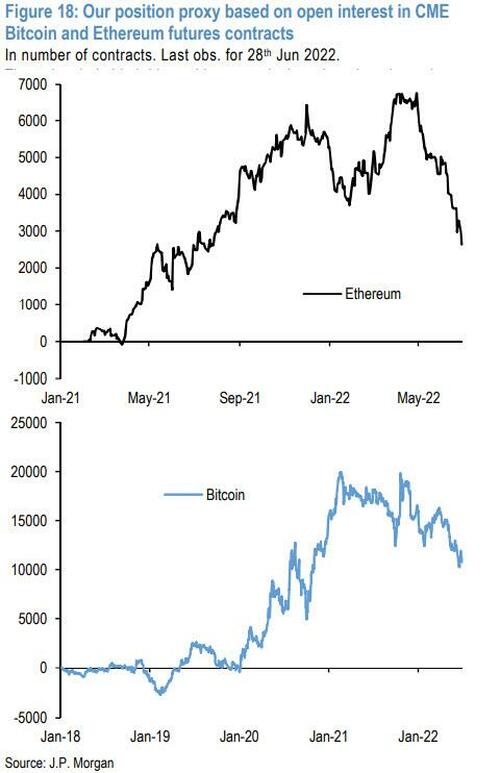
And we find two additional reasons to believe that the current deleveraging cycle may not be very protracted:
1) The fact that crypto entities with the stronger balance sheets are currently stepping in to help contain contagion and;
2) VC funding, an important source of capital for the crypto ecosystem, continued at a healthy pace in May and June.
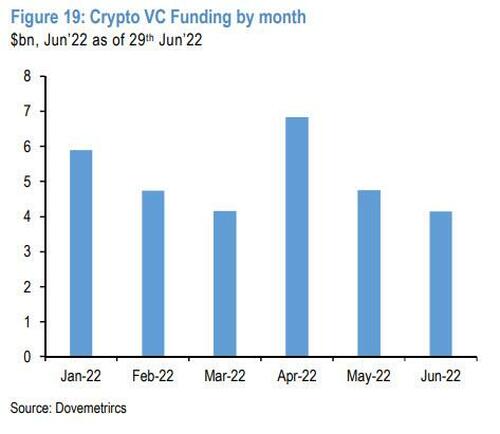
Still, the crypto ecosystem took another modest blow last night as The SEC rejected Grayscale’s application to convert its Grayscale Bitcoin Trust to an exchange-traded fund late Wednesday, citing concerns about market manipulation, the role of Tether in the broader bitcoin ecosystem and the lack of a surveillance-sharing agreement between a “regulated market of significant size” and a regulated exchange, echoing concerns the regulator has expressed for years in rejecting other spot bitcoin ETF applications.
GBTC responded by suing the SEC, as CEO Michael Sonnenshein said the company was “deeply disappointed” and “vehemently disagree” with the SEC’s decision to deny their application.
“Over 11,400 investors, academics, business leaders, trade associations, and other key stakeholders submitted comments to the SEC in support of Grayscale’s ETF proposal,” wrote Sonnenshein.
As of June 9th, over 99.9% of those comment letters were supportive of the cause.

As CoinTelegraph reports, Grayscale announced that its senior legal strategist, former U.S. solicitor general Donald B. Verrilli Jr., had filed a petition for review with the United States Court of Appeals for the District of Columbia Circuit.
Verrelli stated that the latest decision shows that the SEC is acting “arbitrarily and capriciously” by “failing to apply consistent treatment to similar investment vehicles” and will be pursuing a legal challenge based on the SEC’s alleged violation of the Administrative Procedure Act (APA) and Securities Exchange Act (SEA).
Grayscale Investments, which has $12.92 billion of assets under management in its GBTC, announced its intentions to transition the fund into an ETF in April 2021. A formal request to do so was then submitted later that year, in October. Since then, Grayscale has mounted many efforts to properly inform the public of its intentions and to meet all regulatory requirements.
Essentially, the company will argue that the SEC has to allow products that are like other products already trading, in this case bitcoin futures ETFs.
By changing the trust into a spot Bitcoin ETF, Grayscale hopes to correct Grayscale Bitcoin Trust’s “discount” and allow the investment firm to charge lower fees, making it easier to move money in and out of the fund.
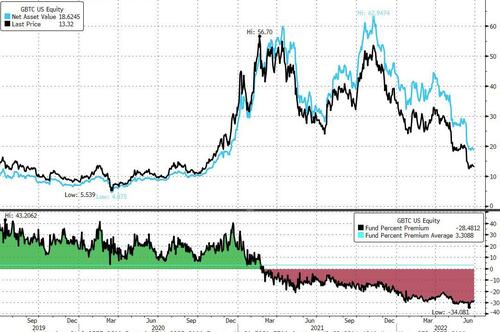
The SEC’s ongoing negative response to a spot Bictoin ETF prompted many reactions across social media with some accusing the SEC of “holding GBTC hostage.”
According to Twitter user Ann, since the SEC approved an ETF that shorts Bitcoin, the SEC may be working to “suppress the price of Bitcoin.”
The Twitter user argued that this is not the role of the SEC.

Ironically, on the same day that the SEC rejects GBTC, CoinTelegraph reports that major Dutch stock exchange Euronext Amsterdam, a part of the pan-European marketplace Euronext, is debuting its first Spot Bitcoin ETF.
The Jacobi Bitcoin ETF is positioned as the first spot Bitcoin ETF launched in Europe, Jacobi founder and CEO Jamie Khurshid told Cointelegraph.
“Our product is the first spot or physical-backed Bitcoin fund, and the fund is not allowed to lend, stake or leverage any of the assets it owns. For the first time in Europe, investors buying an exchange-traded Bitcoin product will own the units that own the Bitcoin,” Khurshid said.
“There are other exchange-traded products in Europe but no other spot BTC ETF,” he added.

In other news, The Block reports that FTX looked at a deal with Celsius but in the end walked away, citing two people with knowledge of the matter.
FTX held talks with Celsius about providing financial support or making an acquisition but did not proceed to looking at Celsius’s finances. Celsius had a $2 billion hole in its balance sheet and FTX found the company difficult to deal with, one of the sources said.
On a brighter note, it seems FTX was more interested elsewhere as CBNC reports the crypto exchange is swooping in to buy crypto lender BlockFi for pennies on the dollar.
FTX will pay roughly $25 million – 99% below BlockFi’s last private valuation.
Jersey City, New Jersey-based BlockFi was last valued at $4.8 billion, according to PitchBook.
The fire sale comes a week after FTX provided a $250 million emergency line of credit to BlockFi.
FTX CEO Sam Bankman-Fried said at the time that the financing would help BlockFi “navigate the market from a position of strength.”

Finally, we note that, as Anita Posch writes at BitcoinMagazine.com, crypto lending scheme implosions make bitcoin stronger.
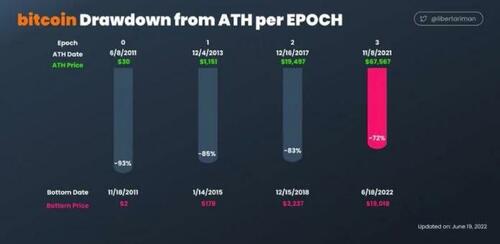
As you can see in the graph above, the recent bitcoin price drawdown is not the first of its kind in the history of Bitcoin. It’s not unusual that the price reaches a low in between two halving events, when the amount of newly-minted bitcoin is split in half, which occurs every four years.
Reckless lending practices brought the whole crypto-lending system down. These centralized services take customers’ bitcoin and promise monthly returns. They lend it out to other DeFi projects, which is risky in the first place, and, on top of that, they lend out more money than they hold in assets. This is essentially a practice that led to the global financial crisis of 2008, which was a reason that Satoshi Nakamoto released the Bitcoin software in the first place.
Now, the cryptocurrency industry is building the same over-leveraged financial products and one has to ask: Did they not learn? Did they think they found a solution to magically make profits, where there is no underlying economic activity?
The failure of these yield-searching companies brought the whole market and bitcoin down in the last weeks. It’s a great reminder that one should have all assets in self custody and that there is no magical solution to money making by over-leveraging. Hopefully, investors and businesses learn from these busts.
Bitcoin is a decentralized technology which is unstoppable. No government nor any bank can change or control it. No one can take it away from you. This is especially important if you live in a country with authoritarian leaders or a broken banking system. Bitcoin has been declared dead several times, but it has been producing new blocks every 10 minutes anyway. It’s unstoppable, like a clock.
7. GOLD/ TRADING
Your early currency/gold and silver pricing/Asian and European bourse movements/ and interest rate settings THURSDAY morning 7:30 AM
ONSHORE YUAN: CLOSED DOWN 6.7002
OFFSHORE YUAN: 6.7073
HANG SANG CLOSED DOWN 137.10 PTS OR 0.62%
2. Nikkei closed DOWN 411.56% OR 1.54%
3. Europe stocks ALL CLOSED ALL RED
USA dollar INDEX UP TO 105.27/Euro FALLS TO 1.0396
3b Japan 10 YR bond yield: FALLS TO. +.222/ !!!!(Japan buying 100% of bond issuance)/Japanese yen vs usa cross now at 136.33/JAPANESE FALLING APART WITH YEN FALTERING AS WELL AS LONG TERM YIELDS RISING BREAKING THE JAPANESE CENTRAL BANK.
3c Nikkei now ABOVE 17,000
3d USA/Yen rate now well ABOVE the important 120 barrier this morning
3e Gold DOWN /JAPANESE Yen DOWN CHINESE YUAN: DOWN -// OFF- SHORE DOWN
3f Japan is to buy the equivalent of 108 billion uSA dollars worth of bond per month or $1.3 trillion. Japan’s GDP equals 5 trillion usa./“HELICOPTER MONEY” OFF THE TABLE FOR NOW /REVERSE OPERATION TWIST ON THE BONDS: PURCHASE OF LONG BONDS AND SELLING THE SHORT END
Japan to buy 100% of all new Japanese debt and by 2018 they will have 25% of all Japanese debt. EIGHTY percent of Japanese budget financed with debt.
3g Oil DOWN for WTI and DOWN FOR Brent this morning
3h European bond buying continues to push yields lower on all fronts in the EMU. German 10yr bund DOWN TO +1.587%/Italian 10 Yr bond yield FALLS to 3.58% /SPAIN 10 YR BOND YIELD FALLS TO 2.66%…
3i Greek 10 year bond yield RISES TO 3.63//
3j Gold at $1803.90 silver at: 20.34 7 am est) SILVER NEXT RESISTANCE LEVEL AT $30.00
3k USA vs Russian rouble;// Russian rouble UP 72/100 roubles/dollar; ROUBLE AT 52.51
3m oil into the 109 dollar handle for WTI and 111 handle for Brent/
3n Higher foreign deposits out of China sees huge risk of outflows and a currency depreciation. This can spell financial disaster for the rest of the world/
JAPAN ON JAN 29.2016 INITIATES NIRP. THIS MORNING THEY SIGNAL THEY MAY END NIRP. TODAY THE USA/YEN TRADES TO 136.33DESTROYING JAPANESE CITIZENS WITH HIGHER FOOD INFLATION
30 SNB (Swiss National Bank) still intervening again in the markets driving down the FRANC. It is not working: USA/SF this morning 0.9579– as the Swiss Franc is still rising against most currencies. Euro vs SF 0.9955well above the floor set by the Swiss Finance Minister. Thomas Jordan, chief of the Swiss National Bank continues to purchase euros trying to lower value of the Swiss Franc.
USA 10 YR BOND YIELD: 3.044 DOWN 5 BASIS PTS
USA 30 YR BOND YIELD: 3.182 DOWN 3 BASIS PTS
USA DOLLAR VS TURKISH LIRA: 16.67
Stocks, Cryptos Tumble To Close Out Catastrophic First-Half
THURSDAY, JUN 30, 2022 – 07:58 AM
It was supposed to be a 7% ramp into month-end on billions in pension fund residual buying.
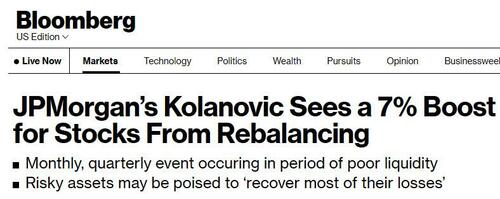
Instead, it ended up being more or less the opposite, with crypto-led liquidations dragging futures and global markets lower, and extending Wednesday losses after central bankers issued warnings on inflation and fueled concern that aggressive policy will end with a hard-landing recession, which increasingly more now see as being 2022 business, an outcome that now appears assured especially after yesterday’s disastrous guidance cut from RH, the second in three weeks!
Recession fears and inflation woes may be prolonged by today’s PCE deflator report. The consumer price gauge favored by the Fed may have picked up to 6.4% last month from 6.3%. Personal income growth probably edged up but Bloomberg Economics highlights an anticipated decline in real personal spending as a major worry.
Meanwhile, China’s economy showed further signs of improvement in June with a strong pickup in services and construction, even if the latest Chinese PMI print came slightly below expectations. Also overnight, Russia said it withdrew troops from Ukraine’s Snake Island in the Black Sea after Ukraine said its forces drove Russian troops from the area.
In any case, with zero demand from pensions so far (even though the continued selling in stocks and buying in bonds will only make the imabalnce bigger), overnight Nasdaq 100 contracts dropped 1.8% while S&P 500 futures declined 1.3%, and cryptos crumbled, with bitcoin dragged back below $19000 and Ether on the verge of sliding below $1000. The tech-heavy gauge managed to end Wednesday’s trading slightly higher, while the S&P 500 fell for a third straight day. In Europe, the Stoxx Europe 600 Index slid 1.9%. Treasuries gained, the dollar was steady and gold declined and crude oil futures edged lower again.
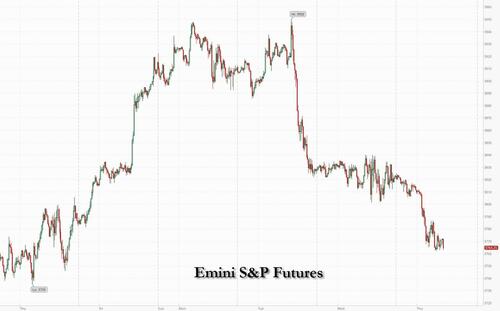
Which brings us to the last trading day of a quarter for the history books: the S&P 500 is set for its biggest 1H decline since 1970 and the Nasdaq 100 since 2002, the height of the dot.com bust. The Stoxx 600 is set for the worst 1H since 2008, the height of the GFC.
Traders have ramped up bets that the global economy will buckle under central bank tightening campaigns — and that policy makers will eventually backpedal. The bond market shifted to price in a half-point rate cut in the Federal Reserve’s benchmark rate at some point in 2023. On Wednesday, during the annual ECB annual forum, Fed Chair Jerome Powell and his counterparts in Europe and the UK warned inflation is going to be longer lasting. A view that central banks need to act fast on rates because they misjudged inflation has roiled markets this year, with global stocks about to close out their worst quarter since the three months ended March 2020.
“Markets are worried about growth as central bankers continue to emphasize that bringing down inflation is their overriding objective, and that it may take time to bring inflation down,” said Esty Dwek, chief investment officer at Flowbank SA. “We still haven’t seen total capitulation in markets, so further downside is possible.”
Meanwhile, the cost of insuring European junk bonds against default crossed 600 basis points for the first time in two years on Thursday.
And speaking of Europe, stocks are also down over 2% in early trading, with all sectors in the red. DAX and CAC underperform at the margin with autos, consumer discretionary and banking sectors the weakest within the Stoxx 600. Here are some of the biggest European movers today:
- Uniper shares slump as much as 23% after the German utility withdrew its outlook and said it was discussing a possible bailout from the German government following Russia’s move to curb natural gas deliveries.
- SAP sinks as much as 6.5% after Exane BNP Paribas downgraded stock to neutral from outperform, saying it sees risks on demand side in the near term as software spending decisions come under increased scrutiny.
- Sanofi shares decline as much as 4.5% after the French drugmaker said the FDA placed late-stage clinical trials of tolebrutinib on partial hold in US because of concerns about liver injuries.
- European semiconductor stocks fell, following peers in the US and Asia lower amid growing concerns that the industry might face a downturn soon as chip stockpiles build. ASML drops as much as 3.4%, Infineon -4.1%, STMicro -3.1%
- Norsk Hydro shares slide as much as 6% amid metals decline and as DNB cuts the stock to sell from hold, citing concerns about rising aluminum supply.
- Stainless steel stocks in Europe fall, with Morgan Stanley saying the settlement on the latest ferrochrome benchmark missed its expectations. Outokumpu shares down as much as 6.6%, Aperam -7.2%, Acerinox -4%
- Saab shares jump as much as 8.4%, after getting an order worth SEK7.3b from the Swedish Defence Materiel Administration for GlobalEye Airborne Early Warning and Control aircraft.
- Orsted shares rise as much as 2.5%, before paring some of the gains. HSBC raises to buy from hold, saying any further downside for the wind farm operator looks limited.
- Bunzl shares rise as much as 2.6% after the specialist distribution company said it now expects very good revenue growth in 2022.
- Grifols shares rise as much as 7.8% after slumping on Wednesday, as the company says that the board isn’t analyzing any capital increase “for the time being.”
Earlier in the session, Asian stocks fell for a second day as tech-heavy indexes in Taiwan and South Korea continued to get pummeled amid concerns over the potential for aggressive monetary tightening in the US to rein in inflation. The MSCI Asia Pacific Index declined as much as 1.2%, dragged down by technology shares including TSMC, Alibaba and Tencent. Taiwan slid more than 2%, while gauges in Japan, South Korea, Australia dropped more than 1%. Stocks in mainland China rose more than 1% after the economy showed further signs of improvement in June with a strong pickup in services and construction as Covid outbreaks and restrictions were gradually eased. Traders are also watching Chinese President Xi Jinping’s trip to Hong Kong, his first time outside of the mainland since 2020.
Asian stocks are struggling to recover from a May low as the threat of higher US rates outweighs China’s emergence from strict Covid lockdowns and its pledge of stimulus measures. While mainland Chinese stocks led gains globally this month, the rest of the markets in the region — especially those heavy with technology stocks and exporters — saw hefty outflows of foreign funds. “Investors continue to assess recession and also inflation risks,” Marcella Chow, JPMorgan Asset Management’s global market strategist, said in an interview with Bloomberg TV. “This tightening path has actually increased the chance of a slower economic growth going forward and probably has brought forward the recession risks.” Asian stocks are set to post a more than 12% loss this quarter, the worst since the one ended March 2020 during the pandemic-induced global market rout.
Japanese stocks declined after the release of China’s data on manufacturing and non-manufacturing PMIs that showed slower than expected improvements. The Topix Index fell 1.2% to 1,870.82 as of market close Tokyo time, while the Nikkei declined 1.5% to 26,393.04. Sony Group contributed the most to the Topix Index decline, falling 3.4%. Out of 2,170 shares in the index, 531 rose and 1,574 fell, while 65 were unchanged. “Although China is recovering from a lockdown, business sentiment in the manufacturing industry is deteriorating around the world,” said Tomo Kinoshita, global market strategist at Invesco Asset Management China’s Economy Shows Signs of Improvement as Covid Eases.
Indian stock indexes posted their biggest quarterly loss since March 2020 as the global equity market stays rattled by high inflation and a weakening outlook for economic growth. The S&P BSE Sensex ended little changed at 53,018.94 in Mumbai on Thursday, while the NSE Nifty 50 Index dropped 0.1%. The gauges shed more than 9% each in the June quarter, their biggest drop since the outbreak of pandemic shook the global markets in March 2020. The main indexes have fallen for all but one month this year as surging cost pressures forced India’s central bank to raise rates twice and tighten liquidity conditions. The selloff is also partly driven by record foreign outflows of more than $28b this year. Despite the turmoil in global markets, Indian stocks have underperformed most Asian peers, partly helped by inflows from local institutions, which made net purchases of more than $30b of local stocks. “Investors worry that the latest show of central bank determination to tame inflation will slow economies rapidly,” HDFC Securities analyst Deepak Jasani wrote in a note. Fourteen of the 19 sector sub-gauges compiled by BSE Ltd. fell Thursday, with metal stocks leading the plunge. The expiry of monthly derivative contracts also weighed on markets. For the June quarter, metal stocks were the worst performers, dropping 31% while information technology gauge fell 22%. Automakers led the three advancing sectors with 11.3% gain.
Australian stocks also tumbled, with the S&P/ASX 200 index falling 2% to close at 6,568.10, weighed down by losses in mining, utilities and energy stocks. In New Zealand, the S&P/NZX 50 index fell 0.8% to 10,868.70
In rates, treasuries advanced, led by the belly of the curve. German bonds surged, led by the short-end and outperforming Treasuries. US yields richer by as much as 5.4bp across front-end and belly of the curve which outperforms, steepening 2s10s, 5s30s by 2bp and 2.8bp; wider bull-steepening move in progress for German curve with yields richer by up to 13.5bp across front-end with 2s10s wider by 3.5bp on the day. US 10-year yields around 3.055%, richer by 3.5bp. Money markets aggressively trimmed ECB tightening bets on relief that French June inflation didn’t come in above the median estimate. Bonds also benefitted from haven buying as stocks slide. Month-end extension flows may continue to support long-end of the Treasuries curve. bunds outperform by 7bp in the sector. IG issuance slate empty so far; Celanese Corp. pushed back plans to issue in euros and dollars, most likely to next week, after deals struggled earlier this week. Focal points of US session include PCE deflator and MNI Chicago PMI.
In FX, the Bloomberg Dollar Spot Index was steady as the greenback traded mixed against its Group-of-10 peers. The yen advanced and Antipodean currencies were steady against the greenback. French inflation quickened to the fastest since the euro was introduced. Steeper increases in energy and food costs drove consumer-price growth to 6.5% in June from 5.8% in May . Sweden’s krona swung to a loss. It briefly advanced earlier after the Riksbank raised its policy rate by 50bps, as expected, signaled faster rate hikes and a quicker trimming of the balance sheet. The pound rose, snapping three days of losses against the dollar. UK household incomes are on their longest downward trend on record, as the nation’s cost of living crisis saps the spending power of British households. Separate figures showed that the current-account deficit widened sharply to £51.7 billion ($63 billion) in the first quarter. The yen rose and the Japan’s bonds inched up. The BOJ kept the amount and frequencies of planned bond purchases unchanged in the July-September period. The Australian dollar reversed a loss after data showed China’s official manufacturing purchasing managers index rose above 50 for the first time since February in a sign of improvement in the world’s second largest economy.
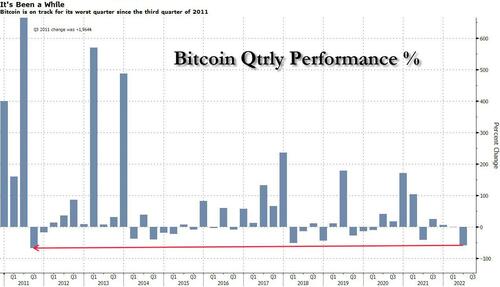
Bitcoin is on track for its worst quarter in more than a decade, as more hawkish central banks and a string of high-profile crypto blowups hammer sentiment. The 58% drawdown in the biggest cryptocurrency is the largest since the third quarter of 2011, when Bitcoin was still in its infancy, data compiled by Bloomberg show.
In commodities, WTI trades a narrow range, holding below $110. Brent trades either side of $116. Most base metals trade in the red; LME zinc falls 3.1%, underperforming peers. Spot gold falls roughly $3 to trade near $1,814/oz. Bitcoin slumps over 6% before finding support near $19,000.
Looking to the day ahead now, data releases include German retail sales for May and unemployment for June, French CPI for June, the Euro Area unemployment rate for May, Canadian GDP for April, whilst the US has personal income and personal spending for May, the weekly initial jobless claims, and the MNI Chicago PMI for June.
Market Snapshot
- S&P 500 futures down 1.2% to 3,775.75
- STOXX Europe 600 down 1.8% to 406.18
- MXAP down 1.0% to 158.01
- MXAPJ down 1.1% to 524.78
- Nikkei down 1.5% to 26,393.04
- Topix down 1.2% to 1,870.82
- Hang Seng Index down 0.6% to 21,859.79
- Shanghai Composite up 1.1% to 3,398.62
- Sensex up 0.2% to 53,136.59
- Australia S&P/ASX 200 down 2.0% to 6,568.06
- Kospi down 1.9% to 2,332.64
- Gold spot down 0.2% to $1,814.91
- US Dollar Index little changed at 105.04
- German 10Y yield little changed at 1.42%
- Euro little changed at $1.0443
- Brent Futures down 0.4% to $115.85/bbl
Top Overnight News from Bloomberg
- The surge in the dollar has set Asian currencies on course for their worst quarter since the 1997 financial crisis and created a dilemma for central bankers
- French Finance Minister Bruno Le Maire said the EU can deliver the global minimum corporate tax with or without the support of Hungary, circumventing Budapest’s veto earlier this month just as the bloc was on the brink of a agreement
- German unemployment unexpectedly rose, snapping 15 straight months of decline as refugees from the war in Ukraine were included in those searching for work
- The SNB bought foreign exchange worth 5.7 billion francs ($5.96 billion) in the first quarter of 2022 as the franc sharply appreciated against the euro and briefly touched parity in March
- The ECB plans to ask the region’s lenders to factor in the economic hit of a potential cut off of Russian gas when considering payouts to shareholders
- European stocks were poised for their biggest drop in any half-year period since 2008, as investors focused on the prospects for economic slowdown and stubbornly high inflation in the region
- New Zealand will enter a recession next year that could be deeper than expected, Bank of New Zealand economists said after a survey showed business sentiment continues to slump
A more detailed look at global markets courtesy of Newsquawk
Asia-Pac stocks were varied at month-end amid a slew of data releases including mixed Chinese PMIs. ASX 200 was dragged lower by weakness in energy, miners and the top-weighted financials sector. Nikkei 225 declined after disappointing Industrial Production data and with Tokyo raising its virus infection level. Hang Seng and Shanghai Comp. were somewhat mixed with Hong Kong indecisive and the mainland underpinned after the latest Chinese PMI data in which Manufacturing PMI printed below estimates but Non-Manufacturing PMI firmly surpassed forecasts and along with Composite PMI, all returned to expansion territory.
Top Asian News
- NATO Secretary General Stoltenberg said China’s growing assertiveness has consequences for the security of allies, while he added China is not our adversary, but we must be clear-eyed about the serious challenges it presents.
- US blacklisted 5 Chinese firms for allegedly helping Russia in which Connec Electronic, King Pai Technology, Sinno Electronics, Winnine Electronic and World Jetta Logistics were added to the entity list which restricts access to US technology, according to WSJ.
- Japan’s government cut its assessment of industrial production and noted that production is weakening, while it stated that Japan’s motor vehicle production declined 8% M/M and that industrial production likely saw the largest impact of Shanghai’s COVID-19 lockdown in May, according to Reuters.
- Tokyo metropolitan government will reportedly increase COVID infections level to the second-highest, according to FNN.
It’s been a downbeat session for global equities thus far as sentiment deteriorates further. European bourses are lower across the board, with losses extending during early European hours. European sectors are all in the red but portray a clear defensive bias. Stateside, US equity futures have succumbed to the glum mood, with the NQ narrowly underperforming.
Top European News
- Riksbank hiked its Rate by 50bps to 0.75% as expected, and said the rate will be raised further and it will be close to 2% at the start of 2023. Bank said the balance sheet its to shrink faster than previously flagged, and suggested that policy rate will increase faster if needed. Click here for details.
- Riksbank’s Ingves said inflation over forecast probably not enough for Riksbank to hold extra policy meeting in summer. Ingves added that if the situation requires a 75bps hike, then Riksbank will carry out a 75bps hike.
- Orsted Gains as HSBC Upgrades With Shares Seen ‘Good Value’
- Aston Martin Extends Losses as Carmaker Reportedly Seeking Funds
- Climate Litigants Look Beyond Big Oil for Their Day in Court
- Ukraine Latest: Putin Warns NATO on Moving Military to Nordics
FX
- DXY extends on gains above 105.00, but could see more upside on safe haven demand and residual rebalancing flows over fixes – EUR/USD inches towards 1.0400 to the downside.
- Yen regroups as yields drop and risk sentiment deteriorates to compound corrective price action.
- Franc unwinds some of its recent outperformance and Loonie lose traction from oil ahead of Canadian GDP.
- Swedish Crown unable to take advantage of hawkish Riksbank hike in face of risk aversion – Eur/Sek stuck in a rut close to 10.7000.
- Pound finds some underlying bids into 1.2100 and Kiwi at 0.6200, while Aussie holds above 0.6850 with encouragement from China’s services PMI that also propped the Yuan.
Fixed Income
- Bonds on bull run into month, quarter and half year end – Bunds top 148.00 at best, Gilts approach 113.50 and 10 year T-note just a tick away from 118-00.
- Debt in demand on safe haven grounds rather than duration as curves steepen on less hawkish/more dovish market pricing.
- Italian supply comfortably covered to keep BTP futures propped ahead of US PCE data and yet another speech from ECB President Lagarde.
Commodities
- WTI and Brent front-month futures are resilient to the broader risk downturn, and firmer Dollar as OPEC+ member members gear up for what is expected to be a smooth meeting.
- Spot gold is uneventful but dipped under yesterday’s low, with potential support at the 15th June low at USD 1,806.59/oz.
- Base metals are softer across the board amid the broader risk profile. Dalian and Singapore iron ore futures were on track for quarterly losses.
- Ship with 7,000 tonnes of grain leaves Ukraine port, according to pro-Russia officials cited by AFP.
US Event Calendar
- 08:30: June Initial Jobless Claims, est. 229,000, prior 229,000
- 08:30: June Continuing Claims, est. 1.32m, prior 1.32m
- 08:30: May Personal Income, est. 0.5%, prior 0.4%
- 08:30: May Personal Spending, est. 0.4%, prior 0.9%
- 08:30: May Real Personal Spending, est. -0.3%, prior 0.7%
- 08:30: May PCE Deflator MoM, est. 0.7%, prior 0.2%
- 08:30: May PCE Deflator YoY, est. 6.4%, prior 6.3%
- 08:30: May PCE Core Deflator YoY, est. 4.8%, prior 4.9%
- 08:30: May PCE Core Deflator MoM, est. 0.4%, prior 0.3%
- 09:45: June MNI Chicago PMI, est. 58.0, prior 60.3
DB’s Jim Reid concludes the overnight wrap
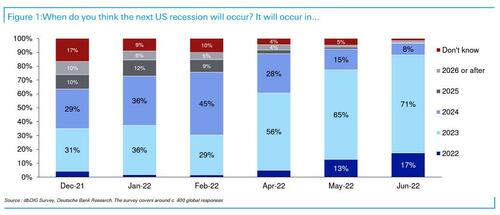
We’ve just released the results of our monthly EMR survey that we conducted at the start of the week. It makes for some interesting reading, and we’re now at the point where 90% of respondents are expecting a US recession by end-2023, which is up from just 35% in our December survey. That echoes our own economists’ view that we’re going to get a recession in H2 2023, and just shows how sentiment has shifted since the start of the year as central banks have begun hiking rates. When it comes to people’s views on where markets are headed next, most are expecting many of the themes from H1 to continue, with a 72% majority thinking that the S&P 500 is more likely to fall to 3,300 rather than rally to 4,500 from current levels, whilst 60% think that Treasury yields will hit 5% first rather than 1%. Click here to see the full results.
When it comes to negative sentiment we’ll have to see what today brings us as we round out the first half of the year, but if everything remains unchanged today we’re currently set to end H1 with the S&P 500 off to its worst H1 since 1970 in total return terms. And there’s been little respite from bonds either, with US Treasuries now down by -9.79% since the start of the year, so it’s been bad news for traditional 60/40 type portfolios. Ultimately, a large reason for that has been investors’ fears that ongoing rate hikes to deal with inflation will end up leading to a recession, and yesterday saw a continuation of that theme, with Fed Chair Powell, ECB President Lagarde and BoE Governor Bailey all reiterating their intentions in a panel at the ECB’s Forum to return inflation back to target.
In terms of that panel, there weren’t any major headlines on policy we weren’t already aware of, although there was a collective acknowledgement of the risk that inflation could become entrenched over time and the need to deal with that. Fed Chair Powell described the US economy as in “strong shape”, but one that ultimately requires much tighter financial conditions to bring inflation back to target. Year-end fed funds expectations remained steady in response, down just -0.7bps to 3.45%. However, further out the curve the simmering slower growth narrative continued to grip markets and sent 10yr Treasury yields -8.2bps lower to 3.09%, and the 2s10s another -1.1bps flatter to 4.7bps. In line with a tighter Fed policy path and slower growth, 10yr breakevens drove the move in nominal yields, falling -8.2bps to 2.39%, their lowest levels since January, having entirely erased the gains seen after Russia’s invasion of Ukraine, when it peaked above 3% at one point in April. Along with 2s10s flattening, the Fed’s preferred measure of the near-term risk of recession, the forward spread (the 18m3m – 3m), similarly flattened by -5.7bps, hitting its lowest level in nearly four months at 154bps. And thismorning there’s only been a partial reversal of these trends, with 10yr Treasury yields (+1.3bps) edging back up to 3.10% as we go to press. Over in equities, the S&P 500 bounced around but finished off of its intraday lows with just a -0.07% decline, again with the macro view likely skewed by quarter-end rebalancing of portfolios. The NASDAQ was similarly little changed on the day, falling a mere -0.03%.
In terms of the ECB, President Lagarde said on that same panel that she didn’t think “we are going back to that environment of low inflation” that was present before the pandemic. But when it came to the actual data yesterday there was a pretty divergent picture. On the one hand, Spain’s CPI for June surprised significantly on the upside, with the annual inflation rising to +10.0% (vs. +8.7% expected) on the EU’s harmonised measure. But on the other, the report from Germany then surprised some way beneath expectations, coming in at +8.2% on the EU-harmonised measure (vs. +8.8% expected). So mixed messages ahead of the flash CPI print for the entire Euro Area tomorrow.
As in the US, there was a significant rally in European sovereign bonds, with yields on 10yr bunds (-10.7bps), OATs (-10.7bps) and BTPs (-16.0bps) all moving lower on the day. Equities also lost significant ground amidst the risk-off tone, and the STOXX 600 shed -0.67% as it caught up with the US losses from the previous session. That risk-off tone was witnessed in credit as well, where iTraxx Crossover widened +21.5bps to a post-pandemic high. At the same time, there were further concerns in Europe on the energy side, with natural gas futures up by +8.06% to a three-month high of €139 per megawatt-hour, which follows a reduction in capacity yesterday at Norway’s Martin Linge field because of a compressor failure.
Whilst monetary policy has been the main focus for markets lately, we did get some headlines on the fiscal side yesterday too, with a report from Bloomberg that Senate Democrats were working on an economic package that had smaller tax increases in order to reach a deal with moderate Democratic senator Joe Manchin. For reference, the Democrats only have a majority in the split 50-50 senate thanks to Vice President Harris’ tie-breaking vote, so they need every Democrat Senator on board in order to pass legislation. According to the report, the plan would be worth around $1 trillion, with half allocated to new spending, and the other half cutting the deficit by $500bn over the next decade.
Overnight in Asia we’ve seen a mixed market performance overnight. Most indices are trading lower, including the Nikkei (-1.45%) and the Kospi (-0.81%), but Chinese equities have put in a stronger performance after an improvement in China’s PMIs in June, and the CSI 300 (+1.62%) and the Shanghai Comp (+1.31%) have both risen. That came as manufacturing activity expanded for the first time in four months, with the PMI up to 50.2 in June (vs. 50.5 expected) from 49.6 in May. At the same time, the non-manufacturing climbed to 54.7 points in June, up from 47.8 in May, which also marked the first time it’d been above the 50 mark since February.
Nevertheless, that positivity among Chinese equities are proving the exception, with equity futures in the US and Europe pointing lower, with those on the S&P 500 (-0.28%) looking forward to a 4th consecutive daily decline as concerns about a recession persist.
When it came to other data yesterday, the third estimate of US GDP for Q1 saw growth revised down to an annualised contraction of -1.6% (vs. -1.5% second estimate). Separately, the Euro Area’s M3 money supply grew by +5.6% year-on-year in May (vs. +5.8% expected), which is the slowest pace since February 2020.
To the day ahead now, data releases include German retail sales for May and unemployment for June, French CPI for June, the Euro Area unemployment rate for May, Canadian GDP for April, whilst the US has personal income and personal spending for May, the weekly initial jobless claims, and the MNI Chicago PMI for June.
THURSDAY /WEDNESDAY NIGHT
SHANGHAI CLOSED UP 37.10 PTS OR 1.10% //Hang Sang CLOSED DOWN 137.10 PTS OR 0.62% /The Nikkei closed DOWN 411.56 OR 1.54% //Australia’s all ordinaires CLOSED DOWN 1.97 /Chinese yuan (ONSHORE) closed DOWN 6.7002 /Oil DOWN TO 108.28 dollars per barrel for WTI and DOWN TO 111.98 for Brent. Stocks in Europe OPENED ALL RED // ONSHORE YUAN CLOSED DOWN AGAINST THE DOLLAR AT 6.7002 OFFSHORE YUAN CLOSED DOWN ON THE DOLLAR AT 6.7073: /ONSHORE YUAN TRADING ABOVE LEVEL OF OFFSHORE YUAN/ONSHORE YUAN TRADING WEAKER AGAINST US DOLLAR/OFFSHORE WEAKER
3 a./NORTH KOREA/ SOUTH KOREA
///NORTH KOREA/SOUTH KOREA/
3B JAPAN
end
3c CHINA
CHINA
Drones are becoming a major component for China’s war machine
(EpochTimes)
China’s War Machine Is Betting The Future On Drones
WEDNESDAY, JUN 29, 2022 – 11:40 PM
By Andrew Thornebrooke of the Epoch Times
A swarm of drones flies through the night sky over the Pacific.
Shrouded in darkness and less than 100 miles from the California coastline, they go in groups of fours and sixes, stalking U.S. Navy vessels. They whir about over the ships’ bows, gathering intelligence to deliver to faceless masters.
They match the speed of the naval vessels, flying unimpeded in low visibility for as long as four hours at a time. The alarmed crews of the ships have no idea where they came from or what their purpose is.
This is not the plot of an up-and-coming spy thriller, but a series of actual events that took place in July 2019.

The chilling encounters raised alarms throughout the Navy and brought forth an investigative apparatus composed of elements of the U.S. Navy, Coast Guard, and FBI. Members of the Joint Chiefs of Staff and the commander of the Pacific Fleet were kept primed with updates on the situation.
“If the drones were not operated by the American military, these incidents represent a highly significant security breach,” said one investigative report based on the ships’ logs.
Yet, the nature of the drones, where they came from, and who deployed them remained a mystery for more than two years.
However, a new investigative report published by The Drive in June shed light on the incidents, which totaled at least eight encounters involving several unmanned aerial vehicles (UAVs) that were previously referred to simply as UFOs in the press.
The report, based on Navy materials newly obtained through multiple Freedom of Information Act requests, pinpoints the launching point of the drones as a civilian bulk carrier operating in the area at the time. That ship, the MV Bass Strait, is owned and operated by Pacific Basin, flagged out of Hong Kong.
“The Navy assessed that the commercial cargo ship was likely conducting surveillance on Navy vessels using drones,” the report said. During its first-ever operational voyage, the ship may have been linked to previously unknown incidents in March and April 2019, including “intelligence collection operations” targeting the USS Zumwalt, America’s most advanced surface combatant.
“Active surveillance of key naval assets is being conducted in areas where they train and employ their most sensitive systems, often within close proximity to American shores,” the report said.

China’s Growing Drone Force
It is too early to say what connection, precisely, the crew of the Bass Strait, Pacific Basin, and the Chinese Communist Party (CCP) share. Nevertheless, the incident underscores the central role that drones are to play in the next stage of modern warfare and how they are already shaping the battlefield and intelligence gathering processes.
As it so happens, the Chinese Communist Party (CCP) is betting big on drone warfare. The regime has invested heavily for over a decade into everything from cheap and expendable commercial quadcopters to resource-heavy high-altitude long-endurance drones.
Indeed, the CCP and its military wing, the People’s Liberation Army (PLA), have undertaken numerous UAV projects since the early 2000s. However, the first appearance of a large-scale Chinese-built stealth drone came shortly into CCP leader Xi Jinping’s tenure.
Likely built from data obtained from the Iranian capture of an advanced American drone in 2011, China’s “Sharp Sword” was just the first of many advanced UAVs, built through the assistance of foreign technologies gathered as part of the regime’s comprehensive program of technology theft.
Since then, the CCP has funded dozens of varieties of UAVs using a plethora of state-owned corporations that also build the regime’s space and missile technologies. From larger combat drones like the Sharp Sword to small quadcopter drones like those spotted near California to rocket-powered supersonic vehicles intended to zip through the sky gathering targeting information, the CCP buys everything drone-related.
Moreover, the CCP is already building out its drone capabilities across the spectrum of its military assets, deploying those capabilities in some of the world’s most contested regions.
China’s third and newest aircraft carrier, the Fujian, is expected to host a variety of drones. Its electromagnetic catapult system will prove invaluable for quickly launching differently weighted drones with adjustable torque.
That effort will likely build on operational lessons learned from the last several years, as China’s second aircraft carrier, the Shandong, was spotted in early June this year with a small fleet of “commercial or commercial-derivative drones” on its flight deck, according to one report’s analysis of images that appeared on Chinese social media platform Weibo.
“[The images] do underscore the Chinese People’s Liberation Army’s ever-increasing efforts to develop and field various types of unmanned aircraft, including those that can operate together in networked swarms, and often with an eye toward performing various roles in the maritime domain,” one report said.
If that were not enough to underscore the regime’s ambition to dominate the strategic space with a new, drone-first approach to military engagement, there is now the case of the Zhu Hai Yun.
The Zhu Hai Yun is a 290-foot ocean research vessel designed to deploy various underwater and airborne drones for various purposes. The ship is also a drone and can either be remotely controlled by a pilot or left to navigate the open seas autonomously.
In the words of its manufacturer, it is the “world’s first intelligent unmanned system mother ship.”
And though Beijing has officially described that mothership as a maritime research tool, a South China Morning Post report acknowledged that the vessel indeed hosts military capabilities that can “intercept, besiege, and expel invasive targets.”
That news is likely to displease U.S. military leadership, which is not likely to deploy its own such vessel for six more years.
Watching, Learning, Preparing
As the pace of China’s military drone development has accelerated, the rate of international incidents related to drones has also increased.
In August 2021, Japan Self Defense Forces led multiple sorties of fighter jets over several days to intercept PLA drones caught flying south of Okinawa. The drones, comparable in size to the United States’ Predator and Reaper drones, were believed to be collecting strategic intelligence on the Miyako Strait, which provides the PLA with a critical point of entry to the Pacific, and has been the site of increasing Chinese military excursions for the past decade.
The incident serves as a poignant reminder of what so much of China’s drone fleet serves to do: secure vital strategic intelligence for the coordination of military actions.
And it is this point that brings one back to the issue of just what several groups of drones launched from a Hong Kong freight ship were doing spying on U.S. Navy vessels near the coast of California.
If such actions were directly or indirectly tied to the sprawling military-security apparatus of China’s communist government, what would be the end goal for the intelligence gathered? What is the action in “actionable intelligence”?
To that question, one analysis found that 2019’s “adversary drones” were “meant to stimulate America’s most capable air defense systems and collect extremely high-quality electronic intelligence data on them.”
“By gathering comprehensive electronic intelligence information on these systems, countermeasures and electronic warfare tactics can be developed to disrupt or defeat them,” the report said. “Capabilities can also be accurately estimated and even cloned, and tactics can be recorded and exploited.”
“That swarm could have been, and likely was, sucking up, or helping another nearby platform suck up, all that sensitive … data on the most capable warships on earth and at very close range.”
In essence, the drones were achieving two things. The first was the blanket intelligence gathered from spying on U.S. naval vessels up close. The second was learning what would draw an American response and what that response would be.
In this way, the drones were baiting U.S. naval vessels, soaking up intelligence about their response (or lack thereof) for future actions that could not only inform the Chinese military about the technical specifications of U.S. ships, but also how to manipulate their crews and protocols to learn how American forces would behave in conflict.
Winning the Next War
Such tools have very real consequences for the United States, its allies and partners, and the greater liberal international order. Perhaps nowhere more so than in the acute threat of a CCP invasion of the democratic Taiwan, which has maintained its de facto independence since 1949.
Despite that independence, and despite the fact that the CCP has never ruled the island, the regime has made a central point of its current focus the forced unification of Taiwan with the mainland. Drones, it appears, are to play a central role in that endeavor.
In late 2021, the PLA launched a miniature aircraft carrier designed to deploy and recover swarms of drones. Such staging vehicles are designed to work alongside surface combatants to disrupt military operations in the maritime domain by swarming enemy targets or rendering them less effective through distraction.
continue reading over at The Epoch Times
4/EUROPEAN AFFAIRS//UK AFFAIRS/
EU//RUSSIA/KALININGRAD
Seems that the EU got the message and are walking back their hard line on Kaliningrad as Russia places new missiles in Russia’s exclave
(zerohedge)
EU Walks Back Hard Line On Kaliningrad Standoff As Russia Places New Missiles On Baltic Coast
THURSDAY, JUN 30, 2022 – 02:45 AM
Following Moscow threatening to retaliate and escalate, it seems the European Union is seeking to rapidly defuse tensions after earlier in June giving Lithuania the go-ahead to block all rail and road transit of Russian goods going to Russia’s exclave of Kaliningrad. Some one million Russian citizens of Kaliningrad Oblast have been cut off from normal and vital reception of goods through neighboring EU-NATO member Lithuania since June 17 due to enforcement of EU sanctions against Moscow.
But Reuters is reporting Wednesday that Brussels is ready to climb down quickly from its hard line sanctions enforcement stance, after last week the Kremlin warned Lithuania that “Russia will certainly respond to such hostile actions.” A statement from Nikolai Patrushev, the Secretary-General of Russia’s Security Council, at the time threatened: “The consequences will have a serious negative impact on the population of Lithuania.” But now EU leaders are said to be seeking compromise.

The EU is now talking sanctions exemptions rather than enforcing them over an area that will only ensure escalation with Moscow.
European officials are in talks to exempt the area from sanctions that have so far hit industrial goods like steel and pave the way for a deal in early July if EU member Lithuania drops its reservations, the people who refused said Not to be credited because the discussions are private.
This despite all the talk of a unified front and “resolve” to not only enforce existing anti-Russia sanctions but ramp up further punitive measures over the Ukraine invasion at both the G7 and NATO summits held this week.
Russia has said it would for the time being ferry goods across the Baltic Sea to its territory of Kaliningrad. At the same time, Russia’s military nearer to the start of the Kaliningrad ‘blockade’ initiated missile exercises in the Baltic Sea, which featured anti-ship missile ‘live fire’ against targets. The Defense Ministry even publicized and promoted footage of the threatening drills.
And more crucially, there are emerging reports of further fresh Russian missile deployments to Kaliningrad’s Baltic Sea coast. “Analysis of satellite imagery shows that Russia has now positioned advanced anti-ship missiles on the Kaliningrad coast,” a fresh report in the global maritime monitoring site Naval News finds. “The systems are deployed to the Mys Taran headland, a prominent landmark mid-way along the exclave’s short coastline.” According to details in the report:
The missile systems are two types which are often deployed together. The first, 3K60 Bal system (NATO: SSC-6 Sennight), is loosely equivalent to the Harpoon. It shoots the Kh-35 missile, known by the NATO reporting name SS-N-25 Switchblade. This is the same missile that Ukraine’s Neptune system is based on. Each Bal TEL (transporter erector launcher, read ‘launch truck’) can carry 8 missiles. This is more than most other comparable coastal defense systems.
Bal has an effective range of around 70 nautical miles, with an improved version increasing this to 160 nautical miles.
The recent drills have given way to fears that Russia could exercises a ‘military option’ if overland goods to Kaliningrad, which is sandwiched on two sides by NATO states, continue to be blocked, per the Reuters report:
If the traditional route for Russian goods to Kaliningrad, first via allied Belarus and then Lithuania, is not restored, the Baltic state fears Moscow could use military force to plow a land corridor through its territory, the person said.
Germany, meanwhile, has troops stationed in Lithuania and could be drawn into a confrontation with its NATO allies if that were to happen.
Moscow has also in the recent past not hesitated to position short-range Iskander missiles in its Kaliningrad exclave.
Meanwhile, there are some surprisingly blunt admissions coming out of Western officials over the Kaliningrad crisis, such as the following in Reuters:
“We have to face reality,” said one person with direct knowledge of the EU discussions, calling Kaliningrad “sacred” for Moscow.
“(Putin) has a lot more influence than we do. It’s in our interest to find a compromise,” he said, acknowledging that the eventual result might seem unfair.
Some of the particular forms of compromise could involve freight traffic being exempted on the basis that it wouldn’t count as “international” trade according to the ‘letter’ of EU sanctions policy (given the exclave is already Russia’s), or issuing waivers on a “humanitarian” basis; however, Lithuania appears in a mood to “stand up” to Russia and not make significant concessions.
Given the Russian escalation and possible missile build-up in the Baltic region, it is looking like goods could flow normatively to Kaliningrad within a few days, according to officials cited in Reuters.
END
GERMANY
German energy giant UNIPER crashed on Russian natural Gas supply. This is triggering bailout talks
(zerohedge)
German Energy Giant Crashes On Russian NatGas Supply Crunch, Triggering Bailout Talks
THURSDAY, JUN 30, 2022 – 12:00 PM
Shares in German gas and power utility Uniper crashed, plunging as much as a fifth on Thursday after the company slashed its outlook and sought a possible bailout from the German government after Russia reduced natural gas deliveries to Europe, according to Financial Times.
Uniper said earnings before interest and taxes would be “significantly below” previous years, considering it only received 40% of the NatGas from Russia’s Gazprom PJSC.
The recent decline in NatGas flows to Europe forced Gazprom’s largest customer into covering purchases in spot markets at a massive premium versus its long-term NatGas contracts. At the same time, Berlin has capped the prices it charges households and businesses to control inflation, resulting in the utility losing tens of millions of euros a day (RBC and Citigroup analysts estimate the utility is losing 30 million euros per day) — and the risk of the utility company imploding.
Bloomberg’s Javier Blas said Uniper’s NatGas losses could be a staggering 11 billion euros on a yearly basis if it has to continue buying on the spot market. He then pointed out that contagion risks could be emerging as other utilities are likely doing the same.
“Uniper currently procures substitution volumes at significantly higher prices,” Uniper said Wednesday, adding that since it “cannot yet pass on these additional costs, this results in significant financial burdens.”
The Economy Ministry confirmed that Berlin and Uniper are discussing “stabilization measures.” Uniper also said talks were underway with the government to secure liquidity which could include “equity investments” and an increase of a 2 billion euro credit facility with state-owned KfW bank.
News that Uniper is in dire straits sent shares down as much as 23% to five-year lows.
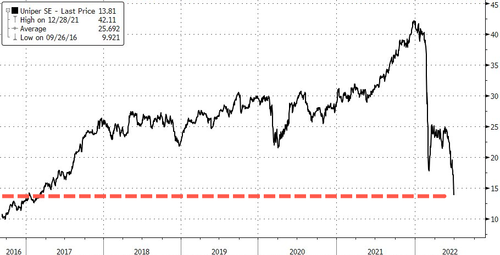
German Economy Minister Robert Habeck recently warned that declining NatGas from Russia could trigger a Lehman Brothers-like moment.
Since mid-June, Gazprom reduced NatGas deliveries through Nord Stream to Europe by 40% and blamed the decline on Canadian sanctions over the war in Ukraine, preventing German partner Siemens Energy from delivering critical overhauled equipment for a compressor station on the pipeline. The crunch is also impacting France, Italy, and Austria as NatGas prices have jumped more than 40% in the past two weeks.
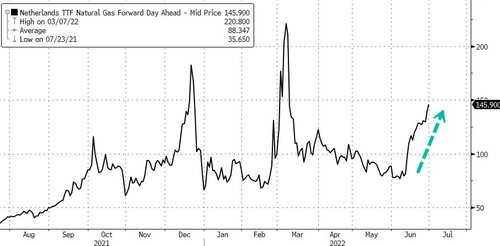
John Musk, an analyst at RBC Europe Ltd., said the focus would be on contagion and if “other utilities with gas supply exposure” will be affected by the supply crunch.
The situation may worsen when Nord Stream halts Nord Stream flows for ten days in July for planned maintenance. There are mounting concerns Russia might not resume the pipeline to full capacity after the outage.
Habeck said last week Germany should prepare for further cuts. Europe’s largest economy has declared the second “alarm stage” of its NatGas-emergency plan, allowing utility companies to pass on higher power prices to industry and households to curb demand.
“Europe should be ready in case Russian gas is completely cut off,” IEA head Fatih Birol told FT News last week.
end
ECB
This will lead to chaos as German bonds fall in price (yields rise) as the differential between USA bonds and German bonds widen as Europe has no safe haven
(zerohedge).
ECB Will Buy Italian, Greek Bonds Using Proceeds From German, French Bonds To Avoid Crash
THURSDAY, JUN 30, 2022 – 02:05 PM
Not that long ago we joked that the ECB’s cunning “market fragmentation” plan – which became critical after Italian bonds crashed when markets realized that QT is not, in fact, QE and without the ECB backstopping worthless European paper said paper would trade down to its “fair value” – would consist of fighting inflation on even days with higher rates and no QE, and then fighting bond market fragmentation and soaring Italian yields on odd days with NIRP and QE.
It turns out we were not that far off, because instead of splitting QE and QT into odd and even days, the ECB will pursue bond buying vs selling broken down by geography. Reuters reports that the European Central Bank will buy bonds from Italy, Spain, Portugal and Greece with some of the proceeds it receives from maturing German, French and Dutch debt in a bid to cap spreads between their borrowing costs.
The central bank has divided the euro zone’s 19 countries into three groups – donors, recipients and neutrals – based on the size and speed of a rise in their bond spreads in recent weeks, according to conversations with a half a dozen people at the ECB’s annual forum in Sintra, Portugal. The spreads are gauged against German bonds, which serve as a de-facto benchmark for the single currency area.
In short, the ECB will buy worthless bonds with money from maturing viable bonds (those of Germany, France and Netherlands).
Which, while clearly not QT, at least has a chance of working because as we explained, only explicit bond buying by the ECB will prevent a collapse in Italian bonds. Well, that’s precisely what the ECB is doing, even if it means it can’t claim with a straight face that it is pursuing Quantitative Tightening.
The ECB will kick off this “rebalancing” on Friday to prevent financial fragmentation among euro zone countries from getting in the way of its plan to raise interest rates – with an additional scheme due to be unveiled next month.
The lists of donor and recipients countries, which will be reviewed monthly, mirror the division between peripheral (insolvent) and core (solvent) countries that emerged at the time of euro zone’s first debt crisis a decade ago. Recipients include a handful of countries perceived by investors as riskier due to their high public debt or meagre growth, such as Italy, Greece, Spain and Portugal, the sources said.
Still, there is a glitch: while redemptions in July and August are substantial, the ECB knows that merely reinvesting of the proceeds will not be enough to calm investors. So the central bank has sped up work on a new tool that will allow it to make new purchases where they are needed if a country meets certain conditions. Needless to say, this is not QT. It is however, QE, and is not just a violation of Europe’s deficit funding limitations, but worse, is a targeted violation, one which will infuriate “donor” nations as soon as the next bond crisis sends core yields soaring while keeping Italian spreads artificially low.
The ECB’s new tool may be ascertained by the European Commission, based on its fiscal rules or economic recommendations, or by the ECB itself via a debt-sustainability assessment, as it did with Greece a few years ago, sources have told Reuters. The former option would keep the ECB above the fray but make it dependent on another institution. The latter would give central bankers a greater say but open them to accusations of getting involved in politics. The ECB may then drain cash from the banking system to offset its bond purchases, most likely via special auctions at which banks can secure more favourable interest rates if they park funds at the central bank. read more
Policymakers have yet to decide whether to announce the size of the scheme, as they hope its mere announcement will stabilize markets and they may not have to use it.
END
5. RUSSIAN AND MIDDLE EASTERN AFFAIRS/
Russia In “Goodwill” Withdrawal From Ukraine’s Snake Island To Free Up Grain Exports
THURSDAY, JUN 30, 2022 – 09:40 AM
Russia has taken a major step in trying to demonstrate to Western powers that it’s serious about freeing up grain passage off Ukraine’s coast and in the Black Sea, with on Thursday its military announcing the complete withdrawal of forces from Ukraine’s Snake Island.
The Russian Defense Ministry (MoD) said in a statement that the purpose is to free the passage of Ukraine’s grain exports in a “goodwill” measure. “On June 30, as a step of goodwill, the Armed Forces of the Russian Federation completed their tasks on the Snake Island and withdrew from the garrison stationed there,” the MoD said.

“Thus, it was demonstrated to the world community that the Russian Federation does not hinder the efforts of the UN to organize a humanitarian corridor for the export of agricultural products from the territory of Ukraine,” it stated further.
The statement then called on Ukraine’s government to clear its mines earlier placed on the sea coast and in ports which the Kremlin says is the major impediment blocking sea transit. The northwest Black Sea island has been under control of the Russian military since the start of the conflict, making the retreat of Russian forces a rare and significant battlefield de-escalation there.
However, Ukraine disputed Russia’s version of events, rejecting that it was a voluntary “goodwill” withdrawal initiated by the Russian side, instead claiming that it was Ukraine’s military that drove the Russians from the island.
The head of Ukraine’s army, Valeriy Zaluzhny, stressed his forces had liberated the island. “I thank the defenders of Odessa region who took maximum measures to liberate a strategically important part of our territory,” he said on Telegram. Kiev has said its forces mounted a major series of strikes.
And a representative of Ukrainian President Volodymyr Zelensky’s office, Andriy Yermak, confirmed that Russian forces have indeed exited the island, writing on Twitter: “KABOOM! No Russian troops on the Snake Island anymore. Our Armed Forces did a great job.”

Bloomberg noted that upon the announcement Chicago wheat futures fell as much as 1.3%, and then pared the loss to trade higher on the day.
Russia has consistently claimed it’s not responsible for establishing ‘safe passage’ corridors on Ukraine’s coast due to the presence of thousands of Ukrainian sea mines. The crisis has stoked global prices for vital food products from grains to cooking oils, and fertilizer and fuel. As hundreds of millions of people come under threat of near future famine conditions due to Ukraine not exporting its grains, particularly in the Middle East and Africa, the United Nations has scrambled to broker a deal with the help of Turkey, which controls access to Black Sea waters through its straits.
Meanwhile, hours after the Russian withdrawal announcement, there are emerging conflicting reports that there could still be clashes on Snake Island.
end
GLOBAL ISSUES AND COVID COMMENTARIES
Not a very smart idea; Biden to deploy 1.6 million doses of Monkeypox vaccines. Monkeypox, which is rare, is flourishing because of lower immunity
(Ly.EpochTimes)
Biden Admin To Deploy 1.6 Million Doses Of Monkeypox Vaccines In “Enhanced” Strategy
WEDNESDAY, JUN 29, 2022 – 07:00 PM
Authored by Mimi Nguyen Ly via The Epoch Times,
The Biden administration announced it will expand access to monkeypox vaccines in a new “enhanced” national strategy to combat the outbreak, which includes the deployment of 296,000 vaccine doses over the coming weeks, and potentially 1.6 million vaccine doses over the coming months.

Xavier Becerra, secretary of Health and Human Services, speaks at the HHS headquarters in Washington, on June 28, 2022. (Nicholas Kamm/AFP via Getty Images)
The plan seeks to “expand vaccination for individuals at risk and make testing more convenient for healthcare providers and patients across the country,” the White House said in a statement on June 28.
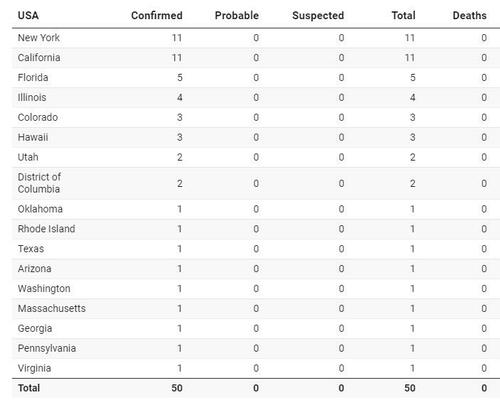
Under the strategy, the Department of Health and Human Services (HHS) will immediately allocate 56,000 doses of the two-dose Jynneos vaccine, which are currently in the national stockpile, to states and territories across the United States.
“States will be offered an equitable allotment based on cases and proportion of the population at risk for severe disease from monkeypox, and the federal government will partner with state, local, and territorial governments in deploying the vaccines,” the White House announced.
The move is a major step up from the 9,000 doses of the Jynneos vaccine that HHS has so far deployed from the national stockpile to the 32 states and jurisdictions that requested the vaccine.
HHS will also allocate another 240,000 doses in the coming weeks “to a broader population of individuals at risk,” as more doses are received from the manufacturer. This would bring the total number of vaccines to be distributed over the coming weeks to 296,000.
The White House said HHS will hold another 60,000 vaccines in reserve.
HHS Secretary Xavier Becerra said in a statement that the new strategy allows the government to “maximize the supply of currently available vaccines and reach those who are most vulnerable to the current outbreak.”
…
Up until now, monkeypox vaccines have been provided only to people who have had confirmed exposure to a monkeypox case. The Advisory Committee on Immunization Practices (ACIP) from the CDC now recommends that vaccines will be made available to people with “confirmed monkeypox exposures and presumed exposures.”
“This includes those who had close physical contact with someone diagnosed with monkeypox, those who know their sexual partner was diagnosed with monkeypox, and men who have sex with men who have recently had multiple sex partners in a venue where there was known to be monkeypox or in an area where monkeypox is spreading,” HHS said in a statement.
…
The White House noted that the ACAM2000 vaccine “cannot be provided to individuals who are immunocompromised or who have heart disease.”
END
Crimes against humanity continues
(EpochTimes)
Biden Admin Inks $3.2 Billion Deal With Pfizer For 105 Million COVID-19 Vaccines
THURSDAY, JUN 30, 2022 – 11:05 AM
Authored by Tom Ozimek via The Epoch Times (emphasis ours),
The Biden administration said it has signed a new agreement with Pfizer and partner BioNTech for 105 million doses of their COVID-19 vaccine for a fall vaccination campaign, with the deal worth $3.2 billion.
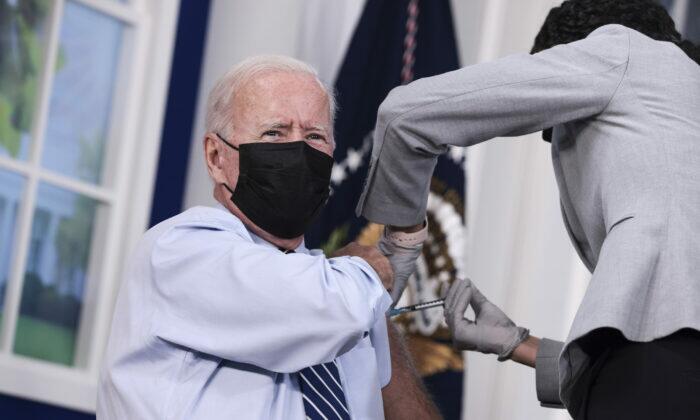
The contract includes doses for both adults and children, as well as supplies of a retooled Omicron-adapted vaccine that is currently pending approval by federal health authorities, the Department of Health and Human Services (HHS) said in a statement.
“We look forward to taking delivery of these new variant-specific vaccines and working with state and local health departments, pharmacies, health care providers, federally qualified health centers, and other partners to make them available in communities around the country this fall,” said HHS Assistant Secretary for Preparedness and Response Dawn O’Connell.
Pharmaceutical firms have been developing vaccines for the Omicron variant that the Centers for Disease Control and Prevention (CDC) says is the dominant strain in the United States.
“This agreement will provide additional doses for U.S. residents and help cope with the next COVID-19 wave. Pending regulatory authorization, it will also include an Omicron-adapted vaccine, which we believe is important to address the rapidly spreading Omicron variant,” Sean Marett, Chief Business and Chief Commercial Officer of BioNTech, said in a statement.
The Food and Drug Administration (FDA) is expected to issue a decision in the coming days following a Tuesday meeting in which external advisers recommended modifying the vaccines to better target Omicron.
Under the new Pfizer contract, the U.S. government has the option to buy an additional 195 million doses, bringing the total up to 300 million, HHS said.
“Over the past 18 months, we have procured and delivered more than 750 million doses of COVID-19 vaccine nationwide, contributing to two-thirds of American adults being fully vaccinated,” O’Connell said.
Read more here…
GLOBAL INFLATION/SUPPLY ISSUES
CANADA
Inflation is affecting more than 52% of Canadians in buying groceries and other costs
(EpochTimes)
Canadians Struggle to Buy Groceries Under Highest Inflation in 39 Years: Angus Reid Study
.png) 13 hours ago 2697
13 hours ago 2697
More than half of Canadians are struggling to pay for household grocery bills as the country faces a 7.7 percent inflation rate, the highest in 39 years, a new Angus Reid Institute (ARI) study says.
Out of more than 5,000 adult Canadians surveyed, 45 percent said they are worse off now than they were at this time a year ago—the highest rate recorded in the past 12 years, the report said. But more than one-third (34 percent) believe things will get worse in a year from now—also the highest number in more than a decade.
Many factors contributed to this sentiment as Canadians feel the inflationary impacts when paying for groceries, housing, and gas. Cost of living is considered the top provincial issue, with 63 percent of respondents saying so, followed by health care (52 percent) and housing affordability (31 percent).
While some types of goods are more resistant to inflation, food, which saw a 10 percent price surge in May, outruns all other categories, the ARI said in the June 24 report.
More than half of Canadians (52 percent) found it difficult on varying degrees to feed their household, while 46 percent say they are having no trouble on that front. The ARI noted that the latest data represents an inversion from data taken in October last year, when 45 percent said it was difficult to feed their family, and 52 percent said it was easy.
Households with lower income are more likely to have trouble feeding their families, with seven-in-ten (69 percent) of those in the lowest income bracket saying it is difficult to put food on the table. Overall, at least one-third of Canadians in all income levels say they are struggling to put food on the table.
The report also looked at the impacts on Canadian drivers. Notably, one-in-three (32 percent) of respondents say they’re paying more for gas in the last month, while nearly half (46 percent) say they’re spending less after having changed habits.
More than half (56 percent) say they are spending more time at home to cut down on the cost of driving, while one-in-three (36 percent) have gone further to get cheaper gas. One-in-five of respondents say they’ve opted for public transit, walking, or biking instead of driving.
Loss of Faith in Institutions
While some provincial governments have taken steps to alleviate the inflationary pressure, at least two-thirds of Canadians in every province say their respective government has done poorly in dealing with the crisis, the ARI report shows.
The portion of people believing their provincial government did badly in handling the rise of cost of living and inflation was the highest in Newfoundland and Labrador, with 90 percent of people saying so. It is closely followed by New Brunswick, at 88 percent; Manitoba, at 87 percent; and British Columbia, at 81 percent. The number was lowest in Saskatchewan, where 68 percent of people said so.
With some of the most powerful levers against inflation in hand, the Bank of Canada has already raised its key interest rate three times this year, and will likely do so again in July.
Under the current economic climate, the ARI found Canadians are split on whether to trust the central bank to fulfil one of its four key functions of “keep inflation low, stable and predictable,” as stated in its mandate. Right now, slightly more people still trust (46 percent) the BoC, compared to those who don’t (41 percent).
However, a recent Scotiabank report has highlighted the federal government’s “joint responsibility” with the BoC in fighting inflation.
“The Bank of Canada should not be fighting inflation on its own, despite its explicit inflation control mandate,” the author of the Scotiabank report said. “Better coordination of monetary and fiscal policies in Canada could lead to a return of inflation to target with less impact on the private sector.”
The ARI report was the result of two online surveys. One survey was conducted from June 7 to June 13, with a sample of 5,032 adult Canadians who are members of the Angus Reid Forum. The survey carries a margin of error of +/- 2 percentage points, 19 times out of 20. A second online survey was conducted by the Angus Reid Group from May 19 to May 24, among 1,530 Canadian adults, carrying a margin of error of +/- 2.5 percentage points, 19 times out of 20.

Follow
Andrew Chen is an Epoch Times reporter based in Toronto.
GLOBE//SUPPLY PROBLEMS
The Jaws Of Trade Squeezing The Supply Chain

BY TYLER DURDEN
THURSDAY, JUN 30, 2022 – 07:45 PM
By FreightWaves
The jaws of the supply chain vise are squeezing trade so tight that the headache it is creating will be a whopper for logistics managers this peak season. Port congestion is growing again as a result of labor and equipment inefficiencies. Trade requires people, and what we see in the CNBC Supply Chain Heat Maps is the people component in trade is behind this latest squeeze.
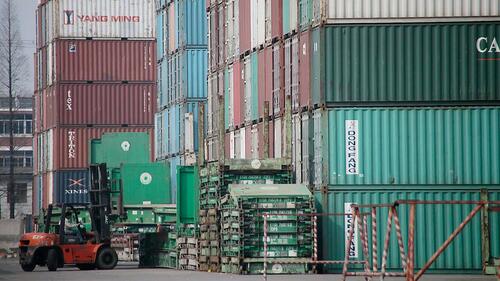
Shanghai is still in the process of reopening, and while there are more green lights on the screen, the supplying of drivers and people to move and make the product is slower than normal. This is affecting the delivery of critical medical devices.
“The manufacturing plant in Shanghai was down for 75 days because of the ‘zero-COVID’ restrictions,” explained Gerry LoDuca, president of Dukal, which sells infection-control products and has manufacturing plants in Shanghai, Wuhan and Xingtai, China. “They are now operating 24/7 and they will be caught up by the end of July. Then the products will need to be packed up, shipped to Shanghai port and moved by vessel.”
Unfortunately, this delay is one of many being experienced by global importers.

Another vise squeezing trade is Europe.
Labor strife between the German trade union ver.di and the Central Association of German Seaport Companies (ZDS) is white-hot. Almost all ports in the German Northern Sea were impacted by a second warning strike last week that lasted 24 hours.
According to sources, a final offer of a wage increase of up to 11% in 18 months was offered. Some hope for a conciliation procedure in which politicians or a neutral person become involved in mediation.
The delays created by the latest warning strike have added to the congestion already plaguing the German ports. Container ships are currently delayed by several weeks at some German ports. Logistics executives are concerned the congestion is going to get worse, as will the availability of empty containers to be filled with trade.

“The overall situation in North European ports is deteriorating,” warned Andreas Braun, EMEA ocean product director for Crane Worldwide Logistics. “Port congestion is on the increase as well as yard occupancy. The first shipping lines like MSC are reacting to the current scenario with emergency storage surcharges for both imports and exports. These surcharges will be applied after exceeding the standard storage free time and are in addition to the standard tariffs. Although this surcharge is currently limited to Dutch ports only, and to date only MSC has circulated communication relating to the additional fees, we can assume that other ports and shipping lines will follow.”
Ocean carrier Hapag-Lloyd issued a notice on the increased demand on trucks as a result of this labor slowdown. And Maersk reported it would “absorb” the stoppage at its German terminals, telling customers that “in the interest of minimizing any further disruption to your supply chain, we will be keeping a close eye on developments up to and during the next round of meetings between trade union ver.di and ZDS, acknowledging that further strike action is possible.”
The U.S. logistics system continues to have its own host of issues with the persistent rail problems, chassis shortages and warehouses at capacity.
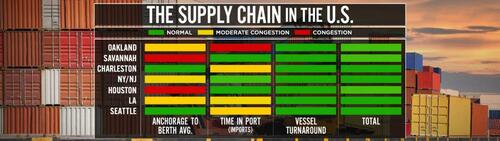
“Consumer trends are changing,” explained Spencer Shute, senior consultant at Proxima. “Buying patterns have shifted from home, electronics, casual apparel to more services. We are seeing buying apparel for travel and cosmetics coming back to pre-pandemic levels. Luggage, sunscreen, bug spray, these are items in higher demand because consumers need them in their experience pursuits. Larger appliances are not being purchased anymore. It’s an interesting dynamic to see how quickly the consumer has flipped considering what is going on in the economy.”
Despite the historic volume of containers, a pullback is expected as future orders for Chinese manufacturing have dropped anywhere from 20% to 30%, according to shippers surveyed. Lumber orders have been cut along with orders for furniture, appliances and DIY products.
“But for other sectors like garments, sporting goods and e-commerce, they are still seeing strong demands,” explained Akhil Nair, senior vice president of products for Asia-Pacific at Seko Logistics.
Steve Lamar, CEO of the American Apparel and Footwear Association, explained the continued strength in orders is a result of consumers looking to outfit themselves for experiences like back to school, back to in-office work and travel. But despite this demand, the impact of inflation is a top worry.
“We remain deeply concerned that persistently high prices — in our sector and throughout the economy — will begin to dampen consumer spending and harm American families,” Lamar said. “That is why, with consumers still being a driver for economic growth in our economy, we continue to push for the [Biden] administration to avail itself of all its own inflation-cutting tools, including relief from the high and regressive tariffs that are currently being charged on products in our industry.”
Alan Baer, CEO of OL USA, tells American Shipper the decrease in container volume is being seen.
“We are seeing drops by some customers from 30-50 FEU per week down to 10 FEU per week,” Baer said.
The squeeze is on. Time to pop that aspirin.
END
VACCINE INJURY/
Vaccine Impact
| Birth Rates Drop Worldwide Following Mass COVID-19 Vaccination in 2021 June 29, 2022 4:38 pm  More evidence that the COVID-19 mass vaccination programs were specifically designed to reduce the world’s population to fit the “Green Agenda” that the earth can no longer support current population levels continues to be reported, as now statistics show declining birthrates worldwide following the COVID-19 vaccine roll outs in 2021. As we have recently reported, the COVID-19 vaccines cause a higher percentage of miscarriages than even the abortion pills. It is truly amazing to see how evil and criminal our health officials in government, such as CDC Director Rochelle Walensky, have become when they go on TV and blatantly lie to the American people about the safety and efficacy of these killer COVID vaccines. The pharma-funded corporate media is also complicit with mass murder and criminal intent to harm. This is a worldwide catastrophe unfolding right before our eyes, as labor shortages are already crippling our economy due to how many people have died and been crippled by the vaccines, and now we see that there is little hope of replenishing the work force anytime soon, as birth rates rapidly decline and young, child-bearing adults become infertile. We truly live in evil times! Read More… Pro-Vaccine Masses Who Survived COVID Injections Targeted for Monkeypox Vaccines as Depopulation Plans Advance June 29, 2022 6:38 pm  The vaccine industry is committing suicide. It was announced this week that the CDC has ordered 1.6 million doses of Bavarian Nordic’s smallpox and monkeypox vaccines to be injected into people during the second half of 2022, starting with 56,000 doses immediately, another 240,000 doses in the coming weeks, then another 750,000 doses over the rest of the summer with another 500,000 doses in the fall. With the carnage that has just occurred for the past 18 months where 7,478,300 people were killed and 583,023,500 people were injured by experimental COVID shots in the U.S. and Europe, who in the world would fall for the lies of Big Pharma and their crony politicians again, and sign up to get these shots? Certainly not the anti-vaxxers, and certainly not those who were foolish enough to get the COVID shots, were injured by them, and then woke up to the fact that they were lied to and hence suffered tremendously. No, these shots are obviously targeting those who survived the COVID shots, believed the shots somehow conferred benefit on them since they are still alive and breathing, and trust the medical tyrants to cure their fear of the fake monkeypox pandemic which has not even really started yet. Most of them are probably suffering some kind of skin infection that was probably produced as a side effect from the COVID shots, such as shingles, and they will be led to believe they have some dreaded new form of monkeypox that needs another vaccine. This is vaccine marketing suicide, as they are killing off and crippling the vaccine cult members, and destroying their repeat business. Obviously reducing the world’s population is a worthy goal in their minds, so much so they are sacrificing the future of the vaccine business model by destroying their future customers. Read More… |
MICHAEL EVERY
Rabobank: It’s Lenin’s Ideas That Sadly Explain Where We Are All Drifting Today
THURSDAY, JUN 30, 2022 – 10:05 AM
By Michael Every of Rabobank
I-Bear-Ian
Apart from a downwards revision to Q1 GDP that made an already bad number look really ugly, most of yesterday’s main action took place in Iberia: and everything there was even worse. As a result, markets are truly I-Bear-ian.
After the Fed’s Mester (in the US) stated policy tightening was only getting started, is likely to mean 75bps in July, getting to 3-3.5% Fed Funds by year end, and to over 4% by early 2023, we also got the usual collection of central-bank warblers-in-chief in Sintra, Portugal.
Powell stated the global economy is in a “new world”, which is something this Daily has been trying to tell people like him for a long time. He also admitted, “We understand how little we understand inflation,” which is something covered here recently. He underlined fears that inflation will stay above 2% for a long time as we transition into a higher inflation regime, and that his job “is literally to prevent that from happening. And we will prevent that from happening.”
That appears to be a response to Mohamed El-Erian warning of the dangers of the Fed doing something the market is not considering: cutting –which the market is pricing in, and ever sooner– and then having to *hike* rates again. Indeed, either the Fed don’t understand how little they understand about inflation, and a deflationary crash looms – Powell was closer to admitting a recession lies ahead; or the market doesn’t understand how little they understand about inflation, and after deflation, a further wave of inflation returns, as during previous high inflation regimes.
Once retailers have slashed inventory at fire-sale prices they have to restock. Those goods are going to cost much more due to the commodity price increase we are already seeing, despite the drop from the peak in most of them. Cut rates now and watch commodities go straight back up again. For now the focus is on the euphemism of ‘demand destruction’, meaning missing out, going hungry, or risking death by starvation: the mildest version is US citizens driving less, or, alongside warnings of July 4 airport chaos to match that in Europe, flying less. Yet in time the focus might shift back to the structural inflation built into this “new world”.
For example, few in Sintra are following the geopolitical angle properly. Russia just said it is considering buying the FX of “friendly countries” to alleviate upwards pressure on RUB, which due to a collapse in imports and high commodity prices is very strong, albeit in virtually non-existent USD- and EUR- cross markets. On crosses nobody looks at now but soon may, CNY/RUB has gone from around 12 to 24 to 8 this year, and RUB/INR from 1.0 to 0.50 to 1.5. That doesn’t mean Russia is ‘strong’, but it does mean the West is weak; and that a friend/foe FX dynamic is playing out. Indeed, Reuters reports an Indian firm is buying Russian coal and paying in CNY to avoid the US dollar, something unseen in 25 years. It may be just one case: but is it ‘monkeypox’ or ‘Covid’?
In short, the Fed has more work to do, and pain to cause, to keep the dollar top dog vs. rising commodities and rivals. Cutting rates might boost global dollar liquidity, but not geopolitics. As such, the US is geostrategically better off hiking until things break in the Eurodollar space, and then offering swap lines only to friends.
Which takes us back to Sintra again. There, the ECB’s Lagarde didn’t understand how little she understands about inflation or what is about to happen in the Eurodollar space. As Spanish CPI hit 10% and Germany’s only dipped to 7.6% due to subsidies that last three months, Lagarde admitted a low inflation environment is unlikely to return, and the post-Covid and Ukraine world “is going to change the framework and the scenario in which we operate.” That means changing the ECB’s interest rates too: which is going to hurt a lot. Especially when Lagarde added states shouldn’t hand out broad fiscal stimulus to cushion inflationary blows, and another ECB voice implied the more fiscal stimulus seen, the more hawkish monetary policy will have to be.
We also got hints about the ECB’s new anti-fragmentation tool (AFT) about to go live. Yet our ECB team conclude AFT “can only disappoint. The announcement in July could be pretty empty if the ECB wants to maintain as much ambiguity as we expect.” Moreover, it implies a flatter curve because “If the ECB manages to strike the right balance, this probably enables more rate hikes, shifting the short-end of the curve higher. If the AFT disappoints, renewed safe-haven demand should depress long-dated yields.” (See here for more.)
You think that was all I-Bear-ian? It gets worse. In Madrid, the NATO summit saw the US announce a massive permanent increase in its military deployment to Europe, from Spain and the UK to Romania and the Baltics. Europe, for all of the talk of re-arming, is still mostly doing the catering – and Ukraine’s President Zelenskiy also stated he needs $5bn a month to keep the lights on and the war going. Much, MUCH more needs to be spent, by Europe, on arms – NOW. The 2% of GDP NATO target was designed for a fully-functioning military during peacetime, not a paper tiger during wartime. Yet isn’t that fiscal stimulus, and so higher rates?
With economies slumping, money tight, and people deeply unhappy, it’s the political cliché the neoliberal/Bloombergian/QE generation of market participants have never even heard of: “guns or butter”. How do you tell your people you need guns when they can’t afford butter? Perhaps by telling them they will never be able to afford butter again if they don’t have guns. But let’s see Europe try to do that: and we will all see what happens to them in time if they can’t. One thing is for sure: more things are going to have to change in this “new world” than rates.
And it gets far worse than that. NATO’s updated Strategy Concept says:
“The Euro-Atlantic area is not at peace. The Russian Federation has violated the norms and principles that contributed to a stable and predictable European security order. We cannot discount the possibility of an attack against Allies’ sovereignty and territorial integrity. Strategic competition, pervasive instability and recurrent shocks define our broader security environment. The threats we face are global and interconnected.”
Is that message clear enough for markets?
Russia “is the most significant and direct threat to Allies’ security and to peace and stability in the Euro-Atlantic area. It seeks to establish spheres of influence and direct control through coercion, subversion, aggression and annexation. It uses conventional, cyber and hybrid means against us and our partners. Its coercive military posture, rhetoric and proven willingness to use force to pursue its political goals undermine the rules-based international order.”
‘Don’t do business with Russia’ is the market message.
China’s “stated ambitions and coercive policies challenge our interests, security, and values. The PRC employs a broad range of political, economic, and military tools to increase its global footprint and project power, while remaining opaque about its strategy, intentions, and military build-up. The PRC’s malicious hybrid and cyber operations and its confrontational rhetoric and disinformation target Allies and harm Alliance security. The PRC seeks to control key technological and industrial sectors, critical infrastructure, and strategic materials and supply chains. It uses its economic leverage to create strategic dependencies and enhance its influence. It strives to subvert the rules-based international order, including in the space, cyber and maritime domains. The deepening strategic partnership between the PRC and the Russian Federation and their mutually reinforcing attempts to undercut the rules-based international order run counter to our values and interests.”
Yet ‘keep doing business with China’ is still the market message(?) How much louder does NATO’s geopolitical signal get before markets suddenly wake up in shock, as with Russia? We shall see.
On a related note, as Xi Jinping prepares to visit Hong Kong, which gets the top headline on Bloomberg, the Financial Times just underlined that the must-have university degree in China right now is Marxism. Those who have studied Marx are being snapped up left, left, and not center to help firms navigate their way through the increasingly ideological local landscape of historical materialism, dialectics, labor surplus value, the reserve army of labor, the circulation of commodities, M > C > C(MP) > C+ > M+, constant vs. variable capital, and fictitious vs. productive capital. (As you can see, I’m covered for an alternative career path: are you?)
This ideological trend was covered last year in ‘Pro-Fund or Profound Revolution?’, which underlined that common prosperity is not “regulatory change”, as almost every other analyst bravely opted to call it. Regardless of the bottom-picking game in Chinese assets, which can deliver rich pickings to some, claims of things being “uninvestable” might ultimately mean more against the political and geopolitical backdrop described above. Or the US FCC calling to ban TikTok “because it harvests swathes of sensitive data.” People have known that for ages but chose not to act on it “because markets”: now welcome to a “new world”.
Consider doing extra political-economy reading round Marx. Not as a geopolitical Cold War hedge, because that is being done by TikTok users, hedge-fund billionaires, ‘I wish both sides well’ types, ‘we don’t do politics’ technocrats, and ‘I’d like to teach the world to sing in perfect harmony’ choir members. Rather because if we keep mismanaging the Western economy, there are going to be lots more Marxists here too. Or worse, as Martin Wolf was saying.
The best Marxist analysis such as Kalecki also got big calls like negative rates right when the smartest quant guys got it totally wrong. However, it’s Lenin’s ideas on what happens during the ‘highest stages of capitalism’ that better match where we are all sadly drifting today. He was also the one who said, “The way to crush the bourgeoisie is to grind them between the millstones of taxation and inflation.”
And, today, via lower asset prices, driven by a necessary drying up of fictitious capital. Crypto appears to be heading for the crypt, despite Bloomberg TV coverage like in this link: did anyone really understand any part of it? And in New Zealand, the RBNZ just said its housing market fundamentals may be changing, and that house prices will likely move back towards more sustainable levels. In May they had forecasted a 15% drop in house prices from their peak. Imagine if that is seen everywhere globally. Imagine if that is optimistic given higher rates, higher inflation, lower real wages, and lower employment.
So, “Asset speculators of the world, unite!” – in the hope we can ignore geopolitics and cut rates again soon with no side effects. They will take heart from Japanese industrial production -7.2% m-o-m this morning vs. -0.3% consensus. Not so much from China’s PMIs, where manufacturing was up to 50.2 vs. 50.5 consensus, but services leaped from 47.8 to 54.7, also vs. 50.5 consensus. Either all those pictures of empty Chinese streets are fake news, or service centers dealing with emigration inquiries are working triple shifts (as the term ‘runxue’, or running away, massively trends).
I-Bear-ian indeed, as we scramble for month- and quarter-end re-positioning.
7. OIL ISSUES//NATURAL GAS//ELECTRICITY ISSUES/USA//GLOBE
As we indicated to you on Wednesday, the uSA emergency oil reserves are now down to only 27 days worth of supply
(zerohedge)
US Emergency Oil Reserves Tumble To Record Low 27 Days Worth Of Supply
WEDNESDAY, JUN 29, 2022 – 05:20 PM
As we detailed earlier in the week, the latest weekly release has pushed the SPR below the 500 million barrels mark for the first time since 1986…
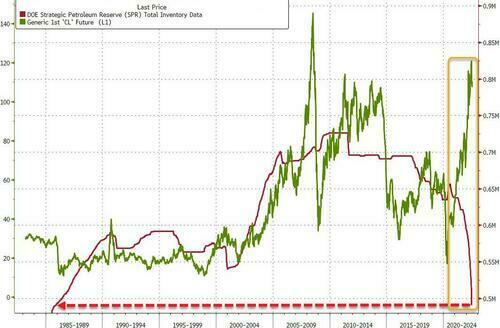
And as the chart above shows, the plummeting SPR is not having the impact on prices that President Biden hoped (which explains why he is blaming everyone and everything else for the rise in gas prices – as it becomes clear it’s a refining capacity issue as much as anything else).
While that is ominous by itself, we note that in the context of US demand, it is even more of a concern as based on the latest Department of Energy estimate of Implied Crude Demand, there is just 27 days of supply left in the emergency oil reserve… a record low…
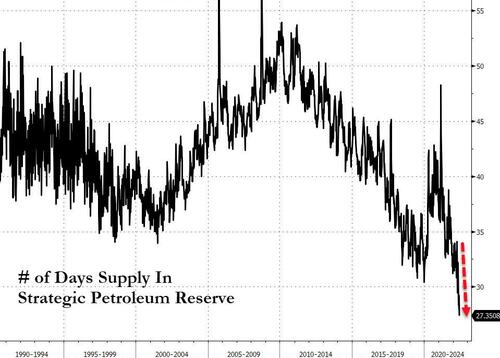
“Congress has been irresponsibly selling the SPR down,” said Bob McNally, who in the early 2000s oversaw the Energy Department’s efforts to replenish the SPR under former President George W. Bush, adding that “draining the reserve leaves the country and the world more vulnerable to geopolitical shocks.”
Finally, we note that in response to growing concerns about the depleted reserve, the Department of Energy revealed plans to replenish emergency stocks.
This fall, it will launch a buyback process to repurchase 60 million barrels of oil, or one-third of the six-month 180-million-barrel emergency release.

As Andrew Moran writes at The Epoch Times, although the White House is exploring multiple avenues, such as urging OPEC to open the taps and pushing gasoline stations to diminish the pain at the pump, the best solution is greater North American output, says Tortoise Senior Portfolio Manager Rob Thummel.
“The best solution remains increasing oil and natural gas production from reliable supply sources like U.S. and Canada that will assist in balancing the global energy markets and reduce the geopolitical risk premium embedded in global oil and natural gas prices resulting in lower prices at the pump,” Thummel stated during a recent TortoiseEcofin QuickTake podcast.
Biden announced last week that he is encouraging Congress to lift the 18-cent federal gas tax for three months…
end
Oil Rebounds As OPEC+ Confirms Expected Supply Hike
THURSDAY, JUN 30, 2022 – 09:06 AM
The OPEC+ coalition ratified an oil-production increase that completes the return of supplies halted during the pandemic, while deferring discussions on its next move for another day.
The 23-nation group led by Saudi Arabia rubber-stamped plans to add 648,000 barrels a day in August, restoring the final tranche of the 9.7 million barrels a day that was shuttered just over two years ago
But with most members besides the Saudis and their neighbors unable to raise output, the decision is largely symbolic.
As a reminder, OPEC+ is falling further and further behind its production goals…
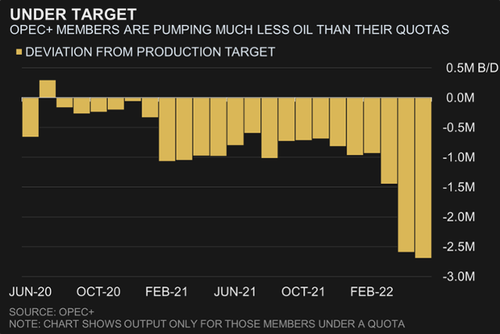
Is Macron right and OPEC+ producers are at or near their capacity limits?
“Spare capacity is very low, demand is still recovering,” Shell Plc Chief Executive Officer Ben van Beurden said in Singapore on Wednesday.
“There is a fair chance we will be facing a turbulent period.”
WTI rallied back
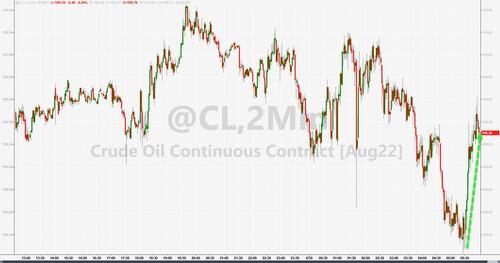
The 30th OPEC and non-OPEC Ministerial Meeting was held via video-conference on 30 June 2022. In view of current oil market fundamentals and the consensus on its outlook, the OPEC and participating non-OPEC oil producing countries agreed to:
- Reaffirm the decision of the 10th OPEC and non-OPEC Ministerial Meeting on 12th April 2020 and further endorsed in subsequent meetings including the 19th OPEC and non-OPEC Ministerial Meeting on the 18th July 2021.
- Reconfirm the production adjustment plan and the monthly production adjustment mechanism approved at the 19th and 29th OPEC and non-OPEC Ministerial Meetings and the decision to adjust upward the monthly overall production for the month of August 2022 by 0.648 mb/d.
- Reiterate the critical importance of adhering to full conformity and to the compensation mechanism. Compensation plans should be submitted in accordance with the statement of the 15th OPEC and non-OPEC Ministerial Meeting.
- Hold the 31st OPEC and non-OPEC Ministerial Meeting on 3 August 2022.
So given all that, what will the Saudis and Emiratis do next month when Biden visits to beg for more production?
END
8 EMERGING MARKET& AUSTRALIA ISSUES
Australia//// NEW ZEALAND/ SOUTH AFRICA/BRAZIL/ARGENTINA/INDIA/PAKISTAN
INDIA/Russia
India’s largest cement company circumventing the dollar in a Russian coal for yuan deal.
(zerohedge)
India’s Largest Cement Maker “Circumventing The Dollar” In Russian-Coal-For-Yuan Deal
WEDNESDAY, JUN 29, 2022 – 07:20 PM
The Russian economy is currently experiencing unprecedented pressure from a group of countries led by the United States, with more than 10,000 sanctions imposed on the country, its citizens, and companies.
Despite all the amplification of sanctions threats by the media, and vilification of anything Russian by western leaders, many of the world’s largest nations (by population and economy), are continuing to adjust to current conditions, ignoring the virtue-signaling, and sending Russia’s currency and current account balance soaring.
But, in yet another example of the far-less-unified-than-Biden-claims new world order, it appears Indian industrialists have no problem dealing with Putin for their key materials.

The latest example comes from India as Reuters reports that UltraTech Cement – India’s biggest cement producer – is importing a cargo of Russian coal and paying for it using Chinese Yuan.
UltraTech is bringing in 157,000 tonnes of coal from Russian producer SUEK that loaded on the bulk carrier MV Mangas from the Russian Far East port of Vanino, the document showed. It cites an invoice dated June 5 that values the cargo at 172,652,900 yuan ($25.81 million).
The increasing use of the yuan to settle payments could help insulate Moscow from the effects of western sanctions imposed on Russia over its invasion of Ukraine and bolster Beijing’s push to further internationalise the currency and chip away at the dominance of the U.S. dollar in global trade.
“This move is significant. I have never heard any Indian entity paying in yuan for international trade in the last 25 years of my career. This is basically circumventing the USD (U.S. dollar),“ a Singapore-based currency trader said.
India has explored setting up a rupee payment mechanism for trade with Russia, but that has not materialized. Chinese businesses have used the yuan in trade settlements with Russia for years.
“If the rupee-yuan-rouble route turns out to be favourable, the businesses have every reason and incentive to switch over. This is likely to happen more,” said Subash Chandra Garg, a former economic affairs secretary at India’s finance ministry.
An Indian government official familiar with the matter said the government was aware of payments in yuan.
“The use of the yuan to settle payments for imports from countries other than China was rare until now, and could increase due to sanctions on Russia,” the official said.
Finally, we are reminded of what First Deputy Managing Director Gita Gopinath of the International Monetary Fund (IMF) told The Financial Times earlier in the year: that the recent financial sanctions imposed on Russia for its invasion of Ukraine are threatening to weaken the dominance of the U.S. Dollar as the world currency,
Russia had been planning for years to reduce its dependence on the petrodollar since the United States imposed sanctions in retaliation for its annexation of Crimea in 2014.
The current crisis in Ukraine has only accelerated those plans… and it now seems the entire BRICS group may be ready to cross the chasm as Bretton Woods III begins to form.
The implications, needless to say, are staggering (and, worse, while Zoltan Poszar does not explicitly state it, he clearly believes that world war is coming):
Empires fall and rise. Currencies fall and rise. Wars have winners and losers.
When Wellington beat Napoleon, the trade was to buy gilts. I am no expert on geopolitics, but I am an interest rate strategist and I think the level of inflation and interest rates and the size of the Fed’s balance sheet will depend on the steady state that emerges after this conflict is over. Three is a magic number:
The four prices of money are managed via Basel III and central banks as DoLR.
The four pillars of commodity trading are shaped by war, hopefully not WWIII.
The new world order will bring a new monetary system – Bretton Woods III.
A BRICS-based payment system would be the ultimate challenge to the dollar-hegemon-based system in place today.
At a BRICS summit earlier this month, Russian President Vladimir Putin said that the bloc, consisting of Brazil, Russia, India, China, and South Africa, is currently working on setting up a new global reserve currency that would be based on the currency basket of the five nations. Earlier, the bloc said it was working on establishing a joint payment network to abate the reliance on the Western financial system.
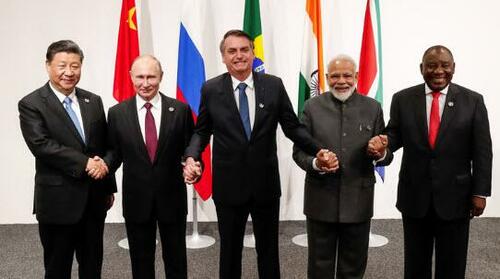
Even if this is nothing but talk, it underscores the fact that the dollar is on shaky ground. US policymakers would be wise to consider future dollar weaponization carefully.
END
Your early currency/gold and silver pricing/Asian and European bourse movements/ and interest rate settings THURSDAY morning 7:30 AM
Euro/USA 1.0396 DOWN 0.0049 /EUROPE BOURSES //ALL RED
USA/ YEN 136.33 DOWN .300 /NOW TARGETS INTEREST RATE AT .11% AS IT WILL BUY UNLIMITED BONDS TO GETS TO THAT LEVEL…
GBP/USA 1.2105 DOWN 0.0023
Last night Shanghai COMPOSITE CLOSED UP 37.10 POINTS UP 1.10%
Hang Sang CLOSED DOWN 137.10 PTS OR 0.62%
AUSTRALIA CLOSED DOWN 1.97% // EUROPEAN BOURSES ALL RED
Trading from Europe and ASIA
I) EUROPEAN BOURSES ALL RED
2/ CHINESE BOURSES / :Hang SANG CLOSED DOWN 137.10 PTS OR 0.62%
/SHANGHAI CLOSED UP 37.10 PTS UP 1.10%
Australia BOURSE CLOSED DOWN 1.97%
(Nikkei (Japan) CLOSED DOWN 411.56 OR 0.54%
INDIA’S SENSEX IN THE RED
Gold very early morning trading: 1810.45
silver:$20.43
USA dollar index early THURSDAY morning: 105.27 UP 42 CENT(S) from WEDNESDAY’s close.
THURSDAY MORNING NUMBERS ENDS
xxxxxxxxxxxxxxxxxxxxxxxxxxxxxxxxxxxxxxxxxxxxxxxxxxxxxxxxxxxxxxxxxxxxxxxxxxxxxxxxxxxxxxxxxxxxxxxxxxxxxxxxxxxxxx
And now your closing THURSDAY NUMBERS 1: 00 PM
Portuguese 10 year bond yield: 2.44% DOWN 12 in basis point(s) yield
JAPANESE BOND YIELD: +0.222% DOWN 1 AND 2/10 BASIS POINTS /JAPAN losing control of its yield curve/
SPANISH 10 YR BOND YIELD: 2.45%// DOWN 13 in basis points yield
ITALIAN 10 YR BOND YIELD 3.40 DOWN 10 points in basis points yield ./
GERMAN 10 YR BOND YIELD: FALLS TO +1.365%
END
IMPORTANT CURRENCY CLOSES FOR THURSDAY
Closing currency crosses for day /USA DOLLAR INDEX/USA 10 YR BOND YIELD/1:00 PM
Euro/USA 1.0461 DOWN 0.0015 or 15 basis points
USA/Japan: 135.88 DOWN 0.749 OR YEN DOWN 75 basis points/
Great Britain/USA 1.2152 UP 0.0022 OR 22 BASIS POINTS
Canadian dollar UP .0004 OR 4 BASIS pts to 1.2882
xxxxxxxxxxxxxxxxxxxxxxxxxxxxxxxxxxxxxxxxxxxxxxxxxxxxxxxxxxxxxxxxxxxxxxxxxxxxxxxx
The USA/Yuan, CNY: closed ON SHORE (CLOSED ..UP 6.6996
THE USA/YUAN OFFSHORE: (YUAN CLOSED (UP)..6.7000
TURKISH LIRA: 16.69 EXTREMELY DANGEROUS LEVEL/DEATH WISH/HYPERINFLATION TO BEGIN.
the 10 yr Japanese bond yield at +0.222
Your closing 10 yr US bond yield DOWN 9 IN basis points from TUESDAY at 3.004% //trading well ABOVE the resistance level of 2.27-2.32%) very problematic
USA 30 yr bond yield 3.140 DOWN 7 in basis points
Your closing USA dollar index, 104.66 DOWN 19 CENT(S) ON THE DAY/1.00 PM/
Your closing bourses for Europe and the Dow along with the USA dollar index closing and interest rates WEDNESDAY: 12:00 PM
London: CLOSED DOWN 141,57 PTS OR 1.94%
German Dax : CLOSED DOWN 221.53 POINTS OR 1.70%
Paris CAC CLOSED DOWN 122.03 PTS OR 2.02%
Spain IBEX CLOSED DOWN 88.70 OR 1.08%
Italian MIB: CLOSED DOWN 518.59PTS OR 2.38%
WTI Oil price 106.58 12: EST
Brent Oil: 109.89 12:00 EST
USA /RUSSIAN /// RUBLE FALLS TO: 51.65 UP 1 & 60/100 RUBLES/DOLLAR
GERMAN 10 YR BOND YIELD; +1.365
CLOSING NUMBERS: 4 PM
Euro vs USA: 1.0469 UP .0024 OR 24 BASIS POINTS
British Pound: 1.2167 UP .0039 or 39 basis pts
USA dollar vs Japanese Yen: 135.63 DOWN 0.986//YEN UP 99 BASIS PTS
USA dollar vs Canadian dollar: 1.2885 up 0 (CDN dollar down 0 basis pts)
West Texas intermediate oil: 105.63
Brent OIL: 108.98
USA 10 yr bond yield: 2.980 down 11 points
USA 30 yr bond yield: 3.130 DOWN 8 pts
USA DOLLAR VS TURKISH LIRA: 16.69
USA DOLLAR VS RUSSIA//// ROUBLE: 51.45 UP 1 AND 8/10 ROUBLES
DOW JONES INDUSTRIAL AVERAGE: DOWN 249.60 PTS OR 0.80 %
NASDAQ 100 DOWN 154,55 PTS OR 1.33%
VOLATILITY INDEX: 28.66 UP 0.50 PTS (1.78)%
GLD: 168.44 DOWN 1.05 PTS OR 0.62%
SLV/ 18.64 DOWN .50 PTS OR 2.61%
end)
USA trading day in Graph Form
First-Half FUBAR: Stocks Worst In 60 Years, Bonds & Bitcoin Worst Ever
THURSDAY, JUN 30, 2022 – 04:00 PM
It appears the world’s investors were ‘over-stuffed’ full of liquidity just as 2021 ended…
…which meant the first half of 2022 was a bloodbath for most. Stocks were clubbed like a baby seal, bonds were battered, there was carnage in crypto as the dollar soared and gold was steady…
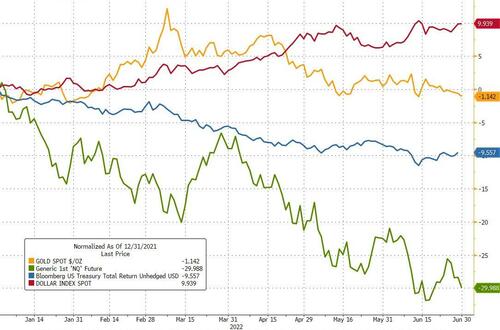
S&P was down 21.01% in 1970 H1, we are currently down 21.22% H1… so, according to Bloomberg data, this would be worst since 1962… 60 years ago
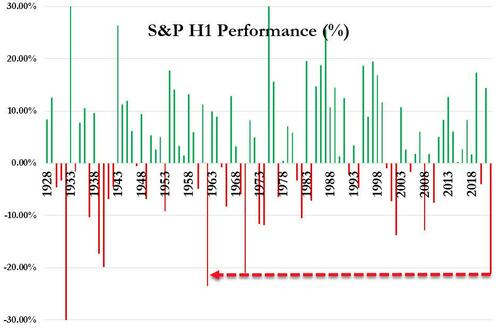
Nasdaq Composite is down 30% to start the year – that is the worst start to a year ever, worse than the H1 2002 collapse.
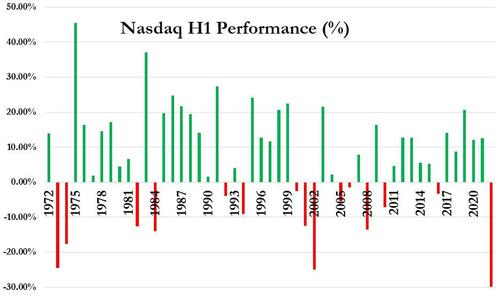
Year-to-date, US stocks have been hammered lower with 3 small BTFD efforts…
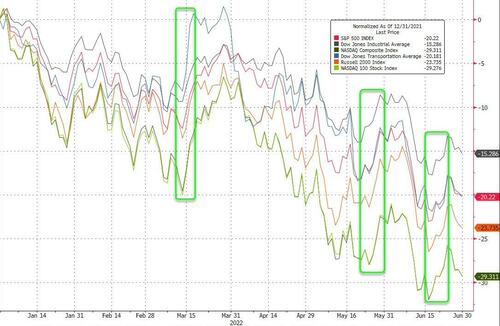
Only the energy sector is green year-to-date with Consumer Discretionary the worst horse in the glue factory…
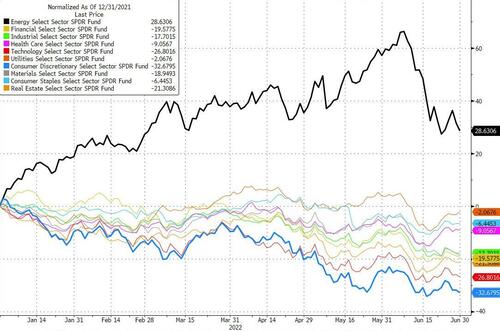
Source: Bloomberg
Of course, the ugly quarter has prompted many calls for a rebound based on history… the question is – how many of those times saw stagflationary pressures as large as the current quagmire…
The US economy saw false hopes of recovery in Q1 of 2022, only to have that slapped in the face of optimists in Q2 as May and June saw macro data collapse…
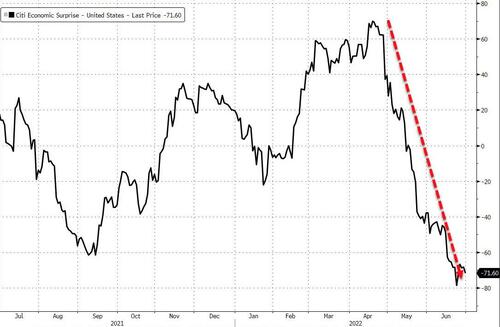
Source: Bloomberg
US Treasuries suffered their worst first half of a year ever…
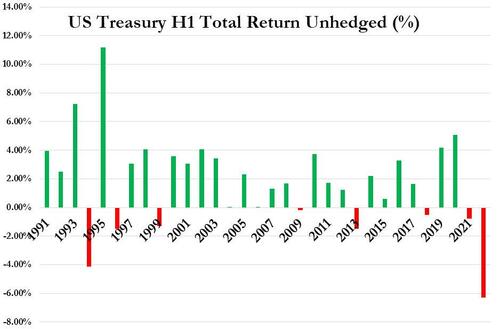
The Short-end of the curve was the hardest hit, with 2Y rising 220bps in H1 and 30Y up 123bps…
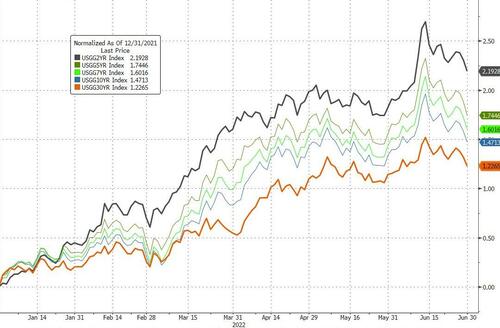
Source: Bloomberg
For a different perspective on this shift, here is the before and after of the US yield curve…
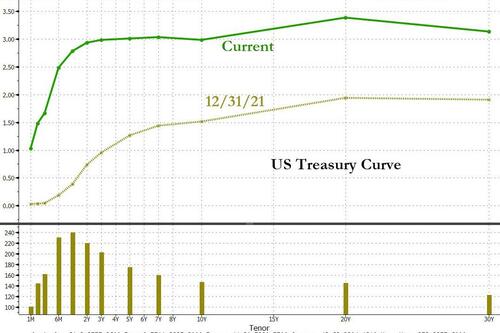
Source: Bloomberg
The credit side of the bond market was also a bloodbath with HYG suffering its worst H1 losses ever…
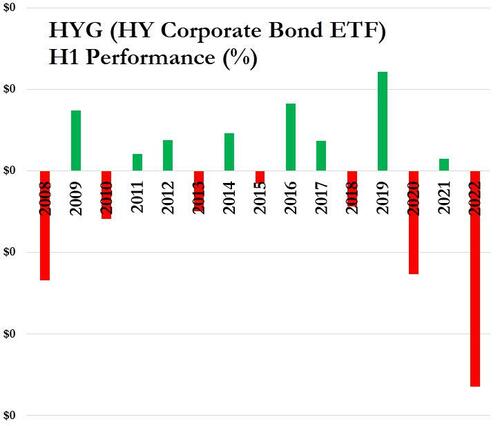
Commodities, broadly speaking, were up 18% in the first half of 2022 (but we note they were up 22% in the first half of 2021 – which is weird because we are pretty sure that Putin didn’t invade Ukraine in 2021).
Oil prices soared 40% in the first half of 2022, but that is less than the surge to start 2021…
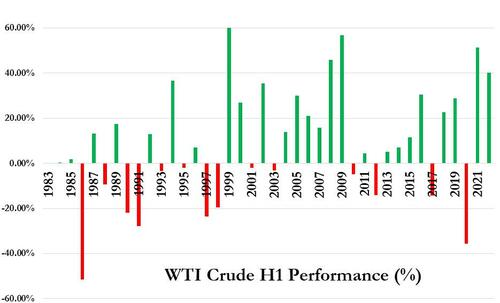
Crypto was carnage as Bitcoin fell 59% in the first half of the year – that is the worst start to a year ever for the crypto currency (worse than the 57.99% drop in 2017). Ethereum was worse, falling 72% YTD…
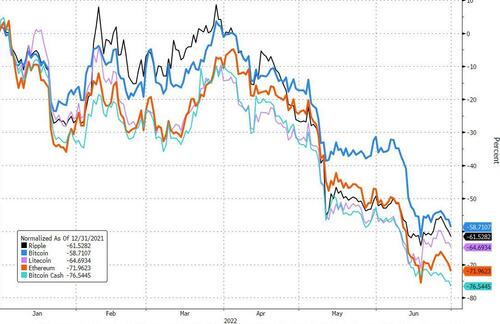
Source: Bloomberg
The Dollar soared in the first half of the year, up almost 10% – its biggest start to a year since 2010…
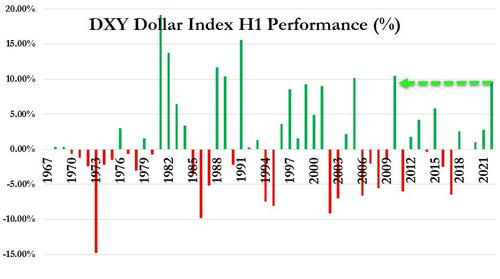
So having got all that off our chest, let’s focus back in on this week…
Stocks rollercoastered today, weakness overnight and then dumping early on in the cash session led to a bid into and across the European close which managed to get the majors back to unchanged on the day… only to see selling return in the afternoon
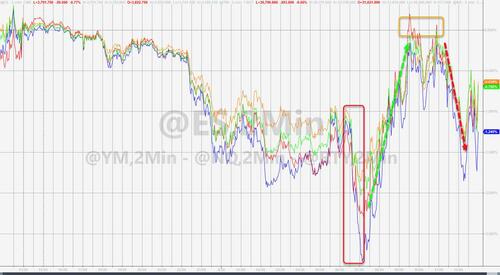
Interestingly, today’s dead-cat-bounce managed to get stocks up to last Friday’s cash open level before stocks went panic-bid into OpEx…
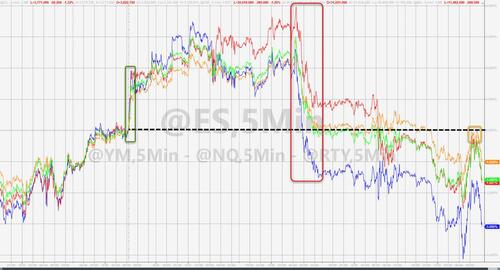
Credit markets are breaking bad and signaling significantly more pain ahead for stocks…
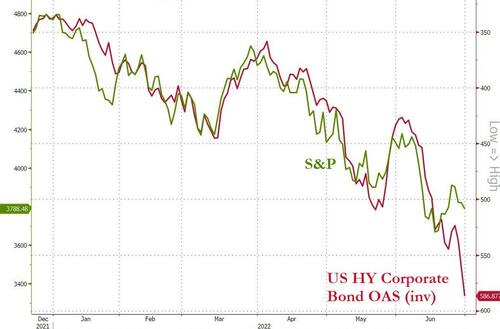
Source: Bloomberg
Treasuries were bid today with the short-end outperforming (5Y -14bps, 30Y -9bps) and the belly continues to outperform strongly into the quarter-end…
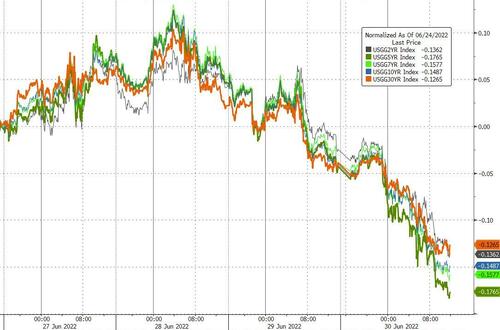
Source: Bloomberg
This pushed the 10Y Yield back below 3.00%, back below the CPI-spike lows on June 10th…
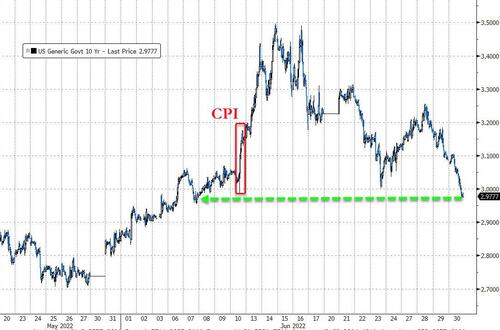
Source: Bloomberg
Global inflation expectations are starting to really tumble with US 10Y Breakevens at their lowest since Sept 2021. Japanese inflation expectations have fallen the least…
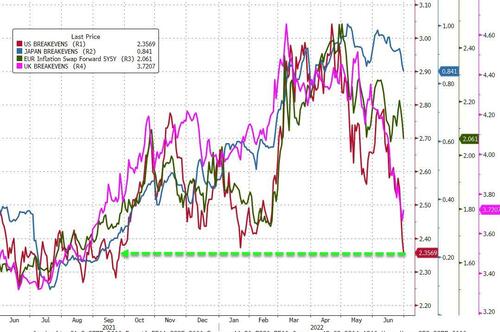
Source: Bloomberg
Rate-hike expectations fell further today and subsequent rate-cut expectations rose as recession fears rise…
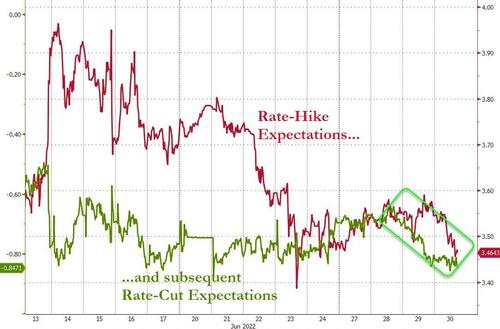
Source: Bloomberg
And stagflation is here…
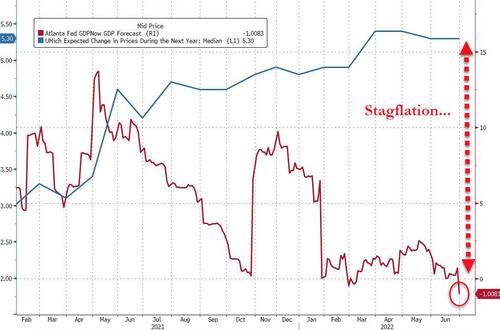
Source: Bloomberg
The Dollar had a big month, quarter, and half; surging back to near COVID safe-haven spike highs…
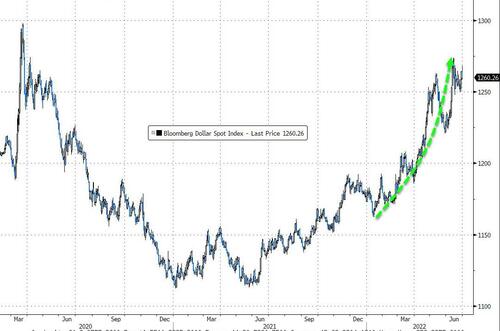
Source: Bloomberg
On the day, the dollar was lower but still up on the week (and notably higher since CPI on June 10th)
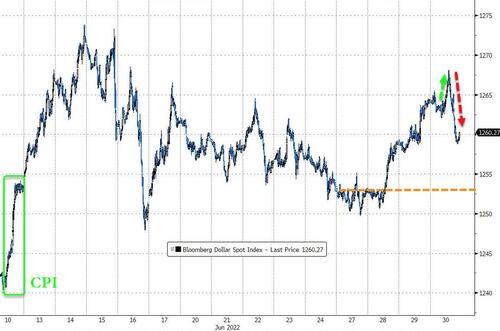
Source: Bloomberg
Bitcoin fell back below $19,000 and then hovered around there today…
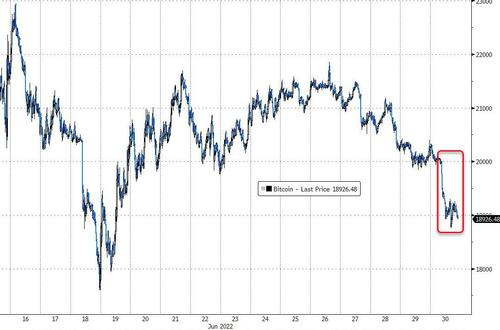
Source: Bloomberg
Commodities crashed today, falling down towards pre-Putin levels…
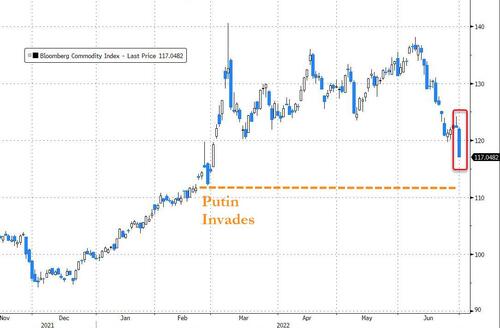
Source: Bloomberg
US Nat Gas tumbled further today on another bigger than expected storage build, plunging to 3-month lows…
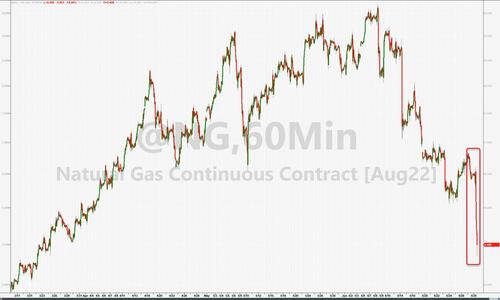
Notably this smashed US NatGas below WTI (on an oil barrel equivalent basis) and the widened the spread to EU NatGas dramatically…
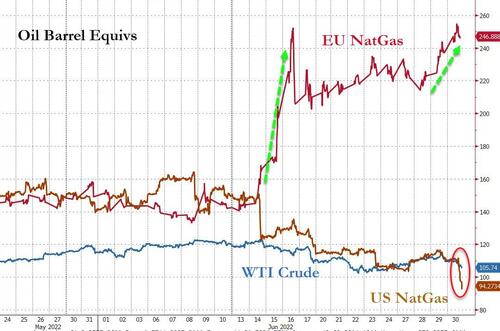
Source: Bloomberg
Oil suffered its first monthly decline since November…
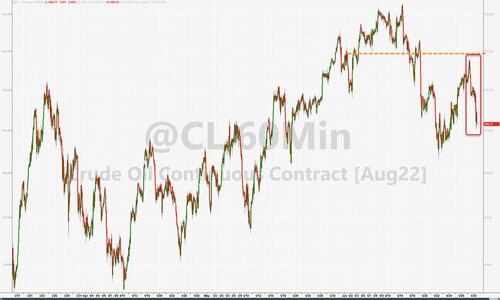
Gold extended the week’s losses back down towards $1800 with every bounce getting monkeyhammered to a new low…
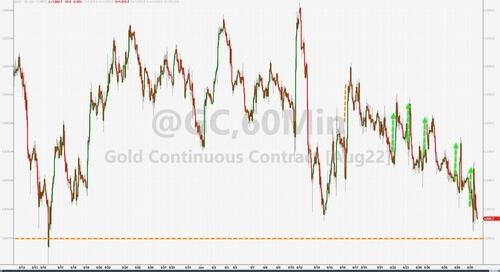
Finally, we note that global equity and debt capital markets lost a stunning $31 trillion in the first half of the year…
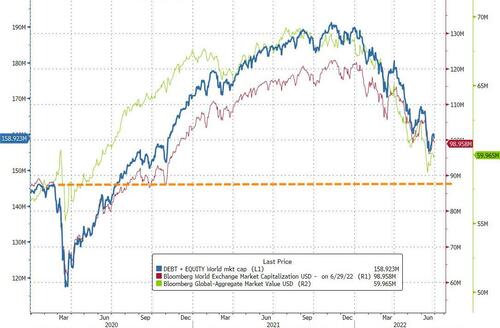
Source: Bloomberg
…a record by a massive margin…
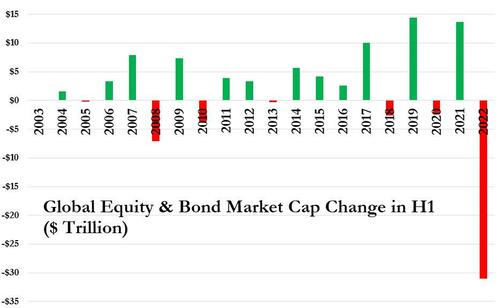
Source: Bloomberg
And that was triggered by just $1 trillion drop in global central bank balance sheets…
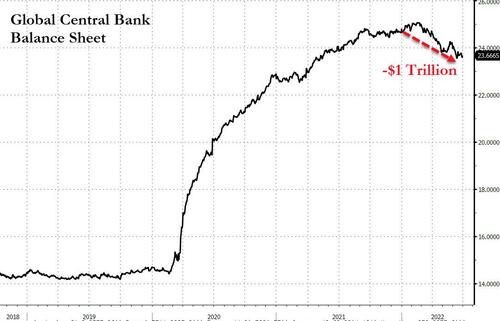
Source: Bloomberg
The Biden Bloodbath!
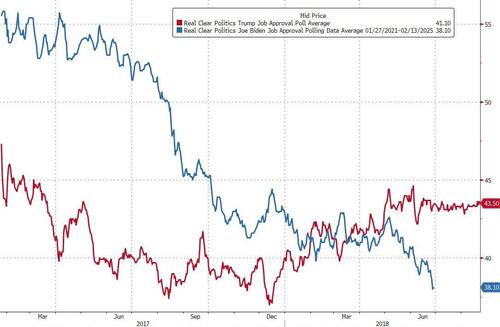
And it could get worse…
I) / EARLY MORNING TRADING//
10Y Yields Tumbles Back Below 3.00%, Stocks Slammed
THURSDAY, JUN 30, 2022 – 10:49 AM
Just when investors were hoping for a month- and quarter-end rebalancing uptick in stocks after the carnage of the last few months, US equity markets are ending the first half of the year on an ugly note with Nasdaq leading the charge lower…
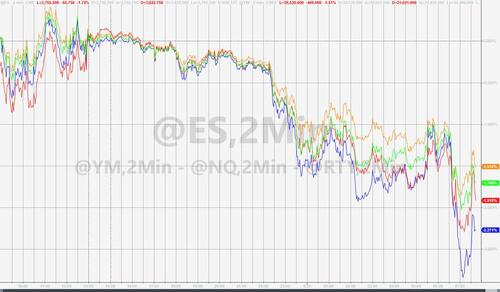
And recession fears have sent the 10Y Yield back below 3.00% for the first time since June 10th’s CPI print…
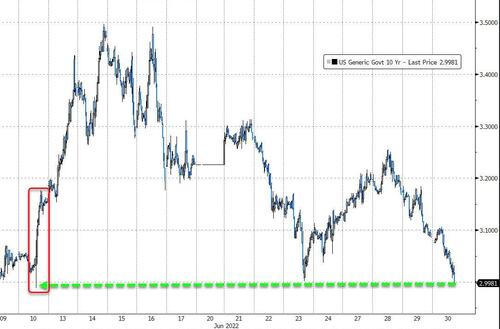
Interestingly, rate-hike expectations are fading and subsequent rate-cut expectations are rising…
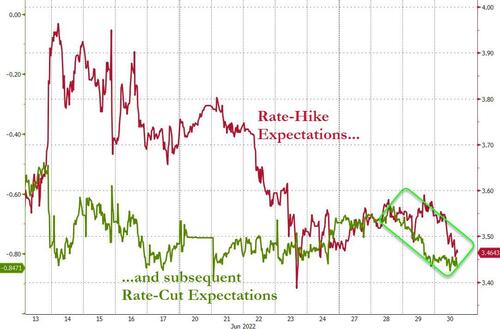
But for now it appears stocks are more worried about The Fed driving us into recession than the post-recession easing and QE rebound.
END
ii) USA DATA
Initial Jobless Claims At 5-Month Highs As Layoffs Accelerate
THURSDAY, JUN 30, 2022 – 08:34 AM
The number of Americans filing for jobless benefits for the first time was 231k last week (down very modestly from an upwardly revised 233k) leaving the 4-week average at the highest since January 2022.
There were 1.328 million continuing claims, very modestly below an upwardly revised 1.331 million last week, but an upward trend remains…
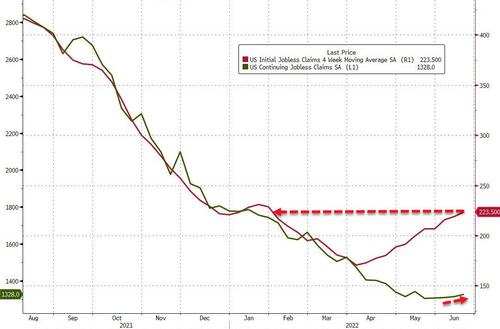
Source: Bloomberg
As a reminder, Deutsche Bank has noted that continuing claims is the best early recession indicator.
Developing…
end
Fed’s Favorite Inflation Indicator Dips, US Spending Slows In May
THURSDAY, JUN 30, 2022 – 12:43 PM
The headline-maker from this morning’s macro melange is The Fed’s favorite inflation indicator – Core PCE Deflator – printed lower than expected at +4.7% YoY (vs +4.9% expected and +4.9% prior). The headline May PCE printed +6.3%, equal to the April data
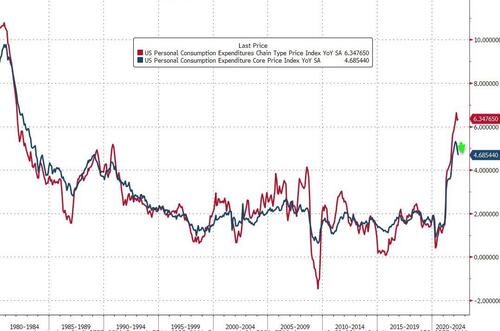
Source: Bloomberg
As a reminder, however, this is May data, and gas prices have soared in June.
Americans pace of spending slowed significantly in May to just +0.2% MoM (half the expected +0.4%) while incomes rose +0.5% MoM (as expected)…
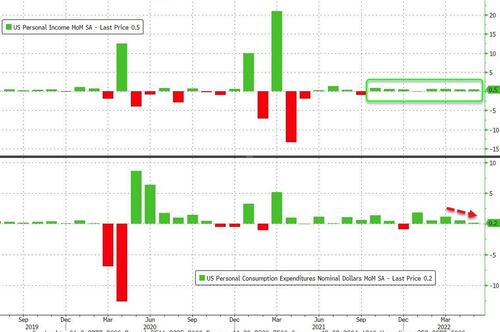
Source: Bloomberg
Americans spending rose slower than their incomes for the first time since December.
Adjusting for inflation, spending actually dropped 0.4% MoM in May…
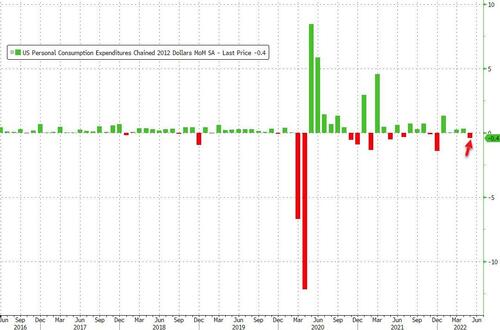
Source: Bloomberg
On the incomes side, private wage growth slowed to 11.9% YoY, the lowest since Dec 2021 while government workers wage growth rose to 5.8% YoY, up from 5.7% in April…
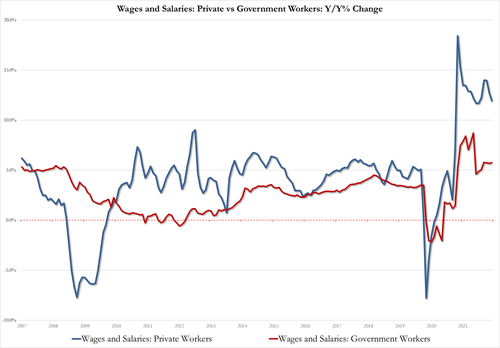
On a year over year basis, incomes grew at 5.3% but spending rose at 8.5%…

Source: Bloomberg
The BEA revised historical data which lifted April’s savings rate from 4.4% to 5.2% and May’s print upticked to 5.4% – the highest since February…
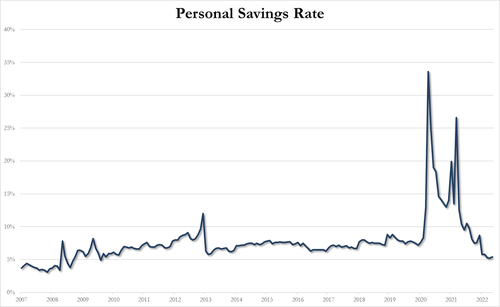
So this is good news – inflation rolling over and Americans pulling back from over-spending?
The question is – will the former re-accelerate in June while the latter continues?
end
Chicago PMI down sharply in June
June 30, 2022 at 9:59 a.m. ET
MarketWatch
The Chicago Business Barometer, also known as the Chicago PMI, fell to 56 in June from 60.3 in the prior month.
Economists polled by the Wall Street Journal forecast a 58 reading.
The index is produced by the ISM-Chicago with MNI. It is released to subscribers three minutes before its release to the public at 9:45 am Eastern.
The Chicago PMI is the last of the regional manufacturing indices before the national ISM data for June is released on Friday.
So far this month, the regional manufacturing surveys released by Federal Reserve banks have shown a deterioration in business sentiment even as measures of activity have been positive.
Economists surveyed by the Journal have forecast a 54.3% reading for the closely-watched ISM manufacturing index in June after a 56.1% reading in the prior month.
IIB) USA COVID/VACCINE MANDATES
end
iii)a. USA economic stories
We are now in a recession as the Atlanta Fed slashes Q2 GDP down to full -1%, thus the first half year is in contraction
(zerohedge)
Welcome To The Recession: Atlanta Fed Slashes Q2 GDP To -1%, Pushing First Half Into Contraction
THURSDAY, JUN 30, 2022 – 12:08 PM
A day after Fed Chair Powell crowed once again how the US economy was strong enough to cope with his hawkish rate-hike cycle (and President Biden told the world this morning that the US economy is the strongest in the world), the Atlanta Fed just stole the jam out of everyone’s donut by confirming the recession has started.
If you were curious why bond yields are plunging and rate-hike expectations are falling, then here’s your answer, courtesy of the Atlanta Fed, which just confirmed the economy is in technical recession.
The continued erosion in economic data has prompted The Atlanta Fed to slash its forecast for Q2 GDP growth from 0.0% to -1.0%+0.9% to 0.0%, meaning the US is now right on the verge of a technical recession (after Q1’s confirmed 1.6% contraction yesterday).
According to the Atlanta Fed’s GDPNow model estimate for real GDP, growth in the second quarter of 2022 has been cut to a contractionary -1.0%, down from 0.0% on June 15, down from +0.9% on June 6, down from 1.3% on June 1, and down from 1.9% on May 27.
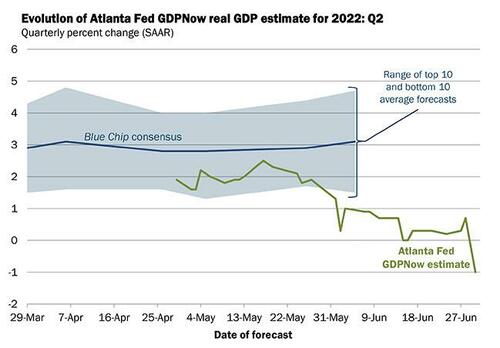
As the AtlantaFed notes, “The GDPNow model estimate for real GDP growth (seasonally adjusted annual rate) in the second quarter of 2022 is -1.0 percent on June 30, down from 0.3 percent on June 27. After recent releases from the US Bureau of Economic Analysis and the US Census Bureau, the nowcasts of second-quarter real personal consumption expenditures growth and real gross private domestic investment growth decreased from 2.7 percent and -8.1 percent, respectively, to 1.7 percent and -13.2 percent, respectively, while the nowcast of the contribution of the change in real net exports to second-quarter GDP growth increased from -0.11 percentage points to 0.35 percentage points.”
In short: the US consumer is getting tapped out, just as we have been warning repeatedly.
Which also fits with Jamie Dimon’s recent “downgrade” of the economy from “storm clouds” to “hurricane”… and also makes some sense given the recent collapse in macro data relative to expectations…
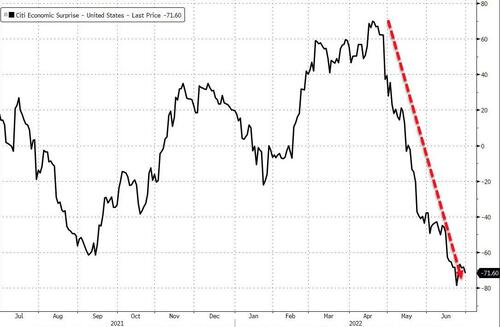
And longer-term, the trend towards stagflation could not be clearer…
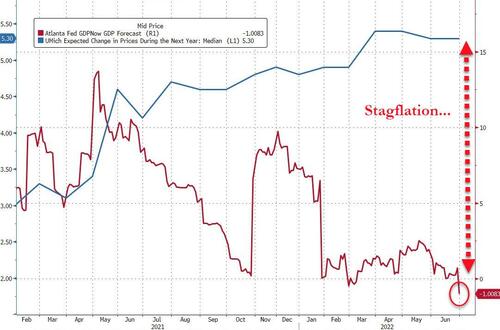
And this is increasingly problematic for The Fed, as the market is now betting Powell and his pals won’t get close to hiking as much as they hope…
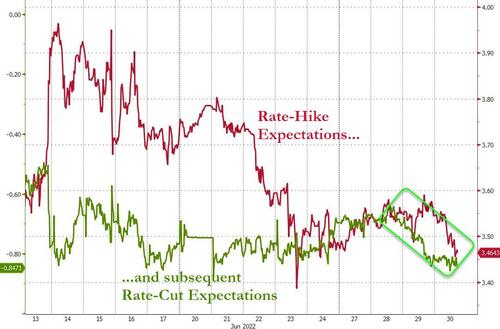
And in fact the market is now expecting rate-cuts to start in Q1 2023…

Will The Fed adjust to the market once again?
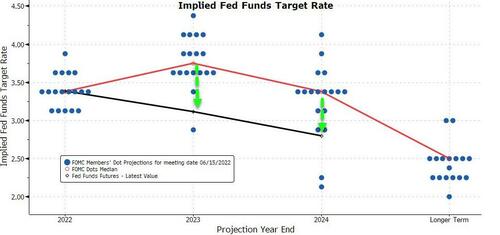
Meaning The Fed is now hiking rates into a recession…
…and the market is already pricing in more than 3 rate-cuts to address that recession.
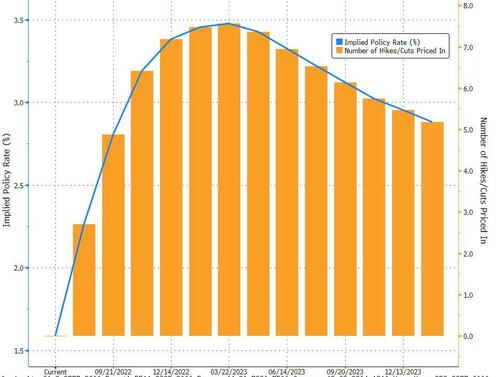
Get back to work Mr.Powell.
end
Industry demand has fallen off the cliff. Although Micron’s numbers were OK its guidance was catastrophic. We are now deeply into a recession
(zerohedge)
Micron Plunges After Catastrophic Guidance Confirms Worst Fears
THURSDAY, JUN 30, 2022 – 04:16 PM
The quarter may be over, but the selling is extending to the afterhours session where the closely watched semiconductor bellwether just reported earnings which were not that bad. The problem is the guidance: it was catastrophic, and sent the stock sharply lower after hours.
First, a look at the just concluded third fiscal quarter:
- Adjusted revenue $8.64 billion, +16% y/y, meeting the estimate $8.64 billion (this was the smallest increase in more than a year).
- Adjusted EPS $2.59 vs. $1.88 y/y, beating the estimate $2.45
- Adjusted gross margin 47.4% vs. 42.9% y/y, missing the estimate 47.9%
- Cash flow from operations $3.84 billion, +7.8% y/y, missing estimate $4.42 billion
But while the historical numbers may have been good, the guidance was an absolute disaster, disappointing on the top line, the bottom line and margin – The company now sees:
- Adjusted revenue $6.8 billion to $7.6 billion, missing the consensus estimate of $9.14 billion by about $2 billion!
- Adjusted EPS $1.43 to $1.83, missing the estimate $2.57 by about 40%!
- Adjusted gross margin 41% to 44%, wildly missing the estimate 47.9%, and confirming that margin pressure is here and is real.
The outlook reflects a slowdown for two key markets for Micron’s memory chips: computers and smartphones. Consumers and businesses have been reining in spending amid concern that the major world economies are headed for recession.
CEO Sanjay Mehrotra was almost as laconic as RH CEO Gary Friedman yesterday, saying that “recently, the industry demand environment has weakened, and we are taking action to moderate our supply growth in fiscal 2023. We are confident about the long-term secular demand for memory and storage and are well positioned to deliver strong cross-cycle financial performance.”
“Weakened?” We would say the industry demand has fallen off a cliff. As for being positioned for the long-term, the market begs to differ, sending the stock as much as 7% lower, and following a drop of 41% this year through the close as part of a rout for semiconductor stocks that had rallied over the last five years, as traders brace for much worse horror stores in the coming weeks when the horror Q2 earnings seasons begins in earnest…
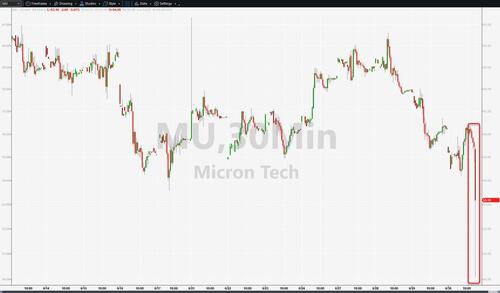
Biden announces a permanent uSA base in Poland
(Dave DeCamp/Antiwar.com)
Biden Announces Permanent US Base In Poland, America’s First On NATO Eastern Flank
THURSDAY, JUN 30, 2022 – 12:20 PM
Authored by Dave DeCamp via AntiWar.com,
President Biden announced Wednesday during the NATO summit in Madrid steps that the US will take to increase its military presence in Europe, including the establishment of a permanent base in Poland.
The base in Poland will mark the first time the US will establish an official permanent military facility in the area known as NATO’s “eastern flank.” The US military presence elsewhere in Eastern Europe and in the Baltic states is technically on a rotational basis, although Washington has no plans to scale back its presence in the region.
Under the 1997 NATO-Russia Founding Act, NATO agreed not to establish a permanent military presence east of Germany. US officials insist the base in Poland does not violate the act since it is only a permanent facility, and the troops will be deployed rotationally, but it’s unlikely Moscow will see it that way.
Other measures Biden announced include sending a “rotational brigade” of 5,000 troops to Romania, stepping up rotational deployments to the Baltics, sending two additional F-35 squadrons to the UK, and stationing more air defenses in Germany in Italy. A day earlier, Biden announced the US was sending two more Navy Destroyers to Spain.
“I said Putin’s looking for the Finlandization of Europe,” Biden said on Wednesday. “He’s going to get the NATOization of Europe. And that is exactly what he didn’t want, but exactly what needs to be done to guarantee security for Europe. And I think it’s necessary.”
The deployments are a step towards keeping US troops levels in Europe at over 100,000. Before the US began reinforcing its military presence in Europe around the time Russia invaded Ukraine, about 80,000 US troops were assigned to the continent.
While building up military forces in Eastern Europe and pouring billions of dollars worth of weapons into Ukraine, Biden has abandoned diplomacy with Russia altogether. As a result, the risk of a direct conflict between the two powers, which could quickly spiral into nuclear war, is at its greatest height since the Cold War.
END
There is no question that this is true. The Fed must return to QE shortly
Peter Svab/EpochTimes
special thanks to Milan S for sending this to us:
Fed Will Soon Return to Money Printing to Avert Government Default, Says Analyst
By Petr Svab
June 28, 2022Updated: June 29, 2022
0:003:521
For all the talk about combating inflation, the Federal Reserve is likely to reverse course and continue to print substantial amounts of money because doing otherwise would threaten the federal government with insolvency, according to macroeconomic analyst Luke Gromen.
Fed chairman Jerome Powell has been talking about the central bank’s aggressively raising interest rates in order to tighten the money supply, curb demand, and thus relieve inflationary pressure in the economy. Inflation hit a four-decade high of 8.6 percent in May. The Fed raised rates two weeks ago by 0.75 percent, the most in over 20 years.
It will only take a few more months, however, for the Fed to reverse course, Gromen predicted.
“I think they have to. I don’t think they have a choice,” he recently told Wealthion’s Adam Taggart.
The problem is that higher interest rates mean that government will have to pay more interest on its debt, which now stands at over $30 trillion. Moreover, higher rates mean less credit and less economic activity. What is already becoming apparent is that higher mortgage rates mean fewer home sales and less construction. That means the government will start collecting substantially less in taxes, according to Gromen. Meanwhile, a contracting economy translates to higher welfare expenses as more people go to the government for relief.
“The U.S government is not going to be able to cover its interest and interest-like expenses, which I call the true interest expenses—entitlement, pay-gos, Treasury spending—they’re not going to be able to cover that with tax receipts, which means they will have to default or the Fed prints the difference,” Gromen said.
He believes the Fed won’t allow a government default.
“At the end of the day, if push comes to shove, they’re going to print the money,” he said.
He expects the “decision point” to come by the end of September “at the latest.”
Printing more money, however, will make inflation worse and the problem can quickly snowball, especially if the government decides to appease the public with more giveaways, such as some form of “Universal Basic Income.”
“You’re basically put in a position where the Fed’s balance sheet is got to go, you know, $9 trillion, $10 trillion, $20 trillion, $40 trillion very fast and inflation goes 8 [percent], 10, 20, 50, 80—you know, very fast,” he said.
The losers of this scenario are people with savings in cash and government bonds as the dollar loses value and the interest on bonds continues to fall well below inflation.
“There’s really only one way out of this. You have to have significantly negative real interest rates for a sustained period of time,” Gromen said.
He blamed the predicament on past bailouts.
“If you don’t allow the defaults to happen, as we’ve repeatedly done, then the debt gets so big that it’s no longer a choice [of whether] the bondholders win or the bondholders lose. Now it’s the bondholders lose by inflation or the bondholders lose by default,” he said.
He expects the bit of tightening the Fed is executing now will only partially curb inflation. Prices in some parts of the market, such as housing and retail, may come down, but not so much in energy, he said, where the United States and Europe are putting constraints on oil and gas production even as the price of extracting the commodities will get higher because the cheap-to-acquire deposits are gradually running out.
Simply adding more debt won’t help, he noted.
“You can’t print over energy.”
REPORTER
Follow
Petr Svab is a reporter covering New York. Previously, he covered national topics including politics, economy, education, and law enforcement.
END
Supreme Court gets it right!(zerohedge)
In Landmark Ruling, Supreme Court Deals Massive Blow To Biden’s Climate Change Agenda
THURSDAY, JUN 30, 2022 – 11:20 AM
At the same time as it give the Biden admin a token victory by overturning Trump’s “remain in Mexico” rule, the US Supreme Court also struck a major blow to Biden’s fight against climate change, when in a landmark ruling, the SCOTUS also curbed the ability of America’s top environmental regulator to limit greenhouse gas emissions, siding with coal miners and Republican-led states.
In a majority opinion authored by chief justice John Roberts, the justices ruled that in the latest example of Democratic overreach, the Environmental Protection Agency was not specifically authorized by Congress to reduce carbon emissions when it was set up in 1970. The ruling leaves the Biden administration dependent on passing legislation if it wants to implement sweeping regulations to curb emissions.
The opinion from the court’s conservative majority said that “a decision of such magnitude and consequence rests with Congress itself, or an agency acting pursuant to a clear delegation from that representative body”. The justices added they doubted Congress intended to delegate the question of “how much coal-based generation there should be over the coming decades, to any administrative agency”.
The dissenting opinion authored by justice Elena Kagan and joined by the court’s other two liberal justices said the EPA had the authority to regulate “stationary sources” of polluting substances that are harmful to the public, adding that curbing the output of greenhouse gas emissions was “a necessary part of any effective approach for addressing climate change”. In other words, the usual green tripe that has sent the country to the edge of a hyperinflationary commodity disaster.
“This Court has obstructed EPA’s effort from the beginning,” Kagan wrote. “The limits the majority now puts on EPA’s authority fly in the face of the statute Congress wrote.”
As the FT reports, at the heart of the case is a disagreement over how broadly the EPA should be allowed to interpret portions of the 1970 Clean Air Act, particularly the sections that direct the EPA to develop emissions limitations for power plants.
Dubbed West Virginia vs EPA, the case was brought by a host of Republican attorneys-general and the coal industry. Their argument centres on a regulation that never took effect: an Obama-era proposal known as the Clean Power Plan, which would have mandated that power plants make 32 per cent reductions in emissions below 2005 levels by 2030. The Supreme Court ordered that rule to be suspended in 2016.
That rule was later torn up by the Trump administration in favor of its Affordable Clean Energy rule, designed to support the coal industry. The Trump administration’s regulation, however, was struck down by the US Court of Appeals for the DC Circuit last year.
Challenging the lower court’s reversal of Trump’s rule at the Supreme Court, West Virginia has argued that the Obama-era Clean Power Plan relied on an overly broad interpretation of the Clean Air Act and gave the EPA excessive and “industry transforming” power.
West Virginia argued that the lower court’s interpretation of the law granted the EPA “unbridled power” to issue significant rules that would reshape the US electricity grid and decarbonise sectors of the economy. It said the EPA should only have very limited authority to regulate emissions inside “the fence line” of power plants, and cannot apply broader industry-wide measures like carbon credit trading or biomass co-firing.
Defending the case, Biden’s EPA has said that nothing in the Clean Air Act makes a distinction between inside the fence line measures and broader, industry-wide regulatory measures. It added that West Virginia’s “real concern” was that the agency might introduce some elements of Obama’s Clean Power Plan into a future rule. But the EPA said that the Supreme Court is not authorised to issue an advisory opinion on the types of measures a future rule could contain.
Dick Durbin, the Democratic whip in the Senate, predictably said the decision was “a dangerous step backwards and threatens our air and our planet”, adding it “sets a troubling precedent both for what it means to protect public health and the authority regulatory agencies have to protect public health”.
What he means is that the US may once again be on the path to becoming self-sufficient in energy, and not peddling money to corrupt “green” lobbies and interests.
The ruling by the court’s conservative majority is the latest in a string of dramatic decisions that have challenged established legal precedents, including the recent reversal of Roe vs Wade. Last week, it also struck down a century-old New York state law requiring an individual to show “proper cause” to carry a concealed gun in public, deeming the statute unconstitutional. The court on Monday also ruled in favour of a former high school coach dismissed for praying at football games, fuelling the fraught debate on the separation of church and state.
SWAMP STORIES
.
King Report
| The King Report June 30, 2021 Issue 6791 | Independent View of the News |
| US Q1 GDP was revised to -1.6% from -1.5% (-1.5% exp). The GDP Priced Index was revised to +8.2% from +8.1%, the highest reading since June 1981. Core PCE was revised to 5.2% from 5.1%. Most alarming is the Consumption revision to 1.8% from 3.1%. The Bureau of Economic Analysis had to craft growth elsewhere or Q1 GDP would have been worse! It boosted the arbitrary ‘intellectual property products’ component (Table 1, Line 12) to +11.2% for Q1! “Intellectual Property Products contributed .56 percentage points to Q1 GDP (Table 2, line 35)! The tres important ‘Final sales of domestic product’ is -1.2%! Real Disposal Personal Income (Table 6, Line 34) tumbled 12% for Q1 2022! Q1 2021 +15.1%, Q2 2021 -4.3%, Q3 2021 -0.9%, Q4 2021 +0.1% – This is why The Big Guy is historically unpopular. The BEA: The increase in nonresidential fixed investment reflected increases in equipment and intellectual property products. The increase in PCE reflected an increase in spending on services (led by housing and utilities and “other” services) that was partly offset by a decrease in spending on goods… The decrease in first-quarter real GDP was revised down 0.1 percentage point from the second estimate, reflecting downward revisions to PCE and federal government spending that were mostly offset by upward revisions to private inventory investment, nonresidential fixed investment, exports, state and local government spending, and residential fixed investment… https://www.bea.gov/sites/default/files/2022-06/gdp1q22_3rd.pdf Powell remarks in Sintra, PortugalUS economy is in pretty strong shape (The Fed must ignore recession because it ignored inflation)Fed’s job is to find price stabilityThe Fed is raising rates to slow growth, hope it stays positiveSoft landing possible, but will be quite challengingThere is no guarantee of a soft landingShape of yield curve is not a top-line worry right nowThere is a risk the Fed could tighten too much, but it is not a top riskBigger risk is failing to restore price stabilityWe don’t have responsibility for level of dollar (Treasury’s purview)Dollar is just another financial condition to us (BS!)Looking back, we got supply-side timing issues wrongWorking hard to ‘get smarter’ about the supply sideWe understand better how little we understand inflation (Trillions of dollars in QT ($2.6T in QT from 3/20 to 7/20), years of NZIRP, and Biden’s Trillions – but Fed academics didn’t think these acts might foment inflation?! It’s a binary judgement: liars or nitwits.)Fed Fully understand Pain of Higher InflationWe will lower inflation to 2%, that will cause some painWorse pain would be failing to address this high inflationToo Much Focus on Demand Management in EconomicsI’m out of the business of giving fiscal policy adviseHas Been Too Much Focus on Monetary Policy to Manage GrowthThere is certainly a risk of de-globalization Just two weeks ago, Powell asserted that supply-side issues are beyond the control of the Fed. Technically, the |US Treasury is responsible for the dollar. But the Fed creates dollars via Federal Reserve notes. Powell is Clintonesque in issuing half-truths and qualifying clauses. Lagarde said the ECB will consider crisis tool in July – BBG Richmond Fed: US Economic Optimism Falls ‘Sharply’ in Latest CFO Survey (For Q2) The survey’s optimism index fell to 50.7 (from 54.8 in Q1), the weakest since the end of 2012… https://www.richmondfed.org/research/national_economy/cfo_survey/data_and_results/2022/20220629_data_and_results Mester Says Fed Should Act Forcefully to Curb Price Pressures Cleveland Fed president speaks at ECB forum in Sintra She says central bankers must be ‘resolute and intentional’ She also said if the economic conditions remain the same as now she would back another 75 basis points hike when officials next gather in July… (George was the sole dissent in June; she wanted a 50bp hike.) https://ca.investing.com/news/economy/mester-says-fed-should-act-forcefully-to-curb-price-pressures-2712475 Shell Chief Paints Bleak Picture on Global Energy Supply Van Beurden: Not enough LNG supply to cover large Russia cuts CEO skeptical of G-7 proposal to put price cap on Russian oil https://www.bnnbloomberg.ca/shell-chief-paints-bleak-picture-on-global-energy-supply-1.1785493 ESUs traded modestly higher during Asian trading but sank into the European open. They rallied from 3914.00 just before the open to 3832.00 at 45:12 ET. ESUs and stocks then sank, with ESUs falling to 3812.00 at 5:57 ET. After listless action for 75 minutes, ESUs soared to a session high of 3840.00 at 8:03 ET. Then, things got wild. ESUs tanked 20 handles by 8:35 ET; but quickly jumped 15 handles by 9:20 ET for the rally into the NYSE open. ESUs then plunged to a session low of 3801. 25 at 9:45 ET on Powell’s hawkish comments. But Q2 report cards are on the way, so someone manipulated ESUs to 3835.00 by 10:00 ET. Then, ESUs vacillated wildly until sinking before the European close. With 7 minutes remaining in European trading, someone juiced ESUs 11 handles for the close. USUs were +22/32 at the time. Obviously defensive asset allocators were in the market. A post-European close rally developed; it became a modest Noon Balloon. But after a spurt higher when the afternoon arrived, ESUs sank from 3821.50 to 1805.25 at 13:20 ET. At 13:30 ET, the manipulation to embellish Q2 performance began. ESUs surged to 3824.00 at 14:05 ET. After lingering near the afternoon highs, ESUs sank 19 handles by 14:47 ET. The pre-last hour rally began on schedule. But when the final hour arrived, ESUs slid lower. Q2 performance gamers quickly pushed ESUs higher. There is a desperate need to embellish Q2 report cards. Alas, ESUs peaked at 15:29 ET and slid 13 handles in 5 minutes. ESUs then vacillated until ESUs jumped higher near the close. BBG’s @JavierBlas: OIL MARKET: Over the last 2 weeks, the US gov has injected 13.7 million barrels from the SPR into the market. And yet, commercial oil stockpiles still fell 3 million barrels over the period. Just imagine if the SPR wasn’t there. Or what would happen post-Oct when sales end. @JavierBlas: CHART OF THE DAY: US refineries in the Gulf of Mexico (PADD3) are running the hottest for this time of the year in at least 30 years: 97.9% of their capacity running. Surreal. You cannot run hardest than this. Whatever the White House says. https://twitter.com/JavierBlas/status/1542156181954871297 Barring an unforeseen event, oil and gasoline prices are poised to surge higher in coming weeks. BBG’s @laurapdavison: Senate Democrats are planning to scale back the tax hikes on corporations in Biden’s economic plan as they look to close a deal with Manchin in the coming weeks. Companies cut spending, jobs as outlook grows less certain https://news.yahoo.com/companies-cut-spending-jobs-outlook-183512393.html What is a worse outcome than the Hobson’s Choice between inflation or recession? An inflationary recession! Perhaps Jerome Powell knows this. St. Louis Fed: Real-time Sahm Rule Recession Indicator Sahm Recession Indicator signals the start of a recession when the three-month moving average of the national unemployment rate (U3) rises by 0.50 percentage points or more relative to its low during the previous 12 months… https://fred.stlouisfed.org/series/SAHMREALTIME The U3 Unemployment Rate’s 3-month moving average hit a low of 3.6% in March. Recession will be signaled with a 4.1% or higher reading. St. Louis Fed: Continued Claims (Insured Unemployment) https://fred.stlouisfed.org/series/CCSA A 10% increase in Continuing Jobless Claims from the cycle low has signaled recession since the ‘50s. The low was 1.315m on May 6, 2022. An increase to 1.447m would be very bad. Positive aspects of previous session The DJIA and Nasdaq 100 rallied modestly Negative aspects of previous session Stocks have great difficulty rallying and keep gains Bonds are the dollar soared on Powell’s hawkish remarks and recession concerns Ambiguous aspects of previous session What does the sideways equity action on Wednesday mean for the end of Q2 action? First Hour/Last Hour Action [S&P 500 Index]: 1st Hour from NYSE open: Down; Last Hour: Up Pivot Point for S&P 500 Index [above/below indicates daily trend to traders]: 3818.12 Previous session High/Low: 3836.50; 3799.02 Today is the end of Q2, the midpoint of 2002 has arrived. The S&P 500 Index low yesterday was 3799.02. Obviously, this is important support. ESUs and equities effectively traded sideways during all sessions on Wednesday. The Asian session had the tightest ESU range (13.50). The European trading range is 39.75 (3840.00 high, 3801.25 low). The ESU range during NYSE trading is 37.50. Traders love to play breakouts of the previous session’s range. This dynamic should be of heightened focus for Q2’s end. The S&P 500 Index high from Wednesday is 3836.50; the low is 3799.02. Nasdaq has been up in 21 of the past 29 sessions to end Q2. The DJIA has been up 8 of the last 10 sessions. Traders will try to generate an upside breakout, abetted by the upward seasonal bias. ESUs are -10.25 at 21:10 ET because Japan reported May Industrial Output of -7.2% m/m, -0.3% exp. Expected econ data: May Personal Income 0.5%, Spending 0.4%; May PCE Deflator 0.7% m/m, 6.4% y/y, PCE Core Deflator 0.4% m/m, 4.8% y/y; Initial Jobless Claims 229k, Continuing Claims 1.318m; June MNI Chicago PMI 58 S&P 500 Index 50-day MA: 4032; 100-day MA: 4224; 150-day MA: 4357; 200-day MA: 4397 DJIA 50-day MA: 32,315; 100-day MA: 33,307; 150-day MA: 34,042; 200-day MA: 34,335 S&P 500 Index – Trender trading model and MACD for key time frames Monthly: Trender and MACD are negative – a close above 4928.42 triggers a buy signal Weekly: Trender and MACD are negative – a close above 4204.42 triggers a buy signal Daily: Trender and MACD are positive – a close below 3708.13 triggers a sell signal Hourly: Trender and MACD are negative – a close above 3858.39 triggers a buy signal Tony Ornato did not brief Cassidy Hutchinson that Trump tried to lunge at Secret Service agent: sources – Hutchinson made scathing allegations against Trump while under oath at January 6 hearing https://www.foxnews.com/politics/tony-ornato-did-not-brief-cassidy-hutchinson-trump-tried-lunge-secret-service-agent-sources Trump White House attorney disputes Cassidy Hutchinson’s testimony about handwritten note Former Trump White House lawyer Eric Herschmann is claiming that a handwritten note regarding a potential statement for then-President Donald Trump to release during the Jan. 6 attack on the Capitol was written by him during a meeting at the White House that afternoon, and not by White House aide Cassidy Hutchinson, sources familiar with the matter tell ABC News. At Tuesday’s Jan. 6 committee hearing, Rep. Liz Cheney displayed a handwritten note which Hutchinson testified she wrote after Trump chief of staff Mark Meadows handed her a note card and pen to take his dictation. Sources familiar with the matter said that Herschmann had previously told the committee that he had penned the note… https://abcnews.go.com/US/trump-white-house-attorney-disputes-cassidy-hutchinsons-testimony/story ABC’s @KFaulders: A spokesperson for Meadows is pushing back on testimony yesterday about him seeking a pardon. “Meadows never sought a pardon and never planned to,” a Meadows spox said in a short statement. @seanmdav: Another claim from Hutchinson bites the dust. @RudyGiuliani: Once again the January 6 Committee of “Russian Collusion” Liars suborned perjury from Cassidy Hutchinson. I specifically told President Trump I did not want or need a pardon. I also have witnesses to corroborate that she and the Committee are perpetrating yet another lie. @DonaldJTrumpJr: The handwritten note J6 Star Witness testified she wrote was actually written by Eric Herschmann. She flat out lied. The committee knew it because Eric testified under oath that he wrote that note. Cheney questioned him about it. She knew Cassidy was lying. Greta Van Susteren @greta: If questioner (Cheney) wants to appear fair to jury (American people), it probably is not a good idea to get caught on camera hugging the witness…see below from @Politico; already people have very strong feelings – both ways – about this hearing and pics like this don’t help; https://twitter.com/greta/status/1542124333912424449 @johncardillo: This sham committee is allowing perjury and false evidence to be internationally broadcast in an attempt to smear Trump so that he doesn’t run again. This is the most egregious abuse of power I have ever seen and why normal Americans hate Washington DC. Politico’s @woodruffbets: USSS Spox Anthony Guglielmi tells me that in the 10 days before the Hutchinson hearing, the Jan. 6 committee did not reach out for more details regarding the Beast ride. The Jan 6 Committee with the enthusiastic complicity of the MSM used the hearings as pro bono political ads to smear Trump. Its purpose was NOT to discover and uncover facts. Fox News Falls for Cassidy Hutchinson Hoax Testimony Fox News’ Bret Baier called Hutchinson’s testimony “jaw-dropping.” “I’ve covered politics a long time,” Baier said. “I don’t think there has been testimony like this — that is kind of jaw-dropping, in a way — on the inside workings of a White House in crisis after, you know, at this moment, January 6th, that we have seen since Watergate.”… https://t.co/yxXdWLnpgM For at least 6 years, the MSM reports Schiff about Trump without checking its veracity. They do not care about truth, justice, and the American way because their TDS-induced pursuit is to slime Trump and report Schiff that they hope is true. There is a video of Biden extorting Ukraine plus videos and emails of Hunter’s nefarious deeds. The legacy media ignores these glaring facts because they are abjectly biased. @JackPosobiec: About 90% of the people you will meet in DC are a Cassidy Hutchinson @JerryDunleavy: The Dem staff director for the House committee investigating Jan. 6th was formerly the CIA inspector general — and was one of the former intel officials who signed the October 2020 letter claiming Russia was involved in the Hunter Biden laptop story. https://t.co/4kxLpRQUux Jan. 6 panel effort to blame Trump for violence ignores pointed warnings Congress got much earlier – On New Year’s Eve, Capitol Police were warned protesters planned an “armed encampment” and would “hang corpses of Democrats” on Jan. 6. Other intelligence flagged potential for snipers. https://justthenews.com/government/congress/jan-6-panel-effort-tie-violence-trump-ignores-pointed-warnings-congress-got Energy Sec. Granholm violated Hatch Act by encouraging votes for Democrats during interview The investigation was conducted by the U.S. Office of Special Counsel, an independent federal agency https://justthenews.com/accountability/political-ethics/energy-sec-granholm-violated-hatch-act-encouraging-votes-democrats @IAPolls2022: Generic Congressional Ballot Trends: Before vs After Roe v Wade decision Republicans/Democrats (YouGov, LV) June 21 poll: 45/41 (R+4); June 27 poll: 45/40 (R+5) Republicans GAINED 1 Point after SCOTUS Overturned Roe v Wade Now we know why there have been NO MSM political polls since the Dobbs/Roe decision! AP-NORC poll: Growing majority (85%) in US say nation is on wrong track, including 78% of Democrats, as economy plagues Biden – 79% describe the economy as poor…Even among Democrats, 67% call economic conditions poor…The poll shows only 39% of Americans approve of Biden’s leadership overall, while 60% disapprove…Just 14% say things are going in the right direction… The poll was conducted from Thursday to Monday, with many interviews conducted after the Supreme Court on Friday struck down Roe v. Wade and allowed states to ban abortion… https://news.yahoo.com/most-nation-wrong-track-including-170013298.html The Big Guy’s job approval hit a new low in Real Clear Politics Averages of Polls: Biden: 38.1/57.4 (net: -19.3). At the same point in his presidency, Trump was 43.4/51.5 (net: -8.1). https://www.realclearpolitics.com/epolls/other/president-biden-job-approval-7320.html# It will be very difficult for The Big Guy’s approval ratings to fall further. Base Democrats would have to put down the Kool-Aid and give up on Quid Pro Joe. @ColumbiaBugle: Must Watch Tucker Carlson Monologue on The Democrats & The Biden Administration Going after Political Dissidents – “Noticing a pattern here? Speak up against Joe Biden, dare to organize other people to speak up against Joe Biden, dare to run for office against Joe Biden and you raise your chances of the FBI showing up at your house exponentially…” https://twitter.com/ColumbiaBugle/status/1542307834066599936 Sen. Cruz Slams PBS, HBO for Using Elmo to Push COVID Vaccines to Those Under 5… without citing scientific evidence… https://www.newsmax.com/newsfront/cruz-hbo-pbs-covid/2022/06/29/id/1076608/ At the NATO Summit, it appears that The Big Guy went catatonic during a photo-op with Turkish dictator Erdogan. Aides shooed away reporters. https://twitter.com/ArtValley818_/status/1542190966617931782 Lack of police resources leads to lowest solved murder rate ever recorded: Report Police solved 54% of murder in 2020, the lowest case clearance rate on record https://www.foxnews.com/us/lack-police-resources-leads-lowest-solved-murder-rate-ever-recorded-report ‘Fall of Roe’ blamed on Democratic establishment by WaPo columnist: Pelosi, Biden ‘need to move aside’ https://www.foxnews.com/media/fall-roe-blamed-democratic-establishment-wapo-columnist-says-pelosi-biden-need-move-aside Numerous abortion rights activists are lamenting that leftists took over the movement and forced Democratic politicians from ‘abortion should be safe, legal, and rare’ (Clinton’s credo when he was president) to abortion up to birth. Some have advocated abortion after birth. Americans are overwhelmingly against trimester abortion, let alone up to or beyond birth abortions. Other advocates are blaming Obama for not codifying abortion when Dems controlled the government. Raging Democratic Socialists Mourn Their Lost Sacrament: Abortion Former President Barack Obama, the Chicago Democrat, had both houses under Democrat control. He was considered a messianic figure among the Democrats, and god-like, he claimed credit for stopping the rising of the oceans. But though he was his own god, he didn’t want to risk his capital on saving abortion. He didn’t try to sell it. None of the Democratic presidents did. It was much easier to play the politics of division… Blue states like California, New York, and corrupt Illinois will protect abortion rights. And other states will protect the lives of the unborn. Isn’t federalism what the founders intended? What’s wrong with letting the people decide how they want to live, and what stains if any to carry on their souls?… The Democratic Socialists want abortion any time during nine months of pregnancy, many to the moment of birth and some even beyond birth… https://johnkassnews.com/democratic-socialists-mourn-the-loss-of-their-sacrament-of-abortion/ Skyrocketing Chicago crime has small businesses, corporations pack their bags: ‘Enough is enough’ https://www.msn.com/en-us/news/us/skyrocketing-chicago-crime-has-small-businesses-corporations-pack-their-bags-enough-is-enough/ar-AAZ0sAH |
Greg Hunter: interviewing
SEE YOU ON FRIDAY


 harveyorganblog.com
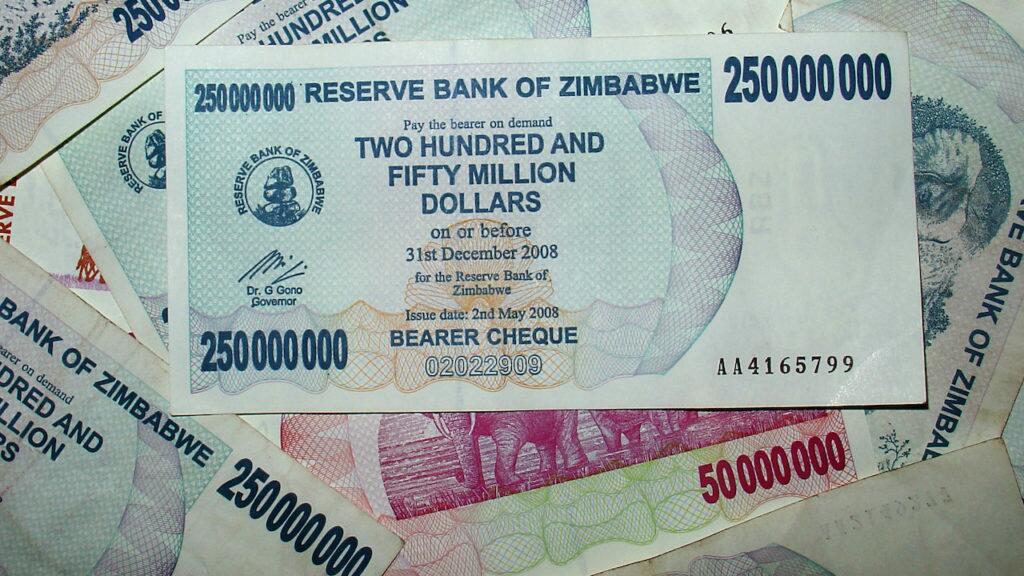

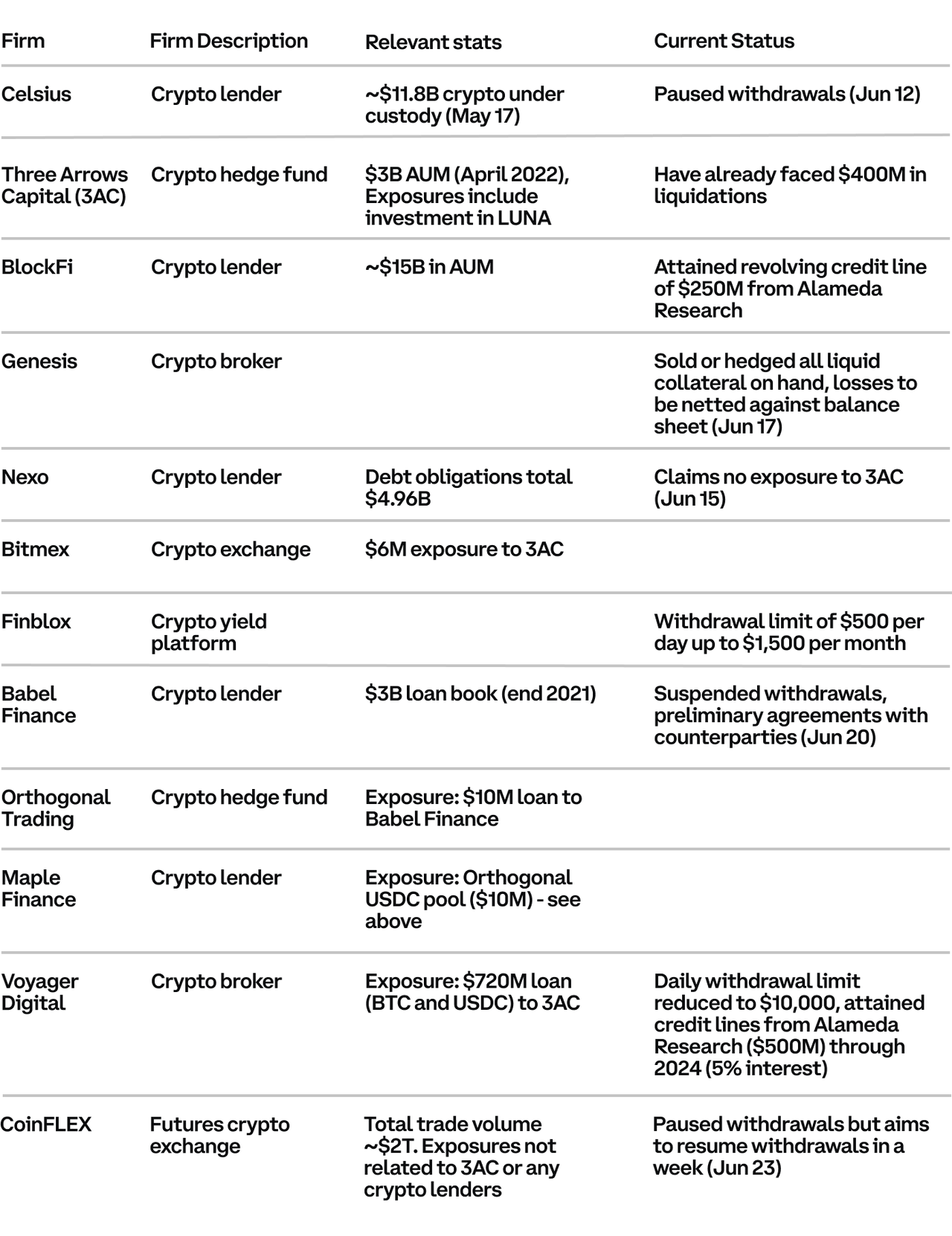
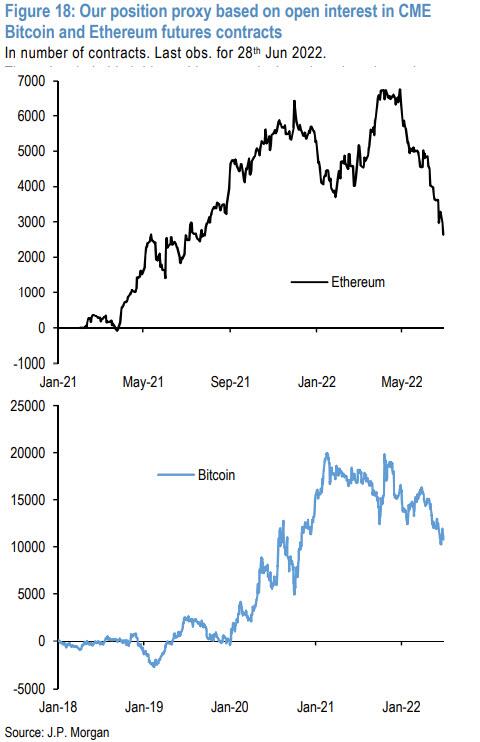
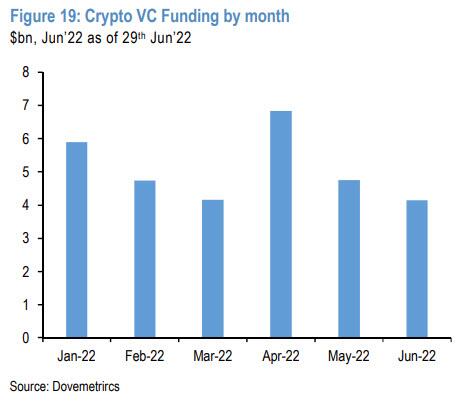

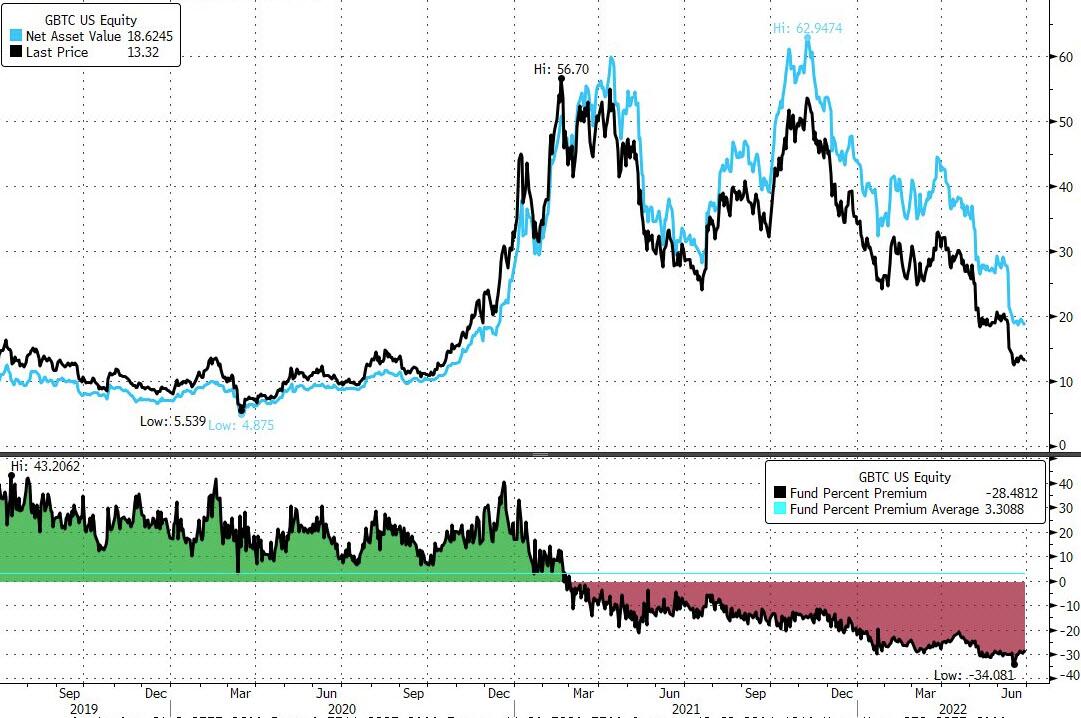



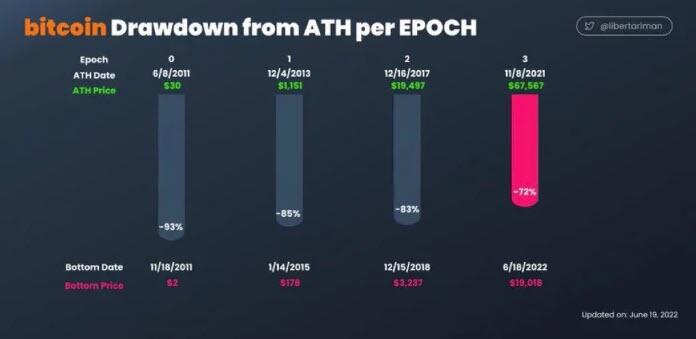
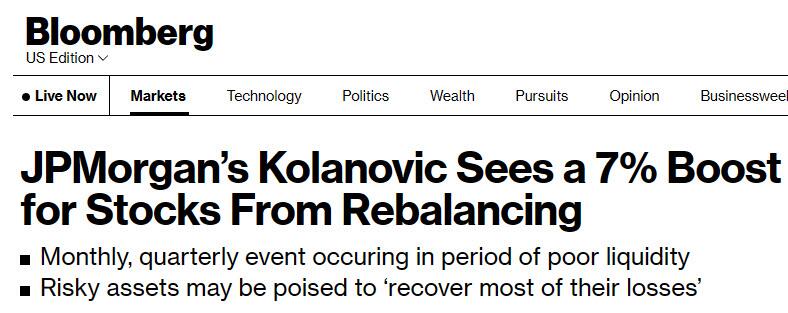
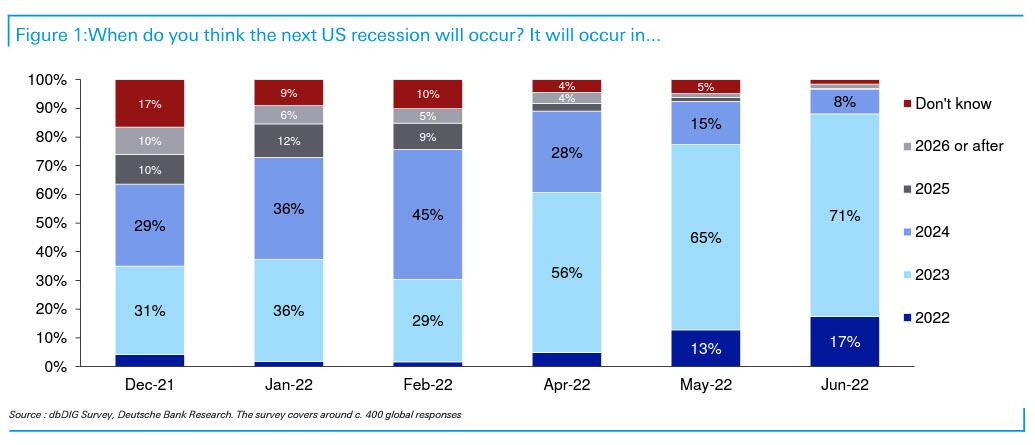

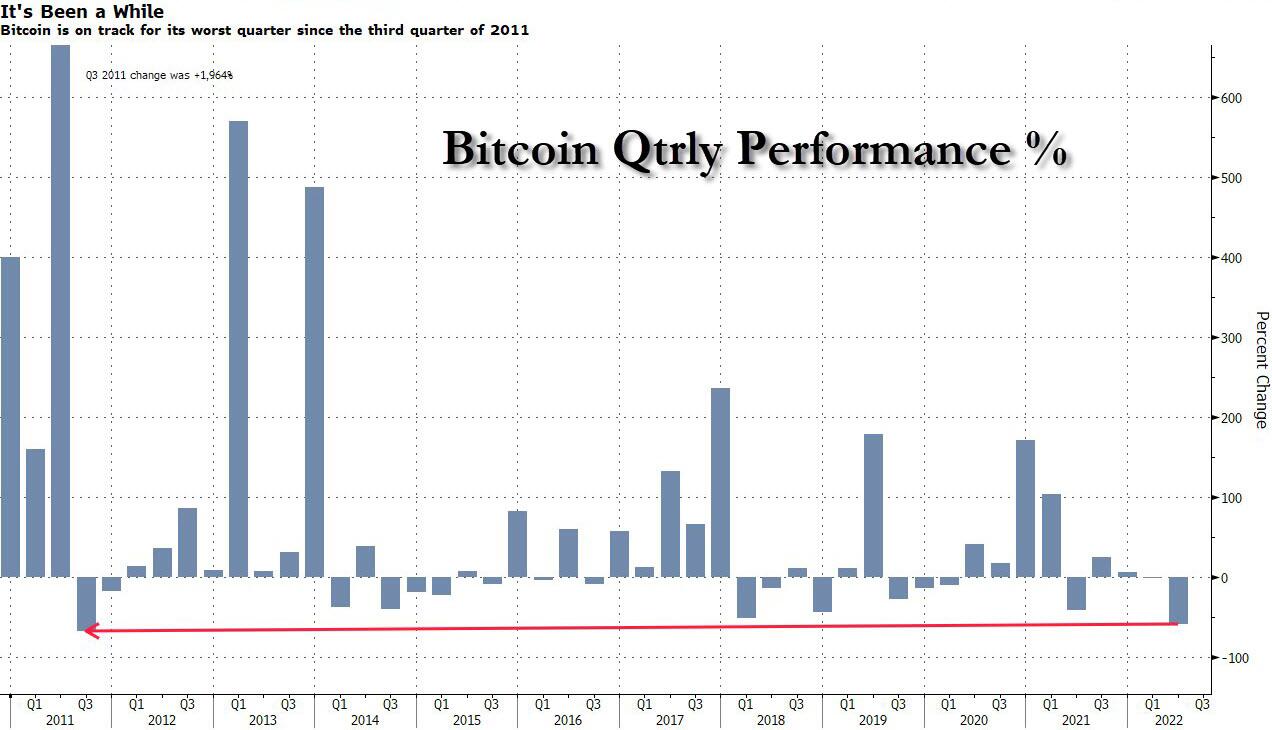
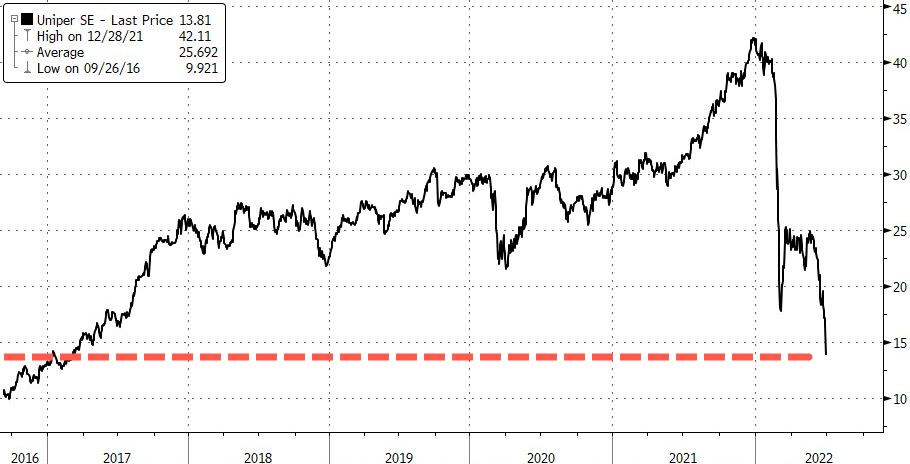
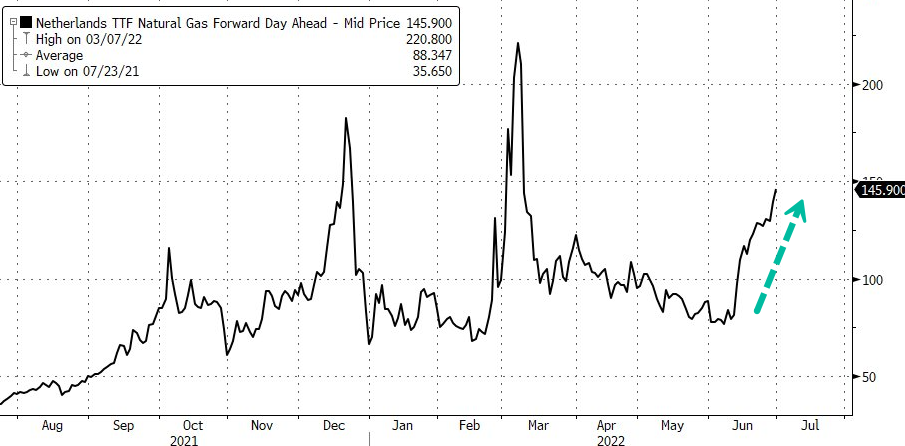

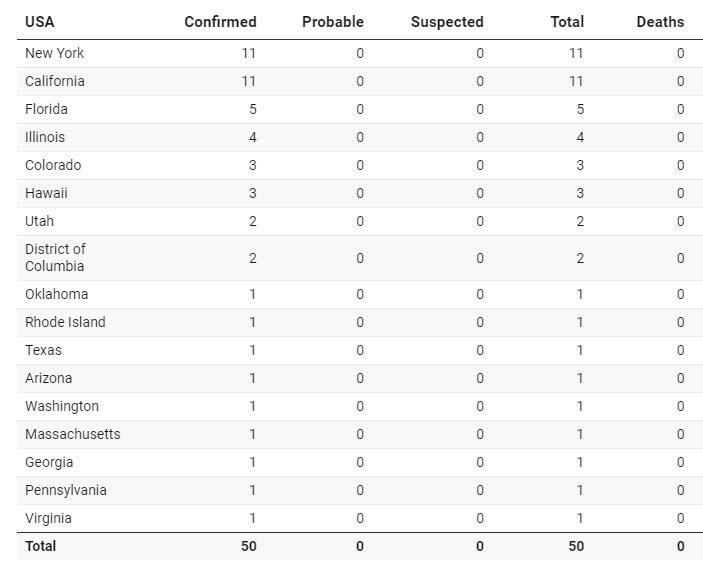

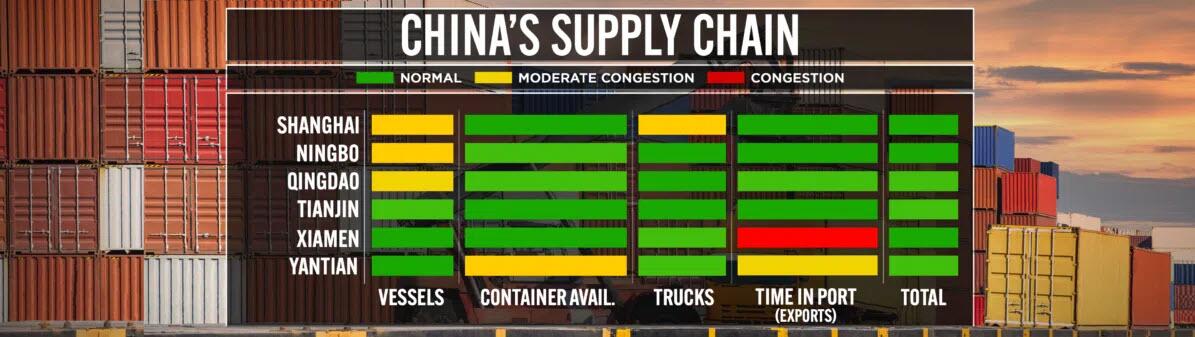
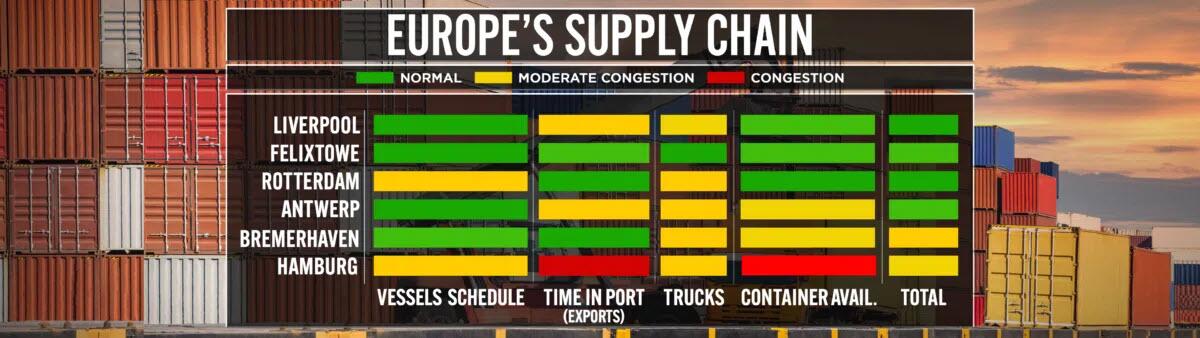
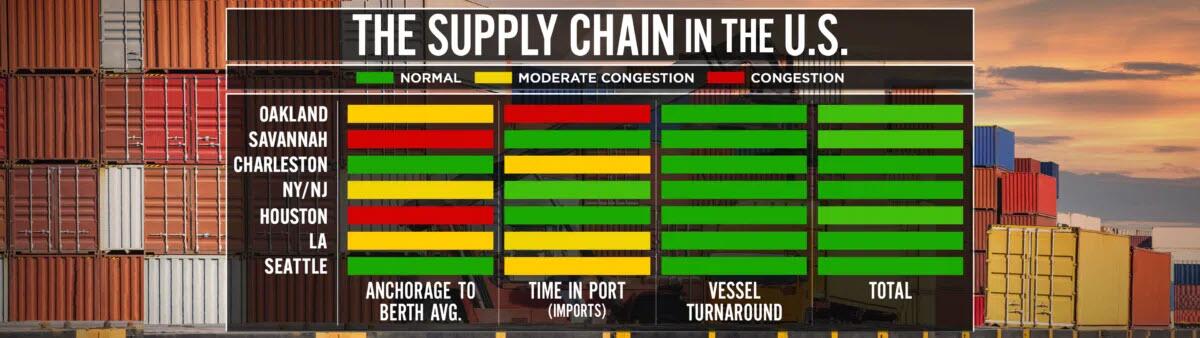
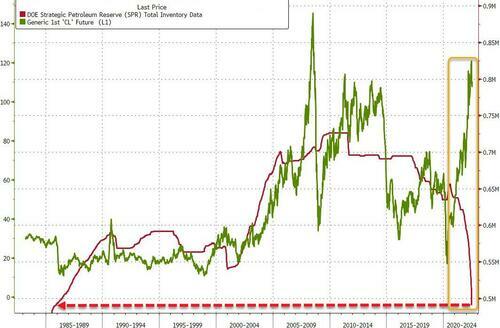
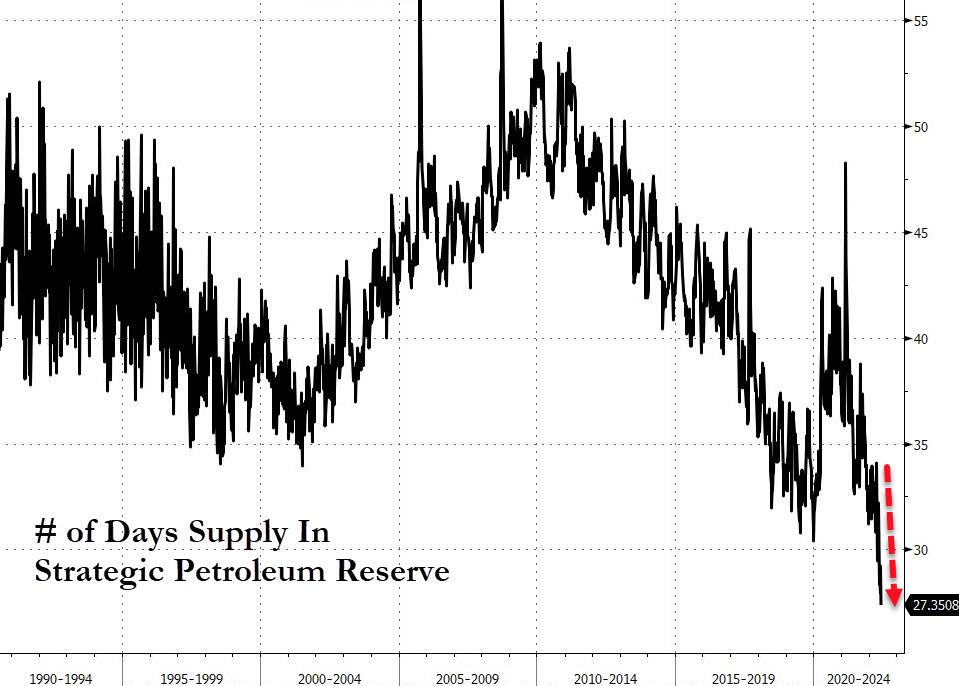


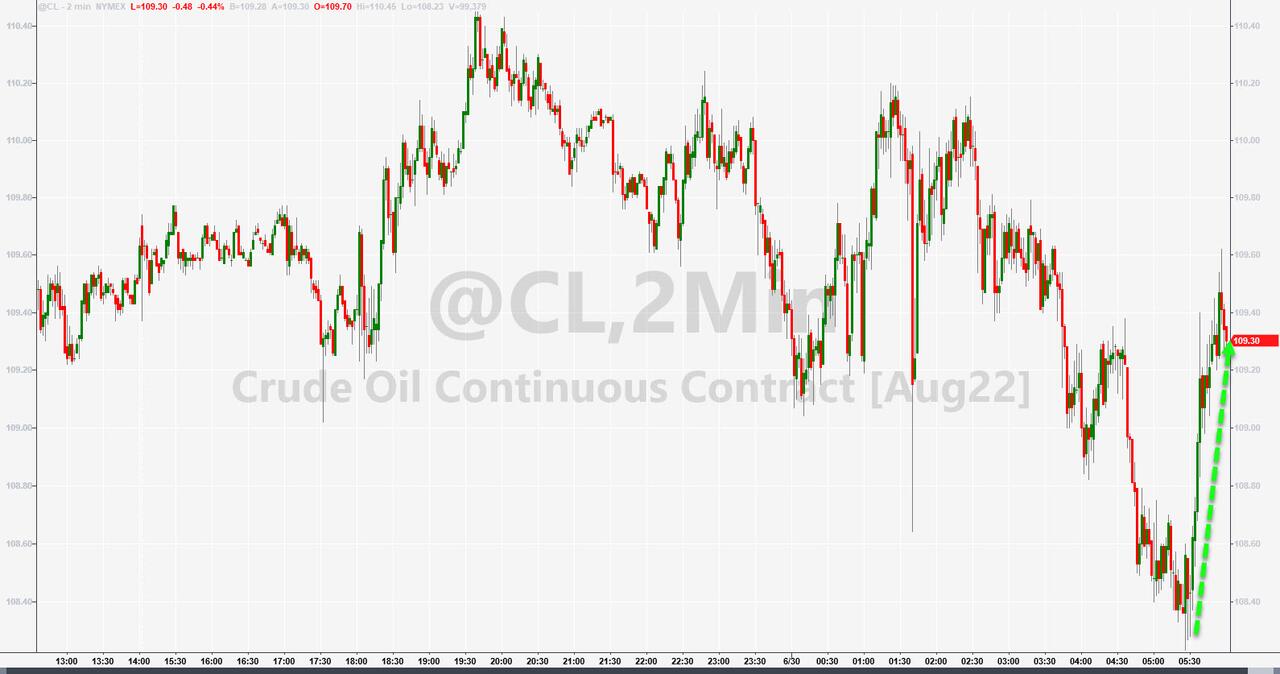

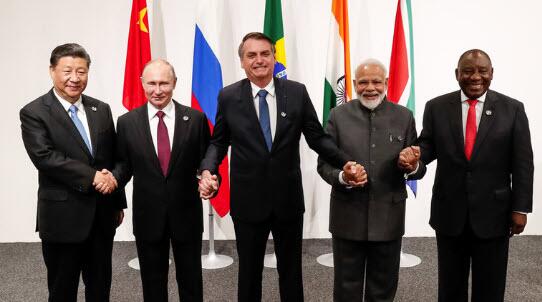
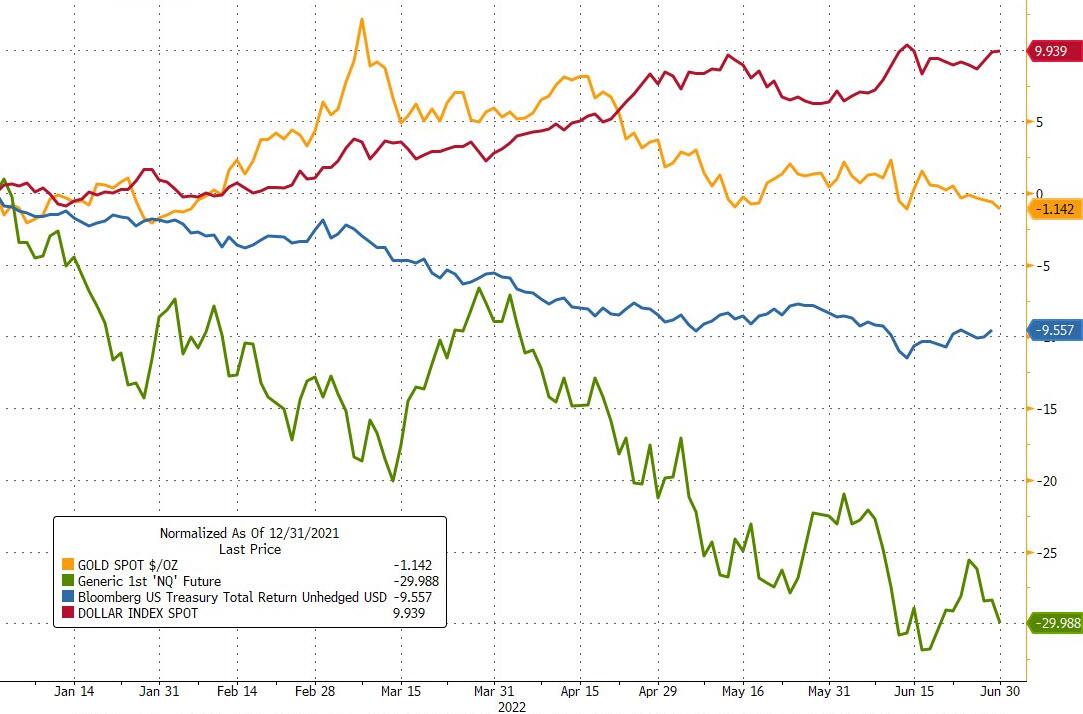

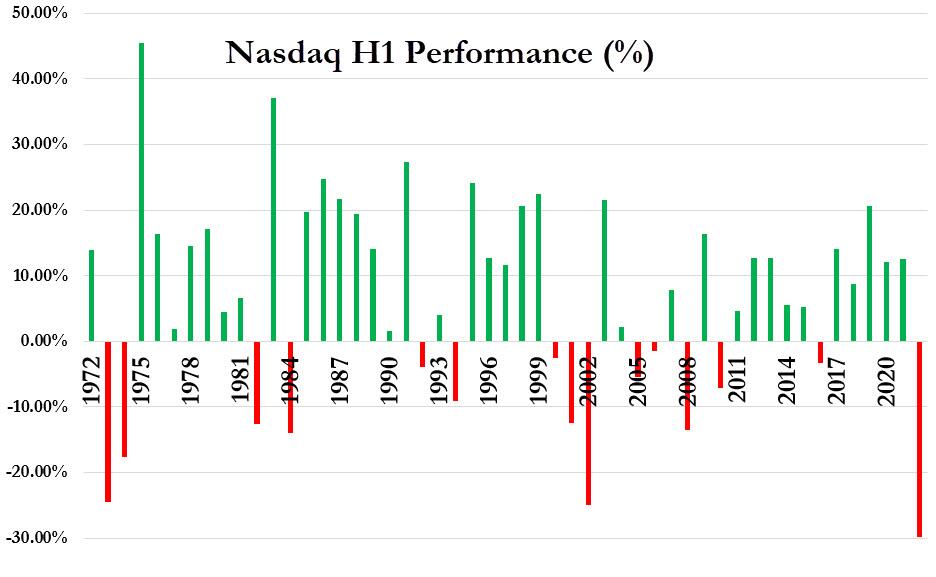
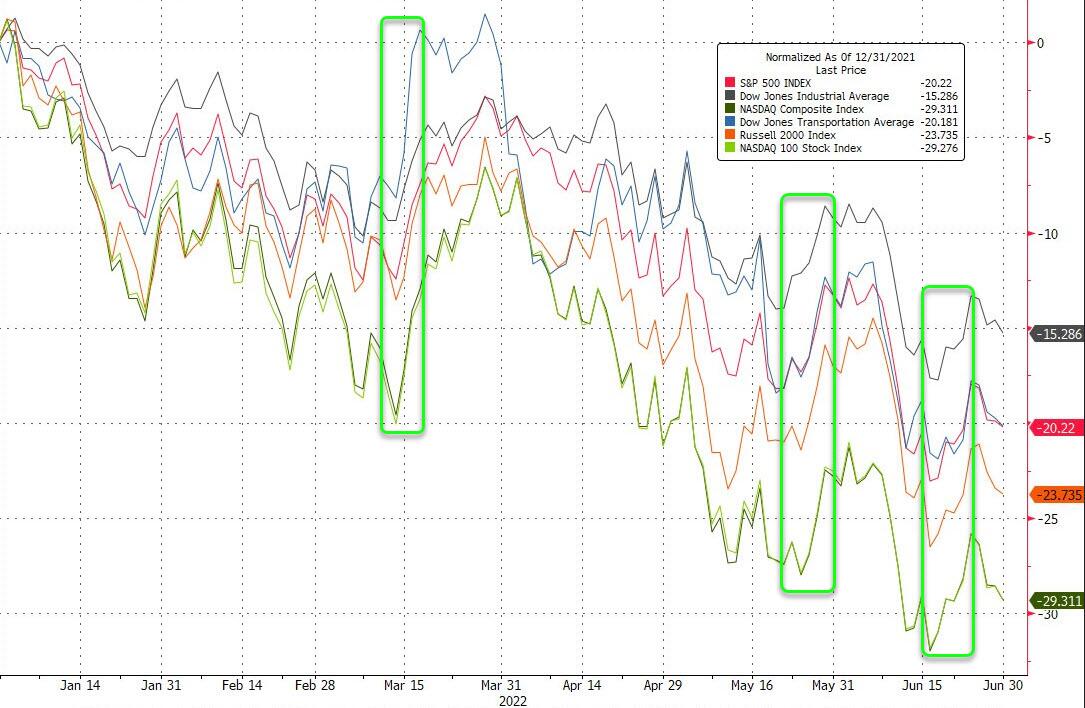
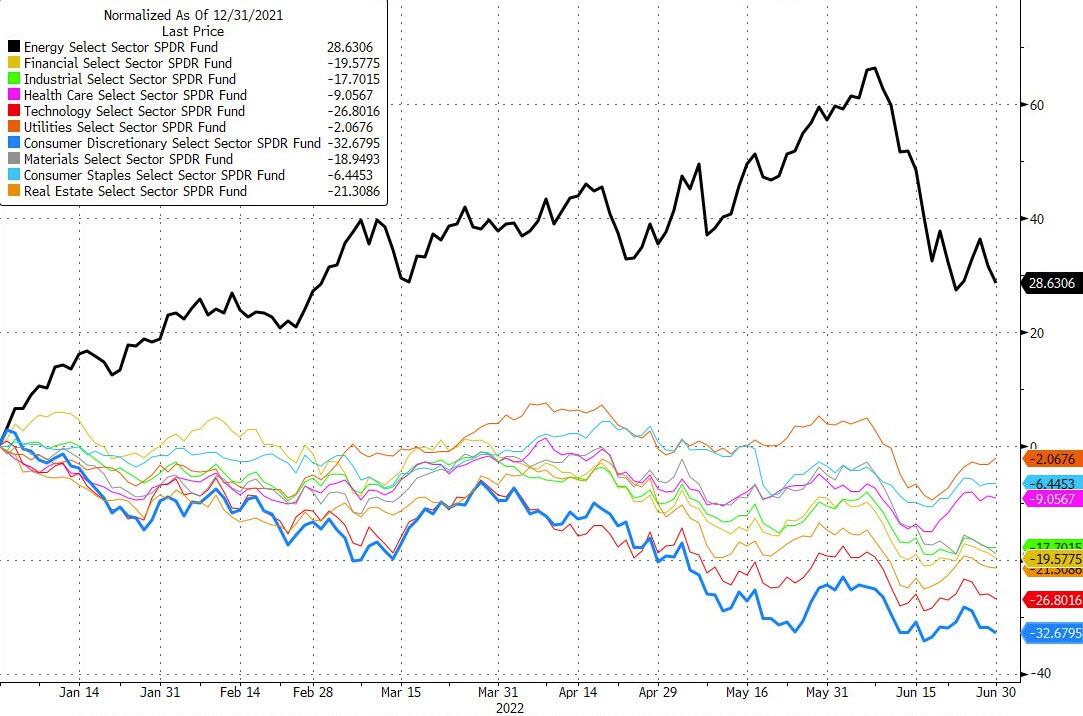
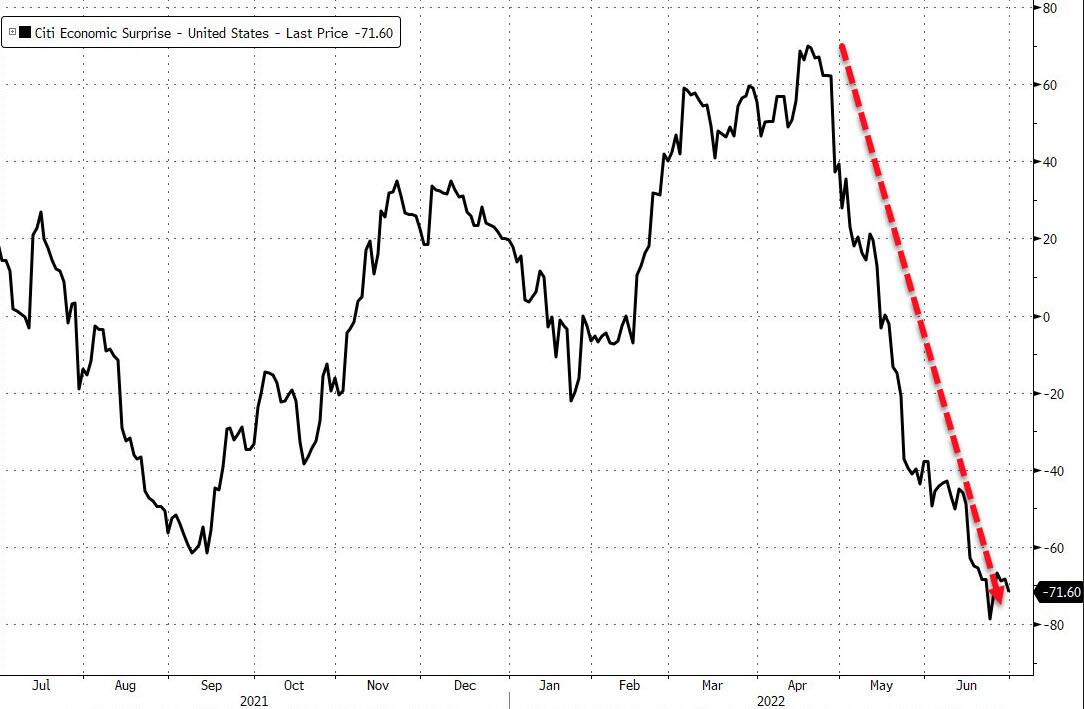
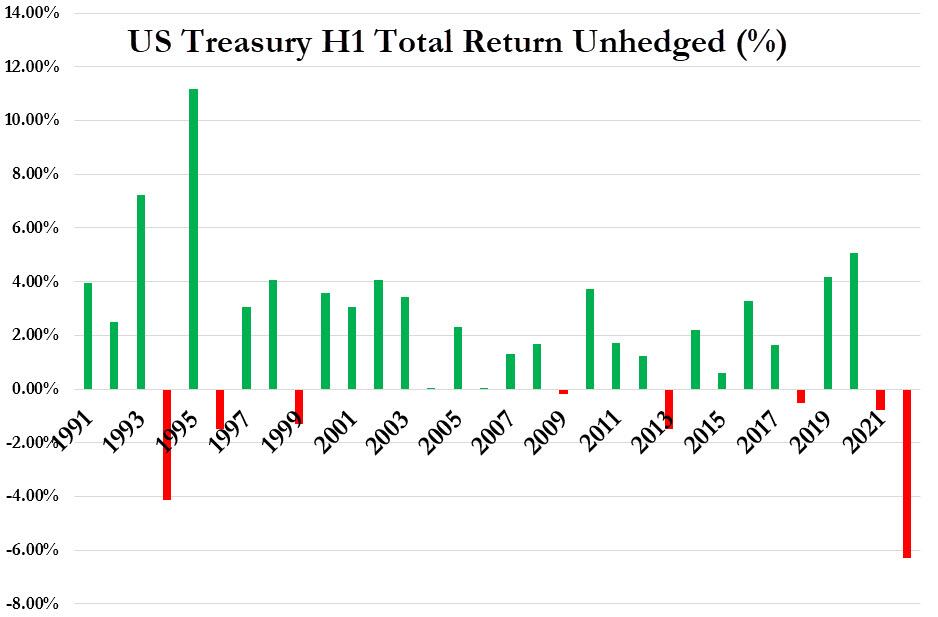
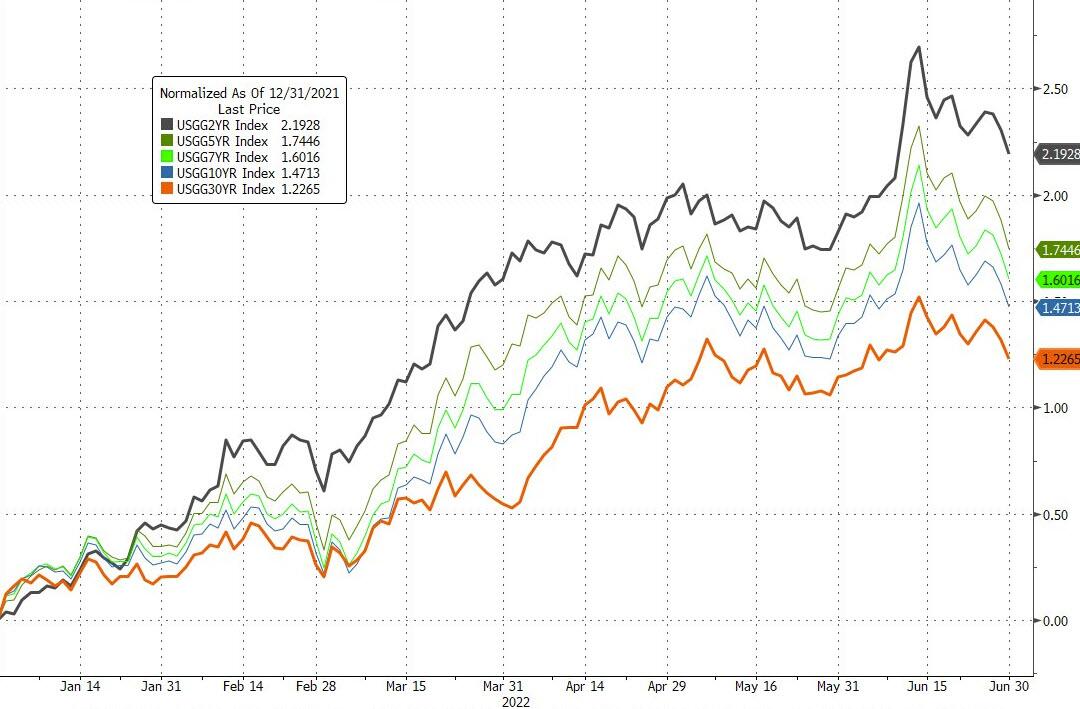
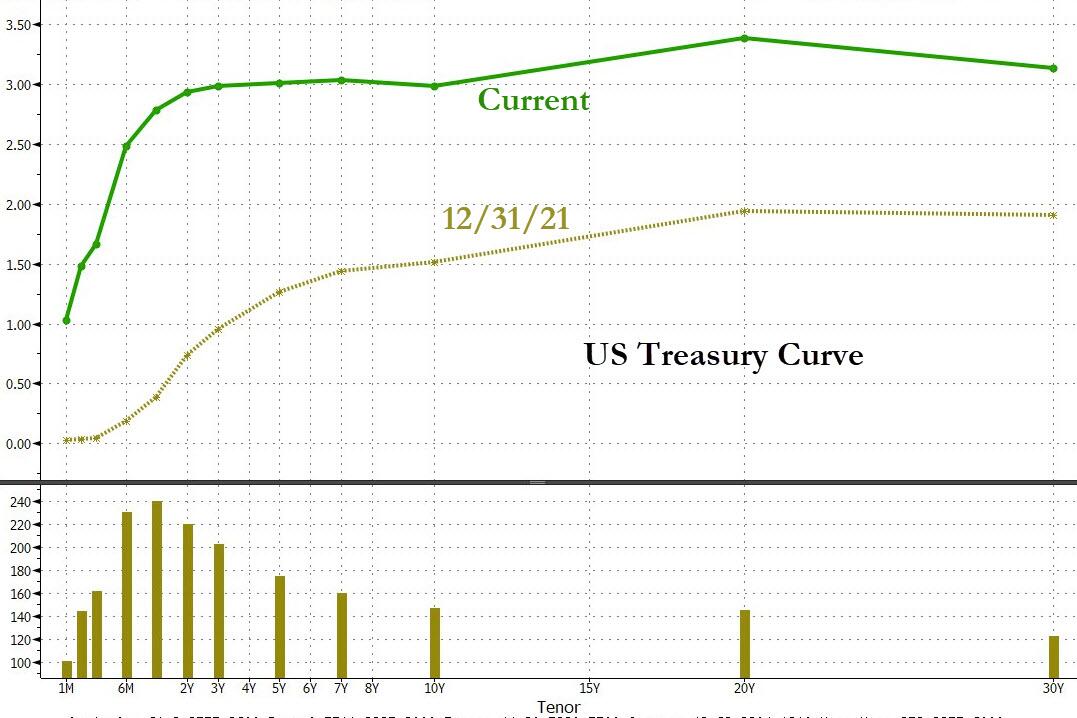
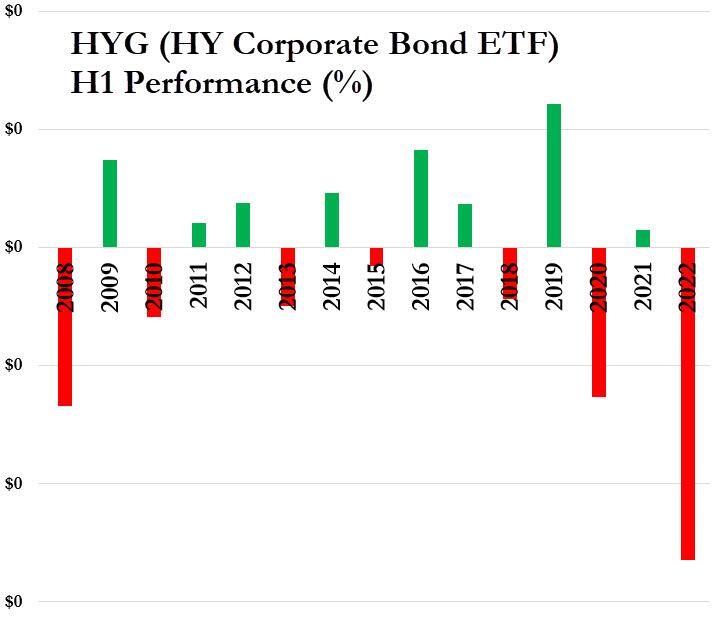
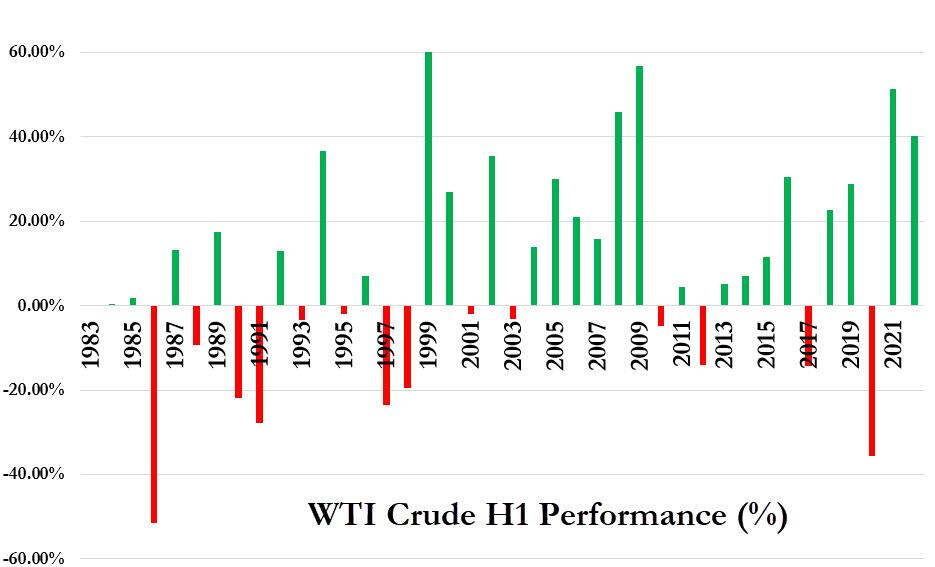
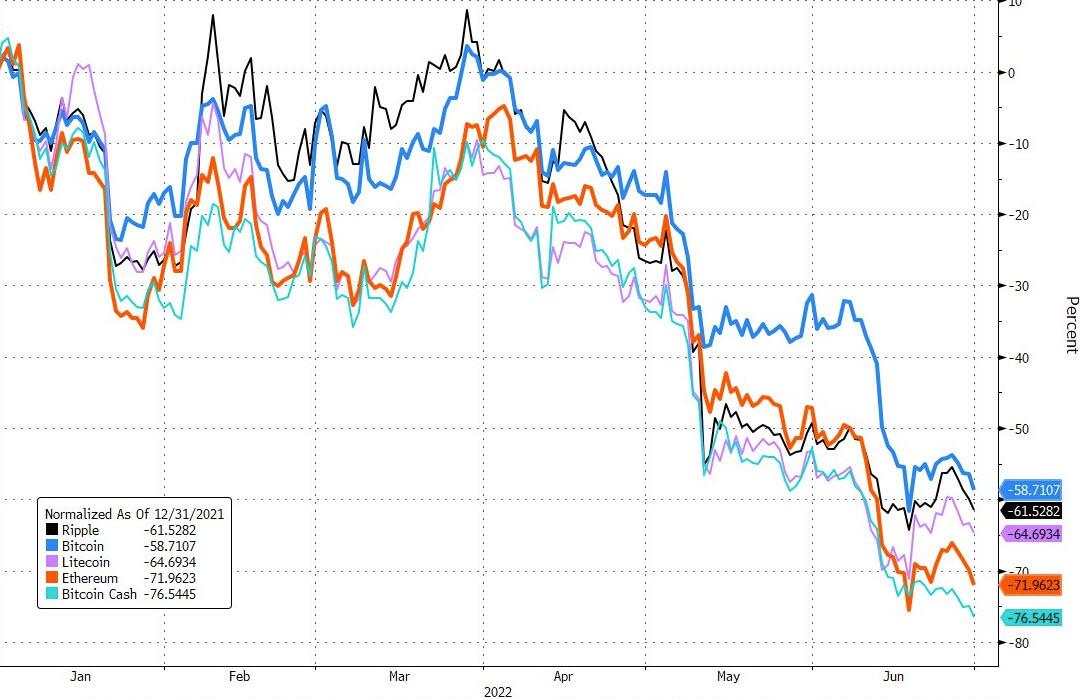
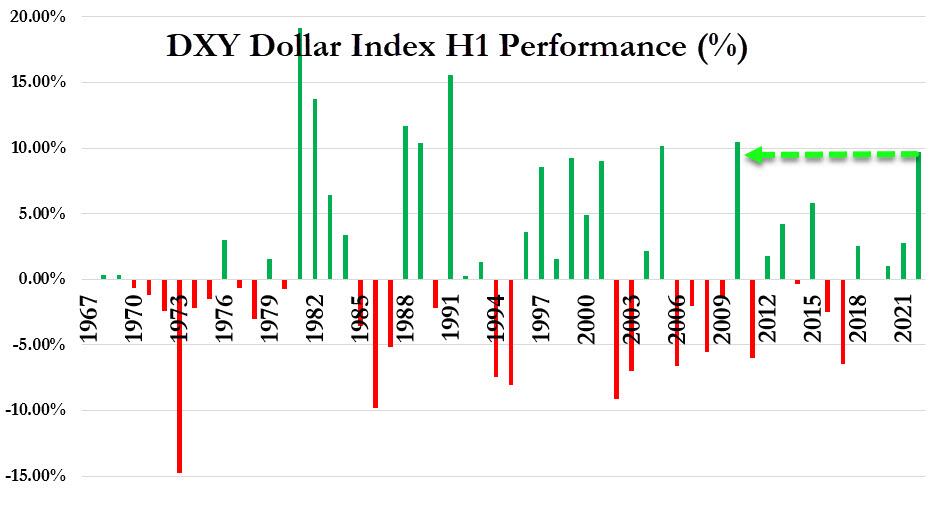
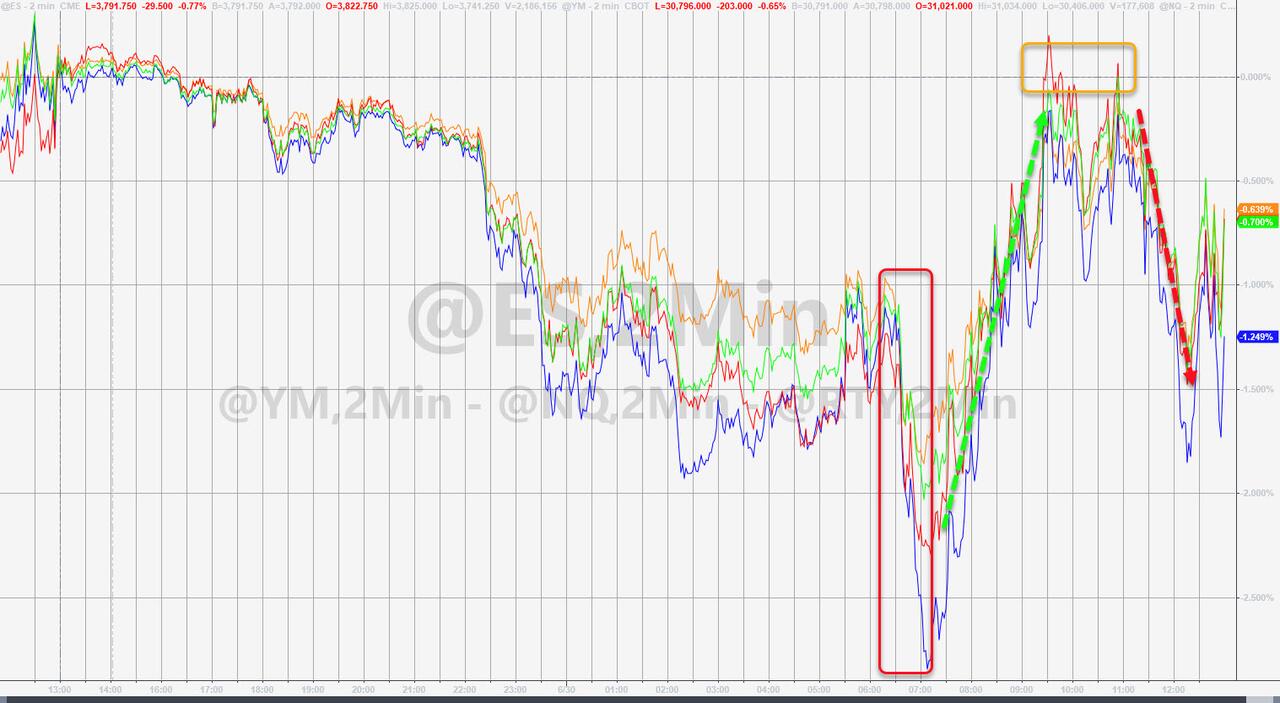
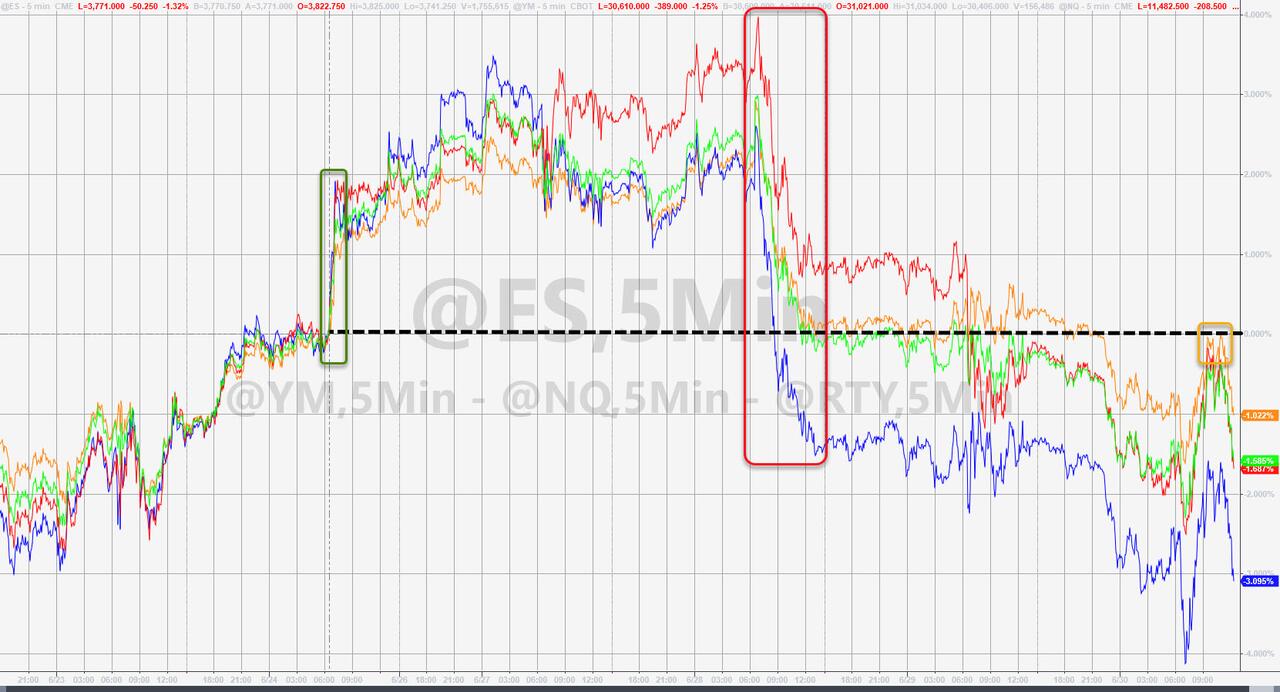
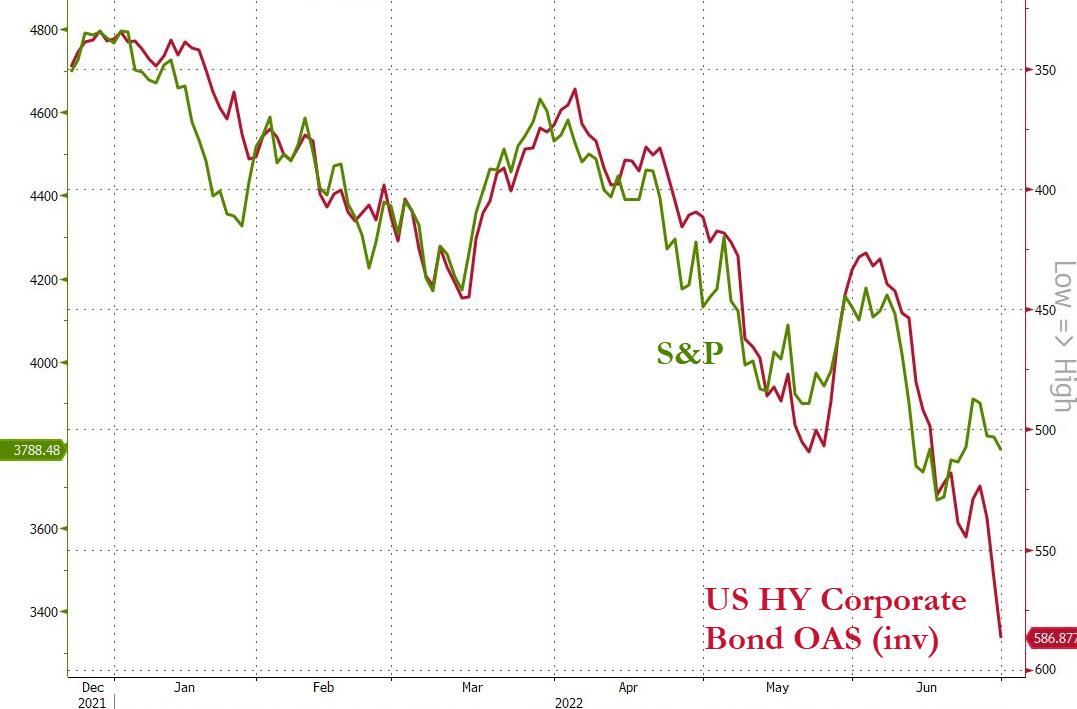
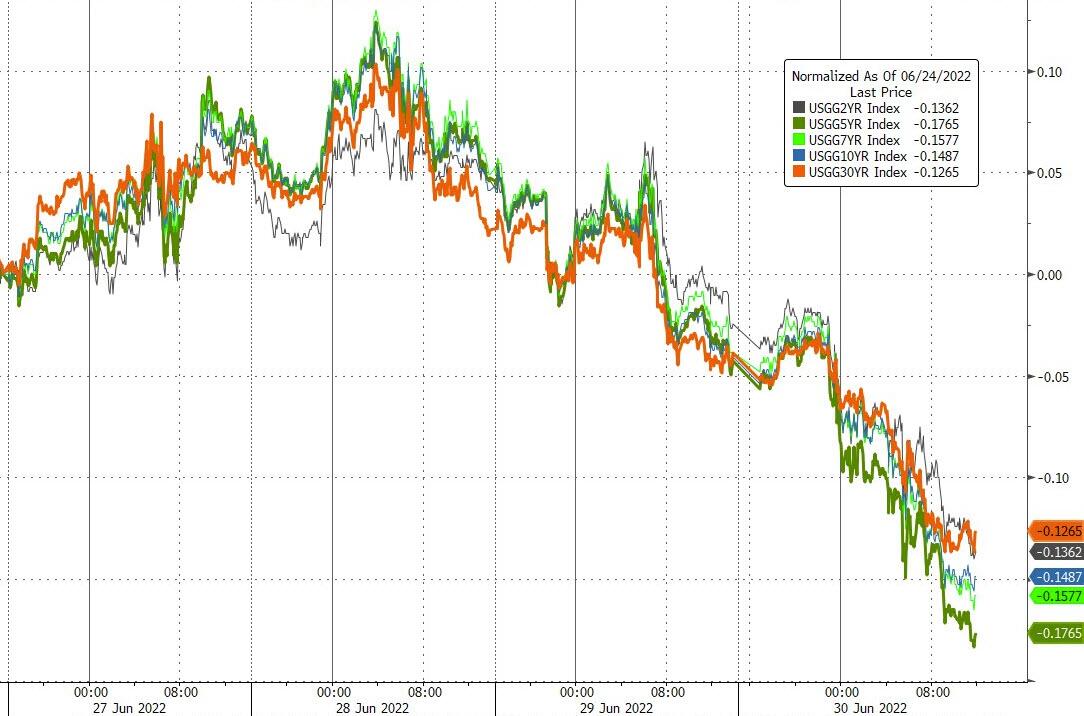
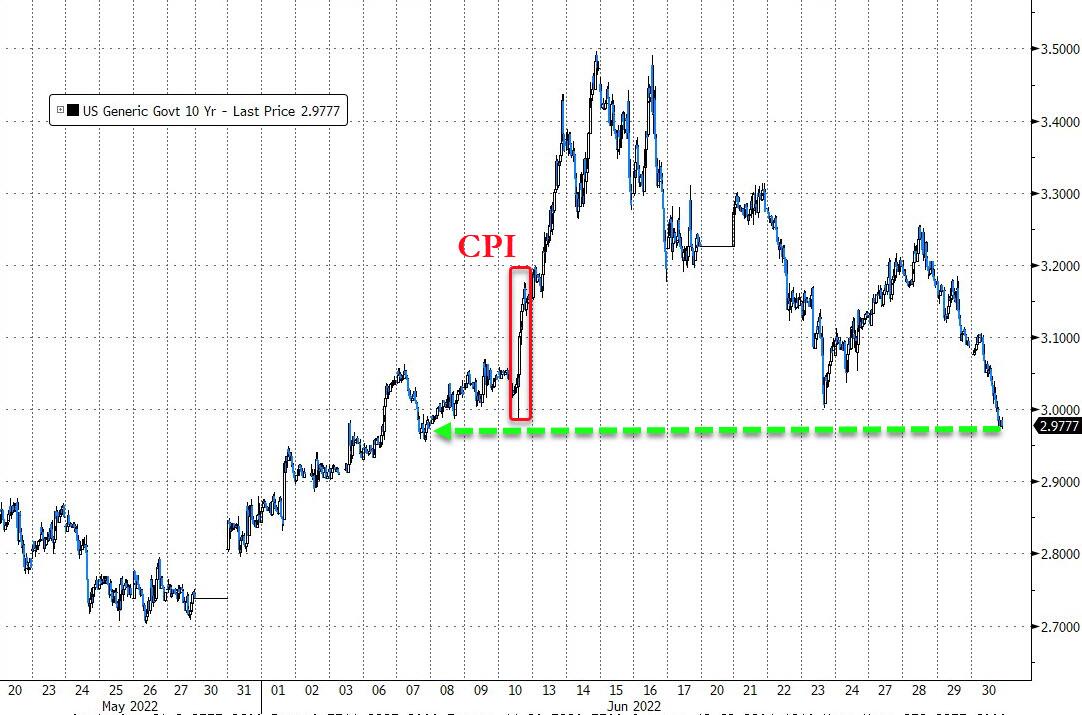
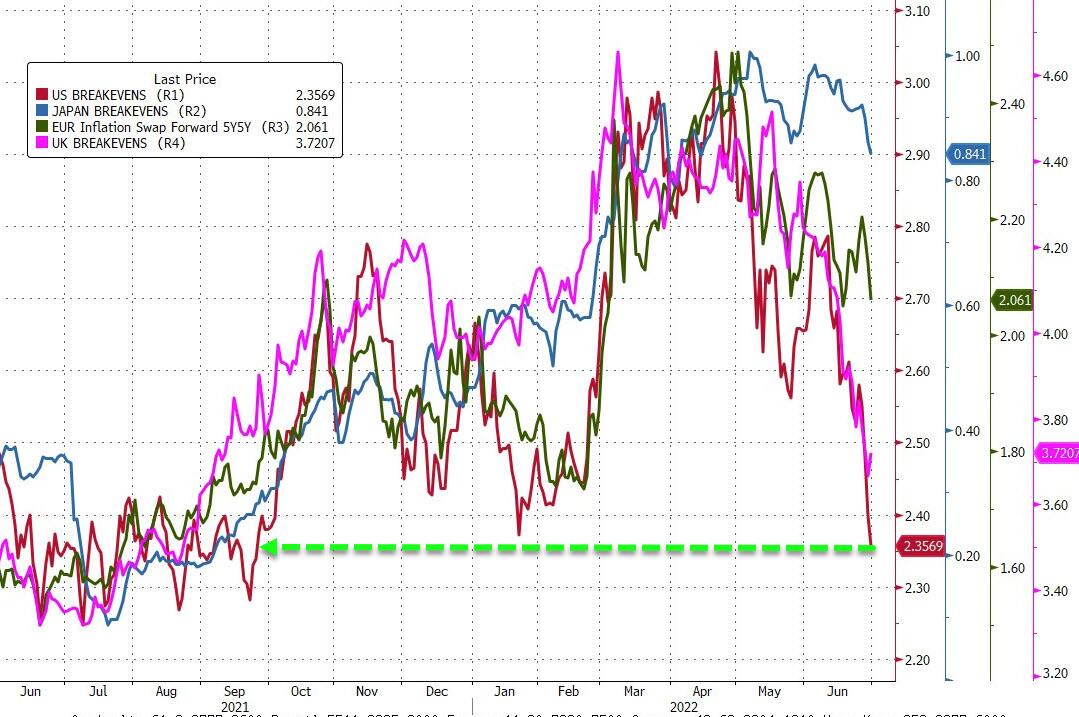
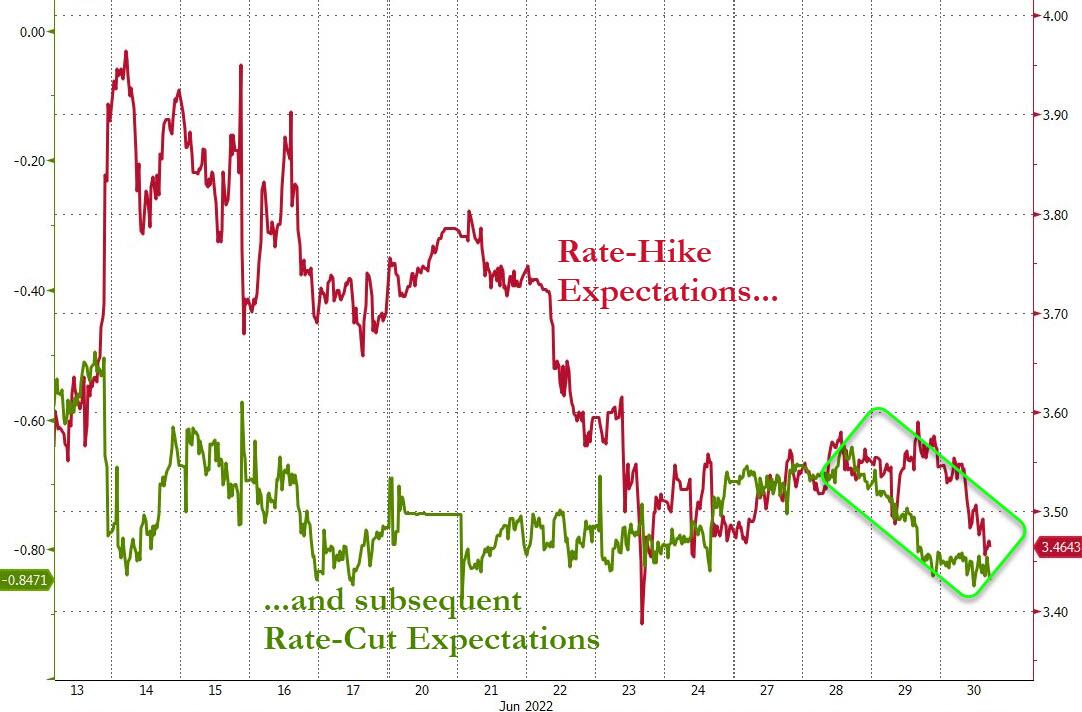
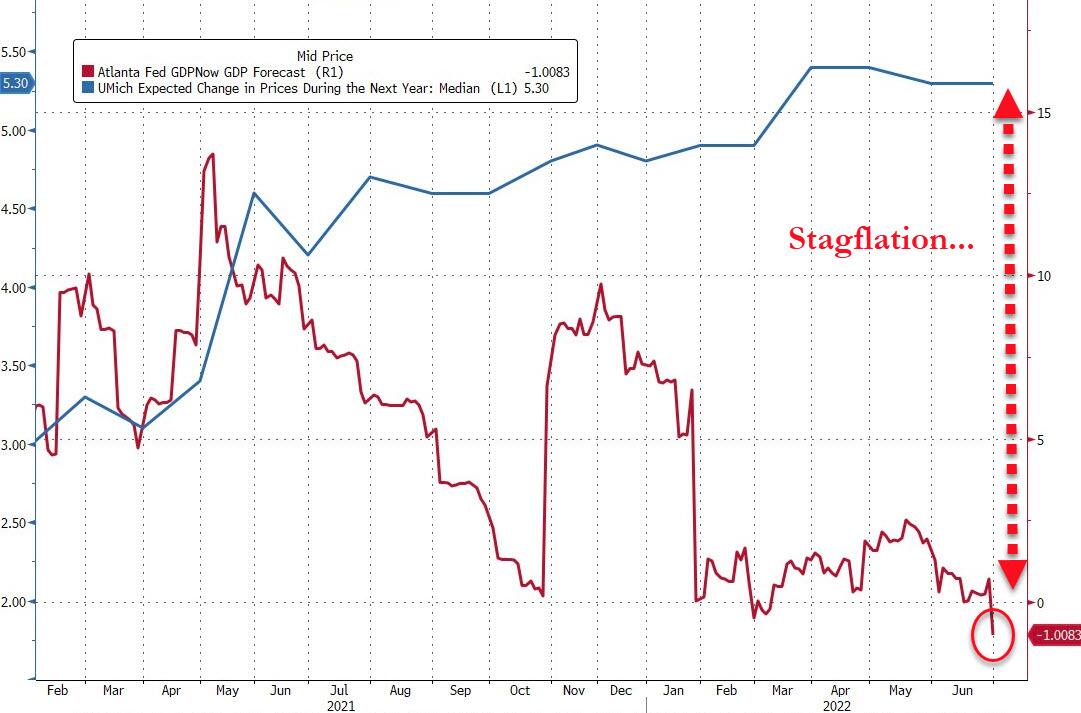
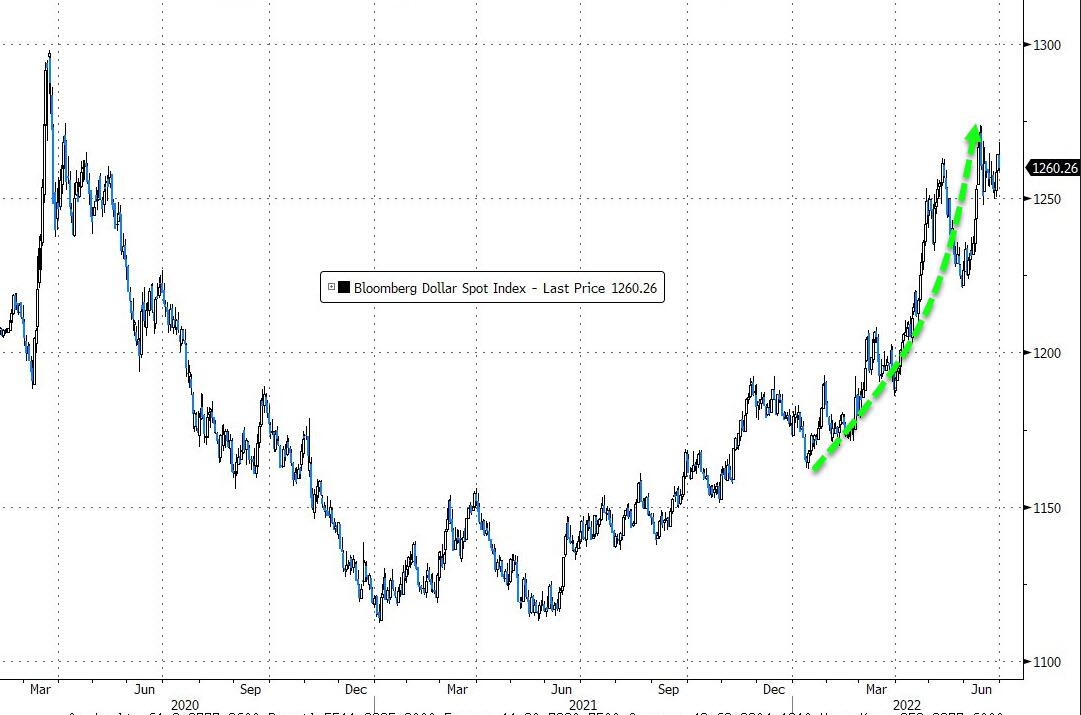


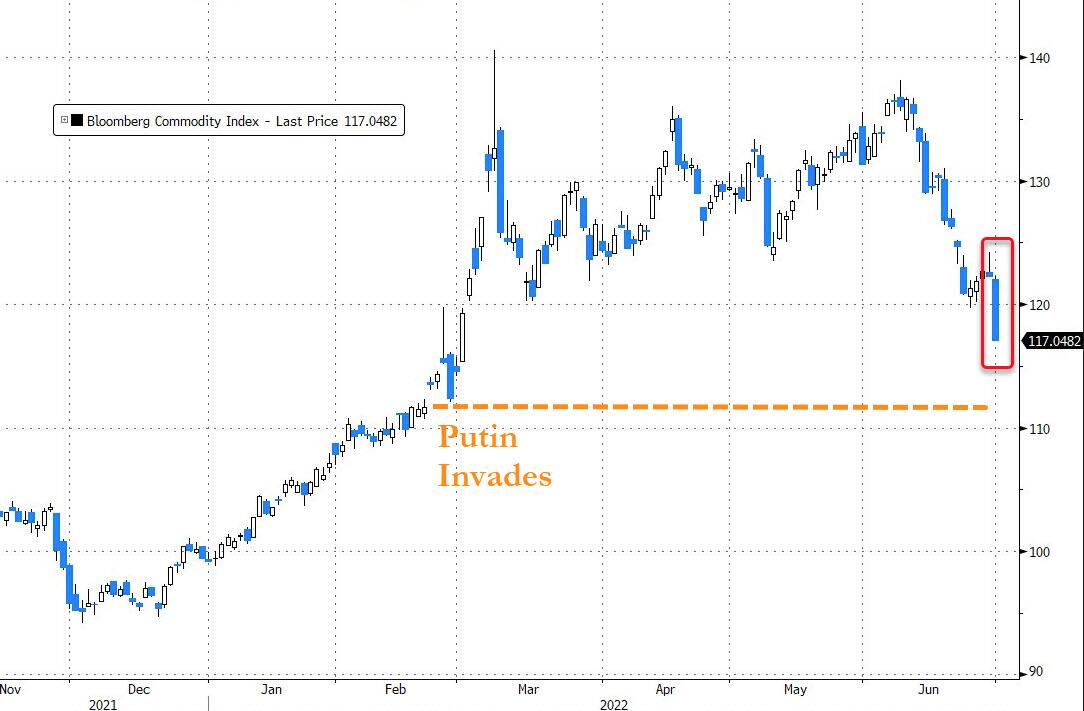
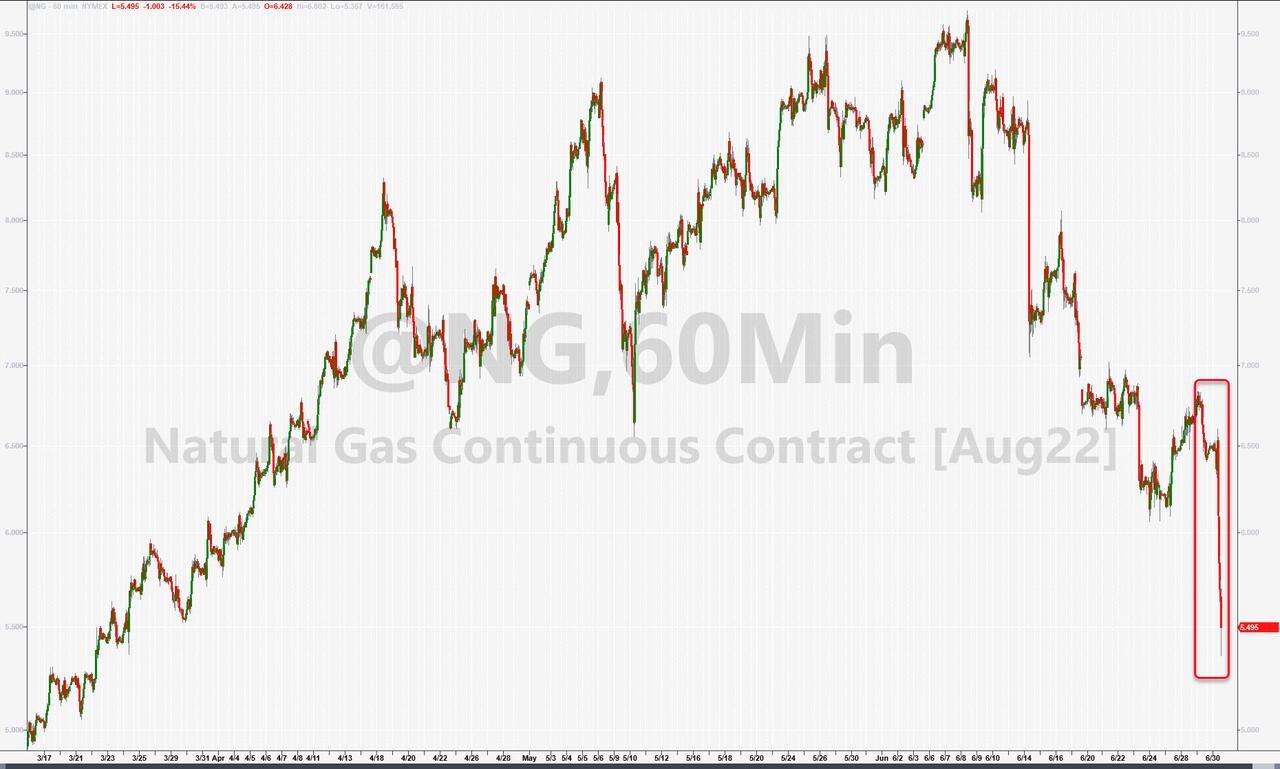

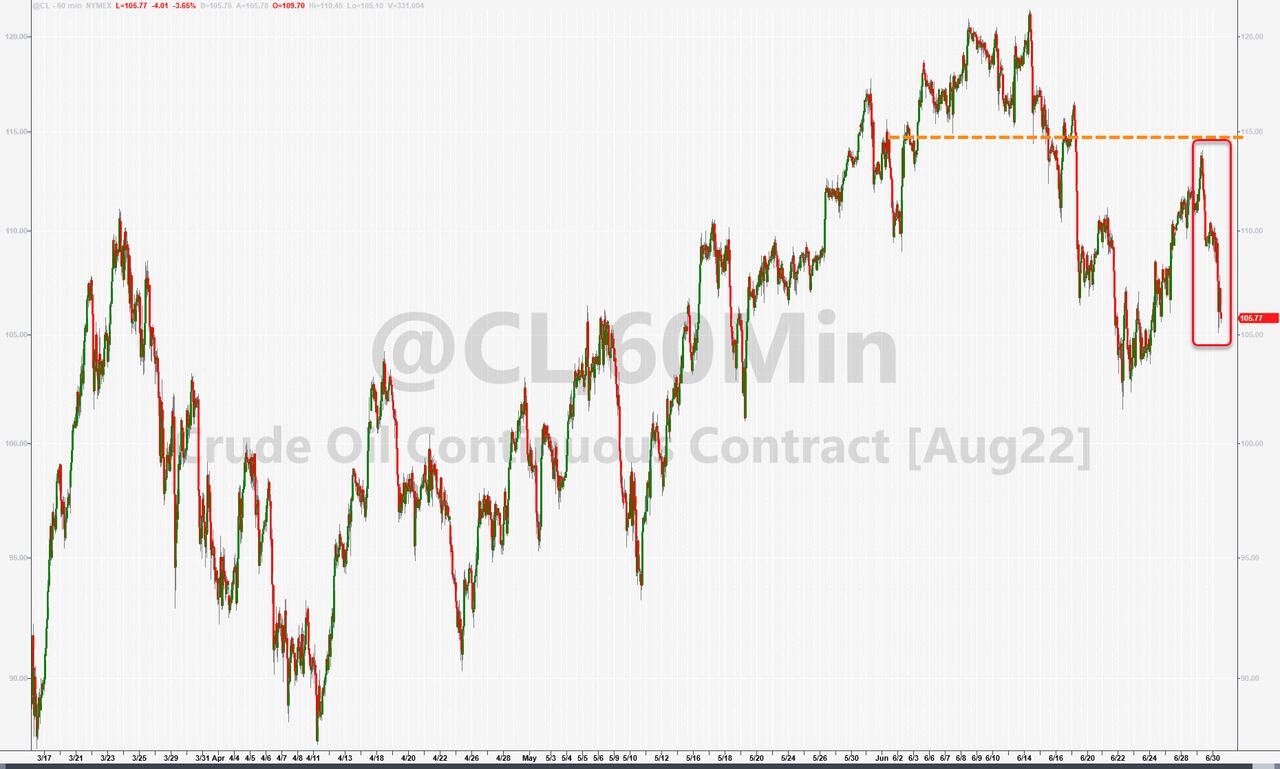
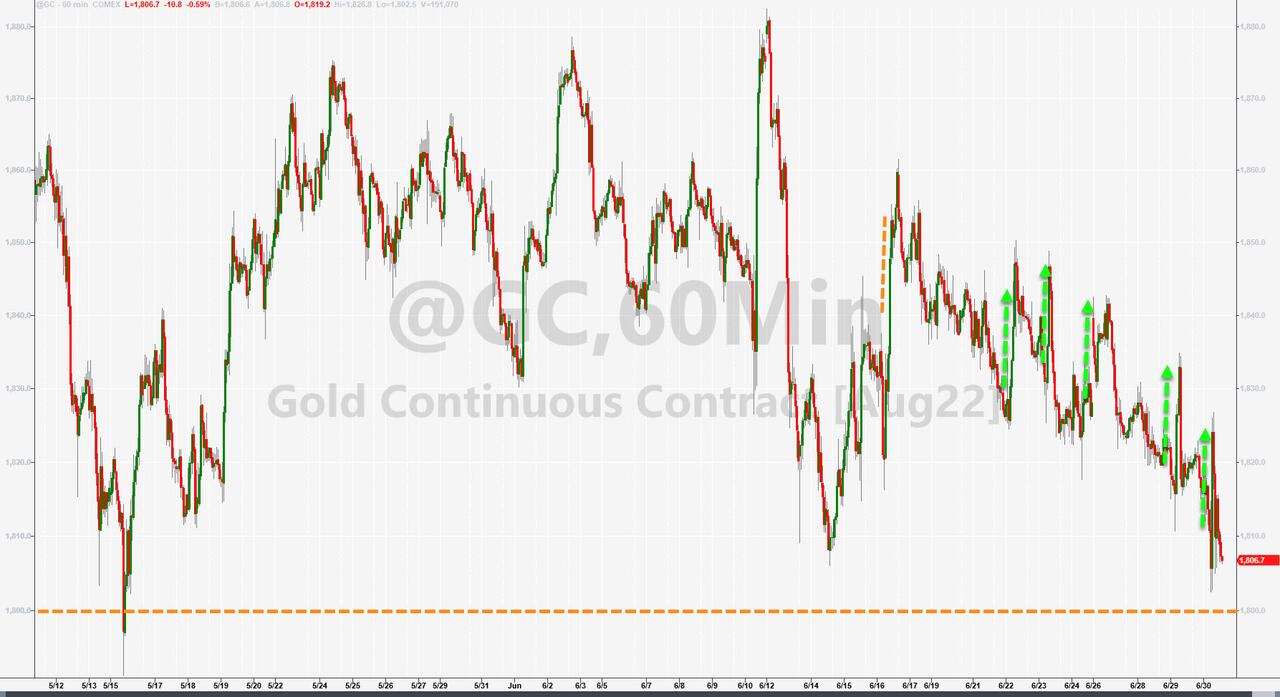
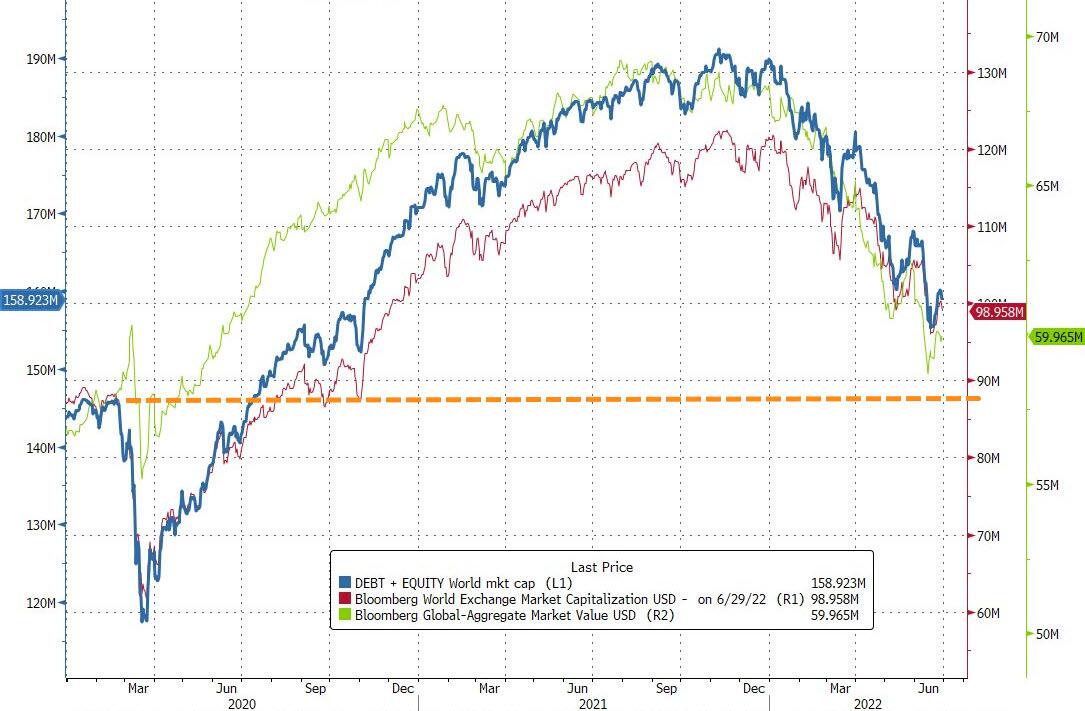
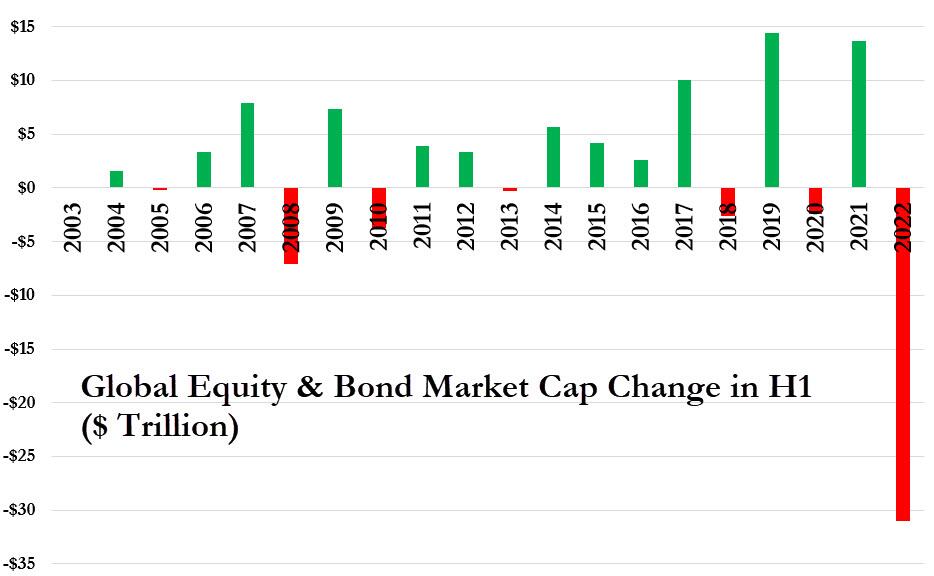
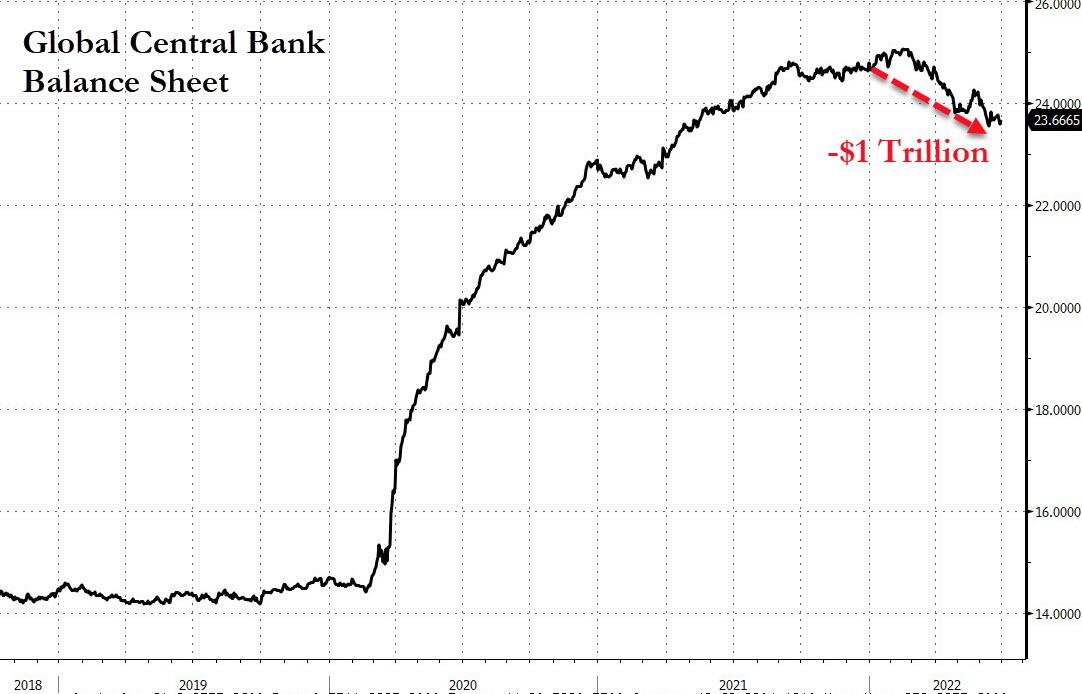
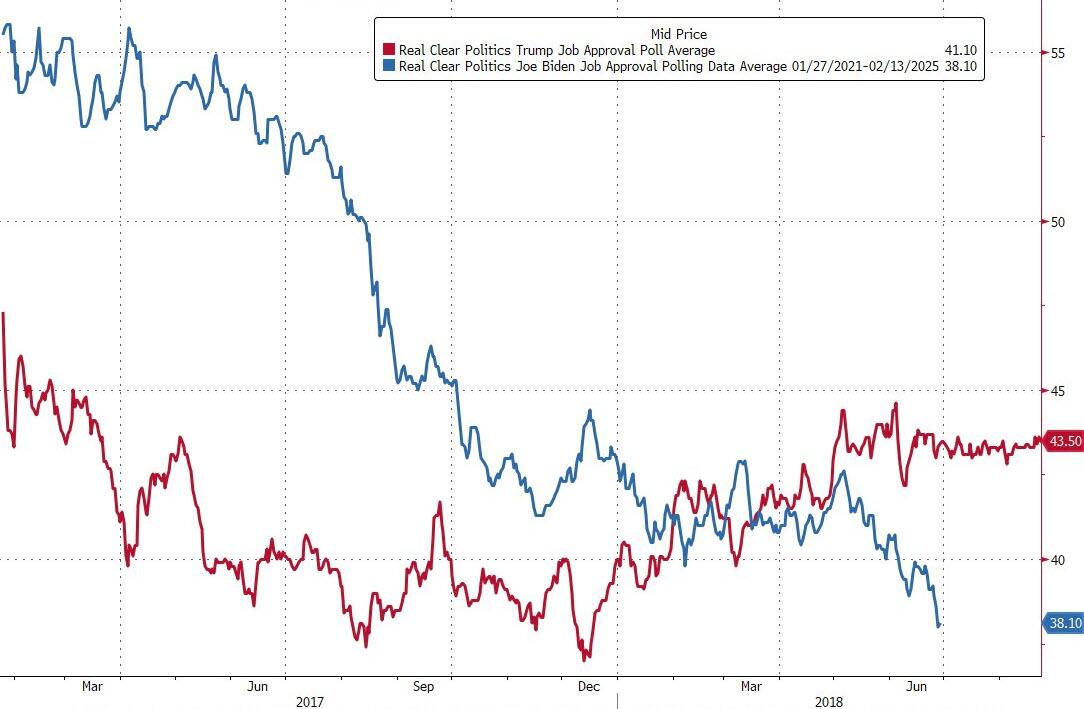
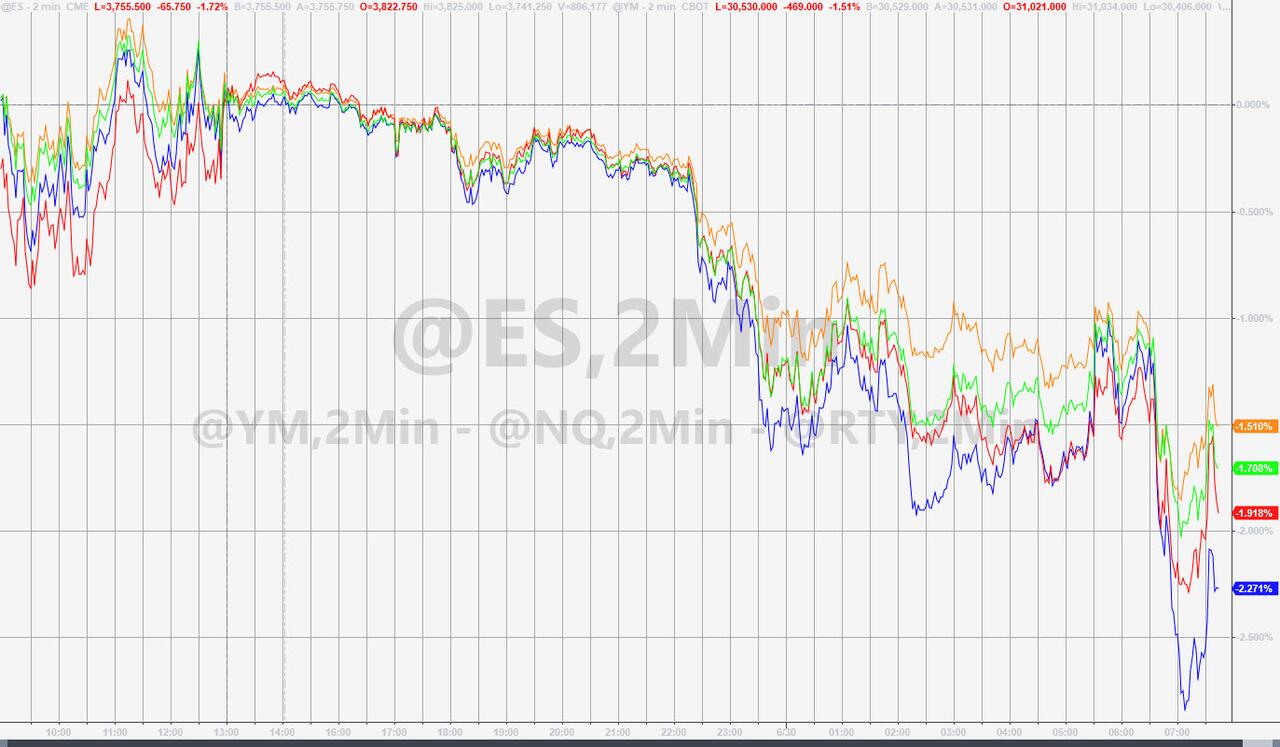
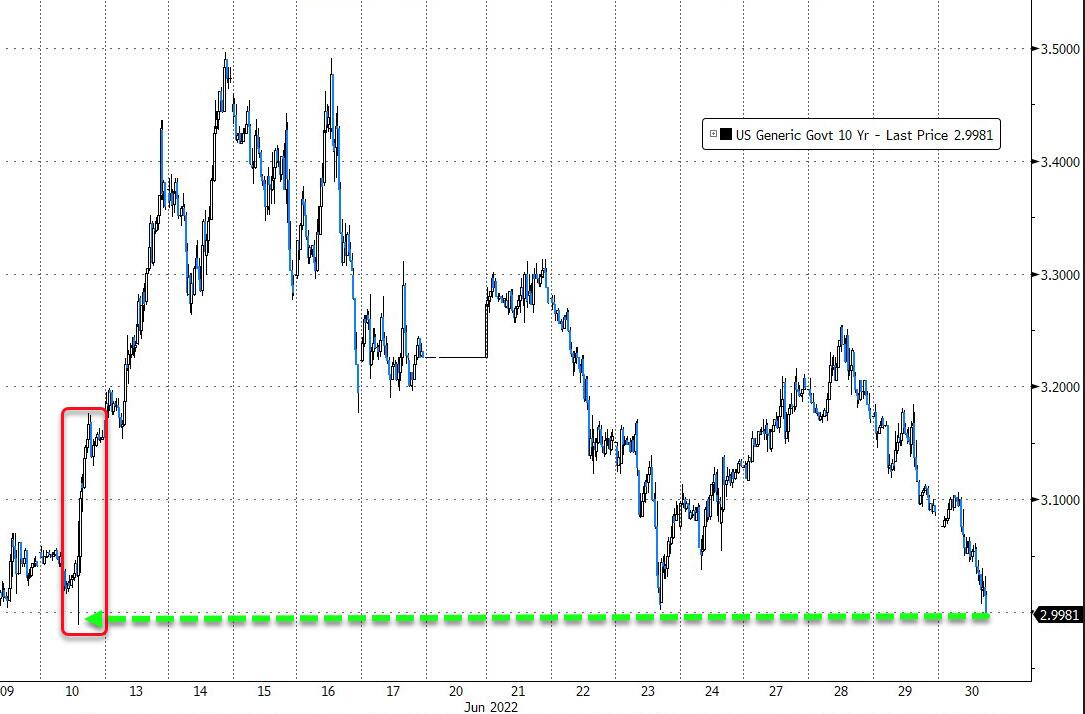

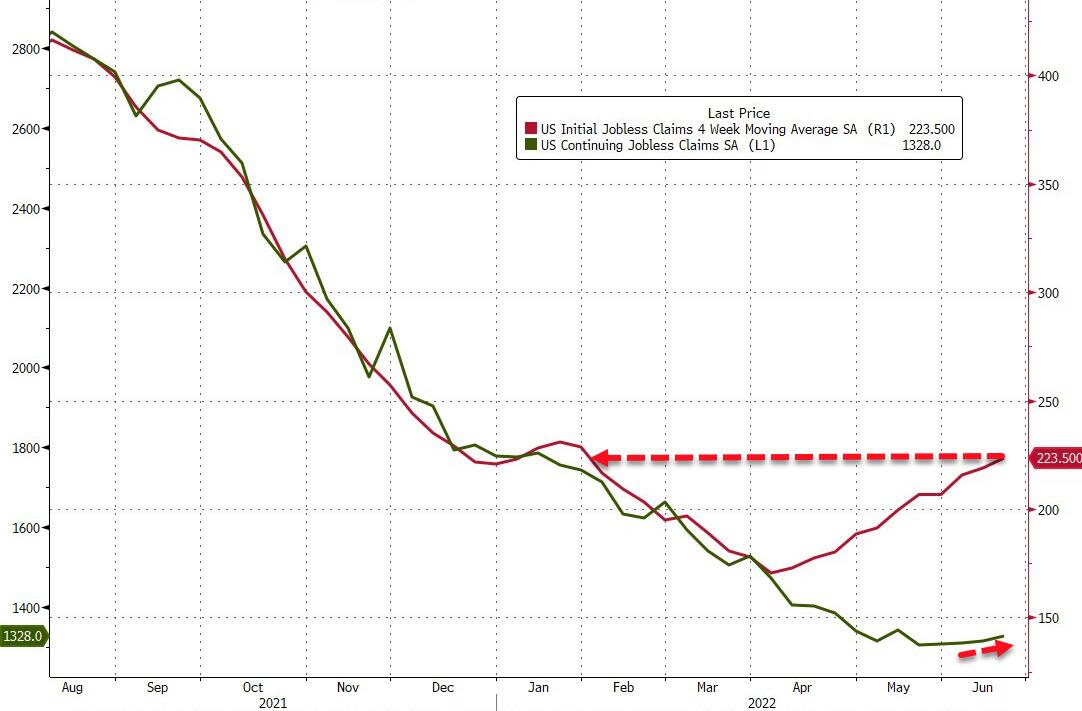
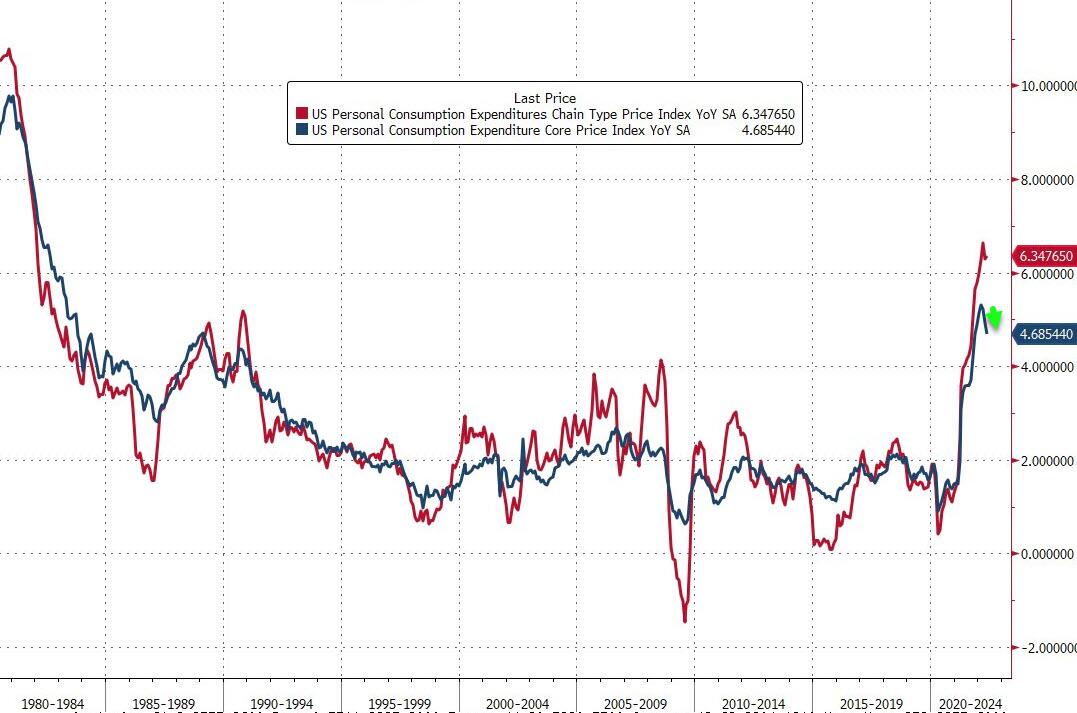
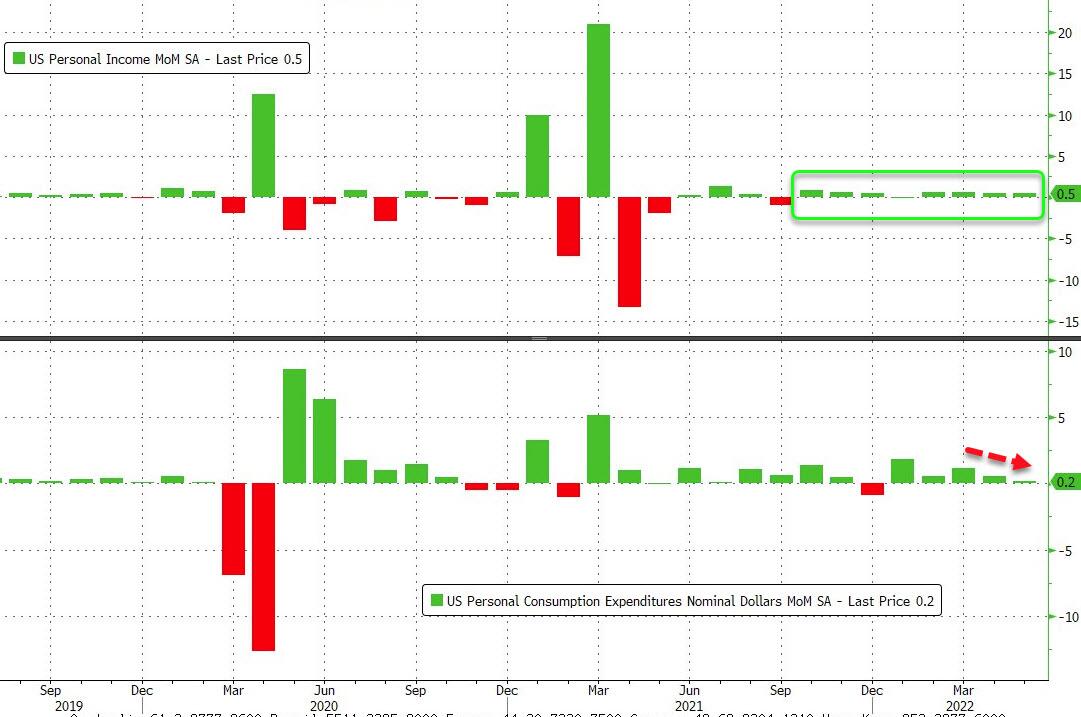

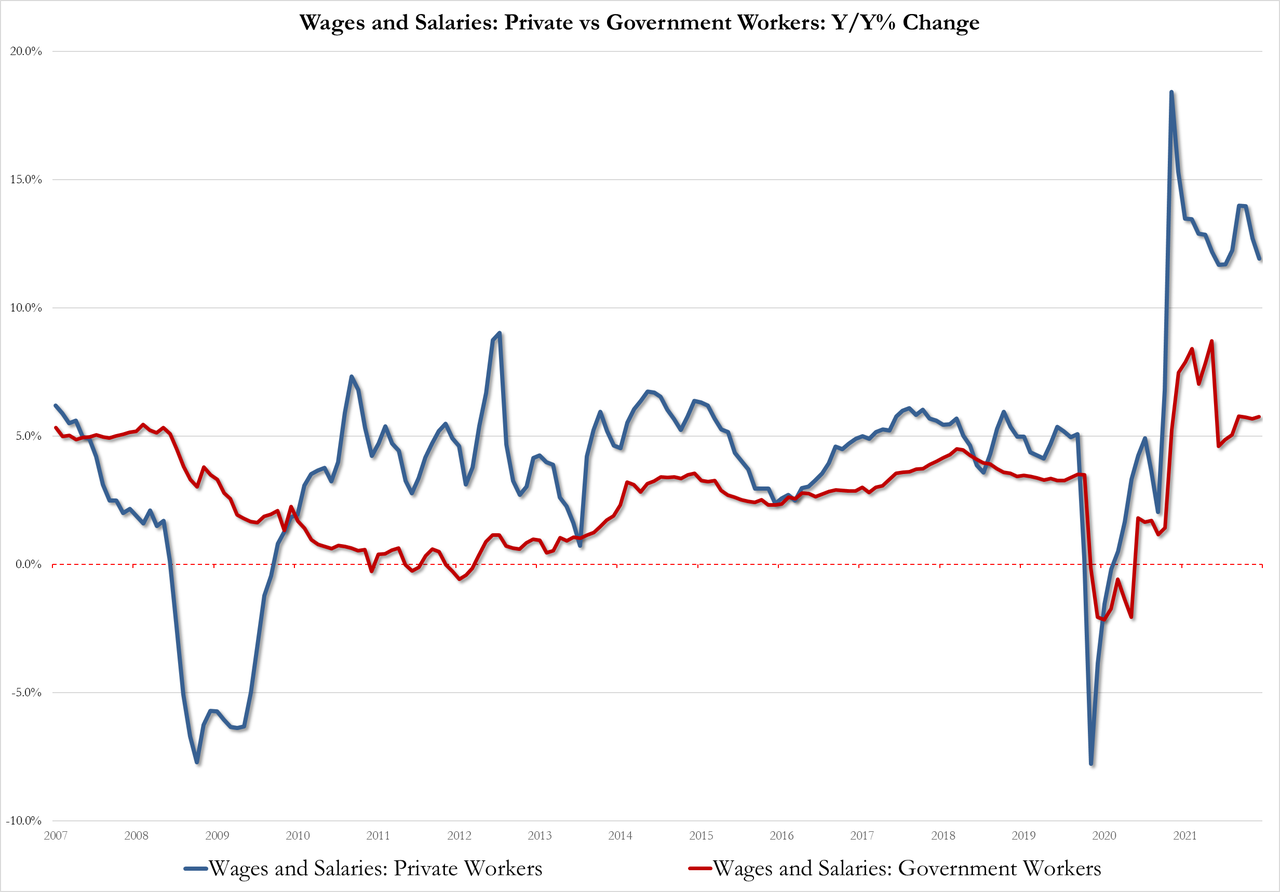
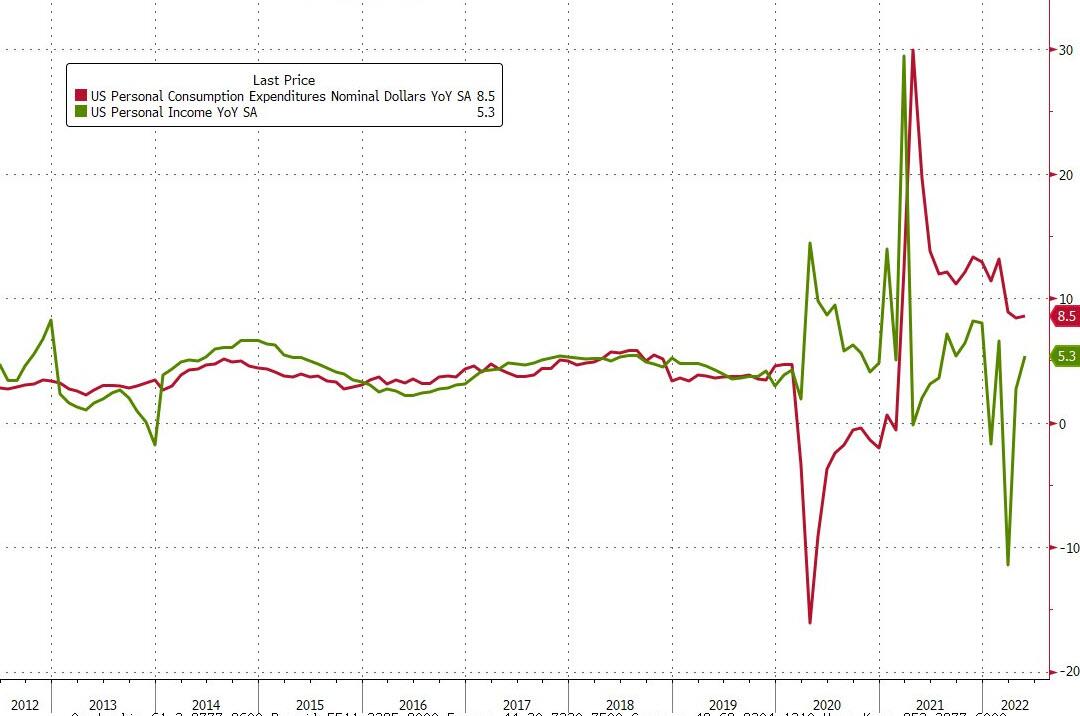
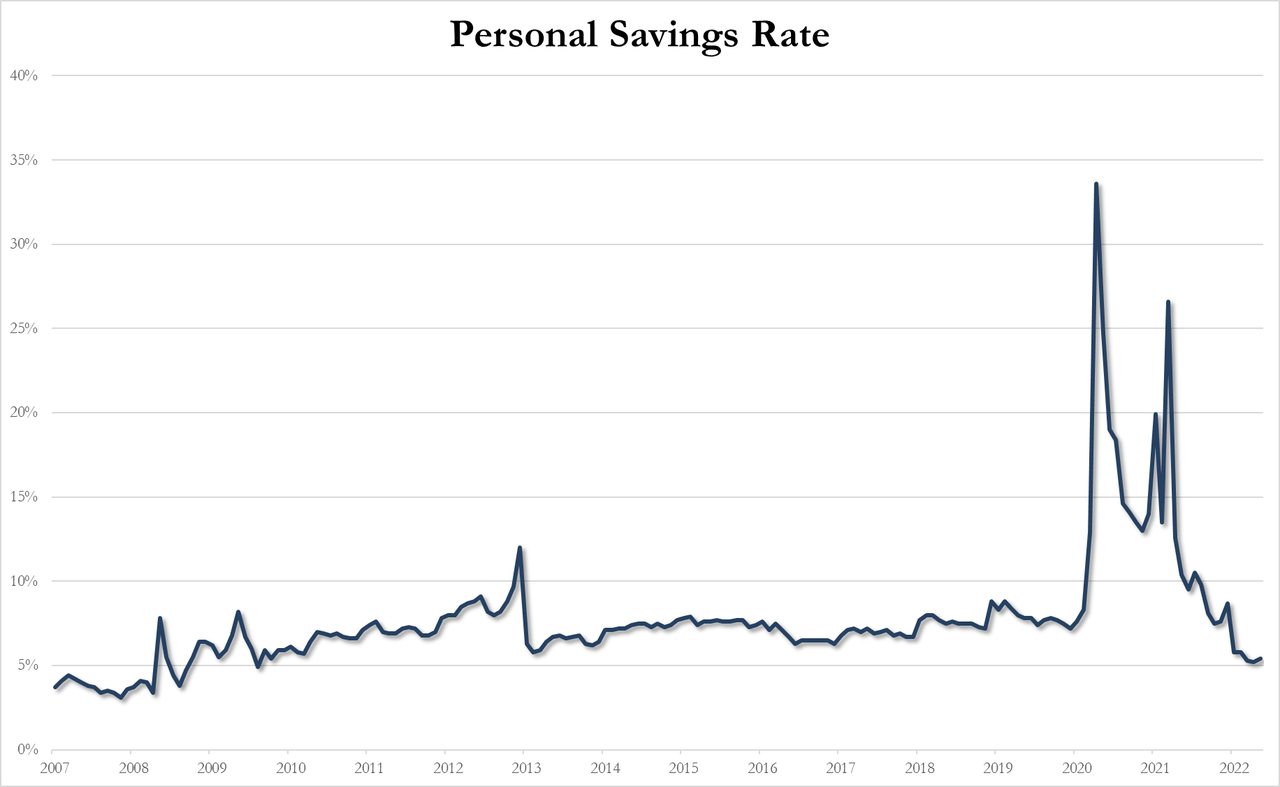
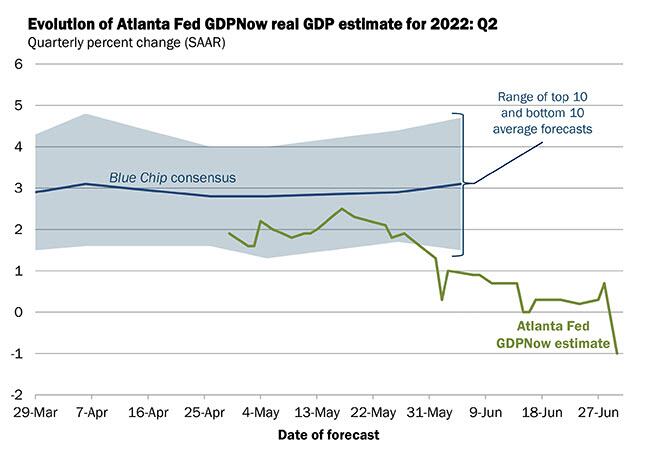
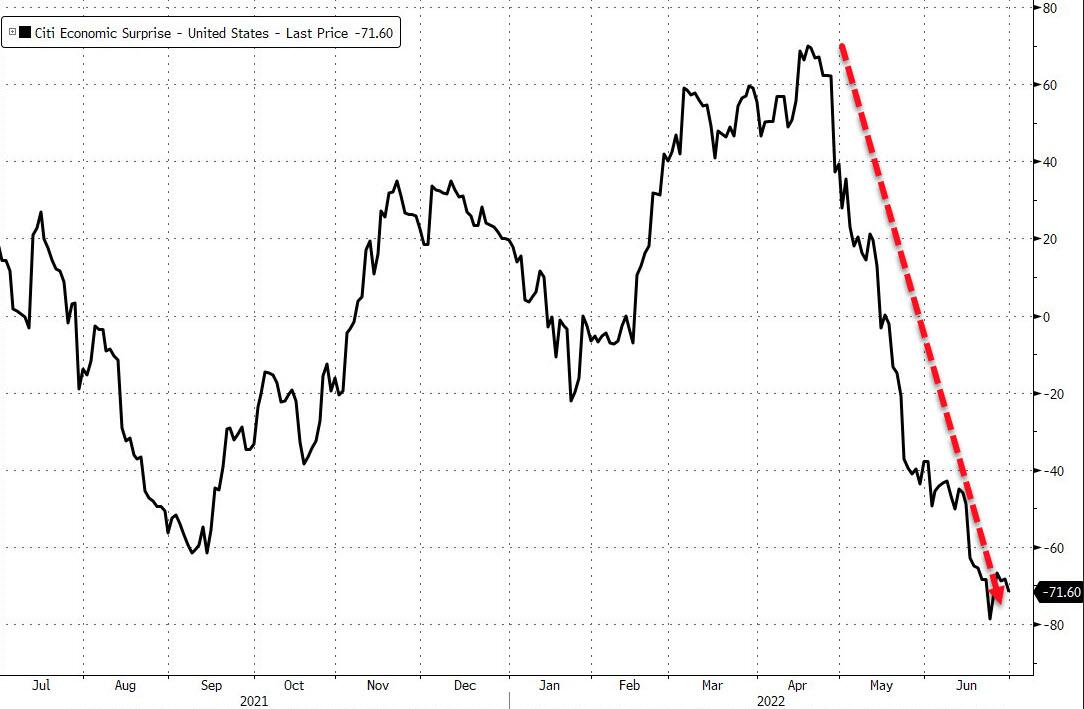
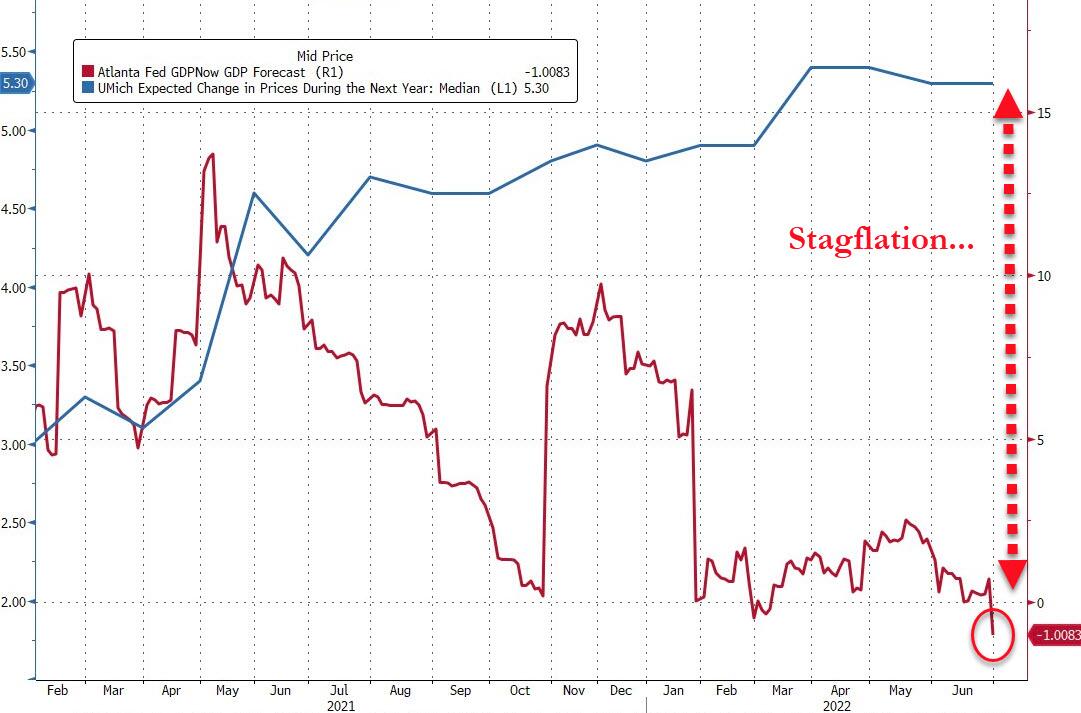
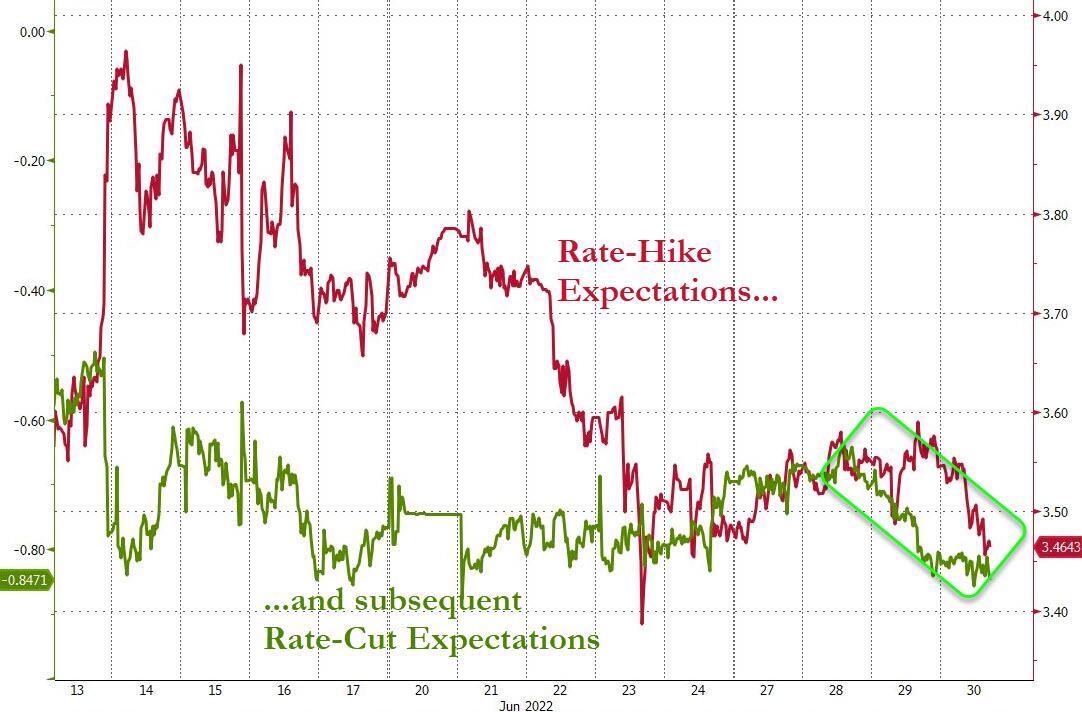
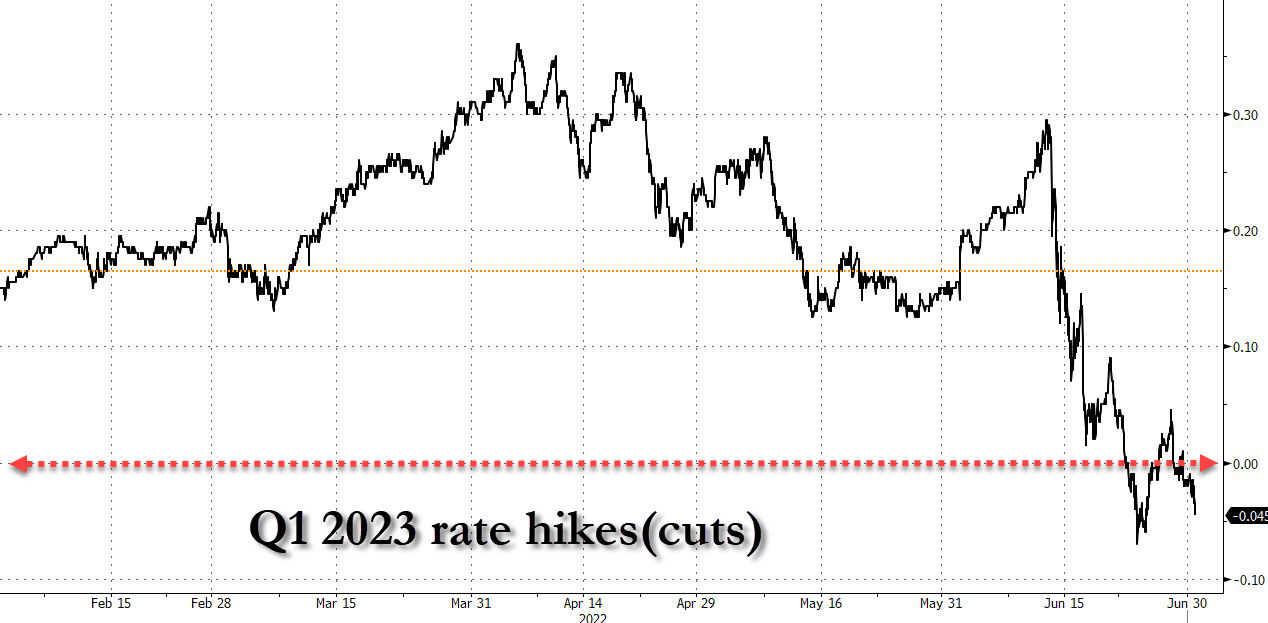
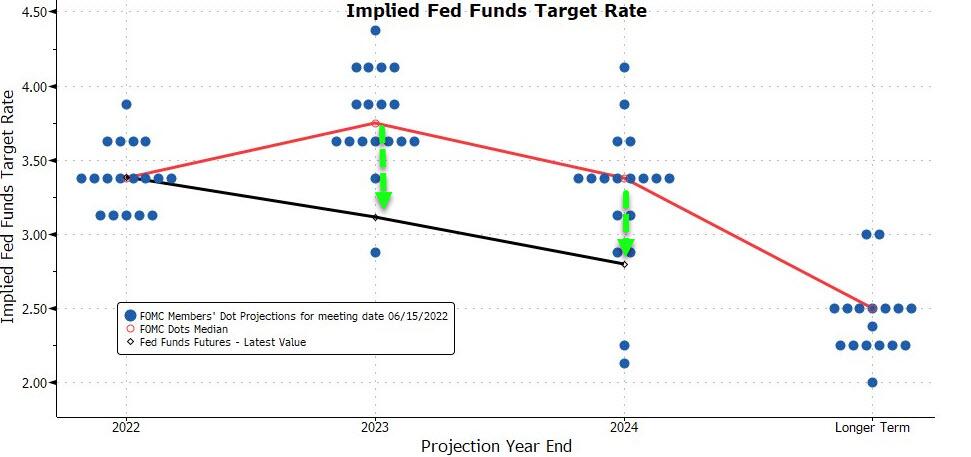

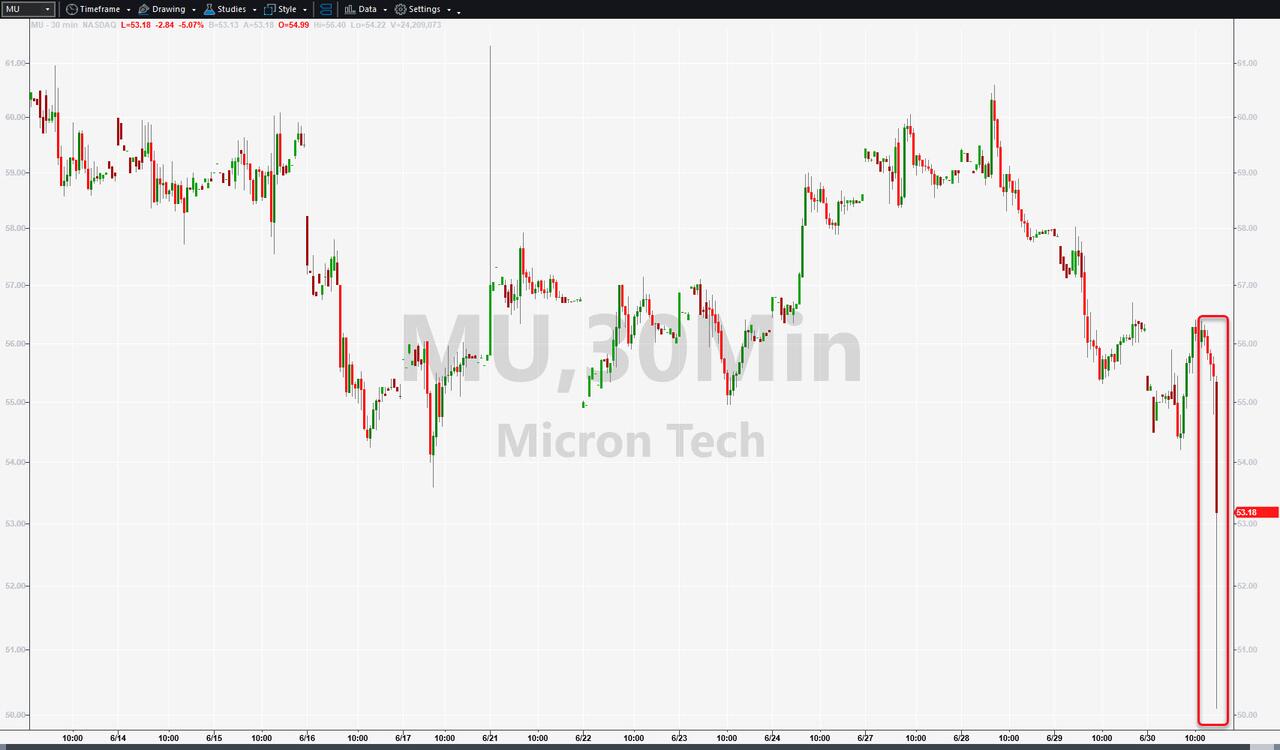
[…] by Harvey Organ, Harvey Organ Blog: […]
LikeLike