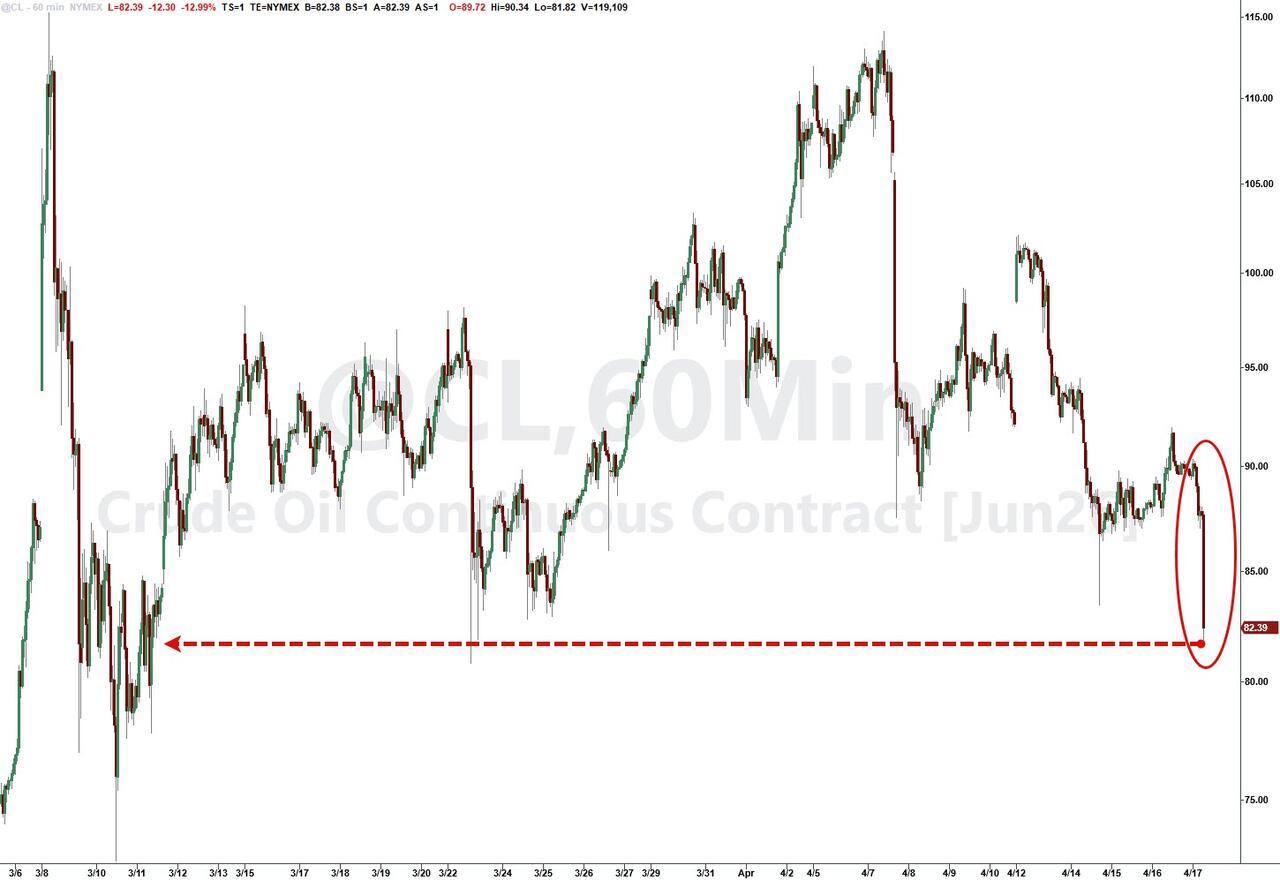
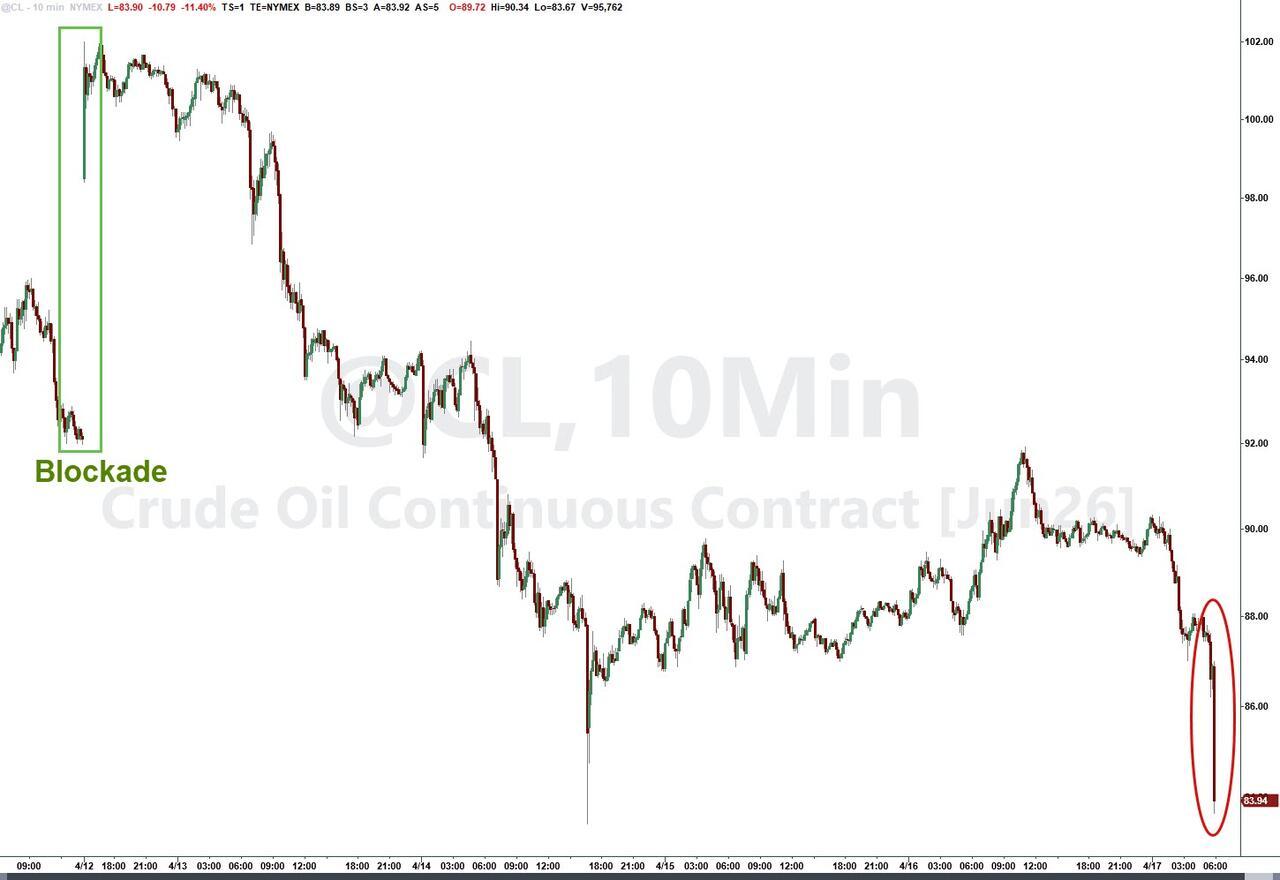
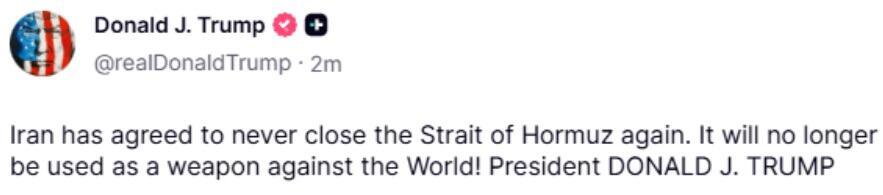
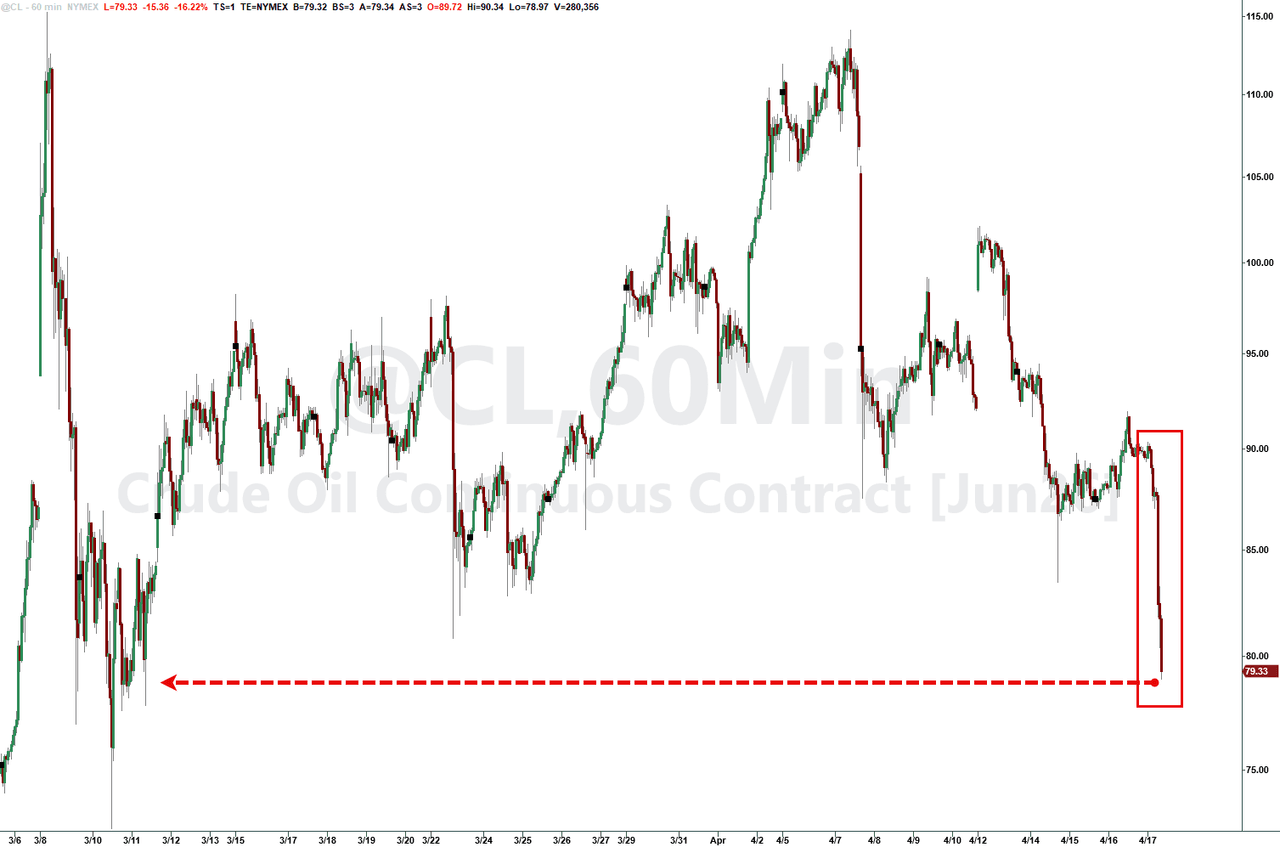
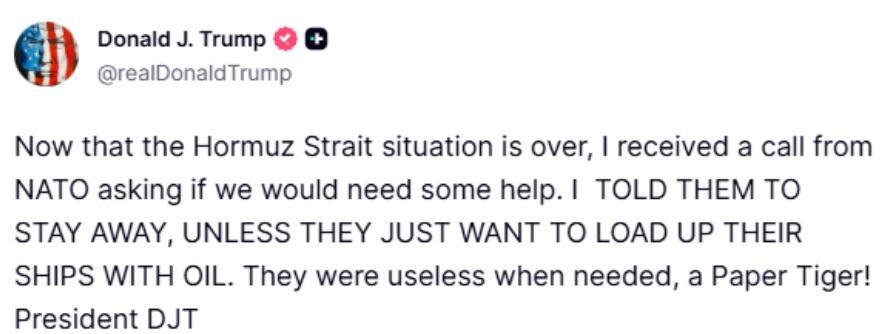
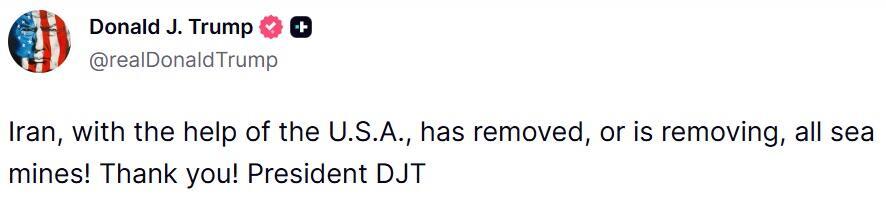
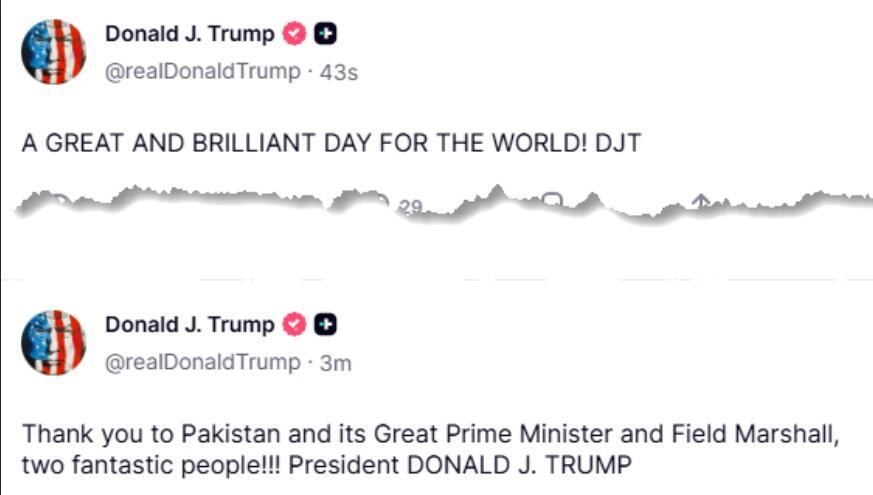
APRIL 17B/TRUMP ANNOUNCES FREEDOM OF THE STAIT OF HORMUZ AND THAT SENDS ALL STOCK MARKETS WITH ALL PRECIOUS METALS RISING/GOLD CLOSED UP $71.30 TO $4857.40 WHILE SILVER WAS UP A STRONG $3.09 TO $81.48 //PLATINUM WAS UP $16.30 TO $2121.30 WHILE PALLADIUM WAS UP $0 TO $1574.20/COMMODITY REPORTS TONIGHT ON JET FUEL AND SULPHURIC ACID//GOLD COMMENTARY TONIGHT COURTESY OF ALASDAIR MACLEOD//EUROPEAN REPORTS TONIGHT FROM GERMANY, FRANCE AND SWITZERLAND (EUROPE) //ISRAEL AND USA VS IRAN UPDATES: TRUMP’S ANNOUNCEMENT AND IRAN’S REFUSAL TO HONOUR TRUMP’S STATEMENT//HEZBOLLAH UPDATES//UKRAINE HITS RUSSIAN REFINERIES//MARK CRISPIN MILLER//OIL UPDATES//AUSTRALIA GOING THROUGH A WICKED INFLATION//MAJOR USA ECONOMIC REPORTS FROM MISES AND OTHERS///SWAMP STORIES FOR YOU TONIGHT///
118 C MACQUARIE FUTURES US 1 323 C HSBC 12 363 H WELLS FARGO SECURITI 224 435 H SCOTIA CAPITAL (USA) 1 555 C BNP PARIBAS SEC CORP 2 624 H BOFA SECURITIES 11 661 C JP MORGAN SECURITIES 512 686 C STONEX FINANCIAL INC 1 991 H CME 260
TOTAL: 512 512 MONTH TO DATE: 18,808
JPMORGAN STOPPED 0/512
APRIL 17
APRIL COMEX MONTH
GOLD: NUMBER OF NOTICES FILED FOR APRIL/2026: 512 CONTRACTs NOTICES FOR 51,200 OZ or 1.5925TONNES
total notices so far: 18,808 contracts FOR 1,880,800 OZ OR 58.500 TONNES
FOR APRIL 17
XXXXXXXXXXXXXXXXXX
SILVER NOTICES: 15 NOTICE(S) FILED FOR 75,000 OZ /
total number of notices filed so far this month : 2728 CONTRACTS (NOTICES) for 13.640 million oz
Click here if you wish to send a donation. I sincerely appreciate it as this site takes a lot of preparation
END
GLD/
BOTH GLD AND SLV ARE FRAUDULENT VEHICLES//THEY ARE NOW RAIDING GLD AND SLV FOR PHYSICAL
THE CROOKS ARE STEALING GOLD AND SILVER FROM THE GLD/SLV AND REPLACING THE PHYSICAL WITH PAPER DOLLARS.
WITH GOLD UP $71.30 INVESTORS SWITCHING TO SPROTT PHYSICAL (PHYS) INSTEAD OF THE FRAUDULENT GLD/// HUGE CHANGES IN GOLD INVENTORY AT THE GLD: A DEPOSIT OF 1.15 TONNES OF GOLD FROM THE GLD//
INVENTORY RESTS AT 1052.91 TONNES
SLV/
WITH NO SILVER AROUND AND SILVER UP $3.09 AT THE SLV: SMALL CHANGES IN SILVER INVENTORY AT THE SLV// A DEPOSIT OF 0.453 MILLION OZ OUT OF THE SLV//: INVENTORY RESTS AT THE SLV AT 490.900 MILLION OZ//
CLOSING INVENTORY RESTS AT:
CLOSING INVENTORY: 490.900 MILLION OZ
Let us have a look at the data for today
SILVER//OUTLINE
SILVER COMEX OI ROSE BY A SMALL SIZED 55 CONTRACTS TO 116,224 AND CONTINUING ON ITS MARCH TO THE RECORD HIGH OI OF 244,710, SET FEB 25/2020, AND THIS SMALL SIZED GAIN IN COMEX OI WAS ACCOMPLISHED DESPITE OUR LOSS OF $1.00 IN SILVER PRICING AT THE COMEX WITH RESPECT TO THURSDAY’S // TRADING. ON MARCH 23 WE REACHED AT OUR RECORD LOW OI OF 111,576 SURPASSING OUR PREVIOUS LOW OF 112,034 SET EARLIER IN THE MONTH OF MARCH/(2026).
NOW ON A NET BASIS OUR SPECULATORS HAVE REVERTED BACK TO GOING LONG. THE FRBNY ON A NET BASIS IS PROVIDING THE NECESSARY PAPER TO OUR LONGS ALONG WITH SOME BULLION BANKS AND THEN A HUGE NUMBERS OF LONGS ,OUR CENTRAL BANKERS, TAKE THE LONG SIDE AND TENDER FOR PHYSICAL AT 4 PM EACH NIGHT. BECAUSE OF THE HUGE SHORTFALL IN PHYSICAL SILVER IN LONDON THERE IS A LOTTERY TO SEE WHO GETS ANY OF THE PHYSICAL SILVER AVAILABLE THAT WHICH THEY ARE OBLIGATED TO DELIVER. THEY WAIT PATIENTLY FOR THEIR PHYSICAL METAL AND IF NOBODY GETS ANY THEY THEN COME BACK THE NEXT DAY AND SO ON. THIS IS IN LONDON, THE HOME OF PHYSICAL SILVER!!
IT WAS SOME OF OUR SILVER SPECULATORS THAT WERE BRUTALLY BEATEN UP AT THE SILVER COMEX THIS PAST MONTH AS YESTERDAY THEY GOT RINSED OUT BADLY WITH THE TRUMP CEASE FIRE/.HOWEVER, WE FINALLY ARE NOW MOVING TO A MUCH HIGHER BASE IN SILVER PRICING AT MAJOR SUPPORT LEVEL OF $70.00 EVEN THOUGH IT BROKE THROUGH IT TEMPORARILY LAST WEEK. SHORTLY WE WILL AGAIN ATTEMPT TO BREAK THE MAJOR 100 DOLLAR BARRIER. THE SHORT SPECULATORS WERE AGAIN LED BY OUR HIGH FREQUENCY TRADERS YESTERDAY AND THEY WERE BRUTALIZED WITH SILVER’S RISE.
WE HAVE A HUGE SIZED GAIN OF 659 TOTAL CONTRACTS ON OUR TWO EXCHANGES AS THE CME NOTIFIED US OF A HUGE SIZED 604 CONTRACT EXCHANGE FOR PHYSICAL ISSUANCE.. WE HAD SOME LIQUIDATION OF T.A.S. CONTRACTS IN COMEX TRADING WITH RESPECT TO THURSDAY TRADING/// MONTHLY SPREADERS FINISHED ON MARCH 31.. WE HAD A FAIR 371 CONTRACT T.A.S. ISSUANCE!! / THEY DESPERATELY AGAIN TODAY TRYING TO CONTAIN SILVER’S PRICE RISE FOR THE PAST SEVERAL WEEKS (WHERE RAIDS ARE CALLED UPON AGAIN AND AGAIN TRYING TO STOP THE RISE IN SILVER’S PRICE TO ABOVE $100.00 AND TO QUELL ADDITIONAL DERIVATIVE LOSSES TO OUR BANKERS’ MASSIVE TOTALS). THEY SUCCEEDED ON THURSDAY WITH SILVER’S LOSE IN PRICE
THE PRICE STILL FINISHED ABOVE THE MAGIC NUMBER OF $70.00 SILVER SPOT PRICE BUT STILL BELOW THE $100.00 MARK CLOSING AT $78.41 DOWN $1.00 WE ARE NOW WITNESSING HAVING MANY HUGE T.A.S ISSUANCES // TODAY’S WAS AT A FAIR SIZED 371 T.A.S. CONTRACTS !!. THE CROOKS ARE BECOMING MORE DESPERATE TO STOP SILVER BREAKING ABOVE THE 100.00 DOLLAR MARK!! AND NOW THE HUGE SUPPORT LEVEL OF 70 DOLLARS!!.MAMMOTH SIZE T.A.S ISSUANCES ARE BECOMING THE NORM AT THE COMEX NOW!!
THERE IS NO NEXT LINE IN THE SAND ONCE THE 100.00 DOLLAR SILVER IS PIERCED AGAIN. WE HAD A SMALL SIZED 170 CONTRACT EXCHANGE FOR PHYSICAL ISSUANCE ACCOMPANIED BY OUR FAIR SIZED 371 CONTRACT T.A.S ISSUANCE WHICH WILL BE USED IN FUTURE TRADING//AS THEY PLAY AN INTEGRAL PART IN OUR COMEX TRADING TRYING TO CONTAIN ANY SILVER PRICE RISE.
IN ESSENCE WE HAD A HUGE GAIN OF 659 CONTRACTS ON OUR TWO EXCHANGES DESPITE OUR LOSS IN PRICE OF $1.00. WE HAD HUGE GOVERNMENT (FRBY) COMEX CONTRACTS TRADING ALL WEEK AND A MAJOR PORTION WILL BE REMOVED BY DAYS END. (I RECORD THIS FOR YOU ON A DAILY BASIS). THE STICKY SPECULATOR LONGS STILL REMAIN STOIC
CRAIG HEMKE HAS POINTED OUT THAT THE CROOKS USE THE MID MONTH FOR MANIPULATION AS THEY SELL THEIR BUY SIDE OF THE CALENDAR SPREAD FIRST AND THEN KEEP THE SELL SIDE TO LIQUIDATE AT A LATER DATE.
THUS WE HAVE TWO VEHICLES THE CROOKS USE FOR MANIPULATION AND BOTH ARE SPREADERS: 1) AT MONTH’S END/SPREADERS COMEX AND 2/ TAS SPREADERS, THROUGHOUT MONTH. TOTAL TAS ISSUED ON THURSDAY NIGHT//FRIDAY MORNING: A FAIR SIZED 371 CONTRACTS. DESPITE MANY COMPLAINTS THAT THE CROOKS HAVE VIOLATED POSITION LIMITS DUE TO THE FACT THAT THE TAS ISSUED HAVE A VALUE OF ZERO (AS TO POSITION LIMITS FOR OUR CROOKED FRBNY BANKERS).
THE PROBLEM OF COURSE IS THAT THE CROOKS DO NOT LIQUIDATE THE TAS AS ONE UNIT, BUT SELL THE SHORT SIDE FIRST AND THEN LIQUIDATE THE LONG SIDE TWO MONTHS HENCE. IT IS OBVIOUS MANIPULATION TO THE HIGHEST DEGREE BUT IT NATURALLY FELL ON DEAF EARS WITH OUR REGULATORS (OCC) WHEN THEY RECEIVED OUR COMPLAINTS. IT NOW SEEMS THAT THE OCC HAS NOW ORDERED THE BANKS TO REDUCE ITS NEW LEVEL OF 1.1 TRILLION DOLLARS IN GOLD/SILVER DERIVATIVES.
THUS:
INITIAL STANDING FOR JANUARY: 22.915 MILLION OZ FOLLOWED BY TODAY’S 1.185 MILLION OZ QUEUE JUMP//NEW NORMAL STANDING ADVANCES TO 49.445 MILLION OZ// TO WHICH WE ADD OUR FIRST EXCHANGE FOR RISK FOR .100 MILLION OZ//NEW STANDING ADVANCES TO 49.545 MILLION OZ!!
INTIAL STANDING FOR FEBRUARY/SILVER: 13.505 MILLION OZ FOLLOWED BY TODAY’S HUGE 0.005 MILLION OZ QUEUE JUMP / : NEW STANDING FOR SILVER AT THE COMEX ADVANCES TO 25.180 MILLION OZ. BUT WE MUST ADD OUR FIRST EXCHANGE FOR RISK OF 25 CONTRACTS FOR .125 MILLION OZ AND THEN OUR SECOND EXCHANGE FOR RISK OF .0600 MILLION OZ TO OUR THIRD HUGE 2.825 MILLION OZ EXCHANGE FOR RISK!!
INITIAL STANDING FOR MARCH: A SURPRISINGLY LOW 31.076 MILLION OZ/ FOLLOWED BY A STRONG QUEUE JUMP OF 42 CONTRACTS OR 0.210 MILLION OZ/NEW STANDING REDUCES TO 46.060 MILLION OZ
INITIAL STANDING FOR APRIL: 7.120 MILLION OZ FOLLOWED BY TODAY’S 470 CONTRACT QUEUE JUMP WHERE 2.305 MILLION ADDITIONAL OZ WILL TAKE DELIVERY OVER ON THIS SIDE OF THE POND. NEW STANDING FOR SILVER AT THE COMEX THUS ADVANCES HUGELY TO 13.705 MILLION OZ
SUMMARY OF OUR APRIL 2026 COMEX CONTRACT MONTH:
WE HAD:
/ SMALL COMEX OI GAIN+// HUGE SIZED 604 EFP ISSUANCE CONTRACTS (/ VI) A FAIR NUMBER OF T.A.S. CONTRACT ISSUANCE 371 CONTRACTS
I AM NOW RECORDING THE DIFFERENTIAL IN OI FROM PRELIMINARY TO FINAL: REMOVED 196 SILVER CONTRACT//
HISTORICAL ACCUMULATION OF EXCHANGE FOR PHYSICALS APRIL.. ACCUMULATION
TOTAL CONTRACTS for 12 DAY(S), total 4068 contracts: OR 20.340 MILLION OZ (339 CONTRACTS PER DAY)
TOTAL EFP’S FOR THE MONTH SO FAR: 20.340 MILLION OZ
LAST 24 MONTHS TOTAL EFP CONTRACTS ISSUED IN MILLIONS OF OZ:
MAY 137.83 MILLION
JUNE 149.91 MILLION OZ
JULY 129.445 MILLION OZ
AUGUST: MILLION OZ 140.120
SEPT. 28.230 MILLION OZ//
OCT: 94.595 MILLION OZ
NOV: 131.925 MILLION OZ
DEC: 100.615 MILLION OZ
YEAR 2022:
JAN 2022-DEC 2022
JAN 2022// 90.460 MILLION OZ
FEB 2022: 72.39 MILLION OZ//
MARCH 2022: 207.140 MILLION OZ//A NEW RECORD FOR EFP ISSUANCE
APRIL: 114.52 MILLION OZ FINAL//LOW ISSUANCE
MAY: 105.635 MILLION OZ//
JUNE: 94.470 MILLION OZ
JULY : 87.110 MILLION OZ
AUGUST: 65.025 MILLION OZ
SEPT. 74.025 MILLION OZ///FINAL
OCT. 29.017 MILLION OZ FINAL
NOV: 134.290 MILLION OZ//FINAL
DEC, 61.395 MILLION OZ FINAL
TOTALS YR 2022: 1135.767 MILLION OZ (1.1356 BILLION OZ)
JAN 2023/// 53.070 MILLION OZ //FINAL
FEB: 2023: 100.105 MILLION OZ/FINAL//MUCH STRONGER ISSUANCE VS THE LATTER TWO MONTHS.
MARCH 2023: 112.58 MILLION OZ//FINAL//STRONG ISSUANCE
APRIL 111.035 MILLION OZ(SLIGHTLY GREATER THAN THAN LAST MONTH)
MAY 66.120 MILLION OZ/INITIAL (MUCH SMALLER THIS MONTH)
JUNE: 110.395 MILLION OZ//MUCH LARGER THAN LAST MONTH
JULY 85.745 MILLION OZ (SMALLER THAN LAST MONTH)
AUGUST: 171.43 MILLION OZ (THIS MONTH IS GOING TO BE HUGE //2ND HIGHEST ON RECORD
SEPT: 72.705 MILLION OZ (SMALLER THIS MONTH)
OCT: 97.455 MILLION OZ
NOV. 50.050 MILLION OZ
DEC. 66.140 MILLION OZ//
TOTAL 2023: 1,104.10 MILLION OZ/
JAN ’24 : 78.655 MILLION OZ//
FEB /2024 : 66.135 MILLION OZ./FINAL
MARCH: 143.750 MILLION OZ// 4TH HIGHEST ON RECORD.
APRIL: 161.770 MILLION OZ (THIS MONTH WILL BE A WHOPPER OF ISSUANCE OF EFPS//3RD HIGHEST EVER RECORDED FOR A MONTH)
MAY: 135.995 MILLION OZ //WILL BE A STRONG MONTH FOR EXCHANGE FOR PHYSICAL ISSUANCE
JUNE 110.575 MILLION OZ ( WILL BE ANOTHER STRONG MONTH ISSUANCE)
JULY: 108.870 MILLION OZ (WILL BE A STRONG ISSUANCE MONTH/ A TOUCH OVER 100 MILLION OZ/)
AUGUST; 99.740 MILLION OZ//THIS MONTH WILL BE STRONG FOR ISSUANCE BUT LESS THAN JULY.
SEPT: 112.415 MILLION OZ//WILL BE A HUGE MONTH FOR EXCHANGE FOR PHYSICAL ISSUANCE
OCT; 97.485 MILLION OZ (WILL BE SMALLER ISSUANCE THIS MONTH )
NOV. 115.970 MILLION OZ ( HUGE THIS MONTH)
DEC: 132.54 MILLION OZ (THIS MONTH WILL BE A HUMDINGER FOR ISSUANCE BUT ISSUANCE SLOWED DRAMATICALLY THESE PAST FIVE DAYS/// WILL NOT EXCEED MARCH 2022 RECORD OF 209 MILLION OZ
YEAR 2024 TOTAL: 1363.84 MILLION OR 1.363 BILLION OZ
JANUARY 2025: 67.230 MILLION OZ///(THIS MONTH’S ISSUANCE OF EXCHANGE FOR PHYSICAL WILL BE SMALL)
FEB. 58.260 MILLION OZ//EXCHANGE FOR PHYSICAL ISSUANCE/FINAL
MARCH: 67.020 MILLION OZ///QUITE SMALL AND BECOMING SMALLER EACH AND EVERY MONTH.
APRIL: 100.895 MILLION OZ///AVERAGE SIZE ISSUANCE
MAY: 28.975 MILLION OZ (ISSUANCE WILL BE QUITE SMALL THIS MONTH)
JUNE: 81.065 MILLION OZ
JULY: 50.925 MILLION OZ (QUITE SMALL)
AUGUST: 59.455 MILLION OZ (QUITE SMALL)
SEPT. 50.510 MILLION OZ.(QUITE SMALL)
OCT; 82.020 MILLION OZ (WILL BE STRONG THIS MONTH)/ OCC WANTS TO REIN IN THESE ISSUANCES!
NOVEMBER: 36.425 MILLION OZ
DEC: 45.765 MILLION OZ
JANUARY 2026: 134.270 MILLION OZ (WILL BE A VERY STRONG MONTH FOR EXCHANGE FOR PHYSICAL!)
FEB : 82.130 MILLION OZ
MARCH: 56.075 MILLION OZ
APRIL; 20.340 MILLION OZ
RESULT: WE HAD A SMALL SIZED INCREASE IN COMEX OI SILVER COMEX CONTRACTS OF 55 CONTRACTS DESPITE OUR LOSS IN PRICE OF $1.00 IN SILVER PRICING AT THE COMEX// THURSDAY,. THE CME NOTIFIED US THAT WE HAD A STRONG SIZED CONTRACT EFP ISSUANCE 604 CONTRACTS ISSUED FOR MAY, AND 0 CONTRACTS ISSUED FOR ALL OTHER MONTHS). WE HAD A 503 SIZED CONTRACT QUEUE JUMP FOR 2.515 MILLION OZ//STANDING ADVANCES TO 16.220 MILLION OZ//
LAST 12 MONTHS OF SILVER DELIVERIES
WE FINISHED APRIL WITH A STRONG SILVER OZ STANDING OF 16.050 MILLION OZ NORMAL DELIVERY , PLUS OUR 4.00 MILLION EX FOR RISK
FINAL STANDING APRIL: 19.965 MILLION OZ
AND MAY:
NEW STANDING FOR MAY FINISHES AT: 75.615 MILLION OZ. (INCLUDES 5,000 OZ EFP TRANSFER TO LONDON + 12.93 MILLION OZ EXCHANGE FOR RISK ISSUANCE/PRIOR.//NEW TOTAL STANDING 88.540 MILLION OZ
AND JUNE: FINAL 16.995 MILLION OZ
AND JULY: 46.720 MILLION OZ//
AUGUST: 4.70 MILLION OZ INITIAL STANDING PLUS TODAY;S 5,000 OZ QUEUE JUMP //NEW STANDING ADVANCES TO 10.960 MILLION OZ
SEPTEMBER: 68.040 MILLION OZ NORMAL DELIVERY(INCLUDES ALL QUEUE JUMPING AND EXCHANGE FOR PHYSICAL TRANSFERS) PLUS 3.0 MILLION OZ EX FOR RISK = 71.040 MILLION OZ. (THIS IS THE FIRST AND ONLY ISSUANCE OF EXCHANGE FOR RISK FOR SILVER SINCE MAY.)
OCTOBER: 39.565 MILLION OZ OF NORMAL DELIVERY INCLUDES ALL QUEUE JUMPING
PLUS
2.110 MILLION OZ EXCHANGE FOR RISK//TOTAL OZ STANDING IN OCT ADVAN
NOVEMBER: INITIAL STANDING AT 11.575 MILLION OZ FOLLOWED BY TODAY’S 195,000 OZ QUEUE JUMP WHICH FOLLOWS ALL OTHER QUEUE JUMPS OF 9.155 MILLION OZ//STANDING ADVANCES TO 19.670 MILLION OZ/
DECEMBER: INITIAL AMOUNT STANDING FOR DELIVERY: 49.33 MILLION OZ// FOLLOWED BY ANOTHER STRONG 835,000OZ QUEUE JUMP+ DEC. FIRST EXCHANGE FOR RISK 0F .850 MILLION OZ + LAST WEEK.S 495,000 OZ EXCHANGE FOR RISK AND THEN A 3RD ISSUANCE IF 1.00MILLION OZ THEN FINALLY DEC 249ISSUANCE OF 1.35 MILLION OZ EXCHANGE FOR RISK//NEW TOTAL EX FOR RIS IS 3.685 MILLION OZ // STANDING ADVANCES TO 68.415 MILLION OZ//
JANUARY: INITIAL STANDING 22.915 MILLION OZ FOLLOWED BY TODAY’S 1.185 MILLION OZ QUEUE JUMP//NORMAL STANDING ADVANCES TO 49.445 MILLION OZ// TO WHICH WE ADD OUR FIRST EXCHANGE FOR RISK OF 0.100 MILLLION OZ//NEW STANDING ADVANCES TO 49.545 MILLION OZ
FEB: 13.399 MILLION OZ IS OUR INITIAL STANDING FOR SILVER! TO WHICH WE ADD OUR NEXT QUEUE JUMP FOR 5,000 OZ AND THEN ADD OUR 3 EXCHANGE FOR RISK FOR 3.010 MILLION OZ STANDING ADVANCES TO 28.190 MILLION OZ!!
MARCH: INITIAL AMOUNT OF SILVER STANDING IS 31.076 MILLION OZ FOLLOWED BY A FINAL 0.210 MILLION OZ QUEUE JUMP //NEW TOTAL STANDING ADVANCES TO 46.060 MILLION OZ
APRIL 2026: INITITAL AMOUNT OF SILVER STANDING 7.120 MILLION OZ FOLLOWED BY TODAY’S 2.515 MILLION OZ QUEUE JUMP//NEW STANDING ADVANCES TO 16.220 MILLION OZ
THE NEW TAS ISSUANCE THURSDAY NIGHT (371) WILL BE PUT INTO “THE BANK” TO BE COLLUSIVELY USED NO DOUBT WITH FUTURE TRADING!
WE HAD 15 NOTICE(S) FILED TODAY FOR 75,000 OZ
THE SILVER COMEX IS NOW BEING ATTACKED FOR METAL BY
GOLD//OUTLINE
IN GOLD, THE COMEX OPEN INTEREST ROSE BY A SMALL SIZED 790 OI CONTRACTS UP TO 362,456 ADVANCING FROM ITS ALL TIME LOW OF 354,581 OI AND CLOSER TO THE RECORD HIGH (SET JAN 24/2020) AT 799,105 AND PREVIOUS TO THAT: (SET JAN 6/2020) AT 797,110. WE HAVE NOW ADVANCED PAST THE PREVIOUS ALL TIME LOWS OF 357,136 SET APRIL 2/.2026. WE ARE STILL QUITE A WAY FROM OUR TWO DECADES OLD: 390,000 CONTRACTS LOW SET IN THE YEAR OF 2001 WITH TRADING FOR GOLD AT $260.00. THUS DURING EARLY APRIL WE HAD AN ALL TIME LOW OI IN COMEX (354,531) BUT WITH AN EXTREMELY HIGH PRICE OF GOLD. THE SHORT RATS ARE ABANDONING THE COMEX SHIP, NOBODY WANT TO PLAY IN THIS CROOKED CASINO!!
THE DIFFERENTIAL FROM PRELIMINARY OI TO FINAL OI IN GOLD TODAY: REMOVED A HUGE 7297 CONTRACTS //.
WE HAD A SMALL GAIN IN COMEX OI (790 ONTRACTS) . THIS SMALL GAIN IN OI OCCURRED DESPITE OUR LOSS IN PRICE OF $15.00 //THURSDAY///.
LAST 12 MONTHS OF GOLD DELIVERIES: (MAY THROUGH TO /APRIL)
MAY: SUMMARY FOR MAY TONNES WHICH STOOD FOR DELIVERY:
FINAL STANDING FOR MAY: 70.174 TONNES OF GOLD TO WHICH WE ADD 1. MONDAY’S (MAY 19) 6.221 TONNES EXCHANGE FOR RISK , 2. THEN WE ADD: 1.35 TONNES TO LAST WEEK”S. THEN WE ADD 3. 1.55 TONNES TO EQUAL 9.591 TONNES// NEW EXCHANGE FOR RISK = 9.591 TONNES WHICH MUST BE ADDED TO OUR NORMAL DELIVERY SCHEDULE OF 80.644 TONNES. THUS STANDING FOR MAY INCREASES TO 90.235 TONNES OF GOLD
2 JUNE CONTRACT MONTH: 93.085 TONNES OF GOLD (WHICH INCLUDES ALL QUEUE JUMPING AND 0 EX FOR RISK)
3.JULY INITIIAL STANDING FIRST DAY NOTICE: 17.847 TONNES. PLUS TODAY’S 0 TONNES QUEUE JUMP + 1.555 TONNES EX FOR RISK + 2.195 TONNES EX FOR RISK TODAY = 41.106 TONNES STANDING
4. AUGUST: 60.547 TONNES OF INITIAL GOLD FIRST DAY NOTICE FOLLOWED BY THE NET MONTH’S QUEUE JUMP OF 47.2312 TONNES TO WHICH WE ADD THE FOLLOWING EXCHANGE FOR RISK ISSUANCE RECEIVED FOR THE MONTH: 5.4432 TONNES EX FOR RISK/AUG 7 , AUG 11: 2.413 TONNES EX FOR RISK AND AUG. 12 OF 2.
5.SEPT: INITIAL 8.093 TONNES OF GOLD PLUS TODAY’S QUEUE JUMP OF 0.4883 TONNES PLUS 2.2827 TONNES OF EXCHANGE FOR RISK TODAY//NEW TOTAL EX. FOR RISK/MONTH = 22.923//NEW TOTAL STANDING FOR GOLD SEPT ADVANCES TO = 48.801 TONNES!!
6.OCTOBER: 90.012 TONNES OF INITIAL GOLD STANDING WITH TODAY’S TINY 0.00311 TONNES QUEUE JUMP WHICH FOLLOWS ALL OTHER QUEUE JUMPS DURING OCT OF 76.1656 TONNES
THEN WE MUST ADD OUR 14.553 TONNES OF OUR ISSUANCE OF EXCHANGE FOR RISK/6 OCCASIONS//NEW TOTAL OF GOLD STANDING ADVANCES TO 197.5141 TONNES OF GOLD.
7.NOVEMBER BEGINS WITH 15.651 TONNES INITIALLY STANDING FOR DELIVERY FOLLOWED BY TODAY’S QUEUE JUMP OF 2.323 TONNES FOLLOWED BY ALL PREVIOUS QUEUE JUMPS IN OF OF 21.3775 TONNES TO WHICH WE ADD OUR TWO EXCHANGE FOR RISK ISSUANCE OF 4.5596 TONNES//NEW STANDING ADVANCES TO 43.9716 TONNES OF GOLD.
8. DECEMBER BEGINS WITH INITIAL STANDING OF 83.813 TONNES OF GOLD FOLLOWED BY TODAY’S 0.0TONNE QUEUE JUMP WHICH FOLLOWS ALL OTHER QUEUE JUMPS OF: 37.163 TONNES//NEW STANDING ADVANCES TO 115.390 TONNES TO WHICH WE ADD OUR 4 EXCHANGE FOR RISK FOR DECEMBER OF 6.587 TONNES/NEW STANDING ADVANCES TO 121.977 TONNES
9. JANUARY: INITITAL STANDING: 13.785 TONNES TO WHICH WE ADD OUR FIRST EXCHANGE FOR PHYSICAL TRANSFER OF 0.08709 TONNES WHICH FOLLOWS ALL OTHER QUEUE JUMPS OF 30.7117TONNES //NEW TOTAL QUEUE JUMPS 30.7117//NORMAL DELIVERY OF GOLD ADVANCES TO 36.8958 TONNES TO WHICH WE ADD OUR SIX EXCHANGE FOR RISK OF 22.315 TONNES//NEW STANDING ADVANCES TO 59.2108 TONNES.
FEB; INITIAL AMOUNT OF GOLD STANDING FOR DELIVERY: 93.567 TONNES OF GOLD TO WHICH WE ADD OUR NEXT 0.0248 TONNES 0.1555 TONNES QUEUE JUMP TO 41.2082 TONNES/ NEW NET QUEUE JUMP INCREASES TO 41.233 TONNES// AND THEN WE ADD OUR SIX EXCHANGE FOR RISK: 10,080 CONTRACTS OR 31.251 TONNES//NEW STANDING REDUCES TO 157.878 TONNES
MARCH:: INITIAL AMOUNT OF GOLD STANDING FOR DELIVERY: 8.099 TONNES TO WHICH WE ADD TODAY’S FAIR 4600 OZ QUEUE JUMP (0.2320 TONNES) AND THEN WE ADD OUR THREE EXCHANGE FOR RISK OF 22.3818 TONNES //NEW STANDING ADVANCES TO 67.6648 TONNES/
APRIL: INITIAL AMOUNT OF GOLD STANDING FOR DELIVERY: 52.600 TONNES FOLLOWED BY OUR STRONG 242 CONTRACT QUEUE JUMP FOR 24,200 OZ/ (0.7527 TONNES)/NEW STANDING ADVANCES TO 58.778 TONNES
E.F.P. ISSUANCE/FOR OPENING APRIL. GOLD CONTRACT
THE CME RELEASED THE DATA FOR EFP ISSUANCE AND IT TOTALED A FAIR SIZED 1139 CONTRACTS:
The NEW COMEX OI FOR THE GOLD COMPLEX RESTS AT A LOW OF 362,456 ADVANCING FROM OUR RECORD LOW OF 354,581 AND WE NOW WITNESSING A LOWER COMEX OI BUT WITH AN EXTREMELY HIGH
SILVER ALSO HAS AN ULTRA SMALL SIZED AND EXTREMELY LOW COMEX OI OF 116,224 ONTRACTS// RISING FROM PREVIOUS ALL TIME LOW SET MARCH 23/2026 OF 111,576 CONTRACTS.
IN ESSENCE WE HAVE A FAIR SIZED GAIN IN TOTAL CONTRACTS IN COMEX GOLD ON THE TWO EXCHANGES OF 1929 CONTRACTS WITH 8087 CONTRACTS INCREASED AT THE COMEX// AND A FAIR SIZED 1139 EXCHANGE FOR PHYSICAL OI CONTRACT ISSUANCE WHICH NAVIGATED OVER TO LONDON.
THUS TOTAL OI GAIN ON THE TWO EXCHANGES OF 1929 CONTRACTS.. WE HAD THE FOLLOWING TAS CONTRACTS INITIATED (ISSUED): A SMALL SIZED AND CRIMINAL 540 CONTRACTS AND THESE ISSUANCES ARE GENERALLY USED TO INITIATE A RAID WHEN CALLED UPON.
GOLD PRICE ON THURSDAY FELL BY $15.00
CALCULATIONS ON GAIN/LOSS ON OUR TWO EXCHANGES
WE HAD A FAIR SIZED ISSUANCE IN EXCHANGE FOR PHYSICALS CONTRACT(1139 ) ACCOMPANYING THE STRONG SIZED GAIN IN COMEX OI OF 8087 CONTRACTS/TOTAL GAIN FOR OUR THE TWO EXCHANGES 1929 CONTRACTS!!
WE HAVE 1) NOW REVERTED TO OUR NORMAL FORMAT OF BANKER (FRBNY) GOING ON THE SHORT SIDE AND SOME NEWBIE SPECULATORS GOING TO THE LONG SIDE//
FEB; INITIAL AMOUNT OF GOLD STANDING FOR DELIVERY: 93.567 TONNES OF GOLD TO WHICH WE ADD OUR NEXT QUEUE JUMP OF 0.012 TONNES TO ALL OTHER QUEUE JUMPS//NEW QUEUE JUMP TOTALS INCREASES: 41.233 TONNES// /// TO WHICH WE ADD OUR SIX EXCHANGE FOR RISK FOR 31.251 TONNES//NEW STANDING FINISHED AT 157.878 TONNES
MARCH:: SMALL INITIAL STANDING FOR GOLD FOR MARCH AT 8.099 TONNES TO WHICH WE ADD TODAY’S FAIR 46 CONTRACT QUEUE JUMP OF 4400 OZ OR 0.2320 TONNESAND THEN WE ADD BY OUR THREE EXCHANGE FOR RISK: 22.3818///NEW STANDING ADVANCES TO 67.6648 TONNES OF GOLD./
APRIL: INITIAL STANDING FOR GOLD; 52.600 TONNES FOLLOWED BY TODAY’S 1,500 OZ QUEUE JUMP //NEW STANDING ADVANCES TO 57.552 TONNES.
STANDING FOR THE LAST 4 MONTHS JANUARY TO APRIL:
FINAL STANDING FOR GOLD, JANUARY CONTRACT AT 59.2108 TONNES OF GOLD
FEBRUARY: INITIAL STANDING FOR GOLD: 157.878 TONNES!! WHICH INCLUDES ALL QUEUE JUMPING, THREE EXCHANGE FOR PHYSICAL TRANSFERS TO LONDON AND OUR SIX ISSUANCES EXCHANGE FOR RISK!!
MARCH: INITIAL STANDING AT 8.099 TONNES TO WHICH WE ADD OUR FINAL DAY: 0.2320 TONNES QUEUE JUMP AND THEN ADD +22.3818 TONNES EXCHANGE FOR RISK//NEW STANDING ADVANCES TO 67.6648 TONNES
APRIL: INITIAL STANDING 52.600 TONNES PLUS 24,200 OZ QUEUE JUMP (0.7527 TONNES): NEW STANDING ADVANCES TO 58.778 TONNES
3) ZERO T.A.S. LIQUIDATION, AND SOME GOVT LIQUIDATION // WITH A STRONG GAIN OF EQUITY SHARES/APRIL 15 HAVING 1)A $15.00 COMEX PRICE LOSS AND YET WE HAD 2) SPEC LONGS PILING HUGELY ON A NET BASIS, + EASTERN CENTRAL BANKERS ALSO PILING INTO THE LONG SIDE AND NEWBIE SHORTS WERE HIT AGAIN YESTERDAY ON TRUMP’S CONTINUAL CEASE FIRE ANNOUNCEMENTS. WE HAD A FAIR SIZED GAIN OF 1929 CONTRACTS ON OUR TWO EXCHANGES AND AS WELL A STRONG AMOUNT OF GOLD WILL STAND FOR DELIVERY IN APRIL. (58.778TONNES). //, CENTRAL BANKERS TENDERED FOR PHYSICAL WITH THEIR PURCHASES OF CONTRACTS../ ALSO, 3)STICKY GOLD’S LONGS WERE REWARDED THURSDAY EVENING AS THEY EXERCISED EFP’S FROM LONDON TO TAKE DELIVERY OF BADLY NEEDED PHYSICAL
4)A SMALL SIZED COMEX OI GAIN 5) V) FAIR SIZED ISSUANCE OF EXCHANGE FOR PHYSICAL GOLD (1139) AND A SMALL T.A.S. ISSUANCE (540) FOR RAID PURPOSES
ACCUMULATION OF EFP’S GOLD AT J.P. MORGAN’S HOUSE OF BRIBES: (EXCHANGE FOR PHYSICAL) FOR THE MONTH OF APRIL :
TOTAL EFP CONTRACTS ISSUED: 15,477 CONTRACTS OR 1,547,700 OZ OR 48.139 TONNES IN 12 TRADING DAY(S) AND THUS AVERAGING: 1289 EFP CONTRACTS PER TRADING DAY
TO GIVE YOU AN IDEA AS TO THE SIZE OF THESE EFP TRANSFERS : THIS MONTH IN12 TRADING DAY(S) IN TONNES: 48.139 TONNES
TOTAL ANNUAL GOLD PRODUCTION, 2025, THROUGHOUT THE WORLD EX CHINA EX RUSSIA: 3555 TONNES
THUS EFP TRANSFERS REPRESENTS 48.139 TONNES DIVIDED BY 3550 x 100% TONNES = 1.35% OF GLOBAL ANNUAL PRODUCTION
SEPT 142.12 TONNES FINAL ISSUANCE ( LOW ISSUANCE)_
OCT: 141.13 TONNES FINAL ISSUANCE (LOW ISSUANCE)
NOV: 312.46 TONNES FINAL ISSUANCE//NEW RECORD!! (INCREASING DRAMATICALLY)//SIGN OF REAL STRESS//SURPASSING THE MARCH 2021 RECORD OF 276.50 TONNES OF EFP
DEC. 175.62 TONNES//FINAL ISSUANCE//
TOTALS: 2,578.08 TONNES/2021
JAN:2023 247.25 TONNES //FINAL
FEB: 196.04 TONNES//FINAL
MARCH/2022: 409.30 TONNES //FINAL( THIS IS NOW A RECORD EFP ISSUANCE FOR MARCH AND FOR ANY MONTH.
APRIL: 169.55 TONNES (FINAL VERY LOW ISSUANCE MONTH)
MAY: 247.44 TONNES FINAL//
JUNE: 238.13 TONNES FINAL
JULY: 378.43 TONNES FINAL/SECOND HIGHEST ON RECORD
AUGUST: 180.81 TONNES FINAL
SEPT. 193.16 TONNES FINAL
OCT: 177.57 TONNES FINAL ( MUCH SMALLER THAN LAST MONTH)
NOV. 223.98 TONNES//FINAL ( MUCH LARGER THAN PREVIOUS MONTHS//comex running out of physical)
DEC: 185.59 tonnes // FINAL
TOTAL: 2,847,25 TONNES/2022
JAN 2024: 228.49 TONNES FINAL//HUGE AMOUNT OF EFP’S ISSUED THIS MONTH!!
FEB: 151.61 TONNES/FINAL
MARCH: 280.09 TONNES/INITIAL (ANOTHER STRONG MONTH FOR EFP ISSUANCE)
APRIL: 197.42 TONNES
MAY: 236.67 TONNES (A VERY STRONG ISSUANCE FOR THIS MONTH)
JUNE: 172.667 TONNES (WEAKER ISSUANCE THIS MONTH)
JULY: 151.69 TONNES (WEAKER THAN LAST MONTH)
AUGUST: 195.28 TONNES (A STRONGER MONTH)//FINAL
SEPT: 254.709 TONNES (WILL BE LARGER THAN LAST MONTH AND A STRONG MONTH)
OCT. 248.09 TONNES. LIKE SILVER, THIS MONTH IS GOING TO BE A STRONG E.F.P. ISSUANCE.
NOV. 239.16 TONNES//WILL BE STRONG THIS MONTH,
DEC. 213.704 TONNES. A STRONG MONTH//
TOTAL FOR YEAR 2023: 2,569.57 TONNES
2025: AND NOW 2026
JAN. 2025: 257.919 TONNES (ISSUANCE WILL BE PRETTY GOOD THIS MONTH BUT MUCH LOWER THAN LAST MONTH)
FEB: 207.21 TONNES//EX FOR PHYSICAL ISSUANCE (WILL BE A FAIR SIZED ISSUANCE THIS MONTH)
MARCH 130.84 TONNES//QUITE SMALL THIS MONTH.
APRIL; 208.57 TONNES. STRONG THIS MONTH
MAY: 113.499 TONNES OF GOLD EFP ISSUANCE//QUITE SMALL THIS MONTH
JUNE: 97.79 TONNES OF GOLD EFP ISSUANCE/EXTREMELY SMALL
JULY : 150.877 TONNES// QUITE SMALL
AUGUST: 175.86 TONNES A LOT LARGER THIS MONTH.
SEPT. 116.13 TONNES VERY SMALL
OCT. 252.72 TONNES//CERTAINLY MUCH LARGER THIS MONTH/VERY STRONG
NOV: 124.74 TONNES
DEC: 190.04 TONNES//GOOD SIZED THIS MONTH FINAL.
TOTAL EXCHANGE FOR PHYSICAL ISSUED FOR YEAR 2025: 2,026.20 TONNES (LOWER THAN LAST YR 2,569.00 TONNES
JANUARY: 209.08 TONNES ( (WILL BE A STRONG MONTH FOR EXCHANGE FOR PHYSICAL)
FEB. 176.35 TONNES (WHICH IS A FAIR ISSUANCE)
MARCH: 214.67 TONNES//WILL BE STRONG ISSUANCE THIS MONTH
APRIL; 48.139 TONNES// WILL BE VERY SMALL THIS MONTH
SPREADERS:
HERE IS A BRIEF SYNOPSIS OF HOW THE CROOKS FLEECE UNSUSPECTING LONG
YOU WILL ALSO NOTICE THAT THE COMEX OPEN INTEREST STARTS TO RISE BUT SO IS THE OPEN INTEREST OF SPREADERS. THE OPEN INTEREST IN WILL CONTINUE TO RISE UNTIL ONE WEEK BEFORE FIRST DAY NOTICE OF AN UPCOMING ACTIVE DELIVERY MONTH (OCT), AND THAT IS WHEN THE CROOKS SELL THEIR SPREAD POSITIONS BUT NOT AT THE SAME TIME OF THE DAY. THEY WILL USE THE SELL SIDE OF THE EQUATION TO CREATE THE CASCADE (ALONG WITH THEIR COLLUSIVE FRIENDS) AND THEN COVER ON THE BUY SIDE OF THE SPREAD SITUATION AT THE END OF THE DAY. THEY DO THIS TO AVOID POSIT
WHAT IS ALARMING TO ME, ACCORDING TO OUR LONDON EXPERT ANDREW MAGUIRE IS THAT THESE EFP’S ARE BEING TRANSFERRED TO WHAT ARE CALLED SERIAL FORWARD CONTRACT OBLIGATIONS AND THESE CONTRACTS ARE LESS THAN 14 DAYS. ANYTHING GREATER THAN 14 DAYS, THESE MUST BE RECORDED AND SENT TO THE COMPTROLLER, GREAT BRITAIN TO MONITOR RISK TO THE BANKING SYSTEM. IF THIS IS INDEED TRUE, THEN THIS IS A MASSIVE CONSPIRACY TO DEFRAUD AS WE NOW WITNESS A MONSTROUS TOTAL EFP’S ISSUANCE AS IT HEADS INTO THE STRATOSPHERE.
The crooks also use the spread in the TAS account (trade at settlement). They buy the spot TAS (e.g. June) and sell the future TAS two months out (e.g. August). Then they unload the front month (i.e. unload the buy side first so the price of gold/silver falls. This occurs in the middle of the front delivery month cycle. They unload the sell side of the equation, two months down the road. The crooks violate position limits as the OCC refuse to hear our complaints.
First, here is an outline of what will be discussed tonight:
SILVER:
1.TODAY WE HAD THE OPEN INTEREST AT THE COMEX IN SILVER ROSE BY A SMALL 55 CONTRACTS
EFP ISSUANCE 604 CONTRACTS
OUR CUSTOMARY MIGRATION OF COMEX LONGS CONTINUE TO MORPH INTO LONDON FORWARDS AS OUR BANKERS USED THEIR EMERGENCY PROCEDURE TO ISSUE:
MAY 604 CONTRACTS and 0 ALL OTHER MONTHS: ZERO. TOTAL EFP ISSUANCE: 0 CONTRACTS. EFP’S GIVE OUR COMEX LONGS A FIAT BONUS PLUS A DELIVERABLE PRODUCT OVER IN LONDON. IF WE TAKE THE COMEX OI GAIN OF 55 CONTRACTS AND ADD TO THE 604 E.FP. ISSUED
WE OBTAIN A HUGE SIZED GAIN OF 659 OI OPEN INTEREST CONTRACTS FROM OUR TWO EXCHANGES DESPITE OUR LOSS OF $1.00
THUS IN OUNCES, THE GAIN ON THE TWO EXCHANGES TOTALS 3.295 MILLION PAPER OZ
OCCURRED WITH OUR LOSS IN PRICE.OF $1.00
2.ASIAN AFFAIRS APRIL 17 /2025
SHANGHAI CLOSED DOWN 4.12 PTS OR 0.10%
HANG SENG CLOSED DOWN 279.76 PTS OR 1.06%
Nikkei CLOSED DOWN 279.76 PTS OR 1.06%
//Australia’s all ordinaries CLOSED UP 0.11%
//Chinese yuan (ONSHORE) CLOSED DOWN 6.8275
/ OFFSHORE CLOSED DOWN AT 6.8281 Oil UP TO 93.45 dollars per barrel for WTI and BRENT UP TO 98.56 Stocks in Europe OPENED ALL MOSTLY GREEN
ONSHORE USA/ YUAN TRADING 6.8275 (DOWN) OFFSHORE YUAN TRADING DOWN TO 6.8281 ONSHORE YUAN TRADING ABOVE OFF SHORE AND DOWN ON THE DOLLAR// / AND THUS WEAKER/OFF SHORE YUAN TRADING UP AGAINST US DOLLAR/ AND THUS WEAKER
XXXXXXXXXXXXXXXXXXXXXXXXXXXXXXXXXXXXX
1. COMEX DATA//AMOUNTS STANDING//VOLUME OF TRADING/INVENTORY MOVEMENTS
GOLD
LET US BEGIN:
THE TOTAL COMEX GOLD OPEN INTEREST ROSE BY A SMALL 790 CONTRACTS UP TO AN OI OF 362,456 CONTRACTS (OI) , HAVING ADVANCED FROM OUR NEW LOW OI SET THIS MONTH AND SURPASSING THE PREVIOUS ALL TIME LOW IN OI OF 354,581 SET APRIL6/2026. PREVIOUS TO THAT THE ALL TIME LOW IN OI WAS 390,000 SET IN THE YEAR 2001 WHEN GOLD WAS TRADING $260.00. THE CME SHOULD BE PROUD OF THEMSELVES AS MANY HAVE ABANDONED THIS CROOKED ARENA!!THUS OUR NEW ALL TIME LOW OF COMEX OI HAS NOW BEEN SET AT 354,581 WITH GOLD AT AN EXTREMELY HIGH $4700.00 WHICH MAKES ABSOLUTELY NO SENSE!!!
WE HAD NO T.A.S. LIQUIDATION DURING THURSDAY’S TRADING. IT SEEMS THAT THE SPECULATORS CONTINUED AGAIN TO GO MASSIVELY ON THE LONG SIDE WITH THE BANKERS TAKING THE SHORT SIDE, SUPPLYING THE NECESSARY PAPER, AS WELL AS COVERING THEIR SHORTFALL. THERE ARE ALSO SOME SPECULATORS WHO CONTINUALLY GO TO THE SHORT SIDE AND THEY WILL BE ANNHILATED ON CENTRAL BANK COMMAND!!
CENTRAL BANKS ALSO TENDERED THEIR NEW LONG CONTRACTS AT THE END OF THE DAY FOR PHYSICAL GOLD. YOU CAN VISUALIZE THIS WITH THE MASSIVE AMOUNT OF GOLD STANDING AT THE COMEX FOR THIS APRIL CONTRACT MONTH!!
THE FAIR SIZED GAIN ON OUR TWO EXCHANGES OCCURRED WITH OUR LOSS IN PRICE IN GOLD.
WE THUS HAD A FAIR GAIN IN OI ON BOTH OF OUR EXCHANGES, THE COMEX AND LONDON’S EXCHANGE FOR PHYSICAL EQUATING TO 1929 CONTRACTS (OR 6.00 TONNES) DESPITE OUR LOSS IN PRICE, AS WE WERE INFORMED OF A FAIR 1139 CONTRACT EXCHANGE FOR PHYSICAL ISSUANCE..
THEN WE WERE NOTIFIED TODAY OF A ZERO CONTRACT EXCHANGE FOR RISK ISSUANCE IN GOLD CONTRACTS FOR 0 OZ OR 0.0 TONNES OF GOLD.
DURING THE MIDDLE OF THE FEBRUARY CONTRACT MONTH, WE HAD TWO IDENTICAL MONSTER 3,000 CONTRACT ISSUED FOR THE SAME 9.33 TONNES OF GOLD, AND THESE WERE THE HIGHEST EVER IN TONNAGE EVER ISSUED BY THE COMEX. ALTOGETHER THE TOTAL ISSUANCE FOR FEB TOTALLED SIX.(31.251 TONNES).
MARCH:
THURSDAY MARCH 17 WE RECEIVED ITS INITIAL 2000 CONTRACT EXCHANGE FOR RISK ISSUANCE FOR 6.22 TONNES. LAST FRIDAY: 0 ISSUANCE OF EXCHANGE FOR RISK. BUT ON MONDAY MARCH 23 WE RECEIVED NOTICE OF OUR SECOND EXCHANGE FOR RISK ISSUANCE FOR 2,200 CONTRACTS (220,000 OZ OR 6.843 TONNES) AND NOW FRIDAY WITH A MONSTER 2996 CONTRACTS FOR 9.3138 TONNES. THESE THREE ISSUANCES WILL NOW BE ADDED TO THE REGULAR AMOUNT OF GOLD STANDING, I.E. 22.3818 TONNES TO OUR NORMAL GOLD STANDING TO GIVE US WHAT WILL STAND FOR PHYSICAL GOLD FOR MARCH!
APRIL;: 0 EXCHANGE FOR RISK FOR FAR.
A LITTLE HISTORY OF EXCHANGE FOR RISK DECEMBER THROUGH TO APRIL:
IN DECEMBER WE HAVE RECORDED 5 ISSUANCES OF EXCHANGE FOR RISK/4 FOR DEC AND THE LAST ONE ON DEC 31 FOR JANUARY. WE NOW HAVE 3 CHOICES FOR THE RECIPIENT OF THIS ISSUANCE AND IT MUST BE A CENTRAL BANK. YOU WILL RECALL THAT THE BUYER ASSUMES THE RISK OF THAT DELIVERY. (THUS TOTAL EXCHANGE FOR RISK FOR THE MONTH OF DECEMBER IS 6.56 TONNES/4 OCCASIONS.
MONTH OF JANUARY/EXCHANGE FOR RISK
IN JANUARY THEY HAVE 6 TOTAL ISSUANCE : 3.446 TONNES EARLY, THEN JAN 9 ISSUANCE OF 9,331 TONNES AND THEN JAN 16: 0.1996 TONNES JAN 26: 1.499 TONNES, JAN 27: 3.160 AND FINALLY JAN 29: 4.659 TONNES TONNES//TOTAL EXCHANGE FOR RISK JANUARY 22.315 TONNES WHICH WAS ADDED TO OUR NORMAL DELVERIES.
AND FEBRUARY:
FEB EXCHANGE FOR RISK: NOW 6 ISSUANCES: 10,080 CONTRACTS FOR 1,008,000 OZ OR 31.251 TONNES!
HERE ARE THE CHOICES FOR THE RECIPIENT OF THOSE ISSUANCES:
1 THE CENTRAL BANK OF ENGLAND. BUT THEY RECEIVED CLEARANCE THAT THEIR GOLD IS BACK SO IT IS NOT LIKELY THAT THEY WOULD LIKE TO ADD TO THEIR RESERVES.
2. THE CENTRAL BANK OF THE USA: THE FED. LOGICAL CHOICE AS THEY CLAMOUR TRYING TO REDUCE THEIR 106+ TONNES OF SHORTAGE. HOWEVER THEY SEEM NOT TO BE IN A HURRY TO COVER THEIR HUGE SHORTFALL
3. THE CENTRAL BANK OF CHINA AS THEY BATTLE WITS WITH THE USA.
TOTAL EXCHANGE FOR RISK FOR DECEMBER IS 6.56 TONNES AND THIS WAS ADDED TO OUR NORMAL DELIVERY TOTALS..
THE JANUARY ISSUANCE OF 17.656 TONNES WAS ADDED TO OUR DAILY DELIVERY TOTALS!!
FEBRUARY ISSUANCES 6 FOR; 31.251 TONNES !! AND THIS WAS ADDED TO OUR DELIVERY TOTALS FOR THIS MONTH.
MARCH: CME ANNOUNCES ITS FIRST EXCHANGE FOR RISK FOR 2000 CONTRACTS FOR 200,000 OZ OR 6.22 TONNES OF GOLD DURING THE FIRST WEEK OF MARCH, AND THEN MONDAY, MARCH 22, WE RECEIVED ITS SECOND NOTICE ISSUANCE OF 2200 CONTRACTS OR 220000 OZ (6.843 TONNES). THEN FINALLY WE RECEIVED NOTICE OF OUR THIRD EXCHANGE FOR RISK OF 2996 CONTRACTS OR 9.3188 TONNES. TOGETHER ALL 3 ISSUANCES TOTAL 22.3818 TONNES WHICH WILL BE ADDED TO OUR NORMAL DELIVERY SCHEDULE.
APRIL: 0 EXCHANGE FOR RISK SO FAR.
DETAILS ON OUR NEW APRIL COMEX CONTRACT MONTH//
IN TOTAL WE HAD A FAIR SIZED GAIN ON OUR TWO EXCHANGES OF 1939 CONTRACTS DESPITE OUR LOSS IN PRICE ($15.00). HOWEVER, OUR FRIENDLY PHYSICAL LONDON BOYS HAD ANOTHER FIELD DAY AGAIN THROUGHOUT THIS WEEK AS THEY WERE READY FOR THE FRBNY.S CONTINUED ORCHESTRATED ATTACKS VERY EARLY IN THE COMEX SESSIONS AS THEY TRIED TO ABSORB EVERYTHING IN SIGHT FROM THEIR DAILY ATTACKS. LONDONERS EXERCISED THEIR BOUGHT CONTRACTS FOR PHYSICAL GOLD VIA THE EXCHANGE FOR PHYSICAL ROUTE AND THANKED THE FRBNY AND OUR SHORT SPECULATORS FOR THE THOUGHTFULNESS.
LONDON ANNOUNCED EARLY IN THE YEAR (AND SCARCITY CONTINUES TO THIS DAY) THAT THEY WERE OUT OF GOLD. WRONGLY IT WAS ATTRIBUTED TO THEIR SHIPPING PHYSICAL GOLD TO COMEX FOR STORAGE DUE TO TRUMP’S INITIATION OF TARIFFS. THE TRUTH OF THE MATTER IS THAT THIS GOLD LEFT LONDON TO OTHER CENTRAL BANKS, AND COMEX BANKS HAVE BEEN PAPERING THEIR LOSSES (DERIVATIVE) WITH KILOBAR ENTRIES. BOTH COMEX AND LBMA ARE WITNESSING MASSIVE AMOUNTS OF GOLD LEAVING THEIR VAULTS.
THE LIQUIDATION OF T.A.S. CONTRACTS THROUGHOUT THE MONTHS OF JUNE THROUGH APRIL/ CONTINUES TO DISTORT OPEN INTEREST NUMBERS GREATLY ALTHOUGH THE T.A.S. ISSUANCES IN GOLD HAVE GENERALLY BEEN ON THE LOW SIDE COMPARED TO SILVER WHICH HAVE BEEN HUGE. TODAY’S NUMBER HOWEVER IS A SMALL SIZED T.A.S ISSUANCE CONTRACTS .THE CME NOTIFIES US THAT THEY HAVE ISSUED 540 T.A.S CONTRACTS. THESE ARE GENERALLY USED FOR RAID PURPOSES TO STOP GOLD’S RISE AND TO TEMPER HUGE LOSSES IN OTC DERIVATIVE BETS AND IT WAS IN FULL FORCE DURING THIS WEEK WITH MUCH FAILURE DURING LONDON LBMA/OTC OPTION EXPIRY WEEK!! (APRIL FIRST DAY NOTICE)
IT SURE LOOKS LIKE THE BIS HAS SOMEHOW LOOKED THE OTHER WAY WITH ITS GOLD SWAPS WITH THE FRBNY AS THIS ENTITY FOR THE FED REFUSES THE BIS MARCHING ORDERS TO COVER AND THAT MAY EXPLAIN THE STRONG NUMBER OF T.A.S. ISSUANCES IN DECEMBER , JANUARY AND THROUGHOUT FEBRUARY TO GO ALONG WITH OUR HUGE NUMBER OF EXCHANGE FOR RISK ISSUED DURING THESE MONTHS INCLUDING FEBRUARY’S 6 EXCHANGE FOR RISK WHICH ALSO INCLUDED TWO MONSTER 9.3312 TONNE ISSUANCE (FEB 10 AND FEB 12). TOTAL EXCHANGE FOR RISK/FEB EQUALS 31.251 TONNES!! AND MARCH’S THREE ISSUANCES FOR 22.3818 TONNES! OTHER CENTRAL BANKS ARE PAYING ATTENTION AS THEY TAKE DELIVERY OF HUGE AMOUNTS OF PHYSICAL GOLD.
FOR MARCH WE HAVE 3 EXCHANGE FOR RISK ISSUANCES SO FAR FOR 7196 CONTRACTS OR 719,600 OZ/22.3818 TONNES.. AS DELIVERIES OF GOLD THESE PAST SEVERAL MONTHS HAVE BEEN HUGE!!
APRIL: 0 SO FAR HAVE BEEN ISSUED
HERE IS A SUMMARY OF GOLD STANDING FOR DELIVERY ON OUR LAST 12 MONTHS:
FOR APRIL AT 209 TONNES
2. AND THIS CONTINUED INTO MAY WITH FINAL STANDING AT 90.23 TONNES.
3. JUNE WHICH IS A HUGE DELIVERY MONTH , FINAL STANDING WAS RECORDED AT A STRONG 93.085 TONNES. //(TOTAL NET QUEUE JUMPING FOR THE JUNE MONTH: 31.027 TONNES.)
4. IN JULY WE HAD HUGE DELIVERY NOTICES ESPECIALLY FOR A NON ACTIVE DELIVERY MONTH WITH INITIAL STANDING AT 17.947 TONNES PLUS MANY QUEUE JUMPS + 3.75 TONNES EX FOR RISK = 41.106 TONNES OF GOLD // FINAL TOTAL TONNES STANDING JULY: 41.106 TONNES
5. FOR THE MONTH OF AUGUST:
INITIAL AMOUNT OF GOLD STANDING FOR AUGUST: 60.547 TONNES PLUS THE MONTHS HUGE QUEUE JUMPS OF 47.2312 TONNES +44.696 TONNES EX FOR RISK (7 ISSUANCES) //NEW STANDING 152.208 TONNES WHICH IS MONSTROUS!!!
6. FINAL AMOUNT OF GOLD STANDING FOR SEPT; INITIAL STANDING; 2,602 CONTRACTS OR 260,200 OZ FOR 8.093 TONNES OF GOLD FOLLOWED BY TODAY’S 0.4883 TONNES QUEUE JUMP TO GO ALONG WITH TODAY’S 1.244 TONNES OF EXCHANGE FOR RISK ISSUANCE TODAY AND // TOTAL EXCHANGE FOR RISK ISSUANCE SEPT: 22.923 TONNES//NEW TOTALS STANDING ADVANCES TO 48.801 TONNES OF GOLD!!!
7. OCTOBER:
OCTOBER: INITIAL STANDING FOR GOLD: 90.164 TONNES TO WHICH WE ADD OUR LATEST OCT 30 QUEUE JUMP OF 0.00311 TONNES WHICH FOLLOWS OCT 29 QUEUE JUMP OF .4096 WHICH FOLLOWS; OCT 28 QUEUE JUMP OF .5069 TONNES WHICH FOLLOWS OCT 27 OF 0.3048 TONNES WHICH FOLLOWS: OCT 24 OF 0.8615 TONNES, FOLLOWING OCT 23 QUEUE JUMP OF 1.695 TONNES OCT 22 JUMP OF 8.622 TONNES WHICH FOLLOWS OCT 21: 3.8600 TONNES TO OCT 20 QUEUE JUMP OF 7.695 TONNE
SUMMARY FOR OCTOBER STANDING:
NOVEMBER WHERE INITIAL AMOUNT OF GOLD STANDING IS REGISTERED AT 15.651 TONNES OF GOLD FOLLOWED BY TODAY’S QUEUE JUMP OF 2 TONNES AND FOLLOWED BY ALL OTHER NOV QUEUE JUMPS OF 21.3775 TONNES TO WHICH WE ADD OUR TWO EXCHANGE FOR RISK ISSUANCE FOR 4.5596 TONNES.
DECEMBER: INITIAL AMOUNT OF GOLD STANDING FOR DELIVERY IN THIS ACTIVE MONTH IS 83.813 TONNES FOLLOWED BY TODAY’S 0.XXXX TONNES QUEUE JUMP. THIS FOLLOWS ALL OTHER QUEUE JUMPING: 37.163 TONNES//NEW STANDING ADVANCES TO 115.390 TONNES TO WHICH WE ADD OUR FOUR EXCHANGE FOR RISK ISSUANCE OF 6.559 TONNES//NEW STANDING THUS INCREASES TO 121.977 TONNES
JANUARY: INITITAL STANDING: 13.785 TONNES TO WHICH WE ADD OUR QUEUE JUMP OF 0.000 TONNES WHICH FOLLOWS ALL OTHER QUEUE JUMPS OF 30.7117TONNES //NEW TOTAL QUEUE JUMPS 30.7117//NORMAL DELIVERY OF GOLD ADVANCES TO 36.8958 TONNES TO WHICH WE ADD OUR SIX EXCHANGE FOR RISK OF 22.315 TONNES//NEW STANDING ADVANCES TO 59.2108 TONNES.
FEBRUARY: . FEBRUARY: INITIAL STANDING: 93.566 TONNES TO WHICH WE ADD OUR NEXT QUEUE JUMP OF 0.0248 TONNES WHICH MUST BE ADDED ALL OTHER QUEUE JUMPS OF 41.2087 TONNES QUEUE JUMP//TOTAL QUEUE JUMP FOR FEB::ADVANCES TO 41.233 TONNES///STANDING ADVANCES TO 126.628 TONNES TO WHICH WE ADD OUR SIX EXCHANGE FOR RISK OF 31.251 TONNES/NEW STANDING RISES TO 157.879 TONNES
MARCH: INITIAL STANDING FOR GOLD: 8.099 TONNES TO WHICH WE ADD OUR NEXT QUEUE JUMP OF 0.2320 TONNES AND THEN WE ADD OUR THREE EXCHANGE FOR RISK OF 22.3818 TONNES////NEW STANDING FOR GOLD ADVANCES TO: 67.6648TONNES WHICH IS ABSOLUTELY HUGE FOR A NON ACTIVE DELIVERY MONTH!!
AND NOW APRIL 2026: INITIAL STANDING FOR GOLD: 52.600 TONNES FOLLOWED BY TODAY’S STRONG 24,200 OZ (0.7527 TONNES) QUEUE JUMP. THUS STANDING FOR GOLD AT THE COMEX ADVANCES TO 58.778 TONNES.
HERE ARE THE AMOUNTS THAT STOOD FOR DELIVERY IN THE PRECEDING 48 MONTHS 2021-2024
DEC 2021: 112.217 TONNES
NOV. 8.074 TONNES
OCT. 57.707 TONNES
SEPT: 11.9160 TONNES
AUGUST: 80.489 TONNES
JULY 7.2814 TONNES
JUNE: 72.289 TONNES
MAY 5.77 TONNES
APRIL 95.331 TONNES
MARCH 30.205 TONNES
FEB ’21. 113.424 TONNES
JAN ’21: 6.500 TONNES.
TOTAL YEAR 2021 (JAN- DEC): 601.213 TONNES
YEAR 2022: STANDING FOR GOLD/COMEX
JANUARY 2022 17.79 TONNES
FEB 2022: 59.023 TONNES
MARCH: 36.678 TONNES
APRIL: 85.340 TONNES FINAL.
MAY: 20.11 TONNES FINAL
JUNE: 74.933 TONNES FINAL
JULY 29.987 TONNES FINAL
AUGUST:104.979 TONNES//FINAL
SEPT. 38.1158 TONNES
OCT: 77.390 TONNES/ FINAL
NOV 27.110 TONNES/FINAL
Dec. 64.000 tonnes
(TOTAL YEAR 656.076 TONNES)
2023:STANDING FOR GOLD/COMEX
JAN/2023: 20.559 tonnes
FEB 2023: 47.744 tonnes
MAR: 19.0637 TONNES
APRIL: 75.676 tonnes
MAY: 19.094 TONNES + 1.244 tonnes of exchange for risk = 20.338
JUNE: 64.354 TONNES
JULY: 10.2861 TONNES
AUGUST: 38.855 TONNES(INCLUDING .6842 EXCHANGE FOR RISK)
SEPT: 15.281 TONNES FINAL
OCT. 35.869 TONNES + 1.665 EXCHANGE FOR RISK =37.0355 tonnes
DEC. 47.073 + 4.634 TONNES OF EXCHANGE FOR RISK = 51.707 TONNES
TOTAL 2023 YEAR : 436.546 TONNES
2024/STANDING FOR GOLD/COMEX
JAN ’24. 22.706 TONNES
FEB. ’24: 66.276TONNES (INCLUDES 1.723 TONNES EX. FOR RISK)
MARCH: 18.8398 TONNES + 1.1695 EX FOR RISK = 20.093 TONNES
APRIL: 2024: 53.673TONNES FINAL
MAY/ 2024 8.5536 TONNES + 3.3716 TONNES EX FOR RISK/= 11.9325
JUNE; 95.578 TONNES. + 1.045 TONNES EXCHANGE FOR RISK =96.623 THIS IS THE HIGHEST RECORDED GOLD STANDING SINCE AUGUST 2022
JULY: 11.692 TONNES
AUGUST 69.602 TONNES//FINAL STANDING
SEPT. 13.164 TONNES.
OCT 39.474 TONNES + + 20.917 TONNES EXCHANGE FOR RISK =60.391 TONNES
NOV . 11.265 TONNES +4.665 TONNES EXCHANGE FOR RISK/TUESDAY + 3.11 TONNES OF EX. FOR RISK/PRIOR = 19.0425 TONNES
DEC: 80.4230 TONNES PLUS DEC MONTH EXCHANGE FOR RISK TOTAL 14.6836 TONNES EQUALS 95.1066 TONNES
total year 2024: 540.30 tonnes
COMEX GOLD TRADING BEGINNING APRIL,. CONTRACT;
THE SPECS/HFT WERE SUCCESSFUL IN LOWERING GOLD’S PRICE( IT FELL BY $15.00)
WE HAD ZERO T.A.S. SPREADER LIQUIDATION // COMEX SESSION// DESPITE OUR LOSS IN PRICE , OUR LONG SPECULATORS REMAIN RELENTLESS POURING INTO THE COMEX STARTING TO BUILD ON ITS OI //
OTHER EASTERN CENTRAL BANKS TENDERED FOR PHYSICAL EVERY NIGHT WHICH ALSO EXPLAINS THE HUGE NUMBER OF TONNES OF GOLD THAT STOOD FOR GOLD DURING THESE PAST SEVERAL MONTHS
THURSDAY NIGHT//FRIDAY MORNING
THE CROOKS COULD NOT STOP OTHER CENTRAL BANK LONGS, SEIZING THE MOMENT, THEY EXERCISED AGAIN FOR PHYSICAL IN A BIG WAY TENDERING FOR PHYSICAL THURSDAY EVENING/FRIDAY MORNING AND THUS OUR HUGE NUMBER OF GOLD CONTRACTS STANDING FOR DELIVERY AT THE COMEX. CENTRAL BANKERS WAIT PATIENTLY FOR THE GOLD
A LITTLE REVIEW OF GOLD STANDING THESE PAST 7 MONTHS:
STANDING FOR GOLD OCT THROUGH TO APRIL:
ANALYSIS// OCT DELIVERY MONTH GOING FROM FIRST DAY NOTICE// OCT COMEX CONTRACT TO FINALIZATION OCT 31:
OCT AT 90.164 TONNES TO BE FOLLOWED BY ALL PREVIOUS QUEUE JUMPS OF 75.696 TONNES WHICH WE ADD OUR 14.553 TONNES EX FOR RISK/6 OCCASIONS:
/ TOTAL STANDING 197.551 TONNE/OCTOBER FINAL//ABSOLUTELY A MONSTER DELIVERY FOR A NORMALLY QUIET OCT MONTH
2. AND NOW NOVEMBER:
NOVEMBER BEGINS WITH A HUGE 15.651 TONNES INITIALLY STANDING FOR DELIVERY FOLLOWED BY OUR TODAY’S QUEUE JUMP OF 2.323 TONNES WHICH FOLLOWED ALL OTHER NOVEMBER QUEUE JUMPS OF 21.3775 TONNES TO WHICH WE ADD OUR TWO ISSUANCES OF EXCHANGE FOR RISK OF 4.5596 TONNES..
NEW STANDING ADVANCES TO 43.9716 ONNES OF GOLD.
3. AND NOW DECEMBER:
3. DECEMBER: INITIAL AMOUNT OF GOLD STANDING FOR DELIVERY: 83.813 TONNES FOLLOWED BY A 0 CONTRACT QUEUE JUMP FOR NIL OZ OR 0.000 TONNES WHICH FOLLOWS OTHER DEC QUEUE JUMPS OF: 0 TONNES///STANDING ADVANCES TO 115.390 TONNES TO WHICH WE ADD OUR FOUR EXCHANGE FOR RISK ISSUANCE OF 6.559TONNES/NEW STANDING ADVANCES TO 121.977TONNES
4. JANUARY:
9. JANUARY: INITITAL STANDING: 13.785 TONNES TO WHICH WE ADD OUR QUEUE JUMP OF 0.000 TONNES WHICH FOLLOWS ALL OTHER QUEUE JUMPS OF 30.7117TONNES //NEW TOTAL QUEUE JUMPS 30.7117//NORMAL DELIVERY OF GOLD ADVANCES TO 36.8958 TONNES TO WHICH WE ADD OUR SIX EXCHANGE FOR RISK OF 22.315 TONNES//NEW STANDING ADVANCES TO 59.2108 TONNES.
10. FEBRUARY: INITIAL STANDING: 93.566 TONNES TO WHICH WE ADD OUR LATEST QUEUE JUMP OF 0.0298 TONNES TO WHICH THIS IS ADDED TO ALL OTHER QUEUE JUMPS OF 41.2082 / NEW QUEUE JUMP ADVANCES TO: 41.233 TONNES//STANDING ADVANCES TO: 126.628 TONNES TO WHICH WE ADD OUR SIX EXCHANGE FOR RISK OF 10,080 CONTRACTS FOR 1,008,000 OZ OR 31.251 TONNES/NEW STANDING ADVANCES TO 157.879 TONNES
MARCH: INITIAL STANDING: 8.099 TONNES TO WHICH WE ADD OUR NEXT QUEUE JUMP OF 0.2320 TO WHICH WE THEN ADD OUR THREE EXCHANGE FOR RISK FOR 22.3818 TONNES// GOLD STANDING ADVANCES TO: 67.6648 TONNES/
APRIL: INITIAL STANDING: A VERY STRONG 52.600 TONNES FOLLOWED BY TODAY’S STRONG 24,200 OZ QUEUE JUMP (0.7527 TONNES). THUS STANDING FOR GOLD AT THE COMEX ADVANCES TO 58.778 TONNES
ALL OF THIS WAS ACCOMPLISHED DESPITE OUR LOSS IN PRICE TO THE TUNE OF $15.00
WE HAD A HUGE 7297 CONTRACTS REMOVED FROM THE COMEX TRADES TO OPEN INTEREST (CROOKS)//PRELIMINARY TO FINAL.
NET GAIN ON THE TWO EXCHANGES : 1929 CONTRACTS OR 192,900 OZ OR 6.000 TONNES
Total monthly oz gold served (contracts) so far this month
18,808 notices 1,880,800 oz 58.500 TONNES
Total accumulative withdrawals of gold from the Dealers inventory this month
NIL oz
Total accumulative withdrawal of gold from the Customer inventory this month
dealer deposits: 0
DEPOSITS/CUSTOMER
0 ENTRY
xxxxxxxxxxxxxxxxxx
comex withdrawals:
ENTRIES; 0
they are draining the comex of gold
xxxxxxxxxxxxxxxxxxxxxxxxxxxxxxxxxxxxxxxxxx
ADJUSTMENTs
adjustments: / / 0
ADJUSTMENTS 0
COMEX IS DRAINING GOLD
chaos inside the comex
THE FRONT MONTH OF APRIL OI STANDS AT 601 CONTRACTS HAVING A GAIN OF 156 CONTRACTS.
WE HAD 86 CONTRACTS SERVED UPON THURSDAY SO WE GAINED A STRONG SIZED QUEUE JUMP OF 242 CONTRACTS. THUS 24,200 OZ OF ADDITIONAL GOLD WILL STAND ON THIS SIDE OF THE BORDER AND THIS EQUATES TO 0.7527 TONNES.
MAY LOST 65 CONTRACTS TO AN OI OF 3010
JUNE IS A HUGE DELIVERY MONTH AND HERE THE OI ROSE BY 93 CONTRACTS DOWN TO AN OI OF 266,068
We had 512 contracts filed for today representing 51,200 oz
Today, 0 notice(s) were issued from J.P.Morgan dealer and 512 notices issued from their client or customer account. The total of all issuance by all participants equate to 512 contract(s) of which 0 notices were stopped (received) by j.P. Morgan dealer and 0 notice(s) was (were) stopped (received) by J.P.Morgan//customer account
To calculate the INITIAL total number of gold ounces standing for APRIL. /2026. contract month, we take the total number of notices filed so far for the month (18,808) to which we add the difference between the open interest for the front month of APRIL (601 CONTRACTS) minus the number of notices served upon today 512 x 100 oz per contract) equals 1,889,700 OZ OR (58.778 Tonnes of gold)
THUS: INITIAL total number of gold ounces standing for APRIL. /2026. contract month, we take the total number of notices filed so far for the month (18,808) to which we add the difference between the open interest for the front month of APRIL ( 601 CONTRACTS) minus the number of notices served upon today 512 x 100 oz per contract) equals 1,865,500 OZ OR (58.778Tonnes of gold)
new total of gold standing in APRIL is 58.778 TONNES//
TOTAL COMEX GOLD STANDING FOR APRIL 58.778 TONNES TONNES WHICH IS NOW HUGE FOR THIS NORMALLY VERY ACTIVE ACTIVE DELIVERY MONTH OF APRIL.
confirmed volume THURSDAY confirmed 119,840 poor
COMEX GOLD INVENTORIES/CLASSIFICATION
NEW PLEDGED GOLD:
241,794.285 oz NOW PLEDGED /HSBC 5.94 TONNES
204,937.290 OZ PLEDGED MANFRA 3.08 TONNES
83,657.582 PLEDGED JPMorgan no 1 1.690 tonnes
265,999.054, oz JPM No 2
1,152,376.639 oz pledged Brinks/
Manfra: 33,758.550 oz
Delaware: 193.721 oz
International Delaware:: 11,188.542 oz
total pledged gold: 1,926,418.685 oz 59.91 tonnes pledged gold lowers
total inventories in gold declining rapidly
total pledged gold: 1,926,418.685 tonnes oz 59.91 tonnes
TOTAL OF ALL GOLD ELIGIBLE AND REGISTERED GOLD 30,015,182.013 oz
TOTAL REGISTERED GOLD 15,777,724.632 or 490.753 Tonnes
TOTAL OF ALL ELIGIBLE GOLD 14,237,459.381 oz//eligible gold leaving hand over fist
REGISTERED GOLD THAT CAN BE SERVED UPON 13,851,306 oz ((REG GOLD- PLEDGED GOLD)=
430.833 Tonnes //
total inventories in gold declining rapidly
SILVER COMEX
APRIL DELIVERY MONTH
APRIL17
Silver
Ounces
Withdrawals from Dealers Inventory
NIL oz
Withdrawals from Customer Inventory
3 entries
i) out of Delaware 28,326.216 oz ii) Out of JPMorgan 639,156.200 oz iii) Out of Loomis 481,909.670 oz
total withdrawal: 1,149,392.086 oz
Deposits to the Dealer Inventory
0 entries
xxxxxxxxxxxxxxxxxxxxxxxxxxxxxx
Deposits to the Customer Inventory
DEPOSIT ENTRIES/CUSTOMER ACCOUNT
zero
No of oz served today (contracts)
15 CONTRACT(S) ( 75,000 OZ
No of oz to be served (notices)
516 Contracts (2.580 MILLION oz)
Total monthly oz silver served (contracts)
2728 contracts 13.640 MILLION oz
Total accumulative withdrawal of silver from the Dealers inventory this month
NIL oz
Total accumulative withdrawal of silver from the Customer inventory this month
DEPOSITS INTO DEALER ACCOUNTS
0 entries
DEPOSIT ENTRIES/CUSTOMER ACCOUNT
nil
xxxxxxxxxxxxxxxxxxxxxxxxx
withdrawals: customer side/eligible
3 entries
3 entries
i) out of Delaware 28,326.216 oz ii) Out of JPMorgan 639,156.200 oz iii) Out of Loomis 481,909.670 oz
total withdrawal: 1,149,392.086 oz
the comex is being drained of silver
the comex is being drained of silver
adjustments:
0
THURSDAY volume: 48,908 oz
xxxxxxxxxxxxxx
TOTAL REGISTERED SILVER: 77.120 MILLION OZ//.TOTAL REG + ELIGIBLE. 319.144 Million oz
registered silver dropping in numbers
CALCULATIONS FOR THE NEW STANDING FOR SILVER FOR APRIL
silver open interest data:
FRONT MONTH OF APRIL /2026 OI: 531 OPEN INTEREST CONTRACTS FOR A GAIN OF 23 CONTRACTS. WE HAD 480 CONTRACTS SERVED ON THURSDAY, SO FOR THE THIRD STRAIGHT DAY WE GAINED A MASSIVE 503 CONTRACTS OR 2.515 MILLION OZ UNDERWENT ANOTHER HUGE QUEUE JUMP. STANDING THUS ADVANCES TO 16/220 MILLION OZ WHICH IS HUGE FOR THIS NORMALLY SMALL NON ACTIVE DELIVERY MONTH OF APRIL. SOME CENTRAL BANK IS AFTER AS MUCH PHYSICAL SILVER AS HE CAN GET HIS HANDS ON!!!!
MAY SAW A LOSS OF 1326 CONTRACTS DOWN TO 46,853 CONTRACTS.
JUNE SAW A GAIN OF 38 CONTRACTS UP TO 779 OI CONTRACTS
TOTAL NUMBER OF NOTICES FILED FOR TODAY: 15 or 0.075 MILLION oz
CONFIRMED volume; ON THURSDAY; 48,908 poor
AND NOW APRIL. DELIVERIES:
To calculate the number of silver ounces that will stand for delivery in APRIL. we take the total number of notices filed for the month so far at 2728 X5,000 oz = 13.640 MILLION oz
to which we add the difference between the open interest for the front month of APRIL (531) AND the number of notices served upon today (15)x (5000 oz)
Thus the standings for silver for the APRIL 2026 contract month: (2728 )Notices served so far) x 5000 oz + OI for the front month of APRIL (531) minus number of notices served upon today (15 )x 5000 oz equals silver standing for the APRIL..contract month equating to 16.220 MILLION OZ.
NEW STANDING: 16.220 MILLION OZ WHICH IS HUGE FOR A GENERALLY LOUSY DELIVERY MONTH OF APRIL.
We must also keep in mind that there is considerable silver standing in London coming from our longs
There are ONLY 77.120 million oz of registered silver
JPMorgan as a percentage of total silver: 142.968/319.144million: 44.82%
The record level of silver open interest is 234,787 contracts set on April 21./2017 with the price on that day at $18.42. The previous record was 224,540 contracts with the price at that time of $20.44.
BOTH GLD AND SLV ARE MASSIVE FRAUD
APRIL 17/2026/WITH GOLD UP $71.30 TODAY/HUGE CHANGES IN GOLD AT THE GLD A DEPOSIT 1.15 TONNES OF GOLD INTO THE GLD//:/INVENTORY RESTS AT 1052.91 TONNES
APRIL 16/2026/WITH GOLD DOWN $15.00 TODAY/HUGE CHANGES IN GOLD AT THE GLD A DEPOSIT 2.285 TONNES OF GOLD INTO THE GLD//:/INVENTORY RESTS AT 1051.783 TONNES
APRIL 15/2026/WITH GOLD DOWN $24.15 TODAY/HUGE CHANGES IN GOLD AT THE GLD A DEPOSIT 2.289 TONNES OF GOLD INTO THE GLD//:/INVENTORY RESTS AT 1049.478 TONNES
APRIL 14/2026/WITH GOLD UP $83.55 TODAY/HUGE CHANGES IN GOLD AT THE GLD A WITHDRAWAL OF 1.714 TONNES OF GOLD FROM THE GLD//:/INVENTORY RESTS AT 1047.192 TONNES
APRIL 13/2026/WITH GOLD DOWN $50.60 TODAY/HUGE CHANGES IN GOLD AT THE GLD A WITHDRAWAL OF 3.514 TONNES OF GOLD FROM THE GLD//:/INVENTORY RESTS AT 1048.906 TONNES
APRIL 13/2026/WITH GOLD DOWN $50.60 TODAY/HUGE CHANGES IN GOLD AT THE GLD A WITHDRAWAL OF 3.514 TONNES OF GOLD FROM THE GLD//:/INVENTORY RESTS AT 1048.906 TONNES
APRIL 10/2026/WITH GOLD DOWN $11.90 TODAY/SMALL CHANGES IN GOLD AT THE GLD A WITHDRAWAL OF 0.724 TONNES OF GOLD FROM THE GLD//:/INVENTORY RESTS AT 1052.42 TONNES
APRIL 9/2026/WITH GOLD UP $42.50 TODAY/HUGE CHANGES IN GOLD AT THE GLD A WITHDRAWAL OF 1.429 TONNES OF GOLD FROM THE GLD//:/INVENTORY RESTS AT 1052.990 TONNES
APRIL 8/2026/WITH GOLD UP $88.95 TODAY/NO CHANGES IN GOLD AT THE GLD A//:/INVENTORY RESTS AT 1054.419 TONNES
APRIL 7/2026/WITH GOLD UP $5.25 TODAY/HUGE CHANGES IN GOLD AT THE GLD A DEPOSIT OF 3.429 TONNES OF GOLD INTO THE GLD//:/INVENTORY RESTS AT 1054.419 TONNES
APRIL 6/2026/WITH GOLD UP $5.30 TODAY/NO CHANGES IN GOLD AT THE GLD:/INVENTORY RESTS AT 1050.99 TONNES
APRIL 2/2026/WITH GOLD DOWN $132.75 TODAY/HUGE CHANGES IN GOLD AT THE GLD:A DEPOSIT OF 3.714 TONNES OF GOLD INTO THE GLD/INVENTORY RESTS AT 1050.99 TONNES
APRIL 1/2026/WITH GOLD UP $134.70 TODAY/HUGE CHANGES IN GOLD AT THE GLD:A DEPOSIT OF 1.143 TONNES OF GOLD INTO THE GLD/INVENTORY RESTS AT 1047.276 TONNES
MAR 31/2026/WITH GOLD UP $119.65 TODAY/HUGE CHANGES IN GOLD AT THE GLD:A MASSIVE WITHDRAWAL OF 3.429 TONNES OF GOLD OUT OF THE GLD/INVENTORY RESTS AT 1046.133 TONNES
MAR 30/2026/WITH GOLD UP $33.45 TODAY/HUGE CHANGES IN GOLD AT THE GLD:A WITHDRAWAL OF 3.143 TONNES OF GOLD OUT OF THE GLD/INVENTORY RESTS AT 1049.562
MAR 27/2026/WITH GOLD UP $103.55 TODAY/SMALL CHANGES IN GOLD AT THE GLD:A DEPOSIT OF 0.285 TONNES OF GOLD INTO THE GLD/INVENTORY RESTS AT 1052.705
MAR 26/2026/WITH GOLD DOWN $213.05 TODAY/SMALL CHANGES IN GOLD AT THE GLD:A WITHDRAWAL OF 0.580 TONNES OF GOLD INTO THE GLD/INVENTORY RESTS AT 1052.42
MAR 25/2026/WITH GOLD UP $155.30 TODAY/SMALL CHANGES IN GOLD AT THE GLD:A DEPOSIT OF 0.300 TONNES OF GOLD INTO THE GLD/INVENTORY RESTS AT 1053.000
MAR 24/2026/WITH GOLD DOWN $7.25 TODAY/HUGE CHANGES IN GOLD AT THE GLD:A HUGE WITHDRAWAL OF 4.286 TONNES OF GOLD OUT OF THE GLD/INVENTORY RESTS AT 1052.705
MAR 23/2026/WITH GOLD DOWN $165.65 TODAY/HUGE CHANGES IN GOLD AT THE GLD:A HUGE WITHDRAWAL OF 5.149 TONNES OF GOLD OUT OF THE GLD/INVENTORY RESTS AT 1056.991
MAR 20/2026/WITH GOLD DOWN $39,55 TODAY/HUGE CHANGES IN GOLD AT THE GLD:A HUGE WITHDRAWAL OF 4.855 TONNES OF GOLD OUT OF THE GLD/INVENTORY RESTS AT 1062.135
MAR 19/2026/WITH GOLD DOWN $XXX TODAY/HUGE CHANGES IN GOLD AT THE GLD:A HUGE WITHDRAWAL OF 2.57 TONNES OF GOLD OUT OF THE GLD/INVENTORY RESTS AT 1066.99
MAR 18/2026/WITH GOLD DOWN $111.80 TODAY/HUGE CHANGES IN GOLD AT THE GLD:A HUGE WITHDRAWAL OF 1.144 TONNES OF GOLD OUT OF THE GLD// /// ///INVENTORY RESTS AT 1069.564 TONNES
MAR 17/2026/WITH GOLD UP $6.80 TODAY/HUGE CHANGES IN GOLD AT THE GLD:A HUGE WITHDRAWAL OF 0.857 TONNES OF GOLD OUT OF THE GLD// /// ///INVENTORY RESTS AT 1070.708 TONNES
MAR 16/2026/WITH GOLD DOWN $60.45 TODAY/HUGE CHANGES IN GOLD AT THE GLD:A HUGE WITHDRAWAL OF 4/327 TONNES OF GOLD OUT OF THE GLD// /// ///INVENTORY RESTS AT 1071/.565 TONNES
MAR 13/2026/WITH GOLD DOWN $61.40 TODAY/HUGE CHANGES IN GOLD AT THE GLD:A HUGE WITHDRAWAL OF 1.428 TONNES OF GOLD INTO THE GLD// /// ///INVENTORY RESTS AT 1075.852 TONNES
MAR 12/2026/WITH GOLD DOWN $49.25 TODAY/HUGE CHANGES IN GOLD AT THE GLD:A HUGE DEPOSIT OF 3.715 TONNES OF GOLD INTO THE GLD// /// ///INVENTORY RESTS AT 1077.28 TONNES
MAR 11/2026/WITH GOLD DOWN $70.55 TODAY/HUGE CHANGES IN GOLD AT THE GLD:A HUGE DEPOSIT OF 2.858 TONNES OF GOLD INTO THE GLD// /// ///INVENTORY RESTS AT 1073.565 TONNES
MAR 10/2026/WITH GOLD UP $137.75 TODAY/HUGE CHANGES IN GOLD AT THE GLD:ANOTHER MONSTER WITHDRAWAL OF 2.614 TONNES OF GOLD OUT OF THE GLD// /// ///INVENTORY RESTS AT 1070.707 TONNES
GLD INVENTORY: 1051..763 TONNES, TONIGHTS TOTAL GOLD INVENTORY
SILVER
APRIL 17 WITH SILVER UP $3.09: SMALL CHANGES IN SILVER INVENTORY AT THE SLV: A DEPOSIT OF 0.453 MILLION OZ OUT THE SLV// // :INVENTORY RESTS AT 490.900 MILLION OZ
APRIL 16 WITH SILVER DOWN $1.00: SMALL CHANGES IN SILVER INVENTORY AT THE SLV: A WITHDRAWAL OF 1.132 MILLION OZ OUT THE SLV// // :INVENTORY RESTS AT 490.477 MILLION OZ
APRIL 15 WITH SILVER UP $0.01: SMALL CHANGES IN SILVER INVENTORY AT THE SLV: A DEPOSIT OF 0.588 MILLION OZ OUT THE SLV// // :INVENTORY RESTS AT 491.579 MILLION OZ
APRIL 14 WITH SILVER UP $3.99: SMALL CHANGES IN SILVER INVENTORY AT THE SLV: A WITHDRAWAL OF 0.633 MILLION OZ OUT THE SLV// // :INVENTORY RESTS AT 490.991 MILLION OZ
APRIL 13 WITH SILVER DOWN 0.79: SMALL CHANGES IN SILVER INVENTORY AT THE SLV: A WITHDRAWAL OF 0.589 MILLION OZ OUT THE SLV// // :INVENTORY RESTS AT 491.624 MILLION OZ
APRIL 10 WITH SILVER DOWN 0.16: SMALL CHANGES IN SILVER INVENTORY AT THE SLV: A WITHDRAWAL OF 0.724 MILLION OZ OUT THE SLV// // :INVENTORY RESTS AT 492.213 MILLION OZ
APRIL 9 WITH SILVER UP $0.91: HUGE CHANGES IN SILVER INVENTORY AT THE SLV: A DEPOSIT OF 2.173 MILLION OZ INTO THE SLV// // :INVENTORY RESTS AT 492.937 MILLION OZ
APRIL 8 WITH SILVER UP $3.50: NO CHANGES IN SILVER INVENTORY AT THE SLV // :INVENTORY RESTS AT 490.764 MILLION OZ
APRIL 7 WITH SILVER DOWN $0.89: NO CHANGES IN SILVER INVENTORY AT THE SLV // :INVENTORY RESTS AT 490.764 MILLION OZ
APRIL 6 WITH SILVER UP $0.41: TINY CHANGES IN SILVER INVENTORY AT THE SLV:A SMALL WITHDRAWAL OF 0.224 MILLION OZ OUT OF THE SLV // :INVENTORY RESTS AT 490.764 MILLION OZ
APRIL 2 WITH SILVER DOWN $3.57: TINY CHANGES IN SILVER INVENTORY AT THE SLV:A WITHDRAWAL OF 0.091 MILLION OZ OUT OF THE SLV // :INVENTORY RESTS AT 490.988 MILLION OZ
APRIL 1 WITH SILVER UP $1.38: HUGE CHANGES IN SILVER INVENTORY AT THE SLV:A MASSIVE AND WITHDRAWAL OF 0.453 MILLION OZ OUT OF THE SLV // :INVENTORY RESTS AT 491.079 MILLION OZ
MAR 31 WITH SILVER UP $4.22: HUGE CHANGES IN SILVER INVENTORY AT THE SLV:A MASSIVE AND FRAUDULENT WITHDRAWAL OF 3.893 MILLION OZ FROM THE SLV // :INVENTORY RESTS AT 491.532 MILLION OZ
MAR 30 WITH SILVER UP $0.74: NO CHANGES IN SILVER INVENTORY AT THE SLV: // :INVENTORY RESTS AT 495.425 MILLION OZ
MAR 27 WITH SILVER UP $1.91: HUGE CHANGES IN SILVER INVENTORY AT THE SLV: A HUGE WITHDRAWAL OF 3.351 MILLION OZ FROM THE SLV// :INVENTORY RESTS AT 495.425 MILLION OZ
MAR 26 WITH SILVER DOWN $4.75: NO CHANGES IN SILVER INVENTORY AT THE SLV// :INVENTORY RESTS AT 498.776 MILLION OZ
MAR 25 WITH SILVER UP $3.25: NO CHANGES IN SILVER INVENTORY AT THE SLV// :INVENTORY RESTS AT 498.776 MILLION OZ
MAR 24 WITH SILVER DOWN $0.15: HUGE CHANGES IN SILVER INVENTORY AT THE SLV// A MASSIVE AND FRAUDULENT DEPOSIT OF 10.505 MILLION OZ INTO THE SLV :INVENTORY RESTS AT 498.776 MILLION OZ
MAR 23 WITH SILVER UP $0.06: HUGE CHANGES IN SILVER INVENTORY AT THE SLV// NO CHANGE IN INVENTORY/.. ./ :INVENTORY RESTS AT 488.271 MILLION OZ
MAR 20 WITH SILVER DOWN $1.92: HUGE CHANGES IN SILVER INVENTORY AT THE SLV// A WITHDRAWAL OF 2.490 MILLION OZ FROM THE SLV/.. ./ :INVENTORY RESTS AT 488.271 MILLION OZ
MAR 19 WITH SILVER DOWN $6.22: HUGE CHANGES IN SILVER INVENTORY AT THE SLV// A WITHDRAWAL OF 2.9444 MILLION OZ FROM THE SLV/.. ./ :INVENTORY RESTS AT 490.761 MILLION OZ
MAR 18 WITH SILVER DOWN $2.36: HUGE CHANGES IN SILVER INVENTORY AT THE SLV// A DEPOSIT OF 1.087 MILLION OZ FROM THE SLV/.. ./ :INVENTORY RESTS AT 494.792 MILLION OZ.
MAR 17 WITH SILVER DOWN $0.89: HUGE CHANGES IN SILVER INVENTORY AT THE SLV// A WITHDRAWAL OF 3.351 MILLION OZ FROM THE SLV/.. ./ :INVENTORY RESTS AT 493.705 MILLION OZ.
MAR 16 WITH SILVER DOWN $0.57: HUGE CHANGES IN SILVER INVENTORY AT THE SLV// A WITHDRAWAL OF 2.536 MILLION OZ FROM THE SLV/.. ./ :INVENTORY RESTS AT 497.056 MILLION OZ.
MAR 13 WITH SILVER DOWN $3.83: NO CHANGES IN SILVER INVENTORY AT THE SLV// . ./ :INVENTORY RESTS AT 499.592
MAR 12 WITH SILVER DOWN $0.51 HUGE CHANGES IN SILVER INVENTORY AT THE SLV// ANOTHER MONSTER WITHDRAWAL OF 3.713 MILLION OZ OUT OF THE SLV. ./ :INVENTORY RESTS AT 499.592 MILLION OZ
MAR 11 WITH SILVER DOWN $3.96 HUGE CHANGES IN SILVER INVENTORY AT THE SLV// ANOTHER MONSTER WITHDRAWAL OF 1.812 MILLION OZ OUT OF THE SLV. ./ :INVENTORY RESTS AT 503.305 MILLION OZ
MAR 10 WITH SILVER UP $5. HUGE CHANGES IN SILVER INVENTORY AT THE SLV// A MONSTER WITHDRAWAL OF 1.63 MILLION OZ OUT OF THE SLV. ./ :INVENTORY RESTS AT 505.117 MILLION OZ
MAR 9 WITH SILVER DOWN $0.30 HUGE CHANGES IN SILVER INVENTORY AT THE SLV// A MONSTER WITHDRAWAL OF 1.54 MILLION OZ OUT OF THE SLV. ./ :INVENTORY RESTS AT 506.747 MILLION OZ
CLOSING INVENTORY 490.900 MILLION OZ OF SILVER..
SHANGHAI NEWS ON SILVER
HUGE//DEMAND IS EXTREMELY HIGH
THIS WILL EXPLAIN THE HUGE QUEUE JUMPING WE ARE WITNESSING AT THE COMEX
The Shanghai Futures Exchange (SHFE) has issued an emergency, indefinite suspension of all silver futures trading, effective Thursday, April 16th, 2026
Why it happened: Physical silver demand in China reached extreme levels, with delivery requests for the May contract hitting 58.3 million ounces—nearly exhausting the exchange’s 61.7 million ounces of registered inventory.
The scope: Unlike temporary circuit breakers, this is an indefinite suspension affecting all contract months and prohibiting new positions, which the creator interprets as evidence of a structural physical supply shortage.
Market impact: Shanghai handles approximately 40% of global physical silver trading volume. With the exchange closed, industrial demand is expected to shift to the COMEX in New York and the LBMA in London, likely creating significant upward pressure on prices and physical premiums.
Predictions and advice for traders:
Price forecast: The creator anticipates volatile trading in New York, with silver potentially breaking $80 per ounce as the market reacts to the loss of Shanghai liquidity.
Premium spikes: Expect retail physical premiums for products like Silver Eagles and Maples to rise significantly as supply tightens.
Recommended actions: The video suggests three urgent steps: reviewing your dealer’s inventory tonight, accelerating any planned physical silver purchases before tomorrow morning, and carefully monitoring leverage and margin requirements for paper positions.
In short supply already, anyone can see that demand for gold and silver will increase substantially. Yet markets are worryingly complacent, and it’s not just in precious metals.
Surreal hardly describes it. Equities are hitting new highs on the back of little more than Truth Social posts. The guys below appear representative of today’s investors.
First, let’s look at last week’s events for gold and silver.
Gold and silver were little changed on the week, with gold at $4785 in European morning trade, up $40 on the week, and silver at $79 was up $3.05. Trade in silver on Comex has picked up to moderate levels, while in gold it remains subdued.
Open interest in both Comex contracts remain very low. This is illustrated next:
Both markets, but particularly silver appear thin with little speculator interest providing liquidity. It has been noticeable this week that both contracts reflect demand in Asian hours with prices firming during Shanghai’s trading. But this demand diminishes while Asia sleeps.
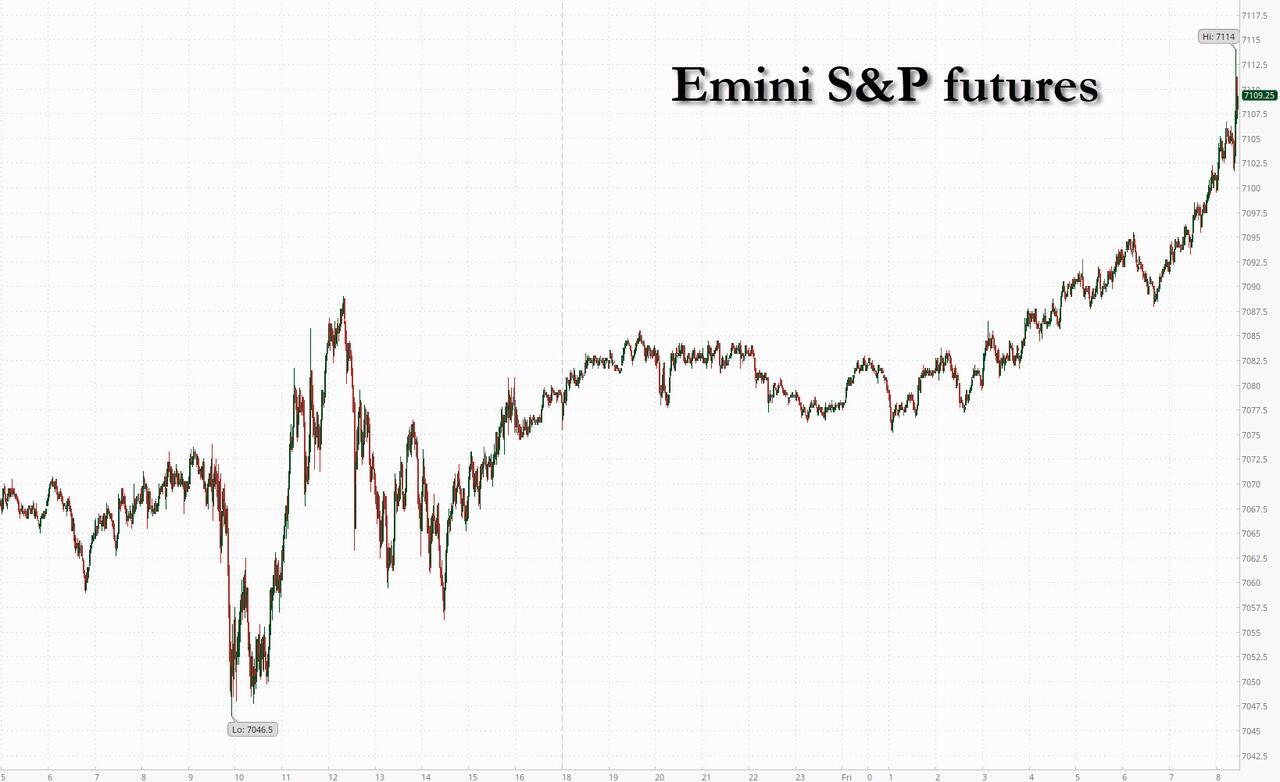
So far, these diurnal influences are relatively minor being against a background of hope triumphing over reality with respect to the war against Iran. Equity markets around the world are hitting new highs despite the inflationary pressures in the pipeline which are bound to drive up bond yields.
On the positive side for gold, France very cleverly sidestepped the issue of whether its earmarked gold at the New York Fed actually existed by selling it to the Fed for printed dollars with which it bought gold to cover in the markets. The message to other holders of the 5,860 metric tonnes of earmarked gold at the NY Fed is that they should do the same. But in these markets, instead of a covered bear operation it would be wiser to buy the gold first, then sell its earmarked position to the Fed. The Fed prints the dollars, and everyone gets their gold.
Meanwhile, there’s a disconnection between physical oil prices, which are as much as $150 while futures trade at $90. And we all thought that markets were anticipatory in nature: clearly not in this case. Gold bugs have long suspected that what we are seeing in oil is what happens or is going to happen in gold and silver.
Such hopes might still be premature. Whatever happens over Iran and Lebanon, one thing is certain: there will be a global inflation-cum-slump shock, particularly if Hormuz doesn’t fully open soon and the Houthis don’t kick off at the Bab al-Mandab straits cutting off Suez and 6m barrels of oil per day from Saudi’s Yanbu terminal.
Short term issues for gold and silver
Clearly, markets are ignoring the consequences of the Iran war, and there will come a moment when there’s a sudden realisation that they are badly mispriced. This is not unusual, occurring in mid-2007 when the liar-loans scandal in residential property had already surfaced and the S&P continued to rise. Today, this is even more of a credit-fuelled bubble, as FINRA’s statistics show:
This is not all the leverage in markets, reflecting retail speculation predominately. Hedge funds and similar large speculators go directly to the banks for their leverage loans. In total, the bubble rivals all precedents and as the madness of crowds is possibly more extreme than any in recorded history.
The point being made is that you cannot rule out a markdown in gold and silver when bond yields soar and equities crash, even though long speculation in the metals is minimal. The overspill from the carnage must not be casually dismissed. Optimistically, you could argue that this time is different, with central banks queuing up to buy gold, and silver is a needed critical mineral in short supply, with the Silver Institute confirming another year of substantial excess demand. Time will tell.
Meanwhile, the dollar’s trade weighted index has come under pressure, as the next chart shows:
Technically, with a death cross now in place the TWI is in a bear market. The level to watch is 96.8, represented by the lower pecked line. If that breaks, expectations of interest rate cuts can be dismissed. Next, we look at the yield on the 10-year UST note:
We’ve included the last few months’ detail in the vignette to show what is almost certainly a golden cross (death for prices). Technically, the 200-day moving average is still declining but only just. Otherwise, the yield can be expected to rise and test the upper trend line in the main chart before breaking out into new high ground.
When that happens, we can expect a second test for gold as hedge funds will be tempted to sell low-yielding paper gold for higher yielding treasuries.
If so, they will miss the point. Led by the dollar, all paper currencies will begin to lose purchasing power at a rate accelerated by the consequences of Hormuz being closed. But you have to ask yourself, will any setback be minimal with central bank demand increasing as unneeded dollars are sold?
Whatever the short-term uncertainties, it is becoming increasingly obvious that the fiat currency system is on its last legs and prescient investors will be buying into any dips — setbacks which will be trivial compared with what is to follow.
3.CHRIS POWELL AND HIS GATA DISPATCHES:
Indian banks halt gold and silver imports amid delay in govt. clearance, sources tell Reuters
Submitted by admin on Fri, 2026-04-17 08:34 Section: Daily Dispatches
By Rajendra Jadhav Reuters Friday, April 17, 2026
MUMBAI, April 17 (Reuters) — Indian banks have halted gold and silver import orders from overseas suppliers, with tons of the metals stuck at customs as a formal government order has not been issued authorizing bullion imports, trade sources said.
Without fresh imports, India could face supply shortages, as the world’s second-largest gold consumer and biggest silver buyer relies on overseas purchases to meet nearly all its demand.
Weak Indian demand could weigh on global gold and silver prices , while narrowing the country’s trade deficit and supporting the rupee, which has been among the worst-performing Asian currencies so far this year.
Authorities have carried out various measures designed to reduce pressure on the currency, including most recently urging refineries to curb their spot dollar purchases.
The halting by Indian banks of gold and silver import orders from overseas suppliers and the tons of the metals stuck at customs due to the absence of a formal government order authorizing bullion imports have not been previously reported. …
CFTC chairman to examine national security risks from geographical concentration of monetary metals depositories
Submitted by admin on Thu, 2026-04-16 17:27 Section: Daily Dispatches
From the Sound Money Defense League Eagle, Idaho Thursday, April 16, 2026
WASHINGTON — At today’s U.S. House Agriculture Committee oversight hearing, Commodities Futures Trading Commission Chairman Michael Selig applauded and pledged to assist the efforts by two members of Congress who recently introduced the “System Integrity through Licensed Vault Expansion and Resilience Act,” or the SILVER Act.
The SILVER Act (H.R. 8007), introduced by Rep. Russ Fulcher, R-Idaho, and Rep. Mark Harris, R-North Carolina, seeks to address longstanding geographic limits on approved depositories for precious metals tied to regulated futures markets.
Under current exchange practices, these storage facilities are largely confined to the New York City area, creating what lawmakers and industry participants describe as a concentration risk with negative implications for market stability, national security, liquidity, and investor access. …
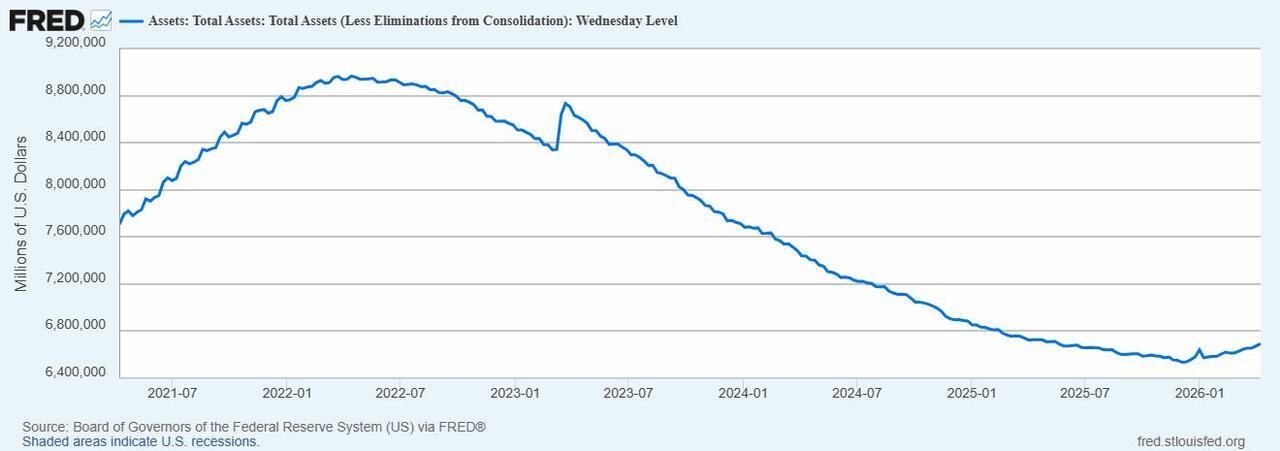
The hedge fund buying was achieved mainly by way of a basis trade where a Treasury bond was purchased more or less simultaneously with the hedge fund acquiring a short position in a Treasury future. Given that the U.S. Treasuries market was generally considered to be highly liquid and efficient, that there were regular trading opportunities to make highly leveraged profitable basis trades was seemingly unusual and ran counter to economic theory of how efficient large and liquid markets should operate.
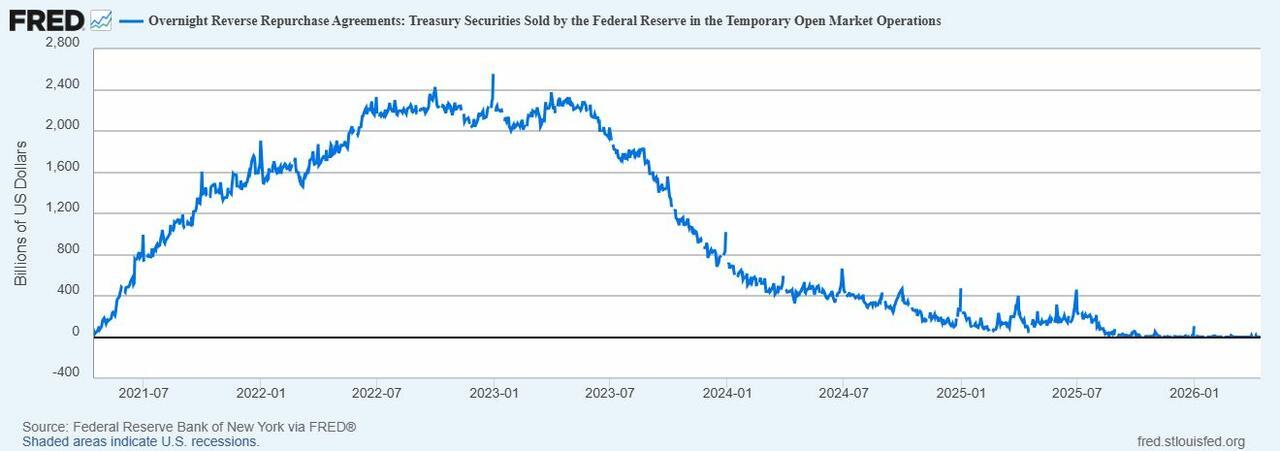
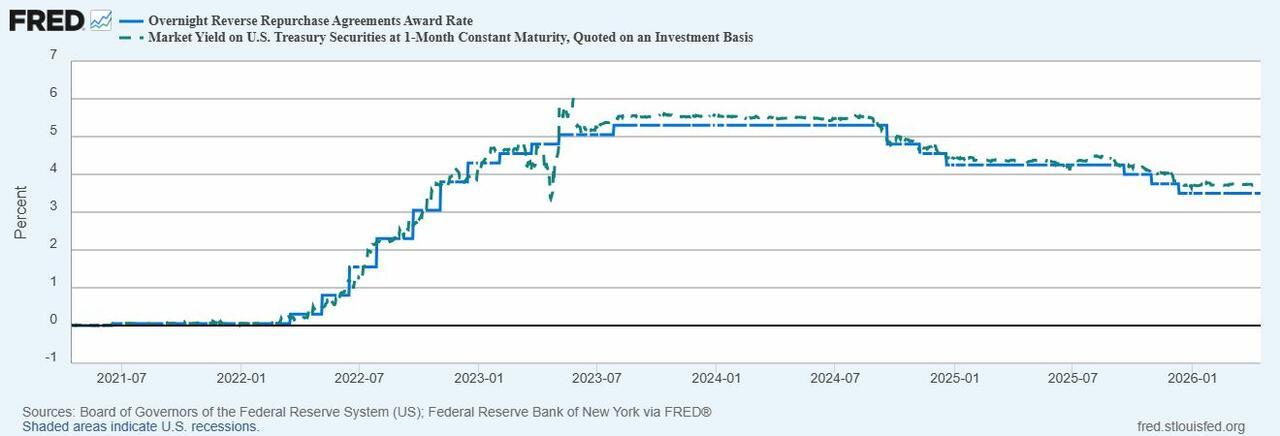
In addition, these theoretically unlikely trades produced a strange coincidence with the process of quantitative tightening, which the Federal Reserve commenced in the spring of 2022. Perhaps the clearest way to visualize the coincidence is to view the chart produced within the original GATA dispatch here:
Hence, as discussed in October 2023, it appears possible that the basis trades were set up to allow quantitative tightening to happen smoothly. To anyone who has followed GATA’s work, which has focused on efforts to suppress precious metals prices for more than 30 years, it is no surprise that strange coincidences occur in major financial markets. This one seemingly enabled the U.S. Treasuries market to grow beyond a level that already seems stretched using conventional metrics.
In GATA’s view, since the 2023 dispatch it has become increasingly likely that a point was coming close where the Treasuries market could not readily accommodate any further borrowing, unless the Federal Reserve started buying newly issued bonds. As of March 31 this year the total U.S. Treasury debt was more than $39 trillion.
It was pointed out then and subsequently that the release valve of a gold price reset would probably have to be activated as U.S. government and non-government debt increased relative to gross domestic product. Here is a GATA report on how this might work based on the assumption of returning the United States to a comparable ratio of non-financial debt to GDP that was common for the country up to the early 1980s:
— noted that hedge funds are still heavily involved in the buying of U.S. Treasuries and that in addition to using the basis trade, a new interest rate swap trade is being used.
The FT column mentions this report from the Federal Reserve —
— which gives much more information on what might be happening.
The BIS report describes the interest rate swap trade in more detail and it seems that tradeable opportunities are arising whereby hedge funds can make a small profit margin by buying Treasuries and then using interest rate swaps to fix the interest rate effectively used on the financing of the purchase of the Treasury.
Again, similar to the basis trade described above, it seems quite strange that regular repeat trading opportunities are appearing to allow these profitable swap trades to occur. Maybe the banks offering the interest rate swaps are themselves incentivized by the U.S. Treasury Department to offer the opportunities to certain hedge funds.
It is perhaps important to explain that the authors of the Federal Reserve paper are (rightly) concerned about apparent inconsistencies in the DATA being reported on the size of the hedge fund positions in the Treasuries market. This is not something that will be covered here, but perhaps one of the reasons the U.S. Treasuries market was able to became so large was the reputation of the United States for providing reliable data regularly on its major financial markets.
Under the current administration this reputation is fraying because of less regular reporting and even the fear that deliberately misleading data is being issued.
GATA followers might allow themselves a wry smile since gold price suppression has seemingly been going on while U.S. financial markets in general have enjoyed such a strong reputation.
Perhaps the overall situation with the Treasuries market can now be best described as one in which the main marginal buyers of Treasuries are hedge funds that appear to have had profitable trades created for them as an incentive to buy Treasuries.
According to figures published by the BIS in the above-mentioned report, the total hedge fund investment into the U.S. Treasuries market in June 2025 using either a basis or swaps trade or other mechanisms, was $2.4 trillion. Typically these hedge fund purchases are concentrated on bonds with two years or LESS to maturity, and this has changed the maturity profile of the Treasuries market.
The FT column cited above made clear that Treasury Secretary Scott Bessent’s main role seems to be figuring out how to roll over the increasing load of maturing bonds.
The FT column notes that the Treasury Department needs to roll over about 33% of Treasury debt next year. This is hardly a comforting statistic with a seemingly difficult war in progress.
If this apparently highly unusual level of government debt being funded at the margin by seemingly opaque hedge fund trades is, as GATA suspects, unsustainable (unless the Federal Reserve starts buying new debt issues), then a significant gold price reset seems imminent.
While GATA has nothing to say about the war with Iran, huge costs are being reported for replacing equipment that has been destroyed and rebuilding stocks of offensive and defensive weapons. One estimate is for defense spending to have to increase by $500 billion, and this could go much higher.
Also, the Trump administration may feel obliged to help Israel finance restoring its military capacity to pre-war levels. So perhaps as much as $1 trillion may have to be spent on top of the $1.5 trillion defense budget the Trump administration wants.
Maybe the future of the Iran conflict is tied much more tightly to the financial position of the United States than is commonly understood. Resetting the gold price earlier might have been a better approach if the U.S. government was seriously considering entering several high-risk military conflicts.
—
NO 268 DR STEPHEN LEEB…
4. ANDREW MAGUIRE/LIVE FROM THE VAULT NO 267
end.
5. COMMODITY REPORT//..SULFURIC ACID (H2SO4)
Gulf Shock May Spark Shortage Of World’s Most Critical Industrial Chemical, Used Heavily In Mining
Thursday, Apr 16, 2026 – 06:05 PM
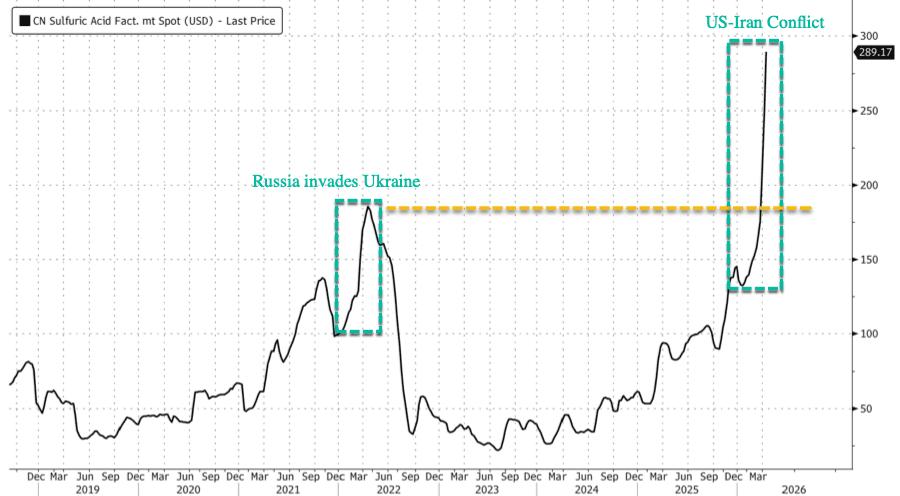
Goldman analysts Kyle Shaffer and Amanda Ross provided clients with a broad overview of industrials and natural resources amid energy disruptions in the Gulf area. In the note, they stated that the well-known Gulf energy shock is set to disrupt LNG production in Qatar for years to come. However, they also highlighted another emerging supply crunch that has received far less attention: sulfuric acid.
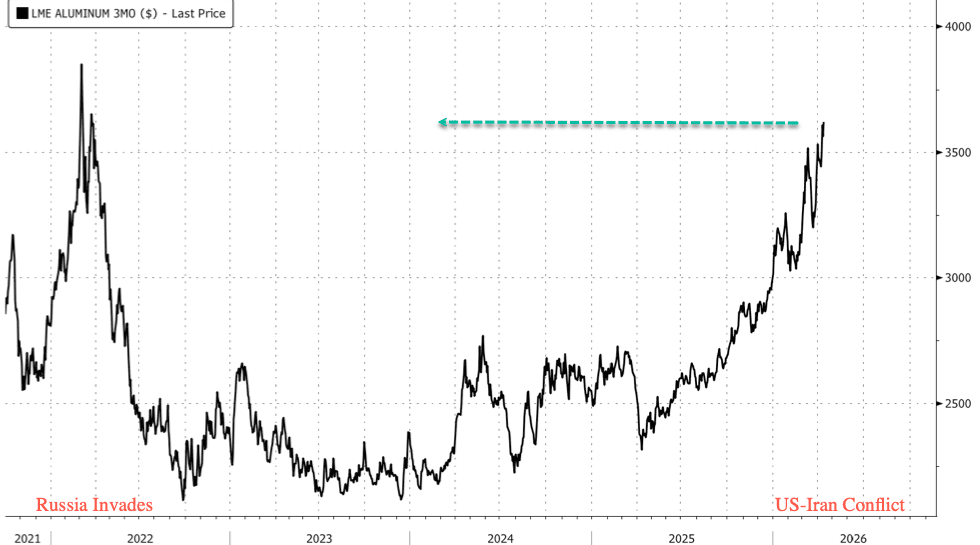
“Some long-lasting consequences have also started to emerge, including a 3-5 years production loss for LNG facility in Qatar, a 6-12 month re-starting time for some aluminum facilities in the Gulf, and shortage of sulfuric acid which can potentially impact future production for copper and lithium” Shaffer and Ross said.
About a third of the world’s sulfur comes from the Gulf region, where it is produced as part of oil and gas refining. Much of the sulfur is exported, primarily to fertilizer and industrial-processing hubs in Asia, North Africa, and, in Qatar’s case, some trading hubs across Asia and Europe.
Goldman analyst James McGeoch noted on Wednesday that Shandong sulfuric acid prices are soaring and that China is “slated to suspend sulfur exports from May (sulfur that is a by-product of processing).” He added that part of the recent push to procure and process concentrate is to produce sulfur for fertilizer.
It is important to note that sulfuric acid is one of the world’s most important industrial chemicals, used in fertilizers (phosphates), oil refining, lead-acid batteries, and chemical manufacturing.
Prices in China have jumped 90% since the start of the US-Iran conflict in late February. Current prices exceed the highs recorded during the Russian invasion of Ukraine in early 2022.
“Already though, prices have risen, and if there’s a shortage of sulfuric acid, that could quite quickly translate into more expensive homes, cars and electrical products,” Bloomberg analyst Sebastian Boyd noted.
In the mining sector, sulfuric acid is critical for the extraction of several key industrial metals, including copper, nickel, uranium, cobalt, and zinc. Sufer is not just for fertilizer to feed the world; the mining sector could also face major impacts if shortages materialize.
END
ALUMINUM
Aluminum Market Descends Into Supply ‘Black Hole’
Friday, Apr 17, 2026 – 06:55 AM
Aluminum prices on the London Metal Exchange are climbing into the end of the week, reaching $3,621 a ton and approaching the peak seen during Russia’s 2022 invasion of Ukraine. The problem now is that the aluminum market has been thrust into a serious supply shock amid the U.S.-Iran conflict in the Middle East, one that is unlikely to be reversed in the near term.
One big problem we highlighted last weekend was that Emirates Global Aluminum (EGA), the Gulf’s largest aluminum producer, declared force majeure on part of its contract book after Iranian missile and drone strikes hit its Al Taweelah smelter. Then there is the Hormuz chokepoint and the U.S. blockade of the critical waterway, which has only further throttled vessel traffic.
It is important to note that EGA accounts for 4% of the world’s aluminum production. The broader Middle East accounts for about 9% of global aluminum production.
JPMorgan analysts have warned that the industry is descending into a black hole, or a “metaphorical point of no return,” where the “global aluminum market will face a serious and prolonged supply outage,” even if vessel flows through the Hormuz chokepoint resume in the near term.
The analysts warned clients earlier this week that the market has now entered that dangerous void, and LME prices could soon reach $4,000 a ton as the largest supply deficit in more than 25 years quickly emerges.
Goldman commodity specialist James McGeoch recently warned clients, “Hard to think of a bigger metal supply shock: High degree of expectation this was where it was heading, but the initial reaction was to fade the uncertainty yesterday, that should be replaced by fresh length if history is a guide.”
Countries exposed to Gulf aluminum shipments include the U.S., Japan, Turkey, South Korea, Saudi Arabia, the Netherlands, Italy, Greece, and India. Any supply shock could hit Western manufacturers, allowing alternative suppliers in China and Russia to step up.
END
JET FUEL
Critical Shortage Of Jet Fuel: EU Airlines Have Just 6 Weeks Supply Left
The European market is facing a critical shortage of kerosene, with only six weeks of supply remaining, and the war in Iran is threatening the continent with a major aviation crisis.
Since the war broke out, jet fuel prices have jumped 70 percent, threatening the financial health of European airlines.
The International Energy Agency (IEA) has warned that this scarcity may soon lead to widespread flight cancellations across Europe.
To combat the dwindling supply, the EU is reportedly developing an emergency plan to maximize refinery output and stabilize fuel distribution.
Fatih Birol, the director of the IEA, stated that these disruptions are a direct consequence of the ongoing blockade in the Strait of Hormuz.
He emphasized the gravity of the situation, warning: “The longer the blockade lasts, the worse it will be for world economic growth and inflation.”
The crisis is expected to move from logistical warnings to direct impacts on travelers, according to Berliner Zeitung.
Birol told the AP news agency, “We’ll soon hear that flights from City A to City B are being canceled due to kerosene shortages.”
Describing this as the most severe energy crisis of his career, he predicted rising costs for gasoline, gas, and electricity globally.
He noted that the primary victims would be poorer nations in Asia, Africa, and Latin America—the states “whose voices are least heard.”
Subsequently, before the crisis hits Europe and the Americas.
He specifically cited countries like Japan, South Korea, India, China, Pakistan, and Bangladesh as being particularly vulnerable.
The industry is already seeing significant fallout from these rising costs.
Lufthansa has announced that, with immediate effect, it will terminate the flight offer of its regional subsidiary, Cityline, and from Saturday, it will stop 27 older aircraft.
CFO Till Streichert explained that the current emergency is forcing the airline to accelerate restructuring plans that were already in the works.
According to the Berliner Zeitung, the airline cited skyrocketing kerosene prices and recent strikes as the primary drivers behind these drastic measures.
While only 10 percent of Europe’s oil comes through the Strait of Hormuz, 50 percent of its kerosene arrives from the region, meaning airlines are especially vulnerable.
Other authorities put this figure even higher, with the International Energy Agency (IEA) stating that the Persian Gulf normally accounts for approximately 75 percent of Europe’s net kerosene imports.
Airport operators are already calling the EU to take emergency measures, including a suspension of aviation taxes to ease the financial burden on airlines.
YOUR EARLY CURRENCY VALUES/GOLD AND SILVER PRICING/ASIAN AND EUROPEAN BOURSE MOVEMENTS/AND INTEREST RATE SETTINGS THURSDAY MORNING.7:30 AM
SHANGHAI CLOSED DOWN 4.12 PTS OR 0.10%
HANG SENG CLOSED DOWN 279.76 PTS OR 1.06%
Nikkei CLOSED DOWN 279.76 PTS OR 1.06%
//Australia’s all ordinaries CLOSED UP 0.11%
//Chinese yuan (ONSHORE) CLOSED DOWN 6.8275
/ OFFSHORE CLOSED DOWN AT 6.8281 Oil UP TO 93.45 dollars per barrel for WTI and BRENT UP TO 98.56 Stocks in Europe OPENED ALL MOSTLY GREEN
ONSHORE USA/ YUAN TRADING 6.8275 (DOWN) OFFSHORE YUAN TRADING DOWN TO 6.8281 ONSHORE YUAN TRADING ABOVE OFF SHORE AND DOWN ON THE DOLLAR// / AND THUS WEAKER/OFF SHORE YUAN TRADING UP AGAINST US DOLLAR/ AND THUS WEAKER
XXXXXXXXXXXXXXXXXXXXXXXXXXXXXXXXXXXXX
YOUR EARLY CURRENCY VALUES/GOLD AND SILVER PRICING/ASIAN AND EUROPEAN BOURSE MOVEMENTS/AND INTEREST RATE SETTINGS FRIDAY MORNING.7:30 AM
ONSHORE YUAN: CLOSED UP AT 6.8275
OFFSHORE YUAN: UP TO 6.8281
1.HANG SANG CLOSED DOWN 279.76 PTS OR 1.06%
2. Nikkei closed DOWN 933.84 PTS OR 1.57%
WEST TEXAS INTERMEDIATE OIL UP TO 93.45
BRENT; 98.56
3. Europe stocks SO FAR: ALL MOSTLY GREEN
USA dollar INDEX UP TO 99.05/// EURO FALLS TO 1.1780 DOWN 8 BASIS PTS
3b Japan 10 YR bond yield:RISES. +2.419 UP 1 FULL BASIS PTS/ VERY TROUBLESOME//Japan buying 100% of bond issuance)/Japanese YEN vs USA cross now at 159.35… JAPANESE YEN NOW FALLING AS WE HAVE NOW REACHED THE ENDING OF THE YEN CARRY TRADE AGAIN AND THE REPATRIATION OF YEN DENOMINATED BONDS TRADING IN THE USA/EUROPE. JAPAN 30 YR BOND YIELD: 3.603 DOWN 1 FULL BASIS PTS
3c Nikkei now ABOVE 17,000
3d USA/Yen rate now well ABOVE the important 120 barrier this morning
3e Gold UP /JAPANESE Yen DOWN CHINESE ONSHORE YUAN: 6.8275( DOWN AND OFFSHORE: DOWN AT 6.8281
3f Japan is to buy INFINITE TRILLION YEN worth of BONDS. Japan’s GDP equals 5 trillion USA
Japan to buy 100% of all new Japanese debt and NOW they will have OVER 50% of all Japanese debt.
3g Oil UP for WTI and BRENT UP this morning
3h European bond buying continues to push yields HIGHER on all fronts in the EMU. German 10yr bund YIELD DOWN TO +3.0388 Italian 10 Yr bond yield UP to 3.812// SPAIN 10 YR BOND YIELD UP TO 3.487%
3i Greek 10 year bond yield UP TO 3.788%
3j Gold at $4784.00 //Silver at: 78.88 1 am est) SILVER NEXT RESISTANCE LEVEL AT $100.00
3k USA vs Russian rouble;// Russian rouble UP 0 AND 11 100 roubles/76.24
3m oil (WTI) into the 93 dollar handle for WTI and 98 handle for Brent/
3n Higher foreign deposits moving out of China// huge risk of outflows and a currency depreciation. This can spell financial disaster for the rest of the world/
JAPAN ON JAN 29.2016 CONTINUES NIRP. THIS MORNING RAISES AMOUNT OF BONDS THAT THEY WILL PURCHASE UP TO .5% ON THE 10 YR BOND///YEN TRADES TO 158.32 10 YEAR YIELD AFTER FIRST BREAKING .54% LAST YEAR NOW EXCEEDS THAT LEVEL TO 2.419% UP 1 BASIS PTS STILL ON CENTRAL BANK (JAPAN) INTERVENTION//YEN CARRY TRADE NOW UNWINDING//YEN BOND TRADING OVERSEAS REPATRIATED.//JAPAN 30 YR: 3.603 DOWN 1 PTS..: USA/SF this 0.7836 as the Swiss Franc . Euro vs SF: 0.9229
USA 10 YR BOND YIELD: 4.307 DOWN 1 BASIS PTS…
USA 30 YR BOND YIELD: 4.931 DOWN 0 BASIS PTS/
USA 2 YR BOND YIELD: 3.775 DOWN 1 BASIS PTS
USA DOLLAR VS TURKISH LIRA: 44.77 UP 2 BASIS PTS/LIRA GETTING KILLED//IDIOTS FOR SELLING GOLD
10 YR UK BOND YIELD: 4.7860 DOWN 3 PTS
30 YR UK BOND YIELD: 5.467 DOWN 3 BASIS PTS
10 YR CANADA BOND YIELD: 3.504 UP 3 BASIS PTS
5 YR CANADA BOND YIELD: 3.108 UP 2 BASIS PTS.
1a New York Opening report
Futures Storm Higher Into Record Territory On Now Daily Ceasefire Hopium
Friday, Apr 17, 2026 – 08:47 AM
Stocks are pushing higher again on the same old regurgitated news: namely speculation that a deal to end the war between the US and Iran is getting closer, the same exact “speculation” that has pushed the Nasdaq higher for what will now be 13 days in a row, and the same speculation that may keep pushing stocks even higher until the reality of no ceasefire sends risk plunging in a few days. For now however, it is sufficient to lift markets thanks to the relentless CTA VWAP grind higher, and as of 8:15am, S&P futures are 0.4% higher, with Spoos trading above 7100 while Nasdaq futs gain 0.3% after both gauges hit record highs Thursday, with all Mag 7 stocks trading higher in the premarket (MSFT +1.1%, AAPL +0.8%). Netflix tumbled 10% after it gave a disappointing Q2 forecast and Reed Hastings announced he is stepping down as Chairman. The dollar was down 10 bps and headed for a February low. Global bonds were mixed, with the 10-year Treasury yield down two basis points at 4.30%. Overnight, headlines were largely quiet: while the date of the second round of US-Iran talk has not yet been determined, Trump signaled that talks could resume this weekend. Oil prices are extending their decline: WTI is down $4 below $88 with both Brent and WTI are both down around 4% for the session as traders await details of talks between the US and Iran following optimistic comments from President Trump. Base metals are all higher led by aluminum (+0.6%); Ags are mostly lower. No economic releases are expected today. Fed’s Daly, Barkin and Waller are scheduled to speak at events. Fed’s blackout period begins Saturday.
In premarket trading, Mag 7 stocks are all higher (Microsoft +1%, Apple +0.4%, Amazon +0.4%, Tesla +0.6%, Alphabet +0.1%, Nvidia +0.2%, Meta +0.2%)
Alcoa (AA) slips 2% after the aluminum company said first-quarter earnings were hurt by higher costs and operational disruptions.
Ally Financial Inc. (ALLY) rises 3% after reporting earnings that beat estimates, fueled by consumers purchasing more cars even as gas prices rose.
Autoliv (ALV) gains 9% after the company saw better-than-expected sales in the first quarter, with particular strength seen in March. CEO Mikael Bratt says in an interview it isn’t wholly clear what was driving the boost, but says some of it may be pre-buying effects as vehicle manufacturers looked to shore up inventories amid rising volatility.
Knight-Swift (KNX) slips 1% after the transportation and logistics services provider reported preliminary adjusted earnings per share for the first quarter that missed the average analyst estimate.
Netflix (NFLX) tumbles 10% after the streaming company gave a forecast for the second quarter that fell short of analysts’ expectations, underwhelming Wall Street just months after it lost out on a bid for Warner Bros. Discovery Inc.
NiSource Inc. (NI) gains 2% after the company announced a new long‑term energy agreement with a subsidiary of Alphabet Inc. to support the development and operation of a large‑scale data center in northern Indiana.
Onto Innovation (ONTO) rises 5% as Stifel upgrades to buy, citing the semiconductor manufacturing company’s solid preliminary revenue.
In other corporate news, Apple’s marketing executive in charge of the Apple Watch, AirPods, health and smart home initiatives said he’s retiring, marking a changing of the guard for a series of key product lines. SpaceX has moved up a scheduled vesting date for shares awarded to employees to as soon as next week, ahead of an IPO. Increasing demand for AI services could continue to raise chip costs throughout the year, note Ericsson executives. Uber is raising its holding in Delivery Hero, buying a stake from its European rival’s biggest shareholder for €270 million ($318 million).
One of the most powerful rallies since World War II looks set to continue Friday as investors look past mixed signals on a Middle East peace deal, a muted Netflix outlook and the prospect of further US-Iran talks this weekend. As measured by the 14-day relative strength index, it took the US benchmark just 11 days to lurch from an oversold reading to Thursday’s arrival in overbought territory. That’s only outpaced by an even faster rally in 1982. Explanations for the abrupt change in momentum point to a combination of hedge unwinding, systematic buying and short covering by hedge funds in macro products.
While the Nasdaq’s 12-day winning streak has propelled the index to fresh all-time highs, tech valuations remain near their 10-year average. Earnings estimates have been rising in concert with stocks, keeping forward price-to-earnings ratios at low levels.
“This reset provides a more constructive entry point in equities, particularly across large-cap quality growth,” said Scott Rubner, Citadel Securities head of equity and equity derivatives strategy.
Brent dropped 4% below $96 a barrel after Trump claimed that Iran has made key concessions in negotiations with the US (Iran later denied it). The drop accelerated after Axios announced that the US is considering a $20 billion cash-for-uranium deal (Iran has yet to deny that).
Yet for all the optimism, the key transit route for about a fifth of global crude shipments remains all but shut under US and Iranian blockades. Some Gulf Arab and European leaders said that a US-Iran peace deal could take about six months to agree. And despite its overnight tumble, Brent continues to trade about a third higher since the conflict began in late February, with no clear indication of when flows through the Strait of Hormuz will resume. Bank of England policymaker Sarah Breeden warned that the war could trigger several market stresses at once.
“As we are heading closer and closer to May, the situation becomes serious,” said Andrea Gabellone, head of global equities at KBC Securities. “If no real traffic is seen by June at the latest, things will take a different turn.”
Not that the market cares: bond and equity stress measures show markets are growing more sanguine about an eventual resolution to the conflict. The V-shaped market recovery has meant investors hedging using monthly puts held to expiry have got little benefit in return for eating carry costs.
“Now that the dust appears to be settling on events in the Middle East, market attention will once again focus back on the fundamentals, in particular earnings given that the season has just started,” said Daniel Murray, deputy chief investment officer at EFG Asset Management. “Earnings expectations are buoyant, consistent with solid underlying macro trends.”
“It’s all about earnings. EPS estimates for 2026 and beyond continue to march higher. Investors are oblivious to anything else,” said Peter Berezin, Chief Global Strategist, BCA Research.
Trump struck an optimistic tone about prospects for a permanent ceasefire with Iran. “It’s looking very good that we’re going to make a deal with Iran, and it’s going to be a good deal,” he told reporters at the White House. Talks between Washington and Tehran could resume this weekend, he added. He also announced a 10-day ceasefire between Israel and Lebanon. Less encouragingly, some Gulf Arab and European leaders said a peace deal would take about six months to be agreed.
In politics, Democrat Analilia Mejia is projected to win the special election in New Jersey’s 11th Congressional District. President Trump sought to assuage voters’ fears about the cost of living despite higher energy prices stemming from his war in Iran at a rally to build support for his economic record ahead of November’s midterm elections.
European stocks are inching higher, with Stoxx 600 up by 0.2. Alstom SA shares slid the most in over two years in Paris after the manufacturer withdrew financial guidance for this fiscal year.
Asian equities retreated ahead of the weekend as investors await progress in talks to extend the US-Iran ceasefire. The MSCI Asia Pacific Index slid as much as 1.2%, with TSMC and Mitsubishi UFJ among the biggest drags on the gauge. Most major markets were in the red, and Japan’s Topix Index fell more than 1%. Enthusiasm for technology stocks has also waned, with chipmaking giant TSMC’s Taipei-listed shares leading declines in part due to investor unease over its heavy reliance on a small number of hyperscaler customers.
In FX, the Bloomberg Dollar Spot Index is down 0.1% and there are modest moves in other major currencies.
In rates, treasuries drift higher over Asia, early London session leaving yields richer by 1bp to 2bp across the curve, following similar price action across European bonds as speculation grows that a peace deal between the US and Iran is getting closer. US 10-year yields trade close to session lows into the early US session at 4.295% with bunds and gilt trading marginally cheaper on the day in the sector. In the UK, the yield on 10-year gilts held steady after Thursday’s move higher. New details about Prime Minister Keir Starmer’s appointment of Peter Mandelson as US ambassador have rekindled doubts about his grip on power. The pound was little changed. US session focus includes a handful of speakers, such as Waller on the economic outlook (2pm New York) ahead of Saturday’s start to the communications blackout period. Treasury auctions next week include $13 billion 20-year bond reopening on Wednesday
In commodities, oil prices are extending their decline but there are few signs of positive spillovers to other assets. Brent and WTI are both down around 4% for the session, as traders await details of talks between the US and Iran following optimistic comments from President Trump. Gold prices are steady slightly short of $4,800/oz.
US economic data calendar slate empty for the session. Fed speaker slate includes Daly (11:30am), Barkin (12:15pm) and Waller on the economic outlook (2pm — text and Q&A expected). Fed’s external communications blackout period begins Saturday, ahead of the April 29 policy announcement
Market Snapshot
S&P 500 mini +0.5%,
Nasdaq 100 mini +0.6%,
Russell 2000 mini +0.4%
Stoxx Europe 600 +0.3%
DAX +0.7%
CAC 40 +0.5%
10-year Treasury yield -1 basis point at 4.3%
VIX +0.2 points at 18.14
Bloomberg Dollar Index -0.1% at 1192.11
euro +0.2% at $1.1799
WTI crude -3.3% at $91.54/barrel
Top Overnight News
The disruption of ME oil supplies due to the war in Iran has sparked a rush for US crude. Data on ship movements show about 70 VLCCs, or very large crude carriers, sailing towards the US Golf Coast mainly from Asia. The number is more than double last year’s average. Nikkei
President Donald Trump said a deal to end the war in Iran could be reached soon, although the timing remained unclear, while U.S. allies were gathering on Friday to discuss reopening the vital Strait of Hormuz shipping route. BBG
A Pakistan-flagged tanker that entered the Persian Gulf over the weekend became the first carrier to exit through the Strait of Hormuz with a crude cargo since the US blockade began on Monday. BBG
The Strait of Hormuz remains in focus as the UK and France host a Paris summit to discuss a naval force to ensure freedom of navigation. Trump, meanwhile, moved to calm voters’ concerns about conflict-driven energy costs at a speech in Las Vegas. BBG
The US Congressional Progressive Caucus discussed trying to force repeated House votes on Iran war powers resolutions, Punchbowl reports.
The US plans to help build a first-of-its-kind industrial hub in the Philippines to boost production of inputs crucial to American supply chains. BBG
The RBI urged state-run oil refiners to curb spot dollar purchases and tap a special credit line for their FX requirements. BBG
The US government is at risk of losing its status as the lowest-cost USD borrower as global investors grow wary of Trump’s volatility. FT
Keir Starmer fired the UK foreign office’s top civil servant, Olly Robbins, a person familiar said. The PM faces renewed calls to quit himself after revelations that his US envoy Peter Mandelson was granted security clearance despite officials’ objections. BBG
Delays to a swath of new US data centers threaten to slow the rollout of AI by the world’s biggest tech companies, with almost 40 per cent of all projects due this year at risk of falling behind schedule. FT
US President Trump posted “Sadly, Mayor Mamdani is DESTROYING New York! It has no chance! The United States of America should not contribute to its failure. It will only get WORSE. The TAX, TAX, TAX Policies are SO WRONG. People are fleeing”.
A more detailed look at global markets courtesy of Newsquawk
APAC stocks were mostly lower as markets lost steam following the recent rallies and with participants paring risk heading into the weekend, despite the Israel-Lebanon ceasefire taking effect and optimism by US President Trump regarding a deal between the US and Iran, which he said could resume talks over the weekend. ASX 200 was subdued with weakness seen in gold miners, financials and the consumer sectors, although the downside is limited amid a lack of fresh catalysts and a quiet data calendar. Nikkei 225 pulled back from its all-time record highs and just about returned to beneath the 59,000 level, with underperformance seen in some miners, manufacturers and semiconductor names. Hang Seng and Shanghai Comp conformed to the uninspired mood with the Hong Kong benchmark dragged lower by tech weakness, while participants also digested some earnings releases, including from Kweichow Moutai, which reported a 5% drop in FY profit.
Top Asian News
Chinese scientists have reportedly developed diamond coating, which could improve cooling efficiency of AI data centres by around 80%, SCMP reported.
China State Planner Vice Chair said economic operations are showing positive changes with significant improvements on both supply and demand side. Will reserve a batch of macro policy measures and roll out in a timely way based on needs.
Fitch said China’s credit outlook remains constrained by weak domestic demand, adds Iran war has added external pressure through weaker energy, trade and global demand.
Japanese Finance Minister Katayama said Japan Bank for International Cooperation is to establish new investment window of up to JPY 600bln to assist Asian nations in securing energy supplies.
European bourses (STOXX 600 +0.3%) are broadly gaining on the last day of the trading week. The FTSE MIB is the slight outperformer, while the FTSE 100 lags as miners underperform. European sectors are mixed. Media tops the sector pile, closely followed by Technology while Basic Resources resides at the bottom of the pile.
Top European News
UK PM Starmer’s Chief Secretary Darren Jones said PM won’t resign and didn’t mislead Parliament, via BBC. The PM has not knowingly or unknowingly misled Parliament. He also stated that PM Starmer is furious; does not think it brings his future into question.
Senior UK Minister said PM Starmer has not considered resigning amidst called for resignation following Mandelson scandal, according to BBC.
UK Foreign Office senior official Sir Olly Robbins is leaving his post following the Mandelson vetting row, according to The Guardian’s Political Editor Crerar.
UK PM Starmer faces resignation called over Mandelson vetting, according to The Telegraph.
EU is planning its biggest relaxation of corporate merger rules in decades, while EU competition commissioner Ribera said merger rules are to favour scale and innovation, according to FT.
FX
DXY is a touch lower on the day with crude benchmarks trading lower by around -3% as news emerged that a Pakistani-flagged tanker became the first crude carrier to surpass the US Blockade since Monday. Elsewhere on geopolitics, reports suggested Indian refiners are paying for Iranian crude in CNY, reporting which may have added to pressure in the USD. (Comprehensive geopolitical analysis on the headline feed)
DXY trades a touch above the 98.00 level, which it has tested in recent days, while USD/JPY reversed from a high of 159.53 to move towards the 159.00 mark. On the latter, BoJ Governor Ueda was on the wires overnight, he reiterated that monetary conditions remain highly accommodative.
Elsewhere, AUD mildly leads given its high-beta characteristics with gold also firmer, and the aforementioned reports that CNY was used to pay for Iranian crude. AUD/USD lifted from a 0.7154 base to mark a session high of 0.7182
Sterling resilient to the political risks that emerged on Thursday afternoon. The UK PM is now facing calls to resign after news that Mandelson failed his vetting process for the Foreign Office. Some MPs have been calling for Starmer to resign: “I fail to see how Starmer survives this.”, one told the iPaper. Though close aides, like Chief Secretary Darren Jones, said the PM won’t resign and didn’t mislead Parliament. Starmer himself has denied any knowledge of the failed vetting. Given these reasons and the fact that PM has repeatedly said he wishes to see out his term with cabinet ministers recently voicing support for him, Gilts and Sterling, which initially weakened on the news, pared their respective losses.
Central Banks
BoJ Governor Ueda said G20 discussed impacts of Middle East on prices and on the global economy, adds many said the Middle East is an important factor and remains uncertain. Supply shock-driven inflation is harder to tackle than demand-driven. Rising oil prices put upward pressure on underlying inflation, but worsen Japan’s terms of trade and weigh on the economy. Monetary conditions remain highly accommodative and Japan’s real interest rate is low. BoJ will decide policy based on likelihood of forecast materialising and risk at each meeting.
ECB’s Muller said market’s rate bets are not completely unreasonable, its hard to argue there is an obvious case for an April hike; can not fully exclude it. Dangerous to assume energy shocks are temporary. ECB is better placed than it was in 2022 – does not have to wait to see second-round effects.
BoE’s Breeden says the Middle East conflict raises the risk of correlated shocks across markets. On repo markets, would authorise considering reforms to gilt repo markets to improve resilience.
Danske Bank sees two rates hikes by the Riksbank by August.
Fixed Income
Global fixed benchmarks are mixed/flat, but have held an upward bias throughout the European session, with the crude complex residing towards lows. Focus remains on the geopolitical front, with Lebanon-Israel having agreed to a ceasefire (but there have been reports of flare-ups in the south of Lebanon), whilst the US-Iran have yet to agree on a second round of talks. Nonetheless, President Trump continues to remain positive, suggesting that “they are making a lot of progress on Iran, and he is not sure the ceasefire needs to be extended”.
USTs are currently trading firmer by a couple of ticks and toward the upper end of a 111-04 to 111-09+ range. Aside from lower energy prices, US paper has not had much to digest, and this has been reflected in the fairly lacklustre price action. The US data docket is lacking, so more focus will be on Fed speak via Daly, Barkin and Waller later today.
Bunds are flat, but have been moving higher throughout the European morning, alongside the pressure seen in the crude complex. Currently trading at the upper end of a 125.11 to 125.46 range. Earlier, there was some commentary from ECB’s Muller, who struck a familiar hawkish tone, noting that an April hike cannot be excluded; comments which add on to the hawkish tone struck by other ECB members and the Minutes released on Thursday.
Gilts are firmer by around 10 ticks, where UK paper reacted to domestic politics. In brief, reports on Thursday suggested that Mandelson failed his vetting process for the Foreign Office – this has led to the Top Foreign Official to leave his role. This renewed some pressure for the PM to leave his position, but Chief Secretary Darren Jones, said the PM won’t resign – he struck a familiar line, where he suggested that Starmer had no knowledge of the failed vetting process. At least in the near term, the pressure on Starmer appears to be limited in nature, though MUFG highlights that the Labour Party could run into issues surrounding the local elections in early May. UK paper currently trades within a 87.83 to 88.38 range.
Commodities
In geopolitics, a 10-day Israel-Lebanon ceasefire took effect at 17:00EDT/22:00BST on Thursday, though Israeli PM Netanyahu rejected Hezbollah’s demand for a full Israeli withdrawal from southern Lebanon, saying forces would remain in a security zone extending to the Syrian border. A Hezbollah source said Lebanon retains the right to resist by all means while Israeli forces remain, while Iran welcomed the ceasefire but also called for a full withdrawal. This morning, reports made the rounds that Israeli forces targeted an ambulance team in southern Lebanon (which breaches the ceasefire), although reporting on this was light overall. On Iran, President Trump struck an optimistic tone on prospects for a permanent US-Iran ceasefire and said Tehran had agreed to reopen the Strait of Hormuz, though some European and Gulf Arab leaders cautioned a deal could still take around six months; Trump nevertheless said an announcement could come soon. Meanwhile, a source told Al-Mayadeen that starting Friday at noon (10:00 BST), anyone wishing to cross Bab al-Mandab should be more vigilant than ever before in all six directions, while other reports said the warning was made by a resistance commander.
Crude price action has been choppy this morning, prices fell on hopes of reduced Middle East supply disruption, with Brent Jun’26 moving towards USD 98/bbl (USD 96.15-98.98/bbl range) and WTI Jun’26 sub-90/bbl (in a USD 87.46-90.34/bbl range), before recovering slightly on the Lebanon ambulance report. New lows were hit shortly after wires re-ran overnight reports of a Pakistani-flagged tanker exiting the Persian Gulf, whilst other reports suggested Indian refiners are paying for Iranian crude in CNY. Do note the low for today is a moving target, at the time of writing.
Spot gold trades within a narrow range, awaiting the next macro impulse. Ranges are narrow within USD 4,768-4,806/oz. Spot silver found some support near its 100 DMA (USD 77.95/oz) but remains contained to a USD 77.77-79.26/oz.
Base metals flat/mixed with copper futures contained within a narrow band amid a lack of macro headlines ahead of a weekend of risk. 3M LME copper resides in a USD 13,182.53-13,300.60/t range at the time of writing.
Indian refiners are reportedly settling rare cargoes of Iranian oil purchased under a temporary US sanctions waiver using CNY through ICICI Bank.
Cumulative crude and condensate supply losses in the Middle East have reached 521mln barrels, according to Kpler’s Baker.
South Korean officials say that a South Korean tanker, carrying crude oil, has passed through the Red Sea route from Saudi’s Yanbu port, AP reported.
IEA chief said markets must brace for significant price surges if critical oil transit route remains closed, while IEA signals it’s not ready yet to release more reserves, though the option is being evaluated.
Geopolitics: Iran
IRNA states that security and traffic measures have been intensified in Islamabad, preparing itself for a major international event, while highlighting that Pakistani officials have not yet confirmed or denied any negotiations, Iran International reported.
US President Trump said Iran war is going swimmingly and should be ending pretty soon, adds going to see some incredible results.
Israel and Lebanon 10-day ceasefire takes effect.
US President Trump posted “I hope Hezbollah acts nicely and well during this important period of time. It will be an GREAT moment for them if they do. No more killing. Must finally have PEACE!”.
Israel reportedly launched airstrikes on southern Lebanon minutes before the ceasefire, according to an Asharq correspondent.
Iran stresses the need for full Israeli withdrawal from southern Lebanon, according to Iranian media citing a Foreign Ministry spokesman.
Iran welcomes ceasefire in Lebanon, said was part of Iran-US ceasefire understanding mediated by Pakistan, Iranian media reported.
Lebanon’s Army noted intermittent shelling on southern Lebanese villages after the ceasefire took effect.
ISNA noted that the Lebanese army announced that the Israeli regime bombed several villages in southern Lebanon after announcing the ceasefire agreement.
“Israeli forces target ambulance team in south Lebanon”, Al Jazeera reported.
IRGC said the army and the IRGC are ready to respond forcefully to any “aggressive and criminal act of the enemies”, IRGC public relations channel reported.
US Central Command said USS Abraham Lincoln transits the Arabian Sea and no vessels are violating the blockade so far.
US Treasury Secretary Bessent met with Italy’s Giorgetti yesterday; also met with Ukraine PM; and with UK Chancellor Reeves and EU Commissioner Dombrovskis. Discussed Iran and Energy. Also met with Japan Finance Minister.
French President Macron and UK PM Starmer are to hold a summit today on a plan to secure the Strait of Hormuz and are expected to brief US President Trump following the meeting, according to FT.
Geopolitics: Ukraine
Governor said that Russian drones attack damaged port infrastructure facilities in Ukraine’s Odesa region overnight.
G7 reaffirmed backing for Ukraine, including energy needs ahead of winter, and agreed to sustain pressure on Russia while they discussed Chernobyl repair efforts and IMF reform progress.
US Event Calendar
DB’s Jim Reid concludes the overnight wrap
Morning from a beautiful start to the day here in Copenhagen. The birds are probably chirping merrily but as my man-flu has gone straight to my head I can’t hear anything. An ideal excuse when I encounter difficult questions about the war from clients.
On that topic, there has been a little bit of derisking globally over the last 24 hours but markets remain broadly optimistic about the direction of travel. Oil prices are retreating back a little this morning with Brent crude down -1.09% to $98.31/bbl, after a +4.70% rise on Thursday that saw it almost reach $100/bbl again. There is some profit taking in Asia ahead of the weekend though, with the Hang Seng (-1.38%) leading the losses followed by the Nikkei (-0.96%) and the KOSPI (-0.90%). Other Asian markets are down two or three tenths of a percent. US equity futures are fairly flat.
The retreat in oil from yesterday’s high came as President Trump struck an optimistic tone on prospects for resolution, saying “It’s looking very good that we’re going to make a deal with Iran, and it’s going to be a good deal”. He predicted that agreement would be reached “fairly soon” and said that he would extend the current two-week ceasefire if a deal was close. The US President also claimed that “they’ve agreed to almost everything”, including handing over the “nuclear dust”, though there’s been no confirmation of this from the Iranian side. Earlier, Trump also announced a 10-day ceasefire between Israel and Lebanon, and he said that he’d be inviting Israel’s PM Netanyahu and Lebanon’s President Aoun to the White House. This ceasefire formally came into effect overnight.
Oil had moved higher for much of yesterday’s sessions following multiple more negative headlines, which dampened hopes about a near-term peace deal between the US and Iran. For instance, Reuters reported yesterday from two Iranian sources, who said that the US and Iranian negotiators had scaled back their ambitions for a comprehensive peace deal, and were instead looking at a temporary memorandum that would prevent a return to conflict. Moreover, Iran’s Tasnim news agency said in a report that “Iran has emphasized through Pakistani mediation that the US must first fulfill its commitments”, and that “without going through the preliminary arrangements and reaching the necessary framework, these negotiations will be of no benefit”.
That backdrop meant that oil prices moved higher yesterday, with Brent crude (+4.70%) closing at $99.39/bbl. Yet despite the latest advance for oil prices, the US equity rally continued. So not only did the S&P 500 (+0.26%) reach another record high, but yesterday saw the NASDAQ (+0.36%) advance for a 12th consecutive session for the first time since 2009. In fact, if we get a 13th advance today, it would be the longest run of consecutive gains since 1992.
Generally I’m sympathetic to the view that a resolution is more likely than not over the coming weeks even if the path is unlikely to be a straight line. However the CoTD (link here) yesterday reminded us that the last time we had a larger move in the S&P 500 in 11 business days than we’ve just seen since March 30 (+10.7%) was back in March 2022. Back then, it was because of expectations that Russian and Ukraine talks would end up in an early ceasefire to the war which was only weeks old at the time. That obviously didn’t end well and the bear market soon continued. So one warning sign from the recent past.
However the macro environment was quite different back then and we were in the early stages of a big rate shock, waking us from the ZIRP slumber. Today the environment outside the war is healthier and there was further evidence yesterday, with the weekly initial jobless claims falling back to 207k in the week ending April 11 (vs. 213k expected). The labour market is showing many more signs of strength now than it did pre-war.
US Treasury yields crept higher as the upward move for oil continued. So the 2yr yield (+1.3bps) inched up to 3.78%, whilst the 10yr yield (+2.8bps) saw a slightly larger move to 4.31%. The only obvious driver was the oil move, as there weren’t materially new policy signals from Fed officials. In fact, New York Fed President Williams said given everything that was changing, “it doesn’t make sense for us to try to be giving strong forward guidance”. Governor Miran did again say that the Fed should lower rates, though in favouring “three, maybe four cuts this year”, this was perhaps a slight moderation of his dovishness given he penciled in four cuts in the March SEP. Miran had favoured a full 150bps of 2026 easing at the start of the year. Incidentally, today is the last chance for us to hear from Fed officials before the next meeting, as their blackout period begins tomorrow. That said, the nomination hearing for Kevin Warsh as the new Fed Chair is next Tuesday, so that will be one to watch.
Earlier in Europe, sovereign bonds put in a stronger performance. That partly came as investors reacted to a Bloomberg report after the previous day’s close, which said the ECB was leaning towards keeping rates on hold in a couple of weeks. So that eased concerns about a hawkish reaction to higher energy prices, and market pricing for an April rate hike fell to just 13%, the lowest in over a month (86% at the recent peak). In turn, that helped to bring yields down, with those on 2yr bunds down -2.7bps, while further out the curve yields on 10yr bunds (-1.2bps), OATs (-0.9bps) and BTPs (-1.2bps) saw more modest declines. However, equities slipped back slightly given the oil move, with the STOXX 600 down -0.05% by the close.
Finally in the UK, 10yr gilt yields (+3.4bps) saw a sharp move higher in the afternoon, driven by a Guardian story that former US ambassador Peter Mandelson had failed his security vetting clearance for that appointment, and the decision had been overruled by the Foreign Office. So that was seen as a problem for Prime Minister Starmer’s position, as he’d previously told the House of Commons that “full due process was followed”. That led to a negative market reaction, because the consensus view is that Starmer’s replacement would face pressure to ease the fiscal rules and borrow more, leading to higher gilt issuance. Meanwhile, gilts had been slightly underperforming even before that report, as data showed UK GDP grew by a monthly +0.5% in February (vs. +0.2% expected).
Looking at the day ahead, it’s a fairly quiet one, but central bank speakers include the Fed’s Daly, Barkin and Waller, the BoE’s Breeden and Bill, and Bank of Canada Governor Macklem
1b) European opening report
Stocks bid as crude slides; GBP unreactive to calls for PM to resign – Newsquawk US Market Open
Friday, Apr 17, 2026 – 06:15 AM
Israel and Lebanon 10-day ceasefire took effect from 17:00EDT on Thursday. Despite this, reports indicate that Israel bombed several villages in southern Lebanon after announcing the ceasefire agreement.
US President Trump said the Iran war is going swimmingly and should be ending pretty soon, added going to see some incredible results.
European bourses mixed; US equity futures remain near ATHs, NFLX slips after maintaining guidance and co-founder stepping down.
DXY slightly softer, G10s mixed, GBP unreactive on UK politics.
Global fixed benchmarks broadly unchanged awaiting Fed speak.
Looking ahead, highlights include Canadian Housing Starts (Mar). Speakers include BoE’s Pill, Fed’s Daly, Barkin & Waller. Earnings from State Street. Credit Reviews include Morningstar DBRS reviews credit rating on the EU and Italy.
2. Listen to this report in the market open podcast (available on Apple and Spotify)
3. Trial Newsquawk’s premium real-time audio news squawk box for 7 days
EUROPEAN TRADE
EQUITIES
European bourses (STOXX 600 +0.3%) are broadly gaining on the last day of the trading week. The FTSE MIB is the slight outperformer, while the FTSE 100 lags as miners underperform.
European sectors are mixed. Media tops the sector pile, closely followed by Technology while Basic Resources resides at the bottom of the pile.
US equity futures continue to gain, hovering around ATHs. Despite the positiveness, Netflix shares have slumped (-10.1% pre-market) as analysts were left disappointed after the co. reiterated its FY guidance despite beating its Q1 top-line metrics; focus also on its co-founder to step down.
DXY is a touch lower on the day with crude benchmarks trading lower by around -3% as news emerged that a Pakistani-flagged tanker became the first crude carrier to surpass the US Blockade since Monday. Elsewhere on geopolitics, reports suggested Indian refiners are paying for Iranian crude in CNY, reporting which may have added to pressure in the USD. (Comprehensive geopolitical analysis on the headline feed)
DXY trades a touch above the 98.00 level, which it has tested in recent days, while USD/JPY reversed from a high of 159.53 to move towards the 159.00 mark. On the latter, BoJ Governor Ueda was on the wires overnight, he reiterated that monetary conditions remain highly accommodative.
Elsewhere, AUD mildly leads given its high-beta characteristics with gold also firmer, and the aforementioned reports that CNY was used to pay for Iranian crude. AUD/USD lifted from a 0.7154 base to mark a session high of 0.7182
Sterling resilient to the political risks that emerged on Thursday afternoon. The UK PM is now facing calls to resign after news that Mandelson failed his vetting process for the Foreign Office. Some MPs have been calling for Starmer to resign: “I fail to see how Starmer survives this.”, one told the iPaper. Though close aides, like Chief Secretary Darren Jones, said the PM won’t resign and didn’t mislead Parliament. Starmer himself has denied any knowledge of the failed vetting. Given these reasons and the fact that PM has repeatedly said he wishes to see out his term with cabinet ministers recently voicing support for him, Gilts and Sterling, which initially weakened on the news, pared their respective losses.
FIXED INCOME
Global fixed benchmarks are mixed/flat, but have held an upward bias throughout the European session, with the crude complex residing towards lows. Focus remains on the geopolitical front, with Lebanon-Israel having agreed to a ceasefire (but there have been reports of flare-ups in the south of Lebanon), whilst the US-Iran have yet to agree on a second round of talks. Nonetheless, President Trump continues to remain positive, suggesting that “they are making a lot of progress on Iran, and he is not sure the ceasefire needs to be extended”.
USTs are currently trading firmer by a couple of ticks and toward the upper end of a 111-04 to 111-09+ range. Aside from lower energy prices, US paper has not had much to digest, and this has been reflected in the fairly lacklustre price action. The US data docket is lacking, so more focus will be on Fed speak via Daly, Barkin and Waller later today.
Bunds are flat, but have been moving higher throughout the European morning, alongside the pressure seen in the crude complex. Currently trading at the upper end of a 125.11 to 125.46 range. Earlier, there was some commentary from ECB’s Muller, who struck a familiar hawkish tone, noting that an April hike cannot be excluded; comments which add on to the hawkish tone struck by other ECB members and the Minutes released on Thursday.
Gilts are firmer by around 10 ticks, where UK paper reacted to domestic politics. In brief, reports on Thursday suggested that Mandelson failed his vetting process for the Foreign Office – this has led to the Top Foreign Official to leave his role. This renewed some pressure for the PM to leave his position, but Chief Secretary Darren Jones, said the PM won’t resign – he struck a familiar line, where he suggested that Starmer had no knowledge of the failed vetting process. At least in the near term, the pressure on Starmer appears to be limited in nature, though MUFG highlights that the Labour Party could run into issues surrounding the local elections in early May. UK paper currently trades within a 87.83 to 88.38 range.
COMMODITIES
In geopolitics, a 10-day Israel-Lebanon ceasefire took effect at 17:00EDT/22:00BST on Thursday, though Israeli PM Netanyahu rejected Hezbollah’s demand for a full Israeli withdrawal from southern Lebanon, saying forces would remain in a security zone extending to the Syrian border. A Hezbollah source said Lebanon retains the right to resist by all means while Israeli forces remain, while Iran welcomed the ceasefire but also called for a full withdrawal. This morning, reports made the rounds that Israeli forces targeted an ambulance team in southern Lebanon (which breaches the ceasefire), although reporting on this was light overall. On Iran, President Trump struck an optimistic tone on prospects for a permanent US-Iran ceasefire and said Tehran had agreed to reopen the Strait of Hormuz, though some European and Gulf Arab leaders cautioned a deal could still take around six months; Trump nevertheless said an announcement could come soon. Meanwhile, a source told Al-Mayadeen that starting Friday at noon (10:00 BST), anyone wishing to cross Bab al-Mandab should be more vigilant than ever before in all six directions, while other reports said the warning was made by a resistance commander.
Crude price action has been choppy this morning, prices fell on hopes of reduced Middle East supply disruption, with Brent Jun’26 moving towards USD 98/bbl (USD 96.15-98.98/bbl range) and WTI Jun’26 sub-90/bbl (in a USD 87.46-90.34/bbl range), before recovering slightly on the Lebanon ambulance report. New lows were hit shortly after wires re-ran overnight reports of a Pakistani-flagged tanker exiting the Persian Gulf, whilst other reports suggested Indian refiners are paying for Iranian crude in CNY. Do note the low for today is a moving target, at the time of writing.
Spot gold trades within a narrow range, awaiting the next macro impulse. Ranges are narrow within USD 4,768-4,806/oz. Spot silver found some support near its 100 DMA (USD 77.95/oz) but remains contained to a USD 77.77-79.26/oz.
Base metals flat/mixed with copper futures contained within a narrow band amid a lack of macro headlines ahead of a weekend of risk. 3M LME copper resides in a USD 13,182.53-13,300.60/t range at the time of writing.
Indian refiners are reportedly settling rare cargoes of Iranian oil purchased under a temporary US sanctions waiver using CNY through ICICI Bank.
Cumulative crude and condensate supply losses in the Middle East have reached 521mln barrels, according to Kpler’s Baker.
South Korean officials say that a South Korean tanker, carrying crude oil, has passed through the Red Sea route from Saudi’s Yanbu port, AP reported.
IEA chief said markets must brace for significant price surges if critical oil transit route remains closed, while IEA signals it’s not ready yet to release more reserves, though the option is being evaluated.
Commerzbank sees silver prices at USD 90/oz by the end of 2026.
NOTABLE EUROPEAN HEADLINES
UK PM Starmer’s Chief Secretary Darren Jones said PM won’t resign and didn’t mislead Parliament, via BBC. The PM has not knowingly or unknowingly misled Parliament. He also stated that PM Starmer is furious; does not think it brings his future into question.
Senior UK Minister said PM Starmer has not considered resigning amidst called for resignation following Mandelson scandal, according to BBC.
UK Foreign Office senior official Sir Olly Robbins is leaving his post following the Mandelson vetting row, according to The Guardian’s Political Editor Crerar.
UK PM Starmer faces resignation called over Mandelson vetting, according to The Telegraph.
EU is planning its biggest relaxation of corporate merger rules in decades, while EU competition commissioner Ribera said merger rules are to favour scale and innovation, according to FT.
NOTABLE EUROPEAN DATA RECAP
EU Balance of Trade (Feb) 11.5B vs. Exp. 11.1B (Prev. -1.9B)
EU Current Account (Feb) 21.09B (Prev. 13B).
Italian Balance of Trade (Feb) 4.944B vs. Exp. 3.83B (Prev. 1.089B).
Italian Current Account (Feb) 3654M (Prev. -1785M).
CENTRAL BANKS
BoJ Governor Ueda said G20 discussed impacts of Middle East on prices and on the global economy, adds many said the Middle East is an important factor and remains uncertain. Supply shock-driven inflation is harder to tackle than demand-driven. Rising oil prices put upward pressure on underlying inflation, but worsen Japan’s terms of trade and weigh on the economy. Monetary conditions remain highly accommodative and Japan’s real interest rate is low. BoJ will decide policy based on likelihood of forecast materialising and risk at each meeting.
ECB’s Muller said market’s rate bets are not completely unreasonable, its hard to argue there is an obvious case for an April hike; can not fully exclude it. Dangerous to assume energy shocks are temporary. ECB is better placed than it was in 2022 – does not have to wait to see second-round effects.
BoE’s Breeden says the Middle East conflict raises the risk of correlated shocks across markets. On repo markets, would authorise considering reforms to gilt repo markets to improve resilience.
Danske Bank sees two rates hikes by the Riksbank by August.
NOTABLE US HEADLINES
The US Congressional Progressive Caucus discussed trying to force repeated House votes on Iran war powers resolutions, Punchbowl reports.
US House plans overnight FISA vote, according to POLITICO.
US President Trump posted “Sadly, Mayor Mamdani is DESTROYING New York! It has no chance! The United States of America should not contribute to its failure. It will only get WORSE. The TAX, TAX, TAX Policies are SO WRONG. People are fleeing”.
GEOPOLITICS
MIDDLE EAST
IRNA states that security and traffic measures have been intensified in Islamabad, preparing itself for a major international event, while highlighting that Pakistani officials have not yet confirmed or denied any negotiations, Iran International reported.
US President Trump said Iran war is going swimmingly and should be ending pretty soon, adds going to see some incredible results.
Israel and Lebanon 10-day ceasefire takes effect.
US President Trump posted “I hope Hezbollah acts nicely and well during this important period of time. It will be an GREAT moment for them if they do. No more killing. Must finally have PEACE!”.
Israel reportedly launched airstrikes on southern Lebanon minutes before the ceasefire, according to an Asharq correspondent.
Iran stresses the need for full Israeli withdrawal from southern Lebanon, according to Iranian media citing a Foreign Ministry spokesman.
Iran welcomes ceasefire in Lebanon, said was part of Iran-US ceasefire understanding mediated by Pakistan, Iranian media reported.
Lebanon’s Army noted intermittent shelling on southern Lebanese villages after the ceasefire took effect.
ISNA noted that the Lebanese army announced that the Israeli regime bombed several villages in southern Lebanon after announcing the ceasefire agreement.
“Israeli forces target ambulance team in south Lebanon”, Al Jazeera reported.
IRGC said the army and the IRGC are ready to respond forcefully to any “aggressive and criminal act of the enemies”, IRGC public relations channel reported.
US Central Command said USS Abraham Lincoln transits the Arabian Sea and no vessels are violating the blockade so far.
US Treasury Secretary Bessent met with Italy’s Giorgetti yesterday; also met with Ukraine PM; and with UK Chancellor Reeves and EU Commissioner Dombrovskis. Discussed Iran and Energy. Also met with Japan Finance Minister.
French President Macron and UK PM Starmer are to hold a summit today on a plan to secure the Strait of Hormuz and are expected to brief US President Trump following the meeting, according to FT.
RUSSIA-UKRAINE
Governor said that Russian drones attack damaged port infrastructure facilities in Ukraine’s Odesa region overnight.
G7 reaffirmed backing for Ukraine, including energy needs ahead of winter, and agreed to sustain pressure on Russia while they discussed Chernobyl repair efforts and IMF reform progress.
APAC stocks were mostly lower as markets lost steam following the recent rallies and with participants paring risk heading into the weekend, despite the Israel-Lebanon ceasefire taking effect and optimism by US President Trump regarding a deal between the US and Iran, which he said could resume talks over the weekend.
ASX 200 was subdued with weakness seen in gold miners, financials and the consumer sectors, although the downside is limited amid a lack of fresh catalysts and a quiet data calendar.
Nikkei 225 pulled back from its all-time record highs and just about returned to beneath the 59,000 level, with underperformance seen in some miners, manufacturers and semiconductor names.
Hang Seng and Shanghai Comp conformed to the uninspired mood with the Hong Kong benchmark dragged lower by tech weakness, while participants also digested some earnings releases, including from Kweichow Moutai, which reported a 5% drop in FY profit.
NOTABLE ASIA-PAC HEADLINES
Chinese scientists have reportedly developed diamond coating, which could improve cooling efficiency of AI data centres by around 80%, SCMP reported.
China State Planner Vice Chair said economic operations are showing positive changes with significant improvements on both supply and demand side. Will reserve a batch of macro policy measures and roll out in a timely way based on needs.
Fitch said China’s credit outlook remains constrained by weak domestic demand, adds Iran war has added external pressure through weaker energy, trade and global demand.
Japanese Finance Minister Katayama said Japan Bank for International Cooperation is to establish new investment window of up to JPY 600bln to assist Asian nations in securing energy supplies.
Stocks continue gains with crude a touch lower; BoE and Fed speak ahead – Newsquawk EU Market Open
Friday, Apr 17, 2026 – 02:18 AM
US President Trump said they are making a lot of progress on Iran, and he is not sure the ceasefire needs to be extended, while he added that Iran is willing to do things today they previously weren’t.
US President Trump said he had excellent conversations with Lebanon’s President Aoun and Israeli PM Netanyahu, while he announced that the leaders agreed to formally begin a 10-day ceasefire from 17:00EDT on Thursday.
Israeli security official said the military has no plans to withdraw forces from Southern Lebanon during a ceasefire.
A source told Al-Mayadeen that starting Friday, at noon (10:00BST) anyone wishing to cross Bab al-Mandab should be more vigilant than ever before in all six directions, while other reports noted that the warning was made by a resistance commander.
APAC stocks were mostly lower; European equity futures indicate a lower cash market open with Euro Stoxx 50 futures down 0.2%.
Looking ahead, highlights include Italian Balance of Trade (Feb), Canadian Housing Starts (Mar). Speakers include BoE’s Breeden & Pill, Fed’s Daly, Barkin & Waller. Earnings from State Street. Credit Reviews include Morningstar DBRS reviews credit rating on the EU and Italy.
2. Listen to this report in the market open podcast (available on Apple and Spotify)
3. Trial Newsquawk’s premium real-time audio news squawk box for 7 days
IRAN CONFLICT
US President Trump said they are making a lot of progress on Iran, and he is not sure the ceasefire needs to be extended, while he added that Iran is willing to do things today they previously weren’t and the US blockade of the Strait of Hormuz is holding up well. Trump said the next meeting with Iran may take place over the weekend, and it is looking very good that a deal will be made with Iran, but added that if there is no deal with Iran, fighting will resume. Trump also stated that they have a very powerful statement that Iran will not have nuclear weapons, which goes beyond 20 years and that Iran agreed they will not have a nuclear weapon. Furthermore, he said he would extend the ceasefire if he has to and that Iran has agreed to almost everything, as well as noted that if an Iran deal is signed in Islamabad, he might go.
US President Trump posted “I hope Hezbollah acts nicely and well during this important period of time. It will be an GREAT moment for them if they do. No more killing. Must finally have PEACE!”
US President Trump said the Iran war is going ‘swimmingly’ and should be ending pretty soon, while he added that they are going to see some incredible results.
US Senator Graham, a well-known Iran hawk, told reporters on Thursday morning that he is “confident” the US will not extend its ceasefire with Iran beyond next week’s deadline, after speaking with President Donald Trump on Wednesday night, according to CNN.
US officials said a Reuters report that US and Iranian negotiators have scaled back ambitions for a comprehensive deal is not true. It was separately reported that Gulf and European officials see the US needing 6 months for an Iran deal.
US President Trump said he had excellent conversations with Lebanon’s President Aoun and Israeli PM Netanyahu, while he announced that the leaders agreed to formally begin a 10-day ceasefire from 17:00EDT on Thursday. Trump also posted that he will be inviting Israeli PM Netanyahu and Lebanese President Aoun to the White House for the first meaningful talks between Israel and Lebanon.
US State Department said the initial period of Israel-Lebanon ceasefire may be extended by mutual agreement between Lebanon and Israel if progress is demonstrated in negotiations.
Israel PM Netanyahu said he agreed to a temporary ten-day ceasefire in Lebanon, but has not agreed to Hezbollah’s demand to withdraw from southern Lebanon, while he said they will remain in Lebanon with an extensive security zone up to the Syrian border.
Israel launched airstrikes on southern Lebanon minutes before the ceasefire, according to an Asharq correspondent, while Lebanon’s army noted intermittent shelling on southern Lebanese villages after the ceasefire took effect.
Israeli security official said the military has no plans to withdraw forces from Southern Lebanon during a ceasefire, while the Israeli military said forces remain stationed in southern Lebanon following the ceasefire and urged residents not to move south of the Litani River.
Israeli senior official said the Trump administration intends to actively be a part of the efforts by the Lebanese government to disarm Hezbollah and is prepared to use American resources to achieve this goal.
Hezbollah source said as long as the occupation remains on their land, Lebanon and its people have the right to resist by all means to force its withdrawal.
Iran welcomed the ceasefire in Lebanon and said it was part of the Iran-US ceasefire understanding mediated by Pakistan. Furthermore, Iran stressed the need for full Israeli withdrawal from southern Lebanon, according to Iranian media citing a Foreign Ministry spokesman.
Iranian Parliament Speaker said the ceasefire was nothing but a result of Hezbollah’s steadfastness and the unity of the Axis of Resistance, while they will deal with this ceasefire with caution, and will remain together until the full realisation of victory.
US CENTCOM said USS Abraham Lincoln is transiting the Arabian Sea and no vessels were violating the blockade so far.
French President Macron and UK PM Starmer are to hold a summit today on a plan to secure the Strait of Hormuz and are expected to brief US President Trump following the meeting, according to FT.
A source told Al-Mayadeen that starting Friday, at noon (10:00BST), anyone wishing to cross Bab al-Mandab should be more vigilant than ever before in all six directions, while other reports noted that the warning was made by a resistance commander.
US intelligence detected signs China was weighing giving Iran advanced radar systems in the days after the Iran war began, according to CBS.
US TRADE
EQUITIES
US stocks extended on record levels and the Nasdaq continued to outperform, albeit modestly, while most sectors finished higher, led by energy, real estate and technology, although healthcare, industrials and consumer discretionary lagged. Energy stocks tracked gains in crude, with oil prices rising despite ongoing optimism about a resolution to the conflict. However, with the Strait of Hormuz still heavily restricted, markets are likely to look for progress beyond ceasefires, while a resistance commander advised caution for those wanting to cross the Bab al-Mandab Strait from noon on Friday.
SPX +0.26% at 7,041, NDX +0.49% at 26,333, DJI +0.24% at 48,579, RUT +0.22% at 2,720.
USTR Greer said there is continued offshoring to Mexico and that they had talks about changing USMCA rules of origin, which will be among the issues discussed in meetings in Mexico next week. Greer said they had talks with Canada and Mexico about rules of origin for steel, while they are also preparing texts for a plurilateral agreement with a select group on critical minerals, including a proposed price floor.
Canada’s Trade Minister reportedly held discussions with Chinese EV manufacturers, including BYD, Xpeng, and Guangzhou Automobile Group.
NOTABLE HEADLINES
US Senator Warren said she met with Fed Chair Nominee Warsh and has concerns about him, while she does not think they should have the Warsh hearing next week.
ICE Acting Director Lyons plans to resign in May, according to NYT.
APAC TRADE
EQUITIES
APAC stocks were mostly lower as markets lost steam following the recent rallies and with participants paring risk heading into the weekend, despite the Israel-Lebanon ceasefire taking effect and optimism by US President Trump regarding a deal between the US and Iran, which he said could resume talks over the weekend.
ASX 200 was subdued with weakness seen in gold miners, financials and the consumer sectors, although the downside is limited amid a lack of fresh catalysts and a quiet data calendar.
Nikkei 225 pulled back from its all-time record highs and just about returned to beneath the 59,000 level, with underperformance seen in some miners, manufacturers and semiconductor names.
Hang Seng and Shanghai Comp conformed to the uninspired mood with the Hong Kong benchmark dragged lower by tech weakness, while participants also digested some earnings releases, including from Kweichow Moutai, which reported a 5% drop in FY profit.
US equity futures took a breather overnight after Wall Street recently extended on record levels.
European equity futures indicate a lower cash market open with Euro Stoxx 50 futures down 0.2% after the cash market closed with losses of 0.1% on Thursday.
FX
DXY kept afloat after rebounding on Thursday alongside a recovery in oil prices, despite geopolitical updates remaining positive. Nonetheless, the Strait of Hormuz remains largely shut, while talks between the US and Iran have no set date, although Trump claimed Iran agreed to hand over enriched uranium and that the next meeting may take place over the weekend, while he also said it is looking very good that a deal will be made.
EUR/USD was contained after its recent soft performance and with little reaction seen from the ECB Minutes or slew of comments from central bank officials, including ECB’s Kazaks, who said that every meeting is a live meeting and a lot can happen until the April meeting.
GBP/USD lacked direction with some headwinds seen as PM Starmer faces increased calls to step down due to the Mandelson vetting scandal, which has led to top Foreign Office official Olly Robbins leaving his post.
USD/JPY extended on advances after reclaiming the 159.00 status and following the recent unwinding of BoJ April rate hike bets, while there were comments from BoJ Governor Ueda, who reiterated that monetary conditions remain highly accommodative, with Japan’s real interest rate low, and that BoJ will decide policy based on the likelihood of forecast materialising and risk at each meeting.
Antipodeans were rangebound amid the overall uneventful mood across the FX space and in the absence of any tier-1 data releases.
PBoC set USD/CNY mid-point at 6.8622 vs exp. 6.8206 (Prev. 6.8616)
FIXED INCOME
10yr UST futures marginally extended on declines after yields rose across the curve yesterday in tandem with oil, amid the ongoing blockade of the Strait of Hormuz and with a resistance commander cautioning that anyone who attempts to cross the Bab Al-Mandeb should be alert to threats from all sides from noon today.
Bund futures were lower following the recent whipsawing and deluge of ECB rhetoric.
10yr JGB futures nursed some of their earlier losses with prices oscillating through the 130.00 level amid a lack of pertinent drivers and following the recent unwinding of BoJ April rate hike bets.
COMMODITIES
Crude futures pulled back overnight following the prior day’s advances amid the continued reduced traffic flow in the Strait of Hormuz and with a resistance commander advising caution for those wanting to cross the Bab al-Mandab Strait from noon on Friday, while a ceasefire between Israel and Lebanon took effect today, but had little impact on prices as reports over the past couple of days had already pointed to such an outcome.
Spot gold traded indecisively after trickling below the USD 4,800/oz level.
Copper futures were subdued with demand dampened by the lacklustre mood in Asia-Pac.
IEA chief said markets must brace for significant price surges if critical oil transit route remains closed, while IEA signals it’s not ready yet to release more reserves, though the option is being evaluated.
US oil companies warned President Trump not to allow Iran to impose a toll on tankers transiting the Strait of Hormuz in a future peace deal, according to FT.
US Interior Secretary Bergum said he spoke with oil and gas producers, while he added that US producers are getting a price signal to invest.
CRYPTO
Bitcoin gradually retreated after failing to sustain the USD 75,000 level.
NOTABLE ASIA-PAC HEADLINES
China State Planner Vice Chair said economic operations are showing positive changes with significant improvements on both the supply and demand side, while they will reserve a batch of macro policy measures and roll them out in a timely way based on needs. Furthermore, it was stated that China is to boost energy reserves to improve ability to handle emergencies.
US is in a deal to create a high-tech manufacturing zone in the Philippines, according to WSJ.
GEOPOLITICS
RUSSIA-UKRAINE
G7 reaffirmed backing for Ukraine, including energy needs ahead of winter, and agreed to sustain pressure on Russia, while they discussed Chernobyl repair efforts and IMF reform progress.
OTHER
US President Trump posted “Italy wasn’t there for us, we won’t be there for them!”.
EU/UK
NOTABLE HEADLINES
UK PM Starmer faces resignation calls over Mandelson vetting, according to The Telegraph. It was later reported that UK Foreign Office senior official Sir Olly Robbins is leaving his post following the Mandelson vetting row, according to The Guardian’s Political Editor Crerar.
UK Chancellor Reeves said the UK is looking at a range of options on defence and is willing to make hard choices to boost defence spending, while she would prefer not to raise taxes or increase borrowing to fund higher defence spending.
BoE’s Taylor said he agrees with Governor Bailey that markets got ahead of themselves, while he added that the labour market reaction to the Iran war is key to the BoE’s decision.
ECB’s Nagel said the war in Iran may harm German growth by 0.3 ppts this year.
ECB’s Dolenc said falling energy prices may make rate hikes unnecessary, but they are ready to act if needed.
EU is planning its biggest relaxation of corporate merger rules in decades, while EU competition commissioner Ribera said merger rules are to favour scale and innovation, according to FT.
2.a NORTH KOREA/SOUTH KOREA/JAPAN
NORTH AND SOUTH KOREA
3. CHINA/
CHINA/USA/IRAN
US Intelligence Believes China Weighing Sending Iran Advance Radar Systems
by Tyler Durden
Friday, Apr 17, 2026 – 10:05 AM
US intelligence is flagging early signs that Beijing may have been eyeing a move into the Iran conflict – quietly considering sending advanced radar systems, which it is said to have been mulling since near the opening of the US-Israel war which kicked off last month.
These anti-Beijing allegations are contained in fresh CBS News reporting, citing analysts at the Defense Intelligence Agency (DIA), who conclude China was actively weighing whether to equip Tehran with upgraded radar capabilities.
It should be recalled that earlier parallel reports said Moscow was feeding Iran intelligence on US military positions across the Middle East – raising the specter of a broader shadow alignment forming behind the scenes.
“This technology would significantly enhance Iran’s ability to detect and track incoming threats, like low-flying drones and cruise missiles, and could help protect its air defense systems against advanced strikes,” CBS writes.
The report continues, “It remains unclear whether China ultimately moved forward with the transfer but the assessment underscores Washington’s concern that the Iranian war is drawing in not only regional adversaries but also global competitors willing to provide critical support, short of direct military involvement, the officials said.”
The ability of the Iranians to hit faraway precision targets, including for example an expensive US radar base in Jordan, suggested it may have already had some external satellite and targeting help. Any new China radar transfer could help Iran rebuild its largely decimated defenses.
The significant Iranian retaliation against US regional bases and against Gulf facilities last month came as a surprise or even shock to the US administration, which appeared somewhat unprepared – and this has been subject of much recent reporting.
Such anti-China allegations have been previewed before, but the idea of advanced Chinese radar technological on the ground in Iran might have been a game-changer in terms of preserving more of its own anti-air and missile capabilities.
All of these allegations, which come anonymously via unnamed US intel officials, must be treated with appropriate skepticism, however – given that war propaganda will inevitably be thick in such a hot conflict.
China, for its part, has been vehemently denying these repeat charges of some kind of deepened support for the Islamic Republic amid the war. It says it stands for peace and dialogue, and has called for urgent de-escalation and the unblocking of the Hormuz Strait.
4.EUROPEAN AND SCANDINAVIAN AFFAIR PLUS NATO
GERMANY
Germany’s Anti-Immigration AfD Party Jumps To 27%, 4 Points Ahead Of CDU
In a new poll from YouGov, the Alternative for Germany (AfD0 party jumped to 27 percent, now four points ahead of the rival Christian Democrats (CDU), in a sign that the AfD continues to distance itself as the most popular party in Germany.
AfD co-leader Alice Weidel was quick to publish the poll results on X, writing:
“4 percentage points ahead of the Union, 4 out of 5 citizens dissatisfied with Merz: We no longer have time for undemocratic firewalls. The political turnaround must happen now.”
The governing parties that make up the federal government are seeing their fortunes quickly fall.
The CDU/CSU fell by three percentage points to 23 percent, which was the lowest figure measured by YouGov since December 2021.
The SPD figure is at 13 percent, which fell one point from 14 percent.
Meanwhile, the Greens and the Left each gained one point, jumping to 14 percent and 10 percent respectively.
According to the poll, more and more Germans are dissatisfied, totaling 79 percent, with the work of the federal government led by Friedrich Merz. In comparison, in June 2025, this value was only at 55 percent.
Most threatening for Merz, CDU voters are increasingly turning on his government, with only 34 percent saying they are satisfied, falling from 48 percent in March.
Other polls have shown AfD at the top, but with a narrower margin, averaging between 25 and 26 percent of the vote.
Despite the AfD leading, the CDU has vowed to never form a coalition with the party.
If the AfD’s values hold into the next national election, it may become increasingly difficult to form a coalition without the party’s support.
A 19-year-old Afghan national has been arrested and charged following a series of brutal sexual attacks on goats and sheep in Pennes-Mirabeau, a municipality in Bouches-du-Rhône, near Marseille.
The suspect was taken into custody by the anti-crime brigade (BAC) on the night of April 9-10, 2026, after local sheep and goat owners alerted police.
Since early 2026, several owners had discovered their animals injured, with incidents reported in both February and March.
The animals had their legs tied and showed clear signs of rape, according to French newspaper La Provence.
After multiple similar episodes, the owners installed motion-sensor cameras on their properties in an attempt to identify the perpetrator.
The footage revealed the silhouette of a young man visiting their livestock at night, and the images were handed over to police, who were eventually able to identify a matching suspect.
The man appeared before a judge on Saturday, April 11, who ordered his placement in pre-trial detention. He was set to appear in court on Monday, April 13.
He faces up to three years in prison and a €45,000 fine for acts of cruelty toward domesticated animals.
The case has drawn the attention of the Animal Protection Association (SPA), which announced it would pursue civil action in the matter.
“[We] are going to take this barbarian to court,” the SPA declared.
“Thank you to the national police for their essential intervention.”
The man, who is from a refugee shelter in the nearby town of Anhofen, was arrested after he was caught on surveillance video.
The man broke into the horse farm at 6:45 p.m. while the family was having dinner. They heard the dog barking and then looked on surveillance monitors, where they saw the man in the stable with his pants down on top of one of the animals.
The boyfriend then ran to the stables to chase down the man, but he had already fled the scene. He continued his pursuit of the suspect though and eventually caught him. Police arrived and placed the man under arrest.
In 2023, a 27-year-old suspect was arrested after he was caught on a surveillance camera raping a pony at a stable south of Hamburg. The 18-year-old pony, which is named “Carrie,” was abused by the man at 1 a.m., with footage showing the man calmly walking onto the property and starting to attack the defenseless animal.
Steffi B. released the footage to German newspaper Bild, which posted stills of the perpetrator on its web publication.
The attack happened in Birkenmoor, which is in Harburg, just a few kilometers from the Hamburg city center.
Even the petting zoo at the park has not been safe. In 2017, a Syrian migrant raped a pony there in front of children.
“My babysitter was out with our son in Görlitzer Park. They witnessed the man sexually assault the pony,” one woman told Berliner Morgenpost at the time.
The babysitter took a photo of the man as he raped the pony and provided it to police. The migrant was banned from the petting zoo in response, but it is unclear if he was ever charged by police.
Foreign property owners will see their access to Swiss housing significantly reduced, as the Federal Council has decided to require authorization for their purchases. With foreigners accounting for more and more real estate transactions in the Western world, Switzerland’s tough measures may be a template for other nations.
The new measure aims to combat the housing shortage, especially as the population is set to vote in two months on the Swiss People’s Party’s (SVP) initiative “No 10 Million Swiss Francs,” reports Blick, based on a statement from the ATS Swiss Telegraphic Agency.
The Federal Council intends to require authorization for the purchase of primary residences by nationals of countries outside the European Union and the European Free Trade Association (EFTA), it stated in a press release. If these owners relocate, they will have to resell their property within two years.
Foreign owners will also no longer be able to acquire commercial properties for the purpose of renting them out. The aim is to prevent purchases made solely for investment purposes. The purchase of shares in publicly traded residential real estate companies and units in real estate funds will also no longer be systematically permitted.
The government also plans to tighten regulations on holiday homes. The annual quotas that cantons have to authorize purchases by foreign owners will be reduced. Sales between foreign nationals will again require authorization. Any acquisition of holiday homes by non-Swiss buyers will reduce the cantonal quota by one unit.
“These proposals aim to refocus the Koller Law on its primary objective,” the Federal Council writes.
The draft bill is open for consultation until July 15.
This series of measures was decided in response to the Swiss People’s Party (SVP/UDC) initiative “No Switzerland with 10 million inhabitants.” The agrarian party wants to curb population growth by capping the resident population at 10 million.
The Swiss People’s Party (UDC) behind the proposal stated that rising immigration had resulted in “housing shortages and rising rents, traffic jams on the roads, crowded trains and buses, falling standards of schools, increasing violence and crime, electricity shortages, income stagnating per capita, ever-higher health insurance premiums, indebted social services, and increased pressure on the beauty of the landscape and the preservation of nature.”
If the new limit is exceeded, measures regarding asylum will have to be taken. And the free movement of persons agreement concluded with the EU could be terminated.
The Federal Council is clearly opposed to this text, which would jeopardize the agreements with Brussels reached at the end of 2024 after years of negotiations. The package still needs to be approved by the Swiss and European Parliaments. The Swiss people will then have their say.
With the amendment to the Lex Koller, “the Federal Council is closing a loophole in the stock market exploited by foreign investors,” the Socialist Party emphasized in a statement on Wednesday. According to the parliamentary group, this decision “sends a strong signal.”
Filling this gap “is a long-awaited step forward for tenants and those wishing to acquire home ownership,” said the co-president of the Socialist Group, National Councillor Samuel Bendahan (VD), quoted in the press release. According to him, “foreign investors could easily enter the Swiss housing market via the stock exchange, circumventing the Lex Koller, without authorization or oversight.”
“It was high time to reverse the relaxations of the Lex Koller that have driven up prices, and thus rents, over the past few decades,” adds National Councillor Christian Dandrès (GE).
Across Europe, housing affordability has become a major issue. On one end, mass immigration has fueled tight housing markets, driving up housing prices and rent. At the same time, foreign investors are increasingly buying up more and more property, pricing out natives. In cities like Paris, foreigners own nearly 4 percent of residential housing stock. In other countries like Germany, foreigners buying up property is also an issue, but it is difficult to ascertain how much of the housing stock is owned by foreigners, as they often buy the property through a company registered in Germany and through numerous layers of shell companies.
In a rather shocking turn of events, Iran’s Foreign Minister Seyed Abbas Aragchi posted on X that the Strait of Hormuz is open:
“In line with the ceasefire in Lebanon, the passage for all commercial vessels through Strait of Hormuz is declared completely open for the remaining period of ceasefire, on the coordinated route as already announced by Ports and Maritime Organisation of the Islamic Rep. of Iran.”
Oil crashed even lower on the report…
Are we getting close to ‘Mission Accomplished’?
US Mulls $20BN Cash-For-Uranium Deal
According to two U.S. officials and two additional sources briefed on the talks, Axios’ Barak Ravid reports that the US and Iran are negotiating over a three-page plan to end the war.
The three-page memorandum of understanding (MOU) the two sides are negotiating over also includes a “voluntary” moratorium on nuclear enrichment by Iran.
The U.S. demanded in the last round of talks that Iran agree to a 20-year moratorium. Iran countered with five years. The mediators are still trying to close the gap.
As part of the MOU, Iran would be allowed to have nuclear research reactors for the production of medical isotopes, but would pledge that all of its nuclear facilities would be above ground.
The existing underground facilities would remain out of commission.
Perhaps the most notable element under discussion being that the U.S. would release $20 billion in frozen Iranian funds in return for Iran giving up its stockpile of enriched uranium.
Axios adds that a top priority for the Trump admin is ensuring Iran can’t access the stockpile of nearly 2,000kg of enriched uranium buried in its underground nuclear facilities, in particular the 450kg enriched to 60% purity.
The Iranians, meanwhile, need money.
The parties are negotiating over what will happen to the stockpile and how much of Iran’s assets will be unfrozen. They are also discussing the terms on which Iran could use that money.
WTI Crude front-month oil futures prices are tumbling on the report, down over 11% – back near post-ceasefire lows…
President Trump said Thursday that U.S. and Iranian negotiators would likely meet this weekend for a second round of talks to try to seal the deal.
END
FURTHER UPDATE THIS MORNING
Trump Hails Iran’s Full Hormuz Reopening As U.S. Reportedly Weighs $20 Billion Cash-For-Nukes Deal
Friday, Apr 17, 2026 – 09:21 AM
Summary
Trump Praises Iran for Fully Reopening Hormuz Chokepoint; Crude Tanks, Yields Dump, Equity Futs Up
Iran’s Aragchi says “Strait of Hormuz is declared completely open”
US mulls cash-for-uranium deal as ‘three-page’ MOU peace plan takes shape
Peace talks reportedly on Sunday in Islamabad
Odds of a permanent peace deal by the end of the ceasefire are soaring…
Minutes after Iran’s Foreign Minister Seyed Abbas posted on X that the Strait of Hormuz is “completely open”, President Trump responded on Truth Social:
“IRAN HAS JUST ANNOUNCED THAT THE STRAIT OF IRAN IS FULLY OPEN AND READY FOR FULL PASSAGE. THANK YOU!”
About 20 minutes after Trump’s first Truth Social post, the president fired off another, this time declaring that the “naval blockade will remain in full force.”
Trump said:
The Strait of Hormuz is completely open and ready for business, with full passage restored.
However, the naval blockade will remain in full force and effect as it pertains to Iran only until such time as our transaction with Iran is 100% complete.
This process should move very quickly, as most of the points have already been negotiated. Thank you for your attention to this matter!
Market impact so far:
WTI dropped 9% to $86/bbl after Iran announced the Hormuz chokepoint opening during the ceasefire
Brent retreated to $91 a barrel
The dollar plunged while bonds surged, with 10-year yields falling to 4.23%
European benchmark NatGas prices also fell sharply following the announcement
Bloomberg Dollar Spot Index erased all gains since the Iran war began
US main equity futures are green
UBS analyst Nana Antiedu comments on “OIS markets reprice” as Hormuz reopens:
BoE and ECB pricing reacted sharply to US President Trump saying that the Strait of Hormuz is now fully open.
The GBP OIS market has now removed 11bp of hikes removed for the year, now pricing 27.5bp cumulatively.
Similarly, the 10bp of hikes have been removed for the ECB this year, now pricing 44.4bp cumulatively. For the FOMC, OIS markets reprice cumulative cuts to 15bp, down 5bp.
Iran Opens Hormuz
In a rather shocking turn of events, Iran’s Foreign Minister Seyed Abbas Aragchi posted on X that the Strait of Hormuz is open:
“In line with the ceasefire in Lebanon, the passage for all commercial vessels through Strait of Hormuz is declared completely open for the remaining period of ceasefire, on the coordinated route as already announced by Ports and Maritime Organisation of the Islamic Rep. of Iran.”
US President Donald Trump speaks with reporters before departing on Marine One from the South Lawn of the White House, April 16, 2026, in Washington. (AP Photo/Manuel Balce Ceneta)
US President Donald Trump appears to deny an Axios report claiming that the US is discussing a deal with Iran in which Tehran would hand over its stockpiles of highly-enriched uranium in exchange for the release of $20 billion in frozen Iranian assets.
“The USA will get all Nuclear ‘dust’ created by our great B2 Bombers. No money will exchange hands in any way, shape, or form,” Trump writes on Truth Social.
He also tries to push back on Iran’s efforts to link the Lebanon ceasefire inked earlier this week with the Iran truce announced last week.
“This deal is in no way subject to Lebanon, either, but the USA will, separately, work with Lebanon, and deal with the Hezboolah situation in an appropriate manner. Israel will not be bombing Lebanon any longer,” Trump adds.
“They are PROHIBITED from doing so by the USA. Enough is enough,” he adds.
END
END
EARLY THIS AFTERNOON
Trump Declares Hormuz ‘Never Again’ Closed By Iranians, State Media Quickly Calls BS In New Threat
Friday, Apr 17, 2026 – 11:30 AM
Summary
Trump Praises Iran for Fully Reopening Hormuz Chokepoint; Crude Tanks, Yields Dump, Equity Futs Up; Follows by claiming Iran will ‘never again’ close it; FARS soon after contradicts in fresh threat.
Iran’s Aragchi says “Strait of Hormuz is declared completely open”. However, Iranian official tells FARS: “If the maritime blockade continues, it will be considered a violation of the ceasefire, & the Strait of Hormuz transit route will be closed.”
US mulls cash-for-uranium deal as ‘three-page’ MOU peace plan takes shape. Trump claims US will get the ‘nuclear dust’. – and all without help of ‘Paper Tiger’ NATO.
Peace talks reportedly on Sunday in Islamabad. Trump: “Most of the main points are finalized. It’ll go pretty quickly.”
Odds of a permanent peace deal by the end of the ceasefire are soaring above 50% by the end of the month…
More Big Trump Words on Alleged Iran Deal in Works
A grand deal in the works as Trump says a second round of direct talks will likely be held this weekend? It’s too hard to say what’s agreed upon from the Iranian side at this point, as Trump continues issuing rapid-fire Friday statements:
Talks over a lasting agreement will “probably” be held this weekend, the president said. “Most of the main points are finalized. It’ll go pretty quickly,” Trump said.
The president denied that the moratorium on Iran’s nuclear program would expire after 20 years. Asked if the program will completely halt, Trump responded “No years, unlimited.”
Really?…
TRUMP TELLS REUTERS WILL BRING IRAN’S URANIUM TO US
Iran Threatens to Again Close Strait: FARS
And soon on the heels of what appears to be a lot of Trump projection:
IRAN TO CLOSE STRAIT OF HORMUZ IF US BLOCKADE PERSISTS: FARS
In essence, despite the flurry of victory lap-style messages from Trump on Truth Social Friday, the ground reality remains that Iran will do what it has been doing if the US does what it has been doing – but the question will be whether each side keeps up the charade for the sake of the war not restarting, or whether this is again headed toward inevitable clash.
Trump claims Iran Agrees to ‘Never Close’ Strait Again
The President is doing a rapid-fire Truth Social victory tour of sorts, but seems to have entered pure projection and wishful thinking territory, now claiming Tehran has “agreed to never close the Strait of Hormuz again” and that the vital oil transit waterway “will no longer be used as a weapon against the World!
Like with some other fresh assertions this morning, there’s no confirmation from the Iranians, who also say the strait is ‘open’ – but while asserting its own terms and preconditions for vessel passage.
Still, this flurry of headlines generated in large part by Trump’s ‘optimistic’ (to say the least) series of messages, has pushed oil significantly lower. WTI pushes lower to 79 Friday late morning… WTI has retraced 70% of the peak rise from the start of the war.
NATO ‘Paper Tiger’ can ‘Stay Away’: Trump
The President continues unleashing a series of Iran-related statements on Truth Social, in his latest once again dumping on NATO, claiming that the alliance has belatedly offered the US help in its Hormuz Strait mission, but Trump in all caps said he told them to ‘stay away’ unless ‘they just want to load up their ships with oil.’
He then repeated a familiar theme of his, blasting NATO as a ‘Paper Tiger’ for its allege weakness and lack of help with US Iran and Hormuz operations. However, from NATO and Europe’s perspective, the strategic vision and scope of the mission has been constantly evolving, leaving allies confused to say the least – so this doesn’t provide them with enough incentive or confidence to assist in intervening.
And he quickly followed with this highly dubious claim:
And more, now we’re something like 10 or 11 Truth Social statements in and it’s still just morning:
Trump Again Touts US Will Seize ‘Nuclear Dust’
President Trump keeps touting that the US will seize Iran’s “nuclear dust” – which he says is what has resulted from the massive bombing campaign of Iranian nuclear sites as part of Operation Epic Fury.
But the US will get this even as “No money will exchange hands in any way, shape, or form” – in the latest Friday Truth Social post. However, none of this has been acknowledged by Iran in terms some kind of grand bargain with the US. The below appears merely another fresh threat from Trump, in order to perhaps create leverage and fear amid potential renewed talks.
END
THEN IRAN DENIAL:
there are two many factions running Iran:
Huge Denial by Iran
Iranian source in conversation with Al-Arabi Al-Jadeed: Trump’s claim about the delivery of Iran’s enriched uranium is baseless. Per the report:
Iranian source in conversation with Al-Arabi Al-Jadeed: Only civilian ships can pass through the Strait of Hormuz, and that too through routes specified by Iran. The announcement of the temporary opening of the Strait of Hormuz has nothing to do with the current negotiations with Washington.
We waited a few hours to make sure that a ceasefire had been established in Lebanon; then we temporarily opened the Strait of Hormuz. The announcement of the temporary opening of the Strait of Hormuz and the ceasefire in Lebanon are part of the agreement.
Negotiations on the issues of dispute with the United States are still ongoing, but due to Washington’s excessive demands, there is no clear perspective.
Washington’s demands in the negotiations remain illogical and unreasonable. The US President’s claim about taking Iran’s enriched uranium is baseless
The ‘excessive demands’ complaint is exactly the same Iranian position prior to Friday, when Trump made a series of massive claims and declarations on some kind of agreed-to and imminent final peace deal.
And more contradiction in terms of Trump’s big claims concerning a major Iran deal in the works, wherein he’s insisted money won’t be exchanged for the US obtaining the enriched uranium and ‘nuclear dust’:
The U.S. has told Tehran it would give Iran access to $20 billion if it hands over its stockpile of fissile material, officials familiar with the negotiations say. The proposal is one of the ideas on the table for resolving one of the big sticking points in talks: how to remove Iran’s access to 972 pounds of near-weapons-grade enriched uranium.
Axios reported the U.S. proposal earlier Friday. It wasn’t immediately clear whether the offer would include all of Iran’s fissile-material stockpile, which includes medium- and low-enriched uranium. Two of the officials said Iran has neither dismissed nor accepted the proposal at this point.
More Big Trump Words on Alleged Iran Deal in Works
A grand deal in the works as Trump says a second round of direct talks will likely be held this weekend? It’s too hard to say what’s agreed upon from the Iranian side at this point, as Trump continues issuing rapid-fire Friday statements:
Talks over a lasting agreement will “probably” be held this weekend, the president said. “Most of the main points are finalized. It’ll go pretty quickly,” Trump said.
The president denied that the moratorium on Iran’s nuclear program would expire after 20 years. Asked if the program will completely halt, Trump responded “No years, unlimited.”
Really?…
END
Blockade on Iran will continue, Trump says, after Iran says it will reopen Strait of Hormuz
Strait will be completely open for rest of Israel-Lebanon ceasefire, Iran’s foreign minister says
CBC News · Posted: Apr 17, 2026 9:11 AM EDT | Last Updated: 26 minutes ago
Listen to this article
Estimated 5 minutes
Employees of the shipping company Hapag-Lloyd monitor the status of vessels in the Strait of Hormuz, in Hamburg, Germany, on Wednesday. (Ebrahim Noroozi/The Associated Press)
Iran’s foreign minister announced Friday that passage for all commercial vessels through the Strait of Hormuz is completely open following a ceasefire agreement reached in Lebanon yesterday, but President Donald Trump said the U.S. naval blockade on Iran will remain in place until a deal with Tehran is struck.
“The Strait of Hormuz is completely open and ready for business and full passage,” Trump wrote on Truth Social. “But the naval blockade will remain in full force and effect as it pertains to Iran, only, until such time as our transaction with Iran is 100% complete.”
Trump said he expects the process to go “very quickly,” adding that most of the points have already been negotiated. He later said Iran with the help of the U.S., has removed or is in the process of removing all sea mines it had placed in the strait.
Israel and Lebanon on Thursday announced a 10-day pause in fighting, which is separate from the ceasefire in the U.S. and Israeli war against Iran that’s due to expire next week.
The war on Iran, which started on Feb. 28, has killed thousands of people and destabilized the Middle East.
The conflict led Iran to effectively close the Strait of Hormuz, through which a fifth of the world’s oil and liquefied natural gas transits, threatening the worst oil shock in history. The U.S. military blockade of Iran’s ports followed after talks last weekend in Pakistan ended without agreement.
WATCH | Iran reopens Strait of Hormuz:
Strait of Hormuz open during U.S.-Iran ceasefire, Trump and Iran’s foreign minister say
2 hours ago|
U.S. President Donald Trump and Iran’s foreign affairs minister say the Strait of Hormuz is open during the ceasefire between their countries, as they negotiate a peace deal. Trump also said the U.S. naval blockade is still in place, but only for Iranian vessels.
Lebanon was dragged into the war when Hezbollah began firing rockets into northern Israel on March 2 in solidarity with its ally.
Iranian Foreign Minister Abbas Araghchi said on X on Friday the strait will be open for all commercial vessels for the remainder of the Israel-Lebanon ceasefire.
Araghchi said the passage of ships would need to be along the route that Iran’s Ports and Maritime Organization had announced.
Trump has said he believed a deal to end the Iran war would come “soon,” although the timing remains unclear.
He later said the U.S. will work with Iran to recover its enriched uranium and bring it back to the U.S.
“We’re going to get it together. We’re going to go in with Iran, at a nice leisurely pace, and go down and start excavating with big machinery,” Trump told Reuters.
USA IRAN/ISRAEL UPDATES THURSDAY EVENING
DR DANIEL LACALLE….
Mises, Rothbard, & Libertarian ‘Just War’ Theory In The 2026 Iran War
As of April 2026, the US and Israel are still at war with Iran. The war began on February 28 with surprise bombings that killed Supreme Leader Ali Khamenei and other high-ranking officials. Since then, attacks on infrastructure have continued, leading to significant disruptions in essential services and escalating tensions in the region. Iran has attacked targets in Gulf nations and tightened its grip on the Strait of Hormuz as a result.
The conflict has damaged the economy around the world, driving inflation and supply chain disruption fears.
The war is often considered a way to protect Israel, the Gulf nations, and, ultimately, the US against a brutal, theocratic dictatorship that was looking to build nuclear weapons and was the main financier of terrorism in the world.
However, there is a common libertarian question: Do libertarian ideas support sending troops to other countries to stop tyranny?
Ludwig von Mises, writing during the fight against Nazi Germany, supported quick military action.
In Omnipotent Government: The Rise of the Absolute State and Total War (1944), Mises stated that etatism, socialism, and autarky lead to absolute state control, which always leads to violence. Nazism was not an anomaly but the inevitable outcome of such policies, and compromise was unachievable.
Mises said Nazism was not only a German problem but also a threat to Western civilisations. The reader may observe strong parallels between the Iranian regime and its political and terrorist links to other totalitarian regimes, as well as its “death to America” and “annihilation of Israel” policies and its expansionist intentions toward Sunni nations.
Mises believed that if Nazism were not destroyed, the result would be total totalitarianism, reducing people to “slaves in a Nazi-run society” where the individual is rightless.
“The reality of Nazism faces everybody else with an alternative: they must smash Nazism or renounce their self-determination, i.e., their freedom and their very existence as human beings.” “If they yield, they will be slaves in a Nazi-dominated world.” Mises called on the Allies to “fight desperately until the Nazi power is completely broken.”
Mises was clearly against neutrality, saying, “In the current situation, neutrality is the same as supporting Nazism,” highlighting that a decisive victory or the ultimate defeat of Nazism were the only ways to bring back peace and liberal order.
People could only begin to construct a free society subsequent to “the total destruction of Nazism.”. We can argue that Mises believed that the government had a role in protecting civilisation from totalitarianism.
In 2026, a Mises follower would say that the Iranian regime’s theocratic totalitarianism, which includes spreading its influence and power globally, silencing dissent, fighting proxy wars, and looking for nuclear weapons to destroy Israel, is similar to Nazi etatism.
The free world might use strikes to destroy the Iranian regime’s military power and leadership in order to protect itself and avoid a larger war in the region or globally. If everyone had worked together to stop Hitler sooner, World War II might not have happened. Today, using strong force against Tehran could potentially stop a nuclear holocaust, Shiite terrorism, totalitarian expansion, or the massacre of Iranian civilian protesters.
However, Murray Rothbard disagreed with this rationale. He thought that all wars fought by the government were wrong, regardless of who they were against. Rothbard wrote about the non-aggression principle (NAP) in his articles “War, Peace, and the State” and in his bigger libertarian theory of conflict. Violence, he said, is acceptable solely for the protection of individuals from specific criminals, rather than against innocent individuals or through governmental coercion. “It is acceptable to use violence against criminals to protect one’s rights to life and property; however, it is completely unacceptable to infringe upon the rights of innocent individuals.”
Rothbard said that countries can’t fight just wars because they get their money through taxes and their military forces through conscription. He also reminded us that modern weapons are so deadly that they always kill civilians. Even a “defensive” war against tyranny gives the country that becomes involved more power at home. “War is the health of the state.” “True freedom from tyranny must come from the oppressed rising up against their oppressors, not from outside forces that only put a new ruler in place.” Rothbard would probably call U.S.-Israeli strikes “aggressive state expansion” in Iran, no matter how authoritarian the government was. He could argue that wars in the Middle East never seem to end to support his claim that foreign “liberation” always leads to more oppression at home.
There are important additional elements of debate.
The protests in Iran in 2025 and 2026 showed that it was almost impossible to obtain rid of the government from the inside, as evidenced by the government’s strong response to dissent and the lack of effective opposition movements that could challenge its authority. In late December 2025, protests about the economy quickly turned into calls for regime change all over the country. Security forces killed tens of thousands of people in January 2026. The government cut off the internet for the whole country, arrested over 50,000 citizens, tortured and made thousands disappear, and accelerated executions. This brutal suppression, one of the bloodiest crackdowns in modern history, may create doubts about Rothbard’s point. When a totalitarian regime has complete control over its security forces and is willing to kill its people, peaceful or even armed internal revolution becomes virtually impossible. If the regime has expansionary policies and finances terrorism and totalitarian regimes elsewhere, it may even be more problematic, as such actions can lead to increased international instability and the potential for external conflicts that distract from internal dissent.
This division of ideas exemplifies the fundamental libertarian just war theory.
The non-aggression principle (NAP) takes the old ideas of just war—just cause, right aim, last resort, proportionality, and discrimination and improves them. You can only attack people who are a real aggressive threat.
Both views may be relevant in the Iran war, and opinions may change depending on one’s personal perception of the threat posed by the Iranian regime.
Mises’ realism may be used to highlight the regime’s aggression, threats to Israel and America, and use of terrorism and proxy militias to justify strikes aiming at the lowest possible count of civilian casualties. Critics, following Rothbard, may say that the campaign goes against just war principles because it uses state force.
Is the Iran regime a global and national security threat or just another autocracy like so many others that exist in the world? The difference in perceptions about the war is likely to come down to this question. Consider whether you believe the actions of the Iran regime, both inside and outside the nation, pose a global threat or are irrelevant. I believe we can all agree that the Iranian regime has significant differences with other dictatorships. It is undeniable that the Iranian regime has a policy of annihilating Israel, states that “death to America is not a slogan but a policy,” and is involved in terrorist activities and the financing of dictatorships from Latin America to Lebanon. The question, then, is what actions should be taken in response? The answer will come down to each person’s view of the extent of the global threat that the Iranian regime supposes.
The war in Iran is sparking numerous debates among libertarians, demonstrating that libertarianism is not a cult that imposes unified thought. What matters, ultimately, is that independence of thought and free will remain as core principles of the debate.
TBN ISRAEL
END
ISRAEL/IRAN/USA
IDF uses Ro’em self-propelled howitzer artillery for first time in southern Lebanon
The firing was declared an operational success and even served as a basis for developing new artillery fire responses while fighting, the military wrote in a press release.
IDF operates its domestically produced Ro’em self-propelled howitzer for the first time in southern Lebanon in April 2026.(photo credit: IDF SPOKESPERSON’S UNIT)
The IDF has operated its domestically produced Ro’em self-propelled howitzer for the first time, using it in an operation in southern Lebanon, the military announced on Thursday.
The Ro’em was used to fire at several Hezbollah anti-tank targets, which posed a threat to IDF forces. The firing was declared an operational success and even served as a basis for developing new artillery fire responses while fighting, the military wrote in a press release.
“This is a historic event,” Lt. Col. B., head of the Ro’em branch in the IDF, said. “This translates to one thing: more firepower in less time, exposure, and risk to forces on the ground.”
The Ro’em can be fired at a much higher rate than existing systems, at longer ranges, and even along multiple trajectories so that different shells hit the target simultaneously.
The system features a fully automated turret, capable of handling ammunition selection, loading, gun laying, and firing without manual intervention. This automation reduces the crew to just three soldiers, a dramatic improvement over the seven-person crew required for the M109.
Its reduced crew size helps address IDF concerns, including manpower challenges such as injuries, and its high degree of automation allows for more flexible staffing.
The Ro’em is designed to operate as part of a fully networked battlefield, receiving fire missions directly from command-and-control systems and coordinating with sensors, drones, and other artillery units.
This connectivity shortens the sensor-to-shooter cycle and allows the IDF to deliver precise, timely fire support with minimal delay. The system’s automation also enables extremely fast shoot-and-scoot tactics, reducing exposure to enemy counter-battery fire.
END
ISRAEL IRAN/USA
HEZBOLLAH
US intends to lead Hezbollah disarmament, senior Israeli official tells ‘Post’ – exclusive
The official added that the current ceasefire terms are significantly better than those in November 2024, describing the situation as “much improved.”
IDF soldiers operating in southern Lebanon, April 10, 2026.(photo credit: IDF SPOKESPERSON UNIT)ByAMICHAI STEINAPRIL 16, 2026 23:02Updated: APRIL 17, 2026 00:29
A senior Israeli official told The Jerusalem Post that, unlike in the past, the United States now intends to actively lead efforts to disarm Hezbollah and is prepared to use American resources to achieve this goal. “Trump wants this to happen, so this time the US will be far more involved,” the official said.
The official added that the current ceasefire terms are significantly better than those in November 2024, describing the situation as “much improved,” mainly because Hezbollah has suffered a substantial blow this time, including significant casualties, and because Israeli forces are present on the ground.
“Forces are deployed from Naqoura to Syria and will not withdraw. In addition, Iran is in a much weaker position in terms of its ability to support the organization’s recovery.”
The forces will also be able to continue demolishing structures as required for security needs, as has been the case so far.
Furthermore, hundreds of thousands of displaced residents who have fled southern Lebanon remain unable to return to their homes, increasing pressure on the Lebanese government to move forward in negotiations.
An Israeli flag flutters at a military base in Lebanon, near the Israel-Lebanon border, as seen from the Israeli side of the border in northern Israel, April 13, 2026 (credit: REUTERS/FLORION GOGA)
Israel will continue to protect soldiers and civilians
The official emphasized that Israel will continue to act against any threat to civilians and soldiers, adding, “This is currently a ten-day ceasefire. For it to continue, the burden of proof lies with Lebanon and Hezbollah.”
Prime Minister Benjamin Netanyahu also emphasized Israel’s continued maintenance of security earlier in the day, saying that Israel will maintain a security buffer, stretching 10 kilometers into southern Lebanon, for the duration of the ceasefire in order to deter any threat.
“We have changed the balance of security,” Netanyahu said.
US President Donald Trump said that he hoped Hezbollah “acts nicely and well during this important period of time,” in a post on Truth Social early Friday morning, following the beginning of the Israel-Lebanon ceasefire.
“It will be an GREAT moment for them if they do. No more killing. Must finally have PEACE! [sic]” he wrote.
END
Israel-Lebanon ceasefire opens a window – but Hezbollah still holds the door
NATIONAL AFFAIRS: The breakthrough in Israel-Lebanon talks is that both sides now agree that Hezbollah is the problem, but whether Lebanon can do anything about it is a different question
Tel Aviv City Hall is lit up in the colors of the Lebanese national flag in solidarity a day after the devastating blast at Beirut Port in August 2000.(photo credit: JACK GUEZ/AFP VIA GETTY IMAGES
When representatives of Israel and a neighboring state with which it has been in a formal state of war since 1948 sit down across the same table for the first time in 33 years, there is a natural tendency to hear the faint flutter of a peace dove’s wings.
That tendency is further reinforced when Israel’s ambassador to the US, Yechiel Leiter – Israel’s representative to these talks with Lebanon held on Tuesday in Washington – speaks of a long-term vision in which there will be a clear border between the two countries and “the only reason we’ll need to cross each other’s territory will be in business suits to conduct business or in bathing suits to go on vacation.”
But Leiter is anything but a starry-eyed peacenik, and no one can accuse him of naivete. As he stressed, he was talking about a long-term vision, not something that will happen tomorrow, next month, next year, or even within the decade.
As such, it’s nice to have hope – to dream of a day when the Good Fence on the border at Rosh Hanikra lives up to its name – but it’s dangerous to have illusions, or to create them.
U.S. Secretary of State Marco Rubio, flanked by U.S. State Department Counsellor Michael Needham and U.S. Ambassador to Lebanon Michel Issa, meets with Israeli Ambassador to the United States Yechiel Leiter and Lebanese Ambassador to the United States Nada Hamadeh Moawad April 14, 2026 (credit: REUTERS/KEVIN LAMARQUE)
Israel and Lebanon are talking, which is very good. But symbolism is not substance, and symbols do not bring quiet and normalcy to residents of the North.
The more honest way to understand what unfolded this week is not as a breakthrough, but as the opening of a narrow and uncertain window, perched somewhere between the truly historic and the illusory.
The problem is that Lebanon – or, more precisely, the government of Lebanon – is not the problem. It is not the one ordering the rocket and drone attacks on Israel. Hezbollah is doing that, and it is taking its orders from Iran.
Without lebanon joining the fight, what is talking worth?
Israel and Lebanon can talk all they want, but if Lebanon cannot force its will on Hezbollah, then what is it worth?
The degree to which the Lebanese government is impotent vis-à-vis Hezbollah can be illustrated by a simple example. On March 24, the Lebanese foreign ministry declared Iran’s ambassador to the country, Mohammad Reza Sheibani, persona non grata, accusing him of violating diplomatic protocol and interfering in internal politics. He was given until March 29 to leave.
It is now April 17, and Sheibani is still there.
Why? Because Iran rejected the order, and Hezbollah – and its allies, including the powerful speaker of parliament, Nabih Berri, who has dominated Lebanese politics for what seems an eternity – opposed it. Hezbollah instructed him to stay put. And stay put he has, remaining behind the walls of the Iranian Embassy in Beirut.
So it is reasonable to ask: if the Lebanese government cannot even implement an order to expel a diplomat it itself declared persona non grata, how in the world is it going to disarm Hezbollah?
And therein lies the dilemma. The Lebanese government may have the will to reach an accommodation with Israel, but what it lacks – glaringly – is the means to carry it out.
So then what good are these talks? What do they mean? Why do they matter?
they matter because, for the first time in decades, the conversation itself has changed.
For years, the problem has not been hard to identify: Hezbollah. What has been less clear is whether Lebanon itself saw it the same way. What emerged this week in Washington is not a new diagnosis, but a potentially new alignment – Israel and elements of the Lebanese government, at least rhetorically, pointing to the same source of instability.
Or, as Leiter put it after the meeting, “We are both united in liberating Lebanon from an occupation power dominated by Iran called Hezbollah.”
That does not solve the problem. But it does identify it.
What this means is that Israel may have found a potential partner in Lebanon that views the issue in the same vein. That is the good news. The bad news is that the Lebanese government, under President Joseph Aoun, may be a partner, but it is not necessarily an enforcer.
Still, that partnership may serve as the basis for a better structure than the one that exists today.
That better structure includes one reported proposal for a layered security arrangement: a demilitarized zone in southern Lebanon up to the Litani River; a second zone stretching northward to the Awali River, which empties into the Mediterranean just north of Sidon, without military forces but with a limited police presence; and, further north, areas under Lebanese army control, with restrictions on heavy weaponry and some form of US-led international oversight. On paper, at least, the contours of a more stable arrangement begin to emerge.
“On paper,” however, is the operative phrase.
Other ceasefires looked good on paper as well – the one in 2006 that ended the Second Lebanon War, and the one from November 2024 that called for the Lebanese army to take action against Hezbollah. The Lebanese authorities said they did – until Hezbollah resumed fire on Israel on March 2, making clear that the Lebanese authorities had grossly overstated their case.
And yet, these talks are taking place at a particularly opportune moment. Hezbollah’s capabilities have been degraded, Iran’s position has been weakened, and the Lebanese government is showing tentative signs of trying to assert greater independence.
Tellingly, the talks went ahead in Washington despite adamant opposition from both Hezbollah and Iran, with Hezbollah leader Naim Qassem warning that “proceeding with the talks would represent capitulation and surrender.”
In the past, such words – especially when they came from his predecessor, Hassan Nasrallah – might have been enough to deter Beirut. This time, they were not.
But going to talks despite Hezbollah’s objections is one thing. Implementing what is decided there, over those objections, is quite another.
And here the central contradiction becomes clear. The party holding many of the cards – Hezbollah – is not at the table, is not participating, rejects the process, and continues to fire on Israel. The talks, in essence, aim to solve a problem controlled by an actor outside the diplomatic framework.
The US is trying to change that equation. By pointedly separating the Israel-Lebanon track from its parallel negotiations with Iran, Washington wants to redefine the diplomatic arena, treating Lebanon as a sovereign state, not just an extension of Iran’s regional network.
Prying Lebanon out of Iran’s orbit
The broader goal is clear: to begin, however gradually, prying Lebanon out of Iran’s orbit.
For decades, Hezbollah has functioned as Tehran’s forward arm on Israel’s northern border, blurring the line between Lebanese state interests and Iranian objectives. By insisting that any arrangement in Lebanon be negotiated directly between Beirut and Jerusalem, rather than folded into broader US-Iran understandings, Washington is trying to reinforce a different principle: that Lebanon’s future should be determined in Beirut, not in Tehran.
Whether that principle can take hold in reality, given Hezbollah’s entrenched power, is another question entirely.
Which brings us back to where we started.
These talks are both significant and limited. Significant because they signal a shift in how the problem is understood. Limited because the solution depends on forces not present at the table.
The breakthrough, if there is one, is not that Israel and Lebanon are talking. It is that, for the first time, they may be talking about the same problem.
Whether that shared understanding can be translated into reality will depend not on what is said in Washington, but on whether Lebanon can ultimately do something it has struggled to do for decades: act as a sovereign state within its own borders.
For that to happen, certain conditions – long absent – would need to take hold.
Some of those may now, tentatively, be emerging: a Hezbollah weakened enough to create limited space for state authority; a population exhausted by years of economic collapse and conflict; a leadership speaking more openly about sovereignty and the need for the army to be the sole authority; and an unusual alignment of external pressure – from Washington, Jerusalem, and the Gulf – pushing in the same direction.
Add to that the leverage created by Lebanon’s economic crisis, and, for the first time in years, there is at least a conceivable pathway toward greater state control.
Another, less-discussed factor may also be at play: the mood within Lebanon’s Shi’ite community. There are indications – still limited, but not insignificant – of growing fatigue.
Displacement, economic hardship, and repeated rounds of conflict have taken their toll, and there have been scattered reports of frustration in southern Lebanon and in Beirut’s Shi’ite suburbs over the price being paid for Hezbollah’s continuous battles with Israel.
This is not open rebellion, however, and it should not be overstated. Hezbollah still commands deep loyalty among the Lebanese Shi’ite population, which makes up an estimated one-third of the country’s population. But even a quiet erosion of support – more weariness than organized opposition – could, over time, have an impact.
Still, no one should hold their breath. After all, this is a country where the government can declare Iran’s ambassador persona non grata, set a deadline for his departure, and then watch as he completely ignores the order. This incident is not some side story; it is the story – a reminder of where power in Lebanon still lies, and of how difficult it will be to shift it.
END
RUSSIA VS UKRAINE
Drone Attack On Russia’s Tuapse Oil Refinery Unleashes Fire So Large It Can Be Seen From Space
Friday, Apr 17, 2026 – 02:45 AM
Russia and Ukraine have continued trading blows on key oil and energy sites, with the latest being a drone attack targeting Russia’s Tuapse Oil refinery, which unleashed a fire so large it can be picked up by satellites in space.
The refinery is owned by Rosneft and has suffered major attack before, in a March 2025 Ukrainian operation. Local authorities have declared a state of emergency, after schools and residential buildings suffered damage, and all classes have been canceled.
According to the Amsterdam-based Moscow Times, “NASA satellite imagery on Thursday showed a plume of smoke extending around 200 kilometers (125 miles) into the Black Sea from Tuapse, which is located 80 kilometers (50 miles) northwest of the resort city of Sochi.”
Krasnodar region Governor Venyamin Kondratyev confirmed that a woman and a teenage girl were killed in the attack on the northeastern Black Sea port town, with several more injured.
Russia’s Defense Ministry announced the military had downed 207 drones overnight across multiple regions – listing off Belgorod, Kursk, Bryansk and the Krasnodar region, and the Black and Azov seas.
This is a somewhat ‘normal’ night in the now more than 4-year long brutal war. These daily and nightly cross-border attacks have largely slipped from mainstream headline coverage, however, given their frequency – to the point of being ‘routine’ (a grim reality).
Often even when refineries or major infrastructure is hit in either country, the event barely gets coverage in Western media at this point.
The ongoing Russian aerial assault of Ukraine continues to be more deadly. Ukrainian officials say that overnight attacks there killed 14 people in the capital area as well as Odesa and Dnipropetrovsk regions.
Newer footage recorded by Russian civilians shows the size of the fires at the Rosneft Tuapse oil refinery. pic.twitter.com/dmhyvbVQZ4
At least 700 drones and missiles were launched by Moscow forces overnight, which is a significant and high figure, even after all these years of aerial bombardment.
Currently the globe’s attention is largely focused on the Iran war and the Hormuz Strait blockade, and with that efforts to reach a political and peace settlement in Ukraine have faded as well.
HBO actress Helena Riley faints, fractures spine; “Live with Kelly and Mark” announcer Déjà Vu has Bell’s palsy; WDIV sportscaster Jamie Edmunds has breast cancer; & more
Hacks star Jean Smart has opened up about a frightening health scare that led to an unexpectedheart surgery while filming the hit comedy drama. In an interview with Variety published on Wednesday, April 8, the 74-year-old said she was feeling “a little tired” throughout the third season, particularly during a frat party scene in one 2023 episode. But at the time she “didn’t think anything of it.” The Designing Women alum lost her husband of nearly 35 years, Richard Gilliland, in 2021, and so after more days of fatigue she realized she shouldn’t put things off any longer. When the seven-time Emmy winner finally reached out to her cardiologist, she received a call back telling her to go to the emergency room immediately. But, in true professional fashion, she finished filming her scenes that day before heading in. Hacks co-creator and co-star Paul W. Downs happened to be at the same hospital visiting his mother and he explained: “I was there with [Smart] as she was talking to surgeons and hearing them say, ‘You can’t get a stent. You have to get a triple bypass.’ ”
News from Underground by Mark Crispin Miller is a reader-supported publication. To receive new posts and support my work, consider becoming a free or paid subscriber.
Researcher’s note: In January of 2023, Jean Smart and other celebrities were in a Pfizer ad about people at higher risk of severe COVID. The ad directs viewers to a Pfizer website that promotes “vaccination” and early treatment with the toxic drug Paxlovid. Also, Smart was filming in Hollywood during the time COVID “vaccines” were mandated (July 2021 – May 2023).
An up-and-coming actress recently suffered a painful injury and is raising funds to cover medical costs. Helena Riley, who appeared in an episode of HBO’s I Love LA, fainted and fractured her spineearlier this year. As a result she is undergoing “extremely expensive” medical treatment and rehabilitation. “Hiiiiii i broke my back,” Riley wrote via GoFundMe. “It’s not an exciting story, i just fainted at home because of an unrelated health issue. I landed on my back and fractured my spine. bummerrrrrrrrrr….. It’s a long road to recovery and an extremely expensive process. my insurance sucks ass OBVIOUSLY…. and unfortunately I’m not in a financial position where i can hemhorrage tens of thousands of dollars without it kinda ruining my life. so I am asking for some help. I appreciate you all so so so much ”
Last Spring, X Factor Alum Amber Woods (real name Amber Fisher), started feeling sick. She had just graduated fromcollege and was looking for a job in social media marketing or live events while writing new music. But something didn’t feel right – and doctors weren’t much help. “They were telling me it was acid reflux,” Woods, who lives in Dublin, Calif., recalls. “It was super severe, but they were like, you’re 25, what else could it be?” Then, her conditioned worsened. Suddenly she found herself out of breath on her daily walks. She dealt with bloating and hemorrhoids. Still, doctors told her everything was normal. “I was like, ‘I really don’t feel like this is normal,’ “ she recalls. After nearly 8 months of doctors dismissing her symptoms, she finally got a diagnosis: stage 4 pancreaticcancer. “The thing about pancreaticcancer, and the reason why they call it the silent killer, is because you don’t realize something’s wrong until it’s further down the line,” Woods says. At first they thought I had a medium-aggressive pancreaticcancer. Later we found out it’s actually the less-aggressive one, but it’s further along. Right now the best course of action is chemo pills. I started taking them in late January. There is a small chance that the cancer might just “disappear” if it shrinks enough. But the more realistic route is, we shrink the tumors enough that I can get surgery, and in that surgery, they take out my pancreas, and my spleen, and then replace my liver. I’m scared. I’m really scared. It’s a big surgery, but I just keep telling myself, it’s worth it to live a long life, potentially cancer-free. Pancreaticcancer can’t come back if I do that surgery – because I won’t have a pancreas.”
Déjà Vu is sharing an update on her health after being diagnosed with Bell’s Palsy. The Live with Kelly and Mark announcer and national radio personality spoke out about the condition – which causes temporary facial paralysis – during the Tuesday, April 7, episode of the daytime talk show, weeks after first revealing the news in an Instagram video on March 20. “I’m still speaking to the side,” she told Kelly Ripa and Mark Consuelos during the syndicated show’s “host chat” segment, while removing her mask to show her faee. “The right side of my face is paralyzed. There’s a little movement… but over here, everything is kind of pushed to the side.” Déjà first began experiencing symptoms in mid-March, when the Live team were out in Los Angeles for their annual “After the Oscars” show. Most people begin to improve within a few weeks, with full recovery in many cases within three to six months, though the timeline can vary depending on severity. In Déjà’s case, things got worse before they got better. “I woke up Saturday morning [March 14] and I couldn’t feel the right side of my face,” she explained in her social media video on March 20. “I was like, ‘What the heck? This is weird.’ So I jumped up… spent 6 hours in the ER in LA. And they told me I had Idiopathic paralysis. It impacts a lot of things,” she said. “It’s kind of scary. … It wasn’t that bad initially but it’s getting worse. But they say your body has to go through it.” Despite the challenges, Déjà said on Live Tuesday that she considers herself fortunate. “Mine isn’t as bad as some that I’ve seen online. And I’m not in a lot of pain, it’s just more inconvenience,” she said. “So all things considered, it’s not that bad.”
Former GOP Sen. Ben Sasse is opening up about living with what he describes as a “definite death sentence.” The 54-year-old father of three was diagnosed with Stage 4 pancreatic cancer last year, an aggressive disease he’s fighting with an experimental drug that has left his skinbloody and “bubbling.” “Here’s a hard fact: Ben Sasse’s torso is chock-full of tumors,” the ex-Nebraska lawmaker recalled a doctor telling him after a full-body scan, in an interview with The New York Times published Thursday. Former Republican Sen. Ben Sasse represented Nebraska in the US Senate from 2015 to early 2023. Considered one of the hardest cancers to detect and treat, pancreaticcancer is also incredibly lethal. In December, doctors told him he had three to four months to live. “I’m at Day 99 or something since then, and I’m doing a heck of a lot better than I was doing at Christmas,” Sasse said. Sasse is enrolled in a clinical trial for daraxonrasib, a targeted therapy designed to slow pancreaticcancer by blocking the mutant proteins that drive the disease in most patients. “I take it orally, but it’s a nasty drug,” he told the Times. “It causes crazy stuff like my body can’t grow skin and so I bleed all out of a whole bunch of parts of me that shouldn’t be bleeding.” In January 2023, Sasse left the Senate to become the president of the University of Florida. He stepped down at the end of July 2024 after his wife, Melissa, was diagnosed with epilepsy. Sasse sought medical attention last year after experiencing intense back pain, which he later learned was caused by pancreatictumors pressing against his spinal column.
Researcher’s note: Ben Sasse was “vaccinated and boosted”, according to a statement from his office in 2022, when he tested positive for COVID. He was against mandates, but strongly supported the COVID “vaccines” and expanding “vaccine access”.
No Doubt guitarist Tom Dumont has been diagnosed with early-onset Parkinson’s disease. On Saturday, the 58-year-old musician took to social media to give fans an update on his health less than a month before the highly anticipated No Doubt residency at the Sphere in Las Vegas, Nevada. Dumont said that after experiencing various symptoms a number of years ago, he was diagnosed with early-onset Parkinson’s disease. “It’s been a struggle. It’s a struggle every day,” Dumont admitted. “The good news is I can still play music, I can still play guitar. I’ve been doing really well.”
BRISTOL, Conn. – ESPN college basketball analyst Dick Vitale [87] announced another unfortunate health update on Monday. The college basketball legend shared he has been diagnosed with cancer for a fifth time. This time, doctors diagnosed him with melanoma in his lungand liver cavity. Vitale said he will be starting immunotherapy shortly and that he plans on “winning this battle.” In 2021, Vitale underwent surgery to remove melanoma. Months later, he was diagnosed with lymphoma. Later that year,precancerous dysplasia and ulcerous lesions were found on his vocal cords. In 2023, Vitale was again diagnosed with vocal cordcancer and underwent a series of radiation treatments. In 2024, he announced he was diagnosed with cancer for the fourth time after a biopsy of a lymph node in his neck showed to be cancerous.
DETROIT, MI – Longtime WDIV sports reporter Jamie Edmonds [42] revealed Monday morning that she has been diagnosed with breast cancer. Jamie has been part of the Local 4 sports team since January 2013, working as both an anchor and a reporter. She has already had six chemotherapy sessions. She has 16 treatments over 20 weeks. She said she had a clean mammogram in July, but felt something that wasn’t right about six months later. “You have to take that seriously,” Jamie said. “If you don’t do self breast exams, you should.”
The start of the Major League Baseball season in Detroit is “about hope, and joy, and about things being better than they were the year before.” This was precisely the case for Ryan Ford. As the deputy sports editor for the Detroit Free Press and the 2021 National Sports Media Association (NSMA) Michigan Co-Sportswriter of the Year, Ford was ready to capture the essence of the Detroit Tigers’ 2024 season opener against the Chicago White Sox when his life completely changed. During the first road game, Ford was at home watching and working. But he began to struggle. “I found I was having problems typing, and then I fell a couple of times. My face was also drooping,” explained Ford. His wife of seven years, Megan, who was sleeping between her nursing shifts, was present, witnessing these symptoms and immediately identified them as signs of a stroke. Rushing to the nearest emergency room, the medical professionals began assessing Ford’s symptoms and checking the strokeprotocol. While putting on a hospital gown, one of the residents noticed one of his testicles was significantly enlarged. A few days passed, and the medical professionals continued to evaluate Ford to understand why the stroke occurred, especially for a healthy individual in his 40s. Fortunately, all of Ford’s mental abilities returned to normal without any lasting effects; however, in the search for the clots, they decided to scan his testicle. All because of a stroke, Ford discovered he had stage III testicularcancer. The biopsy indicated that one testicle needed to be removed, so they removed it just five days after his stroke. His cancer was producing clots, which usually would have lodged in his lungs; however, medical professionals discovered what Ford called “the worst hat trick ever;” he had a condition called patent foramen ovale (PFO). Affecting 1 in 4 people, often unknowingly and without symptoms, PFO is a small hole between the heart’s upper right and left chambers. This hole lets blood flow between the atria. Even for individuals whose foramen ovale flap never closes, “your body just deals with it and people can go about their lives without ever knowing, as I had,” explained Ford. “Except, my lower half was throwing clots, and they went up through the heart and crossed over into my brain. That’s what caused the stroke.” After his testicular cancerdiagnosis, Ford was transferred to Karmanos Cancer Center in Detroit. Further testing indicated that Ford’s cancer had spread to one lymph node behind his abdominal organs. Under the care of Frank Cackowski, M.D., Ph.D., medical oncologist and member of the Genitourinary Oncology Multidisciplinary Team at Karmanos, Ford underwent three rounds of bleomycin, etoposide and platinum (BEP) chemotherapy. BEP chemotherapy is a combination of three drugs, commonly used for the treatment of testicularcancer that has spread outside the testicle.
MICHAEL EVERY/OR OR PICTON/GIFFIN OR RABOBANK EXECUTIVE/COMMENTARY ON WORLDLY AFFAIRS
7. OIL ISSUES/NATURAL GAS/ENERGY ISSUES/GLOBAL
Tanker Armada Races For Hormuz After Iran Says Strait Is Open
Friday, Apr 17, 2026 – 02:50 PM
An armada of at least eight oil tankers set off toward the Strait of Hormuz immediately after Iran’s foreign minister said the vital waterway was fully open to shipping.
Five of the carriers, which had been anchored north of Dubai, were moving into the waterway on Friday afternoon, soon after Iran’s foreign minister said it was completely open, vessel tracking data compiled by Bloomberg show. Three more, which were waiting about 70 miles west, have also begun moving in the direction of the strait.
The tankers moved despite reports in Iranian media that suggested the country was still seeking to impose restrictions. Iran’s Tasnim news agency reported that ships and cargoes linked to “hostile” countries would not be allowed through (in other words, no change from before). Passage via Strait of Hormuz will be closed if US naval blockade continues as it will be considered a violation of the ceasefire, the country’s Fars news agency reported. At the same time, Trump said that Iran-aligned ships would be barred passage as per the recently announced blockade until a ceasefire is finalized.
Hundreds of tankers have been stuck in the Persian Gulf as a result of the Middle East conflict, and the decision to transit depends on the owners, captains and crews. Several ship owners earlier told Bloomberg they were seeking more information before they would be ready to consider transiting.
Earlier in the day, before the news that the Strait had reopened, we learned that a Greek shipowner whose vessels have repeatedly braved the Strait of Hormuz during the Iran war, sent through its biggest oil supertanker since the start of the conflict. The Atokos, a VLCC with a transport capacity of about 2 million barrels, signaled its location in the Indian Ocean on Friday. That would suggest it navigated Hormuz, with its digital transponder off, over the past several days.
The closure of the strait caused a surge in oil, fuel and natural gas prices as it choked off a swath of shipments and caused the region’s top producers to cut output.
It’s not just tankers: according to MarineTraffic, today also saw the first cruise ship transit the Strait since conflict began. The cruise ship Celestyal Discovery has become the first passenger vessel to transit the Strait of Hormuz since the start of the conflict. The Malta-flagged vessel departed Dubai on 17 April after remaining docked
8. EMERGING MARKETS//AUSTRALIA NEW ZEALAND ISSUES
AUSTRALIA
IMF Warns Australia Set For One Of Highest Inflation Rates In Developed World
The International Monetary Fund (IMF) says Australia is on track to have one of the highest inflation rates in the developed world.
In the latest edition of its World Economic Outlook, the global lender said economies around the world “face repercussions [from] the direct impact of higher commodity prices, indirect second-order effects on inflation expectations—which tend to be especially sensitive to energy and food prices—and amplification effects coming from [conservative] sentiment in financial markets.”
While the global economy had withstood “a series of shocks, yet another one—this time a military conflict engulfing the Middle East since the end of February—is testing this resilience,” the IMF warned.
It predicted that Australia’s GDP growth would remain flat this year at 2025’s level of 2.0 percent and would fall in 2027 to 1.7 percent.
Those figures are lower than previously projected, down from 2.1 percent for this year and 2.2 percent for next.
While that will be a consideration as Treasurer Jim Chalmers drafts his next budget for delivery on May 12, even more alarming is the forecast for inflation, with the consumer price index at 4.0 percent this year and 3.2 percent in 2027.
Those inflation figures exceed those of most advanced economies, including the United States (3.2 percent in 2026 and 2.1 in 2027), the UK (3.2 and 2.4), Germany (2.7 and 2.3), New Zealand (3.1 and 2.3), Japan (2.2 and 2.3),
Australia’s unemployment is also expected to be stubborn, at 4.2 and 4.3 percent respectively.
IMF Calls for Less State Intervention in Economy
Prior to the outbreak of the Iran War the IMF had intended to revise its growth forecasts upwards, but the closure of the Strait of Hormuz and attacks on oil and gas facilities reversed the positive momentum and raised the prospect of a major energy crisis, according to IMF chief economist Pierre-Olivier Gourinchas in a press briefing.
Under a “severe” scenario, in which an extended conflict results in greater damage to energy infrastructure, global growth would fall to 2 percent in 2026 and be perilously close to a global recession.
“What should we avoid?” Gourinchas asked.
“Price caps, subsidies, and similar interventions are popular, but they distort prices. They’re often poorly designed, hard to unwind, and extremely costly,” he said.
“Most countries don’t have that luxury anymore. Where support for the most vulnerable is needed, targeted and temporary measures should be deployed, consistent with medium‑term plans to rebuild fiscal buffers and avoiding stimulating demand where inflation is rising.”
Government Stimulus a Mistake: Experts
Two experts spoken to by the Epoch Times said they were unsurprised by the IMF’s forecasts.
While declining to offer his own forecast of GDP, John Quiggin, professor of economics at the University of Queensland, said he agreed that the Australian Labor government’s cut to fuel excise was “giving the wrong signals.”
“The only merit is that it is temporary,” he said. It is due to end in 3 months.
Graham Young, executive director of the Australian Institute for Progress, said the government was giving “a masterclass in how to repeat the 1970s and 80s and turn a price increase into an inflation increase.
“On its own, the oil price will redirect spending largely from non-essentials to fuel, but if the government tries to soften the hit, and they do that without corresponding savings somewhere else, then it will turn into inflation,” he explained.
He cautioned that further pressure on inflation would occur if the Australian Council of Trade Unions is successful in its bid to increase the minimum wage by 5 percent without a corresponding rise in productivity.
“Wage increases without productivity increases are almost always inflationary first and deflationary second as they put businesses out of business, increase unemployment, and contract the economy,” Young said.
He recalled how interest rates were “probably not high enough to kill inflation” in 1975 and so were progressively raised until the peak in 1989/90.
“Our rates are better placed at the moment than in the 70s, but not by much,” he said.
“Our estimate is that the supply capacity of the Australian economy at the moment probably can only grow at about 2 percent,” he told New York University guests.
“By the third or fourth quarter of last year, inflation began to pick up, and is now around 3.5 percent on core and nearer 4 on headline, which is too high.
“It’s obvious that inflation is going up in the short term, and people are very conscious of that. There’s not much monetary policy can do about that, other than prevent it from getting into long-term inflation expectations. The big question for us is what it’s going to do to [business] activity … Those are the numbers we’re crunching through at the moment.”
Treasurer Jim Chalmers has left for Washington D.C., to discuss the economic crisis with international counterparts, including the UK’s Chancellor of the Exchequer Rachel Reeves, and Chinese Finance Minister Lan Foan at the IMF-World Bank Spring Meetings.
The IMF report showed it was “a dangerous moment for the global economy,” Chalmers said. “We’re weighing all of this extreme uncertainty as we prepare a budget focused on resilience and reform.”
* * *
YOUR EARLY CURRENCY/GOLD AND SILVER PRICING/ASIAN CLOSING MARKETS AND EUROPEAN BOURSE OPENING AND CLOSING/ INTEREST RATE SETTINGS FRIDAY MORNING 6;30AM//OPENING AND CLOSING
OPENING LEVELS OF CURRENCIES// AND CLOSING ASIAN STOCK MARKET AND OPENING EUROPEAN STOCKS:6 AM EST
EURO VS USA DOLLAR: 1.1780 DOWN 0.0008
USA/ YEN 159.35 UP .149 NOW TARGETS INTEREST RATE AT 1.75% AS IT WILL BUY UNLIMITED BONDS TO GETS TO THAT LEVEL…//YEN STILL FALLS//END OF YEN CARRY TRADE BEGINS AGAIN DEC 2024/Bank of Japan raises rates by .25% TO 1.75 ..TAKAICHI NEW PM AS YIELDS RISE//JAPAN DEEPLY IN TROUBLE WITH RISING RATES AND A FALLING YEN!!
GBP/USA 1.3517 DOWN 0.0008 OR 8 BASIS PTS
USA/CAN DOLLAR: 1.3684 DOWN 0.0017 CDN DOLLAR UP 17 BASIS PTS//
Last night Shanghai COMPOSITE CLOSED DOWN 4.12 PTS OR 0.10%
Hang Seng CLOSED DOWN 279.76 PTS OR 1.06%
AUSTRALIA CLOSED UP 0.11%
// EUROPEAN BOURSE: ALL MOSTLY GREEN
Trading from Europe and ASIA
I) EUROPEAN BOURSES: ALL MOSTLY GREEN
2/ CHINESE BOURSES / :Hang SENG CLOSED DOWN 279.76 PTS OR 1.06%
/SHANGHAI CLOSED UP 28.41 PTS OR 1.60%
AUSTRALIA BOURSE CLOSED UP 0.11%
(Nikkei (Japan) CLOSED DOWN 933.84 PTS OR 1.57%
INDIA’S SENSEX IN THE GREEN
Gold very early morning trading: $4793.20
silver:$78.82
USA DOLLAR VS TRY (TURKISH LIRA): 44.87 PLUS 10 BASIS PTS AND NOW WE SEE THEIR STUPIDITY OF SELLING SOME OF THEIR GOLD.
USA DOLLAR VS RUSSIAN ROUBLE: 76.24 ROUBLE// UP 0 ROUBLE AND 11 BASIS PTS//ROUBLE STRONGEST CURRENCY ON THE PLANET.
UK 10 YR BOND YIELD: 4.8390 DOWN 1 BASIS PTS
UK 30 YR BOND YIELD: 5.473 UP 1 BASIS PTS
CDN 10 YR BOND YIELD: 3.504 UP 3 BASIS PTS
CDN 5 YR BOND YIELD; 3.108 UP 2 BASIS PTS
USA dollar index early FRIDAY MORNING: 98.05 UP 2 BASIS POINTS FROM THURSDAY’s CLOSE
FRIDAY MORNING NUMBERS ENDS
And now your closing FRIDAY NUMBERS 10.00 AM
Portuguese 10 year bond yield: 3.331% DOWN 7 in basis point(s) yield
JAPANESE BOND 10 yr YIELD: +2.426% UP 2 FULL POINTS BASIS POINTS /JAPAN losing control of its yield curve/
JAPAN 30 YR: 3.609 DOWN 1 BASIS PTS//
SPANISH 10 YR BOND YIELD: 3.387 DOWN 10 in basis points yield
ITALY 10 YR BOND: 3.688 DOWN 12 points in basis points yield ./ THE ECB IS QE’ ING ITALIAN BONDS (
GERMAN 10 YR BOND YIELD: 2.9686 DOWN 7 BASIS PTS
IMPORTANT CURRENCY CLOSES : MID DAY FRIDAY
Closing currency crosses for day /USA DOLLAR INDEX/USA 10 YR BOND YIELD/10:00 AM
Euro/USA 1.1841 UP 0.0061 OR 61 basis points
USA/Japan: 158.28 DOWN 0.905 OR YEN IS UP 91 BASIS PTS// HIGHLY INFLATIONARY TO JAPAN
Great Britain 10 YR RATE 4.7600 DOWN 4 BASIS POINTS //
GREAT BRITAIN 30 YR BOND; 5.472 DOWN 2 BASIS POINTS.
TURKISH LIRA: 44.85 EXTREMELY DANGEROUS LEVEL/DEATH WATCH/HYPERINFLATION TO BEGIN.//
Your closing 10 yr US bond yield DOWN 8 in basis points from THURSDAY at 4.234.% //trading well ABOVE the resistance level of 2.27-2.32%)
USA 30 yr bond yield 4.871 DOWN 6 basis points /10:00 AM
USA 2 YR BOND YIELD: 3.712 DOWN 7 BASIS PTS.
GOLD AT 10;00 AM 4866.60
SILVER AT 10;00: 81.71
Your 11:00 AM bourses for Europe and the Dow along with the USA dollar index closing and interest rates THURSDAY CLOSING TIME 10:00 AM//
London: CLOSED UP 77.64 PTS OR 0.72%
GERMAN DAX: CLOSED UP 847 PTS OR 2.27%
FRANCE: CLOSED UP 162.43 PTS OR 1.97%
Spain IBEX CLOSED UP 395.00 PTS OR 2.18%
Italian MIB: CLOSED UP 842.48 PTS OR 1.75%
WTI Oil price 84.26 10.00 EST/
Brent Oil: 89.41 10:00 EST
USA /RUSSIAN ROUBLE /// AT: 75.80/ ROUBLE UP 0 AND 55 / 100
CDN 10 YEAR RATE: 3.437 DOWN 7 BASIS PTS.
CDN 5 YEAR RATE: 3.043 DOWN 7 BASIS PTS
CLOSING NUMBERS: 4 PM
Euro vs USA 1.1776 DOWN 0.0004 OR 4 BASIS POINTS//
British Pound: 1.3531 UP 0.0006 OR 6 basis pts/
BRITISH 10 YR GILT BOND YIELD: 4.7670 DOWN 11 FULL BASIS PTS//
BRITISH 30 YR BOND YIELD: 5.506 DOWN 7 IN BASIS PTS.
JAPAN 10 YR YIELD: 2.416 UP 1 FULL BASIS PTS (DANGEROUS TO THEIR ECONOMY
JAPANESE 30 YR BOND: 3.598 DOWN 2 PTS AND STILL VERY DANGEROUS TO THEIR ECONOMY
USA dollar vs Japanese Yen: 158.47 DOWN 0.736 OR YEN UP 74 BASIS PTS EXTREMELY DANGEROUS/YEN FALLING DEEPLY IN VALUE
USA dollar vs Canadian dollar: 1.3679 DOWN 0.0021 PTS// CDN DOLLAR UP 21 BASIS PTS
West Texas intermediate oil: 84.73
Brent OIL: 90.66
USA 10 yr bond yield DOWN 6 BASIS pts to 4.247
USA 30 yr bond yield: DOWN 6 PTS to 4.886%
USA 2 YR BOND 3.702 DOWN 8 PTS
CDN 10 YR RATE 3.448 DOWN 6 BASIS PTS
CDN 5 YEAR RATE: 3.047 DOWN 6 BASIS PTS
USA dollar index: 97.85 DOWN 6 BASIS POINTS
USA DOLLAR VS TURKISH LIRA: 44.86 GETTING QUITE CLOSE TO BLOWING UP/IDIOTS SOLD GOLD
USA DOLLAR VS RUSSIA//// ROUBLE: 76.00 UP 0 AND 36/100 roubles //
GOLD $4855.30 3:30 PM)
SILVER: 81.10 3;30 PM)
DOW JONES INDUSTRIAL AVERAGE: UP 868.71 OR 1.79%
NASDAQ 100 UP 339.43 PTS OR 1.29%
VOLATILITY INDEX 17.48 DOWN 0.44 PTS OR 2.56%
GLD: $ 445.93 UP 5.85 PTS OR 1.33%
SLV/ $73.63 PTS UP 2.39 OR OR 3.35%
TORONTO STOCK INDEX// TSX INDEX: CLOSED UP 294.00 PTS OR 0.80%
end
WRAP UP
Strait To New Record Highs: Hormuz Hopes Spark Risk-On Wrecking Ball Across Markets
USA DATA RELEASES
USA ECONOMIC REPORTS
Netflix Plunges After US Revenues Miss, Dismal Q2 Guidance, Hastings Stepping Down As Chairman
Thursday, Apr 16, 2026 – 04:31 PM
After staging a powerful rebound in the past two months, when first weak Q4 earnings sent the stock plunging to multi-year lows, which however was offset by the end of the company’s expensive pursuit of HBO/Warner Bros. Discovery , and which sent the stock almost 50% higher from $75 to $108,moments ago Netflix reported Q1 earnings which were mixed but guidance was especially poor and rekindled the same fears as those unveiled three months ago, and coupled with the news that Reed Hasting was stepping down from the board after 29 years to pursue “philanthropy and personal interested”, NFLX stock tumbled as much as 10% after hours.
Here is a snapshot of what NFLC reported for the first three months of the year: most notable here is another miss in the US which should have been a much more solid number considering the latest of many prices increases for NFLX subs in the US:
EPS $1.23 vs. 66c y/y, beating estimates of $0.76
Revenue $12.25 billion, +16% y/y, beating estimates of $12.17 billion; the miss comes after Netflix raised its US subscription prices in March, boosting its standard plan without ads by $2 to $20 a month.
US & Canada revenue $5.25 billion, +14% y/y, missing estimates of $5.28 billion
The biggest event in Q1 was Netflix’ decision to walk away from a contentious battle for control of Warner Bros. Discovery in February, netting a nice $2.8 billion termination fee. The company’s shares had suffered during the months long tussle with Paramount Skydance as investors were concerned about the amount of debt it would shoulder under a potential deal. Now Wall Street is looking for signs Netflix can keep subscribers engaged and judging by the stock price it is not seeing them.
While Q1 results were mixed, with unexpected weakness in the US offset by strength elsewhere, it was the company’s guidance that was especially weak, with Q2 estimates coming well below consensus across the board:
Q2 Forecast
Sees EPS 78c, missing estimate 84c
Sees revenue $12.57 billion, missing estimate $12.64 billion
Sees operating income $4.11 billion, missing estimate $4.34 billion
Sees operating margin 32.6%, missing estimate 34.4%
And here is the full year guidance:
Sees revenue +12% to +14%
Sees free cash flow about $12.5 billion, saw about $11 billion, higher than the estimate $12.05 billion
Still sees revenue $50.7 billion to $51.7 billion, in line with estimate $51.37 billion
Still sees operating margin 31.5%, missing estimate 32%
Some of the commentary and highlights from the investor letter:
Boosted FY FCF outlook due to after-tax impact of Warner Bros. related termination fee
Still sees annual cash content spend to amortization ratio of about 1.1x
Still sees 2026 advertising revenue on track to reach $3 billion
Sees 2Q highest y/y content amortization growth rate in 2026
Sees content amortization growth rate decelerating to mid-to-high single digit growth in 2H
The company reported that cash generated from operating activities nearly doubled in Q1’26, vs. Q1’25, totaling $5.3BN compared to $2.8B in the prior year. However, much of this increase was thanks to a $2.8B cash receipt from the Warner Bros.-related termination fee. As a result, free cash flow (FCF) rose to $5.1B in Q1’26, up from $2.7B in Q1’25. NFLX now expects 2026 FCF of approximately $12.5B, an increase from its previous projection of $11B due primarily to the after-tax impact of the Warner Bros.-related termination fee.
NFLX ended the quarter with gross debt of $14.4B and cash and cash equivalents of $12.3B. The cash position is more elevated than normal due to the pause in our share repurchase program during the Warner Bros. transaction and the subsequent receipt of the deal. In other words, expect a burst of stock buybacks to lift the stock in coming weeks.
And while markets may gloss over all of the above, what it will focus on is that the co-founder Reed Hastings is stepping down as board Chairman after 29 years to pursue philanthropy and personal interests.
Hastings’ departure may worry investors given his status as one of the great entrepreneurs of the 21st century. Hastings provided the initial capital to start Netflix as a DVD-by-mail service and replaced co-founder Marc Randolph as chief executive officer in 1999. He guided the company through its battle with Blockbuster and was the driving force behind its move into video streaming.
Under Hastings’ leadership, Netflix introduced the streaming service to more than 190 territories all over the world, outmaneuvering Hollywood studios to build the most valuable entertainment company in the world. He stepped down as CEO in January 2023, ceding the job to co-CEOs Ted Sarandos and Greg Peters.
“Netflix changed my life in so many ways, Hastings said in a statement. “A special thanks to Greg and Ted, whose commitment to Netflix’s greatness is so strong that I can now focus on new things.”
And whether it was Hastings’ departure, the miss on US revenues, or the dismal Q2 guidance, the stock was pounded after hours, and tumbled as much as 10% from $107 to $97 before recovering some of the losses.
At just under $100, NFLX stock is unchanged over the past year.
END
US Navy Destroyer Shows Off New Launcher For Mystery Weapons
Thursday, Apr 16, 2026 – 11:00 PM
The U.S. Navy has quietly equipped one of its Arleigh Burke-class destroyers with a previously unseen launcher, reflecting a broader effort to counter the growing threat posed by drones in contested maritime environments, according to TWZ.
A U.S. Marine Corps photograph released April 8, taken March 29 at Pearl Harbor, Hawaii, shows the USS Carl M. Levin fitted with the system on its aft upper deck. The multi-cell launcher, positioned between the port-side torpedo tubes and the aft Mk 41 Vertical Launch System, was not visible in imagery of the ship as recently as December 2025, TWZ reported.
A Japanese-language defense blog first noted the addition on social media, prompting speculation that it may be designed for counter-unmanned aerial systems missions.
Similar launcher configurations appeared last year aboard the USS Bainbridge and USS Winston S. Churchill for Raytheon’s Coyote counter-drone interceptors, which have been used to engage low-cost aerial threats in the Red Sea and other regions, according to TWZ.
It remains unclear whether the system installed on the Levin is intended to deploy interceptors, loitering munitions, decoys or a combination of capabilities. Navy officials did not respond to requests for comment from TWZ.
The upgrade comes as President Donald Trump ordered the U.S. Navy to impose a naval blockade on Iranian ports beginning April 13. The operation, launched after the collapse of weekend talks in Islamabad, is aimed at interdicting maritime traffic to and from Iran, including along the Persian Gulf and Gulf of Oman, in an effort to increase economic pressure on Tehran. The blockade, applied across vessels of all nations, has contributed to volatility in global oil markets, with prices rising above $100 a barrel.
In the first 24 hours of the blockade, under direction from U.S. Central Command, no vessels succeeded in breaching the cordon, according to the Pentagon. Six merchant ships complied with instructions from U.S. forces and turned back to re-enter an Iranian port on the Gulf of Oman. More than 10,000 U.S. sailors, Marines and airmen, supported by more than a dozen warships and dozens of aircraft, are involved in the operation.
Trump has warned Iranian military ships against interfering with the blockade.
“Iran’s Navy is laying at the bottom of the sea, completely obliterated – 158 ships. What we have not hit are their small number of, what they call, ‘fast attack ships,’ because we did not consider them much of a threat,” the president wrote on Truth Social. “Warning: If any of these ships come anywhere close to our BLOCKADE, they will be immediately ELIMINATED.”
Whatever happened to the mother of all crashes that was supposed to arrive when the Federal Reserve began tightening its balance sheet back in 2022? For several years, I’ve been scratching my head, convinced that draining the balance sheet by trillions of dollars should have triggered a systemic banking failure or some other Black Swan event. In the past, crises like Lehman/AIG or the 2020 lockdowns took the blame, when in reality, the root cause was always monetary.
From the peak in June 2022 to the trough in December 2025, the asset side of the Fed’s balance sheet shrank by roughly $2.3 trillion. That was the front door. But through the back door, something else was happening on the liability side: the Fed’s Overnight Reverse Repo Facility (RRP) was releasing $2.5 trillion of previously frozen private liquidity back into the financial system.
If Quantitative Tightening (QT) removed liquidity, the RRP added it back… plus interest.
To recap: during QT, the Fed allows its holdings of Treasury securities and mortgage-backed securities (MBS) to mature. Financial intermediaries repay the Fed, and the Fed literally deletes that money from the system. This is the classic setup that exposes malinvestments, stresses credit markets, and reveals the imbalances described in Austrian Business Cycle Theory.
But this time it really was different because of the Reverse Repo Facility.
By mid-2023, the (March 2023) Silicon Valley Bank crisis had passed and the Fed’s Bank Term Funding Program was alive and well; then the hikes finally tapped out. Eventually, the 1-Month (4-Week) Market Yield on U.S. Treasuries outpaced the Fed’s RRP rate, and the incentive changed. Fund managers began a stampede out of the Fed’s facility and rotated into T-bills to chase a higher risk-free return.
In less than two years, the RRP withdrawals injected around $100 to $200 billion+ a month into the financial system at its peak. This was effectively a backdoor stimulus program that bypassed the Fed’s official QT narrative and funded the government’s deficit. Correlation does not equal causation, but it’s also not surprising that the Dow Jones broke out to new highs at almost the exact moment the RRP began to unwind.
The system was running on stored liquidity thanks to a giant buffer accumulated during the pandemic stimulus era. But as of 2026, that buffer is gone. The RRP liability has flatlined at essentially zero, meaning that the trillion-dollar offset to QT has been fully exhausted.
Perhaps it was no coincidence that once the RRP hit empty, the Fed’s tightening ended. On December 11, 2025, the Federal Reserve Bank of New York announced it would begin Reserve Management Purchases (RMP’s) at a pace of approximately $40 billion per month. While they use Fedspeak to avoid the term Quantitative Easing (QE), in reality, they’ve returned to official balance sheet expansion. They are being forced to replace the lost RRP liquidity with fresh money printing.
The math remains staggering. Since June 2022, the Fed was slashing its balance sheet by embarking on a QT narrative. The result? A net liquidity injection to the tune of $200 billion. And they called it “tightening.”
With the RRP buffer now empty, we are entering uncharted territory. The Fed’s $40 billion a month balance sheet expansion is several times less than what was entering the system via the RRP drain. Ironically, what the Fed hopes will act as QE might feel more like QT. We are about to find out just how long the system can survive a true monetary contraction.
END
60% of the USA is under drought conditions and then we have a lack of fertilizer due to the Iran Israel conflict
(zerohedge)
Drought Engulfs 60% Of U.S. As Farmers Begin Spring Planting
Thursday, Apr 16, 2026 – 09:20 PM
A massive drought has emerged across large swaths of the US agricultural belt, threatening crops and livestock and eventually affecting food prices, at a time when fertilizer and diesel costs are soaring. As of early April, 60% of the Lower 48 is in drought as the Northern Hemisphere growing season begins and farmers begin plantings, according to NOAA.
The southern US is already experiencing severe, extreme, and even exceptional drought conditions, putting pressure on key crops such as sugarcane, rice, and peanuts, while fruit trees have also been damaged by extreme temperatures.
Across the Great Plains, otherwise known as the nation’s breadbasket, winter wheat farmers are being forced to decide whether to keep the struggling crop or cut losses and replant, with dry soil also making germination harder.
The drought also complicates matters for ranchers, as the nation’s cattle herd is already at its lowest level since the 1950s. As a result, some ranches may further reduce their herds, which will only push beef prices to new record highs.
In the western US, the problem is not so much rainfall as shrinking mountain snowpack, which threatens irrigation supplies ahead of the growing season. Water-use cutbacks for agricultural purposes are already being discussed or imposed in places such as Washington’s Yakima Basin and along the Colorado River.
President Donald Trump on Thursday vowed to look into reports of multiple U.S. scientists who have either died or gone missing in recent months.
“I hope it’s random, but we’re going to know in the next week and a half,” he told reporters, adding that “I just left a meeting on that subject.”
The reports, he added, are serious, because “some of them were very important people, and we’re going to look at it over the next short period.”
The president provided an update a day after White House press secretary Karoline Leavitt told reporters that the Trump administration is investigating.
A reporter asked Leavitt about 10 scientists who died or disappeared over the past several years, with some of them having access to nuclear or aerospace material.
“I haven’t spoken to our relevant agencies about it. I will certainly do that, and we’ll get you an answer. If true, of course, that’s definitely something I think this government and administration would deem worth looking into,” she said in response.
At least one House lawmaker, Rep. Eric Burlison (R-Mo.), asked the FBI to investigate the reports.
“The disappearance of multiple scientists and military personnel with ties to advanced research is deeply concerning. I’ve already requested FBI involvement, and we will keep pressing for answers,” Burlison wrote in a post on X in late March.
Another, Rep. Tim Burchett (R-Tenn.), also called for an investigation into the disappearances.
“The numbers seem very high in these certain areas of research. I think we’d better be paying attention, and I don’t think we should trust our government,” he told the Daily Mail in March.
Burchett also made reference to the disappearance of a former Air Force general, William McCasland, who vanished from his New Mexico home without his phone or glasses in February. Media reports said that a colleague of his, Monica Reza, a rocket scientist, went missing in June 2025 after she did not return home from hiking in the Angeles National Forest in Southern California.
The lawmaker appeared to suggest that McCasland’s disappearance was linked to his aerospace or UFO research, saying that “those folks are very secretive about what they know” and he believes that McCasland “was involved in some of that.”
A former Department of State analyst, Marik von Rennenkampff, told NewsNation on Wednesday that the disappearances are unusual and could be connected.
“It’s bizarre,” he said. “I go through various potential scenarios. These are large organizations. Could these be coincidences? I think we might have passed that threshold.”
The Epoch Times contacted the FBI for comment Thursday.
* * * Top Sellers at ZeroHedge Store (week of 4/13)
From Trucks To Tanks: Pentagon Looks To Automakers To Rebuild America’s Arsenal | ZeroHedge
ROBERT H…
It seems every day the World is becoming more scary than the day before. Actually realities are changing faster than ever.
On Tuesday, April 14, at the HSBC Global Investment Summit in Hong Kong, CEO Georges Elhedery said something on live Bloomberg television that should have detonated every energy desk on earth. And it should have rang alarm bells for all supply chains. And perhaps it did but the media has not reported this.
“The highest I’ve seen, and I’m hoping we don’t see more of that, but the highest I’ve seen is $286 for a barrel of oil that reached Sri Lanka.” Prices like this break such nations as their economies cannot withstand such energy cost escalations without breaking.
While Brent futures closed at $95.61 on April 16 and CNBC’s chyron still shows “oil near $100.” There is a disconnect between paper price and physical price that is alarming. What it costs to land a barrel of oil in nations that matters NOT the paper price of oil.
Elhedery laid out the math: Middle East crude is now $140 to $150 at origin. Red Sea rerouting adds $30 to $40 per barrel in shipping. Insurance has gone from 25 basis points to 5 percent, a twentyfold increase. War insurance has been scrapped entirely, meaning the 5 percent buys you no war coverage at all. Stack those numbers on top of Dated Brent physical at $131.97 on April 9, Oman crude at a record $152.58 in March, and Dubai crude at $157.66 in early April, and you arrive at a importing nation paying $286 to keep the lights on. And why the US suddenly wants much more Canadian crude or finished fuels becomes apparent. What is shocking is that Europe has not contracting for spare refinery capacity in Eastern Canada for hauling through the ST. Lawrence.
And as previously written, current shortages will take months to resolve even if the tap is turned on tomorrow and hostilities cease. And there is another point to ponder. If all these empty vessels were to be started up tomorrow what shortages of Bunker fuel exist to move such vessels? It cannot be with out supply problems for these vessels if other fuels are in short supply.
Now we read this story. When vehicle Manufacturers are queried about war production it means that a BIG war is coming. Originally one might have thought that it was with China. However it now appears that a much broader conflict is brewing. It will not surprise to learn that Canadian based refiners are tasked with a war footing of production. Apparently today a number of drone attacks originated from the Baltic countries in attacks on Russia. Does this mean informal NATO attacks upon Russia? What if they choose to respond in self defense? The kid leathered gloves of the SMO that Ukraine has endured is child’s play to what Russia can and will unleash when sufficiently provoked. We should have NO illusions! As it is there is a new updated list of targets being prepared across Western Europe of Suppliers of arms to Ukraine. Madness is all of this war mongering and many innocent people will be killed.
Work at new bases in Romania is continuous for reasons other than the defense of Romania. Today the conflicts in the Middle East and in Ukraine have done serious damage via depletion to US inventories of high tech weapons. And there is further damage that while costing billions will not be quickly replaced. The US lost its’ monitoring station of Russian missile launches that was in the Gulf. Billons and years it will take to replace.
When you see stories like the one below we should be aware that when all else fails they always take us to war. And more likely than not it will not be different now. What is different is that unlike WWII America will not control the sea lanes for movement and resupply. Anyone watching inbound cargo and troop transport into the Gulf has to ask why? In modern day warfare it is not just cheap bullets that kill but drones and missiles that pain in a conflict where economic attrition decides a winner. And in any war today the West overall is a high cost producer and not the most efficient in weapons production. A multi million defense missile always loses to a $50,000 drone by sheer cost and money depletion of an adversary. And that assumes production scale which does not exist.
When a world moves into a War Cycle the roadmap to peace is very faint.
War Economy Returns: From Trucks To Tanks, Pentagon Looks To Automakers To Rebuild America’s Arsenal
Thursday, Apr 16, 2026 – 09:35 AM
With two active conflict areas in Eurasia – the Russia-Ukraine conflict in Eastern Europe and the U.S.-Iran theater in the Gulf – the world is moving deeper into a war cycle. The latest indicator is not only that militaries around the world are beginning to stockpile one-way attack drones, but also the early-stage push to convert underused civilian industrial capacity, including struggling auto production lines, into wartime manufacturing hubs.
The Wall Street Journal is out with a new report that describes just that, noting that the Trump administration is exploring whether U.S. manufacturers, including GM, Ford, GE Aerospace, and Oshkosh, can convert civilian industrial capacity into weapons production as conflicts across Eurasia drag on and deplete critical weapons stockpiles.
The effort to boost the war economy is part of what Defense Secretary Pete Hegseth has described as putting the defense industrial base on a “wartime footing.”
A Department of War official said the agency “is committed to rapidly expanding the defense industrial base by leveraging all available commercial solutions and technologies to ensure that our warfighters maintain a decisive advantage.”
Senior defense officials told the outlet that Mary Barra of General Motors and Jim Farley of Ford Motor have been briefed on converting auto production lines into weapons manufacturing facilities. The report did not provide details on what types of weapons could be produced in the factories or on the downtime required to convert those lines.
Those officials said GE Aerospace and vehicle and machinery maker Oshkosh were among other manufacturers briefed.
The historical precedent is that America converted its automotive base during World War II to produce record numbers of main battle tanks, bombers, and fighter planes to win the war.
Let’s not forget that GM and Ford both repurposed production lines during the Covid pandemic to produce ventilators, so it’s not far-fetched that these automakers could one day be rolling tanks down the production lines.
One major hurdle is the far-left unions, which could force labor actions such as strikes, as the broader left-wing ecosystem has transformed into a pressure campaign against anything related to Trump, whether foreign or domestic policy.
Evidence of converting underused civilian industrial capacity has already been seen with the German automaker Volkswagen, which will soon transform its Lower Saxony factory from producing T-Roc Cabriolets to manufacturing parts for the Iron Dome missile interceptor system.
In mid-February, we highlighted a conversation between Anduril Industries founder Palmer Luckey and Joe Rogan about how the U.S. won World War II. Luckey noted:
“How did the United States win World War II … Manufacturing. Some of it was new factories, but most of it was taking over old factories.”
That’s why Chinese autos will never flood the U.S.: it would destroy the auto industrial base that can easily be converted to wartime production. However, the current left-wing regime in Europe has already chosen to hollow out its industrial core by flooding the continent with BYD cars.
This is wartime stuff.
END
AI AND NOW MADISON AIR SYSTEMS ARE DRIVING THE USA ECONOMY:
(ZEROHEDGE)
Madison Air Pulls Off Biggest U.S. Industrial IPO Since 1999 As Data Center Cooling Theme Heats Up
by Tyler Durden
Friday, Apr 17, 2026 – 07:20 AM
Madison Air Solutions surged 18% in its IPO on Thursday after raising $2.23 billion, pulling off the largest U.S. industrial IPO in nearly three decades. Shares closed at $31.75, signaling strong investor appetite for an industrial name tied to the AI infrastructure buildout.
The Chicago-based company designs and manufactures ventilation, filtration, and cooling systems for data centers, semiconductor manufacturing facilities, life sciences buildings, and commercial buildings. Most importantly, investors care about MAIR because it sells liquid, hybrid, and air-cooling equipment for data centers, tying it directly to the AI buildout boom.
Data centers account for roughly 20% of MAIR’s business. The company operates 30 brands and generated $3.34 billion in 2025 revenue, up from $2.62 billion a year earlier, though net income declined to $124 million from $236 million. Like many industrials operating in the US, it faces pressure from President Trump’s tariffs, with imported metals adding more than $51 million in costs last year.
On Thursday, MAIR closed at $31.75, up from its $27 offering price, giving the company a $15.5 billion. In premakret trading in New York, shares are around $32.
Last year, in the data center cooling theme, we penned a note titled “A Chilling Opportunity“ on data centers, highlighting UBS analyst Joshua Spector’s bullish coverage of Chemours as being well-positioned in coolant solutions for data centers. Year to date, Chemours is up 94%.
Looking ahead, Goldman analyst Mark Delaney provided color on the data center buildout earlier today: “Datacenter capex from leading public hyperscalers is now approaching ~$700 billion, roughly 10x the level in 2020.” This only suggests that as chip stacks get more powerful and demand for energy and cooling rises, companies like MAIR and Chemours stand to be key beneficiaries.
END
World’s First Six-Gen Bomber Completes Aerial Refueling Test Flight
Friday, Apr 17, 2026 – 05:45 AM
Northrop Grumman released new images of its B-21 Raider stealth bomber performing “more advanced stages of flight test” and “aerial refueling.”
The B-21 is the world’s first sixth-generation aircraft and the “most advanced aircraft to take to the sky now has global reach,” according to Northrop.
The test campaign of the B-21 comes as Eurasia is on fire in multiple conflicts, including the Russia-Ukraine war and the US-Iran conflict in the Gulf area.
Northrop did not say when the B-21 conducted the test flight but our reporting from mid-March had a timeframe then and over the Mojave Desert.
The B-21 Raider leverages decades of innovation to deliver superior stealth with extended range. Its advanced, fuel-efficient engines integrated into a sleeker airframe reduce tanker support reliance more than any previous bomber, enhancing agility and persistence across missions.
The B-21 has demonstrated outstanding stealth performance in testing, showcasing the effectiveness of its advanced low-observable design that will allow it to penetrate the most sophisticated air defenses undetected.
Modernized, low-observable processes will also make the B-21 easier and less costly to maintain than prior systems, ensuring the fleet’s operational readiness for our nation’s most critical missions.
2. Built to Deliver Strategic Deterrence
The B-21 Raider is designed to hold any target at risk, anywhere in the world. With the ability to deliver both conventional and nuclear payloads, it provides decision-makers with flexible, survivable response options across the full spectrum of conflict. The B-21’s open architecture will deliver seamless upgrades, enabling the Raider fleet to evolve its mission and weapons capabilities to outpace any threat.
3. Mission-Driven Partnership
The development of the B-21 Raider is a testament to the results-focused collaboration between Northrop Grumman and the Air Force. Northrop Grumman’s partnership is built on transparency and a commitment to shared success, exemplified by an industry-first agreement that provides access to valuable data, including the B-21 digital twin, enhancing affordability and agility in upgrades.
As a proven partner, Northrop Grumman delivers effective, data-driven solutions that meet the demands of critical missions. Together, the company and the Air Force are demonstrating the B-21’s capabilities against adversaries.
4. Strategically Investing
Committed to leading the way, Northrop Grumman consistently invests in the technologies and tools that empower the best fighting force in the world. To date, the company has invested more than $5 billion in the B-21 program’s digital and manufacturing infrastructure. Our investments in manufacturing capacity are accelerating production, providing flexibility to support future fleet growth and ensuring long-term U.S. Air Force strike dominance.
These investments power our digital ecosystem, equipping the B-21 Raider with highly advanced software, manufacturing and engineering tools. As a result, software certification time has already been reduced by 50%, ensuring the B-21 stays at the speed of relevance for future technology insertion. The ecosystem also enables real-time validation of aircraft performance during tests.
5. Delivering Results that Ensure America Wins
Northrop Grumman’s expertise in advanced aircraft systems is driving flight test results that showcase speed, efficiency and exceptional performance.
Multiple B-21 Raider aircraft are currently in flight test, consistently exceeding expectations. Most sorties achieve “code one” status, indicating the aircraft returned from its flight without maintenance issues and is ready to go fly again. This reaffirms the quality of the design and build, and signals strong future operational performance.
Simultaneously, Northrop Grumman engineers are conducting ground tests to ensure the B-21 can operate in the most extreme mission conditions. These test results consistently surpass digital modeling predictions, further validating the aircraft’s design and capabilities.
6. Accelerating Advanced Manufacturing
Northrop Grumman’s advanced manufacturing processes, including digital and augmented reality tools, enable technicians to visualize tasks and solve problems before ever touching the plane. This approach connects technicians to design engineers as never before, improving efficiency and cultivating expertise throughout the manufacturing workforce.
Northrop Grumman has invested in manufacturing technology and capacity at our facilities across the U.S. to accelerate and scale production of the B-21 Raider. We are increasing production rates on capability that will project American power anywhere in the world.
7. More than a Bomber
As the world’s most advanced aircraft to take the skies, the B-21 Raider combines unmatched range, access and payload in a single system designed to perform specialized missions no other aircraft can accomplish.
Instrumental in maintaining U.S. and allied security amid a complex global landscape, the B-21 is a key part of a powerful family of systems. It delivers a new era of capability and flexibility by seamlessly integrating data, sensors and weapons – enabling precision strikes and comprehensive situational awareness.
8. Ready on Day One
Northrop Grumman is developing comprehensive training, sustainment and fleet management tools for the Air Force as they prepare to operate and maintain the B-21 Raider. Leveraging extensive flight test data and decades of sustainment experience across a variety of systems, these tools ensure the B-21 enters service ready, affordable and sustainable at scale.
Test pilots report exceptional handling during aerial refueling, noting a high degree of stability and control. These qualities reduce training requirements and enable faster refueling, increasing operational tempo and agility – further proving that the B-21 will deliver unmatched performance for U.S. Air Force operators.
9. American Made Deterrence
An all-American team of more than 8,000 industry and Air Force personnel are designing, building, testing and delivering on the promise of B-21. The team consists of more than 400 suppliers across 40 states. This is a nationwide effort to provide deterrence capability that strengthens and defends our nation.
10. Bold, Innovative, Courageous
The B-21 Raider is named in honor of the Doolittle Raid of World War II when 80 airmen, led by Lt. Col. James “Jimmy” Doolittle, and 16 B-25 Mitchell medium bombers set off on a mission that changed the course of World War II. The raid was a catalyst for a multitude of future progress in U.S. air superiority and serves as the inspiration behind the Raider name and the pioneering, innovative spirit instilled across the workforce bringing the B-21 to life.
Separate but related to the defense world, The Wall Street Journal reports that the Trump administration is preparing to fire up the “war economy” by asking automakers to convert car production lines into weapons manufacturing. It’s a must-read report that can be found here.
END
VICTOR DAVIS HANSON
KING NEWS
The King Report for April 17, 2026 – Issue 7723
Independent View of the News
In early NYSE trading on Thursday, the DJTA rallied sharply; the DJIA declined moderately; Fangs declined smartly; USMs fell modestly; oil and gasoline rallied smartly.
After Fangs soared and DJTA stocks got hammered on Wednesday, the relative valuation rotation appeared on Thursday: DJTA were bought; Fangs were sold. However, the NY Fang+ Index turned positive by on pattern buying for Fangs reporting season, which commenced yesterday with NFLX.
Yesterday’s King Report: Now that the S&P 500 Index, Nasdaq, and the Naz 100 were forced to record highs… The game today, barring news, will be to orchestrate as many ‘pump & dumps’ as possible on patsies. This means juicing ESMs & NQMs in overnight and early US trading, then dumping. @bespokeinvest: Since 1928, this is the first time the S&P has made new all-time highs in 11 days or fewer after falling 5-10%. (This is French for the S&P 500 Index is grossly overbought and overvalued.)
ESMs opened moderately lower on Wednesday night but quickly commenced an A-B-C rally that took them to a daily high of 7078.50 (+18.00) at 2:31 ET. After an A-B-C decline to 7059.00 at 6:46 ET, traders aggressively bought for the NYSE open rally. ESMs stair stepped to 7074.00 at 9:28 ET.
The dump then began; ESMs sank to a daily low of 7046.50 at 9:55 ET. But traders are over-the-moon bullish; so, they aggressively bought. ESMs soared to a new daily high of 7089.00 at 12:19 ET.
This was a factor in the surge: Trump: Lebanon, Israel Agreed on 10 day ceasefire – BBG 11:37 ET
@AmichaiStein1: Israeli ministers outraged during the security cabinet meeting: Trump announces Israel’s consent to a ceasefire before Security Cabinet approval.
Trump: “Iran has agreed to transfer the uranium buried underground; if there is no agreement – the fighting will resume.” (Yogi Berra-like statement) “They’ve agreed to give us back the nuclear dust that’s way underground because of the attack we made with the B-2 bomber. (2 Iran officials deny this.) So, we have a lot of agreement with Iran, and I think something’s gonna happen very positive.
ESMs sank to 7064.00 and oil soared on this: Gulf, European officials see US needing six month for Iran deal – BBG 11:33 ET. ESMs then spiked to 7079.50 at 12:40 ET because most traders remain over-the-top bullish. Alas, sellers returned; ESMs fell to 7060.00 at 13:15 ET. Did we mention that most traders are manically bullish? ESMs jumped to 7076.50 at 13:48 ET.
Sellers returned; ESMs sank to 7056.25 at 13:28 ET. Have you noticed that most traders are insanely bullish? ‘Tis why ESMs rallied to 7080.75 at 15:50 ET. ESMs fell to 7075.00 at 16:00 ET.
Positive aspects of previous session The DJTA soared; other major equity indices rallied moderately after early weakness. Nasdaq rallied for the 12th consecutive day, its longest positive streak since 2021 The S&P 500 Index, Nasdaq, and the Nas 100 hit all-time highs.
Negative aspects of previous session USMs declined moderately while oil rallied modestly, and gasoline rallied smartly.
Ambiguous aspects of previous session Why are the conditions for stocks more favorable now that in January-February?
First Hour/Last Hour NYSE Action [S&P 500 Index]: 1st Hour: Down; Last Hour: Up
Pivot Point for S&P 500 Index [above/below indicates daily trend to day traders]: 7033.68 Previous session (S&P 500 Index) High/Low: 7051.23; 7008.52
@GlobalMktObserv: The US stock market has rarely been this overvalued: The US MSCI Index Shiller P/E ratio is trading at ~39x, the highest since the 2000 Dot-Com Bubble burst.
After the close Netflix tumbled as much a 9.3% on Q2 guidance of .78 EPS vs. .84 expected; Q2 sales of $12.57b, $12.64B expected; and Q2 operating margin 32.6%, 34.4% consensus. NFLX sees FY 2026 sales guidance of $50.7B to $51.7B, $51.383B was consensus. Q1 EPS of 1.23; .76 expected revenue of $12.25B, $12.18B expected. A price increase and $2.8B breakup fee from Warner Bros. boosted Q1.
Netflix co-founder Reed Hastings makes shock exit, sending shares tumblinghttps://trib.al/mi04hSO
Today – Stocks are extremely overbought and historically overvalued. Nevertheless, the usual suspects will play for the Friday Rally and the propensity for stocks to rally into Fangs’ results.
ESMs are +5.50; NGMs are -1.00; USMs are -2/32; and gas & oil are down modestly at 20:25 ET.
Fed Speakers: SF Pres Daly 11:30 ET, Richmond Pres Barkin 12:15 ET; Gov Waller 14:00 ET
S&P Index 50-day MA: 6764; 100-day MA: 6817; 150-day MA: 6782; 200-day MA: 6679 DJIA 50-day MA: 47,943;100-day MA: 48,179; 150-day MA: 47,670; 200-day MA: 46,940 (Green is positive slope; Red is negative slope)
S&P 500 Index (7041.28 close) – BBG trading model Trender and MACD for key time frames Monthly: Trender and MACD are positive – a close below 6035.78 triggers a sell signal Weekly: Trender and MACD are negative – a close above 7137.44 triggers a buy signal Daily: Trender and MACD are positive – a close below 6823.78 triggers a sell signal Hourly: Trender is positive; MACD is negative – a close below 7016.35 triggers a sell signal
@KevinRobertsTX: A new CBS poll found that 58% of weekly Mass-attending Catholics approve of President Trump’s job performance overall. Not surprising, as these are the Catholics taking the faith seriously rather than just bearing the title. Catholics understand that President Trump is by and large getting the policy right. (And Pope Leo has singled out DJT while being mum on Xi, Putin, radical Islamic leaders and terrorists, church burnings and terrorism!)
By being political, the Pope has increased scrutiny of his remarks and his past. This is NOT going well.
@jackunheard: Pope Leo appeared to quote Jesus using a passage that does not exist in the Bible. “Jesus told us, ‘Blessed are the peacemakers, but woe to those who manipulate religion in the very name of God for their own military, economic, or political gain, dragging that which is sacred into darkness and filth.’” The first line echoes scripture. The rest does not appear in any biblical passage. The Pope is being accused of using a fabricated quote from Jesus to push a political message. https://x.com/jackunheard/status/2044799486401147208 @ScruffMcGruff11: @Pontifex met with Obamas Chief Strategist David Axelrod last week. Today he is quoting Price Ghazi bin Muhammad of Jordan and pretending Jesus said it. https://x.com/ScruffMcGruff11/status/2044800880092869067
@realMaalouf: The Pope cites Lebanon as an example of peaceful “coexistence” between Christians and Muslims. Fun fact: Lebanon was literally created to be a homeland for persecuted Christians in the Middle East. And it was for a few decades. The moment Muslim invaders thought they had the numbers, they started a civil war that lasted 15 years because they didn’t want to live with the same Christians who made them part of the country. Thousands of Christians were massacred,Muslims became the majority, Hezbollah took over, and the country hasn’t known peace ever since.Lebanon is the first and ultimate example that coexistence between Christians and Muslims is quite literally impossible. It’s mind-blowing that anyone would use it as an example of coexistence, let alone the Pope. https://x.com/realMaalouf/status/2044783751868060006
@GadSaad: Oh yes. Lebanon is a wonderful exemplar of peaceful coexistence if you exclude the civil war from 1975-1990 that claimed the lives of 150,000+ people and forced my family to flee. Thank you @Pontifex for your suicidal empathy.
@ACTBrigitte: Pope Leo grew up in Chicago. I grew up in Lebanon. I wasn’t forced to leave Lebanon because there was peaceful coexistence. I was forced to leave Lebanon because Islamic terrorists blew up my home and killed many of the people I grew up with. I wish the Pope would talk to the persecuted Lebanese before making ignorant statements about countries he knows very little about.
@KanekoaTheGreat: Before he became Pope Leo XIV, Cardinal Robert Prevost was on Twitter trashing Trump, criticizing Vance, calling for open borders, promoting COVID vaccines, endorsing stricter gun control, and tweeting after George Floyd: “We need to hear more from leaders in the Church, to reject racism and seek justice.” The account was deleted the day he was elected… https://x.com/KanekoaTheGreat/status/2044123715865325932 Robert Prevost’s politics were somewhere between Rachel Maddow and The View. Now he’s Pope Leo XIV. https://x.com/KanekoaTheGreat/status/2044123717874397680/photo/2 (DJT retweeted this post)
Pope Leo took two oblique shots at Trump on Thursday: “being ravaged by a handful of tyrants” and “woe to those who manipulate religion and the very name of God for their own military, economic and political gain, dragging that which is sacred into darkness and filth.” Leo got eviscerated on social media. A Church spokesman said the Pope was addressing the conflict in Cameroon. No one is buying that, and the Holy Catholic Church should be trying to sell it!
When the Pope voluntarily participates in almost daily mud wrestling with the secular and flawed Trump while he is silent about murderous thugs from other nations and sinful Dems, he has debased himself, the papacy, and the Catholic faith. And he demonstrates enmity, which he is NOT supposed to do. Just like in US politics, the Pope is showing ‘leftist ideology uber alles,’ even as his hostility and enmity to DJT violate Biblical and Church dictums.
Trump: “I have nothing against the Pope… The Pope made a statement, he said, ‘Iran can have a nuclear weapon.’ I said ‘Iran cannot have a nuclear weapon.’ If the Pope looks at the 42,000 people that were killed over the last two or three months, as [protesters] with no weapons, no nothing... I have a right to disagree with the Pope…It’s very important that the Pope understands… Iran killed 42,000 people that were totally unarmed.”https://x.com/RapidResponse47/status/2044843200804991211 “I want him to preach the Gospel. I’m all about the Gospel — but I also know that you cannot let a certain country, which is a very mean-spirited country, have a nuclear weapon. If they did, they would use it… The Pope can disagree with me on that…” https://x.com/RapidResponse47/status/2044844543279817018
DJT shrewdly framed his conflict with The Pope as, ‘The Pope wants to allow Iran to have nukes’ even though Leo made no such statement. Trump also put The Pope on the spot for not commenting on the slaughter of Iranians. Let see if DJT succeeded in goading The Pope of The Vatican to making a pro or con statement on Iran having nukes!
We are old enough to remember how JFK, his family, and Dems labored to dispel the notion that as the first Catholic President, Jack would be under the control of The Pope. What has changed? TDS!
The Catholic Church in big blue cities is in crisis. Funds have been depleted on abuse settlements Churches and schools have been closing for decades and continue to close though church membership has reportedly increased. Recent immigrants send their kids to public schools and do not attend mass much.
Instead of rectifying the crises in the Catholic Church, the Pope is apparently diverting attention from the problems by attacking Trump – the same technique US leftists employ. It is conspicuous to those NOT infected with TDS to see that the Pope will NOT issue a peep against palpably heinous political figures globally, but readily attacks Trump. Why? Obviously, the Pope and his leftist allies fear & detest DJT.
Google AI: Chicago Catholic school enrollment, managed by the Archdiocese of Chicago, serves over 42,000 elementary and 19,000+ secondary students across 140+ schools.
Catholic education hit its high point in the 1960s, according to estimates by the National Center for Education Statistics. At the start of that decade, there were close to 13,000 schools across the nation with about 5.3 million students. Both numbers declined steadily over the years — with a period of stabilization in the 1990s — to nearly 7,000 schools and about 2 million students for the 2010-11 year… During that same 50-year period, Chicago Catholic school enrollment dropped from 344,000 to about 86,500… https://www.capecodtimes.com/story/lifestyle/faith/2012/06/16/catholic-schools-are-at-crossroads/49593465007/
In the ensuing 15 years after the above study, enrollment has worsened dramatically.
Gallup: Rise in Young Men’s Religiosity Realigns Gender Gaps Gallup’s latest data, from 2024-2025, show 42% of young men saying religion is very important to them, up sharply from 28% in 2022-2023. By contrast, during this period, young women’s attachment to religion has held steady at about 30%… The percentage of young men reporting monthly or more frequent attendance at religious services rose seven points between 2022-2023 and 2024-2025, reaching 40% — its highest level since 2012-2013. This followed a stretch from 2016-2017 through 2022-2023 when young men’s attendance had languished near 33%…. Longer-term, however, attendance among young Republican men has been trending upward since 2018-2019, while young Democratic men’s attendance has generally declined…https://news.gallup.com/poll/708410/yo
Young men have been flocking to the Catholic Church in the past few years; and young priests are more conservative than the leftist that are running the Catholic Church.
Roman Catholic Churches See a Surge of New Converts Bishops are trying to understand what’s behind the wave. People joining the church described their reasons as highly personal… He has found the loneliest group of people entering the church to be those ages 18 to 35, a cohort several dioceses noted had experienced particular growth… Orthodox Christianity has also experienced a striking influx of new adherents recently… https://www.nytimes.com/2026/03/26/us/catholics-converts.html
In 1970, 71.3% of Catholics attended mass once a month or more; 54.9% attended weekly. In 2021, 36.6% of Catholics attended mass once a month or more; only 17.3% attended weekly. (Other stats at link) https://faithsurvey.co.uk/american-catholic-statistics.html
A plurality of American Catholics identify as Democrats in 2023, but only 23% identify as ideologically liberal. In comparison, around one-third of Catholics identify as ideologically conservative (35%). While the percentages of Catholics who identify as ideologically liberal or conservative have remained unchanged since 2013, the percentage of moderate Catholics has increased from 30% to 39% in 2023… PRRI’s 2023 American Values Atlas shows that the percentage of Catholics who identify as Democrats (33% in 2023) has remained largely unchanged over the last decade. However, the percentage of Catholics who are independent has decreased from 37% in 2013 to 30% in 2023, while the percentage of Catholic Republicans has increased from 21% to 28%… https://prri.org/spotlight/understanding-partisanship-among-catholic-voters-ahead-of-the-2024-presidential-election/
@MaryMargOlohan: The Justice Department just released an 800+ report on how President Joe Biden’s administration weaponized the FACE Act against pro-life Americans and Americans of faith. It’s worse than we thought. The Biden DOJ relied on information gathered from radical pro-abortion groups to track, prosecute, and snoop on peaceful pro-life protesters, according to emails included in that report… (No papal remarks on this!) https://x.com/MaryMargOlohan/status/2044020745605407176
@AZ_Intel_: “The home of one of Pope Leo’s brothers was the victim of a false bomb threat on Wednesday night. Police in New Lenox, Illinois, received a call at about 6:29 p.m. for a reported bomb threat at the house of John Prevost, officials said. “Out of an abundance of caution, surrounding homes were notified and asked to evacuate,” police said. There were no explosives and no injuries.”
Justice Thomas warns progressivism is a threat to America in rare public remarks Thomas’s remarks urged young people to have courage and stand up for their ideals “Progressivism seeks to replace the basic premises of the Declaration of Independence, and hence our form of government… It holds that our rights and our dignities come not from God, but from the government… It requires of the people a subservience and weakness incompatible with a Constitution premised on the transcendent origin of our rights.”… https://www.foxnews.com/politics/justice-thomas-warns-progressivism-threat-democracy-rare-public-remarks
Clarence Thomas — full remarks on progressivism, its foundations, history, and impact from his appearance at University of Texas at Austin: “Stalin, Hitler, Mussolini, and Mao were all intertwined with the rise of progressivism, and all were opposed to the natural rights on which our Declaration is based.” “Many progressives expressed admiration for each of them shortly before their governments killed tens of millions of people.” (US elite media) “It comes as no surprise that the progressives embraced eugenics… It was only a small step for Wilson to resegregate the federal workforce.” “It was only another step for the government to launch sterilization programs on those deemed by the experts of the day to be unfit to reproduce.” “European thinkers have long criticized America for remaining trapped in a Lockean world, with its weakened, decentralized government and strong individual rights. They say our 18th-century Declaration has prevented us from progressing to higher forms of government.” “But we were fortunate not to trade our Lockean bonds for the supposedly enlightened world of Hegel, Marx, and their followers. Fascism, which after all was national socialism, triggered wars in Europe and Asia that killed tens of millions.” “The socialism of the Soviet Union and the People’s Republic of China proceeded to kill tens of millions more of their own people. This is what happens when natural rights give way to higher-good notions of history or progress, or, as Thomas Sowell has written, the visions of the anointed.” “None of this, of course, was an improvement on the principles of the Declaration. Tocqueville’s Democracy in America is largely about how America owed its superiority over Europe to its conscious decision to reject central planning and administrative rule, root and branch.” “Progressivism, in other words, is retrogressive.” https://x.com/KanekoaTheGreat/status/2044854007257354327
SWAMP STORIES
“THE MOST UNKINDEST CUT OF ALL”
California Offering Taxpayer-Funded Gender Surgeries To Homeless, Illegal Immigrants: Report
The California government may struggle to provide basic housing for the homeless, but it appears willing to fund gender-transition procedures with taxpayer dollars, including illegal aliens, according to a new report.
A Wednesday report from City Journal found that San Francisco homeless shelters, with the assistance of state and local governments, are facilitating transgender surgeries for males who identify as female.
A pair of Honduran nationals living at the shelter, Lyca and Alondra, reportedly identify as transgender, and both said they receive Medi-Cal, California’s taxpayer-funded Medicaid program.
According to City Journal, the taxpayer-funded program covers transgender procedures, or “gender-affirming care,” and provides “full-scope” coverage to illegal aliens.
Lyca, who reportedly showed signs of a sex change, said he is receiving cross-sex hormone therapy.
Meanwhile, Alondra, who appeared more masculine in physique, said he entered the U.S. illegally after claiming asylum. A translator told City Journal that Alondra declined a housing offer due to affordability concerns, though the government offered to pay one month’s rent.
Another shelter, the Embarcadero SAFE Navigation Center, reportedly houses a transgender-identifying individual named Jacqueline.
Originally from Mexico, Jacqueline told City Journal that illegal aliens reside at the shelter and said he received breast implants through Medi-Cal.
Jacqueline claimed to be a permanent resident but acknowledged that the program also covers procedures for illegal aliens.
“Even though you’re undocumented, you can get them,” he stated, as quoted by City Journal. “You have to have a process, the hormones … go through therapy.”
Asked whether he had received so-called “bottom surgery,” Jacqueline replied, “I’m waiting for that one.”
Headline USA reached out to MSC-South for clarification, including whether such procedures are facilitated by the shelter, but a front-desk receptionist said no one was available to comment.
When pressed further, he added, “We’re busy right now, boss man.”
Attempts to contact the Embarcadero SAFE Navigation Center were unsuccessful, as its main line appeared disconnected. Five Keys Housing, the shelter’s parent company, was closed when Headline USA called.
A Newsom spokesperson stood by the state’s taxpayer-funded program, saying, “Undocumented Californians don’t get special treatment. Everyone on Medi-Cal gets the same access to care. If you want to call California woke for not letting politicians interfere with doctors – or not wanting people to die in the streets – then go ahead.”
The City Journal report comes as California Gov. Gavin Newsom’s administration faces mounting scrutiny over potential exploitation of taxpayer-funded programs, from hospice fraud to the expansion of taxpayer-funded gender procedures for illegal aliens.
END
Hochul Joins Mamdani In New York’s “Eat The Rich” Movement
New York City Mayor Zohran Mamdani used Tax Day to announce a new fee targeting wealthy people who still linger in the city after moving their primary residences to other states.
The tax, called pied-à-terre (or “foot on the ground”) is designed to hit people who still maintain high-value properties in the city. It is a remarkably moronic effort to ensure that wealthy people cut all ties with the city. However, Gov. Kathy Hochul has yielded to the far left and joined the effort.
Mamdani, a socialist who supports the “decommodification” of private property, is seeking major tax increases, including a 10% property tax, to fund his pledges for free buses, city-run stores, and other policies.
He will need it. Mamdani not only recently admitted that he cannot fulfill his pledge for free buses this year, but that he will only build the first of five promise city-run stores next year at the cost of $30 million — almost half of what he set aside for all five promised stores.
The new measure would add a fee to existing taxes for owners of high-value properties worth more than $5 million.
Mamdani declared the new fee part of “Happy Tax Day,” which will generate $500 million more to “help fund things like free child care, cleaner streets, and safer neighborhoods.”
He is also pushing Hochul to increase taxes on the 33,000 New Yorkers earning more than $1 million annually as well as those corporations that have not left the state. Other blue states from Washington to Virginia are moving toward similar millionaire taxes.
The move is consistent with other blue states seeing the same exodus of wealthy taxpayers and businesses due to the rising budgets and tax burdens. Rather than seeking to make their states magnets for investment, California and other states are pursuing retroactive wealth taxes and so-called “Teddy Bear laws” that refuse to recognize changes of residency.
New York has used its “Teddy Bear” regulations to declare that people who fled to other states are still residents subject to taxation because of the location of their sentimental attachments in New York (like a Teddy Bear) from pets to children.
In my new book, “Rage and the Republic,” I discuss these taxes and how they are the final stage of economic atrophy for states like New York. Politicians like Hochul cannot muster the courage to face bloated budgets, excessive union pension contracts, and runaway spending. In other words, it is too difficult to create a state that draws investment and residents like so many red states. Instead, they are chasing the remaining wealthy people who still maintain contacts with the state.
The result is a form of economic Darwinism in which the herd of wealthy taxpayers is thinned further by capturing the slowest or most nostalgic individuals.
The irony is that Houhul and Mamdani are working to cut the final ties of these former residents, convincing them that they are viewed as parasites to be pursued relentlessly for more taxes.
In Rage and the Republic, I discuss these efforts as a dangerous form of “economic factionalism,” a popular tactic historically used by demagogues to curry public favor by vilifying the wealthy.
Mandani denounced those who “store their wealth in New York City real estate [and] reap the huge financial rewards” while “hurt[ing] working New Yorkers.”
This is evident in the renewed claims of figures such as Sen. Elizabeth Warren (D., Mass.), who used Tax Day to renew calls for her unconstitutional wealth tax.
Warren posted on X that “It’s time to make the ultra-wealthy pay their fair share. It’s time to pass a wealth tax.”
Socialist Vermont Sen. Bernie Sanders also made the same claim. In a Guardian op-ed, Sanders cited shocking figures claiming that Elon Musk pays a tax rate of only 3.3% while Jeff Bezos pays less than 1%.
The claim comes from the dubious source ProPublica, which performs a statistical sleight of hand. In reality, the publication shows that figures like Jeff Bezos paid $973 million in taxes on income of $4.22 billion. That is a 23% tax burden, not less than 1%. Musk paid 30% with a $455 million tax bill.
The top 1% of taxpayers in this country paid roughly 40% of all taxes. The top 5% pays over 40% of taxes.
The Democrats are committed to economic factionalism as a strategy for the midterm elections. It is a major driver of the rage politics that many hope will allow them to regain power in November. It will come at a great cost to states like New York.
Hochul and Mamdani can hunt down the remaining wealthy taxpayers lingering in their state. In the end, it will not generate nearly as much revenue as it will cost as residents and businesses look elsewhere for position living and business environments.
The best way to improve the standard of living in these states is to improve their economies and tax bases. Instead, blue states like California and New York are raising costs across the board, including through pushes for a $ 30-per-hour minimum wage. In California, the massive increases in the minimum wage have already resulted in substantial job losses and business closures.
It is unlikely that many wealthy individuals will stick around to experience what Mayor Mamdani calls “the warmth of collectivism.” Instead, it will be average New Yorkers who are burned by his “eat the rich” policies.
Those four words in a filing from Barry Coburn confirmed what had long been rumored about his client: Hunter Biden has left the country as his former lawyers and creditors seek millions in unpaid debts.
He added, “He cannot pay his current lawyers.”
As I wrote about years ago, Biden’s art grift would dry up as soon as he could no longer deliver influence and access to power. Reportedly unable to move art, Hunter has moved out of the reach of many creditors. He is rumored to be in South Africa, where his wife, Melissa Cohen, was born and raised.
Hunter told a South African podcast in November that “We’re trying to be between Cape Town and the States, go back and forth.” He added, “I’ve fallen madly in love with Cape Town. You guys do not know how good you have it here. It’s the most beautiful city in the world.”
It just also happens to be roughly 9000 miles away from creditors in Delaware.
According to his former counsel at Winston & Strawn LLP, Hunter has not paid a “substantial portion” of the fees owed to his legal team.
Hunter told the podcast that he is facing “$17 million in debt … as it relates to my legal fees.”
His criminal defense did not ultimately protect him. He was found guilty of a variety of crimes, and his father then broke his repeated promise to the public and pardoned his own son in December 2024.
I have been a long-time critic of the Bidens, going back to when Joe Biden was still a senator. The family was long accused of influence peddling and corruption. Hunter Biden was hardly subtle in marketing his access and influence. He is now without a law license and any known means of support despite an enabling media that pushed his past books and art.
For those of us who have written about the Bidens for decades, the relocation to South Africa is about as surprising as having his father pop into dinners at Cafe Milano with foreign clients. Hunter Biden is the Enfant terrible created by his father and released upon the world.
I recently wrote that the Swalwell scandal reveals an ironic analogy to Hunter’s signature lifestyle.
Swalwell supported Hunter and was by his side as he defied a congressional subpoena. Like Hunter, he has controversial dealings, including using tens of thousands of campaign contributions for child care. He even had the campaign support of Hunter’s “sugar brother” Kevin Morris, who appears to have a proclivity for narcissistic, self-destructive personalities.
Swalwell could also face the same financial crunch as Hunter, as his campaign and congressional money run out. If so, there is always South Africa.
* * * You can support us with the purchase of a Rugged Multitool