JUNE 8/GOLD CLOSED DOWN $3.05 TO $4339.30 WITH SILVER DOWN ANOTHER $00.52 TO $68.49//PLATINUM WAS DOWN $43.00 TO $1759.00 WITH PALLADIUM DOWN $420.00 TO $1207.00//GOLD COMMENTARY TONIGHT COURTESY OF ALASDAIR MACLEOD//EUROPEAN REPORTS TONIGHT FROM FRANCE//THE SOUTH KOREAN KOSPI SUFFERS HUGE LOSSES//ISRAEL/USA VS IRAN UPDATES: FIGHTING ESCALATES AND THEN SUBSIDES/ISRAEL TBN AND OTHER COMMENTARY/MARK CRISPIN MILLER: VACCINE INJURY REPORTS//RABOBANK REPORTS OF THE LACK OF REAL CEASEFIRE IN THE MIDDLE EAST//HUGE EARTHQUAKE IN THE PHILIPPINES//USA DATA RELEASES//SWAMP STORIES FOR YOU TONIGHT//GREG HUNTER INTERVIEWS CATHERINE FITTS//
099 H DEUTSCHE BANK AG 4 363 H WELLS FARGO SECURITI 163 555 C BNP PARIBAS SEC CORP 652 661 C JP MORGAN SECURITIES 44 686 C STONEX FINANCIAL INC 16 709 C BARCLAYS 830 905 C ADM 17
TOTAL: 863 863 MONTH TO DATE: 28,791
JPMORGAN STOPPED: 44/863
GOLD: NUMBER OF NOTICES FILED FOR JUNE/2026: 863 CONTRACTs NOTICES FOR 86300 OZ or 2.684 TONNES
total notices so far: 28,791 contracts FOR 2,879,100 OZ OR 89.552 TONNES
JUNE 8
XXXXXXXXXXXXXXXXXX
SILVER NOTICES: 25 NOTICE(S) FILED FOR 0.125 MILLION OZ /
total number of notices filed so far this month : 2109 CONTRACTS (NOTICES) for 10.545 million oz
Click here if you wish to send a donation. I sincerely appreciate it as this site takes a lot of preparation
GLD/
BOTH GLD AND SLV ARE FRAUDULENT VEHICLES//THEY ARE NOW RAIDING GLD AND SLV FOR PHYSICAL
THE CROOKS ARE STEALING GOLD AND SILVER FROM THE GLD/SLV AND REPLACING THE PHYSICAL WITH PAPER DOLLARS.
WITH GOLD DOWN $3.05 INVESTORS SWITCHING TO SPROTT PHYSICAL (PHYS) INSTEAD OF THE FRAUDULENT GLD/// HUGE CHANGES IN GOLD INVENTORY AT THE GLD: A MASSIVE WITHDRAWAL OF 6.936 TONNES FROM THE GLD/
INVENTORY RESTS AT 1019.921 TONNES
SLV/
WITH NO SILVER AROUND AND SILVER DOWN $0.52 AT THE SLV: HUGE CHANGES IN SILVER INVENTORY AT THE SLV: A WITHDRAWAL OF 543,000 OZ FROM THE SLV//// : INVENTORY RESTS AT THE SLV AT 482.880 MILLION OZ//
CLOSING INVENTORY RESTS AT:
CLOSING INVENTORY: 482,880 MILLION
SILVER//OUTLINE
SILVER COMEX OI FELL BY A STRONG SIZED 737 CONTRACTS TO AN OI OF 102,916 STILL A LITTLE HIGHER FROM ITS NEW RECORD LOW OF 95,999 SET MAY 1/2026. THE RECORD HIGH OI FOR SILVER IS 244,710, SET FEB 25/2020, AND THIS STRONG LOSS IN COMEX OI WAS ACCOMPLISHED WITH OUR HUGE LOSS OF $4.86 IN SILVER PRICING AT THE COMEX WITH RESPECT TO FRIDAY’S TRADING. ON THE FIRST OF MAY, WE REACHED OUR RECORD LOW OI OF 95,999 SURPASSING EVERY DAY NEW OI LOWS SET DURING THE LAST WEEK OF APRIL 2026.
NOW ON A NET BASIS OUR SPECULATORS HAVE REVERTED BACK TO GOING LONG. THE FRBNY ON A NET BASIS IS PROVIDING THE NECESSARY PAPER TO OUR LONGS ALONG WITH SOME BULLION BANKS AND THEN A HUGE NUMBERS OF LONGS ,OUR CENTRAL BANKERS, TAKE THE LONG SIDE AND TENDER FOR PHYSICAL AT 4 PM EACH NIGHT. BECAUSE OF THE HUGE SHORTFALL IN PHYSICAL SILVER IN LONDON THERE IS A LOTTERY TO SEE WHO GETS ANY OF THE PHYSICAL SILVER AVAILABLE THAT WHICH THEY ARE OBLIGATED TO DELIVER. THEY WAIT PATIENTLY FOR THEIR PHYSICAL METAL AND IF NOBODY GETS ANY THEY THEN COME BACK THE NEXT DAY AND SO ON. THIS IS IN LONDON, THE HOME OF PHYSICAL SILVER!! THE FACT THAT WE ARE WITNESSING MANY EXCHANGE FOR PHYSICAL TRANSFERS TO LONDON HIGHLIGHTS THE FACT THAT THE COMEX IS OUT OF SILVER AS WELL.
WE ARE FINALLY MOVING TO A MUCH HIGHER BASE IN SILVER PRICING AT MAJOR SUPPORT LEVEL OF $70.00. SHORTLY WE WILL AGAIN ATTEMPT TO BREAK
WE HAVE A FAIR SIZED LOSS OF 317 TOTAL CONTRACTS ON OUR TWO EXCHANGES AS THE CME NOTIFIED US OF A STRONG SIZED SIZED 420 CONTRACT EXCHANGE FOR PHYSICAL ISSUANCE , WE HAD HUGE LIQUIDATION OF T.A.S. CONTRACTS IN COMEX TRADING WITH RESPECT TO FRIDAY TRADING// WE HAD A HUGE SIZED 648 CONTRACT T.A.S. ISSUANCE!! / THEY DESPERATELY AGAIN TODAY TRYING TO CONTAIN SILVER’S PRICE RISE FOR THE PAST SEVERAL WEEKS (WHERE RAIDS ARE CALLED UPON AGAIN AND AGAIN TRYING TO STOP THE RISE IN SILVER’S PRICE TO ABOVE $100.00 AND TO QUELL ADDITIONAL DERIVATIVE LOSSES TO OUR BANKERS’ MASSIVE TOTALS). THEY FAILED ON THURSDAY WITH SILVER’S LOSS IN PRICE
THE PRICE STILL FINISHED ABOVE THE MAGIC NUMBER OF $70.00 SILVER SPOT PRICE BUT STILL BELOW THE $100.00 MARK CLOSING AT $69.01 DOWN $4.86. WE ARE NOW WITNESSING HAVING MANY HUGE T.A.S ISSUANCES // TODAY’S WAS A HUGE SIZED 648 T.A.S. CONTRACTS !!. THE CROOKS ARE BECOMING MORE DESPERATE TO STOP SILVER BREAKING ABOVE THE 100.00 DOLLAR MARK!! AND NOW THE HUGE SUPPORT LEVEL OF 70 DOLLARS!!.MAMMOTH SIZE T.A.S ISSUANCES ARE BECOMING THE NORM AT THE COMEX NOW!!
THERE IS NO NEXT LINE IN THE SAND ONCE THE 100.00 DOLLAR SILVER IS PIERCED AGAIN. WE HAD A STRONG SIZED 420 CONTRACT EXCHANGE FOR PHYSICAL ISSUANCE ACCOMPANIED BY OUR HUGE SIZED 648 CONTRACT T.A.S ISSUANCE WHICH WILL BE USED IN FUTURE TRADING//AS THEY PLAY AN INTEGRAL PART IN OUR COMEX TRADING TRYING TO CONTAIN ANY SILVER PRICE RISE.
IN ESSENCE WE HAD A SMALL SIZED LOSS OF 317 CONTRACTS ON OUR TWO EXCHANGES DEDSPITE OUR HUGE LOSS IN PRICE OF $4.86. WE HAD HUGE GOVERNMENT (FRBY) COMEX CONTRACTS TRADING ALL WEEK AND A MAJOR PORTION WILL BE REMOVED BY DAYS END. (I RECORD THIS FOR YOU ON A DAILY BASIS). THE STICKY SPECULATOR LONGS STILL REMAIN STOIC
CRAIG HEMKE HAS POINTED OUT THAT THE CROOKS USE THE MID MONTH FOR MANIPULATION AS THEY SELL THEIR BUY SIDE OF THE CALENDAR SPREAD FIRST AND THEN KEEP THE SELL SIDE TO LIQUIDATE AT A LATER DATE.
THUS WE HAVE TWO VEHICLES THE CROOKS USE FOR MANIPULATION AND BOTH ARE SPREADERS: 1) AT MONTH’S END/SPREADERS COMEX AND 2/ TAS SPREADERS, THROUGHOUT MONTH. TOTAL TAS ISSUED ON FRIDAY NIGHT/SATURDAY MORNING: A HUGE SIZED 648 CONTRACTS. DESPITE MANY COMPLAINTS THAT THESE CROOKS HAVE VIOLATED POSITION LIMITS DUE TO THE FACT THAT THE TAS ISSUED HAVE A VALUE OF ZERO (AS TO POSITION LIMITS FOR OUR CROOKED FRBNY BANKERS).
THE PROBLEM OF COURSE IS THAT THE CROOKS DO NOT LIQUIDATE THE TAS AS ONE UNIT, BUT SELL THE SHORT SIDE FIRST AND THEN LIQUIDATE THE LONG SIDE TWO MONTHS HENCE. IT IS OBVIOUS MANIPULATION TO THE HIGHEST DEGREE BUT IT NATURALLY FELL ON DEAF EARS WITH OUR REGULATORS (OCC) WHEN THEY RECEIVED OUR COMPLAINTS. IT NOW SEEMS THAT THE OCC HAS NOW ORDERED THE BANKS TO REDUCE ITS NEW LEVEL OF 1.1 TRILLION DOLLARS IN GOLD/SILVER DERIVATIVES.
THUS:
INITIAL STANDING FOR JANUARY: 22.915 MILLION OZ FOLLOWED BY TODAY’S 1.185 MILLION OZ QUEUE JUMP//NEW NORMAL STANDING ADVANCES TO 49.445 MILLION OZ// TO WHICH WE ADD OUR FIRST EXCHANGE FOR RISK FOR .100 MILLION OZ//NEW STANDING ADVANCES TO 49.545 MILLION OZ!!
INTIAL STANDING FOR FEBRUARY/SILVER: 13.505 MILLION OZ FOLLOWED BY TODAY’S HUGE 0.005 MILLION OZ QUEUE JUMP / : NEW STANDING FOR SILVER AT THE COMEX ADVANCES TO 25.180 MILLION OZ. BUT WE MUST ADD OUR FIRST EXCHANGE FOR RISK OF 25 CONTRACTS FOR .125 MILLION OZ AND THEN OUR SECOND EXCHANGE FOR RISK OF .0600 MILLION OZ TO OUR THIRD HUGE 2.825 MILLION OZ EXCHANGE FOR RISK!!
INITIAL STANDING FOR MARCH: A SURPRISINGLY LOW 31.076 MILLION OZ/ FOLLOWED BY A TINY QUEUE JUMP OF XX CONTRACTS OR XXX OZ/NEW STANDING ADVANCES TO 46.060 MILLION OZ
INITIAL STANDING FOR APRIL: 7.120 MILLION OZ FOLLOWED BY TODAY’S 1 CONTRACT QUEUE JUMP WHERE 5,000 OZ WILL TAKE DELIVERY OVER ON THIS SIDE OF THE POND. NEW STANDING FOR SILVER AT THE COMEX THUS ADVANCES SLIGHTLY TO 16.565 MILLION OZ PLUS WE MUST ADD OUR 4TH EXCHANGE FOR RISK ISSUANCE OF 17 CONTRACTS OR 0.085 MILLION OZ. THESE WILL BE ADDED TO OUR OTHER 3 ISSUANCES //NEW TOTAL EXCHANGE FOR RISK//1.165 MILLION OZ// NEW TOTAL SILVER STANDING 17.730 MILLION OZ//
INITIAL STANDING FOR MAY: 31.495 MILLION OZ FOLLOWED BY ANOTHER 3 CONTRACT EXCHANGE FOR PHYSICAL JUMP TO LONDON FOR 0.015 MILLION OZ// AND THEN TO BOOT WE HAD OUR FIRST EXCHANGE FOR RISK ISSUANCE FOR 51 CONTRACTS OR 255,000 OZ MAY 21./STANDING BEFORE EXCHANGE FOR RISK: 32.070 MILLION OZ/NEW STANDING THUS REDUCES TO 32.325 MILLION OZ/.//(32.070 MILLION OZ NORMAL STANDING PLUS .255 MILLION OZ EXCHANGE FOR RISK = 32.325 MILLION OZ)
JUNE INITIAL STANDING FOR SILVER:10.935 MILLION OZ TO WHICH WE ADD OUR NEXT QUEUE JUMP OF 30,000 OZ//NEW STANDING ADVANCES TO 11.665 MILLION OZ//
SUMMARY OF OUR JUNE 2026 COMEX CONTRACT MONTH:
WE HAD:
/ HUGE COMEX LOSS+// STRONG SIZED 420 EFP ISSUANCE CONTRACTS (/ VI) A HUGE NUMBER OF T.A.S. CONTRACT ISSUANCE 648 CONTRACTS
XX I AM NOW RECORDING THE DIFFERENTIAL IN OI FROM PRELIMINARY TO FINAL: REMOVED 35 SILVER CONTRACT//
HISTORICAL ACCUMULATION OF EXCHANGE FOR PHYSICALS JUNE.. ACCUMULATION
TOTAL CONTRACTS for 6 DAY(S), total 3276 contracts: OR 16.380 MILLION OZ (546 CONTRACTS PER DAY)
TOTAL EFP’S FOR THE MONTH SO FAR: 16.380 MILLION OZ
LAST 24 MONTHS TOTAL EFP CONTRACTS ISSUED IN MILLIONS OF OZ:
MAY 137.83 MILLION
JUNE 149.91 MILLION OZ
JULY 129.445 MILLION OZ
AUGUST: MILLION OZ 140.120
SEPT. 28.230 MILLION OZ//
OCT: 94.595 MILLION OZ
NOV: 131.925 MILLION OZ
DEC: 100.615 MILLION OZ
YEAR 2022:
JAN 2022-DEC 2022
JAN 2022// 90.460 MILLION OZ
FEB 2022: 72.39 MILLION OZ//
MARCH 2022: 207.140 MILLION OZ//A NEW RECORD FOR EFP ISSUANCE
APRIL: 114.52 MILLION OZ FINAL//LOW ISSUANCE
MAY: 105.635 MILLION OZ//
JUNE: 94.470 MILLION OZ
JULY : 87.110 MILLION OZ
AUGUST: 65.025 MILLION OZ
SEPT. 74.025 MILLION OZ///FINAL
OCT. 29.017 MILLION OZ FINAL
NOV: 134.290 MILLION OZ//FINAL
DEC, 61.395 MILLION OZ FINAL
TOTALS YR 2022: 1135.767 MILLION OZ (1.1356 BILLION OZ)
JAN 2023/// 53.070 MILLION OZ //FINAL
FEB: 2023: 100.105 MILLION OZ/FINAL//MUCH STRONGER ISSUANCE VS THE LATTER TWO MONTHS.
MARCH 2023: 112.58 MILLION OZ//FINAL//STRONG ISSUANCE
APRIL 111.035 MILLION OZ(SLIGHTLY GREATER THAN THAN LAST MONTH)
MAY 66.120 MILLION OZ/INITIAL (MUCH SMALLER THIS MONTH)
JUNE: 110.395 MILLION OZ//MUCH LARGER THAN LAST MONTH
JULY 85.745 MILLION OZ (SMALLER THAN LAST MONTH)
AUGUST: 171.43 MILLION OZ (THIS MONTH IS GOING TO BE HUGE //2ND HIGHEST ON RECORD
SEPT: 72.705 MILLION OZ (SMALLER THIS MONTH)
OCT: 97.455 MILLION OZ
NOV. 50.050 MILLION OZ
DEC. 66.140 MILLION OZ//
TOTAL 2023: 1,104.10 MILLION OZ/
JAN ’24 : 78.655 MILLION OZ//
FEB /2024 : 66.135 MILLION OZ./FINAL
MARCH: 143.750 MILLION OZ// 4TH HIGHEST ON RECORD.
APRIL: 161.770 MILLION OZ (THIS MONTH WILL BE A WHOPPER OF ISSUANCE OF EFPS//3RD HIGHEST EVER RECORDED FOR A MONTH)
MAY: 135.995 MILLION OZ //WILL BE A STRONG MONTH FOR EXCHANGE FOR PHYSICAL ISSUANCE
JUNE 110.575 MILLION OZ ( WILL BE ANOTHER STRONG MONTH ISSUANCE)
JULY: 108.870 MILLION OZ (WILL BE A STRONG ISSUANCE MONTH/ A TOUCH OVER 100 MILLION OZ/)
AUGUST; 99.740 MILLION OZ//THIS MONTH WILL BE STRONG FOR ISSUANCE BUT LESS THAN JULY.
SEPT: 112.415 MILLION OZ//WILL BE A HUGE MONTH FOR EXCHANGE FOR PHYSICAL ISSUANCE
OCT; 97.485 MILLION OZ (WILL BE SMALLER ISSUANCE THIS MONTH )
NOV. 115.970 MILLION OZ ( HUGE THIS MONTH)
DEC: 132.54 MILLION OZ (THIS MONTH WILL BE A HUMDINGER FOR ISSUANCE BUT ISSUANCE SLOWED DRAMATICALLY THESE PAST FIVE DAYS/// WILL NOT EXCEED MARCH 2022 RECORD OF 209 MILLION OZ
YEAR 2024 TOTAL: 1363.84 MILLION OR 1.363 BILLION OZ
JANUARY 2025: 67.230 MILLION OZ///(THIS MONTH’S ISSUANCE OF EXCHANGE FOR PHYSICAL WILL BE SMALL)
FEB. 58.260 MILLION OZ//EXCHANGE FOR PHYSICAL ISSUANCE/FINAL
MARCH: 67.020 MILLION OZ///QUITE SMALL AND BECOMING SMALLER EACH AND EVERY MONTH.
APRIL: 100.895 MILLION OZ///AVERAGE SIZE ISSUANCE
MAY: 28.975 MILLION OZ (ISSUANCE WILL BE QUITE SMALL THIS MONTH)
JUNE: 81.065 MILLION OZ
JULY: 50.925 MILLION OZ (QUITE SMALL)
AUGUST: 59.455 MILLION OZ (QUITE SMALL)
SEPT. 50.510 MILLION OZ.(QUITE SMALL)
OCT; 82.020 MILLION OZ (WILL BE STRONG THIS MONTH)/ OCC WANTS TO REIN IN THESE ISSUANCES!
NOVEMBER: 36.425 MILLION OZ
DEC: 45.765 MILLION OZ
JANUARY 2026: 134.270 MILLION OZ (WILL BE A VERY STRONG MONTH FOR EXCHANGE FOR PHYSICAL!)
FEB : 82.130 MILLION OZ
MARCH: 56.075 MILLION OZ
APRIL; 44.44 MILLION OZ//FINAL.. SMALL THIS MONTH.
MAY 59.79 MILLION OZ
JUNE..16.380 MILION OZ
RESULT: WE HAD A HUGE SIZED DECREASE IN COMEX OI SILVER COMEX CONTRACTS OF 737 CONTRACTS WITH OUR LOSS IN PRICE OF $4.86 IN SILVER PRICING AT THE COMEX// FRIDAY,. THE CME NOTIFIED US THAT WE HAD A STRONG SIZED CONTRACT EFP ISSUANCE OF 420 CONTRACTS ISSUED FOR JULY, AND 0 CONTRACTS ISSUED FOR ALL OTHER MONTHS).
INITIAL STANDING: 10.935 MILLION OZ PLUS 30,000 OZ QUEUE JUMP//NEW STANDING ADVANCES TO 11.665 MILLION OZ
LAST 14 MONTHS OF SILVER DELIVERIES
WE FINISHED APRIL WITH A STRONG SILVER OZ STANDING OF 16.050 MILLION OZ NORMAL DELIVERY , PLUS OUR 4.00 MILLION EX FOR RISK
FINAL STANDING APRIL: 19.965 MILLION OZ
AND MAY:
NEW STANDING FOR MAY FINISHES AT: 75.615 MILLION OZ. (INCLUDES 5,000 OZ EFP TRANSFER TO LONDON + 12.93 MILLION OZ EXCHANGE FOR RISK ISSUANCE/PRIOR.//NEW TOTAL STANDING 88.540 MILLION OZ
AND JUNE: FINAL 16.995 MILLION OZ
AND JULY: 46.720 MILLION OZ//
AUGUST: 4.70 MILLION OZ INITIAL STANDING PLUS TODAY;S 5,000 OZ QUEUE JUMP //NEW STANDING ADVANCES TO 10.960 MILLION OZ
SEPTEMBER: 68.040 MILLION OZ NORMAL DELIVERY(INCLUDES ALL QUEUE JUMPING AND EXCHANGE FOR PHYSICAL TRANSFERS) PLUS 3.0 MILLION OZ EX FOR RISK = 71.040 MILLION OZ. (THIS IS THE FIRST AND ONLY ISSUANCE OF EXCHANGE FOR RISK FOR SILVER SINCE MAY.)
OCTOBER: 39.565 MILLION OZ OF NORMAL DELIVERY INCLUDES ALL QUEUE JUMPING
PLUS
2.110 MILLION OZ EXCHANGE FOR RISK//TOTAL OZ STANDING IN OCT ADVAN
NOVEMBER: INITIAL STANDING AT 11.575 MILLION OZ FOLLOWED BY TODAY’S 195,000 OZ QUEUE JUMP WHICH FOLLOWS ALL OTHER QUEUE JUMPS OF 9.155 MILLION OZ//STANDING ADVANCES TO 19.670 MILLION OZ/
DECEMBER: INITIAL AMOUNT STANDING FOR DELIVERY: 49.33 MILLION OZ// FOLLOWED BY ANOTHER STRONG 835,000OZ QUEUE JUMP+ DEC. FIRST EXCHANGE FOR RISK 0F .850 MILLION OZ + LAST WEEK.S 495,000 OZ EXCHANGE FOR RISK AND THEN A 3RD ISSUANCE IF 1.00MILLION OZ THEN FINALLY DEC 249ISSUANCE OF 1.35 MILLION OZ EXCHANGE FOR RISK//NEW TOTAL EX FOR RIS IS 3.685 MILLION OZ // STANDING ADVANCES TO 68.415 MILLION OZ//
JANUARY: INITIAL STANDING 22.915 MILLION OZ FOLLOWED BY TODAY’S 1.185 MILLION OZ QUEUE JUMP//NORMAL STANDING ADVANCES TO 49.445 MILLION OZ// TO WHICH WE ADD OUR FIRST EXCHANGE FOR RISK OF 0.100 MILLLION OZ//NEW STANDING ADVANCES TO 49.545 MILLION OZ
FEB: 13.399 MILLION OZ IS OUR INITIAL STANDING FOR SILVER! TO WHICH WE ADD OUR NEXT QUEUE JUMP FOR 5,000 OZ AND THEN ADD OUR 3 EXCHANGE FOR RISK FOR 3.010 MILLION OZ STANDING ADVANCES TO 28.190 MILLION OZ!!
MARCH: INITIAL AMOUNT OF SILVER STANDING IS 31.076 MILLION OZ FOLLOWED BY A FINAL 0.210 MILLION OZ QUEUE JUMP //NEW TOTAL STANDING ADVANCES TO 46.060 MILLION OZ
APRIL 2026: INITITAL AMOUNT OF SILVER STANDING 7.120 MILLION OZ FOLLOWED BY TODAY’S 5,000 OZ QUUE JUMP //NEW STANDING ADVANCES TO 16.565MILLION OZ PLUS 1.165 MILLION OZ EXCHANGE FOR RISK.NEW TOTALS 17.730 MILLION OZ
MAY: INITIAL AMOUNT OF SILVER WILLING TO STAND; 31.495 MILLION OZ/ TO WHICH WE ADD OUR NEXT EXCHANGE FOR PHYSICAL JUMP OF 15,000 OZ//NEW STANDING REDUCES TO 32.070 MILLION OZ//(FOLLOWING MANY EXCHANGE FOR PHYSICAL TRANSFERS TO LONDON DURING THIS MAY DELIVERY MONTH). THERE SEEMS TO BE A SCARCITY OF SILVER OVER AT THE COMEX). THEN WE ADD OUR FIRST EXCHANGE FOR RISK OF 51 CONTRACTS FOR 255,000 OZ//STANDING ADVANCES TO 32.325 MILLION OZ//
JUNE: INITIAL AMOUNT OF SILVER WILLING TO STAND: 10.935 MILLION OZ PLUS OUR NEXT QUEUE JUMP OF 30,000 OZ//NEW STANDING ADVANCES TO: 11.665 MILLION OZ
THE NEW TAS ISSUANCE FOR TODAY (648) WILL BE PUT INTO “THE BANK” TO BE COLLUSIVELY USED NO DOUBT WITH FUTURE TRADING!
WE HAD 25 NOTICE(S) FILED TODAY FOR 125,000 OZ
THE SILVER COMEX IS NOW BEING ATTACKED FOR METAL BY BANKERS
GOLD//OUTLINE
IN GOLD, THE COMEX OPEN INTEREST ROSE BY A STRONG SIZED 4638 OI CONTRACTS UP TO 332,858 OI AND THUS SURPASSES THE ALL TIME LOW AT 326,052 SET JUNE3/2026 AND THIS OI IS MUCH FURTHER FROM THE RECORD HIGH (SET JAN 24/2020) AT 799,105 AND PREVIOUS TO THAT: (SET JAN 6/2020) AT 797,110. WE HAVE NOW ADVANCED PAST THE PREVIOUS ALL TIME LOWS OF 357,136 SET APRIL 2/.2026AND 354,581 SET AT THE END OF APRIL 2026. WE ARE STILL QUITE A WAY FROM OUR TWO DECADES OLD: 390,000 CONTRACTS LOW SET IN THE YEAR OF 2001 WITH TRADING FOR GOLD AT $260.00. THUS DURING EARLY APRIL WE HAD AN ALL TIME LOW OI IN COMEX (354,531) BUT WITH AN EXTREMELY HIGH PRICE OF GOLD. IN MAY: RECORD LOW OI OF 326,052 WITH A GOLD PRICE OF $4,460 THE SHORT RATS ARE ABANDONING THE COMEX SHIP, NOBODY WANT TO PLAY IN THIS CROOKED CASINO!! (AND THIS CORRELATES WITH SILVER’S LOW OI OF 103,800 CONTRACTS WITH A MUCH HIGHER SILVER PRICE BASE//$75.00)
THE DIFFERENTIAL FROM PRELIMINARY OI TO FINAL OI IN GOLD TODAY: REMOVED 247 CONTRACTS //.
WE HAD A STRONG GAIN IN COMEX OI (4639 ONTRACTS) . THIS STRONG GAIN IN OI OCCURRED WITH OUR HUGE LOSS IN PRICE OF $134.85 //,THURSDAY///.
LAST 13 MONTHS OF GOLD DELIVERIES: (MAY 2025 THROUGH TO /MAY 2026)
1.MAY SUMMARY FOR MAY TONNES WHICH STOOD FOR DELIVERY:
FINAL STANDING FOR MAY: 70.174 TONNES OF GOLD TO WHICH WE ADD 1. MONDAY’S (MAY 19) 6.221 TONNES EXCHANGE FOR RISK , 2. THEN WE ADD: 1.35 TONNES TO LAST WEEK”S. THEN WE ADD 3. 1.55 TONNES TO EQUAL 9.591 TONNES// NEW EXCHANGE FOR RISK = 9.591 TONNES WHICH MUST BE ADDED TO OUR NORMAL DELIVERY SCHEDULE OF 80.644 TONNES. THUS STANDING FOR MAY INCREASES TO 90.235 TONNES OF GOLD
2 JUNE CONTRACT MONTH: 93.085 TONNES OF GOLD (WHICH INCLUDES ALL QUEUE JUMPING AND 0 EX FOR RISK)
3.JULY INITIIAL STANDING FIRST DAY NOTICE: 17.847 TONNES. PLUS TODAY’S 0 TONNES QUEUE JUMP + 1.555 TONNES EX FOR RISK + 2.195 TONNES EX FOR RISK TODAY = 41.106 TONNES STANDING
4. AUGUST: 60.547 TONNES OF INITIAL GOLD FIRST DAY NOTICE FOLLOWED BY THE NET MONTH’S QUEUE JUMP OF 47.2312 TONNES TO WHICH WE ADD THE FOLLOWING EXCHANGE FOR RISK ISSUANCE RECEIVED FOR THE MONTH: 5.4432 TONNES EX FOR RISK/AUG 7 , AUG 11: 2.413 TONNES EX FOR RISK AND AUG. 12 OF 2.
5.SEPT: INITIAL 8.093 TONNES OF GOLD PLUS TODAY’S QUEUE JUMP OF 0.4883 TONNES PLUS 2.2827 TONNES OF EXCHANGE FOR RISK TODAY//NEW TOTAL EX. FOR RISK/MONTH = 22.923//NEW TOTAL STANDING FOR GOLD SEPT ADVANCES TO = 48.801 TONNES!!
6.OCTOBER: 90.012 TONNES OF INITIAL GOLD STANDING WITH TODAY’S TINY 0.00311 TONNES QUEUE JUMP WHICH FOLLOWS ALL OTHER QUEUE JUMPS DURING OCT OF 76.1656 TONNES
THEN WE MUST ADD OUR 14.553 TONNES OF OUR ISSUANCE OF EXCHANGE FOR RISK/6 OCCASIONS//NEW TOTAL OF GOLD STANDING ADVANCES TO 197.5141 TONNES OF GOLD.
7.NOVEMBER BEGINS WITH 15.651 TONNES INITIALLY STANDING FOR DELIVERY FOLLOWED BY TODAY’S QUEUE JUMP OF 2.323 TONNES FOLLOWED BY ALL PREVIOUS QUEUE JUMPS IN OF OF 21.3775 TONNES TO WHICH WE ADD OUR TWO EXCHANGE FOR RISK ISSUANCE OF 4.5596 TONNES//NEW STANDING ADVANCES TO 43.9716 TONNES OF GOLD.
8. DECEMBER BEGINS WITH INITIAL STANDING OF 83.813 TONNES OF GOLD FOLLOWED BY TODAY’S 0.0TONNE QUEUE JUMP WHICH FOLLOWS ALL OTHER QUEUE JUMPS OF: 37.163 TONNES//NEW STANDING ADVANCES TO 115.390 TONNES TO WHICH WE ADD OUR 4 EXCHANGE FOR RISK FOR DECEMBER OF 6.587 TONNES/NEW STANDING ADVANCES TO 121.977 TONNES
9. JANUARY: INITITAL STANDING: 13.785 TONNES TO WHICH WE ADD OUR FIRST EXCHANGE FOR PHYSICAL TRANSFER OF 0.08709 TONNES WHICH FOLLOWS ALL OTHER QUEUE JUMPS OF 30.7117TONNES //NEW TOTAL QUEUE JUMPS 30.7117//NORMAL DELIVERY OF GOLD ADVANCES TO 36.8958 TONNES TO WHICH WE ADD OUR SIX EXCHANGE FOR RISK OF 22.315 TONNES//NEW STANDING ADVANCES TO 59.2108 TONNES.
FEB; INITIAL AMOUNT OF GOLD STANDING FOR DELIVERY: 93.567 TONNES OF GOLD TO WHICH WE ADD OUR NEXT 0.0248 TONNES 0.1555 TONNES QUEUE JUMP TO 41.2082 TONNES/ NEW NET QUEUE JUMP INCREASES TO 41.233 TONNES// AND THEN WE ADD OUR SIX EXCHANGE FOR RISK: 10,080 CONTRACTS OR 31.251 TONNES//NEW STANDING REDUCES TO 157.878 TONNES
MARCH:: INITIAL AMOUNT OF GOLD STANDING FOR DELIVERY: 8.099 TONNES TO WHICH WE ADD TODAY’S FAIR 4600 OZ QUEUE JUMP (0.2320 TONNES) AND THEN WE ADD OUR THREE EXCHANGE FOR RISK OF 22.3818 TONNES //NEW STANDING ADVANCES TO 67.6648 TONNES/
APRIL: INITIAL AMOUNT OF GOLD STANDING FOR DELIVERY: 52.600 TONNES FOLLOWED BY OUR 345 CONTRACT QUEUE JUMP FOR 34,500 OZ/ (1.073 TONNES)/NEW STANDING ADVANCES TO 70.286 TONNES TO WHICH WE ADD OUR 2ND EXCHANGE FOR RISK OF 1498 CONTRACTS FOR 149800 OZ OR 4.659 TONNES. THE NEW TOTAL EXCHANGE FOR RISK FOR THE MONTH OF APRIL IS 2239 CONTRACTS OR 223900 OZ OR 6.964 TONNES AND THIS WILL BE ADDED TO OUR NORMAL DELIVERY TOTALS (70.762 TONNES) TO GIVE US WHAT WILL STAND IN APRIL (77.726 TONNES)
MAY: INITIAL AMOUNT OF GOLD WILLING TO STAND: 12.24 TONNES OF GOLD TO WHICH WE ADD OUR NEXT QUEUE JUMP OF 345 CONTRACTS OR 34500 OZ (1.073 TONNES) TO WHICH WE ADD OUR FIVE EXCHANGE FOR RISK ISSUANCES FOR 24.635 TONNES/STANDING NOW ADVANCES TO 51.554 TONNES OF GOLD.
JUNE; INITIAL AMOUNT OF GOLD WILLING TO STAND; 64.496 TONNES.(CME CORRECTED) TO WHICH WE ADD OUR NEXT HUGE 7.390 TONNES OF A QUEUE JUMP/NEW STANDING ADVANCES TO 97.85 TONNES
E.F.P. ISSUANCE/FOR OPENING JUNE. GOLD CONTRACT
THE CME RELEASED THE DATA FOR EFP ISSUANCE AND IT TOTALED A STRONG SIZED 3710 CONTRACTS:
The NEW COMEX OI FOR THE GOLD COMPLEX RESTS AT 332,853 SURPASSING THE PREVIOUS ALL TIME LOW OF 326,052 SET JUNE 3 AND RISING FROM OUR PREVIOUS RECORD LOW//MAY 28.2026 WE HAVE THUS RECORD LOW COMEX OI WITH A HIGH PRICE OF GOLD
SILVER ALSO HAS AN ULTRA SMALL SIZED AND EXTREMELY LOW COMEX OI OF 102,916 CONTRACTS// RISING FROM PREVIOUS ALL TIME LOWS SET DURING THE MONTH OF APRIL AND MAY FIRST.
IN ESSENCE WE HAVE A STRONG GAIN IN TOTAL CONTRACTS IN COMEX GOLD ON THE TWO EXCHANGES OF 8349 CONTRACTS WITH 4639 CONTRACTS INCREASED AT THE COMEX// AND A STRONG SIZED 3710 EXCHANGE FOR PHYSICAL OI CONTRACT ISSUANCE WHICH NAVIGATED OVER TO LONDON.
THUS TOTAL OI GAIN ON THE TWO EXCHANGES OF 8349 CONTRACTS.. WE HAD THE FOLLOWING TAS CONTRACTS INITIATED (ISSUED): A MUCH SMALLER SIZED BUT CRIMINAL 1567 CONTRACTS AND THESE ISSUANCES ARE GENERALLY USED TO INITIATE A RAID WHEN CALLED UPON LIKE YESTERDAY AND TODAY. THE STRING OF 5 CONSECUTIVE HUGE ISSUANCES OF T.A.S. ENDED THE THIRD WEEK OF MAY.
GOLD PRICE ON FRIDAY FELL BY $134.85
CALCULATIONS ON GAIN/LOSS ON OUR TWO EXCHANGES
WE HAD A STRONG SIZED ISSUANCE IN EXCHANGE FOR PHYSICALS CONTRACT (3710 ) ACCOMPANYING THE STRONG GAIN IN COMEX OI OF 4639 CONTRACTS/TOTAL GAIN FOR OUR THE TWO EXCHANGES 8349 CONTRACTS!! DESPITE THE HUGE LOSS IN PRICE.
WE HAVE 1) NOW REVERTED TO OUR FORMAT OF BANKER (FRBNY) GOING ON THE LONG SIDE AND HUGE NUMBERS OF NEWBIE SPECULATORS GOING TO THE SHORT SIDE BUT OTHER SPECS GOING ALSO TO THE LONG SIDE WILLING TO STAND FOR DELIVERY OF THEIR LONGS.
STANDING FOR THE LAST 5 MONTHS JANUARY TO MAY:
FINAL STANDING FOR GOLD, JANUARY CONTRACT AT 59.2108 TONNES OF GOLD
FEBRUARY: INITIAL STANDING FOR GOLD: 157.878 TONNES!! WHICH INCLUDES ALL QUEUE JUMPING, THREE EXCHANGE FOR PHYSICAL TRANSFERS TO LONDON AND OUR SIX ISSUANCES EXCHANGE FOR RISK!!
MARCH: INITIAL STANDING AT 8.099 TONNES TO WHICH WE ADD OUR FINAL DAY: 0.2320 TONNES QUEUE JUMP AND THEN ADD +22.3818 TONNES EXCHANGE FOR RISK//NEW STANDING ADVANCES TO 67.6648 TONNES
APRIL: INITIAL STANDING 52.600 TONNES PLUS 27,800 OZ QUEUE JUMP (0.8648TONNES): NEW STANDING ADVANCES TO 70.286 TONNES PLUS OUR TWO EXCHANGE FOR RISK FOR 223,900 OZ OR 6.964 TONNES/NEW STANDING: 77.726 TONNES
MAY: INITIAL AMOUNT OF GOLD WILLING TO STAND; 12.24 TONNES TO WHICH WE ADD OUR NEXT QUEUE JUMP FOR 345 CONTRACTS/34,500 OZ// 1.073 TONNES/ THEN WE MUST ADD OUR EXCHANGE FOR RISK ISSUANCE: TOTAL EXCHANGE FOR RISK MAY// 5 OCCASIONS: 24.635 TONNES///NEW STANDING NOW ADVANCES TO 51.554 TONNES
JUNE: INITIAL AMOUNT OF GOLD WILLING TO STAND: 64.496 TONNES TO WHICH WE ADD OUR NEXT QUEUE JUMP OF 7.390 TONNES//NEW STANDING ADVANCES TO 97.85 TONNES
3) HUGE T.A.S. LIQUIDATION IN THE COMEX SESSION AND SOME GOVT LIQUIDATION // WITH A HUGE LOSS OF EQUITY SHARES/JUNE 5 HAVING 1)A $134.85 COMEX PRICE LOSS AND WE HAD 2) SPEC PILING HUGELY ON THE SHORT SIDE// +3. EASTERN CENTRAL BANKERS ALSO PILING INTO THE LONG SIDE. WE HAD A STRONG GAIN OF 8349 CONTRACTS ON OUR TWO EXCHANGES AND AS WELL A STRONG AMOUNT OF GOLD WILL STAND FOR DELIVERY IN JUNE. (97.85 TONNES). //, CENTRAL BANKERS TENDERED FOR PHYSICAL WITH THEIR PURCHASES OF CONTRACTS../ ALSO, 3)STICKY GOLD’S LONGS WERE REWARDED FRIDAY EVENING AS THEY EXERCISED EFP’S FROM LONDON TO TAKE DELIVERY OF BADLY NEEDED PHYSICAL
4)A STRONG SIZED COMEX OI GAIN 5) V) STRONG SIZED ISSUANCE OF EXCHANGE FOR PHYSICAL GOLD(3710) AND 6. A FAIR T.A.S. ISSUANCE (1507) FOR RAID PURPOSES.!!!
ACCUMULATION OF EFP’S GOLD AT J.P. MORGAN’S HOUSE OF BRIBES: (EXCHANGE FOR PHYSICAL) FOR THE MONTH OF APRIL :
TOTAL EFP CONTRACTS ISSUED: 15,406 CONTRACTS OR 1,540,600 OZ OR 47.919 TONNES IN 6 TRADING DAY(S) AND THUS AVERAGING: 2339 EFP CONTRACTS PER TRADING DAY
TO GIVE YOU AN IDEA AS TO THE SIZE OF THESE EFP TRANSFERS : THIS MONTH IN6 TRADING DAY(S) IN TONNES: 47.919 TONNES
TOTAL ANNUAL GOLD PRODUCTION, 2025, THROUGHOUT THE WORLD EX CHINA EX RUSSIA: 3555 TONNES
THUS EFP TRANSFERS REPRESENTS 47.919 TONNES DIVIDED BY 3550 x 100% TONNES = 1.35% OF GLOBAL ANNUAL PRODUCTION
SEPT 142.12 TONNES FINAL ISSUANCE ( LOW ISSUANCE)_
OCT: 141.13 TONNES FINAL ISSUANCE (LOW ISSUANCE)
NOV: 312.46 TONNES FINAL ISSUANCE//NEW RECORD!! (INCREASING DRAMATICALLY)//SIGN OF REAL STRESS//SURPASSING THE MARCH 2021 RECORD OF 276.50 TONNES OF EFP
DEC. 175.62 TONNES//FINAL ISSUANCE//
TOTALS: 2,578.08 TONNES/2021
JAN:2023 247.25 TONNES //FINAL
FEB: 196.04 TONNES//FINAL
MARCH/2022: 409.30 TONNES //FINAL( THIS IS NOW A RECORD EFP ISSUANCE FOR MARCH AND FOR ANY MONTH.
APRIL: 169.55 TONNES (FINAL VERY LOW ISSUANCE MONTH)
MAY: 247.44 TONNES FINAL//
JUNE: 238.13 TONNES FINAL
JULY: 378.43 TONNES FINAL/SECOND HIGHEST ON RECORD
AUGUST: 180.81 TONNES FINAL
SEPT. 193.16 TONNES FINAL
OCT: 177.57 TONNES FINAL ( MUCH SMALLER THAN LAST MONTH)
NOV. 223.98 TONNES//FINAL ( MUCH LARGER THAN PREVIOUS MONTHS//comex running out of physical)
DEC: 185.59 tonnes // FINAL
TOTAL: 2,847,25 TONNES/2022
JAN 2024: 228.49 TONNES FINAL//HUGE AMOUNT OF EFP’S ISSUED THIS MONTH!!
FEB: 151.61 TONNES/FINAL
MARCH: 280.09 TONNES/INITIAL (ANOTHER STRONG MONTH FOR EFP ISSUANCE)
APRIL: 197.42 TONNES
MAY: 236.67 TONNES (A VERY STRONG ISSUANCE FOR THIS MONTH)
JUNE: 172.667 TONNES (WEAKER ISSUANCE THIS MONTH)
JULY: 151.69 TONNES (WEAKER THAN LAST MONTH)
AUGUST: 195.28 TONNES (A STRONGER MONTH)//FINAL
SEPT: 254.709 TONNES (WILL BE LARGER THAN LAST MONTH AND A STRONG MONTH)
OCT. 248.09 TONNES. LIKE SILVER, THIS MONTH IS GOING TO BE A STRONG E.F.P. ISSUANCE.
NOV. 239.16 TONNES//WILL BE STRONG THIS MONTH,
DEC. 213.704 TONNES. A STRONG MONTH//
TOTAL FOR YEAR 2023: 2,569.57 TONNES
2025: AND NOW 2026
JAN. 2025: 257.919 TONNES (ISSUANCE WILL BE PRETTY GOOD THIS MONTH BUT MUCH LOWER THAN LAST MONTH)
FEB: 207.21 TONNES//EX FOR PHYSICAL ISSUANCE (WILL BE A FAIR SIZED ISSUANCE THIS MONTH)
MARCH 130.84 TONNES//QUITE SMALL THIS MONTH.
APRIL; 208.57 TONNES. STRONG THIS MONTH
MAY: 113.499 TONNES OF GOLD EFP ISSUANCE//QUITE SMALL THIS MONTH
JUNE: 97.79 TONNES OF GOLD EFP ISSUANCE/EXTREMELY SMALL
JULY : 150.877 TONNES// QUITE SMALL
AUGUST: 175.86 TONNES A LOT LARGER THIS MONTH.
SEPT. 116.13 TONNES VERY SMALL
OCT. 252.72 TONNES//CERTAINLY MUCH LARGER THIS MONTH/VERY STRONG
NOV: 124.74 TONNES
DEC: 190.04 TONNES//GOOD SIZED THIS MONTH FINAL.
TOTAL EXCHANGE FOR PHYSICAL ISSUED FOR YEAR 2025: 2,026.20 TONNES (LOWER THAN LAST YR 2,569.00 TONNES
JANUARY: 209.08 TONNES ( (WILL BE A STRONG MONTH FOR EXCHANGE FOR PHYSICAL)
FEB. 176.35 TONNES (WHICH IS A FAIR ISSUANCE)
MARCH: 214.67 TONNES//WILL BE STRONG ISSUANCE THIS MONTH
APRIL; 88.00 TONNES// WILL BE VERY SMALL THIS MONTH
MAY 118.430 TONNES
JUNE: 47.919 TONNES
SPREADERS:
HERE IS A BRIEF SYNOPSIS OF HOW THE CROOKS FLEECE UNSUSPECTING LONGS
YOU WILL ALSO NOTICE THAT THE COMEX OPEN INTEREST STARTS TO RISE BUT SOIS THE OPEN INTEREST OF SPREADERS. THE OPEN INTEREST IN WILL CONTINUE TO RISE UNTIL ONE WEEK BEFORE FIRST DAY NOTICE OF AN UPCOMING ACTIVE DELIVERY MONTH (OCT), AND THAT IS WHEN THE CROOKS SELL THEIR SPREAD POSITIONS BUT NOT AT THE SAME TIME OF THE DAY. THEY WILL USE THE SELL SIDE OF THE EQUATION TO CREATE THE CASCADE (ALONG WITH THEIR COLLUSIVE FRIENDS) AND THEN COVER ON THE BUY SIDE OF THE SPREAD SITUATION AT THE END OF THE DAY. THEY DO THIS TO AVOID POSIT
WHAT IS ALARMING TO ME, ACCORDING TO OUR LONDON EXPERT ANDREW MAGUIRE IS THAT THESE EFP’S ARE BEING TRANSFERRED TO WHAT ARE CALLED SERIAL FORWARD CONTRACT OBLIGATIONS AND THESE CONTRACTS ARE LESS THAN 14 DAYS. ANYTHING GREATER THAN 14 DAYS, THESE MUST BE RECORDED AND SENT TO THE COMPTROLLER, GREAT BRITAIN TO MONITOR RISK TO THE BANKING SYSTEM. IF THIS IS INDEED TRUE, THEN THIS IS A MASSIVE CONSPIRACY TO DEFRAUD AS WE NOW WITNESS A MONSTROUS TOTAL EFP’S ISSUANCE AS IT HEADS INTO THE STRATOSPHERE.
The crooks also use the spread in the TAS account (trade at settlement). They buy the spot TAS (e.g. June) and sell the future TAS two months out (e.g. August). Then they unload the front month (i.e. unload the buy side first so the price of gold/silver falls. This occurs in the middle of the front delivery month cycle. They unload the sell side of the equation, two months down the road. The crooks violate position limits as the OCC refuse to hear our complaints.
First, here is an outline of what will be discussed tonight:
SILVER:
1.TODAY WE HAD THE OPEN INTEREST AT THE COMEX IN SILVER FELL BY A HUGE 737 CONTRACTS TO AN OI OF 102,916.
EFP ISSUANCE 420 CONTRACTS
OUR CUSTOMARY MIGRATION OF COMEX LONGS CONTINUE TO MORPH INTO LONDON FORWARDS AS OUR BANKERS USED THEIR EMERGENCY PROCEDURE TO ISSUE:
JULY 260 CONTRACTS and 0 ALL OTHER MONTHS: ZERO. TOTAL EFP ISSUANCE: 0 CONTRACTS. EFP’S GIVE OUR COMEX LONGS A FIAT BONUS PLUS A DELIVERABLE PRODUCT OVER IN LONDON. IF WE TAKE THE COMEX OI LOSS OF 737 CONTRACTS AND ADD TO THE 420 E.FP. ISSUED
WE OBTAIN A FAIR LOSS OF317 OI OPEN INTEREST CONTRACTS FROM OUR TWO EXCHANGES WITH OUR LOSS OF $4.86
THUS IN OUNCES, THE LOSS ON THE TWO EXCHANGES TOTALS 1.96 MILLION PAPER OZ
OCCURRED WITH OUR LOSS IN PRICE.OF $4.86
2.ASIAN AFFAIRS JUNE 8 /2025
SHANGHAI CLOSED DOWN 68.40 PTS OR 1,70%
HANG SENG CLOSED DOWN 304.89 PTS OR 1.22%
Nikkei CLOSED DOWN 2,499.12 PTS OR 3.74%
//Australia’s all ordinaries CLOSED UP 0.46%
//Chinese yuan (ONSHORE) CLOSED DOWN TO 6.7847
/ OFFSHORE CLOSED DOWN AT 6.7851 Oil UP TO 93.86 dollars per barrel for WTI and BRENT UP TO 96,15 Stocks in Europe OPENED ALL RED
ONSHORE USA/ YUAN// WITH YUAN TRADING DOWN (6.7847) OFFSHORE YUAN TRADING DOWN TO 6.7851 ONSHORE YUAN TRADING ABOVE LEVEL OF OFF SHORE AND UP ON THE DOLLAR// / AND THUS WEAKER/OFF SHORE YUAN TRADING DOWN AGAINST US DOLLAR/ AND THUS WEAKER
XXXXXXXXXXXXXXXXXXXXXXXXXXXXXXXXX
1. COMEX DATA//AMOUNTS STANDING//VOLUME OF TRADING/INVENTORY MOVEMENTS
GOLD
LET US BEGIN:
THE TOTAL COMEX GOLD OPEN INTEREST ROSE BY A STRONG 4659 CONTRACTS TO 332,858 RISING FROM ITS NEW ALL TIME LOW OF 326,052 OI SET JUNE 3, SURPASSING THE PREVIOUS ALL TIME LOW OF 345,705 SET (MAY 28) AND SURPASSING THE PREVIOUS ALL TIME LOW IN OI OF 353,490 SET MAY 27.. PREVIOUS TO THAT THE ALL TIME LOW IN OI WAS 390,000 SET IN THE YEAR 2001 WHEN GOLD WAS TRADING $260.00. THE CME SHOULD BE PROUD OF THEMSELVES AS MANY HAVE ABANDONED THIS CROOKED ARENA!!THUS OUR NEW ALL TIME LOW OF COMEX OI HAS NOW BEEN SET AT 326,052 WITH GOLD AT AN EXTREMELY HIGH $4,450.00 WHICH MAKES ABSOLUTELY NO SENSE!!!
WE HAD HUGE T.A.S. LIQUIDATION DURING FRIDAY’S TRADING JUNE 5!!. IT SEEMS THAT SOME OF THE SPECULATORS CONTINUED AGAIN TO GO MASSIVELY ON THE SHORT SIDE BUT WITH THE BANKERS NOW TAKING THE LONG SIDE,AND CENTRAL BANKS SUPPLYING THE NECESSARY PAPER, AS WELL AS COVERING THEIR SHORTFALL.
CENTRAL BANKS ALSO TENDERED THEIR NEW LONG CONTRACTS AT THE END OF THE DAY FOR PHYSICAL GOLD. YOU CAN VISUALIZE THIS WITH THE STRONG AMOUNT OF GOLD STANDING AT THE COMEX FOR THIS MAY CONTRACT MONTH!!
THE STRONG SIZED GAIN ON OUR TWO EXCHANGES OCCURRED WITH OUR HUGE LOSS IN PRICE IN GOLD (DOWN $134.85).
WE THUS HAD A STRONG SIZED GAIN IN OI ON BOTH OF OUR EXCHANGES, THE COMEX AND LONDON’S EXCHANGE FOR PHYSICAL EQUATING TO 8,349 CONTRACTS (OR 25.96 TONNES) DESPITE OUR HUGE LOSS IN PRICE, AS WE WERE INFORMED OF A STRONG CONTRACT EXCHANGE FOR PHYSICAL ISSUANCE, EQUATING TO 3710 CONTRACTS.
THEN WE WERE NOTIFIED TODAY OF A 0 CONTRACT FOR RISK ISSUANCE IN GOLD CONTRACTS FOR 0 OZ OR 0 TONNES OF GOLD. ON FRIDAY, BY FAR WE HAD THE HIGHEST EVER EXCHANGE FOR RISK EVER ISSUED AT ONE TIME BEATING THE PREVIOUS SINGLE HIGHEST ISSUE BY ONE TONNE. THUS MAY 22 RECORDS THE HIGHEST EVER EXCHANGE FOR RISK AT 12.4416 TONNES. WE HAD OUR FIRST ISSUANCE FOR EXCHANGE FOR RISK IN THE MONTH OF MAY ON MAY 7, THEN OUR 2ND ISSUANCE FOR OUR MAY GOLD MONTH ON MAY 12. THE THIRD ON MAY 18 , THEN MAY 21 OUR 4TH ISSUANCE AND THEN FINALLY FRIAY, OUR 5TH ISSUANCE. THIS GOLD WILL BE ADDED TO OUR NORMAL MAY DELIVERIES TO GIVE US OUR FINAL AMOUNT OF GOLD WILLING TO STAND AT THE COMEX..
HISTORY OF EXCHANGE FOR RISK ISSUANCE THIS YEAR: FEBRUARY THROUGH MAY
FEBRUARY:
DURING THE MIDDLE OF THE FEBRUARY CONTRACT MONTH, WE HAD TWO IDENTICAL MONSTER 3,000 CONTRACT ISSUED FOR THE SAME 9.33 TONNES OF GOLD, AND THESE WERE THE HIGHEST EVER IN TONNAGE EVER ISSUED BY THE COMEX. ALTOGETHER THE TOTAL ISSUANCE FOR FEB TOTALLED SIX.(31.251 TONNES).
MARCH:
THURSDAY MARCH 17 WE RECEIVED ITS INITIAL 2000 CONTRACT EXCHANGE FOR RISK ISSUANCE FOR 6.22 TONNES. LAST FRIDAY: 0 ISSUANCE OF EXCHANGE FOR RISK. BUT ON MONDAY MARCH 23 WE RECEIVED NOTICE OF OUR SECOND EXCHANGE FOR RISK ISSUANCE FOR 2,200 CONTRACTS (220,000 OZ OR 6.843 TONNES) AND NOW FRIDAY WITH A MONSTER 2996 CONTRACTS FOR 9.3138 TONNES. THESE THREE ISSUANCES WILL NOW BE ADDED TO THE REGULAR AMOUNT OF GOLD STANDING, I.E. 22.3818 TONNES TO OUR NORMAL GOLD STANDING TO GIVE US WHAT WILL STAND FOR PHYSICAL GOLD FOR MARCH!
APRIL;: 2 EXCHANGE FOR RISK SO FAR, I.E. 2239 CONTRACTS FOR 223,900 OZ OR 6.964 TONNES AND THIS TOTAL TONNES WILL BE ADDED TO OUR NORMAL DELIVERY TO GIVE US WHAT WILL STAND IN APRIL
MAY: FIVE ISSUANCES SO FAR FOR 7920 CONTRACTS OR 792,000 OZ OR 24.635 TONNES.
XXXXXXXXXXXXXXXXXXXXXXXXXXXXXXXXX
A LITTLE HISTORY OF EXCHANGE FOR RISK DECEMBER THROUGH TO MAY:
IN DECEMBER WE HAVE RECORDED 5 ISSUANCES OF EXCHANGE FOR RISK/4 FOR DEC AND THE LAST ONE ON DEC 31 FOR JANUARY. WE NOW HAVE 3 CHOICES FOR THE RECIPIENT OF THIS ISSUANCE AND IT MUST BE A CENTRAL BANK. YOU WILL RECALL THAT THE BUYER ASSUMES THE RISK OF THAT DELIVERY. (THUS TOTAL EXCHANGE FOR RISK FOR THE MONTH OF DECEMBER IS 6.56 TONNES/4 OCCASIONS.
MONTH OF JANUARY/EXCHANGE FOR RISK
IN JANUARY THEY HAVE 6 TOTAL ISSUANCE : 3.446 TONNES EARLY, THEN JAN 9 ISSUANCE OF 9,331 TONNES AND THEN JAN 16: 0.1996 TONNES JAN 26: 1.499 TONNES, JAN 27: 3.160 AND FINALLY JAN 29: 4.659 TONNES TONNES//TOTAL EXCHANGE FOR RISK JANUARY 22.315 TONNES WHICH WAS ADDED TO OUR NORMAL DELVERIES.
AND FEBRUARY:
FEB EXCHANGE FOR RISK: NOW 6 ISSUANCES: 10,080 CONTRACTS FOR 1,008,000 OZ OR 31.251 TONNES!
HERE ARE THE CHOICES FOR THE RECIPIENT OF THOSE ISSUANCES:
1 THE CENTRAL BANK OF ENGLAND. BUT THEY RECEIVED CLEARANCE THAT THEIR GOLD IS BACK SO IT IS NOT LIKELY THAT THEY WOULD LIKE TO ADD TO THEIR RESERVES.
2. THE CENTRAL BANK OF THE USA: THE FED. LOGICAL CHOICE AS THEY CLAMOUR TRYING TO REDUCE THEIR 106+ TONNES OF SHORTAGE. HOWEVER THEY SEEM NOT TO BE IN A HURRY TO COVER THEIR HUGE SHORTFALL
3. THE CENTRAL BANK OF CHINA AS THEY BATTLE WITS WITH THE USA.
TOTAL EXCHANGE FOR RISK FOR DECEMBER IS 6.56 TONNES AND THIS WAS ADDED TO OUR NORMAL DELIVERY TOTALS..
THE JANUARY ISSUANCE OF 17.656 TONNES WAS ADDED TO OUR DAILY DELIVERY TOTALS!!
FEBRUARY ISSUANCES 6 FOR; 31.251 TONNES !! AND THIS WAS ADDED TO OUR DELIVERY TOTALS FOR THIS MONTH.
MARCH: CME ANNOUNCES ITS FIRST EXCHANGE FOR RISK FOR 2000 CONTRACTS FOR 200,000 OZ OR 6.22 TONNES OF GOLD DURING THE FIRST WEEK OF MARCH, AND THEN MONDAY, MARCH 22, WE RECEIVED ITS SECOND NOTICE ISSUANCE OF 2200 CONTRACTS OR 220000 OZ (6.843 TONNES). THEN FINALLY WE RECEIVED NOTICE OF OUR THIRD EXCHANGE FOR RISK OF 2996 CONTRACTS OR 9.3188 TONNES. TOGETHER ALL 3 ISSUANCES TOTAL 22.3818 TONNES WHICH WILL BE ADDED TO OUR NORMAL DELIVERY SCHEDULE.
APRIL: 2 EXCHANGE FOR RISK SO FAR FOR 223,900 OZ OR 6.964 TONNES. AND THIS TOTAL WILL BE ADDED TO OUR NORMAL DELIVERY TO GIVE US WHAT WILL STAND FOR APRIL!!
MAY: FIVE ISSUANCES SO FAR FOR 7920 CONTRACTS, 792,000 OZ OR 24.635 TONNES OF GOLD. THIS TOTAL WILL BE ADDED TO OUR NORMAL DELIVERIES IN MAY TO GIVE US WHAT WILL STAND IN MAY.
JUNE: ZERO SO FAR
DETAILS ON OUR NEW JUNE COMEX CONTRACT MONTH//
IN TOTAL WE HAD A FAIR GAIN ON OUR TWO EXCHANGES OF 8349 CONTRACTS DESPITE OUR LOSS IN PRICE ($134.85). HOWEVER, OUR FRIENDLY PHYSICAL LONDON BOYS HAD ANOTHER FIELD DAY AGAIN THROUGHOUT THIS WEEK AS THEY WERE READY FOR THE FRBNY.S CONTINUED ORCHESTRATED ATTACKS VERY EARLY IN THE COMEX SESSIONS AS THEY TRIED TO ABSORB EVERYTHING IN SIGHT FROM THEIR DAILY ATTACKS. LONDONERS EXERCISED THEIR BOUGHT CONTRACTS FOR PHYSICAL GOLD VIA THE EXCHANGE FOR PHYSICAL ROUTE AND THANKED THE FRBNY AND OUR SHORT SPECULATORS FOR THEIR THOUGHTFULNESS.
LONDON ANNOUNCED EARLY IN THE YEAR (AND SCARCITY CONTINUES TO THIS DAY) THAT THEY WERE OUT OF GOLD. WRONGLY IT WAS ATTRIBUTED TO THEIR SHIPPING PHYSICAL GOLD TO COMEX FOR STORAGE DUE TO TRUMP’S INITIATION OF TARIFFS. THE TRUTH OF THE MATTER IS THAT THIS GOLD LEFT LONDON TO OTHER CENTRAL BANKS, AND COMEX BANKS HAVE BEEN PAPERING THEIR LOSSES (DERIVATIVE) WITH KILOBAR ENTRIES. BOTH COMEX AND LBMA ARE WITNESSING MASSIVE AMOUNTS OF GOLD LEAVING THEIR VAULTS.
THE LIQUIDATION OF T.A.S. CONTRACTS THROUGHOUT THE MONTHS OF JUNE THROUGH MAY/ CONTINUES TO DISTORT OPEN INTEREST NUMBERS GREATLY ALTHOUGH THE T.A.S. ISSUANCES IN GOLD HAVE GENERALLY BEEN ON THE LOW SIDE COMPARED TO SILVER WHICH HAVE BEEN HUGE. TODAY’S NUMBER HOWEVER IS A FAIR SIZED T.A.S ISSUANCE CONTRACTS .THE CME NOTIFIES US THAT THEY HAVE ISSUED 1507 T.A.S CONTRACTS. THESE ARE GENERALLY USED FOR RAID PURPOSES TO STOP GOLD’S RISE AND TO TEMPER HUGE LOSSES IN OTC DERIVATIVE BETS
IT SURE LOOKS LIKE THE BIS HAS SOMEHOW LOOKED THE OTHER WAY WITH ITS GOLD SWAPS WITH THE FRBNY AS THIS ENTITY FOR THE FED REFUSES THE BIS MARCHING ORDERS TO COVER AND THAT MAY EXPLAIN THE STRONG NUMBER OF T.A.S. ISSUANCES IN DECEMBER , JANUARY AND THROUGHOUT FEBRUARY TO GO ALONG WITH OUR HUGE NUMBER OF EXCHANGE FOR RISK ISSUED DURING THESE MONTHS INCLUDING FEBRUARY’S 6 EXCHANGE FOR RISK WHICH ALSO INCLUDED TWO MONSTER 9.3312 TONNE ISSUANCE (FEB 10 AND FEB 12). TOTAL EXCHANGE FOR RISK/FEB EQUALS 31.251 TONNES!! AND MARCH’S THREE ISSUANCES FOR 22.3818 TONNES! OTHER CENTRAL BANKS ARE PAYING ATTENTION AS THEY TAKE DELIVERY OF HUGE AMOUNTS OF PHYSICAL GOLD. APRIL HAD 2 EXCHANGE FOR RISK ISSUANCES FOR 6.694 TONNES. AND NOW MAY WITH ITS 5TH ISSUANCE FOR 12.4436 TONNES///TOTAL EXCHANGE FOR RISK FOR MAY: 24.635 TONNES ISSUED MAY 6 ,MAY 12, MAY 18 MAY 21 AND NOW MAY 22..
WE MUST ALSO REMEMBER THAT THE FRBNY IS SHORT 134+ TONNES OF GOLD, THIS COMMENCED ON JAN 2 2023 AS THEY REFUSE TO COVER DESPITE THE BIS’S PLEA TO DO SO. WE WILL KNOW IN JUNE WHETHER THEY COVERED ANY OF THEIR SHORTFALL.
HERE IS A SUMMARY OF GOLD STANDING FOR DELIVERY ON OUR LAST 12 MONTHS:
1.APRIL AT 209 TONNES
2. AND THIS CONTINUED INTO MAY WITH FINAL STANDING AT 90.23 TONNES.
3. JUNE WHICH IS A HUGE DELIVERY MONTH , FINAL STANDING WAS RECORDED AT A STRONG 93.085 TONNES. //(TOTAL NET QUEUE JUMPING FOR THE JUNE MONTH: 31.027 TONNES.)
4. IN JULY WE HAD HUGE DELIVERY NOTICES ESPECIALLY FOR A NON ACTIVE DELIVERY MONTH WITH INITIAL STANDING AT 17.947 TONNES PLUS MANY QUEUE JUMPS + 3.75 TONNES EX FOR RISK = 41.106 TONNES OF GOLD // FINAL TOTAL TONNES STANDING JULY: 41.106 TONNES
5. FOR THE MONTH OF AUGUST:
INITIAL AMOUNT OF GOLD STANDING FOR AUGUST: 60.547 TONNES PLUS THE MONTHS HUGE QUEUE JUMPS OF 47.2312 TONNES +44.696 TONNES EX FOR RISK (7 ISSUANCES) //NEW STANDING 152.208 TONNES WHICH IS MONSTROUS!!!
6. FINAL AMOUNT OF GOLD STANDING FOR SEPT; INITIAL STANDING; 2,602 CONTRACTS OR 260,200 OZ FOR 8.093 TONNES OF GOLD FOLLOWED BY TODAY’S 0.4883 TONNES QUEUE JUMP TO GO ALONG WITH TODAY’S 1.244 TONNES OF EXCHANGE FOR RISK ISSUANCE TODAY AND // TOTAL EXCHANGE FOR RISK ISSUANCE SEPT: 22.923 TONNES//NEW TOTALS STANDING ADVANCES TO 48.801 TONNES OF GOLD!!!
7. OCTOBER:
OCTOBER: INITIAL STANDING FOR GOLD: 90.164 TONNES TO WHICH WE ADD OUR LATEST OCT 30 QUEUE JUMP OF 0.00311 TONNES WHICH FOLLOWS OCT 29 QUEUE JUMP OF .4096 WHICH FOLLOWS; OCT 28 QUEUE JUMP OF .5069 TONNES WHICH FOLLOWS OCT 27 OF 0.3048 TONNES WHICH FOLLOWS: OCT 24 OF 0.8615 TONNES, FOLLOWING OCT 23 QUEUE JUMP OF 1.695 TONNES OCT 22 JUMP OF 8.622 TONNES WHICH FOLLOWS OCT 21: 3.8600 TONNES TO OCT 20 QUEUE JUMP OF 7.695 TONNE
SUMMARY FOR OCTOBER STANDING:
NOVEMBER WHERE INITIAL AMOUNT OF GOLD STANDING IS REGISTERED AT 15.651 TONNES OF GOLD FOLLOWED BY TODAY’S QUEUE JUMP OF 2 TONNES AND FOLLOWED BY ALL OTHER NOV QUEUE JUMPS OF 21.3775 TONNES TO WHICH WE ADD OUR TWO EXCHANGE FOR RISK ISSUANCE FOR 4.5596 TONNES.
/STANDING ADVANCES TO 43.9716 TONNES OF GOLD.
DECEMBER: INITIAL AMOUNT OF GOLD STANDING FOR DELIVERY IN THIS ACTIVE MONTH IS 83.813 TONNES FOLLOWED BY TODAY’S 0.05 TONNES QUEUE JUMP. THIS FOLLOWS ALL OTHER QUEUE JUMPING: 37.163 TONNES//NEW STANDING ADVANCES TO 115.390 TONNES TO WHICH WE ADD OUR FOUR EXCHANGE FOR RISK ISSUANCE OF 6.559 TONNES//NEW STANDING THUS INCREASES TO 121.977 TONNES
JANUARY: INITITAL STANDING: 13.785 TONNES TO WHICH WE ADD OUR QUEUE JUMP OF 0.000 TONNES WHICH FOLLOWS ALL OTHER QUEUE JUMPS OF 30.7117TONNES //NEW TOTAL QUEUE JUMPS 30.7117//NORMAL DELIVERY OF GOLD ADVANCES TO 36.8958 TONNES TO WHICH WE ADD OUR SIX EXCHANGE FOR RISK OF 22.315 TONNES//NEW STANDING ADVANCES TO 59.2108 TONNES.
FEBRUARY: . FEBRUARY: INITIAL STANDING: 93.566 TONNES TO WHICH WE ADD OUR NEXT QUEUE JUMP OF 0.0248 TONNES WHICH MUST BE ADDED ALL OTHER QUEUE JUMPS OF 41.2087 TONNES QUEUE JUMP//TOTAL QUEUE JUMP FOR FEB::ADVANCES TO 41.233 TONNES///STANDING ADVANCES TO 126.628 TONNES TO WHICH WE ADD OUR SIX EXCHANGE FOR RISK OF 31.251 TONNES/NEW STANDING RISES TO 157.879 TONNES
MARCH: INITIAL STANDING FOR GOLD: 8.099 TONNES TO WHICH WE ADD OUR NEXT QUEUE JUMP OF 0.2320 TONNES AND THEN WE ADD OUR THREE EXCHANGE FOR RISK OF 22.3818 TONNES////NEW STANDING FOR GOLD ADVANCES TO: 67.6648TONNES WHICH IS ABSOLUTELY HUGE FOR A NON ACTIVE DELIVERY MONTH!!
APRIL 2026: INITIAL STANDING FOR GOLD: 52.20 TONNES FOLLOWED BY TODAY’S SMALL 500 OZ QUEUE JUMP/ TO WHICH WE ADD OUR TWO EXCHANGE FOR RISK ISSUANCES TOTALLING 223,900 OZ OR 6.964 TONNES//STANDING ADVANCES TO 77.726 TONNES WHICH IS ABSOLUTELY HUGE
MAY: INITIAL AMOUNT OF GOLD WILLING TO STAND: 12.24 TONNES OF GOLD TO WHICH WE ADD OUR NEXT HUGE QUEUE JUMP OF 34,500 OZ (1.073 TONNES) TO WHICH WE ADD OUR FIVE EXCHANGE FOR RISK ISSUANCE FOR 792,000 OZ OR 24.635 TONNES////NEW TOTALS STANDING FOR GOLD ADVANCES TO 51.554 TONNESS
JUNE: INITIAL AMOUNT OF GOLD WILLING TO STAND: 64.496 TONNES TO WHICH WE ADD OUR NEXT HUGE QUEUE JUMP OF 7.390 TONNES//NEW STANDING ADVANCES TO 97.850 TONNES//
HERE ARE THE AMOUNTS THAT STOOD FOR DELIVERY IN THE PRECEDING 48 MONTHS 2021-2024
DEC 2021: 112.217 TONNES
NOV. 8.074 TONNES
OCT. 57.707 TONNES
SEPT: 11.9160 TONNES
AUGUST: 80.489 TONNES
JULY 7.2814 TONNES
JUNE: 72.289 TONNES
MAY 5.77 TONNES
APRIL 95.331 TONNES
MARCH 30.205 TONNES
FEB ’21. 113.424 TONNES
JAN ’21: 6.500 TONNES.
TOTAL YEAR 2021 (JAN- DEC): 601.213 TONNES
YEAR 2022: STANDING FOR GOLD/COMEX
JANUARY 2022 17.79 TONNES
FEB 2022: 59.023 TONNES
MARCH: 36.678 TONNES
APRIL: 85.340 TONNES FINAL.
MAY: 20.11 TONNES FINAL
JUNE: 74.933 TONNES FINAL
JULY 29.987 TONNES FINAL
AUGUST:104.979 TONNES//FINAL
SEPT. 38.1158 TONNES
OCT: 77.390 TONNES/ FINAL
NOV 27.110 TONNES/FINAL
Dec. 64.000 tonnes
(TOTAL YEAR 656.076 TONNES)
2023:STANDING FOR GOLD/COMEX
JAN/2023: 20.559 tonnes
FEB 2023: 47.744 tonnes
MAR: 19.0637 TONNES
APRIL: 75.676 tonnes
MAY: 19.094 TONNES + 1.244 tonnes of exchange for risk = 20.338
JUNE: 64.354 TONNES
JULY: 10.2861 TONNES
AUGUST: 38.855 TONNES(INCLUDING .6842 EXCHANGE FOR RISK)
SEPT: 15.281 TONNES FINAL
OCT. 35.869 TONNES + 1.665 EXCHANGE FOR RISK =37.0355 tonnes
DEC. 47.073 + 4.634 TONNES OF EXCHANGE FOR RISK = 51.707 TONNES
TOTAL 2023 YEAR : 436.546 TONNES
2024/STANDING FOR GOLD/COMEX
JAN ’24. 22.706 TONNES
FEB. ’24: 66.276TONNES (INCLUDES 1.723 TONNES EX. FOR RISK)
MARCH: 18.8398 TONNES + 1.1695 EX FOR RISK = 20.093 TONNES
APRIL: 2024: 53.673TONNES FINAL
MAY/ 2024 8.5536 TONNES + 3.3716 TONNES EX FOR RISK/= 11.9325
JUNE; 95.578 TONNES. + 1.045 TONNES EXCHANGE FOR RISK =96.623 THIS IS THE HIGHEST RECORDED GOLD STANDING SINCE AUGUST 2022
JULY: 11.692 TONNES
AUGUST 69.602 TONNES//FINAL STANDING
SEPT. 13.164 TONNES.
OCT 39.474 TONNES + + 20.917 TONNES EXCHANGE FOR RISK =60.391 TONNES
NOV . 11.265 TONNES +4.665 TONNES EXCHANGE FOR RISK/TUESDAY + 3.11 TONNES OF EX. FOR RISK/PRIOR = 19.0425 TONNES
DEC: 80.4230 TONNES PLUS DEC MONTH EXCHANGE FOR RISK TOTAL 14.6836 TONNES EQUALS 95.1066 TONNES
total year 2024: 540.30 tonnes
COMEX GOLD TRADING BEGINNING JUNE,. CONTRACT;
THE SPECS/HFT WERE SUCCESSFUL IN LOWERING GOLD’S PRICE( IT FELL $134.85)
WE HAD HUGE T.A.S. SPREADER LIQUIDATION FRIDAY // COMEX SESSION// WITH OUR LOSS IN PRICE , OUR LONG SPECULATORS STILL REMAIN RELENTLESS POURING INTO THE COMEX
OTHER EASTERN CENTRAL BANKS TENDERED FOR PHYSICAL EVERY NIGHT WHICH ALSO EXPLAINS THE HUGE NUMBER OF TONNES OF GOLD THAT STOOD FOR GOLD DURING THESE PAST SEVERAL MONTHS
THURSDAY NIGHT//FRIDAY MORNING
THE CROOKS COULD NOT STOP OTHER CENTRAL BANK LONGS, SEIZING THE MOMENT, THEY EXERCISED AGAIN FOR PHYSICAL IN A BIG WAY TENDERING FOR PHYSICAL FRIDAY EVENING SATURDAY MORNING AND THUS OUR HUGE NUMBER OF GOLD CONTRACTS STANDING FOR DELIVERY AT THE COMEX. CENTRAL BANKERS WAIT PATIENTLY FOR THE GOLD
ALL OF THIS WAS ACCOMPLISHED WITH OUR LOSS IN PRICE TO THE TUNE OF $134.85
WE HAD 247 CONTRACTS REMOVED FROM THE COMEX TRADES TO OPEN INTEREST (CROOKS)//PRELIMINARY TO FINAL.
NET GAIN ON THE TWO EXCHANGES: 8349 CONTRACTS OR 834,900 OZ (25.96 TONNES)
Total monthly oz gold served (contracts) so far this month
28,791 notices 2,879,100 oz 89.552 TONNES
Total accumulative withdrawals of gold from the Dealers inventory this month
NIL oz
Total accumulative withdrawal of gold from the Customer inventory this month
dealer deposits: 0
DEPOSITS/CUSTOMER
ENTRY: 0
xxxxxxxxxxxxxxxxxx
comex withdrawal
0 ENTRIES
adjustments: 3// dealer: to customer
a) BRINKS 16,137.155 OZ
b) JPMORGAN: 14,457.938 OZ
c) Stonex: 6655.257 oz
total adjusted out of the dealer: 37,260.380 oz or1.15 tonnes
COMEX IS DRAINING GOLD
chaos inside the comex
THE FRONT MONTH OF JUNE OI STANDS AT 3593 CONTRACTS HAVING A GAIN OF 2107 CONTRACTS.
WE HAD 269 CONTRACTS SERVED ON FRIDAY, SO WE GAINED A MASSIVE 2376 CONTRACTS OR 237,600 OZ. (7.390 TONNES) EXERCISED A QUEUE JUMP WHERE THEY WILL TAKE PHYSICAL GOLD ON THIS SIDE OF THE POND. THIS IS NO DOUBT CENTRAL BANKS STANDING FOR PHYSICAL GOLD.
JULY GAINED 181 CONTRACTS UP TO 3169 CONTRACTS.
AUGUST GAINED 1242 CONTRACTS UP TO AN OI OF 265,154
.
We had 863 contracts filed for today representing 86,300oz
Today, 0 notice(s) were issued from J.P.Morgan dealer and 0 notices issued from their client or customer account. The total of all issuance by all participants equate to 863 contract(s) of which 0 notices were stopped (received) by j.P. Morgan dealer and 44 notice(s) was (were) stopped (received) by J.P.Morgan//customer account
To calculate the INITIAL total number of gold ounces standing for JUNE. /2026. contract month, we take the total number of notices filed so far for the month (28,791) to which we add the difference between the open interest for the front month of JUNE(3593 CONTRACTS) minus the number of notices served upon today 863 x 100 oz per contract) equals 3,146,100 OZ OR (97.850Tonnes of gold)
THUS: INITIAL total number of gold ounces standing for JUNE. /2026. contract month, we take the total number of notices filed so far for the month (28,791) to which we add the difference between the open interest for the front month of JUNE( 3593 CONTRACTS) minus the number of notices served upon today 862 x 100 oz per contract) equals 2,914,500 OZ OR (97,850Tonnes of gold)
new total of gold standing in JUNE becomes 97.850 TONNES//
TOTAL COMEX GOLD STANDING FOR JUNE 97.850 TONNES TONNES WHICH IS NOW REALLY HUGE FOR THIS ACTIVE DELIVERY MONTH OF JUNE.
confirmed volume FRIDAY confirmed 119,545// extremely poor// many have left the arena
COMEX GOLD INVENTORIES/CLASSIFICATION
NEW PLEDGED GOLD:
241,794.285 oz NOW PLEDGED /HSBC 5.94 TONNES
204,937.290 OZ PLEDGED MANFRA 3.08 TONNES
83,657.582 PLEDGED JPMorgan no 1 1.690 tonnes
265,999.054, oz JPM No 2
1,152,376.639 oz pledged Brinks/
Manfra: 33,758.550 oz
Delaware: 193.721 oz
International Delaware:: 11,188.542 oz
total pledged gold: 1,879,868.269 oz 58.47 tonnes pledged gold lowers
total inventories in gold declining rapidly
total pledged gold: 1,879,868.269 tonnes oz 58.47 tonnes
TOTAL OF ALL GOLD ELIGIBLE AND REGISTERED GOLD 28,228,811.372oz
TOTAL REGISTERED GOLD 15,260,734.647 tonnes (474.672 tonnes)
TOTAL OF ALL ELIGIBLE GOLD 12,968,076.725 oz//eligible gold leaving hand over fist
REGISTERED GOLD THAT CAN BE SERVED UPON 13,380,866 oz ((REG GOLD- PLEDGED GOLD)=
416.201 Tonnes //
total inventories in gold declining rapidly
SILVER COMEX
JUNE DELIVERY MONTH
JUNE 8
JUNE DELIVERY MONTH
Silver
Ounces
Withdrawals from Dealers Inventory
NIL oz
Withdrawals from Customer Inventory
one entry
i) Delaware: 25,813.470 OZ oz
total withdrawal: 25,813.470 oz
Deposits to the Dealer Inventory
0 entries
Deposits to the Customer Inventory
DEPOSIT ENTRIES/CUSTOMER ACCOUNT
DEPOSIT ENTRIES/CUSTOMER ACCOUNT
0 entries
No of oz served today (contracts)
25 CONTRACT(S) (125,000 OZ)
No of oz to be served (notices)
224 Contract (1.120 MILLIONoz)
Total monthly oz silver served (contracts)
2109 contracts 10.545 MILLION oz
Total accumulative withdrawal of silver from the Dealers inventory this month
NIL oz
Total accumulative withdrawal of silver from the Customer inventory this month
DEPOSITS INTO DEALER ACCOUNTS
0 entries
DEPOSIT ENTRIES/CUSTOMER ACCOUNT
ENTRY:0
xxxxxxxxxxxxxxxxxxxxxxxxx
withdrawals: customer side/eligible
1 entry
adjustments dealer to customer Delaware’
one entry
i) Delaware: 25,813.470 OZ oz
total withdrawal: 25,813.470 oz
xxxxxxxxxxxxxx
TOTAL REGISTERED SILVER: 84.808 MILLION OZ//.TOTAL REG + ELIGIBLE. 319.191 Million oz
registered silver dropping in numbers
CALCULATIONS FOR THE NEW STANDING FOR SILVER FOR JUNE
silver open interest data:
FRONT MONTH OF JUNE /2026 OI: 249 OPEN INTEREST CONTRACTS FOR A LOSS OF 84 CONTRACTS.
WE HAD 90 NOTICES SERVED ON FRIDAY SO WE GAINED 6 CONTRACTS OR AN ADDITIONAL 30,000 OZ WILL STAND AS A QUEUE JUMP AT THE SILVER COMEX.
JULY SAW A LOSS OF 5689 CONTRACTS DOWN TO 62,597 CONTRACTS.
AUGUST SAW A LOSS 0F 90 CONTRACTS DOWN TO 741…
TOTAL NUMBER OF NOTICES FILED FOR TODAY: 25 or 125,000 oz
CONFIRMED volume FRIDAY; 40,409// poor volume
XXX
AND NOW JUNE. DELIVERIES:
To calculate the number of silver ounces that will stand for delivery in JUNE. we take the total number of notices filed for the month so far at 2109 X5,000 oz = 10.545 MILLION oz
to which we add the difference between the open interest for the front month of JUNE( 249) AND the number of notices served upon today (25 )x (5000 oz)
Thus the standings for silver for the JUNE 2026 contract month: (2109 )Notices served so far) x 5000 oz + OI for the front month of JUNE (249) minus number of notices served upon today (25)x 5000 oz equals silver standing for the JUNE..contract month equating to 11.665 MILLION OZ.+
We must also keep in mind that there is considerable silver standing in London coming from our longs
There are ONLY 84.808 million oz of registered silver
JPMorgan as a percentage of total silver: 140.287/319.191 million: 43.93
The record level of silver open interest is 234,787 contracts set on April 21./2017 with the price on that day at $18.42.
The previous record was 224,540 contracts with the price at that time of $20.44.
BOTH GLD AND SLV ARE MASSIVE FRAUD
JUNE 8 /2026/WITH GOLD DOWN $3.05 TODAY/HUGE CHANGES IN GOLD AT THE GLD:A MASSIVE WITHDRAWAL OF 6.936 TONNES OF GOLD FROM THE GLD// ./ //:/INVENTORY RESTS AT 1019.921 TONNES
JUNE 5 /2026/WITH GOLD DOWN $134;85 TODAY/NO CHANGES IN GOLD AT THE GLD: ./ //:/INVENTORY RESTS AT 1026.857 TONNES
JUNE 4 /2026/WITH GOLD UP $39.25 TODAY/HUGE CHANGES IN GOLD AT THE GLD:A WITHDRAWAL OF 1.143 TONNES OF GOLD FROM THE GLD// ./ //:/INVENTORY RESTS AT 1026.857 TONNES
JUNE 3 /2026/WITH GOLD DOWN $51.80 TODAY/HUGE CHANGES IN GOLD AT THE GLD:A WITHDRAWAL OF 0.856 TONNES OF GOLD FROM THE GLD// ./ //:/INVENTORY RESTS AT 1028.000 TONNES
JUNE 2 /2026/WITH GOLD UP $7.45 TODAY/HUGE CHANGES IN GOLD AT THE GLD:A WITHDRAWAL OF 3.712 TONNES OF GOLD FROM THE GLD// ./ //:/INVENTORY RESTS AT 1028.856 TONNES
JUNE 1 /2026/WITH GOLD DOWN $79.30 TODAY/NO CHANGES IN GOLD AT THE GLD: ./ //:/INVENTORY RESTS AT 1032.568 TONNES
MAY 29 /2026/WITH GOLD UP $59.20 TODAY/HUGE CHANGES IN GOLD AT THE GLD: A WITHDRAWAL OF 2.285 TONNES OF GOLD FROM THE GLD ./ //:/INVENTORY RESTS AT 1032.568 TONNES
MAY 28 /2026/WITH GOLD UP $52.00 TODAY/NO CHANGES IN GOLD AT THE GLD: ./ //:/INVENTORY RESTS AT 1034.853 TONNES
MAY 27 /2026/WITH GOLD DOWN $51.00 TODAY/NO CHANGES IN GOLD AT THE GLD: ./ //:/INVENTORY RESTS AT 1034.853 TONNES
MAY 26 /2026/WITH GOLD DOWN $25.45 TODAY/HUGE CHANGES IN GOLD AT THE GLD:A WITHDRAWAL OF 1.9988 TONNES OUT OF THE GLD ./ //:/INVENTORY RESTS AT 1034.853 TONNES
MAY 22 /2026/WITH GOLD DOWN $13.45 TODAY/NO CHANGES IN GOLD AT THE GLD: ./ //:/INVENTORY RESTS AT 1036.851 TONNES
MAY 21 /2026/WITH GOLD UP $7.60 TODAY/NO CHANGES IN GOLD AT THE GLD: ./ //:/INVENTORY RESTS AT 1036.851 TONNES
GLD INVENTORY: 1019.921 TONNES, TONIGHTS TOTAL GOLD INVENTORY
SILVER
JUNE 8 WITH SILVER DOWN $0.52: HUGE CHANGES IN SILVER INVENTORY AT THE SLV: A WITHDRAWAL OF 543,000 OZ FROM THE SLV /./ // :INVENTORY RESTS AT 482.880 MILLION OZ
JUNE 5 WITH SILVER DOWN $4.86: NO CHANGES IN SILVER INVENTORY AT THE SLV /./ // :INVENTORY RESTS AT 483.423 MILLION OZ
JUNE 4 WITH SILVER UP $0.52: HUGE CHANGES IN SILVER INVENTORY AT THE SLV >> A WITHDRAWAL OF 1.432 MILLION OZ FROM THE SLV/./ // :INVENTORY RESTS AT 483.423 MILLION OZ
JUNE 3 WITH SILVER DOWN $2.55: NO CHANGES IN SILVER INVENTORY AT THE SLV >> /./ // :INVENTORY RESTS AT 483.423 MILLION OZ
JUNE 2 WITH SILVER UP $0.25: HUGE CHANGES IN SILVER INVENTORY AT THE SLV >> A WITHDRAWAL OF 1.2222 MILLION OZ FROM THE SLV/./ // :INVENTORY RESTS AT 484.855 MILLION OZ
JUNE 1 WITH SILVER DOWN $0.52: HUGE CHANGES IN SILVER INVENTORY AT THE SLVA WITHDRAWAL OF 1.9 MILLION OZ FORM THE SLV/./ // :INVENTORY RESTS AT 486.077 MILLION OZ
MAY 29 WITH SILVER DOWN $0.03: NO CHANGES IN SILVER INVENTORY AT THE SLV/ // :INVENTORY RESTS AT 487.977 MILLION OZ
MAY 28 WITH SILVER UP $1.02: NO CHANGES IN SILVER INVENTORY AT THE SLV/ // :INVENTORY RESTS AT 487.977 MILLION OZ
MAY 27 WITH SILVER DOWN $1.61: HUGE CHANGES IN SILVER INVENTORY AT THE SLV: A WITHDRAWAL OF 1.176 MILLION OZ OUT OF THE SLV/ // :INVENTORY RESTS AT 487.977 MILLION OZ
MAY 26 WITH SILVER DOWN $0.14: HUGE CHANGES IN SILVER INVENTORY AT THE SLV: A DEPOSIT OF 1.131 OF 0.315 MILLION OZ INTO THE SLV/ // :INVENTORY RESTS AT 489.153 MILLION OZ
MAY 22 WITH SILVER DOWN $0.26: SMALL CHANGES IN SILVER INVENTORY AT THE SLV: A WITHDRAWAL OF 0.315 MILLION OZ FROM THE SLV/ // :INVENTORY RESTS AT 488.022 MILLION OZ
MAY 21 WITH SILVER UP $0.64: NO CHANGES IN SILVER INVENTORY AT THE SLV:/ // :INVENTORY RESTS AT 488.338 MILLION OZ
The equity bubble showed signs of instability on Friday. Nasdaq fell 4.8% on a jobs report that is irrelevant to the economic and financial outlook. Bond yields will go far, far higher.
In this article, we look at why bonds and equities are certain to lose significant value, probably rapidly. And we compare the situation today with how gold performed in 2008-09, which was the last major financial crisis. That was a private sector leverage crisis. Today, we have a government debt crisis.
Introduction
An optimistic jobs report on Friday was like a volley of grapeshot over markets. A fear factor crept into equities about the likely course of interest rates. The fear is that if the economy is strong, then with Hormuz shut and driving prices higher, bond yields might rise. Just a hint of this danger led to a near 5% fall on the Nasdaq 100 index, indicating how febrile the equity bubble has become.
It also exposed the shallow depths of thinking by equity investors. Comments by President Trump on his Truth Social are all too common in investor thinking: “With a great jobs report, like just announced, stocks should go up, not down… That’s the way it was for 200 years. Growth does not mean inflation! How else can a country attain GREATNESS??? President DJT”.
Like nearly everyone else, the president appears blind to the inflation danger. For a start, inflation of prices is a misnomer. When prices across the board rise, it reflects a fall in the currency’s purchasing power. Clearly, as a consequence of the closure of Hormuz shortages of oil, gas, and downstream products such as urea, sulphur, fertilisers, sulphuric acid, and helium to mention a few will lead to a global economic slump unless central banks fire up their printing presses. Inevitably, government revenues will collapse while welfare costs increase. Furthermore, the political imperative will be to support financial markets and slumping economies to prevent a thirties-style global depression. Without a gold standard to underwrite the dollar’s value and a US government debt to GDP of about 125%, the dollar will face collapse if these policies are followed. That is almost a political certainty.
US government debt-to-GDP was only 32% during the last major oil shock in late-1973. It led to inflation of 11% the following year and 10-year treasury note yields of 9%. All G7 nations faced similar difficulties, with the UK and Japan worst affected as the table below illustrates.
While today’s oil crisis differs from OPEC’s price hike in October 1973, it certainly rhymes. But with far lower levels of government debt there was considerably more fiscal room to deal with it compared with today, when even a mild recession will be enough to trigger debt traps.
The reason that this is the case is because bond holders will need to see government revenues expanding to cover debt service costs. If not, as is the case in a slump and when already encumbered with high debt levels, expanding budget deficits cannot be funded at any coupon rate. Government spending must be curtailed, which is what eventually happened in the mid-seventies. Even so, bond yields soared to far higher levels than those of today as the table shows.
Other than the dollar’s own travails, today the stand-out risk appears to be Japan. Already, the yen is threatening to break lower against the dollar at the JPY160 level, and bond yields are tracking significantly higher. And look what happened in 1974: CPI inflation ran to over 25%, and wholesale price inflation was over 30% (not shown). Today, Japan provides capital to other G7 nations by being the borrowing base for a global carry trade, and Japanese institutions are substantial overseas investors, being the largest holders of US treasuries.
A reversal of these flows is on the cards, which would be catastrophic.
Japan’s new prime minister has announced a reflation package, increasing the budget deficit. It is the worst possible timing. Her Keynesian economics at this juncture is sure to destabilise the currency and push JGB yields sharply higher and quicker. It is Japan’s Liz Truss moment which will not only crash Japan’s bond markets but set off a wave of capital repatriation from other G7 economies.
This is why our headline chart is the most important chart today. When the US long bond yield breaks higher above 5.1%, not only will its yield almost certainly increase significantly from there, but it will be an event which will crash financial markets and the currencies of the entire G7.
Whatever the uncertainties of the very short-term, gold and silver prices will reflect this destabilisation, because soaring bond yields reveal the prospects for a currency’s purchasing power. Normally, the solution is a bond yield high enough to fully discount this threat and therefore stabilise the currency/gold exchange rate. This was what Paul Volcker at the Fed achieved for the dollar with 20% interest rates in 1981. Drastic actions of this sort by the Fed today will fail, because of a debt-to-GDP ratio of 125% and the dangerous arithmetic of the debt trap which was less of a threat in 1981. A debt trap tells us that the higher the rate, the worse the funding problem becomes.
The outlook is clear. Events are evolving to destroy the fiat currency system, and probably at some speed. Meanwhile, as the credit-fuelled financial bubble teeters on the edge of an implosion, it is leading to short-term uncertainty for gold and silver prices. Memories of a flight out of property and financial assets into currency cash and not into gold during the 2008—2009 crisis inform investor thinking today.
What actually happened in 2008-09?
While the S&P effectively halved between August 2008 and March 2009, gold initially fell in three stages into a sell-off in October but then recovered all its losses while the S&P continued to decline. In August 2008, the Fed funds rate had been reduced to 2% from 5.25% in July 2007. Gold was already falling from $975 to $785 before a minor rally which was kyboshed by the Leman failure in August, when it then declined to below $700. When gold bottomed, the Fed funds rate had been reduced to 1% on its way almost to the zero bound in January where it remained until November 2015.
Gold then recovered while the S&P moved sideways until early-January before the latter sank to its lowest point on 9th March. Meanwhile, gold had risen to about $1,000, consolidated sideways into July, then moving higher over the next two years to over $1920.
The following points stand out:
· Gold declined into end-October against a background of declining interest rates, which is diametrically different from the current situation of potentially rising rates. It doesn’t compare with risk factors today.
· Gold’s open interest on Comex in mid-July 2008 was 483,920 contracts, which is an overbought condition. This compares with a heavily oversold position today with open interest at only 326,052, multi-year lows. There are therefore fewer sellers of gold futures to liquidate positions today should bonds and/or equities face a crisis.
· The crisis in 2008-09 was purely about financial assets. The purchasing power of the dollar and inflation were not generally regarded as an issue at that time. Today, with the end of the petrodollar and the rise of China, the dollar’s position is demonstrably insecure.
· In 2008-09, central banks were not noticeable buyers of gold. Today they are buying and appear prepared to continue accumulating physical gold should it be offered in the market.
· Chinese commercial banks are also ready buyers to back their customers’ gold accumulation accounts.
The crisis 18 years ago was a private sector affair which sparked a government rescue. Today, we have a government fiscal crisis which will lead to a private sector crisis. It is fundamentally different in this regard.
The immediate risk is in government currencies, not in subordinate commercial banking and derivative markets. Those risks may follow.
Therefore, any decline in the price of gold is likely to be significantly shorter and in the manner of a meaningless markdown. Any markdown such as that which occurred on Friday represents a selling opportunity of fiat currencies. They are bound to be sold for gold which is legal money without the rapidly-increasing counterparty risk faced by government creditors in their bonds and currencies.
3. CHRIS POWELL AND HIS GATA DISPATCHES
4.ANDREW MAGUIRE LIVE FROM THE VAULT 275 and 274
5. COMMODITY REPORT//GOLD
YOUR EARLY CURRENCY VALUES/GOLD AND SILVER PRICING/ASIAN AND EUROPEAN BOURSE MOVEMENTS/AND INTEREST RATE SETTINGS MONDAY MORNING.7:30 AM
SHANGHAI CLOSED DOWN 68.40 PTS OR 1,70%
HANG SENG CLOSED DOWN 304.89 PTS OR 1.22%
Nikkei CLOSED DOWN 2,499.12 PTS OR 3.74%
//Australia’s all ordinaries CLOSED UP 0.46%
//Chinese yuan (ONSHORE) CLOSED DOWN TO 6.7847
/ OFFSHORE CLOSED DOWN AT 6.7851 Oil UP TO 93.86 dollars per barrel for WTI and BRENT UP TO 96,15 Stocks in Europe OPENED ALL RED
ONSHORE USA/ YUAN// WITH YUAN TRADING DOWN (6.7847) OFFSHORE YUAN TRADING DOWN TO 6.7851 ONSHORE YUAN TRADING ABOVE LEVEL OF OFF SHORE AND UP ON THE DOLLAR// / AND THUS WEAKER/OFF SHORE YUAN TRADING DOWN AGAINST US DOLLAR/ AND THUS WEAKER
XXXXXXXXXXXXXXXXXXXXXXXXXXXXXXXXXXXXX
YOUR EARLY CURRENCY VALUES/GOLD AND SILVER PRICING/ASIAN AND EUROPEAN BOURSE MOVEMENTS/AND INTEREST RATE SETTINGS MONDAY MORNING.7:30 AM
ONSHORE YUAN: CLOSED DOWN 6.7847
OFFSHORE YUAN: UP TO 6.7851
1.HANG SANG CLOSED DOWN 304.89 PTS OR 1.22%
2. Nikkei closed DOWN 2,492.12 PTS OR 3.74%
WEST TEXAS INTERMEDIATE OIL UP TO 93.86
BRENT; 96.15
3. Europe stocks SO FAR: ALL RED
USA dollar INDEX DOWN TO 99.99/// EURO RISES TO 1.1528 UP 4 BASIS PTS
3b Japan 10 YR bond yield:RISES TO. +2.713 UP 6 FULL BASIS PTS/ VERY TROUBLESOME//Japan buying 100% of bond issuance)/Japanese YEN vs USA cross now at 159.99… JAPANESE YEN NOW FALLING AS WE HAVE NOW REACHED THE ENDING OF THE YEN CARRY TRADE AGAIN AND THE REPATRIATION OF YEN DENOMINATED BONDS TRADING IN THE USA/EUROPE. JAPAN 30 YR BOND YIELD: 3.937 UP 5 FULL BASIS PTS
3c Nikkei now ABOVE 17,000
3d USA/Yen rate now well ABOVE the important 120 barrier this morning
3e Gold DOWN /JAPANESE Yen DOWN CHINESE ONSHORE YUAN: DOWN( 6.7847 AND OFFSHORE: DOWN AT 6.7851
3f Japan is to buy INFINITE TRILLION YEN worth of BONDS. Japan’s GDP equals 5 trillion USA
Japan to buy 100% of all new Japanese debt and NOW they will have OVER 50% of all Japanese debt.
3g Oil UP for WTI and BRENT UP this morning
3h European bond buying continues to push yields HIGHER on all fronts in the EMU. German 10yr bund YIELD UP TO +3.0523// Italian 10 Yr bond yield UP to 3.833// SPAIN 10 YR BOND YIELD UP TO 3.483%
3i Greek 10 year bond yield UP TO 3.792%
3j Gold at $4305.00 //Silver at: 67.18 1 am est) SILVER NEXT RESISTANCE LEVEL AT $100.00
3k USA vs Russian rouble;// Russian rouble UP 0 AND 26/ 100 roubles/73.44
3m oil (WTI) into the 93 dollar handle for WTI and 96 handle for Brent/
3n Higher foreign deposits moving out of China// huge risk of outflows and a currency depreciation. This can spell financial disaster for the rest of the world/
JAPAN ON JAN 29.2016 CONTINUES NIRP. THIS MORNING RAISES AMOUNT OF BONDS THAT THEY WILL PURCHASE UP TO .5% ON THE 10 YR BOND///YEN TRADES TO 159.99 // 10 YEAR YIELD AFTER FIRST BREAKING .54% LAST YEAR NOW EXCEEDS THAT LEVEL TO 2.713% UP 6 BASIS PTS STILL ON CENTRAL BANK (JAPAN) INTERVENTION//YEN CARRY TRADE NOW UNWINDING//YEN BOND TRADING OVERSEAS REPATRIATED.//JAPAN 30 YR: 3.937 UP 5 PTS..: USA/SF this 0.7974 as the Swiss Franc . Euro vs SF: 0.9190
USA 10 YR BOND YIELD: 4.556 UP 2 BASIS PTS…
USA 30 YR BOND YIELD: 5.016 UP 2 BASIS PTS/
USA 2 YR BOND YIELD: 4.164 UP 1 BASIS PTS
USA DOLLAR VS TURKISH LIRA: 46.10 UP 1 BASIS PTS/LIRA GETTING KILLED//IDIOTS FOR SELLING GOLD AND USA DOLLAR RESERVES.
10 YR UK BOND YIELD: 4.939 UP 3 PTS
30 YR UK BOND YIELD: 5.616 UP 3 BASIS PTS
10 YR CANADA BOND YIELD: 3.439 UP 0 BASIS PTS
5 YR CANADA BOND YIELD: 3.145 UP 1 BASIS PTS.
1a New York Opening report
Futures Rebound, Oil Pares Gain After Iran Declares End To Military Operations
Monday, Jun 08, 2026 – 08:34 AM
US stocks futures rebounded and oil pared much of its overnight gains, following a declaration from Iran that military operations against Israel ended after the biggest military escalation between Iran and Israel overnight. As of 8:00am ET, S&P futures rose 0.7% while those for the Nasdaq 100 climbed 1.4%, with Mag 7 stocks trading mostly higher in premarket trading ahead of Apple’s WWDC keynote later today, which may boost the Mag 7 group. Chipmakers that were the hardest hit in Friday’s selloff attracted dip buyers in premarket trading. Marvell Technology 7.9% while Micron advanced almost 4.2%. Nvidia led gains among the Magnificent Seven heavyweights. While European stocks rose, South Korea’s KOSPI index fell by over 8% as chipmakers SK Hynix and Samsung joined a tumble in AI stocks, the plunge prompted a 20 minutes trading halt at the start of the session. It is unclear if today’s pre-market moves are more of a deadcat bounce (given the moves in FICC mkts) or if Thurs / Fri represented the extent of the pullback and now everyone is stepping in to buy the dip, according to JPM. Treasuries fell, with the 10-year yield up one basis point to 4.54% as traders added to bets that the Federal Reserve will hike interest rates. The dollar dropped 0.2%.
Brent climbed as much as 5.4% after Israel retaliated against Iranian missile attacks, but the advance eased after the Fars news agency reported that the country’s central military command said the military operation against Israel has ended. Precious metals are under pressure but see a modest bid after the Iran news.
Bitcoin climbed 2.8% after falling below the $60,000 mark on Friday for the first time since Donald Trump won reelection in 2024. Strategy Inc. Chairman Michael Saylor hinted at further purchases. On the calendar, Apple’s WWDC keynote is today, which can boost Mag7 or disappoint again should Siri fail to impress. Inflation prints are the other key releases to monitor.
In premarket trading, Magnificent Seven stocks are mostly higher (Nvidia +2%, Tesla +1.6%, Meta +0.7%, Amazon +1%, Apple +0.5%, Microsoft -0.07%, Alphabet -0.4%)
Energy stocks and fertilizer stocks are rising, while travel stocks are falling, as a fresh flare-up in Iran-Israel hostilities threatened the Middle East ceasefire and lifted oil prices.
Campbell’s (CPB) rises 1% after the food company reported adjusted earnings per share for the third quarter that beat the average analyst estimate.
Eli Lilly (LLY) gains 1.6% following obesity drug presentations at the American Diabetes Association conference.
Ingredion Inc. (INGR) slips about 1% after agreeing to buy Tate & Lyle Plc for $3.6 billion, in a move that marks the end of the UK company’s near-century on the London Stock Exchange.
Nurix Therapeutics (NRIX) is up 25% after Roche agreed to pay the clinical-stage biopharmaceutical company as much as $2.3 billion for rights to an experimental blood-cancer drug.
Marvell (MRVL) climbs 9% and Flex (FLEX) rises 4% as the companies are set to replace Pool Corp. and Campbell’s in the S&P 500 before the market open on June 22.
Wix.com (WIX) falls 15% after the web-platform said it expects an approximately $50m reduction in bookings in 2026 as a result of a new organizational realignment program as well as a more pronounced slowdown in the growth of its Partners business, beyond previous expectations.
In other corporate news, United Airlines CEO Scott Kirby said affluent travelers continue to spend on air travel despite a sharp rise in fares, supporting his confidence that demand for premium products can withstand higher prices.
Investors are starting the week grappling with a host of negatives: renewed fighting in the Middle East, inflation pressures that are bolstering the case for rate hikes and worries over whether the blistering artificial-intelligence rally has run too far. A flood of new shares from companies looking to fund their AI ambitions, including SpaceX’s offering that concludes this week, is also raising questions about whether there will be enough buyers to soak them all up.
“There are three key potential risks to stock markets at the moment — Hormuz remaining closed, inflation and rates rising faster than expected and investors taking profits in assets which have performed spectacularly well,” said Michael Bell at RBC Bluebay Asset Management. “Some hedges and diversification against all three risks probably make sense.”
While investors have been paid to buy all dips in post-COVID, a hotter CPI print likely hurts risk assets so caution may be the most prudent pathway. Indeed, BofA’s Michael Hartnett warned that with June full of event risk, a 4%+ print in Wednesday’s CPI could trigger continued market derisking.
As traders get ready for two weeks packed with event risk, they are likely to remain cautious ahead of Wednesday’s release of US inflation data for May. The consumer price index is expected to jump by 4.2% from a year earlier – the highest rate in more than three years.
The European Central Bank is widely seen to raise rates Thursday for the first time since 2023. After that, attention will turn to Kevin Warsh’s first meeting as governor of the Federal Reserve next week. Interest-rate swaps indicated traders expect at least one quarter-point Fed hike by the December policy meeting.
“I’d expect dip buyers to be patient, not quick,” said Hassan Raza, portfolio manager at CG Asset Management. “Nobody wants to be long ahead of a CPI print that confirms energy is bleeding into core.”
Morgan Stanley strategists led by Mike Wilson said the selloff in US stocks was “inevitable and ultimately healthy” if the rally is going to continue into the end of the year. His optimism was echoed by Citigroup Inc. strategists led by Scott Chronert, who raised their year-end target for the S&P 500 by 9.7% to 8,100 after a “big step up” in earnings expectations.
“Event risks haven’t broken the dip-buying instinct, and that’s unlikely to change this week in the absence of a fresh catalyst,” said Laura Cooper, global investment strategist and head of macro credit at Nuveen. “US growth is tracking firm, and we’re coming off one of the strongest earnings seasons in recent years.”
European stocks fall for a second day as oil surged after Iran and Israel exchanged strikes overnight, raising doubts over the durability of a fragile ceasefire. The energy sector is the biggest outperformer, while construction shares are leading losses. Stoxx 600 falls 0.1%. Here are the biggest movers Monday:
European energy stocks outperform Monday as a fresh flare-up in Iran-Israel hostilities threatened the Middle East ceasefire and lifted Brent crude more than 5%
Banca Monte dei Paschi di Siena gains as much as 12% to the highest since July 2022 after both Banco BPM and Intesa made separate offers to acquire the Italian lender
Tate & Lyle shares rise as much as 14% to 560p, trading below the offer price from Ingredion. The US company agreed to buy the British food ingredients supplier for 595p in cash per share
Remy Cointreau shares rise as much as 4.5% to their highest since February after UBS raised their recommendation on the stock to neutral from sell
Porsche shares rise as much as 3.5% after the German carmaker got an upgrade to buy from neutral at UBS, which said the firm’s turnaround plan was coming together and raised its price target to a Street high
Zealand Pharma shares drop as much as 27%, the most in more than three months, after analysts highlighted disappointing tolerability data for the experimental weight-loss drug survodutide with partner Boehringer Ingelheim
CTS Eventim shares slide as much as 6.3%, hitting a two month low, after the live events company was downgraded at BNP Paribas, leading to its only sell-equivalent rating and a Street-low price target
Kardex shares drop as much as 23%, the most since May 2006, after the Swiss intralogistics holding company issued a profit warning, citing higher costs and lower volumes in its Automated Products segment
Pharma Mar shares drop as much as 11%, the most in roughly a year, after Oddo BHF analysts say the timing has slipped for the Spanish company’s Zepzelca lung cancer drug in combination with atezolizumab
Asian stocks dropped, led by a selloff in South Korea, as investor concerns over an overheated artificial intelligence rally were compounded by expectations of Federal Reserve tightening. The MSCI Asia Pacific Index fell as much as 4%, the biggest decline since March 9, with chipmakers Samsung and SK Hynix among the biggest drags. South Korea’s Kospi tumbled 8.3%, while Taiwan and Indonesia’s benchmarks also slid more than 3%. Regional tech stocks tracked losses in US peers after strong US jobs data raised bets on a Fed rate hike that could increase funding costs and slow the pace of AI spending. Meanwhile, investors are increasingly worried over concentration risks, with a few large AI-linked beneficiaries dominating market moves. Monday’s rout extended far and wide. Key indexes also fell more than 1% in Hong Kong, mainland China, Singapore and Vietnam. Australia’s market was closed for a holiday.
In rates, Treasuries are still lower on the day, pared losses after Iran declared it halted military strikes against Israel. Oil remains higher amid flaring tensions in the Middle East, with Iran and Israel trading fire. US yields remain 2bp-3bp cheaper across the curve with 2s10s spread steeper by around 1bp vs Friday’s close. 10-year is near 4.55% after topping at 4.58% during London morning. Ten-year Treasury yields are up by four basis points and gilts are underperforming in Europe at the short-end. German counterpart outperforms slightly while UK’s lags by 1bp. Treasury auction cycle starts Tuesday with $58 billion 3-year notes and includes $39 billion 10-year and $22 billion 30-year reopenings Wednesday and Thursday.
In commodities, after Brent initially clumbed by nearly 5% as Iran and Israel trade missile strikes, it has since sunk and erased almost all loses, trading at $95 last after Iran announced it would halt hostilities. Gold prices are lower, and Bitcoin steadies after briefly slipping below $60,000 last week.
Monday’s US session has few scheduled events, and Fed officials are in external communications blackout ahead of the June 17 policy announcement. US economic data calendar includes May New York Fed 1-year inflation expectations at 11am
Market Snapshot
S&P Futures +0.7%
Nasdaq Futures +1.4%
Nikkei 225 -3.8%
Stoxx 600 unch
Gold 4324, +1%
10Y yield 4.53 unch
WTI Crude +1.2%
Top Overnight News
Oil pared gains after Fars news agency said Iran will end its military operations against Israel. Earlier, Donald Trump said the two sides were discussing a ceasefire after trading missile strikes. BBG
The Houthis declared a ban on Israeli ships in the Red Sea, considering all enemy movements to be legitimate military targets. The move comes as the Iran war drags into a fourth month and hostilities flare across the region, threatening to derail a fragile truce. BBG
South Korea’s Kospi tumbled 8.3% on the AI pullback with trading earlier halted due to the pace of the slide. President Lee Jae Myung said the country will unveil an investment plan aimed at supporting growth outside the tech sector. BBG
Japan’s economy grew at a slightly slower pace than initially estimated in the first quarter but remained on a recovery track, keeping alive hopes that a rate hike is on the horizon. Real gross domestic product increased by an annualized 1.8% in the January-March period, compared with the preliminary estimate of 2.1% growth, revised government data showed Monday. WSJ
OpenAI is preparing the biggest overhaul of ChatGPT since its launch kicked off the AI boom, as the $850bn group hunts for new engines of growth ahead of a planned listing this year. The company intends to transform the chatbot into a “superapp” that combines coding tools and AI agents, adding products that executives believe will generate more revenue. FT
German industrial orders fell more than expected in April, following a strong increase in March, when companies brought forward orders amid fears of price increases due to the war in Iran. Orders declined by 3.8% on the previous month on a seasonally and calendar-adjusted basis, the national statistics office said on Monday. RTRS
A bipartisan US group will launch a discharge petition this week to prevent Trump from creating a weaponisation fund. The bill would permanently amend the Federal Judgment Fund Act to prevent any opportunity for abuse: Punchbowl.
Nvidia and SK Hynix signed a multi-year partnership to develop next-gen AI memory chips. BBG
Jensen Huang called a global tech stocks selloff that began last week a buying opportunity, saying the buildout of artificial intelligence has just begun. BBG
Trump said the Fed would be wrong to raise rates, pushing back on speculation fueled by the blowout May jobs report. BBG
The strength of the recent narrow-breadth Momentum rally is the dynamic generating the most widespread concern in conversations with equity investors. Sharp Momentum factor rallies with the equity market near highs have historically boded poorly for subsequent S&P 500 returns, with comparable previous examples including late 1999 and late 2021: Goldman
Iran War
Israel conducted airstrikes on a couple of apartment buildings in Beirut’s Dahiya district on Sunday, in what the military described as targeting a Hezbollah command centre.
Iran launched four waves of strikes against Israel on Sunday evening in retaliation for an Israeli strike on Beirut, which it stated ‘crossed all red lines’, while it threatened devastating blows if Israel expands Lebanon operations. Iran signalled a halt to attacks if Israel refrains from strikes, but vowed stronger retaliation if Israel strikes back, and it closed its western airspace until further notice.
IRGC said that the Ramat David Airbase was hit by ballistic missiles and that future attacks are to target US-Israel regional assets, while Tehran Times noted reports of missiles being fired at a US airbase in Jordan.
Israeli PM Netanyahu was reported to be holding security consultations following the latest developments, while the Israeli military said the missiles launched by Iran were intercepted, although Iran claimed a successful strike on northern Israel.
US President Trump said he was supposed to announce that a deal with Iran would be signed this week, and now this is happening, while he called for Iran to end the missile fire and return to talks. Trump also stated that he was not happy about Israel striking Beirut and that Israel’s attacks were not coordinated with the US. Furthermore, Trump said he would call Israeli PM Netanyahu to tell him not to attack Iran in response, and noted that they are close to a final deal, which he doesn’t want to blow up.
US attacked Iranian coastal surveillance sites on Saturday after shooting down drones launched towards the Strait of Hormuz. US military said that Iran had fired missiles and drones towards Kuwait and Bahrain, while drones were also fired towards 4 commercial ships in the Strait of Hormuz.
Iran Supreme Leader’s military adviser Rezaei said Iran’s attack on Israel on Sunday serves as a warning to Israel to cease strikes on Beirut, while he warned of a further response to aggression.
US President Trump posted “Israel and Iran must immediately stop shooting.”
US President Trump said Israeli PM Netanyahu will have no choice but to accept whatever deal the US negotiates with Iran because he calls the shots. Trump stated that Iran’s strikes had not changed his desire to conclude US-Iran negotiations and he thinks the deal is going on, but we will see what happens, and he would consider a commando raid on Iran if a deal failed, according to FT.
US told Israel to hold off for a few days to allow space for a deal, with a joint action plan to proceed if talks fail. It was separately reported by Tasnim, citing Israel’s Channel 12, that Israeli PM Netanyahu tried to object to US President Trump’s request not to react to Iran during a phone call, but in the end accepted it.
Iranian Foreign Ministry Spokesperson said Washington is responsible for the current situation because it is a party to the ceasefire agreement, and the ceasefire has been continuously and repeatedly violated by the opposing sides. Action is to be taken whenever deemed necessary to defend the country’s interests. On the ceasefire agreement, the spokesperson said that ending the war in Lebanon was part of the ceasefire agreement, and when this clause is violated, the diplomatic track is also affected. Furthermore, he said the message exchange is ongoing with the US and Pakistan’s Interior Minister visited Tehran to push negotiations. Lastly, he said they are not talking about the issues of enriched uranium or enrichment at this stage.
Iran’s IRGC said that by taking action against civilian targets and targeting oil industries, Israel has targeted a dangerous game which will encompass all energy targets in the region and consequences for the global economy belong to the US. Iran’s IRGC further said that we are ready to carry out operations on all fronts, and our response has been planned based on various enemy scenarios.
An Iranian source said that “Iran is prepared for a long-term war… The coming days will show that the calculations of the Israelis and Americans are always wrong”, Tasnim reported.
Iranian Supreme Leader senior adviser said on Sunday that Tehran threatened to block the Bab-al Mandab if Israel escalates its attack, according to CNN citing IRIB.
Yemen’s Houthis announce a complete and total ban on Israeli maritime navigation in the Red Sea. The Houthis also claimed responsibility for a missile attack in Israel and said banning navigation to the enemy is a preliminary step and the group is prepared for additional steps against any escalation.
Israeli projectile hit an Iranian petrochemical plant, with the Karun petrochemical plant damaged in Khuzestan province.
Israel’s army expects the exchange of strikes with Iran to continue for several days, Al Hadath reported.
Israeli Minister Smotrich is expected to propose at the next Security Cabinet meeting that Israel should respond to every Iranian missile launched at Israel by striking 20-30 buildings in Beirut’s Dehaya district, journalist Stein reported.
Israeli military said the Israeli Air Force struck military targets belonging to the Iranian regime in western and central Iran.
Throughout Monday in Iran, there have been reports of loud explosions in Tehran, Tabriz, Isfahan, Kermanshah and Karaj, while explosions were reportedly heard in southern Lebanon. Additionally, there were some arab sources reporting explosions at the Prince Sultan Air Base in central Saudi Arabia, however involvement was denied by Iran.
Drone attack reported from Yemen towards Israeli targets, according to Tasnim.
A more detailed look at global markets courtesy of Newsquawk
APAC stocks were negative following the recent geopolitical escalation in the Middle East and last Friday’s tech losses on Wall St, as money markets priced in a Fed rate hike this year following strong jobs data. Do note that Australian participants have been spared from the selling today due to a holiday closure. Nikkei 225 slumped at the open and briefly fell beneath the 64,000 level with intraday losses of over 3,000 points, amid higher oil prices and a downward revision to annualised GDP for Q1. KOSPI underperformed with the index triggering a circuit breaker early in the session after slumping by more than 8% as the tech sector was spooked after last Friday’s selling stateside. However, the index is well off today’s lows following efforts by NVIDIA’s CEO Huang to talk up tech stocks and with announcements made regarding cooperation with South Korean tech firms. Hang Seng and Shanghai Comp were on the backfoot with weakness seen in tech and mining
Top Asian News
Japanese Finance Minister Katayama said long-term interest rates are determined by a number of factors, and the government is looking to conduct appropriate debt management.
China’s CPCA said May passenger vehicle sales at 1.53mln units, -22.3% Y/Y; Tesla (TSLA) exported 38.7k China-made vehicles in May.
NOTABLE APAC DATA RECAP
European bourses (STOXX 600 -0.4%) have continued to slide following last week’s selloff, with renewed geopolitical tensions over the weekend and a further Asia-Pac tech selloff weighing on sentiment. Over the weekend, Israel struck Lebanese targets despite US President Trump urging Israeli PM Netanyahu to refrain from strikes. In retaliation, Iran launched missiles at Israel and has now resulted in back-and-forth fire between the two sides. European sectors highlight the negative sentiment. Energy (+1.0%) is the only sector printing decent gains, benefiting from the surge in WTI/Brent (c. +4.0%). Underperformance comes in Construction & Materials (-1.6%), followed by Retail (-1.0%) and Industrial Goods & Services (-0.9%).
Top European News
UK PM Starmer announces new commitments to purchase specialist AI chips at a value of GBP 400mln, as part of a new strategy. Following this, AMD (AMD) plans to invest up to USD 2bln in the UK over a 5-year period for AI innovation and research.
FX
G10s are mixed against the Buck despite surging oil prices. Antipodeans lead, and CHF lags.
DXY is a touch firmer today with oil prices rallying after Iran and Israel exchange missile fire. In short, Israel struck Lebanon’s capital, Beirut, and Iran retaliated with both sides exchanging multiple missiles throughout the morning. USD upside today is capped ahead of the 100.00 mark in the Dollar Index, the last time this level was seen was March 2026. In addition to the crude bid, the Buck is being helped in continued Fed repricing after a strong US Jobs report Friday pushed market expectations of tightening from 16bps to a full 25bps hike by year-end. With the Fed in blackout, the docket is quiet today with just NY Fed SCE scheduled. Note, some mild pressure was seen in the index after President Trump posted “Israel and Iran must immediately stop shooting”.
Rest of the FX space is indecisive. Antipodeans are mildly firmer against the Buck despite domestic newsflow light and Australian participants on holiday. JPY is a touch firmer in choppy trade as intervention fears loom around 160.00, while NOK was earlier helped by energy benchmarks, though now unchanged against both USD and SEK, as NOK/SEK tests 1.0000 to the downside.
EUR is a touch lower against the Buck as it stabilises after post-NFP weakness. EUR/USD currently supported by 1.1500, with the APAC low of 1.1508. The highlight of the week is Thursday’s ECB decision, where the governing council is widely expected to lift its key rate by 25bps. ING writes in its morning note that support in the 1.14/15 region has a chance of holding this summer. EUR/USD -0.1%, testing the aforementioned lows at the time of writing.
Fixed Income
Global fixed benchmarks are entirely in the red this morning, dragged down by higher energy prices after Israel struck Lebanon with fresh strikes, which led to retaliation from the Iranians. Following the recent attacks, President Trump suggested that the announcement of a deal with Iran was set for this week, but now new fighting is happening. He also stated that he is not happy with Israel, adding that it was carried out without the US. The Iranian Foreign Minister thereafter doubted that claim, saying the US and Israel cannot be separated. On a positive note, the FM stated that message exchanges are ongoing with the US, through Pakistani mediators. Moreover, Trump posted earlier that “Israel and Iran must immediately stop shooting”.
USTs are off by c. 5+ ticks and trade at the bottom end of a 108-25 to 109-02+ range; pressure which follows the aforementioned geopolitical developments. Also in the picture is a continued hawkish repricing at the Fed, following a solid NFP report last Friday. As it stands, markets assign a 50% chance of a hike in September, and fully priced in by Dec’26. Markets will look towards the US CPI/PPI reports due mid-week, whereby a hawkish report could see Fed officials push for removal of the easing bias at next week’s confab.
From a yield perspective, rates are rising across the curve with the shorter/belly of the curve leading. The US 10yr (+44bps) has taken a more decisive move above the 4.50% mark, last at 4.57%. This brings into play near-term highs from late-May at 4.63% and then the YTD high at 4.68%.
Bunds (-23 ticks) and Gilts (-43 ticks) follow the bearish action, for the same reasons mentioned above; UK paper mildly underperforms given its high reliance on external energy. Newsflow for the respective regions has been light this morning, but the UK has had an interesting update via PM Starmer, where he announced a new commitment to purchase specialist AI chips at a value of GBP 400mln. Perhaps an indication of the UK attempting to boost its attractiveness at a global stage, but unlikely to have any immediate impact on price action for now.
Commodities
Crude futures surge after renewed Middle East tensions. Israel was the instigator, hitting Lebanese targets over the weekend, despite US President Trump urging Israeli PM Netanyahu to refrain from strikes. In retaliation, Iran launched missiles at Israel and the back-and-forth of strikes has continued into Monday morning. Israeli strikes have hit the Mahshahr petrochemical plant in SW Iran and have also struck military targets throughout the country. Yemen’s Houthis, known to be aligned with Iran, announced that they are to stop Israel’s maritime navigation in the Red Sea. Before this fresh wave of attacks, optimism for a deal seemed high, with US President Trump stating that he was supposed to announce a deal with Iran that would be signed this week. In a post on Truth Social this morning, he stated that “Israel and Iran must immediately stop shooting”. This spurred some mild pressure in the crude complex by c. USD 0.50/bbl.
WTI Jul’26 trades at the upper end of its USD 92.20-95.25/bbl range, but finding resistance at the 20-SMA (USD 95.36/bbl) while Brent Aug’26 briefly extended beyond the USD 98/bbl handle (USD 95.00-98.08/bbl).
Precious metals continue to selloff, with spot gold trading towards the mid-point of a USD 4268-4353/oz range while silver slips below USD 67/oz. This initial driver for the recent slide came following Friday’s US jobs report, which came in stronger-than-expected and has further increased the likelihood of Fed hikes. The downside in Monday’s trade comes amid a slightly firmer dollar following the renewed Middle Eastern strikes. Over the weekend, the PBoC extended its gold-buying streak to 19 straight months, adding 320k oz t in May.
3M LME Copper trades on a firmer footing, despite the heightened tensions, as it nears USD 13.6k/t.
OPEC+ agreed to another modest symbolic output quota increase of 188k bpd for July.
ADNOC said to have issued the second tender in a week to sell crude from UAE, Reuters reported citing sources.
Saudi Arabia cuts July Asia crude OSP by USD 6/bbl with the premium lowered to USD 9.50/bbl vs Oman/Dubai.
India raised the prices of LPG for the second time since the beginning of the Iran war to help state retailers cut losses on discounted fuel sales.
PBoC extended its gold-buying streak to a 19th consecutive month with the purchase of 320k troy ounces in May.
USDA confirms second case of New World screwworm in Texas, says US food supply remains safe despite the detections. Canadian Food Inspection Agency also announced it will implement temporary import restrictions on livestock, including horses, from entering Canada from affected areas.
Tariffs
Chinese President Xi called for multilateral and inclusive economic globalisation, while urging countries to resist hegemonism and authoritarianism and any efforts to revive militarism.
European Council adopts regulation to establish a framework to protect the region’s steel market from the negative trade-related impact of global overcapacity, as of the 30th of June.
Ukraine
Ukraine’s military said it struck a pipeline pumping station in Russia’s Volgograd region.
Ukrainian President Zelensky said Russia deliberately struck a nuclear-fuel storage facility, which he described as an ’extremely vile’ attack.
Ukrainian President Zelensky told UK PM Starmer that Ukraine needs more air defence missiles, while they also discussed Ukraine’s energy infrastructure.
Latvia Army Spokesperson said at least one drone has entered Latvian airspace from Russia, but NATO air jets shot down the drone.
US Event Calendar
NY Fed Inflation Expectations
DB’s Jim Reid concludes the overnight wrap
A further reminder of our latest World Outlook, “1999 meets 1990”, packed with all our latest forecasts. You can see it here. Just when you thought it was safe to ease into the summer, 1999 has crashed headlong into 1990 over the last few days: We had IPO fever to start, a blockbuster payrolls beat next, a sharp AI-led correction, and now renewed US-Iran-Israel strikes over the past 24 hours — a timely reminder that a deal has yet to materialise as we now hit 100 days since the first US strikes against Iran. And if that weren’t enough, the football World Cup kicks off on Thursday, just ahead of a more personal milestone on Friday as another candle is added to an increasingly crowded cake. Given Friday’s outsized moves, we’re bringing some of our usual Monday morning wrap to the top this morning. A hawkish Fed repricing after the payrolls report triggered a sharp US equity sell-off on Friday with the S&P 500 falling -2.64% (2.59% on the week), its worst day of the year so far, snapping a run of nine consecutive weekly gains. Tech led the declines, not helped by Broadcom’s softer earnings earlier in the week. The NASDAQ dropped -4.18% on Friday (4.68% on the week), while the Philadelphia semiconductor index plunged -10.26% – its worst day since March 2020.
All of this comes as tensions in the Middle East are building again with renewed strikes between Iran and Israel, despite what should be the 61st day of a truce or ceasefire. Iran targeted Israel with a missile attack yesterday after an Israeli strike in Beirut, while Israel’s military has responded with strikes against targets in Iran overnight. The IRGC warned yesterday evening that its actions would mark “a full week of continuous strikes”, but there are also signs that the sides are looking to avoid a full escalation, with Axios reporting Israel strikes were “relatively limited” in scope and Iranian state media denying that it launched a strike towards a US airbase in Saudi Arabia after a missile alert there. The de-escalatory tone appears particularly evident from the US side, with Trump reportedly urging Israel not to strike back earlier last night, telling Axios that “The Iranian strikes didn’t hurt anybody. Hopefully Israel is not going to retaliate.” This and the wider quotes from Mr Trump sound like a President who really doesn’t want this war to escalate any further and is trying to find all ways to avoid it. Still, the events have further complicated the chances of an imminent deal. The key sticking points to a deal remain the release of Iran’s frozen assets, its stock of highly enriched uranium, developments in Lebanon, and how control of the Strait of Hormuz will be handled going forward.
Brent crude is trading +4.32% higher at $97.11/bbl this morning following the escalating Middle East tensions. And combined with Friday’s post-payroll US selloff, this has led Asian stock markets to mostly slump this morning even if US futures have ticked back up. As I check my screens, the KOSPI (-5.85%) is leading the declines, plunging more than -8.0% at one stage and triggering a 20-minute trading halt. It’s now down around -13% from its recent peak. Elsewhere, the Nikkei (-3.78%) is also being driven by the tech sell-off. Elsewhere, the Hang Seng (-1.16%), the CSI (-1.65%), and the Shanghai Composite (-1.26%) are also lower. S&P 500 (+0.06%) and NASDAQ (+0.38%) futures are edging higher after Friday’s rout. 10yr USTs are +4bps higher trading at 4.57% as we go to print.
So what a backdrop for the main economic event of the week, namely Wednesday’s May US CPI report. The timing is critical with the Federal Reserve’s next policy meeting, and Kevin Warsh’s first as Chair, a week later. For a while now the case for hiking has looked notably stronger than the case for a cut and last Friday’s payrolls has hugely reinforced that. Non-farm payrolls rose by 172k, comfortably ahead of consensus expectations of 88k, with private payrolls of 120k also exceeding forecasts (89k). It left the 3 month average for payrolls at a 2 year high of +188k. In addition, net revisions to prior months were positive by around 93k, adding to the impression of underlying momentum. While a large share of the upside came from leisure and hospitality hiring and a sharp increase in local government employment, job gains were not narrowly concentrated. The three month diffusion index rose to 53.8, its highest level since March 2024, signalling a broadening in employment growth across sectors.
Against this backdrop, attention now shifts squarely to inflation. Our economists expect energy to play a key role in May’s CPI, with a sharp increase in petrol prices (around +6.8% seasonally adjusted) lifting headline inflation more than core. They forecast headline CPI to rise by around +0.55% month on month (after +0.6% in April), while core CPI is expected to increase by a still firm +0.22% (after +0.4%). On a year on year basis, headline CPI is projected to move back up to around 4.3%, from 3.8%, while core inflation is expected to edge higher to roughly 2.9%.
Beyond the aggregates, the composition of the CPI will be closely scrutinised. Our economists expect continued tariff related price pressures in apparel and ongoing firmness in certain information technology goods. Lagged wholesale price increases could also feed through into used car prices. On the services side, shelter inflation is likely to normalise following recent distortions, but markets will be watching carefully for any spillover from higher fuel costs into core services such as airfares, delivery services and other transport related components. Evidence of broader pass through would add to concerns about inflation persistence.
Thursday’s PPI release will be an important complement to the CPI, particularly as it informs the Fed’s preferred PCE inflation measure. Our economists expect PPI to rise by around +0.5% month on month, following a strong April print. Based on current CPI assumptions and the PPI categories that feed into PCE, they are ex ante tracking core PCE inflation of around +0.33% in May, which would push the year on year rate up to roughly 3.4%. Key PPI components to watch include healthcare services, domestic airfares and portfolio management fees, all of which have been contributing to underlying inflation momentum.
Beyond inflation, the US data calendar is lighter but still relevant. On Friday, the University of Michigan survey will be watched for signals on consumer sentiment and inflation expectations. Our economists forecast the headline sentiment index to improve modestly to 48.5 from 44.8, with particular attention on whether longer term inflation expectations continue to drift higher.
Outside the US, central banks and inflation data remain the main focus, though the flow of information is more compressed. In Canada, the Bank of Canada announces its policy decision on Wednesday with no change expected. In Europe, the ECB meets on Thursday, where our economists expect a 25bp rate hike (99.9% probability according to futures), lifting the deposit rate to 2.25%, as policymakers continue to prioritise inflation control despite signs of softening growth.
In the UK, April monthly GDP on Friday will be the key release, offering insight into whether growth regained traction early in the second quarter. In Germany, April factory orders (today), industrial production and trade (tomorrow) will give a read on manufacturing momentum and external demand. Inflation updates are also due for May in Denmark and Norway on Wednesday.
In Asia, the focus turns to China, with May trade data tomorrow followed by CPI and PPI on Wednesday. Our economists expect China’s gradual reflation to continue, with PPI rising to around 3.0% year on year from 2.8% and CPI edging up to roughly 1.4% from 1.2%. Trade is also expected to remain firm, with export growth around 15% year on year and import growth staying elevated near 26%. In Japan, the highlight is May PPI on Wednesday. Our Chief Japan economist previews the week ahead here. Futures are suggesting a 94% probability of a BoJ hike next week. Our economist is more hawkish than consensus and expects a hike per quarter over the next year. You can see more on this in the World Outlook. On the corporate side, earnings highlights include Oracle and Adobe.
Looking back at the rest of last week now given we covered a bit of it at the top this morning. Markets finally lost their footing given the lack of a US-Iran peace deal, negative headlines on AI and mounting speculation about a Fed rate hike.
Starting with Friday’s big news, Fed rate hike speculation got extra momentum from the latest US jobs report. So that led markets to price in a growing probability of rate hikes this year, with markets now fully pricing in a Fed rate hike by December. And in turn, that led to a big surge in Treasury yields, with the 2yr Treasury yield up +14.3bps last week (+10.3bps Friday) to a one-year high of 4.15%, while the 10yr Treasury yield rose +9.4bps (+5.6bps Friday) to 4.53%.
The equity moves outside the US were more moderate although the US sell-off continued after other markets were closed. Over the week, the STOXX 600 was down -0.53% (-0.29% Friday), although Japan’s Nikkei was up +0.39% (-1.31% Friday).
Market sentiment also wasn’t helped by the absence of a US-Iran deal, with oil prices moving higher as investors grew more doubtful that the Strait of Hormuz would reopen soon. That meant Brent crude rose +1.13% last week to $93.09/bbl, using the August contract for consistency, despite a -2.04% drop on Friday amid the risk-off mood. Higher oil prices helped push up European rates, with 10yr bund yields up +10.1bps last week (+1.7bps Friday) to 3.04% as investors priced 69bps of rate hikes from the ECB by December (+16.1bps on the week).
Across other asset classes, credit saw a divergent picture on either side of the Atlantic. US spreads widened last week, with US IG up +1bps, and US HY up +8bps. But Euro credit spreads moved tighter, with Euro IG down -2bps, and Euro HY down -13bps. Meanwhile, the higher rates backdrop saw Bitcoin fall to its lowest level since October 2024 at $61,625, a full 50% below its peak last autumn. And gold fell to its lowest level YTD at $4,328/oz (-4.67% over the week).
1 b European opening report
Crude benchmarks firm as Israel and Iran exchange strikes, DXY capped by 100 mark, NQ pares some recent losses – Newsquawk US Market Open
Monday, Jun 08, 2026 – 06:56 AM
Over the weekend, Israel struck Lebanese targets despite US President Trump urging Israeli PM Netanyahu to refrain from strikes. In retaliation, Iran launched missiles at Israel.
US President Trump has ordered Israel and Iran to immediately stop shooting.
Crude futures jump (Brent Aug’26 +4.1%) following the renewed strikes, weighing on fixed income benchmarks.
European bourses slump after renewed Middle East strikes and further tech selloff, while US equity futures rebound from last week’s selloff
DXY rangebound; antipodeans outperform while USD/JPY slips back below 160.00 handle.
Looking ahead, highlights include US NY Fed SCE (Jun), Apple WWDC Keynote (June 8-12).
2. Listen to this report in the market open podcast (available on Apple and Spotify)
3. Trial Newsquawk’s premium real-time audio news squawk box for 7 days
WEEKEND MIDDLE EAST RECAP
Israel conducted airstrikes on a couple of apartment buildings in Beirut’s Dahiya district on Sunday, in what the military described as targeting a Hezbollah command centre.
Iran launched four waves of strikes against Israel on Sunday evening in retaliation for an Israeli strike on Beirut, which it stated ‘crossed all red lines’, while it threatened devastating blows if Israel expands Lebanon operations. Iran signalled a halt to attacks if Israel refrains from strikes, but vowed stronger retaliation if Israel strikes back, and it closed its western airspace until further notice.
IRGC said that the Ramat David Airbase was hit by ballistic missiles and that future attacks are to target US-Israel regional assets, while Tehran Times noted reports of missiles being fired at a US airbase in Jordan.
Israeli PM Netanyahu was reported to be holding security consultations following the latest developments, while the Israeli military said the missiles launched by Iran were intercepted, although Iran claimed a successful strike on northern Israel.
US President Trump said he was supposed to announce that a deal with Iran would be signed this week, and now this is happening, while he called for Iran to end the missile fire and return to talks. Trump also stated that he was not happy about Israel striking Beirut and that Israel’s attacks were not coordinated with the US. Furthermore, Trump said he would call Israeli PM Netanyahu to tell him not to attack Iran in response, and noted that they are close to a final deal, which he doesn’t want to blow up.
US attacked Iranian coastal surveillance sites on Saturday after shooting down drones launched towards the Strait of Hormuz. US military said that Iran had fired missiles and drones towards Kuwait and Bahrain, while drones were also fired towards 4 commercial ships in the Strait of Hormuz.
Iran Supreme Leader’s military adviser Rezaei said Iran’s attack on Israel on Sunday serves as a warning to Israel to cease strikes on Beirut, while he warned of a further response to aggression.
EUROPEAN MORNING IRAN CONFLICT UPDATES
US President Trump posted “Israel and Iran must immediately stop shooting.”
US President Trump said Israeli PM Netanyahu will have no choice but to accept whatever deal the US negotiates with Iran because he calls the shots. Trump stated that Iran’s strikes had not changed his desire to conclude US-Iran negotiations and he thinks the deal is going on, but we will see what happens, and he would consider a commando raid on Iran if a deal failed, according to FT.
US told Israel to hold off for a few days to allow space for a deal, with a joint action plan to proceed if talks fail. It was separately reported by Tasnim, citing Israel’s Channel 12, that Israeli PM Netanyahu tried to object to US President Trump’s request not to react to Iran during a phone call, but in the end accepted it.
Iranian Foreign Ministry Spokesperson said Washington is responsible for the current situation because it is a party to the ceasefire agreement, and the ceasefire has been continuously and repeatedly violated by the opposing sides. Action is to be taken whenever deemed necessary to defend the country’s interests. On the ceasefire agreement, the spokesperson said that ending the war in Lebanon was part of the ceasefire agreement, and when this clause is violated, the diplomatic track is also affected. Furthermore, he said the message exchange is ongoing with the US and Pakistan’s Interior Minister visited Tehran to push negotiations. Lastly, he said they are not talking about the issues of enriched uranium or enrichment at this stage.
Iran’s IRGC said that by taking action against civilian targets and targeting oil industries, Israel has targeted a dangerous game which will encompass all energy targets in the region and consequences for the global economy belong to the US. Iran’s IRGC further said that we are ready to carry out operations on all fronts, and our response has been planned based on various enemy scenarios.
An Iranian source said that “Iran is prepared for a long-term war… The coming days will show that the calculations of the Israelis and Americans are always wrong”, Tasnim reported.
Iranian Supreme Leader senior adviser said on Sunday that Tehran threatened to block the Bab-al Mandab if Israel escalates its attack, according to CNN citing IRIB.
Yemen’s Houthis announce a complete and total ban on Israeli maritime navigation in the Red Sea. The Houthis also claimed responsibility for a missile attack in Israel and said banning navigation to the enemy is a preliminary step and the group is prepared for additional steps against any escalation.
Israeli projectile hit an Iranian petrochemical plant, with the Karun petrochemical plant damaged in Khuzestan province.
Israel’s army expects the exchange of strikes with Iran to continue for several days, Al Hadath reported.
Israeli Minister Smotrich is expected to propose at the next Security Cabinet meeting that Israel should respond to every Iranian missile launched at Israel by striking 20-30 buildings in Beirut’s Dehaya district, journalist Stein reported.
Israeli military said the Israeli Air Force struck military targets belonging to the Iranian regime in western and central Iran.
Throughout Monday in Iran, there have been reports of loud explosions in Tehran, Tabriz, Isfahan, Kermanshah and Karaj, while explosions were reportedly heard in southern Lebanon. Additionally, there were some arab sources reporting explosions at the Prince Sultan Air Base in central Saudi Arabia, however involvement was denied by Iran.
Drone attack reported from Yemen towards Israeli targets, according to Tasnim.
EUROPEAN TRADE
EQUITIES
European bourses (STOXX 600 -0.4%) have continued to slide following last week’s selloff, with renewed geopolitical tensions over the weekend and a further Asia-Pac tech selloff weighing on sentiment. Over the weekend, Israel struck Lebanese targets despite US President Trump urging Israeli PM Netanyahu to refrain from strikes. In retaliation, Iran launched missiles at Israel and has now resulted in back-and-forth fire between the two sides.
European sectors highlight the negative sentiment. Energy (+1.0%) is the only sector printing decent gains, benefiting from the surge in WTI/Brent (c. +4.0%). Underperformance comes in Construction & Materials (-1.6%), followed by Retail (-1.0%) and Industrial Goods & Services (-0.9%).
US equity futures rebound from last week’s losses, with the NQ (+0.6%) attempting to reclaim some of the hefty losses seen on Friday. Over the weekend, Nvidia CEO Huang said the AI revolution is just the beginning and the recent chip stock plunge is a buying opportunity. The Co. also announced a multi-year technology partnership with SK Hynix covering next-gen memory for Nvidia AI servers, PCs and robotics.
G10s are mixed against the Buck despite surging oil prices. Antipodeans lead, and CHF lags.
DXY is a touch firmer today with oil prices rallying after Iran and Israel exchange missile fire. In short, Israel struck Lebanon’s capital, Beirut, and Iran retaliated with both sides exchanging multiple missiles throughout the morning. USD upside today is capped ahead of the 100.00 mark in the Dollar Index, the last time this level was seen was March 2026. In addition to the crude bid, the Buck is being helped in continued Fed repricing after a strong US Jobs report Friday pushed market expectations of tightening from 16bps to a full 25bps hike by year-end. With the Fed in blackout, the docket is quiet today with just NY Fed SCE scheduled. Note, some mild pressure was seen in the index after President Trump posted “Israel and Iran must immediately stop shooting”.
Rest of the FX space is indecisive. Antipodeans are mildly firmer against the Buck despite domestic newsflow light and Australian participants on holiday. JPY is a touch firmer in choppy trade as intervention fears loom around 160.00, while NOK was earlier helped by energy benchmarks, though now unchanged against both USD and SEK, as NOK/SEK tests 1.0000 to the downside.
EUR is a touch lower against the Buck as it stabilises after post-NFP weakness. EUR/USD currently supported by 1.1500, with the APAC low of 1.1508. The highlight of the week is Thursday’s ECB decision, where the governing council is widely expected to lift its key rate by 25bps. ING writes in its morning note that support in the 1.14/15 region has a chance of holding this summer. EUR/USD -0.1%, testing the aforementioned lows at the time of writing.
FIXED INCOME
Global fixed benchmarks are entirely in the red this morning, dragged down by higher energy prices after Israel struck Lebanon with fresh strikes, which led to retaliation from the Iranians. Following the recent attacks, President Trump suggested that the announcement of a deal with Iran was set for this week, but now new fighting is happening. He also stated that he is not happy with Israel, adding that it was carried out without the US. The Iranian Foreign Minister thereafter doubted that claim, saying the US and Israel cannot be separated. On a positive note, the FM stated that message exchanges are ongoing with the US, through Pakistani mediators. Moreover, Trump posted earlier that “Israel and Iran must immediately stop shooting”.
USTs are off by c. 5+ ticks and trade at the bottom end of a 108-25 to 109-02+ range; pressure which follows the aforementioned geopolitical developments. Also in the picture is a continued hawkish repricing at the Fed, following a solid NFP report last Friday. As it stands, markets assign a 50% chance of a hike in September, and fully priced in by Dec’26. Markets will look towards the US CPI/PPI reports due mid-week, whereby a hawkish report could see Fed officials push for removal of the easing bias at next week’s confab.
From a yield perspective, rates are rising across the curve with the shorter/belly of the curve leading. The US 10yr (+44bps) has taken a more decisive move above the 4.50% mark, last at 4.57%. This brings into play near-term highs from late-May at 4.63% and then the YTD high at 4.68%.
Bunds (-23 ticks) and Gilts (-43 ticks) follow the bearish action, for the same reasons mentioned above; UK paper mildly underperforms given its high reliance on external energy. Newsflow for the respective regions has been light this morning, but the UK has had an interesting update via PM Starmer, where he announced a new commitment to purchase specialist AI chips at a value of GBP 400mln. Perhaps an indication of the UK attempting to boost its attractiveness at a global stage, but unlikely to have any immediate impact on price action for now.
COMMODITIES
Crude futures surge after renewed Middle East tensions. Israel was the instigator, hitting Lebanese targets over the weekend, despite US President Trump urging Israeli PM Netanyahu to refrain from strikes. In retaliation, Iran launched missiles at Israel and the back-and-forth of strikes has continued into Monday morning. Israeli strikes have hit the Mahshahr petrochemical plant in SW Iran and have also struck military targets throughout the country. Yemen’s Houthis, known to be aligned with Iran, announced that they are to stop Israel’s maritime navigation in the Red Sea. Before this fresh wave of attacks, optimism for a deal seemed high, with US President Trump stating that he was supposed to announce a deal with Iran that would be signed this week. In a post on Truth Social this morning, he stated that “Israel and Iran must immediately stop shooting”. This spurred some mild pressure in the crude complex by c. USD 0.50/bbl.
WTI Jul’26 trades at the upper end of its USD 92.20-95.25/bbl range, but finding resistance at the 20-SMA (USD 95.36/bbl) while Brent Aug’26 briefly extended beyond the USD 98/bbl handle (USD 95.00-98.08/bbl).
Precious metals continue to selloff, with spot gold trading towards the mid-point of a USD 4268-4353/oz range while silver slips below USD 67/oz. This initial driver for the recent slide came following Friday’s US jobs report, which came in stronger-than-expected and has further increased the likelihood of Fed hikes. The downside in Monday’s trade comes amid a slightly firmer dollar following the renewed Middle Eastern strikes. Over the weekend, the PBoC extended its gold-buying streak to 19 straight months, adding 320k oz t in May.
3M LME Copper trades on a firmer footing, despite the heightened tensions, as it nears USD 13.6k/t.
OPEC+ agreed to another modest symbolic output quota increase of 188k bpd for July.
ADNOC said to have issued the second tender in a week to sell crude from UAE, Reuters reported citing sources.
Saudi Arabia cuts July Asia crude OSP by USD 6/bbl with the premium lowered to USD 9.50/bbl vs Oman/Dubai.
India raised the prices of LPG for the second time since the beginning of the Iran war to help state retailers cut losses on discounted fuel sales.
PBoC extended its gold-buying streak to a 19th consecutive month with the purchase of 320k troy ounces in May.
USDA confirms second case of New World screwworm in Texas, says US food supply remains safe despite the detections. Canadian Food Inspection Agency also announced it will implement temporary import restrictions on livestock, including horses, from entering Canada from affected areas.
TRADE/TARIFFS
Chinese President Xi called for multilateral and inclusive economic globalisation, while urging countries to resist hegemonism and authoritarianism and any efforts to revive militarism.
European Council adopts regulation to establish a framework to protect the region’s steel market from the negative trade-related impact of global overcapacity, as of the 30th of June.
NOTABLE EUROPEAN HEADLINES
UK PM Starmer announces new commitments to purchase specialist AI chips at a value of GBP 400mln, as part of a new strategy. Following this, AMD (AMD) plans to invest up to USD 2bln in the UK over a 5-year period for AI innovation and research.
NOTABLE EUROPEAN DATA RECAP
German Factory Orders MoM (Apr) M/M -3.8% vs. Exp. -1.2% (Prev. 5%).
CENTRAL BANKS
BoE’s Taylor said he feels comfortable where they are on rates unless they get the worst-case scenario, according to Sky News.
Oxford Economics shifts BoJ hike call to June from July.
NOTABLE US HEADLINES
A bipartisan US group will launch a discharge petition this week to prevent Trump from creating a weaponisation fund. The bill would permanently amend the Federal Judgment Fund Act to prevent any opportunity for abuse, sources told Punchbowl.
GEOPOLITICS
RUSSIA-UKRAINE
Ukraine’s military said it struck a pipeline pumping station in Russia’s Volgograd region.
Ukrainian President Zelensky said Russia deliberately struck a nuclear-fuel storage facility, which he described as an ’extremely vile’ attack.
Ukrainian President Zelensky told UK PM Starmer that Ukraine needs more air defence missiles, while they also discussed Ukraine’s energy infrastructure.
Latvia Army Spokesperson said at least one drone has entered Latvian airspace from Russia, but NATO air jets shot down the drone.
OTHER
North Korean leader Kim said the navy must be developed into a force capable of taking charge of the country’s nuclear war deterrent plans.
CRYPTO
Bitcoin holds steady above USD 63k following last week’s selloff in which BTC briefly dipped below USD 60k.
APAC TRADE
APAC stocks were negative following the recent geopolitical escalation in the Middle East and last Friday’s tech losses on Wall St, as money markets priced in a Fed rate hike this year following strong jobs data. Do note that Australian participants have been spared from the selling today due to a holiday closure.
Nikkei 225 slumped at the open and briefly fell beneath the 64,000 level with intraday losses of over 3,000 points, amid higher oil prices and a downward revision to annualised GDP for Q1.
KOSPI underperformed with the index triggering a circuit breaker early in the session after slumping by more than 8% as the tech sector was spooked after last Friday’s selling stateside. However, the index is well off today’s lows following efforts by NVIDIA’s CEO Huang to talk up tech stocks and with announcements made regarding cooperation with South Korean tech firms.
Hang Seng and Shanghai Comp were on the backfoot with weakness seen in tech and mining.
NOTABLE ASIA-PAC HEADLINES
Japanese Finance Minister Katayama said long-term interest rates are determined by a number of factors, and the government is looking to conduct appropriate debt management.
China’s CPCA said May passenger vehicle sales at 1.53mln units, -22.3% Y/Y; Tesla (TSLA) exported 38.7k China-made vehicles in May.
NOTABLE APAC DATA RECAP
Japanese GDP Growth Rate QoQ Final (Q1) Q/Q 0.5% vs. Exp. 0.5% (Prev. 0.2%).
Japanese GDP Growth Annualised Final (Q1) 1.8% vs. Exp. 2.1% (Prev. 0.8%).
1 c Asian opening report
Crude rallies as Iran retaliates over Israeli strikes on Beirut; Eurostoxx 50 -1.5% – Newsquawk EU Market Open
Monday, Jun 08, 2026 – 01:25 AM
Israel conducted airstrikes in Beirut, which led to retaliatory attacks by Iran against Israel. The Iranians warned that if Israel expands its Lebanon operations, it will deliver “devastating blows”; Brent Aug’26 +4.1%.
US President Trump said he was supposed to announce that a deal with Iran would be signed this week, and now this (in reference to the above airstrikes) is happening.
US President Trump said Israeli PM Netanyahu will have no choice but to accept whatever deal the US negotiates with Iran because he calls the shots.
APAC stocks were negative, amidst the geopolitical escalation and after Friday’s tech-led losses. European bourses are indicative of a weak open.
DXY is a touch lower, whilst Antipodeans are incrementally firmer. USD/JPY hovers above 160.00.
Looking ahead, highlights include German Factory Orders (Apr), US NY Fed SCE (Jun), Apple WWDC Keynote (June 8-12).
2. Listen to this report in the market open podcast (available on Apple and Spotify)
3. Trial Newsquawk’s premium real-time audio news squawk box for 7 days
IRAN CONFLICT
Israel conducted airstrikes on a couple of apartment buildings in Beirut’s Dahiya district on Sunday, in what the military described as targeting a Hezbollah command centre.
Iran launched four waves of strikes against Israel on Sunday evening in retaliation for an Israeli strike on Beirut, which it stated ‘crossed all red lines’, while it threatened devastating blows if Israel expands Lebanon operations. Iran signalled a halt to attacks if Israel refrains from strikes, but vowed stronger retaliation if Israel strikes back, and it closed its western airspace until further notice.
Loud explosions were reported early on Monday in Tehran, Tabriz, Isfahan, Kermanshah and Karaj. Israeli military confirmed the air force struck military targets belonging to the Iranian regime in western and central Iran, while it reportedly attacked more than 10 targets inside Iran. Furthermore, Israeli media cited by Fars noted that Israel’s attacks on Iran were carried out in coordination with the US.
Israeli projectile hit an Iranian petrochemical plant, with the Karun petrochemical plant damaged in Khuzestan province.
Israeli Home Front Command said missiles were detected from Iran towards Tel Aviv and Jerusalem, while the IDF identified the launch of a missile towards Israeli territory from Yemen.
An explosion was reported at the Prince Sultan Air Base in Al Kharj, central Saudi Arabia, although Iran denied firing on the Al Kharj air base in Saudi Arabia.
IRGC said the Ramat David Airbase was hit by ballistic missiles, and future attacks will target US-Israel regional assets, while Tehran Times noted reports of missiles being fired at a US airbase in Jordan.
Israeli PM Netanyahu held security consultations late on Sunday following recent developments, while the Israeli military said the missiles launched by Iran were intercepted, although Iran claimed a successful strike on northern Israel.
US President Trump said he was supposed to announce that a deal with Iran would be signed this week, and now this is happening, while he called for Iran to end the missile fire and return to talks. Trump also stated that he was not happy about Israel striking Beirut and that Israel’s attacks were not coordinated with the US. Furthermore, Trump said he would call Israeli PM Netanyahu to tell him not to attack Iran in response, and noted they are close to a final deal, which he doesn’t want to blow up.
US President Trump said Israeli PM Netanyahu will have no choice but to accept whatever deal the US negotiates with Iran because he calls the shots. Trump stated that Iran’s strikes had not changed his desire to conclude US-Iran negotiations and he thinks the deal is going on, but we will see what happens, and he would consider a commando raid on Iran if a deal failed, according to FT.
US told Israel to hold off for a few days to allow space for a deal, with a joint action plan to proceed if talks fail. It was separately reported by Tasnim, citing Israel’s Channel 12, that Israeli PM Netanyahu tried to object to US President Trump’s request not to react to Iran during a phone call, but in the end accepted it.
US attacked Iranian coastal surveillance sites on Saturday after shooting down drones launched towards the Strait of Hormuz. US military said that Iran had fired missiles and drones towards Kuwait and Bahrain, while drones were also fired towards 4 commercial ships in the Strait of Hormuz.
Iran Supreme Leader’s military adviser Rezaei said Iran’s attack on Israel on Sunday serves as a warning to Israel to cease strikes on Beirut, while he warned of a further response to aggression and said Tehran threatened to block the Bab-al Mandab if Israel escalates its attack.
US is to make Iranian assets available to Gulf allies to repair the damages caused by Iran, according to a source.
IAEA’s Grossi said on Friday that the US and Iran are close to agreeing on a nuclear framework.
US TRADE
EQUITIES
US stocks were hit hard on Friday, with the Nasdaq-100 the clear laggard, falling more than 4% as technology stocks remained under pressure. Broadcom (AVGO) extended losses following its earnings report earlier in the week, while additional weakness came after the FT reported that Meta (META) is considering raising tens of billions of dollars through a stock offering. As a result, Technology was the clear sectoral laggard, followed by Consumer Discretionary and Communication Services. However, the main macro driver of the session was the stronger-than-expected US jobs report, which set the tone for trading throughout the day and spurred Fed rate hike bets, with traders now fully pricing a 25bp Fed rate hike by year-end, compared with around 16bps of tightening priced before the release.
SPX -2.64% at 7,384, NDX -4.77% at 28,958, DJI -1.35% at 50,872, RUT -3.47% at 2,834.
The US is proposing strict new rules aimed at squeezing Chinese parts out of North America’s cars in trade talks with Mexico, according to the FT on Friday.
Chinese President Xi called for multilateral and inclusive economic globalisation, while urging countries to resist hegemonism and authoritarianism and any efforts to revive militarism.
NOTABLE HEADLINES
Fed’s Barr (voter) warned regarding risks related to looser rules for US lenders and said that regulators’ moves over the last year considerably weakened bank regulation and supervision.
WSJ’s Timiraos wrote that Fed Chair Warsh’s job just got a lot more complicated as the labour-market rebound sets in motion a collision between the Fed chair, the bond market and the White House.
US President Trump said a Fed rate increase would be wrong, while Trump also said he is interested in reviving the anti-weaponisation fund and called the fund a great idea, despite the backlash from Republicans.
US President Trump announced on Friday that TrumpRx.gov is adding another 160 prescription drugs at highly discounted prices.
A second case of the New World screwworm case in the US was confirmed in a Texas calf.
APAC TRADE
EQUITIES
APAC stocks were negative following the recent geopolitical escalation in the Middle East and last Friday’s tech losses on Wall St, as money markets priced in a Fed rate hike this year following strong jobs data. Do note that Australian participants have been spared from the selling today due to a holiday closure.
Nikkei 225 slumped at the open and briefly fell beneath the 64,000 level with intraday losses of over 3,000 points, amid higher oil prices and a downward revision to annualised GDP for Q1.
KOSPI underperformed with the index triggering a circuit breaker early in the session after slumping by more than 8% as the tech sector was spooked after last Friday’s selling stateside. However, the index is well off today’s lows following efforts by NVIDIA’s CEO Huang to talk up tech stocks and with announcements made regarding cooperation with South Korean tech firms.
Hang Seng and Shanghai Comp were on the backfoot with weakness seen in tech and mining.
US equity futures attempted to nurse some losses following last Friday’s tech-driven sell-off.
European equity futures indicate a lower cash market open with Euro Stoxx 50 futures down 1.2% after the cash market closed with losses of 0.7% on Friday.
FX
DXY traded rangebound overnight in a somewhat choppy fashion, but remained around the 100.00 level after advancing on Friday following the better-than-expected US jobs data, which spurred Fed rate hike bets and saw markets fully price in a 25bps hike by year-end. Nonetheless, President Trump has pushed back against this as he stated that a Fed rate increase would be wrong, while there was little else regarding monetary policy from the Fed, with a blackout period in effect.
EUR/USD got some slight reprieve after sliding firmly beneath the 1.1600 handle on the US jobs data, while attention this week will be on the ECB meeting on Thursday, where a rate hike is widely anticipated.
GBP/USD was lacklustre after recently giving way to the firmer buck and amid quiet UK newsflow.
USD/JPY eked slight gains with a firmer footing above the 160.00 level amid rising oil prices and a downward revision to annualised GDP for Q1.
Antipodeans were contained following last week’s declines, and amid a holiday in Australia.
PBoC set USD/CNY mid-point at 6.8198 vs exp. 6.7950 (prev. 6.8157)
FIXED INCOME
10yr UST futures continued to trickle lower after dropping on Friday as the stronger-than-expected US jobs data spurred rate hike bets, while there was little else over the weekend to drive markets outside of geopolitics.
Bund futures remained subdued as a rise in oil prices, spurred by the geopolitical escalation, added to the inflationary pressures, while participants brace for the ECB this week, where a rate hike is fully priced in.
10yr JGB futures conformed to the declines seen in global peers amid higher oil prices and recent hawkish central bank bets.
COMMODITIES
Crude futures rallied amid the geopolitical escalation after Iran launched multiple waves of strikes against Israel in retaliation for Israel’s bombing of targets in Beirut. Furthermore, US President Trump called for Iran to halt attacks and return to talks, while he requested that Israel not respond, which Israeli PM Netanyahu was reported to have accepted, although Israel then carried out attacks on targets inside Iran.
OPEC+ agreed to another modest symbolic output quota increase of 188k bpd for July.
India raised the prices of LPG for the second time since the beginning of the Iran war to help state retailers cut losses on discounted fuel sales.
British Airways chief warned that air fares will rise again if fuel costs stay high.
Spot gold extended on recent declines to test the USD 4,300/oz level, where it found a floor, although demand remained subdued following recent dollar strength and Fed rate hike bets.
PBoC extended its gold-buying streak to a 19th consecutive month with the purchase of 320k troy ounces in May.
Copper futures lingered around last week’s trough amid the broad downbeat mood.
CRYPTO
Bitcoin was choppy overnight and tested the USD 63,000 level to the downside.
NOTABLE ASIA-PAC HEADLINES
China’s first prefabricated computing power hub began operations, which offers a faster and lower-cost way to build and supply electricity to data centres.
China reportedly wants slimmer EVs following years of larger batteries and increasing demand for space and features that had contributed to making cars larger and heavier.
South Korea announced measures to stem the depreciation in KRW and curb speculation.
RBNZ Governor Breman said she is seeing encouraging signs that will help counter the negative effects of deepening protectionism.
DATA RECAP
Japanese GDP Growth Rate QoQ Final (Q1) Q/Q 0.5% vs. Exp. 0.5% (Prev. 0.2%)
Japanese GDP Growth Annualised Final (Q1) 1.8% vs. Exp. 2.1% (Prev. 0.8%)
GEOPOLITICS
RUSSIA-UKRAINE
Ukrainian President Zelensky said Russia deliberately struck a nuclear-fuel storage facility, which he described as an ’extremely vile’ attack.
Ukrainian President Zelensky told UK PM Starmer that Ukraine needs more air defence missiles, while they also discussed Ukraine’s energy infrastructure.
Ukrainian President Zelensky invited former Chelsea FC owner Roman Abramovich to Kyiv last month in a failed attempt to convince Russian President Putin to hold direct peace talks, according to people familiar with the matter cited by FT.
OTHER
North Korean leader Kim said the navy must be developed into a force capable of taking charge of the country’s nuclear war deterrent plans.
EU/UK
NOTABLE HEADLINES
EU is drawing up plans to reduce taxes on renewable energy and make electricity systems more flexible in an effort to reduce power bills.
S&P affirmed Sweden at ‘AAA’; Outlook Stable.
2.NORTH AND SOUTH KOREA AND JAPAN
SOUTH KOREA
Korea “Black Monday”: Kospi Halted For 20 Minutes After Crashing Almost 10%
Sunday, Jun 07, 2026 – 08:36 PM
After the close on Friday, we said that on Monday, Korean stocks would be a “bundle of joy”…
… and that appears to be playing out in early Asian trading, as the Kospi index crashed 8.8% just after the open, taking the key index’s decline from its recent peak to nearly 17%, poised to enter a technical correction and on pace for an outright bear market (20% drop from highs) should the local plunge protection team fail to stem the collapse.
Memory maker Samsung Electronics fell as much as 11% while peer SK Hynix Inc. slid 10%.
Since these two stocks account for virtually all the recent upside in Korean stocks, levered retail investors – who were buying everything foreign investors had to sell after a record stretch of 21 days of non-stop selling…
The sudden plunge triggered a circuit breaker, halting trading for 20 minutes. The Korea Exchange held an emergency meeting Monday to assess rising volatility and discuss measures to ensure stable market operations.
What is perhaps most shocking about this move (aside from being notably more of an extension of Friday’s losses in EWY in the US session – and not just catch down – is that it comes as SK Hynix and Nvidia announced a multi-year technology partnership to advance next-generation memory for the global AI factory buildout and accelerate semiconductor design and manufacturing.
Something that would typically trigger all kinds of circular panic bids as Nvidia CEO Jensen Huang says: “Together, we will co-develop the next generation of memory for AI factories and support the accelerating global expansion of AI infrastructure — from frontier model training to agentic and physical AI.”
Concerns over overheating in the AI rally combined with uncertainty in the macro environment have taken some steam out of global tech stocks over the past few sessions. Korea is seeing outsized losses after its world-beating gains, with the Kospi still up 77% since the start of the year.
As we pointed out most recently last Thursday just as the Kospi hit its all time high, foreign investors have been fleeing, selling more than $10 billion worth of Kospi shares on a net basis last week alone.
That’s put pressure on the won, with the currency touching its weakest level against the dollar since March 2009.
We warned Friday that market breadth is the central worry. Samsung Electronics and SK Hynix, enjoying AI-driven chip demand, account for 54% of the Kospi’s market weight and roughly half of the gauge’s average daily turnover in May, according to Korea Exchange data. Nearly three-quarters of its gains this year have come from the two firms.
When the benchmark hit a record on Tuesday, only 2.6% of stocks reached 52‑week highs while 31% slid to 52‑week lows
Single‑stock leveraged ETFs tied to Samsung and SK Hynix are adding to concerns.
The four most popular single-stock ETFs accounted for 21% of the total ETF turnover in South Korea in their first five sessions after launching May 27, exchange data show.
“The current market structure is vulnerable to a downturn as it’s dominated by the short gamma in the leveraged ETFs,” said Kenny Kim, chief executive officer at Meridian One Asset Management.
“The setup requires investors to chase rallies with heavy buying when the market rises, but forces them to dump shares when the market falls.”
Retail investors, once key drivers, are showing less willingness to commit fresh cash. Brokerage deposits fell to 121 trillion won ($79 billion) by May 22 from 137 trillion won on May 12, according to the Korea Financial Investment Association.
Meanwhile, margin balance hit a record 38 trillion won on May 29, up from 27.3 trillion won at end-2025, KFIA data show.
Rising margin loans alone may indicate heightened interest. But the increase, while investor deposits fall, may point to more leverage stress without fresh appetite to take on risk, according to Shawn Oh, an equity sales trader at NH Investment & Securities.
“The signal is clear: the cash buffer eroding while active leverage refuses to unwind,” he added.
The South Korean market faces risk of a “Black Monday” event with “currency instability, interest-rate repricing and profit taking in semiconductors all happening at the same time,” said Kim Doo-un, an analyst at Hana Securities.
The government on Sunday laid out a series of targeted measures to try and bolster the won, pledging firm action against speculative trading and other activities. The moves come as policymakers across Asia step up efforts to support their currencies amid rising energy costs and a stronger dollar stemming from the Iran war.
There is a silver lining for some as Korea’s loss is crypto’s gain…
Finally there is one potentially ‘existential’ threat to the ‘semis shortage’ narrative that is circulating one some desks tonight.
Google has published a paper in which researchers claim to have redone the entire ‘Transformer’ process within the LLM framework, which uses caching instead of constantly compounding memory (which has been the source of screaming demand)…
Bottom line, if this becomes the norm, the multi-digit returns on Semi stocks (forecast on the back of the belief in seemingly endlessly higher prices and demand) are dead in the water.
JAPAN
3 CHINA
CHINA/USA
4. EUROPEAN AND SCANDINAVIAN COMMENTARIES PLUS NATO
FRANCE/ISRAEL
INTERFERENCE?
Israeli Ambassador To France Accused Of ‘Foreign Interference’ After Election Remarks
The Israeli ambassador to France has been accused of “foreign interference” after saying he would prefer “anyone rather than Jean-Luc Melenchon” to win the 2027 presidential election.
Speaking in a television interview on Thursday, Ambassador Joshua Zarka said he would rather see any candidate elected to the Elysee Palace than Melenchon, the leader of the left-wing party La France Insoumise (LFI), a strong supporter of Palestinian rights.
Zarka also added that he met last month with Marine Le Pen, the leader of the French far-right National Rally. His remarks triggered an immediate backlash from across the French political spectrum.
Manuel Bompard, LFI’s national coordinator, described the comments as “blatant foreign interference”.
“In a normal democracy, the French authorities should react and condemn this type of statement,” he said.
Arnaud Le Gall, an LFI MP responsible for the party’s international relations, said Zarka had breached the neutrality expected of diplomats.
“He’s a diplomat stationed in France. He’s supposed to maintain neutrality in the country where he’s posted. So tell him to keep his mouth shut,” Le Gall said.
The criticism was echoed by Olivier Faure, leader of the Socialist Party, who called the ambassador’s comments “unacceptable interference”.
“The French people will decide their own future,” Faure said. “No one is surprised to see an envoy of [Israeli Prime Minister Benjamin] Netanyahu openly admitting his ties to the French far right.”
Zarka’s remarks also drew criticism from the right. Nathalie Loiseau, a member of the European Parliament from the Horizons party, described Zarka’s comments as “clear interference in our domestic political life” and said they were “totally inappropriate” for a foreign ambassador.
During the interview, Zarka acknowledged that Israeli officials had previously avoided formal contact with leaders of Le Pen’s party, but argued that the movement had changed.
“The National Front had a clear antisemitic tendency,” he said, referring to the party’s former name. “The National Rally has changed.”
END
FRANCE
Paris Riots Fuel The Right: Jordan Bardella Reaches Record High Approval
With French national elections approaching in 2027, the mass riots seen in Paris following the PSG victory in the Champions League are leading to an even sharper electoral shift towards the right-leaning National Rally’s Jordan Bardella.
Verian’s June barometer, published by Le Figaro Magazine, places Jordan Bardella at the top of political figures, with 47 percent of those questioned wanting to see him occupy an important place in public life.
This rating, up six points in one month, reveals a record result for the National Rally.
Marine Le Pen comes in second position and is also progressing. Several other personalities located on the right are also rising in the ranking, including Marion Maréchal, Éric Ciotti and Robert Ménard.
The riots in Paris left stores and cars burned out and resulted in 890 arrests, 180 officers injured, and two deaths. The apocalyptic videos from the riots also sent shockwaves through the French public.
While these polls cannot predict the election, they underline data showing that Bardella or Le Pen are well positioned to win the presidency in 2027 elections.
Other recent polls also show that Bardella would win a runoff against a range of candidates. A poll from a week ago from Odoxa showed Bardella beating former Prime Minister Édouard Philippe 52 to 48 percent. Other potential candidates, such as the far-left Jean-Luc Mélenchon, were also beaten by wide margins, with polling showing Bardella nearly 50 points ahead of him, at 74 percent to 26 percent, illustrating the France’s distate for Mélenchon’s politics.
Brussels’ nightmare scenario
Politico ran a piece three days ago entitled “Brussels’ nightmare scenario,” which predicted that a Bardella-Mélenchon matchup is a real possibility and would be viewed as catastrophic by the EU elite, as both candidates have a highly skeptical view of the European Union.
“That prospect of stopping Bardella has hit a major potential hurdle, however, as momentum builds behind the campaign of the firebrand Jean-Luc Mélenchon, leader of the far-left France Unbowed party. The latest polls suggest he now has a strong chance of qualifying for the second-round showdown — depriving the race of a centrist who could rally voters against the far right in the EU’s No. 2 economy.”
The paper also quoted, Gérald Darmanin, the justice minister under President Emmanuel Macron. He said he now believes Mélenchon will be the main challenger to the “far right.”
“You have … to be wearing blinkers not to see it,” he said.
The current UK government’s policy of not allowing new drilling in the UK North Sea is “utter madness” as billions of barrels of untapped oil could benefit the UK industry and reduce Britain’s reliance on imports, Kemi Badenoch, the leader of the opposition Conservative Party, has said.
The ruling Labour government of Sir Keir Starmer has recently moved to permanently ban new oil and gas licenses in the UK section of the North Sea, drawing criticism from the UK offshore industry associations and from the Tories.
The Conservatives’ Badenoch commented this week on a new study by the University of Aberdeen, whose researchers said on Wednesday that it would be “economically, environmentally, and strategically beneficial for the UK to prioritise domestic oil and gas production rather than increasing reliance on imports.”
The University of Aberdeen’s peer-reviewed study found that significant untapped potential remains in the West of Shetland basin, which is estimated to contain about 4.7 billion barrels of oil equivalent (boe) yet to be discovered.
The study highlights that the remaining potential in the area could extend the life of the UK oil and gas sector, said Nick Schofield, Professor of Igneous & Petroleum Geology at the University of Aberdeen.
“West of Shetland is not a depleted frontier – it is a technically demanding but strategically important energy province,” Schofield noted.
The study showed the “utter madness” of the ruling Labour in opposing drilling in the North Sea, Badenoch said.
“The University of Aberdeen survey just demonstrates the utter madness of the stance taken by Keir Starmer and John Swinney,” the leader of the Conservatives said in remarks carried by Belfast Telegraph.
“Domestic oil and gas are vital to the nation’s energy security, as well as being the economic lifeblood of the North East,” Badenoch said.
“Yet the industry is on its knees due to the windfall tax and the ban on new developments. The Conservatives would scrap both immediately,” she added.
Hatred of Israel and Jews, doctrinally imposed by the Qur’an and the hadith, is deeply entrenched within Muslim communities in Western Europe, and accommodated by much of non-Muslim society there. Almost all antisemitic acts in Britain are carried out by radicalized Muslims, yet it has become a problem to state that openly. Britons who question Muslim antisemitism are accused of “stirring up racial or religious hatred.” Pictured: A demonstration supporting the Iranian regime in its war against Israel and the US, in central London on March 15, 2026. (Photo by Justin Tallis/AFP via Getty Images)
London. Sunday, May 10.
A protest against rising anti-Semitism is organized in front of the prime minister’s residence. About 20,000 people are present, mostly Jews. Secretary of State for Work and Pensions Pat McFadden, who addressed them, was jeered and booed. “I feel your pain,” he told the crowd. The reply was, “Action, no more words.”
When British Prime Minister Keir Starmer, a few days before the protest, visited Golders Green, a heavily Jewish area of London where two Jews had been stabbed on April 29, he was greeted with chants of “Keir Starmer, Jew Harmer.”
Jews in the United Kingdom are no longer safe. The year 2025 saw 3,700 anti-Semitic incidents recorded — approximately ten a day. By the end of 2026, it looks as if the figures will be at least as high. In 2023, the figures were even higher. The massacre of thousands of Israelis by the terrorist group Hamas on October 7, 2023 triggered an explosion of attacks on Jews in the United Kingdom.
Violent attacks against Jews and Jewish institutions in London are on the rise. On March 23, an arson attack destroyed four ambulances belonging to a Jewish volunteer emergency medical service, Hatzola Northwest. On April 18, the Kenton United Synagogue in northwest London was firebombed. On April 29, there were the stabbings in Golders Green.
Jewish children are harassed on their way to school. It is dangerous to display any Jewishness. Men hide their skullcaps and women conceal the Star of David pendants they wear.
“London has become a no-go zone for Jews,” UK Commissioner for Countering Extremism Robin Simcox said on March 8.
What is happening in London is happening throughout the UK, wherever Jewish communities exist. On October 2, 2025 — during the Yom Kippur holiday — a 35-year-old Syrian, Jihad Al-Shamie, plowed his car into a gathering of Jews who had come to pray at a synagogue in Manchester, then began slashing and stabbing them, and finally tried to force his way into the synagogue. He left two dead and three wounded.
Almost all antisemitic acts in Britain are carried out by radicalized Muslims, yet it has become a problem to state that openly. Britons who question Muslim antisemitism are accused of “stirring up racial or religious hatred.”
After every attack, the British government, along with other political leaders, take great care to condemn antisemitism. They also take great care each time to avoid saying who the perpetrators are. Their condemnations therefore amount to empty words. If you do not identify the source of the Jew-hate, how can you combat it?
Hatred of Jews, of course, goes hand in hand with hatred of Israel. It is a sentiment shared by a large segment of the UK population.
Starmer, who, a few years ago, claimed to have purged antisemites and anti-Israel elements from the Labour Party – and for five minutes appeared to be a friend of Israel — now sharply criticizes country as well as its democratically elected government.
In July 2025, on behalf of the United Kingdom, Starmer agreed to the publication of a communiqué — also signed by 28 other countries — falsely accusing Israel of depriving Palestinians of “human dignity” and perpetrating the “inhumane killing of civilians.” The communiqué was – no surprise — exploited by all of Israel’s enemies, particularly those also falsely accusing Israel of genocide.
Starmer was just warming up. As if that were not odious enough, Starmer went on, in the name of the UK, officially to recognize a non-existent “State of Palestine.”
In the words of Zoheir Mohsen, who was a senior Palestine Liberation Organization official from 1971-1979:
“The Palestinian people does not exist. The creation of a Palestinian state is only a means for continuing our struggle against the state of Israel for our Arab unity. In reality, today there is no difference between Jordanians, Palestinians, Syrians and Lebanese. Only for political and tactical reasons do we speak today about the existence of a Palestinian people, since Arab national interests demand that we posit the existence of a distinct Palestinian people to oppose Zionism.
“For tactical reasons, Jordan, which is a sovereign state with defined borders, cannot raise claims to Haifa and Jaffa, while as a Palestinian, I can undoubtedly demand Haifa, Jaffa, Beer-Sheva and Jerusalem. However, the moment we reclaim our right to all of Palestine, we will not wait even a minute to unite Palestine and Jordan.”
Starmer recognized this fictitious “State of Palestine” even as Hamas still held power and hostages in Gaza. His weakness cannot be overstated.
He was — along with the current leaders of France, Belgium, Ireland, Spain, Norway and Sweden — just among the too many countries also recognizing an imaginary Palestinian State.
Stamer was also quick to declare on April 1, “This is not our war” — as if Iran’s pursuit of nuclear weapons and the threats through terrorism that the Iranian regime poses to the West are not matters of concern to the UK. Starmer must surely be aware that at least one Iranian group — Harakat Ashab al-Yamin al-Islamia (HAYI) — is directly responsible for numerous antisemitic attacks in the country. Starmer has never publicly condemned HAYI or any similar group.
Starmer further sought to deny the U.S. Air Force access to the joint US-UK airbase on Diego Garcia and RAF Fairford in Gloucestershire. His consent included the pitiful stipulation that the bases should be used for “defensive” missions only.
Several countries in Europe — Spain, Italy, France, and Austria — also barred U.S. Air Force aircraft from using their bases and airspace.
Many in the UK now see that unless a course correction is undertaken — and fast –, the country is facing an extremely bleak future. British civilization itself appears positioned to perish.
On March 10, 2025, a protest march was organized by political activist Tommy Robinson — one of the very few people in England consistently to speak out on behalf of the tens of thousands of British children who have been raped and trafficked by gangs of “Asian” migrants (a euphemism for Pakistani as well as others).
On May 16, 2026, Robinson organized a “Unite the Kingdom” march, which drew another massive crowd — tens of thousands. Starmer claimed that Robinson and those who work with him peddle “hatred and division.”
The day before the march, Starmer announced that “We’ve already blocked visas for far-right agitators who want to come here to spew their extremist views,” — but not, of course, for potential rapists.
The local elections on May 7 — described in several British newspapers as an unofficial referendum on Starmer — were a disaster for Starmer’s Labour Party — and a huge victory for Reform UK, the anti-immigration party created in 2018 as the “Brexit Party” by Nigel Farage. Labour lost more than 1,100 of the 2,300 council seats it had held. It also lost control of 35 councils it had held for decades. Reform UK won more than 1,400 council seats and gained control of 14 councils.
After such a rout, it was expected that Starmer would resign. So far, he has chosen to remain in his post. Four members of the British government, however, did resign; more than 80 Labour MPs urged him to quit.
The next elections for parliament are scheduled for 2029. If the government falls before then, elections would be held sooner. If they were held today, Reform UK would likely win, accompanied by a recovery of the endlessly mismanaged country (such as here, here and here).
Meanwhile, Muslims continue to enter the UK, both legally and illegally. As their population continues to grow, they have been integrating less and less. Many appear to have come not only for employment opportunities and welfare benefits, but also to transform Great Britain into a country indistinguishable from the ones they left.
Some people might call that imperialism. The Portuguese and Spanish displaced the cultures of South America; England tried to bring its customs to its colonies, and so on. At the time, the countries overtaken did not have the means to stop these invasions. Today’s Britons are not Aztecs.
There are now officially almost four million Muslims in the UK (6% of the population). In 2001, there were only 1.59 million Muslims in the country (2.7% of the total population).
A Pew Research Center study estimated that under just a “medium” migration scenario, the Muslim population in the UK by 2050 could be around 16.7%–17.2%, approximately 13–13.5 million people.
Jews continue to leave Britain. According to the Institute for Jewish Policy Research, there are 313,000 Jews left in the UK (0.4% of the population), and the number falls every year.
The problem, in addition to the sharp shift in demographics, is also one of determination. In 404 BCE, it took only 30 men working on behalf of Sparta to bring down Athens, one of the great foundational civilizations of Western culture.
Even among non-radicalized Muslims, there is widespread acceptance of Sharia practices, such as the continual cover-up of sexual abuse crimes. There has been a consistently permissive attitude toward rape gangs by the police, the government and the judiciary — all of whom are apparently terrified of being labeled racist. There has also been an increasing suppression of free speech — the cousin of blasphemy laws — as well as the rejection of Judeo-Christian traditions, such as Christmas, and a subversion of common law (such as finding that terrorists just have “mental health” problems. All this has been accompanied by a rise in hatred of Jews, of Israel, and of the culture of the West.
Meanwhile, the British economy continues to fall. The official unemployment rate is low, 4.9%. Mostly people seem to be exiting the labor market and becoming economically inactive, apparently content to live off welfare benefits and “free stuff.” Almost 14 million British citizens (21% of the population) live in poverty, have an income below 60% of the national median, and struggle to afford food, housing and essential services.
As in the UK, the economies of most Western European countries are in decline. In 2000, the member states of the European Union collectively accounted for 20% of global GDP. By 2024, they represented only 15.2 %.
The birthrate among Muslim women everywhere in Western Europe is far higher than the birth rate among non-Muslim women.
The birthrate in the United Kingdom has also been falling. It is now 1.41 children per woman, well below the replacement level of 2.1. The birthrate among Muslim women is far higher. In the UK, even if polygamy is not allowed, a Muslim man’s extra wives receive extra welfare benefits. If the polygamous marriage took place overseas, you see, that makes it all right. There are reports that sometimes each of the four wives has her own house — presumably at the British taxpayers’ expense.
What is happening in the United Kingdom is also happening throughout Western Europe — and has established a foothold in the United States.
In France, antisemitic acts may not be as frequent as in the United Kingdom, yet they remain common: 1,320 incidents recorded in 2025—more than 3.5 each day. Jews in France make up slightly less than 1% of the population, yet, year after year, they are the victims of more than 50% of all anti-religious hate crimes.
In Belgium, the Jewish population is even smaller — fewer than 30,000 — but the number of antisemitic incidents nevertheless jumped from 57 in 2022 to 277 in 2024, a more than fourfold increase. A survey conducted in 2024 for the European Jewish Congress showed that many Belgians apparently do not even consider it antisemitic to scrawl graffiti on a synagogue, or to insult or threaten a Jew or person thought to be a “Zionist”: 22% of respondents said they regarded such acts to be understandable, acceptable and legitimate.
In Germany, the Jews account for less than 0.2 percent of the total population, yet suffer a disproportionate number of anti-religious attacks – also on an upward trend: from 1,824 antisemitic attacks recorded in 2024 to 2,267 in 2025.
The same pattern can be seen across all of Western Europe. For years, virtually all antisemitic acts — as in the United Kingdom – have been perpetrated by radicalized Muslims. Again, most Western European politicians condemn “antisemitism” but without mentioning who the perpetrators are.
Hatred of Israel and Jews, doctrinally imposed by the Qur’an and the hadith, is deeply entrenched within Muslim communities in Western Europe, and accommodated by much of non-Muslim society there.
Every current Western European leader, just like Starmer, has stated — in varying terms —that the war in Iran is “not their war.”
Lately in Western Europe, political parties with platforms like that of the right-of-center Reform UK are gaining ground. Several appear poised to win elections. They see — and say aloud — that in Europe, Western civilization could die. They are calling for national renewal.
The governments of some Central European countries — Poland, Hungary, the Czech Republic, Slovakia — have adopted a firm stance against immigration — for which the European Union thoroughly excoriated them. Hungary experienced being occupied by the Ottoman Empire for nearly 200 years. Former Prime Minister Viktor Orbán — who just lost an election — did not want to see another Islamic occupation.
Central Europe still has one of the world’s lowest Muslim populations (roughly between 0.1% and 1% of the total population). Jews living there face virtually no violent antisemitic attacks. Central Europe, however, is also seeing declining birthrates. In the Czech Republic, it fell to 1.28 children per woman. In Hungary, it now stands at 1.31; in Poland, the figure is 1.1.
Is saving Europe still possible? If the political parties that are seeking to preserve Western civilization prevail, probably yes — but time is just about up.
Dr. Guy Millière, a professor at the University of Paris, is the author of 27 books on France and Europe.
“Sadly, today, different European beaches are stormed by different dangerous ideologies. Beaches in Spain and Italy and Greece and Bulgaria. Boats and men arrive,” Hegseth said during a speech in France commemorating the invasion of Normandy during World War II. “When will European capitals do something about that invasion? Or is it too late? I pray not, and I believe not.”
June 6 marked the 82nd anniversary of D-Day, when about 133,000 troops from the United States, the British Commonwealth, and their allies landed on the beaches of Normandy. The casualties reached 10,300 for the Allies and by the end of the month, more than 850,000 men had landed.
Hegseth’s comments were similar to comments Trump made to reporters in July 2025.
“On immigration, you better get your act together or you are not going to have Europe anymore,” Trump told reporters while in Scotland. “But you are allowing it to happen to your countries. You have to stop this horrible invasion that is happening to Europe, many countries in Europe. … This immigration is killing Europe.”
Hegseth also commented Saturday about the sacrifice of U.S. troops on D-Day.
“The task was daunting … An impossible mission – a suicidal mission – the mission of free men. … The United States military spearheaded a great crusade to shatter the Nazi war machine and liberate a continent,” he said.
Hegseth also stressed the importance of all the allied countries doing their share in military operations.
“Each nation pulled its weight; each nation bled. America will lead – and we must – but capable allies must be right there with us, shoulder to shoulder, in the breach, when it matters,” Hegseth said.
Twenty nine World War II veterans attended the ceremony.
Art Rose, a 107-year-old veteran, was in attendance. He is a Navy veteran who served as an engineering officer at Omaha Beach during the D-Day invasion.
While in France, Hegseth met with Catherine Vautrin, the French Minister of the Armed Forces.
“We discussed a stronger Europe within a stronger NATO, support for Ukraine, freedom of navigation in the Strait of Hormuz, as well as the situation in Lebanon and the Indo-Pacific,” Vautrin posted on X after the meeting.
END
SPAIN
this could lead to massive problems in Spain with their new AI data centres:
(zerohedge)
Spain-Style Blackout Risk Rises As ERCOT Flags Boston-Sized Data Center Loads Tripping Offline
Monday, Jun 08, 2026 – 04:15 AM
The Electric Reliability Council of Texas (ERCOT) gave the market another concrete reason to stop pretending the grid can absorb unlimited hyperscale load growth on top of an already strained generation mix.
In a May 21st report, ERCOT disclosed that multiple clusters of proposed data centers and crypto facilities failed voltage ride-through testing. When subjected to simulated routine voltage disturbances, such as the kind caused by transmission faults, capacitor switching, or equipment issues, four groups of these large users simply disconnected. Models showed each group capable of removing more than 5,000 MW of demand in one event.
“Those abrupt drops in demand were equivalent to the electricity consumption of a large city such as Boston”
In a real-world fault on the Texas grid, those facilities would not ride through the sag and remain online like traditional industrial customers. Their protection systems would trip them offline to protect servers and mining rigs.
The instantaneous loss of thousands of megawatts of demand creates an immediate generation surplus. Frequency rises sharply. Other units can trip on over-frequency protection or be forced into abnormal operation. In tight reserve conditions or during summer peak, the event does not stay localized. It becomes a system stress event.
ERCOT has already recorded at least 26 such disconnection events involving data centers or crypto operations since 2023. The operator is now reviewing roughly 20 GW of large-customer applications, including several gigawatts slated to energize before July. The board has elevated voltage ride-through performance to a top priority precisely because the scale of these new loads makes the old assumptions obsolete.
This is the demand-side mirror image of what happened in Spain on April 28, 2025. As we covered extensively at the time, the Iberian blackout was not a simple “too much solar” story. ENTSO-E’s final report pointed to gaps in voltage and reactive power control, differences in how generators responded to voltage swings, and rapid output reductions and disconnections that cascaded across the peninsula.
Many renewable resources were operating in fixed power-factor modes that did not provide dynamic voltage support when the system needed it most. The result was fast voltage increases followed by widespread generator tripping. Natural gas units ultimately helped stabilize the system in the recovery phase, a point we noted when the “net-zero death” narrative was being walked back in real time.
U.S. officials have already flagged the risk of Spain-style events on this side of the Atlantic. Now ERCOT is stress-testing the other half of the equation: what happens when the new hyperscale loads themselves become the trip risk during otherwise manageable disturbances.
We have documented for years how Texas electricity demand could more than quadruple under data-center and crypto growth scenarios, how PJM is scrambling to find 15 GW of new supply for its own data-center alley, and how the largest U.S. grids are operating with minimal spare capacity while aging infrastructure and retiring dispatchable plants reduce headroom. The common thread is not ideology about any single fuel.
It’s physics.
Inverter-based resources and large blocks of sensitive electronic load both behave differently from the synchronous machines the grid was designed around. They offer less inherent inertia and different voltage and frequency response characteristics. When protection settings on either the generation or load side are not aligned with system needs, routine disturbances can escalate.
That is why the push for newnuclear, newgas-fired capacity with fast-start and flexible capability, and retention of existing dispatchable resources where they still make economic sense is not optional window dressing. It is the engineering requirement for keeping the lights on while AI infrastructure scales.
Renewables can and will continue to grow, but they bring additional control challenges that the current grid architecture and market rules were never sized to handle at this speed and volume.
The Spain event demonstrated the supply-side version. ERCOT’s latest tests are showing the demand-side version. Both point to the same conclusion: you cannot substitute megawatts of intermittent or highly sensitive capacity for the stabilizing attributes that nuclear, gas, and coal plants provide at scale.
END
5. RUSSIAN AND MIDDLE EASTERN AFFAIRS//
ISRAEL/USA VS IRAN//SATURDAY MORNING
US Military Shoots Down Inbound Iranian Attack Drones Over Hormuz, Bombs Coastal Sites
Friday, Jun 05, 2026 – 09:20 PM
Summary:
The US reportedly military intercepted and shot down at least four Iranian one-way attack drones
CENTCOM says coastal radar and missile sites bombed in retaliation.
Iran Military Fires “Warning Missiles” At US Destroyers In Gulf of Oman; U.S. CENTCOM Denies Report
Iran FM Warns American Bases Are Legitimate Targets, Cites ‘No Tangible Progress’ In Talks
Things are again popping off in the overnight hours in the Strait of Hormuz, but so far it may be looking like another limited action and exchange.
The US military reportedly intercepted and shot down at least four Iranian one-way attack drones on Friday into possibly early Saturday (local). According to US Central Command (CENTCOM), the incoming unmanned aerial vehicles were heading directly toward the Strait of Hormuz and posed an “imminent threat to maritime traffic.”
Following the drone shootdowns, American forces immediately launched retaliatory strikes against key military targets inside Iranian territory. CENTCOM further detailed that American assets hit Iranian coastal surveillance radar sites located in Goruk, a city in the Hormozgan province, as well as on Qeshm Island, a strategically vital Iranian outpost in the mouth of the strait.
The Pentagon justified the immediate counter-offensive by stating the radar sites were targeted specifically to “defend against further attacks.” One thing is clear: these ‘limited’ escalations are becoming more regular, and even almost nightly at this point, raising the stakes and possibility of a more full-on, dangerous renewed war. Currently, there are reports of air defenses active over Kuwait:
KUWAITI AIR DEFENSE SYSTEMS INTERCEPTING DRONE, MISSILE ATTACKS
Iran Military Fires “Warning Missiles” At US Destroyers In Gulf of Oman
AFP is reporting that Iranian military forces fired “warning missiles” at two U.S. Navy destroyers transiting the Gulf of Oman, citing Iranian state media.
“In continuation of operations to counter maritime misconduct and harassment, as well as the hijacking of commercial vessels and oil tankers by the terrorist naval forces of the United States, following the firing of warning missiles, the hostile destroyers DDG-103 and DDG-8 have left the Gulf of Oman towards the Indian Ocean,” Iranian military forces wrote in a statement published by state news agency IRNA.
Meanwhile…
US DENIES REPORT IRAN ATTACKED OR FIRED AT US NAVAL SHIPS
Iran’s army fired warning shots using Qadir missiles and drones at two US Navy destroyers (DDG-103 and DDG-87) in the Sea of Oman on Friday, forcing them to retreat to the northern Indian Ocean, according to Iranian military statements
Iran fired missiles and drones at Kuwait and Bahrain on Wednesday, killing one person and injuring dozens at Kuwait’s main airport, after the US struck an oil tanker headed to Iran
Peace Talks
The US and Iran have made little progress in talks over an interim peace deal this week, with Iranian Foreign Minister Abbas Araghchi saying no tangible progress has been achieved
President Trump said ceasefire talks are in the ‘final’ stages despite the stalled negotiations
Iran’s Foreign Minister dismissed the idea of Supreme Leader meeting Trump after the US president expressed openness to such a meeting
U.S. Congressional Opposition
The Republican-led House voted 215-208 on Wednesday to halt the US war with Iran, breaking with President Trump
Trump called the House vote against the Iran war ‘meaningless’ and ‘unpatriotic’ in a Truth Social post
Regional Impact
Lebanon’s Prime Minister told Iran to stop treating the country as a ‘bargaining chip’ on Friday
Hezbollah rejected a US-brokered truce proposal in Lebanon, though attacks on northern Israel have eased
The US said Israel and Lebanon agreed to a ceasefire contingent on Hezbollah stopping attacks and evacuating operatives from southern Lebanon
Nuclear
Iran permitted UN atomic watchdog monitors to visit its Bushehr nuclear power plant this week while stonewalling inspectors’ demands to verify its enriched uranium stockpile.
Iran FM Warns American Bases Are Legitimate Targets, Cites ‘No Tangible Progress’ In Talks
At a moment it’s become more than clear that the US and Iran are not anywhere closer to the negotiating table, and after they’ve shown little progress after a week of clashes – as one Friday morning Bloomberg headline reads, Tehran has again putting US bases in the region on notice, while admitting“no tangible progress” in negotiations on ending the conflict.
Iran’s Foreign Minister Abbas Araghchi in fresh remarks has said that “standing against the world’s greatest power, equipped with nuclear weapons, for 40 days is no joke,” and that “the world has realized the true power of the Iranian nation.”
Araghchi also again issued a direct warning to regional Gulf states: “We warned regional states that US bases used for any aggression against Iran are legitimate targets” – he was quoted Friday by Islamic Republic of Iran Broadcasting (IRIB) as saying.
However, the Iranian foreign minister also cautioned that there is a way forward, stressing that despite conflict, “We are committed to fostering sustainable, constructive ties with Saudi Arabia.”
The war is fast approaching the 100-day milestone, which comes Sunday, since Trump first initiated his Operation Epic Fury. He had in the opening ‘assured’ the American public of only a short conflict lasting but a few days or weeks.
Iran’s supreme leader too has been signaling defiance while apparently in hiding, saying that the US and Israel had been dealt a “decisive blow”
Ayatollah Mojtaba Khamenei’s message was read out by a prayer leader at a ceremony marking the anniversary of the death of the Islamic republic’s founder on Thursday:
In his message, Khamenei said his country’s enemies, after “facing a decisive blow,” were now “experiencing a deeply meaningful and profound humiliation.”
He went on to accuse them of seeking to “plant the seeds of doubt, despair, fear, mistrust and division” among the public, calling for unity to “neutralize their sinister plot.”
Tehran is still seeking to integrate the Lebanon situation into a broader US-Iran peace deal. But in Lebanon itself, sporadic fighting has raged despite declaration of a ceasefire – of which Hezbollah has declared itself not part of.
On Friday, “The Israeli military’s Arabic-language spokesman Avichay Adraee on Friday warned residents of six towns and villages including south Lebanon’s Sarafand, a town on the coastal road between Tyre and Sidon, to immediately evacuate,” according to CBS.
More reports of mystery explosions in Strait of Hormuz, off Oman…
“Lebanon’s state-run National News Agency reported mass displacement from the three villages named in the warning, and it subsequently reported a strike on one of the villages, Arqoun,” the report continues.
And Al Jazeera also reports Friday that “Israel’s deadly strikes continue across Lebanon, killing at least six today, despite the announcement of a new US-brokered ceasefire agreed between Lebanese and Israeli officials in Washington, DC.”
The public is increasingly pessimistic that a ceasefire can be achieved anytime soon, even as Trump has seemed to soften on the issue of retrieving highly enriched uranium: US-Iran permanent peace deal by June 30, 2026?
ISRAEL/USA VS IRAN/SUNDAY
US Intercepted Fresh Iranian Ballistic Missile Attacks Overnight As Tehran Blasts ‘Ceasefire Violations’
Saturday, Jun 06, 2026 – 02:00 PM
Summary
Iran’s foreign ministry says US overnight action, especially bombing coastal radar facilities, is a violation of ceasfire.
New nighttime salvo of missiles on Kuwait, Bahrain: Six ballistic missiles fired at Bahrain and Kuwait were intercepted, CENTCOM said.
Overnight flare-up started with Iranian attack drones in Strait being intercepted by US forces.
Trump admits Iran still has some 20% of its missile arsenal: “It’s a lot of missiles, but it’s not what it was when we first attacked.” (CNBC)
Iran has again accused the US of breaking the ceasefire, with the Foreign Ministry on Saturday stating the US “not only lacks the will to reduce tensions and return to the path of stability, but with its adventurist actions, it seriously endangers the security of the region.”
The ministry on X denounced fresh US attacks its coastal radar and surveillance facilities in Sirik region and on Qeshm Island – saying this breached the ceasefire. The ministry “strongly calls on the countries of the region to observe the principle of good neighborliness and adhere to the fundamental principle of international law of refraining from allowing aggressors to use their territory and facilities to plan and carry out aggressive actions against the Islamic Republic of Iran.”
It seems clear that for each US action, Iran is seeking to establish deterrence, and so is not hesitating to fire or inflict some kind of ‘cost’ either on US bases or the Gulf allies hosting them.
More Pakistani efforts to forge together agreement to get US-Iran back to the formal negotiating table:
Salvo of Ballistic Missiles Fired on Kuwait, Bahrain
Soon after the initial drone shootdown engagement (below), it became apparent that anti-air defense systems were active over Kuwait, as its armed forces warned the public that explosions were the result of inbound projectile intercepts. While there were no reports of damage, the ground result is still anything but clear or certain (based on past instances of the US and Gulf allies concealing or downplaying damage or casualties).
Within hours after this initial exchange of fire, Iran followed up with more ballistic missiles on nearby Bahrain and Kuwait – as ‘punishment’ for the countries hosting US forces and American bases.
Bloombergreports that “Six ballistic missiles fired at Bahrain and Kuwait were intercepted and another failed to reach its intended target, hours after four drones headed to the Strait of Hormuz were shot down, Centcom said.” It notes that the “US military struck Iranian coastal surveillance radar sites in Goruk and on Qeshm Island in return.”
It Started With Iranian Drone Shootdowns
More details have come to light of the latest overnight flare-up in fighting between US and Iranian forces in and around the Strait of Hormuz and Persian Gulf.
The Friday night and overnight clashes started when the US military reportedly intercepted and shot down at least four Iranian one-way attack drones. According to US Central Command (CENTCOM), the incoming unmanned aerial vehicles were heading directly toward the Strait of Hormuz and posed an “imminent threat to maritime traffic.”
Following the drone shootdowns, American forces immediately launched retaliatory strikes against key military targets inside Iranian territory. CENTCOM further detailed that American assets hit Iranian coastal surveillance radar sites located in Goruk, a city in the Hormozgan province, as well as on Qeshm Island, a strategically vital Iranian outpost in the mouth of the strait.
Each Exchange Another Escalation Toward Full-Scale War
One thing is clear: these ‘limited’ escalations are becoming more regular, and even almost nightly at this point, raising the stakes and possibility of a more full-on, dangerous renewed war.
It has also become increasingly evident and acknowledged that the ceasefire has allowed Iran to reconstitute much of its missile and drone capabilities, and underground launch tunnels are being dug out with heavy equipment.
President Trump himself has recently admitted this state of things, amid the extended ceasefire:
US President Donald Trump, who has insisted for months that Iran was near its breaking point, conceded Friday that the country retains some missile and drone capacity. In an interview with NBC News, he said about 21-22% of Tehran’s missile arsenal remains.
“It’s a lot of missiles, but it’s not what it was when we first attacked,” he told the television network during a visit to Wisconsin. Earlier Friday, he told reporters the US is “having great success with Iran,” and “they’re in no position to have a nuclear weapon.”
Sunday will mark 100 days since the start of Operation Epic Fury. Trump and US officials had touted only a ‘short’ conflict, and seemed to have been betting on the government being toppled.
END
100 Day Mark: Iran Threatens Renewed Attacks On US-Israeli Bases, Citing IDF Escalation In Lebanon
Sunday, Jun 07, 2026 – 12:55 PM
Summary
Sunday is day 100 since President Trump launched Operation Epic Fury.
Ghalibaf warns after IDF escalation in Lebanon: US & Israeli bases, assets in region are ‘legitimate targets’.
Talks stuck on unfreezing assets: “Twenty-four billion dollars is not much for America if he wants to reach an agreement with Iran,” Iranian Gen. Mohsen Rezaei told CNN. “This is our own, not America’s money.”
Defying Washington, Iran has been collecting $1.5 million to $2 million per vessel passing through the Strait of Hormuz (Fars).
US, Israeli Bases are ‘Legitimate Targets’: Iran Issues Fresh Threat
On Sunday Tehran ramped up its threats to renew ballistic missile and drone attacks on Israel and America’s Gulf allies, describing that the Israeli military’s ongoing deadly attacks on Lebanon could obliterate the extended ceasefire with the US
Iranian Parliament Speaker Mohammad Bagher Ghalibaf announced on X that the ongoing American naval blockade against the Islamic Republic, with Washington having given a green light to Israel for its attacks on Hezbollah and Lebanon, turns both countries’ bases and assets in the region into “legitimate targets.” The last days even saw a Lebanese general and other officers killed by IDF airstrike in south Lebanon.
“They neither abide by a ceasefire nor believe in negotiations,” Ghalibaf wrote.
Below is the latest Bloomberg summary on where stalled negotiations stand… to be expected it cites “little progress”:
“The US and Iran appear to be making little progress toward an interim deal to end the war Washington and Israel began 100 days ago, as fresh attacks pile pressure on a fragile ceasefire,” Bloomberg writes, and continues:
The past week saw the worst flare-up in tensions since the truce started around April 8.
Negotiations between Washington and Tehran are bogged down over the fate of billions of dollars of frozen Iranian assets and a parallel conflict between Israel and Iran-backed Hezbollah in Lebanon.
US Central Command said early Sunday it downed two Iranian attack drones that threatened international maritime traffic in the Strait of Hormuz, the waterway crucial to global energy exports that’s also been at the heart of discussions.
On Friday, six ballistic missiles fired at Bahrain and Kuwait were intercepted and another failed to reach their intended target, hours after four unmanned craft headed to Hormuz were shot down, Central Command said. The US struck Iranian coastal surveillance radar sites in Goruk and on Qeshm Island, it added.
Talks Stuck on Unfreezing Iran’s Assets
The U.S. and Iran remain stuck in preliminary talks to end the war, with the main obstacle being Tehran’s demand for access to billions of dollars in frozen assets and the Trump administration’s refusal to provide upfront cash or broader sanctions relief. Tehran is seeking about $12 billion upfront and $24 billion during a proposed 60-day negotiation window.
“Twenty-four billion dollars is not much for America if he wants to reach an agreement with Iran,” Gen. Mohsen Rezaei, a senior adviser to Iran’s top official, told CNN on Friday. “This is our own, not America’s money.”
For the Trump administration, releasing frozen funds for Tehran is optically displeasing because the president spent years blasting the Obama administration over the $1.7 billion Iran payment tied to the 2015 nuclear deal, and later criticized the Biden administration’s move to allow Iran access to $6 billion in assets during a prisoner swap.
The U.S. government estimates that Tehran has $100 billion in inaccessible assets, mostly oil revenue trapped abroad, including funds in China, Qatar, Oman, and Iraq.
Iran FM Complains of ‘Moving Goal Posts’
On Sunday, Iranian Foreign Ministry spokesman Esmaeil Baghaei spoke with CNN’s senior international correspondent Frederik Pleitgen about the ongoing negotiations with the U.S.
Baghaei stated, “The main problem of negotiating with this administration is that you have to face so many changing positions, moving the goal posts, different statements, contradictory remarks by different officials, so it makes the whole process very cumbersome.”
He outlined one of the main problems is that “the Americans must understand that they have to recognize Iran’s rights,” including its right to peaceful nuclear enrichment under the international non-proliferation treaty.
“At the same time, when they are talking about our blocked assets, they’re not going to give us any concession,” he said. CNN reported earlier on Sunday that the US plans to allow Iranian assets to be used for rebuilding projects in Gulf countries impacted by the war, according to a source close to US Treasury Secretary Scott Bessent.
Baghaei added that the US must “simply stop their sanctions” and “need to let Iranian assets be released and be available for the Iranians.”
Iran Implements Toll System as US Balks
Beyond US-Iran talks, IRGC-linked Fars News reports that Iran has been collecting $1.5 million to $2 million per vessel passing through the Strait of Hormuz.
Fars said the payments are deposited into Iran’s treasury under the budget law and directed toward designated spending areas. Some payments are reportedly settled not in cash but in USDT/Tether or through barter arrangements.
Top Overnight Headlines (courtesy of Bloomberg):
US-Iran Conflict Flashpoints
US Central Command shot down two Iranian attack drones over the Strait of Hormuz early Sunday that threatened international maritime traffic
US forces intercepted multiple Iranian missiles and drones in the Persian Gulf late Friday and responded with attacks on radar sites in Iran
Six ballistic missiles fired by Iran at Bahrain and Kuwait were intercepted, with a seventh not reaching its intended target
US attacked Iranian coastal surveillance radar sites in Goruk and on Qeshm Island early Saturday
Iran condemned US attack on its radar and coastal surveillance facilities as a clear violation of the April 8 ceasefire
Peace Negotiations Status
The US and Iran appear to be making little progress toward an interim deal to end the war 100 days after it began
Negotiations are bogged down over the fate of $24 billion in frozen Iranian assets
Pakistan’s interior minister was in Tehran on Sunday in a fresh bid to restart negotiations between Iran and the US
Iran’s Baghaei said the US needs to let Iranian assets be released and must stop their sanctions
The Trump administration is seeking to steer Iranian assets toward helping US allies in the Persian Gulf rebuild from damage inflicted by Tehran
War Damage and Infrastructure
About 7,000 megawatts of Iran’s power-generation capacity was damaged in the war, with some 2,500 megawatts restored to service so far
Despite 4,000 megawatts of damaged power plant capacity remaining offline, there are currently no plans to implement planned blackouts this summer
Kuwait’s airspace was temporarily closed for two hours early Saturday as a precautionary measure due to Iranian missile and drone attacks
Economic Impact
Italy extended a fuel tax cut until July 3, cutting pump prices by €0.05 per liter for diesel while keeping it unchanged for unleaded fuel
India raised prices of domestic cooking gas for the second time since the Iran war started, with a 14.2-kilogram LPG cylinder increasing by 29 rupees
Container shipping spot rates from Asia to northern Europe rose 27% to $3,649 as of Friday, while rates to the US West Coast increased 20% to $3,933
Crude oil remains below $100 a barrel despite the Strait of Hormuz being effectively blocked for over three months, defying forecasts for prices as high as $200
Goldman analyst Johann Cohen: Markets appeared to suffer from headline fatigue, alongside fading expectations of any near-term agreement between the US and Iran.
UBS analyst Zeynep Akkok: European equities are resilient, with SX5E trading off earlier lows and price action is largely unchanged into the weekend as markets pause after recent moves. The focus remains on US-Iran negotiations, with US President Trump flagging talks are in their final stages, but the continued lack of tangible progress caps upside. The tone remains constructive, but increasingly conditional on delivery.
Goldman analyst Chris Hussey: But as we saw back in 2021, global supply chain shortages are plentiful. The prolonged blockade of the Strait of Hormuz is still cutting off about 10% of the world’s oil supply with a bigger impact on things like jet fuel, diesel, and aluminum.
Iran launches ballistic missile attacks on northern Israel after Beirut airstrikes
Schools cancelled nationwide as Home Front Command issues stricter guidelines to public * Trump says he’ll only lift Iran sanctions after deal, is seeking stricter nuclear terms
Sirens sound across northern Israel during an Iranian ballistic missile attack, the second of the evening.
The IDF says it is working to intercept the missiles.Share
Iran launches missiles at northern Israel in first since April after Beirut strikes
Israel is likely to respond significantly, but if the small number of missiles fired by the Islamic Republic is its only move, and there are no casualties, this could impact the Israeli response.
Anti-missile batteries fire interception missiles toward incoming ballistic missiles launched from Lebanon, as seen in northern Israel, during the war with Iran and Hezbollah and ongoing missile fire toward Israel, March 16, 2026.(photo credit: AYAL MARGOLIN/FLASH90)ByYONAH JEREMY BOB, AMICHAI STEIN, CORINNE BAUMJUNE 7, 2026 22:09Updated: JUNE 7, 2026 22:31
Sirens sounded across northern Israel following the detection of an Iranian missile being launched on Sunday evening.
All projectiles were intercepted, the IDF stated. Additional waves are expected in the coming hours. No casualties have been announced at this time.
Earlier Sunday, Iran threatened to do so in response to the Beirut strike, which the IDF undertook in response to Hezbollah ignoring the US ceasefire from the first day of the month.
Israel will respond, sources told The Jerusalem Post. Israeli officials are still deciding when and how much. However, a significant Israeli response to Iran’s ceasefire breach is expected.
Iranian missiles are displayed at the Islamic Revolutionary Guard Corps(IRGC) Aerospace Force Museum in Tehran, Iran. (credit: MAJID ASGARIPOUR/WANA/REUTERS)
It appears that Israeli officials were prepared for this eventuality but expected Iran to back down, so it may still take some time to hit back, given the several hours of flight time.
Israel to respond to Iranian violation of ceasefire
However, if the small number of missiles fired by the Islamic Republic is its only move, are only at the North, and there are no casualties, this could impact the Israeli response.
END
SAME STORY AS ABOVE
Iran Fires Missiles At Israel In First Since April, After IDF Airstrike On Beirut ‘Crossed All Red Lines’
Sunday, Jun 07, 2026 – 03:40 PM
Summary
HUGE ESCALATION: Iran fires missiles on Israel, after IDF unleashed deadly airstrike on Beirut earlier Sunday.
Israeli official: “There will be a forceful response.“
Sunday is day 100 since President Trump launched Operation Epic Fury.
Ghalibaf warns after IDF escalation in Lebanon: US & Israeli bases, assets in region are ‘legitimate targets’.
Talks stuck on unfreezing assets: “Twenty-four billion dollars is not much for America if he wants to reach an agreement with Iran,” Iranian Gen. Mohsen Rezaei told CNN. “This is our own, not America’s money.”
Defying Washington, Iran has been collecting $1.5 million to $2 million per vessel passing through the Strait of Hormuz (Fars).
Iran Launches Missiles On Israel In First Since April
Tehran makes good on its earlier threats, after the IDF conducted a deadly airstrike on the Lebanese capital of Beirut earlier Sunday. Day 100 of the war has seen a major renewal and escalation, again bringing Iran and Israel into a likely state of all-out war, per WSJ:
Iran fired missiles toward Israel on Sunday, after a deadly Israeli airstrike on Beirut hours earlier targeting the Tehran-backed militants Hezbollah, Israel’s military said.
It marks the first time Iran has targeted Israel during its ceasefire with the U.S. that went into force in early April.
The attack came after Tehran threatened to hit Israel and American bases in the Middle East in response to the airstrike on the Lebanese capital, the first time Israeli warplanes have targeted Beirut since a ceasefire between Israel and Lebanon was announced by the U.S. last week.
So is the ceasefire dead yet? President Trump has continued to maintain adherence to it, and days ago suggested that a ‘moderate’ amount of firing doesn’t necessarily mean a broken ceasefire.
Israel earlier confirmed an airstrike on a Hezbollah headquarters in the Dahieh district of Beirut. Iran last week warned again hitting Beirut, saying it would assure US and Israeli bases and assets in the region would come under new attack. The earlier warning is reviewed as follows:
Iran’s military said Israel had “crossed all red lines” in intensifying its attacks in southern Lebanon and targeting the south Beirut suburb of Dahieh.
“If it expands its attacks in that area, or responds to Iran’s action, it will face more forceful blows, and devastating attacks will be launched” against Israel and its supporters, the military added.
Video of reported initial inbound projectile on Israel circulating…
US, Israeli Bases are ‘Legitimate Targets’: Iran Issues Fresh Threat
On Sunday Tehran ramped up its threats to renew ballistic missile and drone attacks on Israel and America’s Gulf allies, describing that the Israeli military’s ongoing deadly attacks on Lebanon could obliterate the extended ceasefire with the US
Iranian Parliament Speaker Mohammad Bagher Ghalibaf announced on X that the ongoing American naval blockade against the Islamic Republic, with Washington having given a green light to Israel for its attacks on Hezbollah and Lebanon, turns both countries’ bases and assets in the region into “legitimate targets.” The last days even saw a Lebanese general and other officers killed by IDF airstrike in south Lebanon.
“They neither abide by a ceasefire nor believe in negotiations,” Ghalibaf wrote.
Below is the latest Bloomberg summary on where stalled negotiations stand… to be expected it cites “little progress”:
“The US and Iran appear to be making little progress toward an interim deal to end the war Washington and Israel began 100 days ago, as fresh attacks pile pressure on a fragile ceasefire,” Bloomberg writes, and continues:
The past week saw the worst flare-up in tensions since the truce started around April 8.
Negotiations between Washington and Tehran are bogged down over the fate of billions of dollars of frozen Iranian assets and a parallel conflict between Israel and Iran-backed Hezbollah in Lebanon.
US Central Command said early Sunday it downed two Iranian attack drones that threatened international maritime traffic in the Strait of Hormuz, the waterway crucial to global energy exports that’s also been at the heart of discussions.
On Friday, six ballistic missiles fired at Bahrain and Kuwait were intercepted and another failed to reach their intended target, hours after four unmanned craft headed to Hormuz were shot down, Central Command said. The US struck Iranian coastal surveillance radar sites in Goruk and on Qeshm Island, it added.
Talks Stuck on Unfreezing Iran’s Assets
The U.S. and Iran remain stuck in preliminary talks to end the war, with the main obstacle being Tehran’s demand for access to billions of dollars in frozen assets and the Trump administration’s refusal to provide upfront cash or broader sanctions relief. Tehran is seeking about $12 billion upfront and $24 billion during a proposed 60-day negotiation window.
“Twenty-four billion dollars is not much for America if he wants to reach an agreement with Iran,” Gen. Mohsen Rezaei, a senior adviser to Iran’s top official, told CNN on Friday. “This is our own, not America’s money.”
For the Trump administration, releasing frozen funds for Tehran is optically displeasing because the president spent years blasting the Obama administration over the $1.7 billion Iran payment tied to the 2015 nuclear deal, and later criticized the Biden administration’s move to allow Iran access to $6 billion in assets during a prisoner swap.
The U.S. government estimates that Tehran has $100 billion in inaccessible assets, mostly oil revenue trapped abroad, including funds in China, Qatar, Oman, and Iraq.
Iran FM Complains of ‘Moving Goal Posts’
On Sunday, Iranian Foreign Ministry spokesman Esmaeil Baghaei spoke with CNN’s senior international correspondent Frederik Pleitgen about the ongoing negotiations with the U.S.
Baghaei stated, “The main problem of negotiating with this administration is that you have to face so many changing positions, moving the goal posts, different statements, contradictory remarks by different officials, so it makes the whole process very cumbersome.”
He outlined one of the main problems is that “the Americans must understand that they have to recognize Iran’s rights,” including its right to peaceful nuclear enrichment under the international non-proliferation treaty.
“At the same time, when they are talking about our blocked assets, they’re not going to give us any concession,” he said. CNN reported earlier on Sunday that the US plans to allow Iranian assets to be used for rebuilding projects in Gulf countries impacted by the war, according to a source close to US Treasury Secretary Scott Bessent.
Baghaei added that the US must “simply stop their sanctions” and “need to let Iranian assets be released and be available for the Iranians.”
Iran Implements Toll System as US Balks
Beyond US-Iran talks, IRGC-linked Fars News reports that Iran has been collecting $1.5 million to $2 million per vessel passing through the Strait of Hormuz.
Fars said the payments are deposited into Iran’s treasury under the budget law and directed toward designated spending areas. Some payments are reportedly settled not in cash but in USDT/Tether or through barter arrangements.
END
TRUMP URGES RESTRAINT
Iran Fires Missiles At Israel In First Since April, After IDF Airstrike On Beirut; Trump Urges Israel To Hold Back
Sunday, Jun 07, 2026 – 06:15 PM
Summary
HUGE ESCALATION: Iran fires missiles on Israel, after IDF unleashed deadly airstrike on Beirut earlier Sunday.
Despite Trump saying on Sunday that he would tell Israeli Prime Minister Benjamin Netanyahu not to strike back, an Israeli officialwarned that “There will be a forceful response.“
Sunday is day 100 since President Trump launched Operation Epic Fury.
Ghalibaf warns after IDF escalation in Lebanon: US & Israeli bases, assets in region are ‘legitimate targets’.
Talks stuck on unfreezing assets: “Twenty-four billion dollars is not much for America if he wants to reach an agreement with Iran,” Iranian Gen. Mohsen Rezaei told CNN. “This is our own, not America’s money.”
Defying Washington, Iran has been collecting $1.5 million to $2 million per vessel passing through the Strait of Hormuz (Fars).
President Trump said on Sunday he would tell Israeli Prime Minister Benjamin Netanyahu not to strike back after Iran fired a salvo of missiles at Israeli targets in retaliation for an attack on the outskirts of Beirut, news outlet Axios reported.
Iran has long said any peace deal with the U.S. would depend on a ceasefire also holding in Lebanon, which Israel invaded in March in pursuit of Iran-backed Hezbollah fighters who fired rockets and drones across the border in solidarity with Tehran. But Israel earlier on Sunday launched strikes in the Beirut area for the first time since the U.S. announced a truce plan for Lebanon last week.
The Israeli military later said it had identified missiles launched from Iran and that its defense systems had intercepted them. Details on whether Israel suffered any damage were not yet available.
Trump, who was spending the weekend at his golf club in Bedminster, New Jersey, had been briefed about the escalation between Iran and Israel, a U.S. official told Reuters. The White House did not immediately respond to a request for comment.
“It’s certainly not going to help negotiations,” Trump told Fox News after the Iranian missile launches. “What I would suggest to Iran: You’ve shot your missiles, that’s enough, get back to the table and make a deal.”
Asked about the earlier Israeli strike on Beirut, he said: “I’m not happy about it.” Trump also told Axios he would call Netanyahu and press him not to retaliate.
Iran’s chief peace negotiator, parliamentary speaker Mohammed Baqer Qalibaf, said U.S. bases and Israeli assets are legitimate targets because of hostile acts including the “violation of agreements over Lebanon.” “They showed that they only understand the language of power,” he wrote on X.
Ebrahim Rezaei, an influential hardline lawmaker who serves as spokesperson for the Iranian parliament’s national security committee, posted on X that Iran would deliver a “decisive and painful response” to Sunday’s Israeli strikes on Lebanon.
Iran has not targeted Israel directly since a ceasefire in the wider war in April, although Hezbollah has done so.
In turn, an Israeli official, responding to the apparent threat, told Reuters that Israel would retaliate against any attacks on its territory from Iran, and consider it “an opportunity to renew the campaign”.
Washington and Tehran have shown little progress in reaching a deal to end the war that Trump launched in February with a campaign of air strikes alongside Israel against Iran. Trump has repeatedly threatened to restart the strikes unless there is an agreement soon.
“We’re very close to a deal, or I’m going to blow the hell out of them,” Trump told NBC News in an interview, broadcast to mark 100 days of the conflict. The comments were recorded on Friday and broadcast on Sunday as Trump visited his New Jersey golf course. Trump has said a similar version of the same news for much of the past month.
Meanwhile, Netanyahu said the Israeli strikes on Sunday on Beirut’s southern outskirts, a district known as Dahiyeh that has long been a Hezbollah stronghold, were ordered in response to Hezbollah firing toward Israel. The Israeli military earlier said it had intercepted two projectiles fired over the border. It issued an evacuation order for the southern Lebanese city of Tyre and surrounding areas ahead of possible strikes there.
Elsewhere in Beirut on Sunday, mourners held a military funeral for Brigadier General Wissam Sabra, a senior military officer killed in a strike on his vehicle in south Lebanon on Saturday.
The wider war has been stalemated since the U.S. and Israel paused their attacks on Iran in early April, with Tehran blocking most shipping through the Strait of Hormuz, the main transit route for Middle East oil. Washington has imposed its own blockade of Iranian ports.
Though Washington and Tehran have said they are close to a preliminary agreement that would reopen the strait, they have repeatedly traded strikes, with escalations in recent days that have included attacks on nearby Arab states hosting U.S. bases.
Early on Saturday, U.S. forces struck Iranian coastal radar sites in Goruk and Qeshm Island, both in the strait, after shooting down drones launched by Iran that U.S. Central Command said posed a threat to maritime traffic. Two more Iranian attack drones that were threatening shipping in the strait were shot down, the U.S. military said late on Saturday.
Iran’s Revolutionary Guards said they retaliated against U.S. bases in Kuwait and Bahrain. Kuwait’s army said it engaged seven ballistic missiles that passed over residential areas, resulting in material damage but no casualties.
Trump has said any agreement to end the war must prevent Iran from developing a nuclear weapon, and he is under pressure to deliver terms tougher than those agreed in 2015 under then-President Barack Obama in a deal Trump later repudiated.
Tehran’s demands include the lifting of U.S. and international sanctions, recognition of its sway over the strait and the release of billions of dollars in frozen assets. However, as reported earlier, Washington is weighing making Iranian assets available to Gulf neighbors to repair damage inflicted by Iran. Iran’s Deputy Foreign Minister Kazem Gharibabadi said on Sunday any such diversion of Iranian assets would be illegal, and Tehran would take measures in response.
* * *
Iran Launches Missiles On Israel In First Since April
Tehran makes good on its earlier threats, after the IDF conducted a deadly airstrike on the Lebanese capital of Beirut earlier Sunday. Day 100 of the war has seen a major renewal and escalation, again bringing Iran and Israel into a likely state of all-out war, per WSJ:
Iran fired missiles toward Israel on Sunday, after a deadly Israeli airstrike on Beirut hours earlier targeting the Tehran-backed militants Hezbollah, Israel’s military said.
It marks the first time Iran has targeted Israel during its ceasefire with the U.S. that went into force in early April.
The attack came after Tehran threatened to hit Israel and American bases in the Middle East in response to the airstrike on the Lebanese capital, the first time Israeli warplanes have targeted Beirut since a ceasefire between Israel and Lebanon was announced by the U.S. last week.
President Trump has continued to maintain adherence to it, and days ago suggested that a ‘moderate’ amount of firing doesn’t necessarily mean a broken ceasefire.
Israel earlier confirmed an airstrike on a Hezbollah headquarters in the Dahieh district of Beirut. Iran last week warned again hitting Beirut, saying it would assure US and Israeli bases and assets in the region would come under new attack. The earlier warning is reviewed as follows:
Iran’s military said Israel had “crossed all red lines” in intensifying its attacks in southern Lebanon and targeting the south Beirut suburb of Dahieh.
“If it expands its attacks in that area, or responds to Iran’s action, it will face more forceful blows, and devastating attacks will be launched” against Israel and its supporters, the military added.
Video of reported initial inbound projectile on Israel circulating…
US, Israeli Bases are ‘Legitimate Targets’: Iran Issues Fresh Threat
On Sunday Tehran ramped up its threats to renew ballistic missile and drone attacks on Israel and America’s Gulf allies, describing that the Israeli military’s ongoing deadly attacks on Lebanon could obliterate the extended ceasefire with the US
Iranian Parliament Speaker Mohammad Bagher Ghalibaf announced on X that the ongoing American naval blockade against the Islamic Republic, with Washington having given a green light to Israel for its attacks on Hezbollah and Lebanon, turns both countries’ bases and assets in the region into “legitimate targets.” The last days even saw a Lebanese general and other officers killed by IDF airstrike in south Lebanon.
“They neither abide by a ceasefire nor believe in negotiations,” Ghalibaf wrote.
Below is the latest Bloomberg summary on where stalled negotiations stand… to be expected it cites “little progress”:
“The US and Iran appear to be making little progress toward an interim deal to end the war Washington and Israel began 100 days ago, as fresh attacks pile pressure on a fragile ceasefire,” Bloomberg writes, and continues:
The past week saw the worst flare-up in tensions since the truce started around April 8.
Negotiations between Washington and Tehran are bogged down over the fate of billions of dollars of frozen Iranian assets and a parallel conflict between Israel and Iran-backed Hezbollah in Lebanon.
US Central Command said early Sunday it downed two Iranian attack drones that threatened international maritime traffic in the Strait of Hormuz, the waterway crucial to global energy exports that’s also been at the heart of discussions.
On Friday, six ballistic missiles fired at Bahrain and Kuwait were intercepted and another failed to reach their intended target, hours after four unmanned craft headed to Hormuz were shot down, Central Command said. The US struck Iranian coastal surveillance radar sites in Goruk and on Qeshm Island, it added.
END
ISRAEL IRAN/sunday
ISRAEL STRIKES IRAN
Oil Jumps After Israel Strikes Military Targets In Iran, Ignoring Trump Pleas Not To “Strike Back”
Sunday, Jun 07, 2026 – 09:45 PM
Summary
Despite Trump’s pleading to Netanyahu not to respond, Israel launched missiles at Iran striking military targets inside the country.
Iran fires missiles on Israel, after IDF unleashed deadly airstrike on Beirut earlier Sunday.
Despite Trump saying on Sunday that he would tell Israeli Prime Minister Benjamin Netanyahu not to strike back, an Israeli officialwarned that “There will be a forceful response.“
Sunday is day 100 since President Trump launched Operation Epic Fury.
Ghalibaf warns after IDF escalation in Lebanon: US & Israeli bases, assets in region are ‘legitimate targets’.
Talks stuck on unfreezing assets: “Twenty-four billion dollars is not much for America if he wants to reach an agreement with Iran,” Iranian Gen. Mohsen Rezaei told CNN. “This is our own, not America’s money.”
Defying Washington, Iran has been collecting $1.5 million to $2 million per vessel passing through the Strait of Hormuz (Fars).
Oil Spikes After Israel Strikes Military Targets Inside Iran, Ignoring Trump’s Pleas
Ignoring Trump’s pleas not to respond to Iran’s earlier strike, the Israel Defense Force has confirmed that it has launched strikes in the last few minutes against military targets in Western and Central Iran.
According to unconfirmed reports, explosions were heard in at least 6 cities across Iran, including Kermanshah, Urmia, Tehran, Mehrabad, Tabriz, Isfahan.
Iran’s decision is a slap in the face for Trump who earlier had communicated with Israel’s Netanyahu, pleading the PM not to strike back.
The move, which will make Trump look even more powerless as he can’t control either Iran or Israel, sent oil surging over $3 in late Sunday trading, with WTI last just around $94 and Brent below $97.
END
opinion piece: Sunday
Why Israel could not let Iran’s missile attack go unanswered – analysis
From Washington’s perspective, that makes sense. Trump is trying to preserve negotiations with Iran and avoid a return to open regional war but, from Israel’s perspective, that logic is incomplete.
Smoke rises following an explosion in Tehran amid the war with Iran, March 7, 2026. Picture taken with a mobile phone.(photo credit: MAJID ASGARIPOUR/WANA (WEST ASIA NEWS AGENCY) VIA REUTERS)
Israel’s decision to strike military targets in western and central Iran in the early hours of Monday morning was different from the previous rounds in a familiar cycle of retaliation – albeit one that has been quiet for several weeks. It was a deliberate Israeli response to a dangerous test by Tehran, and one that Jerusalem could not afford to leave unanswered.
The immediate chain of events began in Lebanon. On Sunday afternoon, the Israel Air Force struck Hezbollah targets in Dahiyeh, the Beirut stronghold of the Iranian-backed terror group. The strike followed continued Hezbollah violations of the US-brokered ceasefire announced last week, and came after warnings from Prime Minister Benjamin Netanyahu and Defense Minister Israel Katz.
It was, in all truth, not a major strike on Hezbollah targets. Israel did not launch a full-scale operation in Beirut.
Iran, however, chose to respond directly toward Israel. Tehran had threatened retaliation for Israel’s attack and, by Sunday night, Iranian missiles were once again heading toward the Jewish State.
Sirens sounded across more than 100 communities in northern Israel as Iranian missiles were launched toward the country, and on Monday morning warnings were received after Yemen’s Houthis also rejoined the fray. Home Front Command restrictions are in place throughout Monday, including a ban on educational activities across the country. No injuries were reported throughout the night, but that is not the point. The importance is in the precedent Tehran attempted to set.
Ballistic missiles launched from Iran, as seen over Jerusalem, during the war with Iran and ongoing missile fire toward Israel, April 7, 2026. (credit: YONATAN SINDEL/FLASH90)
Had Israel allowed the attack without response, the message to Tehran would have been pretty clear. Hezbollah could continue ignoring any ceasefire, attacking Israel and its soldiers at will, and any Israeli response to Hezbollah could be framed by Tehran as a provocation, allowing Iran to fire directly at Israel while assuming that American diplomatic pressure would keep Jerusalem’s hands tied.
That is an impossible deterrence model.
Negotiation or Retaliation?
US President Donald Trump’s position was very clear. He urged Netanyahu not to retaliate, telling Axios that the US was “very close to a final deal with Iran” and that he did not want the latest exchange to “blow up” the negotiations. He argued that Israel had struck, Iran had struck, and that the matter should end there.
From Washington’s perspective, that makes sense. Trump is trying to preserve negotiations with Iran and avoid a return to open regional war. He also noted that the Iranian attack “didn’t hurt anybody,” presenting the exchange as a contained episode that could be folded back into negotiations.
But from Israel’s perspective, that logic is incomplete.
Iran’s missile attack has tested the waters on whether Israel’s ability to defend itself has become subordinate to American-Iranian diplomacy, and that itself is an issue.
Nobody is suggesting Israel and the US are at odds with their different approaches to Iran, but after last week’s incident in which Trump allegedly called Netanyahu “f******* crazy”, it does need to up the antagonistic feeling between the president and the prime minister.
It is very possible that Sunday night was a “tit-for-tat” blow-up that will then recede into quiet, but it is also possible that a small shift in the balance occurred, one due to the Iranians’ growing assumption that Trump is desperate enough for a deal to rein in any Israeli plans.
Iran did not attack Israel due to a strike on Tehran, Isfahan, or any nuclear facility. It was responding to an Israeli attack on Hezbollah – who have caused months of misery along the North – and if Tehran is allowed to fire missiles at Israel after every Israeli strike on Hezbollah, then Hezbollah effectively gains strategic immunity. That would turn every northern incident into an Iranian veto over Israeli self-defense, and not responding would set a dangerous precedent.
end
HOUTHIS
NOW ENTER THE PICTURE:Monday
Houthis Declare “Total Ban” On Israeli Ships As Dual Chokepoint Crisis Stokes Supply Chain Nightmare
Monday, Jun 08, 2026 – 06:55 AM
Brent crude futures jumped as much as 5% to $97.83 a barrel, while WTI traded around $95 a barrel, as renewed Iran-Israel fighting threatened to unravel a fragile US-Iran ceasefire and further disrupt energy flows.
On the maritime chokepoint front, Iran-backed Houthis declared a full ban on Israeli vessels in the southern Red Sea, warning that any Israeli ship (or linked ship) will be seen as a military target.
“First: We declare a complete and total ban on maritime navigation for the Israeli enemy in the Red Sea, and we consider all enemy movements to be military targets for our Armed Forces from the moment this statement is issued,” the terror group said Monday in a statement.
The statement continued, “Second: We affirm that we will meet escalation with escalation, and that our military operations will escalate in line with events, the battle, and in conjunction with the axis of Jihad and Resistance.”
“Third: We affirm the right of our people and the peoples of our free nation to confront American-Israeli aggression, and that we will not stand idly by in the face of the unjust siege imposed on our people and the peoples of the axis of Jihad and Resistance in Palestine, Gaza, Iran, Lebanon, and Iraq. All enemy attempts will fail, God willing, and our operations will continue as long as the aggression and siege against us and the axis of Jihad and Resistance continue,” the statement concluded.
The announcement is similar to the Houthis’ late-2023 campaign, when rebel forces attacked ships linked to Israel or bound for Israeli ports in or around the Bab-el-Mandeb Strait. They framed the attacks as retaliation for the Gaza war.
Potential disruption of the Bab-el-Mandeb Strait in the southern Red Sea will only add to the headaches for global maritime trade, as it is a critical sea route for Asia-to-Europe commerce and Gulf energy exports.
At its narrowest point, the strait is about 18 miles wide, making commercial vessels extraordinarily vulnerable to suicide drones, missiles, mines, and small boats.
The previous disruption of the Bab-el-Mandeb Strait led to ships rerouting around the Cape of Good Hope, adding time, fuel, insurance costs, and higher shipping costs. The IMF has previously said that the Red Sea attacks halved Suez Canal trade in early 2024, while shipping traffic via the Cape of Good Hope surged.
Readers were brefied in mid-April on the threat other critical straits could be disrupted. Read the note here.
The big risk here is a simultaneous disruption of both maritime chokepoints. Bab-el-Mandeb would hit the world’s trade artery, while Hormuz has already disrupted the world’s energy artery. Combined, the clogging of both maritime chokepoints would be viewed as a major escalation, likely raising the risk of additional supply chain stress, higher freight and insurance costs, and another inflationary wave.
END
IRAN/USA/ISRAEL
MONDAY
Israel Pauses Iran Strikes At Trump’s Request To ‘Stop Shooting’ – But Warns ‘Full Intensity’ Lebanon Ops To Persist
Monday, Jun 08, 2026 – 08:35 AM
Summary
Israeli officials say strikes on Iran being halted at President Trump’s request to ‘stop shooting’.
Iran FM accuses ISRAEL of cooperating with Washington: “No one believes that the Zionist regime would carry out any action without prior coordination and cooperation with the United States” (Foreign Ministry spox).
Iran’s sprawling Bandar Imam Petrochemical Complex bombed by Israeli Air Force.
Houthis seek to close/threaten Bab-el-Mandeb Strait for Israeli-linked passage: We declare a complete and total ban on maritime navigation for the Israeli enemy in the Red Sea.
Israel’s N12 News is reporting that Israel is halting strike on Iran at President Trump’s request. There are widespread initial reports that Israeli forces are indeed pausing the attacks, which persisted overnight through Monday morning, and included attack on a major petrochemical complex. However, the latest Israeli messaging has included a warning on the Lebanon front, per Bloomberg:
Senior Israeli official says Israel is stopping strikes in Iran at Donald Trump’s request, but confirms operations in southern Lebanon will continue at full intensity in the coming days. The official also warns that Dahieh in Beirut could be targeted if attacks on Israeli settlements and civilians continue.
There are also emerging reports (via CBS) that Trump did not order any US defensive efforts to protect Israel from the latest Iranian ballistic missile attacks – which were the first against Israel since the early April ceasefire.
Meanwhile, in a fresh message from Iranian foreign ministry spokesman Esmaeil Baqaei, Iran says “Without a doubt … the actions of the Zionist regime in the region cannot be separated from U.S. policies.” Tehran is rejecting the attempts of the Trump administration to distance the US from Israeli actions: “No one believes that the Zionist regime would carry out any action without prior coordination and cooperation with the United States,” Baqaei added.
Trump: ‘Stop Shooting’
A big question remains is if this flare-up in major fighting, which has featured the first direct attacks between Iran and Israel since the April ceasefire took effect, will be short-lived or whether it will endure and escalate into sustained war.
So far the situation is showing signs it could be short-lived, after early Monday morning President Trump urged Israel and Iran to immediately stop “shooting” in a Truth Social post. He also expressed that this musts be done “quickly” and is still talking up a “final” peace deal – which at this moment looks as distant as ever. Iran is signaling it is ready to get back to ceasefire, but Israel is again threatening the Beirut suburbs.
Here’s what Trump wrote in a couple of brief Monday posts:
Israel and Iran must immediately stop “shooting.” …and:
Both sides, Israel and Iran, are looking to do an immediate CEASEFIRE! Final negotiations on “Peace” are proceeding, subject to ignorance or stupidity getting in its way. The Blockade will remain in place, and in full force and effect, until a “Final Deal” is reached. Things should move quickly. Thank you for your attention to this matter!
Big Round of Israeli Retaliation Airstrikes on Iran
Videos of Israel’s further daytime attacks on sites across Iran have emerged, after Iran sent ballistic missile waves on Israel on Sunday, in response for the IDF renewing airstrikes on Beirut.
For now, Tehran is claiming the current round is over, with Iran’s armed forces having announced the end of military operations against Israel while warning of “harsher” attacks if Israel resumes strikes on Lebanon, according to the semi-official Fars news agency.
The Khatam al-Anbiya Central Headquarters spelled out the Islamic Republic’s latest justification: “Following the aggressions and acts of mischief by the brutal Zionist regime in southern Lebanon and the Dahieh area, carried out with the support of criminal America, the powerful armed forces of the Islamic Republic of Iran, in support of the oppressed people of Lebanon, delivered a painful response to this regime.” And there’s a new message from Iranian President Pezeshkian, saying:
“Diplomacy and defense are the two wings of national power; we have neither left the field nor the negotiating table… We will defend the rights of the nation with authority and will not retreat in the face of any threat.”
Massive Iranian Petrochemical Complex Hit
Israel, however, made sure to leave a massive mark before any cooling off. The Israeli military confirmed it attacked Iran’s sprawling Mahshahr petrochemical complex on Monday, marking its first strike on the critical asset since the April 7 ceasefire agreement.
The Bandar Imam Petrochemical Complex, as it is formally known, is widely seen as one of the crown jewels of Iran’s energy sector. Tucked near the southern city of Mahshahr and Bandar Imam Khomeini – a vital industrial port on the Persian Gulf – the sprawling complex consists of more than 50 separate petrochemical plants producing roughly 72 million tons of products annually, according to Iran’s oil ministry.
Iranian state media reported that one specific installation, the Karun petrochemical plant, was hit twice Monday morning. While a local official told Fars that no casualties were reported, the facility sustained notable structural damage.
IRGC: ‘Dangerous Game’
The response from Iran’s elite military branch was immediate and ominous. The Islamic Revolutionary Guards Corps condemned the precise strike as a “dangerous game” – openly threatening to expand the scope of how it retaliates against Israel, explicitly noting that future targets will include energy-related sites.
Israel already compiled a visual strike map showing targets it hit in Iran overnight into Monday:
With both sides testing the absolute limits of the April truce, the macro risk to regional energy infrastructure has officially rocketed back to the forefront, as Trump desperately tries – or is at least appearing to – walk the two sides back from the ledge.
Vital Bab-el-Mandeb Strait (Red Sea) Under Threat: Houthis Declare “Total Ban” On Israeli Ships
On the maritime chokepoint front, Iran-backed Houthis declared a full ban on Israeli vessels in the southern Red Sea, warning that any Israeli ship (or linked ship) will be seen as a military target:
“First: We declare a complete and total ban on maritime navigation for the Israeli enemy in the Red Sea, and we consider all enemy movements to be military targets for our Armed Forces from the moment this statement is issued.”
The statement continued, “Second: We affirm that we will meet escalation with escalation, and that our military operations will escalate in line with events, the battle, and in conjunction with the axis of Jihad and Resistance.”
The announcement is similar to the Houthis’ late-2023 campaign, when rebel forces attacked ships linked to Israel or bound for Israeli ports in or around the Bab-el-Mandeb Strait. They framed the attacks as retaliation for the Gaza war. Potential disruption of the Bab-el-Mandeb Strait in the southern Red Sea will only add to the headaches for global maritime trade, as it is a critical sea route for Asia-to-Europe commerce and Gulf energy exports.
At its narrowest point, the strait is about 18 miles wide, making commercial vessels extraordinarily vulnerable to suicide drones, missiles, mines, and small boats.
More Headlines/Latest Developments
via Newsquawk…
WEEKEND MIDDLE EAST RECAP
Israel conducted airstrikes on a couple of apartment buildings in Beirut’s Dahiya district on Sunday, in what the military described as targeting a Hezbollah command centre.
Iran launched four waves of strikes against Israel on Sunday evening in retaliation for an Israeli strike on Beirut, which it stated ‘crossed all red lines’, while it threatened devastating blows if Israel expands Lebanon operations. Iran signalled a halt to attacks if Israel refrains from strikes, but vowed stronger retaliation if Israel strikes back, and it closed its western airspace until further notice.
IRGC said that the Ramat David Airbase was hit by ballistic missiles and that future attacks are to target US-Israel regional assets, while Tehran Times noted reports of missiles being fired at a US airbase in Jordan.
Israeli PM Netanyahu was reported to be holding security consultations following the latest developments, while the Israeli military said the missiles launched by Iran were intercepted, although Iran claimed a successful strike on northern Israel.
US President Trump said he was supposed to announce that a deal with Iran would be signed this week, and now this is happening, while he called for Iran to end the missile fire and return to talks. Trump also stated that he was not happy about Israel striking Beirut and that Israel’s attacks were not coordinated with the US. Furthermore, Trump said he would call Israeli PM Netanyahu to tell him not to attack Iran in response, and noted that they are close to a final deal, which he doesn’t want to blow up.
US attacked Iranian coastal surveillance sites on Saturday after shooting down drones launched towards the Strait of Hormuz. US military said that Iran had fired missiles and drones towards Kuwait and Bahrain, while drones were also fired towards 4 commercial ships in the Strait of Hormuz.
Iran Supreme Leader’s military adviser Rezaei said Iran’s attack on Israel on Sunday serves as a warning to Israel to cease strikes on Beirut, while he warned of a further response to aggression.
EUROPEAN MORNING IRAN CONFLICT UPDATES
US President Trump posted “Israel and Iran must immediately stop shooting.”
US President Trump said Israeli PM Netanyahu will have no choice but to accept whatever deal the US negotiates with Iran because he calls the shots. Trump stated that Iran’s strikes had not changed his desire to conclude US-Iran negotiations and he thinks the deal is going on, but we will see what happens, and he would consider a commando raid on Iran if a deal failed, according to FT.
US told Israel to hold off for a few days to allow space for a deal, with a joint action plan to proceed if talks fail. It was separately reported by Tasnim, citing Israel’s Channel 12, that Israeli PM Netanyahu tried to object to US President Trump’s request not to react to Iran during a phone call, but in the end accepted it.
Iranian Foreign Ministry Spokesperson said Washington is responsible for the current situation because it is a party to the ceasefire agreement, and the ceasefire has been continuously and repeatedly violated by the opposing sides. Action is to be taken whenever deemed necessary to defend the country’s interests. On the ceasefire agreement, the spokesperson said that ending the war in Lebanon was part of the ceasefire agreement, and when this clause is violated, the diplomatic track is also affected. Furthermore, he said the message exchange is ongoing with the US and Pakistan’s Interior Minister visited Tehran to push negotiations. Lastly, he said they are not talking about the issues of enriched uranium or enrichment at this stage.
Iran’s IRGC said that by taking action against civilian targets and targeting oil industries, Israel has targeted a dangerous game which will encompass all energy targets in the region and consequences for the global economy belong to the US. Iran’s IRGC further said that we are ready to carry out operations on all fronts, and our response has been planned based on various enemy scenarios.
An Iranian source said that “Iran is prepared for a long-term war… The coming days will show that the calculations of the Israelis and Americans are always wrong”, Tasnim reported.
Iranian Supreme Leader senior adviser said on Sunday that Tehran threatened to block the Bab-al Mandab if Israel escalates its attack, according to CNN citing IRIB.
Yemen’s Houthis announce a complete and total ban on Israeli maritime navigation in the Red Sea. The Houthis also claimed responsibility for a missile attack in Israel and said banning navigation to the enemy is a preliminary step and the group is prepared for additional steps against any escalation.
Israeli projectile hit an Iranian petrochemical plant, with the Karun petrochemical plant damaged in Khuzestan province.
Israel’s army expects the exchange of strikes with Iran to continue for several days, Al Hadath reported.
Israeli Minister Smotrich is expected to propose at the next Security Cabinet meeting that Israel should respond to every Iranian missile launched at Israel by striking 20-30 buildings in Beirut’s Dehaya district, journalist Stein reported.
Israeli military said the Israeli Air Force struck military targets belonging to the Iranian regime in western and central Iran.
Throughout Monday in Iran, there have been reports of loud explosions in Tehran, Tabriz, Isfahan, Kermanshah and Karaj, while explosions were reportedly heard in southern Lebanon. Additionally, there were some arab sources reporting explosions at the Prince Sultan Air Base in central Saudi Arabia, however involvement was denied by Iran.
Drone attack reported from Yemen towards Israeli targets, according to Tasnim.
END
MONDAY AFTERNOON
Netanyahu Confirms Israel ‘Holding Fire…For Now’ After Trump’s Request To Halt Iran Retaliation
by Tyler Durden
Monday, Jun 08, 2026 – 12:10 PM
Summary
Israeli officials say strikes on Iran being halted at President Trump’s request to ‘stop shooting’. Netanyahu confirms attacks halted ‘for now’.
Iran FM accuses ISRAEL of cooperating with Washington: “No one believes that the Zionist regime would carry out any action without prior coordination and cooperation with the United States” (Foreign Ministry spox).
Iran’s sprawling Bandar Imam Petrochemical Complex bombed by Israeli Air Force.
Houthis seek to close/threaten Bab-el-Mandeb Strait for Israeli-linked passage: We declare a complete and total ban on maritime navigation for the Israeli enemy in the Red Sea.
“After Iran attacked Israel, I instructed the IDF to strike military and economic targets throughout Iran,” Netanyahu said in a fresh Monday statement. “For now, the fire has been contained, because after we struck the terrorist regime in Tehran, it ceased attacking us. If the terrorist regime in Iran makes the mistake of attacking us again, we will respond with force.” The key lines from Netanyahu:
Israeli Prime Minister Benjamin Netanyahu said Monday that Israel had stopped its attacks on both Iran and Hezbollah in Lebanon, after the Iranian military announced it was halting operations.
In a brief statement Monday, Netanyahu said “Iran and Hezbollah are weaker than ever, and we are stronger than ever – but our struggle with them is not over yet.”
Having bombarded both adversaries, he added, “right now, the fire has been halted.”
Iran’s military headquarters responds: “Should aggression and hostile actions continue—including in southern Lebanon—far more severe and forceful measures than before will follow,” it said, according to Iranian state media.
And in a clear sign of the exchange of strikes having ceased:
Iran says flight restrictions have been lifted with airspace returning to normal conditions: state media
Israel Pauses Iran Strikes At Trump’s Request
Israel’s N12 News is reporting that Israel is halting strike on Iran at President Trump’s request. There are widespread initial reports that Israeli forces are indeed pausing the attacks, which persisted overnight through Monday morning, and included attack on a major petrochemical complex. However, the latest Israeli messaging has included a warning on the Lebanon front, per Bloomberg:
Senior Israeli official says Israel is stopping strikes in Iran at Donald Trump’s request, but confirms operations in southern Lebanon will continue at full intensity in the coming days. The official also warns that Dahieh in Beirut could be targeted if attacks on Israeli settlements and civilians continue.
There are also emerging reports (via CBS) that Trump did not order any US defensive efforts to protect Israel from the latest Iranian ballistic missile attacks – which were the first against Israel since the early April ceasefire.
Meanwhile, in a fresh message from Iranian foreign ministry spokesman Esmaeil Baqaei, Iran says “Without a doubt … the actions of the Zionist regime in the region cannot be separated from U.S. policies.” Tehran is rejecting the attempts of the Trump administration to distance the US from Israeli actions: “No one believes that the Zionist regime would carry out any action without prior coordination and cooperation with the United States,” Baqaei added.
Trump: ‘Stop Shooting’
A big question remains is if this flare-up in major fighting, which has featured the first direct attacks between Iran and Israel since the April ceasefire took effect, will be short-lived or whether it will endure and escalate into sustained war.
So far the situation is showing signs it could be short-lived, after early Monday morning President Trump urged Israel and Iran to immediately stop “shooting” in a Truth Social post. He also expressed that this musts be done “quickly” and is still talking up a “final” peace deal – which at this moment looks as distant as ever. Iran is signaling it is ready to get back to ceasefire, but Israel is again threatening the Beirut suburbs.
XXXXXXXXXXXXXXXXXXXXXXX
Israel Rejects Iran Attempt to Assert Red Line on Not Attacking Lebanon
The Lebanon crisis remains a tug-of-war flashpoint between Tehran and Tel Aviv. The Iranians want to force a situation where any broader peace deal with the US is linked directly to achieving permanent truce in Lebanon. However, the US and Israel have consistently sought to thwart these attempts. According to Bloomberg:
Israel will strike Hezbollah in Beirut in retaliation for any further cross-border attacks by the Iranian-backed Lebanese faction, Israel’s defense minister says in a statement, rejecting a threat by Tehran to resume missile salvos in solidarity with Lebanon.
“Any Iranian attempt to link Lebanon to Iran in attacking Israel will be met with a forcible response, as happened yesterday,” Defense Minister Israel Katz says, referring to an air strike in the Lebanese capital which prompted Iranian missile fire against Israeli targets. If Hezbollah attacks Israel’s northern communities “it will lead to an attack on the Dahieh,” he says, referring to a Beirut suburb where support for Hezbollah is strong.
Still, Israel has by late Monday (local) made clear it is halting attacks on Iran and Lebanon ‘for now’ after President Trump called for immediate restraint.
END
ISRAEL TBN
END
HOUTHIS/ISRAEL
Sirens sound in central Israel following missile launch from Yemen’s Houthis, none wounded
No serious injuries or impacts were reported, according to Magen David Adom, but one man was injured on his way to a safe room.
The “Adir” (F-35I) fighter jet during the “Blue Flag”, an international aerial training exercise at the Ovda air force base, Southern Israel, November 11, 2019.(photo credit: YONATAN SINDEL/FLASH90)
Sirens sounded in central Israel on Monday morning following a missile launched from Yemen’s Houthis, the IDF confirmed.
No serious injuries or impacts were reported, according to Magen David Adom, but one man was injured on his way to a safe room.
The military announced later on Monday that IDF Chief of the General Staff Lt.-Gen. Eyal Zamir and senior military officers are orchestrating and commanding strikes from the IAF bunker.
“The IDF is alert and ready for continued action on all fronts against those who threaten the State of Israel,” the military added.
This is a developing story.
LEBANON/HEZBOLLAH/ISRAEL/SATURDAY
Lebanese Army Officers Among 9 Killed In Israeli Airstrike On South Lebanon
Saturday, Jun 06, 2026 – 08:25 PM
In a rare, major development related to the Israel-Hezbollah war, fresh Saturday Israeli airstrikes on Southern Lebanon on Saturday took out a group of Lebanese Army forces.
What’s more is that several officers were reported killed: “Israeli airstrikes on southern Lebanon Saturday killed nine people including three members of the Lebanese military, the Lebanese army and state media said, days after the two sides reached a new ceasefire deal,” The Associated Press reports.
“An airstrike on the road linking the city of Nabatiyeh with the town of Marjayoun occurred in the morning killing a brigadier general, a captain and another soldier, the army said without immediately releasing their names,” the report continues.
“The continued, deliberate, and repeated Israeli aggression against Lebanon, its people and its army only strengthens our resolve, faith and determination,” the Lebanese national forces said in its statement.
It accused Israel of thwarting all efforts “to reach a solution that would restore stability, establish a comprehensive ceasefire and lead to the Israeli withdrawal from the occupied Lebanese territories.”
The Israel Defense Forces (IDF) says it has launched an investigation after confirming it attacked a vehicle carrying Lebanese soldiers in southern Lebanon on Saturday morning.
The Lebanese Army said two officers and a soldier were killed in the strike on a car, which it described as an “aggressive and barbaric raid”. The IDF said the vehicle was “moving suspiciously towards forces” and gunfire had been reported in the area.
Currently Washington is applying immense pressure on the national government and army to move to ‘disarm’ Hezbollah; however, the Shia paramilitary group has long been the most well-armed and powerful faction in Lebanon, and is seen by most analysts as stronger than even the national army.
This is partly because the United States severely limits the kind of weaponry the Lebanese armed forces can possess, essentially sanctioning the army, on fears these weapons could be turned on Israel.
But if Lebanese officers are being killed under Israeli fire, the army is likely to feel even less incentive to move against Hezbollah. There’s also serious political limitations – as Lebanon has long been a nation divided, and the end of the 20th century saw decades of internecine civil war and brutal infighting.
All of this is likely to make some of Lebanese President Joseph Aoun’s statements to CNN this week deeply unpopular. He had blasted both Iran and Hezbollah for turning Lebanon into a ‘bargaining chip’ with the West.
Many Lebanese have criticized him for criticizing Hezbollah instead of heaping all the blame on the invading Israeli military.
Iranian Foreign Minister Abbas Araghchi has also responded, stating sarcastically in a post on X Saturday that given Aoun’s comments, “one would think it’s Iran that has occupied a fifth of Lebanon, displaced a quarter of Lebanese and is bombing his country on daily basis.”
“Had Lebanon been a bargaining chip for Iran, we’d have a deal long ago. Save Lebanon from your real foe, Mr. President,” Araghchi wrote in reference to Israel.
ISRAEL/USA VS IRAN/SATURDAY
Iran’s military ‘totally destroyed’ with around 21% missile capacity remaining, Trump claims
When asked if he knew exactly how many missiles and drones Iran still holds, Trump said that he knows “almost to the number” how many of such weapons remain in Tehran’s hands.
US President Donald Trump delivers remarks to reporters about his administration’s support for coal energy, flanked by West Virginia Governor Patrick Morrisey, Secretary of Energy Chris Wright, Interior Secretary Doug Burgum and EPA Administrator Lee Zeldin in Washington, DC, US, June 4, 2026.(photo credit: REUTERS/JONATHAN ERNST)ByGOLDIE KATZJUNE 6, 2026 03:30Updated: JUNE 6, 2026 15:11
US President Donald Trump claimed that Iran’s military has been “totally destroyed” and only has around 21% of its missile capacity left after US-Israeli strikes, during an interview with NBC News’s Kristen Welker on Friday.
“We know where their drones are, and we know where their drone factories are. Most of the drone factories have been knocked out… and most of the missile manufacturing areas have been knocked out,” Trump asserted.
When asked if he knew exactly how many missiles and drones Iran still holds, Trump said he did not want to tell Welker but that he knows “almost to the number” how many of such weapons remain in Tehran’s hands.
“They have some missiles. They have some drones,” Trump stated, adding that percentage-wise, Iran maintains “maybe 21%, 22% of their missiles.”
He clarified that the percentage is still “a lot of missiles,” but it is greatly less than what Iran had before US-Israeli strikes began on February 28.
A woman holds an Iranian flag near an anti-US billboard depicting US President Donald Trump and the Strait of Hormuz, in Tehran, Iran, May 25, 2026. (credit: MAJID ASGARIPOUR/WANA (WEST ASIA NEWS AGENCY) VIA REUTERS)
When asked why the US and Iran have not yet reached a peace deal after rounds of negotiations, Trump attributed the prolonged process to Iranian leadership being “proud.”
“I think they can’t believe they’re in the situation where they’ve been virtually decapitated,” Trump stated. “They’re proud. There are things they never thought they’d be doing that they’re going to have to do. They’ve got no choice.”
US-Iran negotiations ‘going well,’ Trump claims
On Wednesday, Trump claimed to reporters at the White House that negotiations between the US and Iran are “going well.”
“It might not happen,” Trump said in reference to a possible final agreement, before adding that “it could happen over the weekend.”
He stated that while it would be “very easy” for the US military to renew strikes against Iran, he would rather “get something down in writing which will accomplish the same thing without killing everybody.”
Reuters and Tzvi Jasper contributed to this report.
END
ISRAEL/HEZBOLLAH SUNDAY
WATCH: IDF strikes Hezbollah in Beirut’s Dahiyeh after terror group ignores ceasefire
Iranian lawmaker and Khamenei’s military secretary Ebrahim Rezaei said in a post on X on Sunday that Tehran will give a “painful” response to Israel’s attack on Dahiyeh.
The air force on Sunday afternoon attacked Hezbollah’s stronghold of Dahiyeh in Beirut, after the terror group ignored the ceasefire brokered by US President Donald Trump on June 1.
This attack, foreshadowed earlier by Prime Minister Benjamin Netanyahu and Defense Minister Israel Katz, was a low-grade attack in Beirut, appearing to try to walk the tightrope between pressuring Hezbollah more, while avoiding antagonizing Iran too much over a more serious attack on its main proxy.
Despite Israel’s efforts to keep its attack on Beirut limited so as not to provoke Iran, some Islamic regime officials hinted at a threat to attack Israel later Sunday night in retaliation.
An Israeli source told The Jerusalem Post that, according to the understandings underlying the joint Israel-US-Lebanon ceasefire agreement announced on June 4 following the June 1 freeze on attacking Beirut, a Hezbollah attack on Israeli civilian territory would entitle Israel to respond by striking the terror group in Dahiyeh.
Washington was reportedly informed ahead of the strikes, according to Saudi outlet al-Hadath. The IDF dropped at least 10 one-ton bombs on one command center, which comprised multiple compounds.
Some IDF sources suggested some mid-level Hezbollah operatives were struck, while other IDF statements seemed to hint that an empty command center might have been struck.https://player.jpost.com/public/player.html?player=jpost&media=4061247&url=www.jpost.comIDF strikes on Beirut as seen from the ground on June 7, 2026. (Credit: Section 27a of the Copyright Act.)
Iranian lawmaker and Supreme Leader Mojtaba Khamenei’s military secretary Ebrahim Rezaei said in a post on X on Sunday that Tehran will give a “painful” response to Israel’s attack on Dahiyeh.
For IDF Chief of Staff Lt.-Gen. Eyal Zamir, his approval of the attack on Beirut after physically visiting the Gaza border in the morning, and then flying to the scene of the terror attack near Kochav Yair in the afternoon, showed that Israel is still in the middle of a multi-front interconnected war, the Post understands.
This was even before Iran’s threat later in the day indicated that a fourth front might hear up on the same day.
Zamir had wanted to attack Beirut for several weeks to respond harshly to Hezbollah’s unwillingness to stop firing on Israeli civilian towns in the North.
However, Zamir also preferred to end the war with Hezbollah immediately if, in any case, the war is going to be forced to end within the coming weeks with no new major strategic achievements possible due to limits the diplomatic situation put on how far the IDF can advance in Lebanon.
In other words, the Post understands, Zamir was ready to strike hard or invoke an immediate ceasefire depending on the specific circumstances, but wanted to avoid a useless middle ground in which IDF soldiers keep getting wounded for several more weeks with no new strategic achievements.
“In Lebanon, our forces have eliminated 350 terrorists in the past week alone. They captured the Beaufort Ridge, where they discovered a massive underground infrastructure. We are completing the elimination of the terrorist villages adjacent to our border. We are striking them very hard, and we know that Hezbollah is on the run. We will not allow firing at our territory or our communities, and we will act accordingly,” Netanyahu said on Sunday.
Dahiyeh attack comes as Trump, Netanyahu disagree over Beirut strikes
Earlier in the day back on June 1, Netanyahu and Katz had announced an order for the IDF to return to heavy attacks on Dahiyeh, but by that evening, Trump had announced a new ceasefire agreed to between Israel and the Lebanese government, and had blocked the Israeli air force attack.
In a series of embarrassing moments, Trump vetoed Netanyahu’s attack and leaked that he had called him “f***ing crazy” for wanting to launch wars all the time, leading to him and Israel being hated around the world.
The prime minister received intense criticism for his handling of the situation both within the coalition and from the opposition.
However, Hezbollah has largely ignored the ceasefire, continuing to periodically fire rockets on Israel, including over the weekend.
This appears to have either led Trump to give Netanyahu the green light or led the prime minister to risk the US president’s ire, lest he face additional criticism within Israel.
Last week, Netanyahu said that the order was given to attack Beirut after increased Hezbollah rocket attacks on Israeli civilians throughout the North.
Their statement last week came after top US officials seemed to have green-lit re-striking Beirut as the Iran nuclear talks had also dragged longer than Trump had wanted, with Washington having held Israel back in Lebanon as a concession to the Islamic Republic, based on the assumption that a deal would have occurred in prior weeks.
IDF takes Beaufort Ridge in Lebanon
Meanwhile, the IDF announced on May 31 that its ground troops had taken over the Beaufort Ridge outpost and Wadi al-Saluki areas beyond the Litani River, but despite those moves, Hezbollah managed to shower the North with drones and reportedly over 50 rockets throughout the day.
On May 26, in response to ongoing Hezbollah drone attacks, which have harmed an increasing number of IDF soldiers, Israel confirmed that the military had invaded deeper into Lebanon beyond the April 17 ceasefire yellow line and the Litani.
Further, the IDF added that it was operating near Nabatieh, another significant Hezbollah stronghold in southern Lebanon, and is prepared to expand its operations there as well.
The IDF has continued to operate around Nabatieh, the farthest that IDF ground forces have advanced, around 20 kilometers from the Israeli border, whereas, as of the old and now seemingly broken April 17 ceasefire, the IDF was set at around 10 kilometers from the border.
Amichai Stein and Reuters contributed to this report.
IRAN/USA
Iran demands $24B release as US nuclear negotiations stall, Khamenei adviser says – CNN
Rezaei framed the demand for the release of $24 billion in Iranian assets as a “test of trust” for Trump, warning that the Islamic Republic would expand the war if hostilities resume.
Negotiations between the United States and Iran “are at a deadlock,” Mohsen Rezaei, Iran’s military advisor to Supreme Leader Mojtaba Khamenei, told CNN in an interview on Friday.
“Trump must break this deadlock,” said Rezaei. “The ball is in Trump’s court.”
A senior Iranian official told CNN that negotiations currently depend on the US releasing $24 billion in frozen Iranian assets, with $12 billion released upon the signing of the potential agreement and the remaining funds released at a later date.
Rezaei framed the demand as a test for US President Donald Trump.
“This is a test that America must pass, and the path will be opened,” Rezaei said. “This is our own money, not America’s money.”
US President Donald Trump boards Air Force One prior to departure from Joint Base Andrews in Maryland, June 5, 2026, as he travels to Wisconsin before going to New Jersey for the weekend. (credit: SAUL LOEB / AFP via Getty Images)
He further warned that the Islamic Republic would expand the war beyond the Persian Gulf if hostilities resume, noting that he considered the possibility of war to be low.
“We will give another dimension to the war by attacking these other American bases that we have been attacking so far,” he said.
Rezaei: Iran prepared for US ground invasion
Regarding a potential US ground invasion of Iran, Rezaei told CNN that the regime is prepared for such a scenario.
“The world will understand Iran’s true capabilities,” said Razaei. “Our land power is many times greater than our missiles.”
He framed the recent war as an Iranian victory, describing it as “the first time Iran has emerged victorious in wars.”
“In previous wars, Iran has always been defeated,” he added.
Rezaei further told CNN that he was not interested in meeting Trump, accusing the US President of bringing the talks “to a standstill.”
He doubted the possibility of reaching a nuclear agreement with the US due to what he called Trump’s “ambiguity” strategy and his withdrawal from the 2015 deal during his first term.
He also emphasized that Iran and Oman maintain sovereignty over the Strait of Hormuz, describing the regime’s demand for ships to pay a passage toll as a “maintenance fee.”
END
ISRAEL/USA/IRAN GULF STATES
SMART MOVE!!
Bessent Examining Use Of Frozen Iranian Assets To Help Gulf Countries Rebuild
Sunday, Jun 07, 2026 – 02:35 PM
Treasury Secretary Scott Bessent is reportedly pursuing a pathway to repurpose Iranian assets to compensate Amerca’s Gulf allies which have suffered significant damage due to Iran’s attacks in the wake of Trump’s Operation Epic Fury.
Over eighty oil, gas, and vital infrastructure facilities across the Gulf have been hit – with most of the attacks having occurred in March and April – with one recent reportestimating up to $58 billion in damage. Iran has sought to justify these attacks as ‘retaliation’ for these Gulf countries hosting American bases during the US unprovoked assault on the Islamic Republic.
“Treasury will utilize all tools available to allow Iranian assets to be made available to our Gulf allies to support rebuilding and repairs for any future damage caused by Iran,” a US official told ABC’s Senior White House correspondent Selina Wang over the weekend.
“The Secretary has also directed his team to assess conditions amongst our Gulf allies and request comprehensive estimates of the costs associated with repairing damage Iran has inflicted since the start of the conflict,” the source continued.
“Treasury will further consider whether Iranian assets could be used to support repairs for past damages,” it added, per the ABC correspondent. She also wrote on X:
The Iranian assets could include frozen assets and ships the U.S. has seized. The administration is reaching out to Gulf allies right now and asking for their evaluation.
If Treasury pulls the trigger on such a plan, it would likely further derail efforts to get Tehran and Washington back to the negotiating table. Already the US has balked at Iran’s own insistent it be given reparations for damage done.
Iran is demanding that its billions in funds long frozen by Washington be given back as part of a deal. The Trump administration has so far appeared to reject this.
While some Gulf allies might welcome this, some might see it as unrealistic and a recipe for just prolonging the war. In this scenario, Gulf societies would only suffer more, especially in any future escalation leading to all-out war.
The D.C. think tank Freedom for Defense of Democracies has estimated Iran’s damage suffered since the US-Israel war on it was launched at well over $100 billion, and possibly reaching as high as $300 billion – according to the highest-end estimates.
“FDD’s first model-based estimate of Iran’s economic losses to date due to Operation Epic Fury are $144 billion, or 40 percent of pre-war GDP,” a late April report said.
TOTAL IRAN ECONOMIC DAMAGE ESTIMATE, FDD on April 23…
On this basis, Tehran will pursue its case that it unjustly suffered the greatest damage to its national infrastructure and society, and that the surprise attack was launched as it was seeking to engage in good faith negotiations with the United States, ironically enough.
END
Netanyahu said to agree to delay strikes on Iran after Trump urges against retaliation
US official says Israeli response to Tehran is not likely to be ‘imminent’ * Hospitals move underground, schools shut and bus schedule limited after Iran fires 10 missiles at northern Israel
US President Donald Trump, right, shakes hands with Prime Minister Benjamin Netanyahu during a news conference at Mar-a-Lago, in Palm Beach, Florida, December 29, 2025. (Alex Brandon/AP)
US President Donald Trump reaffirmed in his phone conversation with Prime Minister Benjamin Netanyahu this evening that he is committed to preventing Iran from obtaining a nuclear weapon and from threatening the region and Israel, while insisting at this stage not to escalate against Tehran so that US-Iran talks on a deal can progress, a senior White House official told Israel Hayom.
An Israeli security official tells the Hebrew outlet that Israel will respond to Iran’s ballistic missile attacks earlier tonight, “even if it does not happen in the immediate term.”
“In Iran, they have forgotten that their skies belonged to the Israeli Air Force for two months. Attempts to link Lebanon to Iran have been rejected even by the Lebanese government. Operations against Hezbollah will continue,” the official says.
The Kan public broadcaster reports that in light of Trump’s opposition, Israel is considering delaying its response and striking in several days’ time, as opposed to this evening, though no final decision has reportedly been made amid ongoing assessments in Israel.
END
Trump Admin Provided No Defensive Action For Israel Amid Iranian Missile Salvo
Monday, Jun 08, 2026 – 01:40 PM
We’ve been documenting the apparent immense strain in the US-Israel relationship related to Iran policy and strategy. In this latest round of trading major blows, President Trump reportedly not only told Israel to immediately halt its response and to not retaliate, but gave no order for US forces to protect Israel, for example by manning and operating crucial anti-air defenses.
While Iranian ballistic missiles were inbound, “The US military didn’t take part in the Israeli attacks against Iran, the first since the ceasefire, and the Trump admin didn’t order any US defensive action to shield Israel from incoming Iranian missiles, per a US official” – according to CBS White House correspondent Jennifer Jacobs.
If accurate, this marks a major change in US priorities and the Pentagon’s posture in the region. Going back to last year’s 11-day June war, as well as from the start of Operation Epic Fury, Washington has previously provided consistent cover and protection for Israel, especially on the anti-air defense front.
The notable change and shift is also being reported by NBC, which writes Monday morning, “The U.S. military did not conduct any strikes against Iran with Israel, according to a U.S. official.”
“The U.S. did not shoot down or intercept any incoming Iranian missiles or projectiles during this recent volley between Israel and Iran,“ the report continues. “And the current U.S. assessment is that Iran was not targeting any U.S. personnel, assets, or locations during the strikes directed at Israel, the official said.”
US Central Command (CENTCOM) has however, affirmed it has been in contact with senior Israeli military officials, presumably to receive updates and briefings on the Iranian attacks of the prior 24 hours, as well as related to the latest on Israeli offensive actions.
While Washington is creating distance between itself and this renewed round of fighting, Iranian officials aren’t buying the narrative.
In a fresh message from Iranian foreign ministry spokesman Esmaeil Baqaei, Tehran says that “Without a doubt … the actions of the Zionist regime in the region cannot be separated from U.S. policies.” Tehran is rejecting the US insistence that it is not behind Israel’s actions: “No one believes that the Zionist regime would carry out any action without prior coordination and cooperation with the United States,” Baqaei added.
Meanwhile, President Trump declared in a Financial Times interview published on Sunday – “I call the shots” regarding actions against Iran, and not Israel.
Prime Minister Benjamin Netanyahu “won’t have any choice” but to accept an impending agreement between the US and Iran, Trump stated.
Mark Levin rages over lack of US defense for Israel:
At the same time, a US official told Axios on Sunday that Trump was “pretty adamant that we are close to a deal with Iran,” urging space to give diplomacy a chance.
Though Israel ultimately went ahead with a strike on Iranian territory following Sunday’s missile barrage, the situation is showing signs of a temporary pause on Monday. Iran’s military announced it had halted its operations, claiming it had successfully sent its intended message, even as Trump continued to publicly insist that both nations are actively looking to agree on an “immediate CEASEFIRE” (on Truth Social).
SPECIAL THANKS TO ROBERT H. FOR PROVIDING THIS TO US:
“The greatest fear among vaccinologists is the creation of a vaccine that is not only ineffective, but which exacerbates disease. Unfortunately, CoV vaccines have a history of enhancing disease…
Barry Manilow recently gave more details about his lungcancersurgery that was supposed to be a “no brainer” but actually led to a weeklong stay in the ICU. In an interview with the Los Angeles Times on Wednesday, May 27, Manilow, 82, revealed that he learned that he had a canceroustumor in his lungs when he was on the road. Doctors told him that it would need to be removed, so the “Mandy” singer made a deal with them regarding the timing of the surgery. “They wanted to get rid of it as soon as possible, so we made a deal: I’d finish the couple of weeks of shows that I had, then I’d go to the hospital and they’d remove it,” he explained. However, Manilow’s other ailments surfaced. “It was supposed to be a no-brainer – it hadn’t spread yet, thank goodness,” the Grammy winner continued. “But then my AFib kicked in and acid reflux kicked in and pneumonia kicked in. They rushed me to the ICU for seven days.” While being admitted to ICU in and of itself is cause for alarm, the “Copacabana” artist said that he was told at one point the doctors weren’t sure if he was going to survive. “It’s all a total blur now. When they finally brought me back to my lovely room at the Eisenhower [medical center], I weighed 128 pounds.” Fortunately, in March during an interview with People, he announced he was officially cancer free.
News from Underground by Mark Crispin Miller is a reader-supported publication. To receive new posts and support my work, consider becoming a free or paid subscriber.
Researcher’s note: Barry Manilow was among the artists who performed at the August 2021 “We Love NYC Concert”. “A celebration of New York City’s comeback, the concert will promote health, safety, and equity.” All performers, staff, crew, and attendees were required to show proof of COVID “vaccination”: https://wror.com/2021/07/27/springsteen-we-love-nyc-concert/
FANS are concerned about Gregg Popovich’s health after the iconic coach was spotted at the NBA Finals. Popovich was shown in the stands at the New York Knicks‘ Game 1 win over the San Antonio Spurs on Wednesday night. Popovich has made rare public appearances since he suffered a stroke before coaching his eventual final game as a Spurs coach in November 2024. The 77-year-old has transitioned into the front office to be the team president of basketball operations after spending nearly three decades as the head coach in San Antonio, winning five NBA titles in that span.
On Wednesday night, ESPN’s cameras panned to Popovich during Game 1 of the NBA Finals. Popovich was seated in a suite at Frost Bank Center. However, fans were worried after seeing Popovich, who was staring ahead and had his mouth open during the sequence. “Is he OK?” one asked on X. “Hard to see him like this,” another commented. “Wishing Pop all the best,” a third added.
Former Attorney General Pam Bondi was diagnosed with thyroidcancer shortly after departing the Department of Justice last month, according to a report. Bondi, 60, who left her role at the Justice Department in early April, underwent treatment and is recovering, a source told Axios. Katie Miller, a former White House staffer and podcast host who is married to White House Deputy Chief of Staff for Policy Stephen Miller, reposted the report on X Tuesday evening. “Pam has been quietly kicking cancer‘s ass the last few weeks,” she wrote.
Researcher’s note – According to AI: U.S. Attorney General Pam Bondi has not publicly disclosed her own personal COVID-19 vaccination [sic] status. However, she has taken significant official actions regarding the pandemic vaccines [sic], most notably dropping federal charges against a Utah doctor accused of distributing fake vaccine cards and destroying government-provided vaccine [sic] doses. [Not true – Bondi was vaxxed. See the researcher’s note below.]
Pam Bondi was diagnosed with thyroid cancer shortly after leaving the Justice Department last month, Axios reported, citing a source. According to the outlet, the former US attorney general has undergone treatment and is recovering. The diagnosis has triggered concern among netizens. Previously, White House Chief of Staff Susie Wiles and Donald Trump Jr.’s ex-wife, Vanessa Trump, were diagnosed with breast cancer. At the same time, Tulsi Gabbard also resigned as Director of National Intelligence to support her husband, who is battling “an extremely rare form of bone cancer.” Many X users have highlighted the health issues faced by former members of the Trump administration. A netizen, Phyllis (@Phyllis94584953), pointed out the bizarre coincidence and tweeted: “Susie Wiles breast cancer, Pam Bondi thyroid cancer,Tulsi Gabbards husband bone cancer, what is going on?” For those unaware, the US president shared a health update of the White House chief of staff in a Truth Social post in March 2026. Trump stated that Susie Wiles was diagnosed with early-stage breast cancer and was receiving treatment. In May, POTUS’ former daughter-in-law shared her diagnosis in an Instagram post, asking for privacy as she focused on her health and recovery. She shared in a statement: “While this isn’t news anyone expects, I’m working closely with my medical team on a treatment plan. I would like to thank my doctors for performing a procedure earlier this week on me. I am staying focused and hopeful while surrounded by the love and support of my family, my kids, and those closest to me.” A few days later, Tulsi Gabbard announced her resignation as Director of National Intelligence, effective June 30, 2026, as she wrote on X: “My husband, Abraham, has recently been diagnosed with an extremely rare form of bone cancer. He faces major challenges in the coming weeks and months. At this time, I must step away from public service to be by his side and fully support him through this battle.” Former US Attorney General Pam Bondi also confirmed her cancer diagnosis after the Axios report emerged. She told CNN about undergoing surgery as part of her treatment. Per the outlet, the former Trump cabinet member is still recovering and currently “doing well.”
We’re sending prayers up to legendary R&B crooner Peabo Bryson, who is currently under medical care after a recent stroke. A rep for the Grammy-winning entertainer, known for hits such as “Can You Stop The Rain” and “Feel The Fire,” has sent the following statement to Radio One Atlanta: “Two-time Grammy Award-winning singer, songwriter and balladeer, Peabo Bryson – the voice behind the Oscar-winning Disney songs “Beauty and the Beast” and “A Whole New World” – has suffered a stroke and is currently under medical care. At this time, the family requests privacy as they navigate this deeply personal moment together. The thoughts, prayers and love of friends and fans are welcomed and deeply appreciated.” With a career spanning six decades, Bryson is known as a master vocalist in R&B.
SPOKANE COUNTY, Wash. – Unlike his normal sports schedule, Eastern Washington University (EWU) play-by-play sports broadcaster Larry Weir [65] is taking it slow during recovery. “The timing of it all, if this had happened on Sunday, I live alone,” said Weir. “No one would have been missing me until Monday at golf.” Weir collapsed in the middle of the course. He says he suffered a heart attack on the golf course and was clinically dead for a few minutes. But his friends sprang into action, taking turns performing CPR on Weir. “I don’t remember going down, I don’t remember Tuesday at all,” said Weir’s friend Curly Rousseau. “And they just kept going and going and going… until 20 minutes later, there was a pulse.” Weir was in a medically induced coma while in the hospital. Now with three stents in his heart, he is turning his experience into action with plans to become CPR certified so he can help others in need. He says he is unsure of how long his recovery will be, though he says that he is excited to get back into the sports action when he can.
Former England manager Kevin Keegan has revealed he is dealing with stage four cancer. The 75-year-old first shared his cancerdiagnosis in January after suffering “ongoing abdominal symptoms”. The Three Lions legend has now told fans he has stage four cancer, the most advanced form of the disease. He joked about the moment the doctor told him of his impressive strike rate against the disease. Keegan quipped: “I said: ‘Fantastic! What is your strike-rate?’ He said: ‘33 per cent”. Oh. I thought he might say 80, maybe 90! Anyway, I am still here at the moment…” The football legend also revealed he wants to return to St James’ Park – home of Newcastle, the club he twice managed – for the first time since leaving his managerial post in 2008. Keegan said he wanted to wave to the crowd prior to a game if possible, pointing out he did not previously get the chance to do so when he left. “I want to say goodbye. I didn’t get the chance when I left the club last time,” he told the crowd.
Celebrity chef and MasterChef India Season 1 winner Pankaj Bhadouria [54] has revealed that she has been diagnosed with breast cancer. The beloved chef shared the heartbreaking news with her fans through social media, posting a photo from a hospital bed while undergoing medical treatment and tests. In the picture, she was seen wearing a hospital gown with medical wires attached, giving followers a glimpse into her ongoing health battle. Pankaj rose to national fame after winning the inaugural season of MasterChef India in 2010. Before entering the culinary world, she worked as an English teacher for 16 years and made the bold decision to leave her stable career to follow her passion for cooking. Her journey inspired millions across the country and helped establish her as one of India’s most popular television chefs.
Researcher’s note – Celebrity Chef Pankaj Bhadouria actively advocated for COVID-19 vaccinations [sic] during the height of the pandemic, particularly in May 2021. She used her official social media channels to raise awareness, encourage people to get their jabs, and promote public health safety [sic]: https://n9.cl/4dml2w
If you like “News from Underground” (or hate it, but get something out of it), please read this post.
DR PAUL ALEXANDER
RABOBANK/MICHAEL EVERY/OR OR PICTON/GIFFIN OR RABOBANK EXECUTIVE/COMMENTARY ON WORLDLY AFFAIRS
Ceased Ceasefire?
Monday, Jun 08, 2026 – 09:49 AM
By Bas van Geffen, Senior Market Strategist at Rabobank
There has been little progress in the US-Iran peace negotiations over the past weekend. In fact, it feels like the two sides have been walking backwards as the ceasefire is faltering.
The US and Iran are still at odds over the frozen Iranian assets, which Iran wants released as part of any deal. But, yesterday, President Trump said that he will not unfreeze any amount of Iranian assets, nor lift sanctions, immediately after a deal is closed: “If they behave, if they do a good job, we start talking” about unfreezing these assets, he said.
And, if it is up to the US Treasury, there may be few assets left by the time Trump is willing to talk. The Financial Times reports that Treasury Secretary Bessent is considering using the Iranian assets to pay for the rebuilding of Gulf countries that were hit by Iranian attacks. So, we’ve now moved from “the US and Gulf countries help with the reconstruction of Iran” to “Iran pays to rebuild the Gulf countries.”
On top of that, new attacks put further pressure on the negotiations, and on the fragile ceasefire that was tacitly extended while negotiations are ongoing. US Central Command reported it took down two Iranian drones that threatened marine traffic near Hormuz, after Iran also fired missiles at Kuwait on Wednesday and at Bahrain on Friday. The US, meanwhile, has struck Iranian radar and surveillance sites.
Fighting between Israel and Hezbollah is also still ongoing. Defence Minister Katz said the country’s air force had launched a strike on a command center in one of Beirut’s suburbs, in response to Hezbollah’s continuing attacks on Israel.
That’s another red line for Iran, which has already retaliated overnight. This remained limited to a tokenistic firing of five missiles. Nonetheless, it’s the first time since the ceasefire that Iran directly targeted Israel.
President Trump called on Netanyahu to refrain from further retaliation. However, this morning, the Israeli Prime Minister announced that the military had struck targets in western and central Iran – including a petrochemical facility.
This may be more about saving faces – Netanyahu wanting to project strength in the region, and Trump trying to salvage his peace deal – than an actual split between the US and Israel. Prior to the latest attacks, Iranian negotiator Qalibaf had already stated that the US’ greenlighting of Israel’s strikes on Lebanon made US assets in the region a legitimate target.
Trump may be trying to salvage what there is to save, but can we really still talk of a ceasefire? The Houthis are now saying that they will close the Red Sea for maritime trade with Israel, effectively broadening the conflict. For now, Israel is singled out as the target, but the move adds to the risk of a broader blockade of the key passage – though Iran must know that that would certainly cause global backlash.
Unsurprisingly, energy futures are trading higher after a turbulent weekend. Brent futures are up almost 5%, to $97.50/barrel. This is spilling over into broader sentiment as well. Asian equities are down, led by a 4.3% decline in the Nikkei 225. The risk-off sentiment stacks on top of some unwinding of the AI trade last week, and concerns that a stronger US payroll report might force the Fed to tighten rather than ease. European equity futures indicate a loss of around 1.5% on the open. Likewise, rates markets are under pressure. 10y Bund yields are currently 3bp higher on the day.
END
7. OIL AND NATURAL GAS ISSUES
JPMorgan Warns Of Oil Shock Scenario If Hormuz Remains Blocked Beyond June
JPMorgan has issued warnings about escalating oil market risks if disruptions in the Strait of Hormuz persist beyond June 2026.
zerohedge.com
Background on the DisruptionThe Strait of Hormuz, a critical chokepoint carrying ~20% of global oil trade (roughly 17–21 million barrels per day pre-crisis), has seen severely restricted commercial traffic since early March 2026 amid Iran-related conflicts (involving US/Israel strikes and Iranian responses). As of June 8, 2026:
Traffic is at ~10–11% of normal levels (around 10 vessels/day vs. ~60–100 normally).
The strait is effectively closed or at a trickle for full commercial flows, with hundreds of vessels stranded or cautious. hormuzstraitmonitor.com
This has already led to inventory draws, elevated insurance costs, rerouting, and partial bypass efforts (e.g., UAE pipelines).JPMorgan’s Key WarningsJPMorgan’s analysis (from notes and comments in April–May 2026, with fresh emphasis in early June) includes:
Near-term base case: Brent could reach $120–$130/bbl quickly if disruptions continue.
Shock scenario: Prices could overshoot to $150+/bbl (or higher in extremes) if the blockade extends significantly. A full prolonged closure removes a massive supply chunk, far exceeding historical disruptions like 1973. oilprice.com
Inventory crunch: OECD commercial stocks could hit “operational stress levels” by early June and approach critical minimums later in the year without reopening. Depletion rates (drawing ~1.5 Mbpd or more) make reopening “unavoidable” due to physical limits, not just diplomacy. aol.com
Reopening assumption: They see a potential reopening around June 1 (or during June) in their base case, driven by inventory math forcing parties toward resolution. If blocked beyond June, risks escalate sharply toward an “oil shock” with industrial constraints, higher recession odds, and non-linear price spikes/panic buying. investinglive.com
They expect Brent in the low $100s through much of 2026 even with a June reopening, but the tail risk is acute.
facebook.com
Current Market Context (as of June 8, 2026)
Brent/WTI around the mid-$90s (elevated but not yet in full panic mode, partly due to demand softness, strategic releases, and partial workarounds).
Refined products have eased somewhat, but volatility remains.
Broader impacts: Higher gasoline prices (potential $5/gallon US scenarios in extremes), inflation risks, and pressure on importers (Europe, Asia). US is relatively insulated on net imports but not immune via global prices. facebook.com
Why “Beyond June” Matters
Inventories act as a buffer, but they’re finite. Prolonged closure risks:
Analysts from JPM, Morgan Stanley, IEA, and others have flagged similar risks.
msn.com
Bottom line: JPMorgan is highlighting a deadline driven by physical oil market realities. The situation remains fluid—dependent on ceasefires, negotiations, naval escorts, or military outcomes. Markets are pricing in some optimism for partial recovery, but the warning serves as a high-stakes alert. For real-time updates, monitor shipping trackers and official statements. This is not financial advice; oil markets are highly volatile.
8. EMERGING MARKETS//AUSTRALIA NEW ZEALAND ISSUES
CANADA//COVID VACCINE
Canada, land of the dead (and the state’s ongoing cover-up of that macabre toll)
Justin Trudeau, and many others, must one day stand in the dock with Bill Gates, Dr. Fauci and all their peers and patrons
In doing our compilations of those who have “died suddenly” worldwide since the COVID “vaccination” rollout, we’ve found that Canada appears to lead the world, with between 400 and 500 deaths per week. This number is especially striking, since Canada’s “free press” has done its best, or worst, not to report such deaths by turbo-cancer, heart disease, stroke and other ailments more exotic, as well as deaths with no cause given, even when the decedents were unnaturally young.
From the beginning of this cull, Justin Trudeau’s government has worked especially hard to kill off Canada’s indigenous children, sending the RCMP into the wilderness to hunt them down. Here, for example, is a horrific video taken some five years ago in Black Lake, Saskatchewan, where, in the chilly woods at night, First Nation women and children were trying desperately to hide from the Mounties sent up there to jab them forcibly:
News from Underground by Mark Crispin Miller is a reader-supported publication. To receive new posts and support my work, consider becoming a free or paid subscriber.
The Canadian government’s desperation to keepits eugenicist campaign under wraps has entailed the conviction, last year, of Ottawa Police Detective Helen Grus for Discreditable Conduct. Why? Because she had not asked permission to investigate a cluster of infant deaths in Ottawa.
Here case is the subject of Silencing Detective Grus, a forthcoming documentary. A synopsis is just below, following which you’ll find the teaser:
The most important legal case in the history of Canadian policing. Politics stopped a police investigation into a cluster of infant deaths.
Ottawa Police Detective Helen Grus, a veteran investigator in the Sexual Assault and Child Abuse Unit, was convicted of Discreditable Conduct under Ontario’s Police Services Act on March 25, 2025.
Incredibly, the internal Tribunal Officer found that Detective Grus should have asked for permission before initiating an investigation into an unusual cluster of infant deaths – due to the “political and societal ramifications” of her inquiries, and because she was investigating “public officials”.
The written decision eliminates the right and duty of Canadian police officers to conduct investigations without political interference – or to investigate public officials or politicians without prior permission from above.
If allowed to stand, the Grus decision will undermine public confidence in the independence of police investigations, and cause serving police officers to look the other way when they suspect wrongdoing by ‘public officials’ or see possible crimes that have ‘political ramifications.’
And then there’s Canada’s Medical Assistance in Dying (MAID), a euthanasia program that began in June of 2016, and that accelerated during the COVID crisis. (“One notable aspect of the program’s growth is its rapid expansion,” ChatGPT tells us.) In 2023, there were 15,343 MAID deaths; and, the following year, 16,499 such deaths—5% of all Canadian deaths that year. From its establishment in 2016 through December, 2024, MAID’s toll was 76,475 such deaths.
The program is, to put it mildly, controversial, since its inclusion of young people suffering mental illness calls to mind Hitler’s first extermination program, Aktion T4, which targeted disabled children and adults. Although the Nazis called it, euphemistically, a euthanasia drive, not all those killed went to the gas chambers voluntarily. Aktion T4 was thus the first phase of Hitler’s extermination of “the unfit”; although that program differed from its more prolific sequels in that the German people, abetted by the German Catholic Church, protested so vigorously that Hitler had to drop that program prematurely.
Such protest is ongoing in Canada today; yet it hasn’t seemed to curb the government’s resolve to exterminate as many Canadians, old and young, as possible. Last month we learned that MAID intends to start including babies in its program:
All this raises certain troubling questions. First, how is it that the tens of thousands killed by MAID and COVID “vaccination” haven’t put a dent in the Canadian population, which stands, allegedly, at 4.1 million? After an official increase in 2023 and 2024, there was, in 2025 and since, (reportedly) a national decline by 0.4% of the entire population; and that decline, officially, bears no relation to the programs described here. According to ChatGPT: “The main reason was not natural population decrease (deaths exceeding births), but rather a sharp reduction in the number of temporary residents—international students, temporary foreign workers, and other non-permanent residents—as the federal government moved to slow population growth.”
If all this seems a little wonky, it may have to do with the Canadian government’s deliberate suppression of the true numbers of “vaccination” deaths since 2020. “The Canadian federal government has tacitly admitted,” reports LifeSite News, “that key death data relating to the mRNA-based COVID injections were withheld from public reporting, citing supposed privacy concerns.” This would surely help explain why, officially, those excess “vaccination” deaths—remember, between 400 and 500 per week for the last 5+ years—and the swift increase in MAID deaths—bear no relation to the decrease in Canada’s population. The government’s suppression of that “key data” also compels us to ask if the reported increases in population growth between 2021 and 2024 really happened, or if those numbers are as bogus as the “studies” finding that the COVID shots are “safe and effective.”
Finally, and more broadly, we need to know far more about the true background not just to Canada’s bewildering situation but to this whole global slaughter—i.e., the eugenicist movement, now known, by its leaders, as “population control,” Despite its name-change, eugenics never went away, not even after the Third Reich’s collapse, but has quietly (some might say covertly) kept on lessening the numbers of humanity worldwide, under the guise of “public health,” and under the guiding hands of the Rockefellers, Bill Gates, the late Ted Turner, and the other multibillionaires intent on ridding Earth of all us useless eaters, so they may have the planet to themselves. Concerning Canada per se, let’s not forget that countless Nazi war criminals were relocated there as well as here and elsewhere, to keep on doing what they always longed to do, and will keep doing so until we shine the brightest light on their inhuman plans, and on their patrons high above us all.
A powerful 7.8-magnitude earthquake struck off the coast of Sarangani province in Mindanao early Monday morning, triggering tsunami warnings and causing reported building collapses in the General Santos area.
The quake hit at approximately 7:37 a.m. local time, with its epicenter located roughly 26 kilometers southwest of Kablalan in Sarangani Province. The U.S. Geological Survey recorded the event at magnitude 7.8, while the Philippine Institute of Volcanology and Seismology (Phivolcs) initially reported a preliminary magnitude of 7.0.
Tsunami Warning Issued
Phivolcs immediately issued a tsunami warning for coastal communities across multiple provinces in Mindanao. Residents in Sarangani, Davao Occidental, South Cotabato, Sultan Kudarat, and several other areas were advised to evacuate to higher ground immediately due to the risk of waves exceeding one meter. The warning remains in effect as authorities monitor the situation.
The earthquake struck on what was the first day of the school year in some areas.
Strong shaking was widely felt across Mindanao, including in Davao City. Intensity reached very strong levels in parts of Sarangani and nearby provinces.
No official casualty figures have been released as of this report. Authorities are still assessing the full extent of damage. Aftershocks have continued in the hours following the mainshock, including at least one magnitude 5.0 event.
END
CUBA
6.4 Magnitude Quake Rocks Western Cuba, Sends Tremors Into South Florida
Monday, Jun 08, 2026 – 02:46 PM
The USGS reported that a magnitude 6.4 earthquake struck just off the coast of Cuba around 2 p.m. ET, with residents across parts of Florida reporting feeling the shaking.
YOUR EARLY CURRENCY/GOLD AND SILVER PRICING/ASIAN CLOSING MARKETS AND EUROPEAN BOURSE OPENING AND CLOSING/ INTEREST RATE SETTINGS MONDAY MORNING 6;30AM//OPENING AND CLOSING
OPENING LEVELS OF CURRENCIES// AND CLOSING ASIAN STOCK MARKET AND OPENING EUROPEAN STOCKS:6 AM EST
EURO VS USA DOLLAR: 1.1538 UP 0.0004
USA/ YEN 159.99 DOWN 0.075 NOW TARGETS INTEREST RATE AT 1.75% AS IT WILL BUY UNLIMITED BONDS TO GETS TO THAT LEVEL…//YEN STILL FALLS//END OF YEN CARRY TRADE BEGINS AGAIN DEC 2024/Bank of Japan raises rates by .25% TO 1.75 ..TAKAICHI NEW PM AS YIELDS RISE//JAPAN DEEPLY IN TROUBLE WITH RISING RATES AND A FALLING YEN!!
GBP/USA 1.3343 UP 0.0011 OR 11 BASIS PTS
USA/CAN DOLLAR: 1.3941 UP 0.0009 //CDN DOLLAR UP 9 BASIS PTS//
Last night Shanghai COMPOSITE CLOSED DOWN 68.40 PTS OR 1.70%
Hang Seng CLOSED DOWN 304.89 PTS OR 1.22%
AUSTRALIA CLOSED UP 46%
// EUROPEAN BOURSE: ALL RED
Trading from Europe and ASIA
I) EUROPEAN BOURSES: ALL RED
2/ CHINESE BOURSES / :Hang SENG CLOSED DOWN 304.89 PTS OR 1.22%
/SHANGHAI CLOSED DOWN 68.40 OR 1,70%
AUSTRALIA BOURSE CLOSED UP 0.46%
(Nikkei (Japan) CLOSED DOWN 2M492.12 PTS OR 3.74%
INDIA’S SENSEX IN THE RED
Gold very early morning trading: $4303.30
silver:$67.18
USA DOLLAR VS TRY (TURKISH LIRA): 46.10 PLUS 1 BASIS PTS AND NOW WE SEE THEIR STUPIDITY OF SELLING SOME OF THEIR GOLD AND ALL OF THEIR USA DOLLAR RESERVES. THE COUNTRY IS IN BIG FINANCIAL TROUBLE
USA DOLLAR VS RUSSIAN ROUBLE: 73.44 ROUBLE// UP 0 ROUBLE AND 26 BASIS PTS. WOULD YOU BELIEVE THAT THE RUSSIAN ROUBLE AND THE ISRAEL SHEKEL ARE THE STRONGEST CURRENCIES BESIDES THE DOLLAR .
UK 10 YR BOND YIELD: 4.939 UP 3 BASIS PTS
UK 30 YR BOND YIELD: 5.616 UP 3 BASIS PTS
CDN 10 YR BOND YIELD: 3.439 UP 0 BASIS PTS
CDN 5 YR BOND YIELD; 3.145 UP 1 BASIS PTS
USA dollar index early MONDAY MORNING: 99.99 DOWN 6 BASIS POINTS FROM FRIDAY’s CLOSE
MONDAY MORNING NUMBERS ENDS
And now your closing MONDAY NUMBERS 10.00 AM
Portuguese 10 year bond yield: 3.412% UP 1 in basis point(s) yield
JAPANESE BOND 10 yr YIELD: +2.715% UP 6 FULL POINTS BASIS POINTS /JAPAN losing control of its yield curve/
JAPAN 30 YR: 3.937 UP 6 BASIS PTS//
SPANISH 10 YR BOND YIELD: 3.474 UP 0 in basis points yield
ITALY 10 YR BOND: 3.869 UP 0 points in basis points yield ./ THE ECB IS QE’ ING ITALIAN BONDS (
GERMAN 10 YR BOND YIELD: 3.0358 DOWN 1 BASIS PTS
IMPORTANT CURRENCY CLOSES : MID DAY MONDAY
Closing currency crosses for day /USA DOLLAR INDEX/USA 10 YR BOND YIELD/10:00 AM
Euro/USA 1.1550 UP 0.0030 OR 30 basis points
USA/Japan: 159.95 DOWN 0.230 OR YEN IS UP 23 BASIS PTS// HIGHLY INFLATIONARY TO JAPAN
Great Britain 10 YR RATE 4.8990 DOWN 1 BASIS POINTS //
GREAT BRITAIN 30 YR BOND; 5.579 DOWN 1 BASIS POINTS.
REAR VIEW: Israel & Iran trade weekend strikes; Israel & Iran signal end to strikes on each other following Trump pressure; US tells Israel to hold off for a few days to allow space for a deal; Israel to continue operations in Lebanon; NY Fed SCE sees inflation expectations little changed; OPEC+ agreed to another modest output quota increase of 188k bpd for July; NVDA & SK Hynix announce partnership; GOOG & NVDA are reportedly looking at INTC as a secondary manufacturing partner; AAPL unveils Siri AI
COMING UP: Data: South Korean GDP (Q1), Australian Westpac (Jun), Chinese Balance of Trade (May), German Balance of Trade (Apr), Imports (Apr), Mexican Inflation (May), US ADP Weekly Change, Exports/Imports, Atlanta Fed GDP, Existing Home Sales (May), Wholesale Inventories (Apr), Canadian Exports/Imports (Apr). Events: EIA STEO (Jun). Speakers: ECB President Lagarde. Supply: Netherlands, Germany, US
2. Trial Newsquawk’s premium real-time audio news squawk box for 7 days
MARKET WRAP
US indices were predominantly firmer on Monday, with the Nasdaq recovering some of the sharp losses seen in the latter half of last week, while the S&P 500 posted modest gains. The Dow closed little changed and the Russell 2000 also finished in positive territory. Market breadth was weak, however, with Technology accounting for most of the upside while the majority of sectors closed lower. Utilities and Real Estate led the declines after outperforming during last week’s risk-off trade.
Within Technology, Intel (INTC) was a standout performer after The Information reported that Alphabet (GOOGL) and Nvidia (NVDA) are evaluating the company as a secondary manufacturing partner. Elsewhere, the Memory ETF (DRAM) rebounded around 8%, while the Semiconductor ETF (SOXX) gained roughly 6%, recovering part of last week’s sharp declines. Meanwhile, Apple held its WWDC, where it unveiled the updated Siri AI. The feature will be available later this year, although it will not be available in China due to regulatory issues, seeing the stock close lower.
Crude prices settled higher following a fresh exchange of strikes between Israel and Iran over the weekend. The escalation saw oil gap higher at the reopen of trade. However, President Trump later called on both sides to exercise restraint, helping reduce some of the geopolitical risk premium. Reports during the European session suggested the US and Israel had agreed not to strike Iran, while Iran had agreed to suspend military operations against Israel, although Tehran warned it would respond should Israeli attacks on Hezbollah in Lebanon continue.
The apparent pause in hostilities helped crude prices retrace much of the overnight rally. Treasury markets largely tracked the move in energy, with yields reaching session highs overnight before gradually paring through the day to finish little changed across much of the curve. The Dollar was also little changed overall, with the New Zealand Dollar outperforming and the Swiss Franc lagging, likely reflecting the improvement in equity sentiment.
Attention this week remains on both geopolitics and US inflation data. CPI and PPI will be closely watched for clues on the Fed’s reaction function. While the reports are unlikely to materially alter expectations for the June 17th FOMC meeting, Kevin Warsh’s first as Chair, they could have a greater influence on pricing further out the curve. Markets are currently pricing around a 69% probability of a 25bp rate hike by October, with a full hike discounted by year-end. Another hot inflation report could strengthen the case for more officials to align with the hawks in removing the easing bias from the policy statement, particularly following the strong April payrolls report.
US
NY FED SCE: The NY Fed’s Survey of Consumer Expectations for May showed one-year ahead inflation expectations easing to 3.5% from 3.6%, while three- and five-year expectations were unchanged at 3.1% and 3.0%, respectively. Elsewhere, expectations for future credit availability deteriorated, with a smaller share of respondents expecting it will be easier to obtain credit over the next year. Perceptions of current credit access compared to a year ago were largely unchanged. Labour market expectations softened. The perceived probability of finding a job after losing one’s current job fell 2.3ppts to 43.7%, the lowest reading since December 2025 and below the 12-month average of 46.8%. Meanwhile, the perceived probability of losing one’s job over the next year rose 0.5ppts to 15.1%, above the 12-month average of 14.4%. Overall, the survey pointed to a modest deterioration in household sentiment. Short-term inflation expectations eased, while medium- and longer-term inflation expectations remained stable. However, labour market expectations weakened, with respondents becoming less confident about finding work and slightly more concerned about job losses. Expectations surrounding future credit availability, household finances and delinquency rates also deteriorated, while home price growth expectations increased.
FIXED INCOME
T-NOTE FUTURES (M5) SETTLED 1+ TICKS LOWER AT 109-01
Yields finish little changed but off session highs as Trump pushes de-escalation efforts. At settlement, 2-year +0.8bps at 4.153%, 3-year +0.3bps at 4.203%, 5-year +0.7bps at 4.278%, 7-year +1.3bps at 4.410%, 10-year +1.6bps at 4.548%, 20-year +1.6bps at 5.037%.
THE DAY: Yields moved modestly higher across the curve on Monday as oil prices rallied following a fresh exchange of strikes between Israel and Iran over the weekend. The escalation saw crude gap higher at the reopen of trade, lifting Treasury yields as markets priced a greater risk of a prolonged conflict and the potential for higher inflation pressures.
However, President Trump later called on both sides to exercise restraint, helping ease some of the geopolitical risk premium. Reports during the European session suggested the US and Israel had agreed not to strike Iran, while Iran had also agreed to suspend military operations against Israel, although Tehran warned it would respond if Israeli attacks on Hezbollah in Lebanon continued.
The apparent pause in hostilities saw crude prices retreat from overnight highs, allowing Treasury yields to pare earlier gains, with rates finishing little changed across the curve.
The data highlight on Monday was the New York Fed’s consumer inflation expectations survey, which showed one-year inflation expectations easing to 3.5% in May from 3.6%, while three- and five-year expectations were unchanged at 3.1% and 3.0%, respectively. The release generated little market reaction.
The Fed remains in blackout ahead of the June 17th FOMC meeting, the first under Chair Kevin Warsh. Attention this week turns to CPI and PPI, while Treasury supply will also remain in focus.
SUPPLY
Notes
US Treasury to sell USD 58bln of 3-year notes on June 9th, USD 39bln of 10-year notes on June 10th and USD 22bln of 30-year bonds on June 11th
Bills
US sold 6-month bills at a high rate of 3.640%, B/C 2.79x, sold 6-month bills at a high rate of 3.690%, B/C 2.75x
US to sell USD 65bln of 6-week bills on June 9th
US to sell USD 59bln of 52-week bills on June 9th.
STIRS/OPERATIONS
Fed Pricing: 27.1bps (prev. Dec 27.5bps)
EFFR at 3.62% (prev. 3.62%), volumes at USD 117bln (prev. USD 121bln) on June 5th
SOFR at 3.63% (prev. 3.62%), volumes at USD 3.131tln (prev. USD 3.147tln) on June 5th
NY Fed RRP op demand at 1.83bln (prev. 0.76bln) across 16 counterparties (prev. 5) on June 8th
CRUDE
WTI (N6) SETTLED USD 0.76 HIGHER AT 91.30/BBL; BRENT (Q6) SETTLED USD 1.16 HIGHER AT 94.25/BBL
The crude complex was firmer to start the week, albeit settling way off highs, as Israel/Iran tensions ramp up. Upon reopening of trade after the weekend, benchmarks gapped higher in the wake of the weekend escalations and back and forth fire from Israel and Iran, which saw WTI and Brent hit peaks of USD 95.47/bbl and USD 98.08/bbl, respectively. However, supporting the oil space retracing off peaks were a couple of more positive Middle East comments, and largely from US President Trump, who said “Israel and Iran must immediately stop shooting”, and also that “Israel and Iran, are looking to do an immediate CEASEFIRE!”. In addition to this, according to local media, Iran’s armed forces announce end of military operations against Israel, but warned of harsher attacks if Israel resumes attacks on Lebanon, while Israel and US conveyed a message to Iran that there will be no further attacks if Iran does not fire again. As such, benchmarks settled well off highs, and Middle Eastern rhetoric dominated the tape as participants await the next development in the war. Within all this, one of the additional lines of focus has been how Trump, at least for the last couple of days, has continuously requested Israel refrains from further, escalating attacks on Iran, as he thinks it may jeopardise a peace deal.
EQUITIES
CLOSES: SPX+ 0.30% at 7,406, NDX +1.58% at 29,414, DJI -0.16% at 50,791, RUT +0.77% at 2,855.
SECTORS: Technology +1.47%, Energy +1.14%, Consumer Discretionary +0.49%, Health -0.22%, Consumer Staples -0.31%, Industrials -0.34%, Financials -0.58%, Communication Services -1.07%, Materials -1.28%, Real Estate -1.63%, Utilities -1.92%.
EUROPEAN CLOSES: Euro Stoxx 50 +0.04% at 6,064, Dax 40 -0.47% at 24,642, FTSE 100 +0.05% at 10,373, CAC 40 -0.23% at 8,199, FTSE MIB +0.63% at 50,208, IBEX 35 -0.66% at 18,223, PSI -0.01% at 8,931, SMI -0.56% at 13,314, AEX +0.37% at 1,045
STOCK SPECIFICS:
Marvell (MRVL), Flex (FLEX): To join the SPX BMO on 22nd June, replacing Campbell’s (CPB) & Pool (POOL).
Nvidia (NVDA) & SK Hynix announced a multiyear tech partnership covering next-gen memory for Nvidia AI servers, PCs & robotics
AMD (AMD): Plans to invest up to $2bln in the UK over a 5yr period for AI innovation & research.
Super Micro Computer (SMCI): Bluefin Research is positive on the stock.
Amazon (AMZN) announces agreement with Corning (GLW) to boost US fibre optics manufacturing, creating 1,000 advanced manufacturing jobs in North Carolina.
Google (GOOGL) and Nvidia (NVDA) are reportedly looking at Intel (INTC) as a secondary manufacturing partner, The Information reports, citing sources; the Co’s aim to alleviate capacity constraints at TSMC (TSMC).
Citrini new long at Shopify (SHOP).
Apple (AAPL) introduces Siri AI but will not be available initially in the EU, and it will not be available in China due to regulatory issues. The overall launch will be later this year.
Paramount (PSKY) reportedly offers concessions to avoid antitrust suit by States, according to reports
FX
The Dollar was mixed against G10 FX peers, as geopolitical news dominated the tape, after the weekend escalations with Iran and Israel. However, as Trump got involved and seemed to intimate that Iran and Israel are looking to do an immediate ceasefire… and final negotiations on “Peace” are proceeding, although, how accurate or close they actually are is a different question. As alluded to, over the weekend Iran and Israel struck each other again, for the first time since the April ceasefire, but since resumption of trade on Monday, both sides have eased off but promised to retaliate if fighting begins again, and Iran has warned of a “severe” response if the Israel Defence Forces continue striking southern Lebanon. Elsewhere, newsflow was actually pretty sparse amid no tier 1 US data and the Fed on blackout ahead of the confab next week. In the NY Fed SCE for May: 1yr ahead expected inflation eased to 3.5% (prev. 3.6%), with 3yr unchanged at 3.1%, and 5yr unchanged at 3.0%.
As mentioned, G10 FX performance was mixed vs. the Dollar, in what was pretty sparse currency specific newsflow, but instead trading of broader sentiment. Highlighting this, and amid the turnaround in risk sentiment given the more constructive geopol rhetoric and also some AI/chip equity stories, the Kiwi outperformed. CHF and CAD were the laggards, while EUR, GBP, and AUD eked out marginal gains vs. the Greenback. USD/JPY traded either side of 160 as participants continue to be wary of potential intervention, but some desks write that they are likely waiting for the BoJ rate decision next week if they are to intervene and USD/JPY remains around current levels.
WRAP UP
USA DATA RELEASE
a good sign that the economy is not doing so well!
Individual bankruptcy filings rose by 8 percent during the one-year period. While overall commercial filings were down marginally by 0.1 percent, bankruptcy filings made by small businesses jumped 36 percent, according to a June 5 statement from the American Bankruptcy Institute (ABI).
“The May data reflects a continued but measured uptick in bankruptcy activity, particularly among small businesses,” said Michael Hunter, vice president of Epiq AACER, the company that provided the bankruptcy data.
“The trend highlights the cumulative impact of elevated interest rates, persistent inflation, and higher operating costs. As access to affordable credit remains constrained, more businesses and consumers are turning to restructuring tools to stabilize and reset financially.”
The 12-month inflation rate has consistently remained above the 2 percent level over the past few years. In recent months, the rate has shot up since the Iran conflict after remaining subdued for some time.
In February, the inflation rate was 2.4 percent, which surged to 3.3 percent in March and 3.8 percent in April, according to data from the Bureau of Labor Statistics. Higher prices pose a challenge to business activities and consumer spending.
Meanwhile, the Federal Reserve’s benchmark interest rate has remained elevated at 3.5 to 3.75 percent in recent months, with the central bank refusing to cut rates further. This contributes to keeping loan rates high, making credit expensive for businesses and individuals.
In May, commercial chapter 11 filings fell 7 percent from last year, ABI said in its latest statement. A Chapter 11 bankruptcy seeks to reorganize a company’s debts, aiming to keep the business operational and, eventually, turn it solvent. This is the most common type of bankruptcy filing made by businesses.
The May decline in such filings bucks the persistent increase in such cases since the beginning of the year. In April, Chapter 11 filings rose 42 percent from a year ago. And during the first quarter of 2026, these filings rose 37 percent year over year.
Among companies that filed for bankruptcy last month is specialty material solutions provider Trinseo PLC. On May 26, the company announced it would commence Chapter 11 filings as part of a restructuring plan. The company said it expects the plan to cut down its debt by roughly $2 billion.
Earlier on May 6, pet food ingredient company Integrated Proteins, LLC, filed a voluntary petition for bankruptcy, citing estimated assets of $50 million to $100 million and liabilities of $100 million to $500 million.
US Business Situation
In a May 14 report, S&P Global warned that the trajectory of bankruptcy filings could increase over the coming months, citing “inflationary pressures, elevated fuel prices and other macroeconomic uncertainties, largely related to the Middle East war.”
Andrew Glenn, managing partner at Glenn Agre Bergman & Fuentes, said the existing macroeconomic factors have “still not resulted in the next wave of big filings.” The current period is the “calm before the storm” ahead of a potential barrage of commercial bankruptcy filings.
Meanwhile, sentiment among small business owners remains positive, with optimism in this group rising marginally in April, the National Federation of Independent Business said in a May 12 statement.
Financial services company ShareBuilder 401k said in a May 11 statement that, while owners are weighed down by inflation and labor shortages, they are adopting new strategies to grow their businesses.
A survey from the ShareBuilder 401k showed that 88 percent of owners took “decisive action” to counter inflation and labor challenges over the past year.
“Half of all small businesses (50 percent) have increased prices to protect margins, while others have turned to lower-cost vendors (23 percent),” the company said.
According to a June 3 report from S&P Global, four out of seven U.S. sectors reported an upturn in their business activity in May – healthcare, consumer goods, basic materials, and industrials. Financials, tech, and consumer services sectors registered declines.
On the employment front, the U.S. economy added 172,000 jobs in May, exceeding economists’ expectations. The unemployment rate remains steady at 4.3 percent. However, the number of Americans filing for unemployment benefits hit a four-month high for the week ending May 30.
Meanwhile, the Dow Jones, which opened at around 49,832 on May 1, closed at about 51,032 on May 29, a jump of roughly 1,200 points.
The Trump administration has taken actions to help businesses acquire credit.
In March, the Small Business Administration (SBA) announced that small manufacturers will be eligible to secure loans with a 90 percent federal guarantee. This is expected to help such businesses get access to “long-term, affordable financing.”
Last month, SBA announced that it will allow eligible borrowers to get up to $10 million in combined financing from 7(a) and 504 loan programs for businesses, double the earlier limit of $5 million.
“By decoupling 7(a) loan balances from the 504 program, the SBA is giving capital-intensive small businesses – including those in construction, logistics, energy, food production, and related industries – greater flexibility to pair long-term financing for real estate and equipment with working capital to support operations and expansion,” the agency said.
USA ECONOMIC REPORTS
“No Longer Tolerate Radical Marxists”: Rubio Sanctions Revolutionary Cuban Influence Network Tied To U.S. Left-Wing NGOs
Friday, Jun 05, 2026 – 07:40 PM
U.S. Secretary of State Marco Rubio announced sanctions late Thursday targeting the Cuban Institute of Friendship with the Peoples, or ICAP, a Castro-era organization used to spread Marxist ideology abroad.
“For decades, Cuba has been the world capital for radical left-wing terrorism. The regime in Havana has recruited, trained, and backed violent Marxist and third-worldist movements across our hemisphere and beyond,” Rubio wrote on X.
Rubio continued, “Today, we are targeting the network that enables and funds Cuba’s subversive and radical operations.”
He said that he is using President Trump’s Cuba executive-order sanctions authority to put ICAP and others on the OFAC Specially Designated Nationals list, or SDN list.
Those Cuban entities include:
Ministry of the Revolutionary Armed Forces of Cuba (MINFAR)
Cuban Institute of Friendship with the Peoples (ICAP)
Amistur Cuba S.A.
Committees for the Defense of the Revolution (CDR)
Minera La Victoria S.A.
What does this mean:
Freezes any U.S.-linked assets of those entities.
Bars U.S. persons, companies, banks, nonprofits, and organizations from doing business with them, unless licensed by OFAC.
Raises sanctions risk for foreign firms and banks that continue transacting with them, especially if the entities are tied to Cuba’s military, intelligence, tourism, mining, or political-control apparatus.
Rubio continued, “The Trump Administration will no longer tolerate radical Marxist regimes in our hemisphere seeking to threaten U.S. national security and engage in influence operations to export their poisonous and evil ‘revolution’ to our country and around the world.”
More importantly, nonprofit investigator Jason Curtis Anderson noted, “Two of the organizations listed above are direct partners of the Democratic Socialists of America (DSA), which has 100,000 members nationwide and 250 elected officials in office.”
According to Fox News investigator Asra Nomani, “The groups working closely with ICAP include the People’s Forum, CodePink, BreakThrough News and Tricontinental, funded by Singham, a Marxist tech tycoon living in Shanghai. As reported, Singham has pumped $285 million into nonprofits since 2017 that have built very close relationships with ICAP and the communist government of Cuba.”
In December 2025, we asked a very simple question:
At the time, we noted, “ICAP functioned as the intake valve – political cover for intelligence operations designed to cultivate long-term assets rather than short-term spies.”
Adding that it “sits at the center, functioning as a coordinating hub. Orbiting it is the National Network on Cuba (NNOC), a deliberately loose coalition that links 77 organizations of activists, nonprofits, and campaigns while minimizing legal exposure or clear command structures.”
Far-left activist Calla Walsh, who spends her days in Iran, called Rubio’s sanctions on ICAP a “major attack on the Cuban Revolution and the Cuba solidarity movement, targeting Cuba’s primary international solidarity organization (ICAP) and the organized grassroots base of the revolution (the CDRs).”
The foreign influence operations routed through America’s nonprofit world, and embraced by parts of the Democratic Party, extend well beyond Cuba.
Turkish-American Twitch streamer Hasan Piker recently laid out what investigators already know: American Marxist tech financier Neville Roy Singham, who has reportedly been living in China and has been linked by The New York Times to CCP-aligned propaganda networks, has been operating a pro-Marxist NGO network in the U.S. for revolutionary efforts.
Taken together, these developments appear to answer the question we asked in December about whether there is a “Cuba connection” behind the radicalization of America’s nonprofit left. It certainly appears to be panning out that way. And if you ever wondered why America’s left champions anti-U.S. ideals, death to capitalism, socialism, and communism, as well as its strange obsession with rioting and destroying private property…
…well, it is becoming increasingly clear that these revolutionary efforts may be funded and/or supported by foreign adversaries.
What’s next? It seems like the walls are closing in on the CCP-linked Roy Singham network.
This could be incredibly terrible optics for the DSA…
… which has spent considerable time in Havana with communists.
END
Here’s Where Electricity Prices Jumped The Most In America
Friday, Jun 05, 2026 – 10:10 PM
Electricity prices are becoming one of the fastest-rising household expenses in parts of America.
The differences are striking. Washington D.C. saw electricity prices surge 23% year over year, over two times the national average increase of 10%, while several states in the West saw little change or outright declines.
Much of the pressure is being driven by rising grid investment costs and growing electricity demand, including from AI-related data center expansion in some regions.
Electricity Price Growth by State
The following table shows the annual change in average residential electricity prices by state in March 2026.
Rank
State
Annual Change in Residential Electricity Prices Mar 2026
1
District of Columbia
22.5%
2
New Jersey
18.2%
3
New Hampshire
18.0%
4
Maryland
17.2%
5
Ohio
16.6%
6
Virginia
14.5%
7
Washington
14.1%
8
Pennsylvania
13.6%
9
Montana
13.0%
10
Tennessee
12.8%
11
Kentucky
12.7%
12
Idaho
12.4%
13
New York
12.2%
14
South Dakota
12.1%
15
Missouri
11.9%
16
Nebraska
11.9%
17
Mississippi
11.3%
18
Colorado
11.3%
19
Oklahoma
9.6%
20
Michigan
9.6%
21
Wyoming
9.5%
22
Indiana
8.8%
23
Louisiana
8.4%
24
Arkansas
8.3%
25
North Carolina
8.1%
26
Vermont
7.7%
27
South Carolina
7.7%
28
North Dakota
7.6%
29
Iowa
7.5%
30
Illinois
7.5%
31
Texas
7.3%
32
Kansas
7.0%
33
Utah
6.3%
34
Wisconsin
5.9%
35
Delaware
5.6%
36
Alaska
5.4%
37
Alabama
3.6%
38
West Virginia
3.0%
39
Arizona
3.0%
40
Hawaii
2.7%
41
California
2.7%
42
Georgia
2.2%
43
New Mexico
0.2%
44
Maine
0.2%
45
Massachusetts
0.1%
46
Minnesota
-0.1%
47
Florida
-1.5%
48
Oregon
-1.8%
49
Nevada
-1.8%
50
Connecticut
-6.2%
51
Rhode Island
-7.4%
—
🇺🇸 U.S. Average
10.2%
Where Electricity Bills Are Surging the Most
Electricity prices climbed significantly across much of America over the past year, but the increases varied significantly by region.
Several Mid-Atlantic and Northeastern states recorded some of the nation’s largest increases. Washington D.C. saw prices rise 23%, while New Jersey and New Hampshire both posted gains of 18%. Maryland followed at 17%.
For households in the hardest-hit states, electricity bills are becoming a larger budget concern. Unlike many consumer purchases, electricity is a recurring necessity, meaning even moderate price increases can quickly add up over a year.
Why Utility Costs Are Climbing Nationwide
Electricity prices are rising as America’s power grid faces growing strain from aging infrastructure and surging demand.
Utilities are investing billions into grid upgrades, transmission networks, and wildfire prevention projects, while electricity demand is accelerating due to AI data centers, population growth, and the shift toward electric vehicles and electric heating systems.
AI-related data center growth is becoming a major source of new electricity demand. In Maryland, for example, Amazon Web Services recently expanded its data center operations as utilities across the region race to keep up with rising power needs.
In PJM Interconnection—the largest U.S. power market serving 13 Eastern states and Washington D.C.—wholesale electricity prices surged 76% year over year in early 2026 as data center demand accelerated. Analysts warned many of those costs could ultimately be passed on to households through higher utility bills.
America’s Growing Electricity Divide
The map highlights a widening regional split in electricity costs. Many Mid-Atlantic and Northeastern states experienced double-digit price increases, while parts of the West saw relatively stable prices or outright declines.
Rhode Island recorded the largest drop in electricity prices at -7%, followed by Connecticut at -6%. Oregon and Nevada both saw prices fall 2% over the past year.
The differences reflect how electricity markets vary widely across the U.S., with regional fuel mixes, grid investment needs, regulatory structures, and demand growth all shaping local utility costs.
As AI data centers, electrification, and grid expansion reshape power demand, utility costs are starting to diverge sharply between regions. For consumers, electricity is increasingly shifting from a stable household expense into a more volatile and regionally uneven cost burden.
To learn more about this topic, check out this graphic showing the number of data centers by country.
VICTOR DAVIS HANSON
KING NEWS
The King Report June 8, 2026 Issue 7758
Independent View of the News
The BLS once again crafted a better NFP than reality (by 68k) via seasonal adjusting. And once again, the BLS reduced Birth/Death Model jobs (by 41k). The BLS Birth/Death Model greatly overexaggerated job growth during Biden’s reign. This was a primary cause of the routine large downward NFP revisions.
It appears that Team Trump/the BLS is correcting Birth/Death Model’s overcounting of small business jobs AND mitigating the lower job growth by boosting the seasonal adjustment on total NFP.
May NFP 172k, 88k exp, 97k Whisper #, 2-month revision +93k, -16k exp; April revised to 179k from 64k, March revised to 214k from 185k; Mfg. 7k, 2k exp; Wages 0.3% m/m & 3.4% y/y as expected.
The May Employment Report tends to suffer significant revisions due to the vagaries of education employment due to the vagaries of school year endings and the vagaries of teachers taking summer jobs. There are also the vagaries of new graduates getting jobs and students taking summer jobs (Leisure & Hospitality). This probably why Part-time jobs are +266k while full-time fell 79k.
The Establishment Survey shows government, government-related jobs, and Leisure & Hospitality continue to drive employment. Government +52k, excluding education +43.5k; Leisure & Hospitality +70k with Food Services & Drinking +48k; Healthcare +35.2k, Social Assistance +12k; Construction +17k; Mining +5k; Financial Services -22k
The Household Survey: Employed +149k, Unemployed -66k, Unemployment Rate 4.3% as expected; Labor Force Participation Rate 61.8% (unch) as expected; Employment-population ratio +0.1 to 59.2% https://www.bls.gov/news.release/empsit.a.htm
On Friday, Fangs and AI bubble issues got hammered. The relative valuation rotation pushed people into DJTA stocks. The NY Fang+ Index was -5.53% at 15:18 ET. The Nasdaq 100 was -4.86% at 15:18 ET.
Bonds declined smartly; Gold sank over $140 on the higher interest rates. Bitcoin plunged by as much as 6.0%, to 59,779.89. The dollar rallied smartly. Gasoline rallied over 2 cents; Oil fell over $2.
ESMs opened modestly lower on Thursday night but then sank to 7546.75 (-54.25) at 21:23 ET. After a modest rally, ESMs want inert and traded in a very tight range until they broke lower when the New York Stock Exchange opened at 9:30 ET. ESMs intractably sank, with two minor rebounds, until they hit a daily low of 7379.75 (-221.25) at 15:17 ET. The late manipulation pushed ESMs to7422.50 at 15:51 ET. Alas, there were no ETFs or passive investors/indexers to absorb traders trying to sell. ESMs sank to a new daily low of 7360.75 (-240.25) at 16:18 ET. Trapped longs had to sell after the NYSE close.
Trump on Friday afternoon gaslighted again when he claimed, “The Iran situation is going well.”
April Consumer Credit +$20.733B, +$17.67B consensus
Positive aspects of previous session The DJIA rallied 140.50. WTI Oil was -2.80 at the NYSE close (but gasoline was +0.46).
Negative aspects of previous session Fangs and AI bubble stocks got destroyed. For the 1st time since March, the S&P 500 Index, Nasdaq, the Nas 100 and the NY Fang+ Index are on daily Bloomberg Trender sell signals USMs were -22/32 at the NYSE close despite the equity carnage. The 2-year note closed at 4.16%; the 10-year closed at 4.542%.
Ambiguous aspects of previous session What type of top have Fangs and AI Bubble stocks formed?
First Hour/Last Hour NYSE Action [S&P 500 Index]: 1st Hour:Down; Last Hour: Down
Pivot Point for S&P 500 Index [above/below indicates daily trend to day traders]: 7431.39 Previous session (S&P 500 Index) High/Low: 7541.81 (9:32 ET); 7368.63 (15:17 ET)
Trump administration, OpenAI discussing possible government stake in the AI startup https://www.cnbc.com/2026/06/05/trump-open-ai-altman-stake.html @DowdEdward: Wow…this is a tell… There is no path to profitability. They need to socialize losses. Nasdaq down 4% Friday and then Trump talks about AI stakes from government after the close. If this was planned before Friday fine…if not, then it shows how important this market is to the administration. @GaryMarcus: The countdown until we are told that LLMs are “too big to fail” starts now. “We can’t afford to lose to China”, they will say, accepting their multibillion-dollar bailouts. AI’s Black Friday – Some thoughts on what just happened As an important aside that is more about geopolitics than economics per se, the ramifications of this may be huge. As I noted on X, nobody is going to trust an American AI company that is partly owned by the US Government… The American public may be about to be fleeced… OpenAI, a deeply unethical company that was built on a series of lies, does not have a realistic road to profitability.And they reportedly want the USG government to rescue them.But here’s the thing: Anthropic, Google, and others can readily fill the same niche. Under no circumstances should the US bail them OpenAI. https://garymarcus.substack.com/p/ais-black-friday
Trump to meet with artificial intelligence companies on government profit share plan as soon as next week – President Donald Trump said he will likely meet with AI companies at the White House next week to discuss what he called a federal government “partnership” that would allow the American people to profit in their success… The policy concept, first reported by NOTUS, has been floated by OpenAI, which issued a policy paper backing a public wealth fund, and broadly discussed by Anthropic and billionaire Elon Musk, who runs xAI. Sen. Bernie Sanders (I-Vt.), recently proposed a bill that would create a 50 percent government ownership in AI companies… skeptics point to challenges in a government regulating an industry in which it is also invests… Trump’s former AI czar, David Sacks, an anti-regulation figure who recently played an influential role in temporarily halting the White House’s efforts to address increased cybersecurity risks from advanced AI models, came out against the idea of AI equity stakes Friday, calling it an acceleration of “the corporate-government fusion we’re already sliding toward.”… https://www.politico.com/news/2026/06/05/ai-companies-white-house-profit-sharing-00952167
A week or so ago, reports showed the Trump has been buying tech and AI stocks for his own account, which makes his proposed bailout for these issues self-enriching, unseemly and odious.
Reuters: White House AI policy adviser Krishnan to leave positionhttp://reut.rs/43gdxK3 (Just as the bailout for AI firms is about to begin!)
@RodmanAi: SAM ALTMAN (OpenAI) HAS A NEW PROBLEM. Google just shrunk 31GB of AI memory down to 4GB.The tool is called TurboVec.It uses up to 16x less memory, searches faster than FAISS, runs fully offline, and works on a regular Mac. No expensive GPU cluster. No cloud dependency. No compromise on speed. → 16x lower memory usage → Faster vector search → Works with LangChain & LlamaIndex → 100% open source The race to build bigger AI models is loud. The race to make them dramatically cheaper just got a lot more interesting.
@DailyMail: Donald Trump has ordered his incoming director of national intelligence, who oversees the 18 federal intelligence agencies including the CIA, to begin a mass purge of intelligence officials who are holdovers from the Obama and Biden administrationshttps://trib.al/bAsjcXt
@IranIntl_En on Friday night: US Central Command (CENTCOM) said US forces intercepted multiple Iranian ballistic missiles and drones launched toward the Strait of Hormuz and neighboring Persian Gulf countries on Friday. According to CENTCOM, Iran fired seven ballistic missiles toward Kuwait and Bahrain hours after US forces shot down four Iranian one-way attack drones headed toward the Strait of Hormuz. The US military said the drones posed an immediate threat to maritime traffic. CENTCOM said US forces subsequently struck Iranian coastal surveillance radar sites in Goruk and on Qeshm Island to prevent further attacks.
Axios’ @BarakRavid: Israel struck Beirut’s southern suburbs Sunday in retaliation to a Hezbollah missile attack on northern Israel… Iran threatened last week to launch a missile attack against Israel if it attacks Beirut. Such a move could unravel U.S.–Iran negotiations and reignite the war.
@FaytuksNetwork on Sunday: Trump has called for more “surgical” strikes against Hezbollah in Lebanon, telling NBC News: “I’d like to see Lebanon have a better life. I’d like to see a more surgical attack on Hezbollah. I think it should be more surgical.”
Iran fires missiles at Israel following Israeli airstrike on Beirut, Trump responds President Trump said on Sunday that he would ask Israeli Prime Minister Benjamin Netanyahu not to respond to the Iran attack… (Trump’s desperation for a deal is palpable, and Iran knows it!) https://justthenews.com/world/middle-east/iran-fires-missiles-israel-after-airstrike-beirut
Axios’ @BarakRavid: More quotes from my phone call with President Trump: “The Iranian missile fire didn’t hit anyone. I hope Israel doesn’t respond. If Bibi attacks them back, it’ll just drag on like it has for the past 47 years, or the past 3,000 years.” Trump added: “We’re very close to a final deal with Iran. It’ll be a good deal. I don’t want it to blow up because of what’s happening now.” Trump emphasized: “I’m about to call Bibi right now and tell him not to respond. Both of them have already done their part. Israel had its strike and Iran had its strike. We don’t need another one.”
FT: Trump says Netanyahu will have ‘no choice’ but to accept a deal with Iran “I call the shots. I call all the shots. He [Netanyahu] doesn’t call the shots… He won’t have any choice.”(Don’t bet on that, Donnie!)
@MOSSADil: IRAN SAYS TRUMP DEAL IS NO LONGER FEASIBLE An Iranian official says a deal with President Trump is “no longer feasible” at this stage. The official blamed Trump for the current escalation and warned that any new Israeli strike on Beirut would trigger immediate missile retaliation. Iran also says it will no longer accept Washington’s position on Lebanon or frozen reconstruction funds. 5:55 PM · Jun 7, 2026
Trump Insists Deal Still ‘Very Close’ Even as Iran Launches Fresh Attack on Israel Trump told Fox News in an interview that he was “not happy” about the Israeli attacks before being quoted by media outlet Axios that the Iranian strikes “didn’t hit anyone. I hope Israel doesn’t respond.” “We’re very close. I would say an agreement would be signed on Monday, Tuesday or Wednesday of this coming week. And now this takes place,” Trump told Fox, adding Iran needs to “get back to the table and make a deal.”… https://www.rferl.org/a/iran-israel-trump-ceasefire-irgc-attack/33774693.html
Today depends on whether institutions and ETFs must liquidate Fangs and/or AI bubble stocks due to redemptions or withdrawals; AND Trump’s scheme to inflate the AI bubble further via government!
DJT’s proposed bailout of OpenAI and AI firms is disturbing, anti-capitalism, and crony capitalism/ corruption. But it should induce buying, which would prevent momentum selling and a bubble burst.
ESMs sank to 7355.50 (-45.00) and NQMs to -104.24 on the Sunday night opening due to a Korean tech stock tumble, Kospi -8.8%, Nikkei -4.1%. July Gasoline hit +10.68¢ and July WTI Oil hit +$3.36 on Iran’s attacks. Then, traders aggressively bought NQMs on Trump’s proposed AI Bubble bailout.
ESMs are +8.75; NQMs are +155.25; WTI is +$1.97; gasoline is +4.4¢; USMs are -3/32 at 20:22 ET.
Fed in External Communications Blackout ahead of June 16-17 FOMC Meeting
S&P Index 50-day MA: 7156; 100-day MA: 6996; 150-day MA: 6937; 200-day MA: 6858 DJIA 50-day MA: 49.071;100-day MA: 48,811; 150-day MA: 48,482; 200-day MA: 47,892 (Green is positive slope; Red is negative slope)
S&P 500 Index (7383.74 close) – BBG trading model Trender and MACD for key time frames Monthly: Trender and MACD are positive – a close below 6078.33 triggers a sell signal Weekly: Trender and MACD are positive – a close below 6795.95 triggers a sell signal Daily: Trender and MACD are negative – a close above 7648.92 triggers a buy signal Hourly: Trender and MACD are negative – a close above 7459.90 triggers a buy signal
Osint613: Trump ended an interview with NBC’s Kristen Welker mid-conversation in Wisconsin, calling her a liar to her face before walking off. Trump: “The elections are like a 3rd world country. You’re Crooked…let’s call it Quits . I’ve had enough.” Welker asked him to stay, saying she had traveled to Wisconsin for the sit-down. Trump: “I’ve sat in the rain with you for an Hour! I’ve given you enough time. You ought to straighten out your press. You know what? A country can never be great with a dishonest press. Let’s GO.” https://x.com/Osint613/status/2063636709829423453
@Libs_OfChicago: The City of Chicago has spent approximately $625 million on illegal aliens since 2022 & the State of Illinois spent $2.8 billion on illegal aliens since 2022. I’m ok with legislatures not bending for the Bears but let’s hear a lil more about how illegal aliens have raised the tax burden on everyday Chicagoans.
Babylon Bee: Republicans Announce Plan to Keep Doing the Opposite of What Everyone Voted them to Do
SWAMP STORIES FOR YOU TONIGHT
Obama-Appointed Judge Orders Trump Admin To Restart Processing Asylum Claims
The Trump administration must restart processing claims of asylum, a federal judge ruled on June 5.
Officials must also resume adjudicating requests for immigration benefits such as work permits from nationals of 39 countries from which President Donald Trump has restricted travel, Obama-appointed U.S. District Judge John McConnell Jr., based in Rhode Island, said.
This is the same judge AFL exposed for failing to recuse from the Trump spending freeze case – despite previously leading a nonprofit that received $128M in federal funding.
The Department of Homeland Security and its U.S. Citizenship and Immigration Services (USCIS) division, which implemented the challenged policies, said they did not agree with the ruling.
“The Left has been running the same gambit with so-called ‘animus’ claims since 2017. It is sabotage dressed in legal clothing,” James Percival, the Department of Homeland Security’s general counsel, told The Epoch Times via email.
“It goes like this: (1) the admin is racist, (2) therefore a policy I don’t like is motivated by race, (3) therefore it is invalid. They have used it on virtually every Trump era Department of Homeland Security policy.”
“These policies were wrong, plain and simple, and caused … profound fear and uncertainty for so many of our friends, neighbors, and coworkers,” Milagro Sique, CEO of Dorcas International Institute of Rhode Island, one of the plaintiffs, said in a statement.
“Having the judicial process work as intended—by upholding the rule of law—gives us some reassurance that all is not lost and allows those who have been impacted to move forward with their lives in a meaningful way.”
The administration in late 2025 announced the policies in the wake of the shooting, allegedly by an Afghan national, of National Guard members near the White House. USCIS Director Joseph Edlow said at the time that asylum claims would not be processed “until we can ensure that every alien is vetted and screened to the maximum degree possible.”
A coalition of groups, including the Service Employees International Union and the Venezuelan Association of Massachusetts, filed a lawsuit over the policies in March. They said that the policies violated federal law because they went beyond the authority of USCIS, were arbitrary and capricious, and went against U.S. Constitutional protections.
Government lawyers said the policies fell within the authority Congress outlined in the Immigration and Naturalization Act.
McConnell said Friday in a 135-page decision that the policies “threw the lives of countless immigrants living in the United States into indeterminate legal limbo” solely because of where the immigrants were born.
He wrote that USCIS violated federal laws, in part because officials made decisions without adequate explanation.
“The agency has violated the very immigration laws that Congress has charged it with administering, as well as the administrative laws that govern the agency’s actions,” he said. “In enacting its latest immigration policies, USCIS: claims statutory and regulatory authority that it does not possess; makes decisions without the reasoned explanations that it must provide; acts without regard for the reliance interests of applicants that it must consider; and justifies its actions with pretextual concerns of ‘national security’ that mask anti-immigrant sentiments that it is forbidden from letting influence its decision-making. In legal terms that means USCIS’s actions are contrary to law and arbitrary and capricious.”
The ruling vacated the policies as illegal and set them aside, as well as two other USCIS policies.
One involved reviewing and reconsidering past decisions granting immigration benefits to any people from countries subject to Trump’s travel ban. The other featured amendments to the USCIS policy manual, requiring agency workers to take a person’s home country as a negative factor when deciding whether to grant requests for benefits.
END
MAINE/SENATE RACE
Platner Has Fundraising Surge After NYT Exposé, Which Is Bad News For Nervous Democrats
Sunday, Jun 07, 2026 – 10:45 PM
Graham Platnerraised $200,000 in a single day on Friday, pulling in donations from more than 5,000 supporters, averaging $40 each. For a party trying to win back the Senate, it should be cause for celebration, but for Democrats trying to quietly push him toward the exit, it is a disaster.
The money came pouring in just hours after the New York Times published a damaging account based on interviews with several of Platner’s former girlfriends. The timing made everything worse. The Times story days after Platner reportedly assured Democratic allies that nothing further would surface. The report described “unsettling” behavior, including an allegation from Lyndsey Fifield, a GOP operative, who claimed Platner bragged about having a Nazi tattoo and grabbed her by the shoulders. Platner denied any physical abuse and said he was unaware of the Nazi connection to the now-covered tattoo. The only thing he would concede to is being a bad boyfriend during a period when he was using alcohol to cope after returning from combat.
In addition to the fundraising, Platner’s campaign released an internal poll from Public Policy Polling this week showing him with a 4-point lead over Collins. While that may seem like a positive development, analyst Nate Silverwas skeptical, noting the results are “not super reassuring given that internal polls typically exaggerate their candidate’s standing by 4 points or so.” A campaign releasing its own polling in the middle of a scandal is usually a sign of pressure, not confidence.
Despite Platner’s fundraising boon, he has lost some support.
“I pulled my endorsement of Graham Platner because the information that has come to light at this point is inexcusable,” liberal activist Cheyenne Hunt said on CNN.
“From comments on Reddit that excuse rape to now multiple allegations from a number of women that detail behaviors that are just grotesque, from demonstrably poor judgment to physical altercations, emotional abuse, psychological abuse, it’s disqualifying for someone seeking to hold higher office, and we have to do what is right, even when it is politically and electorally inconvenient.”
Meanwhile, Democrats in Washington are struggling to figure out how to handle Platner’s candidacy.
Sen. Chuck Schumer (D-N.Y.) repeatedlydodged questions about whether he supports Platner, recycling the phrase “We’re going to beat Susan Collins and take back the Senate” each time reporters pressed him. Sen. Ed Markey (D-Mass.)declined to endorse Platner during an awkward CNN interview.
The problem for Democrats is simple.
A candidate who can bank $200,000 in an afternoon, even amid allegations this serious, has little incentive to listen to nervous party leaders.
Platner told MSNBC’s Chris Hayes on Thursday, hours after the Times story dropped, that he had not once considered stepping aside. “No, not once,” hesaid, when Hayes asked whether he had thought about dropping out. Earlier in the same interview, Platner tried to contextualize the allegations by framing them as a byproduct of the trauma he brought home from war. “In this piece, there’s a lot about my struggling, not being a good boyfriend, certainly self-medicating with alcohol, and I’ve been very upfront since the beginning of this campaign that that was a pretty dark period of my life after I came back from my combat service,” he said.
Democrats had mapped out a straightforward path to flipping Maine, the most important state in their plan to win control of the U.S. Senate: The race was supposed to function as a referendum on Sen. Susan Collins (R-Maine), a longtime incumbent whose brand of moderate Republicanism has always made her a target. That strategy is now in tatters. “There is dramatically higher concern about losing Maine now across the caucus than there was before the stories broke,” a senior Democratic Senate aidetoldPolitico. “Everyone realizes that without Maine, the path to taking back the Senate is impossible.” The aide added, “Everyone is apoplectic.”
Democratic strategist Joel Payne diagnosed the problem with uncomfortable precision. “There’s no way he’s going to win a referendum on himself,” PaynetoldThe Hill. “He’s got to make sure that when Maine voters go to the ballot, they ask, ‘Am I really comfortable with Susan Collins for another six years?'” He acknowledged the campaign had failed to keep that frame intact. “They’ve lost the thread on that,” Payne added.
None of this appears to be moving Platner. He rallied supporters in Bar Harbor ahead of Tuesday’s primary, signaling that his base remains energized even as the party apparatus quietly panics around him.
That enthusiasm is exactly what makes this such a clean trap for Democrats. They cannot force him out. They cannot openly abandon him without handing Republicans a gift. And every day he stays in the race, the question Maine voters will answer in November shifts further away from Susan Collins and closer to Graham Platner. His donors just made sure he understands he does not need the party’s permission to stay. And if more damaging information comes out, and there’s every reason to believe it will, the party may be stuck with a candidate who cannot win an election critical to their strategy for flipping the Senate.
GREG HUNTER..INTERVIEWING CATHERINE FITTS
Economy Floating on Many Non-Sustainable Games – Catherine Austin Fits
Catherine Austin Fitts (CAF), publisher of “The Solari Report,” is worried about a US economy “floating on non-sustainable games.” Let’s start with the global debt that just hit a fresh record of $353 trillion. CAF says, “Too many sovereign nations are in a debt trap. That is what is giving the Anglo and American alliance the ability to run things and pull their chains. So, the debt trap continues to get worse and worse, and at the same time, we are making it much harder to earn dollars by shutting down the energy system worldwide.”
CAF has been tracking all energy shutdowns and trade bottlenecks tanking the global economy. CAF Says, “We are working on an update we are going to publish next week or the week after. We want to keep this published monthly because this is not a war in the Middle East. This energy war is a global war. It is very much putting some of the players and some of the creditors in a much stronger position. For example: as Russian oil and gas has been shut off by Europe, now the US can sell LNG to them for much higher prices. . .. If you look at the current energy prices, we have been protected . . .. we are running the reserves down to where they were during the Biden Administration. . .. The commercial inventories have been falling. We are approaching, probably by mid-June, a point where you can’t drop them anymore. . .. There is a danger of hitting a wall. I was asked to do an interview on AI and automation and what it is doing to employment. I said don’t worry about AI and automation. If you look at what is happening in the energy market, and we really do hit that wall . . . and strategic reserves can’t drop anymore, oil could go as high as $200 per barrel. The only way you can resolve this is to shut down a whole bunch of capacity. This will give us a major, major shutdown and layoffs.”
Another un-sustainable game is Fed money printing. CAF says, “The Fed has created a great deal of money during Covid, and they are trying to pull that in, but that’s going slowly. That’s number one. Number two, to protect the dollar globally, they have raised interest rates. That is causing a lot of different sectors to mark down.”
Then there is the $1.3 trillion in private equity, and much of that is in big trouble. CAF says, “The one that worries me the most is private equity. We have seen many different private equity funds stop redemptions. . .. We are seeing many of these funds hung. Why is that a problem? One of the reasons that is a problem is a lot of that is in your pension fund.”
There is talk about giving indemnification to fund managers to buy all kinds of questionable investments including crypto. CAF says, “You give fund managers indemnification from being sued and you are opening up your 401(k) to a level of crapola we have never seen before. It’s frightening. All of these different things are un-sustainable. . .. There is a push for more and more capital, and you are pouring more capital into the digital control grid. . .. They want to have complete surveillance and financial control . . . once everybody finds out what’s been happening to their personal savings.”
CAF contends as the economy tanks, more and more financial frauds will be popping up. CAF is already seeing it at The Solari Report. So, CAF and team put together a special presentation called “Protecting Your Assets.” CAF says one of the many frauds she sees are fraudsters impersonating her to rip people off with phony deals and false financial advice. CAF says, “We can’t give you investment advice, but we can tell you don’t do that scam.”
In closing, CAF points out gold and silver are both in long term bull markets, but as the economy takes a hit, the metals can get sold off to raise cash. CAF says, “Big drops in gold and silver can happen.”
Join Greg Hunter of USAWatchdog as he goes One-on-One with the Publisher of The Solari Report, Catherine Austin Fitts, as she talks about the many non-sustainable games in the economy you need to know about for 6.6.26.
You can call 9-5 (M-F) Eastern Time at 731-403-6263 and also talk to a real human. You can ask about adding a print subscription to your digital subscription.
To get physical gold and silver, don’t forget about Discount Gold and Silver Trading. Ask for Melody Cedarstrom at 1-800-375-4188. She is a real human too!!




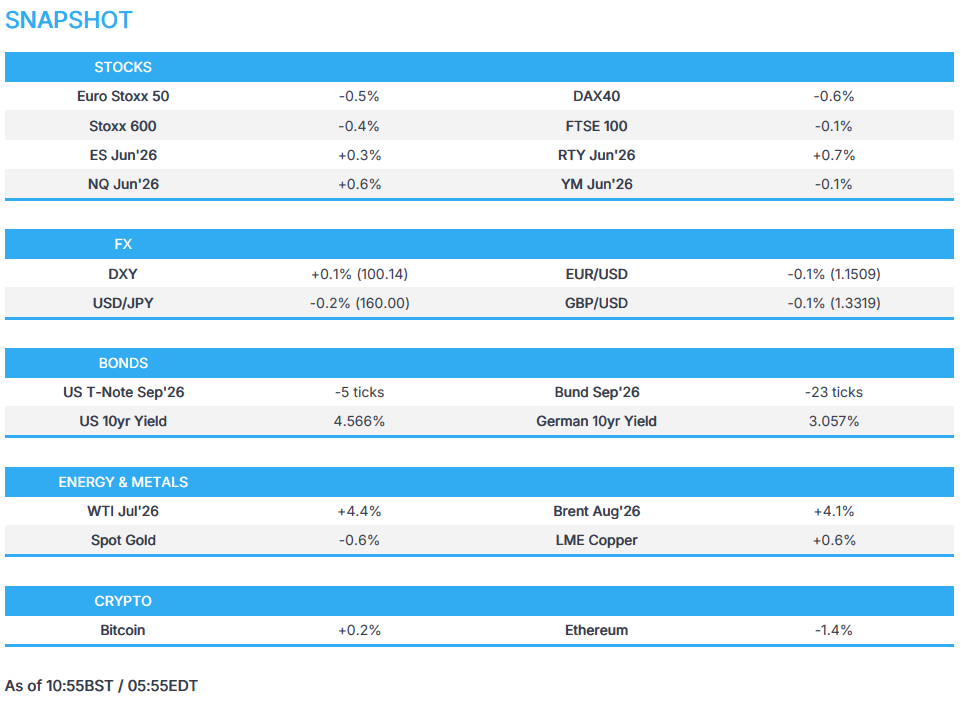
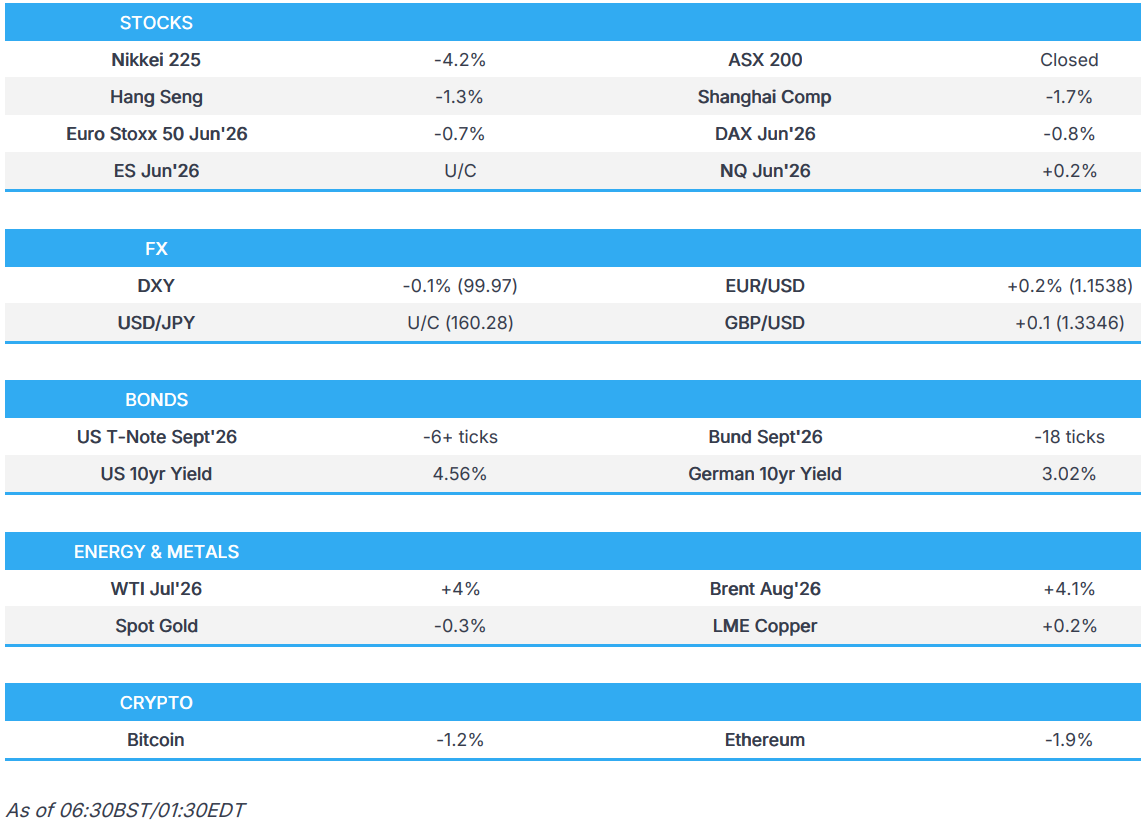


U.S. Secretary of Defense Pete Hegseth (C) speaks with U.S. WWII and D-Day Landing veterans at a memorial ceremony held as part of the 82nd anniversary of the World War II D-Day Allied landings in Normandy, north-western France, on June 6, 2026. Screenshot via The Epoch Times/X/Department of War

 U.S. Secretary of Defense Pete Hegseth (C) speaks with U.S. WWII and D-Day Landing veterans at a memorial ceremony held as part of the 82nd anniversary of the World War II D-Day Allied landings in Normandy, north-western France, on June 6, 2026. Screenshot via The Epoch Times/X/Department of War


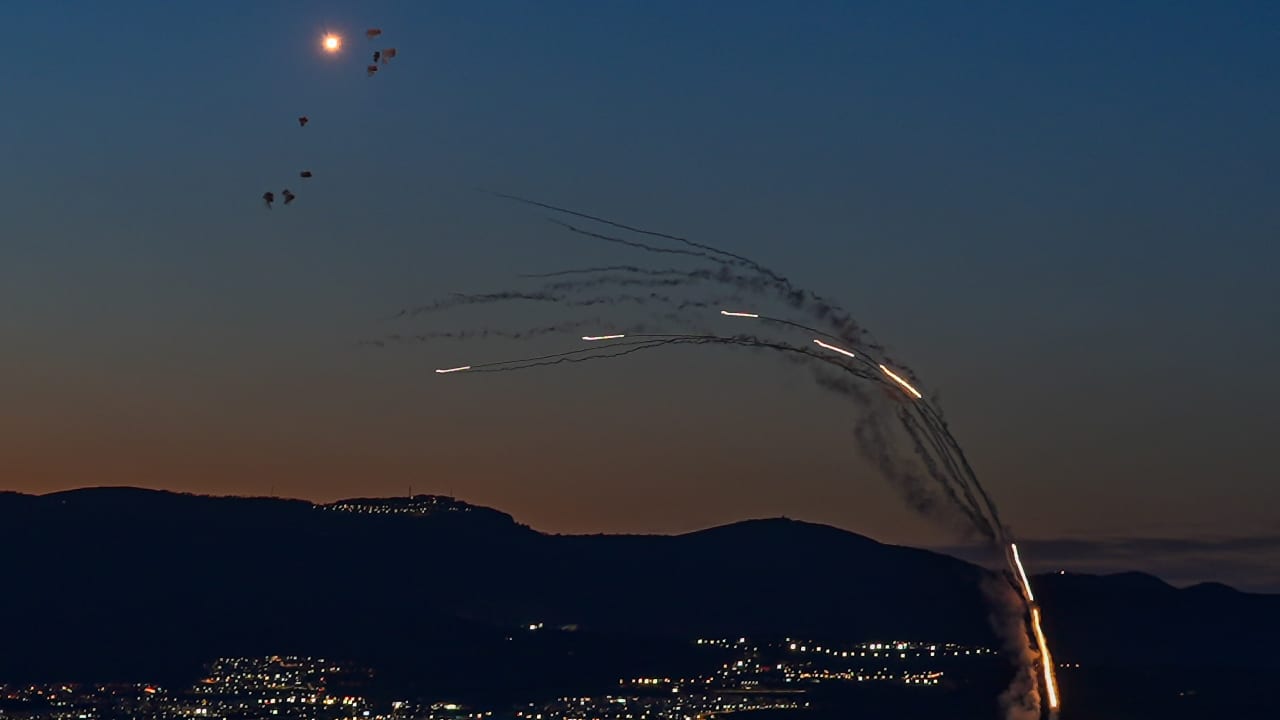


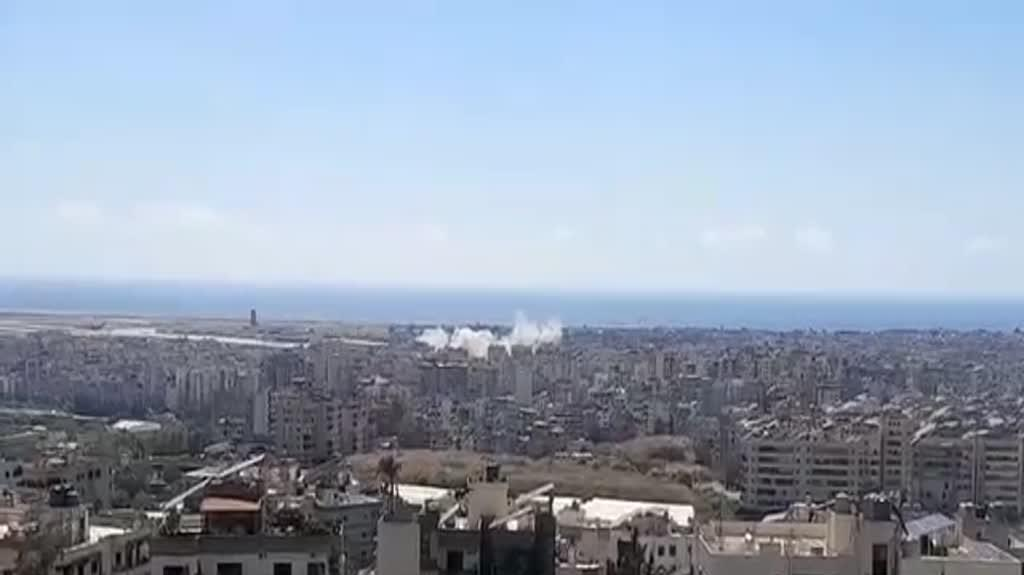


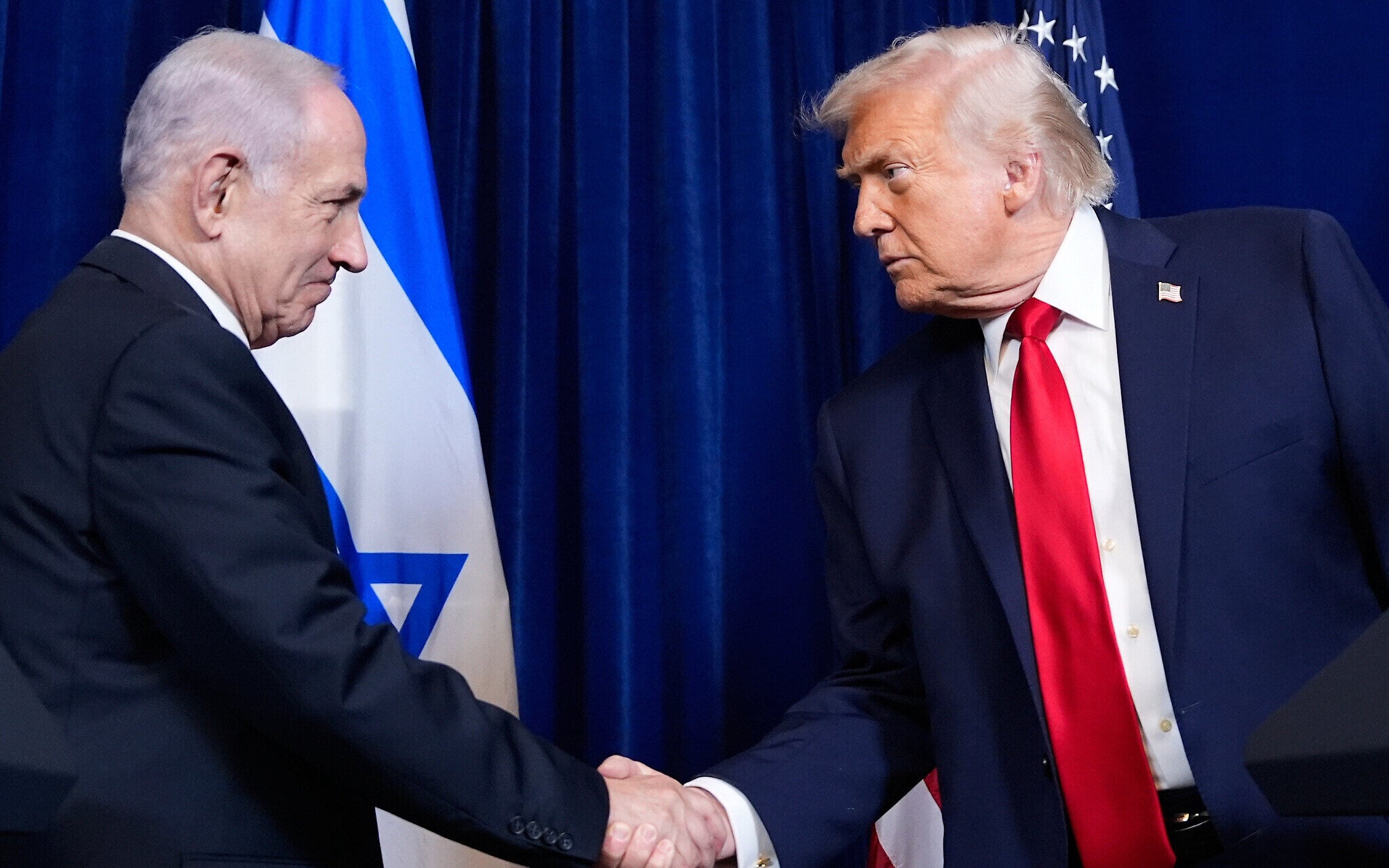


 Exposing The Darkness


 A hiring sign at the Fashion Centre at Pentagon City shopping mall in Arlington, Va., on Jan 3, 2024. Madalina Vasiliu/The Epoch Times