JUNE 18/ANOTHER RAID: GOLD CLOSED DOWN $135.20 TO $4225.95//SILVER CLOSED DOWN $4.80 TO $66.00//PLATINUM CLOSED DOWN $90.40 TO $1705.50 WITH PALADIUM DOWN $70.60 TO $1290.00//COMMODITY REPORT TONIGHT ON RARE EARTHS//EUROPEAN REPORTS FROM THE ECB POLAND AND GERMANY//ISRAEL/USA VS IRAN UPDATES/ISRAEL TBN/./HEZBOLLAH VS ISRAEL UPDATES//COMMENTARIES TONIGHT FROM MIKE EVERY AND PHIL MAREY/TRUE ORIGINS OF THE COVID VIRUS EXPLAINED//USA DATA RELEASES/USA ECONOMIC REPORTS// KING NEWS//
099 H DEUTSCHE BANK AG 4 152 C DORMAN TRADING, LLC 5 363 H WELLS FARGO SECURITI 42 435 H SCOTIA CAPITAL (USA) 467 555 C BNP PARIBAS SEC CORP 2 661 C JP MORGAN SECURITIES 825 566 709 C BARCLAYS 208 737 C ADVANTAGE FUTURES 101 3 905 C ADM 29 991 H CME 16
TOTAL: 1,134 1,134 MONTH TO DATE: 36,590
JPMORGAN STOPPED: 566/1134
GOLD: NUMBER OF NOTICES FILED FOR JUNE/2026: 1134 CONTRACTs NOTICES FOR 113,400 OZ or 3.527 TONNES
total notices so far: 36,590 contracts FOR 3,659,000 OZ OR 113.810 TONNES
JUNE 18
XXXXXXXXXXXXXXXXXX
SILVER NOTICES: 12 NOTICE(S) FILED FOR 60,000 OZ /
total number of notices filed so far this month : 2407 CONTRACTS (NOTICES) for 12.035 million oz
Click here if you wish to send a donation. I sincerely appreciate it as this site takes a lot of preparation
GLD/
BOTH GLD AND SLV ARE FRAUDULENT VEHICLES//THEY ARE NOW RAIDING GLD AND SLV FOR PHYSICAL
THE CROOKS ARE STEALING GOLD AND SILVER FROM THE GLD/SLV AND REPLACING THE PHYSICAL WITH PAPER DOLLARS.
WITH GOLD DOWN $135.20 INVESTORS SWITCHING TO SPROTT PHYSICAL (PHYS) INSTEAD OF THE FRAUDULENT GLD/// HUGE CHANGES IN GOLD INVENTORY AT THE GLD: A DEPOSIT OF 0.856 TONNES INTO THE GLD
INVENTORY RESTS AT 1013.069 TONNES
SLV/
WITH NO SILVER AROUND AND SILVER DOWN $4.80 AT THE SLV: HUGE CHANGES IN SILVER INVENTORY AT THE SLV: HUGE CHANGES IN SILV INVENTORY A WITHDRAWAL OF 1.086 MILLION OZ FROM THE SLV////// : INVENTORY RESTS AT THE SLV AT 480.302 MILLION OZ//
CLOSING INVENTORY RESTS AT:
CLOSING INVENTORY: 480.302 MILLION
SILVER//OUTLINE
SILVER COMEX OI ROSE BY A FAIR SIZED 280 CONTRACTS TO AN OI OF 108.001 A LOT HIGHER FROM ITS NEW RECORD LOW OF 95,999 SET MAY 1/2026. THE RECORD HIGH OI FOR SILVER IS 244,710, SET FEB 25/2020, AND THIS FAIR GAIN IN COMEX OI WAS ACCOMPLISHED DESPITE OUR GAIN OF $0.79 IN SILVER PRICING AT THE COMEX WITH RESPECT TO WEDNESDAY’S TRADING. ON THE FIRST OF MAY, WE REACHED OUR RECORD LOW OI OF 95,999 SURPASSING EVERY DAY NEW OI LOWS SET DURING THE LAST WEEK OF APRIL 2026.
NOW ON A NET BASIS OUR SPECULATORS HAVE REVERTED BACK TO GOING LONG. THE FRBNY ON A NET BASIS IS PROVIDING THE NECESSARY PAPER TO OUR LONGS ALONG WITH SOME BULLION BANKS AND THEN A HUGE NUMBERS OF LONGS ,OUR CENTRAL BANKERS, TAKE THE LONG SIDE AND TENDER FOR PHYSICAL AT 4 PM EACH NIGHT. BECAUSE OF THE HUGE SHORTFALL IN PHYSICAL SILVER IN LONDON THERE IS A LOTTERY TO SEE WHO GETS ANY OF THE PHYSICAL SILVER AVAILABLE THAT WHICH THEY ARE OBLIGATED TO DELIVER. THEY WAIT PATIENTLY FOR THEIR PHYSICAL METAL AND IF NOBODY GETS ANY THEY THEN COME BACK THE NEXT DAY AND SO ON. THIS IS IN LONDON, THE HOME OF PHYSICAL SILVER!! THE FACT THAT WE ARE WITNESSING MANY EXCHANGE FOR PHYSICAL TRANSFERS TO LONDON HIGHLIGHTS THE FACT THAT THE COMEX IS OUT OF SILVER AS WELL.
WE ARE FINALLY MOVING TO A MUCH HIGHER BASE IN SILVER PRICING AT MAJOR SUPPORT LEVEL OF $70.00. SHORTLY WE WILL AGAIN ATTEMPT TO BREAK
WE HAVE A STRONG GAIN OF 940 TOTAL CONTRACTS ON OUR TWO EXCHANGES AS THE CME NOTIFIED US OF A VERY STRONG SIZED SIZED 660 CONTRACT EXCHANGE FOR PHYSICAL ISSUANCE , WE HAD NO LIQUIDATION OF T.A.S. CONTRACTS IN COMEX TRADING WITH RESPECT TO WEDNESDAY TRADING// WE HAD A STRONG SIZED 454 CONTRACT T.A.S. ISSUANCE!! / THEY DESPERATELY AGAIN TODAY TRYING TO CONTAIN SILVER’S PRICE RISE FOR THE PAST SEVERAL WEEKS (WHERE RAIDS ARE CALLED UPON AGAIN AND AGAIN TRYING TO STOP THE RISE IN SILVER’S PRICE TO ABOVE $100.00 AND TO QUELL ADDITIONAL DERIVATIVE LOSSES TO OUR BANKERS’ MASSIVE TOTALS). THEY SUCCEEDED ON TUESDAY WITH SILVER’S FALL IN PRICE
THE PRICE STILL FINISHED BELOW THE MAGIC NUMBER OF $70.00 SILVER SPOT PRICE BUT STILL BELOW THE $100.00 MARK CLOSING AT $71.84 UP $0.79. WE ARE NOW WITNESSING HAVING MANY HUGE T.A.S ISSUANCES // TODAY’S WAS A STRONG SIZED 454 T.A.S. CONTRACTS !!. THE CROOKS ARE BECOMING MORE DESPERATE TO STOP SILVER BREAKING ABOVE THE 100.00 DOLLAR MARK!! AND NOW THE HUGE SUPPORT LEVEL OF 70 DOLLARS HAS NOW SUPPORT LEVEL//.MAMMOTH SIZE T.A.S ISSUANCES ARE BECOMING THE NORM AT THE COMEX NOW!!
THERE IS NO NEXT LINE IN THE SAND ONCE THE 100.00 DOLLAR SILVER IS PIERCED AGAIN. WE HAD A ZERO SIZED 0 CONTRACT EXCHANGE FOR PHYSICAL ISSUANCE ACCOMPANIED BY OUR STRONG SIZED 454 CONTRACT T.A.S ISSUANCE WHICH WILL BE USED IN FUTURE TRADING//AS THEY PLAY AN INTEGRAL PART IN OUR COMEX TRADING TRYING TO CONTAIN ANY SILVER PRICE RISE.
IN ESSENCE WE HAD A HUGE SIZED GAIN OF 940 CONTRACTS ON OUR TWO EXCHANGES WITH OUR GAIN IN PRICE OF $0.79. WE HAD HUGE GOVERNMENT (FRBY) COMEX CONTRACTS TRADING ALL WEEK AND A MAJOR PORTION WILL BE REMOVED BY DAYS END. (I RECORD THIS FOR YOU ON A DAILY BASIS). THE STICKY SPECULATOR LONGS STILL REMAIN STOIC
CRAIG HEMKE HAS POINTED OUT THAT THE CROOKS USE THE MID MONTH FOR MANIPULATION AS THEY SELL THEIR BUY SIDE OF THE CALENDAR SPREAD FIRST AND THEN KEEP THE SELL SIDE TO LIQUIDATE AT A LATER DATE.
THUS WE HAVE TWO VEHICLES THE CROOKS USE FOR MANIPULATION AND BOTH ARE SPREADERS: 1) AT MONTH’S END/SPREADERS COMEX AND 2/ TAS SPREADERS, THROUGHOUT MONTH. TOTAL TAS ISSUED ON WEDNESDAY NIGHT/THURSDAY MORNING: A STRONG SIZED 456 CONTRACTS. DESPITE MANY COMPLAINTS THAT THESE CROOKS HAVE VIOLATED POSITION LIMITS DUE TO THE FACT THAT THE TAS ISSUED HAVE A VALUE OF ZERO (AS TO POSITION LIMITS FOR OUR CROOKED FRBNY BANKERS).
THE PROBLEM OF COURSE IS THAT THE CROOKS DO NOT LIQUIDATE THE TAS AS ONE UNIT, BUT SELL THE SHORT SIDE FIRST AND THEN LIQUIDATE THE LONG SIDE TWO MONTHS HENCE. IT IS OBVIOUS MANIPULATION TO THE HIGHEST DEGREE BUT IT NATURALLY FELL ON DEAF EARS WITH OUR REGULATORS (OCC) WHEN THEY RECEIVED OUR COMPLAINTS. IT NOW SEEMS THAT THE OCC HAS NOW ORDERED THE BANKS TO REDUCE ITS NEW LEVEL OF 1.1 TRILLION DOLLARS IN GOLD/SILVER DERIVATIVES.
THUS:
INITIAL STANDING FOR JANUARY: 22.915 MILLION OZ FOLLOWED BY TODAY’S 1.185 MILLION OZ QUEUE JUMP//NEW NORMAL STANDING ADVANCES TO 49.445 MILLION OZ// TO WHICH WE ADD OUR FIRST EXCHANGE FOR RISK FOR .100 MILLION OZ//NEW STANDING ADVANCES TO 49.545 MILLION OZ!!
INTIAL STANDING FOR FEBRUARY/SILVER: 13.505 MILLION OZ FOLLOWED BY TODAY’S HUGE 0.005 MILLION OZ QUEUE JUMP / : NEW STANDING FOR SILVER AT THE COMEX ADVANCES TO 25.180 MILLION OZ. BUT WE MUST ADD OUR FIRST EXCHANGE FOR RISK OF 25 CONTRACTS FOR .125 MILLION OZ AND THEN OUR SECOND EXCHANGE FOR RISK OF .0600 MILLION OZ TO OUR THIRD HUGE 2.825 MILLION OZ EXCHANGE FOR RISK!!
INITIAL STANDING FOR MARCH: A SURPRISINGLY LOW 31.076 MILLION OZ/ FOLLOWED BY A TINY QUEUE JUMP OF XX CONTRACTS OR XXX OZ/NEW STANDING ADVANCES TO 46.060 MILLION OZ
INITIAL STANDING FOR APRIL: 7.120 MILLION OZ FOLLOWED BY TODAY’S 1 CONTRACT QUEUE JUMP WHERE 5,000 OZ WILL TAKE DELIVERY OVER ON THIS SIDE OF THE POND. NEW STANDING FOR SILVER AT THE COMEX THUS ADVANCES SLIGHTLY TO 16.565 MILLION OZ PLUS WE MUST ADD OUR 4TH EXCHANGE FOR RISK ISSUANCE OF 17 CONTRACTS OR 0.085 MILLION OZ. THESE WILL BE ADDED TO OUR OTHER 3 ISSUANCES //NEW TOTAL EXCHANGE FOR RISK//1.165 MILLION OZ// NEW TOTAL SILVER STANDING 17.730 MILLION OZ//
INITIAL STANDING FOR MAY: 31.495 MILLION OZ FOLLOWED BY ANOTHER 3 CONTRACT EXCHANGE FOR PHYSICAL JUMP TO LONDON FOR 0.015 MILLION OZ// AND THEN TO BOOT WE HAD OUR FIRST EXCHANGE FOR RISK ISSUANCE FOR 51 CONTRACTS OR 255,000 OZ MAY 21./STANDING BEFORE EXCHANGE FOR RISK: 32.070 MILLION OZ/NEW STANDING THUS REDUCES TO 32.325 MILLION OZ/.//(32.070 MILLION OZ NORMAL STANDING PLUS .255 MILLION OZ EXCHANGE FOR RISK = 32.325 MILLION OZ)
JUNE INITIAL STANDING FOR SILVER:10.935 MILLION OZ TO WHICH WE ADD OUR NEXT QUEUE JUMP OF 40,000 OZ//NEW STANDING ADVANCES TO 12.065 MILLION OZ//
SUMMARY OF OUR JUNE 2026 COMEX CONTRACT MONTH:
WE HAD:
/ TINY COMEX GAIN+// HUGE SIZED EFP ISSUANCE CONTRACTS AT 660 CONTRACTS (/ VI) A STRONG NUMBER OF T.A.S. CONTRACT ISSUANCE 454 CONTRACTS
xx I AM NOW RECORDING THE DIFFERENTIAL IN OI FROM PRELIMINARY TO FINAL: ADDED 221 SILVER CONTRACT//
HISTORICAL ACCUMULATION OF EXCHANGE FOR PHYSICALS JUNE.. ACCUMULATION
TOTAL CONTRACTS for 14 DAY(S), total 7680 contracts: OR 38.400 MILLION OZ (548 CONTRACTS PER DAY)
TOTAL EFP’S FOR THE MONTH SO FAR: 38.400 MILLION OZ
LAST 24 MONTHS TOTAL EFP CONTRACTS ISSUED IN MILLIONS OF OZ:
MAY 137.83 MILLION
JUNE 149.91 MILLION OZ
JULY 129.445 MILLION OZ
AUGUST: MILLION OZ 140.120
SEPT. 28.230 MILLION OZ//
OCT: 94.595 MILLION OZ
NOV: 131.925 MILLION OZ
DEC: 100.615 MILLION OZ
YEAR 2022:
JAN 2022-DEC 2022
JAN 2022// 90.460 MILLION OZ
FEB 2022: 72.39 MILLION OZ//
MARCH 2022: 207.140 MILLION OZ//A NEW RECORD FOR EFP ISSUANCE
APRIL: 114.52 MILLION OZ FINAL//LOW ISSUANCE
MAY: 105.635 MILLION OZ//
JUNE: 94.470 MILLION OZ
JULY : 87.110 MILLION OZ
AUGUST: 65.025 MILLION OZ
SEPT. 74.025 MILLION OZ///FINAL
OCT. 29.017 MILLION OZ FINAL
NOV: 134.290 MILLION OZ//FINAL
DEC, 61.395 MILLION OZ FINAL
TOTALS YR 2022: 1135.767 MILLION OZ (1.1356 BILLION OZ)
JAN 2023/// 53.070 MILLION OZ //FINAL
FEB: 2023: 100.105 MILLION OZ/FINAL//MUCH STRONGER ISSUANCE VS THE LATTER TWO MONTHS.
MARCH 2023: 112.58 MILLION OZ//FINAL//STRONG ISSUANCE
APRIL 111.035 MILLION OZ(SLIGHTLY GREATER THAN THAN LAST MONTH)
MAY 66.120 MILLION OZ/INITIAL (MUCH SMALLER THIS MONTH)
JUNE: 110.395 MILLION OZ//MUCH LARGER THAN LAST MONTH
JULY 85.745 MILLION OZ (SMALLER THAN LAST MONTH)
AUGUST: 171.43 MILLION OZ (THIS MONTH IS GOING TO BE HUGE //2ND HIGHEST ON RECORD
SEPT: 72.705 MILLION OZ (SMALLER THIS MONTH)
OCT: 97.455 MILLION OZ
NOV. 50.050 MILLION OZ
DEC. 66.140 MILLION OZ//
TOTAL 2023: 1,104.10 MILLION OZ/
JAN ’24 : 78.655 MILLION OZ//
FEB /2024 : 66.135 MILLION OZ./FINAL
MARCH: 143.750 MILLION OZ// 4TH HIGHEST ON RECORD.
APRIL: 161.770 MILLION OZ (THIS MONTH WILL BE A WHOPPER OF ISSUANCE OF EFPS//3RD HIGHEST EVER RECORDED FOR A MONTH)
MAY: 135.995 MILLION OZ //WILL BE A STRONG MONTH FOR EXCHANGE FOR PHYSICAL ISSUANCE
JUNE 110.575 MILLION OZ ( WILL BE ANOTHER STRONG MONTH ISSUANCE)
JULY: 108.870 MILLION OZ (WILL BE A STRONG ISSUANCE MONTH/ A TOUCH OVER 100 MILLION OZ/)
AUGUST; 99.740 MILLION OZ//THIS MONTH WILL BE STRONG FOR ISSUANCE BUT LESS THAN JULY.
SEPT: 112.415 MILLION OZ//WILL BE A HUGE MONTH FOR EXCHANGE FOR PHYSICAL ISSUANCE
OCT; 97.485 MILLION OZ (WILL BE SMALLER ISSUANCE THIS MONTH )
NOV. 115.970 MILLION OZ ( HUGE THIS MONTH)
DEC: 132.54 MILLION OZ (THIS MONTH WILL BE A HUMDINGER FOR ISSUANCE BUT ISSUANCE SLOWED DRAMATICALLY THESE PAST FIVE DAYS/// WILL NOT EXCEED MARCH 2022 RECORD OF 209 MILLION OZ
YEAR 2024 TOTAL: 1363.84 MILLION OR 1.363 BILLION OZ
JANUARY 2025: 67.230 MILLION OZ///(THIS MONTH’S ISSUANCE OF EXCHANGE FOR PHYSICAL WILL BE SMALL)
FEB. 58.260 MILLION OZ//EXCHANGE FOR PHYSICAL ISSUANCE/FINAL
MARCH: 67.020 MILLION OZ///QUITE SMALL AND BECOMING SMALLER EACH AND EVERY MONTH.
APRIL: 100.895 MILLION OZ///AVERAGE SIZE ISSUANCE
MAY: 28.975 MILLION OZ (ISSUANCE WILL BE QUITE SMALL THIS MONTH)
JUNE: 81.065 MILLION OZ
JULY: 50.925 MILLION OZ (QUITE SMALL)
AUGUST: 59.455 MILLION OZ (QUITE SMALL)
SEPT. 50.510 MILLION OZ.(QUITE SMALL)
OCT; 82.020 MILLION OZ (WILL BE STRONG THIS MONTH)/ OCC WANTS TO REIN IN THESE ISSUANCES!
NOVEMBER: 36.425 MILLION OZ
DEC: 45.765 MILLION OZ
JANUARY 2026: 134.270 MILLION OZ (WILL BE A VERY STRONG MONTH FOR EXCHANGE FOR PHYSICAL!)
FEB : 82.130 MILLION OZ
MARCH: 56.075 MILLION OZ
APRIL; 44.44 MILLION OZ//FINAL.. SMALL THIS MONTH.
MAY 59.79 MILLION OZ
JUNE. 38.400 MILION OZ
RESULT: WE HAD A SMALL INCREASE IN COMEX OI SILVER COMEX CONTRACTS OF 280 CONTRACTS WITH OUR GAIN IN PRICE OF $0.79 IN SILVER PRICING AT THE COMEX// WEDNESDAY,. THE CME NOTIFIED US THAT WE HAD A 454 STRONG SIZED CONTRACT EFP ISSUANCE OF 454 CONTRACTS ISSUED FOR JULY, AND 0 CONTRACTS ISSUED FOR ALL OTHER MONTHS).
INITIAL STANDING: 10.935 MILLION OZ PLUS 40,000 OZ QUEUE JUMP//NEW STANDING ADVANCES TO 12.065 MILLION OZ
LAST 14 MONTHS OF SILVER DELIVERIES
WE FINISHED APRIL WITH A STRONG SILVER OZ STANDING OF 16.050 MILLION OZ NORMAL DELIVERY , PLUS OUR 4.00 MILLION EX FOR RISK
FINAL STANDING APRIL: 19.965 MILLION OZ
AND MAY:
NEW STANDING FOR MAY FINISHES AT: 75.615 MILLION OZ. (INCLUDES 5,000 OZ EFP TRANSFER TO LONDON + 12.93 MILLION OZ EXCHANGE FOR RISK ISSUANCE/PRIOR.//NEW TOTAL STANDING 88.540 MILLION OZ
AND JUNE: FINAL 16.995 MILLION OZ
AND JULY: 46.720 MILLION OZ//
AUGUST: 4.70 MILLION OZ INITIAL STANDING PLUS TODAY;S 5,000 OZ QUEUE JUMP //NEW STANDING ADVANCES TO 10.960 MILLION OZ
SEPTEMBER: 68.040 MILLION OZ NORMAL DELIVERY(INCLUDES ALL QUEUE JUMPING AND EXCHANGE FOR PHYSICAL TRANSFERS) PLUS 3.0 MILLION OZ EX FOR RISK = 71.040 MILLION OZ. (THIS IS THE FIRST AND ONLY ISSUANCE OF EXCHANGE FOR RISK FOR SILVER SINCE MAY.)
OCTOBER: 39.565 MILLION OZ OF NORMAL DELIVERY INCLUDES ALL QUEUE JUMPING
PLUS
2.110 MILLION OZ EXCHANGE FOR RISK//TOTAL OZ STANDING IN OCT ADVAN
NOVEMBER: INITIAL STANDING AT 11.575 MILLION OZ FOLLOWED BY TODAY’S 195,000 OZ QUEUE JUMP WHICH FOLLOWS ALL OTHER QUEUE JUMPS OF 9.155 MILLION OZ//STANDING ADVANCES TO 19.670 MILLION OZ/
DECEMBER: INITIAL AMOUNT STANDING FOR DELIVERY: 49.33 MILLION OZ// FOLLOWED BY ANOTHER STRONG 835,000OZ QUEUE JUMP+ DEC. FIRST EXCHANGE FOR RISK 0F .850 MILLION OZ + LAST WEEK.S 495,000 OZ EXCHANGE FOR RISK AND THEN A 3RD ISSUANCE IF 1.00MILLION OZ THEN FINALLY DEC 249ISSUANCE OF 1.35 MILLION OZ EXCHANGE FOR RISK//NEW TOTAL EX FOR RIS IS 3.685 MILLION OZ // STANDING ADVANCES TO 68.415 MILLION OZ//
JANUARY: INITIAL STANDING 22.915 MILLION OZ FOLLOWED BY TODAY’S 1.185 MILLION OZ QUEUE JUMP//NORMAL STANDING ADVANCES TO 49.445 MILLION OZ// TO WHICH WE ADD OUR FIRST EXCHANGE FOR RISK OF 0.100 MILLLION OZ//NEW STANDING ADVANCES TO 49.545 MILLION OZ
FEB: 13.399 MILLION OZ IS OUR INITIAL STANDING FOR SILVER! TO WHICH WE ADD OUR NEXT QUEUE JUMP FOR 5,000 OZ AND THEN ADD OUR 3 EXCHANGE FOR RISK FOR 3.010 MILLION OZ STANDING ADVANCES TO 28.190 MILLION OZ!!
MARCH: INITIAL AMOUNT OF SILVER STANDING IS 31.076 MILLION OZ FOLLOWED BY A FINAL 0.210 MILLION OZ QUEUE JUMP //NEW TOTAL STANDING ADVANCES TO 46.060 MILLION OZ
APRIL 2026: INITITAL AMOUNT OF SILVER STANDING 7.120 MILLION OZ FOLLOWED BY TODAY’S 5,000 OZ QUUE JUMP //NEW STANDING ADVANCES TO 16.565MILLION OZ PLUS 1.165 MILLION OZ EXCHANGE FOR RISK.NEW TOTALS 17.730 MILLION OZ
MAY: INITIAL AMOUNT OF SILVER WILLING TO STAND; 31.495 MILLION OZ/ TO WHICH WE ADD OUR NEXT EXCHANGE FOR PHYSICAL JUMP OF 15,000 OZ//NEW STANDING REDUCES TO 32.070 MILLION OZ//(FOLLOWING MANY EXCHANGE FOR PHYSICAL TRANSFERS TO LONDON DURING THIS MAY DELIVERY MONTH). THERE SEEMS TO BE A SCARCITY OF SILVER OVER AT THE COMEX). THEN WE ADD OUR FIRST EXCHANGE FOR RISK OF 51 CONTRACTS FOR 255,000 OZ//STANDING ADVANCES TO 32.325 MILLION OZ//
JUNE: INITIAL AMOUNT OF SILVER WILLING TO STAND: 10.935 MILLION OZ PLUS OUR NEXT QUEUE JUMP OF 40,000 OZ//NEW STANDING ADVANCES TO: 12.065 MILLION OZ
THE NEW TAS ISSUANCE FOR TODAY (454) WILL BE PUT INTO “THE BANK” TO BE COLLUSIVELY USED NO DOUBT WITH FUTURE TRADING!
WE HAD 12 NOTICE(S) FILED TODAY FOR 60,000 OZ
THE SILVER COMEX IS NOW BEING ATTACKED FOR METAL BY BANKERS
GOLD//OUTLINE
IN GOLD, THE COMEX OPEN INTEREST FELL BY A FAIR SIZED 1385 OI CONTRACTS UP TO 337,945 OI AND THIS OI STILL SURPASSES BY A CONSIDERABLE MARGIN THE ALL TIME LOW AT 326,052 SET JUNE3/2026 AND THIS OI IS MUCH FURTHER FROM THE RECORD HIGH (SET JAN 24/2020) AT 799,105 AND PREVIOUS TO THAT: (SET JAN 6/2020) AT 797,110. WE HAVE NOW ADVANCED PAST THE PREVIOUS ALL TIME LOWS OF 357,136 SET APRIL 2/.2026AND 354,581 SET AT THE END OF APRIL 2026. WE ARE STILL QUITE A WAY FROM OUR TWO DECADES OLD: 390,000 CONTRACTS LOW SET IN THE YEAR OF 2001 WITH TRADING FOR GOLD AT $260.00. THUS DURING EARLY APRIL WE HAD AN ALL TIME LOW OI IN COMEX (354,531) BUT WITH AN EXTREMELY HIGH PRICE OF GOLD. IN MAY: RECORD LOW OI OF 326,052 WITH A GOLD PRICE OF $4,460 THE SHORT RATS ARE ABANDONING THE COMEX SHIP, NOBODY WANT TO PLAY IN THIS CROOKED CASINO!! (AND THIS CORRELATES WITH SILVER’S LOW OI OF 107,471 CONTRACTS WITH A MUCH HIGHER SILVER PRICE BASE//$75.00)
THE DIFFERENTIAL FROM PRELIMINARY OI TO FINAL OI IN GOLD TODAY: REMOVED 1705 CONTRACTS //.
WE HAD A FAIR LOSS IN COMEX OI (1385 CONTRACTS) . THIS LOSS IN OI OCCURRED WITH OUR GAIN IN PRICE OF $26.80 //,WEDNESDAY///.
LAST 13 MONTHS OF GOLD DELIVERIES: (MAY 2025 THROUGH TO /MAY 2026)
1.MAY SUMMARY FOR MAY TONNES WHICH STOOD FOR DELIVERY:
FINAL STANDING FOR MAY: 70.174 TONNES OF GOLD TO WHICH WE ADD 1. MONDAY’S (MAY 19) 6.221 TONNES EXCHANGE FOR RISK , 2. THEN WE ADD: 1.35 TONNES TO LAST WEEK”S. THEN WE ADD 3. 1.55 TONNES TO EQUAL 9.591 TONNES// NEW EXCHANGE FOR RISK = 9.591 TONNES WHICH MUST BE ADDED TO OUR NORMAL DELIVERY SCHEDULE OF 80.644 TONNES. THUS STANDING FOR MAY INCREASES TO 90.235 TONNES OF GOLD
2 JUNE CONTRACT MONTH: 93.085 TONNES OF GOLD (WHICH INCLUDES ALL QUEUE JUMPING AND 0 EX FOR RISK)
3.JULY INITIIAL STANDING FIRST DAY NOTICE: 17.847 TONNES. PLUS TODAY’S 0 TONNES QUEUE JUMP + 1.555 TONNES EX FOR RISK + 2.195 TONNES EX FOR RISK TODAY = 41.106 TONNES STANDING
4. AUGUST: 60.547 TONNES OF INITIAL GOLD FIRST DAY NOTICE FOLLOWED BY THE NET MONTH’S QUEUE JUMP OF 47.2312 TONNES TO WHICH WE ADD THE FOLLOWING EXCHANGE FOR RISK ISSUANCE RECEIVED FOR THE MONTH: 5.4432 TONNES EX FOR RISK/AUG 7 , AUG 11: 2.413 TONNES EX FOR RISK AND AUG. 12 OF 2.
5.SEPT: INITIAL 8.093 TONNES OF GOLD PLUS TODAY’S QUEUE JUMP OF 0.4883 TONNES PLUS 2.2827 TONNES OF EXCHANGE FOR RISK TODAY//NEW TOTAL EX. FOR RISK/MONTH = 22.923//NEW TOTAL STANDING FOR GOLD SEPT ADVANCES TO = 48.801 TONNES!!
6.OCTOBER: 90.012 TONNES OF INITIAL GOLD STANDING WITH TODAY’S TINY 0.00311 TONNES QUEUE JUMP WHICH FOLLOWS ALL OTHER QUEUE JUMPS DURING OCT OF 76.1656 TONNES
THEN WE MUST ADD OUR 14.553 TONNES OF OUR ISSUANCE OF EXCHANGE FOR RISK/6 OCCASIONS//NEW TOTAL OF GOLD STANDING ADVANCES TO 197.5141 TONNES OF GOLD.
7.NOVEMBER BEGINS WITH 15.651 TONNES INITIALLY STANDING FOR DELIVERY FOLLOWED BY TODAY’S QUEUE JUMP OF 2.323 TONNES FOLLOWED BY ALL PREVIOUS QUEUE JUMPS IN OF OF 21.3775 TONNES TO WHICH WE ADD OUR TWO EXCHANGE FOR RISK ISSUANCE OF 4.5596 TONNES//NEW STANDING ADVANCES TO 43.9716 TONNES OF GOLD.
8. DECEMBER BEGINS WITH INITIAL STANDING OF 83.813 TONNES OF GOLD FOLLOWED BY TODAY’S 0.0TONNE QUEUE JUMP WHICH FOLLOWS ALL OTHER QUEUE JUMPS OF: 37.163 TONNES//NEW STANDING ADVANCES TO 115.390 TONNES TO WHICH WE ADD OUR 4 EXCHANGE FOR RISK FOR DECEMBER OF 6.587 TONNES/NEW STANDING ADVANCES TO 121.977 TONNES
9. JANUARY: INITITAL STANDING: 13.785 TONNES TO WHICH WE ADD OUR FIRST EXCHANGE FOR PHYSICAL TRANSFER OF 0.08709 TONNES WHICH FOLLOWS ALL OTHER QUEUE JUMPS OF 30.7117TONNES //NEW TOTAL QUEUE JUMPS 30.7117//NORMAL DELIVERY OF GOLD ADVANCES TO 36.8958 TONNES TO WHICH WE ADD OUR SIX EXCHANGE FOR RISK OF 22.315 TONNES//NEW STANDING ADVANCES TO 59.2108 TONNES.
FEB; INITIAL AMOUNT OF GOLD STANDING FOR DELIVERY: 93.567 TONNES OF GOLD TO WHICH WE ADD OUR NEXT 0.0248 TONNES 0.1555 TONNES QUEUE JUMP TO 41.2082 TONNES/ NEW NET QUEUE JUMP INCREASES TO 41.233 TONNES// AND THEN WE ADD OUR SIX EXCHANGE FOR RISK: 10,080 CONTRACTS OR 31.251 TONNES//NEW STANDING REDUCES TO 157.878 TONNES
MARCH:: INITIAL AMOUNT OF GOLD STANDING FOR DELIVERY: 8.099 TONNES TO WHICH WE ADD TODAY’S FAIR 4600 OZ QUEUE JUMP (0.2320 TONNES) AND THEN WE ADD OUR THREE EXCHANGE FOR RISK OF 22.3818 TONNES //NEW STANDING ADVANCES TO 67.6648 TONNES/
APRIL: INITIAL AMOUNT OF GOLD STANDING FOR DELIVERY: 52.600 TONNES FOLLOWED BY OUR 345 CONTRACT QUEUE JUMP FOR 34,500 OZ/ (1.073 TONNES)/NEW STANDING ADVANCES TO 70.286 TONNES TO WHICH WE ADD OUR 2ND EXCHANGE FOR RISK OF 1498 CONTRACTS FOR 149800 OZ OR 4.659 TONNES. THE NEW TOTAL EXCHANGE FOR RISK FOR THE MONTH OF APRIL IS 2239 CONTRACTS OR 223900 OZ OR 6.964 TONNES AND THIS WILL BE ADDED TO OUR NORMAL DELIVERY TOTALS (70.762 TONNES) TO GIVE US WHAT WILL STAND IN APRIL (77.726 TONNES)
MAY: INITIAL AMOUNT OF GOLD WILLING TO STAND: 12.24 TONNES OF GOLD TO WHICH WE ADD OUR NEXT QUEUE JUMP OF 345 CONTRACTS OR 34500 OZ (1.073 TONNES) TO WHICH WE ADD OUR FIVE EXCHANGE FOR RISK ISSUANCES FOR 24.635 TONNES/STANDING NOW ADVANCES TO 51.554 TONNES OF GOLD.
JUNE; INITIAL AMOUNT OF GOLD WILLING TO STAND; 64.496 TONNES.(CME CORRECTED) TO WHICH WE ADD OUR NEXT 3.486 TONNES OF A QUEUE JUMP/NEW STANDING ADVANCES TO 113.916 TONNES
E.F.P. ISSUANCE/FOR OPENING JUNE. GOLD CONTRACT
THE CME RELEASED THE DATA FOR EFP ISSUANCE AND IT TOTALED A STRONG SIZED 3025 CONTRACTS:
The NEW COMEX OI FOR THE GOLD COMPLEX RESTS AT 337,945 SURPASSING THE PREVIOUS ALL TIME LOW OF 326,052 SET JUNE 3 AND RISING FROM OUR PREVIOUS RECORD LOW//MAY 28.2026 WE HAVE THUS RECORD LOW COMEX OI WITH A HIGH PRICE OF GOLD
SILVER ALSO HAS AN ULTRA SMALL SIZED AND EXTREMELY LOW COMEX OI OF 108.001 CONTRACTS// RISING FROM PREVIOUS ALL TIME LOWS SET DURING THE MONTH OF APRIL AND MAY FIRST.
IN ESSENCE WE HAVE A FAIR GAIN IN TOTAL CONTRACTS IN COMEX GOLD ON THE TWO EXCHANGES OF 1640 CONTRACTS WITH 1385 CONTRACTS DECREASED AT THE COMEX// AND A STRONG SIZED 3025 EXCHANGE FOR PHYSICAL OI CONTRACT ISSUANCE WHICH NAVIGATED OVER TO LONDON.
THUS TOTAL OI GAIN ON THE TWO EXCHANGES OF 1640 CONTRACTS.. WE HAD THE FOLLOWING TAS CONTRACTS INITIATED (ISSUED): A SMALLER SIZED BUT CRIMINAL 777 CONTRACTS AND THESE ISSUANCES ARE GENERALLY USED TO INITIATE A RAID WHEN CALLED UPON
GOLD PRICE ON TUESDAY ROSE BY $28/60
CALCULATIONS ON GAIN/LOSS ON OUR TWO EXCHANGES
WE HAD A STRONG SIZED ISSUANCE IN EXCHANGE FOR PHYSICALS CONTRACT (3025 ) ACCOMPANYING THE FAIR LOSS IN COMEX OI OF 1385 CONTRACTS/TOTAL GAIN FOR OUR THE TWO EXCHANGES 1640 CONTRACTS!! WITH THE GAIN IN PRICE.
WE HAVE 1) NOW REVERTED TO OUR FORMAT OF BANKER (FRBNY) GOING ON THE SHORT SIDE AND HUGE NUMBERS OF NEWBIE SPECULATORS GOING TO THE LONG SIDE. IT WAS OUR SHORT SPECULATORS THAT WE BRUTALIZED LAST THURSDAY WHEN OUR CENTRAL BANKS TENDERED FOR PHYSICAL GOLD WITH THEIR NEWLY BOUGHT GOLD FROM THE SPECS. THE SPECS ARE STILL SCRAMBLING LOOKING FOR PHYSICAL GOLD TO DELIVER TO OUR LONG CENTRAL BANKS.
STANDING FOR THE LAST 5 MONTHS JANUARY TO MAY:
FINAL STANDING FOR GOLD, JANUARY CONTRACT AT 59.2108 TONNES OF GOLD
FEBRUARY: INITIAL STANDING FOR GOLD: 157.878 TONNES!! WHICH INCLUDES ALL QUEUE JUMPING, THREE EXCHANGE FOR PHYSICAL TRANSFERS TO LONDON AND OUR SIX ISSUANCES EXCHANGE FOR RISK!!
MARCH: INITIAL STANDING AT 8.099 TONNES TO WHICH WE ADD OUR FINAL DAY: 0.2320 TONNES QUEUE JUMP AND THEN ADD +22.3818 TONNES EXCHANGE FOR RISK//NEW STANDING ADVANCES TO 67.6648 TONNES
APRIL: INITIAL STANDING 52.600 TONNES PLUS 27,800 OZ QUEUE JUMP (0.8648TONNES): NEW STANDING ADVANCES TO 70.286 TONNES PLUS OUR TWO EXCHANGE FOR RISK FOR 223,900 OZ OR 6.964 TONNES/NEW STANDING: 77.726 TONNES
MAY: INITIAL AMOUNT OF GOLD WILLING TO STAND; 12.24 TONNES TO WHICH WE ADD OUR NEXT QUEUE JUMP FOR 345 CONTRACTS/34,500 OZ// 1.073 TONNES/ THEN WE MUST ADD OUR EXCHANGE FOR RISK ISSUANCE: TOTAL EXCHANGE FOR RISK MAY// 5 OCCASIONS: 24.635 TONNES///NEW STANDING NOW ADVANCES TO 51.554 TONNES
JUNE: INITIAL AMOUNT OF GOLD WILLING TO STAND: 64.496 TONNES TO WHICH WE ADD OUR NEXT QUEUE JUMP OF 3/486TONNES//NEW STANDING ADVANCES TO 113.916 TONNES
3) LITTLE IF ANY T.A.S. LIQUIDATION IN THE COMEX SESSION AND SOME GOVT LIQUIDATION // WITH A STRONG LOSS OF EQUITY SHARES/JUNE17 HAVING 1)A $28.60 COMEX PRICE GAIN AND WE HAD 2) SPEC PILING HUGELY ON THE LONG SIDE// +3. EASTERN CENTRAL BANKERS ALSO PILING INTO THE LONG SIDE. WE HAD A FAIR GAIN OF 1640 CONTRACTS ON OUR TWO EXCHANGES AND AS WELL A STRONG AMOUNT OF GOLD WILL STAND FOR DELIVERY IN JUNE. (113.916 TONNES). THE SHORT SPECS BAILED ON THURSDAY AND FRIDAY//, CENTRAL BANKERS TENDERED FOR PHYSICAL WITH THEIR PURCHASES OF CONTRACTS../ ALSO, 3)STICKY GOLD’S LONGS WERE REWARDED WEDNESDAY EVENING AS THEY EXERCISED EFP’S FROM LONDON TO TAKE DELIVERY OF BADLY NEEDED PHYSICAL
4)A FAIR SIZED COMEX OI LOSS 5) V) STRONG SIZED ISSUANCE OF EXCHANGE FOR PHYSICAL GOLD(3025) AND 6. A SMALL T.A.S. ISSUANCE (777) FOR RAID PURPOSES.!!!
ACCUMULATION OF EFP’S GOLD AT J.P. MORGAN’S HOUSE OF BRIBES: (EXCHANGE FOR PHYSICAL) FOR THE MONTH OF APRIL :
TOTAL EFP CONTRACTS ISSUED: 29,632 CONTRACTS OR 2,963,200 OZ OR 92.167 TONNES IN 14 TRADING DAY(S) AND THUS AVERAGING: 2116 EFP CONTRACTS PER TRADING DAY
TO GIVE YOU AN IDEA AS TO THE SIZE OF THESE EFP TRANSFERS : THIS MONTH IN14 TRADING DAY(S) IN TONNES: 92.167 TONNES
TOTAL ANNUAL GOLD PRODUCTION, 2025, THROUGHOUT THE WORLD EX CHINA EX RUSSIA: 3555 TONNES
THUS EFP TRANSFERS REPRESENTS 92.167 TONNES DIVIDED BY 3550 x 100% TONNES = 2.59% OF GLOBAL ANNUAL PRODUCTION
SEPT 142.12 TONNES FINAL ISSUANCE ( LOW ISSUANCE)_
OCT: 141.13 TONNES FINAL ISSUANCE (LOW ISSUANCE)
NOV: 312.46 TONNES FINAL ISSUANCE//NEW RECORD!! (INCREASING DRAMATICALLY)//SIGN OF REAL STRESS//SURPASSING THE MARCH 2021 RECORD OF 276.50 TONNES OF EFP
DEC. 175.62 TONNES//FINAL ISSUANCE//
TOTALS: 2,578.08 TONNES/2021
JAN:2023 247.25 TONNES //FINAL
FEB: 196.04 TONNES//FINAL
MARCH/2022: 409.30 TONNES //FINAL( THIS IS NOW A RECORD EFP ISSUANCE FOR MARCH AND FOR ANY MONTH.
APRIL: 169.55 TONNES (FINAL VERY LOW ISSUANCE MONTH)
MAY: 247.44 TONNES FINAL//
JUNE: 238.13 TONNES FINAL
JULY: 378.43 TONNES FINAL/SECOND HIGHEST ON RECORD
AUGUST: 180.81 TONNES FINAL
SEPT. 193.16 TONNES FINAL
OCT: 177.57 TONNES FINAL ( MUCH SMALLER THAN LAST MONTH)
NOV. 223.98 TONNES//FINAL ( MUCH LARGER THAN PREVIOUS MONTHS//comex running out of physical)
DEC: 185.59 tonnes // FINAL
TOTAL: 2,847,25 TONNES/2022
JAN 2024: 228.49 TONNES FINAL//HUGE AMOUNT OF EFP’S ISSUED THIS MONTH!!
FEB: 151.61 TONNES/FINAL
MARCH: 280.09 TONNES/INITIAL (ANOTHER STRONG MONTH FOR EFP ISSUANCE)
APRIL: 197.42 TONNES
MAY: 236.67 TONNES (A VERY STRONG ISSUANCE FOR THIS MONTH)
JUNE: 172.667 TONNES (WEAKER ISSUANCE THIS MONTH)
JULY: 151.69 TONNES (WEAKER THAN LAST MONTH)
AUGUST: 195.28 TONNES (A STRONGER MONTH)//FINAL
SEPT: 254.709 TONNES (WILL BE LARGER THAN LAST MONTH AND A STRONG MONTH)
OCT. 248.09 TONNES. LIKE SILVER, THIS MONTH IS GOING TO BE A STRONG E.F.P. ISSUANCE.
NOV. 239.16 TONNES//WILL BE STRONG THIS MONTH,
DEC. 213.704 TONNES. A STRONG MONTH//
TOTAL FOR YEAR 2023: 2,569.57 TONNES
2025: AND NOW 2026
JAN. 2025: 257.919 TONNES (ISSUANCE WILL BE PRETTY GOOD THIS MONTH BUT MUCH LOWER THAN LAST MONTH)
FEB: 207.21 TONNES//EX FOR PHYSICAL ISSUANCE (WILL BE A FAIR SIZED ISSUANCE THIS MONTH)
MARCH 130.84 TONNES//QUITE SMALL THIS MONTH.
APRIL; 208.57 TONNES. STRONG THIS MONTH
MAY: 113.499 TONNES OF GOLD EFP ISSUANCE//QUITE SMALL THIS MONTH
JUNE: 97.79 TONNES OF GOLD EFP ISSUANCE/EXTREMELY SMALL
JULY : 150.877 TONNES// QUITE SMALL
AUGUST: 175.86 TONNES A LOT LARGER THIS MONTH.
SEPT. 116.13 TONNES VERY SMALL
OCT. 252.72 TONNES//CERTAINLY MUCH LARGER THIS MONTH/VERY STRONG
NOV: 124.74 TONNES
DEC: 190.04 TONNES//GOOD SIZED THIS MONTH FINAL.
TOTAL EXCHANGE FOR PHYSICAL ISSUED FOR YEAR 2025: 2,026.20 TONNES (LOWER THAN LAST YR 2,569.00 TONNES
JANUARY: 209.08 TONNES ( (WILL BE A STRONG MONTH FOR EXCHANGE FOR PHYSICAL)
FEB. 176.35 TONNES (WHICH IS A FAIR ISSUANCE)
MARCH: 214.67 TONNES//WILL BE STRONG ISSUANCE THIS MONTH
APRIL; 88.00 TONNES// WILL BE VERY SMALL THIS MONTH
MAY 118.430 TONNES
JUNE: 92.167 TONNES
SPREADERS:
HERE IS A BRIEF SYNOPSIS OF HOW THE CROOKS FLEECE UNSUSPECTING LONGS
YOU WILL ALSO NOTICE THAT THE COMEX OPEN INTEREST STARTS TO RISE BUT SOIS THE OPEN INTEREST OF SPREADERS. THE OPEN INTEREST IN WILL CONTINUE TO RISE UNTIL ONE WEEK BEFORE FIRST DAY NOTICE OF AN UPCOMING ACTIVE DELIVERY MONTH (OCT), AND THAT IS WHEN THE CROOKS SELL THEIR SPREAD POSITIONS BUT NOT AT THE SAME TIME OF THE DAY. THEY WILL USE THE SELL SIDE OF THE EQUATION TO CREATE THE CASCADE (ALONG WITH THEIR COLLUSIVE FRIENDS) AND THEN COVER ON THE BUY SIDE OF THE SPREAD SITUATION AT THE END OF THE DAY. THEY DO THIS TO AVOID POSIT
WHAT IS ALARMING TO ME, ACCORDING TO OUR LONDON EXPERT ANDREW MAGUIRE IS THAT THESE EFP’S ARE BEING TRANSFERRED TO WHAT ARE CALLED SERIAL FORWARD CONTRACT OBLIGATIONS AND THESE CONTRACTS ARE LESS THAN 14 DAYS. ANYTHING GREATER THAN 14 DAYS, THESE MUST BE RECORDED AND SENT TO THE COMPTROLLER, GREAT BRITAIN TO MONITOR RISK TO THE BANKING SYSTEM. IF THIS IS INDEED TRUE, THEN THIS IS A MASSIVE CONSPIRACY TO DEFRAUD AS WE NOW WITNESS A MONSTROUS TOTAL EFP’S ISSUANCE AS IT HEADS INTO THE STRATOSPHERE.
The crooks also use the spread in the TAS account (trade at settlement). They buy the spot TAS (e.g. June) and sell the future TAS two months out (e.g. August). Then they unload the front month (i.e. unload the buy side first so the price of gold/silver falls. This occurs in the middle of the front delivery month cycle. They unload the sell side of the equation, two months down the road. The crooks violate position limits as the OCC refuse to hear our complaints.
First, here is an outline of what will be discussed tonight:
SILVER:
1.TODAY WE HAD THE OPEN INTEREST AT THE COMEX IN SILVER ROSE BY A FAIR 280 CONTRACTS TO AN OI OF 108,001.
EFP ISSUANCE 660 CONTRACTS
OUR CUSTOMARY MIGRATION OF COMEX LONGS CONTINUE TO MORPH INTO LONDON FORWARDS AS OUR BANKERS USED THEIR EMERGENCY PROCEDURE TO ISSUE:
JULY 660 CONTRACTS and 0 ALL OTHER MONTHS: ZERO. TOTAL EFP ISSUANCE: 0 CONTRACTS. EFP’S GIVE OUR COMEX LONGS A FIAT BONUS PLUS A DELIVERABLE PRODUCT OVER IN LONDON. IF WE TAKE THE COMEX OI GAIN OF 280 CONTRACTS AND ADD TO THE 660 E.FP. ISSUED
WE OBTAIN A HUGE GAIN OF940 OI OPEN INTEREST CONTRACTS FROM OUR TWO EXCHANGES WITH OUR GAIN OF $0.79
THUS IN OUNCES, THE GAIN ON THE TWO EXCHANGES TOTALS 4.700 MILLION PAPER OZ
OCCURRED WITH OUR GAIN IN PRICE.OF $0.79
2.ASIAN AFFAIRS JUNE 18 /2025
SHANGHAI CLOSED DOWN 17.59 PTS OR 0.43%
HANG SENG CLOSED DOWN 387.35 PTS OR 1.59%
Nikkei CLOSED UP 1,223.75 PTS OR 1.78%
//Australia’s all ordinaries CLOSED DOWN 0.19%
//Chinese yuan (ONSHORE) CLOSED DOWN TO 6.7698
/ OFFSHORE CLOSED DOWN AT 6.7738 Oil UP TO 75.39 dollars per barrel for WTI and BRENT DOWN TO 78.80Stocks in Europe OPENED ALL RED
ONSHORE USA/ YUAN// WITH YUAN TRADING DOWN (6.7698) OFFSHORE YUAN TRADING DOWN TO 6.7738 ONSHORE YUAN TRADING ABOVE LEVEL OF OFF SHORE AND DOWN ON THE DOLLAR// / AND THUS WEAKER/OFF SHORE YUAN TRADING DOWN AGAINST US DOLLAR/ AND THUS WEAKER
XXXXXXXXXXXXXXXXXXXXXXXXXXXXXXXXX
1. COMEX DATA//AMOUNTS STANDING//VOLUME OF TRADING/INVENTORY MOVEMENTS
GOLD
LET US BEGIN:
THE TOTAL COMEX GOLD OPEN INTEREST FELL BY A FAIR 1285 CONTRACTS TO 337,945 STILL ABOVE ITS NEW LOW OF 326,052 OI SET JUNE 3, SURPASSING THE PREVIOUS ALL TIME LOW OF 345,705 SET (MAY 28) AND SURPASSING THE PREVIOUS ALL TIME LOW IN OI OF 353,490 SET MAY 27.. PREVIOUS TO THAT THE ALL TIME LOW IN OI WAS 390,000 SET IN THE YEAR 2001 WHEN GOLD WAS TRADING $260.00. THE CME SHOULD BE PROUD OF THEMSELVES AS MANY HAVE ABANDONED THIS CROOKED ARENA!!THUS OUR NEW ALL TIME LOW OF COMEX OI HAS NOW BEEN SET AT 326,052 //JUNE 3 2026 WITH GOLD AT AN EXTREMELY HIGH $4,450.00 WHICH MAKES ABSOLUTELY NO SENSE!!!
WE HAD NO T.A.S. LIQUIDATION DURING WEDNESDAY’S COMEX TRADING JUNE 17!!. IT SEEMS THAT MANY OF THE SPECULATORS HAVE NOW CONTINUED AGAIN TO GO MASSIVELY ON THE LONG SIDE BUT WITH THE BANKERS NOW PROVIDING THE PAPER,AND CENTRAL BANKS DOING THEIR QUEUE JUMPING IN AN INCREASING MANNER
CENTRAL BANKS TENDERED THEIR NEW LONG CONTRACTS AT THE END OF THE DAY FOR PHYSICAL GOLD. YOU CAN VISUALIZE THIS WITH THE STRONG AMOUNT OF GOLD STANDING AT THE COMEX FOR THIS JUNE CONTRACT MONTH!!
THE FAIR SIZED GAIN ON OUR TWO EXCHANGES (1640 CONTRACTS) OCCURRED WITH OUR GAIN IN PRICE IN GOLD (UP $26.80)
WE THUS HAD A FAIR SIZED GAIN IN OI ON BOTH OF OUR EXCHANGES, THE COMEX AND LONDON’S EXCHANGE FOR PHYSICAL EQUATING TO 1640 CONTRACTS (OR 5.01 TONNES) WITH OUR GAIN IN PRICE, AS WE WERE INFORMED OF A STRONG CONTRACT EXCHANGE FOR PHYSICAL ISSUANCE, EQUATING TO 3025 CONTRACTS.
THEN WE WERE NOTIFIED TODAY OF A 0 CONTRACT FOR RISK ISSUANCE IN GOLD CONTRACTS FOR 0 OZ OR 0 TONNES OF GOLD. ON FRIDAY, BY FAR WE HAD THE HIGHEST EVER EXCHANGE FOR RISK EVER ISSUED AT ONE TIME BEATING THE PREVIOUS SINGLE HIGHEST ISSUE BY ONE TONNE. THUS MAY 22 RECORDS THE HIGHEST EVER EXCHANGE FOR RISK AT 12.4416 TONNES. WE HAD OUR FIRST ISSUANCE FOR EXCHANGE FOR RISK IN THE MONTH OF MAY ON MAY 7, THEN OUR 2ND ISSUANCE FOR OUR MAY GOLD MONTH ON MAY 12. THE THIRD ON MAY 18 , THEN MAY 21 OUR 4TH ISSUANCE AND THEN FINALLY FRIDAY, OUR 5TH ISSUANCE. THIS GOLD WILL BE ADDED TO OUR NORMAL MAY DELIVERIES TO GIVE US OUR FINAL AMOUNT OF GOLD WILLING TO STAND AT THE COMEX..
HISTORY OF EXCHANGE FOR RISK ISSUANCE THIS YEAR: FEBRUARY THROUGH JUNE
FEBRUARY:
DURING THE MIDDLE OF THE FEBRUARY CONTRACT MONTH, WE HAD TWO IDENTICAL MONSTER 3,000 CONTRACT ISSUED FOR THE SAME 9.33 TONNES OF GOLD, AND THESE WERE THE HIGHEST EVER IN TONNAGE EVER ISSUED BY THE COMEX. ALTOGETHER THE TOTAL ISSUANCE FOR FEB TOTALLED SIX.(31.251 TONNES).
MARCH:
THURSDAY MARCH 17 WE RECEIVED ITS INITIAL 2000 CONTRACT EXCHANGE FOR RISK ISSUANCE FOR 6.22 TONNES. LAST FRIDAY: 0 ISSUANCE OF EXCHANGE FOR RISK. BUT ON MONDAY MARCH 23 WE RECEIVED NOTICE OF OUR SECOND EXCHANGE FOR RISK ISSUANCE FOR 2,200 CONTRACTS (220,000 OZ OR 6.843 TONNES) AND NOW FRIDAY WITH A MONSTER 2996 CONTRACTS FOR 9.3138 TONNES. THESE THREE ISSUANCES WILL NOW BE ADDED TO THE REGULAR AMOUNT OF GOLD STANDING, I.E. 22.3818 TONNES TO OUR NORMAL GOLD STANDING TO GIVE US WHAT WILL STAND FOR PHYSICAL GOLD FOR MARCH!
APRIL;: 2 EXCHANGE FOR RISK SO FAR, I.E. 2239 CONTRACTS FOR 223,900 OZ OR 6.964 TONNES AND THIS TOTAL TONNES WILL BE ADDED TO OUR NORMAL DELIVERY TO GIVE US WHAT WILL STAND IN APRIL
MAY: FIVE ISSUANCES SO FAR FOR 7920 CONTRACTS OR 792,000 OZ OR 24.635 TONNES.
JUNE: 0 SO FAR!!
XXXXXXXXXXXXXXXXXXXXXXXXXXXXXXXXX
A LITTLE HISTORY OF EXCHANGE FOR RISK DECEMBER THROUGH TO JUNE:
IN DECEMBER WE HAVE RECORDED 5 ISSUANCES OF EXCHANGE FOR RISK/4 FOR DEC AND THE LAST ONE ON DEC 31 FOR JANUARY. WE NOW HAVE 3 CHOICES FOR THE RECIPIENT OF THIS ISSUANCE AND IT MUST BE A CENTRAL BANK. YOU WILL RECALL THAT THE BUYER ASSUMES THE RISK OF THAT DELIVERY. (THUS TOTAL EXCHANGE FOR RISK FOR THE MONTH OF DECEMBER IS 6.56 TONNES/4 OCCASIONS.
MONTH OF JANUARY/EXCHANGE FOR RISK
IN JANUARY THEY HAVE 6 TOTAL ISSUANCE : 3.446 TONNES EARLY, THEN JAN 9 ISSUANCE OF 9,331 TONNES AND THEN JAN 16: 0.1996 TONNES JAN 26: 1.499 TONNES, JAN 27: 3.160 AND FINALLY JAN 29: 4.659 TONNES TONNES//TOTAL EXCHANGE FOR RISK JANUARY 22.315 TONNES WHICH WAS ADDED TO OUR NORMAL DELVERIES.
AND FEBRUARY:
FEB EXCHANGE FOR RISK: NOW 6 ISSUANCES: 10,080 CONTRACTS FOR 1,008,000 OZ OR 31.251 TONNES!
HERE ARE THE CHOICES FOR THE RECIPIENT OF THOSE ISSUANCES:
1 THE CENTRAL BANK OF ENGLAND. BUT THEY RECEIVED CLEARANCE THAT THEIR GOLD IS BACK SO IT IS NOT LIKELY THAT THEY WOULD LIKE TO ADD TO THEIR RESERVES.
2. THE CENTRAL BANK OF THE USA: THE FED. LOGICAL CHOICE AS THEY CLAMOUR TRYING TO REDUCE THEIR 146+ TONNES OF SHORTAGE. HOWEVER THEY SEEM NOT TO BE IN A HURRY TO COVER THEIR HUGE SHORTFALL
3. THE CENTRAL BANK OF CHINA AS THEY BATTLE WITS WITH THE USA.
TOTAL EXCHANGE FOR RISK FOR DECEMBER IS 6.56 TONNES AND THIS WAS ADDED TO OUR NORMAL DELIVERY TOTALS..
THE JANUARY ISSUANCE OF 17.656 TONNES WAS ADDED TO OUR DAILY DELIVERY TOTALS!!
FEBRUARY ISSUANCES 6 FOR; 31.251 TONNES !! AND THIS WAS ADDED TO OUR DELIVERY TOTALS FOR THIS MONTH.
MARCH: CME ANNOUNCES ITS FIRST EXCHANGE FOR RISK FOR 2000 CONTRACTS FOR 200,000 OZ OR 6.22 TONNES OF GOLD DURING THE FIRST WEEK OF MARCH, AND THEN MONDAY, MARCH 22, WE RECEIVED ITS SECOND NOTICE ISSUANCE OF 2200 CONTRACTS OR 220000 OZ (6.843 TONNES). THEN FINALLY WE RECEIVED NOTICE OF OUR THIRD EXCHANGE FOR RISK OF 2996 CONTRACTS OR 9.3188 TONNES. TOGETHER ALL 3 ISSUANCES TOTAL 22.3818 TONNES WHICH WILL BE ADDED TO OUR NORMAL DELIVERY SCHEDULE.
APRIL: 2 EXCHANGE FOR RISK SO FAR FOR 223,900 OZ OR 6.964 TONNES. AND THIS TOTAL WILL BE ADDED TO OUR NORMAL DELIVERY TO GIVE US WHAT WILL STAND FOR APRIL!!
MAY: FIVE ISSUANCES SO FAR FOR 7920 CONTRACTS, 792,000 OZ OR 24.635 TONNES OF GOLD. THIS TOTAL WILL BE ADDED TO OUR NORMAL DELIVERIES IN MAY TO GIVE US WHAT WILL STAND IN MAY.
JUNE: ZERO SO FAR
DETAILS ON OUR NEW JUNE COMEX CONTRACT MONTH//
IN TOTAL WE HAD A FAIR GAIN ON OUR TWO EXCHANGES OF 1640 CONTRACTS WITH OUR GAIN IN PRICE($26.80). HOWEVER, OUR FRIENDLY PHYSICAL LONDON BOYS HAD ANOTHER FIELD DAY AGAIN THROUGHOUT THIS WEEK AS THEY WERE READY FOR THE FRBNY.S CONTINUED ORCHESTRATED ATTACKS VERY EARLY IN THE COMEX SESSIONS AS THEY TRIED TO ABSORB EVERYTHING IN SIGHT FROM THEIR DAILY ATTACKS. LONDONERS EXERCISED THEIR BOUGHT CONTRACTS FOR PHYSICAL GOLD VIA THE EXCHANGE FOR PHYSICAL ROUTE AND THANKED THE FRBNY AND OUR SHORT SPECULATORS FOR THEIR THOUGHTFULNESS.
LONDON ANNOUNCED EARLY IN THE YEAR (AND SCARCITY CONTINUES TO THIS DAY) THAT THEY WERE OUT OF GOLD. WRONGLY IT WAS ATTRIBUTED TO THEIR SHIPPING PHYSICAL GOLD TO COMEX FOR STORAGE DUE TO TRUMP’S INITIATION OF TARIFFS. THE TRUTH OF THE MATTER IS THAT THIS GOLD LEFT LONDON TO OTHER CENTRAL BANKS, AND COMEX BANKS HAVE BEEN PAPERING THEIR LOSSES (DERIVATIVE) WITH KILOBAR ENTRIES. BOTH COMEX AND LBMA ARE WITNESSING MASSIVE AMOUNTS OF GOLD LEAVING THEIR VAULTS.
THE LIQUIDATION OF T.A.S. CONTRACTS THROUGHOUT THE MONTHS OF JUNE/ CONTINUES TO DISTORT OPEN INTEREST NUMBERS GREATLY ALTHOUGH THE T.A.S. ISSUANCES IN GOLD HAVE GENERALLY BEEN ON THE LOW SIDE COMPARED TO SILVER WHICH HAVE BEEN HUGE. TODAY’S NUMBER HOWEVER IS A FAIR SIZED T.A.S ISSUANCE CONTRACTS .THE CME NOTIFIES US THAT THEY HAVE ISSUED 777 T.A.S CONTRACTS. THESE ARE GENERALLY USED FOR RAID PURPOSES TO STOP GOLD’S RISE AND TO TEMPER HUGE LOSSES IN OTC DERIVATIVE BETS
IT SURE LOOKS LIKE THE BIS HAS SOMEHOW LOOKED THE OTHER WAY WITH ITS GOLD SWAPS WITH THE FRBNY AS THIS ENTITY FOR THE FED REFUSES THE BIS MARCHING ORDERS TO COVER AND THAT MAY EXPLAIN THE STRONG NUMBER OF T.A.S. ISSUANCES IN DECEMBER , JANUARY AND THROUGHOUT FEBRUARY TO GO ALONG WITH OUR HUGE NUMBER OF EXCHANGE FOR RISK ISSUED DURING THESE MONTHS INCLUDING FEBRUARY’S 6 EXCHANGE FOR RISK WHICH ALSO INCLUDED TWO MONSTER 9.3312 TONNE ISSUANCE (FEB 10 AND FEB 12). TOTAL EXCHANGE FOR RISK/FEB EQUALS 31.251 TONNES!! AND MARCH’S THREE ISSUANCES FOR 22.3818 TONNES! OTHER CENTRAL BANKS ARE PAYING ATTENTION AS THEY TAKE DELIVERY OF HUGE AMOUNTS OF PHYSICAL GOLD. APRIL HAD 2 EXCHANGE FOR RISK ISSUANCES FOR 6.694 TONNES. AND NOW MAY WITH ITS 5TH ISSUANCE FOR 12.4436 TONNES///TOTAL EXCHANGE FOR RISK FOR MAY: 24.635 TONNES ISSUED MAY 6 ,MAY 12, MAY 18 MAY 21 AND NOW MAY 22..
JUNE: ZERO SO FAR.
WE MUST ALSO REMEMBER THAT THE FRBNY IS SHORT 146+ TONNES OF GOLD, THIS COMMENCED ON JAN 2 2023 AS THEY REFUSE TO COVER DESPITE THE BIS’S PLEA TO DO SO. WE WILL KNOW IN JUNE WHETHER THEY COVERED ANY OF THEIR SHORTFALL.
HERE IS A SUMMARY OF GOLD STANDING FOR DELIVERY ON OUR LAST 12 MONTHS:
1.APRIL AT 209 TONNES
2. AND THIS CONTINUED INTO MAY WITH FINAL STANDING AT 90.23 TONNES.
3. JUNE WHICH IS A HUGE DELIVERY MONTH , FINAL STANDING WAS RECORDED AT A STRONG 93.085 TONNES. //(TOTAL NET QUEUE JUMPING FOR THE JUNE MONTH: 31.027 TONNES.)
4. IN JULY WE HAD HUGE DELIVERY NOTICES ESPECIALLY FOR A NON ACTIVE DELIVERY MONTH WITH INITIAL STANDING AT 17.947 TONNES PLUS MANY QUEUE JUMPS + 3.75 TONNES EX FOR RISK = 41.106 TONNES OF GOLD // FINAL TOTAL TONNES STANDING JULY: 41.106 TONNES
5. FOR THE MONTH OF AUGUST:
INITIAL AMOUNT OF GOLD STANDING FOR AUGUST: 60.547 TONNES PLUS THE MONTHS HUGE QUEUE JUMPS OF 47.2312 TONNES +44.696 TONNES EX FOR RISK (7 ISSUANCES) //NEW STANDING 152.208 TONNES WHICH IS MONSTROUS!!!
6. FINAL AMOUNT OF GOLD STANDING FOR SEPT; INITIAL STANDING; 2,602 CONTRACTS OR 260,200 OZ FOR 8.093 TONNES OF GOLD FOLLOWED BY TODAY’S 0.4883 TONNES QUEUE JUMP TO GO ALONG WITH TODAY’S 1.244 TONNES OF EXCHANGE FOR RISK ISSUANCE TODAY AND // TOTAL EXCHANGE FOR RISK ISSUANCE SEPT: 22.923 TONNES//NEW TOTALS STANDING ADVANCES TO 48.801 TONNES OF GOLD!!!
7. OCTOBER:
OCTOBER: INITIAL STANDING FOR GOLD: 90.164 TONNES TO WHICH WE ADD OUR LATEST OCT 30 QUEUE JUMP OF 0.00311 TONNES WHICH FOLLOWS OCT 29 QUEUE JUMP OF .4096 WHICH FOLLOWS; OCT 28 QUEUE JUMP OF .5069 TONNES WHICH FOLLOWS OCT 27 OF 0.3048 TONNES WHICH FOLLOWS: OCT 24 OF 0.8615 TONNES, FOLLOWING OCT 23 QUEUE JUMP OF 1.695 TONNES OCT 22 JUMP OF 8.622 TONNES WHICH FOLLOWS OCT 21: 3.8600 TONNES TO OCT 20 QUEUE JUMP OF 7.695 TONNE
SUMMARY FOR OCTOBER STANDING:
NOVEMBER WHERE INITIAL AMOUNT OF GOLD STANDING IS REGISTERED AT 15.651 TONNES OF GOLD FOLLOWED BY TODAY’S QUEUE JUMP OF 2 TONNES AND FOLLOWED BY ALL OTHER NOV QUEUE JUMPS OF 21.3775 TONNES TO WHICH WE ADD OUR TWO EXCHANGE FOR RISK ISSUANCE FOR 4.5596 TONNES.
/STANDING ADVANCES TO 43.9716 TONNES OF GOLD.
DECEMBER: INITIAL AMOUNT OF GOLD STANDING FOR DELIVERY IN THIS ACTIVE MONTH IS 83.813 TONNES FOLLOWED BY TODAY’S 0.05 TONNES QUEUE JUMP. THIS FOLLOWS ALL OTHER QUEUE JUMPING: 37.163 TONNES//NEW STANDING ADVANCES TO 115.390 TONNES TO WHICH WE ADD OUR FOUR EXCHANGE FOR RISK ISSUANCE OF 6.559 TONNES//NEW STANDING THUS INCREASES TO 121.977 TONNES
JANUARY: INITITAL STANDING: 13.785 TONNES TO WHICH WE ADD OUR QUEUE JUMP OF 0.000 TONNES WHICH FOLLOWS ALL OTHER QUEUE JUMPS OF 30.7117TONNES //NEW TOTAL QUEUE JUMPS 30.7117//NORMAL DELIVERY OF GOLD ADVANCES TO 36.8958 TONNES TO WHICH WE ADD OUR SIX EXCHANGE FOR RISK OF 22.315 TONNES//NEW STANDING ADVANCES TO 59.2108 TONNES.
FEBRUARY: . FEBRUARY: INITIAL STANDING: 93.566 TONNES TO WHICH WE ADD OUR NEXT QUEUE JUMP OF 0.0248 TONNES WHICH MUST BE ADDED ALL OTHER QUEUE JUMPS OF 41.2087 TONNES QUEUE JUMP//TOTAL QUEUE JUMP FOR FEB::ADVANCES TO 41.233 TONNES///STANDING ADVANCES TO 126.628 TONNES TO WHICH WE ADD OUR SIX EXCHANGE FOR RISK OF 31.251 TONNES/NEW STANDING RISES TO 157.879 TONNES
MARCH: INITIAL STANDING FOR GOLD: 8.099 TONNES TO WHICH WE ADD OUR NEXT QUEUE JUMP OF 0.2320 TONNES AND THEN WE ADD OUR THREE EXCHANGE FOR RISK OF 22.3818 TONNES////NEW STANDING FOR GOLD ADVANCES TO: 67.6648TONNES WHICH IS ABSOLUTELY HUGE FOR A NON ACTIVE DELIVERY MONTH!!
APRIL 2026: INITIAL STANDING FOR GOLD: 52.20 TONNES FOLLOWED BY TODAY’S SMALL 500 OZ QUEUE JUMP/ TO WHICH WE ADD OUR TWO EXCHANGE FOR RISK ISSUANCES TOTALLING 223,900 OZ OR 6.964 TONNES//STANDING ADVANCES TO 77.726 TONNES WHICH IS ABSOLUTELY HUGE
MAY: INITIAL AMOUNT OF GOLD WILLING TO STAND: 12.24 TONNES OF GOLD TO WHICH WE ADD OUR NEXT HUGE QUEUE JUMP OF 34,500 OZ (1.073 TONNES) TO WHICH WE ADD OUR FIVE EXCHANGE FOR RISK ISSUANCE FOR 792,000 OZ OR 24.635 TONNES////NEW TOTALS STANDING FOR GOLD ADVANCES TO 51.554 TONNESS
JUNE: INITIAL AMOUNT OF GOLD WILLING TO STAND: 64.496 TONNES TO WHICH WE ADD OUR NEXT QUEUE JUMP OF 3.486 TONNES//NEW STANDING ADVANCES TO 113.916 TONNES// TOTAL QUEUE JUMPING FOR THE MONTH; 49.291 TONNES OR AVERAGING 3.520 TONNES PER DAY IN JUNE.
HERE ARE THE AMOUNTS THAT STOOD FOR DELIVERY IN THE PRECEDING 48 MONTHS 2021-2024
DEC 2021: 112.217 TONNES
NOV. 8.074 TONNES
OCT. 57.707 TONNES
SEPT: 11.9160 TONNES
AUGUST: 80.489 TONNES
JULY 7.2814 TONNES
JUNE: 72.289 TONNES
MAY 5.77 TONNES
APRIL 95.331 TONNES
MARCH 30.205 TONNES
FEB ’21. 113.424 TONNES
JAN ’21: 6.500 TONNES.
TOTAL YEAR 2021 (JAN- DEC): 601.213 TONNES
YEAR 2022: STANDING FOR GOLD/COMEX
JANUARY 2022 17.79 TONNES
FEB 2022: 59.023 TONNES
MARCH: 36.678 TONNES
APRIL: 85.340 TONNES FINAL.
MAY: 20.11 TONNES FINAL
JUNE: 74.933 TONNES FINAL
JULY 29.987 TONNES FINAL
AUGUST:104.979 TONNES//FINAL
SEPT. 38.1158 TONNES
OCT: 77.390 TONNES/ FINAL
NOV 27.110 TONNES/FINAL
Dec. 64.000 tonnes
(TOTAL YEAR 656.076 TONNES)
2023:STANDING FOR GOLD/COMEX
JAN/2023: 20.559 tonnes
FEB 2023: 47.744 tonnes
MAR: 19.0637 TONNES
APRIL: 75.676 tonnes
MAY: 19.094 TONNES + 1.244 tonnes of exchange for risk = 20.338
JUNE: 64.354 TONNES
JULY: 10.2861 TONNES
AUGUST: 38.855 TONNES(INCLUDING .6842 EXCHANGE FOR RISK)
SEPT: 15.281 TONNES FINAL
OCT. 35.869 TONNES + 1.665 EXCHANGE FOR RISK =37.0355 tonnes
DEC. 47.073 + 4.634 TONNES OF EXCHANGE FOR RISK = 51.707 TONNES
TOTAL 2023 YEAR : 436.546 TONNES
2024/STANDING FOR GOLD/COMEX
JAN ’24. 22.706 TONNES
FEB. ’24: 66.276TONNES (INCLUDES 1.723 TONNES EX. FOR RISK)
MARCH: 18.8398 TONNES + 1.1695 EX FOR RISK = 20.093 TONNES
APRIL: 2024: 53.673TONNES FINAL
MAY/ 2024 8.5536 TONNES + 3.3716 TONNES EX FOR RISK/= 11.9325
JUNE; 95.578 TONNES. + 1.045 TONNES EXCHANGE FOR RISK =96.623 THIS IS THE HIGHEST RECORDED GOLD STANDING SINCE AUGUST 2022
JULY: 11.692 TONNES
AUGUST 69.602 TONNES//FINAL STANDING
SEPT. 13.164 TONNES.
OCT 39.474 TONNES + + 20.917 TONNES EXCHANGE FOR RISK =60.391 TONNES
NOV . 11.265 TONNES +4.665 TONNES EXCHANGE FOR RISK/TUESDAY + 3.11 TONNES OF EX. FOR RISK/PRIOR = 19.0425 TONNES
DEC: 80.4230 TONNES PLUS DEC MONTH EXCHANGE FOR RISK TOTAL 14.6836 TONNES EQUALS 95.1066 TONNES
total year 2024: 540.30 tonnes
COMEX GOLD TRADING BEGINNING JUNE,. CONTRACT;
THE SPECS/HFT WERE UNSUCCESSFUL IN LOWERING GOLD’S PRICE( IT ROSE BY $26.80)
WE HAD NO T.A.S. SPREADER LIQUIDATION WEDNESDAY // COMEX SESSION//(BUT SOME AFTER FOMC ANNOUNCMENT) WITH OUR GAIN IN PRICE , OUR LONG SPECULATORS STILL REMAIN RELENTLESS POURING INTO THE COMEX
OTHER EASTERN CENTRAL BANKS TENDERED FOR PHYSICAL EVERY NIGHT WHICH ALSO EXPLAINS THE HUGE NUMBER OF TONNES OF GOLD THAT STOOD FOR GOLD DURING THESE PAST SEVERAL MONTHS
WEDNESDAY NIGHT//THURSDAY MORNING
THE CROOKS COULD NOT STOP OTHER CENTRAL BANK LONGS, SEIZING THE MOMENT, THEY EXERCISED AGAIN FOR PHYSICAL IN A BIG WAY TENDERING FOR PHYSICAL WEDNESDAY EVENING THURSDAY MORNING AND THUS OUR HUGE NUMBER OF GOLD CONTRACTS STANDING FOR DELIVERY AT THE COMEX. CENTRAL BANKERS WAIT PATIENTLY FOR THE GOLD
ALL OF THIS WAS ACCOMPLISHED WITH OUR GAIN IN PRICE TO THE TUNE OF $26.80
WE HAD 1705 CONTRACTS REMOVED FROM THE COMEX TRADES TO OPEN INTEREST (CROOKS)//PRELIMINARY TO FINAL.
NET GAIN ON THE TWO EXCHANGES: 1640 CONTRACTS OR 164,000 OZ (5/01 TONNES)
Total monthly oz gold served (contracts) so far this month
36,590 notices 3,659,000 oz 113.810 TONNES
Total accumulative withdrawals of gold from the Dealers inventory this month
NIL oz
Total accumulative withdrawal of gold from the Customer inventory this month
dealer deposits: 0
0 ENTRY
DEPOSITS/CUSTOMER
ENTRIES: 1
Into Manfra: 63,499.109 oz
total deposit: 63,499.109 oz
xxxxxxxxxxxxxxxxxx
comex withdrawal
1 ENTRIES
1 ENTRIES
i) Loomis: 643.02 oz (20 kilobars)
total withdrawal 643.02 oz
adjustments: 4// dealer to customer
a) Brinks 90,609.516 oz
b) JPMorgan; 14,467.908 oz
c) Loomis: 4,203.200 oz
d) Manfra: 38,980.172 oz
total dealer to customer 148,260.856 oz
COMEX IS DRAINING GOLD
chaos inside the comex
THE FRONT MONTH OF JUNE OI STANDS AT 1168 CONTRACTS HAVING A GAIN OF 1028 CONTRACTS.
WE HAD 93 CONTRACTS SERVED ON WEDNESDAY, SO WE GAINED 1121 CONTRACTS OR 112,100 OZ. (3.486 TONNES) EXERCISED A QUEUE JUMP WHERE THEY WILL TAKE PHYSICAL GOLD ON THIS SIDE OF THE POND. THIS IS NO DOUBT CENTRAL BANKS STANDING FOR PHYSICAL GOLD.
JULY GAINED 683 CONTRACTS UP TO 5312 CONTRACTS.
AUGUST DOWN 3744 CONTRACTS TO AN OI OF 259,941
.
We had 1134 contracts filed for today representing 113,00oz
Today, 0 notice(s) were issued from J.P.Morgan dealer and 825 notices issued from their client or customer account. The total of all issuance by all participants equate to 1134 contract(s) of which 0 notices were stopped (received) by j.P. Morgan dealer and 566 notice(s) was (were) stopped (received) by J.P.Morgan//customer account
To calculate the INITIAL total number of gold ounces standing for JUNE. /2026. contract month, we take the total number of notices filed so far for the month (36,590) to which we add the difference between the open interest for the front month of JUNE(1168 CONTRACTS) minus the number of notices served upon today 1134 x 100 oz per contract) equals 3,662,400 OZ OR (113.916 Tonnes of gold)
THUS: INITIAL total number of gold ounces standing for JUNE. /2026. contract month, we take the total number of notices filed so far for the month (36,590) to which we add the difference between the open interest for the front month of JUNE( 1168 CONTRACTS) minus the number of notices served upon today 1134 x 100 oz per contract) equals 3,550,300 OZ OR (113.916Tonnes of gold)
new total of gold standing in JUNE becomes 113.916 TONNES//
TOTAL COMEX GOLD STANDING FOR JUNE 113.916 TONNES TONNES WHICH IS NOW REALLY HUGE FOR THIS ACTIVE DELIVERY MONTH OF JUNE.
confirmed volume WEDNESDAY confirmed 99,679// poor// many have left the arena
COMEX GOLD INVENTORIES/CLASSIFICATION
NEW PLEDGED GOLD:
241,794.285 oz NOW PLEDGED /HSBC 5.94 TONNES
204,937.290 OZ PLEDGED MANFRA 3.08 TONNES
83,657.582 PLEDGED JPMorgan no 1 1.690 tonnes
265,999.054, oz JPM No 2
1,152,376.639 oz pledged Brinks/
Manfra: 33,758.550 oz
Delaware: 193.721 oz
International Delaware:: 11,188.542 oz
total pledged gold: 1,692,905.420 oz 52.656 tonnes pledged gold lowers
total inventories in gold declining rapidly
total pledged gold: 1,692,905.420 tonnes oz 52.656 tonnes
TOTAL OF ALL GOLD ELIGIBLE AND REGISTERED GOLD 27,998,768.924oz
TOTAL REGISTERED GOLD 15,081,102.583 tonnes (469.085 tonnes)
TOTAL OF ALL ELIGIBLE GOLD 12,917,866.251 oz//eligible gold leaving hand over fist
REGISTERED GOLD THAT CAN BE SERVED UPON 13,388,197oz ((REG GOLD- PLEDGED GOLD)=
416.429 Tonnes //
total inventories in gold declining rapidly
SILVER COMEX
JUNE DELIVERY MONTH
JUNE 18
Silver
Ounces
Withdrawals from Dealers Inventory
NIL oz
Withdrawals from Customer Inventory
1 entries
Out of:
a) Manfra: 320,110.517 oz
total withdrawal: 320,110.517 oz
Deposits to the Dealer Inventory
0 entries
Deposits to the Customer Inventory
DEPOSIT ENTRIES/CUSTOMER ACCOUNT
ONE ENTRY
ONE ENTRY
i)Into Asahi: 602,433.300 oz total deposit: 602,433.300 oz oz
No of oz served today (contracts)
12 CONTRACT(S) (60,000 OZ)
No of oz to be served (notices)
6 Contract (30,000 oz)
Total monthly oz silver served (contracts)
2407 contracts 12.035 MILLION oz
Total accumulative withdrawal of silver from the Dealers inventory this month
NIL oz
Total accumulative withdrawal of silver from the Customer inventory this month
DEPOSITS INTO DEALER ACCOUNTS
0 ENTRIES
DEPOSIT ENTRIES/CUSTOMER ACCOUNT
ENTRY:1
ONE ENTRY
i)Into Asahi: 602,433.300 oz
total deposit: 602,433.300 oz oz
total deposit 605,069.076 oz
xxxxxxxxxxxxxxxxxxxxxxxxx
withdrawals: customer side/eligible
Out of:
a) Manfra: 320,110.517 oz
total withdrawal: 320,110.517 oz
adjustments 2
i) dealer to customer: CNT 77,547.650 oz
ii) customer to dealer Manfra: 05,431.718 oz
xxxxxxxxxxxxxx
TOTAL REGISTERED SILVER: 86.246 MILLION OZ//.TOTAL REG + ELIGIBLE. 321.345 Million oz
registered silver dropping in numbers
CALCULATIONS FOR THE NEW STANDING FOR SILVER FOR JUNE
silver open interest data:
FRONT MONTH OF JUNE /2026 OI: 18 OPEN INTEREST CONTRACTS FOR A GAIN OF 6 CONTRACTS.
WE HAD 2 NOTICES SERVED ON WEDNESDAY SO WE GAINED 8 CONTRACTS OR AN ADDITIONAL 40,000 OZ WILL STAND AS A QUEUE JUMP AT THE SILVER COMEX.
JULY SAW A LOSS OF 2698 CONTRACTS DOWN TO 40,601 CONTRACTS.
AUGUST SAW A GAIN 0F 31 CONTRACTS UP TO 969…
TOTAL NUMBER OF NOTICES FILED FOR TODAY: 12 or 60,000 OZ oz
CONFIRMED volume WEDNESDAY; 47,817// fair
XXX
AND NOW JUNE. DELIVERIES:
To calculate the number of silver ounces that will stand for delivery in JUNE. we take the total number of notices filed for the month so far at 2407 X5,000 oz = 12.035 MILLION oz
to which we add the difference between the open interest for the front month of JUNE(18) AND the number of notices served upon today (12 )x (5000 oz)
Thus the standings for silver for the JUNE 2026 contract month: (2407 )Notices served so far) x 5000 oz + OI for the front month of JUNE ( 18) minus number of notices served upon today (12)x 5000 oz equals silver standing for the JUNE..contract month equating to 12.065 MILLION OZ.+
We must also keep in mind that there is considerable silver standing in London coming from our longs
There are ONLY 86.246 million oz of registered silver
JPMorgan as a percentage of total silver: 138.474/321.315 million: 43.30%
The record level of silver open interest is 234,787 contracts set on April 21./2017 with the price on that day at $18.42.
The previous record was 224,540 contracts with the price at that time of $20.44.
BOTH GLD AND SLV ARE MASSIVE FRAUD
JUNE 18 /2026/WITH GOLD DOWN $135.20 TODAY/HUGE CHANGES IN GOLD AT THE GLD: A DEPOSIT OF 0.856 TONNES OF GOLD INTO THE GLD/./ //// ./ //:/INVENTORY RESTS AT 1013.069 TONNES
JUNE 17 /2026/WITH GOLD UP $20.80 TODAY/HUGE CHANGES IN GOLD AT THE GLD: A WITHDRAWAL OF 1.427 TONNES OF GOLD FROM THE GLD/./ //// ./ //:/INVENTORY RESTS AT 1012.213 TONNES
JUNE 16 /2026/WITH GOLD UP $4.45 TODAY/NO CHANGES IN GOLD AT THE GLD: //// ./ //:/INVENTORY RESTS AT 1013.640 TONNES
JUNE 15 /2026/WITH GOLD UP $111.10 TODAY/NO CHANGES IN GOLD AT THE GLD: //// ./ //:/INVENTORY RESTS AT 1013.640 TONNES
JUNE 12 /2026/WITH GOLD UP $123.30 TODAY/NO CHANGES IN GOLD AT THE GLD: //// ./ //:/INVENTORY RESTS AT 1013.640 TONNES
JUNE 11 /2026/WITH GOLD DOWN $15.15 TODAY/HUGE CHANGES IN GOLD AT THE GLD: A WITHDRAWAL OF 2.855 TONNES OF GOLD FROM THE GLD//// ./ //:/INVENTORY RESTS AT 1013.640 TONNES
JUNE 10 /2026/WITH GOLD DOWN $153.05 TODAY/HUGE CHANGES IN GOLD AT THE GLD: A WITHDRAWAL OF 3.426 TONNES OF GOLD FROM THE GLD//// ./ //:/INVENTORY RESTS AT 1016.495 TONNES
JUNE 9 /2026/WITH GOLD DOWN $75.60 TODAY/NO CHANGES IN GOLD AT THE GLD:// ./ //:/INVENTORY RESTS AT 1019.921 TONNES
JUNE 8 /2026/WITH GOLD DOWN $3.05 TODAY/HUGE CHANGES IN GOLD AT THE GLD:A MASSIVE WITHDRAWAL OF 6.936 TONNES OF GOLD FROM THE GLD// ./ //:/INVENTORY RESTS AT 1019.921 TONNES
JUNE 5 /2026/WITH GOLD DOWN $134;85 TODAY/NO CHANGES IN GOLD AT THE GLD: ./ //:/INVENTORY RESTS AT 1026.857 TONNES
JUNE 4 /2026/WITH GOLD UP $39.25 TODAY/HUGE CHANGES IN GOLD AT THE GLD:A WITHDRAWAL OF 1.143 TONNES OF GOLD FROM THE GLD// ./ //:/INVENTORY RESTS AT 1026.857 TONNES
JUNE 3 /2026/WITH GOLD DOWN $51.80 TODAY/HUGE CHANGES IN GOLD AT THE GLD:A WITHDRAWAL OF 0.856 TONNES OF GOLD FROM THE GLD// ./ //:/INVENTORY RESTS AT 1028.000 TONNES
JUNE 2 /2026/WITH GOLD UP $7.45 TODAY/HUGE CHANGES IN GOLD AT THE GLD:A WITHDRAWAL OF 3.712 TONNES OF GOLD FROM THE GLD// ./ //:/INVENTORY RESTS AT 1028.856 TONNES
JUNE 1 /2026/WITH GOLD DOWN $79.30 TODAY/NO CHANGES IN GOLD AT THE GLD: ./ //:/INVENTORY RESTS AT 1032.568 TONNES
MAY 29 /2026/WITH GOLD UP $59.20 TODAY/HUGE CHANGES IN GOLD AT THE GLD: A WITHDRAWAL OF 2.285 TONNES OF GOLD FROM THE GLD ./ //:/INVENTORY RESTS AT 1032.568 TONNES
MAY 28 /2026/WITH GOLD UP $52.00 TODAY/NO CHANGES IN GOLD AT THE GLD: ./ //:/INVENTORY RESTS AT 1034.853 TONNES
MAY 27 /2026/WITH GOLD DOWN $51.00 TODAY/NO CHANGES IN GOLD AT THE GLD: ./ //:/INVENTORY RESTS AT 1034.853 TONNES
MAY 26 /2026/WITH GOLD DOWN $25.45 TODAY/HUGE CHANGES IN GOLD AT THE GLD:A WITHDRAWAL OF 1.9988 TONNES OUT OF THE GLD ./ //:/INVENTORY RESTS AT 1034.853 TONNES
MAY 22 /2026/WITH GOLD DOWN $13.45 TODAY/NO CHANGES IN GOLD AT THE GLD: ./ //:/INVENTORY RESTS AT 1036.851 TONNES
MAY 21 /2026/WITH GOLD UP $7.60 TODAY/NO CHANGES IN GOLD AT THE GLD: ./ //:/INVENTORY RESTS AT 1036.851 TONNES
GLD INVENTORY: 1013.069 TONNES, TONIGHTS TOTAL GOLD INVENTORY
SILVER
JUNE 18 WITH SILVER DOWN $4.80: SMALL CHANGES IN SILVER INVENTORY AT THE SLV: HUGE CHANGES IN INVENTORY A WITHDRAWAL OF 1.086 MILLION OZ FROM THE SLV././ // :INVENTORY RESTS AT 480.302 MILLION OZ
JUNE 17 WITH SILVER UP $0.79: SMALL CHANGES IN SILVER INVENTORY AT THE SLV: NO CHANGE IN INVENTORY AT THE SLV /./ // :INVENTORY RESTS AT 481.388 MILLION OZ
JUNE 16 WITH SILVER DOWN $0.13: SMALL CHANGES IN SILVER INVENTORY AT THE SLV: A DEPOSIT OF 0.362 MILLION OZ INTO THE SLV /./ // :INVENTORY RESTS AT 481.388 MILLION OZ
JUNE 15 WITH SILVER UP $3.25: HUGE CHANGES IN SILVER INVENTORY AT THE SLV: A WITHDRAWAL OF 1.357 MILLION OZ OUT THE SLV /./ // :INVENTORY RESTS AT 481.026 MILLION OZ
JUNE 12 WITH SILVER UP $3.34: HUGE CHANGES IN SILVER INVENTORY AT THE SLV: A WITHDRAWAL OF 0.769 MILLION OZ OUT THE SLV /./ // :INVENTORY RESTS AT 482.383 MILLION OZ
JUNE 11 WITH SILVER DOWN $0.12: SMALL CHANGES IN SILVER INVENTORY AT THE SLV: A WITHDRAWAL OF 0.226 MILLION OZ OUT THE SLV /./ // :INVENTORY RESTS AT 483.152 MILLION OZ
JUNE 10 WITH SILVER DOWN $0.50: HUGE CHANGES IN SILVER INVENTORY AT THE SLV: A WITHDRAWAL OF 0.909 MILLION OZ OUT THE SLV /./ // :INVENTORY RESTS AT 483.378 MILLION OZ
JUNE 9 WITH SILVER DOWN $3.35: HUGE CHANGES IN SILVER INVENTORY AT THE SLV: A DEPOSIT OF 1.407 MILLION OZ INTO INTO THE SLV /./ // :INVENTORY RESTS AT 484.287 MILLION OZ
JUNE 8 WITH SILVER DOWN $0.52: HUGE CHANGES IN SILVER INVENTORY AT THE SLV: A WITHDRAWAL OF 543,000 OZ FROM THE SLV /./ // :INVENTORY RESTS AT 482.880 MILLION OZ
JUNE 5 WITH SILVER DOWN $4.86: NO CHANGES IN SILVER INVENTORY AT THE SLV /./ // :INVENTORY RESTS AT 483.423 MILLION OZ
JUNE 4 WITH SILVER UP $0.52: HUGE CHANGES IN SILVER INVENTORY AT THE SLV >> A WITHDRAWAL OF 1.432 MILLION OZ FROM THE SLV/./ // :INVENTORY RESTS AT 483.423 MILLION OZ
JUNE 3 WITH SILVER DOWN $2.55: NO CHANGES IN SILVER INVENTORY AT THE SLV >> /./ // :INVENTORY RESTS AT 483.423 MILLION OZ
JUNE 2 WITH SILVER UP $0.25: HUGE CHANGES IN SILVER INVENTORY AT THE SLV >> A WITHDRAWAL OF 1.2222 MILLION OZ FROM THE SLV/./ // :INVENTORY RESTS AT 484.855 MILLION OZ
JUNE 1 WITH SILVER DOWN $0.52: HUGE CHANGES IN SILVER INVENTORY AT THE SLVA WITHDRAWAL OF 1.9 MILLION OZ FORM THE SLV/./ // :INVENTORY RESTS AT 486.077 MILLION OZ
MAY 29 WITH SILVER DOWN $0.03: NO CHANGES IN SILVER INVENTORY AT THE SLV/ // :INVENTORY RESTS AT 487.977 MILLION OZ
MAY 28 WITH SILVER UP $1.02: NO CHANGES IN SILVER INVENTORY AT THE SLV/ // :INVENTORY RESTS AT 487.977 MILLION OZ
MAY 27 WITH SILVER DOWN $1.61: HUGE CHANGES IN SILVER INVENTORY AT THE SLV: A WITHDRAWAL OF 1.176 MILLION OZ OUT OF THE SLV/ // :INVENTORY RESTS AT 487.977 MILLION OZ
MAY 26 WITH SILVER DOWN $0.14: HUGE CHANGES IN SILVER INVENTORY AT THE SLV: A DEPOSIT OF 1.131 OF 0.315 MILLION OZ INTO THE SLV/ // :INVENTORY RESTS AT 489.153 MILLION OZ
MAY 22 WITH SILVER DOWN $0.26: SMALL CHANGES IN SILVER INVENTORY AT THE SLV: A WITHDRAWAL OF 0.315 MILLION OZ FROM THE SLV/ // :INVENTORY RESTS AT 488.022 MILLION OZ
MAY 21 WITH SILVER UP $0.64: NO CHANGES IN SILVER INVENTORY AT THE SLV:/ // :INVENTORY RESTS AT 488.338 MILLION OZ
CLOSING INVENTORY 480.802 MILLION OZ OF SILVER
GOLD COMMENTARIES:
1.PETER SCHIFF
2. MATHEW PIEPENBERG/EGON VON GREYERZ
ALASDAIR MACLEOD.
3. CHRIS POWELL AND HIS GATA DISPATCHES
4. ANDREW MAGUIRE/LIVE FROM THE VAULT; 277
LAST WEEK 276
5. COMMODITY REPORT//ALUMINIUM/rare earths
Rare Earth Stocks Pop After G7 Unveils Plan To Reduce Dependence On China For Critical Minerals
Wednesday, Jun 17, 2026 – 06:00 PM
Rare earth stocks spiked on Wednesday after G7 leaders agreed to strengthen coordination on critical minerals as they seek to reduce dependence on China-dominated supply chains, according to a new report from Reuters.
Without naming China directly, the group set a goal of limiting reliance on any single external supplier of rare earths and permanent magnets to less than 60% by 2030, with a longer-term target of 50%.
Reuters reports that to support that effort, the G7 plans to align critical mineral stockpiling strategies, beginning with lithium and nickel, and establish a new platform for policy coordination, data sharing, market monitoring, and crisis response. The platform will work closely with the International Energy Agency, which will provide analysis and early warnings of supply disruptions and market distortions.
The group also pledged to support investment across the entire critical minerals supply chain—from mining and processing to manufacturing—through development finance institutions, export credit agencies, and private-sector partnerships. Since the start of 2026, governments have announced 195 related projects totaling €64 billion ($74 billion) in investment.
Neha Mukherjee, research manager at consultancy Benchmark Mineral Intelligence commented: “The G7 statement is an important signal of intent, but the pace of diversification will ultimately depend on whether policy support translates into investment across the midstream and downstream parts of the value chain.”
Despite the commitments, analysts note that diversification will be difficult, particularly because China controls about 90% of global processed rare earth and permanent magnet production. The G7 is also exploring measures such as joint procurement, subsidies, quotas, and price-support mechanisms, while expanding domestic stockpiles and increasing recycling capacity to make recycled materials a significant share of critical mineral consumption by 2030.
END
YOUR EARLY CURRENCY VALUES/GOLD AND SILVER PRICING/ASIAN AND EUROPEAN BOURSE MOVEMENTS/AND INTEREST RATE SETTINGS THURSDAY MORNING.7:30 AM
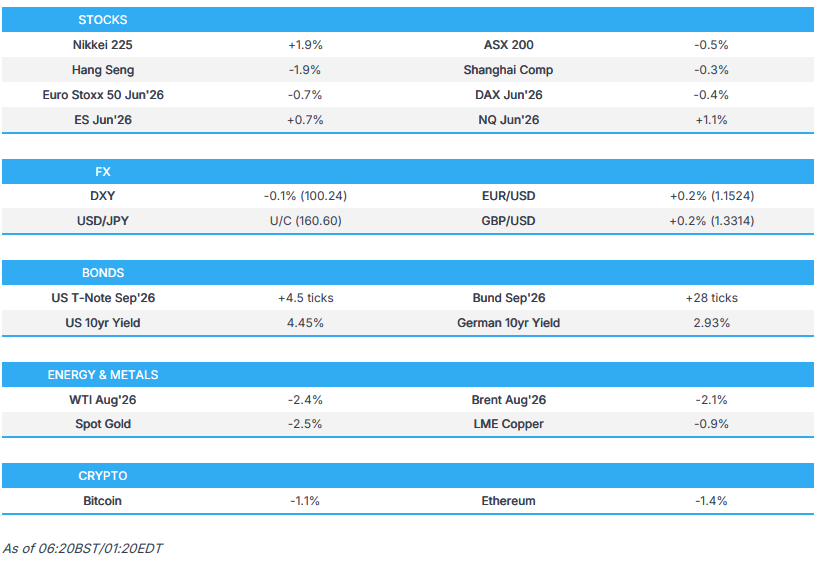
SHANGHAI CLOSED DOWN 17.59 PTS OR 0.43%
HANG SENG CLOSED DOWN 387.35 PTS OR 1.59%
Nikkei CLOSED UP 1,223.75 PTS OR 1.78%
//Australia’s all ordinaries CLOSED DOWN 0.19%
//Chinese yuan (ONSHORE) CLOSED DOWN TO 6.7698
/ OFFSHORE CLOSED DOWN AT 6.7738 Oil UP TO 75.39 dollars per barrel for WTI and BRENT DOWN TO 78.80Stocks in Europe OPENED ALL RED
ONSHORE USA/ YUAN// WITH YUAN TRADING DOWN (6.7698) OFFSHORE YUAN TRADING DOWN TO 6.7738 ONSHORE YUAN TRADING ABOVE LEVEL OF OFF SHORE AND DOWN ON THE DOLLAR// / AND THUS WEAKER/OFF SHORE YUAN TRADING DOWN AGAINST US DOLLAR/ AND THUS WEAKER
XXXXXXXXXXXXXXXXXXXXXXXXXXXXXXXXXXXXX
YOUR EARLY CURRENCY VALUES/GOLD AND SILVER PRICING/ASIAN AND EUROPEAN BOURSE MOVEMENTS/AND INTEREST RATE SETTINGS THURSDAY MORNING.7:30 AM
ONSHORE YUAN: CLOSED DOWN 6.7698
OFFSHORE YUAN: DOWN TO 6.7738
1.HANG SANG CLOSED DOWN 387.35 PTS OR 1.59%
2. Nikkei closed UP 1223.75 PTS OR 1.78%
WEST TEXAS INTERMEDIATE OIL UP TO 75.39
BRENT; 78.80
3. Europe stocks SO FAR: ALL RED
USA dollar INDEX UP TO 100.50/// EURO FALLS TO 1.1404 DOWN 43 BASIS PTS
3b Japan 10 YR bond yield:RISES TO. +2.616 UP 2 FULL BASIS PTS/ VERY TROUBLESOME//Japan buying 100% of bond issuance)/Japanese YEN vs USA CROSS NOW AT 160.890… JAPANESE YEN NOW FALLING AS WE HAVE NOW REACHED THE ENDING OF THE YEN CARRY TRADE AGAIN AND THE REPATRIATION OF YEN DENOMINATED BONDS TRADING IN THE USA/EUROPE. JAPAN 30 YR BOND YIELD: 3.767 UP 2 FULL BASIS PTS
3c Nikkei now ABOVE 17,000
3d USA/Yen rate now well ABOVE the important 120 barrier this morning
3e Gold DOWN /JAPANESE Yen DOWN CHINESE ONSHORE YUAN: DOWN( 6.7693 AND OFFSHORE: DOWN AT 6.7738
3f Japan is to buy INFINITE TRILLION YEN worth of BONDS. Japan’s GDP equals 5 trillion USA
Japan to buy 100% of all new Japanese debt and NOW they will have OVER 50% of all Japanese debt.
3g Oil UP for WTI and BRENT UP this morning
3h European bond buying continues to push yields HIGHER on all fronts in the EMU. German 10yr bund YIELD UP TO +2.9422// Italian 10 Yr bond yield UP to 3.656// SPAIN 10 YR BOND YIELD UP TO 3.367%
3i Greek 10 year bond yield UP TO 3.604%
3j Gold at $4250.65 //Silver at: 67.56 1 am est) SILVER NEXT RESISTANCE LEVEL AT $100.00
3k USA vs Russian rouble;// Russian rouble DOWN 0 AND 61/ 100 roubles/73.51
3m oil (WTI) into the 75 dollar handle for WTI and 78 handle for Brent/
3n Higher foreign deposits moving out of China// huge risk of outflows and a currency depreciation. This can spell financial disaster for the rest of the world/
JAPAN ON JAN 29.2016 CONTINUES NIRP. THIS MORNING RAISES AMOUNT OF BONDS THAT THEY WILL PURCHASE UP TO .5% ON THE 10 YR BOND///YEN TRADES TO 160.89 // 10 YEAR YIELD AFTER FIRST BREAKING .54% LAST YEAR NOW EXCEEDS THAT LEVEL TO 2.616% UP 2 BASIS PTS STILL ON CENTRAL BANK (JAPAN) INTERVENTION//YEN CARRY TRADE NOW UNWINDING//YEN BOND TRADING OVERSEAS REPATRIATED.//JAPAN 30 YR: 3.769 UP 2 PTS..: USA/SF this 0.8036 as the Swiss Franc . Euro vs SF: 0.9213
USA 10 YR BOND YIELD: 4.454 UP 1 BASIS PTS…
USA 30 YR BOND YIELD: 4.875 DOWN 5 BASIS PTS/
USA 2 YR BOND YIELD: 4.198 UP 4 BASIS PTS
USA DOLLAR VS TURKISH LIRA: 46.45 UP 13 BASIS PTS/LIRA GETTING KILLED//IDIOTS FOR SELLING GOLD AND USA DOLLAR RESERVES.
10 YR UK BOND YIELD: 4.7840 UP 3 PTS
30 YR UK BOND YIELD: 5.4780 UP 1 BASIS PTS
10 YR CANADA BOND YIELD: 3.411 UP 1 BASIS PTS
5 YR CANADA BOND YIELD: 3.092 UP 8 BASIS PTS.
1a New York Opening report
Futures Rise, Oil Drops As Market Prices In Iran Deal For Yet Another Day
Thursday, Jun 18, 2026 – 08:28 AM
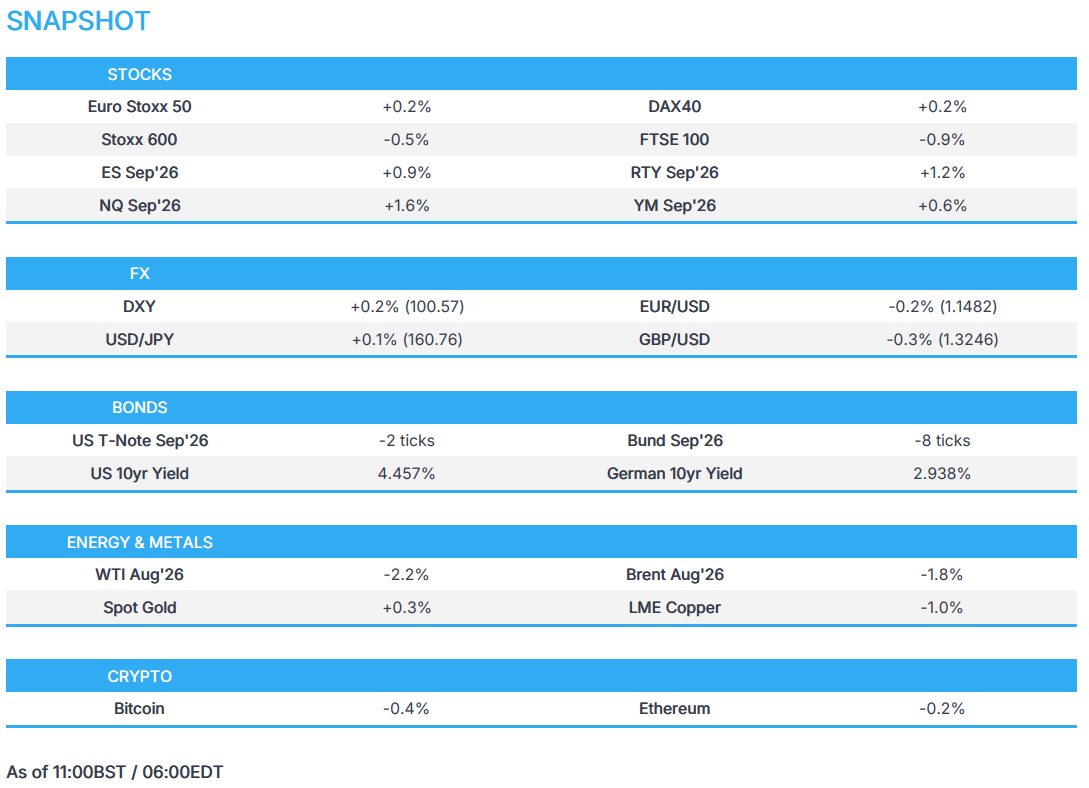
Futures rebounded from the post-FOMC selloff, and oil prices fell as Trump signed the Iran MOU two days early to end the war in the Middle East (in the symbolic Palace of Versailles of all place) and some energy shipments began to transit the Strait of Hormuz. As usual, tech led the parade higher. As of 8:00am ET, S&P futures were up 0.6%, but off overnight session highs, partly unwinding a more than 1% decline after Kevin Warsh signaled the Fed may have to raise interest rates this year to contain inflation; Nasdaq gained 1.3%; pre-market all Mag 7 are higher led by AMZN (+1.2%), META (+1.1%) and NVDA (+1.1%), reversing some of yesterday’s losses. Intel shares jumped more than 8% in premarket trading after Trump said the firm struck a chipmaking deal with Apple (a rehash of previous news but to this Pavolvian market, everything seems to be brand new). Overnight, the biggest headline was that the US/Iran MOU was officially in effect (final deal within 60 days, waiver for Iran to export oil, a $300bn reconstruction fund, terminating all types of sanction, per Axios). Bond yields are lower led by the long-end of the curve as 2y is still anchored by Fed commentary yesterday; 2y and 10y are -1bp and -4bp lower, respectively, the 10Y trading at 4.46%. The USD continues to climb with the DXY adding 53bp this morning. Brent slid 1.4% to around $78.50 a barrel and touched its lowest level since the start of the war while WTI fell -2.6% to $74.78; precious metals are largely flat this morning. US economic data calendar includes weekly jobless claims, June Philadelphia Fed business outlook (8:30am), May Leading Index (10am) and April TIC flows (4pm)
In premarket trading Mag 7 stocks are mostly higher (Nvidia +1%, Meta +0.5%, Tesla +0.3%, Amazon +0.2%, Microsoft -0.2%, Alphabet -0.5%).
Apple Inc. (AAPL) is up 0.6% after CEO Tim Cook told the Wall Street Journal that the iPhone maker plans to raise prices on its products to offset the increasing costs of memory and storage chips.
SpaceX (SPCX) falls 1.7%, set to extend the previous session’s drop, as it wraps up its first week as a public company following a record-breaking listing.
Accenture (ACN) tumbles 11% after the IT services company gave a revenue forecast for the fourth quarter that fell short of Wall Street’s expectations.
Albemarle Corp. (ALB) is up 1.8% after Citi raised its recommendation to buy from neutral on expected higher lithium prices.
Enphase Energy (ENPH) rises 4.1% after Barclays raised the recommendation on the company to equal-weight from underweight, citing its push into selling solid-state transformers to data centers.
Hive (HIVE) is up 15% after its subsidiary BUZZ High Performance Computing announced a partnership with Bell Canada, Cohere and Hypertec to build AI infrastructure in Canada.
Iren Ltd. (IREN) gains 3.3% as Jefferies initiated coverage of the Bitcoin miner and data center operator with a recommendation of buy on artificial intelligence data center demand.
Pfizer (PFE) is down 1.6% after the drugmaker said Chief Financial Officer Dave Denton will step down and leave the company on Aug. 15 for a professional opportunity in consumer goods outside the pharmaceutical industry.
Rumble (RUM) jumps 15% after the online video network platform said it plans to operate two core business units: video platform Rumble and cloud and AI-infrastructure business Quake AI, formerly Northern Data.
Four big June events are now in the rear view mirror — the first FOMC of the Warsh era, an Iran deal, the SpaceX’s IPO, and the first CPI print over 4% in 3 years. And yet, nothing appears able to dent the ongoing market meltup which is driven entirely by massive debt-funded capex spending into a handful of chip stocks.
Ahead of the last trading day of the week for US markets, the peace deal is reducing the risk of further energy-supply disruptions. Stocks have largely shrugged off the turmoil and continued to notch record highs on the back of relentless enthusiasm for AI. Equity markets have come through the tests posed by the debut of SpaceX, Kevin Warsh’s first meeting as Fed chair and the US-Iran peace deal fairly unscathed, said Raphael Thuin, head of capital market strategies at Tikehau.
“With the MOU now signed, there’s reason to believe that we may be close to or past peak inflation,” Thuin said. “The market will be able to concentrate on earnings again, like for Micron next week.”
Bond investors, however, face the prospect of lingering risks that may keep the higher-for-longer rates narrative intact. Even though US gasoline prices have dipped below $4 a gallon for the first time since March, energy costs have only been one factor in keeping inflation stubbornly above the Fed’s target.
US gasoline prices dipped below $4 a gallon for the first time since March, providing relief to consumers after global supply disruption sent fuel costs soaring. In contrast, inflation pressures are likely to hit people in the pocket if they want to buy a new iPhone later this year, with Apple’s Tim Cook telling the Wall Street Journal that the company plans to raise prices to offset surging memory and storage chip costs
Despite lower oil prices, front-end Treasury yields remained at their highest level since February 2025, with traders cementing bets for a September US rate hike. In the UK, the yield on two-year gilts jumped six basis points to 4.2%, while the Bank of England kept guidance that it “stands ready to act” on inflation and left its key rate unchanged. The dollar extended gains.
A quick look back at the Fed decision: Wednesday’s Fed decision marked the fourth consecutive meeting in which policymakers left rates unchanged. Officials described economic growth as “solid” and highlighted strong productivity gains and capital investment, while making clear that inflation has become a greater concern than labor-market weakness. Warsh has been critical of over-communication and poor forecasting by the Fed, and the new regime is moving away from explicit forward guidance – investors can no longer rely on central bank signals and will have to price in policy uncertainty. The S&P 500 has historically faced challenges following changes in leadership at the Fed.
“Half the committee is expecting rate hikes this year, which is a real shot across the bow at the market,” said Bob Michele, chief investment officer and global head of fixed income at JPMorgan Asset Management. “I think they’re getting ready for rate hikes.”
As for SpaceX, the company is seemingly sucking retail investors back into equities, flows into US equity ETFs have risen rapidly, notching the second highest-ever monthly flow, Bloomberg notes. Based on the price target of an initiation of coverage by Arete analyst Andrew Beale, SpaceX gets an implied $5.3 trillion valuation by end of 2027.
European stocks are missing out on the rally, with the Stoxx 600 down by 0.4%, dragged lower by the mining and autos sectors. Here are the biggest movers Thursday:
Edenred shares soar as much 18%, hitting their highest level since early November, after the payment solutions firm confirmed it has been approached by investment funds in the wake of a report of takeover interest from BC Partners
Generali shares rose as much as 3.3%, the most in 14 months, after newspaper Il Sole 24 Ore reported that UniCredit has informally proposed exchanging a 10% stake held by the Del Vecchio family holding Delfin in the insurer with its own shares
Oxford Instruments rises as much as 4.4% as Peel Hunt upgrades to buy from add and installs a new Street-high price target, based on durability of growth and scope for further operating leverage
Man Group shares rise as much as 3.4% to the highest since 2011 as BNP Paribas analysts upgrade their rating on the hedge fund manager to outperform from neutral and raise their target price
Informa shares rise as much as 3% as Morgan Stanley said the company has navigated the first five months of its financial year well, with strong results from its Live B2B Events and Academic Markets units
SSP advances as much as 5.1%, to the highest in eight weeks, after Davy initiates on the airport-focused food and beverage outlet operator with an outperform recommendation and 225p price target
Skistar climbs as much as 11%, the most since March 2025, after reporting third-quarter results which DNB Carnegie says show good cost mitigation and decent future pre-bookings
Tesco shares fall as much as 3.7% to their lowest level in two weeks after the UK’s biggest supermarket reported earnings which missed analyst expectations for like-for-like sales
Carrefour drops as much as 6.6% as JPMorgan places the French supermarket operator on a negative catalyst watch, saying first-half results on July 23 “might turn out to be a downgrade event”
Earlier in the session, Asian stocks rose as oil prices eased after President Donald Trump signed an interim peace deal with Iran to reopen the Strait of Hormuz. The MSCI Asia Pacific Index climbed as much as 0.8% to set an intraday record, boosted by gains in tech names including SK Hynix and Samsung Electronics. South Korea led advances in the region, with shares also rising in Taiwan and Japan. Crude prices continued to fall after Trump said a memorandum of understanding with Iran has taken effect, helping to ease inflation concerns for energy importing countries and offsetting hawkish signals from the Federal Reserve. A gauge of tech shares in Asia rose to a new high.Elsewhere in Asia, central banks in Indonesia and the Philippines — two economies hit hard by the sharp increase in global oil prices following the Iran war — both hiked their policy rates on Thursday. Indonesian stocks held losses, while Philippine shares pared gains.
In FX, the Bloomberg Dollar Spot Index reverses an earlier decline, sending the euro below $1.15. The BOE, Switzerland, and Norway’s central banks all held rates.
In rates, treasuries curve-flattening sparked by Wednesday’s hawkish Fed meeting extends as 2-year rises back toward highest levels since February 2025 — and within 25bp of the 10-year — while 30-year is more than 6bp lower on the day. Treasury 2-year is more than 2bps cheaper on the day while 10-year is nearly 3bp richer near 4.46% after touching 4.44% during London morning. US 2s10s and 5s30s spreads are 5bp and 6bp tighter respectively, after narrowing 8bp and 11bp to multi-month lows Wednesday. UK front-end underperforms, holding losses after Bank of England held interest rates at 3.75% as it said the recent fall in oil prices was “encouraging.” UK 2-year, 6bp cheaper on the day, had muted reaction to Bank of England policy announcement decided by 7-2 vote.
In commodities, WTI crude oil futures are down 2%, off session lows after Iranian President Masoud Pezeshkian released details on the text of the memorandum of understanding ending US attacks. Brent slid 1.4% to around $78.50 a barrel and touched its lowest level since the start of the war as three laden oil vessels controlled by Saudi Arabia’s state tanker giant switched on their signals in the Gulf of Oman after being stuck inside the Persian Gulf since the conflict began.
US economic data calendar includes weekly jobless claims, June Philadelphia Fed business outlook (8:30am), May Leading Index (10am) and April TIC flows (4pm)
Market Snapshot
Top Overnight News
An impending wave of oil that’s been trapped inside the Strait of Hormuz is set to be unleashed on Asia, suddenly swamping a region that had managed to make up for lost supply in recent weeks. BBG
The average price of U.S. gasoline fell below $4 a gallon on Thursday for the first time in months, after Iran and the United States signed a preliminary agreement to cease hostilities for 60 days and reopen the Strait of Hormuz. The national average for a gallon of regular gasoline fell to a fraction of a penny below $4, down from $4.03 the day before, according to the AAA motor club. NYT
The MSCI China Index is on the cusp of a bear market, pressured by weakness in tech and consumer stocks. Alibaba and Tencent were the biggest drags on the day. BBG
The Bank of England held interest rates at 3.75% as it said the recent fall in oil prices was “encouraging.” Two of the nine policymakers voted for an immediate quarter-point hike over concerns of persistent inflation: BBG
The SNB left its key rate at zero as expected and said it retained its heightened readiness to sell the franc. Separately, the Swiss government trimmed its growth predictions for 2026 and next year, while slightly raising its inflation outlook. BBG
Brussels has opened communication channels with the Kremlin in recent weeks to scope out the potential for talks to end the war in Ukraine, as European capitals debate whether to engage directly with Russian President Vladimir Putin. FT
Norges Bank left its policy rate unchanged at 4.25%, as expected, but said it would likely be necessary to hike at one of the forthcoming meetings. Norges Bank
The U.K.’s unemployment rate inched down in the three months through April while wage growth remained flat, with continued weakness in the labor market reinforcing expectations that the Bank of England will keep interest rates on hold. WSJ
Microsoft Corp. has built a big business selling AI models to Chinese companies despite the growing rivalry between the US and China over artificial intelligence. ByteDance Ltd. has generally been Microsoft’s biggest AI customer in recent years, largely using OpenAI models, and is on track to spend more than $1 billion a year on Microsoft AI and cloud services. BBG
U.S. President Donald Trump said in a Truth Social post on Thursday that Apple has agreed to work with Intel to design and manufacture its chips in the United States. RTRS
Iran Headlines
Technical talks between the US and Iran will be held in Zurich on Friday, Al Hadath reported citing sources. Talks will include the legal aspects related to lifting Iranian sanctions, the issue of frozen funds and the Iranian nuclear file. Qatar, Pakistan, Turkey, and Saudi Arabia will also attend the talks. An unannounced negotiation session will discuss issues related to Lebanon and Hezbollah.
The fifth round of US-Iran negotiations will discuss Israel’s withdrawal along with a timetable for the experimental zone, Al Hadath reported citing a Lebanese source. The source added that the US-Iranian agreement will intensify pressure on Israel to gradually withdraw and that there will be no retreat from restricting weapons to the state and deploying the army in the south. Lebanon is proceeding with direct negotiations with Israel.
Swiss Foreign Ministry confirmed that the US and Iran will meet on Friday for initial talks on MoU execution.
The Swiss government, following the Iranian commentary, said the plan as it stands is still for the US, Iran, Pakistan and Qatar to meet on Friday in Switzerland to commence talks.
US War Secretary Hegseth said they are to review where the right place for basing is, when the Strait of Hormuz opens and are prepared to resume strikes and blockade if Iran does not comply with MoU.
US official said the Iran MoU was signed digitally on Sunday by US VP Vance and Iranian Speaker Ghalibaf, which was witnessed by US President Trump, while the US official said Iran MoU was signed on Wednesday by US President Trump and Iranian President Pezeshkian.
US official says that Iran is to arrange safe, no-charge passage through Strait of Hormuz for 60 days, according to CNBC.
Iranian Foreign Ministry spokesperson Baghaei said the MoU between the US and Iran was decided to be signed digitally, while the plan for negotiating teams in Geneva remains in place, but there will be no signing ceremony in Switzerland. Baghaei stated that the 60-day period had started and that Israel’s continued attacks on Lebanon would be regarded as a breach of commitments, while he also commented that the US has begun lifting the blockade on Iranian ships and that no enriched nuclear material will be sent abroad, and the dilution of nuclear material remains an option. Furthermore, he said Iran will reciprocate if the US fails to honour commitments, and that Iran is to charge fees for Strait of Hormuz safety services, as well as stated that Iran and Oman are to manage the Strait of Hormuz security, and noted that Switzerland talks with the US are not yet certain.
Iranian Foreign Ministry spokesman said Israel’s continued attacks on Lebanon would be regarded as a breach of commitments. The spokesman also said that the 60-day period starts today, according to the text.
Iranian Parliament Speaker and top negotiator Ghalibaf said the Strait of Hormuz will not return to pre-war conditions, but this does not mean acting against international laws or maritime navigation, while he added that payment for services through the Strait of Hormuz has been established in the MoU and that USD 300bln has been allocated to be invested in Iran, part of which will be spent on reconstruction. Furthermore, he said Iran’s action is contingent on US compliance, with Iran to pursue action-for-action policy, as well as separately commented that Tehran can target ships entering Hormuz if needed, and that Tehran has sovereign rights to charge Hormuz tolls.
Source on Telegram posted that several IRGC boats were engaged in unspecified activity in the Strait of Hormuz, and that a US ship broadcast a warning message in Persian to tell them to cease operations and return to port, or else the US Navy would attack them.
An Israeli official said Israel has no intention of backing down on its positions and are holding stubborn negotiations with the US over its presence in southern Lebanon.
Israeli military operations reportedly continue in Lebanon despite the MoU, while Israel opposes Lebanon ceasefire terms in the US-Iran agreement, according to Al Jazeera.
A more detailed look at global markets courtesy of Newsquawk
APAC stocks traded mixed as the region reflected on recent key events, including the hawkish FOMC and Fed chair Warsh’s first presser, in which the Fed kept rates unchanged, removed forward guidance, emphasised price stability, and provided hawkish dot plots. This triggered selling in stocks, treasuries and gold, while it boosted the dollar and yields, with money markets now fully pricing in an October hike. Nonetheless, some of the moves have since been pared, to varying degrees, as oil prices gradually declined following the announcement that the US and Iran have signed the MoU for ending the war, which is now in effect, but with the planned talks on Friday in Switzerland, said to not yet be certain. ASX 200 was subdued with most sectors in the red and the declines were led by tech and miners. Nikkei 225 extended on record highs to surpass the 71,000 level as manufacturers benefited from lower oil prices and optimism of the reopening of shipping in the Strait of Hormuz. KOSPI rallied and breached the 9,000 level for the first time amid strength in Samsung and SK Hynix. Hang Seng and Shanghai Comp were lower with underperformance in Hong Kong as the hawkish FOMC and increased prospects of a rate hike this year, pressured the local benchmark, given that any rate hike in the US would force the HKMA to move in lockstep with the Fed to defend the USD/HKD peg.
Top Asian News
Japan’s chief cabinet secretary Kihara said the Japanese government is monitoring FX markets closely and will respond to FX moves as needed.
European bourses (STOXX 600 -0.5%) start Thursday’s session on a mixed footing despite the US and Iranian presidents digitally signing the MoU. Germany’s DAX 40 (+0.1%) is the clear outperformer, while the FTSE 100 (-0.8%) is the laggard as multiple companies trade ex-dividends. European sectors highlight a negative bias. Technology (+0.3%), Industrial Goods & Services (+0.6%) and Telecoms (+0.1%) are the only sectors in the green. To the bottom lies Optimised Personal Care (-1.8%), Basic Resources (-1.9%), and Autos (-1.3%).
Top European News
Germany’s Ifo cut its German economic growth forecast for 2027 to 0.8% (prev. exp. 1.2%). Inflation expected at 2.9% this year and 2.7% in 2027.
Swiss Government cuts its 2026 GDP growth forecast to 0.9% (prev. 1.0%) and 2027 GDP growth forecast to 1.6% (prev. 1.7%, long-term avg. 1.8%).
FX
G10s were initially mixed against a lacklustre USD. However, as the morning progressed, the Dollar found some strength and surpassed the highs made post-FOMC; today’s peak is at 100.63. USD/JPY aggressively sold off earlier in the session from 160.80 to 160.48 but has since pared entirely.
GBP was initially flat, but now posts modest losses against the USD. The BoE announcement is due today, where the MPC is widely expected to keep rates on hold in a 7-2/8-1 vote split as recent data and energy moderation support the narrative that bank rate is restrictive. With markets assigning a 95% probability of no-change today, attention will be on the vote split. While consensus is for 7-2/8-1, hawkish dissent from Chief Economist Pill and potentially one or two more policymakers remains possible, and would likely spur a hawkish reaction. In addition to the BoE, GBP will also digest results of the Makerfield by-election which will likely see Labour candidate Burnham emerge as the winner, and challenge incumbent Starmer.
Norges Bank was broadly as expected with a fleeting kneejerk lower in NOK, the unwinding of tightening bets by c. 15% of market participants. The 2026 core CPI view was maintained and the 2027 one was trimmed modestly, as expected, while forecasts and commentary still show that inflation is “too high” and the Governor outlined that new information shows “inflation pressures are slightly stronger than we had anticipated earlier”. As such, the Norges Bank points to tightening ahead, roughly in line with market expectations. EUR/NOK +0.3%.
SNB kept rates unchanged in a mostly as-expected meeting. EUR/CHF is firmer today, potentially surrounding the fact that commentary around energy/raw materials suggests that the new forecasts do not account for the moderation in energy seen recently; over the medium term, sparking a return to concerns around inflation being too low in Switzerland. As such, EUR/CHF -0.2%.
Fixed Income
Global fixed benchmarks are trading on either side of the unchanged mark, with price action lacklustre since the European cash open. It appears that fixed benchmarks are taking a breather following this week’s hefty declines in yields, which comes amidst sustained pressure in the energy complex. On the geopolitical front, US-Iran have signed the MoU, which means the Strait of Hormuz is theoretically open for ships to pass through, whilst the US blockade will also be lifted.
USTs (-2 ticks) trades within a 109-09+ to 109-20+ range, and well off the lows seen overnight, which stemmed from a hawkish Fed on Wednesday. A full recap can be found on the headline feed, but in brief, the unchanged policy was accompanied by hawkish dot plots and the removal of the easing bias. From a yield perspective, the US 2s10s curve is flatter post-Fed, and currently holding around 27.5bps, a level not seen since Liberation Day (2nd Apr 2025). This has unsurprisingly been led by the short-end, following the hawkish Fed. However, should inflation begin to ease later this year, there is some chance that the spread begins to widen once again, with short-end yields reflecting a less hawkish Fed. The long end may also be affected, with focus on Chair Warsh announcing a dedicated task force to review the Bank’s balance sheet. Any hints of an acceleration of the roll-off would undoubtedly lead to a considerably steeper curve.
Bunds (-9 ticks) and Gilts (U/C) trade in line with peers. Focusing on UK paper, traders will await the BoE this afternoon and then the start of the Makerfield by-election. In brief, the BoE is expected to keep rates on hold at 3.75%, with a mixed vote split. Some see in a range of 8-1 to 6-3. Thereafter, attention shifts to domestic politics, whereby a Burnham victory could see him launch a leadership challenge; for reference, he is viewed as the worst candidate for Gilts. There is a full preview in the Research Suite for those interested.
France sells EUR 13.999bln vs exp. EUR 12-14bln 2.40% 2029, 3.25% 2032, 2.00% 2032 and 3.00% 2034 OAT.
Spain sells EUR 5.83bln vs exp. EUR 5-6bln 3.00% 2033, 3.40% 2036 and 4.90% 2040 Bono.
Commodities
Crude futures are softer, with WTI Aug’26 slipping below the USD 75/bbl mark (USD 73.42-75.75/bbl range) while Brent Aug’26 oscillates around a USD 78/bbl handle (USD 77.10-79.06/bbl band). US and Iranian leaders signed the MoU digitally, which has weighed on the energy complex. The deal allows for the immediate resumption of Iranian oil exports and possible access to a USD 300bln development programme, backed by sanctions waivers and unfreezing overseas funds. In exchange, Iran will never produce nuclear weapons. The MoU also confirmed earlier reporting that Iran’s nuclear file will be deferred to talks for 60 days.
More recently, reporting by Al Hadath noted technical talks between the US and Iran will begin in Zurich on Friday, in which the legal aspects related to lifting Iranian sanctions, the issue of frozen funds and the Iranian nuclear file will be discussed. Attention remains on whether Israel will back away from fighting Hezbollah in southern Lebanon. An Israeli official said that Israel has no intention of backing down on its positions and is holding stubborn negotiations with the US over its presence in southern Lebanon. However, energy benchmarks were unreactive following those comments.
Spot gold has slightly pared back Wednesday’s losses which were driven by a hawkish Fed meeting. After dipping to a trough of USD 4219/oz yesterday, the yellow metal ventured higher throughout the Asia-Pac session and reached USD 4330/oz at best this morning.
3M LME Copper gapped lower and fell to a trough of USD 13.67k/t post-FOMC. In brief, the Fed held rates unchanged at 3.50-3.75%, however, the SEP highlighted a hawkish bias. 3M LME Copper has since traded rangebound, holding in a USD 13.67k-13.78k/t band.
Persian Gulf Petrochemical Industries CEO said 89% of damaged petrochemical units returned to production, and the process of redesigning and strengthening production capacity is underway, ISNA reported.
Three Saudi Arabian-flagged supertankers laden with a combined 6mln barrels of crude sailed through the Strait of Hormuz on Thursday, according to shipping data.
China’s State Planner said effective at midnight June 18th, domestic gasoline and diesel prices will be cut by CNY 515/t and CNY 495/t, respectively.
Central Banks
The Bank of England held interest rates at 3.75%, as expected, as it said the recent fall in oil prices was “encouraging,” Two of the nine policymakers voted for an immediate quarter-point hike over concerns of persistent inflation. The committee lowered its estimate of peak inflation to 3.25% in the fourth quarter of this year, below the 3.6% it had projected in April.
The SNB held rates unchanged at 0.00%, as expected. The Bank stated that the readiness to intervene in FX is higher and that monetary policy is appropriate to keep inflation within the range consistent with price stability. On inflation, the Bank stated that medium-term inflationary pressure, however, is virtually unchanged compared with the last monetary policy assessment.
SNB Chairman Schlegel said that monetary policy continues to have an expansionary effect. Geopolitical uncertainty remains, risks of strong upward pressure on the CHF remains. “If necessary, we therefore have an increased willingness to intervene…” in FX.
The Norges Bank held rates unchanged at 4.25%, as expected. The Bank stated that it will likely be necessary to raise the policy rate further at one of the forthcoming monetary policy meetings. Governor Bache stated in the release that inflation is too high and that new information indicates that inflation pressures are slightly stronger than we had anticipated earlier. The Bank’s MPR was also revised higher, forecasting just above 4.5% at the end of 2026.
Ukraine geopol
Russia’s Defence Ministry said 555 Ukrainian drones were shot down over Russian areas overnight, according to IFX.
Russia attacked Kyiv with missiles and explosions heard in the capital, while it was separately reported that several Moscow airports have halted flights and Moscow’s mayor announced that drones hit an oil refinery in a massive attack, according to TASS.
US Event Calendar
8:30 am: Jun 13 Initial Jobless Claims, est. 225k, prior 229k
8:30 am: Jun Philadelphia Fed Business Outlook, est. 10, prior -0.4
8:30 am: Jun 6 Continuing Claims, est. 1789k, prior 1795k
10:00 am: May Leading Index, est. 0.1%, prior 0.1%
4:00 pm: Apr Total Net TIC Flows, prior 150.7b
4:00 pm: Apr Net Long-term TIC Flows, prior 81.3b
1b) European opening report
DXY marks post-FOMC highs; SNB and Norges Bank as expected, BoE ahead – Newsquawk US Market Open
Thursday, Jun 18, 2026 – 06:42 AM
The Swiss government confirms that the plan still stands for the US, Iran, Pakistan and Qatar to meet on Friday in Switzerland to commence talks.
Furthermore, Al Hadath added that the talks will include the legal aspects related to lifting Iranian sanctions, the issue of frozen funds and the Iranian nuclear file. A Lebanese source also stated that negotiations will discuss Israel’s withdrawal along with a timetable for the experimental zone.
SNB and Norges Bank leave their respective rates unchanged, as expected. The SNB highlighted increased readiness for FX intervention, while the Norges Bank stated a higher likelihood of near-term rate hikes.
US equity futures pare post-Fed losses, with NQ outperforming as US President Trump announced AAPL-INTC collaboration.
DXY hold onto post-FOMC bid, GBP to digest BoE and by-election, CHF softer following increased SNB intervention.
Fixed income benchmarks mixed; energy benchmarks softer following MoU signing (Brent -1.8%).
Looking ahead, highlights include Canadian PPI (May), US Initial Jobless Claims (Jun/13), New Zealand Trade Balance (May), BoE Policy Announcement, CNB Policy Announcement, UK Makerfield by-election, Speakers including ECB’s Elderson, Cipollone & Lane, Supply from the US.
2. Listen to this report in the market open podcast (available on Apple and Spotify)
3. Trial Newsquawk’s premium real-time audio news squawk box for 7 days
IRAN CONFLICT
Technical talks between the US and Iran will be held in Zurich on Friday, Al Hadath reported citing sources. Talks will include the legal aspects related to lifting Iranian sanctions, the issue of frozen funds and the Iranian nuclear file. Qatar, Pakistan, Turkey, and Saudi Arabia will also attend the talks. An unannounced negotiation session will discuss issues related to Lebanon and Hezbollah.
The fifth round of US-Iran negotiations will discuss Israel’s withdrawal along with a timetable for the experimental zone, Al Hadath reported citing a Lebanese source. The source added that the US-Iranian agreement will intensify pressure on Israel to gradually withdraw and that there will be no retreat from restricting weapons to the state and deploying the army in the south. Lebanon is proceeding with direct negotiations with Israel.
Swiss Foreign Ministry confirmed that the US and Iran will meet on Friday for initial talks on MoU execution.
The Swiss government, following the Iranian commentary, said the plan as it stands is still for the US, Iran, Pakistan and Qatar to meet on Friday in Switzerland to commence talks.
US War Secretary Hegseth said they are to review where the right place for basing is, when the Strait of Hormuz opens and are prepared to resume strikes and blockade if Iran does not comply with MoU.
US official said the Iran MoU was signed digitally on Sunday by US VP Vance and Iranian Speaker Ghalibaf, which was witnessed by US President Trump, while the US official said Iran MoU was signed on Wednesday by US President Trump and Iranian President Pezeshkian.
US official says that Iran is to arrange safe, no-charge passage through Strait of Hormuz for 60 days, according to CNBC.
Iranian Foreign Ministry spokesperson Baghaei said the MoU between the US and Iran was decided to be signed digitally, while the plan for negotiating teams in Geneva remains in place, but there will be no signing ceremony in Switzerland. Baghaei stated that the 60-day period had started and that Israel’s continued attacks on Lebanon would be regarded as a breach of commitments, while he also commented that the US has begun lifting the blockade on Iranian ships and that no enriched nuclear material will be sent abroad, and the dilution of nuclear material remains an option. Furthermore, he said Iran will reciprocate if the US fails to honour commitments, and that Iran is to charge fees for Strait of Hormuz safety services, as well as stated that Iran and Oman are to manage the Strait of Hormuz security, and noted that Switzerland talks with the US are not yet certain.
Iranian Foreign Ministry spokesman said Israel’s continued attacks on Lebanon would be regarded as a breach of commitments. The spokesman also said that the 60-day period starts today, according to the text.
Iranian Parliament Speaker and top negotiator Ghalibaf said the Strait of Hormuz will not return to pre-war conditions, but this does not mean acting against international laws or maritime navigation, while he added that payment for services through the Strait of Hormuz has been established in the MoU and that USD 300bln has been allocated to be invested in Iran, part of which will be spent on reconstruction. Furthermore, he said Iran’s action is contingent on US compliance, with Iran to pursue action-for-action policy, as well as separately commented that Tehran can target ships entering Hormuz if needed, and that Tehran has sovereign rights to charge Hormuz tolls.
Source on Telegram posted that several IRGC boats were engaged in unspecified activity in the Strait of Hormuz, and that a US ship broadcast a warning message in Persian to tell them to cease operations and return to port, or else the US Navy would attack them.
An Israeli official said Israel has no intention of backing down on its positions and are holding stubborn negotiations with the US over its presence in southern Lebanon.
Israeli military operations reportedly continue in Lebanon despite the MoU, while Israel opposes Lebanon ceasefire terms in the US-Iran agreement, according to Al Jazeera.
EUROPEAN TRADE
EQUITIES
European bourses (STOXX 600 -0.5%) start Thursday’s session on a mixed footing despite the US and Iranian presidents digitally signing the MoU. Germany’s DAX 40 (+0.1%) is the clear outperformer, while the FTSE 100 (-0.8%) is the laggard as multiple companies trade ex-dividends.
European sectors highlight a negative bias. Technology (+0.3%), Industrial Goods & Services (+0.6%) and Telecoms (+0.1%) are the only sectors in the green. To the bottom lies Optimised Personal Care (-1.8%), Basic Resources (-1.9%), and Autos (-1.3%).
US equity futures pare back Wednesday’s Fed-driven selloff. In brief, the Fed held rates unchanged at 3.50-3.75%, however, the SEP highlighted a hawkish bias as 9 members forecast rate hikes in 2026.
G10s were initially mixed against a lacklustre USD. However, as the morning progressed, the Dollar found some strength and surpassed the highs made post-FOMC; today’s peak is at 100.63. USD/JPY aggressively sold off earlier in the session from 160.80 to 160.48 but has since pared entirely.
GBP was initially flat, but now posts modest losses against the USD. The BoE announcement is due today, where the MPC is widely expected to keep rates on hold in a 7-2/8-1 vote split as recent data and energy moderation support the narrative that bank rate is restrictive. With markets assigning a 95% probability of no-change today, attention will be on the vote split. While consensus is for 7-2/8-1, hawkish dissent from Chief Economist Pill and potentially one or two more policymakers remains possible, and would likely spur a hawkish reaction. In addition to the BoE, GBP will also digest results of the Makerfield by-election which will likely see Labour candidate Burnham emerge as the winner, and challenge incumbent Starmer.
Norges Bank was broadly as expected with a fleeting kneejerk lower in NOK, the unwinding of tightening bets by c. 15% of market participants. The 2026 core CPI view was maintained and the 2027 one was trimmed modestly, as expected, while forecasts and commentary still show that inflation is “too high” and the Governor outlined that new information shows “inflation pressures are slightly stronger than we had anticipated earlier”. As such, the Norges Bank points to tightening ahead, roughly in line with market expectations. EUR/NOK +0.3%.
SNB kept rates unchanged in a mostly as-expected meeting. EUR/CHF is firmer today, potentially surrounding the fact that commentary around energy/raw materials suggests that the new forecasts do not account for the moderation in energy seen recently; over the medium term, sparking a return to concerns around inflation being too low in Switzerland. As such, EUR/CHF -0.2%.
FIXED INCOME
Global fixed benchmarks are trading on either side of the unchanged mark, with price action lacklustre since the European cash open. It appears that fixed benchmarks are taking a breather following this week’s hefty declines in yields, which comes amidst sustained pressure in the energy complex. On the geopolitical front, US-Iran have signed the MoU, which means the Strait of Hormuz is theoretically open for ships to pass through, whilst the US blockade will also be lifted.
USTs (-2 ticks) trades within a 109-09+ to 109-20+ range, and well off the lows seen overnight, which stemmed from a hawkish Fed on Wednesday. A full recap can be found on the headline feed, but in brief, the unchanged policy was accompanied by hawkish dot plots and the removal of the easing bias. From a yield perspective, the US 2s10s curve is flatter post-Fed, and currently holding around 27.5bps, a level not seen since Liberation Day (2nd Apr 2025). This has unsurprisingly been led by the short-end, following the hawkish Fed. However, should inflation begin to ease later this year, there is some chance that the spread begins to widen once again, with short-end yields reflecting a less hawkish Fed. The long end may also be affected, with focus on Chair Warsh announcing a dedicated task force to review the Bank’s balance sheet. Any hints of an acceleration of the roll-off would undoubtedly lead to a considerably steeper curve.
Bunds (-9 ticks) and Gilts (U/C) trade in line with peers. Focusing on UK paper, traders will await the BoE this afternoon and then the start of the Makerfield by-election. In brief, the BoE is expected to keep rates on hold at 3.75%, with a mixed vote split. Some see in a range of 8-1 to 6-3. Thereafter, attention shifts to domestic politics, whereby a Burnham victory could see him launch a leadership challenge; for reference, he is viewed as the worst candidate for Gilts. There is a full preview in the Research Suite for those interested.
France sells EUR 13.999bln vs exp. EUR 12-14bln 2.40% 2029, 3.25% 2032, 2.00% 2032 and 3.00% 2034 OAT.
Spain sells EUR 5.83bln vs exp. EUR 5-6bln 3.00% 2033, 3.40% 2036 and 4.90% 2040 Bono.
COMMODITIES
Crude futures are softer, with WTI Aug’26 slipping below the USD 75/bbl mark (USD 73.42-75.75/bbl range) while Brent Aug’26 oscillates around a USD 78/bbl handle (USD 77.10-79.06/bbl band). US and Iranian leaders signed the MoU digitally, which has weighed on the energy complex. The deal allows for the immediate resumption of Iranian oil exports and possible access to a USD 300bln development programme, backed by sanctions waivers and unfreezing overseas funds. In exchange, Iran will never produce nuclear weapons. The MoU also confirmed earlier reporting that Iran’s nuclear file will be deferred to talks for 60 days.
More recently, reporting by Al Hadath noted technical talks between the US and Iran will begin in Zurich on Friday, in which the legal aspects related to lifting Iranian sanctions, the issue of frozen funds and the Iranian nuclear file will be discussed. Attention remains on whether Israel will back away from fighting Hezbollah in southern Lebanon. An Israeli official said that Israel has no intention of backing down on its positions and is holding stubborn negotiations with the US over its presence in southern Lebanon. However, energy benchmarks were unreactive following those comments.
Spot gold has slightly pared back Wednesday’s losses which were driven by a hawkish Fed meeting. After dipping to a trough of USD 4219/oz yesterday, the yellow metal ventured higher throughout the Asia-Pac session and reached USD 4330/oz at best this morning.
3M LME Copper gapped lower and fell to a trough of USD 13.67k/t post-FOMC. In brief, the Fed held rates unchanged at 3.50-3.75%, however, the SEP highlighted a hawkish bias. 3M LME Copper has since traded rangebound, holding in a USD 13.67k-13.78k/t band.
Persian Gulf Petrochemical Industries CEO said 89% of damaged petrochemical units returned to production, and the process of redesigning and strengthening production capacity is underway, ISNA reported.
Three Saudi Arabian-flagged supertankers laden with a combined 6mln barrels of crude sailed through the Strait of Hormuz on Thursday, according to shipping data.
China’s State Planner said effective at midnight June 18th, domestic gasoline and diesel prices will be cut by CNY 515/t and CNY 495/t, respectively.
NOTABLE EUROPEAN HEADLINES
Germany’s Ifo cut its German economic growth forecast for 2027 to 0.8% (prev. exp. 1.2%). Inflation expected at 2.9% this year and 2.7% in 2027.
Swiss Government cuts its 2026 GDP growth forecast to 0.9% (prev. 1.0%) and 2027 GDP growth forecast to 1.6% (prev. 1.7%, long-term avg. 1.8%).
NOTABLE EUROPEAN DATA RECAP
UK Unemployment Rate (Apr) 4.9% vs. Exp. 5% (Prev. 5%).
UK Employment Change (Apr) 100K vs Exp. 75K (Prev. 148K, Low. -30K, High. 97K).
UK Average Earnings excl. Bonus (3Mo/Yr) (Apr) 3.4% vs. Exp. 3.3% (Prev. 3.4%).
CENTRAL BANKS
The SNB held rates unchanged at 0.00%, as expected. The Bank stated that the readiness to intervene in FX is higher and that monetary policy is appropriate to keep inflation within the range consistent with price stability. On inflation, the Bank stated that medium-term inflationary pressure, however, is virtually unchanged compared with the last monetary policy assessment.
SNB Chairman Schlegel said that monetary policy continues to have an expansionary effect. Geopolitical uncertainty remains, risks of strong upward pressure on the CHF remains. “If necessary, we therefore have an increased willingness to intervene…” in FX.
The Norges Bank held rates unchanged at 4.25%, as expected. The Bank stated that it will likely be necessary to raise the policy rate further at one of the forthcoming monetary policy meetings. Governor Bache stated in the release that inflation is too high and that new information indicates that inflation pressures are slightly stronger than we had anticipated earlier. The Bank’s MPR was also revised higher, forecasting just above 4.5% at the end of 2026.
BCB cut the Selic Rate by 25bps to 14.25%, as expected, with the decision unanimous.
GEOPOLITICS
RUSSIA-UKRAINE
Russia’s Defence Ministry said 555 Ukrainian drones were shot down over Russian areas overnight, according to IFX.
Russia attacked Kyiv with missiles and explosions heard in the capital, while it was separately reported that several Moscow airports have halted flights and Moscow’s mayor announced that drones hit an oil refinery in a massive attack, according to TASS.
CRYPTO
Bitcoin holds steady above the USD 64k handle after 2 consecutive days of losses.
APAC TRADE
APAC stocks traded mixed as the region reflected on recent key events, including the hawkish FOMC and Fed chair Warsh’s first presser, in which the Fed kept rates unchanged, removed forward guidance, emphasised price stability, and provided hawkish dot plots. This triggered selling in stocks, treasuries and gold, while it boosted the dollar and yields, with money markets now fully pricing in an October hike. Nonetheless, some of the moves have since been pared, to varying degrees, as oil prices gradually declined following the announcement that the US and Iran have signed the MoU for ending the war, which is now in effect, but with the planned talks on Friday in Switzerland, said to not yet be certain.
ASX 200 was subdued with most sectors in the red and the declines were led by tech and miners.
Nikkei 225 extended on record highs to surpass the 71,000 level as manufacturers benefited from lower oil prices and optimism of the reopening of shipping in the Strait of Hormuz.
KOSPI rallied and breached the 9,000 level for the first time amid strength in Samsung and SK Hynix.
Hang Seng and Shanghai Comp were lower with underperformance in Hong Kong as the hawkish FOMC and increased prospects of a rate hike this year, pressured the local benchmark, given that any rate hike in the US would force the HKMA to move in lockstep with the Fed to defend the USD/HKD peg.
NOTABLE ASIA-PAC HEADLINES
Japan’s chief cabinet secretary Kihara said the Japanese government is monitoring FX markets closely and will respond to FX moves as needed.
NOTABLE APAC DATA RECAP
New Zealand GDP Growth Rate QQ (Q1) 0.8% vs. Exp. 0.9% (Prev. 0.2%, Low. 0.4%, High. 1.0%).
New Zealand GDP Growth Rate YY (Q1) 1.5% vs. Exp. 1.1% (Prev. 1.3%, Low. 0.6%, High. 1.3%).
1c) Asian report
Hawkish Fed spurs USD, energy softens amid US-Iran virtual MoU signing – Newsquawk EU Market Open
Thursday, Jun 18, 2026 – 02:28 AM
Fed held rates but removed forward guidance completely while the SEPs showed 9 members anticipate a 2026 hike, sparking a hawkish reaction.
US stocks finished lower, USD bid and the US yield curve bear flattened. Markets returned to fully pricing in a 25bps hike by end-2026.
However, a portion of this unwound in APAC trade as oil prices moved lower following the US and Iran signing the 14-point agreement digitally; move capped as talks in Switzerland on Friday are not yet confirmed.
Nonetheless, crude benchmarks are lower by over 2% and towards the session trough as we await clarity on Friday.
APAC stocks traded mixed as the initially digested the Fed, before lifting on the MOU signing.
US President Trump said he thinks Russian President Putin and Ukrainian President Zelensky want to do something on the war.
Looking ahead, highlights include UK Employment Report (Apr), Average Earnings (May), Canadian PPI (May), US Initial Jobless Claims (Jun/13), New Zealand Trade Balance (May), SNB Policy Announcement, Norges Bank Policy Announcement, BoE Policy Announcement, CNB Policy Announcement, UK Makerfield by-election, Speakers including Norges Bank’s Bache, SNB’s Schlegel, ECB’s Elderson, Cipollone & Lane, Supply from Spain, France & US.
Fed kept rates on hold as expected at 3.50-3.75%, while it removed forward guidance completely with the rate decision and statement approved in a 12-0 vote, and it stated that the committee will deliver price stability. The committee reaffirmed its policy of maintaining ample reserves in the banking system and said economic activity is expanding at a solid pace despite elevated uncertainty that owes, in part, to the conflict in the Middle East. Fed stated that job gains have kept pace with the workforce, and the unemployment rate has changed little, as well as noted that inflation remains elevated relative to the Committee’s 2% goal, in part reflecting supply shocks that have driven price increases in certain sectors, including energy, adding that the Committee will deliver price stability. The SEPs showed 9 members anticipated a rate hike this year, and the Federal Funds Rate for 2026 was seen at 3.8% (exp. 3.625%, prev. 3.4%), 2027 at 3.6% (exp. 3.375%, prev. 3.1%), 2028 at 3.4% (exp. 3.125%, prev. 3.1%), and Longer run at 3.1% (exp. 3.125%, prev. 3.1%).
Fed Chair Warsh said the goal is to get monetary policy right, and that the committee will deliver price stability, while he said inflation is well ahead of 2% and that persistently high prices are a burden. He also commented that the statement was absent of forward guidance as it is not well suited to the current policy state and announced a task force on five points for review, in which the task force will be supported by Fed staff and will ultimately propose the next steps. The points for review include: Communication: expects to propose changes, including to SEPs. Balance Sheet: to review the benefits and risks of an ample reserve regime, and its composition. Use of data sources: to consider new data sources and methodological changes. Productivity and Jobs: will survey the reach of AI and other general-purpose tech. Fed’s inflation frameworks: will examine drivers of inflation.
Fed Chair Warsh said in the (Q&A) that the timeline of task force reviews will depend on which topic, and he expects to begin work in the next couple of weeks, and hopes to be concluded by year-end on all points. Warsh said regarding the inflation framework review that the 2% goal is the Fed’s long-term goal objective, and he sees no reason until they reach the 2% goal to revisit that goal. Warsh said they have the capability and commitment to deliver price stability and 2% goal, and stressed the Fed will deliver on 2% inflation goal, as well as reiterated they have dropped forward guidance and cannot give forward guidance on what they will do next.
Fed Chair Warsh responded that it is uneven, perhaps due to different transmission mechanisms, when asked about how restrictive policy is, and stated policy appears restrictive from the housing market, but not financial markets and that it is hard to say policy is restrictive anywhere but in housing. Warsh said he thinks colleagues understand the world is changing quickly, and did not feel bound by their dots, while he did not hear a lot of conviction on dot plots, when asked about the dot plot. Warsh also said he did not submit a dot as he does not see it as helpful on how to conduct policy, but stated he is pretty open-minded. Warsh said that they made changes, with more expected to come, and therefore those future changes would be worthy of press conferences, while he also commented that commitment to deliver on inflation is strong and unanimous. Furthermore, when asked about whether a rate cut was discussed, he said there was one proposal on the table, but very little discussion on it, as well as stated there was no discussion on any other proposals and that none of the 19 at the table felt a need to tighten today.
IRAN CONFLICT
US President Trump reiterated that the Iran deal will open Hormuz and that Iran cannot have a nuclear weapon, while he also reiterated that if the Iran deal is not done in 60 days, they will go back to bombing and stated they do not want to bomb Iran again, but might have to.
US senior official, reading out the formal text of the Iran MoU, said Iran will cease efforts to disrupt traffic through the Strait of Hormuz and is committing to destroy its enriched uranium stockpile, at a minimum through downblending, with details on implementation to be discussed. The official said the sequencing of agreed steps will be a key topic in forthcoming talks, while discussions on funding for Iranian proxies will follow the nuclear issue. The meeting in Switzerland this weekend will be “critical” in determining how negotiations advance, and both sides will take confidence-building measures to assess whether a deal can be achieved. The official also said that Israeli PM Netanyahu has not requested a copy of the MoU, the US has maintained constant contact with Israel, and while the MoU has been signed, either side can walk away until a binding agreement is reached. If a final deal is achieved and “the Iranians behave,” sanctions relief could be permitted; however, if negotiations fail, President Trump is not afraid to use the tools at his disposal.
Iranian Foreign Ministry spokesperson Baghaei said the MoU between the US and Iran was decided to be signed digitally, while the plan for negotiating teams in Geneva remains in place, but there will be no signing ceremony in Switzerland. Baghaei stated that the 60-day period had started and that Israel’s continued attacks on Lebanon would be regarded as a breach of commitments, while he also commented that the US has begun lifting the blockade on Iranian ships and that no enriched nuclear material will be sent abroad, and the dilution of nuclear material remains an option. Furthermore, he said Iran will reciprocate if the US fails to honour commitments, and that Iran is to charge fees for Strait of Hormuz safety services, as well as stated that Iran and Oman are to manage the Strait of Hormuz security, and noted that Switzerland talks with the US are not yet certain.
Iranian Parliament Speaker and top negotiator Ghalibaf said the Strait of Hormuz will not return to pre-war conditions, but this does not mean acting against international laws or maritime navigation, while he added that payment for services through the Strait of Hormuz has been established in the MoU and that USD 300bln has been allocated to be invested in Iran, part of which will be spent on reconstruction. Furthermore, he said Iran’s action is contingent on US compliance, with Iran to pursue action-for-action policy, as well as separately commented that Tehran can target ships entering Hormuz if needed, and that Tehran has sovereign rights to charge Hormuz tolls.
Source on Telegram posted that several IRGC boats were engaged in unspecified activity in the Strait of Hormuz, and that a US ship broadcast a warning message in Persian to tell them to cease operations and return to port, or else the US Navy would attack them.
Hezbollah chief said the ceiling to be reached in negotiations with Israel is a situation of reciprocal security, while they reject pilot zones agreed in US-brokered talks between Lebanon and Israel.
Israeli military operations reportedly continue in Lebanon despite the MoU, while Israel opposes Lebanon ceasefire terms in the US-Iran agreement, according to Al Jazeera.
US TRADE
EQUITIES
US stocks were pressured as a broad-based hawkish reaction was seen across markets, given a much more hawkish than anticipated Federal Reserve decision in which the Fed kept rates unchanged at 3.50%-3.75%, as expected, removed forward guidance, added emphasis on reaching the inflation target, and provided a hawkish dot plot. As such, US indices saw losses with all sectors in the red, while Treasuries were sold and precious metals suffered extensive losses, with spot silver underperforming. The dollar saw significant strength post-Fed, to the detriment of G10 FX peers, with high-beta FX lagging ahead of a few central bank decisions on Thursday, namely SNB, BoE, and Norges.
SPX -1.21% at 7,420, NDX -0.99% at 29,671, DJI -0.97% at 51,498, RUT -0.72% at 2,918.
US President Trump said regarding Chinese cars that the US doesn’t have problems Europe has, while he also stated that the US would do better without the USMCA agreement and would rather leave the USMCA unsigned.
NOTABLE HEADLINES
US President Trump said it is alright that the Fed held rates, “whatever”, and that it could happen regarding the possibility of the Fed raising rates.
APAC TRADE
EQUITIES
APAC stocks traded mixed as the region reflected on recent key events, including the hawkish FOMC and Fed chair Warsh’s first presser, in which the Fed kept rates unchanged, removed forward guidance, emphasised price stability, and provided hawkish dot plots. This triggered selling in stocks, treasuries and gold, while it boosted the dollar and yields, with money markets now fully pricing in an October hike. Nonetheless, some of the moves have since been pared, to varying degrees, as oil prices gradually declined following the announcement that the US and Iran have signed the MoU for ending the war, which is now in effect, but with the planned talks on Friday in Switzerland, said to not yet be certain.
ASX 200 was subdued with most sectors in the red and the declines were led by tech and miners.
Nikkei 225 extended on record highs to surpass the 71,000 level as manufacturers benefited from lower oil prices and optimism of the reopening of shipping in the Strait of Hormuz.
KOSPI rallied and breached the 9,000 level for the first time amid strength in Samsung and SK Hynix.
Hang Seng and Shanghai Comp were lower with underperformance in Hong Kong as the hawkish FOMC and increased prospects of a rate hike this year, pressured the local benchmark, given that any rate hike in the US would force the HKMA to move in lockstep with the Fed to defend the USD/HKD peg.
US equity futures rebounded from the post-FOMC trough with the help of the US-Iran MoU signing.
European equity futures indicate a lower cash market open with Euro Stoxx 50 futures down 0.7% after the cash market closed with gains of 0.7% on Wednesday.
FX
DXY pared some of its gains after strengthening on the back of the FOMC statement and dot plots, which saw 9 members see at least one hike by year-end. A prompt hawkish reaction was seen across markets, furthered by the language addition within the statement that “The Committee will deliver price stability”, whilst mentions on the labour part of the mandate were limited, showing a heavy inflation tone skew. Warsh maintained this throughout his press conference and refrained from the dovish image some had anticipated, and in particular, he mentioned productivity growth, but did not try to argue that AI productivity growth would enable potential cuts. Warsh doesn’t believe they have a cruel choice between full employment and stable prices, suggesting he potentially views employment as stable at current levels, with the Fed’s current fight solely on inflation. DXY rallied to 100.57 from the 99.65 seen before the rate announcement, while money markets returned to fully pricing in a 25bps rate hike by year end.
EUR/USD regained some composure after briefly sliding to sub-1.1500 territory post-FOMC.
GBP/USD partially rebounded from a two-month low, but with the recovery limited as participants now look ahead to UK jobs and wages data, the BoE policy meeting and the Makerfield by-election, which could pave the way for Manchester Mayor Burnham’s return to parliament and PM Starmer’s ousting.
USD/JPY lacked conviction overnight after climbing yesterday as the buck strengthened on the hawkish Fed, although price action remained confined to within the 160.00 handle, while officials continue their mild jawboning with Chief Cabinet Secretary Kihara stating that Japan’s government is monitoring FX markets closely and will respond to FX moves as needed.
Antipodeans were on the mend and recovered around half of their post-FOMC losses, with NZD mildly outperforming following Q1 GDP data, which accelerated and showed stronger-than-expected Y/Y growth.
Brazil Central Bank cut the Selic Rate by 25bps to 14.25%, as expected, via a unanimous decision. BCB stated the committee reaffirms serenity and cautiousness in conducting monetary policy, while the degree of restriction accumulated by monetary policy allows different trajectories of the policy rate consistent with inflation convergence to the target.
FIXED INCOME
10yr UST futures attempted to nurse some losses after the recent bear flattening due to the hawkish FOMC and Warsh’s first press conference as chair, where he refrained from hinting at whether he is leaning towards a hike and affirmed that the committee will deliver price stability.
Bund futures retreated in the aftermath of the Fed but then returned to flat territory as oil prices fell.
10yr JGB futures were choppy after recent key central bank announcements and geopolitical updates.
COMMODITIES
Crude futures declined following the prior day’s choppy performance amid conflicting reports regarding a cancellation of the Iranian officials’ trip to Switzerland, while the renewed downside followed the signing by US President Trump and Iranian President Pezeshkian of the 14-point MoU agreement. Furthermore, Iranian Foreign Ministry spokesperson Baghaei said the plan for negotiating teams in Geneva remains in place, but added the MoU was signed digitally, so there will be no signing ceremony in Switzerland, while he also noted that Switzerland talks were not yet confirmed.
Iraq’s Southern Crude output rises by ~500k bpd to 1.5mln bpd as more tankers reach export terminals, according to reports, citing a document and three oil officials. Iraq increased Rumaila Oilfield output by 300k bpd, reaching 650k bpd as export operations recover.
Russian President Putin met with Philippine President Marcos in the Russian city of Kazan, while Putin signalled a readiness to increase energy exports to the Philippines.
Spot gold initially slumped as the dollar strengthened in the aftermath of the hawkish FOMC, but then rebounded to reclaim the USD 4,300/oz level as oil prices retreated on the US-Iran MoU signing.
Copper futures were pressured amid the broad hawkish reaction to Warsh’s FOMC debut as chair, while prices are off their worst levels, but with the recovery constrained amid the mixed risk appetite.
CRYPTO
Bitcoin trickled lower and returned to beneath the USD 64,000 level.
NOTABLE ASIA-PAC HEADLINES
HKMA left its rates unchanged, as expected, following the US Fed.
DATA RECAP
New Zealand GDP Growth Rate QQ (Q1) 0.8% vs. Exp. 0.9% (Prev. 0.2%, Low. 0.4%, High. 1.0%)
New Zealand GDP Growth Rate YY (Q1) 1.5% vs. Exp. 1.1% (Prev. 1.3%, Low. 0.6%, High. 1.3%)
GEOPOLITICS
RUSSIA-UKRAINE
US President Trump said he thinks Russian President Putin and Ukrainian President Zelensky want to do something on the war, while he added that Russia is losing more soldiers than Ukraine, and that he spoke with Putin on Sunday.
US President Trump said regarding Russia and China’s nuclear weapons, that they ought to make a deal, and that either Russia or China is willing to make a deal.
Russia attacked Kyiv with missiles and explosions heard in the capital, while it was separately reported that several Moscow airports have halted flights and Moscow’s mayor announced that drones hit an oil refinery in a massive attack, according to TASS.
EU/UK
NOTABLE HEADLINES
UK’s Burnham’s campaign has been forced to talk ministers out of resigning as early as this weekend to avoid PM Starmer’s government descending into chaos amid fallout from the Makerfield by-election, according to The Guardian.
2.NORTH AND SOUTH KOREA AND JAPAN
SOUTH KOREA
JAPAN
3 CHINA
CHINA
4. EUROPEAN AND SCANDINAVIAN COMMENTARIES PLUS NATO
EUROPE/ECB
ECB: Iran Peace Deal Won’t Erase Europe’s Energy Price Shock
Europe will have to contend with the energy price shock for months despite the tentative U.S.-Iran agreement to end the war and reopen the Strait of Hormuz, European Central Bank (ECB) officials said this week.
The ECB last week raised key interest rates for the euro area for the first time since 2023 as the Middle East conflict hiked energy prices that have started to feed into core inflation.
The ECB raised the key interest rate by 25 basis points to 2.25%, its first hike since 2023. Eurozone annual inflation climbed to 3.2% in May, from 3.0% in April, due to the Middle East conflict.
ECB officials are not ruling out further increases in interest rates this year, despite the U.S.-Iran deal, as the energy price shock is expected to linger for months to come.
“Higher energy costs are likely to remain with us longer than many had hoped,” ECB Governing Council member Peter Kazimir said in remarks carried by Bloomberg.
“Even with the just-announced US-Iran peace framework, the damage in the Middle East cannot be undone overnight,” Kazimir added.
The energy price shock has led to European companies raising selling prices and employees and workers asking for higher pay, which would keep inflation rates elevated and well above the ECB’s target of 2%.
Hopes of an imminent reopening of the Strait of Hormuz have eased some of the pressure on the ECB, but the deal hasn’t materially changed the near-term inflation prospects in the Eurozone, according to analysts.
The tentative U.S.-Iran deal doesn’t mean that “pressure to hike has been reduced very significantly,” JP Morgan economist Greg Fuzesi told Bloomberg.
ECB Governing Council member and Governor of the Central Bank of Ireland, Gabriel Makhlouf, said earlier this week, “Let me be clear: an end to the conflict does not necessarily mean an immediate end to the shock.”
“Last week’s rate rise was necessary to prevent temporary energy-driven inflation from becoming embedded in wage and price expectations, reflecting the ECB’s primary mandate to maintain price stability across the Eurozone,” Makhlouf added.
END
POLAND
Poland Moves To Tax Fuel Windfalls Earned During Iran War
Poland’s government has approved a one-off windfall tax on fuel companies that benefited from soaring energy prices during the U.S.-Iran-Israel war, seeking to recover part of the billions spent protecting consumers from higher fuel costs.
The proposed levy would impose a 60% tax on excess profits generated between March and December 2026, during the closure of the Strait of Hormuz. The Polish Finance Ministry estimates the measure will raise around 4 billion zloty $1.1 billion.
Under the proposal, excess profits would be calculated using fuel sales margins that exceed a company’s average 2025 margin by more than 20%, reflecting profits from an extraordinary geopolitical supply shock instead of improved business performance.
“Exceptional economic and geopolitical conditions” created unusually high profits across parts of the fuel sector while imposing significant costs on the state budget, the Finance Ministry said in a statement carried by Polish news outlets.
State-controlled energy giant Orlen is expected to bear the largest share of the tax burden, accounting for roughly 60% of the projected tax base according to the government’s impact assessment.
The proposal follows months of emergency measures introduced by Warsaw to shield households and businesses from soaring fuel prices. Poland temporarily reduced VAT and excise duties on fuels and imposed price controls designed to ensure consumers benefited from the tax cuts. According to government estimates, the fuel excise reduction and reduced VAT collections cost Poland around $435 million a month.
The measure still faces political hurdles, though. Tusk’s coalition controls parliament; however, the legislation must also be signed by President Karol Nawrocki, an opposition ally who has repeatedly blocked government fiscal initiatives.
The government initially proposed a 75% windfall tax before reducing the rate to 60% following consultations with industry groups, which warned that the original proposal would have pushed the effective tax burden on some companies to nearly 94%.
END
GERMANY
Germany’s Anti-immigration AfD Party Jumps To Record 9-Point Lead Over CDU In Latest Poll
The Alternative for Germany (AfD) continues to run away from its main rival, the Christian Democratic Union (CDU) and its sister party, the Christian Socialist Union (CSU) in a new poll, which shows the AfD nine points ahead.
The AfD achieved a new record in the current YouGov poll, reaching 29 percent, while the CDU/CSU and SPD have hit all-time lows. The results are expected to pile on the pressure on a governing coalition the German public increasingly despises.
In the YouGov poll, CDU/CSU achieves 20 percent of the vote and SPD earns 12 percent. The Union parties have never been worse in a YouGov poll.
However, the Greens at 14 percent and the Left Party at 12 percent are making slight gains.
The FDP is also gaining ground, reaching 5 percent for the first time in a year and a half after a new chairman was elected, Wolfgang Kubicki.
The results for the CDU in particular are bound to spark further turmoil in the party, with some members perhaps even eyeing a future coalition with the AfD, a move that has been soundly rejected by CDU leadership. In particular, Chancellor Friedrich Merz has vowed to never work with the party.
The conundrum for the CDU remains that the party is forced to build coalitions with predominately left-wing parties like the Greens, the SPD, and even the Left Party, through its firewall against the AfD. The resulting politics have left CDU voters increasingly unhappy with the results, but remarkably, about half of CDU voters also reject a coalition with the AfD.
Majority of Germans reject politicizing the World Cup
YouGov also found that a majority of Germans do not want the World Cup politicized. The German national team has a history of taking a “woke” stance in the last two World Cups, but the German team was eventually humiliated in each tournament, failing to advance past the preliminary round in both World Cups.
However, Germans soundly reject politics in football, with 65 percent of respondents saying they want the World Cup and politics to be strictly separated. AfD voters (82 percent) and CDU/CSU voters (74 percent) are especially in favor of this position. More than half of SPD voters at 55 percent also share this view.
However, those on the more extreme left, back politics in football, like the Left Party (41 percent) and the Greens (34 percent).
The US and Iran have remotely signed their memorandum of understanding to end the war and open the Strait of Hormuz ahead of schedule, and the agreement is now in effect, Axios reports.
Trump admits energy stockpiles “run out in about four weeks”
MoU signing could be As Early As Today
Trump Says Will “Drop Bombs” If Bad Final Deal
14-Point US-Iran Draft Deal Released, Set For Friday Signing
Trump Signs Iran Deal Remotely Ahead Of Schedule
Confirming earlier speculation, Axios reports that the U.S. and Iran have remotely signed their memorandum of understanding to end the war and open the Strait of Hormuz, and the agreement is now in effect. The signing – which took place electronically between Trump, Vance and Ghalibaf – reportedly took place at dinner in France alongside President Emmanuel Macron.
The signing was supposed to happen in Switzerland on Friday, but a diplomat from a mediating country and a second source familiar told Axios earlier on Wednesday that there had been discussions about signing and implementing it earlier
The diplomatic source said the discussions around accelerating the timetable were intended to open the strait sooner than Friday, as both parties were in agreement on that issue. Another factor may have been the political pressure on the White House to release the text of the MOU, which it sitll hasn’t done officially. The source familiar with the discussions claimed it was Iran that demanded the text not be published until the formal signing, and denied the White House was responding to political pressure.
The only “public release” so far consisted of a senior administration official reading the agreement to reporters in a briefing call on Wednesday, after days of confusion about what was in it.
Ahead of the signing, Iran’s foreign ministry said the sides had agreed that the MOU should be signed electronically by both presidents. For Iran, the signing represents a major victory as it now stands to receive billions in unfrozen (and other) funds from the US and Gulf sources.
While it’s now just a formality, the meeting between the U.S. and Iranian delegations headed by Vice President Vance and Iranian parliamentary speaker Mohammad-Bagher Ghalibaf is still expected to take place as planned on Friday in Switzerland. They are expected to discuss the launching of negotiations on Iran’s nuclear program.
The signing took place after this remarkable press conference earlier in the day in which Trump tried to justify conceding to Iran’s terms:
As BBC’s Siavash Ardalan writes, Trump’s responses to the reporters’ questions to justify the agreement with Iran were bizarre and unprecedented in their own way:
They asked him how he could allow $300 billion in investment in Iran. He said, “We’ve already inflicted $2 trillion in damage on Iran; $300 billion is nothing in comparison.”
They asked why he’s giving Iran tens of billions of dollars. He said, “If we don’t return their own money to them, other countries will be afraid to put their money in our banks, and then the dollar’s position will weaken.”
They asked why the missile issue isn’t in the agreement. He said, “We’ve already destroyed 85% of their missiles anyway; the rest are buried underground, and besides, we sell air defense systems to the countries in the region so they won’t worry about Iran’s missiles.”
They asked if he’s not worried that Iran will say, “We’re only producing nuclear energy for civilian purposes.” He said, “You can’t tell everyone else to produce electricity with nuclear power while only Iran can’t.”
Finally, he said, “If we continue sanctioning Iran, 91 million Iranians will die of hunger—what’s the point of that, really?”
Oh, and he joked that “If [the Iran deal] works out, I’m going to take the credit; if it doesn’t work out, I’m blaming [Vance].”
Meanwhile, in the aftermath of the signing, Iranian Foreign Ministry spokesman said Israel’s continued attacks on Lebanon would be regarded as a breach of commitments, and adds that the US is responsible to force Israel to abide by the deal; the official also said the 60-day period starts today.
Trump Admits
President Trump’s comment at the tail end of the G7 press conference about rapidly depleting crude reserves may have been the clearest admission yet of what is really driving the urgent push for an MoU with Iran to reopen the Strait of Hormuz.
“We run out of reserves in about four weeks,” Trump told reporters.
With global SPRs being aggressively tapped to offset lost Gulf energy production while the Strait of Hormuz remains shuttered, the clock is ticking closer and closer to midnight to fully reopen the waterway to restart the normalization process of tanker transits, which may take months.
The longer Hormuz stays closed, the faster emergency stockpiles are drained, raising the risk of an energy cliff, then a much worse energy shock. That urgency appears to be the real force behind the race to secure an interim agreement with Tehran.
Talk of Accelerated MoU Signing Timeline
Axios reports that US, Iranian, and mediator officials are discussing an accelerated timeline for signing the memorandum of understanding, moving it from Friday to as early as Wednesday, potentially via electronic signature.
More from Axios:
The diplomatic source said the discussions around accelerating the timetable were intended to open the strait of Hormuz sooner than Friday, as both parties were in agreement on that issue.
Another factor could be the political pressure on the White House to release the text of the MOU.
The source familiar with the discussions claimed it was Iran that demanded the text not be published until the formal signing, and denied the White House was responding to political pressure.
Even if the electronic signing occurs early, Vice President J.D. Vance and Iranian Parliament Speaker Mohammad-Bagher Ghalibaf are still expected to meet on Friday in Switzerland to launch multi-month talks on Iran’s nuclear program.
The takeaway here is that both sides appear aligned on quickly reopening the Hormuz chokepoint, as the world faces an energy cliff.
Watch Trump
President Trump is set to hold a very important press conference at the conclusion of the G7 summit in France.
Trump Tells Reporters At G7: We’ll “Go Back To Dropping Bombs” if he Doesn’t Like Final Deal
President Trump told reporters on the sidelines of the G7 summit in France that the pending U.S.-Iran memorandum of understanding is “not final” and warned that if he “doesn’t like it … we’ll go back to shooting at them.”
“If I don’t like it [MoU], we’ll go back to shooting at them, dropping bombs on their head,” Trump said.
Trump repeated: “If they don’t behave, we’ll go right back to dropping bombs right smack in the middle of their head.”
He added, “Because they misbehaved for 47 years. But nobody could’ve made this deal. The Obama-era JCPOA handed them $1.7 billion and gave them hundreds of millions of dollars in a Boeing 757. He tried to bribe his way out. I did not do that.”
The proposed deal, expected to be signed on Friday in Geneva, would extend the U.S.-Iran ceasefire for 60 days and create a framework for negotiations over Iran’s nuclear program.
14-Point US-Iran Draft Deal Set For Friday Signing
With US and Iranian officials preparing to formally sign a memorandum of understanding in Switzerland on Friday, the conflict is entering the much-needed diplomatic phase to avert a potentially disastrous energy cliff. The MoU would open a 60-day negotiating window aimed at ending the war, restoring maritime traffic through the Strait of Hormuz, and hammering out the future of Iran’s nuclear program.
Bloomberg published the text of the 14-point draft MoU, offering the clearest look yet at the proposed trade: de-escalation and sanctions relief for Iran, in exchange for a ceasefire across all fronts, commitments on shipping access, and a broader nuclear deal to be finalized by the end of summer.
But Iran’s Tasnim news agency cited an unnamed official earlier today, saying some of the MoU published by Bloomberg is inaccurate. The report did not specify the discrepancies. Bloomberg noted that some of the wording could be different between the English and Persian versions.
Below is the text of the 14-point draft MoU:
1. The Islamic Republic of Iran and the United States, together with their allies in the current war, declare upon the signing of this Memorandum of Understanding an immediate and permanent end to the war on all fronts, including Lebanon, and undertake that from now on they will not launch any hostile action against each other, and will refrain from the threat or use of force against each other. The final agreement will confirm the provisions of this Article and the remaining Articles
2. The Islamic Republic of Iran and the United States undertake to respect each other’s sovereignty and territorial integrity, and to refrain from interfering in each other’s internal affairs
3. The Islamic Republic of Iran and the United States undertake to negotiate and reach a final agreement within a maximum period of 60 days, extendable by mutual consent
4. Immediately upon the signing of this Memorandum of Understanding, the United States Lift the naval blockade and prevent any interference or obstruction against the Islamic Republic of Iran, and restore traffic within a maximum of 30 days to its full capacity; the traffic of ships shall be proportional to the pre-war volume of traffic on the part of the Islamic Republic of Iran. The United States also undertakes to withdraw its forces from the surrounding areas within 30 days after the final agreement
5. Upon signing this Memorandum of Understanding, the Islamic Republic of Iran will immediately take steps to ensure that the movement of merchant ships from the Persian Gulf to the Sea of Oman and vice versa is resumed within 30 days to the pre-war volume, taking into account the need for the removal of technical obstacles and the neutralization of mines by Iran.
6. The United States undertakes, together with its regional partners, to create a comprehensive plan agreed upon by both parties for the rehabilitation and economic development of the Islamic Republic of Iran, While ensuring financing of at least $300 billion. The implementation mechanism of this plan, as part of the final agreement, will be formulated within 60 days.
7. The United States commits to ending, on a schedule to be agreed upon as part of the final agreement, all types of sanctions currently facing the Islamic Republic of Iran, including resolutions of the United Nations Security Council and the Board of Governors of the International Atomic Energy Agency (IAEA), and all unilateral U.S. sanctions, both primary and secondary.
8. The Islamic Republic of Iran reiterates that it will never produce nuclear weapons. The Islamic Republic of Iran and the United States have agreed that the fate of enriched material and the fate of all other mutually agreed nuclear-related issues, including Iran’s nuclear needs, will be adequately addressed in a final agreement; the final agreement will confirm the provisions of this Article.
9. The Islamic Republic of Iran and the United States agree that, pending a final agreement, they will maintain the status quo: Iran will maintain the status quo on its nuclear program, and the United States will not impose new sanctions on Iran or strengthen its forces in the region.
10. The United States undertakes that immediately after the signing of this Memorandum of Understanding, and until the date of the lifting of sanctions, the United States Treasury Department will issue waivers for exports of Iranian crude oil, petrochemical products and their derivatives, and all related services, including banking, insurance, transportation, and the like.
11. The United States undertakes that, in light of the progress of negotiations towards a final agreement, frozen or restricted funds and assets of the Islamic Republic of Iran will be released and made fully available. These funds, whether held in the master account or transferred, will be used for any final beneficiary payment determined by the Central Bank of the Islamic Republic of Iran and will be fully available for use. The United States undertakes to issue all necessary permits and licenses on this basis.
12. The Islamic Republic of Iran and the United States agree that an implementation mechanism will be established to oversee the successful implementation of and future commitment to the Final Agreement.
13. Following the signing of this Memorandum of Understanding, and upon receipt of assurances regarding the commencement of implementation of Articles 4, 5, 10, and 11 of this Memorandum of Understanding, and the continued implementation of these steps, the Islamic Republic of Iran and the United States will enter into negotiations for a Final Agreement solely with respect to the remaining Articles.
14. The final agreement will be approved through a binding resolution of the UN Security Council
Based on the text above, the first take of the MoU appears to be front-loaded economic relief for Tehran in exchange for a ceasefire, a nuclear freeze, and commitments to negotiate hard topics, such as the nuclear program, at a later date.
Who Stands To Benefit:
Tehran benefits most directly because it gets economic oxygen, oil waivers, frozen funds, sanctions relief language, and reduced US military pressure in the region.
Hezbollah and Iran-aligned actors also benefit if “all fronts, including Lebanon” locks in a ceasefire that constrains Israeli operations.
And, of course, the global economy because global shippers benefit if Hormuz reopens and war risk premiums in crude oil collapse.
The Gulf states benefit if the conflict ends because energy exports through the Strait of Hormuz will resume. A report on Tuesday said that QatarEnergy was planning to ramp up LNG production in the coming months.
Where is Leverage Lost:
The US loses some coercive leverage once the Hormuz blockade ends, oil waivers are granted, and asset-release mechanisms begin.
Israel loses freedom of action if the agreement binds the Lebanon front and limits further strikes.
Sanctions and hawks lose leverage because the draft moves quickly toward broad sanctions dismantlement.
The urgency behind the MoU and locking in peace talks for 60 days, with a formal signing event at the Bürgenstock resort in Switzerland on Friday, stems mainly from the world being headed for an energy cliff, as SPRs globally were being drained to offset the loss of Gulf production with the Hormuz chokepoint shuttered. Brent crude futures edged down overnight, trading around $79 a barrel on Wednesday morning.
One of the biggest uncertainties remains the Strait of Hormuz. President Trump stated that the critical waterway will reopen permanently and be toll-free, but the MoU suggests the toll-free arrangement may only last through the 60-day negotiation period. Another major uncertainty is Tehran’s compliance.
Most Important Overnight Headlines (courtesy of Bloomberg):
US-Iran Deal Framework
• The US and Iran plan to formally sign a memorandum of understanding on Friday, June 19, 2026 in Switzerland, paving the way for 60 days of talks aimed at ending the war and limiting Iran’s nuclear program
• Iran will immediately take steps to reopen the Strait of Hormuz once the tentative deal is signed and will be allowed to sell its oil without restrictions, according to leaked copies of an interim agreement
• Iran is set to receive broad financial incentives including the right to sell oil immediately, access to a $300 billion development fund, and eventual access to frozen assets
• The US would secure at least $300 billion to rebuild Iran after the war under the accord Web Content – US 6:43 AM
• The memorandum states only that Iran’s stockpile of near-bomb-grade uranium be ‘adequately addressed,’ leaving unresolved the fate of enough material to fuel multiple weapons
International Reactions
• Senate Republicans are pressing the Trump administration for details on the deal and signaled Congress will ultimately vote on the final agreement
• European officials are wary of committing naval ships to clear Iranian mines from the Strait of Hormuz because of confusion about how the work would be done and Trump’s strict end-of-week timeline
• China’s Foreign Minister Wang Yi called for greater international support for the next phase of Iran-US peace talks on Tuesday, cautioning that the interim agreement marks only the beginning of a longer peace process
• European allies disagree with Trump’s optimism that trade can resume by week’s end and have practical questions about what was agreed before committing to de-mining missions
Shipping and Energy Markets
• A third fully-loaded crude tanker, the Suezmax Sonia I capable of hauling about 1 million barrels, left the Iranian port of Chabahar on Tuesday night and crossed the US blockade line heading toward Singapore
• Two oil tankers heading toward Africa U-turned in the Indian Ocean this week, switching destinations to the Middle East as shipowners race to re-position vessels ahead of the possible Strait of Hormuz reopening
• Qatar is beginning to bring some of its LNG tankers back to the Middle East, with at least four empty vessels recently heading toward the region after being idle or heading in a different direction
• Brent oil fell below $80 a barrel on Tuesday for the first time in more than three months as the US-Iran deal boosted expectations for a revival in supply
• The prediction market Kalshi assigns a 51% probability that Strait of Hormuz traffic will return to normal before August 1 and a 68% probability before September 1
Oil Market Impact
• The IEA said world oil consumption will slump by 1.1 million barrels a day this year, the biggest drop since the Covid pandemic in 2020, as higher fuel prices and disruptions curb buying
• The IEA previously expected a decline of about 420,000 barrels a day, making the revised forecast much deeper than anticipated
• A potential peace deal paves the way for a renewed supply glut in 2027, according to the IEA
EN D
Hormuz Normalization Begins As Saudi Supertankers Exit And A Flood Of Persian Gulf Oil Heads For Asia
Thursday, Jun 18, 2026 – 07:20 AM
Energy flows through the Strait of Hormuz are beginning to restart on Thursday after the interim U.S.-Iran peace deal, with several Saudi-controlled supertankers transiting the critical waterway and exiting the Persian Gulf.
There is a massive backlog of crude and LNG tankers in the Persian Gulf, preparing to exit the Hormuz chokepoint bound for Asia. Bloomberg says 31 supertankers, carrying about 62 million barrels of crude, could soon exit.
The actual number of crude and LNG tankers preparing to exit could be much higher, as some tankers may turn off their transponders. Once exited, many of those tankers are slated for ports in East Asia and will take roughly three weeks to arrive.
One of the key developments overnight was that three Saudi-controlled supertankers, including Bahri-controlled Saudi VLCCs Shaden, Jaham, and Awtad, switched on their transponders and began exiting the Persian Gulf.
Maritime traffic remains far below normal levels and could take many months to return to normal.
“There are certain practical steps that we believe are necessary before the vessels that have been stranded in the Gulf for the last 110 days can resume transiting the Strait of Hormuz,” Sheila Cameron, CEO, and Neil Roberts, head of marine and aviation at the Lloyd’s Market Association, told Bloomberg in a statement.
Cameron continued, “The main requirement for recovery is stability and certainty for shipowners and insurers. The road to recovery in the Gulf will be a long and complicated one. It will take months for some sort of normality to return to international shipping with vessels in the wrong place and supply chains distorted.”
Daan Struyven, Goldman Sachs’ co-head of Global Commodities Research, told clients, “We now assume that Persian Gulf exports normalize to pre- war levels by the end of July.”
On Thursday morning, Brent crude futures fell below $78, while West Texas Intermediate was near $74. Traders are already pricing in the coming flood of seaborne crude.
Dubai and Murban crude futures curves have flipped into contango, Oman crude is trading at a discount to Dubai, and some diesel cargoes are trading below benchmark levels after commanding lofty premiums.
The first signs of normalization are already visible, following President Trump’s acknowledgment on Wednesday at the G7 Summit that the interim peace deal with Iran to reopen Hormuz was signed as the U.S. was nearing the point of “running out of reserves in about four weeks.”
Struyven noted that even if the expected “normalization” occurs by the end of next month, flows may recover to only 70% of pre-war levels …
Latest overnight headlines (courtesy of Bloomberg):
US-Iran Peace Deal
• President Trump signed an interim peace deal with Iran on Wednesday evening at the Palace of Versailles, following the G7 summit
• The deal is now in effect and was signed electronically by both presidents, according to US and Iranian officials
• The memorandum of understanding opens the way for 60 days of negotiations on Iran’s nuclear program and other issues
• Iran will receive sanctions waivers allowing it to sell oil immediately and gain access to a $300 billion economic development program
• Defense Secretary Pete Hegseth said the US can reimpose an ironclad blockade if Iran doesn’t comply with the deal
Strait of Hormuz Reopening
• Three Saudi supertankers carrying about six million barrels of oil exited the Strait of Hormuz on Thursday, marking the first Saudi-owned crude tankers to cross since the war began
• A laden LNG carrier and an empty products tanker crossed the Strait of Hormuz early Thursday, sailing along a route approved by Tehran for safe passages
• Qatar brought an empty LNG tanker back into the Persian Gulf through the Strait of Hormuz for the first time since the war began on Thursday
• Goldman Sachs estimates oil flows through the Strait of Hormuz may recover to only about 70% of pre-war levels, with normalization potentially completed by the end of next month
Economic Impact
• US gasoline prices fell below $4 a gallon on Thursday for the first time since March, down from a May peak above $4.50
Deal Criticism and Complications
• Trump faced pushback from Republicans who object to the deal and the billions of dollars set to flow to Tehran
• Trump brushed aside several red lines on Wednesday, suggesting Iran should have the right to enrich uranium, develop ballistic missiles and access frozen funds
• Israel rejected a US request to withdraw troops from southern Lebanon, citing continued presence of Hezbollah, threatening to complicate broader peace efforts
Iran Leadership Investigation
• The US Justice Department is conducting a probe into how Iran’s Supreme Leader Mojtaba Khamenei built a global investment portfolio with exposure to Wall Street banks, examining allegations of money laundering and corruption
Related Legal Developments
• A federal judge allowed the Justice Department to drop a criminal case against Turkish state-owned Halkbank on Wednesday for allegedly helping Iran evade US sanctions
ISRAEL USA/IRAN/THURSDAY
US-Iran MOU Eases Energy Prices But Faces Sharp Pushback From Israel And GOP Hawks
Thursday, Jun 18, 2026 – 10:25 AM
Summary:
The US and Iran signed a preliminary cease-fire agreement at the G7 summit in France.
Energy prices fell as some Saudi supertankers resumed crossing the Strait of Hormuz.
The deal includes a $300 billion private reconstruction fund and temporary Iranian oil export waivers.
Iranian officials declared themselves the clear winner.
The agreement has opened significant new divisions within the Republican Party.
Israel described the deal as a major strategic setback.
US Vice President Vance will meet Iranian officials in Switzerland on Friday.
Energy prices continued to fall on Thursday after the United States and Iran signed a preliminary cease-fire agreement, raising hopes that the Strait of Hormuz will soon reopen to normal tanker traffic. The deal has been welcomed by markets but has drawn sharp criticism from Israel and quiet frustration from Gulf states, while also exposing tensions within the U.S. political system and NATO.
Energy Markets and Hormuz Reopening
Brent crude fell to around $78.48 a barrel, down from levels near $95 seen late last week. In the United States, average gasoline prices dropped below $4 a gallon for the first time in months. Some commercial traffic has already resumed: three Saudi supertankers carrying roughly 6 million barrels of oil crossed from the Persian Gulf into the Gulf of Oman – the first significant volumes of Saudi crude to transit the strait since the war began.
“Oil down,” Trump said following the signing, adding that allowing the war to continue “could have caused an international depression.”
According to the text of the agreement, Iran will facilitate commercial ship passage through the Strait of Hormuz at no charge for the first 60 days. Full traffic is to resume within 30 days once technical and military obstacles are addressed and mines are cleared. Iran will hold talks with Oman on the future administration and maritime services of the waterway in line with international law. The United States and Gulf states have opposed any Iranian toll on what they regard as international waters.
Key Elements of the Preliminary Deal
The memorandum of understanding, signed by President Donald Trump and Iranian President Masoud Pezeshkian, launches at least 60 days of negotiations that could begin as early as Friday. It includes temporary waivers for Iranian oil exports, a commitment to halt hostilities linked to the Israel-Hezbollah conflict in Lebanon, and a $300 billion private investment vehicle – the Reconstruction and Development Fund – designed to channel capital into Iran’s energy, logistics, manufacturing, and transport sectors.
More than half of the $300 billion has reportedly already been pledged by companies based in the United States, Gulf Arab states, Asia, South America, and Africa. The fund contains no government grants or U.S. taxpayer money and will only become operational after a final, comprehensive agreement is reached. It is separate from parallel talks on sanctions relief and unfrozen Iranian assets. Iran had originally sought $400 billion in war-damage compensation; the private fund mechanism emerged as the compromise.
A formal signing ceremony scheduled for Friday in Geneva is now in doubt after Iran’s foreign ministry indicated the remote signing may have made it unnecessary, though negotiating teams are still expected to meet there.
Iran Presents a United Front
Iranian officials have moved swiftly to project a unified public stance following the signing of the preliminary cease-fire agreement. After weeks of reported internal political friction – during which some hardliners reportedly sought to derail the deal – senior figures are now emphasizing national victory and the need for domestic cohesion.
Seyed Abbas Mousavi, a senior government official, stated that only a “small number” of critics remain inside Iran and described the country as the clear winner of both the war and the subsequent negotiations. Foreign Ministry spokesman Esmail Baghaei went further, comparing the work of Iranian diplomats to that of soldiers operating “behind launchers and in trenches,” and urged the public to extend the same level of support to the negotiating team as it had to the military during the conflict.
This coordinated messaging marks a notable shift from the divisions that surfaced during the war and stands in contrast to the public criticism that has emerged from some Republican lawmakers in Washington since the deal was signed
GOP Rift
Trump’s preliminary agreement with Iran has opened new fissures within the Republican Party. While some lawmakers praised the president for ending the fighting, others – including longtime allies and prominent conservatives – expressed sharp criticism, skepticism, and alarm over what they see as insufficient concessions from Tehran.
Senator Bill Cassidy of Louisiana called the war “the worst foreign policy blunder in decades,” arguing that Iran’s nuclear ambitions were not curbed and that the regime had successfully used the closure of the Strait of Hormuz to extract concessions. “Reagan is rolling over in his grave,” he wrote on social media.
Senator Ted Cruz questioned whether the deal amounted to “giving $300 billion to the Iranian ayatollah,” while former U.N. Ambassador Nikki Haley said it was “a huge mistake to pay to rebuild the threat we just destroyed.”
“History teaches us giving billions of dollars to theocratic lunatics who want to murder us is not a good idea,” Cruz continued.
Former Representative Marjorie Taylor Greene described the war as “totally unnecessary” and sarcastically remarked, “This, apparently, is what winning looks like.”
The New York Post ran a critical front-page headline on Wednesday, accusing Trump of hitting Iran with a “LOVEBOMB” of cash and sanctions relief. Conservative pro-Israel commentator Mark Levin also said he found “much to be concerned about” in the agreement.
The backlash highlights a difficult balancing act for Mr. Trump. At the start of the conflict, he faced pushback from “America First” isolationists who opposed entering a new war. Now, as he tries to end it, he is drawing fire from more traditional national security conservatives who believe the deal fails to deliver lasting limits on Iran’s nuclear program or regional influence.
Not all Republicans were critical. Senator Tim Scott called the agreement a “major victory for American security and global stability,” while Senator Lindsey Graham expressed cautious optimism, saying he saw “little downside to trying” to reach a verifiable nuclear deal during the coming 60-day period.
Trump responded to his critics on Wednesday, dismissing them as “stupid and bad people” and insisting he had the support of the international community.
Washington and NATO Tensions Flare
The deal has faced pushback inside the United States, including from some Republican lawmakers concerned about the scope of sanctions relief and the reconstruction fund. Defense Secretary Pete Hegseth delivered a pointed rebuke of NATO allies in Brussels, calling their refusal to facilitate U.S. strikes on Iran “shameful” and announcing a six-month review of American troop presence in Europe. He warned that U.S. support for the alliance would not be “a one-way street” and signaled possible cuts to Washington’s NATO contributions if allies do not increase defense spending.
Israel Views the Deal as a Strategic Setback
Israeli analysts described the agreement as failing to achieve any of Israel’s primary war aims and potentially leaving the country worse off. The deal does not limit Iran’s ballistic-missile arsenal or its backing of proxy forces such as Hezbollah and the Houthis. The nuclear file is deferred to future talks. It also seeks to constrain Israeli operations in Lebanon and calls for Israeli forces to withdraw from southern Lebanon – positions Prime Minister Benjamin Netanyahu has rejected, stating that Israel is not a party to the agreement and is not bound by its terms.
Commentators in Israel have characterized the outcome as a significant diplomatic reversal, noting that Iran appears emboldened, retains its missile capabilities, and stands to gain substantial financial resources that could flow to its military programs and regional allies. U.S. forces are also required to pull back from Iran’s immediate vicinity within 30 days under the framework.
Governments across the Persian Gulf – Kuwait, the UAE, Bahrain, Saudi Arabia, and Qatar – expressed disappointment that the agreement contains no curbs on Iran’s missile and drone programs. Analysts noted that Gulf states had hoped for stronger limits after suffering Iranian missile and drone attacks on airports, energy facilities, and other sites during the conflict.
Bader Al-Saif, an assistant professor of history at Kuwait University, said excluding Iran’s missiles and drones from the agreement showed that the United States “doesn’t have our best interests in mind.”
Mr. al-Saif said he has no doubt that Iran was already rebuilding its missile and drone capacities and that it would use the financial windfall it gets from the deal to acquire more of the weaponry. The agreement, which U.S. and Iranian officials have called a memorandum of understanding, says the Department of Treasury will issue waivers for the export of Iranian crude oil, petroleum products and derivatives. –NYT
President Trump’s recent public remarks that Iran should be permitted some ballistic missiles because neighboring countries possess them drew particular notice, contrasting with earlier U.S. statements that the objective included denying Iran the ability to threaten the region with such weapons.
Regional experts assess that Gulf governments may now accelerate investment in air-defense systems and seek technical cooperation with countries such as Ukraine and South Korea. While some voices question long-term reliance on the United States as a security guarantor, analysts emphasize that any meaningful strategic reorientation would take a decade or more to develop.
What Happens Next
U.S. Vice President JD Vance and Iranian Parliament Speaker Mohammad Bagher Ghalibaf are scheduled to meet in Switzerland on Friday to mark the agreement and launch the next round of negotiations. The 60-day period extends the existing cease-fire and will focus on Iran’s nuclear program, sanctions, and regional security arrangements. Whether the preliminary deal can be turned into a lasting settlement remains an open question amid the competing pressures from Israel, Gulf states, and domestic politics in Washington.
Diplomacy is not enough: Iran’s deal must weaken, not strengthen, Hezbollah in Lebanon – editorial
When an international framework appears to prioritize regional calm over dismantling Hezbollah’s threat, residents hear the same old message: wait longer, trust more, accept less.
People hold Hezbollah flags while commemorating Israel’s withdrawal from southern Lebanon in 2000, in the southern suburbs of Beirut, Lebanon, May 25, 2026.(photo credit: REUTERS/Raghed Waked)ByJPOST EDITORIALJUNE 18, 2026 05:52
The emerging US-Iran Memorandum of Understanding may reduce the immediate danger of a wider regional war. Israel has every interest in serious diplomacy, especially diplomacy that prevents Iran from advancing toward nuclear weapons and keeps the region from sliding into another catastrophic front.
But diplomacy cannot become a substitute for security, and on the northern border, that distinction is no longer theoretical. Rather, it is the difference between a family returning to Metula, Kiryat Shmona, Manara, Shlomi, or the Galilee, and another year of empty streets, shuttered businesses, improvised schooling, and lives lived in suspension.
The full text of the US-Iran understanding has not been officially published. According to public reporting, Israel was not permitted to review it before the expected signing, even as its reported clauses touch directly on Israeli security.
The reported draft is said to call for an end to the war on all fronts, including Lebanon, while other reports describe provisions related to reopening the Strait of Hormuz, sanctioned Iranian funds, and broader economic rehabilitation for Iran.
Western diplomats told The Jerusalem Post that the framework is expected to affect Israel-Lebanon negotiations. Previous understandings among Israel, Lebanon, and the United States reportedly conditioned a ceasefire on Hezbollah withdrawing from southern Lebanon and disarming, with the Lebanese Armed Forces entering designated areas as the IDF withdrew from them.
Members of the Lebanese army stand at the entrance of Deir Mimas, after an Israeli military spokesperson said on Monday that Israel would keep troops in several posts in southern Lebanon past a February 18 deadline for them to withdraw, in Deir Mimas, Lebanon February 18, 2025. (credit: REUTERS/KARAMALLAH DAHER)
That was the correct direction: strengthen the Lebanese state, weaken Hezbollah, and separate Lebanon’s future from Tehran’s agenda.
New US-Iran deal risks empowering Hezbollah in negotiations
The new US-Iran framework risks doing the opposite. By placing Lebanon inside the Iran track, it effectively ties Hezbollah’s fate to Tehran’s leverage. Iranian officials and Hezbollah’s political allies are already treating Israeli withdrawal from Lebanon as part of the next stage of US-Iran negotiations.
That is precisely the danger: Israel’s northern border becomes another bargaining chip in a deal whose central parties are not the people who live under Hezbollah’s rockets.
This does not mean Israel should reject every diplomatic initiative. Israel needs the United States, needs working ties with neighboring countries, and should support any serious effort to turn Lebanon into a sovereign state capable of enforcing its own territory. If the Lebanese Armed Forces can genuinely replace Hezbollah south of the Litani, that is an Israeli interest.
But hope is not a security mechanism. A ceasefire that leaves Hezbollah armed, politically emboldened, and protected by Iranian patronage is not a solution; it is quietly purchased on credit, and the bill will come due in the North.
Northern residents have paid too much for temporary quiet. Since October 7, they have endured evacuations, rocket and drone fire, destroyed homes, collapsing local economies, and the humiliation of not knowing when their own state can safely tell them to return. This is not just a military problem – it is a civic failure.
For years, the state underinvested in the North, neglected emergency preparedness, and allowed border communities to live with insecurity that would be intolerable in the center of the country. The result is a slow hollowing-out of the Galilee.
People leave because they cannot build a future on a warning siren, businesses close because uncertainty is not a business model, and communities meant to embody national resilience become evidence of national neglect.
Israel cannot accept less than dismantling Hezbollah
This is not new, but today it receives a different kind of validation. When an international framework appears to prioritize regional calm over dismantling Hezbollah’s threat, residents hear the same old message: wait longer, trust more, accept less.
Israel cannot accept that.
A responsible Israeli position should be firm, not reckless. Any arrangement must include enforceable benchmarks for Hezbollah’s withdrawal and disarmament, a credible Lebanese or international mechanism on the ground, and explicit recognition that Israel retains the right to act against imminent threats. It must not allow Iran to trade Lebanon’s stability for nuclear concessions, or ask Israeli citizens to return home based on diplomatic language that Hezbollah has not implemented.
Israel should welcome diplomacy that makes the North safer – and resist diplomacy that merely makes that danger quieter.
The people of the North do not need another declaration; they need protection, reconstruction, accountability, and a border secure enough to come home to.
END
RUSSIA VS UKRAINE
Massive Ukrainian Drone Swarm Attack On Moscow Hits Refinery
Thursday, Jun 18, 2026 – 07:45 AM
While attention this week has been fixed on the lower part of Eurasia, where the U.S. and Iran have finally signed an interim peace deal to reopen the Strait of Hormuz and begin normalizing tanker flows through the critical waterway, the other major conflict area in Eurasia is flashing new warning signs.
Overnight developments in the Russia-Ukraine war suggest the fighting continues to grind on with no near-term off-ramp, as critical energy infrastructure remains in the crosshairs.
Bloomberg reports that Ukraine launched its largest suicide drone barrage against Moscow to date, including strikes reaching the Moscow Oil Refinery.
The drone swarm attack disrupted operations across the capital on Thursday. All four civilian airports in Moscow suspended flights, Sheremetyevo evacuated passengers to shelters, and local authorities shuttered several major highways.
A major refinery owned by Gazprom Neft was hit again after an earlier strike this week set parts of the facility ablaze.
Russia’s Defense Ministry said air defense systems downed 555 Ukrainian drones across 17 regions and occupied Crimea.
Ukrainian forces said they shot down four of seven Russian ballistic missiles and 212 of 239 drones targeting Kyiv, Poltava, Chernihiv, and Sumy.
The escalation by both sides comes as President Trump kicked off the G7 summit in France earlier this week, meeting with Ukrainian President Volodymyr Zelenskyy and other G7 leaders.
“We had a very good meeting,” Trump told reporters after the meeting. “Russia should make a deal. Russia has lost tremendous amounts of people and so has Ukraine.”
With a temporary peace now holding in the Middle East as U.S. and Iranian negotiators begin nuclear talks, the White House’s geopolitical focus may be shifting back toward Eastern Europe.
Dr Steven Quay: it originated in the Chinese Wuhan lab.
(zerohedge)
COVID Origins, Lab-Leak Accountability, And The Next Pandemic Threat
Wednesday, Jun 17, 2026 – 09:20 PM
The Hudson Institute hosted Dr. Steven Quay on Monday afternoon for a discussion on COVID-19 origins, during which he presented genetic evidence from his new book, The Code as Witness, arguing that the virus originated through gain-of-function research in a Chinese lab.
Years later, there has still been no accountability for what Quay argues was a Chinese lab leak that killed more than one million Americans and caused U.S. economic damages in excess of $18 trillion. Nor has there been a unified U.S. government consensus on the lab-leak theory, let alone on potential consequences for China or Dr. Anthony Fauci.
In the roughly one-hour discussion, which was opened by Sen. Roger Marshall (R-Kan.), a leading voice for stronger oversight of high-risk biological research, Quay, a Hudson senior fellow, said features encoded in the virus’s genetic material point directly to lab manipulation rather than natural zoonosis.
Quay warned that irresponsible and unregulated gain-of-function research is accelerating globally and could produce pathogens far deadlier than the one that caused COVID.
Last week, Outgoing Director of National Intelligence Tulsi Gabbard declassified a set of internal intelligence slides documenting a long-running US program that has funded a global network of biolabs that handle dangerous pathogens – including dozens in Ukraine.
Returning to Quay’s discussion at Hudson, he pointed to several genetic features he says are difficult to explain by natural evolution alone, making it impossible. These include the furin cleavage site, the virus’s early optimization for human ACE2 receptors, the ORF8 gene, restriction-enzyme patterns, and the rapid D614-to-G614 mutation.
Hudson Senior Fellow David Asher, drawing on decades of national security and intelligence work at the State Department, spoke with Quay about the confluence of the U.S. governmentand scientists who censored the lab-leak theory.
Asher told Quay that, years after the pandemic, there is still no formal COVID commission that gives the American people a clear understanding of where the virus came from, who should be held responsible, or a unified government consensus on the virus.
The Quay-Asher discussion then shifted to the biosecurity policy. They spoke of the urgent need for accountability, biosafety reform, and risk reduction as gain-of-function research accelerates globally.
Even with no clear federal government consensus on COVID origins, a recent YouGov poll demonstrated sharp partisan divides among the American people: 80% of Republicans and 47% of Democrats say the virus came from a Chinese lab. Meanwhile, 66% of Republicans and 26% of Democrats think it is definitely or probably true that the virus was released on purpose.
The American people demand accountability. It is time for a COVID commission.
GLOBAL ISSUES
MARK CRISPIN MILLER
DR PAUL ALEXANDER
END
RABOBANK/MICHAEL EVERY/OR OR PICTON/GIFFIN OR RABOBANK EXECUTIVE/COMMENTARY ON WORLDLY AFFAIRS
Forward Guidance Is Gone
Thursday, Jun 18, 2026 – 12:00 PM
By Philip Marey, senior US strategist at Rabobank
Summary
As widely expected, the FOMC kept the target range for the federal funds rate unchanged and dropped its easing bias. However, this unanimous decision was announced in an unusually short statement.
What’s more, at his first press conference as Fed Chair Kevin Warsh terminated forward guidance.
However, the Summary of Economic Projections had already revealed that half of the FOMC participants (who submitted a forecast) expected to hike before the end of the year. Warsh did not submit his forecasts.
Other interesting features of the statement were the reaffirmation of maintaining ample reserves and the conclusion that the Committee will deliver price stability.
At the press conference, Warsh announced the establishment of five task forces on: Fed communications, the balance sheet, improving data, productivity and jobs, and inflation frameworks.
As uncertainty regarding the disruption in the Strait of Hormuz remains, we expect the Fed to remain on hold for the remainder of 2026.
Introduction
As widely expected, the FOMC kept the target range for the federal funds rate unchanged at 3.50 3.75% and dropped its easing bias. However, this decision was announced in an unusually short statement. The decision was unanimous, with Miran – who repeatedly dissented because he wanted to cut – was replaced by Warsh. The press conference was a clear break from in the Bernanke-Yellen-Powell era, with Warsh making an end to forward guidance.
FOMC statement and projections
The statement was so short, that we replicate it here:
The Federal Open Market Committee approved the following statement for release by a 12 – 0 vote:
The Committee decided to maintain the target range for the federal funds rate at 3-1/2 to 3-3/4 percent, in support of the Federal Reserve’s dual mandate. The Committee reaffirmed its policy of maintaining ample reserves in the banking system.
Economic activity is expanding at a solid pace despite elevated uncertainty that owes, in part, to the conflict in the Middle East. Productivity growth and capital investment are strong. Job gains have kept pace with the workforce, and the unemployment rate has changed little.
Inflation remains elevated relative to the Committee’s 2 percent goal, in part reflecting supply shocks that have driven price increases in certain sectors, including energy. The Committee will deliver price stability.
Most notably, the easing bias previously expressed in the statement as “In considering the extent and timing of additional adjustments to the target range for the federal funds rate…”., which suggested that the next change would be a rate cut -because the last three adjustments were rate cuts- was dropped.
Other interesting features of the statement were the reaffirmation of maintaining ample reserves – despite Warsh’s earlier stated goal to reduce the balance sheet – and the conclusion that the Committee will deliver price stability.
The new Summary of Economic Projections saw a large upward revision to the inflation forecasts for 2026 and core inflation in 2027. With minor changes to GDP and unemployment forecasts, the federal funds rate forecasts were revised upward in 2026, 2027, and 2028. In fact, the dot plot revealed that 9 out of 18 forecasting participants expected to hike before the end of the year. Warsh’s dots were missing. The median participant expects to get back to the current federal funds rate in 2027 and make another cut in 2028. This means we would have to wait at least until 2029 before the federal funds rate reaches its neutral level.
Warsh’s press conference
At the press conference, Warsh said that the FOMC recognized that inflation has been elevated for five years and that this Committee will deliver price stability. Warsh also announced the establishment of five task forces on: Fed communications, the balance sheet, improving data, productivity and jobs, and inflation frameworks. These task forces will include external experts.
Warsh also said that the FOMC statement was shorter and simpler, and that forward guidance was absent, because it is not suited for the current circumstances. He also confirmed that he refrained from providing projections, but he encouraged others to give their projections.
During the Q&A, he effectively terminated forward guidance. Any question regarding future policy decisions was deflected. He did say that financial markets work best if they react to the data and not to the Fed.
He also elaborated on his plans to improve the data: he prefers real-time data instead of echoes from history. He thinks current data are often based on old-fashioned survey methods.
Conclusion
Although Warsh ended forward guidance, the SEP remains in place at least until the task force on communication has completed its work, probably by the end of the year. Although half of the forecasting participants now expects to hike before the end of the year, it was only three months ago – and after the outbreak of the war – that the median participant still expected one cut in 2026. This proves Warsh’s point that projections may not be very useful in the current situation. As uncertainty regarding the disruption in the Strait of Hormuz remains, we expect the Fed to remain on hold for the remainder of 2026. We expect the Fed to cut twice in 2027, provided that inflation expectations remain stable. If not, we may also have to pencil in hikes.
END
MIKE EVERY…
The Treaty Of Versailles
Thursday, Jun 18, 2026 – 10:40 AM
By Michael Every of Rabobank
Yesterday, President Trump signed the US-Iran MoU in Versailles. It’s not a treaty, but the parallel with the one signed by Germany there on June 28, 1919, is notable: post-WW1, French Marshal Foch is widely credited with saying, “This is not a peace. It is an armistice for twenty years,” because he saw it as too lenient on the loser of that war.
This MoU is also lenient on Iran, who thinks it won, and again doesn’t look like peace, just an armistice for 20 weeks – which ends two days after the US midterm elections. Indeed, even as Trump was touting the importance of the deal to avoid “economic catastrophe,” he underlined he’ll bomb Iran again if they don’t honor it.
Yet what they honor depends on whose MoU version you read. The 14-point text the US released to CNN differs in important regards from what Bloomberg was running with and the Iranian version:
Point 1: There is a link to Lebanon but not necessarily one that forces an Israeli withdrawal. The text calls for the “immediate and permanent termination of military operations on all fronts”, and “ensuring the territorial integrity and sovereignty of Lebanon”, which technically a temporary Israeli security presence does not prevent any more than heavily armed Hezbollah –counter to UN resolutions and the government’s proclamations– does. Regardless, the IDF is so far saying it won’t withdraw.
Point 5: The US says Iran “will make arrangements using its best efforts for the safe passage of commercial vessels with no charge, for 60 days only, from the Persian Gulf to the Sea of Oman and vice versa.”Iran says it will charge on day 61, but can that also be read that the passage is for 60 days, which would then need to be extended? The placing of a comma there could be the literal meme ‘NO MORE WAR’ > ‘NO, MORE WAR.’ The text also says Iran “will conduct dialog with the Sultanate of Oman to define the future administration and maritime services in the Strait of Hormuz in discussion with other Persian Gulf littoral states in line with the applicable international law and the sovereign rights of coastal states of the Strait of Hormuz.” Iran is taking that to mean that it can charge ‘service fees’; yet international law and GCC states may think otherwise when this is discussed.
Point 8: The two sides “have agreed to resolve the disposition of stockpiled enriched material pursuant to a mechanism that will be mutually agreed upon in accordance with the schedule mentioned in paragraph seven,with the minimum methodology to be down blended on site under the supervision of the IAEA.” That additional clause is key, and while a step back vs. earlier US uranium demands is a clear deliverable else this all falls apart. Is Iran going to blink here?
Trump also thanked China and Russia for remaining “neutral” in the war, adding “it’s OK” for Iran to have some ballistic missiles, as the Wall Street Journal estimates Iran could earn up $60bn from oil revenues ahead. What that’s spent on (reconstruction, Chinese or Russian arms, or shaheed drone factories to use locally and send to Russia, etc.) is also critical.
Understandably, Iran hawks are lamenting this all as a “disaster” or “catastrophe.” Even Bloomberg underlines what was flagged here months ago: if this MoU is a TACO not a can-kicking exercise until November, it will “unravel geopolitics”, the US creating a power vacuum others will try to fill.
That’s as South Korea’s President Lee just asked Trump to solve the North Korea issue… but they already have a nuke, so what do they get given – access to Anthropic AI?
As all is in flux, the US is also working with Europe to again back Ukraine, whose drone tech now means they hold some good cards, even as the EU reopens official communication channels with the Kremlin. It seems likely that US sanctions could soon go back on Russian oil, which would see the energy complex reshuffled again.
In market terms, the IEA is now seeing a gradual Hormuz recovery tipping into a significant 2027 oil surplus, flipping the narrative entirely – unless war restarts in 20 weeks. Most things remain a passenger to that dynamic.
Ironically, but as expected, the market is trading that possible Mou TACO as dollar positive even as it actually undermines the global architecture that holds the dollar up: but since when did FX look at the long term?
In other geoeconomics, as Europe seems set for a sustained trade war vs. China ahead, the G7 agreed to set up a critical minerals alliance platform to cut their reliance on China – which, as explained here before, logically implies trade decoupling downstream too and the emergence of geopolitical trade blocs.
Meanwhile, in a changing world, the Fed under Chair Warsh is ripping treaties up, not signing them. As our US strategist notes, the FOMC left rates unchanged as expected, with an easing bias dropped, but with an unusually short statement. Indeed, Warsh just terminated forward guidance – which is arguably not such a bad idea given what happens in the Middle East is pivotal to what happens to inflation, and central banks have no idea at all about what will transpire there(?)
In cyclical terms, the June Summary of Economic Projections had already revealed that half of the FOMC participants (who submitted a forecast) expected to hike before the end of the year. Warsh did not submit his.
More importantly, in structural terms, Warsh announced the establishment of five task forces on: Fed communications (is so much needed?); the balance sheet (is so much needed?); improving data (more, better is needed, and Warsh prefers real-time numbers over backwards looking surveys); productivity and jobs (will AI allow for rate cuts?); and inflation frameworks (where things will get even more interesting).
Just as many suspect there is more drama ahead in Hormuz, and that it will never go back to being what it was until recently, the same may be true for the Fed.
7. OIL AND NATURAL GAS//ENERGY COMMENTARIES
“Zero Hormuz Dependency”: UAE Races To Rewire Energy Flows, Bypassing Chokepoint Chaos
Wednesday, Jun 17, 2026 – 06:50 PM
The shuttered Strait of Hormuz is expected to reopen within days, though conflicting reports suggest the US-Iran memorandum of understanding could be formally signed as early as today, Thursday, or Friday. Either way, the interim peace deal appears likely to be signed within the next 48 hours, setting the stage for energy flows through the critical maritime chokepoint to begin normalizing, a process that could take many months.
The broader takeaway is that buyers of crude, refined products, and LNG now have to rethink their sourcing stack after the US-Iran conflict effectively shut Hormuz for several months. That means diversifying supply chains and reducing exposure to single-point maritime chokepoints. For Gulf energy producers, the Hormuz disruption will accelerate a massive push toward alternative export channels that bypass Hormuz entirely, potentially reducing Tehran’s ability to use the strait as a lever in future conflicts.
In the first month of the conflict, Saudi Arabia’s Hormuz-bypassing East-West pipeline ramped up to its full capacity of 7 million barrels a day, allowing the Kingdom to divert flows from Persian Gulf loading terminals to those at Yanbu on the Red Sea.
Separately, there has been a rush across other Gulf states to identify alternatives to Hormuz, and major plans to begin building new pipeline routes may soon be approaching.
Earlier this month, Sheikh Khaled Ahmad Al-Sabah, managing director of international marketing at Kuwait Petroleum, said Kuwait is among the countries that have reportedly held talks with Saudi Arabia and the United Arab Emirates about potential cross-border pipelines that could connect Gulf oil production to buyers without relying on tanker transits through Hormuz.
New signals from Gulf states seeking to rewire energy flows emerged on Wednesday in a new note citing a top UAE official who said the energy exporter is preparing to have “zero dependence” on Hormuz.
“We’re moving toward having zero Hormuz dependency and that’s regardless of whether it’s open or not,” UAE’s Minister of Foreign Trade Thani Al Zeyoudi told Bloomberg in an interview. “It’s going to open and we hope that will happen quickly, but we will not stop the new plan.”
The plan includes major investments in pipelines, rail, and road links from UAE ports in the Persian Gulf to Dibba, Fujairah, Khor Fakkan and at least one new harbor on the Gulf of Oman coast.
Abu Dhabi has already announced plans to fast-track a second crude pipeline to Fujairah by 2027 and is now reviewing a third petroleum pipeline, as well as ways to export petrochemicals, LNG, and other energy products without relying on Hormuz.
The UAE can reroute more crude through pipelines to eastern ports, but LNG, aluminum, container imports, and other commodities are harder to shift. Dubai’s Jebel Ali remains the world’s largest container hub outside Asia, and moving more cargo through eastern ports would raise inland transport costs and boost shipping times.
In recent weeks, the Iraqi cabinet approved plans to accelerate crude exports through the Kurdistan-Turkey pipeline network, which would more than triple its existing shipments from 220,000 barrels per day to 770,000.
“Iraq is in a much more complicated situation because we know that most, if not all, of its oil transits through Hormuz,” Alan Lemangnen, senior economist at QuantCube, told CNBC in an interview.
What is becoming increasingly clear is that the Hormuz squeeze is rewiring the Persian Gulf’s energy map. Over time, that shift could render Iran’s leverage over the Hormuz chokepoint far less effective, if not obsolete.
Perhaps Tehran has already read the writing on the wall. That may help explain why Iranian officials are now willing to play ball with the Trump administration through an MoU to reopen Hormuz and eventually enter talks over the country’s nuclear ambitions.
END
the real reason Trump was anxious to get that M of U done
(zerohedge)
Energy Cliff, Supply Chain Shock: The Toxic Cocktail Behind The Urgent Push For An Iran Deal
by Tyler Durden
Thursday, Jun 18, 2026 – 09:00 AM
The U.S.-Iran interim peace deal has been signed, and the normalization of the Strait of Hormuz is now beginning. Tanker traffic through the critical waterway is slowly resuming, though a full return to pre-war or near-pre-war energy flows could take months.
But behind the urgency to get the memorandum of understanding deal across the finish line were two uncomfortable realities.
First, President Trump recently met with oil and gas executives, who likely informed the administration that the conflict and the shuttered Hormuz maritime chokepoint were leading to an energy cliff that would materialize by mid-summer.
On Wednesday at the G7 Summit in France, Trump acknowledged the uncomfortable truth that SPRs used to offset lost Gulf energy production were being drained at an alarming rate.
“We run out of reserves in about four weeks,” Trump told reporters.
The latest Department of Energy data showed Cushing, Oklahoma, stockpiles declined for the eighth straight week, taking inventories to just above 20 million barrels. That’s the lowest inventories have been at the storage hub since October 2014, and takes us to what are considered essentially ‘tank-bottoms’, the point at which the hub is unable to fully operate.
Second, the physical disruption in global supply chains had begun spreading beyond energy flows and into shipping costs, threatening to transmit the Hormuz crisis into broader goods inflation.
Last month, UBS analyst Pierre Lafourcade warned, “Supply chain stress is rising at its fastest pace since the early pandemic.” This prompted Lafourcade to re-launch the Global Supply Chain Stress Index.
Earlier this morning, Lafourcade warned in a new note that “supply chain stress spreads to shipping cost” and that “continues to rise.”
He continued:
Our Global Supply Chain Stress Index has continued to deteriorate, despite the recent decline in energy prices. In our update mid-May (here), we noted that the index had worsened by roughly 1.2 standard deviations since the onset of the Middle East conflict. Figure 1 below shows the latest June reading, based on weekly data up to last Friday (with missing observations proxied by the prior month’s values). The median of the 23 component series (blue line) now stands at 2.9 standard deviations—an increase of around 2½ standard deviations since the conflict began—and marks the highest level since May 2022. This reading predates the geopolitical developments of the past few days and so may well end up being a high watermark. But we suspect a sustained improvement across many indicators will likely require a tangible normalization in the flow of global energy shipments, not just a decline in prices driven by expectations of resolution alone.
Our Global Supply Chain Stress Index has After a slow reaction to the conflict, shipping costs are now accelerating The indicator is constructed as the cross‑sectional average of z-scored series—a first-order approximation to the data’s first principal component. Figure 2 overleaf shows the contributions over the past four months. The indicator most directly capturing the supply-shock nature of the Hormuz bottleneck is our measure of seaborne oil and gas flows (shown on the right of the figure, with the sign flipped to indicate rising stress). All other components reflect the shock more indirectly. Oil and gas shipping volumes have dropped even more from the immediate post-closure lows, while the volume of other cargo shipping has bounced back somewhat from earlier lows (see here for our latest read on global tracking). Delivery times and air-freight costs deteriorated primarily in March and April, with little additional movement since. Initially, supply chain stress appeared relatively contained and concentrated in these indicators. However, shipping costs now seem to be responding with a lag: after little change in March and April, prices have ramped up noticeably in May and June to date, across all major reporters (Baltic, Harper Petersen, Drewry, and Freightos).ntinued to deteriorate, despite the recent decline in energy prices. In our update mid-May (here), we noted that the index had worsened by roughly 1.2 standard deviations since the onset of the Middle East conflict. Figure 1 below shows the latest June reading, based on weekly data up to last Friday (with missing observations proxied by the prior month’s values). The median of the 23 component series (blue line) now stands at 2.9 standard deviations—an increase of around 2½ standard deviations since the conflict began—and marks the highest level since May 2022.
This reading predates the geopolitical developments of the past few days and so may well end up being a high watermark. But we suspect a sustained improvement across many indicators will likely require a tangible normalization in the flow of global energy shipments, not just a decline in prices driven by expectations of resolution alone.
If SPRs are drained and supply chain stress keeps rising, the global economy moves from a manageable disruption to a stagflationary shock. That would send energy prices higher, create weaker fuel demand, lead to margin compression for companies, and eventually risk a recession.
The sequence of disasters that could’ve unfolded:
1. Energy prices reprice violently higher
2. Shipping costs feed into goods inflation
3. Corporate margins get squeezed
4. Consumers get hit
5. Central banks face the stagflation trap
6. Emerging markets falter
7. Global equities shift into recession pricing
These two pressures help explain why the Trump administration moved urgently to secure an MoU with Iran to reopen the Strait of Hormuz. The immediate goal was to normalize tanker flows and avert an energy cliff as SPR buffers came under pressure. The second objective is to stop the Hormuz disruption from spilling deeper into global supply chains, where rising shipping costs, longer transit times, and tighter effective vessel capacity were beginning to transmit the shock beyond energy markets and into the broader global economy.
Crude cargo arrivals in Asia from the Middle East could accelerate in the coming weeks as more than 60 million barrels of oil stuck in the Persian Gulf prepare to exit the Strait of Hormuz and head to Asian markets once the chokepoint reopens to traffic.
About 62 million barrels of crude oil on nearly three dozen supertankers are expected to make their way to Asia within weeks after the Strait reopens, according to Signal Group data carried by Bloomberg.
Asia, which felt the supply shock first and the most as early as in March, could now see a wave of much-delayed crude supply that would weigh on prices. Refiners in Asia, including China, have slashed run rates in response to the loss of supply from the Middle East and the high prices to procure alternative cargoes.
The supply waiting to exit the Strait of Hormuz could prompt some refiners to increase processing rates or opt for replenishing commercial stock tanks that have been drawn down over the past three months.
Asia, however, appears to have stocked up on enough supply at least for June and July after turning to West Africa and South and North America to offset the losses from the Middle East.
Asian refiners are well-supplied for the coming weeks, anonymous traders with knowledge of the situation told Bloomberg.
The expected imminent reopening of the Strait of Hormuz has prompted investment banks to slash their oil price forecasts for this year and next.
Morgan Stanley, for example, now sees Brent crude averaging $80 per barrel in the last quarter of 2026, and $90 per barrel in the third quarter. The bank’s earlier forecast was for an average of $100 per barrel of Brent in the third quarter, while the fourth-quarter price forecast was unchanged.
Goldman Sachs cut its price forecast for the fourth quarter to $80 per barrel from $90 per barrel, and the 2027 average forecast for Brent crude to $75 per barrel from $80 in earlier forecasts. According to the bank’s commodity analysts, tanker traffic via the Strait of Hormuz would recover fully by the end of July.
END
8. EMERGING MARKETS//AUSTRALIA NEW ZEALAND ISSUES
U.S./GOLD AND SILVER PRICING/ASIAN CLOSING MARKETS AND EUROPEAN BOURSE OPENING AND CLOSING/ INTEREST RATE SETTINGS THURSDAY MORNING 6;30AM//OPENING AND CLOSING
OPENING LEVELS OF CURRENCIES// AND CLOSING ASIAN STOCK MARKET AND OPENING EUROPEAN STOCKS:6 AM EST
EURO VS USA DOLLAR: 1.1464 DOWN 0.0043
USA/ YEN 160.89 UP 0.295 NOW TARGETS INTEREST RATE AT 1.75% AS IT WILL BUY UNLIMITED BONDS TO GETS TO THAT LEVEL…//YEN STILL FALLS//END OF YEN CARRY TRADE BEGINS AGAIN DEC 2024/Bank of Japan raises rates by .25% TO 1.75 ..TAKAICHI NEW PM AS YIELDS RISE//JAPAN DEEPLY IN TROUBLE WITH RISING RATES AND A FALLING YEN!!
GBP/USA 1.3231 DOWN 0.0069 OR 69 BASIS PTS
USA/CAN DOLLAR: 1.4122 UP 0.0021 //CDN DOLLAR DOWN 21 BASIS PTS//
Last night Shanghai COMPOSITE CLOSED DOWN 17.59 PTS OR 0.43%
Hang Seng CLOSED DOWN 387.35 PTS OR 1.59%
AUSTRALIA CLOSED DOWN 0.19%
// EUROPEAN BOURSE: ALL RED
Trading from Europe and ASIA
I) EUROPEAN BOURSES: ALL RED
2/ CHINESE BOURSES / :Hang SENG CLOSED DOWN 387.35 PTS OR 1.59%
/SHANGHAI CLOSED DOWN 17.59 OR 0.43%
AUSTRALIA BOURSE CLOSED DOWN 0.19%
(Nikkei (Japan) CLOSED UP 1223.75 PTS OR 1.75%
INDIA’S SENSEX IN THE GREEN
Gold very early morning trading: $4265.05
silver:$68.18
USA DOLLAR VS TRY (TURKISH LIRA): 46.45 PLUS 13 BASIS PTS AND NOW WE SEE THEIR STUPIDITY OF SELLING SOME OF THEIR GOLD AND ALL OF THEIR USA DOLLAR RESERVES. THE COUNTRY IS IN BIG FINANCIAL TROUBLE
USA DOLLAR VS RUSSIAN ROUBLE: 73.51 ROUBLE// DOWN 0 ROUBLE AND 61 BASIS PTS. WOULD YOU BELIEVE THAT THE RUSSIAN ROUBLE AND THE ISRAEL SHEKEL ARE THE STRONGEST CURRENCIES BESIDES THE DOLLAR .
UK 10 YR BOND YIELD: 4.7840 UP 4 BASIS PTS
UK 30 YR BOND YIELD: 5.478 UP 2 BASIS PTS
CDN 10 YR BOND YIELD: 3.411 UP 3 BASIS PTS
CDN 5 YR BOND YIELD; 3.092 UP 5 BASIS PTS
USA dollar index early THURSDAY MORNING: 100.50 UP 63 BASIS POINTS FROM WEDNESDAY’s CLOSE
THURSDAY MORNING NUMBERS ENDS
And now your closing THURSDAY NUMBERS 10.00 AM
Portuguese 10 year bond yield: 3.293% DOWN 0 in basis point(s) yield
JAPANESE BOND 10 yr YIELD: +2.615% UP 1 FULL POINTS BASIS POINTS /JAPAN losing control of its yield curve/
JAPAN 30 YR: 3.772 UP 2 BASIS PTS//
SPANISH 10 YR BOND YIELD: 3.348 DOWN 0 in basis points yield
ITALY 10 YR BOND: 3.636 DOWN 0 points in basis points yield ./ THE ECB IS QE’ ING ITALIAN BONDS (
GERMAN 10 YR BOND YIELD: 2.9238 DOWN 1 BASIS PTS
IMPORTANT CURRENCY CLOSES : MID DAY TUESDAY
Closing currency crosses for day /USA DOLLAR INDEX/USA 10 YR BOND YIELD/10:00 AM
Euro/USA 1.1475 DOWN 0.0032 OR 32 basis points
USA/Japan: 160.87 UP 0.221 OR YEN IS DOWN 22 BASIS PTS// HIGHLY INFLATIONARY TO JAPAN
Great Britain 10 YR RATE 4.7475 DOWN 1 BASIS POINTS //
GREAT BRITAIN 30 YR BOND; 5.449 DOWN 2 BASIS POINTS.
Hormuz Hopes Trump Warsh Worries Into Long Weekend: Stocks & Bonds Bounce; Bitcoin & Bullion Bruised
WRAP UP;
AI optimism sees stocks erase losses on hawkish Fed – Newsquawk US Market Wrap
Thursday, Jun 18, 2026 – 04:12 PM
SNAPSHOT: Equities up, Treasuries up, Crude mixed, Dollar up, Gold down
REAR VIEW: Channel 14 reports Trump said US would back Israel if it attacks Iran; Kuwait begins boosting oil output to above 2mln BPD in a week; SNB, Norges Bank, and BoE all hold rates as expected; AMZN reportedly in talks to sell NVDA rival chips to other companies; Strong US 5yr TIPS auction; Trump said AAPL has agreed to work with INTC on chips in US; AAPL CEO Cook said it plans to raise prices due to the memory chip crunch.
COMING UP: Desk remains open as usual.Holidays: US Juneteenth, Hong Kong Tuen Ng Festival. Data: Japanese Inflation (May), German PPI (May), UK Retail Sales (May), PSNB (May), Canadian Retail Sales (Apr). Speakers: ECB’s Lane, Cipollone, Elderson. Supply: Australia.
2. Trial Newsquawk’s premium real-time audio news squawk box for 7 days
MARKET WRAP
US indices saw gains on Thursday, with the tech-heavy Nasdaq 100 outperforming amid broad-based strength in semiconductors and memory names due to two bullish stories: 1) Trump said Apple has agreed to work with Intel to design and build its chips in America, and 2) Apple CEO Cook said it plans to raise prices due to the memory chip crunch. As expected, it meant Technology was the clear outperforming sector, followed by Consumer Discretionary and Communication Services. Nonetheless, sectors were overall mixed, with Energy and Health the laggards. Energy saw 1.7% losses despite crude prices settling flattish. Middle East newsflow was actually fairly sparse, as participants await the formal signing of the US/Iran MoU on Friday in Geneva, which will bring its own headline risk. The Dollar continued on its ascent seen after the hawkish FOMC on Wednesday, to the detriment of all G10 FX peers, with the Swissy and Yen the underperformers. USD/JPY reached a peak of 161.81, with focus on 161.95 and the round 162 to the upside, as participants will be on intervention watch. On that footing, USD/JPY moved sharply lower from 161.80 to c. 160.90 with around 30 minutes left of cash trade on no headline driver. Precious metals saw weakness as spot silver underperformed its counterpart. Treasuries reversed some of Wednesday’s post-FOMC losses on Thursday. It was also quad witching today, which likely accounts for some of the choppy trade, ahead of the US market holiday on Friday. Regarding US data, muted reactions were seen; initial claims were little changed, continued claims rose above expectations, and the Philly Fed beat.
US
PHILLY FED: Philly Fed manufacturing index rose to 10.3 in June from -0.4 in May, above the expected 10.0. Employment and new orders jumped to 7.9 (prev. -2.8) and 27.3 (prev. -1.7), respectively, while capex also lifted to 41.2 from 30.90. Inflationary gauge of prices paid rose to 53.2 from 47.9, but prices received moved down. The shipment index moved higher. The future general business activity diffusion index declined to 50.2 from 53.2 in May. 61.4% of the respondents expect an increase in general business activity, and 11.2% expect a decrease over the next six months. On balance, the firms continued to indicate overall increases in prices. The survey’s broad indicators for future activity continued to suggest expectations for growth over the next six months.
JOBLESS CLAIMS: Initial jobless claims (w/e June 13th) fell to 226k from the prior week’s revised 230k, beneath the expected 232k and within the forecast range; this left the 4-wk average rising to 223.25k from the prior week’s revised 219.25k. Continuing claims (w/e June 6th) rose to 1.810mln from the prior week’s revised 1.786mln, above the forecasted 1.800mln. In the unadjusted numbers, initial claims totalled 219,509 (-4.1% W/W), and the seasonal factors expected a decrease of 5,753 (-2.5%). Looking at the state breakdown, for the unadjusted metrics, the largest increases were seen in Pennsylvania (+3,734), Oregon (+1,904), Minnesota (+1,480), and Kentucky (+1,427), while the biggest declines were in Illinois (-2,116), South Carolina (-1,952), Puerto Rico (-1,700), New York (-1,377), and Georgia (-1,323). With the recent upside in claims, Pantheon Macroeconomics suggests that leading indicators point to a further rise ahead, albeit the consultancy highlights that current levels are still better than the year-ago levels.
FIXED INCOME
T-NOTE FUTURES (U6) SETTLED 2 TICKS HIGHER AT 109-20
T-notes reversed some of Wednesday’s post-FOMC losses on Thursday. At settlement, 2-year -0.5bps at 4.181%, 3-year -2.4bps at 4.191%, 5-year -3.3bps at 4.231%, 7-year -3.5bps at 4.338%, 10-year -3.0bps at 4.457%, 20-year -3.2bps at 4.918%, 30-year -2.4bps at 4.905%.
THE DAY: Treasury yields moved lower across the curve on Thursday as markets pared some of the hawkish Fed repricing seen following Wednesday’s FOMC decision and Chair Warsh’s first press conference. T-notes gradually rallied overnight before seeing some profit-taking in the European morning. However, gains resumed once US participants arrived, with the rally largely tracking continued weakness in the crude complex.
Oil prices came under further pressure after the US and Iran officially signed their agreement, while additional downside was seen on reports, later confirmed, that Kuwait had begun increasing oil production more quickly than previously expected. Kuwait said output had already risen above 2mln BPD and that all force majeure declarations had been lifted immediately, adding to expectations that global energy supplies could normalise faster than anticipated. That said, energy prices rallied ahead of and after settlement, partially supported by reports that Trump said the US would back Israel if it attacks Iran, Channel 14 reported.
Economic data once again generated little market reaction. Initial jobless claims were broadly in line with expectations, although Pantheon Macroeconomics continues to expect claims to drift higher in the months ahead. Meanwhile, the Philadelphia Fed Manufacturing Survey beat expectations on the headline, although both prices paid and employment accelerated within the report.
Elsewhere, reports suggested SpaceX is preparing a bond offering of at least USD 20bln. However, unlike the recent Nvidia transaction, the reports had little discernible impact on Treasury trading, with the direction of oil prices remaining the dominant driver of market sentiment.
US to sell USD 28bln 2year FRN on June 24th; to settle June 26th
Bills
US sold 4-week bills at a high rate of 3.580%, B/C 2.99x; sold 8-week bills at a high rate of 3.540%, B/C 2.57x
STIRS/OPERATIONS
Fed Pricing: 39bps (prev. Dec 26bps)
EFFR at 3.63% (prev. 3.63%), volumes at USD 107bln (prev. USD 106bln) on June 17th
SOFR at 3.63% (prev. 3.63%), volumes at USD 3.114tln (prev. USD 3.137tln) on June 17th
NY Fed RRP op demand at 0.25bln (prev. 6.83bln) across 4 counterparties (prev. 16) on June 18th
CRUDE
WTI (Q6) SETTLED USD 0.16 LOWER AT 75.85; BRENT (Q6) SETTLED 0.30 HIGHER AT 79.85/BBL
The crude complex settled with slight losses in choppy trade, as participants await the formal signing of the US/Iran MoU on Friday in Geneva. Overall, Middle East newsflow was actually fairly light after the US and Iran counterparts confirmed the signing tomorrow, with the 14-point MoU content largely known. As such, focus will be on the talks between the nations, and also any commentary surrounding Israel and Lebanon. Note, modest upticks were seen in benchmarks after Israel’s Channel 14 reported that Trump said the US would back Israel if it attacks Iran; worth noting the headlines didn’t get much airtime across media outlets.
Elsewhere, benchmarks saw pressure after Bloomberg reported that Kuwait begins boosting oil output to above 2mln bpd in a week, and sees faster oil output than previously thought, and will lift all force majeures with immediate effect To also boost refining along with oil output. Kuwait’s Petroleum Corp later said it is moving towards restoring pre-war production levels, and will increase all production to 2mln BPD within a week, coinciding with the reopening of the Strait of Hormuz and resumption of international commercial shipping.
Moreover, no reaction was seen after OPEC kept its world oil demand outlook for 2026 unchanged. Brought forward a day on account of Juneteenth market holiday on Friday, the weekly Baker Hughes rig count saw oil unchanged at 433, nat gas rise 1 to 122, leaving the total up 1 at 563.
Trade on Friday may be thinner on account of the aforementioned market holiday, but of course a lot of attention will be on the US/Iran signing. Into settlement, WTI and Brent edged higher, albeit on no particular headline, to settle at around peaks. WTI traded between USD 72.83-76.06/bbl and Brent USD 76.54-80.05/bbl.
EQUITIES
CLOSES: SPX +1.08% at 7,501, NDX +2.48% at 30,406, DJI +0.14% at 51,570, RUT +2.12% at 2,980
SECTORS: Energy -1.73%, Financials -0.91%, Health -0.85%, Consumer Staples -0.57%, Materials -0.38%, Real Estate -0.28%, Utilities +0.66%, Industrials +0.72%, Communication Services +1.13%, Consumer Discretionary +1.76%, Technology +2.68%.
EUROPEAN CLOSES: Euro Stoxx 50 +0.29% at 6,319, Dax 40 +0.37% at 25,028, FTSE 100 -1.04% at 10,400, CAC 40 +0.44% at 8,468, FTSE MIB +0.18% at 52,688, IBEX 35 -0.09% at 19,404, PSI -0.55% at 9,040, SMI -0.36% at 13,766, AEX -0.12% at 1,081
STOCK SPECIFICS
Intel (INTC): Trump said Apple has agreed to work w/ Intel to design & build its chips in America
Apple (AAPL): CEO Cook said it plans to raise prices due to the memory chip crunch
Accenture (ACN): Rev. light & disappointing FY profit view while it lowered revenue guidance.
Pfizer (PFE): CFO to step down, effective Aug. 15th.
Amazon (AMZN) reportedly in talks to sell Nvidia (NVDA) rival chips to other companies, according to Bloomberg
FX
USD strength held and extended on the hawkish FOMC seen on Wednesday, with havens, scandis, and GBP sold the most. The hawkish message via the FOMC statement, dot plot, and absence of easing language in Chair Warsh’s press conference continued to add support for USD throughout Thursday despite yields across the curve seeing a modest pullback. Outside of the Fed dynamic, newsflow was light surrounding geopolitics and trade. Oil prices were little changed as we await talks between the US and Iran to get underway at the signing of the MoU on Friday. Energy prices came off lows, perhaps supported by Trump noting that the US would back Israel if it attacks Iran, Channel 14 reported. Regarding US data, muted FX reactions were seen. Initial claims were little changed, continued claims rose above expectations, and the Philly Fed beat. DXY now trades around the May 25 levels of 100.90.
G10 FX traded in the red vs. the dollar, led by the NOK and SEK. Meanwhile, JPY weakness on the widening rate differentials has seen the USD/JPY hit highs of 161.81, nearing the multi-year high of 161.95 seen in 2024. However, as we headed into the equity cash close, USD/JPY saw a sharp move lower to c. 160.90 from 161.75, before paring to 161.50, despite a lack of headline newsflow.
G10 saw a slate of central banks keep rates unchanged as expected. The SNB kicked things off, keeping rates at 0.00%, noting that policy is appropriate to keep inflation within the range consistent with price stability. The central bank assessed that medium-term inflation pressures are essentially unchanged since March. USD/CHF broke out today above the 0.8043 high in Mar 26 to around 0.8053, a level not seen since Dec 25.
The BoE held rates as expected at 3.75% in a 7-2 vote split, with the two dissenters opting for a 25bps hike. The announcement keeps the on-hold for the foreseeable narrative in play for the BoE, though with risks at this stage still skewed to tightening depending on how the upside risks to energy, and by extension inflation, evolve, and factor in policymakers’ thinking against signs of economic weakness. Banks mostly retain calls for BoE to remain on hold; JPM sees tightening in November, Pantheon Macro expects no move until end-2027.
NOK’s underperformance was likely influenced by participants unwinding the c. 15% chance of a hike at today’s Norges Bank meeting, which saw rates held, and as the 2026 core CPI view was maintained and the 2027 one was trimmed modestly.
END
USA DATA RELEASES
economy not doing so well!!
Continuing Jobless Claims Hit 3-Month-Highs
Thursday, Jun 18, 2026 – 08:36 AM
The number of Americans filing for unemployment benefits for the first time fell from 230k (4 month highs) to 226k (vs 225k exp) last week – elevated but still within the range of the last four years…
Source: Bloomberg
Pennsylvania and Oregon saw the largest rise in initial claims last week while Ohio and Illinois saw the biggest decline…
Meanwhile, continuing jobless claims rose back above 1.8 million Americans – the highest print in 3 months – but still well off cycle highs near 2 million in Q4 2025…
Source: Bloomberg
The bottom line is that while initial claims are rising, they remain low by historical standards and continue to run below year-ago levels, reinforcing the more hawkish ‘labor market is resilient’ framework introduced yesterday.
USA ECONOMIC REPORTS
BALTIMORE
Welcome To Baltimore: Chaos, Gunfire, And Roaming Youth Mobs Transform Bar District Into Warzone
Wednesday, Jun 17, 2026 – 10:10 PM
One of Baltimore City’s premier bar and restaurant districts was transformed into a warzone over the weekend, with roaming gangs of underage kids, large unruly crowds, fights, and even a shootout that seemed like a scene from the crime drama The Wire. Urban decay in Baltimore is rampant and is a symptom of failed left-wing leadership, which seems more focused on city-killing progressive politics, DEI, illegal aliens, and climate change than actually providing basic law and order to taxpayers.
Fox Baltimore reports that Fells Point was flooded with hundreds of young people, mostly underage teens, overwhelming parts of the nightlife district known for its local shops, bars, and restaurants.
The scenes of chaos raise new concerns that the failed left-wing leadership under Mayor Brandon Scott has lost control of the city’s youth. The direct consequence will be that tourists – those still brave enough to visit a city in terminal decline – may abandon plans to come to Fells. This will impact mom-and-pop restaurants.
As public safety concerns mount, quality of life deteriorates, and taxes remain ungodly high, raising a family in a city controlled by Democrats has become unbearable and dangerous – all the more reason to flee to the county or leave the state entirely for a common-sense red state.
For anyone traveling up or down the I-95 along the East Coast this summer, the Baltimore exit may be one to avoid. The wise move is to keep on driving. And if you want a taste of Baltimore, just re-watch The Wire on a streaming platform from the comfort of your sofa.
VICTOR DAVIS HANSON
KING NEWS
The King Report June 18, 2026 Issue 7766
Independent View of the News
U.S. and Iran discuss moving up signing of deal (to open Hormuz sooner), sources say – Axios The U.S., Iran and the mediators are discussing holding the signing of the memorandum of understanding remotely as early as Wednesday, rather than in-person on Friday, according to a diplomat from one of the mediating countries and a second source familiar with the discussions… The intrigue: A senior administration official told reporters that the deal was signed electronically on Sunday by President Trump, Vance and Ghalibaf. The diplomatic source claimed no such signing had taken place. The source familiar claimed it did happen and this would be a “second signing.”It’s unclear why two signings were necessary… https://www.axios.com/2026/06/17/iran-deal-signing-text-release
On Wednesday, Trump, responding to critics on the published MOU, by averring that if the Strait of Hormuz is not opened, a global recession would occur; and if Iran violates the terms of the deal, the US will resume attacks. These statements induced speculation that Trump did the deal now to help the GOP in the Midterm Elections and he intends to resume the attacks when the Iran regime inevitably reneges.
Deal made to avoid ‘economic catastrophe’ says Trump Donald Trump has said he made a peace agreement because he didn’t want to see “economic catastrophe”. The US president said: “So, the one thing I didn’t want to see is I didn’t want to see economic catastrophe. If you kept this going, that could have happened. “But all I know is every time we talked about the possibility of peace, the stock market shot up like a rocket ship. It never went down. They didn’t like it.” He added that the stock market is “more brilliant than anybody there is” apart from himself… (“expect me, of course.”) https://www.telegraph.co.uk/world-news/2026/06/17/g7-summit-latest-news-ai-risks-trump-iran-us-war-peace-deal/
Trump: “The one president I did not want to be was the late great Herbert Hoover.”
Israeli media released reports that said Israeli intel had Iran at the breaking point economically. If true, Trump blinked first from economic pressure, possibly because repressive regimes can withstand intern strive and economic suffering much longer than democracies.
Trump (from G7): Think Iran Will Behave Much Differently – BBG 12:04 ET Trump: “The new leaders of Iran are far less radicalized.” (DJT said current Iran leaders represent ‘regime change.’)
Trump: “It’s a Memorandum of Understanding. If it doesn’t get done in 60 days, that’s alright — we go back to bombing. I don’t want to do that because it’s so good, but we might have to because we’re never going to let them have a nuclear weapon.” https://x.com/RapidResponse47/status/2067281666750488594
Trump: “Technical discussions on nuclear stockpiles will begin immediately.” Trump: “Iran deal will be signed shortly. Could be signed tomorrow or next day.”
Trump’s attempt to spin the MOU at the G7 eventually went askew.
Trump Says Thinks Israel Is Going to Be Happy with Iran Deal – BBG 12:39 ET Trump Thanks Xi, Putin for Being Neutral on Iran – BBG 12:43 ET Trump: If Don’t Give Iran Its Money Back, Bad for the Dollar (Huh?!) – BBG 12:44 ET “If we didn’t give the Iranians their frozen money, no one would ever invest in the dollar again.”
Trump Says That ‘For the Most Part’ China, Russia, Didn’t’ Sell Weapons to Iran That Could Have Been Used During Conflict – DJ 12:44 ET
The ‘theatre of the absurd’ appeared when Trump tried to rationalize allowing Iran to have missiles.
Trump breaks with decades of US policy in jaw-dropping confession that Iran will have missiles as part of peace deal – ‘What am I going to do? Am I going to let Saudi Arabia have missiles, but they can’t have them?’ Trump said during the briefing. ‘Missiles aren’t the problem. They hurt a little location, but they don’t blow up the planet.’… ‘What are they keeping? They have less than other nations now. The rest of them are underground. They can’t even get them out… Are you going to let the 91 million people starve to death?’ Trump said in defense… Trump ultimately withdrew from the JCPOA in 2018, citing the missile program as ‘unfinished business’ and subsequently launched a maximum pressure campaign that demanded total missile restrictions… https://www.dailymail.com/news/article-15908353/Trump-breaks-decades-US-policy-jaw-dropping-confession-Iran-missiles-peace-deal.html
Trump Drops Stunning Quote in Riff on Letting Iran Have Missiles: ‘They Hurt a Little Location But—’ …“I mean, they have to have some because other people have some, and they’ve got to have some. Somebody said, “You shouldn’t give them one.”. I mean I have guys. I like some of these guys. But Idon’t think they’re smart. ‘Sir, you shouldn’t let then have any missile!” I said, well, what am I going to do? Am I going to let Saudi Arabia have missiles, but they can’t have them?” “Yes, sir!” It doesn’t’ work that way, you know? It doesn’t work that. And missiles aren’t the problem. Missiles are -, They hurt a little location, but they don’t blow up the planet… https://www.mediaite.com/media/news/trump-drops-stunning-quote-in-riff-on-letting-iran-have-missiles-they-hurt-a-little-location-but/
Trump on Bibi: “We’ve had an amazing partnership. He’s been an amazing Prime Minister. We have a little dispute over Lebanon. I say, you can do a little softer touch, maybe they don’t have to knock down a building every time somebody walks into it, that’s from Hezbollah, but it’s been an amazing partnership.”
Trump: “I gave Israel a copy of the deal with Iran right now.”
Trump says he likes idea of blaming Vance if Iran deal doesn’t work out – CNBC The president seemed to suggest that the memorandum might not result in a deal that would look good for him. “It’s very important, but it might not be the kind of document that I should be signing,” Trump said. https://www.cnbc.com/2026/06/17/trump-vance-iran-deal-nuclear-g7.html
Trump says ‘I got everything I wanted’ from Iran in… G7 speech “On Sunday, we reached an agreement with Iran that achieves everything we set out to accomplish, everything and much more, ending the current conflict, reopening the Strait of Hormuz, and preventing Iran from ever obtaining a nuclear weapon, that’s what it was all about,” Trump told reporters gathered in Évian-les-Bains… https://www.msn.com/en-ca/politics/government/trump-says-i-got-everything-i-wanted-from-iran-in-deranged-g7-speech/ar-AA25TAOk
The usual suspects poured into AI bubble stocks on Wednesday morning for the Fed Day Rally and Weird Wednesday. Fangs declined modestly. The DJIA was up smartly; the DJTA was down 1.8% at 10:47 ET. USMs were flat; gold and silver were modestly higher,
ESMs opened modestly lower on Tuesday night but quickly commenced a rally that took them to a daily high of 7612.50 at 3:12 ET. European traders did a professional dump; ESMs fell to 7583.00 at 7:55 ET. A megaphone rally for the NYSE opening appeared. ESMs hit a peak of 7604.25 at 10:21 ET and then fell off a cliff, hitting 7560.50 at 10:44 ET. Traders eagerly bought the dip to play for the second hour reversal and the Fed Day rally into the FOMC Communique release.
ESMs rallied to 7593.25 at 12:24 ET and then fell to 7568.50 at 13:08 ET. The rally for the 14:00 ET FOMC Communique release took ESMs to 7590.75; they tumbled on the quite hawkish communique.
FOMC Highlights As expected, no change in rates Removes statement referencing to additional rate adjustments 9 of 18 FOMC Participants pencil in 2026 rate hike Committee will deliver price stability Boosts 2026 Core PCE projection to 3.3% from 2.7% Lowers median 2026 GDP to 2.2% from 2.4% Economic activity expanding at solid pace; Job gains have kept pace with the workforce Inflation remains elevated, party due to supply shocks Median ’27 rate projection at 3.625% vs 3.125% previously Adjusts policy note to: Will buy T-Bills when appropriate https://www.federalreserve.gov/newsevents/pressreleases/monetary20260617a.htm
Yesterday’s King Report: Stocks typically rally into Fed Day (Wednesday) and then react to the Communique and Fed Chair Presser… We are concerned that the trading sardines, namely Fangs and AI-related stocks got annihilated on Tuesday. This induces us to think that ‘someone knows something.’ (Apparently, someone knew and traded on the knowledge!)
As is the custom when ESMs sink on an unexpectedly hawkish FOMC Communique, ESMs rebounded on the hope that the Fed Chair would mitigate the hawkish communique with dovish remarks. Powell did this regularly. So, ESMs jumped to 7560.75 at 14:16 ET.
Warsh Maiden Press Conference Prepared Remaris We recognize that inflation has been well ahead of the Fed’s 2% goal for 5 years This committee will deliver price stability. We reaffirmed ample reserves policy Appointing task force in five areas essential to monetary policy: data sources, productivity (will examine AI), communications, balance sheet, and jobs No forward guidance, not well-suited to current policy stance https://www.federalreserve.gov/mediacenter/files/FOMCpresconf20260617.pdf
ESMs had a relief rally after Warsh ended his prepared remarks.
Warsh Q&A Highlights Fed policy appears to be restricting housing market Fed Policy isn’t restrictive in financial markets I did not submit DOT Plot; submitting DOT Plot from me not helpful for setting policy Hints future press conference might be contingent on circumstantial messaging goals. Most data we have is from old fashion survey methods We’ve had five years of missed inflation goal, going to fix that Need to decide what’s good data and what’s bad data, what is the real economy doing. “I think that markets perform best when reacting to incoming data they work less efficiently when they ask how will the Fed react to that incoming information.” Need to make sure price inflation does NOT broaden through the economy. Has had 3 breakfasts with Bessent so far Committee had discussion on AI; AI brings opportunities and risks “With respect to AI and the growth of data centers and infrastructurearound it, we’re counting the demand side, and it is no doubt showing up in GDP figures. We can be less certain when we infer the timing and the extent of the supply side.” Inflation is mainly determined by Fed policy Don’t believe in cruel choice between jobs and inflation We have work to do on price stability Fed credibility depends on delivering on what we say we will do “Trends matter more than data points… I’d say jobs data has been moving in a good direction.”
We are elated that Warsh realizes that US officials craft bogus economic data; Fed policy determines inflation; and the Fed has been remiss in allowing 5 years of inflation about its 2% goal.
We also like that he is terminating ‘forward guidance.’ This was scheme used by Bernanke in the aftermath of the Great Financial Crisis to manipulate stocks higher. It fosters trading activity, little else.
@judyshel: Kevin Warsh effectively just stated he doesn’t believe in the Phillips Curve trade-off between inflation and unemployment. Bravo.
ESMs jumped higher and hit 7584.25 at 14:44 ET after Warsh said Fed policy is impeding housing. But they reversed sharply to the downside when Warsh talked tough on inflation. ESMs fell to 7524.50 at 15:12 ET. They then bounced as Warsh ended his presser. It was time for the Weird Wednesday upward manipulation to squeeze expiring June calls.
Alas, the new sheriff signaled he will be tougher on inflation than predecessors. ESMs sank to a daily low of 7472.25 (-115.00) at 15:39 ET. The late manipulation forced ESMs to 7504.50 at 16:01 ET.
Trump on Fed (after arriving in Paris): Alright That They Held Rates, Whatever – BBG 15:09 ET Trump: Nuclear Dust Less Important Than Nonproliferation – BBG 15:11 ET Trump: 60 Days Isn’t a Hard Deadline for Iran Deal – BBG 15:14 ET
Trump: The US would do better without the USMCA agreement. I am thinking maybe we won’t be able to make a deal. Would rather leave it unsigned. BBG 15:12 ET
@Osint613: Iran’s Parliament Speaker, Ghalibaf: “The steadfastness of the Iranian people has brought the strongest armies in the world to their knees.”
May Retail Sales 0.9%, 0.6% m/m; Ex-Autos 0.8%, 0.6% exp; Ex-Auto & Gas 0.5%, 0.3% expected May Pending Home Sales 3.8% m/m; 1.0% m/m expected
Positive aspects of previous session Warsh was very impressive, uncommonly rational, and commanding in his 1st press conference Precious metals sank on the FOMC Communique and Warsh The SOX Index gained 182.849 on expiry related buying and ingrained bubble psychology.
Negative aspects of previous session The DJTA declined 659.66; the DJIA fell 507.12; the NY Fang+ Index closed -1.07%; Naz 100 -0.99% USMs declined as much as 16/32. Gasoline was +2.91 cents and WTI Oil was +$074 at 17:00 ET.
Ambiguous aspects of previous session How will the financial markets react to a more hawkish FOMC and Fed Chair? Did Trump procure a more hawkish Fed Chair than Powell? How ironic!
First Hour/Last Hour NYSE Action [S&P 500 Index]: 1st Hour:Down a tad; Last Hour: Down
Pivot Point for S&P 500 Index [above/below indicates daily trend to day traders]: 7451.63 Previous session (S&P 500 Index) High/Low: 7532.17 (10:24 ET); 7402.61 (15:39 ET)
Reporter: Do you want Israel to halt their military campaign? Trump: I want Israel to be able to protect itself, but I do want them to use good judgment.https://x.com/Osint613/status/2067253082757410970
Due to Trump’s stunning statements regarding Iran, most people ignored his alarming assertion that “if India is attacked, we are going to help them.” Pakistan, aligned with China, is India’s biggest enemy.
Trump: “It’s signed. It’s signed in Versailles!” https://x.com/nicksortor/status/2067383782143844697 Iranian President Masoud Pezeshkian also signed it. The MOU is now in effect. Iran avers the US is responsible for forcing Israel to adhere to the deal that was NOT signed by Israel – and Israel did NOT participate in the negotiation of the MOU.
@JoshYoung: The end of this video is stunning. Trump signs the MOU, Macron says good job, everyone applauds and then Trump says “oil down, stocks up” – with hand motions! At Versailles nonetheless. When has a Treaty there backfired spectacularly? https://x.com/JoshYoung/status/2067399456283074635
@JoshYoung: Iranian Parliament Speaker Mohammad Ghalibaf: “Everything we sought to achieve through military action was secured several times over at the negotiating table, in a way that cannot even be compared.”
WSJ: Iran Is Returning to Nuclear Talks No Longer Afraid of America Tehran has learned it can survive the worst Washington can throw at it, but it still needs sanctions relief to stave off economic calamity – “Iran is leaving this war with a sense of euphoria. They are managing the Strait of Hormuz, nobody was able to force them to back down militarily,” said Meir Javedanfar, an Iran expert at Israel’s Reichman University. He predicted Iran will now see the Persian Gulf’s oil-rich monarchies as its own sphere of influence…“When it comes to nuclear negotiations, we are back at the prewar stage, but with the U.S. leverage removed,”… https://www.wsj.com/world/middle-east/iran-is-returning-to-nuclear-talks-no-longer-afraid-of-america-82e73467?st=vgFzMG&mod=e2tw
WSJ: Apple to Raise Prices Due to Memory Chip Crunch – Cook declined to offer details on the timing or scale of the planned price increases, nor which products will be affected.
Today is June Expiration because the markets are closed on Friday for Juneteenth. Traders are frantically buying ESMs and NQMs tonight in anticipation of a big manipulation to squeeze expiring June calls on AI stocks. A big risk is if upward manipulations fail, and spirited liquidation develops.
This could unleash the dreaded ‘getting gammaed to death’ on expiring June puts, which foments an increasing amount of selling by option arbs as a stock falls.
Expected Impact Economic Data: Initial Jobless Claims 225k, Continuing Claims 1.79m; May LEI 0.1%
ESMs are +62.25; NQMs are +400.50; WTI is -$0.89; gasoline is -0.04¢; USMs are +2/32 at 20:22 ET.
S&P Index 50-day MA: 7301; 100-day MA: 7036; 150-day MA: 6970; 200-day MA: 6897 DJIA 50-day MA: 49,867;100-day MA: 48,967; 150-day MA: 48,687; 200-day MA: 48,122 (Green is positive slope; Red is negative slope)
S&P 500 Index (7420.10 close) – BBG trading model Trender and MACD for key time frames Monthly: Trender and MACD are positive – a close below 6078.33 triggers a sell signal Weekly: Trender and MACD are positive – a close below 6842.49 triggers a sell signal Daily: Trender is positive; MACD is negative – a close below 7303.57 triggers a sell signal Hourly: Trender and MACD are negative – a close above 7499.52 triggers a buy signal