
Gold at (1:30 am est) $1171.90 DOWN $7.80
silver at $16.46: DOWN 12 cents
Access market prices:
Gold: $1177.40
Silver: $16.52
THE DAILY GOLD FIX REPORT FROM SHANGHAI AND LONDON
.
The Shanghai fix is at 10:15 pm est last night and 2:15 am est early this morning
The fix for London is at 5:30 am est (first fix) and 10 am est (second fix)
Thus Shanghai’s second fix corresponds to 195 minutes before London’s first fix.
And now the fix recordings:
Shanghai morning fix Jan 6/17 (10:15 pm est last night): $ 1196.45
NY ACCESS PRICE: $1179.10 (AT THE EXACT SAME TIME)/premium $17.35
XXXXXXXXXXXXXXXXXXXXXXXXXXXXXXXXXX
Shanghai afternoon fix: 2: 15 am est (second fix/early morning):$ 1191.97
NY ACCESS PRICE: $1174.30 (AT THE EXACT SAME TIME/2:15 am)
HUGE SPREAD 2ND FIX TODAY!!: $17.67
China rejects NY pricing of gold as a fraud/arbitrage will now commence fully
XXXXXXXXXXXXXXXXXXXXXXXXXXXXXXXXXXXXXXXX
London Fix: Jan 6/2017: 5:30 am est: $.1174.20 (NY: same time: $1178.40 5:30AM)
London Second fix Jan 6.2017: 10 am est: $1175.85 (NY same time: $1176.60 (10 AM)
It seems that Shanghai pricing is higher than the other two , (NY and London). The spread has been occurring on a regular basis and thus I expect to see arbitrage happening as investors buy the lower priced NY gold and sell to China at the higher price. This should drain the comex.
Also why would mining companies hand in their gold to the comex and receive constantly lower prices. They would be open to lawsuits if they knowingly continue to supply the comex despite the fact that they could be receiving higher prices in Shanghai.
end
For comex gold:
NOTICES FILINGS FOR JANUARY CONTRACT MONTH: 0 NOTICE(S) FOR nil OZ. TOTAL NOTICES SO FAR: 1023 FOR 102,300 OZ (3.1819 TONNES)
For silver:
NOTICES FOR JANUARY CONTRACT MONTH FOR SILVER: 0 NOTICE(s) FOR 0 OZ. TOTAL NUMBER OF NOTICES FILED SO FAR; 307 FOR 1,535,000 OZ
Let us have a look at the data for today
.
xxxxxxxxxxxxxxxxxxxxxxxxxxxxxxxxxxxxxxxxxxxxxxxxxxxxxxxxxxxxxxxxxxxxxxxxxx
In silver, the total open interest ROSE by 1172 contracts UP to 165,537 with respect to YESTERDAY’S TRADING (short covering by the banks). In ounces, the OI is still represented by just less THAN 1 BILLION oz i.e. .828 BILLION TO BE EXACT or 118% of annual global silver production (ex Russia & ex China).
FOR THE JANUARY FRONT MONTH IN SILVER: 0 NOTICES FILED FOR 0 OZ.
In gold, the total comex gold ROSE BY 8,215 contracts WITH THE RISE IN THE PRICE GOLD ($15.90 with YESTERDAY’S trading ). The total gold OI stands at 431,537 contracts.
we had 0 notice(s) filed upon for 0 oz of gold.
xxxxxxxxxxxxxxxxxxxxxxxxxxxxxxxxxxxxxxxxxxxxxxxxxxxxxxxxxxxx
With respect to our two criminal funds, the GLD and the SLV:
GLD:
We had no changes in tonnes of gold at the GLD
Inventory rests tonight: 813.87 tonnes
.
SLV
we had no changes in silver into the SLV
THE SLV Inventory rests at: 341.199 million oz
.
First, here is an outline of what will be discussed tonight: Preliminary data
1. Today, we had the open interest in silver ROSE by 1172 contracts UP to 165,537 AS SILVER ROSE by $0.08 with YESTERDAY’S trading. The gold open interest ROSE by 8,215 contracts UP to 431,823 AS THE PRICE OF GOLD ROSE BY $15.90 WITH YESTERDAY’S TRADING
(report Harvey).
2.a) The Shanghai and London gold fix report
(Harvey)
2 b) Gold/silver trading overnight Europe, Goldcore
(Mark O’Byrne/zerohedge
and in NY: Bloomberg
2c) FRBNY report on earmarked gold movement
(Harvey)
2d) COT report
Harvey
3. ASIAN AFFAIRS
REPORT ON JAPAN SOUTH KOREA NORTH KOREA AND CHINA
3a)THAILAND/SOUTH KOREA
none today
b) REPORT ON JAPAN
Japan is angry at Trump especially that he got the facts on Japanese production of the Corolla wrong. Let us see what will happen in a few weeks when Trump takes over:
( zero hedge)
c) REPORT ON CHINA
i)Overnight the lending rate between banks soars to 105%. The offshore yuan (CHN ) continues its strength with POBC intervention as the shorts are getting squeezed:
( zero hedge)
ii)Chinese volatility explodes as the offshore yuan goes all over the map. The POBC are very worried about the new Trump administration labeling the country as a currency manipulator and they may wish to keep a stronger yuan in the following few weeks. Also the yuan shorts are temporarily getting killed. However in the long run, the yuan should retreat to the 7.3-8.0 level
( zero hedge)
iii)After China warns its citizens on capital outflowing from China, today they came out and warns more directly against Bitcoin. They urged its citizenry to take a rational approach to investing in virtual currencies. It lowered in value immediately but gold rose.
( zero hedge)
4 EUROPEAN AFFAIRS
How European immigration, mainly Muslims are creating problems for the politicians in Europe. In order to deflect attention, government impose bans of the burka.
( Murray/Gatestone Institute)
5. RUSSIAN AND MIDDLE EASTERN AFFAIRS
none today
6.GLOBAL ISSUES
The Central bank of Mexico intervenes in the currency market trying to prop up the Peso but failed again. It seems that they sold a considerable amount of silver in their failed attempt. Is there something under the hood in the Mexican economy that we should be cognizant about:
( zero hedge)
7. OIL ISSUES
i)Back in April we reported on a huge amount of oil Iran was storing on vessels because of no room on land. We now now that 13 million barrels of oil held offshore has been sold mainly to China and other Asian interests and at discounts. Iran needs to get its market share back. The question now becomes will Saudi Arabia offer more discounts and/or cheat on its production!
( zero hedge)
ii)do not worry, the crooks have this under control as they are long oil. USA oil rig counts continue to rise as well as total USA production. OIl prices continue to rise:
(/zero hedge)
8. EMERGING MARKETS
A good snapshot of Venezuela’s finances. The author claims that the country still has 190 tonnes of gold. I find that hard to believe:
(courtesy Mueller/Mises Institute)
9. PHYSICAL MARKETS
i)An excellent Reuters report on the huge risks to the global economy as China burns through its foreign FX reserves. It is probably now below 3 trillion USA
( Reuters/GATA)
ii)A good background on China’s secretive gold reserves
(Ronan Manly/GATA)
iii)Alasdair Macleod’s weekly message for us;
( Alasdair Macleod)
iv)An excellent presentation by Koos Jansen on gold fundamentals between East and West
(Koos Jansen/Bullionstar)
v)Despite its manipulation gold advances against most currencies in the past 15 years
( Goldprice.org/GATA)
10.USA STORIES
i)Another phony jobs report. The BLS reports a gain of only 156,000 workers instead of the expected 178,000. However average earnings jumped .4% in December.
( BLS/zerohedge)
ii)Now for the real story on the jobs report:
iii)Only the supervisory level jobs saw growth in the earnings not the vast majority of American workers:
iv)What a complete utter nonsense: we had a huge increase again in waiter jobs (plus nurses and waste cleaners). We know the job report on the waiters is false because of massive layoffs in that field due to Obamacare, and health care costs that I brought to your attention in the past few days)( zero hedge)
v)a very ugly number: November factory orders plunge the most in over 2 years. And this is after a big rise in defense factory orders:
( zero hedge)
vi) a.What on earth is going on: The democrats refused FBI access to their hacked servers and then the FBI claim that Russians hacked their system without the access to those servers?
Give me a break..
( zero hedge)
vi) b. And now the report: what a joke!! No proof whatsoever on the Russian hacking
vii) Dave Kranzler reports on a true state of affairs with respect to the USA auto industry, the restaurant industry and on the consumer.
This should pour gasoline on the real jobs report issued today
( Dave Kranzler/IRD)
viii)The TIC report: the trade deficit increased because of the high USA dollar. Exports fell because of the high dollar while imports rose due to the same factor
Federal Reserve Bank of New York:
Earmarked gold movements
December report:
Last Oct/2016 we had 7,841 million dollars worth “gold” in inventory at the FRBNY
valued at $42.22 per oz
Last November/2016 we had 7,841 million dollars worth of gold in inventory at FRBNY valued at $42.22 per oz
thus 0 oz moved at $42.22
So far officially, the following has been repatriated to BuBa from NY:
2013: 5 tonnes
2014: 120 tonnes
2015: 99.5 tonnes
2016: to be officially announced
Their total quota from NY is scheduled to be 300 tonnes and another 374 tonnes from Paris of which 177 tonnes of gold has officially been sent (Dec 2015) and thus another 197 tonnes to cross the English channel.
Germany has officially 1237 tonnes of gold “stored ” in NY. On conclusion of the repatriation, Paris will have 0 stored there.
end
Let us head over to the comex:
The total gold comex open interest ROSE BY 8,215 CONTRACTS UP to an OI level of 431,823 AS THE PRICE OF GOLD ROSE $15.90 with YESTERDAY’S trading. We are now in the contract month of JANUARY and it is one of the poorest deliveries of the year.
With the front month of January we had a GAIN of 17 contracts UP to 170. We had 13 notices filed so we GAINED 30 contracts or AN ADDITIONAL 3000 oz WILL STAND for gold in this non active delivery month of January. For the next big active delivery month of February we had a GAIN of 1,730 contracts UP to 277,267. March had a gain of 80 contracts as it’s OI is now 276.
We had 0 notice(s) filed upon today for nil oz
And now for the wild silver comex results. Total silver OI ROSE by 1172 contracts FROM 164,365 UP TO 165,537 AS the price of silver ROSE BY $0.08 with YESTERDAY’S trading. We are moving further from the all time record high for silver open interest set on Wednesday August 3/2016: (224,540).
We are now in the non active delivery month of January and here the OI FELL by 111 contracts FALLING TO 355. We had 110 notice(s) filed on yesterday so we LOST 1 CONTRACT or an additional 5,000 oz will NOT stand for delivery. The next non active month of February saw the OI rise by 40 contract(s) up to 204.
The next big active delivery month is March and here the OI rose by 548 contracts UP to 134,337 contracts.
We had 0 notice(s) filed for 0 oz for the January contract.
VOLUMES: for the gold comex
Today the estimated volume was 232,980 contracts which is good.
Yesterday’s confirmed volume was 299,421 contracts which is very good
| Gold | Ounces |
| Withdrawals from Dealers Inventory in oz | nil |
| Withdrawals from Customer Inventory in oz |
8037.500
SCOTIA
250 kilobars
|
| Deposits to the Dealer Inventory in oz | nil oz |
| Deposits to the Customer Inventory, in oz |
nil
|
| No of oz served (contracts) today |
0 notice(s)
nil oz
|
| No of oz to be served (notices) |
170 contracts
17,000 oz
|
| Total monthly oz gold served (contracts) so far this month |
1023 notices
102,300 oz
3.1819 tonnes
|
| Total accumulative withdrawals of gold from the Dealers inventory this month | nil oz |
| Total accumulative withdrawal of gold from the Customer inventory this month | 4,547,053.2 oz |
For January:
Today, 0 notice(s) were issued from JPMorgan dealer account and 0 notices were issued from their client or customer account. The total of all issuance by all participants equates to 0 contract(s) of which 0 notices were stopped (received) by jPMorgan dealer and 0 notice(s) was (were) stopped/ Received) by jPMorgan customer account.
March 2015: 2.311 tonnes (March is a non delivery month)
| Silver | Ounces |
| Withdrawals from Dealers Inventory | nil |
| Withdrawals from Customer Inventory |
2,126,813.02 0z
Scotia
CNT
JPM
|
| Deposits to the Dealer Inventory |
nil
|
| Deposits to the Customer Inventory |
1,081,872.270 oz
SCOTIA
JPM
Scotia
|
| No of oz served today (contracts) |
0 CONTRACT(S)
(0 OZ)
|
| No of oz to be served (notices) |
355 contracts
(1,775,000 oz)
|
| Total monthly oz silver served (contracts) | 307 contracts (1,535,000 oz) |
| Total accumulative withdrawal of silver from the Dealers inventory this month | NIL oz |
| Total accumulative withdrawal of silver from the Customer inventory this month | 8,890,931.1 oz |
end
At 3:30 pm est we receive the COT report which gives us position levels of our major players. You will recall last week, that the bankers were going net long and the specs were going net short as the bankers goaded the specs. Let us see what today’s report brings:
First gold:
| Gold COT Report – Futures | ||||||
| Large Speculators | Commercial | Total | ||||
| Long | Short | Spreading | Long | Short | Long | Short |
| 208,855 | 112,305 | 71,021 | 97,410 | 215,022 | 377,286 | 398,348 |
| Change from Prior Reporting Period | ||||||
| 2,317 | 4,110 | 15,185 | 7,435 | 4,080 | 24,937 | 23,375 |
| Traders | ||||||
| 157 | 88 | 83 | 50 | 46 | 244 | 185 |
| Small Speculators | ||||||
| Long | Short | Open Interest | ||||
| 47,387 | 26,325 | 424,673 | ||||
| -1,777 | -215 | 23,160 | ||||
| non reportable positions | Change from the previous reporting period | |||||
| COT Gold Report – Positions as of | Tuesday, January 03, 2017 | |||||
Our large speculators;
those large specs that have been long in gold added 2317 contracts to their long side
those large specs that have been short in gold, added another 4110 contracts to their short side.
Our commercials:
those commercials who have been long in gold added 7435 contracts to their long side.
those commercials who have been short in gold added 4080 contracts to their short side.
Our small specs:
those small specs that have been long in gold pitched 1777 contracts from their long side.
those small specs that have been short in gold covered 215 contracts from their short side.
Conclusion: commercials go net long by another 3355 contracts.large specs go net short by another: 1793 contracts. thus extremely bullish as the specs are again goaded into going net short.
And now for silver:
| Silver COT Report: Futures | |||||
| Large Speculators | Commercial | ||||
| Long | Short | Spreading | Long | Short | |
| 86,821 | 25,530 | 9,877 | 42,493 | 118,307 | |
| 2,491 | 111 | -1,432 | 519 | 2,326 | |
| Traders | |||||
| 98 | 39 | 35 | 34 | 39 | |
| Small Speculators | Open Interest | Total | |||
| Long | Short | 163,812 | Long | Short | |
| 24,621 | 10,098 | 139,191 | 153,714 | ||
| -863 | -290 | 715 | 1,578 | 1,005 | |
| non reportable positions | Positions as of: | 145 | 103 | ||
| Tuesday, January 03, 2017 | © SilverSeek.com | ||||
Our large speculators:
those large specs that have been long in silver added 2491 contracts to their long side
those large specs that have been short in silver added a tiny 111 contracts to their short side.
Our commercials;
those commercials that have been long in silver added 519 contracts to their long side.
those commercials that have been short in silver added 2326 contracts to their short side.
Our small specs:
those small specs that have been long in silver pitched 814 contracts from their long side.
those small specs that have been short in silver covered 179 contracts from their short side.
Conclusions:
it seems that our commercials are having a great difficulty in covering their huge shortfall as they continue to go net short by another 1807 contracts.
end
And now the Gold inventory at the GLD
end
NPV for Sprott and Central Fund of Canada
end
Major gold/silver trading/commentaries for Friday
GOLDCORE/BLOG/MARK O’BYRNE
Trump’s Twitter “140 Characters” To Push Gold To $1,600/oz in 2017?
http://www.goldcore.com/us/gold-blog/trumps-twitter-140-characters-push-gold-1600oz-2017/
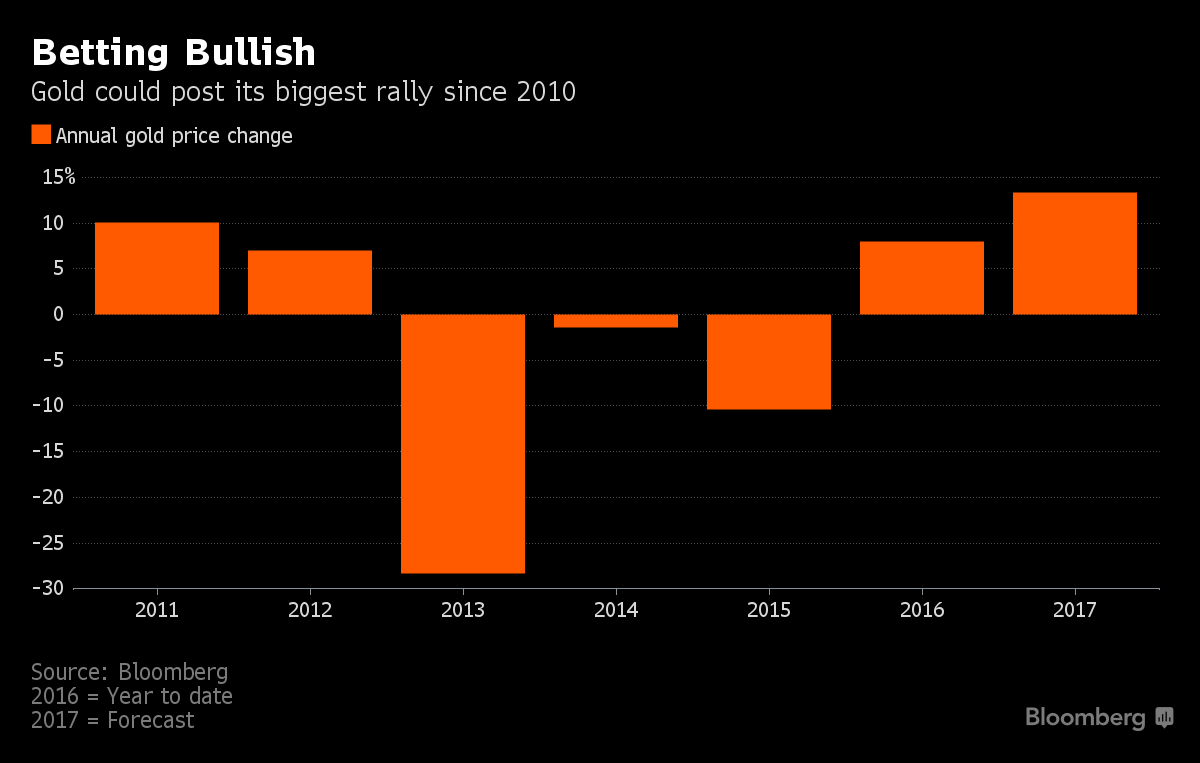
Trump’s Twitter Age Could See Gold Rise 13% In 2017
-
Gold price seen jumping 13% in 2017 after 9% gain in 2016, Bloomberg analyst survey shows
-
140-character missives by President-elect means new paradigm
-
“140 characters of unfiltered Trump is likely to create tensions with America’s largest trading partners…”
-
Bloomberg Intelligence poll shows 42 percent of respondents predict gold will be the best-performing metal in 2017
-
Two Bloomberg respondents including GoldCore say gold to reach $1,600/oz
-
“Markets that are already shaken by the fallout from Brexit, the coming elections in Europe and indeed the increasing specter of cyber warfare could again see a safe-haven bid…”
-
Gold is not “irrational” today – politicians, policy markers and markets are
-
Gold that can inspect and take delivery of easily a vital hedge against massive irrationality in world of 2017
From Bloomberg:
“The Donald J. Trump era is marking a new age for gold as an investor safe haven.
While the precious metal has always been hoarded in times of trouble, a bevy of political and economic surprises in 2016 sparked a surge in buying that sent bullion to the first annual gain in four years. Prices may rally about 13 percent in 2017, according to a Bloomberg survey of 26 analysts.
Fueling the bullish outlook is the risk of chaos on multiple fronts: a possible trade war from America’s fraying relationship with China, the alleged Russian hack of U.S. political parties, the U.K.’s complicated exit from the European Union, and elections slated in France, Germany and the Netherlands that may see a rise of nationalist groups.
And then there are Trump’s frequent Twitter posts, in which the U.S. president-elect feuded with rivals and made declarations that unsettled allies even before he takes office Jan. 20.
“140 characters of unfiltered Trump is likely to create tensions with America’s largest trading partners,” Mark O’Byrne, a director at broker GoldCore Ltd, said by e-mail.
“Markets that are already shaken by the fallout from Brexit, the coming elections in Europe and indeed the increasing specter of cyber warfare could again see a safe-haven bid.”
Gold for immediate delivery is up 8.9 percent this year (2016) to $1,155.12 an ounce, halting a three-year slide. More than two thirds of the analysts and traders surveyed from Singapore to New York said they were bullish for 2017.
The median year-end forecast was $1,300, with the year’s peak seen at $1,350. Two, including O’Byrne, said the metal may reach $1,600.”
President elect Trump, Twitter and his tweets being a popular topic du jour, the Bloomberg article was syndicated and published very widely internationally and can be read in full on Bloomberg here Gold ‘Lures’ Investors Worried About Trade Wars and Trump Tweets and Bloomberg Quint here Trump’s Twitter Age Brings Chaos Risk Reviving Gold as Haven
http://www.goldcore.com/us/gold-blog/trumps-twitter-140-characters-push-gold-1600oz-2017/
end
I am very happy to report that Keith Neumeyer is joining us in the class action suit against the major banks We need to have a major producer as plaintiffs
(courtesy Kitco)
Keith Neumeyer on Why He Joined Silver Manipulation Class Action Suit
Jan 06, 2017
Guest(s): Keith Neumeyer CEO, First Majestic
First Majestic’s chief executive officer, Keith Neumeyer speaks out on his role in the silver manipualtion class action suit including various banks. Neumeyer shares his thoughts on the silver price rigging case and shares what he plans to do about it.
-END-
An excellent Reuters report on the huge risks to the global economy as China burns through its foreign FX reserves. It is probably now below 3 trillion USA
(courtesy Reuters/GATA)
China’s choices narrowing as it burns through FX reserves to support yuan
Submitted by cpowell on Thu, 2017-01-05 15:21. Section: Daily Dispatches
By Nichola Saminather
Reuters
Thursday, January 5, 2017
SINGAPORE — As China’s foreign exchange reserves threaten to tumble below the critical $3 trillion mark, the biggest fear for investors is not whether Beijing can continue to defend the yuan but whether it will set off a vicious cycle of more outflows and currency depreciation.
Data this week is expected to show China’s forex reserves precariously perched just above $3 trillion at end-December, the lowest level since February 2011, according to a Reuters poll.
While the world’s second-largest economy still has the largest stash of forex reserves by far, it has been churning through them rapidly since August 2015, when it stunned global investors by devaluing the yuan CNY=CFXS and moving to what it promised would be a slightly freer and more transparent currency regime.
Since then, authorities have repeatedly intervened to support the yuan when it weakened too sharply, burning through half a trillion dollars of reserves and prompting them to sell some of their massive holdings of U.S. government bonds.
They also have put a tightening regulatory chokehold on individuals and businesses who want to move money out of the country, while denying they were imposing new capital controls. …
… For the remainder of the report:
http://www.reuters.com/article/us-china-economy-forex-reserves-analysis-…
END
A good background on China’s secretive gold reserves
(Ronan Manly/GATA)
Bullion Star posts primer on China’s especially secretive gold reserves
Submitted by cpowell on Thu, 2017-01-05 15:25. Section: Daily Dispatches
10:25a ET Thursday, January 5, 2017
Dear Friend of GATA and Gold:
Bullion Star’s latest primer on central bank gold reserves is about China’s, which, Bullion Star notes, are among the world’s most secret. The primer is posted here:
https://www.bullionstar.com/gold-university/central-bank-gold-policies-p…
CHRIS POWELL, Secretary/Treasurer
Gold Anti-Trust Action Committee Inc.
CPowell@GATA.org
END
Alasdair Macleod’s weekly message for us;
(courtesy Alasdair Macleod)
Alasdair Macleod: Fiat money quantity breaks $15 trillion
Submitted by cpowell on Thu, 2017-01-05 19:12. Section: Daily Dispatches
By Alasdair Macleod
GoldMoney.com, St. Helier, Jersey, Channel Islands
Thursday, January 5, 2017
The fiat money quantity has now breached the $15 trillion level, standing at $15,108 trillion on November 1, 2016, the last calculable date. This is now $6.3 trillion above the pre-Lehman crisis trendline, exceeding it by 72 percent. Instead of the Lehman rescue being a temporary fix, the increase in the quantity of fiat money has continued to grow over eight years later.
After the Fed responded to the financial crisis, monetarist commentators warned that the accumulation of bank reserves at the Fed would one day be unleashed into an expansion of bank lending, because every dollar held in reserves could become more than $10 of bank credit. The accumulation of these reserves had had no precedent, and monetary policy was therefore in uncharted territory.
The only way bank reserves can be discouraged from leaving the Fed’s balance sheet is for the Fed to increase the Fed Funds Rate (FFR), which is the interest rate the Fed pays commercial banks on these reserves. The original concern is now becoming justified, because banks have been gradually withdrawing reserves held at the Fed over the last 18 months. For this reason, the Fed had no alternative but to raise the FFR in December 2015 and in December 2016, to start the process of normalizing rates. The Federal Open Markets Committee should be watching the withdrawal of reserves as a key indicator in formulating interest rate policy, not that it is openly admitted in the FOMC’s statements. …
… For the remainder of the commentary:
https://wealth.goldmoney.com/research/goldmoney-insights/fmq-breaks-15-t…
END
An excellent presentation by Koos Jansen on gold fundamentals between East and West
(courtesy Koos Jansen/Bullionstar)
Koos Jansen: How the West has been selling gold into a black hole
Submitted by cpowell on Fri, 2017-01-06 14:50. Section: Daily Dispatches
9:50a ET Friday, January 6, 2017
Dear Friend of GATA and Gold:
Gold market researcher Koos Jansen writes today that while gold flows in and out of the London market, once gold gets into China, it doesn’t come back. Jansen sees this pattern as gradually reducing the above-ground metal available for affecting gold’s price and indicating that prices will increase eventually. Jansen’s analysis is headlined “How the West Has Been Selling Gold into a Black Hole” and it’s posted at Bullion Star here:
https://www.bullionstar.com/blogs/koos-jansen/how-the-west-has-been-sell…
CHRIS POWELL, Secretary/Treasurer
Gold Anti-Trust Action Committee Inc.
CPowell@GATA.org
end
Despite its manipulation gold advances against most currencies in the past 15 years
(courtesy Goldprice.org/GATA)
GoldPrice.org chart shows metal gained in all major currencies in 15 years
Submitted by cpowell on Fri, 2017-01-06 15:03. Section: Daily Dispatches
10:03a ET Friday, January 6, 2017
Dear Friend of GATA and Gold:
GoldPrice.org has posted a chart of gold’s performance in major currencies since 2002, and it shows far more green than red and net gains in all of them, ranging from a low of 156 percent in the Chinese yuan and a high of 496 percent in the Indian rupee. The chart is posted here:
http://goldprice.org/charts/history/gold-price-performance_x.png?1924122…
CHRIS POWELL, Secretary/Treasurer
Gold Anti-Trust Action Committee Inc.
CPowell@GATA.org
end
Your early FRIDAY morning currency, Asian stock market results, important USA/Asian currency crosses, gold/silver pricing overnight along with the price of oil Major stories overnight
1 Chinese yuan vs USA dollar/yuan UP to 6.9180(SMALL DEVALUATION SOUTHBOUND /CHINA UNHAPPY TODAY CONCERNING USA DOLLAR RISE/MORE $ USA DOLLARS LEAVE CHINA/OFFSHORE YUAN NARROWS COMPLETELY TO 6.83161 / Shanghai bourse CLOSED DOWN 11.09 POINTS OR 0.35% / HANG SANG CLOSED UP 46.32 OR 0.21%
2. Nikkei closed DOWN 66.32 POINTS OR 0.34% /USA: YEN RISES TO 115.97
3. Europe stocks opened ALL IN THE RED ( /USA dollar index RISES TO 101.71/Euro DOWN to 1.0577
3b Japan 10 year bond yield: FALLS TO +.056%/ !!!!(Japan buying 100% of bond issuance)/Japanese yen vs usa cross now at 115.97/ THIS IS TROUBLESOME AS BANK OF JAPAN IS RUNNING OUT OF BONDS TO BUY./JAPAN 10 YR YIELD FINALLY IN THE POSITIVE/BANK OF JAPAN LOSING CONTROL OF THEIR YIELD CURVE AS THEY PURCHASE ALL BONDS TO GET TO ZERO RATE!!
3c Nikkei now JUST BELOW 17,000
3d USA/Yen rate now well below the important 120 barrier this morning
3e WTI:: 54.17 and Brent: 56.77
3f Gold DOWN/Yen DOWN
3g Japan is to buy the equivalent of 108 billion uSA dollars worth of bond per month or $1.3 trillion. Japan’s GDP equals 5 trillion usa./“HELICOPTER MONEY” OFF THE TABLE FOR NOW /REVERSE OPERATION TWIST ON THE BONDS: PURCHASE OF LONG BONDS AND SELLING THE SHORT END
Japan to buy 100% of all new Japanese debt and by 2018 they will have 25% of all Japanese debt. Fifty percent of Japanese budget financed with debt.
3h Oil UP for WTI and UP for Brent this morning
3i European bond buying continues to push yields lower on all fronts in the EMU. German 10yr bund FALLS TO +.251%/Italian 10 yr bond yield DOWN to 1.932%
3j Greek 10 year bond yield RISES to : 6.88%
3k Gold at $1176.10/silver $16.50(8:45 am est) SILVER BELOW RESISTANCE AT $18.50
3l USA vs Russian rouble; (Russian rouble DOWN 5/100 in roubles/dollar) 59.39-
3m oil into the 54 dollar handle for WTI and 56 handle for Brent/
3n Higher foreign deposits out of China sees huge risk of outflows and a currency depreciation (already upon us). This can spell financial disaster for the rest of the world/China forced to do QE!! as it lowers its yuan value to the dollar/GOT a SMALL DEVALUATION DOWNWARD from POBC.
JAPAN ON JAN 29.2016 INITIATES NIRP. THIS MORNING THEY SIGNAL THEY MAY END NIRP. TODAY THE USA/YEN TRADES TO 115.97 DESTROYING JAPANESE CITIZENS WITH HIGHER FOOD INFLATION
30 SNB (Swiss National Bank) still intervening again in the markets driving down the SF. It is not working: USA/SF this morning 1.0112 as the Swiss Franc is still rising against most currencies. Euro vs SF is 1.0705 well above the floor set by the Swiss Finance Minister. Thomas Jordan, chief of the Swiss National Bank continues to purchase euros trying to lower value of the Swiss Franc.
3p BRITAIN VOTES AFFIRMATIVE BREXIT
3r the 10 Year German bund now POSITIVE territory with the 10 year FALLS to +.251%
3s The Greece ELA NOW at 71.4 billion euros,AND NOW THE ECB WILL ACCEPT GREEK BONDS (WHAT A DISASTER)
The bank withdrawals were causing massive hardship to the Greek bank. the Greek referendum voted overwhelming “NO”. Next step for Greece will be the recapitalization of the banks and that will be difficult.
4. USA 10 year treasury bond at 2.355% early this morning. Thirty year rate at 2.952% /POLICY ERROR)GETTING DANGEROUSLY HIGH
5. Details Ransquawk, Bloomberg, Deutsche bank/Jim Reid.
(courtesy Jim Reid/Bloomberg/Deutsche bank/zero hedge)
US Futures Flat Ahead Of December Payrolls; Dollar Rebounds
European shares fell modestly, Asian equities declined for the first day in three, and US equity futures were unchanged before the December U.S. nonfarm payrolls report. China’s offshore yuan fell the most in a year to pare a record weekly rally, while Mexico’s peso climbed after the central bank sold dollars. Oil was trading lower in early trading.
The main economic event on the financial calendar is today’s 8:30am ET December payroll report. The market consensus for today’s print is 178k which is in line with the 178k in November. It’s worth noting that there’s a reasonable range between economists though with the low forecast at 125k and the high forecast at 221k. DB’s Joe LaVorgna is at the lower end of the range and has pegged a 150k print which is more or less where yesterday’s ADP private employment survey came in at for December (153k vs. 175k expected). What might be more interesting though is whether or not the drop in the unemployment rate is sustained. As a reminder the U3 rate fell to 4.6% in November and the lowest since 2007 from 4.9% in October. The drop has been a focus for Fed officials with more talking about an undershooting of the longer run rate so it is worth watching. As always also keep an eye on average hourly earnings. The consensus is for a +0.3% mom rise in December which would have the effect of pushing the annual rate up to +2.8% yoy from +2.5%.
Should the report come in stronger than expected and provide evidence of a healthy U.S. labor market, we could see a second wind to a flagging dollar hit by doubts that Donald Trump will usher in an era of fiscal easing and rapid growth. The employment report is expected to confirm a sixth straight year with more than 2 million jobs added, which may help to stem the steepest losses on a Bloomberg gauge of 10 major currencies this week. Market positioning in options signals the dollar is poised for further gains against the euro.

Ahead of the report, world stocks held near 1-1/2 year highs and the dollar moved up from a three-week low on Friday, with investors looking to upcoming U.S. jobs data to provide clues on the pace of U.S. interest rate rises this year. The MSCI’s gauge of the world’s stock markets hit its highest since July 2015, taking its gains so far this year to 1.7 percent, helped by this week’s generally upbeat economic readings in the U.S., China and Europe. The yen, euro and British pound all weakened for the first time in three days and the Turkish lira extended its loss. European equities declined the most in a week and U.S. futures signaled losses, while the MSCI Asia Pacific Index declined for the first day in three. The three-month interbank lending rate for the offshore yuan rose to a record in Hong Kong.
A quick rundown of global indices from Bloomberg:
- The Stoxx Europe 600 Index was down 0.2 percent, as was the Dax in Germany.
- The MSCI Asia Pacific Index slipped 0.3 percent. The gauge is still headed for its best start to a year since 2010. Japan’s Topix Index fell 0.2 percent, though gainers outnumbered losers 996 to 859 on the gauge.
- Hong Kong’s Hang Seng rose 0.2 percent and Australia’s S&P/ASX 200 Index was little changed. South Korea’s Kospi advanced 0.4 percent as Samsung climbed. Singapore’s Straits Times Index rose 0.2 percent in a fourth day of gains.
- The Shanghai Composite slid 0.4 percent, while Taiwan’s Taiex index rose 0.2 percent, gaining for the fifth day. India’s S&P BSE Sensex lost 0.1 percent after climbing 0.4 percent earlier.
- The MSCI Emerging Markets Index was little changed after rising for three straight days. The benchmark index in the Philippines rose 0.5 percent to bring its weekly gain to 6 percent.
- Futures on the S&P 500 Index edged lower after the underlying gauge fell 0.1 percent Thursday, just below its record set on Dec. 13.
Weaker-than-expected private-sector ADP payrolls data on Thursday contributed to the dip in the dollar, despite strong data elsewhere. Investors were looking to today’s jobs figures to see if the bounceback for the dollar could be sustained.
“It’s likely that a stronger jobs number will, in the shorter term, strengthen the dollar. But (soon) people will start questioning how much of a strong dollar the Fed can stomach,” ETF Securities’ head of research and investment strategy, James Butterfill, told Reuters. “Given the sell-off in the dollar, there could be appreciation over the next few weeks, but in the coming few months we could see further dollar weakness.”
Already under pressure as the Trump rally wanes, the dollar extended losses on Thursday as China stepped up efforts to support the yuan, sparking speculation that it wants a firm grip on the currency ahead of Trump’s Jan. 20 inauguration. As noted last night, the cost of borrowing the yuan in Hong Kong, the main offshore yuan trading center, sky-rocketed and at one point hit 105%, making it too costly for speculators to sell the yuan against the dollar.

The offshore yuan has gained more than 2 percent in the last two sessions, its biggest two-day gain on record, to a two-month high of 6.7833 per dollar before it eased back about 1 percent in Asia on Friday to 6.8610. Having posted its biggest gain for 7 months, of 1.1 percent, in the previous session, it fetched $1.0589 EUR= on Friday.
“What’s going on is a correction of the ‘Trump trade’ since the election. The markets have been trying to fully price in his policies just based on hopes,” Standard Chartered’s executive director of finance, Koichi Yoshikawa, said. “From now on, it’s not going to be a simple one-way bet.”
Investors also closed short positions in U.S. bonds, one of the most popular plays since the election because Trump’s policies are seen as stoking inflation.
Oil prices were steady as Saudi Arabia and Abu Dhabi stared promised supply cuts, but doubts that all producers will implement output reductions agreed in a landmark OPEC deal last year kept markets from rising further. Gold retreated 0.4 percent to $1,175.17 per ounce after a three-day, 2.9 percent climb. Bitcoin slumped again and was trading at $900 at last check.
In rates, Australian bonds climbed, sending 10-year yields down five basis points to 2.68 percent, a level last seen in November; similar New Zealand rates dropped five basis points to 3.19 percent. U.S. Treasuries rallied Thursday by the most since the post-Brexit jolt, with the yield on the 10-year benchmark falling nine basis points to 2.34 percent. That was the biggest drop since June 27.
Markets Snapshot
- S&P 500 futures down less than 0.1% to 2262
- Stoxx 600 down 0.2% to 365
- FTSE 100 down less than 0.1% to 7194
- DAX down 0.2% to 11561
- German 10Yr yield up less than 1bp to 0.25%
- Italian 10Yr yield down 2bps to 1.92%
- Spanish 10Yr yield up 2bps to 1.5%
- S&P GSCI Index up 0.5% to 399.8
- MSCI Asia Pacific down 0.2% to 139
- Nikkei 225 down 0.3% to 19454
- Hang Seng up 0.2% to 22503
- Shanghai Composite down 0.4% to 3154
- S&P/ASX 200 up less than 0.1% to 5756
- US 10-yr yield up less than 1bp to 2.35%
- Dollar Index up 0.08% to 101.6
- WTI Crude futures up 0.9% to $54.25
- Brent Futures up 0.9% to $57.38
- Gold spot down 0.2% to $1,178
- Silver spot down 0.6% to $16.49
Global Headline News
- Carlyle Said to Explore Sale of Vitamin Maker Nature’s Bounty: Company said to be valued at about $6 billion
- China Said to Mull Scrutiny of U.S. Firms Amid Trump Tension: Options include antitrust, tax probes of American companies
- Trump Axing Obama Power Plan Means Coal Supplying 61% More Power: U.S. would use 523 billion kilowatt-hours more of electricity generated from coal in 2050 if Obama’s Clean Power Plan is dropped
- Trump Hits Toyota on Mexico as Car Criticism Spreads to Japanese: threatens to tax Toyota into building a plant in the U.S. instead
- FBI Says Democrats Refused Access to Hacked E-Mail Servers: Trump scheduled to be briefed Friday on campaign breach
- Marchionne Enters Final Push to Free Fiat Chrysler From Debt: Executives have expressed increasing confidence at recent investor meetings that they’ll reach their goals, according to people familiar
- Mylan’s EpiPen Sales Plan: Schools Today, Everywhere Tomorrow: wants to set up its own pharmacy to cut out middlemen and lobby for new laws that could expand sales of its biggest product
- Boeing Said Close to $10.1 Billion Order From India SpiceJet: Deal for 92 jets may grow based on outcome of negotiations
- Brevan Howard’s Hedge Fund Posts First Gain in Three Years: Returns 3% according to an investor letter
- McDonald’s Japan Same- Store Dec. Sales Rose 17% Y/y; 2016 Same-Store sales rose 20%
- Frontier Airlines Said to Aim to Raise About $500m in IPO that would imply a valuation of ~$2b company: NYT
- Morgan Stanley Said to Cut Equities Traders’ Bonus Pool Up to 4%: Firm is set to pay annual bonuses to employees next month
In Asian markets, stocks traded mixed following a lacklustre lead from Wall Street where financials underperformed, although the NASDAQ 100 still finished positive on strength in pharmaceuticals and FANG stocks. Asian stocks decline for first day in three. With MSCI Asia Pacific down 0.3% today it’s still headed for its best start to a year since 2010. Hong Kong stocks post their biggest weekly advence in three months. 6 out of 11 sectors drop as retail, material stocks underperform, real estate, telecoms outperform. Asian bourses were also indecisive as participants were tentative ahead of NFP, with Nikkei 225 (-0.3%) dampened by JPY strength and losses in Fast Retailing after Uniqlo same-store sales fell 5% Y/Y in December. ASX 200 (Unch.) was uneventful and traded flat while the KOSPI (+0.3%) was underpinned by better than expected Q4 preliminary results from Samsung Electronics. Chinese markets were mixed with the Hang Seng (+0.2%) led by energy names, while Shanghai Comp (-0.4%) lagged following a large net weekly drain of CNY 595BN by the PBoC. 10-yr JGBs traded higher amid the dampened risk sentiment in Japan with the yield curve flatter on outperformance in the long end, while the recent weekly securities transactions data also showed foreign investors returned to net buying of Japanese bonds.
Top Asian News
- Tata Sons Calls Shareholders Meeting to Oust Mistry From Board: Extraordinary general meeting scheduled to be held Feb.
- Bitcoin Buyers Eye Beijing Nervously as Price Drops Off High: Yuan accounts for 98% of bitcoin trading due to zero fees
- Wartime Sex Slave Dispute Resurfaces to Rattle Japan-Korea Ties; Tokyo suspends talks with Seoul over a foreign currency swap arrangement; temporarily recalls ambassador to South Korea; halts high-level economic talks
- Fiery Booze Drinkers Drive China’s Biggest Gains in Stocks: consumer staples surge led by baijiu-makers Moutai, Wuliangye
- China Seen Keeping Reserves Near $3 Trillion to Avoid Alarm: Stockpile is seen holding above key level for December
In Europe equity markets (Stoxx600 -0.1%) are trading mildly in the red as mining underperform in the FTSE 100 (flat) in what has been a particularly quiet session ahead of NFP. Stoxx Europe 600 Index declines 0.3% as travel & leisure, utility and commodity stocks underperform; real estate stocks gain. 18 of 19 sectors decline. 31% of Stoxx 600 members gain; 56% decline. Financials are the outperforming sector after some notable broker moves for Worldpay (WPG LN) and Lloyds (LLOY LN), subsequently both Co.’s are at the top of the FTSE leader board. Fixed income markets have not seen too much action thus far, with Bunds trading lower by 8 ticks and in the periphery 10 year PGB yield has found support at the 4% psychological area.
Top European News
- Sanofi Shares Slump After Amgen Wins Ban on Cholesterol Medicine: Court ruling blocks Sanofi and partner Regeneron Pharmaceuticals from selling the cholesterol-lowering medicine Praluent in the U.S. because it infringes Amgen’s patents
- Euro-Area Confidence Jumps to Highest Since 2011 on ECB Stimulus: recovery in the 19-nation region showed further signs of strengthening
- Draghi’s German Problem Flares as Inflation Jump Stirs Anger: Germans fret that the guardian of price stability will let them down
- BOE’s Haldane Says ‘Fair Cop’ to Getting Brexit Forecasts Wrong: Says economists have a lot of work to do to recover from failed predictions over the global financial crisis and Brexit
- U.K.’s May Tries to Charm Trump, Hoping for Early 2017 Meeting: Premier’s chiefs of staff made secret trip to U.S. in December
- TP ICAP Shares Soar After U.S. Election Boosts Revenue Growth: Company says 2016 revenue will probably rise 12% to 796 million pounds
- France Sees Three-Way Race for President as Fillon Bounce Fades: Independent Emmanuel Macron gains support, Socialist Party’s Valls would be well out of run- off range
In currencies, the offshore yuan fell 1.1 percent to 6.8599 per dollar after a four-day climb. The onshore yuan fell 0.6 percent. The euro declined 0.2 percent to 1.05843 per dollar and the pound was down 0.3 percent at 1.23793. The Bloomberg Dollar Spot Index rose 0.2 percent after falling 1 percent Thursday in its biggest slide since July on a closing basis. Companies added fewer jobs than forecast in December, according to a private research group. The yen fell 0.7 percent to 116.18 per dollar after strengthening 1.7 percent Thursday. The Aussie and kiwi dropped 0.3 percent and 0.2 percent, respectively. South Korea’s won lost 0.6 percent. Mexico’s peso jumped 0.5 percent after Banxico sold dollars to bolster the exchange-rate. The currency Thursday erased an advance of 1.5 percent after Trump threatened Toyota Motor Corp. with a border tax for planning to build a factory in Mexico. The Turkish lira was down 0.8 percent at a record low 3.6226 per dollar following a 0.6 percent drop the previous day.
In commodities, crude was down 0.4 percent at $53.55 a barrel after climbing 0.9 percent Thursday following a report that Saudi Arabia is cutting production as it implements an agreement to ease a global supply glut sparked the turnaround. However, further gains have been struggling on trader caution over OPEC implementation of last year’s output agreements. This morning there have been reports of Kuwait making a larger cut in production than required. Oil pushed higher but holds off weekly highs. Performance in base metals also staggering, and with recent gains all on fiscal spending hopes, while Gold prices come off better levels, but marginally so as yet. Gold retreated 0.4 percent to $1,175.17 per ounce after a three-day, 2.9 percent climb.
US Event Calendar
- 8:30am: Trade Balance, Nov., est. -$45.4b (prior -$42.6b)
- 8:30am: Change in Nonfarm Payrolls, Dec., est. 175k (prior 178k); Unemployment Rate, Dec., est. 4.7% (prior 4.6%)
- 10am: Factory Orders, Nov., est. -2.3% (prior 2.7%); Durable Goods Orders Nov. F, est. -4.6% (prior -4.6%)
- 11:15am: Fed’s Evans Speaks on Economy and Policy in Chicago
- 1pm: Baker Hughes rig count
- 3:30pm: Fed’s Kaplan Speaks in Chicago
DB’s Jim Reid completes the overnight wrap
It may be a holiday shortened week but there’s been more than enough news to keep markets on their toes in the first few days 2017. Global growth hopes have been boosted following the latest round of PMI’s. The FOMC minutes revealed that “uncertainty” is the new buzzword while one eye has been closely kept on the latest appointments by President-elect Trump. Meanwhile European politics continues to bubble below the surface. The latest food for thought though and the big focus over the last 24 hours has been in China where we’re back to watching the moves in the Renminbi closely after the offshore currency posted the biggest two-day rally on record.
We’ll dig into that shortly but before we get there we’ve got the final US employment report of 2016 to preview. As always nonfarm payrolls will be the big focus and the market consensus for today’s print is 175k which is just a shade below the 178k in November. It’s worth noting that there’s a reasonable range between economists though with the low forecast at 125k and the high forecast at 221k. Our US economists are at the lower end of the range and have pegged a 150k print which is more or less where yesterday’s ADP private employment survey came in at for December (153k vs. 175k expected). What might be more interesting though is whether or not the drop in the unemployment rate is sustained. As a reminder the U3 rate fell to 4.6% in November and the lowest since 2007 from 4.9% in October. The drop has been a focus for Fed officials with more talking about an undershooting of the longer run rate so it is worth watching. As always also keep an eye on average hourly earnings. The consensus is for a +0.3% mom rise in December which would have the effect of pushing the annual rate up to +2.8% yoy from +2.5%. All that to look forward to at 1.30pm GMT.
Back to China where yesterday the offshore Renminbi rallied a further +1.12% to 6.7889 and in doing so clocked a +2.51% two-day gain and the most on record. In fact up to yesterday’s close the currency had rallied +2.76% in 2017 already having weakened -6.20% last year. As a result the PBoC also moved to strengthen the fixing in the onshore currency this morning by the most since 2005 or since the Renminbi was de-pegged from the US Dollar. The rally for the offshore Renminbi has however faded a bit this morning (currently -0.50%). The catalyst for that earlier surge appears to be the crackdown by the PBoC on capital outflows at the end of last year – something we talked about in Tuesday’s EMR. In addition overnight lending rates in Hong Kong have surged in recent days (CNH Hibor touched 61% this morning and the second highest level on record) and liquidity is thin which is helping to exacerbate the moves.
It wasn’t just the Renminbi which had a good day against the Greenback yesterday with EM currencies also surging. The USD index actually closed -1.15% and is already back to mid-December levels. It’s little changed this morning. The Mexican Peso was also back in focus yesterday after Mexico’s Central Bank stepped in to stem the recent slide which helped the currency to rally back over +2%. However that was short lived with President-elect Trump taking to social media again and targeting Toyota this time with a border tax for planning to build a new plant in Mexico to import into the US. Meanwhile Treasuries were notably stronger with the benchmark 10y yield rallying 9.5bps to 2.345% – the lowest level since December 7th. Similar maturity Bund yields also edged down 3.3bps although the periphery was notably weaker (yields 5bps to 14bps higher).
There wasn’t much to report at the other end of the risk spectrum. The S&P 500 (-0.08%) paused for breath with financials and retailers suffering while in Europe the Stoxx 600 finished the day +0.10%. Elsewhere, over in credit markets the focus continues to be on the flying start for primary issuance in the US. Another $10bn priced in US IG yesterday which takes the week-to-date figure past $50bn and making it one of the biggest weeks of all time. What perhaps makes this more incredible is that, unlike in other record weeks, this week’s issuance total has not been boosted by one or two jumbo deals. Rather it’s been a steady diet of benchmark size deals.
Over in Asia this morning it’s been another fairly mixed start. The Nikkei (-0.39%) is in the red while the Hang Seng (+0.54%) and Kospi (+0.42%) are firmer. The Shanghai Comp and ASX are little changed. There’s been some focus on a Bloomberg story this morning too which suggests that China is prepared to step up measures aimed at scrutinizing US companies conducting business in China should Trump take punitive measures against the country. It’s hard to gauge how reliable the story is but it’s one to watch.
Moving on. While yesterday’s ADP print in the US may have come in a tad disappointing, data out of the services sector was less so. The services PMI was revised up at the final count to 53.9 in December from the earlier 53.4 flash reading. Meanwhile the ISM non-manufacturing print came in at 57.2 which, while unchanged versus November, was still better than expected (56.8 expected). Notably the new orders component ticked up to 61.6 from 57.0. The remaining data was the latest weekly initial jobless reading which saw claims fall steeply to 235k from 263k. There was also some Fedspeak yesterday with San Francisco Fed President Williams saying that three hikes in 2017 is a “pretty reasonable” assumption. Meanwhile in Europe yesterday the only significant data was in the UK where the services PMI for the December was reported as rising 1pt to 56.2 and to the highest since July 2015.
Before we look at today’s calendar a quick mention that this morning our European Equity Strategist Sebastian Raedler has raised his year-end Stoxx 600 target from 345 to 375 (3% upside from current levels). He expects 9% EPS growth this year, helped by the rebound in global growth momentum, stronger commodity prices and euro weakness. This would make 2017 the first year of meaningful European EPS growth since 2010. He argues that European equities benefit from two important inflection points. First, global growth is accelerating for the first time since 2013. Secondly, European earnings are rising again,
end
i)Late THURSDAY night/FRIDAY morning: Shanghai closed DOWN 11.09 POINTS OR 0.35%/ /Hang Sang closed UP 46.32 OR 0.21%. The Nikkei closed DOWN 66.32 POINTS OR 0.34% /Australia’s all ordinaires CLOSED UP 0.07%/Chinese yuan (ONSHORE) closed WELL DOWN at 6.9180/Oil ROSE to 54.17 dollars per barrel for WTI and 56.77 for Brent. Stocks in Europe: ALL IN THE RED. Offshore yuan trades 6.83161 yuan to the dollar vs 6.9180 for onshore yuan.THE SPREAD BETWEEN ONSHORE AND OFFSHORE NARROWS COMPLETELY TRYING TO STOP DOLLARS LEAVING CHINA’S SHORES /
3a)THAILAND/SOUTH KOREA/:
none today
b) REPORT ON JAPAN
Japan is angry at Trump especially that he got the facts on Japanese production of the Corolla wrong. Let us see what will happen in a few weeks when Trump takes over:
(courtesy zero hedge)
An Angry Japan Responds To Trump’s Toyota Taunts
After Trump’s Thursday morning twitter taunt targeted Toyota, when the President-elect warned Japan’s biggest carmaker that it will face heavy penalties if it chooses to make cars for the US market in Mexico, writing “Toyota Motor said will build a new plant in Baja, Mexico, to build Corolla cars for U.S. NO WAY! Build plant in U.S. or pay big border tax“, a tweet which sent shares of Japanese carmakers sliding on Friday with a 1.7% fall for Toyota, 2.2% for Nissan and 3.2% for Mazda, an angry Japanese government and corporate establishment pushed back against Trump’s criticism of Toyota as the attack on the country’s most powerful corporate name sent shockwaves across “Japan Inc.”

As the FT notes, CEOs of Japanese companies including Sony’s Kazuo Hirai and Nissan’s Carlos Ghosn weighed in, while analysts feared the president-elect’s targeting of Toyota would lead to a broader fallout on Japan-US trade relations, similar to concerns about an escalating trade war between the US and China.
“Toyota is responsible for large employment at US plants such as in Kentucky. It’s questionable whether the new US president has a grasp of how many vehicles Toyota builds in the US,” said Taro Aso, Japan’s finance minister. Hiroshige Seko, minister for trade and industry, added that the Japanese government would do its part to explain to the US administration about the contribution of the country’s car industry to the US economy.
“Toyota is equivalent to Japan as a whole, so Mr Trump’s criticism could be interpreted as a message to the Japanese government,” said Koji Endo, motor industry analyst at SBI Securities, expressing concerns about the impact on bilateral trade negotiations once Mr Trump is officially appointed later this month.
Analysts said Trump’s focus on Toyota, after Ford this week announced that it would pull plans for a $1.6bn Mexican plant, is not surprising but ironic for the Japanese carmaker who was the latecomer among global rivals in shifting production to Mexico. They noted that Toyota, which has an existing manufacturing facility in Baja to build the Tacoma pick-up truck, only made about 6% of 2.2m vehicles sold in the US in Mexico during the January to November period, compared with 33% for Nissan and 47 per cent for Mazda, according to SBI Securities, both of which companies are said to be far more exposed to Trump’s future ire than Toyota.
As the FT adds, in 2015, Toyota announced plans to spend $1 billion building a new facility in the central state of Guanajuato that will make Corolla vehicles from 2019.
The decision was a symbolic one for Akio Toyoda, Toyota’s chief executive, as it marked the lifting of a three-year moratorium on plant construction. It also underscored the company’s recovery since Mr Toyoda faced a US congressional grilling in 2010 in the wake a massive recall of spontaneously accelerating Toyota vehicles.
Having experienced the US recall crisis and the subsequent political backlash, analysts say Toyota may eventually adjust its strategy in Mexico, either by reducing the planned number of vehicle production or increasing the capacity of existing US plants in Texas or Mississippi.
“The company will carefully try to avoid taking action that would leave a negative impression on the new US administration,” said Masahiro Akita, analyst at Credit Suisse. “Considering how Toyota has operated in the past, it wouldn’t be surprising if the company makes a policy shift.”
In response to Trump’s tweet, Toyota has said no US jobs would be lost as a result of its planned new plant in Mexico. CEO Toyoda also said the company would “see what policies the incoming president adopts” before deciding whether to take action.
Still, Mr Akita said a complete reversal of Toyota’s plan to construct a new plant in Guanajuato was unlikely considering Mr Toyoda’s concerns about the impact on employment and the regional economy.
* * *
Then again, the Trump twitter effect may soon fizzle according to Reuters Breakingviews, which noted that Toyota’s day in Donald Trump’s crosshairs “could mark peak Twitter-Trump.”
On Thursday, the U.S. president-elect threatened tariffs on the Japanese carmaker, if it sold Mexico-made Corollas in the United States. Yet a 2 percent fall in Toyota’s Tokyo-listed shares looks muted considering Ford and General Motors performed as poorly or worse on New York trading. That’s because it quickly became clear Trump had all his facts wrong. The more that happens, the less impact his tweet storms will have.
Trump’s bully pulpit, both online and at rallies, can certainly be effective. General Motors, Lockheed Martin and Boeing have all scrambled to respond. This week Ford ditched a plan to build a new plant in Mexico that Trump had slated.
In Toyota’s case, a 35 percent import tax on 200,000 Corollas built annually at its new plant in Mexico would add $1.4 billion to their overall cost, assuming a $20,000 sticker price per car. That’s around 10 percent of this year’s expected earnings, which either Toyota or customers would have to swallow.
That’s never going to happen, though, for one very simple reason: Toyota’s new plant would replace one in Canada, not America. All Corolla production for U.S. sales remains in the company’s Mississippi factory. The plant is also in Guanajuato, not Baja, as Trump asserted.
Getting such basic facts wrong might not bother Trump’s supporters. But shareholders are more likely to get wise to such antics and start focusing on more concrete issues.
Contrast Toyota with Constellation Brands, the $30 billion alcoholic drinks firm. Its shares dropped more than 7 percent on Thursday, despite strong earnings. The maker of Corona and other Mexican brews faces higher costs if tax breaks are scrapped for overseas costs. That’s a central tenet of tax reforms sought by congressional Republicans and Trump. And these would be easier to put in place than long-term cross-border tariffs, which break trade agreements.
None of this means Trump’s ability to micromanage via social-media bullying is over. But the more his punches fall wide of the mark, the more inclined investors will be to ignore him.
While that may eventually pan out, for now the market (and various Trump tweet scanning apps) is far more transfixed by what Trump tweets in his daily social media sermons than even statements made by many if not all Fed members.
end
c) REPORT ON CHINA
Overnight the lending rate between banks soars to 105%. The offshore yuan (CHN ) continues its strength with POBC intervention as the shorts are getting squeezed:
(courtesy zero hedge)
Chinese Overnight Funding Rate Hits Unprecedented 105%
It appears Chinese authorities are deadly serious about crushing shorts and halting speculative outflows as the liquidity freeze in Chinese markets has sent overnight deposit rates to a record 105% as one or more bank’s utter desperation for funds looks like a giant fat finger.
Today’s spike is up 45 percentage points from yesterday’s 60% rate…
and at the same time, PBOC strengthened the Yuan fix by the most since 2005 to narrow the gap to the massive short squeeze move in offshore yuan...


END
Chinese volatility explodes as the offshore yuan goes all over the map. The POBC are very worried about the new Trump administration labeling the country as a currency manipulator and they may wish to keep a stronger yuan in the following few weeks. Also the yuan shorts are temporarily getting killed. However in the long run, the yuan should retreat to the 7.3-8.0 level
(courtesy zero hedge)
Chinese Volatility Explodes: Yuan Tumbles Most In One Year After Biggest 2-Day Rally Ever
While China’s unprecedented currency moves have quickly become the main talking point across global markets which otherwise have started off 2017 in an eerily calm fashion, it is the sudden surge in two-way volatility that has emerged a major threat to global market stability.
Case in point, the offshore Yuan fell as much as 1.1% to 6.8623 a dollar in Hong Kong, the most in exactly one year, after a record 2.5% surge over the past two sessions. This took place as a result of conflicting signals, as on one hand China continued to drain liquidity and sent overnight deposit rates into all time high territory, yet on the other the PBOC raised its fixing less than projected, but still the most since 2005, and Goldman Sachs advised its clients that the best time to short the yuan are just after interventions – like the recent one – which flush out bearish positions, or when China concerns were off traders’ radar screens.
China’s central bank raised its daily reference rate by 0.92% to 6.8668 per dollar on Friday the biggest rise since unpegging from the US dollar in 2005, following a 1 percent drop in a gauge of the greenback’s strength overnight. The offshore yuan was trading 0.8 percent weaker at 6.8457 per dollar as of 5:23 p.m. in Hong Kong, paring its weekly gain to 1.9 percent, the most in data going back to 2010. The onshore rate slumped 0.6 percent. Friday’s fixing was weaker than Mizuho Bank Ltd.’s prediction of 6.8447 and Australia & New Zealand Banking Group Ltd.’s estimate of 6.8456.
As we observed on Thursday evening, Yuan short sellers were once again squeezed in Hong Kong this week after interbank borrowing rates soared, and the dollar weakened as Bloomberg News reported that Chinese policy makers were preparing contingency plans to support the exchange rate even as they prepared for trade war with Donald Trump.
The three-month yuan interbank rate in Hong Kong, known as Hibor, surged to a record high, while the overnight rate jumped 23 percentage points to 61 percent, the highest since last January’s cash crunch. Rising interbank rates can make some short positions prohibitively expensive.
The move widened the offshore yuan’s premium over the onshore rate to 1.6%, the most since February last year. While borrowing rates in Hong Kong remained elevated on Friday, a broad recovery in the U.S. currency eased some of the pressure on bears.
Speaking to Bloomberg, Roy Teo, senior currency strategist at ABN Amro Bank NV in Singapore said that “The offshore yuan is sinking because there is some recovery in the dollar, perhaps the unwinding of short-yuan positions has mostly been done, and it’s closing the gap with the onshore currency.” The yuan is likely to weaken this year as capital outflows continue and the U.S. Federal Reserve increases interest rates, Teo said.
As shown in the chart below, in wildly volatile swings, the gave back much of its gains after a week that echoed the short squeeze in January of last year. That abrupt reversal marked the beginning of a nearly 5 percent rally lasting two months.

Chinese policy makers have several reasons to engineer a stronger or stable yuan in the short term. U.S. President-elect Donald Trump has pledged to label the country a currency manipulator on his first day in office, while the exchange rate came close to breaking through the psychologically-important level of 7 per dollar earlier this week. Policy makers also want to avoid a flood of capital outflows as citizens’ annual foreign-exchange quotas reset for the new year.
Meanwhile, Goldman warned that the Yuan will probably drop to 7.3 per dollar by December, emerging-market strategists led by Kamakshya Trivedi in London predicted in a note dated Thursday.
“The squeeze will have a temporary impact,” Luke Spajic, head of emerging Asia portfolio management at Pacific Investment Management Co., said in Hong Kong. “But I don’t think it necessarily changes the challenge, and the challenge is they still have to worry about the $50 billion to $60 billion a month of outflows and what they’re going to do about the value of their currency. And they have to face the fact that the U.S. is probably going to keep hiking rates.”
Benjamin Fuchs, chief investment officer at the $2 billion hedge fund BFAM Partners (Hong Kong), said China’s moves to repeatedly tighten capital controls risk eroding confidence in its currency. The dollar’s advance against the yen and other currencies has also increased competitive pressure on China to let the yuan depreciate, he said.
“We’re starting to see more and more of a negative cycle being created,” Fuchs said. China’s attempts to curb outflows are “just making people want to take money out quicker, and make companies change their behavior.”
The biggest problem, however, is that this volatility is starting to spillover into other currency, and asset markets, and as a result of the Chinese interventions even the dollar is starting to backoff from its recent 13 yearhighs.
Finally, in what may be a mockery of what traders observe every day, moments ago the PBOC said that China will keep the Yuan exchange rate “Basically Stable.” It added that it “will continue to improve yuan exchange rate formation mechanism this year” according to a statement after PBOC annual meeting on 2017 work.
Among other PBOC focuses:
- To improve policy framework, infrastructure for global yuan: PBOC
- To maintain prudent, neutral monetary policy: PBOC
- To keep liquidity basically stable: PBOC
Considering that China has failed abysmally at all three so far, markets are increasingly concerned that the worst possible outcome may be inevitable: China losing control over the currency. The global consequences would be severe.
END
After China warns its citizens on capital outflowing from China, today they came out and warns more directly against Bitcoin. They urged its citizenry to take a rational approach to investing in virtual currencies. It lowered in value immediately but gold rose.
(courtesy zero hedge)
Bitcoin Tumbles After China Urges Investors To Be “Rational”
After warning about cracking down on ‘virtual’ capital outflows earlier in the week, Chinese officials have come out more directly against Bitcoin this morning with the country’s central bank urging China’s institutional and individual investors should take a rational approach to investing in virtual currencies. Bitcoin in China has legged lower on the news.
Bitcoin prices had showed abnormal fluctuations, the Shanghai head office of the People’s Bank of China (PBOC) said in a notice.
This prompted branch officials to meet representatives of a major bitcoin trading platform in China, BTCC.
They cautioned against potential risks in the platform’s operations and asked it to carry out “self-inspection” according to the law, the bank said.
It stressed bitcoin is not a currency and cannot be circulated as a real currency in the market.
The reaction is clear with Bitcoin China tumbling to 5700 Yuan – down 35% from record highs…

Of course, this is no surprise, as we noted earlier, for those buying the dip here in bitcoin, having been driven by Chinese momentum, we urge readers to be cautious as by now the PBOC has certainly noticed that the digital currency remains one of the final, and most successful, means of bypassing capital controls in China. Should Beijing mandate that bitcoin no longer be a means to illegally transfer capital offshore, there is risk of an even more dramatic, and sharp, drop in its price.
4 EUROPEAN AFFAIRS
How European immigration, mainly Muslims are creating problems for the politicians in Europe. In order to deflect attention, government impose bans of the burka.
(courtesy Murray/Gatestone Institute)
European Immigration: Mainly Muslim, Mainly Male, Mainly Young
Submitted by Douglas Murray via The Gatestone Institute,
- In the wake of the attack in Nice, there should have been a fullsome public discussion over what if anything can be done to ensure that people who have been in France for many years — in some cases their entire lives — are not indoctrinated to hate the country so much that they drive a truck through a crowded sea-front on Bastille Day.
- Or there could have been a wide public debate over whether, with so many radicalised Muslims already in France, it was a wise or foolish idea to continue to import large numbers of Muslims into this already simmering situation.
- Merkel seems to hope that with this raising of a burka ban the German public will forgive or forget the fact that here is a political leader so devoid of foresight that she unilaterally chose to allow an extra 1-2% of the population to be added to her country in a single year, mainly Muslim, mainly male and mainly young.
- The burka and burkini, like the headscarf, are only issues because millions of people have been allowed, unchecked, into Europe for years. The garment is merely the simplest issue at which to take aim. Far harder are the issues of immigration and integration. It is possible that Europe’s politicians cannot answer these questions, because any and all answers would point the finger at their own failings.
- The European publics might get fed up with the distraction tactics of talking about garments and instead seek answers to the challenge we now face, as well as retribution at the polls for the politicians who brought us here.
2016 was a fine year for Islamist terrorism and an even finer year for Western political distraction. While Islamic terrorists repeatedly succeeded in carrying out mass-casualty terrorist attacks, as well as a constant run of smaller-scale strikes, the political leadership of the free world continued to try to divert their public.
The most striking example of the year came in the summer with the French debate over whether or not to ban the “burkini” from the beaches of France. The row erupted in the days after another 86 people were murdered in a jihadist terrorist assault — this time in Nice, France. With no one sure how to prevent access to vehicles or any idea how many French Muslims might want to follow suit, the French media and authorities chose to debate an item of beachwear. The carefully staged decision by an Australian Muslim woman to have herself filmed while wearing a burkini on a French beach ignited the row, which was eagerly seized upon by politicians.
At the local and national level, the decision to discuss the burkini allowed all the larger political issues behind Europe’s growing security problem to be ignored. In the wake of Nice, there should have been a fullsome public discussion over what if anything can be done to ensure that people who have been in France for many years — in some cases their entire lives — are not indoctrinated to hate the country so much that they drive a truck through a crowded sea-front on Bastille Day. Or there could have been a wide public debate over whether, with so many radicalised Muslims already in France, it was a wise or foolish idea to continue to import large numbers of Muslims into this already simmering situation.
As it was, neither of these debates did occur, and no meaningful political action was taken. Instead, the issue of the burkini sucked all the oxygen out of the debate, leaving no room to discuss anything more serious or longer term than beachwear.
 In the wake of the July 14 attack in Nice, France, in which 86 people were murdered, there should have been a fulsome public discussion over what if anything can be done to ensure that people who have been in France for many years — in some cases their entire lives — are not indoctrinated to hate the country so much that they drive a truck through a crowded sea-front on Bastille Day. (Image source: France24 video screenshot) |
Across the continent in 2016, it appeared that other politicians realised the enormous advantage of such distraction debates. For instance, in the Netherlands in November, the country’s MPs voted for a ban on wearing a burka in public places. Prime Minister Mark Rutte apparently found this an enormously convenient debate. Not only did it temporarily reduce some of the pressure that his government is feeling at the rise of Geert Wilders’s Freedom Party to the top of opinion polls, but it also distracted attention from the years of mass immigration and lax integration demands which have been a hallmark of the Dutch experience.
After importing hundreds of thousands of people whose beliefs the Dutch authorities rarely bothered to question, the public would be satisfied — the Rutte government hoped — if only the small number of Dutch Muslim women who wear the burka were prevented from doing so. The Netherlands will have to see whether its implementation of such a law works any better than it does in neighbouring France, where “white knights” routinely show up to pay the fines of women fined for violating the burka ban there.
The Rutte government was not the only one to adopt this cynical strategy. Its most cynical deployment of all came in December, with the announcement by the German Chancellor, Angela Merkel, that she would ban the burka in Germany.
As with the Dutch government, Merkel clearly hoped that in throwing this tidbit to the German public she might head off the threat that the Alternative for Germany party (AfD), among others, now poses to her party in this year’s election. But the move also raises the question of just how stupid does Angela Merkel believe the German people to be? It would seem that Merkel hopes that with this burka ban the German public will forgive or forget that here is a political leader so devoid of foresight that she unilaterally chose to allow an extra 1-2% of the population to be added to her country in a single year, mainly Muslim, mainly male and mainly young.
This is a Chancellor who, even having previously admitted that Germany’s multicultural model had “failed,” revved immigration up to unprecedented and unsustainable levels. Now, like her counterparts across the continent, she must hope that the German public are satisfied by this burka morsel and that, as a result, they will return Merkel and her party to power so that they can repeat whichever of their mistakes they choose in the years ahead.
It is possible, of course, that the European publics are wiser than their leaders and that they will see through these cynical and distracting tactics. There are extremely good reasons to ban any garment which covers a person’s face and allows them to wander as an anonymous stranger in our societies. There are some — though fewer — reasons to ban wearing a burkini on a beach. Certainly the governments of France, the Netherlands and Germany are within their rights to instigate and enforce any and all such bans. Such moves, however, are but the smallest register imaginable of a problem that seems far beyond this generation of politicians.
The burka and burkini, like the headscarf, are only issues because millions of people have been allowed, unchecked, into Europe for years. The garment is merely the simplest issue at which to take aim. Far harder are the issues of immigration and integration. It is possible that Europe’s politicians cannot answer these questions because any and all answers would point the finger at their own failings. Or it is possible that they have no answers to the problems with which they have presented the continent. Whichever it is, they would do well to reflect that in 2017, the European publics might get fed up with the distraction tactics of talking about clothing and instead seek answers to the challenge we now face, as well as retribution at the polls for the politicians who brought us here.
end
5. RUSSIAN AND MIDDLE EASTERN AFFAIRS
none today
6.GLOBAL ISSUES
The Central bank of Mexico intervenes in the currency market trying to prop up the Peso but failed again. It seems that they sold a considerable amount of silver in their failed attempt. Is there something under the hood in the Mexican economy that we should be cognizant about:
(courtesy zero hedge)
Silver Dumps, Peso Jumps As Mexican Central Bank Intervenes (Again)
If at first you don’t succeed, intervene again! For the second time today (at midnight ET), Banxico officials confirmed the central bank entered the market to sell US dollars in an attempt to strengthen the peso. Now we await the next Trump tweet to take the peso back down…
As Bloomberg reports, according to a Banxico official who asked not to be identified, the central bank is looking to strengthen Mexican peso.
For now the move is far less impressive – which is odd given the lack of liquidity and an irrational peso buyer…

We have one other question… Is Banxico dumping its silver to receive dollars to sell to buy pesos?

Around $200mm notional of Silver was dumped in those few minutes.
As we noted at their earlier attempt, we can’t really blame Banxico for intervening: with the local population, of which over half lives in poverty, angry and protesting the recent “Gasolinazo”, or 20% increase in the price of gas, the crashing currency is sure to send many other prices, especially of imported goods, through the roof while sending much of the population over the edge. Which is why Goldman’s Alberto Ramos agrees that the central bank had to do something:
“In our assessment, some FX market intervention at this juncture is justified since market liquidity conditions became somewhat tighter, the MXN entered overshooting territory (excessively undervalued) and from current levels, significant additional exchange rate weakness, while making exporters even more competitive, can threaten two valuable public goods: price and local financial market stability. A very weak currency can have significant medium-term costs for the broader economy as it is likely to add pressure on inflation and wages (which would over time reduce the cost-competitiveness of the Mexican exporters) and prompt to a tighter monetary stance. Overall, higher inflation/wages and higher rates would be a clear negative shock to the non-tradable sectors of the Mexican economy, for they would not enjoy the exporters (tradable sectors) benefit of a weak currency.
So much for a “brave new world” in which global trade imbalances can be resolved without central bank intervention. If anything, the events from the first 4 days of 2017, in which we first saw a dramatic indirect intervention by the PBOC which sent the overnight CNH deposit rate to the highest ever in a desperate attempt to crush shorts, and then the Mexican direct intervention, have confirmed that 2017 will be very much like 2016 when it comes to central bank intervention, if not more so.
However, as Goldman admits, Banxico made one mistake which explains why virtually the entire post-intervention move has been faded:
In our assessment, if the MXN remains under pressure the authorities should entertain the possibility of using different intervention instruments, such as USD Dollar swaps, for they are not a direct claim on reserves and offer valuable FX hedging protection to the market in a period of significant uncertainty but no large spot market outflows.
There is a problem with using reserves to fight a currency war, one which China is very familiar with:

On the other hand, using USD swaps is precisely what the PBOC shifted to late in 2015 (perhaps as advised by Goldman then too) when it too realized that using reserves was a very rudimentary (if effective) attempt at intervention. The only problem is that it eventually catched up to the central bank, and just like in the case of China which used swaps for about 3-4 months even as the capital outflows persisted, it ultimately had to return to draining reserves for a full blown intervention.
Ironically, even that has failed, and as we have documented extensively in the past 2 months, the PBOC is now scrambling with intraday gimmicks like crushing shorts using deposit rates. That too only works for a while.
Meanwhile, Mexico is caught between a rock and a hard place, because while the currency is depreciating, and the “MXN is now visibly undervalued versus theoretical fundamental fair-value under any of the three model metrics we use” Goldman warns that any further depreciation can undermine the inflation backdrop and/or risk unleashing destabilizing financial forces.
Which is all Trump needs: a several economic crisis just south of the border.

Actually, there is another thing Trump “needs”: Mexico launching an all out currency war against the US, whether through reserve draining (which would hit US assets) or USD swaps. Should the central bank intervene on a few more occasions to offset today’s failed revaluation attempt, which the market is now openly mocking, we eagerly await the barrage of tweets that will be launched by the Trump account as the president-elect, having slammed the occasional stock, shifts to FX.
Trump aside, what happens next? Once today’s intervention fails, the Peso is looking at a lot more downside, and as Rabobank’s Christina Lawrence writes,the MXN could fall as far as 23, as there “is little room for MXN relief as Banxico is highly unlikely to provide any lasting support for peso as market is too liquid and Mexico’s reserves will start to evaporate very quickly.” Putting trading volumes in context, MXN is the 10th most liquid currency globally with an average daily volume in the spot market of $43b and $112b when including options.
Rabo says that it “expects volatility to rise further and for the skew to continue moving to the right as market participants move to protect themselves from further USD/MXN upside”
Finally, the real message here is that the Banxico’s intervention “may also be seen as sign of greater underlying problems.” Bingo.
END
Let’s have a little humour tonight:
(courtesy Vicente Fox/ (former President of Mexico)/zerohedge)
Mexico’s Former President Tweets: “Trump, I Am Not Paying For That Fucken Wall”
It appears the world has officially gone mad.
While nothing new here with former Mexican president Vicente Fox Quesada, we just find it mind-numbingly laughable that this is the message sent from one country’s (former) president to another country’s (soon to be) president…
TRUMP, when will you understand that I am not paying for that fucken wall. Be clear with US tax payers. They will pay for it.

Of course, this is not the first time Fox has let his feelings show on Twitter…

Trump,this beautiful Cancun. YOU ARE NOT WELCOME HERE.
Perhaps it’s time to retire gracefully? As the more Fox talks, the more the peso collapses?

7. OIL ISSUES
Back in April we reported on a huge amount of oil Iran was storing on vessels because of no room on land. We now now that 13 million barrels of oil held offshore has been sold mainly to China and other Asian interests and at discounts. Iran needs to get its market share back. The question now becomes will Saudi Arabia offer more discounts and/or cheat on its production!
(courtesy zero hedge)
Iran Sold Over 13 Million Barrels Of Oil Held On Tankers In Post-Deal Price Jump
Remember when back in April we showed a strange map of the Iranian oil tanker armada, which according to Windward data was storing as much as 50 million barrels offshore, yet which was just sitting on anchor going nowhere?

As a reminder, Iran has lacked sufficient land storage facilities to store its oil and, to enable it to keep pumping crude, has relied on its tanker fleet to park excess stocks until it can find buyers.
Well, we can now close the book on what happened to all those tankers full of oil, because according to Reuters, capitalizing on the run up in oil prices following the OPEC output deal which exempted Iran from a production freeze, Iran has sold more than 13 million barrels of oil that it had long held on tankers at sea as it scrambled to sell at higher price levels in its attempt to regain market share.
Citing industry sources, Reuters notes that in the past three months, in the window provided since the Algiers deal, Tehran sold almost half the oil it had held in floating storage, which had tied up many of its tankers as it struggled to offload stocks in an oversupplied global market.
As a result of the rush to dump its offshore-held oil, unsold oil is now tying up only 12 to 14 Iranian tankers, out of its fleet of about 60 vessels, compared with around 30 in the summer.
Who bought it? Mostly China and Europe:
The oil sold in recent months has gone to buyers in Asia including China, India and South Korea and to European countries including Italy and France, according to the sources and data. It was unclear which companies bought the oil.
Having demonstrated good faith during the recent sales, Iran is now looking to cements its market share gains and is using the deal exemption to push into new markets in Europe, including Baltic and other central and eastern European countries.
As part of the Vienna OPEC deal meant to address excess oil inventory, Iran was exempt from production cuts. The country successfully argued it should not limit its production which was slowly starting to recover after the lifting of international sanctions in January last year. While the deal did not come into effect until the beginning of 2017, industry sources said Tehran had already been offering aggressive discounts, aiming to coax buyers globally into stocking up for winter in anticipation of the OPEC cut.
Reuters further notes that in another sign of the rising activity, Iran’s oil ministry news agency SHANA reported in late December that the number of tankers able to berth at major terminal Kharg Island had reached a record in 2016 of 10 vessels at the same time.
“Iran got its way at OPEC and the Saudis agreed not to limit their capabilities. Iran will go ahead and look to export whatever they can for winter demand (globally),” said Mehdi Varzi, a former official at NIOC who is now an independent global industry consultant. “This is a commercial policy of trying to get rid of a lot of their crude oil on tankers as holding oil on tankers is very expensive.”
The good news did not stop there: while in the past, numerous foreign ship insurers refused to work with Iran over fears of a backlash by either the Obama administration or Saudi Arabia, in recent months they have resumed providing cover for Iranian vessels, which has also given Iran more scope to use its tankers to make deliveries or carry out ship to ship oil transfers rather deploying them for storage.
Now the next question is as Iran and Saudi Arabia face off in direct competition for the same end clients, especially those in Asia, how much of a discount will Iran offer to remain competitive, and whether the Saudis will match these price cuts, as the temptation to cheat on the Vienna deal suddenly rises.
end
do not worry, the crooks have this under control as they are long oil. USA oil rig counts continue to rise as well as total USA production. OIl prices continue to rise:
(courtesy/zero hedge)
US Oil Rig Count Rises To 1 Year Highs
US oil rig counts have now risen for 30 of the last 32 weeks (up 4 to 529 today) – the highest in a year…

Following lagged oil prices and leading US crude production higher…

While the market continues to ignore this data (for now), we note that if the codependence remains, then OPEC will need to slash output further to balance the market as US shale output is not dropping any time soon.
end
8. EMERGING MARKETS
A good snapshot of Venezuela’s finances. The author claims that the country still has 190 tonnes of gold. I find that hard to believe:
(courtesy Mueller/Mises Institute)
Venezuela’s March Toward Default
Submitted by Anthony Mueller via The Mises Institute,
It is only a matter of time until Venezuela will default on its foreign debt. After a short peak in 2009, when the country’s foreign exchange reserves stood at over $40 billion, Venezuela has been steadily hemorrhaging its reserves down to $10 billion. In 2016, Venezuela started to sell gold in order to compensate for the loss of its monetary reserves. As a consequence, Venezuela’s gold reserves plunged from over 360 tons down to less than 190 tons. Other than in the case that some foreign power, such as China, for example, would jump in as a lender, Venezuela’s default seems unavoidable (graph 1).

Venezuela is not only the victim of falling oil prices although these have the strongest immediate effect on the country’s finances. Oil revenue finances more than half of Venezuela’s government budget and accounts for almost all export income. Venezuela’s deeper problem comes from the fact that almost all of the government’s so-called social benefits in the wake of the “Bolivarian Revolution” under presidents Hugo Chavez and Nicolás Maduro have been financed by monetary expansion.
In 1998, before Hugo Chavez became president, the extended broad money supply (M3) stood at 10.6 billion bolivars. By 2010, the Venezuelan money supply had already risen to more than 290 billion bolivars, and as of October 2016, money supply M3 reached 7,513.9 billion Venezuelan bolivars (graph 2).

Consequently, annual price inflation shot up from around 25 percent in the years before 2012 to over 180 percent by the end of 2015 until the government practically stopped publishing the official figure. The International Monetary Fund estimates an inflation rate of 480 percent for 2016 and of 1,640 percent for 2017.
Since 2012, the price of Venezuelan oil has dropped from $100 per barrel to less than $50. Due to political turmoil and socialization of the industry, the overall oil production of the country has fallen to a 13-year low in 2016. Venezuela’s exports that consist almost completely of oil have plummeted from a peak of $30.7 billion in the third quarter of 2008, to currently less than $10 billion per quarter. In February 2016, the Venezuelan government officially devalued its currency by 37 percent against the US dollar from 6.3 to 10 bolivars all the while when the black market rate stood at over 1,000 bolivars for one dollar.
The Bolivarian Revolution, which Hugo Chávez started in 1999, is coming to its end. Severe shortage of basic goods, food lines, exorbitant black market prices, the collapse of the currency and hyperinflation now afflict a country that claims to possess the highest proven oil reserves of the world.
It is only a matter of time until Venezuela can no longer finance its imports and social and political chaos of unprecedented proportions will afflict the country. The fallout will also affect Venezuela’s neighboring countries.
end
Your early morning currency/gold and silver pricing/Asian and European bourse movements/ and interest rate settings FRIDAY morning 7:00 am
Euro/USA 1.0577 DOWN .0027/REACTING TO + huge Deutsche bank problems + USA election:/TRUMP WINS THE ELECTION/USA READY TO GO ON A SPENDING BINGE WITH THE TRUMP VICTORY/ITALIAN REFERENDUM DEFEAT/AND NOW ECB TAPERING BOND PURCHASES/USA RAISING RATES
USA/JAPAN YEN 115.97 UP 0.626(Abe’s new negative interest rate (NIRP), a total DISASTER/SIGNALS U TURN WITH INCREASED NEGATIVITY IN NIRP/JAPAN OUT OF WEAPONS TO FIGHT ECONOMIC DISASTER/KURODA: HELICOPTER MONEY ON THE TABLE AND DECISION ON SEPT 21 DISAPPOINTS WITH STIMULUS/OPERATION REVERSE TWIST
GBP/USA 1.2375 DOWN .0045 (Brexit by March 201/UK government loses case/parliament must vote)
USA/CAN 1.3261 UP .0032 (CANADA WORRIED ABOUT TRADE WITH THE USA WITH TRUMP ELECTION/ITALIAN EXIT FROM EU)
Early THIS FRIDAY morning in Europe, the Euro FELL by 27 basis points, trading now WELL BELOW the important 1.08 level FALLING to 1.0577; Europe is still reacting to Gr Britain BREXIT,deflation, announcements of massive stimulation (QE), a proxy middle east war, and the ramifications of a default at the Austrian Hypo bank, an imminent default of Greece, Glencore, Nysmark and the Ukraine, along with rising peripheral bond yield further stimulation as the EU is moving more into NIRP, and now the Italian referendum defeat AND NOW THE ECB TAPERING OF ITS PURCHASES/ THE USA’S NON tightening by FAILING TO RAISE THEIR INTEREST RATE AND NOW THE HUGE PROBLEMS FACING TOO BIG TO FAIL DEUTSCHE BANK + THE ELECTION OF TRUMP IN THE USA+ AND TODAY MONTE DEI PASCHI NATIONALIZATION / Last night the Shanghai composite CLOSED DOWN 11.09 or 0.35% / Hang Sang CLOSED UP 46.72 POINTS OR 0.21% /AUSTRALIA CLOSED UP 0.07% / EUROPEAN BOURSES ALL IN THE RED
We are seeing that the 3 major global carry trades are being unwound. The BIGGY is the first one;
1. the total dollar global short is 9 trillion USA and as such we are now witnessing a sea of red blood on the streets as derivatives blow up with the massive rise in the rise in the dollar against all paper currencies and especially with the fall of the yuan carry trade. The emerging market which house close to 50% of the 9 trillion dollar short is feeling the massive pain as their debt is quite unmanageable.
2, the Nikkei average vs gold carry trade ( NIKKEI blowing up and the yen carry trade HAS BLOWN up/and now NIRP)
3. Short Swiss franc/long assets blew up ( Eastern European housing/Nikkei etc.
These massive carry trades are terribly offside as they are being unwound. It is causing global deflation ( we are at debt saturation already) as the world reacts to lack of demand and a scarcity of debt collateral. Bourses around the globe are reacting in kind to these events as well as the potential for a GREXIT>
The NIKKEI: this FRIDAY morning CLOSED DOWN 66.32 POINTS OR 0.34%
Trading from Europe and Asia:
1. Europe stocks ALL IN THE RED
2/ CHINESE BOURSES / : Hang Sang CLOSED UP 46.32 OR 0.21% Shanghai CLOSED DOWN 11.09 POINTS OR 0.35% / Australia BOURSE CLOSED UP 0.07% /Nikkei (Japan)CLOSED IN THE RED / INDIA’S SENSEX IN THE RED
Gold very early morning trading: $1175.90
silver:$16.43
Early FRIDAY morning USA 10 year bond yield: 2.355% !!! DOWN 1/2 IN POINTS from THURSDAY night in basis points and it is trading JUST BELOW resistance at 2.27-2.32%. THE RISE IN YIELD WITH THIS SPEED IS FRIGHTENING
The 30 yr bond yield 2.952, DOWN 1 IN BASIS POINTS from THURSDAY night.
USA dollar index early FRIDAY morning: 101.71 UP 31 CENT(S) from THURSDAY’s close.
This ends early morning numbers FRIDAY MORNING
xxxxxxxxxxxxxxxxxxxxxxxxxxxxxxxxxxxxxxxxxxxxxxxxxxxxxxxxxxxxxxxxxxxxxxxxxxxxxxxxxxxxxxxxxxxxxxxxxxxxxxxxxxxxxxx
And now your closing FRIDAY NUMBERS
Portuguese 10 year bond yield: 4.05% UP 2 in basis point yield from THURSDAY (does not buy the rally)
JAPANESE BOND YIELD: +.059% DOWN 1/ 10 in basis point yield from THURSDAY/JAPAN losing control of its yield curve
SPANISH 10 YR BOND YIELD:1.54% UP 6 IN basis point yield from THURSDAY (this is totally nuts!!/
ITALIAN 10 YR BOND YIELD: 1.961 UP 3 in basis point yield from THURSDAY
the Italian 10 yr bond yield is trading 42 points HIGHER than Spain.
GERMAN 10 YR BOND YIELD: +.298% UP 6 IN BASIS POINTS ON THE DAY
END
xxxxxxxxxxxxxxxxxxxxxxxxxxxxxxxxxxxxxxxxxxxxxxxxxxxxxxxxxxxxxxxxxxxxxxxxxxxxxxxxxxxxxxxxxxxxxxxxxxxxxxxxxxxxxxxxxxxxxxxxxxxxxxxxxxxxx
IMPORTANT CURRENCY CLOSES FOR FRIDAY
Closing currency crosses for FRIDAY night/USA DOLLAR INDEX/USA 10 YR BOND YIELD/1:00 PM
Euro/USA 1.0544 DOWN .0059 (Euro DOWN 59 basis points/ represents to DRAGHI A COMPLETE POLICY FAILURE/
USA/Japan: 116.91 UP: 1.564(Yen DOWN 156 basis points/
Great Britain/USA 1.2291 UP 0.01284( POUND DOWN 129 basis points)
USA/Canada 1.3235 UP 0.0005(Canadian dollar DOWN 5 basis points AS OIL ROSE TO $54.10
xxxxxxxxxxxxxxxxxxxxxxxxxxxxxxxxxxxxxxxxxxxxxxxxxxxxxxxxxxxxxxxxxxxxxxxxxxxxxxxxx
This afternoon, the Euro was DOWN by 59 basis points to trade at 1.0544
The Yen FELL to 116.91 for a LOSS of 156 basis points as NIRP is STILL a big failure for the Japanese central bank/HELICOPTER MONEY IS NOW DELAYED/BANK OF JAPAN NOW WORRIED AS AS THEY ARE RUNNING OUT OF BONDS TO BUY AS BOND YIELDS RISE /OPERATION REVERSE TWIST ANNOUNCED SEPT 21.2016
The POUND FELL 128 basis points, trading at 1.2291/
The Canadian dollar FELL by 5 basis points to 1.3235, WITH WTI OIL RISING TO : $54.10
Your closing 10 yr USA bond yield UP 5 IN basis points from THURSDAY at 2.41% //trading well ABOVE the resistance level of 2.27-2.32%) very problematic USA 30 yr bond yield: 2.99 UP 2 in basis points on the day /
Your closing USA dollar index, 102.12 UP 72 CENT(S) ON THE DAY/1.00 PM
Your closing bourses for Europe and the Dow along with the USA dollar index closing and interest rates for FRIDAY: 1:00 PM EST
London: CLOSED UP 14.74 OR .20%
German Dax :CLOSED UP 14.07 POINTS OR 0.12%
Paris Cac CLOSED UP 9.20 OR 0.19%
Spain IBEX CLOSED UP 27.70 POINTS OR 0.29%
Italian MIB: CLOSED UP 44.90 POINTS OR 0.23%
The Dow was up 64.51 POINTS OR .32% 4 PM EST
NASDAQ WAS UP 33.12 POINTS OR .60% 4.00 PM EST
WTI Oil price; 54.10 at 1:00 pm;
Brent Oil: 56.60 1:00 EST
USA /RUSSIAN ROUBLE CROSS: 59.51 (ROUBLE DOWN 17/100 roubles from YESTERDAY)
TODAY THE GERMAN YIELD RISES TO +0.298% FOR THE 10 YR BOND 1:30 EST
END
This ends the stock indices, oil price, currency crosses and interest rate closes for today
Closing Price for Oil, 5 pm/and 10 year USA interest rate:
WTI CRUDE OIL PRICE 5 PM:$53.60
BRENT: $56.60
USA 10 YR BOND YIELD: 2.421% (ANYTHING HIGHER THAN 2.70% BLOWS UP THE GLOBE)
USA 30 YR BOND YIELD: 3.01%
EURO/USA DOLLAR CROSS: 1.0569 DOWN .0035
USA/JAPANESE YEN:116.49 UP 1.146
USA DOLLAR INDEX: 102.20 UP 80 cents (BREAKS AGAIN HUGE resistance at 101.80)
The British pound at 5 pm: Great Britain Pound/USA: 1.2314 : DOWN 106 BASIS POINTS.
German 10 yr bond yield at 5 pm: +.298%
END
And now your more important USA stories which will influence the price of gold/silver
TRADING IN GRAPH FORM
“19,999.63!”
The Washington Post is very disappointed…

The Dow tried (and failed) 8 times…

So far, Putin has prevented 6 intraday attempts at Dow 20,000

Here is how Bob Pisani explained it…
VIX with a 10 handle could not get Dow to 20k…

It’s been since The Fed hiked rates…

Small Caps ended the day red, Nasdaq surged…

On the week, Nasdaq soared (best week in a month, 2nd best week post-election)…

The Dow’s moves were all USDJPY driven today as once again it was Buy The Fucking Payrolls Dip day…

Bear in mind that The Dow had gone nowhere since Nov 2014 until the election…

Notably S&P 500 (and Nasdaq) also broke to fresh intraday record highs…

All major S&P sectors closed green on the week with Healthcare (Biotechs) outperforming…

Gold is 2017’s best performing asset for now…

The USD rallied today post payrols but was already moving higher as Yuan tumbled overnight… The USD Index closed the week unchanged…

Bonds sold off hard today but the entire curve (except 2Y) ended the week lower in yield, led by 30Y yields dropping 6bps to end the week perfectly at 3.00%

Crude closed the week lower with silver and gold outperforming…

One last thing…
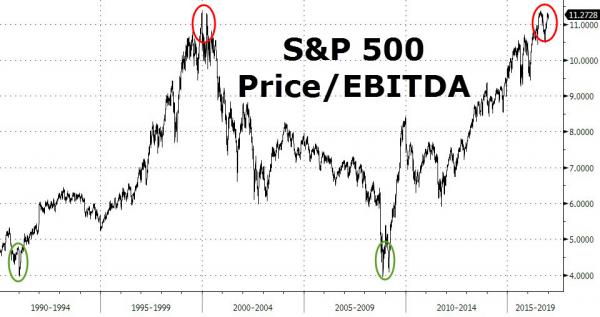
“It should give investors great confidence…”
END
Another phony jobs report. The BLS reports a gain of only 156,000 workers instead of the expected 178,000. However average earnings jumped .4% in December.
(courtesy BLS/zerohedge)
Jobs Disappoint In Obama’s Final Month, Rise Only 156K, But Average Hourly Earnings Jump
With Wall Street expecting a 178K payrolls print for president Obama’s final full monthly December jobs report, the headline December nonfarm payrolls increase of just 156K is likely to disappoint. However, the poor December number will likely be offset by a revision to the November print from 178K to 204K, even as October was revised downward from 142K to 135K, for a net revision of the past two months to 19K higher.

For all of 2016, job growth totaled 2.2 million for the year, less than the increase of 2.7 million in 2015.
The unemployment rate printed at 4.7% as predicted, fractionally higher from last month’s 4.6%.
However, the big silver lining in today’s jobs report, and what Wall Street will likely mostly focus on, is the jump in average hourly earnings, which rose 0.4% in December, up from the disappointing November -0.1% decline, and ahead of the 0.3% expected by consensus. It was also the best print since 2009. On an annual basis, the increase was 2.9%, also on of the highest gains since the crisis, strengthening the case for the Fed to hike on multiple occasions in 2017.
On the other hand, average weekly earnings continued their muted performance, rising 2.3% Y/Y in December.

Some more details from the report:
Total nonfarm payroll employment rose by 156,000 in December, with an increase in health care and social assistance. Job growth totaled 2.2 million in 2016, less than the increase of 2.7 million in 2015.
Employment in health care rose by 43,000 in December, with most of the increase occurring in ambulatory health care services (+30,000) and hospitals (+11,000). Health care added an average of 35,000 jobs per month in 2016, roughly in line with the average monthly gain of 39,000 in 2015.
Social assistance added 20,000 jobs in December, reflecting job growth in individual and family services (+21,000). In 2016, social assistance added 92,000 jobs, down from an increase of 162,000 in 2015.
Employment in food services and drinking places continued to trend up in December (+30,000). This industry added 247,000 jobs in 2016, fewer than the 359,000 jobs gained in 2015.
Employment also continued to trend up in transportation and warehousing in December (+15,000). Within the industry, employment expanded by 12,000 in couriers and messengers. In 2016, transportation and warehousing added 62,000 jobs, down from a gain of 110,000 jobs in 2015.
Employment in financial activities continued on an upward trend in December (+13,000). This is in line with the average monthly gains for the industry over the past 2 years.
In December, employment edged up in manufacturing (+17,000), with a gain of 15,000 in the durable goods component. However, since reaching a recent peak in January, manufacturing employment has declined by 63,000.
Employment in professional and business services was little changed in December (+15,000), following an increase of 65,000 in November. The industry added 522,000 jobs in 2016.
Employment in other major industries, including mining, construction, wholesale trade, retail trade, information, and government, changed little in December.
The average workweek for all employees on private nonfarm payrolls was unchanged at 34.3 hours in December. In manufacturing, the workweek edged up by 0.1 hour to 40.7 hours, and overtime edged up by 0.1 hour to 3.3 hours. The average workweek for production and nonsupervisory employees on private nonfarm payrolls remained at 33.6 hours.
In December, average hourly earnings for all employees on private nonfarm payrolls increased by 10 cents to $26.00, after edging down by 2 cents in November. Over the year, average hourly earnings have risen by 2.9 percent. In December, average hourly earnings of private-sector production and nonsupervisory employees increased by 7 cents to $21.80.
The change in total nonfarm payroll employment for October was revised down from +142,000 to +135,000, and the change for November was revised up from +178,000 to +204,000. With these revisions, employment gains in October and November were 19,000 higher than previously reported. Over the past 3 months, job gains have averaged 165,000 per month.
In Obama’s Final Jobs report, A Record 95.1 Million People Were Not In The Labor Force
As it began so it will finish.
Putting the exclamation point on a trend that has marked Obama’s entire presidency, in the final Obama jobs report, the BLS announced that the total number of people not in the labor force grew once more, rising by 18,000 in December, and a whopping 841,000 in the past three months, to a new all time high of 95.102 million Americans no longer in the workforce.

This meant that the perennial bogeyman of the Trump administration, the collapsing labor force participation rate, remained flat near 35 year lows, risint fractionally from last month to 62.7% as a result of 152.111 million people employed in a civilian non-institutional population of 254.742 million.

Not So Fast: This Is Where All The “Blistering” Hourly Earnings Growth Came From
There is a simple reason why the vast majority of American workers, some 82% of them, are not feeling any wage growth: there simply isn’t any.
After today’s jobs report, Wall Street has been fast to ignore the modest headline payrolls disappointment, which in December rose less than expected following an upward revised November, and focus exclusively on that “other” number, the jump in average hourly earnings, which in December rose 0.4% on a monthly basis, and a blistering 2.9% Y/Y, the highest annual growth since the financial crisis, as shown in the chart below.

Wall Street analysts were quick to praise the jump in hourly earnings, such as Deutsche Bank’s Alan Ruskin who said the following:
The particular medium-term relevance of the acceleration in earnings is:
i) this is coming well before any fiscal stimulus hits, and underscores the unusual timing and therefore inflationary influence that a fiscal stimulus can have at this point in the business cycle;
ii) it tends to provide evidence that indeed the economy is at full employment and that estimates of the nature rate are not apt to drift much lower, negating some of the spare capacity participation arguments that would suggest otherwise.
iii) it plays to the idea that the Fed may already be behind the curve, not least because the impetus from lower oil prices has turned more inflationary as well.
A nice analysis, there is just one problem: it may well be totally wrong.
As we try to point out every month, this headline hourly earnings number – impressive as it may be – tells an incomplete story as it consolidates earnings for two very distinct labor groups in the US, production & nonsupervisory employees, which comprise the vast majority, or 82.3% of the labor force, and the top echelon of workers, the 17.7% of private workers who are classified as supervisory, and managerial.
What happens when one looks at just the subset of production and nonsupervisory private workers, which in October amounted to 101.3 million, or just over 82% of the entire private workforce? Well, we find that their wage growth story is very different. According to the BLS, these particular workers made on average $21.80 per hour, up only 2.5% from $21.26 a year ago, which as the chart below shows is where wage growth for this group has been for three years, and after a modest dip in late 2014, has been largely unchanged since the start of 2014.

Indicatively, this particular group of workers saw a 4% annual growth in wages at the time the 2007 recession hit.
In other words, for the vast majority of American workers, real wage growth is still as anemic as it has been for years, barely outpacing official measures of inflation.
So where did the wage growth come from? Simple: the 17.7% of supervisory, managerial private workers that are excluded from the above grouping, but make up the balance of America’s 123.1 million private workers. It is this group that saw a surge in their implied average wages, which soared by a record high 4.7% in December!

So when the Fed sits down next time to pats itself on the back for a job hike well done in hopes of “keeping inflation in check”, it may want to hike rates only for those 18% of workers who are benefiting from rising wages, because for the rest of America, the income picture remains as dreary as it has been for years.
end
What a complete utter nonsense: we had a huge increase again in waiter jobs (plus nurses and waste cleaners). We know the job report on the waiters is false because of massive layoffs in that field due to Obamacare, and health care costs that I brought to your attention in the past few days)
(courtesy zero hedge)
Where The December Jobs Were: Nurses, Waiters, And Waste Cleaners
Something remains very broken with the US labor market: while the unemployment rate remains just shy of the lowest print since August 2007, rising fractionally to 4.7%, wage growth for most workers, as reported earlier, rose just 2.5%, far below the 4.0% it was when the unemployment rate last hit 4.7%.
This continues to vex economists who have vowed that if only one lowers the unemployment rate far enough, all the slack in the labor market will be soaked up. Alas, that is not happening, for several reasons, the chief of which is that the quality of jobs added remains subpar, with wage growth – especially for less than “supervisory” and management positions – flat.
Still, according to the BLS at least, some 155,000 seasonally adjusted jobs were added in December, arbitrarily goalseeked as they may have been. Where were they? Here is the answer:
- The most actively hiring sector was health care, which saw a whopping 70,000 increase in December jobs, nearly half of total. Most of the increase occured in ambulatory health care services (+30,000) and hospitals (+11,000). Social assistance added 20,000 jobs in December, reflecting job growth in individual and family services (+21,000).
- Professional and Busines Services rose by a total of 30,500, the second highest gaining category. here the biggest contributor was Administrative and Waste Services to Buildings and Dwellings, which rose by 10,600.
- Another minimum wage job category that added jobs in December was
Leisure and Hospitality, which added a grand total of 24,000 jobs. here, the biggest contributor was an old favorite: employment in food services and drinking places, which continued to trend up in December (+30,000).
- What is curious is that while retailers have been laying off thousands of people left and right, according to the BLS this category added another 6,300 in December, if a substantial drop from November’s 19,500.
- Highly paid construction jobs declined by 3,000 in December after posting a substantial rebound of 17,000 in November
- Just as troubling was the ongoing decline in Information jobs, which declined by 6,000 in December, after dropping double that amount in November
- Also concerning was the sharp drop in Temp Help services: a harbinger of pent up labor demand, this category tumbled by 15,500 in December, the biggest monthly decline in years.
- There was some good news for higher paying wages in December: Employment edged up in manufacturing (+17,000), with a gain of 15,000 in the durable goods component.
- Employment in the highly paid financial activities also continued on an upward trend in December (+13,000).
- Finally, government added an additional 12,000 jobs.
The visual summary is below:

end
a very ugly number: November factory orders plunge the most in over 2 years. And this is after a big rise in defense factory orders:
(courtesy zero hedge)
“We’re Gonna Need More War” – November Factory Orders Plunge Most Since August 2014 Despite Defense Spike
Following October’s pre-election surge in new factory orders, November saw orders plunge 2.4% MoM (worse than expected) and the biggest drop since Aug 2014. This drop comes despite a 103% MoM rise in defense aircraft orders as non-defense aircraft orders crashed 73.8%. Factory Orders also dipped back into negative territory YoY.
An ugly drop in factory orders in November…

And Year-over-year, Factory Orders declined for the 23rd month of the last 25…

It appears we are going to need more war to keep this dream alive…

Does this look like a healthy economy being handed to Trump?
end
What on earth is going on: The democrats refused FBI access to their hacked servers and then the FBI claim that Russians hacked their system without the access to those servers?
Give me a break..
(courtesy zero hedge)
Trump Asks “What Is Going On” After It Emerges Democrats Refused FBI Access To Hacked Servers
Closing off his tweeting on Thursday evening, the president-elect questioned why the Democratic National Committee did not reportedly cooperate with the FBI’s investigation of hacks into its servers; a hack which the US intelligence agencies were quick to conclude was the action of Russia despite, allegedly, not having seen all the evidence.
As Bloomberg reports, while the DNC says the FBI never requested access to its servers after they were breached, a senior law enforcement official said the FBI repeatedly asked for access “only to be rebuffed.” If the FBI itself never examined DNC servers, Trump wrote on Twitter, “how and why are they so sure about hacking”?
“What is going on?” Trump added.
The Democratic National Committee would not allow the FBI to study or see its computer info after it was supposedly hacked by Russia……

So how and why are they so sure about hacking if they never even requested an examination of the computer servers? What is going on?
The FBI Thursday released a statement confirming Trump’s claim.
“The FBI repeatedly stressed to DNC officials the necessity of obtaining direct access to servers and data, only to be rebuffed until well after the initial compromise had been mitigated,” the agency said. “This left the FBI no choice but to rely upon a third party for information. These actions caused significant delays and inhibited the FBI from addressing the intrusion earlier.”
Earlier in the week DNC spokesman Eric Walker told BuzzFeed this week that while the DNC had several meetings with FBI agents, FBI officials “never requested access” to DNC servers.
“The DNC had several meetings with representatives of the FBI’s Cyber Division and its Washington (D.C.) Field Office, the Department of Justice’s National Security Division, and U.S. Attorney’s Offices,” he said, adding, “the FBI never requested access to the DNC’s computer servers.”
And according to BuzzFeed, no U.S. intelligence agency has done an independent forensics analysis on the servers. Instead, the FBI has relied on an analysis from CrowdStrike, the third-party security firm that investigated the DNC breach.
However, as The Hill notes, a senior law enforcement official on Thursday disputed the DNC’s characterization that the FBI never requested access to the DNC servers.
Separately, at the same time Trump criticized leaks to several media outlets detailing contents of a classified report on alleged Russian hacking of the presidential election. The leaks came before Trump’s own briefing on those details by the intelligence community. The 50-page report was delivered to US President Barack Obama on Thursday, and is to be delivered to President-elect Donald Trump on Friday by top intelligence officials, including Director of National Intelligence James Clapper and CIA Director John Brennan, the Washington Post reports, one of several outlets that were given priority over the president-elect in learning the details of the document.
CNN and NBC News also reported on the classified report, sparking outrage from Trump.
“How did NBC get ‘an exclusive look into the top secret report he (Obama) was presented?’ Who gave them this report and why? Politics!” Trump said in a tweet.
How did NBC get “an exclusive look into the top secret report he (Obama) was presented?” Who gave them this report and why? Politics!
According to the reports, US spies cited as evidence of Russian interference intercepted communications between Russian officials who called Trump’s victory a geopolitical success for Russia. The report also said that US intelligence identified the ‘go-betweens’ who allegedly handed over stolen Democratic Party emails to WikiLeaks. The US media did not name those individuals or explain how they were linked to the Russian government.
Many Russian officials made no secret of their preference for a Trump presidency after his surprise win in November. The Russian parliament even stood and applauded at the news. The president-elect is perceived by many as capable of restarting relations with Russia with a clean slate, while his Democratic rival Hillary Clinton was blamed for policies which in part have led to numerous conflicts between Russia and the US.
Early this morning, Wikileaks also chimed in on the topic, not surprisingly taking Trump’s side.
The Obama admin/CIA is illegally funneling TOP SECRET//COMINT information to NBC for political reasons before PEOTUS even gets to read it.

Here Is The US Intel Report Accusing Putin Of Helping Trump Win The Election By “Discrediting” Hillary Clinton
The farce is complete.
One week after a joint FBI/DHS report was released, supposedly meant to prove beyond a reasonable doubt that Russia intervened in the US presidential election, and thus served as a diplomatic basis for Obama’s expulsion of 35 diplomats, yet which merely confirmed that a Ukrainian piece of malware which could be purchased by anyone, was responsible for spoofing various email accounts including that of the DNC and John Podesta, moments ago US intelligence agencies released a more “authoritative”, 25-page report, titled “Assessing Russian Activities and Intentions in Recent US Elections“, and which not surprisingly only serves to validate the media narrative, by concluding that Russian President Vladimir Putin ‘ordered‘ an effort to influence U.S. presidential election.
Specifically, the report concludes the following:
We assess Russian President Vladimir Putin ordered an influence campaign in 2016 aimed at the US presidential election. Russia’s goals were to undermine public faith in the US democratic process, denigrate Secretary Clinton, and harm her electability and potential presidency. We further assess Putin and the Russian Government developed a clear preference for President-elect Trump.
What proof is there? Sadly, again, none. However, as the intelligence agencies state, “We have high confidence in these judgments“… just like they had high confidence that Iraq had weapons of mass destruction.
And while the report is severely lacking in any evidence, it is rich in judgments, such as the following:
- We assess Russian President Vladimir Putin ordered an influence campaign in 2016 aimed at the US presidential election. Russia’s goals were to undermine public faith in the US democratic process, denigrate Secretary Clinton, and harm her electability and potential presidency. We further assess Putin and the Russian Government developed a clear preference for President-elect Trump. We have high confidence in these judgments.
- We also assess Putin and the Russian Government aspired to help President-elect Trump’s election chances when possible by discrediting Secretary Clinton and publicly contrasting her unfavorably to him. All three agencies agree with this judgment. CIA and FBI have high confidence in this judgment; NSA has moderate confidence.
- Moscow’s approach evolved over the course of the campaign based on Russia’s understanding of the electoral prospects of the two main candidates. When it appeared to Moscow that Secretary Clinton was likely to win the election, the Russian influence campaign began to focus more on undermining her future presidency.
- Further information has come to light since Election Day that, when combined with Russian behavior since early November 2016, increases our confidence in our assessments of Russian motivations and goals.
- Moscow’s influence campaign followed a Russian messaging strategy that blends covert intelligence operations—such as cyber activity—with overt efforts by Russian Government agencies, state-funded media, third-party intermediaries, and paid social media users or “trolls.” Russia, like its Soviet predecessor, has a history of conducting covert influence campaigns focused on US presidential elections that have used intelligence officers and agents and press placements to disparage candidates perceived as hostile to the Kremlin.
- Russia’s intelligence services conducted cyber operations against targets associated with the 2016 US presidential election, including targets associated with both major US political parties.
- We assess with high confidence that Russian military intelligence (General Staff Main Intelligence Directorate or GRU) used the Guccifer 2.0 persona and DCLeaks.com to release US victim data obtained in cyber operations publicly and in exclusives to media outlets and relayed material to WikiLeaks.
- Russian intelligence obtained and maintained access to elements of multiple US state or local electoral boards. DHS assesses that the types of systems Russian actors targeted or compromised were not involved in vote tallying.
- Russia’s state-run propaganda machine contributed to the influence campaign by serving as a platform for Kremlin messaging to Russian and international audiences.
- We assess Moscow will apply lessons learned from its Putin-ordered campaign aimed at the US presidential election to future influence efforts worldwide, including against US allies and their election processes.
Or, as some have stated, just a regurgitation of already existing opinions and absolutely zero facts.
Some more highlights:
- Moscow’s influence campaign followed a Russian messaging strategy that blends covert intelligence operations—such as cyber activity—with overt efforts by Russian Government agencies, state-funded media, third-party intermediaries, and paid social media users or “trolls.”
- We assess Russian intelligence services collected against the US primary campaigns, think tanks, and lobbying groups they viewed as likely to shape future US policies. In July 2015, Russian intelligence gained access to Democratic National Committee (DNC) networks and maintained that access until at least June 2016.
- Russian Propaganda Efforts. Russia’s state-run propaganda machine—comprised of its domestic media apparatus, outlets targeting global audiences such as RT and Sputnik, and a network of quasi-government trolls—contributed to the influence campaign by serving as a platform for Kremlin messaging to Russian and international audiences. State-owned Russian media made increasingly favorable comments about President-elect Trump as the 2016 US general and primary election campaigns progressed while consistently offering negative coverage of Secretary Clinton.
Meanwhile, in Russia:

There is much more in the full report below, although unfortunately, no actual proof (link)
end
International Trade Balance Widened in November
January 6, 2017
The U.S. international trade deficit expanded in November to $45.2 billion, up from $42.6 billion in October, according to the U.S. Census Bureau of Economic Analysis. The expansion reflected a $0.4 billion decrease in exports along with a $2.4 billion increase in imports.
The goods deficit increased $3.4 billion to $66.6 billion, while the services surplus rose $0.5 billion to $21.4 billion.
Exports of goods fell $0.7 billion to $122.4 billion in November, driven by decreases in capital goods. Exports of capital goods fell by $1.8 billion, largely due to a $1.3 billion decrease in civilian aircraft exports. Exports of services increased $0.3 billion to $63.5 billion.
Imports of goods increased $2.7 billion to $189.0 billion, mostly due to an increase in industrial supplies and materials, which rose by $2.2 billion. Imports of services decreased $0.3 billion to $42.1 billion in November.
-END-
Dave Kranzler reports on a true state of affairs with respect to the USA auto industry, the restaurant industry and on the consumer.
This should pour gasoline on the real jobs report issued today
(courtesy Dave Kranzler/IRD)
Auto Sales: The Fake Economic News Bubble
The headlines are reporting that auto sales in December hit a record, when looked at on a “seasonally adjusted annualized rate” basis. No one questions the validity of the seasonal adjustments. The average news consumer sees or hears the headline word-byte/soundbyte and that becomes the truth. Fake economic news is another form of Establishment propaganda: seduce the populace into believing what you want them to believe rather than presenting the truth. It’s Jim Sinclair’s “MOPE:” Management of Perception Economics.”
Along with the geopolitical and domestic political fake news epidemic is an epidemic in economic fake news. Collectively it’s a “fake news bubble,” with one of the highly insidious consequences of this bubble being the messy abortion otherwise known as the “Presidential election.”
Turning to the auto sales fake news, based on the SAAR estimates, automobile sales allegedly hit a selling rate of 18.2 million units in December. But seasonal adjustments notwithstanding the facts, does the data fit the facts of the related areas of consumer spending? By this I mean restaurant and retail sales.
Though not reported yet for December, restaurant same store sales declined 1.3% in November from October and dropped 3.3% from November 2015. It was the ninth consecutive month of negative same-store sales and the worst decline since July. Perhaps with constrained disposable income, consumers cut out restaurants to buy holiday gifts?
Looking at what we know about retail sales during the holiday period so far, First Data reported that holiday spending is up 2% vs. last year (through Dec 12). Last year that number was 2.4%. So there’s a deceleration in retails sales growth spending. Cowen research reported that foot traffic at malls was down 10% in December through December 17th. Granted online sales growth of 9% this holiday season is taking some mall spending away, but online spending represents only 8% of total retail sales spending. I guess maybe consumers cut back on holiday gifts this year to spend $40,000 (average cost of a new GM car according the auto sales report) on a new car?
Finally, I cover two companies that provide subprime auto loans. Both companies were reporting declining loan application volume in their last financial reports. Interest rates spiked up 100 basis points during November and December, which means the cost of auto loans spiked up as well. Even though auto lenders are reporting lowered loan application volumes, we’re to assume that – despite significantly higher interest rates – consumers decided to skip eating out and buying holiday gifts in order to buy a new car during December?
Does any of this make sense? To make matters less believable and uglier, GM reported that its unsold inventory of cars sitting on dealer lots exploded to 844,942 cars in December, a nearly quarter of a million unit increase over December 2015. Call me skeptical but I would suggest that a large portion of those cars sitting in dealer lots were counted as sales when the cars left the factory floor.
The likely source of “record” auto sales is in the “seasonal adjustments” that are applied to the data. Moreover, I would suggest that the data itself is suspect. I would like to see a study that correlates a “sale” with the actual transfer of title to either an auto finance company or to a buyer who paid cash – i.e. tie a “sale” to an actual end-user taking delivery and driving off the lot. THAT number, based on all of the related supporting evidence as detailed above, is likely a much different (lower) number than what was reported.
end
Let us wrap up the week with this great offering form Greg Hunter of USAWatchdog
(courtesy Greg Hunter)
Still No Proof of Russia Hacking, Attempt to Delegitimize Trump Win, Audit the Fed
By Greg Hunter’s USAWatchdog.com
The Senate held hearings with top intelligence chiefs, and there is still no proof that Russia had an influence on the 2016 Presidential Election. Now, the story changes again, and the charge is a third party gave DNC emails to Wiki Leaks. James Clapper, the Director of National Intelligence, says they do have evidence. The problem with Clapper is credibility. He committed perjury and lied to Congress about NSA spying back in 2013.
Meanwhile, the founder of Wiki Leaks, Julian Assange, said in a fresh interview that his source was “NOT the Russians.” Assange has made this claim repeatedly, and his group has a pristine record of releasing authentic documents that reveal what is going on behind the scenes in government. Assange also says, “Obama is trying to say that President-elect Trump is not a legitimate president.”
Many think the elites are going to crash the economy and blame it on Donald Trump. Trump may turn the tables and put blame squarely where it belongs, and that is on the Federal Reserve. Senator Rand Paul is introducing a Bill to Audit the Fed, and Senator Paul says it has the backing of President-elect Trump.
Join Greg Hunter as he gives his take on the most important stories of the past week.
After the Wrap-Up:
Bill Holter of JSMineset.com will be the Early Sunday Release. Holter predicts this will be the “Year of the Truth Bombs.”
end
Well that about does it for the week
Gold/silver equity shares rose late in the day as the bankers tried to cover their shorts. We thus should see a very positive day for gold/silver on Monday.
I will see you Monday night
Harvey


[…] JAN 6/LACKLUSTER JOBS REPORT FROM THE USA/AS USUAL GOLD AND SILVER WHACKED WITH THE JOB REPORT/JAPAN… […]
LikeLike
[…] by Harvey Organ Harvey Organ’s Blog […]
LikeLike