
March 16, 2022 · by harveyorgan · in Uncategorized · Leave a comment·Edit
MARCH16
GOLD; $1908.95 DOWN $18.50
SILVER: $24.60 DOWN $0.56
ACCESS MARKET: GOLD $1925.50
SILVER: $25.08
Bitcoin morning price: $40,614 UP 1024
Bitcoin: afternoon price: $40,702 UP 1112
Platinum price: closing DOWN $34.35 to $1009.40
Palladium price; closing DOWN $39.00 at $2397.75
END
end
DONATE
Click here if you wish to send a donation. I sincerely appreciate it as this site takes a lot of preparation
comex notices/
March: JPMorgan stopped/total issued 184/337
DLV615-T CME CLEARING
BUSINESS DATE: 03/15/2022 DAILY DELIVERY NOTICES RUN DATE: 03/15/2022
PRODUCT GROUP: METALS RUN TIME: 20:59:26
EXCHANGE: COMEX
CONTRACT: MARCH 2022 COMEX 100 GOLD FUTURES
SETTLEMENT: 1,928.500000000 USD
INTENT DATE: 03/15/2022 DELIVERY DATE: 03/17/2022
FIRM ORG FIRM NAME ISSUED STOPPED
072 C GOLDMAN 4
104 C MIZUHO 7
363 H WELLS FARGO SEC 15
435 H SCOTIA CAPITAL 35
624 H BOFA SECURITIES 27
657 C MORGAN STANLEY 2
657 H MORGAN STANLEY 24
661 C JP MORGAN 334 184
709 C BARCLAYS 32
737 C ADVANTAGE 1 3
905 C ADM 6
TOTAL: 337 337
MONTH TO DATE: 10,654
NUMBER OF NOTICES FILED TODAY FOR Mar. CONTRACT337 NOTICE(S) FOR 33700 OZ (1.0506 TONNES)
total notices so far: 10,654 contracts for 1,065,400 oz (33.138 tonnes)
SILVER NOTICES:
6 NOTICE(S) FILED TODAY FOR 30,000 OZ/
total number of notices filed so far this month 10,372 : for 51,860,000 oz
END
Russia is a major supplier of silver to London while Mexico supplies the COMEX
With the sanctions, London has no way to obtain silver other than compete with NY.
END
GLD
WITH GOLD DOWN $18.50
WITH RESPECT TO GLD WITHDRAWALS: (OVER THE PAST FEW MONTHS):
GOLD IS “RETURNED” TO THE BANK OF ENGLAND WHEN CALLING IN THEIR LEASES: THE GOLD NEVER LEAVES THE BANK OF ENGLAND IN THE FIRST PLACE. THE BANK IS PROTECTING ITSELF IN CASE OF COMMERCIAL FAILURE
ALSO INVESTORS SWITCHING TO SPROTT PHYSICAL (phys) INSTEAD OF THE FRAUDULENT GLD//
A HUGE CHANGE IN GOLD INVENTORY AT THE GLD//A WITHDRAWAL OF 2.33 TONNES FROM THE GLD
INVENTORY RESTS AT 1061.83 TONNES
Silver//SLV
WITH NO SILVER AROUND AND SILVER DOWN $0.56
AT THE SLV//
INVESTORS ARE SWITCHING SLV TO SPROTT’S PSLV
A SMALL CHANGE IN SILVER INVENTORY AT THE SLV//A WITHDRAWAL OF 462,000 OZ
FROM THE SLV.
CLOSING INVENTORY: 545.022 MILLION OZ
Let us have a look at the data for today
SILVER//OUTLINE
SILVER COMEX OI FELL BY A STRONG SIZED 1224 CONTRACTS TO 159,571 ON DAY 5 OF OUR CONTINUAL RAID, AND FURTHER FROM THE NEW RECORD OF 244,710, SET FEB 25/2020 AND THE STRONG LOSS IN OI WAS ACCOMPLISHED WITH OUR SMALLISH $0.18 LOSS IN SILVER PRICING AT THE COMEX ON TUESDAY. OUR BANKERS WERE SUCCESSFUL IN KNOCKING THE PRICE OF SILVER DOWN (IT FELL BY $0.18) BUT WERE UNSUCCESSFUL IN KNOCKING OUT SOME SILVER LONGS AS WE HAD A SMALL GAIN OF 306 CONTRACTS ON OUR TWO EXCHANGES
WE MUST HAVE HAD:
I) HUGE BANKER SHORT COVERING AS THEY ARE VERY ANXIOUS TO GET OUT OF DODGE!!/. II)WE ALSO HAD SOME REDDIT RAPTOR BUYING//. iii) A STRONG ISSUANCE OF EXCHANGE FOR PHYSICALS iiii) A HUGE INITIAL SILVER STANDING FOR COMEX SILVER MEASURING AT 42.860 MILLION OZ FOLLOWED BY TODAY’S QUEUE JUMP OF 110,000 OZ //NEW STANDING 52.255 MILLION OZ // V) STRONG SIZED COMEX OI LOSS/
I AM NOW RECORDING THE DIFFERENTIAL IN OI FROM PRELIMINARY TO FINAL:
THE DIFFERENTIAL FROM PRELIMINARY OI TO FINAL OI SILVER TODAY: CONTRACTS : —370
HISTORICAL ACCUMULATION OF EXCHANGE FOR PHYSICALS MAR. ACCUMULATION FOR EFP’S SILVER/JPMORGAN’S HOUSE OF BRIBES/STARTING FROM FIRST DAY/MONTH OF MAR:
TOTAL CONTACTS for 12 days, total contracts: : 25,788 contracts or 128.940 million oz OR 10.741 MILLION OZ PER DAY. (2149 CONTRACTS PER DAY)
TOTAL NO OF OZ UNDERGOING EFP TO LONDON 25,788 CONTRACTS X 5,000 PER CONTRACT:
EQUATES TO: 128.940 MILLION OZ
.
LAST 11 MONTHS TOTAL EFP CONTRACTS ISSUED IN MILLIONS OF OZ:
MAY 137.83 MILLION
JUNE 149.91 MILLION OZ
JULY 129.445 MILLION OZ
AUGUST: MILLION OZ 140.120
SEPT. 28.230 MILLION OZ//
OCT: 94.595 MILLION OZ
NOV: 131.925 MILLION OZ
DEC: 100.615 MILLION OZ
JAN 2022// 90.460 MILLION OZ
FEB 2022: 72.39 MILLION OZ//
MARCH: 128.940 MILLION OZ//THIS IS GOING TO BE A HUGE EFP ISSUANCE MONTH AND MOST LIKELY WILL SET A RECORD FOR ANY MONTH
RESULT: WE HAD A STRONG SIZED DECREASE IN COMEX OI SILVER COMEX CONTRACTS OF 1224 WITH OUR $0.18 LOSS SILVER PRICING AT THE COMEX// TUESDAY THE CME NOTIFIED US THAT WE HAD A VERY STRONG SIZED EFP ISSUANCE OF 1160 CONTRACTS( 1160 CONTRACTS ISSUED FOR MAR AND 0 CONTRACTS ISSUED FOR ALL OTHER MONTHS) WHICH EXITED OUT OF THE SILVER COMEX TO LONDON AS FORWARDS THE DOMINANT FEATURE TODAY: /HUGE BANKER SHORT COVERING AS THEY GET OUT OF DODGE//// WE HAVE A HUGE INITIAL SILVER OZ STANDING FOR MAR. OF 42.860 MILLION OZ FOLLOWED BY TODAY’S 110,000 OZ QUEUE JUMP//NEW STANDING 52.255 MILLION OZ// /// .. WE HAD A SMALL SIZED LOSS OF 64 OI CONTRACTS ON THE TWO EXCHANGES FOR 0.320 MILLION OZ DESPITE THE LOSS IN PRICE.
WE HAD 6 NOTICES FILED TODAY FOR 30,000 OZ
THE SILVER COMEX IS NOW BEING ATTACKED FOR METAL BY LONDONERS ET AL.
GOLD//OUTLINE
IN GOLD, THE COMEX OPEN INTEREST FELL BY A GOOD SIZED 7179 CONTRACTS TO 617,605 AND FURTHER FROM OUR NEW RECORD (SET JAN 24/2020) AT 799,541 AND PREVIOUS TO THAT: (SET JAN 6/2020) AT 797,110.
THE DIFFERENTIAL FROM PRELIMINARY OI TO FINAL OI IN GOLD TODAY: –1573 CONTRACTS.
THE BIS HAS ABANDONED THE GOLD COMEX TRADING!!!
.
THE GOOD SIZED DECREASE IN COMEX OI CAME WITH OUR HUGE LOSS IN PRICE OF $30.80//COMEX GOLD TRADING/TUESDAY/.AS IN SILVER WE MUST HAD HUGE BANKER/ALGO SHORT COVERING ACCOMPANYING OUR HUMONGOUS SIZED EXCHANGE FOR PHYSICAL ISSUANCE. WE HAD ZERO LONG LIQUIDATION
WE ALSO HAD A HUGE INITIAL STANDING IN GOLD TONNAGE FOR MARCH AT 14.818 TONNES FOLLOWED BY TODAY’S QUEUE JUMP OF 2400 OZ//NEW STANDING 36.115 TONNES
YET ALL OF..THIS HAPPENED WITH OUR LOSS IN PRICE OF $30.80 WITH RESPECT TO TUESDAY’S TRADING
WE HAD AN STRONG GAIN OF 7858 OI CONTRACTS (24.44 PAPER TONNES) ON OUR TWO EXCHANGES
E.F.P. ISSUANCE
THE CME RELEASED THE DATA FOR EFP ISSUANCE AND IT TOTALED A GIGANTIC SIZED 15,028 CONTRACTS:
The NEW COMEX OI FOR THE GOLD COMPLEX RESTS AT 617,605.
IN ESSENCE WE HAVE AN STRONG SIZED INCREASE IN TOTAL CONTRACTS ON THE TWO EXCHANGES OF 7858, WITH 7,170 CONTRACTS DECREASED AT THE COMEX AND 15,028 EFP OI CONTRACTS WHICH NAVIGATED OVER TO LONDON. THUS TOTAL OI GAIN ON THE TWO EXCHANGES OF 7858 CONTRACTS OR 24.44 TONNES.
CALCULATIONS ON GAIN/LOSS ON OUR TWO EXCHANGES
WE HAD A GIGANTIC SIZED ISSUANCE IN EXCHANGE FOR PHYSICALS (15,028) ACCOMPANYING THE GOOD SIZED LOSS IN COMEX OI (7170,): TOTAL GAIN IN THE TWO EXCHANGES 7858 CONTRACTS. WE NO DOUBT HAD 1) HUGE BANKER SHORT COVERING ,2.) HUGE INITIAL STANDING AT THE GOLD COMEX FOR MARCH. AT 14.818 TONNES FOLLOWED BY TODAY’S QUEUE JUMP OF 2400 OZ//NEW STANDING 36.115 TONNES /// 3) ZERO LONG LIQUIDATION ///. ,4) GOOD SIZED COMEX OI. LOSS 5) GIGANTIC ISSUANCE OF EXCHANGE FOR PHYSICAL/
LADIES AND GENTLEMEN: THE GOLD COMEX IS ALSO BEING ATTACKED FOR GOLD METAL FROM LONDON ET AL.
HISTORICAL ACCUMULATION OF EXCHANGE FOR PHYSICALS IN 2022 INCLUDING TODAY
MARCH
ACCUMULATION OF EFP’S GOLD AT J.P. MORGAN’S HOUSE OF BRIBES: (EXCHANGE FOR PHYSICAL) FOR THE MONTH OF MAR :
87,912 CONTRACTS OR 8,791,200 OR 273.44 TONNES 12 TRADING DAY(S) AND THUS AVERAGING: 733 EFP CONTRACTS PER TRADING DAY
TO GIVE YOU AN IDEA AS TO THE SIZE OF THESE EFP TRANSFERS : THIS MONTH IN 12 TRADING DAY(S) IN TONNES: 273.44TONNES
TOTAL ANNUAL GOLD PRODUCTION, 2020, THROUGHOUT THE WORLD EX CHINA EX RUSSIA: 3555 TONNES
THUS EFP TRANSFERS REPRESENTS 273.44/3550 x 100% TONNES 7,69% OF GLOBAL ANNUAL PRODUCTION
ACCUMULATION OF GOLD EFP’S YEAR 2021 TO 2022
JANUARY/2021: 265.26 TONNES (RAPIDLY INCREASING AGAIN)
FEB : 171.24 TONNES ( DEFINITELY SLOWING DOWN AGAIN)..
MARCH:. 276.50 TONNES (STRONG AGAIN/
APRIL: 189..44 TONNES ( DRAMATICALLY SLOWING DOWN AGAIN//GOLD IN BACKWARDATION)
MAY: 250.15 TONNES (NOW DRAMATICALLY INCREASING AGAIN)
JUNE: 247.54 TONNES (FINAL)
JULY: 188.73 TONNES FINAL
AUGUST: 217.89 TONNES FINAL ISSUANCE.
SEPT 142.12 TONNES FINAL ISSUANCE ( LOW ISSUANCE)_
OCT: 141.13 TONNES FINAL ISSUANCE (LOW ISSUANCE)
NOV: 312.46 TONNES FINAL ISSUANCE//NEW RECORD!! (INCREASING DRAMATICALLY)//SIGN OF REAL STRESS//SURPASSING THE MARCH 2021 RECORD OF 276.50 TONNES OF EFP
DEC. 175.62 TONNES//FINAL ISSUANCE//
JAN:2022 247.25 TONNES //FINAL
FEB: 196.04 TONNES//FINAL
MARCH: 273.44 TONNES INITIAL( THIS WILL PROBABLY BE A RECORD EFP ISSUANCE MONTH. TOMORROW WE WILL SURPASS MARCH 21 AND THEN LATER THIS MONTH WE WILL SURPASS NOV 21, THE ALL TIME RECORD MONTH)
SPREADING OPERATIONS
(/NOW SWITCHING TO GOLD) FOR NEWCOMERS, HERE ARE THE DETAILS
SPREADING LIQUIDATION HAS NOW COMMENCED AS WE HEAD TOWARDS THE NEW ACTIVE FRONT MONTH OF APRIL.WE ARE NOW INTO THE SPREADING OPERATION OF GOLD
HERE IS A BRIEF SYNOPSIS OF HOW THE CROOKS FLEECE UNSUSPECTING LONGS IN THE SPREADING ENDEAVOUR ;MODUS OPERANDI OF THE CORRUPT BANKERS AS TO HOW THEY HANDLE THEIR SPREAD OPEN INTERESTS:HERE IS HOW THE CROOKS USED SPREADING AS WE ARE NOW INTO THE NON ACTIVE DELIVERY MONTH OF MARCH HEADING TOWARDS THE ACTIVE DELIVERY MONTH OF APRIL, FOR GOLD:
YOU WILL ALSO NOTICE THAT THE COMEX OPEN INTEREST STARTS TO RISE BUT SO IS THE OPEN INTEREST OF SPREADERS. THE OPEN INTEREST IN WILL CONTINUE TO RISE UNTIL ONE WEEK BEFORE FIRST DAY NOTICE OF AN UPCOMING ACTIVE DELIVERY MONTH (MAR), AND THAT IS WHEN THE CROOKS SELL THEIR SPREAD POSITIONS BUT NOT AT THE SAME TIME OF THE DAY. THEY WILL USE THE SELL SIDE OF THE EQUATION TO CREATE THE CASCADE (ALONG WITH THEIR COLLUSIVE FRIENDS) AND THEN COVER ON THE BUY SIDE OF THE SPREAD SITUATION AT THE END OF THE DAY. THEY DO THIS TO AVOID POSITION LIMIT DETECTION. THE LIQUIDATION OF THE SPREADING FORMATION CONTINUES FOR EXACTLY ONE WEEK AND ENDS ON FIRST DAY NOTICE.”
WHAT IS ALARMING TO ME, ACCORDING TO OUR LONDON EXPERT ANDREW MAGUIRE IS THAT THESE EFP’S ARE BEING TRANSFERRED TO WHAT ARE CALLED SERIAL FORWARD CONTRACT OBLIGATIONS AND THESE CONTRACTS ARE LESS THAN 14 DAYS. ANYTHING GREATER THAN 14 DAYS, THESE MUST BE RECORDED AND SENT TO THE COMPTROLLER, GREAT BRITAIN TO MONITOR RISK TO THE BANKING SYSTEM. IF THIS IS INDEED TRUE, THEN THIS IS A MASSIVE CONSPIRACY TO DEFRAUD AS WE NOW WITNESS A MONSTROUS TOTAL EFP’S ISSUANCE AS IT HEADS INTO THE STRATOSPHERE.
First, here is an outline of what will be discussed tonight:
1.Today, we had the open interest at the comex, in SILVER, FELL BY A STRONG SIZED 1224 CONTRACTS TO 159,941 AND FURTHER FROM OUR COMEX RECORD //244,710(SET FEB 25/2020). THE LAST RECORDS WERE SET IN AUG.2018 AT 244,196 WITH A SILVER PRICE OF $14.78/(AUGUST 22/2018)..THE PREVIOUS RECORD TO THAT WAS SET ON APRIL 9/2018 AT 243,411 OPEN INTEREST CONTRACTS WITH THE SILVER PRICE AT THAT DAY: $16.53). AND PREVIOUS TO THAT, THE RECORD WAS ESTABLISHED AT: 234,787 CONTRACTS, SET ON APRIL 21.2017 OVER 4 1/2 YEARS AGO.
EFP ISSUANCE 1160 CONTRACTS
OUR CUSTOMARY MIGRATION OF COMEX LONGS CONTINUE TO MORPH INTO LONDON FORWARDS AS OUR BANKERS USED THEIR EMERGENCY PROCEDURE TO ISSUE:
MAR 1160 ALL OTHER MONTHS: ZERO. TOTAL EFP ISSUANCE: 1160 CONTRACTS. EFP’S GIVE OUR COMEX LONGS A FIAT BONUS PLUS A DELIVERABLE PRODUCT OVER IN LONDON. IF WE TAKE THE COMEX OI LOSS OF 1224 CONTRACTS AND ADD TO THE 1160 OI TRANSFERRED TO LONDON THROUGH EFP’S,
WE OBTAIN A SMALL SIZED LOSS OF 64 OPEN INTEREST CONTRACT FROM OUR TWO EXCHANGES.
THUS IN OUNCES, THE GAIN ON THE TWO EXCHANGES 0.320 MILLION OZ,
OCCURRED DESPITE OUR $0.18 LOSS IN PRICE.
OUTLINE FOR TODAY’S COMMENTARY
1/COMEX GOLD AND SILVER REPORT
(report Harvey)
2 ) Gold/silver trading overnight Europe,
(Peter Schiff,
3. Egon von Greyerz///Matthew Piepenburg via GoldSwitzerland.com,
4. Chris Powell of GATA provides to us very important physical commentaries
5. Other gold commentaries
6. Commodity commentaries/cryptocurrencies
3. ASIAN AFFAIRS
i)WEDNESDAY MORNING// TUESDAY NIGHT
i)WEDNESDAY MORNING// TUESDAY NIGHT
SHANGHAI CLOSED UP 106.75 PTS OR 3.48% //Hang Sang CLOSED UP 1672.42 PTS OR 9.06 % /The Nikkei closed UP 415.53 PTS or 1.64% //Australia’s all ordinaires CLOSED UP 1.08% /Chinese yuan (ONSHORE) closed UP 6.3495 /Oil DOWN TO 96.62 dollars per barrel for WTI and DOWN TO 99.65 for Brent. Stocks in Europe OPENED ALL GREEN // ONSHORE YUAN CLOSED UP AGAINST THE DOLLAR AT 6.3495. OFFSHORE YUAN CLOSED UP ON THE DOLLAR AT 6.3675: /ONSHORE YUAN TRADING ABOVE LEVEL OF OFFSHORE YUAN/ONSHORE YUAN TRADING STRONGER AGAINST US DOLLAR/OFFSHORE STRONGER
A)NORTH KOREA/
b) REPORT ON JAPAN
OUTLINE
3 C CHINA
OUTLINE
4/EUROPEAN AFFAIRS
OUTLINE
5. RUSSIAN AND MIDDLE EASTERN AFFAIRS
OUTLINE
6.Global Issues
OUTLINE
7. OIL ISSUES
OUTLINE
8 EMERGING MARKET ISSUES
COMEX DATA//AMOUNTS STANDING//VOLUME OF TRADING/INVENTORY MOVEMENTS
GOLD
LET US BEGIN:
THE TOTAL COMEX GOLD OPEN INTEREST FELL BY A GOOD SIZED 7170 CONTRACTS AND FURTHER FROM THE RECORD THAT WAS SET IN JANUARY/2020: {799,541 OI(SET JAN 16/2020)} AND PREVIOUS TO THAT: 797,110 (SET JAN 7/2020). AND THIS COMEX DECREASE OCCURRED WITH OUR STRONG LOSS OF $30.80 IN GOLD PRICING TUESDAY’S COMEX TRADING. WE ALSO HAD A GIGANTIC SIZED EFP (15,028 CONTRACTS). . THEY WERE PAID HANDSOMELY NOT TO TAKE DELIVERY AT THE COMEX AND SETTLE FOR CASH.
WE NORMALLY HAVE WITNESSED EXCHANGE FOR PHYSICALS ISSUED BEING SMALL AS IT JUST TOO COSTLY FOR THEM TO CONTINUE SERVICING THE COSTS OF SERIAL FORWARDS CIRCULATING IN LONDON. HOWEVER, MUCH TO THE ANNOYANCE OF OUR BANKERS, THE COMEX IS THE SCENE OF AN ASSAULT ON GOLD AS LONDONERS, NOT BEING ABLE TO FIND ANY PHYSICAL ON THAT SIDE OF THE POND, EXERCISE THESE CIRCULATING EXCHANGE FOR PHYSICALS IN LONDON AND FORCING DELIVERY OF REAL METAL OVER HERE AS THE OBLIGATION STILL RESTS WITH NEW YORK BANKERS. IT SEEMS THAT ARE BANKERS FRIENDS ARE EXERCISING EFP’S FROM LONDON AND NOW THEY ARE LOATHE TO ISSUE NEW ONES.
EXCHANGE FOR PHYSICAL ISSUANCE
WE ARE NOW MOVING TO THE NON ACTIVE DELIVERY MONTH OF MAR.. THE CME REPORTS THAT THE BANKERS ISSUED A GIGANTIC SIZED TRANSFER THROUGH THE EFP ROUTE AS THESE LONGS RECEIVED A DELIVERABLE LONDON FORWARD TOGETHER WITH A FIAT BONUS.,
THAT IS 15,028 EFP CONTRACTS WERE ISSUED: ;: , & FEB. 0 APRIL:15,028 & ZERO FOR ALL OTHER MONTHS:
TOTAL EFP ISSUANCE: 15,028 CONTRACTS
WHEN WE HAVE BACKWARDATION, EFP ISSUANCE IS VERY COSTLY BUT THE REAL PROBLEM IS THE SCARCITY OF METAL AND IT IS FAR BETTER FOR OUR BANKERS TO PAY OFF INDIVIDUALS THAN RISK INVESTORS ESPECIALLY FROM LONDON STANDING FOR DELIVERY. THE LOWER PRICES IN THE FUTURES MARKET IS A MAGNET FOR OUR LONDONERS SEEKING PHYSICAL METAL. BACKWARDATION ALWAYS EQUAL SCARCITY OF METAL!
ON A NET BASIS IN OPEN INTEREST WE GAINED THE FOLLOWING TODAY ON OUR TWO EXCHANGES: A STRONG SIZED TOTAL OF 7170 CONTRACTS IN THAT 15,058 LONGS WERE TRANSFERRED AS FORWARDS TO LONDON AND WE HAD A GOOD SIZED COMEX OI LOSS OF 7170 CONTRACTS..AND THIS STRONG GAIN OCCURRED DESPITE A HUGE LOSS IN PRICE OF $30.80.
// WE HAVE A STRONG AMOUNT OF GOLD TONNAGE STANDING FOR MAR (36.115),
HERE ARE THE AMOUNTS THAT STOOD FOR DELIVERY IN THE PRECEDING 12 MONTHS OF 2021:
DEC 2021: 112.217 TONNES
NOV. 8.074 TONNES
OCT. 57.707 TONNES
SEPT: 11.9160 TONNES
AUGUST: 80.489 TONNES
JULY: 7.2814 TONNES
JUNE: 72.289 TONNES
MAY 5.77 TONNES
APRIL 95.331 TONNES
MARCH 30.205 TONNES
FEB ’21. 113.424 TONNES
JAN ’21: 6.500 TONNES.
TOTAL SO FAR THIS YEAR (JAN- DEC): 601.213 TONNES
YEAR 2022:
JANUARY 2022 17.79 TONNES
FEB 2022: 59.023 TONNES
MARCH: 36.115 TONNES
THE BANKERS WERE SUCCESSFUL IN LOWERING GOLD’S PRICE //// (IT FELL $30.80) BUT THEY WERE UNSUCCESSFUL IN FLEECING ANY LONGS AS WE HAVE REGISTERED A STRONG SIZED GAIN OF 7,858 TONNES ON TOTAL OI FROM OUR TWO EXCHANGES, ACCOMPANYING OUR HUGE GOLD TONNAGE STANDING FOR MAR (36.115 TONNES)…
WE HAD –1573 CONTRACTS REMOVED FROM COMEX TRADES. THESE WERE REMOVED AFTER TRADING ENDED LAST NIGHT
NET GAIN ON THE TWO EXCHANGES 7858 CONTRACTS OR 785,800 OZ OR 24.44 TONNES
Estimated gold volume today: 190,825 ///poor
Confirmed volume yesterday: 276,340contracts fair
INITIAL STANDINGS FOR MAR ’22 COMEX GOLD //MARCH 16
| Gold | Ounces |
| Withdrawals from Dealers Inventory in oz | nil oz |
| Withdrawals from Customer Inventory in oz | 15,642.561 oz JPMORGAN |
| Deposit to the Dealer Inventory in oz | nilOZ |
| Deposits to the Customer Inventory, in oz | 482,265.000 OZ JPMORGAN 15,000 KILOBARS |
| No of oz served (contracts) today | 337 notice(s) 33,700 OZ 1.0506 TONNES |
| No of oz to be served (notices) | 957 contracts 95,700 oz 2.974 TONNES |
| Total monthly oz gold served (contracts) so far this month | 10,654 notices 10,65,400 OZ 33..138 TONNES |
| Total accumulative withdrawals of gold from the Dealers inventory this month | NIL oz |
| Total accumulative withdrawal of gold from the Customer inventory this month | xxx oz |
For today:
1)dealer deposit
total dealer deposit 0 oz
No dealer withdrawal 0
1 customer deposits
i) Into JPMORGAN: 482,265.000 OZ (15,000 KILOBARS= 15 TONNES)
total deposit: 482,265,000 oz
1 customer withdrawal
i) Out of JPMORGAN: 25,642.561 oz
total withdrawals: 25,642.561 oz
ADJUSTMENTS: 1/customer to dealer
Manfra: 32,183.151 oz (1001 kilobars)
CALCULATIONS FOR THE AMOUNT OF GOLD STANDING FOR MARCH.
For the front month of MARCH we have an oi of 1294 contracts having LOST 51
We had 75 notices filed yesterday so strangely again on day 12 we gained another queue jump i.e. 24 contracts or an additional 2400 oz will stand for delivery and these guys refused again to be EFP’d over to London. They must
be after large amounts of gold on this side of the pond after Russia cannot//will not supply any precious metals to London. The 2400 oz is represented by 0.0746 tonnes,
April saw a loss of 29,232 contracts down to 274,335.
May saw a gain of 104 contracts to stand at 4252
June saw a GAIN of 21,894 contracts up to 271,695 contracts
We had 337 notice(s) filed today for 78,800 oz FOR THE MAR 2022 CONTRACT MONTH.
Today, 0 notice(s) were issued from J.P.Morgan dealer account and 334 notices were issued from their client or customer account. The total of all issuance by all participants equates to 337 contract(s) of which 0 notices were stopped (received) by j.P. Morgan dealer and 184 notice(s) was (were) stopped/ Received) by J.P.Morgan//customer account and 5 notice(s) received (stopped) by the squid (Goldman Sachs)
To calculate the INITIAL total number of gold ounces standing for the MAR /2021. contract month,
we take the total number of notices filed so far for the month (10,654) x 100 oz , to which we add the difference between the open interest for the front month of (MAR: 1294 CONTRACTS ) minus the number of notices served upon today 337 x 100 oz per contract equals 1,161,100 OZ OR 36.115 TONNES the number of TONNES standing in this active month of mar.
thus the INITIAL standings for gold for the MAR contract month:
No of notices filed so far (10,654) x 100 oz+ (1294) OI for the front month minus the number of notices served upon today (337} x 100 oz} which equals 1,161,100 oz standing OR 36.115 TONNES in this NON active delivery month of MAR.
TOTAL COMEX GOLD STANDING: 36.115 TONNES (A WHOPPER FOR A MAR (NON ACTIVE) DELIVERY MONTH)
XXXXXXXXXXXXXXXXXXXXXXXXXXXXXXXXXXXXXXXXXXXXXXXXXXXXXXXXXXXXX
COMEX GOLD INVENTORIES/CLASSIFICATION
NEW PLEDGED GOLD:
191,133,764.7, oz NOW PLEDGED /HSBC 5.94 TONNES
123,963.792 PLEDGED MANFRA 3.86 TONNES
54,339.114oz PLEDGED JPMorgan no 1 1.690 tonnes
243,923.704, oz JPM No 2 7.58 TONNES
898,821.330 oz pledged Brinks/27,96 TONNES
12,249,333 oz International Delaware: 0..3810 tonnes
Loomis: 18,615.429 oz
total pledged gold: 1,543,044.471 oz 47.99 tonnes
TOTAL REGISTERED AND ELIG GOLD AT THE COMEX: 33,611,452.774 OZ (1045.45TONNES)
TOTAL ELIGIBLE GOLD: 16,041,740.345 OZ (498.96 tonnes)
TOTAL OF ALL REGISTERED GOLD: 17,569,712.429 OZ (546.49 tonnes)
REGISTERED GOLD THAT CAN BE SERVED UPON: 16,026668.0 OZ (REG GOLD- PLEDGED GOLD) 498.49 tonnes
END
MAR 2022 CONTRACT MONTH//SILVER//MARCH 16
| Silver | Ounces |
| Withdrawals from Dealers Inventory | NIL oz |
| Withdrawals from Customer Inventory | 584,581.100 oz JPMORGAN |
| Deposits to the Dealer Inventory | nil OZ |
| Deposits to the Customer Inventory | nil oz |
| No of oz served today (contracts) | 6CONTRACT(S) 30,000 OZ) |
| No of oz to be served (notices) | 79 contracts (395,000 oz) |
| Total monthly oz silver served (contracts) | 10,372 contracts 51,860,000 oz |
| Total accumulative withdrawal of silver from the Dealers inventory this month | NIL oz |
| Total accumulative withdrawal of silver from the Customer inventory this month |
And now for the wild silver comex results
we had 0 deposits into the dealer
total dealer deposits: nil oz
i) We had 0 dealer withdrawal
total dealer withdrawals: nil oz
We have 0 deposits into the customer account
total deposit: NIL oz
JPMorgan has a total silver weight: 181.126 million oz/343.403 million =52.70% of comex
ii) Comex withdrawals: 1
A) Out of JPMorgan 584,581.100 oz
total withdrawal 584,581.100 oz
we had 1 adjustments// out of dealer to customer
JPMorgan 178,682.470
the silver comex is in stress!
TOTAL REGISTERED SILVER: 93.126 MILLION OZ
TOTAL REG + ELIG. 343.403 MILLION OZ
CALCULATION OF SILVER OZ STANDING FOR MARCH
silver open interest data:
FRONT MONTH OF MARCH OI: 85, HAVING LOST 280 CONTRACTS FROM MONDAY.
WE HAD 302 NOTICES SERVED UPON YESTERDAY, SO WE GAINED 22 CONTRACTS OR AN ADDITIONAL 110,000 OZ WILL STAND
FOR DELIVERY OVER HERE AS THESE GUYS REFUSED TO BE EFP’D TO LONDON.
APRIL HAD A 77 CONTRACT LOSS// CONTRACTS FALLING TO 615
MAY HAD A LOSS OF 868 CONTRACTS DOWN TO 121,943 contracts
.
TOTAL NUMBER OF NOTICES FILED FOR TODAY: 6 for 30,000 oz
Comex volumes: 39,217// est. volume today//weak/
Comex volume: confirmed yesterday: 52,510 contracts (FAIR )
To calculate the number of silver ounces that will stand for delivery in MAR. we take the total number of notices filed for the month so far at 10,372 x 5,000 oz = 51,860,000 oz
to which we add the difference between the open interest for the front month of MAR (85) and the number of notices served upon today 6 x (5000 oz) equals the number of ounces standing.
Thus the standings for silver for the MAR./2021 contract month: 10,372 (notices served so far) x 5000 oz + OI for front month of MAR (85) – number of notices served upon today (6) x 5000 oz of silver standing for the MAR contract month equates 52,255,000 oz. .
the record level of silver open interest is 234,787 contracts set on April 21./2017 with the price on that day at $18.42. The previous record was 224,540 contracts with the price at that time of $20.44
END
GLD AND SLV INVENTORY LEVELS:
MARCH 16/WITH GOLD DOWN $18.50//A HUGE CHANGE IN GOLD INVENTORY AT THE GLD: A WITHDRAWALL OF 2.33 TONNES FROM THE GLD///INVENTORY RESTS AT 1061.83 TONNES
MARCH 15/WITH GOLD DOWN $30.80 TODAY: NO CHANGES IN GOLD INVENTORY AT THE GLD//INVENTORY RESTS AT 1064.16 TONNES
MARCH 14//WITH GOLD DOWN $22.75, HUGE CHANGES IN GOLD INVENTORY AT THE GLD//STRANGE: A DEPOSIT OF 2.62 TONNES INTO THE GLD.//INVENTORY RESTS AT 1064.16 TONNES
MARCH 11/WITH GOLD DOWN $14.60: A BIG CHANGE IN GOLD INVENTORY AT THE GLD A WITHDRAWAL OF 1.74 TONNES FROM THE GLD////INVENTORY RESTS AT 1061.54 TONNES
MARCH 10//WITH GOLD UP $11.55: A HUGE CHANGES IN GOLD INVENTORY AT THE GLD: A WITHDRAWAL OF 4.06 TONNES FORM THE GLD///INVENTORY RESTS AT 1063.28 TONNES
MARCH 9/WITH GOLD DOWN $53.85//A HUGE CHANGE IN GOLD INVENTORY AT THE GLD: A DEPOSIT OF 4.64 TONNES INTO THE GLD//INVENTORY RESTS AT 1067.34 TONNES
MARCH 8/WITH GOLD UP $46.10: A HUGE CHANGE IN GOLD INVENTORY AT THE GLD: A DEPOSIT OF 8.42 TONNES INTO THE GLD///INVENTORY RESTS AT 1062.70 TONNES
MARCH 7/WITH GOLD UP $28.40 A HUGE CHANGES IN GOLD INVENTORY AT THE GLD: A DEPOSIT OF 4.06 TONNES INTO THE GLD..//INVENTORY RESTS AT 1054.28 TONNES
MARCH 4/WITH GOLD UP $28.40//NO CHANGES IN GOLD INVENTORY AT THE GLD//INVENTORY RESTS AT 1050.22 TONNES
MARCH 3/WITH GOLD UP $13.95: A HUGE CHANGE IN GOLD INVENTORY AT THE GLD: A DEPOSIT OF 7.84 TONNES//INVENTORY RESTS AT 1050.22 TONNES
MARCH 2/WITH GOLD DOWN $20.80//A MONSTER CHANGES IN GOLD INVENTORY AT THE GLD: A DEPOSIT OF 13.36 TONNES OF GOLD INTO THE GLD////INVENTORY RESTS AT 1042.38 TONNES
MARCH 1/WITH GOLD UP $42.60: NO CHANGES IN GOLD INVENTORY AT THE GLD: //INVENTORY RESTS AT 1029.32 TONNES
FEB 28/WITH GOLD UP $12.95: NO CHANGES IN GOLD INVENTORY AT THE GLD//INVENTORY RESTS AT 1029.32 TONNES
FEB 25/WITH GOLD DOWN $38.95: NO CHANGES IN GOLD INVENTORY AT THE GLD//INVENTORY RESTS AT 1029.32 TONNES
FEB 24/WITH GOLD UP $17.35//A HUGE CHANGE AT THE GLD: 5.23 TONNES INTO THE GLD// IN GOLD INVENTORY AT THE GLD/INVENTORY REST AT 1029.32 TONNES
FEB 23/WITH GOLD UP $2.00 : NO CHANGES IN GOLD INVENTORY AT THE GLD//INVENTORY RESTS AT 1024.09 TONNES
FEB 22/WITH GOLD UP $6.20: A HUGE CHANGE IN GOLD INVENTORY AT THE GLD: A DEPOSIT OF 4.65 TONNES OF GOLD INTO THE GLD////INVENTORY RESTS AT 1024.09 TONNES
FEB 18/WITH GOLD DOWN $1.80: NO CHANGES IN GOLD INVENTORY AT THE GLD//INVENTORY RESTS AT 1019.44 TONNES
FEB 17/WITH GOLD UP $29.50: NO CHANGES IN GOLD INVENTORY AT THE GLD//INVENTORY RESTS AT 1019.44 TONNES
FEB 16/WITH GOLD UP 414.60 NO CHANGES IN GOLD INVENTORY AT THE GLD//INVENTORY RESTS AT 1019.44 TONNES
FEB 15/WITH GOLD DOWN $12.70 NO CHANGES IN GOLD INVENTORY AT THE GLD//INVENTORY RESTS AT 1019.44 TONNES
FEB 14/WITH GOLD UP $27.20 NO CHANGES IN GOLD INVENTORY AT THE GLD//INVENTORY RESTS AT 1019.44 TONNES
FEB 11/WITH GOLD UP $4.50 A HUGE CHANGE IN GOLD IVNETORY AT THE GLD// A DEPOSIT OF 3.48 TONNES INTO THE GLD//INVENTORY RESTS AT 1019.44 TONES
FEB 10/WITH GOLD UP $1.00: NO CHANGES IN GOLD INVENTORY AT THE GLD///INVENTORY RESTS AT 1015.96 TONNES
FEB 9/WITH GOLD UP $8.05//NO CHANGES IN GOLD INVENTORY AT THE GLD//INVENTORY RESTS AT 1015.96 TONNES
FEB 8/WITH GOLD UP $5.95 TODAY: A HUGE CHANGES IN GOLD INVENTORY AT THE GLD: A DEPOSIT OF 4.36 TONNES INTO THE GLD//INVENTORY RESTS AT 1015.96 TONNES
FEB 7/WITH GOLD UP $14.00 TODAY: A HUGE CHANGE IN GOLD INVENTORY AT THE GLD: A WITHDRAWAL OF 3.24 TONNES FROM THE GLD/////INVENTORY RESTS AT 1011.60 TONNES//
FEB 4/WITH GOLD UP $3.40 TODAY: A HUGE CHANGE IN GOLD INVENTORY AT THE GLD: A WITHDRAWAL OF 1.75 TONNES FROM THE GLD////INVENTORY RESTS AT 1014.84 TONNES
FEB 3/WITH GOLD DOWN $5.55: HUGE CHANGES IN GOLD INVENTORY AT THE GLD: A WITHDRAWAL OF 1.45 TONNES FROM THE GLD////INVENTORY RESTS AT 1016.59 TONNES
FEB 2/WITH GOLD UP $7.95//A HUGE CHANGES IN GOLD INVENTORY AT THE GLD: A DEPOSIT OF 3.78 TONES OF GOLD INTO THE GLD////INVENTORY RESTS AT 1018.04 TONNES
FEB 1/WITH GOLD UP $5.40: NO CHANGES IN GOLD INVENTORY AT THE GLD//INVENTORY RESTS AT 1014.26 TONNES
CLOSING INVENTORY FOR THE GLD//1061.83 TONNES
Now the SLV Inventory/( vehicle is a fraud as there is no physical metal behind them
MARCH 16/WITH SILVER DOWN 56 CENTS TODAY: A SMALL CHANGE IN SILVER INVENTORY AT THE SLV: A WITHDRAWAL OF 462,000 OZ FROM THE SLV//INVENTORY RESTS AT 544.560 TONNES
MARCH 15/WITH SILVER DOWN 18 CENTS TODAY: NO CHANGES IN SILVER INVENTORY AT THE SLV//INVENTORY RESTS AT 545.022 TONNES
MARCH 14/WITH SILVER DOWN 64 CENTS TODAY; STRANGE A HUGE CHANGE IN SILVER INVENTORY AT THE SLV: A DEPOSIT OF 2.125 MILLION OZ/INVENTORY RESTS AT 545.022 TONNES
MARCH 11/WITH SILVER DOWN 13 CENTS TODAY: NO CHANGES IN SILVER INVENTORY AT THE SLV//INVENTORY RESTS AT 542.897 TONNES
MARCH 10/WITH SILVER UP 39 CENTS TODAY: NO CHANGES IN SILVER INVENTORY AT THE SLV//INVENTORY RESTS AT 542.897 MILLION OZ/
MARCH 9/WITH SILVER DOWN 88 CENTS TODAY: A HUGE CHANGE IN SILVER INVENTORY AT THE SLV: A WITHDRAWAL OF 5.174 MILLION OZ OF FAKE SILVER.//INVENTORY RESTS AT 542.897 MILLION OZ//
MARCH 8/WITH SILVER UP 88 CENTS TODAY; HUGE CHANGES IN SILVER INVENTORY AT THE SLV: A DEPOSIT OF 2.217 MILLION OZ INTO THE SLV////INVENTORY RESTS A 548.071 MILLION OZ//
MARCH 7/WITH SILVER UP 40 CENTS TODAY: NO CHANGES IN SILVER INVENTORY AT THE SLV//INVENTORY RESTS AT 545.854 MILLION OZ//
MARCH 4/WITH SILVER UP 50 CENTS TODAY: NO CHANGES IN SILVER INVENTORY AT THE SLV//INVENTORY RESTS AT 545.854 MILLION OZ/
MARCH 3/WITH SILVER UP 2 CENTS TODAY: NO CHANGES IN SILVER INVENTORY AT THE SLV//INVENTORY RESTS AT 545.854 MILLION OZ//
MARCH 2/WITH SILVER DOWN $.32 TODAY: A SMALL CHANGES IN SILVER INVENTORY AT THE SLV: A WITHDRAWAL OF 198,000 OZ FROM THE SLV//INVENTORY RESTS AT 545.854 MILLION OZ//
MARCH 1/WITH SILVER UP $1.13 TODAY: NO CHANGES IN SILVER INVENTORY AT THE SLV//INVENTORY RESTS AT 546.052 MILLION OZ//
FEB 28/WITH SILVER UP 31 CENTS TODAY: NO CHANGES IN SILVER INVENTORY AT THE SLV//INVENTORY REST AT 546.052 MILLION OZ//
FEB 25/WITH SILVER DOWN 64 CENTS TODAY: A HUGE CHANGE IN SILVER INVENTORY AT THE SLV: A WITHDRAWAL OF 5.510 MILLION OZ FROM THE SLV///INVENTORY RESTS AT 546.052 MILLION OZ/
FEB 24/WITH SILVER UP 15 CENTS TODAY: NO CHANGES IN SILVER INVENTORY AT THE SLV//INVENTORY RESTS AT 551.597 MILLION OZ
FEB 23/WITH SILVER UP 22 CENTS TODAY; NO CHANGES IN SILVER INVENTORY AT THE SLV//INVENTORY RESTS AT 551.597 MILLION OZ//
FEB 22/WITH SILVER UP 30 CENTS TODAY: A SMALL CHANGE IN SILVER INVENTORY AT THE SLV: A DEPOSIT OF 350,000 OZ INTO THE SLV///INVENTORY RESTS AT 551.597 MILLION OZ//
FEB 18/WITH SILVER UP 7 CENTS TODAY: A HUGE CHANGE IN SILVER INVENTORY AT THE SLV: A DEPOSIT OF 1.017 MILLION OZ INTO THE SLV//INVENTORY RESTS AT 551.227 MILLION OZ
FEB 17/WITH SILVER UP 31 CENTS TODAY: A HUGE CHANGE IN SILVER INVENTORY AT THE SLV: A DEPOSIT OF 2.402 MILLION OZ//INVENTORY RESTS AT 550.210 MILLION OZ/
FEB 16/WITH SILVER UP 21 CENTS TODAY: NO CHANGES IN SILVER INVENTORY AT THE SLV//INVENTORY RESTS AT 547.808 MILLIONOZ
FEB 15/WITH SILVER DOWN 46 CENTS TODAY : NO CHANGES IN SILVER INVENTORY AT THE SLV//INVENTORY RESTS AT 547.808 MILLION OZ//
FEB 14/WITH SILVER UP 49 CENTS TODAY; A HUGE CHANGES IN SILVER INVENTORY AT THE SLV: A DEPOSIT OF 3.235 MILLION OZ INTO THES LV////INVENTORY RESTS AT 547.808 MILLION OZ
FEB 11/WITH SILVER DOWN 18 CENTS TODAY:NO CHANGES IN SILVER INVENTORY AT THE SLV//INVENTORY RESTS AT 544.573 MILLION OZ///
SLV/FEB 10/WITH SILVER UP 19 CENTS TODAY: NO CHANGES IN SILVER INVENTORY AT THE SLV//INVENTORY RESTS AT 544.573 MILLION OZ//
FEB 9/WITH SILVER UP 14 CENTS TODAY; NO CHANGES IN SILVER INVENTORY AT THE SLV//INVENTORY RESTS AT 544.573 MILLION OZ//
FEB 8/WITH SILVER UP 15 CENTS TODAY: A HUGE CHANGE IN SILVER INVENTORY AT THE SLV: A DEPOSIT OF 3.143 MILLION OZ INTO THE SLV////INVENTORY RESTS AT 544.573 MILLION OZ//
FEB 7/WITH SILVER UP 52 CENTS TODAY: A BIG CHANGE IN SILVER INVENTORY AT THE SLV: A DEPOSIT OF 2.218 MILLION OZ INTO THE SLV///INVENTORY RESTS AT 541.430 MILLION OZ/
FEB 4/WITH SILVER UP 16 CENTS TODAY: NO CHANGES IN SILVER INVENTORY AT THE SLV//INVENTORY RESTS AT 539.212 MILION OZ
FEB 3/WITH SILVER DOWN 35 CENTS: NO CHANGES IN SILVER INVENTORY AT THE SLV//INVENTORY RESTS AT539.212 MILLION OZ//
FEB 2/WITH SILVER UP 15 CENTS TODAY: A HUGE CHANGE IN SILVER INVENTORY AT THE SLV: A DEPOSIT OF 5.411 MILLION OZ INTO THE SLV.//INVENTORY RESTS AT 539.212 MILLION OZ/
FEB 1/WITH SILVER UP 18 CENTS TODAY: NO CHANGES IN SILVER INVENTORY AT THE SLV//INVENTORY RESTS AT 533.801 MILLION OZ
SLV FINAL INVENTORY FOR TODAY: 544.560 MILLION OZ//
PHYSICAL GOLD/SILVER STORIES
1.PETER SCHIFF
The Fed’s Feckless Inflation Fight
WEDNESDAY, MAR 16, 2022 – 08:10 AM
Authored by Michael Maharrey via SchiffGold.com,
The Fed is supposedly about to step into the ring to fight inflation. But all indications are it’s going to be a feckless fight.

Gold flirted with an all-time record high last week driven in part by safe-haven demand due to the geopolitical uncertainty caused by Russia’s invasion of Ukraine. But as the war drags on and the panic subsides, that safe-haven bid seems to be unwinding.
Now investors have turned their attention back to the Fed. When the war broke out, people thought it could slow the central bank’s monetary tightening plans. But with a 7.9% CPI print for February, the mainstream is back on the tightening bandwagon. They’re betting the central bank is going to tighten fast and hard, and they’re selling gold on the expectation of higher interest rates.
But even if the Fed does what the market is betting it will do, it’s not going to put a dent in inflation, and interest rates will not rise high enough to undermine gold.
According to a Reuters article:
A key money market indicator is now pricing US interest rates peaking at a higher level than previously forecast, as traders bet that the Federal Reserve will prioritize stamping out inflation over fretting about risks to economic growth.”
And just how high are they betting interest rates will rise?
2.5%
That’s it.
They think the Fed will push interest rates to 2.5% by mid-2023.
Goldman Sachs economist Sven Jari Stehn is betting on the high side. He thinks the so-called “terminal rate” will come in between 2.75 and 3%.
This is supposed to “stamp out” 7.9% inflation. (Which is really 15-plus percent inflation is measured honestly.)
Paul Volker went to war against inflation in the early 80s. He pushed interest rates to 20%. He had to in order to get ahead of the inflation curve.
In other words, if we accept the government’s 7.9% CPI, the Fed would have to push interest rates to at least 9% to get above the inflation rate in order to “go to war” with inflation.
And they’re talking about 2.5% as if it were some kind of nuclear bomb.
The thinking here is muddled and silly.
Nevertheless, any rate hike is seen as a negative for gold. Whenever interest rates tick up slightly, the mainstream is quick to inform us that “rising interest rates increase the opportunity cost of holding gold.” This is why we’re seeing another selloff in gold as everybody gears up for the March FOMC meeting.
So, what exactly is the mainstream thinking here?
Holding gold does not generate interest income like a bond or a bank account. If interest rates rise and you’re holding gold, you’re forgoing the interest income you could earn if you instead owned a bond or put dollars in a money market account. That’s why rising interest rates tend to create headwinds for gold. And it’s why we saw gold sell off on every bit of high inflation news last year. The markets expect the Fed to fight inflation with rate hikes, thus raising the opportunity cost of holding gold.
This makes sense on the surface, but there is a problem with this mainstream analysis. They are not thinking in terms of real interest rates.
Consider the 10-year Treasury. Currently, the yield is around 2.1%. With a 7.9% inflation rate, the real interest rate on the 10-year is -5.8%.
To state the obvious, there is no “opportunity cost” in holding gold when real rates are deeply negative. You are losing real money holding bonds that aren’t yielding enough interest income to keep up with inflation.
At some point, the markets will figure this out.
It’s also highly unlikely that the Fed will ever get to 2.5%. As you’ll recall, when the Fed started tightening in earnest after the 2008 meltdown, it barely got above 2% before the economy went wobbly. The stock market tanked in the fall of 2018 and the central bank went right back to rate cuts and QE.
[ZH: On a side note, the market is pricing in 1 hike today, a 60% chance of a 50bps hike in May, and 7 rate-hikes in 2022…

[ZH: But, it is also pricing in rate-cuts next year and more in 2024…

Today, the bubbles are even bigger. The levels of debt are even higher. How will the Fed raise rates substantially in this environment? I think they’ll be doing good to even get to 1%.
Here’s a question to ask yourself: do you think the Fed will keep hiking rates if the markets tank and the economy slides toward recession?
[ZH: The market really does not believe The Fed will keep hiking…

Most people aren’t paying any attention to real interest rates — at least not yet. Right now, they’re distracted by negligible nominal interest rate hikes in the Fed’s feckless “war” on inflation. But this will almost certainly change soon.
The markets can remain delusional for a long time. But they can’t remain delusional forever.
END
2.LAWRIE WILLIAM//,//Egon von Greyerz///Matthew Piepenburg via GoldSwitzerland.com, James RICKARDS/
PAM AND RUSS MARTENS:
5-Count Felon JPMorgan Is at the Center of a New, Multi-Billion Dollar Trading Scandal
By Pam Martens and Russ Martens: March 15, 2022 ~
JPMorgan Chairman and CEO, Jamie Dimon, Sits in Front of Trading Monitor in his Office (Source — 60 Minutes Interview, November 10, 2019)
Traders who feel they were robbed of their profits trading nickel last week at the London Metal Exchange (LME) have taken to Twitter to verbally accuse the LME of favoring their “cronies” and behaving like “slime balls.”
Lining up as crony suspect Number 1 are units of JPMorgan Chase who, together, hold the largest number of Class B shares in the London Metal Exchange than any other member. Those units are J.P. Morgan Markets Limited with 25,000 shares; J.P. Morgan Metals Limited with 19,100 shares; and J.P. Morgan Securities with 25,000 shares for a total of 69,100 Class B shares, according to a listing of shareholders on the LME’s website.
In addition, the CEO of the Hong Kong Stock Exchanges and Clearing (HKEX), which bought the LME in 2012, is Nicolas Aguzin. He joined the HKEX last May after spending 31 years at JPMorgan. Aguzin also serves as a Board Member of the LME, where his bio notes that “from 2013 to 2020, Mr. Aguzin was CEO, J.P. Morgan, Asia Pacific where he was responsible for all the firm’s business across 17 markets.”
The reason that both the LME and JPMorgan are taking the heat from traders who say they were “robbed” of their profits, is that one of JPMorgan’s clients – the Chinese nickel and steel producer Tsingshan Holding Group – had secretly built up a massive short position in nickel, using both contracts at the LME and also over-the-counter derivative contracts with JPMorgan and other banks. When the price of nickel began to spike dramatically higher last Tuesday, the banks scurried to try to close out their short positions in nickel by buying back the contracts. That heavy buying pushed the price of nickel to a record $100,000 a metric ton and the banks could no longer afford to keep buying to close their short positions.
Bloomberg News has named JPMorgan as the largest counterparty to the Tsingshan trades while the Wall Street Journal has indicated that Standard Chartered and BNP Paribas are also involved.
It is believed that at some point last Tuesday the banks came clean with the LME as to what their total derivative exposure was and to the massive losses they would experience if the trading that occurred last Tuesday was allowed to stand. What is not in dispute is that the LME suspended trading in nickel last Tuesday and cancelled all of the thousands of trades that had occurred last Tuesday prior to the suspension of trading. The cancelled trades benefited the short positions but left other traders with profitable long positions out in the cold. (You can read all of the LME’s pronouncements about cancelled nickel trades and the like at this official link.)
In addition, to give JPMorgan and the other banks involved time to figure out a solution to their self-made mess, the LME has suspended trading in nickel since last Tuesday. Yesterday, the LME posted a notice stating that “trading in LME Nickel Contracts will resume at 08:00 [a.m.] London time on Wednesday 16 March 2022.”
As our readers might recall, it was secret derivative contracts in concentrated positions of certain stocks held by the big banks on behalf of the Archegos hedge fund last March that cost major global banks over $10 billion in losses. And yet, here we are again talking about secret derivative contracts and potentially heavy losses for banks.
Tsingshan’s controlling shareholder is Xiang Guangda, who is believed to have been behind the idea of going short billions of dollars in nickel. Yesterday, Bloomberg News reported that Guangda had “reached a deal with his banks for a standstill agreement to avoid further margin calls. During the standstill period, Xiang Guangda’s Tsingshan Group Holding Co. and its banks will continue discussions about a secured credit facility to cover the company’s nickel margin and settlement requirements….”
As we pointed out in our past reporting on Archegos, margin loans are supposed to be federally-regulated so that systemically-important banks like JPMorgan Chase don’t blow themselves up and leave the taxpayer on the hook for a bailout. We emailed the Financial Conduct Authority (FCA) in the U.K., which oversees the LME, as well as the U.S. Commodity Futures Trading Commission (CFTC) that oversees commodity trading at JPMorgan, to see if they were involved in providing oversight to this dangerous mess. The FCA responded promptly, and in a typical fashion, the CFTC remained silent.
The FCA said this:
“As a regulated investment exchange, the London Metal Exchange (LME) is responsible for the maintenance of fair and orderly markets. Together with the Bank of England, we have been engaging with LME’s exchange and clearing house, as well as other market participants, on an orderly resumption of the market in nickel.”
The FCA statement might give us some comfort were it not for the fact that the biggest bank involved in this mess – JPMorgan Chase – has admitted to five criminal felony counts brought by the U.S. Department of Justice since 2014. The man at the helm of the bank as its Chairman and CEO throughout that crime spree, Jamie Dimon, was not only allowed to keep his job but was handed a $50 million bonus by the bank’s Board of Directors.
Three of the felony counts involved the rigging of markets: one felony count the bank admitted to in 2015 was for its role in rigging foreign exchange trading. On September 29, 2020, the Justice Department charged JPMorgan Chase with two more felony counts involving rigged trading, to which it admitted, and fined the bank $920 million of shareholders’ money. One count was for rigging the precious metals market and the other was for rigging trading in U.S. Treasury securities.
And this is not the first time that megabanks on Wall Street have come under scrutiny for crony conduct at the London Metal Exchange and playing an improper role in physical commodity markets. The U.S. Senate’s Permanent Subcommittee on Investigations conducted a two-year investigation and released a stunning 396-page bipartisan report in 2014.
Findings from the report include the following regarding JPMorgan:
“The Subcommittee report details how JPMorgan amassed physical commodity holdings equal to nearly 12 percent of its Tier 1 capital, while telling regulators its holdings were far smaller; and that at one point it owned an amount equal to more than half the aluminum used in North America in a year.”
That JPMorgan is at the center of yet another trading scandal is an indictment of Congress and federal regulators to meaningfully reform Wall Street
-END-
Why Gold Will Rise — The Financial System Has Changed
Matthew Piepenburg
March 16, 2022
Despite massive price volatility of late, gold will rise.
The Perfect Gold Storm
Not long ago, I wrote a piece on why gold was not rising.
As I said then, and will repeat again now, gold’s then-yawning price moves in an otherwise ideal inflationary and negative real rate environment was just a momentary calm before the storm.
In other words, gold’s rise –and perfect storm–was coming.
Well, that storm is gathering strength and gold will rise—but not in a straight line.
Despite inevitable (and extreme) volatility (war and inflation-driven) and legalized price fixing (including $100 intra-day price moves) from the increasingly discredited paper COMEX markets, gold will keep rising as CPI inflation hits 7.9%.
Nearer term, gold’s price will gyrate depending on whether tensions in the Ukraine escalate or de-escalate.
But as we discuss below, Western financial responses to the crisis in the Ukraine have just changed the global system—yet no one noticed. Longer-term, this bodes extremely well for gold and its potential to rise.
But First: A Nod to Goldman’s Jeff Currie
Although it’s easy to poke fun at Goldman Sachs (as I’ve done in the past, apologies to my daughter), I am pleased to confess that Jeff Currie, Goldman’s Global Head of Commodities Research, has correctly addressed what he calls “the perfect storm for gold.”
That is, a near-perfect convergence of three key gold demand forces (or “weather fronts”) are in now in motion.
The first of these weather fronts is the growing (and inflation/recession fear-based) retail investor demand for gold. ETF trade volume is ripping north and poised to increase by another 600 tones.
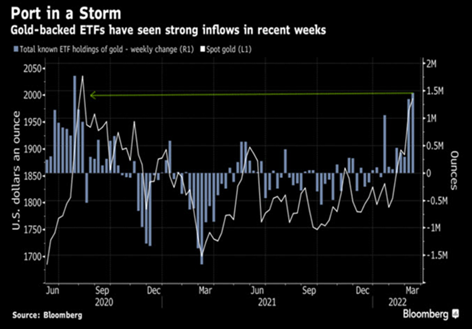
The next weather front is coming from central bank gold buying, which is already up 750 tones for the year and marking an all-time record.
China and Turkey, for example, are buying gold in a not-so-surprising move to de-dollarize (see below) as other nations, like Brazil and India, are buying gold to diversify.
The third and final weather front is the spiking demand for physical gold, lead primarily by China and India—and let’s not forget Russia, whatever you may think of it…
All three gold channels (retail, central bank and physical markets) are objectively the strongest they have ever been, stronger even than in 2010-2011 when gold rallied by 70%.
Goldman’s price target for gold is now $2500—a substantial rise.
We think it will go much higher…
Why?
Because regardless of what you think of Putin, Russia, the absolute horrors of war, the confusion of headlines or the wisdom of the West, the EU and Uncle Sam just shot themselves and the global financial system in its collective foot—and no one even seemed to notice.
Weaponized Finance—Be Careful of the Safety Trigger
Despite the fact that Putin had been warning the West for eight years to keep the Ukraine out of NATO with the same passion that Kennedy had warned the Soviets to keep missiles out of Cuba, the West somehow seemed shocked that “brilliant statesmen” like Kamala Harris could not outthink Putin.
Despite nearly every U.S. State Dept official since the late 90’s warning that a Ukraine in NATO would be suicide, the West is feigning shock today.
Rather than diplomatically addressing the Ukraine NATO alliance (which is about as obsolete in the post-Stalin era as a rotary dial phone), the Vice President (chosen for optics rather than experience) landed in Europe and doubled-down on a bad NATO hand (as well as embarrassing grasp of European geography).
War rather than compromise quickly followed.
But unlike Iraq, Syria, Libya or even Afghanistan (where US doubling down has been an epic failure), the great minds of the West decided to play chicken with a nuclear power, which, well complicates things, no?
Given that conventional proxy wars aren’t so easy when dealing with a nuclear adversary, the West’s only viable option once the inevitable (Putin-pre-warned) invasion of the Ukraine occurred, was to weaponize finance rather than flirt with nuclear red buttons.
But as anyone familiar with weapons knows, once you unlock the safety trigger, unforeseen risks emerge.
And unbeknownst to almost everyone ingesting the main stream media’s daily pablum, the financial weapons unleashed by the West have dangerous consequences.
In fact, and while most of us weren’t looking, the entire financial system of the last 4 decades (i.e., globalization, an artificial bond bull market and manipulated disinflation) just died, soon to be replaced by a multi-polar and multi-currency new inflationary world—all of which point toward a notable rise in gold price.
How did this happen?
Well, let’s ignore the politicians, the COMEX and standard headlines and examine cold reality.
The Catalyst No One Sees
As the holder of the global reserve currency and the almighty USD, Washington has been able to export inflation and bully little guys like Iran and Venezuela with all kinds of clever financial sanctions with relative impunity/effect for years.
But when you start poking at Russian (and indirectly, Chinese) tails by freezing FX reserves, you unleash a world of mess and a domino chain of unintended (but obvious) consequences which are far too complex for the 30-something financial journalists at the NYT or CNN to grasp.
Recently, and with all the chest-puffing of bringing a knife to a gun fight, the US and EU bravely announced that sovereign debt held as FX reserves outside one’s own national borders ($7-8T) is now subject to seizure by Uncle Sam and Aunt Marianne (i.e., the EU).
Such bold financial saber rattling is impressive; but by totally discrediting sovereign debt as an FX reserve, the US and EU have effectively just announced to Russia (and the world) that they are killing the post-war financial system—which also means you should buy more gold…
Such grossly misunderstood moves by the West are now forcing Russia (and soon China) to do what they’ve already been advocating for the last decade, namely forcing the global financial system toward a reserve neutral asset (gold) that floats in price in all currencies.
After all, if the West can freeze Russian FX reserves (i.e., its accumulated trade savings) today, China now clearly knows the West can and will do the same to them tomorrow if they, for example, look sideways at Taiwan…
An no, this doesn’t make me “Pro-Putin” or “Pro-China,” just pro candor.
Even if the horrific war in the Ukraine de-escalates, the extreme financial moves made by the West since late February will never be forgotten. That genie can’t be put back into the bottle.
Even the Swiss decision to abandon centuries of neutrality by joining “woke” (i.e., US-pressured) sanctions against Russia is the equivalent of a placing a massive, neon flashing sign atop the Matterhorn which reads: “Don’t buy CHF, Buy Gold.”
In short, the financial world has now changed, and there’s no turning back.
Let’s see why.
De-Dollarization Coming Full Circle to Bite the West
Russia, and soon China, must now turn to SWIFT alternatives which will not only alter the global payment systems, but undermine the USD’s global reserve status, which, well, kinda matters…
This is not just my/our humble opinion, but warned as well by Citadel’s chief executive and JP Morgan’s Jamie Dimon.
That is, the West has just forced Russia even further into the arms of China in more ways than one.
Rather than look toward northern California for software solutions, for example, Russia will look toward China.
But as Dimon warned, there are far greater consequences ahead as the USD becomes less “global” less of a “reserve” and less of a “currency.”
Dimon’s concerns, moreover were shared by President’s Biden’s former boss in August of 2015, when President Obama accurately warned of the “unintended consequences” of a SWIFT/financial war:
“We cannot dictate the foreign, economic and energy policies of every major power in the world. In order to even try to do that, we would have to sanction, for example, some of the world’s largest banks. We’d have to cut off countries like China from the American financial system.
And since they happen to be major purchasers of our debt, such actions could trigger severe disruptions in our own economy, and, by the way, raise questions internationally about the dollar’s role as the world’s reserve currency. That’s part of the reason why many of the previous unilateral sanctions were waived.”
In short, somewhere between 2015 and today, American common sense, leadership and options took a nose dive.
What’s also about to take a nose dive is the American economy in general and markets in particular.
Do you want to see why?
The FED—No Where to Go but Crazy
Dramatic words are not enough, so let’s stick to dramatic facts and a quick glance at a simple graph of the Fed’s embarrassing balance sheet…
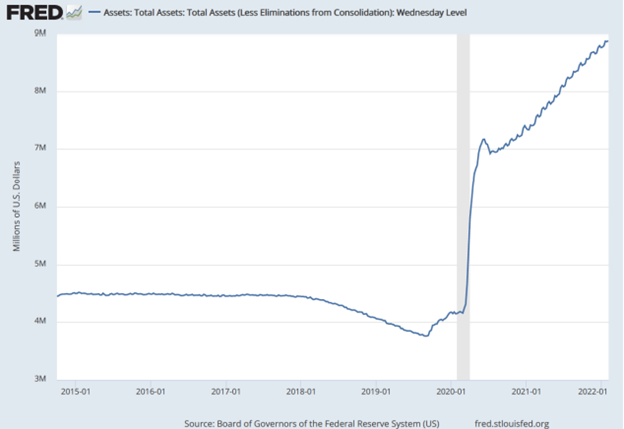
Although the media and headlines ignored the staggering repo crisis of September of 2019 as a minor “glitch in the plumbing,” it was, in fact, a neon flashing sign of a looming/brewing credit and (hence) financial crisis.
When US commercial banks in the autumn of 2019 were staring down the barrel of a rising USD and rising (i.e., unaffordable) interest rates, they stopped trusting each other’s collateral to make over-night loans.
As expected, the Fed stepped in as the lender of last resort and began mouse-clicking hundreds of billions of dollars out of thin air per month to backstop the bank(er)s who created the Fed back in 1913.
Such money printing explains the parabolic (and fatal) move up and to the right of the balance sheet plotted above.
That is, the Fed had to create money to buy its own Treasuries which foreign buyers no longer wanted.
But what almost no one is noticing today is that the problem’s facing the Fed and Uncle Sam’s otherwise unloved and unwanted IOUs in 2019 have only been made exponentially worse.
That is, the recent actions by the US and EU to Freeze Russian FX reserves for not towing the Western line is telegraphing to the rest of the world (i.e., China) not to trust US Treasuries.
Needless to say, if US Treasuries are now the ugliest girl at the global dance, who else is gonna buy them, and with what money?
The sad answer is simple: The Fed will buy them with more debased dollars created out of thin air.
Crazy?
Yep.
Recession and Leverage Ahead—Will Gold Rise?
Given the sad yet media-ignored fact that the US (with a debt to GDP ratio of 122%) is effectively broke yet spending like a teenager with Dad’s Amex card (nod to my son), the future, as well as policies ahead, are not hard to see.
It’s worth asking how US spending for entitlements, defense and treasury outlays will be paid for.
In short: Where will the money come from?
Will Uncle Sam cut spending?
Given that US spending accounts for 25% of its GDP, any spending cuts will put the US in recession for the simple reason that such cuts will send yields and rates up and hence bonds and stocks to the basement.
Can the US raise taxes? This too would only slow growth and invite recession.
Can the Fed raise rates to finance Uncle Sam’s deficits?
No, because his bar tab is too high to stomach rising rates, and that too triggers a recession and a debt crisis.
So, what can Uncle Sam do?
As realists rather than paid (i.e., censored) journalists, we here see only one or two obvious yet sad options ahead, all of which make an equally obvious case for a rise in gold.
First, it’s highly likely that the Fed will suspend SLR (Supplementary Leverage Ratios) previously imposed on commercial banks.
In plain English, this just means banks will be allowed to use more leverage to buy Uncle Sam’s debt from within at no charge.
No shocker there.
As we’ve written elsewhere, governmental guarantees of commercial bank lending are already in play –and this just means more leverage, more debt, more risk and more autocratic rather than natural markets.
In addition, expect more QE as well, which means the inherent value (as opposed to relative strength) of the USD, like all other fiat currencies, is getting weaker by each inflationary second, minute and hour.
Got gold?
LAWRIE WILLIAMS:
-END-
3. Chris Powell of GATA provides to us very important physical commentaries
We brought this major story to you yesterday but it is worth repeating. Saudi Arabia, angry at Biden is considering accepting yuan
instead of dollars for Chinese oil sales. That will defacto end the USA Petrodollar scheme
(Wall Street Journal/GATA)
Saudi Arabia considers accepting yuan instead of dollars for Chinese oil sales
Submitted by admin on Tue, 2022-03-15 10:08Section: Daily Dispatches
By Summer Said and Stephen Kalin
The Wall Street Journal
Tuesday, March 15, 2022
Saudi Arabia is in active talks with Beijing to price its some of its oil sales to China in yuan, people familiar with the matter said, a move that would dent the U.S. dollar’s dominance of the global petroleum market and mark another shift by the world’s top crude exporter toward Asia.
The talks with China over yuan-priced oil contracts have been off and on for six years but have accelerated this year as the Saudis have grown increasingly unhappy with decades-old U.S. security commitments to defend the kingdom, the people said.
The Saudis are angry over the U.S.’s lack of support for their intervention in the Yemen civil war and over the Biden administration’s attempt to strike a deal with Iran over its nuclear program. Saudi officials have said they were shocked by the precipitous U.S. withdrawal from Afghanistan last year.
China buys more than 25% of the oil that Saudi Arabia exports. If priced in yuan, those sales would boost the standing of China’s currency.
END
Ed Steer discusses the default that occurred in nickel on the London Metals Exchange
(Ed Steer/GATA)
GATA’s Steer discusses default in London Metals Exchange nickel contract
Submitted by admin on Tue, 2022-03-15 16:01Section: Daily Dispatches
4p ET Tuesday, March 15, 2022
Dear Friend of GATA and Gold:
GATA board member Ed Steer, interviewed by Jim Goddard for “This Week in Money” at HoweStreet.com, discusses the default of the nickel contract on the London Metals Exchange, as well as the action in the monetary metals. The interview starts at the 10:35 mark at HoweStreet.com here:
CHRIS POWELL, Secretary/Treasurer
Gold Anti-Trust Action Committee Inc.
CPowell@GATA.org
END
Craig Hemke goes over what I have been describing over the last three years: how spread trades/TAS are knocking gold down ahead of options expiry
(Craig Hemke/GATA)
Craig Hemke: How ‘spread’ trades are used to knock gold down ahead of option expiration
Submitted by admin on Tue, 2022-03-15 16:17Section: Daily Dispatches
4:25p ET Tuesday, March 15, 2022
Dear Friend of GATA and Gold:
The TF Metals Report’s Craig Hemke, writing today at Sprott Money, details how the “trade at settlement” mechanism appears to be heavily used by “spread” traders to knock the gold price down ahead of option expirations and contract rolls, as has just happened, to discourage traders from taking delivery of actual metal.
Hemke surmises that a similarly engineered smash will be unleashed around March 28.
His analysis is headlined “Updating Comex Gold Trade at Settlement” and it’s posted at Sprott MOney here:
https://www.sprottmoney.com/blog/Updating-COMEX-Gold-Trade-at-Settlement-March-15-2022
Today’s edition of Thom Calandra’s “The Calandra Report” quotes your secretary/treasurer about today’s odd rise in gold mining shares despite another day of pummeling to gold futures prices:
“‘I imagine it’s because the bullion banks executing government short trades in the gold and silver futures markets knew that today would be the last day of the big attack and they could make some quick money buying gold and silver mining shares at the bottom,’ he says from New England just now.
“‘Of course I’m a ‘conspiracy theorist’ who foolishly believes that government does things in secret and that there is some innocent if unknown reason why I’m not allowed to observe the trading rooms at the Federal Reserve Bank of New York and the Bank for International Settlements in Basel,’ he says.”
CHRIS POWELL, Secretary/Treasurer
Gold Anti-Trust Action Committee Inc.
CPowell@GATA.org
end
Another major story tonight. Russian Central bank suspends the buying of gold from banks allowing citizens to mop up the gold. It also means that Russia has accumulated enough gold for itself
Probably 2 to 3 times its official status of 2300 tonnes.
(Reuters)
Russian central bank leaves banking system’s gold for household demand
Submitted by admin on Tue, 2022-03-15 21:27Section: Daily Dispatches
From Reuters
Tuesday, March 15, 2022
The Russian central bank said it will suspend the buying of gold from banks from today to meet increased demand for the precious metal from households, its latest attempt to weather the storm on Russian markets in the face of Western sanctions.
he central bank raised the key rate to 20% from 9.5% on Feb. 28 as the rouble crashed to record lows and people rushed to withdraw money from banks after the West imposed unprecedented sanctions against Russia for what the Kremlin calls a “special operation” to disarm Ukraine. …
… For the remainder of the report:
END
4.OTHER GOLD/SILVER COMMENTARIES
huge story!!Putin has acquired sufficient gold for himself. How he wants his citizens to buy gold
(INTERFAX)
Russian Central Bank suspends purchasing gold from banks in order to meet population’s demand for it
MOSCOW. March 15 (Interfax) – The Central Bank of Russia (CBR) as of March 15, 2022, has suspended purchasing gold from credit institutions in order to create conditions to meet demand of the population, the regulator said in a statement.
“Demand on the part of the population for purchasing physical gold bullion has currently increased owing particularly to the removal of VAT on these transactions,” the CBR noted.
The CBR resumed purchasing gold on the domestic precious-metals market on February 28, 2022, nearly two years after having suspended the operations on April 1, 2020.
The CBR has been purchasing gold since 2014, and has been a leader among global central banks in terms of purchases.
end
(ZERO HEDGE/SAME STORY AS ABOVE)
So Many Russians Are Buying Gold That Central Bank Halts Bank Purchases
TUESDAY, MAR 15, 2022 – 11:00 PM
Russia’s central bank announced that it will suspend purchases of gold from banks due to overwhelming demand from households, Reuters reports. The purchasing pause will take effect Tuesday with no end date set.

“Currently, households’ demand for buying physical gold in bars has increased, driven, in particular, by the abolition of value-added tax on these operations,” reads a statement from the central bank.
On Feb. 28, the central bank raised the key rate from 9.5% to 20% as the ruble crashed to record lows amid the Kremlin’s so-called “special operation” in Ukraine. The announcement is a flip-flop from a February announcement that the financial authority would resume gold purchases after commercial banks were hit with Western sanctions in response to the invasion.
“With the goal of diversifying the central bank’s reserves, at the moment there is no sense in building up reserves in gold,” according to VTB analysts, who added that the banking sector’s structural liquidity deficit had contracted to under 4 trillion rubles (US$36 billion), down from a record 7 trillion rubles.
Before the rush into gold, many wealthy Russians had been purchasing luxury items such as watches and other jewelry in order to defend against the ruble’s tumble. While cryptos were also purchased aggressively, there is little insight into who much bitcoin Russians currently own.
Analysts from BCS suggested that the gold purchases will help reduce the amount of cash in circulation, and will help banks’ liquidity.
In lieu of funding via gold purchases, Russia’s central bank has been providing liquidity to banks through more conventional operations such as holding daily repo auctions at lending institutions. So far, these have proven sufficient.
end
THE CRADLE
A VERY IMPORTANT READ…
Say hello to Russian gold and Chinese petroyuan
The Russia-led Eurasian Economic Union and China just agreed to design the mechanism for an independent financial and monetary system that would bypass dollar transactions.

By Pepe Escobar
March 15 2022

Russia says half its gold assets were frozen – is this for real or a slick play by Moscow?
Photo Credit: The Cradle
It was a long time coming, but finally some key lineaments of the multipolar world’s new foundations are being revealed.
On Friday, after a videoconference meeting, the Eurasian Economic Union (EAEU) and China agreed to design the mechanism for an independent international monetary and financial system. The EAEU consists of Russia, Kazakhstan, Kyrgyzstan, Belarus and Armenia, is establishing free trade deals with other Eurasian nations, and is progressively interconnecting with the Chinese Belt and Road Initiative (BRI).
For all practical purposes, the idea comes from Sergei Glazyev, Russia’s foremost independent economist, a former adviser to President Vladimir Putin and the Minister for Integration and Macroeconomics of the Eurasia Economic Commission, the regulatory body of the EAEU.
Glazyev’s central role in devising the new Russian and Eurasian economic/financial strategy has been examined here. He saw the western financial squeeze on Moscow coming light-years before others.
Quite diplomatically, Glazyev attributed the fruition of the idea to “the common challenges and risks associated with the global economic slowdown and restrictive measures against the EAEU states and China.”
Translation: as China is as much a Eurasian power as Russia, they need to coordinate their strategies to bypass the US unipolar system.
The Eurasian system will be based on “a new international currency,” most probably with the yuan as reference, calculated as an index of the national currencies of the participating countries, as well as commodity prices. The first draft will be already discussed by the end of the month.
The Eurasian system is bound to become a serious alternative to the US dollar, as the EAEU may attract not only nations that have joined BRI (Kazakhstan, for instance, is a member of both) but also the leading players in the Shanghai Cooperation Organization (SCO) as well as ASEAN. West Asian actors – Iran, Iraq, Syria, Lebanon – will be inevitably interested.
In the medium to long term, the spread of the new system will translate into the weakening of the Bretton Woods system, which even serious US market players/strategists admit is rotten from the inside. The US dollar and imperial hegemony are facing stormy seas.
Show me that frozen gold
Meanwhile, Russia has a serious problem to tackle. This past weekend, Finance Minister Anton Siluanov confirmed that half of Russia’s gold and foreign reserves have been frozen by unilateral sanctions. It boggles the mind that Russian financial experts have placed a great deal of the nation’s wealth where it can be easily accessed – and even confiscated – by the “Empire of Lies” (copyright Putin).
At first it was not exactly clear what Siluanov had meant. How could the Central Bank’s Elvira Nabiulina and her team let half of foreign reserves and even gold be stored in Western banks and/or vaults? Or is this some sneaky diversionist tactic by Siluanov?
No one is better equipped to answer these questions than the inestimable Michael Hudson, author of the recent revised edition of Super Imperialism: The Economic Strategy of the American Empire.
Hudson was quite frank: “When I first heard the word ‘frozen,’ I thought that this meant that Russia was not going to expend its precious gold reserves on supporting the ruble, trying to fight against a Soros-style raid from the west. But now the word ‘frozen’ seems to have meant that Russia had sent it abroad, outside of its control.”
Essentially, it’s all still up in the air: “My first reading assumed that Russia must be doing something smart. If it was smart to move gold abroad, perhaps it was doing what other central banks do: ‘lend” it to speculators, for an interest payment or fee. Until Russia tells the world where its gold was put, and why, we can’t fathom it. Was it in the Bank of England – even after England confiscated Venezuela’s gold? Was it in the New York Fed – even after the Fed confiscated Afghanistan’s reserves?”
So far, there has been no extra clarification either from Siluanov or Nabiulina. Scenarios swirl about a string of deportations to northern Siberia for national treason. Hudson adds important elements to the puzzle:
“If [the reserves] are frozen, why is Russia paying interest on its foreign debt falling due? It can direct the “freezer’ to pay, to shift the blame for default. It can talk about Chase Manhattan’s freezing of Iran’s bank account from which Iran sought to pay interest on its dollar-denominated debt. It can insist that any payments by NATO countries be settled in advance by physical gold. Or it can land paratroopers on the Bank of England, and recover gold – sort of like Goldfinger at Fort Knox. What is important is for Russia to explain what happened and how it was attacked, as a warning to other countries.”
As a clincher, Hudson could not but wink at Glazyev: “Maybe Russia should appoint a non-pro-westerner at the Central Bank.”
The petrodollar game-changer
It’s tempting to read into Russian Foreign Minister Sergey Lavrov’s words at the diplomatic summit in Antalya last Thursday a veiled admission that Moscow may not have been totally prepared for the heavy financial artillery deployed by the Americans:
“We will solve the problem – and the solution will be to no longer depend on our western partners, be it governments or companies that are acting as tools of western political aggression against Russia instead of pursuing the interests of their businesses. We will make sure that we never again find ourselves in a similar situation and that neither some Uncle Sam nor anybody else can make decisions aimed at destroying our economy. We will find a way to eliminate this dependence. We should have done it long ago.”
So, “long ago” starts now. And one of its planks will be the Eurasian financial system. Meanwhile, “the market” (as in, the American speculative casino) has “judged” (according to its self-made oracles) that Russian gold reserves – the ones that stayed in Russia – cannot support the ruble.
That’s not the issue – on several levels. The self-made oracles, brainwashed for decades, believe that the Hegemon dictates what “the market” does. That’s mere propaganda. The crucial fact is that in the new, emerging paradigm, NATO nations amount to at best 15 percent of the world’s population. Russia won’t be forced to practice autarky because it does not need to: most of the world – as we’ve seen represented in the hefty non-sanctioning nation list – is ready to do business with Moscow.
Iran has shown how to do it. Persian Gulf traders confirmed to The Cradle that Iran is selling no less than 3 million barrels of oil a day even now, with no signed JCPOA (Joint Comprehensive Plan of Action agreement, currently under negotiation in Vienna). Oil is relabeled, smuggled, and transferred from tankers in the dead of night.
Another example: the Indian Oil Corporation (IOC), a huge refiner, just bought 3 million barrels of Russian Urals from trader Vitol for delivery in May. There are no sanctions on Russian oil – at least not yet.
Washington’s reductionist, Mackinderesque plan is to manipulate Ukraine as a disposable pawn to go scorched-earth on Russia, and then hit China. Essentially, divide-and-rule to smash not only one but two peer competitors in Eurasia who are advancing in lockstep as comprehensive strategic partners.
All the blather about “crashing Russian markets,” ending foreign investment, destroying the ruble, a “full trade embargo,” expelling Russia from “the community of nations,” and so forth –that’s for the zombified galleries. Iran has been dealing with the same thing for four decades, and survived.
Historical poetic justice, as Lavrov intimated, now happens to rule that Russia and Iran are about to sign a very important agreement, which may likely be an equivalent of the Iran-China strategic partnership. The three main nodes of Eurasia integration are perfecting their interaction on the go, and sooner rather than later, may be utilizing a new, independent monetary and financial system.
But there’s more poetic justice on the way, revolving around the ultimate game-changer. And it came much sooner than we all thought.
Saudi Arabia is considering accepting Chinese yuan – and not US dollars – for selling oil to China. Translation: Beijing told Riyadh this is the new groove. The end of the petrodollar is at hand – and that is the certified nail in the coffin of the indispensable Hegemon.
Meanwhile, there’s a mystery to be solved: where is that frozen Russian gold?
5.OTHER COMMODITIES/
end
NICKEL UPDATE
LME reopens at the lower limit and then proceeds even below the limits which should not have happened. The exchange was halted and trades cancelled
still a mess
(zerohedge)
LME Re-Opens Nickel Trading; Quickly Halts Again On Limit-Down Band “System Error”
WEDNESDAY, MAR 16, 2022 – 07:28 AM
Update (0650ET): “What a debacle,” said Ole Hansen, head of commodities strategy at Saxo Bank A/s. “The LME is not doing itself any favors.”
After reopening the LME for nickel trading this morning, following the bailout of Chinese commodity tycoon Xiang Guangda, the Chinese-owned (HKEX) exchange was forced to suspend trading soon after the open due to a “system error” which had led to some trades to be executed below the new price limits laid out by the exchange.
As Bloomberg reports, only 206 lots, or 1,236 tons of nickel, changed hands before the market stopped trading within seconds on Wednesday morning. Most of those trades took place at the limit price of $45,590 a ton. Several trades appeared to be at prices below the 5% limit.
“In some sense it went as expected, in that we all expected it to fall, but it was just a question of how quickly,” Colin Hamilton, managing director for commodities research at BMO Capital Markets, said by phone from London.

The LME introduced price limits before reopening today to prevent a repeat of the chaos last Tuesday, when it suspended trading as prices roared to record highs above $100,000 a tonne. In a statement the exchange said:
“As the market opened, the uncrossing algorithm discovered an opening price of $45,590 (which was the lower daily price limit, i.e. 5% below the prices published in Notice 22/067) for 3-month Nickel.
“Unfortunately due to a systems error, LMEselect then allowed a small number of trades to be executed below this lower daily price limit.
“The LME immediately decided to suspend Nickel trading on LMEselect while the system error is investigated.”
The LME said that all nickel trades executed at the lower price on LMEselect, its trading system, would now be cancelled.
This ‘cancellation’ decision follows the highly controversial move from the LME to cancel $3.9bn worth of trades last Tuesday as the market surged.
* * *
As Emel Khan detailed for The Epoch Times earlier, Nickel trading resumed on the London Metal Exchange (LME) on March 16 after being suspended for more than a week.
The exchange took an unprecedented step to halt trading in the nickel market on March 8 after a Chinese metal tycoon faced billions of dollars in losses due a large short position.
Last week, nickel’s price skyrocketed, crossing the $100,000-a-ton mark for the first time. This was a big spike compared to the prices that averaged $24,016 per metric ton in February. The extreme volatility forced the LME to suspend trading for the first time since 1988.
The base metal is an increasingly important component in the production of next-generation electric vehicle batteries for companies like Tesla. Advocates of green energy push see rising nickel prices as a threat to President Joe Biden’s climate agenda.
To avoid large swings in price, the exchange also announced that it would apply daily upper and lower price limits.
The huge spike in nickel price last week was mainly driven by a short squeeze centered on Chinese tycoon Xiang Guangda, founder of Tsingshan Holding Group, one of the world’s biggest nickel and stainless steel producers.
Nicknamed “Big Shot” in China, Xiang is known for having confidence in making huge bets, according to Bloomberg. He believes that the prices of nickel would fall due to a dramatic increase in supplies. Many hedge fund managers, however, don’t share the same view.
When nickel’s trading price surged dramatically last week, Tsingshan struggled to pay margin calls, putting its creditors in a difficult position. The price rise was further fueled as brokers and bankers of Tsingshan rushed to buy back nickel contracts to stem losses. The exchange stopped nickel trading after several small brokers claimed that they would default if prices remained at record levels, according to a Wall Street Journal article.

A journalist poses with their glasses while looking at a computer screen with the Bloomberg display showing a one-day view of the rise and fall in the value of the nickel, in London on March 8, 2022. (Ben Stansall/AFP via Getty Images)
Matthew Chamberlain, CEO of LME, defended the exchange’s decision to suspend nickel trading, saying that it was the right thing for the long-term stability of the market.
“It would have been extremely difficult for some of our market participants to continue their activities,” Chamberlain said in an interview with Bloomberg. “The ability of the financial system to get that money to the members in London and then into the exchange I think would have been significantly stressed.”
According to Financial Times, the exchange canceled all 5,000 nickel trades worth nearly $4 billion that had been executed on March 8.
LME Frustrates Traders
The exchange came under fire for undermining free markets and causing moral hazard. The LME’s move has angered some market participants who have lost out on profits from the cancellation of trade.
Clifford Asness, co-founder of AQR Capital Management that oversees $140 billion in funds, accused LME on Twitter.
“Stealing money from market participants trading in good faith and giving it to Chinese nickel producers and their banks—who could have absorbed the losses–yea, integrity,” he wrote.
“For the LME to cancel nickel trades between willing buyers and sellers is unforgiveable. UNFORGIVEABLE,” Mark Thompson, a metals trader and executive vice chairman at Tungsten West Ltd., wrote on Twitter.
LME’s decision to shut down trading “is going to be litigated for a long time,” according to Christopher Balding, a China economist and a senior fellow at the Henry Jackson Society.
“Let me repeat that: the LME a major global commodity exchange shut down trading in nickel so a Chinese company wouldn’t go bankrupt,” he wrote on Twitter.
“Because the Hong Kong Exchange OWNS the London Metals Exchange, and guess who owns HKEX? First letter is a C third letter is a P won’t tell you the middle one,” he wrote, implying that the Chinese Communist Party (CCP) might be involved in the bailout of the Chinese tycoon.
The Hong Kong stock exchange has owned the London Metal Exchange since 2012.

People walk past a bank’s electronic board showing the Hong Kong share index at Hong Kong Stock Exchange, on March 9, 2022. (Vincent Yu/AP Photo)
Tsingshan has reportedly reached a deal with its bankers and brokers, including JPMorgan Chase and Standard Chartered to avoid defaulting on its margin calls. According to media reports, the agreement has given Tsingshan and its creditors time to hammer out a deal on a new credit facility for the payment of margin.
It’s unclear whether the CCP was involved in these discussions and pressured the LME or Tsingshan’s banks to take action to save the Chinese company.
The banks are taking a longer view as they think it is a temporary anomaly, according to a senior executive at an investment management firm in New York who wished to remain anonymous.
“They don’t want to bust a perfectly healthy company in a normal situation and lose a revenue stream because they’re providing ongoing lending and brokerage services,” he told The Epoch Times.
According to ING Bank, nickel has been trading in crisis mode and fundamentals “do not justify this frenzy.”
“It remains to be seen how this crisis ends,” Wenyu Yao, senior commodities strategist at ING wrote in a recent note.
“However, the market has long been faced with structural issues. In particular, the exchange tradable/deliverable nickel is only around a quarter of global saleable nickel. But the supply growth is increasingly dominated by non-exchange deliverable nickel such as NPI or matte. This suggests that the underlyings behind the exchange nickel are increasingly decoupling from the real market.”
END
6.CRYPTOCURRENCIES
7. GOLD/ TRADING TODAY
Your early currency/gold and silver pricing/Asian and European bourse movements/ and interest rate settings WEDNESDAY morning 7:30 AM
ONSHORE YUAN: CLOSED UP 6.34950
OFFSHORE YUAN: 6.3657
HANG SANG CLOSED DOWN 1672. PTS OR 9.08%
2. Nikkei closed UP 415.53 PTS 1.64%
3. Europe stocks ALL GREEN
USA dollar INDEX DOWN TO 98.52/Euro RISES TO 1.1012-
3b Japan 10 YR bond yield: FALLS TO. +.204/ !!!!(Japan buying 100% of bond issuance)/Japanese yen vs usa cross now at 118.23/ THIS IS TROUBLESOME AS BANK OF JAPAN IS RUNNING OUT OF BONDS TO BUY./JAPAN 10 YR YIELD IS NOW TARGETED AT .11%/JAPAN LOSING CONTROL OF THEIR BOND MARKET//
3c Nikkei now ABOVE 17,000
3d USA/Yen rate now well below the important 120 barrier this morning
3e WTI:: 96,62 and Brent: 99.65–
3f Gold UP /JAPANESE Yen UP CHINESE YUAN: ON -SHORE CLOSED UP// OFF- SHORE UP
3g Japan is to buy the equivalent of 108 billion uSA dollars worth of bond per month or $1.3 trillion. Japan’s GDP equals 5 trillion usa./“HELICOPTER MONEY” OFF THE TABLE FOR NOW /REVERSE OPERATION TWIST ON THE BONDS: PURCHASE OF LONG BONDS AND SELLING THE SHORT END
Japan to buy 100% of all new Japanese debt and by 2018 they will have 25% of all Japanese debt. Fifty percent of Japanese budget financed with debt.
3h Oil DOWN for WTI and DOWN FOR Brent this morning
3i European bond buying continues to push yields lower on all fronts in the EMU. German 10yr bund RISES TO +.0.393%/Italian 10 Yr bond yield RISES to 1.92% /SPAIN 10 YR BOND YIELD RISES TO 1.34%…ITALIAN 10 YR BOND YIELD/GERMAN BUND: 1.63: DANGEROUS FOR THE ITALIAN BANKING SYSTEM
3j Greek 10 year bond yield FALLS TO : 2.66
3k Gold at $1920.40 silver at: 24.87 7 am est) SILVER NEXT RESISTANCE LEVEL AT $30.00
3l USA vs Russian rouble;// Russian rouble DOWN 2.00/100 in roubles/dollar; ROUBLE AT 108.21
3m oil into the 94 dollar handle for WTI and 96 handle for Brent/
3n Higher foreign deposits out of China sees huge risk of outflows and a currency depreciation. This can spell financial disaster for the rest of the world/
JAPAN ON JAN 29.2016 INITIATES NIRP. THIS MORNING THEY SIGNAL THEY MAY END NIRP. TODAY THE USA/YEN TRADES TO 118.23 DESTROYING JAPANESE CITIZENS WITH HIGHER FOOD INFLATION
30 SNB (Swiss National Bank) still intervening again in the markets driving down the FRANC. It is not working: USA/SF this morning .9400– as the Swiss Franc is still rising against most currencies. Euro vs SF 1.0351 well above the floor set by the Swiss Finance Minister. Thomas Jordan, chief of the Swiss National Bank continues to purchase euros trying to lower value of the Swiss Franc.
USA 10 YR BOND YIELD: 2.179 UP 2 BASIS PTS
USA 30 YR BOND YIELD: 2.4855 UP 1 BASIS PTS
USA DOLLAR VS TURKISH LIRA: 14.70
Futures Surge On Beijing Market Rescue, Ukraine Ceasefire Hopes As Fed Rate Hike Looms
WEDNESDAY, MAR 16, 2022 – 07:50 AM
Normally, the first rate hike in more than four years meant to spark a “shallow” recession and destroy commodity demand would not be viewed positively by markets (unless it leads to another mega QE, which it will), but today is an exception with global stocks and US futures surging after the Kremlin hinted at progress in peace talks with Ukraine, adding to positive sentiment stoked by China’s vow to stabilize its battered markets which sent Hong Kong stocks soaring by the most on record.
At 730am, S&P futures are up 1.3%, with Nasdaq futs +1.8% outperforming amid overnight tech action, influencing European sectors, on the back of China’s jawboning stocks higher and constructive commentary from Ukraine’s Zelensky and Russia’s Lavrov. European bourses are also firmer across the board, Euro Stoxx 50 +3.3%, after a firmer handover from the Asia session and on geopolitical optimism. Treasuries were steady and the dollar slipped ahead of the Federal Reserve rates decision. In FX, DXY reels amid support for EUR on yield action ahead of noted EUR/USD option interest at the NY cut. Core debt is depressed, with yields continuing to climb and the German 10yr through 38bps. WTI and Brent are consolidating and have most recently dipped into negative territory as premia unwinds.

Tech companies led the US premarket gains, with Tesla rising 3.3% while U.S.-listed Chinese stocks rebounded from a steep selloff after China’s promise to boost financial markets and stimulate economic growth. ADRs of Alibaba and Baidu were both up at least 20% in premarket trading, while Didi Global Inc. jumped more than 40%. Other notable premarket movers:
- Electric vehicle stocks climb in premarket trading as Chinese automaker BYD follows Tesla in hiking car prices due to surging raw material costs. Lucid +3.3% (LCID US); Rivian +3.1% (RIVN US); Tesla +2.5% (TSLA US); Nikola +2.3% (NKLA US).
- U.S.-listed casino operators with exposure to Macau jump in premarket trading as Asian and European stocks rally after a pledge from China to keep capital markets stable. Las Vegas Sands (LVS US) +7.5%.
- Smartsheet (SMAR US) shares dropped 5.3% in U.S. postmarket trading on Tuesday after the software company reported its fourth-quarter results, with analysts flagging that the firm’s plans to increase investments weighed despite a robust set of earnings.
- CarParts.com (LOTZ US) fell 14% in extended trading Tuesday after the company said Lev Pekerwill step down as CEO and director effective on April 15.
In addition to closely watching progress in talks between Ukraine and Russia, which are set to resume, all eyes today will be on the Federal Reserve’s meeting, where policy makers are widely expected to kick off a rate-hiking cycle to tackle red-hot inflation (see our preview here),
“We will be closely watching the Fed’s dot plot, which we expect to signal five or six interest-rate hikes this year, more than December’s projections but in line with market expectations,” wrote Lauren Goodwin, portfolio strategist at New York Life Investments. “A dot plot projecting more hiking would likely be a hawkish signal and could result in an earlier yield curve inversion.”
John Stoltzfus, chief investment strategist at Oppenheimer Asset Management, said he expected five to six quarter-point increases this year. “The equity market is likely to digest a 25-basis point hike easily with enough market participants expecting it to temper the consumer demand that has been fueling higher prices for many goods,” he wrote in a note. “The risk of additional commodity price inflation notwithstanding, we expect the Fed to remain sensitive to the implications for U.S. economic health.”
“The market was indeed oversold, irrational, in the dramatic rout, so real money is back doing bottom fishing,” said Castor Pang, head of research at Core Pacific Yamaichi.
Here is a snapshot of some of the latest Russia headlines:
- Ukrainian President Zelensky stated that the positions of Ukraine and Russia at negotiations sound more realistic, but more time is still needed and noted that Ukraine must recognise it will not join NATO.
- Russian Foreign Minister Lavrov says peace talks with Ukraine are not easy but there is some hope for a compromise. Ukraine’s neutral status is being seriously discussed and some formulations of agreements with Ukraine are nearing being agreed.
- Subsequently, Russian negotiator says that negotiations with Ukraine are slow and difficult, Russia sincerely wishes for peace soon, according to Interfax.
- Russia’s Kremlin says the idea of creating a demilitarised Ukraine, like an Austria/Sweden model, could be seen as a compromise.
In Europe, the technology, consumer and travel industries led the Stoxx Europe 600 Index up 2%. Prosus jumped a record 20% in Amsterdam. By contrast, Avast slumped 14% in London, its biggest drop in more than two years. European tech shares lead a rebound in the broader market Wednesday, as a pledge from Beijing to stabilize financial markets and support overseas listings helps boost appetite for risk; the Stoxx Tech Index rose as much as 5%. Food delivery stocks also soared, with Just Eat +7.4%, Deliveroo +6.1%, Delivery Hero +7%, HelloFresh +6.3%. Semiconductor stocks were also higher with Soitec +6%, BE Semi +5.6%, ASM International +4.9%, ASML +4.3%.
Asian stocks climbed, headed for their first gain in four sessions, as Chinese shares staged a strong rebound after the nation vowed to keep its equity market stable and support overseas share listings. The MSCI Asia Pacific Index rallied as much as 3.3%, poised for its biggest increase since 2020. A gauge of Chinese firms listed in Hong Kong jumped by the most since 2008, while the Hang Seng Tech index added a record 20%.

Tencent, Alibaba Group and Meituan were the biggest contributors to the regional gauge’s advance, each rising at least 23%. The sharp rebound came after Chinese shares were mired in a deep selloff amid worries related to Beijing’s ties with Russia and delisting risks for Chinese stocks traded in the U.S. A comprehensive statement by the State Council addressing investors’ concerns over Beijing’s tech crackdown and property woes lifted sentiment significantly (more here).
The market believes “this is a solid bottom, so many are buying back shares rapidly” following the positive signal by the regulators, said Castor Pang, head of research at Core Pacific Yamaichi. “The market was indeed oversold and irrational in the dramatic rout, so real money is back doing bottom fishing.” Asian investors also awaited the Federal Reserve’s statement after its two-day meeting, which is expected to raise interest rates for the first time in three years to cool surging prices, despite growth risks stemming from the Russia-Ukraine war. The outcome from diplomatic talks between Russia and Ukraine on Wednesday is also on the watch list
In rates, treasuries beyond the front end remain slightly cheaper after paring declines during European session. Yields are higher by 1.7bp in 7-year sector, where underperformance further cheapens the 2s7s30s fly; it exceeded 0bp for first time since March 1. Thirty-year Treasury yields climbed to the highest level since mid-2019 before paring. 10-year yield, higher by 1.8bp at ~2.16%, outperforms bunds by 4bp with Euro Stoxx 50 higher by 3.6% vs 1.2% for S&P 500 futures. Focal points of U.S. session include FOMC rate decision and Chair Powell’s press conference 30 minutes later.
In FX, the Bloomberg Dollar Spot Index fell a second day as the greenback weakened against all of its Group-of-10 peers apart from the yen. The euro rose above $1.10 and European benchmark yields rose, with Bunds underperforming euro- area peers. Sweden’s krona soared to more than a one-month high versus the euro after Riksbank Governor Stefan Ingves said the Swedish central bank will probably have to raise interest rates earlier than its previous timeline of 2024. The Norwegian krone, the Australian and Canadian dollars were also among the best G-10 performers, supported by China’s vows to stabilize the stock market. Hedging sterling overnight comes at the highest cost since late 2020 as war premiums meet event risks stemming from the upcoming Federal Reserve and Bank of England meetings. Australia’s bonds gained after weak second-tier data, while New Zealand’s notes fell after data showed the current- account deficit to be at its widest since 2009. The yen was little changed following a seven-day slide. Japan ran a trade deficit for a seventh month in February at 668.3 billion yen ($5.8 billion) after recording the second-largest deficit on record in January. Oil prices surged about 8.6% last month.
In commodities, crude futures drift higher, WTI adds ~2%, regaining a $98-handle, Brent holds near $102.50. LME nickel dropped by the new 5% exchange limit on the resumption of trade, most other base metals trade in positive territory. Spot gold trades a narrow range near $1,920/oz. In crypto, bitcoin has recouped from overnight pressure and is holding onto the USD 40k mark once more. Japan’s crypto authority could announce a relaxation of coin listing rules next week.
Looking ahead at today’s data releases, retail sales, business inventories and the NAHB Housing Market Index will be due in the US. Elsewhere, CPI and wholesale trade sales will be released in Canada. Earnings include Lennar, E.ON and Inditex. But all eyes on the Fed.
Market Snapshot
- S&P 500 futures up 0.9% to 4,302.00
- STOXX Europe 600 up 2.2% to 444.48
- MXAP up 3.3% to 171.08
- MXAPJ up 4.2% to 554.77
- Nikkei up 1.6% to 25,762.01
- Topix up 1.5% to 1,853.25
- Hang Seng Index up 9.1% to 20,087.50
- Shanghai Composite up 3.5% to 3,170.71
- Sensex up 1.4% to 56,541.13
- Australia S&P/ASX 200 up 1.1% to 7,175.24
- Kospi up 1.4% to 2,659.23
- German 10Y yield little changed at 0.40%
- Euro up 0.4% to $1.1002
- Brent Futures up 3.2% to $103.14/bbl
- Gold spot down 0.1% to $1,915.81
- U.S. Dollar Index down 0.43% to 98.67
Top Overnight News from Bloomberg
- Ukrainian President Volodymyr Zelenskiy said Russia’s “positions in the negotiations sound more realistic” as the two sides are scheduled for another round of talks on Wednesday. Russian Foreign Minister Sergei Lavrov also said there is some hope for compromise, but progress remains difficult
- The Federal Reserve is poised to raise interest rates Wednesday for the first time since 2018, with investors focused on how aggressive central bankers plan to be in tackling the hottest inflation in four decades
- Currency speculators are looking less convinced that recent dollar strength, which has been spurred by war-related haven flows and expectations for Federal Reserve policy tightening, can run much further. Leveraged funds have cut their overall long positions against major-currency peers by more than two-thirds so far this year
- In the years following the financial crisis, the Bank of England stuck resolutely to easy money while fiscal policy got tough when Chancellor of the Exchequer George Osborne imposed swingeing budget cuts. But as the economy grapples with the highest inflation level in three decades and the fallout from the war in Ukraine, it’s BOE Governor Andrew Bailey who’s playing the bogeyman
- Russia spent years building a giant stash of gold, an asset that central banks can turn to during a crisis. But any attempt to sell it will now be a challenge just when it’s needed most
- The London Metal Exchange halted electronic trading in nickel minutes after it restarted, citing a technical issue with its new daily limit, as prices plunged when the market opened after a week-long suspension.
A more detailed look at global markets courtesy of Newsquawk
APAC stocks gained after Wall St closed at session highs amid a rally in growth stocks and retreat in oil prices below USD 100/bbl. ASX 200 was underpinned with all sectors in the green and the index led by tech following the duration bias stateside.
Nikkei 225 gained amid expectations for Japanese PM Kishida to order the compilation of additional stimulus. Hang Seng and Shanghai Comp. were positive amid a rebound from the tech rout and as local press suggested continued possibility of a rate cut with gains exacerbated after China’s State Council vowed to keep stock markets stable.
Top Asian News
- Foxconn Partly Restarts Shenzhen iPhone Hub Hit by Lockdown
- IPhone Assembler Hon Hai Beats Estimates on Holiday Demand
- China CBIRC to Unveil Policies to Bolster Capital Markets
- China’s Strong Growth Data Questioned, Mocked on Social Media
European bourses are firmer across the board, Euro Stoxx 50 +3.3%, after a firmer Wall St/APAC handover amid some constructive Russia-Ukraine commentary. In-fitting with this, sectors are all in the green with cyclicals outperforming and defensives lagging, but still positive, influenced by Tech amid APAC performance. Stateside, US futures are firmer across the board, NQ +1.9% outperforms, in-fitting with sectors, but attention does turn to the sessions’ FOMC announcement. Tesla (TSLA) is suspending production at its Shanghai factory for two days, amid COVID related restrictions via Reuters citing an internal notice
Top European News
- EQT Inks Private Equity’s Boldest Asia Move With Baring Deal
- MFE Bid for Mediaset Espana Is Just the Beginning: Analysts
- Germany’s Coalition at Odds Over Response to Energy Crisis
- Shell Is Said to Vie With Adani, Greenko for Actis’s Sprng
In FX, Aussie regroups on multiple props including recovery in iron ore and renewed risk appetite to probe technical resistance ahead of 0.7250 vs its US rival where the 21 DMA resides. Euro retests 1.1000 against the Dollar amidst reversion to pronounced bear-steepening in EGBs, but decent option expiry interest at the round number may thwart again (1.23bln for NY cut). Loonie rebounds in advance of Canadian CPI that comes alongside US retail sales and before FOMC, USD/CAD pivoting 1.2750 and DXY drifting down from 99.000. Yen undermined by risk on flows and wider than forecast Japanese trade deficit, USD/JPY back up in proximity of circa 118.45 peak. Yuan pares recent losses as China’s State Council promises to stabilise stocks and Vice Premier pledges measures to support the economy; USD/CNH around 6.3650 vs 6.4100+ at one stage yesterday.
In commodities, WTI and Brent are consolidating and have most recently dipped into negative territory amid the latest Russia- Ukraine updates removing further geopolitical-premia. A move that has seen the benchmarks dip further below USD 95.00/bbl and USD 99.00/bbl respectively. US Energy Inventory Data Expectations (bbls): Crude +3.8mln (exp. -1.4mln), Cushing +2.3mln, Gasoline -3.8mln (exp. -1.6mln), Distillate +0.9mln exp. -1.8mln) IEA OMR: lowers 2022 demand growth forecast by 950k BPD to 2.1mln BPD for an average of 99.7mln BPD, details available here. LME says that amid a system error, a small number of trades were executed below the lower daily price limit for Nickel, such trades executed on LMESelect will be cancelled; after LME Nickel resumed and hit limit down
US Event Calendar
- 7am: March MBA Mortgage Applications, prior 8.5%
- 8:30am: Feb. Import Price Index YoY, est. 11.3%, prior 10.8%
- 8:30am: Feb. Import Price Index ex Petroleu, est. 0.8%, prior 1.4%
- 8:30am: Feb. Import Price Index MoM, est. 1.6%, prior 2.0%
- 8:30am: Feb. Retail Sales Control Group, est. 0.3%, prior 4.8%
- 8:30am: Feb. Retail Sales Ex Auto and Gas, est. 0.4%, prior 3.8%
- 8:30am: Feb. Retail Sales Ex Auto MoM, est. 0.9%, prior 3.3%
- 8:30am: Feb. Export Price Index YoY, est. 14.4%, prior 15.1%
- 8:30am: Feb. Export Price Index MoM, est. 1.2%, prior 2.9%
- 8:30am: Feb. Retail Sales Advance MoM, est. 0.4%, prior 3.8%
- 10am: Jan. Business Inventories, est. 1.1%, prior 2.1%
- 10am: March NAHB Housing Market Index, est. 81, prior 82
- 2pm: March FOMC Rate Decision
DB ‘s Jim Reid concludes the overnight wrap
I’ve been working in financial markets for 27 years and I’ve really only seen three Fed hiking cycles so today is a big day as the Fed will likely kick off my fourth with a 25bps move. Ironically I’ll also be picking up my first pair of varifocal glasses today which means at least I’ll be able to read the small print in the release. Another sign of age to go alongside the two bad knees and bad back.
Our economists expect (full preview here) the Fed to raise rates by 25bps, taking a first step in what they anticipate will be a series of rate hikes which will raise the fed funds rate by +175bps by the end of the year. On the dot plot, the team expects the median dot to show six rate hikes this year, with policy rates reaching and perhaps passing estimates of neutral by 2024. Despite the uncertainty garnered by the war in Europe, they expect Chair Powell to maintain a hawkish tone and reiterate the Fed’s commitment to fighting inflation this year.
On the balance sheet, our US econ team believes the Fed will release their plans for QT at today’s meeting, which they dive into detail on with Tim Wessel from my team here). In short, they expect the Fed will start QT in June, with the balance sheet shrinking by around $3 trillion until early 2025.
The Fed will be attempting to wrestle the narrative back from geopolitics, which has been and will likely be the predominant market story for a time. On that front, DB has compiled a research compendium on all things Russia-Ukraine conflict related as it enters its fourth week, link here. The piece has links to numerous DB publications on the implications and what it means for economics and various asset prices.
Turning to yesterday’s news from the conflict, western countries and Russia exchanged a new set of sanctions. In particular, the EU approved its fourth package of sanctions, which notably features a ban on new investments in the energy sector in Russia and limits exports of various equipment and technology goods. Russia also submitted a request to leave the Council of Europe.
However, risk sentiment was buoyed later in the New York session when a senior aide to President Zelenksy noted that Russia had softened their negotiation stance, and that talks between representatives have become “more constructive”. President Zelensky for his part noted the negotiations were difficult but signalled there was room for compromise. Meanwhile, President Biden will travel to Europe next week to meet with NATO allies at a summit of European Union leaders. The US also announced another tranche of aid for Ukraine.
On commodities, Sergei Lavrov, Russian Foreign Minister, said that sanctions imposed on Russia will not prevent it from cooperating with Iran, and the US confirmed it would not sanction activity covered under a renewed nuclear deal, which was an important hurdle for progress on a deal, potentially enabling Iranian oil supply to return to market. This drove crude futures lower with WTI (-6.38%) and Brent (-6.54%) both closing below $100 even if the later has edge back above that landmark this morning. Since hitting their intraday peak last Tuesday, WTI and Brent futures are now both down -25%.
In Europe, equities posted modest losses, with the STOXX 600 dropping -0.28%. Though in the US, risk sentiment pushed indices into the green, with the S&P 500 gaining +2.14% on a broad-based gain that saw 446 companies finish the day in positive territory, the third highest reading this year. Mega-cap shares did particularly well, as the FANG+ index climbed +3.13%. Only the energy sector declined in the S&P 500, falling -3.73%, on the back of falling oil prices and a recent run of outperformance. The broad rally coincided with the VIX falling below 30ppts, dropping -1.94ppts to 29.83ppts, for the first time since the last week of February.
Sovereign bond yields were also less volatile than in recent sessions. European yields dropped across the board, with 10yr bund, OAT, and BTP yields falling -3.5bps, -2.8bps, and -6.5bps, respectively. Falling breakevens led the move with the large drop in oil, with 10yr German breakevens sliding -8.7bps. Treasury yields posted modest increases ahead of today’s FOMC meeting, with 10yr yields climbing +1.1bps. They are fairly flat overnight.
Another story that hit the wires yesterday suggested that Saudi Arabia was considering accepting payments denominated in renminbi instead of US dollars for its oil exports to China. The news led to a renminbi appreciation against the dollar but it is still unclear what the long-term implications may be. It comes at a time when Saudi-US relations are strained, so it is not clear how much the headlines are political maneuvering versus legitimate signs of international trade and finance trying to wean itself of dollar dependence in light of the historic economic sanctions the US and allies brought to bear against Russia. After all, stories of the dollar’s demise as the pre-eminent global reserve currency have been around almost as long as the dollar has been the pre-eminent global reserve currency. More directly, Saudi Arabia maintains a dollar peg, so some level of dollar dependence will persist in the kingdom. Nevertheless, one to watch over the medium term.
Overnight in Asia, equities are up after strong gains on Wall Street with the Hang Seng (+3.21%) leading the way across the region as beaten up Chinese tech stocks have rebounded. Elsewhere, the Nikkei (+1.48%) and Kospi (+0.95%) are both up while gains in mainland Chinese stocks are more muted with the Shanghai Composite (+0.04%) and CSI (+0.49%) slightly higher as the nation grapples with its most severe Covid outbreak. Shanghai state officials yesterday downplayed the possibility of implementing a full lockdown for now but urged its financial and business district workers to work from home. Moving ahead, US equity futures indicate a steady start with contracts on the S&P 500 (-0.05%) Nasdaq (+0.13%) close to unchanged. US bond yields are steady.
Elsewhere, President Biden’s nomination for the Vice Chair of Supervision at the Fed, Sarah Bloom Raskin, withdrew her nomination as it became clear that she would not receive the necessary Senate votes to be confirmed.
In data, US PPI that came at +0.8% vs expectations of +0.9%, while the numbers ex-food and energy increased +0.2% versus expectations of +0.6% increase.
Looking ahead at today’s data releases, retail sales, business inventories and the NAHB Housing Market Index will be due in the US. Elsewhere, CPI and wholesale trade sales will be released in Canada. Earnings include Lennar, E.ON and Inditex. But all eyes on the Fed.
END
3. ASIAN AFFAIRS
i)WEDNESDAY MORNING// TUESDAY NIGHT
SHANGHAI CLOSED UP 106.75 PTS OR 3.48% //Hang Sang CLOSED UP 1672.42 PTS OR 9.06 % /The Nikkei closed UP 415.53 PTS or 1.64% //Australia’s all ordinaires CLOSED UP 1.08% /Chinese yuan (ONSHORE) closed UP 6.3495 /Oil DOWN TO 96.62 dollars per barrel for WTI and DOWN TO 99.65 for Brent. Stocks in Europe OPENED ALL GREEN // ONSHORE YUAN CLOSED UP AGAINST THE DOLLAR AT 6.3495. OFFSHORE YUAN CLOSED UP ON THE DOLLAR AT 6.3675: /ONSHORE YUAN TRADING ABOVE LEVEL OF OFFSHORE YUAN/ONSHORE YUAN TRADING STRONGER AGAINST US DOLLAR/OFFSHORE STRONGER//
3 a./NORTH KOREA/ SOUTH KOREA
///NORTH KOREA
North Korea test launch ends in disaster, exploding during the booster phase
(zerohedge)
North Korea Missile Test-Launch Ends In Disaster After Exploding During Booster Phase
WEDNESDAY, MAR 16, 2022 – 09:05 AM
A North Korean projectile exploded shortly after launch on Wednesday, Reuters reports, citing South Korea’s military. The suspected missile would have been the Kim Jong Un regime’s 10th launch this year.
The missile was launched from the international airport in Sunanm near the capital of Pyongyang, South Korea’s Joint Chiefs of Staff (JCS) said in a statement.
“It is presumed that it failed immediately after launch,” the statement said. JCS told Reuters the projectile was presumed to be a ballistic missile and exploded at a 12-mile altitude during its booster phase.

North Korea’s past two launches, one on Feb. 26 and the other on Mar. 4, were conducted in the same area and were tests for a new intercontinental ballistic missile (ICBM), the U.S. Defense Department said last week.
Last week, Pentagon press secretary John Kirby condemned the latest North Korean missile launches. He described them as a “brazen violation of multiple United Nations Security Council resolutions.”
What would’ve been the 10th launch comes as South Korean President-elect Yoon Suk Yeol takes a firmer stance on North Korea and rebuild Seoul’s military alliance with the West.
The USS Abraham Lincoln aircraft carrier conducted dense drills in the Yellow Sea ahead of the missile launch. South Korea has intensified military exercises on the Korean Peninsula to show readiness.
Earlier this month, Rachel Minyoung Lee, a non-resident fellow with the 38 North Program at the Stimson Center, said a confluence of “events — the Ukrainian situation, South Korea’s leadership transition period between now and the new president’s inauguration in May, and the shifting global dynamics involving the U.S., Russia, and China — make it extremely difficult to come up with and impose a coordinated response to North Korea, even if it were to resume intercontinental ballistic missile test-launches or nuclear tests.
“This lays the perfect ground for Pyongyang to test its new weapons and continue to make advancements in its nuclear and missile technology,” Lee said further.
The latest missile tests could prepare North Korea to launch its largest ICBM weapon yet, the Hwasong-17, first unveiled at a military parade in 2020 and reappeared at a defense show in October 2021.
END
3B JAPAN
Japan has a 7.3 earthquake/tsunami warning
(zerohedge)
Magnitude 7.3 Earthquake Hits Off Fukushima, Tsunami Advisory Issued
WEDNESDAY, MAR 16, 2022 – 10:54 AM
Reports indicate a magnitude 7.3 earthquake has struck off Fukushima, Japan, as a tsunami advisory has been issued, according to NHK World-Japan. The powerful earthquake was felt across the country, shaking buildings in Tokyo and triggering power outages. Reports indicate waves up to one meter may hit Japan’s northern coast.
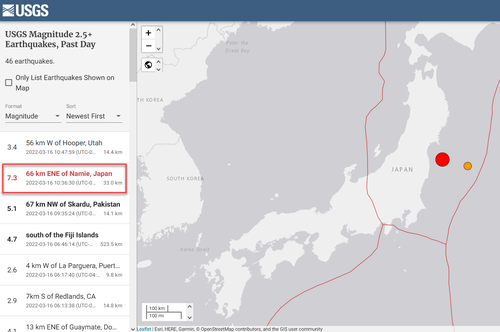
Reuters’ William Mallard said the earthquake was felt around the country. He posted a map that shows some areas in the country recorded magnitude +6.
Here’s a video of what appears to be someone’s home office shaking in Tokyo.
Scenes of Tokyo shaking.
Tokyo has gone dark. Tokyo Electric Power Company says two million households are without power after the quake.
Fukushima airport goes dark.
Video of street poles shaking in Fukushima.
*developing
3c CHINA
CHINA/COVID
the world braces for huge supply chains chaos as Shenzhen is shut down. Covid cases inside China escalates
(zerohedge)
World Economy Braces For Supply Chain Chaos As COVID Closes China
TUESDAY, MAR 15, 2022 – 11:20 PM
The global economy is in disarray as the war in Ukraine unleashed a commodity shock with increasing risks of stagflation. Adding to the turmoil is an outbreak of COVID-19 in China that may unleash another supply chain crisis.
News from China over the last day shows a new outbreak of the highly contagious omicron variant has infected more than 5,000 people, the most since the early days of the pandemic in early 2020. China’s zero-tolerance approach has shuttered factories and placed some 51 million people into some form of lockdown.

As of Tuesday, omicron variant infections have been reported in 21 provinces and municipalities nationwide, including the capital of Beijing. According to CNN, five cities are in lockdown, including Changchun, Jilin, Shenzhen, Dongguan, and Langfang.

Lockdowns have forced factories to idle production and risk snarling production from Apple iPhones to Amazon Echo & Alexa devices to Toyota SUVs to smart television to all sorts of other electronic devices. Disruptions to exports may induce shortages and drive up inflation, just as the Federal Reserve embarks on hiking interest rates to control inflation at four-decade highs.
A Bank of America Corp. survey of fund managers published on Tuesday showed confidence in global growth this year is the lowest since July 2008, and stagflation expectations have jumped to a whopping 62% of respondents.
“You take all these little paper cuts and you start to add them up and you could be looking at a potential significant slowing of the global economy,” said Jay Bryson, chief economist at Wells Fargo & Co.
China’s zero-tolerance policy has reminded us that supply chains are still subjected to massive disruptions. The lockdowns couldn’t come at a worse time, as spring tends to be one of the busiest shipping seasons of the year.
Shenzhen’s 17.5 million residents were placed under lockdown on Sunday. The city resides in Guangdong, a coastal province of southeast China known for its manufacturing hub and ports, which account for about 11% of China’s economy. The province accounted for 23% of China’s shipments in 2021.
Bloomberg Economics warns that a prolonged lockdown in Shenzhen could unleash supply chain disruptions worldwide.
“The forceful action to contain the worst COVID-19 outbreak since early March will deal a direct hit to the production and consumption sides of a province that accounts for 11% of GDP. Previous steps to contain virus flareups left manufacturing unscathed for the most part. This lockdown will hit output in key industries such as tech and machinery that feed into global supply chains,” Chang Shu, chief economist for Asia, said.
“Given that China is a major global manufacturing hub and one of the most important links in global supply chains, the country’s Covid policy can have notable spillovers to its trading partners’ activity and the global economy,” said Tuuli McCully, head of Asia-Pacific economics at Scotiabank.
According to Stephanie Loomis, vice president of International Procurement, the global impact of lockdowns could roil supply chains once more.
“If they don’t let any of these guys go to factories and produce goods, then nothing will move,” Loomis said. “It’ll just stop.”
We expect factory shutdowns will spread if the virus isn’t contained and could have massive implications on the global supply chain if lockdowns persist for the next several weeks. It’s still debatable whether the factory shutdowns will impact the US. If so, it usually has a 6-8 week lag.
We question if container ships will limit delivering Chinese goods to the US because of factory shutdowns as the demand to ship sinks. This may lead to depressed shipping rates on an intermediate basis because of the lack of demand. However, long term, shipping rates should rebound due to a backlog of products that would need to be shipped once factories reopen.
“The outbreaks impose downside risk to China’s economy at least in the next few months,” Zhiwei Zhang, chief economist at Pinpoint Asset Management, said.
“A China slowdown would exacerbate the risk of stagflation and global supply chain problems,” said Zhang.
And when you thought things couldn’t get any crazier for the global economy, they certainly did and risked further economic turmoil that may roil global supply chains, just like what happened in the early days of the pandemic.
END
CHINA//COVID
China reports on COVID cases. You can bet the farm that it is multiples of the numbers that they gaive
(zerohedge)
China Reports Most New COVID Cases Since 2020 As Lockdowns Spread
TUESDAY, MAR 15, 2022 – 06:00 PM
The number of newly confirmed COVID cases in China has continued to climb Tuesday, as local authorities reported more than 3,000 cases in the locked-down Province of Jilin alone. Across that province, cases have more than tripled from the 895 new cases reported just one day earlier. Meanwhile, on Tuesday, the NHC reported another 3,507 new locally transmitted cases in the rest of the country, more than double the 1,337 reported one day earlier.

It’s just the latest escalation in COVID infections as China combats its worst national COVID outbreak since the start of the pandemic in Wuhan more than two years ago. According to the SCMP, Tuesday’s tallies marked the highest number of cases since the outbreak in Wuhan, which was memorably crushed with a brutal 70-day-plus lockdown back in the spring and summer of 2020, according to the SCMP.
The cases reported outside Jilin were distributed across 20 provinces, including in China’s economic powerhouses Guangdong province, which recorded 48 local symptomatic cases, and in Shanghai, which had nine.
Experts at China’s Lanzhou University, which has carried out COVID prediction modelling over the past two years, believe the current outbreak will be curbed by early April with models indicating 35K infected by then.
New restrictions imposed on Tuesday included moving all schooling back online for the foreseeable future in Shanghai and Beijing. Meanwhile, Langfang, situated in the northern Hebei province near Beijing, has been locked down. Two other cities, Shanghai and Xi’an, have put in place some lockdown measures.
China has quashed COVID outbreaks before, including an earlier omicron wave, but none has grown as big as the current surge. Beijing said that containing the current outbreak has been difficult because of the population’s high vaccination rates, and the relatively mild symptoms caused by omicron.
The economic fallout has sent Chinese stocks tumbling to lows not seen in years as the lockdown in Shenzhen rattles the country’s tech sector.
We summed it up in a tweet:
Tweet
See new Tweets
Conversation

For the past two years, China had at most 50-100 new daily covid cases. Now it’s 5000, and it is shutting down key supply chain arteries that feed the US economy. So bizarre
Meanwhile, Hong Kong serves as a warning of the cost of failure. The city is still logging more than 26K new cases a day and is suffering the world’s highest COVID rate of fatality, according to Reuters.
China’s caseload is still tiny by global standards, but health experts said the increase in daily infections over the next few weeks would be key to determine whether its “dynamic zero-COVID” approach to containing each outbreak remains effective against the rapidly spreading Omicron variant.
Makers of everything from flash drives to the glass used for Apple’s iPhone screens has warned of shipment delays as they comply with China’s curbs against the disease, putting further strain on global supply chains.
end
China Eases Mandatory COVID Hospitalizations After Reporting Another 3,000 Cases
WEDNESDAY, MAR 16, 2022 – 11:45 AM
China’s worst COVID outbreak since the virus first emerged in Wuhan continued to rage on Wednesday, as China’s NHC counted another 3,000 new COVID cases, which is down from the more than 5,000 it reported a day earlier – a tally that marked the largest daily total of newly confirmed cases in two years.
The NHC reported 3,054 new local cases on Wednesday, and of those, 1,860 people reportedly exhibited symptoms and 1,194 did not, according to the SCMP.
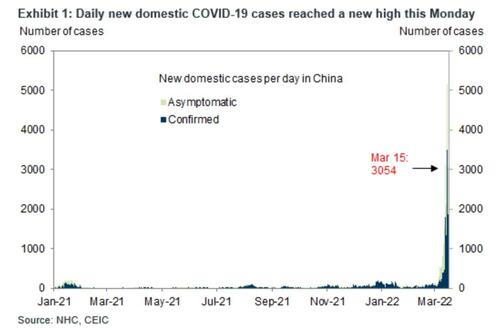
As we noted a few days ago, the latest outbreak has caused all hell to break loose in China. Earlier on Wednesday, the CCP let it be known that it would take steps to buttress Chinese stocks, which have been in free fall, while worries about the economic carnage from the country’s lockdowns (which are currently affecting more than 50M people) persists.
New cases were confirmed across the country but most of the new cases are coming from the northeastern province of Jilin, which is under lockdown and yet has remained the epicenter of the outbreak. The province recorded 1,853 locally transmitted symptomatic cases, making up 60% of the national total. The city of Jilin, which is the provincial capital, reported most of the asymptomatic cases in the province, which prompted it to launch a new round of mass testing on Wednesday to “thoroughly uncover hidden infections”.

Amid the rise in cases, Vice Premier Sun Chunlan, who has been charged with leading the battle against the virus, told officials in the city to step up nucleic acid testing, with newly approved rapid antigen tests to be used as a supplementary tool.
Lockdowns and mass testing, often involving millions of people at a time, have kept cases and the death toll relatively low. The country has also been largely closed off to the world in an attempt to prevent people with the virus from entering.
But since the start of March, more than 18,000 people have contracted Covid-19 in mainland China, with fast-growing clusters in the provinces of Jilin, Shandong, Guangdong and Hebei, as well as the municipality of Shanghai, according to the NHC.
One new lockdown was announced overnight: Maanshan city in the east Chinese province of Anhui banned most residents from leaving their residential compounds.
Meanwhile, to try and free up space in the country’s hospitals, the NHC changed the policy on Wednesday to allow people who had “light” or no symptoms to instead isolate at designated facilities where they would be monitored and sent to hospital if needed. Previously, anyone who tested positive was admitted to a hospital for observation.
“Improvements have been made…based on [medical] opinions from different parts of the country – that people infected with the Omicron variant are mostly asymptomatic or light cases that do not require too much treatment, but admitting them all to hospitals takes up too many medical resources,” the NHC said in a statement.
In terms of the breakdown of new cases on Wednesday, the northern province of Hebei reported 277 infections, mostly in the city of Langfang, which is about 1.5 hours’ drive from the capital Beijing. And in Beijing, a cluster of 15 cases were reported that health authorities said were linked to a school, with seven students and eight parents infected, according to SCMP.
Shanghai reported 202 mostly asymptomatic infections, while Shenzhen, which neighbors Hong Kong, reported 92 new cases after it began a week-long lockdown on Monday.
end
CHINA/TESLA/COVID
Tesla Halts Gigafactory Shanghai For Two Days Amid COVID Surge
WEDNESDAY, MAR 16, 2022 – 03:05 PM
Tesla, Inc. shuttered its massive Gigafactory Shanghai for two days as Chinese officials scrambled to contain one of the country’s worst outbreaks of COVID-19 since the early days of the virus pandemic, Reuters reported Wednesday, citing a notice sent internally and to suppliers.
Gigafactory Shanghai, also known as Gigafactory 3, halted all production lines, making Model 3 sedans and Model Y crossovers. There was no reason given for the stoppage at the plant. According to China Passenger Car Association data, the factory delivered 56,515 vehicles in February and produced 2,000 cars a day.

The notice didn’t specify whether Tesla will increase future capacity to make up for the lost output when operations restart.
China’s zero-tolerance approach has shuttered factories and placed some 51 million people into some form of lockdown in other cities. Shanghai has yet to declare a citywide lockdown but has closed some neighborhoods, shopping districts, and industrial parks and encouraged workers to remote work from home.
A Tesla supplier told Gigafactory Shanghai that COVID measures had shut down its facility and only had two days of supply stockpiled.
Both Toyota and Volkswagen had announced similar shutdowns due to increased infections. Apple supplier Foxconn was also forced to scale back iPhone production.
This is the latest example of supply chain disruptions in China, stemming from the country’s zero-tolerance policy against COVID, which could have spillover risks on the rest of the world.
CHINA/HONG KONG
China’s POBC pledges to make everything better again and this that Chinese stocks soar etc.
(zerohedge)
Beijing Capitulates: Chinese Stocks Soar, Hong Kong Markets Jump By Most Ever After China Vows To Prop Up Markets
WEDNESDAY, MAR 16, 2022 – 07:02 AM
Yesterday, we had a feeling that China would finally do something to arrest the collapse in its local stocks…
… and little did we know that just a few hours later we would see the biggest surge in Hong Kong stock history, coupled with a furious surge in China’s CSI300.
Two days after we said that JPM’s call that Chinese internet stock are uninvestable and that the bank’s wholesale downgrade of Chinese tech would mark the bottom…
… not even we had any idea what would happen last then 48 hours later, because after a brutal year for Chinese stocks, on Wednesday long-suffering China bulls finally got their long-awaited payday.
The Wednesday session was looking like a tepid bounce off multi-year lows until the headlines started rolling from Beijing… that’s when everything exploded.
In a brief statement carried by state media, China’s top financial policy body vowed to ensure stability in capital markets, support overseas stock listings, resolve risks around property developers and complete the crackdown on Big Tech “as soon as possible.” In short, China vowed to make everything better again.
Yi Gang, governor of the People’s Bank of China, followed with a statement on the PBOC website, saying the central bank would help implement the policies, adding that he held a meeting Wednesday noon to study implementation of the State Council’s promises including keeping the capital market stable.
While the pledges from President Xi Jinping’s government offered little clarity over what authorities may do to achieve their goals, it was the first time China publicly addressed investors’ top concerns in one coordinated swoop. The move underscored Xi’s focus on ensuring economic and financial stability before a Communist Party congress at which he’s expected to secure at least another five years in power.
In any case, Beijing’s explicit backstop guarantee led to an epic market meltup and short squeeze, and by the time trading ended just after 4 p.m. local time on Wednesday, the Hang Seng China Enterprises Index was up 12.5% in its best session since October 2008.

Alibaba Group Holding Ltd. surged 27%, while JD.com Inc. jumped 36%. Property stocks rallied the most in more than a decade. The Hang Seng Tech index jumped by 22%, the most ever…

… while China’s benchmark CSI300 index rose the most intraday since July 2020 after having lost as much as 1% in the morning session. It plunged more than 7% in the previous two days.

The euphoria carried over to the US premarket where Alibaba and US-listed Chinese ADRs soared in a mirror move: some of the most notable premarket movers included Alibaba +20%, Didi +37%, Pinduoduo +25%, Baidu +14.
“It’s the end of capitulation,” said Peter Garnry, head of equity and quantitative strategy at Saxo Bank. “This confirms that the Chinese government sees healthy and strong equity markets as key for the country going forward. The equity market is totally sentiment driven right now and everyone is looking for an excuse to buy, though the headwinds for Chinese equities are still enormous.”
“Usually the market’s natural bottom comes after the policy bottom, which we are seeing now,” says Li Weiqing, fund manager at JH Investment Management Co. “This time around things may be different, as the rout was looking like a financial crisis; the macro figures are also pointing to a bottom. But even if this is not the end, we can at least expect more stability in the next week or so”
As we noted earlier this week, the need for Beijing to do something was growing more urgent with every passing day as stocks slumped lower and lower, threatening systemic stability. Global confidence in Chinese financial markets was by some metrics the weakest since the financial crisis in 2008, with stocks cratering on Monday by the most since the Lehman failure, while a relentless plunge in credit and record outflows from government bonds undermined the currency’s strength.
Xi also faced more political pressure to bolster the economy, with rising Covid cases spurring lockdowns that threaten to hinder growth and disrupt life for millions of people. The State Council statement made a veiled reference to his political imperatives, calling on all parties “to deeply understand the significance of the “‘two establishes’” in keeping the economy and markets stable — jargon that affirms Xi’s position as the Communist Party’s most important figure.
Government departments should “actively introduce policies that benefit markets,” according to a meeting of the Financial Stability and Development Committee, led by Vice Premier Liu He, who’s in charge of overall economic policy.
China also said it supports firms listing overseas and has achieved positive progress in discussions with Washington over Chinese stocks on U.S. exchanges, Xinhua’s report of the meeting said, adding that both sides are working to formulate a detailed cooperation plan. Concern that companies like Alibaba might need to delist from overseas markets had been a major driver of the selloff in recent days; the news will see the stocks double or triple on short notice.
The equity slump began last year in large part because of policies introduced by Beijing, including crackdowns on tech firms and property developers. More recently investors had started to brace for worst-case scenarios like sanctions against China for its perceived support of Russia. It all came at a time of increased market turmoil globally with Russia on the brink of a default and the Federal Reserve set to raise interest rates.
AS discussed on Monday, the pace of selling in China had been savage: the Hang Seng China gauge plunged 24% this month through Tuesday. The drawdown Golden Dragon China Index recently surpassed the drop observed during the Lehman collapse.

Even after Wednesday’s surge, the index is down about 40% in the past year, the worst performance globally. Chinese stocks in the U.S. have lost 75% from their 2021 peak, while the yield on Chinese junk dollar debt has surged above 27% for the first time.
The yuan has also started to look vulnerable. Selling momentum in the offshore Chinese currency on Monday reached an intensity only seen a handful of times in the past five years. The yuan suffered the biggest real-money net outflows among all global emerging-market currencies last week, according to Citigroup calculations based on client trades, Bloomberg reported.
Naturally, a short squeeze likely exacerbated the gains. Short selling comprised about a quarter of Hong Kong’s total daily turnover on Monday and Tuesday. Such speculators traded more than 10 million Tencent shares on Monday, the most in more than a year.
Of course, sparking a short squeeze is one thing, extending the move is another and for Wednesday’s rally to continue, China’s policy makers will need to follow through with actions. Promises to keep markets stable were vocalized in January by the securities regulator, which has made no known intervention since. Assurances of dialog with the U.S. regarding the auditing Chinese ADRs have been made before. The easing of funding rules for property firms have so far been incremental.
The rally’s staying power will also depend on the reaction of foreign investors, whose role in Chinese markets has never been so important. Between the start of 2019 and the end of 2021, overseas holdings of local stocks increased by more than 242% to 3.9 trillion yuan ($613 billion). Inflows into the nation’s bond market rose by 129% to 4.1 trillion yuan.
In any case, a heavy-handed approach to managing market swings can backfire, like it did for China after a stock bubble burst in 2015, when botched interventions helped accelerate selling. The CSI 300 didn’t recover its 2015 high until five years later.
“I do not believe this is a turning point — we are in a very turbulent period,” said Sean Debow, chief executive officer of Eurizon Capital Asia. “In order to catch a falling knife you have to have very very strong conviction, and we don’t have that yet.”
The bottom line is that for China to truly see a bounce in stock, it will need to engage in massive stimulus despite Beijing’s well-known atavism to doing just that with China’s economy already at record debt levels. However, at the end of the day, when picking between a social crisis and “just a little more debt”, China will always pick the latter.
And now that Chinese stocks are fixed – if only for now – we look forward to Jerome Powell who today is set to take a first step in the opposite direction, and instead of propping up stocks, the Fed chair will hike rates for the first time since Dec 2018. We wonder how long before he too is forced to pull a China to bail out the precious, precious stocks…
end
4/EUROPEAN AFFAIRS//UK AFFFAIRS
//ECB//EUROBONDS
With the ECB to begin tightening who will buy all of the European bonds?
Michael Read/Bloomberg)
Who Is Going to Buy All The European Bonds?
WEDNESDAY, MAR 16, 2022 – 06:15 AM
By Michael Read, Bloomberg Markets Live commentator and analyst
Despite the fact that German 10y yields have risen ~55bps YTD, this period of euro-area bond pain may only be beginning.
We’ve had another hit to bond prices after the ECB’s surprise 2Q tapering and “de-linking” of rate hikes and asset purchases last week: PEPP will be wrapped up in a few weeks and APP will be wound down, essentially leaving 3Q “purchase-free” unless there is a “significant disruption to financial markets”.
This halt, in-essence, removes what was a resting bid in the European bond market, with the new taper schedule effectively eliminating what would have otherwise been EUR150bn worth of purchases of euro-area bonds by the central bank. Yikes… Given that eurogovies are rather accustomed to having their hands held by the ECB, the market fall-out shouldn’t be that surprising.
That said, Monday’s bond market gyrations were particularly interesting: we saw a broad bear steepening move across Europe, with core, semi-core and peripheral bonds essentially moving in lockstep across tenors, alongside what was only a very modest tightening in long-dated peripheral spreads. When viewed through the lens of the PEPP and PSPP bond purchase weighting, dictated by the ECB’s capital key, markets moves post-ECB meeting make a bit more sense. It certainly does not rule out the potential for the peripheral complex to have it’s own moment of pain in the future.
The crux of the matter remains the same: European bonds will have to find a natural buyer of debt much sooner than expected – one that is far more price sensitive than the ECB.
What’s potentially worse is that European banks might not be that interested in filling the gap. The latest European Banking Authority data shows that, in aggregate, European banks increased both their total gross carrying amount of domestic sovereign exposure (from 51% in Dec ‘20 to 53% in Jun ‘21) as well as the aggregate sovereign exposure to long maturity debt (from 22% to 24%). In short, they hold more debt, of a higher weighted average maturity.
It’s perhaps not a surprising move under the extraordinary monetary and fiscal conditions related to the pandemic. It does however, imply that the “right price” is much lower than the current market, and that we have a lot more bear steepening to do between now and the end of QE.
END
POLAND/UKRAINE
Large Polish cities reaching capacity with the uN stating that over 3 million refuguees have fled Ukraine
(zerohedge)
Large Polish Cities Reaching “Capacity” As UN Says Over 3 Million Refugees Have Fled Ukraine
WEDNESDAY, MAR 16, 2022 – 04:15 AM
The Russian war in Ukraine has hit a grim milestone as the United Nations on Tuesday says that now more than three million refugees have fled the country since the invasion began late last month.
The UNHCR in its latest statement sounded the alarm that “In the coming days millions more lives will be uprooted, unless there is an immediate end to this senseless conflict.” The agency said “This is now the fastest growing refugee crisis in Europe since World War II.”Via Sky News
The UN said that during the first 11 days, it recorded at least 1.7 million refugees that have fled, but now on the 20th day, the number has reached 3 million.
Ukraine’s internal displacement problem is also rapidly growing, and is expected to fuel a broader exodus into neighboring EU countries like Poland in the coming days and weeks, even as some large Polish cities have begun warning they’ve reached “capacity”.
Writing of Warsaw and Krakow, The Guardian reports that “The mayors of Poland’s two largest cities have said they are struggling to cope with the huge number of refugees arriving from Ukraine, as UN figures show more than 1.7 million people have crossed into Poland in the weeks since the Russia’s attack began.” And further, the report says:
Kraków’s mayor, Jacek Majchrowski, said that the city was also reaching its capacity, with 100,000 people arriving in the past two weeks. “Kraków is slowly losing the opportunity to accommodate new waves of refugees,” he said, adding that places were now being offered outside the city.
UNHCR spokesperson Shabia Mantoo described the rapidly worsening situation in a statement: “Access to conflict-affected communities in hard-hit areas like Mariupol and Kharkiv remains very restricted due to the ongoing military activities and increased presence of landmines, exacerbating humanitarian needs by the day.”
Which countries are absorbing the most refugees? Map via Axios:

The UN is calling for an urgent ceasefire amid the growing humanitarian catastrophe. “We need a ceasefire, we need a cessation of hostilities so that people can stop moving and even go back to their homes perhaps, but under the circumstances, they are all telling me they are afraid too much,” UNHCR chief Filippo Grandi said.
As of Monday, the UN cited at least 596 civilians killed since the Russian invasion began; however, in Mariupol alone city leaders have said that 1,500 people have died, according to the AP, strongly suggesting the true civilian death toll is significantly higher at this point.
END
GERMANY/WIRECARD FRAUD
Finally, after two years we have charges filed against 3 former Wirecard executives including CEO Braun
(zerohedge)
German Prosecutors Charge 3 Former Wirecard Executives With Fraud
WEDNESDAY, MAR 16, 2022 – 02:45 AM
Two years have passed since Wirecard abruptly filed for bankruptcy protection, confirming the allegations of bears and skeptics. And after two years of investigations, German prosecutors have finally formally charged former Wirecard CEO Markus Braun and two other executives with fraud – while former CIO Jan Marsalek remains a fugitive from justice.Markus Braun
Prosecutors in Munich said Monday that ex-CEO Markus Braun signed off on financial reports despite knowing they had been faked. They said the firm booked nonexistent revenue it attributed to multiple partnerships, mostly in Asia and the Philippines in particular, and used fake documents to purportedly show the firm had money that it ultimately did not, the Associated Press reports.
Braun’s attorney said the charges were “seriously flawed” and “assumed a false picture of the facts.” The defense claims that Braun was unaware of machinations by other executives. Despite this, he remains in custody.
In addition to Braun, the firm’s former head of accounting and the managing director of the Dubai-based subsidiary also were charged.
Wirecard’s fraud cost banks 3.1 billion euros ($3.4 billion) in loans and writedowns, according to the prosecutors’ statement.
During its heyday, Wirecard grew rapidly, and eventually found itself being listed among Germany’s top blue-chip stocks before the firm filed insolvency proceedings in 2020, based on the revelation that €1.9 billion ($2 billion) that had been included on the country’s balance sheet could not be found.
Of course, a German court must agree to the charges before a trial can be held.
end
EUROPE/RUSSIANS
European Regulators Tell Banks To Put Russian Accounts Under Surveillance, Even EU Residents
IS THIS HEADING FOR INTERNMENT CAMPS?
WEDNESDAY, MAR 16, 2022 – 11:05 AM
In the latest alarming story that has that disturbing whiff of WWII-era Japanese internment camps, some European banks are now surveilling all Russia and Belarusian clients to ensure they are not seeking to circumvent Western sanctions on Moscow.
What’s more is that the order to intensively scrutinize transactions merely based on an ethnicity and nationality is coming down on orders from top EU regulators. According to Reuters, “The instructions from ECB [European Central Bank] supervisors mean tens of thousands of Russians and Belarusians resident in the EU face intense surveillance by their banks, which are on alert for big payments and deposits as well as new credit applications, said sources.”
The heaviest concentration of Russians in the EU are in Germany – at over 230,000 – and with Spain following, at more than 81,000. A source quoted in Reuters said, “At first, the measures were focused on those of Russian nationality, whether they were residents or non-residents, and later it was extended to Belarusians.”
Lest anyone think this is just run-of-the-mill sanctions enforcement on Russian nationals and particularly that it’s all about oligarchs, there’s this glaring admission in the exclusive Reuters report that even EU residents could be under watch on the mere basis of their national origin:
Some ECB supervisory teams, which include staff from the central bank and national authorities, have told banks to tighten control of EU residents too if they come from Russia or Belarus, said the sources, from banks and watchdogs.
This even though on paper the sanctions laws are supposed to exempt those holding temporary or permanent EU residence permits. The EU measures restrict Russian nationals or companies from making deposits above €100,000.
Banks are further being told by the ECB to extra careful in reviewing loan applications from any Russian or Belarusian. Already, writes Reuters, Spain is applying mass additional surveillance of thousands of bank accounts on the mere basis of having Russian ethnicity.
“In one instance, a Spanish bank has put around 8,000 Russian clients who are not on the EU sanctions list and are residing in Spain under surveillance, said one of the sources,” according to the report. What’s more is that “All new lending to Russians who do not have Spanish residency has been halted and at least one bank will not allow non-resident Russians to open new accounts, they added.”
END
5. RUSSIAN AND MIDDLE EASTERN AFFAIRS
RUSSIA/UKRAINE
Zelensky tells his citizens that they must recognize that Ukraine will not join NATO. Ceasefire talks resume
(zerohedge)
Zelensky Says “Ukraine Must Recognize It Will Not Join NATO” As Ceasefire Talks Resume
TUESDAY, MAR 15, 2022 – 07:20 PM
Ukrainian negotiator Mykhailo Podoliak confirmed in a message posted to Twitter on Tuesday that “negotiations are ongoing” after the meeting was “paused” the day prior.
“Consultations on the main negotiation platform renewed. General regulation matters, ceasefire, withdrawal of troops from the territory of the country,” he stated. This as the AFP is reporting of the Ukrainian President’s latest surprise comments, coming on the 20th day of Russia’s invasion: “Zelensky says Ukraine must recognize it will not join NATO.”
A week ago Zelensky said he had “cooled” on the question of NATO membership – statements which have apparently led to greater positive interactions with Russia at the ceasefire negotiation table.
In the fresh Tuesday remarks, he also said that NATO Article 5 is “weaker” than ever before. Article 5 spells out the collective defense basis of the Western military alliance, or essentially than an “attack against one ally is considered as an attack against all allies.”
“We realized that Ukraine will not become a member of NATO. We understand this, we are reasonable people,” he was reported as saying according to a translation. “Kyiv needs new formats to interact with the West and separate security guarantees.”
He are further comments he made:
“Some states of alliance have intimidated themselves, saying that they can’t answer. That they cannot collide with Russian missiles and planes in the Ukrainian sky. Because this, they say, will lead to escalation, will lead to the Third World War. … And what will they say if Russia goes further to Europe, attacking other countries? I am sure the same thing they say to Ukraine. Article 5 of the NATO treaty has never been as weak as it is now. This is just our opinion,” he said.
One online commenter pointed out the obvious in terms of what many might be thinking, but are perhaps hesitant to say openly… “He needed to say that before the whole country was destroyed.”
end
Update
Inbox

| Robert Hryniak | 10:32 AM (1 minute ago) |  | |
| to |
So far Russian forces are doing what i wrote about weeks ago which is securing all port access cutting off all naval access before a more concentrated move inland. Various cities will be encircled and held and there is a effective no fly zone over all of the Ukraine and it is Russian.
The attack west of Odessa actually started last night and an assault should have taken place today.
At least thirty (30) Russian attack helicopters have moved against targets west of Odessa, Ukraine, to soften a beachhead for an Amphibious landing.
1 Slava class cruiser, 4 corvettes, 2 minesweepers, 11 troop landing ships in 3 distinct flotillas, positioned themselves earlier today for a night landing to the west of Odesa, likely Hrybivka area.
Helicopter landings began around dusk to secure rear areas of beachhead.
Ukrainian 28th Mechanized Brigade + 122nd Territorial Defense brigade will make the landing
Airborne troops have been dropped in Velykodolyns’ke area, outside Odessa.
3/16/22
By WarNews24/7
(translated from Greek)
“I want the Shipyards in the USSR”: Order of immediate occupation of Nikolaev and Odessa received by the Russian Army – Kharkov is leveled (video) Relentless bombing
15 Russian warships head for Odessa with the order of the Russian military leadership to be clear: Moscow must at all costs gain control of Odessa and the city of Nikolaev.
Three Russian naval teams have moved off Odessa. The first consists of six warships, the second of four and the third of five. The vast majority of them are amphibians.
Top priority Nikolaev and Odessa
This is currently Moscow’s top military priority, and that is where the Army, along with Kharkov and Mariupol, has thrown all its weight.
The Russians need these territories to create a new state called “New Russia” by fully securing Crimea through a continuous land corridor.
In addition, the conquest of these two cities will allow Russia to turn the Black Sea into a Russian lake and gain borders with Romania and Moldova.
That is why the Russian Army in recent days is trying to create – and has succeeded – in these areas very good accounting support through Hersonissos-Melitopolis and Berdyansk.
Now the accounting support is done by road, through the railway network and recently, by sea.
Today, the Russian Ministry of Defense announced that it has full control of Kherson and now two corridors are opening for the Russian forces:
Either the Russian troops will move towards Krivoy Rog and Zaporizhia or towards Nikolaev. The Ukrainians are strengthening their positions to the east, while the Russian Army can now move from the west.
As for the rest of the cities of Ukraine, Kharkov is receiving relentless bombing. 
The city of Nikolaev and its shipyards
The Russian military administration has given the order for the immediate occupation of the city of Nikolaev due to the very important Shipyards that the city has.
Due to the activation of the Montreux Treaty, the Russian Black Sea Navy can not feed the Mediterranean Navy that is anchored at the Syrian naval base, Tartu.
In addition, due to US and European sanctions, the Russian Navy has lost all its anchorages.
All these developments, which according to Moscow will not be temporary, make it necessary to occupy the city of Nikolaev in Ukraine.
Russian sources note that in the 1970s, the Russians needed large tankers, class 1559-B “Sea Space” which could carry fuel, water and dry cargo, namely 8250 tons of fuel, 2050 tons of diesel, 1000 tons of aviation fuel and 1000 tons of water along with 250 tons of food and others? 200 tons of other necessities.
Of the six such tankers in total, only 3 are in service with the Russian Navy today. These are “Dniester”, “Ivan Bubnov” and “Boris Butoma”.
Today, the Russian Navy, which spans five seas, does not have these ships. This means that the Russian Navy will have to acquire as it is forced to operate in remote seas and oceans.
The question is where Russia will build these ships.
The most modern tankers such as the “Berezina” class 1833 were built at the Nikolaev Shipyards.
In the city of Nikolaev is also the factory Zorya-Mashproekt which manufactures the engines of Russian frigates.
In addition, by 2021, Black Sea shipyards would have had their headquarters there, where the largest ships in the USSR were built – from cruise ships and dry cargo ships to floating docks and icebreakers.
It is necessary to return the city of Nikolaev, where Russian troops are now, to the sphere of influence of Moscow and to operate for the needs of the Russian navy.
We now have a unique opportunity to redress a historic injustice in our favor. “Warships can be installed and built at the Nikolaev shipyards, which so far we are only dreaming of,” concludes the Russian media.
Numerous photos, charts and videos at source:
https://warnews247.gr/thelo-ta-nafpigeia-epi-essd-diatagi-amesis-katalipsis-nikolaef-kai-odissou-elave-o-rosikos-stratos-isopedonetai-to-charkovo-vinteo/
END
Do not know why it has taken them too long to see that a neutral Ukraine could be a could compromise
(zerohedge)
Russia Sparks Ceasefire Hope After Kremlin Says Neutral Ukraine With Army Could Be “Compromise”
WEDNESDAY, MAR 16, 2022 – 07:10 AM
“The talks are hard and slow-going. Of course, we would like them to proceed much faster. It is Russia’s sincere wish. We want to achieve peace as soon as possible,” Russia’s chief delegate, presidential aide Vladimir Medinsky said Wednesday. He cited “some progress” made in the talks as the invasion grinds on.
At the same time, the Kremlin cited a potential opening toward peace in the ongoing ceasefire negotiations, following President Zelensky’s insistence repeated Tuesday that “Ukraine must recognize it will not join NATO.”
Apparently seizing upon this as a key point of compromise – which has from the start been foremost among Russia’s central security demands to NATO, Kremlin spokesman Dmitry Peskov said Wednesday this proposal for Ukraine to become a neutral country “could be viewed as a certain kind of compromise,” as quoted in Bloomberg.Image: Associated Press
Bloomberg noted that “Peskov declined to provide details beyond confirming that the idea of Swedish or Austrian-style neutrality is under discussion in the talks now underway with Ukraine.”
This appears to have gained traction at the negotiating table, given that Bloomberg is reporting simultaneously the words of Ukrainian presidential adviser Mykhailo Podolyak, who is stressing that any future model of neutrality must safeguard Ukrainian sovereignty with firm security guarantees.
“No other models or variants” and with “absolute security guarantees. Actionable, not protocol or Budapest-style,” he said. “This means that the signatories do not stand aside in case of attack against Ukraine as they do now.”
He added, as quoted in Bloomberg, “Secondly, Ukraine no longer wants to be dependent on bureaucracy that may allow or not allow” closing the sky from missiles. “We need direct and hard guarantees that the sky will be closed.”
Kiev reportedly rejected the idea of a Swedish or Austria-style neutrality…
This just ahead of Zelensky’s planned address before both chambers of US Congress on Wednesday, which is set for 9am eastern time.
Despite this clear “opening” at the negotiations table based on neutrality, the fact that Zelensky has been pushing a no-fly zone hard in front of an international audience – and on Tuesday doing so in a virtual speech to Canadian parliament – could greatly complicated things with Moscow in terms of finding a possible diplomatic off-ramp.
end
USA/UKRAINE
What is keeping the USA from provide with killer robot drones:
(zerohedge)
US Mulls Sending New “Switchblade” Kamikaze Robot Drone To Ukraine
WEDNESDAY, MAR 16, 2022 – 08:25 AM
An advanced US-made killer drone that acts as a guided ‘smart’ missile capable of locking in on targets including tanks and artillery from miles away is on the table among options that the White House is considering authorizing to be sent to Ukraine’s military to fight the Russian invasion.
The AeroVironment manufactured “Switchblade” drones are already in use by US Special Operations Command and act essentially as “robotic smart bombs” – as in they are one-use only ‘kamikaze drones’ – but are ultra low priced compared to larger conventional drones in the Pentagon arsenal, with the smaller version of the drone costing as little as $6,000.Image source: AeroVironment
No decisions have been made yet, stresses NBC which first reported the potential plan to transfer Switchblade drones to Kiev, which if going through would mark the first publicly acknowledged use of the robotic small drone on a major battlefield. The report notes the Switchblade saw limited use in Afghanistan, but that it wasn’t disclosed officially by the Pentagon at the time – only in some media reports.
NBC describes, “The Switchblades are essentially robotic smart bombs, equipped with cameras, guidance systems and explosives. They can be programmed to automatically strike targets miles away, and they can be steered around objectives until the time is right to strike. The company says the 600 can fly for 40 minutes and up to 50 miles.”
The 600 version, the more advanced and larger of the two variants, is said to be capable of taking out tanks and armored vehicles, and artillery. Wired magazine has previously described the small drone as a “six-pound foldable mashup of missile and drone.”
An animated presentation of the drone’s capabilities by the manufacturer AeroVironment:
The report comes just ahead of President Zelensky’s virtual address before both chambers of Congress, scheduled for 9am eastern time Wednesday, wherein he’s expected to not only push for a West-imposed no-fly zone over Ukraine, but where he’s to put pressure on US leadership toward fulfilling of a weapons ‘wish list’ amid the Russian onslaught.
He’s asking for more armed drones, surface-to-air missile systems, including Stingers, and more Javelin anti-tank missiles, as well as communications jamming equipment.
Meanwhile, several unconfirmed reports allege that Russia’s military is already using “loitering drones” or ‘suicidal munitions’ against Ukrainian forces since the invasion kicked off 21 days ago.
* * *
The Switchblade being live tested at a Utah proving ground…
END
RUSSIA/BONDS
RUSSIA defaults
(zerohedge)
Russia Fails To Pay Scheduled Interest On Dollar Bonds By Close Of Business In London
WEDNESDAY, MAR 16, 2022 – 02:25 PM
Holders of Russian government dollar bonds with coupons due on Wednesday have not received confirmation of payment as of close of business in London, according to Reuters, raising fears that the Russian default we previewed last night – the first since 1998 – may be imminent (once the 30 day grace period expires).
At issue are two dollar-denominated government bonds which have $117 million in interest due today. Failure to pay – or attempting to pay in rubles instead of dollars – would potentially place Russia in default by its creditors. As discussed last night, the bonds have a 30-day grace period, so creditors can’t officially declare default until April 15.
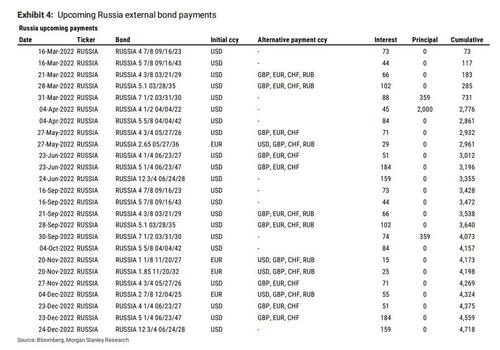
Meanwhile, Russia is arguing that if it defaults it won’t be its fault but rather that of sanctions: “The possibility or impossibility of fulfilling our obligations in foreign currency does not depend on us,” FinMin Anton Siluanov told Russia Today. “We have the money, we paid the payment, now the ball is on the side, first of all, of the American authorities.”
Earlier in the week, Siluanov indicated that the payment might end up being made in rubles because the central bank’s foreign currency accounts have been bocked by sanctions.
“The payment arrived at the appropriate American bank, which is our foreign currency account holder,” he told RIA, adding: “Currently the payment is being processed and so far we have had no statements on whether it has or hasn’t gone through. So far it hasn’t gone through. But we know that the bank is in talks with OFAC, has requested the necessary information from us about the purpose of the payment. So we are currently waiting for information from our account-holder bank.”
And, as noted above, at least one investor in both bonds told the Journal that he hadn’t received payment as of early Wednesday.
The last time Russia reneged on its foreign debts was after the Bolshevik Revolution in 1918. Russia defaulted on its local-government debt in 1998 as the post-Soviet economy struggled to find its feet. Oil prices had collapsed to $10 a barrel, starving the government of revenue. The crisis set the stage for President Vladimir Putin’s eventual rise to power at the end of 1999. -WSJ
According to the US Treasury, payment of interest on the bonds issued before March 1 by Russia’s central bank national wealth fund or finance ministry is permissible until May 25, per the Journal, after which a specific Treasury-approved license will be required to continue to receive interest, dividends, or maturity payments on Russian government debt. Under those rules, analysts expect that the Kremlin will be able to satisfy its foreign-currency debt in the coming weeks.
“They’re playing a game of chicken with the West,” said senior emerging-market sovereign strategist, Timothy Ash, of BlueBay Asset Management. “Our understanding is that it is possible to make the payment.”
Well, you know what they say about opinions… Meanwhile the only thing that matters at the end of the day, is what the numbers in the bank account say, and for now they aren’t saying anything new.
end
UKRAINE/USA //OBAMA
Unearthed Documents Show President Obama Played Key Role in Taking Over Soviet-Era ‘Bioweapons Labs’ in Ukraine – LibertyWire
Inbox
| Robert Hryniak | 2:36 PM (5 minutes ago) | | |
| to |
Obama is weasel who has a lot to answer regarding this.
IRAN/USA
49 Republican senators oppose the Iran nuclear deal. Only holdup Rand Paul
Ditz/Antiwar.com
49 Republican Senators Will Oppose Iran Nuclear Deal
TUESDAY, MAR 15, 2022 – 07:40 PM
Authored by Jason Ditz via AntiWar.com,
In a sign that getting the P5+1 nuclear deal with Iran through Congress might be difficult, if not impossible, 49 out of 50 Republican Senators have announced they will not back any deal that doesn’t limit Iran’s missile program and “confront Iran’s support for terrorism.”
The deal isn’t intended to cover those issues, merely Iran’s civilian nuclear program. The terms are not public, but its not expected to touch on either issue. Sen. Rand Paul (R-KY) was the only senator to not come out opposed.Sen. James Risch (R-ID) speaks during a March 9 Senate Republican news conference, Getty Images.
Sen. Paul said it didn’t make sense to condemn an unfinished deal, saying it is “not a very thoughtful position.” It is unclear where Senate Democrats will fall on the deal.
Either way, reports noted that the nuclear deal survived Congress in 2015 despite overwhelming Republican objection and their control of the Senate. Now, they don’t control the body at all, so any attempt to block it outright is going to depend on support from Democrats.
How this will ultimately break down likely depends on if and when the deal is finalized, and what efforts the Biden Administration makes to sell the plan.
The Iran side of the deal promises to get more Iranian oil onto the global market, and potentially the US market too. With prices up on the Russia-Ukraine war, that could be a strong incentive.
At the same time, there are questions about how the deal will reconcile Iran sanctions relief and Russian responsibilities with new Russia sanctions. The US has said they won’t interfere, but has also demanded Russia stop asking for consultations on how the two deals won’t interfere. The US has threatened to leave the talks, and work out a bilateral deal without Russia.
Though it’s not clear this is related to that, an alternative track for the deal could give Biden more time to get support, and a new selling point in that they are spiting Russia
end
Biden is one big imbecile
Biden Poised To Remove Iran’s IRGC From Terror List To Wrap Up Nuke Deal
WEDNESDAY, MAR 16, 2022 – 03:45 PM
At a moment a restored JCPOA Iran nuclear deal is said to be nearing the finish line, despite recent complications involving Russia’s demand of written guarantees that Ukraine-related sanctions won’t hinder its trade with the Islamic Republic, the White House is poised to remove Islamic Revolutionary Guard Corps from the official terrorist.
Biden’s potentially reversing Trump’s 2019 designation of the elite Iranian military group as a Foreign Terrorist Organization is being seen as a final huge concession toward Tehran, with the immediate effect of providing energy markets relief as additional oil supplies are badly needed for Europe.
Axios’ Barak Ravid reports Wednesday that “The Biden administration is considering removing Iran’s Islamic Revolutionary Guard Corps from a terror blacklist in return for a public commitment from Iran to de-escalation in the region, three Israeli officials and two U.S. sources tell me.”

The same report said that Iranian leaders consider the IRGC’s removal from the FTO to be a key final sticking point if a restored deal is to succeed in Vienna.
If it happens, Biden would likely come under bipartisan attack and pressure from Iran hawks – no doubt with Republicans leading the way, however. Israel too is firmly against any change in the current designation as it sees the IRGC as it’s number one enemy. The past years of almost weekly Israel airstrikes on Syria are typically explained as targeting IRGC assets in Syria.
Tel Aviv has also long condemned the IRGC’s links to Hezbollah – as the two have a weapons supply relationship, and in some cases it’s believed IRGC operatives are on the ground training Hezbollah forces in Lebanon. The Shia military groups have also closely coordinated throughout a decade of the Syria war.
According to Axios, the Israelis are especially concerned about any plan to de-designate the IRGC as any “promises” of de-escalation would be so vague as to be moot. Per the Wednesday report:
- One idea being discussed by the Biden administration would be a public announcement that the U.S. reserves the right to redesignate the IRGC if it determines that Iran did not follow through on its pledge to de-escalate in the region.
- The Israeli officials say the Biden administration briefed the Israeli government that such possibilities are being considered but stressed that no decisions have been made.
- The Israeli government is concerned about the idea, and in particular, the fact that the U.S. didn’t demand specific commitments from Iran not to target the U.S. and its allies in the region, two senior Israeli officials tell me.
Upon the report hitting Wednesday afternoon, it generated immediate outrage among some Western pundits, despite all eyes being on the Ukraine crisis…
The State Department, meanwhile, when asked to comment on the development rejected reports of impending plans to remove the IRGC from the FTO as “speculation”.
The Iranians see the IRGC as a legitimate and integral part of the country’s main military branches, while over the past three years Washington has seen it as an initiator of terror plots abroad, and as a main way that Tehran has helped to prop up Assad in Syria, despite American-Gulf sponsored regime change efforts.
.
6// GLOBAL COVID ISSUES/VACCINE MANDATE ISSUES/
COVID//GLOBAL
World economic news:
Global COVID case tally climbs in latest week, breaking streak of declines seen since end-January
March 16, 2022 at 10:17 a.m. ET
MarketWatch
Just over 11 million new cases were counted in week through March 13, while 43,000 people died, according to WHO data
The World Health Organization said Wednesday the number of new COVID-19 cases reported globally rose in the week through March 13, breaking the streak of declining numbers seen since the end of January.
Global cases rose 8% to just over 11 million in the week and just over 43,000 people died, the agency said in its latest weekly epidemiological update.
By region, cases rose 29% in the Western Pacific Region, rose 12% in the African Region and were up 2% in the European Region, which includes parts of the former Soviet Union that are closer to Asia.
Cases fell 24% in the Eastern Mediterranean Region, were down 21% in South-East Asia and down 20% in the Americas.
“These trends should be interpreted with caution as several countries are progressively changing their testing strategies, resulting in lower overall numbers of tests performed and consequently numbers of cases detected,” the WHO said.
Separately, the Centers for Disease Control and Prevention said the omicron subvariant BA.2 now accounts for about 23.1% of all COVID cases in the U.S., up from 13.7% a week ago.
The BA.2 subvariant has been designated a variant of concern by the World Health Organization and “appears inherently more transmissible than BA.1,” the organization said in February. BA.1, another subvariant of omicron, made up an estimated 66.1% of all cases in the U.S., while omicron is 10.8% of all cases, according to data gathered for the week ending March 12.
The WHO did not mention a new variant that has been unofficially named ‘deltacron’ because it combines elements of the delta and omicron variants. The agency has said it’s closely monitoring that variant but that there’s not enough data yet to know if it’s more transmissible or more risky.
The U.S. COVID numbers continue to decline, and the nation is now averaging 32,094 new cases a day, according to a New York Times tracker, down 46% from two weeks ago. The average daily number of hospitalizations stands at 26,436, down 44% from two weeks ago. Deaths are averaging 1,226 a day, down 36% from two weeks ago, but still an undesirably high number.
The administration of President Joe Biden made a firm push for Congress to provide additional funding to fight COVID-19 on Tuesday after $15.6 billion was dropped from a spending bill, arguing that it needs to make sure there are enough doses on hand to provide fourth jabs for all Americans if such boosters are needed—or to provide variant- specific vaccines if those are needed.
Without additional funding, the government does not have the ability to maintain the country’s domestic testing capacity beyond June, another official said. Officials also warned that providers soon would no longer be able to submit claims for testing, treating and vaccinating uninsured people, and the government would face a reduced ability to rapidly identify and assess new strains of COVID…
GLOBAL ISSUES
VACCINE MANDATES/
VACCINE INJURIES
Myo/Pericarditis
Inbox
| Robert Hryniak | 9:27 AM (6 minutes ago) |  | |
| to |
And you want the public to accept a 4th dose?
https://openvaers.com/covid-data/myo-pericarditis
END
Startling!!!//DR PETER MCCULLOUGH
Inbox
| Robert Hryniak | 3:39 PM (7 minutes ago) | | |
| to |
END
VACCINE IMPACT
Healthy Traditions: 20 Years of Demonstrating God’s Faithfulness in Offering an Alternative to Commodity Food and Products
March 15, 2022 7:51 pm

20 years ago this month, in March of 2002, Tropical Traditions was born in the United States as an ecommerce company selling Virgin Coconut Oil and other products imported from the Philippines. We were the first ones to bring a “Virgin Coconut Oil” edible oil into the U.S. market at the time, and people thought we were insane, because coconut oil had been demonized in the United States for decades, simply because it is the one edible oil that has the largest percentage of saturated fat, which until this day, the U.S. Government health agencies want you to believe is a dangerous fat that leads to heart disease. Instead, USDA dietary recommendations for edible oils promote polyunsaturated oils, derived mainly from corn and soybeans. I had been living in the Philippines for 4 years by that time, and living in a rural area on a mountain, I was observing first hand just how wrong this dietary oil advice was. The older generation in our community, all consumed freshly made coconut oil from their own coconuts, and they were far healthier than the younger generations who mainly consumed store-bought commodity foods and shunned coconut oil because of the teaching in the United Sates on saturated fats. I did my own research, and I found out that the scientific literature on the medium chain fatty acids in coconut oil was contradictory to USDA dietary advice that demonized coconut oil. So we learned how to make it by hand from the older generation living in our community, and began using it as our own main dietary oil in our diet. The positive change in our own health was very noticeable, and as I dug deeper into the literature about dietary oils, I soon learned that U.S. dietary advice was highly political, and designed to protect the main subsidized cash crops in the United States, like corn and soybeans. The dietary oils extracted from corn and soybeans, commonly known as “vegetable oil” today, is the #1 dietary oil consumed in the United States, and yet the technology to extract oil from these crops has only been around since World War II, and these polyunsaturated oils were not part of the human food chain prior to that. I decided then that I would only consume dietary fats and oils that had been in the human food chain for thousands of years nourishing populations, and would stay clear of the modern edible oils that technology had produced and that were not traditionally part of the food chain. So Tropical Traditions was born in March of 2002, and today we have expanded our product line to more than just tropical foods imported from the Philippines. But our philosophy has not changed. We are all about “traditional” means of producing food, and today the company has been renamed to “Healthy Traditions.” Little did I know back in 2002 that I was embarking on a journey that would lead me straight into the lion’s den, where my enemies would try to destroy me. So as I document in this article these past 20 years, this is not only a testimony of one American company, it is also a testimony of God’s faithfulness, and an example of what he can accomplish through his children when they take him at his word, and understand that our calling in this life is a life of persecution as we stand for the Truth. Persecution and suffering are the norm, and not the exception, for those who stand on the Truth.
The Day Truth Became Illegal – from the Heart of a Prophet, a Prayer by Brian Shilhavy
March 15, 2022 8:43 pm

I am trying something I have never done before. I am publishing one of my prayer dialogs I had with Jesus Christ recently. It took me a few days to complete, because I wanted certain parts to be real and authentic, and not fake. That opportunity presented itself to me recently when I published the story about baby Cyrus, which broke my heart. When I started MedicalKidnap.com in 2014, documenting pure horror stories of families who were losing their children to the Satanic system every day, it was almost more than I could bear. I did not leave my home for six months. I was afflicted with a terrible skin rash during that time, as I tried to cope with the reality of the evil around us, hidden to so many. I clearly remember the first day I left my home, and stopped at a Big Box store to use their ATM to withdraw some cash for shopping. I just stood there for several minutes watching all the people, especially the families who were shopping that day with their children, and thinking: “They have no idea how much danger they are in.” Prayer and tears are what has kept me sane all these years. When we pray and pour out our heart before God, it is very important to then stop, and listen to what he has to say. The words will come into your mind, and you should write them down, in a prayer journal. That’s what I did here, and this is first time I have ever shared anything like this with the public. My desire and hope is that it will motivate you to do the same thing. Pour out your heart, and all your anger and frustrations to the one who can actually do something about it. And then just be still, and listen. You might be shocked at what you hear. He might want to change you, instead of the circumstances you are asking him to change. On this day, I was shocked. Thoughts came into my mind in reply, that I never even thought about before.
Michael Every
end
7. OIL ISSUES
8 EMERGING MARKET& AUSTRALIA ISSUES
Australia//// NEW ZEALAND/ SOUTH AFRICA/BRAZIL/ARGENTINA/COVID/VACCINES/LOCKDOWNS
END
Your early currency/gold and silver pricing/Asian and European bourse movements/ and interest rate settings WEDNESDAY morning 7:30 AM
Euro/USA 1.1012 UP .0044 /EUROPE BOURSES //ALL GREEN
USA/ YEN 118.23 DOWN .076 /NOW TARGETS INTEREST RATE AT .11% AS IT WILL BUY UNLIMITED BONDS TO GETS TO THAT LEVEL…
GBP/USA 1.3097 UP 0.0054
Last night Shanghai COMPOSITE CLOSED UP 106.25 PTS OR 3.48%
Hang Sang CLOSED DOWN 1672.42PTS OR 9.08%
AUSTRALIA CLOSED UP 1.08% // EUROPEAN BOURSES OPENED ALL GREEN
Trading from Europe and ASIA
I) EUROPEAN BOURSES ALL GREEN
2/ CHINESE BOURSES / :Hang SANG CLOSED UP 1672.42 PTS OR 9.08%
/SHANGHAI CLOSED UP 106.25 PTS OR 3.48%
Australia BOURSE CLOSED UP 1.08%
(Nikkei (Japan) CLOSED UP 415.53 PTS OR 1.64%
INDIA’S SENSEX IN THE GREEN
Gold very early morning trading: 1925.25
silver:$24.91-
USA dollar index early WEDNESDAY morning: 98.52 DOWN 59 CENT(S) from TUESDAY’s close.
THIS ENDS WEDNESDAY MORNING NUMBERS
xxxxxxxxxxxxxxxxxxxxxxxxxxxxxxxxxxxxxxxxxxxxxxxxxxxxxxxxxxxxxxxxxxxxxxxxxxxxxxxxxxxxxxxxxxxxxxxxxxxxxxxxxxxxxx
And now your closing WEDENESDAY NUMBERS 1: 00 PM
Portuguese 10 year bond yield: 1.18% UP 2 in basis point(s) yield from YESTERDAY/
JAPANESE BOND YIELD: +0.204% DOWN 0 AND 6/10 BASIS POINTS from YESTERDAY/JAPAN losing control of its yield curve/
SPANISH 10 YR BOND YIELD: 1.33%// DOWN 0 in basis points yield from yesterday.
ITALIAN 10 YR BOND YIELD 1.89 DOWN 3 points in basis points yield from yesterday./
the Italian 10 yr bond yield is trading 56 points higher than Spain.
GERMAN 10 YR BOND YIELD: RISES TO +0.383% IN BASIS POINTS ON THE DAY//
THE IMPORTANT SPREAD BETWEEN ITALIAN 10 YR BOND AND GERMAN 10 YEAR BOND IS 1.51% AND NOW ABOVE THE 3.00% LEVEL WHICH WILL IMPLODE THE ENTIRE ITALIAN BANKING SYSTEM. AT 4% SPREAD THERE WILL BE A HUGE BANK RUN…
END
IMPORTANT CURRENCY CLOSES FOR WEDNESDAY
Closing currency crosses for TUESDAY /USA DOLLAR INDEX/USA 10 YR BOND YIELD/1:00 PM
Euro/USA 1.0999 UP .0032 or 32 basis points
USA/Japan: 118.41 UP 0.103 OR YEN DOWN 10 basis points/
Great Britain/USA 1.3102 UP 58 BASIS POINTS
Canadian dollar UP 29 BASIS pts to 1.2743
xxxxxxxxxxxxxxxxxxxxxxxxxxxxxxxxxxxxxxxxxxxxxxxxxxxxxxxxxxxxxxxxxxxxxxxxxxxxxxxx
The USA/Yuan, CNY: closed ON SHORE (CLOSED )..UP 6.3523
THE USA/YUAN OFFSHORE: (YUAN CLOSED (UP)..6.3697
TURKISH LIRA: 14.66 EXTREMELY DANGEROUS LEVEL/DEATH WISH/HYPERINFLATION TO BEGIN.
the 10 yr Japanese bond yield at +0.204
Your closing 10 yr US bond yield UP 2 IN basis points from MONDAY at 2.173% //trading well ABOVE the resistance level of 2.27-2.32%) very problematic
USA 30 yr bond yield: 2.480 UP 2/10 in basis points
Your closing USA dollar index, 98.63 DOWN 46 CENT(S) ON THE DAY/1.00 PM/
Your closing bourses for Europe and the Dow along with the USA dollar index closing and interest rates for WEDNESDAY: 12:00 PM
London: CLOSED UP 113.26 PTS OR 1.59%
German Dax : CLOSED UP 492.94 POINTS OR 3.54%
Paris CAC CLOSED UP 245.94.26.PTS OR 3.87%
Spain IBEX CLOSED UP 148.60PTS OR 1.80%
Italian MIB: CLOSED UP 1755.09 PTS OR 3.21%
WTI Oil price 97.02 12: EST
Brent Oil: 99.03 12:00 EST
USA /RUSSIAN /// RUBLE RISES TO: 105.50 UP 1 RUBLES/DOLLAR (RUBLE UP BY 1 BASIS PTS )
GERMAN 10 YR BOND YIELD; +.383
CLOSING NUMBERS: 4 PM
Euro vs USA: 1.1022 UP .0056 OR UP 56 BASIS POINTS
British Pound: 1.3139 UP .0095 or UP 95 basis pts
USA dollar vs Japanese Yen: 118.70 UP 0.390
USA dollar vs Canadian dollar: 1.2714 DOWN .0057 (CDN dollar UP 57 basis pts)
West Texas intermediate oil: 95.42
Brent OIL: 98.32
USA 10 yr bond yield: 2.188 UP 4 points
USA 30 yr bond yield: 2.447 down 3 pts
USA DOLLAR VS TURKISH LIRA: 14.68
USA DOLLAR VS RUSSIA///USA/ ROUBLE: 97.50 DOWN 9ROUBLES (ROUBLE UP 9 ROUBLES/USA )//
DOW JONES INDUSTRIAL AVERAGE: UP 518.76 PTS OR 1.55%
NASDAQ 100 UP 498.22 PTS OR 3.70%
VOLATILITY INDEX: 26.78 DOWN 3.85 PTS OR 10.22%
GLD: 180.01 UP 1.09 PTS OR 0.61%
SLV/ 23.11 UP .11 PTS OR 0.48%
end)
USA trading day in Graph Form
Stocks, Gold, Cryptos Soar As Fed Hawkish Surprise Triggers Countdown To Policy Error And Next Recession
WEDNESDAY, MAR 16, 2022 – 04:02 PM
What a mess.
After some early volatility, when stocks moved with every fake news headline either out of the FT, Ukraine or Russia, traders put World War III on the backburner to read the FOMC statement and listen to Powell. Initially there were no surprises when the Fed announce a 25bps rate hike, just as expected, a move which is woefully behind the curve as the last time CPI was 7.9%, the Fed funds was 13%…
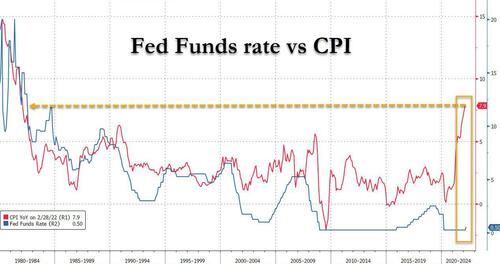
… but the Fed also boosted its dots so high it effectively confirmed what the market had been saying all along: the Fed now expects 6 more rate hikes in 2022, or one rate hike at every meeting!
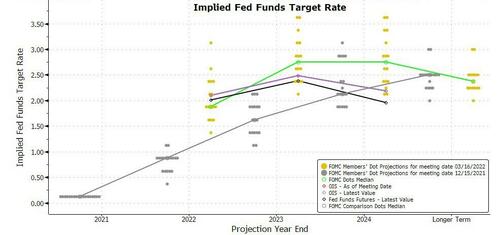
As a result, risk assets, gold, oil and all risk assets tumble as did yields.
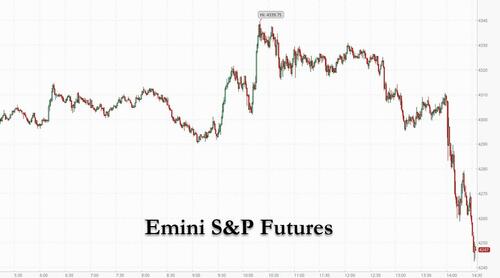
Hilariously, seven hikes is precisely what the market had been saying all along. However, once the Fed confirmed that the market was right, guess what happened? Well, rate hike odds tumbled (this is by far the most important chart of the day) as the market freaked out that the overly hawkish Fed will accelerate the recession.
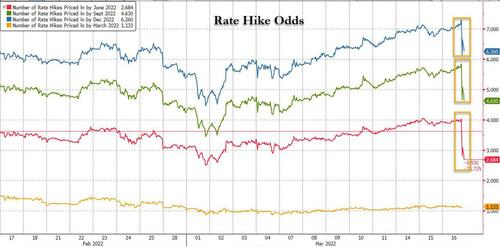
Why? Because with even the Fed now forecasting a big slowdown to growth coupled with a surge in inflation…
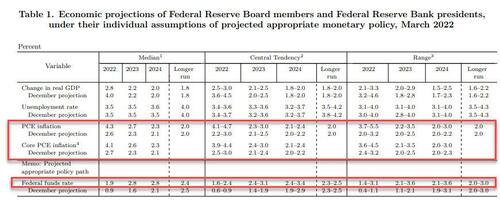
… the most likely outcome now is stagflation. This immediately manifested itself in a plunge in 30Y yields…
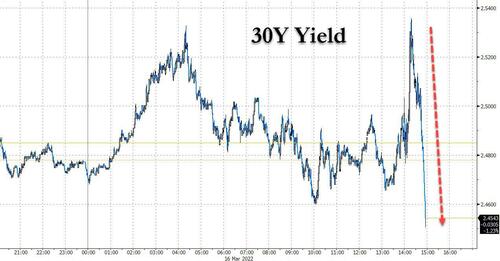
… as the entire yield curve pancaked…
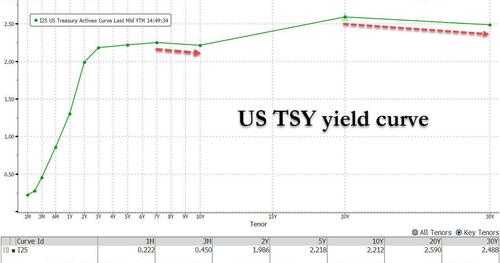
… culminating with the 5s10s inverting, a clear sign that a recession – the same recession which the Fed hopes to induce to crush commodity demand – is now coming.
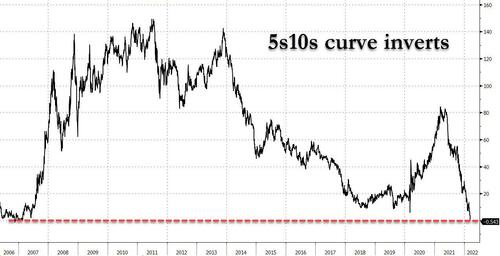
And while the 2s10s curve still has about 20bps before it too inverts and begins the countdown to the next recession…
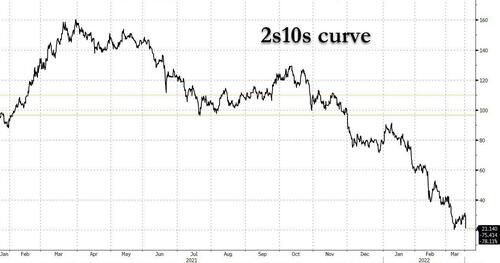
… one look at the 3Y1Y – 1Y1Y OIS fwd shows that markets are now pricing in almost two rate cuts in the next 3 years…
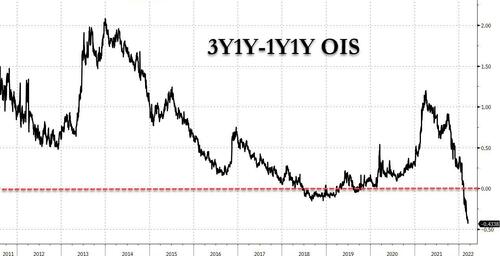
… confirming that the Fed, which was trapped long before today’s rate hike, will be forced to ease and/or resume QE in the not too distant future even as inflation continues to rage. Translation: policy error.
And while oil did indeed drop (not for long – just wait for the market to remember that 3MM bbls of Russian oil are now gone from circulation) on the Fed’s policy error as economic slowdowns traditionally lead to less demand, the policy error was not lost on either gold, which after dropping in kneejerk reaction to the hawkish FOMC statement, has since bounced to session highs in anticipation of the coming easing…
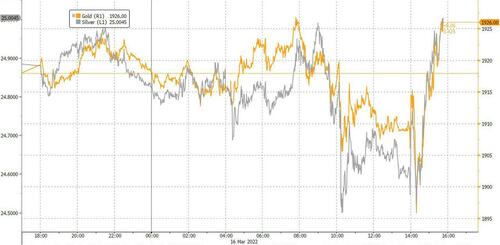
… or cryptos which similarly rebounded strongly after tumbling after the FOMC.
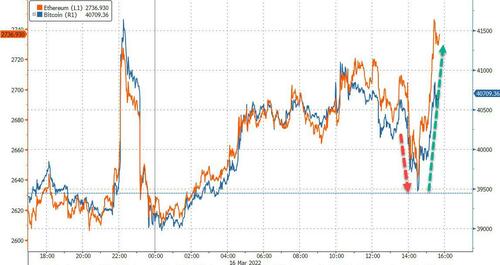
It certainly wasn’t lost on stocks, which after tumbling initially, reversed sharply once it emerged that the market is now pricing in rate cuts, and recovered more than 100 points from session lows…
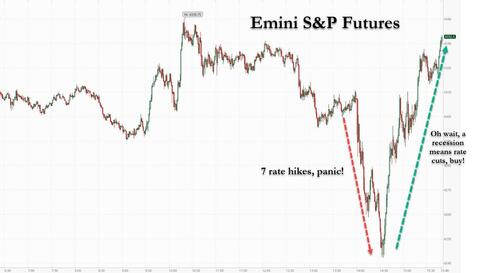
… led by – what else – the growth, deflation and slowdown sectors: IT and Comms.
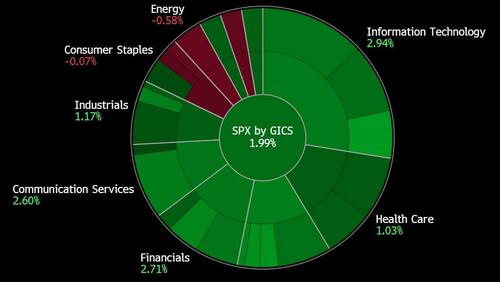
… in no small part thanks to the total chaos that was Powell’s presser…
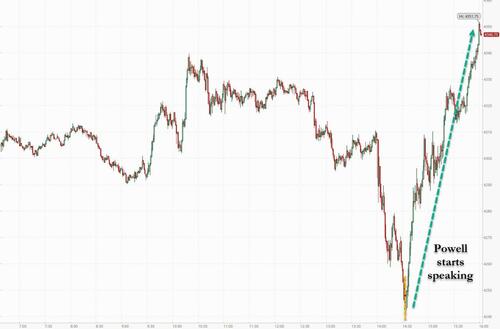
What happens next? Well, as we said earlier, the Fed is trapped, and while Powell really has no choice but to keep hiking in the coming months in hopes he will induce a modest recession to crush commodity demand, every incremental rate hike will invert the curve that much more (unless the Fed actively start selling 10 and 30Y TSYs, at which point all VaR hell will break loose), and the market will price in even more rate cuts.
In short, the more hawkish Powell gets, the bigger the liquidity firehose he will have to unleash in a few months when the economy plummets into an all out recession, if not depression.
END
I)LAST NIGHT /MORNING TRADING
Predictions as to what Powell will do. Also the Putin defaults will occur today.
A Historic Day On Deck: Powell Hikes, Putin Defaults
TUESDAY, MAR 15, 2022 – 06:41 PM
Tomorrow we get the highlight of what has already been an event-packed week, when at 2pm the Fed will hike rates for the first time since December 2018, raising the Fed Funds rate from 0% where it has been since the covid crisis to 0.25%. The widely telegraphed rate hike will be the first of many as the Fed scrambles to contain inflation which has led to a record high, double digit PPI and the highest CPI since the early 1980s, when the Volcker Fed hiked rates as high as 20% to contain galloping inflation. And, in doing so, the Fed will also set the US economy on course for a crash landing, with forward OIS market already pricing in almost 2 rate cuts over the next three years, a number that will only grow as the US slides into a crippling recession over the next few quarters (we will have a full FOMC preview later today).

Also tomorrow, another even more momentous event may take place when Russia is due to make two interest payments on its dollar bonds on Wednesday, but it is unclear whether western investors will actually receive their cash in dollars, in devalued rubles, or at all, potentially lining up a uniquely messy government debt default, the first since 1998 which eventually led to the collapse of LTCM and the start of the too big to fail bailout culture which defines the US financial system to this day.
On Wednesday, March 16, Russia is scheduled to hand investors a total of $117 million in interest payments on two of its bonds: namely $73 million on RUSSIA USD 2023 and $44 million on RUSSIA USD 2043. There is a 30-day grace period on these bonds, meaning that there may be time until April 15 to pay it; if it does not, that would constitute a default. There is no alternative payment clause on these bonds.
The next principal payment is on March 31, $359 million on RUSSIA USD 2030, which has a 15-day grace period, which again brings it to April 15. This is then followed by a $2 billion principal payment from RUSSIA USD 2022 maturing on April 4. Many more scheduled payments follow until the end of the year.

Altogether Russia has some $38.5BN of foreign-currency bonds (a tiny amount: the US issues roughly this much in every single monthly 10Y auction), of which roughly $20BN are owned by overseas investors. But foreigners also hold roughly 20% of Moscow’s local currency debt, which totaled roughly $200bn before the war sparked a collapse in the value of the ruble and made the bonds virtually untradeable.
The Russian government has already said that a recent coupon payment on these local bonds would not reach foreign holders, citing a central bank ban on sending foreign currency abroad. This has already been painful for western asset management groups. More than two dozen have had to freeze funds with significant Russia exposure, while others have sharply written down the value of their Russian holdings.
Will Moscow pay? As the FT notes, the finance ministry said on Monday that it had ordered the payments to be made as usual, but added that its ability to do so could be curbed by western sanctions against the Russian central bank. Finance minister Anton Siluanov said those sanctions – brought in earlier this month – were bouncing the country into an “artificial default”.
Digging deeper, there are both external and internal constraints that may limit payment.
In terms of the former, it may be that the US will prohibit payments being made on Russia’s eurobonds. This issue appeared with Directive 4 under Executive Order 14024 that prohibits US persons from conducting certain transactions with Russia’s Ministry of Finance. While it is unclear whether this extends to US banks receiving coupon payments, General License 9A appears to clarify that it would. In particular, it notes that prohibitions from Directive 4 related to the receipt of interest and maturity payments relating to debt or equity of specified entities issued before February 24, 2022 would be authorized only through May 25,2022.FAQ 981 then also notes that, beyond this date,a specific license would be required to keep receiving these payments. This all suggests that beyond May 25, it would not be possible for NYC banks to receive the interest payments, and that banks would need to ‘reject’ such transactions. This would therefore impact the interest payments due on May 27 for RUSSIA USD 2026 and EUR 2036.
Alternatively, a key domestic constraint to payment is that there may simply no longer be a willingness by Russia to make payments given the tough sanctions applied at this stage, especially given that making these payments would require using up FX that may increasingly be in short supply. Announcing that Russia is not allowing domestic bond OFZ repayments to be taken outside Russia already makes this point. Separately, a decree has now also been published by the Kremlin (see here) that allows for the repayment of foreign debt to select non-residents to be made to onshore accounts in RUB as opposed to being made to foreign accounts in FX. The decree states that this is applicable to both the government and other entities. For now, it’s not clear whether it is mandatory, or whether the CBR/Ministry of Finance would be willing to use their apparent override to enable eurobond payments to still go through. However, given that similar restrictions have been made for local government bonds, it is certainly possible that it applies to eurobonds too.
According to Morgan Stanley, it is unlikely that Russia will make the foreign debt payments: “we think it is very likely that there will be a missed payment in the coming months, perhaps as soon as the next payment on March 16. There are ways to avoid it. GL9A could be extended once May 25 hits. Also, Russia could decide to make the sovereign debt payments in USD as required. Yet for now this would be far from our base case. Note that as usual a default would not see bonds excluded from the EMBI indices. Index exclusions, barring new rules being put in place given the exceptional circumstances, would only take place due to no secondary trading.”
To be sure, markets have already largely priced in a default. Russia’s foreign bonds are trading at about 20 per cent of their face value – a level that suggests very little confidence of being repaid. Credit rating agencies, which up until late February awarded Russia investment-grade status, have slashed it to the very lowest “junk” ratings, with Fitch Ratings saying a default is “imminent.”

If Russia pays in rubles, is it still a default? Siluanov has said it is “absolutely fair” for Russia to make payments on its government debt in rubles until sanctions that he claimed have frozen nearly half of the country’s $643bn in foreign exchange reserves are lifted. But as the FT notes, payment in the Russian currency would still constitute a default in the eyes of most western investors, and not only because of its recent drop in value. Six of Russia’s 15 dollar- or euro-denominated bonds do contain a “fallback” clause allowing repayment in roubles, but the two bonds with coupons due on Wednesday are not among them. Furthermore, late on Tuesday Fitch said that were Russia to make its coupon payments due March 16 in rubles, rather than U.S. dollars, that would constitute a default following the 30-day grace period.
In any case, investors in Europe and the US say sanctions – both their own governments’ and Moscow’s – would in practice make it impossible to set up the Russian bank accounts necessary to receive rouble payments. Lawyers agree with Morgan Stanley (above) and say that even with the loophole of the alternative payment clause, a Russian default is likely and litigation almost inevitable.
What happens next? Typically, a default is followed by a period of negotiation between a government and its bondholders to reach an agreement on restructuring the debt. This is usually done by eventually exchanging the old defaulted bonds with new, less onerous ones, either simply worth less, with lower interest payments or with longer repayment schedules, or a combination of all three. Alternatively, the ECB may just end up buying them to pretend that an event of default never happened although Russia would need to invade Greece for that scenario to work.
While investors are usually reluctant to sue and get a formal default declared by a court because that could make the entire bond come due and potentially trigger defaults in other bonds where payments have not been missed, a “normal” restructuring seems unlikely in Russia’s case. The sanctions are designed to lock the country out of global bond markets and the participation of western investors in any new debt sales is forbidden.
Instead, investors will probably have to sit tight, writing off their Russian bonds and awaiting a de-escalation in the Ukraine conflict that might lead to an easing of sanctions. Some may actually want to quickly vote to demand immediate repayment and get court judgments from US and UK judges that allow them to try to seize overseas Russian assets, to ratchet up pressure on Moscow.
A subset of investors will also be hoping that the failure to make interest payments triggers a payout on credit-default swaps. The decision will be made by a finance industry “determinations committee”, made up of representatives of big banks and asset managers active in the CDS market. Unfortunately, the CDS may not end up helping bondholders, as the financial sanctions could snarl up the intricate system used to settle the contracts and it is unclear just how a CDS auction would take place.
Will a default spark a financial crisis? For a generation of trade, Russia’s last default in 1998 is still a vivid memory. Moscow’s shock decision to devalue the rouble and renege on its local debt followed on the heels of the Asian financial crisis and sent shockwaves through financial markets, leading to the collapse of US hedge fund Long-Term Capital Management, which was bailed out at the behest of the Fed by a consortium of banks, launching America’s too big to fail Wall Street culture.
Even then, Russia kept up payments on its dollar bonds, but defaulted on some Soviet-era international bonds. The last complete external default came in 1918, when the Bolshevik regime repudiated Tsarist-era debts following the Russian Revolution.
Analysts are relatively confident a rerun of 1998 can be avoided. Nikolaos Panigirtzoglou of JPMorgan points out that foreign investors and banks have already been cutting their exposure to Russia since the country’s 2014 annexation of Crimea, unlike the mid-1990s when highly leveraged funds were loading up on Russian assets. So far, the invasion of Ukraine has sparked only modest contagion in other emerging markets, with the far more significant fallout from the crisis being felt in a surge in commodity prices.
Still, anyone predicting that the Russian default won’t have adverse and unexpected consequences, is lying to themselves: as the FT notes, history of finance is littered with examples of how unexpected second-order effects from widely anticipated events still ended up causing broader calamities.
The 30-day grace period means this “probably isn’t yet the moment where we see where the full stresses in the financial system might reside . . . However, this is clearly an important story to watch,” said Jim Reid, a senior strategist at Deutsche Bank.
END
AFTERNOON
Stocks Slide After Biden To Send Drones To Ukraine As Part Of Aid Package
WEDNESDAY, MAR 16, 2022 – 01:14 PM
Update:
*CORRECT: BIDEN DID NOT SPECIFY WHETHER DRONES WOULD BE ARMED
*BIDEN SAYS U.S. WILL PROVIDE UKRAINE WITH ARMED DRONES
*BIDEN: WILL PROVIDE ADDITIONAL $800M IN UKRAINE SECURITY AID
Stocks turned down sharply following Biden’s comments.
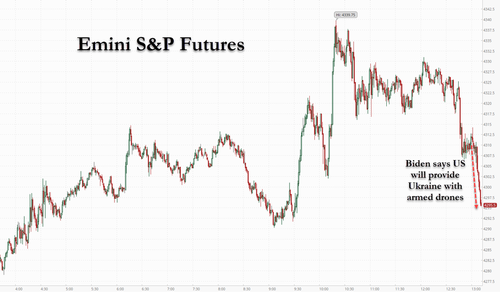
* * *
President Biden is expected to announce an additional $800 million in military aid for Ukraine, which would bring the total US support up to $1 billion in the last week alone, and more than $2 billion since Biden took office, according to USA Today.
Biden’s speech comes hours after Ukrainian President Volodomyr Zelensky received a standing ovation for a short virtual speech to members of Congress, in which he pleaded for the US to establish a no-fly zone.
Watch:
More via USA Today:
The $800 million will mean more than $2 billion in U.S. aid has gone to Ukraine since Biden entered office. The money has paid for an assortment of military equipment including 600 Stinger anti-aircraft systems, 2,600 Javelin anti-armor systems, nearly 40 million rounds of small arms ammunition, 200 grenade launchers and ammunition, 200 shotguns and 200 machine guns, according to the White House.
Hours earlier, Zelensky invoked 9/11, MLK, and Pearl Harbor in an emotional plea to the West to do more to stop the Russian invasion.
“I am addressing President Biden, you are the leader of the nation, your nation. I wish you to be the leader of the world. Being the leader of the world means to be the leader of peace,” Zelensky said. “Right now, the destiny of our country is being decided, the destiny of our people.”

“I call on you to do more,” he added.
END
Fed Announces Hawkish 25bps Rate Hike, Signals Hikes At Every 2022 Meeting As Bullard Dissents
WEDNESDAY, MAR 16, 2022 – 02:07 PM
A little background:
By now, enough has been said about what the Fed may do today: consensus expects that to fight soaring inflation, the Fed will enact a 25bps rate hike (but not 50bps unless Powell really wants to shock markets), the first since 2018, together with forward guidance for a string of hikes. Considering where inflation is, it is very clear by now that the Fed is far behind the curve – the list time CPI was here, the Fed Funds rate was 15%!
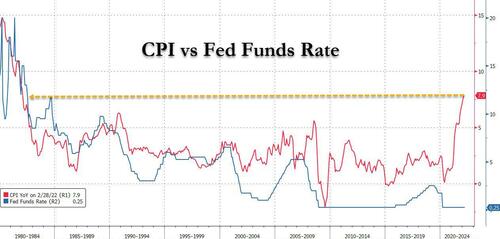
Needless to say, a rate hike has long been priced in by the market which sees more than 100% odds of a 25 bps hike (and small odds of a 50bps rate hike) and more than 7 rate hikes for all of 2022.
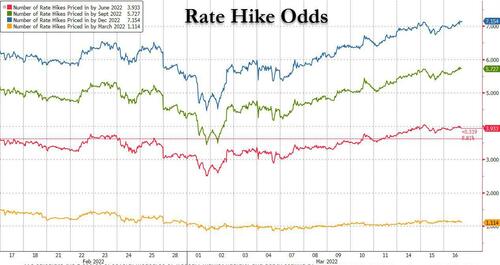
Consensus also expects a a mention of Ukraine risk, and while the Fed is not expected to provide details on B/S reduction, it may share a light calendar guide; Consensus also expects dots to be raised to four/five hikes in 2022 at 1.1%/1.4%) but the “terminal rate” dot will unchanged; elsewhere, the 2022 GDP dot will stay at 3.3% while the Fed raises both the 2022 and 2023 PCE dots.
The FOMC may, of course, surprise either hawkish or dovish. Here is how to determine which way the Fed is leaning:
- Dovish: Any hike dissenters: no forward guidance for hikes in statement; strong concerns over Ukraine in statement FFR 2022 dot £ 0.9%. long run dot < 2.5%: 2022 GDP dot < 3%: mild rises in 2022 PCE dot/no rises in 2023.
- Hawkish: Shock 50bps hike, or any dissenters to just 25bps: no mention of Ukraine risk; concern over long-run inflation expectations; details on B/S reduction; 2022 FFR dot > 1.4; long run FFR dot > 2.5%; 2022 GDP dot > 3 4%: rise in 2024 PCE dot.
Ian Lyngen at BMO Capital Markets is among those in the dovish camp: he anticipates a more cautious liftoff by the Fed than is implied by the futures market: “This isn’t to suggest the chair won’t emphasize the need to address accelerating inflationary pressures with a series of measured and predictable rate increases — after all, this is the beginning of a hiking campaign.”
Before the press briefing, the biggest news should be in the 2022 dot plot, according to Bloomberg. The FOMC was at three hikes in December. That will move up, and economists surveyed by Bloomberg are looking for four hikes, but many Wall Stret economists see five, while markets as noted above, are pricing in around seven hikes, or one at every meeting this year. There’s a plausible case for four, five, six or seven hikes in the new dots. The 2022 dots of course have the likelihood of moving market pricing, which has already moved up over the course of the last few months.
With a hike in the bag, Shawn Cruz, senior market strategist at TD Ameritrade said that “what is going to be interesting is what they say about their intentions for the balance sheet. I think that was a little bit of a surprise for markets when they announced that they were also going to start running off the balance sheet this year, and I wonder if that is maybe at least going to get softened a little bit at the meeting.”
Meanwhile, as Bloomberg’s Ye Xie notes, 2Y yields have moved 160 bps over the past six months, marking the biggest jump at the start of a Fed tightening cycle in modern history. Even so, markets indicate tightening will likely slow from some seven hikes this year to less than two in 2023, before cuts in late 2023/early-to-mid 2024.
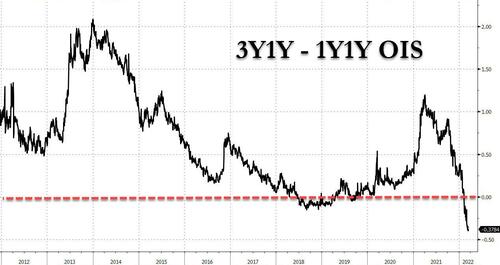
Meanwhile, inflation expectations embedded in breakeven rates remain well above the Fed’s target in the next few years (5y BE is at ~3.5%). Taken together, the markets are saying the Fed will front load the tightening, push rates to a neutral, but not too restrictive level, while tolerating inflation above its 2% target for a persistently long period of time. In other words, as Xie concludes, “Jerome Powell is not Paul Volcker.” But we knew that already.
So with that in mind, here is what the Fed just announced:
- Fed Raises Funds Rate Target Range 25 Bps to 0.25%-0.5%
- Fed Signals 6 more hikes in 2022
- Fed Says Inflation Elevated, Cites Broader Prices Pressures
- Fed Says Ukraine War May Create Inflation Pressure, Slower Growth
- Fed Forecasts Rates at 2.8% End ‘24, Long-Run Cut to 2.4%
- Fed Median Forecast Sees Inflation at 4.3% End 2022, 2.7% 2023
- Fed Median Shows Unemployment at 3.5% End 2022, 3.5% End 2023
- Fed Raises Ior 25 Bps to 0.4%, Discount Rate Increased to 0.5%
Bullard dissented, opting for a 50bps rate hike!
- James Bullard, who preferred at this meeting to raise the target range for the federal funds rate by 0.5 percentage point to 1/2 to 3/4 percent
Here is a redline of the FOMC statement:
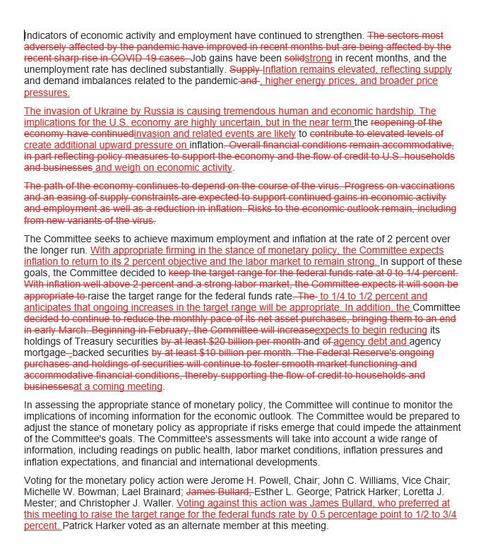
Here is a summary of the Fed’s economic projections:
Longer-run median unemployment rate 4% compares to previous forecast of 4% at Dec. 15, 2021 meeting
- 2022 median jobless rate at 3.5% vs 3.5%
- 2023 median jobless rate at 3.5% vs 3.5%
- 2024 median jobless rate at 3.6% vs 3.5%
Longer-run real GDP median projection of 1.8% compares to previous forecast of 1.8%
- 2022 median GDP growth 2.8% vs 4.0%
- 2023 median GDP growth 2.2% vs 2.2%
- 2024 median GDP growth 2.0% vs 2.0%
Longer run PCE inflation median at 2.0% compares to previous forecast of 2.0%
- 2022 median PCE inflation 4.3% vs 2.6%
- 2023 median PCE inflation 2.7% vs 2.3%
- 2024 median PCE inflation 2.3% vs 2.1%
- 2022 median core PCE inflation 4.1% vs 2.7%
- 2023 median core PCE inflation 2.6% vs 2.3%
- 2024 median core PCE inflation 2.3% vs 2.1%
Longer run Fed funds median at 2.4% compares to previous forecast of 2.5%
- 2022 median Fed funds 1.9% vs 0.9%
- 2023 median Fed funds 2.8% vs 1.6%
- 2024 median Fed funds 2.8% vs 2.1%
And visually (link):
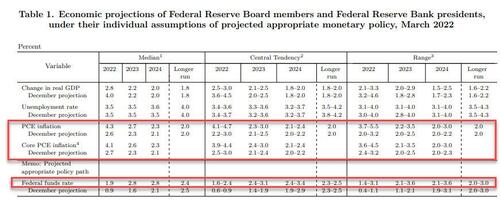
The take home here: year-end 2022 growth cut from 4.0% to 2.8%, while inflation has been hiked from 2.7% to 4.1%. Stagflation?
Diane Swonk tells Bloomberg that we will see “very weak growth” and notes that it is fanciful to think we won’t see an increase in the unemployment rate. “The Fed has been behind the curve on inflation,” she adds.
A look at the Fed’s dots indicated that the benchmark rate at end 2022 is about 1.9%, which is far more hawkish than economists surveyed by Bloomberg were looking for, but is in line with where the market pricing is.

It is even more notable that the median dot-plot forecast for the federal funds rate at the end of 2024 has been raised from 2.1% to 2.75%. So, that’s an overshoot of the neutral 2.5%. And what is even more bizarre, as the Fed hikes 2024 rate to 2.75% it cut its median loner-run dot to 2.375% now from 2.5%.
As Bloomberg notes, that’s a very interesting shift by the Fed on the long-run policy rate. That downshift suggests that, once the supply-chain issues are over and the pandemic has passed, policy makers very much see the same old secular stagnation phenomenon returning.
Also, as Neil Dutta at Renaissance Macro points out, Covid is officially over: “The Fed deleted the reference noting that the path of the economy depends on the course of the virus.”
Perhaps more importantly, and the reason why stocks are getting hammered, is that the Fed’s dot plot is penciling in rate hikes at every remaining meeting this year. Speaking on Bloomberg TV, Guggenheim’s Scott Minerd says that the Fed is at a “level of panic” and the dot plot has an erratic nature. “I think they are in an inflation panic.”
That said, it could have been worse – the Fed could have launched QT and it did not. In fact, there was not much clarity on the Fed’s quantitative tightening program as some had expected. “The Committee expects to begin reducing its holdings of Treasury securities and agency debt and agency mortgage-backed securities at a coming meeting.” There was an outside chance of getting a full plan today including a start date, but we have to wait for a “coming” meeting for that.
That is odd, because as Powell said in his Senate Banking Committee hearing this month, the Fed would set the caps for balance-sheet reduction at this meeting. So, as BBG’s Chris Anstey notes, “perhaps we get more — market-moving — information about the plan when the FOMC minutes come out. Unless Powell gives us different guidance in his press briefing.”
END
Stocks, Oil Tumble After Fed Signals Hike At Every 2022 Meeting, 5s10s Curve Inverts
WEDNESDAY, MAR 16, 2022 – 02:41 PM
While Powell did not detail plans of the Fed’s balance sheet shrinkage which many said could be unexpectedly hawkish, the market’s reaction to the Fed’s statement indicates that it was unexpectedly hawkish nonetheless – largely due to the Fed’s signaling that there will now be a rate hike at every FOMC meeting for the rest of the year – as well as a 2024 dot signaling a rate of 2.8%, up from 2.1%. And sure enough, amid this unexpectedly hawkish attack, futures are tumbling, with eminis tumbling from 4310 before the meeting to a session low of 4,240…

… dragging commodities such as oil lower – a move which the sellers will soon regret once Russia responds to the news that the US will sell armed drones to Ukraine…
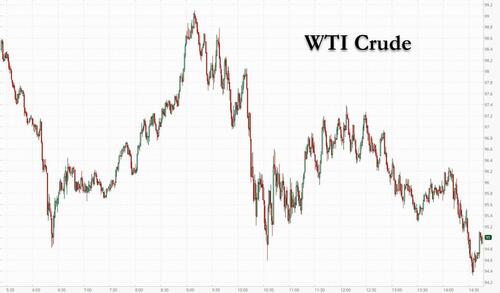
… yields across the curve surging higher, with the 10Y spiking to 2.2225%…
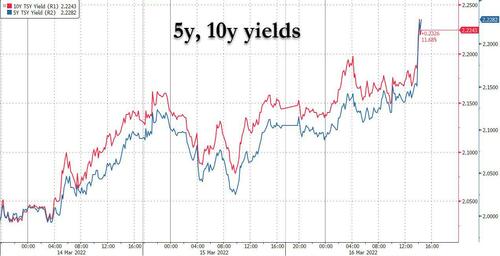
… and with the 5Y now at 2.299%, we officially have a yield curve inversion for the first time since 2006!
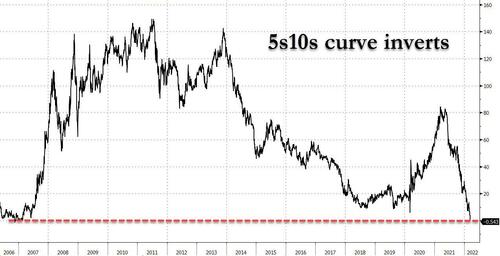
And with the 20s30s even more inverted, as the TSY yield curve pancakes…
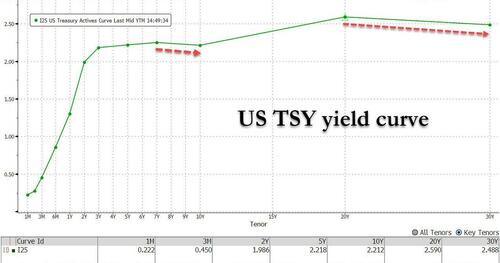
… this means that the countdown to the next recession has begun, and the market can now start pricing in the next QE. That may explain why gold, while lower, hasn’t crashed…
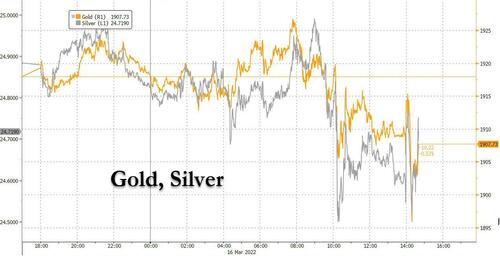
… and while the high-beta tech stocks known as cryptos initially tumbled, they too are now starting to finally price in the next round of easing and QE.

We end with a snapshot from Bespoke, looking at how stocks have traditionally traded on FOMC days, and no surprise, when the Fed has raised, the market has generated the lowest EOD returns.
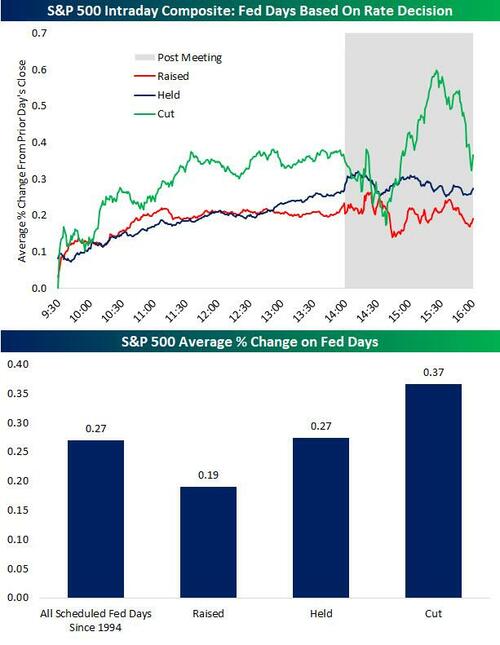
II) USA DATA
This is a very important data point: retail sales as this is an extremely important component of GDP. Today’s release shows a big miss in Q! The Atflanta Fed was right: Q1 GDP may contract
(zerohedge)
Retail Sales Miss, Q1 GDP May Contract After Unexpected Slide In Control Group
WEDNESDAY, MAR 16, 2022 – 08:47 AM
After January’s shockingly strong beat in adjusted retail sales, which however was more than offset by a plunge in unadjusted retail sales, moments ago the dept of commerce reported that February retail sales slowed sharply from the January euphoria, with the headline retail sales rising just 0.3% after January’s 4.9% surge, and missing expectations of a 0.4% print. Core retail sales excluding autos were even uglier, rising just 0.2%, and missing expectations of a 0.9% rise. And while gasoline station sales soared, the disappointment in most other segments suggests that we are starting to get demand destruction across the board.

Digging through the components, the report was mixed with modest increases in motor vehicles, building materials, clothing and sporting goods (and of course gasoline stations, driven by soaring gas prices), offset by declines in food and beverage stores, electronics and appliance stores, furniture and general merchandise and finally, nonstore, or internet, retailers.

Ominously, after scoring their biggest (adjusted) increase on record in January largely due to omicron lockdowns, non-store retailers – or internet vendors – saw their third biggest drop in the past year.

Perhaps most notable, the Control Group which is used to calculate GDP, showed a sharp 1.2% MoM drop after its 6.7% surge in January. And with Q1 GDP already on the verge of contraction, this surprisingly ugly number may be enough to push the US economy into contraction.

Finally, and suggesting that these numbers are all bunk, the unadjusted retail sales continued to slide, and after a record gap in January between the two series, in February the gap got even bigger, suggesting that the only “growth” in US spending is due to some Commerce Department seasonal adjustment calculator.

end
Import prices jump 10.9% in the past year, adding to high U.S. inflation
March 16, 2022 at 8:47 a.m. ET
MarketWatch
Import price index climbs 1.4% in February
The numbers: The cost of imported goods such as oil, grains and autos jumped 1.4% in February and continued to feed into the hottest U.S. inflation in four decades.
Economists polled by The Wall Street Journal had forecast a 1.6% advance.
Import prices also surged 1.9% in the prior month. The back-to-back increases in import prices are the largest in 11 years.
Key details: The cost of oil climbed 8.1% in February and accounted for much of the increase in import prices.
Oil began to surge last year from pandemic lows and prices spiked toward the end of the month after Russia invaded Ukraine.
The good news? Oil prices have tumbled in mid-March after soaring to as high as $130 a barrel. The price has since plummeted to under $100 and is not far from pre-war levels.
Import prices minus fuel rose 0.8% last month.
Over the past year, overall import prices have climbed 10.9%.
Export prices jumped 3% in February — the largest on record — and are up 16.6% in the past year.
Big picture: Inflation is likely to remain high through the spring, especially after the Russian attack on Ukraine drove up the prices of oil, wheat and other commodities.
The Federal Reserve later today is expected to announce the first increase in U.S. interest rates in four years.
The central bank has kept its benchmark short-term rate near zero during the pandemic to try to safeguard the economy, but easy money has contributed to the surge in inflation. The Fed is now unwinding its strategy to cool off
IIb) USA COVID/VACCINE MANDATE STORIES
Senate to undo transit mask rule thus eliminating extended federal regulation requiring masks on public transportation, including plans, trains and subways. The idiot the lone Republican to vote with Dems
(zerohedge)
Senate Passes Resolution To Undo Transit Mask Rule; Romney Only Republican To Vote With Dems
TUESDAY, MAR 15, 2022 – 10:20 PM
The Senate passed a resolution Tuesday that would eliminate extended federal regulation requiring mask on public transportation, including planes, trains and subways.

Passing by a margin of 57-40, Sen. Mitt Romney (R-UT) was the only Republican Senator to oppose the measure, while eight Democrats crossed the aisle to join Republicans in passing it.
The resolution only needed to pass by a simple majority in the Senate, and was not subject to the 60-vote filibuster.
“This is a free country. If someone wants to wear a mask on a five-hour flight from one American city to another, there is no reason they can’t do that,” said Sen. Roger Wicker (R-MI) at a press conference leading up to the vote.
“But the testimony we’ve had in the Commerce Committee, from the airline industry and from scientists is that airline air is the safest air that Americans can breathe indoors, anywhere.”
The bill will not head to the House, however it’s unclear if Speaker Nancy Pelosi (D-CA) will even allow a vote according to NBC News.
The Biden administration last week extended the requirement for masks on public transportation through April 18. When they extended it, they said that the CDC will “work with government agencies to help inform a revised policy framework for when, and under what circumstances, masks should be required in the public transportation corridor.”
In other pandemic news, Hillsborough County, Florida will end its State of Emergency over Covid-19 after the positivity rate fell from 9.7% last June to 2.9%.
The decision was based in part on research which found that “masks had little to no impact on the spread of the virus,” according to News9.
That kind of talk would get one banned from social media just months ago…
iii) USA inflation//SHIPPING commentaries//LOG JAMS//
end
iii) USA economic stories
Nothing to see here, as all the drugs that Eli Lilly is holding back on Russia are already genericized
(zerohedge)
Eli Lilly Halts Sales Of All Non-Essential Drugs In Russia
TUESDAY, MAR 15, 2022 – 08:40 PM
Here’s one deprivation the Russian people probably weren’t expecting.
American drugmaker Eli Lilly has decided to halt export of all non-essential drugs to Russia, including its blockbuster erectile dysfunction drug, Cialis.

The drugmaker told the FT that while it would continue to supply drugs for life-threatening illnesses, it will suspend all marketing, drug trials and investment in Russia, along with all non-essential meds, which they will no longer export.
This marks the first time a US drugmaker has decided to pull its business from Russia since the start of the invasion of Ukraine.
“For nearly 150 years, Lilly has worked to ensure patients have access to the medicines they need, no matter where they may live,” it said in a statement. “Our Russian operations are now only focused on ensuring people suffering from diseases like cancer and diabetes continue to get the Lilly medicines they need.”
Meanwhile, Pfizer said this week that pausing the flow of its medicines to Russia would violate the company’s foundational principle of “putting patients first” (which…is that what they have been doing with all those price hikes?).
The export of medicine and the materials necessary for making drugs and medical equipment were excluded from the sanctions imposed on Russia by the US and Europe.
end
iv)swamp stories
KING REPORT/SWAMP STORIES
Nasdaq Golden Dragon China Index Extends Drop to 13% – BBG 9:35 ET (-75% from all-time high)
USMs (June 30-year bond future) declined as much as 1¾ in early US trading. The US 5-year hit 2.042% (highest since May 2019); the 10-year hit 2.09% (highest since July 2019); and the 30-year hit 2.45%.
WTI oil tumbled as much as 8.40 in early US trading. Gasoline sank as much as 17.9 cents. Gold fell as much as $33.00. Did someone have inside info regarding the Ukraine-Russia peace talks?
ESMs, which rallied during Asian trading on peace talk hope and buying for an expected Monday rally to start expiry week, peaked at 5:57 ET (4244.75). They then sank to a session low of 4185.50 at 9:38 ET. Then, someone juiced ESMs to 4209.75 at 8:45 ET. The equity rescue team was alive!
During early US trading, Apple fell below its 200-Day Moving Average (153.75), due to the Foxconn production halt, for the first time since the Covid Panic of 2020. The NY Fang+ Index declined as much as 3.2% due to the mini crash in Chinese technology stocks.
After vacillating frantically in a 13-handle range for almost 25 minutes, ESMs exploded higher at 10:08 ET. Bonds (-2.00) and oil (-9.00) hit new daily lows on this:
Ukraine Says Technical Pause in Talks with Russia until Tomorrow – BBG 10:08 ET
“For additional work in the working subgroups and clarification of individual definitions. Negotiations continue,” Podolyak says (Ukraine negotiator)
The ESM rally ended at 10:25 ET; bonds fell to -2 7/32. The 10-year hit 2.105%; the 5-year hit 2.052%. April WTI oil fell to 99.76 (-9.57). At 10:50 ET, ESMs spiked higher; the rally ended at 11:00 ET. ESMs and stocks then tumbled as Old-World traders wanted to liquidate before European bourses closed.
World Stock Market Hours https://www.thebalance.com/stock-market-hours-4773216
ESMs sank 25 handles by 11:30 ET. The ESM decline accelerated after 11:35 ET. By 11:50 ET, ESMs had fallen 50.75 from their high. Bonds were still at their lows. Oil bounced to 101.55. Here’s why:
UN chief says prospect of nuclear conflict back ‘within realm of possibility’ over Ukraine – Reuters
After a 13-minutes pause, ESMs and stocks sank further. ESMs and stocks made new daily lows. ESMs hit -62.25 from their high. After a modest rebound, ESMs and stocks sank on this:
U.S. Tells Allies China Signaled Openness to Provide Russia with Military Support – FT
By 12:50 ET, ESMs had hit a new low of 4155.25 and bonds were -2 7/16. ESMs eventually hit a bottom of 4152.25 at 14:30 ET. Bonds hit a bottom 10 minutes later. ESMs traded modestly higher until the last-hour manipulation appeared. The rally halted on this: China Will Face Consequences if It Helps Russia’s War – Psaki. The WH threatened to bring the economic war to China!
@DrJBhattacharya: Covid antibodies found in stored blood from Sept/Nov 2019 in European blood banks. The implications are enormous. 1. Long before the official start date, it was too late to stop the disease from spreading across the earth. We have wasted 2 years on lockdowns for nothing…
https://twitter.com/DrJBhattacharya/status/1503112014700285953
Biden @POTUS Mar 11: I want to be clear: We will defend every inch of NATO territory with the full might of a united and galvanized NATO. But we will not fight a war against Russia in Ukraine. A direct confrontation between NATO and Russia is World War III. And something we must strive to prevent.
@MacaesBruno: Think there is now a consensus this was a catastrophic tweet.
@BuzzPatterson: And, just like that, everybody on Twitter evolved from being infectious disease experts into international affairs and nuclear weapons experts.
GOP Sen. @TomCottonAR: In December, Biden blocked U.S. military trainers from helping Ukraine. Biden wanted to avoid “provoking” Putin. But the opposite happened. Biden’s weakness provoked Putin to act more aggressively. (History is very, very clear on this dynamic!)
Today – The US threatened to institute an economic war on China. The Big Guy on Monday afternoon again blamed Putin for inflation. The Ukraine-Russia peace talks are in suspension. Nasdaq is now down ~21% from its high. The S&P 500 Index closed well below 4200. The S&P 500 Index’s 50-DMA closed 3 points below its 200-DMA – the dreaded “Death Cross”. The 2-day FOMC Meeting begins, and it is expiration week. There is no reason to play in the casino – unless you have inside information!
And if the above is not enough: The New World Order, including globalism, that was installed after the dissolution of the USSR has just blown up. No one knows what the consequences will be. If that does not concern you, remember that the US is now led by Joey Baby, Kamala, Pelosi, and Schumer!
How companies are hiding inflation without charging you more
Newly designed Gatorade bottles in 28 oz. with one 32 oz. bottle in an older design… Frito-Lay confirmed Doritos shrunk their bags due to pandemic pressures… Representatives at Proctor & Gamble which makes Crest toothpaste, and at Mondelez—which makes Nabisco Wheat Thins, confirmed reductions in their products’ volumes but did not disclose the reasons why. While Crest 3D White does now sell a 5 oz tube, its 4.1 oz tube shrunk to 3.8 oz. Bounty, according to a representative at Proctor & Gamble, got better as it got smaller since the paper towels are more absorbent than they used to be…
https://qz.com/2129426/inflation-and-supply-chain-snags-are-shrinking-your-products/
House GOP investigating US release of Russian cyber criminal (Who is Putin blackmailing?)
Biden admin’s decision to release Russian cybercriminal is ‘curious,’ Republicans say
https://www.foxnews.com/politics/house-gop-investigating-u-s-release-russian-cyber-criminal
The Triumph and Terror of Wang Huning (Xi’s top advisor, ‘China’s Kissinger’)
He concludes that America faces an “unstoppable undercurrent of crisis” produced by its societal contradictions, including between rich and poor, white and black, democratic and oligarchic power, egalitarianism and class privilege, individual rights and collective responsibilities, cultural traditions and the solvent of liquid modernity.
But while Americans can, he says, perceive that they are faced with “intricate social and cultural problems,” they “tend to think of them as scientific and technological problems” to be solved separately. This gets them nowhere, he argues, because their problems are in fact all inextricably interlinked and have the same root cause: a radical, nihilistic individualism at the heart of modern American liberalism.
“The real cell of society in the United States is the individual,” he finds. This is so because the cell most foundational (per Aristotle) to society, “the family, has disintegrated.”… “the American economic system has created human loneliness” as its foremost product, along with spectacular inequality. As a result, “nihilism has become the American way, which is a fatal shock to cultural development and the American spirit.” Moreover, he says that the “American spirit is facing serious challenges” from new ideational competitors…
Wang Huning appears to have won a long-running debate within the Chinese system about what’s now required for the People’s Republic of China to endure. The era of tolerance for unfettered economic and cultural liberalism in China is over… China and the West, facing very similar societal problems, have now, thanks to Wang Huning, embarked on radically different approaches to addressing them…
https://palladiummag.com/2021/10/11/the-triumph-and-terror-of-wang-huning/
@TulsiGabbard: @MittRomney, you have called me a ‘treasonous liar’ for stating the fact that “there are 25+ US-funded biolabs in Ukraine which if breached would release & spread deadly pathogens to US/world” and therefore must be secured in order to prevent new pandemics. Bizarrely, you claim that securing these labs (or even calling for securing these labs) is treasonous and will lead to a loss of life, when the exact opposite is obviously true… Pentagon Fact sheet (March 11, 2022) has numerous statements directly & indirectly confirming the existence of such biolabs. https://media.defense.gov/2022/Mar/11/20 In April 2020, in refuting Russia’s accusation that U.S. is using biolabs in Ukraine to develop biological weapons, U.S. Embassy in Ukraine acknowledged there are U.S. funded labs in Ukraine working with pathogens for vaccine & other peaceful purposes… https://ua.usembassy.gov/u-s-ukraine-pa
@ggreenwald: Mitt Romney skipped Vietnam and all other military service. Romney has five sons, none of whom served (he said in 2012: they served their country by “helping me get elected”). He’s here to say Iraq War veteran and Army Lt. Col. @TulsiGabbard is a traitor, maybe a Russian agent… Romney has basically made a specialty out of his life: urging US wars while demanding that other people’s less wealthy Americans families go fight and die in them: never him or his sons…
“All the war-propaganda, all the screaming and lies and hatred, comes invariably from people who are not fighting.” — George Orwell (Prophesy about GOP Sens. Lindsey Graham and Mitt Romney?)
“Beware the ides of March!”
| The King Report March 16, 2022 Issue 6719 | Independent View of the News |
| Numerous pundits and analysts believe that China’s Shenzhen province lockdown on a purported Covid surge is a sanction on the US, particularly Apple and some tech companies. It is a thinly veiled warning to Team Biden that China can play the sanction game too. FT: China warns of retaliation if hit by Russia sanctions fallout – Beijing slams what it calls US efforts to spread disinformation and ‘distort and smear’ its position on Ukraine https://www.ft.com/content/2b46df50-c6ab-4d58-9eef-5d3fb86905b1 Putin’s forces may only be able to keep up the fight for another 14 days, defence sources say as increasingly-desperate invaders launch more devastating strikes on Kyiv this morning The Russian army could be just two weeks from ‘culmination point‘ – after which ‘the strength of Ukraine’s resistance should become greater than Russia’s attacking force.’… https://www.dailymail.co.uk/news/article-10613069/Putins-forces-able-fight-14-days-military-experts-say.html Russia says it received US guarantees on Iran nuclear deal – Development enables resumption of talks that were stalled after Moscow demanded assurances sanctions over Ukraine won’t impact its ties with Tehran https://www.timesofisrael.com/russia-says-it-received-us-guarantees-on-iran-nuclear-deal/ Kevin McCarthy @GOPLeader: 48 hours ago, the Iranian Revolutionary Guard fired dozens of missiles near the US consulate in Iraq. And yet, the Biden admin is quietly rushing ahead with a bad agreement to give Iran’s regime nuclear weapons. It’s even worse than Obama’s Iran Deal. Saudi Arabia Considers Accepting Yuan Instead of Dollars for Chinese Oil Sales – WSJ Talks between Riyadh and Beijing have accelerated as the Saudi unhappiness grows with Washington https://t.co/LBedbFp1od Last week, Saudi Arabia refused to take The Big Guy’s call, which reportedly was a plea to hike oil production. Now, Saudi Arabia is taking another shot at Team Big Guy. Saudi Arabia is not happy with Team Obama-Biden’s romancing of Iran. Chinese tech stocks slid in Hong Kong as investors rushed to offload shares amid concerns over Beijing’s ties with Russia and persistent regulatory risks https://t.co/aPUXuW7RaE The rout in Chinese shares grew, with indexes falling to their lowest levels in years and shares in China’s two biggest tech titans tumbling by double-digit percentages https://t.co/41a99UpvsR Abetting the early equity rally: AFP: Zelensky says Ukraine must recognise it will not join NATO ESMs and stocks tumbled at 11:54 ET on this: Putin: Ukraine Not Serious About Finding Acceptable Solution – BBG After a 27-handle decline, the rally quickly resumed. The prime reason for the massive rally on Tuesday became clearer. It was the final day of March VIX option trading, with tomorrow being expiration day for those options – and there was a massive squeeze on VIX-related products, particularly VXX. @EricBalchunas yesterday 7:38 ET: How high VXX (ETN based on S&P 500 VIX futures TR Index) premium goes nobody knows. Closed at a 5% last night… VXX is not some fringe situation, it is mainstream product. Yesterday it traded $1.8b… (12:03 ET on Tuesday) VXX premium up to 31% now as the ETN surged 20% today while its INAV is down 2%. This is what happens Larry… (12:16 ET) @S3Partners is showing 48% of VXX shares are currently held short, so likely ppl racing to buy back VXX on open market and this is causing price to go up along w/ ppl buying it just to ride and profit from said short covering. When all this is over, look out. @zerohedge: GS on VXX https://twitter.com/zerohedge/status/1503772099990724609/photo/1 VXX Index – The squeeze that generated the massive rally on Tuesday morning. ESMs and stocks went inert, with a downward bias, after the peak at 12:39 ET. As the above chart clearly shows, the peak of the VXX squeeze occurred during early trading (10:10 ET to be exact). After the 14:15 ET VIX Fix, ESMs commenced the rally that appears regularly in anticipation of the last-hour upward manipulation. ESMs and stocks rallied into the close. Because it’s expiration week, the NY Fang+ Index and the Nasdaq 100 surged to the upside. Bonds declined with oil tanking. The US 7-year and 10-year notes inverted on Tuesday. US PPI for March increased a record 10% y/y as expected. PPI jumped 0.8% m/m; 0.9% expected; Core increased 8.4% y/y and 0.2% m/m; 8.7% y/y and 0.6% m/m were consensus. But, once again for the Biden reign, prior month economic data was revised to a worse condition! February PPI was revised to +1.2% m/m form 1% and +10.0% from 9.7% y/y. Core was revised to +8.5% y/y from 8.3% y/y. @Stephanie_Link: PPI up 10% y/y with services up 7.8%, goods up 14.4%, food up 13.8% and energy up 34.5%. US gasoline prices are up 51% y/y – highest on record. And we’re not at the peak driving season. New York manufacturing activity declines in March, Empire State survey shows Headline business conditions index drops to negative 11.8, lowest level since May 2020 (+5.5 expected) The new-orders index fell 12.6 points to negative 11.2 in March, and the shipments index fell 10.3 points to negative 7.4. Unfilled orders slipped 1.3 points to 13.1 in March while delivery times rose 11.1 points to 32.7. Inventories rose 9.8 points to 21.5 in March, the highest level in years, the New York Fed said… https://www.marketwatch.com/story/new-york-manufacturing-activity-declines-in-march-empire-state-survey-shows-11647347446 U.S. banks will keep a toe in Russia despite wind-downs Citigroup Inc, JPMorgan Chase & Co and Goldman Sachs Group Inc – the three Wall Street banks with the biggest Russian exposures – have said in the past few days that they plan to pull back their businesses in Russia following the country’s invasion of Ukraine… Even when that work is done, however, they are likely to hang on to their banking licenses in the hope that the businesses can be rebuilt at a later date, sources at two of the banks said… https://t.co/yIcVrOVBPK Russia Imposes Sanctions on Biden, Blinken – BBG 10:48 ET Biden’s timid leadership in Ukraine on full display in Poland MiG fiasco – GOP Sen. Tom Cotton While Zelenskyy has rallied his people, Biden has responded with timidity and half-measures The Biden administration’s response to the Polish offer was chaotic and confused. Secretary of State Antony Blinken initially gave Poland the “green light” to give fighters to Ukraine. But then, Biden balked. He scuttled the deal and sent his flacks running to the press to claim Poland’s plan was a complete surprise… https://t.co/PX8SxNvLrN @TomlinMedia: (Russian chess legend) @Kasparov63: “Ukrainians are not scared of anything now. President @ZelenskyyUa and Ukrainians–they have plenty of courage, but they don’t have enough weapons. NATO has plenty of weapons, but not enough courage.” https://twitter.com/TomlinMedia/status/1503506472092979203 Russia duped Europe into energy dependence by funding ‘rabid environmental groups’: experts Expert James Carafano: ‘Russians actually fund some of the most rabid environmental groups in Europe https://www.foxnews.com/world/russia-funding-environmental-groups-europe-united-state @Halsrethink: Interestingly, German government has chosen to purchase “Block 4” nuclear weapons capable version of F35s. F35s acquired or being acquired by other European nations are not nuclear capable, except for Netherlands. Seems Germans finally fully awakening to Russian threat @MdBreathe: Research from the AMA shows that nearly 1/3 of new drugs have some sort safety event after going to market. Average time to acknowledge the safety issue is 4 years Yesterday, the US Senate passed Senator Rubio’s bill that makes daylight savings time permanent. It also passed a bill that ends the airplane/public transportation mask mandate. A big reason for the recent plunge in oil and industrial commodities is the large hike in futures margins. Commodity producers are typically long the physical product and short futures. An oil company or metals producer hedges its inventory by going short futures. Arbitrage traders have similar positions. When clearing houses or exchanges hike margins on futures, entities get margin calls. Levered entities (arbs) can face funding pressure. If you cannot procure more funds, you must liquidate. Pozsar’s “Margin Call Doom Loop” Prediction Comes True as Trafigura Faces Billions In Margin Calls – “trading companies that are long the physical commodity and short derivatives as a hedge are experiencing steep margin calls… these firms have to borrow large amounts of cash on very short notice, which puts strains on their bank lenders. And in order to raise the cash necessary to lend to the trading companies, their banks are tapping the CP market and pushing unsecured funding rates higher and spreads wider… with less access to financing, investors are forced to sell assets… https://www.zerohedge.com/markets/trafigura-faces-billions-margin-calls-pozsars-margin-call-doom-loop-prediction-comes-true Today is Fed Day, VIX expiration, and Weird Wednesday. Usually, the peak intensity of the expiry week upward manipulation appears on Weird Wednesday. Barring news, traders will probably wait for Powell’s press conference before they perform the upward manipulation. If the FOMC Communique is unexpectedly dovish and/or the Fed does not hike its fed funds rate, the manipulation will begin then. Astute traders will wonder if yesterday’s VXX squeeze was the peak of the expiry squeeze. A dynamic in Tuesday’s rally: For the past few weeks, pundits have noted that when the market expects the Fed to hike rates, an equity rally appears after the Fed hikes rates. Ergo, beaucoup traders got long yesterday for the expected rally after the Fed hikes rates today. If there is a rally after the Fed’s rate hike and/or Powell’s presser, will traders that got long for a post-rate hike rally be able to find enough patsies to absorb their longs? PS – After hawkish FOMC Communiques, Powell has tended to be dovish. Finally, yesterday, The Big Guy signed the latest fiscal stimulus, A $1.5 trillion pork-laden bill. Ya think that Team Biden would be happy if the stock market tumbled on such a grand event? @MichaelMOTTCM: Despite the NASDAQ rising by nearly 3% today, there were 533 more new lows than new highs Expected economic data: Feb Retail Sales 0.4% m/m, Ex-Autos 0.9%, Ex-Autos & Gas 0.5%; Feb Import Prices 1.6% m/m; Export Prices 1.2% m/m; Mar NAHB Housing Market Index 81; FOMC Communique 14:00 ET, 25bps rate hike is expected. Powell Press Conference 14:30 ET. ESMs are -12.50 at 20:50 ET. Reportedly Ukraine is engaged in a counter-offensive northwest of Kyiv. S&P 500 Index 50-day MA: 4454; 100-day MA: 4555; 150-day MA: 4518; 200-day MA: 4467 DJIA 50-day MA: 34,668; 100-day MA: 35,201; 150-day MA: 35,099; 200-day MA 34,977 S&P 500 Index – Trender trading model and MACD for key time frames Monthly: Trender is positive; MACD is negative – a close below 4153.02 triggers a sell signal Hourly: Trender and MACD are negative – a close above 4547.45 triggers a buy signal Daily: Trender and MACD are negative – a close above 4393.37 triggers a buy signal Hourly: Trender and MACD are positive – a close below 4201.18 triggers a sell signal Reuters: NATO is set to tell its military commanders on Wednesday to draw up plans for new ways to deter Russia following Moscow’s invasion of Ukraine, including more troops and missile defences in eastern Europe, officials and diplomats said. Some military experts believe that Poland and other eastern European nations are now preparing for and/or war gaming Russian invasion scenarios. @greg_price11: Joe Biden says “the First Lady’s husband has tested positive for covid.” Somebody off to the side is then forced to remind him that is in fact him https://twitter.com/greg_price11/status/1503855506393374728 Pelosi presser – What is impairing? https://twitter.com/ParikPatelCFA/status/1503749913359831045 Illinois House Passes Bill Protecting Employees from Termination for Cannabis Use http://dlvr.it/SLlwBK |
END Let us close with this offering courtesy of Greg Hunter interviewing Dr. Mark Skidmore a must view….. Harvey FDA, CDC Lying About Vax Deaths & Injuries – Mark SkidmoreInbox  Greg Hunter via aweber.com Tue, Mar 15, 11:51 PM (34 minutes ago)to HarveyFDA, CDC Lying About Vax Deaths & Injuries – Mark Skidmore | Greg Hunter’s USAWatchdogGreg Hunter Greg Hunter via aweber.com Tue, Mar 15, 11:51 PM (34 minutes ago)to HarveyFDA, CDC Lying About Vax Deaths & Injuries – Mark Skidmore | Greg Hunter’s USAWatchdogGreg HunterFDA, CDC Lying About Vax Deaths & Injuries – Mark SkidmoreBy Greg Hunter On March 15, 2022 In Political Analysis1 CommentBy Greg Hunter’s USAWatchdog.comMichigan State Economics Professor Mark Skidmore is an expert in public finance and policy evaluation. About this time last year, Dr. Skidmore identified a public policy to withhold lifesaving CV19 drugs such as hydroxychloroquine (HCQ) that cost at least 100,000 needless deaths. Skidmore is out with a new report that says at least 1.4 million have been killed or seriously injured, so far, from the CV19 injections. Dr. Skidmore contends the FDA and CDC are covering up serious danger and harm being done to people. Dr. Skidmore explains, “We need actual scientific studies, but we are not getting them. . . . If the FDA and CDC are only claiming 9 fatalities from the (CV19) vaccine, then clearly that is not the truth. The Pfizer documents show that (1,200 vax deaths reported to Pfizer early on). The DOD data . . . shows that. The VAERS data shows that. Then I have my survey (with about 300,000 vax deaths) that adds to this growing evidence. Then you look at all the soccer players, and the rate of collapses and fatalities among professional soccer players is four times anything we have ever seen before. The Orange County, California, school district is now requiring a heart examination, including an EKG in order to participate in athletics. Why does a 17-year-old healthy person need an EKG?”Dr. Skidmore points out a serious loss of confidence in the watchdog agencies overseeing everything Covid. Dr. Skidmore says, “The FDA and CDC official stance is there has been only 9 fatalities from the inoculation. We have overwhelming evidence it is far more than that. So, you know they are not telling the truth there. If they are not telling the truth there, then what else are they not telling the truth about? Then you go down the rabbit hole, and it’s very troubling. It’s an enormous societal problem for us to wrap our minds around that these institutions are compromised. Then you have to go about how to operate in a world where that is true. How do you get good information? . . . One of the things in the study is if you listened to mainstream media or official government sources, you were far more likely to be inoculated. If you listened to alternative media, you were less likely to be inoculated. So, what’s a good source? That’s the question we have now.”Dr. Skidmore also found out that people who watched a family member or friend have a death or bad reaction to the so-called vaccines were highly likely not to get the CV19 inoculation. Skidmore also says, “The government says 76% have got the inoculation, but in my study, it is closer to 50%.”Skidmore says people witnessing a bad inoculation reaction likely kept the actual number of vaxed to be much lower than the Biden/Obama Administration was hoping for.Dr. Skidmore says the trend is for increasing death and injuries from the CV19 inoculations. Skidmore uses the term “inoculation” because he says “it’s not a vaccine, it’s gene therapy. They changed the definition of ‘vaccine’ to accommodate this experiment. . . . So, I use the term ‘inoculation,’ and I explain this in my paper.”Dr. Skidmore’s new cutting-edge original work is called “How Many People Died from the Covid-19 Inoculations?”Join Greg Hunter of USAWatchdog.com as he goes One-on-One with Michigan State University Professor Mark Skidmore, founder of Lighthouse Economics. (There is much more in the 57-minute interview.)(To Donate to USAWatchdog.com Click Here)After the Interview:Dr. Skidmore has a website called Lighthouse Economics, and you can find it at Mark-Skidmore.com. Dr. Skidmore is a prolific writer, and his work and analysis are free to the public.To read Dr. Skidmore’s latest work called “How Many People Died from the Covid-19 Inoculations?” click here.https://usawatchdog.com/fda-cdc-lying-about-vax-deaths-injuries-mark-skidmore/ |
Well that is all for today. I will see you THURSDAY night


 harveyorganblog.com
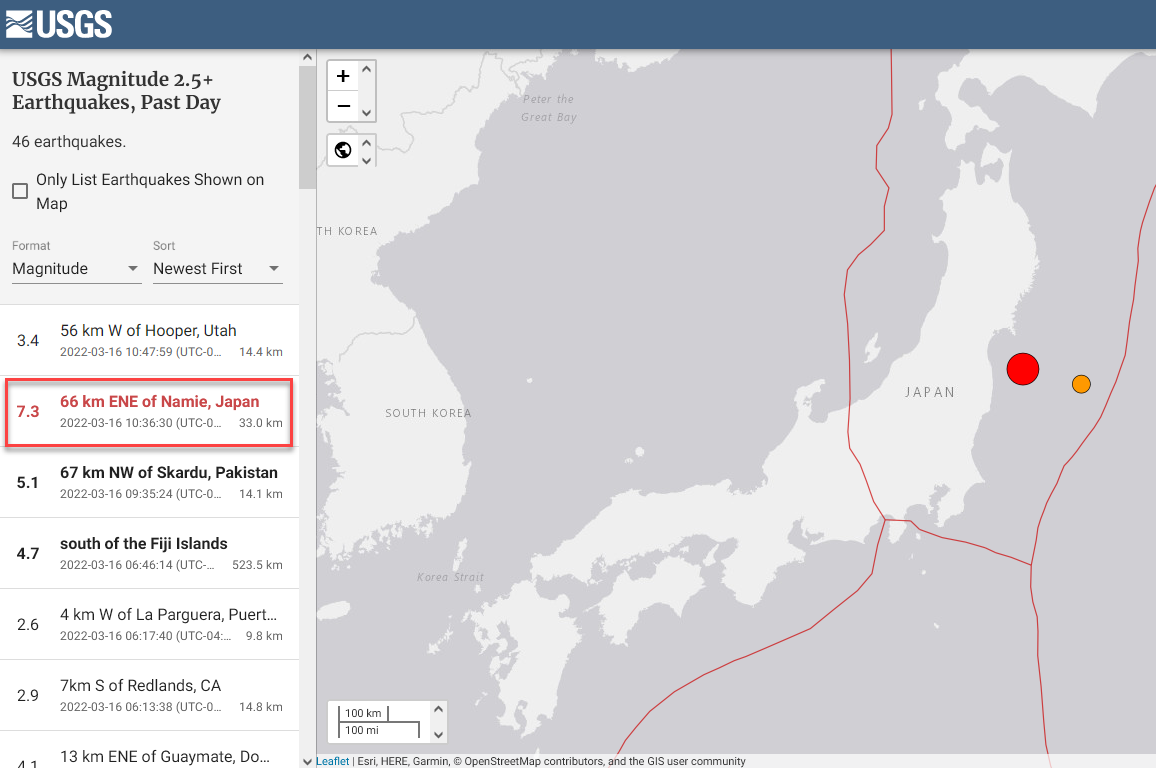



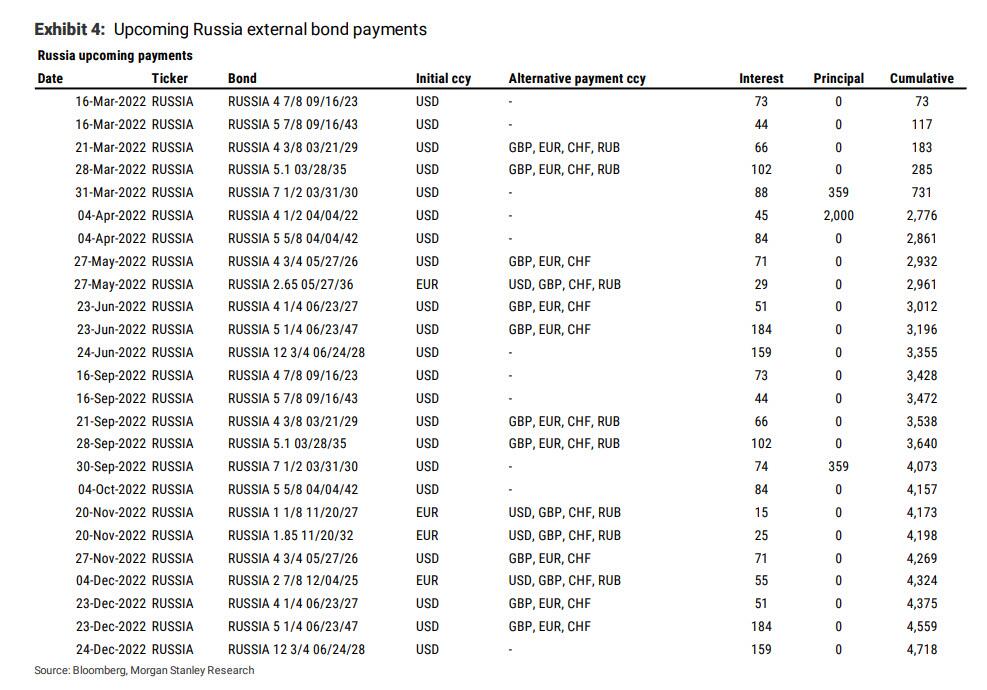
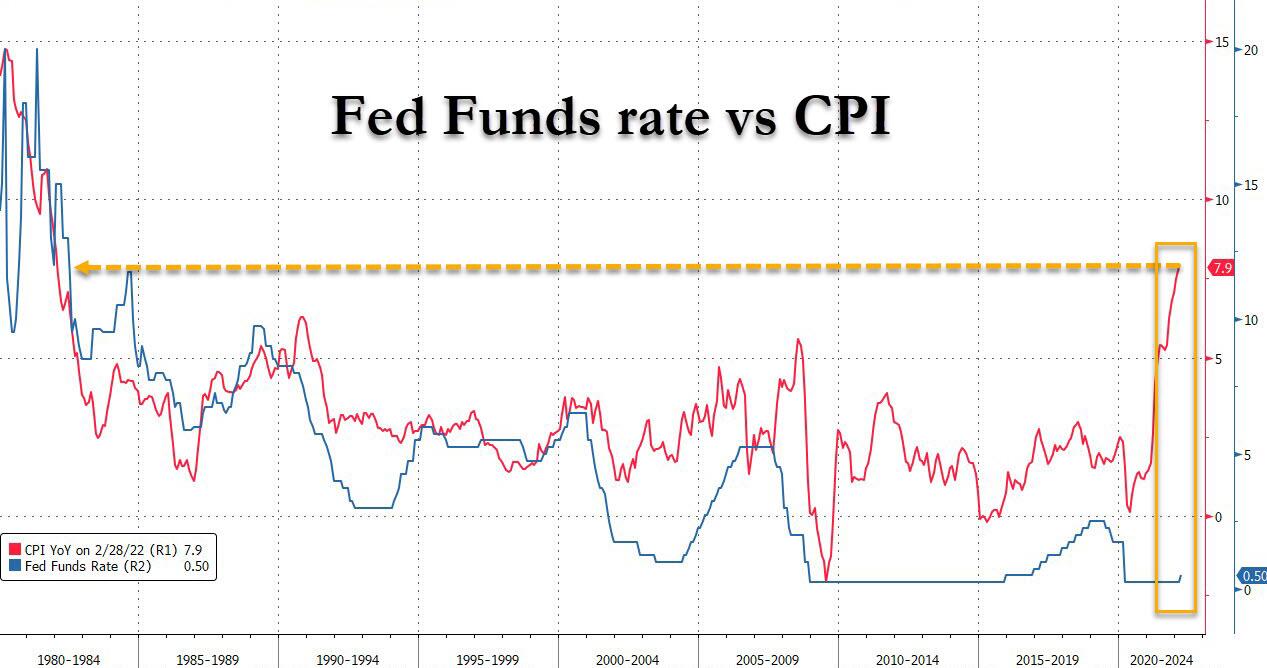
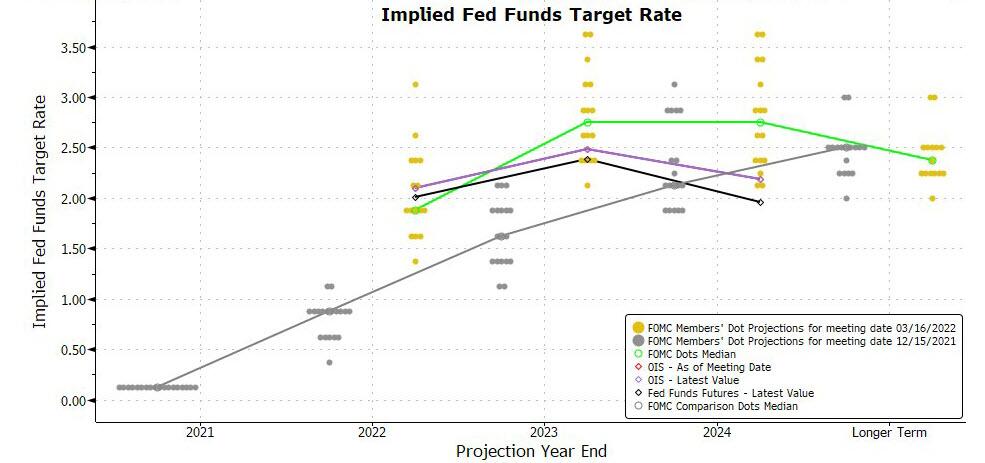
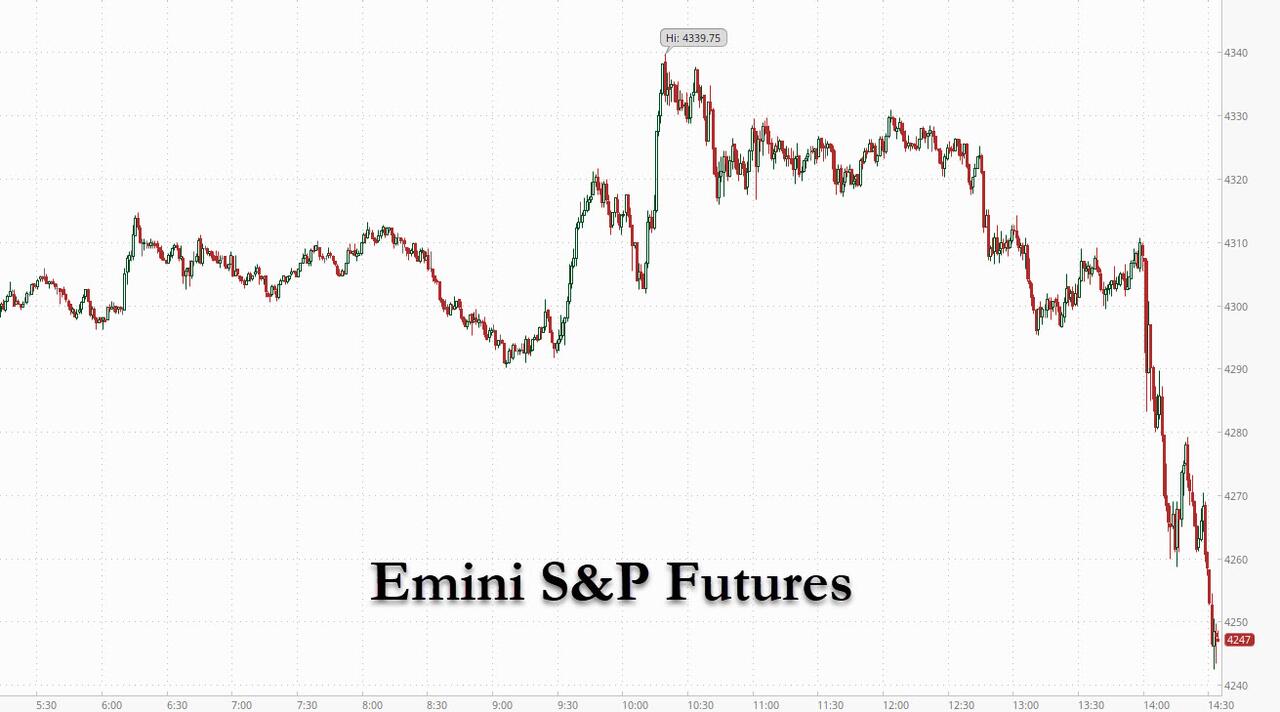
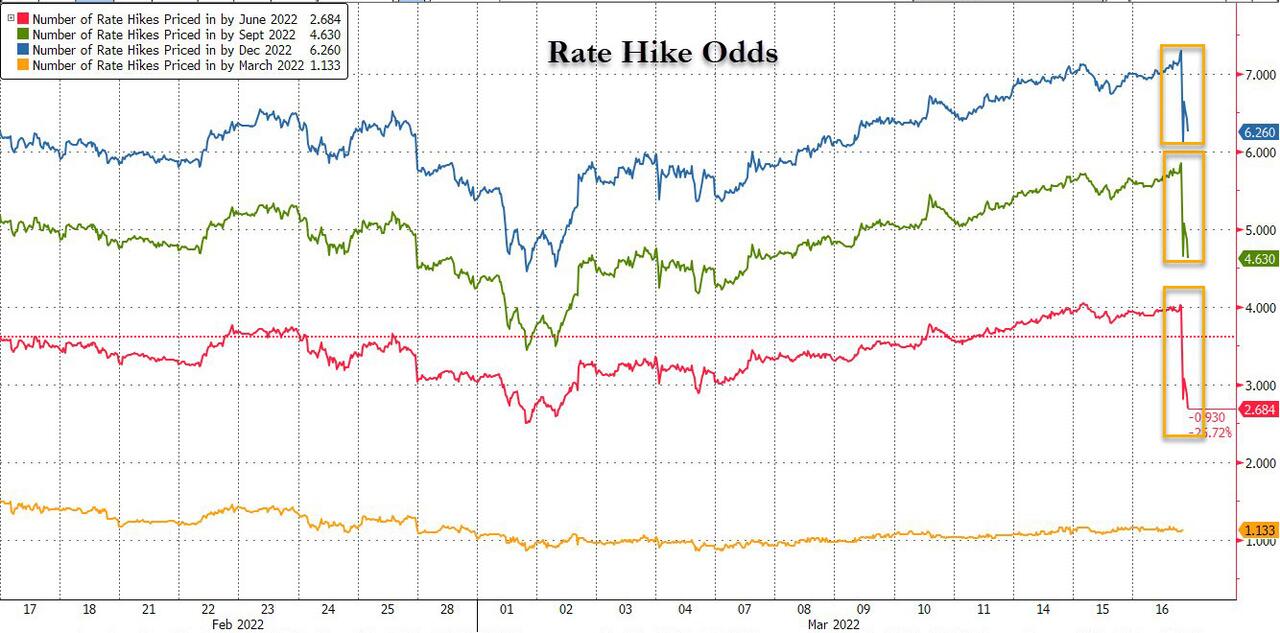
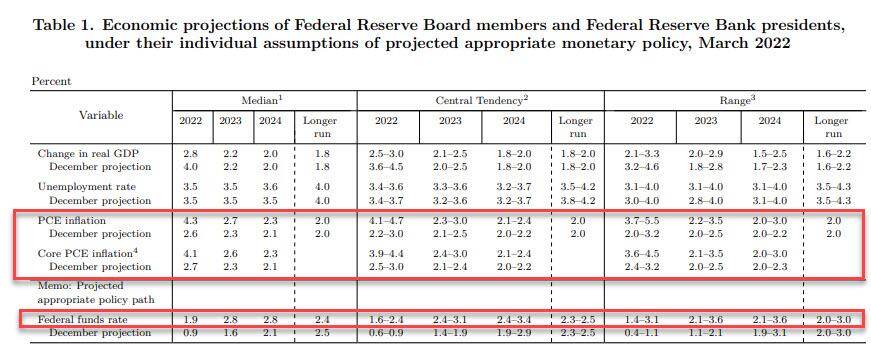

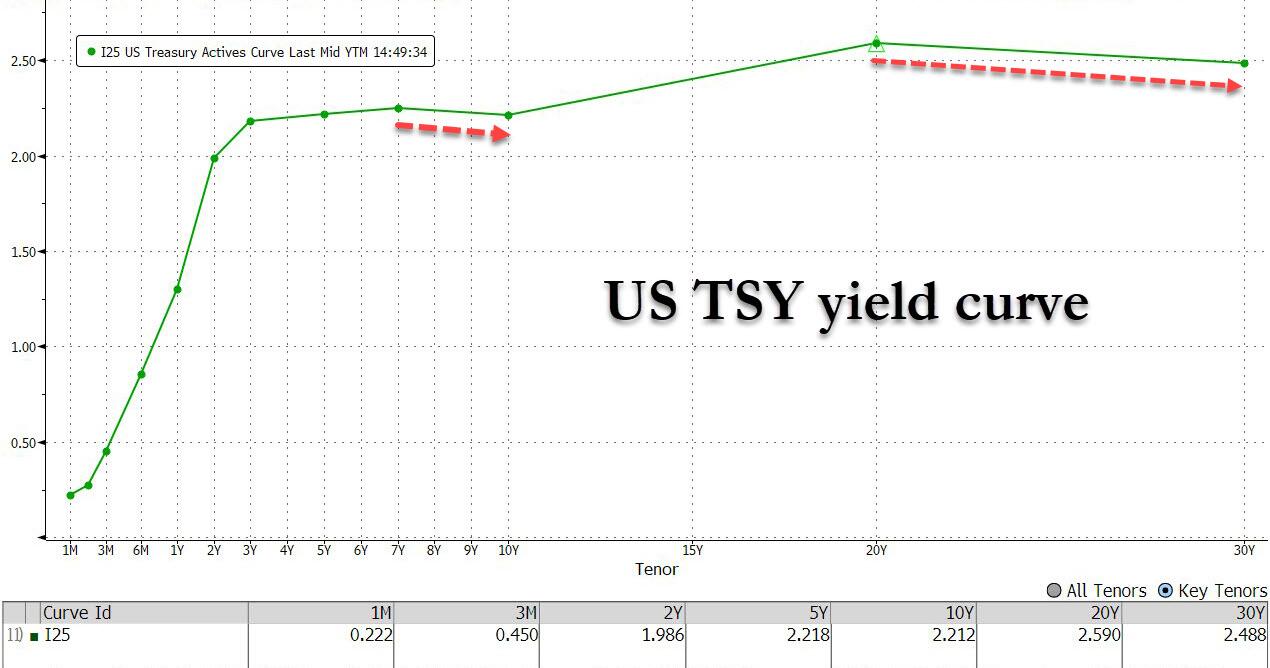
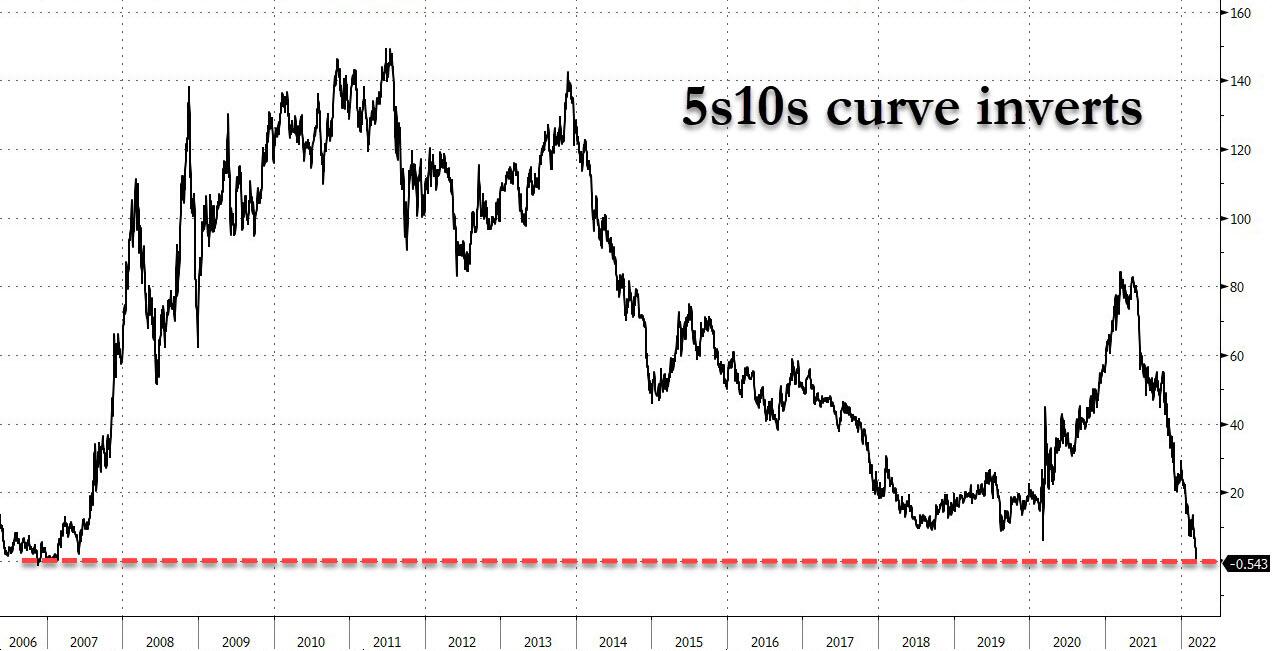
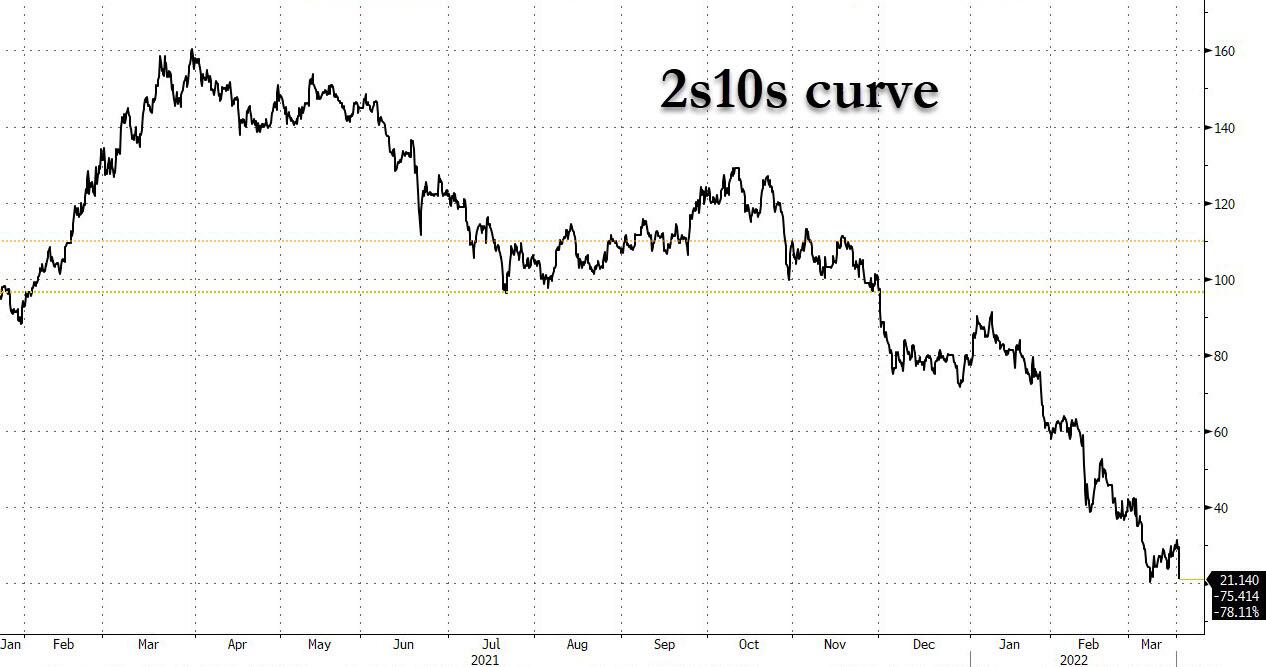
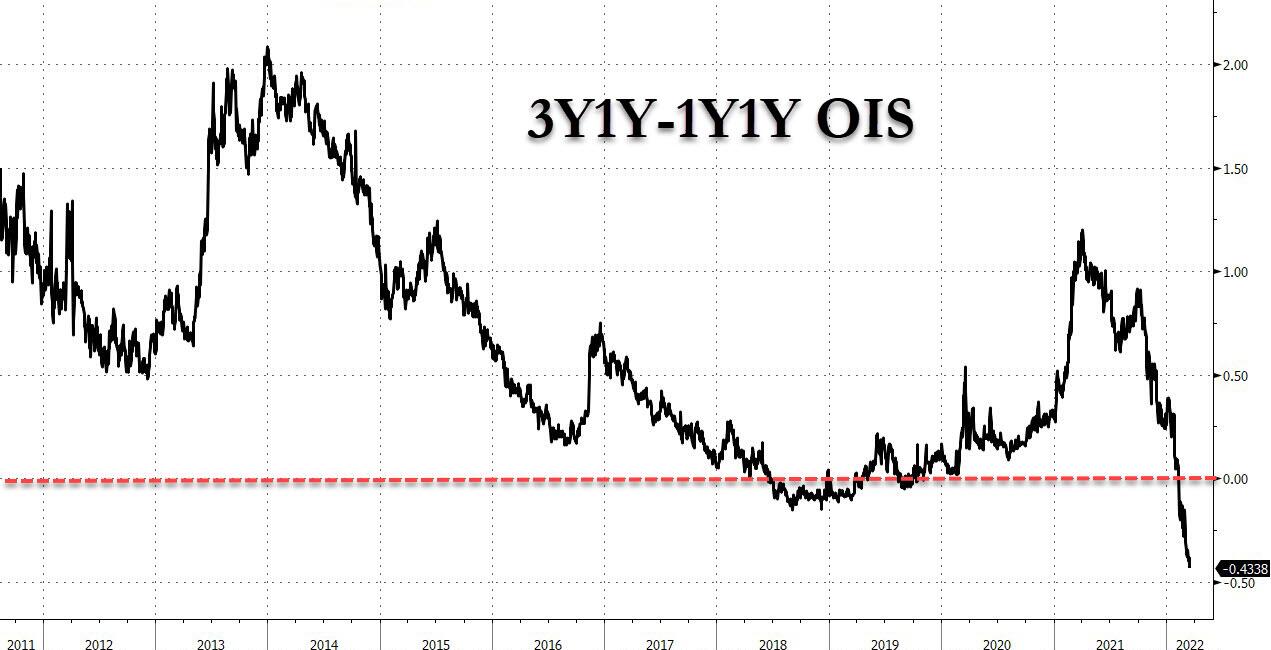
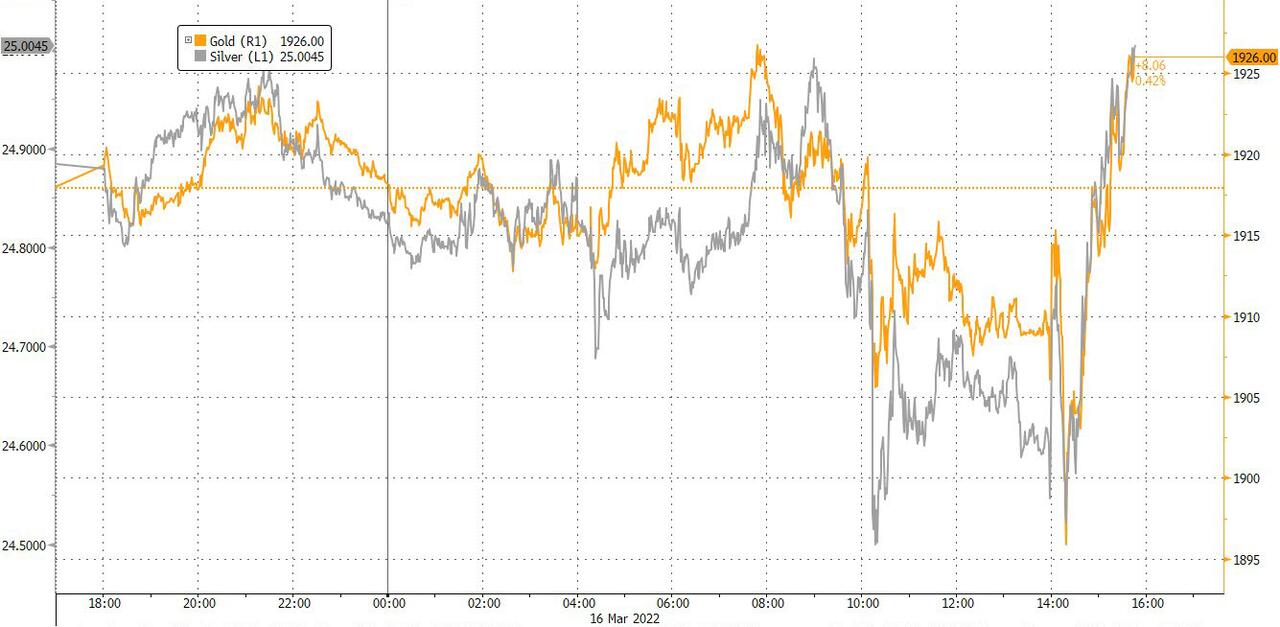

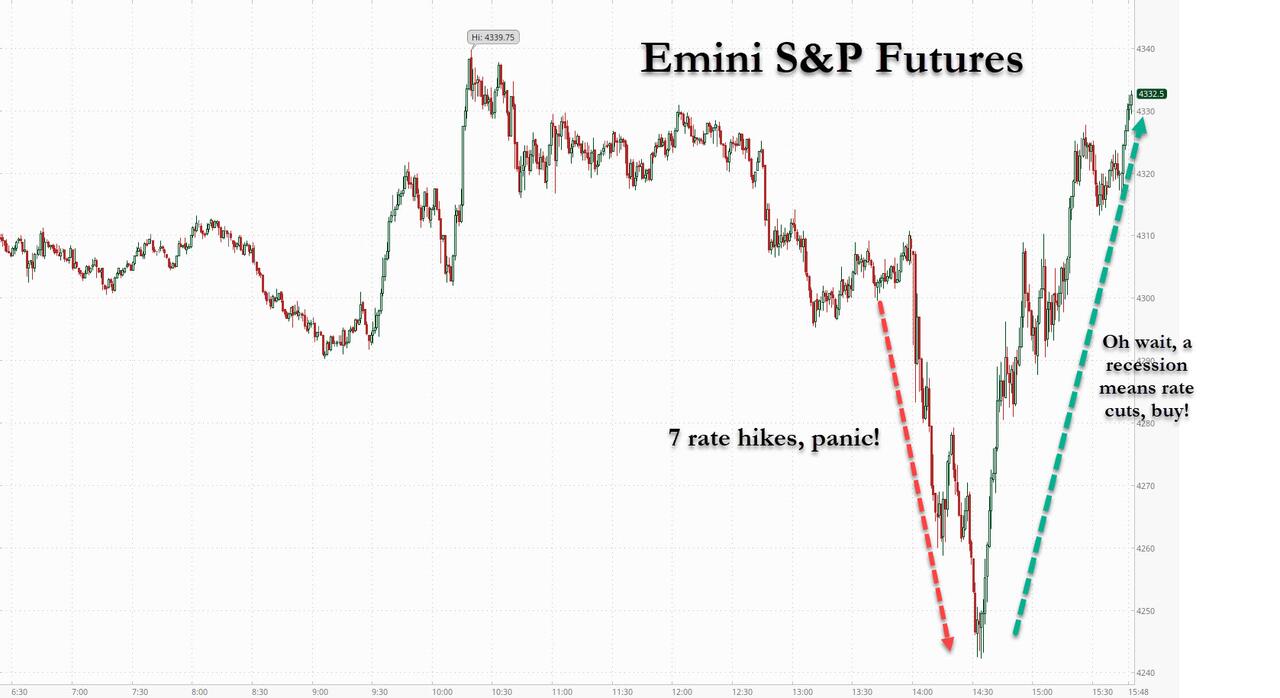
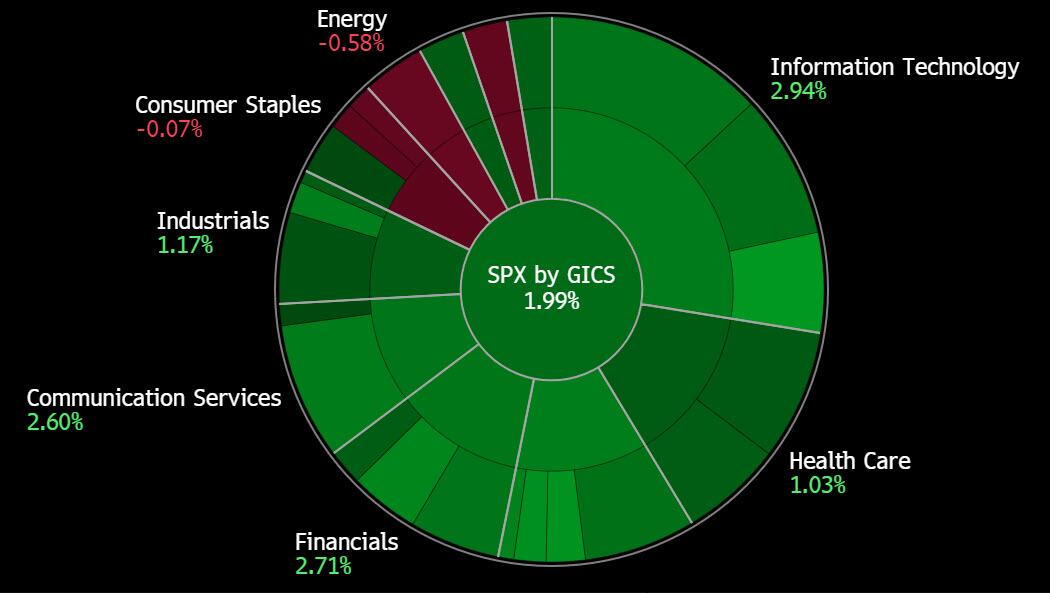
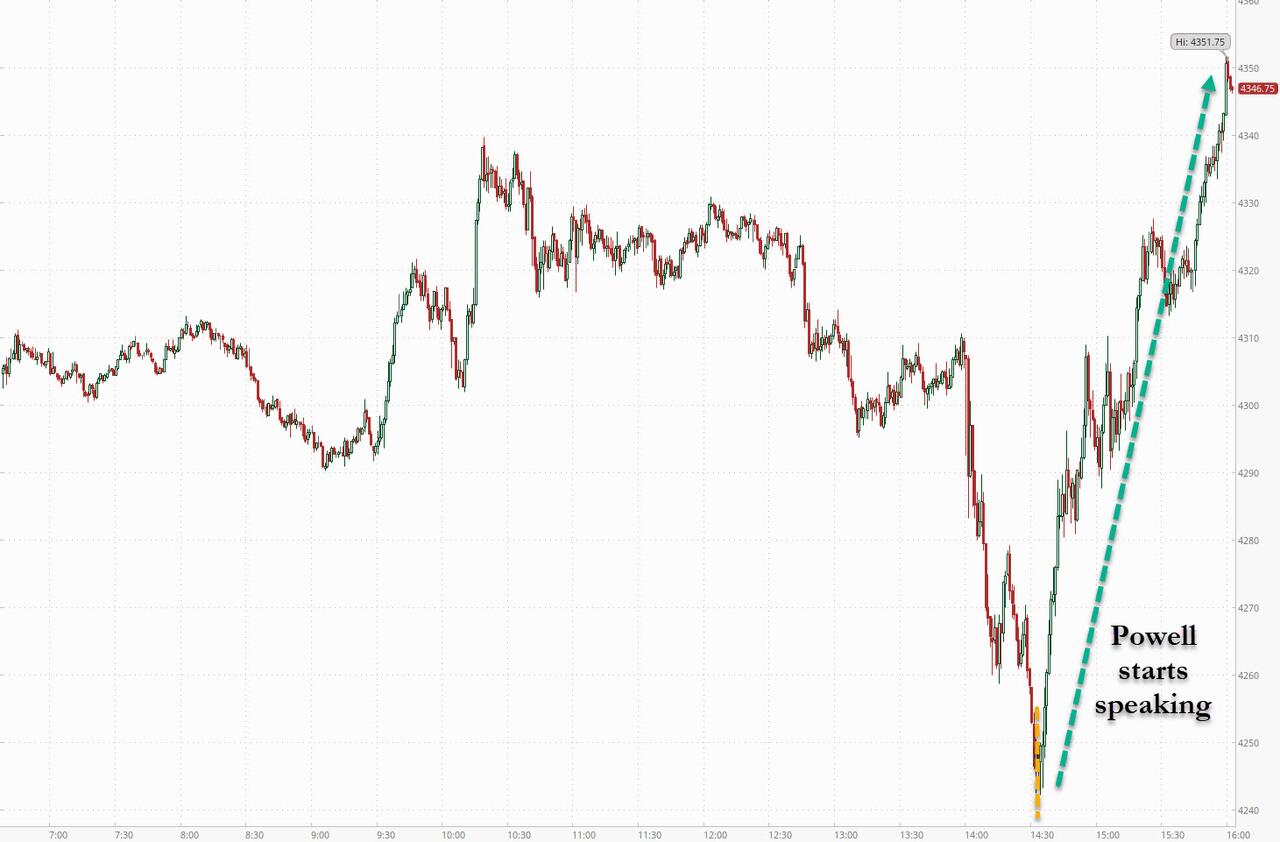
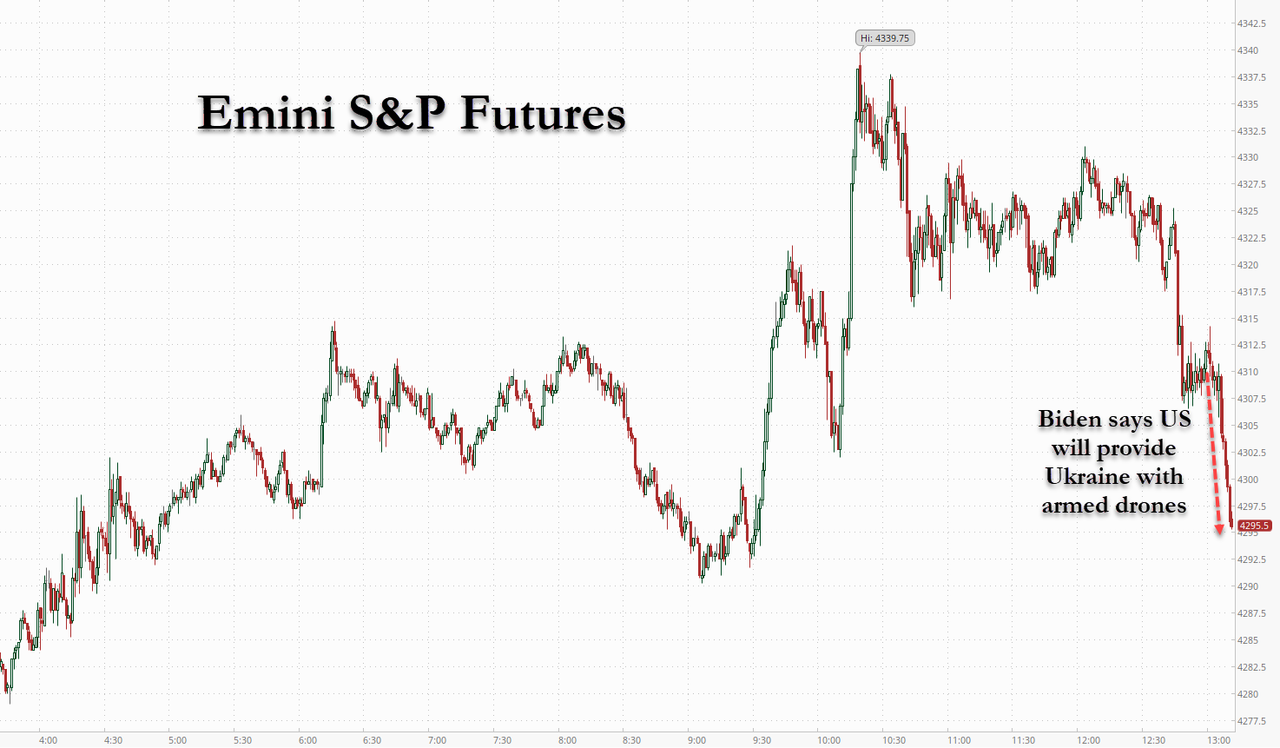


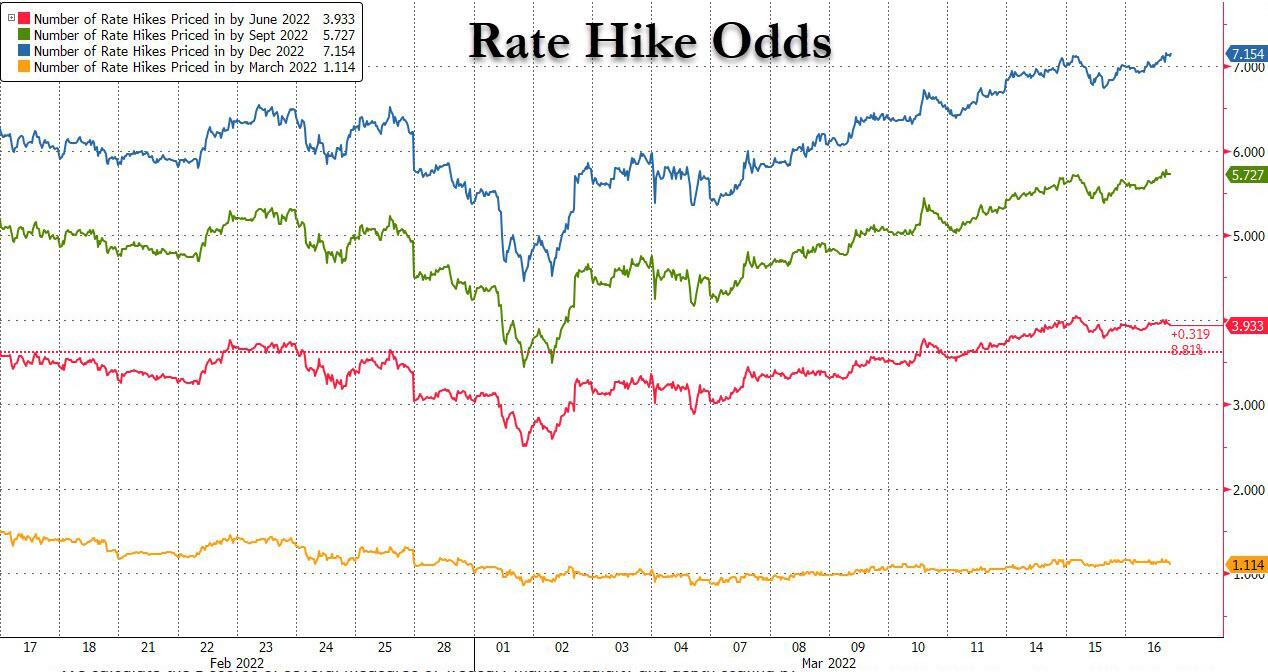
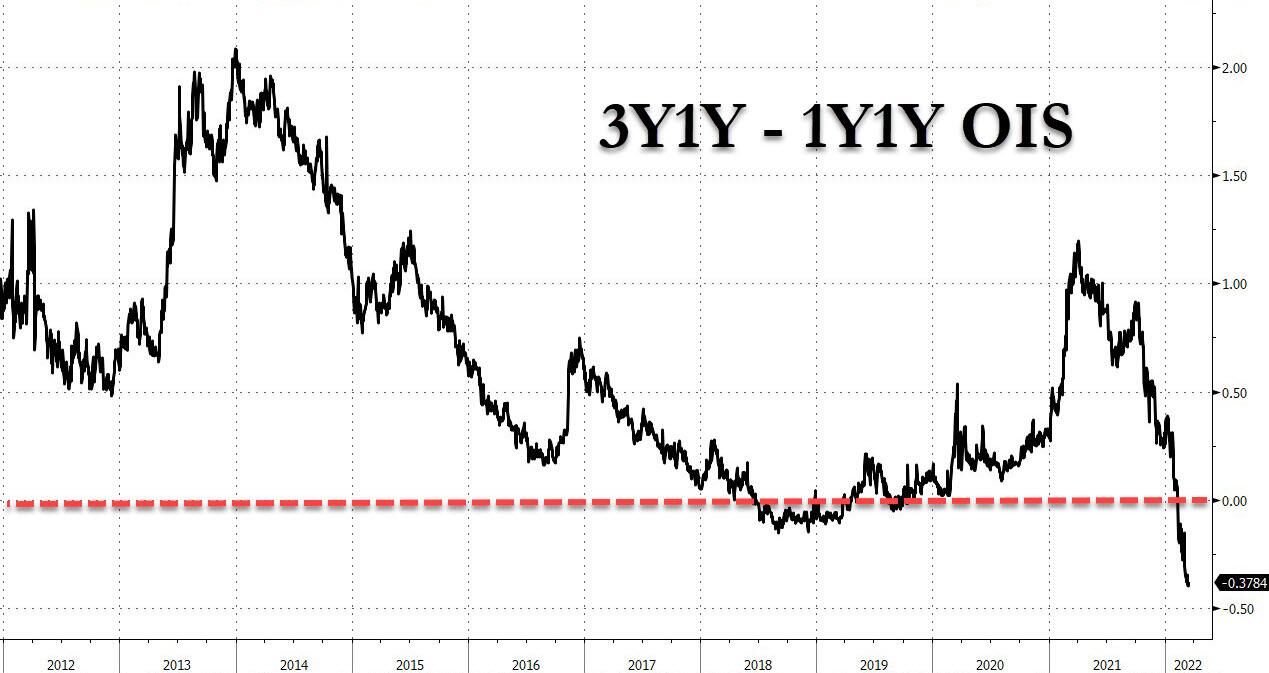
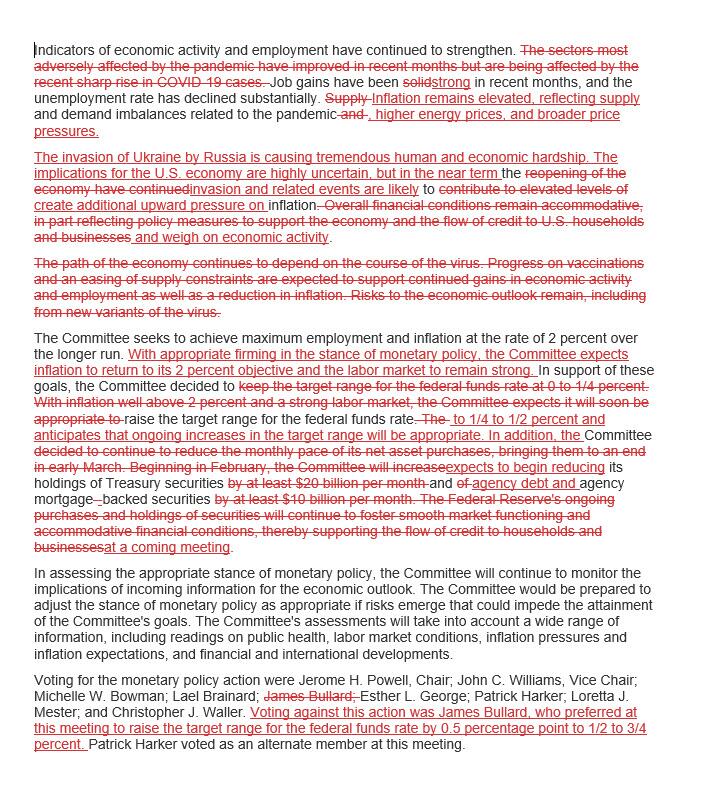
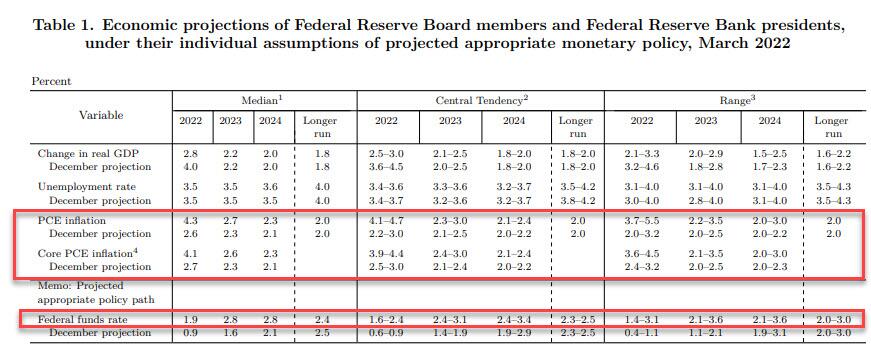
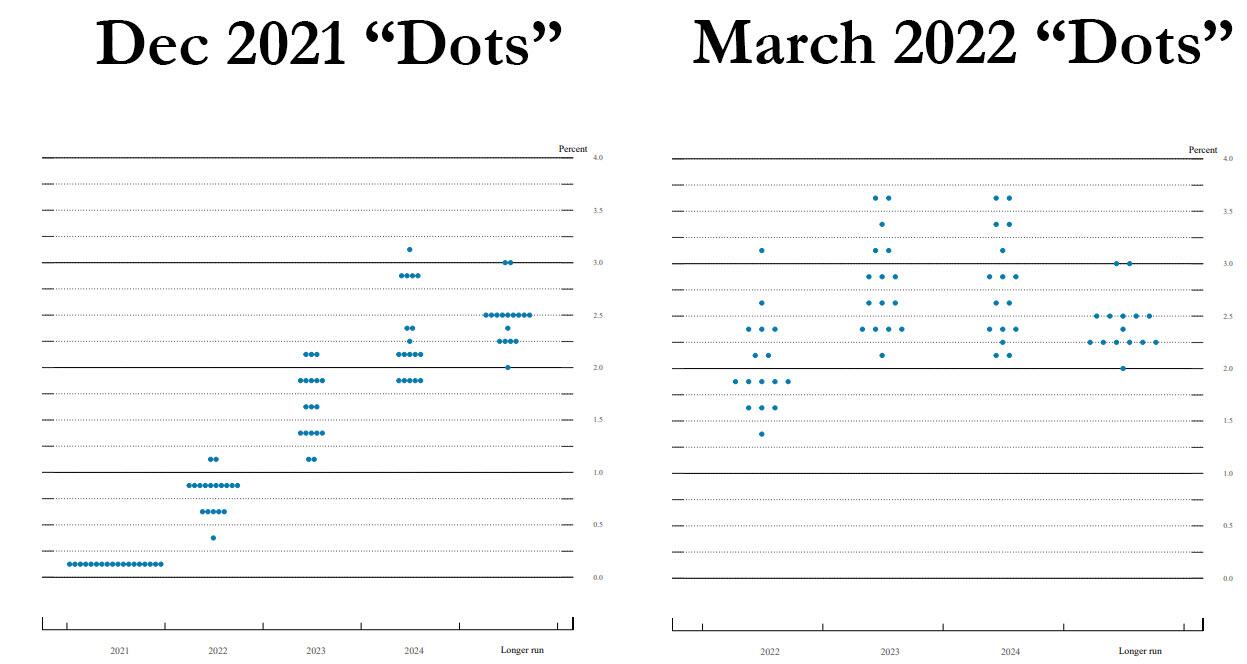
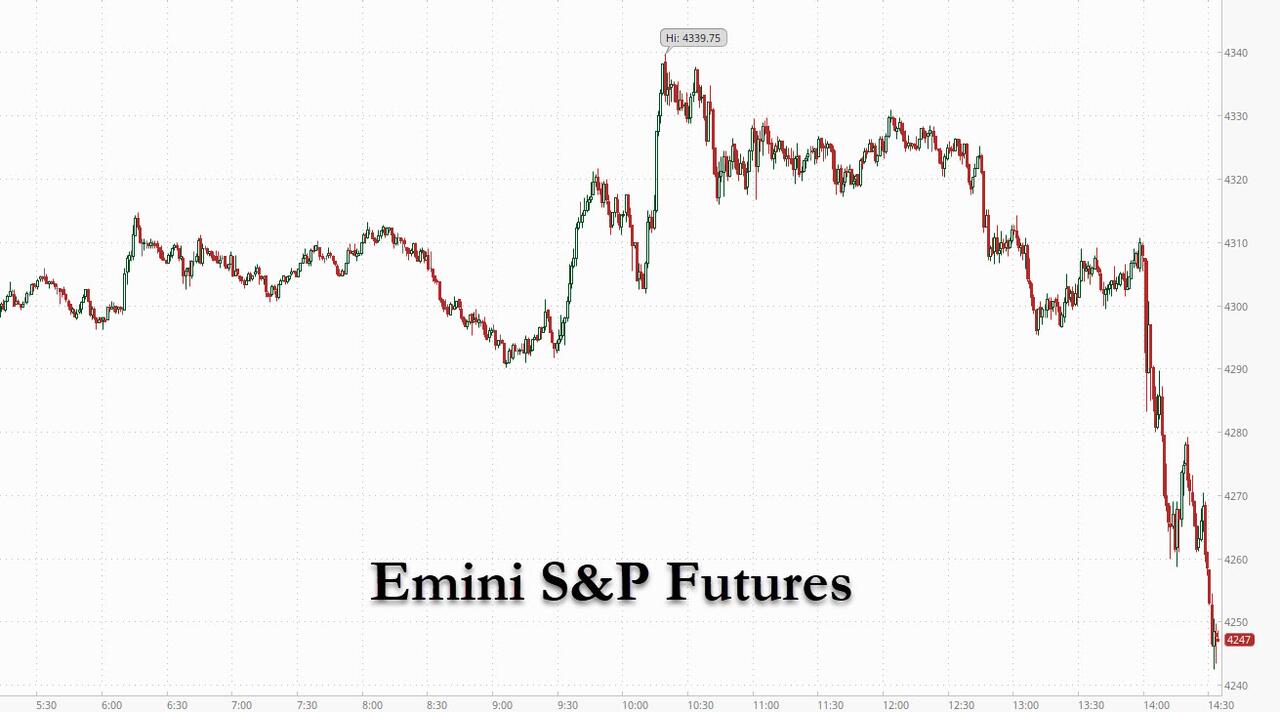
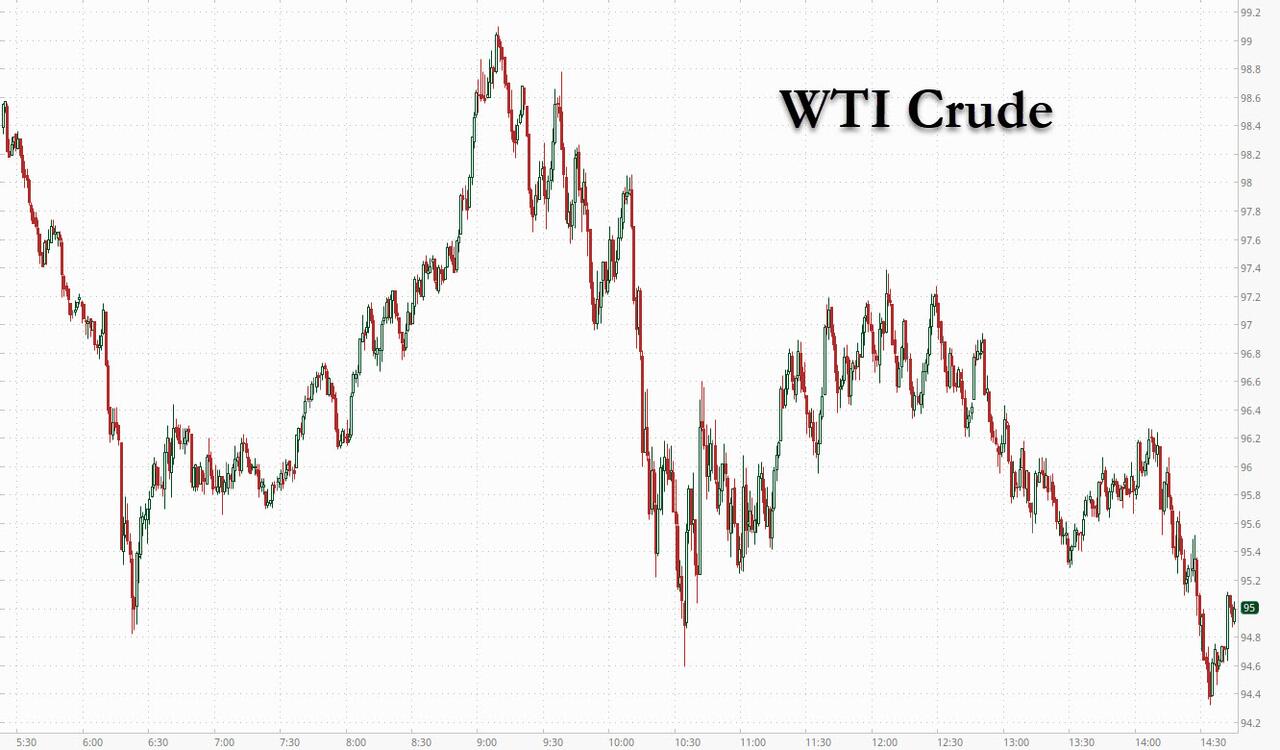

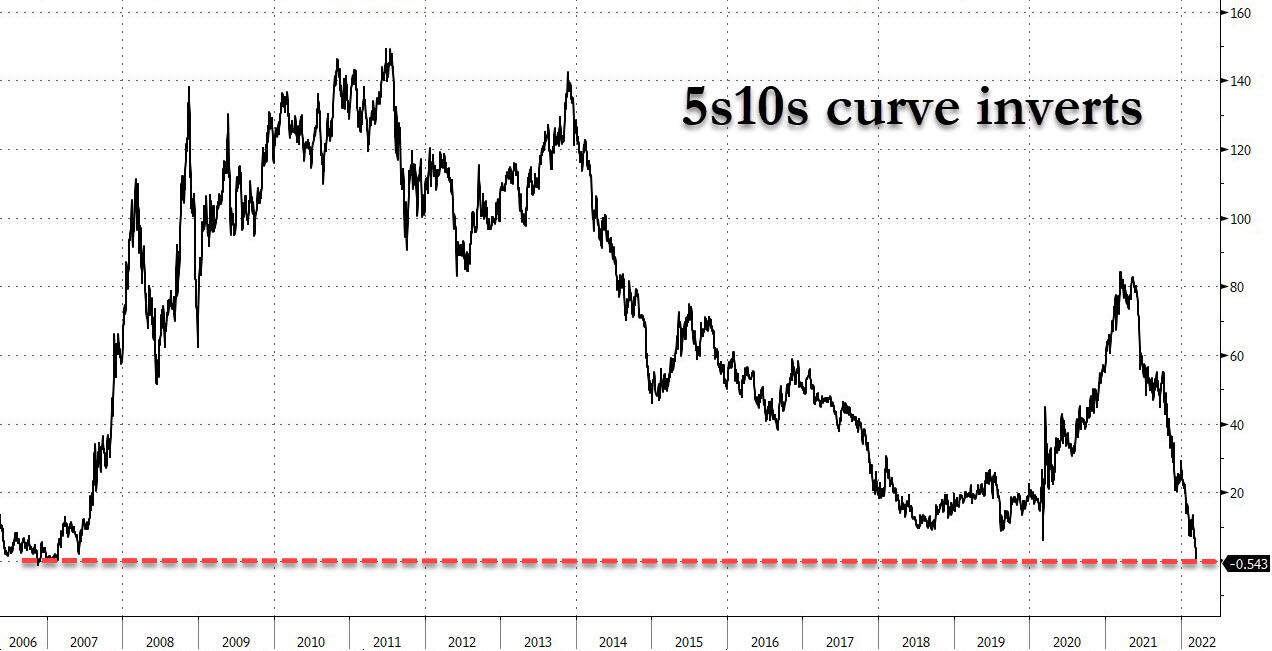
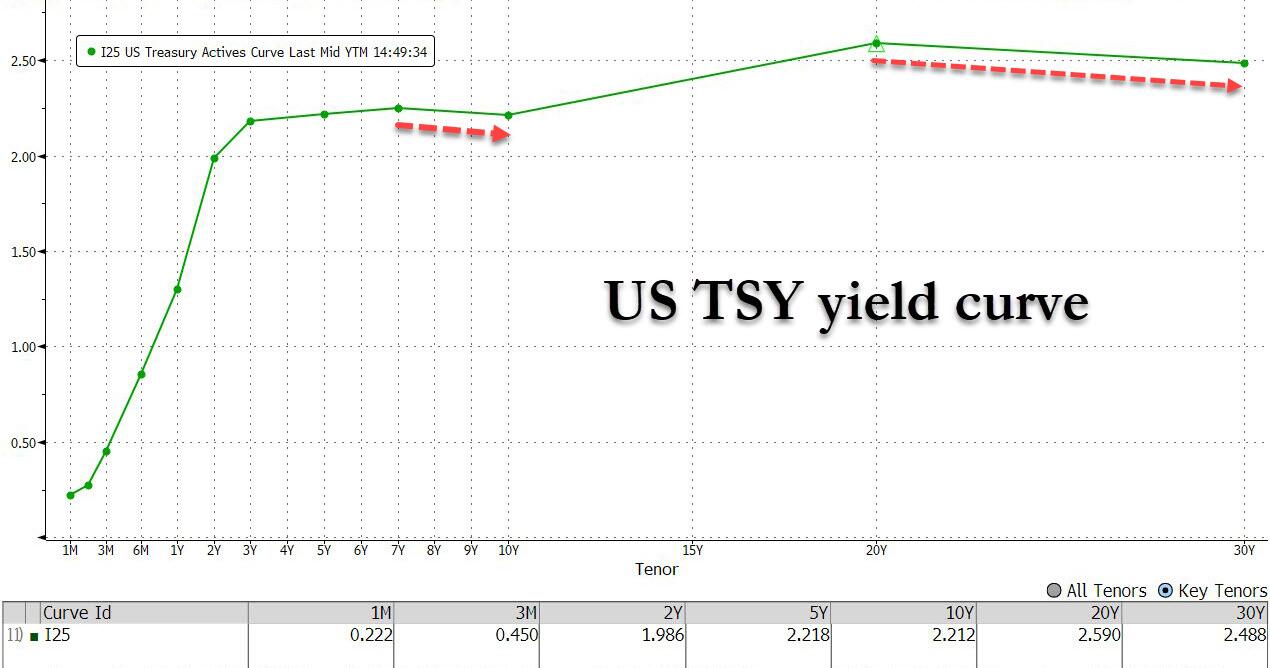
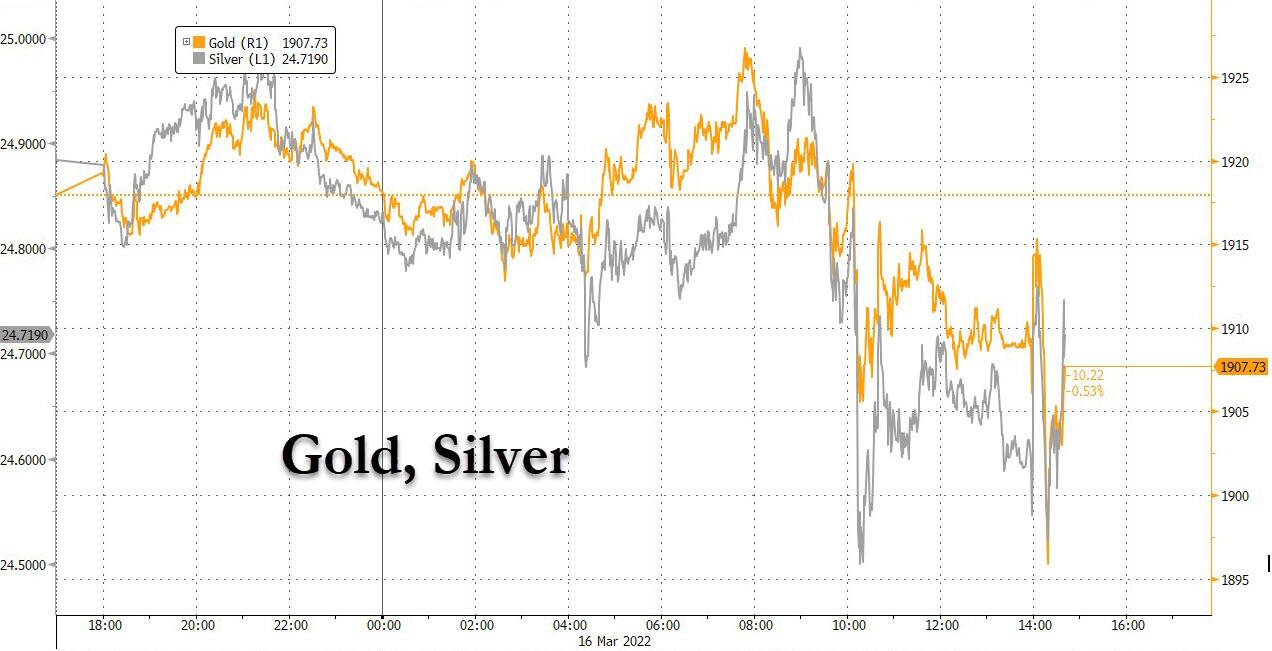
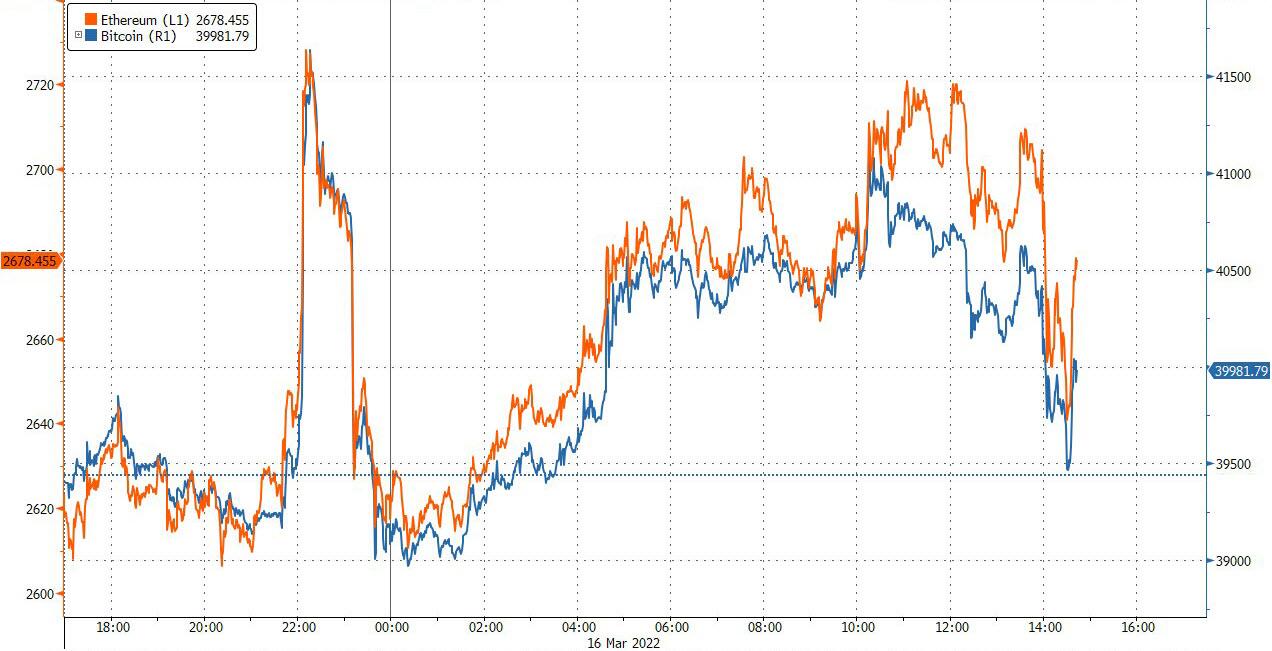
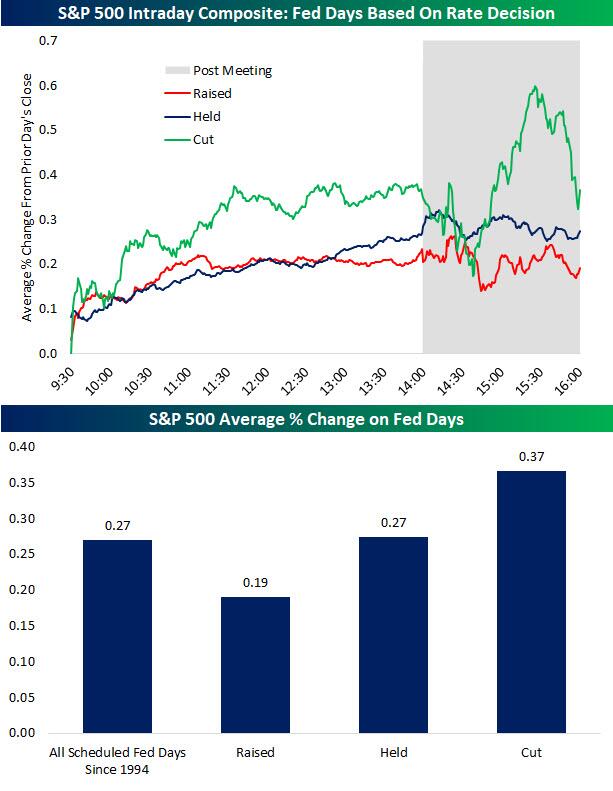
[…] by Harvey Organ, Harvey Organ Blog: […]
LikeLike
[…] by Harvey Organ, Harvey Organ Blog: […]
LikeLike
[…] by Harvey Organ, Harvey Organ Blog: […]
LikeLike
[…] by Harvey Organ of Harvey Organ Blog […]
LikeLike
[…] by Harvey Organ of Harvey Organ Blog […]
LikeLike
[…] by Harvey Organ of Harvey Organ Blog […]
LikeLike
[…] by Harvey Organ of Harvey Organ Blog […]
LikeLike
[…] by Harvey Organ of Harvey Organ Weblog […]
LikeLike
[…] by Harvey Organ of Harvey Organ Blog […]
LikeLike
[…] by Harvey Organ of Harvey Organ Blog […]
LikeLike
[…] by Harvey Organ of Harvey Organ Blog […]
LikeLike
[…] by Harvey Organ of Harvey Organ Weblog […]
LikeLike
[…] by Harvey Organ of Harvey Organ Weblog […]
LikeLike
[…] Link: https://harveyorganblog.com/2022/03/16/march-17-gold-price-down-18-50-to-1908-95-silver-down-56-cent… […]
LikeLike