by harveyorgan · in Uncategorized · Leave a comment·Edit
GOLD PRICE CLOSE: UP $28.65 to $1722.05
SILVER PRICE CLOSE: UP $0.51 to $21.04
Access prices: closes
Gold ACCESS CLOSE 1726.20
Silver ACCESS CLOSE: 21.07
New: early yesterday morning//very ominous:
On Monday, October 3, 2022 at 12:15 p.m., a meeting of the Board of Governors of the Federal Reserve System was held under expedited procedures, as set forth in section 261b.7 of the Board’s Rules Regarding Public Observation of Meetings, at the Board’s offices at 20th and C Streets, N.W., Washington, D.C. and by audio/video conference call, to consider the following matters of official Board business.
Bitcoin morning price: $19,945 UP 454
Bitcoin: afternoon price: $20,078 up 587
Platinum price closing UP 29.10 AT $931.70
Palladium price; closing UP $68.85 at $2309/85
END
DONATE
Click here if you wish to send a donation. I sincerely appreciate it as this site takes a lot of preparation.
EXCHANGE: COMEX
EXCHANGE: COMEX
CONTRACT: OCTOBER 2022 COMEX 100 GOLD FUTURES
SETTLEMENT: 1,692.900000000 USD
INTENT DATE: 10/03/2022 DELIVERY DATE: 10/05/2022
FIRM ORG FIRM NAME ISSUED STOPPED
072 C GOLDMAN 4
118 C MACQUARIE FUT 6
323 H HSBC 25
624 C BOFA SECURITIES 7
624 H BOFA SECURITIES 7
657 C MORGAN STANLEY 5 20
657 H MORGAN STANLEY 3
661 C JP MORGAN 123
686 H STONEX FINANCIA 155
732 C RBC CAP MARKETS 5 3
800 C MAREX SPEC 39 27
845 C GOLDMAN SACHS C 1
880 C CITIGROUP 11 33
880 H CITIGROUP 36
TOTAL: 255 255
MONTH TO DATE: 20,896
JPMORGAN STOPPED 123/255
GOLD: NUMBER OF NOTICES FILED FOR OCT CONTRACT: 255
255 NOTICES FOR 25500 OZ //.7932 TONNES
total notices so far: 20,896 contracts for 2,089,600 oz (64.995 tonnes)
SILVER NOTICES: 24 NOTICES FILED FOR 120,000 OZ/
total number of notices filed so far this month 82 : for 410,000 oz
END
Russia is a major supplier of silver to London while Mexico supplies the COMEX
With the sanctions, London has no way to obtain silver other than compete with NY.
GLD
WITH GOLD UP $28.85
WITH RESPECT TO GLD WITHDRAWALS: (OVER THE PAST FEW MONTHS):
GOLD IS “RETURNED” TO THE BANK OF ENGLAND WHEN CALLING IN THEIR LEASES: THE GOLD NEVER LEAVES THE BANK OF ENGLAND IN THE FIRST PLACE. THE BANK IS PROTECTING ITSELF IN CASE OF COMMERCIAL FAILURE
ALSO INVESTORS SWITCHING TO SPROTT PHYSICAL (PHYS) INSTEAD OF THE FRAUDULENT GLD//
BIG CHANGES IN GOLD INVENTORY AT THE GLD: //// A DEPOSIT OF 3,19
TONNES FROM THE GLD/
INVENTORY RESTS AT 942.89 TONNES
Silver//SLV
WITH NO SILVER AROUND AND SILVER UP $0.51
AT THE SLV// ://NO CHANGES IN SILVER INVENTORY AT THE SLV//:
INVESTORS ARE SWITCHING SLV TO SPROTT’S PSLV
CLOSING INVENTORY: 480.917 MILLION OZ
Let us have a look at the data for today
SILVER//OUTLINE
SILVER COMEX OI ROSE BY A GIGANTIC SIZED 2,697 CONTRACTS TO 30,079 AND CLOSER TO THE RECORD HIGH OI OF 244,710, SET FEB 25/2020 AND THE HUGE GAIN IN COMEX OI WAS ACCOMPLISHED WITH OUR HUGE $1.46 GAIN IN SILVER PRICING AT THE COMEX ON MONDAY. OUR BANKERS WERE UNSUCCESSFUL IN KNOCKING THE PRICE OF SILVER DOWN (IT ROSE BY $1.46) AND WERE UNSUCCESSFUL IN KNOCKING OFF ANY SPEC SILVER LONGS AS WE HAD AN ATMOSPHERIC GAIN OF 5832 CONTRACTS ON OUR TWO EXCHANGES. WE DID HAVE ATTEMPTED SPEC SHORT COVERINGS WITH THE BANKERS CONTINUALLY ON THE BUY SIDE ALONG WITH NEWBIE SPEC LONGS.
WE MUST HAVE HAD:
I) CONTINUAL SPECULATOR SHORT COVERINGS ////CONTINUED BANKER OI COMEX ADDITIONS ///NEWBIE SPEC LONG ADDITIONS. II) WE ALSO HAD SOME REDDIT RAPTOR BUYING//. iii) A GIGANTIC ISSUANCE OF EXCHANGE FOR PHYSICALS iiii) AN INITIAL SILVER STANDING FOR COMEX SILVER MEASURING AT 1.580 MILLION OZ FOLLOWING A 200,000 OZ QUEUE JUMP / // V) GIGANTIC SIZED COMEX OI GAIN/
I AM NOW RECORDING THE DIFFERENTIAL IN OI FROM PRELIMINARY TO FINAL: –77
HISTORICAL ACCUMULATION OF EXCHANGE FOR PHYSICALS SEPT. ACCUMULATION FOR EFP’S SILVER/JPMORGAN’S HOUSE OF BRIBES/STARTING FROM FIRST DAY/MONTH OF SEPT:
TOTAL CONTRACTS for 2 days, total 3108 contracts: 15.540 million oz OR 5.180MILLION OZ PER DAY. (1036 CONTRACTS PER DAY)
TOTAL EFP’S FOR THE MONTH SO FAR: 15.54 MILLION OZ
.
LAST 17 MONTHS TOTAL EFP CONTRACTS ISSUED IN MILLIONS OF OZ:
MAY 137.83 MILLION
JUNE 149.91 MILLION OZ
JULY 129.445 MILLION OZ
AUGUST: MILLION OZ 140.120
SEPT. 28.230 MILLION OZ//
OCT: 94.595 MILLION OZ
NOV: 131.925 MILLION OZ
DEC: 100.615 MILLION OZ
JAN 2022// 90.460 MILLION OZ
FEB 2022: 72.39 MILLION OZ//
MARCH: 207.430 MILLION OZ//A NEW RECORD FOR EFP ISSUANCE
APRIL: 114.52 MILLION OZ FINAL//LOW ISSUANCE
MAY: 105.635 MILLION OZ//
JUNE: 94.470 MILLION OZ
JULY : 87.110 MILLION OZ
AUGUST: 65.025 MILLION OZ
SEPT. 74.025 MILLION OZ///FINAL
OCT. 15.54 MILLION OZ INITIAL
RESULT: WE HAD A GIGANTIC SIZED INCREASE IN COMEX OI SILVER COMEX CONTRACTS OF 2697 WITH OUR STRONG $1.46 GAIN IN SILVER PRICING AT THE COMEX// MONDAY.,. THE CME NOTIFIED US THAT WE HAD A GIGANTIC SIZED EFP ISSUANCE CONTRACTS: 3058 CONTRACTS ISSUED FOR DEC AND 0 CONTRACTS ISSUED FOR ALL OTHER MONTHS) WHICH EXITED OUT OF THE SILVER COMEX TO LONDON AS FORWARDS THE DOMINANT FEATURE TODAY: /HUGE BANKER ADDITIONS A// ATTEMPTED SHORT LIQUIDATIONS//INITIAL NEWBIE SPEC LONG ADDITIONS// /// WE HAVE A GOOD INITIAL SILVER OZ STANDING FOR OCT. OF 1.580 MILLION OZ FOLLOWED BY TODAY’S 200,000 QUEUE JUMP .. WE HAD A GIGANTIC SIZED GAIN OF 5832 OI CONTRACTS ON THE TWO EXCHANGES FOR 29.160MILLION OZ..
WE HAD 24 NOTICE(S) FILED TODAY FOR 120,000 OZ
THE SILVER COMEX IS NOW BEING ATTACKED FOR METAL BY LONDONERS ET AL.
GOLD//OUTLINE
IN GOLD, THE COMEX OPEN INTEREST ROSE BY A STRONG SIZED 5951 CONTRACTS TO 437,975 AND CLOSER TO THE RECORD (SET JAN 24/2020) AT 799,541 AND PREVIOUS TO THAT: (SET JAN 6/2020) AT 797,110. WE WILL PROBABLY SEE THE COMEX OI FALL TO AROUND 380,000 AS OUR SPECS GET ANNIHILATED.
THE DIFFERENTIAL FROM PRELIMINARY OI TO FINAL OI IN GOLD TODAY: REMOVED — -248 CONTRACTS.
.
THE STRONG SIZED INCREASE IN COMEX OI CAME WITH OUR GAIN IN PRICE OF $20.70//COMEX GOLD TRADING/MONDAY // ATTEMPTED SPECULATOR SHORT COVERINGS ACCOMPANYING OUR FAIR SIZED EXCHANGE FOR PHYSICAL ISSUANCE./. WE HAD ZERO LONG LIQUIDATION //AND CONTINUED ADDITIONS TO OUR BANKER LONGS!! THE COMEX WILL BLOW UP AS THE SPECS CANNOT DELIVER GOLD TO OUR BANKER LONGS.
WE ALSO HAD A HUGE INITIAL STANDING IN GOLD TONNAGE FOR OCT. AT 66.099 TONNES ON FIRST DAY NOTICE FOLLOWED BY TODAY’S QUEUE JUMP OF 11,500 OZ//NEW STANDING 66.516 TONNES (QUEUE JUMPING = EXERCISING LONDON BASED EFP’S WILL CONTINUE UNTIL MONTH’S END)
YET ALL OF..THIS HAPPENED WITH OUR GAIN IN PRICE OF $20.70 WITH RESPECT TO MONDAY’S TRADING
WE HAD A VERY STRONG SIZED GAIN OF 9488 OI CONTRACTS 29.511 PAPER TONNES) ON OUR TWO EXCHANGES..
E.F.P. ISSUANCE
THE CME RELEASED THE DATA FOR EFP ISSUANCE AND IT TOTALED A FAIR SIZED 3785 CONTRACTS:
The NEW COMEX OI FOR THE GOLD COMPLEX RESTS AT 437,727
IN ESSENCE WE HAVE A VERY STRONG SIZED INCREASE IN TOTAL CONTRACTS ON THE TWO EXCHANGES OF 9488 CONTRACTS WITH 703 CONTRACTS INCREASED AT THE COMEX AND 3785 EFP OI CONTRACTS WHICH NAVIGATED OVER TO LONDON. THUS TOTAL OI GAIN ON THE TWO EXCHANGES OF 9736 CONTRACTS OR 30.283 TONNES.
CALCULATIONS ON GAIN/LOSS ON OUR TWO EXCHANGES
WE HAD A FAIR SIZED ISSUANCE IN EXCHANGE FOR PHYSICALS (3786) ACCOMPANYING THE STRONG SIZED GAIN IN COMEX OI (5703): TOTAL GAIN IN THE TWO EXCHANGES 9,488 CONTRACTS. WE NO DOUBT HAD 1) ATTEMPTED SPECULATOR SHORT COVERINGS// CONTINUED GOOD BANKER ADDITIONS///NEWBIE SPEC ADDITIONS ,2.) STRONG INITIAL STANDING AT THE GOLD COMEX FOR OCT. AT 66.099 TONNES FOLLOWED BY TODAY’S 11,500 OZ QUEUE JUMP///NEW STANDING 66.516 TONNES//. 3) ZERO LONG LIQUIDATION //// //.,4) STRONG SIZED COMEX OPEN INTEREST GAIN 5) FAIR ISSUANCE OF EXCHANGE FOR PHYSICAL/
HISTORICAL ACCUMULATION OF EXCHANGE FOR PHYSICALS IN 2022 INCLUDING TODAY
OCT
ACCUMULATION OF EFP’S GOLD AT J.P. MORGAN’S HOUSE OF BRIBES: (EXCHANGE FOR PHYSICAL) FOR THE MONTH OF OCT. :
7511 CONTRACTS OR 751,100 OZ OR 23.36 TONNES 3TRADING DAY(S) AND THUS AVERAGING: 2503 EFP CONTRACTS PER TRADING DAY
TO GIVE YOU AN IDEA AS TO THE SIZE OF THESE EFP TRANSFERS : THIS MONTH IN 3 TRADING DAY(S) IN TONNES: 23.36 TONNES
TOTAL ANNUAL GOLD PRODUCTION, 2021, THROUGHOUT THE WORLD EX CHINA EX RUSSIA: 3555 TONNES
THUS EFP TRANSFERS REPRESENTS 23.36/3550 x 100% TONNES 0.64% OF GLOBAL ANNUAL PRODUCTION
ACCUMULATION OF GOLD EFP’S YEAR 2021 TO 2022
JANUARY/2021: 265.26 TONNES (RAPIDLY INCREASING AGAIN)
FEB : 171.24 TONNES ( DEFINITELY SLOWING DOWN AGAIN)..
MARCH:. 276.50 TONNES (STRONG AGAIN/
APRIL: 189..44 TONNES ( DRAMATICALLY SLOWING DOWN AGAIN//GOLD IN BACKWARDATION)
MAY: 250.15 TONNES (NOW DRAMATICALLY INCREASING AGAIN)
JUNE: 247.54 TONNES (FINAL)
JULY: 188.73 TONNES FINAL
AUGUST: 217.89 TONNES FINAL ISSUANCE.
SEPT 142.12 TONNES FINAL ISSUANCE ( LOW ISSUANCE)_
OCT: 141.13 TONNES FINAL ISSUANCE (LOW ISSUANCE)
NOV: 312.46 TONNES FINAL ISSUANCE//NEW RECORD!! (INCREASING DRAMATICALLY)//SIGN OF REAL STRESS//SURPASSING THE MARCH 2021 RECORD OF 276.50 TONNES OF EFP
DEC. 175.62 TONNES//FINAL ISSUANCE//
JAN:2022 247.25 TONNES //FINAL
FEB: 196.04 TONNES//FINAL
MARCH: 409.30 TONNES INITIAL( THIS IS NOW A RECORD EFP ISSUANCE FOR MARCH AND FOR ANY MONTH.
APRIL: 169.55 TONNES (FINAL VERY LOW ISSUANCE MONTH)
MAY: 247,44 TONNES FINAL//
JUNE: 238.13 TONNES FINAL
JULY: 378.43 TONNES FINAL
AUGUST: 180.81 TONNES FINAL
SEPT. 193.16 TONNES FINAL
OCT: 23.36 TONNES INITIAL
SPREADING OPERATIONS
(/NOW SWITCHING TO GOLD) FOR NEWCOMERS, HERE ARE THE DETAILS
SPREADING LIQUIDATION HAS NOW COMMENCED AS WE HEAD TOWARDS THE NEW NON ACTIVE FRONT MONTH OF NOV. WE ARE NOW INTO THE SPREADING OPERATION OF BOTH SILVER AND GOLD (WILL BE SMALL AS SPREADERS DO NOT PAY ATTENTION TO NOVEMBER)
HERE IS A BRIEF SYNOPSIS OF HOW THE CROOKS FLEECE UNSUSPECTING LONGS IN THE SPREADING ENDEAVOUR ;MODUS OPERANDI OF THE CORRUPT BANKERS AS TO HOW THEY HANDLE THEIR SPREAD OPEN INTERESTS:HERE IS HOW THE CROOKS USED SPREADING AS WE ARE NOW INTO THE NON ACTIVE DELIVERY MONTH OF OCT HEADING TOWARDS THE NON ACTIVE DELIVERY MONTH OF NOV., FOR BOTH GOLD AND SILVER:
YOU WILL ALSO NOTICE THAT THE COMEX OPEN INTEREST STARTS TO RISE BUT SO IS THE OPEN INTEREST OF SPREADERS. THE OPEN INTEREST IN WILL CONTINUE TO RISE UNTIL ONE WEEK BEFORE FIRST DAY NOTICE OF AN UPCOMING ACTIVE DELIVERY MONTH (NOV), AND THAT IS WHEN THE CROOKS SELL THEIR SPREAD POSITIONS BUT NOT AT THE SAME TIME OF THE DAY. THEY WILL USE THE SELL SIDE OF THE EQUATION TO CREATE THE CASCADE (ALONG WITH THEIR COLLUSIVE FRIENDS) AND THEN COVER ON THE BUY SIDE OF THE SPREAD SITUATION AT THE END OF THE DAY. THEY DO THIS TO AVOID POSITION LIMIT DETECTION. THE LIQUIDATION OF THE SPREADING FORMATION CONTINUES FOR EXACTLY ONE WEEK AND ENDS ON FIRST DAY NOTICE.”
WHAT IS ALARMING TO ME, ACCORDING TO OUR LONDON EXPERT ANDREW MAGUIRE IS THAT THESE EFP’S ARE BEING TRANSFERRED TO WHAT ARE CALLED SERIAL FORWARD CONTRACT OBLIGATIONS AND THESE CONTRACTS ARE LESS THAN 14 DAYS. ANYTHING GREATER THAN 14 DAYS, THESE MUST BE RECORDED AND SENT TO THE COMPTROLLER, GREAT BRITAIN TO MONITOR RISK TO THE BANKING SYSTEM. IF THIS IS INDEED TRUE, THEN THIS IS A MASSIVE CONSPIRACY TO DEFRAUD AS WE NOW WITNESS A MONSTROUS TOTAL EFP’S ISSUANCE AS IT HEADS INTO THE STRATOSPHERE.
First, here is an outline of what will be discussed tonight:
1.Today, we had the open interest at the comex, in SILVER,ROSE BY A GIGANTIC SIZED 2697 CONTRACT OI TO 130,079 AND FURTHER FROM TO OUR COMEX HIGH RECORD //244,710(SET FEB 25/2020). THE LAST RECORDS WERE SET IN AUG.2018 AT 244,196 WITH A SILVER PRICE OF $14.78/(AUGUST 22/2018)..THE PREVIOUS RECORD TO THAT WAS SET ON APRIL 9/2018 AT 243,411 OPEN INTEREST CONTRACTS WITH THE SILVER PRICE AT THAT DAY: $16.53). AND PREVIOUS TO THAT, THE RECORD WAS ESTABLISHED AT: 234,787 CONTRACTS, SET ON APRIL 21.2017 OVER 5 YEARS AGO.
EFP ISSUANCE 3058 CONTRACTS
OUR CUSTOMARY MIGRATION OF COMEX LONGS CONTINUE TO MORPH INTO LONDON FORWARDS AS OUR BANKERS USED THEIR EMERGENCY PROCEDURE TO ISSUE:
DEC 3058 ALL OTHER MONTHS: ZERO. TOTAL EFP ISSUANCE: 3058 CONTRACTS. EFP’S GIVE OUR COMEX LONGS A FIAT BONUS PLUS A DELIVERABLE PRODUCT OVER IN LONDON. IF WE TAKE THE COMEX OI GAIN OF 2697 CONTRACTS AND ADD TO THE 3058 OI TRANSFERRED TO LONDON THROUGH EFP’S,
WE OBTAIN AN ATMPSPHERIC SIZED GAIN OF 5755 OPEN INTEREST CONTRACTS FROM OUR TWO EXCHANGES.
THUS IN OUNCES, THE GAIN ON THE TWO EXCHANGES 28.775 MILLION OZ
OCCURRED WITH OUR GAIN IN PRICE OF $1.46
OUTLINE FOR TODAY’S COMMENTARY
1/COMEX GOLD AND SILVER REPORT
(report Harvey)
2 ) Gold/silver trading overnight Europe,
(Peter Schiff,
end
3. Egon von Greyerz///Matthew Piepenburg via GoldSwitzerland.com,
4. Chris Powell of GATA provides to us very important physical commentaries
end
5. Other gold commentaries
6. Commodity commentaries//
3. ASIAN AFFAIRS
i)TUESDAY MORNING// MONDAY NIGHT
SHANGHAI CLOSED //Hang Seng CLOSED /The Nikkei closed UP 776.42PTS OR 2.96% //Australia’s all ordinaires CLOSED UP 3,74% /Chinese yuan (ONSHORE) closed //OFFSHORE CHINESE YUAN UP 7.0748// /Oil UP TO 84.72 dollars per barrel for WTI and BRENT AT 90.25 / Stocks in Europe OPENED ALL GREEN. ONSHORE YUAN TRADING ABOVE LEVEL OF OFFSHORE YUAN/ONSHORE YUAN TRADING STRONGER AGAINST US DOLLAR/OFFSHORE STRONGER
a)NORTH KOREA/SOUTH KOREA
outline
b) REPORT ON JAPAN/
OUTLINE
3 C CHINA
OUTLINE
4/EUROPEAN AFFAIRS
OUTLINE
5. RUSSIAN AND MIDDLE EASTERN AFFAIRS
OUTLINE
6.Global Issues//COVID ISSUES/VACCINE ISSUES
OUTLINE
7. OIL ISSUES
OUTLINE
8 EMERGING MARKET ISSUES
COMEX DATA//AMOUNTS STANDING//VOLUME OF TRADING/INVENTORY MOVEMENTS
GOLD
LET US BEGIN:
THE TOTAL COMEX GOLD OPEN INTEREST ROSE BY A STRONG SIZED 5703 CONTRACTS TO 437,975 AND CLOSER TO THE RECORD THAT WAS SET IN JANUARY/2020: {799,541 OI(SET JAN 16/2020)} AND PREVIOUS TO THAT: 797,110 (SET JAN 7/2020). AND THIS STRONG COMEX INCREASE OCCURRED WITH OUR RISE IN PRICE OF $20.70 IN GOLD PRICING MONDAY’S COMEX TRADING. WE ALSO HAD A FAIR SIZED EFP (3785 CONTRACTS). . THEY WERE PAID HANDSOMELY NOT TO TAKE DELIVERY AT THE COMEX AND SETTLE FOR CASH. IT NOW SEEMS THAT THE COMMERCIALS HAVE GOADED THE SPECS TO GO MASSIVELY SHORT AND NOW THEY ARE DESPERATELY TRYING TO COVER THEIR FOLLY.
WE NORMALLY HAVE WITNESSED EXCHANGE FOR PHYSICALS ISSUED BEING SMALL AS IT JUST TOO COSTLY FOR THEM TO CONTINUE SERVICING THE COSTS OF SERIAL FORWARDS CIRCULATING IN LONDON. HOWEVER, MUCH TO THE ANNOYANCE OF OUR BANKERS, THE COMEX IS THE SCENE OF AN ASSAULT ON GOLD AS LONDONERS, NOT BEING ABLE TO FIND ANY PHYSICAL ON THAT SIDE OF THE POND, EXERCISE THESE CIRCULATING EXCHANGE FOR PHYSICALS IN LONDON AND FORCING DELIVERY OF REAL METAL OVER HERE AS THE OBLIGATION STILL RESTS WITH NEW YORK BANKERS. IT SEEMS THAT ARE BANKERS FRIENDS ARE EXERCISING EFP’S FROM LONDON AND NOW THEY ARE LOATHE TO ISSUE NEW ONES.
EXCHANGE FOR PHYSICAL ISSUANCE
WE ARE NOW IN THE ACTIVE DELIVERY MONTH OF OCT.. THE CME REPORTS THAT THE BANKERS ISSUED A FAIR SIZED TRANSFER THROUGH THE EFP ROUTE AS THESE LONGS RECEIVED A DELIVERABLE LONDON FORWARD TOGETHER WITH A FIAT BONUS.,
THAT IS 3785 EFP CONTRACTS WERE ISSUED: ;: , . 0 DEC :3785 & ZERO FOR ALL OTHER MONTHS:
TOTAL EFP ISSUANCE: 3585 CONTRACTS
WHEN WE HAVE BACKWARDATION, EFP ISSUANCE IS VERY COSTLY BUT THE REAL PROBLEM IS THE SCARCITY OF METAL AND IT IS FAR BETTER FOR OUR BANKERS TO PAY OFF INDIVIDUALS THAN RISK INVESTORS ESPECIALLY FROM LONDON STANDING FOR DELIVERY. THE LOWER PRICES IN THE FUTURES MARKET IS A MAGNET FOR OUR LONDONERS SEEKING PHYSICAL METAL. BACKWARDATION ALWAYS EQUAL SCARCITY OF METAL!
ON A NET BASIS IN OPEN INTEREST WE GAINED THE FOLLOWING TODAY ON OUR TWO EXCHANGES: A VERY STRONG SIZED SIZED TOTAL OF 9,488 CONTRACTS IN THAT 3785 LONGS WERE TRANSFERRED AS FORWARDS TO LONDON AND WE HAD A STRONG SIZED COMEX OI GAIN OF 5,703 CONTRACTS..AND THIS VERY STRONG GAIN ON OUR TWO EXCHANGES HAPPENED WITH OUR HUGE RISE IN PRICE OF GOLD $20.70//WE HAD SPEC SHORT DESPERATELY TRYING TO COVER WITH BANKERS TAKING THE BUY SIDE. IT IS BECOMING EXTREMELY DIFFICULT FOR OUR SHORTERS. TODAY WAS A HUGE DAY FOR GOLD AS SPECS COULD NOT FIND MANY CONTRACTS FROM WHICH TO COVER BUT THE BANKERS KNOWING THE STATE OF THE ECONOMY CONTINUES TO PILE ONTO THE BUY SIDE.
// WE HAVE A STRONG AMOUNT OF GOLD TONNAGE STANDING OCT (66.516),
HERE ARE THE AMOUNTS THAT STOOD FOR DELIVERY IN THE PRECEDING 12 MONTHS OF 2021-2022:
DEC 2021: 112.217 TONNES
NOV. 8.074 TONNES
OCT. 57.707 TONNES
SEPT: 11.9160 TONNES
AUGUST: 80.489 TONNES
JULY: 7.2814 TONNES
JUNE: 72.289 TONNES
MAY 5.77 TONNES
APRIL 95.331 TONNES
MARCH 30.205 TONNES
FEB ’21. 113.424 TONNES
JAN ’21: 6.500 TONNES.
TOTAL SO FAR THIS YEAR (JAN- DEC): 601.213 TONNES
YEAR 2022:
JANUARY 2022 17.79 TONNES
FEB 2022: 59.023 TONNES
MARCH: 36.678 TONNES
APRIL: 85.340 TONNES FINAL.
MAY: 20.11 TONNES FINAL
JUNE: 74.933 TONNES FINAL
JULY 29.987 TONNES FINAL
AUGUST:104.979 TONNES//FINAL
SEPT. 38.1158 TONNES
OCT: 66.516 TONNES
THE BANKERS WERE UNSUCCESSFUL IN LOWERING GOLD’S PRICE //// (IT ROSE $20.70) AND WERE UNSUCCESSFUL IN KNOCKING OFF ANY SPECULATOR LONGS AS WE HAD A VERY STRONG SIZED TOTAL GAIN ON OUR TWO EXCHANGES OF 9,736 CONTRACTS // WE HAVE REGISTERED A HUGE GAIN OF 9,736 PAPER TONNES ON TOTAL OI FROM OUR TWO EXCHANGES, ACCOMPANYING OUR GOLD TONNAGE STANDING FOR OCT. (66.516 TONNES)…THIS WAS ACCOMPLISHED DESPITE ATTEMPTED SPECULATOR SHORT COVERING
WE HAD -248 CONTRACTS COMEX TRADES REMOVED. THESE WERE REMOVED AFTER TRADING ENDED LAST NIGHT
NET LOSS ON THE TWO EXCHANGES 9488 CONTRACTS OR 948,800 OZ OR 29.511 TONNES
Estimated gold volume 197,705// poor//
final gold volumes/yesterday 226,801/ fair
INITIAL STANDINGS FOR OCT ’22 COMEX GOLD //OCT 4
| Gold | Ounces |
| Withdrawals from Dealers Inventory in oz | nil oz |
| Withdrawals from Customer Inventory in oz | 10,704.640 oz Brinks HSBC |
| Deposit to the Dealer Inventory in oz | nil |
| Deposits to the Customer Inventory, in oz | 18,560.923 oz |
| No of oz served (contracts) today | 255 notice(s) 25500 OZ 0.7932 TONNES |
| No of oz to be served (notices) | 489 contracts 48,900oz 1.5209 TONNES |
| Total monthly oz gold served (contracts) so far this month | 20,896 notices 2,089,600 64.995 TONNES |
| Total accumulative withdrawals of gold from the Dealers inventory this month | NIL oz |
| Total accumulative withdrawal of gold from the Customer inventory this month | xxx oz |
total dealer deposit 0
total dealer deposit: nil oz
No dealer withdrawals
Customer deposits: 0
total deposits nil oz
customer withdrawals: 2
i) Out of Brinks: 2,668.840 oz
ii) Out of HSBC: 8036.100 oz
total: 10,704.64 oz
total in tonnes: 0.3329 tonnes
Adjustments: 1
JPM: dealer to customer; 65,978.537 0z
CALCULATIONS FOR THE AMOUNT OF GOLD STANDING FOR OCT.
For the front month of OCT we have an oi of 744 contracts having LOST 697 contracts . We had 813 contracts
filed on Monday, so we gained 115 contracts or an additional 11,500 oz will stand in this active delivery month of Oct.
We will gain gold oz standing on each and every trading day from this day forth until the conclusion of October.
(remember that queue jumping is really EFP’s exercised from London for gold underwritten by COMEX based bankers)
November GAINED 63 contracts to stand at 2201
December GAINED 3999 contracts UP to 383,396
We had 255 notice(s) filed today for 25,500 oz FOR THE OCT. 2022 CONTRACT MONTH.
Today, 0 notice(s) were issued from J.P.Morgan dealer account and 0 notices were issued from their client or customer account. The total of all issuance by all participants equate to 255 contract(s) of which 0 notices were stopped (received) by j.P. Morgan dealer and 123 notice(s) was (were) stopped/ Received) by J.P.Morgan//customer account and 0 notice(s) received (stopped) by the squid (Goldman Sachs)
To calculate the INITIAL total number of gold ounces standing for the OCT /2022. contract month,
we take the total number of notices filed so far for the month (20,896) x 100 oz , to which we add the difference between the open interest for the front month of (OCT 744 CONTRACTS) minus the number of notices served upon today 255 x 100 oz per contract equals 2,138,500 OZ OR 66.516 TONNES the number of TONNES standing in this active month of OCT.
thus the INITIAL standings for gold for the OCT contract month:
No of notices filed so far (20,896) x 100 oz+ (744) OI for the front month minus the number of notices served upon today (255} x 100 oz} which equals 2,138,500 oz standing OR 66.516 TONNES in this NON active delivery month of OCTOBER.
TOTAL COMEX GOLD STANDING: 66.516 TONNES (A HUMONGOUS STANDING FOR OCT (GENERALLY THE POOREST DELIVERY MONTHS FOR AN ACTIVE MONTH)
WE WILL INCREASE IN GOLD TONNAGE STANDING FROM THIS DAY FORTH UNTIL THE END OF THE MONTH.
SOMEBODY IS AFTER A HUGE AMOUNT OF GOLD. THE EFPS ARE NOW BEING USED TO TAKE GOLD FROM THE COMEX. THUS THE AMOUNT OF GOLD STANDING FOR SEPT. WILL RISE EXPONENTIALLY.
XXXXXXXXXXXXXXXXXXXXXXXXXXXXXXXXXXXXXXXXXXXXXXXXXXXXXXXXXXXXX
COMEX GOLD INVENTORIES/CLASSIFICATION
NEW PLEDGED GOLD:
241,794.285 oz NOW PLEDGED /HSBC 5.94 TONNES
204,937.290 PLEDGED MANFRA 3.08 TONNES
83,657.582 PLEDGED JPMorgan no 1 1.690 tonnes
265,999.054, oz JPM No 2
1,152,376.639 oz pledged Brinks/
Manfra: 33,758.550 oz
Delaware: 193.721 oz
International Delaware:: 11,188.542 o
total pledged gold: 2,057,668.110 oz 64.00 tonnes
TOTAL OF ALL GOLD ELIGIBLE AND REGISTERED: 26,307,668.126 OZ
TOTAL REGISTERED GOLD: 13,027,021.189 OZ (405.199 tonnes)
TOTAL OF ALL ELIGIBLE GOLD: 13,280,646.87 OZ
REGISTERED GOLD THAT CAN BE SERVED UPON: 10,969,353 OZ (REG GOLD- PLEDGED GOLD) 341.19 tonnes//rapidly declining
END
SILVER/COMEX
OCT 4//INITIAL OCT SILVER CONTRACT
| Silver | Ounces |
| Withdrawals from Dealers Inventory | NIL oz |
| Withdrawals from Customer Inventory | 2,578,755.646 oz Brinks CNT Delaware HSBC JPMorgan Manfra Loomis |
| Deposits to the Dealer Inventory | nil OZ |
| Deposits to the Customer Inventory | 1,688,124.036 oz Delaware CNT JPMorgan |
| No of oz served today (contracts) | 24 CONTRACT(S) 15=20,000 OZ) |
| No of oz to be served (notices) | 274 contracts (1,370,000 oz) |
| Total monthly oz silver served (contracts) | 82 contracts 410,000 oz) |
| Total accumulative withdrawal of silver from the Dealers inventory this month | NIL oz |
| Total accumulative withdrawal of silver from the Customer inventory this month |
And now for the wild silver comex results
i) 0 dealer deposit
total dealer deposits: nil oz
i) We had 0 dealer withdrawal
total dealer withdrawals: oz
We have 3 deposits into the customer account
i) Into Delaware: 523m850.363 oz
ii) Into CNT: 600,418.810 oz
iii) Into JPMorgan 563,854.853
Total deposits: 1,688,124.036 oz
JPMorgan has a total silver weight: 161.99million oz/312.168million =51.88% of comex
Comex withdrawals: 7 (vaults very busy/demand high)
i)Out of CNT 171,878,885 oz
ii)Out of Brinks: 1,316,038.490 oz
iii) Out of Delaware 4001.231 oz
iv) Out of HSBC: 30,468.980 oz
v) JPMorgan: 189,602.100 oz
vi) Out of Manfra: 585,968.400 oz
vii) Out of Loomis: 80,797.560 oz
total withdrawals: 2,578,755.646 oz
adjustments: // 0
the silver comex is in stress!
TOTAL REGISTERED SILVER: 41.112 MILLION OZ (declining rapidly)
TOTAL REG + ELIG. 312.168 MILLION OZ (also declining)
CALCULATION OF SILVER OZ STANDING FOR SEPT
silver open interest data:
FRONT MONTH OF OCT OI: 298 CONTRACTS HAVING GAINED 37 CONTRACTS.
WE HAD 3 NOTICES FILED ON MONDAY SO WE GAINED 40
SILVER CONTRACTS OR AN ADDITIONAL 200,000 OZ WILL STAND FOR OCT.
NOVEMBER LOST 12 CONTRACTS TO STAND AT 271
DECEMBER SAW A GAIN OF 1973 CONTRACTS UP TO 113,456
.
.
TOTAL NUMBER OF NOTICES FILED FOR TODAY: 24 for 120,000 oz
Comex volumes:81,613// est. volume today// good
Comex volume: confirmed yesterday: 65,273 contracts ( fair)
To calculate the number of silver ounces that will stand for delivery in OCT we take the total number of notices filed for the month so far at 82 x 5,000 oz = 410,000 oz
to which we add the difference between the open interest for the front month of OCT(298) and the number of notices served upon today 24 x (5000 oz) equals the number of ounces standing.
Thus the standings for silver for the OCT./2022 contract month: 82 (notices served so far) x 5000 oz + OI for front month of OCT (298) – number of notices served upon today (24) x 5000 oz of silver standing for the OCT contract month equates 1,780,000 oz. .
the record level of silver open interest is 234,787 contracts set on April 21./2017 with the price on that day at $18.42. The previous record was 224,540 contracts with the price at that time of $20.44
Comex volumes:69,131// est. volume today// fair
Comex volume: confirmed yesterday: 101,687contracts ( strong)
END
GLD AND SLV INVENTORY LEVELS
OCT 4/WITH GOLD UP $28.65 TODAY: HUGE CHANGES IN GOLD INVENTORY AT THE GLD: A DEPOSIT OF 3.19 TONNES INTO THE GLD//INVENTORY RESTS AT 942.89 TONNES
OCT 3.WITH GOLD UP $29.30 TODAY: BIG CHANGES IN GOLD INVENTORY AT THE GLD AND A BIG SURPRISE: A WITHDRAWAL OF 1.45 TONNES FROM THE GLD////INVENTORY RESTS AT 939.70 TONNES
SEPT 30 WITH GOLD UP $3.75 TODAY : BIG CHANGES IN GOLD INVENTORY AT THE GLD: A WITHDRAWAL OF 2.01 TONNES FROM THE GLD////INVENTORY RESTS AT 941.15 TONNES
SEPT 29/WITH GOLD DOWN $.85 TODAY: BIG CHANGES IN GOLD INVENTORY AT THE GLD: A DEPOSIT OF 3.3 TONNES INTO THE GLD//INVENTORY RESTS AT 943.16 TONNES
SEPT 28/WITH GOLD UP $32.30: BIG CHANGES IN GOLD INVENTORY AT THE GLD: A WITHDRAWAL OF 2.61 TONNES FORM THE GLD////INVENTORY RESTS AT 940.549 TONNES
SEPT 27/WITH GOLD UP $1.75: BIG CHANGES IN GOLD INVENTORY AT THE GLD: A WITHDRAWAL OF 3.76 TONNES FROM THE GLD////INVENTORY RESTS AT 943.47 TONNES
SEPT 26/WITH GOLD DOWN $17.15: BIG CHANGES IN GOLD INVENTORY AT THE GLD: A WITHDRAWAL OF 2.90 TONNES FROM THE GLD////INVENTORY RESTS AT 947.23 TONNES
SEPT 23/WITH GOLD DOWN $24.60: BIG CHANGES IN GOLD INVENTORY AT THE GLD: A WITHDRAWALOF 2.03 TONNES FORM THE GLD//INVENTORY RESTS AT 950.13 TONNES
SEPT 22/WITH GOLD UP $5.20; NO CHANGES IN GOLD INVENTORY AT THE GLD//INVENTORY RESTS AT 952.16 TONNES
SEPT 21/WITH GOLD UP $4.70: BIG CHANGES IN GOLD INVENTORY AT THE GLD: A WITHDRAWAL OF 5.79 TONNES FROM THE GLD///INVENTORY RESTS AT 952.16 TONNES
SEPT 20/WITH GOLD DOWN $6.65; HUGE CHANGES IN GOLD INVENTORY AT THE GLD: A WITHDRAWAL OF 2.90 TONNES FROM THE GLD////INVENTORY RESTS AT 957.95 TONNES
SEPT 19/WITH GOLD DOWN $4.80: BIG CHANGES IN GOLD INVENTORY AT THE GLD: A WITHDRAWAL OF 1.16 TONES FROM THE GLD//INVENTORY RESTS AT 960.85 TONNES
SEPT 16.WITH GOLD UP $5.70: BIG CHANGES IN GOLD INVENTORY AT THE GLD: A DEPOSIT 1,45 TONNES INTO THE GLD//INVENTORY RESTS AT 962.01 TONNES
SEPT 15/WITH GOLD DOWN $30.20: HUGE CHANGES IN GOLD INVENTORY AT THE GLD: A WITHDRAWAL OF 2.35 TONNES FROM THE GLD.//INVENTORY RESTS AT 960.56 TONNES
SEPT 14/WITH GOLD DOWN $7.70: BIG CHANGES IN GOLD INVENTORY AT THE GLD: A WITHDRAWAL OF 2.03 TONNES FROM THE GLD////INVENTORY REST AT 962.88 TONNES
SEPT 13/WITH GOLD DOWN $22.85 : BIG CHANGES IN GOLD INVENTORY AT THE GLD: A WITHDRAWAL OF 1.73ONNES FROM THE GLD////INVENTORY RESTS AT 964.91 TONNES
SEPT 12/WITH GOLD UP $12.30: NO CHANGES IN GOLD INVENTORY AT THE GLD//INVENTORY RESTS AT 966.64 TONNES
SEPT 9/WITH GOLD UP $7.85: 2 BIG CHANGES IN GOLD INVENTORY AT THE GLD: A WITHDRAWAL OF 2.90 AND ANOTHER 1.51 TONNES FROM THE GLD////INVENTORY RESTS AT 966.64 TONNES
SEPT 8/WITH GOLD DOWN $6.10:NO CHANGES IN GOLD INVENTORY AT THE GLD//INVENTORY RESTS AT 971.05 TONNES
SEPT 7/WITH GOLD UP $13.70: BIG CHANGES IN GOLD INVENTORY AT THE GLD: A WITHDRAWAL OF 2.03 TONNES FROM THE GLD////INVENTORY RESTS AT 971.05 TONNES
SEPT 6 WITH GOLD DOWN $9.40: NO CHANGES IN GOLD INVENTORY AT THE GLD//INVENTORY RESTS AT 973.08 TONNES//
SEPT 2/WITH GOLD UP $7.00// SMALL CHANGES IN GOLD INVENTORY AT THE GLD: A WITHDRAWAL OF .29 TONNES FROM THE GLD/ //INVENTORY RESTS AT 973.08 TONNES
SEPT 1/WITH GOLD DOWN $26.70: NO CHANGES IN GOLD INVENTORY AT THE GLD//INVENTORY RESTS AT 973.37 TONNES
GLD INVENTORY: 942.89 TONNES
Now the SLV Inventory/( vehicle is a fraud as there is no physical metal behind them
OCT 4WITH SILVER UP $.51 TODAY: NO CHANGES IN SILVER INVENTORY AT THE SLV//INVENTORY RESTS AT 480.917 MILLION OZ
OCT 3/WITH SILVER UP $1.46 : NO CHANGES IN SILVER INVENTORY AT THE SLV//INVENTORY RESTS AT 480.917 MILLION OZ//
SEPT 30/WITH SILVER UP 31 CENTS TODAY: SMALL CHANGES IN SILVER INVENTORY AT THE SLV: A DEPOSIT OF 1.013 MILLION OZ FROM THE SLV//INVENTORY RESTS AT 480.917 MILLION OZ//
SEPT 29/WITH SILVER DOWN 15 CENTS: BIG CHANGES IN SILVER INVENTORY AT THE SLV//A WITHDRAWAL OF 645,000 OZ FROM THE SLV//INVENTORY RESTS AT 479.904 MILLION OZ//
SEPT 28/WITH SILVER UP $.52 TODAY: BIG CHANGES IN SILVER INVENTORY AT THE SLV A WITHDRAWAL OF 645,000 OZ FROM THE SLV.//INVENTORY RESTS AT 480.549 MILLION OZ//
SEPT 27/WITH SILVER DOWN 7 CENTS TODAY: NO CHANGES IN SILVER INVENTORY AT THE SLV//INVENTORY RESTS AT 481.194 MILLION OZ
SEPT 26/WITH SILVER DOWN 43 CENTS : BIG CHANGES IN SILVER INVENTORY AT THE SLV: A WITHDRAWAL OF 737.000 OZ FROM THE SLV////INVENTORY RESTS AT 481.194 MILLION OZ//
SEPT 23/WITH SILVER DOWN 68 CENTS: BIG CHANGES IN SILVER INVENTORY AT THE SLV: A DEPOSIT OF .507 MILLION OZ INTO THE SLV////INVENTORY RESTS AT 481.931 MILLION
SEPT 22/WITH SILVER UP 10 CENTS TODAY; SMALL CHANGES IN SILVER INVENTORY AT THE SLV: A WITHDRAWAL OF .691 MILLION OZ FROM THE SLV////INVENTORY RESTS AT 481.424 MILLION OZ/
SEPT 21/WITH SILVER UP 33 CENTS TODAY; BIG CHANGES IN SILVER INVENTORY AT THE SLV: A DEPOSIT OF 2.902 MILLION OZ INTO THE SLV////INVENTORY RESTS AT 482.115 MILLION OZ//
SEPT 20/WITH SILVER DOWN 18 CENTS/HUGE CHANGES IN SILVER INVENTORY AT THE SLV: A DEPOSIT OF 1.475 MILLION OZ//INVENTORY RESTS AT 479.213 MILLION OZ//
SEPT 19/WITH SILVER DOWN 2 CENTS TODAY: GIGANTIC CHANGES IN SILVER INVENTORY AT THE SLV: A DEPOSIT OF 8.108 MILLION OZ INTO THE SLV/INVENTORY RESTS AT 477.738 MILLION OZ
SEPT 16/WITH SILVER UP 8 CENTS TODAY:BIG CHANGES IN SILVER INVENTORY AT THE SLV: A DEPOSIT OF 2.58 MILLION OZ INTO THE SLV////INVENTORY RESTS AT 469.63 MILLION OZ//
SEPT 15/WITH SILVER DOWN $.25 TODAY; BIG CHANGES IN SILVER INVENTORY AT THE SLV: A DEPOSIT OF 1.151 MILLION OZ INTO THE SLV/////INVENTORY RESTS AT 467.050 MILLION OZ//
SEPT 14/WITH SILVER UP $0.06 TODAY: NO CHANGES IN SILVER INVENTORY AT THE SLV//INVENTORY RESTS AT 465.899 MILLION OZ/
SEPT 13/WITH SILVER DOWN $.31 TODAY:BIG CHANGES IN SILVER INVENTORY AT THE SLV: A WITHDRAWAL OF 2.672 MILLION OZ FROM THE SLV////INVENTORY RESTS AT 465.899 MILLION OZ//
SEPT 12/WITH SILVER UP 1.04 TODAY; SMALL CHANGES IN SILVER INVENTORY AT THE SLV: TWO DEPOSIT OF 553,000 OZ AND 464,000 OZ INTO THE SLV////INVENTORY REST AT 468.571 MILLION OZ///
SEPT 9/WITH SILVER UP 31 CENTS TODAY: SMALL CHANGES IN SILVER INVENTORY AT THE SLV: A DEPOSIT OF 138,000 OZ INTO THE SLV////INVENTORY RESTS AT 467.557 MILLION OZ/
SEPT 8/WITH SILVER UP 16 CENTS TODAY:NO CHANGES IN SILVER INVENTORY AT THE SLV//INVENTORY RESTS AT 467.419 MILLION OZ//
SEPT 7/WITH SILVER UP 34 CENTS : BIG CHANGES IN SILVER INVENTORY AT THE SLV: A DEPOSIT OF 830,000 OZINTO THE SLV////INVENTORY RESTS AT 467.419 MILLION OZ//
SEPT 6/WITH SILVER UP ONE CENT: SMALL CHANGES IN SILVER INVENTORY AT THE SLV: A WITHDRAWAL OF 533,000 OZ FROM THE SLV//INVENTORY RESTS AT 466.589 MILLION OZ//
SEPT 2/WITH SILVER UP 13 CENTS TODAY: BIG CHANGES IN SILVER INVENTORY AT THE SLV: A DEPOSIT OF 1.567 MILLION OZ INTO THE SLV//INVENTORY RESTS AT 467.140 MILLION OZ//
SEPT 1/WITH SILVER DOWN 58 CENTS TODAY: NO CHANGES IN SILVER INVENTORY AT THE SLV//INVENTORY RESTS AT 465.573 MILLION OZ//
CLOSING INVENTORY 480.917 MILLION OZ//
PHYSICAL GOLD/SILVER STORIES
1.PETER SCHIFF
Central banks continue to add gold to their official reserves as they know that their number is up
(Peter Schiff)
Central Banks Add Gold For Fifth Straight Month
TUESDAY, OCT 04, 2022 – 06:30 AM
Central banks globally added to their net gold holdings for the fifth consecutive month in August, according to the latest data released by the World Gold Council.

On net, central banks added 20 more tons of gold to their reserves. Three banks drove buying in August and there were no notable sellers.
So far this year, central banks have added over 300 tons of gold to their goldings.
Turkey was the biggest buyer in August and has added more gold than any other country in 2022 to date. With its 8.9-ton purchase in August, Turkey has increased its gold reserves by 84 tons year-to-date. Turkey now holds 478 tons of gold between its central bank and treasury holdings, the highest level since Q2 2020.
Uzbekistan added 8.7 tons to its reserves in August, roughly the same amount as the previous five months. This brings its y-t-d net purchases to over 19 tons despite having begun the year by selling almost 25 tons in the first quarter. Gold reserves account for just over 60% of Uzbek’s total reserves.
After being the only notable seller in July, Kazakhstan bought 2 tons of gold in August. Total Kazakh gold reserves stand now just shy of 375 tons, down almost 28 tons since the start of the year. It is not uncommon for banks that buy from domestic production – such as Uzbekistan and Kazakhstan – to switch between buying and selling.
Mexico and Serbia both made small 0.1-ton purchases in August.
Qatar was the biggest gold buyer in July with an addition of 14.8 tons added to its reserves. Preliminary data published by the Qatar Central Bank suggests a further addition to its gold reserves during August, but the data has not been reported but the IMF IFS database. The WGC said it decided to exclude the Qatar purchase from their data until the IMF reports the official numbers.
India’s lack of gold purchases in August was notable. India had been buying gold consistently for months. India now owns 781 tons of gold, ranking it as the ninth largest gold-holding country in the world. Since resuming buying in late 2017, the Reserve Bank of India has purchased over 200 tons of gold. In August 2020, there were reports that the RBI was considering significantly raising its gold reserves.
Central banks purchase a net 270 tons of gold through the first half of the year. This fell in line with the five-year H1 average of 266 tons.
“This is a continuation of the strong buying that we saw last year and we now expect full-year central bank demand for 2022 to be on a par with 2021 levels,” a World Gold Council report said.
Central banks added 463 tons of gold to global reserves in 2021. That was 82% higher than in 2020.
A WGC survey found that “gold’s performance during a time of crisis and its role as a long-term store of value/inflation hedge are key determinants in the decisions of central banks to hold it.”
Last year was the 12th consecutive year of net purchases. Over that time, central banks have bought a net total of 5,692 tons of gold.
After record years in 2018 and 2019, central bank gold-buying slowed in 2020 with net purchases totaling about 273 tons. The lower rate of purchases in 2020 was expected given the strength of central bank buying both in 2018 and 2019. The economic chaos caused by the coronavirus pandemic has also impacted the market.
Central bank demand came in at 650.3 tons in 2019. That was the second-highest level of annual purchases for 50 years, just slightly below the 2018 net purchases of 656.2 tons. According to the WGC, 2018 marked the highest level of annual net central bank gold purchases since the suspension of dollar convertibility into gold in 1971, and the second-highest annual total on record.
end
2. Lawrie Williams//Pam and Russ Martens/Jim Rickards/Mathew Piepenburg/Von Greyerz
MATHEW PIEPENBURG
The Fed’s Strong Dollar Policy: A Recipe For Systemic Implosion
TUESDAY, OCT 04, 2022 – 07:20 AM
Authored by Mathew Piepenburg via GoldSwitzerland.com,
From Main Street USA to the village corners and central banks of Europe, Japan and elsewhere, the Fed’s strong USD policy is backfiring—big time. Just ask the Brits…
Having spent years creating the inflation (QE1 to unlimited QE, Repo bailouts, massive money supply expansion, and an historical wealth transfer from an inflated, Fed-driven stock market), the Fed will be cleaning up its own inflation mess on the backs of the U.S. working class and its other global “allies” while blaming the CPI inflation on Putin, Covid and climate change.
How’s that for rigged to fail?
But that’s just the beginning, and it’s not just about the USA.
Engineering a Recession Powell Can’t Control
By raising rates into what we all know is a recession, Powell, who delusionaly pretends to be Volcker re-born, wants to solve the inflation he helped create by engineering a demand-crippling recession which he thinks he can control, but can’t and won’t.
And this will be the mother of all recessions, as there is an historical and concomitant debt (and hence currency) crisis in every corner of the globe ($300T+) as well as every corner of the nation ($90T+(USA )/harvey), from the toxic corporate bond market and over-strapped households to a grotesquely bloated ($30T+ USA/harvey) government debt market.
Keep It (Horribly) Simple
It’s all horribly simple, in fact.
If debt is the everywhere-driver of the economy and markets, then any significant increase in the cost of that debt will destroy every corner of that economy and those markets, from zombie enterprises to negative yielding US Treasuries.
Powell’s hawkish stance will lead to anything but a “contained recession,” which the Fed will be no less effective “containing” as they were in “containing” their so-called “transitory inflation.”
Rising rates will cripple nearly every asset but the artificially inflated USD until all savings are gone, most citizens are hand-out dependent, and most markets and currencies are on their knees.
At that point, Uncle Sam will either default on the IOU’s (Treasury bonds) which no one will want, or the Fed will pivot to more mouse-click money to buy/support his debt addiction, following the recent example in the UK.
And since the US is too arrogant to fail/default (TAF), the Fed’s only stupid choice left among a long history of stupid, will be a gold-boosting QE pivot.
When?
Yes, An Inevitable Pivot
So, again, when will Powell pivot?
After the pain, politics and panics have reached levels the US and global economy and markets haven’t seen since the FDR era, Powell will throw in the towel and pivot.
In the interim, the US (as well as global) middle class can thank Greenspan, Bernanke, Yellen and Powell for all the pain ahead, as it is the direct (and I mean direct) result of years of unprecedented drunken free money and bloated debt, the hangover for which is going to be a record-breaking B!c7%…
A Treasury Market on the Cliff’s Edge
Investors are forgetting that not only is Hawkish Powell raising rates into a debt bubble, he’s slowly tightening the Fed’s balance sheet, which just means dumping more Treasury supply into a demand-less sovereign bond market.
And this supply stream means bonds will fall even further and hence their yields (and interest rates) will keep rising, thereby by adding massive insult to an already fatally injured credit/debt market.
I feel that when UST’s start to tank en masse, Powell’s fantasy of being the next Volcker will end and the pivot toward money printing will be fast and furious—sending precious metals to record highs.
But until then, buckle up.
Powell’s Master Dollar Plan—Foreign Suckers
For now, Powell’s plan is to let rates, yields and hence the dollar rise, in the hopes that the Greenback will be the only place left for global investors (suckers) to hide, which is where they are indeed beginning to hide.
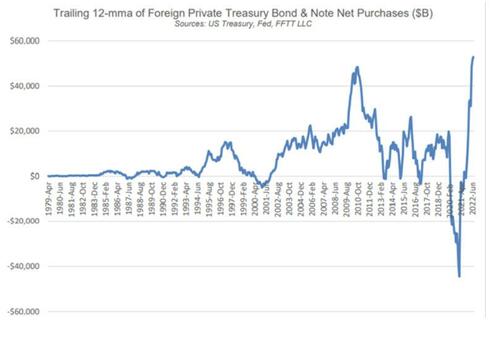
It’s only a matter of time, however, before foreign investors, nostalgic for the days of former US glory, realize that such glory is gone, and that the only way UST’s will ever be “risk-free-return” is if the Fed prints more debased money to buy them, which is not Powell’s current practice.
In essence then, foreigners aren’t hiding in “risk-free-return,” but drowning in “return-free-risk” as even 3-4% yields on the US 10Y Treasury yield a negative -5% return when adjusted for inflation, despite it being under-reported by 50%.
Remember when I said the Fed has no good options left? I meant it. It’s either tighten and risk systemic collapse, or ease and destroy the currency.
Pick your poison.
Furthermore, and ironically, the USD (i.e., world reserve currency) is highly illiquid, despite being mouse-clicked for years. For this USD scarcity, and the immense pressure it is putting on USD-denominated debt holders and sovereign financial partners, we can thank that other poison known as the quadrillion-dollar derivatives market, of which I’ve already written.
Losing Faith in Uncle Sam’s IOU’s
At some point, Americans, as well as the rest of the world, will realize that the US is not what she used to be, and neither are her IOU’s.
For the first time in almost a century, faith in Uncle Sam will reach a nadir and precious metals their apex. But faith, as I’ve also written, is a hard financial indicator to time.
This is not “gold-bug” posturing but hard math and political reality colliding with the lessons of current and past history.
Take the Pathetic Example of Japan
The Fed’s rate hikes have pushed Tokyo and its Yen to its knees.
The Bank of Japan, unlike the controllers of the world reserve currency (i.e., the Fed), flatly cannot afford to raise rates and pay its JGB’s (i.e., IOU’s) at the same time.
Net result?
The Bank of Japan is printing Yen like gangbusters and keeping inflation deliberately above interest rates.
Yet even in this openly negative-real-yield nightmare, the Japanese 10Y didn’t trade for 2 days.
Meanwhile, as the Yen dropped to 50-year lows, Japan was forced for the first time in nearly three decades to prop its currency by making a direct intervention in the FOREX, which entails selling a batch of the UST’s it had on reserve.
This explains why the TLT (US Treasury ETF) lost 3% on the same day. Meanwhile, US junk bonds (as measured by the LQD ETF), fell to lows not seen since the COVID lows.
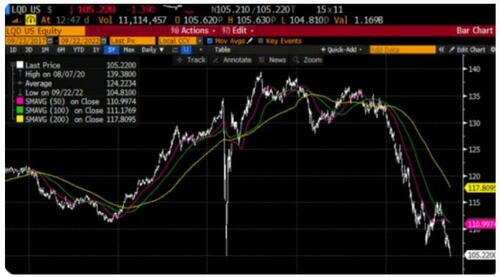
Tanking junk bonds, by the way, are typically leading indicators for tanking equity markets.
Just saying…
And Then There’s the EU…
Japan, of course, won’t be the last nation to reach such desperate levels, and as more UST’s are dumped/sold, debt costs in the US will only get more, not less painful, regardless of what the Wizard of Powell does from DC/Oz.
Again, just ask the Bank of England and its recent, headline-making pivot to more QE. No shocker at all there…
Foreigners own over $18T is USD assets, including bonds, real estate and dollars. Once the distressed selling starts, it goes from slow to rapid very quickly, which means pain levels for Main Street American debtors will rise equally fast.
Other nations “friendly” to the US are feeling equal pain from Powell’s hawkish Fed and strong USD.
Germany, for example, is seeing yields on its two-year bonds above 2% for the first time since 2008, an otherwise once anemic rate which it literally can’t afford.
As yields in the EU rise as a result of its US “ally’s” policies, the EU starts to quiver and shake, as this means the EU’s interest rates rise too.
But with debt-soaked countries like Italy teetering towards Frankenstein levels, Powell is pushing the EU into a national security (currency and debt) trap as well as political crack-up.
Again, what will EU nations do?
They’ll likely turn Japanese and start dumping US Treasuries and dollars to keep the lights on from Paris to Portugal.
Even in China, big firms are already selling USD assets and commercial real estate (over $20B since 2019) at an increasingly alarming rate.
Powell’s Strong Dollar Policy is Backfiring
In short, Powell’s strong USD policy, like the West’s sanctions against Putin, are openly backfiring as America’s “allies” bend under the oppressive ripple effects and weight of an artificially strong USD—and all of this as the EU heads into a winter with less energy from the East.
Then again, the Fed is always at least two to three steps behind its own learning curve.
As a political rather than independent bank, they can only rely on words and distortions rather than math and honesty when speaking to a public which they have mis-served since the day of their official (and Wall-Street-leaning) birth in December of 1913.
These converging currency, debt and energy patterns look like the weather map of a perfect storm.
In short, foreign currencies, suffocating under the weight of Powell’s strong USD, will continue to tank as global bond markets continue to dry up and hence implode.
Unless the Fed reverses course on its strong USD policy (and pivots to more QE/Mouse-click “magic”), global markets face a legitimate risk of systemic collapse.
But then again, more mouse-click money just means a currency crisis. Again: Pick your poison.
For all of these reasons, I remain steadfast that global currency and sovereign debt markets cannot and will not last long under Powell’s current strong USD policy.
Unless the Fed pivots to more pathetic QE (and hence a weaker, debased USD), the systemic risk discussed above will become systemic implosion.
For now, the ball (or dollar) is in Powell’s court, and he’s got a weak serve.
end
Lawrie Williams
END
3.Chris Powell of GATA provides to us very important physical commentaries
Foolish Erdogan!! Turkish official inflation tops 83% (unofficial around 200%) while Erdogan promises more interest rate cuts.
A recipe for failure.
(London’sFinancial Times/GATA)
Turkish inflation tops 83% as Erdogan promises more interest rate cuts
Submitted by admin on Mon, 2022-10-03 12:07Section: Daily Dispatches
By Laura Pitel
Financial Times, London
Monday, October 3, 2022
Turkey’s official inflation rate climbed to a new 24-year high last month as the country reeled from President Recep Tayyip Erdoğan’s unorthodox economic policy.
The consumer price index rose 83.45 per cent in September, according to data from the Turkish Statistical Institute, the highest level since July 1998 and up from 80.21 per cent the previous month. …
Erdogan rejects the established economic consensus that raising interest rates helps to curb inflation.
He has ordered the central bank to cut borrowing costs twice in the past two months, bringing the benchmark interest rate down to 12%.
Last week he said he wanted the main rate to come down to single digits by the end of the year as he pushes for growth ahead of critical elections that are due to take place in June 2023.
“My biggest battle is against interest. My biggest enemy is interest,” Erdoğan said in televised remarks. “We have now lowered the interest rate to 12%. Is that enough? It is not enough. This needs to come down further.” …
… For the remainder of the report:
https://www.ft.com/content/d6b86397-5b1a-4f54-a21d-786da4b0abc9
END
Governments around the world will try to intervene to stem the dollar’s rise. The USA is weaponizing the dollar against emerging nations and of course Russia
(Bloomberg/GATA)
Relentless dollar rally raises chance of interventions, investors say
Submitted by admin on Mon, 2022-10-03 09:54Section: Daily Dispatches
Not much more would need to be done than to end the longstanding interventions against gold.
* * *
By Liz McCormick, Simon White, and Matt Turner
Bloomberg News
Sunday, October 2, 2022
The U.S. dollar is expected to extend its gains, increasing speculation that governments will stage unusual market interventions to drive up the value of the currencies on the losing end of the trade.
About 45% of 795 respondents to the latest MLIV Pulse survey expect an orchestrated attempt by major world powers to weaken the dollar, even though the U.S. has moved to tamp down talk of such a move. Nearly as many said they expect Japan to step up its pricey efforts to shore up the yen by itself, without the support of others. Two thirds of respondents see the Bloomberg dollar spot index climbing to new highs over the next month. …
The dollar has surged as international investors seize on higher U.S. interest rates or seek a haven from market turmoil, including in crisis-ridden UK and emerging markets. The rally is exaggerating the economic difficulties of nations around the world by pushing up prices of imported food and fuel.
That is putting further pressure on many central banks, which have been raising interest rates in an effort to tamp down the surge in consumer prices. …
… For the remainder of the report:
END
For your interest…
USAGold’s October letter finds some encouragement for the monetary metal
Submitted by admin on Mon, 2022-10-03 10:17Section: Daily Dispatches
10:17a ET Monday, October 3, 2022
Dear Friend of GATA and Gold:
USA Gold’s October edition of its “News & Views” letter begins by asserting that “finding an encouraging word on the gold and silver markets isn’t easy” — and with heroic diligence proceeds to find a bunch of encouraging words.
The October edition is posted in the clear at USAGold here:
CHRIS POWELL, Secretary/Treasurer
Gold Anti-Trust Action Committee Inc.
CPowell@GATA.org
END
4. OTHER GOLD/SILVER COMMENTARIES
PHYSICAL SILVER/GOLD
5.OTHER COMMODITIES: COAL
USA coal prices soar above 200$ per tonne amid the energy crunch
(zerohedge)
US Coal Prices Soar Above $200 Amid Energy Crunch
MONDAY, OCT 03, 2022 – 08:40 PM
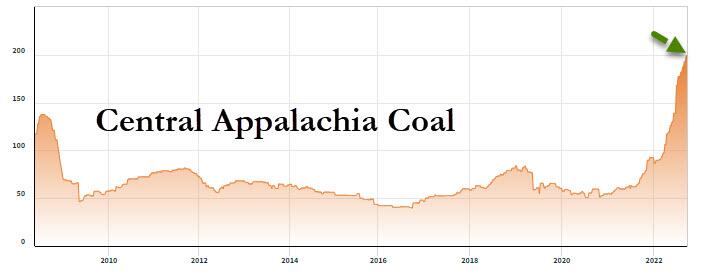
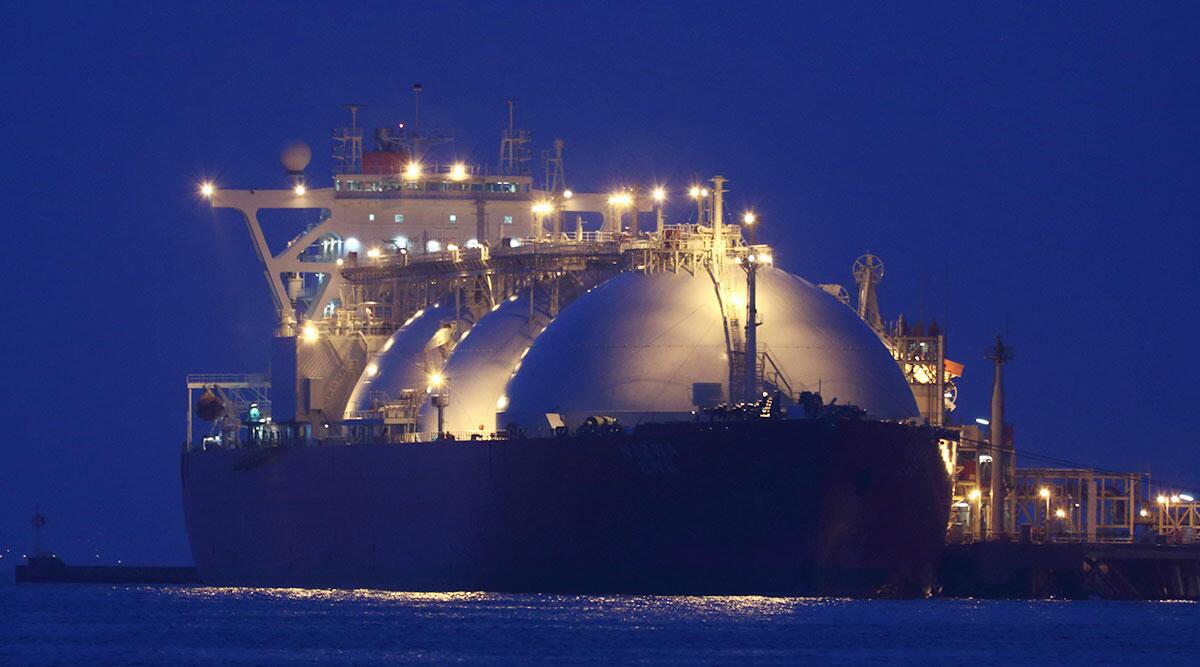
US natural gas production will need to increase to maintain soaring liquefied natural gas (LNG) exports while ensuring adequate domestic supplies for households and businesses this winter. If not, then electricity generators at power plants will find NatGas uneconomical to run turbines and switch to coal-fired generators. That’s precisely what could be happening as US coal prices soar over the $200 per ton mark for the first time.
Bloomberg said spot coal prices for the week ending Sept. 30 increased to $204.95 per ton. Data was sourced from US Energy Information Administration, which said this was the highest price in records dating back to 2005.
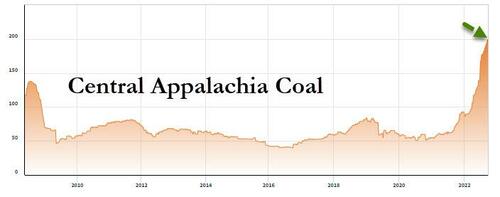
The energy-market shockwaves from Russia’s invasion of Ukraine and rejiggering of Europe’s energy supply chain have dramatically increased US LNG exports to the EU this summer and fall. Domestic supplies have significantly tightened the availability for large users, which has pressured prices higher.
As a result, the once-mighty coal industry is returning as the global (in China and Europe) NatGas-to-coal switching could be set to intensify. The rise in coal prices may suggest stockpiling by utilities ahead of a cold winter.
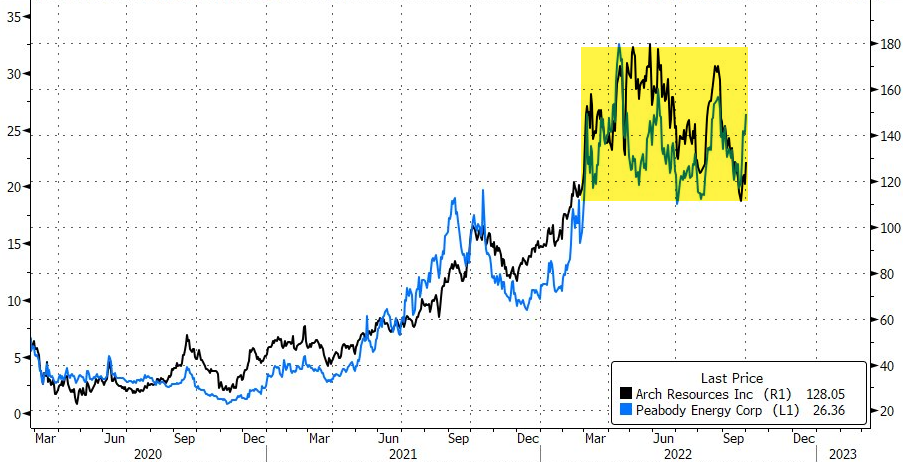
Rising spot coal prices have been favorable for big coal companies: Peabody Energy Corp shares rose 6% to $26.25, and Arch Resources Inc. jumped 7.5% to $127.49. Both coal stocks have been in a lateral formation for much of this year and could break out to the upside if coal prices continue to rise.
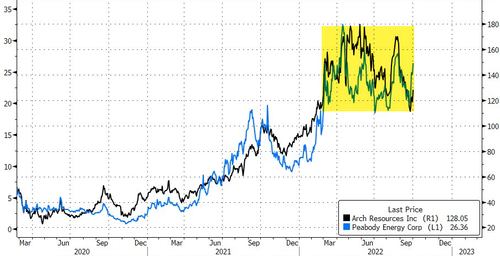
The rally in spot coal and coal mining stocks comes under the most progressive White House ever that attempts to kill the fossil fuel industry to decarbonize the power grid with unreliable renewable power sources that have backfired. Worse, US-led sanctions against Russia have further sparked global energy market chaos.
Coal’s comeback is a remarkable turnaround for an industry that was on the brink of disaster as banks halted financing and investment firms divested from mines and coal-fired power plants, though some of this has been reversed ahead of what’s expected to be a cold and expensive winter.
Increasing coal generation could be a move to help offset some of the power bill pains millions of Americans are facing as NatGas prices send electricity prices higher.
There’s one shocking figure by the National Energy Assistance Directors Association that shows about 20 million households across the country have already fallen behind on their utility bills.
Perhaps it’s time to suspend Biden’s decarbonization efforts to protect American families that could be financially slaughtered by energy hyperinflation if NatGas prices were to soar even more.
We don’t believe coal will be a long-term solution for grid stability. Instead, we’ve reminded readers that nuclear could be a big winner in the years ahead.
end
COMMODITIES IN GENERAL/
END
END
6.CRYPTOCURRENCIES
7. GOLD/ TRADING
Your early currency/gold and silver pricing/Asian and European bourse movements/ and interest rate settings TUESDAY morning 7:30 AM
ONSHORE YUAN: CLOSED
OFFSHORE YUAN: 7.0748
SHANGHAI CLOSED:
HANG SENG CLOSED
2. Nikkei closed UP 776.42 PTS OR 2.96%
3. Europe stocks SO FAR: ALL GREEN
USA dollar INDEX UP TO 111/12/Euro RISES TO 0.98913
3b Japan 10 YR bond yield: FALLS TO. +.225/ !!!!(Japan buying 100% of bond issuance)/Japanese yen vs usa cross now at 144.83/JAPANESE YEN COLLAPSING AS WELL AS LONG TERM YIELDS RISING BREAKING THE JAPANESE CENTRAL BANK.
3c Nikkei now ABOVE 17,000
3d USA/Yen rate now well ABOVE the important 120 barrier this morning
3e Gold UP /JAPANESE Yen DOWN CHINESE YUAN: XX -// OFF- SHORE: UP
3f Japan is to buy the equivalent of 108 billion uSA dollars worth of bond per month or $1.3 trillion. Japan’s GDP equals 5 trillion usa./“HELICOPTER MONEY” OFF THE TABLE FOR NOW /REVERSE OPERATION TWIST ON THE BONDS: PURCHASE OF LONG BONDS AND SELLING THE SHORT END
Japan to buy 100% of all new Japanese debt and by 2018 they will have 25% of all Japanese debt. EIGHTY percent of Japanese budget financed with debt.
3g Oil UP for WTI and UP FOR Brent this morning
3h European bond buying continues to push yields lower on all fronts in the EMU. German 10yr bund DOWN TO +1.8255%***/Italian 10 Yr bond yield FALLS to 4.196%*** /SPAIN 10 YR BOND YIELD FALLS TO 2.98%…** DANGEROUS
3i Greek 10 year bond yield RISES TO 4.56//
3j Gold at $1706.70//silver at: 20.76 7 am est) SILVER NEXT RESISTANCE LEVEL AT $30.00
3k USA vs Russian rouble;// Russian rouble DOWN 0 AND 23/100 roubles/dollar; ROUBLE AT 58.62//
3m oil into the 84 dollar handle for WTI and 90 handle for Brent/
3n Higher foreign deposits out of China sees huge risk of outflows and a currency depreciation. This can spell financial disaster for the rest of the world/
JAPAN ON JAN 29.2016 INITIATES NIRP. THIS MORNING THEY SIGNAL THEY MAY END NIRP. TODAY THE USA/YEN TRADES TO 144.83DESTROYING JAPANESE CITIZENS WITH HIGHER FOOD INFLATION
30 SNB (Swiss National Bank) still intervening again in the markets driving down the FRANC. It is not working: USA/SF this .9880– as the Swiss Franc is still rising against most currencies. Euro vs SF 0.9771well above the floor set by the Swiss Finance Minister. Thomas Jordan, chief of the Swiss National Bank continues to purchase euros trying to lower value of the Swiss Franc.
USA 10 YR BOND YIELD: 3.589 DOWN 6 BASIS PTS…GETTING DANGEROUS
USA 30 YR BOND YIELD: 3.658 DOWN 5 BASIS PTS//(USA 30 YR INVERTED TO THE USA 10)
USA DOLLAR VS TURKISH LIRA: 18,53…GETTTING DANGEROUS
end
Overnight: Newsquawk and Zero hedge:
FIRST, ZEROHEDGE
Futures Storm Higher After Smaller Than Expected RBA Rate Hike Boosts Speculation Global Tightening Is Ending
TUESDAY, OCT 04, 2022 – 08:11 AM
Yesterday’s furious rally, which following a miserable September and Q3, was the best start to a quarter since 2009 and the best start of a Q4 since 2002 according to Bespoke …
… extended on Tuesday with S&P futures rising as much as 1.9% amid growing bets that we have seen the peak of the Fed’s hawkishness, sentiment which was boosted after the RBA unexpectedly hiked its Cash Rate Target by only 25bps to 2.60%, below the market’s 50bps expectation (having been the first central bank to warn that a pivot is coming a month ago), and sending the AUD and local bond yields tumbling while Australian stocks soared the most in two years! The sudden dovishness reverberated around the world, hammering the dollar for a second day, propelling European higher for the best day since June, sending the two-year Treasury yield plunging below the 4% mark and sending 10Y yields as low at 3.56%, almost half a percent below the 4% reached last Friday. Oil advanced on expectations the OPEC+ alliance will deliver a substantial supply cut.
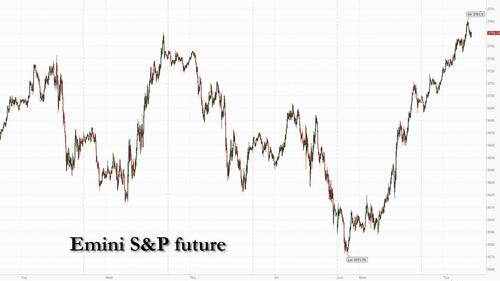
In premarket trading, major US technology and internet stocks were higher in premarket trading, set to extend their gains for a second straight session. Tesla (TSLA US) joined in on the action, gaining 3% after Cathie Wood bought the carmaker’s dip on Monday. Bank stocks also rallied, putting them on track to gain for a second straight day. Meanwhile, Saudi Arabia appointed BNP Paribas, Citigroup, Goldman Sachs, JPMorgan and Standard Chartered as primary dealers in the government’s local debt instruments. In corporate news, most asset managers that promised to eliminate their financed emissions by 2050 have failed to submit plausible plans toward achieving that goal, according to environmental think tank Universal Owner. here are other notable premarket movers:
- Rivian (RIVN US) rose 9% in premarket trading after the automaker reported a boost in production and reaffirmed its annual goal to build 25,000 electric vehicles.
- Bed Bath and Beyond’s (BBBY US) shares rise as much as 3.3% in premarket trading. WSJ reported late Monday that some of the home furnishings retailer’s bondholders are working with Perella Weinberg Partners ahead of debt talks expected to be held with the company.
- Poshmark (POSH US) jumped as much as 14% in US premarket trading on Tuesday, after South Korea’s Naver agreed to buy the firm in a deal worth $1.2 billion.
- Adeia (ADEA US) jumped as much as 150% in US premarket trading, before paring gain to 24%. The shares are set to extend Monday’s jump on the first day of trading following the completion of the spinoff of TiVo Parent Xperi.
- Shares of cryptocurrency-exposed stocks including Marathon Digital (MARA US) and Coinbase (COIN US) rallied in premarket trading as Bitcoin climbs to breach the closely watched $20,000 level.
The surge started on Monday after investors saw the far weaker-than-estimated US ISM manufacturing data – and especially the biggest drop in the employment index since the covid crash – supporting a dovish tilt at the Fed after 3 percentage points of hikes began to tell on the economy. Money markets now see the Fed Funds Rate peaking below 4.5% by March. And as Bloomberg notes, echoing the above, “speculation is growing that the global wave of disruptive monetary tightening is nearing its end, especially after the Reserve Bank of Australia raised rates by half as much as expected.”
“While the more rational approach outlined by the RBA does not bring forward rate cuts, it offers the possibility of stepping back from the more extreme hawkishness of recent weeks,” Stephen Innes, managing partner at SPI Asset Management, wrote in a note. “That implies bull steepening in bond markets and should provide some support for equity markets if other central banks follow suit.”
As a result of the fresh burst of hope in peak hawkishness, money markets now signal the Fed will hike rates a further 125 basis points at most by March compared with as much as 165 basis points seen following the third three-quarter point increase last month. These pared expectations spurred a rally in Treasuries across the curve on Tuesday. The 10-year rate shed 6 basis points Tuesday, while the two-year yield slid 12 basis points to trade at 3.99%.
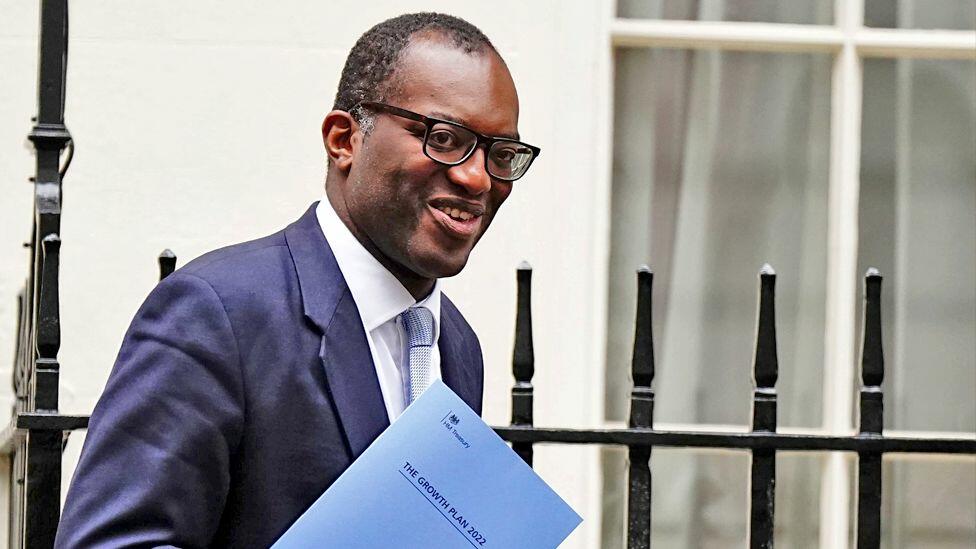
In Europe, the Stoxx 600 rallied as travel, technology and retail companies posted some of the biggest gains. Travel, tech and retailers are the strongest-performing sectors. UK domestic stocks outperformed as beaten-down sectors including retail and travel & leisure rebounded. The move, with the domestically-focused FTSE 250 up 2.4%, came as the pound extended gains against the dollar. Chancellor of the Exchequer Kwasi Kwarteng is due to bring forward the announcement of his medium-term fiscal plan. Here are the biggest European movers today:
- European airlines advance, with British Airways owner IAG rising as much as 5.5% after getting an upgrade to buy from hold at Goodbody, while Ryanair gains as much as 5.9% after reporting Sept. load factor data.
- The Stoxx 600 Tech Index rallied as much as 4.2%, the biggest intraday climb since mid-March. Chip stocks were among the biggest gainers, including ASML rising as much as +5.4%, ASM International +6.8%, STMicro +5.3% and Infineon +5.3%.
- Vodafone shares gain as much as 3.3% and extend gains as Oddo BHF upgrades the stock to outperform from neutral, saying the telecom operator’s share price is still at a low, with three transactions being launched and more “on the way.”
- Credit Suisse shares rise as much as 6.0%, recouping most of their losses amid a wider stock market rebound on Monday, after having fallen as much as 12% earlier in the day. The Swiss lender’s gauge of credit risk spiked to a record on Monday, crushing hopes of its CEO to calm markets on capital levels and liquidity.
- HSBC shares rise as much as 3.9%, extending early trading gains, after Sky News reported the bank has instructed JPMorgan to sound out prospective buyers.
- Greggs shares gain as much as 11%, among the top performers in the FTSE 250 Index, after the UK bakery chain said sales grew 14.6% in the third quarter. Jefferies said the update shows “impressive resilience.”
- Private equity firm EQT fall as much 8.2%, the most since June, after Nasdaq Nordic updated its index methodology to divide shareholders into two groups of “strategic investors and non-strategic investors.”
- Rheinmetall shares fall as much as 7.2% after a report that a contract announcement on a key defense program in Australia could be delayed until March.
- M6 shares decline as much as 12% after Bertelsmann’s RTL Group said it will keep its stake in the French TV broadcaster due to “legal risks and uncertainties” around antitrust approval.
- Drax shares suffered decline as much as 7.7%, their biggest intraday drop in nearly two months, after the BBC’s Panorama program said the UK power firm is cutting down “environmentally important” forests.
Earlier in the session, the MSCI Asia Pacific Index rallied 2.2%, poised for their biggest daily advance since March, after weak US manufacturing data trimmed bets on the Federal Reserve’s hawkishness and revived appetite for risk. The MSCI Asia Pacific Index gained as much as 2.4% with all sectors rising. A regional tech sub-gauge jumped more than 3% after Treasury yields slipped and the dollar weakened. Taiwanese chip firms serving Chinese customers got a further boost from a report that the US plans to announce fresh curbs on semiconductor exports to China. Australia’s benchmark led gains in the region after the country’s central bank delivered a smaller-than-expected interest rate hike.
Japanese stocks also surged, with the benchmark Topix rising more than 3%, boosted by technology shares. even after North Korea fired a missile over the country for the first time since 2017. Liquidity in the region was relatively thin as China and Hong Kong markets were closed for a holiday. Despite the latest gains, caution remains over how sustainable any recovery in Asian shares may be. MSCI’s regional gauge is still down 27% this year, partly weighed by China’s strict Covid controls. “Until we see more signs of inflation peaking out in the US, expect the Fed to stay aggressive, for the dollar to continue to climb and Asian stocks to remain under pressure,” said Manish Bhargava, fund manager at Straits Investment Holdings
Australian stocks soared the most in two years on RBA’s smaller hike: the S&P/ASX 200 index rose 3.8% to close at 6,699.30 after the RBA surprised investors by raising interest rates by a quarter percentage point, ending a streak of outsized increases. The benchmark notched its biggest gain since June 2020. All sectors climbed, with banks contributing the most to the gauge’s advance. In New Zealand, the S&P/NZX 50 index rose 1.2% to 11,090.03, ahead of the RBNZ’s policy decision on Wednesday. The central bank is poised to raise interest rates by half a percentage point for a fifth straight time, and some economists are tipping it will need to keep tightening well into next year.
Indian stocks posted their biggest advance in more than a month, tracking an extended rally in global equities on hopes of potential easing of hawkish monetary policies by central banks. The S&P BSE Sensex rose 2.3% to 58,065.47 in Mumbai, while the NSE Nifty 50 Index advanced by an equal measure. Shares of financial companies, automobile makers and consumer goods firms were among top gainers in India as the festive season began this week. Local markets will be closed Wednesday for the Dussehra festival. All of the 19 sector sub-indexes compiled by BSE Ltd. gained, led by metal and finance stocks. On the macroeconomic front, India’s trade deficit narrowed for a second straight month in September, mainly due to easing global commodity prices. However, a weakness in the local currency continued to put pressure on the south Asian economy. HDFC Bank and ICICI Bank contributed the most to the Sensex’s gain, increasing 2.8% and 2.3%, respectively. All but three of the 30 shares in the Sensex index advanced.
In FX, the dollar headed for the lowest level since Sept. 22, as the greenback traded weaker against most of its Group-of-10 peers with a rebounding British pound acting as the biggest drag. The UK’s withdrawal of a tax-cut plan soothed nerves about the government’s fiscal health, though doubts remained about the outlook for the currency. Scandinavian currencies led gains while the Aussie was the worst performer. The euro neared a two-week high versus the greenback.
- The pound extended gains against the dollar amid broad-based greenback weakness, rising above $1.14 for the first time in two weeks. Gilts bull steepened with traders also trimming their pricing of BOE hikes.
- The Aussie trimmed losses on the back of a weaker dollar. It earlier fell as much as 1% and the Australian 3-year yield briefly tanked as much as 58bps as the Reserve Bank raised the cash rate to 2.6%, less than the median of 2.85% expected by economists surveyed. Governor Philip Lowe reinforced his commitment to tightening even as he acted on signals last month of a slower pace of increase
- An advance by the New Zealand dollar may be held back by the Aussie’s decline, with RBNZ set to raise interest rates by a half-point Wednesday, to 3.5%
- The yen underperformed the greenback as the second half of Japan’s fiscal year begun. JGBs gained after a solid 10-year auction. Options traders reduce long-gamma exposure in the yen in the front-end given the threat of Japanese intervention in the currency market means dollar bullish calls are no longer in vogue
In rates, treasuries advanced led by the front end and temporarily sending the US 2-year yield below 4% for the first time since Sept. 21, as money markets continued to pare Fed hike wagers. Bunds and Italian bonds bull steepened as money markets continued to pare ECB tightening wagers. Treasuries extended Monday’s bull-steepening move with front-end yields richer by nearly 10bp on the day in early US session. Treasury yield richer by 8bp to 3bp across the curve with 2s10s, 5s30s spreads steeper by ~2bp and ~4bp on the day; 10-year is around 3.58% with gilts trading ~8bp richer in the sector. Gilts lead as BOE rate-hike premium fades further, and Australian front-end surged overnight after RBA surprised with a smaller rate hike than expected. US session features a busy Fed speaker slate. Across front-end UK 2-year yields are richer by 25bp on the day while Aussie 2-year notes closed down more than 30bp after RBA hiked cash rates by 25bp vs 50bp expected. Fed-dated OIS contracts continue to shift to a more dovish policy path, with additional 112bp of hikes now expected over the next two policy meetings vs 115bp at Monday’s close.
In commodities, WTI broke above Monday’s range, adding 1.3% to near $84.94, Brent rose above $90. Spot gold rises roughly $9 to trade near $1,709/oz.
Bitcoin is bid and briefly reclaimed the USD 20k handle, though has since dipped marginally back beneath the figure.
To the day ahead now, and data releases include US factory orders and the JOLTS job openings for August, as well as the final August readings for durable goods orders and core capital goods orders. In the Euro Area, we’ll also get the August PPI reading. From central banks, we’ll hear from ECB President Lagarde, the ECB’s Centeno, as well as the Fed’s Williams, Mester, Jefferson and Daly.
Market Snapshot
- S&P 500 futures up 1.4% to 3,743.25
- STOXX Europe 600 up 2.1% to 399.04
- MXAP up 2.2% to 141.85
- MXAPJ up 1.8% to 458.20
- Nikkei up 3.0% to 26,992.21
- Topix up 3.2% to 1,906.89
- Hang Seng Index down 0.8% to 17,079.51
- Shanghai Composite down 0.6% to 3,024.39
- Sensex up 2.1% to 58,006.25
- Australia S&P/ASX 200 up 3.8% to 6,699.29
- Kospi up 2.5% to 2,209.38
- German 10Y yield little changed at 1.84%
- Euro up 0.5% to $0.9871
- Brent Futures up 0.7% to $89.51/bbl
- Gold spot up 0.4% to $1,707.42
- U.S. Dollar Index down 0.44% to 111.26
Top Overnight News from Bloomberg
- EU internal market chief Thierry Breton and Paolo Gentiloni, the bloc’s economy czar, said the current situation requires solidarity among member states, including the issuance of joint- guaranteed debt similar to what was done during the Covid pandemic
- UK Prime Minister Liz Truss said she’s yet to decide whether welfare payments in the UK should be increased in line with inflation, an issue that threatens to spark another bitter row with her disgruntled Conservative MPs
- Britain’s bond market should comfortably absorb the extra £62 billion of debt announced after the government’s September mini-budget despite undergoing “‘a major repricing,” Reuters reported, citing UK Debt Management Office head Robert Stheeman
- Global stock and bond bulls are hoping the market impact of Australia’s dovish rate surprise will stick as it offers their best chance at arguing the worldwide wave of disruptive hikes is closer to the end than the beginning
- North Korea fired a missile over Japan for the first time in five years, further ratcheting up tensions over Kim Jong Un’s nuclear program and prompting a rare public safety warning to be issued by Tokyo
A more detailed look at global markets courtesy of Newqsuawk
Asia-Pac stocks notched firm gains as the region took impetus from the strong performance on Wall St where stocks rallied amid a decline in the dollar and yields, while equities were unfazed by North Korea’s latest launch. ASX 200 gained at the open as the commodity-related sectors led the broad gains across the index after recent strength in oil and precious metals, while stocks were further boosted after the RBA opted for a smaller than expected rate increase of 25bps. Nikkei 225 advanced closer to the 27k level after the latest Tokyo CPI data printed in line with expectations. KOSPI strengthened despite North Korea’s missile launch which flew over Japan for the first time since 2017 and prompted Japan to issue a warning for residents to take shelter, before landing outside of Japan’s EEZ.
Top Asian News
- China is demanding that foreign diplomats provide floor plans of Hong Kong missions, according to FT.
- Taiwan is to open its border and lift quarantine rules in 10 days, according to the Ministry of Foreign Affairs.
- RBA hiked the Cash Rate Target by 25bps to 2.60% (exp. 50bps hike). RBA stated that the Board is committed to returning inflation to the 2–3% range over time and expects to increase interest rates further over the period ahead. RBA added that today’s increase in interest rates will help achieve this goal and that the Cash Rate had been increased substantially in a short period of time, while the size and timing of future interest rate increases will continue to be determined by the incoming data and the Board’s assessment of the outlook for inflation and the labour market.
- Japan Defends Appointing Premier’s Son as Senior Aide
- What Adding India to Global Bond Indexes Would Mean: QuickTake
- Naver Sinks 9% on Announcing $1.2 Billion Poshmark Deal
- Samsung Woos US Chip Buyers With Tech Advances, Texas Focus
European bourses have commenced the session on the front foot as broader sentiment remains constructive largely in a continuation of yesterday’s recovery. Sectors are all in the green with Travel names outperforming amid Heathrow ending the passenger cap while defensively-biased names lag a touch given broader sentiment. Stateside performance is very in-fitting, ES +1.5%, ahead of Fed speak and after a constructive update from Foxconn. Foxconn (2317 TW) September sales +40.4% YY; Q3 revenue better than expected. Maintain FY22 guidance, as stated in August; Q4 outlook is cautiously positive. Need to closely monitor inflation, demand, COVID and supply chains in the period. September: strong revenue performance in smart consumer electronics products was the main driver of overall revenue; smart consumer electronics, cloud and networking products delivered strong double-digit growth. Apple (AAPL) iPhone exports from India doubling, according to Bloomberg, in a boon to the plan of Indian PM Modi; additionally, exports of India-made iPhones surpass USD 1bln in a five-month period, via ET Now citing sources.
Top European News
- UK PM Truss said abolishing the 45p top rate of tax was a tiny part of the plan and had become an unnecessary distraction, according to The Telegraph.
- German Finance Minister Lindner says they are open to joint steps on the international gas market, prepared to discuss measures to contain gas prices, EU power market needs to be reformed and joint purchases need to be considered.
- EU Economy and Single Market Commissioners have called for joint EU borrowing to deal with the energy crisis.
- EU Chiefs Eye Joint Debt as German Fiscal Force Worries Allies
- Russia Sanctions Germany’s Operator of Katharina Gas Storage
- Rheinmetall Drops on Report of Australian Defense Contract Delay
- Vodafone-Three Merger Set to Be £14 Billion Test for Watchdogs
- Tendam Brands Offering of Senior Secured 2028 Notes for EU300m
- ECB’s de Cos Says Spanish Banks Must Be Cautious Amid Slowdown
Commodities
- Crude benchmarks are modestly bid this morning, taking the lead from broader sentiment and associated FX action.
- Benchmarks are firmer by just shy of USD 1/bbl and towards the top-end of the sessions parameters and more broadly are well within the ranges of the last few days/weeks.
- Precious and base metals have benefited from the pullback in the USD. Lifting spot gold back above USD 1700/oz to a session best USD 10/oz above the figure and bringing the 50-DMA into focus at USD 1723/oz
- Saudi Aramco CEO says they maintain their market within Asia, despite demand from Europe; oil spare capacity is extremely low, market is focused on short-term economics, rather than long-term, via Reuters.
- Trafigura Chief Economist says sees dated Brent oil benchmark price above USD 75bbl at the end of next year, via Reuters.
- US Treasury Official Harris says Russian oil price cap will be high enough to maintain Russian incentive to continue producing; not yet been a decision on the price, via Reuters. December 5th sanctions will target Russian crude, then diesel and lastly lower value products such as Naphtha.
US Event Calendar
- 10:00: Aug. Factory Orders, est. 0%, prior -1.0%
- Factory Orders Ex Trans, est. 0.2%, prior -1.1%
- 10:00: Aug. Durable Goods Orders, est. -0.2%, prior -0.2%
- -Less Transportation, est. 0.2%, prior 0.2%
- Cap Goods Orders Nondef Ex Air, prior 1.3%
- Cap Goods Ship Nondef Ex Air, prior 0.3%
- 10:00: Aug. JOLTs Job Openings, est. 11.1m, prior 11.2m
Central bank Speakers
- 09:00: Fed’s Logan Gives Welcoming Remarks at Event on Technology
- 09:00: Williams Gives Opening/Closing Remarks at Work Culture Event
- 09:15: Fed’s Mester Speaks at Conference on Payment System
- 11:45: Fed’s Jefferson Speaks at Conference
- 13:00: Fed’s Daly Speaks to the Council on Foreign Relations
DB’s Jim Reid concludes the overnight wrap
After an awful performance in September, Q3 and YTD – which we detailed in the performance review yesterday (link here) – if Q4 carries on like it did on the first day, then most things will be firmly in positive territory for FY 2022 by the end of December!!
Indeed, the S&P 500 (+2.59%) bounced back from its 22-month low alongside a sharp decline in global sovereign bond yields. There were multiple factors driving the rally, but the main one was growing speculation that central banks could soon pivot towards a more dovish stance, particularly after the market turmoil over the last couple of weeks. As you’ll see below, the RBA move overnight will encourage more of that thought. That theory dominated early trading but was then given further support after the ISM manufacturing print came in below expectations, with surprise contractions in the employment and new orders components. And in turn, that led investors to significantly dial back their expectations for how much central bank tightening we’re likely to see over the months ahead. In fact, the rate priced in by Fed funds futures for end-2023 came down by a massive -18.3bps yesterday to 4.14%, and is now -38.2bps from the peak reached last Monday following the historic sell-off in DM sovereign bond markets.
We’ll have to wait and see whether that pivot actually ends up happening though, but sovereign bonds reacted accordingly, and yields on 10yr Treasuries fell by a sizable -19.0bps to 3.64%. Noticeably, that move lower was entirely driven by a fall in real yields, with inflation breakevens moving higher on the day, which is again a sign that investors are pricing in a much less aggressive reaction from the Fed. Indeed, by the close, the 10yr real Treasury yield was down -22.9bps, which was the biggest move lower since March 2020 when the global economy was reeling from the initial wave of the Covid-19 pandemic. So that just shows how much investors were reappraising things yesterday given how volatile markets have been these last couple of years. 10yr yields are another -2.58bps lower in Asia, trading at 3.61% as I type.
As mentioned at the top, the weak ISM manufacturing reading helped fuel the rally on the back of hopes that the Fed wouldn’t move as aggressively as feared, and the reaction in equities was evident after the release came through. In a sense, it’s the reverse of the “good news is bad news” phenomenon over recent weeks, whereby strong data releases were just seen by investors as giving more space for the Fed to keep hiking rates. But this time it was the other way round, with September’s print coming in at 50.9 (vs. 52.0 expected), which is the lowest reading for the index since May 2020 when the economy was still experiencing the effects of lockdowns. For the new orders component at 47.1 (vs. 50.5 expected), it was also the lowest since May 2020, and marked the 3rd time in 4 months that it’s been in contractionary territory. The only caveat to the slump in the employment index was that August was an outlier. The series had been below 50 for 3 months before last month in what has still been a hot labour market so it’s possible the market read too much into the decline.
The data led the Atlanta Fed’s GDPNow model to revise its third quarter growth estimates down to 2.3% from 2.4%, but this is still indicative of a tight economy capable of generating inflation despite signs of softening data. Indeed, later in the day Vice Chair of the FOMC, New York Fed President Williams noted it may take years to get inflation back to target given the current supply and demand imbalance in the economy, and that the Fed still had “a way to go”, invoking the 4.6% fed funds dot for the end of 2023, specifically. Not exactly ‘pivot’ language from the core of the FOMC.
Over in Europe, expectations of a pivot from the ECB gathered steam as well, with the rate priced in for June 2023 coming down by -19.9bps on the day. As well as the weak economic data, the European moves were supported by the latest falls in natural gas prices, with futures coming down -10.00% to €170 per megawatt-hour. That’s their lowest level since late July, and speaks to growing hopes that the damage from the Russian gas cut-off won’t be quite as bad as feared this time a month ago. Against that backdrop, European yields fell significantly, with those on 10yr bunds (-19.3bps), OATs (-20.6bps) and BTPs (-27.2bps) all seeing sharp declines. That decline in gas prices helped inflation breakevens to move lower, and there was a significant milestone as the 10yr German breakeven (-10.3bps) closed below 2% yesterday for the first time since Russia’s invasion of Ukraine began.
For equities, the prospect of a dovish pivot was seen as unambiguously good news, which helped the major indices to rebound significantly from their weak performance over the last couple of weeks. The S&P 500 advanced +2.59%, in spite of a significant loss for Tesla (-8.61%) after their Q3 deliveries were below estimates. That led to a modest underperformance in the Nasdaq, which gained only +2.27%, still its best day since mid-August on the supportive rate rally. Over in Europe, the STOXX 600 was also up +0.77%, although there was significant focus on Credit Suisse (-0.93%) after their credit default swaps hit a record high in trading, moving above levels seen even during the GFC. However, the shares were down -11.56% at their lows for the day and the CDS ended +69bps higher on Bloomberg with traders seeing it +100bps wider at one point.
Here in the UK, there was a significant development just as we went to press yesterday, as the government reversed course on their proposal to abolish the top 45% rate of income tax. In economic terms, it’d only been a small component of their fiscal package that triggered the market turmoil, comprising around £2bn of the £45bn of tax cuts announced. But in political terms, it had been one of the most difficult points of contention, and there were serious questions about whether it would even pass the House of Commons given public opposition from some Conservative MPs. UK assets responded positively to the development, with sterling strengthening after the news came in to move higher for a 5th consecutive session. In fact, it also moved above its levels prior to the mini-budget for the first time, closing up +1.37% at $1.13. Those moves were echoed among gilts, which rallied in line with the broader global moves, with the 10yr yield down by -13.2bps to 3.94%. After gilt trading wrapped up for the day, the FT reported Chancellor Kwarteng is expected to expedite the government’s medium-term fiscal plan, bringing it forward later this month instead of the middle of November. For the government, however, there were no signs that their political difficulties were easing just yet, as a Savanta ComRes poll showed the opposition Labour Party with a 25-point lead over the Conservatives. That’s the biggest ever Labour lead that pollster has recorded, and echoes the 33-point lead in a YouGov poll last week.
Asian equity markets are following the overnight gains on Wall Street, shrugging off news that North Korea fired a missile over northern Japan for the first time in five years. The Nikkei (+2.38%) is trading sharply higher with the Kospi (+2.29%) also advancing on its return to trading after a holiday. Meanwhile, markets in China will remain shut this week for holidays with Hong Kong closed today. Elsewhere, the S&P/ASX 200 (+3.45%) is surging after the Reserve Bank of Australia (RBA) lifted its key interest rate by 25bps to 2.6%, instead of the 50bps expected by the consensus (more below). Stock futures across DMs are pointing to another rally with contracts tied to the S&P 500 (+0.79%), NASDAQ 100 (+0.93%) and DAX (+1.41%) all up strongly.
The RBA raised its official cash rate (OCR) for the sixth time in as many months but surprised the market by only hiking by 25bps. In a statement, Governor Phillip Lowe said that the board expects to increase interest rates further over the period ahead while acknowledging that the pace of future interest rate increases will continue to be determined by the incoming data and the Board’s assessment of the outlook for inflation and the labour market. Additionally, the RBA expects headline inflation to peak at 7.8% later this year.
The surprise decision sent the nation’s currency and bond yields tumbling as the Australian dollar reacted negatively to the move, dropping -0.8% to $0.6468 before managing to recover to trade at $0.6496 while 10yr yields (-19.7bps) moved sharply lower to 3.70%. Additionally, 3yr yields at one point dropped as much as -58bps intraday – the biggest such move since October 2008. It’s around -35bps lower as I type.
Early morning data showed that the Tokyo core CPI rose +2.8% in September from a year earlier, surpassing the Bank of Japan’s 2% target for a fourth straight month and marking the biggest gain since 2014. It was in-line with consensus but suggests nationwide CPI could top 3% when released.
There wasn’t much in the way of other data yesterday, though we did get the final manufacturing PMI readings for September, which mostly painted a similar picture to the flash prints. In the Euro Area, the final PMI came in at a contractionary 48.4 (vs. flash 48.5), which was its lowest since June 2020. However, the US reading saw a modest upward revision to 52.0 (vs. flash 51.8).
To the day ahead now, and data releases include US factory orders and the JOLTS job openings for August, as well as the final August readings for durable goods orders and core capital goods orders. In the Euro Area, we’ll also get the August PPI reading. From central banks, we’ll hear from ECB President Lagarde, the ECB’s Centeno, as well as the Fed’s Williams, Mester, Jefferson and Daly.
AND NOW NEWSQUAWK
Broadly constructive risk tone after a RBA tightening slowdown & ahead of Fed speak – Newsquawk US Market Open

TUESDAY, OCT 04, 2022 – 06:43 AM
- European bourses have commenced the session on the front foot as broader sentiment remains constructive largely in a continuation of yesterday’s recovery.
- Stateside performance is very in-fitting, ES +1.5%, ahead of Fed speak and after a constructive update from Foxconn.
- USD continues to pullback to the broad benefit of peers, DXY sub-111.00 at worst while Cable reclaims 1.14
- Core debt is bid across the board, though has since dipped from best levels, with Gilts back above 100.00 but still multiple points shy of pre-Kwarteng levels.
- Crude benchmarks are modestly bid this morning, taking the lead from broader sentiment and associated FX action awaiting OPEC+
- Looking ahead, highlights include US Factory Orders Speeches from Fed’s Williams, Logan, Daly, Mester & Jefferson, ECB’s Lagarde, UK Chancellor Kwarteng.

As of 11:10BST/06:10ET
View the full premarket movers and news report.
Or why not try Newsquawk’s squawk box free for 7 days?
LOOKING AHEAD
- US Factory Orders Speeches from Fed’s Williams, Logan, Daly, Mester & Jefferson, ECB’s Lagarde, UK Chancellor Kwarteng.
- Click here for the Week Ahead preview.
GEOPOLITICS
RUSSIA-UKRAINE
- Ukrainian President Zelensky said the Ukrainian army’s advances continue and new population centres were liberated in several regions, according to Reuters.
- US defence official said the US has not yet seen a large-scale reinforcement by Russian forces into Ukraine, according to Reuters.
- IMF Executive Board is to consider Ukraine’s request for USD 1.3bln in emergency funding under a new food shock window on October 7th, while IMF staff will meet with Ukrainian authorities in Vienna for technical discussions on economic plans, according to a source cited by Reuters.
- Russian Kremlin says President Putin is likely to sign laws incorporating the annexed regions today. Do not want to partake in the West’s rhetoric re. nuclear weapons. From the beginning, wanted to solve the conflict via negotiations, via Reuters.
OTHER
- North Korea fired a missile which flew over Japan and landed in the Pacific Ocean outside of Japan’s exclusive economic zone, while the missile was the first North Korean missile launch to fly over Japan since 2017 and prompted Japan to issue a warning for residents to take shelter. Furthermore, North Korea’s missile reportedly flew 4,500km to an altitude of 970km and at speed of Mach 17, according to Yonhap.
- South Korean President Yoon warned of a resolute response after North Korea’s missile launch, while South Korea’s National Security Council condemned North Korea’s missile test which it said was a serious provocation and that North Korea’s constant provocations cannot be tolerated and will bring consequences, according to Reuters.
- Japanese Defence Minister Hamada says North Korea’s missile was likely at least an intermediate-range ballistic missile, while they decided not to deploy missile destruction action after determining there was no danger to Japan and they are continuing with the defence build-up without ruling out options including counter-attack capabilities. Furthermore, Japanese Chief Cabinet Secretary Matsuno said it is possible that North Korea takes further provocative acts including conducting a nuclear test, according to Reuters.
- US warned about Russia and China attempting to sway American voters ahead of the upcoming mid-term elections, according to Associated Press.
- US President Biden said he remains gravely concerned about reports of the intensifying violent crackdown on peaceful protestors in Iran and the US will be imposing further costs this week on perpetrators of violence against peaceful protestors, according to Reuters.
EUROPEAN TRADE
EQUITIES
- European bourses have commenced the session on the front foot as broader sentiment remains constructive largely in a continuation of yesterday’s recovery.
- Sectors are all in the green with Travel names outperforming amid Heathrow ending the passenger cap while defensively-biased names lag a touch given broader sentiment.
- Stateside performance is very in-fitting, ES +1.5%, ahead of Fed speak and after a constructive update from Foxconn.
- Foxconn (2317 TW) September sales +40.4% YY; Q3 revenue better than expected. Maintain FY22 guidance, as stated in August; Q4 outlook is cautiously positive. Need to closely monitor inflation, demand, COVID and supply chains in the period. September: strong revenue performance in smart consumer electronics products was the main driver of overall revenue; smart consumer electronics, cloud and networking products delivered strong double-digit growth.
- Apple (AAPL) iPhone exports from India doubling, according to Bloomberg, in a boon to the plan of Indian PM Modi; additionally, exports of India-made iPhones surpass USD 1bln in a five-month period, via ET Now citing sources.
- Click here for more detail.
FX
- USD continues to pullback to the broad benefit of peers, DXY sub-111.00 at worst before Fed speak and some US data.
- Cable’s revival remains intact and saw a fleeting move above 1.14 while EUR/USD derives similar upside and is seemingly unfased by EUR/GBP readacross.
- NZD initially benefited from AUD pressure following the RBA slowing the pace of tightening; however, this gave way to broader seemingly USD/risk-induced upside before the antipodeans slipped once more.
- Click here for more detail.
- Click here for OpEx for the NY Cut.
FIXED INCOME
- Core debt is bid across the board, though has since dipped from best levels, with Gilts back above 100.00 but still multiple points shy of pre-Kwarteng levels.
- Bunds and USTs have been directionally in-fitting though magnitudes a touch more contained with the US yield curve steepening.
- The morning’s UK and German (I/L) issues passed without event, and we now look to the daily BoE Gilt op as a catalyst, particularly given yesterday’s pronounced reaction.
- UK DMO Chief Stheeman says markets can digest 2022/23 Gilt issuance “reasonably smoothly”, questions remain for pension and LDI regulation and expects bid-offer spreads to narrow for Gilts when the market is calmer.
- Click here for more detail.
COMMODITIES
- Crude benchmarks are modestly bid this morning, taking the lead from broader sentiment and associated FX action.
- Benchmarks are firmer by just shy of USD 1/bbl and towards the top-end of the sessions parameters and more broadly are well within the ranges of the last few days/weeks.
- Precious and base metals have benefited from the pullback in the USD. Lifting spot gold back above USD 1700/oz to a session best USD 10/oz above the figure and bringing the 50-DMA into focus at USD 1723/oz
- Saudi Aramco CEO says they maintain their market within Asia, despite demand from Europe; oil spare capacity is extremely low, market is focused on short-term economics, rather than long-term, via Reuters.
- Trafigura Chief Economist says sees dated Brent oil benchmark price above USD 75bbl at the end of next year, via Reuters.
- US Treasury Official Harris says Russian oil price cap will be high enough to maintain Russian incentive to continue producing; not yet been a decision on the price, via Reuters. December 5th sanctions will target Russian crude, then diesel and lastly lower value products such as Naphtha.
- Click here for more detail.
NOTABLE EUROPEAN HEADLINES
- UK PM Truss said abolishing the 45p top rate of tax was a tiny part of the plan and had become an unnecessary distraction, according to The Telegraph.
- German Finance Minister Lindner says they are open to joint steps on the international gas market, prepared to discuss measures to contain gas prices, EU power market needs to be reformed and joint purchases need to be considered.
- EU Economy and Single Market Commissioners have called for joint EU borrowing to deal with the energy crisis.
NOTABLE HEADLINES
- IMF MD Georgieva said a global recession can be avoided if fiscal policies are consistent with monetary policy tightening and that the responsibility is on the Fed to be mindful that the spillover impact on the rest of the world is “very high., according to Reuters.
- Click here for the US Early Morning Note.
CRYPTO
- Bitcoin is bid and briefly reclaimed the USD 20k handle, though has since dipped marginally back beneath the figure.
APAC TRADE
- APAC stocks notched firm gains as the region took impetus from the strong performance on Wall St where stocks rallied amid a decline in the dollar and yields, while equities were unfazed by North Korea’s latest launch.
- ASX 200 gained at the open as the commodity-related sectors led the broad gains across the index after recent strength in oil and precious metals, while stocks were further boosted after the RBA opted for a smaller than expected rate increase of 25bps.
- Nikkei 225 advanced closer to the 27k level after the latest Tokyo CPI data printed in line with expectations.
- KOSPI strengthened despite North Korea’s missile launch which flew over Japan for the first time since 2017 and prompted Japan to issue a warning for residents to take shelter, before landing outside of Japan’s EEZ.
NOTABLE APAC HEADLINES
- China is demanding that foreign diplomats provide floor plans of Hong Kong missions, according to FT.
- Taiwan is to open its border and lift quarantine rules in 10 days, according to the Ministry of Foreign Affairs.
- RBA hiked the Cash Rate Target by 25bps to 2.60% (exp. 50bps hike). RBA stated that the Board is committed to returning inflation to the 2–3% range over time and expects to increase interest rates further over the period ahead. RBA added that today’s increase in interest rates will help achieve this goal and that the Cash Rate had been increased substantially in a short period of time, while the size and timing of future interest rate increases will continue to be determined by the incoming data and the Board’s assessment of the outlook for inflation and the labour market.
NOTABLE APAC DATA
- Tokyo CPI YY (Sep) 2.8% vs Exp. 2.8% (Prev. 2.9%)
- Tokyo CPI Ex. Fresh Food YY (Sep) 2.8% vs Exp. 2.8% (Prev. 2.6%); Ex. Fresh Food & Energy YY (Sep) 1.7% vs Exp. 1.6% (Prev. 1.4%)
- Australian Building Approvals MM (Aug) 28.1% vs. Exp. 5.0% (Prev. -17.2%, Rev. -18.2%); Home Loans MM (Aug) -3.4% vs Exp. -3.0% (Prev. -8.5%)
i)TUESDAY MORNING// MONDAY NIGHT
SHANGHAI CLOSED //Hang Seng CLOSED /The Nikkei closed UP 776.42PTS OR 2.96% //Australia’s all ordinaires CLOSED UP 3,74% /Chinese yuan (ONSHORE) closed //OFFSHORE CHINESE YUAN UP 7.0748// /Oil UP TO 84.72 dollars per barrel for WTI and BRENT AT 90.25 / Stocks in Europe OPENED ALL GREEN. ONSHORE YUAN TRADING ABOVE LEVEL OF OFFSHORE YUAN/ONSHORE YUAN TRADING STRONGER AGAINST US DOLLAR/OFFSHORE STRONGER
2 a./NORTH KOREA/ SOUTH KOREA/
///NORTH KOREA/SOUTH KOREA/
North Korea fires a medium range ballistic missile over Japan and into the Pacific Ocean
(zerohedge)
South Korea Vow “Stern Response” After North Korea Ballistic Missile Flies 4,500km At A Speed Of Mach 17
MONDAY, OCT 03, 2022 – 09:49 PM
Update (9:40pm): According to South Korea’s Joint Chiefs of Staff, North Korea’s intermediate-range ballistic missile flew ~4,500km with an apogee of ~970km, reaching a speed of Mach 17 before splashing in the Pacific ocean, some 2800 nautical miles east of Korea, having traveled above Japan. The JSC added that South Korea and US intelligence authorities are still analyzing more details.
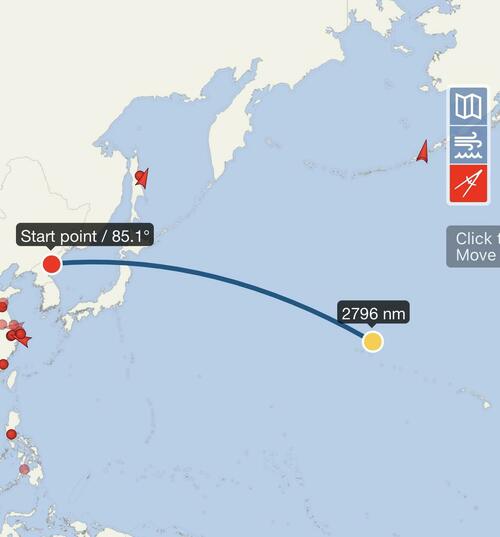
South Korea also said that North Korea’s consecutive missile launch provocation strengthens South Korea-US alliance’s reaction capability and intensifies North Korea’s isolation from the international community.
South Korea slammed the North Korean ballistic missile launch, saying it deters peace and security of the Korean Peninsula and the international community, and it strongly condemns it as the launch is a clear breach of UN Security Council resolutions.
South Korea’s president also chimed in, vowing a “stern response” to North Korea’s missile launch.
* * *
The Japanese government warned residents in some remote islands that are part of Tokyo as well as Hokkaido and Aomori prefectures to take shelter from a missile fired from North Korea.
〔Live streaming〕The Japanese government is warning that North Korea appears to have launched at least one ballistic missile. There’s a possibility it’s heading toward Japan. The government is urging everyone in the country to take shelter immediately.https://t.co/QbGNxw7brV— NHK WORLD News (@NHKWORLD_News) October 3, 2022
North Korea fired an unidentified ballistic missile toward the east side, according to text message from South Korean Joint Chiefs of Staff.
According to a subsequent update from NHK, the missile appears to have flown over and past Japanese territory, and landed in the Pacific ocean.
It is unclear what response, if any, Japan will pursue.
The USDJPY dipped briefly on the news of the missile launch but has since rebounded
end
2B JAPAN
end
3c CHINA
CHINA/
China has been monkeying around with the holy trinity of exchange rate fixes (to the uSA dollars) capital controls and sovereign money policies. Trouble will occur because you can only control two of them
(Balding/EpochTimes)
The Biggest Problem China Faces Isn’t Real Estate
MONDAY, OCT 03, 2022 – 11:40 PM
Authored by Christopher Balding via The Epoch Times,
After it joined the World Trade Organization in 2000 and anchored the Chinese yuan (a.k.a. renminbi) to the U.S. dollar, China linked its economy to the United States. Enforcing a fixed exchange rate regime with strict capital controls, China benefited from large inflows and relatively low-interest rates due largely to the low-interest rate environment in the United States. What happens to the Chinese economy when interest rates increase in the United States?
Sovereign currency policy faces the intractable dilemma of what economists call the “impossible trinity.” Countries can have a fixed exchange rate, free capital flow, or sovereign monetary policy but must choose only two of three. Economics textbooks give clean and clear definitions of each. Still, in reality, China tried to manipulate each and come out worse due to its attempts to manipulate the laws of economics.
Chinese Communist Party (CCP) technocrats attempted to create a system where they could enjoy the best of the three options and leave behind the worst parts. China implemented a quasi-fixed exchange rate, which is effectively a U.S. dollar index, with tightly controlled capital flows, and a semi-sovereign monetary policy.
What almost no one noticed with the convoluted creation of Chinese currency policy attempting to adhere to the ‘impossible trinity’ was that for the last 20 years, China benefited from business cycle synchronization with the United States. Because the yuan was tied directly to the U.S. dollar and the United States kept interest rates low, China could keep its interest rates low.
Now that the Federal Reserve (Fed) is raising interest rates, what impact will this have on China?
- First, the days of easy money flows to China are over. For large parts of the last 20 years, Chinese interest rates were 3-5 percent higher than the United States. With either a fixed or sem-fixed exchange rate, this gave investors in China access to easy higher returns. With portfolio returns and foreign direct investment based upon interest rate differentials between the United States and China, this drew investor capital with fixed or heavily managed exchange rates creating easy returns. Investors have soured on China as an investment destination for a range of reasons. But when baseline returns are higher in U.S. government debt without any of the China issues, the financial motivation will dry up the biggest reason to send money.
- Second, this will place enormous upward pressure on Chinese interest rates right as China’s economy is teetering. For most of the period since 2000, the Chinese and U.S. economies have been highly correlated. This allowed Chinese interest rates to follow the United States and enjoy a sustained period of low-cost money. However, now as the Fed is seeking to tamp down inflation and overheated demand, China is suffering through its weakest economy in probably post-opening up history. Rising interest rates with a teetering banking sector, high consumer debt, and a corporate sector suffering through a wave of defaults risk hyper charging a problem into a crisis. The People’s Bank of China (PBOC) faces a trade-off of whether to keep the yuan tied to the U.S. dollar and raise interest rates or reduce the link and let the yuan sink.
- Third, rising U.S. interest rates will exacerbate capital outflow pressures from China. When Chinese government interest rates were 3-5 percent higher than in the United States, money flowed to China, seeking higher returns. Now short duration, U.S. government debt yields more than similar Chinese government debt. Add in the weak corporate sector and real estate pressures, and Chinese investors see many reasons to move their money out of China.
For countries like Japan or the United Kingdom, capital outflows mean declines in the currency. While China boasts $3 trillion in reserves, given the size of its economy and local financial market, that $3 trillion is actually a lot smaller than it appears. The United States now earns a higher rate of safe asset return with significantly less risk, and it becomes obvious why regulators warn banks and investors about moving capital out of China.
China tries to square the circle of financial policy by ignoring the realities of economic policy. Even as Chinese regulators recognize that the PBOC’s daily fixing price of the yuan deviated significantly from the weighted formula based upon the price of the U.S. dollar, they attempt little more than to plead with banks not to move from the official price. If U.S. interest rates remain above Chinese rates for a sustained period, this will force a change in Beijing policy in front of a set of circumstances not witnessed in modern history. Currently, Beijing is telling markets how to behave and price assets. That can only happen before markets find ways to move money or black markets that pay better prices.
Given the expected multi-year interest rate cycle and probable resulting U.S. dollar strength, Beijing must face some hard decisions. Does it raise interest rates to stem the fall of the yuan in the face of a teetering economy? Does it defend the yuan and clamp down on international financial flows even harder, given all the outward leaks?
Realistically, we should expect Beijing to delay any type of real decision as long as possible, given the very negative trade-offs it faces. Clamping down further on capital flows will only drive international investment away from an already unattractive destination. Raising interest rates risks taking the Chinese economy over the edge. However, doing nothing also presents risks if markets get spooked by teetering banks, falling asset prices, and a do-nothing approach from Beijing.
The reality is there are no good options, and Beijing will avoid that reality for as long as possible.
end
4/EUROPEAN AFFAIRS//UK AFFAIRS
GERMANY
Germans pan buy electric heaters as authorities warn of winter gas shortages
(Tom Ozimek/EpochTimes)
Germans Panic-Buy Electric Heaters As Authorities Warn Of Winter Gas Shortage
TUESDAY, OCT 04, 2022 – 02:00 AM
Authored by Tom Ozimek via The Epoch Times,
German authorities have issued another dire warning about a possible shortage of natural gas over the winter, with fears that German households might be left in the cold, driving sales of electric heaters to soar in a spree of panic shopping.
German Economy Minister Robert Habeck told Deutschlandfunk radio on Sept. 30 that the country is in an “extremely tense situation” when it comes to energy supply.
“If we don’t save, if households don’t reduce consumption, we still risk not having enough gas in the winter,” he said.
Europe’s biggest economy is struggling to cope with surging gas and electricity costs caused mostly by a collapse in Russian gas supplies to Europe, which Moscow has blamed on Western sanctions.

German Economy and Climate Action Minister Robert Habeck speaks during a news conference on the future use of liquefied natural gas, in Berlin, Germany, on Aug. 16, 2022. (Lisi Niesner/File Photo/Reuters)
Germany’s network regulator Bundesnetzagentur, which would be responsible for gas rationing in case of a supply emergency, said in a statement on Sept. 29 that household consumption was too high to be sustainable.
Bundesnetzagentur chief Klaus Mueller called for “sustained austerity efforts,” saying that gas consumption by households and businesses in the prior week were “well above” consumption levels in prior years, calling the figures “sobering.”
“Without significant cutbacks in the private sector, too, it will be difficult to avoid a gas shortage in winter,” he said in a statement, adding that cutbacks are needed even if temperatures continue to fall and even then there’s no guarantee of a “sure-fire success.”
Mueller said Germany will be able get through the winter under three conditions: the country has to import more gas; the gas supplies of neighboring countries must remain stable; and each individual must cut back on gas consumption, “even if it gets even colder toward winter.”
Pipes at the landfall facilities of the Nord Stream 1 gas pipeline in Lubmin, Germany, on July 21, 2022. (Annegret Hilse/Reuters)
Electric Heater Sales Soar
Meanwhile, sales of electric heaters in Germany have soared amid gas-shortage fears as winter looms.
Sales of electric heaters in Germany, between January and August 2022, have jumped 76 percent compared to the year-ago period, according to market research company Growth from Knowledge (GfK) data provided to German news outlet Deutsche Welle.
It comes as German Chancellor Olaf Scholz set out a $194 billion “defensive shield” that includes a gas price brake and a cut in sales tax for the fuel in a bid to protect businesses and households from the pain of soaring energy costs.
Under the plans, which are expected to run until spring 2024, the government will introduce an emergency price brake on gas, the details of which will be announced next month. The government also is scrapping a planned gas levy meant to help firms struggling with high spot market prices.
A temporary electricity price brake will subsidize basic consumption for consumers and small and medium-sized companies. Sales tax on gas will fall to 7 percent from 19 percent.
In his remarks to Deutschlandfunk radio on Friday, Habeck said Germany’s gas price brake will be limited to covering 80 percent of normal household usage in an effort to encourage consumers to save energy and avoid a shortage.
In a bid to help Germany make it through the winter, the European Commission, on Friday, approved a measure to compensate operators of five lignite-fired power plants to be on standby and ready to be activated in case of natural gas shortages.
end
UK
this is a crisis in the making; 26% of all UK mortgages are variable interest rates and a rise in rates will make UK mortgage payments soar
(zerohedge)
UK Mortgage Repayments Poised To Soar To Financial Crisis Levels
TUESDAY, OCT 04, 2022 – 02:45 AM
Last week, we quoted Deutsche Bank’s Jim Reid who pointed out several striking facts: according to the FCA, some 26% of the total outstanding UK mortgages are variable rate and thus dependent on where the BoE’s bank rate is. It is currently 2.25% but markets are now pricing in a terminal rate above 6% which would be a huge shock if it got close to happening over the next 6-9 months as is priced in. While 74% of mortgages are fixed (mostly between 1-2%), half of these will need to be refinanced within the next 2 years, with half at a fixed rate beyond 2 years.
So, Reid calculated, 26% of mortgage payments are at risk of imminent increases, 37% at risk over the next two years if rates don’t rapidly fall, and 37% can ride out this storm for a few more years. The DB strategist concluded that “the UK housing market is in for a huge amount of pain ahead,” unless the BOE were to somehow monetize all the upcoming debt issuance and sends rates back to zero…. which as we explained, is one of the real reasons why the BOE panicked and restarted QE.
Today, Bloomberg’s Simon White picks up on this startling repricing, and writes the following:
The projected rise in UK interest rates after the recent fiscal announcement threatens to take total mortgage repayments back to GFC levels. But this increases the chance of implicit government support for the mortgage market, which should soon aid already underperforming UK homebuilders.
As cack-handedness goes, you can’t get a much better example than how the UK government announced a raft of new fiscal measures in its so-called mini-budget. Despite the fact several of the tax cuts were reversals of rises that had not taken place yet, a series of missteps and unforced errors caused the budget to trigger a wave of selling in UK assets, exacerbated by instabilities inherent to pension-funds’ asset-liability matching criteria.
The sharp rise in rates across the curve will soon pass through the economy. One of the biggest feed-through mechanisms will be from mortgages, outstanding balances of which total more than £1.6 trillion. To forecast the potential impact from the rise in rates, I projected what fixed and variable mortgage rates could rise to over the next two years, and calculated what the total mortgage-repayment cost would be versus household income.
As the chart below shows, the mortgage repayment/household income ratio is forecasted to rapidly rise to levels not seen since the Lehman crisis in 2008.
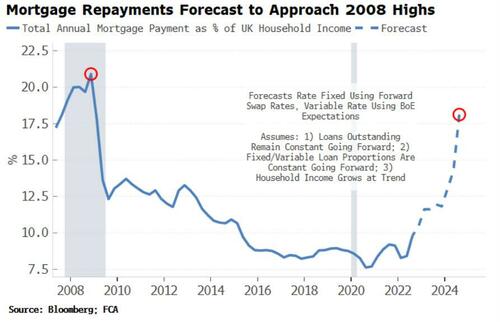
Back then, though, almost half of outstanding mortgages were on variable rates, compared to 15% now. This meant cutting rates had an immediate impact on reducing the repayment burden for households. Even if rates do not rise as high as currently projected, total repayments are likely to increase to levels problematic for an already-weakening economy.
Furthermore, when mortgage holders come to refinance, they may find they don’t meet affordability tests (rates have jumped to ~5%, but that means the bank will want to know if holders can meet repayments if rates went to e.g. 9%).
The risk of a wave of forced selling therefore suggests the government will have to intervene in the mortgage markets to ensure this does not happen (for instance by making affordability tests less onerous, or sanctioning the loan-maturity extension).
So optically, things look bad for UK housing, but it is often darkest before dawn. UK homebuilders – especially those more focused on London, which stands to benefit more from the fall in GBPUSD – are already depressed and underperforming, with much bad news priced in. This leaves them poised to surprise to the upside.
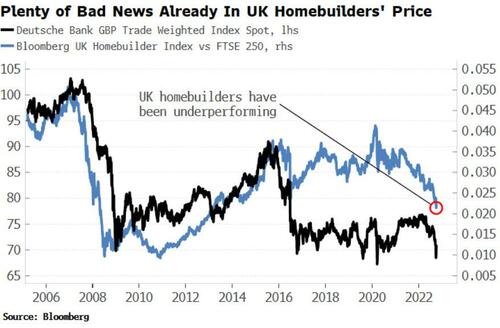
END
UK
Truss, an ultra conservative states that the British economy “needs a reset” as market conditions worsen
(zerohedge)
WEF Attendee Liz Truss Says British Economy “Needs A Reset” As Market Conditions Worsen
TUESDAY, OCT 04, 2022 – 04:15 AM
New British PM Elizabeth Truss has been touted by many including the mainstream media as a “far-right” politician with wide appeal to British conservatives. This is fast becoming a prerequisite ideological position to take in Europe as the open border/socialist policies of leftist political leaders are leaving the EU in economic ruins and as they approach an energy based catastrophe not seen since WWII.
Boris Johnson revealed himself to be nowhere near as conservative as many initially believed with his support of draconian covid mandates, stopping just short of enforcing vaccine passports but still requiring proof of vaccination for major venues. All this while holding lavish parties at his official residence during the lockdowns he helped enforce. Adding to the problem were Johnson’s tax increases in the midst of an inflationary crisis, which led to widespread public discontent and his eventual resignation.
When Truss became a potential candidate to replace Johnson some in the alternative media warned that her ongoing associations with the World Economic Forum and attendance at Davos events might be a red flag of another political pretender playing at being conservative while actually serving the interests of globalist institutions. This was, of course, called conspiracy theory by “fact checkers” in the MSM.
It is a concrete reality that the new PM has been a participant in the Davos meetings held by the World Economic Forum, a central hub of globalism that acts as a think tank and propaganda mill where new narratives are born. Specifically, the WEF is most known for its “Great Reset” mantra, which is part of founder Klaus Schwab’s “4th Industrial Revolution” concept. A key focus of the Great Reset is something called the “Shared Economy,” which is described as the complete erasure of private property and the implementation of communist-like governance over individual economic participation.
The Shared Economy is the source of the phrase “You will own nothing and be happy,” which actually comes from an article written by the WEF and published by Forbes Magazine titled ‘Welcome To 2030: I Own Nothing, Have No Privacy And Life Has Never Been Better.’
Far from being a “conspiracy theory,” the Great Reset is commonly presented by the WEF as the ultimate end game – An agenda, not just an idea. This has rightly caused concern among the public, because many WEF concepts that are presented at Davos end up being adopted by major governments and instituted into law. And, many Davos attendees tend to climb the political ladder rather quickly into positions of significant power.
Any legitimate conservative leader or candidate would therefore know about globalist terminology such are the term “Reset” and try to avoid using it at all costs.
No right wing leader would want to be associated with a globalist agenda that the majority of conservatives would rather go to war against.
It could be taken as a limited gaff or mistake, but Truss’ recent use of the term raises eyebrows considering her past affiliations with the WEF. She states that:
“We believe in making it easier for our wealth creators, doers and makers to get things done…
Britain’s economy needs a reset. We cannot continue on the current trajectory of managed decline. Instead, we must take a new direction. I will lead us down that path to a better future.”
This comment was made not long after Truss addressed the plunge of the Pound and the near bankruptcy of the UK pension system.
A key requirement built into any economic “reset” would be the collapse of the old model. Truss might simply be describing what is likely to happen rather than what she wants to happen, but she does present the concept of a reset as a solution, and not as a threat. Meaning, she should be watched carefully by conservatives.
END
UK
Another Bear Stearns? UK property funds stop redemptions to avoid asset firesales.
This is a major problem for England
(zerohedge)
Brit Stearns? UK Property Funds Gate Redemptions To Avoid Asset “Firesales”
TUESDAY, OCT 04, 2022 – 05:45 AM
The dominoes keep falling in Britain…
The last week – since The Bank of England bailed out its pension fund system – long-gilts and cable have rallied notably erasing much of the immediate pain felt in the margin-call/liquidity-fest chaos that forced the ‘old lady’ to step in.
However, as we noted over the weekend, the scars remain and funds are continuing to sell down assets, reducing exposures as the sudden collateral shortage has spooked many.
That selling has prompted spillover effects, specifically, as The FT reports, three of the UK’s largest property fund-managers have admitted they are unable to handle heavy demand from investors seeking to withdraw money.

Specifically, The FT notes that Schroders said it will make some redemptions originally due on Monday as late as July next year (the £2.7bn UK Real Estate fund), while Columbia Threadneedle said volatile market conditions had forced it to switch from daily to monthly payouts (the £2.3bn Pooled Property fund). At the same time, BlackRock also imposed new restrictions on withdrawals (the £3.5bn UK Property fund).
So that’s £8.5bn of assets now tied up.
The NAVs of these funds has yet to really implode (that’s the point) but that suggests the true ‘price’ is well below current levels (as liquidity risk premia strike).
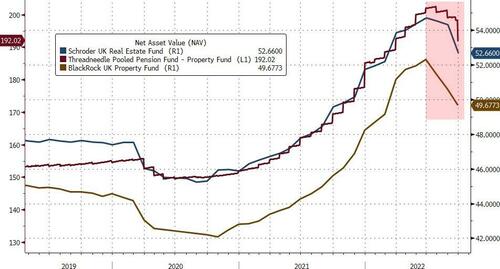
As The FT notes, UK pension funds have been cutting real estate holdings for several months as rising interest rates and slowing activity have weighed on the property market. Tumbling prices of UK government debt have also increased the proportion of funds’ portfolios in real estate, prompting some to reduce their exposure.
“It’s a fairly feeble market and you’ve thrown in some volatility. Shifting to monthly redemptions [from daily] reduces your need to firesale assets,” said one adviser to property funds.
Calum Mackenzie, investment partner with Aon, the pension consultants, added, “I think this is part of a longer-term trend by pension funds to [cut risk] by selling off the less liquid assets…This trend is now being exacerbated by last week’s short-term liquidity rush by pension funds.”
The last time we saw UK Property funds gating redemptions was immediately after the Brexit vote in July 2016 and during the early months of the COVID response.
Bear in mind that during the post-Brexit gates, the idea quickly struck a chord with the rest of the country’s “liquidity-challenged” asset managers, sparking vastly more capital restrictions.
end
UK
Kwarteng allowed the Bank of England to purchase 100 billion pounds of long end gilts to quell market mayhem. They were only scheduled to purchase 54 billion pounds of gilts
(zerohedge)
Kwarteng Greenlighted BOE £100 Billion Of Bond-Buying To Quell Market Mayhem
TUESDAY, OCT 04, 2022 – 07:43 AM
Last week, the Bank of England intervened to prevent a gilt market crash by pledging to purchase long-dated bonds after the fallout from Prime Minister Liz Truss’s proposed tax cuts. As collateral calls mounted, forcing pension funds to scramble for cash from investment managers to meet margin calls, Bloomberg revealed that the central bank’s bond-buying program is much larger than previously announced.
Bloomberg reported Finance Minister Kwasi Kwarteng signed off on a £100 billion ($113 billion) bond-buying program for the BoE to soothe strains in the gilt market which has so far halted a sell-off that threatened to spiral out of control, sparking a liquidity crisis among pensions funds. Initially, the BoE pledged £65 billion ($69 billion) to buy long-dated gilts.
Kwarteng approved the purchase of long-dated gilts up to £100 billion, according to a letter from Kwarteng to Mel Stride, a member of Parliament who leads the Treasury Committee.
“The Bank has requested an extension to the maximum size of the APF by £100 billion to £966 billion,” the Chancellor wrote in a letter dated published on Friday. “There was a special urgency to incur this liability.”
The higher amount wasn’t mentioned last week when the BoE restarted QE in a “temporary and targeted” bond buying operation – which will be as “temporary” as “temporary” inflation was – warning of a “material risk to UK financial stability” if the turmoil in the UK government bond market were to continue. It also raised the prospect of a “tightening of financing conditions and a reduction of the flow of credit to the real economy,” but it really meant that QT was over before it even started, and QE is back.
Bloomberg pointed out: “The usual exchange of letters between Kwarteng and BOE Governor Andrew Bailey to approve the increase has not yet been published. The BOE declined to comment on the reason for the size of the request.”
So far, since the bond-buying operation began last Wednesday, the BOE offered to purchase £5 billion per market day through Oct. 14, suggesting a total of £65 billion. The letter to Stride indicates central bankers can increase buying if warranted. However, buying has been on the low side, with only £3.7 billion out of a potential £20 billion across bond-buying operations.
After the UK 10Y gilt yields skyrocketed to 4% last week in an exponential move that can only be described as the bond market breaking, yields have faded Tuesday to around 3.83%.
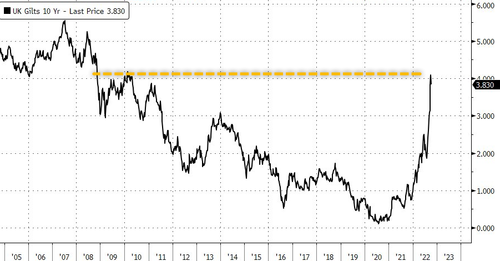
The pound appears to have stabilized after last week’s historic drop.
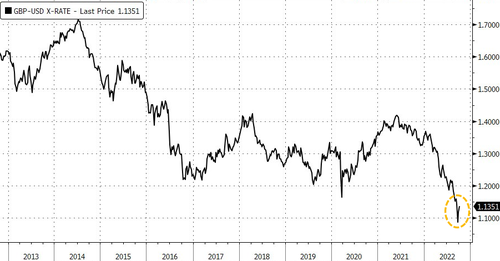
And UK equity markets attempt to rebound and regain lost support.
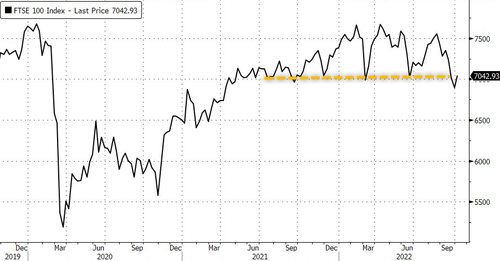
Question remains is £65 billion to £100 billion in BoE bond-buying enough to restore confidence?
END
UK/RUSSIA
UK Blocks Russia From Purchasing Array Of Services From British Firms | OilPrice.com
Inbox

| Robert Hryniak | 5:02 PM (5 minutes ago) |  | |
| to |
This is first of many more sanctions to come
5. RUSSIAN AND MIDDLE EASTERN AFFAIRS
RUSSIA//THE GLOBE
Russian nuclear submarine armed with ‘doomsday’ weapon disappears from Arctic harbor: report | Fox News
Inbox
| Robert Hryniak | 5:08 PM (0 minutes ago) | | |
| to |
Belgorod carries 6 Poseidon drones and those, having unlimited range and speeds in excess of 100 knots, are not interceptable by any existing ASW means and they carry not only nuclear ordnance, but also can carry a pile of conventional explosives in lieu of nukes, and that means that a single Belgorod can sink 6 US Navy nuclear aircraft carriersNow you know why people are stressed
6.GLOBAL ISSUES////COVID ISSUES/VACCINE ISSUES
VACCINE//COVID ISSUES//GLOBAL/
GLOBAL ISSUES
A must read: The holy trinity of finance!!
(Hubble/Fortune and Freedom.com)
Prepare For Capital Controls – The Third Horseman Of The Unholy Trinity’s Apocalypse
TUESDAY, OCT 04, 2022 – 03:30 AM
Authored by Nick Hubble via FortuneAndFreedom.com,
According to an economic theory called the Unholy Trinity, governments can only ever have two of the following three things: pegged exchange rates, independent monetary policy and free capital flows.
The reason why this is so is quite complicated. But the point is that they must choose two of the three, making the third a pressure valve for the problems created by their attempts to control the other two.
Of course, governments occasionally try to have all three. But it always ends in humiliation. It’s only a question of when.

In this context, humiliation may mean the breaking of the (managed) currency peg. Think of what happened to sterling on Black Wednesday, 16 September 1992, when the currency was forced out of the Exchange Rate Mechanism (ERM) and subsequently plunged.
Alternatively, humiliation may mean the loss of control of monetary policy, and rampant inflation. There are plenty of contemporary examples.
Finally, humiliation may involve massive capital flight from the country in question, which results in the imposition of capital controls. Apartheid-era South Africa provides a good example.
Just look at the news today for the latest example of the Unholy Trinity being on the move…
In Japan, the authorities re pegging interest rates low to help the economy and the government deal with too much debt. This is a major reason why the yen has been hammered in foreign exchange markets this year.
In the UK, there are fears of a currency crisis because interest rates can’t go higher without triggering a debt crisis.
In Sweden, the central bank was forced to hike interest rates a full percent to try and stem the tide in the falling currency.
The pressure valves are whistling. Currencies and monetary policy are colliding with each other. And policy makers are being humiliated.
But what about the third part of the Unholy Trinity? For now, capital flows are still free.
In my view, at some point, central bankers and governments are going to get sick of being humiliated by financial markets. They’ll decide that significant currency intervention is needed to stabilise exchange rates. And they won’t be willing to give up on controlling monetary policy.
But that means they’ll be forced to unleash the third horseman of the Unholy Trinity: capital controls.
At this point, I had better explain a bit more about the Unholy Trinity…
Do you recall restrictions on how many pounds you could take out of the UK? That was a form of capital control. It was a limit on money leaving or entering a country – and a fairly recent reminder that capital controls do not necessarily apply just to emerging markets like South Africa.
As noted above, the fall in the pound when the ERM collapsed was a failure of exchange rate policy.
Do you recall the latest 50 basis point rate hike by the Bank of England? That was interest rates being fiddled with.
Those are the three policy levers. And the past has given us several combinations of the so-called Unholy Trinity being proven.
For example, for a long time, currencies were pegged to each other. This meant countries could either have free flowing capital, or set their own interest rates, but not both. Not for long, anyway.
That’s also why interest rates had to be hiked to extraordinary levels as the Bank of England tried to keep sterling in the ERM.
And why we had capital controls in this country until Margaret Thatcher abolished them and an era of floating currencies began.
That’s the setup of the Unholy Trinity we’re most familiar with today. Floating currencies, central banks controlling interest rates and free capital flows.
The point of the Unholy Trinity is that you always have one pressure valve which starts whistling when things are going wrong.
Today, capital can flow freely and interest rates are being fixed by central banks. The pressure valve, then, is the exchange rate.
That’s why, over the past few months, a growing list of currencies have been tumbling. The pound is one of them, but it is not the worst.
An attempt to stem this embarrassment triggers the need to shift some other part of the Unholy Trinity too. That’s what’s happening in Sweden, where the central bank is hiking interest rates wildly. The idea being that higher interest rates attract investment, which pushes up a currency.
But this is expensive, literally. It imposes higher interest rates on debtors, including the government.
In the UK, there are calls on the Bank of England to do the same. So far, it has resisted the pressure.
The alternative to hiking rates is to introduce capital controls. The aim is to limit the outflow of the currency and thereby its devaluation.
Capital controls may seem stark. But for how long will governments tolerate plunging currencies and/or rapidly tightening monetary policy?
Only ending free capital flows allows them to control both monetary policy and the exchange rate…
The economic historian and market strategist Russell Napier, who anticipated our inflationary spurt after having also anticipated the prolonged deflation that came before it, has been warning about this.
It’s part of a phase he calls “financial repression,” which refers to the need to pay off debt by keeping inflation higher than interest rates. This devalues debt by making the money it is denominated in worth less over time. Those who invest in government bonds, which are loans to the government, are the ones who get dispossessed.
Normally, interest rates would just go up to compensate the lenders. But financial repression prevents this.
But financial repression places pressure on the Unholy Trinity. If interest rates are being controlled and the currency is not allowed to fall, then capital controls must be imposed. That’s why we needed them during the previous period of financial repression, when World War II debts were repaid.
All this is mighty confusing, I know. But the point is that we may soon see the sorts of financial restrictions we’d associate with Argentina or the 1960s UK. There is a real possibility of tight limits on what you can do with your money.
So, what is the solution?
Historically speaking, according to Napier, “Gold is the standard asset for financial repression.”
I will have more to say on gold tomorrow. But, if you can’t wait, take a look at this now
END
A good one:
Malinen expects a banking crisis shortly due to the rise of interest rates and the lack of collateral
(Malinen/EpochTimes)
A Banking Crisis Looms
TUESDAY, OCT 04, 2022 – 05:00 AM
Authored by Tuomas Malinen via The Epoch Times,
My columns have turned rather apocalyptic of late, but for a valid reason. Just this week, we got confirmation that our financial system is, again, on the brink of collapse, when the Bank of England (BOE) was forced to enact, de facto, a bailout of the pension funds of the United Kingdom.
On Sept. 28, around noon, the Bank of England stepped (back) into the gilt markets and started buying government bonds with longer maturities to stop the collapse in their value, which could have caused the financial system to become unhinged. Pension funds were faced with major margin calls, which threatened to cause a rapidly cascading run on their liabilities, as trust in their liquidity and solvency would have become questioned by a widening circle of investors and customers.
Effectively, the BOE stepped in to limit the vicious circle of margin calls faced by pension funds because of the crashing values of the gilts.
Without the BOE intervention, mass insolvencies of pension funds, with about $3 trillion worth of assets—and thus most likely other financial institutions—could have commenced on that afternoon. It’s obvious that if one of the major financial hubs of the world, the City of London, would face a financial panic, it would spread to the rest of the world in an instant.
It looks as though the global financial system was pulled from the brink of collapse, once again, by central bankers. However, this was only a temporary fix.
It’s now clear that an outright financial collapse threatens all Western economies, because if pension funds, often considered very dull investors because of their risk-averse investing profile, face a threat to their insolvency, it can happen to any other financial institution. I consider that the banking sector will be the next in line.
Banking is a business of trust. If the trust in a bank or in the unlimited support of authorities for the bank, disappears, a bank run commences.
One of the most prominent scholars of financial crises, Gary B. Gorton, defines a financial crisis in his book “Misunderstanding Financial Crises: Why We Don’t See Them Coming” as “an event where holders of short-term debt issued by financial intermediaries withdraw en masse or refuse to renew their loans.”
In common language, Gorton says that during financial crises, a large number of holders of banks’ financial liabilities, such as deposits, want to cash out. Hence the name: a bank run.
For example, during the Panic of 1819 in the United States, people queued outside banks in long lines to change their new financial innovations, bank notes, to metallic currency. The Panic of 1819 helped to create the first economic depression in the United States.
However, a bank run may not be visible, in the sense that other banks and financial institutions “run” on the liabilities of a bank. For example, during the crisis of 2007–2008, there was a run on sale and repurchase agreements (repo) market, market of commercial paper, and on prime broker balances. Most people didn’t notice these first stages of the panic, because financial firms ran on liabilities and assets of other financial firms.
The main point is that, as liabilities are withdrawn in whatever form, en masse, the bank eventually runs out of assets to pledge/sell to fulfill the withdrawal requests, and the bank fails.
Going forward, the biggest risk of a systemic bank run most likely lays in Europe.
European companies and households have been and continue to be decimated by ravaging inflation, fast-rising interest rates, and spiking energy prices. They are being hit on all sides, and this will, most likely, cause many of them to fail financially.
Banks are also currently being hit by heavy declines in the value of government bonds, which they use as collateral. These may easily lead to cascading losses on banks, possibly with a never-before-seen speed, size, and width.
I find it hard to imagine how these developments wouldn’t lead to a banking crisis, without massive intervention by governments and central banks, that is. And like I’ve been detailing, a banking crisis that begins in Europe, won’t stay there.
How do you prepare for it then?
A characteristic feature of a banking crisis is that many banks, possibly all, will close their doors to customers, and issue withdrawal limits. Another characteristic is disruptions in the financial system, most notably on card payments, as a result of which the retail payments system may seize up altogether.
While I was in Greece, in the summer of 2015 with my ex-wife, the whole economy turned into a cash-based one basically over the weekend. The 2015 Greek banking crisis was caused by the European Central Bank, when it, totally irresponsibly and most likely driven by political motives, shut Greek banks from its emergency liquidity assistance.
Cash withdrawal limits were set, credit card machines “disappeared” or “broke down” in restaurants, shops, and more, and finally, cash stopped coming out from the ATMs. Capital controls were enacted, and the ability of ordinary Greeks to transfer money abroad became seriously hindered. We naturally had sufficient cash, which often happens, when one travels with a crisis researcher to a country threatened by a crisis.
The main point is (was), that during banking crises, you won’t have full access to your deposits in the bank. As a result, electronic payments such as bank cards may become useless. In the extreme case, your deposits could be used to recapitalize ailing banks in a process called “bail-in.”
Such laws were put in place after the 2008 crisis, and they were enacted for the first time to resolve the banking crisis in Cyprus in 2013.
Technically, every sum you have in the bank above the deposit insurance threshold, a limit which also may not be “carved in stone,” is threatened by the bail-ins in a banking crisis.
We warned already in March 2017 that the global financial system, which broke out during the 2008 financial crisis, has never really been healed. We noted that it and the global economy were kept standing merely by continuous central bank and government interventions and nearly unlimited provisions of credit. On Sept. 28, we got a final confirmation from the BOE that this truly is the case.
We are in deep, deep trouble.
END
Vaccine//Covid issues:
PAUL ALEXANDER…
Shut CDC down, complete, it is a waste of a public health agency, fire them all, and fire that idiot Dr. Leana Wen of CNN, what a dolt! Now CDC suspends country-specific Covid-19 travel advisories
We told the idiots at CDC over a year now that it is nonsensical and a waste of time, but CDC is typically one year behind the science so we rename CDC, CDC365; what took you so long CDC?
| Dr. Paul AlexanderOct 4 |

SOURCE:
https://edition.cnn.com/travel/article/cdc-ends-covid-travel-risk-notices/index.html
The US Centers for Disease Control and Prevention will no longer maintain a country-by-country list of travel advisories related to Covid-19, the agency said Monday.
“As fewer countries are testing or reporting Covid-19 cases, CDC’s ability to accurately assess the Covid-19 THN [Travel Health Notice] levels for most destinations that American travelers visit is limited,” an agency spokesperson said in a statement to CNN Travel.
end
Victor Davis Hanson..
a good read!
Victor Davis Hanson: “The Thinnest Veneer Of Civilization Remains”; WHAT LIES BENEATH, is very shocking, terrifying, scaring us as we peel back the layers, we now stare into the abyss we created
Instead, we arrogantly are reverting to a new feudalism as the wealthy elite—terrified of what they have wrought—selfishly retreat to their private keeps.
| Dr. Paul AlexanderOct 4 |
Hanson at his best:
‘To be able to eat, to move about, to have shelter, to be free from state or tribal coercion, to be secure abroad, and safe at home—only that allows cultures to be freed from the daily drudgery of mere survival.
Civilization alone permits humans to pursue sophisticated scientific research, the arts, and the finer aspects of culture.
So, the great achievement of Western civilization—consensual government, individual freedom, rationalism in partnership with religious belief, free market economics, and constant self-critique and audit—was to liberate people from daily worry over state violence, random crime, famine, and an often-unforgiving nature.
But so often the resulting leisure and affluence instead deluded arrogant Western societies into thinking that modern man no longer needed to worry about the fruits of civilization he took to be his elemental birthright.
As a result, the once prosperous Greek city-state, Roman Empire, Renaissance republics, and European democracies of the 1930s imploded—as civilization went headlong in reverse.
We in the modern Western world are now facing just such a crisis.
We talk grandly about the globalized Great Reset. We blindly accept the faddish New Green Deal. We virtue signal about defunding the police. We merely shrug at open borders. And we brag about banning fertilizers and pesticides, outlawing the internal combustion engine, and discounting Armageddon in the nuclear age—as if on autopilot we have already reached utopia.
But meanwhile Westerners are systematically destroying the very elements of our civilization that permitted such fantasies in the first place.
Take fuel. Europeans arrogantly lectured the world that they no longer need traditional fuels. So, they shut down nuclear power plants. They stopped drilling for oil and gas. And they banned coal.
What followed was a dystopian nightmare. Europeans will burn dirty wood this winter as their civilization reverts from postmodern abundance to premodern survival.
The Biden administration ossified oil fields. It canceled new federal oil and gas leases. It stopped pipeline construction and hectored investors to shun fossil fuels.
When scarcity naturally followed, fuel prices soared.
The middle class has now mortgaged its upward mobility to ensure that they might afford gasoline, heating oil, and skyrocketing electricity.
The duty of the Pentagon is to keep America safe by deterring enemies, reassuring allies, and winning over neutrals.
It is not to hector soldiers based on their race. It is not to indoctrinate recruits in the woke agenda. It is not to become a partisan political force.
The result of those suicidal Pentagon detours is the fiasco in Afghanistan, the aggression of Vladimir Putin’s Russia, the new bellicosity of China, and the loud threats of rogue regimes like Iran.
At home, the Biden administration inexplicably destroyed the southern border, as if civilized nations of the past never needed such boundaries.
Utter chaos followed. Three million migrants have poured into the United States. While some cross over clandestinely, others clear border stations without an adequate audit, and largely without skills, high-school diplomas, or capital.
The streets of our cities are anarchical—and by intent.
Defunding the police, emptying the jails, and destroying the criminal justice system unleashed a wave of criminals. It is now open season on the weak and innocent.
America is racing backwards into the 19th-century Wild West. Predators maim, kill, and rob with impunity. Felons correctly conclude that bankrupt postmodern “critical legal theory” will ensure them exemption from punishment.
Few Americans know anything about agriculture, except to expect limitless supplies of inexpensive, safe, and nutritious food at their beck and call.
But that entitlement for 330 million hungry mouths requires massive water projects, and new dams and reservoirs. Farmers rely on steady supplies of fertilizer, fuels, and chemicals. Take away that support—as green nihilists are attempting—and millions will soon go hungry, as they have since the dawn of civilization.
Perhaps nearly a million homeless now live on the streets of America. Our major cities have turned medieval with their open sewers, garbage-strewn sidewalks, and violent vagrants.
So, we are in a great experiment in which regressive progressivism discounts all the institutions, and the methodologies of the past that have guaranteed a safe, affluent, well-fed, and sheltered America.
Instead, we arrogantly are reverting to a new feudalism as the wealthy elite—terrified of what they have wrought—selfishly retreat to their private keeps.
But the rest who suffer the consequences of elite flirtations with nihilism cannot even afford food, shelter, and fuel. And they now feel unsafe, both as individuals and as Americans.
As we suffer self-inflicted mass looting, random street violence, hyperinflation, a nonexistent border, unaffordable fuel, and a collapsing military, Americans will come to appreciate just how thin is the veneer of their civilization.
When stripped away, we are relearning that what lies just beneath is utterly terrifying.
SOURCE:
https://www.zerohedge.com/political/victor-davis-hanson-thinnest-veneer-civilization-remains
| Open in browserWe WARNED you over & over and we were always right; Bobby Kennedy jr., McCullough, Malone, Risch, Tenenbaum, Cole, Wolf, I, etc.,we warned you; see short list of some of the things we warned you about Dr. Paul Alexander Oct 3 ▷ LISTENSAVE We warned that the lockdowns, school closures, business closures, mask mandates, vaccine mandates would kill more than it helped and would never work. We were right.We warned the COVID gene injections, so called ‘vaccines’, could not stop infection, replication, or transmission. We were right. We warned that denial of early treatment that was safe, cheap, available, would cause deaths to the vulnerable. We were right.We warned that the vaccines were causing blood clots, micro thrombi with catastrophic implications. We were right.We warned that the vaccines were causing bleeding. We were right.We warned that the vaccines were causing myocarditis and pericarditis. We were right.We warned you that the content of the COVID gene injection does not dissipate quickly, and that the mRNA and the spike and sub-unit components persist and maybe life-long. We were right.We warned you that if you locked children down and closed schools, you would dampen and impact their developing immune systems and illnesses like hepatitis and normally benign or rare illnesses in children will emerge. We were right.We warned the vaccines were linked to HIV e.g. gp120. We were right.We warned that the spike protein is an endothelial pathogen that ravages the vascular walls causing clots and bleeding (vaccine induced thrombotic thrombocytopenia). We were right.We warned about Gain of Function and the furin cleavage site insertion. We were right.We warned that Fauci and Francis Collins and Baric and Daszak etc. were engaging in dangerous Gain of Function research that could be deadly to humanity. We were right.We warned that the vaccines were causing fertility changes and miscarriages. We were right.We warned that the vaccine was deranging immune systems. We were right.We warned the vaccines could be passed in breast milk. We were right.We warned that the vaccine content e.g. lipid nano particle, mRNA etc. leaves the injection site and goes all over the body with dangerous implications. We were right.These are just a short list of some of the things we warned you about. |
VACCINE IMPACT/
Cases of Alopecia (Hair Loss) Explode Following COVID-19 Vaccines
October 3, 2022 12:59 pm

As more cases of injuries following COVID-19 vaccination continue to be published in the medical journals, it becomes more and more evident that these COVID-19 vaccines have been the most damaging and lethal vaccines to ever be mass-injected into the population. Case reports of Alopecia, hair loss which sometimes include the loss of all body hair, even the eyebrows, have now been reported and published in the journal “Clinical Case Reports.” While the two cases featured in the study were following Oxford/AstraZeneca COVID-19 vaccines, the study also referenced several other reported cases of Alopecia following the Pfizer and Moderna mRNA vaccines. I next went to the VAERS (Vaccine Adverse Events Reporting System) database maintained by the U.S. FDA and CDC, and found that there were 9 variations of Alopecia listed that could be searched for as symptoms following vaccines, so I chose all of them and searched for cases following COVID-19 vaccines for the past twenty two months. The search returned an astounding result of 3,495 cases, including 2 deaths, 392 permanent disabilities, 219 ER visits, 250 hospitalizations, and 41 life threatening events. Next, I performed the same search for cases of Alopecia as a vaccine adverse event following all approved FDA vaccines in the 30 years before the COVID shots were introduced, and the search returned a value of 1,927 cases. That’s an average of just over 5 cases per month, as opposed to an average of over 145 cases per month from the COVID shots, which is a 2,621 percent increase.
“We Own The Science”: UN Official Admits That They Partner With Google To Control Search Results
October 3, 2022 4:15 pm

The UN’s Under-Secretary-General for Global Communications, Melissa Fleming, recently admitted in a discussion with the World Economic Forum that the globalist institution has partnered with Big Tech platforms like Google in order to control search results on subjects like climate change, making the establishment narrative the predominant narrative while suppressing information and data that runs contrary to the UN’s climate agenda. Fleming went on to state that the UN is in control of the science: “We own the science, and we think that the world should know it, and the platforms themselves also do.”
end
MICHAEL EVERY//RABOBANK
Michael Every on the major topics of the day
The UN Demands All Central Banks Stop Rate Hikes And Switch To Price Controls Instead
TUESDAY, OCT 04, 2022 – 09:12 AM
By Michael Every of Rabobank
Blinkers and You’ll Miss It
New week. New month. New quarter. New brains. New trades. New hope. Or “New balls, please” as they say at Wimbledon.
I don’t have the physical energy to play tennis with markets on an every-other-day basis, sending a detailed volley back at those who think the Fed is about to pivot because of one bad datapoint. That doesn’t mean the UK government can’t though – they just did exactly that on tax cuts.
All I can say is re-read what I have been saying all year about this being about more than just data; and I am told every goldbug, cryptonite, bond-bubble boy, equity enthusiast, derivative devil, property shill, and commodity compere is sitting on the side-lines –bleeding out– and is waiting for the Fed to pivot in order to go all in on the next inflationary everything asset bubble.
What does interest me enough to cover today is:
#1. UNCTAD, the UN agency dealing with global trade, demanding *all* central banks stop rate hikes and instead switch to price controls. They argue, “policymakers appear to be hoping that a short sharp monetary shock – along the lines, if not of the same magnitude, as that pursued… under Paul Volker – will be sufficient to anchor inflationary expectations without triggering recession. Sifting through the economic entrails of a bygone era is unlikely, however, to provide the forward guidance needed for a softer landing given the deep structural and behavioural changes that have taken place in many economies, particularly those related to financialization, market concentration and labour’s bargaining power.”
I am not playing tennis with them either, but note the radicalism. Indeed, their latest report also argues, “supply-chain disruptions and labour shortages require appropriate industrial policies to increase the supply of key items in the medium term; this must be accompanied by sustained global policy coordination and (liquidity) support to help countries fund and manage these changes.” So, industrial policy. And Fed swap-lines. Expect both ahead.
They also ask why we haven’t regulated shadow-banking, and why we allow speculators in global commodity markets who have nothing to do with underlying trade. On the latter they note, “Market surveillance authorities could be mandated to intervene directly in exchange trading on an occasional basis by buying or selling derivatives contracts with a view to averting price collapses or deflating price bubbles.” I expect nothing but that ahead – and geopolitically driven to boot.
#2. A New York Times op-ed (‘A US ‘Ships Act’ Would Break China’s Control of the Seas’) repeating last month’s VOA ‘As China Expands Its Fleets, US Analysts Call for Catch-up Efforts’ that as China builds more naval and merchant ships, US maritime experts are calling for a “Ships Act” comparable to the recently enacted “Chips Act”, recalling the effort undertaken in WW2 when domestic shipyards launched more than 5,000 vessels. One expert states: “The Chinese industrial base is a behemoth, and the US shipbuilding industrial base is freakishly undersized as a function of the size of America’s economy and its influence in the world.”
This was a key argument in 2021’s ‘In Deep Ship’ on maritime logistics: the US would “go back to the sea” to underpin industry and its Mahan geostrategy. Such US actions would be inflationary before they were deflationary; and taken as incendiary.
#3. An article in the Financial Times (‘Investors are learning to love industry again’) noting in deglobalising world there is a structural boom in parts of US manufacturing being led by federal efforts to domesticise supply chains via legislation; a shift from just-in-time to just-in-case shorter supply chains; decoupling from China; productivity-enhancing technology; and an overlooked US equivalent of Germany’s ‘mittlestand’ of mid-sized family-owned companies. Ironically, Germany is about to see a cascading failure of its industrial base due to the cataclysmic failure of its energy policies, and the US having abundant cheap(er) energy is another structural argument for an industrial revival there.
Can you imagine a world where savers get a 4-5% return and banks lend to firms making physical goods, generating decent returns for all? Is this science-fiction possible again? Not if we get a Fed pivot, of course. Then we fire up the everything bubble again instead.
For those who still don’t want to see any of the above, I offer a gift far more useful than any intellectual return volley. Indeed, to show that it’s not only central banks who provide free things, below please find a large amount of FREE BLANK SPACE on which you can draw your own ‘Cut Out ‘n’ Keep!’ intellectual blinkers: just print out the page, draw ones that fit, cut them out, and place them around your head in order to keep out all the annoying news and data that doesn’t fit your world view and trading book, allowing you to happily keep punting as if: (i) that Fed pivot is coming; and (ii) said pivot will take us back to good ‘ol 2019, not bad ‘ol 1971 or 1913.
DRAW
YOUR
INTELLECTUAL
BLINKERS
HERE!
7. OIL//OIL ISSUES//NATURAL GAS//ELECTRICITY ISSUES/USA//GLOBE
Another high official states that it was the USA the likely suspect attacking Nordstream one and two and this was done to isolate Germany
(Watson SummitNews)
Former Pentagon Advisor Says US Likely Attacked Nord Stream Pipelines To Isolate Germany
TUESDAY, OCT 04, 2022 – 05:11 AM
Authored by Paul Joseph Watson via Summit News,
A former Pentagon advisor says the most likely culprits behind the Nord Stream pipeline blasts are the United States and Britain, and that the attack was carried out to prevent Germany from bailing on the war in Ukraine.

Retired US Army colonel Douglas Macgregor made the comments during an appearance on the Judging Freedom podcast.
Macgregor said a process of elimination rules out Germany, because they are dependent on Nord Stream for their energy security, while it also served no benefit for Russia to have sabotaged its own infrastructure.
“Would the Russians destroy their own pipeline? 40 percent of Russian gross national product or gross domestic product consists of foreign currency that comes into the country to purchase natural gas, oil, coal and so forth. So the Russians did not do this. The notion that they did I think is absurd,” Macgregor said.
Referring to Polish MEP Radoslaw Sikorski’s infamous deleted tweet in which he wrote, “Thank you, USA,” Macgregor noted, “Who else might be involved? Well the Poles apparently seem to be very enthusiastic about it.”
However, citing reports that more than 500 kg of TNT had been detected in both explosions, the former Pentagon advisor suggested only the United States and British Royal Navy had the capability to pull off the attack.
“Then you have to look at who are the state actors that have the capability to do this. And that means the Royal Navy, the United States Navy Special Operations,” said Macgregor.
“I think that’s pretty clear. We know that thousands of pounds of TNT were used because these pipelines are enormously robust. You have several inches of concrete around various metal alloys to move the natural gas. So it’s not something that you could simply drop a grenade down at the end of a fish line and disrupt. That means it takes a certain amount of sophistication,” he added.
Macgregor suggested that the motive behind the attacks was to prevent Germany from bailing on the Ukraine war after Berlin began “to give the impression that they were no longer going to go along with this proxy war in Ukraine.”
“I’m hesitant to say ‘we know it must have been Washington’. I can’t say that because we just don’t know. But it’s very clear that we have foreclosed Berlin’s options. Berlin was drifting away from this alliance. [Chancellor] Olaf Scholz said ‘I’m not sending any more equipment, I won’t send any tanks’. Now he’s in a bind because the United States has simply robbed him of the option of bailing out. Who’s going to supply him gas and oil and coal and everything else if he bails out? Where does he turn now? And remember, the Germans, who are facing terrible consequences at home refuse to restart nuclear power plants,” the former official said.
As we previously reported, the CIA warned Germany of potential attacks on gas pipelines in the Baltic Sea weeks before Nord Stream 1 and 2 were targeted.
Both Joe Biden and Undersecretary of State for Political Affairs Victoria Nuland asserted that Nord Stream 2 wouldn’t be allowed to operate if Russia attacked Ukraine.
END
LNG charter ship rates explode. Another huge burden onto the shoulders of Europe
(zerohedge)
LNG Ship Charter Rates Explode As Europe Rejiggers Energy Supply Chain
TUESDAY, OCT 04, 2022 – 06:55 AM
Spot charter rates for the global liquefied natural gas (LNG) carriers are soaring due to a shortage of vessels.
LNG shipping rates have been dramatically impacted by energy supply chain disruption due to the Russian invasion of Ukraine. The LNG shipping sector is booming even more as rates near record highs following the bombing of the Nord Stream pipeline system last week.
Bloomberg said Europe is “to replace Russian pipeline flows with liquefied natural gas from suppliers including in the US and Nigeria.” Rejiggering supply chains for the energy-stricken continent means increasing demand for LNG carriers to source gas further away.
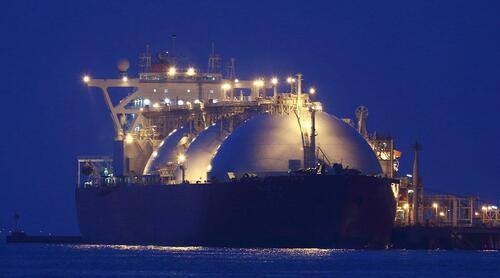
Shell booked an LNG carrier for $400k per day, likely the most expensive ever for the Atlantic basin. The Indian firm GAIL also secured an LNG shipment for about $360k per day. Bloomberg explains more:
- Shell Plc booked the Yiannis to load a US cargo at the end of October for delivery to Europe at a rate equivalent to $400,000 per day on a round-trip basis, said traders. The deal is likely the most expensive ever for the Atlantic basin, according to traders and brokers.
- GAIL India Ltd. also booked the LNG Schneeweisschen to load a cargo in early November from the US at about $360,000 per day, said traders. The company, which recently sold an LNG shipment from its Cove Point export facility, chartered the vessel from a European utility company, they said.
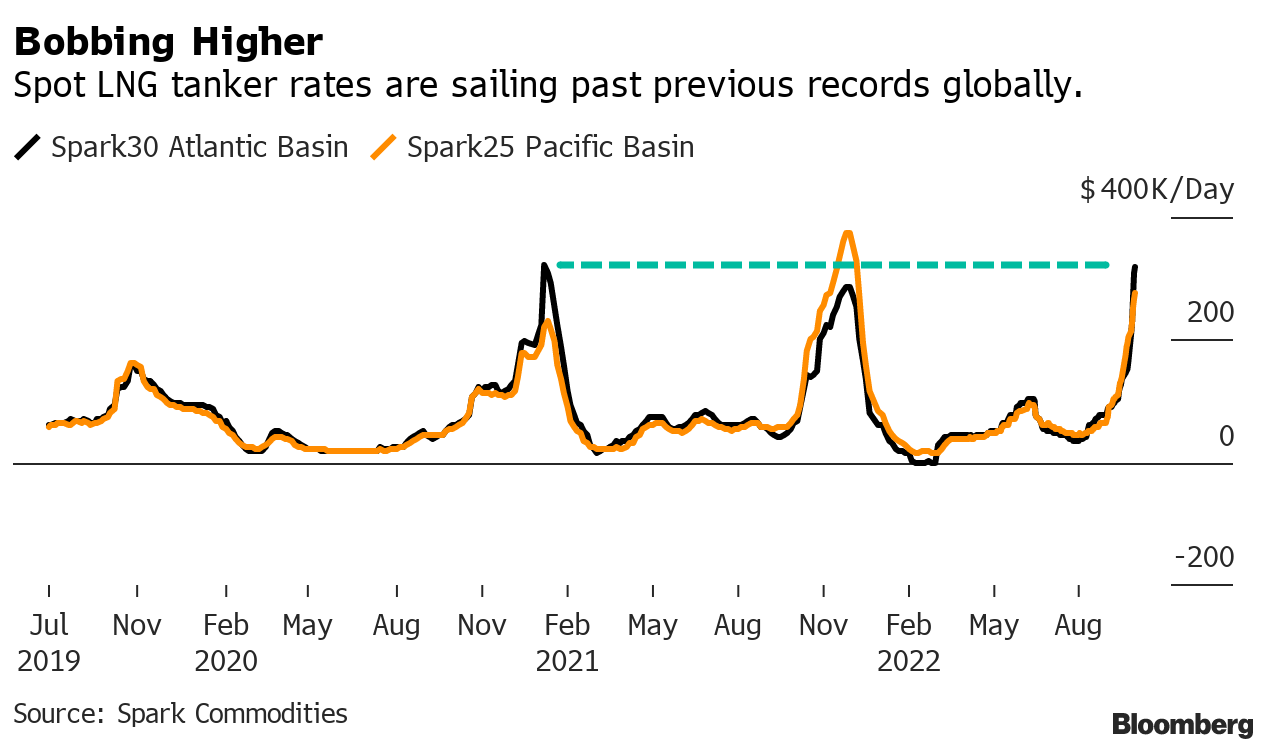
Last month, we pointed out that Western Sanctions Against Russia Spark Mayhem In Shipping As New Threat Emerges because Europe’s scramble for LNG carriers to source LNG from abroad was soaking up all the supply of vessels. There are mounting concerns that the limited availability of LNG vessels could cause cargo disruptions.
end
Oil Spikes After OPEC+ Hints At 2 Million B/D Production Cut
TUESDAY, OCT 04, 2022 – 11:00 AM
Oil prices are extending their recent gains following headlines from Vienna that OPEC+ is considering a reduction in its production limit of as much as 2 million barrels a day.
However, the impact on actual production could be smaller since several members are already pumping far below their officials quotas, meaning they could automatically be in compliance with their new limit without having to curb production.
Nevertheless, it could still result in the cartel’s largest reduction since the deep cuts agreed at the outset of the Covid-19 pandemic in 2020.
However, WTI surged up to $87 on the news…
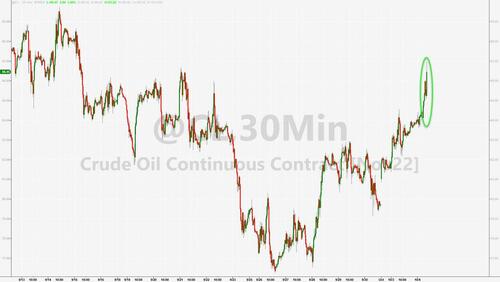
The timing could not be more interesting as it comes just weeks after Biden begged the Saudis to hike production and just weeks before the Midterms… with gas prices at the pump beginning to rise again (to record highs in California)…
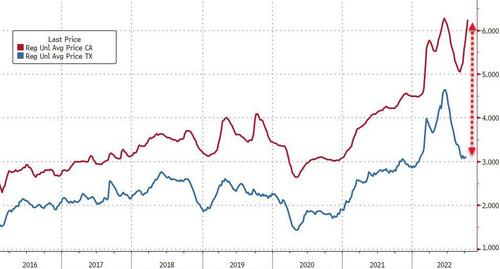
Finally, Biden’s political emptying of the SPR has left it with a record low of just 22 days supply…
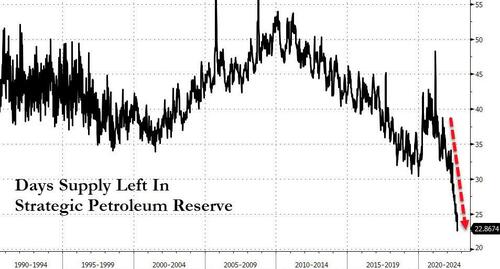
Source: Bloomberg
Let’s hope we don’t have a real emergency – other than collapsing poll numbers we mean of course.
By the way, whatever happened to that Ridiculous Buyers’ Cartel idea?
end
10 Ways Russia Can Respond To The Pipeline Destruction
Inbox
| Robert Hryniak | 4:59 PM (7 minutes ago) | | |
| to |
People do not understand how badly this can go
http://allnewspipeline.com/10_Ways_Russia_Can_Respond.php
8 EMERGING MARKET& AUSTRALIA ISSUES & OTHER EMERGING NATIONS
Bangladesh
Power grid collapse in Bangladesh. It is a large exporter of garments to China
(zerohedge)
Power Grid Collapse In Bangladesh Leaves 140 Million People In Dark
TUESDAY, OCT 04, 2022 – 09:27 AM
Bangladesh’s national power grid collapsed Tuesday afternoon, plunging 140 million people, or nearly everyone in the country, into darkness, AFP reported.
Reuters spoke with officials at the state-run Bangladesh Power Development Board, who said power transmission failed in the eastern part of the country and then tripped power plants nationwide, cutting off power to the capital, Dhaka, and other major metro areas.
Bangladesh Power Development Board official Shameem Hasan said engineers are investigating ‘glitches’ in the power system. He said restoring the system could take several hours once issues are resolved.
“We are trying to restore the system,” Hasan said.
Bangladesh is one of the world’s largest garment exporters after China. The country is also an emerging outsourcing destination for business operations, such as call centers…
*Developing…
end
AUSTRALIA
“Biggest Dovish Shock” From Australia Since 2008 “Supercharges” Bets That Global Tightening Is Ending
TUESDAY, OCT 04, 2022 – 11:20 AM
One month ago we said that there is a reason why despite fundamentals, yields and newsflow screaming for lower prices, US equities simply refused to sell off: it was because investors know that the moment the Fed pivots dovish and capitulates on its tightening cycle (a move which could take place at any moment since it is as much political as it is financial), risk will explode limit up. And so, even though the US is sliding into a recession – or rather because the US is sliding into a recession – stocks remain sticky to the upside, and the VIX barely rises to crisis levels, waiting for the inevitable pivot.
Also one month ago, we got an advance look of what said pivot would look like courtesy of Australia, where bond yields tumbled and stocks soared after the country’s top central banker opened the door on Thursday to slowing the bank’s policy tightening after five rate increases in as many months, sparking a rally in bonds as markets scaled back bets on further aggressive moves.
In a speech on the policy outlook, Reserve Bank of Australia Governor Philip Lowe said further rate increases would be needed to contain inflation but the RBA Board was not on a pre-set path and was aware rates had already risen sharply: “We are conscious that there are lags in the operation of monetary policy and that interest rates have increased very quickly,” said Lowe adding that he recognizes that “all else equal, the case for a slower pace of increase in interest rates becomes stronger as the level of the cash rate rises.”
Investors quickly read between the lines and sent Australian bonds yields tumbling.
But it was nothing compared to what happened this morning, when yields on rate-sensitive three-year Australian government bonds plunged by the most since 2008 after the central bank raised interest-rates by a less-than-expected 25 basis points, in what Bloomberg said was “the biggest dovish shock since 2008.”
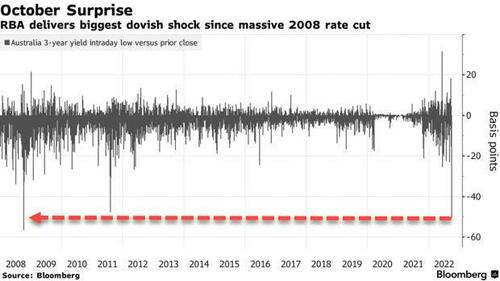
Adding to today’s surprise is that the RBA ended a streak of outsized increases, a result predicted by only a quarter of economists surveyed. And as we noted earlier, the shockwave from the unexpected move – not quite a pivot yet, but this close – quickly spread around the world, giving a fresh boost to the rally in Treasuries, pushing New Zealand yields lower and helping turbocharge a rally in Japanese equities.
As Bloomberg also said, the Reserve Bank of Australia’s dovish surprise would be interpreted by some as a “supercharged” sign that the end is in sight to the wave of aggressive monetary tightening that has steamrolled global bonds and equities this year. Australia – whose economy is extremely reliant on a housing market which has gotten slammed due to soaring mortgage rates – has acted as a lead indicator for at least the bond market since late 2021, when the RBA’s sudden abandonment of curve control sent local yields spiking.
Still, any global read-across is complicated by the fact that Australian policymakers are mindful of the indebtedness of their household sector and the prevalence of variable mortgage rates which means hikes are particularly impactful.
“I think we are getting to the point where markets are pricing in peak rates,” said Ned Bell, chief investment officer at Bell Asset Management, a global equities fund manager based in Melbourne. “You will start to see the trajectory of inflation moderate and that should be a good sign that you’ll see similar moves from what we’ve seen from the RBA today. The magnitude of rate hikes will slow.”
The RBA shock came one day after the US manufacturing ISM index gave the latest indication the US economy is faltering and before today’s dismal JOLTS reports confirmed the recession is finally spreading to the labor market.
Meanwhile, as Bloomberg notes, a growing cohort of investors are also scooping up bonds, with the likes of Citigroup’s Steven Wieting and JPMorgan drawn by attractive valuations and growing bets for an economic downturn. Two-year Treasury yields fell about eight basis points to 4.08% on Tuesday, adding to the 17 basis point decline on the prior day; it briefly dropped below 4% despite expectations for aggressive Fed hikes at least into Q1 2023. The three-year Australian bond yield plunged 32 basis points, while the nation’s benchmark stock index rallied by the most since June 2020.
“Central banks are grappling with inflation and other growth/leverage factors,” said Viraj Patel, strategist at Vanda Research. “More central banks will be taking it slow in Q4.”
“The RBA is clearly dancing to its own tune,” said Andrew Ticehurst, a rates strategist at Nomura Holdings. “The other major G-10 central banks have been delivering a consistently more hawkish message in our view.”
And with Australia set to capitulation in its fight against inflation, all eyes now turn to the Reserve Bank of New Zealand, which is set to announce its monetary policy decision on Wednesday with some economists expecting a signal of continued tightening.
The New Zealand central bank is expected to raise interest rates by 50 basis points for a fifth straight time, according to economists surveyed by Bloomberg. A hawkish surprise from the central bank at the forefront of global rate hikes could knock the wind out of bond bulls’ sails; of course a dovish surprise would confirm that the pivot is now imminent.
“The RBA decision will stoke speculation that other central banks will begin slowing the pace of hikes,” Prashant Newnaha, strategist at TD Securities, wrote in a note. “We’ll see if RBNZ walks the same path tomorrow.”
Strategists like Australia and New Zealand Banking Group Ltd.’s John Bromhead cautions against betting on rates peaking globally too quickly particularly from the Federal Reserve, despite Tuesday’s dovish surprise.
“Rhetoric from virtually all the Fed members so far is they are cautious of making a 70’s style mistake — by pausing too early,” he said. “I’d be cautious of extrapolating RBA decisions too far.”
end
Your early currency/gold and silver pricing/Asian and European bourse movements/ and interest rate settings TUESDAY morning 7:30 AM
Euro/USA 0.98913 UP 0.0058 /EUROPE BOURSES // ALL GREEN
USA/ YEN 144.83 UP 0.305 /NOW TARGETS INTEREST RATE AT .11% AS IT WILL BUY UNLIMITED BONDS TO GETS TO THAT LEVEL…//YEN TOTALLY COLLAPSES
GBP/USA 1.1337 UP 0.0001
Last night Shanghai COMPOSITE CLOSED
Hang Seng CLOSED
AUSTRALIA CLOSED DOWN 1.21% // EUROPEAN BOURSE: ALL GREEN
Trading from Europe and ASIA
I) EUROPEAN BOURSES ALL GREEN
2/ CHINESE BOURSES / :Hang SENG CLOSED
/SHANGHAI CLOSED
AUSTRALIA BOURSE CLOSED UP 3.79%
(Nikkei (Japan) CLOSED UP 776.42 PTS OR 2.96%
INDIA’S SENSEX IN THE GREEN
Gold very early morning trading: 1705.60
silver:$19.75
USA dollar index early TUESDAY morning: 111.12 DOWN 54 CENT(S) from MONDAY’s close.
TUESDAY MORNING NUMBERS ENDS
xxxxxxxxxxxxxxxxxxxxxxxxxxxxxxxxxxxxxxxxxxxxxxxxxxxxxxxxxxxxxxxxxxxxxxxxxxxxxxxxxxxxxxxxxxxxxxxxxxxxxxxxxxxxxx
And now your closing TUESDAY NUMBERS 1: 00 PM
Portuguese 10 year bond yield: 2.92% DOWN 25 in basis point(s) yield
JAPANESE BOND YIELD: +0.225% DOWN 1 AND 5/10 BASIS POINTS /JAPAN losing control of its yield curve/
SPANISH 10 YR BOND YIELD: 3.04%// DOWN 24 in basis points yield
ITALIAN 10 YR BOND YIELD 4.19 DOWN 31 points in basis points yield ./ THE ECB IS QE ITALIAN BONDS
GERMAN 10 YR BOND YIELD: FALLS TO +1.871% DOWN 23 BASIS PTS
END
IMPORTANT CURRENCY CLOSES FOR TUESDAY
Closing currency crosses for day /USA DOLLAR INDEX/USA 10 YR BOND YIELD/1:00 PM
Euro/USA 0.99726 UP .01391 or 139 basis points
USA/Japan: 144.42 DOWN 0.125 OR YEN UP 13 basis points/
Great Britain/USA 1.14348 UP .0097 OR 97 BASIS POINTS
Canadian dollar UP .0062 OR 62 BASIS pts to 1.3563
xxxxxxxxxxxxxxxxxxxxxxxxxxxxxxxxxxxxxxxxxxxxxxxxxxxxxxxxxxxxxxxxxxxxxxxxxxxxxxxx
The USA/Yuan, CNY: closed ON SHORE (CLOSED ..
THE USA/YUAN OFFSHORE: (YUAN CLOSED (UP)…. 7.0413
TURKISH LIRA: 18.57 EXTREMELY DANGEROUS LEVEL/DEATH WISH/HYPERINFLATION TO BEGIN.
the 10 yr Japanese bond yield at +0.225
Your closing 10 yr US bond yield DOWN 3 IN basis points from MONDAY at 3.617% //trading well ABOVE the resistance level of 2.27-2.32%) very problematic
USA 30 yr bond yield 3.675 DOWN 1 in basis points
Your closing USA dollar index, 110.28 DOWN 1.38 PTS ON THE DAY/1.00 PM/
Your closing bourses for Europe and the Dow along with the USA dollar index closing and interest rates TUESDAY: 12:00 PM
London: CLOSED UP 176.07 PTS OR 2.58%
German Dax : CLOSED UP 454.12 POINTS OR 3.72%
Paris CAC CLOSED UP 235.99 PTS OR 4.07%
Spain IBEX CLOSED UP 232.20OR 3.11%
Italian MIB: CLOSED UP 712.78PTS OR 3.13%
WTI Oil price 86.57 12: EST
Brent Oil: 91.90 12:00 EST
USA /RUSSIAN /// RUBLE FALLS TO: 59.28 DOWN 1 AND 35/100 RUBLES/DOLLAR
GERMAN 10 YR BOND YIELD; +1.871
CLOSING NUMBERS: 4 PM
Euro vs USA: 0.9986 UP .01519 OR 152 BASIS POINTS
British Pound: 1.1468 UP .01296 or 130 basis pts
USA dollar vs Japanese Yen: 144.01 DOWN .518//YEN UP .518 BASIS PTS
USA dollar vs Canadian dollar: 1.3509 DOWN 0.0115 (CDN dollar, UP 157 basis pts)
West Texas intermediate oil: 86.05
Brent OIL: 91.49
USA 10 yr bond yield DOWN 4 BASIS pts to 3.611%
USA 30 yr bond yield DOWN 3 BASIS PTS to 3.678%
USA dollar index:110.06 DOWN 1.60 basis pts
USA DOLLAR VS TURKISH LIRA: 18.57
USA DOLLAR VS RUSSIA//// ROUBLE: 58.95 DOWN 0 AND 9/100 ROUBLES
DOW JONES INDUSTRIAL AVERAGE: UP 825.43 PTS OR 2.80 %
NASDAQ 100 UP 352.81 PTS OR 3.14%
VOLATILITY INDEX: 29.07 DOWN 1.03 PTS (3.42)%
GLD: $160.70 UP 2.27 OR 1.41%
SLV/ $19.10 UP $.26 OR 1.36%
end)
USA trading day in Graph Form
END
I) / EARLY MORNING// TRADING//
AFTERNOON TRADING
ii) USA DATA/
The Fed will not like this: their favourite labour stat: the JOLTS crash with job opening falling to just 10 million
‘
(zerohedge)
Shocking JOLT: Biggest Crash In Job Openings On Record (Outside Of Global Covid Lockdown)
TUESDAY, OCT 04, 2022 – 10:12 AM
Last month was a big surprise: as readers will recall, for the month of July, the BLS did not yet get the memo, and instead “Job Openings Unexpectedly Surged To Two For Every Unemployed Worker, Crashing Fed’s Plans To Nuke The Job Market.” Needless to say that made no sense, and as we warned at the time “this is not the first time the DOL was forced to manipulate data – we caught them almost a decade ago in a gaping disconnected between data series one which they were forced to subsequently admit was a mistake – and we expect that the BLS will do the same and completely revise both its JOLTS and labor market data.”
Fast forward to today, when the BLS did just as we expected, and in a release that was not merely a surprise, but sheer JOLTing shock, reported that not only was the July surge revised sharply lower, but that in August the labor market cratered as job openings tumbled to just above 10 million from a downward revised July print of 11.1 million, a collapse of 1.1 million in job openings, the biggest one-month crash outside of the covid global lockdown crash in April which was clearly an outlier.
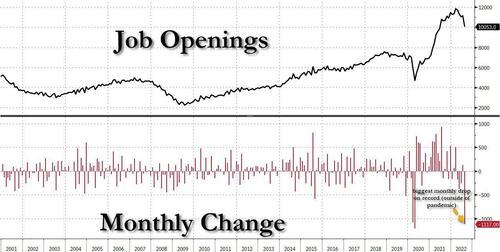
DevelopingendFactory orders steady in August but down 11.2% year over year. This data is in spite of the e huge ISM manufacturing plunge reportedyesterday
(zerohedge)
US Factory Orders Steady In August, Despite ISM Manufacturing Plunge
TUESDAY, OCT 04, 2022 – 10:04 AM
After an unexpected (and sizable) decline in July, August’s Factory Orders data for US was expected to be unchanged and indeed it came in right in line.
This pushed the YoY rise in US factory orders down to +11.2% – the lowest since Feb 2021…
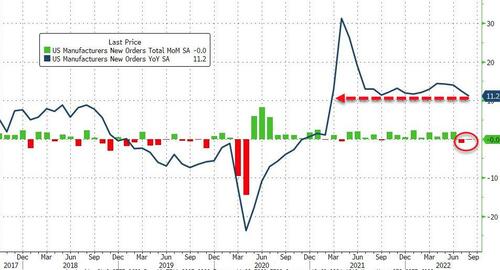
Source: Bloomberg
Ex-Transports, new orders rose 0.2% MoM (also as expected).
However, there’s just one thing… why is the ISM Manufacturing New Orders signal collapsing?
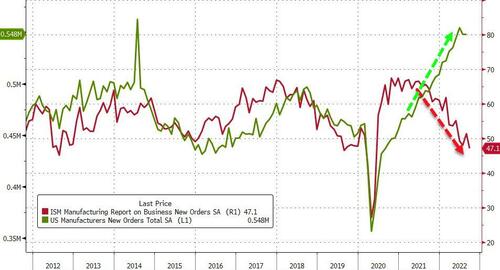
Source: Bloomberg
Nothing here that is worrisome enough to prompt a Few Pivot… yet
end
III) USA ECONOMIC STORIES
Disaster in the Florida Orange Juice industry
(zerohedge)
“Ian Was Rough On Citrus”: First Florida Orange Crop Reports Point To Disaster
TUESDAY, OCT 04, 2022 – 08:48 AM
The first crop damage estimates are in for Florida’s citrus groves following Hurricane Ian last week, and they point to utter devastation in certain parts of the state, sending orange juice prices Monday to almost six-year highs.
Bloomberg spoke with Ray Royce, executive director at Highlands County Citrus Growers Association, who said 20% to 80% of the fruit was damaged depending on location.
Royce said a complete assessment of Florida’s citrus groves is near impossible at this point because some roads and bridges are impassable. He said some “regions north of the Highlands have had lesser impact, but in some areas we could have lost it all.”
Alico Inc., one of the largest US citrus producers, said the widespread damage Ian caused would take at least two years to get production levels back to current levels. The company reported a “significant drop of fruit from trees” due to high winds, though exact estimates could take weeks.
On Friday, Alico wrote in a press release that supply to Tropicana, Peace River, Cutrale, and Florida’s Natural (some of the top orange juice processors) would continue with “all available fruit during the upcoming harvest season, which will begin later this year.”
Another citrus producer, Mixon Fruit Farms, near Tampa, said crop surveying is underway for their orange and grapefruit trees.
“It looks like about 30% of the fruit was knocked off the tree,” Janet Mixon, owner of the citrus producer, said.
Readers may recall days before Hurricane Ian made landfall in southwest Florida and then tore through central parts of the state. We asked the question if an “OJ squeeze was ahead?” That’s because the powerful storm was projected to hit an area of the state that is some of the country’s top producing regions of citrus. In a follow-up note, we outlined that an estimated 375,000 acres of citrus trees were in the storm’s path.
There will be horror stories of crop losses from here. Alico warned the impact of the storm will be on the current season and roll into 2023. This means orange juice prices will be squeezed, as they were today as the crop reports rolled in.
Orange juice prices jumped as much as 5.2% before settling 3.6% higher at $1.9825 per pound, the highest price since December 2016.
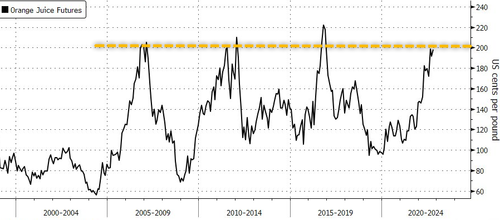
And even before the storm, we noted earlier this year that Florida’s Citrus Crop To Be Smallest Since WW2, Squeezes OJ Prices Higher, noting that dwindling supply was pushing up orange juice prices at the supermarket.
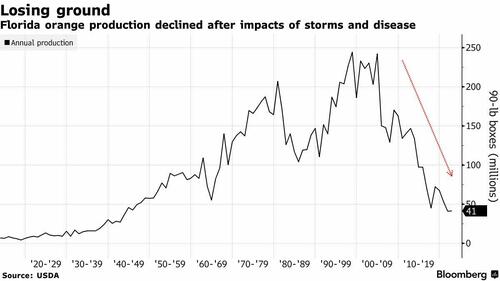
Breakfast inflation will get costlier as orange juice prices continue to rise. Maybe the Fed should see if their money printers can print oranges.
end
Low freight activity
Premack/Freightwaves
KeyBanc Warns Investors Of A “Trucking Winter” Amid Anemic Economic Conditions
TUESDAY, OCT 04, 2022 – 09:45 AM
By Rachel Premack of FreightWaves,
KeyBanc’s Todd Fowler and Carney Blake, who are the group’s airfreight and logistics analysts, wrote in a Thursday note that freight activity has been “seasonally weak.”
There’s been “limited indication” of the typical peak season activity that carriers and shippers expect in the fall as retailers prepare for the holiday season, Fowler and Blake wrote. Weak containerized imports underline the possibility that we won’t have a full peak season.

For public trucking companies, KeyBanc’s team is expecting results for the third quarter and estimates for 2023 to be “weaker.” The team downgraded trucking giants J.B. Hunt and Schneider.
Spot rates have already declined by 30% compared to last year, Fowler and Blake wrote. And now, they’re expecting trucking’s larger contract market to suffer as well — to the tune of mid-single-digit percentage declines.
“[G]iven macro pressures to slow economic demand and the potential related impact on freight activity, we are more inclined to prepare for a ‘trucking winter’ before a ‘trucking spring,’” they wrote.
Some trucking insiders believe the industry is headed for the “Great Purge” or even a “bloodbath.”
Part of that is thanks to unusually high inventory levels at retailers like Target, Kohl’s, Walmart and Amazon. Many retailers appear to have prepared for the holiday season earlier this year, anticipating disruptions in importing goods from manufacturing hubs in East Asia.
However, the growth in consumer demand has slumped from 2021, and it’s left retailers with more stock than they may have anticipated. That means the traditional peak season that carriers experience each fall may be muted.
Meanwhile, spot rates in America’s $800 billion trucking industry have collapsed in 2022. According to the FreightWaves National Truckload Index, spot rates have declined by nearly 33% from the beginning of this year to the beginning of October. Meanwhile, the costs to run a trucking company, particularly fuel spending, have only increased — putting the pressure on small truckers in particular to make ends meet.
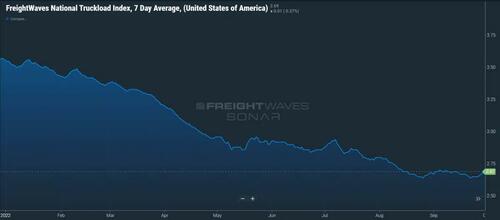
This decline is driven both by overcapacity, in which too many truck drivers jumped into the red-hot market of 2021, and softening demand.
Spot rates are now 25%-30% below contract rates, KeyBanc’s analysts wrote. Usually, those rates are 5%-10% above the contract market — and that’s why the team believes contract rates will decline by mid-single digits.
III B USA COMMODITY PROBLEMS//
SWAMP STORIES
KING REPORT
| The King Report October 4, 2022 Issue 6867 | Independent View of the News |
| BOJ Offers to Lend Govt Debt on Spot – BBG 22:50 ET Yen Weakens Past 145 Per Dollar, Nears Prior Intervention LevelsJapan will take currency action if necessary: finance ministerThe yen slid back past 145 per dollar, prompting renewed warnings from Japan’s finance minister and boosting speculation the government may intervene prop up the currency for a second time this year…“If we see excessively one-sided moves or something similar, we will take bold action as needed,” Finance Minister Shunichi Suzuki said, speaking after the move beyond 145. “That thinking hasn’t changed.”… https://t.co/PNXCoghrvi Yesterday the Nikkei soared 530 points in 54 minutes on BoJ intervention and threats of intervention. Sliding output, orders hit Japan’s factory activity in September The Jibun Bank Japan Manufacturing Purchasing Managers’ Index slumped to a seasonally adjusted 50.8 in September from a final 51.5 in the prior month. That marked the weakest growth rate since January last year when it was last in contraction and was lower than a 51.0 flash reading… https://t.co/72cNNAI75v UK Chancellor of the Exchequer Kwasi Kwarteng dropped a plan unveiled just 10 days ago, to abolish a 45% rate of income tax for the country’s highest earners. Truss Backs Kwarteng Even After Humiliating U-Turn on UK Tax CutChancellor Kwarteng says proposal had become a ‘distraction’Decision to scrap 45% tax rate had contributed to market routKwarteng announced the decision in a tweet early Monday, saying “we get it, and we have listened.” He said the plan announced just 10 days ago to scrap the 45% rate of income tax had become a “distraction.” https://www.bloomberg.com/news/articles/2022-10-03/uk-s-truss-set-to-abandon-plan-to-scrap-45-tax-rate-bbc-says Various pundits, notably BofA’s Mark Cabana, proclaimed that the Fed will soon slow rate hikes or stop rate hikes due to financial system stress. Cabana, formerly of the Markets Group at the Federal Reserve Bank of New York, is widely followed. Cabana via Zerohedge: “The Fed wants to blindly pursue its quest to get inflation down but deteriorating market functioning or frozen credit could push them to intervene… We have long argued Fed QT would stop under one of 3 conditions: (1) reserve scarcity, likely in late ’24 (2) recession & Fed rate cuts (3) market functioning breakdown. QT stop with recession seems most likely but market functioning breakdown risk has grown. The risk of UST market functioning breakdown has grown due to: Limited risk taking: the Fed wants higher rates but does not know where to stop. Rates investors have heard the Fed message and are short / underweight duration. Speculative investor positioning remains at near historic shorts. Rates investors won’t shift positioning long until (1) data softens (2) Fed pivots. Until positioning shifts, there is a demand vacuum where USTs lose their risk off hedge value. UST market functioning breakdown is a growing risk and may see long-end duration sell-off + curve bear steepen. The Fed is unlikely to tolerate a UST market functioning breakdown for long; if the UST market doesn’t work, broader markets likely don’t work. Fed intervention would likely mean a flatter curve as long end purchases support market functioning but are sterilized via twist and / or offset with rate hikes.” https://www.zerohedge.com/markets/treasury-market-breakdown-risk-fed-markets-guru-has-scary-warning-powell Yes, Virginia, central banks and governments have already gone wobbly on fighting inflation. The markets smell central bank pusillanimity. Therefore stocks, commodities, and bonds soared globally. Auguring against an imminent Fed pivot: The Midterm Elections are only 5 weeks away. Any Fed move or hint of easing would be seen as an overt political act intended to aid and abet Democrats. WSJ: U.N. Calls on Fed, Other Central Banks to Halt Interest-Rate Increases A U.N. agency warns that further policy tightening risks a global economic downturn The warning comes amid growing unease about the haste with which the Fed and its counterparts are raising borrowing costs to contain surging inflation… In a subsequent news conference, Fed Chairman Jerome Powell said the central bank does take account of the impact its policies have on the rest of the world but would continue to lift interest rates to bring inflation under control… (Why should anyone heed the UN on interest rates?) https://www.wsj.com/articles/u-n-calls-on-fed-other-central-banks-to-halt-interest-rate-increases-11664809202 Russian nuclear military train is seen on the move in ‘possible warning to the West’ that Putin is prepared to escalate his Ukraine war The military hardware belongs to the 12th Main Directorate of the Russian MoD Specialist division is dedicated to storage, maintenance and provision of nukes https://www.dailymail.co.uk/news/article-11274515/Russian-nuclear-military-train-seen-possible-warning-West.html Putin deploys world’s largest submarine as ‘nuke’ convoy heads to front lines NATO warned its member states, including the US, that Russia’s Belgorod nuclear submarine has left it base in the Arctic Circle, the Italian newspaper La Repubblica reported. Measuring more than 600 feet in length, the Belgorod is the largest submarine in the world. It is capable of carrying “doomsday” Poseidon nuclear torpedoes, which, according to Russia, could trigger 1,600-foot nuclear tsunamis that would inundate coastal cities from hundreds of miles away and render them uninhabitable for decades. The Belgorod, which only entered the Russian navy’s service in July, is regarded as “the epitome of a new concept of warfare.”… https://nypost.com/2022/10/03/putin-deploys-worlds-largest-submarine-nuclear-convoy/ Nuclear war is bullish because it will force the Fed to pivot! August US ISM Manufacturing 50.9, Exp. 52.1; Prices Paid 51.7, Exp. 52.0; New Orders 47.1, Exp. 50.5 Employment 48.7, Exp. 53.0 (Largest decline since Covid panic) https://twitter.com/jsblokland/status/1576938608191164416/photo/1 @RobinBrooksIIF: The US isn’t immune to the global manufacturing slowdown. Forward-looking orders – inventories remain in deeply negative territory in the manufacturing ISM. We don’t forecast US recession, but the air is getting thinner & with that the risk of Fed overtightening is also rising… https://twitter.com/RobinBrooksIIF/status/1576956539201802242 USZ soared with stocks on the hype and hectoring of central bank, particularly the Fed, that they MUST pivot ASAP. However, USZs peaked at 11:09 ET (129 10/32, +2 29/32. They then slid to 128 (+1 19/32) at 15:21 ET. Gold soared over 2%. Oil and gasoline rallied sharply. ESZs peaked at (3711.75, +110.25) at 14:56 ET. They retreated into the close, abetted by this: Williams Says Fed Policy Not Restrictive, Still Has Ways to Go 3:10 PM EDTPace of rate hikes ‘will depend on the data,’ Williams saysNew York Fed chief watching market functioning very carefully“We’ve seen enormous volatility in these markets, not just because of monetary policy, but because of the uncertainty around the outlook, global events — I’ll underline global events a couple times there — that have resulted in big swings in Treasury yields and in other market segments,” Williams said. “Hopefully, the volatility that we’ve seen in the last few weeks will come down somewhat, and that will help with that situation,” he said. “But right now, I would say that trades are being made, market liquidity is definitely lower, but it’s still functioning.”… https://www.bloomberg.com/news/articles/2022-10-03/williams-says-fed-s-inflation-job-not-yet-done-will-take-time Fed’s Williams says central bank has more work to do to cool inflation Federal Reserve Bank of New York President John Williams said on Monday that while there have been nascent signs of cooling inflation, underlying price pressures remain too high, which means the U.S. central bank must press forward to get inflation under control. “Clearly, inflation is far too high, and persistently high inflation undermines the ability of our economy to perform at its full potential,” Williams said in the text of a speech to be delivered before an audience in Phoenix. “Tighter monetary policy has begun to cool demand and reduce inflationary pressures, but our job is not yet done.”… https://www.reuters.com/markets/us/feds-williams-says-central-bank-has-more-work-do-cool-inflation-2022-10-03/ NY Fed President John Williams; A Bedrock Commitment to Price Stability From Main Street to Wall Street—and to Liberty Street, where the New York Fed is headquartered—inflation is the No. 1 concern. Clearly, inflation is far too high, and persistently high inflation undermines the ability of our economy to perform at its full potential… High inflation spares no one. It makes it more expensive to feed families, heat homes, and pay rents. While everyone feels the pain, not everyone is affected equally. Those who can least afford the essentials—like food, gas, and housing—suffer the most. Inflation also has a disparate impact across ethnic groups. Economists at the New York Fed found that since 2021, Black and Hispanic households have faced higher inflation than the national average—and Hispanic families have been affected the most.2 This is largely because on average, Hispanic households spend a larger share of their budgets on items most affected by the recent high inflation… Tighter monetary policy has begun to cool demand and reduce inflationary pressures, but our job is not yet done. It will take time, but I am fully confident we will return to a sustained period of price stability. https://www.newyorkfed.org/newsevents/speeches/2022/wil221003 @jnordvig: Every week we crunch thousands of capital flow and alt data time series @ExanteData. This one stood out to me this week. Foreign central banks’ holdings of US Treasuries at the Fed custody facility are dropping fast (almost $40bn in just one week). https://t.co/qIB37mhvin This is the flip side of accelerating intervention, globally, to fight USD strength. And it creates an uncomfortable feedback loop (more intervention => more UST selling => higher yields => more USD gains => more intervention…) Positive aspects of previous session BoJ intervention and a UK cave in generated a massive risk on rally globally Negative aspects of previous session Russia, due to mounting defeats in Ukraine, is trying to intimate the west by moving nuclear assets Putin is getting cornered and is becoming increasingly desperate – a very dangerous situation There is something very dangerous lurking in the global financial system Ambiguous aspects of previous session Who else is in trouble? How many are in trouble? First Hour/Last Hour Action [S&P 500 Index]: 1st Hour from NYSE open: Up; Last Hour: Down Pivot Point for S&P 500 Index [above/below indicates daily trend to traders]: 3660.57 Previous session High/Low: 3698.35; 3604.93 @zerohedge: Goldman’s Jeff Currie: “$3TN in renewable capex moved fossil fuel consumption from 82% to 81%.” Hence $150 trillion needed for green energy transition over next 50 years, including some $100-$120 trillion in QE, which needs a bigly crash to be greenlighted Some of Truss’s Top Team Say Her Project May Already Be Over UK premier forced by Tory MPs to abandon her signature tax cut Liz Truss will struggle to drive through key parts of the economic revolution she’s planning for the UK because her standing in the ruling party is already so damaged, members of her Cabinet said… https://www.bloomberg.com/news/articles/2022-10-03/some-of-truss-s-top-team-say-her-uk-project-may-already-be-over Today – An oversold rebound was desperately needed in stocks, bonds, and commodities. Instead of a rebound, the BoJ and UK officials, along with beaucoup hope & hype that the Fed MUST pivot soon, unleashed a manic rally that was exacerbated by panic short covering and start of the month buying. Ergo, stocks and bonds are no longer extremely oversold. Today’s action will be revealing. Was Monday another one-day wonder rally in the bear market, or does the rally have some staying power? NY Fed President, the most important Fed president, felt the need to disabuse the markets of the notion that the Fed MUST soon pivot. It will be very revealing if other Fed officials, and many are scheduled to speak today, echo Williams’ hawkish rhetoric. ESZs are +14.75 and USZs are +17/32 at 20:15 ET. Expected economic data: Aug Factory Orders 0.2% m/m, Ex-Trans 0.2%; Aug Durable Goods 0.2% m/m; Aug JOLTS Job Openings 11.075m; Dallas Fed Pres Logan 9 ET, NY Fed Pres Williams 9:00 ET, Cleveland Fed Pres Mester 9:15 ET, Fed Gov Jefferson 11:45 ET, Atlanta Fed Pres Bostic 16:00 ET S&P 500 Index 50-day MA: 4012; 100-day MA: 3966; 150-day MA: 4098; 200-day MA: 4213 DJIA 50-day MA: 31,874; 100-day MA: 31,729; 150-day MA: 33,483; 200-day MA: 33,176 S&P 500 Index – Trender trading model and MACD for key time frames Monthly: Trender and MACD are negative – a close above 4745.50 triggers a buy signal Weekly: Trender and MACD are negative – a close above 4065.22 triggers a buy signal Daily: Trender and MACD are negative – a close above 3806.04 triggers a buy signal Hourly: Trender and MACD are positive – a close below 3621.03 triggers a sell signal @townhallcom: BIDEN: “I was sort of raised in the Puerto Rican community at home, politically.” https://twitter.com/townhallcom/status/1577015140159205376 @townhallcom:Today, Biden claimed that he was “raised in the Puerto Rican community.” Last week, he claimed that he “went to shul more than many of” the Jewish attendees in the audience. @townhallcom: Biden: “Help me with the pronunciation…” https://twitter.com/townhallcom/status/1577017717348913152 @bennyjohnson: BIDEN: “New York sent not only a Congresswoman one of the most congresswoman in the Congress…” https://twitter.com/bennyjohnson/status/1577020782655348736 Pritzker Suffocates Free Speech Concurrent with the suppression of the newspapers, the Pritzker campaign used infamous Democrat lawyer Marc Elias to pressure two Chicago TV stations, WGN and local NBC, to cancel anti-Pritzker PAC ads from airing. Welcome to America in the 2020s! A land where the White House can cancel your social media and a sitting governor can have your paper tossed and your TV ads refused… https://www.realclearpolitics.com/articles/2022/09/28/pritzker_suffocates_free_speech_148252.html Lawsuit: Wisconsin Elections Commission Let Electors Change Votes After Submitting Ballots “Once a vote is cast, it is cast. Period. WEC is breaking the law and courting disaster by allowing individuals to retrieve their cast ballots and alter their votes. The discretion WEC gives to local officials undermines the integrity of the ballot box and disrupts the uniform and transparent administration of elections throughout the Badger State.”… https://t.co/ljIY2un3sZ Aretha Franklin Was Tracked by the FBI for 40 Years. Here’s What’s in Her File The agency tried — and failed — for decades to tie the Queen of Soul to “extremists” https://www.rollingstone.com/music/music-features/aretha-franklin-fbi-file-surveillance-1234602217/ Chicago rocked by another bloody weekend: Dozens shot, including one child fatally https://www.foxnews.com/us/chicago-rocked-bloody-weekend-dozens-shot-including-one-child-fatally |
Greg Hunter
Wishing all our Jewish friends, a meaningful Yom Kippur holiday
I will not be able to do a commentary for you tomorrow but i will continue on Thursday.
HARVEY