OCT 26/GOLD PRICE ROSE BY $11.65 TO $1665.20//SILVER PRICE ROSE 13 CENTS TO $19.50//PLATINUM PRICE ROSE $32.05 TO $953.20//PALLADIUM PRICE UP $25.75 TO $1953.25//MASSIVE AMOUNTS OF GOLD AND SILVER LEAVE THE COMEX VAULTS//HUGE GOLD QUEUE JUMP OF 3 TONNES AS NEW STANDING EXCEEDS 76 TONNES FOR OCTOBER///COVID UPDATES: DR PAUL ALEXANDER//VACCINE IMPACT//VACCINE INJURY/WEALTHY CHINESE TRYING TO FIGURE OUT HOW TO GET THEIR MONEY OUT OF THE COUNTRY//EU IS SET TO REFUSE HANDING OUT MONEY TO POLAND AND THAT SHOULD CAUSE A POLAND-EXIT//UPDATES ON THE FREEZING OF EUROPE//FEDDERMAN SIMPLY AWFUL IN DEBATE WITH DR OZ //LOOKS LIKE THE REPUBLICANS WILL WIN THE SENATE AND THE HOUSE//SWAMP STORIES FOR YOU TONIGHT..
132 C SG AMERICAS 2 323 C HSBC 29 661 C JP MORGAN 50 880 C CITIGROUP 34 880 H CITIGROUP 53
TOTAL: 84 84 MONTH TO DATE: 23,391
JPMORGAN STOPPED 0/84
GOLD: NUMBER OF NOTICES FILED FOR OCT CONTRACT: 84 NOTICES FOR 8400 OZ or 0.01264 TONNES
total notices so far: 23,391 contracts for 2,339,100 oz (72.756 tonnes)
SILVER NOTICES: 4 NOTICE(S) FILED FOR 20,000 OZ/
total number of notices filed so far this month 456 : for 2,280,000 oz
END
Russia is a major supplier of silver to London while Mexico supplies the COMEX
With the sanctions, London has no way to obtain silver other than compete with NY.
GLD
WITH GOLD UP $11.65
WITH RESPECT TO GLD WITHDRAWALS: (OVER THE PAST FEW MONTHS):
GOLD IS “RETURNED” TO THE BANK OF ENGLAND WHEN CALLING IN THEIR LEASES: THE GOLD NEVER LEAVES THE BANK OF ENGLAND IN THE FIRST PLACE. THE BANK IS PROTECTING ITSELF IN CASE OF COMMERCIAL FAILURE
ALSO INVESTORS SWITCHING TO SPROTT PHYSICAL (PHYS) INSTEAD OF THE FRAUDULENT GLD//BIG CHANGES IN GOLD INVENTORY AT THE GLD: /////NO CHANGE IN GLD INVENTORY /INVENTORY REMAINS AT 928.39 TONNES
INVENTORY RESTS AT 928.39 TONNES
Silver//SLV
WITH NO SILVER AROUND AND SILVER UP 13 CENTS
AT THE SLV// :/BIG CHANGES IN SILVER INVENTORY AT THE SLV//: A HUGE WITHDRAWAL OF 1.013 MILLION OZ INTO THE SLV
INVESTORS ARE SWITCHING SLV TO SPROTT’S PSLV
CLOSING INVENTORY: 486.670 MILLION OZ
Let us have a look at the data for today
SILVER//OUTLINE
SILVER COMEX OI ROSE BY A HUGE SIZED 1114 CONTRACTS TO 139,085 AND CLOSER TO THE RECORD HIGH OI OF 244,710, SET FEB 25/2020 AND THE STRONG GAIN IN COMEX OI WAS ACCOMPLISHED WITH OUR $0.17 GAIN IN SILVER PRICING AT THE COMEX ON TUESDAY. OUR BANKERS/HFT WERE UNSUCCESSFUL IN KNOCKING THE PRICE OF SILVER DOWN (IT ROSE BY $0.17)., BUT UNSUCCESSFUL IN KNOCKING OFF ANY SPEC LONGS, AS WE HAD AN ATMOSPHERIC GAIN IN OUR TWO EXCHANGE OF 1397 CONTRACTS. HUGE SPECS CONTINUE TO ADD TO THEIR SHORTFALLS FROM WHICH OUR BANKERS CONTINUE TO BE PURCHASERS OF NET COMEX LONGS. SOME SPEC LONGS ADDED TO THEIR POSITIONS
WE MUST HAVE HAD: I) ZERO SPECULATOR SHORT COVERINGS BUT HUGE SHORT ADDITIONS ////CONTINUED BANKER OI COMEX ADDITIONS /// CONSIDERABLE NEWBIE SPEC LONG ADDITIONS. II) WE ALSO HAD SOME REDDIT RAPTOR BUYING//. iii) A SMALL ISSUANCE OF EXCHANGE FOR PHYSICALS iiii) AN INITIAL SILVER STANDING FOR COMEX SILVER MEASURING AT 1.580 MILLION OZ FOLLOWING AN 35,000 OZ QUEUE. JUMP / // V) GIGANTIC SIZED COMEX OI GAIN/
I AM NOW RECORDING THE DIFFERENTIAL IN OI FROM PRELIMINARY TO FINAL: –33
HISTORICAL ACCUMULATION OF EXCHANGE FOR PHYSICALS OCT. ACCUMULATION FOR EFP’S SILVER/JPMORGAN’S HOUSE OF BRIBES/STARTING FROM FIRST DAY/MONTH OF OCT:
TOTAL CONTRACTS for 20 days, total 56,505 contracts: 28.252 million oz OR 1.413MILLION OZ PER DAY. (282 CONTRACTS PER DAY)
TOTAL EFP’S FOR THE MONTH SO FAR: 28.252 MILLION OZ
.
LAST 17 MONTHS TOTAL EFP CONTRACTS ISSUED IN MILLIONS OF OZ:
MAY 137.83 MILLION
JUNE 149.91 MILLION OZ
JULY 129.445 MILLION OZ
AUGUST: MILLION OZ 140.120
SEPT. 28.230 MILLION OZ//
OCT: 94.595 MILLION OZ
NOV: 131.925 MILLION OZ
DEC: 100.615 MILLION OZ
JAN 2022// 90.460 MILLION OZ
FEB 2022: 72.39 MILLION OZ//
MARCH: 207.430 MILLION OZ//A NEW RECORD FOR EFP ISSUANCE
APRIL: 114.52 MILLION OZ FINAL//LOW ISSUANCE
MAY: 105.635 MILLION OZ//
JUNE: 94.470 MILLION OZ
JULY : 87.110 MILLION OZ
AUGUST: 65.025 MILLION OZ
SEPT. 74.025 MILLION OZ///FINAL
OCT. 28.252 MILLION OZ INITIAL
RESULT: WE HAD A GIGANTIC SIZED INCREASE IN COMEX OI SILVER COMEX CONTRACTS OF 1147 WITH OUR $0.17 GAIN IN SILVER PRICING AT THE COMEX// TUESDAY.,. THE CME NOTIFIED US THAT WE HAD A SMALL SIZED EFP ISSUANCE CONTRACTS: 250 CONTRACTS ISSUED FOR DEC AND 0 CONTRACTS ISSUED FOR ALL OTHER MONTHS) WHICH EXITED OUT OF THE SILVER COMEX TO LONDON AS FORWARDS./ WE HAVE A GOOD INITIAL SILVER OZ STANDING FOR OCT. OF 1.580 MILLION OZ FOLLOWED BY TODAY’S 35,000 QUEUE JUMP .. WE HAD AN ATMOSPHERIC SIZED GAIN OF 1397 OI CONTRACTS ON THE TWO EXCHANGES FOR 6.985 MILLION OZ..
WE HAD 4 NOTICE(S) FILED TODAY FOR 20,000 OZ
THE SILVER COMEX IS NOW BEING ATTACKED FOR METAL BY LONDONERS ET AL.
GOLD//OUTLINE
IN GOLD, THE COMEX OPEN INTEREST ROSE BY A GIGANTIC SIZED 11,662 CONTRACTS TO 456,072AND CLOSER TO FROM TO THE RECORD (SET JAN 24/2020) AT 799,541 AND PREVIOUS TO THAT: (SET JAN 6/2020) AT 797,110. WE WILL PROBABLY SEE THE COMEX OI FALL TO AROUND 380,000 AS OUR SPECS GET ANNIHILATED.
THE DIFFERENTIAL FROM PRELIMINARY OI TO FINAL OI IN GOLD TODAY: REMOVED -136 CONTRACTS.
.
THE HUGE SIZED INCREASE IN COMEX OI CAME DESPITE OUR SMALL GAIN IN PRICE OF $3.85//COMEX GOLD TRADING/TUESDAY // ZEERO SPECULATOR SHORT COVERINGS ACCOMPANYING OUR FAIR SIZED EXCHANGE FOR PHYSICAL ISSUANCE./. WE HAD ZERO LONG LIQUIDATION AND CONSIDERABLE SPEC SHORT ADDITIONS BUT ZERO SPEC SHORT COVERINGS. // CONTINUED ADDITIONS TO OUR BANKER LONGS!! THE COMEX WILL BLOW UP AS THE SPECS CANNOT DELIVER GOLD TO OUR BANKER LONGS.
WE ALSO HAD A HUGE INITIAL STANDING IN GOLD TONNAGE FOR OCT. AT 66.099 TONNES ON FIRST DAY NOTICE FOLLOWED BY TODAY’S HUGE QUEUE. JUMP OF 79800 OZ//NEW STANDING 76.217TONNES (QUEUE JUMPING = EXERCISING LONDON BASED EFP’S WILL CONTINUE UNTIL MONTH’S END)
YET ALL OF..THIS HAPPENED WITH OUR GAIN IN PRICE OF $3.85 WITH RESPECT TO TUESDAY’S TRADING
WE HAD A GIGANTIC SIZED GAIN OF 14,337 OI CONTRACTS 44.17 PAPER TONNES) ON OUR TWO EXCHANGES..
E.F.P. ISSUANCE
THE CME RELEASED THE DATA FOR EFP ISSUANCE AND IT TOTALED A FAIR SIZED 2539 CONTRACTS:
The NEW COMEX OI FOR THE GOLD COMPLEX RESTS AT 456,072
IN ESSENCE WE HAVE A GOOD SIZED INCREASE IN TOTAL CONTRACTS ON THE TWO EXCHANGES OF 14,337 CONTRACTS WITH 11,798 CONTRACTS INCREASED AT THE COMEX AND 2539 EFP OI CONTRACTS WHICH NAVIGATED OVER TO LONDON. THUS TOTAL OI GAIN ON THE TWO EXCHANGES OF 14,201 CONTRACTS OR 44.17 TONNES.
CALCULATIONS ON GAIN/LOSS ON OUR TWO EXCHANGES
WE HAD A FAIR SIZED ISSUANCE IN EXCHANGE FOR PHYSICALS (2539) ACCOMPANYING THE GIGANTIC SIZED GAIN IN COMEX OI (11,662): TOTAL GAIN IN THE TWO EXCHANGES 14,201 CONTRACTS. WE NO DOUBT HAD 1) STRONG SPECULATOR SHORT ADDITIONS// CONTINUED GOOD BANKER ADDITIONS/// ZERO SPEC SHORT COVERINGS// STRONG NEWBIE SPEC ADDITIONS ,2.) STRONG INITIAL STANDING AT THE GOLD COMEX FOR OCT. AT 66.099 TONNES FOLLOWED BY TODAY’S 79,800 OZ QUEUE. JUMP ///NEW STANDING 76.217 TONNES//. 3) ZERO LONG LIQUIDATION //// //.,4) HUGE SIZED COMEX OPEN INTEREST GAIN 5) FAIR ISSUANCE OF EXCHANGE FOR PHYSICAL/
HISTORICAL ACCUMULATION OF EXCHANGE FOR PHYSICALS IN 2022 INCLUDING TODAY
OCT
ACCUMULATION OF EFP’S GOLD AT J.P. MORGAN’S HOUSE OF BRIBES: (EXCHANGE FOR PHYSICAL) FOR THE MONTH OF OCT. :
48,274 CONTRACTS OR 4,827,400 OZ OR 150.15 TONNES 20 TRADING DAY(S) AND THUS AVERAGING: 2413 EFP CONTRACTS PER TRADING DAY
TO GIVE YOU AN IDEA AS TO THE SIZE OF THESE EFP TRANSFERS : THIS MONTH IN 20 TRADING DAY(S) IN TONNES: 150.15 TONNES
TOTAL ANNUAL GOLD PRODUCTION, 2021, THROUGHOUT THE WORLD EX CHINA EX RUSSIA: 3555 TONNES
THUS EFP TRANSFERS REPRESENTS 150.15/3550 x 100% TONNES 4.22% OF GLOBAL ANNUAL PRODUCTION
SEPT 142.12 TONNES FINAL ISSUANCE ( LOW ISSUANCE)_
OCT: 141.13 TONNES FINAL ISSUANCE (LOW ISSUANCE)
NOV: 312.46 TONNES FINAL ISSUANCE//NEW RECORD!! (INCREASING DRAMATICALLY)//SIGN OF REAL STRESS//SURPASSING THE MARCH 2021 RECORD OF 276.50 TONNES OF EFP
DEC. 175.62 TONNES//FINAL ISSUANCE//
JAN:2022 247.25 TONNES //FINAL
FEB: 196.04 TONNES//FINAL
MARCH: 409.30 TONNES INITIAL( THIS IS NOW A RECORD EFP ISSUANCE FOR MARCH AND FOR ANY MONTH.
APRIL: 169.55 TONNES (FINAL VERY LOW ISSUANCE MONTH)
MAY: 247,44 TONNES FINAL//
JUNE: 238.13 TONNES FINAL
JULY: 378.43 TONNES FINAL
AUGUST: 180.81 TONNES FINAL
SEPT. 193.16 TONNES FINAL
OCT: 150.15 TONNES INITIAL ( MUCH SMALLER THAN LAST MONTH)
SPREADING OPERATIONS
(/NOW SWITCHING TO GOLD) FOR NEWCOMERS, HERE ARE THE DETAILS
SPREADING LIQUIDATION HAS NOW COMMENCED AS WE HEAD TOWARDS THE NEW NON ACTIVE FRONT MONTH OF NOV. WE ARE NOW INTO THE SPREADING OPERATION OF BOTH SILVER AND GOLD (WILL BE SMALL AS SPREADERS DO NOT PAY ATTENTION TO NOVEMBER)
HERE IS A BRIEF SYNOPSIS OF HOW THE CROOKS FLEECE UNSUSPECTING LONGS IN THE SPREADING ENDEAVOUR ;MODUS OPERANDI OF THE CORRUPT BANKERS AS TO HOW THEY HANDLE THEIR SPREAD OPEN INTERESTS:HERE IS HOW THE CROOKS USED SPREADING AS WE ARE NOW INTO THE NON ACTIVE DELIVERY MONTH OF OCT HEADING TOWARDS THE NON ACTIVE DELIVERY MONTH OF NOV., FOR BOTH GOLD AND SILVER:
YOU WILL ALSO NOTICE THAT THE COMEX OPEN INTEREST STARTS TO RISE BUT SO IS THE OPEN INTEREST OF SPREADERS. THE OPEN INTEREST IN WILL CONTINUE TO RISE UNTIL ONE WEEK BEFORE FIRST DAY NOTICE OF AN UPCOMING ACTIVE DELIVERY MONTH (NOV), AND THAT IS WHEN THE CROOKS SELL THEIR SPREAD POSITIONS BUT NOT AT THE SAME TIME OF THE DAY. THEY WILL USE THE SELL SIDE OF THE EQUATION TO CREATE THE CASCADE (ALONG WITH THEIR COLLUSIVE FRIENDS) AND THEN COVER ON THE BUY SIDE OF THE SPREAD SITUATION AT THE END OF THE DAY. THEY DO THIS TO AVOID POSITION LIMIT DETECTION. THE LIQUIDATION OF THE SPREADING FORMATION CONTINUES FOR EXACTLY ONE WEEK AND ENDS ON FIRST DAY NOTICE.”
WHAT IS ALARMING TO ME, ACCORDING TO OUR LONDON EXPERT ANDREW MAGUIRE IS THAT THESE EFP’S ARE BEING TRANSFERRED TO WHAT ARE CALLED SERIAL FORWARD CONTRACT OBLIGATIONS AND THESE CONTRACTS ARE LESS THAN 14 DAYS. ANYTHING GREATER THAN 14 DAYS, THESE MUST BE RECORDED AND SENT TO THE COMPTROLLER, GREAT BRITAIN TO MONITOR RISK TO THE BANKING SYSTEM. IF THIS IS INDEED TRUE, THEN THIS IS A MASSIVE CONSPIRACY TO DEFRAUD AS WE NOW WITNESS A MONSTROUS TOTAL EFP’S ISSUANCE AS IT HEADS INTO THE STRATOSPHERE.
First, here is an outline of what will be discussed tonight:
1.Today, we had the open interest at the comex, in SILVER, ROSE BY A GIGANTIC SIZED 11414CONTRACT OI TO 139,085 AND FURTHER FROM OUR COMEX HIGH RECORD //244,710(SET FEB 25/2020). THE LAST RECORDS WERE SET IN AUG.2018 AT 244,196 WITH A SILVER PRICE OF $14.78/(AUGUST 22/2018)..THE PREVIOUS RECORD TO THAT WAS SET ON APRIL 9/2018 AT 243,411 OPEN INTEREST CONTRACTS WITH THE SILVER PRICE AT THAT DAY: $16.53). AND PREVIOUS TO THAT, THE RECORD WAS ESTABLISHED AT: 234,787 CONTRACTS, SET ON APRIL 21.2017 OVER 5 YEARS AGO.
EFP ISSUANCE 250 CONTRACTS
OUR CUSTOMARY MIGRATION OF COMEX LONGS CONTINUE TO MORPH INTO LONDON FORWARDS AS OUR BANKERS USED THEIR EMERGENCY PROCEDURE TO ISSUE:
DEC 250 ALL OTHER MONTHS: ZERO. TOTAL EFP ISSUANCE: 250 CONTRACTS. EFP’S GIVE OUR COMEX LONGS A FIAT BONUS PLUS A DELIVERABLE PRODUCT OVER IN LONDON. IF WE TAKE THE COMEX OI GAIN OF 1114 CONTRACTS AND ADD TO THE 250 OI TRANSFERRED TO LONDON THROUGH EFP’S,
WE OBTAIN AN ATMOSPHERIC SIZED GAIN OF 1364 OPEN INTEREST CONTRACTS FROM OUR TWO EXCHANGES.
THUS IN OUNCES, THE GAIN ON THE TWO EXCHANGES 6.820 MILLION OZ//
4. Chris Powell of GATA provides to us very important physical commentaries
end
5. Other gold commentaries
6. Commodity commentaries//
3. ASIAN AFFAIRS
i)WEDNESDAY MORNING// TUESDAY NIGHT
SHANGHAI CLOSED UP 23.22 PTS OR 0.78% //Hang Seng CLOSED DOWN 152,08 OR 1.00% /The Nikkei closed UP 181.56PTS OR 0.67% //Australia’s all ordinaires CLOSED UP 0.16% /Chinese yuan (ONSHORE) closed UP TO 7.1743 //OFFSHORE CHINESE YUAN DOWN 7.1972// /Oil DOWN TO 86.07 dollars per barrel for WTI and BRENT AT 94.09 / Stocks in Europe OPENED ALL MIXED. ONSHORE YUAN TRADING ABOVE LEVEL OF OFFSHORE YUAN/ONSHORE YUAN TRADING STRONGER AGAINST US DOLLAR/OFFSHORE STRONGER
a)NORTH KOREA/SOUTH KOREA
outline
b) REPORT ON JAPAN/
OUTLINE
3 C CHINA
OUTLINE
4/EUROPEAN AFFAIRS
OUTLINE
5. RUSSIAN AND MIDDLE EASTERN AFFAIRS
OUTLINE
6.Global Issues//COVID ISSUES/VACCINE ISSUES
OUTLINE
7. OIL ISSUES
OUTLINE
8 EMERGING MARKET ISSUES
COMEX DATA//AMOUNTS STANDING//VOLUME OF TRADING/INVENTORY MOVEMENTS
GOLD
LET US BEGIN:
THE TOTAL COMEX GOLD OPEN INTEREST ROSE BY A HUGE SIZED 11,662 CONTRACTS TO 456,072 AND CLOSER TO THE RECORD THAT WAS SET IN JANUARY/2020: {799,541 OI(SET JAN 16/2020)} AND PREVIOUS TO THAT: 797,110 (SET JAN 7/2020). AND THIS HUGE COMEX INCREASE OCCURRED DESPITE OUR SMALL RISE IN PRICE OF $3.85 IN GOLD PRICING TUESDAY’S COMEX TRADING. WE ALSO HAD A FAIR SIZED EFP (2539 CONTRACTS). . THEY WERE PAID HANDSOMELY NOT TO TAKE DELIVERY AT THE COMEX AND SETTLE FOR CASH. IT NOW SEEMS THAT THE COMMERCIALS HAVE GOADED THE SPECS TO GO MASSIVELY SHORT AND NOW THEY ARE DESPERATELY TRYING TO COVER THEIR FOLLY.
WE NORMALLY HAVE WITNESSED EXCHANGE FOR PHYSICALS ISSUED BEING SMALL AS IT JUST TOO COSTLY FOR THEM TO CONTINUE SERVICING THE COSTS OF SERIAL FORWARDS CIRCULATING IN LONDON. HOWEVER, MUCH TO THE ANNOYANCE OF OUR BANKERS, THE COMEX IS THE SCENE OF AN ASSAULT ON GOLD AS LONDONERS, NOT BEING ABLE TO FIND ANY PHYSICAL ON THAT SIDE OF THE POND, EXERCISE THESE CIRCULATING EXCHANGE FOR PHYSICALS IN LONDON AND FORCING DELIVERY OF REAL METAL OVER HERE AS THE OBLIGATION STILL RESTS WITH NEW YORK BANKERS. IT SEEMS THAT ARE BANKERS FRIENDS ARE EXERCISING EFP’S FROM LONDON AND NOW THEY ARE LOATHE TO ISSUE NEW ONES.
EXCHANGE FOR PHYSICAL ISSUANCE
WE ARE NOW IN THE ACTIVE DELIVERY MONTH OF OCT.. THE CME REPORTS THAT THE BANKERS ISSUED A FAIR SIZED TRANSFER THROUGH THE EFP ROUTE AS THESE LONGS RECEIVED A DELIVERABLE LONDON FORWARD TOGETHER WITH A FIAT BONUS.,
THAT IS 2539EFP CONTRACTS WERE ISSUED: ;: , . 0 DEC : 2539 & ZERO FOR ALL OTHER MONTHS:
TOTAL EFP ISSUANCE: 2539 CONTRACTS
WHEN WE HAVE BACKWARDATION, EFP ISSUANCE IS VERY COSTLY BUT THE REAL PROBLEM IS THE SCARCITY OF METAL AND IT IS FAR BETTER FOR OUR BANKERS TO PAY OFF INDIVIDUALS THAN RISK INVESTORS ESPECIALLY FROM LONDON STANDING FOR DELIVERY. THE LOWER PRICES IN THE FUTURES MARKET IS A MAGNET FOR OUR LONDONERS SEEKING PHYSICAL METAL. BACKWARDATION ALWAYS EQUAL SCARCITY OF METAL!
ON A NET BASIS IN OPEN INTEREST WE GAINED THE FOLLOWING TODAY ON OUR TWO EXCHANGES: A GIGANTIC SIZED TOTAL OF 14,201 CONTRACTS IN THAT 2539LONGS WERE TRANSFERRED AS FORWARDS TO LONDON AND WE HAD A HUGE SIZED COMEX OI GAIN OF 11,798 CONTRACTS..AND THIS GOOD SIZED GAIN ON OUR TWO EXCHANGES HAPPENED DESPITE OUR SMALL GAIN IN PRICE OF GOLD $3.85//WE HAD CONSIDERABLE SPEC SHORTS ADDITIONS, WITH BANKERS AS BUYERS OF COMEX GOLD CONTRACTS. WE ALSO HAD HUGE ADDITIONAL NEWBIE SPECS GOING LONG
// WE HAVE A STRONG AMOUNT OF GOLD TONNAGE STANDING OCT (76.217),
HERE ARE THE AMOUNTS THAT STOOD FOR DELIVERY IN THE PRECEDING 12 MONTHS OF 2021-2022:
DEC 2021: 112.217 TONNES
NOV. 8.074 TONNES
OCT. 57.707 TONNES
SEPT: 11.9160 TONNES
AUGUST: 80.489 TONNES
JULY: 7.2814 TONNES
JUNE: 72.289 TONNES
MAY 5.77 TONNES
APRIL 95.331 TONNES
MARCH 30.205 TONNES
FEB ’21. 113.424 TONNES
JAN ’21: 6.500 TONNES.
TOTAL SO FAR THIS YEAR (JAN- DEC): 601.213 TONNES
YEAR 2022:
JANUARY 2022 17.79 TONNES
FEB 2022: 59.023 TONNES
MARCH: 36.678 TONNES
APRIL: 85.340 TONNES FINAL.
MAY: 20.11 TONNES FINAL
JUNE: 74.933 TONNES FINAL
JULY 29.987 TONNES FINAL
AUGUST:104.979 TONNES//FINAL
SEPT. 38.1158 TONNES
OCT: 76.217 TONNES
THE SPECS/HFT WERE UNSUCCESSFUL IN LOWERING GOLD’S PRICE //// (IT ROSE $3.85) BUT WERE UNSUCCESSFUL IN KNOCKING OFF ANY SPECULATOR LONGS// SPEC SHORTS ADDED TO THEIR POSITIONS AS WE HAD A GOOD SIZED TOTAL GAIN ON OUR TWO EXCHANGES OF 2379 CONTRACTS // WE HAVE REGISTERED A FAIR GAIN OF 14.214 PAPER TONNES ON TOTAL OI FROM OUR TWO EXCHANGES, ACCOMPANYING OUR GOLD TONNAGE STANDING FOR OCT. (76.217 TONNES)…THIS WAS ACCOMPLISHED WITH OUR RISE IN PRICE OF $3.85
WE HAD +136 CONTRACTS COMEX TRADES REMOVED. THESE WERE REMOVED AFTER TRADING ENDED LAST NIGHT
NET GAIN ON THE TWO EXCHANGES 14,337 CONTRACTS OR 1,433,700 OZ OR 44.59 TONNES
Total monthly oz gold served (contracts) so far this month
23,391 notices 2,339,100 72.756 TONNES
Total accumulative withdrawals of gold from the Dealers inventory this month
NIL oz
Total accumulative withdrawal of gold from the Customer inventory this month
xxx oz
total dealer deposit 0
total dealer deposit: nil oz
No dealer withdrawals
Customer deposits: 0
total deposits nil oz
customer withdrawals:3
ii) Out of Brinks 88,897.520 OZ (2765 kilobars)
iii) Out of JPM 267,542.625
iv) Out of HSBC: 4,227.356 oz
total: 360,697.501 oz
total in tonnes: 11.218 tonnes
Adjustments: 5// dealer to customer//huge activity
i)Delaware: 5505.065 oz
ii) Out of Brinks 7,499.956 oz
iii) Out of JPMorgan: 112,594.582 oz
iv) Out of HSBC: 13,173,939 oz
v) Out of Manfra 16,767.314 oz
CALCULATIONS FOR THE AMOUNT OF GOLD STANDING FOR OCT.
For the front month of OCT we have an oi of 1197 contracts having GAINED 794 contracts . We had 4 contracts
filed on TUESDAY, so we GAINED A STRONG 798 contracts or an additional 79,800 oz will stand in this active delivery month of Oct. From this point
we should gain in total gold standing through to the end of Oct.( This is queue jumping and in reality it is the exercising of London based EFP;s for gold at the comex)
November SHOCKINGLY GAINED 210 contracts to stand at 3833 (WE ARE GOING TO HAVE AN EXTRAORDINARILY LARGE NOV.GOLD DELIVERY)
December GAINED 3704 contracts DOWN to 359,945
We had 84 notice(s) filed today for 8400 oz FOR THE OCT. 2022 CONTRACT MONTH.
Today, 0 notice(s) were issued from J.P.Morgan dealer account and 50 notices were issued from their client or customer account. The total of all issuance by all participants equate to 84 contract(s) of which 0 notices were stopped (received) by j.P. Morgan dealer and 0 notice(s) was (were) stopped/ Received) by J.P.Morgan//customer account and 0 notice(s) received (stopped) by the squid (Goldman Sachs)
To calculate the INITIAL total number of gold ounces standing for the OCT /2022. contract month,
we take the total number of notices filed so far for the month (23,391) x 100 oz , to which we add the difference between the open interest for the front month of (OCT 1197 CONTRACTS) minus the number of notices served upon today 84 x 100 oz per contract equals 2,450,400 OZ OR 76.217 TONNES the number of TONNES standing in this active month of OCT.
thus the INITIAL standings for gold for the OCT contract month:
No of notices filed so far (23,391) x 100 oz+ (1197) OI for the front month minus the number of notices served upon today (84} x 100 oz} which equals 2,450,400 oz standing OR 76.217 TONNES in this NON active delivery month of OCTOBER.
TOTAL COMEX GOLD STANDING: 76.217 TONNES (A HUMONGOUS STANDING FOR OCT (GENERALLY THE POOREST DELIVERY MONTHS FOR AN ACTIVE MONTH)
WE WILL INCREASE IN GOLD TONNAGE STANDING FROM THIS DAY FORTH UNTIL THE END OF THE MONTH.
SOMEBODY IS AFTER A HUGE AMOUNT OF GOLD. THE EFPS ARE NOW BEING USED TO TAKE GOLD FROM THE COMEX. THUS THE AMOUNT OF GOLD STANDING FOR SEPT. WILL RISE EXPONENTIALLY.
To calculate the number of silver ounces that will stand for delivery in OCT we take the total number of notices filed for the month so far at 456 x 5,000 oz = 2,280,000 oz
to which we add the difference between the open interest for the front month of OCT(240) and the number of notices served upon today 4 x (5000 oz) equals the number of ounces standing.
Thus the standings for silver for the OCT./2022 contract month: 456 (notices served so far) x 5000 oz + OI for front month of OCT (240) – number of notices served upon today (4) x 5000 oz of silver standing for the OCT contract month equates 3,460,000 oz. .
the record level of silver open interest is 234,787 contracts set on April 21./2017 with the price on that day at $18.42. The previous record was 224,540 contracts with the price at that time of $20.44
OCT 26/WITH GOLD UP $11.65 TODAY: NO CHANGES IN GOLD INVENTORY AT THE GLD//INVENTORY RESTS AT 928.39 TONNES
OCT 25/WITH GOLD UP $3.85: SMALL CHANGES IN GOLD INVENTORY AT THE GLD: A DEPOSIT OF .29 TONNES OF GOLD INTO THE GLD///INVENTORY RESTS AT 928.39 TONNES
OCT 24/WITH GOLD DOWN $1.80 TODAY: BIG CHANGES IN GOLD INVENTORY AT THE GLD: A WITHDRAWAL OF 2.89 TONNES FROM THE GLD////INVENTORY RESTS AT 928.10 TONNES
OCT 21/WITH GOLD UP $19.10: BIG CHANGES IN GOLD INVENTORY AT THE GLD: A WITHDRAWAL OF 1.74 TONNES FROM THE GLD///INVENTORY RESTS AT 930.99 TONNES
OCT 20/WITH GOLD UP $2.40: BIG CHANGES IN GOLD INVENTORY AT THE GLD: A WITHDRAWAL OF 6.08 TONNES FROM THE GLD///INVENTORY RESTS AT 932.73 TONNES
OCT 19/WITH GOLD DOWN $20.65:: SMALL CHANGES IN GOLD INVENTORY AT THE GLD: A WITHDRAWAL OF .29 TONNES FROM THE GLD////INVENTORY RESTS AT 938.81 TONNES
OCT 18/WITH GOLD DOWN $7.40: BIG CHANGES IN GOLD INVENTORY AT THE GLD: A WITHDRAWAL OF 2.03 TONNES FROM THE GLD////INVENTORY RESTS AT 939.10 TONNES
OCT 17/WITH GOLD UP $14.55: BIG CHANGES IN GOLD INVENTORY AT THE GLD: A WITHDRAWAL OF 3.28 TONNES FROM THE GLD///INVENTORY RESTS AT 941.13 TONNES
OCT 14/WITH GOLD DOWN $26.50 TODAY: BIG CHANGES IN GOLD INVENTORY AT THE GLD: A WITHDRAWAL OF 1.16 TONNES FROM THE GLD///INVENTORY RESTS AT 944.31 TONNES
OCT 13/WITH GOLD DOWN $0.40 TODAY: A DEPOSIT OF 1.16 TONNES INTO THE GLD// CHANGE IN GOLD INVENTORY AT THE GLD//INVENTORY RESTS AT 945.47 TONNES
OCT 12/WITH GOLD UP $4.00 TODAY: NO CHANGES IN GOLD INVENTORY AT THE GLD//INVENTORY RESTS AT 944.31 TONNES
OCT 11/WITH GOLD UP $10.30 TODAY: NO CHANGES IN GOLD INVENTORY AT THE GLD//INVENTORY RESTS AT 944.31 TONNES
OCT 10//WITH GOLD DOWN $33.50 TODAY: BIG CHANGES IN GOLD INVENTORY AT THE GLD: A WITHDRAWAL OF 2.03 TONNES OF GOLD FROM THE GLD////INVENTORY RESTS AT 944.31 TONNES
OCT 7/WITH GOLD DOWN $10.70: NO CHANGES IN GOLD INVENTORY AT THE GLD///INVENTORY RESTS AT 946.34 TONNES
OCT 6/WITH GOLD UP $.70 TODAY: BIG CHANGES IN GOLD INVENTORY AT THE GLD: A DEPOSIT OF 3.45 TONNES INTO THE GLD//INVENTORY RESTS AT 946.34 TONNES
OCT 4/WITH GOLD UP $28.65 TODAY: HUGE CHANGES IN GOLD INVENTORY AT THE GLD: A DEPOSIT OF 3.19 TONNES INTO THE GLD//INVENTORY RESTS AT 942.89 TONNES
OCT 3.WITH GOLD UP $29.30 TODAY: BIG CHANGES IN GOLD INVENTORY AT THE GLD AND A BIG SURPRISE: A WITHDRAWAL OF 1.45 TONNES FROM THE GLD////INVENTORY RESTS AT 939.70 TONNES
SEPT 30 WITH GOLD UP $3.75 TODAY : BIG CHANGES IN GOLD INVENTORY AT THE GLD: A WITHDRAWAL OF 2.01 TONNES FROM THE GLD////INVENTORY RESTS AT 941.15 TONNES
SEPT 29/WITH GOLD DOWN $.85 TODAY: BIG CHANGES IN GOLD INVENTORY AT THE GLD: A DEPOSIT OF 3.3 TONNES INTO THE GLD//INVENTORY RESTS AT 943.16 TONNES
SEPT 28/WITH GOLD UP $32.30: BIG CHANGES IN GOLD INVENTORY AT THE GLD: A WITHDRAWAL OF 2.61 TONNES FORM THE GLD////INVENTORY RESTS AT 940.549 TONNES
SEPT 27/WITH GOLD UP $1.75: BIG CHANGES IN GOLD INVENTORY AT THE GLD: A WITHDRAWAL OF 3.76 TONNES FROM THE GLD////INVENTORY RESTS AT 943.47 TONNES
SEPT 26/WITH GOLD DOWN $17.15: BIG CHANGES IN GOLD INVENTORY AT THE GLD: A WITHDRAWAL OF 2.90 TONNES FROM THE GLD////INVENTORY RESTS AT 947.23 TONNES
SEPT 23/WITH GOLD DOWN $24.60: BIG CHANGES IN GOLD INVENTORY AT THE GLD: A WITHDRAWALOF 2.03 TONNES FORM THE GLD//INVENTORY RESTS AT 950.13 TONNES
SEPT 22/WITH GOLD UP $5.20; NO CHANGES IN GOLD INVENTORY AT THE GLD//INVENTORY RESTS AT 952.16 TONNES
TONNES
GLD INVENTORY: 928.39 TONNES
Now the SLV Inventory/( vehicle is a fraud as there is no physical metal behind them
OCT 26/WITH SILVER UP 11 CENTS TODAY: BIG CHANGES IN SILVER INVENTORY AT THE SLV: A WITHDRAWAL OF 1.013 MILLION OZ FROM THE SLV///INVENTORY RESTS AT 486.670 MILLION OZ./.
OCT 25/WITH SILVER UP 17 CENTS TODAY: BIG CHANGES IN SILVER INVENTORY AT THE SLV: A DEPOSIT OF 2.083 MILLION OZ INTO THE SLV//INVENTORY RESTS AT 487.683 MILLION OZ/
OCT 24/WITH SILVER UP 6 CENTS TODAY: SMALL CHANGES IN SILVER INVENTORY AT THE SLV: A WITHDRAWAL OF .553 MILLION OZ FROM THE SLV////INVENTORY RESTS AT 485.610 MILLION OZ//
OCT 21/WITH SILVER UP 43 CENTS: SMALL CHANGES IN SILVER INVENTORY AT THE SLV: A DEPOSIT OF .46 MILLION OZ INTO THE SLV///INVENTORY RESTS AT 486.163MILLION OZ//
OCT 20/WITH SILVER UP 33 CENTS: BIG CHANGES IN SILVER INVENTORY AT THE SLV: A WITHDRAWAL OF .921 MILLION OZ FROM THE SLV///INVENTORY RESTS AT 485.703 MILLION OZ//
OCT 19/WITH SILVER DOWN 27 CENTS: BIG CHANGES IN SILVER INVENTORY AT THE SLV: AWITHDRAWAL OF 1.105 MILLION OZ FROM THE SLV////INVENTORY RESTS AT 486.624 MILLION OZ///
OCT 18/WITH SILVER DOWN 5 CENTS:BIG CHANGES IN SILVER INVENTORY AT THE SLV: A DEPOSIT OF 1.658 MILLION OZ INTO THE SLV////INVENTORY RESTS AT 487.729 MILLION OZ///
OCT 17/WITH SILVER UP 53 CENTS TODAY: BIG CHANGES IN SILVER INVENTORY AT THE SLV: A DEPOSIT OF 1.151 MILLION OZ INTO THE SLV////INVENTORY REST AT 486.071 MILLION OZ//
OCT 14/WITH SILVER DOWN 77 CENTS TODAY: BIG CHANGES IN SILVER INVENTORY AT THE SLV: A DEPOSIT OF 2.211 MILLION OZ INTO THE SLV//INVENTORY RESTS AT 484.920 MILLION OZ//
OCT 13/WITH SILVER DOWN 2 CENTS TODAY: BIG CHANGE IN SILVER INVENTORY AT THE SLV: A DEPOSIT OF 4.513 MILLION OZ INTO THE SLV//INVENTORY RESTS AT 482.709 MILLION OZ//
Oct 12/WITH SILVER DOWN 18 CENTS TODAY: NO CHANGES IN SILVER INVENTORY AT THE SLV//INVENTORY RESTS AT 478.196 MILLION OZ
OCT 11/WITH SILVER DOWN 11 CENTS TODAY: HUGE CHANGES IN SILVER INVENTORY AT THE SLV: A DEPOSIT OF 5.066 MILLION OZ INTO THE SLV///INVENTORY RESTS AT 478.196 MILLION OZ
OCT 10//WITH SILVER DOWN 65 CENTS TODAY: NO CHANGES IN SILVER INVENTORY AT THE SLV//INVENTORY RESTS AT 473.130 MILLION OZ/
OCT 7/WITH SILVER DOWN 37 CENTS TODAY: BIG CHANGES IN SILVER INVENTORY AT THE SLV: A WITHDRAWAL OF 2.447 MILLION OZ FROM THE SLV///INVENTORY RESTS AT 473.130 MILLION OZ/
OCT 6/WITH SILVER UP 11 CENTS TODAY: BIG CHANGES IN SILVER INVENTORY AT THE SLV/INVENTORY: A WITHDRAWAL OF 5.3 MILLION OZ FROM THE SLV//INVENTORY RESTS AT 475.617 MILLION OZ//
OCT 4WITH SILVER UP $.51 TODAY: NO CHANGES IN SILVER INVENTORY AT THE SLV//INVENTORY RESTS AT 480.917 MILLION OZ
OCT 3/WITH SILVER UP $1.46 : NO CHANGES IN SILVER INVENTORY AT THE SLV//INVENTORY RESTS AT 480.917 MILLION OZ//
SEPT 30/WITH SILVER UP 31 CENTS TODAY: SMALL CHANGES IN SILVER INVENTORY AT THE SLV: A DEPOSIT OF 1.013 MILLION OZ FROM THE SLV//INVENTORY RESTS AT 480.917 MILLION OZ//
SEPT 29/WITH SILVER DOWN 15 CENTS: BIG CHANGES IN SILVER INVENTORY AT THE SLV//A WITHDRAWAL OF 645,000 OZ FROM THE SLV//INVENTORY RESTS AT 479.904 MILLION OZ//
SEPT 28/WITH SILVER UP $.52 TODAY: BIG CHANGES IN SILVER INVENTORY AT THE SLV A WITHDRAWAL OF 645,000 OZ FROM THE SLV.//INVENTORY RESTS AT 480.549 MILLION OZ//
SEPT 27/WITH SILVER DOWN 7 CENTS TODAY: NO CHANGES IN SILVER INVENTORY AT THE SLV//INVENTORY RESTS AT 481.194 MILLION OZ
SEPT 26/WITH SILVER DOWN 43 CENTS : BIG CHANGES IN SILVER INVENTORY AT THE SLV: A WITHDRAWAL OF 737.000 OZ FROM THE SLV////INVENTORY RESTS AT 481.194 MILLION OZ//
SEPT 23/WITH SILVER DOWN 68 CENTS: BIG CHANGES IN SILVER INVENTORY AT THE SLV: A DEPOSIT OF .507 MILLION OZ INTO THE SLV////INVENTORY RESTS AT 481.931 MILLION
SEPT 22/WITH SILVER UP 10 CENTS TODAY; SMALL CHANGES IN SILVER INVENTORY AT THE SLV: A WITHDRAWAL OF .691 MILLION OZ FROM THE SLV////INVENTORY RESTS AT 481.424 MILLION OZ/
CLOSING INVENTORY 486.670 MILLION OZ//
PHYSICAL GOLD/SILVER STORIES
1.PETER SCHIFF
Roubini Warns Of Imminent Dollar Crash: The Fed Is Going To “Wimp Out” In The Inflation Fight
Economist Nouriel Roubini says Federal Reserve is going to “wimp out” on the inflation fight and that will lead to a dollar crash.
Roubini is the Professor Emeritus at the Stern School of Business, New York University. He recently appeared on Bloomberg Markets and Finance to talk about threats to the global economy.
Roubini predicted the housing bubble would pop in an IMF position paper in 2006. When asked if we were there again, he emphatically said, “Yes.”
Yes, we are here again. But in addition to the economic, monetary and financial risks — and there are new ones now, we’re going toward stagflation like we’ve never seen since the 70s — in the book, I point out that there are also geopolitical risks.”
These include possible confrontations with China and Russia, environmental risks, health risks, and technological risks. Roubini called it a confluence of “mega risks.”
You might not expect Roubini to talk like this. He served in the Clinton administration as a senior economist in the White House Council of Economic Advisers and then moved to the Treasury department as a senior adviser to Timothy Geithner who was undersecretary for international affairs at the time. Despite his work in a Democratic Party administration, he sounds a lot like Peter Schiff when it comes to his views on the trajectory of the economy.
Roubini pointed out the amount of debt in the global financial system. Debt to GDP has gone from 200% to 350% globally. In the US the debt to GDP ratio is higher than after the Great Depression and WWII. After the 2008 financial crisis and during the pandemic, Zombie households, corporations, banks and governments were bailed out by negative interest rates and quantitative easing.
This time around is different because we have so much debt and central banks like the Fed have to increase interest rates to fight inflation so that zombie institutions are going to go bankrupt. That’s why not only are we going to have inflation and stagflation, but we’ll have a stagflationary debt crisis.”
We had supply shocks in the 70s similar to those we’ve experienced in the post-pandemic era. But at that time in most of the developed world, debt ratios were low. There were no debt crises in developed nations. But we did see debt crises in Latin America because those countries like Brazil, Mexico and Argentina had borrowed too much. When Volker jacked up interest rates to 20%, they went bankrupt.
Today, we have the worst of the 70s. We have a massive amount of stagflationary negative supply shock … and at the same time, we have a debt ratio like we’ve never seen before. So, we get a stagflationary debt crisis.”
The IMF identifies around 40 emerging market countries on the verge of a sovereign debt crisis. And Roubini said we are starting to see these problems spilling to developed nations. He specifically mentioned the United Kingdom being forced to monetize reckless fiscal stimulus.
Right now, all central banks are playing tough, and talking tough, and acting tough – hawkish – because they have a problem of credibility. But in my view, there are two problems. One problem is if they try to get to 2% inflation, they cause a recession. And this recession is not going to be short and shallow. It is not going to be garden variety. It’s not going to be plain vanilla. It’s not going to be two quarters of negative growth and then inflation collapses and they can ease again. … It’s going to be a severe recession because of the debt ratio — because we’re going into fiscal and monetary tightening. And at the same time, not only do we have an economic crash, you’re going to have also a fiscal crash.”
Roubini called it a debt trap. There is so much private and public debt that any attempt to seriously fight inflation will ultimately cause a crash in financial markets.
And not just the stock market. That’s the least important. Credit markets and bond markets — And that crash and the financial crash feeds on the economic crash and vice versa. And therefore, they’re going to wimp out and they’re going to blink.”
The Bank of England already blinked. Roubini said the Federal Reserve is going to do the same.
Roubini also warns of an impending dollar crash. He said the greenback is at risk due to the twin deficits – budget and trade. He also mentions the weaponization of the dollar. But the real catalyst will be the Fed “wimping out.”
Once the Fed is going to essentially prevent an economic and financial crash – or try to prevent it by … stopping raising rates, even though inflation is too high, then the dollar is going to start to sharply weaken. That is going to be the trigger for it. Because what is raising the dollar is tight monetary policy.”
So, what can you do to protect yourself? Roubini recommends buying gold.
Gold has not done very well because you have tight monetary policy and a strong dollar. But if central banks are going to blink and wimp out, gold is going to rise in value.”
END
2. Lawrie Williams//Pam and Russ Martens/Jim Rickards/Mathew Piepenburg/Von Greyerz
JPMorgan Chase Quietly Settles Whistleblower Case Involving Charges of Keeping Two Sets of Books and Improper Payments to Tony BlairBy Pam Martens and Russ Martens: October 26, 2022 ~It was a lawsuit that should have made front page headlines in every major newspaper in America and on the evening television news. Instead, as we predicted, it was quietly settled on Monday, just 10 business days before a trial was scheduled to begin. The dollar amount of the settlement was not disclosed. Yesterday, Wall Street’s paper of record, the Wall Street Journal, devoted a mere 299 words to the settlement and the details of the case.The lawsuit was filed in the federal district court for the Southern District of New York – a court system where mega Wall Street banks have a long history of evading justice.The plaintiff in the case is Shaquala Williams, an attorney and financial crimes compliance professional with more than a decade of experience at multiple global banks. The defendant is JPMorgan Chase – the largest bank in the U.S. which has been charged with five felony counts by the U.S. Department of Justice since 2014. Despite the bank’s unprecedented crime spree, federal regulators and the Board of Directors of JPMorgan Chase have allowed the same Chairman and CEO, Jamie Dimon, to continue to run the bank.Williams charged in her lawsuit that JPMorgan Chase was keeping two sets of books and effectively making a monkey out of the U.S. Department of Justice by brazenly flouting the non-prosecution agreement it had signed with the Justice Department in a previous case. It came out in her deposition testimony, which is part of the court record, that one of the people being paid under her allegation of the bank keeping two sets of books was Tony Blair, the former Prime Minister of the U.K. (See our report: JPMorgan Whistleblower Names Former U.K. Prime Minister Tony Blair in Court Documents as Receiving “Emergency” Payments from Bank.)In 2016 the Justice Department had charged that JPMorgan’s Asia subsidiary engaged in quid pro quo agreements with Chinese officials to obtain investment- banking business and had falsified internal documents to cover up the activities. The quid pro quo agreements involved the bank putting the children of high-ranking Chinese government officials on its payroll in order to enhance its business interests in China. In exchange for avoiding prosecution by receiving a non-prosecution agreement, the Justice Department required the bank to put in place compliance controls around third-party payments. Williams alleges, among other serious charges, that the so- called third-party payment controls were a sham and that when she blew the whistle to her superiors at the bank, JPMorgan Chase retaliated against her by firing her in October 2019.Williams alleges the following was happening inside the bank to subvert the required compliance controls:”If properly implemented, invoice controls would ensure that JPMorgan was not funding corruption by labeling corrupt third-party payments as legitimate business expenses.”Williams also raised concerns because the Bank had no requirements for the Compliance group to review invoices for red flags, high risk indicators, or other anomalies that indicate corrupt payments; because the Bank granted many third-party intermediaries exemptions from invoice requirements without documenting or explaining the basis for doing so; because the Bank had no controls to ensure that the entity requesting payment was the same third-party intermediary that had contracted with the Bank; because the Bank had no controls to ensure that the third party intermediary had a contract or other agreement with the Bank before performing the services; and because the Bank could not reconcile actual payments with the invoices…”Williams also raised concerns about JP Morgan’s inaccurate books and records. There were inconsistencies between the TPI [Third Party Intermediaries] payment records and the Bank’s centralized payment systems that feed into its general ledger. For example, a former government official (‘TPI1’) was a high risk JPMorgan third-party intermediary for Jamie Dimon (‘Dimon’), JPMorgan’s Chief Executive Officer. The Bank processed the invoices for TPI1 through the ‘emergency payment method.’ The Bank’s policies made clear that the ‘emergency payment method’ should be used for urgent payments critical to the day-to-day operations of Chase such as emergency utility bills ‘to prevent the lights from going out.’ The TPI1 invoices did not satisfy this standard, thus leaving the payment method open to unchecked corrupt payments and violations of the Bank’s accounting controls, the NPA, SEC Order, SEC rules and regulations, and provisions of Federal law relating to fraud against shareholders. Further, the payments as reflected in the general ledger did not correspond with management’s general or specific authorization for the invoice payments, thereby creating inaccurate records that also constituted violations of the NPA, the SEC Order, SEC rules and regulations and/or provisions of Federal law relating to fraud against shareholders.”Williams’ lawsuit contains this additional allegation related to these invoices:”Williams raised concerns that GACC [her department] was maintaining an alternate ledger of corrected transactions that did not match the uncorrected transactions on the official JPMorgan balance sheet.”Raising judicial transparency alarm bells in this case, on January 6 Senior U.S. District Court Judge Jed Rakoff signed a dangerous Protective Order covering the lawsuit. The Protective Order that Rakoff approved permits large parts of the documents obtained during discovery to be stamped “Confidential.” It also indicates that if anyone leaks those confidential documents, they can be held in contempt of court. It then says that “…the Court is unlikely to seal or otherwise afford confidential treatment to any Discovery Material introduced in evidence at trial, even if such material has previously been sealed or designated as Confidential.”Of course, if JPMorgan Chase knew it was never going to let this case go before a jury trial, then it had effectively gotten a Protective Order for eternity on key details of this case.The law firm representing Williams is Vladeck, Raskin, & Clark P.C., which describes itself as follows: “Because we are prepared to take cases to trial, we are frequently successful in negotiating resolutions for our clients short of litigation. In fact, some of our biggest successes are settlements you will not find on our website or in reported decisions.” That business model might be good for plaintiffs seeking a monetary settlement in order to get on with their lives and the bottom line of lawyers. But it subverts the public interest in seeing actual justice served against a powerful mega bank and serial lawbreaker on Wall Street.Despite the suggestion in the Protective Order that Rakoff “is unlikely to seal or otherwise afford confidential treatment to any Discovery Material introduced in evidence at trial,” there is this telling statement at Paragraph 16 of the Protective Order: “This protective order shall survive the termination of the litigation.”The law firm representing JPMorgan Chase in the matter is Morgan, Lewis & Bochius, whose former law partner, Kenneth Polite, now heads the Criminal Division of the Justice Department. When Polite was confirmed by the Senate for the position, Morgan Lewis immediately issued a press release bragging about Polite’s impressive new role. In that press release, the law firm also bragged about their roster of lawyers that had also traveled through the revolving door, writing:”For example, Matthew Miner, who prior to rejoining the firm in January 2020 served as the DOJ’s Deputy Assistant Attorney General; Sandra Moser previously served as former chief of the DOJ’s Fraud Section; Zane Memeger previously served as the United States Attorney for the Eastern District of Pennsylvania; and more than a dozen have served as AUSAs [Assistant U.S. Attorneys].”This lucrative revolving door between the Justice Department and outside counsel for the serial lawbreaking Wall Street mega banks needs to be closed by Congress. Until it is, justice will continue to erode in the United States.Related Article:There Are Three Separate Cases in Federal Court Accusing JPMorgan Chase of a Culture of Fraud
3.Chris Powell of GATA provides to us very important physical commentaries
Extremely important; the uSA dollar index will front run the Fed pivot
(Craig Hemke/GATA)
Craig Hemke at Sprott Money: All eyes on the dollar index
Submitted by admin on Tue, 2022-10-25 20:56Section: Daily Dispatches
8:56p ET Tuesday, October 25, 2022
Dear Friend of GATA and Gold:
Craig Hemke of the TF Metals Report, writing tonight at Sprott Money,argues that the U.S. dollar index will anticipate the ending of the Federal Reserve’s interest-rate-raising cycle, breaking below its moving averages. Hemke’s writes that such a point has not yet arrived but it will. His analysis is headlined “All Eyes on the Dollar Index” and it’s posted at Sprott Money here:
CHRIS POWELL, Secretary/Treasurer Gold Anti-Trust Action Committee Inc. CPowell@GATA.org
end
This new gold exchange will be very important for price discovery and is well needed due to the antics
of the LBMA and Comex
(zerohedge)
New gold exchange may transform India from price taker to price maker
Submitted by admin on Tue, 2022-10-25 09:12Section: Daily Dispatches
BSE Launches Electronic Gold Receipts
From the Press Trust of India via The Times of India, Mumbai Tuesday, October 25, 2022
NEW DELHI — Leading stock exchange BSE has launched its electronic gold receipts on its platform, a move that will help in efficient and transparent price discovery of the yellow metal.
The exchange has introduced two new products of .995 and .999 purity during the Muhurat trading on Diwali and trading will be in multiples of 1 gram and deliveries in multiples of 10 grams and 100 grams, the exchange said in a statement.
The announcement came after the exchange last month received final approval from the Securities and Exchange Board of India (SEBI) for introducing electronic gold receipts on its platform. …
The EGR platform will lead to greater assurance in the quality of gold supplied, efficient price discovery, and transparency in transacting. This can create a vibrant gold ecosystem in India by enabling actual fungibility of gold.
India is the second largest consumer of gold globally with annual gold demand of approximately 800-900 tonnes and holds an important position in the global markets.
The country has remained a price taker in the global markets and at present does not play any significant role in influencing the price-setting for the commodity.
A platform for EGR infuses transparency in gold spot transactions, enables India to emerge as the price setter, and would eliminate existing market inefficiencies.
Adams/North – The Criminals Have Less Than Fifteen Hours Left To Escape!
John Adams
6:55 AM (22 minutes ago)
to bcc: me
Senator Bragg will move a motion tomorrow in the Australian Senate between 11:15am and 12:15pm establishing an inquiry into ASIC via the Senate Economics References Committee.
Tomorrow is the ultimate policy test for every Australian Senator.
Martin North and I have published a quick video calling for the Australian people to let Senators know that we need an independent stand-alone ASIC inquiry!
Your early currency/gold and silver pricing/Asian and European bourse movements/ and interest rate settings WEDNESDAY morning 7:30 AM
ONSHORE YUAN: CLOSED UP 7.1743
OFFSHORE YUAN: 7.1972
SHANGHAI CLOSED UP 23.22 PTS OR .78%
HANG SENG CLOSED UP 152.08 OR 1.00%
2. Nikkei closed UP 181.56 PTS OR 0.67%
3. Europe stocks SO FAR: ALL MIXED
USA dollar INDEX DOWN TO 110.04/Euro RISES TO 1.0026
3b Japan 10 YR bond yield: FALLS TO. +.246/ !!!!(Japan buying 100% of bond issuance)/Japanese yen vs usa cross now at 146.91/JAPANESE YEN COLLAPSING AS WELL AS LONG TERM YIELDS RISING BREAKING THE JAPANESE CENTRAL BANK.
3c Nikkei now ABOVE 17,000
3d USA/Yen rate now well ABOVE the important 120 barrier this morning
3e Gold UP /JAPANESE Yen UP CHINESE YUAN: UP -// OFF- SHORE: UP
3f Japan is to buy the equivalent of 108 billion uSA dollars worth of bond per month or $1.3 trillion. Japan’s GDP equals 5 trillion usa./“HELICOPTER MONEY” OFF THE TABLE FOR NOW /REVERSE OPERATION TWIST ON THE BONDS: PURCHASE OF LONG BONDS AND SELLING THE SHORT END
Japan to buy 100% of all new Japanese debt and by 2018 they will have 25% of all Japanese debt. EIGHTY percent of Japanese budget financed with debt.
3g Oil UP for WTI and UP FOR Brent this morning
3h European bond buying continues to push yields lower on all fronts in the EMU. German 10yr bund DOWN TO +2.178%***/Italian 10 Yr bond yield FALLS to 4.410%*** /SPAIN 10 YR BOND YIELD FALLS TO 3.28%…** DANGEROUS//
3i Greek 10 year bond yield FALLS TO 4.66//
3j Gold at $1670.15//silver at: 19.60 7 am est) SILVER NEXT RESISTANCE LEVEL AT $30.00
3k USA vs Russian rouble;// Russian rouble UP 0 AND 19/100 roubles/dollar; ROUBLE AT 61.29//
3m oil into the 86 dollar handle for WTI and 94 handle for Brent/
3n Higher foreign deposits out of China sees huge risk of outflows and a currency depreciation. This can spell financial disaster for the rest of the world/
JAPAN ON JAN 29.2016 INITIATES NIRP. THIS MORNING THEY SIGNAL THEY MAY END NIRP. TODAY THE USA/YEN TRADES TO 146.91DESTROYING JAPANESE CITIZENS WITH HIGHER FOOD INFLATION
30 SNB (Swiss National Bank) still intervening again in the markets driving down the FRANC. It is not working: USA/SF this 0.9887–as the Swiss Franc is still rising against most currencies. Euro vs SF 0.99139well above the floor set by the Swiss Finance Minister. Thomas Jordan, chief of the Swiss National Bank continues to purchase euros trying to lower value of the Swiss Franc.
USA 10 YR BOND YIELD: 4.055% DOWN 6 BASIS PTS…GETTING DANGEROUS
USA 30 YR BOND YIELD: 4.199% DOWN 7 BASIS PTS//
USA DOLLAR VS TURKISH LIRA: 18,61…GETTTING DANGEROUS
GREAT BRITAIN/10 YEAR YIELD: 3.6795%
end
Overnight: Newsquawk and Zero hedge:
FIRST, ZEROHEDGE
Futures Slide As Tech Giants Shed $300 Billion; Dollar Tumbles For 2nd Day
WEDNESDAY, OCT 26, 2022 – 08:05 AM
US index futures are lower this morning, set to give back some of Tuesday’s 1.6% sharp rally as technology giants’ earnings and outlook disappointed investors, stoking concerns about the industry’s profitability and raising new doubts over whether this year’s $5.5 trillion selloff is nearing a bottom.
S&P 500 futures dropped as much as 1.2%, and were down 0.7% at 7:30am while Treasuries extended gains, with the 10-year yield falling to around 4.05%. Nasdaq 100 fell more than 1.5% as megacap stocks tumbled in premarket trading after Alphabet’s 3Q miss and disappointing outlook from Microsoft and Texas Instruments weighed on the cohort, which is set to lose approximately $300 billion in market value if losses hold at open. The combined weight of the three companies amounts to more than 19% of the Nasdaq 100.
“Google and Microsoft reversed the joyful Tuesday sentiment,” said Ipek Ozkardeskaya, senior analyst at Swissquote Bank. She added that “there is nothing official pointing at a potential softening tone from the Fed just yet. Hence, the recent fall in the US dollar, and rebound in equities may not last.”
S&P 500 futures had rallied 1.6% on Tuesday, closing at the highest in over a month as yields pulled back amid growing speculation the Treasury will anounce buybacks soon. The dollar and the yield on 10-year Treasuries fell for a second day after a report that US home-price growth slowed by the most on record as a doubling of borrowing costs saps demand. The Bloomberg dollar index tumbled for a second day to its lowest level in three weeks…
… following apparent massive intervention by state banks in China seeking to stabilize the plunging yuan which surged by a record 1.8% against the dollar. Alas just like Japan, expect this intervention to fizzle soon as absent a Fed pibot, the yield differentials remain just too strong to swim against the strong USD current.
It wasn’t just the yuan that bounced: a near 5% rebound in a gauge of US-listed Chinese stocks on Tuesday helped claw back some of the record loss suffered in the wake of President Xi Jinping breaking with China’s collective leadership. Hong Kong’s tech gauge made strong gains for a second day but was still short of recouping Monday’s near 10% slide.
Meanwhile, the British pound held an advance against the greenback after the government said a much-anticipated fiscal statement will be delayed until November. Sterling rallied earlier after New Prime Minister Rishi Sunak named an experienced Cabinet to lead the UK through what he called a “profound economic crisis.”
In premarket trading, megacap stocks tumbled after disappointing quarterly updates from Alphabet (which missed across the board) and Microsoft (which had a lackluster forecast for sales growth in its Azure cloud-computing services business) wiped out about $295 billion in market value from the biggest US companies. Meanwhile, Twitter is set to open at the closest to Elon Musk’s offer since he launched his takeover bid in April. Among other tech stocks falling in sympathy: Apple -0.8%, Amazon.com -3.8%, Meta Platforms -3.9%, Adobe -1.3%, Oracle +0.8%, ServiceNow -6.7%, Workday -1.2%, Intuit -0.8%, Datadog -6.2%, Snowflake -5.7%. On the other end, bank stocks are mostly higher in premarket trading putting them on track to gain for a fourth straight session. In corporate news, Barclays traders beat estimates in the third quarter, offsetting steep declines for its investment bankers. Meanwhile, Goldman Sachs’s China-focused stock hedge fund clients had their second-worst trading day this year during Monday’s sell-off. Here are the most notable premarket movers:
Alphabet shares are down 6% in premarket trading after the tech juggernaut’s search-based ads business, which had largely dodged the digital-ad slowdown that hit rivals earlier this year, no longer seemed immune to macro headwinds. Among other megacaps Amazon -3.6%, Apple -0.6%, Tesla -1.2%, Meta -3%
Microsoft falls 6% after the software company reported its weakest quarterly sales growth in five years and gave a lackluster forecast for sales growth in its Azure cloud-computing services business.
Enphase Energy’s rises 5.6% as the solar firm’s quarterly results were strong and analysts retain confidence the company can continue to deliver robust growth and margins.
Texas Instruments falls 4.2% after the chipmaker’s fourth-quarter outlook signaled that the semiconductor industry’s slump is spreading beyond PCs and smartphones to the once-healthy industrial segment.
Chip stocks drop in US premarket trading after a disappointing quarterly forecast from Texas Instruments. Nvidia -2.4%, Qualcomm -0.8%, Advanced Micro Devices -1.9%, Intel -0.6%
Twitter is set to open at the closest to Elon Musk’s offer since he launched a bid in April, with shares trading as high as $53.18 against the offer price of $54.20, signaling investors’ confidence to see a deal get over the line on time is growing.
Skechers (SKX US) slumps 14% after the footwear brand reported weak 3Q EPS as well as 4Q profit and sales outlook. Morgan Stanley said “unique” pressures from freight and logistics offset the company’s top-line strength.
Invesco (IVZ US) falls 1.5% as Credit Suisse downgrades to underperform from neutral following the company’s third- quarter earnings, saying there are “too many adverse moving parts.”
Mattel (MAT US) slid 5.5% in US postmarket trading on Tuesday after the toymaker cut its adjusted EPS guidance for the year citing a “challenging macroeconomic environment.”
Juniper Networks (JNPR US) analysts were encouraged by the internet infrastructure company’s results and outlook for the fourth quarter. Juniper’s shares rose more than 4% in US afterhours
Stocks had been buoyed in recent days by mostly solid earnings and speculation the Federal Reserve may curb the pace of rate increases amid evidence its aggressive tightening is starting to weigh on the economy. About a quarter of S&P 500 companies have reported third-quarter results, with more than two-thirds beating (sharply lowered) analysts’ estimates despite the big-tech setback. But concern is mounting that slowing output will dent corporate profits in coming months.
“Yes we’re seeing earnings beats at the moment,” Mike Ingram, a senior market strategist at ActivTrades, said on Bloomberg TV. “But where I do start to have a bit of a problem at this juncture is that some earnings expectations going into next year are looking still a bit punchy.”
Goldman strategists said conditions for a trough in US equities are not visible yet as the asset class doesn’t fully reflect the latest rise in real yields and odds of a recession. None of the US assets tracked by Goldman are fully pricing in a recession, with equities factoring in the lowest odds of a “severe hawkish scenario,” the strategists wrote.
While the recent US data haven’t changed expectations that the Fed will hike interest rates by 75 basis points next month, they’re fueling speculation that an end to aggressive tightening may come next year. Analysts are also projecting challenges for now in Europe, with a jumbo hike of 75 basis points expected from the European Central Bank on Thursday. That’s even as many economists now reckon a recession has begun in the euro region.
“Sentiment’s still incredibly fragile. We do expect to see further market volatility,” Catherine Yeung, investment director at Fidelity International, said on Bloomberg Radio. “All eyes are still on the rate cycle globally speaking as well as where inflation does go. I think going into the end of the year, again, it’s going to be volatile.”
In Europe, the Stoxx Europe 600 index fluctuated and pared losses amid a raft of mostly positive earnings from heavyweights including Barclays Plc, Deutsche Bank and Mercedes-Benz. The technology sector dropped more than 1%, weighing on the benchmark, while brewer Heineken NV plunged after missing analysts’ estimates for volume growth; construction and miners leading while food and beverages, personal care and tech lag. Here are the biggest European movers:
UniCredit climbed as much as 4.2% after the Italian lender boosted its guidance for a second quarter, which Intesa analysts said could lead to an increase in consensus estimates.
Assa Abloy rises as much as 3.8% after 3Q Ebit and sales came in ahead of consensus owing to strong demand across all of the Swedish lockmaker’s geographies, further fueled by a sharp recovery for Global Technologies.
BASF rises as much as 2.2% as 3Q results contain few surprises following its pre-release and the share response is likely to be subdued, analysts say.
Skanska rises as much as 6.0% as co. saw a big beat on profitability in the third quarter, with stronger construction helping to offset weaker residential, Morgan Stanley writes.
ASM International’s shares slump as much as 10% after the semiconductor-equipment firm warned that the impact of sanctions on China could hurt more than 40% of its sales in that country. Peer ASML also declines.
Reckitt shares drop as much as 5.0%, underperforming the FTSE 100 Index, after a decline in 3Q sales volumes in the consumer goods company’s hygiene business — which had previously benefited from the increased focus on cleanliness during the pandemic — overshadowed a beat in total like-for-like sales.
Heineken falls as much as 11%, the most since March 2020, after reporting 3Q organic beer volume that missed estimates and as the brewer noted greater reasons to be cautious on the macroeconomic outlook
Santander shares declined as much as 5.0%, the most in a month as analysts flagged higher-than-expected costs and growing non-performing loans in Brazil and the US, which outweighed earnings that beat estimates.
Earlier in the session, Asian stocks climbed for a second day, as Chinese authorities sought to boost investor confidence and the dollar fell alongside Treasury yields. The MSCI Asia Pacific Index rose as much as 1.3%, with most markets advancing in the region as local currencies strengthened versus the dollar. Tech stocks were among the top sectoral gainers, bolstered by a slide in benchmark borrowing costs. Stocks in Hong Kong and China rebounded following a rout earlier in the week, as Chinese authorities said late Tuesday that they would ensure a healthy development of financial markets. The gauges pared gains as a lockdown in one of Wuhan city’s central districts reinforced investor concerns about China’s strict Covid Zero policy. The earnings season also gave a boost to tech stocks, including heavyweight chip shares. SK Hynix shares climbed even after an earnings miss, as traders reacted positively to the Korean firm’s announcement of a cut in capital expenditure. Samsung SDI’s quarterly profit beat estimates on robust electric-vehicle battery sales.
“We are likely going into a period when very bad earnings in Asia may be good news for some ‘optically cheap’ stocks as it might imply that earnings expectations also get washed out completely – on top of already low valuations,” said Chetan Seth, Asia Pacific equity strategist at Nomura Holdings Inc. “Low earnings expectations and low valuations is a good sign for eventual bottoming out in some of these stocks,” he added. More than 200 of the MSCI Asia index members tracked by Bloomberg have reported earnings so far, as analysts watch for the impact of China’s Covid lockdowns and the dollar’s strength on corporate profits. India markets are closed Wednesday. Overall, the Asian gauge remains down for the month and has lost almost 30% this year, hammered by risks including China’s slowdown and global monetary tightening.
Japanese stocks climbed for the third day, following a rise in the US cash market overnight as investors continued to monitor the flow of corporate earnings coming out this week. The Topix Index rose 0.6% to 1,918.21 as of market close Tokyo time, while the Nikkei advanced 0.7% to 27,431.84. Daiichi Sankyo Co. contributed the most to the Topix Index gain, increasing 2.9%. Out of 2,166 stocks in the index, 1,402 rose and 661 fell, while 103 were unchanged. The S&P 500 Index rallied for the third session through Tuesday. US futures slid during Asian trading hours on Wednesday, however, as post-market earnings from tech giants Microsoft and Alphabet disappointed. “Stock prices tend to settle down when actual earnings seasons begin, once a number of companies that gave out warnings show results that exceed their original forecasts,” said Hideyuki Suzuki, general manager at SBI Securities. “Japanese companies’ earnings will be the key focus this week and early next week as they will be in full swing.”
Australian stocks also gained for a third day as inflation accelerated. The S&P/ASX 200 index edged up 0.2% to close at 6,810.90, extending gains to a 3rd day and marking the highest close in almost three weeks. The property and utility sectors led the increase. The benchmark index pared some of its earlier gains after Australia’s annual headline inflation accelerated to a 32-year high in the third quarter, validating the Reserve Bank’s rapid policy tightening. Inflation is “public enemy number one” in Australia’s economy, Treasurer Jim Chalmers said.
In rates, Treasury futures were off best levels of the day, although they remain richer by up to 6bp across long-end of the curve which bull flattens. US 10-year yields dropped as low as 4.02%, and were last around 4.055%, close to bottom of Tuesday session range and outperform bunds and gilts by 6.5bp and 7.5bp on the day; long-end led gains flattens 5s30s spread by almost 4bp on the day while 20s outperform further out with 10s20s30s fly richer by 2.4bp. Gains were seen overnight in Treasuries as stocks pared back portion of Tuesday rally following soft earnings from tech giants including Microsoft, Alphabet and Texas Instruments. Auction cycle resumes with $43b five-year at 1pm, follows Tuesday’s soft two-year sale which tailed by 1.2bp — auctions conclude with $35b seven-year Thursday. US session focused on five-year auction while Bank of Canada rate decision is at 10am New York. Bunds and gilts 10-year yields trim gains, back to unchanged on the day.
In FX, the dollar tumbled for a second day, providing relief across currencies. The pound surges to $1.16; the euro trades above parity against USD, while the yen rises to around 146.71/dollar. Offshore yuan gains 1.7% to 7.1831 per dollar. However, dollar weakness wasn’t able to lift US futures as S&P 500 falls 0.5% while Nasdaq 100 slips 1.4% on disappointing mega tech earnings.
The Pound rallied more than 1% to as high as $1.162 as it gained for a second day.
Euro advanced past parity with the US dollar for the first time since Sept. 20; overnight volatility in the euro shows traders are preparing for a relatively wide intraday range into the European Central Bank decision.
Australia’s dollar advanced, eventually finding traction as short-covering increased on expectation that local yields will recover after third-quarter CPI hit a 32-year high, putting the spotlight back on Reserve Bank pricing.
The yen jumped to 147 per dollar ahead of the Bank of Japan’s policy decision Friday, when monetary settings are expected to be kept unchanged. Meanwhile, the central bank boosted purchases of longer-dated government bonds as rising yields threatened to loosen its grip on the yield curve.
In commodities, oil was steady as an industry report showed a rise in US crude stockpiles and investors fretted about weaker demand amid slowing growth. Crude benchmarks were modestly firmer on the session despite initial downbeat performance in wake of readacross from US after-market earnings and on fresh COVID updates in China alongside the below Private Inventory release. WTI and Brent Dec’22 contracts reside at the top-end of 1.50/bbl parameters though remain capped by USD 86/bbl and USD 94/bbl respectively, buoyed by the USD’s pullback. Metals are similarly USD driven, spot gold has surpassed the 10- & 21-DMAs with base metals similarly buoyed. Spot gold rises roughly $20 to trade near $1,673/oz.
Looking to the day ahead, economic data releases will include wholesale and retail inventories, new home sales and advance goods trade balance in the US and consumer confidence in France. In earnings, results will be due from Meta, Thermo Fisher Scientific, Bristol-Myers Squibb, Boeing, Iberdrola, Boston Scientific, Mercedes-Benz, Heineken, Ford, Kraft Heinz, Santander, BASF, Barclays, Telenor and Puma.
Market Snapshot
S&P 500 futures down 0.6% to 3,847.75
STOXX Europe 600 up 0.2% to 408.51
MXAP up 1.2% to 137.05
MXAPJ up 1.2% to 436.97
Nikkei up 0.7% to 27,431.84
Topix up 0.6% to 1,918.21
Hang Seng Index up 1.0% to 15,317.67
Shanghai Composite up 0.8% to 2,999.50
Sensex down 0.5% to 59,543.96
Australia S&P/ASX 200 up 0.2% to 6,810.87
Kospi up 0.6% to 2,249.56
German 10Y yield down 0.4% at 2.16%
Euro up 0.7% to $1.0038
Brent Futures up 0.2% to $93.68/bbl
Gold spot up 1.1% to $1,670.70
U.S. Dollar Index down 0.67% to 110.20
Top Overnight News from Bloomberg
UK Prime Minister Rishi Sunak may delay an economic plan scheduled for Oct. 31 to give him time to square it with his agenda, Foreign Secretary James Cleverly said.
Hedge funds have cut portfolio leverage this year in a conservative turn that has sucked borrowed money from global markets, adding selling pressure to stocks and bonds.
Five trillion euros of liquidity is eroding the bridge between European interest-rate policy and borrowing costs in money markets, spurring debate over the kind of toolkit needed to stop the dislocation warping the cost of funding in the wider economy.
Australia faces mounting debt and deficits in the years ahead even as Treasurer Jim Chalmers scrimped and saved in his first budget to hold down spending and avoid further fueling inflation.
US Treasury Secretary Janet Yellen respects Tokyo’s decision not to disclose whether it has intervened in foreign exchange markets, according to Japan’s top currency official.
A more detailed look at global markets courtesy of Newsquawk
Asia-Pacific stocks equities traded higher across the board following the positive lead from Wall Street. ASX 200 opened firmer following the Aussie budget, but gains were capped by hotter-than-expected Australian CPI data which resulted in a modest uptick in RBA pricing for a 50bps hike at the next meeting. Nikkei 225 topped 27,500 with gains led by the pharma and manufacturing sectors. KOSPI held onto mild gains whilst chipmaker SK Hynix missed earnings expectations and cut its 2023 capex by over 50% vs 2022. Hang Seng and Shanghai Comp opened firmer as the bourses conformed to the gains across global peers, while the PBoC also injected CNY 280bln via reverse repo, with the former eventually outperforming.
Top Asian News
China’s Hanyang district (900k population) in Wuhan city, entered a five-day temporary lockdown until October 30th, according to Chinese press.
Universal Studios in Beijing temporarily closed amid COVID measures, according to a notice cited by Reuters.
PBoC injected CNY 280bln via 7-day reverse repos at a maintained rate 2.00% for a daily injection of CNY 278bln.
BoJ raised the purchase amounts for 10-25yr and 25yr+ JGB maturities in a bid to curb the surge in yields, via Reuters.
Japan’s Top FX Diplomat Kanda reiterated that they will continue to take bold steps against excessive FX moves, and are in close contact with G7 everyday, including on FX and geopolitics.
Japan Chief Cabinet Secretary says it is important to keep enough FX reserves to support its own currency in case of sharp, excessive market volatility, via Reuters.
Japanese life insurers’ investment plans show a preference to cut holdings of foreign debt, mainly US Treasury bonds, in the second half of the fiscal year ending March amid elevated FX hedging costs, according to Nikkei citing investment plan release.
Hong Kong Futures Exchange has temporarily suspended the volatility control mechanism for futures products in derivatives market; halt due to external vendor software issues.
Japan is set to lower electricity bills by around 20% in early 2023 under a new package amid accelerating inflation, according to Kyodo News sources.
SK Hynix (000660 KS) Q3 2022 (KRW): Revenue 10.98tln (exp. 11.1tln). Operating Profit 1.66tln (exp. 1.87tln). Net Profit 1.1tln (exp. 1.37tln), Q3 average DRAM and NAND selling prices -20%; cuts 2023 investment spending by over 50% vs 2022.
Australian Treasurer Chalmers expects inflation to peak at the end of the year.
European bourses are mixed and yet to make much ground either side of the unchanged mark, Euro Stoxx 50 -0.2%; amid numerous European updates and the US tech headwind. Sectors, feature Tech as the main underperformer as such with the broader picture in-fitting with bourses and mixed overall. Stateside, the NQ -1.7% is weighed on by GOOGL and MSFT post-earnings and ahead of further large-cap updates including META after-hours.
Top European News
UK medium-term fiscal plan has been delayed until November 17th, via BBC; upgraded to a full Autumn Statement. Subsequently confirmed by Chancellor Hunt
Sunak is to meet Chancellor Hunt on Wednesday to discuss proposals to increase taxes and cut public spending, according to The Times.
Heineken Warns of Softer Demand as Inflation Hits Drinkers
UniCredit CEO Committed to Disengage, Reduce Russia Exposure
WPP Raises Sales Forecast After Ad Budgets Prove Resilient
European Stock Rally Moderates as Investors Weigh Earnings, ECB
Heathrow Ramps Up Hiring, Says It Will Take Years to Recover
Traders Price Less Than 150 Bps of BOE Rate Hikes By Year-End
Barclays Traders Beat Estimates as Uncertainty Freezes Deals
Storebrand Falls After 3Q Solvency II Misses Estimates
Major Banks Upbeat on UK House Price Growth Despite Rising Rates
Fixed Income
Initial modest upside has waned and been replaced by an incremental negative bias, Gilts are lagging slightly and back below 101.00 post a sub-par 7yr sale and as the UK’s fiscal update has been delayed.
Amidst this, both Bunds and USTs have slipped though latter remain bid overall in a slight role reversal from recent performance; stateside, the curve is slightly flatter.
Finally, within the periphery BTPs have slipped ahead of a Senate vote but the BTP-Bund spread remains relatively narrow and sub-220bp after yesterday’s House performance from Meloni.
Commodities
Crude benchmarks are modestly firmer on the session despite initial downbeat performance in wake of readacross from US after-market earnings and on fresh COVID updates in China alongside the below Private Inventory release.
WTI and Brent Dec’22 contracts reside at the top-end of USD 1.50/bbl parameters though remain capped by USD 86/bbl and USD 94/bbl respectively, buoyed by the USD’s pullback.
Metals are similarly USD driven, spot gold has surpassed the 10- & 21-DMAs with base metals similarly buoyed.
US Energy Inventory Data (bbls): Crude +4.5mln (exp. +1.0mln), Cushing +0.7mln, Gasoline -2.3mln (exp. -0.8mln), Distillate +0.6mln (exp. -1.1mln).
FX
Scramble to cover Sterling shorts inflicts more pain for the Buck as Cable tops 1.1600 and DXY sinks below 110.000.
Euro back above parity vs Greenback, but may be hampered by decent option expiry interest at the strike.
Kiwi and Aussie make more headway against their US rival through 0.5800 and towards 0.6500 respectively.
Yen probes 147.00 vs Dollar without thrust of obvious intervention and Loonie eyes 1.3500 ahead of BoC amidst split opinions on 50 or 75 bp rate hike.
Yuan relieved Buck retreat, stronger than spot PBoC CNY fix and reports of major Chinese bank buying late yesterday.
PBoC set USD/CNY mid-point at 7.1638 vs exp. 7.1983 (prev. 7.1668)
Major Chinese state-owned banks sold USD in both onshore and offshore markets in late trade on Tuesday to prop up the weakening yuan, according to Reuters sources
Geopolitics
Japan’s Vice Foreign Minister intends to further deepen trilateral cooperation between Japan, South Korea, and the US.
German foreign ministry, in internal paper, said Cosco stake in German ports disproportionately strengthens China’s influence on Germany and in Europe, via Reuters.
US Event Calendar
07:00: Oct. MBA Mortgage Applications -1.7%, prior -4.5%
08:30: Sept. Advance Goods Trade Balance, est. -$87.5b, prior -$87.3b
08:30: Sept. Retail Inventories MoM, est. 1.2%, prior 1.4%
Wholesale Inventories MoM, est. 1.0%, prior 1.3%
10:00: Sept. New Home Sales MoM, est. -15.3%, prior 28.8%
New Home Sales, est. 580,000, prior 685,000
DB’s Jim Reid concludes the overnight wrap
Morning from NY. I say morning but I flagged after writing about the weak late US tech earnings below. Jet lag hit so I’m passing this onto Galina to finish off and send in the London morning. Indeed the weaker tech earnings have slightly ruined the joint bond and equity rally that’s been in place for several days now.
More specifically, I’m not sure if anyone else is playing this game but we continue to try to work out whether Friday’s WSJ article by Nick Timiraos marks the start of the 6th attempt at a sustained Fed pivot narrative over the last 12 months. If you want to examine the previous 5, see Henry’s note earlier this month here for more. After a bit of push / pull on rates after the immediate Timiraos-led move, yesterday saw a fresh rates (and equity) rally on the back of obviously weaker economic data. Before we delve into that remember that from last night, 20% of the S&P 500 report in 48 hours across just 5 mega cap tech stocks. Last night, Alphabet fell -6.7% in after hours after both revenue and earnings missed estimates and the company said it was focusing on costs and constraining hiring. For Microsoft, despite beats on both revenue and net income, disappointing growth forecasts for Azure, its cloud platform, as well as strong dollar, European energy costs and falling demand for PCs weighed on the share price. In after-hours trading the stock also traded -6.7%. Elsewhere, Texas Instruments, which “only” has a market cap of c.$150bn to Alphabets’ $1.36tn and Microsoft’s $1.87tn, also disappointed the market after-hours due to a soft outlook for the current quarter with the stock -5.2% in extended trading. With its chips used across a variety of goods, the CEO’s comments about weakness in both personal electronics and industrial sectors is telling about demand in the broader economy. This morning we have also heard demand concerns from SK Hynix, a South Korean chipmaker. All this has cast a shadow on futures this morning with S&P 500 and Nasdaq 100 contracts -0.90% and -1.90%, respectively. Watch out for Meta earnings after hours tonight and Apple and Amazon tomorrow.
Back now to that weaker data that created the rates rally and helped tech along the way in normal trading hours. Markets are getting increasingly sensitive to housing at the moment and thus the news that the FHFA house price index surprised on the downside, falling by -0.7% MoM vs -0.6% expected seemed to be the rates catalyst yesterday. This was the lowest reading and the first back-to-back monthly decline since 2011. The S&P CoreLogic Case-Schiller index also fell for a second month with the 20 largest cities falling -1.3% MoM. We also saw consumer confidence miss, coming in at 102.5, falling from 108.0 in September and by more than expected (105.9), with both present situation and expectations declining. Lastly, a miss on the Richmond Fed manufacturing index (-10 vs -5) added to a downbeat message from the data.
As discussed, this softness weighed on US yields, with the 10y dropping by -14.0bps but with 2yrs only -2.8bps lower. Moves in Europe were almost a mirror image with Bunds (-16.0bps) and OATs (-16.1bps) sharply lower and with peripheral yields continuing to outperform (BTPs -20.8bps). Like the US, the front end saw milder moves (Germany 2y -2.6bps, France 2y +1.0bps). These declines in turn translated into around 2-5bps being taken out of both the Fed and the ECB pricing for next year meetings. This morning longer-end US yields continue to trend lower, with 10y down by -1.2bps and the 2y unchanged.
Before the after-hours fall, US tech stocks rejoiced on the back of those rates moves, with the Nasdaq jumping +2.25%, ahead of the S&P 500 (+1.63%). Sector-wise, of the 10 top level ones only energy (-0.05%) fell despite slight upward moves in oil (WTI +0.87%). Outside of the big tech reports mentioned at the top, notable large-cap earnings beats included Coca Cola (which also had an upward guidance revision), General Motors and UPS. So aside from Fed pivot pricing there was also the fundamentals story feeding into the day time rally.
Over in Europe, it was a quieter day with not much economic data released yesterday. The Ifo survey surprised on the upside on key metrics like business climate (84.3 vs 83.5 expected), current assessment (94.1 vs 92.5) and expectations (75.6 vs 75.0). Combined with falling yields, this turbocharged the Stoxx 600 (+1.44%) for another day of a more than a 1% gain amid gains in real estate (+5.06%), IT (+3.80%) and consumer discretionary (+2.47%) stocks. Undoubtedly, sub-100 euro gas prices (for a second day +0.84%) in Europe on the back of stories about potential LNG glut in the region and falling futures prices have helped.
In the UK, moves were milder as much of the action post-Sunak’s victory already happened yesterday and today’s official ceremonies and cabinet reshuffle didn’t move the markets much. The 2y gilt yield declined by -1.2bps and the 10y yield was down by -10.9bps. GBP rallied +1.72% though most of the move coincided with a big fall in the dollar index at the same time. It ended -0.93%.
Overnight in Asia, major bourses are defying the sell-off in US futures, with the Nikkei (+1.08%) and the KOSPI (+0.79%) in the green. Chinese stocks are having an even bigger rally, with the Hang Seng (+2.17%) and the Shanghai Composite (+1.42%) marching higher after closing in the red yesterday despite gains earlier in the day. In data, we got services PPI from Japan this morning which was in line with expectations at 2.1% (1.9% in August).
To the day ahead now and economic data releases will include wholesale and retail inventories, new home sales and advance goods trade balance in the US and consumer confidence in France. In earnings, results will be due from Meta, Thermo Fisher Scientific, Bristol-Myers Squibb, Boeing, Iberdrola, Boston Scientific, Mercedes-Benz, Heineken, Ford, Kraft Heinz, Santander, BASF, Barclays, Telenor and Puma.
AND NOW NEWSQUAWK
Mixed European trade, NQ lags stateside post-GOOGL/MSFT; UK fiscal plan delayed – Newsquawk US Market Open
WEDNESDAY, OCT 26, 2022 – 06:34 AM
European bourses are mixed and yet to make much ground either side of the unchanged mark, amid numerous European updates and the US tech headwind.
Stateside, the NQ -1.7% is weighed on by GOOGL and MSFT post-earnings and ahead of further large-cap updates including META after-hours.
DXY is under pressure and back below the 110.00 mark as Cable reclaims 1.16 and EUR/USD finds a foothold above parity.
Commodities are buoyed across the board given the USD move, with crude residing at the top-end of parameters despite initial pressure.
UK medium-term fiscal plan has been delayed until November 17th, and has been upgraded to a full Autumn Statement.
Looking ahead, highlights include US New Home Sales, BoC Announcement. Earnings from Meta, Boeing and more.
European bourses are mixed and yet to make much ground either side of the unchanged mark, Euro Stoxx 50 -0.2%; amid numerous European updates and the US tech headwind.
Sectors, feature Tech as the main underperformer as such with the broader picture in-fitting with bourses and mixed overall.
Stateside, the NQ -1.7% is weighed on by GOOGL and MSFT post-earnings and ahead of further large-cap updates including META after-hours.
Microsoft Corp (MSFT) Q1 2023 (USD): EPS 2.35 (exp. 2.30), Revenue 50.1bln (exp. 49.61bln). Sees Q2 Intelligent Cloud Revenue 21.25-21.55bln (exp. 22.01bln); More Personal Computing Revenue 14.5-14.9bln (exp. 16.92bln); Productivity and Business Processes Revenue 16.6-16.9bln (exp. 17.19bln). -6.0% in pre-market trade
Texas Instruments Inc (TXN) Q3 2022 (USD): EPS 2.47 (exp. 2.39), Revenue 5.24bln (exp. 5.13bln). Co. expects most of its end markets to decline, potentially with the exception of the automotive market. -5.0% in pre-market trade
Visa Inc (V) Q4 2022 (USD): Adj. EPS 1.93 (exp. 1.86), Revenue 7.8bln (exp. 7.56bln). Raises dividend 20% to USD 0.45/shr and announces USD 12bln buyback programme. +1.0% in pre-market trade
CACIT says shipments of smartphones within China fell 21.4% Y/Y to 18.14mln handsets in August
Scramble to cover Sterling shorts inflicts more pain for the Buck as Cable tops 1.1600 and DXY sinks below 110.000.
Euro back above parity vs Greenback, but may be hampered by decent option expiry interest at the strike.
Kiwi and Aussie make more headway against their US rival through 0.5800 and towards 0.6500 respectively.
Yen probes 147.00 vs Dollar without thrust of obvious intervention and Loonie eyes 1.3500 ahead of BoC amidst split opinions on 50 or 75 bp rate hike.
Yuan relieved Buck retreat, stronger than spot PBoC CNY fix and reports of major Chinese bank buying late yesterday.
PBoC set USD/CNY mid-point at 7.1638 vs exp. 7.1983 (prev. 7.1668)
Major Chinese state-owned banks sold USD in both onshore and offshore markets in late trade on Tuesday to prop up the weakening yuan, according to Reuters sources
Initial modest upside has waned and been replaced by an incremental negative bias, Gilts are lagging slightly and back below 101.00 post a sub-par 7yr sale and as the UK’s fiscal update has been delayed.
Amidst this, both Bunds and USTs have slipped though latter remain bid overall in a slight role reversal from recent performance; stateside, the curve is slightly flatter.
Finally, within the periphery BTPs have slipped ahead of a Senate vote but the BTP-Bund spread remains relatively narrow and sub-220bp after yesterday’s House performance from Meloni.
Crude benchmarks are modestly firmer on the session despite initial downbeat performance in wake of readacross from US after-market earnings and on fresh COVID updates in China alongside the below Private Inventory release.
WTI and Brent Dec’22 contracts reside at the top-end of USD 1.50/bbl parameters though remain capped by USD 86/bbl and USD 94/bbl respectively, buoyed by the USD’s pullback.
Metals are similarly USD driven, spot gold has surpassed the 10- & 21-DMAs with base metals similarly buoyed.
US Energy Inventory Data (bbls): Crude +4.5mln (exp. +1.0mln), Cushing +0.7mln, Gasoline -2.3mln (exp. -0.8mln), Distillate +0.6mln (exp. -1.1mln).
UK medium-term fiscal plan has been delayed until November 17th, via BBC; upgraded to a full Autumn Statement.Subsequently confirmed by Chancellor Hunt
Sunak is to meet Chancellor Hunt on Wednesday to discuss proposals to increase taxes and cut public spending, according to The Times.
NOTABLE EUROPEAN DATA
EU Money-M3 Annual Growth (Sep) 6.3% vs. Exp. 6.1% (Prev. 6.1%)
Japan’s Vice Foreign Minister intends to further deepen trilateral cooperation between Japan, South Korea, and the US.
German foreign ministry, in internal paper, said Cosco stake in German ports disproportionately strengthens China’s influence on Germany and in Europe, via Reuters.
APAC TRADE
EQUITIES
APAC stocks equities traded higher across the board following the positive lead from Wall Street.
ASX 200 opened firmer following the Aussie budget, but gains were capped by hotter-than-expected Australian CPI data which resulted in a modest uptick in RBA pricing for a 50bps hike at the next meeting.
Nikkei 225 topped 27,500 with gains led by the pharma and manufacturing sectors.
KOSPI held onto mild gains whilst chipmaker SK Hynix missed earnings expectations and cut its 2023 capex by over 50% vs 2022.
Hang Seng and Shanghai Comp opened firmer as the bourses conformed to the gains across global peers, while the PBoC also injected CNY 280bln via reverse repo, with the former eventually outperforming.
NOTABLE APAC HEADLINES
China’s Hanyang district (900k population) in Wuhan city, entered a five-day temporary lockdown until October 30th, according to Chinese press.
Universal Studios in Beijing temporarily closed amid COVID measures, according to a notice cited by Reuters.
PBoC injected CNY 280bln via 7-day reverse repos at a maintained rate 2.00% for a daily injection of CNY 278bln.
BoJ raised the purchase amounts for 10-25yr and 25yr+ JGB maturities in a bid to curb the surge in yields, via Reuters.
Japan’s Top FX Diplomat Kanda reiterated that they will continue to take bold steps against excessive FX moves, and are in close contact with G7 everyday, including on FX and geopolitics.
Japan Chief Cabinet Secretary says it is important to keep enough FX reserves to support its own currency in case of sharp, excessive market volatility, via Reuters.
Japanese life insurers’ investment plans show a preference to cut holdings of foreign debt, mainly US Treasury bonds, in the second half of the fiscal year ending March amid elevated FX hedging costs, according to Nikkei citing investment plan release.
Hong Kong Futures Exchange has temporarily suspended the volatility control mechanism for futures products in derivatives market; halt due to external vendor software issues.
Japan is set to lower electricity bills by around 20% in early 2023 under a new package amid accelerating inflation, according to Kyodo News sources.
SK Hynix (000660 KS) Q3 2022 (KRW): Revenue 10.98tln (exp. 11.1tln). Operating Profit 1.66tln (exp. 1.87tln). Net Profit 1.1tln (exp. 1.37tln), Q3 average DRAM and NAND selling prices -20%; cuts 2023 investment spending by over 50% vs 2022.
Australian Treasurer Chalmers expects inflation to peak at the end of the year.
DATA RECAP
Australian CPI QQ (Q3) 1.8% vs. Exp. 1.6% (Prev. 1.8%); YY (Q3) 7.3% vs. Exp. 7.0% (Prev. 6.1%)
Australian RBA Trimmed Mean CPI QQ (Q3) 1.8% vs. Exp. 1.5% (Prev. 1.5%); YY (Q3) 6.1% vs. Exp. 5.6% (Prev. 4.9%)
Australian RBA Weighted Median CPI QQ (Q3) 1.4% vs. Exp. 1.5% (Prev. 1.4%); YY (Q3) 5% vs. Exp. 4.8% (Prev. 4.2%)
i)WEDNESDAY MORNING// TUESDAY NIGHT
SHANGHAI CLOSED UP 23.22 PTS OR 0.78% //Hang Seng CLOSED DOWN 152,08 OR 1.00% /The Nikkei closed UP 181.56PTS OR 0.67% //Australia’s all ordinaires CLOSED UP 0.16% /Chinese yuan (ONSHORE) closed UP TO 7.1743 //OFFSHORE CHINESE YUAN DOWN 7.1972// /Oil DOWN TO 86.07 dollars per barrel for WTI and BRENT AT 94.09 / Stocks in Europe OPENED ALL MIXED. ONSHORE YUAN TRADING ABOVE LEVEL OF OFFSHORE YUAN/ONSHORE YUAN TRADING STRONGER AGAINST US DOLLAR/OFFSHORE STRONGER
2 a./NORTH KOREA/ SOUTH KOREA/
///NORTH KOREA/SOUTH KOREA/
North Korea preparing for its first nuclear test in 5 years
(zerohedge)
North Korea Completes Prep For Nuclear Test, South Korea Warns
TUESDAY, OCT 25, 2022 – 07:45 PM
South Korean President Yoon Suk Yeol has briefed his parliament on what he described as imminent plans of North Korea to conduct its first nuclear test in five years.
“We assess that it has already completed preparations for a seventh nuclear test,” President Yoon Suk-yeol said Tuesday. He reminded lawmakers that Kim Jong-un has already justified the preemptive use of nuclear weapons, making a test if carried through a severe threat to Seoul’s as well as the broader region’s security.
White House national security official John Kirby has also lately reiterated the US intelligence belief that the north “could conduct a nuclear test at any time.”President Yoon Suk-yeol in parliament, file image.
According to Bloomberg, “The US, South Korea and Japan have all pledged stern and united punishment for a nuclear test, which would be in violation of United Nations Security Council resolutions.” Likely this would come in the form of more sanctions – though we wonder what is left in North Korea to sanction at this point, in terms of making actual impact on the regime.
In early August, US Secretary of State Antony Blinken began warning that such a test remains imminent. He said at the time in an address to the 10th NPT Review Conference (or Treaty on the Non-Proliferation of Nuclear Weapons) at UN headquarters in New York that “The DPRK continues to expand its unlawful nuclear program and continues its ongoing provocations against the region.”
This week, Foreign Affairs has described Washington’s broader alarm over what a nuclear test could mean for the region: nothing less than a new regional atomic arms race…
“The fact that North Korea has had nuclear weapons for so long (its first nuclear test was in 2006) has inured analysts and policymakers to the gravity of the threat,” the publication observed. “The North can now credibly threaten the continental United States with nuclear weapons. But the threat goes beyond U.S. domestic security: North Korea’s development of weapons of mass destruction (WMD) could spark an arms race in northeast Asia.”
“Kim’s saber rattling has increased public support in South Korea for that country to acquire its own nuclear capability, something that previously would have been regarded as implausible. A South Korean decision to go nuclear would prod China and Japan to augment their own weapon arsenals,” Foreign Affairs continued. With no easy solutions, the Biden administration has failed to articulate a policy response to these developments. It needs to get more engaged to prevent another crisis from spinning out of control.”
Pyongyang and Washington haven’t had any real communications or honest dialogue since the last two years of the Trump administration, with the Biden White House appearing to not so much as attempt open lines of communication. Instead, there’s been a build-up of joint US-S.Korea military exercises off the peninsula.
end
2B JAPAN
As outlined to you: The Bank of Japan’s YCC is broken and the entire Japanese bond market will cease to exist
(zerohedge)
One Bank Makes A Stunning Discovery: The Bank Of Japan’s YCC Is Broken And Soon The Entire JGB Market Will Cease To Exist
TUESDAY, OCT 25, 2022 – 10:47 PM
Several days ago, around the time of Friday’s historic, largest-ever BOJ intervention in the FX market, we pointed out something which almost nobody had noticed: the BOJ’s Yield Curve Control had already failed on several occasions, with 10Y yields crossing well above the 0.25% Yield-Curve Controlled barrier…
… and that Kuroda was valiantly injecting trillions of yen in the financial system to defend a barn door that has already been blown open.
But one person did notice what was quietly going on below the unmoving surface of the JGB market, where the BOJ now owns more than half of the entire Japanese bond market and where days can pass without a single trade crossing: that person is DB’s FX strategist George Saravelos and in his Monday FX blog titled “Broken”, writes that “the below chart shows something striking: the Bank of Japan’s yield curve control policy is, for all intents and purposes, already broken. Only the three 10-year government bond yields that are now eligible for the BoJ’s fixed rate buying operations trade at or below the 25 basis point yield cap. Bonds maturing on either side of the targeted maturity now trade with yields materially higher than the cap.”
Of course, just because YCC is broken doesn’t mean it couldn’t be far worse. Or rather, far, far, far, worse.
As Saravelos explains “if it wasn’t for the Bank of Japan’s unlimited fixed rate tenders and broader QE, the entire Japanese yield curve would likely be significantly higher.” But the “broken” curve not only demonstrates the scale of policy distortion but its likely limits too: according to the FX strategist, with the Bank of Japan reaching near-full ownership of those three specific bonds, the time is soon approaching where these bonds will stop trading in their entirety and the market will simply cease to exist.
Yes, with the BOJ owning all of the fulcrum securities of the JGB bond market, that will be game over for the world’s foremost MMT experiment. At that moment of singularity, there will be no willing seller of ten-year bonds at the Bank of Japan’s designated purchase “price”.
As for the idiocy that is the BOJ’s continued intervention in the FX market, here Saravelos agrees 100% with us when he says that FX intervention from the Japanese authorities will not work when the move higher in USDJPY is driven by Bank of Japan policy itself!
Indeed, it is either the BoJ or the broad USD anti-risk parity dynamics that need to shift to change USD/JPY direction. So long as neither is materializing, FX intervention looks completely futile – especially if it ultimately leads to foreign exchange reserve sales which ultimately push global yields even higher.
The question then becomes: since the JGB market is effectively dead, does it not make sense for the BOJ to formally and fully nationalize the bond market, and to at least allow the yen to trade (somewhat) freely? Of course, with the entire Japanese financial experiment now counting down to extinction, at best Tokyo will buy itself a few months time, but as any terminal cancer patient will attest, those few last months are more valuable than anything.
While such a revolutionary reassessment may eventually happen, it won’t be tonight because one day after the BOJ unleashed its biggest – and most futile – FX market intervention in history, selling some $50 billion in US reserve to buy worthless funny-money, it also offered to buy more bonds than planned at its regular market operation on Wednesdayto continue the Kabuki theater that its YCC is still functioning.
BOJ will buy 575b yen of 3-to-5 year notes, vs 475b yen planned
BOJ will buy 650b yen of 5-to-10 year debt, vs 550b yen planned
BOJ will buy 350b yen of 10-to-25 year bonds, vs 250b yen planned
BOJ will buy 150b yen of debt due in 25 years, vs 100b yen planned
Translation: one day the BOJ does everything in its power to prevent the yen from imploding, the very next day it does, well, precisely the opposite as it unleashes the yen firehose assuring new record lows for the doomed currency.
Idiocy? Yes. But once you are in the endgame of MMT and helicopter money, that’s all you have left.
The full DB note is available to pro subs in the usual place.
end
3c CHINA
CHINA/
PBOC is quite willing to let the yuan depreciate:
(zerohedge)
China’s Congress Is Over: Has PBOC Just Let The Yuan Go?
TUESDAY, OCT 25, 2022 – 08:45 PM
By Ye Xie, Bloomberg Markets Live reporter and analyst
Until Tuesday, the People’s Bank of China had been fighting against yuan depreciation via strong fixings. However, the defense crumbled a bit as soon as the Communist Party Congress was over. The fixing on Tuesday wasn’t as strong as it was in previous sessions, even as the yuan fell to the lowest since 2007.
Is that a fluke or has the PBOC showed more tolerance for yuan depreciation? Wednesday’s fixing will tell us if the PBOC has indeed decided to “lie flat.”
In the days before and during the Party Congress, the central bank effectively kept the fixing unchanged around 7.1 per dollar, putting a temporary floor under the currency. The fixing surpassed analysts survey by Bloomberg by a record last Thursday, suggesting a strong willingness to defend the yuan.
But the depreciation pressure didn’t go away. As a result, traders pushed the yuan almost to the weaker end of its 2% limit relative to the fixing Monday. On Tuesday, the PBOC finally loosened its grip, allowing the reference rate to fall by the most since June. It was still about 5 bps stronger than analysts surveyed, but the deviation was the smallest in a week. As if on cue, the onshore yuan weakened to 7.31 per dollar, the lowest since December 2007, and fell to the lowest against the basket in more than a year.
That marked a change in the PBOC’s strategy, according to Jens Nordvig, founder of Exante Data. It used to be that the PBOC forced the markets to converge to its fixing. Now, the markets are leading the central bank in dictating the currency’s moves.
“The fact that they have been trying to create a big gap between fixing and spot, and then have to move to spot, rather than the other way around, is the key,” said Nordvig. “We are breaking big levels in the process.”
Why such a shift?
The PBOC is “more out of bullets than in the past,” said Nordvig. The central bank doesn’t want to burn through its foreign reserves, and it cannot raise interest rates to reduce the depreciation pressure. In addition, the authorities have already closed a lot of capital-account holes. In other words, the PBOC is running out of “easy” ways to control the yuan, he said.
It’s not that the PBOC has completely stopped resisting the depreciation pressure. Right before the PBOC released its fixing on Tuesday, the central bank tweaked a policy to make it easier for companies to seek funding offshore, a move that could potentially add more dollar supply to the onshore market.
But these are only token measures of support for the currency. Brad Setser, a senior fellow at the Council on Foreign Relations, tweeted: “Until China proves otherwise, it is effectively engaged in a controlled depreciation.”
After weeks of fixing the onshore yuan far stronger than the offshore yuan (to no effect), having barely adjusted the fix during the Party Congress, last night saw the fix slightly stronger (for the first time this week) and then offshore yuan leg dramatically higher, almost up to the fix…
Desk chatter suggested Chinese state-owned banks were actively selling dollars – no doubt under orders from party HQ – triggering stop-losses and sparking the biggest single-day gain in the offshore yuan in history…
It’s certainly not the first time we have seen the very visible hand of Beijing in the currency markets, but traders are not piling on to the trade for now…
“The PBOC is experienced in managing onshore-offshore spot basis and spot-fixing gap, by always choosing the right timing,” said Ju Wang, head of Greater China FX & Rates Strategy at BNP Paribas.
The offshore yuan had traded below the lower end of the PBOC’s peg band, likely another reason for Beijing’s sudden entrance…
Finally, not to be left out, Yen is rallying on speculation of yet another round of intervention…
Idiocy? Yes. But once you are in the endgame of MMT and helicopter money, that’s all you have left.
end
CHINA/TAIWAN/HONG KONG
Wealthy Chinese activate their escape plans once Xi was voted in for his 3rd term
(zerohedge)
Wealthy Chinese Activate Financial “Escape Plans” Terrified Of Xi’s Coming Reign Of Terror, And Why This Is Good News For Bitcoin
TUESDAY, OCT 25, 2022 – 10:25 PM
Back in September 2015, more than seven years ago, when bitcoin was trading around $225, and just after China had stunned markets with its (relatively modest) yuan devaluation, we made a modest prediction:
In summary: while China is doing everything in its power to not give the impression that it is panicking, the truth is that it is one viral capital outflow report away from an outright scramble to enforce the most draconian capital controls in its history, which – as every Cypriot and Greek knows by now – is a self-defeating exercise and assures an ever accelerating decline in the currency, which authorities are trying to both keep stable while also devaluing at a pace of their choosing. Said pace never quite works out.
So what happens then: well, China’s propensity for gold is well-known. We would not be surprised to see a surge of gold imports into China, only instead of going to the traditional Commodity Financing Deals we have written extensively about before, where gold is merely a commodity used to fund domestic carry trades, it ends up in domestic households. However, while gold has historically been the best store of value in history and has outlasted every currency known to man, it is problematic when it comes to transferring funds in and out of a nation – it tends to show up quite distinctly on X-rays.
Which is why we would not be surprised to see another push higher in the value of bitcoin: it was earlier this summer when the digital currency, which can bypass capital controls and national borders with the click of a button, surged on Grexit concerns and fears a Drachma return would crush the savings of an entire nation. Since then, BTC has dropped, however if a few hundred million Chinese decide that the time has come to use bitcoin as the capital controls bypassing currency of choice, and decide to invest even a tiny fraction of the $22 trillion in Chinese deposits…
… in bitcoin (whose total market cap at last check was just over $3 billion), sit back and watch as we witness the second coming of the bitcoin bubble, one which could make the previous all time highs in the digital currency, seems like a low print as bitcoin soars past $500, past $1,000 and rises as high as $10,000 or more.
Well, we got the direction spot on, but not even we could anticipate just how much “or more” bitcoin would soar to some 6 years later when it nearly topped $70,000.
Of course, far be it for us to claim that Chinese capital outflows were the only driver behind the exponential rise in bitcoin, but they certainly were one of the earliest catalysts behind what would be a truly fantastic, generational wealth-creating meltup, and certainly explains Beijing’s relentless crusade to crush bitcoin (and crypto in general), and to launch its own laughable attempt at a CBDC, which not unexpectedly has been a completely disaster.
Why do we bring this up? For three reasons:
First, as we noted yesterday, China is aggressively engaged in stealth devaluation, and while it pretends to be trying to contain the yuan from collapsing, the plunge in the currency has been historic. Even CFR analyst Brad Setser admitted today that “until China proves otherwise, it is effectively engaged in a controlled depreciation” but so far nobody in the US pretends to notice.
Second, back in 2015 total Chinese bank deposits were $22 trillion. Fast forward to today when they are two and a half times larger at $55 trillion, or more than double their US equivalent! That’s a lot of domestic deposits that will need to be quietly ferried offshore once China admits it is aggressively pursuing yuan devaluation (which it is doing right now).
Third, back in September 2015, millions of Chinese rushed to park their savings offshore, terrified that Beijing’s ongoing devaluation wave would wipe out the value of their financial assets. Well, it’s time for another offshore funding scramble because as the FT writes, today, “thousands of wealthy people across China are headed for the exits as President Xi Jinping secures a third term, making him and the ruling Chinese Communist party even stronger than before.”
Recall that just hours after Xi not only was declared dictator for life but unceremoniously and in full view of the entire world had his centrist, globalist and pro-reform predecessor Hu Zintao escorted out of the building, guaranteeing that the rest of his rule will be a radical departure from heretofore accepted norms, and calling for the “great rejuvenation of the Chinese nation” based on revitalizing the CCP’s role as the economic, social, and cultural leader, Chinese stocks cratered to multi-decade lows and the yuan plunged to a record low as the growing realization of the horror that is coming swept across the land.
As a result, China’s wealthiest were met with market turmoil on Monday when Chinese stocks crashed the most since 2008. According to Bloomberg’s billionaire list, the 13 richest Chinese lost $12.7 billion in just one day after mounting fears about Xi’s consolidation of power. But of course, it wasn’t just them looking terrified at the glowing green color on their screens (as a reminder, in China stock colors are inverted as red means up and green means down): it was everyone.
In any case, as hundreds of millions of Chinese savers now scramble to move as much of their assets as far away off shore from the lunatic fringe in Beijing as possible, we have been flooded with reports that wealthy families across Hong Kong and China are at a “tipping point” about triggering so-called financial “fire escape plans” to avoid the wrath of Xi and CCP, according to David Lesperance, a Europe-based lawyer who works with elite Chinese businessmen and who spoke with Financial Times.
“Now that ‘the chairman’ is firmly in place . . . I have already received three ‘proceed’ instructions from various ultra-high net worth Chinese business families to execute their fire escape plans,” Lesperance said.
Ahead of the run-up to the 20th Party Congress, there was much concern that if Xi cemented his third term, there would be no pivot to his controversial policies, including the Covid-zero strategy and increased regulatory measures on companies, which have devastated parts of the economy. The actual outcome – in which Xi crowned himself undisputed ruler and surrounded himself with fawning sycophants while threatening a full-blown putch of the upper class – was far worse.
Kia Meng Loh, a senior partner at Dentons Rodyk bank in Singapore which in the past two decades has emerged as the world’s “Swiss bank account”, or the only place in the world where accounts remain truly anonymous, said that some Chinese elites have been inquiring about setting up “family offices” even before last weekend, as a way to protect wealth from the CCP:
“The clients I work with saw [Xi’s] third term as a foregone conclusion much earlier than this week,” Loh said, adding many of these families who generally shield wealth in Hong Kong found it less attractive since Beijing now has authority over the territory.
Sure enough, new data from Citi Private Bank shows the number of family offices in Singapore soared 5x between 2017 and 2019 and nearly doubled from 400 at the end of 2020 to more than 700 a year later as wealthy Chinese rushed to park their wealth offshore.
Ryan Lin, director of Bayfront Law, also located in Singapore, said he was contacted by five wealthy Chinese families last week to establish a Singapore family office, and of those, three are quickly moving forward. Lin has helped establish 30 ultra-wealthy family offices in Singapore in the past year, as many of these families hope not just to relocate their money but also family.
Lesperance admitted that many of his clients had spent years preparing to exit China, legally moving money to safe offshore places that CCP cannot touch. Some of these families are even applying for citizenship abroad.
Xi is expected to unleash a broad range of wealth taxes (under the populist campaign “common prosperity”) that has spooked the wealthy. But hiding wealth could be the least of their worries considering there have been numerous accounts of some billionaires forced into hiding, such as Alibaba’s Jack Ma. Ongoing chaotic lockdowns under the Covid-Zero policy and common prosperity as Xi secured a third term push high-net-worth residents to the exits.
The obvious question then is how long until China battens down the hatches and makes money transfers to Singapore impossible.
“The family motto has always been: ‘Keep a fast junk in the harbour with gold bars and a second set of papers’. The modern equivalent would be a private jet, a couple of passports and foreign bank accounts,” Lesperance said. “That is the world we are in . . . it is tough stuff.”
Of course, to fund said foreign bank accounts, one needs either gold bars to flee China’s infamous financial firewall… or their modern equivalent: bitcoin. And while gold shows up on X-ray, crypto does not, whether it is sent by instant transfer across the blockchain or through unobservable flash drives.
Indeed, one has to wonder if capital outflows from China are already starting to push Bitcoin higher, as fears of another round of draconian capital controls by Beijing spark outbound money flight…
… and if it was capital flight from China back in 2015 that helped propel bitcoin nearly 100x from $250 to $20,000 during the first Asia-driven bitcoin bubble of 2017/2018, one also has to wonder how high another full-blown Chinese capital flight will push the digital gold this time.
end
4.EUROPEAN AFFAIRS//UK AFFAIRS
/EUROPE//POLAND
The EU is driving Poland to undergo its Poland-Exit
Thanks to the work of Brussels and Berlin in alienating Poles from the EU, the topic of Polexit is no longer taboo…
It now looks certain that the money from the EU Recovery Fund owed to Poland will not arrive in Warsaw before the 2023 parliamentary elections. This dramatic move is a purely political decision taken in Brussels and Berlin to “starve” the unruly Poles.
Now, there are leaks in the media that the remaining EU funds owed to Poland will also be frozen. This is no surprise given that the EU establishment has abandoned any pretense of even-handedness. It is logical that Brussels brings out all available weapons against the hated conservative Law and Justice (PiS) government.
The objective is to make Poles vote the right way and choose the right government. It is meddling in the internal and sovereign affairs of a member state, which has little to do with democracy.
This is not in the spirit of EU treaties and founding principles. Principles such as subsidiarity and the notion of a Europe of equal and sovereign member states — a voluntary union that pools rather than takes away sovereignty. Now, the EU seems to be about breaking rebellious provinces and making them accept central decision-making authority.
This is not the first time this has happened. The same was done to the Syriza government in Greece in 2015. It was forced to adopt policies imposed by the troika of the European Commission, International Monetary Fund, and European Central Bank. A democratic mandate was overturned in the name of democracy. It would all be funny if it was not so serious.
European institutions have also done this to Italy, changing governments to ones that followed its strictures. Pressure was also applied to Ireland, Portugal, and Spain. Now, it is Poland’s and Hungary’s turn.
The EU establishment is determined to avoid any change to the way it does things. It has learned nothing from the financial crisis of 2008, the euro crisis, Brexit, or the total collapse of its energy policy as a result of the war in Ukraine. They do not welcome calls for reform that would make them share power. When that kind of challenge arises, they react sharply, calling opponents extremists and anti-Europeans who must be stopped.
The EU elites are always right and never at fault for anything.
We cannot rule out that they will succeed in breaking Poland in the same way as they broke Athens and Rome. But if they do, it will not be without consequences.
Polexit could become a self-fulfilling prophecy as the people turn against the EU or as the EU establishment effectively pushes Poland out of the EU. The groundwork for this is being laid before our very eyes.
END
EUROPE
A really good commentary tonight from Pepe Escobar on the War of Terror hitting Europe
(Pepe Escobar)
Escobar: The ‘War Of Terror’ May Be About To Hit Europe
Never underestimate a wounded and decaying Empire collapsing in real time…
Imperial functionaries, even in a “diplomatic” capacity, continue to brazenly declare that their exceptionalist control over the world is mandatory.
If that’s not the case, competitors may emerge and steal the limelight – monopolized by US oligarchies. That, of course, is absolute anathema.
The imperial modus operandi against geopolitical and geoeconomic competitors remains the same: avalanche of sanctions, embargos, economic blockades, protectionist measures, cancel culture, military uptick in neighboring nations, and assorted threats. But most of all, warmongering rhetoric – currently elevated to fever pitch.
The hegemon may be “transparent” at least in this domain because it still controls a massive international network of institutions, financial bodies, politicos, CEOs, propaganda agencies and the pop culture industry. Hence this supposed invulnerability breeding insolence.
Panic in the “garden”
The blowing up of Nord Stream (NS) and Nord Stream 2 (NS2) – everybody knows who did it, but the suspect cannot be named – took to the next level the two-pronged imperial project of cutting off cheap Russian energy from Europe and destroying the German economy.
From the imperial perspective, the ideal subplot is the emergence of a US-controlled Intermarium – from the Baltic and the Adriatic to the Black Sea – led by Poland, exercising some sort of new hegemony in Europe, on the heels of the Three Seas Initiative.
But as it stands, that remains a wet dream.
On the dodgy “investigation” of what really happened to NS and NS2, Sweden was cast as The Cleaner, as if this was a sequel of Quentin Tarantino’s crime thriller Pulp Fiction.
That’s why the results of the “investigation” cannot be shared with Russia. The Cleaner was there to erase any incriminating evidence.
As for the Germans, they willingly accepted the role of patsies. Berlin claimed it was sabotage, but would not dare to say by whom.
This is actually as sinister as it gets, because Sweden, Denmark and Germany, and the whole EU, know that if you really confront the Empire, in public, the Empire will strike back, manufacturing a war on European soil. This is about fear – and not fear of Russia.
The Empire simply cannot afford to lose the “garden.” And the “garden” elites with an IQ over room temperature know they are dealing with a psychopathic serial killer entity which simply cannot be appeased.
Meanwhile, the arrival of General Winter in Europe portends a socio-economic descent into a maelstrom of darkness – unimaginable only a few months ago in the supposedly “garden” of humanity, so far away from the rumbles across the “jungle.”
Well, from now on barbarism begins at home. And Europeans should thank the American “ally” for it, skillfully manipulating fearful, vassalized EU elites.
Way more dangerous though is a specter that very few are able to identify: the imminent Syrianization of Europe. That will be a direct consequence of the NATO debacle in Ukraine.
From an imperial perspective, the prospects in the Ukrainian battlefield are gloomy. Russia’s Special Military Operation (SMO) has seamlessly morphed into a Counter-Terror Operation (CTO): Moscow now openly characterizes Kiev as a terrorist regime.
The pain dial is incrementally going up, with surgical strikes against Ukrainian power/electricity infrastructure about to totally cripple Kiev’s economy and its military. And by December, there’s the arrival on the front lines and in the rear of a properly trained and highly motivated partial mobilization contingent.
The only question concerns the timetable. Moscow is now in the process of slowly but surely decapitating the Kiev proxy, and ultimately smashing NATO “unity.”
The process of torturing the EU economy is relentless. And the real world outside of the collective West – the Global South – is with Russia, from Africa and Latin America to West Asia and even sections of the EU.
It is Moscow – and significantly not Beijing – that is tearing apart the hegemon-coined “rules-based international order,” supported by its natural resources, the provision of food and reliable security.
And in coordination with China, Iran and major Eurasian players, Russia is working to eventually decommission all those US-controlled international organizations – as the Global South becomes virtually immune to the spread of NATO psyops.
The Syrianization of Europe
In the Ukrainian battlefield, NATO’s crusade against Russia is doomed – even as in several nodes as much as 80 percent of the fighting forces feature NATO personnel. Wunderwaffen such as HIMARS are few and far between. And depending on the result of the US mid-term elections, weaponization will dry out in 2023.
Ukraine, by the spring of 2023, may be reduced to no more than an impoverished, rump black hole. The imperial Plan A remains Afghanization: to operate an army of mercenaries capable of targeted destabilization and or/terrorist incursions into the Russian Federation.
In parallel, Europe is peppered with American military bases.
All those bases may play the role of major terror bases – very much like in Syria, in al-Tanf and the Eastern Euphrates. The US lost the long proxy war in Syria – where it instrumentalized jihadis – but still has not been expelled.
In this process of Syrianization of Europe, US military bases may become ideal centers to regiment and/or “train” squads of Eastern Europe émigrés, whose only job opportunity, apart from the drug business and organ trafficking, will be as – what else – imperial mercenaries, fighting whatever focus of civil disobedience emerges across an impoverished EU.
It goes without saying that this New Model Army will be fully sanctioned by the Brussels EUrocracy – which is merely the public relations arm of NATO.
A de-industrialized EU enmeshed into several layers of toxic intra-war, where NATO plays its time-tested role of Robocop, is the perfect Mad Max scenario juxtaposed to what would be, at least in the reveries of American Straussians/neo-cons, an island of prosperity: the US economy, the ideal destination for Global Capital, including European Capital.
The Empire will “lose” its pet project, Ukraine. But it will never accept losing the European “garden.”
The British government’s desperate dash towards free markets has failed, badly bungled. The establishment in Whitehall and Westminster is back and realigned with the international government consensus. The socialist wealth redistributors, the interventionists, and the anti-Brexit Remainers now formulate government policy. In Britain, free markets are dead.
Citizens of other western nations should take note of these developments. The replacement of Kwasi Kwarteng as Chancellor of the Exchequer by Jeremy Hunt, an establishment man and deemed to be a safe pair of hands, is set to guarantee the continuing authority of the state over its electors. The underlying problem, that the electorate can no longer afford its government, is lost in the noise.
We must abandon any hope of a reversal of rapacious government policies that continually strip electors of their freedom and personal wealth. With a rapidly approaching financial crisis, which is now widely expected, the UK government will double down on its anti-market, anti-sound money policies. We can expect more price subsidies and price controls — paid for, of course, by yet more currency debasement.
It’s not just the UK. All advanced economies are approaching an endpoint in their governments’ anti-market policies. The global status quo can now only be challenged by markets. Rising interest rates, driven by collapsing purchasing powers of the major fiat currencies are bringing on that challenge, triggering a global financial and currency crisis.
The destiny of financial markets is already becoming evident, with asset values in an intractable decline. The contraction of OTC derivative markets is in its earliest stages, a factor of which the public is generally unaware, but will have enormous consequences. Bank credit for the non-financial sector is in the firing line as well, leading with certainty to a slump in global GDP. And we can be sure that policymakers everywhere will do their utmost to rescue the failing system by new rounds of quantitative easing.
Welcome to an outlook dominated by the accumulated errors of the global establishment, all set to hit us at the same time. As for the return to free markets? Not until considerable volumes of political and intellectual water have flowed under the bridge.
An obituary for free markets
After a long illness, the death last Friday of free markets was announced in London. Market freedom had been increasingly suppressed since the First World War. In its comatose state, the last flicker of life was extinguished by the sacking of the British Chancellor of the Exchequer, Kwasi Kwarteng, and the reversal of bungled policies designed to liberate the British economy from increasing state control. The Prime Minister might be be ousted as well — possibly even before the ink dries in this article.
There can be no doubt of the fate of this one last attempt at a return to free markets. The blob killed it off — an apt term for the amorphous Westminster (politicians) and Whitehall (civil service) establishment that tried to prevent Brexit. What was particularly striking was the collective attitude of the Conservative Parliamentary Party, which is now exposed as full-on socialistic in supporting tax redistribution from the haves and their businesses to the have-nots, and entirely interventionist in their anti-market policies. The legacy of Margaret Thatcher is long gone.
Whether Liz Truss survives this coup is now immaterial to the course of government. The blob would prefer to get rid of her so that it can pursue unfettered its agenda of increasing the state’s control over the people, closer integration with European governments, and even a reversal of Brexit. In the absence of unexpected developments, individual freedom only remains to be finally buried.
This sad outcome is enough to turn frustrated libertarians into anarchists, wishing for a collapse of the whole rotten system — the sooner the better. Fortunately, or unfortunately, the increasing progression of statist control and suppression of free markets has nearly run its course. A financial crisis of humungous proportions is lurking in the wings, which in this analyst’s opinion has a fair chance of wiping out all rapacious states’ income entirely by collapsing their fiat currencies. For with their authoritarianism, they have bred economic and catallactic ignorance, which will certainly lead to their destruction.
As Ludwig von Mises put it in an essay entitled A Critique of Interventionism written in 1930,
“Only the naive inflationists could believe that government could enrich mankind through fiat money. Government cannot create anything; its orders cannot even evict anything from the world of reality, but they can evict from the world of the permissible. Government cannot make man richer, but it can make him poorer. “
Besides his close attention to valid economic theory, the authority for Mises’ thesis came from his experience in the post-war years, when he witnessed at first-hand the economics and politics of the Austrian hyperinflation, closely followed by that of Germany. In the century since, we have forgotten the lesson. So too, it appears, have the Austrian and German people whose forebears suffered catastrophic destruction of their wealth. Furthermore, it is almost certain that when the currency collapse becomes fact will we be ignorant of the follow-on consequences so vividly described in Hayek’s The Road to Serfdom. It chronicled the likely political developments that follow a government’s impoverishment of the masses by inflation.
But we can only consider one thing at a time. Borne out of statist ignorance and intellectual arrogance, today’s disregard by governments for the rights and individual freedoms of their peoples is responsible for the economic and catallactic crisis now before us. Our political leaders, hiding their coordinated attack on everyone’s freedom, are beginning to realise that their tenure is ending in crisis. Like those of a car whose brakes have suddenly failed while dashing downhill, the levers of power no longer function.
Arranging a reset is increasingly talked about. The current bankrupt system is expected to be replaced with another, allowing the political and bureaucratic classes to retain their power and control. In their new reset, they are even planning to take total control of bank credit away from commercial banks by the introduction of central bank digital currencies. They say a CBDC will be used to control and direct our spending for greater economic effect. Those of us in the authorities’ favour will get more state credit, while those who are not, such as those suspected of tax evasion, will be denied it. Some say we will be chipped like dogs and traced through our actions. If this seems extreme, these plans are echoed by the World Economic Forum, one of which’s acolytes told us we will own nothing and be happy.
We must dismiss these utopian fantasies of socialising interventionist politicians seeking to jump ship from their current failing system. They lack the ideological pull of Marxism, required to persuade the intelligentsia and the middle classes. They will never overcome nationalism, never get their long-suffering populaces to support them. Instead, they only inspire conspiracy theories.
The current political system mixes socialist intentions with interventionist policies. But as policies they differ distinctly. Socialism seeks to achieve its ends by seizing command of the factors of production: that’s what Marx intended. But western governments currently do not intend to nationalise swathes of industry. Instead, they wish to regulate them, leaving possession of property in private hands. It is interventionism that has killed off free markets.
The long road to ultimate failure
Particularly since covid lockdowns, it has become fashionable for politicians to tell us to “follow the science”. But what if the science is flawed? What if the politicians have selected a theory that suits them, rather than having properly considered its validity? This is what has happened in the field of economics, starting with interventionist policies.
The history of these errors is as long as ruling classes have existed. In its modern form it started in America in the 1920s when the Fed began to manage credit, culminating in the disastrous boom and bust of 1927—1932. While the Fed was manipulating credit, as Secretary of Commerce Herbert Hoover was trying to manipulate the economy. He became the first truly interventionist president, taking over from a laissez-faire Calvin Coolidge. In 1928, Coolidge is reputed to have said of Hoover, “That man has offered me unsolicited advice for the last six years, all of it bad.”
Hoover’s interventionist policies were so bad that he was thrown out in a 1932 landslide win by Franklin Roosevelt, who merely doubled down on Hoover’s economic intervention. The depression was prolonged as the process of creative destruction, the redistribution of capital to more productive means, was obstructed. This was despite a 40% devaluation of the dollar in 1934, which by countering declining prices was intended to be a proto-Keynesian stimulus.
Looking at the economic situation from a statist viewpoint, the evidence was that despite pulling on all the levers of power, the depression continued. At that point, if not before, politicians turn to advisors. Naturally, as a politician you pick advisors who agree with your basic premise of interventionism. And if you intervene, you need to be able to measure outcomes. This gave birth to econometrics during the 1930s depression, which sought to measure the unmeasurable. All that was then needed was a credible economic argument, and that was provided by Keynes.
The son of a university professor at Cambridge, John Maynard Keynes was a noted author on economics. He was a member of the fashionable Bloomsbury set and pursued a successful career in the UK’s Treasury ministry as a leading economic adviser. But his intellectual discipline was mathematics. As a mathematician and at the heart of the establishment, it would be understandable for him to seek a new mathematics-based way to promote the role of the state in economic affairs. The task he set for himself was to overturn the rationale and supremacy of free markets, by replacing the theory of the division of labour embodied in Say’s law. Macroeconomics was created, which somehow would soar above the petty prejudices of savers and entrepreneurs. This is what his General Theory, published in 1936 was all about.
As events have now proved, Keynes’s new mathematically based macroeconomic science was badly flawed. Authorised by Keynes, governments pull their new levers of economic power to create short-term benefits, resulting in medium- and longer-term crises. No matter: with governments having assumed control of education, the new, mathematical Keynesian economics was promoted to the exclusion of the classical, which few state-educated economists believe is relevant today.
The error is to regard economics as a natural science, subject to the laws of mathematics; and not a human science, having its roots in psychology. And every time this misconception is challenged by markets, the statist answer is to impose more restrictions on humanity. In monetary policy, the first stage was the gradual and then final removal of the people’s money, legally that is gold, from any role in state-controlled currency and credit. This allowed a gradual, and then accelerating drift away from sound monetary policies, when government budgets were entirely funded through taxation, to an increasing (and accelerating) element of state finances funded through monetary inflation. And it’s not just domestic spending: there is the funding of expensive military ventures abroad. But by a combination of reallocating tax revenues notionally collected for other priorities and through funding by inflationary means, foreign policies can be pursued that would not otherwise be permitted by taxpayers in a true democracy.
The blob, the establishment that controls governments, now enforces its authority through fear of the consequences of any divergence from its groupthink. The amorphous blob’s control extends to international cooperation with similar statist organisations. G20 meetings are the ultimate in groupthink synchronisation, where meetings between leaders, as well as subsidiary meetings between finance ministers and central bankers, coordinate mutually agreed state control on the world stage. Any leader who does not conform to the script comes in for condemnation.
This was the fate faced by Liz Truss and her then chancellor, Kwasi Kwarteng. The IMF quickly denounced their break for free markets and favour for Hayekian policies. Joe Biden was dismissive, breaking the taboo not to comment on another country’s economic policies. The Archbishop of Canterbury weighed in with his establishment view. And suddenly, we find that the majority of Conservative MPs, fearing for the loss of their seats, have overwhelmingly rejected this attempt to return to free markets.
We can point out that liberty is not collective, but personal. All liberty is individual liberty, as President Coolidge once said. But today, this truism is deeply buried. The political reality is that we have ventured down the rabbit hole of interventionism too far to turn back without facing serious economic consequences. Statist desires for dominance over free markets have led to self-serving beliefs, a pig-on-pork error upon error, and increasingly intense efforts to maintain control. It is not just Britain; it is every western nation that is on a common path leading inexorably towards a financial version of mutually assured destruction.
The reversion to the status quo ante
The hurriedly appointed new Chancellor of the Exchequer, Jeremy Hunt, has reversed nearly all of Kwarteng’s tax cut proposals. His get-out clause was to reassure markets. And indeed, gilt yields initially fell sharply and sterling rallied. For the very short-term at least, it was estimated to have saved the government £20bn in interest costs, assuming the initial 0.4% fall in the yield on the 10-year gilt holds.
This is not so much evidence that the markets are right, but simply confirms that the investment world is dominated by Keynesian actors who see risk in that context. But they cannot ignore a new trend of rising interest rates and the withdrawal of commercial bank credit, driving financial assets into an intractable bear market. Bond investors are now acutely fearful of anything that disrupts their rosy assumptions: hence their panicked reaction to Kwarteng’s budget and their relief at its reversal by Hunt.
Putting these short-term sentiments aside, what Hunt is doing is returning to the status quo ante, the continuing drift into higher taxation and increasing government spending as a proportion of the total economy. In his promises to MPs, we have heard similar statements from previous Chancellors time and again:
“We are a country that funds our promises and pays our debts and when that is questioned, as it has been, this Government will take the difficult decisions necessary to ensure there is trust and confidence in our national finances. That means decisions of eye-watering difficulty.”
It is meaningless claptrap. It should be noted that “funding our promises and paying our debts” are achieved by debauching the currency. And the use of “difficult” as an adjective has become a cliché repeatedly deployed by all government ministers, depriving the word of its meaning.
Hunt’s statement was followed by a Treasury statement that every ministry would be instructed to find savings in their spending, and that health and defence would not be exempt. When have we not heard that before? Hunt also announced the establishment of a new economic advisory council populated with independent economists. We can be sure that if any appointee is not a Keynesian — a monetarist for example — he or she is bound to be outnumbered, making his or her dissentions irrelevant. We can be certain that at the Treasury, in line with the Bank of England, a common Keynesian groupthink will prevail.
These are the actions of a so-called competent establishment man, a Remainer who called for a second referendum to reverse Brexit. As a supposedly safe pair of hands, he is bound to get on well with that other appointee as a safe pair of hands, Andrew Bailey, Governor of the Bank of England. Between them, they are likely to ensure the establishment view prevails unchallenged, and any drift towards free markets is strictly curtailed.
The economic background to Hunt’s U-turn is beyond any government’s control, because driven by rising prices and rising interest rates, bank credit is now contracting globally and will continue to undermine not just financial asset values, but bank lending to non-financial actors as well.
Hunt’s policy reversal is short-termism, realigning with the economic and monetary policies of other governments in Europe and North America. The stranglehold on private sector activity will continue to intensify. Britain is condemned to sink along with its international peers into financial depression, a full-blown production slump, depression levels of unemployment, and assuming the political imperative to prevent all this by inflationary funding prevails, a final destruction of the currency.
It may not have been much different if Kwarteng’s budget had stood. But at least it was worth a try.
Rising interest rates are set to collapse the establishment
While interest rates were in long-term decline, the consequences of increasing state dominance appeared benign. Put crudely, so long as falling interest rates were driving financial asset values ever higher, the global investment community happily turned a blind eye to the inevitable consequences of Keynesian macroeconomics. Investors were content to buy government debt in the knowledge that values were underwritten by monetary policy.
Now that the inflationary consequences have finally arrived in the form of consumer and producer prices rising out of control, the spell of zero and negative interest rates has been shattered, and investors face growing losses and a widespread loss of confidence in the future.
Banks enter a phase of rising interest rates and falling asset values with overleveraged balance sheets. Bank directors are duty-bound to protect their shareholders from these changed circumstances. They have started to do so by reducing their exposure to financial assets, notably including bonds and collateralised loan obligations. They have also reduced their exposure to margin accounts used by speculators to leverage gains.
We are beginning to see activity in the $600 trillion mountain of OTC derivatives being curtailed. Troubled banks, such as Credit Suisse, are axing trading desks, and as part of its restructuring said to be looking to sell its structured products unit.[i] Though it is in its early stages, the withdrawal of OTC paper supply will have profound effects on markets and commodities. Market participants will have to adapt to other strategies for hedging risk. And the removal of paper supply of energy and commodities will divert demand into physical stocks, driving prices yet higher. Failure to meet margin calls will become a serious problem.
So far, non-financial businesses, Main Street as opposed to Wall Street, have generally found that their bankers are reluctant to extend loan and overdraft facilities. But the banks are so highly leveraged, particularly in Europe, Japan, and Britain, that the contraction of bank credit is bound to undermine their GDPs. Other commercial banking networks less leveraged are bound to follow.
The contraction of GDP is because commercial bank credit in the form of customer deposits settles nearly all transaction payments recorded in GDP, with the exception of a relatively minor proportion of payments settled in banknotes — which for our purposes can be ignored. When bank credit deployed in GDP contracts, GDP itself contracts as well. It is the contraction of bank credit which drives the fall in GDP, not a reluctance of economic actors to act. Irrespective of economic and monetary policies, contraction of bank credit is evidenced in a slump. It becomes a self-fulfilling event, with bankers increasingly acting as a cohort.
The initial rise in interest rates currently experienced exposes malinvestments, and bankers’ commercial information informs them of deteriorating lending conditions. Therefore, they are further discouraged to extend loan finance and will seek to liquidate loans to businesses generally. What starts off as a prudent policy of risk containment rapidly degenerates into a bankers’ panic, driven by fear of losing all shareholders’ capital. And the higher the balance sheet leverage, the greater is the fear.
Faced with rapidly contracting bank credit, the establishment blobs around the world are sure to coordinate their actions in an attempt to save market values and offset contracting GDP. With a high degree of confidence, we can forecast that they will reintroduce quantitative easing, offer banks loan guarantees, rescue failing banks and double down on supressing interest rates. They are already managing prices and subsidising production in energy, actions likely to be extended to other consumer products. They might even try to suppress ownership of gold. In short, they will do whatever it takes for the financial and non-financial status quo to survive.
Government establishments need to take these actions for their own survival. The common factor in these policies will be an accelerating debasement of government-issued fiat currencies. It is a trend already apparent. Sterling, the euro, the yen, and China’s yuan are all sliding against the world’s reserve currency, the dollar.
But the dollar’s strength is an illusion because its debasement is happening too. The Fed’s intention to quantitative tighten will shortly be abandoned: after all, these are hardly the conditions for it to contract credit. Instead, along with the other major central banks, the Fed will seek to replace contracting commercial bank credit with expanding central bank credit and provide support for collapsing bond markets. And when observers see the Fed coordinating its policies with the other central banks, its safe haven status as the world’s reserve currency will be exposed for what it truly is — just another fiat currency facing infinite inflation.
After the currency apocalypse
Following the collapse of fiat currencies, will libertarianism arise from its grave? The politics suggest that is unlikely, but there are positive outcomes. Even if a currency loses almost its entire utility as a medium of exchange, it will still be useful as a mechanism for distributing its replacement. Tying it however tenuously to legal money, which today is only physical gold, can be expected to stabilise the situation. Subsequent economic and monetary policies will then determine whether a replacement currency will last.
The global groupthink that currently coordinates and drives economic and monetary policies will not survive a currency collapse. Nor, it can be said, will the Keynesian economic beliefs which got us into this mess. The evidence from eighteenth century France, which experienced the collapse of John Law’s livre in 1720, is that his proto-Keynesianism was discredited. And it wasn’t until the French revolution in 1789 that the new revolutionary government, against widespread doubts in the French Parliament, resorted to issuing assignats to address the revolutionary state’s imminent bankruptcy. They quickly became worthless.
As was demonstrated in both Germany in 1923 and Hong Kong after the Japanese military yen collapsed, the only use for a discredited currency is to facilitate the public distribution of a replacement. Plucking figures out of the air, we might see a million fiat currency units refixed to an ounce of gold. Remembering that the true legal position is that gold is money and currency no more than credit, the task is to turn a currency into a sound money substitute. But it is likely that that will only happen as a last resort when the monetary authorities have no other option.
Initially, the public will want any scheme to be successful. On 15 November 1923, a combination of a notional fix of one trillion German reichsmarks to one rentenmark, backed by a promise that the quantity of rentenmark would be strictly limited, was sufficient to stabilise the currency situation. But there is no guarantee that statist attempts to restore confidence in the currency will work today. A key difference from 1923 Germany is in the level of mandated state commitments to wealth redistribution and intervention. That must be abolished by any government wanting a new currency regime to stick.
Instead, the inflationists might be tempted to merely lop noughts of the currency, as Turkey did with the new lira replacing a million old lira in January 2005. At that time, Turkey could still raise funds in foreign currencies despite its own currency sliding. But Turkey’s monetary situation was entirely different from the one we now face, where every major western currency faces a groupthink coordinated collapse.
We should note two things about a global currency reset. The first is that despite current beliefs that they will be a function of government, it will be brought about by markets reflecting the actions of ordinary people. Therefore, government abuse of currencies will be firmly rejected. Secondly, it must be admitted that some nations will do a better job of stabilising their currencies than others. And some countries will resort to intensive nationalism, a kneejerk reaction as chronicled in Hayek’s The Road to Serfdom.
By destroying the ability of nations to finance wars by inflationary means, perhaps America and others will alter their foreign policies to stop interfering in business which is not theirs.
Above all, fiat currencies facilitate wars.
Without ruling out Hayek’s warning, on balance the demise of fiat currencies can be expected to contribute to a more peaceful world.
And as for free markets rising Phoenix-like from the ashes of fiat currency destruction — that cannot be taken for granted. It is far too early to consider a resurrection of practical economics, sound money, or economic progress based on free markets.
END
This is a good one: who will freeze in Europe due to lack of money
(zerohedge)
Who’s Freezing In Europe This Winter Due To Lack Of Money
WEDNESDAY, OCT 26, 2022 – 06:55 AM
Even before the outbreak of war in Ukraine and subsequent energy crisis in Europe, Germany’s Federal Statistics Office estimated that 2.6 million people in the country could not adequately heat their homes in 2021, for financial reasons.
On average, around seven percent of the EU population are too poor to heat their homes properly…
This problem is particularly pronounced in Bulgaria, where almost a quarter of the population is struggling.
At the other end of the spectrum is Finland, where only 1.3 percent have to freeze due to a lack of money.
While significantly fewer people were affected there in 2021 than in the previous year (9 percent), an increase is expected again in 2022 in view of the energy crisis resulting from the Russian attack on Ukraine.
END
5. RUSSIAN AND MIDDLE EASTERN AFFAIRS
Putin’s Winter Offensive – Global ResearchGlobal Research – Centre for Research on Globalization
Robert Hryniak
11:28 AM (1 hour ago)
to
Sometimes history repeats only because people refuse to learn from it. You may have caught that the Romanian Defense Minister quit because he publicly criticized the march to broader NATO war with Russia and was against sending their troops into the Ukraine. Well i can confirm to you that Romanian troops are with the Polish ones in Lyman. When Russia moves i imagine most of them will die there. Destroying national economies to support a dubious thieving clown show playing a government is a cruel joke on all such nations and their citizens. It seems that politicians have never learnt that energy availability at good prices drives economies. And as economies go so does currencies and in the end the nations themselves. With America now 23 days away from having limited diesel availability, we can only wonder how goods will flow. Loose that engine of stability and the vast dollars being sent to the Ukraine are travesty bestowed upon the American public. We would be well advised to ponder where the western world will be within a year as the rest of the world moves on while the West declines. Because if not careful the West will find itself in the back seat economically rendering a much worse livelihood without a prospect to regaining the past. All asset calluses without exception are affected when this occurs.
Alongside three members of the Armed Forces, attorney and former Marine Corps Capt. Dale Saran participated in a live-streamed military whistleblowers press conference on Oct. 18 to highlight concerns about the military vaccine mandate. The video has garnered more than 40,000 views, to date.
Saran once defended service members involved in a fight against the Pentagon’s mandatory anthrax vaccination program. He is also challenging the Pentagon’s vaccine mandate in a class-action lawsuit. He noted in the press conference the current case bears striking similarities to the legal battle against the anthrax vaccine program almost 20 years ago.
Saran said that “at the heart of most of the legal claims” against today’s military COVID-19 vaccine mandate is the fact that “there is no licensed vaccine” available to service members.
The attorney and many service members argue that the Pentagon’s vaccine mandate, which covers “COVID-19 vaccines that receive full licensure from the Food and Drug Administration (FDA), in accordance with FDA-approved labeling and guidance,” does not apply to any vaccines issued under emergency use authorization (EUA), such as the Pfizer-BioNTech vaccine.
They say that the military has mainly offered service members EUA Pfizer-BioNTech vaccine, rather than the FDA-approved Cominarty vaccine, and thus cannot compel personnel to take them. They also argue that a Pentagon policy that says the Cominarty and EUA Pfizer-BioNTech vaccines are interchangeable is illegal.
Saran said the continued push to vaccinate service members is “done just to break them.”
At the press conference, Air Force First Lieutenant John Bowes, an F-16 student pilot, pointed out various reports that have been sent to congress concerning the military vaccine mandate’s effect on military readiness and the health of service members.
“We were there to advocate for the 80,000 service members who aren’t being heard,” Bowes told The Epoch Times after the conference.
“We’re making a call for help to both Congress and the American people to stand up for us and give us some protection from the Department of Defense so that we can continue to serve—which is all we want to do,” he said.
The press conference allowed active-duty service members and “an exceptional lawyer” to speak out against the military vaccine mandate, Bowes said. And according to him, each is risking their career in order to bring awareness to “the absolutely dire problem that we’re facing right now.”
Like Saran, Bowes considers the current COVID-19 vaccine mandate to be “almost a carbon copy of what happened with anthrax nearly two decades ago.” He added that “anthrax ended up being ruled as a vaccine that couldn’t be forced on service members because it was experimental.”
“It’s shocking to see this exact same thing happen 20 years later.”
Bowes added that the whistleblower service members involved in the press conference “will continue to respectfully bring up the devasting consequences [of the vaccine mandate] to both national security and the health and safety of our force at every opportunity they are given.”
The officer emphasized that his views do not reflect those of the Department of Defense or Air Force.
Continued Concern
Navy Cmdr. Olivia Degenkolb, who has served for 20 years, also participated in the press conference.
Early on, Degenkolb had “significant concerns” regarding the vaccine’s effect on fertility and its carcinogenicity prior to the military vaccine mandate, which she said were dismissed by military medical staff, she told The Epoch Times, emphasizing that her views do not represent those of the Department of Defense or Navy.
She pointed out that the Comirnaty package insert reads: “COMIRNATY has not been evaluated for the potential to cause carcinogenicity, genotoxicity, or impairment of male fertility. In a developmental toxicity study in rats with COMIRNATY there were no vaccine-related effects on female fertility”.
In addition to health concerns, Degenkolb also raised concerns with military leadership about the legality of mandating EUA products, as well as the legality of compelling COVID-19 testing, and mask wearing.
“These EUA products are not formally licensed by the FDA and by federal law, they cannot be mandated,” she said.
She said the Navy ignored those concerns.
Degenkolb’s initial religious accommodation request was denied in December 2021, but her appeal is still pending. Her religious and legal objections have resulted in the loss of an assignment in China, denial of leave, loss of training opportunities, lack of access to her family’s belongings, and other family hardships, she said.
“On top of that, I received a career-ending performance evaluation in August 2022 and have been recommended for a show cause board to terminate my service with the Navy,” Degenkolb said.
Like others who oppose the vaccine mandate, Degenkolb said that the policy has harmed military readiness, at a time when the United States faces increased threats.
Gunmen Storm Iranian Pilgrimage Site In Major Attack: 15 Dead & 40 Wounded
WEDNESDAY, OCT 26, 2022 – 01:40 PM
A popular religious destination in south-central Iran has been hit with a major terrorist attack on Wednesday at a moment tensions in the Islamic Republic are already boiling after over a month of anti-government protests.
“At least 15 people have been killed and 40 others injured in an attack on a Shia religious shrine in the southern Iranian city of Shiraz, according to the country’s state media, IRNA,” Al Jazeera writes.
The Shah Cheragh Shrine is a famous Shia funerary monument and mosque, among the iconic city’s most famous attractions drawing millions of pilgrims each year.
Regional reports say the attack started when three armed men entered the shrine and opened fire on crowds of worshippers. There were initial conflicting reports over how many men carried out the attack.
Iranian state media details that “The attack targeted worshippers who were preparing for evening prayers. Reports say one woman and three children were among the victims.” The gunmen stormed the religious complex and attempted to kill as many random people as possible.
“The terrorist started shooting at the worshippers after entering the holy shrine through the front door,” Iran’s Mehr News agency reports. Al Jazeera says, citing local sources, that two of the attackers have been arrested, however, one was able to flee the scene.
IRNA cited eyewitnesses who described the attackers as “takfiri terrorists” – a reference to hardline Sunni groups like ISIS or al-Qaeda. Iran-linked Nour news in early reporting described the men as “not Iranian nationals.”
While such a brazen attack by a foreign terrorist group is rare inside Iran, it’s not the first time the religious pilgrimage site suffered large-scale attack. Shiraz was hit by a major mosque bombing in April 2008, which killed 14 people.
Likely security services will use this latest incident to justify the need to crack down harder on anti-government protesters. What have been dubbed “anti-hijab” demonstrations have become progressively fiercer in the weeks since the death of 22-year old Mahsa Amin in police custody.
GLOBAL ISSUES
CANADA
It Blinked: Bank of Canada Hikes Less Than Expected, Sparking Debate If Fed Will Also “Surprise” Next Week
WEDNESDAY, OCT 26, 2022 – 10:18 AM
First it was Australia, then the BOE, now it was Canada’s turn to hike less than expected.
Moments ago Canada’s central bank unexpectedly slowed its pace of hiking, increasing its benchmark interest rate by just 50 basis points (to 3.75%) rather than the 75-basis-point hike expected by both markets and most economists. This was the smallest hike since June (July was 100bps, September 75bps). It appears a bigger move was too much to stomach in a decision that also saw Governor Tiff Macklem and his officials raise the prospect the economy could fall into a technical recession.
To somewhat ease the impression it is turning dovish, the Bank of Canada reiterated that it “expects” to continue raising interest rates saying that “given elevated inflation and inflation expectations, as well as ongoing demand pressures in the economy, the Governing Council expects that the policy interest rate will need to rise further”, and retained hawkish language on inflation.
Officials said consumer price gains remain broad- based with core measures showing no “meaningful evidence” that underlying pressures are easing, adding that near-term expectations are still elevated, “increasing the risk” that inflation becomes entrenched.
That said, there was little in the statement that would indicate what it all means for the terminal rate, currently expected by markets to hit 4.5% by early next year. According to Bloomberg, the central bank may just want to get there more slowly, but officials also may be rethinking how much the nation’s highly indebted households can cope with higher borrowing costs. Macklem may have more to say on this at his 11 a.m. press conference. The Bank of Canada reiterated in its Monetary Policy Report that it estimates its nominal “neutral rate” for the economy at about 4.5%, similar to the US.
But what is most important, is that the half-point hike means the Bank of Canada – viewed by some as a “leading indicator” for the Fed – could be moving out of step with the US Federal Reserve, which is expected to hike by 75 basis points next week. It’s a risky attempt at divergence that will merely weaken Canada’s currency, loosen financial conditions, drive up prices for imported goods and fuel inflation further. Essentially, unless inflation does slow sharply, the BOC will merely have to hike more.
It is also true that the smaller-than- expected rate hike comes amid an increasingly pitched political debate over monetary policy in North America. Macklem is taking fire from both sides of the political spectrum in Canada (and at least one former official in the Liberal government) and the decision will raise questions about whether the political heat is getting too hot for Macklem.
Come to think of it, following yesterday’s letter from Senate Democrats to Powell, the Fed Chair is also in the same spotlight, where any spike in unemployment will see Democrats squarely blaming the Federal Reserve.
Predictably, in kneejerk reaction the Canadian dollar tumbled after the central bank hiked by less than expected…
… while Canadian bonds surged, dragging US Treasuries behind them. Canadian 10-year note futures surge while Canada 2-year yields drop to session lows, supporting front-end US rates as the 2s10s curve re-steepens.
Canada 2-year yields drop as much as 22bp in the aftermath of the decision, through 4%, while Canada 10-year note futures peak through 123.00 level and onto highest since Oct. 5. US yields richer by 9bp to 11bp across the curve, following wider gains across the Canadian curve; 10-year US futures top at 111-08+ with more than 30k contracts traded over 3-minute period, highest volume spike of the session.
Bottom line: we may be on the verge of the long-awaited pivot.
IMO is is very possible that this experiment could start a disastrous pandemic and must undergo a specialized PPP review reserved for potential pandemic pathogen;
If Dr. Thomas Inglesby is worried, you damn well be sure to be worried. He is a hawk traditionally on such research, aggressive on bioterrorism research. I schooled under him in a program at JHs and a very smart guy. I do not agree with some of his views yet he is correct here to be worried. Big props for he has gone against the establishment here.
In this ongoing pandemic climate? Of all the times they wish to do this madness, it is now, when we still cannot tamp down the COVID pandemic and are making it worse and causing expansion with vaccine induced non-neutralizing antibodies that still bind to the spike antigen yet does not eliminate the virus (sterilize it) so does not stop infection, replication, or transmission? Now? When there is ongoing viral immune escape and antibody-dependent enhancement of infection (and now disease) as the vaccinal antibodies enhance infection of the vaccinated? With sub-optimal population immune pressure on the spike antigen (on the infectiousness of the virus and ongoing on viral virulence) that is driving infectious clade (variant) after infectious clade? Is this what we want here with monkeypox? It is the same Fauci and Francis Collins and these insane crazy people involved! Who is approving this madness?
there is research showing girls are as at risk as boys & actually I recall one study showing greater risk. Megyn has just lost her sister and prayers & sympathies to her & anyone, grief is never nice
Explaining their position, the doctors & other professionals sounded alarm over the confirmed risks associated with the COVID injections in use in Canada, most notably heightened risk of myocarditis
“A group of 19 doctors and health professionals from the Canadian province of Quebec have written an open letter to government health officials calling for an “immediate” ban on giving the COVID injections to kids.
“A complete and immediate ban on the vaccination of children in Quebec against COVID-19 is necessary, if only under the precautionary principle of ‘First, do no harm,’” reads the October 19 open letter addressed to the Quebec College of Physicians and the executive director of Public Health of Quebec, as translated from French to English.
end
VACCINE IMPACT/
Public Health Scotland Investigates Rise in Neonatal Infant Deaths but Refuses to Check Vaccination Status of MothersOctober 25, 2022 5:24 pmDr. John Campbell recently posted a video summarizing the news regarding the increase in neonatal deaths in Scotland, and Public Health Scotland’s (PHS) investigation into these excess deaths. It was published less than a week ago, and at the time of publication today it has over 650,000 views and over 12,000 comments. I am amazed that YouTube has allowed this video to remain up (so far.) While PHS is investigating what might be causing these excess deaths, one thing they are NOT investigating is whether or not the mother was vaccinated with a COVID-19 shot. The Herald Scotland reported: PUBLIC health experts ruled out any link between spikes in neonatal deaths and the Covid vaccine without checking whether any of the infants’ mothers had received the jag during pregnancy. Experts stressed that there was no ‘plausible’ link between the unusually high levels of mortality among newborns in September last year and March this year to justify investigating maternal vaccination status. In a statement, PHS added that there was also a risk that “identifying the vaccination status of the mothers, even at aggregate level, would result in harm to those individuals and others close to them, through actual or perceived judgement of the effects of their personal vaccination decision”. Furthermore “the outcomes of such analysis, whilst being uninformative for public health decision making, had the potential to be used to harm vaccine confidence at this critical time”. Scottish medical doctor Malcolm Kendrick has been a skeptic and critic of the medical community for years, challenging dogma on cholesterol and heart disease. Like many doctors in the medical field, he apparently has never questioned vaccines in the past, but when he started questioning things about the COVID-19 vaccines, he was totally unprepared for the responses and attacks that came for even daring to ask questions. In a blog he posted yesterday he concluded: “Science, to me, is debate. Science is attacking ideas from all directions. No exceptions. Those ideas which cannot be destroyed may turn out to be correct. But, if an idea is considered sacrosanct, with anyone questioning it condemned as an unbeliever, then we do not have science. We have religion. So yes, in my opinion, vaccines, and vaccination, have become a religious belief. No evidence needed.”Read More…NY Supreme Court Judge Strikes Down NYC COVID Vaccine Mandate on City Workers – Orders Back Pay and Jobs ReturnedOctober 25, 2022 6:30 pmIn a rare sign that maybe some judicial sanity was returning in regards to COVID-19 vaccine mandates, New York Supreme Court Judge Ralph Porzio ruled yesterday that New York City’s mandate on COVID-19 vaccines for city employees was unconstitutional. Chad LaVeglia, the attorney for the Plaintiffs, who were NYC Sanitation workers, stated that the Judge ruled against the city because the vaccine mandate was “arbitrary and capricious.” In what should be a “slam dunk” case, the main issue was that the NYC Mayor lifted the COVID-19 vaccine mandates for people in professional sports and the entertainment industry, but not city workers such as policemen, firefighters, sanitation workers, etc., back in March this year. Nevertheless, the city is appealing the ruling: “The city strongly disagrees with this ruling as the mandate is firmly grounded in law and is critical to New Yorkers’ public health. We have already filed an appeal. In the meantime, the mandate remains in place as this ruling pertains solely to the individual petitioners in this case. We continue to review the court’s decision, which conflicts with numerous other rulings already upholding the mandate.” Attorney Chad LaVeglia who litigated the case has a different perspective, however: “It (the mandate) is null and void. We just defeated the vaccine mandate for every single city employee.” In his interview with NYC for Yourself, he stated that the sanitation workers were going back to work (today) at 6 a.m. The judge also ordered the city to pay back lost wages since the mandate started.Read More…
end
VACCINE INJURY
German study:
Germany Sees HUGE Spike In Excess Deaths After Vaccine Rollout, No End In Sight To The Carnage!
“It’s The 70s, 2010s, 1920s, And 1930s All In One Toxic Cocktail”
WEDNESDAY, OCT 26, 2022 – 12:00 PM
By Michael Every of Rabobank
Careful, Not Careless Whispers
The last few Global Dailies have again been pleading for some depth in markets analysis. Instead, we get new bean-counting shallowness. As Bart Simpson says proudly in an early episode when the show was still funny, “You can’t make me learn.” No, I can’t. As a more lexical, Lisa Simpson, lyrical reader noted to me, what we get is, “Botox city without seeing the melanoma”.
In line with such epidermal ‘Don’t worry, it’s a beauty spot!’ thinking, yesterday saw another whisper that a Fed pivot looms, because it’s been weeks since the last one, so it’s now time to try the same self-serving strategy again. Yet this iteration was not just bad data- or stocks-driven. Rather, there are worries the entire Treasury market is looking so fragile –or so ‘Gilts’– that intervention will be needed: if so, who’s the moron now?
One other potential explanation for US yields being down sharply, and the curve flatter was the slump in China’s currency, which is deflationary, alongside a bounce in US-listed China tech stocks. By squinting, some saw the pre-2016 world where China makes cheap stuff for the West and its tech stocks soar. Yet both trends have run their political course, as the Financial Times talks about China’s rich fleeing; and CNY rallied anyway as the US dollar stumbled “because pivot”.
Yet as the Greenback dropped, oil went up. So did gold. So did Bitcoin. So did Botox. Worse, the Saudis publicly chided the White House for using its Strategic Petroleum Reserve (SPR) to try to manipulate oil markets, warning this won’t end well once it’s gone – and it’s nearly gone. Said Saudi allegation is deeply unfair to this administration: surely the SPR is being used to try to manipulate the midterm elections? It’s not working, given the recent opinion polls – but then the SPR has that in common with the ability to keep long-run inflation low too given where 2023 forecasts mostly sit. Far more so if the Fed decide to shout, “Burns, Baby, Burns!” and commodity markets go disco inferno.
I repeat for the umpteenth time, what we saw alongside lower yields yesterday is a clear signal that were the Fed to pivot, it would be repeating exactly the 70’s errors it claims it fears most. But, hey, markets gonna market to try to make year-end return targets starting from deeply underwater positions.
If you want another Fed whisper, try Harald Malmgren – but you won’t like it half as much as the one you are clinging to now. He recently shared that after talks with his extensive contacts, he thinks that in early 2023, the Fed is going to start floating a trial balloon to shift the CPI target to 3-4% rather than 2%(!)
Way to financially repress, if so: way to get debt levels down; and stocks up; and to see the dollar tumble; and commodity prices soar; and inflation become entrenched. Do you still want to be bidding up bonds if so? Only if the Fed is doing QE to buy them off you, BOJ-style, as some are saying sotto voce. In which case, it’s my “Rate hikes + QE” T-shirts again; and “DM = EM” ones; and “USD = JPY”; and it’s the 70s, 2010s, 1920s, and 1930s all in one toxic cocktail. Bottoms up!
I’m not saying believe this whisper: I am saying if you are going to trade off the back of them, then don’t only choose ones that –purely coincidentally!– suit your short-term portfolio positioning into end-year if you have been so, so wrong so far.
As a further example, consider the Ukraine war. There were lots of urgent whispers, and desperate cries, ahead of 24 February that this could/would happen. Mr. Market was having none of it.
Late last night, Polish President Duda reportedly organised an urgent meeting between himself, PM Morawiekci, Defence Minister Blaszczak, Interior Minister Kaminksi, and the top generals of the Polish army. The whispers are of a potential threat from Russian Kaliningrad to the Suwalki gap, cutting off the Baltics from the rest of the EU. Norway is also stepping up military preparedness near Svalbard.
Does it make any military sense for an over-stretched, under-performing Russian army to start a new front against a NATO member? None. But neither did invading Ukraine, and here we are.
This further action would be madness – unless Russia, after floating the idea of a dirty bomb in typical projecting fashion, just saw Progressive Democrats pen (then withdraw) a letter calling for urgent negotiations to end the war, matching the sentiment from one wing of the Republican party, and thinks further threats of escalation will be met by Western retreat. In that case, such escalate-to-deescalate lunacy would potentially be rational. Or the West is looking to declare war on nuked-up Russia, “because imperialism”, if you are into that kind of thing.
Again, just a thought based on a whisper – but I listen to lots of whispers, rather than just one. I am deliberately careful to do so.
Now for a pivot to Australia, where the RBA this week, tragicomically, spoke of a “secret” piece of modelling suggesting that house prices could fall 20% from their peak. I say tragicomic because the market is already well past that level of decline in some pockets, and this is ‘secret’ in the same way I am actually James Bond – anyone with a brain could see the risks as rates rise. 20% would only undo the Covid boom – not the larger explosive ‘boom!’ from rising mortgage rates.
Against that backdrop, Aussie CPI data out this morning came in, you guessed it, hotter than expected. Oops. Q3 was up 1.8% q-o-q vs. 1.6% consensus and 7.3% vs. 7.0% y-o-y; the trimmed mean measure was 1.8% q-o-q vs. 1.5% expected, and 6.1% y-o-y vs. 5.1%; and the weighted median was 1.4% vs. 1.5% q-o-q and 5.0% vs. 4.8% y-o-y. The new September numbers, as the market starts to adjust to getting monthly data too, were up 7.3% y-o-y headline (vs. 7.1% consensus) and 6.8% core, with no consensus – and no m-o-m print for either measure because this is still too much of a logistical challenge for the ABS.
Either expect the RBA to focus on the q-o-q weighted median much more going forwards, or further “secret” whispers to start of how one might hypothetically intervene in the mortgage market if one were to hypothetically have to. In which case, more “Rate hikes + QE” T-shirts; and “DM = EM” ones; and “AUD = JPY”.
The USA/Yuan, CNY: closed ON SHORE (CLOSED ..(UP) AT 7.1730
THE USA/YUAN OFFSHORE: (YUAN CLOSED (UP)…. 7.1967
TURKISH LIRA: 18.60 EXTREMELY DANGEROUS LEVEL/DEATH WISH/HYPERINFLATION TO BEGIN.
the 10 yr Japanese bond yield at +0.249
Your closing 10 yr US bond yield DOWN 10 IN basis points from TUESDAY at 4.013% //trading well ABOVE the resistance level of 2.27-2.32%) very problematic
USA 30 yr bond yield 4.165 DOWN 10 in basis points
Your closing USA dollar index, 109.72 DOWN 112 PTS ON THE DAY/1.00 PM/
Your closing bourses for Europe and the Dow along with the USA dollar index closing and interest rates WEDNESDAY: 12:00 PM
London: CLOSED UP 42.59 PTS OR 0.61%
German Dax : CLOSED UP 142.85 POINTS OR 1.09%
Paris CAC CLOSED UP 25.76PTS OR 0.41%
Spain IBEX CLOSED UP 75.70 OR 0.97%
Italian MIB: CLOSED UP 99.93 PTS OR 0.45%
WTI Oil price 87.98 12: EST
Brent Oil: 95.72 12:00 EST
USA /RUSSIAN /// RUBLE RISES TO: 61.28 UP 0 AND 21/100 RUBLES/DOLLAR
GERMAN 10 YR BOND YIELD; +2.1210
CLOSING NUMBERS: 4 PM
Euro vs USA: 1.00767UP .0059 OR 59 BASIS POINTS
British Pound: 1.1622 UP .01642 or 164 basis pts
BRITISH 10 YR GILT BOND YIELD: 3.611%
USA dollar vs Japanese Yen: 146.37 DOWN 1.622//YEN UP 162 BASIS PTS//
USA dollar vs Canadian dollar: 1.3573 DOWN 0.0046 (CDN dollar, UP 46 basis pts)
West Texas intermediate oil: 88.16
Brent OIL: 95,89
USA 10 yr bond yield DOWN 8 BASIS pts to 4.031%
USA 30 yr bond yield DOWN 9 BASIS PTS to 4.176%
USA dollar index:109.60 DOWN 1.23
USA DOLLAR VS TURKISH LIRA: 18.60
USA DOLLAR VS RUSSIA//// ROUBLE: 61.75 DOWN 0 AND 26/100 ROUBLES
DOW JONES INDUSTRIAL AVERAGE: UP 2.37 PTS OR 0.01 %
NASDAQ 100 DOWN 264.10 PTS OR 2.26%
VOLATILITY INDEX: 27.57 DOWN 0.89 PTS (3.13)%
GLD: $154.98 UP 0.98 OR 0.64%
SLV/ $17.98 UP $0.12 OR 0.64%
end)
USA trading day in Graph Form
Tech Wrecks But Bonds, Bullion, & Bitcoin Bid As Rate-Hike Odds Slide
WEDNESDAY, OCT 26, 2022 – 04:00 PM
A surprisingly violent day across markets today. FX saw Yuan explode higher; yields plunged everywhere; stocks pumped and dumped (with tech wrecked by MSFT and GOOGL); crypto spiked dramatically higher; oil and gold ramped as the dumped…
“Emphasizing “longer” rather than “higher” has some advantages. It presumably reduces the risk of a hard landing: If monetary policy is somewhat tight, but not very tight, activity and employment should slow gradually. It gives Fed officials time to assess the consequences of their efforts, recognizing that monetary policy entails uncertainty and affects the economy with long and variable lags.
That said, the downside risks are significant. Because less-aggressive tightening takes longer to bring down inflation, it might allow inflationary expectations to become unanchored – a dynamic that only even-higher interest rates could counteract.
…
Volcker did what was necessary and beat inflation. Burns didn’t, and failed. How does Powell want to be remembered?”
So that really doesn’t help does it!
But, rate-hike odds slipped (Nov is still a lock for 75bps but Dec now only 25% odds of 75bps hike, down from around 75% on 10/20)…
Source: Bloomberg
And overall the terminal rate expectation slipped while subsequent rate-cut expectations fell (hawkish)- more pause than pivot…
Source: Bloomberg
US Majors pumped and dumped today, with MSFT/GOOGL weighing most heavily on Nasdaq overnight. The US cash open sparked another buying panic but the European close ended that fun and games (Nasdaq did not make it back to unch), By the close, the majors were all back the lows of the day with only Small Caps holding any gains…
Boeing crashed after some early gains, dragging down the Dow also…
The S&P 500 broke back above its 50DMA (following The Dow and Small Caps) but was unable to hold those gains. Nasdaq remains below its 50DMA…
Just a reminder, stocks are decoupling from Fed terminal rate expectations on hopes of a pause… but haven’t priced in the actual hikes to the pause (and the pivot is evaporating)…
Source: Bloomberg
Treasuries were bid across the curve with the long-end outperforming (30Y -9bps, 2Y -5bps). On the week, 2Y yields are down around 4bps (underperforming the rest of the curve), while 10Y is leading the charge, down around 20bps..
Source: Bloomberg
10Y Yields tumbled back below 4.00% for the first time in a week (10Y yields are down 35bps from Friday’s highs)…
There are several reasons, the simplest being the Fed Blackout period. That is important for several reasons:
Fed members, such as Daly, in the moments before the blackout period started, seemed to shift gears in terms of what the Fed would do after November.
The alleged Fed mouthpiece, Nick at the WSJ, posted a note that also seemed to support that view.
So the last few things before the quiet period passed as dovish (at least by recent standards).
Finally, we are not subject to hearing how weak data isn’t changing their trajectory three times after any weak data hits (and weak data is hitting).
The Fed messaging and blackout period helps but isn’t sufficient. Fortunately, if you are bullish rates here, there are other influences that will help support rates:
Lots of signs that inflation is abating (tomorrow’s Inflation Dumpster Dive T-Report).
Earnings calls seem to reflect caution, which can be self-fulfilling.
FX and geopolitics. It is clear that at least Japan and the U.K. have been reaching out directly and through back channels for support. It seems impossible that the ECB hasn’t. So there is pressure on the Treasury and the Fed to throttle back the dollar’s strength. Since we need cooperation for Russia and China, there could be some give or take.
China is un-investible. Expect U.S. investors to pull back from China, with U.S. asset prices likely to benefit.
Post-election policy shifts. I think there are two shifts that are plausible, regardless of who wins the November mid-terms:
Peace in Ukraine? Virtually no effort has been made to figure out an exit ramp for Putin even as his nuclear threats escalate, backed up by increasingly devastating attacks on infrastructure. Maybe, just maybe after the elections, the messaging will suddenly shift from ensuring a Ukrainian “win” to some sort of “global” win.
Inflation fighting at all costs? Given signs the economy is slowing, will politicians stick to the inflation is the devil policy stance? Would that allow the Fed to wait and see? It isn’t a pivot when their work is almost done.
The yield curve flattened further with the all-important 3m10Y finally inverting…
Source: Bloomberg
The dollar was clubbed like a baby seal, tumbling to 5-week lows today (anyone else smell coordination?)…
Source: Bloomberg
As JPY rallied back to recent yentervention highs…
Source: Bloomberg
And Offshore Yuan soared by the most on record…
Source: Bloomberg
The dollar’s weakness inspired some crypto gains with Bitcoin back above $21,000 (six-week highs)…
Source: Bloomberg
And gold rallied with futures back above $1675…
Oil prices extended gains today with WTI back above $88 (2 weeks higher)…
Finally, amid all the chaos, here’s two charts that should help to do anything but calm the nerves. The Sovereign risk of USA and China has been soaring in recent weeks…
Source: Bloomberg
Default – unlikely; Devaluation – you decide?
And then there’s this… ‘dad joke of the decade’ by the richest man in the world…
New Home Sales Plunge In September As Mortgage Rates Resurged
s SAAR explode a stunning 28% MoM as homebuyers rushed to buy on the brief respite in the explosion higher of mortgage rates…
Source: Bloomberg
-END-
III) USA ECONOMIC STORIES
Renters have had enough on high rents and they are now forcing landlords to slash prices
(zerohedge)
In Striking Reversal, Renters Finally Hit “Breaking Point” Forcing Landlords To Slash Prices
TUESDAY, OCT 25, 2022 – 05:45 PM
For much of the past year, as the housing market cratered, potential middle-class homebuyers who found themselves locked out of buying a house due to the explosive surge in mortgage rates, had no choice but to continue renting in the process pushing asking rents even higher as the housing market tanked. But with US consumers increasingly stretched well beyond their breaking point in a world where the price of everything continues to soar, making rent itself an unaffordable luxury for many, the rental juggernaut has finally come to a sudden halt, and according to Bloomberg, “after a record surge in housing costs and ballooning expenses for everything from food to energy, America’s renters have had enough.”
In what may be the best news for renters – and bulls desperate for a Fed pivot – rent gains are finally starting to slow in many parts of the US, cooling a years-long boom that sapped affordability from coast to coast. That’s because with demand from tenants is suddenly sinking, landlords have little choice but to ease off big increases.
It’s a dramatic reversal from the situation we described just months ago, when people were fighting over a limited supply of apartments, getting on waiting lists or paying multiple application fees to land one home. Now, particularly in pandemic boom markets such as Las Vegas and Phoenix, the application piles have thinned out and listings are lingering longer. And in the latest attempt to crush the US economy by an unknown elite, the measures of US household formation have even turned negative.
But wait, you may say: it’s not like housing is a discretionary choice – after all, everyone has to live somewhere, right? Well yes… and unlike recent years, young people who otherwise might be striking out on their own are instead staying with the parents or, like 18-year-old Coleby Hillenbrand, cramming into tiny apartments with multiple roommates…. and we aren’t talking Manhattan.
“I was able to round people up and make rent affordable,” said Hillenbrand, who lives with his girlfriend and another couple in a tiny two-bedroom outside of Kansas City. “People our age aren’t making enough money to afford rent on their own.”
To be sure, this is one crisis that is good news for most Americans, because in a US housing market that recently hit the most unaffordable level in history as mortgage rates rise for homebuyers, any sign of a rental cool-off is welcome news. Then again, it’s bad news when one consider how it emerged: as Bloomberg notes, it’s the product of economic turmoil as people struggle with soaring costs of goods and services and wages that aren’t keeping up. With a recession looming, the safe move is to stay put. For the Federal Reserve, aggressively raising interest rates to curb inflation, an easing of one of its key measures would be a positive sign.
The plunge in rents is especially good news for markets: “Rents have had a historic run-up, way beyond what fundamentals would justify,” said Susan Wachter, a real estate professor at the University of Pennsylvania’s Wharton School. “The Fed will not ease up until inflation abates, which requires rents to slow, the sooner the better and the harder the better, for quick relief.”
As we observed recently, rents nationally increased 7.5% in September from a year earlier, above pre-pandemic levels, but down from a peak jump of nearly 18% at the start of the year, when vacancies also were lower, according to Apartment List. More importantly, on a sequential basis, rents had their first drop in over two years. Preliminary October data show a dropoff that’s faster than the typical seasonal decline and would be the steepest in month-over-month data dating back to 2017, said Igor Popov, the listing platform’s chief economist.
Of course, due to the significant lag, the sharp slowdown has yet to show up in the consumer price index that’s closely watched by the Fed, about a third of which is tied to the cost of shelter. That measure of rents rose at a record annual pace last month, but as we discussed in “With Krugman Humiliated, This Is What Goldman Thinks True Rent Inflation Is” it will be slow to reflect more recent shifts because the index tracks what renters are paying as well as the costs homeowners would incur if they had to rent back their homes (i.e. Owner-Equivalent Rent), rather than new leases that are more apt to change. As we have been saying since last summer, these indicators lag the actual market. It might be six or nine months before the more recent slowdown is reflected in the CPI, said Mark Zandi, chief economist for Moody’s Analytics. Of course by then the US economy will be smouldering rubble if the Fed keeps hiking at its current 75bps/month clip.
And while prices may be finally sliding, renters are feeling the strain of inflation now. Unlike homeowners who can fix mortgages for 30 years, they can – and usually will – face rent increases every year, or sooner if they’re on a month-to-month lease. And they’re more likely to have less stable jobs and incomes.
The average American had to put in more than 64 hours of work in September to pay the typical monthly rent, according to an analysis by Zillow. That’s just a hair below the August level, which was the highest in data going back to 2015.
“Rent became unaffordable for people in lots of markets,” said Jeff Tucker, a senior economist at Zillow. “We shouldn’t be surprised that fewer people will go out and sign a lease. Throw on other inflationary challenges and that’s going to shrink rental demand.”
The demand slowdown has been most acute in metropolitan areas such as Phoenix, Atlanta and Las Vegas, where rent growth was especially dramatic in recent years, said Jay Parsons, chief economist for RealPage, a rental-data tracker.
Meanwhile, in a demographic double whammy, household formation is freezing up – as young Americans put marriage and having children on hold during the coming crisis – sending apartment demand negative for the first time for any third quarter in at least 30 years, according to RealPage data dating back to 1992. And while tenants are leaving rentals at normal rates (and going back to live in their parents basement or splitting apartments with friends), the problem for landlords is that a lot fewer are moving in.
Take Rachel McIntyre Smith, a multimedia coordinator in Chattanooga, Tennessee, who moved back in with her parents on her 25th birthday in July. She loved the freedom of living alone until her landlord jacked up the monthly rent on her $1,100 one-bedroom by another $200, swallowing half her salary with utilities factored in.
“The last few months I was constantly thinking about how I was going to shrink my grocery bill or gas budget,” Smith said. “Now I can sleep better.”
As noted at the top, while the slump in the for-sale market has helped landlords because sidelined homebuyers would need to live somewhere, even that tipping point has been reached as rents shot up so high across key metro areas that many are now looking for cheaper alternatives instead, like living with family, according to Apartment List’s Popov. And frustrated homesellers are listing houses for rent instead, increasing supply.
As Bloomberg notes, the slowdown is so widespread that rents have fallen month-over-month in 69 of the top 100 US cities in September; still, the rates of change vary widely by geography, and many markets are still quite heated. Rents in the New York, San Diego, Miami and Orlando, Florida, areas, all jumped by at least 12% last month from a year earlier, according to Apartment List data, still gangbusters relative to pre-Covid levels.
And while it’s normal for rents to dip in the months leading into the winter holidays, if demand doesn’t return by next spring, problems for landlords will worsen, Popov said. There’s a near-record amount of newly-built apartments under construction and heading for completion, adding to the rental inventory.
“The question is where is the economy in March, April, May, when people are normally out looking for apartments?” Popov said. Well, we have an answer… and Popov won’t like it.
The good news for those who can afford to rent still is that it is now a buyer’s, er renter’s market: Cynthia Woodward says she’s juggling more vacant homes than any time in her 11 years as a Las Vegas property manager. Normally, out of the 130 homes she manages, a few will be empty. But now she’s got a dozen, including one that was broken into in the dark of night, the thieves leaving with a new washer, dryer and refrigerator.
“Lately activity is ice cold,” Woodward said. “Where are the people?”
Well, when the people are spending all their money on food and gas housing has become an unattainable luxury.
END
The GPO could gain up to 7 seats in the senate and 50 seats in the house according to Newt Gingrich
(Fu/EpochTimes)
GOP Could Gain Up To 7 Seats In Senate, 50 Seats In House, Gingrich Says
The Republicans could see large gains in both chambers of Congress in November, according to Epoch Times contributor and former House Speaker Newt Gingrich.
The GOP needs to flip five seats to win back House control. In the evenly-divided Senate, Republicans need to win one more seat to claim the majority.
With the November election day fast approaching, Democratic optimism appears to be fading as GOP candidates close in on key races across the country.
In New Hampshire, Republican challenger Don Bolduc has narrowed the gap between him and Democratic Sen. Maggie Hassan down to 2 points, according to an Oct. 20 poll by GOP pollster Fabrezio, Lee and Associates, well within the 4 percent margin of error. The poll, which was commissioned by Bolduc’s campaign, placed Hassan at 49 percent to Buldoc’s 47 percent.
In Arizona, the Trump-backed Republican Senate candidate Blake Masters is gaining ground after earlier stumbles. Polling data aggregator RealClearPolitics predicts the state to be a tossup, and gives the Democrat incumbent only a 2.5-point lead.
In Georgia, Democratic Sen. Raphael Warnock’s lead over the Republican nominee Herschel Walker is sliding too. A recent Landmark Communication poll had the two tied at 46 percent, while an InsiderAdvantage survey showed Warnock only 2 points ahead, within the margin of error of 4.2 percent.
“Almost everywhere in the country, races are showing the Republicans tightening up,” said Gingrich. And according to him, Democrats have only themselves to blame.
Key Voter Concerns
Crime, inflation, border security, and “woke policies,” he said, all “coming together” against Democrats’ favor.
For gubernatorial candidate Rep. Lee Zeldin (R-N.Y.), who has made crime a campaign focus, the issue hit close to home on Oct. 9 when a shooting wounded two minors outside of his front porch with Zeldin’s two 16-year-old daughters inside the house. Zeldin, who was out campaigning at the time, said that one bullet landed 30 feet away from the kitchen table where his two teenage daughters were doing homework.
With near-daily press conferences to highlight the city’s crime crisis and his opponent’s failure to address it, Zeldin’s been closing in on Democrat Gov. Kathy Hochul in the gubernatorial contest, with the gap tightening to low single digits, positioning him for a potential upset victory in a deep blue state.
Hochul, facing political pressure, on Oct. 22 announced a plan with New York City Mayor Eric Adams to hire another 1,200 officers to address transit crime.
Inflation, crime, and immigration are Republicans’ key campaign issues. In a handful of recent polls, voters appear to find them their biggest concerns at the moment.
House Speaker Nancy Pelosi (D-Calif.) on Oct. 18 claimed that a New York Times/Siena poll showing that the economy and inflation ranked as voters’ top two concerns was an “outlier,” and that abortion is on top of voters’ minds.
“I can tell you that women’s concerns about their freedom are very, very much still very significant in terms of how they will vote,” she told MSNBC. “It’s a matter of who turns out to vote,” she said, adding that she feels “pretty good” about her party’s chances.
Abortion Issue Not Paying Off for Democrats
The abortion issue, however, is unlikely to help the Democrats as much as Pelosi and other Democratics may think, according to Gingrich.
“Republicans are actually winning the argument, because it’s a question of who’s the more extreme,” he said.
Oz Odds Of Winning PA Soar After Historic Fetterman Debate Meltdown
TUESDAY, OCT 25, 2022 – 09:46 PM
The Fetterman campaign may have just watched what remained of its prospects in Pennsylvania circle the drain after tonight’s sole debate between him and PA Senate candidate Dr. Oz.
Fetterman, who suffered a severe stroke days before the May primary and cast his vote from a hospital bed, appeared unable to put together nearly a single coherent sentence throughout the entire debate while TV veteran Dr. Oz deftly and “surgically” sliced and diced his way through an hour of questioning, using Fetterman as a lifeless sparring dummy for a majority of the debate.
Recovering from his stroke, Fetterman’s answers ranged between somewhat inept and completely incomprehensible. The ugly performance started right from the beginning, with Fetterman bidding viewers “good night” as part of his opening statement.
It only got worse from that point forward. Fetterman was unable to coherently respond to an allegation that he hadn’t paid his taxes:
[Oz has] said you have not paid your taxes … how do you respond?”
Fetterman: “It was helping two students 17 years ago to help them buy their own homes. They for and didn’t pay the bills and got are paid and it has never been an issue in any of the campaign before.” pic.twitter.com/hv5M4YWc0a— Washington Free Beacon (@FreeBeacon) October 26, 2022
He was also unable to provide reasoning for not releasing his medical records, which would be of obvious concern due to the fact that he is recovering from a stroke and PA citizens will likely want to know that their Senate candidate is lucid:
Mod: “Why haven’t you released your medical records?”
Fetterman: “My doctors believe I am ready to be served.”
Mod: “Why won’t you release the records?”
Fetterman: “My doctor believes I am fit to be serving and I believe that is where I am standing.” pic.twitter.com/kTH88tPH0Q— Greg Price (@greg_price11) October 26, 2022
Fetterman also seemed to take an inordinate amount of time in grasping and responding to questions as they were asked:
Moderator: “Are there any of Biden’s policy positions that you disagree with.”
He tried to take several “jabs” at Oz – needless to say that none of them landed:
Fetterman: “Dr. Oz loves free money when it’s a half a million dollar on one of his down on the ranch in Florida and whether it was a $50 tax break you know about his farm in Montgomery County.” pic.twitter.com/LvLFRMb68v— Greg Price (@greg_price11) October 26, 2022
The disaster culminated in Fetterman attempting to square statements from 2018 where he said he was against Fracking with statements he made in 2022, where he claimed to be pro-fracking.
His campaign manager similarly had a meltdown in the spin room, dropping the “F” bomb while trying to convince the media that his campaign hadn’t completely melted down. “He took it to Dr. Oz pretty f*cking hard tonight,” he said:
But no amount of spin was able to convince social media that the debate was a success.
“I can’t impress upon you how much of a disaster this debate is… I’ve never seen anything like it. This race is completely and totally over,” said Clay Travis of Clay and Buck.
Former U.S. Attorney for the Eastern District of PA William McSwain commented: “That debate was hard to watch. How in the world — in a country of 330 million people — could John Fetterman be in the running for one of a hundred seats in the world’s greatest deliberative body? This is embarrassing.”
“Just so we are all clear: that was Fetterman WITH weeks of prep and specialized computer assistance throughout. So what you just saw is the very, very best Fetterman can do. Which is terrifying,” said Senior Advisor to President Trump Stephen Miller.
Donald Trump Jr. called it “worse than any of us could have ever imagined”.
OMG John Fetterman it’s worse than any of us could have ever imagined. At this point the moderator is filibustering to make sure he doesn’t get any more Qs. I think that’s 4 in a row to @DrOz. Even today’s partisan hack media can’t cover for Fetterman being brain dead! #PASen— Donald Trump Jr. (@DonaldJTrumpJr) October 26, 2022
The reaction in the PredictIt voting market after the debate was stark. As noted by Steven Rattner, the former head of the Obama Auto Task Force, NY Times op-ed author and economic analyst for Morning Joe, the “prediction market quickly moved against Fetterman post debate”.
Some pundits clearly felt bad for Fetterman’s state:
While others pulled no punches for him continuing:
I have no sympathy for Fetterman. He could have stepped down and preserved his dignity, but his thirst for power drove him to this. https://t.co/yy3746bYsC— Matt Walsh (@MattWalshBlog) October 26, 2022
You can watch a full replay of the debate here and decide for yourself
WTI Oil rallied 1.1%. Gasoline soared as much as 7.18% to its highest level since July 5, 2002!
November Gasoline has broken out to the upside!
The Conference Board’s US Consumer Confidence for October fell to 102.5 (from 107.8), a three-month low. 105.9 was consensus. September was revised to 107.8 from 108.
Housing Market Hits Brakes as US Prices Fall Most Since 2009West Coast cities seeing some of the biggest slowdownsLazzara warns that prices may continue to decelerateA measure of prices in 20 large US cities in August fell 1.32% on a month-over-month basis, the most since March 2009, according to the S&P CoreLogic Case-Shiller index. That’s the second-straight month of declines… “Price gains decelerated in every one of our 20 cities. These data show clearly that the growth rate of housing prices peaked in the spring of 2022 and has been declining ever since.”… https://www.bloomberg.com/news/articles/2022-10-25/us-home-price-growth-slows-most-on-record-as-market-hits-brakes
Renters Hit Breaking Point in a Sudden Reversal for Landlords – Affordability pressures and inflation are holding back tenants, forcing landlords to ease off big increases. Rents nationally increased 7.5% in September from a year earlier, above pre-pandemic levels, but down from a peak jump of nearly 18% at the start of the year, when vacancies also were lower, according to Apartment List. Preliminary October data show a dropoff that’s faster than the typical seasonal decline and would be the steepest in month-over-month data dating back to 2017… https://www.bloomberg.com/news/articles/2022-10-24/will-rents-fall-inflation-has-tenants-hitting-their-breaking-point
Meta shareholder writes critical open letter saying company needs to slash headcount and stop spending so much money on ‘metaverse’ Altimeter Capital Chair and CEO Brad Gerstner said in an open letter to the company and CEO Mark Zuckerberg on Monday that Meta has too many employees and is moving too slowly to retain the confidence of investors. The Meta investor recommended a plan to get the company’s “mojo back,” including reducing headcount expenses by 20% and limiting the company’s pricey investments in “metaverse” technology — VR software and hardware — to no more than $5 billion per year. “Meta needs to re-build confidence with investors, employees and the tech community in order to attract, inspire, and retain the best people in the world… In short, Meta needs to get fit and focused.”… https://www.cnbc.com/2022/10/24/altimeter-capitals-brad-gerstner-calls-on-meta-to-slash-headcount.html
Bonds soared on Tuesday because the dollar got slammed and US economic data suggested a slowing economy. Yen and pound weakness has weighed on bonds for weeks. Yesterday, the pound and yen rallied sharply; so, bonds soared. There was also beaucoup short covering in bonds on fear that Yellen would honor her warning to rig the bond market. Traders realize the rig could arrive soon as the Midterm Election is only 13 days away.
Treasuries- U.S. yields slide as poor data stir speculation of Fed rate hike pause Treasury yields fell as prices rallied on Tuesday after dismal data on home prices, consumer confidence and manufacturing fueled market hopes that the Federal Reserve will have to slow its aggressive tightening of monetary policy. U.S. home prices fell more than expected in August… and two of the Richmond Fed’s three components of manufacturing index notably deteriorated in October. A third report showed consumer confidence declined sharply in September, according to the present situation index of the Conference Board’s Consumer Confidence… https://www.nasdaq.com/articles/treasuries-u.s.-yields-slide-as-poor-data-stir-speculation-of-fed-rate-hike-pause
USZs peaked at 11:39 ET (+2 12/32). They slid into the US 2-year auction and then traded sideways because the auction did not go well: US 2-yr 4.46%, WI 4.448%, 56.82% allocated at the high; dealers took 24.21%, direct bidders 25.28%, indirect bidders 50.51%
Nasdaq leads Wall St higher on hopes of less-hawkish Federal Reservehttp://reut.rs/3zeASNg
@BrendanPedersen: Two weeks ago, Senate Banking Chair Sherrod Brown told @KateDavidson: “I don’t have a lot of thoughts on what the Fed does,” re: interest rates. That changed today. Brown sent a letter to Fed Chair Jay Powell urging the banker not to crush the labor market as rates rise.
Dear Chair Powell: As you know, the Federal Reserve is charged with the dual mandate of promoting maximum employment, stable prices, and moderate long-term interest rates in the U.S. economy. It is your job to combat inflation, but at the same time, you must not lose sight of your responsibility to ensure that we have full employment… We must avoid having our short-term advances and strong labor market overwhelmed by the consequences of aggressive monetary actions to decrease inflation, especially when the Fed’s actions do not address its main drivers. For working Americans who already feel the crush of inflation, job losses will make it much worse… I ask that you don’t forget your responsibility to promote maximum employment and that the decisions you make at the next FOMC meeting reflect your commitment to the dual mandate. Sherrod Brown, Chairman https://punchbowl.news/wp-content/uploads/Fed-Full-Employment-Letter.pdf
The Dem political pressure on the Fed ahead of the Midterms is accelerating. Its allies on the Fed, notably SF Fed President Mary Daly and Chicago Fed President Evans have heeded the call.
The liberal SF Fed President Mary Daly has done precisely what Powell did in late June with his ‘neutral rate’ comment. Fed officials arduously walked back Powell’s self-defeating to Fed policy comments; but stocks surged anyway. The current Fed blackout period for next week’s FOMC soiree prevents Fed officials from mitigating Daly’s possible attempt to aid Dems for the Midterm Elections.
Ironically, the higher stocks and bonds rally, the lower the odds that ‘the Fed pivot is nigh.’ PS – Soaring gasoline prices could burst ‘the Fed pivot is nigh’ bubble. The fight over the language in the FOMC Communique is likely to be intense. Dem allies will push for a dovish communique abetted by the knowledge that liberal privilege will immunize them from charges of being political for the Midterms.
Will other Fed officials resist attempts to go dovish and political just 6 days ahead of the election?
Fangs and ESZs rallied sharply because the usual suspects want to be long for Fang results. Google and Microsoft reported after Tuesday’s close.
ESZs went nearly vertically from 9 ET to 10 ET. They then worked methodically higher until 12:19 ET. After a 19-handle decline, ESZs plodded higher until 15:33 ET. Traders wanted to be long for the expected great Google and Microsoft results due after the close. The NY Fang+ Index rallied 3%.
After the close, Alphabet (Google) tumbled as much as 6% after reporting EPS of 1.06 (1.25 exp), Revenue of $69.09B ($70.76B exp.), and Ex-TAC Revenue of $57.27B ($58.18B consensus).
Microsoft declined as much as 1.8% after reporting EPS of 2.35 (2.32 exp) and Revenue of $50.1B ($49.84B). Though MSFT’s results were modestly better than consensus, traders expected boffo results.
Microsoft Pinched by Dollar with Slowest Sales Growth in 5 years – BBG
EU to propose banks offer mandatory ‘instant payments’ in euros The EU wants to modernise payments so that money can be transferred from one account to another in seconds, at any time of the day or night, compared with existing card payments and direct deposits which can take up to several business days. The new rules form part of the bloc’s policy of “fostering the development of competitive home-grown and pan-European market-based payments solutions” in a region where U.S. duo Mastercard and Visa dominate cross-border retail payments… https://t.co/v4qEeWTP1j
Positive aspects of previous session Conditioned buying for Fang results boosted stocks Evidence that Dems are pressuring the Fed to be dovish abetted stocks and bonds
Negative aspects of previous session Gasoline prices surged as much as 7.18% Dems are pressuring the Fed to be dovish
Ambiguous aspects of previous session How long will the BoJ need to intervene? Will Team Biden intervention continue into the Midterms? Will Alphabet’s poor results and MSFT’s modestly better results change Fangs results expectations?
First Hour/Last Hour Action [S&P 500 Index]: 1st Hour from NYSE open:Up; Last Hour: Up
Pivot Point for S&P 500 Index [above/below indicates daily trend to traders]: 3840.47 Previous session High/Low: 3862.85; 3799.44
CNBC’s @carlquintanilla: B of A: “.. Over the last three weeks, inflows into single stocks (as a % of S&P 500 mkt. cap) were in the 99th percentile of history since ’08 and two standard deviations above average …” [Subramanian]
U.S. Treasury’s Yellen: Markets are functioning well October 11, 2022 (Only 2 weeks ago!) “We really haven’t seen signs of financial instability in the United States and our financial markets,” Yellen said…“They continue to function well, and we have not seen the signs of deleveraging of the kind that sometimes occurs in an environment of tighter monetary policy.”… https://www.reuters.com/article/imf-worldbank-usa-yellen/u-s-treasurys-yellen-markets-are-functioning-well-idUSKBN2R626O
Today – Stocks are extremely overbought; and bullish sentiment is over the moon on Fed pivot delusions, Dems’ pressure on the Fed to pivot for the Midterms, and expectations of great Fang results. Retail investors have poured into stocks over the past few weeks. Ergo, stocks are extremely dangerous.
How much will GOOGL poor results and MSFT’s tepid results change Fang results expectations?
Twitter and Meta (Facebook) report after the close. Meta has been in a protracted decline since February and has rallied only modestly over the past few weeks. The market is not excited about its results.
ESZs are -37.50; NQZs (Naz 100) are -245.00 (on Google & MSFT); USZs are +10/32 at 20:06 ET. 3800 is important support for the S&P 500 Index.
S&P 500 Index – Trender trading model and MACD for key time frames Monthly: Trender and MACD are negative – a close above 4570.18 triggers a buy signal Weekly: Trender and MACD are negative – a close above 3951.16 triggers a buy signal Daily: Trender and MACD are positive – a close below 3611.42 triggers a sell signal Hourly: Trender and MACD are positive – a close below 3803.65 triggers a sell signal
Joe Biden was ‘complicit in SIX alleged white collar crimes’ including tax evasion, using nonpublic info for financial gain and illegally utilizing his alias email’ – 634-page watchdog report on contents of Hunter’s laptop claimshttps://t.co/xj9DamhhTg
@RealMacReport: Jesse Watters: “Barack Obama for legacy reasons needs Joe to keep the Senate because once this investigation starts into the Biden crime family it’s gonna come out that the Biden family was taking Chinese cash during his time of VP right under Barack Obama’s nose.” https://twitter.com/RealMacReport/status/1585023617691422721
@WSJ: President Biden received the new bivalent Covid-19 booster shot, as the administration tries to step up its campaign to encourage more Americans to get the vaccine
House Dems backtrack on letter urging Biden to negotiate with Putin After Democrats and the White House criticized the proposed change in policy, Jayapal issued another statement Monday “reaffirming support for Ukraine and clarifying the position” laid out in the letter to Biden… Blowback to the suggested diplomatic tack arrived quickly. “Vladimir Putin would have signed that letter if asked,” a House Democratic leader told Politico…https://trib.al/5vEvoEZ
Karen Kingston is a biotech analyst and former Pfizer employee who has researched and written about many aspects of Covid 19 and the so-called vaccines. Her long-standing position is the entire CV19 plandemic was, in fact, a manmade bioweapon from infection to injection. Kingston has now found all the patents to prove that the CV19 vaccines are made to destroy humanity. Kinston is back again with a mind-blowing update on extremely advanced medical technology that has already been injected 600 million times alone into unsuspecting Americans. Kingston explains, “This is an AI (artificial intelligence) bioweapon. It is part technology and part biology. It is designed to hijack the human genome. It can be used to experiment on humans, and it can also be used to exterminate them. We are walking around calling it a vaccine, and this needs to stop immediately. . . . There is an advanced technology called Qdot and lipid nanoparticles that is in these injections. Under EUA law (Emergency Use Authorization) . . .under premarket application, the user, inventor or applicant does not have to disclose the technology if it is not of public purview. This patent for Qdot was made a trade secret . . . and it was a trade secret, and that means they did not have to disclose it. Once that FDA approval happened on August 23, (for Comirnaty) they had two weeks to disclose it, and somehow or another all of America and the globe were convinced that it really didn’t happen. Read my Substack. It absolutely happened, all the documentation is there. . . . So, what is going on with the children is nothing more than aggravated assault, murder and experimentation. It’s way worse than what happened in the camps in Nazi Germany, and I am not being hyperbolic. It’s time we stop being deceived by these lies.”
Kingston says the CV19 injections are not just extremely deadly and dangerous, but demonic technology. Kingston says, “The former head of infectious disease at Moderna states ‘The devil is absolutely in the details’ as far as lipid nanoparticles are concerned. He’s telling us they are working with demonic technology. The takeaway of this article (posted on Kingston’s Substack) is that mRNA molecules are so fragile that they can’t get into cells on their own. They need lipid nanoparticles. That means the SARS‑CoV‑2 virus . . . could never get into your body on its own. It needs this technology. . . . They took biology and they merged it with technology. . . .This technology is infecting us with trillions of spike proteins, which are part biology and part technology. What they are calling spike proteins is a lipid nanoparticle bioweapon backed by artificial intelligence. . . .It’s alive and cognitive, and it is functioning with Quantum dot. This is basically parasitic in nature. That’s what people are shedding, it is this AI bioweapon. When people are removing blood clots, those are bio-synthetic structure parasites. . . .When embalmers remove them, they can continue to develop without the host. They don’t need the human anymore.”
Another mind-blowing fact is the AI bioweapons injected into the body are activated by light and also 5G frequencies. Kingston explains, “When you look at the patents (also on Kingston’s Substack) it’s based on optics. It’s based on photons or light particles. Quantum dots are in LED lights. It is what gives LEDs their bright colors. It gives your TV bright colors too, and it is in these injections per the patent you can find on Moderna’s website. Good thing I saved a copy of it last year because now they turned it into a trade secret. . . .Before we had 5G, this technology was useless. It was powerless. It cannot be activated without the 5G towers. If fiber optics and 5G technology disappears, so does this demonic AI technology. . . . this can be used for tag, track and trace, and they can be used for more than that. They can be used for control. . . . We are at war, and we are being deceived. We are loving the technology that is going to end up exterminating us. The U.S. military just put up 80 . . . towers with AT&T over the last six months. They are flying up Starlink up into the sky, and this is where all this data goes to. We are being told it is for our military operations and our defense. No. When they activate this stuff ,it will execute our military. It is to execute the American people. There is no good in evil. . . . God’s people can take this stuff down, and if we don’t, God will. That’s the way out of this. This is all activated with optics. . . . Why do we have 5G? It does not benefit us. It is to kill us and spawn this new technology out of our bodies. . . .This technology is the most infectious technology this planet has ever seen. We have all been affected. If we take these stupid LED lights and 5G down, it deactivates the technology. It doesn’t mean you are going to be cured, but it stops it in its tracks.”
There is much more in the 1-hour and 1-minute interview.
Join Greg Hunter of USAWatchdog.com as he goes One-on-One with biotech analyst Karen Kingston as she gives a mind-blowing update on the bioweapon injections for 10.25.22.
To support the campaign created by Karen Kingston called “Take Down Covid-19” that will, in part, “STOP all COVID-19 emergency powers and financial funding and ban and recall all COVID-19 products and technologies,” click here.






 Dr. John Campbell recently posted a video summarizing the news regarding the increase in neonatal deaths in Scotland, and Public Health Scotland’s (PHS) investigation into these excess deaths. It was published less than a week ago, and at the time of publication today it has over 650,000 views and over 12,000 comments. I am amazed that YouTube has allowed this video to remain up (so far.) While PHS is investigating what might be causing these excess deaths, one thing they are NOT investigating is whether or not the mother was vaccinated with a COVID-19 shot. The Herald Scotland reported: PUBLIC health experts ruled out any link between spikes in neonatal deaths and the Covid vaccine without checking whether any of the infants’ mothers had received the jag during pregnancy. Experts stressed that there was no ‘plausible’ link between the unusually high levels of mortality among newborns in September last year and March this year to justify investigating maternal vaccination status. In a statement, PHS added that there was also a risk that “identifying the vaccination status of the mothers, even at aggregate level, would result in harm to those individuals and others close to them, through actual or perceived judgement of the effects of their personal vaccination decision”. Furthermore “the outcomes of such analysis, whilst being uninformative for public health decision making, had the potential to be used to harm vaccine confidence at this critical time”. Scottish medical doctor Malcolm Kendrick has been a skeptic and critic of the medical community for years, challenging dogma on cholesterol and heart disease. Like many doctors in the medical field, he apparently has never questioned vaccines in the past, but when he started questioning things about the COVID-19 vaccines, he was totally unprepared for the responses and attacks that came for even daring to ask questions. In a blog he posted yesterday he concluded: “Science, to me, is debate. Science is attacking ideas from all directions. No exceptions. Those ideas which cannot be destroyed may turn out to be correct. But, if an idea is considered sacrosanct, with anyone questioning it condemned as an unbeliever, then we do not have science. We have religion. So yes, in my opinion, vaccines, and vaccination, have become a religious belief. No evidence needed.”Read More…NY Supreme Court Judge Strikes Down NYC COVID Vaccine Mandate on City Workers – Orders Back Pay and Jobs ReturnedOctober 25, 2022 6:30 pm
 In a rare sign that maybe some judicial sanity was returning in regards to COVID-19 vaccine mandates, New York Supreme Court Judge Ralph Porzio ruled yesterday that New York City’s mandate on COVID-19 vaccines for city employees was unconstitutional. Chad LaVeglia, the attorney for the Plaintiffs, who were NYC Sanitation workers, stated that the Judge ruled against the city because the vaccine mandate was “arbitrary and capricious.” In what should be a “slam dunk” case, the main issue was that the NYC Mayor lifted the COVID-19 vaccine mandates for people in professional sports and the entertainment industry, but not city workers such as policemen, firefighters, sanitation workers, etc., back in March this year. Nevertheless, the city is appealing the ruling: “The city strongly disagrees with this ruling as the mandate is firmly grounded in law and is critical to New Yorkers’ public health. We have already filed an appeal. In the meantime, the mandate remains in place as this ruling pertains solely to the individual petitioners in this case. We continue to review the court’s decision, which conflicts with numerous other rulings already upholding the mandate.” Attorney Chad LaVeglia who litigated the case has a different perspective, however: “It (the mandate) is null and void. We just defeated the vaccine mandate for every single city employee.” In his interview with NYC for Yourself, he stated that the sanitation workers were going back to work (today) at 6 a.m. The judge also ordered the city to pay back lost wages since the mandate started.Read More…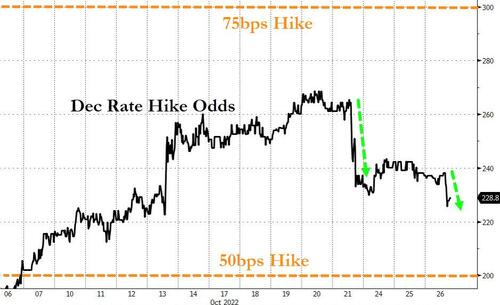
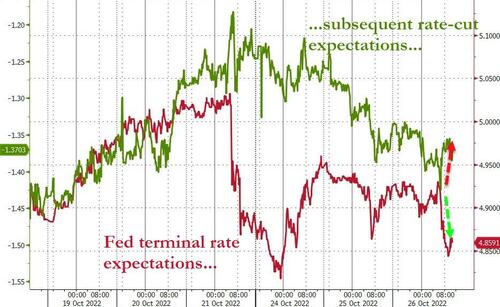
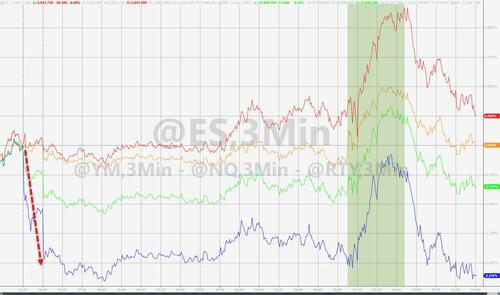
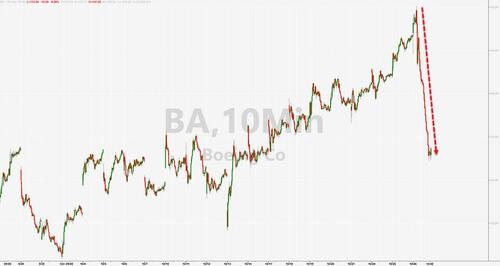
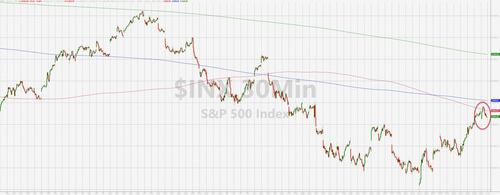
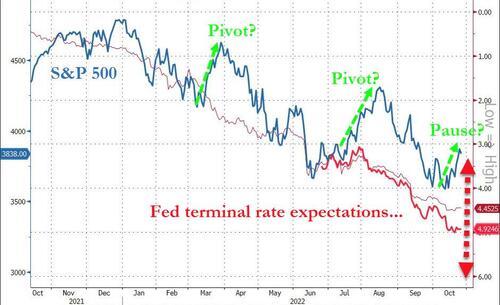
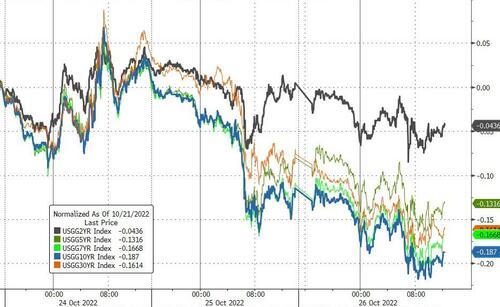
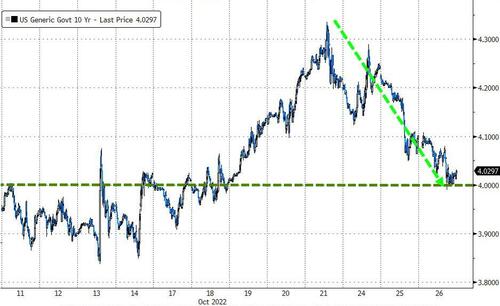
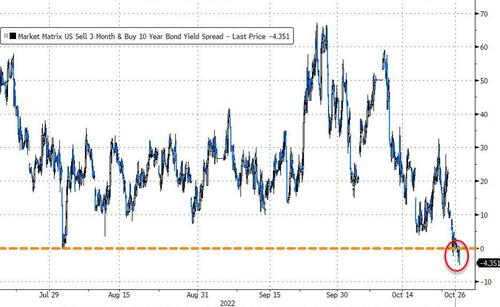
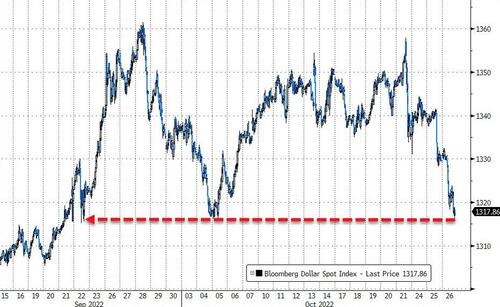
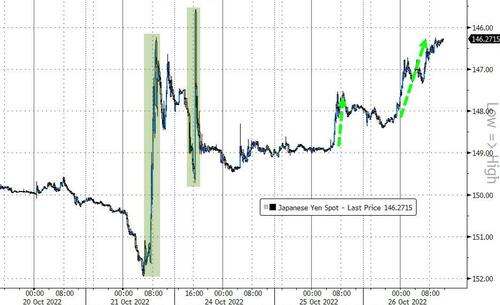
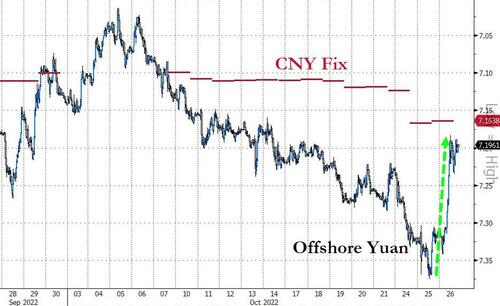
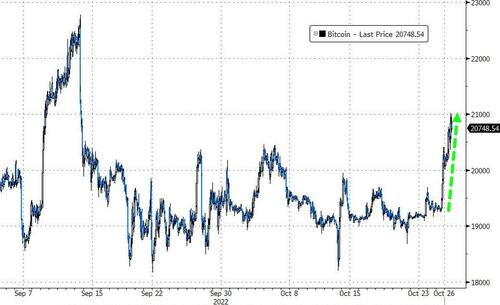
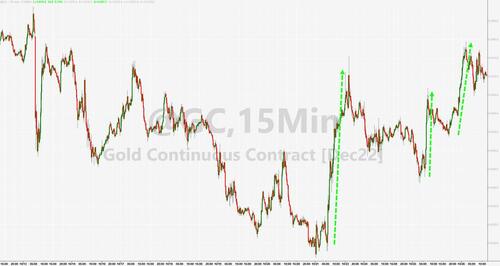
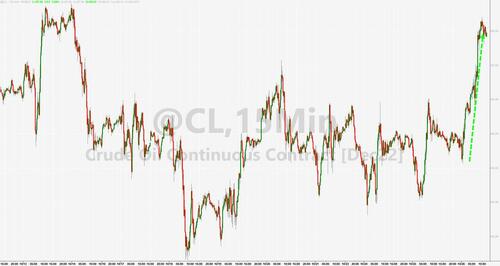

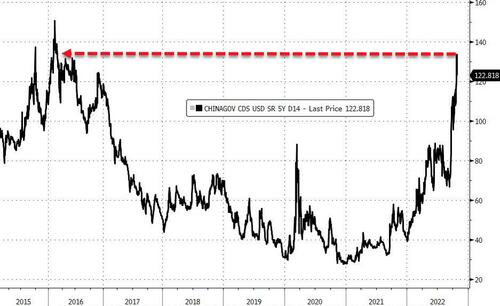


 harveyorganblog.com
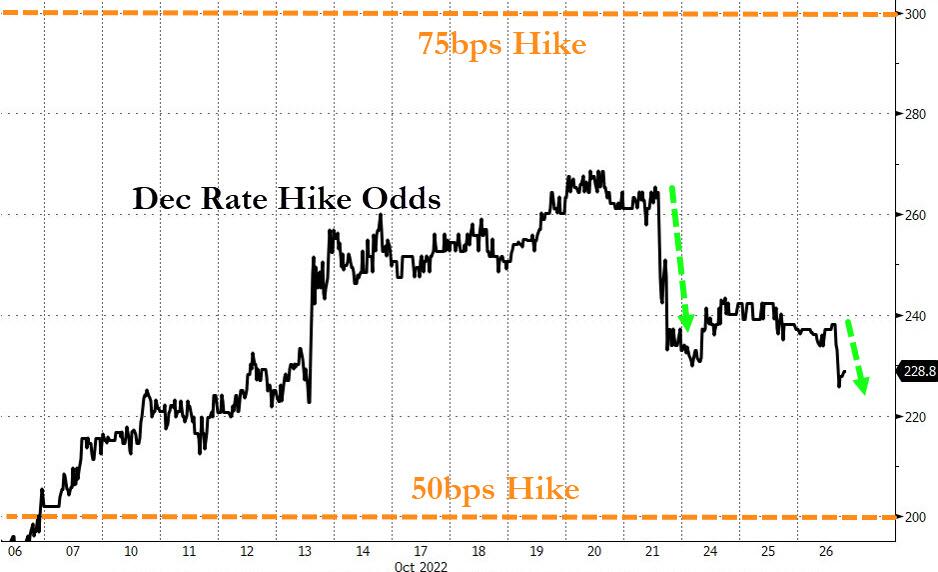
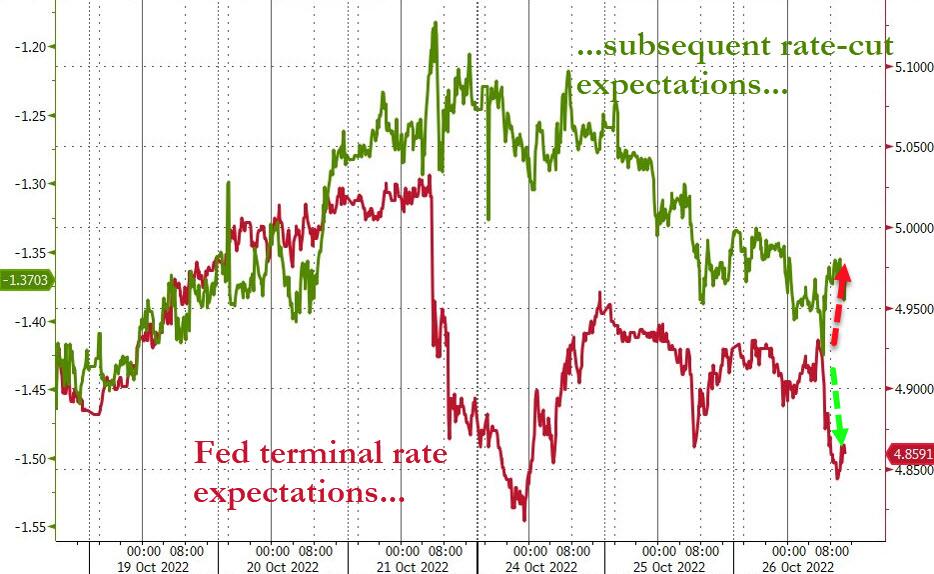
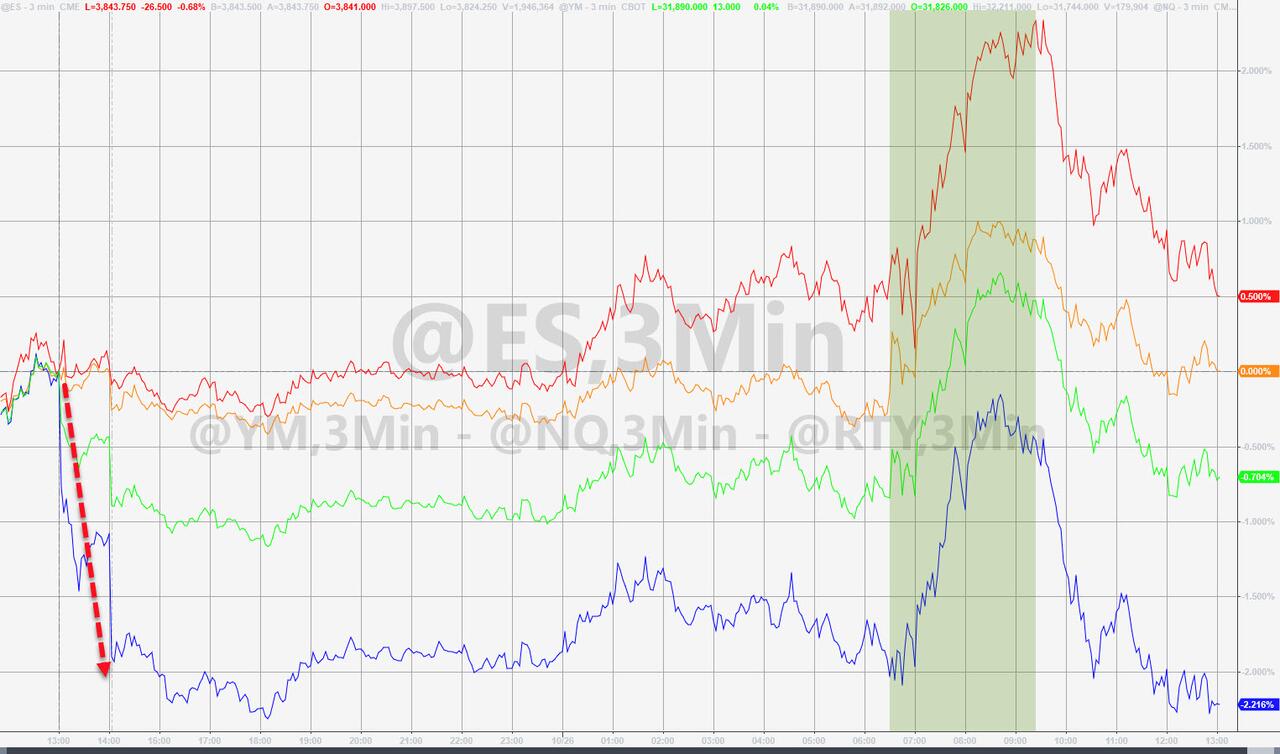
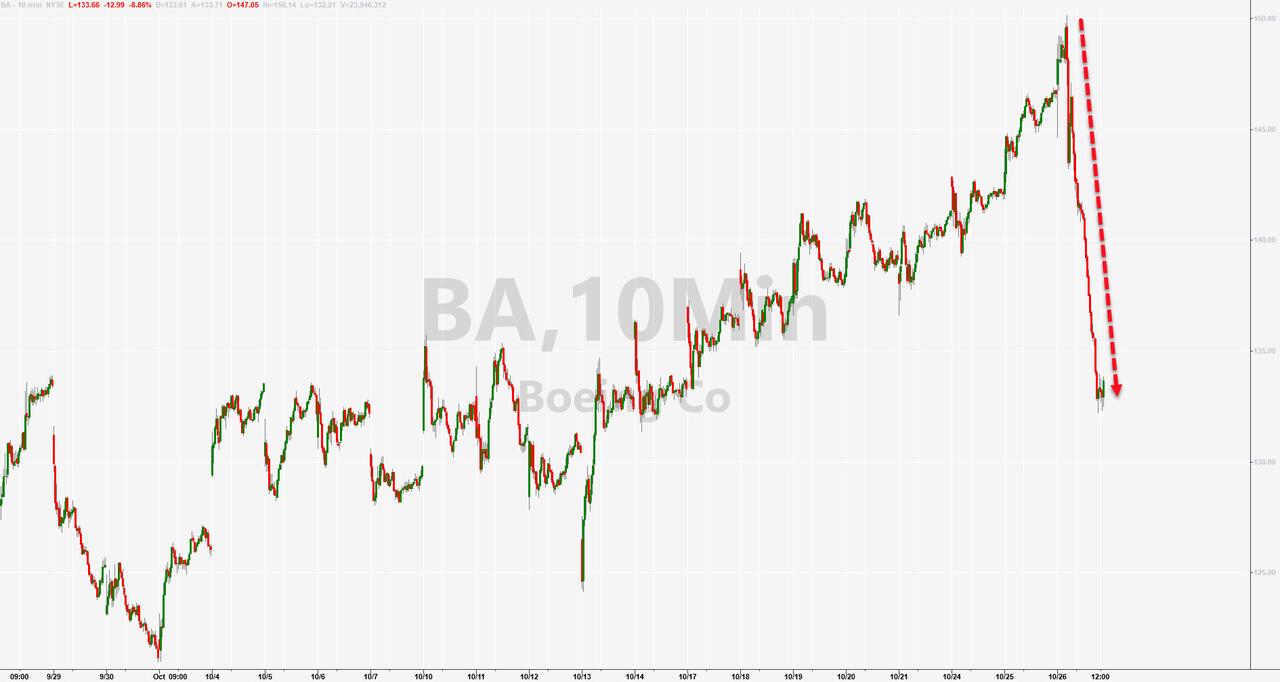
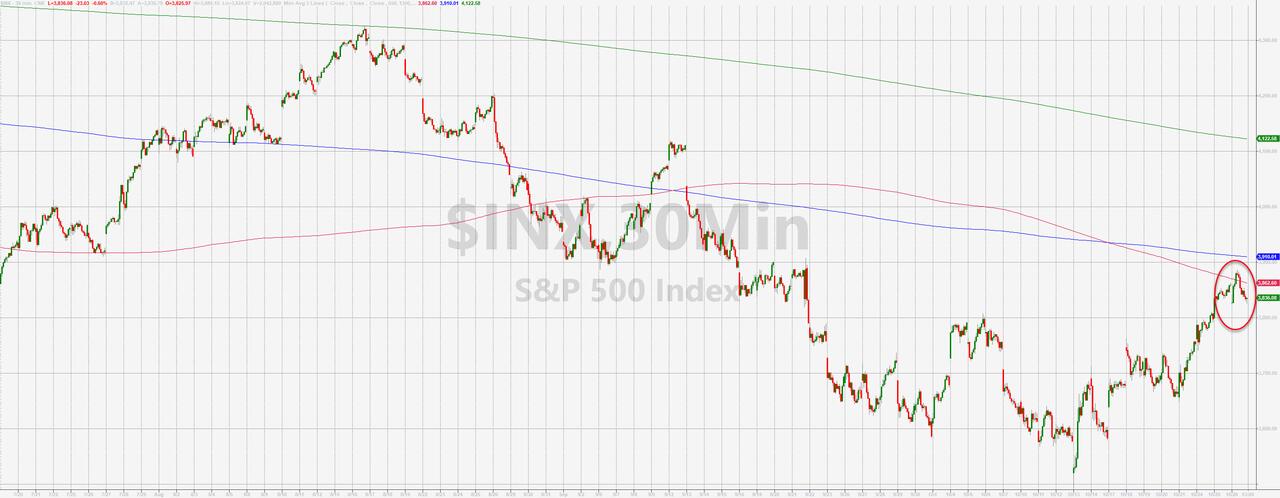
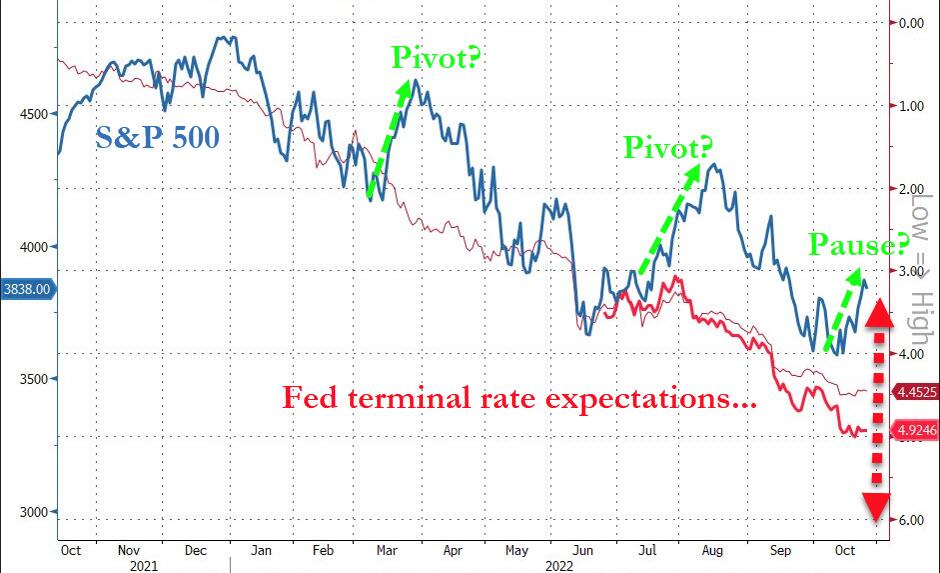
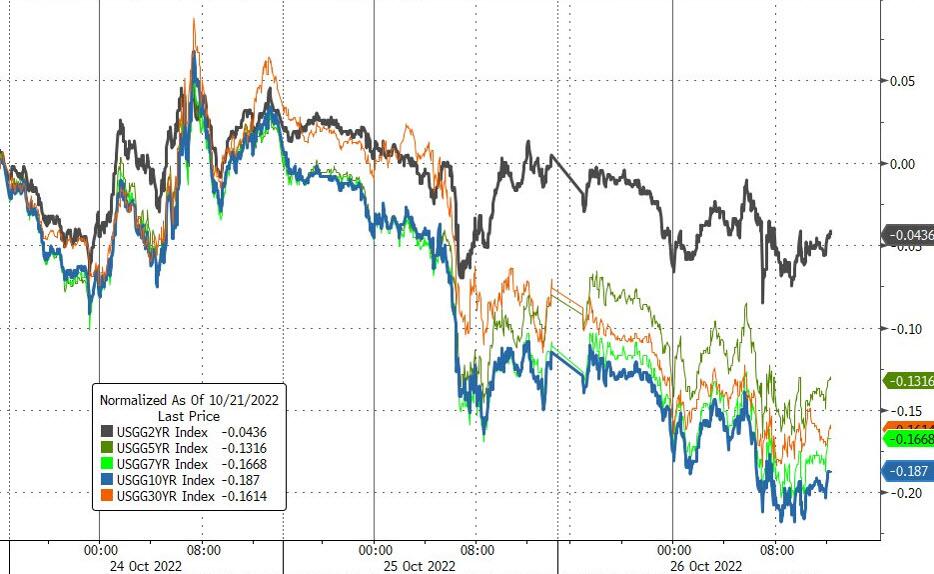
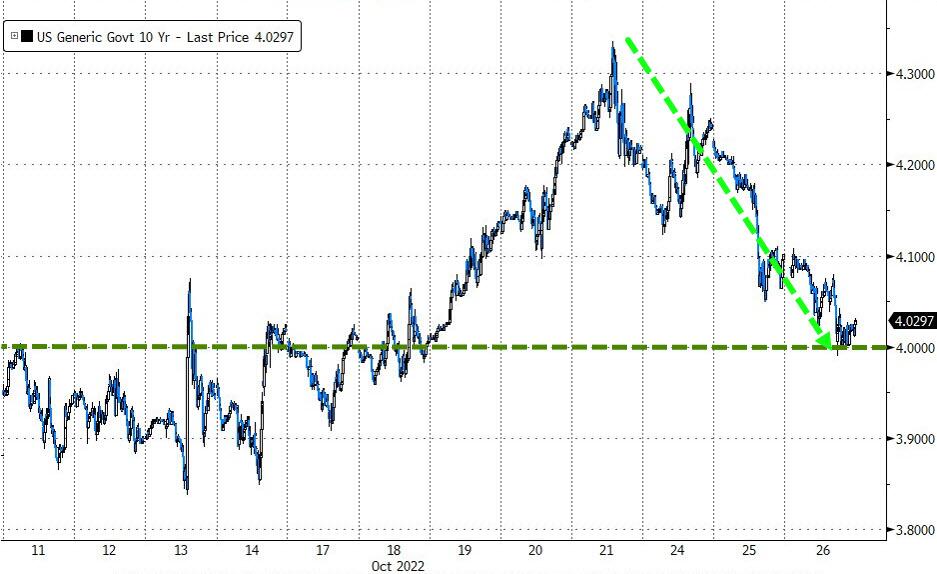
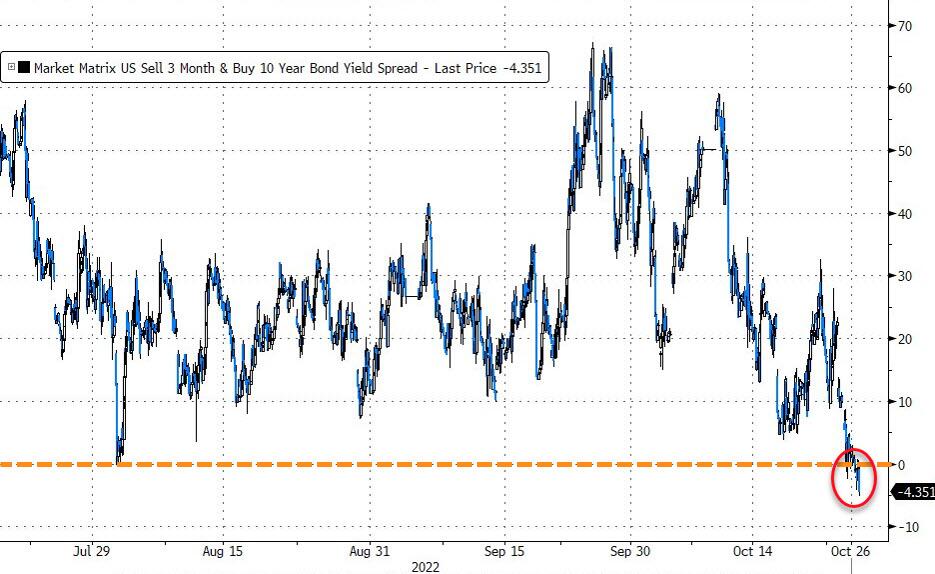
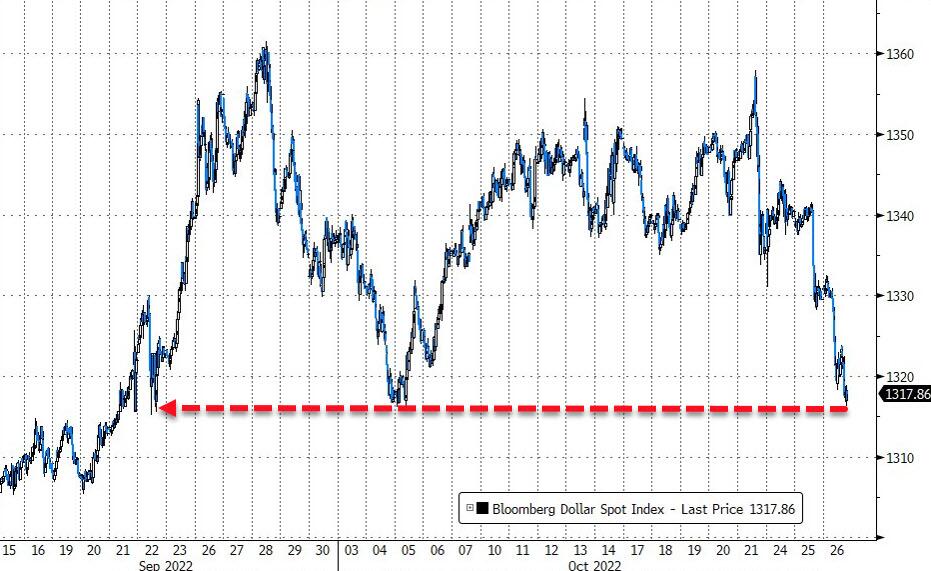
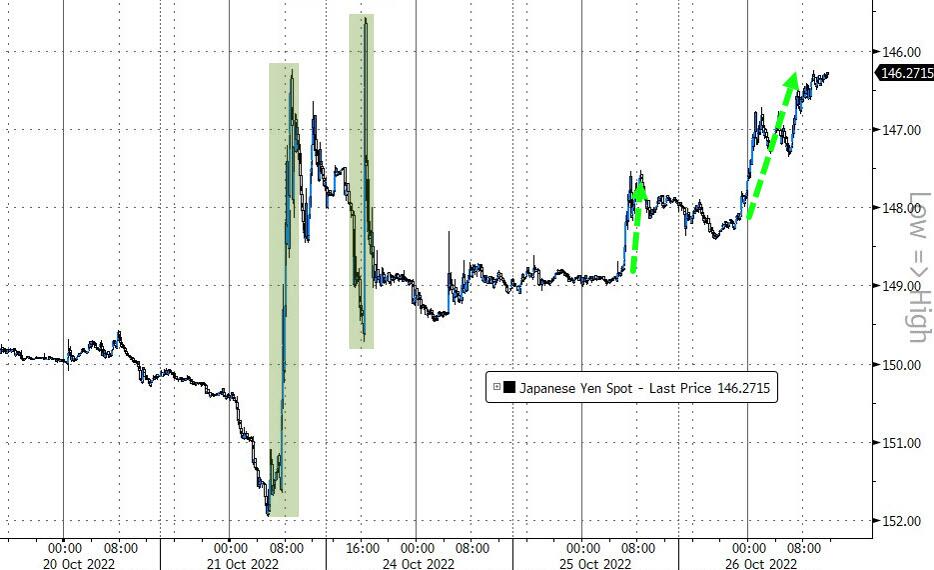
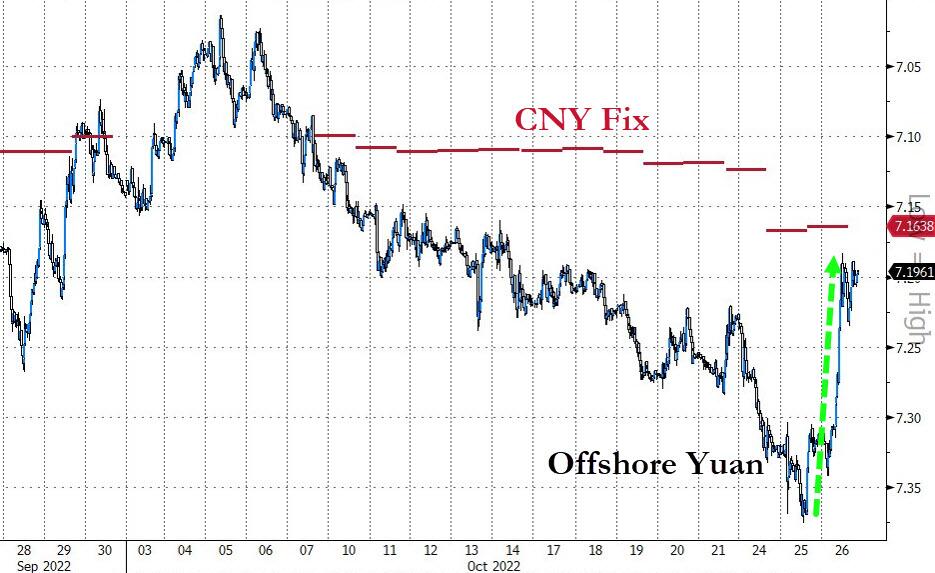

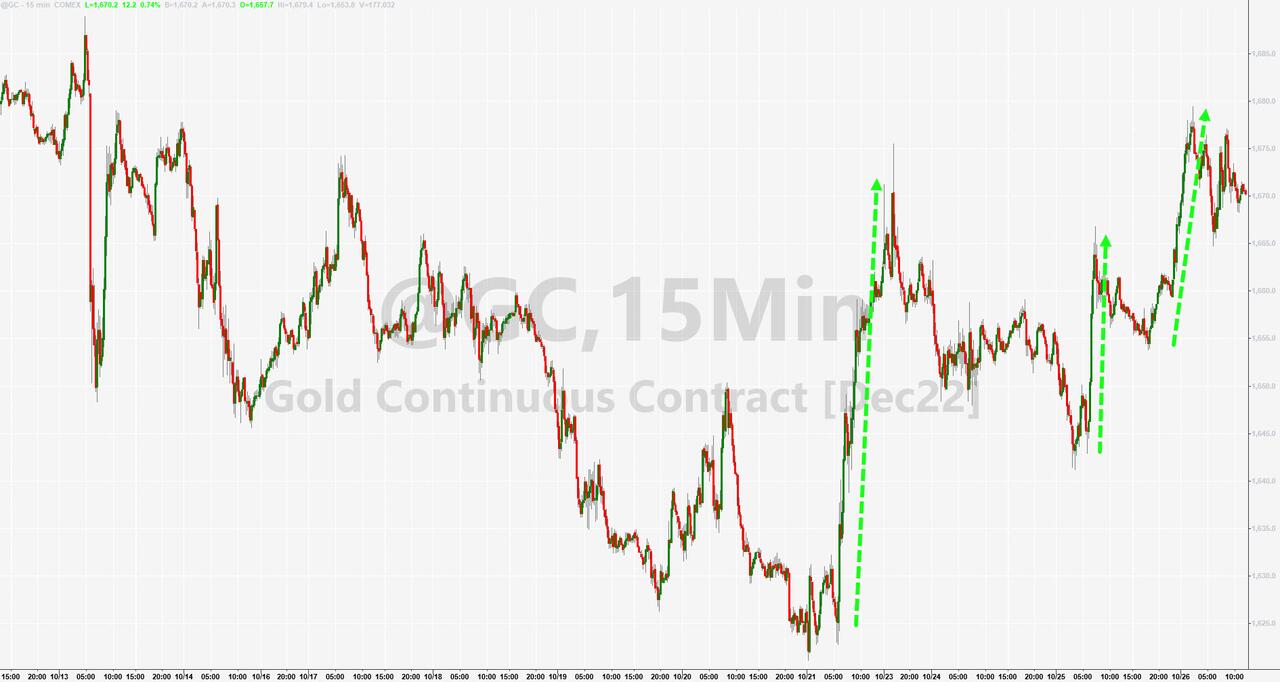
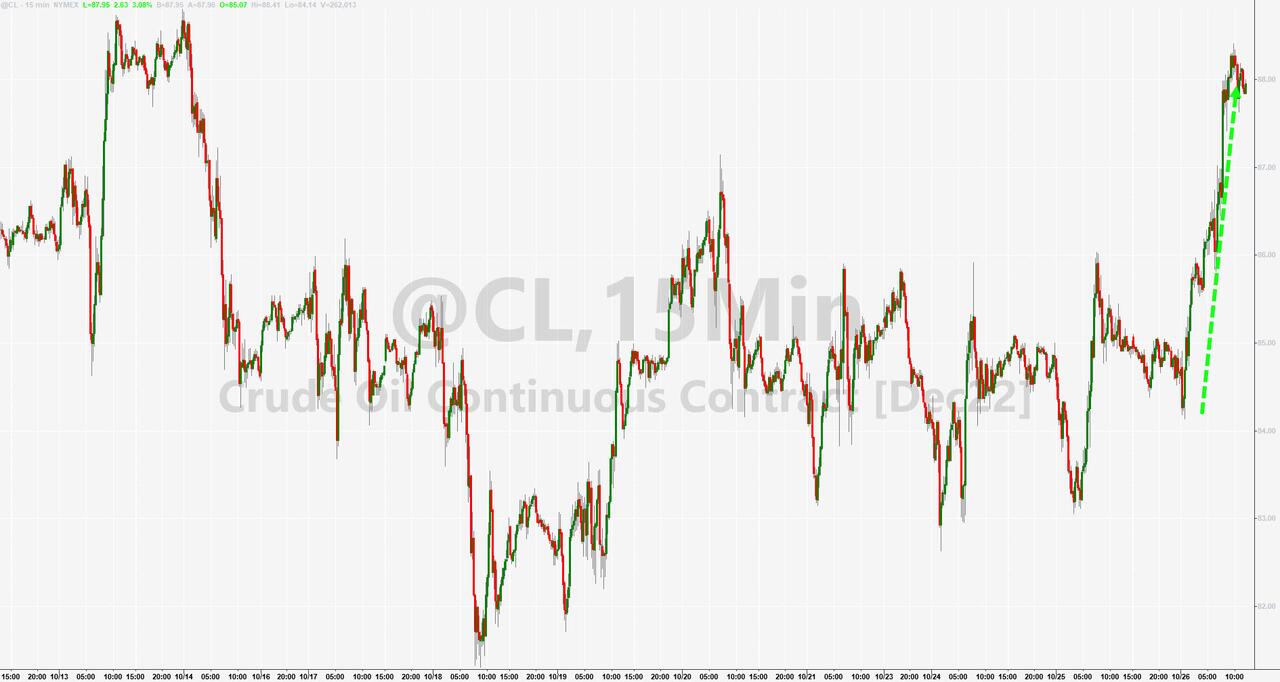
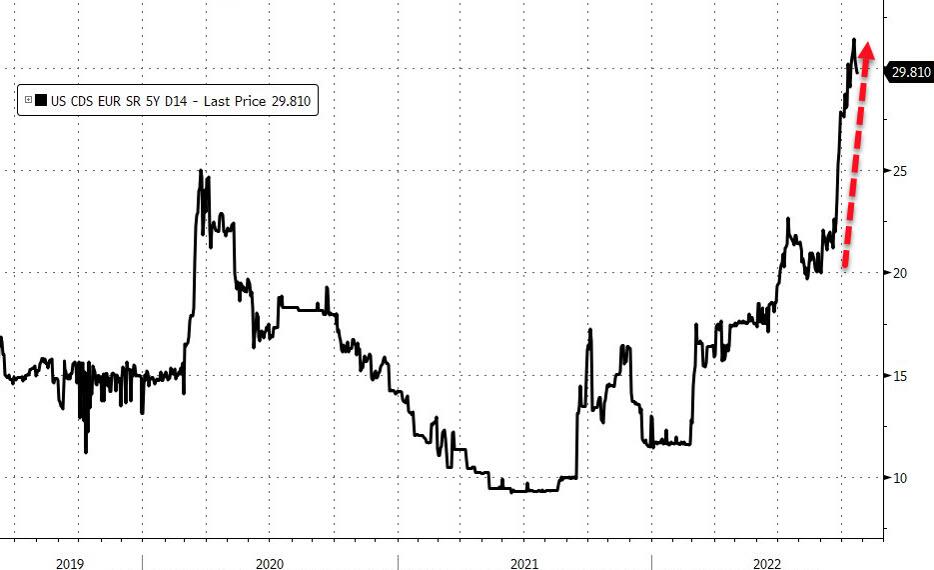
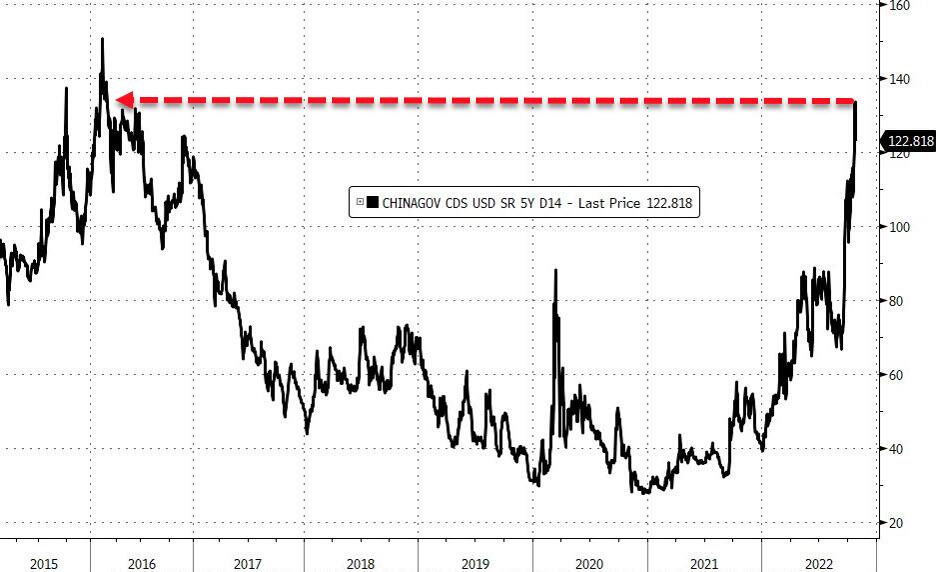
Harvey: Another totally full of shit artical by Greg Hunter. How can you repost this crap? AI spike proteins particles that at are self aware?
Give us a break. Stick with finacial news and stay away from moronic conspiracy theories……..please!
LikeLike
[…] by Harvey Organ, Harvey Organ Blog: […]
LikeLike
[…] by Harvey Organ of Harvey Organ Blog […]
LikeLike