MAY 30/GOLD PRICE UP $14.55 TO $1959.00//SILVER DOWN 9 CENTS TO $23.25//PLATINUM DOWN $5.45 TO $1925.85//PALLADIUM IS UP 30 CENTS TO$1406.50//MUST READS: MATHEW PIEPENBERG AND PETER SCHIFF//IN CHINA HUGE NUMBER OF SHADOW BANKING DEFAULTS//UKRAINE VS RUSSIA UPDATES//GOOD COMMENTARY FROM COL MACGREGOR//TURKISH LIRA COLLAPSES ON THE NEWS OF ERDOGAN’S ELECTION VICTORY///SERBIA AND KOSOVO UNDERGO HUGE BATTLES AT THEIR BORDER//COVID UPDATES/VACCINE IMPACT/DR PAUL ALEXANDER/SLAY NEWS/EVOL NEWS/UPDATES ON THE DEBT CEILING FIASCO//STATE FARM HALTS HOME INSURANCE IN CALIFORNIA AS THEY ARE SUFFERING HUGE LOSSES WITH FIRES ETC//SWAMP STORIES FOR YOU TONIGHT//
GOLD: NUMBER OF NOTICES FILED FOR MAY/2023. CONTRACT: 0 NOTICES FOR 0 OZ or 0.003110 TONNES
total notices so far: 6140 contracts for 614,000 oz (19.094 tonnes)
FOR MAY:
SILVER NOTICES: 4 NOTICE(S) FILED FOR 200,000 OZ/
total number of notices filed so far this month : 2694 for 13,470,000 oz
XXXXXXXXXXXXXXXXXXXXXXXX
Click here if you wish to send a donation. I sincerely appreciate it as this site takes a lot of preparation
END
GLD
WITH GOLD UP UP $14.55
INVESTORS SWITCHING TO SPROTT PHYSICAL (PHYS) INSTEAD OF THE FRAUDULENT GLD//
/NO CHANGES IN GOLD INVENTORY AT THE GLD:////
INVENTORY RESTS AT 941.29 TONNES
Silver//
WITH NO SILVER AROUND AND SILVER DOWN 9 CENTS AT THE SLV//
NO CHANGES IN SILVER INVENTORY AT THE SLV ///: ; : INVESTORS ARE SWITCHING SLV TO SPROTT’S PSLV.
CLOSING INVENTORY: 468.300 MILLION OZ
Let us have a look at the data for today
SILVER//OUTLINE
SILVER COMEX OI FELL BY A HUGE SIZED 1025 CONTRACTS TO 135,152 AND FURTHER FROM THE RECORD HIGH OI OF 244,710, SET FEB 25/2020 AND THIS HUGE SIZED LOSS IN COMEX OI WAS ACCOMPLISHED DESPITE OUR VERY STRONG $0.44 RISE IN SILVER PRICING AT THE COMEX ON FRIDAY. TAS ISSUANCE WAS A TOUCH SMALLER SIZED 517 CONTRACTS. THESE WILL BE USED FOR MANIPULATION NEXT MONTH. CRAIG HEMKE HAS POINTED OUT THAT THE CROOKS USE THE MID MONTH FOR MANIPULATION AS THEY SELL THEIR BUY SIDE OF THE CALENDAR SPREAD FIRST AND THEN KEEP THE SELL SIDE TO LIQUIDATE AT A LATER DATE. THUS WE HAVE TWO VEHICLES THE CROOKS USE FOR MANIPULATION AND BOTH ARE SPREADERS: 1) AT MONTH’S END/SPREADERS COMEX AND 2/ TAS SPREADERS, MID MONTH. TOTAL TAS ISSUED ON FRIDAY: A LITTLE SMALLER 517 CONTRACTS. DESPITE MANY COMPLAINTS THAT THE CROOKS HAVE VIOLATED POSITION LIMITS DUE TO THE FACT THAT THE TAS ISSUED HAVE A VALUE OF ZERO (AS TO POSITION LIMITS) IF A CALENDAR SPREAD OCCURS. IT NATURALLY FELL ON DEAF EARS WITH OUR REGULATORS (OCC) WHEN THEY RECEIVED THE COMPLAINT. IT THUS LOOKS LIKE THE FED (GOV’T) IS BEHIND ALL OF THESE TRADES
WE HAVE THIS YEAR SET ANOTHER RECORD LOW AT 117,395 CONTRACTS ///MARCH 29.2023. OUR BANKERS WERE UNSUCCESSFUL IN KNOCKING THE PRICE OF SILVER DOWN (IT ROSE BY $0.44). BUT WERE UNSUCCESSFUL IN KNOCKING SOME SPEC LONGS AS WE HAD A HUGE LOSS ON OUR TWO EXCHANGES OF 731CONTRACTS. WE HAD 0 CRIMINAL NOTICES FILED IN THE CATEGORY OF EXCHANGE FOR RISK TRANSFER FOR 0 MILLION OZ// ( THE TOTAL ISSUED IN THIS CATEGORY SO FAR THIS MONTH TOTAL 6.750MILLION OZ.). WE HAVE NOW RETURNED TO OUR USUAL AND CUSTOMARY SCENARIO: BANKERS SHORT AND SPECS LONG WITH MANIPULATION NOW MID MONTH AND BEYOND, DUE TO (TAS) MANIPULATION. WE WILL HAVE IN OUR FINAL WEEK IN THE DELIVERY CYCLE MORE MANIPULATION IN OUR PRECIOUS METALS DUE TO COMEX SPREADERS LIQUIDATION ACCOMPANYING OPTIONS EXPIRY ON BOTH THE COMEX AND LONDON’S LBMA ALONG WITH AN ADDED FEATURE OF TAS LIQUIDATION.
WE MUST HAVE HAD:
A FAIR SIZED ISSUANCE OF EXCHANGE FOR PHYSICALS( 245 CONTRACTS) iiii) AN INITIAL SILVER STANDING FOR COMEX SILVER MEASURING AT 13.105 MILLION OZ(FIRST DAY NOTICE) FOLLOWED BY TODAY’S QUEUE JUMP OF 140,000 OZ (QUEUE. JUMP RAISES THE AMOUNT OF SILVER STANDING)+0 MILLION OZ EXCHANGE FOR RISK ISSUED TODAY// TOTAL FOR THE MONTH 6.75MILLION OZ OF EXCHANGE FOR RISK (RAISES THE AMOUNT OF SILVER STANDING):THUS TOTAL OF 20.340 MILLION OZ OF SILVER STANDING FOR DELIVERY V) STRONG SIZED COMEX OI LOSS/ FAIR SIZED EFP ISSUANCE/VI) SMALLER NUMBER OF T.A.S. CONTRACT INITIATION (517 CONTRACTS)//CONSIDERABLE T.A.S LIQUIDATION MANIPULATING THE PRICE SOUTHBOUND FRIDAY.
I AM NOW RECORDING THE DIFFERENTIAL IN OI FROM PRELIMINARY TO FINAL -removed 49CONTRACTS
HISTORICAL ACCUMULATION OF EXCHANGE FOR PHYSICALS MAY. ACCUMULATION FOR EFP’S SILVER/JPMORGAN’S HOUSE OF BRIBES/STARTING FROM FIRST DAY/MONTH OF MAY:
TOTAL CONTRACTS for 21 days, total 13,055 contracts: OR 65.275 MILLION OZ . (621 CONTRACTS PER DAY)
TOTAL EFP’S FOR THE MONTH SO FAR: 65.275 MILLION OZ
LAST 23 MONTHS TOTAL EFP CONTRACTS ISSUED IN MILLIONS OF OZ:
MAY 137.83 MILLION
JUNE 149.91 MILLION OZ
JULY 129.445 MILLION OZ
AUGUST: MILLION OZ 140.120
SEPT. 28.230 MILLION OZ//
OCT: 94.595 MILLION OZ
NOV: 131.925 MILLION OZ
DEC: 100.615 MILLION OZ
YEAR 2022:
JAN 2022-DEC 2022
JAN 2022// 90.460 MILLION OZ
FEB 2022: 72.39 MILLION OZ//
MARCH: 207.430 MILLION OZ//A NEW RECORD FOR EFP ISSUANCE
APRIL: 114.52 MILLION OZ FINAL//LOW ISSUANCE
MAY: 105.635 MILLION OZ//
JUNE: 94.470 MILLION OZ
JULY : 87.110 MILLION OZ
AUGUST: 65.025 MILLION OZ
SEPT. 74.025 MILLION OZ///FINAL
OCT. 29.017 MILLION OZ FINAL
NOV: 134.290 MILLION OZ//FINAL
DEC, 61.395 MILLION OZ FINAL
TOTALS YR 2022: 1135.767 MILLION OZ (1.1356 BILLION OZ)
JAN 2023/// 53.070 MILLION OZ //FINAL
FEB: 2023: 100.105 MILLION OZ/FINAL//MUCH STRONGER ISSUANCE VS THE LATTER TWO MONTHS.
MARCH 2023: 112.58MILLION OZ//FINAL//STRONG ISSUANCE
APRIL 118.035 MILLION OZ(SLIGHTLY GREATER THAN THAN LAST MONTH)
MAY 65.275 MILLION OZ/INITIAL (MUCH SMALLER THIS MONTH)
RESULT: WE HAD A HUGE SIZED DECREASE IN COMEX OI SILVER COMEX CONTRACTS OF 976 CONTRACTS DESPITE OUR STRONG SIZED $0.44 GAIN
IN SILVER PRICING AT THE COMEX//FRIDAY.,. THE CME NOTIFIED US THAT WE HAD A SMALL SIZED EFP ISSUANCE CONTRACTS: 245 ISSUED FOR JULY AND 0 CONTRACTS ISSUED FOR ALL OTHER MONTHS) WHICH EXITED OUT OF THE SILVER COMEX TO LONDON AS FORWARDS./ WE HAVE A GOOD INITIAL SILVER OZ STANDING FOR MAY OF 13.105 MILLION OZ//FIRST DAY NOTICE FOLLOWED BY TODAY’S QUEUE JUMP OF 140,000 OZ (INCREASES THE AMOUNT OF SILVER STANDING) +// + 0 MILLION NEW EXCHANGE FOR RISK TODAY (INCREASES THE AMOUNT OF SILVER STANDING) //TOTAL EXCHANGE FOR RISK MONTH= 6.75 MILLION//NEW TOTALS 13.590 MILLION OZ + 6.75 MILLION EXCH./RISK = 20.340 MILLION OZ STANDING FOR MAY// .. WE HAVE A HUGE SIZED LOSS OF 731 OI CONTRACTS ON THE TWO EXCHANGES. THE TOTAL OF TAS INITIATED CONTRACTS TODAY: A SMALLER 517//CONSIDERABLE FRONT END OF THE TAS CONTRACTS WERE LIQUIDATED FRIDAY. THE NEW TAS ISSUANCE WILL BE PUT INTO “THE BANK” TO BE COLLUSIVELY USED AT A LATER DATE.
WE HAD 4 NOTICE(S) FILED TODAY FOR 20,000 OZ
THE SILVER COMEX IS NOW BEING ATTACKED FOR METAL BY LONDONERS ET AL.
GOLD//OUTLINE
IN GOLD, THE COMEX OPEN INTEREST FELL BY A VERY STRONG SIZED 12,768 CONTRACTS TO 453,348 AND FURTHER FROM THE RECORD (SET JAN 24/2020) AT 799,541 AND PREVIOUS TO THAT: (SET JAN 6/2020) AT 797,110.
THE DIFFERENTIAL FROM PRELIMINARY OI TO FINAL OI IN GOLD TODAY: REMOVED – 296 CONTRACTS
WE HAD A VERY STRONG SIZED DECREASE IN COMEX OI ( 12,768 CONTRACTS) DESPITE OUR $0.90 GAIN IN PRICE. WE ALSO HAD A STRONG INITIAL STANDING IN GOLD TONNAGE FOR MAY. AT 3.5085 TONNES ON FIRST DAY NOTICE // PLUS 0 OZ QUEUE. JUMP :(QUEUE JUMPING = EXERCISING LONDON BASED EFP’S, ATTACHED TO COMEX CONTRACTS ) (EFP is the transfer of COMEX contracts immediately to London for potential gold deliveries originating from London)/+ /A LARGER ISSUANCE OF 1016 T.A.S. CONTRACTS/STRONG FRONT END OF TAS LIQUIDATION FRIDAY ////YET ALL OF..THIS HAPPENED WITH ONLY A $0.90 GAIN IN PRICEWITH RESPECT TO FRIDAY’S TRADING.WE HAD A STRONG SIZED LOSS OF 10,074 OI CONTRACTS (31.33 PAPER TONNES) ON OUR TWO EXCHANGES.
E.F.P. ISSUANCE
THE CME RELEASED THE DATA FOR EFP ISSUANCE AND IT TOTALED A FAIR SIZED 2694 CONTRACTS:
The NEW COMEX OI FOR THE GOLD COMPLEX RESTS AT 453,348
IN ESSENCE WE HAVE A GOOD SIZED DECREASE IN TOTAL CONTRACTS ON THE TWO EXCHANGES OF 10,074 CONTRACTS WITH 12,768 CONTRACTS DECREASED AT THE COMEX//TAS CONTRACTS INITIATED (ISSUED): 1016 CONTRACTS) AND 2694 EFP OI CONTRACTS WHICH NAVIGATED OVER TO LONDON. THUS TOTAL OI LOSS ON THE TWO EXCHANGES OF 10,074CONTRACTS OR 31.33TONNES.
CALCULATIONS ON GAIN/LOSS ON OUR TWO EXCHANGES
WE HAD A FAIR SIZED ISSUANCE IN EXCHANGE FOR PHYSICALS (2694 CONTRACTS) ACCOMPANYING THE STRONG SIZED LOSS IN COMEX OI (12,768) //TOTAL LOSS FOR OUR THE TWO EXCHANGES: 10,074 CONTRACTS. WE HAVE ( 1) NOW RETURNED TO OUR NORMAL FORMAT OF BANKERS GOING SHORT AND SPECULATORS GOING LONG ,2.) GOOD INITIAL STANDING AT THE GOLD COMEX FOR MAY AT 3.5085 TONNES FOLLOWED BY TODAY’S QUEUE JUMP OF 0 OZ // NEW STANDING: 19.094 TONNES+ 1.244 TONNES OF EXCHANGE FOR RISK//NEW TOTALS FOR GOLD STANDING FOR MAY: 20.338 TONNES // ///3) SOME LONG LIQUIDATION//4) VERY STRONG SIZED COMEX OPEN INTEREST LOSS/ 5) FAIR ISSUANCE OF EXCHANGE FOR PHYSICAL PAPER///6: LARGER T.A.S. ISSUANCE: 1016 CONTRACTS
HISTORICAL ACCUMULATION OF EXCHANGE FOR PHYSICALS IN 2023 INCLUDING TODAY
MAY
ACCUMULATION OF EFP’S GOLD AT J.P. MORGAN’S HOUSE OF BRIBES: (EXCHANGE FOR PHYSICAL) FOR THE MONTH OF MAY :
TOTAL EFP CONTRACTS ISSUED: 71,385 CONTRACTS OR 7,138,500 OZ OR 222.03 TONNES IN 21 TRADING DAY(S) AND THUS AVERAGING: 3399 EFP CONTRACTS PER TRADING DAY
TO GIVE YOU AN IDEA AS TO THE SIZE OF THESE EFP TRANSFERS : THIS MONTH IN 21 TRADING DAY(S) IN TONNES 222.03 TONNES
TOTAL ANNUAL GOLD PRODUCTION, 2022, THROUGHOUT THE WORLD EX CHINA EX RUSSIA: 3555 TONNES
THUS EFP TRANSFERS REPRESENTS 222.03/3550 x 100% TONNES 6.25% OF GLOBAL ANNUAL PRODUCTION
SEPT 142.12 TONNES FINAL ISSUANCE ( LOW ISSUANCE)_
OCT: 141.13 TONNES FINAL ISSUANCE (LOW ISSUANCE)
NOV: 312.46 TONNES FINAL ISSUANCE//NEW RECORD!! (INCREASING DRAMATICALLY)//SIGN OF REAL STRESS//SURPASSING THE MARCH 2021 RECORD OF 276.50 TONNES OF EFP
DEC. 175.62 TONNES//FINAL ISSUANCE//
TOTALS: 2,578.08 TONNES/2021
JAN:2022 247.25 TONNES //FINAL
FEB: 196.04 TONNES//FINAL
MARCH: 409.30 TONNES INITIAL( THIS IS NOW A RECORD EFP ISSUANCE FOR MARCH AND FOR ANY MONTH.
APRIL: 169.55 TONNES (FINAL VERY LOW ISSUANCE MONTH)
MAY: 247.44 TONNES FINAL//
JUNE: 238.13 TONNES FINAL
JULY: 378.43 TONNES FINAL
AUGUST: 180.81 TONNES FINAL
SEPT. 193.16 TONNES FINAL
OCT: 177.57 TONNES FINAL ( MUCH SMALLER THAN LAST MONTH)
NOV. 223.98 TONNES//FINAL ( MUCH LARGER THAN PREVIOUS MONTHS//comex running out of physical)
DEC: 185.59 tonnes // FINAL
TOTAL: 2,847,25 TONNES/2022
JAN 2023: 228.49 TONNES FINAL//HUGE AMOUNT OF EFP’S ISSUED THIS MONTH!!
FEB: 151.61 TONNES/FINAL
MARCH: 280.09 TONNES/INITIAL (ANOTHER STRONG MONTH FOR EFP ISSUANCE)
APRIL: 197.42 TONNES ( MUCH SMALLER THAN LAST MONTH)
MAY: 222.03 TONNES
SPREADING OPERATIONS
(/NOW SWITCHING TO GOLD) FOR NEWCOMERS, HERE ARE THE DETAILS
SPREADING LIQUIDATION HAS NOW COMMENCED AS WE HEAD TOWARDS THE NEW ACTIVE FRONT MONTH OF JUNE. WE ARE NOW INTO THE SPREADING OPERATION OF GOLD
HERE IS A BRIEF SYNOPSIS OF HOW THE CROOKS FLEECE UNSUSPECTING LONGS IN THE SPREADING ENDEAVOUR ;MODUS OPERANDI OF THE CORRUPT BANKERS AS TO HOW THEY HANDLE THEIR SPREAD OPEN INTERESTS:HERE IS HOW THE CROOKS USED SPREADING AS WE ARE NOW INTO THE NON ACTIVE DELIVERY MONTH OF MAY HEADING TOWARDS THE ACTIVE DELIVERY MONTH OF JUNE., FOR BOTH GOLD:
YOU WILL ALSO NOTICE THAT THE COMEX OPEN INTEREST STARTS TO RISE BUT SO IS THE OPEN INTEREST OF SPREADERS. THE OPEN INTEREST IN WILL CONTINUE TO RISE UNTIL ONE WEEK BEFORE FIRST DAY NOTICE OF AN UPCOMING ACTIVE DELIVERY MONTH (JUNE), AND THAT IS WHEN THE CROOKS SELL THEIR SPREAD POSITIONS BUT NOT AT THE SAME TIME OF THE DAY. THEY WILL USE THE SELL SIDE OF THE EQUATION TO CREATE THE CASCADE (ALONG WITH THEIR COLLUSIVE FRIENDS) AND THEN COVER ON THE BUY SIDE OF THE SPREAD SITUATION AT THE END OF THE DAY. THEY DO THIS TO AVOID POSITION LIMIT DETECTION. THE LIQUIDATION OF THE SPREADING FORMATION CONTINUES FOR EXACTLY ONE WEEK AND ENDS ON FIRST DAY NOTICE.”
WHAT IS ALARMING TO ME, ACCORDING TO OUR LONDON EXPERT ANDREW MAGUIRE IS THAT THESE EFP’S ARE BEING TRANSFERRED TO WHAT ARE CALLED SERIAL FORWARD CONTRACT OBLIGATIONS AND THESE CONTRACTS ARE LESS THAN 14 DAYS. ANYTHING GREATER THAN 14 DAYS, THESE MUST BE RECORDED AND SENT TO THE COMPTROLLER, GREAT BRITAIN TO MONITOR RISK TO THE BANKING SYSTEM. IF THIS IS INDEED TRUE, THEN THIS IS A MASSIVE CONSPIRACY TO DEFRAUD AS WE NOW WITNESS A MONSTROUS TOTAL EFP’S ISSUANCE AS IT HEADS INTO THE STRATOSPHERE.
The crooks also use the spread in the TAS account (trade at settlement). They buy the spot TAS (e.g. June) and sell the future TAS two months out (e.g. August). Then they unload the front month (i.e. unload the buy side first so the price of gold/silver falls. This occurs in the middle of the front delivery month cycle. They unload the sell side of the equation, two months down the road. The crooks violate position limits as the OCC refuse to hear our complaints.
First, here is an outline of what will be discussed tonight:
1.Today, we had the open interest at the comex, in SILVER FELL BY A STRONG SIZED 1025 CONTRACTS OI TO 135,152 AND FURTHER FROM OUR COMEX HIGH RECORD //244,710(SET FEB 25/2020). THE LAST RECORDS WERE SET IN AUG.2018 AT 244,196 WITH A SILVER PRICE OF $14.78/(AUGUST 22/2018)..THE PREVIOUS RECORD TO THAT WAS SET ON APRIL 9/2018 AT 243,411 OPEN INTEREST CONTRACTS WITH THE SILVER PRICE AT THAT DAY: $16.53). AND PREVIOUS TO THAT, THE RECORD WAS ESTABLISHED AT: 234,787 CONTRACTS, SET ON APRIL 21.2017 OVER 5 YEARS AGO. HOWEVER WE HAVE SET A NEW RECORD LOW OF 117,395 CONTRACTS MARCH 27/2022
EFP ISSUANCE 245 CONTRACTS
OUR CUSTOMARY MIGRATION OF COMEX LONGS CONTINUE TO MORPH INTO LONDON FORWARDS AS OUR BANKERS USED THEIR EMERGENCY PROCEDURE TO ISSUE:
JULY 245 and ALL OTHER MONTHS: ZERO. TOTAL EFP ISSUANCE: 245 CONTRACTS. EFP’S GIVE OUR COMEX LONGS A FIAT BONUS PLUS A DELIVERABLE PRODUCT OVER IN LONDON. IF WE TAKE THE COMEX OI LOSS OF 10,074 CONTRACTS AND ADD TO THE 245OI TRANSFERRED TO LONDON THROUGH EFP’S,
WE OBTAIN A HUGE SIZED LOSS OF OPEN INTEREST CONTRACTS FROM OUR TWO EXCHANGES OF 780 CONTRACTS
THUS IN OUNCES, THE LOSS ON THE TWO EXCHANGES TOTAL 3.900 MILLION OZ
ii a) Chris Powell of GATA provides to us very important physical commentaries
b. Other gold/silver commentaries
c. Commodity commentaries//
d)/CRYPTOCURRENCIES/BITCOIN ETC
2.ASIAN AFFAIRS//
TUESDAY MORNING//MONDAY NIGHT
SHANGHAI CLOSED UP 2.77 PTS OR 0.09% //Hang Seng CLOSED UP 44.67 PTS OR .24% /The Nikkei closed DOWN 94.62 OR .30% //Australia’s all ordinaries CLOSED DOWN 0.11 % /Chinese yuan (ONSHORE) closed DOWN 7.0808 /OFFSHORE CHINESE YUAN DOWN TO 7.0904 /Oil DOWN TO 71.82 dollars per barrel for WTI and BRENT AT 75/96 / Stocks in Europe OPENED ALL MIXED// ONSHORE YUAN TRADING ABOVE LEVEL OF OFFSHORE YUAN/ONSHORE YUAN TRADING WEAKER AGAINST US DOLLAR/OFFSHORE WEAKER
1. COMEX DATA//AMOUNTS STANDING//VOLUME OF TRADING/INVENTORY MOVEMENTS
GOLD
LET US BEGIN:
THE TOTAL COMEX GOLD OPEN INTEREST FELL BY A STRONG SIZED 12,472 CONTRACTS DOWN TO 453,644 DESPITE OUR GAIN IN PRICE OF $0.90 ON FRIDAY,
EXCHANGE FOR PHYSICAL ISSUANCE
WE ARE NOW IN THE ACTIVE DELIVERY MONTH OF MAY… THE CME REPORTS THAT THE BANKERS ISSUED A FAIR SIZED TRANSFER THROUGH THE EFP ROUTE AS THESE LONGS RECEIVED A DELIVERABLE LONDON FORWARD TOGETHER WITH A FIAT BONUS.,
THAT IS 2694 EFP CONTRACTS WERE ISSUED: : JUNE 2694 & ZERO FOR ALL OTHER MONTHS:
TOTAL EFP ISSUANCE: 2694 CONTRACTS
ON A NET BASIS IN OPEN INTEREST WE LOST THE FOLLOWING TODAY ON OUR TWO EXCHANGES: A STRONG SIZED TOTAL OF 10,074 CONTRACTS IN THAT 2694LONGS WERE TRANSFERRED AS FORWARDS TO LONDON AND WE HAD A VERY STRONG SIZED LOSS OF 12,768 COMEX CONTRACTS..AND THIS STRONG SIZED LOSS ON OUR TWO EXCHANGES HAPPENED DESPITE OUR GAIN IN PRICE OF 90 CENTS. AS PER OUR NEWBIE TRADE AT SETTLEMENT (TAS) MANIPULATION OPERATION (WHICH CRAIG HEMKE HAS POINTED OUT HAPPENS DURING MID MONTH IN THE DELIVERY CYCLE, THE CME REPORTS THAT THE TOTAL T.A.S. ISSUANCE TODAY WAS A MUCH STRONGER 1016 CONTRACTS. DURING THIS PAST WEEK THEY SOLD THE LONG SIDE OF THE SPREAD WHICH OF COURSE CONTINUES TO MANIPULATE THE PRICE OF GOLD SOUTHBOUND. (THEY KEEP THE SHORT SIDE OF THE CALENDAR SPREAD WHICH WILL BE LIQUIDATED TWO MONTHS HENCE//(e.g. JUNE TAS 480 AND AUG TAS 524/ALL OTHER MONTHS NEGLIGIBLE). IT NOW LOOKS LIKE T.A.S. MANIPULATION WILL BE US UNTIL MONTH’S END.
// WE HAVE A STRONG AMOUNT OF GOLD TONNAGE STANDING: MAY (20.338) ( NON ACTIVE MONTH)
TONNES),
HERE ARE THE AMOUNTS THAT STOOD FOR DELIVERY IN THE PRECEDING 12 MONTHS OF 2021-2022:
DEC 2021: 112.217 TONNES
NOV. 8.074 TONNES
OCT. 57.707 TONNES
SEPT: 11.9160 TONNES
AUGUST: 80.489 TONNES
JULY: 7.2814 TONNES
JUNE: 72.289 TONNES
MAY 5.77 TONNES
APRIL 95.331 TONNES
MARCH 30.205 TONNES
FEB ’21. 113.424 TONNES
JAN ’21: 6.500 TONNES.
TOTAL YEAR 2021 (JAN- DEC): 601.213 TONNES
YEAR 2022:
JANUARY 2022 17.79 TONNES
FEB 2022: 59.023 TONNES
MARCH: 36.678 TONNES
APRIL: 85.340 TONNES FINAL.
MAY: 20.11 TONNES FINAL
JUNE: 74.933 TONNES FINAL
JULY 29.987 TONNES FINAL
AUGUST:104.979 TONNES//FINAL
SEPT. 38.1158 TONNES
OCT: 77.390 TONNES/ FINAL
NOV 27.110 TONNES/FINAL
Dec. 64.541 tonnes
(TOTAL YEAR 656.076 TONNES)
2003:
JAN/2023: 20.559 tonnes
FEB 2023: 47.744 tonnes
MAR: 19.0637 TONNES
APRIL: 75.676 tonnes
MAY: 19.094 TONNES + 1.244 tonnes of exchange for risk = 20.338
THE SPECS/HFT WERE UNSUCCESSFUL IN LOWERING GOLD’S PRICE( IT ROSE $0.90) //// BUT WERE SUCCESSFUL IN KNOCKING SOME SPECULATOR LONGS AS WE HAD OUR STRONG SIZED LOSS OF 10,074 CONTRACTS ON OUR TWO EXCHANGES. WE HAD CONSIDERABLE TAS LIQUIDATION. AND NOW FOR THE FIRST TIME TAS LIQUIDATION IS EXTENDING PAST MID MONTH. THE TAS ISSUED FRIDAY NIGHT, WILL BE “PUT INTO THE BANK” TO BE USED AT A LATER DATE AT THE COLLUSIVE CHOOSING OF OUR BANKERS.
WE HAVE LOST A TOTAL OI OF 30.413PAPER TONNES OF TOTAL OI FROM OUR TWO EXCHANGES, ACCOMPANYING OUR INITIAL GOLD TONNAGE STANDING FOR MAY. (3.5085 TONNES) //NEW STANDING 19.094 TONNES+1.244 exchange for risk(prior)// new total 20.338 tonnes ALL OF THIS WAS ACCOMPLISHED WITH OUR GAIN IN PRICE TO THE TUNE OF $0.90
WE HAD – REMOVED 296 CONTRACTS TO THE COMEX TRADES TO OPEN INTEREST AFTER TRADING ENDED LAST NIGHT
NET LOSS ON THE TWO EXCHANGES 10,074 CONTRACTS OR 1,007,400 OZ OR 31.33 TONNES.
6044.388 oz Manfra (150 kilobars) Int Delaware (20 kb) HSBC (15 kilobars) Brinks (3 kilobars)
.
nil
Deposit to the Dealer Inventory in oz
Deposits to the Customer Inventory, in oz
nil
No of oz served (contracts) today
0 notice(s) 0 OZ 0.0 TONNES
No of oz to be served (notices)
0 contracts 0 oz 0.0 TONNES
Total monthly oz gold served (contracts) so far this month
6140 notices 614,000 OZ 19.0974 TONNES
Total accumulative withdrawals of gold from the Dealers inventory this month
NIL oz
Total accumulative withdrawal of gold from the Customer inventory this month
x
No dealer withdrawals
Customer deposits: 0
total deposits: nil oz
Withdrawals:
6044.388 oz
Manfra (150 kilobars) 4822.65 oz Int Delaware (20 kb) 643.02 oz HSBC (15 kilobars) 482.285 oz
Brinks (3 kilobars) 96.43 oz
Adjustments; one
dealer to customer Malca: 7523.334 oz
CALCULATIONS FOR THE AMOUNT OF GOLD STANDING FOR MAY.
For the front month of MAY we have an oi of 0 contracts having LOST 1 contracts. We had 1 contracts filed
on FRIDAY, so we GAINED 0 contracts or an additional NIL oz will stand for gold in this non active delivery month of May
June LOST A HUGE 31,886 contracts DOWN to 37,726 contracts. We should have a strong delivery month for June (around 70 tonnes). We have 1 more reading
day before first day notice.
July lost 67 contracts to stand at 2850 contracts.
AUGUST gained 19,404 contracts UP to 355,835 contracts
We had 0 contracts filed for today representing 0 oz
Today, 0 notice(s) were issued from J.P.Morgan dealer account and 0 notices were issued from their client or customer account. The total of all issuance by all participants equate to 0 contract(s) of which 0 notices were stopped (received) by j.P. Morgan dealer and 0 notice(s) was (were) stopped received by J.P.Morgan//customer account and 0 notice(s) received (stopped) by the squid (Goldman Sachs)
To calculate the INITIAL total number of gold ounces standing for the MAY /2023. contract month,
we take the total number of notices filed so far for the month (6,140 x 100 oz ), to which we add the difference between the open interest for the front month of MAY (0 CONTRACT) minus the number of notices served upon today 0 x 100 oz per contract equals 614,000 OZ OR 19.094 TONNES the number of TONNES standing in this NON- active month of May. And now we must add 1.244 tonnes of gold delivery through our 400 contract exchange for risk//new total 20.338 tonnes of gold.
thus the FINAL standings for gold for the MAYcontract month: No of notices filed so far (6,140 x 100 oz) x xxx OI for the front month minus the number of notices served upon today (0)x 100 oz} which equals 614,000 oz standing OR 19.094 TONNES + 1.244 (exchange for risk) = 20.338 tonnes
TOTAL COMEX GOLD STANDING: 20.338 TONNES WHICH IS HUGE FOR A NON ACTIVE DELIVERY MONTH.
TOTAL OF ALL GOLD ELIGIBLE AND REGISTERED: 22,865,285.029 OZ
TOTAL REGISTERED GOLD: 12,007,392.523 (373,34 tonnes)..
TOTAL OF ALL ELIGIBLE GOLD: 10,857,892.506 O Z
REGISTERED GOLD THAT CAN BE SERVED UPON: 10,302,663 OZ (REG GOLD- PLEDGED GOLD) 320.455 tonnes//
END
SILVER/COMEX
MAY 30//2023// THE MAY 2023 SILVER CONTRACT
Silver
Ounces
Withdrawals from Dealers Inventory
NIL oz
Withdrawals from Customer Inventory
288,045.858 oz CNT Delaware Loomis
.
Deposits to the Dealer Inventory
nil oz
Deposits to the Customer Inventory
1.815.101/125 oz Delaware Loomis
No of oz served today (contracts)
4 CONTRACT(S) (20,000 OZ)
No of oz to be served (notices)
24 contracts (120,000 oz)
Total monthly oz silver served (contracts)
2694 Contracts (13,470,000 oz)
Total accumulative withdrawal of silver from the Dealers inventory this month
NIL oz
Total accumulative withdrawal of silver from the Customer inventory this month
i) 0 dealer deposits
total dealer deposit: nil oz
total dealer deposits: 0
total: nil oz
i) We had 0 dealer withdrawal
total dealer withdrawals: oz
We had 2 customer deposits
i) Into Delaware: 15,045.285 oz
ii) Into Loomis: 1,800,055.840 oz
Total deposits: 1,815,101.125 oz
JPMorgan has a total silver weight: 141.313 million oz/273.670 million =51.53% of comex .//dropping fast
Comex withdrawals 3
i) Out of CNT: 17,226.780 oz
ii) Out of Delaware 69,834.922 oz
iii) Out of Loomis: 200,984.156 oz
total withdrawals: 288,045.858 oz
adjustments: 0
TOTAL REGISTERED SILVER: 29;881 MILLION OZ (declining rapidly).TOTAL REG + ELIGIBLE. 273.670 million oz
CALCULATION OF SILVER OZ STANDING FOR MAY
silver open interest data:
FRONT MONTH OF MAY /2023 OI: 28 CONTRACTS HAVING LOST 104 CONTRACT(S). WE HAD 132 CONTRACTS FILED ON THURSDAY, SO WE GAINED 28 CONTRACTS OR AN ADDITIONAL 140,000 OZ WILL STAND FOR DELIVERY ON THIS SIDE OF THE POND
JUNE HAD A 72 CONTRACT LOSS TO 1042
JULY HAD A 1643 CONTRACT LOSS TO 104,873 CONTRACTS
TOTAL NUMBER OF NOTICES FILED FOR TODAY: 4 for 20,000 oz
Comex volumes// est. volume today 81,262 excellent/
Comex volume: confirmed yesterday: 63,370 good
To calculate the number of silver ounces that will stand for delivery in MAY. we take the total number of notices filed for the month so far at 2694 x 5,000 oz = 13,470,000 oz
to which we add the difference between the open interest for the front month of MAY(28) and the number of notices served upon today 4 x (5000 oz) equals the number of ounces standing.
Thus the standings for silver for the MAY/2023 contract month: 2694 (notices served so far) x 5000 oz + OI for the front month of May (28) – number of notices served upon today (4 )x 500 oz of silver standing for the MAY contract month equates to 13.590 million oz + THE CRIMINAL 0 MILLION OZ EXCHANGE FOR RISK TODAY//NEW TOTAL EXCHANGE FOR RISK: 6.750//NEW TOTAL 20.340 MILLION OZ//
the record level of silver open interest is 234,787 contracts set on April 21./2017 with the price on that day at $18.42. The previous record was 224,540 contracts with the price at that time of $20.44
END
GLD AND SLV INVENTORY LEVELS
MAY 30/WITH GOLD UP $14.55 TODAY: NO CHANGES IN GOLD INVENTORY AT THE GLD//INVENTORY RESTS AT 941.29 TONNES
MAY 26/WITH GOLD UP $.90 TODAY: NO CHANGES IN GOLD INVENTORY AT THE GLD//INVENTORY REST AT 941.29 TONNES
MAY 25/WITH GOLD DOWN $19.70 TODAY: NO CHANGES IN GOLD INVENTORY AT THE GLD//INVENTORY RESTS AT 941.29 TONNES
MAY 24/WITH GOLD DOWN $9.50 TODAY:HUGE CHANGES IN GOLD INVENTORY AT THE GLD: A WITHDRAWAL OF 1.45 TONNES OF GOLD FROM THE GLD////INVENTORY RESTS AT 941.29 TONNES
MAY 23/WITH GOLD $2.25 TODAY: NO CHANGES IN GOLD INVENTORY AT THE GLD//INVENTORY RESTS AT 942.74 TONNES
MAY 22/WITH GOLD DOWN $4.70 TODAY: HUGE CHANGES IN GOLD INVENTORY AT THE GLD: A DEPOSIT OF 5.83 TONES OF GOLD INTO THE GLD DESPITE THE L0SS IN PRICE//INVENTORY RESTS AT 942.74 TONNES
MAY 19/WITH GOLD UP $22.20 TODAY: NO CHANGES IN GOLD INVENTORY AT THE GLD//INVENTORY RESTS AT 936.96 TONNES
MAY 18/WITH GOLD DOWN $23.80 TODAY: HUGE CHANGES IN GOLD INVENTORY AT THE GLD: A DEPOSIT OF 2.02 TONNES OF GOLD INTO THE GLD////INVENTORY RESTS AT 936.96 TONNES
MAY 17/WITH GOLD DOWN $8.25 TODAY: HUGE CHANGES IN GOLD INVENTORY AT THE GLD: A DEPOSIT OF .87 TONNES OF GOLD INTO THE GLD///INVENTORY RESTS AT 934.94 TONNES
MAY 16/WITH GOLD DOWN 28.05 TODAY: HUGE CHANGES IN GOLD INVENTORY AT THE GLD: A WITHDRAWAL OF 3.57 TONNES OF GOLD FROM THE GLD///INVENTORY RESTS AT 934,07
MAY 15/WITH GOLD UP $2.85 TODAY: NO CHANGES IN GOLD INVENTORY AT THE GLD//INVENTORY RESTS AT 937.64 TONNES
MAY 12/WITH GOLD DOWN $.40 TODAY: HUGE CHANGES IN GOLD INVENTORY AT THE GLD: A DEPOSIT OF 2.89 TONNES OF GOLD INTO THE GLD////INVENTORY RESTS AT 937.84 TONNES
MAY 11/WITH GOLD DOWN $15.15 TODAY: NO CHANGES IN GOLD INVENTORY AT THE GLD//INVENTORY RESTS AT 934.95 TONNES
MAY 10/WITH GOLD DOWN $5.00 TODAY: HUGE CHANGES IN GOLD INVENTORY AT THE GLD: A WITHDRAWAL OF 2.70 TONNES OF GOLD FROM THE GLD////INVENTORY RESTS AT 934.95 TONNES
MAY 9/WITH GOLD UP $9.70 TODAY: HUGE CHANGES IN GOLD INVENTORY AT THE GLD: A MONSTER DEPOSIT OF 5.88 TONNES OF GOLD INTO THE GLD///INVENTORY RESTS AT 937.64 TONNES
MAY 8/WITH GOLD UP $8.70 TODAY: HUGE CHANGES IN GOLD INVENTORY AT THE GLD: A DEPOSIT OF 1.73 TONNES OF GOLD INTO THE GLD////INVENTORY RESTS AT 931.77 TONNES
MAY 5/WITH GOLD DOWN $30.30 TODAY:HUGE CHANGES IN GOLD INVENTORY AT THE GLD: AS DEPOSIT OF 1.74 TONNES OF GOLD INTO THE GLD////INVENTORY RESTS AT 930.04 TONNES
MAY 4/WITH GOLD UP $19.00 TODAY: NO CHANGES IN GOLD INVENTORY AT THE GLD//INVENTORY RESTS AT 928.30 TONNES
MAY 3/WITH GOLD UP $13.90 TODAY: HUGE CHANGES IN GOLD INVENTORY AT THE GLD: A DEPOSIT OF 3.47 TONNES INTO THE GLD////INVENTORY RESTS AT 928.30 TONNES
MAY 2/WITH GOLD UP $32.70 TODAY: HUGE CHANGES IN GOLD INVENTORY AT THE GLD: A WITHDRAWAL OF 1.45 TONNES FORM THE GLD/////INVENTORY RESTS AT 924.83 TONNES
MAY 1/WITH GOLD DOWN $8.85 TODAY:NO CHANGES IN GOLD INVENTORY AT THE GLD/INVENTORY RESTS AT 926.28 TONNES
APRIL 28/WITH GOLD UP $1.45 TODAY: HUGE CHANGES IN GOLD INVENTORY AT THE GLD: A WITHDRAWAL OF 3.76 TONNES OF GOLD FROM THE GLD/INVENTORY RESTS AT 926.28 TONNES
APRIL 27/WITH GOLD UP $4.00 TODAY: NO CHANGES IN GOLD INVENTORY AT THE GLD//INVENTORY RESTS AT 930.04 TONNES/
APRIL 26/WITH GOLD DOWN $8.45 TODAY: HUGE CHANGES IN GOLD INVENTORY AT THE GLD: A DEPOSIT OF 2.61 TONNES FROM THE GLD.//INVENTORY RESTS AT 930.04 TONNES
APRIL 25/WITH GOLD UP $4.90 TODAY: HUGE CHANGES IN GOLD INVENTORY AT THE GLD: A DEPOSIT OF .86 TONNES OF GOLD INTO THE GLD////INVENTORY RESTS AT 927.43 TONNES
APRIL 24/WITH GOLD UP $9.45 TODAY: NO CHANGES IN GOLD INVENTORY AT THE GLD//INVENTORY RESTS AT 926.57 TONNES
APRIL 21/WITH GOLD DOWN $27.80 TODAY: NO CHANGES IN GOLD INVENTORY AT THE GLD//INVENTORY RESTS AT 926.57 TONNES
APRIL 20/WITH GOLD UP $12.70: HUGE CHANGES TODAY IN GOLD INVENTORY AT THE GLD: A DEPOSIT OF .87 TONNES OF GOLD INTO THE GLD////INVENTORY RESTS AT 926.57 TONNES
APRIL 19//WITH GOLD DOWN $12.00 TODAY: NO CHANGES IN GOLD INVENTORY AT THE GLD//INVENTORY RESTS AT 925.70 TONNES
APRIL 18/WITH GOLD UP $12.15 TODAY: HUGE CHANGES IN GOLD INVENTORY AT THE GLD: A WITHDRAWAL OF 2.03 TONNES OF GOLD FROM THE GLD////INVENTORY RESTS AT 925.70 TONNES/
APRIL 17/WITH GOLD DOWN $7.15 TODAY: HUGE CHANGES IN GOLD INVENTORY AT THE GLD: A WITHDRAWAL OF 2.89 TONNES OF GOLD FROM THE GLD////INVENTORY RESTS AT 927.72 TONNES
APRIL 14/WITH GOLD DOWN $38.90 TODAY: HUGE CHANGES IN GOLD INVENTORY AT THE GLD: A WITHDRAWAL OF 3.47 TONNES OF GOLD FROM THE GLD///INVENTORY RESTS AT 930.61 TONNES
APRIL 13/WITH GOLD UP$31.70 TODAY; HUGE CHANGES IN GOLD INVENTORY AT THE GLD: A DEPOSIT OF 3.17 TONNES OF GOLD INTO THE GLD///INVENTORY RESTS AT 934.08 TONNES
APRIL 11/WITH GOLD UP $14.30 TODAY; NO CHANGES IN GOLD INVENTORY AT THE GLD//INVENTORY RESTS AT 903.91 TONNES
GLD INVENTORY: 941.29 TONNES
Now the SLV Inventory/( vehicle is a fraud as there is no physical metal behind them
MAY 30/WITH SILVER DOWN 9 CENTS TODAY: NO CHANGES IN SILVER INVENTORY AT THE SLV//INVENTORY RESTS AT 468.300 MILLION OZ//
MAY 26/WITH SILVER UP $0.44 TODAY: HUGE CHANGES IN SILVER INVENTORY AT THE SLV: A WITHDRAWAL OF 3.306 MILLION OZ FROM THE SLV//INVENTORY RESTS AT 468.300 MILLION OZ//
MAY 25.WITH SILVER DOWN $0.32 TODAY; SMALL CHANGES IN SILVER INVENTORY AT THE SLV: A DEPOSIT OF 276,000 OZ INTO THE SLV////INVENTORY RESTS AT 471.606 MILLION OZ//
MAY 24/WITH SILVER DOWN $.35 TODAY; NO CHANGES IN SILVER INVENTORY AT THE SLV//INVENTORY RESTS AT 471.330 MILLION OZ//
MAY 23/WITH SILVER DOWN 22 CENTS TODAY: HUGE CHANGES IN SILVER INVENTORY AT THE SLV: A DEPOSIT OF 2.801 MILLION OZ INTO THE SLV///INVENTORY RESTS AT 471.330 MILLION OZ//
MAY 22/WITH SILVER DOWN 19 CENTS TODAY: NO CHANGES IN SILVER INVENTORY AT THE SLV//INVENTORY RESTS AT 468.529 MILLION OZ//
MAY 19/WITH SILVER UP 38 CENTS TODAY; NO CHANGES IN SILVER INVENTORY AT THE SLV//INVENTORY RESTS AT 468.529 MILLION OZ
MAY 18/WITH SILVER DOWN 23 CENTS TODAY: HUGE CHANGES IN SILVER INVENTORY AT THE SLV: A WITHDRAWAL OF 919,000 OZ FROM THE SLV////INVENTORY RESTS AT 468.529 MILLION OZ/
MAY 17/WITH SILVER DOWN 2 CENTS TODAY; NO CHANGES IN SILVER INVENTORY AT THE SLV//INVENTORY RESTS AT 469.448 MILLION OZ//
MAY 16/WITH SILVER DOWN 34 CENTS TODAY: SMALL CHANGES IN SILVER INVENTORY AT THE SLV: A WITHDRAWAL OF .643 MILLION OZ FROM THE SLV////INVENTORY RESTS AT 469.448 MILLION OZ.
MAY 15/WITH SILVER UP 13 CENTS TODAY; NO CHANGES IN SILVER INVENTORY AT THE SLV//INVENTORY RESTS AT 470.091 MILLION OZ/
MAY 12/WITH SILVER DOWN $.26 TODAY: SMALL CHANGES IN SILVER INVENTORY AT THE SLV A DEPOSIT OF 3,123 MILLION OZ INTO THE SLV////INVENTORY RESTS AT 470.091 MILLION OZ./
MAY 11/WITH SILVER DOWN $1.18 TODAY: NO CHANGES IN SILVER INVENTORY AT THE SLV//INVENTORY RESTS AT 466.968 MILLION OZ
MAY 10/WITH SILVER DOWN 23 CENTS TODAY; HUGE CHANGES IN SILVER INVENTORY AT THE SLV: A DEPOSIT OF 1.286 MILLION OZ INTO THE SLV////INVENTORY RESTS AT 466.968 MILLION OZ//
MAY 9/WITH SILVER UP 7 CENTS TODAY: SMALL CHANGES IN SILVER INVENTORY AT THE SLV: A TINY DEPOSIT OF .08 MILLION OZ OF SILVER INTO THE SLV////INVENTORY RESTS AT 465.682 MILLION OZ//
MAY 8/WITH SILVER DOWN 7 CENTS: HUGE CHANGES IN SILVER INVENTORY AT THE SLV: A WITHDRAWAL OF 1.194 MILLION OZ FROM THE SLV////INVENTORY RESTS AT 465.602 MILLION OZ//
MAY 5/WITH SILVER DOWN 31 CENTS TODAY; SMALL CHANGES IN SILVER INVENTORY AT THE SLV: A WITHDRAWAL OF 368,000 OZ OF SILVER FROM THE SLV////INVENTORY RESTS AT 466.876 MILLION OZ//
MAY 4/WITH SILVER UP 53 CENTS TODAY: SMALL CHANGES IN SILVER INVENTORY AT THE SLV: A SMALL DEPOSIT OF .174 MILLION OZ INTO SLV.//INVENTORY RESTS AT 467.174 MILLION OZ//
MAY 3/WITH SILVER UP 11 CENTS TODAY: HUGE CHANGES IN SILVER INVENTORY AT THE SLV: A WITHDRAWAL OF 1.194 MILLION OZ FROM THE SLV////INVENTORY RESTS AT 467.070 MILLION OZ//
MAY 2/WITH SILVER UP 37 CENTS TODAY;NO CHANGES IN SILVER INVENTORY AT THE SLV/INVENTORY RESTS AT 468.264 MILLION OZ//
MAY 1/WITH SILVER DOWN ONE CENT TODAY: HUGE CHANGES IN SILVER INVENTORY AT THE SLV: A WITHDRAWAL OF 918,000 OZ FROM THE SLV////INVENTORY RESTS AT 468.264 MILLION OZ
APRIL 28/WITH SILVER UP 1 CENT TODAY: NO CHANGES IN SILVER INVENTORY AT THE SLV//INVENTORY RESTS AT 469.482 MILLION OZ//
APRIL 27/WITH SILVER UP 16 CENTS TODAY:HUGE CHANGES IN SILVER INVENTORY AT THE SLV: A WITHDRAWAL OF 1.103 MILLION OZ FROM THE SLV////INVENTORY RESTS AT 469.182 MILLION OZ//
APRIL 26/WITH SILVER UP 10 CENTS TODAY; HUGE CHANGES IN SILVER INVENTORY AT THE SLV: A WITHDRAWAL OF 1.102 MILLION OZ FORM THE SLV////INVENTORY RESTS AT 470.285 MILLION OZ
APRIL 25/WITH SILVER DOWN 34 CENTS TODAY: THIS IS UNBELIEVABLE!!! HUGE CHANGES IN SILVER INVENTORY AT THE SLV: A DEPOSIT OF 7.304 MILLION OZ INTO THE SLV///INVENTORY RESTS AT 471.387 MILLION OZ.
APRIL 24/WITH SILVER UP 22 CENTS TODAY: NO CHANGES IN SILVER INVENTORY AT THE SLV//INVENTORY RESTS AT 464.083 MILLION OZ/
APRIL 21/WITH SILVER DOWN 29 CENTS TODAY: HUGE CHANGES IN SILVER INVENTORY AT THE SLV: A WITHDRAWAL OF 919,000 OZ FROM THE GLD////INVENTORY RESTS AT 464.083 MILLION OZ//
APRIL 20/WITH SILVER UP 2 CENTS TODAY; HUGE CHANGES IN SILVER INVENTORY AT THE SLV: A WITHDRAWAL OF 2.021 MILLION OZ OF SILVER FROM THE SLV////INVENTORY RESTS AT 465.002 MILLION OZ/
APRIL 19/WITH SILVER UP 11 CENTS TODAY; NO CHANGES IN SILVER INVENTORY AT THE SLV//INVENTORY RESTS AT 467.023 MILLION OZ//
APRIL 18/WITH SILVER UP 18 CENTS TODAY: HUGE CHANGES IN SILVER INVENTORY AT THE SLV: A WITHDRAWAL OF 2.757 MILLION OZ OF SILVER FROM THE SLV////INVENTORY RESTS AT 467.023 MILLION OZ
APRIL 17/WITH SILVER DOWN 33 CENTS TODAY: HUGE CHANGES IN SILVER INVENTORY AT THE SLV: A WITHDRAWAL OF 1.194 MILLION OZ OF SILVER FROM THE SLV///INVENTORY RESTS AT 469.780 MILLION OZ//
APRIL 14/WITH SILVER DOWN 48 CENTS TODAY: NO CHANGES IN SILVER INVENTORY AT THE SLV//INVENTORY RESTS AT 470.974 MILLION OZ/
APRIL 13/WITH SILVER UP HUGELY BY 48 CENTS TODAY: HUGE CHANGES IN SILVER INVENTORY AT THE SLV: A DEPOSIT OF 2.389 MILLION OZ OF SILVER INTO THE SLV////INVENTORY RESTS AT 470.974 MILLION OZ
APRIL 11/WITH SILVER UP 27 CENTS TODAY; NO CHANGES IN SILVER INVENTORY AT THE SLV//INVENTORY RESTS AT 468.585 MILLION OZ
CLOSING INVENTORY 471.300 MILLION OZ//
PHYSICAL GOLD/SILVER STORIES
1:Peter Schiff
Americans Rank Gold As Second-Best Long-Term Investment
Americans consider gold the second-best long-term investment option, according to a recent Gallup poll. Gold beat out stocks, bonds and savings accounts.
The perception that gold is the best investment over the long term rose from 15% in 2022 to 26% in the 2023 poll, overtaking stocks at the number two spot.
Real estate has held the top spot since 2013 with 35% of Americans rating it the best long-term investment in the most recent poll. That was down sharply from last year’s record high of 45%.
Stocks held third place with 18%, followed by savings accounts/CDs (13%) and bonds (7%).
When cryptocurrency was included in the options, it got 4% of the votes. That was down from 8% in 2022.
On the contrary, the number of Americans naming gold as the best long-term investment almost doubled this year from last. This, despite interest rates climbing to a 16-year high in March.”
The Gallup poll dovetails with gold demand data. Demand hit an 11-year high in 2022, driven primarily by central bank gold buying and physical gold investment.
Gold bar and gold coin demand grew by 2% globally in 2022, building on strong demand in 2021. In total, global investors bought 1, 217 tons of gold bars and coins. The second half of the year was particularly strong for bar and coin buying, charting two successive quarters of demand of around 340 tons for the first time since 2013.
Investors in the West had a particularly strong appetite for gold and broke an annual record. Combined US and European purchases of gold bars and coins hit 427 tons. That exceeded the previous record of 416 tons set in 2011.
While institutional investors have sold gold on hot inflation news, thinking that means more rate hiking by the Federal Reserve, Street speculated that inflation pressure on US consumers may be driving demand as people seek an inflation hedge.
According to the Gallup poll, conviction in savings accounts/cash deposits as a good long-term investment increased only slightly this year, even with cash deposit rates reaching 5%. But these rates are still quite poor in real terms and anyone expecting persistent inflation may be tempted more by the long-term investment proposition of gold than that of savings accounts. Our research shows that gold’s potential to ‘protect against inflation/currency fluctuations’ is well recognized among gold investors.”
World Gold Council research shows Americans recognize gold’s “long-term value proposition and save haven attributes.” According to the WGC, around two-thirds of investors agree that “gold is a good safeguard against periods of political and economic uncertainty” and that “the price of gold increases over time.”
Below, we look at simple facts in the context of complex markets to underscore the dangerous direction of Fed-Speak and Fed policy.
Keep It Simple, Stupid
It’s true that, “the Devil is in the details.”
Anyone familiar with Wall Street in general, or market math in particular, for example, can wax poetic on acronym jargon, Greek math symbols, sigma moves in bond yields, chart contango or derivative market lingo.
Notwithstanding all those “details,” however, is a more fitting phrase for our times, namely: “Keep it simple, stupid.”
The Simple and the Stupid
The simple facts are clear to almost anyone who wishes to see them.
With US debt, for example, at greater than 120% of its GDP, Uncle Sam has a problem.
That is, he’s broke, and not just debt-ceiling broke, but I mean broke, broke.
It’s just THAT simple.
Consequently, no one wants his IOUs, confirmed by the simple/stupid fact that in 2014, foreign Central Banks stopped buying US Treasuries on net, something not seen in five decades.
In short, the US, and its sacred bonds, just aren’t what they used to be.
To fill this gap, that creature from Jekyll Island otherwise known as the Federal Reserve, which is neither Federal nor a reserve, has to mouse-click money to pay the deficit spending of short-sighted and opportunistic administrations (left and right) year after year after year.
Uncle Fed, along with its TBTF nephews, have thus become the largest marginal financiers of US deficits for the last 8 years.
In short, the Fed and big banks are literally drinking Uncle Sam’s debt-laced Kool aide.
The Fed’s money printer has thus become central to keeping credit markets alive despite the equal fact (paradox) that its rate hikes are simultaneously gutting bonds, banks and small businesses to fight inflation despite the stubborn fact that such inflation is still here.
Like all debt-soaked and failing regimes, the Fed secretly wants inflation to outpace rates (i.e., it wants “negative real rates”) in order to inflate away some of that aforementioned and embarrassing debt.
Thus, the Fed will seek inflation while simultaneously mis/under-reporting CPI inflation by at least 50%. I’ve described this as “having your cake and eating it too.”
All that said, inflation, which was supposed to be transitory, is clearly sticky (as we warned from the beginning), and even its under-reported 6% range has the experts in a tizzy of comical proportions.
Neel Kashkari, for example, is thinking the US may need to get rates to at least 6% to “beat” inflation. James Bullard is asking for more rate hikes too.
But what these “go higher, longer” folks are failing to mention is that rate hikes make Uncle Sam’s bar tab (i.e., debt) even more expensive, a fact which deepens rather than alleviates the US deficit nightmare.
The War on Inflation is a Policy that Actually Adds to Inflation
Ironically, however, few (including Kashkari, Bullard, Powell or just about any economic midget in the House of Representatives) are recognizing the additional paradox that greater deficits only add to (rather than “combat”) the inflation problem, as deficit spending (an economy on debt respirator) keeps artificial demand (and hence) prices rising rather than falling.
Furthermore, these deficits will ultimately be paid for with more fiat fake money created out of thin air at the Eccles building, a policy which is inherently (and by definition): INFLATIONARY.
In short, and as even Warren B. Mosler recently tweeted, “the Fed is chasing its own tail.”
Inflation, in other words, is not only here to stay, the Fed’s “anti-inflationary” rate hike policies are actually making it worse.
Even party-line economists are forecasting higher core inflation this year:
The Real Solution to Inflation? Scorched Earth.
In fact, the only way to truly dis-inflate the inflation problem is to raise rates high enough to destroy the bond market and the economy.
Afterall, major recessions/depressions do “beat” inflation—along with just about everything and everyone else.
The current Fed’s answer to combatting the inflation problem is in many ways the equivalent of combatting a kitchen rodent problem by placing dynamite in the sink.
Meanwhile, the Rate Hikes Keep Blowing Things Up
Buried beneath the headlines of one failing bank (and tax-payer-funded depositor bailout) after the next, is the equally dark picture of US small businesses, all of which rely on loans to stay afloat.
But according to the U.S. Small Business Association, loan rates for the “little guys” have reached double digit levels.
Needless to say, such debt costs don’t just hurt small enterprises, they destroy them.
This credit crunch is only just beginning, as small enterprises borrow less in the face of rising rates.
Real estate, of course, is just another sector for which the “war on inflation” rate hikes are creating collateral damage.
Homeowners enjoying the fixed low rates of days past are naturally remiss to sell current homes only to face the pain of buying a newer one at much higher mortgage rates.
This means the re-sale inventory for older homes is shrinking, which means the market (as well as price) for new construction homes is spiking—serving as yet another and ironic example of how the Fed’s alleged war on inflation is actually adding to price inflation…
In short, Fed rate hikes can make inflation rise, and equally tragic, is that Fed rate cuts can also make inflation rise, as cheaper money only means greater velocity of the same, which, alas, is inflationary…
See the Paradox?
And that, folks, is the paradox, conundrum, corner or trap in which our central planners have placed us and themselves.
As I’ve warned countless times, we must eventually pick our poison: It’s either a depression or an inflation crisis.
Ultimately, Powell’s rate hikes, having already murdered bonds, stocks and banks, will also murder the economy.
Save the System or the Currency?
At that inevitable moment when the financial and social rubble of a national and then global recession is too impossible to ignore, the central planners will have to take a long and hard look at the glowing red buttons on their money printers and decide which is worthing saving: The “system” or the currency?
The answer is simple. They’ll push the red button while swallowing the blue pill.
Ultimately, and not too far off in our horizon, the central planners will “save” the system (bonds and TBTF banks) by mouse-clicking trillions of more USDs.
This simply means that the deflationary recession ahead will be followed by a hyper-inflationary “solution.”
Again, and worth repeating, history confirms in debt crisis after debt crisis, and failed regime after failed regime, that the last bubble to “pop” is always the currency.
A Long History of Stupid
In my ever-growing data base of things Fed-Chairs have said that turned out to be completely and utterly, well…100% WRONG, one of my favorites was Ben Bernanke’s 2010 assertion that QE would be “temporary” and with “no consequence” to the USD.
According to this false idol, QE was safe because the Fed was merely paying out dollars to purchase Treasuries is an even swap of contractually even values.
What Bernanke failed to foresee or consider, however, is that such an elegant “swap” is anything but elegant when the Fed is marred by an operating loss in which its Treasuries are tanking in value.
That is, the “swap” is now a swindle.
As deficits rise, the TBTF banks will require more mouse-clicked (i.e., inflationary) dollars to meet Uncle Sam’s interest expense promise to the banks (“Interest on Excess Reserves”).
In the early days of standard QE operations, at least the Fed’s printed money was “balanced” by its purchased USTs which the TBTF banks then removed from the market and parked “safely” at the Fed.
But today, given the operating losses in play, the Fed’s raw money printing will be like like raw sewage with nowhere to go but straight into the economy with an inflationary odor.
Bad Options, Fluffy Words
Again, the cornered Fed’s options are simple/stupid: It can continue to hawkishly raise rates higher for longer and send the economy into a depression and the markets into a spiral while declaring victory over inflation, or it can print trillions more fiat dollars to prop the system and neuter/debase the dollar.
And for this wonderful set of options, Bernanke won a Nobel Prize?
The ironies do abound…
But as a famous French moralist once said, the highest offices are rarely, if ever, held by the highest minds.
Gold, of course, is not something the Fed (nor anyone else) can print or mouse-click, and gold’s ultimate role as a currency-insurer is not a matter of debate, but a matter of cycles, history and simple/stupid common sense. (See below).
Markets Are Prepping
In the interim, the markets are slowly catching on to the fact that protecting purchasing power is now more of a priority than looking for safety in grossly and un-naturally inflated “fixed income” or “risk-free-return” bonds.
Why?
Because those bonds are now (thanks to Uncle Fed) empirically and mathematically nothing more than “no-income” and “return-free-risk.”
Meanwhile, hedge funds are building their net short positions in S&P futures at levels not seen since 2007 for the simple reason that they foresee a Powell-induced market implosion off the American bow.
Once that foreseeable implosion occurs, get ready for the Fed’s only pathetic tools left: Lower rates and trillions of instant liquidity—the kind that kills a currency.
In Gold We Trust
The case for gold as insurance against such a backdrop of debt, financial fragility and openly dying currencies is, well: Simple stupid and plain to see.
Few on this round earth see the simple among the complex better than our advisor and friend, Ronni Stoeferle, whose most recent In Gold We Trust Report has just been released.
Co-produced with his Incrementum AG colleague, Mark Valek, this annual report has become the seminal report in the precious metal space.
The 2023 edition is replete with not only the most sobering and clear data points and contextual common sense, but also a litany of entertaining quotations from Churchill and the Austrian School to The Grateful Dead and Anchorman …
Ronni and Mark unpack the consequences of a Fed that has raised rates too high, too fast and too late, which is, again a fact plain to see:
Needless to say, hiking rates into an economic setting already historically “debt fragile” tends to break things (from USTs to regional banks) and portends far more pain ahead, as both history and math also plainly confirm:
In a debt-soaked world fully addicted to years of instant liquidity from a central bank near you, Powell’s sudden (but again too late, too much) hiking policies will not “softly” restrain market exuberance nor contain inflation without unleashing the mother of all recessions.
Instead, the subsequent and sudden negative growth of money supply will only hasten a recession as opposed to a “softish” landing:
As the foregoing report warns, the looming approach of this recession is already (and further) confirmed by such basic indicators as the Conference Board of Leading Indicators, an inverted yield curve and the alarming spread between 10Y and 2Y yields.
Self-Inflicted Geopolitical Risks
The report further examines the geopolitical shifts of which we have been warning(and writing) since March of 2022, when Western sanctions against Russia unleashed a watershed trend by the BRICS and other nations to seek settlement payments outside of the weaponized USD.
One would be unwise to ignore the significance of this shift or underestimate the growing power of these BRICS (and BRICS “plus”) alliances, as their combined share of global GDP is rising not falling…
As interest in (and trust for) the now weaponized USD as a payment system declines alongside a weakening faith in Uncle Sam’s IOUs, the world, and its central banks (especially out East) are turning away from USTs and turning toward physical gold.
Again, I give credit to the In Gold We Trust Report:
See a trend?
See why?
It’s fairly simple, and for this we can thank the fairly stupid policies of the Fed in particular and the declining faith in their prowess in general:
Myths Are Stubborn Things
Many, of course, find it hard to imagine that a Federal Reserve based in DC and within the land of the Great American dream (and world reserve currency) could be anything but wise, efficient and stabilizing, despite an embarrassingFed track record that is empirically unwise, inefficient and consistently destabilizing…
Myths are hard to break, despite the fact the myth of MMT and QE on demand has been a failed experiment and is sending the US, as well as the global, economy toward a reckoning of historical proportions.
But the messaging of “Keep calm and carry on” from Powell is calming in spirit despite the fact that it hides terrifying math and historically confirmed consequences for the fiat money by which investors still wrongly measure their wealth.
But as Brian Fantana of Anchorman would tell us, trust the central planners.
“They’ve done studies, you know. 60% of the time it works every time.”
As for us, we trust the kind of data Ronni and Mark have gathered and that barbarous relic of gold far more than calming words and debased, fiat currencies.
As history reminds, when currencies die within a backdrop of unsustainable debt, gold in fact does work—and every time.
end
3,Chris Powell of GATA provides to us very important physical commentaries
3 reasons why China doesn’t want yuan to replace dollar as world’s reserve currency
Submitted by admin on Mon, 2023-05-29 08:45Section: Daily Dispatches
By Huileng Tan Insider, New York Sunday, May 28, 2023
The Chinese currency is having its moment in the sun as a potential challenger to the U.S. dollar-dominated global payments system. As it looks to broaden the use of its currency internationally, China has forged deals with countries including Russia. And while the currency isn’t the only greenback challenger, it is the most high-profile contender, against the backdrop of US-China tensions and Beijing’s alliance with Russia amid the war.
However, it would be difficult for any asset or currency to unseat the U.S. dollar. As it is, even the use of the euro is a far second to the greenback.
And more importantly, Beijing wouldn’t even want the yuan to be the major reserve currency for the world, an expert on China’s economy told Insider.
Here are three reasons why even China isn’t that keen on de-dollarizing the world economy. …
Most Central banks are buying gold including broke Iraq which just bought 2.5 tonnes of gold
(Bloomberg)
Iraq boosts gold reserves by 2% in a day as it undertakes gradual buildup
Submitted by admin on Mon, 2023-05-29 08:38Section: Daily Dispatches
By Khalid Al Ansary Bloomberg News Monday, May 29, 2023
Iraq’s central bank boosted its gold reserves by about 2% in a single day last week as part of what it calls a gradual plan to stock up on the precious metal that’s seen as a traditional haven in times of economic distress.
Iraq bought 2.5 tons of bullion on Thursday to bring its reserves to 132.73 tons, Mazin Sabah, director general of the central bank’s investments department, said in an interview in Baghdad. The strategy is to acquire more gold in the second half of the year, Sabah said.
“Our plan is to buy small quantities over multiple times, not a big quantity in one go,” Sabah said.
Central banks around the world are expanding their holdings of bullion amid escalating geopolitical and economic risks. Iraq, OPEC’s second-biggest oil producer, resumed gold purchases in 2022 after a four-year hiatus, under a program to diversify its roughly $100 billion in foreign assets.
Iraq’s central bank bought 34 tons of gold last June, a one-time increase of 35% in its holdings. It stores bullion with the Bank of England and the Bank of France. …
One metric I look at fairly often for various countries is the relationship between the performance of stocks vs. bonds. The idea is straightforward enough: when stocks are outperforming bonds, it tends to be associated with a growing economy. When bonds are outperforming stocks, it is a tell that there is some sort of negative dynamic going on.
Why do I bring this up? In the US, stocks—represented by the SPY ETF—have just made a new high relative to the TLT ETF (which represents long-term US Treasury bonds). This would suggest that despite all the angst over inflation, the debt ceiling, and other issues, investors seem to taking a positive perspective.
This contrasts with China. In China, stocks have underperformed government bonds by about 50% since the beginning of 2021. This suggests there could be something rotten going on underneath the surface of the Chinese economy. Debt issues, housing issues, demographic issues, and geopolitical issues all could be weighing on sentiment toward Chinese equities and growth.
To further validate the theory that there is something rotten in China, I overlay the CNY/USD on the stock/bond chart. The CNY is weakening alongside this relationship of bonds outperforming stocks.
While last fall, the market began to discount the opening of China, now the dynamic seems to have changed. Copper did a good job signaling the upturn in Chinese GDP estimates for 2023.
With the Chinese reopening seeming to have less thrust than was anticipated, copper prices are falling again. This could telegraph a downturn in Chinese growth estimates.
end
Why? protecting commodities like Lithium and silver
The ostensible goal of the operation is to provide “support and assistance to the Special Operations of the Joint Command of the Armed Forces and National Police of Peru,” including in regions recently engulfed in violence.
Unbeknown, it seems, to most people in Peru and the US (considering the paucity of media coverage in both countries), US military personnel will soon be landing in Peru. The plenary session of Peru’s Congress last Thursday (May 18) authorised the entry of US troops onto Peruvian soil with the ostensible purpose of carrying out “cooperation activities” with Peru’s armed forces and national police. Passed with 70 votes in favour, 33 against and four abstentions, resolution 4766 stipulates that the troops are welcome to stay any time between June 1 and December 31, 2023.
The number of US soldiers involved has not been officially disclosed, at least as far as I can tell, though a recent statement by Mexico’s President Andrés Manuel Lopéz Obrador, who is currently person non grata in Peru, suggests it could be around 700. The cooperation and training activities will take place across a wide swathe of territory including Lima, Callao, Loreto, San Martín, Huánuco, Ucayali, Pasco, Junín, Huancavelica, Iquitos, Pucusana, Apurímac, Cusco and Ayacucho.
The last three regions, in the south of Peru, together with Arequipa and Puno, were the epicentre of huge political protests, strikes and road blocks from December to February after Peru’s elected President Pedro Castillo was toppled, imprisoned and replaced by his vice-president Dina Boluarte. The protesters’ demands included:
The release of Castillo
New elections
A national referendum on forming a Constitutional Assembly to replace Peru’s current constitution, which was imposed by former dictator Alberto Fujimori following his self-imposed coup of 1992
Brutal Crackdown on Protests
Needless to say, none of these demands have been met. Instead, Peru’s security forces, including 140,000 mobilised soldiers, unleashed a brutal crackdown that culminated in the deaths of approximately 70 people. A report released by international human rights organization Amnesty International in February drew the following assessment:
“Since the beginning of the massive protests in different areas of the country in December 2022, the Army and National Police of Peru (PNP) have unlawfully fired lethal weapons and used other less lethal weapons indiscriminately against the population, especially against Indigenous people and campesinos (rural farmworkers) during the repression of protests, constituting widespread attacks.”
As soon as possibly next week, an indeterminate number of US military personnel could be joining the fracas. According to the news website La Lupa, the purported goal of their visit is to provide “support and assistance to the Special Operations of the Joint Command of the Armed Forces and National Police of Peru” during two periods spanning a total of seven months: from June 1 to September 30, and from October 1 to December 30, 2023.
The secretary of the Commission for National Defence, Internal Order, Alternative Development and the Fight Against Drugs, Alfredo Azurín, was at pains to stress that there are no plans for the US to set up a military base in Peru and that the entry of US forces “will not affect national sovereignty.” Some opposition congressmen and women begged to differ, arguing that the entry of foreign forces does indeed pose a threat to national sovereignty. They also lambasted the government for passing the resolution without prior debate or consultation with the indigenous communities.
The de facto Boluarte government and Congress are treating the arrival of US troops as a perfectly routine event. And it is true that the US military has long held a presence in Peru. For example, in 2017, U.S. personnel took part in military exercises held jointly with Colombia, Peru and Brazil in the “triple borderland” of the Amazon region. Also, the US Navy operates a biosafety-level 3 biomedical research laboratory close to Lima as well as two other (biosafety-level 2) laboratories in Puerto Maldonado.
But the timing of the operation raising serious questions. After all, Peru is currently under the control of an unelected government that is heavily supported by Washington but overwhelmingly rejected by the Peruvian people. The crackdown on protests in the south of the Peru by the country’s security forces — the same security forces that US military personnel will soon be joining — has led to dozens of deaths. Peru’s Congress is refusing to call new elections in total defiance of public opinion. Just a few days ago, the country’s Supreme Court issued a ruling that some legal scholars have interpreted as essentially criminalising political protest.
As Peru’s civilian institutions fight among themselves, Peru’s armed forces — the last remaining “backbone” in the country, according to Mexican geopolitical analyst Alfredo Jalife — has taken firm control. And lest we forget, Peru is home to some of the very same minerals that the US military has identified as strategically important to US national security interests, including lithium. Also, as I noted in my June 22, 2021 piece, Is Another Military Coup Brewing in Peru, After Historic Electoral Victory for Leftist Candidate?, while Peru’s largest trading partner is China, its political institutions — like those of Colombia and Chile — remain tethered to US policy interests:
Together with Chile, it’s the only country in South America that was invited to join the Trans-Pacific Partnership, which was later renamed the Comprehensive and Progressive Agreement for Trans-Pacific Partnership after Donald Trump withdrew US participation.
Given as much, the rumours of another coup in Peru should hardly come as a surprise. Nor should the Biden administration’s recent appointment of a CIA veteran as US ambassador to Peru, as recently reported by Vijay Prashad and José Carlos Llerena Robles:
Her name is Lisa Kenna, a former adviser to former US Secretary of State Mike Pompeo, a nine-year veteran at the Central Intelligence Agency (CIA), and a US secretary of state official in Iraq. Just before the election, Ambassador Kenna released a video, in which she spoke of the close ties between the United States and Peru and of the need for a peaceful transition from one president to another.
It seems more than likely that Kenna played a direct role in the not-so-peaceful transition from President Castillo to de facto President Boluarte, having met with Peru’s then-Defence Minister Gustavo Bobbio Rosas on December 6, the day before Pedro Castillo was ousted, to tackle “issues of bilateral interest”.
On a Knife’s Edge
After decades of stumbling from crisis to crisis and government to government, Peru rests on a knife’s edge. When Castillo, a virtual nobody from an Andean backwater who had played an important role in the teachers’ strikes of 2017, rode to power on a crest of popular anger at Peru’s hyper-corrupt establishment parties in June 2021, Peru’s legions of poor and marginalised hoped that positive changes would follow. But it was not to be.
Castillo was always an outsider in Lima and was out of his depth from day one. He had zero control over Congress and failed miserably to overcome rabid right-wing opposition to his government. Even in his first year in office he faced two impeachment attempts. As Manolo De Los Santos wrote in People’s Dispatch, Peru’s largely Lima-based political and business elite could never accept that a former schoolteacher and farmer from the high Andean plains could become president.
On December 7, they finally got what they wanted: Castillo’s impeachment. Just hours before a third impeachment hearing, he declared on national television that he was dissolving Congress and launching an “exceptional emergency government” and the convening of a Constituent Assembly. It was a preemptive act of total desperation from a man who held no sway with the military or judiciary, had zero control over Congress, and had even lost the support of his own party. Hours later, he was impeached, arrested by his own security detail and taken to jail, where he remains to this day.
Castillo may be out of the picture but political instability continues to reign in Peru. The de facto Boluarte government and Congress are broadly despised by the Peruvian people. According to the latest poll by the Institute of Peruvian Studies (IEP), 78% of Peruvians disapprove of Boluarte’s presidency while only 15% approve. Congress is even less popular, with a public disapproval rate of 91%. Forty-one percent believe that the protests will increase while 26% believe they will remain the same. In the meantime, Peru’s Congress continues to block general elections.
Peru’s “Strategic” Resources
As regular readers know, EU and US interest in Latin America is rising rapidly as the race for lithium, copper, cobalt and other elements essential for the so-called “clean” energy transition heats up. It is a race that China has been winning pretty handily up until now.
Peru is not only one of China’s biggest trade partners in Latin America; it is home to the only port in Latin America that is managed entirely by Chinese capital. And while Peru may not form part of the Lithium Triangle (Bolivia, Argentina and Chile), it does boast significant deposits of the white metal. By one estimate, it is home to the sixth largest deposits of hard-rock lithium in the world. It is also the world’s second largest producer of copper, zinc and silver, three metals that are also expected to play a major role in supporting renewable energy technologies.
In other words, there is a huge amount at stake in how Peru evolves politically as well as the economic and geopolitical alliances it forms. Also, its direct neighbour to the north, Ecuador, is undergoing a major political crisis that is likely to spell the end of the US-aligned Guillermo Lasso government and a handover of power to Rafael Correa’s party and its allies.
And the US government and military have made no secret of their interest in the mineral deposits that countries like Peru hold in their subsoil. In an address to the Washington-based Atlantic Council on Jan 19, Gen. Laura Richardson, head of the U.S. Southern Command, spoke gushingly of Latin America’s rich deposits of “rare earth elements,” “the lithium triangle — Argentina, Bolivia, Chile,” the “largest oil reserves [and] light, sweet crude discovered off Guyana,” Venezuela’s “oil, copper, gold” and the fact that Latin America is home to “31% of the world’s fresh water in this region.”
She also detailed how Washington, together with US Southern Command, is actively negotiating the sale of lithium in the lithium triangle to US companies through its web of embassies, with the goal of “box[ing] out” US adversaries (i.e. China and Russia), concluding with the ominous words: “This region matters. It has a lot to do with national security. And we need to step up our game.”
Which begs the question: is this the first step of the US government and military’s stepping-up-the-game process?
The former president of Bolivia Evo Morales, who knows a thing or two about US interventions in the region, having been on the sharp end of a US-backed right-wing coup in 2019, certainly seems to think so. A few days ago, he tweeted the following message:
The Peruvian Congress’ authorisation for the entry and stationing of US troops for 7 months confirms that Peru is governed from Washington, under the tutelage of the Southern Command.
The Peruvian people are subject to powerful foreign interests mediated by illegitimate powers lacking popular representation.
The greatest challenge for working people and indigenous peoples is to recover their self-determination, their sovereignty and their natural resources.
With this authorization from the Peruvian right, we warn that the criminalization of protest and the occupation of US military forces will consolidate a repressive state that will affect sovereignty and regional peace in Latin America.
Mexico’s President Andrés Manuel Lopéz Obrador, who refuses to acknowledge Boluarte (whom he calls the “great usurper”) as Peru’s president and has recently faced threats of direct US military intervention in Mexico’s drug wars from US Republican lawmakers, had a message for the US government this week: “[Sending soldiers to Peru] merely maintains an interventionist policy that does not help at all in building fraternal bonds among the peoples of the American continent.”
Unfortunately, the US government does not seem interested, if indeed it ever has been, in building fraternal bonds with the peoples of the American continent. Instead, it is set on upgrading the Monroe Doctrine for the 21st century. Its strategic rivals this time around are not Western European nations, which are now little more than US vassals (as a recent paper by the European Council of Foreign Relations, titled “The Art of Vassalisation”, all but admitted), but rather China and Russia.
END
5 B GLOBAL COMMODITIES ISSUES/FOOD IN GENERAL
6.CRYPTOCURRENCY COMMENTARIES/
END
1.YOUR EARLY CURRENCY VALUES/GOLD AND SILVER PRICING/ASIAN AND EUROPEAN BOURSE MOVEMENTS/AND INTEREST RATE SETTINGS//TUESDAY MORNING.7:30 AM
ONSHORE YUAN: CLOSED DOWN AT 7.0808
OFFSHORE YUAN: 7.0904
SHANGHAI CLOSED UP 2.77 PTS OR 0.09%
HANG SENG CLOSED UP 44.67 PTS OR .24%
2. Nikkei closed DOWN 94.67 PTS OR 0.24%
3. Europe stocks SO FAR: ALL MIXED
USA dollar INDEX DOWN TO 104.01 EURO RISES TO 1.0739 UP 32 BASIS PTS
3b Japan 10 YR bond yield: FALLS TO. +.412 Japan buying 100% of bond issuance)/Japanese YEN vs USA cross now at 139.75 /JAPANESE YEN FALLING AS WELL AS LONG TERM 10 YR. YIELDS RISING //EVENTUALLY THIS WILL BREAK THE JAPANESE CENTRAL BANK
3c Nikkei now ABOVE 17,000
3d USA/Yen rate now well ABOVE the important 120 barrier this morning
3e Gold UP /JAPANESE Yen UP CHINESE YUAN: DOWN// OFF- SHORE:DOWN
3f Japan is to buy INFINITE TRILLION YEN’S worth of BONDS. Japan’s GDP equals 5 trillion USA
Japan to buy 100% of all new Japanese debt and NOW they will have OVER 50% of all Japanese debt.
3g Oil DOWN for WTI and DOWN FOR Brent this morning
3h European bond buying continues to push yields lower on all fronts in the EMU. German 10yr bund DOWN TO +2.3705***/Italian 10 Yr bond yield FALLS to 4.192*** /SPAIN 10 YR BOND YIELD FALLS TO 3.421…** DANGEROUS//
3i Greek 10 year bond yield FALLS TO 3.81
3j Gold at $1960.50 silver at: 23.30 1 am est) SILVER NEXT RESISTANCE LEVEL AT $30.00
3k USA vs Russian rouble;// Russian rouble DOWN 0 AND 7 /100 roubles/dollar; ROUBLE AT 80.76//
3m oil into the 71 dollar handle for WTI and 75 handle for Brent/
3n Higher foreign deposits out of China sees huge risk of outflows and a currency depreciation. This can spell financial disaster for the rest of the world/
JAPAN ON JAN 29.2016 CONTINUES NIRP. THIS MORNING RAISES AMOUNT OF BONDS THAT THEY WILL PURCHASE UP TO .5% ON THE 10 YR BOND///YEN TRADES TO 139.75 10 YEAR YIELD AFTER BREAKING .54%, RISES TO .412% STILL ON CENTRAL BANK (JAPAN) INTERVENTION
30 SNB (Swiss National Bank) still intervening again in the markets driving down the FRANC. It is not working: USA/SF this 0.9019 as the Swiss Franc is still rising against most currencies. Euro vs SF 0.9690 well above the floor set by the Swiss Finance Minister. Thomas Jordan, chief of the Swiss National Bank continues to purchase euros trying to lower value of the Swiss Franc.
USA 10 YR BOND YIELD: 3.722 DOWN 9 BASIS PTS…
USA 30 YR BOND YIELD: 3.892 DOWN 9 BASIS PTS/
USA 2 YR BOND YIELD: 4.525 DOWN 6 BASIS PTS
USA DOLLAR VS TURKISH LIRA: 20.394…(TURKEY SET TO BLOW UP FINANCIALLY)
GREAT BRITAIN/10 YEAR YIELD: UP 2 BASIS PTS AT 4.3465 UP 2 BASIS PTS (RATES RISING RAPIDLY)
US stock futures levitated on Tuesday as euphoria over AI fueled a rally in chipmakers and tech stocks, while hopes that Congress will pass a debt accord to head off a default boosted risk sentiment, and sent the dollar and yields lower even as many warned that prospects of the debt ceiling deal – which we explained does not even cut real spending for one year – getting the necessary votes in Congress are “not that great right now.” Contracts on the S&P 500 rose 0.6%, hitting a YTD high of 4238, while the Nasdaq was up 1.1%. Treasuries are continuing to rebound, with yields falling the most in the middle of the curve, as traders anticipate a deal over the debt ceiling. A measure of the dollar is weakening slightly, erasing earlier gains. Oil prices are dropping today while gold and bitcoin advance.
In premarket trading, Nvidia’s market value topped $1 trillion as it climbed more than 3% after CEO Jensen Huang unveiled several AI-related products and services. Other AI-related stocks also gained, including Advanced Micro Devices, Intel, Qualcomm and Meta Platforms; C3.ai rose +7%, while SoundHound AI bounce +5.9%.
Stocks linked to cryptocurrencies also rallied in premarket trading after Bitcoin climbed amid a boost to investor sentiment from a provisional deal on raising the US debt limit. Bit Digital +12%; Riot Platforms +6%. here are some other notable premarket movers:
Shares connected to the Chinese education sector jump after Chinese President Xi Jinping called on top officials to boost a “high- quality” education system that strengthens China’s development. New Oriental Education gains 2.7% in US premarket trading and peer TAL Education +2.6%.
Ford shares rise 2.7% in US premarket trading as it is raised to buy from hold at Jefferies with the broker confident that the US carmaker can address a “deficit of execution” that has weighed on the shares in recent years.
Meanwhile, Treasury yields dropped across the curve as White House and Republican congressional leaders stepped up lobbying in support of a debt-ceiling deal. Yields on short-dated bills – the most at risk of a default extended declines from recent highs. A gauge of the dollar declined for a third day.
The clock is ticking as backers of the agreement have only a week to get it through Congress before a possible June 5 default – the so-called X Day. President Joe Biden has been personally calling lawmakers to support the bill, with a vote by the House likely Wednesday, before it goes to the Senate.
“Maybe the rally has a bit further to go but it’s more buy-on-rumor, sell-on-the-news,” said Cesar Perez Ruiz, chief investment officer of Pictet Wealth Management. “As from now, we will go back to looking at economy, inflation, plus the drain of liquidity as the Treasury General Account will need to be refilled.”
European stocks fluctuated, with the Stoxx 600 gaining 0.1%; technology, utilities and real estate are the best performing sectors. Nestle SA and Unilever Plc fell after both announced the appointment of new chief financial officers, underscoring a changing of the guard at consumer-goods companies as inflation pressures the industry. Euro-area government bonds got a boost from data showing inflation in Spain slowed more than expected in May.
Meanwhile, investors remain deeply pessimistic about China against a backdrop of disappointing economic data. The Hang Seng China Enterprises Index neared a bear market and the offshore yuan weakened past 7.1 per dollar for the first time since November. Oil declined amid concern about faltering demand. Other Asian markets were mixed and choppy:
ASX 200 was lacklustre amid losses in real estate and financials, while weak Building Approvals added to the glum mood.
Nikkei 225 was choppy but remained above the 31,000 level after BoJ Governor Ueda reiterated a dovish message.
India stocks gained for a fourth straight day, inching closer to their record high levels amid continued purchases from foreign investors. The S&P BSE Sensex rose 0.2% to 62,969.13 in Mumbai, while the NSE Nifty 50 Index advanced 0.2% to 18,633.85. The MSCI Asia Pacific index closed 0.2% higher after initially falling as much as 0.4%. Gains in shares of lenders and some technology firms also boosted the benchmark.
In FX, the Bloomberg Dollar Spot Index is down 0.1%. The Japanese yen has been choppy as investors react to headlines related to a meeting of finance officials while the pound has emerged as the best performer among the G-10’s. The Turkish lira and South African Rand led declines in emerging market currencies on Tuesday while Nigeria’s dollar bonds rallied after President Bola Tinubu’s new road map on economic reforms.
Lira dropped as much as 1.5% to 20.4254, extending its decline to a sixth day. Investors are awaiting President Recep Tayyip Erdogan’s announcement of a new cabinet, which is expected at the end of the week. Ahead of that, Erdogan met Mehmet Simsek, a market-friendly former finance minister, in the capital Ankara on Monday. With wagers for a return toward more orthodox policy on the rise, Turkey’s banking stocks rose as much as 9.6%.
The rand weakened as much as 1% to an all-time low of 19.8672. The currency is the worst performer Tuesday among its EM peers after the lira. Local bonds are also under pressure on Tuesday as markets digest news that attendees at the BRICs summit will have immunity from arrest; That may fan tension over South Africa’s stance toward Russia
In rates, cash treasuries rose on return from a long holiday weekend, with cash yields richer by 5bp to 7bp across the curve vs Friday’s close; US 10-year yields around 3.70%, richer by ~10bp vs Friday’s close amid hopes that debt ceiling turmoil has been resolved; belly of the curve outperforms slightly, dropping 2s5s30s fly by 3bp on the day; Germany and UK 10-year sectors lag by 3bp and 7.5bp vs Treasuries; bund futures rally after data showed Spanish inflation slowed more than expected in May. German 10-year yields are down 4bps while US 10-year borrowing costs drop 7bps.
In commodities, crude futures decline with WTI falling 1.8% to trade near $71.30. Spot gold is up 0.2% around $1,947. Bitcoin rises 0.6%.
Bitcoin is supported but remains capped by the USD 28k mark and has been in comparably narrow ranges vs broader market action.
Looking at today’s econ calendar, we get the May Conference Board consumer confidence, Dallas Fed manufacturing activity, March Case Shiller/FHFA house price index, Q1 house price purchase index, Japan April job-to-applicant ratio, jobless rate, Italy April PPI, March industrial sales, Eurozone May services, industrial and economic confidence, April M3, Canada Q1 current account balance.
Market Snapshot
S&P 500 futures up 0.5% to 4,233.75
MXAP up 0.1% to 160.59
MXAPJ up 0.2% to 508.92
Nikkei up 0.3% to 31,328.16
Topix little changed at 2,159.22
Hang Seng Index up 0.2% to 18,595.78
Shanghai Composite little changed at 3,224.21
Sensex little changed at 62,902.12
Australia S&P/ASX 200 down 0.1% to 7,209.28
Kospi up 1.0% to 2,585.52
STOXX Europe 600 little changed at 460.74
German 10Y yield little changed at 2.40%
Euro little changed at $1.0698
Brent Futures down 1.5% to $75.95/bbl
Gold spot up 0.1% to $1,944.84
U.S. Dollar Index up 0.12% to 104.33
Top Overnight News
The White House and Republican congressional leaders geared up lobbying campaigns to win approval of a deal to avert a US default as environmentalists, defense hawks and conservative hard-liners condemned concessions.
A key gauge of Chinese stocks was on track to enter a bear market as a sluggish economic recovery, weakening yuan and tensions with the US left traders with little reason to buy
Spanish inflation slowed by more than anticipated, supporting the European Central Bank officials who say the continent’s historic price spike is fading and interest- rate increases can soon end
A more detailed look at global markets courtesy of Newsquawk
APAC stocks traded mixed with price action mostly rangebound following the holiday closures in the US and the UK where cash markets have yet to react to the tentative debt ceiling agreement. ASX 200 was lacklustre amid losses in real estate and financials, while weak Building Approvals added to the glum mood. Nikkei 225 was choppy but remained above the 31,000 level after BoJ Governor Ueda reiterated a dovish message. Hang Seng and Shanghai Comp. were pressured as the Hang Seng China Enterprises Index entered bear market territory which added to the jitters from the already cautious mood heading into tomorrow’s PMI data.
Top Asian News
China rejected the US request for a meeting between US Defence Secretary Austin and his Chinese counterpart, while the Pentagon said in a statement that China’s decision is concerning.
US Deputy Trade Representative Bianchi said the US review of Section 301 tariffs on Chinese goods is being conducted from an analytical perspective and the outcome will not be linked to any breakthrough in US-China trade relations, while she added that the USTR is consulting with other US agencies on which tariffs make strategic sense and it is important for US and Chinese officials to continue talking on trade after the recent meetings.
China’s Commerce Minister said during talks with Japan’s Economy and Trade Minister that Japan should correct its wrongdoing of imposing chip export controls and China is willing to work with Japan to promote cooperation in key economic and trade areas.
BoJ Governor Ueda said they haven’t achieved sustainable 2% inflation and it is important to nurture green shoots in wage growth. Ueda reiterated that inflation is to slow greatly around the middle of FY23 and is likely to bounce back thereafter on wage growth and other factors but there is uncertainty on that outlook, while he added they will patiently maintain easy policy as there is still some distance to sustainably hit the 2% target and the BoJ will continue with its bond-buying operation.
European bourses are mixed after a choppy morning, Euro Stoxx 50 +0.3%, with fresh fundamentals somewhat lacking but the region playing catchup and heading into month-end. Spain outperforms after the regions encouraging inflation metrics though political turmoil may return as PM Sanchez announces snap elections, IBEX 35 +0.6%. Stateside, futures are constructive but saw marked two-way action initially; this has since settled with NQ outperforming as NVDA +3.3% pre-market continues to gain following numerous AI-related updates and as it is on course for a USD 1tln cap. ES +0.5% and RTY +0.3% in-fitting with the above catchup play into month end and as the market takes stock of the debt ceiling deal; though, on this, there are still a number of deadlines in the near-term; newsquawk analysis above.
Top European News
UK Health Secretary Barclay said the government will not negotiate on the amount of pay with the nurses’ union RCN as the threat of more strikes looms, according to Reuters.
Spanish PM Sanchez called a snap general election for July 23rd after his Socialist party suffered a resounding defeat in local and regional elections on Sunday, according to FT.
ECB’s Simkus expects 25bps rate hikes in June and July.
Japan top currency diplomat Kanda says it is important for currencies to move stably reflecting economic fundamentals; closely watching forex moves and will respond appropriately if necessary; not focusing on forex levels. Meeting between BoJ, MOF, and FSA was held partly due to various risks including the US debt ceiling. “No such intention” when asked whether today’s meeting was meant to serve as verbal intervention against Yen weakening; is closely communicating with BoJ.
Fx
DXY tops 104.500 as US debt deal struck in principle and Yuan extends bear run, but recedes as risk appetite improves, yields retreat and Yen defends 141.00 again.
USD/JPY reverses towards 140.00 after unintentional verbal intervention from Japan’s top currency diplomat.
Euro regains 1.0700+ status after decline on soft Spanish inflation data and EZ M3 metrics while the Pound reclaims 1.2400 handle after Spring Break in the UK.
Aussie and Kiwi recover from overnight lows after weak building consents and approvals to trade around 0.6550 and 0.6050 vs 0.6504 and 0.6026 respectively.
Swedish Crown and Swiss Franc mixed irrespective of upbeat GDP updates as EUR/SEK straddles 11.6000 and USD/CHF pivots 0.9050.
PBoC set USD/CNY mid-point at 7.0818 vs exp. 7.0821 (prev. 7.0575)
Turkish President Erdogan won the election runoff on Sunday with 52.1% of votes vs Kilicdaroglu at 47.9% of votes. Erdogan said they were given the responsibility to rule for the next 5 years, while Kilicdaroglu said he will continue with his struggle and that it was the most unfair election in years.
Riksbank’s Jansson said the SEK could be a serious problem and should not continue to weaken on a trend basis, while he added they are a long way from a currency intervention which in his view would be a last resort. Jansson stated that he doesn’t like currency intervention as a plan in the current monetary policy regime and it would have to be an exceptional situation, as well as noted there is a question on how effective a currency intervention would be. Furthermore, he said their main tools are the interest rate and the asset portfolio, while he is ready to raise rates as much as needed to deal with inflation, according to Reuters.
Commodities
Crude benchmarks continue to come under pressure with specifics limited as focus turns to the OPEC+ meeting on June 4th; today, Novak is reportedly meeting with oil Cos.
WTI and Brent July futures are near USD 71/bbl and USD 75/bbl respectively, vs USD 73.55/bbl and USD 77.57/bbl peak.
Spot gold gave up the 100 DMA at USD 1936/oz briefly to a trough circa. 4/oz below this; currently, the metal has lifted back towards USD 1950/oz seemingly amid the latest USD action.
Base metals are mixed with Copper initially subdued while Platinum and Palladium are edging higher.
OPEC Secretary General Al Ghais said OPEC will welcome back Iran’s full return to the market when sanctions are lifted and commented that all OPEC decisions are made in order to have a good balance between global oil demand and supply, according to Shana.
Iranian President Raisi told OPEC Secretary General that he hopes oil producers can calm down the market and called for unity among its members, according to Reuters.
Ukraine is said to be seeking to extend the Black Sea grain deal by one year from July, according to reports.
Geopolitics
Russia launched a massive drone attack on Kyiv over the weekend which was the largest kamikaze drone attack since the start of the invasion, while Ukraine’s air defence systems shot down 58 drones, according to FT. There were also reports of explosions on Monday and Kyiv’s military administration said more than 40 air targets moving towards Kyiv were destroyed including drones and missiles, while Russia launched another offensive against Kyiv on Tuesday.
Two residential buildings were hit by drones in Moscow with one person injured, according to RIA. It was also reported that Moscow’s Mayor stated that the drone attack caused minor damage to several buildings and no serious injuries, according to Reuters. Furthermore, several drones were shot down on approach to Moscow, according to Russian agencies citing the regional Governor.
Russia’s Belgorod regional Governor said several settlements were shelled by Ukrainian forces and two industrial facilities were attacked in the town of Shebekino which wounded four employees, according to Reuters.
More than 10 drones were shot down in Moscow region, according RBC citing sources; subsequently, Russia’s defence ministry says Kyiv attacked Moscow with drones, according to RIA.
Russia’s interior ministry put US Senator Graham on its wanted list after his comments last week in which he stated that “Russians are dying” and later said that US military aid to Ukraine is “the best money we ever spent”, according to The Hill.
Ukrainian presidential aide said a post-war settlement must involve a demilitarised zone of 100km-120km in Russian regions bordering Ukraine and should probably initially have an international control contingent, according to Reuters.
China’s Special Envoy for Eurasian Affairs Li Hui said China has always adhered to an objective and fair position, as well as actively persuaded peace and promoted talks regarding the Ukraine crisis. Li added that China will strengthen exchanges and dialogue with all parties including Russia and will make concrete efforts for a political solution, according to the Chinese Foreign Ministry cited by Reuters.
Russian Foreign Minister Lavrov said less than 3% of grain exported within the Black Sea grain initiative reached the poorest countries and part of the deal applying to Russia was not being fulfilled at all, while he added if nothing will change, the deal will no longer be operational, according to Reuters.
North Korea notified Japan of a plan to launch a satellite between May 31st and June 11th, according to a government official. Japan’s Defence Minister ordered preparations for the destruction of any North Korean missile confirmed to land in Japanese territory, while PM Kishida said any missile launch by North Korea, even if called a satellite, is a serious violation of UN Security Council resolution.
US said any North Korean launch using ballistic missile technology would violate UN resolutions and the US urged North Korea to refrain from further ‘unlawful activity’, according to Reuters.
Iran said that 14 members of a “terrorist team” linked to Israel were arrested in north-western Iran, according to Tasnim.
Iran and IAEA resolve two disputes over the nuclear program, according to MEHR citing sources.
US Event Calendar
09:00: March Case-Shiller Composite-20 YoY, est. -1.70%, prior 0.36%
09:00: March Case Shiller Composite-20 City MoM SA, est. 0%, prior 0.06%
09:00: 1Q House Price Purchase Index QoQ, prior 0.3%
09:00: March FHFA House Price Index MoM, est. 0.2%, prior 0.5%
10:00: May Conf. Board Consumer Confidence, est. 99.0, prior 101.3
May Conf. Board Expectations, prior 68.1
May Conf. Board Present Situation, prior 151.1
10:30: May Dallas Fed Manf. Activity, est. -18.0, prior -23.4
Central Bank Spakers • 13:00: Fed’s Barkin Speaks on Monetary Policy, Outlook
DB’s Jim Reid concludes the overnight wrap
As both the UK and US were on holiday yesterday we’ll do a quick guide to the week ahead this morning and also recap last week at the end as well as review a quiet start to the week and a debt ceiling deal that’s starting to take shape. After watching the last ever episode of Succession last night, the shenanigans in Congress feel positively tame in comparison. I will miss my weekly glance into a family more dysfunctional than mine.
The latest on the debt ceiling is that a deal was hammered out between Biden and Republican House Speaker McCarthy over the weekend. It now has to clear both houses with the deadline tight ahead of June 5th, the very latest date that Treasury Secretary Janet Yellen has indicated the US can pay its bills. It seems the House will vote tomorrow with the Senate a bit later in the week. There’s not much room for error but with moderates on both sides seemingly in line, then there can be a vocal minority on both sides against the deal and it still passes. We will see how lawmakers react as they come back from the holiday weekend. For now US stock futures are broadly positive with those tied to the S&P 500 (+0.20%) and NASDAQ 100 (+0.38%) grinding higher from Friday’s close. Equities haven’t really priced in much risk of failure over the last few weeks so the muted reaction to the positive news probably makes sense. The main reaction will be in the bills markets as liquidity builds as London opens. In Asia, yields on 10yr USTs (-4.1bps) have moved lower, trading at 3.758% as we go to press.
Asian equity markets are mostly lower this morning though with the Hang Seng (-0.77%) leading losses, reversing its opening gains while the Shanghai Composite (-0.71%), the CSI (-0.65%) and the Nikkei (-0.37%) are also weak. Elsewhere, the KOSPI (+0.75%) is bucking the regional trend after returning from a public holiday. In early morning data, Japan’s unemployment rate dropped for the first time in 3 months, easing slightly to 2.6% in April (v/s 2.7% expected) from March’s 2.8%.
In terms of the week ahead, all roads point to payrolls on Friday but with a few stop-offs and detours along the way. In particular we have the global PMIs/ISM on the first of the month (Thursday but with China tomorrow), European inflation (Germany, France and Italy on Thursday, Eurozone on Friday), and JOLTS data (Wednesday). The rest of the day-by-day calendar is at the end as usual. For the record our economists are expecting +200k on payrolls against a consensus of +190k and last month’s +253k.
In thin markets yesterday, European equities traded relatively flat as the STOXX 600 edged -0.12% lower. The information technology sector relatively underperformed, falling by -0.57%. The semiconductor industry drove the losses (-0.70%) as the artificial intelligence excitement of last week eased a touch. Consumer discretionary and financials also underperformed, slipping -0.39% and -0.28% respectively.
News from the continent largely centred around the dissolution of parliament and surprise snap election called for by Spanish Prime Minister Pedro Sanchez after a series of losses for his party in local and regional elections on Sunday. The Spanish IBEX 35 fell notably in intraday trading before recovering to trade moderately down at -0.12%.
As more positive news on the debt ceiling came through, the ECB rate priced in by European overnight index swaps for December fell -2.1bps, and for the first time in five trading days, bringing the ECB’s implied rate for year-end to 3.762%. The rate priced in for October also fell back -3bps. European bonds rallied across the board. German 10yr bund yields fell -10.4bps to 2.43%, breaking a five-day streak of increases in their largest daily down move since the end of April. German 2yr yields slipped -6.2bps to 2.88% on Monday, likewise breaking five consecutive days of increases.
The European yield move reversed some of last week’s price action. Although it seems a while ago now, there were some big moves last week that are now worth highlighting.
The week culminated in the US core PCE on Friday coming in above expectations, rising +0.4% month-on-month (vs +0.3% expected). In year-on-year terms this equated to an increase of 4.7% (vs 4.6% expected). Digging further into the details of the data release, consumption also beat estimates, at +0.8% (+0.5% expected) as did core durable goods shipments by +0.5% (vs +0.1% expected). Adding to this, core good orders significantly outperformed expectations, rising +1.4% (vs an expected -0.1%).
With inflation rising faster than expected and firmer data, markets increased bets that the Fed may hike further. The expected rate for the June meeting gained +11.5bps to 5.238% last week (and +2.3bp on Friday), pricing in a 61% chance for a 25bps hike. This being the highest expected rate since early March before the regional banking crisis. In fact, fed futures priced in a 95% chance of a hike by the July meeting. The rate for the December meeting rose a more dramatic +36.4bps in weekly terms (+4.0bps on Friday) to around 5%, its highest since the start of March.
Off the back of this, there was a weekly sell-off in sovereign bonds. US 10yr Treasury yields gained +12.6bps to 3.798% week-on-week (and -1.9bps on Friday), near their highest level since the first week of March. The interest-rate sensitive 2yr yield rose +2.9bps on Friday, and +29.6bps in weekly terms, its largest weekly increase since this time last year. 10yr bund yields mirrored US fixed income, gaining +11.0bps week-on-week (+1.6bps on Friday).
In equity markets, improving risk sentiment and hype around artificial intelligence saw major indices close up on the week, with the S&P 500 gaining +1.30% on Friday, and +0.32% week-on-week. The tech heavy NASDAQ strongly outperformed, rising +2.19% on Friday, with a tidy increase of +2.51% in weekly terms. The strong move on Friday followed an announcement from semiconductor firm Marvell Technology that they anticipated 2024 revenue to “at least double”. Shares for the firm gained +32.42% on Friday. This further added to the momentum of the artificial intelligence hype kickstarted by Nvidia’s strong earnings report on Wednesday, as Advanced Micro Devices and Nvidia, leaders in the discrete GPU chips market that are critical for large language models like ChatGPT, gained +5.55% and +2.54% on Friday and +20.04% and +24.57% week-on-week respectively.
The excitement translated to European equity markets, as ASML Holdings NV, a producer of advanced semiconductor manufacturing equipment, rose +6.01% week-on-week (and +4.52% on Friday). Overall, the STOXX 600 gained +1.15% on Friday but closed down -1.59% in weekly terms as negative risk sentiment weighed on markets earlier in the week.
Finally turning to commodity markets. With the positive news coming from the US, oil secured its second consecutive week of gains. Brent crude gained +1.81% to $76.95/bbl week-on-week (and +0.90% on Friday), and WTI crude climbed +1.57 % to $72.67/bbl (and +1.57% on Friday).
2 b) NOW NEWSQUAWK (EUROPE/REPORT)/ASIA REPORT
In-principal debt ceiling agreement; NQ outperforms on NVDA – Newsquawk US Market Open
TUESDAY, MAY 30, 2023 – 06:34 AM
European bourses are mixed after a morning of choppy price action; IBEX outperforms on inflation numbers
Stateside, futures are bid after an in-principal debt ceiling agreement with the NQ outperforming as NVDA leads in the pre-market
DXY briefly surmounted 104.50 but has since receded as Kanda-induced JPY pressure abates and GBP surpasses 1.24
EGBs/USTs extend after soft EZ data and Spanish inflation, fresh highs occurring after well-received periphery supply
Crude remains pressured with updates slim ahead of the 4th June OPEC+ though Novak is meeting oil firms today
Looking ahead, highlights include Speeches from Fed’s Barkin & ECB’s Centeno, Holzmann, Villeroy
2. Listen to this report in the market open podcast (available on Apple and Spotify)
3. Trial Newsquawk’s premium real-time audio news squawk box for 7 days
US DEBT CEILING
US President Biden reached a budget agreement in principle with House Speaker McCarthy to raise the debt limit by 19 months until 1st January 2025. President Biden stated that the agreement represents a compromise and he strongly urged for both chambers of Congress to pass the US debt agreement right away, while he is confident a debt ceiling deal will get to his desk and responded “none” when asked if there are sticking points in a deal, according to Reuters.
US House Speaker McCarthy said the agreement has historic reductions in spending and there are no new taxes or programs in the deal, while he expects Congress to vote on the deal on Wednesday and said more than 95% of House Republicans are very excited about the debt ceiling deal, according to Reuters.
US Democrats and Republicans are confident they can pass the deal to avert a US default, according to FT. It was also reported that the US House Rules Committee will meet on Tuesday to discuss the debt ceiling bill, according to Reuters.
US GOP Rep. Good said he is hearing that the deal is for a USD 4tln increase in the debt limit and US GOP Rep. Roy separately commented that they are going to try to stop the debt ceiling deal in the House, while Democrat Rep. Himes said small scope of debt ceiling bill will win support from Democrats.
US House Speaker McCarthy’s team believes they can avoid a disaster at the House Rules Committee at 3 p.m. (ET) today. “there’s chatter that Massie (R-Ky.) may still back the rule, which makes him the key figure in today’s drama.”, according to Punchbowl. “Remember: Reps. Chip Roy (R-Texas), Ralph Norman (R-S.C.) and Thomas Massie (R-Ky.) — three conservatives who serve on the panel — are at risk to vote against the rule, which allows the legislation to come to the floor”
European bourses are mixed after a choppy morning, Euro Stoxx 50 +0.3%, with fresh fundamentals somewhat lacking but the region playing catchup and heading into month-end.
Spain outperforms after the regions encouraging inflation metrics though political turmoil may return as PM Sanchez announces snap elections, IBEX 35 +0.6%.
Stateside, futures are constructive but saw marked two-way action initially; this has since settled with NQ outperforming as NVDA +3.3% pre-market continues to gain following numerous AI-related updates and as it is on course for a USD 1tln cap.
ES +0.5% and RTY +0.3% in-fitting with the above catchup play into month end and as the market takes stock of the debt ceiling deal; though, on this, there are still a number of deadlines in the near-term; newsquawk analysis above.
Click here and here for a recap of the main European updates.
DXY tops 104.500 as US debt deal struck in principle and Yuan extends bear run, but recedes as risk appetite improves, yields retreat and Yen defends 141.00 again.
USD/JPY reverses towards 140.00 after unintentional verbal intervention from Japan’s top currency diplomat.
Euro regains 1.0700+ status after decline on soft Spanish inflation data and EZ M3 metrics while the Pound reclaims 1.2400 handle after Spring Break in the UK.
Aussie and Kiwi recover from overnight lows after weak building consents and approvals to trade around 0.6550 and 0.6050 vs 0.6504 and 0.6026 respectively.
Swedish Crown and Swiss Franc mixed irrespective of upbeat GDP updates as EUR/SEK straddles 11.6000 and USD/CHF pivots 0.9050.
PBoC set USD/CNY mid-point at 7.0818 vs exp. 7.0821 (prev. 7.0575)
Turkish President Erdogan won the election runoff on Sunday with 52.1% of votes vs Kilicdaroglu at 47.9% of votes. Erdogan said they were given the responsibility to rule for the next 5 years, while Kilicdaroglu said he will continue with his struggle and that it was the most unfair election in years.
Riksbank’s Jansson said the SEK could be a serious problem and should not continue to weaken on a trend basis, while he added they are a long way from a currency intervention which in his view would be a last resort. Jansson stated that he doesn’t like currency intervention as a plan in the current monetary policy regime and it would have to be an exceptional situation, as well as noted there is a question on how effective a currency intervention would be. Furthermore, he said their main tools are the interest rate and the asset portfolio, while he is ready to raise rates as much as needed to deal with inflation, according to Reuters.
EGBs extended upside range after soft EZ data and solid Italian auctions, nds and BTPs near top end of 134.83-15 and 114.78-06 ranges.
T-notes firm on return from Memorial Day, but Gilts fade following upturn post-Spring Bank holiday between 113-00+/112-03 + and 95.86-94.85 bounds.
Italy sells EUR 9.5bln vs exp. EUR 8-9.5bln 3.80% 2028, 4.35% 2033, 4.40% 2033 BTP and EUR 1.5bln vs exp. EUR 1-1.5bln 2028 CCTeu. Click here for more.
Crude benchmarks continue to come under pressure with specifics limited as focus turns to the OPEC+ meeting on June 4th; today, Novak is reportedly meeting with oil Cos.
WTI and Brent July futures are near USD 71/bbl and USD 75/bbl respectively, vs USD 73.55/bbl and USD 77.57/bbl peak.
Spot gold gave up the 100 DMA at USD 1936/oz briefly to a trough circa. 4/oz below this; currently, the metal has lifted back towards USD 1950/oz seemingly amid the latest USD action.
Base metals are mixed with Copper initially subdued while Platinum and Palladium are edging higher.
OPEC Secretary General Al Ghais said OPEC will welcome back Iran’s full return to the market when sanctions are lifted and commented that all OPEC decisions are made in order to have a good balance between global oil demand and supply, according to Shana.
Iranian President Raisi told OPEC Secretary General that he hopes oil producers can calm down the market and called for unity among its members, according to Reuters.
Ukraine is said to be seeking to extend the Black Sea grain deal by one year from July, according to reports.
UK Health Secretary Barclay said the government will not negotiate on the amount of pay with the nurses’ union RCN as the threat of more strikes looms, according to Reuters.
Spanish PM Sanchez called a snap general election for July 23rd after his Socialist party suffered a resounding defeat in local and regional elections on Sunday, according to FT.
ECB’s Simkus expects 25bps rate hikes in June and July.
Japan top currency diplomat Kanda says it is important for currencies to move stably reflecting economic fundamentals; closely watching forex moves and will respond appropriately if necessary; not focusing on forex levels. Meeting between BoJ, MOF, and FSA was held partly due to various risks including the US debt ceiling. “No such intention” when asked whether today’s meeting was meant to serve as verbal intervention against Yen weakening; is closely communicating with BoJ.
UK BRC Retail Shop Price Index YY (May) 9.0% (Prev. 8.8%)
NOTABLE US HEADLINES
Fed’s Goolsbee (voter) said even the anticipation of problems with the debt ceiling has consequences in financial markets and said that rates are already showing fear and uncertainty. Goolsbee added the Fed is improving on the inflation goal but has not succeeded and he thinks they can get inflation down without a recession, while Goolsbee also commented that he tries not to prejudge on rate decisions and they will get a lot of data between now and the June FOMC, according to CBS.
China is to reportedly extend tariff waivers on some US goods until December 31st, according to MoF.
Alberta, Canada provincial elections saw victory for the incumbent UCP; UCP Leader Smith’s subsequent speech was critical of Canadian PM Trudeau’s climate-related plans.
Russia launched a massive drone attack on Kyiv over the weekend which was the largest kamikaze drone attack since the start of the invasion, while Ukraine’s air defence systems shot down 58 drones, according to FT. There were also reports of explosions on Monday and Kyiv’s military administration said more than 40 air targets moving towards Kyiv were destroyed including drones and missiles, while Russia launched another offensive against Kyiv on Tuesday.
Two residential buildings were hit by drones in Moscow with one person injured, according to RIA. It was also reported that Moscow’s Mayor stated that the drone attack caused minor damage to several buildings and no serious injuries, according to Reuters. Furthermore, several drones were shot down on approach to Moscow, according to Russian agencies citing the regional Governor.
Russia’s Belgorod regional Governor said several settlements were shelled by Ukrainian forces and two industrial facilities were attacked in the town of Shebekino which wounded four employees, according to Reuters.
More than 10 drones were shot down in Moscow region, according RBC citing sources; subsequently, Russia’s defence ministry says Kyiv attacked Moscow with drones, according to RIA.
Russia’s interior ministry put US Senator Graham on its wanted list after his comments last week in which he stated that “Russians are dying” and later said that US military aid to Ukraine is “the best money we ever spent”, according to The Hill.
Ukrainian presidential aide said a post-war settlement must involve a demilitarised zone of 100km-120km in Russian regions bordering Ukraine and should probably initially have an international control contingent, according to Reuters.
China’s Special Envoy for Eurasian Affairs Li Hui said China has always adhered to an objective and fair position, as well as actively persuaded peace and promoted talks regarding the Ukraine crisis. Li added that China will strengthen exchanges and dialogue with all parties including Russia and will make concrete efforts for a political solution, according to the Chinese Foreign Ministry cited by Reuters.
Russian Foreign Minister Lavrov said less than 3% of grain exported within the Black Sea grain initiative reached the poorest countries and part of the deal applying to Russia was not being fulfilled at all, while he added if nothing will change, the deal will no longer be operational, according to Reuters.
North Korea notified Japan of a plan to launch a satellite between May 31st and June 11th, according to a government official. Japan’s Defence Minister ordered preparations for the destruction of any North Korean missile confirmed to land in Japanese territory, while PM Kishida said any missile launch by North Korea, even if called a satellite, is a serious violation of UN Security Council resolution.
US said any North Korean launch using ballistic missile technology would violate UN resolutions and the US urged North Korea to refrain from further ‘unlawful activity’, according to Reuters.
Iran said that 14 members of a “terrorist team” linked to Israel were arrested in north-western Iran, according to Tasnim.
Iran and IAEA resolve two disputes over the nuclear program, according to MEHR citing sources.
CRYPTO
Bitcoin is supported but remains capped by the USD 28k mark and has been in comparably narrow ranges vs broader market action.
APAC TRADE
APAC stocks traded mixed with price action mostly rangebound following the holiday closures in the US and the UK where cash markets have yet to react to the tentative debt ceiling agreement.
ASX 200 was lacklustre amid losses in real estate and financials, while weak Building Approvals added to the glum mood.
Nikkei 225 was choppy but remained above the 31,000 level after BoJ Governor Ueda reiterated a dovish message.
Hang Seng and Shanghai Comp. were pressured as the Hang Seng China Enterprises Index entered bear market territory which added to the jitters from the already cautious mood heading into tomorrow’s PMI data.
NOTABLE ASIA-PAC HEADLINES
China rejected the US request for a meeting between US Defence Secretary Austin and his Chinese counterpart, while the Pentagon said in a statement that China’s decision is concerning.
US Deputy Trade Representative Bianchi said the US review of Section 301 tariffs on Chinese goods is being conducted from an analytical perspective and the outcome will not be linked to any breakthrough in US-China trade relations, while she added that the USTR is consulting with other US agencies on which tariffs make strategic sense and it is important for US and Chinese officials to continue talking on trade after the recent meetings.
China’s Commerce Minister said during talks with Japan’s Economy and Trade Minister that Japan should correct its wrongdoing of imposing chip export controls and China is willing to work with Japan to promote cooperation in key economic and trade areas.
BoJ Governor Ueda said they haven’t achieved sustainable 2% inflation and it is important to nurture green shoots in wage growth. Ueda reiterated that inflation is to slow greatly around the middle of FY23 and is likely to bounce back thereafter on wage growth and other factors but there is uncertainty on that outlook, while he added they will patiently maintain easy policy as there is still some distance to sustainably hit the 2% target and the BoJ will continue with its bond-buying operation.
DATA RECAP
Japanese Unemployment Rate (Apr) 2.6% vs. Exp. 2.7% (Prev. 2.8%)
Australian Building Approvals (Apr) -8.1% vs. Exp. 2.0% (Prev. -0.1%)
2 c. ASIAN AFFAIRS
ASIAN AND AUSTRALIAN CLOSINGS//EUROPE OPENING TRADING:
TUESDAY MORNING/MONDAY NIGHT
SHANGHAI CLOSED UP 2.77 PTS OR 0.09% //Hang Seng CLOSED UP 44.67 PTS OR .24% /The Nikkei closed DOWN 94.62 OR .30% //Australia’s all ordinaries CLOSED DOWN 0.11 % /Chinese yuan (ONSHORE) closed DOWN 7.0808 /OFFSHORE CHINESE YUAN DOWN TO 7.0904 /Oil DOWN TO 71.82 dollars per barrel for WTI and BRENT AT 75/96 / Stocks in Europe OPENED ALL MIXED// ONSHORE YUAN TRADING ABOVE LEVEL OF OFFSHORE YUAN/ONSHORE YUAN TRADING WEAKER AGAINST US DOLLAR/OFFSHORE WEAKER
2 d./NORTH KOREA/ SOUTH KOREA/
///NORTH KOREA/SOUTH KOREA/
2e) JAPAN
JAPAN
END
3 CHINA /
CHINA//HUGE STORY
China Shadow Banking Defaults Surge
SUNDAY, MAY 28, 2023 – 11:30 PM
By Charlie Zhu, Bloomberg Markets Live reporter and analyst
Three things we learned last week:
1. A town builder’s last-minute bond repayment reignited fears over a potential default by such issuers. Investors are watching out for the first missed payment by a local government financing vehicle, something regional authorities are trying hard to avoid. The possibility has recently increased, as a weakening fiscal situation means authorities are less able to provide support.
Research from GF Securities Co. shows there were 73 cases of shadow-banking defaults in the first four months, already a full-year record since data became available in 2018.
“Missing payments in shadow banking are a signal that debt risks in a certain region have become more prominent,” GF analysts led by Liu Yu wrote in a report.
Yields on Kunming Dianchi Investment Co.’s note due in December surged to over 20% last week, as two holders said they didn’t receive payments until after business hours for a note due this month. Premiums of three-year AA rated LGFV bonds widened to the most since March, and investors cited local-debt worries as one of the reasons behind a decline in Chinese stocks.
China’s LGFVs had 13.5 trillion yuan ($1.9 trillion) of bonds in total outstanding as of end-2022, or almost half of the nation’s non-financial corporate notes, data from Moody’s Investors Service show.
Steps by authorities “to lower LGFV debt risks will not fully resolve long-term issues,” and their refinancing ability depends on investors’ confidence in government support, especially in weaker provinces, Moody’s analysts led by Ivan Chung wrote in a report.
2. With the financial strength of both town builders and their sponsors deteriorating, investors became more pessimistic about China’s demand for raw materials. Copper dived below $8,000 a ton while iron ore breached $100, unwinding gains since Beijing ended its Covid Zero policies late last year.
At the London Metal Exchange’s annual Asian event in Hong Kong, participants reported lackluster activity and said that any market optimism from the National People’s Congress in March had evaporated.
The selloff in Chinese stocks also extended, with the benchmark CSI 300 Index erasing all of its gains for the year. Now, even bulls are rethinking their calls, with Citigroup Inc.’s global allocation team cutting its overweight rating on China to neutral.
3. Luckily, positive developments on China-US bilateral relations helped to alleviate some of the pessimism. Soon after President Joe Biden said he expected ties with China to improve “very shortly” after a spat over an alleged spy balloon earlier this year, top commerce officials from the two countries agreed to strengthen communications. The meeting served as a sign that Beijing and Washington are trying to prevent their relations from worsening further.
It remains to be seen though if China’s decision to bar Micron Technology Inc. from supplying critical infrastructure leads to another round of tension. Some analysts see this as an opening shot by Beijing to retaliate, while US lawmakers want to react with putting more Chinese firms on a blacklist.
CHINA/
You know its bad when you start to see negative down payments. That will lead to mega defaults in the future
(zerohedge)
Chinese Developers Resorting To “Negative Down Payment” Practices
MONDAY, MAY 29, 2023 – 05:45 PM
In its attempt to reboot China’s real estate property market bubble, which burst spectacularly in late 2021 when most housing developers blew up in the aftermath of Evergrande’s historic bankruptcy amid Beijing’s ill-fated deleveraging push, and which according to Goldman calculations is the world’s largest real estate bubble…
… China’s real estate agencies have been quietly resorting to some of the oldest tricks in the US housing bubble book, such as marketing homebuying with “zero down payment” or “negative down payment” so that consumers not only don’t need to pay for down payment but also can obtain funds for future renovation, according to media reports.
Of course, with Beijing still stuck in some bizarro Schrodinger economic purgatory where the government both wants housing to reclaim its pre-bubble all time highs yet is loath to inject the massive amounts of credit required, the It didn’t take long for some local overzealous bureaucrat to spill the beans, and as the Global Times reports, the Shenzhen Real Estate Intermediary Association in South China’s Guangdong Province released a notice on Friday, cautioning local agencies to avoid participating in or assisting the illegal practices of “zero down payment” and “negative down payment,” which have sparked discussion among homebuyers.
One real estate agency based in Shenzhen reportedly was telling clients that if a property is evaluated at 5.7 million yuan ($806,828) the owner would sell it at 5.2 million yuan, the homebuyer could then buy the property in full using a bank loan of 5.7 million yuan while using the remaining 500,000 yuan for renovation, cnr.cn reported.
As for the so-called “negative down payment,” the report said that it is executed through developers using down payment installments and returning down payment to buyers or setting a relatively high contract price for consumers to apply for a larger bank loan.
If the funds returned to the buyer from the developer, or the bank loan secured against the property exceed the original down payment, the a “negative down payment” is “achieved,” per the report from cnr.cn.
The Shenzhen Real Estate Intermediary Association on Friday issued the reminder to caution the market, stressing that the so-called practices of “zero down payment” and “negative down payment” violate China’s financial and credit policies. It warned local agencies and practitioners to strictly abide by the principle that “houses are for living in, not speculation,” calling for review and adjustment of agency management and prohibiting any form of participation in similar practices.
If local agencies and practitioners are found to have been involved in offering assistance in implementing these illegal practices, the association will immediately report these parties to the competent administrative departments for investigation and punishment in accordance with the law.
The so-called “negative down payment” is essentially the creation of a fictitious purchase agreement, which in turn inflates the purchase price of a home in order to fraudulently obtain a larger loan for the down payment, Yan Yuejin, research director at Shanghai-based E-house China R&D Institute, told the Global Times.
Yan stressed the importance for financial regulators to monitor the situation, aiming to prevent the emergence of financial instability or financial risk, calling for a greater effort to regulate fraudulent contracts, falsified loan materials, and lax bank audits.
Yan also noted that the concept of a “negative down payment” is illegal and comes with high risk. The leverage will be easily raised if a home purchase is not backed by a real down payment, burdening subsequent payment pressure for homebuyers and resulting in a higher risk of mortgage default.
Chinese authorities issued a notice in 2017, strictly banning domestic developers and real estate intermediaries to engage in illegal practices such as providing down payment financing or down payment installments.
Earlier in May, Huizhou in Guangdong issued a notice to further strengthen regulation and on property sales tackling the aforementioned illegal practices, according to media reports.
END
Robert H:
Domestically China has many problems and some are just surfacing.
China’s real estate market was already in a state of decline in early 2023, but it experienced a short-lived rebound as the Chinese Communist Party ordered local government units to issue policies bailing out real estate companies. By the end of April, the mortgage rate for first-time home buyers in more than 40 major cities had dropped to below four percent, thanks to government intervention. However, this optimistic outlook failed to live up to analysts’ expectations by April. (Related: Home prices DECLINE in 31% of the US, mostly in Democrat-controlled cities where crime and high taxation are rampant.)
According to a financial statistics report for April released by China’s central bank, mortgages decreased by 241.1 billion yuan ($34.1 billion) that month. Among those, medium- and long-term household loans decreased by 115.6 billion yuan ($16.3 billion,) while short-term mortgages decreased by 125.5 billion yuan ($17.7 billion).
Public statistics show that many major Chinese cities reported double-digit declines in the sales of previously-owned homes. The worst decline was Hefei’s 40 percent, followed by Beijing’s 37.3 percent, Hangzhou’s 32.7 percent, Shanghai’s 26.71 percent and Nanjing’s 13 percent.
Chinese real estate market will have to rely on more government intervention to stay afloat
Economists warned that the only way for the Chinese real estate market to stay afloat is for the communist government in Beijing to continue intervening. This means continuing the introduction of support measures and the relaxation of rules for first-time home buyers. China’s main housing and financial regulator, the China Banking and Insurance Regulatory Commission, has already ordered local real estate brokers to reduce fees for housing transactions and leasing services to stimulate activity and development.
However, what the Chinese Communist Party (CCP) seems to be doing is focusing too much on price controls, so much so that it has tightened its grip even further on the real estate market and is actively preventing buyers from deviating too high or too low on the prescribed prices for new homes.
When two real estate developers in Kunshan attempted to cut prices by a large margin to allow more home buyers to afford homes, Chinese regulators penalized them for cutting their prices too much. These regulators claim the developers “disrupted the normal order of the real estate market and caused social instability.”
“The reason why the communist regime won’t let real estate developers lower prices is very simple,” wrote Qu Kai, a Japan-based commentator on Chinese current affairs. “The chain reaction caused by price cuts will instantly burst the bubble of China’s property market, causing a series of economic crises that would be difficult for the CCP to manage.”
As the Chinese government continues to intervene in the market in an anti-competitive way, experts warned this current crisis will sooner or later affect banks – and once the financial sector is affected, the entire Chinese economy could be in crisis.
“The consequences of real estate declines and residential mortgage defaults will eventually be passed on to banks,” warned financial expert Fang Qi. This will “further plunge [banks and real estate] into chaos, thus causing a vicious cycle.”
Even if the CCP were to intervene in a moderated way that economists say could be beneficial to the real estate market, analysts warn the effect of these supposedly positive stimulus programs would only be measured. “We see limited scope for big housing policy stimulus given that mortgage rates and down-payment ratios in many cities are already at record low or multi-year low levels,” wrote analysts at Barclays in a research note.
Learn more about the collapse of the housing market at HousingBomb.news.
Watch this video from ITM Trading, Inc. as Lynette Zang, the company’s chief market analyst, discusses why experts think the commercial real estate sector is the next industry to collapse.
Col. Douglas Macgregor: “Bakhmut Is A Catastrophe [For Ukraine]… F-16s Won’t Make A Difference”
SUNDAY, MAY 28, 2023 – 09:00 PM
Russia turned Bakhmut into the graveyard of Ukrainian military power, Col. Douglas MacGregor (ret.) explains ‘what comes next’ in his latest opinion piece at The American Conservative:
Until the fighting begins, national military strategy developed in peacetime shapes thinking about warfare and its objectives. Then the fighting creates a new logic of its own. Strategy is adjusted. Objectives change. The battle for Bakhmut illustrates this point very well.
When General Sergey Vladimirovich Surovikin, commander of Russian aerospace forces, assumed command of the Russian military in the Ukrainian theater last year, President Vladimir Putin and his senior military advisors concluded that their original assumptions about the war were wrong. Washington had proved incurably hostile to Moscow’s offers to negotiate, and the ground force Moscow had committed to compel Kiev to negotiate had proved too small.
Surovikin was given wide latitude to streamline command relationships and reorganize the theater. Most importantly, Surovikin was also given the freedom of action to implement a defensive strategy that maximized the use of stand-off attack or strike systems while Russian ground forces expanded in size and striking power. The Bakhmut “Meatgrinder” was the result.
When it became clear that Ukraine’s President Volodymyr Zelensky and his government regarded Bakhmut as a symbol of Ukrainian resistance to Russian military power, Surovikin turned Bakhmut into the graveyard of Ukrainian military power. From the fall of 2022 onward, Surovikin exploited Zalenskiy’s obsession with Bakhmut to engage in a bloody tug-of-war for control of the city. As a result, thousands of Ukrainian soldiers died in Bakhmut and many more were wounded.
Surovkin’s performance is reminiscent of another Russian military officer: General Aleksei Antonov. As the first deputy chief of the Soviet general staff, Surovikin was, in Western parlance, the director of strategic planning. When Stalin demanded a new summer offensive in a May 1943 meeting, Antonov, the son and grandson of imperial Russian army officers, argued for a defensive strategy. Antonov insisted that Hitler, if allowed, would inevitably attack the Soviet defenses in the Kursk salient and waste German resources doing so.
Stalin, like Hitler, believed that wars were won with offensive action, not defensive operations.
Stalin was unmoved by Soviet losses. Antonov presented his arguments for the defensive strategy in a climate of fear, knowing that contradicting Stalin could cost him his life. To the surprise of Marshals Aleksandr Vasilevsky and Georgy Zhukov, who were present at the meeting, Stalin relented and approved Antonov’s operational concept. The rest, as historians say, is history.
If President Putin and his senior military leaders wanted outside evidence for Surovikin’s strategic success in Bakhmut, a Western admission appears to provide it: Washington and her European allies seem to think that a frozen conflict—in which fighting pauses but neither side is victorious, nor does either side agree that the war is officially over—could be the most politically palatable long-term outcome for NATO. In other words, Zelensky’s supporters no longer believe in the myth of Ukrainian victory.
The question on everyone’s mind is, what’s next?
In Washington, conventional wisdom dictates that Ukrainian forces launch a counteroffensive to retake Southern Ukraine. Of course, conventional wisdom is frequently high on convention and low on wisdom. On the assumption that Ukraine’s black earth will dry sufficiently to support ground maneuver forces before mid-June, Ukrainian forces will strike Russian defenses on multiple axes and win back control of Southern Ukraine in late May or June. Roughly 30,000 Ukrainian soldiers training in Great Britain, Germany, and other NATO member states are expected to return to Ukraine and provide the foundation for the Ukrainian counterattack force.
General Valery Gerasimov, who now commands the Russian forces in the Ukrainian theater, knows what to expect, and he is undoubtedly preparing for the Ukrainian offensive. The partial mobilization of Russian forces means that Russian ground forces are now much larger than they have been since the mid-1980s.
Given the paucity of ammunition available to adequately supply one operational axis, it seems unlikely that a Ukrainian offensive involving two or more axes could succeed in penetrating Russian defenses. Persistent overhead surveillance makes it nearly impossible for Ukrainian forces to move through the twenty- to twenty-five-kilometer security zone and close with Russian forces before Ukrainian formations take significant losses.
Once Ukraine’s offensive resources are exhausted Russia will likely take the offense. There is no incentive to delay Russian offensive operations. As Ukrainian forces repeatedly demonstrate, paralysis is always temporary. Infrastructure and equipment are repaired. Manpower is conscripted to rebuild destroyed formations. If Russia is to achieve its aim of demilitarizing Ukraine, Gerasimov surely knows he must still close with and complete the destruction of the Ukrainian ground forces that remain.
Why not spare the people of Ukraine further bloodletting and negotiate with Moscow for peace while Ukraine still possesses an army? Unfortunately, to be effective, diplomacy requires mutual respect, and Washington’s effusive hatred for Russia makes diplomacy impossible. That hatred is rivaled only by the arrogance of much of the ruling class, who denigrate Russian military power largely because U.S. forces have been lucky enough to avoid conflict with a major power since the Korean War. More sober-minded leaders in Washington, Paris, Berlin, and other NATO capitols should urge a different course of action.
* * *
Finally, we note that Col. MacGregor sat down with host Charlie Kirk about the grave situation in Ukraine today, as well as an in-depth discussion of current geopolitical picture relating the US and NATO.
“…the truth is Bakhmut was a catastrophe and everyone knows it… people know the Ukrainians can’t win and now we’re acting desperately at every turn – send them F-16s, send them whatever we have; Truth is none of that is going to make any difference… the real risk now is that fools in Washington will talk about direct intervention…”
Click the image below to go to YouTube directly (video not embeddable) for this critically frank interview:
END
RUSSIA/UK
This is not good: Russia could sever diplomatic ties with the UK
(zerohedge)
Russia Could Sever Diplomatic Ties With United Kingdom: Kremlin
SATURDAY, MAY 27, 2023 – 09:55 AM
It is perhaps only a matter of time given Britain has long been leading Western allies in taking more and more hawkish, escalatory stances against Moscow throughout the Ukraine conflict: Russia’s foreign ministry said in statements published Friday that it could sever diplomatic ties with the UK altogether.
In words given to Russia’s RT, the foreign ministry cited London’s significant involvement against Russia in arming and assisting Ukraine’s military, but still said severing of ties would be an “extreme measure” – but which apparently is being mulled nonetheless:
The severing of diplomatic ties with the UK would be an “extreme measure,” but Moscow could end up taking the step considering London’s significant involvement in the Ukraine conflict, the Russian Foreign Ministry has warned.
RT had approached the foreign ministry over reports that first surfaced in The Wall Street Journal last week saying that“UK special forces from the British Army’s SAS and SRR regiments and the Navy’s SBS units are operating very close to the front lines” in Ukraine.
The WSJ presented it as constituting a “split” in policy with Washington, given the White House has held back sending special forces to directly assist the Ukrainians on the front lines of fighting. However, there have long been significant rumors and reports of American operatives, including intelligence, directly supporting the war effort regardless.
Russia’s foreign ministry said that it is “well aware of consistent efforts by London aimed at providing military assistance to the neo-Nazi regime in Kiev.”
The British special forces are believed involved in assisting brazen cross-border sabotage and ‘terror’ operations seen for example days ago in the large-scale attacks on Belgorod.
According to more of the official Russian FM statement, presented in English by state media:
The UK’s support includes the supply of domestically produced and foreign military hardware to Ukraine, the training of Ukrainian troops in Britain and elsewhere in Europe, intelligence sharing, consulting support and “likely participation in the operational-tactical planning by the [Ukrainian] military, including sabotage, other operations, direct provision of cyber-security, [and] deployment of mercenaries,” the statement from the ministry read.
“We can’t rule out that the British participated in the planning, organization and support of terrorist attacks carried out by the Kiev regime on the territory of Russia, including through the provision of intelligence information,” it added.
The Russian government has previously summoned the UK ambassador to demand answers, yet the policy of confrontation on the Ukrainian battlefield which began under former prime minister Boris Johnson has remained in place, by all appearances.
Johnson in the opening months of the war was reported to have actively thwarted peace talk initiatives which had seemed promising at the time. Johnson also personally lobbied President Zelensky on multiple occasions to not give an inch of compromise with the Russian side.
In the potential scenario of a total break in Russia-UK diplomatic relations, and the mutual closures of embassies and consulates, this would bring the world a big step closer to major war between Moscow and NATO, given the breakdown in communications which heightens risk of military confrontation.
END
UKRAINE//RUSSIA//USA//
We have pointed this out to you on several occasions
(DeCamp/Antiwar.com)
Ukraine Sent Poor, Untrained Men Into Bakhmut Meat Grinder
The Journal spoke with men who were part of a small group that was sent into Bakhmut, which became known as the meat grinder, just a few days after being mobilized.
Out of 16 men in the group of draftees, 11 were either killed or captured. The Journal described them as “mostly poor men from villages in the northeastern Kharkiv region, many of them unemployed, doing odd jobs as handymen or shift work at factories in the regional capital.”Image: EPA/EFE
Some of the men had military training years or decades ago, but none had combat experience. A few of them threatened to refuse orders when they were told they were being sent to the frontlines on February 21, citing a lack of training, but they ultimately went.
One man, Vladyslav Yudin, told the Journal that he told a sergeant major that he had never fired or even held a gun before. “Bakhmut will teach you,” Yudin was told.
The men participated in brutal house-to-house combat in Bakhmut. Many of them are presumed dead, but their families are still holding out hope that they were captured by the Russians and are still alive.
The men’s accounts match what Ukrainians fighting on the frontlines had been telling the media while the battle was still raging. They told stories of troops being sent in with little support, training, or ammunition.
Despite Kyiv’s Western backers advising against expending resources on Bakhmut, Ukrainian President Volodymyr Zelensky tried to hold onto the city for as long as he could, but it was fully captured by the Wagner Group and Russian forces this past weekend.
Wagner chief Yevgeny Prigozhin estimated that 50,000 Ukrainians lost their lives fighting for the city, but the number is not confirmed. Prigozhin also said that he recruited 50,000 people from prison to fight in Bakhmut and about 20% of them were killed.
end
TURKEY
Erdogan Wins Reelection To 5-Year Term As President After 20 Years In Power
SUNDAY, MAY 28, 2023 – 02:24 PM
Update(1424ET): It’s official, according to state media–Recep Tayyip Erdogan has been re-elected as Turkey’s president after passing the 50% threshold required for victory over his challenger Kemal Kilicdaroglu.
With 97 percent of ballot boxes opened, Erdogan has captured 52.1 percent of votes over Kilicdaroglu with 47.9 percent. He is Turkey’s longest running president in history, already long surpassing the rule of the Republic of Turkey’s founder, Mustafa Kemal Ataturk (at 15 years)
According to his victory speech before a jubilant crowd of supporters:
“We completed the second round of the presidential election with the favor of our nation. I would like to express my gratitude to my nation for giving us a day of democracy,” Erdogan said.
“The winners of both the 14 May elections and the 28 May elections are all our 85 million citizens,” he added.
And another interesting moment from the speech…
Scenes from strongholds where Erdogan holds widespread support:
Earlier on Sunday:
* * *
By Sunday’s end Turkey is expected to have a clear winner in the election runoff and what marks a historic first of a vote which went to a second, final round to decide the nation’s president.
Earlier in the day incumbent President Recep Tayyip Erdogan cast his vote in Istanbul, while main challenger Kemal Kilicdaroglu voted in Ankara. The likely result is expected to be Erdogan securing a third term in office, given his performance in the first round, and crucially given Turkish nationalist candidate Sinan Ogan – who faired better than expected among the opposition – has now endorsed Erdogan for president. A by many accounts low turnout and lack of general enthusiasm for this second round is also a climate that favors incumbent Erdogan.Getty Images
The May 14 first round vote saw Erdogan finish with a nearly five-point lead, but barely short of the 50% threshold required to win. On Sunday Erdogan said, “This is a first in Turkish democratic history” while casting his ballot.
“Turkey, with nearly 90% participation in the last round, showed its democratic struggle beautifully and I believe it will do the same again today,” he added.
Through the opening hours of voting there were accusations of irregularities and issues in various places, which is not unusual in a Turkish national election. Some local reports have claimed attacks on ballot observers, and one report of a deceased person listed as eligible to vote.
Additionally, Istanbul’s chief public prosecutor has announced an investigation into social media accounts spreading ‘disinformation’ just ahead of polls opening.
While more than 60 million people are registered to vote, one regional outlet – Middle East Eye – has observed turnout appears low and slow so far. This favors the incumbent.
Kilicdaroglu’s team has picked up on this, with the candidate tweeting for those who haven’t voted to “go to the ballot box” and not be “lazy”. He said the country’s future is on the line and is “as close as walking distance”.
* * *
Below is a quick primer and timetable of what to expect Sunday, compiled by Al Jazeera:
Incumbent Recep Tayyip Erdogan, 69, seeks to extend his 20 years in power by a further five years.
In the first round on May 14, Erdogan won nearly 50 percent of the vote, followed by Kilicdaroglu at about 45 percent.
Sinan Ogan, an ultranationalist who was eliminated from the race after coming third in the first round with 5.2 percent of the vote, has thrown his support behind Erdogan.
Sunday is the first time Turkish voters have ever had to go to the ballot box for a second time to pick their next president.
The polls opened at 8am (05:00 GMT) and will close at 5pm (14:00 GMT).
Turnout has been strong since the opening of the polls, and observers expect voter participation to be high. Turnout was 89 percent in the first round.
As on May 14, Turkish citizens living abroad cast their ballots before election day. About 1.9 million voted in 73 countries and at border gates.
Both Erdogan and Kilicdaroglu have voted, the former in Istanbul and the later in Ankara.
With just two candidates facing off, it is widely expected that results will be available sooner than the first round – possibly in the evening.
Turkish electoral agenda
The voting has so far gone off without any problems, according to electoral officials.
In the lead-up to the first round, the campaign was largely centred on the state of the Turkish economy and the response to February’s devastating earthquakes, which killed tens of thousands of people in the south.
The campaign shifted notably after the first round with the fate of refugees in Turkey and “terrorism” dominating.
Erdogan’s Justice and Development Party (AK Party) along with its allies secured a majority in parliament in the polls held two weeks ago.
The AK Party came first in 10 of the 11 provinces struck by the earthquakes despite being criticised for a slow initial response to the disaster.
In the run-off, the number of voters has risen by more than 47,500 people who turned 18 over the past two weeks, taking the electorate in Turkey to almost 60.8 million.
END
end
Hyperinflation is running rampant in Turkey and now its net foreign reserves have now dropped to -153 million , the worst position ever.
The country will collapse and head in the same format as Lebanon.
(zerohedge)
Game Over For Turkey As Net Reserves Turn Negative, Morgan Stanley Sees Lira Collapsing
TUESDAY, MAY 30, 2023 – 05:45 AM
One week ago, when the Turkish Lira first tumbled below 20 against the USD, we warned that much more pain was in stock based on a rather dire analysis by Goldman of the central bank’s reserve position, a much more ominous factor for the coming currency collapse then Erdogan’s reelection.
Since then it’s gone from bad to worse, with Reuters also jumping on the bearish lira bandwagon and reporting that the Turkish central bank’s net forex reserves dropped into negative territory for the first time since 2002, standing at $-151.3 million on May 19, as the bank – following Erdogan’s strict orders – scrambled to counter demand for hard currencies (USD, gold, crypto) ahead of Sunday’s runoff vote.
Forex demand in Turkey surged to record levels ahead of May 14 on companies’ and individuals’ expectations that the lira, which lost 44% in 2021 and 30% in 2022, will plunge after the vote (spoiler alert: those fears have been justified).
As we discussed last week, the central bank’s forex reserves have sagged in recent years due to costly market interventions and other efforts to cool forex demand. The bank’s net reserves dropped by $2.48 billion in the week to May 19, to their lowest level since February 2002. They have dropped $27.7 billion since the end of 2022, and were at negative $3 billion as of May 19. The net forex reserves would be even more negative if outstanding swaps, courtesy of foreign central banks and which stood at $33.50 billion on Wednesday, are deducted (as they should be since the CBRT will have to repay these at some point).
And while the endgame here is clear to all, few are willing to say it out loud for fear of retaliation by the Erdogan regime (no really, he has been known to throw people in jail for recommending a Turkish lira short); yet one bank which decided to double down on Goldman’s dire view of how it all plays out is Morgan Stanley, which in a note last week (available to pro subscribers in the usual place), wrote that the turkish lira plummeting to 28 by the end of the year, is likely in the cards (in our view, that’s a rather optimistic take since the lira is about to become the new Bolivar where soon new zeroes are added daily if not hourly).
According to Morgan Stanley strategist Hande Kucic, in the absence of conventional monetary tightening – which clearly will not happen in a world of Erdoganomics where lower rates are somehow expected to lead to lower inflation and where Erdogan will not allow higher rates even if it means crushing hyperinflation – post-election macro adjustment, i.e., external rebalancing, would have to rely more on exchange rate depreciation and a tightening in financial conditions through other instruments and regulations. As such, Morgan Stanley thinks that the policy authorities will adjust alternative instruments, including the CBT’s liraisation and reserve-management strategies, to:
Let the currency depreciate at a faster pace;
Let deposit and loan rates go higher;
Restrict loan supply; and
Tighten regulatory controls over locals’ FX transactions.
Looking at the chart above, Kucic notes that “the deterioration in the CBT’s net FX reserves position in recent weeks suggests that a more front-loaded adjustment in the currency may be necessary versus our previous expectation for the path in the scenario of victory for President Erdogan” (if not ours: Zerohedge has been telling our premium subscribers that a short TRY position is our highest conviction trade for a long time). And, sure enough, the market has reached the same conclusion, with a more front-loaded adjustment priced in already.
Morgan Stanley’s conclusion is that while the bank’s pre-election scenario note stated that USD/TRY could reach 26 by the end of the year and in a back-loaded fashion “the risk is that this level is reached sooner, with a higher USD/TRY level by the end of the year, closer to 28, absent a change in policy direction, particularly on interest rates.”
Spoiler alert: there will be no change in policy direction, as Erdogan is going all the way down with his ship.
And so, “without a change in the macro policy framework to prioritize disinflation and to adopt market-friendly policies, Turkey’s high external finance needs will likely keep macro risks alive, increasing sensitivity to global shocks (commodity prices, Fed) as well as the availability of FX inflows from regional partners.”
Here is a visual recap of what Morgan Stanley thinks will happen next:
Alas, with hyperinflation rampant, and with Erdogan no longer having FX reserves to sell, besides gold which he will most likely seek to pillage for himself as he slowly but surely prepares to depart for a non-extradition country, we are confident that the USDTRY hitting 28 will take place not in December, but in a few weeks.
Turkish President Recep Tayyip Erdogan has another five years in power after defeating opposition leader Kemal Kilicdaroglu in Sunday’s runoff election.
Kilicdaroglu was in the impossible position of trying to make up ground by simultaneously keeping the pro-Kurdish Peoples’ Democratic Party voters on board and attracting the voters of nationalist candidates from the first round.
It didn’t work.
While Umit Ozdag backed Kilicdaroglu, another nationalist candidate went for Erdogan. Both candidates’ pet issue was the repatriation of the 3 million-plus Syrian refugees in Turkiye (as well as millions from other countries) – even doing it by force if necessary.
While both Erdogan and Kilicdaroglu were in favor of repatriation, neither had previously gone that far. Kilicdaroglu tried to talk tough on the issue in the two weeks between the election and the runoff, calling for the urgent expulsion of “10 million refugees” in the country, but while his new stance wasn’t enough to win him the election, it did provide a bipartisan blessing for the anti-refugee stance.
One reason Erdogan has been so successful at remaining in power is his ability to move with public opinion. If he continues to do so, Turkiye might see a more dramatic turn to the right. While Erdogan beat expectations in the presidential vote, his party lost seats at the parliamentary level as nationalist parties outflanking him on the refugee issue were the big winners in the elections.
The Nationalist Movement Party gained one spot in the 600-seat Turkish parliament and is now at 10.4 percent – a high amount for a party that has ties to the Ulku Ocaklari, or Grey Wolves, an ultra-nationalist group long associated with political violence.
All in all, far right parties got more than 30 percent of the parliamentary vote as working class and low income voters in both urban and rural areas opted for nationalist and/or Islamist candidates. Duvar reports:
As one of the most crucial elections of modern Turkey’s history ends, the Turkish parliament now hosts plenty of far-fight MPs while the vote share of the far-right parties is even higher than in the previous elections. …
Turkey has been experiencing a similar path with its global counterparts. The leftist and center parties struggle to capture the voters who have been facing detrimental consequences of the economic crisis and allured by the far-right discourse.
As Turkiye’s inflation began to take off in recent years and Erdogan’s government followed an unorthodox policy by continuing to slash rates, purchasing power has been severely eroded as the inflation rate was 44 percent in April and as high as 85 percent last October.
At the same time frustration has risen with the enormous number of refugees and migrants in the country, mostly as a result of the war in Syria. Although Erdogan’s previous support for the overthrow of Syrian President Bashar Assad al-Assad helped create the problem, he ultimately didn’t pay the price at the ballot box. But he will be under even more pressure now to undo the situation his Syrian escapades brought about.
Turkiye has been building housing in areas of Syria occupied by the Turkish army and wants to resettle Syrian Arabs there – possibly to dilute the Kurdish population. Ankara, with the support of Russia, is also working to improve relations with Assad. At the same time, Erdogan’s foreign affairs minister Mevlut Cavusoglu is saying that some Syrian refugees will remain as a source of cheap labor.
Resentment towards refugees and migrants is likely to only grow as Turkiye’s economy faces a perilous path ahead. Erdogan went on a generous spending spree in recent months, moving roughly 500,000 public employees from temporary contracts to permanent positions with strong benefits, hiking pension payments, extended cheap credit for small businesses, and offered early retirement benefits to more than 2 million Turks. The government also raised the minimum wage. The problem is that the country’s runaway inflation lessens the impact of such policies while the long term finances continue to take a hit.
Turkiye had a budget deficit of roughly $12.9 billion over the first three months of this year, and it’s possible it reaches six percent of GDP or higher by year’s end. Turkiye’s hard currency reserves were further drained ahead of the election, which was likely an Erdpogan attempt to boost the lira before voters went to the polls. The country’s foreign currency reserves are possibly in negative territory now. The earthquakes that hit southern Turkey in February will require massive spending, exacerbating these trends.
Pressure in the financial markets continued to build in the days between the May 14 election and Sunday’s runoff. Turkiye’s central bank was forced to ask some lenders to step in and buy the country’s dollar bonds. The country’s sovereign dollar bonds and equities have fallen off a cliff, and the cost of insuring exposure to Turkish debt has jumped.
Should Turkiye’s economy continue to flounder, resentment of the refugees will likely only grow.
The lira began to hit turbulence back in August 2018 when the US imposed sanctions on Turkish exports, and the Erdogan administration has continued to cut interest rates despite the record-breaking inflation.
The rough economic road ahead combined with the refugee situation could help the nationalists continue to add support and is food for thought when thinking about who could potentially succeed the 69-year-old Erdogan if he doesn’t seek reelection in 2028. From Al-Monitor:
Had they contested the elections as a united bloc, they would have become the second-largest force in parliament after the AKP. In a viral tweet after the May 14 vote, Tugrul Turkes, a prominent nationalist figure who joined the AKP in 2015, declared that “Turkish nationalism is the only true winner of the elections.” It could become the country’s largest political force in the next elections, he continued, if the scattered nationalist groups come together.
New Cold War Status Quo?
One of the few things going right for the Turkish economy is how it has navigated the conflict between the West and Russia. Ankara has refused to join sanctions against Moscow and has instead only grown closer to its neighbor across the Black Sea.
Exports from Germany to Turkey jumped nearly 37 percent during the first quarter of this year compared to last. Most of those goods are believed to make their way to Russia as a sanctions workaround. Turkey has been in a customs union with the EU since 1995, and the economic relationship is strengthening despite the EU’s public hand wringing over Ankara’s trade with Moscow:
Unless the West unwisely forces Turkiye’s hand (which of course can’t be ruled out), this arrangement will almost certainly continue under Erdogan’s new term.
There were reasons to believe the opposition would have chosen a different course. In previous posts I wrote about the opposition’s mixed signals on Russia and Kilicdaroglu’s odd decision to tour the US and UK last year. It appears Moscow was of the believe the a Kilicdaroglu presidency would have moved Turkiye towards the West. From WSWS:
A commentary in the pro-Kremlin newspaper Vzglyad explained why Erdoğan, maneuvering between NATO and Russia, was preferred by Moscow: “In terms of personalities, most Russian experts were rooting for Erdoğan… there were serious reasons to suppose that in case Kilicdaroglu wins, Turkey will join Western policy of blockading Russia.”
It continued: “That is, simply put, it would abandon Erdogan’s ‘both ours and yours’ line, after which it would rigidly enforce anti-Russian sanctions, supply more weapons to Ukraine and foment the Russian periphery.”
Erdogan often painted Kilicdaroglu as a western stooge during the campaign – a description that was given more weight when the latter accused Moscow of interfering in the election with deep fake videos despite his charge lacking evidence and commonsense. This likely damaged Kilicdaroglu’s prospects since taking the side of the West in the new Cold War is a toxic position in Turkiye. A December poll by the Turkish company Gezici found that 72.8 percent of Turkish citizens polled were in favor of good relations with Russia. Compare that to the nearly 90 percent who think the US is a hostile country.
Kilicdaroglu also claimed Western money would pour into Turkiye should he win – a claim backed by western financial institutions. According to Bloomberg, “Vanguard Says Erdogan Loss Would Make Turkey Bonds Loved Again.”
Alas, it was not to be.
It remains to be seen how Washington and Europe will react to Erdogan’s victory. It was made clear the West wanted him gone – from Biden’s declaration during his 2020 election campaign that Washington should help the Turkish opposition “take on and defeat Erdogan” to the recent Economist cover with the title “The Most Important Election of 2023” with the tags “Save Democracy” and “Erdoğan Must Go.”
The US has in recent years tried various forms of pressure against Erdogan and Turkiye (sanctions, threat of sanctions, strengthening Greece, arming Cyprus, etc.) all to no avail. The EU has also kicked around the idea of secondary sanctions to stop Turkiye’s role as a go between.
Could we see the West double down on those efforts now? While such policies would only serve to drive Turkiye closer to Russia and China, it’s difficult to rule out any self-defeating policy by the West. The rise in Turkish nationalism demonstrated by the elections will mean even less patience for Washington’s pressure campaigns.
Erdogan will likely continue to try to navigate the middle ground as it’s a profitable space to be. Russia, for its part, continues to offer carrots.
Moscow has helped Ankara prop up its foreign currency reserves with the purchase of Turkish bonds via a scheme involving the construction and development of Turkey‘s Akkuyu nuclear power plant.
On Thursday, Erdogan also said that Gulf states recently sent funding to Turkiye, briefly helping relieve the central bank and markets, and he added that Ankara will show them gratitude after the election.
Another recent agreement between Ankara and Moscow allows Turkiye to postpone up to $4 billion in energy payments to Russia until next year, both sources told Reuters under condition of anonymity. Ankara has already deferred payment of a $600 million natural gas bill. (Prior to the election Erdogan enacted a policy to provide free natural gas to households for a month.) A deal for Turkiye to pay for Russian gas in rubles has also helped Ankara reduce its foreign-currency demand.
Elsewhere, Erdogan could face increased pressure from the more nationalist parliament to take more military action against Kurdish groups in Syria and Iraq, although this would complicate relations with Moscow and Damascus.
Sweden’s path to joining NATO also likely got more difficult. Erdogan has hinted that his opposition to Sweden’s NATO membership application would continue until Stockholm extradites dozens of Kurdish exiles who Turkiye accuses of being terrorists. The strengthened nationalist forces in the Turkish parliament makes it even less likely to ratify Sweden’s accession.
Long term, the nationalists are likely to gain even more power as there are no easy fixes to Turkiye’s economic troubles nor a quick solution to its refugee crisis.
end
SERBIA/KOSOVO
Fierce fighting on the border of Serbia and Kosovo
(zerohedge)
Watch: Fierce Serb-Kosovo Clashes Leave Dozens Of NATO Troops Injured
TUESDAY, MAY 30, 2023 – 04:15 AM
Unrest has been ongoing for days in Serbian minority regions of northern Kosovo after controversial municipal elections resulted in ethnic Albanian mayors being installed in Serb-dominant communities. But what started as clashes between ethnic Serbs and Kosovo police has spiraled into violence as NATO troops have struggled to crackdown on raging protests.
Reuters has confirmed that NATO peacekeeping troops have been wounded and injured in the town of Zvecan, following Serb protesters attempting to gain entry into a local government building. NATO soldiers are also reportedly trying to protect other municipal buildings.
April municipal elections had been boycotted by the Serb population in northern Kosovo, allowing ethnic Albanians to take over mayoral seats. Riots have been sparked in the past days after police attempted to install the mayors in their local government buildings amid Serb attempts to physically block the efforts.
Serbia has sent troops to the border amid the unpredictable situation, also amidrare US and EU condemnation of Kosovo authorities for needless provocations.
According to the BBC, several NATO peacekeeping forces have been injured in clashes with Serbian protesters, also seen in multiple circulating videos.
“Eleven Nato soldiers from Italy were among those hurt in the latest violence on Monday, with three of them left in a serious condition,” BBC writes. They were reportedly taken to local hospitals. That casualty figure was later revised upward to at least two dozen injured. There are unknown numbers of injuries on the protester side as well.Via Reuters
“Nato-led peacekeepers in Zvecan at first tried to separate protesters from the police, but later dispersed the crowd using shields and batons,” BBC continued.
The injuries came after “Several protestors threw rocks and Molotov cocktails at the soldiers,” the report detailed.
NATO has condemned the attacks on its forces as “totally unacceptable” and urged all sides to “refrain from actions that further inflame tensions, and to engage in dialogue”. But Brussels also called out the Kosovo government for escalatory policies:
“Pristina must de-escalate & not take unilateral, destabilizing steps,” Stoltenberg wrote, describing an “EU-led dialogue” between Pristina and Belgrade as “the only way to peace & normalisation.”
Later statements raised the number of Monday troop injuries higher…
Currently there are fears things could explode toward violent scenes and ethnic fighting reminiscent of the Yugoslav Wars of the 1990s. Serbian President Aleksandar Vucic on Friday announced he put the Serbian army on a “higher state of alert” due to the clashes.
The border region has been restive for months over what Belgrade sees as yet more anti-Serb policies.
“An urgent movement (of troops) to the Kosovo border has been ordered,” Serbia’s defence minister Milos Vucevic said in a national broadcast. “It is clear that the terror against the Serb community in Kosovo is happening.”
end
6.Global Issues//COVID ISSUES/VACCINE ISSUES/
GLOBAL ISSUES//MEDICAL ISSUES
a must read/view
Epoch Health
Decreases Mortality Dirt-Cheap COVID Pill Strikes Back, Proof It Works Better
Ivermectin works better against COVID-19 than anything else
Hospitals sticking to the strict hand-me-down, highly profitable “COVID protocol” may have doomed a majority of admitted COVID-19 patients to death due to a perfect storm of institutional failure, a new study shows.
Hospital protocolists sticking to the strict hand-me-down highly profitable “COVID protocol” may have doomed a majority of admitted COVID-19 patients to death due to a perfect storm of institutional failure.
I first warned the U.S. Food and Drug Administration in early 2020 that because the commercial kits did not use internal negative controls there would be arbitrarily high COVID-19 false positive rates due to the abuse of non-quantitative PCR.
The majority of “cases,” I pointed out, would be false because the test was to be used as a screening device—and when you screen with an imperfect test when prevalence is low, you end up with more false positives than negatives in the set of positives.
Knowing that people who were symptomatic for respiratory infections would be among the most tested population and that Dr. Anthony Fauci’s medical approach to COVID-19 was to tell people to go home and get as sick as possible, it was readily clear that people would be dying due to lack of treatment for treatable conditions, like bacterial pneumonia and fungal infections in the lung.
Now a study from the National Institutes of Health-funded researchers in Chicago has found that unresolved respiratory infections—not necessarily those involved in SARS-CoV-2—were present in people who failed to “respond” to mechanical ventilation.
The authors wrote:
“Recent data suggest that secondary pneumonia is present in up to 40% and pneumonia or diffuse alveolar damage is present in over 90% of autopsy specimens obtained from patients with acute SARS-CoV-2 infection (18).
“Consistent with these observations, we and others found high rates of ventilator-associated pneumonia (VAP) in patients with SARS-CoV-2 pneumonia requiring mechanical ventilation, suggesting that bacterial superinfections such as VAP may contribute to mortality in patients with COVID-19 (7, 19–22).
“These findings prompt an alternative hypothesis that a relatively low mortality rate directly attributable to primary SARS-CoV-2 infection is offset by a greater risk of death attributable to unresolving VAP (23).”
They concluded:
“These data suggest mortality associated with severe SARS-CoV-2 pneumonia is more often associated with respiratory failure that increases the risk of unresolving VAP and is less frequently associated with multiple-organ dysfunction.”
(Medical-R/Shutterstock)
Unsurprisingly, the study found that people with bacterial pneumonia who were on ventilators had the highest mortality.
Although their analysis restricted consideration to bacterial pneumonia cases detected 48 hours after ventilation, they did not distinguish between undiagnosed cases of bacterial pneumonia upon admission and those acquired in-hospital (nosocomial infection).
The rate of co-infection is not clear either, due to insufficient testing for bacterial pneumonia in patients once diagnosed with COVID-19.
The study leads to the stunning potential that perhaps 58 percent of “COVID” cases were respiratory issues other than COVID-19 (43 percent bacterial pneumonia, 16 percent non-pathogen causes of respiratory failure). Treated as “COVID,” these patients were doomed to a fate of non-treatment due to mis- or under-diagnosis.
It is unclear what percentage of deaths attributed to COVID-19 could have been prevented via a standard therapy for bacterial pneumonia, but it is potentially very high.
Fauci’s prescription—sending patients home to do nothing—no corticosteroids, no antibiotics just in case it was bacterial—drove the COVID-19 death rate up far higher than it had to be.
Views expressed in this article are the opinions of the author and do not necessarily reflect the views of The Epoch Times. Epoch Health welcomes professional discussion and friendly debate. To submit an opinion piece, please follow these guidelines and submit through our form here.
We hope you enjoy our coverage! As you are visiting us today, we’d like to ask you one question — How much do you think news media outlets actually impact your life?
…Probably more than you realize.
Life is full of decision-making. Even a bit of misinformation can lead to bad decisions and cause serious impacts. That’s why our team digs deep and reports truthfully to deliver reliable, complete, and accurate information that you need to make the right choices.
Unlike many other news outlets, The Epoch Times is not influenced by any government, corporation, or political party. We do not follow a predetermined narrative, inflame emotional tensions on issues, engage in sensationalism, or present only one side of the story.
We are funded by readers like you and our goal as an independent media outlet is to let YOU make up your mind on issues, no matter how heated.
Enrich your life with an Epoch Times subscription today. Your subscription will not only contribute to the revival of honest journalism, but will also provide unlimited access to truthful, uncensored news, plus a treasure trove of other online premium content, including Epoch TV. Start your trial for just $1 for 2 months. You won’t be disappointed!
end
Mark Crispin Miller//substack on excess deaths;
special thanks to Robert H for sending this to us:
(2) Excess deaths are off the charts in UK & Canada (and the “experts” are all “stumped”)
Robert Hryniak
8:42 AM (1 hour ago)
to
You really have to question whether this is vaccination related to remake society with a non discriminatory death pattern. Today in all manner of employment there is distinct shortage of people which goes beyond relocations due to lock downs. With many openings of employment unfilled one does wonder where qualified labor will come from. Because it certainly will not be from the hordes of unqualified and unchecked migrants. Scarcity of labor will by definition rework society as it has in the past. And the new strains of morphing Covid derivatives will accelerate deaths as the number of shots taken correlates with weakened immune systems which are less able to withstand illness. As it is cancer rates are reaching new levels and quickly without much public disclosure. We will see a worsening situation in labor in times ahead which will act as an anchor on normalized growth expectations in consumption. This in turn will cause lower systemic economic activity that will resist stimulus. This will create opportunities in static industries where innovation changes both costs and productivity leaving the rest to suffer a slow decline. This type of thinking is already taking hold whereby it accepted that financial engineering is passé while operational efficiency is where the game is. This comes at a time when there are not enough engineering minds and abundance of financial wizards with nothing to offer. The world has gone backwards 40 years to a time now forgotten before the rise of Wall Street.
(3) Correlation = Causation – German study finds excess mortality normal 2020, 2x normal 2021 – and 4x normal in 2022 – Implies >500,000 US “deaths by healer” in 2020 – then injections start in April 2021
This is interesting because Russia will now investigate whether criminal charges should be brought.
While many folks will laugh this off. It may not be so funny in tomorrow’s world where order and relationships will no longer be singular to be dictated by America. The world is changing and american actions are no longer immune to global actions or restrictions. It is not such a far out notion that one day 80% of the world bans a US senator access or even issues an arrest warrant or even freezes assets of such a person.
Things are changing and the past will be less viable tomorrow.
Translation:MOSCOW, May 28 – RIA Novosti. The head of the Investigative Committee, Alexander Bastrykin, instructed to open a criminal case because of the Russophobic statements of US Senator Lindsey Graham, according to the department’s Telegram channel. Chairman of the Investigative Committee of Russia Alexander Bastrykin instructed the Main Investigation Department to open a criminal case into the statements of the US senator about the murder of Russians. <…> Investigators of the Main Investigative Committee of the Investigative Committee of Russia will give a proper legal assessment to this fact,” the publication says. Earlier, US Senator Lindsey Graham, during a meeting with Vladimir Zelensky, said that the United States “has never spent money so successfully,” because in as a result of this, the Russians are “dying”.
GLOBAL ISSUES//TOM LUONGO
The cost of going after the heartland (Ukraine) is foolhardy
All of us so-called geopolitical analysts owe a debt to Halford John Mackinder. His 1904 paper, “The Geographical Pivot of History” is the basis for nearly all strategic thinking in today’s policy rooms, think tanks, and military academies of the West.
We’ve all heard the first three rules of Mackinder:
Who rules Eastern Europe commands the Heartland…
Who rules the Heartland commands the World Island…
Who rules the World Island commands the world
Because of the dominance of Mackinder’s ideas and the policies erected to support it, the world has been subjected to endless conflict over his conception of the “World Island,” which is basically Eurasia.
And that’s why there can be no losing for the West in Ukraine. To the Mackinderists at the top of the power structures in London, Washington D.C. and Brussels, losing Ukraine means losing the entire world, because they have this very-outdated view of world geography.
Mackinder-ism in today’s world is a tautology, reducing to: We have to control the Heartland because we can’t lose the Heartland.
In this singular quest to win the Heartland the West has bankrupted itself — economically, morally, and most importantly, spiritually. This has led to a political crisis gnawing at the center of western society.
But it isn’t just the EU that has done this. So has the UK. So too the US.
The cost/benefit analysis of continuing the Ukraine project has reached the tipping point. The problem now is too many in power, like European Commission President Ursula Von der Leyen, still believe they have room to maneuver in a conflict looking increasingly stuck in the geopolitical mud of the Donbass.
The optics at the G7 meeting couldn’t be more stark. Meeting in the one city that is the ultimate symbol of Western madness, Hiroshima, the symbolism was very clear. We are united in our self-righteousness and if you don’t like it, remember what happened to Japan.
We will destroy the planet in order to save it. Indivisible European/Asian security is a euphemism for global war.
No amount of failure seems to dissuade these people. Because failure is simply not an option.
The problem however, is that their myopia is predictable.
Bad Code
When you reduce all of your guiding principles to three lines of code, defeating that code becomes pretty easy, strategically. It doesn’t matter if Mackinder was right or not. He wasn’t. What matters is that the policy-makers think he was.
We’ve all spent too many words working through this. It’s very simple.
If you know your opponent will throw everything they have at a conflict then your strategy is a simple one; destroy everything they throw at it until they run out of money, men, and materiel to throw into it.
And this is exactly what Russia has done.
It is exactly what I expected them to do at the outset of the war (here, here, and here) failing a swift victory over Ukraine; continue their war of attrition across all theaters against the West until they either 1) sue for peace or 2) collapse under the weight of their own hubris.
Former British Prime Minister Boris Johnson (Who else?), put the kibosh on any early negotiated settlement between Russia and Ukraine.
To Crooke’s point, the West’s investment in Ukraine was simply too big to give up that easily. Believing the ultimate sanctions package would overthrow Putin and destabilize Russia, both Davos and the Anglo-neocons bet too heavily on this working. As my dad used to say about pro athletes, “he spends too much time reading his press clippings…”
Two very Establishment Anglo-American media in the UK (in which U.S. Establishment messages often surface) finally – and bitterly – have admitted: ‘Sanctions on Russia failed’. The Telegraph laments: They “are a joke”; “Russia was meant to have collapsed by now”
Do they not remember their failure in 2014/15 when this whole Ukraine War project started? They threw Viktor Yanukovich out of power and Russia took Crimea from them. So, their ‘shock and awe’ then was to throw an epic temper tantrum crashing the price of oil from $125 to $25 per barrel.
This was the first instance of the “Ruble to Rubble” campaign. It didn’t work then. In fact, it set Russia and the world on the path it’s on today. There’s a direct throughline from 2014 to today, not just on the ground but in the financial markets and the politics of the rest of Eastern Europe — The Heartland.
So, while sanctions are a joke, the use of them will only increase as an excuse now to keep third-parties, like say Hungary, from getting out of lock-step with the plan.
Too bad for them that no amount of arm-twisting by German Foreign Minister Annalena Baerbock changed Hungary’s decision to block any further EU aid to Ukraine. The Heartland, it seems, is increasingly not down with the Commintern.
Failure Is Not an Option, It’s Just Inevitable
But this never seems to matter. No amount of failure has ever prompted these people to do a little second-guessing. Then again, when you can’t see yourself in a mirror self-reflection isn’t a dominant character trait.
Ukraine has always represented the apotheosis of the Neocon/Neoliberal world order. As Crooke points out, they are facing a very unpleasant choice:
The war is now, in this way, being projected as a binary choice: ‘End the war’ versus ‘Win the war’. Europe is tergiversating –standing at the cross-roads; hesitantly starting down one road, only to reverse, and indecisively take a few cautious steps down the other. The EU will both train Ukrainians to fly F-16s; and yet is coy about providing the planes. It smacks of tokenism; but tokenism is often the father to mission-creep.
Indeed it is. Because of the closed-mindedness of those in power in the West — their biases, racism, and arrogance — they will not stop in Ukraine until they are forced to by circumstances.
Those circumstances will likely be dictated by the revamped Russian military now configured to fight a longer and different kind of war than the one that began in February 2022.
Every day we see signs that Russia’s military-industrial capacity is increasing rapidly while the EU languishes. The US is rapidly trying to bring back onshore manufacturing lost to the ZIRP and Greenspan Eras, but this is a slow and painful process especially since it has run out of room on the balance sheet to deficit spend to accelerate things.
“Biden” and his merry band of vandals in D.C. are more than happy to burn the place to the ground more thoroughly than the British did in the War of 1812 if they can’t get their way on unlimited taxing and spending.
So, here we are. Bakhmut has fallen. The Ukrainian counter-offensive is non-existent. If anything it was already absorbed by Putin and Prigozhin. Zelenskyy will now get F-16s to attack Crimea and use that as some moral high ground for justifying NATO’s official involvement after Russia’s inevitable counter-attack.
Then the air will be thick with the smell of thermobarics in the morning.
But, regardless of any of that, there will be no truce in the Heartland. Russia will not back down. China will back them to the end, as will OPEC+ and the rest of Central Asia. But they will not escalate one inch further than they need to. Allowing the West to keep thinking they can win is the ultimate form of grinding out a superior opponent.
Mack-Ender’s Game
And even if Ukraine winds up being a decade-long meat grinder with no clear victor, it will serve everyday as a warning to the rest of Asia that there is no going back and their future is better served with their neighbors than accepting bribes to remain viceroys on the West’s payroll.
That’s why the fight for control over Pakistan is actually more important than Ukraine. Because Pakistan represents the East-West corridor tying the World Island together. While Ukraine is the key to breaking up Russia to destroy the North-South axis.
The Tragedy of Imran Khan in Pakistan is one of those side issues that’s actually more important than the main issue, Ukraine. The unprecedented intervention by the Pakistani military, always aligned with western forces, is a clear sign that Mackinderism is alive and well in central Asia.
There is a clear civil war incipient in Pakistan as the civilian government attempts to wrest real control of the country away from the military and its globalist order-givers. Khan’s support isn’t a product of his brilliance as a leader. Like Donald Trump, he is a flawed figure, beset on all sides by traitors undermining him.
He was ousted through the worst kind of backroom dealing, of the type and kind which Italian deep staters were looking at and saying, “Damn! Bravo.”
But, also like Trump, the people understand implicitly that he’s one of them. He’s on their side, despite his faults. So, while we see the most amateurish headlines and ‘analysis’ of what’s happening there from our quisling media, the Pakistani people are coming out by the millions to elevate Khan as their champion.
He doesn’t have to do anything more than survive and return to power to win the day in Pakistan.
While the West fights desperately to stave off defeat of the Heartland, it’s clear the rest of the World Island is making plans to leave them behind.
At some point there are simply too many people and too much pressure to keep pushing the world towards a conclusion it doesn’t want to go.
And that’s when everything changes, literally overnight. Until then, it will be another day, another escalation, another pointless political knife fight and thousands of people dying needlessly.
When he published that paper in 1904 all Mackinder did was formalize British imperial thinking into an easily-digested thesis for morons.
Today we are being gaslit by these morons into believing our lives depend on fighting for ‘freedom’ in central Ukraine.
It was written as the British empire’s grip on power was beginning to wane. World War I would put the capper on that.
It was a reflection of the growing anxiety bubbling up as the fringes of the empire rebelled. If we can’t hold onto south Africa (The Boer War), for example, at least we should make sure no one controls the World Island as we retreat.
That’s why Sykes-Picot left us with a Middle East in tribal conflict. Israel only made things there worse. Pakistan was created as anti-India and Ukraine was split off from the USSR in such a way as to ensure we would be exactly where we are today.
All because some imperial-minded Europeans can’t bring themselves to share the world with brown people.
Global debt levels soared by $8.3 trillion in the first quarter of 2023, climbing to $305 trillion, nearly the record high set in the first quarter of 2022, according to the Institute of International Finance. This means almost 335% of GDP.
Rising debt is a burden on growth, and soaring public debt means higher taxes, weaker productivity and declining real wages as governments push inflationary policies to try to dissolve part of their enormous indebtedness.
Public debt is not a reserve asset for the public sector, it is a negative factor that crowds out investment and credit and erodes purchasing power from families and earnings from businesses as taxes rise. To make public debt a reserve asset it would have to generate real economic return, just as is the debt of private businesses used for solid investments. However, governments use increasing debt for current spending with no real economic return, and this leads to lower growth trends and loss of purchasing power of its issued currency.
Private debt is paid by families and businesses, but public debt is also paid by the private productive sector. Therefore, the impact on the pattern of growth, job creation and investment are significantly more negative when public debt rises.
There is no such thing as public debt. We pay it, always. With higher taxes, higher inflation, or larger budget cuts, maybe all at the same time.
Global markets have entered a perverse incentive mechanism where consensus investors favour rising public imbalances expecting central banks to implement quantitative easing afterward. The main reason is that market participants perceive that it will benefit equity and bond valuations in relative terms. However, this is a dangerous bet. Those investors that hail public debt and quantitative easing continue to bet on an outcome that has not happened for years: Low inflation and decent growth added to equity multiple expansion. Those market participants seem to want another fix of money printing expecting 2009 to return. It is even worse. Demanding currency debasement and destruction of the middle class for a small expansion of multiples directly attacks those that invest for the long term.
Rising debt means gold remains the only de-correlated and safe asset in an environment where currency destruction is likely to continue.
Bitcoin and crypto assets are different things, in fact they are highly correlated with non-profitable tech.
Governments are not going to reduce deficit spending, and this means that public fixed income may be the riskiest asset for investors in an era of inflationism.
Investors can bet on one thing.
The inflationist policies that have been modestly implemented since 2009 are going to be accelerated. This will not be pretty if it leads to a prolonged period of stagflation. Stagflation does not create multiple expansion and equity booms. It is bad for fixed income and equity markets.
You wanted high debt, more spending and more central bank easing?
This is the consequence. Record debt, weaker growth, and inflation.
Pepe Escobar on the race for Eurasian heartland and how the West is foolhardy in their approach to the East
(Pepe Escobar)
Pepe Escobar: Eurasian Heartland Rises to Challenge the West
And you wonder why China has not spoken to the US at any level for 3 weeks after a sit down with Sullivan? The reality is there is no one to talk to worth talking to from a Chinese perspective. Given trade levels this should be a concern. This comes at a time when relationships with Russia for America are nearing the point of no dialogue and one might forecast embassies maybe closed in the future. And not just in America.
infection, transmission, or deaths; lockdowns did nothing to curb infection or deaths, so did school closures, no matter how much the lockdown lunatic specious crowd try to rewrite history
Zero healthy individuals under the age of 50 have died of COVID-19 in Israel, according to newly released data.
“Zero deceased of 18–49 years of age with no underlying morbidities,” the Israel Ministry of Health (MOH) said in response to a formal request from an attorney.
Officials noted that the statement only applies to COVID-19 deaths where the MOH conducted an epidemiological investigation and had received information about the underlying diseases.
“Zero is a very, very clear number, and cannot be subject to interpretation,” Yoav Yehezkelli, a specialist in internal medicine and medical management, and former lecturer in the Department of Emergency and Disaster Management at Tel Aviv University in Israel, told The Epoch Times.
“Why were all the extreme measures of school closures, vaccination of children, and lockdowns needed?” he added.
The MOH did respond to a request for comment.
Freedom of Information Request
The information was sparked by a freedom of information request filed by attorney Ori Xabi, who has been filing several such requests as he seeks to obtain information from the MOH regarding the COVID-19 pandemic and COVID-19 policies.
Xabi asked to know the average age of people who died of COVID-19, segmented by vaccination status at the time of death; how many COVID-19 patients with no underlying morbidities under the age of 50 died; and the annual number of cardiac arrest cases between 2018 to 2022.
According to the MOH response, the average age of vaccinated COVID-19 patients who died was 80.2 years. The average for the unvaccinated was 77.4 years.
The MOH emphasized that the data they have about the underlying diseases of patients is partial since it relies on information provided by the patients or their relatives, if they chose to do so. And then, only in cases in which the MOH conducted an epidemiological investigation.
Therefore “the available information does not necessarily reflect the health status of the patient” the MOH wrote adding that they do not have access to the patients’ medical records.
It is not clear why the MOH responded to Xabi’s request using only cases where the MOH had conducted an epidemiological investigation, and which was limited to deceased patients where the families had cooperated, since in 2020 the MOH told the Israeli Knesset—the Israeli parliament—that they use an intelligence system that provides the MOH with extensive information about deceased patients that included “underlying diseases.”
A document (pdf) from the Knesset Research and Information Center, dated June 7, 2020, stated that the MOH provided data to the Special Committee for the New COVID Virus about COVID-19 deaths—298 by that day at 4:30 p.m.—at the request of Yifat Shasha-Biton, a member of the Knesset, and the chair of that committee.
The ministry’s intelligence system has data on gender, age, district of residence, and the underlying diseases of the deceased, according to the document. The system showed that about 94 percent of the deceased were 60 years or older and that there were no deceased with zero underlying diseases.
In addition, on May 4, 2020, the Medical Directorate of the MOH in a letter (pdf) issued instructions to the heads of the hospitals and the medical departments of the Health Maintenance Organizations—national health care organizations—on how to fill out COVID-19 death notices, directing them to include underlying diseases.
In a December 22, 2020 letter (pdf) the Medical Directorate to the managers of the hospitals stated that for every COVID-19 patient who died during the acute phase or due to complications of the illness later, or people who were positive for COVID-19 who died, a death notice and a summary of the case “must be sent to the COVID war room of the MOH.”
They said the purpose was “to improve surveillance.”
“It’s a bit naive” for the MOH to say they do not have the full data and access to the death certificates said Yehezkelli, who was also a founder of a team that advises the MOH’s director general.
Yet this response from the MOH is meaningful, said Yehezkelli as “it finally reveals the truth.”
A health worker administers a dose of the Pfizer-BioNTech COVID-19 vaccine to a pregnant woman at Clalit Health Services, in Tel Aviv, Israel, on Jan. 23, 2021. (Jack Guez/AFP via Getty Images)
‘False Presentation’
Studies and other data, including a study led by Stanford epidemiologist John Ioannidis, show that COVID-19 mortality, even with the original variant, was largely age-dependent.
“It was definitely a disease that actually only endangered the elderly,” Yehezkelli said.
Over the age of 60, mortality doubled every 5 years while under that age mortality was negligible, and “now we really see that it was zero under the age of 50, at least.”
The MOH’s response showed that the average age of the COVID-19 deceased is about 80 years of age, which also indicates that “this is a disease of the elderly, almost exclusively,” said Yehezkelli.
“That only means that what we were told for 3 years was not true,” he said.
There may not have been many young people who got seriously ill, yet the MOH had emphasized cases of pregnant women hospitalized in critical condition and young healthy people who died because of COVID-19. It was not the true situation, he said.
“They created a false presentation of a very severe epidemic that affects the entire population and therefore the entire population should also be vaccinated, regardless of age,” said Yehezkelli.
If we are talking about people under the age of 50 that means that no pregnant women actually died of COVID-19, he said.
The justification given for vaccinating pregnant women, young people, and children was that they too are affected by COVID-19.
It was known back then that this was not the case “and we now see it clearly,” Yehezkelli said, asserting that the MOH has “lost the public’s trust” by making a “false presentation” of the dangers of COVID-19.
Cardiac Arrest Data
In response to Xabi’s recent FOI, the MOH provided the number of cardiac arrest cases from 2018 to 2020. They added, “The information for the years 2021–2022 does not exist in the office.”
The MOH explained that “The registration of the causes of death of deceased persons is carried out, in accordance with the notification of death,” by the Central Bureau of Statistics, adding “the data for the years 2021–2022 have not yet been transferred to the Ministry of Health.”
A study published in April 2022 that analyzed the dataset of the Israel National Emergency Medical Services (EMS) found a 25 percent increase in EMS calls due to cardiac arrests among 16- to 39-year-olds between January–May 2021.
The COVID-19 vaccine rollout began in December 2020.
Retsef Levi, a professor at the Massachusetts Institute of Technology Sloan School of Management, was one of the researchers of the study.
The MOH objected to the findings of the study in a post on Twitter where they said that “there is no connection between the EMS calls that were analyzed in the study and the COVID vaccines.”
In a MOH webinar on Oct. 8, 2021, about the effectiveness and the safety of the COVID vaccines, Dr. Sharon Elroy-Pries, the head of Public Health Services at the Israel MOH said regarding Levi’s study: “This is one of the biggest fake news I have seen.”
“The National Center for Disease Control did a very comprehensive analysis—including of the data of that study, [which were] EMS calls,” she said adding that “there was nothing. No more [cases of] heart attacks. No more calls to the ER.”
She continued by saying that “in the mortality data from the beginning of 2021, you don’t see an increase in mortality except for COVID mortality. That is, if we look at excess mortality in the State of Israel we see it precisely at the peaks that were peaks of [COVID] morbidity in the State of Israel.”
“When you remove the … morbidity from COVID at all ages, one sees either the same mortality rate as in previous years, or less,” she said, adding “there is no increase in heart attacks here.”
Sharon Alroy-Preis, the head of Public Health Services at the Israel Ministry of Health at the Health Committee meeting to discuss special powers to deal with COVID-19 in Jerusalem on Feb. 6, 2023. (Dani Shem Tov / Knesset)
In a February 2023 meeting of the Health Committee of the Knesset for extending the COVID special powers law, Elroy-Pries reiterated that the MOH does have access to COVID mortality data.
“COVID has killed over 12,000 people in the State of Israel,” she said at the meeting, explaining further that this figure is known since “from the beginning of the epidemic, the Medical Directorate received people’s death certificates.”
When asked about whether there is an increase in cardiac arrest cases in Israel among young people, Elroy-Pries said, “We do not see an increase in the death of young people,” adding “We’re checking it. We’re looking for it.”
Levi said to The Epoch Times that the MOH attacked him personally and the EMS, and asked “If they don’t have data for 2021 and 2022 [according to the FOI], then how can they know that they don’t have an increase [in cardiac arrests]?”
When the MOH says things that are contrary to science, said Levi, or are “contrary to the facts on a regular basis, you must ask yourself the question: are they doing it because they didn’t bother to read the science, or are they doing it even though they … read the science.”
“Both scenarios are very serious,” he added.
Vaccines Saved ‘Millions Around the World’: MOH
The MOH did not reply to a request for comment from The Epoch Times.
Yet about 2 hours after sending the request on May 25, the agency posted on its Twitter account a statement regarding Xabi’s FOI.
“Following the manipulation that has been taking place in recent days regarding one of the Ministry of Health’s [reply to] Freedom of Information requests, we will clarify that the answers to the requests submitted under the Freedom of Information Law are, naturally, answered directly to the specific question that was asked.
“In this case, the ministry was asked about mortality data and underlying diseases. The Ministry of Health ‘does not have’ access to the medical file [of patients], therefore information is only based on cases where an epidemiological investigation was carried out and the person or his family answered the question [regarding underlying morbidities]. Therefore, this is very limited information. This was of course clearly written in the answer [to the FOI].
“We will clarify: So far, 356 young people (18–49 years of age) have died of COVID.
“Of these, only about half have documentation of an epidemiological investigation (184 deceased).
“And only 7.5% (27 deceased) included an answer to the question regarding underlying diseases. The answer was provided based on this information.
“The Ministry of Health is committed to maintaining the health of all citizens and making the information available in the Ministry transparently. This is how we acted [so far] and will continue to act.
“We must not forget that the COVID epidemic has so far killed more than 12,500 people in Israel, caused severe and critical morbidity, and post-COVID symptoms that accompany some of those recovering to this day.
“The vaccination campaign began in the midst of a third lockdown that resulted from an increase in morbidity and mortality and the opening of the economy was made possible thanks to the activation of the green passport, which its purpose was to reduce the risk of infection in mass events.
“The vaccines have saved thousands of people in the state of Israel and millions around the world—the attempt to rewrite history is dangerous.”
Following an administrative appeal filed by Xabi and colleagues, the MOH committed to publishing all-cause mortality segmented by vaccination status and age by the end of this month.
This appeal is an ongoing case that followed a FOI request submitted to the MOH on Oct. 10, 2021, which was not answered within the time frame according to Israeli law, and the data provided by the agency during a number of hearings since has been incomplete.
Martin: ‘the pharmaceutical giant had patented the spike protein of the Coronavirus in 1990, way before the first COVID-19 case was reported, and questions the narrative of its recent discovery.’
It is time the dog & pony shows end, the ring circus & serious questions be asked, no, not about 5G bull, or mass psychosis or the like, but your mRNA technology that is the basis of the COVID vaccine
Lululemon Employees Say They Were Fired For Calling 911 on Looters Ransacking Store (VIDEO)Read more…This Star Exploded So Hard, It Sent Its Core Whizzing Across The GalaxyRead more…Ukraine Situation Report: Suspense Builds As Counteroffensive LoomsRead more…Ford CEO: We’ll Have to Change Building Standards to Solve EV Charging IssueRead more…Judge Rejects Hobbs, Maricopa County’s Demand That Kari Lake Be Santioned for Election LawsuitRead more…BREAKING: House GOP and White House Come to Agreement in Principle to Raise Debt LimitRead more…Shocking Israeli Data Shows ZERO Young Healthy Individuals Died of Covid-19Read more…You Could Get a Huge Discount on Your House if You Work in One of These ProfessionsRead more…
VACCINE IMPACT
20,000% Increase in Retinal Eye Damage Following COVID-19 Vaccination
May 26, 2023 4:25 pm
Earlier this month (May, 2023) a large scale study was published in the npj Vaccines journal, which is part of the Nature.com Portfolio, and looked at the “Risk assessment of retinal vascular occlusion after COVID-19 vaccination.” The study included 7,318,437 people from the TriNetX network divided into vaccinated and unvaccinated individuals, and they concluded that “individuals with COVID-19 vaccination had a higher risk of all forms of retinal vascular occlusion in 2 years after vaccination, with an overall hazard ratio of 2.19 (95% confidence interval 2.00–2.39).” This is one of the first large scale studies published that examined COVID-19 vaccination side effects which are continuing more than 2 years following a COVID-19 injection. The U.S. Government’s vaccine adverse events reporting system (VAERS) database shows that there was an astounding 19,665% increase in retinal disorders following the COVID-19 experimental shots compared to all FDA-approved vaccines for the past 32 years. A Health Impact News subscriber from Australia alerted us to a recent news story about a 21-year-old man who became permanently blind following a COVID vaccine which destroyed his career. The government is refusing to compensate him for his injuries, despite the testimony from two renowned eye surgeons who agreed that his condition was caused by the Moderna vaccine.
Rabobank: Will The Debt Deal Pass Smoothly Or Will Congress Spoil It In The Last Minute?
MONDAY, MAY 29, 2023 – 12:30 PM
By Benjamin Picton, Senior Macro Strategist at Rabobank
Market comments
So, a debt deal is done, and now all that remains is for it to be articulated in a bill that can pass through Congress and be signed off by the President. This is by no means a fait accompli, but there should be sufficient support from both Republicans and Democrats to get it over the line before Janet Yellen’s revised X-date of next Monday. Early reports over the weekend suggest that a bill will come before Congress on Wednesday, with the hope of a speedy passage through both the House and Senate. Neither side is happy with the terms of the agreement, which probably suggests that it strikes the right balance.
The debt ceiling will be suspended for two years, which is just long enough to see Biden through to the other side of the 2024 presidential election. Republicans have extracted spending concessions from Biden that limit growth in non-essential spending to 0% in fiscal 2024 and just 1% in fiscal 2025. That represents a real-terms cut, but wasn’t enough for some of the fiscal hawks in the Republican Party who have pointed out that given that the national debt will hit $35 trillion in 2025 under this deal. Likewise, progressive Democrats are upset that Biden has agreed to any spending cuts at all. If the deficit had to be reduced, those members favored tax increases as the means to do it. Despite the Sturm und Drang it looks like the debt can has been kicked down the road once again and that financial repression remains the only real debt reduction strategy that has any prospect of actually working.
Of course, this would require some help from our friends at the Fed. The flow of data on Friday threw up some new challenges for the Fed’s thinking on the future path of the Fed Funds rate. The Core PCE deflator for April came in hot at 0.4% m-o-m vs expectations of 0.3%, and a prior read of just 0.1%. Likewise, personal spending in April lifted by twice as much as expected: up by 0.8%. That’s particularly striking given that personal income only rose by 0.4% in the month, and growth in spending was flat in the month prior. St Louis Fed data shows that average revolving credit balances have grown from the fourth quarter to the first quarter for the last two years, which represents one of the strongest gains we have seen since the mid-2000s. So, reading between the lines, it appears that Americans are spending more, but they are using credit to do it. That sounds an awful lot like Congress (until now, at least), and must weigh on the thinking of the Fed, whose primary tool for slowing the economy is to make that big stock of credit more expensive.
On that subject, the Cleveland Fed’s Loretta Mester suggested that a June rate hike was still a possibility, while noting that “progress on inflation is slow, concerning” and that it would be a mistake for the Fed to under-tighten and allow inflation to persist. She also said that she may revise up her inflation estimate at the June meeting and that she believes the Fed does need to tighten further, even if it doesn’t happen in June. A similarly hawkish Thomas Barkin of the Richmond Fed described labor demand in skilled trades as “crazy hot”, but Susan Collins of the Boston Fed was a little more sanguine. She said that the Fed is at, or near a pause in the hiking cycle, which is a view shared by Rabobank’s Fed expert Philip Marey. The strong run of data over the last few days has seen the traders up their bets on the future path of rates to the extent that a further hike is now fully priced in by July.
Elsewhere over the weekend we saw news that Turkish President Erdogan has been successful in his bid for re-election. Erdogan faced a strong challenge from Kemal Kilicdaroglu, but ultimately prevailed in the second round of voting. Erdogan’s victory has seen further pressure on the Turkish Lira, which is down more than 70% against the USD since the start of 2020, and concerns over Turkey’s dwindling foreign exchange reserves. Erdogan has been successful in positioning Turkey as an increasingly important player in geopolitics, especially since the Russian invasion of Ukraine, but opposition parties believed that unorthodox economic policies and very high inflation would be enough to convince voters to elect for a transition in power.
Turkey isn’t Robinson Crusoe in experiencing pressure on foreign currency reserves. We have seen similar troubles in Argentina, Sri Lanka, Lebanon and a host of other emerging markets in recent months. The rapid policy tightening and accompanying balance sheet runoff from the Fed is sucking dollar liquidity out of the market, and leaving some of those emerging economies unable to service their debts or pay for their imports. China and Russia have been helpfully stepping into the breach in an attempt to end the United States’ “exorbitant privilege” (and protect themselves from US sanctions), but as my compatriot Michael Every points out, the death of the Dollar-based system is much exaggerated.
So, another week of debt-ceiling chicanery beckons, but at least we are nearing the end of it (for now). While the big question around whether or not a deal would be done seems to have been answered, lots of new questions have now fallen out of it: Will the passage of the deal through Congress go smoothly, or will there be last minute spoil attempts? What does the reduced fiscal impulse mean for dollar liquidity and emerging markets? And does the debt deal give the Fed a clear runway for more tightening? I guess we will find out this week.
Preview of the Week ahead
Monday: The Memorial Day holiday in the United States and Bank Holiday in the UK should see a muted start to the week. Expect debt ceiling coverage to soak up most of the headlines. The one event for the day will be remarks by ECB Governing Council member de Cos.
Tuesday: New Zealand building permits for April kick us off. There is no survey estimate for this one, but don’t be surprised if the number looks rubbish. Both the RBNZ and the NZ Government have suggested that housing investment will be under pressure this year as rate hikes and high inflation keep developers on the sidelines.
Shortly afterwards we will see employment data for Japan and April building approvals for Australia where survey expectations are for a gain of 2%. Spanish retail sales for April and the preliminary read of Spain’s May CPI will be next up. Surveyed economists are expecting CPI to print at 0.1% m-o-m.
Later in the day we will hear from the ECB’s Holzmann, before the Conference Board consumer confidence numbers are released in the United States. The market is looking for a slight dip back below 100. To round out the day we get The Dallas Fed’s manufacturing index, and both Villeroy from the ECB and Barkin from the Fed will be speaking.
Wednesday: RBA Governor Philip Lowe is first up on a very busy day. He will be giving testimony before the Senate Economics Legislation Committee. This comes hot on the heels of leaked details of a private briefing where Governor Lowe reportedly told politicians to brace themselves for more rate hikes. Keep an eye out for comments on wages and productivity, as unit labor costs seem to be the chief concern for the RBA recently.
Following Lowe, we have Japanese industrial production, as well as Aussie private sector credit and monthly CPI for April. The ANZ consumer confidence index for New Zealand will also be released.
The highlight of the Asian session will be China PMIs for May. Here the manufacturing index is seen improving slightly to a still contractionary 49.5, while the services reading recedes slightly to 55.3.
In the European session we will see preliminary May CPI data for France, where the y-o-y reading is expected to fall from 5.9% to 5.5%. This will be followed by French PPI and German employment data for May (unemployment expected to remain steady at 5.6%), before we see Italian CPI (7.5% y-o-y) German CPI (6.4% y-o-y) and the release of the ECB’s Financial Stability Review.
In the US session we will get Canadian 1st quarter GDP data (2.5% annualized expected) before the release of May Chicago PMIs and the Jolts survey for April, where job openings are expected to have declined to just over 9,400,000.
The Fed’s Collins, Harker, Bowman and Jefferson will all be speaking, as will the BOE’s Mann and the ECB’s Villeroy and Visco.
Thursday: China’s Caixin manufacturing PMI is first up and expected to confirm a slightly contractionary read of 49.5. This will be followed by manufacturing PMIs for Spain, Italy, France, the UK, Germany, Canada and the United States, as well as UK house prices for May and German retail sales for April.
US initial jobless claims will also be released with the market expecting a slight increase to 235,000 w-o-w. The May ISM survey closes out the day in data with the manufacturing index expected to slip 1 tick to 47, while the prices paid index is also expected to moderate slightly to 52.5.
ECB speakers on the day will include President Christine Lagarde, Bank of France Governor Villeroy and Financial Stability Board Chair Klaas Knot. followed by the Fed’s Harker.
Friday: The morning brings Aussie home loan data and 1st quarter terms of trade numbers for New Zealand. Later on we get French industrial production and Spanish employment figures before the real hero of the day: US non-farm payrolls.
Payrolls for May are expected to have increased by 190,000, while the labor force participation rate remains steady at 62.6% and the unemployment rate moves up one tick to 3.5%. Non-farm payrolls is always an important number, and doubly so this week as the market looks for further direction after the bullish end to last week.
end
7//OIL ISSUES//NATURAL GAS ISSUES/USA AND GLOBE
8. EMERGING MARKETS//AUSTRALIA NEW ZEALAND ISSUES
END
YOUR EARLY CURRENCY/GOLD AND SILVER PRICING/ASIAN CLOSING MARKETS AND EUROPEAN BOURSE OPENING AND CLOSING/ INTEREST RATE SETTINGS TUESDAY MORNING 7;30AM//OPENING AND CLOSINGS
EURO VS USA DOLLAR:1.0739 UP 0.0032
USA/ YEN 139.75 DOWN 0.711 NOW TARGETS INTEREST RATE AT .50% AS IT WILL BUY UNLIMITED BONDS TO GETS TO THAT LEVEL…//YEN STILL FALLS//
GBP/USA 1.2435 UP 0.0088
USA/CAN DOLLAR: 1.3580 DOWN .0024 (CDN DOLLAR UP 24 BASIS PTS)
Last night Shanghai COMPOSITE CLOSED UP 2.77 PTS OR 0.09%
Hang Seng CLOSED UP 44.67 PTS OR .24%
AUSTRALIA CLOSED DOWN 11% // EUROPEAN BOURSE: MOSTLY MIXED
Trading from Europe and ASIA
I) EUROPEAN BOURSES ALL MOSTLY MIXED
2/ CHINESE BOURSES / :Hang SENG CLOSED UP 44.67 PTS OR .24%
/SHANGHAI CLOSED UP 2.77 PTS OR 0.09%
AUSTRALIA BOURSE CLOSED DOWN .11%
(Nikkei (Japan) CLOSED DOWN 94.62 PTS OR 0.30%
INDIA’S SENSEX IN THE GREEN
Gold very early morning trading: 1958.10
silver:$23.26
USA dollar index early TUESDAY morning: 104.01 DOWN 19 BASIS POINTS FROM FRIDAY’s close.
The USA/Yuan, CNY: closed ON SHORE (CLOSED DOWN.(7.0802)
THE USA/YUAN OFFSHORE: (YUAN CLOSED (DOWN)…. 7.0909
TURKISH LIRA: 20.398 EXTREMELY DANGEROUS LEVEL/DEATH WATCH/HYPERINFLATION TO BEGIN.//ON DEATH WATCH
the 10 yr Japanese bond yield at +0.430…VERY DANGEROUS
Your closing 10 yr US bond yield DOWN 11 in basis points from FRIDAY at 3.706% //trading well ABOVE the resistance level of 2.27-2.32%) very problematic
USA 30 yr bond yield 3.898 DOWN 10 in basis points ON THE DAY/12.00 PM
Your 12:00 AM bourses for Europe and the Dow along with the USA dollar index closing and interest rates TUESDAY: 12:00 PM
London: CLOSED DOWN 105.13 points or 1.38%
German Dax : CLOSED DOWN 43.82 PTS OR 0.27%
Paris CAC CLOSED DOWN 94.06 PTS OR 1.29%
Spain IBEX DOWN 12.60 PTS OR 0.14%
Italian MIB: CLOSED DOWN 41.59 PTS OR 0.16%
WTI Oil price 69.53 12: EST
Brent Oil: 73.56 12:00 EST
USA /RUSSIAN /// AT: 81.15/ ROUBLE DOWN 0 AND 32//100 RUBLES/DOLLAR
GERMAN 10 YR BOND YIELD; +2.331 DOWN 20 BASIS PTS
UK 10 YR YIELD: 4.2805 DOWN 10 BASIS PTS
CLOSING NUMBERS: 4 PM
Euro vs USA: 1.0729 UP 0.0022 OR 22 BASIS POINTS
British Pound: 1.2406 UP .0058 or 58 basis pts
BRITISH 10 YR GILT BOND YIELD: 4.285% DOWN 5 BASIS PTS
USA dollar vs Japanese Yen: 139.75 DOWN 0.719 //YEN UP 72 BASIS PTS//
USA dollar vs Canadian dollar: 1.3613 DOWN .0008 CDN dollar, UP 8 basis pts)
West Texas intermediate oil: 69.78
Brent OIL: 73.80
USA 10 yr bond yield DOWN 13 BASIS pts to 3.694%
USA 30 yr bond yield DOWN 11 BASIS PTS to 3.890%
USA 2 YR BOND: DOWN 11 PTS AT 4.469%
USA dollar index: 104.08 DOWN 12 BASIS POINTS
USA DOLLAR VS TURKISH LIRA: 20.3975 (GETTING QUITE CLOSE TO BLOWING UP)
USA DOLLAR VS RUSSIA//// ROUBLE: 81/35 DOWN 0 AND 4/100 roubles
DOW JONES INDUSTRIAL AVERAGE: DOWN 50.56 PTS OR 0.15%
NASDAQ 100 UP 56.58 PTS OR 0.40%
VOLATILITY INDEX: 17.47 UP .01 PTS (60.06)%
GLD: $182.04 UP 1.12 OR 0.62%
SLV/ $21.34 DOWN 0.08 OR 0.37%
end
USA AFFAIRS
TODAY’S TRADING IN GRAPH FORM:
AI-Mania Melt-Up Accelerates But Bonds, Bullion, & Bitcoin Jump
BY TYLER DURDEN
TUESDAY, MAY 30, 2023 – 04:01 PM
A debt-ceiling deal? Maybe… The T-Bill curve compressed a bit (but not totally)…
And USA sovereign risk eased a smidge…
Source: Bloomberg
On the macro-economic side, home prices were steady (but down YoY NSA), consumer confidence declined (with labor market signals weaker), and Texas manufacturing shit the bed.
On the micro side, it was all about NVDA as talk of an AI Supercomputer over the weekend pushed the giant chip company above a $1 trillion market cap…
Source: Bloomberg
NVDA supported Nasdaq and S&P.
Around 1330ET, Richmond Fed’s Tom Barkin dropped a clanger, admitting that “inflation will be more stubborn than many hoped,” adding that “however, I look at it, the inflation rate is too high.” That legged the broad equity markets lower again, dragging Nasdaq down to almost unchanged (and NVDA down to $400) before the machines got back to work and lifted things.
By the close, Dow and Small Caps were the laggards, S&P hovered around unch, while Nasdaq clung to gains
0-DTE traders started pressuring NVDA shortly after the open but also defended the $400 level and sparked a market ramp late on…
The machines defended NVDA $400 like crazy today ($404.50 ish was the threshold for $1 trillion market cap)…
C3.AI soared over 30% today (ahead of its earnings tomorrow)…
…on a massive gamma squeeze…
We also note that index overlay selling hit the Nasdaq BEFORE NVDA rolled over…
Oh, and then there’s this shitshow in market breadth… probably nothing right?
Source: Bloomberg
Bonds were bid all day (after yesterday’s time off) with the short-end outperforming (2Y -11bps, 30Y -6bps)…
Source: Bloomberg
Rate-hike expectations for June, July, and September all rose notably today – especially July which is now pricing fully a 25bps hike…(NOTE that at the other end of the STIRs curve, expectations for rates in Jan ’24 dovishly dropped today)
Source: Bloomberg
The dollar chopped around all day but ended slightly lower…
Source: Bloomberg
Bitcoin rallied over the weekend on debt ceiling deal news and is up notably since Friday’s close…
Source: Bloomberg
Interestingly, US wheat prices fell below those of corn for the first time since 2013…
Source: Bloomberg
Oil prices tumbled with WTI breaking back below $70…
Gold ramped back up to recent resistance today…
Finally, two fun charts to think about.
First, the last time the Nasdaq 100 (mega-cap tech) was this high relative to the Russell 2000 (small caps), things did not end well…
Source: Bloomberg
And second, what if this AI-gasm is all about dragging forward future sales (a la COVID supply chain corruption)?
Source: Bloomberg
Just some food for over-exuberant, chasing thought.
b) THIS MORNING TRADING // debt ceiling reports
SUNDAY
Debt Ceiling Deal Between White House And GOP Reached In Principle
SATURDAY, MAY 27, 2023 – 08:56 PM
The White House and GOP negotiators have reached an agreement in principle to raise the US debt ceiling, averting a default.
The deal raises the debt limit and keeps non-defense spending ‘near flat’ for two years, while cutting and capping various federal programs, the NY Times reports. After 2025, however, there will be no budget caps.
It was structured with the aim of enticing votes from both parties, though it would most likely draw the ire not only of conservative Republicans but also Democrats furious at being asked to vote for cuts they oppose with the threat of default looming.
If the progressives or the Freedom Caucus don’t blow it up, the plan has a chance of Congressional passage before June 5, the date Treasury Secretary Janet Yellen has warned any deal must be finalized by in order to avoid hitting the “X-date”, when the Treasury can no longer meet its obligations.
“After weeks of negotiations, we have come to an agreement in principle,” said House Speaker Kevin McCarthy, adding that there are “historic reductions in spending” and “consequential reforms.”
“There are no new taxes, no new government programs,” McCarthy continued, adding that they would be spending tonight writing the agreement.
McCarthy expects a vote on Wednesday.
In the House, Republicans hold a narrow majority – meaning unhappy right-wing lawmakers who have demanded significantly larger budget cuts in exchange for raising the ceiling may hold it hostage (lookin’ at you Gaetz).
That said, McCarthy can at least say he tried – inking in principle a compromise that would effectively freeze federal spending that had been slated to expand. McCarthy and Biden spoke by phone on Saturday to hammer out the final sticking points.
White House budget director Shalanda Young, senior adviser Steve Ricchetti, and legislative affairs director Louisa Terrell crafted the deal with Representatives Garret Graves, a Louisiana Republican, Patrick McHenry, a North Carolina Republican, and McCarthy’s chief of staff, Dan Meyer. –Bloomberg
The White House issued a Saturday night statement largely echoing McCarthy’s – noting that the agreement “represents a compromise, which means not everyone gets what they want.”
Needless to say, Democrats are not happy.
Wouldn’t it be nice if the White House told Dems at the same time what is going on? https://t.co/JATPnn7YXY— Jared Moskowitz (@JaredEMoskowitz) May 28, 2023
As we noted yesterday, a deal needed to materialize – and fast, as the Treasury’s cash balance has dwindled dangerously low.
Putting this “deal” in context, the plan passed by the House GOP would reduce fiscal year ’24 spending by $130bn, or about 0.5% of GDP (setting aside the deficit saving from rescinding student debt forgiveness, which hasn’t been implemented yet and which may be struck down by the high court). At the other end, according to reports which indicate the White House may cap FY24 discretionary nondefense spending at FY23 levels would reduce spending by about 0.1% of GDP relative to a plausible baseline. So, the federal spending reduction for FY24 could range from 0.1% to 0.5% of GDP. The final “compromise” outcome – which may be announced as soon as Friday- will be a 0.2% spending cut.
* * *
Of course, this episode of can-kicking will be much like the next, and the next, until…
END
SUNDAY NIGHT/REFLECTION ON THE “DEAL”
‘Kevin Caved’: McCarthy Savaged Over Debt Ceiling Deal
SUNDAY, MAY 28, 2023 – 11:30 AM
Update (1345ET): The hits just keep coming for Speaker Kevin McCarthy, as angry Republicans have been outright rejecting the debt ceiling deal which raises it by roughly $4 trillion for two years, doesn’t provide sticking points sought by the GOP.
In short, Kevin caved according to his detractors.
Some Democrats aren’t exactly pleased either.
“None of the things in the bill are Democratic priorities,” Rep. Jim Himes (D-CT) told Fox News Sunday. “That’s not a surprise, given that we’re now in the minority. But the obvious point here, and the speaker didn’t say this, the reason it may have some traction with some Democrats is that it’s a very small bill.”
* * *
After President Biden and House Speaker Kevin McCarthy (R-CA) struck a Saturday night deal to raise the debt ceiling, several Republicans outright rejected it before it could even be codified into a bill.
Here’s what’s in it;
The deal raises the debt ceiling by roughly $4 trillion for two years, and is consistent with the structure of budget deals struck in 2015, 2018 and 2019 which simultaneously raised the debt limit.
According to a GOP one-pager on the deal, it includes a rollback of non-defense discretionary spending to FY2022 levels, while capping topline federal spending to 1% annual growth for six years.
After 2025 there are no budget caps, only “non-enforceable appropriations targets.”
Defense spending would be in-line with what Biden requested in his 2024 budget proposal – roughly $900 billion.
The deal fully funds medical care for veterans, including the Toxic Exposure Fund through the bipartisan PACT Act.
The agreement increases the age for which food stamp recipients must seek work to be eligible, from 49 to 54, but also includes reforms to expand who is eligible.
Claws back “tens of billions” in unspent COVID-19 funds
Cuts IRS funding ‘without nixing the full $80 billion’ approved last year. According to the GOP, the deal will “nix the total FY23 staffing funding request for new IRS agents.”
The deal includes energy permitting reform demanded by Republicans and Sen. Joe Manchin (D-WV)
No new taxes, according to McCarthy.
Here’s McCarthy acting like it’s not DOA:
Yet, Republicans who demanded deep cuts aren’t having it.
“A $4 trillion debt ceiling increase?” tweeted Rep. Andrew Clyde (R-GA). “With virtually none of the key fiscally responsible policies passed in the Limit, Save, Grow Act kept intact?”
“Hard pass. Hold the line.“
“Hold the line… No swamp deals,” tweeted Rep. Chip Roy (R-TX)
“A $4 TRILLION debt ceiling increase?! That’s what the Speaker’s negotiators are going to bring back to us?” tweeted Rep. Dan Bishop (R-NC). “Moving the issue of unsustainable debt beyond the presidential election, even though 60% of Americans are with the GOP on it?”
Rep. Keith Self tweeted a letter from 34 fellow House GOP members who are committing to “#HoldTheLine for America” against the deal.
“Nothing like partying like it’s 1996. Good grief,” tweeted Russ Vought, President of the Center for Renewing America and former Trump OMB director.
In short:
TUESDAY//MORE REFLECTION ON THE DEBT CEILING DEAL
Goldman Sachs on the real spending with this deal. It actually goes up
what a farce!
(zerohedge/Goldman Sachs)
Total Farce: Real Spending Under Debt Ceiling Deal Actually Goes Up Next Year
MONDAY, MAY 29, 2023 – 10:39 PM
Late last week, we were the first to correctly summarize what the bottom line of the so-called “debt ceiling deal” meant for the US, for future generations of Americans, and for the ridiculous melodrama gripping Washington: a -0.2% of GDP cut in nominal spending.
That’s right: that 0.2% cut in spending is what all the brewhaha was over, a cut which will not only push total debt to $35 trillion by the end of Biden’s term, but will not even put a dent in the long-term US debt trajectory which even the CBO has no problem as showing in its full, hyperinflationary glory.
Still, to Kevin McCarthy who “negotiated” on behalf of America’s conservatives, that paltry, laughable nominal “spending reduction” was apparently something to be very proud of, as he repeatedly pointed out on his twitter feed…
… if only a closer look reveals that not all is as it seems.
In its post-mortem of the debt ceiling deal published this evening, Goldman summarizes the outcome as follows: “the spending deal looks likely to reduce spending by 0.1-0.2% of GDP yoy in 2024 and 2025, compared with a baseline in which funding grows with inflation. That said, the boost to funding Congress approved late last year for FY23 was so large (nearly 10% yoy) that overall discretionary spending is likely to be slightly higher in real terms next year despite the new caps.”
Translation: the “deal” may result in a nominal 0.1% drop in spending (just for next year, after that it ramps up again), but adjusted for inflation, spending in 2024 will be higher yet again!
Below we excerpt several highlights from the Goldman note, first focusing on the probability of the deal becoming enacted; according to Goldman, the deal is “very likely to pass both chambers of Congress in the coming week” although there are two points of uncertainty in the House.
First, the Rules Committee will meet to vote Tuesday (May 30) afternoon/evening on the rule for debate on the debt limit bill, a necessary step before the vote on the House floor. The committee has 9 Republicans and 4 Democrats, but 2 of those Republicans (Reps. Roy and Norman) appear to oppose the bill, with the position of a third (Rep. Massie) unclear. If all three vote against and no Democrat votes in favor, the bill will fail. (Goldman thinks the Rules Committee is very likely to send the bill on to the House Floor, as a majority of the committee will vote for the package even if it takes Democratic support – it is uncommon but not unheard-of for the minority party to support the majority party’s efforts in the Rules Committee).
Assuming Rules Committee passage on Tuesday, the House is likely to vote late on Wednesday (May 31). While it is not entirely clear how Republican and Democratic lawmakers will divide the responsibility for passing this legislation–most lawmakers likely want it to pass but few want to vote for it. As such Goldman is confident that a failed vote in the House is very unlikely. Assuming the House clears the bill Wednesday, the Senate is unlikely to vote on final passage before Friday (June 2) and procedural delays could easily push the vote into the weekend. That said, there is less uncertainty regarding support in the Senate than there is in the House, so this is more a question of timing than outcome.
… and second, why the so-called spending cuts are a joke:
The main source of budgetary savings in the deal is a two-year cap on federal discretionary spending. Congress appropriates this segment of spending annually and it accounts for around 25% of total federal spending, with slightly more than half dedicated to defense and the remainder to other “non-defense” spending (generally domestic programs outside of the major benefit programs). The Congressional Budget Office (CBO) will estimate that the spending caps in the deal will reduce discretionary spending by $1.5 trillion over the next 10 years and reduce interest expense by around $160-170bn over that period. On paper, this would reduce projected deficits over the next decade by an average of 0.4-0.5% of GDP.
That said, the actual spending cut will be much smaller, for two reasons.
First, the caps apply for only two years, so most of the projected savings will depend on policy decisions made after the next election. (The description of the deal states that caps apply for 6 years, but they are only enforceable via sequestration for 2024 and 2025 and should have little effect thereafter.)
Second, the deal included other details that lessen the effect of the cuts, particularly in 2024. This includes counting the bill’s rescissions of unused COVID funding against spending for the coming year, pre-funding certain items so the spending is excluded from the caps, and a side agreement that $20bn in IRS enforcement funding that would have been spent later in the decade will be redirected toward domestic spending without counting toward the cap. With these adjustments, the White House has indicated it believes non-defense spending will be roughly flat in nominal terms in FY24 compared with this year.
The chart below provides a rough estimates of the effect of the spending caps with and without the adjustments just described, compared with the White House’s initial reported offer (a freeze in discretionary spending for FY24, and a 1% increase for FY25) and the Republican bill the House passed in April.
Other things equal, the adjusted caps look likely to reduce spending by 0.1-0.2% of GDP yoy in 2024 and 2025 (lower left chart).
And here is the punchline: because the increase in funding for FY23 that Congress approved late last year was so large (nearly 10% yoy) some of that spending boost will spill over into FY24 and overall spending is likely to be higher in real terms next year despite the new caps (lower right chart).
And just like that the uniparty has sold America down the river yet again.
‘There Will Be A Reckoning’: Freedom Caucus Livid Over McCarthy Debt Deal
TUESDAY, MAY 30, 2023 – 09:30 AM
Update (1230ET): The House Freedom Caucus assembled for a presser on Tuesday, where Rep. Chip Roy (R-TX) said: “Not one Republican should vote for this deal. It is a bad deal. No one sent us here to borrow an additional 4 trillion dollars to get absolutely nothing in return,” adding “There will be a reckoning about what just occurred unless we stop this bill.”
McCarthy reached the deal with Biden on Saturday night, claiming that the deal had the largest spending cuts for the IRS in the history of the nation, per the DC Enquirer. The bill did not end up being everything the House Speaker claimed it to be nor even close to that. The lopsided deal has caused many Republicans to come out in droves against the bill, despite McCarthy’s claim that 95 percent of Republicans in Congress support it.
Rep. Matt Rosendale (R-MT) slammed the deal on Twitter, writing, “The DC Swamp has proposed the largest debt ceiling increase in our nation’s history – $4 trillion!!” The representative then added all the different negatives of the agreement, such as failing to eliminate the 87,000 IRS agents that the Biden administration added or curtailing Biden’s student loan forgiveness plan.
* * *
With a US default projected for Monday, House Speaker Kevin McCarthy (R-CA) has precious little time to convince several GOP holdouts to come around and vote for a debt ceiling deal that’s been widely panned by several conservatives.
McCarthy’s team thinks they can avoid disaster at today’s House Rules Committee at 3pm ET today, however Reps. Chip Roy (R-TX), Ralph Norman (R-SC), and Thomas Massie (R-KY) – three conservatives who serve on the panel – may not vote for the rule which allows the Fiscal Responsibility Act to come to the floor, Punchbowl News reports.
All three have expressed reservations about the bill – however Massie may still back the rule, making him the ‘key figure in today’s drama,’ according to Punchbowl. Of note, there are nine Republicans and four Democrats on the panel – so if Roy and Norman vote ‘no’ then Massie needs to vote ‘yes’ for the bill to survive.
Keep in mind this fascinating exchange Massie had with reporters four months ago. Our friend Erik Wasson of Bloomberg asked the Kentucky Republican if he would be “a firewall” on the Rules Committee to make sure a clean debt-limit increase never made it onto the floor. Here’s Massie:
“Over the past 10 years, I’ve been an advocate of regular order and trying to make things work, try to make this place work right. And I would be reluctant to try to use the Rules Committee to achieve a legislative outcome, particularly if it doesn’t represent a large majority of our caucus.
“So I don’t ever intend to use my position on there to hold somebody hostage or hold legislation hostage.” -Punchbowl
Meanwhile, House Freedom Caucus Chair Scott Perry (R-PA) is holding a press conference today too.
Here’s the schedule of events.
12:00ET – The conservative hard-liners in the House Freedom Caucus will hold a news conference outside the Capitol to rally opposition to the deal
15:00ET – The House Rules Committee will meet to prepare the bill for floor action.
18:30ET – The House will hold votes on unrelated bills, giving whips in both parties their first chance to count votes in person.
19:30ET – House Republican leaders will host a closed-door conference meeting, where they will discuss the debt deal. GOP leadership feels that the preliminary CBO score – $2.1 trillion in savings over the six-year life of the included caps – is something they can get behind. That said, after two years, the remaining four years of caps can be waived.
TOMORROW • 09:00ET – House Democrats will meet in a closed-door caucus meeting where they will hear from White House officials.
McCarthy’s plan will be to argue that no other bill can save the federal government as much money as the current package, and that Biden never wanted to negotiate in the first place.
Assuming the legislation makes it to the floor, “it’s all about the math,” reports Fox News‘ Chad Pergram, who one GOP source said things are “not that great right now.”
Pergram was told that there are quite a few undecided votes, but that Republicans should be able to score well over a majority of their majority. That said, fewer Republicans ‘yes’ votes of course means that Democrats will need to make up the difference – which is a big if.
Needless to say, Rep. Clyde is a ‘no’ at this point.
Chiming in on the debt deal was Florida Governor and 2024 Presidential candidate Ron DeSantis, who told Fox and Friends that it was “totally inadequate.”
“Prior to this deal, Kayleigh, our country was careening toward bankruptcy and after this deal, our country will still be careening toward bankruptcy,” DeSantis told guest host Kayleigh McEnany. “To say you can do $4 trillion of increases in the next year and a half, I mean, that is massive amount of spending.”
“I think that we’ve gotten ourselves on a trajectory, really since March of 2020 with some of the COVID spending and totally reset the budget and they are sticking with that and I think that is totally inadequate to get us in a better spot.”
Senate Democratic communications directors were briefed on messaging strategy by the White House Monday night, we’re told.
The briefing emphasized that “not everyone gets what they want,” according to one readout, a bid to counter progressive ire. A big focus was the White House’s view that Biden’s negotiators successfully blocked the most dangerous GOP provisions from getting into the legislation.
The Senate is in a holding pattern until the House sends the bill over following the Wednesday vote. In the meantime, it’s worth remembering that Senate Majority Leader Chuck Schumer might have to relent to demands to hold amendment votes in order to speed passage of the bill.
Case in point: Sen. Tim Kaine (D-Va.) is filing an amendment to strip the controversial Mountain Valley Pipeline approval from the legislation. A Kaine spokesperson said the provision, sought by Sen. Joe Manchin (D-W.Va.) and Republicans, “is completely unrelated to the debt ceiling.”
No. 5: Rep. Raúl Grijalva of Arizona, the top Democrat on the House Natural Resources Committee, sent lawmakers a “fact sheet” sharply criticizing the permitting reform provisions in the debt-limit bill.
It’s unusual, to say the least, to have a senior member of the president’s own party criticize a package he crafted in such a public way. But as we noted, a lot of progressives don’t like this bill.
As for the Treasury market, the Fear-o-Meter is down and holding, however the T-bill curve still has some indigestion as things come down to the wire.
3:30 PM:
‘There Will Be A Reckoning’: GOP Rep. Calls For McCarthy’s Ouster Over Debt-Deal
TUESDAY, MAY 30, 2023 – 09:30 AM
Update (1550ET): Republican lawmakers have threatened to exact revenge on House Speaker Kevin McCarthy for what they say is a terrible debt deal.Rep. Dan Bishop (R-NC) told reporters on Tuesday that he plans to formally initiate the process, saying the “motion to vacate has to be done.”
He declined to answer questions on whether he would seek to mount his challenge before Wednesday’s scheduled debt-limit vote, leaving unclear whether it would upend the House’s plan to act on the deal. “Every course of action is available,” he said.McCarthy dismissed that threat and told reporters Tuesday he is confident his job is secure. Supporting the debt limit deal is “an easy vote for Republicans,” he said.The debt-limit agreement struck by McCarthy and President Joe Biden is in a crucial final stretch with less than a week to win congressional approval before a June 5 default deadline. Biden and McCarthy have both expressed confidence the measure will pass and spent much of the Memorial Day holiday lobbying members of their respective parties. -Bloomberg
As a reminder, McCarthy was only voted in as speaker after forging an alliance with Republican hard-liners, who he agreed to placate. He could be easily ousted if just a few Republicans back his removal, unless McCarthy could rally several Democrats to his side.
Check back for updates…
II) USA DATA/
“We’re Heading Into 3rd Phase” Of Crisis – Ex-Fed Pres. Warns As Small Bank Deposits & Loans Surpringly Jump
If everything’s so awesome, why are banks using The Fed’s emergency facilities so much?
Source: Bloomberg
And Regional bank shares bounced but stalled at resistance…
And so, according to the latest H8 report from The Fed, on a seasonally-adjusted basis, total US Commercial Bank deposits (including large time deposits) rose by $30 billion during the week ended 5/17 – ending a three week streak of net outflows.
Source: Bloomberg
Large, Small, and Foreign banks all saw inflows…
Large Domestic Banks: +10.6BN
Small Domestic Banks: +6.0BN
Foreign Banks: $13.4BN
On an unadjusted basis, deposits increased $32.9 billion.
Large Domestic Banks: +21.4BN
Small Domestic Banks: +3.8BN
Foreign Banks: $7.7BN
Side-by-side, this is the first week in the last six where SA and NSA deposit changes are even close to the same…
On the other side of the ledger, commercial bank lending rose $10.4 billion in the week ended May 17 to a three-week high, according to seasonally adjusted data from the Federal Reserve out Friday.
Small Banks (SA) were the main lenders last week (somehow?!)…
So we are supposed to believe (on a seasonally-adjusted basis) that small banks got some fresh deposits and immediately lent them out to (drum roll please) real estate loans…
C&I loans up $3BN;
Consumer loans +$0.7BN,
Other loans dropped $2.5BN
and – drumroll – Real Estate Loans =$8.0BN!!!!
…while Large Bank loans unchanged on a seasonally-adjusted basis but down $4 billion on an NSA basis.
On an unadjusted basis overall, loans and leases increased $2.3 billion.
Phase one was an asset/liability mismatch at several banks
Phase two began with the stock market deciding to do its own supervisory scrubbing
We are now heading into the third phase.
Bank leadership at small and midsize banks are considering how to shrink their loan books in order to address the mark-to-market loss of capital, as well as to guard against potential deposit instability in the future.
Bank leadership is very aware that the economy is slowing, and that we are likely about to enter a challenging credit environment.
While asset/liability mismatches are relatively easy to spot, assessing the quality of loan portfolios is much more complicated.
CEOs of many small and midsize banks are in a tough position.
They can’t easily raise equity because their stock prices are down.
As a result, they are turning to shrinking their loan books, finding places to pull back on existing loans and future loan commitments.
This is making it much harder for small and midsize businesses to get and keep their bank loans.
It is a quiet phase that won’t make headlines but is nevertheless relentlessly going on beneath the surface.
Free to speak his mind, Kaplan concludes rather ominously, “the recent banking turmoil has highlighted the disparity between too-big-to-fail banks and smaller and midsize banks. I worry that increasing the Fed funds rate from here may create further strains on the deposit base for those smaller banks. I’m concerned that, as the Fed raises rates, it is tightening the vice on small and midsize banks
and the small and midsize businesses that rely on those banks for funding.”
end
US Home Prices Show Annual Decline For First Time Since 2012
TUESDAY, MAY 30, 2023 – 09:14 AM
After an unexpected, and small, blip higher in February; US home prices – according to S&P Global Case-Shiller Composite index – were expected to continue their decline in March data released today (i.e. very lagged) and they did…on a non-seasonally-adjusted basis.
The 20-City Composite dropped 1.15% MoM (slightly better than the 1.6% drop expected) on a non-seasonally-adjusted basis but rose 0.45% MoM on a seasonally-adjusted basis.
Source: Bloomberg
So take your pick!!!
However, on a non-seasonally-adjusted basis, home prices decline YoY for the first time since May 2012 (as shown in the chart below):
Source: Bloomberg
Miami, Tampa, Charlotte reported highest year-over-year gains among 20 cities surveyed while San Francisco is down a shocking 11.2% YoY…
The index provider preferred to focus on the SA data for signs of hope…
“Two months of increasing prices do not a definitive recovery make, but March’s results suggest that the decline in home prices that began in June 2022 may have come to an end,” Craig J. Lazzara, managing director at S&P Dow Jones Indices, said in statement.
“That said, the challenges posed by current mortgage rates and the continuing possibility of economic weakness are likely to remain a headwind for housing prices for at least the next several months.”
Finally, as a reminder, the man behind the home price index – Yale economist Bob Shiller – told CNBC’s “Closing Bell: Overtime” last month that “home prices are very, very high by historical standards.”
“I would extrapolate the downturn somewhat – it’s going to continue,” he added.
“Maybe if you have a good chance to delay your purchase, it might be a good time to do it.”
“It might get a little cheaper after another six months.”
We suspect that is what Powell is hoping for, and judging by mortgage rates, prices have a long way to fall…
Source: Bloomberg
Unless The Fed folds.
end
Conference Board Confidence Drops To Worst Since 2022
TUESDAY, MAY 30, 2023 – 10:08 AM
After declining in April, the Conference Board’s consumer sentiment index was expected to accelerate its drop (after peaking in Dec 2022 for this mini-cycle). The picture is murkey however as the headline print beat expectations (102.3 vs 99.0 exp) but that is down from April’s final print of 103.7 (revised up from 101.3). Under the hood, both current and future expectations indices declined (from revised higher prints)…
Source: Bloomberg
That is the lowest headline confidence print since Nov 2022 and lowest ‘current conditions’ print since Dec 2022.
Meanwhile, May’s results show consumer inflation expectations over the next 12 months decline modestly from 6.2% to 6.1% – although that level is down substantially from the peak of 7.9 percent reached last year, it is still elevated…
Source: Bloomberg
Finally, the Conference Board’s measure of labor market tightness improved slightly (less jobs plentiful vs hard to get) in May…
Source: Bloomberg
This is not at all what Powell wants to see.
III) USA ECONOMIC STORIES
As Interest Rates Rise, The Era Of “Deficits Don’t Matter” Is Over
Back in 2002, then-Vice President Dick Cheney claimed “Reagan proved deficits don’t matter” and went on to push for tax cuts combined with more federal spending. Indeed, the Bush administration would go on to push immense amounts of new spending, supporting a huge Medicare expansion and blowing hundreds of millions of dollars on costly and pointless occupations in Iraq and Afghanistan. The national debt grew by 70 percent during Bush’s eight years, but no one in Washington—Republican or Democrat—really cared. After 2003, the economy seemed to be growing and after the 2008 financial crisis hit, all that really mattered was bailing out Wall Street to “save” the global economy.
In fact, for more than thirty years, stern warnings about the federal debt and annual deficits have come from wet-blanket curmudgeons who insisted that running up huge debts would become a problem. They were right, but the time frame has proven to be quite a bit longer than most anticipated. Many significant global political and economic changes intervened to ease the process of incurring an enormous national debt, even as the total debt exploded from $5.6 trillion to $22.5 trillion between 2000 and 2019. These changes included rising global productivity, a new globalized work force, and solid global demand for dollars—which fueled apparently limitless demand for for US government bonds. This ensured the debt remained easy enough to manage. For a time.
Things are changing, however, and in the coming five years we’ll begin to see how a newly accelerating debt, declining demand for dollars, and rising price inflation will finally reveal how and why deficits do matter, after all.
How Much Debt Are We Talking About?
The US’s national debt is now projected to exceed $32 trillion in 2023. That’s up by nearly ten trillion dollars since January of 2020. Nearly eight trillion of that came in 2020 and 2021 alone. Since 2019, the rate at which the US government has taken on new debt has significantly accelerated beyond what was already a shocking rate of deficit spending. Back in 2019, I noted that the Trump administration had added nearly a trillion dollars to the deficit in a single year of what was considered an economic expansion. That was remarkable at the time. Of, cours, what happened under both Trump and Biden during the covid panic made a trillion dollars look like spare change.
Moreover, the debt has reached new post-World-War-II highs in proportion to the overall size of the economy. In 2020, total federal debt as a percentage of national GDP shot up to 120%. This puts the US at previously-unseen peacetime debt levels.
Comparing debt to GDP doesn’t tell us much about the government’s ability to pay and service its debt, however. A more realistic measure is total debt compared to federal revenues. By this measure, we also find debt has accelerated to peacetime highs. Total federal debt is now more than 6 times the size of annual federal receipts.
This Translates Into a Lot of Interest Payments
The problem with a large national debt isn’t that it’s big or difficult to pay off. An enormous debt can be sustained indefinitely by a government so long as it can manage paying the interest on the debt. For most of the past three decades, the US government had it very easy in this respect. It could run up huge annual deficits, incur trillions of dollars in new debt, yet interest payments on that debt remained remarkably stable and did not rise to “out of control” levels.
This was made possible by the fact that interest rates trended downward again and again for most of the past 35 years. If we look at the federal funds rate—which tends to trend with average interest levels paid on federal debt—we can see that debt levels surged at the same time that interest rates were falling. This fall in interest rates prevented interest payments from surging upward as well.
After 2008, interest rates on US debt were pushed down even further as the US central bank bought up nearly six trillion dollars worth of US bonds. As this artificial demand for federal bonds rose, the interest rate sank further. So, even as the federal government was adding trillions to the national debt after 2009, interest payments remained manageable.
We can see how from 1998 to 2015, total debt service costs barely budged in spite of an ever growing national debt. This finally began to grow after 2017 with Trump’s growing mega deficits and efforts at the Federal Reserve to finally allow interest rates to increase over fears of price inflation. After 2020, of course, interest payments on the debt then surged above half a trillion dollars, and are projected to increase further:
Interest Payments Will Gradually Consume the Federal Budget
It is here where we begin to see the problem with such huge debt levels. An enormous debt makes total debt payments far more sensitive to movements in interest rates. In 2007, when the national debt was at a “mere” nine trillion dollars, the federal funds rate could rise above five percent without a resulting surge in interest payments. More than a decade later, with debt levels at $30 trillion, a similar increase in the federal funds rates leads to a much larger increased in debt service payments.
In practical terms, this means that a government with enormous debt levels likely cannot sustain any sizable increases in interest. Under these conditions, debt payments will gradually grow larger and larger until they consume much of the nation’s federal spending.
We can see this in even the official federal projects for debt payments moving forward. For example, according to the Office of Management and Budget (OMB), the federal government will owe $660 billion in debt service in 2023. But this will increase to $960 billion by 2028, in five years. For comparison, we can note that the OMB also projects the entire defense budget in 2028 will be $966 billion.
The OMB’s projections are rather conservative compared to forecasts in a February report from the Congressional Budget Office. According to the CBO report, interest payments will reach nearly a trillion dollars in 2028 and will continue to climb after that. In a decade, total interest payments will exceed $1.4 trillion and will be the third largest federal “program” behind Social Security and Medicaid. At that time, interest payments will exceed defense spending by $300 billion.
On a per-capita basis, this is not exactly trivial. In 2030, for example, the $1.4 trillion owned in interest payments will work out to approximately $4,000 per American adult of working age (adults between ages 18 and 65).
In other words, within six years, American taxpayers will be forced to pony up more than a trillion dollars every year to just to cover long-past federal spending on various lost wars and failed social programs. Baby Boomers will be mostly dead or in nursing homes, but young workers will be paying for the bill incurred by their elders decades ago.
Keep in mind, however, that this is all a “best case scenario.” CBO and OMB estimates assume there will be no recessions in coming years, and they also assume relatively stable interest rates. The CBO estimates forecast interest on US federal debt will average about 2.7 percent in 2023, but will not increase significantly after that, rising only to 3.2 percent by 2031.
That’s possible, of course, but current trends suggests the CBO is too optimistic. Geopolitical realities point to a relative decline in demand for the dollar—which will also lead to a decline in demand for US bonds. The US insists on isolating itself both politically and economically as it wages sanction wars—or threatens to do so—on many of the world’s key economies. This will all drive up interest rates. As we’ve shown here on mises.org, the dollar is unlikely to disappear as an important global currency, but it is likely to face more competition. That will mean higher interest rates for federal debt as dollar demand wanes.
Another key development here is that the central bank no longer has the freedom to force down interest rates as it did a decade ago. Back then, the Fed could simply buy up new government debt to prop up demand and keep down interest rates. This has required the central bank to engage in large amounts of monetary inflation. For a time, that seemed to work, but then price inflation rose to 40-year highs and has remained stubbornly high. The Fed can no longer simply print up an additional trillion dollars to buy up US government debt—and then just hope no price inflation appears. Rather, because price inflation is so politically unpopular, the Fed has to treat lightly on new monetary expansion. This ties the hands of Fed in how much it can intervene to keep interest rates low.
Thus, the very mild increases in interest rates predicted by the CBO may greatly understate the true risks.
Moreover, this all assumes that endless increases to debt service will be politically tenable ten years from now. Will voters really be convinced that they have to endure increasingly large cuts to popular government programs in order to keep paying money to bondholders forever and ever?
At some point, the voters are likely to say “enough” when it comes to escalating debt payments. And that’s when a country gets either hyperinflation or a sovereign debt crisis. In the meantime, that interest bill is just going to keep getting bigger.
END
California
State Farm halts home insurance in California.
Looks like California will become a basket case in a short amount of time
(zerohedge)
State Farm Halts Home Insurance Sales In California
SATURDAY, MAY 27, 2023 – 08:00 PM
Faltering California took another economic hit on Friday, as America’s largest personal lines insurer said it would immediately stop selling new home insurance policies in the state. California is the largest property and casualty insurance market in the country.
State Farm attributed the decision to three factors: “historic increases in construction costs outpacing inflation, rapidly growing catastrophe exposure, and a challenging reinsurance market.” Reinsurance is a method of transferring some of an insurer’s risk to other insurers.
Existing policies will stay in effect — for now. There’s always the possibility that, if things keep deteriorating, State Farm could decide to “non-renew” current policy-holders. That’s what AIG did last year, sending thousands of high-end homeowners scrambling to find new coverage.
The announcement’s timing — on a Friday afternoon heading into a long holiday weekend — seemed intended to minimize publicity. In statement, State Farm said it “will cease accepting new applications including all business and personal lines property and casualty insurance, effective May 27, 2023. This decision does not impact personal auto insurance.” The halt seems to include renters insurance, though the announcement wasn’t explicit on that count.
Inflation has been taking a harsh toll on insurers, who are pressing regulators to approve rate hikes to compensate for rising claim costs. Earlier this month, for example, San Antonio-based USAA posted the first ever annual loss in its 100-year history — a $1.3 billion setback.
In California, insurers have also been contending with high wildfire risks, and many have curtailed coverage in wildfire-prone regions, or clamped down on homes that lack certain fire-thwarting characteristics, which range from building materials to clearing space between the structure and surrounding trees.
State Farm diplomatically acknowledged the California government’s efforts to make the state a viable place for property insurers to operate in, but implied their efforts to date have been insufficient:
“We take seriously our responsibility to manage risk. We recognize the Governor’s administration, legislators, and the California Department of Insurance (CDI) for their wildfire loss mitigation efforts. We pledge to work constructively with the CDI and policymakers to help build market capacity in California. However, it’s necessary to take these actions now to improve the company’s financial strength.”
The property insurance situation in the Golden State is spiraling into crisis, and horror stories abound. For example, consider a San Diego County homeowners association (HOA) comprising 187 townhouses. The HOA had been been paying $54,000 for property insurance. After the policy was non-renewed, the HOA ended up with a new carrier charging a $293,000 premium — prompting an emergency assessment from each owner.
California already has a notoriously high cost of living, ranking second only to Hawaii in the percentage of homeowners (29.7%) who spend more than 30% of their gross income on housing costs. The departure of the country’s largest home insurance provider won’t do anything to help the insurance component of those costs.
There could be follow-on insurance-market effects from State Farm’s departure, as homeowners who would have been insured by State Farm are now forced to seek quotes from companies who are themselves increasingly reluctant to expand their exposure in the state. In a vicious circle effect, some could wind up following State Farm’s example.
It all promises to put more pressure on California’s FAIR plan, a state-run scheme to provide coverage to those who can’t obtain protection from private insurers.
END
TARGET
Target Stores Hit With Bomb Threat After ‘Turning Its Back’ On LGBTQ+ Community
SUNDAY, MAY 28, 2023 – 12:30 PM
At least five Targets in multiple states received bomb threats Friday over company executives pulling the Pride collection section because of mounting boycotts, leading to multiple stores being evacuated as police and the FBI searched for explosive devices.
“Target is full of [redacted] cowards who turned their back on the LGBT community and decided to cater to homophobic right wing, redneck, bigots, who protested and vandalized their store,” reads a threatening email sent to several Target locations in Ohio and one in Pennsylvania, Clevland 19 News reports.
“We won’t stand idly by as the far right continues to hunt us down. We are sending you a message, we placed a bomb in the following Targets. We will continue to bomb your Targets until you stop cowering and bring back your LBGT merchandise. “
One shopper told 19 News, “I know a lot of people around here are not a fan of LGBT that kind of stuff me personally I mean it’s whatever. I never thought someone would go as far as a bomb threat.”
In Utah, local media outlet KUTV said, “Bomb threats were made to Target stores in Layton, Salt Lake, Taylorsville, and Provo.”
On Thursday, one day before the bomb threat was made, we reported a Fox News insider confirmed Target stores across the South and rural America removed controversial LGBT-themed products ahead of June Pride month to avoid further backlash. Some products ranged from “tuck-friendly” swimsuits for transgender people to gender-fluid coffee mugs. The insider said the reasoning behind such an abrupt move is “to avoid the kind of backlash Bud Light has received in recent weeks.”
As we noted last week…
Corporations have freedom of speech under the First Amendment but have to understand if their political ideologies don’t align with customers, then the people also have freedom of speech to voice their opinion. That’s why corporations should probably stay out of identity politics or risk pissing off both sides, because what Target did by moving pride products to the back and scaling down the section will likely spark outrage in the trans community.
And the Target bomb threat comes after California Gov. Gavin Newsom, a diehard progressive, tweeted, “CEO of Target Brian Cornell selling out the LGBTQ+ community to extremists is a real profile in courage.“
“This isn’t just a couple of stores in the South. There is a systematic attack on the gay community happening across the country,” Newsom said.
Did Newsom’s tweet incite the radical left’s attack on Target?
And congrats to Target’s executives who have managed to anger conservatives and progressives.
END
This will kill Fox news
(zerohedge)
TUCKER CARLSON/FOX
About 1 Million Viewers Stopped Watching Fox News After Tucker Carlson’s Exit: Report
they fire two employees for calling police on masked robbers? What is this world coming to?
(zerohedge
Lululemon Fires Two Store Employees For Calling Police On Masked Robbers
SUNDAY, MAY 28, 2023 – 07:30 PM
America’s descent toward lawlessness is most visible at retail stores in progressive metro areas. The latest incident occurred at a Lululemon store in Atlanta. Three masked men pillaged the store while two employees wearing overpriced yoga pants were fired by corporate for calling the police to report the robbery.
Local media outlet WXIA said Jennifer Ferguson, the former assistant manager of the Peachtree Corners Lululemon, and Rachel Rogers, a former employee at the store, encountered the men in “masks and hoodies” who “swiped” as much merchandise as they could before sprinting out the door.
“No, no, no, you can march back out,” Ferguson said in a video that caught the entire robbery. One of the robbers told her, “Chill, b-tch, shut your ass up.”
New York Post said the thieves had robbed the store several times because Lululemon has a “zero-tolerance policy” on chasing or physically engaging with a robber. Although both employees did not physically try to stop the masked men, they called the police to report the theft.
“We are not supposed to get in the way. You kind of clear path for whatever they’re going to do.
“And then, after it’s over, you scan a QR code. And that’s that. We’ve been told not to put it in any notes, because that might scare other people. We’re not supposed to call the police, not really supposed to talk about it,” Ferguson told WXIA.
In a Facebook post, the assistant manager’s husband, Jason Ferguson, said, “My wife was terminated from her job at Lululemon for ‘breaking employee handbook policy’ of not interfering with a burglary.” He continued:
Lululemon representatives held a zoom call a few days after the incident to learn what Jenn knew about the policy. Then, a few days later, they scheduled a follow-up zoom call where they terminated her citing the company’s “zero-tolerance policy” in these situations. No warning. No coaching. No additional training. Just. Fired. Georgia being an at-will employment state, employers can do that whenever they wish. That is their right. But it doesn’t make it right. Especially in this situation.
Jason Ferguson said the regional manager told his wife and the other former employee that calling the police would “look bad for Lululemon.”
Lululemon appears to have an open-invite policy for thieves, which puts its employees in harm’s way. Not intervening physically is probably smart because who wants to die over expensive yoga pants made in Southeast Asia? However, terminating employees for simply calling the police is upside-down clown world stuff. We hope Lululemon fixes these broken policies and puts more effort towards protecting employees and improving work conditions.
Chesa Boudin, named after cop-killer Joanne Chesimard, and son of Weather Underground terrorists Kathy Boudin and David Gilbert, was elected district attorney of San Francisco in November 2020.
Criminals were happy with the outcome.
“Chesa Boudin threw a monkey wrench into the city’s criminal justice system,” recalls Richie Greenberg, San Francisco resident and business consultant.
“Amid a series of high-profile cases, his promise to release repeat criminals and to allow quality of life crimes to go unpunished, San Francisco descended into a scofflaw paradise.”
Greenberg spearheaded a recall effort and in June 2022 voters booted Boudin by a 60 percent to 40 percent margin. Mayor London Breed then appointed University of Chicago law alum Brooke Jenkins, a prosecutor in the city’s homicide division.
Jenkins proceeded to fire 16 Boudin loyalists, part of “important changes to my management team and staff that will help advance my vision to restore a sense of safety in San Francisco by holding serious and repeat offenders accountable and implementing smart criminal justice reforms.”
In November 2022, Jenkins prevailed over three rivals with approximately 54 percent of the vote. As the victor proclaimed. “I pledge that improving and promoting public safety will be my and our office’s top priority.”
The “scofflaw paradise” recently threw up a challenge.
On April 27, “black trans man” Banko Brown shoplifted items from a downtown Walgreens store. That drew the attention of security guard Michael Earl-Ray Anthony, who struggled with Brown. Anthony contended that Brown threatened to stab him and shot the shoplifter, who later died from the wound. No weapon was found on the decedent.
“Banko’s death is yet another testament to the dire need for increased advocacy for the safety of all trans people in this country, especially Black trans people,” said a statement from Tori Cooper of the Community Engagement for the Transgender Justice Initiative.
“His death comes at a time of blatant hateful, xenophobic rhetoric and legislative measures which fuel violence against our community. We can’t continue to stand idle while this unfolds.”
Protesters also called for Anthony to be prosecuted for murder, but San Francisco District Attorney Brooke Jenkins took a different approach. “The killing of Mr. Banko Brown on April 27, 2023 was a tragedy and my heart breaks for his friends and family,” Jenkins said in a statement.
After careful review of all of the evidence gathered by the San Francisco Police Department in this case, my office will not be pursuing murder charges, at this time, in connection to the shooting. We reviewed witness statements, statements from the suspect, and video footage of the incident and it does not meet the People’s burden to be able to prove beyond a reasonable doubt to a jury that the suspect is guilty of a crime. The evidence clearly shows that the suspect believed he was in mortal danger and acted in self-defense. We cannot bring forward charges when there is credible evidence of reasonable self-defense. Doing so would be unethical and create false hope for a successful prosecution. No matter the case, however, we must follow the law and the evidence, wherever it leads. We never make decisions based on emotions or what may be politically expedient.
For Jenkins, “this wasn’t someone just walking out with an item. This is a shoplifting that became violent because Banko Brown initiated that aggressive contact with the security guard which turned this legally into a robbery.”
The D.A. asked that “even in the midst of very intense heightened emotions that people look at the same evidence that we did, because that is what our decision is based on.”
“We all share that we wish that this never happened,” Jenkins added, “but the facts are what they are and that is what we are limited to.” One fact missing from many reports was that Michael Earl-Ray Anthony is also black and something of a hardship case.
“I’ve really been on my own since I was a young teenager,” Anthony told the D.A.’s office. “Always moving, different places, different houses, different family, friends. My parents never really worked. I was the only one working. My stepdad—he was on drugs.”
Anthony spoke of working as a security guard since he was 18, and for a time as an armored truck driver, delivering bags of up to $600,000 to banks. The guard was distraught at killing someone and told detectives, “I’m so sorry. I’m so sorry.” Local activists cast him as a murderer.
“If there was a crime that was committed in terms of stealing—that is if—there was a greater crime, which was murder.”
That was Honey Mahogany, the first black trans chair of the local Democratic Party, in a May 17 protest outside the D.A.’s office.
“Banko Brown was not a danger to anyone,” according to Kevin Ortiz of the Latinx Democratic Club.
“Brooke Jenkins needs to do her job—she must be held accountable for the families she’s failed. And that starts with Banko Brown.”
The people of San Francisco might not think so.
California’s 2014 Proposition 47 changed felonies to misdemeanors and essentially legalized theft of property valued at less than $950. Car break-ins and property crime quickly surged, and in parts of the city, contrary to Tony Bennett, the stench of excrement filled the air. The pro-criminal Chesa Boudin made it all worse, and voters turned him out.
Brooke Jenkins, by contrast, has made public safety a top priority. She follows the law and the evidence and does not make decisions on what may be politically expedient. That is good advice for district attorneys in Los Angeles, New York, and across the country.
end
This is deadly coming from the Dallas Fed
(zerohedge)
“There Is Nothing Encouraging On The Horizon” – Dallas Fed Manufacturing Survey Contracts For 13th Straight Month
TUESDAY, MAY 30, 2023 – 10:40 AM
After tumbling last month, The Dallas Fed’s Manufacturing outlook survey was expected top bounce in May… but it didn’t.
The Texas Manufacturing Outlook survey dropped from -23.4 to -29.1 (vs -18.0 exp).
Source: Bloomberg
This is the 13th straight month of ‘contraction’ (below zero) for the index.
The new orders index has now been in negative territory for a year and pushed down further from -9.6 to -16.1.
The growth rate of orders index also fell, declining 10 points to -20.7, its lowest value since mid-2020.
The capacity utilization index moved down from 3.9 to -4.9, while the shipments index was unchanged at -3.0.
Perceptions of broader business conditions continued to worsen in May.
The general business activity index dropped six points to -29.1, its lowest reading in three years.
The company outlook index pushed down seven points to -22.3, also a three-year low. The outlook uncertainty index retreated to 13.4, a reading below average.
The respondents’ remarks say it all:
Chemical manufacturing
Volumes have not rebounded at a level we would expect this time of year. Orders seem to be more erratic, which is in line with automotive and building construction markets trending downward as interest rates have deeply impacted both of these key, basic-materials consumer sectors.
Computer and electronic product manufacturing
It is easier to find qualified employees over the last few weeks.
Fabricated metal product manufacturing
Our only problem is our inability to hire enough hourly employees at the plant.
We have had orders canceled when owners have decided not to proceed with projects.
We have a continued focus on clearing the backlog of orders as supply constraints clear.
Food manufacturing
Order volume has stalled recently.
We have different dynamics and drivers in our business. We clearly are moving into a period of stagflation.
Machinery manufacturing
We are seeing a massive slowdown in business activity.
Paper manufacturing
We are seeing all indications of a continued slide in demand (three quarters now). Prices are coming down some, but labor costs are still going up. This offsets any reduction in material costs, so margins are down as a result.
Primary metal manufacturing
Business is slowing down. That is certain.
The building and construction industry remains significantly off, primarily residential. Another very negative factor is the influx of foreign material used in our industry.
Printing and related support activities
We are fortunate to have been busy with seasonal work the last few months; otherwise, we would have been hurting just living off commercial finishing work. We have a large seasonal job starting in two weeks that will keep a lot of people busy through Labor Day. General activity is definitely slower than it has been.
Textile product mills
We feel better now than we did a month ago about sales and the general environment. We have seen an increase in sales, particularly in our direct-to-consumer segment, although retail stores are down (retail stores are not a key strategic growth area for us; we’ve seen the writing on the wall for a while with this group). I also think uncertainty has reduced. I feel that we have a better grasp on the “new normal” cost structure and don’t anticipate any new major shocks to the system.
Transportation equipment manufacturing
There is nothing encouraging on the horizon. The war on fossil fuels and higher interest rates continue to make things worse. Doesn’t the Federal Reserve understand a higher interest rate is crushing banks?
Is this what Powell wants to hear?
END
“What’s More Tragic Is Capitalism”: BLM Faces Bankruptcy As Founder Cullors Is Cut By Warner Bros
Two years ago, I wrote columns about companies pouring money into Black Lives Matter to establish their bona fides as “antiracist” corporations. The money continued to flow despite serious questions raised about BLM’s management and accounting. Democratic prosecutors like New York Attorney General Letitia James showed little interest in these allegations even as James sought to disband the National Rifle Association (NRA) over similar allegations. At the same time, Black Lives Matter co-founder Patrisse Cullors cashed in with companies like Warner Bros. eager to give her massive contracts to signal their own reformed status. It now appears that BLM is facing bankruptcy after burning through tens of millions and Warner Bros. cut ties with Cullors after the contract produced no — zero — new programming.
Some states belatedly investigated BLM as founders like Cullors seemed to scatter to the winds.
Gone are tens of millions of dollars, including millions spent on luxury mansions and windfalls for close associates of BLM leaders.
Warner Bros. was one of the companies eager to grab its own piece of Cullors to signal its own anti-racist virtues. It gave Cullors a lucrative contract to guide the company in the creation of both scripted and non-scripted content, focusing on reparations and other forms of social justice. It launched a publicity campaign for everyone to know that it established a “wide-ranging content partnership” with Cullors who would now help guide the massive corporation’s new programming. Calling Cullors “one of the most influential thought leaders in American public life,” Warner Bros. announced that she was going to create a wide array of new programming, including “but not limited to live-action scripted drama and comedy series; longform/event series; unscripted docuseries; animated programming for co-viewing among kids, young adults and families; and original digital content.”
Some are now wondering if Warner Bros. ever intended for this contract to produce anything other than a public relations pitch or whether Cullors took the money and ran without producing even a trailer for an actual product. Indeed, both explanations may be true.
Paying money to Cullors was likely viewed as a type of insurance to protect the company from accusations of racial insensitive. After all, the company was giving creative powers to a person who had no prior experience or demonstrated talent in the area. Yet, Cullors would be developing programming for one of the largest media and entertainment companies in the world.
After all, Cullors was previously open about her lack of interest in working with “capitalist” elements. Nevertheless, BLM was run like a Trotskyite study group as the media and corporations poured in support and revenue.
It was glaringly ironic to see companies like Warner Bros. falling over each other to grab their own front person as the group continued boycotts of white-owned businesses. Indeed, if you did not want to be on the wrong end of one of those boycotts, you needed to get Cullors on your payroll.
Much has now changed as companies like Bud Light have been rocked by boycotts over what some view as heavy handed virtue signaling campaigns.
It was quite a change for Cullors and her BLM co-founder, who previously proclaimed “[we] are trained Marxists. We are super versed on, sort of, ideological theories.” She denounced capitalism as worse than COVID-19. Yet, companies like Lululemon rushed to find their own “social justice warrior” while selling leggings for $120 apiece.
According to The Washington Examiner, BLM PAC and a Los Angeles-based jail reform group paid Cullors $20,000 a month. It also spent nearly $26,000 on meetings at a luxury Malibu beach resort in 2019. Reform LA Jails, chaired by Cullors, received $1.4 million, of which $205,000 went to the consulting firm owned by Cullors and her spouse, according to New York magazine.
Once again, while figures like James have spent huge amounts of money and effort to disband the NRA over such accounting and spending controversies, there has been only limited efforts directed against BLM in New York and most states.
Cullors once declared that “while the COVID-19 illness is tragic, what’s more tragic is capitalism.” These companies seem to be trying to prove her point. Yet, at least for Cullors, Warner Bros. fulfilled its slogan that this is all “The stuff that dreams are made of.”
THE KING REPORT
The King Report May 30, 2023 Issue 7000
Independent View of the News
In exchange for freezing nondefense discretionary spending in FY 2024 (rollback to 2022 levels) and allowing a 1% increase in FY 2025, Speaker McCarthy agreed to SUSPEND the US debt ceiling until 2025. US debt will jump at least $4 trillion by 2025. The 2011 debt deal cut spending more.
@JimPethokoukis: JPMORGAN on the deal: “by our analysis this would lower federal spending next year by the equivalent of around 0.2% of GDP relative to the current CBO baseline. In contrast, the deal that ended the debt ceiling crisis of 2011 reduced spending the following fiscal year by 0.7%.”
Babylon Bee: Republicans Win Emmy for Acting Like Government Spending Makes Them Sad
McCarthy-Biden debt deal eliminates unspent COVID funds, blocks IRS expansion and reforms permitting – Framework also imposes new work requirements for welfare recipients and prohibits any new taxes… it rolls back domestic spending to fiscal year 2022 levels while limiting “top line federal spending to 1% growth for the next 6 years.”… The outline of the deal includes clawing back tens of billions of dollars in unspent COVID-19 stimulus funds and streamlining the regulatory permitting process for energy projects with the first major reform to the National Environmental Policy Act (NEPA) since 1982, according to the House GOP document… (GS: 0.1%-0.2% of GDP y/y spending cut in 2024) https://justthenews.com/government/congress/new-details-debt-limit-agreement-between-mccarthy-and-biden-released
GOP Sen. @RandPaul: Fake conservatives agree to fake spending cuts. Deal will increase mandatory spending ~5%, increase military spending ~3%, and maintain current non-military discretionary spending at post-COVID levels. No real cuts to see here. Conservatives have been sold out once again!
The deal reduces IRS funding to $78.2B from $80B. IRS employees will be cut by 2.4% with most of the cuts coming in the years near 2034. House Republicans voted earlier this year to rescind Biden’s $80B new funding for the IRS. Now, they accept a relatively miniscule $1.87B cut over several years!
The budget compromise has NO spending caps after 2025. The compromise defers tough budget decisions until after the 2024 Elections. Yes, Virginia, US pols kicked the can down the alley, again.
“Prior to this deal our country was careening toward bankruptcy and after this deal, our country will still be careening toward bankruptcy… $4 trillion of increases in the next year and a half… is a massive amount of spending.” – Ron DeSantis https://www.foxnews.com/video/6328427590112
US 1-Year Credit Default Swap Spread at 142 BPS, Unchanged from Friday’s Close – S&P Global
McCarthy said he expects a vote on the compromise debt ceiling bill in the House tomorrow. On Sunday night, Biden crowed that ‘we didn’t compromise on the debt ceiling; we compromised on the budget.’
Debt ceiling deal hope trumped hot inflation and stronger-than-expected economic data on Friday.
US Economic Data released on FridayApril Durable Goods 1.1% m/m, -1.0% exp, 3.3% prior from 3.2%April Durable New Orders for Defense jumped 36.1% m/mApril Durable Goods Ex-Transports -0.2%, -0.1% exp, -0.6% priorApril Durable Goods Nondefense Ex-Air +1.4%, -0.1% exp, -0.6% priorApril Durable Goods Nondef Ex-Air shipments 0.5%, 0.1% exp, -0.2% prior revised from -0.5%April Personal Income 0.4% as expApril Personal Spending 0.8%, 0.5% exp, 0.1% priorApril PCE Deflator 0.5% m/m & 4.4% y/y, 0.3% exp & 4.3% exp, 0.1% & 4.2% priorApril PCE Core Deflator 0.4% m/m & 4.7% y/y, 0.3% & 4.6% exp and priorApril Wholesale Inventories -0.2% m/m, 0.0% exp, -0.3% prior from 0.0%April Retail Inventories 0.2% as exp, prior 0.5% from 0.7%May UM Sentiment 59.2, 58 exp, 57.7 priorMay UM Current Conditions 64.9, 64.5 priorMay UM Expectations 55.4, 53.4 priorMay UM 1-year Inflation 4.2%, 4.5% exp and priorMay UM 5-year Inflation 3.1% as expectedMay KC Fed Services Activity 3, 7 prior Hot Inflation Puts Another Fed Hike in Play for June or July ‘This is the wrong direction for the Fed,’ raising hike odds “June will depend on getting outside of debt ceiling issues but a July hike is now in play.”… https://www.bloomberg.com/news/articles/2023-05-26/hot-inflation-puts-another-fed-hike-in-play-for-june-or-july
WSJ: U.S. Consumer Spending Jumped in April and Inflation Accelerated – Federal Reserve’s preferred gauge of consumer prices increased 4.4% in April from a year earlier, up from March Consumers increased their spending sharply in April and inflation accelerated, fresh data showed, as the Federal Reserve debates whether to raise interest rates in June… https://t.co/lE9JqAIY4p
Cleveland Fed President Mester: “The data coming in this morning suggest we have more work to do… I do think we’re going to have to tighten a bit more… I may have to revise up my inflation forecast… ”
Minn Fed President Kashkari: “In the 7 or 8 years I’ve been on the FOMC, this is the most uncertain time we’ve had in terms of understanding underlying inflation dynamics… It may be we have to go north of 6%.” (The full consequences of NZRIP & QT are still unfolding and are still unknown.) https://twitter.com/unusual_whales/status/1662926971171655687
ESMs declined modestly when Asia opened on Friday and then traded in an extremely tight ranged until a modest rally into the European opening appeared. The rally peaked 13 minutes after Europe opened. ESMs and stocks retreated and returned to trading in a tight range until a rally began at 6:22 ET.
The rally ended at the 8 ET US bond market opening. ESMs declined moderately after the release of US economic data. However, they bottomed at 8:42 ET. The rally into the NYSE open appeared. After the NSYE opened, ESMs went nearly vertical until 10:41 ET. After a retreat into the European close, ESMs and stocks plodded higher. The early US rally was led by – wait for it – Fangs.
Tesla was +7.6% and Amazon +5.6% at 13:12 ET. Netflix hit +6.13% at 13:35 ET. The manic buying of Fangs and related trading sardines induced panic short covering and momentum buying. This, of course, is a huge problem for the Fed. In fact, it conjures troubling memories of the Fed’s ill attempts at halting inflation in the Seventies with rate hikes instead of removing excess liquidity.
Silver, gold, oil, and real estate were speculators’ favored vehicles in the late Seventies. Now it’s Fangs. Inflation and speculation weren’t impaired until Volcker halted reserve growth and excess liquidity. “Those who cannot remember the past are condemned to repeat it.” — Santayana
@jessefelder: ‘Nvidia is now more than six times the size of Intel — even though that company still had almost twice Nvidia’s annual revenue.’
ESMs and stocks traded sideways from the 10:41 ET momentum peak until the Friday afternoon rally began near 14:30 ET. The rally was listless and stalled near 15:00 ET. ESMs eased into the close.
@TradingThomas3: Even with squeeze last 2 days, 8/11 sectorsare red for the week, crazy divergence
Industrial commodities rallied sharply on Friday.
Positive aspects of previous session Fangs soared again and led the general stock market higher
Negative aspects of previous session Another Fang bubble has appeared Inflation and consumer spending continue to vex the Fed
Ambiguous aspects of previous session How will the bubbling Fangs and a stock market breakout affect Fed policy?
First Hour/Last Hour Action [S&P 500 Index]: 1st Hour from NYSE open:Up; Last Hour: Down
Pivot Point for S&P 500 Index [above/below indicates daily trend to traders]: 4191.50 Previous session High/Low: 4212.87; 4156.16
Chinese scientists war-game hypersonic strike on US carrier group in South China Sea Military planners conclude the Gerald R. Ford and its fleet could be destroyed ‘with certainty’ in rare published report. The researchers said 24 hypersonic anti-ship missiles were used to sink the US Navy’s newest carrier and its group in 20 simulated battles… https://www.scmp.com/news/china/science/article/3221495/chinese-scientists-war-game-hypersonic-strike-us-carrier-group-south-china-sea @c_cgottlieb: It’s all good. Biden and Milley plan to misgender China into submission
US Says China Declined US Request to Meet (Defense Secretary) Austin in Singapore – BBG Pentagon: Chinese Decision is Concerning
Thugs were stealing arms full of merch from a Lululemon store so employees videoed it and called police. Lululemon fired them for it. https://t.co/hgJRZXmgnV
State Farm will no longer offer home insurance to new customers in California… The company said ” historic increases in construction costs outpacing inflation, rapidly growing catastrophe exposure, and a challenging reinsurance market” were the reasons behind the policy change. https://news.yahoo.com/state-farm-no-longer-offer-211939882.html
@CollinRugg: The United States is days away from a default and Lindsey Graham is in Ukraine promising to give away more of your tax dollars.
Debt ceiling deadline extended to June 5, four days later than previously estimated https://trib.al/wedsUa3
NVDA filed a $10B shelf on Friday night.
Nvidia: We may offer and sell from time to time, in one or more offerings, up to an aggregate of $10,000,000,000 of any combination of the securities described in this prospectus, either individually or as units in combination, at prices and on terms determined at the time of any such offering, (1) shares of our common stock, (2) shares of our preferred stock, which we may issue in one or more series, (3) depositary shares representing preferred stock, (4) debt securities, which may be senior debt securities or subordinated debt securities, (5) warrants, (6) stock purchase contracts or (7) stock purchase units… https://d18rn0p25nwr6d.cloudfront.net/CIK-0001045810/42cbd7ef-3bc6-4398-89d6-c9abd78bce89.pdf
Markets on Monday Nikkei +1.03%, Hang Seng -1.04%, CSI 300 -0.44%, Shanghai Comp +0.28%, Shenzhen Comp -0.51% Euro Stoxx 50 -0.40%, FTSE +0.74%, CAC -0.21%, DAX -0.20%, IBEX -0.12%, MIB -0.36% ESMs: Hi 4243.25, Lo 4220.25, C 4224.75, + 11.50 from Friday USMs: Hi 126 21/32, Lo 125 13?32, C 126 14/32, + 26/32 from Friday
Today – ESMs on Monday closed 19 handles below their daily high, which occurred on the opening. This suggests that patsies bought the hype of the debt deal. It’s possible that there could be another wave of manic buying near or after the NYSE opening. After first-hour gyrations, the 2nd Hour Indicator (breach of 1st Hour high or low) could be a useful tool to ascertain the day’s trend. The peak intensity of performance gaming usually occurs on the penultimate day of the period, which is today.
ESMs are +10.00 and USMs are +31/32 (From Friday) at 20:10 ET.
Expected econ data: March FHFA House Price Index 0.3% m/m; March S&P CoreLogic 20-city home prices unchanged m/m; May Conference Board Consumer Confidence 99.9; May Dallas Fed Mfg. Activity -19.5; Richmond Fed Pres Barkin 13:00 ET
S&P 500 Index 50-day MA: 4100; 100-day MA: 4053; 150-day MA: 4003; 200-day MA: 3976 DJIA 50-day MA: 33,293; 100-day MA: 33,343; 150-day MA: 33,308; 200-day MA: 32,774 (Green is positive slope; Red is negative slope)
Maricopa County accepted over 4,000 federal-only race ballots in 2020 without US citizenship proof https://t.co/nfzo0mkBWw
RFK Jr. Worried Americans Feel Elections Are ‘Rigged,’ Calls for Debate with Biden “Americans… feel like this whole system, the economic system and the political system, are rigged against them, but also that elections are actually rigged. And I think it’s really important that the Democratic Party make itself a template for democracy,” Kennedy told Fox News’… “This isn’t the kind of Soviet system where the party picks the candidates and then tells you who to vote for—that it’s actually a real election.”… “The Constitution was written for hard times,” he stated. “And we need to restore that. That there’s no excuse for suspending our Constitution. (during Covid) ”… https://www.theepochtimes.com/rfk-jr-worried-americans-feel-elections-are-rigged-calls-for-debate-with-biden_5294246.html
DeSantis would abolish ‘corrupt’ IRS “I think the IRS is a corrupt organization and I think it’s not a friend to the average citizen or taxpayer,” DeSantis responded. “We need something totally different. I’ve supported all of the single rate proposals, I think they would be a huge improvement over the current system and I would be welcoming to take this tax system, chunk it out the window and do something that’s more favorable to the average folks.”… https://www.oann.com/newsroom/desantis-would-abolish-corrupt-irs/
@SKMorefield: This Ron DeSantis counterpunch to the label “establishment Republican” is pure gold: “How many establishment Republicans would have sent illegal aliens to Martha’s Vineyard? How many establishment Republicans would have stood up against Disney? How many establishment Republicans would have signed the bill that I just signed to ban land purchases from people affiliated with the CCP in the state of Florida? We’re now being sued by the ACLU for that. How many establishment Republicans would have learned in to support our children against the pronoun Olympics … How many establishment Republicans would have banned gender transition surgeries for minors?” “We will leave woke ideology in the dustbin of history.” https://twitter.com/SKMorefield/status/1661921815831142403
@FoxNews: Florida Gov. @RonDeSantis says it’s wrong for a teacher to tell a second grader that they “may have been born in the wrong body,” or that their “gender is a choice.”
@SKMorefield: Ron DeSantis hits back at Trump’s attacks: “He‘s attacking me from the left, and that really wasn’t the Donald Trump from 2015 and 2016 … I get he wants to hit me, but don’t take the side of a multinational corporation that wants to sexualize kids. He’s also hitting me for voting against amnesty… He did support it… I’m sure what his strategy is, but he is taking positions different than what they were four to five years ago.https://t.co/bpQ6S5Mfgk
@emeriticus: DeSantis is running to the right of Trump on crime. He wants to repeal the First Step Act, signed by Trump in 2018. It was the brainchild of Jared Kushner and Koch-backed policy people like Brooke Rollins, who now leads Trump’s America First Policy Institute. In 2019, Tucker Carlson revealed that many violent criminals and sex offenders were released under the FSA. His team noted that the data “contradicted promises from lawmakers and the White House that the legislation would largely affect only prisoners sentenced for minor drug-related offenses.” The Trump administration told people this would not happen. They lied… https://twitter.com/emeriticus/status/1662305788386242560?s=02
DeSantis gained popularity by fighting the culture wars that most GOP pols cowardly avoid. Trump is a yuge target because he hasn’t fought wokeism and has allied with some woke corporations and celebrities.
Ron DeSantis makes the case for why he’s more electable than Trump in a general election: “You want to have somebody who can draw people in who may not have traditionally been Republicans and are willing to give us a shot … I do believe that there’s a limit to the number of voters that would consider the former president at this point … there are some people that don’t like Biden, but they would like another option. So, I think my ceiling is higher in a general election. https://twitter.com/SKMorefield/status/1661912964796907520
DeSantis will continue to attack Trump on Covid/Fauci/Warp Speed vaccines, amnesty, crime, and wokeism. We suspect he will eventually attack Trump on his woeful record of hirings. To pry Trump voters away, DeSantis is portraying Trump as an election loser. At some point he might sharpen the rhetoric and try to deprogram DJT’s cultish followers by labeling Trump as the Jim Jones of the Republican Party, a distributor of self-destructive Kool-Aid to naïve followers.
CatholicVote launches $1M campaign calling for LA Dodgers boycott over anti-Catholic drag queenshttps://t.co/tMTm6RPzWu
Los Angeles Dodgers @Dodgers: Join us at Dodger Stadium on 7/30 for Christian Faith and Family Day. Stay after the game to celebrate and be part of a day of worship. Stay tuned for more details.
Joe Biden’s new woke madness as top watchdog bans gendered language: Diversity management officer blacklists terms such as ‘man-made’ and ‘police man’ in new inclusivity pushThe Government Accountability Office, or GAO, is the main government watchdog that scrutinizes administration spendingLeaked memos show the agency’s ‘chief diversity management officer’ issued a bizarre diktat last year banning ‘non-inclusive’ termsThe four-page tirade also lectures officials on what to think about the thorny issue of gender identityhttps://www.dailymail.co.uk/news/article-12124445/Biden-admin-goes-WOKE-U-S-watchdog-bans-gendered-language.html
NY Times ripped for piece lamenting lack of ‘kink’ in new ‘Little Mermaid’: ‘The left sexualizes kids’ https://t.co/muH3UBlh2O
Ex-SEAL @CarlHigbie: If we started baptizing kids in school without telling the parents what do you think the libs would do?
Texas high school postpones graduation after 85% of class fails to earn diploma https://t.co/bFuTbiZS6i
51 people have been shot in Chicago so far this Memorial Day weekend, with 12 of them being killed (As of noon ET on Monday) – FOX 32 Chicago
To deter violence, Illinois Governor Pritzker and new Mayor Johnson employed yellow-vested peacekeepers in Chicago neighborhoods. If thugs don’t fear or obey the police, why would they heed unarmed yellow-vested (patronage jobs?) peacekeepers? Some peacekeepers are ex-cons!
Due to recent youth violence, particularly at festivals, numerous Chicago suburbs have cancelled long-held Memorial Day Weekend and summer festivals/fairs. Businesses are outraged at the revenue loss.
eBay founder gives nearly $2M to defund police — while funding private security startuphttps://t.co/1kvxUitsld
CUNY Law commencement speaker (From Yemen) claims laws are ‘White supremacy,’ attacks ‘fascist’ police and military – “I come to you all from the rich soil of Yemen, raised by the humble streets of Queens,” said future lawyer Fatima Mousa Mohammed, who was selected by the 2023 class to speak at the May 12 CUNY Law ceremony… The speaker then called for the graduating class to dismantle capitalism. “The joy and excitement that fills the auditorium… may it be the fuel for the fight against capitalism, racism, imperialism and Zionism around the world.”… https://www.foxnews.com/media/cuny-law-commencement-speaker-claims-laws-white-supremacy-attacks-fascist-police-military
Twitter founder @jack (Dorsey): Whoever controls the media controls the mind.
Civil War, Nuke War & Financial War Destroy America – Steve Quayle
Renowned radio host, filmmaker, book author and archeological dig expert Steve Quayle has been warning of dark times coming for America and the world. Quayle now warns of a specific time frame, “I can’t remember a more dangerous time than the month of June.”
We will be seeing civil war, nuclear war and financial calamity soon. Quayle predicts dramatic changes coming, and most people are simply not aware or even prepared in the slightest. Quayle says, “I am on record that we are already undergoing a communist takeover and takedown. There is no regress at the ballot box any longer. I hear that we can win the 2024 election. If everybody in the Congress, with the exception of a few Senators and Congressmen, and the cabinet are still part of the appointed Left, what would a President, whether it is Trump or DeSantis, be able to do? The whole military is shot. . . . Communist takeovers and takedowns always result in millions of people dying. . . . Back in the days of the Weather Underground, they wanted to kill 25 million to 40 million people. Now, we are up to 120 million people that need to be killed.”
Quayle goes on to point out, “I believe that concurrent with the nuclear war, we will see preceding it for a short period of time, the absolute civil war mayhem, and you can call this anarchy. It is basically going to turn this country inside out. What happens when there is no Social Security? What happens when there is no electronic benefit cards? What happens when the stores are closed? What happens when McDonald’s closes? What happens when the transportation system shuts down? We have seen little instances of this, but what happens when it is total?”
The so-called “debt ceiling” is still not decided in Congress, but even if they approve a fresh $1 trillion or $2 trillion in federal spending, who is going to buy the debt? Quayle had sources at the G-7 that recently met in Japan, and they told Quayle, “I was told by my sources who were at the G7 that Treasury Secretary Yellen and President Biden went there hat in hand trying to get people to buy our debt. They have to liquify the Treasury. . . . The G7 wanted nothing to do with new debt and told Yellen what are you going to do about your old debt? This is what is happening. At some point, the American dollar will have force majeure declared against it. That means anything dollar denominated has no value. . . . You had the President of Kenya tell his citizens three weeks ago to get rid of their U.S. dollars because they may not have any value. . . . Because of the inflation that is present, we have watched the assassination of the middle class. We have watched the empty shelves come before our eyes.”
Quayle also talks about gold and silver becoming unavailable in the near future, the CV19 bioweapon “vaccine” genocide, the truth being killed off at every turn, the importance of stockpiling food and water and, the most important thing, your spiritual relationship with Jesus in “The End of Days.”
There is much more in the 1-hour and 15-minute interview.
Join Greg Hunter as he talks to radio host, filmmaker and top selling author Steve Quayle as he talks about the world facing “Supernatural Evil” on 5.27.23.


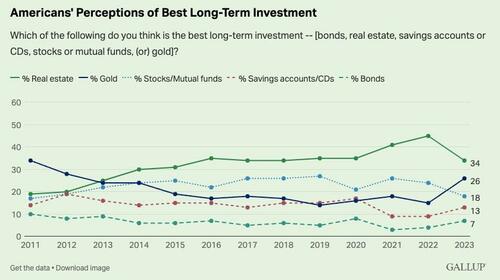






 (Medical-R/Shutterstock)



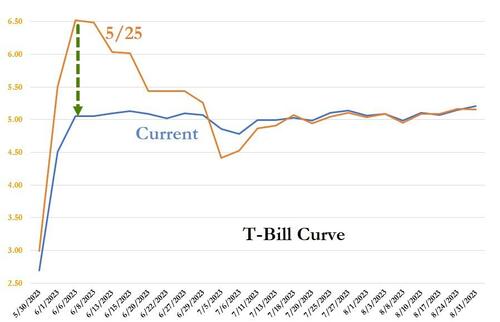
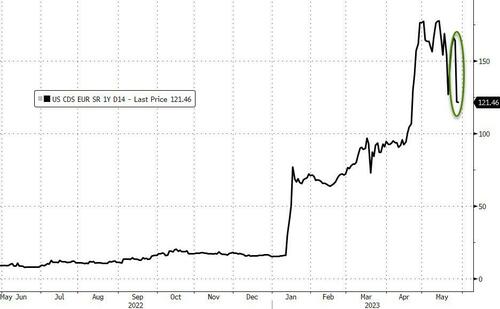
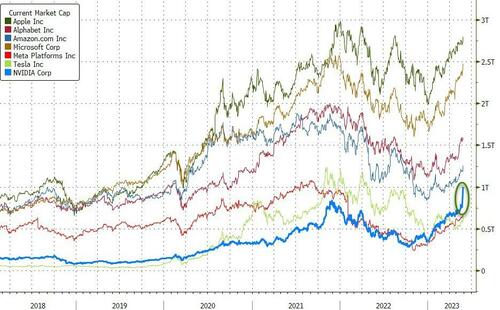
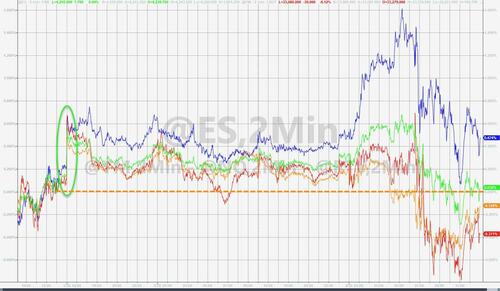
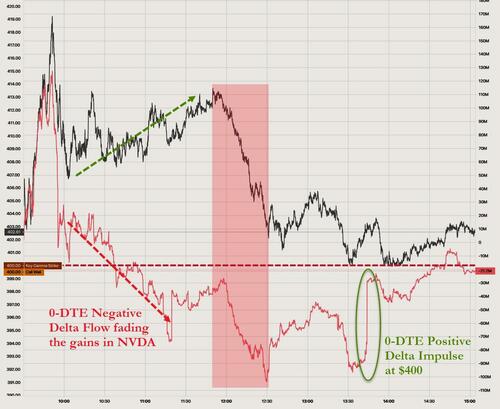
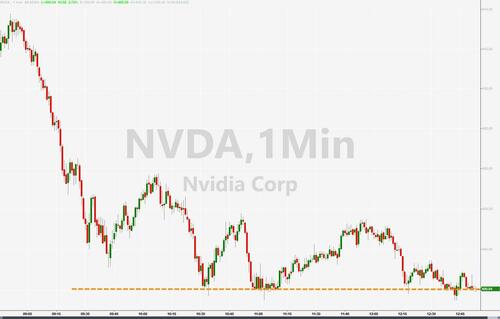
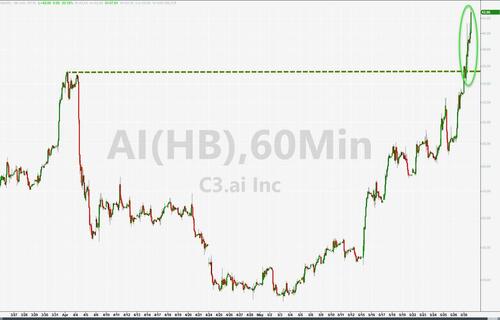
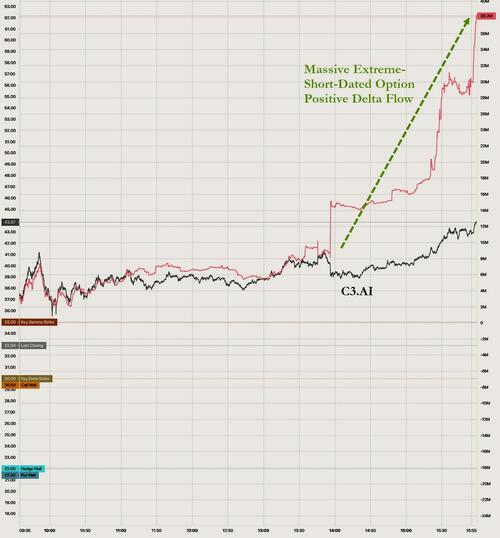
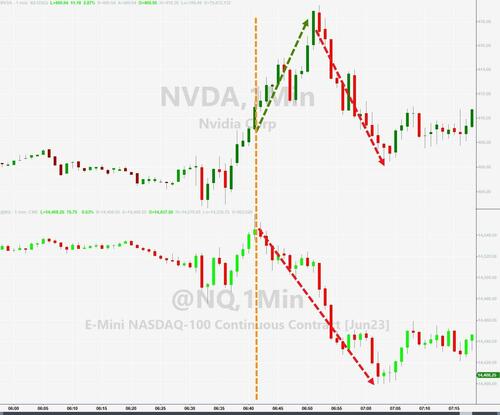
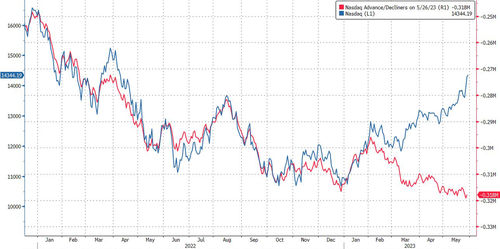
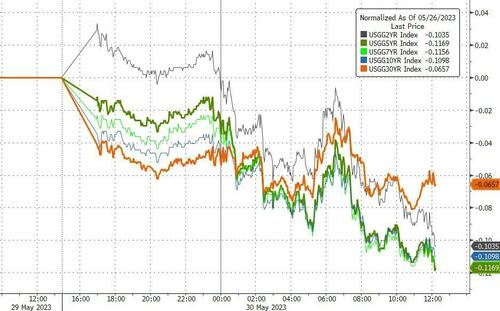
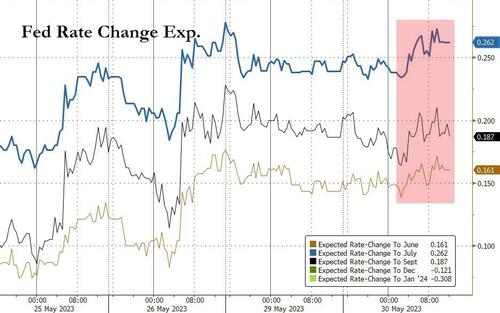
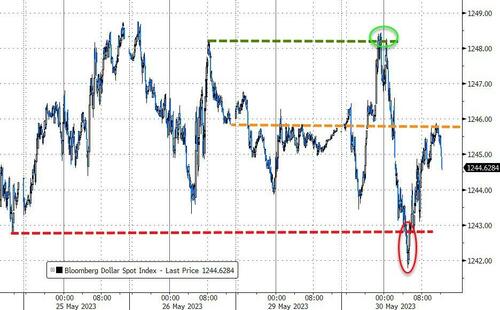
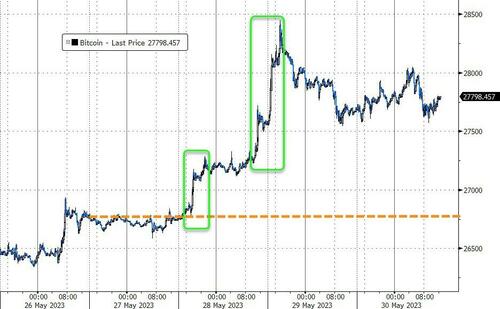

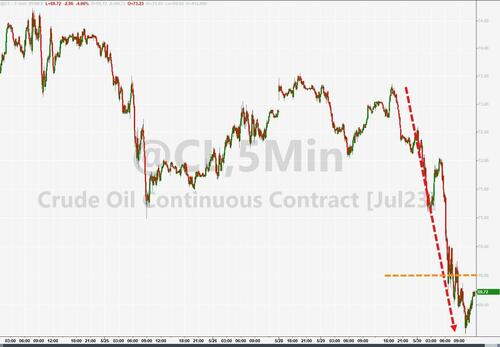

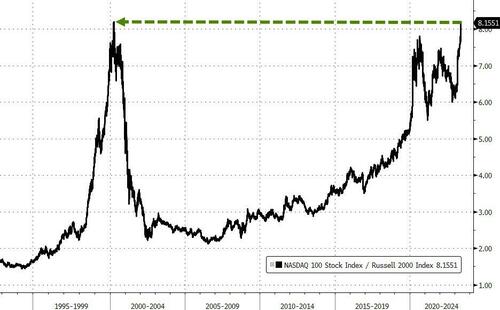
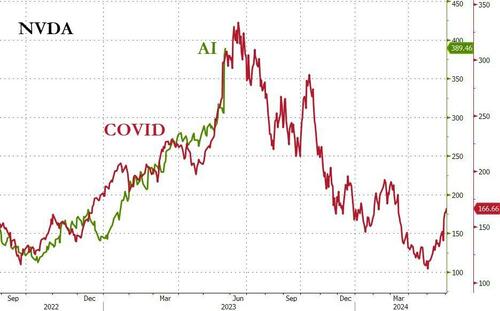


(@JaredEMoskowitz) May 28, 2023


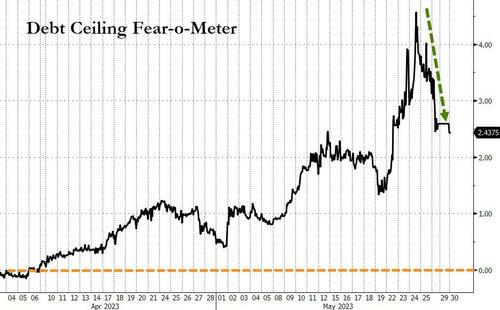
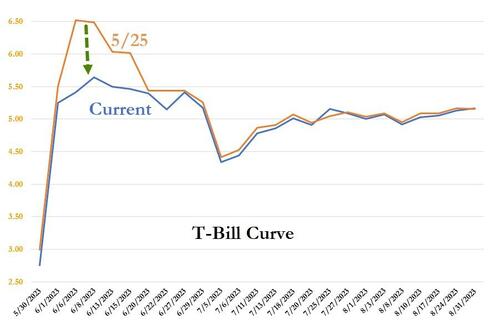


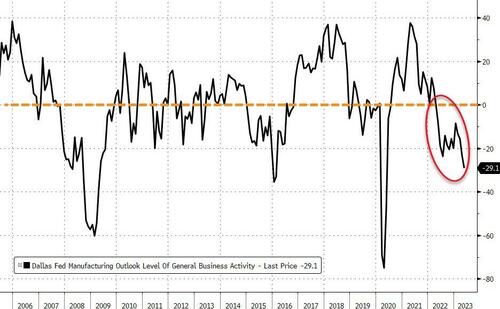
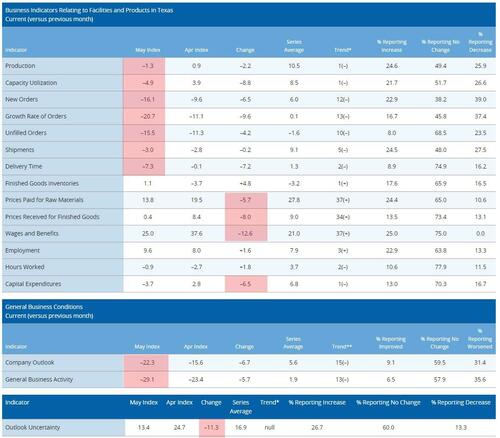



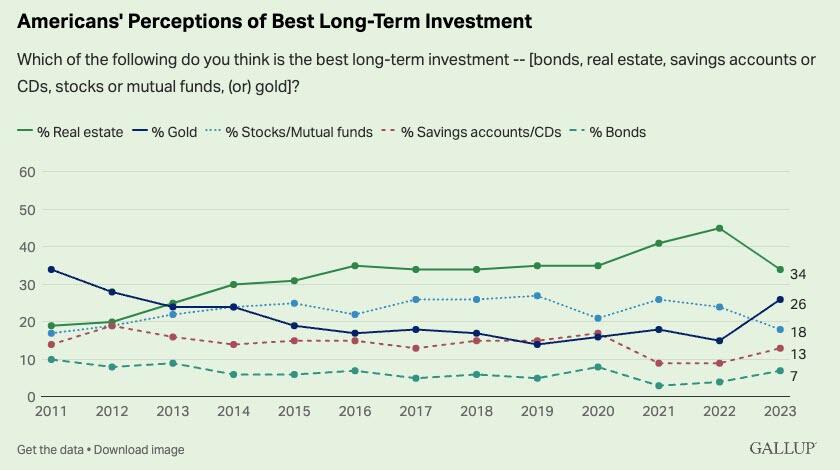



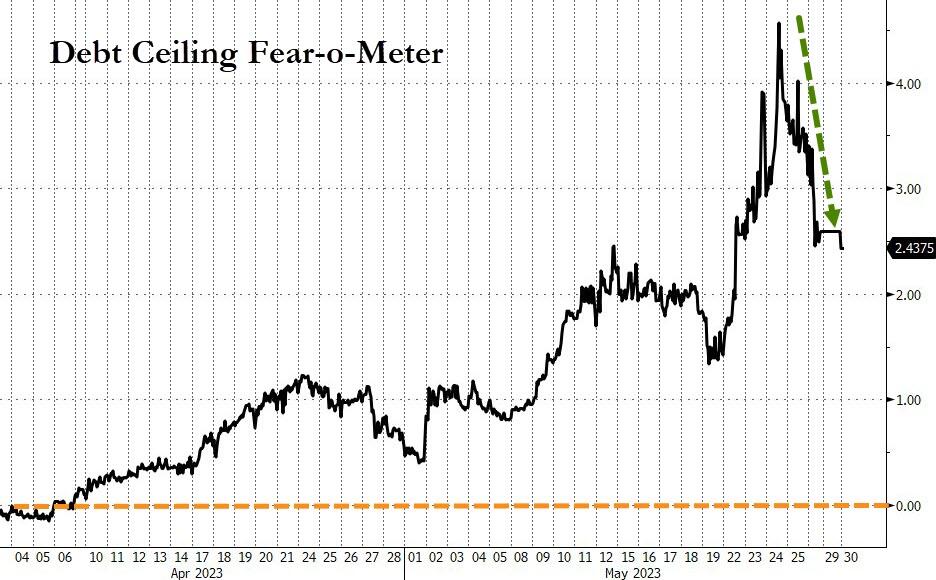
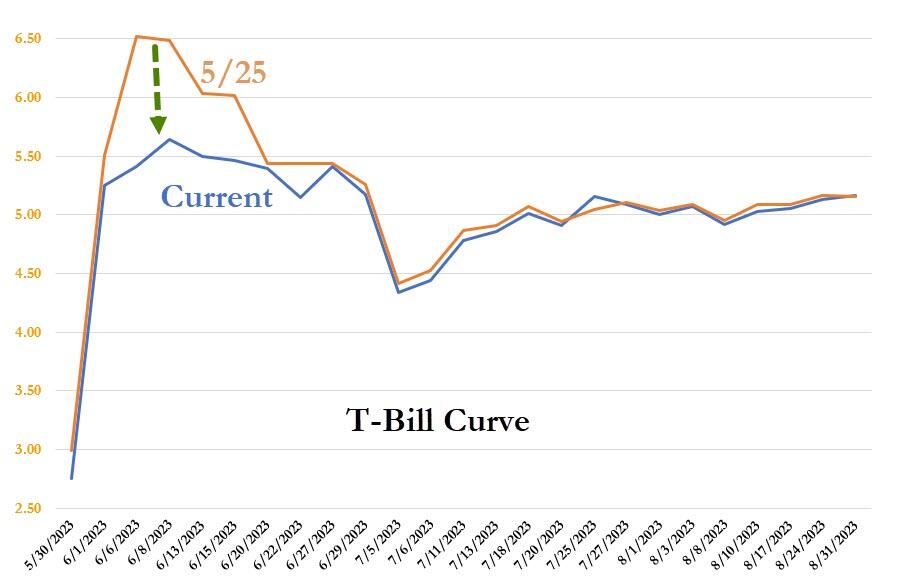
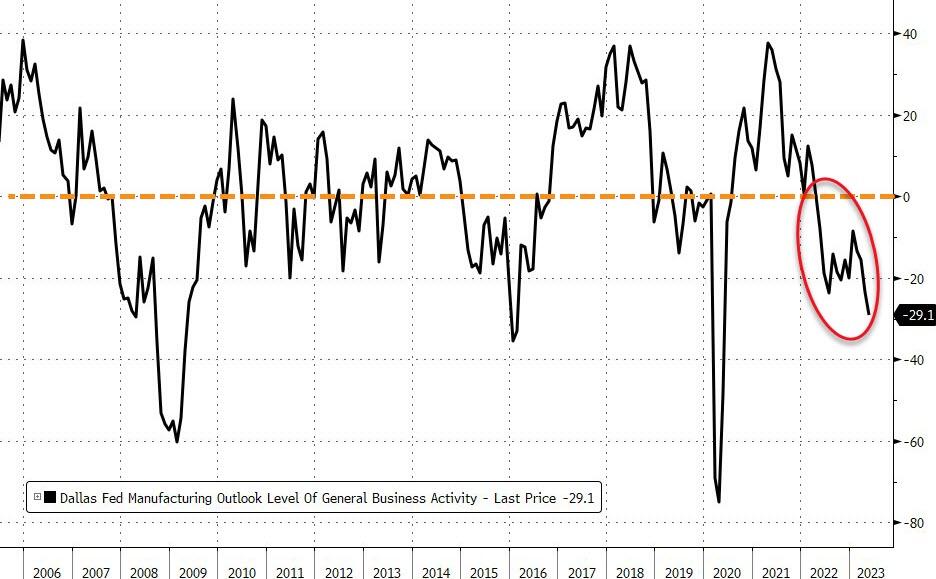
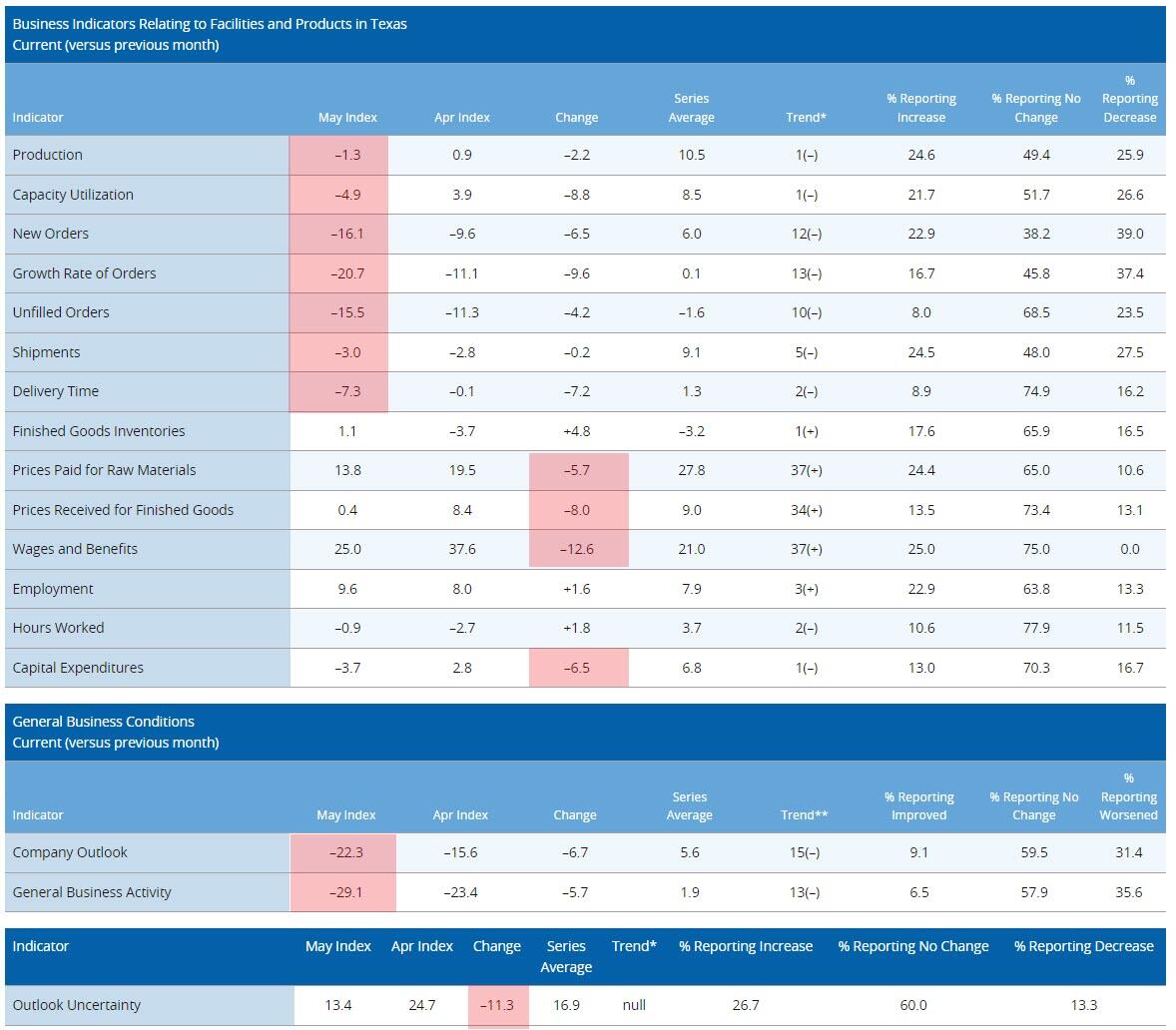
[…] by harveyorgan · in Uncategorized · Leave a comment·Edit […]
LikeLike