APRIL 27/GOLD CLOSED DOWN $41.10 TO $4679.80 WITH SILSVER DOWN $1.39 TO $75.02//PLATINUM CLOSED DOWN $30.85 TO $1990.75 WHILE PALLADIUM CLOSED DOWN $31.40 TO $1481.50//GOLD COMMENTARY TONIGHT COURTESY OF ALASDAIR MACLEOD// IMPORTANT COMMENTARIES RE CHINA TONIGHT//EUROPEAN COMMENTARIES ON GERMANY AND THE UK//ISRAEL/USA VS IRAN UPDATES/ISRAEL TBN//HEZBOLLAH VS ISRAEL UPDATES/RUSSIA VS UKRAINE UPDATES/MARK CRISPIN MILLER ON VACCINE INJURIES//OIL REPORT FOR TONIGHT//USA ECONOMIC REPORT; A MUST READ ACCOUNT OF THE MIDDLE EAST CONFLICT FROM GEOVEST!!//SWAMP STORIES FOR YOU TONIGHT//
099 H DEUTSCHE BANK AG 7 624 H BOFA SECURITIES 17 685 C RJ OBRIEN 25 690 C ABN AMRO CLR USA LLC 1
TOTAL: 25 25 MONTH TO DATE: 22,281
JPMORGAN STOPPED 1/61
APRIL 27
APRIL COMEX MONTH
GOLD: NUMBER OF NOTICES FILED FOR APRIL/2026: 25 CONTRACTs NOTICES FOR 2500 OZ or 0.077TONNES
total notices so far: 22,281 contracts FOR 2,228,100 OZ OR 69.303 TONNES
FOR APRIL 27
XXXXXXXXXXXXXXXXXX
SILVER NOTICES: 7 NOTICE(S) FILED FOR 35,000 OZ /
total number of notices filed so far this month : 3308 CONTRACTS (NOTICES) for 16.540 million oz
Click here if you wish to send a donation. I sincerely appreciate it as this site takes a lot of preparation
END
GLD/
BOTH GLD AND SLV ARE FRAUDULENT VEHICLES//THEY ARE NOW RAIDING GLD AND SLV FOR PHYSICAL
THE CROOKS ARE STEALING GOLD AND SILVER FROM THE GLD/SLV AND REPLACING THE PHYSICAL WITH PAPER DOLLARS.
WITH GOLD DOWN $41.10 INVESTORS SWITCHING TO SPROTT PHYSICAL (PHYS) INSTEAD OF THE FRAUDULENT GLD/// NO CHANGES IN GOLD INVENTORY AT THE GLD:
INVENTORY RESTS AT 1046.622 TONNES
SLV/
WITH NO SILVER AROUND AND SILVER DOWN $1.39 AT THE SLV: NO CHANGES IN SILVER INVENTORY AT THE SLV //// : INVENTORY RESTS AT THE SLV AT 487.234 MILLION OZ//
CLOSING INVENTORY RESTS AT:
CLOSING INVENTORY: 487.234 MILLION OZ
SILVER//OUTLINE
SILVER COMEX OI FELL BY A HUGE SIZED 2182 CONTRACTS TO A NEW RECORD LOW OF 110,384 AND STALLING ON ITS MARCH TO THE RECORD HIGH OI OF 244,710, SET FEB 25/2020, AND THIS HUGE SIZED LOSS IN COMEX OI WAS ACCOMPLISHED DESPITE OUR GAIN OF $0.92 IN SILVER PRICING AT THE COMEX WITH RESPECT TO FRIDAY’S // TRADING. ON APRIL 27, TODAY, WE HAVE REACHED AT OUR RECORD LOW OI OF 110,384 SURPASSING OUR PREVIOUS LOW OF 111,576 SET EARLIER IN THE MONTH OF MARCH/(2026).
NOW ON A NET BASIS OUR SPECULATORS HAVE REVERTED BACK TO GOING SHORT. THE FRBNY ON A NET BASIS IS PROVIDING THE NECESSARY PAPER TO OUR LONGS ALONG WITH SOME BULLION BANKS AND THEN A HUGE NUMBERS OF LONGS ,OUR CENTRAL BANKERS, TAKE THE LONG SIDE AND TENDER FOR PHYSICAL AT 4 PM EACH NIGHT. BECAUSE OF THE HUGE SHORTFALL IN PHYSICAL SILVER IN LONDON THERE IS A LOTTERY TO SEE WHO GETS ANY OF THE PHYSICAL SILVER AVAILABLE THAT WHICH THEY ARE OBLIGATED TO DELIVER. THEY WAIT PATIENTLY FOR THEIR PHYSICAL METAL AND IF NOBODY GETS ANY THEY THEN COME BACK THE NEXT DAY AND SO ON. THIS IS IN LONDON, THE HOME OF PHYSICAL SILVER!!
WE ARE FINALLY MOVING TO A MUCH HIGHER BASE IN SILVER PRICING AT MAJOR SUPPORT LEVEL OF $70.00. SHORTLY WE WILL AGAIN ATTEMPT TO BREAK THE MAJOR 100 DOLLAR BARRIER. THE SHORT SPECULATORS WERE AGAIN LED BY OUR HIGH FREQUENCY TRADERS THIS WEEK WHICH WILL EXPLAIN THE EXTREMELY LOW OI AND A MUCH HIGHER SILVER BASE!!
WE HAVE A MEGA HUGE SIZED LOSS OF 1513 TOTAL CONTRACTS ON OUR TWO EXCHANGES AS THE CME NOTIFIED US OF A STRONG SIZED 669 CONTRACT EXCHANGE FOR PHYSICAL ISSUANCE.. WE HAD SOME LIQUIDATION OF T.A.S. CONTRACTS IN COMEX TRADING WITH RESPECT TO FRIDAY TRADING/// MONTHLY SPREADERS FINISHED ON MARCH 31.. WE HAD A HUGE 1017 CONTRACT T.A.S. ISSUANCE!! / THEY DESPERATELY AGAIN TODAY TRYING TO CONTAIN SILVER’S PRICE RISE FOR THE PAST SEVERAL WEEKS (WHERE RAIDS ARE CALLED UPON AGAIN AND AGAIN TRYING TO STOP THE RISE IN SILVER’S PRICE TO ABOVE $100.00 AND TO QUELL ADDITIONAL DERIVATIVE LOSSES TO OUR BANKERS’ MASSIVE TOTALS). THEY FAILED ON FRIDAY WITH SILVER’S RISE IN PRICE
THE PRICE STILL FINISHED ABOVE THE MAGIC NUMBER OF $70.00 SILVER SPOT PRICE BUT STILL BELOW THE $100.00 MARK CLOSING AT $76.41 UP 0.92. WE ARE NOW WITNESSING HAVING MANY HUGE T.A.S ISSUANCES // TODAY’S WAS AT A HUGE SIZED 1017 T.A.S. CONTRACTS !!. THE CROOKS ARE BECOMING MORE DESPERATE TO STOP SILVER BREAKING ABOVE THE 100.00 DOLLAR MARK!! AND NOW THE HUGE SUPPORT LEVEL OF 70 DOLLARS!!.MAMMOTH SIZE T.A.S ISSUANCES ARE BECOMING THE NORM AT THE COMEX NOW!!
THERE IS NO NEXT LINE IN THE SAND ONCE THE 100.00 DOLLAR SILVER IS PIERCED AGAIN. WE HAD A STRONG SIZED 669 CONTRACT EXCHANGE FOR PHYSICAL ISSUANCE ACCOMPANIED BY OUR MEGA HUGE SIZED 720 CONTRACT T.A.S ISSUANCE WHICH WILL BE USED IN FUTURE TRADING//AS THEY PLAY AN INTEGRAL PART IN OUR COMEX TRADING TRYING TO CONTAIN ANY SILVER PRICE RISE.
IN ESSENCE WE HUGE LOSS OF 1513 CONTRACTS ON OUR TWO EXCHANGES DESPITE OUR GAIN IN PRICE OF $0.92. WE HAD HUGE GOVERNMENT (FRBY) COMEX CONTRACTS TRADING ALL WEEK AND A MAJOR PORTION WILL BE REMOVED BY DAYS END. (I RECORD THIS FOR YOU ON A DAILY BASIS). THE STICKY SPECULATOR LONGS STILL REMAIN STOIC
CRAIG HEMKE HAS POINTED OUT THAT THE CROOKS USE THE MID MONTH FOR MANIPULATION AS THEY SELL THEIR BUY SIDE OF THE CALENDAR SPREAD FIRST AND THEN KEEP THE SELL SIDE TO LIQUIDATE AT A LATER DATE.
THUS WE HAVE TWO VEHICLES THE CROOKS USE FOR MANIPULATION AND BOTH ARE SPREADERS: 1) AT MONTH’S END/SPREADERS COMEX AND 2/ TAS SPREADERS, THROUGHOUT MONTH. TOTAL TAS ISSUED ON FRIDAY NIGHT//SATURDAY MORNING: A HUGE SIZED 1017 CONTRACTS. DESPITE MANY COMPLAINTS THAT THROOKS HAVE VIOLATED POSITION LIMITS DUE TO THE FACT THAT THE TAS ISSUED HAVE A VALUE OF ZERO (AS TO POSITION LIMITS FOR OUR CROOKED FRBNY BANKERS).
THE PROBLEM OF COURSE IS THAT THE CROOKS DO NOT LIQUIDATE THE TAS AS ONE UNIT, BUT SELL THE SHORT SIDE FIRST AND THEN LIQUIDATE THE LONG SIDE TWO MONTHS HENCE. IT IS OBVIOUS MANIPULATION TO THE HIGHEST DEGREE BUT IT NATURALLY FELL ON DEAF EARS WITH OUR REGULATORS (OCC) WHEN THEY RECEIVED OUR COMPLAINTS. IT NOW SEEMS THAT THE OCC HAS NOW ORDERED THE BANKS TO REDUCE ITS NEW LEVEL OF 1.1 TRILLION DOLLARS IN GOLD/SILVER DERIVATIVES.
THUS:
INITIAL STANDING FOR JANUARY: 22.915 MILLION OZ FOLLOWED BY TODAY’S 1.185 MILLION OZ QUEUE JUMP//NEW NORMAL STANDING ADVANCES TO 49.445 MILLION OZ// TO WHICH WE ADD OUR FIRST EXCHANGE FOR RISK FOR .100 MILLION OZ//NEW STANDING ADVANCES TO 49.545 MILLION OZ!!
INTIAL STANDING FOR FEBRUARY/SILVER: 13.505 MILLION OZ FOLLOWED BY TODAY’S HUGE 0.005 MILLION OZ QUEUE JUMP / : NEW STANDING FOR SILVER AT THE COMEX ADVANCES TO 25.180 MILLION OZ. BUT WE MUST ADD OUR FIRST EXCHANGE FOR RISK OF 25 CONTRACTS FOR .125 MILLION OZ AND THEN OUR SECOND EXCHANGE FOR RISK OF .0600 MILLION OZ TO OUR THIRD HUGE 2.825 MILLION OZ EXCHANGE FOR RISK!!
INITIAL STANDING FOR MARCH: A SURPRISINGLY LOW 31.076 MILLION OZ/ FOLLOWED BY A STRONG QUEUE JUMP OF 42 CONTRACTS OR 0.210 MILLION OZ/NEW STANDING REDUCES TO 46.060 MILLION OZ
INITIAL STANDING FOR APRIL: 7.120 MILLION OZ FOLLOWED BY TODAY’S 5 CONTRACT QUEUE JUMP WHERE 5000 ADDITIONAL OZ WILL TAKE DELIVERY OVER ON THIS SIDE OF THE POND. NEW STANDING FOR SILVER AT THE COMEX THUS ADVANCES HUGELY TO 16.540 MILLION OZ PLUS WE MUST ADD OUR 3RD EXCHANGE FOR RISK ISSUANCE OF 199 CONTRACTS OR 0.995 MILLION OZ. THESE WILL BE ADDED TO OUR OTHER TWO ISSUANCES OF 2.965//NEW TOTAL SILVER STANDING 19.540 MILLION OZ//
SUMMARY OF OUR APRIL 2026 COMEX CONTRACT MONTH:
WE HAD:
/ HUGE COMEX OI LOSS+// STRONG SIZED 669 EFP ISSUANCE CONTRACTS (/ VI) A HUGE NUMBER OF T.A.S. CONTRACT ISSUANCE 1017 CONTRACTS
I AM NOW RECORDING THE DIFFERENTIAL IN OI FROM PRELIMINARY TO FINAL: REMOVED 167 SILVER CONTRACT//
HISTORICAL ACCUMULATION OF EXCHANGE FOR PHYSICALS APRIL.. ACCUMULATION
TOTAL CONTRACTS for 17 DAY(S), total 7478 contracts: OR 37.390 MILLION OZ (439 CONTRACTS PER DAY)
TOTAL EFP’S FOR THE MONTH SO FAR: 37.390 MILLION OZ
LAST 24 MONTHS TOTAL EFP CONTRACTS ISSUED IN MILLIONS OF OZ:
MAY 137.83 MILLION
JUNE 149.91 MILLION OZ
JULY 129.445 MILLION OZ
AUGUST: MILLION OZ 140.120
SEPT. 28.230 MILLION OZ//
OCT: 94.595 MILLION OZ
NOV: 131.925 MILLION OZ
DEC: 100.615 MILLION OZ
YEAR 2022:
JAN 2022-DEC 2022
JAN 2022// 90.460 MILLION OZ
FEB 2022: 72.39 MILLION OZ//
MARCH 2022: 207.140 MILLION OZ//A NEW RECORD FOR EFP ISSUANCE
APRIL: 114.52 MILLION OZ FINAL//LOW ISSUANCE
MAY: 105.635 MILLION OZ//
JUNE: 94.470 MILLION OZ
JULY : 87.110 MILLION OZ
AUGUST: 65.025 MILLION OZ
SEPT. 74.025 MILLION OZ///FINAL
OCT. 29.017 MILLION OZ FINAL
NOV: 134.290 MILLION OZ//FINAL
DEC, 61.395 MILLION OZ FINAL
TOTALS YR 2022: 1135.767 MILLION OZ (1.1356 BILLION OZ)
JAN 2023/// 53.070 MILLION OZ //FINAL
FEB: 2023: 100.105 MILLION OZ/FINAL//MUCH STRONGER ISSUANCE VS THE LATTER TWO MONTHS.
MARCH 2023: 112.58 MILLION OZ//FINAL//STRONG ISSUANCE
APRIL 111.035 MILLION OZ(SLIGHTLY GREATER THAN THAN LAST MONTH)
MAY 66.120 MILLION OZ/INITIAL (MUCH SMALLER THIS MONTH)
JUNE: 110.395 MILLION OZ//MUCH LARGER THAN LAST MONTH
JULY 85.745 MILLION OZ (SMALLER THAN LAST MONTH)
AUGUST: 171.43 MILLION OZ (THIS MONTH IS GOING TO BE HUGE //2ND HIGHEST ON RECORD
SEPT: 72.705 MILLION OZ (SMALLER THIS MONTH)
OCT: 97.455 MILLION OZ
NOV. 50.050 MILLION OZ
DEC. 66.140 MILLION OZ//
TOTAL 2023: 1,104.10 MILLION OZ/
JAN ’24 : 78.655 MILLION OZ//
FEB /2024 : 66.135 MILLION OZ./FINAL
MARCH: 143.750 MILLION OZ// 4TH HIGHEST ON RECORD.
APRIL: 161.770 MILLION OZ (THIS MONTH WILL BE A WHOPPER OF ISSUANCE OF EFPS//3RD HIGHEST EVER RECORDED FOR A MONTH)
MAY: 135.995 MILLION OZ //WILL BE A STRONG MONTH FOR EXCHANGE FOR PHYSICAL ISSUANCE
JUNE 110.575 MILLION OZ ( WILL BE ANOTHER STRONG MONTH ISSUANCE)
JULY: 108.870 MILLION OZ (WILL BE A STRONG ISSUANCE MONTH/ A TOUCH OVER 100 MILLION OZ/)
AUGUST; 99.740 MILLION OZ//THIS MONTH WILL BE STRONG FOR ISSUANCE BUT LESS THAN JULY.
SEPT: 112.415 MILLION OZ//WILL BE A HUGE MONTH FOR EXCHANGE FOR PHYSICAL ISSUANCE
OCT; 97.485 MILLION OZ (WILL BE SMALLER ISSUANCE THIS MONTH )
NOV. 115.970 MILLION OZ ( HUGE THIS MONTH)
DEC: 132.54 MILLION OZ (THIS MONTH WILL BE A HUMDINGER FOR ISSUANCE BUT ISSUANCE SLOWED DRAMATICALLY THESE PAST FIVE DAYS/// WILL NOT EXCEED MARCH 2022 RECORD OF 209 MILLION OZ
YEAR 2024 TOTAL: 1363.84 MILLION OR 1.363 BILLION OZ
JANUARY 2025: 67.230 MILLION OZ///(THIS MONTH’S ISSUANCE OF EXCHANGE FOR PHYSICAL WILL BE SMALL)
FEB. 58.260 MILLION OZ//EXCHANGE FOR PHYSICAL ISSUANCE/FINAL
MARCH: 67.020 MILLION OZ///QUITE SMALL AND BECOMING SMALLER EACH AND EVERY MONTH.
APRIL: 100.895 MILLION OZ///AVERAGE SIZE ISSUANCE
MAY: 28.975 MILLION OZ (ISSUANCE WILL BE QUITE SMALL THIS MONTH)
JUNE: 81.065 MILLION OZ
JULY: 50.925 MILLION OZ (QUITE SMALL)
AUGUST: 59.455 MILLION OZ (QUITE SMALL)
SEPT. 50.510 MILLION OZ.(QUITE SMALL)
OCT; 82.020 MILLION OZ (WILL BE STRONG THIS MONTH)/ OCC WANTS TO REIN IN THESE ISSUANCES!
NOVEMBER: 36.425 MILLION OZ
DEC: 45.765 MILLION OZ
JANUARY 2026: 134.270 MILLION OZ (WILL BE A VERY STRONG MONTH FOR EXCHANGE FOR PHYSICAL!)
FEB : 82.130 MILLION OZ
MARCH: 56.075 MILLION OZ
APRIL; 37.390 MILLION OZ..WILL BE SMALL THIS MONTH.
RESULT: WE HAD A HUGE SIZED DECREASE IN COMEX OI SILVER COMEX CONTRACTS OF 1979 CONTRACTS DESPITE OUR GAIN IN PRICE OF $0.92 IN SILVER PRICING AT THE COMEX// FRIDAY,. THE CME NOTIFIED US THAT WE HAD A STRONG SIZED CONTRACT EFP ISSUANCE 669 CONTRACTS ISSUED FOR MAY, AND 0 CONTRACTS ISSUED FOR ALL OTHER MONTHS). WE HAD A 12 SIZED CONTRACT QUEUE JUMP FOR 60,000 OZ//STANDING ADVANCES TO 16.575 MILLION OZ// PLUS 2.965 MILLION OZ EXCHANGE FOR RISK //3ISSUANCES//NEW TOTAL ADVANCES TO 19.54 MILLION OZ
LAST 12 MONTHS OF SILVER DELIVERIES
WE FINISHED APRIL WITH A STRONG SILVER OZ STANDING OF 16.050 MILLION OZ NORMAL DELIVERY , PLUS OUR 4.00 MILLION EX FOR RISK
FINAL STANDING APRIL: 19.965 MILLION OZ
AND MAY:
NEW STANDING FOR MAY FINISHES AT: 75.615 MILLION OZ. (INCLUDES 5,000 OZ EFP TRANSFER TO LONDON + 12.93 MILLION OZ EXCHANGE FOR RISK ISSUANCE/PRIOR.//NEW TOTAL STANDING 88.540 MILLION OZ
AND JUNE: FINAL 16.995 MILLION OZ
AND JULY: 46.720 MILLION OZ//
AUGUST: 4.70 MILLION OZ INITIAL STANDING PLUS TODAY;S 5,000 OZ QUEUE JUMP //NEW STANDING ADVANCES TO 10.960 MILLION OZ
SEPTEMBER: 68.040 MILLION OZ NORMAL DELIVERY(INCLUDES ALL QUEUE JUMPING AND EXCHANGE FOR PHYSICAL TRANSFERS) PLUS 3.0 MILLION OZ EX FOR RISK = 71.040 MILLION OZ. (THIS IS THE FIRST AND ONLY ISSUANCE OF EXCHANGE FOR RISK FOR SILVER SINCE MAY.)
OCTOBER: 39.565 MILLION OZ OF NORMAL DELIVERY INCLUDES ALL QUEUE JUMPING
PLUS
2.110 MILLION OZ EXCHANGE FOR RISK//TOTAL OZ STANDING IN OCT ADVAN
NOVEMBER: INITIAL STANDING AT 11.575 MILLION OZ FOLLOWED BY TODAY’S 195,000 OZ QUEUE JUMP WHICH FOLLOWS ALL OTHER QUEUE JUMPS OF 9.155 MILLION OZ//STANDING ADVANCES TO 19.670 MILLION OZ/
DECEMBER: INITIAL AMOUNT STANDING FOR DELIVERY: 49.33 MILLION OZ// FOLLOWED BY ANOTHER STRONG 835,000OZ QUEUE JUMP+ DEC. FIRST EXCHANGE FOR RISK 0F .850 MILLION OZ + LAST WEEK.S 495,000 OZ EXCHANGE FOR RISK AND THEN A 3RD ISSUANCE IF 1.00MILLION OZ THEN FINALLY DEC 249ISSUANCE OF 1.35 MILLION OZ EXCHANGE FOR RISK//NEW TOTAL EX FOR RIS IS 3.685 MILLION OZ // STANDING ADVANCES TO 68.415 MILLION OZ//
JANUARY: INITIAL STANDING 22.915 MILLION OZ FOLLOWED BY TODAY’S 1.185 MILLION OZ QUEUE JUMP//NORMAL STANDING ADVANCES TO 49.445 MILLION OZ// TO WHICH WE ADD OUR FIRST EXCHANGE FOR RISK OF 0.100 MILLLION OZ//NEW STANDING ADVANCES TO 49.545 MILLION OZ
FEB: 13.399 MILLION OZ IS OUR INITIAL STANDING FOR SILVER! TO WHICH WE ADD OUR NEXT QUEUE JUMP FOR 5,000 OZ AND THEN ADD OUR 3 EXCHANGE FOR RISK FOR 3.010 MILLION OZ STANDING ADVANCES TO 28.190 MILLION OZ!!
MARCH: INITIAL AMOUNT OF SILVER STANDING IS 31.076 MILLION OZ FOLLOWED BY A FINAL 0.210 MILLION OZ QUEUE JUMP //NEW TOTAL STANDING ADVANCES TO 46.060 MILLION OZ
APRIL 2026: INITITAL AMOUNT OF SILVER STANDING 7.120 MILLION OZ FOLLOWED BY TODAY’S 65,000 OZ QUEUE JUMP//NEW STANDING ADVANCES TO 16.540MILLION OZ PLUS 2.965 MILLION OZ EXCHANGE FOR RISK.NEW TOTALS 19.540 MILLION OZ
THE NEW TAS ISSUANCE THURSDAY (1017) WILL BE PUT INTO “THE BANK” TO BE COLLUSIVELY USED NO DOUBT WITH FUTURE TRADING!
WE HAD 7 NOTICE(S) FILED TODAY FOR 35,000 OZ
THE SILVER COMEX IS NOW BEING ATTACKED FOR METAL BY BANKERS
GOLD//OUTLINE
IN GOLD, THE COMEX OPEN INTEREST ROSE BY A SMALL SIZED 980 OI CONTRACTS UP TO 365,451 ADVANCING FROM ITS ALL TIME LOW OF 354,581 OI AND CLOSER TO THE RECORD HIGH (SET JAN 24/2020) AT 799,105 AND PREVIOUS TO THAT: (SET JAN 6/2020) AT 797,110. WE HAVE NOW ADVANCED PAST THE PREVIOUS ALL TIME LOWS OF 357,136 SET APRIL 2/.2026. WE ARE STILL QUITE A WAY FROM OUR TWO DECADES OLD: 390,000 CONTRACTS LOW SET IN THE YEAR OF 2001 WITH TRADING FOR GOLD AT $260.00. THUS DURING EARLY APRIL WE HAD AN ALL TIME LOW OI IN COMEX (354,531) BUT WITH AN EXTREMELY HIGH PRICE OF GOLD. THE SHORT RATS ARE ABANDONING THE COMEX SHIP, NOBODY WANT TO PLAY IN THIS CROOKED CASINO!!
THE DIFFERENTIAL FROM PRELIMINARY OI TO FINAL OI IN GOLD TODAY: REMOVED A HUGE 2790 CONTRACTS //.
WE HAD A SMALL GAIN IN COMEX OI (980 ONTRACTS) . THIS STRONG GAIN IN OI OCCURRED WITH GAIN IN PRICE OF $13.95 //FRIDAY///.
LAST 12 MONTHS OF GOLD DELIVERIES: (MAY THROUGH TO /APRIL)
MAY: SUMMARY FOR MAY TONNES WHICH STOOD FOR DELIVERY:
FINAL STANDING FOR MAY: 70.174 TONNES OF GOLD TO WHICH WE ADD 1. MONDAY’S (MAY 19) 6.221 TONNES EXCHANGE FOR RISK , 2. THEN WE ADD: 1.35 TONNES TO LAST WEEK”S. THEN WE ADD 3. 1.55 TONNES TO EQUAL 9.591 TONNES// NEW EXCHANGE FOR RISK = 9.591 TONNES WHICH MUST BE ADDED TO OUR NORMAL DELIVERY SCHEDULE OF 80.644 TONNES. THUS STANDING FOR MAY INCREASES TO 90.235 TONNES OF GOLD
2 JUNE CONTRACT MONTH: 93.085 TONNES OF GOLD (WHICH INCLUDES ALL QUEUE JUMPING AND 0 EX FOR RISK)
3.JULY INITIIAL STANDING FIRST DAY NOTICE: 17.847 TONNES. PLUS TODAY’S 0 TONNES QUEUE JUMP + 1.555 TONNES EX FOR RISK + 2.195 TONNES EX FOR RISK TODAY = 41.106 TONNES STANDING
4. AUGUST: 60.547 TONNES OF INITIAL GOLD FIRST DAY NOTICE FOLLOWED BY THE NET MONTH’S QUEUE JUMP OF 47.2312 TONNES TO WHICH WE ADD THE FOLLOWING EXCHANGE FOR RISK ISSUANCE RECEIVED FOR THE MONTH: 5.4432 TONNES EX FOR RISK/AUG 7 , AUG 11: 2.413 TONNES EX FOR RISK AND AUG. 12 OF 2.
5.SEPT: INITIAL 8.093 TONNES OF GOLD PLUS TODAY’S QUEUE JUMP OF 0.4883 TONNES PLUS 2.2827 TONNES OF EXCHANGE FOR RISK TODAY//NEW TOTAL EX. FOR RISK/MONTH = 22.923//NEW TOTAL STANDING FOR GOLD SEPT ADVANCES TO = 48.801 TONNES!!
6.OCTOBER: 90.012 TONNES OF INITIAL GOLD STANDING WITH TODAY’S TINY 0.00311 TONNES QUEUE JUMP WHICH FOLLOWS ALL OTHER QUEUE JUMPS DURING OCT OF 76.1656 TONNES
THEN WE MUST ADD OUR 14.553 TONNES OF OUR ISSUANCE OF EXCHANGE FOR RISK/6 OCCASIONS//NEW TOTAL OF GOLD STANDING ADVANCES TO 197.5141 TONNES OF GOLD.
7.NOVEMBER BEGINS WITH 15.651 TONNES INITIALLY STANDING FOR DELIVERY FOLLOWED BY TODAY’S QUEUE JUMP OF 2.323 TONNES FOLLOWED BY ALL PREVIOUS QUEUE JUMPS IN OF OF 21.3775 TONNES TO WHICH WE ADD OUR TWO EXCHANGE FOR RISK ISSUANCE OF 4.5596 TONNES//NEW STANDING ADVANCES TO 43.9716 TONNES OF GOLD.
8. DECEMBER BEGINS WITH INITIAL STANDING OF 83.813 TONNES OF GOLD FOLLOWED BY TODAY’S 0.0TONNE QUEUE JUMP WHICH FOLLOWS ALL OTHER QUEUE JUMPS OF: 37.163 TONNES//NEW STANDING ADVANCES TO 115.390 TONNES TO WHICH WE ADD OUR 4 EXCHANGE FOR RISK FOR DECEMBER OF 6.587 TONNES/NEW STANDING ADVANCES TO 121.977 TONNES
9. JANUARY: INITITAL STANDING: 13.785 TONNES TO WHICH WE ADD OUR FIRST EXCHANGE FOR PHYSICAL TRANSFER OF 0.08709 TONNES WHICH FOLLOWS ALL OTHER QUEUE JUMPS OF 30.7117TONNES //NEW TOTAL QUEUE JUMPS 30.7117//NORMAL DELIVERY OF GOLD ADVANCES TO 36.8958 TONNES TO WHICH WE ADD OUR SIX EXCHANGE FOR RISK OF 22.315 TONNES//NEW STANDING ADVANCES TO 59.2108 TONNES.
FEB; INITIAL AMOUNT OF GOLD STANDING FOR DELIVERY: 93.567 TONNES OF GOLD TO WHICH WE ADD OUR NEXT 0.0248 TONNES 0.1555 TONNES QUEUE JUMP TO 41.2082 TONNES/ NEW NET QUEUE JUMP INCREASES TO 41.233 TONNES// AND THEN WE ADD OUR SIX EXCHANGE FOR RISK: 10,080 CONTRACTS OR 31.251 TONNES//NEW STANDING REDUCES TO 157.878 TONNES
MARCH:: INITIAL AMOUNT OF GOLD STANDING FOR DELIVERY: 8.099 TONNES TO WHICH WE ADD TODAY’S FAIR 4600 OZ QUEUE JUMP (0.2320 TONNES) AND THEN WE ADD OUR THREE EXCHANGE FOR RISK OF 22.3818 TONNES //NEW STANDING ADVANCES TO 67.6648 TONNES/
APRIL: INITIAL AMOUNT OF GOLD STANDING FOR DELIVERY: 52.600 TONNES FOLLOWED BY OUR 5 CONTRACT QUEUE JUMP FOR 500 OZ/ (0.0155 TONNES)/NEW STANDING ADVANCES TO 69.420 TONNES
E.F.P. ISSUANCE/FOR OPENING APRIL. GOLD CONTRACT
THE CME RELEASED THE DATA FOR EFP ISSUANCE AND IT TOTALED A SMALL SIZED 798CONTRACTS:
The NEW COMEX OI FOR THE GOLD COMPLEX RESTS AT A LOW OF 365,451ADVANCING FROM OUR RECORD LOW OF 354,581 AND WE NOW WITNESSING A LOWER COMEX OI BUT WITH AN EXTREMELY HIGH
SILVER ALSO HAS AN ULTRA SMALL SIZED AND EXTREMELY LOW COMEX OI OF 110,384 ONTRACTS// RISING FROM PREVIOUS ALL TIME LOW SET MARCH 23/2026 OF 111,576 CONTRACTS.
IN ESSENCE WE HAVE A FAIR SIZED GAIN IN TOTAL CONTRACTS IN COMEX GOLD ON THE TWO EXCHANGES OF 1778 CONTRACTS WITH 3770 CONTRACTS INCREASED AT THE COMEX// AND A SMALL SIZED 778 EXCHANGE FOR PHYSICAL OI CONTRACT ISSUANCE WHICH NAVIGATED OVER TO LONDON.
THUS TOTAL OI GAIN ON THE TWO EXCHANGES OF 1778 CONTRACTS.. WE HAD THE FOLLOWING TAS CONTRACTS INITIATED (ISSUED): A SMALL SIZED AND CRIMINAL 720 CONTRACTS AND THESE ISSUANCES ARE GENERALLY USED TO INITIATE A RAID WHEN CALLED UPON.
GOLD PRICE ON FRIDAY ROSE BY $13.95
CALCULATIONS ON GAIN/LOSS ON OUR TWO EXCHANGES
WE HAD A SMALL SIZED ISSUANCE IN EXCHANGE FOR PHYSICALS CONTRACT(798 ) ACCOMPANYING THE SMALL SIZED GAIN IN COMEX OI OF 980 CONTRACTS/TOTAL GAIN FOR OUR THE TWO EXCHANGES 1778 CONTRACTS!!
WE HAVE 1) NOW REVERTED TO OUR NORMAL FORMAT OF BANKER (FRBNY) GOING ON THE SHORT SIDE AND SOME NEWBIE SPECULATORS GOING TO THE LONG SIDE//
FEB; INITIAL AMOUNT OF GOLD STANDING FOR DELIVERY: 93.567 TONNES OF GOLD TO WHICH WE ADD OUR NEXT QUEUE JUMP OF 0.012 TONNES TO ALL OTHER QUEUE JUMPS//NEW QUEUE JUMP TOTALS INCREASES: 41.233 TONNES// /// TO WHICH WE ADD OUR SIX EXCHANGE FOR RISK FOR 31.251 TONNES//NEW STANDING FINISHED AT 157.878 TONNES
MARCH:: SMALL INITIAL STANDING FOR GOLD FOR MARCH AT 8.099 TONNES TO WHICH WE ADD TODAY’S FAIR 46 CONTRACT QUEUE JUMP OF 4400 OZ OR 0.2320 TONNESAND THEN WE ADD BY OUR THREE EXCHANGE FOR RISK: 22.3818///NEW STANDING ADVANCES TO 67.6648 TONNES OF GOLD./
APRIL: INITIAL STANDING FOR GOLD; 52.600 TONNES FOLLOWED BY TODAY’S 8600OZ QUEUE JUMP(0.2674 TONNES) //NEW STANDING ADVANCES TO 69.4059TONNES.
STANDING FOR THE LAST 4 MONTHS JANUARY TO APRIL:
FINAL STANDING FOR GOLD, JANUARY CONTRACT AT 59.2108 TONNES OF GOLD
FEBRUARY: INITIAL STANDING FOR GOLD: 157.878 TONNES!! WHICH INCLUDES ALL QUEUE JUMPING, THREE EXCHANGE FOR PHYSICAL TRANSFERS TO LONDON AND OUR SIX ISSUANCES EXCHANGE FOR RISK!!
MARCH: INITIAL STANDING AT 8.099 TONNES TO WHICH WE ADD OUR FINAL DAY: 0.2320 TONNES QUEUE JUMP AND THEN ADD +22.3818 TONNES EXCHANGE FOR RISK//NEW STANDING ADVANCES TO 67.6648 TONNES
APRIL: INITIAL STANDING 52.600 TONNES PLUS 500 OZ QUEUE JUMP (0.0155TONNES): NEW STANDING ADVANCES TO 69.420 TONNES
3) SOME T.A.S. LIQUIDATION, AND SOME GOVT LIQUIDATION // WITH A STRONG GAIN OF EQUITY SHARES/APRIL 24 HAVING 1)A $13.95 COMEX PRICE GAIN AND YET WE HAD 2) SPEC LONGS PILING HUGELY ON A NET BASIS, + EASTERN CENTRAL BANKERS ALSO PILING INTO THE LONG SIDE. WE HAD A FAIR SIZED GAIN OF 1778 CONTRACTS ON OUR TWO EXCHANGES AND AS WELL A STRONG AMOUNT OF GOLD WILL STAND FOR DELIVERY IN APRIL. (69.420 TONNES). //, CENTRAL BANKERS TENDERED FOR PHYSICAL WITH THEIR PURCHASES OF CONTRACTS../ ALSO, 3)STICKY GOLD’S LONGS WERE REWARDED FRIDAY EVENING AS THEY EXERCISED EFP’S FROM LONDON TO TAKE DELIVERY OF BADLY NEEDED PHYSICAL
4)A STRONG SIZED COMEX OI GAIN 5) V) SMALL SIZED ISSUANCE OF EXCHANGE FOR PHYSICAL GOLD (778) AND A SMALL T.A.S. ISSUANCE (552) FOR RAID PURPOSES
ACCUMULATION OF EFP’S GOLD AT J.P. MORGAN’S HOUSE OF BRIBES: (EXCHANGE FOR PHYSICAL) FOR THE MONTH OF APRIL :
TOTAL EFP CONTRACTS ISSUED: 23,734 CONTRACTS OR 2,373,400 OZ OR 73.823TONNES IN 17TRADING DAY(S) AND THUS AVERAGING: 1396 EFP CONTRACTS PER TRADING ,DAY
TO GIVE YOU AN IDEA AS TO THE SIZE OF THESE EFP TRANSFERS : THIS MONTH IN17TRADING DAY(S) IN TONNES: 73.823 TONNES
TOTAL ANNUAL GOLD PRODUCTION, 2025, THROUGHOUT THE WORLD EX CHINA EX RUSSIA: 3555 TONNES
THUS EFP TRANSFERS REPRESENTS 73.823 TONNES DIVIDED BY 3550 x 100% TONNES = 2.070% OF GLOBAL ANNUAL PRODUCTION
SEPT 142.12 TONNES FINAL ISSUANCE ( LOW ISSUANCE)_
OCT: 141.13 TONNES FINAL ISSUANCE (LOW ISSUANCE)
NOV: 312.46 TONNES FINAL ISSUANCE//NEW RECORD!! (INCREASING DRAMATICALLY)//SIGN OF REAL STRESS//SURPASSING THE MARCH 2021 RECORD OF 276.50 TONNES OF EFP
DEC. 175.62 TONNES//FINAL ISSUANCE//
TOTALS: 2,578.08 TONNES/2021
JAN:2023 247.25 TONNES //FINAL
FEB: 196.04 TONNES//FINAL
MARCH/2022: 409.30 TONNES //FINAL( THIS IS NOW A RECORD EFP ISSUANCE FOR MARCH AND FOR ANY MONTH.
APRIL: 169.55 TONNES (FINAL VERY LOW ISSUANCE MONTH)
MAY: 247.44 TONNES FINAL//
JUNE: 238.13 TONNES FINAL
JULY: 378.43 TONNES FINAL/SECOND HIGHEST ON RECORD
AUGUST: 180.81 TONNES FINAL
SEPT. 193.16 TONNES FINAL
OCT: 177.57 TONNES FINAL ( MUCH SMALLER THAN LAST MONTH)
NOV. 223.98 TONNES//FINAL ( MUCH LARGER THAN PREVIOUS MONTHS//comex running out of physical)
DEC: 185.59 tonnes // FINAL
TOTAL: 2,847,25 TONNES/2022
JAN 2024: 228.49 TONNES FINAL//HUGE AMOUNT OF EFP’S ISSUED THIS MONTH!!
FEB: 151.61 TONNES/FINAL
MARCH: 280.09 TONNES/INITIAL (ANOTHER STRONG MONTH FOR EFP ISSUANCE)
APRIL: 197.42 TONNES
MAY: 236.67 TONNES (A VERY STRONG ISSUANCE FOR THIS MONTH)
JUNE: 172.667 TONNES (WEAKER ISSUANCE THIS MONTH)
JULY: 151.69 TONNES (WEAKER THAN LAST MONTH)
AUGUST: 195.28 TONNES (A STRONGER MONTH)//FINAL
SEPT: 254.709 TONNES (WILL BE LARGER THAN LAST MONTH AND A STRONG MONTH)
OCT. 248.09 TONNES. LIKE SILVER, THIS MONTH IS GOING TO BE A STRONG E.F.P. ISSUANCE.
NOV. 239.16 TONNES//WILL BE STRONG THIS MONTH,
DEC. 213.704 TONNES. A STRONG MONTH//
TOTAL FOR YEAR 2023: 2,569.57 TONNES
2025: AND NOW 2026
JAN. 2025: 257.919 TONNES (ISSUANCE WILL BE PRETTY GOOD THIS MONTH BUT MUCH LOWER THAN LAST MONTH)
FEB: 207.21 TONNES//EX FOR PHYSICAL ISSUANCE (WILL BE A FAIR SIZED ISSUANCE THIS MONTH)
MARCH 130.84 TONNES//QUITE SMALL THIS MONTH.
APRIL; 208.57 TONNES. STRONG THIS MONTH
MAY: 113.499 TONNES OF GOLD EFP ISSUANCE//QUITE SMALL THIS MONTH
JUNE: 97.79 TONNES OF GOLD EFP ISSUANCE/EXTREMELY SMALL
JULY : 150.877 TONNES// QUITE SMALL
AUGUST: 175.86 TONNES A LOT LARGER THIS MONTH.
SEPT. 116.13 TONNES VERY SMALL
OCT. 252.72 TONNES//CERTAINLY MUCH LARGER THIS MONTH/VERY STRONG
NOV: 124.74 TONNES
DEC: 190.04 TONNES//GOOD SIZED THIS MONTH FINAL.
TOTAL EXCHANGE FOR PHYSICAL ISSUED FOR YEAR 2025: 2,026.20 TONNES (LOWER THAN LAST YR 2,569.00 TONNES
JANUARY: 209.08 TONNES ( (WILL BE A STRONG MONTH FOR EXCHANGE FOR PHYSICAL)
FEB. 176.35 TONNES (WHICH IS A FAIR ISSUANCE)
MARCH: 214.67 TONNES//WILL BE STRONG ISSUANCE THIS MONTH
APRIL; 71.34 TONNES// WILL BE VERY SMALL THIS MONTH
SPREADERS:
HERE IS A BRIEF SYNOPSIS OF HOW THE CROOKS FLEECE UNSUSPECTING LONG
YOU WILL ALSO NOTICE THAT THE COMEX OPEN INTEREST STARTS TO RISE BUT SO IS THE OPEN INTEREST OF SPREADERS. THE OPEN INTEREST IN WILL CONTINUE TO RISE UNTIL ONE WEEK BEFORE FIRST DAY NOTICE OF AN UPCOMING ACTIVE DELIVERY MONTH (OCT), AND THAT IS WHEN THE CROOKS SELL THEIR SPREAD POSITIONS BUT NOT AT THE SAME TIME OF THE DAY. THEY WILL USE THE SELL SIDE OF THE EQUATION TO CREATE THE CASCADE (ALONG WITH THEIR COLLUSIVE FRIENDS) AND THEN COVER ON THE BUY SIDE OF THE SPREAD SITUATION AT THE END OF THE DAY. THEY DO THIS TO AVOID POSIT
WHAT IS ALARMING TO ME, ACCORDING TO OUR LONDON EXPERT ANDREW MAGUIRE IS THAT THESE EFP’S ARE BEING TRANSFERRED TO WHAT ARE CALLED SERIAL FORWARD CONTRACT OBLIGATIONS AND THESE CONTRACTS ARE LESS THAN 14 DAYS. ANYTHING GREATER THAN 14 DAYS, THESE MUST BE RECORDED AND SENT TO THE COMPTROLLER, GREAT BRITAIN TO MONITOR RISK TO THE BANKING SYSTEM. IF THIS IS INDEED TRUE, THEN THIS IS A MASSIVE CONSPIRACY TO DEFRAUD AS WE NOW WITNESS A MONSTROUS TOTAL EFP’S ISSUANCE AS IT HEADS INTO THE STRATOSPHERE.
The crooks also use the spread in the TAS account (trade at settlement). They buy the spot TAS (e.g. June) and sell the future TAS two months out (e.g. August). Then they unload the front month (i.e. unload the buy side first so the price of gold/silver falls. This occurs in the middle of the front delivery month cycle. They unload the sell side of the equation, two months down the road. The crooks violate position limits as the OCC refuse to hear our complaints.
First, here is an outline of what will be discussed tonight:
SILVER:
1.TODAY WE HAD THE OPEN INTEREST AT THE COMEX IN SILVER FELL BY A HUGE 2182 CONTRACTS TO AN OI OF 110,587, A NEW ALL TIME LOW WITH AN EXCEPTIONALLY HIGH PRICE FOR SILVER
EFP ISSUANCE 669 CONTRACTS
OUR CUSTOMARY MIGRATION OF COMEX LONGS CONTINUE TO MORPH INTO LONDON FORWARDS AS OUR BANKERS USED THEIR EMERGENCY PROCEDURE TO ISSUE:
MAY 669 CONTRACTS and 0 ALL OTHER MONTHS: ZERO. TOTAL EFP ISSUANCE: 0 CONTRACTS. EFP’S GIVE OUR COMEX LONGS A FIAT BONUS PLUS A DELIVERABLE PRODUCT OVER IN LONDON. IF WE TAKE THE COMEX OI LOSS OF 2182 CONTRACTS AND ADD TO THE 669 E.FP. ISSUED
WE OBTAIN A MEGA STRONG SIZED LOSS OF 1513 OI OPEN INTEREST CONTRACTS FROM OUR TWO EXCHANGES WITH OUR GAIN OF $0.92
THUS IN OUNCES, THE LOSS ON THE TWO EXCHANGES TOTALS 7.565 MILLION PAPER OZ
OCCURRED WITH OUR GAIN IN PRICE.OF $0.92
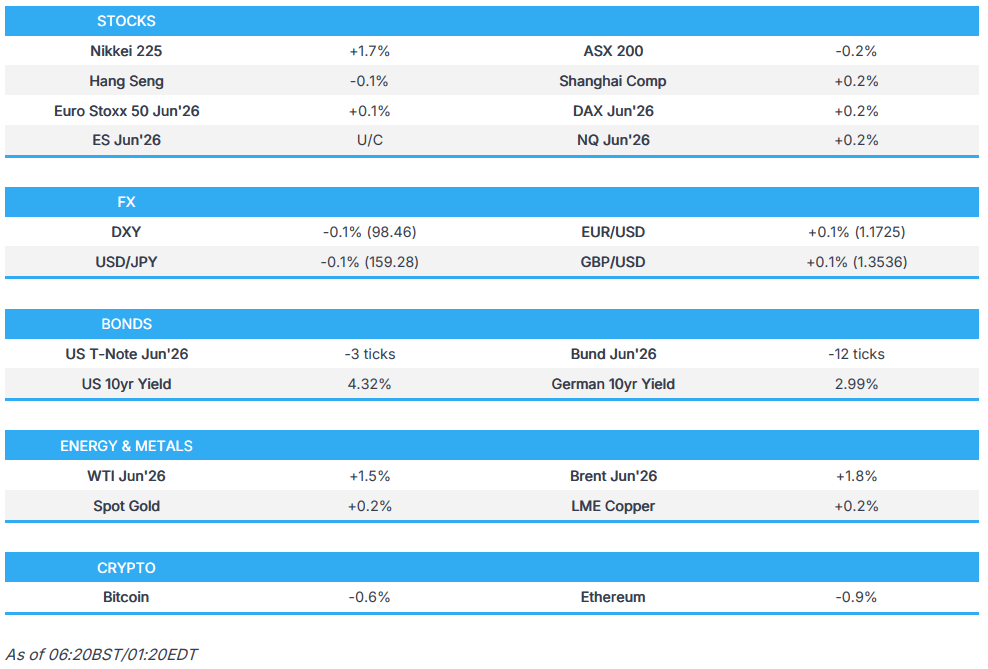
2.ASIAN AFFAIRS APRIL 27 /2025
SHANGHAI CLOSED UP 6.44 PTS OR 0.16%
HANG SENG CLOSED DOWN 18.57 PTS OR 0.07%
Nikkei CLOSED UP 579.80 PTS OR 0.97%
//Australia’s all ordinaries CLOSED DOWN 0.17%
//Chinese yuan (ONSHORE) CLOSED DOWN 6.8238
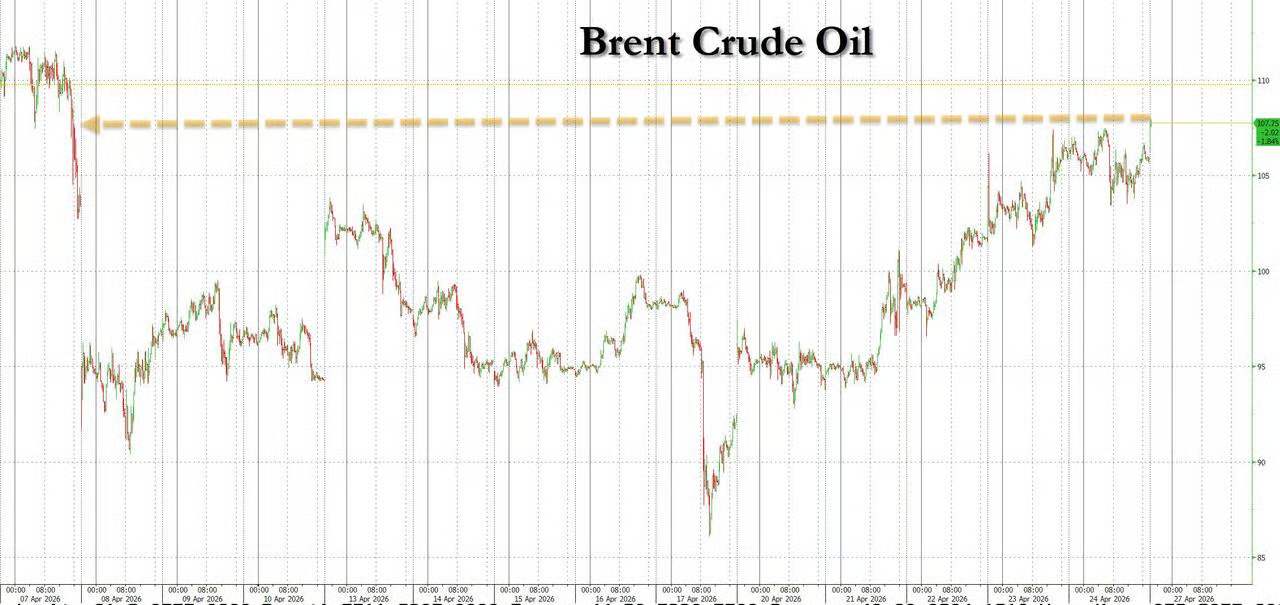
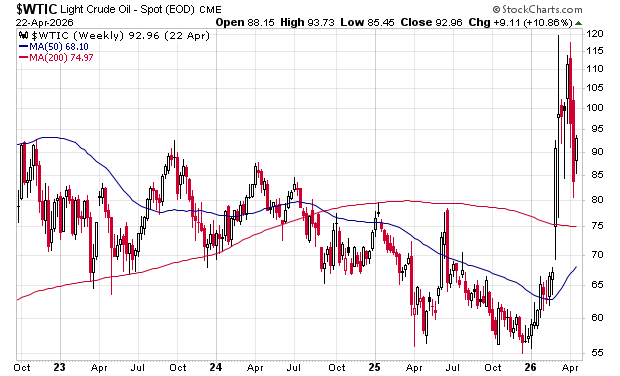
/ OFFSHORE CLOSED DOWN AT 6.8240 Oil UP TO 96,74 dollars per barrel for WTI and BRENT UP TO 108.11 Stocks in Europe OPENED ALL GREEN
ONSHORE USA/ YUAN TRADING 6.8238 (DOWN) OFFSHORE YUAN TRADING DOWN TO 6.8240 ONSHORE YUAN TRADING BELOW OFF SHORE AND UP ON THE DOLLAR// / AND THUS WEAKER/OFF SHORE YUAN TRADING DOWN AGAINST US DOLLAR/ AND THUS WEAKER
XXXXXXXXXXXXXXXXXXXXXXXXXXXXXXXXXXXXX
1. COMEX DATA//AMOUNTS STANDING//VOLUME OF TRADING/INVENTORY MOVEMENTS
GOLD
LET US BEGIN:
THE TOTAL COMEX GOLD OPEN INTEREST ROSE BY A SMALL 980 CONTRACTS UP TO AN OI OF 365,451 CONTRACTS (OI) , HAVING ADVANCED FROM OUR NEW LOW OI SET THIS MONTH AND SURPASSING THE PREVIOUS ALL TIME LOW IN OI OF 354,581 SET APRIL6/2026. PREVIOUS TO THAT THE ALL TIME LOW IN OI WAS 390,000 SET IN THE YEAR 2001 WHEN GOLD WAS TRADING $260.00. THE CME SHOULD BE PROUD OF THEMSELVES AS MANY HAVE ABANDONED THIS CROOKED ARENA!!THUS OUR NEW ALL TIME LOW OF COMEX OI HAS NOW BEEN SET AT 354,581 WITH GOLD AT AN EXTREMELY HIGH $4,700.00 WHICH MAKES ABSOLUTELY NO SENSE!!!
WE HAD ZERO T.A.S. LIQUIDATION DURING THURSDAY’S TRADING. IT SEEMS THAT THE SPECULATORS CONTINUED AGAIN TO GO MASSIVELY ON THE LONG SIDE WITH THE BANKERS TAKING THE SHORT SIDE, SUPPLYING THE NECESSARY PAPER, AS WELL AS COVERING THEIR SHORTFALL. THERE ARE ALSO SOME SPECULATORS WHO CONTINUALLY GO TO THE SHORT SIDE AND THEY WILL BE ANNHILATED ON CENTRAL BANK COMMAND!!
CENTRAL BANKS ALSO TENDERED THEIR NEW LONG CONTRACTS AT THE END OF THE DAY FOR PHYSICAL GOLD. YOU CAN VISUALIZE THIS WITH THE MASSIVE AMOUNT OF GOLD STANDING AT THE COMEX FOR THIS APRIL CONTRACT MONTH!!
THE SMALL SIZED GAIN ON OUR TWO EXCHANGES OCCURRED WITH OUR GAIN IN PRICE IN GOLD.
WE THUS HAD A FAIR GAIN IN OI ON BOTH OF OUR EXCHANGES, THE COMEX AND LONDON’S EXCHANGE FOR PHYSICAL EQUATING TO 1778 CONTRACTS (OR 5.53 TONNES) WITH OUR GAIN IN PRICE, AS WE WERE INFORMED OF A SMALL 798 CONTRACT EXCHANGE FOR PHYSICAL ISSUANCE..
THEN WE WERE NOTIFIED TODAY OF A ZERO CONTRACT EXCHANGE FOR RISK ISSUANCE IN GOLD CONTRACTS FOR 0 OZ OR 0.0 TONNES OF GOLD.
DURING THE MIDDLE OF THE FEBRUARY CONTRACT MONTH, WE HAD TWO IDENTICAL MONSTER 3,000 CONTRACT ISSUED FOR THE SAME 9.33 TONNES OF GOLD, AND THESE WERE THE HIGHEST EVER IN TONNAGE EVER ISSUED BY THE COMEX. ALTOGETHER THE TOTAL ISSUANCE FOR FEB TOTALLED SIX.(31.251 TONNES).
MARCH:
THURSDAY MARCH 17 WE RECEIVED ITS INITIAL 2000 CONTRACT EXCHANGE FOR RISK ISSUANCE FOR 6.22 TONNES. LAST FRIDAY: 0 ISSUANCE OF EXCHANGE FOR RISK. BUT ON MONDAY MARCH 23 WE RECEIVED NOTICE OF OUR SECOND EXCHANGE FOR RISK ISSUANCE FOR 2,200 CONTRACTS (220,000 OZ OR 6.843 TONNES) AND NOW FRIDAY WITH A MONSTER 2996 CONTRACTS FOR 9.3138 TONNES. THESE THREE ISSUANCES WILL NOW BE ADDED TO THE REGULAR AMOUNT OF GOLD STANDING, I.E. 22.3818 TONNES TO OUR NORMAL GOLD STANDING TO GIVE US WHAT WILL STAND FOR PHYSICAL GOLD FOR MARCH!
APRIL;: 0 EXCHANGE FOR RISK FOR FAR.
A LITTLE HISTORY OF EXCHANGE FOR RISK DECEMBER THROUGH TO APRIL:
IN DECEMBER WE HAVE RECORDED 5 ISSUANCES OF EXCHANGE FOR RISK/4 FOR DEC AND THE LAST ONE ON DEC 31 FOR JANUARY. WE NOW HAVE 3 CHOICES FOR THE RECIPIENT OF THIS ISSUANCE AND IT MUST BE A CENTRAL BANK. YOU WILL RECALL THAT THE BUYER ASSUMES THE RISK OF THAT DELIVERY. (THUS TOTAL EXCHANGE FOR RISK FOR THE MONTH OF DECEMBER IS 6.56 TONNES/4 OCCASIONS.
MONTH OF JANUARY/EXCHANGE FOR RISK
IN JANUARY THEY HAVE 6 TOTAL ISSUANCE : 3.446 TONNES EARLY, THEN JAN 9 ISSUANCE OF 9,331 TONNES AND THEN JAN 16: 0.1996 TONNES JAN 26: 1.499 TONNES, JAN 27: 3.160 AND FINALLY JAN 29: 4.659 TONNES TONNES//TOTAL EXCHANGE FOR RISK JANUARY 22.315 TONNES WHICH WAS ADDED TO OUR NORMAL DELVERIES.
AND FEBRUARY:
FEB EXCHANGE FOR RISK: NOW 6 ISSUANCES: 10,080 CONTRACTS FOR 1,008,000 OZ OR 31.251 TONNES!
HERE ARE THE CHOICES FOR THE RECIPIENT OF THOSE ISSUANCES:
1 THE CENTRAL BANK OF ENGLAND. BUT THEY RECEIVED CLEARANCE THAT THEIR GOLD IS BACK SO IT IS NOT LIKELY THAT THEY WOULD LIKE TO ADD TO THEIR RESERVES.
2. THE CENTRAL BANK OF THE USA: THE FED. LOGICAL CHOICE AS THEY CLAMOUR TRYING TO REDUCE THEIR 106+ TONNES OF SHORTAGE. HOWEVER THEY SEEM NOT TO BE IN A HURRY TO COVER THEIR HUGE SHORTFALL
3. THE CENTRAL BANK OF CHINA AS THEY BATTLE WITS WITH THE USA.
TOTAL EXCHANGE FOR RISK FOR DECEMBER IS 6.56 TONNES AND THIS WAS ADDED TO OUR NORMAL DELIVERY TOTALS..
THE JANUARY ISSUANCE OF 17.656 TONNES WAS ADDED TO OUR DAILY DELIVERY TOTALS!!
FEBRUARY ISSUANCES 6 FOR; 31.251 TONNES !! AND THIS WAS ADDED TO OUR DELIVERY TOTALS FOR THIS MONTH.
MARCH: CME ANNOUNCES ITS FIRST EXCHANGE FOR RISK FOR 2000 CONTRACTS FOR 200,000 OZ OR 6.22 TONNES OF GOLD DURING THE FIRST WEEK OF MARCH, AND THEN MONDAY, MARCH 22, WE RECEIVED ITS SECOND NOTICE ISSUANCE OF 2200 CONTRACTS OR 220000 OZ (6.843 TONNES). THEN FINALLY WE RECEIVED NOTICE OF OUR THIRD EXCHANGE FOR RISK OF 2996 CONTRACTS OR 9.3188 TONNES. TOGETHER ALL 3 ISSUANCES TOTAL 22.3818 TONNES WHICH WILL BE ADDED TO OUR NORMAL DELIVERY SCHEDULE.
APRIL: 0 EXCHANGE FOR RISK SO FAR.
DETAILS ON OUR NEW APRIL COMEX CONTRACT MONTH//
IN TOTAL WE HAD A FAIR SIZED GAIN ON OUR TWO EXCHANGES OF 1778 CONTRACTS WITH OUR GAIN IN PRICE ($13.95). HOWEVER, OUR FRIENDLY PHYSICAL LONDON BOYS HAD ANOTHER FIELD DAY AGAIN THROUGHOUT THIS WEEK AS THEY WERE READY FOR THE FRBNY.S CONTINUED ORCHESTRATED ATTACKS VERY EARLY IN THE COMEX SESSIONS AS THEY TRIED TO ABSORB EVERYTHING IN SIGHT FROM THEIR DAILY ATTACKS. LONDONERS EXERCISED THEIR BOUGHT CONTRACTS FOR PHYSICAL GOLD VIA THE EXCHANGE FOR PHYSICAL ROUTE AND THANKED THE FRBNY AND OUR SHORT SPECULATORS FOR THE THOUGHTFULNESS.
LONDON ANNOUNCED EARLY IN THE YEAR (AND SCARCITY CONTINUES TO THIS DAY) THAT THEY WERE OUT OF GOLD. WRONGLY IT WAS ATTRIBUTED TO THEIR SHIPPING PHYSICAL GOLD TO COMEX FOR STORAGE DUE TO TRUMP’S INITIATION OF TARIFFS. THE TRUTH OF THE MATTER IS THAT THIS GOLD LEFT LONDON TO OTHER CENTRAL BANKS, AND COMEX BANKS HAVE BEEN PAPERING THEIR LOSSES (DERIVATIVE) WITH KILOBAR ENTRIES. BOTH COMEX AND LBMA ARE WITNESSING MASSIVE AMOUNTS OF GOLD LEAVING THEIR VAULTS.
THE LIQUIDATION OF T.A.S. CONTRACTS THROUGHOUT THE MONTHS OF JUNE THROUGH APRIL/ CONTINUES TO DISTORT OPEN INTEREST NUMBERS GREATLY ALTHOUGH THE T.A.S. ISSUANCES IN GOLD HAVE GENERALLY BEEN ON THE LOW SIDE COMPARED TO SILVER WHICH HAVE BEEN HUGE. TODAY’S NUMBER HOWEVER IS A SMALL SIZED T.A.S ISSUANCE CONTRACTS .THE CME NOTIFIES US THAT THEY HAVE ISSUED 720 T.A.S CONTRACTS. THESE ARE GENERALLY USED FOR RAID PURPOSES TO STOP GOLD’S RISE AND TO TEMPER HUGE LOSSES IN OTC DERIVATIVE BETS AND IT WAS IN FULL FORCE DURING THIS WEEK WITH MUCH FAILURE DURING LONDON LBMA/OTC OPTION EXPIRY WEEK!! (APRIL FIRST DAY NOTICE)
IT SURE LOOKS LIKE THE BIS HAS SOMEHOW LOOKED THE OTHER WAY WITH ITS GOLD SWAPS WITH THE FRBNY AS THIS ENTITY FOR THE FED REFUSES THE BIS MARCHING ORDERS TO COVER AND THAT MAY EXPLAIN THE STRONG NUMBER OF T.A.S. ISSUANCES IN DECEMBER , JANUARY AND THROUGHOUT FEBRUARY TO GO ALONG WITH OUR HUGE NUMBER OF EXCHANGE FOR RISK ISSUED DURING THESE MONTHS INCLUDING FEBRUARY’S 6 EXCHANGE FOR RISK WHICH ALSO INCLUDED TWO MONSTER 9.3312 TONNE ISSUANCE (FEB 10 AND FEB 12). TOTAL EXCHANGE FOR RISK/FEB EQUALS 31.251 TONNES!! AND MARCH’S THREE ISSUANCES FOR 22.3818 TONNES! OTHER CENTRAL BANKS ARE PAYING ATTENTION AS THEY TAKE DELIVERY OF HUGE AMOUNTS OF PHYSICAL GOLD.
FOR MARCH WE HAVE 3 EXCHANGE FOR RISK ISSUANCES SO FAR FOR 7196 CONTRACTS OR 719,600 OZ/22.3818 TONNES.. AS DELIVERIES OF GOLD THESE PAST SEVERAL MONTHS HAVE BEEN HUGE!!
APRIL: 0 SO FAR HAVE BEEN ISSUED
HERE IS A SUMMARY OF GOLD STANDING FOR DELIVERY ON OUR LAST 12 MONTHS:
FOR APRIL AT 209 TONNES
2. AND THIS CONTINUED INTO MAY WITH FINAL STANDING AT 90.23 TONNES.
3. JUNE WHICH IS A HUGE DELIVERY MONTH , FINAL STANDING WAS RECORDED AT A STRONG 93.085 TONNES. //(TOTAL NET QUEUE JUMPING FOR THE JUNE MONTH: 31.027 TONNES.)
4. IN JULY WE HAD HUGE DELIVERY NOTICES ESPECIALLY FOR A NON ACTIVE DELIVERY MONTH WITH INITIAL STANDING AT 17.947 TONNES PLUS MANY QUEUE JUMPS + 3.75 TONNES EX FOR RISK = 41.106 TONNES OF GOLD // FINAL TOTAL TONNES STANDING JULY: 41.106 TONNES
5. FOR THE MONTH OF AUGUST:
INITIAL AMOUNT OF GOLD STANDING FOR AUGUST: 60.547 TONNES PLUS THE MONTHS HUGE QUEUE JUMPS OF 47.2312 TONNES +44.696 TONNES EX FOR RISK (7 ISSUANCES) //NEW STANDING 152.208 TONNES WHICH IS MONSTROUS!!!
6. FINAL AMOUNT OF GOLD STANDING FOR SEPT; INITIAL STANDING; 2,602 CONTRACTS OR 260,200 OZ FOR 8.093 TONNES OF GOLD FOLLOWED BY TODAY’S 0.4883 TONNES QUEUE JUMP TO GO ALONG WITH TODAY’S 1.244 TONNES OF EXCHANGE FOR RISK ISSUANCE TODAY AND // TOTAL EXCHANGE FOR RISK ISSUANCE SEPT: 22.923 TONNES//NEW TOTALS STANDING ADVANCES TO 48.801 TONNES OF GOLD!!!
7. OCTOBER:
OCTOBER: INITIAL STANDING FOR GOLD: 90.164 TONNES TO WHICH WE ADD OUR LATEST OCT 30 QUEUE JUMP OF 0.00311 TONNES WHICH FOLLOWS OCT 29 QUEUE JUMP OF .4096 WHICH FOLLOWS; OCT 28 QUEUE JUMP OF .5069 TONNES WHICH FOLLOWS OCT 27 OF 0.3048 TONNES WHICH FOLLOWS: OCT 24 OF 0.8615 TONNES, FOLLOWING OCT 23 QUEUE JUMP OF 1.695 TONNES OCT 22 JUMP OF 8.622 TONNES WHICH FOLLOWS OCT 21: 3.8600 TONNES TO OCT 20 QUEUE JUMP OF 7.695 TONNE
SUMMARY FOR OCTOBER STANDING:
NOVEMBER WHERE INITIAL AMOUNT OF GOLD STANDING IS REGISTERED AT 15.651 TONNES OF GOLD FOLLOWED BY TODAY’S QUEUE JUMP OF 2 TONNES AND FOLLOWED BY ALL OTHER NOV QUEUE JUMPS OF 21.3775 TONNES TO WHICH WE ADD OUR TWO EXCHANGE FOR RISK ISSUANCE FOR 4.5596 TONNES.
DECEMBER: INITIAL AMOUNT OF GOLD STANDING FOR DELIVERY IN THIS ACTIVE MONTH IS 83.813 TONNES FOLLOWED BY TODAY’S 0.XXXX TONNES QUEUE JUMP. THIS FOLLOWS ALL OTHER QUEUE JUMPING: 37.163 TONNES//NEW STANDING ADVANCES TO 115.390 TONNES TO WHICH WE ADD OUR FOUR EXCHANGE FOR RISK ISSUANCE OF 6.559 TONNES//NEW STANDING THUS INCREASES TO 121.977 TONNES
JANUARY: INITITAL STANDING: 13.785 TONNES TO WHICH WE ADD OUR QUEUE JUMP OF 0.000 TONNES WHICH FOLLOWS ALL OTHER QUEUE JUMPS OF 30.7117TONNES //NEW TOTAL QUEUE JUMPS 30.7117//NORMAL DELIVERY OF GOLD ADVANCES TO 36.8958 TONNES TO WHICH WE ADD OUR SIX EXCHANGE FOR RISK OF 22.315 TONNES//NEW STANDING ADVANCES TO 59.2108 TONNES.
FEBRUARY: . FEBRUARY: INITIAL STANDING: 93.566 TONNES TO WHICH WE ADD OUR NEXT QUEUE JUMP OF 0.0248 TONNES WHICH MUST BE ADDED ALL OTHER QUEUE JUMPS OF 41.2087 TONNES QUEUE JUMP//TOTAL QUEUE JUMP FOR FEB::ADVANCES TO 41.233 TONNES///STANDING ADVANCES TO 126.628 TONNES TO WHICH WE ADD OUR SIX EXCHANGE FOR RISK OF 31.251 TONNES/NEW STANDING RISES TO 157.879 TONNES
MARCH: INITIAL STANDING FOR GOLD: 8.099 TONNES TO WHICH WE ADD OUR NEXT QUEUE JUMP OF 0.2320 TONNES AND THEN WE ADD OUR THREE EXCHANGE FOR RISK OF 22.3818 TONNES////NEW STANDING FOR GOLD ADVANCES TO: 67.6648TONNES WHICH IS ABSOLUTELY HUGE FOR A NON ACTIVE DELIVERY MONTH!!
AND NOW APRIL 2026: INITIAL STANDING FOR GOLD: 52.20 TONNES FOLLOWED BY TODAY’S SMALL 500 OZ (0.2574 TONNES) QUEUE JUMP. THUS STANDING FOR GOLD AT THE COMEX ADVANCES TO 69.420TONNES.
HERE ARE THE AMOUNTS THAT STOOD FOR DELIVERY IN THE PRECEDING 48 MONTHS 2021-2024
DEC 2021: 112.217 TONNES
NOV. 8.074 TONNES
OCT. 57.707 TONNES
SEPT: 11.9160 TONNES
AUGUST: 80.489 TONNES
JULY 7.2814 TONNES
JUNE: 72.289 TONNES
MAY 5.77 TONNES
APRIL 95.331 TONNES
MARCH 30.205 TONNES
FEB ’21. 113.424 TONNES
JAN ’21: 6.500 TONNES.
TOTAL YEAR 2021 (JAN- DEC): 601.213 TONNES
YEAR 2022: STANDING FOR GOLD/COMEX
JANUARY 2022 17.79 TONNES
FEB 2022: 59.023 TONNES
MARCH: 36.678 TONNES
APRIL: 85.340 TONNES FINAL.
MAY: 20.11 TONNES FINAL
JUNE: 74.933 TONNES FINAL
JULY 29.987 TONNES FINAL
AUGUST:104.979 TONNES//FINAL
SEPT. 38.1158 TONNES
OCT: 77.390 TONNES/ FINAL
NOV 27.110 TONNES/FINAL
Dec. 64.000 tonnes
(TOTAL YEAR 656.076 TONNES)
2023:STANDING FOR GOLD/COMEX
JAN/2023: 20.559 tonnes
FEB 2023: 47.744 tonnes
MAR: 19.0637 TONNES
APRIL: 75.676 tonnes
MAY: 19.094 TONNES + 1.244 tonnes of exchange for risk = 20.338
JUNE: 64.354 TONNES
JULY: 10.2861 TONNES
AUGUST: 38.855 TONNES(INCLUDING .6842 EXCHANGE FOR RISK)
SEPT: 15.281 TONNES FINAL
OCT. 35.869 TONNES + 1.665 EXCHANGE FOR RISK =37.0355 tonnes
DEC. 47.073 + 4.634 TONNES OF EXCHANGE FOR RISK = 51.707 TONNES
TOTAL 2023 YEAR : 436.546 TONNES
2024/STANDING FOR GOLD/COMEX
JAN ’24. 22.706 TONNES
FEB. ’24: 66.276TONNES (INCLUDES 1.723 TONNES EX. FOR RISK)
MARCH: 18.8398 TONNES + 1.1695 EX FOR RISK = 20.093 TONNES
APRIL: 2024: 53.673TONNES FINAL
MAY/ 2024 8.5536 TONNES + 3.3716 TONNES EX FOR RISK/= 11.9325
JUNE; 95.578 TONNES. + 1.045 TONNES EXCHANGE FOR RISK =96.623 THIS IS THE HIGHEST RECORDED GOLD STANDING SINCE AUGUST 2022
JULY: 11.692 TONNES
AUGUST 69.602 TONNES//FINAL STANDING
SEPT. 13.164 TONNES.
OCT 39.474 TONNES + + 20.917 TONNES EXCHANGE FOR RISK =60.391 TONNES
NOV . 11.265 TONNES +4.665 TONNES EXCHANGE FOR RISK/TUESDAY + 3.11 TONNES OF EX. FOR RISK/PRIOR = 19.0425 TONNES
DEC: 80.4230 TONNES PLUS DEC MONTH EXCHANGE FOR RISK TOTAL 14.6836 TONNES EQUALS 95.1066 TONNES
total year 2024: 540.30 tonnes
COMEX GOLD TRADING BEGINNING APRIL,. CONTRACT;
THE SPECS/HFT WERE UNSUCCESSFUL IN LOWERING GOLD’S PRICE( IT ROSE BY $13.95)
WE HAD ZERO T.A.S. SPREADER LIQUIDATION // COMEX SESSION// WITH OUR GAIN IN PRICE , OUR LONG SPECULATORS REMAIN RELENTLESS POURING INTO THE COMEX STARTING TO BUILD ON ITS OI //
OTHER EASTERN CENTRAL BANKS TENDERED FOR PHYSICAL EVERY NIGHT WHICH ALSO EXPLAINS THE HUGE NUMBER OF TONNES OF GOLD THAT STOOD FOR GOLD DURING THESE PAST SEVERAL MONTHS
FRIDAY NIGHT//SATURDAY MORNING
THE CROOKS COULD NOT STOP OTHER CENTRAL BANK LONGS, SEIZING THE MOMENT, THEY EXERCISED AGAIN FOR PHYSICAL IN A BIG WAY TENDERING FOR PHYSICAL FRIDAY EVENING/SATURDAY MORNING AND THUS OUR HUGE NUMBER OF GOLD CONTRACTS STANDING FOR DELIVERY AT THE COMEX. CENTRAL BANKERS WAIT PATIENTLY FOR THE GOLD
A LITTLE REVIEW OF GOLD STANDING THESE PAST 7 MONTHS:
STANDING FOR GOLD OCT THROUGH TO APRIL:
ANALYSIS// OCT DELIVERY MONTH GOING FROM FIRST DAY NOTICE// OCT COMEX CONTRACT TO FINALIZATION OCT 31:
OCT AT 90.164 TONNES TO BE FOLLOWED BY ALL PREVIOUS QUEUE JUMPS OF 75.696 TONNES WHICH WE ADD OUR 14.553 TONNES EX FOR RISK/6 OCCASIONS:
/ TOTAL STANDING 197.551 TONNE/OCTOBER FINAL//ABSOLUTELY A MONSTER DELIVERY FOR A NORMALLY QUIET OCT MONTH
2. AND NOW NOVEMBER:
NOVEMBER BEGINS WITH A HUGE 15.651 TONNES INITIALLY STANDING FOR DELIVERY FOLLOWED BY OUR TODAY’S QUEUE JUMP OF 2.323 TONNES WHICH FOLLOWED ALL OTHER NOVEMBER QUEUE JUMPS OF 21.3775 TONNES TO WHICH WE ADD OUR TWO ISSUANCES OF EXCHANGE FOR RISK OF 4.5596 TONNES..
NEW STANDING ADVANCES TO 43.9716 ONNES OF GOLD.
3. AND NOW DECEMBER:
3. DECEMBER: INITIAL AMOUNT OF GOLD STANDING FOR DELIVERY: 83.813 TONNES FOLLOWED BY A 0 CONTRACT QUEUE JUMP FOR NIL OZ OR 0.000 TONNES WHICH FOLLOWS OTHER DEC QUEUE JUMPS OF: 0 TONNES///STANDING ADVANCES TO 115.390 TONNES TO WHICH WE ADD OUR FOUR EXCHANGE FOR RISK ISSUANCE OF 6.559TONNES/NEW STANDING ADVANCES TO 121.977 TONNES
4. JANUARY:
9. JANUARY: INITITAL STANDING: 13.785 TONNES TO WHICH WE ADD OUR QUEUE JUMP OF 0.000 TONNES WHICH FOLLOWS ALL OTHER QUEUE JUMPS OF 30.7117TONNES //NEW TOTAL QUEUE JUMPS 30.7117//NORMAL DELIVERY OF GOLD ADVANCES TO 36.8958 TONNES TO WHICH WE ADD OUR SIX EXCHANGE FOR RISK OF 22.315 TONNES//NEW STANDING ADVANCES TO 59.2108 TONNES.
10. FEBRUARY: INITIAL STANDING: 93.566 TONNES TO WHICH WE ADD OUR LATEST QUEUE JUMP OF 0.0298 TONNES TO WHICH THIS IS ADDED TO ALL OTHER QUEUE JUMPS OF 41.2082 / NEW QUEUE JUMP ADVANCES TO: 41.233 TONNES//STANDING ADVANCES TO: 126.628 TONNES TO WHICH WE ADD OUR SIX EXCHANGE FOR RISK OF 10,080 CONTRACTS FOR 1,008,000 OZ OR 31.251 TONNES/NEW STANDING ADVANCES TO 157.879 TONNES
MARCH: INITIAL STANDING: 8.099 TONNES TO WHICH WE ADD OUR NEXT QUEUE JUMP OF 0.2320 TO WHICH WE THEN ADD OUR THREE EXCHANGE FOR RISK FOR 22.3818 TONNES// GOLD STANDING ADVANCES TO: 67.6648 TONNES/
APRIL: INITIAL STANDING: A VERY STRONG 52.600 TONNES FOLLOWED BY TODAY’S SMALL 500 OZ QUEUE JUMP (2.4105TONNES). THUS STANDING FOR GOLD AT THE COMEX ADVANCES TO 69.420 TONNES
ALL OF THIS WAS ACCOMPLISHED DESPITE OUR GAIN IN PRICE TO THE TUNE OF $13.95
WE HAD 2790 CONTRACTS REMOVED FROM THE COMEX TRADES TO OPEN INTEREST (CROOKS)//PRELIMINARY TO FINAL.
NET GAIN ON THE TWO EXCHANGES : 1778 CONTRACTS OR 177,800 OZ OR 5.53 TONNES
Total monthly oz gold served (contracts) so far this month
22,281 notices 2,228,100 oz 69.308 TONNES
Total accumulative withdrawals of gold from the Dealers inventory this month
NIL oz
Total accumulative withdrawal of gold from the Customer inventory this month
dealer deposits: 1
0 ENTRY
DEPOSITS/CUSTOMER
0 ENTRY
xxxxxxxxxxxxxxxxxx
comex withdrawals:
ENTRIES; 1
ENTRIES; 1
i) JPMORGAN: 24,596.214 OZ
0.788 tonnes
they are draining the comex of gold
xxxxxxxxxxxxxxxxxxxxxxxxxxxxxxxxxxxxxxxxxx
ADJUSTMENTs
adjustments: / / 1
CUSTOMER TO DEALER ACCOUNT BRINKS:
2799.000 OZ
COMEX IS DRAINING GOLD
chaos inside the comex
THE FRONT MONTH OF APRIL OI STANDS AT 63 CONTRACTS HAVING A LOSS OF 56 CONTRACTS.
WE HAD 61 CONTRACTS SERVED UPON FRIDAY SO WE GAINED A 5 CONTRACT QUEUE JUMP CONTRACTS. THUS 500OZ OF ADDITIONAL GOLD WILL STAND ON THIS SIDE OF THE BORDER AND THIS EQUATES TO 0.0155TONNES.(QUEUE JUMP)
MAY LOST 107 CONTRACTS TO AN OI OF 3417 AS MAY BECOMES THE FRONT MONTH.
JUNE IS A HUGE DELIVERY MONTH AND HERE THE OI FELL BY 1118 CONTRACTS UP TO AN OI OF 262,524
We had 25 contracts filed for today representing 2500oz
Today, 0 notice(s) were issued from J.P.Morgan dealer and 0 notices issued from their client or customer account. The total of all issuance by all participants equate to 0 contract(s) of which 0 notices were stopped (received) by j.P. Morgan dealer and 0 notice(s) was (were) stopped (received) by J.P.Morgan//customer account
To calculate the INITIAL total number of gold ounces standing for APRIL. /2026. contract month, we take the total number of notices filed so far for the month (22,281) to which we add the difference between the open interest for the front month of APRIL ( XXXX CONTRACTS) minus the number of notices served upon today 25 x 100 oz per contract) equals 2,231,900 OZ OR (69.420 Tonnes of gold)
THUS: INITIAL total number of gold ounces standing for APRIL. /2026. contract month, we take the total number of notices filed so far for the month (22,281) to which we add the difference between the open interest for the front month of APRIL (XXX CONTRACTS) minus the number of notices served upon today 25 x 100 oz per contract) equals 2,231,900 OZ OR (69.420Tonnes of gold)
new total of gold standing in APRIL is 69.420 TONNES//
TOTAL COMEX GOLD STANDING FOR APRIL 69.420 TONNES TONNES WHICH IS NOW HUGE FOR THIS NORMALLY VERY ACTIVE ACTIVE DELIVERY MONTH OF APRIL.
confirmed volume MONDAY confirmed 117,139 AWFUL ESPECIALLY FOR A MONDAY
COMEX GOLD INVENTORIES/CLASSIFICATION
NEW PLEDGED GOLD:
241,794.285 oz NOW PLEDGED /HSBC 5.94 TONNES
204,937.290 OZ PLEDGED MANFRA 3.08 TONNES
83,657.582 PLEDGED JPMorgan no 1 1.690 tonnes
265,999.054, oz JPM No 2
1,152,376.639 oz pledged Brinks/
Manfra: 33,758.550 oz
Delaware: 193.721 oz
International Delaware:: 11,188.542 oz
total pledged gold: 1,937,269.176 oz 60.12 tonnes pledged gold lowers
total inventories in gold declining rapidly
total pledged gold: 1,937,269.176 tonnes oz 60.12 tonnes
TOTAL OF ALL GOLD ELIGIBLE AND REGISTERED GOLD 29,216,588.938 oz
TOTAL REGISTERED GOLD 15,668,491.872 OZ 487.35 onnes
TOTAL OF ALL ELIGIBLE GOLD 13,548,097.066 oz//eligible gold leaving hand over fist
REGISTERED GOLD THAT CAN BE SERVED UPON 13,731,222 oz ((REG GOLD- PLEDGED GOLD)=
427.09 Tonnes //
total inventories in gold declining rapidly
SILVER COMEX
APRIL DELIVERY MONTH
APRIL27
Silver
Ounces
Withdrawals from Dealers Inventory
NIL oz
Withdrawals from Customer Inventory
0 entries
Deposits to the Dealer Inventory
0 entries
xxxxxxxxxxxxxxxxxxxxxxxxxxxxxx
Deposits to the Customer Inventory
DEPOSIT ENTRIES/CUSTOMER ACCOUNT
(1) entries
i) Into HSBC 29,280.310. oz
total deposit 29,280.310 oz
No of oz served today (contracts)
7 CONTRACT(S) (35,000 OZ
No of oz to be served (notices)
2Contracts (0.010 MILLION oz)
Total monthly oz silver served (contracts)
3308contracts 16.540 MILLION oz
Total accumulative withdrawal of silver from the Dealers inventory this month
NIL oz
Total accumulative withdrawal of silver from the Customer inventory this month
DEPOSITS INTO DEALER ACCOUNTS
0 entries
DEPOSIT ENTRIES/CUSTOMER ACCOUNT
1) entries
i) Into HSBC 29,280.310. oz
total deposit 29,280.310 oz
xxxxxxxxxxxxxxxxxxxxxxxxx
withdrawals: customer side/eligible
0 entries
the comex is being drained of silver
the comex is being drained of silver
adjustments:1 dealer to customer acct
a) Stonex: 777,165,770 oz
total oz leaving the dealer to customer accts 777,165.770 oz
Friday volume: 73,898 oz
xxxxxxxxxxxxxx
TOTAL REGISTERED SILVER: 76.340 MILLION OZ//.TOTAL REG + ELIGIBLE. 315.181 Million oz
registered silver dropping in numbers
CALCULATIONS FOR THE NEW STANDING FOR SILVER FOR APRIL
silver open interest data:
FRONT MONTH OF APRIL /2026 OI: 14 OPEN INTEREST CONTRACTS FOR A LOSS OF 1 CONTRACT. WE HAD 13 CONTRACTS SERVED ON FRIDAY, SO WE GAINED A SMALL 12 CONTRACTS OR 60,000 OZ UNDERWENT ANOTHER QUEUE JUMP. STANDING THUS ADVANCES TO 16.575 MILLION OZ WHICH IS HUGE FOR THIS NORMALLY SMALL NON ACTIVE DELIVERY MONTH OF APRIL. BUT WE MUST ADD OUR THIRD EXCHANGE FOR RISK TOTALING 199 CONTRACTS OR .995 MILLION OZ. THIS IS ADDED TO OUR OTHER TWO EXCHANGE FOR RISK ISSUED//TOTAL FOR THE 3 EX FOR RISK: 2.965 TONNES. NEW TOTAL SILVER STANDING AT THE COMEX ADVANCES TO 19.540 MILLION OZ.
MAY SAW A LOSS OF 3868 CONTRACTS DOWNTO 26,778 CONTRACTS. MAY BECOMES THE NEW FRONT MONTH. WE HAVE 4 MORE READING DAYS BEFORE FIRST DAY NOTICE
JUNE SAW A GAIN OF 31 CONTRACTS UP TO 1255 OI CONTRACTS
TOTAL NUMBER OF NOTICES FILED FOR TODAY: 7 or 35,000 oz
CONFIRMED volume FRIDAY; 73,898 strong
AND NOW APRIL. DELIVERIES:
To calculate the number of silver ounces that will stand for delivery in APRIL. we take the total number of notices filed for the month so far at 3308 X5,000 oz = 16.540 MILLION oz
to which we add the difference between the open interest for the front month of APRIL (XX) AND the number of notices served upon today (7 )x (5000 oz)
Thus the standings for silver for the APRIL 2026 contract month: (3308 )Notices served so far) x 5000 oz + OI for the front month of APRIL (XX) minus number of notices served upon today (7)x 5000 oz equals silver standing for the APRIL..contract month equating to 16.575 MILLION OZ.+ 2.965 MILLIONEXCHANGE FOR RISK/3 OCCASIONS// WHICH MUST BE ADDED TO NORMAL DELIVERIES..NEW TOTALS 19.540 MILLION OZ
NEW STANDING: 19.540 MILLION OZ WHICH IS HUGE FOR A GENERALLY LOUSY DELIVERY MONTH OF APRIL.
We must also keep in mind that there is considerable silver standing in London coming from our longs
There are ONLY 76.370 million oz of registered silver
JPMorgan as a percentage of total silver: 142.322/315.181 million: 44.93
The record level of silver open interest is 234,787 contracts set on April 21./2017 with the price on that day at $18.42. The previous record was 224,540 contracts with the price at that time of $20.44.
BOTH GLD AND SLV ARE MASSIVE FRAUD
APRIL 27/2026/WITH GOLD DOWN $41.10 TODAY/NO CHANGES IN GOLD AT THE GLD: // //:/INVENTORY RESTS AT 1046.62 TONNES
APRIL 24/2026/WITH GOLD UP $13.95 TODAY/HUGE CHANGES IN GOLD AT THE GLD: A WITHDRAWAL OF 4.29 TONNES OF GOLD FROM THE GLD// //:/INVENTORY RESTS AT 1046.62 TONNES
APRIL 23/2026/WITH GOLD DOWN 28.35 TODAY/HUGE CHANGES IN GOLD AT THE GLD: A WITHDRAWAL OF 2.000 TONNES OF GOLD FROM THE GLD// //:/INVENTORY RESTS AT 1050.91 TONNES
APRIL 22/2026/WITH GOLD UP 26.40 TODAY/NO CHANGES IN GOLD AT THE GLD //:/INVENTORY RESTS AT 1052.91 TONNES
APRIL 21/2026/WITH GOLD DOWN 11.90TODAY/NO CHANGES IN GOLD AT THE GLD //:/INVENTORY RESTS AT 1052.91 TONNES
APRIL 17/2026/WITH GOLD UP $71.30 TODAY/HUGE CHANGES IN GOLD AT THE GLD A DEPOSIT 1.15 TONNES OF GOLD INTO THE GLD//:/INVENTORY RESTS AT 1052.91 TONNES
APRIL 16/2026/WITH GOLD DOWN $15.00 TODAY/HUGE CHANGES IN GOLD AT THE GLD A DEPOSIT 2.285 TONNES OF GOLD INTO THE GLD//:/INVENTORY RESTS AT 1051.783 TONNES
APRIL 15/2026/WITH GOLD DOWN $24.15 TODAY/HUGE CHANGES IN GOLD AT THE GLD A DEPOSIT 2.289 TONNES OF GOLD INTO THE GLD//:/INVENTORY RESTS AT 1049.478 TONNES
APRIL 14/2026/WITH GOLD UP $83.55 TODAY/HUGE CHANGES IN GOLD AT THE GLD A WITHDRAWAL OF 1.714 TONNES OF GOLD FROM THE GLD//:/INVENTORY RESTS AT 1047.192 TONNES
APRIL 13/2026/WITH GOLD DOWN $50.60 TODAY/HUGE CHANGES IN GOLD AT THE GLD A WITHDRAWAL OF 3.514 TONNES OF GOLD FROM THE GLD//:/INVENTORY RESTS AT 1048.906 TONNES
APRIL 13/2026/WITH GOLD DOWN $50.60 TODAY/HUGE CHANGES IN GOLD AT THE GLD A WITHDRAWAL OF 3.514 TONNES OF GOLD FROM THE GLD//:/INVENTORY RESTS AT 1048.906 TONNES
APRIL 10/2026/WITH GOLD DOWN $11.90 TODAY/SMALL CHANGES IN GOLD AT THE GLD A WITHDRAWAL OF 0.724 TONNES OF GOLD FROM THE GLD//:/INVENTORY RESTS AT 1052.42 TONNES
APRIL 9/2026/WITH GOLD UP $42.50 TODAY/HUGE CHANGES IN GOLD AT THE GLD A WITHDRAWAL OF 1.429 TONNES OF GOLD FROM THE GLD//:/INVENTORY RESTS AT 1052.990 TONNES
APRIL 8/2026/WITH GOLD UP $88.95 TODAY/NO CHANGES IN GOLD AT THE GLD A//:/INVENTORY RESTS AT 1054.419 TONNES
APRIL 7/2026/WITH GOLD UP $5.25 TODAY/HUGE CHANGES IN GOLD AT THE GLD A DEPOSIT OF 3.429 TONNES OF GOLD INTO THE GLD//:/INVENTORY RESTS AT 1054.419 TONNES
APRIL 6/2026/WITH GOLD UP $5.30 TODAY/NO CHANGES IN GOLD AT THE GLD:/INVENTORY RESTS AT 1050.99 TONNES
APRIL 2/2026/WITH GOLD DOWN $132.75 TODAY/HUGE CHANGES IN GOLD AT THE GLD:A DEPOSIT OF 3.714 TONNES OF GOLD INTO THE GLD/INVENTORY RESTS AT 1050.99 TONNES
APRIL 1/2026/WITH GOLD UP $134.70 TODAY/HUGE CHANGES IN GOLD AT THE GLD:A DEPOSIT OF 1.143 TONNES OF GOLD INTO THE GLD/INVENTORY RESTS AT 1047.276 TONNES
MAR 31/2026/WITH GOLD UP $119.65 TODAY/HUGE CHANGES IN GOLD AT THE GLD:A MASSIVE WITHDRAWAL OF 3.429 TONNES OF GOLD OUT OF THE GLD/INVENTORY RESTS AT 1046.133 TONNES
MAR 30/2026/WITH GOLD UP $33.45 TODAY/HUGE CHANGES IN GOLD AT THE GLD:A WITHDRAWAL OF 3.143 TONNES OF GOLD OUT OF THE GLD/INVENTORY RESTS AT 1049.562
MAR 27/2026/WITH GOLD UP $103.55 TODAY/SMALL CHANGES IN GOLD AT THE GLD:A DEPOSIT OF 0.285 TONNES OF GOLD INTO THE GLD/INVENTORY RESTS AT 1052.705
MAR 26/2026/WITH GOLD DOWN $213.05 TODAY/SMALL CHANGES IN GOLD AT THE GLD:A WITHDRAWAL OF 0.580 TONNES OF GOLD INTO THE GLD/INVENTORY RESTS AT 1052.42
MAR 25/2026/WITH GOLD UP $155.30 TODAY/SMALL CHANGES IN GOLD AT THE GLD:A DEPOSIT OF 0.300 TONNES OF GOLD INTO THE GLD/INVENTORY RESTS AT 1053.000
MAR 24/2026/WITH GOLD DOWN $7.25 TODAY/HUGE CHANGES IN GOLD AT THE GLD:A HUGE WITHDRAWAL OF 4.286 TONNES OF GOLD OUT OF THE GLD/INVENTORY RESTS AT 1052.705
MAR 23/2026/WITH GOLD DOWN $165.65 TODAY/HUGE CHANGES IN GOLD AT THE GLD:A HUGE WITHDRAWAL OF 5.149 TONNES OF GOLD OUT OF THE GLD/INVENTORY RESTS AT 1056.991
MAR 20/2026/WITH GOLD DOWN $39,55 TODAY/HUGE CHANGES IN GOLD AT THE GLD:A HUGE WITHDRAWAL OF 4.855 TONNES OF GOLD OUT OF THE GLD/INVENTORY RESTS AT 1062.135
MAR 19/2026/WITH GOLD DOWN $XXX TODAY/HUGE CHANGES IN GOLD AT THE GLD:A HUGE WITHDRAWAL OF 2.57 TONNES OF GOLD OUT OF THE GLD/INVENTORY RESTS AT 1066.99
MAR 18/2026/WITH GOLD DOWN $111.80 TODAY/HUGE CHANGES IN GOLD AT THE GLD:A HUGE WITHDRAWAL OF 1.144 TONNES OF GOLD OUT OF THE GLD// /// ///INVENTORY RESTS AT 1069.564 TONNES
MAR 17/2026/WITH GOLD UP $6.80 TODAY/HUGE CHANGES IN GOLD AT THE GLD:A HUGE WITHDRAWAL OF 0.857 TONNES OF GOLD OUT OF THE GLD// /// ///INVENTORY RESTS AT 1070.708 TONNES
MAR 16/2026/WITH GOLD DOWN $60.45 TODAY/HUGE CHANGES IN GOLD AT THE GLD:A HUGE WITHDRAWAL OF 4/327 TONNES OF GOLD OUT OF THE GLD// /// ///INVENTORY RESTS AT 1071/.565 TONNES
MAR 13/2026/WITH GOLD DOWN $61.40 TODAY/HUGE CHANGES IN GOLD AT THE GLD:A HUGE WITHDRAWAL OF 1.428 TONNES OF GOLD INTO THE GLD// /// ///INVENTORY RESTS AT 1075.852 TONNES
MAR 12/2026/WITH GOLD DOWN $49.25 TODAY/HUGE CHANGES IN GOLD AT THE GLD:A HUGE DEPOSIT OF 3.715 TONNES OF GOLD INTO THE GLD// /// ///INVENTORY RESTS AT 1077.28 TONNES
MAR 11/2026/WITH GOLD DOWN $70.55 TODAY/HUGE CHANGES IN GOLD AT THE GLD:A HUGE DEPOSIT OF 2.858 TONNES OF GOLD INTO THE GLD// /// ///INVENTORY RESTS AT 1073.565 TONNES
MAR 10/2026/WITH GOLD UP $137.75 TODAY/HUGE CHANGES IN GOLD AT THE GLD:ANOTHER MONSTER WITHDRAWAL OF 2.614 TONNES OF GOLD OUT OF THE GLD// /// ///INVENTORY RESTS AT 1070.707 TONNES
GLD INVENTORY: 1046.62 TONNES, TONIGHTS TOTAL GOLD INVENTORY
SILVER
APRIL 27 WITH SILVER DOWN $1.39: NO CHANGES IN SILVER INVENTORY AT THE SLV:/ // :INVENTORY RESTS AT 487.234MILLION OZ
APRIL 24 WITH SILVER UP 0.92: SMALL CHANGES IN SILVER INVENTORY AT THE SLV: A WITHDRAWAL OF 1.54 MILLION OZ OUT THE SLV// // :INVENTORY RESTS AT 487,23MILLION OZ
APRIL 23WITH SILVER DOWN $2.35: SMALL CHANGES IN SILVER INVENTORY AT THE SLV: A WITHDRAWAL OF 2.489 MILLION OZ OUT THE SLV// // :INVENTORY RESTS AT 488,773MILLION OZ
APRIL 22 WITH SILVER UP 1.43: SMALL CHANGES IN SILVER INVENTORY AT THE SLV: A DEPOSIT OF 0.352 MILLION OZ OUT THE SLV// // :INVENTORY RESTS AT 491.262MILLION OZ
aPRIL 21 WITH SILVER DOWN 3.71: SMALL CHANGES IN SILVER INVENTORY AT THE SLV: A DEPOSIT OF 0.352 MILLION OZ OUT THE SLV// // :INVENTORY RESTS AT 491.262 MILLION OZ
APRIL 17 WITH SILVER UP $3.09: SMALL CHANGES IN SILVER INVENTORY AT THE SLV: A DEPOSIT OF 0.453 MILLION OZ OUT THE SLV// // :INVENTORY RESTS AT 490.900 MILLION OZ
APRIL 16 WITH SILVER DOWN $1.00: SMALL CHANGES IN SILVER INVENTORY AT THE SLV: A WITHDRAWAL OF 1.132 MILLION OZ OUT THE SLV// // :INVENTORY RESTS AT 490.477 MILLION OZ
APRIL 15 WITH SILVER UP $0.01: SMALL CHANGES IN SILVER INVENTORY AT THE SLV: A DEPOSIT OF 0.588 MILLION OZ OUT THE SLV// // :INVENTORY RESTS AT 491.579 MILLION OZ
APRIL 14 WITH SILVER UP $3.99: SMALL CHANGES IN SILVER INVENTORY AT THE SLV: A WITHDRAWAL OF 0.633 MILLION OZ OUT THE SLV// // :INVENTORY RESTS AT 490.991 MILLION OZ
APRIL 13 WITH SILVER DOWN 0.79: SMALL CHANGES IN SILVER INVENTORY AT THE SLV: A WITHDRAWAL OF 0.589 MILLION OZ OUT THE SLV// // :INVENTORY RESTS AT 491.624 MILLION OZ
APRIL 10 WITH SILVER DOWN 0.16: SMALL CHANGES IN SILVER INVENTORY AT THE SLV: A WITHDRAWAL OF 0.724 MILLION OZ OUT THE SLV// // :INVENTORY RESTS AT 492.213 MILLION OZ
APRIL 9 WITH SILVER UP $0.91: HUGE CHANGES IN SILVER INVENTORY AT THE SLV: A DEPOSIT OF 2.173 MILLION OZ INTO THE SLV// // :INVENTORY RESTS AT 492.937 MILLION OZ
APRIL 8 WITH SILVER UP $3.50: NO CHANGES IN SILVER INVENTORY AT THE SLV // :INVENTORY RESTS AT 490.764 MILLION OZ
APRIL 7 WITH SILVER DOWN $0.89: NO CHANGES IN SILVER INVENTORY AT THE SLV // :INVENTORY RESTS AT 490.764 MILLION OZ
APRIL 6 WITH SILVER UP $0.41: TINY CHANGES IN SILVER INVENTORY AT THE SLV:A SMALL WITHDRAWAL OF 0.224 MILLION OZ OUT OF THE SLV // :INVENTORY RESTS AT 490.764 MILLION OZ
APRIL 2 WITH SILVER DOWN $3.57: TINY CHANGES IN SILVER INVENTORY AT THE SLV:A WITHDRAWAL OF 0.091 MILLION OZ OUT OF THE SLV // :INVENTORY RESTS AT 490.988 MILLION OZ
APRIL 1 WITH SILVER UP $1.38: HUGE CHANGES IN SILVER INVENTORY AT THE SLV:A MASSIVE AND WITHDRAWAL OF 0.453 MILLION OZ OUT OF THE SLV // :INVENTORY RESTS AT 491.079 MILLION OZ
MAR 31 WITH SILVER UP $4.22: HUGE CHANGES IN SILVER INVENTORY AT THE SLV:A MASSIVE AND FRAUDULENT WITHDRAWAL OF 3.893 MILLION OZ FROM THE SLV // :INVENTORY RESTS AT 491.532 MILLION OZ
MAR 30 WITH SILVER UP $0.74: NO CHANGES IN SILVER INVENTORY AT THE SLV: // :INVENTORY RESTS AT 495.425 MILLION OZ
MAR 27 WITH SILVER UP $1.91: HUGE CHANGES IN SILVER INVENTORY AT THE SLV: A HUGE WITHDRAWAL OF 3.351 MILLION OZ FROM THE SLV// :INVENTORY RESTS AT 495.425 MILLION OZ
MAR 26 WITH SILVER DOWN $4.75: NO CHANGES IN SILVER INVENTORY AT THE SLV// :INVENTORY RESTS AT 498.776 MILLION OZ
MAR 25 WITH SILVER UP $3.25: NO CHANGES IN SILVER INVENTORY AT THE SLV// :INVENTORY RESTS AT 498.776 MILLION OZ
MAR 24 WITH SILVER DOWN $0.15: HUGE CHANGES IN SILVER INVENTORY AT THE SLV// A MASSIVE AND FRAUDULENT DEPOSIT OF 10.505 MILLION OZ INTO THE SLV :INVENTORY RESTS AT 498.776 MILLION OZ
MAR 23 WITH SILVER UP $0.06: HUGE CHANGES IN SILVER INVENTORY AT THE SLV// NO CHANGE IN INVENTORY/.. ./ :INVENTORY RESTS AT 488.271 MILLION OZ
MAR 20 WITH SILVER DOWN $1.92: HUGE CHANGES IN SILVER INVENTORY AT THE SLV// A WITHDRAWAL OF 2.490 MILLION OZ FROM THE SLV/.. ./ :INVENTORY RESTS AT 488.271 MILLION OZ
MAR 19 WITH SILVER DOWN $6.22: HUGE CHANGES IN SILVER INVENTORY AT THE SLV// A WITHDRAWAL OF 2.9444 MILLION OZ FROM THE SLV/.. ./ :INVENTORY RESTS AT 490.761 MILLION OZ
MAR 18 WITH SILVER DOWN $2.36: HUGE CHANGES IN SILVER INVENTORY AT THE SLV// A DEPOSIT OF 1.087 MILLION OZ FROM THE SLV/.. ./ :INVENTORY RESTS AT 494.792 MILLION OZ.
MAR 17 WITH SILVER DOWN $0.89: HUGE CHANGES IN SILVER INVENTORY AT THE SLV// A WITHDRAWAL OF 3.351 MILLION OZ FROM THE SLV/.. ./ :INVENTORY RESTS AT 493.705 MILLION OZ.
MAR 16 WITH SILVER DOWN $0.57: HUGE CHANGES IN SILVER INVENTORY AT THE SLV// A WITHDRAWAL OF 2.536 MILLION OZ FROM THE SLV/.. ./ :INVENTORY RESTS AT 497.056 MILLION OZ.
MAR 13 WITH SILVER DOWN $3.83: NO CHANGES IN SILVER INVENTORY AT THE SLV// . ./ :INVENTORY RESTS AT 499.592
MAR 12 WITH SILVER DOWN $0.51 HUGE CHANGES IN SILVER INVENTORY AT THE SLV// ANOTHER MONSTER WITHDRAWAL OF 3.713 MILLION OZ OUT OF THE SLV. ./ :INVENTORY RESTS AT 499.592 MILLION OZ
MAR 11 WITH SILVER DOWN $3.96 HUGE CHANGES IN SILVER INVENTORY AT THE SLV// ANOTHER MONSTER WITHDRAWAL OF 1.812 MILLION OZ OUT OF THE SLV. ./ :INVENTORY RESTS AT 503.305 MILLION OZ
MAR 10 WITH SILVER UP $5. HUGE CHANGES IN SILVER INVENTORY AT THE SLV// A MONSTER WITHDRAWAL OF 1.63 MILLION OZ OUT OF THE SLV. ./ :INVENTORY RESTS AT 505.117 MILLION OZ
MAR 9 WITH SILVER DOWN $0.30 HUGE CHANGES IN SILVER INVENTORY AT THE SLV// A MONSTER WITHDRAWAL OF 1.54 MILLION OZ OUT OF THE SLV. ./ :INVENTORY RESTS AT 506.747 MILLION OZ
The silver shortage is a clash between industrial and investment demands. Markets have relied on China’s exports, now likely being withdrawn, leading to significantly higher prices.
We are beginning to see the initial consequences of a clash between industrial use and investor demand for silver. Global mine supply has declined moderately over the last decade, partially made up by an increase in scrap supply. This has led to supply deficits over the last five years, and allowing for net investment in exchange-traded funds we are heading for the eighth consecutive year of deficits.
These estimates are compiled by Metal Focus for the Silver Institute. But we are left wondering whether they actually capture the full demand picture, particularly the use of silver in photovoltaics. Presumably, use of silver has become more efficient over the last decade, but does an increase of only 21% for total industrial use since 2017, and a decline of 2.7% since 2023, really tell the whole story?
India has stepped up her demand to an estimated 7,000 tonnes last year as well, compared with about 4,000 tonnes in 2024. Both China and India are now seeing investment demand increasing, not just because Asians generally have a greater acceptance of silver as sound money, but because they see it as a cheap alternative to gold.
Increasingly, the picture is one of strong industrial demand coupled with growing coin and bar demand against a background of stagnant supply. To try and assess the seriousness of this dual demand squeeze, we need to look at it from China’s viewpoint because it has been her policy suppressing the silver price until recently.
As the second largest producer of silver, China has been drawing down on stocks to satisfy Western industrial demand. That is coming to an end and the market is now tightening.
In the table above, the bottom line is that over the last decade, China’s stock of silver has stopped growing and post-covid it is in increasing deficit.
For decades, China has been suppressing the price by supplying silver from its own mines and more recently drawing down above-ground reserves. Until 2020, there was no net drawdown but in 2025 that accelerated significantly. Presumably, it led to China abandoning her price suppression policy, particularly in the second half of 2025 when the price began to rise sharply. The loss of control over global silver markets can be seen in the next table by comparing her net supply into global markets with the supply deficit:
Global demand was escalating to the point where last year the supply deficit was over 9,900 tonnes according to the Silver Institute’s estimates. But insufficient supply into the west from China was a growing problem from 2022 onwards. Quite simply, China’s policy had to change.
China’s imports of silver for the first three months of the current year are a staggering 1,626 tonnes. That’s an annualised rate of 6,500 tonnes. We don’t know what her exports are, but an AI search reveals analysts pencilling in about 1,000 tonnes over the same period, a decline in the pace of last year consistent with the new export licencing regime which applies from 1st January. For now, this is only a guess.
Silver’s price prospects
China’s silver policy is now at a crossroads. Last year, the US finally recognised silver as a critical metal, which means there is now a new strategic buyer in the market. If China continues to support her industrial users by making strategic stocks available, she could end up supplying the Americans. Additionally, the rising price of gold, which reflects an accelerating decline in the purchasing power of the dollar and other G7 currencies, will further stimulate demand from investors throughout Asia.
In short, silver availability will continue to be tight. While Metal Focus forecasts a small deficit for 2026 at 76.3 million ounces (2,543 tonnes), UBS forecasts a more credible 296 million ounces (9,210 tonnes). With the hard stop on global supply and China reducing her exports of bar and powder, the squeeze that drove lease rates to 40% in London last October is unlikely to be the last.
The trigger for the next price rise is bound to be gold. Analysts are only beginning to appreciate the financial destruction to currency purchasing powers from the Iran conflict. It is a fair bet that the consequences for the global economy will bring forward their ultimate destruction, increasing monetary demand for silver from nearly 3 billion Chinese and Indian citizens at a considerably quicker rate than the likely decline in industrial demand.
3.CHRIS POWELL AND HIS GATA DISPATCHES:
ANDREW MAGUIRE LIVE FROM THE VAULT 269
AEM TAKING OVER FINNISH ASSETS
THIS IS A SENSATIONAL DEAL FOR AEM!!
AEM JUST MADE A BID FOR FINNISH ASSETS. IS THIS A GOOD DEAL?
Yes, Agnico Eagle Mines (AEM) announced a major consolidation of Finnish gold assets on April 20, 2026, through three linked transactions totaling roughly $3.7–3.8 billion (with potential additional contingent payments). This builds on its existing Kittila mine (Europe’s largest primary gold mine) in the Central Lapland Greenstone Belt.
reuters.com
Deal Breakdown
Rupert Resources (primarily the advanced Ikkari gold project): ~C$2.9 billion (US$2.1 billion) mainly in AEM shares + up to ~C$700 million in contingent value rights (CVRs) tied to future milestones like reserve growth and production. AEM already owned ~13.9% of Rupert. prnewswire.com
Aurion Resources: C$481 million all-cash. AEM already held ~9.9%. Aurion brings a large contiguous land package (761 km²). northernminer.com
B2Gold’s 70% stake in Fingold JV: US$325 million cash (giving AEM 100% of the JV once combined with Aurion’s portion). theglobeandmail.com
Total land position: ~2,492 km² (from ~355 km² today), creating a contiguous district around Kittila and Ikkari (Ikkari is ~50 km from Kittila). Expected closing: Q3 2026, subject to approvals.
reuters.com
Why AEM Sees It as Strategic
Production upside: Aims for a multi-asset hub producing ~500,000 oz gold annually within the next decade (more than doubling current Finnish output). Ikkari has a solid resource base (e.g., 3.5 Moz probable reserves at 2.1 g/t). mining.com
Synergies: Up to $500 million in operational, development, and construction savings by removing property boundaries, sharing infrastructure (Kittila has 20+ years of operating experience in Finland), and accelerating exploration/development. bullpen.finance
Exploration potential: Large, under-explored land package with upside at Ikkari, Pahtavaara (past-producing), and early-stage targets. Also prospective for critical minerals.
Jurisdiction: Finland is a top-tier, stable mining country with strong infrastructure.
This mirrors AEM’s successful district-scale approach in Canada (e.g., Abitibi). CEO Ammar Al-Joundi called it a “multi-decade regional platform” in a “world-class gold belt.”
agnicoeagle.com
Is This a Good Deal?For AEM shareholders — It looks solid to positive on paper for a long-term holder:
Pros: High-quality assets in a familiar jurisdiction, meaningful production growth, significant synergies, and exploration leverage. AEM has a strong balance sheet, low costs, and a track record of integrating assets efficiently. Paying partly in stock (for Rupert) preserves cash and aligns with targets’ shareholders.
Cons/Risks: Large outlay (~$3.8B); integration/permitting/execution risks in a cold, remote area; gold price sensitivity (though AEM is a low-cost producer); dilution from share issuance; and CVR payouts if milestones hit. Markets reacted with some AEM share weakness initially amid broader gold miner sell-off and “digest the deal” sentiment. quiverquant.com
Valuation context: At current gold prices and with synergies/exploration upside, analysts and coverage view it as a logical consolidation play rather than overpaying for “blue sky.” It’s not a cheap bolt-on but builds scale where AEM already has expertise.
Overall market reaction: Targets (Rupert, Aurion) jumped on premiums. AEM shares dipped modestly as investors weighed the size and timeline (production ramp over years, not immediate). No major red flags in reporting—it’s seen as a strategic “hub-building” move amid industry consolidation trends.
cruxinvestor.comBottom line: For a high-quality, patient gold major like AEM with Finland experience, this appears to be a good strategic deal that strengthens its portfolio for the long haul. It’s less about short-term accretion and more about creating a durable, multi-decade production and exploration engine. Whether it’s “great” depends on gold prices, execution, and final costs—standard mining risks apply.If you’re an investor in AEM (or considering it), this adds growth without changing the company’s conservative, high-margin style. Always do your own due diligence or check full filings/investor presentations for resource details, costs, and timelines. Gold sector deals like this often look better in hindsight if the district delivers.
END
5. COMMODITY REPORT//..HELIUM
.Micro-Cap Oil Stock Soars On Helium Offtake Deal As Gulf Shock Spurs Hunt For Reliable Supplies
Monday, Apr 27, 2026 – 01:45 PM
The Hormuz chokepoint, with the U.S.-Iran conflict about to enter its third month, remains closed, and global energy flows are being rewired. One industrial gas we’ve identified as facing supply disruption risks is helium, which threatens to upend end markets ranging from semiconductor production to medical imaging.
Earlier this month, we published a note titled “Wyoming’s Helium Empire Ascends As Qatar Gas Goes Flat.” The note focused on how ExxonMobil stands out as a major beneficiary of the helium disruption in the Gulf region.
We previously cited UBS analyst Manav Gupta, who noted:
XOM’s LaBarge facility in Wyoming, provides 20% of the world’s supply, which has not been impacted by recent events in the Middle East. With an estimated eight decades worth of helium left to produce there, LaBarge is poised to play a significant role through the end of this century.
That leaves the market searching for alternative helium suppliers that could become net beneficiaries of the Gulf-related supply shock.
One potential beneficiary is U.S. Energy Corp., which announced Monday that it has signed a five-year helium offtake agreement with an unnamed investment-grade global industrial gas company, giving the company its first contracted revenue stream tied to its Big Sky Carbon Hub in Montana.
The deal covers 100% of Phase 1 helium production, up to 1.2 million cubic feet per month, or 14.4 million cubic feet annually, under a take-or-pay structure. Phase 1 commercial operations remain targeted for early next year.
“The execution of this agreement with an investment-grade industrial gas company with global distribution infrastructure represents a defining milestone for U.S. Energy and validates years of development work at Big Sky,” USEG CEO Ryan Smith wrote in a press release.
Smith noted, “This contract establishes long-term, contracted helium revenues and meaningfully de-risks Phase 1 commercial operations at Big Sky. It also reflects the strength we’re seeing in the helium market today, where constrained global supply and increasing demand for reliable volumes are supporting a step up in long-term pricing.”
He said under the agreement, helium pricing is fixed at $285 per MCF on a plant-gate basis, with no deductions, meaning the buyer assumes transportation, processing, and downstream costs.
Smith added that this agreement reduces risk for Big Sky’s Phase 1 development by locking in long-term cash flow with a creditworthy counterparty.
USEG shares surged 35% by late morning in the US cash session.
USEG appears to be positioning itself as a major domestic helium supplier – not quite as big as XOM’s LaBarge – but large enough to be noticed by the market, at a time when Gulf-related disruptions are exposing fragile energy supply chains worldwide.
END
ASIAN AFFAIRS APRIL 27/2026
YOUR EARLY CURRENCY VALUES/GOLD AND SILVER PRICING/ASIAN AND EUROPEAN BOURSE MOVEMENTS/AND INTEREST RATE SETTINGS MONDAY MORNING.7:30 AM
SHANGHAI CLOSED UP 6.44 PTS OR 0.16%
HANG SENG CLOSED DOWN 18.57 PTS OR 0.07%
Nikkei CLOSED UP 579.80 PTS OR 0.97%
//Australia’s all ordinaries CLOSED DOWN 0.17%
//Chinese yuan (ONSHORE) CLOSED DOWN 6.8238
/ OFFSHORE CLOSED DOWN AT 6.8240 Oil UP TO 96,74 dollars per barrel for WTI and BRENT UP TO 108.11 Stocks in Europe OPENED ALL GREEN
ONSHORE USA/ YUAN TRADING 6.8238 (DOWN) OFFSHORE YUAN TRADING DOWN TO 6.8240 ONSHORE YUAN TRADING BELOW OFF SHORE AND UP ON THE DOLLAR// / AND THUS WEAKER/OFF SHORE YUAN TRADING DOWN AGAINST US DOLLAR/ AND THUS WEAKER
XXXXXXXXXXXXXXXXXXXXXXXXXXXXXXXXXXXXX
YOUR EARLY CURRENCY VALUES/GOLD AND SILVER PRICING/ASIAN AND EUROPEAN BOURSE MOVEMENTS/AND INTEREST RATE SETTINGS MONDAY MORNING.7:30 AM
ONSHORE YUAN: CLOSED DOWN AT 6.8238
OFFSHORE YUAN: DOWN TO 6.8240
1.HANG SANG CLOSED DOWN 18.57 PTS OR 0.07%
2. Nikkei closed UP 579.80 PTS OR 0.97%
WEST TEXAS INTERMEDIATE OIL UP TO 96.74
BRENT; 108.11
3. Europe stocks SO FAR: ALL GREEN
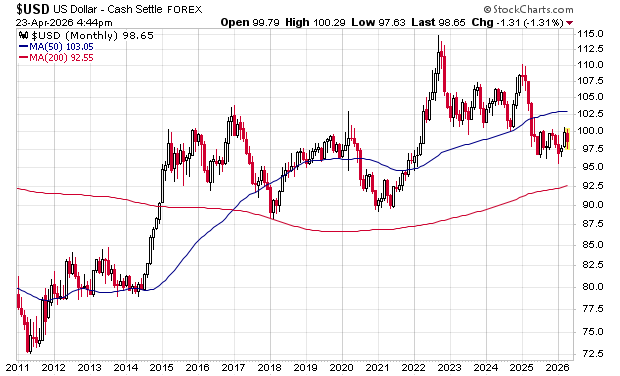
USA dollar INDEX DOWN TO 98.14/// EURO RISES TO 1.1745 UP 33 BASIS PTS
3b Japan 10 YR bond yield:RISES TO. +2.474 UP 4 FULL BASIS PTS/ VERY TROUBLESOME//Japan buying 100% of bond issuance)/Japanese YEN vs USA cross now at 159.17… JAPANESE YEN NOW FALLING AS WE HAVE NOW REACHED THE ENDING OF THE YEN CARRY TRADE AGAIN AND THE REPATRIATION OF YEN DENOMINATED BONDS TRADING IN THE USA/EUROPE. JAPAN 30 YR BOND YIELD: 3.681 UP 2 FULL BASIS PTS
3c Nikkei now ABOVE 17,000
3d USA/Yen rate now well ABOVE the important 120 barrier this morning
3e Gold DOWN /JAPANESE Yen UP CHINESE ONSHORE YUAN: 6.8238( DOWN AND OFFSHORE: DOWN AT 6.8240
3f Japan is to buy INFINITE TRILLION YEN worth of BONDS. Japan’s GDP equals 5 trillion USA
Japan to buy 100% of all new Japanese debt and NOW they will have OVER 50% of all Japanese debt.
3g Oil UP for WTI and BRENT UP this morning
3h European bond buying continues to push yields LOWER on all fronts in the EMU. German 10yr bund YIELD UP TO +3.0146 Italian 10 Yr bond yield UP to 3.821// SPAIN 10 YR BOND YIELD UP TO 3.472%
3i Greek 10 year bond yield UP TO 3.773%
3j Gold at $4709.60 //Silver at: 75.53 1 am est) SILVER NEXT RESISTANCE LEVEL AT $100.00
3k USA vs Russian rouble;// Russian rouble UP 0 AND 34 100 roubles/74.91
3m oil (WTI) into the 96 dollar handle for WTI and 107 handle for Brent/
3n Higher foreign deposits moving out of China// huge risk of outflows and a currency depreciation. This can spell financial disaster for the rest of the world/
JAPAN ON JAN 29.2016 CONTINUES NIRP. THIS MORNING RAISES AMOUNT OF BONDS THAT THEY WILL PURCHASE UP TO .5% ON THE 10 YR BOND///YEN TRADES TO 159.17 10 YEAR YIELD AFTER FIRST BREAKING .54% LAST YEAR NOW EXCEEDS THAT LEVEL TO 2.474% UP 4 BASIS PTS STILL ON CENTRAL BANK (JAPAN) INTERVENTION//YEN CARRY TRADE NOW UNWINDING//YEN BOND TRADING OVERSEAS REPATRIATED.//JAPAN 30 YR: 3.681 UP 2 PTS..: USA/SF this 0.7835 as the Swiss Franc . Euro vs SF: 0.9205
USA 10 YR BOND YIELD: 4.319 UP 1 BASIS PTS…
USA 30 YR BOND YIELD: 4.928 UP 1 BASIS PTS/
USA 2 YR BOND YIELD: 3.790 UP 1 BASIS PTS
USA DOLLAR VS TURKISH LIRA: 45.03 UP 4 BASIS PTS/LIRA GETTING KILLED//IDIOTS FOR SELLING GOLD
10 YR UK BOND YIELD: 4.950 UP 4 PTS
30 YR UK BOND YIELD: 5.626 UP 4 BASIS PTS
10 YR CANADA BOND YIELD: 3.463 DOWN 2 BASIS PTS
5 YR CANADA BOND YIELD: 3.085 DOWN 2 BASIS PTS.
1a New York Opening report
Futures Flat At All Time Highs Ahead Of Huge Week, Semis Set For 19th Day Of Gains
Monday, Apr 27, 2026 – 08:34 AM
Risk sentiment improved overnight on another Axios report that Iran has given the US a new proposal to reopen the Strait of Hormuz with more detailed nuclear talks expected later. Oil pares early gains, and US equity futures jumped although they have also pared gains since and are trading flat as traders await a huge week of earnings (44% of the S&P by mkt cap is set to report) and central bank decisions (Fed, BOJ, ECB, BOE and BOC all expected to keep rates on hold). As of 8:00am ET, S&P 500 futures are flat and Nasdaq 100 contracts gain 0.2% after Friday’s records for both indexes even though leadership is narrow, and the S&P equal weight index closed negative on the week; premarket gains by chip stocks like Nvidia, Qualcomm, Intel and Micron suggest the semiconductor ETF (SOX) is set for a record 19th day of gains. Mag7s are mixed, semis are bid, discretionary outperforms staples, cyclicals over defensives, and AI theme is bid across multiple sectors. Looming Big Tech results (22% of S&P 500 market cap across just four companies reports after the close on Wednesday, when Alphabet, Microsoft, Amazon and Meta release their Q1 results with Apple following on Thursday) will test whether April’s rally is sustainable, with signs of caution under the surface of the gains. Bond yields are +1-2bps as the yield curve steepens; DXY is lower. Commodities are bid led by the Energy complex, with most products up at least 2%. Brent crude rose 1.1% to about $106.50 a barrel after Trump canceled a trip by top envoys to mediators in Pakistan over the weekend. Base metals are leading Precious with Ags continuing its march higher. Today’s macro data calendar is light ahead of a heavy central bank schedule where major CBs are expected to hold ahead of the market pricing changes in June. Warsh is set to be confirmed without further delays while Powell’s status remains unclear.
In premarket trading, Mag 7 stocks are mixed (Nvidia +1.6%, Alphabet +0.4%, Amazon -0.1%, Meta +0.04%, Microsoft -0.4%, Tesla -0.4%, Apple -1.8%)
Domino’s Pizza (DPZ) falls 3% after the company reported revenue for the first quarter that missed the average analyst estimate.
GE Vernova (GEV) is down 1.6% after BNP Paribas downgraded the power equipment company to neutral, predicting it would find it harder to sustain growth momentum, given that 90% of gas turbine capacity is already contracted through 2030.
Intellia Therapeutics (NTLA) rises 1.6% after saying its gene-editing treatment for a rare swelling disorder met its goal in a late-stage trial, paving the way for the potential first approval of a new way of modifying DNA.
Organon & Co. (OGN) gains 16% as Sun Pharmaceutical Industries Ltd. has lined up a short-term loan to help finance its $12 billion acquisition of the New York-listed healthcare company, according to people familiar with the transaction.
Oruka Therapeutics (ORKA) climbs 15% after announcing positive topline results from a Phase 3 clinical trial of lonvo-z in hereditary angioedema.
Qualcomm (QCOM) jumps 13% after TF International Securities analyst Ming-Chi Kuo said industry checks suggest OpenAI is working with the chipmaker and Taiwan’s MediaTek to develop smartphone processors.
VeraDermics (MANE) climbs 15% after saying its oral extended-release minoxidil formulation VDPHL01 met all primary and key secondary endpoints with high statistical significance in a Phase 2/3 clinical trial for male pattern hair loss.
Verizon (VZ) gains 3% after the company boosted its adjusted earnings per share guidance for the full year.
XOMA Royalty Corp. (XOMA) shares are halted after Ligand Pharmaceuticals agreed to buy the company for $39 per share of common stock in cash
In other corporate news, Musk says he’s nearing his goal of turning X into an “everything app” with a new financial services tool called X Money, which is expected to launch for the public this month. China has decided to block Meta’s $2 billion acquisition of agentic AI startup Manus, making a surprise move to unwind a controversial deal.
The S&P 500 is up nearly 10% this month following an unprecedented but increasingly narrow rally thanks to chipmakers and robust earnings, helping the benchmark recoup all losses after the war in the Middle East upended energy flows. Chip stocks are set for further gains on Monday, with names such as Qualcomm Inc., Intel Corp. and Micron Technology Inc. rising in premarket trading. Nasdaq 100 futures climbed 0.2%.
While Friday witnessed new records for the S&P 500 and Nasdaq 100, hegde funds are selling tech stocks, leadership is extremely narrow, and the S&P equal weight index closed negative on the week
Systematic strategies have bought stocks aggressively, but some investors have less conviction. Hedge funds are using the US equity rally to reduce risks, according to traders on Goldman’s prime brokerage desk, who point out significant degrossing and selling to tech stocks.
Some Wall Street strategists say it may be a good time to buy insurance via options, such as pure stock hedges or broader protection against higher interest rates. Morgan Stanley strategist Michael Wilson, meanwhile, expects any potential pullbacks to be shallow given passive investors are still under-risked.
The signs of caution come as traffic through the Strait of Hormuz remains at a near-complete halt, pushing WTI back above $96. Goldman Sachs analysts lifted their oil-price forecasts again, saying that an estimated 14.5 million barrels a day of Persian Gulf crude production losses are driving global oil inventories to draw at a record pace.
“Even if we do get a deal, oil is not going back to pre-war levels,” wrote Mohit Kumar, chief economist and strategist for Europe at Jefferies. “We need to factor in some degree of stagflationary impact. The US should be the least impacted, South Asia the most impacted, while Europe should be somewhere in between.”
Yet markets remain largely unfazed by continued oil price increases; for them the AI narrative takes precedence. Traders continue to chase the theme through the semiconductor complex, pushing the SOX Index to its most overbought level in 15 years. The SOX has also completely dislocated from the ISM Manufacturing reading. That gap historically tends to close one way or another.
It’s an extremely busy weeks for earnings with over 42% of the S&P set to report Q1 results. Earnings from Alphabet, Microsoft, Amazon.com, Meta and Apple make this a make-or-break week for the rally. The companies are worth nearly $16 trillion combined, representing a quarter of the S&P 500’s market capitalization. Expanding profits have helped keep a lid on valuations, with the Mag-7 ex-Tesla trading at a P/E of 25x, down from 29x in October. 22% of S&P 500 market capitalisation, across just four companies, reports after the close on Wednesday, when Alphabet, Microsoft, Amazon and Meta release their Q1 results. Apple follows on Thursday.
Of the 139 S&P 500 companies to have reported so far this earnings season, 80% have beaten analysts’ forecasts, while 14% have missed.
We also get a bonanza of central bank announcements (Fed, BOJ, ECB, BOE, BOC) this week. Policymakers in the US and across the G7 will probably keep rates steady this week while watching the impact of higher energy costs. Wednesday will see the Federal Reserve deliver its latest interest-rate decision, with central bank officials across the Group of Seven also meeting during the week as investors eye how policymakers confront the risk of a war-driven inflation shock. As for Wednesday’s Fed policy meeting, any meaningful change in guidance will likely be deferred until June, wrote Jim Reid, head of macro research and thematic strategy at Deutsche Bank AG.
“That said, there is a tangible risk that communication skews modestly hawkish,” Reid said. “An explicit acknowledgment that risks to price stability and employment are now more evenly balanced would likely be interpreted as a marginally less accommodative stance.”
In another keenly anticipated event this week, a Senate Banking Committee vote on Kevin Warsh’s nomination as chair of the Federal Reserve is scheduled for Wednesday. Warsh is expected to be swiftly confirmed as Jerome Powell’s successor, whose term ends on May 15, after Republican Senator Thom Tillis said he’s dropping his blockade of the nomination he said in an NBC interview. The DOJ’s decision to drop a criminal probe into the Fed may clear a path for Trump’s nominee to take over, but it won’t secure the current Fed chair’s departure. At his confirmation hearing last week, Warsh called for a “regime change” in the way the Fed conducts policy. Money markets are currently leaning against any Fed rate cut in 2026.
“Markets are looking for a new narrative and are jumping back to the AI boom for now,” said Joachim Klement, head of strategy at Panmure Liberum. “However, most investors seem to be guided by uncertainty and are still assessing the fallout from the Iran war. This could mean that a new macro story will emerge soon.”
In politics, Trump is using the Saturday night shooting at the White House Correspondents’ Dinner to add a security rationale to his case for building a massive White House ballroom. Budget airlines are asking the White House for a relief plan worth $2.5 billion in exchange for convertible equity stakes in the carriers.
European stocks rise, with the Stoxx 600 up 0.3% after erasing an earlier fall. Energy, industrial and bank names are leading gains.Energy and retail sectors outperform. Sainsbury falls after a double-downgrade from Goldman. Here are some of the biggest movers on Monday:
Nordex surges as much as 15% after the renewable-energy equipment firm beat expectations in the first quarter of the year.
Commerzbank rises as much as 2.2% as Bank of America upgrades its shares to buy, saying they look attractive whether the bank is bought by Unicredit or not.
Whitbread shares gain as much as 3.6% after a report from the Times over the weekend said the company plans sell a swathe of Premier Inn hotels to unlock £1.5 billion.
Kingfisher shares rise as much as 1.1% after the DIY retailer was upgraded at Barclays following its recent underperformance against European peers.
Orsted shares rise as much as 3.9% as Goldman Sachs upgrades its rating on the offshore energy company to buy from neutral.
Entain shares fall as much as 7.1% in heavy trading volume after news that one of the gaming company’s major shareholders, Eminence Capital, is being shuttered.
Sainsbury drops as much as 4.8% as Goldman double-downgrades to sell on macro headwinds, and Citi lowers its rating on the UK supermarket chain to neutral on weaker than expected Ebit guidance for 2027.
Nexi shares fall as much as 3% after Bank of America downgrades the Italian payments processor to underperform from neutral, citing unjustified recent outperformance amid ongoing growth headwinds from bank contract losses and risks to 2028 targets.
Intertek shares drop as much as 3.9% after the testing and certification firm said after markets closed on Friday that it rejected the 5,400 pence per share bid from EQT, stating it “fundamentally undervalues” the company and its prospects.
Seraphim Space Investment Trust shares fall as much as 16% in London trading after it announced plans to raise funds by issuing shares.
Asian equities also push higher, with Taiex and Kospi leading winners as chipmakers rally. Hong Kong and mainland China indexes are regional laggards. The MSCI Asia Pacific Index gained as much as 1.7%, the most since April 14. Taiwan’s Taiex index was among best performers in the region, led by a surge in TSMC to a record. Markets in Vietnam and New Zealand were closed for holidays. Asian companies are also heading into the busiest week of the earnings season, offering investors a glimpse of how the Iran war has impacted business. In Japan, investors are keeping an eye on the Bank of Japan’s interest rate decision on Tuesday. The BOJ is widely expected to keep rates unchanged.
“Investors are paying attention to the Asia tech sector, especially with a large amount of suppliers here,” Jasmine Duan, Asia senior investment strategist at RBC Wealth Management, said in a Bloomberg TV interview. Despite risks of overbuying in big tech names such as TSMC, “the earnings growth will digest the concern on this overcrowded trade.”
In FX, the Bloomberg Dollar Spot Index falls 0.2%. The Norwegian krone is leading gains against the greenback, rising 0.6%. The Aussie and kiwi dollars also outperform. The yen hovers around 159.20/USD and euro holds near 1.1730. Offshore yuan gets a boost from solid PBOC fixing.
In rates, treasuries trade slightly cheaper in early US trading, off session lows reached following slight gap lower at start of Asia session. Treasury yields cheaper by as much as 1.5bp at long end with curve slightly steeper on the day, keeping spreads within 1bp of Friday’s closing levels. 10-year near 4.31% is ~1bp cheaper on the day, roughly in line with European counterparts. European government bonds also decline. Treasury auction cycle begins with $69 billion 2-year note at 11:30am New York time and $70 billion 5-year at 1pm. WI 2-year yield near 3.79% is ~15bp richer than last month’s, which tailed by 1.8bp
In commodities, oil is higher with the Strait of Hormuz almost impassable after efforts to resume talks to end the Iran war stalled. Brent crude futures rise over 2% and briefly topped $108 a barrel after efforts to resume US-Iran talks faltered over the weekend. Precious metals are little changed while Bitcoin falls 0.5%.
Today’s US economic data calendar slate is light – we only get the April Dallas Fed manufacturing activity at 10:30am – ahead of a heavy central bank schedule where major CBs are expected to hold ahead of the market pricing changes in June
Market Snapshot
S&P 500 mini little changed
Nasdaq 100 mini little changed
Russell 2000 mini little changed
Stoxx Europe 600 little changed
DAX +0.4%
CAC 40 +0.2%
10-year Treasury yield +1 basis point at 4.31%
VIX +0.4 points at 19.07
Bloomberg Dollar Index -0.2% at 1193.96
euro +0.2% at $1.1746
WTI crude +2.2% at $96.51/barrel
Top Overnight News
Iran has offered to end its chokehold on the Strait of Hormuz in exchange for the U.S. lifting its blockade on the country and an end to the war, while proposing that discussions on the larger question of its nuclear program would come in a later phase. Trump is unlikely to accept the offer. AP
Oil rose as Iran’s foreign minister Abbas Araghchi arrived in Russia for talks with Vladimir Putin, while traders shrugged off an Axios report of a potential interim Hormuz deal. BBG
The US Secret Service is at risk of not being not being able to pay its employees by the end of the week, suggesting that a shutdown nears its breaking point: Semafor
Kevin Warsh’s path to Fed chair cleared after GOP holdout Thom Tillis dropped his resistance, following the DOJ’s decision to end a criminal probe into Jerome Powell. A vote is set for Wednesday. BBG
US drivers have started cutting back their spending at the pump in an attempt to blunt the impact of spiraling petrol prices triggered by the Iran war. Between February and March average petrol sales per station in the northeastern US fell 4.3 per cent in March, compared with 0.6 per cent growth in the same period last year, according to data from Upside, which tracks consumer spending at more than 23,000 petrol stations across the nation. FT
With just over one-fourth of S&P 500 companies reporting results for the first quarter, Wall Street’s expectations for earnings suggest big U.S. companies are far healthier than wider economic concerns might indicate. WSJ
DeepSeek is aggressively pitching low-priced-plans for its just-released flagship model, intensifying competition across a Chinese artificial intelligence industry trying to take on Silicon Valley’s best. BBG
US State Department has reportedly ordered a global warning over alleged AI IP theft involving DeepSeek and other Chinese firms: Reuters
Meta’s $2 billion acquisition of AI startup Manus was blocked by China, a surprise move to unwind a deal that’s drawn fire for the leakage of technology to the US. BBG
Profits at China’s industrial firms grew at their quickest pace in half a year last month, adding to broader signs of an uneven economic recovery in the first quarter as policymakers brace for the impact of the Middle East war. RTRS
Japan is moving to tighten the criteria for submitting shareholder proposals, signalling a growing backlash from companies frustrated by intensifying pressure from activist investors calling for change. RTRS
The US and Japan plan a dual-use partnership to counter China in the drone market: Kyodo
Middle East News
Iran has communicated a three-stage negotiation process to the US through intermediaries, according to Al Mayadeen citing Iranian reports. The first stage would focus on ending the war and receiving guarantees to prevent recurrence. Second stage is to be focused on the Strait of Hormuz while the third stage would lead to the nuclear issues. Axios later announced a similar report, adding that US President Trump is to hold a situation room meeting on Iran on Monday.
US President Trump cancelled sending Steve Witkoff and Jared Kushner to Pakistan for talks with Iran, saying there would be “too much time wasted on travelling”. Trump said the US “has all the cards” and Iran “has none”, adding that “if they want to talk, all they have to do is call”. Trump later said the US would not travel “15, 16 hours” to meet “people nobody’s ever heard of”, adding that US envoys were not meeting Iran’s actual leader. Trump claimed Iran sent a “much better” offer within 10 minutes of him cancelling the envoys’ trip, but said Iran had offered “a lot but not enough”.
US President Trump said Iran wants to talk and see if they can make a deal, US officials negotiating with Iran are dealing with the people who are in charge now. He also stated that Iran plans to make an offer aimed at resolving US demands, according to Reuters.
Iran’s Foreign Minister Araghchi posted on X that discussions in Oman included focusing on ways to ensure the safe transit through Hormuz and that neighbours are the priority. He later stated in Russia, ahead of his meeting with Russian President Putin, that the visit to Islamabad was very good, in which conditions were reviewed for US-Iran talks to continue.
Iranian Foreign Minister Araghchi described his Pakistan visit as “very fruitful” and said Iran had shared a “workable framework to permanently end the war.” According to reports citing Pakistani officials, Araghchi laid out Tehran’s negotiating demands as well as its reservations about US demands. In other talks, IRNA reported that the FM will travel to Muscat and Moscow to hold bilateral conversations, discuss current developments in the region, and the latest situation regarding the war.
A trilateral meeting with the US, Iran and Pakistan will be considered only after Pakistan meet with Araghchi, a meeting between the US and Iran may not take place until Monday, Axios reported. US Special Envoy Witkoff and Kushner is to hold separate talks with Pakistan on Sunday.
Axios reported that a US official and a source said Ghalibaf grew frustrated with the infighting in the Iranian leadership after the previous round of talks, and even threatened to step aside. It still remains unclear if he is the lead Iranian negotiator.
Iran is reportedly “discussing the uranium and nuclear issue with friends and allies and is open for discussion at the negotiating table.”, Journalist Mallick reported. Full post:”To my understanding, While Iran has proposed a structured operational mechanism for Strait of Hormuz which would lead to cessation of hostilities, at the same time, contrary to reported, Iran is discussing the uranium and nuclear issue with friends and allies and is open for discussion at the negotiating table.”.
Hezbollah outlines that they will be keeping their weapons, and dismisses the prospect of direct talks with Israel regarding Lebanon.
Iran’s proposal regarding Hormuz may be rejected by Washington because it excludes nuclear discussions, Al Hadath reported citing regional officials.
Senior Israeli officials have told their American counterparts that if Hezbollah continues its attacks against IDF soldiers, Israel will not be able to respond in a measured manner, Journalist Stein reported citing sources.
Israeli military reported hostile aircraft infiltration sirens sounded in northern Israel communities.
Iranian Foreign Minister Araghchi said the visit to Islamabad was very good, in which conditions were reviewed for US-Iran talks to continue. Agreement has been made between Iran and Oman to continue consultations at an expert level.
Israeli occupation forces are shelling Gaza beaches from the sea, according to Al Jazeer sources.
Iran gave the US a new proposal through Pakistani mediators for reaching a deal on reopening the Strait of Hormuz and ending the war however postponing nuclear talks, Axios reported citing sources. US President Trump to hold a situation room meeting on Iran on Monday.
Israeli artillery shelling targets eastern Gaza City, Al Mayadeen reported.
Iran’s Foreign Minister Araghchi posted on X that discussions in Oman included focusing on ways to ensure the safe transit through Hormuz and that neighbours are the priority.
Lack of trust between Washington and Tehran hinders resumption of negotiations, Pakistani source tells Asharq.
Iranian F-5 fighter jet reportedly breaches US air defences and hits a US military base in Kuwait, according to Press TV.
US CENTCOM announces that the US has directed 38 ships to turn around or return to post since the start of the blockade.
UKMTO reported of an incident occurring 6NM northeast of Somalia, where unknown persons seized the cargo ship and diverted it into territorial waters.
A more detailed look at global markets courtesy of Newsquawk
Asia-Pac stocks pointed to a broadly positive start of the week, mainly spurred by an Axios report detailing that Iran gave the US a new proposal, through Pakistani mediators, for reaching a deal on reopening the Strait of Hormuz and ending the war. It is a three-stage proposal, with the halting of the war and focus on the Strait of Hormuz highlighted as the key points before the third stage of nuclear issues. ASX 200 was the underperformer, being weighed on by losses in Energy and Utilities following Friday’s risk-on sentiment hitting energy prices. Among the weakness, Atlas Arteria outperformed after IFM investors offers to buy the Co. for AUD 4.75/security. Nikkei 225 initially traded with a lack of direction before being boosted following the Axios report. The index has regained the 60,000 handle and continued to gain towards 61,000. KOSPI was the clear outperformer as it tracks its peers’ stateside. This was spearheaded by Intel (INTC) after the Co. reported positive Q1 earnings and beat forecasts. Hang Seng and Shanghai Comp. traded with mild gains. Chips across Asia are performing well, with China’s SMIC also benefiting from the announcement that DeepSeek’s V4 is adapted to run on Huawei chips.
Top Asian News
Japanese Coincident Index Final (Feb) 116.3 (Prev. 117.9).
Japanese Leading Economic Index Final (Feb) 113.3 vs. Exp. 112.4 (Prev. 112.1).
Chinese Industrial Profits (YTD) YoY (Mar) Y/Y 15.5% (Prev. 15.2%).
European bourses are mostly firmer this morning, albeit modestly so. The DAX 40 (+0.4%) leads vs peers, whilst the AEX (-0.3%) lags a touch. European sectors opened with a positive bias, but the leaderboard now looks mixed. Topping the pile is Retail, led by Adidas, +1.6%, where two runners wore its new ultra-light racing shoe to break the two-hour barrier at the 2026 London Marathon. Also performing well is the Energy sector, with oil benchmarks firmer on the day. At the bottom of the pile are the consumer-sensitive Optimised Personal Care and Food Beverage & Tobacco
Top European News
ECB SAFE Survey: Firms reported further net tightening of bank loan interest rates and other loan conditions related to price and non-price factors. Firms reported further net tightening of bank loan interest rates and other loan conditions related to price and non-price factors. Financing needs remained stable, but availability of bank loans deteriorated marginally. Firms expected stronger increases in selling prices and non-labour input costs, whereas wage expectations moderated slightly. Short-term inflation expectations increased markedly, with medium-term inflation expectations remaining stable.
UK Chancellor Reeves is to deliver speeches to set out a responsible plan to see households and businesses through the Iran war fallout, according to the FT citing sources; the Chancellor will also set out measures in June to boost growth.
UK ministers have voiced concerns about the damage to the tech sector and its alliance with the US as the PM plans for closer relations with the EU, FT reported citing sources.
Central Banks
BoJ Deputy Governor Uchida to join policy meeting by phone due to health reasons.
Swiss Sight Deposits (CHF) (w/e Apr 24th): total 455.91bln (prev. 453.55bln), of domestic banks 433.01bln (prev. 433.27bln).
Trade/Tariffs
India and New Zealand have signed a FTA, lowering and eliminating tariffs across a range of goods, and granting 100% duty-free access for Indian exporters.
China’s Commerce Ministry is to hold a press conference on Thursday 30th at 08:00BST/03:00EDT to brief on recent key trade and commerce developments.
China’s MOFCOM issues a statement on the EU Industrial Accelerator Act, calling it discriminative for trade; will closely monitor and engage in dialogue with the EU but threatens countermeasures if the EU presses ahead.
Geopolitics
A drone has hit the transportation department of Ukraine’s Zaporizhzhia plant, according to reported.
Iranian FM Araghchi has arrived in Russia ahead of his meeting with Russian President Putin, Tasnim reported.
North Korea’s Supreme Leader Kim Jong-un said that North Korea will continue to support Russia, KCNA reported.
Russia’s Foreign Minister reportedly said Russia is willing to hold talks with the US on a Ukraine settlement.
FX
FX shows a risk-on picture not seen across other asset classes, in a move seemingly driven by a weaker greenback, with antipodeans and generally high-beta FX outperforming.
DXY is lower by 0.2%, well off highs of 99.34 made at the Asia re-open and below both 100 and 200 DMAs, which offered support last week. This comes as Axios reported that Iran gave the US a new proposal for reaching a deal on reopening the Strait of Hormuz, news which has helped the risk complex. The plan calls for an extension of the ceasefire so parties can work on a three-stage plan, with nuclear negotiations the final stage. The report noted that Pakistani mediators had given the proposal to the US, though it was unclear if the US would cooperate. The US-specific docket is light ahead of this week’s FOMC meeting, with just 2 and 5yr supply, and Dallas Fed Manufacturing scheduled.
Away from geopolitics, and perhaps another story which has offered the USD: Senator Tillis said he was dropping his decision to block the nomination of Kevin Warsh as Fed Chair following the DoJ’s decision to drop the criminal case against Fed Chair Powell. The vote on Warsh’s confirmation is scheduled for 29th April.
Antipodeans outperform, the cross is choppy and around the unchanged mark as both currencies benefit against the weaker Buck following that Axios report. NZD/USD, AUD/USD +0.6%/+0.5%. CAD also does well, helped by the risk environment alongside Crude benchmarks, which are firmer on the session.
EUR/GBP is a touch firmer after it bounced off a 0.8654 low to try to recoup last week’s modest losses following strong UK data. Both currencies look to expected holds from the ECB and BoE. In the UK, political angst persists, with the Daily Mail reporting that former Deputy PM Rayner told Labour MPs the time to oust the PM was “now or never”.
Fixed Income
A softer start to the week, as energy upside lifts yields and weighs on fixed benchmarks. However, the magnitude of fixed action is relatively limited amid mixed geopolitical reporting, awaiting supply and the week’s packed central bank agenda, which includes the BoE, ECB & Fed.
USTs as low as 111-01, with downside of 5+ ticks at most. If the move extends, we look to 110-27+ and 110-26+ from Friday and Thursday, before attention then turns to 110-22+, 110-17+ and the 110-16 MTD low from earlier in April. The US agenda is, aside from geopolitical updates, headlined by 2yr & 5yr note supply ahead of Wednesday’s Fed.
Gilts gapped lower by 23 ticks and then slipped another 12 to an 87.13 low. Modestly underperforming peers, given the above. Elsewhere for the UK, we count down to Thursday’s BoE, a hold is expected and priced, with attention on any clues via the statement, forecasts, or individual Committee members’ remarks as to when a move might occur. Currently, markets imply 25bps hikes in July (+30bps) and December (+54bps).
Bunds in-fitting with the above. Somewhere between USTs and Gilts in magnitude. As low as 125.48, posting losses of 17 ticks at most. Driven by the above geopolitical developments. No move to a weak GfK survey for May, as consumer sentiment was hit again by the Middle East conflict, resulting in a sharp decrease in income expectations and the 12-month view moved to a level similar to April 2022, at the start of the Ukraine conflict.
China delays foreign debt sales with USD 100bln of bonds due, Bloomberg reported.
EU sells EUR 6bln vs exp. EUR 7bln 2.50% 2031, 3.25% 2036, and 4.00% 2044 Bonds.
Commodities
WTI and Brent are both firmer this morning by circa. 2.6%, as the complex digests several geopolitical updates, with the overarching theme overall a lack of progress between US-Iran.
To recap, US President Trump cancelled his envoy’s trip to Pakistan, suggesting that it would be a waste of time. He claimed that Iran sent a “much better” offer within 10 minutes of him cancelling the trip, but it was “not enough”. Since, Axios reported that Iran had communicated a three-stage negotiation process to the US through intermediaries. A first stage would involve securing guarantees to prevent another war, with the next stage to focus on the Strait and then finally on nuclear issues. Given that this proposal pushes the nuclear issue to the back of the agenda, it is not likely that the US will accept the proposal. The focus ahead will be on Trump, who is reportedly to hold a situation room meeting on Iran.
WTI and Brent climbed higher throughout the European morning; Brent Jun’26 sits at the upper end of a USD 106.19/bbl to USD 108.24/bbl range, with WTI Jun’26 also at highs within a USD 94.99/bbl to USD 96.87/bbl band. Both contracts jumped at the open as markets digested Trump’s cancellation of talks, but then slipped on the aforementioned Axios report. The proposal indicates some openness to negotiations, but given that the nuclear issue has been pushed to the back of the agenda, it is unlikely to be accepted by the US. A factor which likely explains the complete reversal of the initial downside following the report.
Spot gold is essentially flat this morning and currently trades within a USD 4,672-4,729/oz range. It currently oscillates around its 21 DMA (4,718/oz), with the high of the day a touch short of its 100 DMA (4,746/oz). Elsewhere, base metals hold a slight negative bias, but with slight strength in Aluminium prices, given the elongated disruption of supplies from the Middle East region. As for 3M LME Copper, it is currently a little lower within a USD 13,259-13,376.03/t range.
Iran suspends exports of steel slabs and sheets until 30th May, Iranian media reported.
Citi raises its base case average Brent price forecasts to USD 110/bbl for Q2, USD 95/bbl for Q3, USD 80/bbl for Q4. Flows could easily remain disrupted through the end of June, which could see Brent reach USD 150/bbl.
Goldman Sachs raises its Brent forecast to USD 100/bbl this quarter and USD 90/bbl in Q4, due to prolonged disruption in the Strait of Hormuz and extreme inventory draws.
Japanese PM Takaichi said Japan has secured stable oil supply into next year, closely watching the Middle East impact on the economy.
US Event Calendar
10:30 am: United States Apr Dallas Fed Manf. Activity, est. 0.8, prior -0.2
DB’s Jim Reid concludes the overnight wrap
Tomorrow marks exactly two months since the strikes on Iran began. While there is currently a rolling, open ended ceasefire that started on 8 April, the risk of it collapsing at any point remains real. Just as the weekend news looked like it was leaning negatively though, last night reports came through that Iran have offered the US a fresh proposal to reopen the strait and end the war. However as Axios and others reported, this proposal postpones talks on nuclear capabilities. So it’s unclear whether the US Administration would tolerate that but for now the market is trading better than it might have done to start the week. This fresh development follows President Trump cancelling a planned visit to Islamabad by envoys Kushner and Witkoff, saying that the Iranians had “offered a lot, but not enough.” Iranian President Pezeshkian, meanwhile, said Iran would not agree to “imposed negotiations under threats or blockade.” The coming week will no doubt bring further developments, though predicting them is close to impossible. When the conflict began more than eight weeks ago, I would have expected it to be comfortably over by now, with markets having followed the usual playbook and fully recovered. The market reaction has largely played out, but for the wrong reasons: the conflict is not over. That said, markets still appear to price in a meaningful chance that it will be resolved relatively soon. Polymarket, for example, suggests a 56% probability of traffic returning to normal by 30 June, although this briefly reached 91% ten days ago when it appeared that Iran was reopening the Strait.
In other news, one notable development yesterday was Senator Thom Tillis’s decision to lift his block on Kevin Warsh’s nomination to chair the Fed. Tillis said he was satisfied with the Department of Justice’s decision late last week to drop its investigation into the Fed refurbishment. There had been some concern on Saturday that the DoJ had left the door open to reopening the probe at a later stage, which might not have been sufficient to clear the way. However, Tillis indicated that he had received assurances that gave him enough comfort to remove his block.
In terms of overnight markets, Brent crude is up +1.22%, marking the sixth consecutive session of gains, trading at $106.61 per barrel, following the weekend news. However regional equities are strong with the KOSPI (+2.57%) now at +57.6% YTD. The Nikkei (+1.88%) is also strong. Other markets are a bit more subdued with the Hang Seng (+0.15%), the CSI (+0.21%), and the Shanghai Composite (+0.15%) slightly higher but with the S&P/ASX 200 (-0.14%) dipping. S&P 500 (+0.13%), NASDAQ 100 (+0.34%) and STOXX (+0.33%) futures are edging higher. both trading in positive territory. Meanwhile, 10-year USTs have risen by +1.9bps, to 4.32% as we go to print.
Looking ahead, with central bank meetings for every G7 country this week — alongside 44% of the S&P 500 reporting by market capitalisation, including five of the Mag 7 — it is shaping up to be a blockbuster week, even before factoring in ongoing Iranian war newsflow.
The Bank of Japan meets tomorrow, followed by the Fed and the Bank of Canada on Wednesday. Thursday then brings decisions from the ECB and the Bank of England. All are expected to remain on hold, but the key question will be how each central bank’s reaction function is shaped by the conflict and the associated stagflation risks. Our new “Rate Check” podcast previews the week’s meetings with various guests from our research department. Click here for more on how to find it
From an earnings perspective, 22% of S&P 500 market capitalisation — across just four companies — reports after the close on Wednesday, when Alphabet, Microsoft, Amazon and Meta release their Q1 results. Apple follows on Thursday.
Turning to the Fed meeting mid week, our economists’ base case is that any meaningful change in guidance is deferred until June. That said, there is a tangible risk that communication skews modestly hawkish — either through subtle language tweaks around “additional policy adjustments” or via Chair Powell signalling a more symmetrical assessment of risks to the dual mandate. An explicit acknowledgement that risks to price stability and employment are now more evenly balanced would likely be interpreted as a marginally less accommodative stance.
Geopolitics will loom large in Powell’s press conference, given developments in the Middle East. With uncertainty still elevated, Powell is likely to emphasise that policymakers cannot yet assess the precise implications for growth or inflation. However, he may also note that persistently high oil prices raise the risk of inflation becoming more entrenched over time. Overall, the tone should be consistent with a Fed prepared to remain on the sidelines for a while longer.
Alongside the meeting, Thursday’s personal income and spending report — and particularly core PCE — will be equally important. Income is expected to rebound by 0.6% after a 0.1% decline, while consumption is forecast to rise 0.5%. DB expects the core PCE deflator to increase by 0.25% month on month, lifting the year on year rate to around 3.13%. If realised, Q1 core PCE inflation will average just above 3.0%, marking five years since the Fed’s preferred underlying inflation gauge last ran at or below its 2% target. Our latest projections see core CPI and core PCE at 2.7% and 2.9% respectively by Q4 2026, highlighting how recent energy related shocks continue to complicate the path back to target.
Other data ahead of the meeting are unlikely to materially alter the Fed’s decision. Consumer confidence tomorrow is expected to fall to 88.8 from 91.9, reflecting heightened geopolitical concerns. More important than the headline will be the “jobs plentiful” and “jobs hard to get” components, which historically track movements in the unemployment rate and offer insight into perceived labour market momentum.
Wednesday brings a cluster of releases that will refine expectations for Thursday’s advance Q1 GDP estimate. Housing starts are forecast to rise to 1.425 million from 1.35 million, with permits edging up to 1.390 million. Durable goods orders are expected to fall 0.4% for the headline, but ex transportation and core orders are projected to rise 0.5%, pointing to continued strength in capital investment. Together with the advance goods trade balance, these data frame our economists’ 2.8% annualised forecast for Q1 real GDP — a sharp rebound from 0.5% in Q4.
Thursday’s data batch is the most consequential of the week, even beyond core PCE. While DB still expects 2.8% inflation adjusted growth for Q1 GDP, the composition has shifted meaningfully. Consumer spending is forecast to contribute 1.2pp, down from 1.9pp in Q4, while non residential fixed investment accelerates sharply to 7.5%. Final sales to private domestic purchasers — our preferred measure of underlying demand — are projected to edge up to 2.0%. Risks to the headline GDP number appear broadly balanced, particularly given volatility in trade flows.
Elsewhere on Thursday we see the employment cost index and the Chicago PMI. Friday kicks off May with the ISM manufacturing index and vehicle sales. While business surveys may not yet fully reflect recent war developments, they should provide early signals on whether firms share markets’ confidence that the conflict will have limited and temporary economic effects. Last week’s flash PMI suggested US businesses remain far more confident on this front than their European counterparts.
In Europe, attention turns to preliminary April CPI prints, with Germany and Spain reporting first on Wednesday and the broader euro area numbers on Thursday, alongside advance Q1 GDP. Ahead of that, Tuesday brings the ECB’s consumer expectations and bank lending surveys.
In Japan, key releases include April Tokyo CPI on Friday and March activity data on Thursday, while China sees its official April PMIs on Thursday, following industrial profits for March earlier in the week. As usual, the full day by day calendar appears at the end.
Recapping last week now and markets lost their momentum as concern rose about an extended closure of the Strait of Hormuz. However, there was more of a risk-on move into the weekend, driven by the news that Iran’s foreign minister was heading to Islamabad, and then that Steve Witkoff and Jared Kushner were going from the US side. So that raised hopes that some kind of de-escalation pathway might still be open. Ultimately that proved premature as we found out over the weekend. The positive mood at the very end of the week was cemented after it was announced that the US Department of Justice were dropping the criminal investigation into Fed Chair Powell, which raised expectations that Kevin Warsh would be confirmed on time as the new Fed Chair.
Yet despite that more optimistic tone into the weekend, Brent crude oil still rose +16.54% last week (+0.25% Friday) to $105.33/bbl. That came as the Strait of Hormuz remained closed, adding to fears about longer-term supply disruption. And it was clear that investors were pricing in a prolonged period of higher oil prices, as the 6-month Brent future also moved up +8.88% last week (-0.32% Friday) to $86.46/bbl. For markets, those oil moves led to growing expectations of an extended stagflationary shock. Indeed, that was clear from inflation expectations, which moved up again in response. For instance, the US 1yr inflation swap rose +29bps last week to 3.378%, and the Eurozone inflation swap was up +47bps to 3.44%. And in turn, that led investors to price in a more hawkish response from central banks. For instance, for the ECB the probability of a hike by the June meeting rose from 62% to 82%. Meanwhile, the probability of a Fed cut by the December meeting had fallen from 61% to just 23% by Thursday, before rising back up to 46% on Friday on news of the DoJ probe into Powell being dropped, which raised expectations that a Warsh-led Fed could still deliver easing this year.
With markets pricing in a bigger stagflationary shock and a more hawkish response across most of the week, it was a tough backdrop for bonds. So the 10yr bund yield rose +3.4bps last week (-1.5bps Friday) to 2.99%, and the 10yr Treasury yield was up +5.2bps last week (-2.4bps Friday) to 4.30%. In Japan, the moves were relatively smaller, but even there the 10yr yield was up +1.5bps last week (+1.0bps Friday) to 2.44%.
For equities, there was a more divergent performance by region. In the US, the S&P 500 posted a 4th consecutive weekly gain to hit a new record, rising +0.55% last week (+0.80% Friday). Indeed, the last time the S&P posted four consecutive weekly gains was back in October 2024. Meanwhile, the Philadelphia Semiconductor Index continued its relentless rally, posting a record 18th consecutive daily gain on Friday, with a rise of +10.02% last week, including +4.32% on Friday after strong results from Intel. Japan’s Nikkei also advanced +2.12% (+0.97% Friday). But in Europe, the STOXX 600 fell -2.54% last week (-0.58% Friday), reflecting the region’s greater exposure to an energy shock that was also visible in the weak April flash PMIs.
Finally in credit, there was a mixed performance last week amidst the various headlines. In the US, IG spreads were flat, but HY spreads widened +6bps. Conversely in Europe, IG spreads widened +2bps, but HY spreads tightened -10bps.
1 b European opening report
1 c Asian opening report
European futures point to a contained open as Crude firms – Newsquawk EU Market Open
Monday, Apr 27, 2026 – 02:23 AM
Iran communicated a three-stage negotiating process to the US. The US cancelled sending Witkoff & Kushner to Pakistan; Trump to hold a situation room meeting on Monday, Axios.
APAC stocks benefited from reporting around the Iranian communication, both European & US futures point to a contained open.
DXY under pressure to the modest benefit of peers across the board, antipodeans lead after the Axios report.
Fixed income softer but off the APAC low. China has reportedly delayed foreign bond sales.
Crude peaked with gains in excess of USD 2/bbl as the US cancelled sending negotiators, then came off best following the Axios report.
Looking ahead, highlights include German GfK Consumer Confidence (May), US Dallas Fed Manufacturing Index (Apr), Supply from the EU & US.
2. Listen to this report in the market open podcast (available on Apple and Spotify)
3. Trial Newsquawk’s premium real-time audio news squawk box for 7 days
IRAN CONFLICT
Iran has communicated a three-stage negotiation process to the US through intermediaries, according to Al Mayadeen citing Iranian reports. The first stage would focus on ending the war and receiving guarantees to prevent recurrence. Second stage is to be focused on the Strait of Hormuz while the third stage would lead to the nuclear issues. Axios later announced a similar report, adding that US President Trump is to hold a situation room meeting on Iran on Monday.
US President Trump cancelled sending Steve Witkoff and Jared Kushner to Pakistan for talks with Iran, saying there would be “too much time wasted on travelling”. Trump said the US “has all the cards” and Iran “has none”, adding that “if they want to talk, all they have to do is call”. Trump later said the US would not travel “15, 16 hours” to meet “people nobody’s ever heard of”, adding that US envoys were not meeting Iran’s actual leader. Trump claimed Iran sent a “much better” offer within 10 minutes of him cancelling the envoys’ trip, but said Iran had offered “a lot but not enough”.
US President Trump said Iran wants to talk and see if they can make a deal, US officials negotiating with Iran are dealing with the people who are in charge now. He also stated that Iran plans to make an offer aimed at resolving US demands, according to Reuters.
Iran’s Foreign Minister Araghchi posted on X that discussions in Oman included focusing on ways to ensure the safe transit through Hormuz and that neighbours are the priority. He later stated in Russia, ahead of his meeting with Russian President Putin, that the visit to Islamabad was very good, in which conditions were reviewed for US-Iran talks to continue.
Iranian Foreign Minister Araghchi described his Pakistan visit as “very fruitful” and said Iran had shared a “workable framework to permanently end the war.” According to reports citing Pakistani officials, Araghchi laid out Tehran’s negotiating demands as well as its reservations about US demands. In other talks, IRNA reported that the FM will travel to Muscat and Moscow to hold bilateral conversations, discuss current developments in the region, and the latest situation regarding the war.
A trilateral meeting with the US, Iran and Pakistan will be considered only after Pakistan meet with Araghchi, a meeting between the US and Iran may not take place until Monday, Axios reported. US Special Envoy Witkoff and Kushner is to hold separate talks with Pakistan on Sunday.
Axios reported that a US official and a source said Ghalibaf grew frustrated with the infighting in the Iranian leadership after the previous round of talks, and even threatened to step aside. It still remains unclear if he is the lead Iranian negotiator.
Iranian F-5 fighter jet reportedly breached US air defences and hit a US military base in Kuwait, according to Press TV.
Traffic passing through the Strait of Hormuz has come to a near-complete stop, Bloomberg reported citing tracking data, with only a small chemicals and oil-product tanker leaving the Persian Gulf. Further, Iran is continuing to fill supertankers at terminals in Kharg Island.
US Central Command said a merchant vessel, named the M/V Sevan, was intercepted in the Arabian Sea. The vessel was intercepted by a US Navy helicopter from a guided-missile destroyer.
IRGC reportedly seized the ship “EPAMINODES” which is suspected of collaborating with the US, Tasnim reported. The ship ignored warnings and numerous maritime violations.
UKMTO reported an incident occurring 6NM northeast of Somalia, where unknown persons seized the cargo ship and diverted it into territorial waters.
Germany’s Defence Minister Pistorius said Germany is to deploy a minesweeper to the Mediterranean as preparation for a potential international mission in the Strait of Hormuz. This came following comments by Germany’s navy commander confirming readiness to participate in a mine-clearing mission in the Strait of Hormuz.
Hezbollah said they targeted a gathering of Israeli enemy vehicles and soldiers with a guided missile in Tel al-Nahas in southern Lebanon.
Israel and Hezbollah accused each other of ceasefire violations.
Israeli PM Netanyahu told the IDF to strike Hezbollah targets “with force” after rockets and drones were launched at northern Israel.
Israel said it struck Hezbollah infrastructure across southern Lebanon, including launchers and weapons facilities.
The IDF said two projectiles were fired from Lebanon towards Israel, with one intercepted and one landing in an open area.
Israeli military reported hostile aircraft infiltration sirens sounded in northern Israel communities.
Israel again attacks southern Lebanon, claiming retaliation for overnight rocket fire, Al Jazeera reported.
US TRADE
EQUITIES
US stocks ended Friday firmer as sentiment improved on hopes of progress in US-Iran negotiations, driving a risk-on tone across assets. Tech outperformed after strong INTC earnings lifted the chip sector. Gains in Qualcomm (QCOM) also helped the tech sector after the Co.’s ARM data centre CPU is scheduled to launch in June.
SPX +0.80% at 7,165, NDX +1.95% at 27,304, DJI -0.16% at 49,230, RUT +0.43% at 2,787.
TARIFFS/TRADE
US President Donald Trump posted that SCOTUS tariff decision would cost the US USD 159bln, adding that the US should not have to pay back already paid monies, and that USD 159bln is more than most countries are worth.
EU Trade Commissioner Sefcovic said he discussed critical minerals and steel with US Commerce Secretary Lutnick, and the EU and US agreed to accelerate discussions on steel derivatives.
China’s MOFCOM issued a statement on the EU Industrial Accelerator Act, calling it discriminative for trade. The statement went on to say that China will closely monitor and engage in dialogue with the EU but threatens countermeasures if the EU presses ahead.
China is reportedly set to restrict US investment in key domestic tech firms, Bloomberg reported. China sent notices to Moonshot, Stepfun among others.
China has placed seven EU companies to its export control list, according to SCMP. This comes after the EU added Chinese entities to its 20th sanctions package against Russia. China also vowed to take necessary measures.- India and New Zealand have signed an FTA, lowering and eliminating tariffs across a range of goods, and granting 100% duty-free access for Indian exporters.
CENTRAL BANKS
White House Press Secretary said the Fed case is not necessarily dropped, it is in best interest of taxpayer to get to the bottom of the Fed case. Senator Tillis should do the right thing over Warsh.
Senator Tillis said he is dropping his decision to block the nomination of Kevin Warsh as Fed Chair following the DoJ’s decision to drop the criminal case against current Fed Chair Powell. He states that he is looking forward to supporting Kevin Warsh’s confirmation.
US Treasury Secretary Bessent said he wouldn’t say no to being Fed Chair at a later date, WSJ reported, while also adding that he has no interest in the presidency.
NOTABLE HEADLINES
US President Trump was rushed to safety from the White House Correspondents’ Dinner after gunshots were reported at the Washington Hilton.
US State Department reportedly ordered a global warning over alleged AI IP theft involving DeepSeek and other Chinese firms, according to Reuters citing sources.
A group of budget airlines have requested USD 2.5bln in federal assistance in exchange for convertible warrants, WSJ reports citing sources. However, Southwest Airlines (LUV) later said that the Co. is not part of the US budget carriers seeking government aid.
APAC TRADE
EQUITIES
Asia-Pac stocks pointed to a broadly positive start of the week, mainly spurred by an Axios report detailing that Iran gave the US a new proposal, through Pakistani mediators, for reaching a deal on reopening the Strait of Hormuz and ending the war. It is a three-stage proposal, with the halting of the war and focus on the Strait of Hormuz highlighted as the key points before the third stage of nuclear issues.
ASX 200 was the underperformer, being weighed on by losses in Energy and Utilities following Friday’s risk-on sentiment hitting energy prices. Among the weakness, Atlas Arteria outperformed after IFM investors offers to buy the Co. for AUD 4.75/security.
Nikkei 225 initially traded with a lack of direction before being boosted following the Axios report. The index has regained the 60,000 handle and continued to gain towards 61,000.
KOSPI was the clear outperformer as it tracks its peers’ stateside. This was spearheaded by Intel (INTC) after the Co. reported positive Q1 earnings and beat forecasts.
Hang Seng and Shanghai Comp. traded with mild gains. Chips across Asia are performing well, with China’s SMIC also benefiting from the announcement that DeepSeek’s V4 is adapted to run on Huawei chips.
US equity futures reversed the losses seen at the start of futures trade, as ES held above 7,200.
European equity futures are indicative of a slightly firmer open with the Euro Stoxx 50 future +0.5% after cash closed -0.2% on Friday.
FX
DXY gapped higher but was then under immediate pressure, falling from an open of 99.33 to slip back below 98.50.
EUR/USD found support at 1.1705 before regaining the 1.1720 handle as the Axios report further spurred a weaker greenback. This week’s focus will lie on the ECB policy announcement, in which policymakers are expected to keep rates steady, and the PMIs later in the week.
GBP/USD managed to open above the 1.35 handle and has since bid higher to a peak of 1.3548. British politics still remains at the front of investors’ minds, with local elections set for May 7th. However, the more imminent event lies on Thursday, 30th, in which the BoE is expected to keep rates on hold at 3.75%.
USD/JPY reversed earlier gains and slipped back below 159.20, ahead of the BoJ meeting in which the Bank is expected to maintain rates at 0.75%.
Antipodeans outperformed, supported by the positive risk tone spread across markets following the Axios report.
CNH, similarly to its global peers, began weaker against the greenback but then reversed the losses. Other than the Axios report, the stronger-than-expected Yuan fixing helped pressure USD/CNH to a session low of 0.8249.
FIXED INCOME
USTs traded with modest losses, however, off worst levels, as energy continues to drive the price action in the fixed income space. USTs oscillated in a 111-01+ to 111-05+ range.
Bund Futures found support at 125.55 and has steadily bid higher towards Friday’s settlement at 125.63. German GfK awaits, expectations at -29.5, slipping from a prior -28.
JGB Futures lagged behind their US and German peers, falling below the 130 handle on the open to an initial trough of 129.75 before forming a new leg lower.
Bloomberg reported that China delayed foreign debt sales with USD 100bln of bonds due.
COMMODITIES
Crude futures started that Asia-Pac session with gains as much as USD 2/bbl amid dim prospects of another round of US-Iran talks. This came after US President Trump announced that he would not be sending Special Envoy Witkoff and Jared Kushner to Islamabad, saying there would be “too much time wasted on travelling.” WTI and Brent peaked at USD 96.68/bbl and USD 107.97/bbl, respectively. Energy prices have since ground lower, with a limited reaction seen following the Axios report detailing that Iran gave the US a new proposal, through Pakistani mediators, for reaching a deal on reopening the Strait of Hormuz and ending the war.
In other news,the ceasefire between Lebanon and Israel has seemingly broken down, with both sides continuing to fire missiles. More recently, it has been reported that Israeli artillery shelling has targeted eastern Gaza city, while Hezbollah announced they targeted a gathering of Israeli enemy vehicles and soldiers with a guided missile in Tel al-Nahas in southern Lebanon.
Precious Metals have completely reversed the earlier losses and now point to modest gains as a softer dollar supports the metals space. Spot gold fell from USD 4720/oz to a session low of USD 4672/oz but then reversed beyond its opening price.
3M LME Copper started on the backfoot but now trades at session highs, breaking through the intraday resistance of USD 13.35k/t. The lift in the red metal came amid the constructive risk tone following the Axios report.
Goldman Sachs raises its Brent forecast to USD 100/bbl this quarter and USD 90/bbl in Q4, due to prolonged disruption in the Strait of Hormuz and extreme inventory draws.
Citi raises its base case average Brent price forecasts to USD 110/bbl for Q2, USD 95/bbl for Q3, USD 80/bbl for Q4.
CRYPTO
Bitcoin extends above USD 79k amid the positive risk tone.
NOTABLE ASIA-PAC HEADLINES
DeepSeek’s delayed V4 release pointed to a strategic shift towards Huawei’s Ascend ships, moving to deeper integration with China’s domestic chip ecosystem, according to a CCTV-affiliated account.
China announced a framework for new employment groups, including delivery riders and livestreamers, to standardise contracts, fair pay and stronger labour protections.
Chinese Securities Regulator said that China is to allow qualified foreign investors to trade treasury futures from April 24, 2026, for hedging purposes only.
China unveiled an all-iron flow battery that could significantly reduce the cost of storing renewable energy while extending the lifespan, SCMP reported.
Australia announced that it is to spend AUD 1.2bln to buy around 300 armoured Bushmaster vehicles, made by Thales (HO FP), and upgrade current armoured trucks for the Army.
DATA RECAP
Chinese Industrial Profits (Mar) Y/Y 15.8%; industrial profits at large firms in March posted the fastest Y/Y growth since September 2025.
Chinese Industrial Profits (YTD) YoY (Mar) Y/Y 15.5% (Prev. 15.2%).
GEOPOLITICS
RUSSIA-UKRAINE
Russia carried out a large-scale attack in multiple areas in Ukraine, with 47 ballistic and cruise missiles launched as well as 619 drones. Most of the attacks was focused in Dnipro, with regions in Chernihiv, Odesa and Kharkiv also targeted.
Ukrainian drones hit a residential building in Yekaterinburg, a city around 2000km into Russia.
Ukraine’s General Staff of the Armed Forces announced that drones have attacked a fertiliser plant and oil refinery at PhosAgro’s complex in the Vologda region, northwest Russia.
Russia’s Foreign Minister reportedly said Russia is willing to hold talks with the US on a Ukraine settlement.
EU/UK
NOTABLE HEADLINES
The UK Government is to introduce a major financial services reform bill in the King’s Speech on May 13th, according to the FT, citing sources. The aim is to simplify regulation and boost competitiveness.UK Chancellor Reeves is to deliver speeches to set out a responsible plan to see households and businesses through the Iran war fallout, according to the FT citing sources. The Chancellor will also set out measures in June to boost growth.UK ministers have voiced concerns about the damage to the tech sector and its alliance with the US as the PM plans for closer relations with the EU, FT reported citing sources.
Hungary’s incoming PM Magyar is to meet EU Commission President von der Leyen in Brussels on Wednesday 29th to talk about the resumption of EU funding.
EU leaders have tasked Finance Ministers to come up with new measures to deal with potential energy shortages after assessing that current proposals were not enough, Bloomberg reported, citing sources.
S&P affirms Germany’s sovereign rating at AAA; outlook stable.
2.a NORTH KOREA/SOUTH KOREA/JAPAN
NORTH AND SOUTH KOREA
3. CHINA/
“The National Security Premium”: US Plan To Counter China In Critical Miners Could Drive Up Global Prices
Sunday, Apr 26, 2026 – 07:15 PM
The US is pressing its allies to rethink how they source essential minerals, urging them to accept higher prices if it means reducing reliance on China, which currently dominates much of the global supply, according to a new report from Financial Times.
According to US Trade Representative Jamieson Greer, countries working with Washington should expect to pay extra for materials obtained through a proposed network of trusted partners. He framed this added cost as a necessary trade-off to strengthen supply chain security.
The idea under discussion involves setting minimum price levels for critical minerals among participating nations. The goal is to make mining and processing outside China financially viable, while potentially using tariffs or other restrictions to block cheaper imports from non-participants.
“There is a premium we pay, and I call it the national security premium, and we will all pay a national security premium to have a secure supply chain,” Greer said.
Not everyone is convinced. Some US partners, speaking privately, worry that such a system could drive up expenses for key industries and provoke a response from China. Businesses in sectors like defense, car manufacturing, and renewable energy could be particularly affected if input costs rise.
The debate reflects a broader challenge: breaking China’s grip on these resources is difficult after years of heavy investment that gave it a leading position. At the same time, many developed economies are already dealing with inflation and high energy prices, adding to the sensitivity around any policy that could increase costs further.
The FT report says that Greer has pushed back on concerns about affordability, arguing that prioritizing low prices in the past is exactly what left Western countries dependent on Chinese supplies. In his view, paying more now is the price of building a more secure and resilient system.
Meanwhile, governments are wary of possible retaliation. China has previously used its control over mineral exports as leverage, and any coordinated effort to sideline its role could lead to countermeasures.
Despite these tensions, there are signs of cooperation. Earlier this year, partners including the EU and Japan expressed interest in working together on a joint framework for critical minerals. Ideas being explored include shared pricing arrangements, financial support to bridge cost gaps, and agreements to buy from one another rather than external suppliers.
CHINA/
Global Inflation Scare: Chinese Exporters Hike Prices As Iran War Triggers Ethane Shortage, Plastics Crunch
Saturday, Apr 25, 2026 – 08:45 AM
Chinese exporters are finally passing on the pain – right as they’re experiencing a major shortage of a key industrial material. After years of cutting prices amid overcapacity and cutthroat competition, manufacturers are now raising prices on everything from swimsuits and ski suits to medical syringes and air conditioners. The culprit: the Iran war’s energy shock, which has sent oil-linked input costs skyrocketing and is now rippling straight through to global store shelves.
Customs data compiled by Trade Data Monitor and analyzed by Bloomberg reveal sharp year-on-year price jumps in March across more than a dozen categories of household goods – the first sustained reversal in a disinflationary trend that had helped keep a lid on inflation from the U.S. to Europe for nearly three years.
“I held off raising prices for as long as I could in March, but in the end I had no choice,” said Pang Ling, sales manager at a Shanghai-based medical catheter maker. “I panicked watching plastic costs climb almost every single day.”
Products reliant on rubber, plastic, and oil-derived chemicals were hit hardest. Syringes saw prices surge as much as 20%. Synthetic-fiber goods – including swimsuits, women’s trousers, and ski suits – rose in the low- to mid-single digits as polyester and fiber suppliers hiked prices daily. Home appliances faced a double squeeze from higher metals and semiconductor costs. Even as some sectors like toys cut prices under weak demand, the broader picture is clear: the era of ultra-cheap Chinese goods is ending.
The numbers tell the story. China’s export prices had been falling steadily since May 2023, shaving an estimated 0.3–0.5 percentage points off headline inflation in advanced economies, according to Capital Economics. That buffer is now vanishing. Bloomberg Economics says above-3% inflation in 2026 is “back in play” across the euro area, U.S., and U.K. – a dramatic reversal from pre-war forecasts of cooling prices. Goldman Sachs expects overall Chinese export prices to turn positive as soon as March data, due out around April 25.
A 10% rise in oil costs typically lifts Chinese export prices by about 50 basis points over the following year, with the peak impact hitting four to five months later, Goldman estimates. The full effect hasn’t hit consumers yet – many March shipments were ordered weeks or months earlier – but the pipeline is filling with higher costs.
The Ethane Shock: Why Plastic Prices Are Set to Soar
Nowhere is the pressure more acute – or more politically explosive – than in plastics.
As we noted earlier this week, China is facing a severe ethane shortage that is about to supercharge costs across the entire plastics supply chain. Ethane, a natural gas liquid, is the primary feedstock for producing ethylene, the essential building block for plastics used in everything from medical catheters and syringes to clothing fibers, packaging, and consumer goods.
For years, China relied heavily on naphtha and liquefied petroleum gas (LPG) from the Middle East. In February, just before the war, more than 50% of China’s naphtha imports and over 40% of its LPG purchases came from Persian Gulf nations. That supply line has now been severed for as long as the Strait of Hormuz remains blocked. China holds massive strategic petroleum reserves – 1.5 billion barrels of crude – but it has virtually no stockpiles of naphtha or ethane. Its petrochemical industry is suddenly, dangerously exposed.
The International Energy Agency warned last week that “petrochemical feedstocks display the most immediate effects of the war by far,” with Asian supply chains thrown into “disarray.” Naphtha-fed crackers still account for 57% of China’s ethylene capacity, compared with just 16% for ethane-based units.
Desperate for alternatives, Chinese petrochemical producers are turning to the United States in record volumes. Shipments of U.S. ethane are expected to hit an all-time high of 800,000 tons in April – roughly 60% above the monthly average – according to Chinese consultant JLC. Some crackers can switch to ethane, helping offset the naphtha and LPG shortfall.
But this lifeline comes at a steep and rising price. Ethane has become the preferred feedstock because it is cheaper and more stable than crude-linked naphtha right now – profits from ethane-based ethylene were tenfold those of naphtha as of April 15, JLC data show. New capacity, including Wanhua Chemical Group’s ethane unit and Sinopec Ineos’s multi-feed cracker, has also boosted demand.
The result? Polyvinyl chloride (PVC) – Pang’s key input – surged as much as 80% in March from pre-war levels and remains about 50% higher even after a partial pullback. With naphtha alternatives cut off and ethane imports surging, plastic resin and downstream product prices are poised to climb sharply in the coming months. Competition and weak domestic demand may limit how much Chinese firms can pass on, but the input-cost pressure is now structural, not temporary.
The timing adds a geopolitical layer. China’s buying spree comes just weeks before President Donald Trump’s planned mid-May visit to Beijing. U.S. energy exports are expected to feature prominently in talks — especially if the Iran conflict drags on. One year ago, during the height of U.S.-China tariff tensions, analysts openly debated the mutual dependencies: America’s need for Chinese rare earths versus China’s near-total reliance on U.S. ethane for its plastics industry.
END
CHINA/USA SINGAPORE
THE MERGER SEEMS OUTSIDE OF CHINESE BORDERS? THIS WILL HAVE A DRAMATIC EFFECT ON FUTURE TAKEOVERS IN CHINA!!
(ZEROHEDGE)
Beijing Abruptly Blocks Meta’s $2BN Takeover Deal Of Manus AI In Move That Will “Chill” China AI Sector
Monday, Apr 27, 2026 – 08:20 AM
With just weeks to go before the Trump-Xi meeting in Beijing, China’s National Development and Reform Commission unexpectedly blocked Meta Platforms’ acquisition of the AI-agent startup Manus on Monday morning, signaling that Beijing has no problem with tightening control over high-value AI assets in a move that could have a profound chilling effect on Chinese M&A activity for years.
According to the FT, the decision marks an extraordinary late-stage intervention by Beijing, involving two non-Chinese companies. Meta had already begun to integrate software from Manus, which was founded in China but relocated to Singapore last year.
The announcement comes ahead of an expected summit next month between US President Donald Trump and his Chinese counterpart Xi Jinping, when the leaders will address longstanding tensions over trade.
Manus’s founders got their start in China but relocated their headquarters and key staff to Singapore in 2025. It wasn’t clear, when the deal took place, whether Beijing would exert its authority on a transaction that technically took place beyond its borders.
China’s powerful National Development and Reform Commission (NDRC) said on Monday it would prohibit “foreign investment” in Manus and in accordance with the law has “required the relevant parties to cancel the acquisition transaction”. Regulators began investigating in January whether China’s investment rules had been violated by Silicon Valley-based Meta’s acquisition of Manus, whose autonomous AI tools can carry out complex tasks.
Manus allows users to build and run personal AI “agents” that are capable of independently executing complex tasks, managing files and creating software. The original creator of the company, AI start-up Butterfly Effect, was founded in China in 2022. Last year, Butterfly Effect moved its headquarters and core team to Singapore following a funding round led by top US venture capital firm Benchmark Capital.
The Manus app was an early forerunner of OpenClaw, which has taken both Silicon Valley and China by storm this year. Both go beyond the likes of OpenAI’s ChatGPT, which largely focuses on processing information and answering questions.
Within months, Meta swooped in to buy the AI app, as part of the parent of Instagram and WhatsApp’s costly efforts to catch up with OpenAI and Google in AI. The $2bn deal was announced in December and closed earlier this year.
The current listing for what is described as “Manus from Meta” on Apple’s App Store still describes Butterfly Effect’s Singaporean entity as the software’s developer.
It was unclear how the acquisition could be unwound at such a late stage, and a person briefed on Beijing’s decision told the FT the announcement could be intended primarily as a warning for similar deals in the future. The person said the gesture was “pretty harsh and it carries a strong intention to stop follow-on deals [like Manus]. In reality, it’s hard to unwind a done deal, so it is more about verbal warnings on similar deals and [leverage] building before the Xi-Trump summit”.
To undo the deal at this stage, Meta could have to spin off its acquisition to a new buyer, sell it back to its former investors or find new backers. Any such process would be complex, as Meta has already integrated Manus into some of its tools, the FT has reported.
“The Manus block is a clarifying moment,” said Ke Yan, a tech analyst with DZT Research based in Singapore. “Manus was Singapore-incorporated with founders based here, and it still got pulled back. Beijing’s signal is that what matters isn’t where the legal entity sits.”
A Meta spokesperson said: “The transaction complied fully with applicable law. We anticipate an appropriate resolution to the inquiry.”
Multiple Chinese regulators have reviewed the transaction, including the NDRC, the commerce ministry and China’s antitrust watchdog, the FT reported this month. Beijing earlier branded the acquisition a “conspiratorial” attempt to hollow out the country’s technology base.
Officials had been examining the deal using a range of tools, from export control rules to foreign investment and competition laws, the people said. In March, Beijing restricted two co-founders of Manus from leaving the country as the deal was reviewed.
Manus describes itself as an “action engine” that can “extend your human reach”. It launched in March 2025, just two months after DeepSeek’s debut of a powerful open-source model capable of “reasoning” sparked a panic among US tech investors about Chinese AI advances.
The Manus acquisition represents the second major deal in which Beijing has intervened, following the sale by CK Hutchison of 43 global ports, originally including two in Panama, to a BlackRock-backed consortium. In that case, authorities pushed for the acquiring party to include a Chinese group as well, although that deal has not yet closed.
The ruling is likely to send a chill through China’s burgeoning AI sector, and emerged weeks before a high-profile summit between US President Donald Trump and China’s Xi Jinping. Beijing has tightened scrutiny of key industry firms in the wake of the deal, which has been largely completed. Initially hailed as a template for startups with global aspirations, critics have since lamented the loss of valuable technology to a geopolitical rival.
The decree on Manus may deal a setback to Meta as it looks to compete in AI against rivals from Microsoft Corp. and Alphabet Inc.’s Google to OpenAI and Anthropic PBC. Manus was supposed to help Meta — which had been playing catchup — leapfrog into a leading position in the hot sphere of AI agents, or services that use artificial intelligence to execute tasks.
Beijing and Washington are jockeying for leverage ahead of their historic meeting in May. As rivalry heats up in the AI space, Xi is trying to both fence off China’s top technology and talent from the US with the Manus move, while underscoring his growing confidence in homegrown chips, Bloomberg reported.
The latter point was on display last week when DeepSeek unveiled its V4 model that boasts deeper synergy with Huawei Technologies Co. chips. That high-profile release looked timed to project confidence ahead of Trump’s visit.
“Beijing likely views this move as a justified tit-for-tat and mirroring of the export controls, investment restrictions, and counter-tech transfer probes by American authorities over the years,” said Brian Wong, an assistant professor at the University of Hong Kong.
Agencies including the National Development and Reform Commission have told key AI firms including Moonshot AI and Stepfun in recent weeks they should reject capital of US origin in funding rounds unless explicitly approved, Bloomberg News reported last week. Regulators have also decided on similar restrictions for ByteDance Ltd., the owner of TikTok and the most valuable startup in the country.
Those restrictions risk further isolating China’s recovering tech sector from the venture backing that has underpinned it for two decades, much of which was sourced from American pensions and endowments. It follows Beijing’s decision to restrict “red chips” — a type of Chinese company incorporated overseas — from seeking initial public offerings in Hong Kong, threatening to upend a decades-old playbook that helped Chinese companies tap foreign capital by floating overseas.
The overarching intent of the restrictions is to prevent US investors from taking stakes in sensitive sectors where national security is a priority. The twin moves suggest that regulators are worried about a leakage of homegrown technology abroad as Chinese-founded startups and companies explore international opportunities. In the wake of the Manus acquisition, many academics decried the loss of a valuable asset to the US. Many worried that the deal would encourage other startups to follow suit.
4 EUROPEAN AND SCANDINAVIAN COMMENTARIES PLUS NATO
GERMANY
KOLBE..
Germany’s Debt Spiral Warning Ignored As Berlin Doubles Down On Spending
Saturday, Apr 25, 2026 – 09:20 AM
Submitted by Thomas Kolbe
Finance Minister Lars Klingbeil is a sensitive character. Such personalities tend to react irrationally and extremely defensively to criticism. They are prone to resentment and quick retaliatory reflexes.
So it was only a matter of time before the Federal Court of Auditors, too, felt the cold anger of the thin-skinned Social Democrat. Late last year, criticism from the auditors was promptly followed by a budget cut imposed by the Finance Ministry. The move was meant as a public warning shot across the bow of the recalcitrant watchdog, which traditionally plays the role of post-mortem critic. This comes with the unpleasant habit of describing the state of public finances as they actually are — not as Berlin prefers to imagine them.
The Court’s budget was subsequently reduced from €52 million to €47 million, officially on efficiency grounds. What Klingbeil failed to achieve, however, was to silence the auditors entirely.
It has become a bad tradition: as in every year, the Court again warned of an ever-accelerating debt spiral and a fiscal policy that appears to have lost all restraint. The state is living beyond its means, said President Kay Scheller. On the contrary, one might reply: this state is living beyond our means.
The current draft budget foresees total spending of €630 billion, with nearly every third euro financed through borrowing. By 2029, another €850 billion in new debt is planned — pushing visible public debt to €2.7 trillion, or roughly 67% of GDP.
Unfortunately, the Court’s analysis of debt dynamics remains superficial. In its assessment, however, it aligns with recent criticism from the Ifo Institute.
Both institutions criticize how the state handles new debt. We know from Ifo analysis that roughly 95% of the funds from special off-budget vehicles have been diverted to cover deficits across various layers of the welfare state. Germany is not investing — and the private sector is now running on negative net investment, effectively consuming its capital base.
Dig deeper into Germany’s debt swamp and it becomes clear why Berlin consistently avoids the issue.
A recent Ifo paper calculated non-contributory benefits in the statutory pension system. Economists concluded that these hidden costs could amount to as much as 50% of GDP in the long run. This explains why the overstretched state apparatus now acts merely as a firefighter, no longer capable of maintaining infrastructure. Even Scheller’s call to raise the public investment ratio from 8% to 10% is unlikely to materialize.
One can almost be grateful that the Court of Auditors is among the few institutions still attempting to describe the fiscal reality. Yet even it avoids addressing the root causes — deindustrialization, overstretched public finances, and structurally broken budgets at all levels of government. Unsurprisingly, Scheller and his team also steer clear of politically sensitive issues such as open-border policies, which are pushing the welfare state toward implosion.
There is no mention of the costs of the self-destructive Ukraine war, nor any call to halt funding for the sprawling NGO complex or dismantle the green subsidy machine.
The debate misses the core issue. The state is operating an unlimited welfare machine while committing itself to building eco-socialist economic structures. Under such conditions, a return to a lean state is impossible.
Those calling for a return to sound fiscal policy without naming the underlying causes only make it harder to reverse the ideological crash course. Their superficial criticism suggests that the current trajectory can be maintained with cosmetic reforms. The design of the state itself is not to be questioned.
Pressure for change will only arise when rising public debt — largely financed through new bond issuance — drives up refinancing costs. If bond markets eventually turn against Germany’s debt binge, the European Central Bank will likely step in as lender of last resort, pushing inflation sharply higher.
Already, around 8% of federal spending goes toward servicing interest on the growing debt pile.
Meanwhile, the government has outlined how it intends to deal with the incoming debt crisis — by targeting households. Family co-insurance in public health care will be scrapped, as will income splitting for married couples. Inheritance taxes will be broadly increased, and expect debate over a wealth tax alongside significantly higher social security contributions.
Extraction via the CO₂ mechanism will intensify, and wealthy individuals and capable businesses will leave the country. This is not a theoretical scenario but the result of a political relapse into socialist ideology. The spiral of impoverishment is accelerating.
About the author: Thomas Kolbe, a German graduate economist, has worked as a journalist and media producer for clients from various industries and business associations. As a publicist, he focuses on economic processes and observes geopolitical events from the perspective of the capital markets. His publications follow a philosophy that focuses on the individual and their right to self-determination
END
GERMANY… KOLBE
Ruthless Taxation And The Hyperstate: How Germany Profits From Crisis
Sunday, Apr 26, 2026 – 08:10 AM
Submitted by Thomas Kolbe,
The Hormuz crisis offers us a profound insight into the real power structures in Germany. Nothing seems able to convince the Berlin monolith to partially shield its citizens from the consequences at gas stations through tax cuts.
It is now unavoidable that the Iran shock will translate into an inflation driver, working its way through economic value chains into consumer prices. These developments almost force a reduction of the tax burden on households and the middle class. It may sound strange to climate socialists, but wealth is created exclusively in the private sector, and certainly not in the state bureaucracy, which is currently profiting from the price surge at gas stations at the expense of citizens and enjoying a small special economic boost.
In March alone, the Finance Minister collected roughly half a billion euros more at gas stations. That makes him the winner of the crisis.
To dispel the impression of a secret profiteer, Klingbeil points to the generally precarious budget situation. In fact, his hands are essentially tied: the Merz-Klingbeil duo is driving the country’s public debt through the roof. Klingbeil is the skywalker among European debt makers. He has begun a catch-up race to place Germany in the top tier of debt states alongside neighboring France, Italy, and Spain. The German public debt ratio currently stands at 63 percent, but the debt spiral is accelerating. This figure will rise dramatically in the coming years.
Anybody should now be clear: The debt party of a state that burns its citizens’ capital in reckless fashion, whether in Ukraine or through the redistribution mechanism of the green transformation, must end. The state is an overfed glutton, extracting ever-higher tax revenues while sinking deeper into the debt spiral.
Yet the burden does not rest solely on debt. The state’s hyperactivity drains scarce resources from the private capital market, raises credit costs, and drives genuinely productive investments abroad. The damage has accumulated for years and is being made worse by the energy cost crisis.
One can only imagine the relief that the private sector needs to restart the prosperity engine and compensate for the ever-growing damage caused by the state bureaucracy. Germany’s plight urgently calls for reforms and an end to the failed eco-socialist transformation project.
In Germany, however, things are a little different. Economic rationality does not dominate. In the land of climate doomsayers and would-be world improvers, as former Economics Minister Robert Habeck once said, „all in“ — and all levers were set towards eco-socialism.
In fact: over 50 billion euros are pumped annually by the German state through the Climate and Transformation Fund (KTF) into the green wonder economy, which during the Hormuz crisis proved not to solve problems but rather to be their obvious cause.
No one in Berlin is thinking about tax cuts anymore, regardless of how media artists around Chancellor Friedrich Merz try to pacify the public.
Even in the unlikely event of a temporary reduction in the electricity tax or an increase in the commuter allowance, the fundamental extraction mechanism remains unchanged. The CO₂ trading system drained roughly 25 billion euros from the private sector last year. This figure will continue to grow annually. There is no reason for gratitude, even if Berlin returns a few crumbs of citizens’ money here and there — robbed is robbed!
It was the economists at RWI in Essen who calculated the Finance Minister’s crisis dividend for March. They arrived at a sum of 490 million euros.
It is beyond question that the state is acting unethically in this crisis, delaying relief and exploiting citizens’ financial hardship.
The RWI’s call to suspend VAT on fuels is entirely justified, but it was coldly rejected by the Finance Minister. With his characteristic empathy, Klingbeil pointed out that citizens had made savings elsewhere due to high fuel prices. VAT revenue there had decreased, so a reduction at the pump was out of the question.
Klingbeil is instead contemplating a so-called windfall tax, in which, in the spirit of central planners, he could also make gas station operators and oil companies pay in light of their high profits in these weeks.
Budgetary planning games in Germany revolve exclusively around higher levies. Considering a projected new debt of up to 4.5 percent this year — counting the hidden funds of special assets — it is clear that the country no longer represents a healthy state.
The political aim of the Merz-Klingbeil government is the establishment of a massive state apparatus, resting on two pillars: the green artificial economy on one side and the massively expanded military sector on the other. This goes hand in hand with a growing state share, which has long exceeded 50 percent, as well as with rising public debt. The private sector bears the brunt of this, through higher levies or later via rising inflation rates.
Everything follows a clearly defined script. Only the extent of Berlin’s cynicism in the face of these policy consequences sometimes still surprises.
The Environment Minister calls for switching to electric cars amid the fuel price crisis, while the Transport Minister recommends the exhausted citizens switch to the catastrophe train.
In addition, the state-aligned media sector no longer minces words, celebrating high fuel prices as a unique opportunity to enforce the green societal transformation through citizens’ wallets.
To emphasize once again: a reduction in fuel levies is not a political quick fix. It would mark the beginning of a retreat from climate policy and a return to political reason. Energy must be affordable, and the exploitation of domestic energy sources should be central to policy. Achieving this requires a lean state, giving private industry the room for necessary investments. What we are witnessing is the systematic implementation of the opposite of this policy.
In his first year in office, Chancellor Friedrich Merz managed the feat of expanding the public service by a staggering 205,000 new employees. There is no sign of bureaucracy reduction or scaling back the state apparatus.
The economic hemorrhage of the private sector to finance the machinations of the growing hyperstate, including projects like the failed war in Donbass, is unprecedented.
In Berlin, people still believe they can successfully complete the green transformation project. What is shocking is not the ideological blindness or the intellectual modesty that comes with this policy. One should have become accustomed to that since the years of the Merkel era.
Even more striking is the ability of politicians to completely shirk responsibility despite the visible decline of both economy and society. They have succeeded in elegantly severing causality between the green planned economy and the country’s decline, systematically concealing accountability and consequences.
About the author: Thomas Kolbe, a German graduate economist, has worked as a journalist and media producer for clients from various industries and business associations. As a publicist, he focuses on economic processes and observes geopolitical events from the perspective of the capital markets. His publications follow a philosophy that focuses on the individual and their right to self-determination
END
GERMANY
Reset Germany: Breaking With An Exhausted Ruling Class
Germany is not, in the first place, suffering from an economic crisis, an energy crisis, a migration crisis, or a crisis of state. Germany is suffering, chiefly, from a crisis of its elites.
More precisely, Germany is suffering from a crisis brought on by that milieu which regards itself as the country’s morally, intellectually, and administratively legitimate leadership class but which has, for years, sustained a regime of reality-avoidance, self-congratulation, and rhetorical substitutes for genuine action.
The misery of our situation is not that mistakes have been made. Mistakes are part of politics. The real misery is that Germany has produced a class of managerial elites that refuses to change course even when the consequences of its actions lie plainly exposed. That class does not correct itself, because it no longer measures itself against reality; rather, it measures itself against the approval of its own circles. It does not want to be right before the tribunal of reality; it wants to be right before the tribunal supplied by its own milieu.
That is the root of Germany’s decline.
The Federal Republic was once—for all its flaws—a country that drew its strength from a peculiar mixture of sobriety, an ethic of performance, technical reason, institutional discipline, and bourgeois self-restraint. This country was not great through pathos but through seriousness, not through visions but through reliability, and not through moral grandstanding but through quiet competence. That was precisely why it was strong: because it had the capacity to concentrate on what was necessary, instead of losing itself in what was desirable.
Of that Germany, little remains inside the ruling apparatus.
In place of prosaic sobriety, a political-media class has emerged that mistakes governing for pedagogical world-improvement. Its first instinct is no longer to secure, to enable, and to set limits. Its first instinct is to educate, to frame, to therapize, to reinterpret, and to morally cultivate. Its relationship to the citizen is no longer republican; it is curatorial. The citizen no longer appears to this class as the sovereign on whose behalf it works—as Helmut Schmidt once understood the office—but as a problem case: too skeptical, too stubborn, too set in his ways, and too interested in normality, safety, and prosperity.
This is where the real cultural rupture becomes visible.
Germany’s elites no longer distrust merely particular political positions. They distrust ordinary life itself. The desire for normality, the desire for affordable energy, the desire for borders, the desire for safety in public space, the desire for cultural continuity—the desire, in short, that a state should first be obligated to its own—all of this is held in the upper reaches of society to be suspect, unpleasantly banal, and morally backward.
A paradoxical situation has emerged: the more obvious the functional failures of the state, the louder the moral self-celebration of its representatives. The thinner the substance of the country, the more clamorous the professions of stance, diversity, transformation, and responsibility—with the federal president, at the top of the hierarchy, leading the chorus.
We live, accordingly, in a state that announces ever more and delivers ever less. Politics that indulges in historical sermonizing while failing at train stations, borders, schools, the electricity grid, housing, the Bundeswehr, public administration, and internal security—an elite that cloaks its own barrenness with the claim that it, at least, stands on the right side of history. That formula is the real total loss.
For whoever believes himself to be on the right side of history ceases to answer to the present. He replaces examination with conviction, outcomes with intentions, and reality with narrative. From this posture comes the mixture of hypermoralism and state failure that characterizes Germany today. They speak of humanity and lose control of migration. They speak of responsibility and destroy the energy foundations of our industry. They babble about worldly openness and ask us to tolerate the degradation of public spaces. They speak of democracy and exclude millions of voters. They take the word “diversity” in their mouths and drive cultural estrangement in their own country.
This is not accidental. It follows a deeper logic. Those who rule the Federal Republic today have grown accustomed to drawing legitimacy not from performance but from moral elevation. They no longer govern out of their own solidity but out of symbolic self-immunization. Whoever objects is not treated as an opponent but as a disturbance. Whoever points to the limits of what a society can bear is not treated as a realist but as a suspect case. Whoever invokes people, nations, cultural inheritance, sovereignty, or self-interest is not tested argumentatively but ritually delegitimized.
Which is exactly why the opposition in Germany today is, at its core, not simply one more party among others. It is, apart from its internal difficulties and the external attacks against it, the political expression of a surviving cast of mind in this country.
A surviving cast of realism, of the will to self-assertion, and of a sense for reality. It is the form in which Germany still articulates itself politically: the Germany that is not yet willing to let itself be parted from its history, its cultural identity, its industrial reason, and its claim to the normality of the state. We can say it plainly: yes, we are bourgeois dissidents.
This also explains the frenzied state of mind of the establishment. We are not opposed so bitterly because we are irrelevant. We are opposed so bitterly because we touch exactly the point that the ruling cartel must conceal at any cost: that the decline is not fated, but politically engineered; that the crisis does not come from the voters, but from the leadership classes; and that the real scandal lies not in the protest, but in the necessity of the protest—in the necessity of dissent itself.
What has exhausted itself in Germany is not merely a government or a coalition. It is the whole style of governing: a style that dissolves all limits and manages everything at once; that relativizes every binding and sanctions every deviation; that treats national self-assertion as indecent and state overreach as progressive; that subordinates economic reason to climate, legal clarity to a false morality, cultural self-respect to a pedagogy of guilt, and democratic equality to the political firewall. This model is depleted. It has no answer left to reality except to impose further demands on those it governs.
It has, ultimately, no future.
What Germany needs, therefore, is not merely a change of policy. It needs a mental restart—a return to Go—so that a true reset becomes possible. Every renewal begins with a reset. Not with grand programs, but with a rediscovery of what is real. A country must know again who it is before it can decide where it wants to go. It must stop despising itself morally before it can become politically capable of action again. That is where the real task lies.
Germany must—we must—free ourselves from our exhausted elites. Not only in terms of personnel, but also mentally and spiritually. We must find our way back to a politics that distinguishes between one’s own and the foreign, between responsibility and posture, between freedom and paternalism. We must remember that the purpose of a state is not to redeem the world but to protect its own political community. And that a nation which loses the will to self-assertion will, in the end, lose its capacity for freedom as well.
The German reset will therefore not come from the centers of today’s operations. Not from the party apparatuses, not from the editorial offices, not from the committees of a class that is blind to its own failures and seeks refuge in haughty notions of moral superiority. The reset and restart can only come from those places where something of the country’s sense of reality still remains intact: where decline is not celebrated as transformation, where the normal is not dismissed as reactionary, and where Germany is not regarded as a problem but as a task.
That surviving cast of mind, on which the reset depends, still exists. But it is not infinitely resilient.
The question, therefore, is not whether this country needs a rupture. The question is whether that rupture will be organized politically in time—or whether Germany must first pass still deeper through the exhaustion zones of its old elites. In this situation, the opposition is not merely an opposition party. It is the only political force that understands the necessary rupture not as a breakdown to be managed, but as the precondition of renewal.
Whoever truly wants to restart Germany must first have the courage to stop treating this country‘s elite misery as its fate. It was done. And what was done can be undone.
END
GERMANY/MIDDLE EAST CONFLICT
MERZ IS AN IMBECILE!!
Germany’s Merz Says US ‘Humiliated’ By Iranians & Trump Lacks Strategy, Exit Plan
Monday, Apr 27, 2026 – 11:05 AM
German Chancellor Friedrich Merz in a rare moment torched US foreign policy and the Trump administration’s Iran war gambit. There’s been plenty of criticism out of Europe since Operation Epic Fury kicked off on February 28, but Merz’s Monday words are especially direct and scathing.
He proclaimed that Iran’s leadership was embarrassing the US, claiming it was prompting US officials to travel to Pakistan and then return without achieving any outcome. “The Iranians are obviously very skilled at negotiating, or rather, very skillful at not negotiating, letting the Americans travel to Islamabad and then leave again without any result,” he said.
The top German official made the remarks before students in the town of Marsberg. His sharpest attack came in the following: “An entire nation is being humiliated by the Iranian leadership, especially by these so-called Revolutionary Guards. And so I hope that this ends as quickly as possible.“
Merz then claimed, “If I had known that it would continue like this for five or six weeks and get progressively worse, I would have told him even more emphatically.” And yet the criticisms from EU leaders in the opening days were somewhat muted, meager, and weak.
The German leader further questionedwhether the US had a clear exit strategy:
“The Iranians are clearly stronger than expected and the Americans clearly have no truly convincing strategy in the negotiations either,” Merz said during a school visit in Marsberg, a town in his home region of Sauerland.
“The problem with conflicts like this is always: you don’t just have to get in, you have to get out again. We saw that very painfully in Afghanistan for 20 years. We saw it in Iraq.”
Indeed a tiny handful of Republicans in Congress have made a similar argument, most especially Rep. Thomas Massie, in dissenting from the Iran war, especially given there’s been no formal Congressional approval or war authorization.
Merz also commented on the potential blowback to Europe: “It is at the moment a pretty tangled situation,” he said. “And it is costing us a great deal of money. This conflict, this war against Iran, has a direct impact on our economic output.”
The fresh critique is certainly going to add fuel to the fire of Trump’s ratcheting anti-EU and anti-NATO rhetoric, given their absence in helping the US get the Strait of Hormuz back open and the return to normal functioning of global energy transit once again.
But Trump’s own words have been confusing for allies to say the least – on the one hand lambasting them for not joining a US-led coalition, but then sometimes in the same breath declaring that Washington does not ‘need their help’. Naturally this enables uncertain fence-sitting allies to shrug and say simply, this is “not our war” – as the lead European powers are doing.
Some American conservative pundits have been increasingly breaking with Trump over the Iran war, a trend that is likely to grow the longer the war and Hormuz crisis persists:
The White House is said to be mulling ‘punishment’ for allies who haven’t stepped up – for example removing US troops from European territory, at a moment EU leaders have warned of the ‘Russia threat’ related to the ongoing Ukraine war. There’s even a NATO ‘naughty’ list supposedly circling within the US administration.
UK
Outrage As Taliban Afghan Illegal Who Sexually Assaulted 7-Year-Old Gets Just 2.5 Years In Prison
An Afghan small boat migrant with admitted ties to the Taliban kidnapped and sexually assaulted a seven-year-old girl inside a taxpayer-funded hotel – and a UK court has handed him just two and a half years in prison.
This is the direct result of open borders policies that continue to flood Britain with unvetted arrivals who bring incompatible cultural attitudes and a total disregard for the safety of local communities.
The attack took place in September at a Government-funded hotel in Acton, West London. Afsar Safi, 30, enticed the child away from her mother using an apple before forcibly pulling her along a corridor by the arm and taking her to his room, where he carried out the sexual assault. The girl escaped after alerting security staff.
Safi crossed the Channel illegally in 2021. His own asylum paperwork stated he had been associated with the Taliban since the age of ten. That application has been rejected and he is appealing the decision.
During sentencing at Isleworth Crown Court, Safi explained his actions through a Pashto interpreter.
“I like children and she was a child,” he said, adding “I asked her where she was going. She said she was waiting for her mother to go shopping.”
He then admitted, “I kissed her to the face. I kissed her out of the love for children. Back home, all the people do that.”
Yeah, tell us about it.
The seven-year-old victim gave harrowing evidence to the jury.
“I could not tell him to go away because I was too scared,” she told the court, adding “He put his arms around me. It feels like he’s coming after me all the time. My nightmares feel like they are real, so I cry sometimes.”
Safi was convicted of kidnapping and sexual assault. The judge sentenced him to just two and a half years in prison and ordered him placed on the sex offenders register for seven years. He could be released on licence in as little as six months.
This is not an isolated incident. It is the predictable outcome of a system that prioritises housing illegal arrivals in hotels and now quietly disperses them into communities without proper vetting or local consent.
As the Daily Mail today notes, the Labour government is secretly moving hundreds of migrants, including Afghans, into picturesque villages across the country. In one Surrey village, locals only discovered the policy when an Afghan man in his twenties began loitering at the school gates and harassing girls.
Meanwhile, just days ago three asylum seekers were found guilty of the callous rape of a woman on Brighton beach after finding her staggering alone in the street.
BREAKING: Three asylum seekers have been found guilty over the rape of a woman on Brighton beach.
The woman was separated from her friends on a night out when the trio found her "staggering in the street" alone, Hove Crown Court heard.https://t.co/CR7vCNbRiv
This pattern repeats because the government refuses to secure the borders, deport failed claimants, or put British citizens first. Taxpayers foot the bill for hotel accommodation while communities bear the real cost in safety and social cohesion.
The message from these cases is unmistakable. Unchecked mass immigration from cultures with vastly different standards on child protection and women’s safety is not “compassion.” It is a reckless gamble with the lives of the most vulnerable.
Britain needs a commons sense border policy that ends the small boat invasion, removes those with terrorist links, and stops the dispersal of unvetted migrants into our villages and towns. Anything less leaves more children at risk.
Your support is crucial in helping us defeat mass censorship. Please consider donating via Locals or check out our unique merch. Follow us on X @ModernityNews.
END
UK
If The British Lose The Falkland Islands It Will Be Their Own Fault
Monday, Apr 27, 2026 – 05:45 AM
This month, after four years of tensions between Europe and Russia, the Russian Navy executed an operation in the North Atlantic on the doorstep of British waters. Using an Akula-Class nuclear submarine as a decoy, the Russians sent covert spy subs to map underwater infrastructure, including vulnerable internet cables and pipelines.
Given the precarious nature of the war in Ukraine, the Russian action is being called “brazen” by European leaders. Critics argue, though, that the Russians only carried out the operation because they feel they have little to fear from the Royal Navy.
This problem was further exposed when Iranian missiles and drones targeted multiple British bases in March after the initial start of the war. Kier Starmer sent only one vessel (the HMS Dragon) for air defense, and this ship was then called back in April for maintenance. The military response by the British was called “pathetic” by many who expected at least a rudimentary naval presence for security.
Europe’s “hands off” policy in the Strait of Hormuz aside, it is becoming clear that these countries could not field an adequate and functional fleet even if they wanted to. In fact, their apprehensions about helping to secure the strait under NATO might be, in part, a result of their fear of being discovered as militarily impotent.
These recent events and others have led the Trump Administration to question the purpose of a NATO alliance that has nothing to offer and relies almost completely on the US military as a deterrent (or shield) in the face of a wider war. This lack of faith in Europe (including Britain) has bled into orbiting issues, including the Falkland Islands.
Argentine President and Trump ally Javier Milei has launched a new effort to claim control of the Falkland Islands, reigniting a long-standing dispute with the United Kingdom over the archipelago, which once led to war.
“The Malvinas were, are, and always will be Argentine,” Milei said on X in Spanish on Friday, using the Argentine name for the islands. In a separate interview with the Argentine digital channel Neura, Milei said that the country was doing “everything humanly possible” to return the Falklands to Argentina.
The US has always been “officially neutral” on the Falklands, but leaned in favor of British control for decades. The British media has recently accused Trump of shifting to the Argentinian side and asserting that he might be “plotting” to help Millei reacquire the islands.
This claim comes from a leaked policy memo from Trump advisers about a possible “reassessment” of the US position on the Falklands. It had nothing to do with any statements made by the White House. The media has blown the story up into a tale of betrayal by the Trump Administration against his British friends.
At bottom, if the President did change the US stance on the Falkland Islands, it would likely be to become truly neutral instead of simply pretending to be neutral. In other words, if Argentina wanted to take the islands, the US would not intervene. And, evidence suggests that if this happened the British would not be able to do much about it.
Currently, the Royal Navy has only 63 active vessels in its fleet (compare this to nearly 300 active vessels in the US navy). That said, the word “active” is misleading. At any given time, over 50% of British vessels are under repair or in dry dock, which means they only have 20-30 ships ready to fight under current conditions (high readiness). Strategic assessments indicate that Britain would need all of these vessels to go to war with Argentina and guard their interests in the Falklands.
Today, the British have only one patrol ship in the area (the HMS Medway).
Ultimately, Britain’s lack of military readiness and their ongoing hostility towards the Trump Administration has created conditions in which they could lose the very territory they fought to keep in 1982. During that war, the British (and the UK) relied on extensive US intel and logistical support. Now, that support is gone and their navy is much smaller and less effective (the Royal Navy task force sent to secure the islands in 1982 had 127 ships).
If they lose the Falkands today, they will only have themselves to blame.
EU/ISRAEL
EU Ministers Fail To Suspend EU-Israeli Cooperation Agreement; Germany Calls ‘Inappropriate’
A move to end the EU-Israel Association Agreement has been struck down, led by objections from Germany, Austria, and Italy. The accord, in existence since 2000, has served as the framework for EU-Israeli relations pertaining to both trade and foreign policy, with a key pillar being Israel’s access to the markets of EU member states.
Last week, Spain, Ireland and Slovenia wrote a letter to the EU High Representative for Foreign Affairs Kaja Kallas, citing Israel’s decisions by Prime Minister Benjamin Netanyahu, as well as laws passed by its parliament and actions taken by its military.
It cited, most recently, the death penalty approved by the Israeli parliament as evidence of “systematic persecution, oppression, violence and discrimination exerted against the Palestinian population.”
“In such a grave situation, we call on the European Union to uphold its moral and political responsibility, and to defend the very core values that have underpinned the European project since its foundation,” they wrote.
Going even further, the letter highlighted that Israel has essentially broken its agreement with the European Union. “Not only a grave violation of fundamental human rights, but also a step backwards in Israel’s commitment to democratic principles, as underlined by your March 31 statement, and therefore a violation of Article 2 of the EU-Israel Association Agreement.”
Spain has cited Article 2 for more than two years to take action against Israel and attempt to invalidate the agreement.
“Bold and immediate action is required, and all actions must remain on the table. The European Union can no longer remain on the sidelines,” the letter concluded.
However, the ministers gathered at the Foreign Affairs Council meeting in Luxembourg ultimately rejected the proposal.
German Foreign Minister Johann Wadephul called any move to suspend the agreement “inappropriate,” reports Politico, joined by his Austrian counterpart in a push for “critical, constructive dialogue.”
Before the meeting, Italian Foreign Minister Antonio Tajani told reporters that “There are neither the numerical nor the political conditions” for such a measure to be taken.
A partial suspension requiring majority approval would also not have passed, given Italy and Germany’s objections. According to Politico, Kallas did raise the possibility of targeted measures that do not dismantle the wider trade agreement and do not require unanimity, with Tajani reportedly supporting her on this. “I believe it is better to sanction individually those responsible, I am thinking of violent settlers,” he stated.
END
5. RUSSIAN AND MIDDLE EASTERN AFFAIRS
ISRAEL, USA VS IRAN
‘Cautious Optimism’ Amid Stalemated Pakistan Talks, Even As Iran FM Insists No Meeting Planned With US Side
Saturday, Apr 25, 2026 – 09:55 AM
Summary
Iran denies that FM Abbas Araghchi’s trip to Pakistan will include new talks with US, rejecting reports that Trump is sent his negotiating team to restart negotiations.
24/7 shuttle diplomacy (via Al Jazeera): There’’ been shuttle diplomacy, and as one diplomat said, it’s been relentless diplomacy that has been put forward by Pakistan from all sides.
Iran’s military says finger on the trigger: “greater power & readiness than before.”
Pakistani mediators are “cautiously optimistic” despite it being clear negotiations have been at a stalemate.
Iran Foreign Ministry Insists ‘No Meeting is Planned’ Even With US Delegation En Route
Not too much that’s new or bombshell happened overnight, with a second round of US-Iran negotiations still in limbo, but with the US delegation led by Witkoff-Kushner said to be departing Saturday or else en route. A small Iranian team has already been there since Friday, engaging the Pakistanis, also amid reports that they will submit a written presentation of their conditions for ceasefire and where things stand from Tehran’s point of view.
Iran has denied that Foreign Minister Abbas Araghchi’s trip to Pakistan will include new talks with Washington, rejecting reports that President Trump is sending envoys Steve Witkoff and Jared Kushner to actually restart negotiations. So once the US side arrives, it would be interesting to see what happens next. Potentially they could start in separate rooms with messages delivered, and thus the interaction would be indirect.
Foreign Ministry spokesman Esmaeil Baqaei said in a post on X early Saturday that “no meeting is planned to take place between Iran and the US” during the visit and that Tehran’s positions will instead be conveyed to Pakistan. Araghchi said earlier he is undertaking a “timely tour” of Islamabad, Muscat, and Moscow to “closely coordinate” with partners on bilateral issues and consult on regional developments. Iranian state media said the three-leg trip forms part of Tehran’s ongoing diplomatic push to secure an end to US-Israeli aggression.
Reports of ‘Optimism’ amid ‘Stalemate’ in Talks
At the moment there’s no direct contact between Tehran in Washington on the diplomatic front. The Pakistanis have been back at the center of shuttling messages back and forth between US and Iranian officials. Al Jazeera has presented commentary Saturday citing “optimism” but also an ongoing stalemated situation:
So we are still in that stalemate, but Pakistani officials are telling us that their presence here and the Americans coming is an indication that behind-the-scenes diplomacy is working.
There’s been shuttle diplomacy, and as one diplomat said, it’s been relentless diplomacy that has been put forward by Pakistan from all sides.
There’s been, in the last 24 hours, conversations that have been held not just between the Pakistanis and Iranians, but also between the Pakistanis and the Russians – Russia is going to be one more stop when the Iranian foreign minister leaves.
An important overnight headline: Sources close to Pakistan-Iran talks say negotiations are progressing through “Iranian concessions” in exchange for “American flexibility regarding the issue of frozen funds,” according to Al Hadath.
And also this: Al Jazeera’s correspondent in Islamabad said Pakistani mediators are “cautiously optimistic” regarding Iran-US talks.
Iran’s President Masoud Pezeshkian:
The enemy is attacking our infrastructure and putting us under siege so that people become dissatisfied.
We currently do not need the people's sacrifice, but we request that people reduce electricity and energy consumption.
— Ariel Oseran أريئل أوسيران (@ariel_oseran) April 25, 2026
Iran Military: Ready & Waiting To Fight
Iran’s military warned the United States it will face the “reaction of Iran’s powerful armed forces” if the blockade of Iranian ports continues, according to Tasnim News Agency.
The Khatam al-Anbiya Central Headquarters said the armed forces possess “greater power and readiness than before to defend sovereignty, territory, and national interests, which the country’s army experienced part of this power and offensive capability during the Third Imposed War.”
This is actually consistent with what even Trump predicted – that the ceasefire has been used by Iran to regroup, rearm, and reposition its forces.
Currently the only regional fighting remains in Lebanon between Israel and Hezbollah, despite there technically being a Trump-backed three week Lebanon ceasefire:
Israel is exporting its Gaza model to Lebanon. Demolition by demolition, the Israeli military is changing the face of southern Lebanon, razing towns and villages to create a buffer zone. Israeli officials say it’s necessary to protect its residents from Hezbollah threats. pic.twitter.com/64qAebvKOl
“We are ready and determined, while monitoring the behavior and movements of enemies in the region and continuing to manage and control the strategic Strait of Hormuz, to inflict even heavier damage on the American Zionist enemies in case of another aggression,” the Iranian military statement added.
US Law Set 60-day Limit on Unauthorized Wars, So What Next?
CNN reports that “A post-Vietnam law puts a 60-day clock on the use of military force without congressional authorization.” Congress has indeed been missing in action, with several efforts of a handful of members on the House and Senate sides having put forth War Powers resolutions, which keep getting defeated. But the 60-day mark comes up on May 1, but it’s anyone’s guess what happens next.
First, 48 hours. The president must notify Congress within 48 hours of introducing the armed forces “into hostilities” and explain the scope, justification and likely duration of the effort.
In his notification to Congress about Iran, Trump, like other presidents, said he committed troops under a president’s inherent authority in the Constitution to “conduct United States foreign relations.”
Second, 60 days. Congress must authorize the use of force within 60 days of receiving that notification or, the law says, the military action must be terminated by the president.
Third, a possible extra 30 days. Trump can extend the 60-day clock for another 30 days if he argues that continued military action is needed to keep service members safe while withdrawing from the war. Trump has said he won’t be rushed into making a bad deal to end the war.
It goes without saying that the longer this drags on, and with an open-ended timeline, the more politically costly it will likely be for Republicans headed into next Fall’s midterms.
ISRAEL USA VS IRAN
IRGC Seizes Ship With Witkoff-Kushner Team En Route To Pakistan; US Sanctions Chinese Refinery, Iran Shadow Fleet
Saturday, Apr 25, 2026 – 06:55 AM
Summary
IRGC seizes a ship it says ‘collaborated with US’ in provocative move ahead of Pakistan talks; Iran FM preparing written proposal for US side.
President Trump is sending two envoys – Steve Witkoff and Jared Jushner – for talks with Iran in Pakistan, CNN reported, while Tehran sounded a more pessimistic tone on the prospects of further negotiations
US hits Iran ‘shadow fleet’ with new sanctions, also takes aim at Chinese ‘teapot’ oil refinery.
Third US aircraft carrier, the George HW Bush, has finally arrived in Mideast regional waters after taking the long way around Africa.
Hegseth in presser renews call, highlighting main issue, for Iran: “All they have to do is abandon a nuclear weapon in meaningful and verifiable ways…“; Warns Iranians over continued mine-laying.
Tehran again rejects as ‘false’ the rumors about Iran Parliament speaker being replaced with someone more hardline.
IRGC Seizes Ship, US Sanctions China Refinery & Iran Shadow Fleet
Bloomberg reports just minutes after US market close: IRGC reportedly seizes the ship “EPAMINODES” which is suspected of collaborating with the US; the ship ignored warnings and numerous maritime violations, via Tasnim.
Also developing is the newly unveiled US sanctions on Iran’s ‘shadow fleet’ just ahead of the next planned round of Pakistan talks, which will likely start just indirectly, given the Iranian side is said to be preparing a written response. According to Bloomberg:
The US sanctioned a Chinese oil refinery and dozens of shipping firms and vessels that transport Iranian oil.
The Treasury Department’s Office of Foreign Assets Control imposed penalties on Hengli Petrochemical (Dalian) Refinery Co., one of China’s smaller so-called teapot oil refineries.
Treasury Secretary Scott Bessent said Treasury will continue to constrict the network of vessels, intermediaries, and buyers Iran relies on to move its oil to global markets.
US Sends Team to Pakistan, CNN Says, as Iran Balks at
Confirming earlier speculation, CNN reported that President Trump is sending tdswo envoys for talks with Iran in Pakistan, even as Tehran sounded a more pessimistic tone on the prospects of further negotiations. Special envoy Steve Witkoff and the president’s son-in-law Jared Kushner are set to participate in talks this weekend with Iranian Foreign Minister Abbas Araghchi. Yet according to Iran’s semi-official Tasnim news agency reported earlier, no talks are slated to take place between the two parties during the foreign minister’s trip. Vice President JD Vance, the lead negotiator for the US, isn’t currently expected to join the delegation, CNN said. According to the latest from the White House Press Secretary on Vance:
Vice President JD Vance will be on “standby” and is “willing to dispatch to Pakistan” for Iran talks if negotiations progress in a way that the White House determines is a “necessary use of his time,” White House Press Secretary Karoline Leavitt says.
Araghchi earlier said he was headed to Pakistan, but poured cold water on speculation that the US and Iran were close to a second round of negotiations to end the eight-week war, posting on social media that the purpose of his travel is to “closely coordinate with our partners on bilateral matters and consult on regional developments.”
Officials in Pakistan familiar with the matter said they expected a second round of peace talks between the US and Iran, while declining to say when the negotiations would happen or at what level.
Oil fell by as much as 3.3% to trade near $93 a barrel on the latest sign that the elusive peace talks between the US and Iran may materialize after all, even if there are no assurances of a favorable outcome. Traders had been closely tracking the movements of both delegations for signals on whether negotiations would come to pass and offer some relief as the strait remains largely shut.
The announcement came as the US increased pressure on Iran with its naval blockade, seeking to get Tehran to agree to talks, while Israel and Lebanon are set to extend a ceasefire for three weeks. Trump ordered the US Navy to shoot any boat putting mines in the Strait of Hormuz, after the military intercepted two oil supertankers that tried to evade restrictions on traffic to and from Iran’s ports. The move by Trump, who claimed Iran is laying sea mines in the strait, is part of the White House’s attempt to cut off the country’s oil exports, squeezing it economically and forcing it to make concessions that will help end the war.
“I have all the time in the World, but Iran doesn’t — The clock is ticking!” Trump said in a Truth Social post.
Meanwhile, in case talks prove futile again, Pete Hegseth, Trump’s defense secretary, on Friday said a second aircraft carrier will join the blockade in just a few days.
Iran FM Will Not Meet American Side in Pakistan; Tehran Denies Ghalibaaf Rumors
…but he will travel to Islamabad, and is expected there by Friday evening, amid what’s being described as a multi-nation diplomatic tour to shore up support for Tehran, and to set the conditions for potential next round of negotiations with Washington.
“The date for the launch of the second round of US-Iranian negotiations has not yet been determined,” a Pakistani source told Al Hadath. In Islamabad all that’s expected is that FM Araghchi and his small team will engage with Pakistani mediators, and nothing more. There’s been no comment on all of this from the White House, which says Trump has “all the time in the world” regarding the Iran war and Hormuz standoff. Meanwhile Tehran has once again vehemently rejected as false the new Friday reports that Iran Parliament Speaker Ghalibaaf has been replaced as lead negotiator.
END
ISRAEL TBN
ISRAEL IRAN/USA MONDAY
NOT GOING TO HAPPEN!!
Iran gives US proposal for reopening Strait of Hormuz, ending war – Axios
The report also mentioned that US President Donald Trump is expected to hold a situation room meeting on Iran with his top national security and foreign policy team.
Guided-missile destroyer USS Rafael Peralta (DDG 115) enforces the US blockade on Iranian ports against an Iranian-flagged ship attempting to sail to a port in Iran, April 24, 2026.(photo credit: X/CENTCOM)ByTOBIAS HOLCMAN, REUTERSAPRIL 27, 2026 04:48Updated: APRIL 27, 2026 05:05
Iran, through Pakistani mediators, gave the US a new proposal on reopening the Strait of Hormuz and ending the war, with nuclear negotiations postponed for a later stage, Axios reported on Sunday, citing a US official and two sources with knowledge of the matter.
The report also mentioned that US President Donald Trump is expected to hold a situation room meeting on Iran with his top national security and foreign policy team, during which he would review possible actions to take going forward.
The Iranian demand would require the US to lift the blockade of Iranian assets crossing the Strait, which is the only leverage that it can use against the regime when negotiating for a nuclear deal.
Trump already signaled on Sunday that he plans to keep the blockade active until a complete deal is struck with the Iranian regime.
“When you have vast amounts of oil pouring through your system… if for any reason this line is closed because you can’t put it into containers or ships… what happens is that line explodes from within… they say they only have about three days before that happens,” Trump told Fox News on Sunday.
Chairman of the Joint Chiefs of Staff General Dan Caine speaks next to a map showing a blockade line on the Strait of Hormuz, during a briefing on the Iran war at the Pentagon in Washington, DC, US, April 16, 2026. (credit: REUTERS/Nathan Howard)
“And when it explodes, you can never rebuild it the way it was… it would only be 50% of what it is right now. So I think they are under pressure,” he added.
Araghchi says talks with Oman aim to secure safe navigation for Strait of Hormuz
Earlier on Sunday night, Iranian Foreign Minister Abbas Araghchi departed from Oman after staying in the country for “bilateral talks,” thanking the Omani government for being “gracious hosts.”
“Important discussions on bilateral matters and regional developments. As only Hormuz littoral states, our focus included ways to ensure safe transit that is to the benefit of all dear neighbors and the world,” Araghchi published on X after his visit.
Araghchi’s comments come as he left for Moscow, as part of a series of talks with regional allies in the midst of talks with the US. Before visiting Oman, he met Pakistani officials in Islamabad.
END
IRAN/ISRAEL USA/MONDAY LATE MORNING
Putin In Contact With New Ayatollah, Tells FM Araghchi Iran ‘Fighting For Its Sovereignty’ Amid Fresh Hormuz Proposal
Monday, Apr 27, 2026 – 09:55 AM
Summary
Putin tells FM Araghchi that he’s been in contact with the new Supreme Leader, and says Iran fighting for ‘sovereignty’
After a weekend of stalemate malaise, Iran reportedly offers new proposal for opening ship traffic, while postponing the thorny nuclear issue
Trump says peace could come via telephone rather than face-to-face meetings, also warning Iranian oil infrastructure could explode from within unless flow resumes; Tehran later says Trump has requested new talks
Iranian FM has been sending written messages to US via Pakistani intermediaries
Israel strikes deep into Lebanon in Beqaa Valley for first time of 3-week ceasefire.
Putin Says He’s in Contact with Ayatollah in Araghchi Moscow Meeting
President Putin, FM Lavrov, and Iranian FM Araghchi have been meeting in Moscow, after warm greetings and amid competing narratives over the future of the Strait of Hormuz. The Russian leader said something surprising right out of the gate, at a moment Ayatollah Mojtaba Khamenei has not been seen since the US-Israeli war began: “Last week I received a message from the Supreme Leader of Iran,” he told Iran’s Araghchi
Additionally Putin pledged, “The people of Iran are courageously and heroically fighting for their sovereignty.” This certainly stands in sharp contrast from the US and Western consensus. Putin also stressed, “Russia will do everything that serves the interests of Iran and the region to achieve peace as soon as possible.” This after Tehran on Monday made clear that it sees the future of the Strait of Hormuz as being under Iranian military control – an earlier headline which pushed crude prices up, and within hours later on this as well:
Hours prior, Kremlin spokesman Dmitry Peskov described of Araghchi’s arrival, “the importance of this conversation is difficult to overestimate in terms of how the situation around Iran and in the Middle East is developing.” Araghchi to Putin: “It’s been proven to everybody that Tehran has friends and allies such as Russia… Allies that, in times of need, are standing next to Iran – and we are grateful to you for your support.”
The moment Putin greeted the Iranian top diplomat and his team (below), and where things stand on Iran’s proposal…
Iran has reportedly sent a new proposal to the U.S. that would reopen the Strait of Hormuz, but only after an end to the war and guarantees it will not resume, according to sources and regional reports. Under the plan, broader talks on the nuclear program and maritime navigation would come later.
Meanwhile President Trump is expected to hold a situation room meeting soon on Monday, related to Iran and the Hormuz crisis with his top national security and foreign policy team.
IDF Hits Beqaa Valley for First Time of Lebanon Truce
A three-week Lebanon ceasefire is officially in place, but in reality it exists on paper or in name only, as Israel has intensified and expanded its attacks, now striking the distant Beqaa Valley for the first time since the truce began. “The IDF says it has launched a wave of airstrikes against Hezbollah infrastructure in the Beqaa Valley and several areas of southern Lebanon,” Israeli media reported Monday. “The strikes come following repeated Hezbollah attacks on IDF troops and Israel during the ceasefire, including a deadly drone attack yesterday,” according to The Times of Israel.
The latest coverage notes that “Israel has not struck in Lebanon’s eastern Beqaa Valley in some three weeks.” The IDF frames the escalation as a response to Hezbollah violations of the ceasefire, while Hezbollah argues Israeli ground forces are on Lebanese territory and therefore legitimate targets.
Meanwhile, Joseph Aoun told representatives from southern villages that negotiating with Israel “is not betrayal,“ but necessary for stability. The Maronite Catholic leader added that “Betrayal is carried out by those who take their country to war to serve foreign interests.”
Iran Offers New Path To Opening Strait
Running a little ahead of schedule, Sunday evening brought this week’s infusion of pre-Monday-open optimism about prospects of ending the US-Israel war on Iran. Axios’ Barak Ravid, a veteran of Israeli intelligence who routinely posts anonymously-sourced scoops, reported that Iran has presented a new proposal for opening the Strait of Hormuz and ending the shooting — though Iran’s concept includes a potential non-starter via a proposed postponement of nuclear negotiations. No details were reported, beyond the notion of either an extended ceasefire or permanent end of the war that would accompany a full reopening of the strait.
Earlier on Sunday, President Trump said face-to-face discussions with the Iranians weren’t essential to ending the war. “If they want to talk, they can come to us, or they can call us. You know, there is a telephone. We have nice, secure lines,” he told Fox News. “They know what has to be in the agreement. It’s very simple: They cannot have a nuclear weapon; otherwise, there’s no reason to meet.”
Iran's Foreign Minister Abbas Araghchi:
Incorrect approaches and excessive demands by the U.S. caused the previous round of talks—despite progress—not to reach its objectives. pic.twitter.com/Bt7ikClaoe
Sunday’s micro-dose of hope capped a weekend in which negotiations were perceived as grinding to a clear stalemate marked by a lack of warfare but also a continued choking of traffic through the vital Strait of Hormuz. On Saturday, Trump’s lead negotiators, Steve Witkoff and Trump son-in-law Jared Kushner, were poised to travel to Islamabad for another round of negotiations with the Iranians when Trump nixed their trip at the last minute.
Iran’s Fars news agency reported that Araghchi has “conveyed written messages regarding Iran’s red lines to the American side through Pakistani intermediaries.”
Iranian Foreign Minister Shuttles Between Pakistan, Oman, Russia
Iranian Foreign Minister Abbas Araghchi has been on the go.On Saturday, he left Pakistan after meeting with Pakistan’s military chief, Asim Munir, Prime Minister Shehbaz Sharif and Foreign Minister Ishaq Dar. On parting, Araghchi said he’d had a “very fruitful visit,” while cautioning it’s unclear “if the US is truly serious about diplomacy.”
Then he was off to Oman for talks centered on re-opening the strait — which lies between the two countries — then back to Pakistan. By Monday, Araghchi was in St Petersburg, Russia for discussions with President Putin. Commenting on the relationship via X, Iran’s envoy in Russia said:
“Iran and Russia are present in a united front in the campaign of the world’s totalitarian forces against independent and justice-seeking countries, as well as countries that seek a world free from unilateralism and Western domination.”
Trump: Iranian Oil Infrastructure In Peril From Limited Capacity
Trump toldFox News on Sunday that the US blockade on traffic to and from Iranian ports is putting major pressure on the country’s export infrastructure:
“When you have, you know, lines of vast amounts of oil pouring through your system, if for any reason that line is closed because you can’t continue to put it into containers or ships, which has happened to them — they have no ships because of the blockade — what happens is that line explodes from within, both mechanically and in the earth.”
“It’s something that happens where it just explodes. And they say they only have about three days left before that happens. And when it explodes, you can never, regardless, you can never rebuild it the way it was.”
That approximate scenario has also been outlined by the Critical Threats Project at the American Enterprise Institute. “Once the tanks are filled, Iran would have to shut down its oil fields, which risks long-term damage to the fields,” AEI’s Annika Ganzeveld told the New York Post. A worst-case scenario doesn’t only imperil Iran’s economy, but also threatens to put more upward pressure on global energy prices. Analysts differ on how much time Iran has before a forced shutdown of production — with estimates ranging from mere days to seven weeks.
TankerTrackers.com on Sunday reportedthat Iran has loaded roughly 4.6 million barrels of oil at its terminals, without specifying the time-frame in which the feat had occurred. The outlet said another 4 million barrels have somehow evaded the US blockade. That volume of oil buys a few more precious days of storage capacity, the Wall Street Journal says.
Meanwhile, citing claims made by the secretary-general of the Iran Shipping Association, FARS reported that “Iran’s maritime trade flow has not stopped, and ships are reaching ports by crossing the blockade.” The report also said the bolstering of alternative routes — including northern ports on the Caspian Sea and rail links to China and central Asia — had also buffered the country’s “economic resilience.”
Iranian Leadership Divided On Deal Terms
Iran’s leadership is reportedly split on how flexible they should be on nuclear terms of a deal. Last year, at the encouragement of Israel and pro-Israel forces inside the United States, the Trump administration had adopted a maximalist position demanding that Israel agree to never again enrich nuclear material, even to levels far below weapon-grade.
For many observers, this was seen as a demand that Israel knew Iran would never consent to, ensuring the all-out US-Israel war on Iran that Prime Minister Netanyahu himself admitted he had “yearned to do for 40 years.” It’s been the long-running conclusion of the US intelligence community that Iran has not been developing a nuclear weapon. Netanyahu has been warning of an imminent Iranian nuclear weapon for 34 years — since 1992.
Donald Trump has been repeating the same claims Benjamin Netanyahu has pushed for over 30 years:
“Iran is very close to obtaining nuclear weapons” – often framed as “a few months” or even “a few weeks.”
The latest via WSJ on what Iran is proposing, centered on immediately lifting the US naval blockade on Iranian ports:
Iran has presented regional mediators with a new offer to stop its attacks in the Strait of Hormuz in exchange for a full end to the war and a lifting of the U.S. blockade of Iranian ports, according to officials familiar with the matter. The proposal, presented by Iranian Foreign Minister Abbas Araghchi during his tour of the region and Pakistan over the weekend, is designed to break the deadlock in the conflict and set talks back in motion, the people said. It would see discussions about Iran’s nuclear program shelved. Washington hasn’t responded to the proposal, one of the people said. Iran’s mission to the United Nations didn’t respond to a request for comment.
But US Secretary of State Marco Rubio has told Fox News on Monday that the US will not tolerate Iran controlling or establishing a toll system in the Strait of Hormuz. Rubio further asserted that the strait would remain open either through international pressure or a coalition-led effort.
Iranian Foreign Minister told Russia’s President Putin that US ‘destructive habits’, ‘unreasonable demands’ and frequent changes in positions are slowing diplomatic progress
Just days ago Iran began declaring that the first toll passage funds had been successfully transferred to the Central Bank of Iran, after Trump stated the US won’t allow a toll system. Rubio further said the US will not normalize the Iranians being essentially a gatekeeper, with countries seeking permission from Iran.
We will not tolerate a system where Iran plays gatekeeper to the world.” 🚨
Secretary Marco Rubio draws a line. As the "dual blockade" chokes global energy, the U.S. stance is clear: The Strait of Hormuz is an international waterway, not an Iranian toll booth. pic.twitter.com/YECpK8SUi4
Live Updates: Netanyahu orders IDF to ‘vigorously’ attack Hezbollah targets after ceasefire breach
Dozens of Palestinians breach IDF checkpoints to enter Jenin refugee camp • Iran says no talks planned with US • Trump cancels American envoy trip to Pakistan
Netanyahu orders IDF to ‘vigorously’ attack Hezbollah targets
Prime Minister Netanyahu has ordered the IDF to “vigorously attack Hezbollah targets” in southern Lebanon, according to a statement released by the Prime Minister’s Office on Saturday.
The IDF carried out multiple operations in southern Lebanon, uncovering weapons caches and destroying Hezbollah terrorist infrastructure in southern Lebanon, the military announced on Saturday.
Reserve soldiers in the Paratroopers Brigade discovered a stash of anti-tank missiles, intended for use against Israeli soldiers and civilians, in a Hezbollah weapons storage facility.
In a separate operation, troops located an underground shaft containing Kalashnikov rifles.
In the Bint Jbeil area, the IDF identified and dismantled structures used by Hezbollah for terrorist activities.
Netanyahu orders IDF to attack Hezbollah in southern Lebanon after repeated violations of ceasefire
Earlier, two projectiles were launched into Israeli territory by the Lebanese terrorist organization Hezbollah, triggering sirens in the areas of Manara, Margaliot, and Misgav Am in northern Israel,
IDF troops operating in southern Lebanon on April 25, 2026.(photo credit: IDF SPOKESPERSON’S UNIT)ByGOLDIE KATZAPRIL 25, 2026 16:34Updated: APRIL 25, 2026 21:24
Prime Minister Benjamin Netanyahu ordered the IDF to attack Hezbollah in southern Lebanon after repeated attacks on Israel’s North on Saturday afternoon.
Earlier, two projectiles were launched into Israeli territory by the Lebanese terrorist organization Hezbollah, triggering sirens in the areas of Manara, Margaliot, and Misgav Am in northern Israel, the IDF announced on Saturday.
One of the projectiles was successfully intercepted by the IDF, and the other fell in an open area. No injuries were reported.
The IDF emphasized that the incident “constitutes a blatant violation of the ceasefire understandings by the Hezbollah terrorist organization.”
A short while later, Hezbollah launched explosive drones towards Israeli troops operating south of the IDF’s Forward Defense Line. The drones detonated adjacent to the soldiers, and no injuries were reported.
This is the second time Hezbollah has violated the ceasefire, which began on April 16 and was originally supposed to last for 10 days before being extended for an additional three weeks.
IDF troops operating in southern Lebanon on April 25, 2026. (credit: IDF SPOKESPERSON’S UNIT)
On Tuesday, Hezbollah terrorists fired a rocket at Israeli troops operating in southern Lebanon, constituting the first ceasefire violation, according to Israeli media reports.
The IDF confirmed the Tuesday attack against its troops, stating that it had located and struck the Hezbollah rocket launcher used in the incident.
IDF’s Saturday operations against Hezbollah terrorists
Prior to the ceasefire-violating projectile launches, the IDF successfully intercepted a suspicious aerial target identified in the vicinity of Israeli troops operating in southern Lebanon before it could cross into Israeli territory.
In its continued operations against Hezbollah, the IDF also killed several terrorists over the course of the weekend so far, the military announced on Saturday.
Three Hezbollah terrorists driving a motorcycle loaded with weapons were struck, in addition to another terrorist identified riding a motorcycle identified behind the IDF’s Forward Defense Line.
Soldiers from the Golani Brigade and the Multidimensional Unit identified and guided an air strike against two more armed Hezbollah terrorists in the Litani River area.
All of the terrorists targeted on Saturday posed threats to Israeli troops and were killed in order to ensure the safety of IDF soldiers and Israeli civilians.
IDF uncovers Hezbollah weapons caches, targets terror infrastructure
The IDF carried out multiple further operations in southern Lebanon on Saturday, uncovering weapons caches and destroying Hezbollah terrorist infrastructure in southern Lebanon.
Reserve soldiers in the Paratroopers Brigade discovered a stash of anti-tank missiles, intended for use against Israeli soldiers and civilians, in a Hezbollah weapons storage facility.
A cache of Hezbollah anti-tank missiles located by IDF troops in southern Lebanon on April 25, 2026. (credit: IDF SPOKESPERSON’S UNIT)
In a separate operation, troops located an underground shaft containing Kalashnikov rifles.
In the Bint Jbeil area, the IDF identified and dismantled structures used by Hezbollah for terrorist activities.
Jerusalem Post Staff contributed to this report.
END
Netanyahu orders IDF to attack Hezbollah in southern Lebanon after repeated violations of ceasefire
Earlier, two projectiles were launched into Israeli territory by the Lebanese terrorist organization Hezbollah, triggering sirens in the areas of Manara, Margaliot, and Misgav Am in northern Israel,
IDF troops operating in southern Lebanon on April 25, 2026.(photo credit: IDF SPOKESPERSON’S UNIT)ByGOLDIE KATZAPRIL 25, 2026 16:34Updated: APRIL 25, 2026 21:24
Prime Minister Benjamin Netanyahu ordered the IDF to attack Hezbollah in southern Lebanon after repeated attacks on Israel’s North on Saturday afternoon.
Earlier, two projectiles were launched into Israeli territory by the Lebanese terrorist organization Hezbollah, triggering sirens in the areas of Manara, Margaliot, and Misgav Am in northern Israel, the IDF announced on Saturday.
One of the projectiles was successfully intercepted by the IDF, and the other fell in an open area. No injuries were reported.
The IDF emphasized that the incident “constitutes a blatant violation of the ceasefire understandings by the Hezbollah terrorist organization.”
A short while later, Hezbollah launched explosive drones towards Israeli troops operating south of the IDF’s Forward Defense Line. The drones detonated adjacent to the soldiers, and no injuries were reported.
This is the second time Hezbollah has violated the ceasefire, which began on April 16 and was originally supposed to last for 10 days before being extended for an additional three weeks.
IDF troops operating in southern Lebanon on April 25, 2026. (credit: IDF SPOKESPERSON’S UNIT)
On Tuesday, Hezbollah terrorists fired a rocket at Israeli troops operating in southern Lebanon, constituting the first ceasefire violation, according to Israeli media reports.
The IDF confirmed the Tuesday attack against its troops, stating that it had located and struck the Hezbollah rocket launcher used in the incident.
IDF’s Saturday operations against Hezbollah terrorists
Prior to the ceasefire-violating projectile launches, the IDF successfully intercepted a suspicious aerial target identified in the vicinity of Israeli troops operating in southern Lebanon before it could cross into Israeli territory.
In its continued operations against Hezbollah, the IDF also killed several terrorists over the course of the weekend so far, the military announced on Saturday.
Three Hezbollah terrorists driving a motorcycle loaded with weapons were struck, in addition to another terrorist identified riding a motorcycle identified behind the IDF’s Forward Defense Line.
Soldiers from the Golani Brigade and the Multidimensional Unit identified and guided an air strike against two more armed Hezbollah terrorists in the Litani River area.
All of the terrorists targeted on Saturday posed threats to Israeli troops and were killed in order to ensure the safety of IDF soldiers and Israeli civilians.
IDF uncovers Hezbollah weapons caches, targets terror infrastructure
The IDF carried out multiple further operations in southern Lebanon on Saturday, uncovering weapons caches and destroying Hezbollah terrorist infrastructure in southern Lebanon.
Reserve soldiers in the Paratroopers Brigade discovered a stash of anti-tank missiles, intended for use against Israeli soldiers and civilians, in a Hezbollah weapons storage facility.
A cache of Hezbollah anti-tank missiles located by IDF troops in southern Lebanon on April 25, 2026. (credit: IDF SPOKESPERSON’S UNIT)
In a separate operation, troops located an underground shaft containing Kalashnikov rifles.
In the Bint Jbeil area, the IDF identified and dismantled structures used by Hezbollah for terrorist activities.
Jerusalem Post Staff contributed to this report
.end
Israel Bombs Deep Into Lebanon For First Time Of 3-Week Ceasefire
Monday, Apr 27, 2026 – 08:30 AM
There’s supposed to be a 3-week Lebanon ceasefire in effect, but that increasingly appears something merely on paper or in name only, as Israel has stepped up and expanded its attacks on Lebanon – now for the first time of the ceasefire including strikes on the far away Beqaa Valley.
“The IDF says it has launched a wave of airstrikes against Hezbollah infrastructure in the Beqaa Valley and several areas of southern Lebanon,” Israeli media confirms Monday. “The strikes come following repeated Hezbollah attacks on IDF troops and Israel during the ceasefire, including a deadly drone attack yesterday,” Times of Israel says.
The fresh reporting emphasizes that “Israel has not struck in Lebanon’s eastern Beqaa Valley in some three weeks.”
The IDF says its response was necessary as it has been Hezbollah breaking the ceasefire with attacks on Israeli ground forces, but Hezbollah has justified that these troops occupy sovereign Lebanese territory and so are fair game to be targeted.
It was only late last week that President Trump publicly announced a breakthrough Lebanon ceasefire deal of three weeks, saying it is necessary also to “protect” Lebanon “from Hezbollah”.
But Hezbollah itself has not participated in the Washington-backed talks between the Israeli and Lebanese governments, seeing in it a deceitful plan to put more distance between the Iran-backed paramilitary group and the Lebanese nation and people.
In the meantime, Lebanon’s President Joseph Aoun has told a meeting of representatives from villages in southern Lebanon that negotiating with Israel “is not betrayal” – but is necessary for ensuring peace and stability.
The president, a Maronite Catholic, stated instead that “Betrayal is carried out by those who take their country to war to serve foreign interests.”
Aoun said: “How long will the people of the south continue to pay the price for the wars of others on our land? If the war were for Lebanon, we would support it – but when its purpose is to serve the interests of others, I reject the war entirely.”
The remarks appeared a response to Hezbollah leader Naim Qassem’s own Monday statement reiterating that the group would not give up its weapons and blasting deal-making with Israel as a “grave sin”. After all, while the IDF obliterates entire towns and villages in the south, Hezbollah’s supporters argue there’s no one to protect them, and certainly the Lebanese Army won’t step up.
Israel is exporting its Gaza model to Lebanon. Demolition by demolition, the Israeli military is changing the face of southern Lebanon, razing towns and villages to create a buffer zone. Israeli officials say it’s necessary to protect its residents from Hezbollah threats. pic.twitter.com/64qAebvKOl
Qassem further accused some politicians in in Lebanon of seeking to “reap gains at the expense of the destruction” of the country.
The war goes back to the wake of Oct.7, 2023 and Gaza war. But Hezbollah’s entry was also renewed following Trump’s Operation Epic Fury. So Hezbollah has successively joined the fight both related to the Palestinian and the Iranians. Israel has unleashed a series of massive bombing waves on the capital Beirut, and many ordinary Lebanese have chaffed at being so quickly dragged into a broader regional war.
IRAN
Total Internet Blackout In Iran Hits 8 Weeks As Citizens Left In Dark About War’s Future
Saturday, Apr 25, 2026 – 12:15 PM
The near-total internet blackout in Iran has “now entered its 57th day after 1344 hours,” internet watchdog NetBlocks has said.
The restrictions followed renewed anti-government protests in early January and intensified after the start of the US-Israel war on Iran at the end of February, and during which time leaders in Washington and Israel have signaled they seek total societal collapse and government overthrow in the Islamic Republic. This has left many of Iran’s some 95 million citizens scrambling for information on what comes next concerning war and negotiations.
“Exactly eight weeks have passed since 28 February when Iran was placed under a regime-imposed internet blackout,” NetBlocks continues.
The heavily restricted internet has disrupted jobs and businesses nationwide, and has seen some citizens temporarily cross borders or else flee the country entirely just to access better communications.
This is particularly at the porous border with Turkey, for people able to get in and out, according to one report based on an on the ground interview:
Dazed by the sun and tired by more than a dozen hours of travel by bus, the woman from Tehran, Iran’s capital, crossed into eastern Turkey.
Her first stop? Somewhere with Wi-Fi.
“I only want to make a video call and go back [to Iran.] That is it,” she told NPR.
For the last month, she has been making the hours-long drive to Iran’s border with Turkey every three days in order to use the internet for a few hours to contact her son, who is studying at a university in western Turkey.
The US state-funded publication NPR continues:
“The only voice is the voice of the Iranian regime now, because they have cut the internet. They have shot our voices and cut our tongues,” a second Iranian woman told NPR, while traveling in eastern Turkey.
Some can afford to buy precious minutes of Wi-Fi or phone time from a black market of Starlink bandwidth and phone SIM cards, but many Iranians say the connections are glitchy, unable to load most web pages and social media sites.
And so, for Iranians with the means to travel, there is one other option for internet: to travel to another country.
A whole ‘internet access black market’ has arisen based on finding loopholes and workarounds.
We previously featured an investigative story which said Telegram remains one of the most widely used apps in Iran. People use it for news, communication and everyday life. Now, it has also become a place where VPN sellers advertise their services. Access to the internet has become expensive, unreliable and uncertain. But it’s a familiar pattern. In recent years, cutting internet access has become a common response by authorities during times of crisis – whether protests or external conflict.
ISRAEL TBN
RUSSIA VS UKRAINE
ROBERT H…
War looming soon over Ukraine if sanity does not prevail
Early this morning British jets as part of NATO attacked Russian drones attacking the western part of Ukraine west of Odessa. Ponder this !!!!! Sure the Brits deny this but not Romania. There was NO invocation of Article5. Romania was not in crosshairs of Russia.
Does anyone realize that Russia will understand what this means?
The world is going nuts because this can and will go out of control if insanity continues.
If the Brits want war, let them have it. There is no need to die for stupidity. Neither Britain or the EU will win against Russia! Does no one understand that Russia will not lose? And that China has already said it has Russia’s back. Do not forget North Korea they have already told Russia they will help if asked. And that their troops already fought and died on Russian soil to gain experience to teach at home. They are far more combat ready than people know.
As we go into May and June do expect hostilities to rise.
END
ROBERT H..
Ukrianian conflict is intensifying with the Brits getting more and more exposed
The war in Ukraine reached a critical inflection point as the Russian military successfully targeted and struck a secret NATO logistics operation. According to reports from the Odessa seaport administration, a Panamanian-flagged vessel—secretly chartered by the British Ministry of Defense—was hit by an Iskander ballistic missile and multiple kamikaze drones 30 km off the coast of Odessa. The ship was reportedly carrying thousands of artillery shells and over 100 Brimstone missiles intended for Ukraine’s F-16 fighter jets. A second vessel, sailing under the flag of St. Kitts and Nevis, was also set ablaze in a coordinated drone strike, signaling that Russian intelligence has successfully penetrated NATO’s frequently changing logistics chains.
Last night April 25th, the Russian Aerospace Forces conducted what monitoring services describe as a “crushing blow” to Ukraine’s interior. Over 50 powerful explosions were recorded across regions including Kiev, Dnipro, Odessa, and Sumy. Beyond energy infrastructure, the strike successfully destroyed 20 weapons depots and five fuel warehouses. The focus on logistics is becoming absolute; the Russian military is systematically hunting Ukraine’s remaining diesel locomotives, threatening to paralyze the supply trains that sustain the front lines in Donbass.
ISLAMISTS TAKE OVER: BARRICK GOLD AND OTHERS HAVE MINING ASSETS IN THE COUNTRY!!
Major Companies and Their Mines/Projects in Mali
Barrick Gold (one of the world’s largest gold miners): Operates the Loulo-Gounkoto complex (Loulo and Gounkoto mines) in western Mali (Kayes region). This is one of Mali’s largest and most productive gold operations, historically producing hundreds of thousands of ounces annually (e.g., over 700,000 oz in some years). It is 80% owned by Barrick and 20% by the Malian state. There were significant disputes in 2025 leading to temporary suspension and state provisional administration, but these were resolved by late 2025 with Barrick regaining operational control after a settlement. barrick.com
XXXXXX
B2Gold: Operates the Fekola Mine (and Fekola Complex, including regional expansions like Anaconda/Menankoto areas) in the Kayes region. This has been one of Mali’s top-producing mines, with strong output (hundreds of thousands of ounces per year) and ongoing underground development plus regional expansions expected to add significant production into the 2030s. It is a joint venture with the government and is due to operate into the 2030s. B2Gold has navigated the new mining code through agreements. globaldata.com
XXXXXXX
Resolute Mining: Operates the Syama Underground Mine (and complex) in the Sikasso region. It is a major producer (80% Resolute, 20% state) with a long operating life (into the 2030s). The company has faced some detentions of executives amid regulatory talks but has continued operations and signed agreements under the revised code.
XXXXXX
Allied Gold: Involved with the Sadiola Mine (and related projects) in the Kayes region. This was previously a joint venture involving AngloGold Ashanti and IAMGOLD (both of which sold/exited their stakes years ago), now under Allied Gold. It has been one of the larger historical producers and has agreements in place under Mali’s new framework.
XXXXXXX
Endeavour Mining: Has interests in Mali, including through entities like Somika SA (involved in the Kalana project) and other sites such as Segala & Tabakoto (historical). They have signed agreements to transition to the new mining code, though their production share is smaller compared to Barrick or B2Gold.
Other Notable Mentions
AngloGold Ashanti and IAMGOLD: Historically major players in mines like Sadiola, Yatela, and Morila (often in JV with Barrick or others). They largely exited or sold stakes in recent years (e.g., Sadiola to Allied Gold; Morila and Yatela faced abandonment and later state takeovers/revivals with new partners like Flagship Gold for Morila). They no longer have major active operating mines in Mali but had significant past involvement. capetimes.co.za
Smaller or mid-tier players (e.g., Robex Resources with Nampala, Hummingbird, Cora Gold with development-stage Sanankoro, Roscan Gold with exploration like Kandiolé) also have projects, but they are not “major” global-scale companies.
Important Context
Many mines are joint ventures, with the Malian government holding a 20% stake (and recently creating a state company, SOPAMIM, to manage holdings more directly).
Mali has seen regulatory shifts under its military-led government, including a revised mining code aimed at increasing state revenue. This led to disputes (e.g., with Barrick in 2025, including halts and gold seizures), but several companies (including B2Gold, Allied Gold, Endeavour, and Resolute) have reached agreements to continue. Production can fluctuate due to these issues, security concerns in parts of the country, and gold price volatility.
Development-stage or exploration projects exist (e.g., expansions at Fekola, Sanankoro), but active major production centers on the mines listed above.
For the absolute latest status (as situations can evolve quickly with politics or operations), check the companies’ official investor reports or recent news from reliable mining sources. Mali remains a key gold jurisdiction despite challenges.
END
HOW MUCH GOLD PRODUCTION IS NOW IN TROUBLE WITH MALI CONFLICT WITH ISLAMISTS?
Roughly 80% of Mali’s gold production—centered in the Kayes region—is now in significant trouble due to the escalating conflict with Islamist groups, primarily JNIM (Jama’at Nusrat al-Islam wal-Muslimin, an al-Qaeda affiliate).
aljazeera.comMali is Africa’s third-largest gold producer. In 2025, total output fell to about 48.2 tonnes (42.2 tonnes industrial + 6 tonnes artisanal), down ~23% from prior years mainly due to regulatory disputes and a major Barrick Gold operation suspension—not the conflict itself.
reuters.comThe Kayes region (western Mali) accounts for ~77–80% of national gold production, including major industrial mines such as Fekola, Loulo-Gounkoto, and others. It is a key economic hub contributing heavily to exports, tax revenue, and GDP. issafrica.org +1Direct impacts from the Islamist conflict (as of April 2026)
Ongoing siege and blockades in Kayes since mid-2025: JNIM has imposed blockades on Kayes city and nearby areas (e.g., Nioro), attacked infrastructure, fuel convoys, and economic sites, and expanded economic warfare. This has caused fuel shortages critical for mining operations (generators, transport, processing). While some fuel issues eased around Bamako by late January 2026, western mining areas remain highly exposed to supply disruptions, higher costs, and security threats. dailysabah.com +2
Direct attacks on mines: On January 5, 2026, suspected JNIM fighters attacked the Morila gold mine (Sikasso region, southern Mali—not Kayes but still affected by JNIM’s southern expansion). They burned equipment and briefly took seven employees hostage before releasing them. Morila (recently revived under a U.S. partnership after state takeover) has projected output of 145,000–160,000 ounces (4.5–5 tonnes) annually—small nationally but symbolic of rising risks to industrial sites. reuters.com +1
Broader effects: JNIM taxes artisanal gold mining, attacks foreign-operated sites, and uses gold revenue to fund operations. Fuel blockades (destroying hundreds of tankers since September 2025) and targeting of supply routes have already strained the sector, with mines relying on reserves/solar but facing growing risks if the crisis persists. bbc.com +1
Summary of scale at risk
~80% (Kayes industrial production): Heavily threatened by siege, fuel shortages, and attacks on logistics/economic assets. Not fully halted, but operations face elevated disruption, costs, and security risks.
Additional smaller sites (e.g., Morila and artisanal operations): Directly hit or taxed, adding to overall pressure.
No full nationwide shutdown reported as of early 2026, but the conflict has compounded other issues (e.g., 2025’s regulatory-driven drop). Gold remains vital (~80% of exports), so further escalation could severely hit Mali’s economy. trade.gov
The situation remains fluid, with JNIM using economic pressure (fuel, mining) to weaken the junta. Production data for Q1 2026 is not yet public, but security analyses consistently flag the western gold hub as the primary vulnerability.
CA: TikTok’s Pinkydoll has 3 heart attacks; UK: TV’s Kerry Katona has “suspected stroke” (after 2 miscarriages and colitis); GR: pol Giorgos Mylonakis collapses mid-meeting (brain aneurysm?): more
A famous personality is hospitalized after suffering what she described as “threeheart attackepisodes.” Pinkydoll, the famed TikTok personality, was hospitalized on Saturday. A statement on her Instagram account revealed she had suffered a heart attack and was “being monitored.” The livestreamer, whose real name is Fedha Sinon [29], shared a statement and video of herself on Sunday, saying she was dealing with a “life-threatening” medical situation. “Yesterday… I almost lost my life,” Pinkydoll wrote in the Sunday update. “3heart attackepisodes. An ambulance rushed me to the hospital. They kept me there all day, watching my heart… not even letting me drink water because one wrong move could’ve made it worse.”
News from Underground by Mark Crispin Miller is a reader-supported publication. To receive new posts and support my work, consider becoming a free or paid subscriber.
A family day out took a frightening turn for Kerry Katona after she was rushed to hospital by ambulance amid fears she may have been suffering a stroke. Kerry, who was in London to watch her eldest daughter Molly perform in a new play, began feeling unwell during the show. After the performance, she noticed she was unable to smile properly – a key warning sign often associated with a stroke. The star, who was with her daughter Heidi and partner Paolo Margaglione at the time, said she began to feel increasingly unwell as the day went on. Speaking to the Mirror she explained that alarm bells started to ring after noticing changes in her appearance while in the bathroom. She said: “As the day went on, I didn’t feel well. I went to the toilet and noticed my face wasn’t right. And Heidi was like, ‘Mum, what’s wrong with your face?’ I started panicking.’ The situation became so serious that Kerry, 45, messaged all of her children – Molly, 24, Lilly, 23, Heidi, 19, Max, 18, and 12-year-old Dylan-Jorge – fearing she might not get the chance to speak to them again. At hospital, Kerry underwent a series of tests, including CT scans, before doctors were eventually able to determine the cause of the changes to her speech and facial appearance. “It was a suspected stroke, but luckily that was ruled out after my scans. Instead the CT scans showed there’s a part of my brain that’s brokenand isn’t able to send signals to my face due tostress,” she explained. “I’ve spoken to Anna Williamson from Celebs Go Dating about it since, and apparently it can also happen when you’re feeling content. It’s like delayed stress hitting you suddenly because you feel at peace. Every now and then, I’ll get a shooting pain in my head. And I’m noticing my speech – even though I think I’m saying something properly in my head, it doesn’t sound right out loud.” Although Kerry can’t pinpoint exactly what stress may have caused the condition, she explained that she is feeling run down. Since learning what has happened, Kerry has been revisiting old home videos in an attempt to pinpoint when her symptoms may have first started to develop. She says that while watching them back, she can now notice her speech gradually changing and getting worse over time. For now, Kerry is still experiencing tightness on one side of her face, but she remains hopeful that exercises and speech therapy will help her make a full recovery. The latest setback comes after a difficult period of health issues over the past year. In 2025, she endured two heartbreaking miscarriages after becoming pregnant with Paolo. Then in January this year, she was rushed to hospital with severe stomach pain and diagnosed with colitis – a chronic condition that causes inflammation of the colon and rectum.
Claus Holm [56] reveals health shock: Struck by sudden heart fibrillation. The TV chef explains in a longer post how he is currently receiving treatment for heart problems. Claus Holm is known for cooking in “Go’ Morgen Danmark”, among other things. “I’ve got heart fibrillation, and what comes with it. Went on Friday for another shock. Going to have a scan today,” he writes. “It’s really driving me crazy, but I’m also grateful. Grateful that we have such a good hospital in Svendborg. They can accommodate someone like me – who has always been afraid of doctors and hospitals,” he adds.
A Cabinet member, deputy minister Giorgos Mylonakis [53], remained in serious but stable condition after suffering a possible brain aneurysm earlier on Wednesday during a meeting at the Maximos Mansion in Athens. According to reports, Mylonakis was rushed to the nearby Evangelismos Hospital at around 9:30 a.m. after passingout at the meeting, which was chaired by PM Kyriakos Mitsotakis. He underwent an embolization procedure, which physicians said was completed successfully. Mylonakis, who holds the deputy to the prime minister portfolio, was later intubated at the hospital’s ICU. Hospital officials said that while Mylonakis’ situation remains serious, it is under control. The incident occurred during a regular morning meeting at the prime minister’s office. Physicians emphasized that although the procedure was successful, the deputy minister’s condition requires close observation in the coming days.
ISRAEL
Israel’s Benjamin Netanyahu says he was treated for prostate cancer and is now healthy
April 21, 2026
JERUSALEM (AP) — Israeli Prime Minister Benjamin Netanyahu said Friday that he has undergone treatment for prostate cancer in his first public acknowledgment of the diagnosis.
He said that roughly a year and a half ago he had prostate surgery. Then two and a half months ago, his doctors discovered and treated a small tumor at Jerusalem’s Hadassah Hospital with radiation therapy. That was not announced at the time.
“I requested to delay its publication by two months so that it would not be released at the height of the war” against Iran, the 76-year-old Israeli leader said, to prevent “more false propaganda against Israel.”
He said he was healthy and called the tumor a “minor medical issue.”
Former Afghanistan pacer Shapoor Zadran is battling for his life after being diagnosed with Hemophagocytic Lymphohistiocytosis (HLH), a rare and life-threatening condition. The 38-year-old is currently admitted to the intensive care unit of a New Delhi hospital, where he has been undergoing treatment since January. “It was a very serious infection,” his younger brother Ghamai Zadran told ESPNcricinfo. “His whole body was full of the infection, including TB (tuberculosis). It also spread to his brain, which was revealed after an MRI and CT scan.” HLH is a severe condition in which the immune system becomes dangerously overactive, leading to hyperinflammation and damage to vital organs such as the bone marrow, liver, spleen and lymph nodes. Though it primarily affects children, it can also occur in adults and often requires prolonged, intensive treatment. Zadran first felt unwell in October last year, and doctors in Afghanistan later advised him to travel to India for specialised treatment. He initially responded well and was discharged, but suffered a relapse within 20 days, leading to his current admission in intensive care.
On Friday, actor and Andhra Pradesh’s Deputy Chief Minister Pawan Kalyan [54], was admitted to a hospital after falling severely ill, while tending to his administrative duties with his officials. Subsequently, he has undergone a surgical procedure. In a statement posted on X, from the handle of the Andhra Pradesh Deputy Chief Minister’s Office, it was announced, “Honorable Deputy Chief Minister Shri Pawan Kalyan underwent surgery on Saturday evening. On Friday morning, while discussing administrative matters with his officials, he suddenlyfell severely ill. He has been facing health issues for the past few months. Consequently, on the advice of his personal doctors, he canceled his official programs for Friday and went to the hospital. There, along with medical tests, an MRI was also conducted. After reviewing them, the doctors decided that surgery was necessary and performed it. The doctors have advised that he can participate in official programs after a week to ten days of rest. However, they have stated that long-term precautions are necessary, and it will take more time for complete recovery.”
Cambodia’s King Norodom Sihamoni has been diagnosed with prostatecancer, he said in a statement on Friday, and will stay in China for prolonged treatment for the disease. Doctors in Beijing “have confirmed that currently I have prostatecancer“, the 72-year-old king said in a statement to his country, adding that doctors have prescribed hospitalisation of up to two months for treatment. A lifelong bachelor who speaks French, Czech and English, Sihamoni spent most of his adult life abroad pursuing a career in the arts before taking the throne in 2004.
Singer Pyun Seung-yeop [61] reveals that he was diagnosed with stage 3 renal pelviscancer. The Channel A program Star Health Ranking Number One, scheduled to air at 8 p.m. on the 15th, will focus on weakened immunity that increases cancer risk and will disclose celebrities’ health check results and rankings. In particular, the episode features Pyun Seung-yeop, the singer of the hit song “Chan Chan Chan,” who calmly opens up about his battle with illness. Pyun Seung-yeop revealed that he had been diagnosed with “stage 3 renal pelviscancer”two years ago. Renal pelvis cancer is a malignant tumor that occurs in the renal pelvis of the kidney and is known to be a dangerouscancer because it produces almost no symptoms in the early stages, making detection likely to be delayed. He, who has already completed stage 3 surgery, said earnestly, “I am doing my best to manage my health now. I hope that my efforts over the years will be reflected in today’s ranking,” and received applause of support.
Comedian Lee Jin-ho, 40 years old, collapsed due to a cerebral hemorrhage and is receiving treatment in the intensive care unit. His agency, SM C&C, stated on the 9th, “Lee Jin-ho was hospitalized on the afternoon of the 1st due to a sudden cerebral hemorrhage and is currently admitted to the intensive care unit. He is now regaining consciousness and focusing on treatment. His life is not in danger.”
Australian Olympic legend Libby Trickett has been flooded with messages of support after opening up about her frightening health battle last year, shortly after giving birth to her fifth child Archie. The champion swimmer is a four-time Olympic gold medallist and former world record-holder in the 100m freestyle. Now a mother of five, Trickett has taken to social media to reveal that she suffered a “type of heart attack“ last June, just two months after giving birth to Archie. The 41-year-old explained during an emotional video post on Instagram that she’d suffered a spontaneous coronary artery dissection (SCAD), which is set to have long-term implications for the former swimmer.
Researcher’s note – In 2021: “Ultimately, I trust people who are far smarter than me – which can be scary in itself – and I also, want to do everything within my power to protect myself, my loved ones and my community. For me, that was getting vaccinated [sic]. We all want to return to normal as soon as possible and this is part of that journey. “
Nelson – Nelson MP Rachel Boyack has announced she suffered a miscarriage, sharing that she and her husband lost their “desperately wanted baby”. The MP shared the heartbreaking news this afternoon to raise awareness about an issue that she said was often “hidden and secret”. In a Facebook statement on behalf of herself and her “wonderful husband Scott”, Boyack began by saying that just over two weeks ago, she suffered a miscarriage.
No age reported.
If you like “News from Underground” (or hate it, but get something out of it), please read this post.
Nat’l Anthem singer Gerald Chaney collapses mid-song at Rays-White Sox game; Twins’ Kody Funderburk’s wife Alicia has Hodgkin’s lymphoma; Red Sox radio announcer Joe Castiglione has cancer surgery
ATLANTA, GA – Actor Quinton Aaron [41] is opening up about a spinalstroke that turned his world upside down. In an exclusive with ABC News, he also revealed the shocking discovery he made about his marriage during his recovery. Aaron, who first gained fame for his breakthrough performance opposite Sandra Bullock in the 2009 movie “The Blind Side,” collapsedat his home in Atlanta earlier this year. His family had to put him on life support. They later learned that Aaron suffered from a spinalstroke. A spinalstroke happens when a blood clot or bleeding interrupt blood flow in your spinal cord, according to the Cleveland Clinic. It can be fatal or cause permanent damage to a spinal cord. Aaron told ABC News’ Steve Osunsami that he spent four days in a coma and couldn’t breathe on his own for a month. Aaron said he is now focused on his recovery and managing his diabetes, which doctors say was a contributing factor for his stroke. The doctors told Aaron it could take months or up to a year for him to learn to walk again. But he remains optimistic about what lies ahead.
News from Underground by Mark Crispin Miller is a reader-supported publication. To receive new posts and support my work, consider becoming a free or paid subscriber.
“Facts of Life” alum Mindy Cohn revealed she has been secretly battling cancer for a second time. “Have been off social media for awhile ‘cuz i [sic] had to go kick cancer’s ass,” the actress, 59, wrote via Instagram Sunday, alongside a photo of herself in a hospitalbed. “I did so with the extraordinary help of Providence Saint John’s hospital staff,” she added, referring to the Santa Monica, California-based clinic. Cohn also gave a special shoutout to nurses and the oncology department. “Recouping for another couple of weeks and then ready for my next adventure,” she added. “Onwards! F–K Cancer!” Cohn was diagnosed with breast cancer in 2012.
The Indigo Girls’ Emily Saliers [62] has been diagnosed with two incurable conditions that have affected her singing voice. Saliers announced the news on social media on Friday alongside her bandmate Amy Ray, with whom she’s been performing since their high school days in Decatur in the 1980s. “Many of you have noticed that my voice – maybe all of you have noticed – it’s pretty noticeable that my voice is not what it once was, so I wanted to share with you that I’ve been diagnosed with two movement disorders,” she said. Saliers has cervical dystonia with torticollis, and an essential tremor. She said the cervical dystonia causes her head to twist to the right and be misaligned. “It’s impossible for me to hold my head centrally without shaking, things like that,” she said. “So structurally, obviously that is problematic for this whole throat area.” The essential tremor, which is often mistaken for Parkinson’s Disease, causes involuntary shakes. It has affected crucial parts of Saliers’ singing voice, including her larynx, pharyngeal muscles, jaw and diaphragm. She said it’s also given her a “horrible” vibrato that she didn’t have before. “I am completely physically unable to hold a straight tone the way I used to, and this is what you, our community, have come to, I think, appreciate and love about some of our harmonies is the way we can hold long straight tones together,” Saliers said. Essential tremor usually is not dangerous, but it typically worsens over time and can be severe for some people, according to The Mayo Clinic. It can happen at any age, but is most common in people age 40 and older. Saliers said she’s been getting therapeutic massage, physical therapy, chiropractic treatment, acupuncture and Botox shots in her neck and shoulders to treat the conditions. She’s also seeing a vocal coach who is an expert in movement disorders. “Unfortunately, there’s no cure for these, so the honest fact is that my voice will not be what it was,” she said, becoming emotional in the video. “That’s really hard for me.”
Sitting at the end of the couch in her Los Angeles living room, Dr. Sandra Lee is hyperaware of every word she says. She’s referring to the slight hesitancy and mild slurring of speech that first appeared amid a frightful day last November, when the viral dermatologist and star of Lifetime’s hit reality series Dr. Pimple Popper: Breaking Out discovered she was having a stroke. “It is very stressful to open yourself up,” says Lee, 55, who’s sharing the details of her five-month ordeal for the first time in this week’s issue of PEOPLE, ahead of her show’s season premiere on April 20th. “Especially as a surgeon, you always want to show yourself coming from an area of strength.” Lee was in the middle of that fulfilling work last Nov. 20 when she began feeling something was off. “It happened while I was filming the show,” recalls Lee, who was seeing patients at her Upland, Calif., practice as the cameras rolled. “I had what I thought was a hot flash. I got super sweaty and didn’t feel like myself.” “It was just a shock,” says Lee. “As a physician I couldn’t deny that I had slurred speech, that I was having weakness on one side, but I was like, ‘Well, this is a dream, right?’ ” More like a living nightmare: “What essentially happened,” she adds, “is I had a part of my brain that died.”
Chicago White Sox national anthem singer Gerald Chaney suffered a medical emergencywhile performing on Wednesday night. Chaney had to be rushed to hospital after collapsing on the field before their game against the Tampa Bay Rays. A fan favorite, Chaney was singing the Black national anthem, “Lift Every Voice and Sing,” as part of the team’s ‘Jackie Robinson Day’ activities. The longtime Sox singer was only a few words into the song when he stuttered, restarted, thencollapsed. EMTs rushed to his aid and observed him for several minutes before placing him into a gurney and taking him off the field while players from both teams watched on. The White Sox have since released a statement regarding the incident, noting that Chaney was alert while on his way to the hospital. A follow-up tweet read: “An update on Gerald Chaney: he is doing well (and even singing) as he continues to recover and undergo evaluation at the hospital.”
A beloved radio personality whose voice accompanied listeners for nearly half a century is now facing a deeply personal battle—one that began quietly, just months after he signed off for the final time. Mark Robertson [73], best known for his decades-long run on 98.7 The River in Savannah, Georgia, has been diagnosed with late-stage pancreaticcancer following his retirement in July 2025. Robertson’s career spanned an impressive 48 years, including his time co-hosting The Mark and Sandy Morning Show. Now, Robertson is being cared for at home, surrounded by family, friends, and the pets he loves.
As Ron Bennington [67] undergoes treatment for advanced coloncancer, SiriusXM is giving his fans, friends, and family a place to share messages of support – collected in a moving wall of tributes. On March 27, “The Bennington Show” on SiriusXM’s Faction Talk (Ch. 103) shared that Ron was in the hospital, and announced his cancerdiagnosis a few days later. “So, Ronnie B was diagnosed with cancer that was found in his colon and spread to other parts of his abdomen,” the show posted on its Instagram account on March 30. The show has provided updates on his battle in recent episodes.
Researcher’s note – Vaccination [sic] and Testing Policies: For in-studio events and promotions (e.g., Small Stage Series), SiriusXM has historically required attendees and guests to provide physical or electronic proof of full vaccination [sic], sometimes including boosters: https://n9.cl/4jlwe
MINNEAPOLIS, MN – If you thought Kody Funderburk carried a heavy load in the first few weeks of the season, you don’t know the half of it. Funderburk – who has emerged as one of the Twins’ most valuable relievers as well as a cheerful and popular clubhouse presence – and his wife Alicia have spent the past several months dealing with the kind of real-life scare that no one should ever have to endure. While pregnant, Alicia was diagnosed with Hodgkin’slymphoma. She has begun chemotherapy treatment, but it’s on hold as the arrival date of baby Funderburk approaches. Remarkably, thanks to early detection and quality care, both baby and mother are expected to be just fine. Doctors will induce labor in Alicia on Tuesday with Kody present while the Twins are in New York. In January, Alicia was diagnosed with Hodgkin’s and began chemotherapy.
BOSTON, MA – Joe Castiglione, whose four decades of broadcasting Boston Red Sox games on the radio earned him a place in the National Baseball Hall of Fame, said he is cancer-free after undergoing treatment. Castiglione, 79, underwent surgery for a sarcoma in his right leg in October and subsequent treatment, including radiation. Although he retired in 2024, he said that he plans to return to the radio booth for some games later this season. Castiglione began calling big-league baseball games in 1979 and started as the Red Sox’s lead radio voice in 1983.
Researcher’s note – The Boston Red Sox implemented a policy in November 2021 requiring all salaried and hourly non-union employees to be fully vaccinated [sic] against COVID-19 by January 1, 2022: https://www.law360.com/articles/1841351
Midland, MI – Midland City Council’s Monday night meeting came to a pause after longtime Ward 5 Councilmember Marty Wazbinski [63] left due to a medical emergency. Wazbinski was present at the beginning of the 7 p.m. meeting but left the Council Chambers early on. City Manager Brad Kaye found Wazbinski when he left to get notes for a presentation on one of the agenda items about an hour and 15 minutes into the meeting. Kaye asked Mayor Maureen Donker to adjourn the meeting, and the meeting stopped while an ambulance came to transport Wazbinski. “Mr. Wazbinski is not well,” Donker told meeting attendees. “The ambulance is on its way. We’ll determine how we move forward in just a minute.” While people waited, Midland resident Jared Goff led a prayer for Wazbinski.
NEWSWIZE
MICHAEL EVERY/OR OR PICTON/GIFFIN OR RABOBANK EXECUTIVE/COMMENTARY ON WORLDLY AFFAIRS
7. OIL ISSUES/NATURAL GAS/ENERGY ISSUES/GLOBAL
Futures Slide, Oil Jumps To 3 Week High After Iran Talks Collapse
Sunday, Apr 26, 2026 – 06:53 PM
Stocks futures fell and oil and the dollar jumped in early trading, as risk sentiment was dented after Trump scrapped his envoys’ trip to Pakistan for Iran talks, breaking down momentum toward a second round of peace talks between the US and Iran, even as the Strait of Hormuz remains indefinitely blocked.
Futures contracts for the S&P 500 Index dropped 0.3% after the underlying index closed at a record on Friday, although with two-thirds of S&P constituents closing red: this was the second worst negative breadth all-time high for the S&P following the bizarre October record high when the S&P printed an ATH with 80% of stocks lower.
The dollar rose against most major peers, with risk sensitive currencies such as the South African rand among the biggest laggards. Brent crude oil rose more than 2% above $107, the highest in 20 days. US Treasury futures edged lower in early trading.
The soft start to a very busy week – the bulk of the S&P is set to report in the next few days including most Mag 7s (MSFT, AMZN, META, GOOGL, AAPL) – comes after efforts to resume US-Iran peace talks collapsed over the weekend when Trump abruptly canceled a planned trip by his top envoys and Tehran said it won’t negotiate under threat. The setback adds to concerns for global equities at or near record highs (hedge funds just sold the most tech stocks in two years) with Brent crude oil rising to a 20 day high elevated bond yields from Sydney to London driving up borrowing costs.
Investors are still encouraged by strong corporate earnings and the AI boom “while keeping the US-Iran situation on their side mirrors,” said Indosuez Wealth strategist Francis Tan. But “the market is driving at 120km/h now and may have less reaction time when it is really time to change lanes.”
There have been some signs that investor enthusiasm for the biggest beneficiaries of the month-long rally may be waning. According to Goldman and BofA’s trading desks, investors should hedge across rate sensitive areas of the market such as small caps, regional banks and gold, adding that underperformance might still shake out those holding gold as high beta risk asset.
Separately, markets will remain on edge as major central banks including the Fed and Bank of Japan deliver policy decisions beginning Tuesday (no surprises expected). While investors expect them to all leave rates unchanged, traders will be alert to signs officials are worried about the inflation threat posed by the biggest disruption to oil supply in history from the Iran war.
A fresh round of speculation that policy tightening may come in coming months would be negative for government debt, which has already underperformed other assets in recent weeks as stocks and credit markets rallied with traders looking past the war. The Bloomberg GlobalAgg Index, a measure of global investment grade debt, has slid 1.7% since the Iran war broke out against the 1.5% gain in global stocks.
While the aggressive policy tightening cycle that was penciled in during the first part of the Middle East war has been partially unwound, “markets have been forced to recognize that the inflation threat is not over,” Marc Chandler, chief market strategist at Bannockburn Capital Markets wrote. April inflation reports are unlikely to offer relief from firm March readings and the spill over in to core prices is becoming more visible.
But the big variable for markets this week will not be geopolitics but earnings, with tens of trillions in market cap, some 42% of the S&P, set to report: Alphabet, Microsoft, Amazon.com and Meta are set to report Wednesday, followed by Apple a day later. The companies are worth nearly $16 trillion combined, representing a quarter of the S&P 500 Index’s market capitalization.
“It’s going to be a critical week,” said Keith Lerner, chief investment officer and chief market strategist at Truist Advisory Services. Results need “to validate this recent move,” he added.
END
US Has No Plan To Renew Iranian, Russian Oil Waivers, Bessent Says
U.S. Treasury Secretary Scott Bessent said on April 24 that the United States will not renew the sanctions waivers that enabled buyers to take delivery of Iranian and Russian crude already loaded on tankers at sea.
Bessent said a one-time license covering Iranian oil on the water would not be extended, calling it “totally off the table.” The parallel waiver for Russian oil and petroleum products will also be allowed to end, he said.
“We will not be renewing the general license on Russian oil, and we will not be renewing the general license on Iranian oil,” Bessent said. “That was oil that was on the water prior to March 11. So all that has been used.”
The Treasury Department’s Office of Foreign Assets Control (OFAC) also on Friday sanctioned Hengli Petrochemical (Dalian) Refinery Co., a Chinese plant that can process roughly 400,000 barrels a day.
“Hengli has played an outsized role in purchasing crude oil from Iran’s armed forces,” the Treasury said in a statement.
The OFAC also sanctioned approximately 40 shipping companies and tankers connected to Iran’s so-called shadow fleet.
The action was executed under Executive Order 13902 and President Donald Trump’s National Security Presidential Memorandum 2, the framework for the White House’s “maximum pressure” campaign.
“Treasury will continue to constrict the network of vessels, intermediaries and buyers Iran relies on to move its oil to global markets,” Bessent said in the Treasury statement.
On Friday, Bessent also disclosed the seizure of about $344 million in cryptocurrency held in crypto wallets the government has tied to Tehran.
“We will follow the money that Tehran is desperately attempting to move outside of the country and target all financial lifelines tied to the regime,” Bessent said.
Blockchain analysts cited in the report tied some of the wallets to the Central Bank of Iran and to Iranian cryptocurrency exchanges.
Bessent predicted earlier in the week that Iran’s oil sector was close to collapse. He said Kharg Island, the terminal that handles nearly 90 percent of Iran’s crude exports, would run out of storage “in a matter of days,” meaning producers had to shut in fragile wells that are hard and costly to restart.
“Constraining Iran’s maritime trade directly targets the regime’s primary revenue lifelines,” he said.
Bessent said on Wednesday that the maritime oil waivers covering both countries had been quietly extended for another 30 days, noting that at the spring meetings of the World Bank and the International Monetary Fund, “more than 10 of the most vulnerable and poorest countries” had pleaded for relief as crude prices rose past $100 a barrel.
That extension was executed via OFAC General License 134B, issued April 17, authorizing wind-down transactions involving Russian crude and petroleum products put on vessels by that date. The license is set to expire on May 16. It replaced an earlier authorization that ran out on April 11.
The original waiver, issued in March after the U.S.–Israeli war with Iran led to the closure of the Strait of Hormuz and a squeeze on global supply, was designed to keep barrels already at sea moving and calm jittery markets.
Bessent said that the administration is also ready to employ secondary sanctions against any country or bank that purchases Iranian oil or holds Iranian funds, noting that it is “a very stern measure.” He said pressure will next be placed on the banks and refiners still conducting business with Tehran.
END
OIL//
May and June are likely to create more conflict//ROBERT H
The USS Dwight D. Eisenhower and its Strike Group are now on the move.Apparently deploying to the Middle East . There is NO way that 4 such groups would be needed unless some sort uptick in conflict is planned. Meanwhile the blockade will continue. Means NO oil for Europe. Rumor is that within 3 weeks things will go hot. Time will tell. Japan received its’ 1st shipment of 910,000 barrels of oil from the US.
8. EMERGING MARKETS//AUSTRALIA NEW ZEALAND ISSUES
CANADA
YOUR EARLY CURRENCY/GOLD AND SILVER PRICING/ASIAN CLOSING MARKETS AND EUROPEAN BOURSE OPENING AND CLOSING/ INTEREST RATE SETTINGS MONDAY MORNING 6;30AM//OPENING AND CLOSING
OPENING LEVELS OF CURRENCIES// AND CLOSING ASIAN STOCK MARKET AND OPENING EUROPEAN STOCKS:6 AM EST
EURO VS USA DOLLAR: 1.17745 UP 0.0033
USA/ YEN 159.17 DOWN .031 NOW TARGETS INTEREST RATE AT 1.75% AS IT WILL BUY UNLIMITED BONDS TO GETS TO THAT LEVEL…//YEN STILL FALLS//END OF YEN CARRY TRADE BEGINS AGAIN DEC 2024/Bank of Japan raises rates by .25% TO 1.75 ..TAKAICHI NEW PM AS YIELDS RISE//JAPAN DEEPLY IN TROUBLE WITH RISING RATES AND A FALLING YEN!!
GBP/USA 1.3549 UP 0.0027 OR 27 BASIS PTS
USA/CAN DOLLAR: 1.3622 DOWN 0.0031 CDN DOLLAR DOWN 31 BASIS PTS//
Last night Shanghai COMPOSITE CLOSED UP 6.44 PTS OR 0.16%
Hang Seng CLOSED DOWN 18.57 PTS OR 0.07%
AUSTRALIA CLOSED DOWN 0.17%
// EUROPEAN BOURSE: ALL GREEN
Trading from Europe and ASIA
I) EUROPEAN BOURSES: ALL GREEN
2/ CHINESE BOURSES / :Hang SENG CLOSED DOWN 18.57 PTS OR 0.07%
/SHANGHAI CLOSED UP 6.44 PTS OR 0.16%
AUSTRALIA BOURSE CLOSED DOWN 0.17%
(Nikkei (Japan) CLOSED UP 578.86 PTS OR 0.97%
INDIA’S SENSEX IN THE GREEN
Gold very early morning trading: $4709.60
silver:$75.53
USA DOLLAR VS TRY (TURKISH LIRA): 45.03 PLUS 3 BASIS PTS AND NOW WE SEE THEIR STUPIDITY OF SELLING SOME OF THEIR GOLD.
USA DOLLAR VS RUSSIAN ROUBLE: 74.91 ROUBLE// UP 0 ROUBLE AND 34 BASIS PTS
UK 10 YR BOND YIELD: 4.950 UP 4 BASIS PTS
UK 30 YR BOND YIELD: 5.626 UP 4 BASIS PTS
CDN 10 YR BOND YIELD: 3.463 DOWN 2 BASIS PTS
CDN 5 YR BOND YIELD; 3.085 DOWN 2 BASIS PTS
USA dollar index early MONDAY MORNING: 98.14 DOWN 22 BASIS POINTS FROM FRIDAY’s CLOSE
MONDAY MORNING NUMBERS ENDS
And now your closing MONDAY NUMBERS 10.00 AM
Portuguese 10 year bond yield: 3.443% UP 2 in basis point(s) yield
JAPANESE BOND 10 yr YIELD: +2.474% UP 4 FULL POINTS BASIS POINTS /JAPAN losing control of its yield curve/
JAPAN 30 YR: 3.690 UP 3 BASIS PTS//
SPANISH 10 YR BOND YIELD: 3.492 UP 3 in basis points yield
ITALY 10 YR BOND: 3.842 UP 3 points in basis points yield ./ THE ECB IS QE’ ING ITALIAN BONDS (
GERMAN 10 YR BOND YIELD: 3.0303 UP 2 BASIS PTS
IMPORTANT CURRENCY CLOSES : MID DAY MONDAY
Closing currency crosses for day /USA DOLLAR INDEX/USA 10 YR BOND YIELD/10:00 AM
Euro/USA 1.1747 UP 0.0035 OR 35 basis points
USA/Japan: 159.20 DOWN 0.202 OR YEN IS UP 20 BASIS PTS// HIGHLY INFLATIONARY TO JAPAN
Great Britain 10 YR RATE 4.9630 UP 5 BASIS POINTS //
GREAT BRITAIN 30 YR BOND; 5.641 UP 5 BASIS POINTS.
Bitcoin Dumped, Bond Yields Jump, But Semis-Slump Spoils ‘Perfect Month’
WRAP UP
Oil bid after Trump cancels talks with Iran – Newsquawk US Market Wrap
Monday, Apr 27, 2026 – 04:08 PM
SNAPSHOT: Equities flat, Treasuries down, Crude up, Dollar down, Gold down
REAR VIEW: Iran sends three step negotiation process to US on ending war and reopening Hormuz; Trump cancels US envoy trip to Pakistan; Iran believes its military should have control over Hormuz; Rubio said US cannot tolerate Iran normalising control of the Strait of Hormuz; Average US 2- & 5yr note auctions; OpenAI working with MediaTek and QCOM on mobile processors; MSFT will no longer pay a revenue share to OpenAI.
COMING UP: Data: Spanish Retail Sales (Mar), Italian PPI (Mar), US ADP Weekly Employment Change, US House Price Index (Feb), US CB Consumer Confidence (Apr), US Richmond Fed Index (Apr), US Dallas Fed Index (Apr). Events: BoJ Policy Announcement (Apr), NBH Policy Announcement (Apr). Speakers: BoJ Governor Ueda; ECB President Lagarde. Supply: Netherlands, UK, US. Earnings: RobinHood, Bloom Energy, Visa, Booking.com, NXP Semiconductor, UPS, Coca-Cola, Spotify, General Motors, Centene, Airbus, Air Liquide, BP, Barclays.
WEEKLY US EARNINGS ESTIMATES: Plethora of earnings with 5 of the Mag-7 reporting after-hours. Click here for the full report.
2. Trial Newsquawk’s premium real-time audio news squawk box for 7 days
MARKET WRAP
Markets saw choppy trade on Monday, with equities ultimately closing flat while oil prices were volatile, settling off highs as uncertainty around US/Iran developments persisted. The cancellation of talks over the weekend kept sentiment fragile, with mixed headlines throughout the session offering little clarity on the path forward.
Geopolitical developments remained the key driver. Iran stated its military should have control over the Strait of Hormuz, while also proposing to reopen the Strait if the US lifts its naval blockade. Reports suggested the US has requested negotiations, although the White House stopped short of confirming it is considering Iran’s proposal, noting an official response from President Trump is expected soon.
In equities, sector performance was mixed. Communication Services outperformed, supported by strong Verizon earnings, while Tech saw mixed moves after Microsoft announced it will no longer pay a revenue share to OpenAI but later said Accenture signed a firm-wide Copilot licence. Chip names were pressured after Poet Technologies plunged on cancelled orders, weighing on peers such as Marvell.
In FX, cyclical currencies gained as equities pared earlier losses, weighing on the dollar. Antipodes led the upside, while traditional havens lagged.
In commodities, crude prices were bid but off highs amid the geopolitical backdrop, while precious metals were softer.
In rates, Treasuries were weaker as oil prices rose, with auctions having limited impact despite stronger demand in the 2-year relative to the 5-year.
There was no notable US data, with focus this week turning to a heavy slate of central bank meetings, including the BoJ tonight and the Fed on Wednesday.
FIXED INCOME
T-NOTE FUTURES (M6) SETTLED 6 TICKS LOWER AT 111-01
Treasuries sold off across the curve on Monday, with yields rising amid a renewed surge in oil prices following the breakdown in US/Iran talks over the weekend. At settlement, 2-year +1.9bps at 3.804%, 3-year +2.2bps at 3.828%, 5-year +2.8bps at 3.950%, 7-year +3.0bps at 4.133%, 10-year +3.2bps at 4.338%, 20-year +3.3bps at 4.924%, 30-year +3.3bps at 4.945%,
THE DAY: T-notes came under pressure throughout the session as crude prices rallied after talks between the US and Iran were called off, reigniting inflationary concerns. The move higher in oil drove a broad bear steepening, with the belly and long-end leading the sell-off as markets pared back easing expectations.
Geopolitical uncertainty remains elevated, with markets awaiting clarity on whether President Trump will consider Iran’s latest proposal, which reportedly includes reopening the Strait of Hormuz in exchange for lifting the US blockade, while deferring discussions on nuclear activity.
There was no tier 1 US data or Fed speak, although over the weekend, Senator Tillis said he would support Warsh as Fed Chair following the Department of Justice dropping its probe into Powell.
On the supply front, the 2-year auction was strong while the 5-year was more mixed, although the impact on price action was limited, with only modest moves seen around the results.
Overall, Treasury trade continues to be driven by developments in energy markets and geopolitics, with higher oil prices feeding through into inflation expectations and keeping upward pressure on yields.
US to sell USD 44bln 7-year on April 28th, to sell USD 30bln 2yr FRN on April 28th
Bills
US to sell USD 70bln of 6-week bills on April 28th; all to settle April 30th.
STIRS/OPERATIONS
Fed Money Market Pricing (D/D): April (prev. +1.8bps), June (prev. +0.6bps), July (prev. -2.2bps), Dec (prev. -10.4bps)
NY Fed RRP op demand at 0.36bln (prev. 0.08bln) across 5 counterparties (prev. 4) on April 27th
SOFR at 3.66% (prev. 3.65%), volumes at USD 3.047tln (prev. USD 3.011tln) on April 24th
EFFR at 3.64% (prev. 3.64%), volumes at USD 97bln (prev. USD 93bln) on April 24th
CRUDE
WTI (M6) SETTLED USD 1.97 HIGHER AT 96.37/BBL; BRENT (M6) SETTLED USD 2.90 HIGHER AT 108.23/BBL
The crude complex was firmer to start the week, in what was a relative quiet day compared to recent memory. Middle East headlines were still rife after US/Iran cancelled talks in Islamabad over the weekend. In terms of the main updates on Monday, local media citing officials said that Iran believes that its military should have control over the Strait of Hormuz, and comes following them communicating a three-stage negotiating process to the US over the weekend: 1) focus on ending the war and receiving guarantees, 2) then on the Strait of Hormuz, 3) and finally on nuclear issues. In addition, re. talks, Israel’s Channel 12 said it is approaching decisive days regarding the future of negotiations with Iran, which spared modest upside in crude benchmarks. As mentioned, it was largely a pretty quiet day ahead of a week filled with risk events, such as central bank confabs, Mag-7 earnings, data, and the ever-ongoing Middle East war. For reference, WTI traded between USD 94.59-97.67/bbl and Brent USD 105.82-109.79/bbl. In the immediacy, traders await Trump’s situation room meeting, and followed WH Press Secretary Leavitt noting Iran’s proposal is being discussed, would not say the US is considering Iran’s proposal, and will hear from Trump soon about Iran.
EQUITIES
CLOSES: SPX +0.12% at 7,174, NDX +0.01% at 27,306, DJI -0.11% at 49,175, RUT +0.13% at 2,791.
SECTORS: Communication Services +0.94%, Financials +0.65%, Technology +0.46%, Utilities -0.02%, Industrials -0.03%, Energy -0.25%, Materials -0.51%, Health -0.53%, Consumer Discretionary -0.76%, Real Estate -0.83%, Consumer Staples -1.18%.
EUROPEAN CLOSES: Euro Stoxx 50 -0.32% at 5,862, Dax 40 -0.14% at 24,094, FTSE 100 -0.56% at 10,321, CAC 40 -0.19% at 8,142, FTSE MIB +0.04% at 47,674, IBEX 35 +0.01% at 17,693, PSI +0.59% at 9,178, SMI -0.07% at 13,160, AEX -1.15% at 1,009
STOCK SPECIFICS:
OpenAI working with MediaTek & Qualcomm (QCOM) on mobile processors; Apple (AAPL) saw weakness on Monday as a result.
Organon (OGN) to be acquired Sun Pharma for USD 14/shr in cash; note, OGN closed Friday at USD 11.26/shr.
Snap (SNAP) upgraded at Rothschild to ‘Buy’ from ‘Neutral’.
IonQ (IONQ) and SkyWater (SKYT) both received second FTC request for additional information regarding IONQ’s planned acquisition of SKYT.
Pinterest (PINS) downgraded at Rothschild to ‘Neutral’ from ‘Buy’.
Adobe (ADBE) downgraded at Mizuho to ‘Neutral’ from ‘Outperform’.
Oracle’s (ORCL) USD 16bln financing for a Michigan data centre closed after months of negotiations with investors.
Microsoft (MSFT) will no longer pay a revenue share to OpenAI.
Poet Tech (POET): Wolfpack noted that the CFO last week spouted off order with Marvell (MRVL) that violated order confidentiality. Also, Poet provided purchase order update and cancels all purchase orders received from Celestial AI.
Nomura Holdings (NMR): Profit fell short due to write downs and a loss in Europe.
Domino’s Pizza (DPZ): EPS, revenue and SSS all missed.
FX
The Dollar Index was marginally weaker on Monday, as Antipodeans outperformed in a day of quiet newsflow, ahead of a week packed with scheduled risk events. For the Dollar, headline-driven trade was light, amid no US data and the Fed on blackout ahead of the latest FOMC confab on Wednesday. Note, Senator Tillis said he was dropping his decision to block the nomination of Kevin Warsh as Fed Chair following the DoJ’s decision to drop the criminal case against Fed Chair Powell. The vote on Warsh’s confirmation is scheduled for 29th April, at 10:00 EDT. On the data footing, GDP, ECI, PCE, and ISM Mfg. PMI are all due this weekend, as well as a deluge of earnings with 5 of the Mag-7 reporting this week. On the Middle East footing, the Greenback saw a bout of pressure as Axios reported that Iran gave the US a new proposal for reaching a deal on reopening the Strait of Hormuz.
As mentioned, Antipodeans outperformed, followed by the Loonie, EUR and GBP were more or less flat, and the CHF and JPY saw slight losses, as the latter awaits BoJ overnight. The BoJ is widely expected to keep rates unchanged at 0.75%, and there was a significant unwinding of April rate hike bets following BoJ Governor Uedaʼs comments and source reports. In addition, the BoJ will also release its latest Outlook Report, with the central bank said to be considering a sharp increase to its price forecast and potential cut to the growth outlook. Ahead of the meeting, USD/JPY traded between 159.09-60.
Over in Europe, German GfK Consumer Confidence for May fell deeper into negative territory than expected, while uncertainty continues to grow over UK PM Starmer. Today it was reported he will be subject to a vote on whether he should be referred to the Privileges Committee, and Speaker Hoyle is expected to allow a debate and vote on the 28th of April over the referral. Elsewhere in the UK, Guardian reported that Chancellor Reeves is considering imposing a one-year rent freeze on private sector homes amid growing alarm in government about the impact of the Iran war on voters’ budgets.
In EMs, Moody’s downgraded China’s outlook to stable from negative, while ahead of BCB on Wednesday, Durigan said the expectation is that the BCB will continue to have interest rate cuts. Note, the Copom is widely expected to cut rates by 25bps on Wednesday, according to the latest Reuters poll.
I stopped paying attention to the soap-opera headlines in the Persian Gulf once the cease-fire started. The talking heads are having a field day dissecting each word, threat, extension, and cancelled meeting. While it’s true that the Iranian leadership is stalling for time, so too is the US leadership but for different reasons.
The cure for higher prices is higher prices and the price of oil is far too high for the global economy. It’s doubly worse for China because they can no longer pay for illicit oil in yuan at a discount and it means that their small Shandong refineries that specialize in refining illicit oil are being starved.
For US consumers, higher oil prices have a similar impact that raising short-term interest rates have on variable-rate mortgages; household cash flow dries up. So why is Trump willing to take his time before finishing this military exercise?
Real Losers
The path of least resistance is the path of the loser – H.G. Wells
Western Europe and China are the biggest losers in this conflict. Germany is still paying over $9 per gallon for gasoline – it’s the same across Europe. The longer this continues, the worse things will get for the Pan-European economy. Banks will start booking losses on consumer and business loans and voters will get frustrated with the incumbents in Brussels.
I suspect, but don’t know, that Western European banks have been getting whiplashed in trading oil, levering long positions to drive prices higher to pressure the US to stop the insanity. Furthermore, I suspect the constant change of direction by the White House has caught too many traders levered in the wrong direction. Just a guess but I suspect the losses have been quite significant even though we may never learn of them.
The Chinese economy is already on death’s door. Ignore the nonsense of 5% GDP growth because it’s pure fiction; China is experiencing an economic depression. Foreign companies are pulling capital out as fast as possible leaving most Chinese people poor and hungry again. Executives and engineers are being barred from foreign travel; getting a passport to travel abroad is becoming impossible. I don’t know how they’re holding it together.
Roughly 48% of the world’s urea supply and 30% of the world’s ammonia supply pass through the Strait of Hormuz, both important sources of nitrogen. The jump in the price of oil is destroying the remaining economic vitality of the Middle Kingdom but the food situation may prove worse because Chinese agriculture is heavily dependent on fertilizer. Chinese farmers use 400% more chemical fertilizer than Western farms because 80 years of Communist agricultural policies has left the soil largely depleted and acidic. They also use 47% of the world’s total pesticide output on just 7% of the world’s arable land.
As an aside, Brazil is the world’s largest importer of fertilizer for their giant agribusiness sector, notably nitrogen, phosphate, and potash. The former rain forests are effectively devoid of nutrients and require heavy applications of fertilizer to grow corn and wheat.
Dollar
Markets are constantly in a state of uncertainty and flux and money is made by discounting the obvious and betting on the unexpected – George Soros
Was Soros great at betting on the unexpected? Or was he so extraordinarily well-connected that he could bet on the unexpected knowing that it would soon be reality? Having close ties to global intelligence services does have its advantages.
Regardless of the truth of his prowess, money is made by taking the other side of an over-crowded trade. The short-dollar trade may be the biggest global trade of all-time. People talk about the collapse of the dollar like it’s a fact, not an opinion.
But what if the Iranian conflict is more than just eliminating nukes and destroying the mean old mullahs? What if it is a move to secure the US dollar as the primary reserve currency? What if the US Navy starts charging tolls in US dollars for passage through the Strait of Hormuz? What if the US takes Kharg Island and controls Iran’s export revenue? Demanding dollars for Iran’s oil?
Ships could pass through the Strait of Hormuz and pay a toll in US dollar stable coins for each passage, eliminating the necessity to pay Lloyd’s for shipping insurance. The City of London would HOWL over that prospect – perhaps it’s why the UK won’t help in the Persian Gulf. Perhaps they’re protecting their monopoly.
Control of Kharg Island would give the US control of Iran’s purse strings. Terrorists would stop getting funded and maybe, just maybe, capital could be invested in Iran for the benefit of Iranians.
The world would benefit because the risk premium that oscillates on Middle Eastern conflicts would be dramatically reduced. Furthermore, with the US controlling Iranian and Venezuelan oil, along with US output, the price of oil, perhaps the most important input cost of all, would stabilize. Just think of how beneficial it would be for the global economy if the price of oil became cheaper and less volatile.
Oil and Gas
It is hard to imagine a more stupid or more dangerous way of making decisions than by putting those decisions in the hands of people who pay no price for being wrong – Thomas Sowell
The demand for oil and natural gas is falling thanks to its current high price – that’s just common sense. In the short run, gasoline has a low elasticity of demand but the same can’t be said for plastic. Chinese plastic extrusion companies are experiencing a sharp decline in orders thanks to the high price of oil and natural gas. Every day the Strait of Hormuz is closed is another day of demand destruction. For an over-levered global economy, demand destruction represents an existential crisis.
European leaders and Chinese leaders seem to have strong influence on Iranian leadership. This is especially true of the UK where Iranian leadership has heavily invested their personal assets. So why haven’t Keir Starmer, Xi Jinping, and others called for Iran to comply? The people of Europe and China are getting hammered by this conflict.
The answer is that Western Europe and China would lose significant power and wealth if Iran cedes to Trump’s demands. If China pays for oil with dollars, they will quickly burn through their currency reserves and the yuan would crater. Europe will become irrelevant. This is the real fight; Iran is just a proxy.
Trump has a window of time before he needs to produce results in front of the mid-term elections. I think the result is going to be a sharp drop in the price of oil and natural gas because I believe the US is going to succeed in the Persian Gulf.
Every day the blockade continues, inventories build on Kharg Island and the entire oil supply system in Iran backfills. They don’t have the benefit of time because they are running out of available inventory capacity. The next step will be the shut-in wells which means those wells will need to be re-drilled in the future. Without the export channel, Iran is drowning in its own oil.
Kharg Island
All the armies of Europe, Asia, and Africa combined, with all the treasure of earth (our own excepted) in their military chest, with a Bonaparte for a commander, could not by force, take a drink from the Ohio, or make a track on the Blue Ridge, in a trial of a thousand years – Abraham Lincoln
After a laundry fire and a brief rest in port, the USS Ford is back in the Red Sea. The Abraham Lincoln remains in the Arabian Sea and now the George Herbert Walker Bush is sailing north of Madagascar toward the Arabian Sea. Three supercarriers in one neighborhood is a scary development more so when you consider that roughly 500 US Air Force planes are in theater. In addition, the Bush is armed with a laser drone destroyer.
The USS Tripoli is an amphibious attack carrier with two amphibious transport docks in its task force. This task force carries somewhere around 5,000 US Marines trained for amphibious landings. At the same time, the USS Boxer is off the western coast of Palawan with another two amphibious transport docks carrying 5,000 Marines. I expect they will be used to secure Kharg Island and others in the Persian Gulf.
Before these ships can transit the Strait of Hormuz, the Strait must be cleared of mines and that’s taking place today. This is why the President has the luxury of time to keep the blockade in place even as Europe, China, and Australia struggle with dwindling reserves of oil and jet fuel. The US is building forces in the region while Iran suffers.
Pirate ships were built for stealth and invisibility. They filed no manifests with any agency or government. When they went missing or sunk, nobody went looking for them. They simply disappeared into the ether – Robert Kurson
The US has started boarding Iran’s “shadow fleet”, believed to be 500 ships, mostly tankers, that allow them to avoid sanctions and trade with China and others. In recent days, the US has boarded tankers off Sri Lanka, Malaysia, and Indonesia. These moves have the potential to be a game-changer in the conflict with Iran because it will prevent them from monetizing their oil while preventing Iran from importing weaponry.
On April 19th, the USS Spruance blew a hole in the engine room of the MV Touska, a giant cargo ship believed to be carrying primary chemicals from China for making rocket propellant. It may also have been carrying electronics that can be used for martial applications. It appears the US Navy caught China red-handed.
Further interdictions could prove highly embarrassing for China, risking massive tariffs in response, even restrictions on international banking transactions. China is in a bad place because Iran supplies 12% of their oil needs.
Iran and China have been ignoring US sanctions for years even as these restrictions have created opportunities for our so-called “friends” in Europe to extract rent from this illicit trade. You don’t move 500 ships around the world’s oceans, particularly through the Straits of Malacca, without everyone knowing it.
Laundering the cash flow of the shadow fleet has been a boon to banks around the world, especially banks in Turkey and Dubai, but no longer. The UAE is seeking US dollar swap lines with the US because the conflict has cut oil cash flows.
Without the revenue generated by the shadow fleet, Iran is helpless and the global banks siphoning off that revenue become insolvent thus the need for dollar swap lines. This isn’t 2008 where the Federal Reserve effectively bailed out the world with dollar swap lines with central banks. The Trump Administration is destroying the life-blood of the Western banking system. Power is moving from Dubai and Singapore to Houston, which is becoming the center of the global energy market.
Conclusion
Let us recollect that peace or war will not always be left to our option; that however moderate or unambitious we may be, we cannot count upon the moderation, or hope to extinguish the ambition of others – Alexander Hamilton
We only get to see the men behind the curtain when they attempt to reach too far and expose themselves. Once the enemy is known, we can look backwards and see their fingerprints on the events that brought us to the present. Such is the impact of the financial entities that have dominated Europe for centuries and whose reign appears to be at an end.
In their arrogance, they left themselves vulnerable to financial destruction in the Caribbean, Persian Gulf, China, and the cartels of South America. Once oil revenues are wrested from this cabal, Western Europe will face a massive social, financial, economic, and military restructuring that could last decades.
This will prove to be apocalyptic for the beneficiaries of the global central bank model of the past 125 years and opportunistic for people who can operate on a decentralized frontier. The pause in the Persian Gulf conflict is temporary until the conditions have been set for the last phase – control by the US Navy.
The crowd that believes in the dollar’s decline and rising inflation are going to be met with deflation and disinflation. The price of oil, natural gas, and food is going to fall – at least in the US. If it happens before the mid-terms, we can safely start discounting the return of the American System in 2027.
The financialization cycle is over after 125 years. The future is about re-building a destroyed industrial base, not about trading crypto and Mag 7 stocks. If you’re interested in learning more, visit us at https://geovestadvisors.com/ and drop us a line.
Philip M. Byrne, CFA
Contributor posts published on Zero Hedge do not necessarily represent the views and opinions of Zero Hedge, and are not selected, edited or screened by Zero Hedge editors.
18 Shocking Facts That Prove The US Economy Is In Far Worse Shape Than Most People Realize
The economy has been the number one issue for U.S. voters for several years in a row, and it isn’t because things are good.
Consumer confidence is at an all-time low, inflation is starting to accelerate once again, mass layoffs are being conducted all over the nation, and delinquencies and foreclosures are soaring. Nobody can dispute any of the facts that I am about to share with you. We have an enormous economic mess on our hands, and now the crisis in the Middle East threatens to plunge the entire global economic system into chaos in the months ahead. In other words, conditions are not good now and the outlook for the future is not promising at all.
The following are 18 shocking facts that prove that the U.S. economy is in far worse shape than most people realize…
Consumer confidence plunged to a record low in April as fears mounted over rising energy prices and the broader impact of the Iran war, according to a University of Michigan survey Friday.
The university’s headline index of consumer sentiment tumbled to 47.6, down 10.7% from the March survey to its lowest on record. Current conditions and expectations indexes also saw double-digit monthly declines.
Student loan delinquency has climbed to roughly 25 percent of borrowers with payments due during the first year of the current Trump administration, according to new analysis.
Researchers from The Century Foundation and Protect Borrowers said the sharp rise in missed payments, nearly triple the pre-coronavirus pandemic rate, has pushed millions into default risk and lowered credit scores, warning of broader financial fallout for households and colleges facing higher nonpayment rates.
#3 The monthly cost of owning a home has risen to absurd heights…
All in, the median monthly housing payment for an owner — including mortgage principal and interest, taxes, homeowners insurance, and estimated maintenance expenses — has ballooned to more than $2,800, a staggering 72% jump from $1,635 six years earlier.
#4 Foreclosure filings were way up in 2025, and so far in 2026 we are 26 percent above last year’s pace…
A fresh wave of foreclosures is sweeping across the United States, with more than 118,000 homes caught up in the crisis in just the first three months of 2026.
It is a grim omen – with echoes of the run up to the 2008 Great Recession – that financial pressure is mounting for thousands of families.
New Attom data shows 118,727 properties were hit with a foreclosure filing in the first quarter – up 26 percent on the same period last year.
#5 The number of Americans that cannot pay their credit card bills in full each month has reached another record high…
More than 111 million people could not pay off their monthly credit-card bills in full at the end of last year, marking a new record, according to new estimates from consumer advocates. That’s roughly 2 million more people unable to pay in full compared to the end of 2024, they noted.
These card holders now owe banks more than $1 trillion — and most are inching closer to maxing out their credit lines, according to researchers at the Century Foundation, a progressive think tank, and Protect Borrowers, a nonprofit group that advocates for borrowers.
#6 As the cost of living soars, people are pulling money out of their 401(k) plans at a record rate in a desperate attempt to make ends meet…
More Americans are digging into their retirement savings because of financial emergencies.
Last year, a record 6% of workers in 401(k) plans administered by Vanguard Group took a hardship withdrawal. That is up from 4.8% in 2024 and a prepandemic average of about 2%, according to Vanguard.
#7 Food prices continue to escalate, and the price of coffee has more than doubled since 2019…
A 16-item basket of groceries made up of staples like eggs, bread, and meat — no truffle cheese in our cart — rang in nearly 43% higher in March compared to the same month in 2019.
A few key categories are behind the rise: Coffee prices have more than doubled since the pandemic, while beef prices have soared more recently.
The cost of a pound of ground beef has hit a major threshold. Depending on where you shop, the grocery staple likely costs more than the federal minimum wage.
Money analyzed ground beef prices at seven of the most popular grocery chains across the U.S., finding that 1 pound of the typical 20% fat ground beef costs between $6.49 and $8.96. Organic, grass-fed and leaner varieties tend to cost much more.
On the other hand, the federal minimum wage sits at $7.25 per hour.
#9 The Federal Reserve is telling us that 42.5 percent of recent college graduates were underemployed at the end of 2025…
Historically, college graduates have tended to find jobs faster and experience lower unemployment than workers without a degree. But recent data suggests it’s now harder to find a job that fits your skill set once you graduate.
According to the Federal Reserve of New York, 42.5% of recent college graduates (aged 22 to 27 with a bachelor’s degree or higher) are underemployed as of December 2025 — the highest rate since October 2020. Underemployment refers to working in a role that underutilizes your skills, usually at a lower wage or in a part-time position.
#10 We continue to see retailers close locations all over the nation at a staggering rate. For example, Grocery Outlet has announced that they will be permanently closing 36 stores…
Grocery Outlet – the California-based retailer famous for selling products at steep discounts – says it will close 36 stores nationwide as part of a sweeping restructuring plan designed to improve profitability.
The company revealed the move while reporting its latest financial results, saying it had conducted a ‘strategic, financial and operational analysis’ of its entire store network.
Pizza chain Papa John’s said it plans to close hundreds of underperforming restaurants in North America by the end of next year.
“We have identified approximately 300 underperforming restaurants across North America that are not meeting brand expectations or lack a clear path to sustainable financial improvement, as well as locations where we can effectively transfer sales to a nearby restaurant,” Papa John’s Chief Financial Officer Ravi Thanawala said last week during the company’s fourth-quarter earnings call.
#12 One of our “too big to fail” banks has decided that now is the time to cut about 2,500 jobs…
Morgan Stanley is slashing about 3% of its global workforce — roughly 2,500 jobs — across its key divisions, as the Wall Street giant realigns priorities amid a banner year for profits, sources familiar with the matter have told The Post.
The cuts hit the Ted Pick-led lender’s investment banking, trading, and wealth management units, the people close to the situation said.
#13 EBay will be conducting yet another round of layoffs. This time around approximately 800 workers will get the axe…
EBay said Thursday it is cutting about 800 roles, or 6% of its workforce, in the latest round of layoffs at the e-commerce company.
“We are taking steps to reinvest across our business and align our structure with our strategic priorities, which will affect certain roles across our workforce,” an eBay spokesperson said in a statement. “We are grateful for the contributions of the employees impacted and are committed to supporting them with care and respect.”
#14 At one time Wendy’s was doing great, but in 2026 it will be permanently shuttering hundreds of locations…
Fast-food chain Wendy’s will shutter 5% to 6% of its stores nationwide in the first half of 2026 as part of an ongoing downsizing plan.
Interim CEO Ken Cook first told investors in a Nov. 7 quarterly earnings call that the company would be closing a “mid single-digit percentage” of its nearly 6,000 locations nationwide.
Meta is preparing to cut thousands of jobs as early as next month, with deeper layoffs expected later this year, according to a report.
The tech giant intends to slash roughly 10% of its global workforce — or nearly 8,000 employees — in an initial round of cuts on May 20, sources told Reuters.
The company is also planning additional layoffs in the second half of the year, though details including timing and scope remain unclear, the outlet reported.
A wave of layoffs across U.S. supply chains — from EV battery plants and auto parts factories to warehouses and rail terminals — has affected nearly 4,000 workers in recent weeks, according to company announcements and WARN filings across multiple states.
Recent WARN filings and company announcements show job cuts across at least a dozen companies in states including California, Georgia, Tennessee, Texas, Ohio, South Carolina, Pennsylvania and Alabama.
The largest layoffs in the recent wave are coming from the automotive and industrial supply chain. SK Battery America said it laid off 958 workers — about 37% of its workforce — at its electric vehicle battery plant in Commerce, Georgia, citing shifting EV demand as automakers reassess production plans.
#17 According to Newsweek, the following list of companies have all announced layoffs during the month of April…
Blue Shield of California
Zenith Logistics
Perdue Foods
ERN Services
Boston Electrometallurgical Corporation
First Brands Group
GEODIS
MicroVision
IPIC Theaters
Goulet Trucking
CJ Logistics
L3Harris
Supernal
Heritage Bank of Commerce
Angel City Brewery
VCA Bay Area Veterinary Specialists
Monroe Operations
Meteor Creative
Viskon-Aire Corporation
C3.ai
Safari West
Main Street Sports Group Cincinnati
Raley’s
Koppers
Wells Fargo
Lucid Group
Hornblower Cruises and Events
Charles River Laboratories
Wescom Financial
Bluum USA
CHS Northwest
Catalent
Liberty Dental Plan
GXO Logistics
#18 The total unfunded obligations of the U.S. government have now reached a staggering total of 130.12 trillion dollars…
On March 17, 2026, the U.S. Department of the Treasury quietly released the federal government’s fiscal year 2025 financial report. Buried in its tables is a number that should dominate our national conversation – but doesn’t: Total federal obligations now stand at $130.12 trillion.
That figure is not a rounding error or a political talking point. It is derived from the government’s own accounting – combining the reported negative net position (driven largely by bonded debt) with the present value of projected shortfalls in major social insurance programs. Yet public debate continues to revolve almost exclusively around the much smaller figure of Treasury securities outstanding.
There is no way that anyone can spin the facts that I have just shared with you to make them look good.
So if conditions are already this bad, what will things be like six months from now if the Strait of Hormuz is still closed?
We really are in unprecedented territory, and the truth is the economic conditions could easily get a lot worse during the months ahead.
A localized commercial real estate crash has been spreading through downtown Baltimore City’s office market like cancer, with more than $1 billion in property value erased since 2020. The rapid decline of the commercial tax base in the downtown area is colliding with deep structural crises, including violent crime, a continued population collapse (now at a 100-year low), fiscal mess, and the increasing risk that the unhinged left-wing politicians in City Hall will hike taxes on working poor households to offset the shortfall. What you’re seeing in Baltimore is a death spiral: capital leaves, residents follow, the tax burden shifts onto those who stay, and the cycle feeds on itself with no clear bottom in sight.
The Baltimore Sun, now owned by conservative David Smith (who also owns Sinclair Broadcasting), and Democrats in the state have become visibly angered that the paper is not producing left-wing propaganda as leftist Gov. Wes Moore’s polling data slides. Reports from the paper indicate that between 2020 and fiscal 2026, more than $1 billion in commercial property value has been erased, or about 29% of the city’s commercial properties – 4,085 out of 14,027 – saw their assessed values slashed on average by 28.7%.
“The pace of losses has been so sharp that officials have repeatedly issued out-of-cycle reassessments, rather than waiting for Maryland’s standard three-year review,” The Sun wrote in the report.
Downtown Baltimore is witnessing a troubling trend as businesses continue to close, leaving employees without jobs and residents without essential services.
The latest casualty is the Sheraton Hotel, a key fixture of the Inner Harbor, which has left 69 employees jobless.… pic.twitter.com/PagIL8uW9J
The steepest losses have been concentrated in Downtown, the Inner Harbor, and Downtown West:
Commercial property values in Downtown alone fell $496.3 million in assessed value over the last six years, while the Inner Harbor dropped $363.4 million and Downtown West lost $214.6 million — a combined decline of more than $1.07 billion across those three districts.
Some of the city’s most recognizable properties saw steep reductions: 100 Pratt Street E in the Inner Harbor lost $138.9 million in assessed value during that period, while 1 Light Street in Downtown dropped $87.3 million. Several other high-profile properties posted losses exceeding $40 million.
David Bramble, managing partner at MCB Real Estate, told the local paper that the downtown area of Baltimore is “experiencing massive value loss,” adding, “If this trend continues unabated, Baltimore will face even more serious financial hardship, impacting all its residents and businesses, from neighborhoods to the waterfront.”
The paper noted that city officials and business leaders said downtown’s commercial struggles stem not only from crime but also from the era of remote work.
“A lot of these workers are still working from home, at least a few days a week. T. Rowe Price might have a trader who, in 2018, went to the office five days a week. Now he’s coming in two or three days a week. As a result, the needed downtown office space is being downsized,” said Richard Clinch, executive director for the University of Baltimore’s Jacob France Institute.
While remote work is only part of the story, traders, wealth managers, and back-office staff at major financial institutions in the city are all saying the same thing: Baltimore’s crime problem has become intolerable and is bad for business.
Baltimore’s epic demise is a direct consequence of decades of failed one-party Democratic rule that prioritized left-wing social justice experiments and other left-wing policies over public safety, economic competitiveness, and basic law and order. City leaders sold voters on a progressive utopia, but what they delivered instead was an exodus of residents, capital flight, a recession-like business environment, and years of crime and chaos.
A vice president of finance at a major institution in the city confirmed that failed left-wing leadership at City Hall has accelerated Baltimore’s death spiral.
VICTOR DAVIS HANSON
KING NEWS
The King Report April 27, 2026 Issue 7729
Independent View of the News
On Saturday, Trump cancelled Witkoff and Jared Kushner’s trip to Pakistan for peace talks with Iran.
Trump: “I’ve told my people a little while ago they were getting ready to leave, and I said, ‘Nope, you’re not making an 18-hour flight to go there. We have all the cards. They can call us anytime they want, but you’re not going to be making any more 18-hour flights to sit around talking about nothing’.” Trump later on Saturday: Got another fresh offer 10 minutes after cancelling Pakistan meeting… We received a new document that was much better. They offered a lot, but not enough…
In morning NYSE trading on Friday, Intel, due to strong Q1 results, carried semiconductors, the NY Fang+ Index, the Nas 100, and Nasdaq to strong rallies. Other major equity indices fell moderately. Oil and gasoline declined smartly, and USMs rallied modestly. Intel hit +27.6% at 9:31 ET.
ESMs traded mixed from the opening on Thursday night until they broke higher at 19:24 ET. After hitting 7161.25 (+17.75) at 20:30 ET, ESMs fell to 7136.25 (-7.25) at 23:32 ET. A plodding rally pushed ESMs to 7159.25 at 4:19 ET, ESMs made a new daily low of 7135.50 (-8.00) at 5:22 ET, rebounded to modest gains. When the US repo market opened at 7 ET, ESMs exploded in a near vertical ascent and hit a daily high of 7189.50 (+46.00) at 7:28 ET. ESMs then stair stepped down to 7145.00 at 9:55 ET.
These reports propelled ESMs to a daily high of 7197.25 at 11:45 ET Trump Sending Witkoff, Kushner to Pakistan for Iran Talks – CNN 11:43 ET Araghchi Set to Travel as Head of Diplomatic Delegation: Tasnim – BBG
After a stair-step retreat to 7182.75 at 13:31 ET, ESMs hit a new high of 7200.50 at 13:54 ET. There were no ‘buy stop’ orders at 7200; so, ESMs retreated to 7184.75 at 14:22 ET. The last-hour rally took ESMs to 7199.75 at 15:15 ET. Again, there was no enthusiasm to buy or shorts to squeeze. So, ESMs fell to 7190.50 at 15:35 ET. The illegal late manipulation pushed ESMs to 7198.75 at 15:58 ET.
April UM Sentiment 49.8 from 47.6, 48.5 exp. Current Conditions 52.5 from 50.1, 51 exp; Expectations 48.1 from 46.1, 47.7 exp; 1-yr Inflation 4.7% from 4.8%, also exp; 5-10-yr Inflation 3.5% from 3.4%.
Positive aspects of previous session The S&P 500 Index and Nasdaq hit all-time highs on Intel and Semiconductors Semiconductor stocks rallied for the 18th straight session (Yet ‘they’ see no bubble)
Negative aspects of previous session The DTJA declined moderately; the DJTIA fell modestly. Since the March 30, 2026 low, the Semiconductor Index has bubbled 49.12% in only 18 sessions!
Ambiguous aspects of previous session Does Trump’s fixation on the stock market suggest a rig?
First Hour/Last Hour NYSE Action [S&P 500 Index]: 1st Hour: Down; Last Hour: Up
Pivot Point for S&P 500 Index [above/below indicates daily trend to day traders]: 7148.83 Previous session (S&P 500 Index) High/Low: 7168.59; 7112.82
Today – Despite the disappointing Iran news, equity futures are only down moderately. Traders are boundlessly bullish; This is Fed Week; the Monday Rally beckons; and it’s the peak for Fangs results this week. About 42% of S&P companies report results this week.
ESMs are -12.50; NGMs are -32.50; USMs are -6/32; and gas & oil are up smartly at 20:05 ET.
S&P Index 50-day MA: 6789; 100-day MA: 6842; 150-day MA: 6803; 200-day MA: 6706 DJIA 50-day MA: 47,884;100-day MA: 48,332; 150-day MA: 47,806; 200-day MA: 47,085 (Green is positive slope; Red is negative slope)
S&P 500 Index (7165.08 close) – BBG trading model Trender and MACD for key time frames Monthly: Trender and MACD are positive – a close below 6035.78 triggers a sell signal Weekly: Trender and MACD are positive – a close below 6500.00 triggers a sell signal Daily: Trender and MACD are positive – a close below 7002.18 triggers a sell signal Hourly: Trender and MACD are positive – a close below 7132.60 triggers a sell signal
@CollinRugg: The White House Correspondents’ Dinner shooter was armed with a shotgun, handgun, and multiple knives, according to DC police chief Jeffrey Carroll. The shooter was identified as 31-year-old teacher Cole Allen from Torrance, California. (Recently awarded “Teacher of the Month”) The suspect emerged from a “makeshift room” near the entrance, where “there was no security” near where bar carts were stored… He was in that room… he grabbed it out of a bag or something.”…
NY Post: Gunman Cole Allen sent an anti-President Trump manifesto to his family members about 10 minutes before opening fire at Saturday night’s White House Correspondents’ Dinner — calling himself the “Friendly Federal Assassin” and revealing he was trying to kill Trump administration officials… “I am no longer willing to permit a pedophile, rapist, and traitor to coat my hands with his crimes,” Allen wrote, apparently referring to the president. (Per MSM & Dem rhetoic) Allen mocked the “insane” lack of security at the Washington Hilton — saying Iranian agents could have brought even more devastating firepower and “no one would have noticed s#it.”… “The security at the event is all outside, focused on protestors and current arrivals, because apparently no one thought about what happens if someone checks in the day before. Like, this level of incompetence is insane, and I very sincerely hope it’s corrected by the time this country gets actually competent leadership again.” He was part of a group called “The Wide Awakes” and is believed to have attended a “No Kings” protest in California, where he attended college and worked as a teacher. https://nypost.com/2026/04/26/us-news/whcd-gunman-cole-allen-sent-anti-trump-manifesto-to-family-just-before-opening/
Trump: “One officer was shot, but saved by the fact that he was wearing an obviously a very good bulletproof vest. He was shot from very close distance… I just spoke to the officer, and he’s doing great.” (Video of encounter at link) https://x.com/bennyjohnson/status/2048465535180882320
CBS: Cole Tomas Allen traveled by train from L.A. to Chicago to D.C. and checked into the Washington Hilton…anti-Trump & anti-Christian rhetoric found on the suspect’s social media account.
@RNCResearch: TIM WALZ: “No one has ever been more dangerous to this country than Donald Trump, and he is a fascist to his core.” Your disgusting rhetoric is inciting these violent attacks on President Trump and his administration. https://x.com/RNCResearch/status/2048441267550400904
@WallStreetMav: The “news” media and Democrat politicians need to seriously change their deranged rhetoric. They are radicalizing their audiences, and it is out of control.
@toddstarnes: Every leftwing journalist in that room is responsible for creating the hate and division in this country. For years they have slandered our president and his supporters as racists, bigots and nazis..
@WesternLensman: CNN’s Bash: You and many Democrats have used some heated rhetoric against the president. Do you think twice about that when something like this happens? Dem Rep. Raskin: What rhetoric? https://x.com/WesternLensman/status/2048407639063711811
@foxnewspolitics: Secret Service agents protecting Trump at WHCA dinner shooting still without pay…
Reports say though 4 to 5 shots were fired by Secret Service agents, none hit the suspected shooter!
@seanmdav: The Secret Service is astoundingly incompetent and has been for more than a decade. I don’t who is whispering to Trump that it’s an effective, functional organization, but I pray that Trump stops listening to the soothsayers and starts taking his security seriously…
CBS’ @NicoleSganga: Alleged gunman Cole Allen used an interior stairwell to run down ten flights, bypassing heavily monitored public areas of the Washington Hilton. He emerged yards from a primary access point and stairwell to the ballroom, per law enforcement sources.
Fox’s @BillMelugin_: My thoughts on the security at the WHCD last night. The first exterior security for me was on the street outside of the hotel. I flashed my ticket and was waved through in one second. My name was not checked against any list, I showed no ID, I was not patted down and did not go through a metal detector. I probably could have shown a ticket from a prior year or a fake one as they barely looked at it. (I don’t know who that exterior security was, they were guys in suits). From that point, I walked into the hotel with no further security check, and I walked down to the Fox pre-party where there were multiple ballrooms that were absolutely PACKED with attendees. Still did not go through any security at that point…
@FinalTelegraph: Leftist violence is the inevitable byproduct of profound intellectual inferiority.Progressivism is entirely devoid of coherent policy or historical success. They rely exclusively on brute force and mob terror to enforce ideological compliance. The modern Democrat operates under a purely Marxist framework where political opposition is immediately branded as an existential threat. Once you label your opponent a fascist, you grant yourself the moral permission to become the executioner. They burn cities because they lack the cognitive capacity to build them… https://x.com/FinalTelegraph/status/2048321803248955595
Dem DA whose sign is on WHCD shooter Cole Allen’s front lawn speaks out – revealing close ties to the familyhttps://trib.al/fHsnUnT
RNC Chair @ChairmanGruters: Last night’s attempted assassination of President Trump and members of his administration is the inevitable result of a radicalized left that has normalized political violence. Democrats can issue all the hollow calls for ‘unity’ they want (There were tons on Sunday), but their actions tell the truth — they’ve repeatedly blocked funding for DHS and the very law enforcement agencies tasked with protecting Americans. You cannot inflame division, undermine public safety, and then pretend to stand for peace. Until Democrats fully fund our security, their words are worthless.
Ex-Assistant USAG @JeffClarkUS: Here is my recommendation to @realDonaldTrump when he speaks to an alarmed Nation tonight: “I am exercising my constitutional power under Article II, Section 3 to convene both houses of Congress on ‘Extraordinary Occasions.’ I have ordered them to convene tomorrow morning by 10 am. I will keep them in session using that same power until they fund ALL of DHS — without exception! And I will hear or brook no nonsense from the Senate — or the House for that matter — that they are already in session, just in a pro forma capacity. My convening power allows me to insist on a REAL, not a pro forma session. And I will send them right back into session if they try to adjourn in a pro forma capacity.”
@mrddmia: We must start mass-arresting those who fund, organize, and perpetuate leftwing political violence. It’s time to take off the kid gloves.
@LauraLoomer: People who work for Trump have had 15 months to dismantle radical left organizations and strip leftist 501c3s that incite violence of their tax deductible status, and not a single group has been dismantled.Many of the people who work for President Trump have failed. They wasted 15 months that should have been used codifying Trump’s executive order to take down the radical left domestic terror funding pipeline in America. You have to wonder what those people have been doing with their time. Really makes me wonder how some of them got their jobs to begin with. But, nobody wants to have that uncomfortable conversation.
@unusual_whales: A Syrian billionaire needed U.S. sanctions lifted so he could cash in on $12 billion in reconstruction contracts, per NYT. In an attempt to influence American foreign policy, he proposed a Trump-branded golf course, cut Jared Kushner & Ivanka Trump into a multibillion-dollar real estate deal for a resort in Albania, and had someone physically deliver a stone engraved with the Trump family crest to a Republican Member of Congress with instructions to take it to the White House to get the President’s attention. Trump threw his weight behind repealing the sanctions. They were lifted. The contracts are moving, and the Trump family’s deals are expanding.
Cole Tomas Allen ID’d As Suspect In White House Correspondents’ Dinner Shooting
Saturday, Apr 25, 2026 – 08:59 PM
Update:
• Shooter apprehended and taken into custody. Carrying shotgun, handgun and several knives.
• The shooter has been identified as Cole Tomas Allen, 31, of Torrance California
• No injuries to Trump or any guests.
• Incident near lobby magnetometer screening.
• Trump praised Secret Service rapid response.
President Donald Trump was evacuated from the head table at the White House correspondent’s dinner on Saturday night after a gunman, allegedly 31-year-old Cole Thomas Allen, 31, of California – stormed the event and fired shots in the lobby. Authorities confirm the suspected shooter has been apprehended and is in custody after shots fired near the lobby screening area. President Trump, First Lady Melania Trump, and all protectees were safely evacuated with no injuries reported. The Secret Service continues investigating.
Trump posted a picture of the suspect on Truth Social along with a video:
According to Just the News, the gunman was not wounded and was carrying a shotgun, a handgun and several knives.
In a White House press conference held shortly after the incident, Trump praised the Secret Service and law enforcement for their “fantastic job” and rapid response, describing the shooter as a “lone wolf” and “very sick person” from California who was armed with multiple weapons and charged a security checkpoint. He revealed that one Secret Service officer was shot at close range but was saved by his bulletproof vest and is “doing great,” while confirming the suspect was swiftly apprehended and taken into custody without harming any protectees. Trump noted he had “fought like hell to stay” at the dinner but deferred to security protocol, adding that the frightening event unexpectedly unified the ballroom and brought journalists and politicians together; he announced the White House Correspondents’ Dinner will be fully rescheduled within the next 30 days
This video was taken outside the venue:
🚨🇺🇸 BREAKING: The suspect in the White House Correspondents' Dinner shooting has been identified as 31-year-old Cole Tomas Allen of Torrance, California.
-Video has emerged showing someone on the ground with U.S. Secret Service agents inside the Washington Hilton
New details have emerged about Cole Allen, 31, of Torrance, California, who opened fire at the Washington Hilton Hotel during the White House Correspondents’ Dinner last night.
Fox News’ Bill Melugin posted on X early Saturday:
Per federal law enforcement sources familiar with the investigation who spoke to @FoxNews, Cole Allen told investigators after his arrest that his intent was to target Trump administration officials at the WHCD.
end
WHCA Shooter’s Tweets Found, Suggesting Radicalization Fueled By Democratic Messaging
Sunday, Apr 26, 2026 – 06:47 PM
Update:
Shooter’s archived tweets emerge
Shooter’s Manifesto explained about Trump admin target kill list. He wrote, “prioritized from highest-ranking to lowest” …
Shooter’s intent was to Target Trump & admin officials
Shooter donated to “Harris for President” via ActBlue
Shooter apprehended and taken into custody. Carrying shotgun, handgun and several knives.
The shooter has been identified as Cole Tomas Allen, 31, of Torrance California
No injuries to Trump or any guests.
Incident near lobby magnetometer screening.
Trump praised Secret Service rapid response.
Shooter’s Achieved X Posts Emerge
What is particularly alarming about WHCA dinner shooter Cole Allen is that his social media footprint does not reflect a fringe left-wing extremist, but rather an ordinary Democrat who appears to have been conditioned over the past decade by left-wing corporate media and radical left-wing NGOs. This toxic ecosystem manufactured an artificial informational environment in which President Trump was labeled, around the clock, as a “fascist,” a “Nazi,” and worse, inciting an existential crisis among weak-minded Democrats who have decided to take up violence in response.
Democrats have one strategy: it’s a color revolution.
Shooter’s Manifesto
CBS News’ Jennifer Jacobs has confirmed that the WHCA dinner shooter, Cole Allen, wrote a manifesto stating he was targeting Trump officials:
Administration officials (not including Mr. Patel): they are targets, prioritized from highest-ranking to lowest
Secret Service: they are targets only if necessary, and to be incapacitated non-lethally if possible (aka, I hope they’re wearing body armor because center mass with shotguns messes up people who aren’t
Hotel Security: not targets if at all possible (aka unless they shoot at me)
Capitol Police: same as Hotel Security
National Guard: same as Hotel Security
Hotel Employees: not targets at all
Guests: not targets at all
In order to minimize casualties I will also be using buckshot rather than slugs (less penetration through walls)
I would still go through most everyone here to get to the targets if it were absolutely necessary (on the basis that most people chose to attend a speech by a pedophile, rapist, and traitor, and are thus complicit) but I really hope it doesn’t come to that.
The manifesto also said:
And I am no longer willing to permit a pedophile, rapist, and traitor to coat my hands with his crimes.
(Well, to be completely honest, I was no longer willing a long time ago, but this is the first real opportunity I’ve had to do something about it.)
Fox News’ Will Ricciardella made the point that Allen “wasn’t some nut job lurking on the fringes of society, forgotten by the system.”
Ricciardella said Allen was “well-educated, credentialed, employed, and institutionally formed. That’s what makes this so disturbing.”
In reality, Allen is a byproduct of the Democratic Party’s psychological operation via corporate media to delegitimize Trump (color revolution), which has pushed many liberals into an existential crisis, making them believe they must act with violence. This is similar to MSM’s climate propaganda, where liberals actually believed the planet would burn in a few years unless more taxes were imposed and cow farts were banned.
The propaganda:
Allen must’ve had CNN playing on every device for ten years…
New details have emerged about Cole Allen, 31, of Torrance, California, who opened fire at the Washington Hilton Hotel during the White House Correspondents’ Dinner last night.
Fox News’ Bill Melugin posted on X early Saturday:
Per federal law enforcement sources familiar with the investigation who spoke to @FoxNews, Cole Allen told investigators after his arrest that his intent was to target Trump administration officials at the WHCD.
GOP activist Scott Presler published Allen’s profile data, showing that he is a teacher in California and that he donated to the “Harris for President” campaign through the left-wing funding platform ActBlue.
Acting Attorney General Todd Blanche told Bloomberg’s Annmarie Hordern that Allen “acted alone after traveling by train from California and had been staying at the Washington Hilton, which was hosting the annual White House Correspondents’ Dinner.”
The next big battle in elections is the 2026 Midterms in November. Dr. Jerome Corsi has a Harvard PhD in political science. He has written more than 30 books with many of them becoming best-sellers. Dr. Corsi says the Democrats have been stealing elections nationwide for years. This November, the Dems will try again, but team Trump is trying to stop the biggest ever voter and election fraud that robs the voice and will of “We the People.” Dr. Corsi contends, “I think this is probably one of the biggest stories in America. The vote cheating by Democrats is legion. I mean it’s rampant. You’ve got 29 states that refuse to turn over to the Department of Justice (DOJ) their state voter registration data basesbecause they know they are packed with people that don’t exist, illegal immigrants and dead people. These voter rolls are a disgrace.”
How is the cheating done with inaccurate and fraudulent voter rolls? Dr. Corsi explains, “The voter rolls have algorithms in them that we have shown allow the creation of all these records that are false records. The records can be hidden in the data base and pulled out and used in mail-in ballot schemes. That’s what’s been happening, and it just happened in Virginia. The ballot was being taken on the redistricting, and when you watch it very carefully, the vote against redistricting was leading. Then, there were two bumps. Those bumps were the registration of mail-in ballots, and the vote favoring redistricting are ahead, and they stay ahead. Well, that’s not accidental. That is the voting of false records, and this is a pattern in order to cheat on the election, on the side of the Democrats’ favor.”
Dr. Corsi goes on to say, “They can go into the computer, and they vote the non-citizen and the non-existing voters. They suddenly ask for mail-in ballots, which are not mailed anywhere. They are printed and tabulated, and since the number of the non-existing voters matches the number of the ballots, it’s counted. The trick is to create voters that don’t exist, voters that shouldn’t be on the rolls and give them legitimate state ID’s and vote them through the machine and get away with it as cheating. This is done in virtually every state in the country. . .. Study after study has been done that show these techniques are used and done.”
It does not look like the “Save America” voting legislation is going to get past the Democrats and RINOs in Congress. This means it will all come down to the President’s executive powers to stop voter and election fraud. This will be a huge violent fight because Dr. Corsi says, “The Democrats have to cheat to win. If they can’t cheat, the Democrats will lose massively. Half of all Democrats elected into Congress will lose. The American people are not with them. So, the President is going to have to put the National Guard in states that won’t cooperate. You can’t just challenge the 29 state voter rolls that are fraudulent. You are going to have to send in the National Guard, confiscate those voter rolls and control the election.”
Will this turn violent? Dr. Corsi says, “Sure, the only reason the crime rate dropped in Washington D.C and Memphis is the National Guard was there, and they were not going to put up with it. You are dealing with violent behavior, which means you are going to have to have massive force to restrain it.”
Join Greg Hunter of USAWatchdog as he goes one-on-one with Dr. Jerome Corsi of GodsFiveStones.com. Find out why Dr. Corsi predicts President Trump will be forced to stop massive voter and election fraud this November by Executive Order backed up by armed National Guard troops.