AUGUST 24//GOLD CLOSED UP $15.30 TO $4637.50 BUT SILVER WENT DOWN $1.08 TO $68.52//PLATINUM CLOSED DOWN $6.00 TO $1879.00 WHILE PALLADIUM WAS UP $18.00 TO $1365.50//GOLD COMMENTARIES TONIGHT FROM VBL/GOLD FIX /ALASDAIR MACLEOD//AND ZEROHEDGE//WE HAVE A COMMODITY REPORT ON GERMANIUM//WE HAVE ONE REPORT FROM CHINA AND MANY FROM EUROPE INCLUDING SPAIN AND GERMANY//ISRAEL/IRAN/USA CONFLICT UPDATES//ISRAEL TBN//RUSSIA VS UKRAINE UPDATES/OIL UPDATES/MAJOR UPDATES ON THE CANADA VS USA CONFLICT//USA ECONOMIC REPORTS/KING NEWS/SWAMP STORIES FOR YOU TONIGHT: GREG HUNTER INTERVIEWS ED DOWD//
363 H WELLS FARGO SECURITI 3 661 C JP MORGAN SECURITIES 13 9 686 C STONEX FINANCIAL INC 2 732 C RBC CAP MARKETS 3
TOTAL: 15 15 MONTH TO DATE
JPMorgan stopped 9/15
GOLD: NUMBER OF NOTICES FILED FOR AUGUST/2026: 15 CONTRACTs NOTICES FOR 1,500 OZ or 0.0466 TONNES
total notices so far: 18,303 contracts FOR 1,830,300 OZ OR 56.930 TONNES
SILVER NOTICES: 0 NOTICE(S) FILED FOR 0.0000 MILLION OZ /
total number of notices filed so far this month : 1627 CONTRACTS (NOTICES) for 8.135 million oz
Click here if you wish to send a donation. I sincerely appreciate it as this site takes a lot of preparation
GLD AND SLV
BOTH GLD AND SLV ARE FRAUDULENT VEHICLES//THEY ARE NOW RAIDING GLD AND SLV FOR PHYSICAL
GLD
THE CROOKS ARE STEALING GOLD AND SILVER FROM THE GLD/SLV AND REPLACING THE PHYSICAL WITH PAPER DOLLARS.
WITH GOLD UP $15.30 INVESTORS SWITCHING TO SPROTYSICAL (PHYS) INSTEAD OF THE FRAUDULENT GLD//HUGE CHANGES IN GOLD INVENTORY AT THE GLD:/// A MASSIVE DEPOSIT OF 12.56 TONNES OF GOLD. THIS OF COURSE IS TOTALLY FICTICIOUS
INVENTORY RESTS AT 1047.21 TONNES
SLV/
WITH NO SILVER AROUND AND SILVER DOWN $1.08 AT THE SLV: HUGE CHANGES IN SILVER INVENTORY AT THE SLV: A GAIN OF 0.633 MILLION OZ INTO THE SLV///// A//INVENTORY RESTS AT 491.754 MILLION OZ
CLOSING INVENTORY: 491.121 MILLION OZ
SILVER//OUTLINE
SILVER COMEX OI SURPRISINGLY FELL A TINY 80 CONTRACTS TO AN OI OF 117,167 STILL A LOT HIGHER FROM ITS NEW RECORD LOW OF 95,999 SET MAY 1/2026. THE RECORD HIGH OI FOR SILVER IS 244,710, SET FEB 25/2020, AND THIS LOSS IN COMEX OI WAS ACCOMPLISHED DESPITE OUR HUGE GAIN OF $1.48 IN SILVER PRICING AT THE COMEX WITH RESPECT TO FRIDAY’S TRADING. ON THE FIRST OF MAY, WE REACHED OUR RECORD LOW OI OF 95,999 SURPASSING EVERY DAY NEW OI LOWS SET DURING THE LAST WEEK OF APRIL 2026.
NOW ON A NET BASIS OUR SPECULATORS HAVE REVERTED BACK TO GOING SHORT. THE FRBNY ON A NET BASIS IS PROVIDING THE NECESSARY PAPER TO OUR LONG BANKERS AND THEN TENDER FOR PHYSICAL AT 4 PM EACH NIGHT. BECAUSE OF THE HUGE SHORTFALL IN PHYSICAL SILVER IN LONDON THERE IS A LOTTERY TO SEE WHO GETS ANY OF THE PHYSICAL SILVER AVAILABLE THAT WHICH THEY ARE OBLIGATED TO DELIVER. THEY WAIT PATIENTLY FOR THEIR PHYSICAL METAL AND IF NOBODY GETS ANY THEY THEN COME BACK THE NEXT DAY AND SO ON. THIS IS IN LONDON, THE HOME OF PHYSICAL SILVER!! THE FACT THAT WE ARE WITNESSING MANY EXCHANGE FOR PHYSICAL TRANSFERS TO LONDON HIGHLIGHTS THE FACT THAT THE COMEX IS OUT OF SILVER AS WELL.
WE ARE NOW MOVING TO A MUCH LOWER BASE IN SILVER PRICING BREAKING MAJOR SUPPORT LEVEL OF $70.00. SHORTLY WE WILL REVERT BACK TO NUMBERS GREATER THAN 70 DOLLARS PER OZ.
WE HAVE A STRONG GAIN OF 381 TOTAL CONTRACTS ON OUR TWO EXCHANGES AS THE CME NOTIFIED US OF A STRONG SIZED 461 CONTRACT EXCHANGE FOR PHYSICAL ISSUANCE , WE HAD ZERO LIQUIDATION OF T.A.S. CONTRACTS IN COMEX TRADING WITH RESPECT TO FRIDAY TRADING// WE HAD A MEGA HUGE SIZED 1109 CONTRACT T.A.S. ISSUANCE!! / THEY DESPERATELY AGAIN TODAY TRYING TO CONTAIN SILVER’S PRICE GAIN FOR THE PAST SEVERAL WEEKS (WHERE RAIDS ARE CALLED UPON AGAIN AND AGAIN TRYING TO STOP THE RISE IN SILVER’S PRICE TO ABOVE $100.00 AND TO QUELL ADDITIONAL DERIVATIVE LOSSES TO OUR BANKERS’ MASSIVE TOTALS). THEY FAILED ON FRIDAY WITH SILVER’S GAIN IN PRICE.
THE PRICE STILL FINISHED BELOW THE MAGIC NUMBER OF $70.00 SILVER SPOT PRICE BUT STILL BELOW THE $100.00 MARK CLOSING AT $69.60 UP $1.48. WE ARE NOW WITNESSING HAVING MANY HUGE T.A.S ISSUANCES // TODAY’S WAS A HUGE SIZED 1109 T.A.S. CONTRACTS !!. THE CROOKS ARE BECOMING MORE DESPERATE TO STOP SILVER BREAKING ABOVE THE 100.00 DOLLAR MARK!! AND NOW THE HUGE SUPPORT LEVEL OF 70 DOLLARS HAS BEEN BROKEN// //.MAMMOTH SIZE T.A.S ISSUANCES ARE BECOMING THE NORM AT THE COMEX NOW!!
THERE IS NO NEXT LINE IN THE SAND ONCE THE 100.00 DOLLAR SILVER IS PIERCED AGAIN. WE HAD A HUGE SIZED 461 CONTRACT EXCHANGE FOR PHYSICAL ISSUANCE ACCOMPANIED BY OUR MEGA HUGE SIZED 1109 CONTRACT T.A.S ISSUANCE WHICH WILL BE USED FOR RAID PURPOSES//AS THEY PLAY AN INTEGRAL PART IN OUR COMEX TRADING TRYING TO CONTAIN ANY SILVER PRICE RISE
IN ESSENCE WE HAD A STRONG SIZED GAIN OF 391 CONTRACTS ON OUR TWO EXCHANGES WITH OUR GAIN IN PRICE OF $1.48. WE HAD CONSIDERABLE GOVERNMENT (FRBY) COMEX CONTRACTS TRADING ALL WEEK AND A MAJOR PORTION WILL BE REMOVED BY DAYS END. (I RECORD THIS FOR YOU ON A DAILY BASIS). THE STICKY SPECULATOR LONGS STILL REMAIN STOIC. OUR SILVER SHORT SPECS GOT SLAUGHTERED TO BITS THIS PAST WEEK.
CRAIG HEMKE HAS POINTED OUT THAT THE CROOKS USE THE MID MONTH FOR MANIPULATION AS THEY SELL THEIR BUY SIDE OF THE CALENDAR SPREAD FIRST AND THEN KEEP THE SELL SIDE TO LIQUIDATE AT A LATER DATE.
THUS WE HAVE TWO VEHICLES THE CROOKS USE FOR MANIPULATION AND BOTH ARE SPREADERS: 1)MONTH’S END/SPREADERS COMEX AND 2/ TAS SPREADERS, THROUGHOUT MONTH. TOTAL TAS ISSUED ON FRIDAY NIGHT/SATURDAY MORNING: A MEGA HUGE SIZED 1109 CONTRACTS. DESPITE MANY COMPLAINTS THAT THESE CROOKS HAVE VIOLATED POSITION LIMITS DUE TO THE FACT THAT THE TAS ISSUED HAVE A VALUE OF ZERO (AS TO POSITION LIMITS FOR OUR CROOKED FRBNY BANKERS).
THE PROBLEM OF COURSE IS THAT THE CROOKS DO NOT LIQUIDATE THE TAS AS ONE UNIT, BUT SELL THE SHORT SIDE FIRST AND THEN LIQUIDATE THE LONG SIDE TWO MONTHS HENCE. IT IS OBVIOUS MANIPULATION TO THE HIGHEST DEGREE BUT IT NATURALLY FELL ON DEAF EARS WITH OUR REGULATORS (OCC) WHEN THEY RECEIVED OUR COMPLAINTS. IT NOW SEEMS THAT THE OCC HAS NOW ORDERED THE BANKS TO REDUCE ITS NEW LEVEL OF 1.1 TRILLION DOLLARS IN GOLD/SILVER DERIVATIVES.
THUS:
INITIAL STANDING FOR JANUARY: 22.915 MILLION OZ FOLLOWED BY TODAY’S 1.185 MILLION OZ QUEUE JUMP//NEW NORMAL STANDING ADVANCES TO 49.445 MILLION OZ// TO WHICH WE ADD OUR FIRST EXCHANGE FOR RISK FOR .100 MILLION OZ//NEW STANDING ADVANCES TO 49.545 MILLION OZ!!
INTIAL STANDING FOR FEBRUARY/SILVER: 13.505 MILLION OZ FOLLOWED BY TODAY’S HUGE 0.005 MILLION OZ QUEUE JUMP / : NEW STANDING FOR SILVER AT THE COMEX ADVANCES TO 25.180 MILLION OZ. BUT WE MUST ADD OUR FIRST EXCHANGE FOR RISK OF 25 CONTRACTS FOR .125 MILLION OZ AND THEN OUR SECOND EXCHANGE FOR RISK OF .0600 MILLION OZ TO OUR THIRD HUGE 2.825 MILLION OZ EXCHANGE FOR RISK!!
INITIAL STANDING FOR MARCH: A SURPRISINGLY LOW 31.076 MILLION OZ/ FOLLOWED BY A TINY QUEUE JUMP OF XX CONTRACTS OR XXX OZ/NEW STANDING ADVANCES TO 46.060 MILLION OZ
INITIAL STANDING FOR APRIL: 7.120 MILLION OZ FOLLOWED BY TODAY’S 1 CONTRACT QUEUE JUMP WHERE 5,000 OZ WILL TAKE DELIVERY OVER ON THIS SIDE OF THE POND. NEW STANDING FOR SILVER AT THE COMEX THUS ADVANCES SLIGHTLY TO 16.565 MILLION OZ PLUS WE MUST ADD OUR 4TH EXCHANGE FOR RISK ISSUANCE OF 17 CONTRACTS OR 0.085 MILLION OZ. THESE WILL BE ADDED TO OUR OTHER 3 ISSUANCES //NEW TOTAL EXCHANGE FOR RISK//1.165 MILLION OZ// NEW TOTAL SILVER STANDING 17.730 MILLION OZ//
INITIAL STANDING FOR MAY: 31.495 MILLION OZ FOLLOWED BY ANOTHER 3 CONTRACT EXCHANGE FOR PHYSICAL JUMP TO LONDON FOR 0.015 MILLION OZ// AND THEN TO BOOT WE HAD OUR FIRST EXCHANGE FOR RISK ISSUANCE FOR 51 CONTRACTS OR 255,000 OZ MAY 21./STANDING BEFORE EXCHANGE FOR RISK: 32.070 MILLION OZ/NEW STANDING THUS REDUCES TO 32.325 MILLION OZ/.//(32.070 MILLION OZ NORMAL STANDING PLUS .255 MILLION OZ EXCHANGE FOR RISK = 32.325 MILLION OZ)
JUNE INITIAL STANDING FOR SILVER:10.935 MILLION OZ TO WHICH WE ADD OUR NEXT QUEUE JUMP OF 10,000 OZ//NEW STANDING ADVANCES TO 12.970 MILLION OZ// TO WHICH WE ADD OUR FIRST EXCHANGE FOR RISK OF 20 CONTRACTS FOR 100,000 OZ//NEW STANDING ADVANCES TO 13.070 MILLION OZ. (IN EXCHANGE FOR RISK THE BUYER ASSUMES THE RISK AND ONLY A CENTRAL BANK WOULD TAKE THAT RISK. THE BUYER IS PROBABLY THE CENTRAL BANK OF INDIA.)
JULY INITIAL STANDING: 37.110 MILLION OZ FOLLOWED BY A 3 CONTRACT QUEUE JUMP OR 0.015MILLION STANDING ADVANCES TO 45.875 MILLION OZ///
AUGUST INITIAL STANDING 6.240 MILLION OZ FOLLOWED BY TODAY’S 6 CONTRACT QUEUE JUMP FOR 30,000 OZ//NEW STANDING ADVANCES TO 8.225 MILLION OZ/
SUMMARY OF OUR JULY 2026 COMEX CONTRACT MONTH
WE HAD:
/ TINT COMEX LOSS+// A HUGE SIZED EFP ISSUANCE CONTRACTS AT 461 CONTRACTS () A MEGA HUGE NUMBER OF T.A.S. CONTRACT ISSUANCE 1109 CONTRACTS
I AM NOW RECORDING THE DIFFERENTIAL IN OI FROM PRELIMINARY TO FINAL: REMOVED 63 CONTRACTS OF OI SILVER //
HISTORICAL ACCUMULATION OF EXCHANGE FOR PHYSICALS AUGUST.. ACCUMULATION
TOTAL CONTRACTS for 16 DAY(S), total 6746 contracts: OR 33.730 MILLION OZ (421 CONTRACTS PER DAY)
TOTAL EFP’S FOR THE MONTH SO FAR: 33.730 MILLION OZ
LAST 48 MONTHS TOTAL EFP CONTRACTS ISSUED IN MILLIONS OF OZ:
MAY 137.83 MILLION
JUNE 149.91 MILLION OZ
JULY 129.445 MILLION OZ
AUGUST: MILLION OZ 140.120
SEPT. 28.230 MILLION OZ//
OCT: 94.595 MILLION OZ
NOV: 131.925 MILLION OZ
DEC: 100.615 MILLION OZ
YEAR 2022
JAN 2022-DEC 2022
JAN 2022// 90.460 MILLION OZ
FEB 2022: 72.39 MILLION OZ//
MARCH 2022: 207.140 MILLION OZ//A NEW RECORD FOR EFP ISSUANCE
APRIL: 114.52 MILLION OZ FINAL//LOW ISSUANCE
MAY: 105.635 MILLION OZ//
JUNE: 94.470 MILLION OZ
JULY : 87.110 MILLION OZ
AUGUST: 65.025 MILLION OZ
SEPT. 74.025 MILLION OZ///FINAL
OCT. 29.017 MILLION OZ FINAL
NOV: 134.290 MILLION OZ//FINAL
DEC, 61.395 MILLION OZ FINAL
TOTALS YR 2022: 1135.767 MILLION OZ (1.1356 BILLION OZ)
JAN 2023/// 53.070 MILLION OZ //FINAL
FEB: 2023: 100.105 MILLION OZ/FINAL//MUCH STRONGER ISSUANCE VS THE LATTER TWO MONTHS.
MARCH 2023: 112.58 MILLION OZ//FINAL//STRONG ISSUANCE
APRIL 111.035 MILLION OZ(SLIGHTLY GREATER THAN THAN LAST MONTH)
MAY 66.120 MILLION OZ/INITIAL (MUCH SMALLER THIS MONTH)
JUNE: 110.395 MILLION OZ//MUCH LARGER THAN LAST MONTH
JULY 85.745 MILLION OZ (SMALLER THAN LAST MONTH)
AUGUST: 171.43 MILLION OZ (THIS MONTH IS GOING TO BE HUGE //2ND HIGHEST ON RECORD
SEPT: 72.705 MILLION OZ (SMALLER THIS MONTH)
OCT: 97.455 MILLION OZ
NOV. 50.050 MILLION OZ
DEC. 66.140 MILLION OZ//
TOTAL 2023: 1,104.10 MILLION OZ/
JAN ’24 : 78.655 MILLION OZ//
FEB /2024 : 66.135 MILLION OZ./FINAL
MARCH: 143.750 MILLION OZ// 4TH HIGHEST ON RECORD.
APRIL: 161.770 MILLION OZ (THIS MONTH WILL BE A WHOPPER OF ISSUANCE OF EFPS//3RD HIGHEST EVER RECORDED FOR A MONTH)
MAY: 135.995 MILLION OZ //WILL BE A STRONG MONTH FOR EXCHANGE FOR PHYSICAL ISSUANCE
JUNE 110.575 MILLION OZ ( WILL BE ANOTHER STRONG MONTH ISSUANCE)
JULY: 108.870 MILLION OZ (WILL BE A STRONG ISSUANCE MONTH/ A TOUCH OVER 100 MILLION OZ/)
AUGUST; 99.740 MILLION OZ//THIS MONTH WILL BE STRONG FOR ISSUANCE BUT LESS THAN JULY.
SEPT: 112.415 MILLION OZ//WILL BE A HUGE MONTH FOR EXCHANGE FOR PHYSICAL ISSUANCE
OCT; 97.485 MILLION OZ (WILL BE SMALLER ISSUANCE THIS MONTH )
NOV. 115.970 MILLION OZ ( HUGE THIS MONTH)
DEC: 132.54 MILLION OZ (THIS MONTH WILL BE A HUMDINGER FOR ISSUANCE BUT ISSUANCE SLOWED DRAMATICALLY THESE PAST FIVE DAYS/// WILL NOT EXCEED MARCH 2022 RECORD OF 209 MILLION OZ
YEAR 2024 TOTAL: 1363.84 MILLION OR 1.363 BILLION OZ
JANUARY 2025: 67.230 MILLION OZ///(THIS MONTH’S ISSUANCE OF EXCHANGE FOR PHYSICAL WILL BE SMALL)
FEB. 58.260 MILLION OZ//EXCHANGE FOR PHYSICAL ISSUANCE/FINAL
MARCH: 67.020 MILLION OZ///QUITE SMALL AND BECOMING SMALLER EACH AND EVERY MONTH.
APRIL: 100.895 MILLION OZ///AVERAGE SIZE ISSUANCE
MAY: 28.975 MILLION OZ (ISSUANCE WILL BE QUITE SMALL THIS MONTH)
JUNE: 81.065 MILLION OZ
JULY: 50.925 MILLION OZ (QUITE SMALL)
AUGUST: 59.455 MILLION OZ (QUITE SMALL)
SEPT. 50.510 MILLION OZ.(QUITE SMALL)
OCT; 82.020 MILLION OZ (WILL BE STRONG THIS MONTH)/ OCC WANTS TO REIN IN THESE ISSUANCES!
NOVEMBER: 36.425 MILLION OZ
DEC: 45.765 MILLION OZ
2026:
JANUARY 2026: 134.270 MILLION OZ (WILL BE A VERY STRONG MONTH FOR EXCHANGE FOR PHYSICAL!)
FEB : 82.130 MILLION OZ
MARCH: 56.075 MILLION OZ
APRIL; 44.44 MILLION OZ//FINAL.. SMALL THIS MONTH.
MAY 59.79 MILLION OZ
JUNE. 64.065 MILLION OZ//FINAL AND FAIR SIZED THIS MONTH.
JULY: 38.335 MILLION OZ
AUGUST: 33.730. MILLION OZ.
RESULT: WE HAD A TINY SIZED DECREASE IN COMEX OI SILVER COMEX CONTRACTS OF 17 CONTRACTS DESPITE OUR HUGE GAIN IN PRICE OF $1.48 IN SILVER PRICING AT THE COMEX// FRIDAY,. THE CME NOTIFIED US THAT WE HAD A HUGE SIZED CONTRACT EFP ISSUANCE OF 461 CONTRACTS ISSUED FOR SEPT, AND 0 CONTRACTS ISSUED FOR ALL OTHER MONTHS).
INITIAL STANDING: 6.240 MILLION OZ FOLLOWED BY TODAY’S 30,000 OZ QUEUE JUMP//STANDING ADVANCES TO 8.225 MILLION OZ.
LAST 17 MONTHS OF SILVER DELIVERIES
WE FINISHED APRIL WITH A STRONG SILVER OZ STANDING OF 16.050 MILLION OZ NORMAL DELIVERY , PLUS OUR 4.00 MILLION EX FOR RISK
FINAL STANDING APRIL: 19.965 MILLION OZ
AND MAY:
NEW STANDING FOR MAY FINISHES AT: 75.615 MILLION OZ. (INCLUDES 5,000 OZ EFP TRANSFER TO LONDON + 12.93 MILLION OZ EXCHANGE FOR RISK ISSUANCE/PRIOR.//NEW TOTAL STANDING 88.540 MILLION OZ
AND JUNE: FINAL 16.995 MILLION OZ
AND JULY: 46.720 MILLION OZ//
AUGUST: 4.70 MILLION OZ INITIAL STANDING PLUS TODAY;S 5,000 OZ QUEUE JUMP //NEW STANDING ADVANCES TO 10.960 MILLION OZ
SEPTEMBER: 68.040 MILLION OZ NORMAL DELIVERY(INCLUDES ALL QUEUE JUMPING AND EXCHANGE FOR PHYSICAL TRANSFERS) PLUS 3.0 MILLION OZ EX FOR RISK = 71.040 MILLION OZ. (THIS IS THE FIRST AND ONLY ISSUANCE OF EXCHANGE FOR RISK FOR SILVER SINCE MAY.)
OCTOBER: 39.565 MILLION OZ OF NORMAL DELIVERY INCLUDES ALL QUEUE JUMPING
PLUS
2.110 MILLION OZ EXCHANGE FOR RISK//TOTAL OZ STANDING IN OCT ADVAN
NOVEMBER: INITIAL STANDING AT 11.575 MILLION OZ FOLLOWED BY TODAY’S 195,000 OZ QUEUE JUMP WHICH FOLLOWS ALL OTHER QUEUE JUMPS OF 9.155 MILLION OZ//STANDING ADVANCES TO 19.670 MILLION OZ/
DECEMBER: INITIAL AMOUNT STANDING FOR DELIVERY: 49.33 MILLION OZ// FOLLOWED BY ANOTHER STRONG 835,000OZ QUEUE JUMP+ DEC. FIRST EXCHANGE FOR RISK 0F .850 MILLION OZ + LAST WEEK.S 495,000 OZ EXCHANGE FOR RISK AND THEN A 3RD ISSUANCE IF 1.00MILLION OZ THEN FINALLY DEC 249ISSUANCE OF 1.35 MILLION OZ EXCHANGE FOR RISK//NEW TOTAL EX FOR RIS IS 3.685 MILLION OZ // STANDING ADVANCES TO 68.415 MILLION OZ//
JANUARY: INITIAL STANDING 22.915 MILLION OZ FOLLOWED BY TODAY’S 1.185 MILLION OZ QUEUE JUMP//NORMAL STANDING ADVANCES TO 49.445 MILLION OZ// TO WHICH WE ADD OUR FIRST EXCHANGE FOR RISK OF 0.100 MILLLION OZ//NEW STANDING ADVANCES TO 49.545 MILLION OZ
FEB: 13.399 MILLION OZ IS OUR INITIAL STANDING FOR SILVER! TO WHICH WE ADD OUR NEXT QUEUE JUMP FOR 5,000 OZ AND THEN ADD OUR 3 EXCHANGE FOR RISK FOR 3.010 MILLION OZ STANDING ADVANCES TO 28.190 MILLION OZ!!
MARCH: INITIAL AMOUNT OF SILVER STANDING IS 31.076 MILLION OZ FOLLOWED BY A FINAL 0.210 MILLION OZ QUEUE JUMP //NEW TOTAL STANDING ADVANCES TO 46.060 MILLION OZ
APRIL 2026: INITITAL AMOUNT OF SILVER STANDING 7.120 MILLION OZ FOLLOWED BY TODAY’S 5,000 OZ QUUE JUMP //NEW STANDING ADVANCES TO 16.565MILLION OZ PLUS 1.165 MILLION OZ EXCHANGE FOR RISK.NEW TOTALS 17.730 MILLION OZ
MAY: INITIAL AMOUNT OF SILVER WILLING TO STAND; 31.495 MILLION OZ/ TO WHICH WE ADD OUR NEXT EXCHANGE FOR PHYSICAL JUMP OF 15,000 OZ//NEW STANDING REDUCES TO 32.070 MILLION OZ//(FOLLOWING MANY EXCHANGE FOR PHYSICAL TRANSFERS TO LONDON DURING THIS MAY DELIVERY MONTH). THERE SEEMS TO BE A SCARCITY OF SILVER OVER AT THE COMEX). THEN WE ADD OUR FIRST EXCHANGE FOR RISK OF 51 CONTRACTS FOR 255,000 OZ//STANDING ADVANCES TO 32.325 MILLION OZ//
JUNE: INITIAL AMOUNT OF SILVER WILLING TO STAND: 10.935 MILLION OZ PLUS OUR NEXT QUEUE JUMP OF 10,000 OZ//NEW STANDING ADVANCES TO 12.960 MILLION OZ TO WHICH WE ADD OUR FIRST EXCHANGE FOR RISK OF 20 CONTRACTS FOR 100,000 OZ//NEW STANDING ADVANCES TO 13.070 MILLION OZ
JULY : INITIAL STANDING: 37.110 MILLION OZ FOLLOWED BY TODAY’S 15,000 OZ QUEUE JUMP //STANDING THUS ADVANCES TO 45.875 MILLION OZ//
AUGUST 6.240 MILLION OZ FOLLOWED BY TODAY’S 30,000 OZ QUEUE JUMP//STANDING ADVANCES TO 8.225 MILLION OZ/
THE NEW TAS ISSUANCE FOR TODAY (1109) WILL BE PUT INTO “THE BANK” TO BE COLLUSIVELY USED NO DOUBT WITH FUTURE TRADING//.
WE HAD 0 NOTICE(S) FILED TODAY FOR 0 OZ
THE SILVER COMEX IS NOW BEING ATTACKED FOR METAL BY BANK OF INDIA
GOLD COMEX OUTLINE;
IN GOLD, THE COMEX OPEN INTEREST ROSE BY A FAIR SIZED 1957 OI CONTRACTS UP TO 424,415 CONTRACT OI AND THIS OI STILL SURPASSES BY A CONSIDERABLE MARGIN THE ALL TIME LOW AT 326,052 SET JUNE3/2026 AND THIS OI IS MUCH FURTHER FROM THE RECORD HIGH (SET JAN 24/2020) AT 799,105 AND PREVIOUS TO THAT: (SET JAN 6/2020) AT 797,110. WE HAVE NOW ADVANCED PAST THE PREVIOUS ALL TIME LOWS OF 357,136 SET APRIL 2/.2026AND 354,581 SET AT THE END OF APRIL 2026. WE ARE STILL QUITE A WAY FROM OUR TWO DECADES OLD: 390,000 CONTRACTS LOW SET IN THE YEAR OF 2001 WITH TRADING FOR GOLD AT $260.00. THUS DURING EARLY APRIL WE HAD AN ALL TIME LOW OI IN COMEX (354,531) BUT WITH AN EXTREMELY HIGH PRICE OF GOLD. IN MAY: RECORD LOW OI OF 326,052 WITH A GOLD PRICE OF $4,460 THE SHORT RATS ARE ABANDONING THE COMEX SHIP, NOBODY WANT TO PLAY IN THIS CROOKED CASINO!! (AND THIS CORRELATES WITH SILVER’S LOW OI OF 104,154 CONTRACTS WITH A MUCH HIGHER SILVER PRICE BASE//$58.00)
THE DIFFERENTIAL FROM PRELIMINARY OI TO FINAL OI IN GOLD TODAY: REMOVED 1324 OI CONTRACTS //.
WE HAD A STRONG GAIN OF 5018 CONTRACTS ON OUR TWO EXCHANGES WITH THE GAIN IN PRICE OF $103.95
LAST 17 MONTHS OF GOLD DELIVERIES: (MAY 2025 THROUGH TO /AUGUST 2026)
1.MAY SUMMARY FOR MAY TONNES WHICH STOOD FOR DELIVERY:
FINAL STANDING FOR MAY: 70.174 TONNES OF GOLD TO WHICH WE ADD 1. MONDAY’S (MAY 19) 6.221 TONNES EXCHANGE FOR RISK , 2. THEN WE ADD: 1.35 TONNES TO LAST WEEK”S. THEN WE ADD 3. 1.55 TONNES TO EQUAL 9.591 TONNES// NEW EXCHANGE FOR RISK = 9.591 TONNES WHICH MUST BE ADDED TO OUR NORMAL DELIVERY SCHEDULE OF 80.644 TONNES. THUS STANDING FOR MAY INCREASES TO 90.235 TONNES OF GOLD
2 JUNE CONTRACT MONTH: 93.085 TONNES OF GOLD (WHICH INCLUDES ALL QUEUE JUMPING AND 0 EX FOR RISK)
3.JULY INITIIAL STANDING FIRST DAY NOTICE: 17.847 TONNES. PLUS TODAY’S 0 TONNES QUEUE JUMP + 1.555 TONNES EX FOR RISK + 2.195 TONNES EX FOR RISK TODAY = 41.106 TONNES STANDING
4. AUGUST: 60.547 TONNES OF INITIAL GOLD FIRST DAY NOTICE FOLLOWED BY THE NET MONTH’S QUEUE JUMP OF 47.2312 TONNES TO WHICH WE ADD THE FOLLOWING EXCHANGE FOR RISK ISSUANCE RECEIVED FOR THE MONTH: 5.4432 TONNES EX FOR RISK/AUG 7 , AUG 11: 2.413 TONNES EX FOR RISK AND AUG. 12 OF 2.
5.SEPT: INITIAL 8.093 TONNES OF GOLD PLUS TODAY’S QUEUE JUMP OF 0.4883 TONNES PLUS 2.2827 TONNES OF EXCHANGE FOR RISK TODAY//NEW TOTAL EX. FOR RISK/MONTH = 22.923//NEW TOTAL STANDING FOR GOLD SEPT ADVANCES TO = 48.801 TONNES!!
6.OCTOBER: 90.012 TONNES OF INITIAL GOLD STANDING WITH TODAY’S TINY 0.00311 TONNES QUEUE JUMP WHICH FOLLOWS ALL OTHER QUEUE JUMPS DURING OCT OF 76.1656 TONNES
THEN WE MUST ADD OUR 14.553 TONNES OF OUR ISSUANCE OF EXCHANGE FOR RISK/6 OCCASIONS//NEW TOTAL OF GOLD STANDING ADVANCES TO 197.5141 TONNES OF GOLD.
7.NOVEMBER BEGINS WITH 15.651 TONNES INITIALLY STANDING FOR DELIVERY FOLLOWED BY TODAY’S QUEUE JUMP OF 2.323 TONNES FOLLOWED BY ALL PREVIOUS QUEUE JUMPS IN OF OF 21.3775 TONNES TO WHICH WE ADD OUR TWO EXCHANGE FOR RISK ISSUANCE OF 4.5596 TONNES//NEW STANDING ADVANCES TO 43.9716 TONNES OF GOLD.
8. DECEMBER BEGINS WITH INITIAL STANDING OF 83.813 TONNES OF GOLD FOLLOWED BY TODAY’S 0.0TONNE QUEUE JUMP WHICH FOLLOWS ALL OTHER QUEUE JUMPS OF: 37.163 TONNES//NEW STANDING ADVANCES TO 115.390 TONNES TO WHICH WE ADD OUR 4 EXCHANGE FOR RISK FOR DECEMBER OF 6.587 TONNES/NEW STANDING ADVANCES TO 121.977 TONNES
9. JANUARY: INITITAL STANDING: 13.785 TONNES TO WHICH WE ADD OUR FIRST EXCHANGE FOR PHYSICAL TRANSFER OF 0.08709 TONNES WHICH FOLLOWS ALL OTHER QUEUE JUMPS OF 30.7117TONNES //NEW TOTAL QUEUE JUMPS 30.7117//NORMAL DELIVERY OF GOLD ADVANCES TO 36.8958 TONNES TO WHICH WE ADD OUR SIX EXCHANGE FOR RISK OF 22.315 TONNES//NEW STANDING ADVANCES TO 59.2108 TONNES.
FEB; INITIAL AMOUNT OF GOLD STANDING FOR DELIVERY: 93.567 TONNES OF GOLD TO WHICH WE ADD OUR NEXT 0.0248 TONNES 0.1555 TONNES QUEUE JUMP TO 41.2082 TONNES/ NEW NET QUEUE JUMP INCREASES TO 41.233 TONNES// AND THEN WE ADD OUR SIX EXCHANGE FOR RISK: 10,080 CONTRACTS OR 31.251 TONNES//NEW STANDING REDUCES TO 157.878 TONNES
MARCH:: INITIAL AMOUNT OF GOLD STANDING FOR DELIVERY: 8.099 TONNES TO WHICH WE ADD TODAY’S FAIR 4600 OZ QUEUE JUMP (0.2320 TONNES) AND THEN WE ADD OUR THREE EXCHANGE FOR RISK OF 22.3818 TONNES //NEW STANDING ADVANCES TO 67.6648 TONNES/
APRIL: INITIAL AMOUNT OF GOLD STANDING FOR DELIVERY: 52.600 TONNES FOLLOWED BY OUR 345 CONTRACT QUEUE JUMP FOR 34,500 OZ/ (1.073 TONNES)/NEW STANDING ADVANCES TO 70.286 TONNES TO WHICH WE ADD OUR 2ND EXCHANGE FOR RISK OF 1498 CONTRACTS FOR 149800 OZ OR 4.659 TONNES. THE NEW TOTAL EXCHANGE FOR RISK FOR THE MONTH OF APRIL IS 2239 CONTRACTS OR 223900 OZ OR 6.964 TONNES AND THIS WILL BE ADDED TO OUR NORMAL DELIVERY TOTALS (70.762 TONNES) TO GIVE US WHAT WILL STAND IN APRIL (77.726 TONNES)
MAY: INITIAL AMOUNT OF GOLD WILLING TO STAND: 12.24 TONNES OF GOLD TO WHICH WE ADD OUR NEXT QUEUE JUMP OF 345 CONTRACTS OR 34500 OZ (1.073 TONNES) TO WHICH WE ADD OUR FIVE EXCHANGE FOR RISK ISSUANCES FOR 24.635 TONNES/STANDING NOW ADVANCES TO 51.554 TONNES OF GOLD.
JUNE; INITIAL AMOUNT OF GOLD WILLING TO STAND; 64.496 TONNES.(CME CORRECTED) TO WHICH WE ADD OUR NEXT EXCHANGE FOR PHYSICAL TRANSFER OF 0.0186 TONNES/NEW STANDING REDUCES TO 127.03 TONNES
JULY: INITIAL AMOUNT OF GOLD WILLING TO STAND: 23.306 TONNES TO WHICH WE ADD OUR NEXT QUEUE JUMP OF 0.000 TONNES/ TO WHICH WE ADD OUR FIRSST EXCHANGE FOR RISK 0F 0.0062 TONNES/NEW STANDING ADVANCES TO 40.824TONNES
AUGUST INITIAL STANDING 48.687 TONNES TO WHICH WE ADD OUR 5TH EXCHANGE FOR RISK OF 5 CONTRACTS FOR 500 OZ OR 0.0155 TONNESS TO OUR 4TH EXCHANGE FOR RISK OF 200 CONTRACTS OR 20,000 OZ OR 6.220 TONNES TO OUR 3RD EXCHANGE FOR RISK OF 1.7045 TONNES TO OUR 2ND EXCHANGE FOR RISK OF 1.552 TONNES TO OUR FIRST 0.0715 TONNES EXCHANGE FOR RISK//NEW TOTAL EXCHANGE FOR RISK: 3.9688 AND THEN ADD OUR NEXT QUEUE JUMP OF 135 CONTRACTS FOR 13,500 OZ OR 0.4199 TONNES//STANDING THUS ADVANCES TO 62.0208 TONNES
E.F.P. ISSUANCE/FOR OPENING AUG GOLD CONTRACT
THE CME RELEASED THE DATA FOR EFP ISSUANCE AND IT TOTALED A FAIR SIZED 1737 CONTRACTS:
The NEW COMEX OI FOR THE GOLD COMPLEX RESTS AT 424,415 SURPASSING THE PREVIOUS ALL TIME LOW OF 326,052 SET JUNE 3 AND RISING FROM OUR PREVIOUS RECORD LOW//MAY 28.2026 WE HAVE THUS RECORD LOW COMEX OI WITH A HIGH PRICE OF GOLD
SILVER ALSO HAS AN ULTRA SMALL SIZED AND EXTREMELY LOW COMEX OI OF 117,167 CONTRACTS// STILL ABOVE FROM PREVIOUS ALL TIME LOWS SET DURING THE MONTH OF APRIL AND MAY FIRST.
IN ESSENCE WE HAVE A FAIR GAIN IN TOTAL CONTRACTS IN GOLD ON THE TWO EXCHANGES OF 3694 CONTRACTS WITH 1957 CONTRACTS INCREASED AT THE COMEX// AND A FAIR SIZED 1737 EXCHANGE FOR PHYSICAL OI CONTRACT ISSUANCE WHICH NAVIGATED OVER TO LONDON.
THUS TOTAL OI GAIN ON THE TWO EXCHANGES OF 3694 CONTRACTS.. WE HAD THE FOLLOWING TAS CONTRACTS INITIATED (ISSUED): A FAIR SIZED AND CRIMINAL 1103 CONTRACTS AND THESE ISSUANCES ARE GENERALLY USED TO INITIATE A RAID WHEN CALLED UPON .
GOLD PRICE ROSE BY $103.95
CALCULATIONS ON GAIN/LOSS ON OUR TWO EXCHANGES
WE HAD A FAIR SIZED ISSUANCE IN EXCHANGE FOR PHYSICALS CONTRACT (1737) ACCOMPANYING THE FAIR GAIN IN COMEX OI OF 1957 CONTRACTS/TOTAL GAIN FOR OUR THE TWO EXCHANGES 3694 CONTRACTS!! WITH THE GAIN IN PRICE.
WE HAVE 1) NOW REVERTED TO OUR FORMAT OF BANKER (FRBNY) GOING ON THE LONG SIDE AND HUGE NUMBERS OF NEWBIE SPECULATORS GOING TO THE SHORT SIDE LED BY THE NOSE BY OUR HIGH FREQUENCY TRADERS.. IT WAS OUR SHORT SPECULATORS THAT WILL BE BRUTALIZED WHEN OUR CENTRAL BANKS TENDER FOR PHYSICAL GOLD WITH THEIR NEWLY BOUGHT GOLD FROM THE SPECS THIS MORNING. THE SPECS WILL BE SCRAMBLING LOOKING FOR PHYSICAL GOLD TO DELIVER TO OUR LONG CENTRAL BANKS.
STANDING FOR THE LAST 8 MONTHS JANUARY TO AUGUST:
FINAL STANDING FOR GOLD, JANUARY CONTRACT AT 59.2108 TONNES OF GOLD
FEBRUARY: INITIAL STANDING FOR GOLD: 157.878 TONNES!! WHICH INCLUDES ALL QUEUE JUMPING, THREE EXCHANGE FOR PHYSICAL TRANSFERS TO LONDON AND OUR SIX ISSUANCES EXCHANGE FOR RISK!!
MARCH: INITIAL STANDING AT 8.099 TONNES TO WHICH WE ADD OUR FINAL DAY: 0.2320 TONNES QUEUE JUMP AND THEN ADD +22.3818 TONNES EXCHANGE FOR RISK//NEW STANDING ADVANCES TO 67.6648 TONNES
APRIL: INITIAL STANDING 52.600 TONNES PLUS 27,800 OZ QUEUE JUMP (0.8648TONNES): NEW STANDING ADVANCES TO 70.286 TONNES PLUS OUR TWO EXCHANGE FOR RISK FOR 223,900 OZ OR 6.964 TONNES/NEW FINAL STANDING: 77.726 TONNES
MAY: INITIAL AMOUNT OF GOLD WILLING TO STAND; 12.24 TONNES TO WHICH WE ADD OUR NEXT QUEUE JUMP FOR 345 CONTRACTS/34,500 OZ// 1.073 TONNES/ THEN WE MUST ADD OUR EXCHANGE FOR RISK ISSUANCE: TOTAL EXCHANGE FOR RISK MAY// 5 OCCASIONS: 24.635 TONNES///NEW FINAL STANDING NOW ADVANCES TO 51.554 TONNES
JUNE: INITIAL AMOUNT OF GOLD WILLING TO STAND: 64.496 TONNES TO WHICH WE ADD OUR NEXT EXCHANGE FOR PHYSICAL TRANSFER JUMP OF 0.0186 TONNES//NEW STANDING 127.03 TONNES//FINAL
JULY: INITIAL AMOUNT OF GOLD WILLING TO STAND: 23.306 TONNES OF GOLD TO WHICH WE ADD OUR NEXT QUEUE JUMP OF 0.0000 TONNES/ PLUS 0.0062 TONNES EX FOR RISK///NEW STANDING FOR GOLD REMAINS AT 40.824TONNES.
AUGUST INITIAL STANDING 48.687 TONNES TO WHICH WE ADD OUR FIRST 0.0715 TONNES EXCHANGE TO OUR 2ND EXCHANGE FOR RISK = 1.552 TONNES TO OUR 3RD EXCHANGE FOR RISK OF: 1.7045//TOTAL FOR EXCHANGE FOR RISK 3.3312 TONNES TO OUR 4TH EXCHANGE FOR RISK OF 200 CONTRACTS FOR 0.6220 TONNES/TO OUR 5TH EXCHANGE FOR RISK OF 0.0155 TONNES//TOTALL EXCHANGE FOR RISK: 3.9688 TONNES TO OUR NEXT QUEUE JUMP OF 0.4199 TONNES//STANDING ADVANCES TO 62.0208 TONNES
3)ZERO T.A.S. LIQUIDATION IN THE COMEX SESSION// A HUGE GOVT LIQUIDATION // WITH A STRONG LOSS OF EQUITY SHARES/AUGUST 21 HAVING 1)A COMEX GOLD PRICE GAIN ($103.95) AND WE HAD 2) SPEC PILING HUGELY ON THE SHORT SIDE // /// +3. EASTERN CENTRAL BANKERS ALSO PILING INTO THE LONG SIDE. WE HAD A STRONG GAIN OF 3694 CONTRACTS ON OUR TWO EXCHANGES AND AS WELL A STRONG AMOUNT OF GOLD WILL STILL STAND FOR DELIVERY IN AUG (62.0208 TONNES). THE SHORT SPECS CONTINUED TO PILE INTO THE SHORT SIDE AND WERE SLAUGHTERED.//, CENTRAL BANKERS THE LONG SIDE AND THEY THEN TENDERED FOR PHYSICAL WITH THEIR PURCHASES OF CONTRACTS../ ALSO, 3)STICKY GOLD’S LONGS WERE REWARDED THURSDAY EVENING AS THEY EXERCISED EFP’S FROM LONDON TO TAKE DELIVERY OF BADLY NEEDED PHYSICAL
4)A FAIR SIZED COMEX OI GAIN 5) V) A FAIR SIZED ISSUANCE OF EXCHANGE FOR PHYSICAL GOLD(1737) AND 6. A FAIR T.A.S. ISSUANCE (1103) FOR RAID PURPOSES.!!!
ACCUMULATION OF EFP’S GOLD AT J.P. MORGAN’S HOUSE OF BRIBES: (EXCHANGE FOR PHYSICAL) FOR THE MONTH OF AUGUST :
TOTAL EFP CONTRACTS ISSUED: 40,976 CONTRACTS OR 4,097,600 OZ OR 127.452 TONNES IN 16 TRADING DAY(S) AND THUS AVERAGING: 2561 EFP CONTRACTS PER TRADING DAY
TO GIVE YOU AN IDEA AS TO THE SIZE OF THESE EFP TRANSFERS : THIS MONTH IN16 TRADING DAY(S) IN TONNES: 127.452 TONNES
TOTAL ANNUAL GOLD PRODUCTION, 2025, THROUGHOUT THE WORLD EX CHINA EX RUSSIA: 3555 TONNES
THUS EFP TRANSFERS REPRESENTS 127.452 TONNES DIVIDED BY 3550 x 100% TONNES = 3.57% OF GLOBAL ANNUAL PRODUCTION
SEPT 142.12 TONNES FINAL ISSUANCE ( LOW ISSUANCE)_
OCT: 141.13 TONNES FINAL ISSUANCE (LOW ISSUANCE)
NOV: 312.46 TONNES FINAL ISSUANCE//NEW RECORD!! (INCREASING DRAMATICALLY)//SIGN OF REAL STRESS//SURPASSING THE MARCH 2021 RECORD OF 276.50 TONNES OF EFP
DEC. 175.62 TONNES//FINAL ISSUANCE//
TOTALS: 2,578.08 TONNES/2021
JAN:2023 247.25 TONNES //FINAL
FEB: 196.04 TONNES//FINAL
MARCH/2022: 409.30 TONNES //FINAL( THIS IS NOW A RECORD EFP ISSUANCE FOR MARCH AND FOR ANY MONTH.
APRIL: 169.55 TONNES (FINAL VERY LOW ISSUANCE MONTH)
MAY: 247.44 TONNES FINAL//
JUNE: 238.13 TONNES FINAL
JULY: 378.43 TONNES FINAL/SECOND HIGHEST ON RECORD
AUGUST: 180.81 TONNES FINAL
SEPT. 193.16 TONNES FINAL
OCT: 177.57 TONNES FINAL ( MUCH SMALLER THAN LAST MONTH)
NOV. 223.98 TONNES//FINAL ( MUCH LARGER THAN PREVIOUS MONTHS//comex running out of physical)
DEC: 185.59 tonnes // FINAL
TOTAL: 2,847,25 TONNES/2022
JAN 2024: 228.49 TONNES FINAL//HUGE AMOUNT OF EFP’S ISSUED THIS MONTH!!
FEB: 151.61 TONNES/FINAL
MARCH: 280.09 TONNES/INITIAL (ANOTHER STRONG MONTH FOR EFP ISSUANCE)
APRIL: 197.42 TONNES
MAY: 236.67 TONNES (A VERY STRONG ISSUANCE FOR THIS MONTH)
JUNE: 172.667 TONNES (WEAKER ISSUANCE THIS MONTH)
JULY: 151.69 TONNES (WEAKER THAN LAST MONTH)
AUGUST: 195.28 TONNES (A STRONGER MONTH)//FINAL
SEPT: 254.709 TONNES (WILL BE LARGER THAN LAST MONTH AND A STRONG MONTH)
OCT. 248.09 TONNES. LIKE SILVER, THIS MONTH IS GOING TO BE A STRONG E.F.P. ISSUANCE.
NOV. 239.16 TONNES//WILL BE STRONG THIS MONTH,
DEC. 213.704 TONNES. A STRONG MONTH//
TOTAL FOR YEAR 2023: 2,569.57 TONNES
2025: AND NOW 2026
JAN. 2025: 257.919 TONNES (ISSUANCE WILL BE PRETTY GOOD THIS MONTH BUT MUCH LOWER THAN LAST MONTH)
FEB: 207.21 TONNES//EX FOR PHYSICAL ISSUANCE (WILL BE A FAIR SIZED ISSUANCE THIS MONTH)
MARCH 130.84 TONNES//QUITE SMALL THIS MONTH.
APRIL; 208.57 TONNES. STRONG THIS MONTH
MAY: 113.499 TONNES OF GOLD EFP ISSUANCE//QUITE SMALL THIS MONTH
JUNE: 97.79 TONNES OF GOLD EFP ISSUANCE/EXTREMELY SMALL
JULY : 150.877 TONNES// QUITE SMALL
AUGUST: 175.86 TONNES A LOT LARGER THIS MONTH.
SEPT. 116.13 TONNES VERY SMALL
OCT. 252.72 TONNES//CERTAINLY MUCH LARGER THIS MONTH/VERY STRONG
NOV: 124.74 TONNES
DEC: 190.04 TONNES//GOOD SIZED THIS MONTH FINAL.
TOTAL EXCHANGE FOR PHYSICAL ISSUED FOR YEAR 2025: 2,026.20 TONNES (LOWER THAN LAST YR 2,569.00 TONNES
YEAR 2026:
JANUARY: 209.08 TONNES ( (WILL BE A STRONG MONTH FOR EXCHANGE FOR PHYSICAL)
FEB. 176.35 TONNES (WHICH IS A FAIR ISSUANCE)
MARCH: 214.67 TONNES//WILL BE STRONG ISSUANCE THIS MONTH
APRIL; 88.00 TONNES// WILL BE VERY SMALL THIS MONTH
MAY 118.430 TONNES
JUNE: 142.053 TONNES
JULY: 163.82 TONNES
AUGUST: 127.452 TONNES
XXXXXXXXXXXXXXXXXXXXXXXXXX
EARLY ASIA TRADING MONDAY AUGUST 24
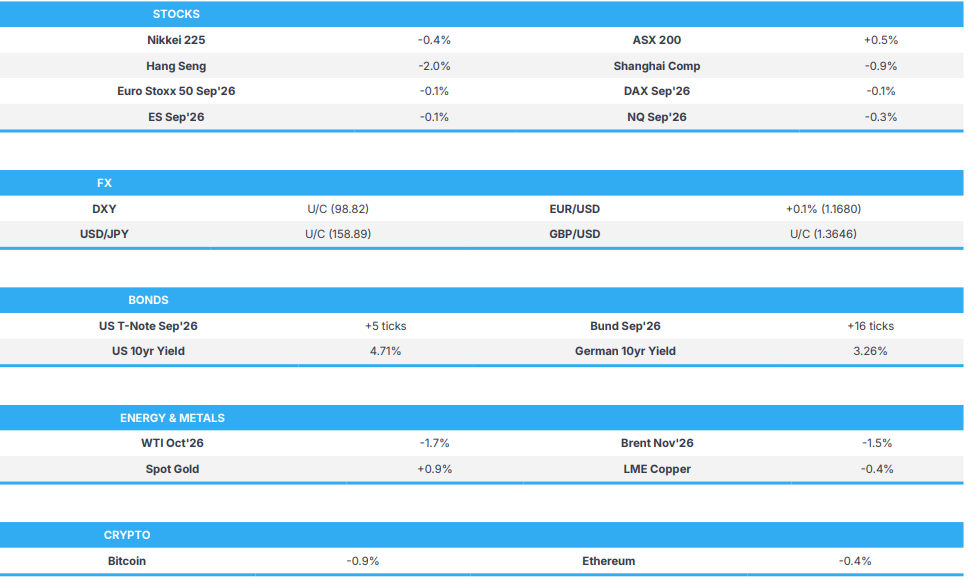
SHANGHAI CLOSED DOWN 23.19 PTS OR 0.59%
HANG SENG CLOSED DOWN 523.46 PTS OR 2.01%
Nikkei CLOSED DOWN 523.46 PTS OR 2.01%
//Australia’s all ordinaries CLOSED DOWN 0.01%
//Chinese yuan (ONSHORE) CLOSED DOWN TO 6.7237
/ OFFSHORE CLOSED DOWN AT 6.7254 Oil DOWN TO 85.47 dollars per barrel for WTI and BRENT DOWN TO 93.32 Stocks in Europe OPENED ALL MOSTLY RED
ONSHORE USA/ YUAN// WITH YUAN TRADING DOWN (6.7237 OFFSHORE YUAN TRADING UP TO 6.7252 ONSHORE YUAN TRADING ABOVE LEVEL // OFF SHORE AND DOWN ON THE DOLLAR)// / AND THUS WEAKER/OFF SHORE YUAN TRADING DOWN AGAINST US DOLLAR/ AND THUS WEAKER
HERE IS A BRIEF SYNOPSIS OF HOW THE CROOKS FLEECE UNSUSPECTING LONGS
YOU WILL ALSO NOTICE THAT THE COMEX OPEN INTEREST STARTS TO RISE BUT SO IS THE OPEN INTEREST OF SPREADERS. THE OPEN INTEREST IN WILL CONTINUE TO RISE UNTIL ONE WEEK BEFORE FIRST DAY NOTICE OF AN UPCOMING ACTIVE DELIVERY MONTH (OCT), AND THAT IS WHEN THE CROOKS SELL THEIR SPREAD POSITIONS BUT NOT AT THE SAME TIME OF THE DAY. THEY WILL USE THE SELL SIDE OF THE EQUATION TO CREATE THE CASCADE (ALONG WITH THEIR COLLUSIVE FRIENDS) AND THEN COVER ON THE BUY SIDE OF THE SPREAD SITUATION AT THE END OF THE DAY. THEY DO THIS TO AVOID POSITION LIMITS
WHAT IS ALARMING TO ME, ACCORDING TO OUR LONDON EXPERT ANDREW MAGUIRE IS THAT THESE EFP’S ARE BEING TRANSFERRED TO WHAT ARE CALLED SERIAL FORWARD CONTRACT OBLIGATIONS AND THESE CONTRACTS ARE LESS THAN 14 DAYS. ANYTHING GREATER THAN 14 DAYS, THESE MUST BE RECORDED AND SENT TO THE COMPTROLLER, GREAT BRITAIN TO MONITOR RISK TO THE BANKING SYSTEM. IF THIS IS INDEED TRUE, THEN THIS IS A MASSIVE CONSPIRACY TO DEFRAUD AS WE NOW WITNESS A MONSTROUS TOTAL EFP’S ISSUANCE AS IT HEADS INTO THE STRATOSPHERE.
The crooks also use the spread in the TAS account (trade at settlement). They buy the spot TAS (e.g. June) and sell the future TAS two months out (e.g. August). Then they unload the front month (i.e. unload the buy side first so the price of gold/silver falls. This occurs in the middle of the front delivery month cycle. They unload the sell side of the equation, two months down the road. The crooks violate position limits as the OCC refuse to hear our complaints.
First, here is an outline of what will be discussed tonight:
SILVER:
1.TODAY WE HAD THE OPEN INTEREST AT THE COMEX IN SILVER FELL BY A TINY 80 CONTRACTS TO AN OI OF 117,167
EFP ISSUANCE 461 CONTRACTS
OUR CUSTOMARY MIGRATION OF COMEX LONGS CONTINUE TO MORPH INTO LONDON FORWARDS AS OUR BANKERS USED THEIR EMERGENCY PROCEDURE TO ISSUE:
SEPT 461 CONTRACTS and 0 ALL OTHER MONTHS: ZERO. TOTAL EFP ISSUANCE: 0 CONTRACTS. EFP’S GIVE OUR COMEX LONGS A FIAT BONUS PLUS A DELIVERABLE PRODUCT OVER IN LONDON. IF WE TAKE THE COMEX OI LOSS OF 80 CONTRACTS AND ADD TO THE 461 E.FP. ISSUED
WE OBTAIN A FAIR GAIN OF 381 OI OPEN INTEREST CONTRACTS FROM OUR TWO EXCHANGES WITH OUR GAIN OF $1.48
THUS IN OUNCES, THE GAIN ON THE TWO EXCHANGES TOTAL 1.905 MILLION PAPER OZ
STANDING ADVANCES AT 8.225 MILLION OZ
SILVER PRICE GAIN OF $1.48
XXXXXXXXXXXXXXXXXXXXXXXXXXXXXXXXXXXXX
1. COMEX DATA//AMOUNTS STANDING//VOLUME OF TRADING/INVENTORY MOVEMENTS
GOLD
LET US BEGIN:
THE TOTAL COMEX GOLD OPEN INTEREST ROSE BY A FAIR 1957 CONTRACTS TO 424,415 STILL WELL ABOVE ITS NEW LOW OF 326,052 OI SET JUNE 3, CLOSE TO THE PREVIOUS ALL TIME LOW OF 345,705 SET (MAY 28) AND CLOSE TO THE PREVIOUS ALL TIME LOW IN OI OF 353,490 SET MAY 27.. PREVIOUS TO THAT THE ALL TIME LOW IN OI WAS 390,000 SET IN THE YEAR 2001 WHEN GOLD WAS TRADING $260.00. THE CME SHOULD BE PROUD OF THEMSELVES AS MANY HAVE ABANDONED THIS CROOKED ARENA!!THUS OUR NEW ALL TIME LOW OF COMEX OI HAS NOW BEEN SET AT 326,052 //JUNE 3 2026 WITH GOLD AT AN EXTREMELY HIGH $4,450.00 WHICH MAKES ABSOLUTELY NO SENSE!!!
WE HAD ZERO T.A.S. LIQUIDATION DURING FRIDAY’S COMEX TRADING/. IT SEEMS THAT MANY OF THE SPECULATORS THAT HAVE NOW CONTINUED AGAIN TO BE ON THE SHORT SIDE WITH BANKERS ON THE LONG SIDE AND THESE GUYS WERE AGAIN OBLITERATED YESTERDAY WHEN THE LONGS TENDERED FOR DELIVERY:
CENTRAL BANKS TENDERED THEIR NEW LONG CONTRACTS AT THE END OF THE DAY FOR PHYSICAL GOLD. YOU CAN VISUALIZE THIS WITH THE STRONG AMOUNT OF GOLD STANDING AT THE COMEX FOR THIS JULY CONTRACT MONTH!!
WE HAD A FAIR SIZED GAIN ON OUR TWO EXCHANGES (3694 CONTRACTS) OCCURRED WITH OUR GAIN IN PRICE IN GOLD (UP $103.95)
WE THUS HAD A FAIR GAIN IN OI ON BOTH OF OUR EXCHANGES (3694 CONTRACTS), WITH OUR GAIN IN PRICE, AS WE WERE INFORMED OF A FAIR CONTRACT EXCHANGE FOR PHYSICAL ISSUANCE EQUATING TO 1737 CONTRACTS.
THEN WE WERE NOTIFIED TODAY OF A 5 CONTRACT FOR RISK ISSUANCE IN GOLD CONTRACTS FOR 500 OZ OR 0.0155 TONNES OF GOLD. TOTAL THUS SO FAR THIS MONTH: 1276 CONTRACTS//127,600 OZ OR 3.9688 TONNES (5 OCCASIONS)
MONTH OF MAY RECORD ISSUANCE OF EXCHANGE FOR RISK: THE HIGHEST EVER ISSUANCE!!
MAY 22 RECORDS THE HIGHEST EVER EXCHANGE FOR RISK AT 12.4416 TONNES. WE HAD OUR FIRST ISSUANCE FOR EXCHANGE FOR RISK IN THE MONTH OF MAY ON MAY 7, THEN OUR 2ND ISSUANCE FOR OUR MAY GOLD MONTH ON MAY 12. THE THIRD ON MAY 18 , THEN MAY 21 OUR 4TH ISSUANCE AND THEN FINALLY FRIDAY, OUR 5TH ISSUANCE. THIS GOLD WILL BE ADDED TO OUR NORMAL MAY DELIVERIES TO GIVE US OUR FINAL AMOUNT OF GOLD WILLING TO STAND AT THE COMEX..
HISTORY OF EXCHANGE FOR RISK ISSUANCE THIS YEAR: FEBRUARY THROUGH JULY AND AUGUST
FEBRUARY:
DURING THE MIDDLE OF THE FEBRUARY CONTRACT MONTH, WE HAD TWO IDENTICAL MONSTER 3,000 CONTRACT ISSUED FOR THE SAME 9.33 TONNES OF GOLD, AND THESE WERE THE HIGHEST EVER IN TONNAGE EVER ISSUED BY THE COMEX. ALTOGETHER THE TOTAL ISSUANCE FOR FEB TOTALLED SIX.(31.251 TONNES).
MARCH:
THURSDAY MARCH 17 WE RECEIVED ITS INITIAL 2000 CONTRACT EXCHANGE FOR RISK ISSUANCE FOR 6.22 TONNES. LAST FRIDAY: 0 ISSUANCE OF EXCHANGE FOR RISK. BUT ON MONDAY MARCH 23 WE RECEIVED NOTICE OF OUR SECOND EXCHANGE FOR RISK ISSUANCE FOR 2,200 CONTRACTS (220,000 OZ OR 6.843 TONNES) AND NOW FRIDAY WITH A MONSTER 2996 CONTRACTS FOR 9.3138 TONNES. THESE THREE ISSUANCES WILL NOW BE ADDED TO THE REGULAR AMOUNT OF GOLD STANDING, I.E. 22.3818 TONNES TO OUR NORMAL GOLD STANDING TO GIVE US WHAT WILL STAND FOR PHYSICAL GOLD FOR MARCH!
APRIL;: 2 EXCHANGE FOR RISK SO FAR, I.E. 2239 CONTRACTS FOR 223,900 OZ OR 6.964 TONNES AND THIS TOTAL TONNES WILL BE ADDED TO OUR NORMAL DELIVERY TO GIVE US WHAT WILL STAND IN APRIL
MAY: FIVE ISSUANCES SO FAR FOR 7920 CONTRACTS OR 792,000 OZ OR 24.635 TONNES.
JUNE: 0 IN GOLD. THUS FOR THE ENTIRE MONTH IN GOLD ZERO NOTICES WERE FILED.
JULY: 2 FOR 200 OZ OR 0.00622 TONNES
AUGUST: 1276 CONTRACTS FOR 127,600 OZ OR 3.9688 TONNES (5 OCCASIONS THIS MONTH)
XXXXXXXXXXXXXXXXXXXXXXXXXXXXXXXXX
A LITTLE HISTORY OF EXCHANGE FOR RISK DECEMBER THROUGH TO AUGUST:
IN DECEMBER WE HAVE RECORDED 5 ISSUANCES OF EXCHANGE FOR RISK/4 FOR DEC AND THE LAST ONE ON DEC 31 FOR JANUARY. WE NOW HAVE 3 CHOICES FOR THE RECIPIENT OF THIS ISSUANCE AND IT MUST BE A CENTRAL BANK. YOU WILL RECALL THAT THE BUYER ASSUMES THE RISK OF THAT DELIVERY. (THUS TOTAL EXCHANGE FOR RISK FOR THE MONTH OF DECEMBER IS 6.56 TONNES/4 OCCASIONS.
MONTH OF JANUARY/EXCHANGE FOR RISK
IN JANUARY THEY HAVE 6 TOTAL ISSUANCE : 3.446 TONNES EARLY, THEN JAN 9 ISSUANCE OF 9,331 TONNES AND THEN JAN 16: 0.1996 TONNES JAN 26: 1.499 TONNES, JAN 27: 3.160 AND FINALLY JAN 29: 4.659 TONNES TONNES//TOTAL EXCHANGE FOR RISK JANUARY 22.315 TONNES WHICH WAS ADDED TO OUR NORMAL DELVERIES.
AND FEBRUARY:
FEB EXCHANGE FOR RISK: NOW 6 ISSUANCES: 10,080 CONTRACTS FOR 1,008,000 OZ OR 31.251 TONNES!
HERE ARE THE CHOICES FOR THE RECIPIENT OF THOSE ISSUANCES:
1 THE CENTRAL BANK OF ENGLAND. BUT THEY RECEIVED CLEARANCE THAT THEIR GOLD IS BACK SO IT IS NOT LIKELY THAT THEY WOULD LIKE TO ADD TO THEIR RESERVES.
2. THE CENTRAL BANK OF THE USA: THE FED. LOGICAL CHOICE AS THEY CLAMOUR TRYING TO REDUCE THEIR 131+ TONNES OF SHORTAGE. HOWEVER THEY SEEM NOT TO BE IN A HURRY TO COVER THEIR HUGE SHORTFALL
3. THE CENTRAL BANK OF CHINA AS THEY BATTLE WITS WITH THE USA.
TOTAL EXCHANGE FOR RISK FOR DECEMBER IS 6.56 TONNES AND THIS WAS ADDED TO OUR NORMAL DELIVERY TOTALS..
THE JANUARY ISSUANCE OF 17.656 TONNES WAS ADDED TO OUR DAILY DELIVERY TOTALS!!
FEBRUARY ISSUANCES 6 FOR; 31.251 TONNES !! AND THIS WAS ADDED TO OUR DELIVERY TOTALS FOR THIS MONTH.
MARCH: CME ANNOUNCES ITS FIRST EXCHANGE FOR RISK FOR 2000 CONTRACTS FOR 200,000 OZ OR 6.22 TONNES OF GOLD DURING THE FIRST WEEK OF MARCH, AND THEN MONDAY, MARCH 22, WE RECEIVED ITS SECOND NOTICE ISSUANCE OF 2200 CONTRACTS OR 220000 OZ (6.843 TONNES). THEN FINALLY WE RECEIVED NOTICE OF OUR THIRD EXCHANGE FOR RISK OF 2996 CONTRACTS OR 9.3188 TONNES. TOGETHER ALL 3 ISSUANCES TOTAL 22.3818 TONNES WHICH WILL BE ADDED TO OUR NORMAL DELIVERY SCHEDULE.
APRIL: 2 EXCHANGE FOR RISK SO FAR FOR 223,900 OZ OR 6.964 TONNES. AND THIS TOTAL WILL BE ADDED TO OUR NORMAL DELIVERY TO GIVE US WHAT WILL STAND FOR APRIL!!
MAY: FIVE ISSUANCES SO FAR FOR 7920 CONTRACTS, 792,000 OZ OR 24.635 TONNES OF GOLD. THIS TOTAL WILL BE ADDED TO OUR NORMAL DELIVERIES IN MAY TO GIVE US WHAT WILL STAND IN MAY.
JUNE: ZERO
JULY 2 FOR 200 OZ OR 0.00622 TONNES. I DOUBT VERY MUCH THAT THIS IS A CENTRAL BANK
AUGUST: 1276 CONTRACTS FOR 127,600 OZ OR 3.9688 TONNES//5 OCCASIONS
DETAILS ON OUR NEW AUG COMEX CONTRACT MONTH//
IN TOTAL WE HAD A STRONG GAIN ON OUR TWO EXCHANGES OF 3,694 CONTRACTS WITH OUR HUGE GAIN IN PRICE($103.95). HOWEVER, OUR FRIENDLY PHYSICAL LONDON BOYS HAD ANOTHER FIELD DAY AGAIN THROUGHOUT THIS WEEK AS THEY WERE READY FOR THE FRBNY.S CONTINUED ORCHESTRATED ATTACKS VERY EARLY IN THE COMEX SESSIONS AS THEY TRIED TO ABSORB EVERYTHING IN SIGHT FROM THEIR DAILY ATTACKS. LONDONERS EXERCISED THEIR BOUGHT CONTRACTS FOR PHYSICAL GOLD VIA THE EXCHANGE FOR PHYSICAL ROUTE AND THANKED THE FRBNY AND OUR SHORT SPECULATORS FOR THEIR THOUGHTFULNESS.
LONDON ANNOUNCED EARLY IN THE YEAR (AND SCARCITY CONTINUES TO THIS DAY) THAT THEY WERE OUT OF GOLD. WRONGLY IT WAS ATTRIBUTED TO THEIR SHIPPING PHYSICAL GOLD TO COMEX FOR STORAGE DUE TO TRUMP’S INITIATION OF TARIFFS. THE TRUTH OF THE MATTER IS THAT THIS GOLD LEFT LONDON TO OTHER CENTRAL BANKS, AND COMEX BANKS HAVE BEEN PAPERING THEIR LOSSES (DERIVATIVE) WITH KILOBAR ENTRIES. BOTH COMEX AND LBMA ARE WITNESSING MASSIVE AMOUNTS OF GOLD LEAVING THEIR VAULTS.
THE LIQUIDATION OF T.A.S. CONTRACTS THROUGHOUT THE MONTHS OF JUNE/JULY/AUG CONTINUES TO DISTORT OPEN INTEREST NUMBERS GREATLY ALTHOUGH THE T.A.S. ISSUANCES IN GOLD HAVE GENERALLY BEEN ON THE LOW SIDE COMPARED TO SILVER WHICH HAVE BEEN HUGE. TODAY’S NUMBER HOWEVER IS A FAIR SIZED T.A.S ISSUANCE CONTRACTS .THE CME NOTIFIES US THAT THEY HAVE ISSUED 1103 T.A.S CONTRACTS. THESE ARE GENERALLY USED FOR RAID PURPOSES TO STOP GOLD’S RISE AND TO TEMPER HUGE LOSSES IN OTC DERIVATIVE BETS.
IT SURE LOOKS LIKE THE BIS HAS SOMEHOW LOOKED THE OTHER WAY WITH ITS GOLD SWAPS WITH THE FRBNY AS THIS ENTITY FOR THE FED REFUSES THE BIS MARCHING ORDERS TO COVER AND THAT MAY EXPLAIN THE STRONG NUMBER OF T.A.S. ISSUANCES IN DECEMBER , JANUARY AND THROUGHOUT FEBRUARY TO GO ALONG WITH OUR HUGE NUMBER OF EXCHANGE FOR RISK ISSUED DURING THESE MONTHS INCLUDING FEBRUARY’S 6 EXCHANGE FOR RISK WHICH ALSO INCLUDED TWO MONSTER 9.3312 TONNE ISSUANCE (FEB 10 AND FEB 12). TOTAL EXCHANGE FOR RISK/FEB EQUALS 31.251 TONNES!! AND MARCH’S THREE ISSUANCES FOR 22.3818 TONNES! OTHER CENTRAL BANKS ARE PAYING ATTENTION AS THEY TAKE DELIVERY OF HUGE AMOUNTS OF PHYSICAL GOLD. APRIL HAD 2 EXCHANGE FOR RISK ISSUANCES FOR 6.694 TONNES. AND MAY WITH ITS 5TH ISSUANCE FOR 12.4436 TONNES///TOTAL EXCHANGE FOR RISK FOR MAY: 24.635 TONNES ISSUED MAY 6 ,MAY 12, MAY 18 MAY 21 AND NOW MAY 22..
THEN IT SLOWS DOWN!
JUNE: ZERO FOR THE MONTH
JULY: 2 SO FAR FOR 200 IZ IR 0.00622 TONNES
AUGUST: 1276 CONTRACTS FOR 127,600 OZ OR 3.9688 TONNES
WE MUST ALSO REMEMBER THAT THE FRBNY IS SHORT 131+ TONNES OF GOLD, THIS COMMENCED ON JAN 2 2023 AS THEY REFUSE TO COVER DESPITE THE BIS’S PLEA TO DO SO.
HERE IS A SUMMARY OF GOLD STANDING FOR DELIVERY ON OUR LAST 16 MONTHS:
1.APRIL AT 209 TONNES
2. AND THIS CONTINUED INTO MAY WITH FINAL STANDING AT 90.23 TONNES.
3. JUNE WHICH IS A HUGE DELIVERY MONTH , FINAL STANDING WAS RECORDED AT A STRONG 93.085 TONNES. //(TOTAL NET QUEUE JUMPING FOR THE JUNE MONTH: 31.027 TONNES.)
4. IN JULY WE HAD HUGE DELIVERY NOTICES ESPECIALLY FOR A NON ACTIVE DELIVERY MONTH WITH INITIAL STANDING AT 17.947 TONNES PLUS MANY QUEUE JUMPS + 3.75 TONNES EX FOR RISK = 41.106 TONNES OF GOLD // FINAL TOTAL TONNES STANDING JULY: 41.106 TONNES
5. FOR THE MONTH OF AUGUST 2025
INITIAL AMOUNT OF GOLD STANDING FOR AUGUST: 60.547 TONNES PLUS THE MONTHS HUGE QUEUE JUMPS OF 47.2312 TONNES +44.696 TONNES EX FOR RISK (7 ISSUANCES) //NEW STANDING 152.208 TONNES WHICH IS MONSTROUS!!!
6. FINAL AMOUNT OF GOLD STANDING FOR SEPT; INITIAL STANDING; 2,602 CONTRACTS OR 260,200 OZ FOR 8.093 TONNES OF GOLD FOLLOWED BY TODAY’S 0.4883 TONNES QUEUE JUMP TO GO ALONG WITH TODAY’S 1.244 TONNES OF EXCHANGE FOR RISK ISSUANCE TODAY AND // TOTAL EXCHANGE FOR RISK ISSUANCE SEPT: 22.923 TONNES//NEW TOTALS STANDING ADVANCES TO 48.801 TONNES OF GOLD!!!
7. OCTOBER:
OCTOBER: INITIAL STANDING FOR GOLD: 90.164 TONNES TO WHICH WE ADD OUR LATEST OCT 30 QUEUE JUMP OF 0.00311 TONNES WHICH FOLLOWS OCT 29 QUEUE JUMP OF .4096 WHICH FOLLOWS; OCT 28 QUEUE JUMP OF .5069 TONNES WHICH FOLLOWS OCT 27 OF 0.3048 TONNES WHICH FOLLOWS: OCT 24 OF 0.8615 TONNES, FOLLOWING OCT 23 QUEUE JUMP OF 1.695 TONNES OCT 22 JUMP OF 8.622 TONNES WHICH FOLLOWS OCT 21: 3.8600 TONNES TO OCT 20 QUEUE JUMP OF 7.695 TONNE
SUMMARY FOR OCTOBER STANDING:
NOVEMBER WHERE INITIAL AMOUNT OF GOLD STANDING IS REGISTERED AT 15.651 TONNES OF GOLD FOLLOWED BY TODAY’S QUEUE JUMP OF 2 TONNES AND FOLLOWED BY ALL OTHER NOV QUEUE JUMPS OF 21.3775 TONNES TO WHICH WE ADD OUR TWO EXCHANGE FOR RISK ISSUANCE FOR 4.5596 TONNES.
/STANDING ADVANCES TO 43.9716 TONNES OF GOLD.
DECEMBER: INITIAL AMOUNT OF GOLD STANDING FOR DELIVERY IN THIS ACTIVE MONTH IS 83.813 TONNES FOLLOWED BY TODAY’S 0.05 TONNES QUEUE JUMP. THIS FOLLOWS ALL OTHER QUEUE JUMPING: 37.163 TONNES//NEW STANDING ADVANCES TO 115.390 TONNES TO WHICH WE ADD OUR FOUR EXCHANGE FOR RISK ISSUANCE OF 6.559 TONNES//NEW STANDING THUS INCREASES TO 121.977 TONNES
JANUARY: INITITAL STANDING: 13.785 TONNES TO WHICH WE ADD OUR QUEUE JUMP OF 0.000 TONNES WHICH FOLLOWS ALL OTHER QUEUE JUMPS OF 30.7117TONNES //NEW TOTAL QUEUE JUMPS 30.7117//NORMAL DELIVERY OF GOLD ADVANCES TO 36.8958 TONNES TO WHICH WE ADD OUR SIX EXCHANGE FOR RISK OF 22.315 TONNES//NEW STANDING ADVANCES TO 59.2108 TONNES.
FEBRUARY: . FEBRUARY: INITIAL STANDING: 93.566 TONNES TO WHICH WE ADD OUR NEXT QUEUE JUMP OF 0.0248 TONNES WHICH MUST BE ADDED ALL OTHER QUEUE JUMPS OF 41.2087 TONNES QUEUE JUMP//TOTAL QUEUE JUMP FOR FEB::ADVANCES TO 41.233 TONNES///STANDING ADVANCES TO 126.628 TONNES TO WHICH WE ADD OUR SIX EXCHANGE FOR RISK OF 31.251 TONNES/NEW STANDING FINALIZES AT 157.879 TONNES, ITS HIGHEST STANDING RECORDED IN OVER 4 YEARS.
MARCH: INITIAL STANDING FOR GOLD: 8.099 TONNES TO WHICH WE ADD OUR NEXT QUEUE JUMP OF 0.2320 TONNES AND THEN WE ADD OUR THREE EXCHANGE FOR RISK OF 22.3818 TONNES////NEW STANDING FOR GOLD ADVANCES TO: 67.6648TONNES WHICH IS ABSOLUTELY HUGE FOR A NON ACTIVE DELIVERY MONTH!!
APRIL 2026: INITIAL STANDING FOR GOLD: 52.20 TONNES FOLLOWED BY TODAY’S SMALL 500 OZ QUEUE JUMP/ TO WHICH WE ADD OUR TWO EXCHANGE FOR RISK ISSUANCES TOTALLING 223,900 OZ OR 6.964 TONNES//STANDING ADVANCES TO 77.726 TONNES WHICH IS ABSOLUTELY HUGE
MAY: INITIAL AMOUNT OF GOLD WILLING TO STAND: 12.24 TONNES OF GOLD TO WHICH WE ADD OUR NEXT HUGE QUEUE JUMP OF 34,500 OZ (1.073 TONNES) TO WHICH WE ADD OUR FIVE EXCHANGE FOR RISK ISSUANCE FOR 792,000 OZ OR 24.635 TONNES////NEW TOTALS STANDING FOR GOLD ADVANCES TO 51.554 TONNESS
JUNE: INITIAL AMOUNT OF GOLD WILLING TO STAND: 64.496 TONNES TO WHICH WE SUBTRACT AN EXCHANGE FOR PHYSICAL TRANSFER TO LONDON OF 0.0186 TONNES//NEW STANDING REDUCES TO 127.03 TONNES// TOTAL QUEUE JUMPING FOR THE MONTH FINALIZES AT 62.4217 TONNES OR AVERAGING 3.285 TONNES PER DAY IN JUNE.
JULY: INITIAL AMOUNT OF GOLD WILLING TO STAND: 749,300 OZ OR 23.306 TONNES OF GOLD TO WHICH WE ADD OUR NEXT QUEUE JUMP OF 0.000TONNES//NEW STANDING REMAINS AT 40.818TONNES PLUS 0.00622 TONNES EXHANGE FOR RISK// NEW TOTAL 40.824 TONNES . TOTAL QUEUE JUMPING SO FAR: 17.5802 TONNES OR 0.8790 TONNES ON EACH TRADING DAY LEAVING COMEX FOR EASTERN SHORES.
AUGUST INITIAL; INITIAL AMOUNT OF GOLD WILLING TO STANDS: 48.687 TONNES TO WHICH WE ADD OUR 5TH EXCHANGE FOR RISK OF 5 CONTRACTS FOR 500 OZ OR 0.0155 TONNES TO OUR 4TH EXCHANGE FOR RISK OF 220 CONTRACTS FOR 20,000 OZ OR 0.6220 TONNES TO OUR 3RD EXCHANGE FOR RISK AT 1.7045 TONNES TO OUR 2ND EXCHANGE FOR RISK AT 1.552 TONNES TO OUR FIRST: 0.0715 NEW TOTAL EXCHANGE FOR RISK = 3.9688 TONNES AND THEN ADD OUR NEXT QUEUE JUMP OF 135 CONTRACTS OR 13,500 OZ (0.4199 TONNES)//STANDING, IN TOTAL, THUS ADVANCES HUGELY TO 62.0208 TONNES.
HERE ARE THE AMOUNTS THAT STOOD FOR DELIVERY IN THE 4 YEARS 2021-2024
DEC 2021: 112.217 TONNES
NOV. 8.074 TONNES
OCT. 57.707 TONNES
SEPT: 11.9160 TONNES
AUGUST: 80.489 TONNES
JULY 7.2814 TONNES
JUNE: 72.289 TONNES
MAY 5.77 TONNES
APRIL 95.331 TONNES
MARCH 30.205 TONNES
FEB ’21. 113.424 TONNES
JAN ’21: 6.500 TONNES.
TOTAL YEAR 2021 (JAN- DEC): 601.213 TONNES
YEAR 2022: STANDING FOR GOLD/COMEX
JANUARY 2022 17.79 TONNES
FEB 2022: 59.023 TONNES
MARCH: 36.678 TONNES
APRIL: 85.340 TONNES FINAL.
MAY: 20.11 TONNES FINAL
JUNE: 74.933 TONNES FINAL
JULY 29.987 TONNES FINAL
AUGUST:104.979 TONNES//FINAL
SEPT. 38.1158 TONNES
OCT: 77.390 TONNES/ FINAL
NOV 27.110 TONNES/FINAL
Dec. 64.000 tonnes
(TOTAL YEAR 656.076 TONNES)
2023:STANDING FOR GOLD/COMEX
JAN/2023: 20.559 tonnes
FEB 2023: 47.744 tonnes
MAR: 19.0637 TONNES
APRIL: 75.676 tonnes
MAY: 19.094 TONNES + 1.244 tonnes of exchange for risk = 20.338
JUNE: 64.354 TONNES
JULY: 10.2861 TONNES
AUGUST: 38.855 TONNES(INCLUDING .6842 EXCHANGE FOR RISK)
SEPT: 15.281 TONNES FINAL
OCT. 35.869 TONNES + 1.665 EXCHANGE FOR RISK =37.0355 tonnes
DEC. 47.073 + 4.634 TONNES OF EXCHANGE FOR RISK = 51.707 TONNES
TOTAL 2023 YEAR : 436.546 TONNES
2024/STANDING FOR GOLD/COMEX
JAN ’24. 22.706 TONNES
FEB. ’24: 66.276TONNES (INCLUDES 1.723 TONNES EX. FOR RISK)
MARCH: 18.8398 TONNES + 1.1695 EX FOR RISK = 20.093 TONNES
APRIL: 2024: 53.673TONNES FINAL
MAY/ 2024 8.5536 TONNES + 3.3716 TONNES EX FOR RISK/= 11.9325
JUNE; 95.578 TONNES. + 1.045 TONNES EXCHANGE FOR RISK =96.623 THIS IS THE HIGHEST RECORDED GOLD STANDING SINCE AUGUST 2022
JULY: 11.692 TONNES
AUGUST 69.602 TONNES//FINAL STANDING
SEPT. 13.164 TONNES.
OCT 39.474 TONNES + + 20.917 TONNES EXCHANGE FOR RISK =60.391 TONNES
NOV . 11.265 TONNES +4.665 TONNES EXCHANGE FOR RISK/TUESDAY + 3.11 TONNES OF EX. FOR RISK/PRIOR = 19.0425 TONNES
DEC: 80.4230 TONNES PLUS DEC MONTH EXCHANGE FOR RISK TOTAL 14.6836 TONNES EQUALS 95.1066 TONNES
total year 2024: 540.30 tonnes
COMEX GOLD TRADING BEGINNING AUGUST. CONTRACT;
THE SPECS/HFT WERE UNSUCCESSFUL IN LOWERING GOLD’S PRICE ( IT ROSE BY $103.95)
WE HAD ZERO T.A.S. SPREADER LIQUIDATION FRIDAY // COMEX SESSION// WITH OUR GAIN IN PRICE
OTHER EASTERN CENTRAL BANKS TENDERED FOR PHYSICAL EVERY NIGHT WHICH ALSO EXPLAINS THE HUGE NUMBER OF TONNES OF GOLD THAT STOOD FOR GOLD DURING THESE PAST SEVERAL MONTHS
THE CROOKS COULD NOT STOP OTHER CENTRAL BANK LONGS, SEIZING THE MOMENT, THEY EXERCISED AGAIN FOR PHYSICAL IN A BIG WAY TENDERING FOR PHYSICAL FRIDAY EVENING /SATURDAY MORNING AND THUS OUR HUGE NUMBER OF GOLD CONTRACTS STANDING FOR DELIVERY AT THE COMEX. CENTRAL BANKERS WAIT PATIENTLY FOR THE GOLD
ALL OF THIS WAS ACCOMPLISHED WITH OUR GAIN IN PRICE AT COMEX OF $103.95
WE HAD 1324 CONTRACTS REMOVED FROM PRELIMINARY NUMBERS TO FINAL COMEX NUMBERS.
NET GAIN ON THE TWO EXCHANGES: 3694 CONTRACTS OR 369,400 OZ 11.489 TONNES)
i) Our of Brinks: 32.151 oz (1 kilobar) ii) Our of Manfra 160.755 oz (6 kilobars)
total 192.906 oz (6 kilobars)
Deposit to the Dealer Inventory in oz
0 ENTRIES
Deposits to the Customer Inventory, in oz
DEPOSITS/CUSTOMER//gold
one entry
i) Into Asahi: 32,015..105 oz
total deposit: 32,015.105 oz
xxxxxxxxxxxxxxxx
No of oz served (contracts) today
15 CONTRACTS
1500 OZ
0.0466 TONNES OF GOLD
No of oz to be served (notices)
362 Contracts 36,200 OZ 1.126 TONNES
Total monthly oz gold served (contracts) so far this month
18,303 notices 1,830,300 OZ
56.930 TONNES
Total accumulative withdrawals of gold from the Dealers inventory this month
NIL oz
Total accumulative withdrawal of gold from the Customer inventory this month
dealer deposits: 0
xxxxxxxxxxxxxxxxxxx
DEPOSITS/CUSTOMER
ENTRIES: 1
i) Into Asahi: 32,015..105 oz
total deposit: 32,015.105 oz
xxxxxxxxxxxxxxxxxx
comex withdrawal
2 ENTRIES
i) Our of Brinks: 32.151 oz (1 kilobar)
ii) Our of Manfra 160.755 oz (6 kilobars)
total 192.906 oz (6 kilobars)
adjustments: 0//
COMEX IS DRAINING GOLD
chaos inside the comex
THE FRONT MONTH OF AUG OI STANDS AT 377 CONTRACTS HAVING A LOSS OF 25 CONTRACTS.
NORMAL STANDING FOR GOLD FRIDAY: 57.636. TODAY’S STANDING IS 58.055 TONNES TO WHICH WE ADD OUR 3.9688 TONNES EXCHANGE FOR RISK. THE NORMAL STANDING INCLUDES OUR NEXT 135 CONTRACT QUEUE JUMP OR AN ADDITIONAL 13,500 OZ (0.4199 TONNES) WILL STAND FOR DELIVERY OVER ON THIS SIDE OF THE POND.
SEPTEMBER LOST 94 CONTRACTS DOWN TO AN OI OF 4146
OCT GAINED 195 CONTRACTS TO AN OI OF 54,788
.
We had 15 contracts filed for today representing 1500 oz
Today, 0 notice(s) were issued from J.P.Morgan dealer and 13 notices issued from their client or customer account. The total of all issuance by all participants equate to 15 contract(s) of which 0 notices were stopped (received) by j.P. Morgan dealer and 9 notice(s) was (were) stopped (received) by J.P.Morgan//customer account
To calculate the INITIAL total number of gold ounces standing for AUGUST. /2026. contract month, we take the total number of notices filed so far for the month (18,303) to which we add the difference between the open interest for the front month of AUG (377 CONTRACTS) minus the number of notices served upon today 15x 100 oz per contract) equals 1,866,000 OZ OR (58.055 Tonnes of gold)then we add our 5 exchange for risk of 1276 contracts for 127,600oz or 3.9688..new standing advances to 62.0208 tonnes.
THUS: INITIAL total number of gold ounces standing for AUG. /2026. contract month, we take the total number of notices filed so far for the month (18,303) to which we add the difference between the open interest for the front month of AUG( 377) contracts minus the number of notices served upon today 15 x 100 oz per contract) equals 1,866,000 OZ OR (58.055 Tonnes of gold) plus 3.9688 tonnes exchange for risk..new standing advances to 62.0208 tonnes
new total of gold standing in AUG becomes 62.0208 TONNES//
TOTAL COMEX GOLD STANDING FOR AUG 62.0208 TONNES TONNES WHICH IS NOW REALLY HUGE FOR THIS ACTIVE DELIVERY MONTH OF AUGUST
confirmed volume FRIDAY confirmed 239,861/ GOOD// many have left the arena
COMEX GOLD INVENTORIES/CLASSIFICATION
NEW PLEDGED GOLD:
241,794.285 oz NOW PLEDGED /HSBC 5.94 TONNES
204,937.290 OZ PLEDGED MANFRA 3.08 TONNES
83,657.582 PLEDGED JPMorgan no 1 1.690 tonnes
265,999.054, oz JPM No 2
1,152,376.639 oz pledged Brinks/
Manfra: 33,758.550 oz
Delaware: 193.721 oz
International Delaware:: 11,188.542 oz
total pledged gold: 1,713,350.073 oz 53.29 tonnes pledged gold lowers
total inventories in gold declining rapidly
total pledged gold: 1,713,350.073 tonnes oz 53.29 tonnes
TOTAL OF ALL GOLD ELIGIBLE AND REGISTERED GOLD 26,727,737.042 oz
TOTAL REGISTERED GOLD 14,532,511.560 tonnes (452.644 tonnes)
TOTAL OF ALL ELIGIBLE GOLD 12,195.225.482 oz. Lots of eligible gold leaving the comex
REGISTERED GOLD THAT CAN BE SERVED UPON 12,819,165oz ((REG GOLD- PLEDGED GOLD)=
398.729 Tonnes //
total inventories in gold declining rapidly
SILVER COMEX
AUG DELIVERY MONTH
AUGUST 24
Silver
Ounces
Withdrawals from Dealers Inventory
NIL oz
Withdrawals from Customer Inventory
2 entries
i) Out of Loomis 95,083.750 oz ii) Out of Delaware 2024.721 oz
total withdrawal 97,108.471 oz
Deposits to the Dealer Inventory
0
Deposits to the Customer Inventory
ENTRY: 1
i) Into Brinks: 1002.428 oz total deposit 1002.428 oz
ENTRY: 0
No of oz served today (contracts)
0 CONTRACT(S) ( 0.000 MILLION OZ)
No of oz to be served (notices)
18 Contracts (0.090 MILLION oz)
Total monthly oz silver served (contracts)
1627 contracts 8.135 MILLION oz
Total accumulative withdrawal of silver from the Dealers inventory this month
NIL oz
Total accumulative withdrawal of silver from the Customer inventory this month
DEPOSITS INTO DEALER ACCOUNTS
ENTRY:0
DEPOSIT ENTRIES/CUSTOMER ACCOUNT
ENTRY: 1
i) Into Brinks: 1002.428 oz
total deposit 1002.428 oz
xxxxxxxxxxxxxxxxxxxxxxxxx
withdrawals:
TWO ENTRIES
i) Out of Loomis 95,083.750 oz ii) Out of Delaware 2024.721 oz
total withdrawal 97,108.471 oz
adjustments :1 dealer to customer
i) Manfra: 20,162.472 oz
xxxxxxxxxxxxxx
TOTAL REGISTERED SILVER: 99.171 MILLION OZ//.TOTAL REG + ELIGIBLE. 337.768 Million oz
registered silver dropping in numbers
CALCULATIONS FOR THE NEW STANDING FOR SILVER FOR AUGUST
FRONT MONTH: SILVER OPEN INTEREST CONTRACTS: 18 FOR A LOSS OF 4 CONTRACTS.
FRIDAY WE HAD 8.195 MILLION OZ STAND : TODAY WE HAVE 8.225 MILLION OZ STAND
THUS WE HAVE A GAIN OF 6 CONTRACTS I.E. 30,000 OZ WILL UNDERGO A QUEUE JUMP AND STAND AHEAD OF US SMALL MORTALS AND TAKE DELIVERY ON THIS SIDE OF THE POND.
SEPTEMBER SAW A LOSS OF 4910 CONTRACTS DOWN TO AN OI OF 37,933 CONTRACTS
OCT GAINED 28 CONTRACTS TO AN OI OF 2508
TOTAL NUMBER OF NOTICES FILED FOR TODAY: 0 or 0.000 MILLION oz
CONFIRMED volume FRIDAY; 97,605// excellent/
AND NOW AUGUST. DELIVERIES:
To calculate the number of silver ounces that will stand for delivery in AUG. we take the total number of notices filed for the month so far at 1627 X5,000 oz = 8.135 MILLION oz.
Then we take the difference between the front month of August and the number of notices filed for today x 5000 to give us our standing
Thus the standings for silver for the AUG 2026 contract month: (1627 )Notices served so far) x 5000 oz + OI for the front month of AUG (18) minus number of notices served upon today (0 x 5000 oz) equals silver standing for the AUG .contract month equating to 8.225 MILLION OZ. ( a very strong delivery month)
We must also keep in mind that there is considerable silver standing in London coming from our longs
There are ONLY 99.137 million oz of registered silver
JPMorgan as a percentage of total silver: 137.898/337.768million: 40.94%
The record level of silver open interest is 234,787 contracts set on April 21./2017 with the price on that day at $18.42.
The previous record was 224,540 contracts with the price at that time of $20.44.
BOTH GLD AND SLV ARE MASSIVE FRAUD/
AUGUST 24//2026/WITH GOLD UP $15.30 /HUGE CHANGES IN GOLD AT THE GLD: // A MASSIVE DEPOSIT OF 12.50 TONNES OF GOLD INTO THE GLD//:/INVENTORY RESTS AT 1047.21 TONNES
AUGUST 21//2026/WITH GOLD UP $103.98 /NO CHANGES IN GOLD AT THE GLD: //:/INVENTORY RESTS AT 1034.65 TONNES
AUGUST 20//2026/WITH GOLD UP $29.30 /HUGE CHANGES IN GOLD AT THE GLD: A MASSIVE DEPOSIT OF 9.41 TONNES OF GOLD INTO THE GLD: //:/INVENTORY RESTS AT 1034.65 TONNES
AUGUST 19//2026/WITH GOLD UP $123.70 /HUGE CHANGES IN GOLD AT THE GLD: A MASSIVE WITHDRAWAL OF 5.42 TONNES OF GOLD OUT OF THE GLD: //:/INVENTORY RESTS AT 1025.24 TONNES
AUGUST 18//2026/WITH GOLD DOWN $51.50 /HUGE CHANGES IN GOLD AT THE GLD: A MASSIVE DEPOSIT OF 7.13 TONNES OF GOLD INTO THE GLD: //:/INVENTORY RESTS AT 1030.66 TONNES
AUGUST 17//2026/WITH GOLD UP $36.70 /HUGE CHANGES IN GOLD AT THE GLD: A WITHDRAWAL OF 2.28 TONNES OF GOLD FORM THE GLD: //:/INVENTORY RESTS AT 1023.53 TONNES
AUGUST 14//2026/WITH GOLD UP $16.55 /NO CHANGES IN GOLD AT THE GLD: : //:/INVENTORY RESTS AT 1025.80 TONNES
AUGUST 13//2026/WITH GOLD DOWN $43.05 /HUGE CHANGES IN GOLD AT THE GLD: A DEPOSIT OF 3,139 TONNES OF GOLD INTO THE GLD. : //:/INVENTORY RESTS AT 1025,80TONNES
AUGUST 12//2026/WITH GOLD UP $24.55 /HUGE CHANGES IN GOLD AT THE GLD: A DEPOSIT OF 2.562 TONNES OF GOLD INTO THE GLD. : //:/INVENTORY RESTS AT 1022.672TONNES
AUGUST 11//2026/WITH GOLD UP $20.25 /HUGE CHANGES IN GOLD AT THE GLD: A DEPOSIT OF 2.52 TONNES OF GOLD INTO THE GLD. : //:/INVENTORY RESTS AT 1020.06TONNES
AUGUST 10//2026/WITH GOLD UP $22.00 /HUGE CHANGES IN GOLD AT THE GLD: A DEPOSIT OF 2.82 TONNES OF GOLD INTO THE GLD. : //:/INVENTORY RESTS AT 1017. 540TONNES
/AUGUST 7//2026/WITH GOLD UP $98.00 /HUGE CHANGES IN GOLD AT THE GLD: A DEPOSIT OF 0.57 TONNES OF GOLD INTO THE GLD. : //:/INVENTORY RESTS AT 1014.720TONNES
AUGUST 6//2026/WITH GOLD DOWN $2.45 /HUGE CHANGES IN GOLD AT THE GLD: A DEPOSIT OF 4.851 TONNES OF GOLD FROM THE GLD. : //:/INVENTORY RESTS AT 1014.143TONNES
AUGUST 5//2026/WITH GOLD UP $59.75 /HUGE CHANGES IN GOLD AT THE GLD: A WITHDRAWAL OF 1.146 TONNES OF GOLD FROM THE GLD. : //:/INVENTORY RESTS AT 1005.874TONNES
AUGUST 3//2026/WITH GOLD DOWN $15.80 /HUGE CHANGES IN GOLD AT THE GLD: A WIITHDRAWAL OF 2.28 TONNES OF GOLD FROM THE GLD. : //:/INVENTORY RESTS AT 1007.02TONNES
JULY 31//2026/WITH GOLD DOWN $50.40 /NO CHANGES IN GOLD AT THE GLD INTO THE GLD. : //:/INVENTORY RESTS AT 1009.30TONNES
JULY 30//2026/WITH GOLD UP $63.70 /NO CHANGES IN GOLD AT THE GLD INTO THE GLD. : //:/INVENTORY RESTS AT 1009.30TONNES
JULY 29//2026/WITH GOLD DOWN $0.10 /NO CHANGES IN GOLD AT THE GLD INTO THE GLD. : //:/INVENTORY RESTS AT 1009.30TONNES
JULY 28//2026/WITH GOLD UP 21.50 /NO CHANGES IN GOLD AT THE GLD INTO THE GLD. : //:/INVENTORY RESTS AT 1009.30TONNES
JULY 27.2026/WITH GOLD UP 21.50 /HUGE CHANGES IN GOLD AT THE GLD A DEPOSIT OF 1.43TONNES OF GOLD INTO THE GLD. : //:/INVENTORY RESTS AT 1009.30TONNES
JLY 24/2026/WITH GOLD UP 6.30 /NO CHANGES IN GOLD AT THE GLD A DEPOSIT OF 1.43TONNES OF GOLD INTO THE GLD. : //:/INVENTORY RESTS AT 1009.30TONNES
JULY 23/2026/WITH GOLD DOWN 98.60 /HUGE CHANGES IN GOLD AT THE GLD A DEPOSIT OF 2.00 TONNES OF GOLD INTO THE GLD. : //:/INVENTORY RESTS AT 1007.87TONNES
JULY 22/2026/WITH GOLD UP $73.30 /HUGE CHANGES IN GOLD AT THE GLD A DEPOSIT OF 2.28 TONNES OF GOLD INTO THE GLD. : //:/INVENTORY RESTS AT 1005.87 TONNES
JULY 21/2026/WITH GOLD DOWN $1.40 /HUGE CHANGES IN GOLD AT THE GLD A DEPOSIT OF 2.572 TONNES OF GOLD OUT OF GLD. : //:/INVENTORY RESTS AT 1004.45 TONNES
JULY 20/2026/WITH GOLD UP $59.75 /HUGE CHANGES IN GOLD AT THE GLD A WITHDRAWAL OF 0.860 TONNES OF GOLD OUT OF GLD. : //:/INVENTORY RESTS AT 1003.59 TONNES
JULY 17/2026/WITH GOLD UP $26.55 /HUGE CHANGES IN GOLD AT THE GLD A WITHDRAWAL OF 2.572 TONNES OF GOLD OUT OF GLD. : //:/INVENTORY RESTS AT 1001.878 TONNES
JULY 16/2026/WITH GOLD DOWN $110.60 /NO CHANGES IN GOLD AT THE GLD : //:/INVENTORY RESTS AT 1004.45 TONNES
JULY 15/2026/WITH GOLD DOWN $15.05 /HUGE CHANGES IN GOLD AT THE GLD : A DEPOSIT OF 1.94 TONNES OF GOLD INTO THE GLD/ //:/INVENTORY RESTS AT 1004.45 TONNES
JULY 14/2026/WITH GOLD UP $63.45 /NO CHANGES IN GOLD AT THE GLD : / //:/INVENTORY RESTS AT 1002.510 TONNES
JULY 13/2026/WITH GOLD DOWN $105.20 /HUGE CHANGES IN GOLD AT THE GLD : A WITHDRAWAL 0F 3.108 TONNES OF GOLD OUT OF THE GLD/ //:/INVENTORY RESTS AT 1002.510 TONNES
JULY 10/2026/WITH GOLD DOWN $27.25 /HUGE CHANGES IN GOLD AT THE GLD : A DEPOSIT 0F 3.138TONNES OF GOLD INTO THE GLD/ //:/INVENTORY RESTS AT 1005.618 TONNES
JULY 9/2026/WITH GOLD UP $58.60 /SMALL CHANGES IN GOLD AT THE GLD : A WITHDRAWAL OF 0.28 TONNES OF GOLD FROM THE GLD/ //:/INVENTORY RESTS AT 1002.510 TONNES
JULY 8/2026/WITH GOLD DOWN $73.30 /NO CHANGES IN GOLD AT THE GLD //:/INVENTORY RESTS AT 1002.79 TONNES
JULY 7/2026/WITH GOLD DOWN $28.05 /HUGE CHANGES IN GOLD AT THE GLD:A DEPOSIT OF 1.42 TONNES OUT INTO THE GLD/ ./ //:/INVENTORY RESTS AT 1002.79 TONNES
JULY 6 /2026/WITH GOLD DOWN $19.55 /HUGE CHANGES IN GOLD AT THE GLD:A WITHDRAWAL OF 3.954 TONNES OUT OF THE GLD/ ./ //:/INVENTORY RESTS AT 1001.366 TONNES
JULY 3 /2026/WITH GOLD UP $62.95 /NO CHANGES IN GOLD AT THE GLD: ./ //:/INVENTORY RESTS AT 1005.077 TONNES
JULY 2 /2026/WITH GOLD UP $44,05 /NO CHANGES IN GOLD AT THE GLD: ./ //:/INVENTORY RESTS AT 1005.077 TONNES
JULY 1 /2026/WITH GOLD UP $42.95 /NO CHANGES IN GOLD AT THE GLD: ./ //:/INVENTORY RESTS AT 1005.077 TONNES
GLD INVENTORY: 1047.21 TONNES, TONIGHTS TOTAL GOLD INVENTORY
SILVER
AUGUST 24 WITH SILVER DOWN $1.08 : :HUGE CHANGES IN INVENTORY AT THE SLV: A DEPOSIT OF 0.633 MILLION OZ INTO THE SLV / :INVENTORY RESTS AT 491.754 MILLION OZ
AUGUST 21 WITH SILVER UP $1.48 : :NO CHANGES IN INVENTORY AT THE SLV. / :INVENTORY RESTS AT 491.121 MILLION OZ
AUGUST 20 WITH SILVER UP $2.92 : :HUGE CHANGES IN INVENTORY AT THE SLV A WITHDRAWAL OF 2.169 MILLION OZ OZ OUT OF THE SLV. / :INVENTORY RESTS AT 491.121 MILLION OZ
AUGUST 19 WITH SILVER UP $1.72 : :HUGE CHANGES IN INVENTORY AT THE SLV A DEPOSIT OF 2.259 MILLION OZ OZ INTO THE SLV. / :INVENTORY RESTS AT 493.290 MILLION OZ
AUGUST 18 WITH SILVER DOWN $2.02 : :SMALL CHANGES IN INVENTORY AT THE SLV A WITHDRAWAL OF 768,000 OZ OUT OF THE SLV. / :INVENTORY RESTS AT 492.296 MILLION OZ
AUGUST 17 WITH SILVER UP $1.11 : :SMALL CHANGES IN INVENTORY AT THE SLV A WITHDRAWAL OF 768,000 OZ OUT OF THE SLV. / :INVENTORY RESTS AT 492.296 MILLION OZ
AUGUST 14 WITH SILVER UP $0.19 : :SMALL CHANGES IN INVENTORY AT THE SLV A DEPOSIT OF 720,000 OZ INTO THE SLV. / :INVENTORY RESTS AT 493.064 MILLION OZ
AUGUST 13 WITH SILVER DOWN $0.92 : :NO CHANGES IN INVENTORY AT THE SLV / :INVENTORY RESTS AT 492.341 MILLION OZ
AUGUST 12 WITH SILVER UP $0.75 : :HUGE CHANGES IN INVENTORY AT THE SLV;A DEPOSIT OF 3.434 MILLION OZ INTO THE SLV / :INVENTORY RESTS AT 492.341 MILLION OZ
AUGUST 11 WITH SILVER DOWN $0.39 : :HUGE CHANGES IN INVENTORY AT THE SLV;A DEPOSIT OF 1.085 MILLION OZ INTO THE SLV / :INVENTORY RESTS AT 488.907 MILLION OZ
AUGUST 10 WITH SILVER UP $1.83 : :NO CHANGES IN INVENTORY AT THE SLV; / :INVENTORY RESTS AT 487.822 MILLION OZ
AUGUST 7 WITH SILVER UP $2.00 : :HUGE CHANGES IN INVENTORY AT THE SLV; A DEPOSIT OF 1.355 MILLION OZ INTO THE SLV : / :INVENTORY RESTS AT 487.822 MILLION OZ
AUGUST 6 WITH SILVER DOWN $0.75 : :NO CHANGES IN INVENTORY AT THE SLV : / :INVENTORY RESTS AT 486.467 MILLION OZ
AUGUST 5 WITH SILVER UP $2.20: :NO CHANGES IN INVENTORY AT THE SLV :// / :INVENTORY RESTS AT 486.673 MILLION OZ
AUGUST 4 WITH SILVER DOWN $0.07: :HUGE CHANGES IN INVENTORY AT THE SLV :A DEPOSIT OF 2.893 MILLION OZ FROIM THE SLV// / :INVENTORY RESTS AT 486.673 MILLION OZ
JULY 31 WITH SILVER DOWN $0.90: :NOCHANGES IN INVENTORY AT THE SLV : / :INVENTORY RESTS AT 483.780 MILLION OZ
JULY 30 WITH SILVER UP $0.97: :SMALL CHANGES IN INVENTORY AT THE SLV : A DEPOSIT OF 723,000 OZ INTO THE SLV // :INVENTORY RESTS AT 483.780 MILLION OZ
JULY 29 WITH SILVER UP $0.34: :NO CHANGES IN INVENTORY AT THE SLV : // :INVENTORY RESTS AT 483.057 MILLION OZ
JULY 28 WITH SILVER UP $0.27: :HUGE CHANGES IN INVENTORY AT THE SLV A WITHDRAWAL OF 0.633 MILLION OZ FROM THE SLV : // :INVENTORY RESTS AT 483.057 MILLION OZ
JULY 27 WITH SILVER UP $0.27: :HUGE CHANGES IN INVENTORY AT THE SLV A WITHDRAWAL OF 0.722 MILLION OZ FROM THE SLV : // :INVENTORY RESTS AT 483.690 MILLION OZ
JULY 24 WITH SILVER UP $1.45: :NO CHANGES IN INVENTORY AT THE SLV : // :INVENTORY RESTS AT 484.413 MILLION OZ
JULY 23 WITH SILVER DOWN 2.18: :HUGE CHANGES IN INVENTORY AT THE SLV : A DEPOSIT OF 0.723MILLION OZ OUT OF THE SLV// :INVENTORY RESTS AT 484.413 MILLION OZ
JULY 22 WITH SILVER UP $1.45: :SMALL CHANGES IN INVENTORY AT THE SLV : A WITHDRAWAL OF 0.217 MILLION OZ OUT OF THE SLV// :INVENTORY RESTS AT 483.690 MILLION OZ
JULY 21 WITH SILVER UP $1.89: :HUGE CHANGES IN INVENTORY AT THE SLV : A WITHDRAWAL OF 0.217 MILLION OZ OUT OF THE SLV// :INVENTORY RESTS AT 483.961 MILLION OZ
JULY 20 WITH SILVER UP $0.97: :HUGE CHANGES IN INVENTORY AT THE SLV : A DEPOSIT OF 2.17 MILLION OZ INTO THE SLV// :INVENTORY RESTS AT 484.232 MILLION OZ
JULY 17 WITH SILVER UP $0.25: :HUGE CHANGES IN INVENTORY AT THE SLV : A DEPOSIT OF 1.175 MILLION OZ// :INVENTORY RESTS AT 482.062 MILLION OZ
JULY 16 WITH SILVER DOWN $1.48: :NO CHANGES IN INVENTORY AT THE SLV// :INVENTORY RESTS AT 480.887 MILLION OZ
JULY 15 WITH SILVER DOWN $1.52: :HUGE CHANGES IN INVENTORY AT THE SLV/ A DEPOSIT OF 3.30 MILLLION OZ OZ INTO THE SLV// :INVENTORY RESTS AT 480.887 MILLION OZ
JULY 14 WITH SILVER UP $1.18: :HUGE CHANGES IN INVENTORY AT THE SLV/ A WITHDRAWAL OF 543,000 OZ FROM THE SLV// :INVENTORY RESTS AT 477,587 MILLION OZ
JULY 13 WITH SILVER DOWN $2.07: :NO CHANGES IN INVENTORY AT THE SLV/ :INVENTORY RESTS AT 478.130 MILLION OZ
JULY 10 WITH SILVER DOWN $0.67: :SMALL CHANGES IN INVENTORY AT THE SLV A WITHDRAWAL OF 0.904 MILLION OZ INTO THE SLV/ :INVENTORY RESTS AT 478.130 MILLION OZ
JULY 9 WITH SILVER UP $2.64: :SMALL CHANGES IN INVENTORY AT THE SLV A WITHDRAWAL OF 0.497 MILLION OZ INTO THE SLV/ :INVENTORY RESTS AT 479.531 MILLION OZ
JULY 8 WITH SILVER DOWN $2.70: :HUGE CHANGES IN INVENTORY AT THE SLV A DEPOSIT OF 0.497 MILLION OZ INTO THE SLV/ :INVENTORY RESTS AT 479.531 MILLION OZ
JULY 7 WITH SILVER DOWN $1.36: :HUGE CHANGES IN INVENTORY AT THE SLV A WITHDRAWAL OF 1.266 MILLION OZ OUT OF THE SLV/ :INVENTORY RESTS AT 479.034 MILLION OZ
JULY 6 WITH SILVER DOWN $0.51: :HUGE CHANGES IN INVENTORY AT THE SLV A DEPOSIT OF 940,000 OZ INTO THE SLV/ :INVENTORY RESTS AT 480.300 MILLION OZ
JULY 3 WITH SILVER UP $1.81: :SMALL CHANGES IN INVENTORY AT THE SLV A DEPOSIT OF 940,000 OZ INTO THE SLV.// :INVENTORY RESTS AT 479.360 MILLION OZ
JULY 2 WITH SILVER UP $0.58: : NO CHANGES IN INVENTORY AT THE SLV// :INVENTORY RESTS AT 479.360 MILLION OZ
JULY 1 WITH SILVER UP $0.48: : SMALL CHANGES IN INVENTORY AT THE SLV A DEPOSIT OF 0.233 MILLION OZ OUT OF THE SLV/./ // :INVENTORY RESTS AT 479.360 MILLION OZ
CLOSING INVENTORY 491.754 MILLION OZ OF SILVER
GOLD COMMENTARIES:
1.PETER SCHIFF//JOHN RUBINO
ROBERT H …
First the Coles note version :…..
Japan, China and the United Kingdom all reduced Treasury holdings in June.
U.S. Treasury Secretary Bessent explicitly stated Japan could access the Fed’s FIMA repo facility, posting Treasuries as collateral rather than selling them, a detail that reveals exactly how sensitive Washington has become to the marginal Treasury bid.
The market reaction to the buyback was not long in coming………….
The 30-year Treasuries fell roughly nine basis points
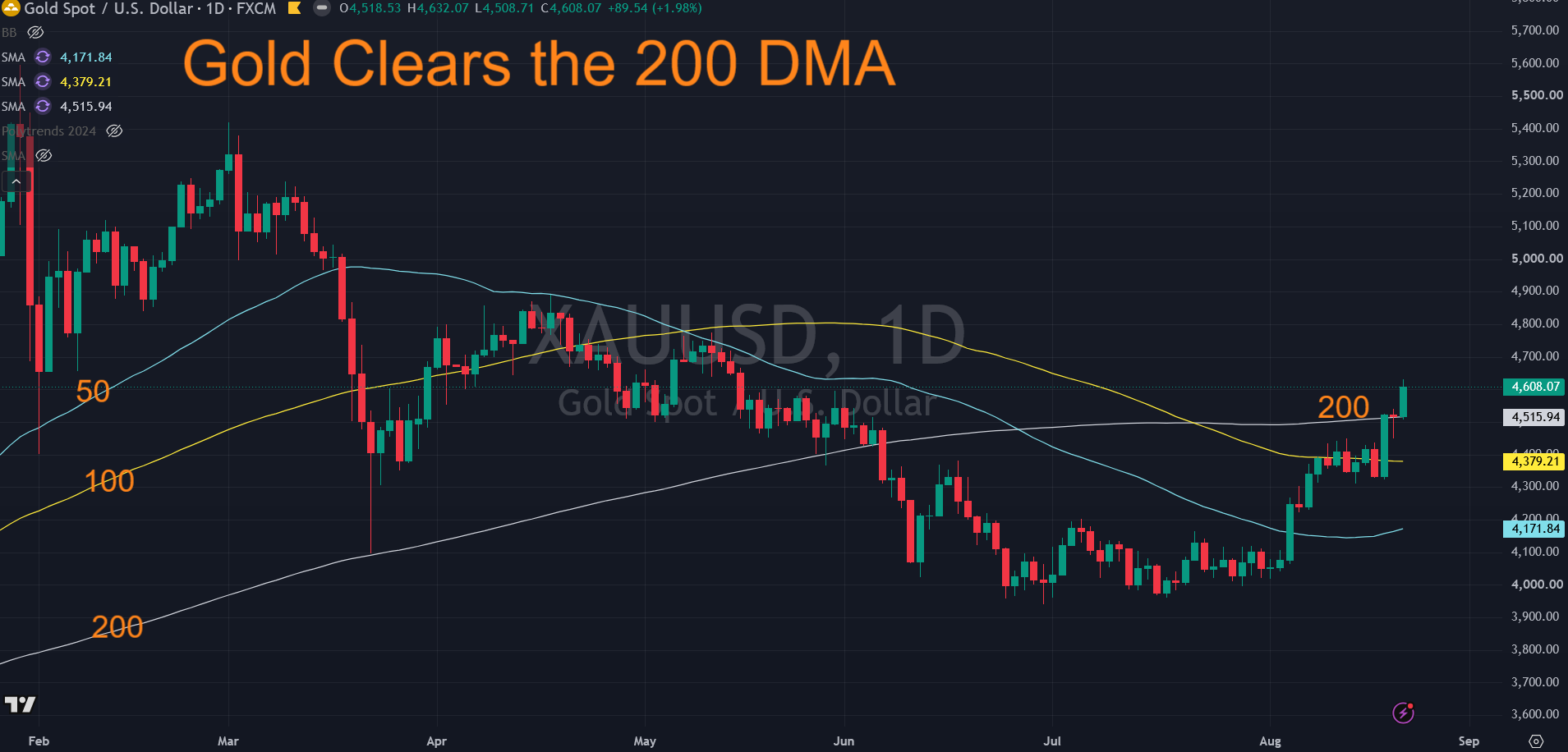
Gold rose more than 4% in its largest single day gain in six months
Bitcoin gained 6–8% with more than $1 billion of shorts liquidated in about an hour, and;
The dollar index fell 0.80% to a two and a half month low.
Still thinking this is temporary reaction
How about misguided conflicts with NO OFF Ramp?
And a debt that is over $40 Trillion
To say nothing of a looming imminent fuel crisis that will affect everything
All Sovereign debt is suspect as nations have borrowed beyond their ability to ever repay the debt they owe
This article below explains it in detail that is worth understanding. Because what is happening not just in America is similar to you using your credit card to pay off your mortgage payment
Recently, the U.S. bailed out Japan. The latter had accumulated government debt that, on a per capita basis, dwarfed that of any other country ever. Its currency, the yen, had been falling in value and its interest rates had been rising — a potentially fatal combination that might force Japan to dump its $1.1 trillion of U.S. Treasury bonds, thus pushing Treasury prices down and dollar interest rates up (also a dangerous combination).
So the U.S. sold some euros (sorry about that, Germany) and bought yen, pushing up the yen’s exchange rate. The apparent goal was to give Japan time to fix its problems or something. Good luck with that.
But What About Our Self-Bailout?
The U.S., like Japan, is massively indebted, and its interest rates have been rising lately.
Rising interest rates risk popping the stock market bubble, causing trillions of dollars of private credit loans and AI circular financing deals to implode, which in turn might crash the global economy. So no pressure.
In response, the U.S. Treasury decided to try something called “yield curve control”, which involves issuing short-term bills and using the proceeds to buy back outstanding long-term bonds. As with the Japan bailout, the goal is to push down long-term interest rates to give the U.S. some breathing room to fix its problems.
But — like Japan — we’re not doing anything to fix our massive structural deficits, so bond traders responded with a resounding “no thank you.”
Instead of embracing government paper, capital poured into cryptos…
…and gold:
Remember, We’re Already Doing QE
In January, the Fed started buying assets, a practice called “quantitative easing,” or QE. Basically, this means creating currency out of thin air and using it to buy bonds from banks, which then (hopefully) lend their newfound cash to productive borrowers. So far, the Fed’s balance sheet is up by about $200 billion, which, based on recent bond market behavior, looks like wasted money.
The Treasury’s attempt at yield curve control doesn’t involve creating new currency, so it’s not, strictly speaking, wasting money. But it is wasting effort. Think of it as the financial version of rearranging deck chairs on the Titanic. And pay more attention to gold.
US Treasury secretary Scott Bessent’s bid to tame US borrowing costs knocked down long-term yields for barely a day. The more lasting market signal: the dollar weakened while gold and Bitcoin rallied, reinforcing a debasement trade fuelled by swelling US deficits and concerns over the direction of US economic policy.
The divergence exposed a deeper predicament. Washington wants cheaper money even as inflation remains a constraint on the Federal Reserve. And it comes just as governments and companies are competing more fiercely for capital, from large-scale public borrowing to the vast sums pouring into artificial intelligence.
The AI boom sits on both sides of that contest. Financing it adds another enormous claim on debt markets, while the profits investors expect it to generate are helping stocks withstand its rising cost. With equities proving resilient, some of the anxiety over has instead surfaced elsewhere.
Bessent’s intervention also revealed Washington’s pain threshold for higher yields. For Charlie McElligott of Nomura, the market response showed where some of that pressure was going: he described the gold-up, dollar-down move, with Bitcoin also rallying, as a “pressure-release valve” as US authorities sought to stabilise long-term rates.
Ray Dalio gave the trade a more ominous reading on Friday (Aug 21), urging investors to cut bond exposure and hold gold and some Bitcoin as protection against a potential US debt crisis.
Traders are not in tune with gold, at best seeing it as something to be bought and sold. They fail to understand where the risk exists. This is a big mistake which they will likely regret.
Clearly, the mainstream media in the West thinks gold is a hangover from the past, no more than a rock to which a few investors still emotionally cling. And it is a fair bet that most emotionally attached investors are looking to profit from a rising price. In other words, they look to buy gold with a view to selling it at a higher price. But this contradicts an important fact: Gold is the money, and your currency is not.
Profit seekers have it the wrong way round. They should be getting out of currencies altogether because they are credit. And it is increasingly obvious even to the financially impaired that credit risk is now escalating.
Before Bretton Woods was suspended in 1971, currencies were always priced in grains of gold, because gold is the money, and currencies are credit issued by governments. Currencies operated as gold substitutes, being exchangeable for gold. Admittedly, exchange for gold became increasingly tenuous as governments interfered in economic activities from the 1920s onwards expanding their debt in the process. But the fact that gold is the money and all else is credit has never altered.
For evidence that this is so, central banks which are the ultimate insiders have been selling government currencies and their bonds for gold, noticeably in the last four years, which is also reflected in the drawdown of foreign custody holdings at the Fed. The drawdown in US Treasuries over the last four years if reinvested in gold was probably the equivalent of acquiring over 5,000 tonnes:
This is evident from official statistics, but faith in the US dollar diminishing at an accelerating rate is not. But erosion of faith in the currency is leading to a funding crisis, as the US government’s outstanding debt has accelerated to over $40 trillion. And there are few things scarier to markets than a big figure change in the wrong direction.
The cost of interest payments is already $1.25 trillion out of a total US budget deficit estimated at $2.1 trillion for the current fiscal year. 60% of the deficit is debt financing costs. With bond yields threatening to rise from here and a stagnant economy, it will increase even more.
As a consequence of the US war in the Middle East, we can see further trouble for the dollar. A US domestic and G7 economic slump coupled with adverse geopolitical factors loom, now visibly undermining the dollar’s relationship with money. In these febrile times, the chart below is the most important you will ever see, and should be borne in mind at all times:
Note that even with a log scale, the monetary values of these currencies are declining at an accelerating rate, despite the six-month countertrend correction which now appears to be finished.
So-called inflation is set to rocket as a result of the Persian Gulf war debacle and the inevitable economic consequences giving governments no option but to increase their budget deficits and corresponding debt even further. It points to end-of-life for the dollar and the entire dollar-based fiat currency system. The question arises as to how long have they got?
The next chart is of the dollar priced in gold grains, with trend projections as a rough guide of likely outcomes. It suggests that the dollar will fall to 0.05 grains some time between this December and May next year. That’s the equivalent of $9,600 for an ounce of gold.
Profiteers should note that the higher the gold price goes, the worse the dollar’s prospects. It mirrors the maths of a debt trap: the higher the cost of funding for a zombie nation goes, the less attractive its bonds become. When traders take profits, they will be buying into a collapsing currency, which is senseless. They will miss the fact that gold is money, currencies are no more than ephemeral credit, and they should be seeking to protect what wealth they have from an exponential deterioration of financial values.
The collapse in the dollar’s value will accelerate downward from our 0.05-grains target in the chart above toward zero, which can be stopped only by the US Treasury reintroducing a credible gold standard. And if it introduces economic policies and fiscal disciplines that guarantee the dollar’s status as a gold substitute, the Treasury will be rewarded with far lower borrowing costs for their maturing debt.
For now, any such move appears extremely unlikely, and we must assume the dollar as we know it will become valueless more rapidly than anyone might think likely.
END
CHRIS POWELL AND HIS GATA DISPATCHES
4. ANDREW MAGUIRE//KINESIS LIVE FROM THE VAULT/285 AND LAST WEEK 283
Goldman Sachs is highlighting strong client demand for silver call options targeting $90/oz in the coming months, which it sees as a potential accelerator for the ongoing gold rally via correlated moves and dealer hedging.
cryptobriefing.com
As of August 21, 2026, silver was trading around $69.40/oz (up more than 78% year-over-year). It had briefly reached the $90–$91 area earlier in 2026 before pulling back. A move back to $90 would represent roughly a 30% gain from recent levels.
cryptobriefing.com
Key points from the reports
Silver options activity: Goldman’s desk reports a notable uptick in call buying at the $90 strike from big clients. Because the silver market is smaller and less liquid than gold’s, the same dollar flows can move prices more sharply. Market makers who sold the calls typically hedge by buying the underlying metal, which can create a self-reinforcing feedback loop (higher prices → more valuable calls → more buying interest). cryptobriefing.com
Spillover to gold: Precious metals often move together. Aggressive silver positioning and the associated hedging can help drag gold higher. Goldman maintains end-2026 gold targets in the $4,900–$5,400 range and sees average silver prices potentially in the $85–$100 area for 2026. cryptobriefing.com
Related gold options note: A separate Goldman comment (reported via Reuters) noted sharply rising gold call-option demand as a macro-policy hedge. This can act as a “mechanical price amplifier”—dealers hedging sold calls by buying bullion near key strikes can accelerate upside moves, though the same dynamic can intensify downside if prices reverse and hedges are unwound. Gold had recently moved above its 200-day moving average amid fading expectations of a near-term Fed hike. m.economictimes.com
Citi has also maintained a constructive silver view, with a near-term target around $75 and a 6–12 month target of $90, citing investment demand recovery alongside industrial uses (solar, electronics, EVs) and ongoing market deficits.
cryptobriefing.com
Broader supports for the precious-metals complex continue to include elevated central-bank gold buying (accelerated after the 2022 freezing of Russian reserves) and ETF inflows. Silver’s industrial demand provides an additional tailwind relative to gold, though its smaller market size also means higher volatility in both directions.
cryptobriefing.com
The original ZeroHedge piece that matches the exact headline is largely paywalled; the details above draw from contemporaneous summaries and related bank commentary published the same day. Markets can reverse quickly, and options-driven moves cut both ways.
END
COMMODITIES: GOLD
GS: Gold Rally Can Wreck $4900 Target, Silver Joins the Party
by VBL
Sunday, Aug 23, 2026 – 7:28
Gold’s breakout is gaining momentum as Chinese and central-bank buying, recovering Western demand, bullish CTA positioning, Treasury-driven dollar pressure and an options squeeze combine to threaten Goldman’s $4,900 forecast.
TL;DR
Gold’s breakout is becoming broader and more self-reinforcing.
Options could turn the rally into a squeeze.
The macro headwind is fading.
Positioning still has room to grow.
Gold Breakout Gains Momentum as Options, China and Treasury-Shift Align
Goldman put out three notes on Gold in the past 24 hours (ht ZH). In this message we analyze two of them.
Gold surged this week, extending a breakout that was already developing before Treasury Secretary Scott Bessent announced a more active approach to bond buybacks and issuance composition. The metal has moved decisively back above its 200-day moving average after first breaking through recent resistance on strong buying from China, central banks and ETF investors.
The Treasury announcement merely added another catalyst as markets believe a more active effort to stabilize the long end of Bonds will ultimately place greater pressure on the dollar (it will), while institutional investors and systematic strategies began rebuilding gold exposure.
Options Squeeze for Exotic Shorts
The Bank argues one of the most important developments is the sharp increase in demand for gold calls as investors seek protection against broader macroeconomic and policy risks. The significance extends beyond the options market itself because dealers that sold calls will have to purchase additional gold as prices approach important strike levels, creating a feedback mechanism that can strengthen an already rising market.
“Gold call option demand has risen sharply amid renewed demand for global macro-policy hedges, creating a mechanical price amplifier to both the upside and downside.”
Dealers Will Squeeze Themselves Both Ways
As gold rises toward strikes with large open interst, dealers will be forced to increase hedges by buying more exposure (sometimes with gold itself, sometimes with vanilla options) , potentially accelerating the rally. The same process can work in reverse if prices decline, since dealers can unwind those hedges and add selling pressure. This is what happened earlier in the year when options position exaggerated alternate upside and downside moves in short order. Elevated options positioning therefore increases the potential size of moves in both directions, although the current increase in call demand has been reinforcing the advance.
The move has coincided with a roughly 15% increase in gold from its mid-July low to over $4,600 an ounce. Goldman believes rising call demand has likely amplified that recovery, particularly as conventional investment demand has also begun to improve.
Additionally, there has been strong interest in the 90 day digital Silver $90 call in the exotics which is helping to buoy that market higher as well…
Fed Headwind Begins to Ease
The Federal Reserve backdrop has also become less restrictive for gold. Goldman notes that expectations for additional Fed rate increases had been the primary headwind for the metal since March, but market conviction around further tightening weakened after the July FOMC held rates unchanged and softer July employment and inflation reports reduced the urgency for additional hikes.
As the bank’s Lina Thomas notes: At the same time, market conviction around further Fed hikes — the main headwind for gold since March — has weakened following the July FOMC hold and softer July US employment and CPI reports.
Gold Jumps, Curve Flattens On Report Treasury To Tap Trillion-Dollar TGA To Fund Bond Buybacks
Monday, Aug 24, 2026 – 08:03 AM
Having seen yields rebound from their initial decline following the upping of Treasury (long-end) buybacks to ‘at least $4BN’ per operation (and increased its total planned operations), Treasury Secretary Scott Bessent jawboned late last week about his ‘bigger toolkit’ and ‘asymmetric information’ in an attempt to further strengthen the ‘Treasury Put’.
Unfortunately for him, the market (vigilant as ever), decided to test him with yields ending the week at the highs.
So this morning, two senior Treasury officials told CNBC that The Treasury could use its near $1 trillion General Account (TGA) to help fund the bond buybacks.
Using the TGA would provide the Treasury with considerable firepower to influence long-term bond yields and reassure the market of its ability to influence rates (since last week’s announcement made no mention of how it would fund the purchases).
As CNBC notes, most market participants assumed it would do so by selling short-term bills. The senior Treasury officials did not rule that out. Bessent in the CNBC interview called the operation a “Treasury Twist,” a reference to a government or Fed operation where long-term treasuries are bought and paid for with short-term issuance. That also implied that short-term bonds would be sold.
Using the TGA could change that perception. The TGA is essentially the government’s checking account, a rainy-day fund of sorts held at the Fed. It is already funded with existing tax collections. Bessent has built up the TGA to around $950 billion currently, compared with a stated goal under the Biden administration of around $550 to $600 billion.
Additionally, using the TGA would limit any concern, also voiced by some bond market participants, that the Fed could be asked to help the Treasury in such operations.
The officials would not say how much, if any, of the TGA would be used or when such an announcement could be made.
The reaction was actually quite modest in bonds (short-end yields up, long-end down, flattening of the curve) somewhat counter to expectations (less implied short-end supply required to fund the twist would suggest short-end yields would drop) …
So Treasury can sell debt to buyback debt// Warsh will have a field day on Friday
*TREASURY COULD USE GENERAL ACCOUNT TO FUND BOND BUYBACK: CNBC *CNBC CITES SENIOR TREASURY OFFICIAL ON TREASURY PLANS
And that’s why gold and bitcoin are bid too.
And likely a cleaner ‘QE trade’ bet than a bond-based one as Goldman warned last week the ‘term premia’ is here to stay.
END
YOUR EARLY CURRENCY VALUES/GOLD AND SILVER PRICING/ASIAN AND EUROPEAN BOURSE MOVEMENTS/AND INTEREST RATE SETTINGS MONDAY MORNING.7:30 AM
SHANGHAI CLOSED DOWN 23.19 PTS OR 0.59%
HANG SENG CLOSED DOWN 523.46 PTS OR 2.01%
Nikkei CLOSED DOWN 523.46 PTS OR 2.01%
//Australia’s all ordinaries CLOSED DOWN 0.01%
//Chinese yuan (ONSHORE) CLOSED DOWN TO 6.7237
/ OFFSHORE CLOSED DOWN AT 6.7254 Oil DOWN TO 85.47 dollars per barrel for WTI and BRENT DOWN TO 93.32 Stocks in Europe OPENED ALL MOSTLY RED
ONSHORE USA/ YUAN// WITH YUAN TRADING DOWN (6.7237 OFFSHORE YUAN TRADING UP TO 6.7252 ONSHORE YUAN TRADING ABOVE LEVEL // OFF SHORE AND DOWN ON THE DOLLAR)// / AND THUS WEAKER/OFF SHORE YUAN TRADING DOWN AGAINST US DOLLAR/ AND THUS WEAKER
XXXXXXXXXXXXXXXXXXXXXXXXXXXXXXXXXXXXX
ONSHORE YUAN: CLOSED DOWN AT 6.7237
OFFSHORE YUAN: UP TO 6.7254
1.HANG SANG CLOSED DOWN 523.46 PTS OR 2.01%
2. Nikkei closed DOWN 523.46 PTS OR 2.01%
WEST TEXAS INTERMEDIATE OIL DOWN TO 85.47
BRENT; 93.32
3. Europe stocks SO FAR: ALL MOSTLY RED
USA dollar INDEX UP 21 BASIS PTS TO 98.95// EURO FALLS TO 1.1662 DOWN 8 BASIS PTS
3b Japan 10 YR bond yield:FALLS TO. +2.880 DOWN 1/2 FULL BASIS PTS/ VERY TROUBLESOME//Japan buying 100% of bond issuance)/Japanese YEN vs USA CROSS NOW AT 159.26… JAPANESE YEN NOW FALLING AS WE HAVE NOW REACHED THE ENDING OF THE YEN CARRY TRADE AGAIN AND THE REPATRIATION OF YEN DENOMINATED BONDS TRADING IN THE USA/EUROPE. JAPAN 30 YR BOND YIELD: 4.059 DOWN 1 FULL BASIS PTS
3c Nikkei now ABOVE 17,000
3d USA/Yen rate now well ABOVE the important 120 barrier this morning
3e Gold UP /JAPANESE Yen DOWN CHINESE ONSHORE YUAN: DOWN (6.7237) AND OFFSHORE: DOWN AT 6.7253
3f Japan is to buy INFINITE TRILLION YEN worth of BONDS. Japan’s GDP equals 5 trillion USA. CENTRAL BANK OF JAPAN WILL NO LONGER DO QE.
Japan to buy 100% of all new Japanese debt and NOW they will have OVER 50% of all Japanese debt. GOVERMENT ASKED JAPAN PENSION FUNDS AND INSURANCE FUNDS TO BUY MORE JAPANESE BONDS AND REPATRIATE ALL FOREIGN BONDS.
3g Oil DOWN for WTI and UP for Brent this morning
3h European bond buying continues to push yields LOWER on all fronts in the EU German 10yr bund YIELD DOWN TO +3.2494/ Italian 10 Yr bond yield DOWN AT 4.079/ SPAIN 10 YR BOND YIELD DOWN TO 3.7067%
3i Greek 10 year bond yield DOWN TO 3.943%
3j Gold at $4632.50/Silver at: 68.73 1 am est) SILVER NEXT RESISTANCE LEVEL AT $100.00
3k USA vs Russian rouble;// Russian rouble DOWN 0 AND 61/ 100 roubles/83.91
3m oil (WTI) into the 85 dollar handle for WTI and 93 handle for Brent/
3n Higher foreign deposits moving out of China// huge risk of outflows and a currency depreciation. This can spell financial disaster for the rest of the world/
JAPAN ON JAN 29.2016 CONTINUES NIRP. THIS MORNING RAISES AMOUNT OF BONDS THAT THEY WILL PURCHASE UP TO .5% ON THE 10 YR BOND///YEN TRADES TO 158.76 // 10 YEAR YIELD AFTER FIRST BREAKING .54% LAST YEAR NOW EXCEEDS THAT LEVEL TO 2.880% DOWN 1/ 2 BASIS PTS STILL ON CENTRAL BANK (JAPAN) INTERVENTION//YEN CARRY TRADE NOW UNWINDING//YEN BOND TRADING OVERSEAS TO BE REPATRIATED.//JAPAN 30 YR: 4.059 DOWN 1 PTS..: USA/SF this 0.8026 as the Swiss Franc . Euro vs SF: 0.9362
USA 10 YR BOND YIELD: 4.710 DOWN 3 BASIS PTS…DANGEROUSLY CLOSE TO 5.00%
USA 30 YR BOND YIELD: 5.253 DOWN 2 BASIS PTS/
USA 2 YR BOND YIELD: 4.225 DOWN 1 BASIS PTS
USA DOLLAR VS TURKISH LIRA: 48.08 UP 1 BASIS PTS/LIRA GETTING KILLED//IDIOTS FOR SELLING GOLD AND USA DOLLAR RESERVES.
10 YR UK BOND YIELD: 5.0516 DOWN 1 PTS
30 YR UK BOND YIELD: 5.7940 DOWN 2 BASIS PTS
10 YR CANADA BOND YIELD: 3.763 UP 1 BASIS PTS
5 YR CANADA BOND YIELD: 3.367 UP 1 BASIS PTS.
1a New York Opening report
Futures Slide Ahead Of “Pivotal Week” With Nvidia Earnings. Warsh Speech On Deck
Monday, Aug 24, 2026 – 08:25 AM
Futures are lower with Tech underperforming as the market focuses on NVDA / MRVL earnings this week; while the AI theme is pressured globally and memory stocks slump driven by a slide in the Kospi. Futures got a boost just after 7am when CNBC reported that the Treasury could use the General Account ($935BN as of today) to fund bond buybacks. As of 8:00am ET, S&P futures are down 0.2%, rising from a session low hit this morning around -0.4%. Nasdaq futures are down 0.4% with Mag7 names mixed and Software up. In premarket trading, Memory/Semis are weaker, dragging down the Tech tape. Defensives are leading Cyclicals ex-Materials as Metals/Miners look to extend their bullish run. European stocks are lower, dragged down by tech while\South Korea’s Kospi was once again Asia’s top loser, sliding 3.1%. Shares of SK Hynix also lost more than 3%. Bond yields are lower, down 3-4bp as the curve shifts lower and USD is bid with the Dollar stronger versus G7. In commodities, oil and ags are pulling the group lower on reports of more than 15mm bbl leaving SoH over the weekend; gold / base are bid as silver sells off as part of AI weakness. Warsh’s speech Friday at 10am is the macro focus for the week but we also get updates on PCE, which has been de-risked with the CPI/PPI prints, income / spending, housing data, and some regional Fed activity indicators. US session has few scheduled events Monday; ahead this week are coupon auctions, July personal income and spending data including PCE price indexes, and Federal Reserve Chairman Kevin Warsh speech at Jackson Hole Symposium.
In premarket trading, Mag 7 stocks are mixed (Alphabet -0.3%, Amazon +0.3%, Apple +0.4%, Meta +0.2%, Microsoft unchanged, Nvidia -0.2%, Tesla -0.3)
Watch US and Canadian metals, lumber, dairy, automotive and equipment maker stocks as Canada is set to apply counter-tariffs on $20 billion of US products on Sept. 8 after the US implemented a new 50% tax on imports of hundreds of Canadian items.
Alibaba ADRs (BABA) fall 2% after raising $10.2 billion in Hong Kong’s biggest follow-on offering, underscoring its willingness to amass and spend vast sums to take the lead in global artificial intelligence.
Applied Optoelectronics (AAOI) tumbles 12% after the company filed for a possible offering of shares.
NVent Electric (NVT) slips 1% the maker of cabinets and racks for data centers agreed to buy Maverick Power for $1.75 billion.
PDD Holdings ADRs (PDD) rise 2% after the owner of Temu reported second quarter earnings that beat the average analyst estimate.
Regenxbio (RGNX) tumbles 25% after the drug developer said the FDA placed a clinical hold on its investigational gene therapy RGX-121 for Hunter Syndrome. The hold follows the discovery of either a small nodules or a cystic mass in spine MRIs of five trial participants.
In other corporate news, Alibaba raised HK$80 billion ($10.2 billion) in Hong Kong’s biggest secondary share sale, underscoring its willingness to amass and spend vast sums to take the lead in global AI. Nvidia is discussing investing in Perplexity in an equity round valuing the AI startup at more than $30 billion, The Information reported. QXO, the building products conglomerate founded and led by billionaire Brad Jacobs, is hiring a onetime contender for the top job at Honeywell International.
Brent snapped a six-day run of gains, falling to around $93 a barrel as traders waited for details of Treasury Secretary Scott Bessent’s plan to economically isolate Iran. Treasury yields declined, with the longer end extending the move after CNBC reported Bessent could tap the near-$1 trillion Treasury General Account to fund bond buybacks. The greenback firmed, while the Canadian dollar was the worst-performing major currency after the country rejected a US tariff deal.
Traders are prepping for Fed Chair Kevin Warsh to speak at Jackson Hole on Friday, an event that takes on added significance after concerns over ballooning budget deficits and persistent inflation sent long-dated yields to multi-decade highs. The yield surge has already prompted an intervention by Bessent, who also pledged measures to shore up US finances. Meanwhile, Wednesday’s release of the Fed’s preferred inflation gauge will shape expectations for near-term interest-rate decisions after some officials recently reaffirmed concerns about stubborn price pressures. AI bellwether Nvidia Corp. is scheduled to report earnings the same day.
“This is set to be a pivotal week for asset markets, since there is still a chance the US Treasury selloff becomes a full-blown crisis,” wrote Kathleen Brooks, research director at XTB.
Bessent “is highly likely to underwhelm” given the scale of fiscal consolidation needed, said Emma Moriarty at CG Asset Management. Traders are unsure what to expect from Warsh given his reluctance to issue guidance and the view that Bessent’s intervention encroached on the Fed chief’s remit, she said.
Besides the Fed, we also have the most important AI company reporting earnings on Wednesday. For Nvidia, options markets are pricing in a 4.6% move following its results. The firm is not only a key pillar of the global buildout of artificial intelligence but is also increasingly orchestrating funding for AI projects.
“Nvidia is now so powerful and cash-rich that it is almost like a central bank to the tech industry,” Brooks noted.
Elsewhere, as we reported on Sunday, clients of Goldman Sachs’ Prime Services desk net sold global equities in the week through Thursday for the first time in a month and at the fastest pace in two months, a -2.3 standard deviation move against the past year.
The relentless rise of the momentum factor had been a core tenant of factor investing, but a rapid unwind has pressured the strategy, Bloomberg warns. If this continues, value investing may come back into vogue, index rebalancing trades could become difficult and retail traders might need to slow down. In an astonishing change of fortunes, the tortoise pulls ahead of the hare, with the equal weighted S&P 500 Index outperforming momentum over the last year.
The absence of a spot-up/vol-up dynamic in chips may have two causes, according to Liquidnet Alpha cross-asset sales specialist Anthony Benichou. TMT hedge funds badly bruised in July are unlikely to redeploy leverage with the same aggression and momentum has broadened elsewhere, particularly into gold, gold miners and Bitcoin, which is “competing for marginal capital,” writes Benichou.
But while stock volatility takes a breather, bond traders are getting more than their share. Bessent’s bold intervention to stem a rise in yields last week has yet to pay off and could confuse the signal that markets send to the Fed. As noted earlier, investors are looking for Warsh to clarify his views on how the US central bank should react to stubborn inflation when he speaks on Friday at the annual gathering in Jackson Hole, Wyoming.
Credit spreads of hyperscalers also underscore growing costs for the AI buildout. JPMorgan strategists including Bram Kaplan note that on several AI-linked names, the left-tail of the implied volatility surface has “repriced lower even as CDS has moved wider.” That’s as prices of servers with Nvidia chips could be set for a 15% hike. Junk bond “tourists” are adding to the volatile mix as they wade into the financing splurge on data center projects.
In other assets, Pimco continues to view bonds as attractive and “would look to add if yields continue to rise, given the opportunity higher yields present for income, carry, and rolling down a steeper yield curve.”
Tech names have underperformed in Europe too where the Stoxx 600 is little changed with the macro outlook back in focus as traders looked to data for clues about the health of the region’s economy. Here are the biggest movers Monday:
European steel firm SSAB and aluminum supplier Norsk Hydro traded higher after the US and Canada failed to agree on a tariff deal, which analysts say leaves the status-quo intact and is positive for the two companies
Trainline gained as much as 2.8%, rising for a second session, as Shore Capital says the recent stock weakness due to the UK competition watchdog’s investigation is “overdone”
Siegfried shares fell as much as 8.3%, erasing gains made after earnings on Friday, as analysts lowered their estimates
BW Offshore fell as much as 16%, the most since March 2020, after the Norwegian offshore services firm cut its full-year guidance for Ebitda
Asian stocks fell at the start of what’s set to be the busiest week for earnings this reporting season, dragged down by losses in some tech heavyweights. The MSCI Asia Pacific Index dropped as much as 1.2%. Samsung’s shares tumbled nearly 9% as investors were underwhelmed by its plans to return as much as 110 trillion won ($80 billion) to shareholders this year. Alibaba’s stock plunged 8.5% after it raised HK$80 billion ($10.2 billion) in Hong Kong’s biggest secondary offering, selling shares at a discount. That spurred a broader selloff in Chinese tech stocks. About 370 of the MSCI Asia Pacific Index’s more than 1,200 constituents are due to report results this week, putting the durability of the AI rally and China’s consumption recovery in focus. Globally, Nvidia’s results and Federal Reserve Chair Kevin Warsh’s commentary at the annual gathering in Jackson Hole, Wyoming are the two major events this week. South Korea’s Kospi was once again the region’s top loser, sliding 3.1%. Shares of SK Hynix also lost more than 3%. Vietnam’s stock benchmark was the leading gainer after securing a bigger-than-expected weighting in FTSE Russell’s semi-annual index review.
In FX, the Bloomberg Dollar Spot Index rises 0.2%. The Canadian dollar is the weakest of the G-10 currencies, falling 0.6% against the greenback after Canada announced counter-tariffs on the US.
In rates, treasuries advance, pulling US 10-year borrowing costs down 2 bps to 4.71% with oil prices lower ahead of the expected release of a US economic isolation plan for Iran. Yields are lower by as much as 2bp with curve flatter; Friday’s selloff lifted 2-year yields by nearly 5bp to first close above 50-day average level in more than a week, where it remained near 4.24%. Treasury coupon auction cycle begins Tuesday with $69 billion 2-year note; $70 billion 5-year and $44 billion seven year follow over next two days. IG credit new-issue calendar is anticipated to be light through month-end. US session has few scheduled events Monday; ahead this week are coupon auctions, July personal income and spending data including PCE price indexes, and Federal Reserve Chairman Kevin Warsh speech at Jackson Hole Symposium.
In commodities, Brent crude futures fall 1.5% to around $93 a barrel and that has likely limited any downside in European equities. It’s helped bonds too with UK and German 10-year yields down 1 bp each. Gold headed for $4,650 an ounce. Bitcoin edged past $78,000.
US economic data calendar includes only July Chicago Fed National Activity Index at 8:30 a.m. New York time. Fed speaker slate is blank for Monday; ahead of Warsh’s address at Jackson Hole Symposium Friday, the only scheduled appearances are three by Richmond Fed’s Tom Barkin over Aug. 25-26
Market Snapshot
Top Overnight News
Iran has granted permission for a number of Iraqi oil tankers to pass through the Strait of Hormuz following repeated requests from Baghdad through various channels, Iran’s state news agency IRNA reported on Saturday. IRNA said obtaining special permission for Iraqi tankers was one of Baghdad’s main requests during Iranian parliament speaker Mohammad Baqer Qalibaf’s visit to Iraq. RTRS
Saudi Arabia has held talks with London brokers about a state-backed scheme for war and political risk insurance that could provide cover for ships in the region, according to people familiar with discussions, as conflict threatens the kingdom’s trade. FT
Scott Bessent’s set to announce details of the US effort to economically isolate Iran later today. Tehran threatened to halt all crude exports through the Strait of Hormuz and Persian Gulf if the US campaign continues. BBG
Trade talks between the U.S. and Canada broke down on Friday, officials from both countries said, paving the way for the U.S. to impose 50% tariffs on about $20 billion worth of Canadian goods early on Saturday and risking escalation into an all-out trade war. WSJ
US President Trump said in a pre-taped interview on 77 WABC that communities not taking data centres are making mistakes and that data centres provide tremendous amount of jobs and money. said:. Chinese President Xi comes to the White House, we’ll be using the East Room.
Softbank plans to issue a record volume of retail bonds to partly fund its expanding artificial intelligence investments, as the company deepens its multibillion-dollar commitments to OpenAI and related infrastructure projects. WSJ
Some of Nvidia’s biggest clients have been told AI server prices will rise more than 15%, people familiar said. The hikes will go into effect on systems shipped early next year. BBG
Perplexity is in talks to raise money at a ~$30B valuation (up ~50% from its last finding round a year ago), and Nvidia could participate. The Information
China’s $387 billion quant hedge-fund sector is rebounding from its steep July rout, with the most popular strategies outperforming benchmarks. BBG
Demand for debasement hedges is increasingly finding its way into Bitcoin, with US ETFs for the digital currency recording $1.9 billion of net inflows last week, the strongest haul since October 2025.
Mutual funds and hedge funds each carry equity market exposures that are elevated relative to the last few years but below recent peaks. Hedge fund returns, leverage, and crowding all surged in Q2, but July witnessed one of the sharpest deleveraging episodes of the past decade. GS Prime Services estimates now show hedge funds carrying net and gross leverage that rank below 12-month averages but remain elevated relative to the last few years. Similarly, mutual fund cash balances register 1.2% of assets, above the record low of 1.1% reached in December 2025 but otherwise one of the lowest levels on record. Goldman
A more detailed look at global markets courtesy of Newsquawk
APAC stocks traded mixed, albeit with a mostly negative bias amid a US-Canada trade war and following quiet geopolitical headlines over the weekend, while participants await this week’s key events, including the US announcing the ‘toughest sanctions in history’ against Iran later, in what is described as economic D-Day, NVIDIA earnings due mid-week and the Jackson Hole Symposium on August 27th-29th. ASX 200 was higher amid strength in the mining, materials, resources and tech sectors, while participants digested another deluge of earnings releases from Australian companies. Nikkei 225 was choppy and traded on both sides of the 66,000 level amid strength in the heavy industries, while tech-related stocks lagged with Kioxia and SoftBank among the worst hit. KOSPI underperformed amid weakness in its tech giants, with Samsung Electronics and affiliates suffering heavy losses despite the recent announcement of its largest-ever shareholder return plan. Hang Seng and Shanghai Comp were pressured amid selling in tech, with Alibaba suffering heavily after it announced a USD 10bln Hong Kong share sale, while ‘Big Short’s’ Michael Burry said he sold his Alibaba shares to build a large position in JD.com (9618 HK) and suggested Alibaba was overvalued.
Top Asian News
South Korean President Lee is said to be expected to meet Samsung Electronics (005930 KS) Chairman this week for possible talks on major semiconductor and AI investment projects, Yonhap sources say.
SoftBank (9984 JT) plans a JPY 1tln retail bond sale, according to Bloomberg.
Shein offers HK IPO shares at HKD 47.60-49.50/shr with total number of shares at 280mln Class B shares, while total number of shares under global offering is 252mln Class B shares. Hong Kong public offering period will begin at 09:00 am local time on August 24th and end at 12:00 noon on August 27th. Final offer price will be announced no later than 23:00 pm on August 31st.
European bourses (STOXX 600 +0.1%) kicked off the trading week on the backfoot. However, as the morning progressed sentiment has picked up off worst levels to currently trade with a slight positive bias. European sectors hold a slight positive bias. Basic Resources leads, buoyed by gains in underlying metals prices; Travel & Leisure benefits from lower energy prices and Media completes the top three. Autos reside at the top of the pile, joined closely by Healthcare and Tech. Key movers: Evolution (+1%) rejects Candle Lake’s SEK 695/shr offer, saying it does not reflect fair market value. Shell (-0.2%) fairs a touch better vs peers (BP/TotalEnergies -0.9%). Focus has been on an FT sources piece, which noted that Shell draws interest from bidders for its USD 8bln US chemicals assets. However, the piece highlighted that the USD 8bln valuation would be a “steep discount” to the amount that Shell had invested in its US chemicals facilities
Top European News
French Economy Minister Lescure said it is not easy to cut taxes on large companies.
FX
USD is firmer against all G10 peers to varying degrees, with moves vs CAD most pronounced after trade updates. DXY is at session highs just above 99.00 after breaking out of 98.90 resistance, the next level is the 200DMA @ 99.17.
A lot of focus on USD “debasement” after alternative assets BTC and Gold outperformed last week, the market today is clawing back some of these losses with DXY edging higher and BTC off Friday’s highs, however gold is firmer, potentially signalling a haven bid with global equities mostly weaker. In terms of developments over the weekend, Bessent wrote a hawkish FT piece, while Iran returned the language noting “not a single drop of oil” would leave the Persian Gulf. On that note, we expect Bessent to explain the latest sanctions in a presser this evening. Oil is not convinced by these developments with Brent down ~1%. A busy week ahead sees PCE, GDP, and Nvidia earnings hit Wednesday; Jackson Hole and US supply data land Thursday. Friday brings the NFP Annual Revision Prelim and remarks from Fed Chair Warsh. While we do not have a specific time yet, Bessent could also announce “increased focus on fiscal consolidation”; which most desks have been sceptical on over the past week.
CAD is the clear G10 underperformer after the unexpected breakdown of trade negotiations between the US and Canada, with the latter imposing dollar-for-dollar 50% tariffs on US goods. To remind, the updates we had on Friday said that their respective trade officials would meet in Washington to finalise the deal. USD/CAD looks to return to the 200DMA which it fell beneath on Wednesday, however a renewed trade war could lead to some USD weakness. MUFG reckons the CAD sell-off does not have legs, noting it targets just 5% of Canada’s exports.
Action elsewhere is quiet, Antipodeans are lower amid the risk tone, AUD/NZD +0.1%, supported at 1.20, Scandis are also weaker with NOK suffering from the dull tone and weaker oil prices, while EUR/USD and GBP/USD are a touch weaker against the Buck around 1.1660 and 1.3630 respectively.
PBoC injected CNY 340bln via 7-day reverse repos with the rate maintained at 1.40%.
Fixed Income
A modestly firmer start to the week for fixed income. Today, the docket is dominated by US Treasury Secretary Bessent on Iran at 19:00BST, a speech followed by a Q&A which will likely feature questions on last week’s long-end intervention.
As it stands, USTs are at the upper-end of 108-08+ to 108-15 parameters. Despite the action taken to essentially pullback long-end yields last Wednesday, USTs themselves are towards the lower-end of that week’s 108-07+ to 108-30 parameters. Given this, Bessent may give commentary to verbally support the action taken.
Note, the week also features the BLS preliminary benchmark revision, where any downward revision could knock the Fed from its assessment around the labour market; at the July FOMC, Chair Warsh described it as “solid”, “steady” and “more or less at equilibrium”, commentary that underscored the near-term focus on inflation over jobs. An update is also due from Warsh at Jackson Hole on Friday. However, given his distaste for forward guidance, it remains to be seen whether he will materially update on the economy and/or monetary situation.
From a yield perspective, the US 10yr is holding around 4.71%, in the upper half of last week’s 4.63-4.75% band. For the 30yr, the same picture, currently around 5.25% vs 5.17-5.34% from last week.
EGBs also bid, but only modestly. Europe is partaking in the Coalition of the Willing meeting in Kyiv, though the French and German leaders are remote due to a Saudi Arabia meeting and domestic political matters, respectively. Currently, Bunds are firmer by around 10 ticks and holding just below the 124.00 handle, toward the mid-point of last week’s 123.60 to 124.44 parameters.
Gilts in-fitting, UK specifics light as the focus is on Ukraine and, more pertinently, the above US events. Note, the UK is set to pledge missile support to Ukraine, the financial details of which could be pertinent to the benchmark. As above, Gilts are firmer by about 10 ticks in c. 30 tick parameters, within last week’s 85.81 to 86.73 band.
Caterpillar (CAT) files to sell EUR denominated 2yr FRN and 3yr noted. 2yr FRN guidance seen +55-60bps to 3m Euribor. 3yr noted seen MS +65bps.
Japan sold JPY 250bln in 10yr Climate Transition Bonds b/c 3.51 (Prev. 3.42). Price at the highest accepted yield 99.46 (prev. 99.17). Highest accepted yield 2.863% (Prev. 2.195%).
Commodities
The weekend lacked any major updates. Focus is on US Treasury Secretary Bessent’s update later today at 14:00 EDT (19:00 BST). Market focus will be on the promised escalation of sanctions against Iran and further details regarding last week’s Treasury action at the long end. On Iran, focus will be on secondary sanctions, possible action against major Chinese entities and any retaliation through the Strait of Hormuz. Tehran has threatened to prevent oil exports from leaving the Persian Gulf if the pressure continues (Full preview available at 07:40 BST on the Newsquawk feed). Notable updates today include separate visits by the Omani foreign minister and Pakistani army chief to Tehran, with the latter reportedly speaking to US President Trump before his visit to Iran. Further, UKMTO reported an incident near Yanbu, Saudi Arabia, which prompted modest upticks in crude. As a reminder, the Yemeni Houthis recently expanded their “blockade-for-blockade” policy against Saudi Arabia to the northern Red Sea.
WTI Oct and Brent Nov futures remain softer but off lows, with the former within USD 84.69-86.57/bbl (vs Friday’s 85.80-87.51/bbl range) and the latter towards the middle of a USD 90.30-92.06/bbl range (vs Friday’s 91.15-92.98/bbl range). Dutch TTF bucks the trend and trades firmer by ~1% intraday at the time of writing, buoyed by European storage replenishment ahead of winter, with the front-month contract trading on either side of EUR 66/MWh.
Precious metals are mixed whilst DXY remains firmer following its recent selloff, and notwithstanding lower energy prices and yields today. Spot gold is higher in tandem with the Buck and bonds, which could potentially suggest some haven positioning ahead of this week’s risk events and the aforementioned Bessent announcement at 19:00 BST, with the yellow metal currently in a USD 4,594-4,660/oz range. Spot silver is flat/slow but found support this morning at its 100 DMA (USD 68.41/oz) but remains within Friday’s USD 67.91-70.02/oz range.
Base metals are similarly mixed and relatively resilient to the firmer Buck, with the complex continuing to be underpinned by hopes of Chinese stimulus following a recent string of disappointing Chinese data, in turn triggering widespread market expectation that Beijing will have to deploy aggressive stimulus to meet its annual targets. 3M LME copper resides towards the upper end of a narrow USD 14,141.60- 14,279.78/t range.
Sinopec (600028 CH) executive said it is very likely that China oil demand peaked last year.
An unusual fire alert was detected near Iraq’s Kirkuk oil field (450k BPD) with an intense thermal anomaly recorded 21 km away at 07:18 UTC.
Norway said it will proceed with development of its Barents Sea oil and gas reserves, regardless of the EU’s proposed Arctic drilling moratorium.
Thailand’s Finance Ministry considers taxing gold transactions in which it will consider a tax on gold trade and gold imports, while it will discuss tax with the Gold Association this week. said:. – Gold tax is aimed at curbing illicit funds and there is no plan for a high gold tax.
Trade/Tariffs
Trade discussions between the US and Canada collapsed on Friday partly due to a last-minute stand-off regarding cutting US tariffs on Canadian medium and heavy-duty vehicles, according to people familiar with the matter cited by Bloomberg. This means the 50% US tariffs on some Canadian goods have taken effect, while Canadian PM Carney vowed to retaliate by matching tariffs dollar for dollar on US goods from September 8th.
Canadian PM Carney said Canada was in a trade war with the US and that President Trump “miscalculated” by escalating his tariff attack, according to FT.
US Transportation Secretary Duffy said Canadian PM Carney is going to “come to the table” on trade because tariffs will be “devastating”, while he suggested Canada is foolish to think it could win a trade war with US President Trump.
Canada sees a long trade war with the US that could last beyond the Midterms.
Central Banks
Fed’s Kashkari (2026 voter, hawkish dissenter) said the Treasury market is functioning as it should and that the recent surge is unlikely to impact monetary policy deliberations.
ECB’s Cipollone said that monetary policy needs to be well calibrated; inflation is far from adverse & severe scenarios. No signs pointing to a scenario of stagflation.
SNB Sight Deposits w/e Aug 21st (CHF): Domestic 437.11bln (prev. 433.52bln), Total 462.66bln (prev. 458.75bln).
Geopolitics: Middle East
US Treasury Secretary Bessent writes in FT that economic D-Day is coming for Iran, and countries that calculate appeasement of the regime to be a safer choice should reconsider. said:. “At dawn begins an economic D-Day — the single greatest financial offensive ever marshalled against an adversary.”. “Those who sever Iran’s remaining financial and commercial connectivity will reinvigorate their own. They will deepen their access to global capital, reinforce confidence in their markets and attain the standing they seek in the world economy.”. “The alternative for those who tether themselves to Tehran is the foreclosure of any path to lasting prosperity…And any nation that serves as a financial artery of a withering regime should expect to share in its isolation.”
US President Trump said on Friday that Washington was observing what happens in the conflict with Iran, and he reiterated a warning against any country that provides a lifeline to Iran, while he said Iran would love to make a deal but isn’t ready to make the right deal in his opinion.
UKMTO has received a report of an incident 63NM west of Yanbu, Saudi Arabia; tanker was struck by an unknown projectile.
Pakistan’s Army Chef Munir spoke with US President Trump ahead of his visit to Tehran, according to Pakistani sources.
The Pakistan Army Chief Field Marshal Syed Asim Munir left Islamabad for Tehran a few minutes ago to meet with high-ranking officials of Iran, ISNA reported citing sources.
Iranian Foreign Ministry Spokesperson Baghaei criticised a looming US announcement of sanctions on Iran, which he said was an assertion of extraterritorial sovereignty over independent member states of the UN and that such secondary sanctions have no foundation in international law.
Iranian Parliamentary Speaker Ghalibaf said they have received messages from neighbours about forming new security arrangements and economic cooperation, while he also stated that the US has put its allies at such risk through bullying and pure disregard of their interests for the sake of Israel that they briefly saw their entire existence on the line.
Iran’s Foreign Ministry said the security of the Strait of Hormuz will be discussed during the Omani foreign minister’s visit, Al Arabiya reported. Adds, they would strike at any source of aggression.
Iran’s Persian Gulf Strait Authority said vessels violating Iran’s rules for passage through the Strait of Hormuz could face fines, detention, or confiscation.
Iran’s Foreign Ministry spokesperson said Oman’s Foreign Minister will visit Tehran on Tuesday as part of ongoing consultations regarding maritime security and freedom of navigation in the Strait of Hormuz.
Iran’s Foreign Minister Araghchi noted in Etelaat newspaper regarding new perspective on the horizon of Iran-China strategic partnership, stating they have been friends in difficult times and have many capabilities to strengthen friendship and cooperation.
Iran’s Persian Gulf Strait Authority issues new rules for ships transiting through the Strait of Hormuz and warns vessels that violate Iranian protocols could face restrictions on subsequent voyages, including fines, detention or seizure. Cargo owners are being told to check Iran’s non-compliant vessels list before chartering ships, while any vessel conducting ship-to-ship transfers or other transactions with a blacklisted vessel will itself be added to the list.
Iranian Foreign Ministry spokesperson Baghaei said the Omani foreign minister’s visit to Tehran is not linked to the Pakistani army chief’s visit.
Yemen’s armed forces launched several missiles toward Saudi Arabia, while a powerful explosion was heard at a headquarters of Saudi-linked militias in the southern Yemeni city of Aden, ISNA reported.
Israel conducts an airstrike on the central Gaza Strip, according to Al Arabiya.
Shipping data showed fewer than 20 commodity vessels transited the Strait of Hormuz over the weekend.
Geopolitics: Middle East
US administration officials, including Witkoff and Kushner, are now no longer expected in Ukraine, Politico reported.
Russia said its forces struck a tanker carrying fuel near Ukraine’s Odessa.
UK PM Burnham arrived in Kyiv, Ukraine on Monday morning.
South Korea said that North Korea is preparing further Russia troop deployments, although no sign of an imminent move.
Russia repels a drone attack on an industrial zone of Nevinnomyssk in southern Stavropol region, according to the governor.
US Event Calendar
8:30 am: Jul Chicago Fed Nat Activity Index, est. -0.05, prior -0.02
DB’s Jim Reid concludes the overnight wrap
As we go to press this morning, the upward pressure on long-end bond yields from last week has shown initial signs of easing. Indeed, the 30yr Treasury yield is down -2.4bps overnight to 5.25%, whilst the 10yr yield is down by the same amount to 4.71%. That’s been supported by a pullback in oil prices, with Brent crude oil (-1.37%) finally reversing course after a run of 6 consecutive gains to trade at $93.10/bbl. But even as there’s been some relief on the rates and inflation side overnight, the negative momentum in equities has continued, with S&P 500 futures down another -0.10% after the index fell -1.43% last week. Meanwhile in Asia this morning, there’s also been a decent pullback across the board, including declines for the KOSPI (-3.15%), the Hang Seng (-2.09%), the CSI 300 (-1.26%), Shanghai Comp (-0.71%) and the Nikkei (-0.52%).
That pullback in Treasury yields this morning follows last week’s surprise announcement that the US Treasury will increase its buyback operations for longer-dated Treasuries. That briefly eased the pressure on yields when it was announced, with the 30yr yield down -9.2bps on Wednesday to 5.19%, after reaching a post-2007 high of 5.31% last Monday. But even with that intervention, yields then crept back up into the weekend, with the 30yr yield closing at 5.27% on Friday, less than 4bps beneath its closing peak earlier in the week. Moreover, investor concern about wider financial repression led to clear effects in other asset classes, with the dollar index down -0.87% last week, whilst gold rose +5.18%. And this morning, gold is up another +0.72% to a 3-month high of $4,636/oz.
One reason why yields moved higher into the weekend was the ongoing rise in oil prices last week, which added to fears about inflation. Indeed, if we look at the oil futures curve, it’s clear that markets are starting to price in a longer closure of the Strait of Hormuz again. For instance, the 12-month Brent future hit a 2-month high of $79.16/bbl on Friday, which isn’t far off its peak in the Iran conflict of $83.58/bbl back in May. So those expectations of higher oil prices put upward pressure on yields as well, and the weekend newsflow hasn’t shown any sign of progress towards a US-Iran deal either.
The conflict is set to stay in the headlines this week, as US Treasury Secretary Bessent has said that he’ll be holding a press conference today to outline what he described as “the greatest coordinated economic isolation in the history of the world”. That follows President Trump’s post last week that “ANY country that allows its financial institutions, businesses, airports, or government entities to provide any type of lifeline to Iran will itself face TREMENDOUS Economic Consequences.” Bessent also wrote an article in the FT overnight, in which he referred to an “economic D-Day”.
Elsewhere, tariffs were also back in the headlines over the weekend, after the trade talks between the US and Canada broke down. Canadian PM Mark Carney said they were “walking away from a bad deal”, and would now “match Washington’s new tariffs dollar for dollar”. So that means Canada will now face 50% tariffs on around $20bn worth of goods, and Carney said that their own retaliatory tariffs would take effect on September 8. Meanwhile on the US side, President Trump posted that “Canada wants the benefits of being a State, without being one!!! They have also charged our great farmers, for many years, massive amounts of Tariffs. No more!!!” There’s already been a market reaction this morning to the breakdown of the talks, with the Canadian dollar weakening against every other G10 currency, including a -0.26% fall against the US Dollar. Otherwise, Bloomberg also reported overnight that Canada saw little chance of the talks resuming before the midterm elections.
Looking forward, the week ahead has several other events, with a big one set to be Fed Chair Warsh’s speech at Jackson Hole on Friday. This is a speech that’s often used by Fed Chairs to make big announcements or send policy signals, and last year saw former Chair Powell acknowledge that policy might need adjusting, shortly before they cut rates again the following month. We’ll have to see what Warsh discusses this time, but he said at the July press conference that he hadn’t yet decided “whether it’s going to be a big-picture speech or whether it’s going to be a more traditional set up for all the action we’re going to have between September and December”.
Our US economists have a preview of the event (link here), and their view is that if Warsh goes for the “big-picture” speech, then his options include a discussion of the Fed’s taskforces he set up, or possibly a speech on AI’s impact on the economy and his thinking. Alternatively, if he goes for the “more traditional” speech, they think Warsh could do a “cleanup” of the July press conference, and he may wish to counter one market narrative that Fed policy actions could be delayed until the task forces have completed their work. Otherwise, he might also discuss how officials are viewing inflation dynamics, or how the FOMC views the monetary policy implications of evolving financial conditions and recent volatility in long-term interest rates. But whatever he decides, market pricing is still very much in the balance for the next meeting in 3 weeks’ time, with futures currently pricing in a 39% chance of a hike. So investors are keeping an eye out for anything that could shift this in either direction.
Elsewhere this week, earnings season is winding down, but we do have a few releases left including Nvidia on Wednesday. In the last few years, Nvidia’s earnings have often been a big macro event in their own right, with reactions on a par with US jobs reports and CPI prints. But in the most recent quarters, the positive earnings surprises haven’t been as big as we saw in 2023-24, and after each of the last 4 earnings reports, Nvidia’s share price actually fell the next day. Speaking of Nvidia, Bloomberg also reported over the weekend that some of their biggest customers had been told about price hikes for servers containing its AI chips. So that adds to the signs that AI is having inflationary consequences, and isn’t a straightforward positive supply shock.
Otherwise, the data calendar is fairly light next week, with a few inflation reports likely to be the main focus. That includes the US PCE reading for July on Wednesday, which is the Fed’s target measure, for which our US economists expect core PCE at a monthly 0.18%. Then in Europe, we’ll start to get some of the flash CPI prints for August, including from France and Spain on Friday, ahead of the Euro Area-wide number next week.
Recapping last week now, it was generally a rough week for markets, as the lack of any US-Iran talks meant that oil prices kept moving higher, leading to fresh concerns about inflation. So that meant Brent crude rose +6.63% last week to $94.39/bbl. And in turn, the US 1yr inflation swap rose +34.5bps to 2.24%, its biggest weekly jump since March, whilst the 1yr Euro inflation swap rose +25bps to 2.71%. That backdrop kept up the pressure on sovereign bonds, with the 10yr Treasury yield up +4.2bps to 4.73%, whilst the 10yr bund yield was up +5.4bps to 3.26%. Admittedly, there was a bit of a rally after the Treasury buyback announcement, but that began to unwind into the weekend. Moreover, there was a bit more of a risk-on tone on Friday after the flash PMIs for August were generally better than expected. For instance, the Eurozone composite PMI moved up to a 9-month high of 52.1 (vs. 51.7 expected), whilst the US composite PMI moved up to a 4-year high of 56.0 (vs. 54.0 expected).
That backdrop helped equities to recover into the weekend, but it wasn’t enough to outweigh the losses from earlier in the week. So ultimately, the S&P 500 (-1.43%), the STOXX 600 (-0.56%) and the Nikkei (-3.93%) were all down on the week. And that weakness in risk assets was also clear in US credit, where IG (+1bp) and HY (+3bps) spreads both widened last week. However, the performance in Euro credit was more subdued, with both IG and HY spreads unchanged over the week.
1b) European opening report
Tentative trade ahead of Bessent speech; NQ underperforms, USD and USTs firmer – Newsquawk US Market Open
Monday, Aug 24, 2026 – 06:10 AM
US Treasury Secretary Bessent wrote in the FT that economic D-Day is coming for Iran, and countries that calculate appeasement of the regime to be a safer choice should reconsider.
Iran warned, “If the economic war continues, not a single drop of oil will be exported٫ neither through the Strait of Hormuz nor from anywhere in the Persian Gulf.”
Crude is subdued amid a lack of major weekend escalations, eyes on Bessent’s presser, who is set to unveil Iran sanctions.
European bourses trade tentatively; US equity futures are indicative of a weaker open, with underperformance in the NQ.
DXY is firmer, holding around the 99.00 mark; CAD underperforms as trade talks with the US collapsed on Friday.
Looking ahead, highlights include Mexican Inflation (Aug), US Chicago Fed National Activity Index (Jul), and comments from US Treasury Secretary Bessent. Earnings from Xpeng & PDD.
2. Listen to this report in the market open podcast (available on Apple and Spotify)
3. Trial Newsquawk’s premium real-time audio news squawk box for 7 days
LOOKING AHEAD
Looking ahead, highlights include Mexican Inflation (Aug), US Chicago Fed National Activity Index (Jul), and comments from US Treasury Secretary Bessent. Earnings from Xpeng & PDD.
European bourses (STOXX 600 +0.1%) kicked off the trading week on the backfoot. However, as the morning progressed sentiment has picked up off worst levels to currently trade with a slight positive bias.
European sectors hold a slight positive bias. Basic Resources leads, buoyed by gains in underlying metals prices; Travel & Leisure benefits from lower energy prices and Media completes the top three. Autos reside at the top of the pile, joined closely by Healthcare and Tech.
Key movers: Evolution (+1%) rejects Candle Lake’s SEK 695/shr offer, saying it does not reflect fair market value. Shell (-0.2%) fairs a touch better vs peers (BP/TotalEnergies -0.9%). Focus has been on an FT sources piece, which noted that Shell draws interest from bidders for its USD 8bln US chemicals assets. However, the piece highlighted that the USD 8bln valuation would be a “steep discount” to the amount that Shell had invested in its US chemicals facilities.
US equity futures (ES -0.2% NQ -0.7% RTY -0.1%) are trading in the red, with clear underperformance in the NQ. The tech-heavy index appears to follow the poor performance seen in APAC trade overnight, where the likes of Kioxia (-6.7%), SK Hynix (-3.4%) and Samsung Electronics (-8.7%) all extended lower. In the pre-market, Alibaba (-3.4%) moves lower after announcing a USD 10.2bln share placement, whilst Michael Burry sold his Alibaba shares to build a larger stake in JD.com.
FX
USD is firmer against all G10 peers to varying degrees, with moves vs CAD most pronounced after trade updates. DXY is at session highs just above 99.00 after breaking out of 98.90 resistance, the next level is the 200DMA @ 99.17.
A lot of focus on USD “debasement” after alternative assets BTC and Gold outperformed last week, the market today is clawing back some of these losses with DXY edging higher and BTC off Friday’s highs, however gold is firmer, potentially signalling a haven bid with global equities mostly weaker. In terms of developments over the weekend, Bessent wrote a hawkish FT piece, while Iran returned the language noting “not a single drop of oil” would leave the Persian Gulf. On that note, we expect Bessent to explain the latest sanctions in a presser this evening. Oil is not convinced by these developments with Brent down ~1%. A busy week ahead sees PCE, GDP, and Nvidia earnings hit Wednesday; Jackson Hole and US supply data land Thursday. Friday brings the NFP Annual Revision Prelim and remarks from Fed Chair Warsh. While we do not have a specific time yet, Bessent could also announce “increased focus on fiscal consolidation”; which most desks have been sceptical on over the past week.
CAD is the clear G10 underperformer after the unexpected breakdown of trade negotiations between the US and Canada, with the latter imposing dollar-for-dollar 50% tariffs on US goods. To remind, the updates we had on Friday said that their respective trade officials would meet in Washington to finalise the deal. USD/CAD looks to return to the 200DMA which it fell beneath on Wednesday, however a renewed trade war could lead to some USD weakness. MUFG reckons the CAD sell-off does not have legs, noting it targets just 5% of Canada’s exports.
Action elsewhere is quiet, Antipodeans are lower amid the risk tone, AUD/NZD +0.1%, supported at 1.20, Scandis are also weaker with NOK suffering from the dull tone and weaker oil prices, while EUR/USD and GBP/USD are a touch weaker against the Buck around 1.1660 and 1.3630 respectively.
PBoC injected CNY 340bln via 7-day reverse repos with the rate maintained at 1.40%.
FIXED INCOME
A modestly firmer start to the week for fixed income. Today, the docket is dominated by US Treasury Secretary Bessent on Iran at 19:00BST, a speech followed by a Q&A which will likely feature questions on last week’s long-end intervention.
As it stands, USTs are at the upper-end of 108-08+ to 108-15 parameters. Despite the action taken to essentially pullback long-end yields last Wednesday, USTs themselves are towards the lower-end of that week’s 108-07+ to 108-30 parameters. Given this, Bessent may give commentary to verbally support the action taken.
Note, the week also features the BLS preliminary benchmark revision, where any downward revision could knock the Fed from its assessment around the labour market; at the July FOMC, Chair Warsh described it as “solid”, “steady” and “more or less at equilibrium”, commentary that underscored the near-term focus on inflation over jobs. An update is also due from Warsh at Jackson Hole on Friday. However, given his distaste for forward guidance, it remains to be seen whether he will materially update on the economy and/or monetary situation.
From a yield perspective, the US 10yr is holding around 4.71%, in the upper half of last week’s 4.63-4.75% band. For the 30yr, the same picture, currently around 5.25% vs 5.17-5.34% from last week.
EGBs also bid, but only modestly. Europe is partaking in the Coalition of the Willing meeting in Kyiv, though the French and German leaders are remote due to a Saudi Arabia meeting and domestic political matters, respectively. Currently, Bunds are firmer by around 10 ticks and holding just below the 124.00 handle, toward the mid-point of last week’s 123.60 to 124.44 parameters.
Gilts in-fitting, UK specifics light as the focus is on Ukraine and, more pertinently, the above US events. Note, the UK is set to pledge missile support to Ukraine, the financial details of which could be pertinent to the benchmark. As above, Gilts are firmer by about 10 ticks in c. 30 tick parameters, within last week’s 85.81 to 86.73 band.
Caterpillar (CAT) files to sell EUR denominated 2yr FRN and 3yr noted. 2yr FRN guidance seen +55-60bps to 3m Euribor. 3yr noted seen MS +65bps.
Japan sold JPY 250bln in 10yr Climate Transition Bonds b/c 3.51 (Prev. 3.42). Price at the highest accepted yield 99.46 (prev. 99.17). Highest accepted yield 2.863% (Prev. 2.195%).
COMMODITIES
The weekend lacked any major updates. Focus is on US Treasury Secretary Bessent’s update later today at 14:00 EDT (19:00 BST). Market focus will be on the promised escalation of sanctions against Iran and further details regarding last week’s Treasury action at the long end. On Iran, focus will be on secondary sanctions, possible action against major Chinese entities and any retaliation through the Strait of Hormuz. Tehran has threatened to prevent oil exports from leaving the Persian Gulf if the pressure continues (Full preview available at 07:40 BST on the Newsquawk feed). Notable updates today include separate visits by the Omani foreign minister and Pakistani army chief to Tehran, with the latter reportedly speaking to US President Trump before his visit to Iran. Further, UKMTO reported an incident near Yanbu, Saudi Arabia, which prompted modest upticks in crude. As a reminder, the Yemeni Houthis recently expanded their “blockade-for-blockade” policy against Saudi Arabia to the northern Red Sea.
WTI Oct and Brent Nov futures remain softer but off lows, with the former within USD 84.69-86.57/bbl (vs Friday’s 85.80-87.51/bbl range) and the latter towards the middle of a USD 90.30-92.06/bbl range (vs Friday’s 91.15-92.98/bbl range). Dutch TTF bucks the trend and trades firmer by ~1% intraday at the time of writing, buoyed by European storage replenishment ahead of winter, with the front-month contract trading on either side of EUR 66/MWh.
Precious metals are mixed whilst DXY remains firmer following its recent selloff, and notwithstanding lower energy prices and yields today. Spot gold is higher in tandem with the Buck and bonds, which could potentially suggest some haven positioning ahead of this week’s risk events and the aforementioned Bessent announcement at 19:00 BST, with the yellow metal currently in a USD 4,594-4,660/oz range. Spot silver is flat/slow but found support this morning at its 100 DMA (USD 68.41/oz) but remains within Friday’s USD 67.91-70.02/oz range.
Base metals are similarly mixed and relatively resilient to the firmer Buck, with the complex continuing to be underpinned by hopes of Chinese stimulus following a recent string of disappointing Chinese data, in turn triggering widespread market expectation that Beijing will have to deploy aggressive stimulus to meet its annual targets. 3M LME copper resides towards the upper end of a narrow USD 14,141.60- 14,279.78/t range.
Sinopec (600028 CH) executive said it is very likely that China oil demand peaked last year.
An unusual fire alert was detected near Iraq’s Kirkuk oil field (450k BPD) with an intense thermal anomaly recorded 21 km away at 07:18 UTC.
Norway said it will proceed with development of its Barents Sea oil and gas reserves, regardless of the EU’s proposed Arctic drilling moratorium.
Thailand’s Finance Ministry considers taxing gold transactions in which it will consider a tax on gold trade and gold imports, while it will discuss tax with the Gold Association this week. said:. – Gold tax is aimed at curbing illicit funds and there is no plan for a high gold tax.
TRADE/TARIFFS
Trade discussions between the US and Canada collapsed on Friday partly due to a last-minute stand-off regarding cutting US tariffs on Canadian medium and heavy-duty vehicles, according to people familiar with the matter cited by Bloomberg. This means the 50% US tariffs on some Canadian goods have taken effect, while Canadian PM Carney vowed to retaliate by matching tariffs dollar for dollar on US goods from September 8th.
Canadian PM Carney said Canada was in a trade war with the US and that President Trump “miscalculated” by escalating his tariff attack, according to FT.
US Transportation Secretary Duffy said Canadian PM Carney is going to “come to the table” on trade because tariffs will be “devastating”, while he suggested Canada is foolish to think it could win a trade war with US President Trump.
Canada sees a long trade war with the US that could last beyond the Midterms.
NOTABLE EUROPEAN HEADLINES
French Economy Minister Lescure said it is not easy to cut taxes on large companies.
CENTRAL BANKS
Fed’s Kashkari (2026 voter, hawkish dissenter) said the Treasury market is functioning as it should and that the recent surge is unlikely to impact monetary policy deliberations.
ECB’s Cipollone said that monetary policy needs to be well calibrated; inflation is far from adverse & severe scenarios. No signs pointing to a scenario of stagflation.
SNB Sight Deposits w/e Aug 21st (CHF): Domestic 437.11bln (prev. 433.52bln), Total 462.66bln (prev. 458.75bln).
NOTABLE US HEADLINES
US President Trump said in a pre-taped interview on 77 WABC that communities not taking data centres are making mistakes and that data centres provide tremendous amount of jobs and money. said:. Chinese President Xi comes to the White House, we’ll be using the East Room.
GEOPOLITICS
RUSSIA-UKRAINE
US administration officials, including Witkoff and Kushner, are now no longer expected in Ukraine, Politico reported.
Russia said its forces struck a tanker carrying fuel near Ukraine’s Odessa.
UK PM Burnham arrived in Kyiv, Ukraine on Monday morning.
South Korea said that North Korea is preparing further Russia troop deployments, although no sign of an imminent move.
Russia repels a drone attack on an industrial zone of Nevinnomyssk in southern Stavropol region, according to the governor.
MIDDLE EAST
US Treasury Secretary Bessent writes in FT that economic D-Day is coming for Iran, and countries that calculate appeasement of the regime to be a safer choice should reconsider. said:. “At dawn begins an economic D-Day — the single greatest financial offensive ever marshalled against an adversary.”. “Those who sever Iran’s remaining financial and commercial connectivity will reinvigorate their own. They will deepen their access to global capital, reinforce confidence in their markets and attain the standing they seek in the world economy.”. “The alternative for those who tether themselves to Tehran is the foreclosure of any path to lasting prosperity…And any nation that serves as a financial artery of a withering regime should expect to share in its isolation.”
US President Trump said on Friday that Washington was observing what happens in the conflict with Iran, and he reiterated a warning against any country that provides a lifeline to Iran, while he said Iran would love to make a deal but isn’t ready to make the right deal in his opinion.
UKMTO has received a report of an incident 63NM west of Yanbu, Saudi Arabia; tanker was struck by an unknown projectile.
Pakistan’s Army Chef Munir spoke with US President Trump ahead of his visit to Tehran, according to Pakistani sources.
The Pakistan Army Chief Field Marshal Syed Asim Munir left Islamabad for Tehran a few minutes ago to meet with high-ranking officials of Iran, ISNA reported citing sources.
Iranian Foreign Ministry Spokesperson Baghaei criticised a looming US announcement of sanctions on Iran, which he said was an assertion of extraterritorial sovereignty over independent member states of the UN and that such secondary sanctions have no foundation in international law.
Iranian Parliamentary Speaker Ghalibaf said they have received messages from neighbours about forming new security arrangements and economic cooperation, while he also stated that the US has put its allies at such risk through bullying and pure disregard of their interests for the sake of Israel that they briefly saw their entire existence on the line.
Iran’s Foreign Ministry said the security of the Strait of Hormuz will be discussed during the Omani foreign minister’s visit, Al Arabiya reported. Adds, they would strike at any source of aggression.
Iran’s Persian Gulf Strait Authority said vessels violating Iran’s rules for passage through the Strait of Hormuz could face fines, detention, or confiscation.
Iran’s Foreign Ministry spokesperson said Oman’s Foreign Minister will visit Tehran on Tuesday as part of ongoing consultations regarding maritime security and freedom of navigation in the Strait of Hormuz.
Iran’s Foreign Minister Araghchi noted in Etelaat newspaper regarding new perspective on the horizon of Iran-China strategic partnership, stating they have been friends in difficult times and have many capabilities to strengthen friendship and cooperation.
Iran’s Persian Gulf Strait Authority issues new rules for ships transiting through the Strait of Hormuz and warns vessels that violate Iranian protocols could face restrictions on subsequent voyages, including fines, detention or seizure. Cargo owners are being told to check Iran’s non-compliant vessels list before chartering ships, while any vessel conducting ship-to-ship transfers or other transactions with a blacklisted vessel will itself be added to the list.
Iranian Foreign Ministry spokesperson Baghaei said the Omani foreign minister’s visit to Tehran is not linked to the Pakistani army chief’s visit.
Yemen’s armed forces launched several missiles toward Saudi Arabia, while a powerful explosion was heard at a headquarters of Saudi-linked militias in the southern Yemeni city of Aden, ISNA reported.
Israel conducts an airstrike on the central Gaza Strip, according to Al Arabiya.
Shipping data showed fewer than 20 commodity vessels transited the Strait of Hormuz over the weekend.
CRYPTO
Bitcoin is a little firmer this morning and trades just above the USD 77k mark, whilst Ethereum also moves higher and edges towards USD 2.5k.
APAC TRADE
APAC stocks traded mixed, albeit with a mostly negative bias amid a US-Canada trade war and following quiet geopolitical headlines over the weekend, while participants await this week’s key events, including the US announcing the ‘toughest sanctions in history’ against Iran later, in what is described as economic D-Day, NVIDIA earnings due mid-week and the Jackson Hole Symposium on August 27th-29th.
ASX 200 was higher amid strength in the mining, materials, resources and tech sectors, while participants digested another deluge of earnings releases from Australian companies.
Nikkei 225 was choppy and traded on both sides of the 66,000 level amid strength in the heavy industries, while tech-related stocks lagged with Kioxia and SoftBank among the worst hit.
KOSPI underperformed amid weakness in its tech giants, with Samsung Electronics and affiliates suffering heavy losses despite the recent announcement of its largest-ever shareholder return plan.
Hang Seng and Shanghai Comp were pressured amid selling in tech, with Alibaba suffering heavily after it announced a USD 10bln Hong Kong share sale, while ‘Big Short’s’ Michael Burry said he sold his Alibaba shares to build a large position in JD.com (9618 HK) and suggested Alibaba was overvalued.
NOTABLE APAC DATA RECAP
New Zealand Retail Sales (Q2 YY) 3.3% (Prev. 4.5%).
New Zealand Retail Sales (Q2 QQ) -0.5% vs. Exp. 0.1% (Prev. 0.9%).
NOTABLE APAC EQUITY HEADLINES
South Korean President Lee is said to be expected to meet Samsung Electronics (005930 KS) Chairman this week for possible talks on major semiconductor and AI investment projects, Yonhap sources say.
SoftBank (9984 JT) plans a JPY 1tln retail bond sale, according to Bloomberg.
Shein offers HK IPO shares at HKD 47.60-49.50/shr with total number of shares at 280mln Class B shares, while total number of shares under global offering is 252mln Class B shares. Hong Kong public offering period will begin at 09:00 am local time on August 24th and end at 12:00 noon on August 27th. Final offer price will be announced no later than 23:00 pm on August 31st.
1 c) Asian opening report
Europe set for a modestly weaker open despite losses stateside, ahead of Bessent announcement – Newsquawk EU Market Open
Monday, Aug 24, 2026 – 02:27 AM
US Treasury Secretary Bessent wrote in the FT that economic D-Day is coming for Iran, and countries that calculate appeasement of the regime to be a safer choice should reconsider.
Iran warned, “If the economic war continues, not a single drop of oil will be exported٫ neither through the Strait of Hormuz nor from anywhere in the Persian Gulf.”
Trade discussions between the US and Canada collapsed on Friday; Canadian PM Carney vowed to retaliate by matching tariffs dollar-for-dollar on US goods from September 8th.
Crude futures pulled back after last week’s advances, and with the absence of any major geopolitical developments over the weekend.
APAC stocks traded mixed, albeit with a mostly negative bias; European equity futures indicate a slightly lower cash market open.
Looking ahead, highlights include Mexican Inflation (Aug), US Chicago Fed National Activity Index (Jul), and comments from US Treasury Secretary Bessent. Earnings from Xpeng & PDD.
2. Listen to this report in the market open podcast (available on Apple and Spotify)
3. Trial Newsquawk’s premium real-time audio news squawk box for 7 days
LOOKING AHEAD
Highlights include Mexican Inflation (Aug), US Chicago Fed National Activity Index (Jul), Comments from US Treasury Secretary Bessent. Earnings from Xpeng & PDD.
US President Trump said on Friday that Washington was observing what happens in the conflict with Iran, and he reiterated a warning against any country that provides a lifeline to Iran, while he said Iran would love to make a deal but isn’t ready to make the right deal in his opinion.
US Treasury Secretary Bessent wrote in FT that economic D-Day is coming for Iran, and countries that calculate appeasement of the regime to be a safer choice should reconsider.
Iranian Foreign Ministry Spokesperson Baghaei criticised a looming US announcement of sanctions on Iran, which he said was an assertion of extraterritorial sovereignty over independent member states of the UN and that such secondary sanctions have no foundation in international law.
Iran’s Foreign Ministry Spokesperson said Oman’s Foreign Minister will visit Tehran on Tuesday as part of consultations on maritime security and freedom of navigation in the Strait of Hormuz.
Iran’s Supreme National Security Council Secretary Rezaee warned, “If the economic war continues, not a single drop of oil will be exported٫ neither through the Strait of Hormuz nor from anywhere in the Persian Gulf. Iran will regard any country’s participation in or support for America’s economic war against the Iranian people as an act of war.”
Iranian Parliamentary Speaker Ghalibaf said they have received messages from neighbours about forming new security arrangements and economic cooperation, while he also stated that the US has put its allies at such risk through bullying and pure disregard of their interests for the sake of Israel that they briefly saw their entire existence on the line.
Iran’s Persian Gulf Strait Authority issued new rules for ships transiting through the Strait of Hormuz and warned vessels that violate Iranian protocols could face restrictions on subsequent voyages, including fines, detention or seizure. Furthermore, cargo owners are being told to check Iran’s non-compliant vessels list before chartering ships, while any vessel conducting ship-to-ship transfers or other transactions with a blacklisted vessel will itself be added to the list.
Israel warned Hamas it will intensify military strikes against targets in Gaza if they do not immediately halt the launching of drones, balloons and kites from the Gaza Strip into Israel.
China said it continues to support Iran talks and it is closely monitoring the Middle East situation.
Iran-linked hackers were behind a cyber-attack that shut down a UK power plant last month.
US TRADE
EQUITIES
US stocks closed in the green on Friday, with gains broad-based and the advances led by outperformance in the Dow and Russell 2000, while the Nasdaq slightly lagged. Breadth was strong, with the equal-weight S&P 500 rising around 0.6%, and sectors were also predominantly firmer. Materials, Health Care and Consumer Discretionary were the biggest gainers, and Utilities was the clear laggard, with notable pressure in sector heavyweights NEE, SO, DUK and AEP, likely weighed on by the continued rise in Treasury yields despite the Treasury’s recent announcement of increased long-end buybacks.
SPX +0.43% at 7,674, NDX +0.33% at 29,309, DJI +0.98% at 53,282, RUT +0.85% at 3,018.
Trade discussions between the US and Canada collapsed on Friday partly due to a last-minute stand-off regarding cutting US tariffs on Canadian medium and heavy-duty vehicles, according to people familiar with the matter cited by Bloomberg. This means the 50% US tariffs on some Canadian goods have taken effect, while Canadian PM Carney vowed to retaliate by matching tariffs dollar-for-dollar on US goods from September 8th.
US President Trump posted “Canada wants the benefits of being a State, without being one!!! They have also charged our great farmers, for many years, massive amounts of Tariffs. No more!!!”
US Transportation Secretary Duffy said Canadian PM Carney is going to “come to the table” on trade because tariffs will be “devastating”, while he suggested Canada is foolish to think it could win a trade war with US President Trump.
Canadian PM Carney said Canada was in a trade war with the US and that President Trump “miscalculated” by escalating his tariff attack, according to FT.
Canada sees a long trade war with the US that could last beyond the Midterms.
Mexico’s Economy Minister Ebrard expressed optimism that Mexico can achieve lower US tariffs on cars and steel.
German Lower Saxony Minister-President Lies called for import tariffs on Chinese hybrid cars.
India said it is in discussions with China regarding business visa delays.
NOTABLE HEADLINES
Fed’s Kashkari (2026 voter, hawkish dissenter) said the Treasury market is functioning as it should and that the recent surge is unlikely to impact monetary policy deliberations.
US President Trump said on Friday that he did not direct US Treasury Secretary Bessent to intervene in the bond market last week and that Bessent acted on his own authority.
NVIDIA (NVDA) notified customers that prices of servers containing AI chips will increase by over 15% amid soaring memory chip costs.
A state of emergency was called in Nevada as a brush fire expanded to over 10,500 acres.
APAC TRADE
EQUITIES
APAC stocks traded mixed, albeit with a mostly negative bias amid a US-Canada trade war and following quiet geopolitical headlines over the weekend, while participants await this week’s key events, including the US announcing the ‘toughest sanctions in history’ against Iran later, in what is described as economic D-Day, NVIDIA earnings due mid-week and the Jackson Hole Symposium on August 27th-29th.
ASX 200 was higher amid strength in the mining, materials, resources and tech sectors, while participants digested another deluge of earnings releases from Australian companies.
Nikkei 225 was choppy and traded on both sides of the 66,000 level amid strength in the heavy industries, while tech-related stocks lagged with Kioxia and SoftBank among the worst hit.
KOSPI underperformed amid weakness in its tech giants, with Samsung Electronics and affiliates suffering heavy losses despite the recent announcement of its largest-ever shareholder return plan.
Hang Seng and Shanghai Comp were pressured amid selling in tech, with Alibaba suffering heavily after it announced a USD 10bln Hong Kong share sale, while ‘Big Short’s’ Michael Burry said he sold his Alibaba shares to build a large position in JD.com (9618 HK) and suggested Alibaba was overvalued.
US equity futures were subdued amid the weakness in Asia and ahead of this week’s key events, including NVIDIA earnings.
European equity futures indicate a slightly lower cash market open with Euro Stoxx 50 futures down 0.1% after the cash market closed with gains of 0.6% on Friday.
FX
DXY lacked direction and was ultimately flat amid the uneventful picture across most of the FX space aside from CAD, which was pressured amid a US-Canada trade war following the collapse of talks on Friday and with Trump’s 50% tariffs on some Canadian goods taking effect, while Canadian PM Carney vowed a dollar-for-dollar retaliation with tariffs on US goods from Sept. 8th. Elsewhere, there were comments from Fed’s Kashkari that the Treasury market is functioning as it should and that the recent surge is unlikely to impact monetary policy deliberations, although the rhetoric provided little to shift the dial, as participants await looming key events including the Jackson Hole Symposium later in the week.
EUR/USD traded sideways after failing to sustain last week’s brief reclaim of the 1.1700 handle and amid a lack of major catalysts from the bloc, although it was reported that ECB President Lagarde could become the head of the World Economic Forum at some point next year, while she was described as a putative candidate to head the WEF and was also said to be ready to serve.
GBP/USD oscillated within a tight range around the 1.3650 level with quiet newsflow from the UK, while the government is to propose giving mayors across England new authority to take control of local planning decisions and approve large-scale developments in their area.
USD/JPY conformed to the indecisive mood in major FX pairs amid a lack of pertinent drivers and with initial upside momentum thwarted by resistance at the 159.00 level.
Antipodeans took a breather after Friday’s gains and with trade contained amid the subdued mood.
PBoC set USD/CNY mid-point at 6.7841 vs exp. 6.7248 (prev. 6.7817).
FIXED INCOME
10yr UST futures rebounded from last week’s trough as oil prices mildly eased back from around 3-month highs, and with the attention this week on Fed Chair Warsh’s first Jackson Hole keynote address.
Bund futures climbed higher and look to retest the 124.00 level to the upside as the pullback in energy prices helped ease some inflationary pressures.
10yr JGB futures gradually recouped their initial losses with mild upside seen following a slightly stronger than previous 10-year climate transition bond auction.
COMMODITIES
Crude futures pulled back after last week’s advances, and with the absence of any major geopolitical developments over the weekend, while participants await US Treasury Secretary Bessent’s announcement of the toughest sanctions against Iran, which the US claimed would be an economic D-Day for Iran.
Iran discovered over 7.5tln cubic feet of gas reserves at a field south of the Fars province.
Over 50 Russian regions are experiencing severe fuel shortages amid Ukrainian drone attacks.
Spot gold extended its gains after recently climbing above the USD 4,600/oz level, with the upside in the precious metal coinciding with the pullback in oil prices and yields.
Copper futures lack demand amid the mostly subdued risk appetite and as participants brace for this week’s key events.
Russia is planning several measures to support grain producers, including crop procurement, preferential loan extensions and sales subsidies, according to Interfax.
CRYPTO
Bitcoin retreated in a choppy fashion and briefly dipped beneath USD 77,000 but is off intraday lows.
NOTABLE ASIA-PAC HEADLINES
Singapore announced sweeping family support including more childcare leave, greater financial support and lower preschool fees, with every child to get nearly SGD 70,000 in direct financial help.
DATA RECAP
New Zealand Retail Sales QQ (Q2) -0.5% vs. Exp. 0.1% (Prev. 0.9%)
GEOPOLITICS
MIDDLE EAST
US Ambassador to Turkey Barrack issued a warning following Israel’s recent strike on a Syrian base near the Turkish border.
Syria’s Foreign Minister and intelligence chiefs met an Israeli delegation in Jordan with US mediation, while discussions were focused on establishing mechanisms to halt Israeli attacks, arrest and targeting operations. Furthermore, Syria reaffirmed that the Golan Heights are occupied Syrian territory, but noted that discussion on their final status is premature.
RUSSIA-UKRAINE
Russian President Putin said Ukraine opened ‘Pandora’s Box’ with its attacks against economic targets, while Russia has responded with its own effective strikes on Ukraine’s economic infrastructure.
Ukrainian President Zelensky said Russian President Putin rejected an offer for a Black Sea shipping truce. Zelensky also said that Ukraine believes Russia is planning to draft an additional 300,000 troops for the war after the Russian parliamentary elections in September.
Ukrainian media reported explosions in Kharkiv on Sunday.
French President Macron vowed to accelerate delivery of new French equipment to Ukraine following a call with Ukrainian President Zelensky.
South Korea said North Korea is preparing further Russia troop deployments, but noted there was no sign of an imminent move.
OTHER
Philippines said the bilateral defence pact signed earlier this year with Japan regarding the exchange of supplies and services for joint exercises or crises is now in effect.
EU/UK
NOTABLE HEADLINES
UK PM Burnham is set to give mayors new authority to take control of local planning decisions and approve large-scale developments in proposals to be unveiled in the week ahead.
ECB President Lagarde could become the president of the World Economic Forum at some point next year, while she was described as a putative candidate to head the organisation and was also said to be ready to serve, according to Swiss newspaper NZZ.
Fitch maintained Poland’s sovereign credit rating at A-; Outlook Negative, while Moody‘s raised Ireland from Aa3 to Aa2; Outlook Positive.
2.NORTH AND SOUTH KOREA/
SOUTH KOREA//NORTH KOREA
JAPAN
3. CHINA/
CHINA/ET AL
Taiwan Tech Insiders Warn Beijing’s Germanium Squeeze Is Hitting Production
Sunday, Aug 23, 2026 – 08:50 AM
Nikkei Asia reports that China is restricting or delaying exports of germanium- and quartz-based materials to Taiwan, creating “painful supply-chain bottlenecks” across the island’s key aerospace, semiconductor, and optical companies.
The supply disruptions reinforce the urgent need for the US and its allies to accelerate supply-chain decoupling and secure alternative sources of critical materials. Beijing’s ability to weaponize shipments could prove devastating during a military conflict or allow China to slow Western semiconductor and AI infrastructure buildouts while its domestic AI companies and infrastructure projects close the gap.
“It’s an industrywide issue. Many of my peers have encountered the same problem, and it could significantly extend lead times across our business,” one executive in the optical industry told the Japanese outlet, requesting anonymity for fear of retaliation from Beijing.
For context, germanium’s most critical uses are in defense optics and communications infrastructure, and it plays a significant, though largely indirect, role in the AI buildout through fiber networks, photonics, and data-center connectivity rather than the GPUs used in chip stacks.
Taiwanese manufacturers warned that prolonged customs reviews for germanium- and quartz-based materials began last year and that lead times continue to worsen, causing some suppliers to miss customer delivery schedules. Sources said one chip equipment manufacturer had to delay production on one chip line for months due to the supply squeeze and noted that sourcing materials outside China is extraordinarily difficult.
“The quality and precision for quartz is very strict for the chip industry, and currently we don’t have an alternative source from China,” one Taiwanese executive told the outlet.
“We have been told that some of our Chinese suppliers have been summoned by the authorities and questioned about their customers and shipments,” said one of the sources. “We have already lost some orders because longer lead times for certain materials mean we can’t meet our customers’ delivery schedules.”
Aerospace suppliers are also reporting disruptions involving Chinese magnets.
“We have found that key permanent magnets essential for making motors have faced some disruptions because of Chinese export controls, and it’s not that easy to find cost-effective alternatives in other places,” an executive with an aerospace supplier told the outlet.
China’s weaponization of critical-material supply chains amid heightened tensions with Taiwan suggests that the supply-chain decoupling theme will only accelerate from here.
Last week, Piper Sandler initiated coverage of LightPath Technologies with an “Overweight” rating and a 12-month price target of $15, citing the defense supplier’s proprietary BlackDiamond infrared glass, which completely “circumvents” the need for germanium amid “significant cost increases and scarcity stemming from recent Chinese export controls.”
Clarke Jeffries, vice president and senior equity research analyst at Piper Sandler, specializes in industrial software and defense technology. In a note titled “BlackDiamonds Are Forever,” Jeffries outlined the core value proposition underpinning LightPath’s investment thesis:
Central to LightPath’s value proposition is the exclusive license to BlackDiamond, a synthetic glass that circumvents significant cost increases & scarcity from recent Chinese export controls on germanium.
With an exclusive license, and now competing at cost parity (or below) to Germanium, we believe LightPath is poised to capture meaningful share in of IR and Multi-Spectral optics market as the technical advantages of the BlackDiamond technology scale to large diameter optics and have the opportunity to be designed into large upcoming defense programs.
Beijing’s tightening grip on germanium, tungsten, and other critical-material export flows merely confirms that the supply-chain decoupling investment theme will remain intact for many years.
The US and its allies must secure alternative sources before China further weaponizes export controls, which could soon create operational bottlenecks across the defense, semiconductor, and AI-focused industries.
That is why our decoupling theme is moving further upstream. On Wednesday, we examined Almonty Industries as a potential alternative supplier of tungsten (read report).
end
4. EUROPEAN AND SCANDINAVIAN COMMENTARIES PLUS NATO
EUROPE/RHINE RIVER
Europe Dodges A Rhine Crisis For The Worst Possible Reason
Rhine freight from ARA to Karlsruhe has surged from €45/t to €215/t as Kaub remains below the 77-cm threshold needed for normal commercial traffic.
The squeeze is disrupting 3.1 million t/y of ethylene capacity and product movements from the 320,000-b/d Miro refinery.
Europe is avoiding a deeper crisis only because crackers are running at around 70% and fuel demand is weak.
The Rhine has slightly risen from its mid-August record low (when Kaub’s water level gauge – at the river’s decisive chokepoint – was below 10 cm), but the relief is mostly optical. Barges still cannot carry normal loads through it, leaving the industrial corridor from Rotterdam and Antwerp to southern Germany, eastern France and Switzerland short of transport capacity. The immediate result is expensive freight, constrained chemical production and uneven fuel supply. However, the more troubling conclusion is that Europe is avoiding a deeper disruption only because its factories and consumers are already demanding less. This way, the Rhine’s low-water crisis is a stress test for an industrial system built around cheap, high-volume river transport, and a reminder that pipelines, railways and roads cannot quickly reproduce what the Rhine does.
Kaub, on the Middle Rhine, determines how much cargo can move between the Amsterdam-Rotterdam-Antwerp (ARA) hub and industrial centres farther south. When its navigable water depth fell below 10 centimetres in mid-August, the waterway was roughly 1.2 metres deep (in comparison, just a year ago water depth was around 2.3 meters). The level has since recovered to about 45 centimetres, but that remains below the 77-centimetre benchmark – far from a return to normal commercial traffic. At the lowest levels, only specialised low-draft barges can cross Kaub, and while the Lower Rhine may remain open, the route to the Upper Rhine is effectively shut for most vessels, fragmenting what normally functions as one market.
The chemical industry feels that fracture first. Several of Germany’s largest steam crackers are located along the Rhine corridor and are affected by restrictions at Kaub. The BASF, INEOS, LyondellBasell and Shell sites in this area have around 3.1 million t/y of combined ethylene capacity. BASF’s Ludwigshafen complex is particularly exposed because it lies south of Kaub and moves about 40% of all incoming and outgoing goods by river.
Naphtha supply is not much of a problem – most of Germany’s naphtha moves by pipeline, offering protection against a river bottleneck. But pipelines do not redistribute the broad range of finished products made by a cracker, and if those materials cannot leave, storage fills, and operators must curb runs. With low water levels continuing to limit the normal movement on the river, barges are forced to carry smaller loads, while specialised chemical vessels are limited. Related: U.S. Billionaires Are Piling Into Argentina’s Vaca Muerta Shale
The effects can spread quickly into smaller downstream markets. LyondellBasell’s force majeure at its 170,000 t/y Wesseling butadiene unit followed restricted feedstock flows to its crackers and a resulting decline in crude C4 production. Crude C4 is produced during the steam cracking of naphtha alongside ethylene and is then processed to extract butadiene. A relatively small reduction in cracker output can therefore cause a much larger squeeze in the smaller butadiene market – and other co-products that are difficult to reroute, such as pyrolysis gasoline, face similar pressure.
This restricted inland movements of chemical products contributed to naphtha inventories in ARA reaching 598,000 tonnes in mid-August (75% more than a month earlier). However, the problem is not only in the movement restrictions: weaker cracker operations have overall reduced naphtha consumption by the crackers even before the Rhine’s levels became an issue – the crackers have been running at 70% due to weak demand on their production across the wider European market.
The same effect is emerging in refining. Most inland German refineries receive crude through pipelines, so the Rhine does not automatically force crude runs lower. Their exposure lies in intermediate feedstocks, blending components and, above all, moving gasoline, diesel and heating oil to customers.
Karlsruhe illustrates the issue. Road trucks have been shuttling to and from the Miro refinery (320,000 b/d capacity) to collect fuel, but the site also normally ships products by barge both toward ARA and upstream to Switzerland. With movements restricted in both directions, Karlsruhe must hold surplus refined products in its storage facilities, while markets farther away pay shortage premiums.
The Rhine’s freight rates reflect this physical imbalance. The assessed ARA-Karlsruhe barge rate rose five-fold to €215/t currently from about €45/t at the end of June, while ARA-Basel reached €275/t in mid-August. At extreme low water, even those assessments become partly theoretical because few normal cargoes can pass.
Road and rail offer relief, but not replacement. Chemicals require appropriate tankers and transportation conditions, while the volumes involved overwhelm available vehicles and infrastructure. One fully loaded barge carrying 2,400 tonnes of diesel is equivalent to 90 trucks. Germany’s temporary relaxation of Sunday and public-holiday restrictions for heavy vehicles may improve flexibility, but it cannot manufacture tank cars, specialist trailers, drivers or road capacity.
Yet the constraints extend even beyond crackers and refineries. Covestro declared force majeure on polyether polyols made at Dormagen, while Salzgitter shifted coal from Rotterdam to rail for its HKM steelmaking division. Such workarounds keep selected flows moving, but they also compete for the same scarce trains and trucks needed elsewhere. The disruption is therefore cumulative: every industry solving its own bottleneck makes the alternatives tighter for the next.
Nor is this only a German problem. Eastern France has experienced localised gasoline shortages as barges serving Strasbourg carried a fraction of their normal loads. Switzerland faces higher import costs and the possibility of drawing on strategic stocks. Rotterdam and Antwerp remain supplied by sea, yet congestion and slower terminal turnover spread costs across the wider northwest European market. This way, low water does not create a single European shortage but rather creates a dispersed issue of trapped supply and local shortages.
For now, weak demand is preventing isolated local shortages and oversupplies from becoming a broader crisis. European crackers were operating at only about 70% in July, after years of pressure from expensive energy, weak construction and automotive demand, and cheaper imports from Asian competitors. Fuel consumption in inland Germany has also been decreasing. However, if chemical plants and fuel markets were operating near normal levels, the shortage of river capacity would be much harder to absorb. A recovery in manufacturing, higher diesel demand or winter stockpiling could therefore intensify the disruption even if water levels improve modestly.
The Rhine may have risen slightly, but Europe’s industrial margin of safety has not.This summer’s lesson is that weak demand can cushion a logistics failure, but it cannot solve one. When (or if) the economy rebounds and supply chains are once again required to handle normal volumes, the problem will extend far beyond the river itself.
And besides, this summer should not be mistaken for a worst-case scenario. A super El Niño could bring a warmer winter, less Alpine snow and a weaker meltwater buffer. If another hot, dry summer follows, Rhine levels in July and August 2027 could fall even lower than this year’s records.
END
EUROPE:
“Seeds Of Political Change”: Nomura Sees Europe Lurching Right, And Markets Are Fine With It
Monday, Aug 24, 2026 – 04:15 AM
Europe is entering an 18-month election cycle that could accelerate the continent’s shift toward populism, with high-profile elections scheduled this year in Germany and Sweden, followed by France, Italy, Spain, Switzerland, and Poland in 2027.
The much-needed political realignment reflects mounting public backlash against progressives in Brussels after years of uncontrolled mass migration from the Third World, deteriorating social cohesion, elevated violent crime, and nation-killing domestic policies that have accelerated deindustrialization.
At the same time, European manufacturers face intensifying pressure from China (the demise of VW Group), which is exploiting its cost advantages and state-supported industrial capacity to flood the struggling continent with cheap electric vehicles.
Andrzej Szczepaniak, a senior European economist and executive director at Nomura International in London, describes this combination of pressures as “the seeds of political change,” warning that “politics in Europe is lurching towards more populism.”
Szczepaniak says right-wing parties are positioned to make significant gains across Germany, France, Spain, Switzerland, and the UK over the next 18 months.
“Five years ago, financial markets would not have seemed so at ease with such a prospect. But then again, these populist right-wing political parties were previously not so fiscally prudent as they are perceived to be today. Indeed, Italy’s Giorgia Meloni is the standard-bearer for financial markets of how a populist right-wing political party can govern: fiscally prudent enough to show investors that the party can govern responsibly while focusing heavily on social issues, including immigration and culture wars, to keep grassroots supporters happy,” the analyst said.
He pointed out, “Now, if anything, financial markets are much more concerned about populist left-wing parties being elected due to their desire to increase spending, often paid for through higher borrowing or higher taxes, which are likely to shut the engine off of already stuttering economies.”
Focusing on Germany, Szczepaniak said the most immediate political shift will occur there, where Alternative for Germany has overtaken Chancellor Friedrich Merz’s CDU/CSU in national polling. The AfD is polling at about 42% ahead of the Sept. 6 election in Saxony-Anhalt, potentially putting it within reach of becoming the first AfD government at the state level.
Dismal results for the governing coalition in Germany’s three September state elections could threaten Merz’s political survival. Szczepaniak sees a replacement of the chancellor as more likely than a snap national election because both the CDU/CSU and SPD risk losing additional seats to the AfD.
Germany’s economic turmoil is contributing to that revolt against the left wing. Despite the government’s so-called fiscal bazooka, consumer confidence remains weak. Voters are seeking an economic turnaround under new common-sense leadership.
The market is increasingly expecting Marine Le Pen of France to follow Meloni’s playbook by maintaining fiscal restraint while focusing on tackling the mass migration invasion and cultural issues. Left-wing Jean-Luc Mélenchon, by contrast, has proposed higher spending and the cancellation of portions of France’s debt, policies that Szczepaniak warns could cause French bond spreads to widen sharply.
Whoever succeeds France’s Emmanuel Macron will inherit a giant mess. France’s debt-to-GDP ratio is set to explode to 120% next year, while political fragmentation is likely to prevent the structural reforms needed to revive growth or reduce the primary deficit. Szczepaniak remains bearish on France relative to Germany, Italy, and Spain.
The broader message is that right-wing populism is on the rise across Europe, and markets are welcoming such potential changes after years of failed left-wing control. Beyond the EU, left-wing regimes have been rejected across South America as right-wing governments take hold.
END
GERMANY
Death Of Europe’s Industrial Base: VW CEO Set To Announce 50,000 Job Cuts
Sunday, Aug 23, 2026 – 09:55 AM
Europe’s industrial demise has become impossible to ignore. The continent’s automotive manufacturing base is being hollowed out by high energy costs, regulatory pressure, and a flood of cheap Chinese electric vehicles, with Germany, once Europe’s industrial powerhouse, emerging as the epicenter of this terrible decline.
Germany’s largest manufacturer by revenue is Volkswagen Group, whose CEO, Oliver Blume, is warning employees that the coming weeks will be critical as Europe’s largest automaker prepares to detail the most extensive restructuring in its history.
“The next few weeks will be crucial: everyone must pull together,” he told local outlet Bild am Sonntag. “We have drawn up the largest transformation plan in the history of the Volkswagen Group.”
The upcoming meetings, scheduled for next week, are expected to provide employees and union representatives with new details about the plan to shed 50,000 jobs.
“The next few years will be decisive in determining who stays in the race and who comes out on top,” Blume said, pointing to massive pressure to slash costs, fundamental shifts in the market, and global turmoil.
Blume warned, “The global car industry is in the midst of a massive crisis. And the Volkswagen Group is right in the thick of it. Geopolitics, trade barriers, regulation, weak markets and fierce competition are all taking their toll.”
Christiane Benner, deputy chairwoman of VW’s supervisory board and head of Germany’s IG Metall union, told local outlet Frankfurter Allgemeine Zeitung that Blume’s plan to cut 50,000 jobs is a “hard provocation,” adding that trust in management is severely “strained.”
Meanwhile, Volkswagen is holding “concrete negotiations” with Chinese automakers about assembling their vehicles at German factories, Benner said. Such deals could help protect domestic jobs and improve plant utilization, though she cautioned that they would represent only a “complementary measure” rather than a comprehensive solution.
Talks aimed at securing the future of VW’s Osnabrück plant are also progressing, according to Benner, who added that Qatar blocked a potential agreement involving Israeli defense contractor Rafael to convert a civilian production line to military production.
Whether the issue is the death of a industrial base, the Third World invasion of Europe, or disastrous green and energy policies that have sent energy prices through the roof, Brussels’ terrible decisions are, as Nomura analyst Andrzej Szczepaniak described, “seeding political change” that will push the continent “toward more populism.”
Dozens of military-age men leapt from boats onto packed tourist beaches in mainland Spain this week, sending holidaymakers scrambling for their belongings as the fallout from the Ceuta mass crossing continues to escalate.
Footage from Cala del Barco near the exclusive La Manga Club in Cartagena captured the moment a large vessel packed with predominantly North African males in their late teens and twenties powered close to shore in broad daylight.
The men jumped into the water, waded or swam the final metres, and charged inland past stunned sunbathers.
Local officials did not hide their anger. Cartagena mayor Noelia Arroyo stated: “This cannot be normalised. We cannot accept that human trafficking mafias have such an easy time reaching our shores.”
“If a migrant boat can reach a cove like this, disembark in full view of citizens and then leave, we have to ask ourselves how the control of our maritime borders is working,” Arroyo further urged.
Former mayor Francisco Bernabe asked: “How is it possible that a boat of that size was not detected by the surveillance radar? Are they broken? Do they have them turned off? Or are they working and they simply ignore them?”
Authorities later reported 62 people aboard, including 45 adult men, two adult women and 15 minors, mostly of presumed Algerian nationality.
Police and Red Cross responded after the vessel had already turned and left.
The landings come weeks after more than 70,000 people poured into the Spanish enclave of Ceuta from Morocco. While officials claimed the majority returned, thousands remained, and the spectacle of open landings on mainland tourist beaches has left many Spaniards convinced the message of impunity has spread.
In Ceuta itself the situation remains dire. Spanish police relocated hundreds of mostly young male migrants from El Trampolín beach to temporary facilities in industrial and military zones.
One union statement noted officers were forced to repeat the same operation day after day while those responsible for a lasting solution remained silent.
Cleanup crews finally returned to the beach after earlier efforts were suspended over security concerns. The sand and surrounding areas had become littered with waste after weeks of open camping. Yet as soon as authorities cleared sections, new groups moved back in.
Hospitals and health centres in Ceuta have reported rising cases of scabies, measles, impetigo and ringworm. Police and military personnel assigned to the operation have also contracted scabies.
Spain’s Defence Ministry confirmed 24 cases among troops but insisted the infections were unrelated to the migrant influx, attributing them instead to humidity and substandard barracks conditions. Officials described scabies as common in the region.
Doctors on the ground have painted a different picture. Medical staff have spoken of a “health catastrophe,” with hospitals overrun, medicine running short, and cases of tuberculosis, scabies, impetigo and gastroenteritis linked to the overcrowded beach settlements and lack of sanitation.
One doctor noted that Ceuta had “basically turned into a full-on slum” with thousands living in rough shacks on the sand.
Playgrounds that once hosted local children have been taken over. Footage shows groups of young men lingering in the same spaces where mothers previously brought their kids.
Reports from animal caregivers describe cat colonies vanishing, with mutilated carcasses and half-eaten birds found near the camps. Volunteers stated cats had left their habitats once the large numbers of arrivals settled in the area.
Mutilated cats and half-eaten pigeons found around migrant camps
Schools have not been spared. Just weeks before the start of the academic year, migrants occupied and damaged at least one educational building in Ceuta.
Police have reported a more serious threat involving minors. Officials stated that hundreds of underage migrants need to be moved because girls are being dragged into the surrounding mountains for gang rapes.
Officers warn of daily kidnappings and assaults near migrant camps
Civil Guard figures earlier confirmed multiple sexual assaults since the July crossings, including cases involving very young victims.
Local mothers have appeared on camera weeping, describing how their teenage daughters can no longer move freely without male escorts and how some families have already fled the city or sent children to the mainland.
Spain is now subjected to landings on the mainland, revolving-door clearances in Ceuta, disease among both residents and security forces, public spaces rendered unusable, and a growing sense among locals that the authorities have lost control of the border.
While government statements continue to emphasise returns and temporary measures, the images from both the tourist coves of Murcia and the beaches of Ceuta tell a different story – one of emboldened crossings and a crisis that has moved from the African enclave onto the Spanish peninsula itself.
Your support is crucial in helping us defeat mass censorship. Please consider donating via Locals or check out our unique merch. Follow us on X @ModernityNews.
end
SPAIN/SUNDAY
Spain’s Pools Hit By Disgusting ‘Brown Challenge’ TikTok Filth
Spain’s peak summer season has been disrupted once again by a revolting viral trend that has forced the closure of swimming pools and waterparks across the country, leaving families stranded and facilities scrubbed clean at public expense.
At PortAventura World’s Caribe Aquatic Park on the Costa Dorada this week, lifeguards evacuated both the adult and children’s pools after detecting human faeces in the water.
The incident, reported on a Tuesday afternoon and allegedly repeated the next day, left the popular resort’s aquatic areas shut for the remainder of the day under strict health protocols.
The park, which draws millions of visitors annually including large numbers of British and Irish tourists, applied mandatory cleaning and testing procedures before reopening.
One swimmer captured the scene on social media, writing: “It’s 4.33pm in the afternoon and some pig has just defecated in the pool and they’ve kicked us all out. This isn’t AI, this is reality. If you’re at Caribe Aquatic Park you’ll have seen it. We’re all out of the pool.”
The so-called “brown challenge” or “reto marrón” involves deliberately defecating in public pools or releasing faeces from bags concealed in swimwear, with the explicit aim of forcing closures.
By law, contaminated pools must be thoroughly cleaned, hyperchlorinated, and often tested repeatedly for bacteria such as E. coli. Facilities typically remain closed for 24 to 48 hours.
Health authorities warn of risks including norovirus, Salmonella and Cryptosporidium, which chlorine does not always eliminate and which can cause severe stomach illness, particularly in children.
PortAventura officials stated: “The safety and well-being of our visitors is our top priority, and our team is trained and prepared to manage this type of situation with the utmost diligence and efficiency.”
They added, “We rigorously applied all the health protocols established by current regulations and the Public Health Agency of Catalonia (ASPCAT). Specifically, in the event of any detection and presence of faeces, vomit or other visible organic waste in the water, swimming is immediately prohibited until the situation is normalised after the corresponding protocol has been applied.”
This is no isolated prank. Spanish media and local councils report that more than 300 pools have been affected in recent seasons. Municipalities from Galicia and Valencia to Madrid, Andalusia, Castilla-La Mancha and Catalonia have issued alerts.
Some towns have closed the same facilities multiple times in a single summer. Costs mount quickly: draining, refilling and lost revenue can run into thousands of euros per incident.
Fines for those caught range from €1,000 to several thousand euros, with bans from facilities, yet identification remains difficult because pools cannot install cameras in changing areas or demand ID on entry.
The Camp de Tarragona area, home to PortAventura, has been among the hardest hit. Nearby municipal pools in Vila-seca, l’Arboç and other towns have faced repeated shutdowns. Similar scenes have played out in Toledo, Zamora, Burgos, Jaén and across the Basque Country, where an Olympic-sized pool was evacuated in the middle of a heatwave.
Deliberately defecating in shared public spaces and spreading one’s own filth is not the act of a civilised person. It is literally the behaviour of animals. In nature, certain creatures mark territory with waste precisely to signal dominance, to claim space, and to drive off rivals.
What we are witnessing in Spanish pools is the same impulse, only now performed by humans who have been told their presence is an enrichment rather than a burden. When people treat public spaces as open sewers, they are asserting hierarchy in the most primitive way possible,.
This public health nuisance does not exist in a vacuum. It arrives against the backdrop of Spain’s accelerating migration crisis under the socialist-communist government of Pedro Sánchez.
In April, authorities launched a mass amnesty via emergency decree that opened the door for hundreds of thousands of illegal migrants to regularise their status, obtain work permits and move rapidly toward citizenship.
Queues of predominantly young men from Morocco, Algeria and elsewhere formed outside consulates as applicants scrambled for the required documents. The government initially spoke of around 500,000 people; applications soon exceeded one million.
By July the scale was clear: more than one million applications for legal status, granting recipients free movement rights across the entire Schengen zone.
Opposition figures, including Vox leader Santiago Abascal, accused Sánchez of engineering a long-term electoral advantage by naturalising large numbers of foreigners and altering the demographic balance.
European conservatives warned that the policy risks collapsing Schengen itself by allowing unrestricted onward travel. The New York Times, for its part, hailed Spain as a “beacon of the global left.”
Tourists flee dinghies while invaders reoccupy beaches, schools and parks back in the enclave
That same open-border approach has played out dramatically in the Spanish enclave of Ceuta. In late July and early August tens of thousands of mostly military-age men crossed from Morocco in a matter of days, overwhelming local services.
Beaches became open-air camps littered with waste. Hospitals reported outbreaks of scabies, measles and other infections. Police and military personnel assigned to clear the sites themselves contracted scabies.
Despite official claims that most would be returned, thousands remained, and the cycle of clearance and reoccupation continued. The visible impunity has emboldened further attempts to reach the Spanish mainland.
Just days ago, dinghies packed with North African men landed on tourist beaches near Cartagena, sending holidaymakers scrambling for their belongings.
Local mayors expressed fury at the ease with which the vessels reached shore undetected. The message from Ceuta appears to have travelled: if thousands can simply walk or swim into Spanish territory and face little lasting consequence, smaller acts of disruption elsewhere become easier to attempt.
Tourists flee dinghies while invaders reoccupy beaches, schools and parks back in the enclave
The “brown challenge” sits at the intersection of social-media exhibitionism and the broader erosion of shared standards that accompanies rapid, unmanaged demographic change.
Public pools and waterparks are among the last remaining low-cost spaces where ordinary Spanish families and European tourists gather in summer. When those spaces are repeatedly rendered unusable by deliberate contamination, the social contract frays further.
Taxpayers fund the clean-ups. Parents keep children away. Businesses lose peak-season revenue. The pattern is familiar across Western Europe: facilities built by one population become contested or degraded under pressures introduced by another.
A country that once marketed itself as a premier holiday destination now contends with closed pools, stormed beaches and the quiet calculation by many natives that the old rules no longer apply equally to everyone.
END
FRANCE
Le Pen Poised To Win French Elections? New Poll Shows Commanding First-Round Lead
Monday, Aug 24, 2026 – 07:30 AM
Summary:
Polymarket Odds And New Polls Show Le Pen Leading France’s Presidential Race
New polling shows Marine Le Pen defeating every tested runoff opponent
Nomura says markets increasingly favor the “fiscally prudent” right over the reckless left
Nomura sees Europe lurching right during an 18-month election cycle
France’s Le Pen Leads French Presidential Race
Early Monday, we previewed a Nomura report that expects an 18-month election cycle across Europe, shifting the continent toward populism, with elections scheduled this year in Germany and Sweden, followed by France, Italy, Spain, Switzerland, and Poland in 2027.
Shortly after we released the note, new polling data from France showed, as The Guardian put it:
France loves a battle-scarred survivor. Charles de Gaulle, François Mitterrand and Jacques Chirac clawed their way back from political failure to become presidents of the republic. There is a significant chance that Marine Le Pen will be next.
The latest Toluna-Harris poll shows Marine Le Pen winning every tested 2027 French presidential runoff:
Le Pen 68%, Jean-Luc Mélenchon 32%
Le Pen 55%, Édouard Philippe 45%
Le Pen 57%, Gabriel Attal 43%
Le Pen’s advantage extends beyond a matchup with the far left. She also holds double-digit leads over two leading establishment candidates, indicating that her National Rally party would enter the election as the clear favorite under these scenarios.
Circling back to Nomura analyst Andrzej Szczepaniak’s note, he expects that right-wing parties are positioned to make significant gains across Germany, France, Spain, Switzerland, and the UK over the next 18 months.
Szczepaniak noted, “Five years ago, financial markets would not have seemed so at ease with such a prospect. But then again, these populist right-wing political parties were previously not so fiscally prudent as they are perceived to be today.”
He added, “Now, if anything, financial markets are much more concerned about populist left-wing parties being elected due to their desire to increase spending, often paid for through higher borrowing or higher taxes, which are likely to shut the engine off of already stuttering economies.”
“Seeds Of Political Change”: Nomura Sees Europe Lurching Right, And Markets Are Fine With It
Europe is entering an 18-month election cycle that could accelerate the continent’s shift toward populism, with high-profile elections scheduled this year in Germany and Sweden, followed by France, Italy, Spain, Switzerland, and Poland in 2027.
The much-needed political realignment reflects mounting public backlash against progressives in Brussels after years of uncontrolled mass migration from the Third World, deteriorating social cohesion, elevated violent crime, and nation-killing domestic policies that have accelerated deindustrialization.
At the same time, European manufacturers face intensifying pressure from China (the demise of VW Group), which is exploiting its cost advantages and state-supported industrial capacity to flood the struggling continent with cheap electric vehicles.
Andrzej Szczepaniak, a senior European economist and executive director at Nomura International in London, describes this combination of pressures as “the seeds of political change,” warning that “politics in Europe is lurching towards more populism.”
Szczepaniak says right-wing parties are positioned to make significant gains across Germany, France, Spain, Switzerland, and the UK over the next 18 months.
“Five years ago, financial markets would not have seemed so at ease with such a prospect. But then again, these populist right-wing political parties were previously not so fiscally prudent as they are perceived to be today. Indeed, Italy’s Giorgia Meloni is the standard-bearer for financial markets of how a populist right-wing political party can govern: fiscally prudent enough to show investors that the party can govern responsibly while focusing heavily on social issues, including immigration and culture wars, to keep grassroots supporters happy,” the analyst said.
He pointed out, “Now, if anything, financial markets are much more concerned about populist left-wing parties being elected due to their desire to increase spending, often paid for through higher borrowing or higher taxes, which are likely to shut the engine off of already stuttering economies.”
Focusing on Germany, Szczepaniak said the most immediate political shift will occur there, where Alternative for Germany has overtaken Chancellor Friedrich Merz’s CDU/CSU in national polling. The AfD is polling at about 42% ahead of the Sept. 6 election in Saxony-Anhalt, potentially putting it within reach of becoming the first AfD government at the state level.
Dismal results for the governing coalition in Germany’s three September state elections could threaten Merz’s political survival. Szczepaniak sees a replacement of the chancellor as more likely than a snap national election because both the CDU/CSU and SPD risk losing additional seats to the AfD.
Germany’s economic turmoil is contributing to that revolt against the left wing. Despite the government’s so-called fiscal bazooka, consumer confidence remains weak. Voters are seeking an economic turnaround under new common-sense leadership.
The market is increasingly expecting Marine Le Pen of France to follow Meloni’s playbook by maintaining fiscal restraint while focusing on tackling the mass migration invasion and cultural issues. Left-wing Jean-Luc Mélenchon, by contrast, has proposed higher spending and the cancellation of portions of France’s debt, policies that Szczepaniak warns could cause French bond spreads to widen sharply.
Whoever succeeds France’s Emmanuel Macron will inherit a giant mess. France’s debt-to-GDP ratio is set to explode to 120% next year, while political fragmentation is likely to prevent the structural reforms needed to revive growth or reduce the primary deficit. Szczepaniak remains bearish on France relative to Germany, Italy, and Spain.
The broader message is that right-wing populism is on the rise across Europe, and markets are welcoming such potential changes after years of failed left-wing control. Beyond the EU, left-wing regimes have been rejected across South America as right-wing governments take hold.
END
5.RUSSIAN AND MIDDLE EASTERN AFFAIRS
IRAN/VS ISRAEL/USA
Tehran Says US Sanctions Are ‘Declaration Of War’ On All Nations, Urges Global Revolt
Saturday, Aug 22, 2026 – 01:25 PM
Tehran has on Saturday further addressed the new Trump-Bessent plan of long-term economic ‘strangulation’ and isolation, which in the US Treasury Secretary’s words seeks to “collapse” the Iranian government with the “toughest sanctions in history.” This of course means that Washington will have to at the same time pressure other nations that do business with Tehran to immediately cease, which could prove a tall order – given already China and Russia are clearly not going to comply.
Iran’s foreign ministry spokesperson, Esmaeil Baghaei, said the new sanctions initiative amounts to a “declaration of war” on all countries and goes beyond “an illegal economic war against a single nation.“
Baghaei said: “The announcement of new sanctions represents an attempt by the United States to exert extraterritorial sovereignty over all independent UN member states.”
“No government has the right to force foreign banks, enterprises, or airports, each operating under the exclusive jurisdiction of their own sovereignty, to refrain from engaging in legitimate trade with a third country,” he continued, according to Fars news agency.
The ministery added that “such secondary sanctions have no basis in international law” and “violated the fundamental principle of sovereign equality enshrined in Article 2, Paragraph 1 of the UN Charter.”
Baghaei previewed and warned that a surrender to “such intimidation would lead to the total erosion of national sovereignty” and serve as “a catastrophic return to blatant, full-scale colonialism.“
This is clearly an attempt to put other countries on notice, urging them not to play Washington’s game. The appeal might gain a sympathetic ear especially in BRICS and Global South countries.
The statement was issued on the heels of Iran’s military days ago giving a more direct warning and threat to America’s regional Gulf allies. On Wednesday Ali Abdollahi, the chief of staff of the Iranian armed forces, announced that “any assistance or facilitation provided to the aggressor US military amounts to participation in the US military operation.“
“It seems unlikely that such a large number of military aircraft, particularly refuelling aircraft, could be present at regional bases without knowledge of host countries,” said Abdollahi.
All of this is a mirror response to Bessent’s Bush-style “you’re either with us or against us” rhetoric.
Meanwhile, Mohammad Bagher Ghalibaf, Iran’s parliament speaker and top negotiator, has issued some fresh words of his own. He claimed Tehran has received “numerous messages” related to new security and economic arrangements in the region as a result of US-Israeli aggression.
“The United States put the security of every single one of its allies at such risk through bullying and pure disregard for their interests for the sake of Israel that they briefly saw their entire existence on the line,” Ghalibaf stated on X.
“A homegrown, independent order is what will actually deliver peace and security,” he added. Iran has for months said that various countries are seeking to strike their own separate arrangements for vessel passage through the Strait of Hormuz, something which if true gives the Islamic Republic further leverage. But the White House has been seeking to counter this narrative by feeding reports to Axios…
At the moment, Axios is claiming that millions of barrels of oil are still transiting via a ‘stealth’ corridor ensured by the US Navy, but there are many expressing skepticism over this. The past days have actually seen no new attacks on foreign vessels in the strait, as the plot thickens over competing narratives (given the Iranians have dismissed the Axios reporting as fabrications).
END
IRAN/VS ISRAEL/USA/SUNDAY
“Iran Is Losing Its Grip On Hormuz”: Strait Traffic Explodes Nearly 400%
Sunday, Aug 23, 2026 – 08:37 AM
Summary:
Nearly 200 Ships Navigated Strait Last Week, Up From 150 the Previous Week
Trump Views Hormuz As “an American Territory”
Axios: 40 Tankers Transited Hormuz Friday Night, But Real Crisis Is Diesel
Hormuz Commercial Traffic Surges
Shortly after President Trump declared the Strait of Hormuz “an American territory” on Friday evening, the New York Post published a new report citing UK Maritime Trade Operations data showing that commercial traffic through the critical waterway has rebounded sharply as more vessels use a US-backed route along Oman’s coast. This suggests that the US military presence and offensive operations in the region have degraded Tehran’s ability to fully control the waterway.
Nearly 200 ships navigated the strait last week, up from about 150 the previous week and just 40 two weeks earlier, according to UKMTO data. Traffic has recovered to roughly 20% of prewar levels, when the waterway carried about one-fifth of the world’s seaborne oil.
“It increasingly looks like Iran has at least partially lost control of the strait,” Homayoun Falakshahi, head of crude oil analysis at Kpler, told CNN.
“The Oman route absolutely makes the most sense,” added Dan Pickering, founder of Pickering Energy Partners, noting that it allows vessels to avoid the possibility of paying a toll to Tehran.
President Trump told a crowd in South Carolina late Friday, “We don’t even know if we won, because I view the Strait of Hormuz as an American territory right now.”
Let’s revisit a mid-March note from Ex Uno Plures’ Zoltan Pozsar, who explained at the time that Trump was “methodically building a portfolio of assets” to pressure China, centered on strategic energy-supply nodes and maritime chokepoints that have historically supported Beijing’s access to cheap crude imports. His note highlighted the Panama Canal, Venezuelan oil flows, and the broader significance of Iran and the Strait of Hormuz.
Axios: 40 Tankers Transited Hormuz Friday Night, But Real Crisis Is Diesel
Axios political reporter and Middle East correspondent Barak Ravid reported early Saturday that 40 tankers transited the Strait of Hormuz on Friday night, citing three unnamed US officials.
“Around 16 million barrels of oil moved out of the strait through the southern channel on Friday night,” Ravid wrote on X.
The latest Bloomberg vessel-tracking data show that 13 ships transited the critical waterway on Saturday, with seven traveling east to west and six moving west to east. Traffic remains well below the levels recorded during the brief memorandum-of-understanding period from June 15 through mid-July.
On Friday, President Trump called the Hormuz chokepoint “an American territory”…
“We don’t even know if we won, because I view the Strait of Hormuz as an American territory right now,” Trump said, addressing a crowd in South Carolina.
Trump joked about bombing Iran during the speech, saying, “It’s a Friday night. We have plenty of time… and what the hell do I have to do? Go back and bomb Iran a little bit more?”
Axios reported Wednesday that the US military had established a shipping corridor in the critical waterway, which carries millions of barrels of oil each day. There was no word from Ravid on whether the 40 tankers sailed through the new shipping corridor.
Even with these transits, the emerging energy crisis is not centered on crude availability, as SPRs around the world are being tapped to offset lost production in the Gulf region. Instead, the real crisis is materializing in the refined-products market.
The focus emerged at the start of the week when Bloomberg’s front-month US diesel crack spread (HOCL1 Index) topped $100 a barrel, as we warned:“Industrial economy either grinds to a halt or consumers about to be hit with the biggest energy pass-through in history.”
Then, by Wednesday, Jeff Currie, the former Goldman Sachs commodities chief and now co-chair of Abaxx Markets, appeared on CNBC to explain that the real crisis is not in crude but in diesel markets.
“Nobody on the planet Earth consumes crude oil,” Currie told CNBC. “Refineries do. Everyone else consumes gasoline, diesel and jet fuel, and those markets look considerably uglier.”
By Thursday, Currie explained that the convergence of tight physical markets, currency debasement and policy intervention represents the hallmark of a structural commodity bull cycle.
“Stop looking at crude. Nobody consumes it but refineries. The economy runs on gasoline and diesel, and that consumption-weighted basket costs $165 against $85 WTI,” Currie wrote on X. Read the report.
The US diesel crack spread closed below $100 on Friday, but the Hormuz disruption, compounded by Ukraine’s decimation of Russia’s refining capabilities, is creating a perfect storm for global diesel markets ahead of the Northern Hemisphere winter.
END
IRAN/USA/ISRAEL MONDAY
Tehran At The Crossroads: Iran’s Civilian Leaders Call For Peace Amid Crippling U.S. Blockade
Sunday, Aug 23, 2026 – 12:00 PM
Iran’s top civilian officials are publicly urging an end to the ongoing conflict with the United States, exposing a deepening internal rift as they attempt to rein in hardliners who champion continued resistance.
The financial and social toll of the U.S. blockade is proving too severe to ignore – as Iranian President Masoud Pezeshkian recently declared that the country cannot endure a state of perpetual limbo, though he cautioned against making concessions that would appear humiliating on the global stage.
“The war must come to an end at some point,” Pezeshkian stated in a Friday address, according to state media. “It is better that we demonstrate our strength and dignity today and tell the world that we have won and that we are ending the war.“
President Donald Trump has maintained a relentless blockade on the Islamic Republic after a previous memorandum of understanding imploded – effectively severing the regime’s ability to export oil – its primary source of income. This has plunged Iran into a domestic crisis characterized by skyrocketing inflation and an increasingly desperate cost-of-living crisis. The pressure is expected to intensify further this week, as U.S. Treasury Secretary Scott Bessent prepares to unveil what President Trump has characterized as an “economic D-Day.”
While the exact nature of these punitive measures remains classified, Bessent has strongly signaled the implementation of sweeping secondary sanctions targeting any nation that continues to do business with Tehran.
A Regime Divided
The push for diplomacy from Iran’s civilian government stands in stark contrast to the shifting power dynamics among its clerics and military elite. Pezeshkian claims his diplomatic push aligns with the broader goals of the regime, referencing past speeches by Ayatollah Mojtaba Khamenei – who has conspicuously vanished from the public eye since the conflict escalated.
“I was in the presence of the Supreme Leader, and in his speeches as well, he openly stated that we must move beyond this state of ‘neither war nor peace,'” Pezeshkian noted. “We are not going to humiliatingly back down before the enemy or bow our heads. We can sit down with strength, but also with logic, and resolve our problems.”
Prior to his public absence, Khamenei had elevated hardline factions who favor military confrontation over the moderates seeking a renewed deal with Washington. Despite this, Parliament Speaker Mohammad Bagher Ghalibaf echoed the President’s warnings, underscoring the severe national security risks of a collapsing economy.
“No matter how much military power we have, if our people are struggling and the country lacks financial circulation and economic growth, we will not achieve progress,” Ghalibaf stated. “As someone who has experienced war, I understand the true value of peace.”
Washington’s Stance: The “Right Deal”
The Trump administration’s distrust stems from the fraught history of recent negotiations, during which U.S. officials reported receiving deeply conflicting signals from Tehran. The previous agreement shattered after Iran launched a series of strikes on maritime vessels navigating the Strait of Hormuz.
For the United States, the objectives remain twofold and uncompromising: Nuclear Prevention: Ensuring Iran permanently loses the capacity to develop or acquire a nuclear weapon. Maritime Security: The full reopening of the Strait of Hormuz to global trade.
Currently, the Trump administration claims it’s securing the safe passage of 8 to 9 million barrels of oil through the strait daily – a steep decline from the roughly 20 million barrels that traversed the waterway before the conflict erupted.
Washington is signaling that it will dictate the terms. Addressing reporters on Friday, President Trump summarized the diplomatic standoff: “They would love to make a deal, but they’re not ready to make the right deal.“
END
MONDAY
Trump Taps Pakistan To Reopen Iran Talks As Tehran Threatens More Hormuz Attacks; Rial Battered To Record Low
Monday, Aug 24, 2026 – 11:50 AM
Summary
Pakistan enters diplomatic push: Pakistan’s army chief reportedly traveled to Tehran after Trump urged him to help reopen Iran talks.
Iran threatens new tanker action: Tehran blacklisted 45 vessels and warned of further Hormuz attacks.
US readies sweeping sanctions: Bessent is preparing a sweeping economic offensive targeting Iran and its trading partners.
Rial collapses: Iran’s currency hit a record low as inflation and economic pressures intensify.
Hormuz leverage in question: Washington & Western sources claim US-supervised shipping through the Oman corridor has surged 400%.
Trump asked Pakistan to Seek Diplomatic Reopening With Iran; Tehran Threatens More Hormuz Attacks
Just hours before the expected Bessent presser where he’s expected to threaten any countries doing business with Iran with severe secondar sanctions (while it remains clear major power like China and Russia won’t readily comply), Iran says it is prepared to attack more foreign tankers in the Strait of Hormuz. The Houthis are in the meantime targeting more Saudi vessels in the Red Sea region.
Tehran announced it has blacklisted 45 tankers for violating its rules to cross Hormuz, while underscoring its intent to take action against future transits and any vessels transferring loads with them. It is demanding ‘fees’ under the Oman-brokered management plan, which Washington has balked at. This comes as the US threatens Iran with “the toughest sanctions in history”.
Also being reported by Monday late morning is that Pakistan’s army chief, Field Marshal Asim Munir, held a phone call with President Trump last week wherein the US leader reportedly asked for negotiations with Iran to be opened back up.
Munir has newly arrived in Tehran for talks with Iranian officials, according Tasnim news agency, in what’s clearly ongoing shuttle diplomacy (very indirect, it seems)… amid hopes that future talks could be salvaged.
Big Bessent Iran Presser Set for 2pm
In the coming hours, the Trump administration is expected to unveil a sweeping campaign to economically isolate Iran and its trading partners, with China likely the primary target. The escalation is designed to force Tehran back to the negotiating table, as its only leverage – the Strait of Hormuz – appears to be quickly eroding. Commercial ships are now transiting the newly opened, US military-supervised shipping corridor off Oman, raising the possibility that Iran has partially lost control of the critical waterway.
Treasury Secretary Scott Bessent told CNBC that he would hold a press conference on Monday to “talk about exactly what we’re going to do” regarding an economic war against Tehran.
“Economic pressure means that we are going to all of our allies, and this is going to be the greatest coordinated economic isolation in the history of the world, and we are going to them and saying, ‘You are either with us or against us,'” Bessent said.
Bessent Claims ‘End Game’ – Tehran Differs
Late Sunday, Bessent wrote on X: “We are now entering the endgame. At dawn begins an economic D-Day, the single greatest financial offensive ever marshaled against an adversary.”
“President Trump has dismantled Iran’s military capabilities, destroyed nearly 100 percent of its military factories, and buried its nuclear program,” Bessent continued.
He noted, “The Islamic Republic has subsisted by dressing extortion as security guarantees. It has drawn strength from a calculus that regards Iranian retaliation as certain and American enforcement as negotiable. Under President Trump, that era is over. And those who fear the danger of defying Tehran ought not to discount the cost of testing Washington.”
In markets, Iran’s currency tumbled to a record low. The rial dropped to about 2.02 million per US dollar on the open market (bonbast.com), compared with the central bank’s official rate of roughly 1.5 million.
Even before the US and Israel operation to neuter Iran’s offensive capabilities on Feb. 28, the rial had been under pressure, coupled with persistent double-digit inflation and economic turmoil. Economic conditions have worsened since the US Navy’s blockade of the Strait of Hormuz disrupted trade and government revenue.
The economic shock is increasingly visible across household prices. Rice has jumped 60% in just a few months, while beef prices have soared by 150%. The International Monetary Fund forecasts a 5% contraction in Iran’s economy.
On Friday, Iranian President Masoud Pezeshkian warned of mounting economic pressure on Tehran, while cautioning against “humiliatingly” backing down “before the enemy.”
Truth Social: Iran is Completely Collapsing
Trump posts this short statement on Monday, saying…
BUT… the US has fallen back to merely economic war and sanctions measures, after this:
“The war must come to an end at some point,” Pezeshkian emphasized in a speech quoted by state media. “It is better that we demonstrate our strength and dignity today and tell the world that we have won and that we are ending the war.”
Tehran’s leverage over the critical waterway eroded last week as new data over the weekend showed that commercial transits through the US military-supervised Oman shipping corridor surged 400%. Trump has declared the Strait of Hormuz “an American territory.”
END
MONDAYUSA’S BESSENT ULTIMATUM:
“Operation Economic Outcast” Begins: Bessent Warns Countries Helping Iran Face Expulsion From Dollar System
Monday, Aug 24, 2026 – 01:28 PM
Summary
Bessent Unveils “Operation Economic Outcast” Against Iran
Pakistan enters diplomatic push: Pakistan’s army chief reportedly traveled to Tehran after Trump urged him to help reopen Iran talks.
Iran threatens new tanker action: Tehran blacklisted 45 vessels and warned of further Hormuz attacks.
US readies sweeping sanctions: Bessent is preparing a sweeping economic offensive targeting Iran and its trading partners.
Rial collapses: Iran’s currency hit a record low as inflation and economic pressures intensify.
Hormuz leverage in question: Washington & Western sources claim US-supervised shipping through the Oman corridor has surged 400%.
Treasury Secretary Scott Bessent will hold a press conference at 1 p.m. to detail the latest sanctions plan against Iran, which he described to CNBC earlier as the greatest campaign of “coordinated economic isolation in the history of the world.”
Summary: US Treasury Sanctions Nearly 60 Iran-Linked Entities, Individuals And Vessels Across Nuclear, Missile, Cyber And Oil Networks:
Five sectors face potential secondary sanctions: digital assets, technology, gold, aviation and shipping.
Measures target brokerage networks and shadow-fleet vessels operating across the UAE, Hong Kong, China, Singapore, Switzerland and Europe.
Bessent warns that countries failing to take action “will be removed from the US dollar system.”
Bessent launched the Trump administration’s long-awaited “Operation Economic Outcast,” unveiling sweeping sanctions designed to sever Iran from the global financial dollar system and punish any foreign government or entity that continues facilitating Tehran’s trade.
The first wave of sanctions targets nearly 60 Iran-linked entities, individuals and vessels connected to the regime’s nuclear, missile, cyber and oil networks.
The measures span a global web of brokerage companies, financial intermediaries and shadow-fleet vessels operating across China, Hong Kong, the United Arab Emirates, Singapore, Switzerland and Europe.
“No one is above the reach of US sanctions,” Bessent warned during the press conference.
Bessent made clear that Trump’s campaign extends well beyond Iran. Foreign companies dealing with Tehran now face an explicit choice: sever those ties or risk losing access to the US financial system.
Bessent stopped just short of naming countries such as China…
“If others don’t act, Treasury will unilaterally act,” he said, adding that Washington “expects action” from other nations.
Bessent added, “To those who enable Iran, don’t test US resolve.”
The obvious pressure point here is China, which remains the largest buyer of Iranian crude. Washington has previously sanctioned independent Chinese refiners and trading companies.
Live
Trump asked Pakistan to Seek Diplomatic Reopening With Iran; Tehran Threatens More Hormuz Attacks
Just hours before the expected Bessent presser where he’s expected to threaten any countries doing business with Iran with severe secondar sanctions (while it remains clear major power like China and Russia won’t readily comply), Iran says it is prepared to attack more foreign tankers in the Strait of Hormuz. The Houthis are in the meantime targeting more Saudi vessels in the Red Sea region.
Tehran announced it has blacklisted 45 tankers for violating its rules to cross Hormuz, while underscoring its intent to take action against future transits and any vessels transferring loads with them. It is demanding ‘fees’ under the Oman-brokered management plan, which Washington has balked at. This comes as the US threatens Iran with “the toughest sanctions in history”.
Iranian response ahead of Bessent presser:
Also being reported by Monday late morning is that Pakistan’s army chief, Field Marshal Asim Munir, held a phone call with President Trump last week wherein the US leader reportedly asked for negotiations with Iran to be opened back up.
Munir has newly arrived in Tehran for talks with Iranian officials, according Tasnim news agency, in what’s clearly ongoing shuttle diplomacy (very indirect, it seems)… amid hopes that future talks could be salvaged.
Big Bessent Iran Presser Set for 2 pm
In the coming hours, the Trump administration is expected to unveil a sweeping campaign to economically isolate Iran and its trading partners, with China likely the primary target. The escalation is designed to force Tehran back to the negotiating table, as its only leverage – the Strait of Hormuz – appears to be quickly eroding. Commercial ships are now transiting the newly opened, US military-supervised shipping corridor off Oman, raising the possibility that Iran has partially lost control of the critical waterway.
Treasury Secretary Scott Bessent told CNBC that he would hold a press conference on Monday to “talk about exactly what we’re going to do” regarding an economic war against Tehran.
“Economic pressure means that we are going to all of our allies, and this is going to be the greatest coordinated economic isolation in the history of the world, and we are going to them and saying, ‘You are either with us or against us,'” Bessent said.
Bessent Claims ‘End Game’ – Tehran Differs
Late Sunday, Bessent wrote on X: “We are now entering the endgame. At dawn begins an economic D-Day, the single greatest financial offensive ever marshaled against an adversary.”
“President Trump has dismantled Iran’s military capabilities, destroyed nearly 100 percent of its military factories, and buried its nuclear program,” Bessent continued.
He noted, “The Islamic Republic has subsisted by dressing extortion as security guarantees. It has drawn strength from a calculus that regards Iranian retaliation as certain and American enforcement as negotiable. Under President Trump, that era is over. And those who fear the danger of defying Tehran ought not to discount the cost of testing Washington.”
In markets, Iran’s currency tumbled to a record low. The rial dropped to about 2.02 million per US dollar on the open market (bonbast.com), compared with the central bank’s official rate of roughly 1.5 million.
Even before the US and Israel operation to neuter Iran’s offensive capabilities on Feb. 28, the rial had been under pressure, coupled with persistent double-digit inflation and economic turmoil. Economic conditions have worsened since the US Navy’s blockade of the Strait of Hormuz disrupted trade and government revenue.
The economic shock is increasingly visible across household prices. Rice has jumped 60% in just a few months, while beef prices have soared by 150%. The International Monetary Fund forecasts a 5% contraction in Iran’s economy.
On Friday, Iranian President Masoud Pezeshkian warned of mounting economic pressure on Tehran, while cautioning against “humiliatingly” backing down “before the enemy.”
Truth Social: Iran is Completely Collapsing
Trump posts this short statement on Monday, saying…
BUT… the US has fallen back to merely economic war and sanctions measures, after this:
“The war must come to an end at some point,” Pezeshkian emphasized in a speech quoted by state media. “It is better that we demonstrate our strength and dignity today and tell the world that we have won and that we are ending the war.”
Tehran’s leverage over the critical waterway eroded last week as new data over the weekend showed that commercial transits through the US military-supervised Oman shipping corridor surged 400%. Trump has declared the Strait of Hormuz “an American territory.”
ISRAEL TBN
END
end
END
MONDAY
IRAN/ISRAEL/USA/MONDAY
“Entering The Endgame”: Bessent To Unveil “Economic D-Day” Assault To Isolate Iran
Monday, Aug 24, 2026 – 06:55 AM
In the coming hours, the Trump administration is expected to unveil a sweeping campaign to economically isolate Iran and its trading partners, with China likely the primary target. The escalation is designed to force Tehran back to the negotiating table, as its only leverage – the Strait of Hormuz – appears to be quickly eroding. Commercial ships are now transiting the newly opened, US military-supervised shipping corridor off Oman, raising the possibility that Iran has partially lost control of the critical waterway.
Treasury Secretary Scott Bessent told CNBC that he would hold a press conference on Monday to “talk about exactly what we’re going to do” regarding an economic war against Tehran.
“Economic pressure means that we are going to all of our allies, and this is going to be the greatest coordinated economic isolation in the history of the world, and we are going to them and saying, ‘You are either with us or against us,'” Bessent said.
Late Sunday, Bessent wrote on X: “We are now entering the endgame. At dawn begins an economic D-Day, the single greatest financial offensive ever marshaled against an adversary.”
“President Trump has dismantled Iran’s military capabilities, destroyed nearly 100 percent of its military factories, and buried its nuclear program,” Bessent continued.
He noted, “The Islamic Republic has subsisted by dressing extortion as security guarantees. It has drawn strength from a calculus that regards Iranian retaliation as certain and American enforcement as negotiable. Under President Trump, that era is over. And those who fear the danger of defying Tehran ought not to discount the cost of testing Washington.”
In markets, Iran’s currency tumbled to a record low. The rial dropped to about 2.02 million per US dollar on the open market, compared with the central bank’s official rate of roughly 1.5 million.
Even before the US and Israel operation to neuter Iran’s offensive capabilities on Feb. 28, the rial had been under pressure, coupled with persistent double-digit inflation and economic turmoil. Economic conditions have worsened since the US Navy’s blockade of the Strait of Hormuz disrupted trade and government revenue.
The economic shock is increasingly visible across household prices. Rice has jumped 60% in just a few months, while beef prices have soared by 150%. The International Monetary Fund forecasts a 5% contraction in Iran’s economy.
On Friday, Iranian President Masoud Pezeshkian warned of mounting economic pressure on Tehran, while cautioning against “humiliatingly” backing down “before the enemy.”
“The war must come to an end at some point,” Pezeshkian emphasized in a speech quoted by state media. “It is better that we demonstrate our strength and dignity today and tell the world that we have won and that we are ending the war.”
Tehran’s leverage over the critical waterway eroded last week as new data over the weekend showed that commercial transits through the US military-supervised Oman shipping corridor surged 400%. Trump has declared the Strait of Hormuz “an American territory.”
END
TURKEY/ISRAEL
Erdogan is one complete nut job
Turkey Issues Arrest Warrant For Netanyahu, Seeks Interpol Red Notice
Saturday, Aug 22, 2026 – 07:35 AM
Turkey has escalated its anti-Israel actions, after months of denunciations connected to its Gaza, Syria, and Iran policies – and is once again taking things to new levels.
The Erdogan government has just issued an international arrest warrant for Israel’s Prime Minister Benjamin Netanyahu as part of an investigation into Israel’s interception of an aid flotilla for Gaza, which happened in mid-May and involved over 50 vessels and nearly 500 international activists.
Justice Minister Akin Gurlek announced Friday on X that Netanyahu and another top official are wanted for “genocide” related to military actions in Gaza.
“We categorically reject the notion that the Netanyahu administration, which is implementing a genocide policy in Gaza, is untouchable and unaccountable,” Gurlek said.
“We will not allow the crimes committed in Gaza to be covered up or the perpetrators to be shielded by impunity. We will resolutely utilize all possibilities of national and international law,” the Justice Minister added.
Gurlek vowed that Turkey will continue to support the Palestinian people and won’t halt its pursuit of justice until “those who commit crimes against humanity are held accountable before the law.”
Israeli official Afek Moskovitch has also been named as part of the anti-flotilla crackdown, which Ankara says was a severe violation of international law and maritime norms. Turkey has asked Interpol to issue red notices for the Israeli officials’ arrest.
Israeli media has picked up on the provocation from Turkey, and details the following:
Gurlek said arrest warrants for Netanyahu and Moskovitch were issued on July 14 on a genocide charge, prompting the Justice Ministry to ask the Interior Ministry to pursue the Interpol notices. The case before Istanbul’s 11th High Criminal Court names 35 defendants.
The proceedings concern the interception of activists seeking to deliver aid to Gaza and their subsequent detention. Gurlek said the charges include crimes against humanity, genocide, unlawful deprivation of liberty, torture, intentional injury, property damage, aggravated robbery and hijacking.
This is not the first time that Turkey has issued an arrest warrant for Netanyahu. It did so in 2025 related to supporting the International Criminal Court (ICC) case targeting Israeli leaders.
Given years of ratcheting tensions between the two countries, it remains extremely unlikely that Israeli leaders would ever travel to Turkey anyway, but this will continue to also cause problems and create pressures for regular Israeli tourists.
This past week, Israel attacked a northern airbase in Syria, and reports speculate that it was really about pushing back Turkish military forces, and to ensure that no Turkish foothold could be established there. The destroyed base is in Idlib province, and is believed to have been abandoned since Assad’s overthrow.
end
ISRAEL/HEZBOLLAH
Israel DM Orders IDF To Escalate Demolitions In Southern Lebanon
A week after ordering the Israeli Defense Forces (IDF) to prepare for a “long-term stay” in occupied southern Lebanon, Defense Minister Israel Katz has now also ordered them to escalate the rate at which they’re destroying what is being framed as “Hezbollah infrastructure” across the south.
The issue with this is the same as it’s been throughout the war, that Israel’s definition of Hezbollah infrastructure generally boils down to civilian infrastructure at large, with a particular emphasis on the municipalities where Shi’ite Muslims live, but by no means restricting the attacks just to them.
Officials aimed to frame the tiny Shi’ite villages that the IDF already occupies as “Hezbollah fortresses,” and presented the ongoing demolition of those villages as “engineering activity.” Much of that engineering involves explosions, whether it’s heavy artillery fire on the villages or increasingly the deployment of incendiary white phosphorus munitions to set fires in the villages and the surrounding area.
Katz has made clear that a number of the villages in the southernmost parts of Lebanon will simply have to “disappear,” and with tens of thousands of homes destroyed in recent months, there are a number of villages which it can be said simply no longer exist.
But Israel has allowed a handful of non-Shi’ite villages to remain in that area, but living under the occupation leaves those villages in a very tenuous situation. Local leaders in Kfar Chouba reported that the IDF warned them that if anyone in the village was armed, the entire village population would be expelled and the buildings destroyed. So far, that hasn’t happened.
But obeying the occupiers doesn’t mean the villagers can live as they would in peacetime. The village’s economy is based heavily around farming and olive orchards, but the Israeli troops regularly restrict villagers’ access to those lands. There’s no formal rule given to the villagers as to where they’re allowed or not allowed at any given time, and even the southernmost parts of the village are “no go” areas, with IDF troops reportedly setting up operations within buildings in that part of the village.
Further north, Israel continues to heavily attack the Ali Taher Ridge, though in the past few days they haven’t made any serious attempts to advance on the ground into the area. Israel reportedly sees the ridge as strategically valuable, as it overlooks much of the northern part of Nabatieh District, the northernmost part of Lebanon that Israel intends to occupy, at least at this point.
END
IRAN/USA
Has Trump Turned The Tables On Iran – Or Is Another Round Of War Coming?
The Trump administration believes it has turned the tables on Iran. Washington assesses that the rerouting of maritime traffic through the Omani corridor, combined with a global shift away from Persian Gulf oil, has reduced the effectiveness of Tehran’s closure of the Strait of Hormuz. At the same time, the U.S. blockade has sharply constrained Iran’s ability to sell its oil. The result, in Washington’s view, is a status quo that imposes greater costs on Iran than on the United States.
That calculation changes the strategic equation. Rather than being forced to accommodate Iranian demands, President Donald Trump now believes he can afford to wait Tehran out. For the first time since the war began, the White House has concluded, time is working in America’s favor.
Assuming that assessment is correct, the more important question is what Trump intends to do with this newfound leverage. If Washington interprets Iran’s vulnerability as an opportunity to extract capitulation rather than to negotiate a durable settlement, the result is more likely to be another round of war than an end to the conflict. Tehran has already demonstrated that when confronted with a choice between surrender and escalation, it will choose the latter. Giving Iran the same choice again is therefore unlikely to produce a different outcome.
The only way to turn this unexpected shift in the balance of leverage into a political victory is through diplomacy. If Washington’s assessment is correct, it now has an opportunity to use its leverage to secure a compromise that addresses its core interests while giving Tehran sufficient reason to accept an agreement. If, instead, the administration pursues maximalist demands, it risks converting a moment of leverage into another cycle of war.
Historically, however, Washington has tended to make precisely this mistake. Whenever U.S. policymakers have concluded that time and leverage are on their side, they have often treated Iranian weakness not as an opening for compromise, but as an opportunity to seek capitulation. The danger is that Trump will repeat that pattern. He will mistake leverage for victory and turn a potentially favorable negotiating position into the continuation of the tragedy that is US-Iran relations.
Trump failed militarily, but thinks he can win economically
America has run out of military options. The clearest indication is that the Trump administration has stopped striking Iranian targets even as Tehran continues to attack ships transiting the Strait. On Monday, an Iranian attack killed a sailor aboard a vessel using the southern corridor. Yet Washington did not respond militarily – even though the second round of the war began precisely because the administration had declared that it could not accept Iran firing on ships.
According to Reuters, U.S. forces have used virtually all of their global stockpile of ATACMS and Precision Strike Missiles (PrSM) during the five-month Iran conflict. Moreover, roughly 65% of Patriot interceptors, 38% of THAAD interceptors, and almost half of the Navy’s Tomahawk cruise missiles have been expended.
The depletion of these stocks appears to have forced Trump to abandon its pursuit of a military knockout and instead shift the burden of economic pressure onto Tehran. That strategy, in turn, appears to be producing results faster – and to a greater degree – than the administration anticipated.
In the American description of events, this success is mainly due to three factors: New, much larger ships are being used that carry primarily crude oil. These VLCCs (Very Large Crude Carrier) can carry up to 2 million barrels of oil. In comparison, other oil tankers can transport between 350,000 and 1 million barrels.
Before the outbreak of the war, approximately 21 million barrels of petroleum and crude oil passed through the Strait of Hormuz on a daily basis. These were carried by 65 to 80 tankers. Roughly the same amount of oil transition through the strait can now be achieved by only ten VLCCs a day. And given that the vast majority of ships transitioning through the Strait in the Southern Corridor have their transponders off, this traffic has not been noted by outlets tracking the traffic.
Secondly, demand for Persian Gulf oil has significantly dropped as numerous economies have started to transition to other sources of supply. Brazil, for instance, has increased its exports and started to serve markets that previously relied on Persian Gulf oil. Most importantly, Beijing appears to have deliberately reduced its oil consumption to prevent prices from remaining above $100 a barrel and thereby aggravating the risk of a global recession.
Third, the war has created economic incentives strong enough to attract ships and crews willing to assume substantially greater risks. The growing volume of traffic through the Southern Corridor, despite the obvious dangers, is evidence that these incentives are surprisingly powerful.
Unlike its earlier illusions about the blockade as a guaranteed knockout blow against the Iranian theocracy, Washington no longer expects economic pressure to produce a quick surrender. Instead, the administration appears to be betting on a slower process of economic strangulation that will eventually force Tehran to capitulate. Faith in a knockout blow has given way to the more fragile hope of prolonged strangulation.
Tehran isn’t worried – for now
Iran’s calculation is effectively the opposite of Washington’s. Tehran doubts the United States can sustain the flow of VLCC traffic through the Strait and believes Trump will have little choice but to return to the Islamabad MOU within the next two to three weeks. Trump may have made progress on oil exports, but LNG and many petrochemical products, including fertilizers, remain unable to leave the Persian Gulf.
Tehran also appears to believe that it retains the ability to halt the VLCC traffic, but is deliberately refraining from doing so for now. The calculation is to avoid escalation while waiting to see whether the United States’ depleted military options ultimately compel Trump to return to the MOU.
In short, Tehran does not appear overly concerned – for now. But that could change. If Trump refuses to return to the MOU, or succeeds in turning the balance of economic pain against Iran, Tehran will face a far harsher reality. Just as Washington underestimated Iran’s resilience, Tehran may have underestimated the both resilience of the global economy and Trump – the former’s ability to shift away from oil and the latter’s craftiness in finding non-military ways to effectively reopen parts of the Strait.
Between surrender or escalation, Iran will almost certainly choose escalation. Even if Trump has gained the economic upper hand, Tehran still believes it holds a military advantage. Its options range from more aggressive attacks on VLCCs to strikes on Emirati pipelines that bypass the Strait, and potentially to renewed escalation in the Red Sea.
Indeed, it was precisely Trump’s erroneous assumption that Iran would choose surrender over war that helped drive the United States toward escalation in the first place. Washington’s recurring search for Iran’s breaking point has repeatedly produced escalation rather than capitulation. There is little reason to expect the pattern to be different this time.
The US-Iran tragedy
Herein lies the tragedy of the lethal dance between Washington and Tehran. America’s winner-take-all approach makes agreement unacceptable when Iran has the momentum. When the momentum shifts to Washington, the United States comes to believe that nothing short of Tehran’s full capitulation is palpable.
Because Iran fears surrender more than war, the cycle oscillates between economic pressure and military escalation, interrupted only by brief and often fragile periods of diplomacy. Put simply, the structure of the situation favors war.
This is particularly visible today as neither side is investing in any real diplomacy with the other. Tehran’s “diplomacy” is to simply wait for Trump to return to the MOU, while Trump has barred U.S. officials from engaging with Iran and committed himself instead to economic warfare.
When you don’t negotiate when you’re weak, because you are weak, and you don’t negotiate when you are strong, because you are strong, then war becomes the baseline.
Trita Parsi is the Executive VP of the Quincy Institute for Responsible Statecraft and an award-winning author. Washingtonian Magazine has named him one of the 25 most influential voices on foreign policy. Noam Chomsky calls him “one of the most distinguished scholars on Iran”
END
Trump will be furious as this:
Iran Airs Distributing Video Claiming Barron Trump Being Spied On, Offers $10 Million Bounty On His Head
Monday, Aug 24, 2026 – 03:00 PM
As the U.S.-Iran confrontation barrels into a new phase, Tehran’s propaganda machine has gone from Legos to death threats.
A newly surfaced Iranian state media video openly fantasizes about the assassination of Barron Trump. The clip, titled “Where to kill Barron Trump,” claims without evidence to have dug up the 20-year-old’s Xbox and Discord accounts.
The disturbing video also claims to track the Barron’s movements and displayed depictions of dorms at New York University. The clip also claims a $10 million bounty has been placed on Barron. The video circulated through media tied to the Islamic Revolutionary Guard Corps, the Middle East outlet Al Bawaba reported, according to The New York Post. The clip was first translated by Euronews.
The chilling report comes as the Trump administration is preparing to roll out a sweeping campaign to economically strangle Iran and anyone still doing business with it.
As we reported this morning, Treasury Secretary Scott Bessent told CNBC that he will hold a Monday press conference to talk about exactly what we’re going to do” about an economic war against Tehran.
“We are now entering the endgame. At dawn begins an economic D-Day, the single greatest financial offensive ever marshaled against an adversary,” Bessent warned in an X post on Sunday. “President Trump has dismantled Iran’s military capabilities, destroyed nearly 100 percent of its military factories, and buried its nuclear program.”
“The Islamic Republic has subsisted by dressing extortion as security guarantees. It has drawn strength from a calculus that regards Iranian retaliation as certain and American enforcement as negotiable,” the top Trump official added. “Under President Trump, that era is over. And those who fear the danger of defying Tehran ought not to discount the cost of testing Washington.”
As Bessent’s economic measures loom, the purchasing power of ordinary Iranians continues to plummet.
The rial has cratered to a record low, trading around 2.02 million to the dollar on the open market, a staggering gap from the central bank’s official rate of roughly 1.5 million.Rice is up 60% in a matter of months, while beef has exploded 150%. The International Monetary Fund now projects Iran’s economy will contract by 5%.
end
RUSSIA VS UKRAINE/USA
ABOUT TIME!!
Russia Says Ready For ‘New Ideas’ From US On Ending Ukraine War
Friday, Aug 21, 2026 – 10:10 PM
The Kremlin has newly said it is ready for dialogue with Washington and open to ideas for ending the conflict in Ukraine, but still says it will not compromise on Russia’s core aims.
A senior Russian diplomat has stressed that any future talks must align with President Vladimir Putin’s position. Deputy Foreign Minister Sergey Ryabkov stated in an interview published by national media on Friday that Russia is open to proposals that are in line with “realities on the ground.“
“The Russian Federation is ready to listen to any reasonable proposals and ideas that are in line with the goals set by the Russian president and meet the ‘realities on the ground’,” Ryabkov said.
“At this stage, it is more important to what extent Washington is able to influence the decisions of the Kyiv regime and its European sponsors, who still dream of a ‘strategic defeat’ of Russia,” he added.
The remarks suggest that the Kremlin is responding positively and openly to recent overtures initiated by Washington.
“US Secretary of State Marco Rubio has indicated the need to put forward new ideas toward a settlement, and we are ready to listen to them if this constitutes the mentioned ‘efforts’ of the Americans,” Ryabkov continued.
“We remain open to dialogue with Washington, but that does not mean that we will abandon our fundamental positions,” he added.
Time is working against Ukraine and its Western backers in Europe, “something they will have to reckon with,” Ryabkov additionally pointed out.
President Trump has this summer signaled that his outlook on Ukraine’s chances on the battlefield may have softened or changed of late:
By the time Trump and Zelensky met at a NATO summit in July, the American president said the Ukrainian leader had “been very effective” in the war. “We’ve actually developed a good relationship,” Trump added.
But as Ukraine’s strikes have intensified, so have Russia’s — and Kyiv faces major challenges in defending against them because of shortages of American Patriot air defense missiles.
Zelensky, for his part, has been explicit that the new long-range strikes are meant to force Moscow to the negotiating table under conditions that favor Kiev.
The LA Times has recently outlined significant developments this summer, which are part of this risky strategy:
As part of the campaign against oil infrastructure, Kyiv said it hit Russia’s largest oil refinery, more than 1,550 miles from Ukraine.
Kyiv has also targeted defense manufacturing centers. It hit a factory making navigation systems multiple times, including with its own Flamingo missile.
In July and August, Ukraine struck warehouses for major Russian online retailer Wildberries. Kyiv said the company helps supply the Russian military. Moscow denies that.
Many of Ukraine’s strikes on Russian air defenses and radar are around Russian-held Crimea and are often carried out with drones.
But there are still no signs that Russia’s own retaliatory strikes are letting up – instead they are intensifying and becoming more and more deadly – also at a moment Ukraine’s air defense munitions and capabilities are dwindling fast.
END
RUSSIA/UKRAINE
Zelensky Says Wartime Elections Would ‘Destroy’ Ukraine, The Purported Bastion Of Democracy
Monday, Aug 24, 2026 – 07:45 AM
Ever since Russia invaded Ukraine in February 2022 with a goal of excising the Russian-speaking Donbas region, American and Western European officials have repeatedly said they and their countries are duty-bound to support Ukraine because, as Nancy Pelosi put it, “The battle for Ukraine is a battle for democracy itself.” That notion has been growing ever more farcical over time, as President Volodymyr Zelensky refuses to hold elections that were supposed to happen back in the spring of 2024. Over the weekend, Zelensky doubled down on his preference for martial law, telling journalists it would “destroy the country.”
Zelensky is now in the eighth year of his five-year term. His new remarks defending his overstay came after former defense minister Mykhailo Fedorov recently called for elections, after his controversial firing by Zelensky in July. “Democracy cannot be held hostage by Russia,” said Fedorov. “We are fighting precisely because we want to remain a free European state.” In his nine-minute speech, he also took a shot at Zelensky’s way of governing. “It is particularly dangerous when society develops the feeling that the main criterion for an appointment is not professionalism, results or the ability to transform the country, but personal loyalty to the system,” he said.
Speaking to a group of journalists over the weekend, Zelensky firmly rejected calls for elections in his supposed bastion of democracy:
“I believe that if we want to destroy the country, then during such a war we can move in the selection of elections… I believe that during such a war, elections in general are big risks. Elections right now are a tsunami for the state that will split Ukraine.”
Zelensky pointed to the logistical and security challenges of balloting during wartime, noting that it would require “the participation of the military, in frontline territories, abroad, where millions of our citizens have gone, fleeing the war” and the risk of “strikes and shelling.” He argued it could only begin to be conceivable if Russia were to agree to a ceasefire, which he preemptively ruled an impossibility.
In December, President Trump said he was inclined to see Ukraine hold elections soon. “It’s been a long time. Hasn’t been doing particularly well. Yeah, I think it’s an important time to hold an election. They’re using war not to hold an election, but I would think the Ukrainian people should have that choice,” he told Politico. “You know, they talk about democracy, but it gets to a point where it’s not a democracy anymore.”
Skeptics of Zelensky’s reasoning might point to elections held in other war-torn countries. For example, Afghanistan held elections in 2004 and 2009, and Iraq held one in 2005. To be fair, violence affected turnout and the legitimacy of the results was questioned. Meanwhile, the UK was supposed to have an election in 1940 but put it off all the way until 1945. The Atlantic Council, which is a de facto NATO think tank, has pointed to the UK example in urging Zelensky to refuse elections during a war — a war that is happening because of NATO expansionism.
Time is marching on, however. Russia has thus far been content to pursue a slow-burn approach to the war, ever so gradually taking over more and more territory. If that pace continues and if Russia’s territorial ambitions widen — say, to include taking Odessa and creating a landlocked Ukrainian rump state — we could see Zelensky in charge for years more to come.
…to the continuing hypocritical applause of all those US and European politicians who proclaim Zelensky a hero of democracy.
END
UKRAINE RUSSIA/FRANCE
Macron Vows To Fast-Track More Missile Interceptors For Ukraine After Deadly Mall Strike
Monday, Aug 24, 2026 – 09:20 AM
Recent deadly Russian attack waves on Ukrainian cities – especially the capital – have prompted France to announce it will be speeding up deliveries of anti-air defense missiles to the Ukrainian armed forces.
It also comes after after a call between French President Emmanuel Macron and Ukraine’s Volodymyr Zelensky – which focused on the country’s rapidly dwindling supplies of interceptor missiles.
Macron specifically referenced a Friday Russian drone attack on the city of Kryvyi Rih, which happens to be Zelensky’s hometown.
Two Russian drones in succession hit the Sun Gallery shopping center in the city, resulting in a death toll of 16 people, with approximately 130 others wounded.
“I expressed our horror and our emotion to him,” Macron said of the Zelensky call. “With these strikes and those this week against Kyiv, Russia is continuing and intensifying the crime of its aggression. By systematically targeting civilians, and by choosing intimidation and escalation, Russia is likely seeking to project strength but is above all revealing an admission of weakness.”
Vowing to increase collective Western pressure on Moscow, Macron announced the following:
In this context, it is crucial to provide Ukraine with all the necessary means to defend its skies and thwart this aggression. I announced to President Zelensky the strengthening of our support, with the delivery of interceptors and the continuation of our cooperation in the wake of the launch meeting of the Anti-Missile Coalition held in Paris on July 13 last and the letter of intent signed on November 17, 2025. It is essential that all countries with capabilities at their disposal also join this effort.
Macron has also indicated that his country is leading the charge in seeking to develop European alternatives to the US Patriot missile system, given it is widely acknowledged that the Patriot is the only weapon currently possessed by Ukraine capable of downing high-speed ballistic missiles.
Members of Europe’s ‘Coalition of the Willing’ are meeting againMonday:
French President Emmanuel Macron, U.K. Prime Minister Andy Burnham and German Chancellor Friedrich Merz will co-chair a Coalition of the Willing meeting Monday aimed at strengthening support for Ukraine and increasing pressure on Russia.
European leaders are pledging further support to Kyiv, days after a Russian drone attack on a crowded shopping mall in Kryvyi Rih killed at least 16 people.
One former US official has given new insight into just how low Ukraine’s Patriot supplies have dwindled.
Below: Russian drone strike hit shopping center in Kryvyi Rih days ago…
“Ukrainian President Volodymyr Zelenskyy asked the U.S. for about 5 percent of its remaining Patriot inventory in a meeting with Mike Pence, the former vice president said Sunday,” Politico reports. According to more of his comments:
If the U.S. could spare 5 percent of its missile defense system, Pence said Zelenskyy told him, then “he believes that would get them through the winter months.”
Zelensky in early August had said Ukraine received only a third as many air-defense interceptors so far in 2026 compared to the same period in 2025.
“Our partners have the missiles. What is needed are the necessary political decisions on deliveries and on accelerating production, including localization in Ukraine,”Zelenskyy said at the time.
RABOBANK/MICHAEL EVERY/OR OR PICTON/GIFFIN OR RABOBANK EXECUTIVE/COMMENTARY ON WORLDLY AFFAIRS
7. OIL AND NATURAL GAS/ENERGY COMMENTARIES
DIESEL
Diesel Crack Spread Madness Deepens As Jefferies Finds No Easy Exit From Russia’s Refining Crisis
Saturday, Aug 22, 2026 – 09:55 AM
Refined-product markets have emerged as the epicenter of the global energy crisis, with commodity desks across Wall Street, including Goldman, Citi, Bank of America and Jefferies, warning that disruptions in the Strait of Hormuz and Ukraine’s ongoing long-range drone attacks on Russian energy infrastructure are converging into a perfect storm for global fuel supplies.
As we close out this week, Monday marked a historic milestone, with Bloomberg’s front-month US diesel crack spread (HOCL1 Index) topping $100 per barrel for the first time as the diesel shortage intensified and the spread landed on everyone’s radar.
Four days before the HOCL1 Index breached the $100 mark, we cited notable Wall Street commodity desks that warned about the “perfect storm” brewing in refining markets:
By late evening, our X post on the HOCL1 Index had gone absolutely viral because a reading above $100 is not only unprecedented, but also suggests, as we noted, that the “industrial economy either grinds to a halt or consumers are about to be hit with the biggest energy pass-through in history.”
Then, by Wednesday, Jeff Currie, the former Goldman Sachs commodities chief and now co-chair of Abaxx Markets, went on CNBC to explain, as we’ve warned, that the real crisis is not in crude, but in diesel markets.
“Nobody on the planet earth consumes crude oil,” Currie told CNBC. “Refineries do. Everyone else consumes gasoline, diesel and jet fuel, and those markets look considerably uglier.”
By Thursday, Currie explained that the convergence of tight physical markets, currency debasement and policy intervention represents the hallmark of a structural commodity bull cycle.
“Stop looking at crude. Nobody consumes it but refineries. The economy runs on gasoline and diesel, and that consumption-weighted basket costs $165 against $85 WTI,” Currie wrote on X. Read the report.
Certainly, all this attention on diesel crack spreads was enough to have many others on X discussing what the spread meant and its implications…
For more color on how Ukraine’s expanding drone campaign is achieving what years of Western sanctions failed to deliver to Washington and European elites, Jefferies analyst Lloyd Byrne spoke with Ronald Smith, a specialist in Russian oil and gas, to discuss the ongoing and worsening crisis in Russia’s refining and product markets.
“Repair downtime is often short, but consistent strikes have pressured throughput, leading to export product bans. Gasoline exports are unlikely to resume until ’27. The diesel ban could be lifted in Oct, but volumes will likely stay low, continuing to support cracks. Asked about paths forward, answers were few,” Byrne wrote in the note published Thursday.
Here are Byrne’s highlights from the conversation with Smith, which provide readers with a better understanding of Ukraine’s drone campaign against Russian energy assets as one of the factors, along with Hormuz disruptions, driving global refining markets into crisis:
Russian Refining Overview. Russia has nameplate refining capacity of ~6.7mmbpd (~6.5% of global capacity); however, throughput has historically been lower, at ~5.0-5.5mmbpd. In Aug ’26, throughput collapsed to ~4mmbpd amid ongoing Ukrainian drone strikes. In ’25, Russia produced ~0.95mmbpd of gasoline and ~1.7 mmbpd of diesel, but due to the Ukrainian attacks, Aug ’26 gasoline is down to ~0.65mmbpd and diesel to ~1mmbpd.
Ukraine Drone Campaign. In Jan ’24, Ukraine began launching sporadic strikes on Russian refineries, but attacks climbed from Aug to Sept-25 with ~3 refineries hit per week. Attacks dipped in 1Q26 (~1 pw), before intensifying to ~4 pw in May-Jul 26 and up to ~5 pw in Aug ’26, leading to a fuel crisis & export restrictions. Strikes have focused mainly on refineries near Ukraine (e.g., Syzran, Saratov, and Ryazan), but the attack on Omsk (2,675km) demonstrated both the expanding reach of Ukrainian drones and the vulnerability of Russia’s most sophisticated refinery. While some larger/select refineries have been consistently targeted (e.g., Ryazan & Ufa), other scale plants have been hit a only a few times, with little recognizable pattern.
Refinery Outages. The duration of downtime depends on the complexity of the unit hit and the availability of replacement materials, with no average downtime per strike. That said, ~50% of outages are <2w and ~75% are <1m, but there have been a handful of 3-6m outages (e.g., Moscow). Mr Smith highlights that Soviet refinery units were designed to be dispersed to defend against strikes, and that Russia has developed domestic engineering capabilities. Still, sanctions and technology restrictions play a role, but China has been somewhat supportive, per Mr Smith. To compensate for the damaged refineries, functional refineries are running at higher utilizations and are encouraged by officials to delay maintenance, which may lead to more unplanned outages if continued. Deputy PM Novak recently stated that several refineries will return to service in the near future.
Russian Product & Crude Exports. In ’25, Russia was a net exporter of ~150mbpd of gasoline, ~850mbpd of diesel, and ~30mbpd of jet fuel, but through ’26 these have plunged amid persistent refinery outages. In April ’26, Russia banned gasoline exports and, in July ’26, diesel exports. In aggregate, Mr Smith estimates that Ukrainian drone strikes have removed ~1.1mmbpd of refined products from global mkts, mostly diesel (~750mbpd). Mr Smith asserts that gasoline exports are unlikely to resume until ’27, but the diesel export ban could be lifted post-harvest season (Oct), but with exports staying low. This depends on the pace of Ukraine’s drone campaign, the speed of Russia’s repairs, and Russian defensive effectiveness. With no global product exporter able to fully offset the lost exports, Russian outages will continue to put upward pressure on crack spreads.
Because of the lower refining capacity available, crude exports surged to ~8.9mmbpd in July ’26, but remain below OPEC+ quotas. Mr Smith suggests that Russia could be at physical crude export limits, and export capacity could be compromised by drone strikes.
Russia Scrambles To Restore Fuel Supplies As Refineries Resume Operations
by Tyler Durden
Monday, Aug 24, 2026 – 12:20 PM
Amid the ongoing fuel crisis in Russia, authorities are rushing to ease concerns that the shortages are worsening.
Russia has been suffering from a gasoline and diesel crunch since the spring, when Ukraine intensified its drone attacks at Russian refineries, aiming to cripple fuel supply to the front lines and to the domestic Russian market.
The drone hits on refineries, including deep into Russian territory more than 1,000 miles from the border with Ukraine, have become a nearly daily occurrence.
But Russia’s Deputy Prime Minister Alexander Novak, who is in charge of energy issues including Russia’s OPEC+ talks, sought to alleviate concerns on Monday.
Some oil refineries in Russia have resumed operations after repairs, which could soon raise supply on the domestic market, Novak told reporters today, as carried by Russian news agency Interfax.
“The current situation is constantly changing. Several refineries are already back in operation, therefore, we’re expecting an increase in amounts of supplier taking into account logistics,” the official was quoted as saying.
“The situation is changing every day. We’re constantly monitoring it and are making decisions at our headquarters. We’re gathering the federal headquarters with the regions and all of our companies twice a week,” Novak said.
Russia has been scrambling to ease concerns amid the crisis that has seen fuel rationing in many regions, gas stations in big cities running out of fuel, and long queues at many gas stations.
Amid peak demand season, Russia has been suffering from gasoline and diesel shortages for over three months, as Ukraine’s drone campaign to strike Russian refineries forced many large processing sites offline in the spring and summer.
Russia has turned to South Korea and India for fuel imports as one or the other refinery is constantly out of service due to the Ukrainian attacks.
Russia’s diesel and gasoil exports have crashed so far this month to the lowest in many years, as Moscow extended restrictions on diesel exports amid the fuel crisis. The lack of Russian diesel adds to Middle East supply disruptions to tighten the global middle distillate market.
END
8. EMERGING MARKETS//AUSTRALIA NEW ZEALAND ISSUES
U.S./GOLD AND SILVER PRICING/ASIAN CLOSING MARKETS AND EUROPEAN BOURSE OPENING AND CLOSING/ INTEREST RATE SETTINGS MONDAY MORNING 6;30AM//OPENING AND CLOSING
CANADA//TRADE WITH USA
WHAT IS YOUR ASSESSMENT FOR CANADA RE THE LATEST 50% TARIFFS FOR BOTH CANADA AND THE USA ON EACH OTHER? PRICES ESCALATE? DAMAGES TO EACH OTHER’S ECONOMY?
Limited but sectorally painful for Canada overall: modest GDP hit (roughly 0.2–0.6%), concentrated job losses in specific industries/regions, and some consumer price increases from retaliation, with risks of broader damage if prolonged.
theglobeandmail.com
As of early August 22, 2026 (ET), U.S. 50% additional tariffs under Section 338 of the Tariff Act of 1930 took effect on roughly $20–28 billion of Canadian goods (about 5% of Canada’s goods exports to the U.S., or ~5–5.5% of total shipments). Targeted items include wine, dairy products, hockey sticks/equipment, cement, electronics/electrical equipment, furniture, clothing, lumber/wood products in some cases, and various consumer/industrial goods. Key exemptions cover energy, potash, fish, critical minerals, and goods already under Section 232 tariffs (e.g., steel/aluminum). These apply even to USMCA-qualifying goods. Canada (under Prime Minister Mark Carney) suspended talks, citing unfair last-minute U.S. changes, and pledged to match the tariffs “dollar for dollar.”
abcnews.com
Macroeconomic and Export DamagesCanada’s heavy reliance on the U.S. market (~70% of exports) makes it more exposed than the reverse, but the narrow scope keeps the overall hit manageable if temporary:
GDP impact estimates range from ~0.2% (Desjardins) to 0.4% (RBC) to 0.6% (Capital Economics). This could push already-weak growth toward zero. theglobeandmail.com
Job losses: One detailed estimate puts nearly 90,000 at risk (direct + supply-chain/indirect), raising the unemployment rate by ~0.4 points. Rough provincial breakdowns include ~36,000 in Ontario, 18,000 in Quebec, 11,000 in BC, and 9,000 in Alberta (even less-directly affected provinces feel secondary effects). macdonaldlaurier.ca
Sectoral concentration is high: Up to ~20% of production/jobs at risk in apparel, leather, electrical equipment/appliances, textiles, wood products, and related manufacturing. Electronics/electrical equipment alone involve billions in trade; wine, furniture, and some agricultural goods are also vulnerable. Ontario (manufacturing hub) and BC face outsized shares. theglobeandmail.com
Exporters face immediate competitiveness loss in the U.S. (hard for many to absorb or pass on a full 50% levy). Alternative markets or domestic shifts offer only partial offsets. Prior sectoral tariffs (steel, aluminum, autos, lumber) already caused sharp export drops in those areas; this adds another layer amid existing uncertainty over USMCA/CUSMA reviews. Businesses report potential production cuts, layoffs, and investment freezes. Political/diplomatic strain is significant for the historically close relationship.
usnews.comPrice Escalation
In Canada (from retaliation): Matching dollar-for-dollar will raise costs of U.S. imports. Evidence from Canada’s 2025 25% counter-tariffs (later partly withdrawn) shows partial pass-through: prices of tariffed goods rose ~6% (roughly one-quarter of the tariff) over a few months, adding about 0.3 percentage points to CPI at peak, with limited spillovers to substitutes and relatively quick reversal after removal. A 50% levy could produce larger (but still partial) effects depending on duration, firm absorption, retailer pricing, and expectations—potentially more inflationary if seen as persistent. Bank of Canada research highlights that salience (e.g., “tariffed” labeling) and policy news influence pass-through. bankofcanada.ca
Broader effects: Canadian exporters may face lower volumes/prices; some domestic prices could rise via disrupted supply chains or reduced competition. U.S. consumers/importers of the targeted Canadian goods will also see higher prices. Overall inflation impact in Canada is expected to be contained relative to a broader trade war but is still a negative supply shock.
Net Assessment and RisksThe direct economic damage is real and painful for affected firms, workers, and regions but not existential for the Canadian economy as a whole—unlike a full breakdown of the North American trade framework, which modeling shows would be far costlier (hundreds of billions in cumulative GDP and larger job losses over years). Retaliation protects some Canadian producers but raises costs for Canadian consumers and businesses that use U.S. inputs, while risking further escalation.
oxfordeconomics.com
Key variables: Duration (temporary pauses or a deal would limit damage; permanence amplifies it via investment deterrence and supply-chain reconfiguration), exact Canadian retaliation list/scope, and any further U.S. measures. Canada has been diversifying markets and emphasizing domestic procurement, but near-term substitution is limited. Uncertainty itself has already weighed on growth and investment. Both sides have incentives to negotiate given the mutual harm and deep integration ($880+ billion in annual bilateral goods/services trade in recent data), but talks collapsed over concessions on existing tariffs (steel, aluminum, autos, lumber) and other terms.
usnews.com
In short: Expect higher prices on some imported goods in Canada, export volume/revenue losses and job cuts concentrated in specific manufacturing/consumer-goods sectors, and a modest drag on GDP/growth—material but not economy-wide catastrophic unless the dispute widens or persists indefinitely.
END
Canada-US Trade War Erupts, Setting New 50% Tariffs On Canadian Goods
Saturday, Aug 22, 2026 – 11:05 AM
US-Canada trade negotiations collapsed at the 11th hour, just before the midnight deadline, triggering 50% tariffs on about $20 billion worth of Canadian goods (under a never-before- used Section 338 provision of the Tariff Act of 1930) and prompting globalist-aligned, China-sympathizing Prime Minister Mark Carney to promise an equivalent response.
“Tonight, Canada declined to finalize the trade deal under the terms agreed earlier this week,” the United States Trade Representative wrote on X early Saturday morning.
The USTR continued:
Despite the U.S. offer to Canada to receive the best treatment of any major exporter to our market, new demands and walk-backs of other commitments by Canada have upended the careful balance reached in the past days. In addition, Canada is continuing to maintain its prolonged retaliation against the United States, including, among other things, flat-out prohibitions on certain American goods and services.
For decades, Canada has enjoyed the most favorable access to the U.S. market of any country. And from the beginning of President Trump’s trade program, Canada has continued to enjoy the best treatment in the world, even after, like China, retaliating against the United States. This week, the United States agreed to provide even better treatment to Canada, offering significant tariff reductions on steel, aluminum, autos, and lumber.
The U.S. offer was also forward-looking and included a historic economic and national security partnership to cooperate on export controls, combat transshipment, enhance digital trade, and align certain external tariffs. The offer would have led to supply-chain coordination on aerospace, complementary actions to address unfair trade practices, critical-minerals cooperation, increased enforcement against imports produced with forced labor, and the announcement of formal U.S.-Mexico-Canada Agreement (USMCA) negotiations.
This is a missed opportunity for Canada to partner with the United States, which is the fastest-growing economy in the G7.
Carney, the former governor of both the Bank of England and the Bank of Canada, as well as the former chairman of Brookfield Asset Management, which has an estimated $23 billion in China-linked assets (as of 2021), blamed Washington for the breakdown in trade negotiations. He pledged to match the new US tariffs “dollar for dollar” to protect Canadian workers and businesses.
But Carney’s commitment to deeper North American economic integration warrants close scrutiny, given Brookfield’s substantial commercial exposure to China.
Carney’s previous and questionable business links to Beijing were brought into focus earlier this year following a visit to China, when he noted how much the world had changed since the last visit by a Canadian prime minister a decade earlier and suggested that renewed progress and partnership with China positioned both countries for the emerging “new world order.” Translation: Carney’s allegiance might be with the West but, instead, to the East.
Carney’s decision to suspend negotiations and pursue a tit-for-tat trade conflict with the Trump administration will inevitably fuel questions about Ottawa’s move toward a prolonged tariff battle that would raise costs for American businesses and consumers at a politically sensitive moment, potentially creating another economic headwind for Trump ahead of the US midterm elections.
The proposed US-Canada trade deal would have reduced US tariffs on Canadian steel and aluminum to 25%, lowered automotive duties to 15%, and eliminated a 10% levy on lumber. It also included cooperation on export controls and digital trade, as well as formal negotiations to renew the US-Mexico-Canada Agreement.
END
CANADA/USA
Did Canada Just Sign Its Own Economic Death Warrant?
Sunday, Aug 23, 2026 – 12:15 PM
Canadian Prime Minister and WEF globalist Mark Carney has been a disaster for Canada since he entered office. There were many critics who believed the Trudeau regime could not be topped in terms of self destructive behavior, but one could easily argue that Carney is far more dangerous and far more devious.
This week the Canadian government abandoned a nearly finalized trade deal with the US in the final hour of talks, leaving many analysts (and Canadians) bewildered. According to U.S. Trade Representative Jamieson Greer and related reports on the negotiations, the U.S. offered significant tariff reductions that would have given Canada preferential treatment relative to other major exporters.
The offer included a reduction of tariffs on steel from 50% to 25%, a reduction on Canadian autos from 25% to 15%, a removal of the 10% tariff on Canadian lumber and cooperation on numerous other measures, representing the best deal offered in comparison to any other country which relies on heavily US markets. Carney abruptly ordered negotiators to walk away, claiming the deal was “not good enough”, and declared further retaliation against the US.
So basically, Carney is saying: Canadians will lose buying power, pay more for goods, and lose jobs, but it’s a sacrifice I’m willing to make to save face with the “elbows up” crowd. pic.twitter.com/cGVMnahbxy— Pascal Anglehart (@DemosKratosCA) August 22, 2026
As of this moment 50% tariffs have been implemented on the majority of Canadian goods – The sudden shift represents economic suicide for Canada given their deep dependence on the US. And what Carney doesn’t tell Canadian citizens is, there are no practical alternatives to fill the trade void left behind.
Around 78% of all Canadian exports rely on US consumer markets. These goods and resources only make up around 13% of all US imports. Meanwhile, around 15% of US exports go to Canada. In the US, exports make up 11% of total GDP. In Canada, exports make up 33% of GDP.
Economic is partially about psychology, but it’s mostly about numbers, and the numbers just don’t add up for the “Great White North”. By every metric, Canada needs the US more than the US need Canada. Without these exports, Canada would suffer severe instability within a few years.
The Canadian Central Bank, though, has tried to dismiss the dangers of prolonged trade disruptions with the US and Carney has sought to temper public concerns with posturing and bluster:
“You’re at war when you get attacked. We got attacked.”
This “war” rhetoric from the Prime Minister has been constant since he entered office – A clear attempt to sensationalize trade negotiations and excite the Canadian public with existential fears. Bizarrely, Carney insinuated that the US was threatening Canada’s sovereignty, culture and languages. The hypocrisy of a devout globalist pontificating about national culture and “sovereignty” is stomach churning, but these declarations are highly strategic.
‼️Just in – Mark Carney addresses Americans in French:
-to my American collegues, let me be CLEAR … our culture, French language and our soverignty are NOT on the table
-announces SWEEPING retaliatory tariffs on American goods
Carney has been pursuing trade deals with the EU and China in an attempt to “replace” US markets and save Canadian exports. These agreements are being hailed by the Davos crowd as a “New World Order” that decouples from the US economy. However, there are a number of problems.
The US makes up over 30% of total global consumer markets. The entirety of the EU makes up around 15% of consumer markets and China makes up around 12%. Together these regions still don’t fill the hole left by the US, and there are numerous expenses attached.
China regularly enforces tariffs on Canada, while shipping goods overseas to Europe or Asia adds price hikes to Canadian goods that would not be an issue in trade with the US. Meaning, they will sell far less overseas.
Furthermore, Chinese trade deals tend to come with strings attached. China is seeking economic and resource expansion into Canada, which is ruffling feathers among Canadian companies and citizens. Beyond that, the CCP often demands influence over government policy within the smaller countries it partners with economically (Canada’s relationship with Taiwan has been a point of contention as the CCP exerts pressure).
This is Carney today admitting that limiting trade with China due to forced labor practices was part of the deal he walked away from. Translation – Ya we care about forced labor, but not enough to stop dealing with Chinese markets that may or may not use it. pic.twitter.com/YfUTbfrUae— Ryan Gerritsen🇨🇦🇳🇱 (@ryangerritsen) August 22, 2026
In other words, Carney claims to be saving Canada from being dominated by the US, but he will end up selling his nation’s sovereignty to China or the EU just to spite the Trump Administration.
Carney’s behavior in light of these negotiations might seem bizarre, but it makes perfect sense if we consider the possibility that his goal is to cripple the Canadian economy deliberately and make it a pawn in a greater war waged by the Davos elite to isolate conservative movements in the US. The majority of anti-globalist and anti-multicultural movements around the world rely on American efforts to defeat the progressive agenda.
In other words, global lines are being drawn right now for a fight over who will decide the course of the future. Carney is clearly steering Canada to the side of the WEF ideal.
END
CANADA/USA
“We Don’t Need Canada”: Loonie Limps Lower As Trump Unleashes (More) Tariffs
Monday, Aug 24, 2026 – 09:53 AM
“Canada has been ripping off the United States of America for years,”wrote President Trump in his latest social media outburst, laying out his tariff torrent against Canada.
“Their ridiculously high tariffs on our Farmers and farm products has made life impossible for these great American Patriots, and has long created a 60 Billion Dollar Deficit between our two Countries.
Not sustainable, and NOT ANYMORE!”
The US implemented a new 50% tax on imports of hundreds of Canadian items including furniture, plastics, plywood and electrical equipment on Saturday.
It’s such a high rate that it may cut off the world’s biggest market for some Canadian enterprises.
And now this morning, Trump unveiled more products will face dramatic tariff increases come the start of next year…
“On January First, 2027, Tariffs on all Cars, Trucks, both large and small. Automotive Parts, and Steel, will be increased to 50%.
Build in the U.S. and there are ZERO TARIFFS.
Canada will be treated like a State no longer!
On Trade, and in other ways, also, they are among the worst Nations in the World to deal with.
They feel entitled, and yet, WE DON’T NEED CANADA, THEY NEED US!
They do 95% of their business with the U.S., with us, the exact opposite!”
The Loonie was weaker ahead of Trump’s tweet…
Carney’s government has pledged financial help for businesses caught in the crossfire. That may prove more complicated than previous aid packages for industries like steel that have been facing US tariffs for more than a year.
The new tariffs are “very diffuse, and they hit, in particular, small and many medium enterprises in various parts of the country and in radically different supply chains,” said Matthew Holmes, chief of public policy at the Canadian Chamber of Commerce.
“Very difficult for the federal government especially to create a package of supports for them.”
OPENING LEVELS OF CURRENCIES// AND CLOSING ASIAN STOCK MARKET AND OPENING EUROPEAN STOCKS:6 AM EST
EURO VS USA DOLLAR: 1.1662 DOWN 0.0009
USA/ YEN 159/26 UP 0.438 NOW TARGETS INTEREST RATE AT 1.75% AS IT WILL BUY UNLIMITED BONDS TO GETS TO THAT LEVEL…//YEN STILL FALLS//END OF YEN CARRY TRADE BEGINS AGAIN DEC 2024/Bank of Japan raises rates by .25% TO 1.75 ..TAKAICHI NEW PM AS YIELDS RISE//JAPAN DEEPLY IN TROUBLE WITH RISING RATES AND A FALLING YEN!! BANK OF JAPAN WILL NO LONGER DO QE. URGES PENSION AND INSUANCE FUNDS TO BUY JAPANESE BONDS
GBP/USA 1.3628 DOWN 0.0011 OR 11 BASIS PTS
USA/CAN DOLLAR: 1.3840 UP 0.0027 //CDN DOLLAR DOWN 27 BASIS PTS//
Last night Shanghai COMPOSITE CLOSED DOWN 23.19 PTS OR 0.59%
Hang Seng CLOSED DOWN 423.46 PTS OR 2.01%
AUSTRALIA CLOSED DOWN 0.01%
// EUROPEAN BOURSE: ALL MOSTLY RED
Trading from Europe and ASIA
I) EUROPEAN BOURSES: ALL MOSTLY RED
2/ CHINESE BOURSES / :Hang SENG CLOSED DOWN 523.46 PTS OR 2.01%
/SHANGHAI CLOSED DOWN 23.19 PTS OR 0.59%
AUSTRALIA BOURSE CLOSED DOWN .01%
(Nikkei (Japan) CLOSED DOWN 456.36 PTS OR 0.69%
INDIA’S SENSEX IN THE RED
Gold very early morning trading: $4632.50
silver:$68.73
USA DOLLAR VS TRY (TURKISH LIRA): 48.08 UP 1 BASIS PTS AND NOW WE SEE THEIR STUPIDITY OF SELLING SOME OF THEIR GOLD AND ALL OF THEIR USA DOLLAR RESERVES. THE COUNTRY IS IN BIG FINANCIAL TROUBLE
USA DOLLAR VS RUSSIAN ROUBLE: 83.91 ROUBLE// DOWN 0 ROUBLE AND 61 BASIS PTS.
UK 10 YR BOND YIELD: 5.0516 DOWN 1 BASIS PTS
UK 30 YR BOND YIELD: 5.7940 DOWN 2 BASIS PTS
CDN 10 YR BOND YIELD: 3.763 UP 1 BASIS PTS
CDN 5 YR BOND YIELD; 3.367 UP 1 BASIS PTS
USA dollar index early MONDAY MORNING: 98.95 UP 21 BASIS POINTS FROM FRIDAY’s CLOSE
MONDAY MORNING NUMBERS ENDS
And now your closing MONDAY NUMBERS 10.00 AM
Portuguese 10 year bond yield: 3.618% DOWN 1 in basis point(s) yield
JAPANESE BOND 10 yr YIELD: +2.878% DOWN 1 FULL POINTS BASIS POINTS /JAPAN losing control of its yield curve/
JAPAN 30 YR: 4.050 DOWN 2 BASIS PTS//
SPANISH 10 YR BOND YIELD: 3.721 UP 2 in basis points yield
ITALY 10 YR BOND: 4.105 UP 1 points in basis points yield ./
GERMAN 10 YR BOND YIELD: 3.2651 UP 1 BASIS PTS
IMPORTANT CURRENCY CLOSES : MID DAY MONDAY
Closing currency crosses for day /USA DOLLAR INDEX/USA 10 YR BOND YIELD/10:00 AM
Euro/USA 1.1670 DOWN 0.0001 OR 1 basis points
USA/Japan: 159.04 UP 0.225 OR YEN IS DOWN 23 BASIS PTS// HIGHLY INFLATIONARY TO JAPAN
Great Britain 10 YR RATE 5.0732 DOWN 2 BASIS POINTS //
GREAT BRITAIN 30 YR BOND; 5.7932 UP 1 BASIS POINTS.
REAR VIEW: Bessent could tap near USD 1tln treasury general account to fund bond buybacks; Bessent said US launched Operation Economic Outcast and are going to end the Iran threat; Bessent threatens Iran enablers with action and cut off from the US Dollar system; Trump raises some tariffs on Canada to 50%, effective January 1st; UKMTO received a report of an incident 63NM west of Yanbu; NVDA raises AI server prices
COMING UP: Data: German GDP Final (Q2), Ifo Expectations (Aug), US ADP Employment Change Weekly, House Price Index (Jun), US Richmond Fed Manufacturing Index (Aug) Events: RBA Minutes (Aug), Riksbank Minutes (Aug), Fed Discount Rate Minutes (Aug) Supply: Australia, UK, Germany, US Earnings: Intuit.
2. Trial Newsquawk’s premium real-time audio news squawk box for 7 days
MARKET WRAP
Stocks were mixed on Monday, with the Dow Jones outperforming in the green, while the other major indices closed lower. Weakness was led by the Nasdaq as the Technology sector underperformed, with both semiconductor and memory names under pressure. Despite the broader downside, the equal-weight S&P 500 was flat, while sectors were mixed. Consumer Staples, Communication Services and Financials led the gains, while Technology, Energy and Industrials lagged.
Energy prices settled lower despite the Treasury confirming harsh sanctions on Iran under Operation Economic Outcast, targeting nearly 60 Iranian entities, individuals and vessels, alongside secondary sanctions aimed at five key Iranian sectors: digital assets, technology, gold, aviation and shipping. The administration’s focus on intensifying economic pressure rather than further military action may have helped keep some pressure on crude. Meanwhile, sources reported that Trump spoke with the Pakistani Army Chief last week ahead of his visit to Tehran, with Trump reportedly wanting Pakistan to use its influence to bring Iran back to the negotiating table, suggesting there remains some willingness from the administration to pursue diplomacy.
The Treasury curve bull flattened on Monday, with source reports surrounding buybacks supporting the long end. CNBC reported that Treasury could use the TGA to fund its long-end buyback operations, while FBN’s Gasparino reported that other potential measures could include further buybacks, greater short-term issuance and even changes to long-dated issuance, including the possible elimination of the 20-year bond.
In FX, the Dollar gained, with some strength seen following Bessent’s announcement on Iran, while the Canadian Dollar lagged after Trump confirmed tariffs on Canadian autos, auto parts and steel would rise to 50% from 1st January 2027. Meanwhile, gold added to its recent gains amid falling Treasury yields, although it settled off highs as the Dollar strengthened.
Attention this week remains on US-Iran developments, with Iran vowing an economic response to the latest US measures. Fed Chair Warsh, Nvidia earnings, US PCE and the BLS annual payroll benchmark revisions will also be in focus, alongside US Treasury supply and any further developments surrounding Treasury buybacks or the administration’s view of the yield environment.
US
BESSENT: The US Treasury Secretary announced Operation Economic Outcast on the Iranian economy. The sanctions target nearly 60-Iran linked entities, people, and vessels across nuclear, missile, cyber and oil networks. It also is targeting five sectors for potential secondary sanctions; Digital assets, tech, gold, aviation and shipping. A network of broker company shadow fleet vessels were also targeted across UAE, Hong Kong, China, Singapore, Switzerland and Europe. Treasury Secretary Bessent said that the actions will tighten the noose and block every potential source of revenue that funds the IRGC and Iranian regime, stressing they are enforcing a zero-leakage approach. He also stressed that Iran’s enablers purchase and transport its petroleum and turn a blind eye to seaborne oil transfers and overland transits. Bessent added that US President Trump has been calling world leaders to cut their economic ties with Iran, noting there is a finite timeline to shutdown activities identified by the Treasury. He added there is no set timeline, but they do not have infinite patience. Bessent also noted that a major financial institution will be sanctioned by the end of this week over Iran, adding the US will end dollar access to those laundering Iran money. Overall, there was little reaction but the Dollar did see some strength while gold sold off marginally.
FIXED INCOME
T-NOTE FUTURES (U6) SETTLED 6 TICKS HIGHER AT 108-14+
T-notes bull flatten on buyback sources. At settlement, 2-year -0.6bps at 4.234%, 3-year -1.3bps at 4.300%, 5-year -2.5bps at 4.403%, 7-year -3.3bps at 4.535%, 10-year -4.0bps at 4.696%, 20-year -5.1bps at 5.214%, 30-year -4.9bps at 5.227%.
THE DAY: Treasury yields fell across the curve on Monday, with the long end outperforming and resulting in a bull flattening of the curve. The front end was relatively anchored in comparison, while yields declined by as much as 5bps further out the curve.
Focus remains firmly on the long end following last week’s Treasury buyback announcement. The latest source reports suggested that the Treasury could use funds from the Treasury General Account, which currently stands around USD 1tln, to finance additional buybacks. Meanwhile, FBN cited Wall Street executives familiar with Bessent’s thinking as saying he will do whatever it takes to “put the fear of God” into bond vigilantes who short the long end in an attempt to drive the 10-year yield towards 5%. The report suggested potential measures could include further buybacks, greater short-term issuance and even changes to long-dated issuance, including the possible elimination of the 20-year bond.
Bessent also confirmed an escalation of the administration’s campaign against Iran, announcing Operation Economic Outcast, including secondary sanctions targeting key Iranian sectors such as shipping, aviation, gold, technology and digital assets. Bessent subsequently warned against conducting business with Iran, particularly those turning a blind eye to seaborne and overland oil transfers designed to circumvent sanctions.
Aside from fundamentals, there was also a chunky Treasury futures curve block worth highlighting. At 09:56EDT/14:56BST, 52.6k September 2026 2-Year T-Note futures traded at 102-310, while at the same time 22.7k September Ultra 10-Year T-Note futures (TNU6) were blocked at 110-090.
Later this week, the US PCE report will be the data highlight, while Fed Chair Warsh’s remarks at Jackson Hole and the annual BLS benchmark revisions will also be closely watched. There will additionally be 2-, 5- and 7-year Treasury auctions this week.
SUPPLY
Notes/Bonds
US to sell USD 69bln of 2-year notes on August 25th, USD 70bln of 5-yr notes on Aug. 26th, and USD 44bln of 7-yr notes on Aug. 27th; all to settle on Aug. 31st
Bills
US sold USD 93bln of 3-mnth bills at high-rate 3.715%, B/C 3.08x; sold USD 79bln of 6-mnth bills at high-rate 3.790%, B/C 3.05x * US to sell USD 95bln of 6-wk bills on Aug. 25th and USD 28bln of reopened 2yr FRN on Aug. 26th; all to settle on Aug. 27th.
STIRS / OPERATIONS
Fed Hike Pricing via CME FedWatch: Sept 10.5bps (prev. 10.0bps), Dec 27.0bps (prev. 25.4bps)
EFFR at 3.63% (prev. 3.63%), volumes at USD 96bln (prev. USD 102bln) on August 21st
SOFR at 3.65% (prev. 3.63%), volumes at USD 2.952tln (prev. USD 2.922tln) on August 21st
NY Fed RRP op demand at 0.38bln (prev. 0.20bln) across 2 counterparties (prev. 1) on August 24th
CRUDE
WTI (V6) SETTLED USD 2.05 LOWER AT 85.01/BBL; BRENT (X6) SETTLED USD 2.13 LOWER AT 90.54/BBL
The crude complex saw pressure on Monday, despite the escalating of tensions between US and Iran, with the former launching ‘Operation Economic Outcast’. In Treasury Secretary Bessent’s press conference he said they are going to end the Iran threat, and they have two paths, normalcy or total isolation. As such, the US Treasury announced sanctions on nearly 60-Iran linked entities, people, and vessels across nuclear, missile, cyber and oil networks, alongside targetting five sectors for potential secondary sanctions, alongside announcing that any country helping Iran must cease to do this and have a finite time to act. Despite all this, oil prices were pretty unreactive to the newsflow. Prior to this, benchmarks saw upside on source reports that the US Treasury is expected to announce it will broaden the scope of secondary sanctions on nations/entities doing business with Iran. In addition, benchmarks also saw a bit of strength after the UKMTO received a report of an incident 63NM west of Yanbu, Saudi Arabia; tanker was struck by an unknown projectile. For the calendar, Oman’s Foreign Minister will visit Tehran on Tuesday regarding maritime security and freedom of navigation in the Strait of Hormuz. Looking ahead, attention remains on further US/Iran rhetoric, if there is any retaliation from the latter, and the outcome of Operation Economic Outcast. Sources via Al Jazeera also reported that Trump spoke with the Pakistan Army Chief ahead of his visit to Tehran in an attempt to use Pakistan’s influence to resume Iran/US negotiations. WTI traded between USD 84.36-86.57/bbl and Brent USD 90.17-92.06/bbl.
EQUITIES
CLOSES: SPX -0.28% at 7,653, NDX -0.98% at 29,024, DJI +0.26% at 53,417, RUT -0.70% at 2,997.
SECTORS: Consumer Staples +1.76%, Financials +1.24%, Utilities +1.04%, Communication Services +1.01%, Real Estate +0.59%, Materials +0.30%, Consumer Discretionary +0.29%, Health +0.04%, Industrials -0.69%, Energy -0.76%, Technology -1.59%.
EUROPEAN CLOSES: Euro Stoxx 50 -0.26% at 8,453, Dax 40 -0.07% at 26,119, FTSE 100 -0.26% at 10,854, CAC 40 -0.37% at 8,453, FTSE MIB -0.24% at 52,542, IBEX 35 +0.69% at 20,099, PSI +0.40% at 9,392, SMI -0.07% at 14,447, AEX +0.36% at 1,110.
STOCK SPECIFICS:
Nvidia (NVDA) customers have been notified of price increases of more than 15% on AI servers.
Alibaba (BABA) prices HKD 80bln share placement.
YMTC plans to raise USD 4.9bln in a Shanghai IPO to expand production and develop next-gen storage products, WSJ reports.
Boeing’s (BA) PEEA engineers union rejected a proposed contract and authorised strike action.
Amazon (AMZN) reportedly plans new automated warehouses, reports Business Insider. Potentially of note for Symbotic (SYM).
FX
The Dollar Index saw strength on Monday, and gained, albeit to varying degrees, against G10 FX peers. The Loonie was the G10 laggard, and came as US President Trump formally announced new 50% tariffs on Canadian autos, auto parts and steel from 1st January 2027. Elsewhere, the most notable headlines were on the US/Iran footing and the accompanying Treasury Secretary Bessent press conference in otherwise thin newsflow. Briefly recapping, Bessent announced Operation Economic Outcast on the Iranian economy, and threatened any further enablers of the Iranian economy. In the US morning, CNBC reported that Bessent could tap near USD 1tln treasury general account to fund bond buybacks, which garnered slight weakness in the Buck. There was no tier 1 US data or Fed speak on Monday, with the highlights this week being Nvidia earnings (Wed) and Fed Chair Warsh at Jackson Hole (Fri).
As mentioned, aside from the lagging Loonie, losses across G10 peers vs. the Dollar were more contained. GBP and EUR saw slight losses, while Antipodeans were the next worst performers, although in pretty thin currency-specific newsflow and more trading off the wider risk tone. For the single-currency Euro, ECB’s Cipollone said that monetary policy needs to be well calibrated; inflation is far from adverse & severe scenarios and that there are no signs pointing to a scenario of stagflation.
END
USA DATA RELEASES
USA ECONOMIC REPORTS
THEIR MODUS OPERANDI:
Socialist Leader Says Quiet Part Out Loud: Affordability Pitch Masks “Guerrilla Class War” To “Bleed Enemy Dry”
Saturday, Aug 22, 2026 – 04:00 AM
We have extensively profiled how communism is on the rise in America and how the Democratic Party has served as its primary vehicle into mainstream electoral politics. The Marxists in the Democratic Socialists of America have a platform that, in the long run, has very little to do with affordability but everything to do with what some of their leaders have described, in their own words, as “destroying the nation from within.”
DSA members are hell-bent on breaking down capitalism and the current form of the United States as we know it. One of their tactics is to ignite a Marxist class war, or class struggle, which is a conflict between economic classes over wealth, political power and control of production.
The idea that DSA is seeking to start a Marxist class war is not based on speculation but is, yet again, part of the plan to destroy capitalism, according to DSA National Political Committee member Cliff Connolly.
Connolly has not been shy about what DSA has planned in its effort to defeat capitalism. In a recent video interview shared by X user Canary Mission, he said: “The class war is a guerrilla war. This strategy is not focused on winning individual battles, but using them to advance our position slowly and surely until our enemy is bled dry.“
To better understand DSA, we recently published a five-tiered “rainbow cake” mapping out the modern left, which places the organization on the far left, within the reformist-socialist cohort.
Meanwhile, the unofficial spokesman for DSA, Hasan Piker, has called on his followers to “kill capitalist”…
Piker has stated, “We want more immigrants to come into your countries and then they’re gonna f**k your sisters and then your daughters. We’re here to destroy the White Race, Bitch.”
As we explained last week, citing Andy Laperriere, Piper Sandler’s head of US policy research in Washington, younger Americans have no lived memory of Soviet breadlines or the refugee waves produced by failed communist states. That gap has made it easier to repackage far-left ideology without confronting its record.
A major counterpoint is now unfolding across South America, where voters in several countries are rejecting socialist and far-left governments following years of inflation, economic stagnation and violent crime. Migration is driven by multiple factors, but the exodus from Venezuela and other countries demonstrates how economic collapse under socialist rule has forced millions to seek stability in the US. That is the lived memory missing from the American debate, and it deserves far greater attention (read here).
END
The Fed Owns Over 50% Of All Bonds Maturing Between 10 And 15 Years From Now
Let’s start with Treasuries. We laid out the approach we would take if we were Warsh last weekend in Warsh’s Mark Antony Moment (a play on coming to “bury” inflation, yet having quite the opposite effect, at least in terms of interest rate policy).
After Bessent’s “attempt” to drive bond yields lower, we analyzed the possibilities in Treasury, Treasuries, The Fed, and Iran. The primary focus was on bonds, though we had to toss in the “possibility” of Economic Armageddon for Iran.
On Monday we discussed the Fed on Fox Business, but they picked up our theme on Tuesday where Academy was the chyron on Varney & Co. Academy had the pleasure of spending the first half hour on Bloomberg TV on Thursday where we covered rates, Iran, energy, Global ProSec, and maybe even Situational Awareness (it all becomes a bit of a blur).
Please read Thursday’s report, in conjunction with last weekend’s report (or watch the video links) to get a sense of our outlook for Jackson Hole and what the Fed should (or needs to do) to support Bessent’s efforts.
Today, we will add some additional information to reinforce our take on the power of a Federal Reserve Operation Twist.
A Fed “Operation Twist” Is the “Real” Deal
As of today, according to Bloomberg, the U.S. government has $7.5 trillion of T-bills outstanding and $21.7 trillion of coupon debt outstanding.
Bessent is buying “at least $4 billion” per “operation.” These operations are almost weekly, and while the threat of “at least” is interesting, jumping from $2 billion to $4 billion wasn’t enough to move markets for long. This is NOT QE. Gold rose, and the dollar fell, in response to Bessent. Likely overdone as this is more about re-arranging the deck chairs, rather than creating “money,” which is what the “debasement” trade seemed to buy into.
I’m not sure the Treasury Secretary should ever refer to any part of the US yield curve as illiquid. But Bessent did. Maybe he is remembering the “good old days” when nothing happened in August. I don’t think this August was sleepy, nor particularly illiquid.
Having said that, the Federal Reserve owns over 50% of all bonds maturing between 10 and 15 years from now. That seems a long way from “free” markets. The Fed’s holdings of longer-dated bonds are quite high (nearing 20%). It might be illiquid and partially “artificial,” but not in the way that Bessent implied.
The Fed owns almost half a trillion of bonds maturing within the next year.
These are coupon bonds (not T-bills).
The average coupon is 2.9%, so the Fed is bleeding money. They own, on an accrual counting basis, these bonds at the yield they purchased them at (probably lower than 2.9%) and fund at Fed Funds Effective (3.63%). It explains why the Fed was helping to “artificially” reduce the deficit with their payments to Congress, and now they are adding to our deficit woes by bleeding carry.
Let’s imagine the Fed selling that $426 billion, and buying the same notional amount of bonds with 20+ years maturity. A small up-front loss (they’d have to monetize the premium they paid for their bonds), but a very big pick-up in carry (5.25% or so on carry vs funding of 3.63%). It would also represent over 15% of the total amount of bonds with a maturity of 20 years or more (and over 20% of the float the Fed doesn’t already own).
If they decided to do the same with their bonds maturing in 1 to 3 years, they’d have a bigger up-front loss, but more carry going forward, and would own over 50% of the debt outstanding.
I don’t know what percentage of ownership constitutes “cornering” a market, but we’d pretty much be there.
From Warsh’s perspective (and that of all Fed members), Operation Twist does NOT count as QE because it keeps notional amounts the same. If the admin wants to see the long end of the yield curve go down, they need to stop “playing” with the amounts Bessent controls and go all in on a Fed-driven Operation Twist.
Can’t say I’m a fan, but why not?
In the coming days we should find out if Bessent is “on his own” or if the Fed is throwing their weight behind his efforts to control the longer end of the bond market.
When Bond Traders Say “Done” – They Mean “Done”
Whatever else you learned in school, or on the trading desk, the most important thing you are taught is “done means done.” You’ve committed your capital (or the firm’s capital) and it might be a good or bad decision, but you are “done.” You are stuck with that trade. Trying to back out, or change the terms, or beg for some accommodation, may work (exactly once), but your reputation is toast.
I haven’t done a deep dive on any of the following (so I could be wrong), but it is difficult not to see a pattern emerging, that seems problematic down the road. There are many factors outside the public domain, and we all know negotiating deals is not easy, especially when the parties involved are very far apart on many of the issues. However, the concern is that the negotiating strategy we sometimes use could be misconstrued by certain countries and work against us in some circumstances.
Canada getting 50% tariffs (again). But according to Canada they walked away when the U.S. introduced unfavorable terms at the last minute.
Saudi Arabia getting help to develop non-military nuclear capabilities. But that seemed to derail almost immediately, when there was “confusion” over terms that supposedly required the Saudis to agree to join the Abraham Accords. Again, the goal is for the Saudis to join the Accords one day, and it is unclear if this was a part of the discussions initially.
The “Board of Peace” (a misnomer if there ever was one, given some of the cast of characters involved) announced a peace deal between Israel and Hamas. Which would be great if even one of the sides had agreed.
Not sure why we are “both” pulling back on military exercises in South Korea and reaching out to North Korea. Yes, there are reasons (South Korea importing a lot from the Middle East and not helping in the war, etc.) but still seems odd.
The original MOU with Iran. Within days, the $300 billion of economic relief sounded like it needed to come from other countries, none of whom had agreed. The language about the Strait seemed pretty favorable to Iran, and different than what the President said (hence why we were quickly back to fighting over it). Iran is notorious for changing terms and making any negotiation difficult, which is why it is said that while Iran has never won a war, it has never lost a negotiation. We know it will likely take more time to get Iran to agree on a satisfactory deal, but the devil is always in the details.
The UK had the first “friendly” trade deal. Who knows what has actually been documented, but it didn’t stop the U.S. from adding some tariffs for sending troops to Greenland while the U.S. talked about annexing Greenland.
Bottom Line
Either the Fed helps Bessent on Treasuries, or this recent intervention will fall flat (and probably do more harm than good, which is often the case when an intervention is attempted but doesn’t succeed).
My gut is there is more to come, but we really need to see something from Warsh and the Fed at or before Jackson Hole.
Whatever negotiating tactics worked well in Trump 1.0 don’t seem to be as effective during Trump 2.0. I could be wrong, and am playing chess in the wrong dimension, but I’m concerned the U.S. is “kicking the hornet’s nest” (which probably needed to be kicked), but the outcome might not be as good for the U.S. economy (and the stock market) as it could be!
On Iran, it seems there is only so much we can do economically without confronting China, and that is a confrontation that is fraught with dangers to our economy (and another reminder of why we need to smelt, process, and refine things here in the U.S. ASAP – or with our close neighbors, but that seems to have taken another step in the wrong direction).
Or maybe I’m just tired and cranky as the dog days of summer have taken a toll on my psyche.
And this report had nothing to do with Treatises, but it seemed to go well with Treaties and Treasuries, and I thought it might attract Spider’s attention as he teaches me a new word almost every time we see clients together!
Nobody knows exactly where the breaking point is, but we are getting closer to finding out. The 10 year Treasury ended the week around 4.7%, while the 30 year pushed above 5.3%. Washington intervened with larger Treasury buybacks, yields briefly fell, and then the selling resumed. So much for throwing a match to try and dry up the ocean of free market bond trading that takes place globally.
Contributor posts published on Zero Hedge do not necessarily represent the views and opinions of Zero Hedge, and are not selected, edited or screened by Zero Hedge editors
END
AI
Bessent Got His Wish. Now Gold And Bitcoin Are Going Berserk: Here’s What Comes Next
Treasury Secretary Scott Bessent’s recent push to increase long-term Treasury buybacks (aiming to ease elevated borrowing costs) has been widely interpreted as fueling a renewed “debasement trade,” with gold and Bitcoin surging as the dollar weakened.
bloomberg.com
What HappenedOn or around August 19–20, 2026, Bessent/Treasury announced plans to significantly expand (at least double, targeting ≥$4 billion per operation in some reports for longer-dated bonds) buybacks of longer-term Treasuries. The goal was to support the long end of the curve amid multiyear-high yields, heavy government debt issuance (national debt crossing $40 trillion around the same time), deficits, and competition for capital.
coindesk.com
Yields dipped only briefly (e.g., 30-year near or above 5.2% levels remained elevated shortly after). The more durable market signal was dollar weakness and a sharp rotation into non-sovereign hard assets. This revived the debasement narrative: concerns that fiscal pressures and policy efforts to manage debt costs could erode the dollar’s purchasing power over time.
bloomberg.com
Bessent has previously described both gold (historical) and Bitcoin (emerging) as stores of value, which aligns with how markets are reading the current environment. The buybacks themselves are Treasury operations (not classic Fed QE or explicit yield-curve control), but the signal of active management of long-term debt costs matters to markets.The Price Action (“Going Berserk”)
Bitcoin: Roughly +20–23% for the week (best in years in some tallies), climbing from the low-to-mid $60k range into the high $70ks (reports around $77k–$78k+, with peaks near $80k). Short squeezes amplified the move, with billions in liquidations. Crypto more broadly participated, aided also by positive regulatory signals (Trump pushing crypto legislation like the Clarity Act, White House engagement). independent.co.uk
Gold: Strong weekly/monthly gains (e.g., several percent on the week, on track for one of its strongest monthly performances in decades in some coverage), trading in the mid-to-high $4,000s (reports around $4,500–$4,700 range, recovering from earlier 2026 softness after prior highs). Other precious metals also benefited. financialpost.com
Traders explicitly linked the moves to the Treasury announcement boosting “debasement-trade assets, particularly gold and bitcoin.”What Comes NextThe open questions center on sustainability and further policy response:
If yields stay high: The limited impact of the buybacks so far highlights structural pressures (debt supply, deficits, inflation/geopolitical risks such as energy prices). This can keep the debasement narrative alive and support further demand for scarce assets like gold and Bitcoin as hedges. Analysts note markets are sensitive to any perception of governments “playing games with yields.” Expectations of additional or more aggressive liquidity/debt-management steps could provide ongoing tailwinds. coindesk.com
Counter-risks: Persistently high real yields can eventually compete with zero-yielding assets. Inflation constraints on the Fed, competing capital demands (including AI-related investment), and any shift in risk appetite or regulatory disappointment for crypto remain relevant. Short-term overbought conditions after the sharp rally are possible.
Broader context: This fits a longer pattern of hard-asset interest amid large fiscal footprints and questions about fiat purchasing power. Gold has been a traditional beneficiary of such regimes; Bitcoin has increasingly been treated as a complementary or competing digital store of value in the same conversations. Further data on deficits, inflation (e.g., upcoming prints), Fed messaging, oil/geopolitics, and any additional Treasury actions will drive the next leg.
In short, Bessent’s wish for lower long-end yields produced only fleeting relief there, while handing a clear win to the debasement trade in gold and Bitcoin. The persistence of fiscal and debt dynamics suggests the theme has legs, though it remains sensitive to whether yields ultimately stabilize or force even more intervention. Markets will watch the next Treasury operations, yield behavior, and dollar reaction closely.
END
Clean Energy Spending Tracking Toward Record $180 Billion In 2026
U.S. utility-scale battery storage has reached 52 GW after three years of 70 percent average annual growth, with 8.3 GW of that added in the first six months of 2026 alone.
Clean energy capital spending hit $74 billion in the first half and is on pace for a record $180 billion this year, even after the rollback of federal incentives.
Grid operators have another 54 GW queued through 2028, while China holds roughly half of global capacity and the EU moves to triple its own by 2030.
Donald Trump is accidentally overseeing a massive buildout of the country’s renewable energy capacity and infrastructure. Not only are investments in renewable technologies soaring to new highs, the national energy grid is rapidly transforming to accommodate an increasingly solar- and wind-powered energy mix.
Despite massive rollbacks of Biden- and Obama-era clean energy incentives and financial supports, investment in clean energy tech keeps soaring to new heights, buoyed by market forces far outside of the federal government’s control. Clean energy capital expenditures already reached $74 billion in the first half of 2026, and they’re on track to reach a record $180 billion by the end of the year, according to fintech firm Crux’s State of Clean Energy Finance: 2026 Mid-Year Market Intelligence Report.
“The market is proving resilient,” Crux CEO and co-founder Alfred Johnson was recently quoted by Politico’s E&E News. “We’re seeing a significant amount of investment subsequent to the tax law changes of last year.”
The insatiable energy demand coming from data center hyperscalers and the artificial intelligence boom has spurred a tidal wave of investment into all kinds of energy projects, and especially renewables due to their noted advantages when it comes to energy security and affordability. These advantages have been underscored in recent months by extreme volatility in fossil fuel markets thanks to the war in Iran and resultant supply chain vulnerabilities. “Renewables and storage continue to be the fastest way to get new electrons on the grid until additional gas-fired generation can be built,” NextEra Energy CEO John Ketchum was recently quoted by Reuters.
As a result, we are currently “living in what arguably is one of the best periods to invest in renewables in the US over the last 20 years” according to Miguel Stilwell d’Andrade, chief executive officer of Portuguese electric utilities company EDP. Accordingly, EDP is directing approximately USD $5.3 billion – more than half of its capital expenditures – toward United States renewables projects over the next three years.
All of that renewable energy buildout is being accompanied by a massive and unprecedented uptick in battery storage buildout, resulting in a rapid transformation of the nation’s energy grid. Over the past three years, utility-scale battery storage capacity increased at a blistering rate of 70 percent per year on average to reach 52 gigawatts (GW) today. Nearly 16 percent of that – 8.3 GW – was added in the first half of this year alone.
“This expansion depends mostly on co-locating batteries with solar photovoltaic (PV) plants to capitalize on wholesale price arbitrage across major energy markets,” Interesting Engineering reported earlier this week. Connecting battery packs directly to solar farms allows the farms’ operators to store excess clean energy at peak production hours until the evening hours, when production wanes, demand rises, and rates reach a premium. “This lucrative business model has sparked a massive construction boom across solar-heavy states, turning temporary energy storage into a primary driver of modern grid infrastructure,” Interesting Engineering goes on to report.
As stunning as this year’s figures are, the battery storage revolution is just getting started. Grid operators already have plans to add another 54 GW of battery capacity by the end of 2028. That means that the nation’s energy storage capacity will double again by 2030, compared to current levels.
And the United States is not alone – the energy storage renaissance is proving to be a global trend. China is leading buildout by a wide margin, controlling more than half of global capacity. But other major global leaders are hurrying to get a foothold into the rapidly expanding market. Just this month, the European Union formalized a plan to triple the bloc’s energy storage capacity by 2030. European Leaders are banking on energy storage – alongside renewable energy expansion – to steady the continent’s energy markets and protect member states from the next energy crisis.
END
COLORADO RIVER: REDUCTIONS IN SUPPLY:
Interior Department Approves Colorado River Water Reductions In 3 States
The Department of the Interior will cut the amount of water it allocates through the Colorado River to Arizona, Nevada, and California in 2027 and 2028.
The cuts were signed off by Secretary of the Interior Doug Burgum on Aug. 21 as part of the department’s 2027-2028 Operating Guidelines for the Colorado River, which provides water to over 40 million people, generates hydropower for seven states, and is a vital resource for 30 tribes and two Mexican states.
The Colorado River Basin is experiencing historically low runoff and reservoir levels amid a 26-year drought, which worsened recently after the winter of 2025-2026 resulted in the lowest observed snowpack on record.
The cuts were not a surprise to Arizona, Nevada, and California, as they pitched a temporary, two-year agreement to the Assistant Secretary of Water and Science in May in an effort to address the “deteriorating hydrologic conditions in the Colorado River system.”
The Lower Basin states will see water deliveries reduced by a total of 1.25 million acre-feet annually in both 2027 and 2028, with Arizona taking a reduction of 760,000 acre-feet, California 440,000 acre-feet, and Nevada 50,000 acre-feet, according to the Interior Department press release.
The plan will see the Lower Basin states face a 21 percent reduction in water from the river in 2027 and 2028, with deeper cuts later.
But a trio of states warned that if water cuts double after 2028, it would devastate their economies.
“The combined contents of Lake Powell and Lake Mead have not been this low since before Lake Powell began filling following the closure of the gates at Glen Canyon Dam in 1963, with both Lake Powell and Lake Mead hitting record lows the last few weeks,” the press release said.
The department suggested the plan will continue allowing reliable operations and water deliveries while “preserving the flexibility necessary to respond to Basin states’ voluntary actions, consensus recommendations and the continued prolonged drought,” the release said.
“Forty million people, millions of acres of farmland and ranchland, industries that power the American West, and some of our nation’s fastest growing metropolitan areas depend on the Colorado River,” Burgum said.
“These decisions provide a water management strategy for Basin stakeholders to respond to the prolonged drought by incorporating flexible tools and voluntary actions while leaving room for consensus agreements,” said Andrea Travnicek, the Assistant Secretary of Water and Science.
“The Department and Reclamation will continue to work with all Basin stakeholders to identify areas to maximize efforts throughout the Basin to modernize infrastructure, develop conservation programs, and identify innovative approaches to deliver water under changing conditions.”
Arizona Gov. Katie Hobbs, who is running for reelection this November, applauded California and Nevada for “stepping up to the plate” on Aug. 21 to implement a water allocation plan but urged that more needed to be done from other states that receive water from the Colorado River.
I predicted back in May that the bond market would “break” Washington. Last week we saw signs of that with the Treasury’s increased intervention at the long end of the curve.
With Treasury already panicking, I expect bonds to “break” the Fed next and the first signs to show up at Jackson Hole this Friday (assuming we can make it until then). Already, the Treasury market spent much of last week making it abundantly clear that Kevin Warsh’s honeymoon as Federal Reserve chairman is over.
END
KING NEWS
The King Report August 24, 2026 Issue 7811
Independent View of the News
Friday was August Expiry – and Inflation Day! Gasoline, Diesel, gold, and silver soared! Bonds sank.
The first hour of NYSE trading on Friday was subdued but with AI stocks being sold.
By the end of the first hour, Micron, Nvidia and SNDK were down about 1%. SpaceX was -0.7%; Apple was -2%. The S&P500 was +0.29%, the DJIA was +0.74%’ the DJTA +0.57%. The Healthcare sector was up 1.35%, financials + 1.16%, materials +2.27%. Nasdaq was -0.02%; the Nasdaq 100 -0.18%. The SOX Index was -0.9 percent. USUs were-12/32. Sept WTI Oil was -37 cents but Sept Diesel 2.09c and September gasoline was +6.86 cents. December gold was up $86.50.
ESUs vacillated in a 12 handle range from 18:00 ET until the range narrowed after 22:00 ET. ESUs broke higher at the ET European opening on buying for the expected Friday rally. ESUs steadily rallied until they hit the daily high of 7704.75 at 8:43 ET. A pro dump appeared; ESUs fell to 7676.75 at 9:54 ET. After a bounce to 7690.75 at 10:06 ET, ESUs retreated modestly.
A 5-wave rally took ESUs to 7714.00 at 11:53 ET on buying for the Friday Rally and the manipulation to squeeze expiring August call options.
The S&P 500 Index gapped higher on the opening and hit 7673.80 seconds after the 7665.68 (+24.52) opening. After an ABC decline to a session low of 7660.06 at 11:42 ET, the index did an ABC rally to a session high of 7697.11 (+55.95) at 12:54 ET. There was no urgency to push the index through 7700; so, traders dumped. The S&P 500 Index intractably fell as diesel fuel hit daily highs and Sept Gasoline went +10.20¢ near 13:33 ET. Dec Gold was $119.00! As we recently opined, only possible Fed Rate hikes is keeping gold from landing on the moon! PS – USUs were -22/32 at the time.
@ekwufinance: The gasoline market is getting extremely tight. In a normal market, future deliveries would trade at a premium… Now the market is paying a $0.73 premium for prompt delivery rather than waiting six months. This makes it almost free money to deplete inventories now, sell at a premium, and buy back cheaper future deliveries. Of course, this assumes there will actually be enough gasoline available for future delivery… https://x.com/ekwufinance/status/2090862491240714293
Though energy and precious metal prices stabilized, the S&P 500 Index continued to leak oil. It fell to 7607.79 at 14:31 ET. The manipulation for August Expiration commenced in earnest at 14:43 ET. The S&P 500, via an ABC rally, hit 7686.28 at 15:49 ET. Traders liquidated for the weekend; the index fell to 7676.22 at 15:57 ET. A late manipulation forced the S&P 500 Index to 7680.14. Alas, too many traders were long; Late selling knocked down the S&P 500 Index to a 7674.37 close.
@Rory_Johnston: US diesel prices are currently sitting at just below $190 per barrel. That’s higher than all but three days in March-April and trending toward the all-time highs of 2022. All with crude prices much lower and the crack doing much of the work. https://x.com/Rory_Johnston/status/2090464800023130191 @DianeSwonk: This is with oil prices below earlier peaks.Diesel is a huge input cost in everything from farming to manufacturing & shipping. The spillover effects are large. The seepage is in both margins & the prices we pay. The lag is 1-4 months on CPI inflation.
@IMFNews: The global oil market absorbed a major disruption. Less demand, more production, and inventory drawdowns prevented a larger price spike. These shock absorbers have been used up, leaving the world weaker when the next shock comes. See our blog: https://www.imf.org/en/blogs/articles/2026/07/15/the-oil-market-absorbed-the-war-shock-but-buffers-are-running-low @DianeSwonk: The buffers that once blunted the surge in oil prices have been “used up.”
@ClevFedResearch: Researchers studied nearly 100 years of US rental prices and living costs. They constructed a new measure of shelter price series that eliminates the long-run decline in real rents in the CPI. This paper is featured in our latest Inflation Research Digest: https://bit.ly/4hMBVLt
Rental Prices and the Cost of Living in the United States, 1914–2006 The Rent of Primary Residence (RoPR) series constructed by the Bureau of Labor Statistics (BLS) implies that nominal rental prices increased by just 2.6% per year from 1914 to 2006 while overall prices grew by 3.3%. We show that this “falling real rents” puzzle can be explained by the evolving treatment of shelter in the Consumer Price Index (CPI). In this paper we construct a new, methodologically consistent shelter price series using the Historical Housing Prices (HHP) Project rental index. We also construct a revised set of shelter weights going back to 1914 and combine them with the price series to create an alternate CPI that applies the owners’ equivalent rent (OER) concept of shelter consistently across time. The HHP shelter price series increases by a factor of 28.4 (compared with the 10.7 increase in RoPR) and lifts average CPI growth from 3.3% to 3.6% per year. The revised series eliminates the long-run decline in real rents in the CPI and provides a new benchmark for assessing trends in the cost of living and real income in the U.S. over the twentieth century. https://www.nber.org/papers/w35124 @DianeSwonk: Another reason @ClevelandFed president Hammock hawkish on rates.
BLS has been greatly understating inflation for decades. OER is one example; healthcare is the most – because it absurdly uses retained earnings of insurance companies as a proxy for healthcare costs!
WSJ: U.S. Workers Are Paying More for Healthcare, and Next Year Will Be Worse For 2027, employers face their biggest health-insurance increases in at least two decades Americans with workplace coverage are expected to spend an average $5,297 this year on healthcare, $388 more than 2025, according to a new estimate from benefits-consulting firm Aon. The spending represents a combination of payroll deductions for premiums and out-of-pocket charges like deductibles and copays. The burden is likely to grow significantly next year, when U.S. employers expect their healthcare costs to go up by 11.1%, according to a new survey from WTW, another big benefits consultant—the steepest rise in more than 20 years. That would represent the fifth year of escalating increases, according to WTW… https://www.wsj.com/health/healthcare/u-s-workers-are-paying-more-for-healthcare-and-next-year-will-be-worse-0924d0dd?st=2Sd99C
@DianeSwonk: This is a miss in the CPI. Health insurance costs that consumers pay are accelerating, but the CPI doesn’t count premiums as a direct inflation measure. Methodology captures the costs of healthcare elsewhere, but the burden is greater than appears in CPI.
BLS on Health Care in CPI methodology: Even though insurance premiums are an important part of consumers’ medical spending, the BLS does not directly price health insurance policies… Price change between health plans of varying quality cannot be compared, and any quality adjustment methods to facilitate price comparison would be difficult and subjective. As a result, we developed an indirect approach called the retained earnings method. Retained earnings method – This method begins by decomposing health insurance premiums into two categories based on how they are used by the insurance company: earnings retained by the insurance company and the benefits paid out on behalf of customers… https://www.bls.gov/cpi/factsheets/medical-care.htm
@PeterSchiff (Friday): This morning Trump proudly announced a deal to lower beef prices by reducing quotas and tariffs on imported beef. But that’s also an admission that tariffs increased prices paid by American consumers. If removing tariffs lowers prices, then imposing them must have raised prices.
@Acyn: Trump: “We could have a GDP of 10, 12, 15 times if they just leave us alone… Let interest rates go down… It’s a very unfair system… They should drop interest rates because it means we have a strong country and it’s all based on credit, meaning good credit, and we have the best credit and we’d pay off the debt very easily, very quickly…” https://x.com/Acyn/status/2090163467789734037
ADP: Employee sentiment weakened in August The ADP Research Employee Motivation and Commitment Index, which tracks how U.S. workers think and feel about their jobs, weakened for the fourth straight month, dropping 3 points to close at 126 in August. The index has shed 23 points since its record high of 149 set in August 2025 and now is at its lowest point since January 2025. “After hitting record highs in 2025, worker sentiment has returned to its 2024 levels,” said Dr. Mary Hayes, research director of People and Performance at ADP Research. “Workers might not be quitting their jobs, but as a whole they appear to be giving less to their employers.” https://www.adpresearch.com/research/employee-sentiment-2026-aug
@TheBabylonBee: Congress Assures American People $40 Trillion Debt Can Be Fixed by Spending More Money – Some economists argued that spending more money could actually increase the national debt, but Congress has flatly rejected such claims. “The only way to get out of debt is to get into more debt. It’s simple math,” said Senator Tammy Baldwin. “If it doesn’t work, there’s an easy solution: spend even more money. Eventually, it has to fix things.” https://babylonbee.com/news/congress-assures-american-people-40-trillion-debt-can-be-fixed-by-spending-more-money
Positive aspects of previous session S&P 500 +0.43%, DJTA +0.98%, DJTA +0.88%, Nasdaq +0.43%, Nas 100 +0.33%, Russell 2k +0.85% SP Materials +2.2% (inflation), Health Care +1.25, Financials +1.01%, Cons Discr +0.91%, Comm Services +0.86%, Consumer Staples +0.55% TSLA +5.14%, SPCX +2.22%, PLTR +3.44% (longs like short squeeze on all 3) After soaring near midday, someone forced gasoline and diesel sharply lower in the afternoon
Negative aspects of previous session USUs -22/32 at low, -19/32 at 16:25 ET. Precious metals soared. SP Utes -2.31%, Energy -0.23%; SOX Index -0.51% It appears there was yet another market manipulation. This time in gasoline & diesel in the afternoon.
Ambiguous aspects of previous session How long can almost daily market manipulation last before the inevitable revolt?
Pivot Point for S&P 500 Index [above/below indicates daily trend to day traders]: 7677.18 Previous session (S&P 500 Index) High/Low: 7697.11 (11:54 ET); 7660.06 (10:4 ET)
@ThierryBorgeat: Railroads were once 63% of the entire US stock market… The history of concentration, in order: Tulips, 1637. A single bulb traded for the price of an Amsterdam canal house. – South Sea Company, 1720. Shares went from about £128 in January to above £1,000 by summer, then back near £150 by December. – US railroads, 1840s. 63% of US market cap. – Utilities, telecom and industrials, 1929. 36%. – Nifty Fifty, 1972. 40%. – Japan, 1989. 44% of global equity. – Dot com, 2000. 41%. – AI Big 10, today. About 40%. Every one of them was built on something real. Railroads did compress a continent. The internet did rewire commerce. Being right about the technology was never the thing that protected you. The tulip story is also less clean than the legend. Modern research found the economic damage was modest and the ruin was mostly literary. The bubble was never in the idea. It was in how many people decided to own the same idea at the same time.
Trump after the close on Friday: I didn’t direct Bessent to intervene in bond market.
@OilHeadlineNews: Reporter on Bond Market: The yields have come back up since then. Have you talked to Bessent about another type of intervention? Trump: The ultimate intervention is our military. And if we have to use that, we will…” https://x.com/OilHeadlineNews/status/2090946459881316401 (‘Mr. Bond will never produce a nuclear weapon!’)
@DhavalVJoshi: The US 10-year REAL bond yield’s rise is fast approaching the 75 bps ‘danger level’ increase that cracked the stock market in 2018, 2022, and early-2025. MONITOR THIS CHART VERY CLOSELY. https://x.com/DhavalVJoshi/status/2090098920986669390
@GordonJohnson19: Every market has a fellow who is certain the prices are wrong and that he alone knows the right ones… Occasionally, it hands him the Treasury. Consider the record. In 2000, Scott Bessent left Soros to run $1 billion of his own. Five years later, the fund no longer existed. In 2015 he tried again with Key Square, co-founded with Soros alum Michael Germino, and seeded with $2 billion of Soros money — which is a bit like failing your driving test and being handed a Ferrari. Assets peaked at $5.1 billion in 2017 and finished 2023 at $577 million. Institutional investors reportedly went from 180 to 20… And in 2018, Soros — the man who staked him — took his chips off the table… Which brings us to the question: Is the man now confidently dictating where oil, the dollar, Treasury yields, and stocks ought to trade a macro mastermind the market tragically failed to appreciate? Or did the market spend two decades doing its due diligence on him — and sell? He believes he’s smarter than the market. The market already graded that exam. Twice.
Trump’s Iran Credibility Problem: The WSJ Editorial Board Will the President really follow through on his new economic threats? After six months of war with Iran, President Trump has a credibility problem. His blustering threats, alternating with claims of imminent peace and victory, are doubted by friends and foe. Will his new threat this week on Truth Social of the “MOST CRUSHING ECONOMIC OPERATION EVER TAKEN AGAINST ANY COUNTRY!” be different? By now the world will have to see it to believe it… https://www.wsj.com/opinion/donald-trump-iran-economic-pressure-sanctions-u-a-e-china-f2107bc8?mod=hp_opin_pos_2
@FaceTheNation: Ahead of the Federal Reserve’s September meeting, Minneapolis Fed President Neel Kashkari says the conflict with Iran “is now a big driver of what’s happening on inflation” and “the longer it goes on, the bigger effect it ends up having on the U.S. economy.” “I don’t want to pre-judge the next meeting, but I’m not feeling confident right now that inflation is heading back down to target in a short period of time,” he tells @margbrennan. https://x.com/FaceTheNation/status/2091547917249060904 When asked if bond market panic will impact how the Fed handles inflation, Minneapolis Fed President Neel Kashkari says, “I don’t think so.” “There’s every indication that the U.S. Treasury market is functioning as it should,” (Rebukes Bessent’s intervention) Kashkari says, adding, “I think we have the freedom to do what we need to do to achieve our goals that Congress has assigned us.” https://x.com/FaceTheNation/status/2091547274501411320
The FT: Mark Carney says Canada is now ‘at war’ with US over trade Prime Minister says Donald Trump miscalculated by escalating his tariffs attack on the country
@SecScottBessent Sunday night: President Trump has dismantled Iran’s military capabilities, destroyed nearly 100 percent of its military factories, and buried its nuclear program. We are now entering the endgame. At dawn begins an economic D-Day — the single greatest financial offensive ever marshaled against an adversary… Our objective is to sever every economic lifeline that sustains the tyrannical regime until Tehran stands alone. https://x.com/SecScottBessent/status/2091664440785502582
@Newsforce: Iran is threatening “earthquake-like” retaliation if President Trump escalates his new economic pressure campaign. “If Trump wants to take action, we will respond in kind with earthquake-like force,” security chief Mohsen Rezaei said, while warning neighboring countries that helping enforce U.S. restrictions could make them targets.
Today – Despite multiple market verbal and real market manipulations, including the expiry squeeze, the S&P 500 Index declined 111.39 points (-1.43%) for the week. USUs rallied only +1/32 (108 28/32 close on Friday, 108 27/32 on Aug 14) for the week despite Bessent’s histrionics and threats!
Traders want to be long for the Monday Rally and because Bessent will hold a press conference (14:00 ET) to hype the US’s economic pressure on Iran. Also, traders hope the glorified ex-Soros order clerk to issue some verbal intervention to boost stocks and/or bonds.
Fed Chairman Kevin Warsh gives the keynote speech at 10AM ET next Friday, August 28, at the KC Jackson Hole Symposium. July PCE is due that Friday morning. And Nvidia reports earnings on Wednesday, August 26 after the close.
This is a critical Jackson Hole speech for the new Fed Chair. It could determine the efficacy of his reign. Warsh is under pressure from Trump not to hike rates while the bond market is pressuring Warsh to tighten monetary policy. Furthermore, numerous pundits, economists, and exports rationalized Warsh NOT hiking rates in July on the projection that Warsh is allowing the bond market to tighten. But Bessent is trying to negate that! So Warsh must contend with Mr. Bond, Trump, Bessent, and the AI Bubble.
Traders fear industry buyers are delaying physical purchases as long as possible, and feverish buying could appear in the days before Settlement Date on Tuesday.
NB: In coming days/weeks and at Jackson Hole, will Fed officials subtly or boldly rebuke Bessent?
ESUs +10.50, NQUs are +79.25, USUs -5/32; WTI Oil -$1.04; Gasoline -3.02¢, ¥/$ 158.83 at 20:10 ET.
S&P 500 50-eay MA: 7541; 100-day MA: 7378; 200-day MA: 7094 (S&P 500 Close 7674.37) DJIA 50-day MA: 52,560; 100-day MA: 50,983; 200-day MA: 49,555 (DJIA Close 53,277.01) (Green is positive slope; Red is negative slope)
@ABC: Democratic Leader Hakeem Jeffries and Jared Kushner, President Trump’s son-in-law, met privately in recent weeks, according to two people familiar with the meeting. The timing of the talks is striking. The midterms are less than 75 days away and Republicans are facing headwinds in recent polls. Democrats feel cautiously optimistic about their chances of taking the House and Jeffries would be in line to be the next speaker. Jeffries and Kushner worked together during the first Trump administration on criminal justice and prison reform legislation… (This was a Kanye West/Kim Kardashian initiative that was a disaster!) https://x.com/ABC/status/2091584877854416969
It isn’t a shock that life-long Dem Kushner is meeting with House Minority Leader Jeffries. But some pundits believe this indicates that Team Trump believes it will lose the House and possibly the Senate.
Trump backs ‘honest’ Sen. Darline Graham after national security debate flop She stunningly said at a debate this week that “I’m not that informed on national security.”…Trump added: “I mean, she’s going to do what the military wants and really what the president wants. She understands that national security is my thing, and she is a terrific woman.”… https://trib.al/pEo5DL7
Jill Biden entertains possibility Joe was drugged before 2024 debate with Trumphttps://trib.al/YCfxs5y
To reiterate: When the media and masses excuse and allow nefarious behavior and absurd statements, especially from liberal privilege, nefarious behavior and absurd statements will proliferate and become default behavior.
@JackPosobiec: Feminists are now lined up CHEERING as Lindsay Clancy arrives to court where she is on trial after admitting to strangling her 3 children to death with a rope. https://x.com/JackPosobiec/status/2090486422725644765
Women have been the guardians of society and the family for the 100,000 to 200,000 years of recorded human history. The wacky left, after decades of gaslighting and fomenting hate/envy, has destroyed this. ‘They’ also spent decades convincing women and MEN that they could pass the responsibility for raising children on to the government and its appendages. How’s this working out?
Women, especially mothers, held an exalted place in society for the obvious reasons. We have transitioned from showing reverence to women by not cursing in front of them to feminists, including duly elected officials, regularly spewing f-bombs as a sign of emancipation.
@TimDavidsofwnb: The same women would be demanding a firing squad if it were three puppies she strangled.
Bail-hating NYC judge (Janice Robinson) has knack for cutting accused criminals loose — even in attempted-slay cases: damning Post review – Robinson, the Brooklyn-born daughter of Jamaican immigrants, was elected to the bench in 2024 and took a seat in the borough’s civil court Jan. 1, 2025, according to reports… https://trib.al/wzXu7lW
@Chicago_Goofies: Hillcrest High School in Country Club Hills, Illinois, faces a serious academic crisis. Students reportedly tested at around a fourth-grade level across all subjects, while the school has an approximately 81% graduation rate.
@nypostsports; WNBA team reveals new queer turtle mascot to taunt Indiana Fever star Sophie Cunningham (Speaks volumes about the WNBA and who controls it!) https://trib.al/J1BJ9Qi
@sagesteele: When your mascot is a “butch, non-binary Borealis Blue Snapping Turtle who uses she/they pronouns and has a fondness for soft shell tacos” … you deserve to be laughed at…simply for your desperate attempt to prove how inclusive you are. Laughable.
@chicagotribune: Data centers near O’Hare win nearly $100M in local tax breaks, leaving suburban homeowners to cover the gap. (But only political jabberwocky for the Chicago Bears!??!)
SWAMP STORIES FOR YOU TONIGHT
Wary Of Backlash, Pro-Israel GOP Senate Hopeful Asks AIPAC Not To Spend On His Behalf
by Tyler Durden
Sunday, Aug 23, 2026 – 07:15 PM
With Israel’s standing in the United States crumbling, America’s leading pro-Israel organization has become a focal point of anger among those who think the US government is putting Israel’s interests ahead of America’s. Political candidates have started seizing on this, attacking opponents who are backed by that group — AIPAC. So for, that’s largely been a phenomenon in the Democratic primaries, but now — in a jarring indication of AIPAC’s ballot-box toxicity — staunchly pro-Israel GOP Senate hopeful Mike Rogers has asked AIPAC not to spend money on his general election campaign.
Rogers, a former US representative who chaired the House intelligence committee from 2011 to 2015, has been a stalwart backer of US aid to Israel, and was one of 12 federal legislators honored in 2015 by the US-Israel Security Alliance for his work to arm the Israel Defense Forces.
Having won the Republican primary, Rogers faces Democratic nominee Abdul El-Sayed in the general election. El-Sayed is an outspoken critic of Israel and US support for Israel, which is why AIPAC blew through $30 million in a failed attempt to secure the Democratic nomination for the Israel-catering Haley Stevens. In that campaign, El-Sayed deftly portrayed Stevens as beholden to Israel. Stevens had given him all the ammo he needed; indeed, the El-Sayed campaign created a website that did nothing but show this cringy Stevens performance on a continuous loop:
When his primary victory was nearly in hand, El-Sayed taunted AIPAC, saying, “AIPAC, if you’re listening, come back and burn it again” in the general election. AIPAC was poised to start running an already-produced commercial for the November race when Rogers talked to AIPAC chair Michael Tuchin in Los Angeles last week, Axios reports. The next day, the commercial was put on ice.
The extraordinary move by the Rogers campaign is a humiliation for AIPAC, which has long been nearly omnipotent in securing lopsided congressional votes on pro-Israel bills, and in installing pro-Israel legislators while ousting those who dare to offer even mild criticism of Israel. While AIPAC has hit “pause” on its effort in the Michigan Senate campaign, angry AIPAC officials want back in.
Rogers’ allies are urging AIPAC to use indirect ways to influence the race, so that AIPAC’s backing isn’t used against Rogers. One technique under discussion is telling AIPAC donors to give their money to a pro-Rogers super PAC rather than AIPAC, Axios reported. The Rogers team has also floated the idea of directly hiring AIPAC’s political strategists. However, not wanting to own up to the fact that it has become political poison, AIPAC wants a visible role in the race, with hopes of notching a big win that reinforces the group’s power as other politicians stake out their positions on Israel. Things have gotten so icy between the Rogers camp and AIPAC that other GOP players are attempting to intermediate, including Jewish Republican donors.
According to a recent Fox News poll, 55% of the Michigan electorate want US aid to Israel to stop altogether. The state has one of the larger Arab American populations, and from election to election, it’s demonstrated mobility across the Red-Blue divide. Outraged over the Biden administration’s blank-check support for Israel’s devastation of Gaza, the most heavily-Arab precincts in east Dearborn went for the self-described “peace candidate” Donald Trump in 2024, with45% voting for Trump, 29% for the Green Party’s Jill Stein, and only 16% for Biden’s VP Kamala Harris.
END
Newsom Signs ‘Stop Nick Shirley Act’ To Stop Investigations Into Immigration ‘Service’ Provider Fraud
California Gov. Gavin Newsom signed legislation Saturday expanding privacy protections for immigration service workers, despite warnings that the measure could chill investigative journalism and face First Amendment challenges.
Assembly Bill 2624, dubbed the “Stop Nick Shirley Act” by Republican Assemblyman Carl DeMaio, expands California’s Safe at Home program to certain nonprofit employees who assist people navigating the U.S. immigration system.
The law will take effect Oct. 1, 2027, after Newsom leaves office because of term limits.
Democratic Assemblywoman Mia Bonta, who introduced the bill in February, said the protections are necessary because immigration service providers face harassment and threats.
“Our immigrant service providers are living in fear because of extremists looking to demonize the work that they do and the populations they serve,” Bonta said Saturday.
The measure imposes penalties on people who distribute information or images of covered immigration workers under circumstances the law defines as inciting violence or threats. Posting personal information or an image with the specific intent that another person imminently use it to commit a crime involving violence or a threat of violence: punishable by a fine of up to $10,000 per violation, imprisonment of up to one year in county jail or under Penal Code § 1170(h) (16 months, 2 years, or 3 years), or both.
Critics argue the language could discourage journalists from investigating nonprofit workers suspected of fraud or misconduct. Bonta disputes that interpretation, maintaining the law targets doxxing and threats rather than legitimate reporting.
DeMaio accused lawmakers of attempting to intimidate people “trying to shine light on bad behavior.”
The legislation became associated with independent journalist and YouTuber Nick Shirley after his investigations into alleged fraud involving immigrant communities and nonprofit organizations. Shirley has argued the measure emerged in response to his reporting in Minnesota and California.
The controversy intensified Wednesday when Shirley was conducting an interview outside the state Capitol in Sacramento.
Terry Schanz, chief of staff to Democratic Assemblywoman Tina McKinnor, interrupted the encounter while holding a sign making a crude allegation about Shirley’s anatomy.
The incident created an uncomfortable contrast with Democratic arguments that the new law is needed to combat harassment. Multiple complaints have since been filed against Schanz with the Legislature’s human resources department, according to the New York Post.
California’s existing Safe at Home program provides substitute mailing addresses to certain people considered vulnerable to threats, including domestic violence survivors and some health care workers.
With AB 2624, California will extend similar protections to qualifying immigration service workers, setting up a likely debate over where personal safety protections end and constitutionally protected newsgathering begins.
Wall Street money manager and financial analyst Ed Dowd of PhinanceTechnologies.com made a name for himself during the dot com bubble. It was not because he was telling people to buy, it was because he was telling investors to get out before it all blew up. Dowd saved people a lot of money by sidestepping a crash. Fast-forward to today, and Dowd sees the same bubble signs in AI (artificial intelligence) as he did just before the Dot-com bubble blew up. This time around, it’s far worse. Dowd says, “Being a student of history gives you an idea of where you might go in the future. Currently, we have the greatest bubble of all time, and that is the AI bubble. It is in the process of becoming exposed, and people are beginning to issue warning signals. Lloyd Blankfein, the former CEO of Goldman Sachs, has issued a warning . . . about the AI risk. He’s worried people are too concentrated in this trade. . .. First of all, there is not even enough power to power these data centers. That’s going to halt the CapEx (Capital Expenditure) on its own accord. There is so much capital that has to be raised that will compete with government debt, there will be a crowding out effect. The costs to finance this are going to keep going higher and higher, and this will cause some bankruptcies . . . and then it all unwinds.”
How bad does Dowd think this will get? Dowd says, “It would not surprise me to see a 40% to 50% correction at some point. Calling when that is going to happen is very difficult. I don’t suggest anyone short the market, but it seems like we are getting closer to the end game when people are openly calling this a bubble. People say the bubble does not pop until everybody believes. That’s not true. There were plenty of people during the 2000 Dot-com bubble who knew it was a bubble. They actually played it, and the game was ‘get out before everybody else gets out.’ So, people know it’s a bubble. The question is what will burst it? That is the credit markets and private credit, which has been a big source of funding for AI that is under stress. There is a default cycle coming, and general backdrop of the real economy is quite weak. The consumer is not doing well. Walmart just reported, and it had the lowest same store sales in six years. . .. The general population is not doing well, the housing market is rolling over, and we have the economic problems with China we have talked about before. So, it’s all conspiring to be a nasty correction.”
When will this negatively affect the economy? Dowd says, “It’s already affecting the economy. When excess deaths and excess disabilities starting showing up, what did life insurers do? They repriced their products higher. So, the cost of healthcare insurance is going up for everybody. More disabled means the system needs to spread that around. This means higher prices for everybody. Life insurance premiums are going up. Health insurance premiums are going up. Disability insurance premiums are going up. It also affects employers, and it’s harder to find people. The government will have to pay for disability. . .. It’s an economic drain and productivity suck. . .. This is just a disaster. There are seven million additional disabled since 2020. . .. and the trend is still going up.”
There is an 8-minute video to explain how easy it is to ride out any terror attack or extreme storm. You can get more information on Sat phones and backup battery power at Sat123.com. You can get all the information on Starlink at Starlink123.com. You can get all the new Faraday bags and clothing at DarkBags.com. You can also call 855-980-5830 and talk to a real human. Same goes for EscapeZone.com where you can get Faraday bags big and small, and the newest Faraday clothing. You can also talk to a real human at EscapeZone.com by calling 702-825-0005.
Join Greg Hunter of USAWatchdog as he goes one-on-one with money manager and investment expert Ed Dowd as he explains why the AI bubble is destined to pop. Add this to the negative outlook written about in his report called “US Economy Outlook 2026.”