SEPT 17//GOLD CLOSED UP $14.05 TO $4360.95//SILVER CLOSED UP $1.10 TO $65.61//PALLADIUM CLOSED UP $3.00 TO $1786.00 WHILE PALLADIUM WAS DOWN $13.00 TO $1290.00//GOLD COMMENTARY TONIGHT COURTESY OF ALASDAIR MACLEOD/COMMODITY REPORTS TONIGHT ON COPPER, DIESEL AND TUNGSTEN//WE HAVE SEVERAL REPORTS FROM THE UK//AND THE BANK OF ENGLAND//IRAN VS ISRAEL/USA UPDATES/ISRAEL TBN//RUSSIA VS UKRAINE/HOUTHIS VS SAUDI ARABIA UPDATES//COVID VACCINE INJURY REPORT: MARK CRISPIN MILLER//OIL REPORTS AS WELL AS DIESEL//CANADA VS USA UPDATES//USA DATA RELEASES//USA ECONOMIC REPORTS/ KING NEWS/SWAMP STORIES FOR YOU TONIGHT//
099 H DEUTSCHE BANK AG 90 118 C MACQUARIE FUTURES US 6 363 H WELLS FARGO SECURITI 24 661 C JP MORGAN SECURITIES 66 709 C BARCLAYS 14 732 C RBC CAP MARKETS 196 800 C MAREX SPEC 8 905 C ADM 4
TOTAL: 204 204 MONTH TO DATE: 3,224
JPMORGAN STOPPED 66/214
SEPT 16
GOLD: NUMBER OF NOTICES FILED FOR SEPT./2026: 204 CONTRACTs NOTICES FOR 20,400 OZ or 0.6345 TONNES
total notices so far: 3224 contracts FOR 322,400 OZ OR 10.027 TONNES
SILVER NOTICES:26 NOTICE(S) FILED FOR 130,000 OZ /
total number of notices filed so far this month : 6005 CONTRACTS (NOTICES) for 30.025 million oz
Click here if you wish to send a donation. I sincerely appreciate it as this site takes a lot of preparation
GLD AND SLV
BOTH GLD AND SLV ARE FRAUDULENT VEHICLES//THEY ARE NOW RAIDING GLD AND SLV FOR PHYSICAL
GLD
THE CROOKS ARE STEALING GOLD AND SILVER FROM THE GLD/SLV AND REPLACING THE PHYSICAL WITH PAPER DOLLARS.
WITH GOLD UP $14.05 INVESTORS SWITCHING TO SPROTT PHYSICAL (PHYS) INSTEAD OF THE FRAUDULENT GLD//HUGE CHANGES IN GOLD INVENTORY AT THE GLD:///A DEPOSIT OF 1.71 TONNES OF GOLD INTO THE GLD..
INVENTORY RESTS AT 1051.99 TONNES
SLV/
WITH NO SILVER AROUND AND SILVER UP $1.10 AT THE SLV: HUGE CHANGES IN SILVER INVENTORY AT THE SLV////A WITHDRAWAL OF 1.265 MILLION OZ FROM THE SLV.
CLOSING INVENTORY: 489.558 MILLION OZ
SILVER//OUTLINE
SILVER COMEX OI ROSE BY A TINY 9 CONTRACTS TO AN OI OF 103,797 STILL HIGHER FROM ITS NEW RECORD LOW OF 95,999 SET MAY 1/2026. THE RECORD HIGH OI FOR SILVER IS 244,710, SET FEB 25/2020, AND THIS HUGE LOSS IN COMEX OI WAS ACCOMPLISHED DESPITE OUR STRONG GAIN OF $0.95 IN SILVER PRICING AT THE COMEX WITH RESPECT TO WEDNESDAY’S TRADING. ON THE FIRST OF MAY, WE REACHED OUR RECORD LOW OI OF 95,999 SURPASSING EVERY DAY NEW OI LOWS SET DURING THE LAST WEEK OF APRIL 2026.
NOW ON A NET BASIS OUR SPECULATORS HAVE REVERTED BACK TO GOING SHORT. THE FRBNY ON A NET BASIS IS PROVIDING THE NECESSARY PAPER TO OUR LONG BANKERS AND THEN TENDER FOR PHYSICAL AT 4 PM EACH NIGHT. BECAUSE OF THE HUGE SHORTFALL IN PHYSICAL SILVER IN LONDON THERE IS A LOTTERY TO SEE WHO GETS ANY OF THE PHYSICAL SILVER AVAILABLE THAT WHICH THEY ARE OBLIGATED TO DELIVER. THEY WAIT PATIENTLY FOR THEIR PHYSICAL METAL AND IF NOBODY GETS ANY THEY THEN COME BACK THE NEXT DAY AND SO ON. THIS IS IN LONDON, THE HOME OF PHYSICAL SILVER!! THE FACT THAT WE ARE WITNESSING MANY EXCHANGE FOR PHYSICAL TRANSFERS TO LONDON HIGHLIGHTS THE FACT THAT THE COMEX IS OUT OF SILVER AS WELL.
WE ARE NOW MOVING TO A MUCH LOWER BASE IN SILVER PRICING BREAKING MAJOR SUPPORT LEVEL OF $70.00. SHORTLY WE WILL REVERT BACK TO NUMBERS GREATER THAN 70 DOLLARS PER OZ.
WE HAVE A STRONG GAIN OF 479 TOTAL CONTRACTS ON OUR TWO EXCHANGES AS THE CME NOTIFIED US OF A STRONG SIZED ISSUANCE OF 470 CONTRACT EXCHANGE FOR PHYSICAL ISSUANCE , WE HAD SMALL LIQUIDATION OF T.A.S. CONTRACTS IN COMEX TRADING WITH RESPECT TO WEDNESDAY TRADING// WE HAD A GOOD SIZED 476 CONTRACT T.A.S. ISSUANCE!! / THEY DESPERATELY AGAIN TODAY TRYING TO CONTAIN SILVER’S PRICE GAIN FOR THE PAST SEVERAL WEEKS (WHERE RAIDS ARE CALLED UPON AGAIN AND AGAIN TRYING TO STOP THE RISE IN SILVER’S PRICE TO ABOVE $100.00 AND TO QUELL ADDITIONAL DERIVATIVE LOSSES TO OUR BANKERS’ MASSIVE TOTALS). THEY FAILED ON WEDNESDAY WITH SILVER’S GAIN IN PRICE.
THE PRICE STILL FINISHED BELOW THE MAGIC NUMBER OF $70.00 SILVER SPOT PRICE AND STILL WELL BELOW THE $100.00 MARK CLOSING AT $64.51 UP $0.95 WE ARE NOW WITNESSING HAVING MANY HUGE T.A.S ISSUANCES // TODAY’S WE HAD A GOOD SIZED 476 T.A.S. CONTRACTS !!. THE CROOKS ARE BECOMING MORE DESPERATE TO STOP SILVER BREAKING ABOVE THE 100.00 DOLLAR MARK!! AND NOW THE HUGE SUPPORT LEVEL OF 70 DOLLARS HAS BEEN BROKEN// //.MAMMOTH SIZE T.A.S ISSUANCES ARE BECOMING THE NORM AT THE COMEX NOW!!
THERE IS NO NEXT LINE IN THE SAND ONCE THE 100.00 DOLLAR SILVER IS PIERCED AGAIN. WE HAD A VERY GOOD SIZED 476 CONTRACT EXCHANGE FOR PHYSICAL ISSUANCE ACCOMPANIED BY OUR GOOD SIZED 412 CONTRACT T.A.S ISSUANCE WHICH WILL BE USED FOR RAID PURPOSES //AS THEY PLAY AN INTEGRAL PART IN OUR COMEX TRADING TRYING TO CONTAIN ANY SILVER PRICE RISE
IN ESSENCE WE HAD A STRONG GAIN OF 479 CONTRACTS ON OUR TWO EXCHANGES WITH OUR GAIN IN PRICE OF $0.95. WE HAD CONSIDERABLE GOVERNMENT (FRBY) COMEX CONTRACTS TRADING ALL WEEK AND A MAJOR PORTION WILL BE REMOVED BY DAYS END. (I RECORD THIS FOR YOU ON A DAILY BASIS). THE STICKY SPECULATOR LONGS STILL REMAIN STOIC. OUR SILVER SHORT SPECS GOT SLAUGHTERED TO BITS THIS PAST WEEK.
CRAIG HEMKE HAS POINTED OUT THAT THE CROOKS USE THE MID MONTH FOR MANIPULATION AS THEY SELL THEIR BUY SIDE OF THE CALENDAR SPREAD FIRST AND THEN KEEP THE SELL SIDE TO LIQUIDATE AT A LATER DATE.
THUS WE HAVE TWO VEHICLES THE CROOKS USE FOR MANIPULATION AND BOTH ARE SPREADERS: 1)MONTH’S END/SPREADERS COMEX AND 2/ TAS SPREADERS, THROUGHOUT MONTH. TOTAL TAS ISSUED ON WEDNESDAY NIGHT/THURSDAY MORNING: A GOOD SIZED 476 CONTRACTS. DESPITE MANY COMPLAINTS THAT THESE CROOKS HAVE VIOLATED POSITION LIMITS DUE TO THE FACT THAT THE TAS ISSUED HAVE A VALUE OF ZERO (AS TO POSITION LIMITS FOR OUR CROOKED FRBNY BANKERS).
THE PROBLEM OF COURSE IS THAT THE CROOKS DO NOT LIQUIDATE THE TAS AS ONE UNIT, BUT SELL THE SHORT SIDE FIRST AND THEN LIQUIDATE THE LONG SIDE TWO MONTHS HENCE. IT IS OBVIOUS MANIPULATION TO THE HIGHEST DEGREE BUT IT NATURALLY FELL ON DEAF EARS WITH OUR REGULATORS (OCC) WHEN THEY RECEIVED OUR COMPLAINTS. IT NOW SEEMS THAT THE OCC HAS NOW ORDERED THE BANKS TO REDUCE ITS NEW LEVEL OF 1.1 TRILLION DOLLDOLLARS IN GOLD/SILVER DERIVATIVES.
THUS:
INITIAL STANDING FOR JANUARY: 22.915 MILLION OZ FOLLOWED BY TODAY’S 1.185 MILLION OZ QUEUE JUMP//NEW NORMAL STANDING ADVANCES TO 49.445 MILLION OZ// TO WHICH WE ADD OUR FIRST EXCHANGE FOR RISK FOR .100 MILLION OZ//NEW STANDING ADVANCES TO 49.545 MILLION OZ!!
INTIAL STANDING FOR FEBRUARY/SILVER: 13.505 MILLION OZ FOLLOWED BY TODAY’S HUGE 0.005 MILLION OZ QUEUE JUMP / : NEW STANDING FOR SILVER AT THE COMEX ADVANCES TO 25.180 MILLION OZ. BUT WE MUST ADD OUR FIRST EXCHANGE FOR RISK OF 25 CONTRACTS FOR .125 MILLION OZ AND THEN OUR SECOND EXCHANGE FOR RISK OF .0600 MILLION OZ TO OUR THIRD HUGE 2.825 MILLION OZ EXCHANGE FOR RISK!!
INITIAL STANDING FOR MARCH: A SURPRISINGLY LOW 31.076 MILLION OZ/ FOLLOWED BY A TINY QUEUE JUMP OF XX CONTRACTS OR XXX OZ/NEW STANDING ADVANCES TO 46.060 MILLION OZ
INITIAL STANDING FOR APRIL: 7.120 MILLION OZ FOLLOWED BY TODAY’S 1 CONTRACT QUEUE JUMP WHERE 5,000 OZ WILL TAKE DELIVERY OVER ON THIS SIDE OF THE POND. NEW STANDING FOR SILVER AT THE COMEX THUS ADVANCES SLIGHTLY TO 16.565 MILLION OZ PLUS WE MUST ADD OUR 4TH EXCHANGE FOR RISK ISSUANCE OF 17 CONTRACTS OR 0.085 MILLION OZ. THESE WILL BE ADDED TO OUR OTHER 3 ISSUANCES //NEW TOTAL EXCHANGE FOR RISK//1.165 MILLION OZ// NEW TOTAL SILVER STANDING 17.730 MILLION OZ//
INITIAL STANDING FOR MAY: 31.495 MILLION OZ FOLLOWED BY ANOTHER 3 CONTRACT EXCHANGE FOR PHYSICAL JUMP TO LONDON FOR 0.015 MILLION OZ// AND THEN TO BOOT WE HAD OUR FIRST EXCHANGE FOR RISK ISSUANCE FOR 51 CONTRACTS OR 255,000 OZ MAY 21./STANDING BEFORE EXCHANGE FOR RISK: 32.070 MILLION OZ/NEW STANDING THUS REDUCES TO 32.325 MILLION OZ/.//(32.070 MILLION OZ NORMAL STANDING PLUS .255 MILLION OZ EXCHANGE FOR RISK = 32.325 MILLION OZ)
JUNE INITIAL STANDING FOR SILVER:10.935 MILLION OZ TO WHICH WE ADD OUR NEXT QUEUE JUMP OF 10,000 OZ//NEW STANDING ADVANCES TO 12.970 MILLION OZ// TO WHICH WE ADD OUR FIRST EXCHANGE FOR RISK OF 20 CONTRACTS FOR 100,000 OZ//NEW STANDING ADVANCES TO 13.070 MILLION OZ. (IN EXCHANGE FOR RISK THE BUYER ASSUMES THE RISK AND ONLY A CENTRAL BANK WOULD TAKE THAT RISK. THE BUYER IS PROBABLY THE CENTRAL BANK OF INDIA.)
JULY INITIAL STANDING: 37.110 MILLION OZ FOLLOWED BY A 3 CONTRACT QUEUE JUMP OR 0.015MILLION STANDING ADVANCES TO 45.875 MILLION OZ///
AUGUST INITIAL STANDING 6.240 MILLION OZ FOLLOWED BY TODAY’S 9 CONTRACT QUEUE JUMP FOR 45,000 OZ//NEW STANDING ADVANCES TO 8.760 MILLION OZ/
SEPT: INITIAL STANDING: 24.172 MILLION OZ//FOLLOWED BY TODAY’S SMALL 12 CONTRACT OR 60,000 OZ QUEUE JUMP//STANDING ADVANCES TO 31.330 MILLION OZ//
SUMMARY OF OUR JULY 2026 COMEX CONTRACT MONTH
WE HAD:
/ TINY COMEX GAIN+// A STRONG SIZED EFP ISSUANCE CONTRACTS AT 470 CONTRACTS // A STRONG NUMBER OF T.A.S. CONTRACT ISSUANCE CONTRACTS (476 CONTRACTFS)
I AM NOW RECORDING THE DIFFERENTIAL IN OI FROM PRELIMINARY TO FINAL: REMOVED 43 CONTRACTS OF OI SILVER //
HISTORICAL ACCUMULATION OF EXCHANGE FOR PHYSICALS SEPT.. ACCUMULATION
TOTAL CONTRACTS for 11 DAY(S), total 5050 contracts: OR 25.250 MILLION OZ (459 CONTRACTS PER DAY)
TOTAL EFP’S FOR THE MONTH SO FAR: 25.250 MILLION OZ
LAST 48 MONTHS TOTAL EFP CONTRACTS ISSUED IN MILLIONS OF OZ:
MAY 137.83 MILLION
JUNE 149.91 MILLION OZ
JULY 129.445 MILLION OZ
AUGUST: MILLION OZ 140.120
SEPT. 28.230 MILLION OZ//
OCT: 94.595 MILLION OZ
NOV: 131.925 MILLION OZ
DEC: 100.615 MILLION OZ
YEAR 2022
JAN 2022-DEC 2022
JAN 2022// 90.460 MILLION OZ
FEB 2022: 72.39 MILLION OZ//
MARCH 2022: 207.140 MILLION OZ//A NEW RECORD FOR EFP ISSUANCE
APRIL: 114.52 MILLION OZ FINAL//LOW ISSUANCE
MAY: 105.635 MILLION OZ//
JUNE: 94.470 MILLION OZ
JULY : 87.110 MILLION OZ
AUGUST: 65.025 MILLION OZ
SEPT. 74.025 MILLION OZ///FINAL
OCT. 29.017 MILLION OZ FINAL
NOV: 134.290 MILLION OZ//FINAL
DEC, 61.395 MILLION OZ FINAL
TOTALS YR 2022: 1135.767 MILLION OZ (1.1356 BILLION OZ)
JAN 2023/// 53.070 MILLION OZ //FINAL
FEB: 2023: 100.105 MILLION OZ/FINAL//MUCH STRONGER ISSUANCE VS THE LATTER TWO MONTHS.
MARCH 2023: 112.58 MILLION OZ//FINAL//STRONG ISSUANCE
APRIL 111.035 MILLION OZ(SLIGHTLY GREATER THAN THAN LAST MONTH)
MAY 66.120 MILLION OZ/INITIAL (MUCH SMALLER THIS MONTH)
JUNE: 110.395 MILLION OZ//MUCH LARGER THAN LAST MONTH
JULY 85.745 MILLION OZ (SMALLER THAN LAST MONTH)
AUGUST: 171.43 MILLION OZ (THIS MONTH IS GOING TO BE HUGE //2ND HIGHEST ON RECORD
SEPT: 72.705 MILLION OZ (SMALLER THIS MONTH)
OCT: 97.455 MILLION OZ
NOV. 50.050 MILLION OZ
DEC. 66.140 MILLION OZ//
TOTAL 2023: 1,104.10 MILLION OZ/
JAN ’24 : 78.655 MILLION OZ//
FEB /2024 : 66.135 MILLION OZ./FINAL
MARCH: 143.750 MILLION OZ// 4TH HIGHEST ON RECORD.
APRIL: 161.770 MILLION OZ (THIS MONTH WILL BE A WHOPPER OF ISSUANCE OF EFPS//3RD HIGHEST EVER RECORDED FOR A MONTH)
MAY: 135.995 MILLION OZ //WILL BE A STRONG MONTH FOR EXCHANGE FOR PHYSICAL ISSUANCE
JUNE 110.575 MILLION OZ ( WILL BE ANOTHER STRONG MONTH ISSUANCE)
JULY: 108.870 MILLION OZ (WILL BE A STRONG ISSUANCE MONTH/ A TOUCH OVER 100 MILLION OZ/)
AUGUST; 99.740 MILLION OZ//THIS MONTH WILL BE STRONG FOR ISSUANCE BUT LESS THAN JULY.
SEPT: 112.415 MILLION OZ//WILL BE A HUGE MONTH FOR EXCHANGE FOR PHYSICAL ISSUANCE
OCT; 97.485 MILLION OZ (WILL BE SMALLER ISSUANCE THIS MONTH )
NOV. 115.970 MILLION OZ ( HUGE THIS MONTH)
DEC: 132.54 MILLION OZ (THIS MONTH WILL BE A HUMDINGER FOR ISSUANCE BUT ISSUANCE SLOWED DRAMATICALLY THESE PAST FIVE DAYS/// WILL NOT EXCEED MARCH 2022 RECORD OF 209 MILLION OZ
YEAR 2024 TOTAL: 1363.84 MILLION OR 1.363 BILLION OZ
JANUARY 2025: 67.230 MILLION OZ///(THIS MONTH’S ISSUANCE OF EXCHANGE FOR PHYSICAL WILL BE SMALL)
FEB. 58.260 MILLION OZ//EXCHANGE FOR PHYSICAL ISSUANCE/FINAL
MARCH: 67.020 MILLION OZ///QUITE SMALL AND BECOMING SMALLER EACH AND EVERY MONTH.
APRIL: 100.895 MILLION OZ///AVERAGE SIZE ISSUANCE
MAY: 28.975 MILLION OZ (ISSUANCE WILL BE QUITE SMALL THIS MONTH)
JUNE: 81.065 MILLION OZ
JULY: 50.925 MILLION OZ (QUITE SMALL)
AUGUST: 59.455 MILLION OZ (QUITE SMALL)
SEPT. 50.510 MILLION OZ.(QUITE SMALL)
OCT; 82.020 MILLION OZ (WILL BE STRONG THIS MONTH)/ OCC WANTS TO REIN IN THESE ISSUANCES!
NOVEMBER: 36.425 MILLION OZ
DEC: 45.765 MILLION OZ
2026:
JANUARY 2026: 134.270 MILLION OZ (WILL BE A VERY STRONG MONTH FOR EXCHANGE FOR PHYSICAL!)
FEB : 82.130 MILLION OZ
MARCH: 56.075 MILLION OZ
APRIL; 44.44 MILLION OZ//FINAL.. SMALL THIS MONTH.
MAY 59.79 MILLION OZ
JUNE. 64.065 MILLION OZ//FINAL AND FAIR SIZED THIS MONTH.
JULY: 38.335 MILLION OZ
AUGUST: 25.250. MILLION OZ.
RESULT: WE HAD A TINY SIZED INCREASE IN COMEX OI SILVER COMEX CONTRACTS OF 9 CONTRACTS WITH OUR STRONG GAIN IN PRICE OF $0.95 IN SILVER PRICING AT THE COMEX// WEDNESDAY,. THE CME NOTIFIED US THAT WE HAD A STRONG SIZED CONTRACT EFP ISSUANCE OF 470 CONTRACTS ISSUED FOR SEPT, AND 0 CONTRACTS ISSUED FOR ALL OTHER MONTHS).
INITIAL STANDING: 8.756 MILLLION OZ FOLLOWED BY TODAY’S 12 CONTRACT QUEUE JUMP FOR 0.060 MILLION OZ////STANDING ADVANCES TO 31.330 MILLION OZ//
LAST 17 MONTHS OF SILVER DELIVERIES
WE FINISHED APRIL WITH A STRONG SILVER OZ STANDING OF 16.050 MILLION OZ NORMAL DELIVERY , PLUS OUR 4.00 MILLION EX FOR RISK
FINAL STANDING APRIL: 19.965 MILLION OZ
AND MAY:
NEW STANDING FOR MAY FINISHES AT: 75.615 MILLION OZ. (INCLUDES 5,000 OZ EFP TRANSFER TO LONDON + 12.93 MILLION OZ EXCHANGE FOR RISK ISSUANCE/PRIOR.//NEW TOTAL STANDING 88.540 MILLION OZ
AND JUNE: FINAL 16.995 MILLION OZ
AND JULY: 46.720 MILLION OZ//
AUGUST: 4.70 MILLION OZ INITIAL STANDING PLUS TODAY;S 5,000 OZ QUEUE JUMP //NEW STANDING ADVANCES TO 10.960 MILLION OZ
SEPTEMBER: 68.040 MILLION OZ NORMAL DELIVERY(INCLUDES ALL QUEUE JUMPING AND EXCHANGE FOR PHYSICAL TRANSFERS) PLUS 3.0 MILLION OZ EX FOR RISK = 71.040 MILLION OZ. (THIS IS THE FIRST AND ONLY ISSUANCE OF EXCHANGE FOR RISK FOR SILVER SINCE MAY.)
OCTOBER: 39.565 MILLION OZ OF NORMAL DELIVERY INCLUDES ALL QUEUE JUMPING
PLUS
2.110 MILLION OZ EXCHANGE FOR RISK//TOTAL OZ STANDING IN OCT ADVAN
NOVEMBER: INITIAL STANDING AT 11.575 MILLION OZ FOLLOWED BY TODAY’S 195,000 OZ QUEUE JUMP WHICH FOLLOWS ALL OTHER QUEUE JUMPS OF 9.155 MILLION OZ//STANDING ADVANCES TO 19.670 MILLION OZ/
DECEMBER: INITIAL AMOUNT STANDING FOR DELIVERY: 49.33 MILLION OZ// FOLLOWED BY ANOTHER STRONG 835,000OZ QUEUE JUMP+ DEC. FIRST EXCHANGE FOR RISK 0F .850 MILLION OZ + LAST WEEK.S 495,000 OZ EXCHANGE FOR RISK AND THEN A 3RD ISSUANCE IF 1.00MILLION OZ THEN FINALLY DEC 249ISSUANCE OF 1.35 MILLION OZ EXCHANGE FOR RISK//NEW TOTAL EX FOR RIS IS 3.685 MILLION OZ // STANDING ADVANCES TO 68.415 MILLION OZ//
JANUARY: INITIAL STANDING 22.915 MILLION OZ FOLLOWED BY TODAY’S 1.185 MILLION OZ QUEUE JUMP//NORMAL STANDING ADVANCES TO 49.445 MILLION OZ// TO WHICH WE ADD OUR FIRST EXCHANGE FOR RISK OF 0.100 MILLLION OZ//NEW STANDING ADVANCES TO 49.545 MILLION OZ
FEB: 13.399 MILLION OZ IS OUR INITIAL STANDING FOR SILVER! TO WHICH WE ADD OUR NEXT QUEUE JUMP FOR 5,000 OZ AND THEN ADD OUR 3 EXCHANGE FOR RISK FOR 3.010 MILLION OZ STANDING ADVANCES TO 28.190 MILLION OZ!!
MARCH: INITIAL AMOUNT OF SILVER STANDING IS 31.076 MILLION OZ FOLLOWED BY A FINAL 0.210 MILLION OZ QUEUE JUMP //NEW TOTAL STANDING ADVANCES TO 46.060 MILLION OZ
APRIL 2026: INITITAL AMOUNT OF SILVER STANDING 7.120 MILLION OZ FOLLOWED BY TODAY’S 5,000 OZ QUUE JUMP //NEW STANDING ADVANCES TO 16.565MILLION OZ PLUS 1.165 MILLION OZ EXCHANGE FOR RISK.NEW TOTALS 17.730 MILLION OZ
MAY: INITIAL AMOUNT OF SILVER WILLING TO STAND; 31.495 MILLION OZ/ TO WHICH WE ADD OUR NEXT EXCHANGE FOR PHYSICAL JUMP OF 15,000 OZ//NEW STANDING REDUCES TO 32.070 MILLION OZ//(FOLLOWING MANY EXCHANGE FOR PHYSICAL TRANSFERS TO LONDON DURING THIS MAY DELIVERY MONTH). THERE SEEMS TO BE A SCARCITY OF SILVER OVER AT THE COMEX). THEN WE ADD OUR FIRST EXCHANGE FOR RISK OF 51 CONTRACTS FOR 255,000 OZ//STANDING ADVANCES TO 32.325 MILLION OZ//
JUNE: INITIAL AMOUNT OF SILVER WILLING TO STAND: 10.935 MILLION OZ PLUS OUR NEXT QUEUE JUMP OF 10,000 OZ//NEW STANDING ADVANCES TO 12.960 MILLION OZ TO WHICH WE ADD OUR FIRST EXCHANGE FOR RISK OF 20 CONTRACTS FOR 100,000 OZ//NEW STANDING ADVANCES TO 13.070 MILLION OZ
JULY : INITIAL STANDING: 37.110 MILLION OZ FOLLOWED BY TODAY’S 15,000 OZ QUEUE JUMP //STANDING THUS ADVANCES TO 45.875 MILLION OZ//
AUGUST 6.240 MILLION OZ FOLLOWED BY TODAY’S 45,000 OZ QUEUE JUMP//STANDING ADVANCES TO 8.805 MILLION OZ/
SEPT: INITIAL STANDING 8.756 MILLION OZ//FOLLOWED BY TODAY’S 0.060 MILLION OZ QUEUE JUMP//STANDING ADVANCES TO 31.330 MILLION OZ
THE NEW TAS ISSUANCE FOR TODAY (476) WILL BE PUT INTO “THE BANK” TO BE COLLUSIVELY USED NO DOUBT WITH FUTURE TRADING//.
WE HAD 26 NOTICE(S) FILED TODAY FOR 0.130 MILLION OZ
THE SILVER COMEX IS NOW BEING ATTACKED FOR METAL BY BANK OF INDIA
GOLD COMEX OUTLINE;
IN GOLD, THE COMEX OPEN INTEREST ROSE BY A FAIR SIZED 1750 OI CONTRACTS UP TO 411,689 CONTRACT OI AND THIS OI STILL SURPASSES BY A CONSIDERABLE MARGIN THE ALL TIME LOW AT 326,052 SET JUNE3/2026 AND THIS OI IS MUCH FURTHER FROM THE RECORD HIGH (SET JAN 24/2020) AT 799,105 AND PREVIOUS TO THAT: (SET JAN 6/2020) AT 797,110. WE HAVE NOW ADVANCED PAST THE PREVIOUS ALL TIME LOWS OF 357,136 SET APRIL 2/.2026AND 354,581 SET AT THE END OF APRIL 2026. WE ARE STILL QUITE A WAY FROM OUR TWO DECADES OLD: 390,000 CONTRACTS LOW SET IN THE YEAR OF 2001 WITH TRADING FOR GOLD AT $260.00. THUS DURING EARLY APRIL WE HAD AN ALL TIME LOW OI IN COMEX (354,531) BUT WITH AN EXTREMELY HIGH PRICE OF GOLD. IN MAY: RECORD LOW OI OF 326,052 WITH A GOLD PRICE OF $4,460 THE SHORT RATS ARE ABANDONING THE COMEX SHIP, NOBODY WANT TO PLAY IN THIS CROOKED CASINO!! (AND THIS CORRELATES WITH SILVER’S LOW OI OF 104,154 CONTRACTS WITH A MUCH HIGHER SILVER PRICE BASE//$58.00)
THE DIFFERENTIAL FROM PRELIMINARY OI TO FINAL OI IN GOLD TODAY: REMOVED A HUGE 1596 OI CONTRACTS //.
WE HAD A FAIR GAIN OF 3415 CONTRACTS ON OUR TWO EXCHANGES WITH THE GAIN IN PRICE OF $53.40
LAST 17 MONTHS OF GOLD DELIVERIES: (MAY 2025 THROUGH TO /AUGUST 2026)
1.MAY SUMMARY FOR MAY TONNES WHICH STOOD FOR DELIVERY:
FINAL STANDING FOR MAY: 70.174 TONNES OF GOLD TO WHICH WE ADD 1. MONDAY’S (MAY 19) 6.221 TONNES EXCHANGE FOR RISK , 2. THEN WE ADD: 1.35 TONNES TO LAST WEEK”S. THEN WE ADD 3. 1.55 TONNES TO EQUAL 9.591 TONNES// NEW EXCHANGE FOR RISK = 9.591 TONNES WHICH MUST BE ADDED TO OUR NORMAL DELIVERY SCHEDULE OF 80.644 TONNES. THUS STANDING FOR MAY INCREASES TO 90.235 TONNES OF GOLD
2 JUNE CONTRACT MONTH: 93.085 TONNES OF GOLD (WHICH INCLUDES ALL QUEUE JUMPING AND 0 EX FOR RISK)
3.JULY INITIIAL STANDING FIRST DAY NOTICE: 17.847 TONNES. PLUS TODAY’S 0 TONNES QUEUE JUMP + 1.555 TONNES EX FOR RISK + 2.195 TONNES EX FOR RISK TODAY = 41.106 TONNES STANDING
4. AUGUST: 60.547 TONNES OF INITIAL GOLD FIRST DAY NOTICE FOLLOWED BY THE NET MONTH’S QUEUE JUMP OF 47.2312 TONNES TO WHICH WE ADD THE FOLLOWING EXCHANGE FOR RISK ISSUANCE RECEIVED FOR THE MONTH: 5.4432 TONNES EX FOR RISK/AUG 7 , AUG 11: 2.413 TONNES EX FOR RISK AND AUG. 12 OF 2.
5.SEPT: INITIAL 8.093 TONNES OF GOLD PLUS TODAY’S QUEUE JUMP OF 0.4883 TONNES PLUS 2.2827 TONNES OF EXCHANGE FOR RISK TODAY//NEW TOTAL EX. FOR RISK/MONTH = 22.923//NEW TOTAL STANDING FOR GOLD SEPT ADVANCES TO = 48.801 TONNES!!
6.OCTOBER: 90.012 TONNES OF INITIAL GOLD STANDING WITH TODAY’S TINY 0.00311 TONNES QUEUE JUMP WHICH FOLLOWS ALL OTHER QUEUE JUMPS DURING OCT OF 76.1656 TONNES
THEN WE MUST ADD OUR 14.553 TONNES OF OUR ISSUANCE OF EXCHANGE FOR RISK/6 OCCASIONS//NEW TOTAL OF GOLD STANDING ADVANCES TO 197.5141 TONNES OF GOLD.
7.NOVEMBER BEGINS WITH 15.651 TONNES INITIALLY STANDING FOR DELIVERY FOLLOWED BY TODAY’S QUEUE JUMP OF 2.323 TONNES FOLLOWED BY ALL PREVIOUS QUEUE JUMPS IN OF OF 21.3775 TONNES TO WHICH WE ADD OUR TWO EXCHANGE FOR RISK ISSUANCE OF 4.5596 TONNES//NEW STANDING ADVANCES TO 43.9716 TONNES OF GOLD.
8. DECEMBER BEGINS WITH INITIAL STANDING OF 83.813 TONNES OF GOLD FOLLOWED BY TODAY’S 0.0TONNE QUEUE JUMP WHICH FOLLOWS ALL OTHER QUEUE JUMPS OF: 37.163 TONNES//NEW STANDING ADVANCES TO 115.390 TONNES TO WHICH WE ADD OUR 4 EXCHANGE FOR RISK FOR DECEMBER OF 6.587 TONNES/NEW STANDING ADVANCES TO 121.977 TONNES
9. JANUARY: INITITAL STANDING: 13.785 TONNES TO WHICH WE ADD OUR FIRST EXCHANGE FOR PHYSICAL TRANSFER OF 0.08709 TONNES WHICH FOLLOWS ALL OTHER QUEUE JUMPS OF 30.7117TONNES //NEW TOTAL QUEUE JUMPS 30.7117//NORMAL DELIVERY OF GOLD ADVANCES TO 36.8958 TONNES TO WHICH WE ADD OUR SIX EXCHANGE FOR RISK OF 22.315 TONNES//NEW STANDING ADVANCES TO 59.2108 TONNES.
FEB; INITIAL AMOUNT OF GOLD STANDING FOR DELIVERY: 93.567 TONNES OF GOLD TO WHICH WE ADD OUR NEXT 0.0248 TONNES 0.1555 TONNES QUEUE JUMP TO 41.2082 TONNES/ NEW NET QUEUE JUMP INCREASES TO 41.233 TONNES// AND THEN WE ADD OUR SIX EXCHANGE FOR RISK: 10,080 CONTRACTS OR 31.251 TONNES//NEW STANDING REDUCES TO 157.878 TONNES
MARCH:: INITIAL AMOUNT OF GOLD STANDING FOR DELIVERY: 8.099 TONNES TO WHICH WE ADD TODAY’S FAIR 4600 OZ QUEUE JUMP (0.2320 TONNES) AND THEN WE ADD OUR THREE EXCHANGE FOR RISK OF 22.3818 TONNES //NEW STANDING ADVANCES TO 67.6648 TONNES/
APRIL: INITIAL AMOUNT OF GOLD STANDING FOR DELIVERY: 52.600 TONNES FOLLOWED BY OUR 345 CONTRACT QUEUE JUMP FOR 34,500 OZ/ (1.073 TONNES)/NEW STANDING ADVANCES TO 70.286 TONNES TO WHICH WE ADD OUR 2ND EXCHANGE FOR RISK OF 1498 CONTRACTS FOR 149800 OZ OR 4.659 TONNES. THE NEW TOTAL EXCHANGE FOR RISK FOR THE MONTH OF APRIL IS 2239 CONTRACTS OR 223900 OZ OR 6.964 TONNES AND THIS WILL BE ADDED TO OUR NORMAL DELIVERY TOTALS (70.762 TONNES) TO GIVE US WHAT WILL STAND IN APRIL (77.726 TONNES)
MAY: INITIAL AMOUNT OF GOLD WILLING TO STAND: 12.24 TONNES OF GOLD TO WHICH WE ADD OUR NEXT QUEUE JUMP OF 345 CONTRACTS OR 34500 OZ (1.073 TONNES) TO WHICH WE ADD OUR FIVE EXCHANGE FOR RISK ISSUANCES FOR 24.635 TONNES/STANDING NOW ADVANCES TO 51.554 TONNES OF GOLD.
JUNE; INITIAL AMOUNT OF GOLD WILLING TO STAND; 64.496 TONNES.(CME CORRECTED) TO WHICH WE ADD OUR NEXT EXCHANGE FOR PHYSICAL TRANSFER OF 0.0186 TONNES/NEW STANDING REDUCES TO 127.03 TONNES
JULY: INITIAL AMOUNT OF GOLD WILLING TO STAND: 23.306 TONNES TO WHICH WE ADD OUR NEXT QUEUE JUMP OF 0.000 TONNES/ TO WHICH WE ADD OUR FIRST EXCHANGE FOR RISK 0F 0.0062 TONNES/NEW STANDING ADVANCES TO 40.824TONNES
AUGUST INITIAL STANDING 48.687 TONNES TO WHICH WE ADD OUR 5TH EXCHANGE FOR RISK OF 5 CONTRACTS FOR 500 OZ OR 0.0155 TONNESS TO OUR 4TH EXCHANGE FOR RISK OF 200 CONTRACTS OR 20,000 OZ OR 6.220 TONNES TO OUR 3RD EXCHANGE FOR RISK OF 1.7045 TONNES TO OUR 2ND EXCHANGE FOR RISK OF 1.552 TONNES TO OUR FIRST 0.0715 TONNES EXCHANGE FOR RISK//NEW TOTAL EXCHANGE FOR RISK: 3.9688 AND THEN ADD OUR NEXT QUEUE JUMP OF 39 CONTRACTS FOR 3,900 OZ OR 0.1213 TONNES//STANDING THUS ADVANCES TO 67.2441 TONNES
SEPT: INITIAL STANDING: 8.756 TONNES OF GOLD FOLLOWED BY TODAY’S 175 CONTRACTS OR 17,500 OZ QUEUE JUMP (.5443 TONNES) TO WHICH WE ADD OUR TWO, 2000 CONTRACT EXCHANGE FOR RISK FOR 200,000 OZ OR 6.2208 TONNES//// // NEW STANDING ADVANCES TO 17.4525 TONNES..
E.F.P. ISSUANCE/FOR OPENING SEPT GOLD CONTRACT
THE CME RELEASED THE DATA FOR EFP ISSUANCE AND IT TOTALED A FAIR SIZED 1665 CONTRACTS:
The NEW COMEX OI FOR THE GOLD COMPLEX RESTS AT 411,689 SURPASSING THE PREVIOUS ALL TIME LOW OF 326,052 SET JUNE 3 AND RISING FROM OUR PREVIOUS RECORD LOW//MAY 28.2026 WE HAVE THUS RECORD LOW COMEX OI WITH A HIGH PRICE OF GOLD
SILVER ALSO HAS AN ULTRA SMALL SIZED AND EXTREMELY LOW COMEX OI OF 103,754 CONTRACTS// STILL ABOVE FROM PREVIOUS ALL TIME LOWS SET DURING THE MONTH OF APRIL AND MAY FIRST.
IN ESSENCE WE HAVE A STRONG GAIN IN TOTAL CONTRACTS IN GOLD ON THE TWO EXCHANGES OF 3415 CONTRACTS WITH 1750 CONTRACTS INCREASED AT THE COMEX// AND A FAIR SIZED 1665 EXCHANGE FOR PHYSICAL OI CONTRACT ISSUANCE WHICH NAVIGATED OVER TO LONDON.
THUS TOTAL OI GAIN ON THE TWO EXCHANGES OF 3415 CONTRACTS.. WE HAD THE FOLLOWING TAS CONTRACTS INITIATED (ISSUED): A SMALL SIZED AND CRIMINAL 759 CONTRACTS AND THESE ISSUANCES ARE GENERALLY USED TO INITIATE A RAID WHEN CALLED UPON .
GOLD PRICE ROSE BY $54.30
CALCULATIONS ON GAIN/LOSS ON OUR TWO EXCHANGES
WE HAD A FAIR SIZED ISSUANCE IN EXCHANGE FOR PHYSICALS CONTRACT (1665) ACCOMPANYING THE FAIR GAIN IN COMEX OI OF 3415 CONTRACTS/TOTAL GAIN FOR OUR THE TWO EXCHANGES 5011 CONTRACTS WITH THE GAIN IN PRICE.
WE HAVE 1) NOW REVERTED TO OUR FORMAT OF BANKER (FRBNY) GOING ON THE LONG SIDE AND HUGE NUMBERS OF NEWBIE SPECULATORS GOING TO THE SHORT SIDE LED BY THE NOSE BY OUR HIGH FREQUENCY TRADERS.. IT WAS OUR SHORT SPECULATORS THAT WILL BE BRUTALIZED WHEN OUR CENTRAL BANKS TENDER FOR PHYSICAL GOLD WITH THEIR NEWLY BOUGHT GOLD FROM THE SPECS THIS MORNING. THE SPECS WILL BE SCRAMBLING LOOKING FOR PHYSICAL GOLD TO DELIVER TO OUR LONG CENTRAL BANKS.
STANDING FOR THE LAST 8 MONTHS JANUARY TO AUGUST:
FINAL STANDING FOR GOLD, JANUARY CONTRACT AT 59.08 TONNES OF GOLD
FEBRUARY: INITIAL STANDING FOR GOLD: 157.878 TONNES!! WHICH INCLUDES ALL QUEUE JUMPING, THREE EXCHANGE FOR PHYSICAL TRANSFERS TO LONDON AND OUR SIX ISSUANCES EXCHANGE FOR RISK!!
MARCH: INITIAL STANDING AT 8.099 TONNES TO WHICH WE ADD OUR FINAL DAY: 0.2320 TONNES QUEUE JUMP AND THEN ADD +22.3818 TONNES EXCHANGE FOR RISK//NEW STANDING ADVANCES TO 67.6648 TONNES
APRIL: INITIAL STANDING 52.600 TONNES PLUS 27,800 OZ QUEUE JUMP (0.8648TONNES): NEW STANDING ADVANCES TO 70.286 TONNES PLUS OUR TWO EXCHANGE FOR RISK FOR 223,900 OZ OR 6.964 TONNES/NEW FINAL STANDING: 77.726 TONNES
MAY: INITIAL AMOUNT OF GOLD WILLING TO STAND; 12.24 TONNES TO WHICH WE ADD OUR NEXT QUEUE JUMP FOR 345 CONTRACTS/34,500 OZ// 1.073 TONNES/ THEN WE MUST ADD OUR EXCHANGE FOR RISK ISSUANCE: TOTAL EXCHANGE FOR RISK MAY// 5 OCCASIONS: 24.635 TONNES///NEW FINAL STANDING NOW ADVANCES TO 51.554 TONNES
JUNE: INITIAL AMOUNT OF GOLD WILLING TO STAND: 64.496 TONNES TO WHICH WE ADD OUR NEXT EXCHANGE FOR PHYSICAL TRANSFER JUMP OF 0.0186 TONNES//NEW STANDING 127.03 TONNES//FINAL
JULY: INITIAL AMOUNT OF GOLD WILLING TO STAND: 23.306 TONNES OF GOLD TO WHICH WE ADD OUR NEXT QUEUE JUMP OF 0.0000 TONNES/ PLUS 0.0062 TONNES EX FOR RISK///NEW STANDING FOR GOLD REMAINS AT 40.824TONNES.
AUGUST INITIAL STANDING 48.687 TONNES TO WHICH WE ADD OUR FIRST 0.0715 TONNES EXCHANGE TO OUR 2ND EXCHANGE FOR RISK = 1.552 TONNES TO OUR 3RD EXCHANGE FOR RISK OF: 1.7045//TOTAL FOR EXCHANGE FOR RISK 3.3312 TONNES TO OUR 4TH EXCHANGE FOR RISK OF 200 CONTRACTS FOR 0.6220 TONNES/TO OUR 5TH EXCHANGE FOR RISK OF 0.0155 TONNES//TOTALL EXCHANGE FOR RISK: 3.9688 TONNES TO OUR NEXT QUEUE JUMP OF 0.1213 TONNES//STANDING ADVANCES TO 67.2441 TONNES
SEPT: INITIAL STANDING FOR GOLD: 8.756 TONNES FOLLOWED BY TODAY’S 17,500 OZ QUEUE JUMP (.5443 TONNES) TO WHICH WE ADD OUR SECOND 1000 CONTRACT EXCHANGE FOR RISK TO OUR FIRST: THUS// NEW EXCHANGE FOR RISK: 6.2208 TONNES// NEW STANDING ADVANCES TO 17.4525 TONNES.
3)SOME T.A.S. LIQUIDATION IN THE COMEX SESSION/,WEDNESDAY// A HUGE GOVT LIQUIDATION // WITH A STRONG GAIN OF EQUITY SHARES/SEPT 16 HAVING 1)A COMEX GOLD PRICE GAIN OF 54.30 DOLLARS AND WE HAD 2) SPEC PILING HUGELY ON THE SHORT SIDE // /// +3. EASTERN CENTRAL BANKERS ALSO PILING INTO THE LONG SIDE. WE HAD A STRONG GAIN OF 3415 CONTRACTS ON OUR TWO EXCHANGES AND AS WELL A STRONG AMOUNT OF GOLD WILL STILL STAND FOR DELIVERY IN SEPT (17.4525 TONNES). THE SHORT SPECS CONTINUED TO PILE INTO THE SHORT SIDE AND WERE SLAUGHTERED.//, CENTRAL BANKERS THE LONG SIDE AND THEY THEN TENDERED FOR PHYSICAL WITH THEIR PURCHASES OF CONTRACTS../ ALSO, 3)STICKY GOLD’S LONGS WERE REWARDED WEDNESDAY EVENING AS THEY EXERCISED EFP’S FROM LONDON TO TAKE DELIVERY OF BADLY NEEDED PHYSICAL
4)A FAIR SIZED COMEX OI GAIN 5) V) A FAIR SIZED ISSUANCE OF EXCHANGE FOR PHYSICAL GOLD(1665) AND 6. A SMALL T.A.S. ISSUANCE (759) FOR RAID PURPOSES.!!!
ACCUMULATION OF EFP’S GOLD AT J.P. MORGAN’S HOUSE OF BRIBES: (EXCHANGE FOR PHYSICAL) FOR THE MONTH OF SEPT :
TOTAL EFP CONTRACTS ISSUED: 18,997 CONTRACTS OR 1,899,700 OZ OR 59.088 TONNES IN 11 TRADING DAY(S) AND THUS AVERAGING: 1727 EFP CONTRACTS PER TRADING DAY
TO GIVE YOU AN IDEA AS TO THE SIZE OF THESE EFP TRANSFERS : THIS MONTH IN11 TRADING DAY(S) IN TONNES: 59.088 TONNES
TOTAL ANNUAL GOLD PRODUCTION, 2025, THROUGHOUT THE WORLD EX CHINA EX RUSSIA: 3555 TONNES
THUS EFP TRANSFERS REPRESENTS 59.088 TONNES DIVIDED BY 3550 x 100% TONNES = 1.66% OF GLOBAL ANNUAL PRODUCTION
SEPT 142.12 TONNES FINAL ISSUANCE ( LOW ISSUANCE)_
OCT: 141.13 TONNES FINAL ISSUANCE (LOW ISSUANCE)
NOV: 312.46 TONNES FINAL ISSUANCE//NEW RECORD!! (INCREASING DRAMATICALLY)//SIGN OF REAL STRESS//SURPASSING THE MARCH 2021 RECORD OF 276.50 TONNES OF EFP
DEC. 175.62 TONNES//FINAL ISSUANCE//
TOTALS: 2,578.08 TONNES/2021
JAN:2023 247.25 TONNES //FINAL
FEB: 196.04 TONNES//FINAL
MARCH/2022: 409.30 TONNES //FINAL( THIS IS NOW A RECORD EFP ISSUANCE FOR MARCH AND FOR ANY MONTH.
APRIL: 169.55 TONNES (FINAL VERY LOW ISSUANCE MONTH)
MAY: 247.44 TONNES FINAL//
JUNE: 238.13 TONNES FINAL
JULY: 378.43 TONNES FINAL/SECOND HIGHEST ON RECORD
AUGUST: 180.81 TONNES FINAL
SEPT. 193.16 TONNES FINAL
OCT: 177.57 TONNES FINAL ( MUCH SMALLER THAN LAST MONTH)
NOV. 223.98 TONNES//FINAL ( MUCH LARGER THAN PREVIOUS MONTHS//comex running out of physical)
DEC: 185.59 tonnes // FINAL
TOTAL: 2,847,25 TONNES/2022
JAN 2024: 228.49 TONNES FINAL//HUGE AMOUNT OF EFP’S ISSUED THIS MONTH!!
FEB: 151.61 TONNES/FINAL
MARCH: 280.09 TONNES/INITIAL (ANOTHER STRONG MONTH FOR EFP ISSUANCE)
APRIL: 197.42 TONNES
MAY: 236.67 TONNES (A VERY STRONG ISSUANCE FOR THIS MONTH)
JUNE: 172.667 TONNES (WEAKER ISSUANCE THIS MONTH)
JULY: 151.69 TONNES (WEAKER THAN LAST MONTH)
AUGUST: 195.28 TONNES (A STRONGER MONTH)//FINAL
SEPT: 254.709 TONNES (WILL BE LARGER THAN LAST MONTH AND A STRONG MONTH)
OCT. 248.09 TONNES. LIKE SILVER, THIS MONTH IS GOING TO BE A STRONG E.F.P. ISSUANCE.
NOV. 239.16 TONNES//WILL BE STRONG THIS MONTH,
DEC. 213.704 TONNES. A STRONG MONTH//
TOTAL FOR YEAR 2023: 2,569.57 TONNES
2025: AND NOW 2026
JAN. 2025: 257.919 TONNES (ISSUANCE WILL BE PRETTY GOOD THIS MONTH BUT MUCH LOWER THAN LAST MONTH)
FEB: 207.21 TONNES//EX FOR PHYSICAL ISSUANCE (WILL BE A FAIR SIZED ISSUANCE THIS MONTH)
MARCH 130.84 TONNES//QUITE SMALL THIS MONTH.
APRIL; 208.57 TONNES. STRONG THIS MONTH
MAY: 113.499 TONNES OF GOLD EFP ISSUANCE//QUITE SMALL THIS MONTH
JUNE: 97.79 TONNES OF GOLD EFP ISSUANCE/EXTREMELY SMALL
JULY : 150.877 TONNES// QUITE SMALL
AUGUST: 175.86 TONNES A LOT LARGER THIS MONTH.
SEPT. 116.13 TONNES VERY SMALL
OCT. 252.72 TONNES//CERTAINLY MUCH LARGER THIS MONTH/VERY STRONG
NOV: 124.74 TONNES
DEC: 190.04 TONNES//GOOD SIZED THIS MONTH FINAL.
TOTAL EXCHANGE FOR PHYSICAL ISSUED FOR YEAR 2025: 2,026.20 TONNES (LOWER THAN LAST YR 2,569.00 TONNES
YEAR 2026:
JANUARY: 209.08 TONNES ( (WILL BE A STRONG MONTH FOR EXCHANGE FOR PHYSICAL)
FEB. 176.35 TONNES (WHICH IS A FAIR ISSUANCE)
MARCH: 214.67 TONNES//WILL BE STRONG ISSUANCE THIS MONTH
APRIL; 88.00 TONNES// WILL BE VERY SMALL THIS MONTH
MAY 118.430 TONNES
JUNE: 142.053 TONNES
JULY: 163.82 TONNES
AUGUST: 151.107 TONNES
SEPT: 59.088 TONNES
XXXXXXXXXXXXXXXXXXXXXXXXXX
EARLY ASIA TRADING SEPT 17
SHANGHAI CLOSED DOWN 16.00 PTS OR 0.41%
HANG SENG CLOSED DOWN 144.00 PTS OR 0.52%
Nikkei CLOSED UP 338.00 PTS OR 0.53%
//Australia’s all ordinaries CLOSED UP 1.15%
//Chinese yuan (ONSHORE) CLOSED UP TO 6.7075
/ OFFSHORE CLOSED UP AT 6.7068 Oil DOWN TO 100.89 dollars per barrel for WTI and BRENT DOWN TO 104.33 Stocks in Europe OPENED ALL GREEN
ONSHORE USA/ YUAN// WITH YUAN TRADING UP (6.7070 OFFSHORE YUAN TRADING UP TO 6.7068 ONSHORE YUAN TRADING BELOW LEVEL // OFF SHORE AND UP ON THE DOLLAR)// / AND THUS STRONGER/OFF SHORE YUAN TRADING UP AGAINST US DOLLAR/ AND THUS STRONGER
SPREADERS:
HERE IS A BRIEF SYNOPSIS OF HOW THE CROOKS FLEECE UNSUSPECTING LONGS
YOU WILL ALSO NOTICE THAT THE COMEX OPEN INTEREST STARTS TO RISE BUT SO IS THE OPEN INTEREST OF SPREADERS. THE OPEN INTEREST IN WILL CONTINUE TO RISE UNTIL ONE WEEK BEFORE FIRST DAY NOTICE OF AN UPCOMING ACTIVE DELIVERY MONTH (OCT), AND THAT IS WHEN THE CROOKS SELL THEIR SPREAD POSITIONS BUT NOT AT THE SAME TIME OF THE DAY. THEY WILL USE THE SELL SIDE OF THE EQUATION TO CREATE THE CASCADE (ALONG WITH THEIR COLLUSIVE FRIENDS) AND THEN COVER ON THE BUY SIDE OF THE SPREAD SITUATION AT THE END OF THE DAY. THEY DO THIS TO AVOID POSITION LIMITS
WHAT IS ALARMING TO ME, ACCORDING TO OUR LONDON EXPERT ANDREW MAGUIRE IS THAT THESE EFP’S ARE BEING TRANSFERRED TO WHAT ARE CALLED SERIAL FORWARD CONTRACT OBLIGATIONS AND THESE CONTRACTS ARE LESS THAN 14 DAYS. ANYTHING GREATER THAN 14 DAYS, THESE MUST BE RECORDED AND SENT TO THE COMPTROLLER, GREAT BRITAIN TO MONITOR RISK TO THE BANKING SYSTEM. IF THIS IS INDEED TRUE, THEN THIS IS A MASSIVE CONSPIRACY TO DEFRAUD AS WE NOW WITNESS A MONSTROUS TOTAL EFP’S ISSUANCE AS IT HEADS INTO THE STRATOSPHERE.
The crooks also use the spread in the TAS account (trade at settlement). They buy the spot TAS (e.g. June) and sell the future TAS two months out (e.g. August). Then they unload the front month (i.e. unload the buy side first so the price of gold/silver falls. This occurs in the middle of the front delivery month cycle. They unload the sell side of the equation, two months down the road. The crooks violate position limits as the OCC refuse to hear our complaints.
First, here is an outline of what will be discussed tonight:
SILVER:
1.TODAY WE HAD THE OPEN INTEREST AT THE COMEX IN SILVER ROSE BY A TINY 9 CONTRACTS TO AN OI OF 103,754
EFP ISSUANCE 470 CONTRACTS
OUR CUSTOMARY MIGRATION OF COMEX LONGS CONTINUE TO MORPH INTO LONDON FORWARDS AS OUR BANKERS USED THEIR EMERGENCY PROCEDURE TO ISSUE:
DEC 470 CONTRACTS and 0 ALL OTHER MONTHS: ZERO. TOTAL EFP ISSUANCE: 0 CONTRACTS. EFP’S GIVE OUR COMEX LONGS A FIAT BONUS PLUS A DELIVERABLE PRODUCT OVER IN LONDON. IF WE TAKE THE COMEX OI GAIN OF 9 CONTRACTS AND ADD TO THE 470 E.FP. ISSUED
WE OBTAIN A STRONG GAIN OF 479 OI OPEN INTEREST CONTRACTS FROM OUR TWO EXCHANGES DESPITE OUR GAIN OF $0.95
THUS IN OUNCES, THE LOSS ON THE TWO EXCHANGES TOTAL 2.375 MILLION PAPER OZ
STANDING SEPT AT 31.270 MILLION OZ
SILVER PRICE GAIN OF $0.95
XXXXXXXXXXXXXXXXXXXXXXXXXXXXXXXXXXXXX
GOLD
LET US BEGIN:
THE TOTAL COMEX GOLD OPEN INTEREST ROSE BY A FAIR 1750 CONTRACTS TO 411,683 STILL WELL ABOVE ITS NEW LOW OF 326,052 OI SET JUNE 3, CLOSE TO THE PREVIOUS ALL TIME LOW OF 345,705 SET (MAY 28) AND CLOSE TO THE PREVIOUS ALL TIME LOW IN OI OF 353,490 SET MAY 27.. PREVIOUS TO THAT THE ALL TIME LOW IN OI WAS 390,000 SET IN THE YEAR 2001 WHEN GOLD WAS TRADING $260.00. THE CME SHOULD BE PROUD OF THEMSELVES AS MANY HAVE ABANDONED THIS CROOKED ARENA!!THUS OUR NEW ALL TIME LOW OF COMEX OI HAS NOW BEEN SET AT 326,052 //JUNE 3 2026 WITH GOLD AT AN EXTREMELY HIGH $4,450.00 WHICH MAKES ABSOLUTELY NO SENSE!!! REMEMBER THAT THE RAID OCCURRED AT 2 PM AFTER THE COMEX GOLD PRICE CLOSED.
WE HAD LITTLE T.A.S. LIQUIDATION DURING WEDNESDAY’S COMEX TRADING HOURS// . IT SEEMS THAT MANY OF THE SPECULATORS THAT HAVE NOW CONTINUED AGAIN TO BE ON THE SHORT SIDE WITH BANKERS ON THE LONG SIDE AND THESE GUYS WERE AGAIN OBLITERATED YESTERDAY WHEN THE LONGS TENDERED FOR DELIVERY:
CENTRAL BANKS TENDERED THEIR NEW LONG CONTRACTS AT THE END OF THE DAY FOR PHYSICAL GOLD. YOU CAN VISUALIZE THIS WITH THE STRONG AMOUNT OF GOLD STANDING AT THE COMEX FOR THIS JULY CONTRACT MONTH!!
WE HAD A FAIR SIZED GAIN ON OUR TWO EXCHANGES (3415 CONTRACTS) OCCURRED WITH OUR GAIN IN PRICE IN GOLD (UP $53.40)
WE THUS HAD A FAIR GAIN IN OI ON BOTH OF OUR EXCHANGES (3415 CONTRACTS), WITH OUR GAIN IN PRICE, AS WE WERE INFORMED OF A FAIR CONTRACT EXCHANGE FOR PHYSICAL ISSUANCE EQUATING TO 1665 CONTRACTS.
THEN WE WERE NOTIFIED TODAY OF A 0 CONTRACT FOR RISK ISSUANCE IN GOLD CONTRACTS FOR 0 OZ OR 0 TONNES OF GOLD. TOTAL THUS SO FAR THIS MONTH: 2000 CONTRACTS//200,000 OZ OR 6.2208 TONNES (2 OCCASIONS)
MONTH OF MAY RECORD ISSUANCE OF EXCHANGE FOR RISK: THE HIGHEST EVER ISSUANCE!!
MAY 22 RECORDS THE HIGHEST EVER EXCHANGE FOR RISK AT 12.4416 TONNES. WE HAD OUR FIRST ISSUANCE FOR EXCHANGE FOR RISK IN THE MONTH OF MAY ON MAY 7, THEN OUR 2ND ISSUANCE FOR OUR MAY GOLD MONTH ON MAY 12. THE THIRD ON MAY 18 , THEN MAY 21 OUR 4TH ISSUANCE AND THEN FINALLY FRIDAY, OUR 5TH ISSUANCE. THIS GOLD WILL BE ADDED TO OUR NORMAL MAY DELIVERIES TO GIVE US OUR FINAL AMOUNT OF GOLD WILLING TO STAND AT THE COMEX..
HISTORY OF EXCHANGE FOR RISK ISSUANCE THIS YEAR: FEBRUARY THROUGH JULY AND AUGUST
FEBRUARY:
DURING THE MIDDLE OF THE FEBRUARY CONTRACT MONTH, WE HAD TWO IDENTICAL MONSTER 3,000 CONTRACT ISSUED FOR THE SAME 9.33 TONNES OF GOLD, AND THESE WERE THE HIGHEST EVER IN TONNAGE EVER ISSUED BY THE COMEX. ALTOGETHER THE TOTAL ISSUANCE FOR FEB TOTALLED SIX.(31.251 TONNES).
MARCH:
THURSDAY MARCH 17 WE RECEIVED ITS INITIAL 2000 CONTRACT EXCHANGE FOR RISK ISSUANCE FOR 6.22 TONNES. LAST FRIDAY: 0 ISSUANCE OF EXCHANGE FOR RISK. BUT ON MONDAY MARCH 23 WE RECEIVED NOTICE OF OUR SECOND EXCHANGE FOR RISK ISSUANCE FOR 2,200 CONTRACTS (220,000 OZ OR 6.843 TONNES) AND NOW FRIDAY WITH A MONSTER 2996 CONTRACTS FOR 9.3138 TONNES. THESE THREE ISSUANCES WILL NOW BE ADDED TO THE REGULAR AMOUNT OF GOLD STANDING, I.E. 22.3818 TONNES TO OUR NORMAL GOLD STANDING TO GIVE US WHAT WILL STAND FOR PHYSICAL GOLD FOR MARCH!
APRIL;: 2 EXCHANGE FOR RISK SO FAR, I.E. 2239 CONTRACTS FOR 223,900 OZ OR 6.964 TONNES AND THIS TOTAL TONNES WILL BE ADDED TO OUR NORMAL DELIVERY TO GIVE US WHAT WILL STAND IN APRIL
MAY: FIVE ISSUANCES SO FAR FOR 7920 CONTRACTS OR 792,000 OZ OR 24.635 TONNES.
JUNE: 0 IN GOLD. THUS FOR THE ENTIRE MONTH IN GOLD ZERO NOTICES WERE FILED.
JULY: 2 FOR 200 OZ OR 0.00622 TONNES
AUGUST: 1276 CONTRACTS FOR 127,600 OZ OR 3.9688 TONNES (5 OCCASIONS THIS MONTH)
SEPT: SO FAR: 2000 CONTRACTS FOR 200,000 OZ OR 6.2208 TONNESS (TWO OCCASIONS)
XXXXXXXXXXXXXXXXXXXXXXXXXXXXXXXXX
A LITTLE HISTORY OF EXCHANGE FOR RISK DECEMBER THROUGH TO SEPT:
IN DECEMBER WE HAVE RECORDED 5 ISSUANCES OF EXCHANGE FOR RISK/4 FOR DEC AND THE LAST ONE ON DEC 31 FOR JANUARY. WE NOW HAVE 3 CHOICES FOR THE RECIPIENT OF THIS ISSUANCE AND IT MUST BE A CENTRAL BANK. YOU WILL RECALL THAT THE BUYER ASSUMES THE RISK OF THAT DELIVERY. (THUS TOTAL EXCHANGE FOR RISK FOR THE MONTH OF DECEMBER IS 6.56 TONNES/4 OCCASIONS.
MONTH OF JANUARY/EXCHANGE FOR RISK
IN JANUARY THEY HAVE 6 TOTAL ISSUANCE : 3.446 TONNES EARLY, THEN JAN 9 ISSUANCE OF 9,331 TONNES AND THEN JAN 16: 0.1996 TONNES JAN 26: 1.499 TONNES, JAN 27: 3.160 AND FINALLY JAN 29: 4.659 TONNES TONNES//TOTAL EXCHANGE FOR RISK JANUARY 22.315 TONNES WHICH WAS ADDED TO OUR NORMAL DELVERIES.
AND FEBRUARY:
FEB EXCHANGE FOR RISK: NOW 6 ISSUANCES: 10,080 CONTRACTS FOR 1,008,000 OZ OR 31.251 TONNES!
HERE ARE THE CHOICES FOR THE RECIPIENT OF THOSE ISSUANCES:
1 THE CENTRAL BANK OF ENGLAND. BUT THEY RECEIVED CLEARANCE THAT THEIR GOLD IS BACK SO IT IS NOT LIKELY THAT THEY WOULD LIKE TO ADD TO THEIR RESERVES.
2. THE CENTRAL BANK OF THE USA: THE FED. LOGICAL CHOICE AS THEY CLAMOUR TRYING TO REDUCE THEIR 131+ TONNES OF SHORTAGE. HOWEVER THEY SEEM NOT TO BE IN A HURRY TO COVER THEIR HUGE SHORTFALL
3. THE CENTRAL BANK OF CHINA AS THEY BATTLE WITS WITH THE USA.
TOTAL EXCHANGE FOR RISK FOR DECEMBER IS 6.56 TONNES AND THIS WAS ADDED TO OUR NORMAL DELIVERY TOTALS..
THE JANUARY ISSUANCE OF 17.656 TONNES WAS ADDED TO OUR DAILY DELIVERY TOTALS!!
FEBRUARY ISSUANCES 6 FOR; 31.251 TONNES !! AND THIS WAS ADDED TO OUR DELIVERY TOTALS FOR THIS MONTH.
MARCH: CME ANNOUNCES ITS FIRST EXCHANGE FOR RISK FOR 2000 CONTRACTS FOR 200,000 OZ OR 6.22 TONNES OF GOLD DURING THE FIRST WEEK OF MARCH, AND THEN MONDAY, MARCH 22, WE RECEIVED ITS SECOND NOTICE ISSUANCE OF 2200 CONTRACTS OR 220000 OZ (6.843 TONNES). THEN FINALLY WE RECEIVED NOTICE OF OUR THIRD EXCHANGE FOR RISK OF 2996 CONTRACTS OR 9.3188 TONNES. TOGETHER ALL 3 ISSUANCES TOTAL 22.3818 TONNES WHICH WILL BE ADDED TO OUR NORMAL DELIVERY SCHEDULE.
APRIL: 2 EXCHANGE FOR RISK SO FAR FOR 223,900 OZ OR 6.964 TONNES. AND THIS TOTAL WILL BE ADDED TO OUR NORMAL DELIVERY TO GIVE US WHAT WILL STAND FOR APRIL!!
MAY: FIVE ISSUANCES SO FAR FOR 7920 CONTRACTS, 792,000 OZ OR 24.635 TONNES OF GOLD. THIS TOTAL WILL BE ADDED TO OUR NORMAL DELIVERIES IN MAY TO GIVE US WHAT WILL STAND IN MAY.
JUNE: ZERO
JULY 2 FOR 200 OZ OR 0.00622 TONNES. I DOUBT VERY MUCH THAT THIS IS A CENTRAL BANK
AUGUST: 1276 CONTRACTS FOR 127,600 OZ OR 3.9688 TONNES//5 OCCASIONS
SEPT: SO FAR: 2000 CONTRACTS FOR 200,000 OZ OR 6.2208 TONNES/TWO OCCASIONS
DETAILS ON OUR NEW SEPT COMEX CONTRACT MONTH//
IN TOTAL WE HAD A FAIR GAIN ON OUR TWO EXCHANGES OF 3415 CONTRACTS WITH OUR GAIN IN PRICE(UP $53.40). HOWEVER, OUR FRIENDLY PHYSICAL LONDON BOYS HAD ANOTHER FIELD DAY AGAIN THROUGHOUT THIS WEEK AS THEY WERE READY FOR THE FRBNY.S CONTINUED ORCHESTRATED ATTACKS VERY EARLY IN THE COMEX SESSIONS AS THEY TRIED TO ABSORB EVERYTHING IN SIGHT FROM THEIR DAILY ATTACKS. LONDONERS EXERCISED THEIR BOUGHT CONTRACTS FOR PHYSICAL GOLD VIA THE EXCHANGE FOR PHYSICAL ROUTE AND THANKED THE FRBNY AND OUR SHORT SPECULATORS FOR THEIR THOUGHTFULNESS.
LONDON ANNOUNCED EARLY IN THE YEAR (AND SCARCITY CONTINUES TO THIS DAY) THAT THEY WERE OUT OF GOLD. WRONGLY IT WAS ATTRIBUTED TO THEIR SHIPPING PHYSICAL GOLD TO COMEX FOR STORAGE DUE TO TRUMP’S INITIATION OF TARIFFS. THE TRUTH OF THE MATTER IS THAT THIS GOLD LEFT LONDON TO OTHER CENTRAL BANKS, AND COMEX BANKS HAVE BEEN PAPERING THEIR LOSSES (DERIVATIVE) WITH KILOBAR ENTRIES. BOTH COMEX AND LBMA ARE WITNESSING MASSIVE AMOUNTS OF GOLD LEAVING THEIR VAULTS.
THE LIQUIDATION OF T.A.S. CONTRACTS THROUGHOUT THE MONTHS OF JUNE/JULY/AUG CONTINUES TO DISTORT OPEN INTEREST NUMBERS GREATLY ALTHOUGH THE T.A.S. ISSUANCES IN GOLD HAVE GENERALLY BEEN ON THE LOW SIDE COMPARED TO SILVER WHICH HAVE BEEN HUGE. TODAY’S NUMBER HOWEVER IS A SMALL SIZED T.A.S ISSUANCE CONTRACTS .THE CME NOTIFIES US THAT THEY HAVE ISSUED 759 T.A.S CONTRACTS. THESE ARE GENERALLY USED FOR RAID PURPOSES TO STOP GOLD’S RISE AND TO TEMPER HUGE LOSSES IN OTC DERIVATIVE BETS.
IT SURE LOOKS LIKE THE BIS HAS SOMEHOW LOOKED THE OTHER WAY WITH ITS GOLD SWAPS WITH THE FRBNY AS THIS ENTITY FOR THE FED REFUSES THE BIS MARCHING ORDERS TO COVER AND THAT MAY EXPLAIN THE STRONG NUMBER OF T.A.S. ISSUANCES IN DECEMBER , JANUARY AND THROUGHOUT FEBRUARY TO GO ALONG WITH OUR HUGE NUMBER OF EXCHANGE FOR RISK ISSUED DURING THESE MONTHS INCLUDING FEBRUARY’S 6 EXCHANGE FOR RISK WHICH ALSO INCLUDED TWO MONSTER 9.3312 TONNE ISSUANCE (FEB 10 AND FEB 12). TOTAL EXCHANGE FOR RISK/FEB EQUALS 31.251 TONNES!! AND MARCH’S THREE ISSUANCES FOR 22.3818 TONNES! OTHER CENTRAL BANKS ARE PAYING ATTENTION AS THEY TAKE DELIVERY OF HUGE AMOUNTS OF PHYSICAL GOLD. APRIL HAD 2 EXCHANGE FOR RISK ISSUANCES FOR 6.694 TONNES. AND MAY WITH ITS 5TH ISSUANCE FOR 12.4436 TONNES///TOTAL EXCHANGE FOR RISK FOR MAY: 24.635 TONNES ISSUED MAY 6 ,MAY 12, MAY 18 MAY 21 AND NOW MAY 22..
THEN IT SLOWS DOWN!
JUNE: ZERO FOR THE MONTH
JULY: 2 SO FAR FOR 200 IZ IR 0.00622 TONNES
AUGUST: 1276 CONTRACTS FOR 127,600 OZ OR 3.9688 TONNES
SEPT: 2000 CONTRACTS SO FAR FOR 200,000 OZ OR 6.2208 TONNES (TWO OCCASIONS)
WE MUST ALSO REMEMBER THAT THE FRBNY IS SHORT 141+ TONNES OF GOLD, THIS COMMENCED ON JAN 2 2023 AS THEY REFUSE TO COVER DESPITE THE BIS’S PLEA TO DO SO.
HERE IS A SUMMARY OF GOLD STANDING FOR DELIVERY ON OUR LAST 16 MONTHS:
1.APRIL AT 209 TONNES
2. AND THIS CONTINUED INTO MAY WITH FINAL STANDING AT 90.23 TONNES.
3. JUNE WHICH IS A HUGE DELIVERY MONTH , FINAL STANDING WAS RECORDED AT A STRONG 93.085 TONNES. //(TOTAL NET QUEUE JUMPING FOR THE JUNE MONTH: 31.027 TONNES.)
4. IN JULY WE HAD HUGE DELIVERY NOTICES ESPECIALLY FOR A NON ACTIVE DELIVERY MONTH WITH INITIAL STANDING AT 17.947 TONNES PLUS MANY QUEUE JUMPS + 3.75 TONNES EX FOR RISK = 41.106 TONNES OF GOLD // FINAL TOTAL TONNES STANDING JULY: 41.106 TONNES
5. FOR THE MONTH OF AUGUST 2025
INITIAL AMOUNT OF GOLD STANDING FOR AUGUST: 60.547 TONNES PLUS THE MONTHS HUGE QUEUE JUMPS OF 47.2312 TONNES +44.696 TONNES EX FOR RISK (7 ISSUANCES) //NEW STANDING 152.208 TONNES WHICH IS MONSTROUS!!!
6. FINAL AMOUNT OF GOLD STANDING FOR SEPT; INITIAL STANDING; 2,602 CONTRACTS OR 260,200 OZ FOR 8.093 TONNES OF GOLD FOLLOWED BY TODAY’S 0.4883 TONNES QUEUE JUMP TO GO ALONG WITH TODAY’S 1.244 TONNES OF EXCHANGE FOR RISK ISSUANCE TODAY AND // TOTAL EXCHANGE FOR RISK ISSUANCE SEPT: 22.923 TONNES//NEW TOTALS STANDING ADVANCES TO 48.801 TONNES OF GOLD!!!
7. OCTOBER:
OCTOBER: INITIAL STANDING FOR GOLD: 90.164 TONNES TO WHICH WE ADD OUR LATEST OCT 30 QUEUE JUMP OF 0.00311 TONNES WHICH FOLLOWS OCT 29 QUEUE JUMP OF .4096 WHICH FOLLOWS; OCT 28 QUEUE JUMP OF .5069 TONNES WHICH FOLLOWS OCT 27 OF 0.3048 TONNES WHICH FOLLOWS: OCT 24 OF 0.8615 TONNES, FOLLOWING OCT 23 QUEUE JUMP OF 1.695 TONNES OCT 22 JUMP OF 8.622 TONNES WHICH FOLLOWS OCT 21: 3.8600 TONNES TO OCT 20 QUEUE JUMP OF 7.695 TONNE
SUMMARY FOR OCTOBER STANDING:
NOVEMBER WHERE INITIAL AMOUNT OF GOLD STANDING IS REGISTERED AT 15.651 TONNES OF GOLD FOLLOWED BY TODAY’S QUEUE JUMP OF 2 TONNES AND FOLLOWED BY ALL OTHER NOV QUEUE JUMPS OF 21.3775 TONNES TO WHICH WE ADD OUR TWO EXCHANGE FOR RISK ISSUANCE FOR 4.5596 TONNES.
/STANDING ADVANCES TO 43.9716 TONNES OF GOLD.
DECEMBER: INITIAL AMOUNT OF GOLD STANDING FOR DELIVERY IN THIS ACTIVE MONTH IS 83.813 TONNES FOLLOWED BY TODAY’S 0.05 TONNES QUEUE JUMP. THIS FOLLOWS ALL OTHER QUEUE JUMPING: 37.163 TONNES//NEW STANDING ADVANCES TO 115.390 TONNES TO WHICH WE ADD OUR FOUR EXCHANGE FOR RISK ISSUANCE OF 6.559 TONNES//NEW STANDING THUS INCREASES TO 121.977 TONNES
JANUARY: INITITAL STANDING: 13.785 TONNES TO WHICH WE ADD OUR QUEUE JUMP OF 0.000 TONNES WHICH FOLLOWS ALL OTHER QUEUE JUMPS OF 30.7117TONNES //NEW TOTAL QUEUE JUMPS 30.7117//NORMAL DELIVERY OF GOLD ADVANCES TO 36.8958 TONNES TO WHICH WE ADD OUR SIX EXCHANGE FOR RISK OF 22.315 TONNES//NEW STANDING ADVANCES TO 59.2108 TONNES.
FEBRUARY: . FEBRUARY: INITIAL STANDING: 93.566 TONNES TO WHICH WE ADD OUR NEXT QUEUE JUMP OF 0.0248 TONNES WHICH MUST BE ADDED ALL OTHER QUEUE JUMPS OF 41.2087 TONNES QUEUE JUMP//TOTAL QUEUE JUMP FOR FEB::ADVANCES TO 41.233 TONNES///STANDING ADVANCES TO 126.628 TONNES TO WHICH WE ADD OUR SIX EXCHANGE FOR RISK OF 31.251 TONNES/NEW STANDING FINALIZES AT 157.879 TONNES, ITS HIGHEST STANDING RECORDED IN OVER 4 YEARS.
MARCH: INITIAL STANDING FOR GOLD: 8.099 TONNES TO WHICH WE ADD OUR NEXT QUEUE JUMP OF 0.2320 TONNES AND THEN WE ADD OUR THREE EXCHANGE FOR RISK OF 22.3818 TONNES////NEW STANDING FOR GOLD ADVANCES TO: 67.6648TONNES WHICH IS ABSOLUTELY HUGE FOR A NON ACTIVE DELIVERY MONTH!!
APRIL 2026: INITIAL STANDING FOR GOLD: 52.20 TONNES FOLLOWED BY TODAY’S SMALL 500 OZ QUEUE JUMP/ TO WHICH WE ADD OUR TWO EXCHANGE FOR RISK ISSUANCES TOTALLING 223,900 OZ OR 6.964 TONNES//STANDING ADVANCES TO 77.726 TONNES WHICH IS ABSOLUTELY HUGE
MAY: INITIAL AMOUNT OF GOLD WILLING TO STAND: 12.24 TONNES OF GOLD TO WHICH WE ADD OUR NEXT HUGE QUEUE JUMP OF 34,500 OZ (1.073 TONNES) TO WHICH WE ADD OUR FIVE EXCHANGE FOR RISK ISSUANCE FOR 792,000 OZ OR 24.635 TONNES////NEW TOTALS STANDING FOR GOLD ADVANCES TO 51.554 TONNESS
JUNE: INITIAL AMOUNT OF GOLD WILLING TO STAND: 64.496 TONNES TO WHICH WE SUBTRACT AN EXCHANGE FOR PHYSICAL TRANSFER TO LONDON OF 0.0186 TONNES//NEW STANDING REDUCES TO 127.03 TONNES// TOTAL QUEUE JUMPING FOR THE MONTH FINALIZES AT 62.4217 TONNES OR AVERAGING 3.285 TONNES PER DAY IN JUNE.
JULY: INITIAL AMOUNT OF GOLD WILLING TO STAND: 749,300 OZ OR 23.306 TONNES OF GOLD TO WHICH WE ADD OUR NEXT QUEUE JUMP OF 0.000TONNES//NEW STANDING REMAINS AT 40.818TONNES PLUS 0.00622 TONNES EXHANGE FOR RISK// NEW TOTAL 40.824 TONNES . TOTAL QUEUE JUMPING SO FAR: 17.5802 TONNES OR 0.8790 TONNES ON EACH TRADING DAY LEAVING COMEX FOR EASTERN SHORES.
AUGUST INITIAL; INITIAL AMOUNT OF GOLD WILLING TO STANDS: 48.687 TONNES TO WHICH WE ADD OUR 5TH EXCHANGE FOR RISK OF 5 CONTRACTS FOR 500 OZ OR 0.0155 TONNES TO OUR 4TH EXCHANGE FOR RISK OF 220 CONTRACTS FOR 20,000 OZ OR 0.6220 TONNES TO OUR 3RD EXCHANGE FOR RISK AT 1.7045 TONNES TO OUR 2ND EXCHANGE FOR RISK AT 1.552 TONNES TO OUR FIRST: 0.0715 NEW TOTAL EXCHANGE FOR RISK = 3.9688 TONNES AND THEN ADD OUR NEXT QUEUE JUMP OF 39 CONTRACTS OR 3900 OZ (0.1213 TONNES)//STANDING, IN TOTAL, THUS ADVANCES HUGELY TO 67.2441 TONNES.
SEPT/2026. INITIAL STANDING : 8.756 TONNES//FOLLOWED BY TODAY’S QUEUE JUMP OF 17,500 OZ OR .5443 TONNES TO WHICH WE ADD THIS TO OUR TWO EXCHANGE FOR RISK OF 2,000 CONTRACTS/200,000 OZ OR 6.2208 TONNES: /NEW STANDING ADVANCES TO 17.4525 TONNES
HERE ARE THE AMOUNTS THAT STOOD FOR DELIVERY IN THE 4 YEARS 2021-2024
DEC 2021: 112.217 TONNES
NOV. 8.074 TONNES
OCT. 57.707 TONNES
SEPT: 11.9160 TONNES
AUGUST: 80.489 TONNES
JULY 7.2814 TONNES
JUNE: 72.289 TONNES
MAY 5.77 TONNES
APRIL 95.331 TONNES
MARCH 30.205 TONNES
FEB ’21. 113.424 TONNES
JAN ’21: 6.500 TONNES.
TOTAL YEAR 2021 (JAN- DEC): 601.213 TONNES
YEAR 2022: STANDING FOR GOLD/COMEX
JANUARY 2022 17.79 TONNES
FEB 2022: 59.023 TONNES
MARCH: 36.678 TONNES
APRIL: 85.340 TONNES FINAL.
MAY: 20.11 TONNES FINAL
JUNE: 74.933 TONNES FINAL
JULY 29.987 TONNES FINAL
AUGUST:104.979 TONNES//FINAL
SEPT. 38.1158 TONNES
OCT: 77.390 TONNES/ FINAL
NOV 27.110 TONNES/FINAL
Dec. 64.000 tonnes
(TOTAL YEAR 656.076 TONNES)
2023:STANDING FOR GOLD/COMEX
JAN/2023: 20.559 tonnes
FEB 2023: 47.744 tonnes
MAR: 19.0637 TONNES
APRIL: 75.676 tonnes
MAY: 19.094 TONNES + 1.244 tonnes of exchange for risk = 20.338
JUNE: 64.354 TONNES
JULY: 10.2861 TONNES
AUGUST: 38.855 TONNES(INCLUDING .6842 EXCHANGE FOR RISK)
SEPT: 15.281 TONNES FINAL
OCT. 35.869 TONNES + 1.665 EXCHANGE FOR RISK =37.0355 tonnes
DEC. 47.073 + 4.634 TONNES OF EXCHANGE FOR RISK = 51.707 TONNES
TOTAL 2023 YEAR : 436.546 TONNES
2024/STANDING FOR GOLD/COMEX
JAN ’24. 22.706 TONNES
FEB. ’24: 66.276TONNES (INCLUDES 1.723 TONNES EX. FOR RISK)
MARCH: 18.8398 TONNES + 1.1695 EX FOR RISK = 20.093 TONNES
APRIL: 2024: 53.673TONNES FINAL
MAY/ 2024 8.5536 TONNES + 3.3716 TONNES EX FOR RISK/= 11.9325
JUNE; 95.578 TONNES. + 1.045 TONNES EXCHANGE FOR RISK =96.623 THIS IS THE HIGHEST RECORDED GOLD STANDING SINCE AUGUST 2022
JULY: 11.692 TONNES
AUGUST 69.602 TONNES//FINAL STANDING
SEPT. 13.164 TONNES.
OCT 39.474 TONNES + + 20.917 TONNES EXCHANGE FOR RISK =60.391 TONNES
NOV . 11.265 TONNES +4.665 TONNES EXCHANGE FOR RISK/TUESDAY + 3.11 TONNES OF EX. FOR RISK/PRIOR = 19.0425 TONNES
DEC: 80.4230 TONNES PLUS DEC MONTH EXCHANGE FOR RISK TOTAL 14.6836 TONNES EQUALS 95.1066 TONNES
total year 2024: 540.30 tonnes
COMEX GOLD TRADING BEGINNING SEPT CONTRACT;
THE SPECS/HFT WERE UNSUCCESSFUL IN LOWERING GOLD’S PRICE ( IT ROSE BY $53.40). HOWEVER THE RAID COMMENCED IMMEDIATELY AFTER THE FOMC ANNOUNCEMENT OF A 1/4 HIKE IN INTEREST RATES.
WE HAD LITTLE T.A.S. SPREADER LIQUIDATION WEDNESDAY // COMEX SESSION// WITH OUR GAIN IN PRICE. HOWEVER IN THE ACCESS MARKET/POST FOMC IT WAS A DIFFERENT STORY AND A MASSIVE RAID COMMENCED.
OTHER EASTERN CENTRAL BANKS TENDERED FOR PHYSICAL EVERY NIGHT WHICH ALSO EXPLAINS THE HUGE NUMBER OF TONNES OF GOLD THAT STOOD FOR GOLD DURING THESE PAST SEVERAL MONTHS
THE CROOKS COULD NOT STOP OTHER CENTRAL BANK LONGS, SEIZING THE MOMENT, THEY EXERCISED AGAIN FOR PHYSICAL IN A BIG WAY TENDERING FOR PHYSICAL WEDNESDAY EVENING THURSDAY MORNING AND THUS OUR HUGE NUMBER OF GOLD CONTRACTS STANDING FOR DELIVERY AT THE COMEX. CENTRAL BANKERS WAIT PATIENTLY FOR THE GOLD
ALL OF THIS WAS ACCOMPLISHED WITH OUR GAIN IN PRICE AT COMEX OF $53.40
WE HAD 1596 CONTRACTS REMOVED // PRELIMINARY NUMBERS TO FINAL COMEX NUMBERS.
NET GAIN ON THE TWO EXCHANGES: 3415 CONTRACTS OR 341,500 OZ 10.622 TONNES
Total monthly oz gold served (contracts) so far this month
3224 notices 322,400 OZ
10.027 TONNES
Total accumulative withdrawals of gold from the Dealers inventory this month
NIL oz
Total accumulative withdrawal of gold from the Customer inventory this month
dealer deposits: 0
xxxxxxxxxxxxxxxxxxx
ENTRIES: 0
xxxxxxxxxxxxxxxxxx
comex withdrawal
0 ENTRIES
adjustments: 1
customer to dealer Manfra: 771.621 oz
COMEX IS DRAINING GOLD
chaos inside the comex
THE FRONT MONTH OF SEPT OI STANDS AT 591 CONTRACTS HAVING A GAIN OF 25 CONTRACTS.
WEDNESDAY WE HAD NORMAL STANDING AT 343,600 OZ //TODAY: 361,100 OZ STAND. THUS A GAIN OF 17,500 OZ(0.5443 TONNES) OR 175 CONTRACTS UNDERWENT A QUEUE JUMP WHERE THEY WILL TAKE DELIVERY ON THIS SIDE OF THE POND.
OCT LOST 224 CONTRACTS TO AN OI OF 44,568
NOVEMBER GAINED 9 CONTRACTS RISING TO 1081
.
We had 204 contracts filed for today representing 20,400 oz
Today, 0 notice(s) were issued from J.P.Morgan dealer and 0 notices issued from their client or customer account. The total of all issuance by all participants equate to 204 contract(s) of which 0 notices were stopped (received) by j.P. Morgan dealer and 66 notice(s) was (were) stopped (received) by J.P.Morgan//customer account
To calculate the INITIAL total number of gold ounces standing for SEPT /2026. contract month, we take the total number of notices filed so far for the month (3224) to which we add the difference between the open interest for the front month of SEPT (591 CONTRACTS) minus the number of notices served upon today 204 x 100 oz per contract) equals 361,100 OZ OR (11.2317 Tonnes of gold) to which we add our two exchange for risk, 2000 contracts or 200,000 oz (6.2208 tonnes)///// thus new standing thus advances to 17.4525 tonnes
THUS: INITIAL total number of gold ounces standing for SEPT. /2026. contract month, we take the total number of notices filed so far for the month (3224) to which we add the difference between the open interest for the front month of SEPT(591) contracts minus the number of notices served upon today 204 x 100 oz per contract) equals 361,100 OZ OR (11.2317 Tonnes of gold) to which we add our two exchange for risk of 6.2208 tonnes/new standing advances to 17.4525 tonnes
new total of gold standing in SEPT becomes 17.4525TONNES//
TOTAL COMEX GOLD STANDING FOR SEPT.: 17.4525 TONNES WHICH IS NOW VERY STRONG FOR THIS NON ACTIVE DELIVERY MONTH OF SEPT
total pledged gold: 1,732,993.643 oz 53.903 tonnes pledged gold lowers
total inventories in gold declining rapidly
total pledged gold: 1,732,993.643 tonnes oz 53.903 tonnes
TOTAL OF ALL GOLD ELIGIBLE AND REGISTERED GOLD 27,383,818.341 oz
TOTAL REGISTERED GOLD 15,156,292.646 tonnes (471.424 tonnes)
TOTAL OF ALL ELIGIBLE GOLD 12,227,525,095 oz. Lots of eligible gold leaving the comex
REGISTERED GOLD THAT CAN BE SERVED UPON 13,422,528 oz ((REG GOLD- PLEDGED GOLD)=
424.30 Tonnes //
total inventories in gold declining rapidly
SILVER COMEX
SEPT DELIVERY MONTH
SEPT 17
Silver
Ounces
Withdrawals from Dealers Inventory
NIL oz
Withdrawals from Customer Inventory
2 entries
i) Out of ASAHI 1,193,199.800 OZ
ii) Out of Loomis 1,112,534.328 oz
total withdrawal 2,305,734.128 OZ
Deposits to the Dealer Inventory
0 ENTRY
Deposits to the Customer Inventory
ENTRIES: 1
i) Into Loomis: 600,505,000 oz
total deposit 600,505.000 oz
No of oz served today (contracts)
26 CONTRACT(S) ( 130,000 OZ)
No of oz to be served (notices)
261 Contracts (1.305 MILLION oz)
Total monthly oz silver served (contracts)
6005 contracts 30.025 MILLION oz
Total accumulative withdrawal of silver from the Dealers inventory this month
NIL oz
Total accumulative withdrawal of silver from the Customer inventory this month
DEPOSITS INTO DEALER ACCOUNTS
ENTRY:1
) Into Stonex: 723,599.03 oz
total deposit 723,599.03 oz
DEPOSIT ENTRIES/CUSTOMER ACCOUNT
1 ENTRIES:
i) Into Loomis: 600,505,000 oz
total deposit 600,505.000 oz
xxxxxxxxxxxxxxxxxxxxxxxxx
withdrawals:
2 entries
i) Out of ASAHI 1,193,199.800 OZ
ii) Out of Loomis 1,112,534.328 oz
total withdrawal 2,305,734.128 OZ
adjustments : 1
Manfra: customer to dealer: 116,074.404 oz
xxxxxxxxxxxxxx
TOTAL REGISTERED SILVER: 97.285 MILLION OZ//.TOTAL REG + ELIGIBLE. 331.531 Million oz
registered silver dropping in numbers
CALCULATIONS FOR THE NEW STANDING FOR SILVER FOR SEPT
FRONT MONTH: SILVER OPEN INTEREST CONTRACTS: 287 FOR A LOSS OF 255 CONTRACTS.
WEDNESDAY WE HAD 31.270 MILLION OZ STAND: TODAY 31.330 MILLION OZ FOR A GAIN OF 0.060 MILLION OZ (60,000 OZ OR A 12 CONTRACT QUEUE JUMP WHERE THEY WILL TAKE EXTRA DELIVERY ON THIS SIDE OF THE POND.
OCT GAINED 21 CONTRACTS TO AN OI OF 2994
NOVEMBER LOST 18 CONTRACTS UP TO AN OI OF 493
TOTAL NUMBER OF NOTICES FILED FOR TODAY: 26 or 0.130 MILLION oz
CONFIRMED volume WEDNESDAY; 62,497// good/
AND NOW SEPT. DELIVERIES:
To calculate the number of silver ounces that will stand for delivery in SEPT. we take the total number of notices filed for the month so far at 6005 X5,000 oz = 30.025 MILLION oz.
Then we take the difference between the front month of September and the number of notices filed for today x 5000 to give us our standing
Thus the standings for silver for the Sept 2026 contract month: (6005 )Notices served so far) x 5000 oz + OI for the front month of SEPT (287) minus number of notices served upon today ( 26 x 5000 oz) equals silver standing for the SEPT .contract month equating to 31.330 MILLION OZ. ( a very strong delivery month)
We must also keep in mind that there is considerable silver standing in London coming from our longs
There are ONLY 97.285 million oz of registered silver
JPMorgan as a percentage of total silver: 133.090/331.531million: 40.12%
The record level of silver open interest is 234,787 contracts set on April 21./2017 with the price on that day at $18.42.
The previous record was 224,540 contracts with the price at that time of $20.44.
BOTH GLD AND SLV ARE MASSIVE FRAUD
SEPT 17//2026/WITH GOLD UP $14.05 /HUGE CHANGES IN GOLD AT THE GLD://A DEPOSIT OF 1.71 TONNES OF GOLD INOT THE GLD/:/INVENTORY RESTS AT 1051.99 TONNES
SEPT 16//2026/WITH GOLD UP $53.40 /HUGE CHANGES IN GOLD AT THE GLD://A DEPOSIT OF 2.86 TONNES OF GOLD INOT THE GLD/:/INVENTORY RESTS AT 1050.28 TONNES
SEPT 15//2026/WITH GOLD DOWN $19.45 /NO CHANGES IN GOLD AT THE GLD://A WITHDRAWAL OF 0.353 TONNES OF GOLD FROM THE GLD/:/INVENTORY RESTS AT 1047.420 TONNES
SEPT 14//2026/WITH GOLD DOWN $54.50 /SMALL CHANGES IN GOLD AT THE GLD://A WITHDRAWAL OF 0.353 TONNES OF GOLD FROM THE GLD/:/INVENTORY RESTS AT 1047.420 TONNES
SEPT 11//2026/WITH GOLD UP $1.05 /SMALL CHANGES IN GOLD AT THE GLD://A WITHDRAWAL OF 0.353 TONNES OF GOLD FROM THE GLD/:/INVENTORY RESTS AT 1050.277 TONNES
/SEPT 10//2026/WITH GOLD UP $50.60 /NO CHANGES IN GOLD AT THE GLD://:/INVENTORY RESTS AT 1050.63 TONNES
SEPT 9//2026/WITH GOLD UP $20.40 /HUGE CHANGES IN GOLD AT THE GLD:A WITHDRAWAL OF 1.43 TONNES OF GOLD OUT OF THE GLD/ ////:/INVENTORY RESTS AT 1050.63 TONNES
SEPT 8//2026/WITH GOLD DOWN $34.20 /HUGE CHANGES IN GOLD AT THE GLD:A WITHDRAWAL OF 1.42 TONNES OF GOLD OUT OF THE GLD/ ////:/INVENTORY RESTS AT 1052.06 TONNES
SEPT 4//2026/WITH GOLD DOWN $63.50 /HUGE CHANGES IN GOLD AT THE GLD:A WITHDRAWAL OF 3.14 TONNES OF GOLD OUT OF THE GLD/ ////:/INVENTORY RESTS AT 1053.48 TONNES
SEPT 3//2026/WITH GOLD UP $141.55 /HUGE CHANGES IN GOLD AT THE GLD:A DEPOSIT OF 9.98 TONNES OF GOLD INTO THE GLD/ ////:/INVENTORY RESTS AT 1056.62 TONNES
SEPT 2//2026/WITH GOLD UP $19.25 /HUGE CHANGES IN GOLD AT THE GLD:A DEPOSIT OF 4.28 TONNES OF GOLD INTO THE GLD/ ////:/INVENTORY RESTS AT 1046.64 TONNES
SEPT 1//2026/WITH GOLD DOWN $80.25 /NO CHANGES IN GOLD AT THE GLD:// ////:/INVENTORY RESTS AT 1042.36 TONNES
AUGUST 31//2026/WITH GOLD DOWN $48.20 /HUGE CHANGES IN GOLD AT THE GLD:A WITHDRAWAL OF 4.25 TONNES OF GOLD FROM THE GLD// ////:/INVENTORY RESTS AT 1042.36 TONNES
AUGUST 28//2026/WITH GOLD DOWN $119.00 /HUGE CHANGES IN GOLD AT THE GLD:A WITHDRAWAL OF 1.71 TONNES OF GOLD FROM THE GLD// ////:/INVENTORY RESTS AT 1046.64 TONNES
AUGUST 27//2026/WITH GOLD UP $11.35 /NO CHANGES IN GOLD AT THE GLD: ////:/INVENTORY RESTS AT 1048.950 TONNES
AUGUST 26//2026/WITH GOLD DOWN $75.35 /HUGE CHANGES IN GOLD AT THE GLD: // A STRONG WITHDRAWAL OF 1/138 TONNES OF GOLD OUT OF THE GLD//:/INVENTORY RESTS AT 1048.950 TONNES
AUGUST 25//2026/WITH GOLD FLAT /HUGE CHANGES IN GOLD AT THE GLD: // A STRONG DEPOSIT OF 2.279 TONNES OF GOLD INTO THE GLD//:/INVENTORY RESTS AT 1049.489 TONNES
AUGUST 24//2026/WITH GOLD UP $15.30 /HUGE CHANGES IN GOLD AT THE GLD: // A MASSIVE DEPOSIT OF 12.50 TONNES OF GOLD INTO THE GLD//:/INVENTORY RESTS AT 1047.21 TONNES
AUGUST 21//2026/WITH GOLD UP $103.98 /NO CHANGES IN GOLD AT THE GLD: //:/INVENTORY RESTS AT 1034.65 TONNES
AUGUST 20//2026/WITH GOLD UP $29.30 /HUGE CHANGES IN GOLD AT THE GLD: A MASSIVE DEPOSIT OF 9.41 TONNES OF GOLD INTO THE GLD: //:/INVENTORY RESTS AT 1034.65 TONNES
AUGUST 19//2026/WITH GOLD UP $123.70 /HUGE CHANGES IN GOLD AT THE GLD: A MASSIVE WITHDRAWAL OF 5.42 TONNES OF GOLD OUT OF THE GLD: //:/INVENTORY RESTS AT 1025.24 TONNES
AUGUST 18//2026/WITH GOLD DOWN $51.50 /HUGE CHANGES IN GOLD AT THE GLD: A MASSIVE DEPOSIT OF 7.13 TONNES OF GOLD INTO THE GLD: //:/INVENTORY RESTS AT 1030.66 TONNES
AUGUST 17//2026/WITH GOLD UP $36.70 /HUGE CHANGES IN GOLD AT THE GLD: A WITHDRAWAL OF 2.28 TONNES OF GOLD FORM THE GLD: //:/INVENTORY RESTS AT 1023.53 TONNES
AUGUST 14//2026/WITH GOLD UP $16.55 /NO CHANGES IN GOLD AT THE GLD: : //:/INVENTORY RESTS AT 1025.80 TONNES
AUGUST 13//2026/WITH GOLD DOWN $43.05 /HUGE CHANGES IN GOLD AT THE GLD: A DEPOSIT OF 3,139 TONNES OF GOLD INTO THE GLD. : //:/INVENTORY RESTS AT 1025,80TONNES
AUGUST 12//2026/WITH GOLD UP $24.55 /HUGE CHANGES IN GOLD AT THE GLD: A DEPOSIT OF 2.562 TONNES OF GOLD INTO THE GLD. : //:/INVENTORY RESTS AT 1022.672TONNES
AUGUST 11//2026/WITH GOLD UP $20.25 /HUGE CHANGES IN GOLD AT THE GLD: A DEPOSIT OF 2.52 TONNES OF GOLD INTO THE GLD. : //:/INVENTORY RESTS AT 1020.06TONNES
AUGUST 10//2026/WITH GOLD UP $22.00 /HUGE CHANGES IN GOLD AT THE GLD: A DEPOSIT OF 2.82 TONNES OF GOLD INTO THE GLD. : //:/INVENTORY RESTS AT 1017. 540TONNES
/AUGUST 7//2026/WITH GOLD UP $98.00 /HUGE CHANGES IN GOLD AT THE GLD: A DEPOSIT OF 0.57 TONNES OF GOLD INTO THE GLD. : //:/INVENTORY RESTS AT 1014.720TONNES
AUGUST 6//2026/WITH GOLD DOWN $2.45 /HUGE CHANGES IN GOLD AT THE GLD: A DEPOSIT OF 4.851 TONNES OF GOLD FROM THE GLD. : //:/INVENTORY RESTS AT 1014.143TONNES
GLD INVENTORY: 1051.99 TONNES, TONIGHTS TOTAL GOLD INVENTORY
SILVER
SEPT 17 WITH SILVER UP $1.10 : :HUGE CHANGES IN INVENTORY AT THE SLV: A WITHDRAWAL OF 1.265 MILLION OZ FROM THE SLV/ :INVENTORY RESTS AT 489.558 MILLION OZ
SEPT 16 WITH SILVER UP $0.95 : :HUGE CHANGES IN INVENTORY AT THE SLV: A WITHDRAWAL OF 813,000 OZ FROM THE SLV/ :INVENTORY RESTS AT 490.823 MILLION OZ
SEPT 15 WITH SILVER DOWN $0.16 : :HUGE CHANGES IN INVENTORY AT THE SLV: A WITHDRAWAL OF 813,000 OZ FROM THE SLV/ :INVENTORY RESTS AT 491.636 MILLION OZ
SEPT 14 WITH SILVER DOWN $0.91 : :NO CHANGES IN INVENTORY AT THE SLV:/ :INVENTORY RESTS AT 492.449 MILLION OZ
SEPT 11 WITH SILVER DOWN $3.50 : :NO CHANGES IN INVENTORY AT THE SLV:/ :INVENTORY RESTS AT 492.449 MILLION OZ
SEPT 10 WITH SILVER DOWN $3.50 : :NO CHANGES IN INVENTORY AT THE SLV:// / :INVENTORY RESTS AT 493.171 MILLION OZ
SEPT 9 WITH SILVER UP $0.56 : :NO CHANGES IN INVENTORY AT THE SLV:// / :INVENTORY RESTS AT 493.171 MILLION OZ
SEPT 8 WITH SILVER UP $0.31 : :HUGE CHANGES IN INVENTORY AT THE SLV:/ A DEPOSIT OF 0.632 MILLION OZ INTO THE SLV// / :INVENTORY RESTS AT 493.171 MILLION OZ
SEPT 4 WITH SILVER UP $2.20 : :NO CHANGES IN INVENTORY AT THE SLV:/// / :INVENTORY RESTS AT 492.539 MILLION OZ
SEPT 3 WITH SILVER UP $2.20 : :HUGE CHANGES IN INVENTORY AT THE SLV:A WITHDRAWAL OF 1.293 MILLION OZ FROM THE SLV//// / :INVENTORY RESTS AT 492.539 MILLION OZ
SEPT2 WITH SILVER UP $0.15 : :NO CHANGES IN INVENTORY AT THE SLV:// / :INVENTORY RESTS AT 493.832 MILLION OZ
SEPT1 WITH SILVER DOWN $1.43 : :NO CHANGES IN INVENTORY AT THE SLV:// / :INVENTORY RESTS AT 493.832 MILLION OZ
AUGUST 31 WITH SILVER DOWN $0.97 : :SMALL CHANGES IN INVENTORY AT THE SLV:A DEPOSIT OF 0.452 MILLION OZ INTO THE SLV// / :INVENTORY RESTS AT 493.832 MILLION OZ
AUGUST 28 WITH SILVER DOWN $2.44 : :SMALL CHANGES IN INVENTORY AT THE SLV:A WITHDRAWAL OF 0.543,000 MILLION OZ FROM THE SLV// / :INVENTORY RESTS AT 493.380 MILLION OZ
AUGUST 27 WITH SILVER UP $1.33 : :NO CHANGES IN INVENTORY AT THE SLV: / :INVENTORY RESTS AT 493.923 MILLION OZ
AUGUST 26 WITH SILVER DOWN $0.60 : :HUGE CHANGES IN INVENTORY AT THE SLV: A WITHDRAWAL OF 1.174 MILLION OZ OUT OF THE SLV / :INVENTORY RESTS AT 493.923 MILLION OZ
AUGUST 25 WITH SILVER UP $0.43 : :HUGE CHANGES IN INVENTORY AT THE SLV: A DEPOSIT OF 3.9786 MILLION OZ INTO THE SLV / :INVENTORY RESTS AT 495.097 MILLION OZ
AUGUST 24 WITH SILVER DOWN $1.08 : :HUGE CHANGES IN INVENTORY AT THE SLV: A DEPOSIT OF 0.633 MILLION OZ INTO THE SLV / :INVENTORY RESTS AT 491.754 MILLION OZ
AUGUST 21 WITH SILVER UP $1.48 : :NO CHANGES IN INVENTORY AT THE SLV. / :INVENTORY RESTS AT 491.121 MILLION OZ
AUGUST 20 WITH SILVER UP $2.92 : :HUGE CHANGES IN INVENTORY AT THE SLV A WITHDRAWAL OF 2.169 MILLION OZ OZ OUT OF THE SLV. / :INVENTORY RESTS AT 491.121 MILLION OZ
AUGUST 19 WITH SILVER UP $1.72 : :HUGE CHANGES IN INVENTORY AT THE SLV A DEPOSIT OF 2.259 MILLION OZ OZ INTO THE SLV. / :INVENTORY RESTS AT 493.290 MILLION OZ
AUGUST 18 WITH SILVER DOWN $2.02 : :SMALL CHANGES IN INVENTORY AT THE SLV A WITHDRAWAL OF 768,000 OZ OUT OF THE SLV. / :INVENTORY RESTS AT 492.296 MILLION OZ
AUGUST 17 WITH SILVER UP $1.11 : :SMALL CHANGES IN INVENTORY AT THE SLV A WITHDRAWAL OF 768,000 OZ OUT OF THE SLV. / :INVENTORY RESTS AT 492.296 MILLION OZ
AUGUST 14 WITH SILVER UP $0.19 : :SMALL CHANGES IN INVENTORY AT THE SLV A DEPOSIT OF 720,000 OZ INTO THE SLV. / :INVENTORY RESTS AT 493.064 MILLION OZ
AUGUST 13 WITH SILVER DOWN $0.92 : :NO CHANGES IN INVENTORY AT THE SLV / :INVENTORY RESTS AT 492.341 MILLION OZ
AUGUST 12 WITH SILVER UP $0.75 : :HUGE CHANGES IN INVENTORY AT THE SLV;A DEPOSIT OF 3.434 MILLION OZ INTO THE SLV / :INVENTORY RESTS AT 492.341 MILLION OZ
AUGUST 11 WITH SILVER DOWN $0.39 : :HUGE CHANGES IN INVENTORY AT THE SLV;A DEPOSIT OF 1.085 MILLION OZ INTO THE SLV / :INVENTORY RESTS AT 488.907 MILLION OZ
AUGUST 10 WITH SILVER UP $1.83 : :NO CHANGES IN INVENTORY AT THE SLV; / :INVENTORY RESTS AT 487.822 MILLION OZ
AUGUST 7 WITH SILVER UP $2.00 : :HUGE CHANGES IN INVENTORY AT THE SLV; A DEPOSIT OF 1.355 MILLION OZ INTO THE SLV : / :INVENTORY RESTS AT 487.822 MILLION OZ
AUGUST 6 WITH SILVER DOWN $0.75 : :NO CHANGES IN INVENTORY AT THE SLV : / :INVENTORY RESTS AT 486.467 MILLION OZ
MacleodFinance is giving the fiat currency system about 18 months before it dies. This article explains our reasoning, and the sequence of events as best as can be judged.
Timing the crash
MacleodFinance is giving the fiat currency system about 18 months before it dies. This article explains our reasoning, and the sequence of events as best as can be judged.
“The point to grasp is that in a debt trap, bond yields tend to rise exponentially, and politics prevents a solution.”
Introduction
Let us start with the economic background. The first thing to notice is that there’s a commodity bull market underway with the World Bank’s Total Index up over 30% this year, and Bloomberg’s commodity index up 48%. This is usually described as evidence of a commodity cycle, but a better description is that it reflects a declining purchasing power in the US dollar in which commodities are priced and of all other fiat currencies in our dollar-based system. We need to bear this in mind with what is to follow.
There are two separate factors driving commodities higher and therefore currencies lower. The first is the disruption of energy supplies from the Middle East, which is not going to end soon. And the second is a combination of bad harvests, the virtual elimination of grain exports from Ukraine, and the strongest El Niño disruption in recent times. The combination of these two crises is leading to the worst global economic outlook in peacetime since the 1930s, and possibly even greater than that depression.
Nowhere is this better illustrated than in the disruption to logistics by soaring prices and even shortages of diesel, ships bunkers, and kerosene, which are vital for logistics over land, sea, and air respectively. Global logistics will simply fail to deliver. Therefore, at a time of soaring commodity prices, wholesale and essential consumer goods including food and energy are going to be in extremely short supply leading to unaccustomed hardship and even starvation for ordinary people around the world.
It is here that we need to understand why all commodity prices are rising if the world faces an economic depression. After all, if demand is collapsing because goods cannot be delivered to markets, then surely commodity prices should fall.
The error in this way of thinking is to misunderstand the characteristics of a currency. A currency is a commodity just like any other, and its value alters like any other. In a commodity transaction, one commodity is being exchanged for another, showing relative preferences. In the case of a fiat currency like the dollar its exchange for another commodity taken in isolation can be said to reflect the supply and demand characteristics for the latter. But when commodity prices as a whole rise it shows a widespread preference for commodities over currency.
That is the background to the future of fiat currencies. They are already declining in value measured against the entire commodity, energy, and raw materials complex. It is a fact that as yet is not recognised. Currencies already stand on the edge of a precipice with respect to their future values, and the question arises as to how governments, particularly those in the G7 (US, UK, Japan, France, Germany, Italy, and Canada) will respond to electoral demands in the face of severe food and energy shortages. This is at a time when government debts have become unsustainable.
Bond markets
The timing of this article is prompted by global bond yields embarking on the next phase of their increases, with the 10-year US Treasury note rising above 5% for the first time since July 2007. The chart below gives the big-picture and the vignette technical detail:
It is worth noting that the sudden yield breakout above 5% first occurred during Asian trading hours, which was the middle of the night in the US. It suggests that Asian investors and banks were hedging their positions against higher bond yields. And it wasn’t confined to the US. JGBs were similarly afflicted, with the 10-year rising above the important 3% level:
In fact, all G7 nations’ bond yields are rising sharply, with only those of Canada and Italy yet to exceed their highs of late-2023.
The similarities with the OPEC crisis of late-1973 and early-1974 are striking. The lesson from those days was that long bond yields began rising not by a few basis points at a time, but all too frequently by 25-75bp on some days. And as our headline chart illustrates, if percentage increases following the three-year consolidation between 3-4% are to be matched, then yields will triple from here.
Fundamental analysis also confirms that this outcome is likely. With the US administration spending like drunken sailors on shore leave, it has driven federal finances firmly into a debt trap. The simple definition of a debt trap is that when bond yields rise to reflect lending risk, lending risk increases further requiring yet higher bond yields. By a process of iteration, they begin to rise exponentially until the debtor takes sufficient action to break the cycle by addressing its financial condition.
However, due to its dual mandate the Fed will have no option but to increase its support for the economy and financial markets by abandoning its inflation targeting. Therefore, both politically and practically, the debt trap cannot be addressed once its consequences for the US economy are factored into the outlook for bonds, equities, and the dollar.
The point to grasp is that in a debt trap bond yields tend to rise exponentially, and politics will prevent a solution.
The death of US equities
The immediate consequences will be to fatally undermine equity markets, which is why we have repeatedly shown the inverse relationship between bond yields and the S&P index:
By this measure, the S&P is the most overvalued relative to bond yields ever since the financialisation of the US and UK economies in the mid-1980s — perhaps even more so than in late 1929. It is set up for the most dramatic and rapid crash in stock market history. As well as pure overvaluation relative to bond yields which are about to rise significantly further, here are some additional factors which will contribute to the speed of the decline:
· The level of margin debt in the form of broker loans at $1.2 trillion has never been higher. Additional hedge fund leverage totals approximately $8.2 trillion, of which $4.9 trillion is collateralised with securities — admittedly including bonds. When the market enters a bear phase, this leverage will be rapidly liquidated by both investors and banks adding to the speed of the decline.
· A fundamental reassessment of the consequences for private sector activity will dramatically revise profit expectations, with bad debts escalating rapidly for indebted businesses. Bank analysts will be recalculating their business forecasts for slump conditions leading to a sudden contraction in bank credit.
· Foreigners hold $24.5 trillion of US equities. These are essentially speculative investments, with no regulatory reason for them to be retained. There can be no doubt that foreign holders will attempt to sell them into a falling market, adding to the speed of its decline.
Consequences for the dollar
“Unlike previous crises, this one is essentially a government one with the private sector an incidental victim.”
Foreign investment in dollar-based financial assets is illustrated in the table below:
There are $14.572 trillion of foreign-owned interest rate sensitive long-term assets in addition to $24.5 trillion in equities, which are likely to be sold as the US debt trap is sprung and bond yields soar. To this figure must be added the value of dollar bonds outside the US financial system recorded above in the eurodollar bond markets held in Clearstream and Euroclear, estimated to be a further $17 trillion. Altogether, excluding short-term assets there are therefore about $56 trillion of dollar denominated interest-rate sensitive risk assets in foreign hands, under pressure to be liquidated in a gathering debt crisis.
Some of the proceeds of these sales are likely to accumulate in dollar bank deposits temporarily. But after inevitable losses from rising bond yields and an imploding equity bubble, the bulk will almost certainly be repatriated into the currencies of account. But without doubt, there will be significant demand for gold, silver, and other storable commodities where counterparty risk does not exist. The commodity “bull market” that is more accurately a reflection of a decline in currency purchasing power will accelerate.
The question arises as to how the forthcoming crisis will unfold. We can expect three stages, the first being an initial crisis, which is likely to be very rapid because markets are wildly mispriced for what is coming.
The reaction from the US and G7 governments will undoubtedly be a coordinated attempt to steady the ship by suppressing interest rates, expanding short term funding, and market intervention: “whatever it takes”. This might work for a period of a few months, but fails to address underlying issues, such as fuel shortages, continuing logistics bottlenecks, rising wholesale and consumer prices, a gathering economic slump in private sectors, and the fact that all G7 nations’ problems are coincidental and interconnected.
If anything, attempts to steady markets will only make the situation worse. Unlike previous crises, this one is essentially a government crisis with the private sector an incidental victim. Moves to kick the can down the road will inevitably fail: the expansion of further debt on an overtly inflationary basis will undermine the dollar’s value and those of other fiat currencies even more rapidly. And the accelerating loss of purchasing power requires ever-higher interest rates to compensate holders of dollars, which will continue to be suppressed at the expense of currencies.
Lastly, if China and Russia protect their currencies by reintroducing gold standards, the loss in US dollar-based hegemonic power will accelerate the decline in the dollar and all G7 currencies’ values.
A counterargument is that as a last resort the US can put the dollar on a gold standard. But this overrides one simple fact: it is politics that always drives economic policy and not sound economic reasoning. Furthermore, a gold standard would require the economic profession to ditch all its cherished theories of government intervention. The profession may become wise after the event, but not before or during it.
We can now see why the dollar price of gold could easily double in the coming months. But that would just be the start of it. The accelerating downtrend of the dollar’s value measured in gold grains is already plain to see:
Gold is not only legal money, but it represents the value of all commodities and is the go-to escape for those fleeing all forms of credit in a fiat currency system.
This article demonstrates why dollar oil prices are likely to rise considerably more than widely expected, even before allowing for further dollar debasement.
It is commonly understood that the purchasing power of gold is relatively stable over long periods of time. Quotes such as the cost of a Roman toga is similar to a lounge suit today are common. In addition, we know that a cup of coffee in Jonathan’s coffee house, which was the forerunner of the London Stock Exchange over 250 years ago, at a pre-decimal penny is the exact equivalent of a Starbucks today at £3.25, priced in gold sovereigns.
The relationships of commodities priced in gold over long periods of time varies little, particularly when the values of categories rather than individual commodities are concerned. This is why prices under gold standards for downstream commodity derivatives, such as wholesale and consumer prices inherit this stability. According to the Bank of England’s data, its index of producer prices was exactly the same in 1913 as it was in 1822, when the pound was on a fully exchangeable gold standard. Admittedly, there was some variation over the period, but you get the point.
This leads us to energy prices. Our first chart, originally produced by James Turk and subsequently updated by MacleodFinance shows WTI priced in both dollars and gold:
Even under the imperfect Bretton Woods standard, between 1950 and the early 1970s the oil price in dollars was stable and for practical purposes was the same as priced in gold. Dollars acted as a gold substitute, with the price being in gold but measured in dollars. Following the suspension of the Bretton Woods Agreement in August 1971, the dollar was no longer a gold substitute and the US authorities embarked on a propaganda campaign to demote gold out of the monetary system replacing it with the dollar.
The result was that the dollar oil price has risen over 33 times by today with considerable volatility along the way.
The next chart looks at oil priced in gold only, which reveals something interesting:
Currently at 31/100, oil has declined by 69% since 1950, and it is worth noting that the monthly average since then stands at 96 on our index. Admittedly, gold’s own value is influenced by its relationship with fiat currencies, but taking this into account oil is still significantly undervalued as a commodity. It should triple priced in gold just to return to a 76-year average, before further declines in the dollar’s value as a fiat currency are considered.
The objective behind this exercise is to demonstrate the sheer power behind rising oil prices triggered by disruption to supplies coming from the Middle East — a power which in itself is likely to fatally destabilise the dollar as a fiat currency, driving up interest rates and bond yields if it is to survive in fiat currency form.
Extending this exercise to other commodities shows similar commodity undervaluations.
END
3.CHRIS POWELL AND HIS GATA DISPATCHES
4. ANDREW MAGUIRE//KINESIS LIVE FROM THE VAULT/289
END
END
5. COMMODITY REPORT: COPPER
Copper Up 1%, Gold and Silver Bounce
by Blue Line Futures
Thursday, Sep 17, 2026 – 7:00
Start your week with an edge. Sign up for “Navigating the Week Ahead,” Blue Line Futures’ free weekly outlook released every weekend. Get key events and actionable insights across Gold, Silver, Equities, Interest Rates, Volatility, and the US Dollar before Monday’s open: https://bluelinefutures.com/navigating-the-week-ahead/
Want to open a futures trading account or have a question about the markets? Contact Blue Line Futures at info@bluelinefutures.com or call 312-278-0500. Our trade desk is here to help with anything on the board.
END
COMMODITY REPORT TUNGSTEN
Can’t Wait For New Mines: Almonty Taps Spanish Mine Waste To Break West’s Tungsten Supply Crisis
Thursday, Sep 17, 2026 – 08:30 AM
Days after US miner Almonty struck a major supply deal with Rwanda, Africa’s largest tungsten-producing country, the miner is fast-tracking its ascent to, in its own words, “become the leading Western producer of tungsten” as early as 2027.
It has now announced a long-term supply deal with Swedish mining equipment maker Sandvik AB, advancing a faster source of expanding conflict-free, non-Chinese tungsten supply ahead of a massive US defense rearmament supercycle.
The deal with Sandvik’s Wolfram Bergbau und Hütten AG unit covers concentrate recovered from existing tailings at Almonty’s Los Santos mine located in western Spain. It includes a conditional, one-time $3 million upfront payment for offtake rights and a take-or-pay commitment.
“The agreement is intended to create an expedited tungsten supply solution with the ability to deliver concentrate in notably less time than the development of a traditional mine,” Almonty said.
For Almonty, that secures a buyer and customer funding to support the processing plant’s reinstatement before production resumes. For Wolfram Bergbau und Hütten, it adds a new critical source of feedstock for Europe to be refined at its Austrian refining and powder manufacturing operations.
Almonty’s two deals this week, securing a foothold in Rwanda and advancing tungsten recovery from mine tailings in western Spain, underscore the urgency of bringing supply online in the fastest manner possible. Why?
Well, the US rearmament supercycle is set to begin as the need to replenish bomb and missile stockpiles becomes a national priority after supplies were depleted in the Gulf conflict. Conventional mine development timelines risk falling short of near-term demand needs of the US government, which explains why Almonty is going this route.
As we’ve explained, miners such as Almonty that have proven production and can deliver to Western governments first will be the early winners amid the resource nationalism gripping the world, mainly because China, which controls 80% of global production of the industrial metal, is choking supplies.
Almonty’s crown jewel mine, Sangdong in South Korea, entered production in June and is targeting 1.2 million tons of tungsten ore in 2027.
In July, Almonty expanded its agreement with Pennsylvania-based Global Tungsten & Powders, extending the term to 21 years, increasing total contracted volumes by 40% and improving pricing by approximately 6.3%. This establishes a direct route into US industrial and defense supply chains.
Almonty’s most recent investor presentation describes itself as becoming the leading Western tungsten producer following Sangdong’s Phase II expansion and an extension at Portugal’s operating Panasqueira mine.
Almonty is pursuing that higher-value processing opportunity through a planned South Korean tungsten oxide plant with an initial annual capacity of 4,000 tons, then expanding to 6,000 tons.
Across the tungsten industry over the last several weeks, troubling developments of “resource nationalism” have emerged:
Almonty shares rose nearly 4% in New York premarket trading. The stock has traded between $8.28 and almost $25 this year.
Analysts tracked by Bloomberg have nine “Buy” ratings on Almonty, with an average 12-month price target of $25.90 a share.
As resource wars intensify, the West’s AI, reindustrialization ambitions, and, of course, the incoming rearmament supercycle will be tested at the critical material level. That puts producers, especially ones based in the US such as Almonty, in focus as investors look beyond chips and data centers to the secure supply chains underpinning them. Without conflict-free and reliable access to tungsten and other critical materials, the West’s revitalization is not possible.
end
commodity: diesel
Goldman Warns Diesel Crisis Is Setting Up The Next Gasoline Squeeze: Here’s How
Thursday, Sep 17, 2026 – 10:05 AM
Goldman Sachs commodity experts Yulia Zhestkova Grigsby and Daan Struyven warned in a Wednesday note that the global diesel crisis is tightening gasoline supplies as refiners prioritize higher-margin diesel production. This shift raises the risk of further gasoline price increases ahead of the US midterm elections. The US national average diesel price has already reached a record $6.40 a gallon, adding to household and business fuel costs.
“The key reason for this new recommendation is that refiners’ switching output from gasoline to diesel is rapidly tightening gasoline markets, where less elevated price levels leave room for sharp price upside if the Mideast and Russia-Ukraine conflicts continued to constrain refining output for longer or if more energy infrastructure were damaged,” the analysts wrote.
In the note titled “High Diesel Prices Cause High Gasoline Prices,” the analysts recommended that clients buy European gasoline for June 2027 delivery, saying that there’s more upside to the rally if wars in the Middle East and Ukraine continue disrupting supplies. They added that they closed a European diesel spread recommendation with a potential gain of 45%, saying diesel already incorporates a substantial premium for further disruptions.
Supply Troubles: Global Diesel & Gasoline Exports Tumbled
The latest update from AAA shows US diesel prices stand at $6.40 a gallon, while gasoline prices are around $4.44 a gallon.
In commodities this morning, gold fell about a percent as higher policy rates in the US weighed on non-yielding assets. Brent crude futures fell about 2% to $103 a barrel after Saudi Arabia signaled additional capacity restoration, helping ease supply concerns. Global bond markets rallied slightly, with the 10-year US Treasury yield falling to 4.98%.
END
COMMODITY: YTTRIUM
Yttrium Emerges As Resource War Flashpoint As Beijing Squeezes Western Supply Chains
Thursday, Sep 17, 2026 – 02:05 PM
China is using its top supplier position in yttrium, a silvery metal used in heat-resistant ceramic coatings for jet engines and power turbine blades, as well as in electronics and optics, to pressure the Trump administration. Disrupted shipments expose another critical material dependency that gives Beijing leverage over Washington as resource wars continue to play out.
Reuters reports that Beijing imposed export controls on yttrium and six other rare earths in early 2025. Deliveries to the U.S. halted for several months last year and have since resumed only sporadically, creating shortages across the aerospace, energy and semiconductor industries.
Last October, President Trump hailed his meeting with China’s Xi Jinping as an “amazing” summit, but the flow of yttrium stopped shortly afterward. By February, a shortage had sparked production stoppages across the U.S. coating supply chain.
According to Reuters columnist Andy Home, China shipped 60 metric tons of yttrium oxide to the US in March following an apparent White House intervention on behalf of a major company. Another 29 tons arrived in July after a further shipment interruption. He warned that these uneven shipments highlight Beijing’s willingness to weaponize critical material shipments to the US.
Beyond yttrium, Beijing has also restricted supplies of gallium, germanium, terbium and dysprosium in what only appears to be a repeat of its diplomatic spat with Japan in 2010 over disputed islands in the East China Sea.
Tungsten is also another critical material that Beijing has limited exports to the West. MSC Industrial executive Martina McIsaac warned last week at the Jefferies Industrials Conference that the supply crunch (happening again) has rippled through its supply chains, sending prices higher for tools and supplies used by factories and machine shops across North America.
Christian Keller, Barclays’ global head of economics research, recently warned that “China’s quasi-monopolistic positionprovides it with significant geopolitical leverage.”
The West certainly faces a prolonged period of supply vulnerability, as alternative mining and refining capacity will take years to build out.
Keller’s view merely suggests China will retain its dominance in these critical materials through at least 2030, preserving Beijing’s ability to weaponize these exports as geopolitical leverage:
In this context,China plays a crucial role, given its tight control over the global critical mineral supply chain and refining capacity, including graphite, gallium and rare earths(Figure 10 & Figure 11).
China’s quasi-monopolistic position provides it with significant geopolitical leverage. Other countries also use export controls for minerals where they have dominant positions to gain strategic leverage, eg, Indonesia with nickel and bauxite.
The Trump administration’s hell-bent move on rewiring global energy flows was explained by Zoltan Pozsar of advisory firm Ex Uno Plures in March: “The aim is not to deny energy to China. The aim is to level the playing field between the two countries. To be blunt, in ways I couldn’t be at Credit Suisse: if you f*ck me on rare earths, I f*ck you on energy.”
Beijing certainly won’t give up its rare earths leverage, while the Trump administration can use energy as a counterweight. But one can only suspect that resource nationalism by both sides could deepen shortages and production disruptions across the global economy as the two superpowers duke it out.
END
YOUR EARLY CURRENCY VALUES/GOLD AND SILVER PRICING/ASIAN AND EUROPEAN BOURSE MOVEMENTS/AND INTEREST RATE SETTINGS THURSDAY MORNING.7:30 AM
SHANGHAI CLOSED DOWN 16.00 PTS OR 0.41%
HANG SENG CLOSED DOWN 144.00 PTS OR 0.52%
Nikkei CLOSED UP 338.00 PTS OR 0.53%
//Australia’s all ordinaries CLOSED UP 1.15%
//Chinese yuan (ONSHORE) CLOSED UP TO 6.7075
/ OFFSHORE CLOSED UP AT 6.7068 Oil DOWN TO 100.89 dollars per barrel for WTI and BRENT DOWN TO 104.33 Stocks in Europe OPENED ALL GREEN
ONSHORE USA/ YUAN// WITH YUAN TRADING UP (6.7070 OFFSHORE YUAN TRADING UP TO 6.7068 ONSHORE YUAN TRADING BELOW LEVEL // OFF SHORE AND UP ON THE DOLLAR)// / AND THUS STRONGER/OFF SHORE YUAN TRADING UP AGAINST US DOLLAR/ AND THUS STRONGER
XXXXXXXXXXXXXXXXXXXXXXXXXXXXXXXXXXXXX
ONSHORE YUAN: CLOSED UP AT 6.7070
OFFSHORE YUAN: DOWN TO 6.7068
1.HANG SANG CLOSED DOWN 144.00 PTS OR 0.56%
2. Nikkei closed UP 338.00 PTS OR 0.53%
WEST TEXAS INTERMEDIATE OIL UP TO 100.89
BRENT; 104.33
3. Europe stocks SO FAR: ALL GREEN
USA dollar INDEX DOWN 7 BASIS PTS TO 99.91// EURO RISES TO 1.1477 UP 9 BASIS PTS
3b Japan 10 YR bond yield:FALLS TO. +2.993 DOWN 0 FULL BASIS PTS/ VERY TROUBLESOME//Japan buying 100% of bond issuance)/Japanese YEN vs USA CROSS NOW AT 155.70… JAPANESE YEN NOW FALLING AS WE HAVE NOW REACHED THE ENDING OF THE YEN CARRY TRADE AGAIN AND THE REPATRIATION OF YEN DENOMINATED BONDS TRADING IN THE USA/EUROPE. JAPAN 30 YR BOND YIELD: 4.069 DOWN 3 FULL BASIS PTS
3c Nikkei now ABOVE 17,000
3d USA/Yen rate now well ABOVE the important 120 barrier this morning
3e Gold UP /JAPANESE Yen UP CHINESE ONSHORE YUAN: UP (6.7070) AND OFFSHORE: UP AT 6.7068
3f Japan is to buy INFINITE TRILLION YEN worth of BONDS. Japan’s GDP equals 5 trillion USA. CENTRAL BANK OF JAPAN WILL NO LONGER DO QE.
Japan to buy 100% of all new Japanese debt and NOW they will have OVER 50% of all Japanese debt. GOVERMENT ASKED JAPAN PENSION FUNDS AND INSURANCE FUNDS TO BUY MORE JAPANESE BONDS AND REPATRIATE ALL FOREIGN BONDS.
3g Oil DOWN for WTI and DOWN for Brent this morning
3h European bond buying continues to push yields LOWER on all fronts in the EU German 10yr bund YIELD DOWN TO +3.5028/ Italian 10 Yr bond yield DOWN AT 4.3714/ SPAIN 10 YR BOND YIELD DOWN TO 3.970%
3i Greek 10 year bond yield DOWN TO 4.213%
3j Gold at $4325.60/Silver at: 64.30 1 am est) SILVER NEXT RESISTANCE LEVEL AT $100.00
3k USA vs Russian rouble;// Russian rouble UP 0 AND 24/ 100 roubles/84.26
3m oil (WTI) into the 100 dollar handle for WTI and 104 handle for Brent/
3n Higher foreign deposits moving out of China// huge risk of outflows and a currency depreciation. This can spell financial disaster for the rest of the world/
JAPAN ON JAN 29.2016 CONTINUES NIRP. THIS MORNING RAISES AMOUNT OF BONDS THAT THEY WILL PURCHASE UP TO .5% ON THE 10 YR BOND///YEN TRADES TO 155.70 // 10 YEAR YIELD AFTER FIRST BREAKING .54% LAST YEAR NOW EXCEEDS THAT LEVEL TO 2.993% DOWN 0 BASIS PTS STILL ON CENTRAL BANK (JAPAN) INTERVENTION//YEN CARRY TRADE NOW UNWINDING//YEN BOND TRADING OVERSEAS TO BE REPATRIATED.//JAPAN 30 YR: 4.063 DOWN 3 PTS..: USA/SF this 0.8245 as the Swiss Franc . Euro vs SF: 0.9463
USA 10 YR BOND YIELD: 4.977 DOWN 3 BASIS PTS…NOW PAST 5.00%
USA 30 YR BOND YIELD: 5.324 DOWN 2 BASIS PTS/REFUSES TO GO DOWN WITH BESSENT’S QE TWIST
USA 2 YR BOND YIELD: 4.692 DOWN 4 BASIS PTS
USA DOLLAR VS TURKISH LIRA: 48.68 UP 2 BASIS PTS/LIRA GETTING KILLED//IDIOTS FOR SELLING GOLD AND USA DOLLAR RESERVES.
10 YR UK BOND YIELD: 5.2851 DOWN 2 PTS
30 YR UK BOND YIELD: 5.8368 DOWN 2 BASIS PTS
10 YR CANADA BOND YIELD: 3.9410 DOWN 1 BASIS PTS
5 YR CANADA BOND YIELD: 3.659 DOWN 0 BASIS PTS.
1a New York Opening report
“Everything Rally” As Futures Rebound From Post-Fed Selloff; Yields And Oil Drop
Thursday, Sep 17, 2026 – 08:21 AM
Stocks look set to recover from Wednesday afternoon’s selloff asmarkets digest the rate hike from the Federal Reserve with Warsh (in retrospect) calming markets with a rate hike and tough talk on curbing inflation. A second day of dropping oil prices (no overnight news from Iran is helping) is also helping. Meanwhile, the debate around AI pacing and safety is rumbling on. As of 8:00am ET, S&P 500 futures are up 0.8% with Nasdaq 100 contracts +1% as tech leads with Mag7, semis, memory, and software all higher; look for momentum to continue its rebound today. According to JPM “today is setting up to be an Everything Rally led by the AI and Debasement themes; in Tech seeing Semis, Software, and Mag7 all rallying is intriguing and something to watch to see if fundamental buyers are returning to Mag7 / Software and if so, then what becomes the funding short for Semis?” Bond yields are down 2-4bp; the curve is bull steepening with USD flat. Bond seem to be reacting positively more so to oil than to Warsh. Commodities are mixed with crude lower, precious and base metals higher, but Ags lower. Today’s macro data focus is on jobless data though do not expect the data to be market moving.
In premarket trading Mag 7 stocks are all higher (Alphabet +0.95%, Nvidia +1.3%, Apple +0.4%, Tesla +1.3%, Amazon +1.2%, Microsoft +0.8%, Meta +0.92%)
Ciena (CIEN) rises 3% as Wall Street firms are positive on the communications equipment company after management provided growth targets at an analyst meeting.
Coreweave (CRWV) dropped 2% on plans to raise $3 billion from convertible bonds.
Fluence Energy (FLNC) tumbles 21% after the energy storage company cut its revenue forecast for the year. Analysts note that the trim to the guidance was attributable to production issues at its Houston facility.
Generac (GNRC) rallies 29% after it agreed to supply up to $8 billion worth of generators for Amazon’s data centers and issued a warrant for a stake in the company.
Lennar (LEN) drops 1.6% after the homebuilder reported earnings per share for the third quarter that missed the average analyst estimate.
Pegasystems (PEGA) slips 3% after JPMorgan downgraded the software company to neutral, seeing a weaker growth outlook after meeting with the management team.
Qiagen (QGEN) rises 3% as TPG and Bain Capital are among potential bidders for molecular testing company, Manager Magazin reports, without saying how it got the information.
Vicor (VICR) jumps 12% after the power component and systems firm said it has granted a non-exclusive Vertical Power Delivery license to a new original equipment manufacturer.
In other corporate news, Twitch CEO said Take Two’s Grand Theft Auto VI will likely face little serious competition for gamer attention this holiday season. Roche’s late-stage trial of its Lunsumio drug showed a statistically significant and clinically meaningful reduction in disease progression in patients with follicular lymphoma. Snap revealed new partnership and software details about its forthcoming Specs augmented reality glasses, pitching the $2,195 device to early adopters. Apple’s latest iPhone launch drew the strongest web traffic in Bloomberg Alternative Data’s five-year Similarweb series, offering an early signal that consumer interest may be running ahead of current sales expectations. Apollo is said to be in talks with SoftBank about boosting the size of a loan to $9 billion from $5.4 billion to help the Japanese firm amplify its bets on OpenAI. Speaking of OpenAI, the company shared several undisclosed incidents of its AI models misbehaving and unveiled a new framework for tracking and disclosing such occurrences going forward. Huawei is accelerating the debut of its next-generation AI chip in 2027 by several months, while Nikkei reported that Japan and the US are in talks to build a semiconductor factory as part of an agreed $550 billion investment plan.
Traders were reassured by Wednesday’s show of Fed independence and are gaining confidence that inflation is being dealt with. Warsh made it clear that “trends matter, data points are noisy” and said he was “not waiting breathlessly on what any particular data was.” Trump wasn’t happy about the hike, but showed more restraint than usual. Markets are weighing what comes next after the Fed rate hike and pledge to contain inflation helped ease worries over price pressures that had sent bond yields to the highest in decades.
For the Fed, the so-called dot plot, which officials use to signal their outlook for policy, suggests one more hike this year. Money markets are pricing in a total of three hikes over the next 12 months. “Current market expectations for additional rate hikes in 2027 are probably overdone,” said Joachim Klement, a strategist at Panmure Liberum. “We think that the next move in bond yields is probably lower, which in turn should support stock markets.”
Meanwhile, falling oil prices are bolstering hopes that the worst fears over inflation won’t come to pass. Signs that supply disruptions in the Middle East were set to ease helped drive the pullback in crude. Saudi Arabia is aiming to restore about half the capacity of its East-West pipeline within days, while the kingdom also sold Asian refiners more oil for collection at locations just outside the Strait of Hormuz.
In the UK, the Bank of England held rates steady as widely expected, though Governor Andrew Bailey warned policy may have to tighten if the war in the Middle East remained unresolved. The central bank also scrapped plans to sell long-dated gilts. The pound gave up early gains, while gilts rose across the curve, led by the longer end. Traders slightly pared bets on future hikes and no longer fully priced in a move at the next meeting in November.
Companies linked to artificial intelligence outperformed in early trading. Nvidia Corp. rose 1.4% as all members of the Magnificent Seven posted gains. With the rate decision now in the rearview, earnings expectations are back as the main driver for stocks, said Alexandre Drabowicz at Indosuez Wealth Management. The next significant catalyst for AI stocks could come when Anthropic files for an initial public offering, noted Tej Sthankiya at Federated Hermes.
“Public investors currently do not have visibility on revenue growth and margin dynamics for the largest AI native business in the market,” Sthankiya said. “If both metrics are higher than expected, this should give the market greater conviction that there is a large and durable return on investment in AI capex.”
The Stoxx 600 is rising 0.5%, led by autos, telecoms and industrials.Here are the biggest movers Thursday:
Man Group shares rose as much as 6% to their highest since November 2009 after UBS upgraded the hedge fund manager to buy from hold on the recent strong performance from its AHL strategies
Allegro shares gained as much as 5.3%, the most since July, after the Polish e-commerce platform raised its full-year guidance on a pickup in early third-quarter volumes
Sodexo shares gained as much as 5.2%, the most in over two months, after JPMorgan upgraded the catering company and set a new Street-high price target
Helvetia Baloise gained as much as 4.4%, the most since April, after the Swiss holding company reported its latest earnings
Exosens shares rose as much as 13%, their steepest jump in almost a year, after the French defense firm raised full-year revenue and adjusted Ebitda targets
Bytes Technology shares rallied as much as 11% after the firm raised its guidance for FY operating profits, now seeing low- to mid-single-digit growth compared with a previous outlook of “broadly flat.”
Next shares rose as much as 3.3%, the most since Aug. 5, after the retailer’s results modestly beat expectations and a guidance raise brought forecasts in line with analysts’ consensus
Raiffeisen Bank International shares fell as much as 9.7% in Vienna, the biggest drop since March, after Grizzly Research said it’s short the stock
Bilfinger shares fell as much as 26% after the German industrial services provider cut its full-year sales forecast amid the conflict in the Middle East and the impact on customers of high energy costs
Asian stocks fluctuated as a rally in Taiwan’s semiconductor shares steadied the regional benchmark following the Federal Reserve’s interest rate hike. The MSCI Asia Pacific Index was little changed while swinging between gains and losses, with TSMC contributing the most to the advance. Taiwan and Japan rose, while China and Hong Kong declined. South Korea’s Kospi index erased morning gains to close Thursday down, as its chipmakers Samsung Electronics and SK Hynix fell. The regional markets traded narrowly as investors weighed the Fed’s rate path and higher borrowing costs. Still, gains in some tech shares suggest investors are adding exposure to the sector, counting on strong earnings that would help offset macro headwinds. Asian and emerging-market stocks face the possibility of another pullback in the weeks ahead, as a hawkish Fed hike compounds risks from elevated oil prices, Morgan Stanley strategists said in a note.
In FX, G10s are mostly firmer against the USD this morning, which is giving back some of its post-FOMC strength. The JPY moves higher as traders eye the BoJ tomorrow, whilst the Kiwi benefits post-GDP, which was stronger than expected. The pound gave up early gains, while gilts rose across the curve, led by the longer end. Traders slightly pared bets on future hikes and no longer fully priced in a move at the next meeting in November. the yen’s sharp drop after the Fed’s hawkish hike is raising the stakes for the Bank of Japan’s policy meeting Friday. The currency weakened as much as 1% overnight to 156.42 per dollar before paring some losses.
In rates, treasuries hold gains amid steeper advance for gilts after Bank of England held rates at 3.75% as expected by a 6-3 vote. Also, oil prices are falling following signs that pipeline restoration may ease Middle East supply disruptions. US session includes weekly jobless claims data and a 10-year TIPS reopening. US yields are 3bp to 5bp lower led led by belly tenors, slightly steepening 5s30s spread from Wednesday’s first close below 50bp since March 2025 after flattening move unleashed by Fed rate decision.Gilt yields are lower by 4bp-7bp after Bank of England decision led to a dip in expectations for rate hikes; BOE-dated OIS contracts price in around 35bp of tightening by the end of the year. IG dollar issuance slate empty so far but seen as having potential to build in the wake of the Fed rate decision; Treasury’s $19 billion TIPS reopening is at 1 p.m. New York time
In commodities, oil prices are dipping, with Brent falling back to around $103/bbl, while gold prices are higher and have moved back above $4,300/oz.
US economic data slate includes September Philadelphia Fed business outlook, weekly jobless claims and August housing starts (8:30 a.m.) and August pending home sales (10 a.m.). Fed speaker slate resumes Friday with Governor Bowman (9:30 a.m.) and Kansas City’s Schmid (11:45 a.m.) scheduled
Market Snapshot
Top Overnight News
Trump told reporters that Fed Chair Warsh has a tough board and that he was standing by Warsh,and that he spoke to him just before the central bank unanimously voted to raise interest rates. “I’m relying on Kevin. But he has a very tough board”; he stated that interest rates are too high and not appropriate. Trump said they should be paying the lowest interest rates in the world and noted that inflation is too high. Furthermore, Trump stated he told Warsh to do what he wants and that he wants Warsh to be independent: WSJ
Oil prices fell on Wednesday after reports that Saudi Arabia was offering additional crude cargoes through Oman eased some concerns about Middle East supply disruptions, while a smaller-than-expected draw in U.S. crude inventories added further downward pressure. RTRS
Saudi Arabia is seeking to return about half the capacity of its cross-country oil pipeline within days after the link was halted last week following drone attacks. BBG
Iran vowed to respond to a U.S. blockade by pushing more trade overland. On the ground, it isn’t going according to plan. WSJ
Oil prices in China have jumped to record highs, as refiners in the world’s biggest crude importer step up a hunt for supplies amid widening fears over the security of exports from the Middle East. Oil futures in Shanghai were trading at $129 a barrel on Wednesday, above their peak of $121.80 in the first weeks of the Iran war. FT
China cut its holdings of US Treasuries to an 18-year low in July, as overall holdings by foreign countries fell for a second consecutive month amid deepening worries over the sustainability of American government debt. SCMP
Congress approved a bill giving Trump new powers to impose additional 100% tariffs on the five biggest importers of Russian oil or natural gas. The measure now goes to the president for his signature. BBG
The BOE holds interest rates at 3.75% in a 6-3 vote, all as expected. BBG
Mark Carney called for a closer alliance between Canada and the EU, risking a deeper rift with Trump, who threatened “very serious” tariffs or trade curbs over the bloc’s push to make Canada an associate member. BBG
President Donald Trump floated hitting goods imported from the European Union with fresh tariffs or even cutting off some trade if he determined that a push to make Canada a potential associate of the bloc was harmful to the US: BBG
Shares of Raiffeisen Bank International AG tumbled after Grizzly Research LLC said it’s shorting the bank, citing research showing the lender is exposed to trade involving Russian goods that are subject to import and export restrictions.
Apollo Global Management Inc. is in talks with SoftBank Group Corp. about boosting the size of a loan to $9 billion from $5.4 billion to help the Japanese firm finance its investment in AI giant OpenAI.
US Senators have reportedly secured an antitrust exemption for AI companies in the defense policy legislation before negotiations over the measure were delayed: Semafor.
BofA Institute (w/e Sep 12) Total Card Spending +5.8% Y/Y (prev. +7.8%). Says K-shaped spending looks increasingly like a stale narrative.
Chinese-founder AI startup Manus is set to double its valuation to $4 billion in its first fundraising since Beijing ordered it to split from Meta, charting a path to a fresh start after getting caught up in a geopolitical tussle: BBG
A more detailed look at global markets courtesy of Newsquawk
APAC stocks traded mixed as the region partially weathered the hawkish reaction triggered by the FOMC meeting, where the Fed hiked the Fed Funds Rate by 25bps to 3.75-4.00%, as expected, in a unanimous decision and the dot plots pencilled in another rate hike this year. ASX 200 was kept afloat as outperformance in financials, healthcare and real estate offset the losses in the commodity-related sectors, but with upside capped amid a lack of bullish drivers. Nikkei 225 began with firm gains following a pullback in energy prices, although it has gradually faded the majority of the opening advances as participants also brace for a widely anticipated BoJ rate hike when the central bank concludes its 2-day policy meeting tomorrow. KOSPI gradually climbed amid tech resilience and with South Korea’s Finance Minister vowing to deploy market stabilising measures if required. Hang Seng and Shanghai Comp were pressured with underperformance in Hong Kong after the HKMA raised rates for the first time since 2023 in lock-step with the Fed, while the downside in the mainland is cushioned following the PBoC’s increased liquidity efforts.
Top Asian News
Japanese PM Takaichi said they cannot maintain fiscal sustainability without economic growth, adding that they will accelerate policy to achieve strong growth under proactive fiscal policy. Takaichi said she decided to retain ministers in charge of key policies such as economic and fiscal policy, growth strategy and areas key to diplomatic relations with foreign governments.
Japanese Finance Minister Katayama said they will review budget requests and control debt issuance at a level that can gain market credibility, while she added they have stated their determination to address excessive volatility when they launched Japan-US joint intervention.
Japan’s Chief Cabinet Secretary Kihara said Japan will continue close talks with the US Treasury to support orderly foreign exchange markets.
Japan’s GPIF has reportedly requested alternative investment strategy expertise from South Korea’s NPS, according to Maeil.
European bourses are firmer across the board, helped by lower energy prices, while the rebound in fixed income is also lifting equities. For the FTSE 100 specifically, focus will be on the BoE decision, with a hold expected at 3.75%. Sectors have a clear positive bias. Travel & Leisure top the sector pile, with Industrials and Telecoms following closely behind. Only sectors in the red are Optimised Personal Care, Real Estate and Construction.
Top European News
European Commission adopts the EU KIDS Act, banning social media platforms from accessing children under 13 and setting an EU-wide minimum age of 15 for minors to open their own accounts.
UK government’s EU reset summit could be delayed again unless the EU agrees to include “Made in Europe” legislation on the agenda, according to The Guardian’s Elgot citing sources.
Germany’s VDMA expects 2026 production to decline by 2% in real terms, compared with its previous forecast for no growth.
Swiss SECO forecasts: Raises 2026 GDP to 1.7% (June forecast: 0.9%), 2027 GDP forecast unchanged at 1.6%. 2026 and 2027 CPI forecast unchanged at 0.6%.
FX
Snapshot: G10s are mostly firmer against the USD this morning, which is giving back some of its post-FOMC strength. The JPY moves higher as traders eye the BoJ tomorrow, whilst the Kiwi benefits post-GDP, which was stronger than expected.
DXY soared following the Fed’s decision to lift rates by 25bps. Whilst this was expected, what did come as a shock to markets was the unanimous decision and hawkish dot plot, with the median showing another 25bps hike in 2026. The hawkish meeting lifted yields further beyond the 5% mark, but it does help ease concerns related to the Fed’s credibility/stability. Traders will now await Fed speak as the blackout period gets lifted; Bowman and Schmid are the first scheduled to speak on Friday.
On the subject of the Yen, the BoJ is set to deliver a 25bps hike at Friday’s meeting. That likely would not be enough to materially strengthen the JPY any further; however, any indication that the Bank could increase the pace of rate hikes would likely do so. (A full BoJ preview can be found in the Research Suite)
Elsewhere for the JPY, attention has been on the latest cabinet reshuffle. It has been viewed by markets as a policy continuation, and little cause for concern for the currency. PM Takaichi has been on the wires this morning, where she has largely reiterated her proactive fiscal approach.
GBP trades steady this morning vs USD, with all attention on the BoE later today. The Bank is expected to hold Bank Rate at 3.75%, with the vote split likely mirroring the July decision at 6–3. Incoming data since the previous meeting have been mixed but, on balance, supportive of a hold, while the proximity of the Autumn Budget also argues against a significant policy shift or signal at this meeting. Attention will be on whether the Bank tries to push back on market pricing, which currently fully prices in a hike by December.
Fixed Income
Global fixed income benchmarks are mixed, with USTs outperforming, paring back some of the pressure seen following the hawkish FOMC announcement.
As the European session got underway, USTs rebounded from the post-FOMC lows, and returned to the 106.00 mark, a move which came alongside pressure in the crude complex.
With the Fed out of the way, focus will be on the BoE today and the BoJ early in tomorrow’s session.
For the BoE, markets expect the Bank to keep rates steady at 3.75% with the vote split seen at 6-3. Lombardelli is seen as the member on the fence, and could tilt the vote to 5-4. The annual QT vote is also due, with the pace of balance-sheet reduction expected to slow to GBP 50bln from GBP 70bln. Active sales are expected to remain at around GBP 20bln, although reports suggest the BoE will halt sales of long-dated gilts in the 20-30yr region. Thus far, Gilts reside in a 84.69-85.15 band.
Regarding the BoJ, it is widely expected that rates will be hiked by 25bps to 1.25%, with money markets fully pricing in a hike. Multiple source reports have helped markets bake in a rate hike, while hawkish commentary by BoJ members has pointed to the need for further hikes, with Takata even calling for the possibility of a 50bp rate hike.
France sells EUR 12.991bln vs Exp. EUR 11-13bln 2.40% 2029, 2.70% 2031, 3.25% 2032 and 2.00% 2032 OAT.
Spain sells EUR 5.74bln vs Exp. EUR 5-6bln 0.70% 2032, 3.45% 2034 and 3.40% 2036 Bono.
US Treasury Holdings (July, USD): Japan 1.104tln (prev. 1.117tln), China 618bln (prev. 633bln), UK 998bln (prev. 940bln).
Commodities
WTI and Brent futures are softer intraday but off worst levels, with traders finding little to trade on this morning. Earlier in the session, gradual downside was seen in crude futures despite the lack of an obvious driver. Some attention may be on reports in Axios, which suggested that Trump is expected to meet with Gulf leaders in New York next Tuesday, to discuss the next steps with Iran. The crude complex will likely continue to move on geopolitical developments amid direct influence on the supply side of the equation. WTI Oct resides in a USD 100.39-102.47/bbl, and Brent Nov trades in a USD 103.62-106.02/bbl range. Dutch TTF tilts slightly firmer but remains under EUR 80/MWh at the time of writing, after finding support just above EUR 76/MWh this morning.
Metals are firmer as oil prices ease alongside the post-FOMC dollar, with spot gold briefly back above its 100 DMA (USD 4,323/oz) after printing a USD 4,235-4,367/oz range yesterday, and with today’s parameter within that range, between USD 4,257-4,335/oz. Spot silver similarly attempts to recoup yesterday’s losses but remains tucked within yesterday’s USD 62.31-64.93/oz range. Base metals are mostly firmer, with 3M LME copper towards the top of a USD 14,128.38-14,338.00/t range.
Kazakhstan expects oil production to reach 96mln tonnes in 2028 and 99mln tonnes in 2029, according to IFX.
Azerbaijan’s oil production fell 8.3% Y/Y to 2.2mln tonnes in August, according to IFX.
Trade/Tariffs
US President Trump said the US may impose heavy tariffs on Europe if it considers Europe’s decision to grant Canada observer status a hostile act. Trump separately commented that they are very close to a deal with Mexico and we don’t need anything Europe has, while he questioned why should the US carry Canada, Mexico and Europe.
US-Mexico trade talks were pushed back one week, according to the WSJ.
China’s MOFCOM said Chinese and US trade teams are maintaining close contact on negotiations over mutual tariff reductions covering USD 30bln and will publish updates when appropriate. On EU trade, China is concerned about the “Europe First” clause and urged the EU to comply with WTO rules, maintain open markets and amend discriminatory provisions affecting third-country companies.
China’s MOFCOM Minister Wang held a video call with EU Trade Commissioner Sefcovic to talk on China-EU economic and trade issues.
China’s chief trade negotiator Li Chenggang met with a business delegation to discuss issues including China-US economic and trade.
Japan and the US are reportedly discussing the construction of a semiconductor factory as part of the USD 550bln US investment package agreed during tariff negotiations, Nikkei reported.
The EU has reportedly asked China to voluntarily restrict exports of hybrid cars as part of a deal to prevent a trade war, threatening of higher tariffs if they fail to do so, according to the FT.
Central Banks
ECB’s Makhlouf, speaking on Bloomberg TV, said he is not seeing signs of second round effects but the outlook is uncertain. He added that every meeting is a live meeting and that inflation risks tilted to the upside.
HKMA raised its base rate by 25bps to 4.25%, as expected, while Chief Executive Eddie Yue commented that the HKD may gradually ease after carry trade activity.
Brazilian Central Bank cut the Selic Rate by 25bps to 13.75%, as expected and with the decision unanimous, while it will continue to monitor developments in this scenario in order to keep monetary policy adequately restrictive to ensure convergence to the inflation target. BCB also stated that the scenario requires serenity and cautiousness in the conduct of monetary policy.
Geopolitics: Iran
US President Trump said Iran wants to make a deal and hopefully we’re more at the end of the Iran war. Trump separately commented that the Iran war will end soon because Iran cannot go on and it is going to be a really good conclusion.
US President Trump is expected to meet Gulf leaders on the sidelines of the UN General Assembly in New York next Tuesday to discuss next steps in the war with Iran, according to Axios
IRGC Spokesperson said “If the US attacks again, it will face a more decisive, broader, and stronger response”, Mehr News reported.
US, Israel and Arab military chiefs held secret talks in Germany, while it was noted that increased risk in the Strait of Hormuz and Bab Al-Mandab was seen impacting energy, according to Nour News.
A Saudi source suggested that it would not normalise ties with Israel, even if they would help the Saudis against the Houthis, Times of Israel reported.
Yemeni government forces are battling Houthis in strategic Kahbub mountains, near Bab al-Mandeb, according to Al Jazeera.
Geopolitics: Ukraine
US President Trump said they are working very hard on Russia and Ukraine, while he added that the Ukraine war is the toughest war to end and is the one driving up diesel prices.
The US House voted to impose sanctions and tariffs over Russia’s conflict with Ukraine.
Russia’s Kremlin said the implementation of new sanctions by the US will make it harder to find a peace deal on Ukraine.
Ukrainian President Zelensky said Ukrainian forces hit Russia’s Yaroslavl oil refinery overnight while adding that Russians fired on energy in the Sumy and Odessa regions.
Russia has reportedly damaged a rail bridge in Odessa, which would significantly limit Ukraine’s ability to transport grain to its Danube river ports, reports suggest.
US Event Calendar
DB concludes the overnight wrap
The Fed delivered its first hike since 2023 last night, while also signalling that it has likely kicked off a modest tightening cycle. Investors moved to fully price another three Fed hikes by next summer in response, which weighed on both bonds and equities. The 2yr Treasury yield (+7.4bps) rose to its highest level since 2024, while the 10yr yield (+2.1bps) reached a new post-2007 high of 5.02% and the S&P 500 (-0.45%) retreated to its lowest level since July. Those moves came even as the extent of the sell-off was mitigated by a pullback in energy prices, as WTI crude (-3.21%) saw its biggest decline in six weeks amid increased optimism on Saudi oil flows. Markets have pared back some of the losses overnight, with 10yr yields trading at 5.00% and S&P 500 futures erasing yesterday’s losses.
The FOMC raised the fed funds rate by 25bps to 3.75-4.00% as expected, with the unanimous decision accompanied by a more-hawkish-than-expected shift in the Fed’s dot plot. This showed a strong consensus around another hike this year, with 16 out of 18 officials anticipating additional tightening, while 2027 projections showed most officials split between 50bps and 75bps of total tightening.
While still below market pricing, this was visibly above the economists’ consensus that had expected the 2027 dot at the 3.75%-4.00% level, so only reflecting yesterday’s hike. The FOMC framed the hike as supporting “a timelier return” to the 2% inflation target. Tolerance for above-target inflation has declined amid a more optimistic view on growth and the labour market that was also reiterated by Warsh in the press conference. The Fed Chair also framed the hike as removing “a dose of accommodation” as financial conditions showed little sign of being restrictive. Warsh noted that this view on financial conditions is “widely shared across the Committee”, a potential shift given some Fed officials had previously described the policy stance as mildly restrictive. In all, this left a clear sense of the Fed being at the likely start of a moderate tightening cycle rather than delivering a one-off hike.
As Jim noted in yesterday’s Chart of the Day (see link here), this marks only the fourth Fed hiking cycle this century and the 15th since the mid-1950s. Yesterday’s signal has reinforced our US economists’ view of the Fed delivering another 50bps of tightening, with 25bp hikes in December and March. See their full reaction here. Meanwhile, President Trump called for lower interest rates following the decision, posting that US rates “should be 1%, or less, because we are the Best Credit in the World”, though he did not call out Warsh or the Fed directly.
Money markets moved to price in more tightening, with another 75bps of Fed hikes now being fully priced by next June (+10.8bps on the day), and with a hike around 50% priced for the upcoming October meeting. In turn, 2yr Treasury yields surged to a 2-year high of 4.74%, closing +7.4bps on the day and around +13bps above their pre-FOMC lows. The 10yr yield (+2.1bps) saw a more modest rise, having traded lower pre-FOMC amid the decline in oil, but still reached a new post-2007 high of 5.02%. Yields have pared back some of that rise this morning, trading 2-3bps lower across the curve. The rise in US rates also left the US dollar as the best-performing G10 currency yesterday, with the dollar index (+0.64%) rising to a 7-week high.
The hawkish Fed repricing weighed on risk assets. The S&P 500 closed -0.45% lower, having traded a few tenths higher earlier in the day thanks to the decline in oil prices. Tech stocks helped limit the size of the aggregate decline, with the Nasdaq (-0.01%) and the Mag-7 (-0.11%) outperforming as the Philly Semiconductor Index (+0.63%) advanced. There were sharper losses amid blue chip names, with the Dow Jones (-1.21%) falling to a three-month low, while banks (-2.30%) and energy stocks (-2.97%) led the losses for the S&P 500.
The market mood has improved somewhat overnight with S&P 500 futures (+0.60%) reversing yesterday’s losses and NASDAQ futures (+0.69%) similarly stronger. This has left a mixed backdrop in Asian markets overnight. Japan’s Nikkei 225 (+0.15%), South Korea’s KOSPI (+0.89%) and Australia’s S&P/ASX 200 (+0.35%) are all advancing. Elsewhere, Chinese equities are under pressure. The Hang Seng (-0.75%) is leading the losses as the HKMA mirrored the Fed’s move by raising rates +25bps to 4.25%, while the Shanghai Composite (-0.35%) and the CSI 300 (-0.36%) are modestly lower. Meanwhile, bonds in Asia have mostly reversed initial declines, with 10yr JGB (+0.4bps) yields marginally higher but 10yr Aussie (-2.9bps) yields lower.
Before the Fed, yesterday’s main market story was the decline in oil prices as headlines suggested some improvement in the outlook for oil flows out of the Middle East. This included news that Saudi Arabia was increasing tanker loadings in the Gulf and ramping up sales of crude from just outside the Strait of Hormuz, as it seeks to ship more oil via the strait following the closure of its East-West oil pipeline. We then heard Bloomberg report that Saudi Arabia is aiming to restore about half of the East-West pipeline’s capacity within days and return it to full capability “in about six weeks.” Earlier in the day, Reuters reported that 2 pumping stations along the pipeline had been damaged, with the repair timeline unclear. So reporting on the issue has not been entirely consistent. Separately, yesterday also saw news that Libya was restoring normal oil output after outages earlier this week.
Oil prices retreated in response, as Brent crude fell by -2.69% to $105.83/bbl and WTI by -3.21% to $102.43/bbl. Oil is little changed this morning. Separately, Axios reported last night that Trump is expected to discuss next steps on Iran with Gulf leaders on the sidelines of the UN General Assembly next Tuesday.
Yesterday’s pullback was also visible in European natural gas prices, with the front-month TTF futures (-2.54%) falling for a second day running after hitting a post-2022 high on Monday. This helped European markets rebound, with both equities and bonds rising. The Stoxx 600 (+0.46%), DAX (+0.53%), CAC 40 (+0.62%) and FTSE 100 (+0.28%) all recovered from multi-week lows, while yields fell back from Tuesday’s multi-year highs, with 10yr bund (-3.1bps), OAT (-4.0bps), and BTP (-5.4bps) yields all lower.
Gilts led yesterday’s European relief rally, with both 2yr (-13.0bps) and 10yr (-9.1bps) yields seeing sizeable declines following the UK August inflation data. Both headline (+3.1% yoy) and core CPI (+2.6% yoy) came in line with consensus. However, the release fell short of fears of an upside surprise given the recent energy price surge, with a more sanguine take also supported by downside in services inflation (+3.4% yoy vs +3.5% expected).
That CPI print meant markets priced out the chance of a surprise hike at today’s BoE decision, with a 25bps hike now only 9% priced, down from 23% on Tuesday. Our UK economists expect the BoE to stay on hold at 3.75% in a 6-3 vote, with the MPC’s message to focus on higher inflation for longer, given the direction of travel in energy and food prices. We’ll be watching how much weight the MPC puts on the duration of the energy shock and how that will impact its assessment of future second-round effects. You can read our economists’ preview here.
In yesterday’s other news, ahead of the FOMC decision we had received a strong US retail sales print for August (+1.2% vs +0.8% expected). Retail control saw an even larger upside surprise (+1.4% vs +0.5% expected), confirming that consumer spending has remained resilient despite the energy shock. Following the release, the Atlanta Fed’s GDPNow estimate for Q3 was revised up to +5.1% annualised, with consumer spending seen at +4.1% annualised. One softer piece of the US data yesterday came with the NAHB housing market index, which fell to a 12-month low (32 vs 34 expected) in a sign that higher rates are weighing on the US housing market. Finally, in overnight data releases, New Zealand’s economy delivered a modest upside surprise. Q2 GDP expanded +0.2% qoq (vs +0.1% expected), with the year-on-year rate seeing a bigger upside (+2.6% vs +2.2% expected) thanks to upward revisions. So the data suggests underlying activity remains resilient despite continued headwinds.
Looking at the day ahead now, the main highlight will be the BoE’s decision, while the ECB’s Lane and Rehn are scheduled to speak. Data includes US September Philadelphia Fed business outlook, August housing starts, building permits, pending home sales, and initial jobless claims.
1b European opening report
DXY holds near post-FOMC highs; GBP awaits the BoE later – Newsquawk US Market Open
Thursday, Sep 17, 2026 – 06:14 AM
US President Trump threatened to impose heavy tariffs on Europe if it considers Europe’s decision to grant Canada observer status a hostile act.
US President Trump said they are working very hard on Russia and Ukraine, while he added that the Ukraine war is the toughest war to end and is the one driving up diesel prices. On Iran, Trump said Iran wants to make a deal and hopefully we’re more at the end of the Iran war.
US equity futures climb and have pared entirely the downside seen post-Fed.
DXY gives back some of Wednesday’s gains; NZD strengthens following a stronger growth report.
US 10-year yields fall back below 5%; Gilts on watch with BoE ahead.
Energy benchmarks fall amid a lack of geopolitical escalation and constructive Trump comments.
Looking ahead highlights include US Initial Jobless Claims (Sep/12), Housing Starts (Aug), Building Permits Prelim. (Aug), Atlanta Fed GDP (Q3), New Zealand Trade Balance (Aug). BoE Policy Announcement, CNB Policy Announcement. Supply from the US.
2. Listen to this report in the market open podcast (available on Apple and Spotify)
3. Trial Newsquawk’s premium real-time audio news squawk box for 7 days
EUROPEAN TRADE
EQUITIES
European bourses are firmer across the board, helped by lower energy prices, while the rebound in fixed income is also lifting equities. For the FTSE 100 specifically, focus will be on the BoE decision, with a hold expected at 3.75%.
Sectors have a clear positive bias. Travel & Leisure top the sector pile, with Industrials and Telecoms following closely behind. Only sectors in the red are Optimised Personal Care, Real Estate and Construction.
US equity futures have steadily bid higher throughout the European morning, with the ES completely reversing the downside following the hawkish FOMC announcement.
Snapshot: G10s are mostly firmer against the USD this morning, which is giving back some of its post-FOMC strength. The JPY moves higher as traders eye the BoJ tomorrow, whilst the Kiwi benefits post-GDP, which was stronger than expected.
DXY soared following the Fed’s decision to lift rates by 25bps. Whilst this was expected, what did come as a shock to markets was the unanimous decision and hawkish dot plot, with the median showing another 25bps hike in 2026. The hawkish meeting lifted yields further beyond the 5% mark, but it does help ease concerns related to the Fed’s credibility/stability. Traders will now await Fed speak as the blackout period gets lifted; Bowman and Schmid are the first scheduled to speak on Friday.
On the subject of the Yen, the BoJ is set to deliver a 25bps hike at Friday’s meeting. That likely would not be enough to materially strengthen the JPY any further; however, any indication that the Bank could increase the pace of rate hikes would likely do so. (A full BoJ preview can be found in the Research Suite)
Elsewhere for the JPY, attention has been on the latest cabinet reshuffle. It has been viewed by markets as a policy continuation, and little cause for concern for the currency. PM Takaichi has been on the wires this morning, where she has largely reiterated her proactive fiscal approach.
GBP trades steady this morning vs USD, with all attention on the BoE later today. The Bank is expected to hold Bank Rate at 3.75%, with the vote split likely mirroring the July decision at 6–3. Incoming data since the previous meeting have been mixed but, on balance, supportive of a hold, while the proximity of the Autumn Budget also argues against a significant policy shift or signal at this meeting. Attention will be on whether the Bank tries to push back on market pricing, which currently fully prices in a hike by December.
FIXED INCOME
Global fixed income benchmarks are mixed, with USTs outperforming, paring back some of the pressure seen following the hawkish FOMC announcement.
As the European session got underway, USTs rebounded from the post-FOMC lows, and returned to the 106.00 mark, a move which came alongside pressure in the crude complex.
With the Fed out of the way, focus will be on the BoE today and the BoJ early in tomorrow’s session.
For the BoE, markets expect the Bank to keep rates steady at 3.75% with the vote split seen at 6-3. Lombardelli is seen as the member on the fence, and could tilt the vote to 5-4. The annual QT vote is also due, with the pace of balance-sheet reduction expected to slow to GBP 50bln from GBP 70bln. Active sales are expected to remain at around GBP 20bln, although reports suggest the BoE will halt sales of long-dated gilts in the 20-30yr region. Thus far, Gilts reside in a 84.69-85.15 band.
Regarding the BoJ, it is widely expected that rates will be hiked by 25bps to 1.25%, with money markets fully pricing in a hike. Multiple source reports have helped markets bake in a rate hike, while hawkish commentary by BoJ members has pointed to the need for further hikes, with Takata even calling for the possibility of a 50bp rate hike.
France sells EUR 12.991bln vs Exp. EUR 11-13bln 2.40% 2029, 2.70% 2031, 3.25% 2032 and 2.00% 2032 OAT.
Spain sells EUR 5.74bln vs Exp. EUR 5-6bln 0.70% 2032, 3.45% 2034 and 3.40% 2036 Bono.
US Treasury Holdings (July, USD): Japan 1.104tln (prev. 1.117tln), China 618bln (prev. 633bln), UK 998bln (prev. 940bln).
COMMODITIES
WTI and Brent futures are softer intraday but off worst levels, with traders finding little to trade on this morning. Earlier in the session, gradual downside was seen in crude futures despite the lack of an obvious driver. Some attention may be on reports in Axios, which suggested that Trump is expected to meet with Gulf leaders in New York next Tuesday, to discuss the next steps with Iran. The crude complex will likely continue to move on geopolitical developments amid direct influence on the supply side of the equation. WTI Oct resides in a USD 100.39-102.47/bbl, and Brent Nov trades in a USD 103.62-106.02/bbl range. Dutch TTF tilts slightly firmer but remains under EUR 80/MWh at the time of writing, after finding support just above EUR 76/MWh this morning.
Metals are firmer as oil prices ease alongside the post-FOMC dollar, with spot gold briefly back above its 100 DMA (USD 4,323/oz) after printing a USD 4,235-4,367/oz range yesterday, and with today’s parameter within that range, between USD 4,257-4,335/oz. Spot silver similarly attempts to recoup yesterday’s losses but remains tucked within yesterday’s USD 62.31-64.93/oz range. Base metals are mostly firmer, with 3M LME copper towards the top of a USD 14,128.38-14,338.00/t range.
Kazakhstan expects oil production to reach 96mln tonnes in 2028 and 99mln tonnes in 2029, according to IFX.
Azerbaijan’s oil production fell 8.3% Y/Y to 2.2mln tonnes in August, according to IFX.
TRADE/TARIFFS
US President Trump said the US may impose heavy tariffs on Europe if it considers Europe’s decision to grant Canada observer status a hostile act. Trump separately commented that they are very close to a deal with Mexico and we don’t need anything Europe has, while he questioned why should the US carry Canada, Mexico and Europe.
US-Mexico trade talks were pushed back one week, according to the WSJ.
China’s MOFCOM said Chinese and US trade teams are maintaining close contact on negotiations over mutual tariff reductions covering USD 30bln and will publish updates when appropriate. On EU trade, China is concerned about the “Europe First” clause and urged the EU to comply with WTO rules, maintain open markets and amend discriminatory provisions affecting third-country companies.
China’s MOFCOM Minister Wang held a video call with EU Trade Commissioner Sefcovic to talk on China-EU economic and trade issues.
China’s chief trade negotiator Li Chenggang met with a business delegation to discuss issues including China-US economic and trade.
Japan and the US are reportedly discussing the construction of a semiconductor factory as part of the USD 550bln US investment package agreed during tariff negotiations, Nikkei reported.
The EU has reportedly asked China to voluntarily restrict exports of hybrid cars as part of a deal to prevent a trade war, threatening of higher tariffs if they fail to do so, according to the FT.
NOTABLE EUROPEAN HEADLINES
European Commission adopts the EU KIDS Act, banning social media platforms from accessing children under 13 and setting an EU-wide minimum age of 15 for minors to open their own accounts.
UK government’s EU reset summit could be delayed again unless the EU agrees to include “Made in Europe” legislation on the agenda, according to The Guardian’s Elgot citing sources.
Germany’s VDMA expects 2026 production to decline by 2% in real terms, compared with its previous forecast for no growth.
Swiss SECO forecasts: Raises 2026 GDP to 1.7% (June forecast: 0.9%), 2027 GDP forecast unchanged at 1.6%. 2026 and 2027 CPI forecast unchanged at 0.6%.
NOTABLE EUROPEAN DATA RECAP
European HICP Final (Aug YY) 3.2% vs. Exp. 3.3% (Prev. 2.9%).
European HICP Final (Aug MM) 0.4% vs. Exp. 0.4% (Prev. 0.2%).
European Core HICP Final (Aug YY) 2.4% vs. Exp. 2.4% (Prev. 2.5%).
CENTRAL BANKS
ECB’s Makhlouf, speaking on Bloomberg TV, said he is not seeing signs of second round effects but the outlook is uncertain. He added that every meeting is a live meeting and that inflation risks tilted to the upside.
HKMA raised its base rate by 25bps to 4.25%, as expected, while Chief Executive Eddie Yue commented that the HKD may gradually ease after carry trade activity.
Brazilian Central Bank cut the Selic Rate by 25bps to 13.75%, as expected and with the decision unanimous, while it will continue to monitor developments in this scenario in order to keep monetary policy adequately restrictive to ensure convergence to the inflation target. BCB also stated that the scenario requires serenity and cautiousness in the conduct of monetary policy.
NOTABLE US HEADLINES
US President Trump posted that interest rates in the US should be 1% or less and urged to “LOWER THE INTEREST RATES FOR THE UNITED STATES OF AMERICA, AND FAST!”
US President Trump said Fed Chair Warsh has a tough board and that he still has confidence in Warsh, while he stated that interest rates are too high and not appropriate. Trump said they should be paying the lowest interest rates in the world and noted that inflation is too high. Furthermore, Trump stated he told Warsh to do what he wants and that he wants Warsh to be independent.
US Senators have reportedly secured an antitrust exemption for AI companies in the defence policy legislation before negotiations over the measure were delayed, according to Semafor.
BofA Institute (w/e Sep 12) Total Card Spending +5.8% Y/Y (prev. +7.8%). Says K-shaped spending looks increasingly like a stale narrative.
GEOPOLITICS
MIDDLE EAST
US President Trump said Iran wants to make a deal and hopefully we’re more at the end of the Iran war. Trump separately commented that the Iran war will end soon because Iran cannot go on and it is going to be a really good conclusion.
US President Trump is expected to meet Gulf leaders on the sidelines of the UN General Assembly in New York next Tuesday to discuss next steps in the war with Iran, according to Axios
IRGC Spokesperson said “If the US attacks again, it will face a more decisive, broader, and stronger response”, Mehr News reported.
US, Israel and Arab military chiefs held secret talks in Germany, while it was noted that increased risk in the Strait of Hormuz and Bab Al-Mandab was seen impacting energy, according to Nour News.
A Saudi source suggested that it would not normalise ties with Israel, even if they would help the Saudis against the Houthis, Times of Israel reported.
Yemeni government forces are battling Houthis in strategic Kahbub mountains, near Bab al-Mandeb, according to Al Jazeera.
RUSSIA-UKRAINE
US President Trump said they are working very hard on Russia and Ukraine, while he added that the Ukraine war is the toughest war to end and is the one driving up diesel prices.
The US House voted to impose sanctions and tariffs over Russia’s conflict with Ukraine.
Russia’s Kremlin said the implementation of new sanctions by the US will make it harder to find a peace deal on Ukraine.
Ukrainian President Zelensky said Ukrainian forces hit Russia’s Yaroslavl oil refinery overnight while adding that Russians fired on energy in the Sumy and Odessa regions.
Russia has reportedly damaged a rail bridge in Odessa, which would significantly limit Ukraine’s ability to transport grain to its Danube river ports, reports suggest.
OTHER
North Korean Vice Defence Minister said the US arms buildup justifies North Korea’s nuclear force building, and that they will continue expanding the defensive nuclear deterrent.
CRYPTO
Bitcoin has steadily climbed throughout the European morning and resides at the upper end of its USD 76k-76.70k range.
APAC TRADE
APAC stocks traded mixed as the region partially weathered the hawkish reaction triggered by the FOMC meeting, where the Fed hiked the Fed Funds Rate by 25bps to 3.75-4.00%, as expected, in a unanimous decision and the dot plots pencilled in another rate hike this year.
ASX 200 was kept afloat as outperformance in financials, healthcare and real estate offset the losses in the commodity-related sectors, but with upside capped amid a lack of bullish drivers.
Nikkei 225 began with firm gains following a pullback in energy prices, although it has gradually faded the majority of the opening advances as participants also brace for a widely anticipated BoJ rate hike when the central bank concludes its 2-day policy meeting tomorrow.
KOSPI gradually climbed amid tech resilience and with South Korea’s Finance Minister vowing to deploy market stabilising measures if required.
Hang Seng and Shanghai Comp were pressured with underperformance in Hong Kong after the HKMA raised rates for the first time since 2023 in lock-step with the Fed, while the downside in the mainland is cushioned following the PBoC’s increased liquidity efforts.
NOTABLE ASIA-PAC HEADLINES
Japanese PM Takaichi said they cannot maintain fiscal sustainability without economic growth, adding that they will accelerate policy to achieve strong growth under proactive fiscal policy. Takaichi said she decided to retain ministers in charge of key policies such as economic and fiscal policy, growth strategy and areas key to diplomatic relations with foreign governments.
Japanese Finance Minister Katayama said they will review budget requests and control debt issuance at a level that can gain market credibility, while she added they have stated their determination to address excessive volatility when they launched Japan-US joint intervention.
Japan’s Chief Cabinet Secretary Kihara said Japan will continue close talks with the US Treasury to support orderly foreign exchange markets.
Japan’s GPIF has reportedly requested alternative investment strategy expertise from South Korea’s NPS, according to Maeil.
NOTABLE APAC DATA RECAP
New Zealand GDP Growth Rate (Q2 YY) 2.6% vs. Exp. 2.3% (Prev. 1.7%).
New Zealand GDP Growth Rate (Q2 QQ) 0.2% vs. Exp. 0.1% (Prev. 0.9%).
1 c Asian opening report
Sentiment somewhat recovers post-FOMC, but DXY and yields hold onto gains – Newsquawk EU Market Open
Thursday, Sep 17, 2026 – 02:03 AM
The Fed hiked rates by 25bps as expected in a unanimous decision, while the median projection saw another hike by year-end before rates remain on hold throughout 2027.
The statement reiterated the Fed’s commitment to price stability, a message echoed by Chair Warsh in the press conference.
US stocks were pressured and the major indices largely finished lower; APAC stocks traded mixed, DXY and yields held onto post-FOMC gains.
US President Trump said the US may impose heavy tariffs on Europe if it considers Europe’s decision to grant Canada observer status a hostile act.
European equity futures indicate a positive cash market open, with Euro Stoxx 50 futures up 0.5% after the cash market closed with gains of 0.5% on Wednesday.
Looking ahead highlights include EU Inflation Final (Aug), US Initial Jobless Claims (Sep/12), Housing Starts (Aug), Building Permits Prelim. (Aug), Atlanta Fed GDP (Q3), New Zealand Trade Balance (Aug). BoE Policy Announcement, CNB Policy Announcement. Comments from ECB’s Lane. Supply from Spain, France & the US.
Fed hiked rates by 25bps to 3.75-4.00%, as expected, in a unanimous decision. Fed said inflation remains elevated (prev. Inflation remains elevated relative to the Committee’s percent goal, in part reflecting supply shocks that have driven price increases in certain sectors, including energy). It also stated that economic activity is expanding at a solid pace, productivity growth is strong, and capital investment is robust. The statement added that “while uncertainty remains elevated owing, in part, to geopolitical developments, domestic spending has been resilient.” Fed also stated that “today’s policy action will support a timelier return to the Committee’s 2 percent goal. The Committee will deliver price stability.”
FOMC Summary of Economic Projections showed only 18 of 19 members submitted forecasts, with expectations that Warsh would not submit forecasts, while the Fed Funds Rate in 2026 is seen at 4.1% (exp. 3.875%, prev. 3.8%), 2027 at 4.1% (exp. 3.875%, prev. 3.6%), 2028 at 3.9% (exp. 3.375%, prev. 3.4%), 2029 at 3.6% (exp. 3.375%) and longer run at 3.2% (exp. 3.125%, prev. 3.1%). Distribution of dots for 2026 showed 12 see one hike to 4.125%, four see two hikes to 4.375%, and two see rates unchanged at 3.875%, while distribution of dots for 2027 showed six see one hike to 4.125%, eight see two hikes to 4.375%, three see one cut to 3.625%, and one sees three cuts to 3.125%.
Fed Chair Warsh said the decision comes when the economy appears to be strengthening and is pointing in a good direction, while he added they would be hard-pressed to describe broad financial conditions as restrictive, which was a view widely shared by the committee, so they removed a dose of accommodation. Warsh said inflation has been running above target for more than 5 years, and the predominant focus is on the price stability side of our mandate, adding the plain fact is that inflation is too high and has been, for too long, while the committee’s unanimous vote shows resolve to achieve price stability on a timelier basis.
Fed Chair Warsh reiterated in the Q&A that inflation is the problem, as well as stated that price stability is foundational to growth and that today, they took a step in delivering it. Warsh responded, when asked what changed between now and July, that data has shown the economy has strengthened and at Jackson Hole said inflation trends weren’t passing the test, and seeing very little information since to reverse that, so have stuck with it. Furthermore, when asked whether he sees rates as restrictive, he reiterated that he found it difficult to describe financial conditions as restrictive and hard-pressed, and around the table his colleagues were hard-pressed to describe it that way too. He also sees three reasons for the rise in bond yields, which were economic strength, capital expenditures and geopolitics.
IRAN CONFLICT
US President Trump said Iran wants to make a deal and hopefully we’re more at the end of the Iran war. Trump separately commented that the Iran war will end soon because Iran cannot go on and it is going to be a really good conclusion.
US, Israel and Arab military chiefs held secret talks in Germany, while it was noted that increased risk in the Strait of Hormuz and Bab Al-Mandab was seen impacting energy, according to Nour News.
Iran’s Foreign Minister Aragchi said they had successful consultations with Chinese partners, and attach great value to the strategic partnership between the two countries.
Israel conducted air and artillery fire on southern Lebanon, according to Mehr News Agency.
Saudi forces conducted airstrikes on Houthi positions in Al-Mokha, Yemen.
Yemeni armed forces report heavy clashes with Houthi militia in Taiz, while there were also reports that airstrikes targeted Houthi reinforcements in western Taiz.
An explosive-laden drone targeted a camp of the Iranian opposition Kurdish group northwest of Iraq’s Sulaymaniyah, although no injuries were reported.
US TRADE
EQUITIES
US stocks were pressured and the major indices largely finished lower, although the Nasdaq was little changed, while the Dow lagged and the RSP fell 0.8%. Sectors were predominantly in the red with Energy, Financials and Materials lagging, while Tech, Health Care and Utilities outperformed, albeit with minimal gains. The overall reaction to the FOMC rate decision and press conference was hawkish. The Fed hiked rates by 25bps as expected in a unanimous decision, while the median projection saw another hike by year-end before rates remain on hold throughout 2027. The statement reiterated the Fed’s commitment to price stability, a message echoed by Chair Warsh in the press conference against the backdrop of a labour market at or near full employment and strong economic growth.
SPX -0.40% at 7,555, NDX +0.03% at 28,945, DJI -1.21% at 51,463, RUT -0.32% at 2,861.
US President Trump said the US may impose heavy tariffs on Europe if it considers Europe’s decision to grant Canada observer status a hostile act. Trump separately commented that they are very close to a deal with Mexico and we don’t need anything Europe has, while he questioned why should the US carry Canada, Mexico and Europe.
US-Mexico trade talks were pushed back one week, according to WSJ
China’s chief trade negotiator Li Chenggang met with a business delegation to discuss issues including China-US economic and trade.
EU asks China to voluntarily limit car exports and wants Beijing to restrict sales of Chinese hybrid vehicles to around 15% of the EU market, according to FT.
NOTABLE HEADLINES
US President Trump said Fed Chair Warsh has a tough board and that he still has confidence in Warsh, while he stated that interest rates are too high and not appropriate. Trump said they should be paying the lowest interest rates in the world and noted that inflation is too high. Furthermore, Trump stated he told Warsh to do what he wants and that he wants Warsh to be independent.
US President Trump posted that interest rates in the US should be 1% or less and urged to “LOWER THE INTEREST RATES FOR THE UNITED STATES OF AMERICA, AND FAST!”
White House Council of Economic Advisers Chair Phelan said it was a mistake for the Fed to raise rates, according to Bloomberg TV.
US Treasury Secretary Bessent said the US is open to discussing shared risks with China in upcoming AI talks this weekend, while it was separately reported that Trump officials were considering an AI executive meeting on the sidelines of Xi’s visit.
OpenAI launched a new framework for tracking and disclosing model misalignment, as well as published six reports on unexpected behaviour observed in the last six months.
APAC TRADE
EQUITIES
APAC stocks traded mixed as the region partially weathered the hawkish reaction triggered by the FOMC meeting, where the Fed hiked the Fed Funds Rate by 25bps to 3.75-4.00%, as expected, in a unanimous decision and the dot plots pencilled in another rate hike this year.
ASX 200 was kept afloat as outperformance in financials, healthcare and real estate offset the losses in the commodity-related sectors, but with upside capped amid a lack of bullish drivers.
Nikkei 225 began with firm gains following a pullback in energy prices, although it has gradually faded the majority of the opening advances as participants also brace for a widely anticipated BoJ rate hike when the central bank concludes its 2-day policy meeting tomorrow.
KOSPI gradually climbed amid tech resilience and with South Korea’s Finance Minister vowing to deploy market stabilising measures if required.
Hang Seng and Shanghai Comp were pressured with underperformance in Hong Kong after the HKMA raised rates for the first time since 2023 in lock-step with the Fed, while the downside in the mainland is cushioned following the PBoC’s increased liquidity efforts.
US equity futures recouped most of their losses after slumping on the hawkish Fed.
European equity futures indicate a positive cash market open with Euro Stoxx 50 futures up 0.5% after the cash market closed with gains of 0.5% on Wednesday.
FX
DXY took a breather and held on to recent spoils after climbing back above the 100.00 level owing to the broad hawkish reaction to the FOMC meeting, where the Fed hiked rates by 25bps as expected in a unanimous decision, while the updated SEPs median view was for another 25bps hike this year, followed by rates remaining on hold throughout 2027. In terms of Fed Chair Warsh’s presser, the overall message was a familiar one, with price stability the primary focus, while there were later comments from US President Trump that interest rates in the US should be 1% or less and called for a fast cut to US rates, although Trump also told Warsh to do what he wants and said that he wants Warsh to be independent.
EUR/USD languished near post-FOMC lows after slumping to sub-1.1500 territory.
GBP/USD retreated beneath the 1.3400 handle as the dollar strengthened on the Fed, while in-line UK CPI data is unlikely to shift views for the BoE’s MPC at today’s confab, where rates are expected to be held steady in a 6-3 vote split.
USD/JPY plateaued overnight after climbing to 156.00 territory in reaction to the Fed announcement, while the BoJ also kicks off its 2-day policy meeting where the central bank is seen to be backed into a corner and expected to hike rates following rare joint currency intervention in July and rhetoric from officials, including pressure from the US.
Antipodeans nursed some of their recent losses as sentiment in Asia-Pac proved to be resilient, while participants also digested the stronger-than-expected New Zealand GDP data.
PBoC set USD/CNY mid-point at 6.7580 vs Exp. 6.7241 (prev. 6.7628).
Brazilian Central Bank cut the Selic Rate by 25bps to 13.75%, as expected and with the decision unanimous, while it will continue to monitor developments in this scenario in order to keep monetary policy adequately restrictive to ensure convergence to the inflation target. BCB also stated that the scenario requires serenity and cautiousness in the conduct of monetary policy.
BoC Minutes noted Governing Council members agreed near-term inflation was likely to remain elevated and that monetary policy would be guided by the inflation forecast and risks around it. Furthermore, it stated that persistently high gasoline prices and the Iran conflict had raised market expectations for oil prices, and members also saw a higher risk of inflation spreading to non-energy goods and services in Canada.
FIXED INCOME
10yr UST futures were contained after yesterday’s Fed-triggered selling and curve flattening.
Bund futures nursed some of the losses seen in the aftermath of the Fed as the recent pullback in energy prices eased inflationary pressures, while there were also comments from the German Economy Minister that it would be sensible to reduce VAT on fuel from 19% to 7%.
10yr JGB futures lacked demand in the absence of tier-1 data from Japan and with the BoJ kick-starting its 2-day policy meeting.
COMMODITIES
Crude futures were contained after retreating throughout the prior day following supply-related headlines, including a report that Saudi looks to resume half of the key oil pipeline within days, while Libya’s NOC Chief said production has returned to normal levels after shutdowns at three oil fields.
Saudi Arabia reportedly looks to resume half of the key oil pipeline within days.
US President Trump’s administration temporarily relaxed truck hours of service rules for gasoline and diesel shipments, according to the US Department of Transportation.
Spot gold rebounded overnight after the post-FOMC slump and retested the USD 4,300/oz level.
Copper futures clawed back FOMC losses as Asia-Pac markets partially shrugged off the Fed rate hike.
CRYPTO
Bitcoin was choppy with prices oscillating above the USD 76,000 level.
NOTABLE ASIA-PAC HEADLINES
HKMA raised its base rate by 25bps to 4.25%, as expected, while Chief Executive Eddie Yue commented that the HKD may gradually ease after carry trade activity.
Chinese President Xi said China is to boost supply chain self-reliance and strengthen advanced manufacturing, while he added that high-quality development and high-level security should be coordinated. Xi also said to improve the independent and controllable level of industrial chains.
Japanese Finance Minister Katayama said they will review budget requests and control debt issuance at a level that can gain market credibility, while she added they have stated their determination to address excessive volatility when they launched Japan-US joint intervention.
Japan’s Chief Cabinet Secretary Kihara said Japan will continue close talks with the US Treasury to support orderly foreign exchange markets.
DATA RECAP
New Zealand GDP Growth Rate (Q2 QQ) 0.2% vs. Exp. 0.1% (Prev. 0.9%)
New Zealand GDP Growth Rate (Q2 YY) 2.6% vs. Exp. 2.3% (Prev. 1.7%)
GEOPOLITICS
RUSSIA-UKRAINE
US President Trump said they are working very hard on Russia and Ukraine, while he added that the Ukraine war is the toughest war to end and is the one driving up diesel prices.
US House voted to impose sanctions and tariffs over Russia’s conflict with Ukraine.
OTHER
US intelligence warned regarding the sale of F-35 jets to Saudi Arabia that China could acquire US jet technology through spying or cooperation with Saudis, according to NYT.
North Korean leader Kim’s sister denounced the IAEA’s meeting on denuclearisation.
North Korean Vice Defence Minister said the US arms buildup justifies North Korea’s nuclear force building, and that they will continue expanding the defensive nuclear deterrent.
Pakistan Foreign Ministry lodged a strong protest over Indian naval provocation in its Exclusive Economic Zone, stating that while the Pakistan Navy was undertaking a biennial exercise, an Indian vessel carried out aggressive manoeuvres in close proximity.
EU/UK
NOTABLE HEADLINES
UK government’s EU reset summit could be delayed again unless the EU agrees to include “Made in Europe” legislation on the agenda, according to a source cited by The Guardian’s Elgot. German Economy Minister said it would be sensible to reduce VAT on fuel from 19% to 7%, while adding that a cap on fuel prices is the wrong approach.
Italian PM Meloni said Italy extends tax cut on diesel to October 5th.
Sweden election authority said centre-left parties widen lead, with the count indicating 176 seats for centre-left parties versus 173 for the right-wing bloc as counting continues.
2.NORTH AND SOUTH KOREA/
SOUTH KOREA//NORTH KOREA
SOUTH KOREA
JAPAN
3. CHINA/
CHINA/RUSSIA BRICS
ROBERT H…
This is a reality. Within BRICS the larger countries compete for national gain. China hates this because the goal was to dominate BRICS to use as the stepping stone to become the Reserve Currency of the world replacing the USD and America.
However what China failed to understand is the concept of decentralization which has given countries a national advantage which is being seized for independence and growth. Today many countries like Vietnam are experiencing real growth lifting their population out of poverty and creating a higher standard of living. This comes at Chinese expense. The factory to the world forgot national pride and desire to grow and seek a better existence.
Capital in flowing to these new nations who understand that internal growth coupled with export is what each country needs. Capital flow into China is no more like it once was.
Russia and China are peer competitors. Russia does not give away its strength to be a servant to China. The relationship with India is actually stronger than with China.
In the Global South the BRICS and BRICS Pay are a gift to member nations while limiting Chinese dominance. China has realized that dominant control may be slipping away. Just like America has lost the hegemony it once had.
What would interesting is to see America gain a true national currency and join the BRICS. Why? They would by trade volumes and consumption actually be the biggest Player. And there would be no strife between such members. And America could go back to doing what made great, and that is business not conflict.
Beijing still wants a multipolar world, but on Chinese terms.
9/16/2026
Government officials prepare a platform for the official group photograph of BRICS leaders during the summit at Bharat Mandapam in New Delhi, India, on Sept. 12, 2026. Manish Swarup/AP Photo
Commentary
What’s behind the latest BRICS meeting?
Impatience and frustration for Chinese leader Xi Jinping with the BRICS and Russia. For years, Beijing appeared willing to tolerate enormous costs to preserve its partnership with Moscow.
Yet Russia provided China with discounted energy, military cooperation, and a powerful strategic counterweight to the United States and Europe.
But in return, China gave Russian President Vladimir Putin something arguably even more valuable: a major economic lifeline after Russia’s invasion of Ukraine isolated Moscow from much of the West.
The Beijing–Moscow Alliance Has Limits
Beijing continues to describe the two countries as strategic partners and has pledged to deepen cooperation. But China is increasingly unwilling to subordinate its own economic interests to Russia’s geopolitical ambitions.
But the relationship has limits, and those limits are becoming clearer. The costs of the relationship are rising, not diminishing.
China’s relationship with Russia exposes a broader weakness in Beijing’s strategy, in that it conflicts with its trading partners in the West as well as with the ambitions of the Chinese Communist Party (CCP).
BRICS Cooperation Has Limits, Too
The same problem is appearing with regard to BRICS. Fractures and competing interests are present that aren’t easily healed or mediated.
There are plenty of examples.
India remains deeply suspicious of Chinese intentions. Brazil wants BRICS to remain an economic and diplomatic forum rather than become an anti-American alliance. Russia wants the organization to challenge Western power.
But Beijing increasingly wants BRICS to become an instrument for building a more CCP-centered international order as a counterweight to the United States.
Those objectives overlap in some areas, but are increasingly at odds with each other.
Russia Is Becoming More of a Liability
At this point, Russia remains strategically useful to China. It supplies enormous quantities of energy, provides a land bridge across Eurasia, and forces Washington and its allies to divide attention between Europe and the Indo-Pacific.
But Russia is also becoming more expensive to support.
Chinese trade with Russia fell for the first time in five years in 2025, declining 6.5 percent to roughly $234 billion. Chinese exports to Russia fell nearly 10 percent, while Chinese imports declined more than 3 percent
What’s more, Chinese automobile exports to Russia plunged 46 percent, as Moscow raised import levies on Chinese vehicles. Meanwhile, the value of China’s Russian crude imports fell substantially.
That reveals something important.
China will cooperate with Russia when cooperation serves the CCP’s interests. But Beijing has little reason to sacrifice those interests to rescue the Russian economy.
Unlike Russia, China is more dependent on markets, energy, and technology. It does not need Russia’s war to become its war.
China Has Its Own Economic Problems
China’s willingness to absorb geopolitical costs is also being constrained by its domestic economy.
The International Monetary Fund, or IMF, expects Chinese growth to slow from 5 percent in 2025 to roughly 4.5 percent in 2026, while warning about weak domestic demand, property-sector problems, deflationary pressure and longer-term constraints from an aging population and slower productivity growth.
That changes Beijing’s calculation fundamentally.
China needs access to global markets and energy at favorable prices. It also needs foreign investment and advanced technology. And it needs to prevent the United States and its allies from consolidating a broad economic coalition against it.
Russia’s confrontation with the West complicates all of those objectives, as does turning BRICS into an overt anti-Western bloc.
India Is the Bigger Problem
India may be Beijing’s most difficult BRICS problem. The two countries share membership in BRICS, the Shanghai Cooperation Organization, and other multilateral forums.
But they are also strategic competitors.
The 2020 border clash between India and China killed at least 20 Indian soldiers and severely damaged bilateral trust. Although relations have improved and military disengagement has reduced tensions, the underlying territorial dispute remains unresolved.
India also does not want BRICS transformed into a Chinese-led anti-Western alliance.
New Delhi seeks strategic autonomy rather than alignment with either Washington or Beijing. India supports greater use of national currencies in bilateral trade, but has resisted proposals that would effectively replace the dollar-based financial system with a Chinese-centered alternative.
That creates a fundamental contradiction.
China wants BRICS to increase its collective power against the West. India wants BRICS to increase the bargaining power of developing countries without becoming Beijing’s geopolitical instrument.
Brazil Has Its Own Agenda, Too
Brazil presents another obstacle to China’s BRICS dominance.
Beijing and Brasília have developed deep economic and diplomatic ties, and both governments publicly support greater BRICS cooperation.
But Brazil has resisted turning BRICS into an explicitly anti-American organization.
When U.S. President Donald Trump threatened additional tariffs against BRICS countries in 2025, Brazilian President Luiz Inácio Lula da Silva argued that BRICS was not created to confront the United States.
The problem became even clearer when Lula attempted to organize a coordinated BRICS response to U.S. tariffs. His own description was revealing: there was no coordination yet.
BRICS Is Getting Bigger—and Harder to Control
The irony is that China helped drive BRICS expansion. The bloc now includes 10 full members, including Egypt, Ethiopia, Indonesia, Iran, and the United Arab Emirates (UAE).
That gives BRICS enormous demographic and economic weight, but also makes consensus harder to achieve. The new members have different political systems, security interests, economic priorities, and relationships with Washington and Beijing.
The 2026 summit shows that even when BRICS reaches agreement, the language often has to be broad enough to accommodate fundamentally different national positions.
The larger BRICS becomes, the less it behaves like a Chinese strategic instrument. India, China, Russia, Iran, and the UAE do not share the same interests in the Middle East. India and China remain strategic competitors. Brazil continues to emphasize economic cooperation rather than confrontation with the West.
This is the paradox confronting Xi Jinping. China remains by far the largest economy in BRICS and possesses enormous economic leverage over many members, but it’s less reliable as an instrument of Chinese policy.
The Real Problem for Beijing
China’s challenge is, therefore, not simply that BRICS is weak, but that the obstacles are built into the membership itself.
BRICS has made real progress in areas such as the New Development Bank and payment-system cooperation. But transforming that cooperation into a coherent anti-Western bloc is another matter.
Beijing still wants a multipolar world. But increasingly, it wants one in which China remains free to pursue the CCP’s interests first.
That leaves BRICS as something considerably less threatening—and considerably less useful to Beijing—than the grand alternative to the Western order that the CCP once envisioned.
end
4. EUROPEAN AND SCANDINAVIAN COMMENTARIES PLUS NATO
GERMANY FRANCE UK/RUSSIA
Dangerous Escalation: German, French, UK Militaries Ramp Up Flights Near Russian Border
Thursday, Sep 17, 2026 – 02:45 PM
Kremlin sources are sounding the alarm over increasing NATO flights observed flying closely to Russia’s border, amid dangerously heightened rhetoric over alleged Russian drone incursions in the Baltics and Poland, as well as accusations of a Russian-backed UAV sabotage campaign in Germany and central Europe.
State media reports, “German, French and UK military aircraft have been spotted flying near the Russian border, according to flight data analyzed by Sputnik on Thursday.”
The heightened Western military aerial activity is further described, with the outlet writing, “A German air force aircraft took off from the German Nordholz airfield at around 6:12 a.m. (GMT) and as of 8:50 a.m. it was spotted patrolling over the Baltic Sea.”
“A French air force Airbus A330-243MRTT military aircraft was circling in Finnish airspace near the Russian border as of 9:42 a.m., while a UK air force Boeing Poseidon MRA1 patrol aircraft with the call sign RFR7045 was circling near Russia’s Kaliningrad Region in Polish airspace as of 10:30 a.m.,” the report indicates.
We earlier detailed how recent drone spillover from the conflict, including explosive-laden drones coming out of Belarusian territory and threatening the Baltics, has resulted in Western officials increasingly alluding to NATO ‘collective defense’.
This kind of rhetoric strongly suggests the situation could rapidly escalate into full-blown Russia-NATO direct confrontation on the basis of a single aircraft shootdown.
Earlier this week Russian Foreign Minister Sergey Lavrov responded to allegations of European officials that Moscow seeks to expand the war beyond Ukraine.
“I would like to emphasize that we have no interest in engaging in this [attacking Europe], but if Europe, which is talking about preparing for war against Russia on a daily basis, attacks Russia, it will be a completely different war, and it will be very short,” Lavrov said in translated remarks. There was clearly a whiff of nuclear threat behind these remarks.
Ukraine war spillover into NATO ‘eastern flank’ members’ airspace is now becoming a weekly reality, which presents added pressure and dangers which could potentially lead to broader disaster.
Poland border train station strike was by far the biggest event this month, taking the jingoistic rhetoric and tit-for-tat threats higher:
Given there have been instances where even Russian-crewed jets have either briefly violated European airspace or come close to it, we are possibly one jet intercept and downing away from something that triggers a shooting war between Russia and NATO.
A Dutch ‘activist’ who climbed Winston Churchill’s statue in Parliament Square, sprayed it with “Zionist war criminal,” “Globalise the Intifada” and Hamas-style red triangles, then argued the graffiti didn’t count because it could be washed off, has walked out of Southwark Crown Court a free man.
The bill for cleaning the monument ran into thousands. The man who did it has escaped criminal charges.
Olax Outis, also known as Caspar San Giorgi, 39, defaced Churchill earlier this year while wearing a red boiler suit reading “I support Palestine Action.” Prosecutor Peter Ratliff told jurors he sprayed the words ‘Free Palestine’ and red triangles on the front, and ‘Never Again Is Now’ on the rear. On the plinth he scrawled ‘Globalise the Intifada,’ ‘Stop the Genocide’ and ‘Zionist war criminal,’ plus a Dutch line he later rendered as ‘The Hague sends their regards.’
A Greater London Authority heritage warden saw him doing it and called the police. Officers were there within two minutes. Specialist cleaners were not far behind. Court figures put the damage at £11,970 when he was first charged. Later reporting on the restoration bill listed more than £7,000, including police barriers at £612 plus VAT and an emergency clean and restore at £6,504 plus VAT.
He denied criminal damage. The paint was washable, he said. He was “sending a message to parliament.” He was “preventing a crime.” The jury agreed he was not guilty.
In the dock he was unrepentant. “I’m proud to be a citizen of The Hague,” he told them. “If I had a larger canvas and more time, I would have written if Keir Starmer doesn’t come to The Hague, The Hague will come for him. My wish is to see him on trial in The Hague.” On the verdict itself: “Whether you convict me or not is not too much of a concern for me. Whether I get acquitted, deported, imprisoned for years, I can be proud of having spoken about injustice and I have accounted for my actions. I will accept your judgement.”
He had already claimed the stunt online. He had come to Britain, he said, to “deface a statue of one of history’s most well-known war criminals, Winston Churchill.” Churchill, in his telling, was “the Keir Starmer of his time.”
Downing Street called the vandalism “completely abhorrent” in February and said Churchill was “a great Briton” who “must be held to account.” The Home Office called the vandals “a disgrace.” The Greater London Authority said it was “appalled.” Six months later a jury decided the spray cans did not amount to a crime.
Heidi Bachram, whose husband’s relatives were murdered and taken hostage by Hamas, blasted the decision, urging “This country’s legal system is a nasty joke,”and adding “He should have been deported.” A foreigner, she noted, can “paint a threat to Jews on the statue of our greatest leader with the added red triangle to make clear it isn’t the ‘peaceful’ version of Intifada and GET AWAY WITH IT.”
That is the two-tier point, and it is not a slogan. The Met and Greater Manchester Police spent last winter warning that “globalise the intifada” could get you arrested. The same words went up in red on Churchill’s monument. The man who put them there told a jury the paint came off. The jury said not guilty.
None of this sits in a vacuum. Churchill is being taken apart in official rooms while activists take him apart in the square.
Last week it emerged the Bank of England had spent more than £85,000 researching how to get him off the £5 note. Consultants told officials that portraits of notable Britons were “elitist and divisive,” a “backward-looking vision of the UK that carries too great a risk of division and controversy.” Hedgehogs and puffins are waiting in the wings. Nigel Farage called the plan “absolutely crackers.” Kemi Badenoch called it “erasing our history.”
The same city that cannot convict a man for spraying “Zionist war criminal” across Churchill is being lectured by the UN’s racial discrimination committee to put up statues of people of African descent as atonement for slavery – as if Britain had not banned the trade, spent blood and treasure suppressing it, and already spent years ripping down or boxing up its own monuments.
Woke lawyers want new monuments, rewritten classrooms and “nicer” treatment of migrants
Sadiq Khan’s Commission for Diversity in the Public Realm was built for that mood. Churchill’s statue was boarded up in 2020. The lecture has not stopped.
They even installed the punchline. On Trafalgar Square’s Fourth Plinth last week City Hall unveiled Tschabalala Self’s five-metre Lady in Blue – sold as an “everywoman,” a “symbol of confidence and purpose,” and, in the CNN version, a win because it is “not another White man.” It stands in the ceremonial heart of the capital, opposite Nelson, paid for out of the same public art machine that treats British victory as an embarrassment.
Many of us in Britain still flatter ourselves that we live in a free country. Although the UK isn’t quite a police state (not yet anyway), neither is it a country in which the individual can any longer speak without glancing over his or her shoulder. The old compact of a liberal society was simple – the state punished genuine criminality, while opinion was left to the rough justice of argument, satire and public disagreement.
That compact has now been comprehensively torn up. Across Britain, speech that would once have been answered by rebuttal or humour is now treated as a matter for police, regulators and secretive Whitehall machinery. A report published this week by civil liberties and privacy campaigning organisation Big Brother Watch states that more than 62,000 people in the United Kingdom were arrested for communications offences over a five year period, with at least 18,500 charged and 12,292 convicted. These numbers should alarm anyone who still believes the citizen is master and the state is servant.
This is not some marginal administrative adjustment. It is the apparatus of speech control operating on an industrial scale. Some cases will involve genuine threats – stalking, domestic abuse or harassment – and those cases should, of course, be investigated. But when arrest numbers vastly outstrip those of conviction, as is highlighted in the report, it is clear the process itself has become the punishment. The knock at the door, the search, the device seizure, the interview, the stigma, the potential loss of employment and the unmistakable lesson to everyone watching – keep quiet.
Worse, enforcement appears completely arbitrary. Big Brother Watch has described a “postcode lottery” of speech policing, with sharply different arrest rates between forces. Cumbria was reported as arresting people at dramatically higher rates than neighbouring Northumbria (although Cumbria Police has history when it comes to ‘woke’ policing). Liberty which varies by postcode is not liberty at all. It is permission, granted or withheld by local institutional mood. If the same national law produces radically different policing outcomes, the law is either too vague to restrain power or too tempting for power to resist.
The root of the problem lies in modern speech law and its elasticity. The Crown Prosecution Service guidance on communications offences covers offences under the Malicious Communications Act 1988, the Communications Act 2003 and Part 10 of the Online Safety Act 2023, including offences involving false or threatening communications. The framework encompasses messages said to be “grossly offensive”, “indecent”, “obscene” or “menacing”. Those words may sound reassuring in a statute book, but in the hands of ideological bureaucracies they become draconian tools to subdue inconvenient perspectives.
Recent cases expose the rot. In Hertfordshire, Rosalind Levine and Maxie Allen were arrested after complaints about their daughter’s primary school appeared in a parents’ WhatsApp group. They were held for eleven hours on suspicion including harassment and malicious communications. Hertfordshire Police later admitted the legal criteria for arrest were not met and agreed to pay them £20,000 in compensation. This is what happens when public bodies discover that the police can be weaponised as a complaints department with handcuffs.
The same authoritarian drift is visible with the now notorious notion of the Non-Crime Hate Incident. The clue is in the name – no crime has been committed. Lawful speech has been recorded by police in a way that brands ordinary people with a quasi-criminal stain. The College of Policing has now proposed major reforms, explicitly recognising that lawful free speech is not a police matter and that personal data should be recorded only where there is a clear policing purpose. That admission matters. It is an institutional confession that the state wandered far beyond its proper boundary – although it remains to be seen how police senior management across the country, many of whom are politically motivated, interpret these reforms.
My final role in policing involved facilitating the removal of terrorist content from the internet. This consisted of clear, unequivocal material glamourising proscribed groups, often including graphic footage of combat and the murder of captives. However, we began to notice that we were being tasked increasingly to assess content which was much more subjective: not violent or calling for violence, but ‘hateful’ – and only if viewed from a very specific point on the philosophical spectrum. This became more apparent with the establishment of police hate crime teams, and the fact that pursuing a nebulous ‘far Right’ was something which could gain one significant career advantages.
Then there is the darker machinery of government itself. Big Brother Watch’s ‘ Ministry of Truth‘ investigation alleged that secretive Whitehall counter-disinformation units monitor lawful political dissent online, including politicians, journalists, academics, campaigners and members of the public. In counter-terrorism policing, we were aware of the existence of some such units, but it is now clear this operation is much more extensive and that it runs much deeper than at first thought.
The public are told this is all about ‘misinformation’, but it has drifted into monitoring criticism of government policy. This is how censorship grows in a democracy – not with bonfires of books, but with dashboards, ‘trusted-flagger’ relationships, ‘narrative’ reports and officials quietly nudging platforms to reduce the reach of inconvenient opinions.
The Online Safety Act has only exacerbated the danger by shifting censorship pressure onto content service providers. Defenders say it targets illegality and protects children. Yet the predictable and inevitable result of duties, regulatory risk and political panic, is over-removal. Platforms don’t need to be commanded in plain language to censor; they need only be made afraid. Risk-averse companies will hide lawful speech, demand identity checks, throttle debate and call it compliance. The censor’s hand now often wears a corporate glove, especially if advertising revenue streams are threatened.
A serious country punishes tangible threats, criminality and violence. It doesn’t send the police after off-colour jokes, parental complaints or political dissent. We have to choose. We can choose to remain a liberal democracy in which the state respects the citizen, or we can become a managerial state in which the citizen fears a file, a knock on the door, a call from an online safety team or the quiet downgrade of their opinions.
Speech offences need to be drastically narrowed to those which call for direct violence or harm; ideological intelligence-gathering against lawful expression should be abolished; regulators ought to be restrained, and government content-flagging outside the terrorist space must be transparent.
Free speech isn’t a courtesy extended by ministers, chief constables or Silicon Valley compliance teams. It is the condition of citizenship in any civilised country. Without it, liberty is just a word in the dictionary.
END
UK// B. OF ENGLAND
UK Gilt Yields Tumble As BoE Scraps Bond Sales, Holds Rates (As Expected)
Thursday, Sep 17, 2026 – 08:18 AM
The Bank of England decided to keep the bank rate unchanged at 3.75% on Thursday, as broadly expected, but shifted closer to further tightening.
The decision was reached with a 6-3 vote, with Huw Pill, Megan Greene, and Catherine Mann voting to hike.
Although the MPC still sees little evidence of second-round effects in wages and prices, it now judges those risks to have grown and the inflation outlook to be more clearly tilted to the upside.
As UBS notes, several members who voted to hold said the case for raising rates is building if the conflict and energy shock persist.
Cable is weaker…
Additionally, BoE has scrapped plans to sell long-dated gilts as part of a major overhaul of its quantitative tightening program that will see the £488 billion ($650 billion) portfolio unwound by 2034.
As Bloomberg reports, under proposals that have yet to be finalized, the bank will keep £120 billion of gilts that mature in 2049 or later and match them against future banknote issuance.
Another £222 billion that mature by 2035 will be run off and the remaining £146 billion maturing between 2035 and 2049 will be sold at a pace of £20 billion a year, potentially directly to the government through the Debt Management Office.
In a letter to Chancellor of the Exchequer John Healey, BOE Governor Andrew Bailey said the arrangement “preserves the independence of monetary policy” and would “maximize value for money by minimizing cost and risk over the lifetime” of the program.
All planned QT auctions will be paused until April as the terms of sales to the DMO are worked out.
The new approach to QT comes amid criticism of the program, which has accrued £110 billion of losses paid by taxpayers since the unwinding began in 2022.
Gilt yields are down around 10bps on the statement…
A notable theme in the September minutes was the resilience of the UK economy despite tighter financial conditions and higher energy prices.
GDP grew 0.4% in Q2, above the BoE’s 0.3% forecast, while July GDP also rose 0.4%.
The Bank’s internal estimate for Q3 growth was upgraded to 0.4% from 0.1% in the July MPR, supported by stronger business-to-business services activity, firmer business confidence and improving consumer sentiment.
In the members’ view on Bank Rate, Governor Bailey warned that the risks to inflation remain to the upside and cautioned against any loss of urgency in reaching negotiated solutions.
END
5.RUSSIAN AND MIDDLE EASTERN AFFAIRS
ISRAEL/USA VS IRAN/ WEDNESDAY NIGHT
Vance Seeks To Assure Trump Base Iran War Entering “Much Different Phase”
Wednesday, Sep 16, 2026 – 07:40 PM
Vice President JD Vance – who was said to have opposed launching Operation Epic Fury from the beginning – has issued some fresh statements on the future of the Iran conflict which sound a bit off-rampy.
He could just be voicing his own wishful thinking, however, in proclaiming the conflict will soon enter “a much different phase” in the coming months. He still conceded that ultimately it’s the Commander-in-Chief who decides when it will end (though it would be nice of Congress or the American people had a word).
President Trump had just last week stated his view that hostilities will wrap up after the November mid-term elections, and Vance appeared to try and defend the statement.
“We can’t predict the future, but I think the [US] President [Donald Trump] is right to say that this thing [the conflict in Iran – TASS] will enter a much different phase in a couple of months,” he told New York Post in an interview.
Vance described that the US military had already completed the first phase, which the Vice President described as to “destroy the nuclear program” of Iran as well as “their conventional military.”
“And then the second phase of this is ensure that they’re not able to rebuild and try to maintain as much global stability in the wake of that,” he said.
But as far as destruction of conventional military, the Iranians have clearly been lobbing large quantities of ballistic missiles at US bases in Jordan, for example just earlier this month during the last flare-up in fighting. This occurred overnight from Sept.8-9, and saw Iran fire some 20 ballistic missiles.
As for “rebuilding” – well, Tehran is proudly and defiantly asserting that it is currently doing just that. According to The Wall Street Journal citing US officials a week ago:
Iran has resumed its production of ballistic missiles using stockpiled components and working in underground facilities, officials from the U.S. and Middle East familiar with the matter said, eroding what the U.S. and Israel have touted as a major achievement of the war.
Despite heavy attacks on its missile sites and industrial facilities during the initial phase of the war, Iran has been busy assembling liquid-propellant missiles, which have to be fueled just before launch, as well as solid-propellant missiles, which can be stored ready to fire, some of the officials said.
The US administration has repeatedly claimed to have destroyed or else severely set back Iran’s advanced missile arsenal – and yet they keep on firing.
Below: As war expands, US scrambles to contain the fallout and damage, also after Saudi Arabia’s East-West pipeline was hit in a drone attack (out of either Iraq or possibly Yemen):
Many pundits have also pointed out that Iran’s Islamic revolutionary government has essentially been preparing for this war with the US and Israel for several decades. And clearly Washington was woefully underprepared for the Iranian retaliation.
ISRAEL USA VS IRAN/THURSDAY
ISRAEL TBN
END
SAUDI ARABIA //HOUTHIS
Saudi Arabia facing growing pressure on multiple fronts as Houthis escalate in Yemen
“They’re surrounded from the south and the north and the east,” the source said, citing the Houthis in Yemen and the Iran-backed Hashd al-Shaabi militias in Iraq as major security concerns.
Saudi Foreign Minister Prince Faisal bin Farhan Al-Saud attends a press conference following talks with his Russian counterpart Sergei Lavrov in Moscow, Russia, September 8, 2026.(photo credit: Maxim Shipenkov/Pool via REUTERS TPX IMAGES OF THE DAY)ByAMICHAI STEINSEPTEMBER 16, 2026 21:52Updated: SEPTEMBER 16, 2026 22:24
Saudi Arabia is facing growing pressure from multiple directions as the Houthis in Yemen expand their capabilities and Iran threatens vital infrastructure, and that is causing “great anxiety and pressure” in Riyadh, a source close to the Saudi government has told The Jerusalem Post.
“They’re surrounded from the south and the north and the east,” the source said, adding that the Houthis and the Iran-backed Hashd al-Shaabi in Iraq are major security concerns.
At the same time, Iran poses a different kind of threat, with Riyadh concerned that a direct confrontation could expose critical infrastructure, including desalination facilities, to Iranian missile and drone attacks, the source said, adding: “They definitely thought that they were vulnerable, and they were against the war between Israel-US and Iran.”
Nevertheless, the Saudi approach has been markedly different toward the Houthis, whom Riyadh appears to have initially underestimated.
“I think they miscalculated,” a diplomat in the region told the Post. “They really thought that they had Yemeni forces who could really stand up to the Houthis.”
The targeting of several vans by ballistic missiles launched by the Houthi group once they arrived at Al-Wadiah military camp, allegedly carrying military supplies from Saudi Arabia for loyal troops that are in ongoing fighting against the Houthis on September 7, 2026 in Hadramaut province, Yemen. (credit: Photo by Handout/Houthi Media Center via Getty Images)
Riyadh has adopted two fundamentally different approaches toward its adversaries.
With Iran, the preferred strategy is negotiation and mediation rather than direct military confrontation. That is largely because of concerns over the potential consequences of an Iranian attack on Saudi infrastructure.
Houthis progressing along Red Sea coast
The calculation is different regarding the Houthis.
“When it comes to the Houthis, they have a much more aggressive, forward-leaning, military solution,” the source close to the Saudi government said.
Saudi Arabia is supporting Yemeni forces opposed to the Houthis while also providing air support.
The Tihamah coastal plain is largely flat rather than mountainous, making it particularly vulnerable to air power.
“It could have easily been stopped with air power,” the diplomat said, citing platforms such as Apache helicopters and C-130 gunships.
Instead, Riyadh initially relied on anti-Houthi Yemeni forces to halt the advance.
“They had confidence that the Yemeni anti-Houthis would stop them, and there was a kind of hesitancy or reticence to get involved,” the diplomat said.
That hesitation gave the Houthis crucial time to consolidate their position.
“That gave the Houthis the 24 hours they needed to take over the entire coast,” the diplomat said, adding that the decision was a “huge mistake.”
The Saudis, it seems, are deeply disappointed with the performance of forces led by Tariq Saleh, which failed to prevent the Houthi advance despite receiving training, funding, and weapons from Gulf states.
The forces were initially supported by the United Arab Emirates and later by Saudi Arabia, the source close to the Saudi government said.
“In hindsight, they think that the Tariq al-Saleh forces who didn’t fight, despite being paid and trained and armed,… must have disappointed them,” the source said.
Riyadh is now making greater use of air power. The Houthis have claimed more than 40 airstrikes over the past 24 hours.
Members of the Saudi-backed Yemeni government forces fire a tank during what they say to be clashes with Yemen’s Iran-aligned Houthis in a location given as near Al-Hazm, Yemen, in this screen grab obtained from a handout video released September 9, 2026. (credit: Media Centre Of The Yemeni Armed Forces/Handout via REUTERS)
The shift in approach has so far helped prevent the Houthis from expanding eastward toward Marib and capturing additional territory around Taiz and other parts of Yemen.
“If it’s for technical, strategic, and military reasons, I can understand,” the source close to the Saudi government said. “If it’s a political chasing away of America, then that’s really problematic.”
Trump’s approach toward Riyadh could be influenced by a number of factors, including disagreements over Saudi support for US-led regional security initiatives.
Trump might believe the Saudis have not been sufficiently supportive, or he could view the US military presence in the region as overextended.
Trump’s strategic thinking is often difficult to predict, the source stressed.
“He’s very capricious,” the source said, adding that a decision to reduce US support could have consequences beyond the immediate political dispute.
Israel assisting Saudi Arabia against Houthis, diplomats say
Despite the growing pressure, Saudi Arabia remains pragmatic in its foreign and security policy, including publicly seeking greater assistance from Israel, the source said.
“If it gets really bad for the Saudis and they need help, and they’re not going to get it from anyone else,” Riyadh could potentially reconsider its current positions, the source said, adding that its decision-making would ultimately depend on the nature and severity of the assistance required.
“It depends on the nature of the help they need and how desperate they get,” the source said. “The Saudis are ultimately very pragmatic. Regime survival comes before anything else.”
END
TURKEY/SAUDI ARABIA/HOUTHIS
Turkey Takes On Houthis? Any Support To Saudis Faces Huge Blowback
Turkey’s new commitments to Saudi Arabia under the Mecca defence pact could increase the risk of Ankara being drawn into a confrontation with Yemen‘s Houthis, a development that could have significant consequences for Turkish supply lines to the Horn of Africa. Although Turkey has yet to ratify the pact, expected in October, continued Houthi attacks against Saudi Arabia, and Ankara’s recent participation in the Saudi-led Multinational Maritime Defense Alliance make some form of confrontation possible.
Several regional experts interviewed by Middle East Eye said Ankara does not want a clash with the Houthis. Instead, they suggested Turkey could use its relationships with Saudi Arabia and Iran to help defuse tensions while deploying military equipment to help Riyadh better defend itself.
A Turkish official told MEE that Riyadh had not formally requested Ankara’s assistanceunder the Mecca pact, which brings together Turkey, Saudi Arabia and Pakistan. However, experts also noted that Ankara has much to lose from an escalation, which could disrupt Turkish military, commercial and energy supply lines through the Red Sea.
Ebuzer Demirci, a research fellow at the Secure Futures Lab at the University of Toronto Scarborough, said Bab al-Mandeb, which has effectively been controlled by the Houthis since the weekend, is a gateway to China, India and East Africa for Turkey. Any restrictions imposed on Turkish shipping would increase trade costs and transit times.
“But the more specific exposure is Somalia,” he told MEE. “Turkey’s presence there – the embassy, the military training base in Mogadishu, offshore oil exploration activities and the spaceport project – is supplied from Turkey through the Suez-Red Sea route.”
Demirci added that although personnel and urgent cargo are transported by air, heavy equipment and naval rotations move by sea and must pass through Bab al-Mandeb.
“Somalia itself trades with the Gulf and Asia through the Indian Ocean and would not be cut off by a closure,” he said. “What would be affected is the direct line between Ankara and Mogadishu, at a time when piracy off Somalia is already rising again.”
Risks of a direct intervention
Demirci said Houthi restrictions would not completely undermine Turkish influence in the region, since it is rooted in institutions in Somalia and other African countries rather than being solely dependent on maritime traffic. Turkey could also sustain its operations through air transport, he added, although at a substantially higher cost.
Turkey already has a naval presence in the region. Turkish warships are guarding an energy exploration vessel off the Somali coast, while Ankara separately continues to participate in a UN-backed anti-piracy mission in the Gulf of Aden.
Senior Ansar Allah official Mohammed al-Bukhaiti last week warned Turkey and Pakistan against intervening in support of Saudi Arabia, saying that any direct Turkish or Pakistani intervention on Saudi Arabia’s behalf would carry a “heavy price”.
The general view in Ankara is that Turkey cannot afford a confrontation with the Houthis and should instead focus on building bridges among Saudi Arabia, Iran and the Yemeni group.
Betul Dogan-Akkas, an assistant professor of international relations at Ankara University, said Turkey has not designated the Houthis as a terrorist organization, leaving open possible channels of communication.
She argued that Istanbul’s sizeable Yemeni diaspora, whose members have deep tribal connections, could provide Ankara with valuable political capital and allow it to become more diplomatically involved in efforts to resolve the war in Yemen. “The members of the Mecca alliance would probably not want their first action to be directed against another Muslim group,” she told MEE.
Israel’s military has meanwhile been deepening involvement in ‘Somaliland’ region, after Netanyahu govt. gave official recognition.
Muhammed Huseyin Mercan, an academic and senior fellow at the Ankara-based think tank Seta, agreed, saying that military intervention would create complications extending well beyond the Red Sea.
Pointing to last week’s attack by Iran-aligned Iraqi militias on the East-West Pipeline supplying Yanbu in Saudi Arabia, Mercan said a Turkish confrontation with the Houthis could also strain Ankara’s relations with Baghdad and complicate peace efforts involving the Kurdistan Workers’ Party (PKK).
Ankara has recently made progress in persuading the PKK and affiliated groups to dissolve themselves and integrate into local political and administrative structures, with Baghdad playing a crucial role in that process.
Mercan said Iraqi militias could disrupt these efforts and create additional complications for Turkey. The militias have demanded the complete withdrawal of Turkish troops from northern Iraq as part of negotiations over their own disarmament and integration into the Iraqi armed forces. “Turkey should try to bring all sides to the table and help lay the groundwork for a comprehensive agreement to end Yemen’s civil war,” he told MEE.
Defensive aid and political role
The experts agreed, however, that these risks would not necessarily prevent Turkey from providing Saudi Arabia with military equipment, air-defense systems and drones. There are signs that Ankara intends to do precisely that.
Senior regional officials familiar with the discussions told MEE that Turkey was preparing to provide defensive assistance while avoiding direct intervention inside Yemen.
The officials said the assistance could include the deployment of aircraft, operators and technical personnel, possibly beginning in October after Turkey ratifies the Mecca defense pact. The Turkish parliament is currently in recess and is not expected to consider ratification before then. “Preparations and discussions are ongoing,” one regional official said. “The defense system will be established to counter attacks originating from Yemen, including missiles and drones.”
Turkey is already active in the Saudi defense establishment and in recent years, Ankara has signed several drone and ammunition supply agreements with Riyadh
Demirci said the most likely scenario at Bab al-Mandeb was not a complete closure of the strait but selective Houthi control. Under such a scenario, the group could apply pressure to Saudi-linked traffic while allowing other ships to pass under conditions it sets.
That could prove costly and disruptive for Ankara, he said, but would remain manageable. “What the Houthis should understand is that Turkey’s commitments in this region are not abstract,” Demirci said.
“Ankara has a defense agreement with Riyadh, a defense agreement with Mogadishu and a founding seat in the maritime coalition. The Houthis have no quarrel with Turkey, and it is in their interest to keep it that way.”
Yasmeen al-Eryani, executive director for knowledge production at the Yemeni think tank Sana’a Center, said the crisis also presented Turkey with an opportunity to assume a political role as a secondary intermediary. “For example, it could contribute to mitigating the impact of the Houthis’ dangerous advance in Bab al-Mandeb,” she told MEE.
“Turkey has actively strengthened its relations with Saudi Arabia while maintaining a delicate balance with Tehran. It can help convey messages, promote de-escalation and mitigate the impact of the conflict.”
END
IRAN VS USA OPINION
How Trump’s Iran Operation Turned Into A Forever War
As the United States has struggled to secure its four primary objectives in the Iran War – achieving regime change, dismantling long-range ballistic missiles, eliminating nuclear enrichment, and halting Tehran’s support for regional proxies – U.S. officials have rolled out a series of tried-and-failed theories for how to achieve those goals.
In the past four weeks, Americans have watched their government attempt to inflict an economic victory against Iran through Operation Economic Outcast, tightening a sanctions regime which for decades has strangled Iran’s economy without resolving the underlying dispute.
Now, as that strategy flags, we have seen the Trump administration return to its older strategy of kinetic strikes against Iran. Those strikes, too, have failed to achieve their desired objectives.
Facing the prospect of a self-inflicted defeat, the U.S. has now proposed two new paths forward.
The first, reported by the Wall Street Journal last Wednesday, is an option to extend and formalize the current series of on-and-off strikes U.S. officials call this “mowing the lawn,” or a strategy of using periodic bouts of disproportionate force, as Israel did in Gaza prior to launching its full-scale, seemingly endless campaign after the Oct. 7 attacks of 2023. To support that option, the Pentagon has extended troop deployments in the Middle East through 2027.
The second option reportedlyconsidered by the White House is for the U.S. to declare victory and walk away, with the Wall Street Journal reporting that Trump favors the idea. Among the supporters of the second option is Joe Kent, the former Director of the National Counterterrorism Center, who resigned in protest of the Iran War, and who has argued on X that the U.S. should “reset the terms of the deal” with Iran “by removing our troops & ships from the region.” The argument that the U.S should walk away and “declare victory” is growing increasingly popular even in establishment circles.
But given the historic limitations of sanctions to achieve political outcomes, coupled with Iran’s current demands, that strategy too appears unlikely to re-open the Strait of Hormuz and avert the economic consequences Iran’s leverage over the waterway will have on the global economy.
Political scientists have long doubted whether U.S. economic pressure and sanctions can shape political outcomes, particularly when the targeted state has little reason to believe these measures will be reversed in exchange for good behavior; researchers like David Siegel are quick to acknowledge that they “don’t work,” while U.S. officials like Janet Yellen have conceded the same point, noting that, while sanctions against Iran had caused a “real economic crisis,” they produced political outcomes “much less than we would ideally like.”
As Siegel – who most recently studied the failure of U.S. sanctions on Russia to redirect their state behavior toward U.S. and NATO interests – explains, “target states have strong incentives not to give in and sometimes even benefit from heightened levels of political support at home because they can now credibly blame their economic woes on a foreign imperial power.” Siegel argues that it’s “probably more true today than ever before due to the fact that sanctioned states can turn to China.”
The low likelihood of economic pressure opening up the Strait of Hormuz is depressed even further by the fact that one of Iran’s preconditions for opening the Strait of Hormuz is the removal of sanctions, which would require a vote from Congress, where the proposal would face an uphill battle.
But perhaps the main reason walking away and declaring victory would fail to re-open the Strait and mitigate impending economic disaster is because Iran has tied freedom of navigation in the waterway to the U.S. reining in Israel, and the U.S. has long demonstrated it is unwilling to do so.
The June 17 agreement between the U.S. and Iran only required the U.S. force an Israeli withdrawal from Lebanon, and Washington failed to follow through. Now, subsequentprovocations by the U.S. and Israel have led Iran to expand its ceasefire demands to other campaigns: in Iraq, in Yemen, and in Palestine.
Securing a deal to re-open the Strait and end the war is further complicated by the growing view around the world that the “Art of The Deal” author is simply incapable of making deals. Results of a 2025 Politico survey of diplomats from 15 countries show foreign officials describing Trump’s deal-making process as “reactive, with no clear direction,” while Trump has so far failed to resolve a proxy war in Ukraine that he promised to end “within 24 hours” of taking office. The White House has similarly failed to reach a peace deal in Gaza.
Under these conditions, the broader Iran War appears to be rapidly approaching what a chief executive of a Danish shipping firm described to the Financial Times as a “Ukraine-style stalemate.” Speaking to the outlet in August, the CEO of Torn explained how “the Gulf leadership has realized they need to prepare themselves for a prolonged situation that lasts not days or weeks but months or years,” adding that “with the U.S. acting the way it is, I think it is a dream world to imagine the world returns to the way it was 10 years ago in the foreseeable future.”
The consequences of that “prolonged situation” will soon be felt even more by American consumers, as Iran’s control over the Strait of Hormuz has pushed diesel prices to their highest ever levels. Averting economic catastrophe will therefore require the U.S. to meet conditions it has so far been unwilling to accept; merely declaring victory and walking away won’t do the trick.
END
GULF STATES/ISRAEL CENTCOM
CENTCOM Chief Tells Arab States US Will Not Withdraw From Middle East
Commander of Central Command (CENTCOM) Adm. Brad Cooper recently organized a meeting of Israeli and Arab military officials. At the summit, he informed his counterparts that the US military has no plans to withdraw its forces from the Middle East.
Axios reported it spoke with two Israeli officials who said representatives from Israel, Saudi Arabia, the UAE, Bahrain, Kuwait, Qatar, Jordan, and Egypt attended the summit hosted by Cooper in Germany last week.
According to the Israeli officials, Cooper told his counterparts the US military would not withdraw its forces from the region despite Iranian attacks on US bases and that Washington planned to expand shipping through the Strait of Hormuz.
Earlier this month, CNN reported that it spoke with six officials who said there were quiet conversations ongoing on reducing the US military presence in the Middle East. Senior Pentagon officials have privately made clear that they want a smaller US military footprint in several Gulf states after the conflict.
While the US is maintaining tens of thousands of soldiers in the Middle East during the war, many of the permanent military bases and intelligence facilities have been damaged or destroyed during the conflict with Iran. CNN reported that it spoke with an official who said the CIA outpost in Saudi Arabia was destroyed.
Some military and intelligence facilities destroyed during the conflict may not be rebuilt or replaced. Some officials are considering having US special operations and intelligence personnel based in America and travel to the Middle East for specific missions.
Future military bases in the Middle East may be moved underground to protect them in future conflicts.
CENTCOM confirmed the meeting, saying Cooper “hosted senior military leaders from eight nations during a scheduled conference in Germany. The leaders discussed opportunities for enhancing security cooperation in the Middle East.”
At the summit, according to a source familiar with the matter who told Axios, Israel and Saudi Arabia discussed how Tel Aviv could support Riyadh in the war against Ansar Allah in Yemen. Ansar Allah has declared blockades targeting Israeli and Saudi shipping in the Red Sea.
Ansar Allah asserted its view that the blockade on Israeli shipping is a response to the genocide in Gaza, while its restrictions on Saudi shipping are retaliation for Riyadh’s renewed military campaign in Yemen.
END
TURKEY/USA
Turkish State Takes Near-Total Control Of US-Sanctioned Bank Over IRGC Ties
Thursday, Sep 17, 2026 – 05:45 AM
On September 4, the US Treasury unveiled sanctions against a Turkey-based bank and two of its subsidiaries, accusing them of moving tens of millions of dollars on behalf of Iran’s Islamic Revolutionary Guard Corps (IRGC) Quds Force and facilitating Tehran’s movement of funds across the international banking system.
It did not take long for the Turkish government to sweep in and act to contain the damage and what some interpret as a national reputational hit, which was one of the opening salvoes in the Trump/Bessent ‘Economic D-Day’ and secondary sanctions (Operation Economic Outcast) targeting Tehran and entities still doing business with the Islamic Republic.
On Wednesday Turkey’s banking regulator has taken over most shareholder rights of the US-targeted bank – the Golden Global Yatirim Bankasi – through the country’s state deposit insurer, TMSF (Savings Deposit Insurance Fund).
Turkish media notes that “The decision gives the fund the authority to exercise the shareholder rights attached to the stakes, while specifically excluding dividend rights.”
The newly reassigned rights cover 99.98 percent of the shares in the bank, reports also detail.
Publicly available figures indicate that Golden Global Investment Bank is a small and young bank, having €498 million ($574.5 million) in total assets, and was only founded in 2019.
In the wake of the US action, US Ambassador to Turkey and Trump special envoy for the broader region Tom Barrack had sought to calm the Turkish government by saying Washington is only targeting specific financial institutions and this is not meant as a shot against Turkey itself.
“This designation is aimed at the conduct of one entity, not at a nation, not at a banking system, and not at an ally,” Barrack wrote on X.
He further declared it would be “a serious error” to interpret the measure as a judgment on the Turkish ally as a whole.
The country’s Finance Minister Mehmet Simsek had simply acknowledged last week that Ankara had taken note of US Treasury announcements – suggesting some kind of serious house cleaning could soon follow.
OFAC alleges the bank was created to help Iranian oil revenues reach Turkey from China, where exchangers converted the funds into cash and gold, and accuses it of opening correspondent banking to Iranian institutions through accounts under Quds Force control. There are reports saying the bank has officially rejected the charges against it.
END
RUSSIA VS UKRAINE
ALBERT EINSTEIN:
: “I DO NOT KNOW HOW WORLD WAR III WILL BE FOUGHT BUT I AM SURE WORLD WAR IV WILL BE FOUGHT WITH STICKS AND STONES”
Lavrov Warns That If NATO Attacked Russia, War Would Be “Very Short”
Wednesday, Sep 16, 2026 – 08:30 PM
Russian Foreign Minister Sergey Lavrov has again responded to allegations of European officials that Moscow seeks to expand the war beyond Ukraine.
We earlier detailed how recent drone spillover from the conflict, including explosive-laden drones coming out of Belarusian territory and threatening the Baltics, has resulted in Western officials increasingly alluding to NATO ‘collective defense’.
This is highly dangerous as it means the situation could rapidly escalate into full-blown Russia-NATO direct confrontation on the basis of a single aircraft shootdown.
In his fresh remarks from Ekaterinburg, Russia – where he was addressing the International Youth Festival on Wednesday, FM Lavrov made clear that Russia has not intent of ever attacking Europe.
But he coupled the statement with a very severe and ominous warning, that could have nuclear implications.
“I would like to emphasize that we have no interest in engaging in this [attacking Europe], but if Europe, which is talking about preparing for war against Russia on a daily basis, attacks Russia, it will be a completely different war, and it will be very short,” Lavrov said in remarks translated by national media.
The minister also expressed the hope that Europe had heard the warning about a short war in the event of an attack on Russia.
Sergey Lavrov expressed doubts regarding the idea that the world is being governed based solely on agreements between the United States and China, noting that China has a completely different approach to global affairs.
Again, though not expressly stated, Lavrov’s warning hints a using nuclear weapons – given the emphasis on such a conflict being “short”.
Reading between the lines, he is saying that while Russia doesn’t want to go to war with Europe, the only scenario where that would be possible is if Russia is under direct attack and deems its existential survival at stake. Such a thresh-hold reached would likely justify use of strategic forces if President Putin made the decision.
What’s different or curious about the veiled Lavrov warning is that it is typically the ‘hawk’ Dmitry Medvedev making them. The former Russian president and current Deputy Chairman of the Security Council is typically the one making such maximalist warnings.
All of this suggests the Kremlin sees escalation with NATO in the atmosphere, which it authentically doesn’t seem to want.
END
RUSSIA/DENMARK
Russian Frigate Fires Flares At Danish Military Helicopter, Copenhagen Summons Ambassador
Thursday, Sep 17, 2026 – 02:45 AM
There’s been another dangerous incident and major ‘close call’ involving a Russian ship in international waters off Europe.
In this case, which unfolded Monday, a Danish military helicopter reportedly hovered near a Russian military frigate, seeking to monitor and photograph it.
Soon after, according to the account of Danish military officials, the Fennec military helicopter was fired upon by flares from the Russian ship.
It happened in the Baltic Sea, after which Moscow’s ambassador in Copenhagen, Vladimir Barbin, laid blame solely on the Danish side for the helicopter’s “dangerous maneuvers”.
One of the flares, which are typically only used for warning signals at sea when a ship is distressed, is said to have passed dangerously close to the helicopter.
Danish Prime Minister Mette Frederiksen called the incident serious and framed it as an extension of Russia’s so-called hybrid campaign against Europe and NATO.
“Russia wants to sow fear and discord. Our answer is to stand closer together and strengthen the defense of Denmark and Europe,” Frederiksen said.
And the country’s Foreign Minister Lars Løkke Rasmussen also condemned the event as having endangered lives.
“Denmark is working to ensure that all shipping can pass peacefully through Danish waters, but Russia is gradually moving the line for what it considers acceptable behavior,” Rasmussen said, and confirmed he summoned Russia’s ambassador.
Below is an example of European media playing the hawks, pressing officials over invoking NATO Article 5 ‘collective defense’:
Denmark’s Defence Minister Jeppe Bruus told TV 2 News that one flare passed within a “matter of metres” of the aircraft, and accused Russia of “deeply unprofessional seamanship”.
When asked if Denmark would seek Article 5 consultations over the incident – invoking the NATO measure that considers an attack against one member of the bloc to be an attack against all of them – Bruus said the incident was being taken seriously, but “we are not there”.
Barbin said he had complained last year about what he called dangerous fly-bys and low hovering by a Danish helicopter over the Russian warship Vice-Admiral Kulakov.
Tensions have been soaring between Russia and Scandinavian countries of late in northern waters, particularly after early this month Norway seized a Russian government expedition vessel as it was docked at a far northern island, deemed an international zone.
Putin had described the incident as Ukraine’s Western backers being “complicit in international terrorism” – given the seizure came at the request of the Zelensky government.
Cancer cases up 75% in NY; Green Party presidential nominee David Cobb; actor Mike McFarland; rockers Cheetah Chrome, Kim Lusk; country musician Brian Duckworth; influencer Madalina Apostol (40); more
A top New York hospital system has seen a stunning 75% spike in 9/11-relatedcancers over just the last three years – with 132 new cases in the first half of 2026 alone. Northwell Health officials gathered Tuesday at the Long Island Jewish Medical Center in New Hyde Park to sound the alarm on the massive jump in cases tied to Ground Zero exposure, saying doctors had seen 800 new cases in 42 months. “The past is a prologue for a slow-motion health disaster ascancercases have exploded,” a spokesperson for the hospital said. The hospital, which serves patients throughout Long Island, the five boroughs, and Westchester County, saw its program’s 9/11-related cancers rise from 177 in 2023 to at least 235 in 2025. By contrast, Northwell Health’s WTC program logged just over 1,630 cancer cases in its first decade since starting in 2013, according to the hospital. That total climbed to a staggering 2,445 cases as of June, officials said. The tally is by cancer, meaning one person may have several 9/11-related cancers at once. In total, the system has just under 1,500 patients battling the maladies, according to officials. In total since the attacks, cancer certifications among Twin Tower survivors, downtown Manhattan residents and workers on and near The Pile have exploded from 3,204 confirmed cases in 2015 to over 57,000 as of this year – skyrocketing nearly 1,700%, The Post previously reported. Overall, roughly 10,000 first responders and survivors havedied of illnesses tied to 9/11, according to September 11 Victim Compensation Fund data as of July 31.
Researcher’s note – We recognize that the poisoned air from 9/11 has been sickening and killing people long before COVID “vaccines” were forced on people—and, as usual, this article doesn’t mention that worldwide “vaccination” drive that started in 2021 as a contributor to the cancer spike. But they should have: The COVID “vaccines” suppress the body’s cancer surveillance systems, have multiple mechanisms of turning toxic exposure into cancer, quickening existing cancers, reversing remissions, worsening previously existing health problems, etc.:
David Keith Cobb, a longtime organizer within the Green Party of the United States who helped the party secure federal recognition as a national committee before going on to become its 2004 presidential nominee, died Monday at the age of 63. The national Green Party announced Cobb’s passing this week, confirming that he died on Labor Day. Cobb remained active in Green politics after his presidential campaign, later serving as campaign manager for the 2016 Green presidential ticket of Jill Stein and Ajamu Baraka. The national party also published a remembrance from Texas Green activist Jim Reed, who worked alongside Cobb during the party’s early national organization and referred to him as his “best friend, hero, and soul brother.” Reed wrote that Cobb died during a routine walk he made along the beach. “Along this walk, taking in the sea air and mist and the view of the endless horizon, his heart finally gave way,” Reed wrote. “It had carried a heavy load and burning fire for so long, and being mortal as much like a Greek god he was to me, came to its natural limits. David fell to his knee, rolled over, and made his final exhale, in that moment realizing the sound of the ocean was also a sound of returning to the womb.”
Researcher’s note – In December 2021, the US Green Party Steering Committee stated, “The Green Party of the United States Steering Committee strongly supports the use of vaccines [sic], vaccine [sic]mandates and quarantines as part of a comprehensive public health effort to curb and eradicate the novel Coronavirus (COVID-19) pandemic that has swept the globe since early 2020”: https://www.gp.org/statement_from_green_party_us_steering_committee_on_covid-19_vaccines_and_mandates
Mike McFarland, known as the English voices of Master Roshi and Najirobe in Dragon Ball and Dragon Ball Z, Buggy the Clown in One Piece and many other anime works, died September 10 of brain cancer. He was 56. Also a script writer, director and line producer, McFarland was one of the original and most influential figures in Texas-based anime production, first with Funimation and then Crunchyroll after their merger. McFarland was diagnosed with glioblastoma, an aggressive form of brain cancer, in 2025, according to Anime News Network.
Eugene Richard O’Connor, the punk rocker known as Cheetah Chrome and guitarist of the Dead Boys, died Sunday, his bandmates confirmed on Instagram. He was 71. The band reunited for a series of live performances over the years, but never put out another studio album. In honor of its 50th anniversary, the band had plans to tour their debut album in 2027. O’Connor is survived by his wife, Anna O’Connor, and his 14-year-old son Rogan, who reside in Nashville [TN].
Dallas/Fort Worth, Texas – “At 3:39 CDT today, Kim Lusk, aka The Goddess of Thunder, passed away, peacefully, after a years-long battle with breast cancer. Goodbye my sweet love, my partner in crime, in life, and on stage. We will see you again in that great big gig in the sky.”
Researcher’s note – Her husband, David Lusk, confirmed her death on Facebook. According to David, the Texas guitarist passed away from a “cardiac event,” brought on by the strain of cancer and chemo treatments. My beautiful, sweet Kim, the Goddess of Thunder, passed away peacefully while in her bed in hospice care,” he wrote. https://www.wideopencountry.com/texas-guitarist-passes-away-after-cancer-battle/#google_vignette
Grafton, WV – Country musician Brian “Nashville” Neil Duckworth has died. He was 56. Duckworth diedat his home in Clarksburg, W. Va., on Sept. 7, according to his obituary. A cause of death was not disclosed. Duckworth was a member of country trio Taylor Made, alongside his sister Wendy Williams and brother Greg Duckworth. Outside of his music career, Duckworth was a “devoted dump truck driver for Wolfe’s Excavating,” according to his obituary, which described him as the “Truck Boss,” a job he “truly enjoyed because it allowed him to spend his days outdoors.”
Gordon “Kaelin” McIntyre, former vocalist of Pennsylvania hardcore band CDC, has died. No cause of death has been publicly disclosed at the time of writing. McIntyre [39] was part of CDC during the band’s early years before departing in 2006. Following news of McIntyre’s passing, CDC’s Kurt Fowles shared a heartfelt tribute reflecting on their more than two decades of friendship and the experiences they shared together. “I don’t even know what to say. I honestly can’t believe this is real,” Fowles wrote.
Glamorous influencer Madalina Apostol has died aged 40 after sharing a cryptic birthday post. The mom-of-three, who split her time between Los Angeles and Mexico, died unexpectedly on Sunday, her boyfriend Nick Radoi confirmed. On her 40th birthday last month, Apostol had taken to social media to quote Prince Hamlet’s monologue from William Shakespeare’s play. ‘I finally have the answer to the question that has followed me for so long: “To be or not to be?”’ she wrote. ‘I choose to be, because the alternative was never my destiny.’ The couple had a turbulent on-off relationship but had settled down this summer after Apostol decided on a quieter life away from cameras. Multimillionaire Radoi said that Apostol, originally from Romania, had been struggling with her health in recent months. She had reportedly been hospitalized for psychiatric care and struggled with depression. The content creator was also privately battling an autoimmune condition that caused severe pain.An official cause of death has not yet been released.
Louisville, KY – Long-time Louisville reporter and anchor Mark Vanderhoff died Friday after a nearly two-year battle against a form of brain cancer, glioblastoma. He was 50. Vanderhoff joined WLKY, where he was part of the newsroom for about a decade, in 2014. Before that, he worked at numerous outlets, including the Louisville Courier Journal. He had a reputation as a trusted political journalist in Frankfort and a friendly member of the press corps. Vanderhoff was diagnosed with a braintumor in late 2024.
Researcher’s note – WLKY is owned by Hearst Television (Hearst Stations Inc.). Specific internal corporate employee “vaccine” mandates for WLKY or Hearst Television are not detailed in public news archives as a standalone station policy; however, parent company Hearst implemented broad “vaccination” policies across various divisions during the pandemic: https://news.bloomberglaw.com/daily-labor-report/hearst-units-vanquish-fired-workers-covid-vaccine-bias-claims
Grants Pass, Oregon – Scott Stoddard, who was struck with a terminalillness at the crest of his career as editor of the Daily Courier, died on Monday at his home in Grants Pass. He was 59. His death was confirmed by a friend involved in his hospice care
END
DR PAUL ALEXANDER..
RABOBANK/MICHAEL EVERY/OR OR PICTON/GIFFIN OR RABOBANK EXECUTIVE/COMMENTARY ON WORLDLY AFFAIRS
7. OIL AND NATURAL GAS/ENERGY COMMENTARIES
Crude Eases As China Reportedly Presses Iran To Rein In Houthis
Thursday, Sep 17, 2026 – 08:40 AM
Oil prices are falling on Thursday on some headlines signaling potential de-escalation moves out of the Saudi-Yemen conflict, both via Reuters:
China reportedly presses Iran to help rein in the Houthis after Saudi appeal, according to Retuers citing sources
Oil prices fell on Wednesday after reports that Saudi Arabia was offering additional crude cargoes through Oman eased some concerns about Middle East supply disruptions, while a smaller-than-expected draw in U.S. crude inventories added further downward pressure.
US crude futures have extended their drop to fall back below $100/bbl. This also comes amid continued reports of better-than-expected recovery in Gulf infrastructure, as Saudi Arabia is claiming it is able to restore half the capacity of its East-West pipeline within merely days. The optimism could prove just wishful thinking, however – and the coming week will tell.
Starting last week, when the Houthis made their lightning-fast advance along the Red Sea coast, fragmenting the positions of the Saudi-backed coalition government, Riyadh turned to Beijing for help, the Thursday Reuters report indicates.
“Chinese officials did not issue any explicit threats or indicate that Beijing would seek to pressure Tehran economically if it failed to use its influence over the Houthis, the three Iranian sources said,” the report adds.
The Chinese foreign ministry has responded to knowledge of the diplomatic maneuvering getting out that “China does not wish to see regional tensions further spill over into Yemen and the Red Sea. Escalating regional instability is not in the interests of any party”.
“The sovereignty and security of all countries should be respected, and facilities vital to people’s livelihoods must not be targeted. China calls for an end to actions that further complicate the situation and urges resolving issues through dialogue and negotiation,” it said.
A senior Western diplomat in the region was separately quoted as saying “Beijing is one of the few capitals that can still press Iran to rein in the Houthis.“
Given that the Iran-aligned Shia group has often shown a willingness to cooperate and coordinate action to Tehran’s benefit, Ansar Allah leadership may listen if it gets a signal to de-escalate from Iran.
According to to some Thursday and latest developments via Al Jazeera:
Yemeni government forces are trying to prevent Houthi advances on several fronts, including the strategic Kahbub mountains near Bab al-Mandeb and Taiz, with Saudi Arabia providing support with air strikes in areas around the city.
President Donald Trump has told reporters that the US is “hopefully toward the end” of its war on Iran and notes that he has spoken with Iranians “directly”.
UN Secretary-General Antonio Guterres urges de-escalation and diplomacy in the Middle East as fighting intensifies in Yemen and between the Houthi group and Saudi Arabia.
Iran’s national security chief Mohsen Rezaei says the US must take practical steps to earn Tehran’s confidence, stressing that the country harbours zero trust in Washington.
A UN fact-finding mission has found “reasonable grounds” to believe the US was behind two attacks, including the strike against a school in Minab in February, which it says constituted war crimes.
On the Yemen front, Al Jazeera writes, “The fighting is continuing and government forces are claiming that the Ansarullah Houthis have suffered a lot of casualties in the clashes that are occurring on a number of fronts, mainly in western Taiz and also in Kahbub, which is a mountainous area with strategic importance as it overlooks Bab al-Mandeb.”
Throughout the conflict, both the Iranians and the Houthis have at various times said they are willing to grant China and other “friendly” countries like Russia “special considerations” when it comes to water transit and paying “fees” – the latter case related to the Strait of Hormuz.
END
8. EMERGING MARKETS//AUSTRALIA NEW ZEALAND ISSUES
VENEZUELA/USA
Beyond Oil And Gold: Venezuela Readies First US Aluminum Shipment In Years As Resource Race Heats Up
Wednesday, Sep 16, 2026 – 03:45 PM
Venezuela is emerging as a source of energy and critical materials for the US as the Trump administration expands sourcing channels within the Western Hemisphere. Existing crude trade and a gold supply agreement with Caracas are being paired with efforts to develop broader industrial metal ties, including potential access to nickel and iron ore. That expansion may now include aluminum.
Bloomberg reports 15,000 metric tons of aluminum produced by state-owned Venalum could depart Venezuela by the end of the week under a deal involving Mercuria Energy Group and Heeney.
US officials could announce the deal earlier this week during the G20 energy summit in Houston. Folks familiar with the shipment say it is worth nearly $50 million and would be modest relative to US consumption.
The outlet previously reported that Mercuria and New York-based mining investment firm Heeney are in discussions with Venezuelan authorities to operate the Venalum smelter that was built in the 1970s with annual capacity of 430,000 tons.
Years of underinvestment and power outages left the Orinoco River complex operating at a fraction of that level but new investments could revitalize the smelting plant.
The 15,000-ton Venezuelan cargo equals roughly .4% of that annual import requirement. It would provide modest relief and another sourcing channel for the US when the domestic market is already tight.
Beyond aluminum, the US Energy Under Secretary Kyle Haustveit said last month that US refineries were receiving more than 500,000 barrels per day of Venezuelan crude. There was a report earlier this year that State-owned Minerven agreed to supply US with 650 to 1,000 kilograms of gold dore bars to Trafigura for US markets. Washington is also seeking access to critical material markets in the country, such as niobium and tantalum.
The Trump administration’s stated strategy links greater US influence in the Western Hemisphere with secure access to critical resources and supply chains. Its new relations with Venezuela’s energy and mining sectors reflect just that. Developing those resources will require substantial investment in production, processing, and infrastructure.
Building a stable South America really began with ridding the continent of pro-China socialist regimes. Brazil’s presidential election next month could cement a generational rightward shift.
Trump Threatens Trade Measures on Europe if Canada’s Potential EU Associate Membership Done as a ‘Hostile Act’
European Commission President Ursula von der Leyen said on Sept. 16 that she would like Canada to become the EU’s first ‘associate member.’Save
Canadian Prime Minister Mark Carney and European Commission President Ursula von der Leyen participate in a bilateral meeting at the European Parliament in Strasbourg, France, on Sept. 16, 2026. Justin Tang/The Canadian Press via AP
U.S. President Donald Trump says that if Canada joining the European Union as a proposed associate member is intended as a “hostile act” against the United States, he may impose tariffs on Europe or halt trade with the bloc.
Trump was asked about European Commission President Ursula von der Leyen’s proposal for Canada to become an associate member by reporters Sept. 16 in Charlotte, N.C., while on the way to a campaign rally in support of Republican Senate candidate Michael Whatley.
“I think it’s laughable,” Trump said, while calling Canada a “terrible trade partner.” He added that if the intention behind the initiative is a “hostile act,” he would impose consequences.
“If it’s a good intention, that’s fine. If it’s a bad intention, we’ll put very heavy tariffs on Europe,” Trump said, adding that he may even fully cut off trade with the bloc in some areas.
Earlier on Sept. 16, Trump signed an order to enact a previouscommitment to ban Canadian goods from certain U.S. federal procurement contracts.
Trump’s reaction comes after von der Leyen said she would like to create a new pathway for Canada to become the EU’s first “associate member” during her Sept. 16 state of the union address in Strasbourg, France, which Canadian Prime Minister Mark Carney attended.
“We want to bring the relationship with Canada to the highest level possible,” von der Leyen said.
She added that the proposed associate member status could include closer collaboration in numerous areas including trade, defence, artificial intelligence, and technology.
In stating her wish for Canada to join the bloc for reasons including economics, security, and shared values, von der Leyen said Europe’s push for stronger partnerships was also a response to “the fracture in the international rules-based system,” adding that closer ties with Canada would be “a partnership not against anyone else, but for our common strength.”
Carney hasn’t directly rejected becoming an “associate member” of the bloc, but has said his country wouldn’t become a “member,” and that it’s seeking a “unique alliance.”
“We share the same values. We have the same priorities, and we have very complementary strengths,” Carney said. “We’re stronger together, and this is at a time when the world’s more dangerous and divided, and friends need to stick together at these times.”
Carney’s office said Sept. 16 that he “welcomed” von der Leyen’s proposal and supported moving beyond trade agreements to a closer relationship.
Canadian Ambassador to the EU Jonathan Wilkinson confirmed that an associate membership for Canada has been discussed by both sides.
Canada became the first non-European nation to join the EU’s Security Action for Europe defence procurement program this past February, giving Canadian firms access to Europe’s defence procurement contracts.
Canada–US Trade Tensions
Trump’s comments come in the midst of an ongoing trade dispute between Washington and Ottawa.
Talks between the two sides broke down Aug. 21 after Ottawa walked away from trade negotiations, with both sides blaming the other for last-minute changes in demand.
After the negotiations collapsed, previously announced U.S. tariffs of 50 percent on roughly US$20 billion in Canadian goods took effect Aug. 22, followed by Canada imposing retaliatory tariffs on approximately the same value of U.S. products on Sept. 8.
On Sept. 8, Washington announced an import ban on most Canadian alcoholic beverages as well as certain Canadian dairy products and motorcycles set to go into effect Sept. 29, and Trump said he’d ban Canada from certain U.S. federal procurement contracts, which he made official on Sept. 16.
While criticizing Canada’s trade practices, Trump said on Sept. 12 that a deal between the two countries could be reached “fairly soon.” Carney said this week that he welcomes that, adding that his government is “ready to sit down and negotiate” with Washington.
END
U.S./GOLD AND SILVER PRICING/ASIAN CLOSING MARKETS AND EUROPEAN BOURSE OPENING AND CLOSING/ INTEREST RATE SETTINGS THURSDAY MORNING 6;30AM//OPENING AND CLOSING\
OPENING LEVELS OF CURRENCIES// AND CLOSING ASIAN STOCK MARKET AND OPENING EUROPEAN STOCKS:6 AM EST
EURO VS USA DOLLAR: 1.1477 UP 0.0009
USA/ YEN 155.70 DOWN 0.341 NOW TARGETS INTEREST RATE AT 1.75% AS IT WILL BUY UNLIMITED BONDS TO GETS TO THAT LEVEL…//YEN STILL FALLS//END OF YEN CARRY TRADE BEGINS AGAIN DEC 2024/Bank of Japan raises rates by .25% TO 1.75 ..TAKAICHI NEW PM AS YIELDS RISE//JAPAN DEEPLY IN TROUBLE WITH RISING RATES AND A FALLING YEN!! BANK OF JAPAN WILL NO LONGER DO QE. URGES PENSION AND INSUANCE FUNDS TO BUY JAPANESE BONDS//
YEN CARRY TRADERS MURDERED
GBP/USA 1.3389 UP 0.0008 OR 8 BASIS PTS
USA/CAN DOLLAR: 1.3987 UP 0.0003 //CDN DOLLAR DOWN 3 BASIS PTS//
Last night Shanghai COMPOSITE CLOSED DOWN 16.00 PTS OR 0.41%
Hang Seng CLOSED DOWN 144.00 PTS OR 0.52%
AUSTRALIA CLOSED UP 1.15%
// EUROPEAN BOURSE: ALL GREEN
Trading from Europe and ASIA
I) EUROPEAN BOURSES: ALL GREEN
2/ CHINESE BOURSES / :Hang SENG CLOSED DOWN 144.00 PTS OR 0.56%
/SHANGHAI CLOSED DOWN 16.00 PTS OR 0.41%
AUSTRALIA BOURSE CLOSED UP 1.15%
(Nikkei (Japan) CLOSED UP 497.90 PTS OR 0.78%
INDIA’S SENSEX IN THE GREEN
Gold very early morning trading: $4332.00
silver:$64.35
USA DOLLAR VS TRY (TURKISH LIRA): 48.68 UP 2 BASIS PTS AND NOW WE SEE THEIR STUPIDITY OF SELLING SOME OF THEIR GOLD AND ALL OF THEIR USA DOLLAR RESERVES. THE COUNTRY IS IN BIG FINANCIAL TROUBLE
USA DOLLAR VS RUSSIAN ROUBLE: 84.26 ROUBLE// UP 0 ROUBLE AND 24 BASIS PTS.
UK 10 YR BOND YIELD: 5.2851 DOWN 2 BASIS PTS
UK 30 YR BOND YIELD: 5.8368 DOWN 2 BASIS PTS
CDN 10 YR BOND YIELD: 3.941 DOWN 1 BASIS PTS
CDN 5 YR BOND YIELD; 3.659 DOWN 0 BASIS PTS
USA dollar index early THURSDAY MORNING: 99.91 DOWN 7 BASIS POINTS FROM WEDNESDAY’s CLOSE
THURSDAY MORNING NUMBERS ENDS
And now your closing THURSDAY NUMBERS 10.00 AM
Portuguese 10 year bond yield: 3.848% DOWN 5 in basis point(s) yield
JAPANESE BOND 10 yr YIELD: +2.998% UP 1 FULL POINTS BASIS POINTS /JAPAN losing control of its yield curve/
JAPAN 30 YR: 4.077 DOWN 3 BASIS PTS//
SPANISH 10 YR BOND YIELD: 3.938 DOWN 5 in basis points yield
ITALY 10 YR BOND: 4.355 DOWN 3 points in basis points yield ./
GERMAN 10 YR BOND YIELD: 3.4848 DOWN 4 BASIS PTS
IMPORTANT CURRENCY CLOSES : MID DAY TUESDAY
Closing currency crosses for day /USA DOLLAR INDEX/USA 10 YR BOND YIELD/10:00 AM
Euro/USA 1.1493 UP 0.0025 OR 25 basis points
USA/Japan: 155.35 DOWN 0.685 OR YEN IS UP 69 BASIS PTS// HIGHLY INFLATIONARY TO JAPAN
Great Britain 10 YR RATE 5.2152 DOWN 10 BASIS POINTS //
GREAT BRITAIN 30 YR BOND; 5.7354 DOWN 12 BASIS POINTS.
Housing Starts ^ Permits Plunge In August As Homebuilder Confidence Nears COVID Lows
Thursday, Sep 17, 2026 – 08:38 AM
On the back of another tumble in homebuilder confidence (though still a long way from homebuyer confidence)…
…building permits were expected to decline in August (while starts were expected to rebound from July’s big plunge).
However, both Starts and Permits dropped MoM, dramatically worse than expected (Starts -2.6% MoM vs +6.7% MoM exp, Permits -2.7% MoM vs -1.5% MoM exp)
On a SAAR basis, Starts at back near post-COVID lows while Permits are holding in a four year range…
The details of the homebuilder confidence data suggest this should not have come as a surprise…
It seems recent rises in the mortgage rate (and inventories already at over-stuffed levels, given the slowness of sales) has finally dented the homebuilders’ self-satisfying confidence… and the lack of affordability leaves the American Dream fading into Renter Nation…
END
Jobless Claims Tumble To 57-Year Lows
Thursday, Sep 17, 2026 – 08:50 AM
Despite various surveys suggesting American consumers have never been less confident, the number of Americans filing for jobless benefits for the first time, sits near cycle lows (breaking back below 200k this week (196k)…
On an unadjusted basis, last week saw the lowest level of initial claims since 1969…
Additionally continuing jobless claims fell to its lowest since Jan 2024…
The Conference Board’s Labor Market Survey data is signaling the opposite…
So who is right? Can we reall;y be seeing the weakest labor market (for jobseekers) in years and the strongest labor market (for jobkeepers) in decades?
USA ECONOMIC REPORTS
US Interceptor Inventory Took Another Big Hit Last Week, As CBO Pegs War Cost At $38 Billion+
Wednesday, Sep 16, 2026 – 05:20 PM
America’s already-diminished inventory of air defense interceptor missiles took another significant hit last week, as dozens more were expended to defend US troops in Jordan from an Iranian attack. This latest incident illustrates Iran’s use of crafty and increasingly technologically-advanced attacks to further sap US munitions supply and degrade the Pentagon’s ability to continue mounting defenses — or provoking attacks — in a war nearing the seven-month mark.
The action unfolded on Sept 8, when Iran attacked US forces at the Muwaffaq Salti Air Base in Azraq, Jordan. Unleashing what it called a “punitive operation” following the destruction of five Iranian oil tankers by the US military, Iran fired a volley of about 20 ballistic missiles at the base. No one was killed, but fighters and other aircraft positioned at the facility were damaged.
To defend the air base, US forces fired 60 to 70 Patriot interceptors and more than dozen Terminal High Altitude Area Defense (THAAD) interceptors, according to US officials who talked to the Wall Street Journal. Patriots cost the Pentagon about $4 million each, and the more sophisticated THAADs go for $12 to $15 million. That means the defense from this attack on a single target may have cost half a billion dollars or more.
The large expenditure of interceptors was driven by the complexity of the Iranian attack. Part of the strike package included missiles that, at high altitude, release multiple munitions. Over the course of the war, Iran has continued to enhance its already formidable missile capabilities, making warheads more maneuverable and giving some an ability to greatly accelerate before impact. “These types of new tactics that we’re seeing show that the Iranians continue to adapt, continue to learn, continue to experiment, see what works, what doesn’t work,” Conflict Armament Research’s Fabian Hinz told the Journal.
News of the latest dent in the US war chest follows a report from the Pentagon’s inspector general declaring that the war on Iran “has resulted in strategic inventory shortfalls and revealed industrial base bottlenecks for munitions resupply.” The IG report landed just after President Trump claimed “the United States is producing more Exquisite and Elite Weapons than at any time in our History. They are being delivered on a daily basis to our Forces in the Middle East, and beyond.” (Retarded capitalization scheme is, of course, Trump’s.)
Also this week, the Congressional Budget Office said the Pentagon spent $38 billion on this war of choice — and that’s only through Aug 1. CBO said it expects the meter to keep running at about $2 or $3 billion a month as long as the war goes on. Critically, CBO warned that its estimates were hampered by the Defense Department’s refusal to respond to requests for information.
CBO’s numbers do not account for a rebuilding of the many US bases in the region that have been hammered by Iranian fire and abandoned by US forces. To the extent this abandonment becomes prudently permanent, excluding that cost may make sense.
CBO further estimated that, as things stood back on Aug 1, it would take $22 billion to restock expended munitions — attributing $7 billion to cruise missiles and $13 billion for air defense interceptors. “The shortfall would become especially problematic if a conflict arose with an opponent whose arsenal included large numbers of ballistic and cruise missiles,” the CBO reported.
“Claims of U.S. munition shortages are false,” said Pentagon spokesman Sean Parnell. “We have everything required to strike at the time and place of the President’s choosing.” Of course, this is the same administration that falsely told us Iran was on the threshold of having a nuclear bomb.
END
Why CPI Ignores Homes, Stocks, And The Cost Of Getting Ahead
The median-priced home in America now costs $440,600, while the median household earns roughly $84,000 a year. That gap has left a growing share of Americans priced out of buying altogether, while those who already own homes and hold stocks have watched their wealth compound. The renter-owner wealth gap is now the widest on record. Meanwhile, equity markets keep setting new highs. None of this, officially, counts as inflation.
In a previous piece, I explained that the Consumer Price Index leaves out a large and growing share of what households are really forced to pay for: government spending financed by taxes rather than purchased voluntarily on markets. That is one CPI blind spot. There is a second, and it is arguably more consequential for how Americans experience economic reality. The price of stocks, homes, and other assets essentially does not appear at all in conventional inflation measures.
Why Asset Prices Fall Outside The CPI
The reason again traces back to the index-number theory Gottfried Haberler laid out in Vienna in 1927, which I’ve written about elsewhere. Haberler showed that the standard price indices economists use – Laspeyres and Paasche, and averages of the two – can be trusted as measures of an individual’s true cost of living only under a specific set of assumptions about that individual. One of those unstated assumptions is that the individual is a pure consumer: someone who spends the whole of their income on present consumption, full stop. No saving. No portfolio. No home, or even portion of a home, purchased as an investment rather than simply a place to live.
That assumption is a reasonable simplification for the sake of theoretical tractability. It is also the reason a stock portfolio or a home’s resale value has no place in a cost-of-living index built on Haberler’s logic. The CPI does track shelter, but only through “owners’ equivalent rent” – an estimate of what it would cost to rent the service flow of a home, not the price of the home as an asset. Equities do not enter the index in any form. A pure consumer, by design, does not hold assets. An index built for a pure consumer has nothing to say about what happens to their prices.
A Reasonable Exclusion With A Widening Consequence
That exclusion made the CPI theoretically coherent – it’s meant to measure consumer spending, after all. It also means that some of the fastest price inflation in the American economy over the past three decades has been completely invisible to the number the Federal Reserve targets (the PCE price index) and the media reports (the CPI).
Since 1995, the S&P 500 has compounded at roughly 9.2 percent a year (15x) and home prices, as measured by the Case-Shiller index, at about 4.7 percent a year (4x). The CPI, over the same period, rose about 2.6 percent a year (2.2x). Stocks have outrun consumer prices by a factor of more than three; home prices, by nearly two. The CPI alone has no way of seeing any of these inflationary pressures – not the run-up in home prices that has priced many younger Americans out of the market, nor the equity gains flowing overwhelmingly to households that already owned assets before the run-up began.
Why Assets, In Particular?
If asset prices simply drifted upward for reasons unrelated to monetary policy, and the PCE’s and CPI’s exclusion of them was a harmless accident, we might more easily excuse CPI’s shortcomings. But there is a plausible monetary explanation for why the exclusion has mattered so much specifically since the mid-1990s.
If money were neutral and its growth simply distributed itself proportionally across real output growth and consumer price inflation, the M2 money supply should grow at roughly the sum of real GDP growth and CPI inflation over time. We can check that directly: take average M2 growth and subtract the sum of average real GDP growth and average CPI growth, before and after 1995.
From 1959 through 1994, M2 grew at 7.2 percent a year, against real GDP growth of 3.5 percent and CPI inflation of 4.7 percent – a combined 8.2 percent. The gap was slightly negative: roughly 1.0 percentage point a year. Money growth, if anything, ran a bit behind the pace of real economic growth and consumer price inflation combined.
Since 1995, the picture flips. M2 has grown at 6.2 percent a year, while real GDP and the CPI have grown at 2.5 percent per year each – a combined 5.0 percent. The gap is now a positive 1.2 percentage points a year, a swing of roughly two full points from the prior 35 years.
That is not a rounding error compounding harmlessly in the background. Over three decades, a persistent 1.2-point annual gap compounds into a very large sum of money that was created by government, but not absorbed by real output growth. By definition, it did not show up as measured consumer price inflation.
Money Is Not Neutral
Additional money does not raise every price by the same proportion, leaving the underlying structure of the economy untouched. It enters the economy at specific points – through banks, credit markets, and the institutions that first receive newly created liquidity – and its effects ripple outward unevenly from there. By the time new money reaches the people, higher prices have already consumed its extra value. Austrian economists, like Haberler’s contemporary Friedrich Hayek, have long described this with the Cantillon effect. In an economy where basic consumption needs are largely saturated for a large share of households, additional liquidity is more likely to flow into savings and investment vehicles, such as stocks and real estate, than into proportionally higher demand for groceries and clothing.
That is precisely the pattern in the data. The monetary overhang that opened up after 1995 lines up closely with the period over which stocks and home prices pulled away from the CPI. None of this proves a single, simple causal explanation. Asset prices respond to many forces, from productivity growth to demographics to global capital flows. But a persistent, multi-decade gap between money creation on the one hand and real growth plus consumer price inflation on the other is exactly the kind of monetary overhang that should show up somewhere. In a consumption-saturated economy, the most likely place for it to show up is in the price of the assets the CPI was never built to measure.
That leaves conventional inflation measures with two blind spots stacked on top of each other. The CPI omits the government-financed consumption taxpayers cannot opt out of, and it omits the asset-price inflation driving the widening gap between those who already own homes and stocks and those still trying to buy in. Neither omission is a flaw in how the CPI is calculated. Both are consequences of what the CPI was, by its own underlying economic theory, never designed to measure.
END
We Are Not In A Recession… So Why Are We Borrowing Like It?
Despite a lot of talk about fiscal responsibility, lawmakers in Washington are continuing to run up the tab on America’s already maxed-out credit card.
The U.S. annual deficit – the difference between the revenue that the federal government collects and what it spends each year – reached $1.8 trillion through the first 10 months of the current fiscal year. With two months still left to go, this year’s deficit will exceed $2 trillion.
In non-pandemic years, the U.S. deficit has never surpassed $1.8 trillion in a single year.
Our economy is growing, unemployment remains low, and there is no national emergency forcing the government’s hand. So, what gives? Why can’t Washington get our fiscal house in order? As the president of the Committee for a Responsible Federal Budget put it, this is “not normal.”
High borrowing costs, which are a result of our country’s yawning national debt (the cumulative total of each year’s deficit), are a major driver. The U.S. Treasury yield, which is the interest rate the government must pay on bonds issued for debt, hit a 19-year high this month, 5.34 percent.
In other words, as the national debt continues to climb, creditors are wary that the federal government will be able to repay its obligations and therefore demand a higher return. That means more revenue – almost 20 cents of every tax dollar, higher than the previous record set in 1991 – now goes to paying interest rather than investing in our country.
The real problem, however, is Washington’s unbridled spending spree. Democrats insist on more federal programs, even as the price tag for existing entitlements continues to grow, and annual shortfalls continue to mount. Federal spending increased by 5 percent this year compared to last, while revenue only grew 3 percent.
Sadly, even conservatives have gone along with the ruse. The Big Beautiful Bill, Republicans’ landmark reconciliation package last year, promised to cut a lot of government waste and kept taxes low, but it failed to get to the root of the federal growth. Without serious entitlement reform, tax cuts leave the budget hole even larger.
The nonpartisan Congressional Budget Office estimated that the Big Beautiful Bill would add $3.4 trillion to the national debt over 10 years, and as much as $4.5 trillion when factoring in interest payments.
Don’t get me wrong, Republicans’ tax cuts are a smart way to spur economic growth, which is one way to improve our country’s finances. When the private sector can invest its money, rather than pay it to Uncle Sam, it creates jobs and economic activity – which fill the public coffers. The government doesn’t create jobs; businesses do. When companies and workers do well, so does the government.
But tax cuts must be offset by meaningful spending reductions. Addressing just one side of the ledger is like damming half a river; it doesn’t fix deficits.
Getting our annual deficits in check doesn’t mean looking back; it requires looking forward. It’s a live decision, one that’s happening at the same time the administration is asking Congress for a 19 percent increase in discretionary spending – which would be the second-largest bump in at least six decades.
Lawmakers must look at our deficit-spending addiction holistically. To his credit, President Donald Trump’s 2027 budget proposes cutting non-defense spending by 10 percent. However, those gains are more than negated in defense spending. That’s a critical priority, but funding must be offset with significant spending reductions. That means programs that have long been a political third rail, including Social Security, Medicare, and Medicaid.
While slashing entitlement historically has not been a winning recipe for getting reelected, voters understand what’s at stake, and they want leaders who will make the right decisions.
Over eight in 10 Americans are more concerned about the national debt now compared to a few years ago, and 85 percent want Congress and the White House to do more to address it.
The heightened awareness owes to voters’ own understanding. Nine in 10 people realize that our country’s debt problem is driving up costs of living and making personal borrowing more expensive.
Eliminating our country’s annual deficits is achievable, and doing so will get our national debt on a path to be paid down. But it will take bold leaders who will set realistic goals and have the political courage to achieve them. That’s a tall ask in Washington these days, but voters should demand it when they go to vote this fall.
Views expressed in this article are opinions of the author and do not necessarily reflect the views of The Epoch Times or ZeroHedge
END
the real story on AI
.They Don’t Believe In God… They Believe They’ve Created One
The same crowd that spent years sneering at faith now wants America to treat a computer program like the Almighty – and hand the keys to a global watchdog while Beijing keeps building unhindered.
Palantir co-founder Joe Lonsdale told Jesse Watters the panic over AI is not some spontaneous outbreak of civic caution. It is a coordinated campaign to scare the public into slowing the one industry that still gives the United States a decisive edge.
Lonsdale’s diagnosis was blunt. The loudest doomers, he said, have already discarded Christianity. What they put in its place is a machine.
“These guys don’t believe in God. They’re atheists, but they’ve created something they believe is God,” Watters said, laying out Lonsdale’s point. “This is their Messiah, and this is their end of the world.”
Lonsdale argued the fear campaign is doing exactly what it was built to do: stampede Washington into rules that favor the biggest labs and the most political operators.
“There is a coordinated campaign to make the American people afraid,” he said.
He tied the theology of the panic to the culture that produced it. San Francisco, he said, has largely given up Christianity. When a civilization drops its old faith, it still wants a messiah and an apocalypse.
“If you give up religion, you want some kind of messianic complex, some kind of big thing to believe in,” Lonsdale said. “These effective altruists – this is their Messiah, this is their end of the world, this is their obsession.”
Watters asked the obvious follow-up: so these people don’t believe in God, they’re atheists, but they’ve built something they treat as God?
“I think that’s a big part of what’s happening,” Lonsdale replied. AI is real, he added. An industrial revolution is coming that would be “amazing for America if we get it right.” The people trying to stop it, he said, “hate America.”
That is the frame the doomer class never wants discussed. Not safety as engineering. Not narrow, targeted rules for the handful of systems that can actually do damage. A substitute church, complete with prophets, end-times charts, and a demand that the state enforce the creed.
Lonsdale has been saying the same thing off-camera. After an Anthropic researcher quit and warned that frontier labs were “gambling with our lives,” Lonsdale posted: “The world is going to be alright, guys. Leaders have big responsibilities and challenges ahead, but it doesn’t help to scare everyone. We are on top of it.”
Scare everyone, then regulate everyone. That is the play.
Scott Jennings spotted the pattern immediately. Climate. Covid. Now silicon.
“It’s always the same apocalyptic crowd moving from one issue to the next,” he notes. “Responsible guardrails are one thing, but handicapping American innovation while China speeds ahead with zero regulation isn’t sound policy – it’s just foolish.”
Beijing is not holding a pause-and-pray summit. Chinese firms have been accused by U.S. officials of stripping American models “at an industrial scale.” China’s spy chief, Chen Yixin, has called AI a threat to “political security, institutional security, and ideological security” and demanded tighter Party control – which is another way of saying the CCP wants the weapon, not a shared conscience.
President Trump has already rejected the slowdown. “We’re leading China in AI,” he said. “Whoever wins AI, wins.” He added that a lot of the horror stories being shopped around “won’t happen,” and later wrote that a “SICK conspiracy” against AI and data centers has one obvious beneficiary: China.
Treasury Secretary Scott Bessent made the same point when Rep. Maxine Waters tried to bounce Bill Gates, Elon Musk, and Anthropic off him as if their press tours were holy writ. “They could stop any time they want to,” Bessent said.
They could. They haven’t. They want Congress to do it for them.
The political demand behind the theology landed this week from Bill Gates. The Microsoft co-founder is back on the emergency circuit, this time calling AI an “alien intelligence” that no government is ready for – and insisting the answer is an international organization to police it.
Bill Gates Calls For GLOBALIST Crackdown On AI
In a Reuters interview, Gates said, “I don’t think any government is nearly as deep on this as they have to be.” Then: “Governments are way behind on this one.” He reached for the Hollywood script. “There’s all sorts of movies where some aliens are coming, and magically the US and China and everybody comes together to solve the problem,” he said. “AI is kind of like this alien intelligence. It’s here, and we better do like it shows in those movies.”
On a podcast, he went further: “It’s not the role of the industry to self-regulate or understand the whole-of-society impact that comes out of AI.” In an August essay he called the transition “one of the most turbulent times in human history” and floated a permanent cross-border watchdog built from pieces of nuclear inspections, aviation rules, and ozone treaties. He has pitched the idea to Trump’s team and says he wants a meeting with Xi Jinping later this year.
Left to the market, Gates warned, “AI will be designed by and for the richest people in the world.” The good outcome, he said, “won’t happen by accident.” His foundation then pledged $1 billion over two years to spread AI through education, health, and agriculture – a reminder that the man selling the panic is also buying the pipeline.
The chorus around him is familiar. Barack Obama told Democrats to get “on top of” a technology “moving very fast in private hands.” Bernie Sanders called a runaway system “humanity’s problem” and again demanded a pause-and-ban deal at the coming Trump – Xi meeting. House Democrats rushed to agree. The Netflix circuit is already warming up the next Inconvenient Truth.
None of that is a safety protocol. It is a bid to internationalize control of a technology American labs still lead.
Narrow rules for real dangers – bioterror tools, open-weight models that hack at scale, systems that should not ship to the CCP – are not the same thing as a global pause designed in Davos and enforced by inspectors wandering through American labs. One protects the country. The other kneecaps it.
Lonsdale’s point cuts through. A class of people who no longer believe in God have built a machine they talk about as if it were God, then demanded that Washington and a new Globalist body kneel with them.
Whoever wins AI, wins. The people treating the code as their Messiah are asking America to lose on purpose.
Paramount Eyes California Exit, Hunts Nashville Offices As “Insane Communist Wackos” Ruin State
Wednesday, Sep 16, 2026 – 10:10 PM
Paramount Skydance Chairman and CEO David Ellison is exploring a potential California exit as the studio battles a multistate challenge to its $111 billion acquisition of Warner Bros. Discovery.
Politico reported late Wednesday that the studio is seeking roughly 400,000 square feet of office space in Nashville, signaling that its relocation is in the works. We have reported in the last few days and last month of Paramount’s plan to exit the left-wing state (read here & here).
The studio could move at least some operations to the Tennessee capital within two to three years, according to the report. No relocation has been announced, but the search raises the risk that California could lose a major Hollywood studio headquarters. Such a loss would deepen concerns about the state’s ability to retain businesses as its entertainment industry struggles and the exodus of businesses and residents shows no signs of stopping.
Starting in October, Paramount will owe roughly $7 million for each day the transaction remains incomplete, according to the report. That amounts to approximately $210 million over 30 days.
The Paramount-Warner Bros. deal faces an antitrust lawsuit from 12 states, including California, despite approval from the US Justice Department in June and regulators in more than 60 countries and jurisdictions. The trial is scheduled for March, with settlement talks in San Francisco next month.
California Attorney General Rob Bonta, who is leading the lawsuit, has called Paramount’s relocation threat nothing more than “blackmail.”
For Hollywood, the potential studio loss extends beyond another corporate exit; the exodus includes Chevron, Tesla, SpaceX, Oracle, Charles Schwab, and many others.
Tennessee has actively courted the studio. Nashville also has an existing Ellison family connection: Oracle, co-founded by Larry Ellison, announced plans to move its headquarters there in 2024. Larry Ellison is also financially backing his son David’s Warner Bros. deal.
“I tried to warn you. LA is getting absolutely decimated by the insane communist wackos running California. Bob Bonta’s jihad against Paramount is a death blow. What a corrupt piece of shit,” Spencer Pratt wrote on X.
Winter is coming for the AI industry, and the great houses are already drawing swords
On one side sit OpenAI and Anthropic, wrapping themselves in the banner of “safety”…House Monopoly.
On the other sit the accelerationists including David Sacks, President Trump, and a growing faction that wants the pathway cleared, not blocked…House Speed Racer.
The fight is being sold as existential risk versus national destiny.
This is a battle for power, money, and control.
The average citizen is not at the table.
I have been watching this movie since the post-Labor Day panic dropped. I wrote last week an article titled “The Post Labor Day AI Panic Psyop Has been Launched” where I detailed a former Anthropic and OpenAI employee with almost no prior X footprint posted a polished warning that the labs are “gambling with our lives.” It exploded to 123 million views in a day. Mainstream media, NGOs, and members of Congress materialize on cue. Two days later, after I wrote my Psyop post, Dario Amodei is on every airwave demanding we “pace the frontier.” Sam Altman nods along and then Elon agrees even after he questioned the well-coordinated messaging. I suspect his motivation for agreeing is that he wants to make sure he is in the room should this path gain momentum. Even Hillary and Obama weighed in…obviously on House Monopoly side. Basically House Monopoly wants embedded evaluators inside the labs and common safety standards. Coordination that would require government blessing and, conveniently, an antitrust waiver so the two biggest closed model shops can sit in a room and decide how fast everyone else is allowed to run and regulate their competition out of existence. This is not altruism, rather this is regulatory capture.
The reasons for attempting this regulatory capture are simple and I touched on it in my previous article.
Open source models are putting real pricing pressure on the closed frontier systems. The closed system companies are burning cash with profitability nowhere in sight. Enterprises are finally asking about ROI and whether they want their data sitting inside OpenAI or Anthropic. Secondary market valuations are starting to crack. Growth is slowing and capex is increasingly getting harder to finance.
House Speed Racer has not been subtle. Trump called the panic a hoax and a scam. He said the only guardrails AI needs are a strong president, that we already have criminal and regulatory power over these companies, and that whoever wins AI wins. Sacks, who has been in this fight longer than most, told Amodei and Altman they can pace themselves if they want, but stop pretending they need Washington to bless a cartel. Stop asking for the waiver. Stop dressing market protection as public salvation.
The alignment is political, and everyone in the room knows it. The safety rhetoric travels most easily through Democratic networks, legacy NGOs, the parts of the administrative state that grow when fear grows and of course the MSM. The acceleration side is MAGA coded: beat China, build here, do not hand the future to Brussels-style bureaucrats or to companies that spent years positioning themselves as the moral opposition to the current administration. That camp is not wrong that a slowdown written by the current leaders is a gift to Beijing. However it is also not wrong that data center buildouts, power prices, and labor displacement are already landing on regular people who never got a vote.
The ultimate governor for both sides is the credit market and its willingness to fund this so far profitless endeavor.
House Monopoly Pre-Trump
As an aside let us not forget what the plan was under the Biden Administration. Marc Andreessen told this story two years ago and has not stopped repeating it. In May 2024 he sat in the Biden White House and came away convinced the plan was to regulate the industry until only two or three companies remained and startups were finished. He walked out and decided he was for Trump. Last week Politico suddenly published a piece disputing the meeting.
Love the timing! When the narrative needs the origin story memory-holed, the memory-holing arrives on schedule. House Monopoly would rather have us forget their nefarious machinations before Trump was elected.
Andreessen’s larger point has always been the same: there is a difference between letting technology move fast and letting incumbents use the state to lock the door behind them. The “plan,” as he described it, was never about keeping humanity safe. It was about deciding who gets to own the stack…namely a few oligarchs and the deep state.
So here we are
House Monopoly wants a licensing cartel and a fusion of frontier AI with the administrative state for “safety reasons”…the digital jailer many have been warning about.
House Speed Racer wants the throttle open because the alternative according to them is losing the race to China under national security reasons.
Both houses are populated by people who will be fine either way. Valuations in the hundreds of billions, political access, and the ability to write the rules or write the checks to the people who write the rules.
Who represents the average citizen?
The person whose job might disappear, whose electric bill is already rising because of the buildout, whose data is being vacuumed into models he does not control, and who will live under whatever speech and surveillance norms the winning faction decides are “safe.” That person does not have a seat at the table. The hearings will feature the same CEOs, the same former officials cycling through the same firms, and the same senators who already have bills in the drawer.
I believe we are being presented with a false dichotomy. It is never black or white rather issues are more nuanced. There are no easy choices in this situation. Real risks exist…models that can crack cyber security and wreak havoc are not science fiction. Alternativity steam rolling local communities into accepting data centers is not the path forward. Additionally both sides ignore citizen’s rights addressing personal data integrity, the ability to opt out from the models using them for training, fears about future employment prospects and local community data center concerns. Will grass roots citizens be allowed in the room?
As always watch the cash, watch who writes the rules and watch who gets the waivers. This is Game of Thrones and the Iron Throne is up for grabs. The smallfolk are not invited to the coronation…yet. Hopefully we figure out a third path. In my humble opinion House Monopoly is a dystopian no go option and House Speed Racer needs to address citizens legitimate concerns or risk losing to these self-serving fear merchants in the narrative war.
Isaiah 10:1-2 “Woe to those who make unjust laws, to those who issue oppressive decrees… to deprive the poor of their rights and withhold justice from the oppressed of my people.”
The “death of the basis trade” is a bigger near-term risk to long-term Treasury bonds (and market liquidity) than AI-related fears, according to a September 17, 2026, analysis by Bloomberg macro strategist Simon White (republished on ZeroHedge).
zerohedge.comThe piece, titled “Forget AIpocalypse, Death Of The Basis-Trade Could Kill The Long-Bond,” argues that the real “P(Doom)” for the Treasury market is hedge funds pulling back further from the cash-futures basis trade as its profitability fades and yield volatility rises. Treasury buybacks alone are unlikely to be enough to keep the market functioning smoothly.
zerohedge.com
What the basis trade isHedge funds buy cash Treasuries and simultaneously sell (short) corresponding Treasury futures, capturing the small price difference (the “basis”). They amplify tiny spreads with heavy leverage—often funded via the repo market—turning modest arbitrage into meaningful returns. This trade has grown enormous (estimates in recent years have ranged from ~$800 billion to over $1 trillion at peaks) and has become a major source of demand and liquidity for Treasuries. Hedge funds effectively stepped into a role once filled more by patient buyers such as foreign central banks, pension funds, and insurers.
realinvestmentadvice.com
Why it is under pressure and why that matters for long bonds
Spreads have narrowed and financing conditions have become less favorable, leading some participants (including Goldman Sachs repo clients) to describe the trade as effectively “dead” or much less attractive. Morgan Stanley and others have noted hundreds of billions in reduced leveraged positioning in recent periods. thewealthadvisor.com
Rising yield volatility makes the highly leveraged positions riskier.
If hedge funds step back further or are forced to unwind (e.g., due to margin calls, repo stress, or losses elsewhere), they sell cash Treasuries into a thinner market. This reduces liquidity precisely where it is most needed and can push long-end yields higher (bond prices lower).
Long-maturity bonds are especially exposed because duration risk is higher and the trade has helped absorb supply at the long end. Forced selling or reduced participation can amplify yield spikes, create dislocations, and stress market functioning—echoing the March 2020 episode when basis-trade unwinds contributed to severe Treasury market stress.
fortune.com
Context with other pressuresThis risk sits alongside (and is sometimes overshadowed by) broader concerns such as structural fiscal deficits, heavy government and corporate borrowing linked to AI/capex, energy/geopolitical shocks, and elevated long-end yields (e.g., 30-year yields near multi-decade highs in periods around September 2026). The analysis essentially says: forget the AI doomsday narrative for a moment—the more immediate threat to the long bond is the potential retreat or disorderly exit of this leveraged, liquidity-providing trade.
cryptobriefing.com\
Regulators and strategists have flagged the concentration, leverage, and potential for rapid unwinds for years. Official responses so far have included Treasury buybacks and standing facilities (repo, etc.), but White’s view is that more may be needed if the basis trade continues to shrink meaningfully.In short, the headline highlights a structural vulnerability in Treasury market plumbing: a large, leveraged, return-sensitive source of demand is becoming less profitable just as volatility and supply pressures remain elevated. That combination poses a clear risk to long-bond prices and overall market liquidity.
end
KING NEWS
The King Report September 17, 2026 Issue 7828
Independent View of the News
August Retail Sales Report: +1.2% m/m, +0.9% m/m expected; Ex-Autos +1.4% m/m, +0.6% expected; Ex-Autos & Gas +1.2%, -0.2% expected.
Oct WTI high 105.63, low 100.97; Nov Brent high 108.59, low 104.06; Oct Diesel high 5.2968, low 5.1227, Oct Gasoline high 3.4733, low 3.3891
US officials met Iran-backed Houthis in Oman over the weekend, sources say – Reuters In the meeting, which one source said took place on Sunday, the Houthis told U.S. officials that they had no intention of attacking American vessels and that they were committed to the 2025 ceasefire with the U.S., two sources said. One of the sources, a Yemeni, said the militia group also said they would not attack Israeli ships or any commercial vessels, except those belonging to Saudi Arabia… https://www.reuters.com/world/middle-east/us-officials-met-iran-backed-houthis-oman-over-weekend-sources-say-2026-09-16/
Energy commodities declined smartly early on Wednesday due to the above EIA data. So, bonds and stocks rallied, and the S&P 500 Index gapped higher (7601.25, +13.52) on its opening. After a retreat to 7597.61 at 9:43 ET, the index did an ABC rally to the daily high of 7626.79 at 11:47 ET.
Much of the early rally was trader buying for the expected relief rally after the Fed rate hike AND the Weird Wednesday manipulation to squeeze expiring (on Friday) September call options.
But bulls got too jiggy; so, the S&P 500 Index fell to 7611.50 at 12:22 ET. The biggest fear was the slight possibility that the Fed would strap on big boy/girl pants and announce a 50bp rate hike. After all, the widely acclaimed as sacrosanct 2-year yield model (when the Street clamored for rate CUTS) says the Fed should hike rates by about 100bps. It’s funny how you don’t hear as much 2-year model citing now!
The rally for the release of the FOMC Communique at 14:00 ET began after 13:00 ET. The S&P 500 Index marched up to 7611.16 at 13:30 ET. The index then fell to 7605.43 at 13:41 ET. The S&P 500 jumped up to 7618.37 on the release of the FOMC Communique at 14:00 ET.
As expected, the Fed hiked rates on a 12-0 vote (1st hike since 6/23) by 25bps to a 3.75%-4.00% target.
FOMC Communique HighlightsThe median forecast shows (16 of 18) one more hike is expected this yearSees fund rate to 4.35% next year and inflation to 4.4% from 4.3%Today’s policy action will support a timelier return to the Committee’s 2 percent goal. (addition)“Domestic spending has been resilient.” (addition to communique)Capital investment lowered to “robust” from “strong”2026 Core PCE to 3.4% from 3.3%, flat at 2.5% in 2027, and up to 2.2% from 2.1% in 2028GDP: 2.3% from 2.2%; PCE inflation: 3.7% from 3.6%; Unemployment: 4.1% from 4.3%https://x.com/wallstengine/status/21002853066333680392027 rate forecast is bonkers: 8 see 1 hike; 6 see no cuts or hikes; 1 sees 4 cuts, 3 see 2 cutshttps://www.federalreserve.gov/newsevents/pressreleases/monetary20260916a.htm
The S&P 500 then sank to 7598.77 at 14:02 ET because there was NO indication of a ‘one & done’ hike. The typical rally into the Fed Chair Press Conference then commenced. The S&P 500 rallied 7622.77 at 14:08 ET but then fell to 7603.31 at 14:28 ET. The following report was a factor:
Iran strikes US-contracted ship with American personnel on board: report https://trib.al/mjatcG0
The S&P 500 then inched up to 7609.85 at the 14:30 ET start of Warsh’s Press Conference
Warsh Press Conference HighlightsReiterated key points in FOMC Communique“We removed a dose of accommodation.”“Inflation is too high and has been for too long.”Monetary policy is NOT restrictive; data points are noisy, trends matterJobless rate remains low at 41%, jobless claims running consistent with full employmentInflation is therefore the concern. Too many PCE components running at 3% or moreCommodity prices are increasing.Hike shows commitment to curtail inflation. Inflation risks are to the upside; employment risks are balancedAdvanced economies have inflation problems“The predominant focus of the Fed is on price stability.”Uncertainty remains elevated “owing in part to geopolitical” factorsDid NOT respond to questions about conversations with Trumphttps://www.federalreserve.gov/mediacenter/files/FOMCpresconf20260916.pdf (Full statement)
The S&P 500 Index then sank to 7572.88 at 14:37 ET because Warsh did NOT offer any dovish mitigation to appease bulls as most CNBC ‘experts’ predicted. Yes, Virginia, the predictions were hopes.
The relief rally commenced after Warsh’s prepared remarks (near 14:38 ET). The S&P 500 Index jumped to 7612.01 ET while Warsh did Q&A. The index declined because Warsh remained hawkish.
Warsh Q&A HighlightsFed can’t affect individual prices, oil or food, we prevent 2nd & 3rd effects. (? on oil & rates)“The least well off have the most to gain from stable prices.”Sees “neutral rate” as an academic exercise, has “no effect on decision made today.”Did NOT “wait breathlessly for any data point” that recently appearedCares much about AI happenings, established task force to study; but Fed “must stay in its lane.”Warsh not that he again did NOT submit a DOT Plot”We must be confident that underlying inflation is moving to our objective, clearly and at sufficient speed. Today the FOMC decided that this standard has not been satisfied.” Warsh’s Q&A ended at 15:00 ET, about 15-20 minutes less than Powell’s pressers. Warsh had a commanding and confident presence. He gave concise, critics said ‘abrupt’ answers. Most importantly, Warsh projected determination to arrest inflation and insisted that inflation is a problem.
@business: Kevin Warsh has said he thinks policymakers should do less talking. He followed his own advice when he held the shortest press conference on record for a Fed chair speaking after a regularly-scheduled policy meeting
The S&P 500 Index fell to 7507.77 at 15:25 ET. The late rally took the index to a 7551.81 close.
The US 2-year yield jumped to 4.74%, a 2-year high. The 10-year hit 5.023%. The 30-year fell a tad to 5.356%, a bit of curve flattening. You know what is worse than the 10s at 5%? 2s at or above 5%!
The Dollar Index (DXY) jumped above 100 for the first time in more than 4 weeks.
The White House: The Federal Reserve’s decision to raise interest rates is regrettable
@TommyThornton: TRUMP: WARSH CALLED SAID HE WANTS TO MAKE A DEAL (Funniest quip of the day!)
@realDonaldTrump: Interest Rates in the United States should be 1%, or less, because we are the Best Credit in the World — BY FAR. Our Country is BOOMING with new Investment! If we stopped Trading with every country that we have a Deficit with, which is most of them, we would make, at least, 1.5 Trillion Dollars a year. The word “Deficit” is nothing more than a fancy word for LOSS. We are “carrying” almost every country in the World, and that cannot go on any longer. LOWER THE INTEREST RATES FOR THE UNITED STATES OF AMERICA, AND FAST!Sep 16, 2026, 4:38 PM
Anthropic Boasts It Would Be Profitable if You Ignore How Much It Costs to Develop AI “Anthropic will IPO.” According to… Financial Times, the company behind the Claude told a select group of trusted investors that its adjusted operating income (AOI) is set to be positive for the second consecutive quarter. AOI is an accounting technique that strips out non-recurring costs, giving backers a very specific look under a company’s hood. Posting a profit on AOI is very different from posting a profit on net income, otherwise known as the “bottom line,” under which Anthropic remains billions of dollars in the red. Aside from the fact that Anthropic is not about to turn a real profit anytime soon, it may still be a noteworthy signal…As Anthropic investor Brad Gerstner said in a post on X-formerly-Twitter over the weekend, “Anthropic will IPO” anyway, because there is “huge appetite to invest in the AI leaders,” https://futurism.com/future-society/anthropic-claude-profit-ai-safety-development-finances
There is beaucoup commentary and carping that Fed rate hikes will NOT halt the AI boom. History clearly shows this thinking is dead wrong but characteristic of the hubris at MAJOR TOPS.
@JTheretohelp1: Midterm Seasonality – As a reminder, we are currently in a mid-term election year. The September-October period is typically volatile from a seasonal standpoint, and this year that volatility is further amplified by yields, oil prices, and geopolitical issues. Below is a chart from Goldman Sachs illustrating how markets historically behave during this window. Please note the slight bearish bias from September through late October. This seasonality dataset reflects both bullish and bearish market cycles. The key takeaway is simple: expect continued volatility and softer price action over the next six weeks. Source: Goldman Sachs Investment Research https://x.com/JTheretohelp1/status/2100231154683056547
Positive aspects of previous session Warsh and the Fed projected determination to arrest inflation. The Dollar Index it 100.33; energy prices declined. Nas 100 +0.02% on SOX Index +0.63% SP Info Tech +0.1%; Health Care 0.04%
Negative aspects of previous session S&P 500 -0.45%, DJIA -1.21%, DJTA -2.78%, Nasdaq -0.01%; PHLX Housing Index -1.53% SP Energy -2.97%, Financials -1.62%, Materials -0.73%, Consumer Discre -0.68%, Real Estate -0.67%, Com Services -0.62%, Consumer Staples -0.53%, Industrials -0.12% 2-year hit 4.74%
Ambiguous aspects of previous session Why are the usual Street suspects proclaiming “don’t fight the Fed?” Is it valid only on rate cuts?
First Hour/Last Hour NYSE Action [S&P 500 Index]: 1st Hour: Down; Last Hour: Down
Pivot Point for S&P 500 Index [above/below indicates daily trend to day traders]: 7562.12 Previous session (S&P 500 Index) High/Low: 7626.79 (11:47 ET); 7507.77 (15:25 ET)
@WanjunXie: It is rumored that Xi Jinping fainted at the BRICS summit hosted by India. After emergency treatment by his accompanying medical team, he ended his visit to India early and returned to China on a special plane. Upon the plane’s arrival at Beijing airport, the Beijing authorities did not arrange for a large group of officials to greet him, nor did they organize a welcome ceremony. Instead, a military helicopter was used to transport Xi Jinping directly to Beijing’s 301 Hospital for emergency treatment… it was determined that Xi Jinping had suffered a severe ischemic stroke, that is, a transient cerebral infarction. Because Xi Jinping feared that the Indian side might obtain information about his health, he refused emergency treatment at an Indian hospital and instead took a special plane back to Beijing for care. During the flight, as there were no conditions for surgery, the medical team could only administer conservative treatment to sustain Xi Jinping’s life. As a result, he missed the golden window for emergency care and surgery. Even at Beijing’s 301 Hospital, if Xi Jinping undergoes surgery for treatment, there is a high likelihood of severe sequelae… Beijing authorities are still unable to confirm whether Xi Jinping can recover his health before the visit to the United States, so they are waiting to see if it will be necessary to cancel the late September trip to the US.
@TheXiangYang: Xi Jinping’s illness is impossible to conceal—from his sluggish physical movements and his grayish-black complexion, you can tell… Years of prolonged tension and fear have aggravated his illness—he knows his perverse actions have offended the majority of Chinese people, his ingratitude and repaying kindness with enmity have alienated most of the party’s elders. Once he stumbles, what awaits him will be a fate even more tragic than that of the Gang of Four…
Ex-Dem insider drops bombshell on where Harris ranked in secret poll for Biden replacements Lindy Li’s new book ‘Unburdened’ reveals Pete Buttigieg, Gavin Newsom and Gretchen Whitmer all outpolled Harris… “The polling numbers went directly against the narrative that the party wanted to espouse,” Li said. “They knew that skipping over Kamala Harris would be a slap in the face to the bedrock of the party, which is Black women in particular, and they just wouldn’t have it,” Li told Fox News Digital in an exclusive interview… “Kamala Harris came in dead last. It wasn’t even close. Pete Buttigieg, who hilariously received 0% support from the Black vote, did better than she did. And yet the party is so straitjacketed by DEI that they had no choice but to appoint her,” Li said… “People were terrified of the online mob. The K-Hive isn’t that numerous, but they’re very, very toxic and they’re very coordinated. No one wants to be labeled as a racist,” Li said, referring to the nickname for Harris’ supporters… https://www.foxnews.com/politics/ex-dem-insider-drops-bombshell-where-harris-ranked-secret-poll-biden-replacements
@ryanburge: Western Illinois had 5,337 students enrolled in the Fall of 2025. This year, it’s 4,447. That’s a 16.7% decrease. Which is, like I said above, catastrophically bad. In 2008, WIU’s enrollment was 13,175. They have lost two-thirds of their students in less than 20 years.
The absurd cost for college and scant employment prospects for many degrees is being resolved.
@sfmcguire79: Yale has nearly one bureaucrat for every undergraduate student — 6,401 management and professional staff and 6,667 undergraduates. Since 1995, Yale’s bureaucracy has increased 147% while the student population has increased only 43% (and the undergrad population only 25%).
@chad_mizelle: Before the Social Security Act of 1935 and the Great Society welfare laws, family, churches, and private charities (and many affluent citizens) took care of people in need. Government welfare pays on paperwork, and paperwork is easy to fake. Open borders made it worse by letting foreign-born fraudsters loot programs meant for Americans. It is time to end this welfare model and go back to Americans taking care of Americans.
@FCNightingale: 135 South LaSalle St. Chicago, Illinois – Reported a new appraised value of just $34.0M, a 90% drop from its $330.0M valuation when the loan was originated in 2015. The building is nearly empty, and cash flow has been negative for years. (Our first 2 jobs on La Salle St were here.)
NYT’s @colbyLsmith: Trump indicated to reporters late on Wednesday that he had spoken to Warsh, telling him that he “might as well vote with the board because it’s just not going to matter. The board is very hostile. They’re very political. They’re doing the wrong thing.”
Today – Warsh crushed the ‘one & done’ rate hike forecasts and hope of bulls and Street shills. In fact, Warsh and the Fed have signaled the start of a Fed Funds tightening cycle. However, many traders want and need to generate the expiration squeeze on expiring calls. So, there is aggressive buying of ESZs and NQZs on Wednesday night. Perhaps this is a factor: Trump on Wed night: “Hopefully we’re near the end of the war… Iran is very much wanting to make a deal. We’ll see how that works out.” https://x.com/OANN/status/2100358682941001901
The clear indication of a Fed rate hike cycle could induce organic investors and large hedge funds to sell stuff. The S&P 500 Index has declined in 7 of the past 8 sessions. There are real sellers in the market.
Expected economic data: Aug Housing Starts 1.31m, Permits 1.41m; Jobless Claims 208k, Continuing Claims 1.78m; Sept Phil Fed Business Outlook Survey 34; Aug Pending Home Sales 0.5%
ESUs +36.00, NQUs +180.75, USZs +4/32, Oct WTI -$0.87, Oct Gas -.08¢, Yen/$ 156.09 at 20:22 ET.
S&P 500 50-eay MA: 7612; 100-day MA: 7511; 200-day MA: 7174 (S&P 500 Close 7551.81) DJIA 50-day MA: 52,909; 100-day MA: 51,804; 200-day MA: 50,061 (DJIA Close 51,461.90) (Green is positive slope; Red is negative slope)
@DesireeReports on Wed: At 4:01 p.m., personnel from the Office of the Attending Physician enter Sen. Mitch McConnell’s office. At 4:03 p.m., McConnell is wheeled into his office. At 4:41 p.m. Attending Physician Dr. Brian Monahan leaves, and shortly thereafter, McConnell leaves as well.
@foxnewspolitics: SUBPOENAS ISSUED: Jim Jordan fires compulsory process at district attorneys in Fairfax County, Virginia and Boulder, Colorado, accusing both sanctuary jurisdictions of giving “preferential treatment” to illegal immigrant criminals when deciding whether and how to prosecute crimes… https://x.com/foxnewspolitics/status/2100328495394308418
@FoxNews: Travis Kelce has been named as a victim in a massive Ponzi scheme that pulled in more than $35 million from investors. Siddharth Jawahar, a 38-year-old illegal immigrant, pleaded guilty to three counts of wire fraud and has now been sentenced to 11 years in federal prison and ordered to pay more than $31 million in restitution. Prosecutors say Jawahar took in more than $35 million but invested only about $10 million, using new investor money to repay earlier clients and fund private jets, luxury hotels, and expensive outings. Kelce’s individual losses have not been publicly disclosed as this time…
@LifeNewsHQ: The holdout juror in Lindsay Clancy’s murder trial has broken his silence, saying eight fellow jurors behaved like “activists” who wanted her found not guilty on Day 1. Michael Desronvil said he concluded Clancy was guilty based on the evidence presented in court.
Some of the Clancy female jurors publicly stated they acquitted to advance women’s rights or interests!
“‘Look, he is a glutton and a drunkard, a friend of tax collectors and sinners.’” – St. Luke Gospel
One of the notable and endearing aspects of the Bible is the regular disparagement of miscreants by comparing them to “tax collectors and sinners.”
SWAMP STORIES FOR YOU TONIGHT
“Dead To Rights”: Internal ActBlue Records Show Foreign-Flagged Donations Waved Through, Whistleblower Messages Deleted
Thursday, Sep 17, 2026 – 06:55 AM
For years, the left has lectured Americans about the dangers of “foreign interference” and dark money in our elections. But a sweeping congressional investigation has laid bare a vast Democratic fundraising apparatus that paved the way for just that: ActBlue, the billion-dollar financial engine of the Democratic Party, created a mechanism that encouraged illicit foreign cash – and then, investigators say, covered it up. Read on.
On Wednesday, House investigators released “Part III” of their bombshell investigation into ActBlue’s fundraising practices. The findings outline a staggering pattern of willful blindness, internal censorship, and a frantic race by executives to plead the Fifth.
Here is how the Democrats’ top fundraising platform built a system that welcomed very questionable cash, and how their own staff tried to bury the evidence.
Step 1: The “Smurfing” Machine
The scandal was officially brought to light in April 2025, when the House GOP released Part I of its staff report. Lawmakers detailed a structural nightmare: ActBlue had intentionally bypassed standard banking security measures, such as requiring CVV verification codes for credit card donations.
That gap is what made “smurfing” plausible – a money-laundering technique in which a large, illegal contribution is chopped into thousands of small donations, each attributed to a real person who, allegedly, never made it. The prepaid cards obscure where the money came from; the borrowed names make it look like a stream of legal small-dollar gifts from ordinary Americans. The donations themselves aren’t hidden – as a conduit, ActBlue itemizes every one in its FEC filings regardless of size, which is how the donor lists cited below were compiled. The question is whether anyone at ActBlue was checking whose names were being used.
The allegation itself predates the House probe. It surfaced in March 2023, when James O’Keefe’s O’Keefe Media Group – working from FEC-record analysis compiled by Peter Bernegger’sElection Watch – published videos of elderly donors listed in federal filings for thousands of small ActBlue contributions far beyond anything they said they’d given. Sen. Ron Johnson wrote the FEC in April 2023; Chairman Steil’s committee ran its own analysis of FEC records and in September 2024 referred its findings to five state attorneys general, citing anomalous donor profiles consistent with unwitting “straw donors”; President Trump’s April 2025 memorandum directed DOJ to investigate “straw” and “dummy” donations. ActBlue calls the inquiry politically motivated. The House reports don’t settle it. What they document is that ActBlue’s own records show at least 22 significant fraud campaigns, account takeovers used to make straw donations that appeared to come from regular donors, and 237 prepaid-card donations from foreign IP addresses in a single month before the 2024 election – and that when investigators asked former Associate General Counsel Aaron Ting under oath whether smurfing is prevalent on ActBlue, he took the Fifth.
Step 2: The Cover-Up and the Fifth Amendment
When ActBlue’s own legal and compliance teams realized the potential scale of illicit foreign donations flowing through the platform, panic set in. But instead of correcting the record with Congress, as its own lawyers advised, the execs allegedly moved to suppress the findings, as outlined in the committee’s Part II report.
Internal records show what happened to the last lawyer who escalated the foreign-donation problem. After the 2024 election, ActBlue’s outside counsel had warned the company in two memoranda that its screening of overseas contributions lacked the rigor it had described to Congress, and that its November 2023 letter to Chairman Steil may have been false or misleading. On February 25, 2025 – his first full day running the legal department – legal counsel Zain Ahmad put those memoranda in front of ActBlue’s board of directors and executive team.
The silencing began the next day. He was locked out of his email and Google Drive, against ActBlue’s own leave policy. When he objected in a 277-person IT channel – calling it retaliation and citing the company’s whistleblower and anti-retaliation policies – IT director Hanna Bonin deleted the messages as fast as he posted them: his request to restore access, his policy citations, the policies themselves, and finally his plea to “stop deleting my requests,” which vanished five seconds after it went up. Six deletions in one night. An HR staffer told the chief people officer it “look[ed] like blatant retaliation.” When his email came back the next day, HR was discussing how to “key in on him” using the company’s security tools.
The warnings, and leadership’s response to them, sparked a mass exodus. Outside counsel, led by former Biden White House Counsel Dana Remus, warned that ActBlue’s violations could be alleged to be “knowing and willful” and advised the CEO to hire her own lawyer. Instead, the CEO fired the law firm, and every member of ActBlue’s legal and compliance team was gone within four months. When congressional investigators subpoenaed the people who knew, five current and former employees – including Ahmad, former General Counsel Darrin Hurwitz, and Ting – invoked their Fifth Amendment rights against self-incrimination a staggering 146 times, declining to say even when they had worked at the company. CEO Regina Wallace-Jones did the same on camera in June; co-founder Matt DeBergalis and board chair Kimberly Peeler-Allen followed in August and September.
Step 3: The Smoking Gun
Released just weeks ahead of the 2026 midterms, Part III of the report brings it home. ActBlue wasn’t just a victim of a cyber vulnerability – they were actively instructing their employees to ignore it.
According to internal policy records, ActBlue’s supposed “passport verification” process to stop foreign donors was a complete sham. The platform admitted behind closed doors that it never checked government databases and “merely store[d] the information,” validating nothing more than whether a user typed in the correct character count.
Worse, internal logs show fraud analysts were routinely pressured to approve flagged foreign contributions – sometimes over a pile of red flags, sometimes on the strength of a social media profile:
A donor with an IP/billing mismatch, a suspicious IP provider, a foreign credit card, an odd email domain, and a browser fingerprint linked to other rejected accounts was accepted because staff “can’t say for sure that this is fraud.”
In one instance, a donor whose data pointed entirely to Canada despite entering a Missouri billing address was approved simply because “Twitter seems to confirm that they are a real person”.
In another case, a foreign-flagged donor was waved through because the analyst noted they had a LinkedIn profile.
Supervisors brushed aside red flags from adversarial regions, clearing transactions where the donor had an IP address originating in Hong Kong.
ActBlue’s answer, delivered Wednesday evening by press release, is a third-party “forensic review” of its 2023 data that it says proves the CEO told Congress the truth – 99.99% of that year’s contribution dollars came from donors who gave a U.S. address or a passport number. Its line to reporters: “There’s nothing to see here.”
And of course, they only noted whether a contribution arrived with a U.S. address or a passport number (zero verification of either), not whether the donor was legally eligible to give, and none of its published findings reach past 2023.
“Got Them Dead to Rights”
Tech investor Joe Lonsdale’s reaction summed up the mood on the right – “Wow. Got them dead to rights” – adding that if a conservative platform were caught doing this, it would lead the legacy press for weeks.
So now that we know all this, will federal law enforcement finally hold ActBlue accountable, or will the two-tiered system of justice give them another pass?
END
Dragged Off Her Own Porch: York College Students Beaten After Five 911 Calls – And A National Pattern Of Youth Street Mobs
Thursday, Sep 17, 2026 – 09:15 AM
On the 300 block of West Jackson Street in York, Pennsylvania, a group of York College students sat on their off-campus porch eating tacos last Friday night. They had already called 911 over illegal street racing that was underway. A group of mostly black teens – “townies” the students called them – grew into a pack. After a car smashed into a parked vehicle near a firehouse, the crowd migrated onto the students’ grass, when the young white women asked them to get off the property.
The mob then rushed the porch.
Video obtained by FOX43 shows a blonde student being dragged and beaten. Witnesses told WGAL that 8 to 12 girls grabbed one student by the hair, punched and kicked her, and dragged her from the porch into the street. In a written account provided to FOX43, a second student described being ripped off the porch by her hair, dragged to a stop sign, and jumped by roughly a dozen people at once while a larger crowd of perhaps 25 to 30 encircled her and recorded it.
🚨#BREAKING: Outrage is erupting after a mob of Black “teens” dragged a White female college student off her own porch BY HER HAIR, dragged her to a stop sign, and then beat her UNCONSCIOUS… TWICE…
She blacked out twice – once from a kick to the ribs, once from a blow to the back of the head. She was wearing a tube top and spent part of the assault holding it up. Cameras were on her the whole time. Mace was sprayed on the porch. A roommate already in a knee brace from a sports injury was among those battered. Students say they called 911 four times before the first punch and five times before officers arrived.
“We called the cops four times before anything even happened to us,” one student told FOX43. After the first punch, “all these girls started to rush us… I turn and see my friend get dragged by her hair down our porch steps and disappear.”
A similar attack, they say, happened on the same block two weeks earlier. A student told people to get off her porch; someone ripped out her hair. One person was arrested then. The students believe it is the same group of non-students. “The cops haven’t done anything to protect us, and campus safety hasn’t done anything,” one said. “It feels like they’re scared to get involved with these people, but then it puts us at risk when they’re doing nothing.”
York City Police confirmed they are investigating the September 11 incident and ongoing disorderly-conduct complaints in the area. Captain Daniel Lentz later explained the delay: officers were tied up with a SWAT response to a shots-fired, barricaded-suspect call on the other side of the city. Campus safety was asked to respond until city officers could get there. Police have identified one suspect; as of Tuesday, no arrests had been announced in the latest beating.
York College’s statement was careful. The 300 block is off-campus property the college does not own. It falls outside Campus Safety’s jurisdiction. City police have the case. Leadership is “in active discussions” with city officials. Affected students may relocate back into campus housing. Student safety, the college said, is “always the highest priority.”
A parent of one of the students was less diplomatic. Campus safety has previously cited students on that street for underage drinking – despite the jurisdictional claim. “It’s not just the girls who got assaulted; it is everybody on Jackson Street,” the father said. “We’re not talking about five girls… we’re talking about hundreds of students.” Property manager Anthony Berrios, who has worked the block for more than a decade, told WGAL the locals who come to party are “getting out of control” and that landlords cannot fix it. “That would be the police department.”
Students described gatherings of 100 to 200 people on the block, cans thrown, doors banged, street racing. The fight followed that chaos. Local news described the attackers as unaffiliated non-students and, specifically, groups of girls. Video of the assault circulated widely; a post laying out the students’ account and the delayed response went viral.
The students’ complaint is not abstract: they say the same group keeps coming, the same porch keeps getting stormed, and the institutions with badges treat it as someone else’s problem until the beating is already over.
Teen takeovers, flash crowds, and the new street mob
Over the last several years – and with particular intensity in 2025 and 2026 – large groups of teenagers and young adults have used social media to converge on downtowns, beaches, parks, and residential blocks. The gatherings are marketed as parties or “trends.” They frequently become street takeovers: racing, burnouts, dancing on cars, fights, phones out, and, too often, someone on the ground getting kicked while the circle films.
Chicago has lived with the pattern for more than a decade. CWB Chicago has tracked flash mobs, lakefront swarms, Loop chaos, and “teen trends” through multiple mayors. This year alone produced takeovers in the Loop, Hyde Park, and at beaches. In March, hundreds of teens flooded the Loop during spring break; fights broke out, cars were jumped on, at least one person was beaten unconscious, juveniles were arrested, and the city enforced curfew. In May, a Near West Side after-prom gathering at Roosevelt and Loomis drew hundreds.
Officers trying to clear the intersection were struck by a car; five were injured. The 18-year-old driver, Rashad Johnson, was charged with multiple counts of attempted murder and weapons offenses. A gun was found in the vehicle. Thirteen people were arrested in connection with the night. About 30 minutes after the crash, a 19-year-old man was shot in the 1100 block of West Roosevelt; police did not say whether it was related.
Memorial Day in Hyde Park produced another swarm: teens jumping on cars, twerking on vehicles and a bus, Lake Shore Drive closed, then gunfire that wounded three, an 18-year-old and two 19-year-olds. Police made 53 arrests that night, charged 13 people with felonies, and recovered nine weapons. Residents described hundreds running the streets after dark. Analyses of the broader phenomenon have appeared in City Journal and The Atlantic. City officials prefer the phrase “large groups.” Residents and officers experience stampedes, property damage, and periodic shootings.
Philadelphia saw hundreds of teens pack Dilworth Park and Center City around Labor Day. Videos showed fights, officers overwhelmed, a robbery arrest, and a 17-year-old with a gun. After one night of running battles near City Hall, FOX 29 counted 10 teens arrested, two of them for robbery and an underage firearm; NBC10 Philadelphia‘s tally of the same night was three arrests and seven citations.
The same template appears in other cities: street takeovers with motorcycles and cars in Charlotte, Clearwater, Cincinnati, and Naperville, as Fox News compiled at the start of summer; beach and mall flash crowds; smash-and-grab lineages that never fully disappeared. The common mechanics are cheap phones, group chats, weak curfew enforcement, and a calculation that a crowd is its own alibi. And of course, everyone’s filming. The York student who blacked out said she was encircled and recorded while being punched and kicked from every angle. That is the same instinct visible when a downtown intersection fills and someone ends up under a pile of feet.
Institutions answer in a familiar register. Police are short-staffed or already on a shooting. Colleges declare the sidewalk outside their fence someone else’s jurisdiction – until they need to cite their own students for beer. City halls announce “discussions,” extra patrols after the fact, and housing offers for those who want to retreat behind a gate. Suspects, when identified, are often juveniles. Charges, when filed, are frequently misdemeanors. The next weekend, the crowd forms again.
The York students were not looking for a culture war. They asked people to leave their lawn. They called the police, repeatedly, before the first punch. What they got was a hair-drag down the steps, a beating at a stop sign, mace on the porch, and a press statement that the property is not owned by the college.
“It feels like they’re scared to get involved with these people,” one of them said.
Police in York asked for tips at yorkcitypolice.com. The students on West Jackson Street asked for something simpler: that someone show up before the next porch gets rushed.







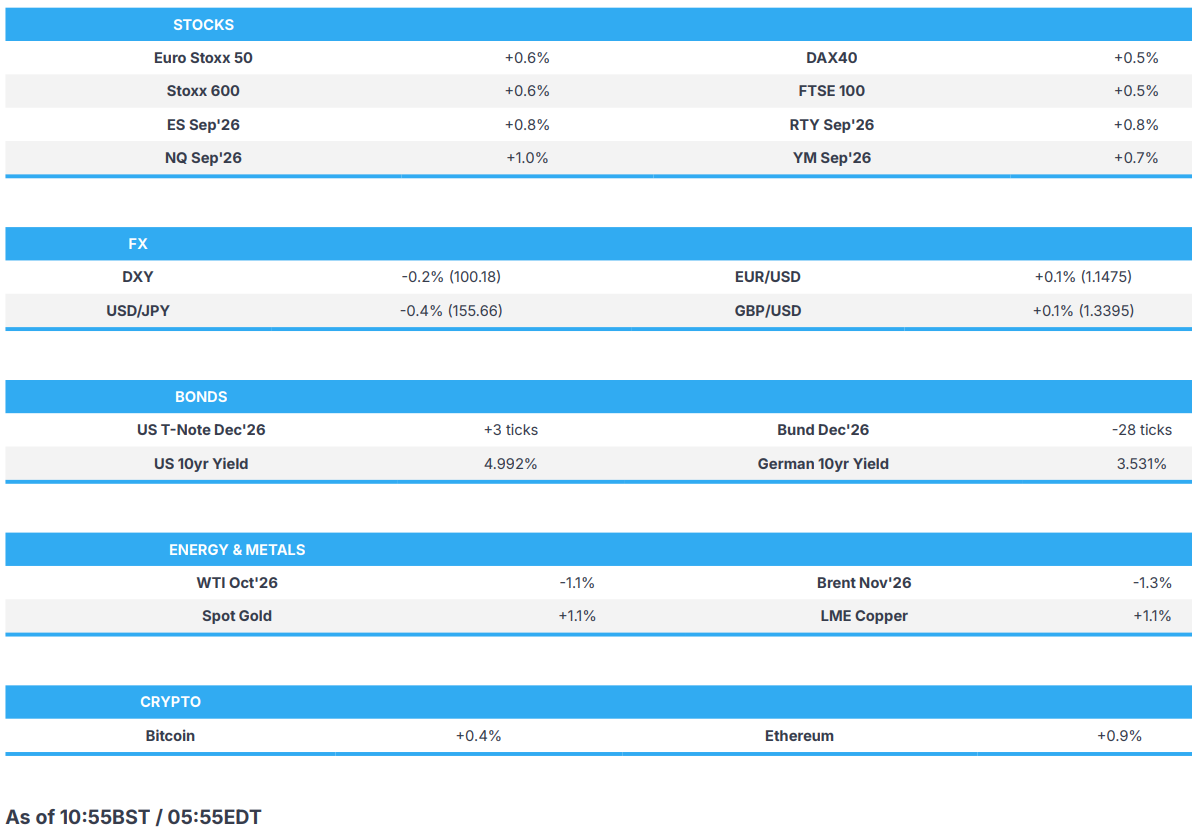
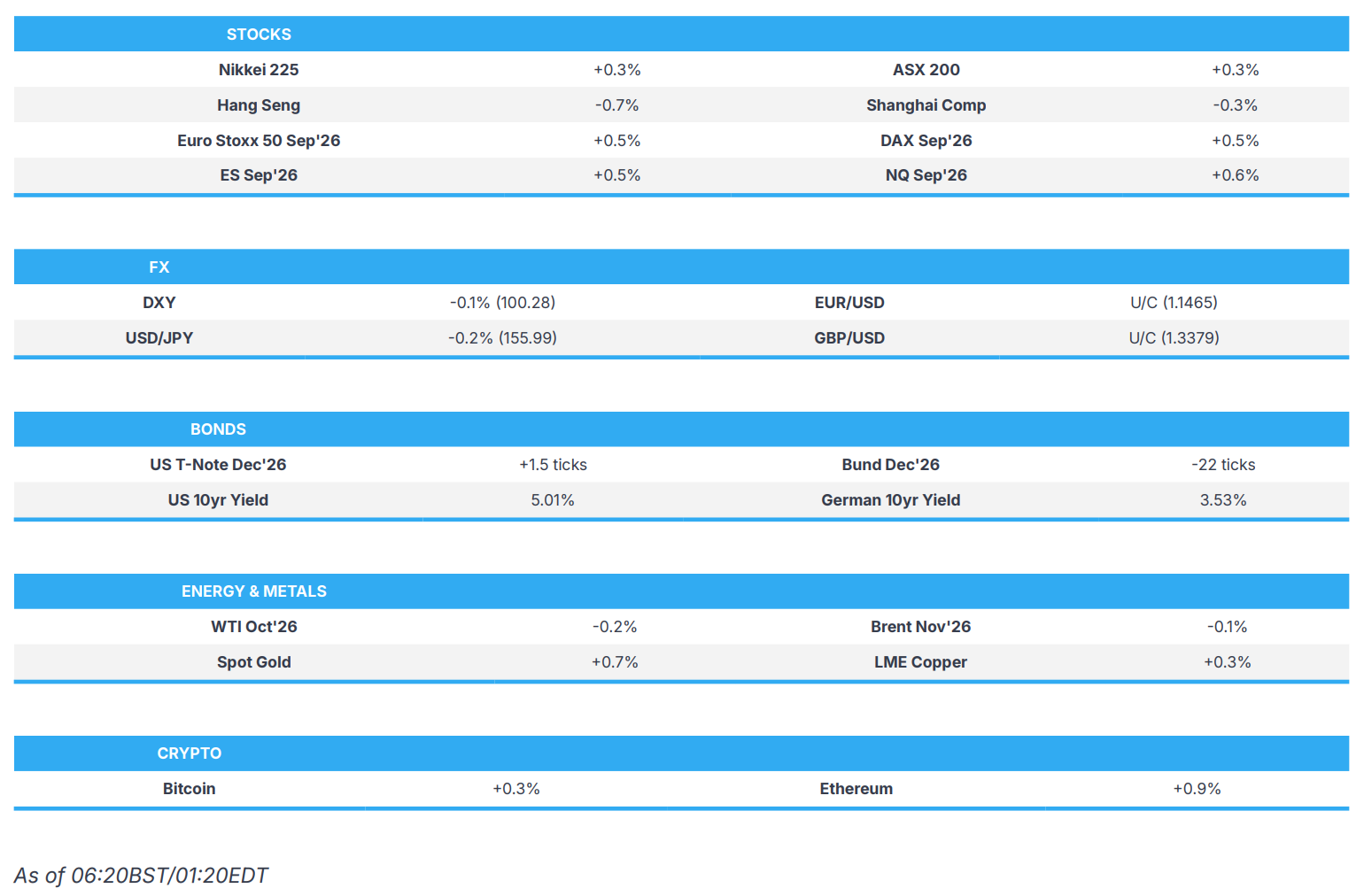



 modernity






FOCAL POINTS (Courageous Discourse™)


